
BUILDING FUTURE HEROES
TEXAS SIT-REP
Pathways to Success
KIDS & EDUCATION
Geocaching in Jarrell
55 Young Cadets Spend Their Summer Learning What it Takes to Answer the Call
WORTH THE DRIVE Little Longhorn Saloon

In an age where the rush of daily news often overshadows the deeper narratives that shape our community, 76537 Life constantly strives to be an eager beacon of positivity and unity. Far more than just a lifestyle magazine, our publishers and staff are committed to creating a means of getting to know what makes our community thrive: its people and their impact.
Since its inception in 2021, 76537 Life,
Has grown with the community – we originally mailed to 4,200 homes and businesses in 76537 and now mail to over 9,600 homes and businesses monthly.
Works closely with Jarrell Independent School District, the Jarrell Chamber of Commerce, Sonterra MUD, Jarrell Economic Development Corporation, Jarrell Community Library and Resource Center, and the City of Jarrell.
Is a local business, located in Jarrell, that employs local people.
Has, to date, mailed close to 400,000 magazines within the 76537 area.
But we are also good at doing what we do — showcasing prominent community agencies and initiatives like the Jarrell Education Foundation, Jarrell Community Library, Jarrell ISD students, FFA, 4-H, and many more on our covers and in multipage features. These not only celebrate their contributions but also inspire readers to personally engage and participate in the missions of these community pillars.
Every summer, one of my favorite stories to write is about the Junior Fire & Police Cadet Camp. Although my son, Walker, wasn’t able to attend this year, he still talks about everything he learned during the two years he did—from CPR and knot tying to fire safety and so much more. The skills, confidence, and respect for first responders he gained have stayed with him long after camp ended. I’m incredibly grateful to Williamson County ESD No. 5 and the Jarrell ISD Police Department for investing their time and hearts into these kids and equipping them with lessons that will last a lifetime.

PUBLISHERS
Cathy Payne • Mike Payne
COMMUNITY EDITOR
Camy Reynolds
SENIOR WRITER/COPY EDITOR
Ann Marie Kennon ∙ Charlotte Kovalchuk
CONTRIBUTING WRITER
Linda A. Thornton
GRAPHICS
Ann Marie Kennon ∙ Sandra Evans
DIGITAL MEDIA MANAGER
Jesse Payne
ADVERTISING
512.746.4545 • info@myjarrell.com
76537 Life is a Fidelis Publishing Group, LLC publication and a product of AdvocateNewsTX Newspaper.
Copyright © 2026 All rights reserved. 76537 Life is published monthly and mailed USPS, free of charge, to homes and businesses in the 76537 zip code. Mail may be sent to 76537 Life, P.O. Box 213, Jarrell, TX 76537. Email: info@myjarrell.com

SCAN THE CODE FOR E-SUBSCRIPTION AND NEVER MISS AN ISSUE.

FOLLOW US ON FACEBOOK FOR FOLLOW-UPS AND OUTTAKES • 76537Life
































Building Future Heroes
ONE LESSON AT A TIME
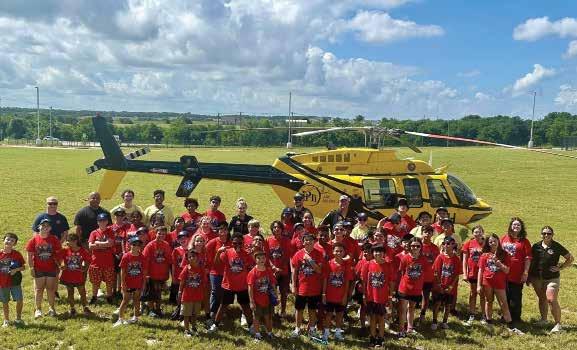
For the fourth year in a row, 55 children from Jarrell and Sonterra traded part of their summer break for two weeks of hands-on learning at the Junior Fire & Police Cadet Camp— and had a whole lot of fun along the way.
This year's camp was a joint effort between Williamson County ESD No. 5 and the Jarrell ISD Police Department. While the fire department has hosted the camp for the past four years, this year's addition of the Jarrell ISD Police Department expanded the program from one week to two, giving campers an even more immersive experience in both fire and law enforcement.
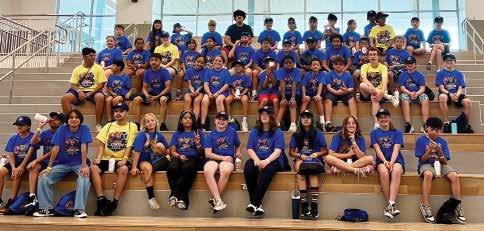
The camp welcomed 55 enthusiastic cadets, including five returning campers who stepped into leadership roles as camp counselors. These young leaders helped guide the newer campers, proving the program is about much more than emergency response—it's about building confidence, responsibility, leadership, and teamwork.
PUBLIC SAFETY UP CLOSE
Campers rotated daily between fire and police activities, giving them a firsthand look at how firefighters and law enforcement officers work together to serve and protect the community. The expanded format also allowed participants to build relationships with first responders while learning the unique role each plays in keeping the community safe.
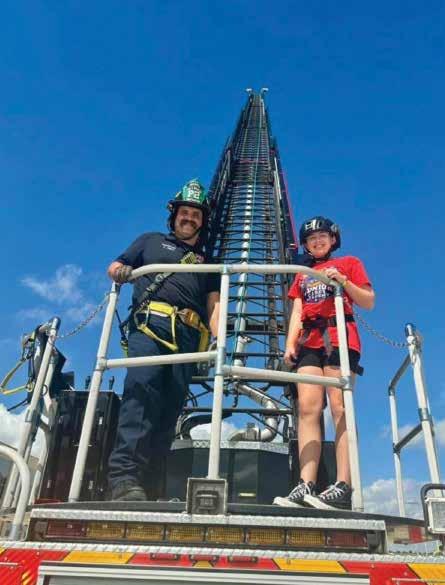
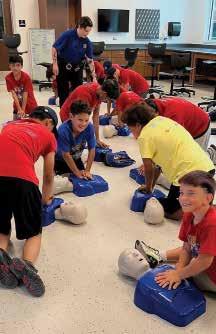
Throughout the two weeks, cadets learned practical skills they may one day use to save a life. They practiced CPR, the Heimlich maneuver, bleeding control, and proper fire extinguisher use. They learned how firefighters safely move patients, tied ropes and knots, explored emergency vehicles, studied American flag etiquette, and even climbed the department's impressive 105-foot aerial ladder. One of the camp's most memorable experiences was navigating the inflatable fire safety house, where campers learned how to react if a real house fire ever occurs.
LEARNING BEYOND THE CLASSROOM
The law enforcement portion of the camp gave cadets an inside look at modern policing. Officers from the Jarrell ISD Police Department taught building search techniques, safe handcuffing procedures, radio etiquette, and the meaning
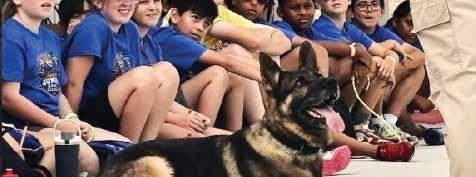
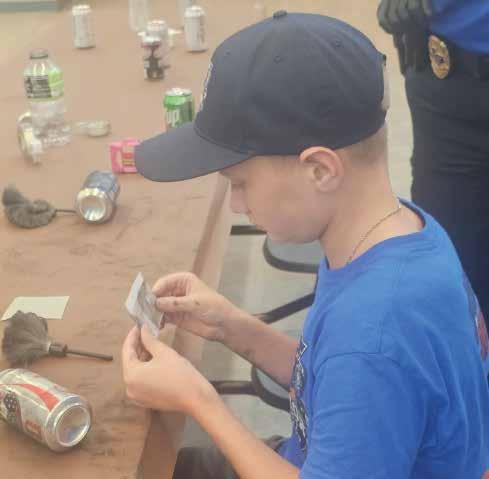
behind common law enforcement "10- codes." Campers also learned about the work of the Williamson County Crime Scene Unit, tried their hand at dusting for fingerprints, watched a K-9 demonstrate how police dogs search for narcotics, and observed the procedures used during high-risk traffic stops.
Of course, camp wasn't all serious business. Obstacle courses, team challenges, and hands-on activities kept the days exciting, while the ever-popular Touch-a-Truck experience gave campers an up-close look at fire, police, EMS, Williamson County SWAT, and SAS Towing vehicles.
Community partners helped make the experience even more meaningful. The Williamson County 911 Communications Center introduced campers to the vital role dispatchers play during emergencies, while Sonterra Parks & Recreation shared important water safety tips just in time for summer.
SUMMER SEND-OFF
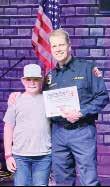
The camp concluded with a graduation ceremony celebrating the accomplishments of every cadet, recognizing sponsors and community partners, and honoring several outstanding participants. Williamson County Judge Steve Snell served as the guest speaker, congratulating the cadets on all they had accomplished and encouraging them to continue serving their community, no matter what path they choose.
This year's award recipients were:
HONOR CADET (RETURNING – FIRE): Alexander Kellow
HONOR CADET (RETURNING – POLICE): Luke Miller
HONOR CADET (NEW – FIRE): Jason Sanders
HONOR CADET (NEW – POLICE): Katy Ruiz-Ferrales
SPIRIT OF THE CADET: Hailey Hansen
MOST IMPROVED: Kymani Minnifield
Whether these young campers grow up to become firefighters, police officers, paramedics, or simply neighbors who know how to step up in an emergency, they left camp with new friendships, greater confidence, leadership skills, and life-saving knowledge they'll carry with them for years to come. That's a pretty great way to spend a summer.


Texas Needs More Skilled Workers And More Pathways to Success
Over the course of a three-part series, I examined the role education plays in Texas’ future and the steps your Texas Legislature has taken to strengthen it at every level. In the first article, I discussed our historic investments in public education, efforts to empower parents, and reforms designed to improve accountability and student outcomes.
In the second, I examined how Texas is restoring trust in higher education through greater transparency; stronger governance; protections for free speech; efforts to prevent radical
Eactivists from disrupting classes, occupying campus property, and vandalizing university facilities; and enacting safeguards against foreign influence and research theft.
In the third, I explored how our universities serve as engines of research, innovation, workforce development, and economic growth.
Together, those efforts share a common goal: ensuring that educational institutions remain focused on serving students, taxpayers, and the long-term interests of our state.
That brings us to the final piece of the puzzle: workforce education.
ducation is not merely an end unto itself; it must also prepare Texans for productive, meaningful lives and careers. Whether that means earning a degree, conducting cutting-edge research, serving in the military, starting a business, or mastering a skilled trade, our education system succeeds when it creates opportunities that lead to success. While universities drive innovation and research, Texas’ continued prosperity also depends on the men and women who build our homes, maintain our infrastructure, manufacture advanced products, care for patients, and repair critical equipment, all to keep our economy moving. As Texas experiences unprecedented population and economic growth, the demand for skilled workers has never been greater.
From electricians and plumbers to welders and HVAC technicians, Texas faces workforce shortages in many of the careers that support economic growth. Every new home, school, hospital, and advanced manufacturing facility depends on highly trained professionals. We need industrial maintenance technicians, construction trade workers, automotive and diesel technicians, advanced manufacturing technicians, health care support professionals, and teachers, along with countless others.
Meeting these workforce needs will require more than simply encouraging every student to pursue the same path after high school. Texas succeeds when students have many pathways to success.
PATHWAYS TO SUCCESS
For generations, higher education has been viewed as the primary route to economic opportunity. While a college degree remains an excellent option for many students, learning a skilled trade is equally valuable and equally important. The men and women who build our homes, maintain our power systems, repair our vehicles, care for patients, and keep our industries operating are indispensable to Texas’ future.
I believe every student deserves the opportunity to discover their talents and pursue a path that matches their goals, abilities, and passions. That belief has driven me to make advancing vocational education in Texas a core focus as your State Representative, working to achieve historic investments in career and technical education and workforce training.

INVESTING IN TECHNICAL EDUCATION
One of the most significant investments has been the establishment of the Texas State Technical College (TSTC) endowment. Rather than spending these funds once and moving on, Texas invested approximately $850 million into a permanent endowment. The investment earnings support annual distributions of roughly $40 million per year for the construction and capital improvement of new and existing TSTC facilities.
This approach allows TSTC to continuously expand training capacity while preserving the principal investment, providing Texans with workforce training opportunities for generations to come.
At the K-12 level, Texas has also expanded support for Pathways in Technology Early College High Schools, better known as P-TECH programs. As Article III Chairman for Appropriations in 2021, I spearheaded an investment of $100 million per biennium to help school districts build and expand these programs by purchasing equipment, developing facilities, and allowing students to begin participating in these programs as early as seventh grade. Early exposure helps students discover their interests,




explore careers, and begin earning valuable credentials long before graduation.
P-TECH programs offer far more than industry certifications. Students can earn associate degrees, Level 1 and Level 2 certificates, workforce experience, college coursework, and direct engagement with employers. They gain access to high-demand career fields including healthcare, cybersecurity, advanced manufacturing, information technology, and logistics.
Perhaps most importantly, students can access these opportunities at no cost to themselves.
Texas has also strengthened workforce training through the Jobs and Education for Texans, or JET, Grant Program. JET grants support community colleges and schools by funding expensive workforce training equipment such as welding labs, advanced manufacturing machinery, and healthcare simulation equipment. Students train using the same tools and technology they will encounter in the workforce, helping them transition seamlessly into careers.
Additional workforce investments include the Texas Reskilling and Upskilling through Education (TRUE) Grant Program. Established in 2021, TRUE grants support public higher education institutions as they create, redesign, and expand short-term workforce training programs in high-demand occupations. These programs are developed in partnership with employers and other workforce stakeholders and focus on preparing students for careers in less than six months.
Likewise, the Texas Invests in Meaningful Employment, or TIME, Grant Program builds upon successful workforce initiatives by supporting short-duration training programs that lead directly to credentials of value. These programs prioritize occupations with strong workforce demand and earning potential, helping students move quickly into meaningful employment.
What ties these investments together is the idea that education works best when institutions work together.
BREAKING DOWN EDUCATIONAL SILOS
For too long, public education, community colleges, technical colleges, universities, workforce boards, and employers often operated in separate silos. Each plays an important role, but students were frequently left to navigate those systems on their own.
Texas has increasingly moved away from that approach. Today, state policy encourages institutions to think less about where one system ends and another begins, and more about how they can work together to help students succeed. That means introducing students to career opportunities earlier, expanding access to dual credit and workforce credentials, strengthening partnerships between school districts and colleges, and ensuring educational programs align with real needs.
Employers and community colleges have become especially important partners in this effort. Employers help identify workforce shortages and provide internships, apprenticeships, and work-based learning opportunities. Community colleges serve as regional workforce hubs with established facilities, experienced instructors, strong industry relationships, and
grant-writing expertise. Through dual credit programs, workforce certificates, P-TECH partnerships, and industry training initiatives, students can begin earning college credit and workforce credentials while still in high school.
Despite this progress, challenges remain, especially for smaller school districts. Many workforce grants require competitive applications and significant administrative expertise. Unfortunately, the schools that often need assistance the most are frequently the least likely to have dedicated grant-writing staff. At the same time, workforce education programs are administered through multiple agencies and funding streams, creating complexity for schools attempting to navigate the system.
PREPARING TEXAS FOR THE FUTURE
Recognizing these challenges, the Legislature passed Senate Bill 1786 in 2025, allowing community colleges and independent school districts to partner more effectively.
SB 1786 directed the Texas Education Agency, Texas Workforce Commission, and Texas Higher Education Coordinating Board to coordinate workforce grant programs, align funding streams, reduce duplication, and

support seamless pathways from secondary education into postsecondary education and careers. Rather than asking institutions to operate independently, the bill encourages collaboration among school districts, community colleges, technical colleges, workforce boards, and employers.
Just as importantly, the bill recognizes that students need guidance as they navigate those pathways. By supporting investments not only in facilities and equipment, but also in the faculty, staff, and advising capacity needed to deliver workforce education programs, Texas is creating new opportunities for career counseling and student support. Community colleges and technical colleges increasingly have the authority and incentive to work alongside local school districts, helping students understand available career pathways, earn credentials, and educational choices to workforce opportunities.
THE BOTTOM LINE
BUILDING CONNECTED PATHWAYS
In practical terms, that means more opportunities for shared facilities, shared equipment, coordinated workforce programs, stronger regional partnerships, and more intentional career guidance for students. It also means students can move more easily between educational systems while earning credentials that employers value and that Texas’ economy needs.
Texas’ future depends on our ability to develop the workforce that a growing economy requires. That means recognizing that success comes in many forms and ensuring every student has access to opportunities that fit their goals.
But it also means recognizing that no single institution can accomplish that mission alone. Public schools, community colleges, technical colleges, universities, workforce boards, and employers each have a role to play.
The future of workforce education is not about building isolated programs. It is about building connected pathways.

Whether a student chooses a university classroom, a military uniform, a small business venture, or a skilled trade, Texas benefits when they are prepared to succeed. By strengthening partnerships, aligning systems, and expanding pathways, we are building a stronger Texas, one student, one credential, and one skilled worker at a time.






LITTLE EXPLORERS Discover Hidden Treasure in Jarrell
Imagine following clues throughout winding nature trails, peeking inside a hollow log or rock pile as you spot a hidden container tucked just out of sight. Inside, you’ll find a logbook to sign and, if you’re lucky, a few tiny treasures left behind by fellow explorers. That’s the thrill of geocaching, a worldwide adventure that turns ordinary parks and hiking trails into places where every path could lead to hidden treasure.
Instead of growing bored on long nature walks, kids get to be treasure hunters, racing ahead to solve clues and discover hidden caches. With millions of geocaches waiting to be found—including several right here in Jarrell—it’s a fun (and completely free!) way to inspire kids to unplug, explore the outdoors, and make family memories together this summer.
REAL-LIFE TREASURE HUNT
Using the free Geocaching app, participants navigate to a specific set of coordinates and search for hidden containers called geocaches. These caches can be found almost anywhere—from neighborhood parks and nature preserves to city streets and scenic hiking trails.
No two geocaches look alike. Some are large plastic containers filled with toys, stickers and keychains, while others may be disguised as a fake rock or tucked inside a tiny film canister. Every cache contains a logbook where visitors record their discovery, and larger caches often include trinkets for trading. The rule is simple: if you take something, leave behind an item of equal or greater value so the next explorer can enjoy the adventure, too.
ADVENTURE AWAITS
Getting started is easy. Download the Geocaching app, create a free account and search for caches near you. Families with young children should look for caches with one-star difficulty and terrain ratings, as they’re usually the easiest to find. The app will guide you to within about 30 feet of the cache, but the final search is up to your detective skills.
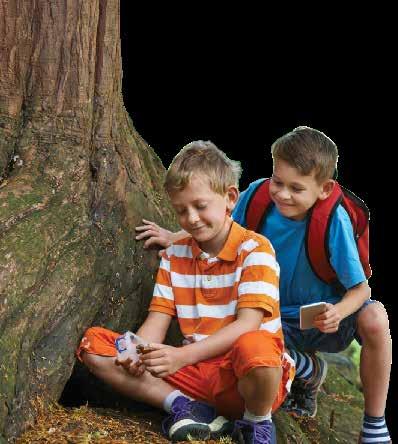
Once you’re close, put the phone away and start looking. Check the cache size listed in the app, use the hint if needed and search patiently for anything that looks slightly out of place. Remember to look before reaching into logs or rock piles, as they may be home to wildlife, and always leave nature just as you found it.


Geocache App iPhone

GEOCACHING HOT SPOTS
Geocache App Android

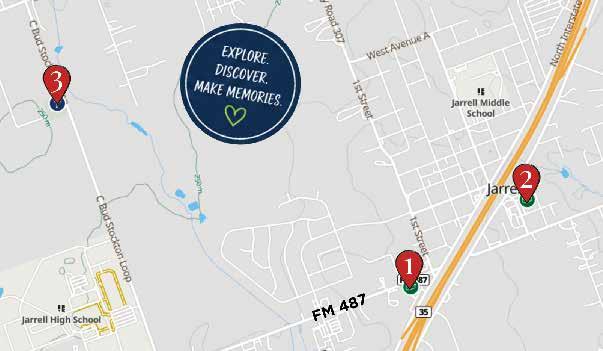
Ready to start your family’s next adventure? Check out these geocache locations around Jarrell and see how many hidden treasures you can discover!
1. Florence to Jarrell and Back – Fun for All: Turn an ordinary drive into a geocaching adventure with this series of caches hidden along scenic country roads. Expect a variety of cache types, peaceful rural views, and the chance to spot local wildlife along the way.
2. Meet here!: Enjoy tackling a puzzle cache that will put your problem-solving skills to the test.
Conveniently located near the interstate, this cache is the perfect starting point for an afternoon of geocaching.
3. Texas Spirit Quest: Step into Texas history with this cache near a historic pioneer cemetery. While the cache itself isn’t inside the cemetery, it offers a glimpse of the burial grounds dating back to the late 1800s and serves as a reminder of the communities that helped shape the region. Along the way, history buffs can also spot a nearby survey benchmark.
Before heading out, pack a few adventure essentials:
A pen to sign the logbook
A few small trinkets to trade
Water and snacks
Sunscreen and bug spray
Comfortable walking shoes
When you find a cache, sign the logbook, trade treasures if you’d like and carefully return the container to its original hiding place. Geocachers also follow the motto “Cache In, Trash Out,” picking up litter along the trail to help keep parks beautiful.
by Charlotte Kovalchuk
This month's question was not submitted by a reader, but it is one we have heard discussed throughout the community. At 76537 Life, "The Real Deal" isn't just about answering emailed questions—it's also about providing factual, balanced information on topics residents are actively talking about. With recent conversations surrounding the Jarrell Chamber of Commerce, we thought it was the perfect opportunity to take a closer look at where the Chamber stands today, what it does, and what the future may hold.
Chamber of Commerce Gets a Glow Up
And More Pathways to Success

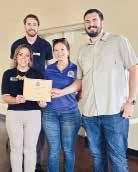
The Jarrell Chamber of Commerce is stepping into a new season, one centered on supporting local businesses, strengthening community connections, and preparing for the city’s continued growth.
At the helm is the new president Paige Warren. As a Jarrell resident and owner of local business Warren Mechanical HVAC, Paige is passionate about helping fellow entrepreneurs succeed while preserving the welcoming, small-town spirit that drew her family to this community. “I live here, my kids go to school here, and I own a business here,” she says. “I understand the wants and needs of business owners because I am one.”
Through her involvement as a member of neighboring chambers, Paige saw, firsthand, the importance of consistently delivering on the benefits members expect. After noticing the way other chambers regularly highlight sponsors, recognize members at events, offer educational opportunities, and create ongoing occasions for local businesses to connect, she was inspired to ensure Jarrell members received that same level of engagement and support.
CONSISTENCY MATTERS
For Paige, the key to building a thriving chamber starts with one word: consistency. Whether it’s recognizing members at luncheons, hosting networking events, or providing the benefits included with membership, she believes businesses deserve an organization they can count on. “Consistency is everything,” she says.
That philosophy is already shaping the direction of the Jarrell Chamber of Commerce. Monthly luncheons have returned, after-hours networking events are being added to the calendar, new member onboarding has been streamlined, and member recognition will become a regular part of chamber events. The organization has also established a dedicat-
ed office space where members can schedule appointments and connect with chamber leadership. Paige hopes to add an annual signature community event—potentially a barbecue cook-off and margarita tasting festival—that brings residents and businesses together while celebrating everything Jarrell has to offer.
The Chamber has also introduced a new $5,000 membership opportunity that includes a free membership for a nonprofit chosen by the sponsoring business. “I think there are so many nonprofits that do wonderful things for the community,” she says. “If we can help give them more visibility by helping them join the Chamber, then why not?”
GROWING TOGETHER
As Jarrell continues to grow, Paige believes the Jarrell Chamber of Commerce has an important role to play in helping local businesses grow alongside it. While change is inevitable, she says the Chamber is committed to ensuring the city’s close-knit, small-town spirit remains at the heart of everything it does. “We’re still building from the ground up,” she says. “It’s very homey. Most of us are like family, and we love and support each other.”
For those who may not have been involved with the Chamber in recent years, Paige has one simple message. “I want people to know it’s not the same as it was,” she says. “I encourage everybody to come to a luncheon before they rejoin. Come check it out and see for yourself."






What's the Real Deal?
If you’ve ever found yourself scrolling social media wondering: Is that actually true? Why does this keep happening? ...this new column is for you. Each month, Here’s the Real Deal will tackle questions and conversations specifically related to our community in Jarrell and Sonterra and we're digging in to find real, reliable answers.
HOA and COA concerns
parks and amenities
new businesses coming to town
water quality issues
and other local topics.

Each month, we’ll take a question submitted by readers—or one we’re seeing repeatedly online—that relates directly to life in Jarrell or Sonterra, and do the legwork to get the facts. That means reaching out to local officials, organizations, experts, and trusted sources to provide clear information, helpful context, and when possible, practical solutions. No speculation. No keyboard debates. Just the real deal.

Summer
MADE DELICIOUS
FRESH AND FRUITY RECIPES FOR SUNNY DAYS & SWEET MEMORIES

GRILLED PEACH & BALSAMIC CHICKEN
• 4 boneless chicken breasts
• 2 peaches, sliced
• 2 tbsp olive oil
• 1 tsp garlic powder
• Salt and pepper
• ¼ cup balsamic glaze
• Fresh basil (optional)
Season chicken with olive oil, garlic powder, salt, and pepper.
Grill chicken until cooked through.
Grill peach slices for 2–3 minutes per side.
Top chicken with peaches and drizzle with balsamic glaze.
Garnish with basil and serve.

WATERMELON, FETA & MINT SKEWERS
• Cubed watermelon
• Feta cheese cubes
• Fresh mint leaves
• Balsamic glaze
Thread watermelon, mint, and feta onto small skewers.
Arrange on a platter.
Drizzle lightly with balsamic glaze before serving.

BLUEBERRY LEMON ICEBOX CAKE



No-bake desserts are perfect for July, and the blue and yellow colors photograph beautifully.
• 1 box graham crackers
• 2 cups whipped topping
• 1 package instant cheesecake pudding
• 2 cups fresh blueberries
• Zest of 1 lemon
• Layer crackers, filling, and berries. Chill overnight.
STRAWBERRY LEMONADE SPRITZER
A refreshing summer drink that can be enjoyed by the whole family. Make it alcohol-free for the kids or add a splash of spirits for the adults. A fun, bubbly mocktail that is perfect for summer gatherings. Makes: 6–8 servings
• 1 cup fresh strawberries, hulled
• 2 cups lemonade
• 2 cups lemon-lime sparkling water or club soda
• Ice
• Fresh strawberries and lemon slices for garnish
Blend strawberries until smooth.
In large pitcher, combine strawberry puree and lemonade.
Fill glasses with ice and pour lemonade mixture about two-thirds full.
Top with sparkling water or club soda.
Garnish with fresh strawberries and lemon slices.
FOR THE ADULTS
• 1½ cups prosecco, sparkling wine, or vodka
Add prosecco, sparkling wine, or vodka to the pitcher before serving and stir gently. PerfectFOR BBQS, PICNICS & SUN SIPPING

by Linda A. Thornton
THE DIVERSE LANDSCAPES OF TEXAS: A GEOGRAPHIC PATCHWORK

Texas is a whole continent's worth of landscapes packed into one state. Where else can you climb to Guadalupe Peak's highest point, surf Padre Island, and hike a scenic trail at Big Bend National Park's South Rim?
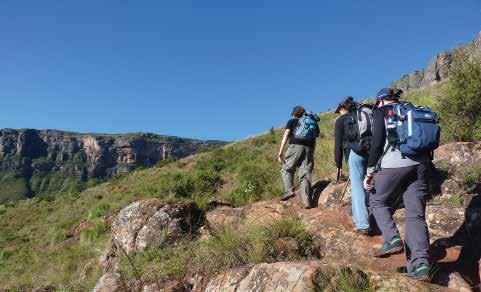
Second only to Alaska in land area and covering 266,807 square miles, Texas’s size is unrivaled among states. Its large land area creates variations in climate and environments that greatly influence habitat diversity. The average rainfall can range from eight inches in the western deserts to 56 inches per year in the eastern swamps. Famous for its flat plains, the west side of the state also features 91 mountain peaks that are at least a mile high.
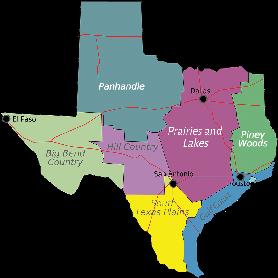
The Lone Star State spans seven distinct regions, each boasting its own entirely unique environment; perfect for wanderlust and staycations:
BIG BEND COUNTRY • FAR WEST
What’s yonder: Rugged Chihuahuan Desert landscapes, towering mountain ranges, and winding Rio Grande River.
Where to wander: Paddle, river raft, hike, and stargaze in breathtaking scenery in the 800,000 acres of Big Bend National Park or the 275,000 acres of wilderness at Big Bend Ranch State Park.
GULF COAST • SOUTHEAST
What’s yonder: Hundreds of miles of coastal plains, tidal marshes, and barrier island beaches.
Where to wander: Swim in the Gulf of America and watch for sea turtles at Padre Island National Seashore, the world’s longest barrier island. Kayak, fish and birdwatch at Sea Rim State Park. Relax Mustang Island State Park's quiet beaches.
PANHANDLE PLAINS • NORTHWEST
What’s yonder: Wide-open plains and farmlands, massive red-dirt canyons, 200- foot-deep rugged chasms.
Where to wander: Hike and bike in the second-largest canyon in the U.S., the Palo Duro Canyon State Park, nicknamed the “Grand Canyon of Texas.” Challenge yourself on the rugged trails with red-rock scenery at Caprock Canyons State Park, home of the Texas State Bison Herd.
PINEY WOODS • EAST
What’s yonder: Lush, heavily forested pine forests, cypress-lined swamps and bayous, and quiet lakes.
Where to wander: Canoe and kayak in Caddo Lake, the largest natural lake in Texas, which features a mystical maze of ancient, bald cypress trees covered in Spanish moss. Hike and paddle at Big Thicket National Preserve, known as the “biological crossroads of North America” for its variety of ecosystems including swamps, bayous, and pine trees.

Go bass fishing at the nationally recognized Toledo Bend Reservoir.
PRAIRIE AND LAKES • NORTH CENTRAL
What’s yonder: Rolling terrain, forests, and home of the most man-made reservoirs of any region in Texas, due to the area’s significant yearly rainfall and the historic flooding of the Brazos and Trinity rivers.
Where to wander: Hike and fish for striped bass at Lake Texoma. Camp and mountain bike at Cedar Hill State Park. Hike spring wildflower trails in Ennis, the “Official Bluebonnet City of Texas.”
SOUTH TEXAS PLAINS AND PRAIRIES
What’s yonder: A combination of semi-arid brush country, sub-tropical coastal prairies, and rich black soil, important for farming.
Where to wander: Go bird watching at The Lower Rio Grande Valley, a globally renowned destination and the Sabal Palm Sanctuary, owned by the Audubon Society. Witness the migrating bird populations at the Santa Ana National Wildlife Refuge. Hike, bike and enjoy spring wildflower walks at the Government Canyon State Natural Area, Goose Island State Park, and at Goliad State Park, which is listed on the National Register of Historic Places.
TEXAS HILL COUNTRY • CENTRAL
What’s yonder: The geographic heart of the state, known for its rolling limestone hills, clear springs, hidden caverns and spring-fed rivers.
Where to wander: Visit Enchanted Rock State Park and hike up the massive pink granite dome. Swim, kayak or tube down the Frio River, known for its crystal-clear water and limestone cliffs. Visit the Hamilton Pool Preserve, a collapsed canyon swimming hole featuring a 50-foot waterfall. Try out Blue Hole Regional Park, a natural spring pool surrounded by ancient cypress trees. Drive the Willow City Loop in springtime to see fields of bluebonnets.

BOWING TO OUR BIODIVERSITY
In simple terms –Biodiversity is the vast variety of all life on Earth and the natural systems that support it.
Ecosystem Diversity is the variety of different habitats, such as coral reefs, deserts, and grasslands, and the communities of life living within them.
As proud Texans, we are the sole stewards of the unique species and landscapes that make up our great state. Their fate rests in our hands.





















by Linda A. Thornton
The Little Longhorn Saloon
Cold Beer, Live Music, and Chickens!
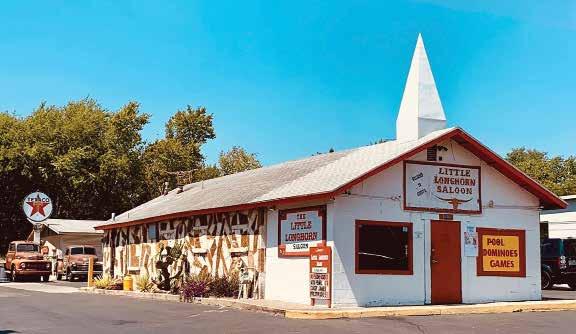

The unassuming Little Longhorn Saloon is a tiny place that looks more like a church with a steeple than a bar. The band is loud, the beer, cold, and the place is usually packed. For more than 60 years, this time-honored institution has not only brought people together from all walks of life, but it has also created a camaraderie among patrons thanks to its music and, yes, its chickens.
STRUT YOUR STUFF: THE TEXAS TWO-STEP
Open the front door and be transported back to the 1960s. Nostalgic photos, neon signs, and posters line the walls. No one seems to mind that there is just enough room for the worn bar stools, scuffed wooden bar, small dance floor, and a stage.
If you head to The Little Longhorn on an evening when dance lessons are held, it’s pretty much guaranteed you will leave two-stepping. The instructors are welcoming and succeed in getting everyone moving, then proudly watch from the sidelines as their new students glide around the dance floor to the live music.
CHICKEN SH*T BINGO
For more than 50 years, Sunday afternoons at The Little Longhorn have been about chickens, chicken feed, and what happens after chickens eat.
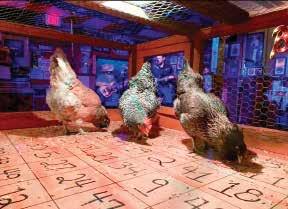
You join the online queue to buy a $2, $5, or $10 cash ticket/donation.Each ticket has a number that corresponds to a number on the giant plywood bingo table. Once the chickens are set on the board, the fun begins.
Rumored to have their Screen Actors Guild cards, the chickens are real professionals. They strut around the table,
working the room into a frenzy of cheering and hollering. If the chicken happens to leave her “mark" on your number, the square is verified by the chicken bingo official, the band is notified, and you are invited up on stage and presented your winnings — anywhere from $114 -$570 in cash.
The combination of the “Austin-weird” bingo games with sitting outside before and after the games are The Little Longhorn’s enduring secret to success. A large group of strangers, chatting and laughing, move their chairs closer together. Another crowd bonds over the details of the care and personalities of each chicken with one of the resident chicken whisperers. Some Austinites take foreign tourists under their wing and share other local spots they shouldn’t miss.
WHO RULES THE ROOST?
The old-fashioned watering hole stands proudly, juxtaposed amid its neighbors: sophisticated restaurants and new high-rise condos. It has served as a farmhouse, gas station, and a restaurant, before becoming a bar in the 1940s. The original owner, Dick Setliff, christened his venue The Little Longhorn Saloon in 1963 and decided to leave it to his bartender, Ginny Kalmbach, in his will before passing away in 1982. It is said that Ginny, her husband, Don, and musician, Dale Watson, were the inventive creators of combining chicken droppings and music into a now-famous bingo game.
• photos courtesy Terry Gaona
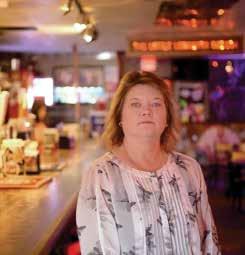








When Ginny planned to retire, she gave one of her part-time bartenders, Terry Gaona, first dibs on the bar’s purchase. Terry and her husband, David, worked for the state and owning a bar was not on their radar. It didn’t take Terry long to realize how many daydreams she’d had about how she could put her own stamp on the place if it belonged to her.
In 2013, Terry became the owner and got busy on her to-do list. She began accepting credit cards and obtained a higher-level liquor license, which allowed her to serve liquor and wine in addition to beer. She also expanded chicken bingo to include multiple tiers of prize winnings.
With her goal of creating one big family party, she spent her days smiling, chatting, and hugging her patrons until the feelings were mutual. Soon, hundreds of people—from bikers to seniors to families to sophisticated millennials—were shooting the breeze together as they stood in line, patiently waiting to purchase a chicken bingo ticket. There was not one ruffled feather in the bunch. It was just another Sunday of good clean fun.
KNOW BEFORE YOU GO
5434 Burnet Road, Austin Tues-Wed: 5 - 11pm • Thurs-Sat: 5pm - 12am Sun: 2 - 9pm
Two Step Dance Lessons and live music • No cover charge.
Scan the code to visit their website and check the website calendar.
Chicken Bingo: 4pm - 8pm • Arrive early to get a parking spot. Bring the kids, leashed pets, and folding chairs. Outside food is welcome.










Squirrels and American Exceptionalism
July is a great month for Leighstyle observations and contradictions, so here are a few to go along with the semiquincentennial.
Two hundred and fifty years seems old for a country and young for a civilization. We are a little like a teenager who has accomplished incredible things while still occasionally putting the lawn mower away with no gas in it and leaving the milk on the counter.
At 250, America is old enough to know better and young enough to do it anyway. And we often do it with great flair.
Americans, for our part, are fiercely independent people who somehow all end up at the same Home Depot or Costco on Saturday morning. On the Fourth of July, many of us celebrate freedom by sitting in traffic on the way to crowded fireworks shows. After earlier complaining about the heat while simultaneously cooking meat outdoors. As contradictions go, that's a pretty American one.
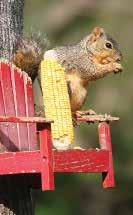
Even though Texas in July is basically like being on the sun's front porch, I still spend a lot of time on my own porch watching the backyard wildlife. Yesterday I happened to see a squirrel standing on a tree branch with the morning sun behind it, and for the first time I had to admit that people who call squirrels "tree rats" may have a point.
The lighting was unfortunate for the squirrel. Normally, all you notice is that magnificent fluffy tail. But with the sun shining through it, I could clearly see that underneath all that glamour was a pencil-thin rat tail with an outstanding marketing department.
Thinking about it, rats and squirrels are not all that different. Similar size. Similar teeth. Similar habits of stealing
food that doesn't belong to them. Similar talent for showing up where they aren't invited. But the squirrel's advantage is that tail.
It's the wildlife equivalent of hiring a really good public relations firm. Without it, a squirrel is basically a tree rat with a better hairdo.
As a squirrel enthusiast myself, I realize some squirrel lovers may wish to send strongly worded letters but I stand by my position.
Remove the fluffy tail and ask people which animal they'd rather have living in the oak tree over the driveway. The squirrel suddenly loses a surprising amount of public support.
But the more I thought about it, the more I realized the tail isn't just decoration. A squirrel's tail is a blanket, parachute, rudder, communication device, and sunshade all rolled into one.
As an American, I respect that kind of efficiency. Maybe that's one reason America has done pretty well for herself over the last 250 years. We tend to love things that can do more than one job. The Swiss invented the Army knife. Americans looked at it and thought, "That's a good start."
When we improve things, we're not really done until they mow the yard, make coffee, charge a phone, and maybe launch a satellite while they're at it. After all, we're the people who came up with Walmart, Iron Man, and the hat that lets you drink out of two cans without using your hands.
We are also the nation with armed forces so capable that we set aside entire teams of highly trained pilots in spectacular aircraft simply to have them fly around and say, "Check this out!"
And if that sounds a little juvenile, I suspect that's because it is. At some point, somebody looked at one of the most advanced airplanes on Earth and thought, "You know what would make this even better? If six of them flew really close together upside down."
Every country has its own version of a squirrel tail that is there simply to show off for... everybody. But those things matter here because they remind us who we are when we're at our best.
Maybe that's why I connected with the squirrels today. They remind me of America: a little chaotic, surprisingly resourceful, and occasionally found where they shouldn't be. And always carrying around a lot of accessories not merely for survival, but sometimes just for flat-out awesomeness.
For those who may still doubt me, I have one more word: Buc-ee's. Happy birthday, America!