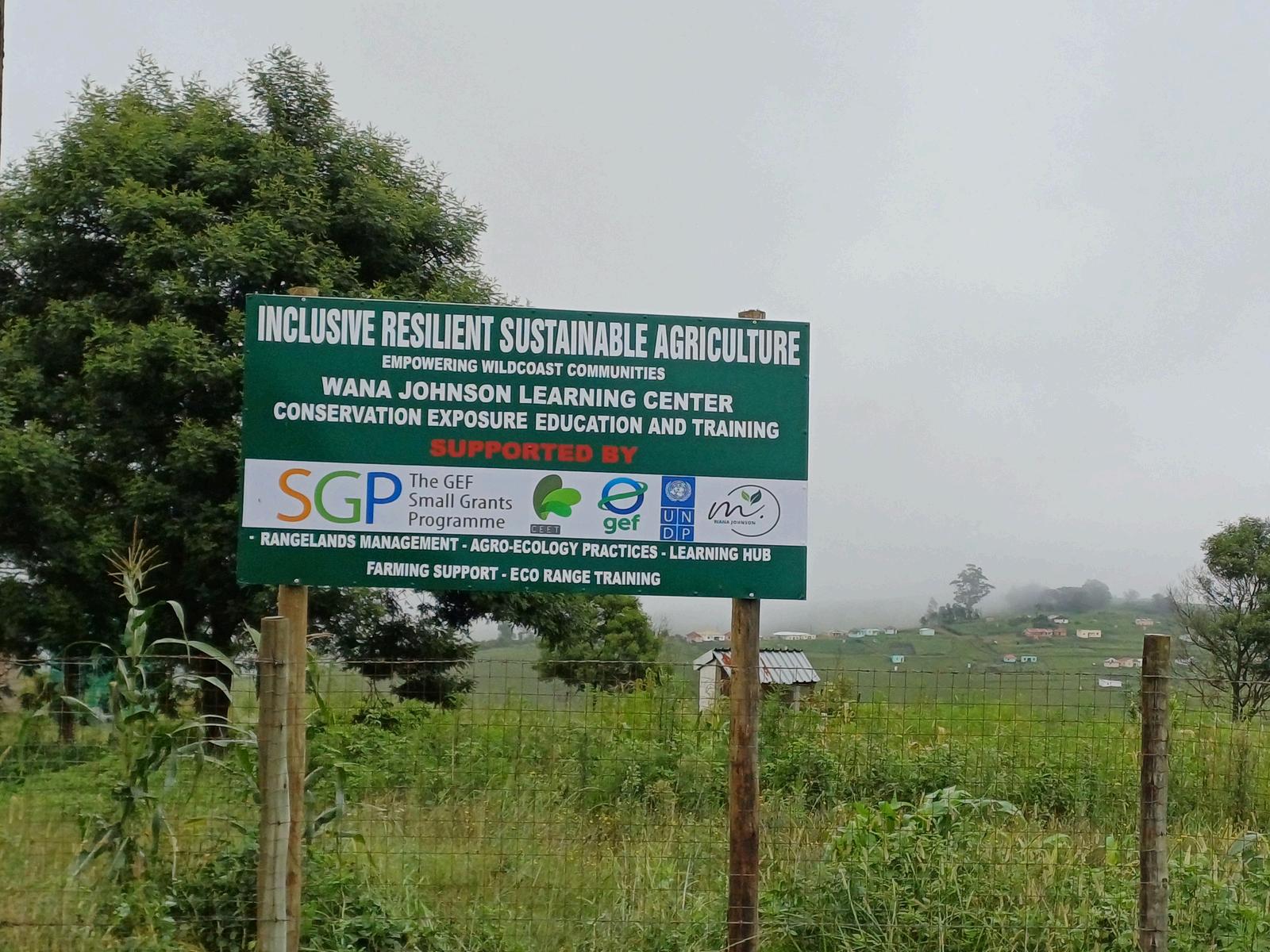
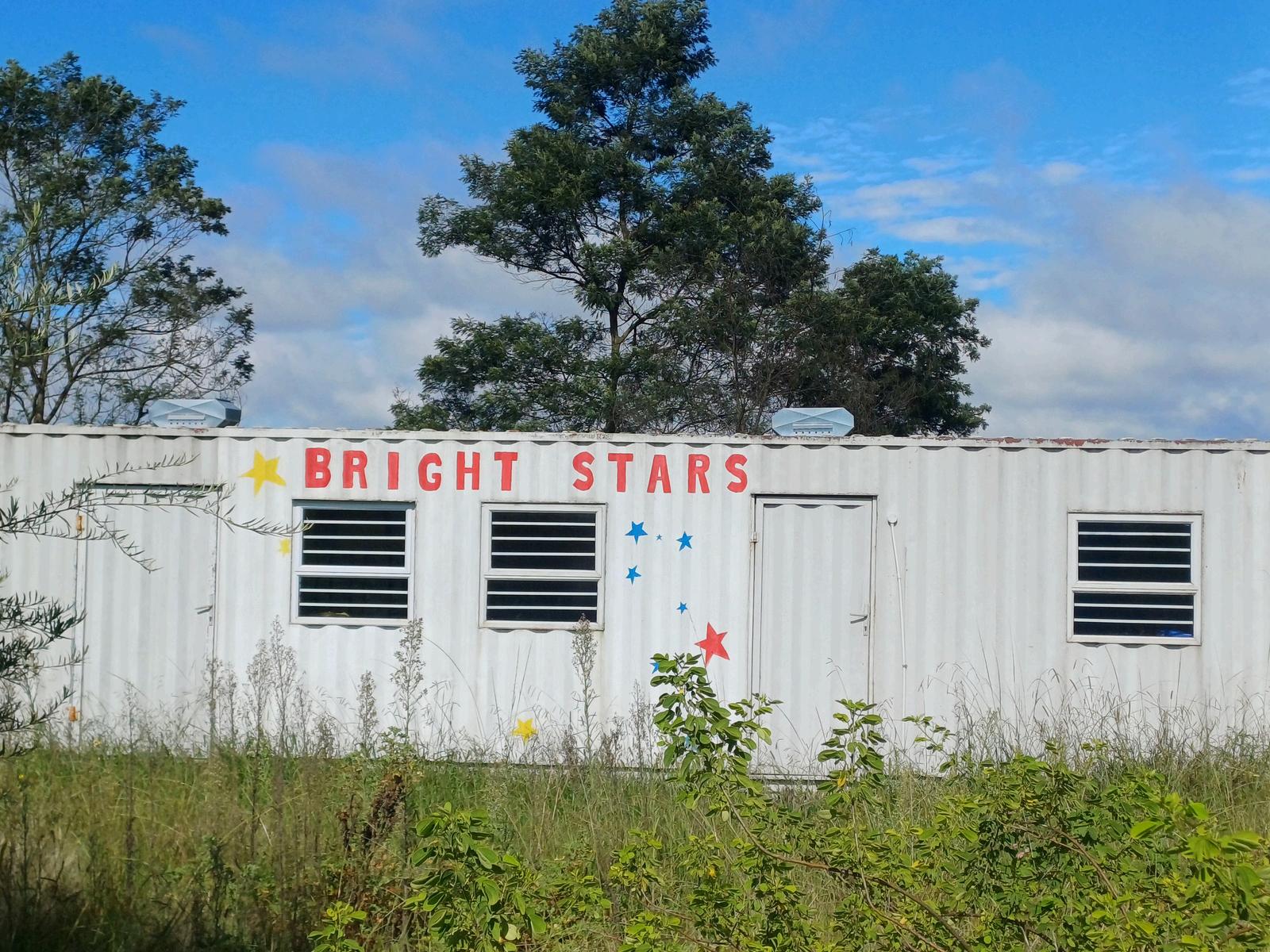
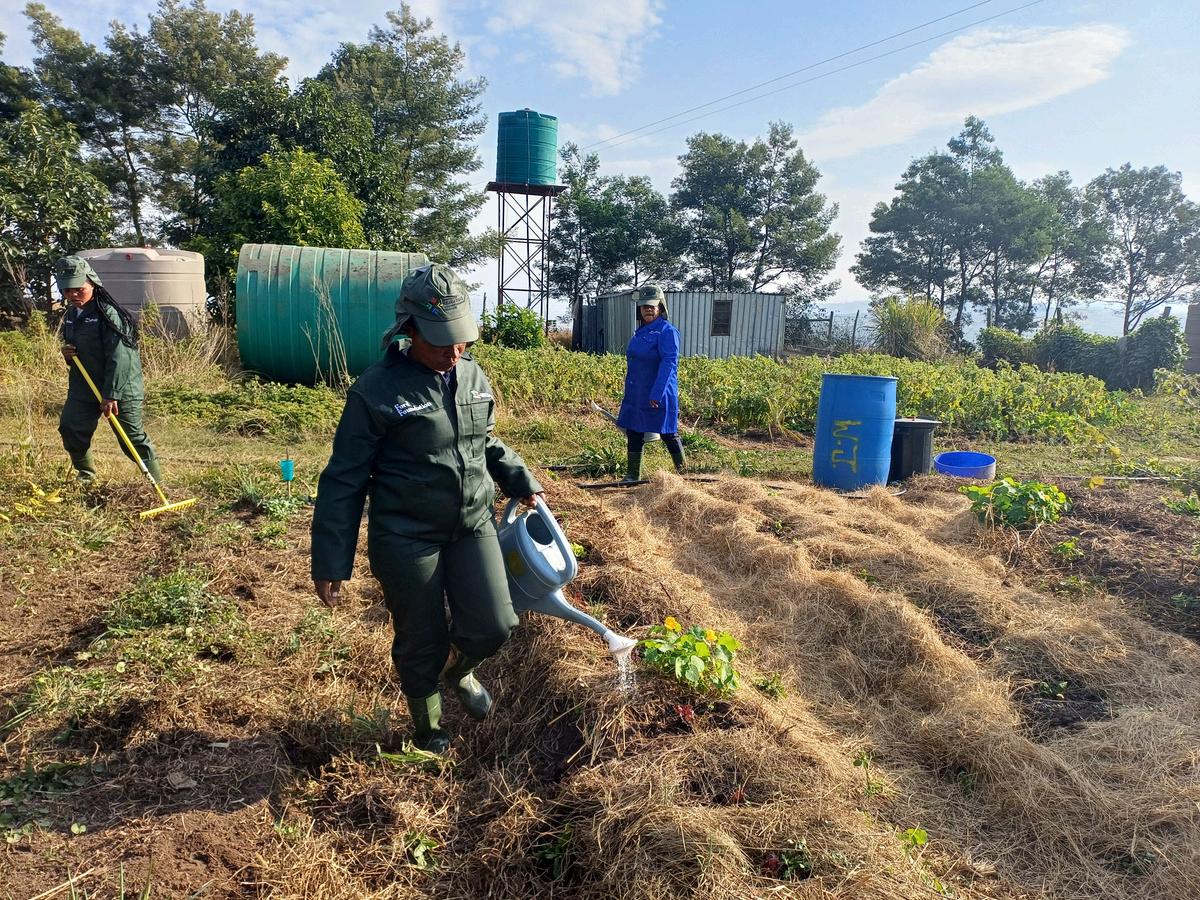
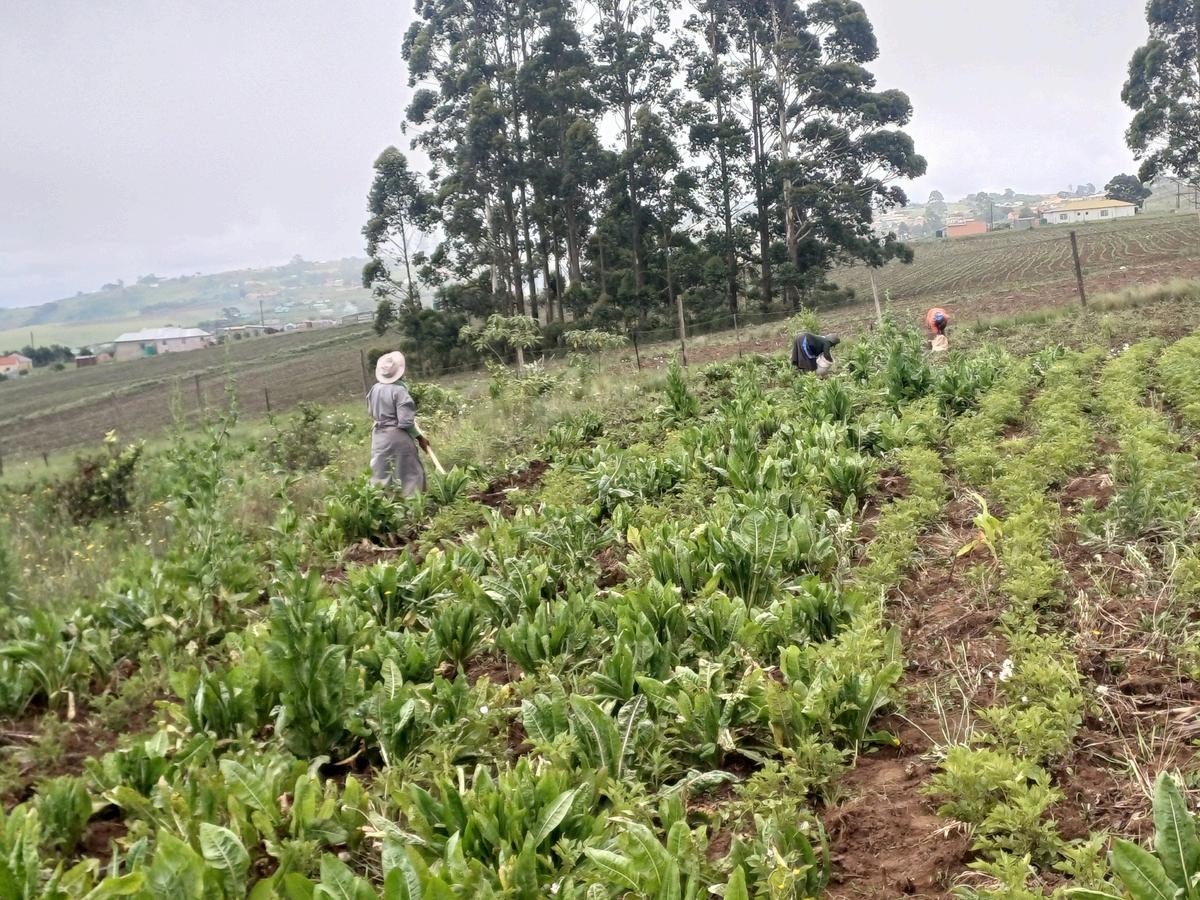
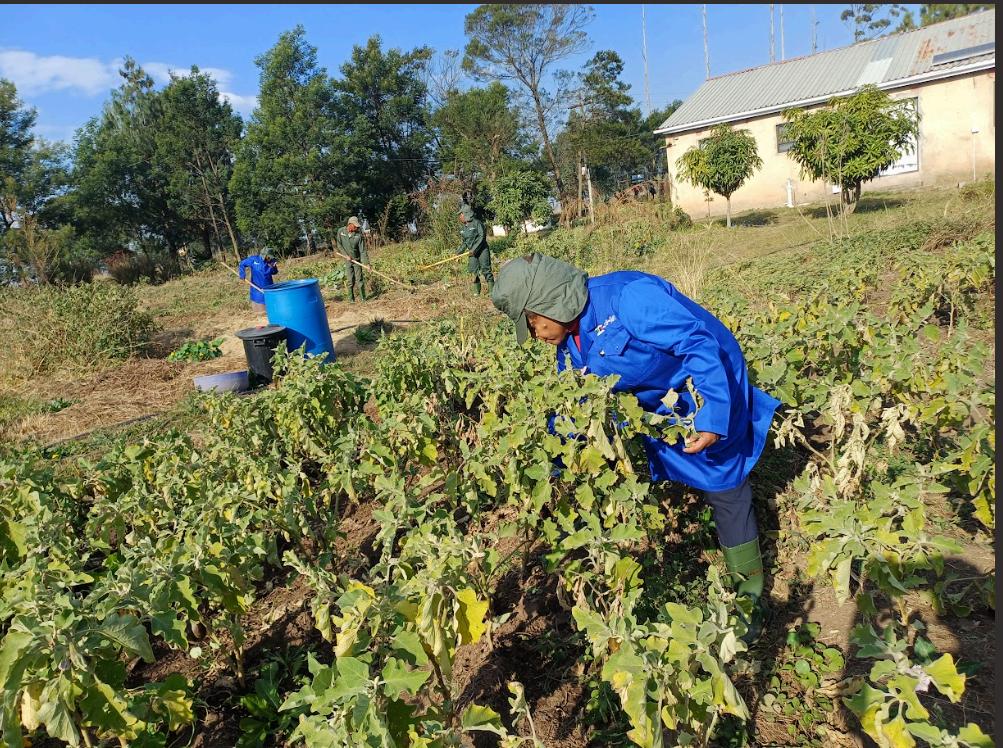
Wana Johnson Learning Centre was started in 2014 by the family of WanaJohnsonasalegacyproject,inhonourofasocialactivistwho dedicated his life to the development of indigenous people, particularly the amaMpondo of the remote, rural Wild Coast. The organisation is committed to supporting rural communities in achieving their rights to food security, nutrition and environmental sustainability through natural farming practices. For the past ten years, they have operated in Taweni, a remote rural area in the EasternCapeprovince.
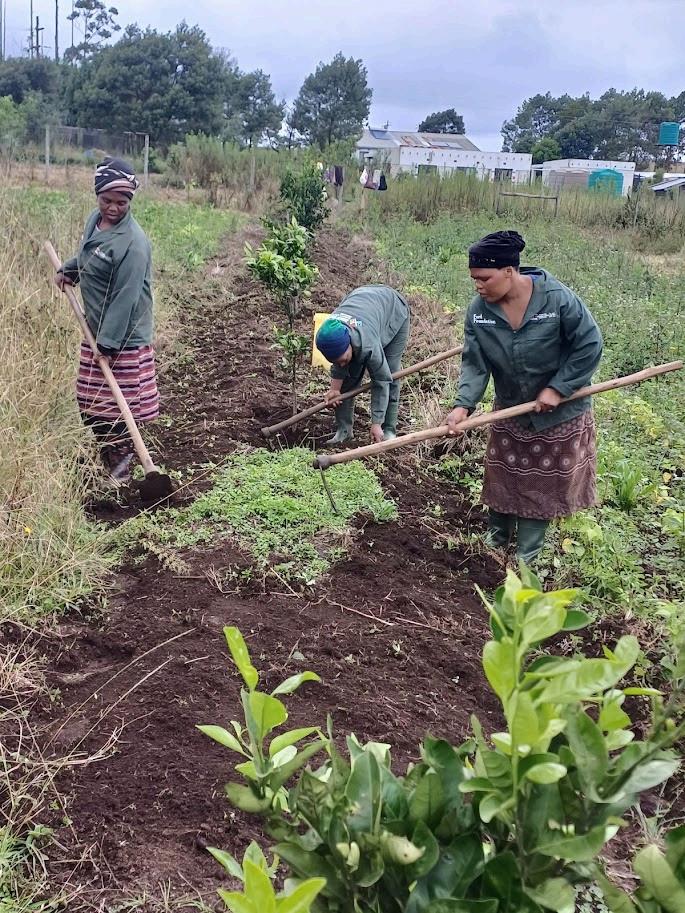
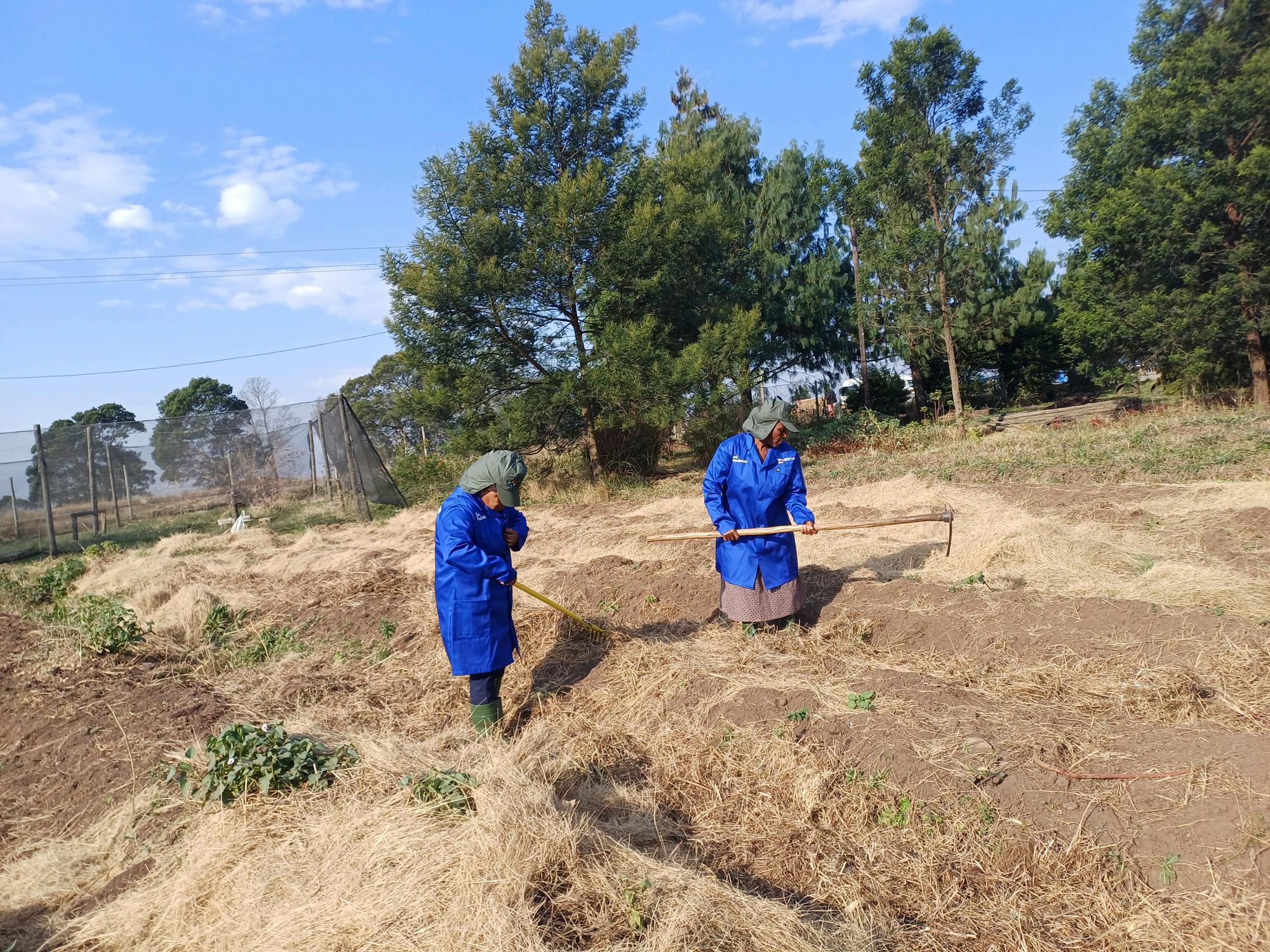
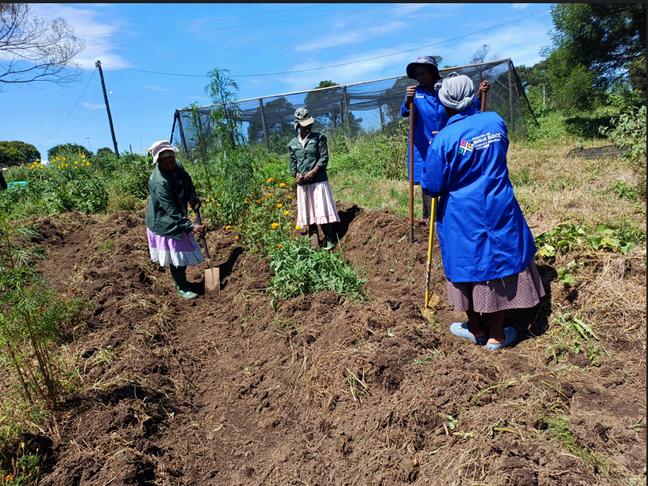
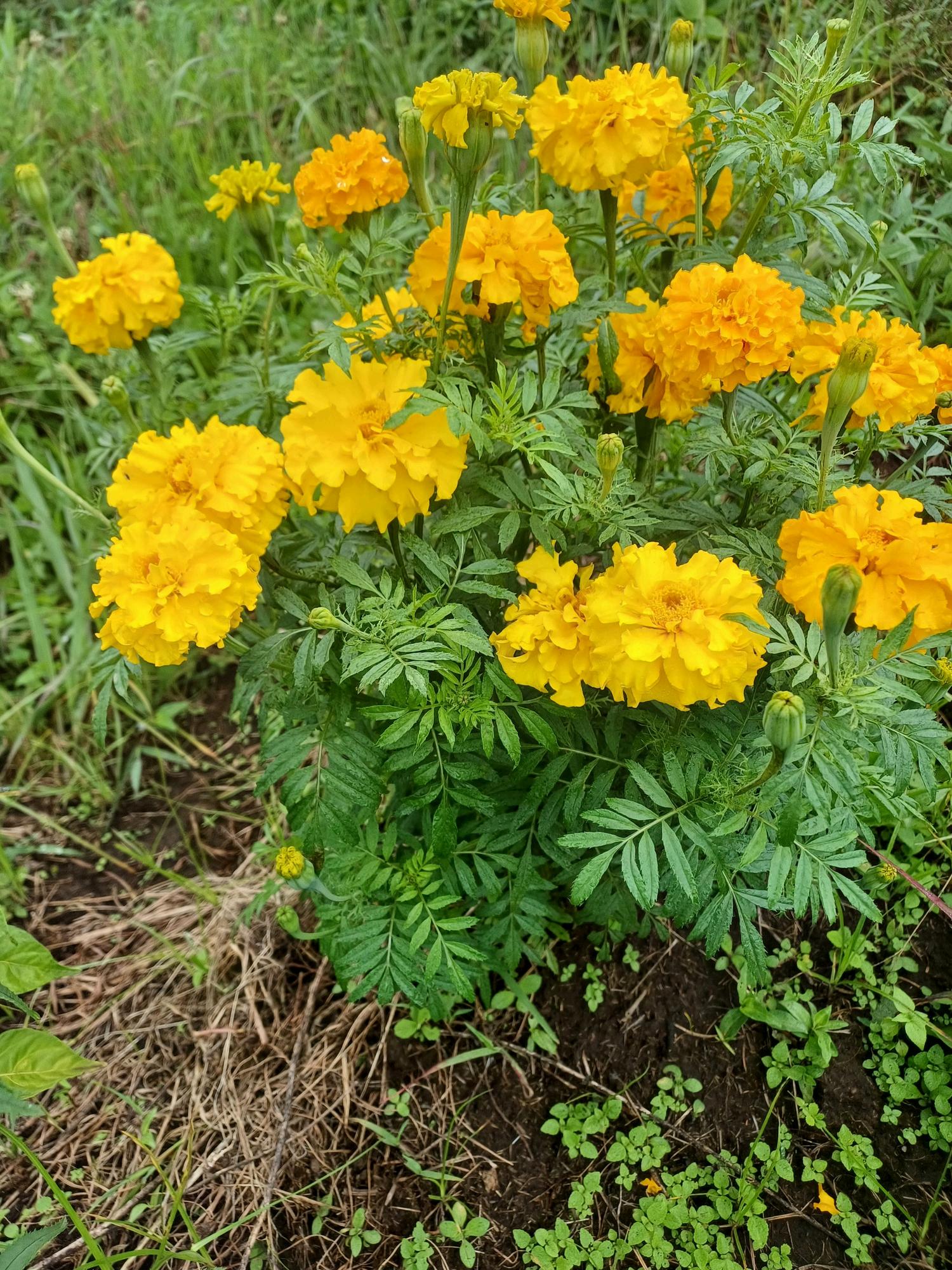
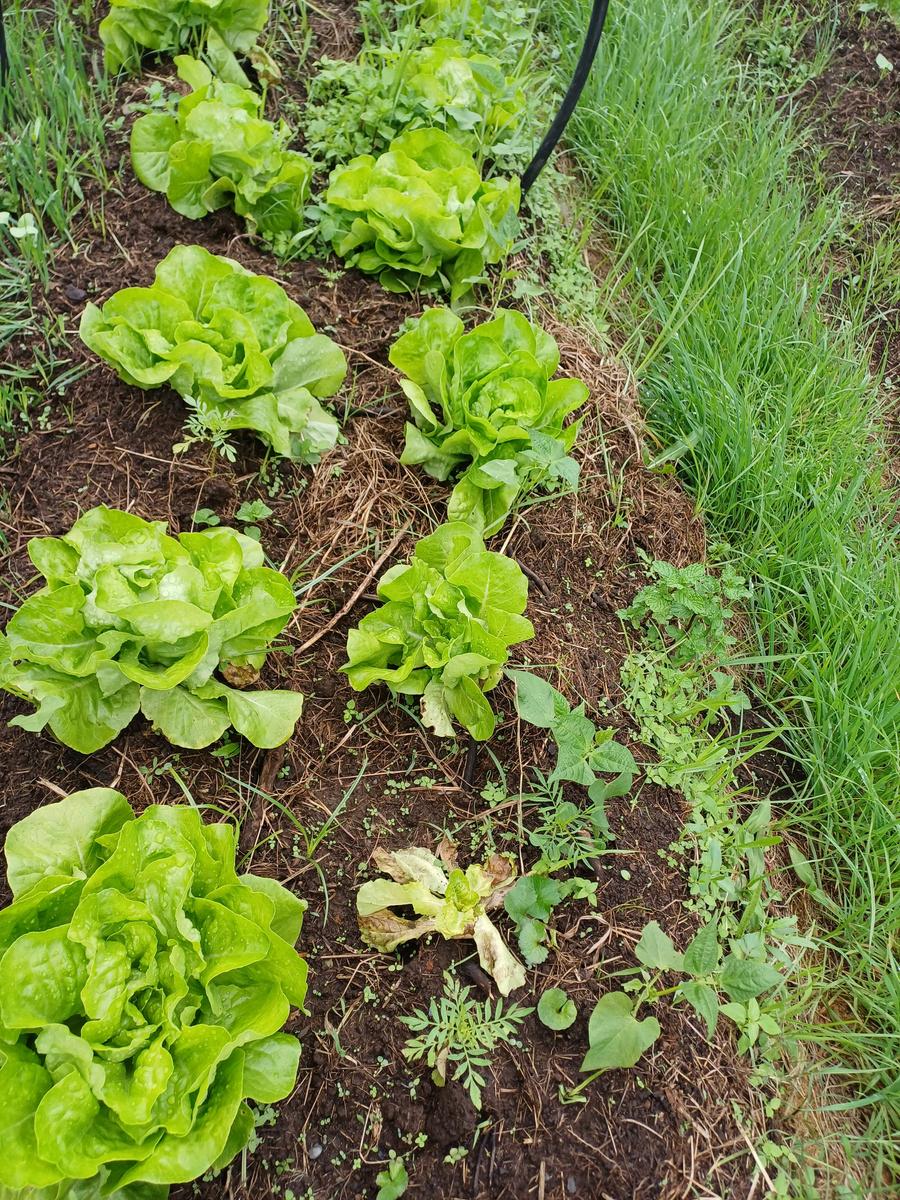
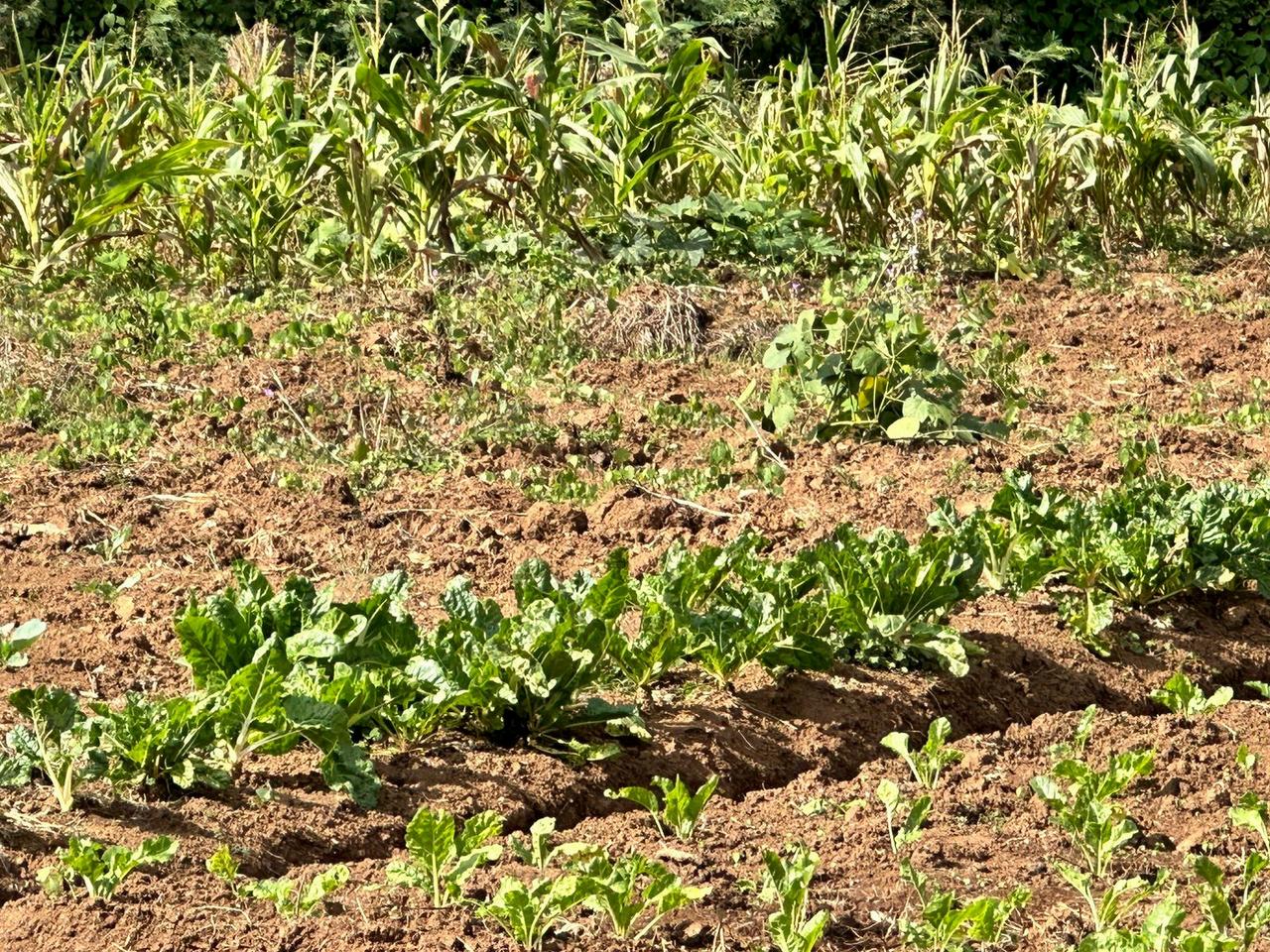
Currently, the Wana Johnson Learning Centre runs a demonstration garden with plans to expand into a school garden and eventually a marketgarden.
The centre helps rural communities grow nutritious food while also protecting and revitalising depleted water and soil resources. Through education, advocacy and collaboration, they seek to empower rural communities with the knowledge and tools to transition towards more sustainable farming methods. By promoting indigenous knowledge on regenerative agricultural techniques, the centre aims to improve soil health, conserve water and enhance biodiversity.Itenablesruralcommunitiestobecomeself-sufficientin foodproductionwhileprotectingnaturalresources,helpingtobuilda moreresilientandsustainablefutureforgenerationstocome.
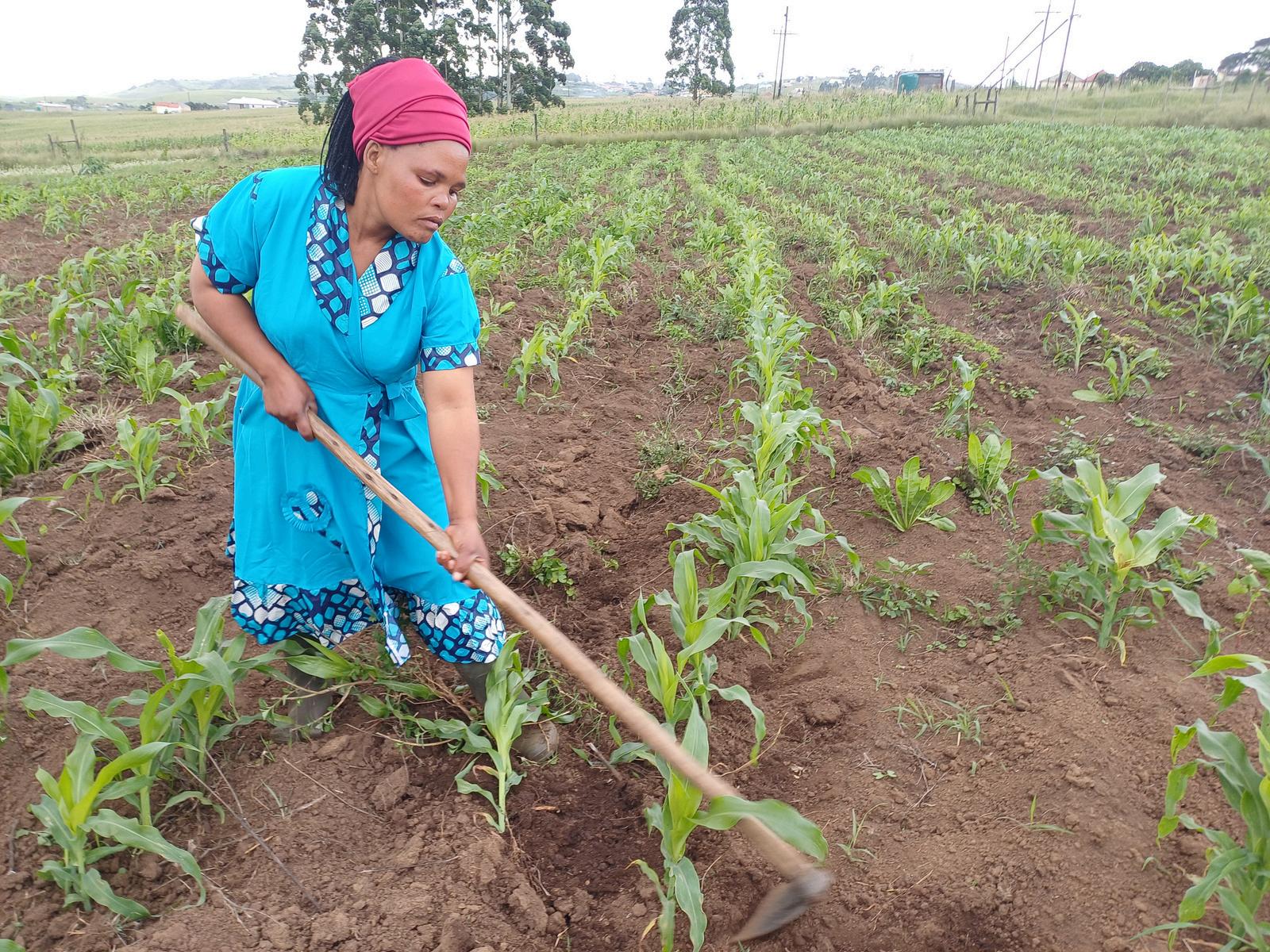
Thegardenremainsaplaceofrespite,eventhoughithasnotbeenpossibletogrowmarketcropsatthedesiredscale due to unpredictable seasons and extreme weather caused by climate change. It’s a complex journey of the group learningtotrusttheleadershipandbelievingthattheycancollectivelysustaintheirlivelihoodsovertime.
Mam’Maphini:Inthebeginning,we’djustcometohelpinthegardenwithnoexpectationsofanypayment.I’dsee Sisi [Khaya]alwaysgoingintothegarden.I’dknockonherdoorandoffertohelp.Afterhelpingher,Iendedupenjoyingitso much that I came every day. We got remarks in the beginning, people would say that I was going to help that woman whowasjustusingmeforherownbenefit,whileIgotnothing.
Mam’Mgilane: I had a piece job [informal employment] around here, and I ended up coming to help Khaya with her workinthecommunalgarden.Shewentontostartthepreschool,andwelearntfromeachother.Ilearntalotfromher. Some of the things I saw her doing in the garden were new to me, and other things I already knew. There are also childrenwhocometogethelpwiththeirhomeworkonSaturdays,it’sjustnice.Inthebeginning,whenpeopleaskedme whatIwasdoinghere,I’dsaythatIwasjustvisiting.
KhayaMposula:IreturnedhometoFlagstaff,EasternCape,in2014,andthat’swhentheprojectbegan.WhenIgothere, I’d see people going to town to get their grants, then go into Shoprite to buy potatoes and cabbages and come back home by taxi. People here still want to use their grants to buy vegetables or ingredients for their isishebo [vegetable relish]. SosometimesIfindthatthismindsethasnotchanged.Evenwithmen.Imightaskamantohelpuswithsome heavy lifting in the garden and offer him a head of cabbage in exchange. He’ll refuse and say he’d rather earn the moneytobuyacabbage.Theirattitudeis:‘Iwantyoutopaymesomemoney.’Butifyoufollowtheirmoney,itendsup buyingthesamecabbageatthelocalspazashop.
Soalloftheseexperiencesmotivatedmetotryandgetmorepeopletogrowtheirownvegetablesbecausethegrants aren’t enough to cover all their needs. From there, the project went on to have a preschool, and now we also have an afterschoolprogramme,acommunalgarden, andsomewomenhavetheirownbackyardgardens.
OurplanforrunningtheGrowingFoodforLifeprogrammewastosay:Here’sanopportunity,withtheultimategoalthat we become sustainable over time. So, I believe that the type of Early Childhood Development [ECD] centre we are building–linkedtogrowingfoodgardens–isgoingtotakeussomewhere.Ifyoulookaround,thereisnopreschoolin the area, apart from ours, that has a garden. The primary and high schools have gardens, but there isn’t anything growing in them. So, to me, the ECD space is where this whole mindset of being dependent on handouts is going to slowlychange.
I also picked up that with the previous funder, our programme took on people who had never been in a work environment.Itwasaboutgrowingaworkethic.Gettingpeopletounderstandthat8o’clockmeans8o’clock,thatyou needtobehereontime.Theprojectpartnershadtolearnwhenworkends,whentheycantakelunch,howtonegotiate acontract,andsoon.Weliterallyhadtospendadaywiththetraditionalcouncilgoingthroughtheircontracts,clause for clause, highlighting the ‘dos and don’ts’ to make sure that people could understand their contracts. So, it was actuallyabeautifullearningexperience,seriously;havingthatfunderonboard.
Khaya:WewereinitiallyworriedwhenDavid[thementorfromthepreviousfunder],whowasadvisingus,saidweshould respond to the Growing Food for Life call for proposals, because we didn’t even have a bank account. Luckily, there weren’tmanyapplicationrequirements.
Mam’Maphini: At the beginning of Growing Food for Life, what kept us coming back was that we were happy to be meeting up as women, including uGranny [the grandmother]. We got to talk about things in our lives that were not sittingwellwithus.Bythetimewewenthome,wedidn’tfeelstressedanymore.Thiswasveryhelpfulandimportantfor us.Itwaspowerful.
"WewerehappywhenFHR accepteduswithoutmuch
WHEREWE ARENOW
Therealityofclimatechangehas alsochangedourdream
Khaya:MydreamisgraduallychangingfromwhatIhad inmindwhenthegardenprojectbegan,beforewejoined the Growing Food for Life project. When we first started, our dream was to plant and sell our produce. But now, sincejoiningtheGrowingFoodforLifeproject,mydream isforeachandeveryhouseinthevillagetohaveasmall food garden with just enough to feed the family. That is my dream now. My initial dream was to have a market garden where we grew cash crops, like spinach and cabbage,insuchbigvolumesthatwecouldsellthemto retailersinFlagstaff,suchasBoxerandShoprite.Wehave nowrealisedthatwasjustadream.Aftertenyearsofthe project,weareonlynowstartingtosell.
My original dream has also been changed by the reality of climate change – and the fact that you can never grow large numbers of vegetables. Initially, we were looking at chemical farming to produce large volumes: synthetic fertilisers, pesticides and herbicides. But then therealityofwhatweweresayinghitus–whataboutthe environment and the health of the people who eat our produce?
Mam’Mgilane: I also had that challenge when I joined the project; not having any money. Where we could, we’d do household duties for money. We used what we made from those domestic jobs to buy mealie meal when we were runningoutoffood,ortobuyschoolshoesforourkids.
Khaya:For me, it’s still difficult because I’m so remote. I worked in Joburg for many years, then I relocated to Durban –and eventually things just gravitated, and I ended up here. My family is in Durban. This situation is ongoing and so I do feelisolated.Peoplesayit’slonelyatthetop!
Soyeah,theactualprojectchallengesarejusttrustissues.Therearetrustissuesinanysituation,buttrustisabigonefor me, personally. In business, it’s a bit awkward when you come to a remote area and you find there’s issues like: ‘She’s educated,sowecan’ttrusther.Shemightpullsomethingonus,youknow?’AndIthinkpeoplehavetrustissueslikethis because people have been promised so many things, whether it’s by the government or the church. We’ve been promisedthingsallalongtheway,butthosepromisesareneverkept.Istruggletogetpeoples’buy-in.It’sliketheycan never get enough of asking, ‘Why would she really leave the city and come and live here?’ And it seems like they’re thinking: ‘Oh, maybe she failed in the city and that’s why she came here.’ The issue with trust is an ongoing thing. You canhearthroughoutourconversationsthattheissueofmoneystillcomesup.
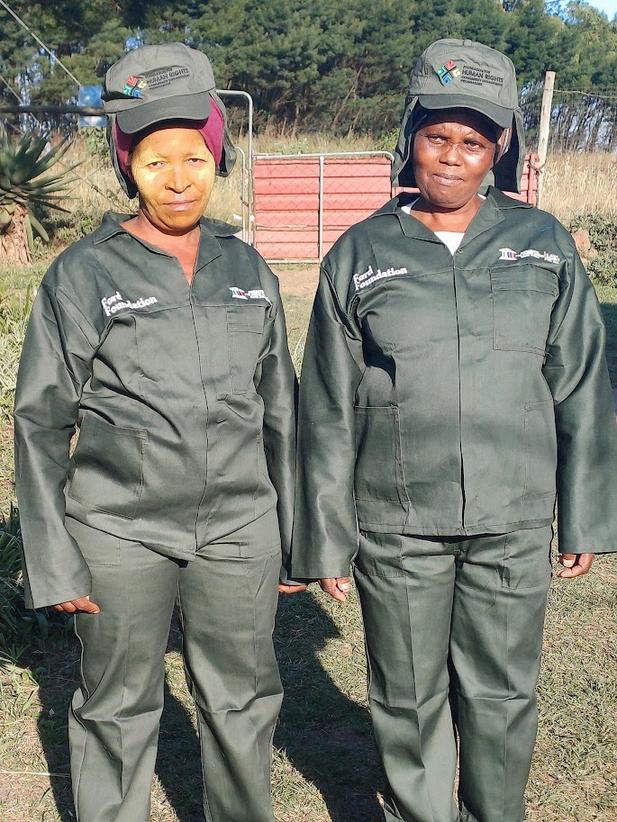
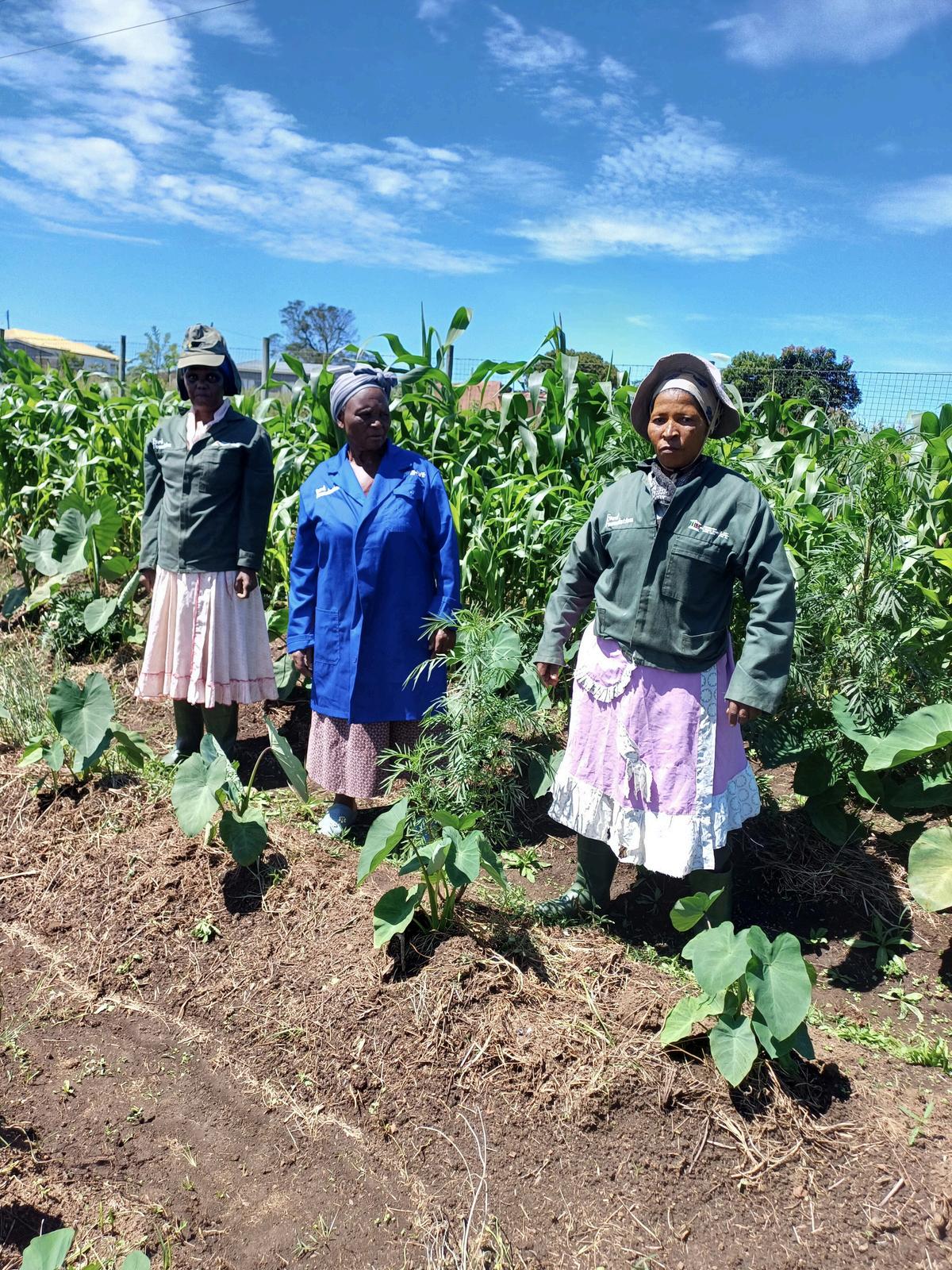
When an opportunity turns up, we all hope that it will come with money. Even when we were informed by the FHR that we were getting uniforms and personal protective equipment, I was hesitant to talk to the ladies about it because the expectation is that if we wear a uniform, it means we are working for an organisation that is paying us. It’s tricky explaining this to the project partners because although they may agree to wear the uniform, in the background, they are questioning: ‘What happened to the money? Why are we not getting any money? Why is Ma’Mbhele [Khaya’s clan name]
agreeing to us not being paid? Is she taking the money and notgivinganytous?’It’snotlikeit’sagainstmeasaperson–that I can’t convince or make them trust me. It’s just that the minute money comes into the equation, you can’t satisfy people enough because we are all looking for this elusive money.
Mam’Maphini:When I met the FHR team, some were wearing uniforms, and I got excited. I love the uniform! I thought to myself,‘I’dliketoseemyselfinthesameuniform.’Wearingthe uniform makes me feel proud when I picture myself working andearningmoney.Seeingyourteammateswearinguniforms mademefeellikeyou’reheretodiscussseriousbusiness,and thatwhatyou’reofferingisgoingtobenefitusalot.
Khaya: In the ten years of operating as Wana Johnson, even the things that I thought were straightforward and easy to understand have become so muddled by the question of money.
Mam’Maphini:IwasfeelingalotofstressbecausetherewassomuchgoingoninmylifewhenIjoined.Icouldtellyoua longstorybut,aftersharingmytroubleswiththewomenhere,Ifeltencouraged.Ibecamestrongerthankstotheladies from the project. What makes us happy about being here is that we get to wake up and leave our homes. We get to leave behind the things that stress us at home. We get to avoid conflict and a lot of things that can hurt you, because youarenotathomemuchduringtheday.
Khaya:Forme,it’ssimilartotheotherladies.IlikethefactthattherearealotofpeopleintheyardbecauseIlivealone on this big site. I like literally just having people around me. As much as we are here to farm or to learn, we also get to chat.Iwishtheotherladieswouldn’tgohomeonsomedays.Havingtheotherladiesaspartoftheprojecthasbeena wonderfuladditiontothejourney.Ithinkthatmyconfidencelevelshaveimproved.
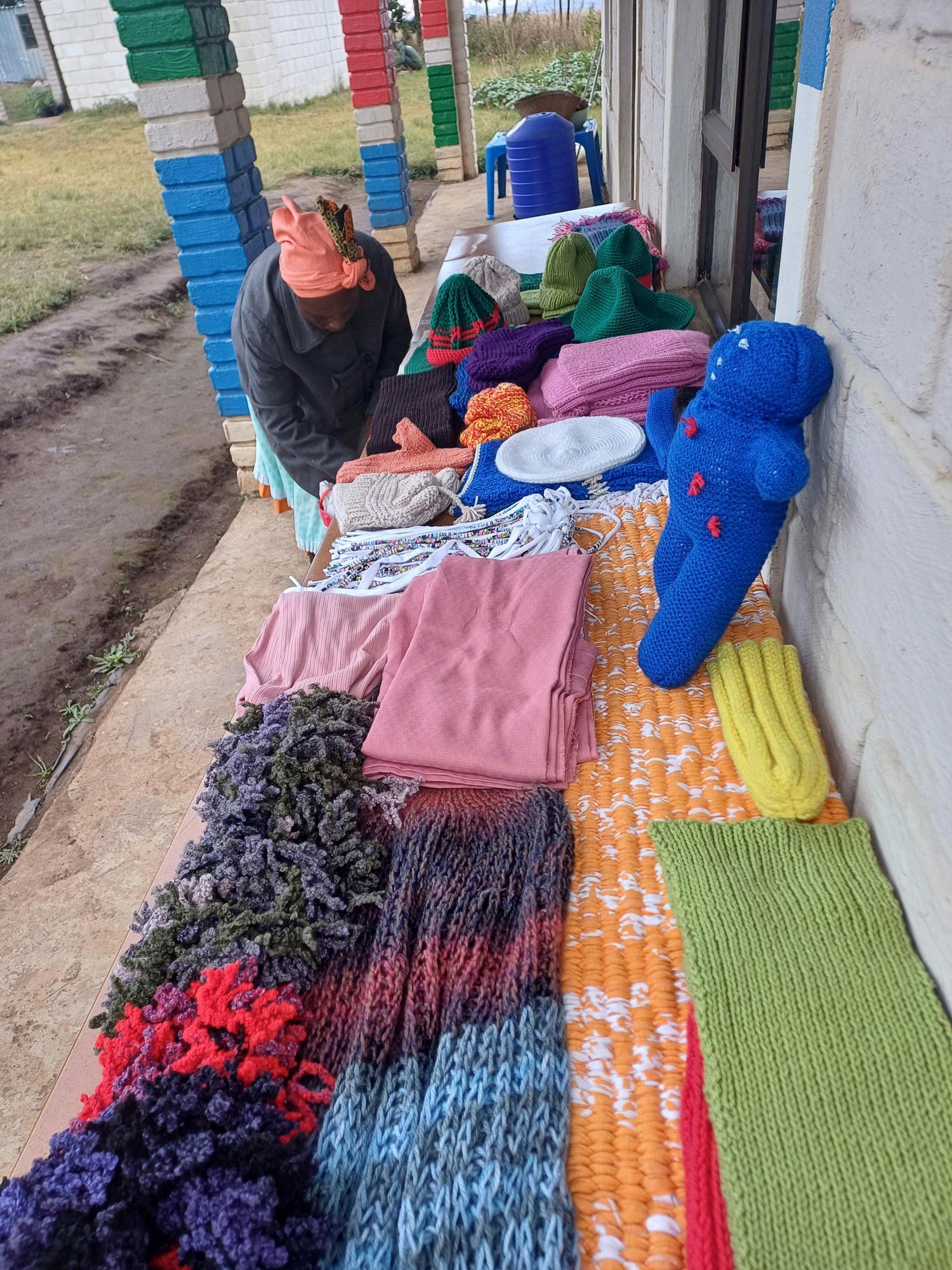
I’m now learning a lot more about indigenous practices and traditionalcrafts,whichIknewnothingabout.I’mlearninghow thingslikereedbasketsandgrassmatsaretraditionallymade. When the ladies talk about how things were done in the olden days, I get so curious and ask questions like: ‘How are reeds grown? Where do they get reeds from?’ Although I was born here, I moved to town, so I had lost touch with the traditional waysoflivinganddoingthings.
Mam’Maphini:TheexcitementIfeelisfromhavingabackyard garden, even though it still needs to be properly fenced and protectedfromlivestock.
Mam’Maphini: Backyard gardens are not common in our area since people usually farm on large family fields. Some peopledon’thavebackyardgardensbecausetheyarelazy.Andothersdon’thavefencedyards.Anothercommonissue isthelackofwater–andyoucan’tgrowplantswithoutwater.
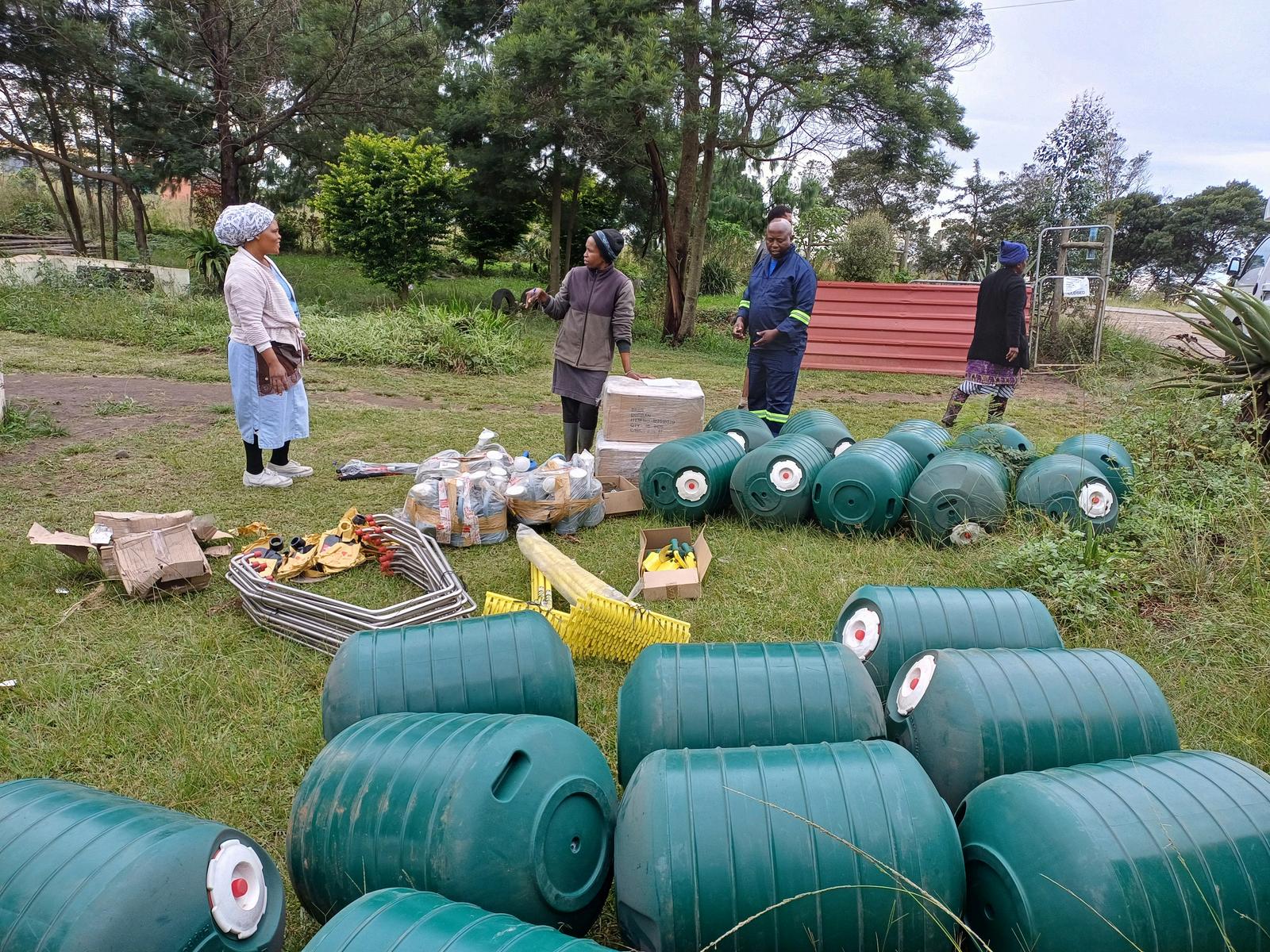
We’vealsoaskedaroundforthefundstogetsomethingcalledSpringProtection,whichinvolvestakinganexistingwater source, however small, cleaning it up, containing the water and using pumps to bring it closer to the community. So, we’vecompletedquiteabigSpringProtectionprojectinDolophini, thevillageMam’Maphiniisfrom.Onatwo-kilometre stretch,theynowhaveeightstandpipes.Allfromonelittlespringinthevalley.
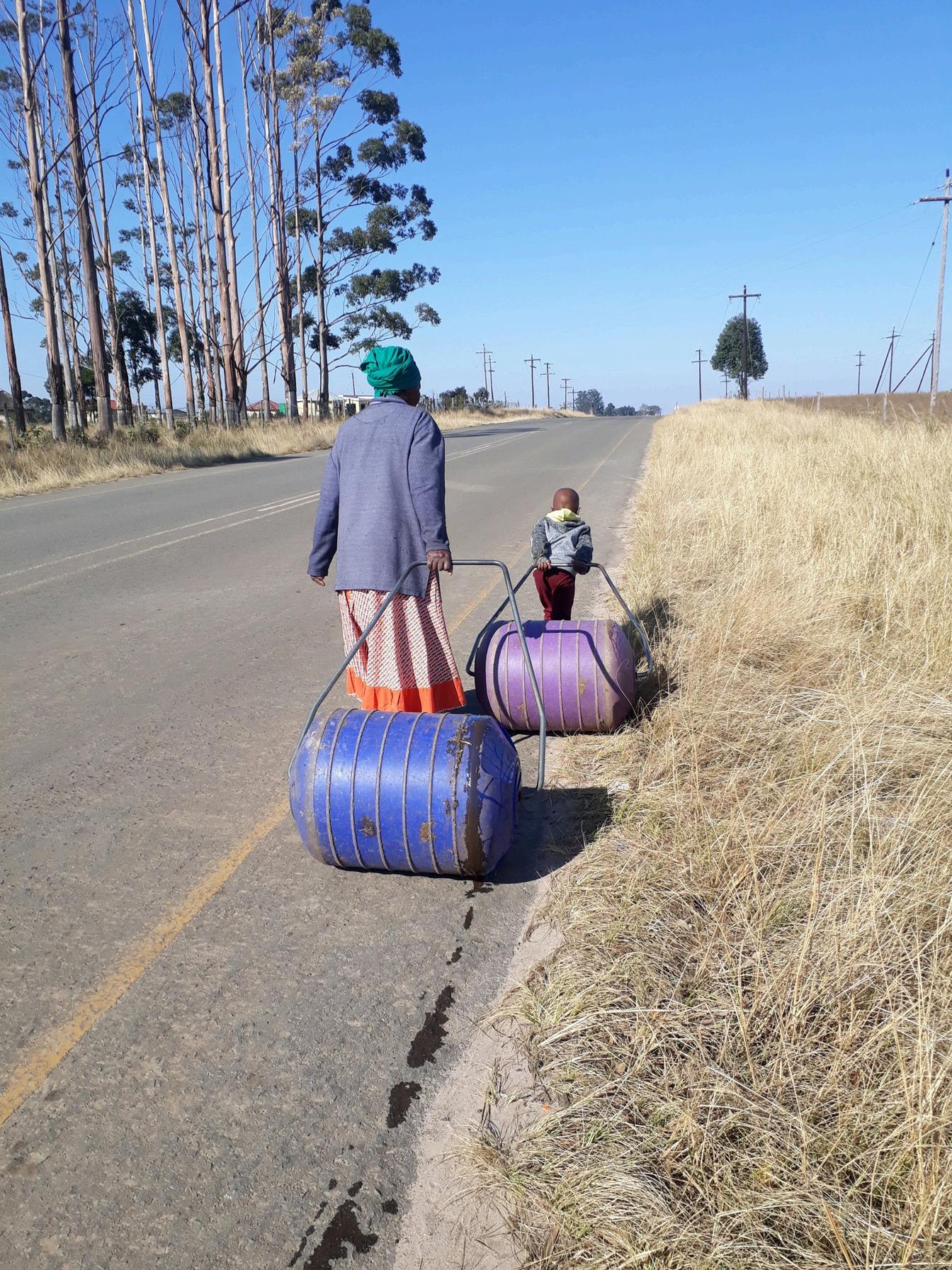
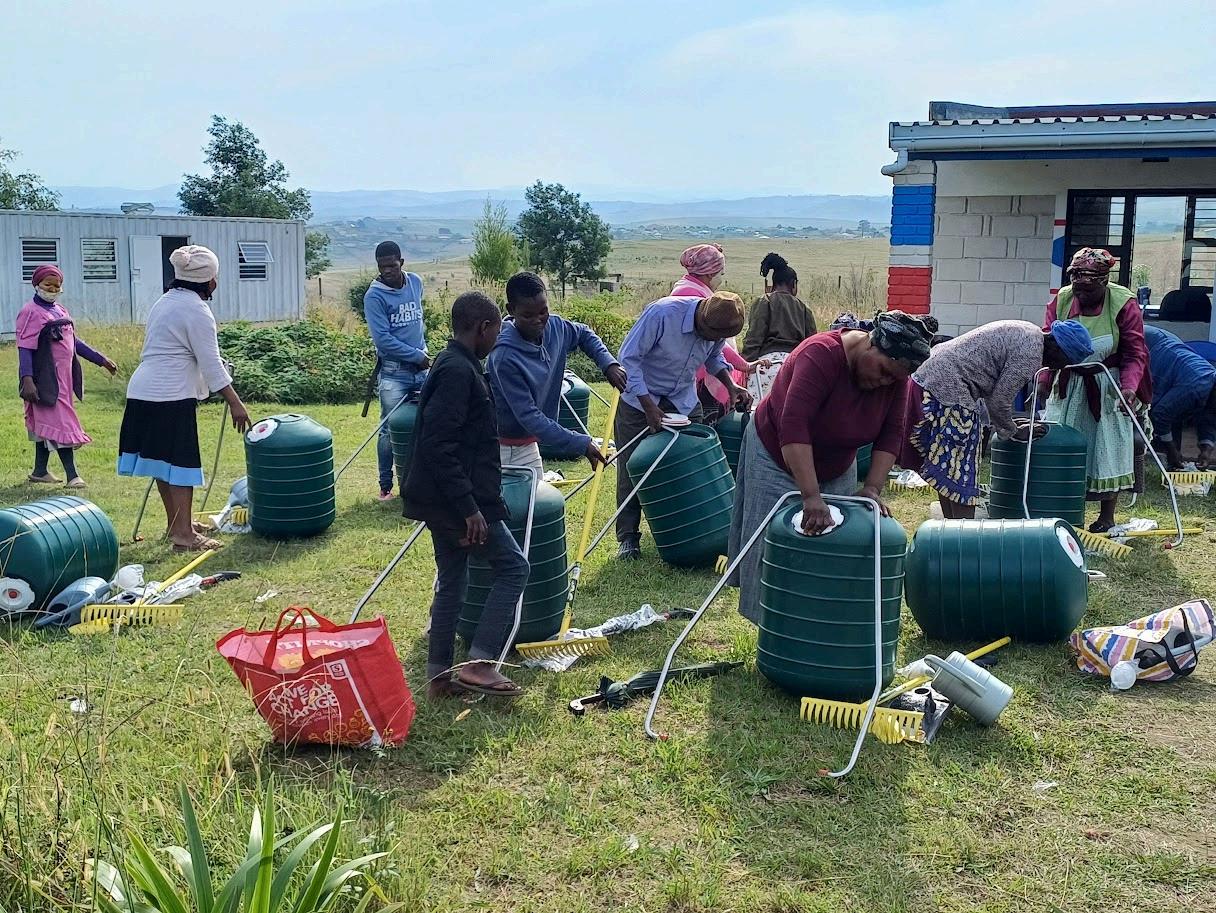
Mam’Maphini:IfIweretospeakaboutmyvillage,Dolophini,whereIcomefrom,since Sisi [Khaya]camehere,weare livinginabetterway.Peopledon’tfetchwaterfromtheriveranymore.Sheinstalledtapsthatareonlyabouttwotofive minutesfromourhouses.Wedon’thavetogofartofetchwaterortowashourlaundry.Wearehappy,it’sverybeautiful. SincewegotourHippoRollers,oursmallchildren,fromasyoungasfourorfiveyearsold,cannowfetchwater.Weare veryhappy.Andwetrustthatwe’regoingtogetevenhappier.
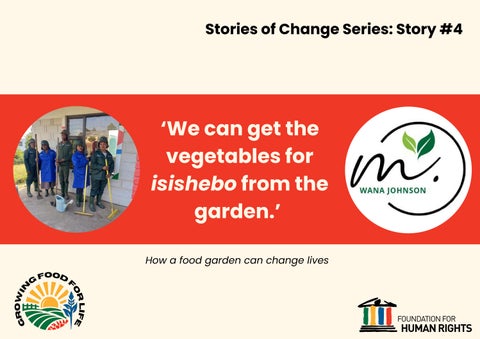
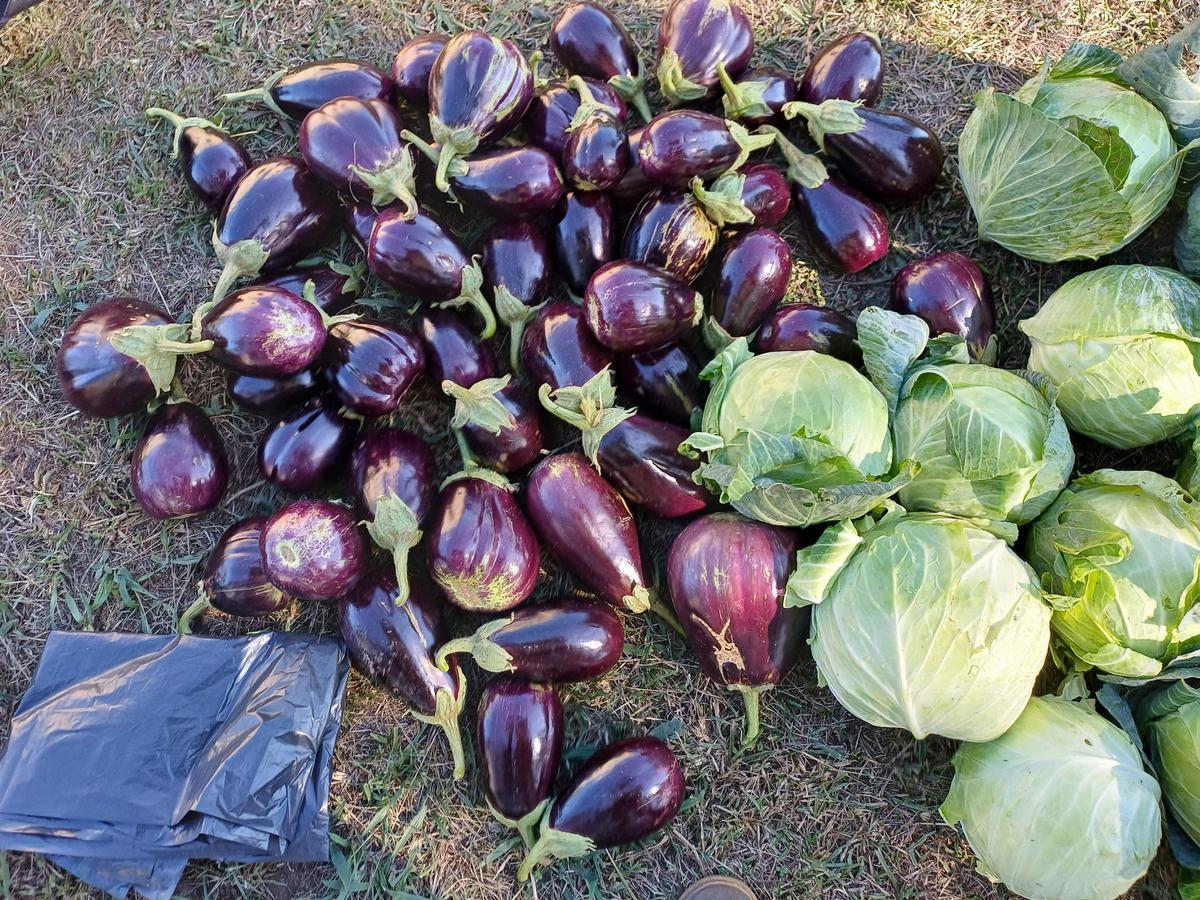
Mam’Mgilane:Iampersonallyseeingadifferencesincewe started working on our own backyard gardens. We no longerstrugglewithgettingisishebo.Atleast,ifwestruggle, we’ll just be struggling to get mealie-meal. We can get the vegetablesforisishebofromthegarden.
Mam’Maphini: When people have some food at home but no vegetables, they can buy them from here and not in town.
Khaya: I always wanted us to help people grow their own vegetables to get isishebo, so people can have something tocookandtheycansleephavingfedtheirfamilies.
Mam’Maphini: I have a vision to plant potatoes, cabbages and spinach. I don’t want to go and buy vegetables anymore. And I want other people to buy them from me as well.
WewantWanaJohnsontobethe centrethattrieditallforour community
Khaya: I think that Wana Johnson should eventually become a one-stop centre. The thing that Mam’Maphini wastalkingaboutisthatevenifpeople have to buy mealie meal in town, they can always get their vegetables here. So, we think that this one-stop centre couldsolvemanyotherproblems.Such a centre could have anything and everything that the community needed. I’d love the Wana Johnson Learning Centre to be known one day asthecentrethattrieditall.
Mam’Mgilane:My hope is that we can build something that won’t ever end, that we can go the distance with and get something from. Something that willbringsomechangetothevillage.
Khaya: Currently, because we now have a preschool, Mam’Mgilane, for example, can come and work on the project withouthavingtoworryaboutchildcare.Wedon’tchargetheprojectpartnersanyschoolfeesbecausetheycan’tafford it. Children also need an afterschool programme. And so we don’t charge the project partners a set fee to bring their children.Holisticallyspeaking,theprojectissortofslowlymovingtowardssustainabilitywiththisintervention.Becauseof it, we can keep young people in our space to encourage them to also start enjoying the gardening aspect of food security.So,atthemoment,we’dalsoliketoadvancetheseschoolprogrammessothatweareabletoprovideagood learningenvironment.
Mam’MgilaneandIaregoingtoTHANDA[anotherGrowingFoodforLifepartner]inPortShepstone.We’regoingtocheck out their holistic programme. We want to learn how we can develop our ECD and afterschool efforts and incorporate themintoourfoodgardeningproject.
Khaya:PeoplegenerallytakeataxitogoandscanadocumentortotypetheirCVsintown.Sowejuststartedthislittle print shop facility. But we’re unable to advance this plan because we’re using little machines from Game and not the proper multifunction machines for big jobs. Also, it’s still very difficult because even when you have a young person working there, how are they going to get paid? What if there are no customers that day? We haven’t been able to promoteitverywell.Butthesearesomeofthethingswetrytodo.
Khaya: We had a youth employment programme before the Growing Food for Life programme and so we are still hoping to get more youth interested. The 12 months of that employment programme didn’t go well. The young people were constantly reminding us that theyhadsubmittedtheirCVstothemunicipality,sothey wouldn’tbeabletostaylongin‘thisthing’becausethey were waiting for a call from the municipality. With the R350 government grant, the youth are now starting to see themselves as having money. Many of them live withtheirparentswithoutanyresponsibilities.Theyseea plate of food appear in front of them every day. They don’t think it’s necessary to garden and come work on theprojectwithus.
Mam’Mgilane: Our children don’t like working on the projectwithus.Theysaytheydon’twanttoworkwithold people.
Khaya: I think, for me, I have mixed feelings. On some days, we get discouraged and that’s expected. I do feel discouraged sometimes and I also feel stressed. It is stressful because people are looking to you to make something happen–‘Surelythere’ssomethingyoushouldbedoing!’
So, I do feel the strain. Physically, I can feel it. I’m not as strong as I used to be. The other day, I had a container on my backwhileIwassprayingcabbages.Thenextday,Icouldn’tgetupbecausemybackwassosore.Justrecently,afterwe had finished harvesting, Mam’Mgilane, went down, she was sick and lying down flat. I don’t know how she felt, but it frustratedmebecausewhensheisn’taround,youcanreallytellthatshe’snothere.Thesethingshaveanimpactonyou –thefactthatwearen’tyounganymore.
Mam’Mgilane:When we were initially getting stipends, it gave me hope: if we kept going for longer, I could eventually haveenoughmoneytostartabusiness,sellingchickens.Inthebeginning,Iwouldcometoworkwithsomeone,butshe stopped coming because she got tired of working for no money. When we started getting a stipend, she wanted to come back. But she couldn’t because the stipends were for project partners only. It was bad when we stopped getting stipendsbecausebeforewehadhope.Ourhouseshadstartedfallingapartbecausewedidn’thavemoneytofixtheold structures.Withthestipends,wehadstartedrebuildingthem.Itwasreallyhardwhenthatfunderleftus.
Mam’Maphini: When we started getting stipends, people started taking our work seriously. They saw that there was something benefitting us here. They wishedthattheywerealsoinvolvedintheproject.
Khaya:Icansaythatitwastraumaticwhenthefunder,whogaveusstipends, left. You can still see the effects in the landscape. It’s just not the same. From havingfiftyparticipantsontheproject,twodaysaweek,tosuddenlyhavingto swaparoundfourpeopletocoverthewholeweekjusthasn’tbeeneasy.
Within that group of fifty people, there were different skill sets. For example, when we got a water tank from another programme, we knew that we had buildersontheprojectwhocouldbuildastandforit.Iftherewereholesinthe fence, we had men who could easily fix them for us. Even for cutting grass. There were people on the programme who could cut grass for us with the brushcutter.
Nowwearejustlefthere,onourown.It’sjusttraumatic.Andit'sthethingsthat makeyouthinkthatthecommunitymustbelaughingatyou,saying,‘Shewas onahightheotherday.Theprojectgardenwasgreen,itwasbeautiful,andit was full of life and activity.’ Suddenly, there is nothing happening. It is traumatic.
Mam’Maphini: We do still have hope. Because we once worked on a project with a stipend and we are keeping up with the work, we are hopeful that one day there will be something. I have hope that although we got negative commentsatfirst,wedidn’tstopworkingontheproject,evenwhenthestipend supportstoppedandwewerenotgettinganything.
We feel we’re so remote. We’re too far from mentorship programmes and interventions. If we could just have more assistance.Becausewe’reherealone,wedon’tknowwhenwedothingsincorrectly.Wedon’tknowwhatelsewecould be doing. We need some experts who could probably help us to do better with proposal writing and attract more fundingpartners.
I think we also need more capacity building or more partners whose farms we could visit and observe other programmes doing similar work, under similar conditions, but who are making it work. When David [from the previous funder] was guiding us, we felt like we had a mentor, someone who came and taught us things. We felt like we had power.DavidwouldconnectuswithinitiativeslikeGrowingFoodforLife.
Khaya: The biggest thing I’m really looking at getting are tunnels [‘polytunnels’ are widely used in sustainable and small-scale agriculture to provide shelter for plants from harsh weather conditions]. Maybe one big tunnel, so we can keep some crops under cover as well as have something to improve our irrigation. Our water reservoir facility is not sufficientatthemoment.Soweneedthesystem,whichisconnectedtoaspringnotfarfromhere,topumpmorewater into the garden. Basically, we need water and a shade covering for some of the crops to protect them from harsh weatherconditions.
Mam’Maphini:We’rehappywithbeingintheproject,butwhat’snotsittingsowellwithmeisthattherearesomegaps in our fence that let animals get in and destroy our crops. Part of my budget for next year, if God helps me, is to also fencemyyard.Weneedmorefencingbecauselivestockentersthroughthegapsinthefence.
By the way, Mam’Maphini always tells me that she won’t die before learning to drive and having a car. I think she has forgotten now but she always tells me that this is her dream. So, if this project goes well, there’s no reason why some peoplecan’tachievesuchdreams.
Mam’Maphini:WhatIwouldloveisforsomeonetoteachushowtodriveandhowtogetourdrivinglicences.Thatwould be very helpful. I’ve planned that, this year, even without having any money, I’d get my driving licence. Being able to drive,I’devenconsiderworkingforthefuneralparlouranddrivingforthem.
Khaya:One day, I’ll probably leave to go look after my grandchildren [gets choked up with tears and stops to collect herself].Thedreamkeepsonchangingbecauseofcircumstancesthatwecan’tcontrol.Thechildrenaregettingolder.I have a granddaughter, and I would like her to be part of my life. But I can’t because I am so far. And when you think aboutit,Idon’tevenhavemyownplace.
So,someofthesefactorsdohaveanimpactonme.Ithinkit’sbecauseofthediscussionswehaveaboutsustainability and continuity. How can we, or how do we, work without it being a case of: ‘I’ve done my best… and I need to leave at somepoint’?
The project wouldn’t be where it is if these women weren’t here. The gates would’ve closed a long time ago. Their contributionishugeandwiththedreamsthatwespokeabouttoday,thisprojectwillcontinue.