








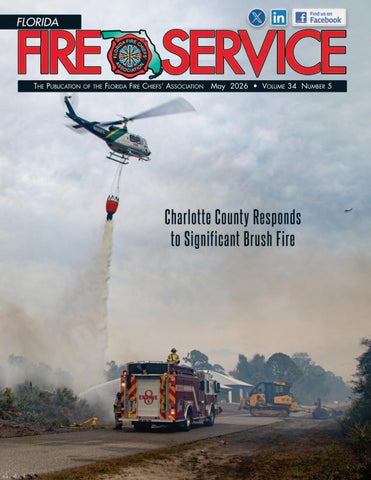

Florida Fire Service is the monthly publication of the Florida Fire Chiefs’ Association, provided to Florida Fire Chiefs’ Association (FFCA) members, by the Florida Fire Chiefs’ Association.
Florida Fire Chiefs’ Association
221 Pinewood Drive Tallahassee, FL 32303
Phone:(850) 900-5180
Email: info@ffca.org • www.ffca.org
FFCA Staff
Frank Babinec - Interim Executive Director
Rachel Pardo - Marketing & Member Services Coordinator
Savannah Selski - Exhibit & Sponsorship Sales Coordinator
FFCA Board of Directors
Trip Barrs - President
Ryan Crawford - 1st Vice President
Mike Tucker - 2nd Vice President
Michael Choate - Immediate Past President
Carlos Aviles - Secretary/Treasurer
Jeff Wagner - Northwest Region Director
Brady Rigdon - Northeast Region Director
Todd Allen - East Central Region Director
Chantal Botting - Southeast Region Director
Ian Kemp - West Central Region Director
Gregory DeWitt - Southwest Region Director
Ngoc Huynh - Executive Director
Terry Parris - Foundation Chair
Jeffrey Money - Senior Member
Editorial Submissions magazine@ffca.org (850) 900-5180
Advertising
Scott Leisen, Editor in Chief scott@ffca.org (386) 717-0055
Subscription rate for members is $36, which is included in member dues. Archived electronic monthly editions of Florida Fire Service magazine are available at www.ffca.org. Log in as a member and click on the Publications tab.
Florida Fire Service
May 2026, Volume 34, Number 5 USPS # 016-759
Periodical postage paid in Daytona Beach, Florida, and additional post offices.
POSTMASTER: Send address changes to Florida Fire Service, 221 Pinewood Drive Tallahassee, FL 32303. Statements of fact and opinion are the responsibility of the authors alone and do not imply an opinion on the part of the officers or the members of FFCA. Copyright 2026 by the Florida Fire Chiefs’ Association. All rights reserved. Materials may not be reproduced without written permission.


Hillsborough County Welcomes New Firefighters
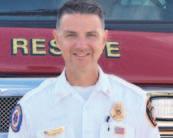

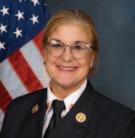
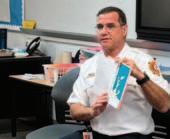

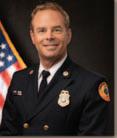
Trip Barrs, Fire Chief FFCA President
Over the past month, the Florida Fire Chiefs’ Association has continued advancing its mission with purpose and momentum on behalf of Florida’s fire service.
From statewide regional meetings and legislative engagement to strategic conference planning and organizational leadership transitions, your Association remains focused on advocacy, professional development, and strengthening the future of emergency services throughout Florida.
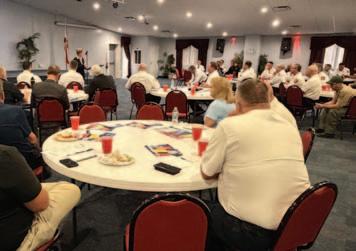
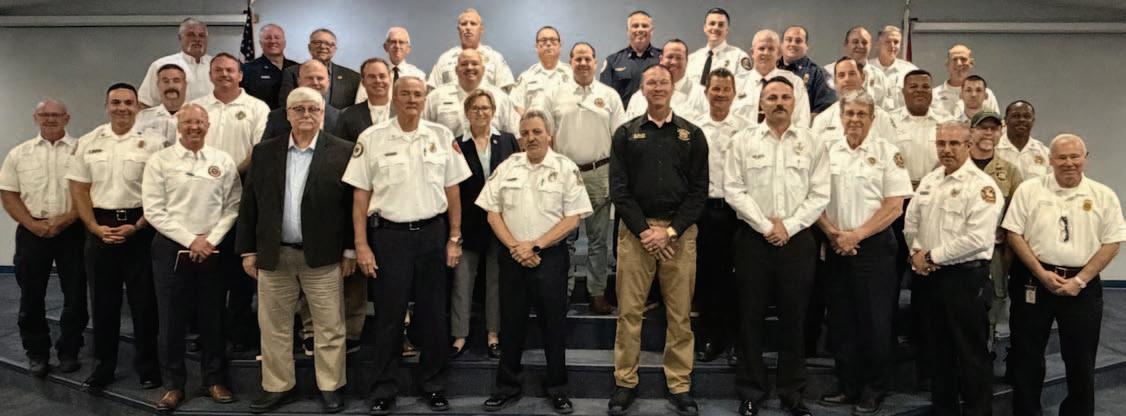
One of the most valuable aspects of the past month has been reconnecting directly with members during our regional meetings across the state. These meetings continue to provide important opportunities for open dialogue between Association leadership and fire service professionals representing agencies of every size and region. The conversations have been productive, insightful, and reflective of the challenges and opportunities facing our profession today.
A consistent concern raised during these discussions involves legislative proposals that could impact local government revenues and, ultimately, reduce funding available for fire and

EMS services. FFCA’s legislative team has remained actively engaged in Tallahassee as state leaders continue budget negotiations and discussions surrounding a potential special session focused on tax reform and broader fiscal policy initiatives.
Throughout this process, FFCA leadership has maintained ongoing communication with legislative leaders to ensure that any proposed changes to local government funding structures include meaningful protections for essential emergency services. We have emphasized that fire rescue and EMS agencies cannot absorb significant funding reductions without direct consequences to staffing, emergency response capabilities, training, disaster preparedness, and community resilience.
We appreciate the continued dialogue with members of both the House and Senate and will remain proactive in advocating for policies that protect Florida’s emergency services infrastructure. I also encourage each of you to continue engaging your local legislators and reinforcing the importance of responsible property tax reform that preserves critical
public safety services.
In addition to budget and tax discussions, FFCA continues working alongside the Florida Professional Firefighters to support proposals restoring the Cost-of-Living Adjustment (COLA) for members of the Florida Retirement System’s Special Risk Class. At the time of this writing, a Senate proposal supported by a strong coalition of first responders continues gaining momentum.
Recruitment and retention challenges remain a significant concern for agencies across the state, and maintaining competitive retirement benefits is an important component of sustaining a strong and experienced public safety workforce. FFCA believes restoring COLA protections for firefighters and other special risk members appropriately recognizes the long-term sacrifices made by first responders while strengthening Florida’s ability to recruit and retain qualified personnel in an increasingly competitive environment. We value our partnership with the Florida Professional Firefighters and look forward to continuing collaborative advocacy efforts on this important issue.
Regional meetings also included discussions regarding firefighter safety and health initiatives, including implementation considerations surrounding HB 929 and continued conversations focused on practical, funded solutions that improve firefighter

wellness without creating unintended operational burdens on departments. FFCA continues collaborating closely with the Division of State Fire Marshal and partners throughout the fire service to ensure the perspectives of Florida’s fire chiefs remain well represented throughout the rulemaking process.
Beyond legislative and regulatory matters, these meetings highlighted the tremendous innovation, professionalism, and resilience demonstrated by departments throughout Florida. Chiefs shared successful recruitment initiatives, expanded training programs, hurricane preparedness improvements, public education campaigns, and creative community partnerships. The opportunity to learn from one another remains one of the greatest strengths of this Association and continues to reinforce the value of statewide collaboration.
Earlier this month, our Emergency Services Leadership Institute (ESLI) participants gathered for the Finance & Budgeting and Marketing Fire & EMS classes — two impactful sessions focused on leadership, strategy, and professional development. Thank you to our instructors, graduates, and participants for continuing to invest in leadership growth and excellence within Florida’s fire and emergency services community.
Another major focus over the past month has been planning for the 2026 Executive Development Conference (EDC). I am pleased to report that preparations are progressing exceptionally well, and we believe this year’s conference will be among the strongest and most impactful EDC programs FFCA has delivered to date.
The Executive Development Conference has long served as one of the premier leadership events for Florida’s fire service. EDC provides chief officers, aspiring leaders, and executivelevel decision-makers with an environment to engage in meaningful discussions focused on
leadership, organizational culture, strategic planning, and the future of emergency services. This year’s agenda is being carefully developed to address the real-world challenges leaders face today while preparing our profession for the evolving demands of tomorrow.
In addition to high-quality educational content, EDC will continue emphasizing networking and collaboration opportunities that allow members to build lasting relationships with peers and partners from across the state. Some of the most valuable insights gained during these conferences occur outside the classroom through conversations among leaders facing similar organizational challenges.
As we finalize the agenda and speaker lineup, I encourage every member to begin planning now to attend. Whether you are an experienced fire chief, a command officer preparing for future leadership opportunities, or a developing officer seeking to broaden your perspective, the Executive Development Conference offers tremendous value for both professional growth and organizational success.
I am also pleased to officially announce that Chief Harold Theus (Ret.) has been appointed as the new Executive Director of the Florida Fire Chiefs’ Association, effective June 1, 2026.
This appointment represents an important milestone for the Association. The FFCA Board of Directors conducted an extensive nationwide search process that attracted 35 highly qualified applicants from across the country. Following a comprehensive review, eight candidates advanced to formal interviews with the selection committee and Board leadership.
Chief Theus distinguished himself throughout the process through his proven leadership ability, strategic vision, operational
Northeast Regional Meeting
experience, and longstanding commitment to Florida’s fire service community. His successful leadership of Alachua County Fire Rescue, combined with years of active involvement supporting FFCA initiatives and members, positioned him exceptionally well to lead the Association into its next chapter
Chief Theus brings a collaborative leadership style, operational credibility, and a clear passion for serving Florida’s fire service professionals. The Board was particularly impressed with his vision for strengthening member engagement, expanding professional development opportunities, enhancing conference programming, and continuing to build strong relationships with legislators, state agencies, and partner organizations.
On behalf of the entire Association, I also want to express sincere appreciation to Interim Executive Director Chief Frank Babinec (Ret.) for his leadership and support during this transition period. Chief Babinec provided steady guidance and valuable continuity that helped ensure the Association continued moving forward while the executive search process was underway.
As we move into the summer months, your Association remains committed to advancing the interests of Florida’s fire and emergency services community. We will continue advocating on your behalf, developing meaningful educational opportunities, supporting firefighter safety initiatives, and strengthening partnerships that advance our profession statewide.
Thank you for your continued membership, engagement, and support of the Florida Fire Chiefs’ Association. The progress we continue to make is only possible because of the dedicated leaders and professionals who serve communities across this great state every day. Together, we will continue shaping a stronger future for Florida’s fire service.
By Rick Spence
Several years ago, Psychology Today published a study that stated each person makes an average of 35000 decisions each day. As I read more into the article, it considered choices that included shifting around in your chair, which hand to scratch your head with and what or where are you going to eat. These are called “micro decisions,” choices that we make almost automatically or without putting much thought into. They make up most of our daily decisions. The major decisions we make, like where to live, who to date/marry and where to live are ones that require much more thought and even research. They are a very small percentage of our daily decisions. This was an international study, so they figured that if the average person lives to 84 years old, they will make almost 1 billion decisions in their lifetime. That is a lot of decisions to make, which the study stated often leads to “decision fatigue.” In the real world it is referred to as ‘paralysis by analysis.’ It is basically being overwhelmed by too much information to be able to make a decision in a timely manner. Ironically, not making a decision counts as one of your decisions. On the fireground, decision fatigue can lead to catastrophic consequences.

In an office, it can lead to widespread frustration, low morale, poor production, and eventually significant apathy for those waiting for a decision to be made. There is a lot of wasted potential in that type of organization.
The study went on to say the solution to reducing decision fatigue is to basically try to reduce the number of daily decisions you make. You do this by making a lot of the decisions routinely, made the same way each day. Taking the same route to work each day, setting your clothes out the night before, (for firefighters the choice of what to wear is not an option), having the same routine when getting to the job and the same when coming home from the job. My only problem with this is that it seems to make us seem like a robot in making our decisions. It does not allow for spontaneity or an unplanned interruption. In the fire service, this an everyday occurrence.
This study also did not take into account stepping up to help a co-worker that is struggling, assisting an elderly neighbor with their yardwork, or serving meals at a homeless shelter, as one of our decisions. It was focused on workplace and some homelife decisions. Unfortunately, the more automated our workforce and our thought process becomes, the more the human factor is left out. That may be considered a good business decision, but it is a really sorry way to treat people. Overlooking and not caring for those around us is dehumanizing and makes us no better than the computers that make those decisions. I know that many that made the decision to read this article have made the decision to not share my faith, (see what I did there) which is not a problem. But these are basic tenets that the Bible consistently reinforces which are known as the “fruits of the spirit.” The fruits of the spirit are virtues that we exhibit in our lives such as patience, kindness,
gentleness, love and self-control. These are traits that everyone believes they should receive but often do not reciprocate. These decisions have to be made with intentionality, (see automated decisions) meaning we must intentionally make the decision that we are going to behave and treat people in a way we would like to be treated. By consistently and intentionally making a decision to look after and care for those around us, it will make us look more like Jesus than a robot. “The fruit of the spirit is love, joy, peace, patience, kindness, goodness, faithfulness, humility, and selfcontrol. There is no law against such things.”
Galatians 5:22, 23.
Rick Spence retired as Assistant Chief from the Reedy Creek Fire Department after 30 years. Heis currently the Chaplain for the Florida Fire Chiefs’ Association, Central Florida Fire Chiefs’ Association,Reedy Creek Fire Department, Lake County Fire Department, Clermont Fire Department, Maitland Fire Department, and the Florida Professional Firefighters. He serves asSergeant of Arms for the Florida Professional Firefighters and International Association of Firefighters. He was selected Florida Professional Firefighter of the Year in 2018. He has been married to his wife Alecia for over 30 years
Congratulations to the following fire service leaders who have successfully completed the six modules and graduated from the Florida Fire
Associations Emergency Services Leadership Institute
Joey Alexander, Panama City Beach Fire Rescue
Brady Barry, Flagler County Fire Rescue
Gregory Boone, Sanford Fire Department
Christopher Brown, Walton County Fire Rescue
Tim Burke, Charlotte County Fire & EMS Services
Brian Burke, Orange City Fire Department
Jason Burrell, St. Johns County Fire Rescue
Kenneth Camara, Englewood Area Fire Control District
Benjamin Carter, Bradford County Fire Rescue
Joseph Chin, Coconut Creek Fire Rescue
Kevin Chriswisser, Pembroke Pines Fire Rescue
Daniel Ciorrocco, Highlands County Fire Rescue
Travis Cook, Walton County Fire Rescue
James Craw, City of Lakeland Fire Department
Jonathon Davis, Walton County Fire Rescue
Justin Desy, City of DeLand Fire Department
Blaise Dillman, Polk County Fire Rescue
Brent Drexler, Deltona Fire Department
Christopher Dyer, Ocala Fire Rescue
David Eddinger, Boca Raton Fire Rescue
Brent Florea, Englewood Area Fire Control District
Matthugh Garbett, Suwannee County Fire Rescue
Tyler Giuliano, North Port Fire Rescue District
Ramon Gonzalez, Polk County Fire Rescue
Anthony Guerin, Flagler County Fire Rescue
William Hall, Suwannee County Fire Rescue
Adam Harrison, Escambia County Fire Rescue
Russell Henry, St. Johns County Fire Rescue
Benjamin Hertko, Sanford Fire Department
Johnny Howard, Suwannee County Fire Rescue
Lucas Karth, San Carlos Park Fire Protection & Rescue Service District
Sandi Ladewski, City of Palm Beach Gardens Fire Rescue
George Lindor, Pembroke Pines Fire Rescue
Frank Martin, Pembroke Pines Fire Rescue
Hannah McKinney, Putnam County Fire/EMS
Brian Nettina, Pembroke Pines Fire Rescue
Michael Osban, Midway Fire District
Matt Petitt, North Port Fire Rescue District
Ed Pickering, Margate Fire Department
Meghan Quartier, Volusia County Fire Rescue
Michael Redmond, South Walton Fire District
Kenneth Rust, Putnam County Fire/EMS
Shawn Sams, Ocala Fire Rescue
Thearon Shipman, Fort Walton Beach Fire Department
James Simpson, Hardee County Fire Rescue
Jered Solana, St. Johns County Fire Rescue
David Stone, South Walton Fire District
Shannon Stone, Midway Fire District
Dmitriy Stsiborsky, North Port Fire Rescue District
Matthew Talaska, East Manatee Fire Rescue District
David Truran, North Port Fire Rescue District
Peter Walsh, Orange City Fire Department
Patrick Welch, St. Johns County Fire Rescue
Ceceil Williams, Highlands County Fire Rescue

By Dale Deleacaes, Fire Marshal, Cape Coral Fire Department
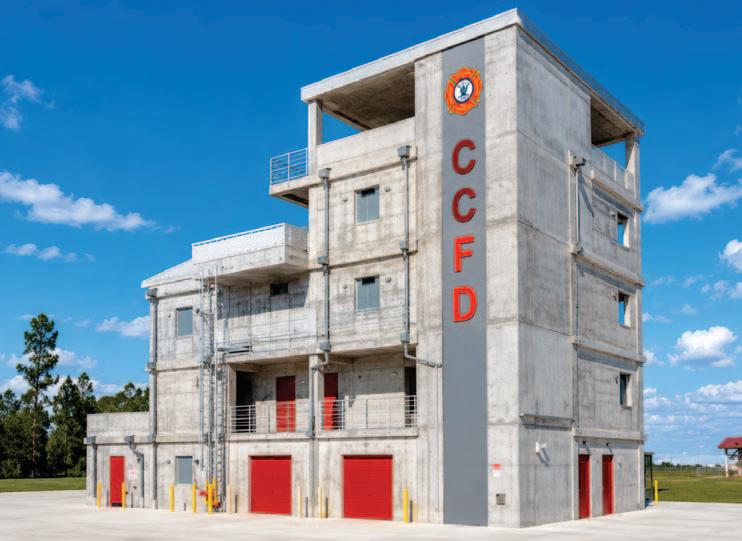
Established in 1971, the Cape Coral Fire Department (CCFD) has grown alongside the City of Cape Coral, evolving from a small developing community fire service into a progressive, all-hazards department serving one of the largest cities by area in the State of Florida at more than 120 square miles and over 400 miles of navigable canals. Today, CCFD protects a rapidly expanding population of more than 250,000 residents through emergency response, fire prevention, public education, special operations, and community risk reduction initiatives.
Most recently, the Cape Coral Fire Department earned an ISO Public Protection
Classification of 2 and achieved accreditation through the Commission on Fire Accreditation International (CFAI), reflecting the department’s continued commitment to operational excellence, professional leadership, and organizational improvement.

CCFD operates 13 fire stations strategically located throughout the city and responds to a wide range of emergencies, including structure
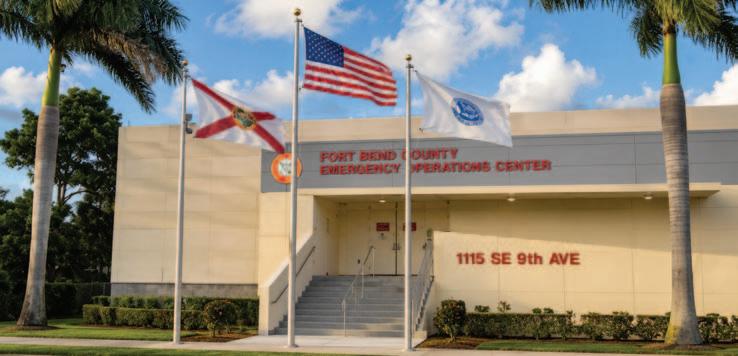
fires, medical incidents, hazardous materials responses, technical rescues, marine-related incidents, and severe weather events. Cape Coral firefighters responded to more than 29,000 calls for service in 2025. Under the leadership of Fire Chief Michael Russell, the department continues to focus on strategic growth, innovation, and maintaining high levels of service delivery for a rapidly expanding community. Future expansion projects currently include the design of an enhanced Administrative Office as well as Fire Stations 14 and 15.
A key component of the department’s mission is the Division of Fire Prevention. The Division of Fire Prevention currently employs 18 personnel, including a Fire Marshal, Prevention Lieutenant, dedicated Administrative Assistant, 10 Fire Inspectors, 3 Plans Examiners, a Community Risk Reduction Specialist, and a Fire & Life Safety Educator Additionally, all Fire Inspectors rotate on an oncall basis and are responsible for conducting Origin and Cause fire investigations throughout the city. In 2025 alone, CCFD Fire Inspectors investigated approximately 75 working commercial and residential structure fires and completed more than 13,500 fire inspections, resulting in approximately 3,400 documented fire and life-safety violations.
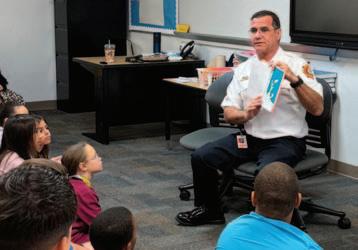
Led by Fire Marshal Dale Deleacaes, the Division of Fire Prevention continues to modernize and expand its programs to meet the demands associated with one of Florida’s fastest-growing communities. As development throughout Cape Coral continues at a historic pace, Fire Prevention personnel play a critical role in safeguarding the community through fire inspections, construction plan reviews, fire investigations, code enforcement, permitting, and public education initiatives. The division collaborates continually with contractors, developers, business owners, and city partners to ensure compliance with fire and life-safety codes while supporting safe, sustainable growth throughout the city.
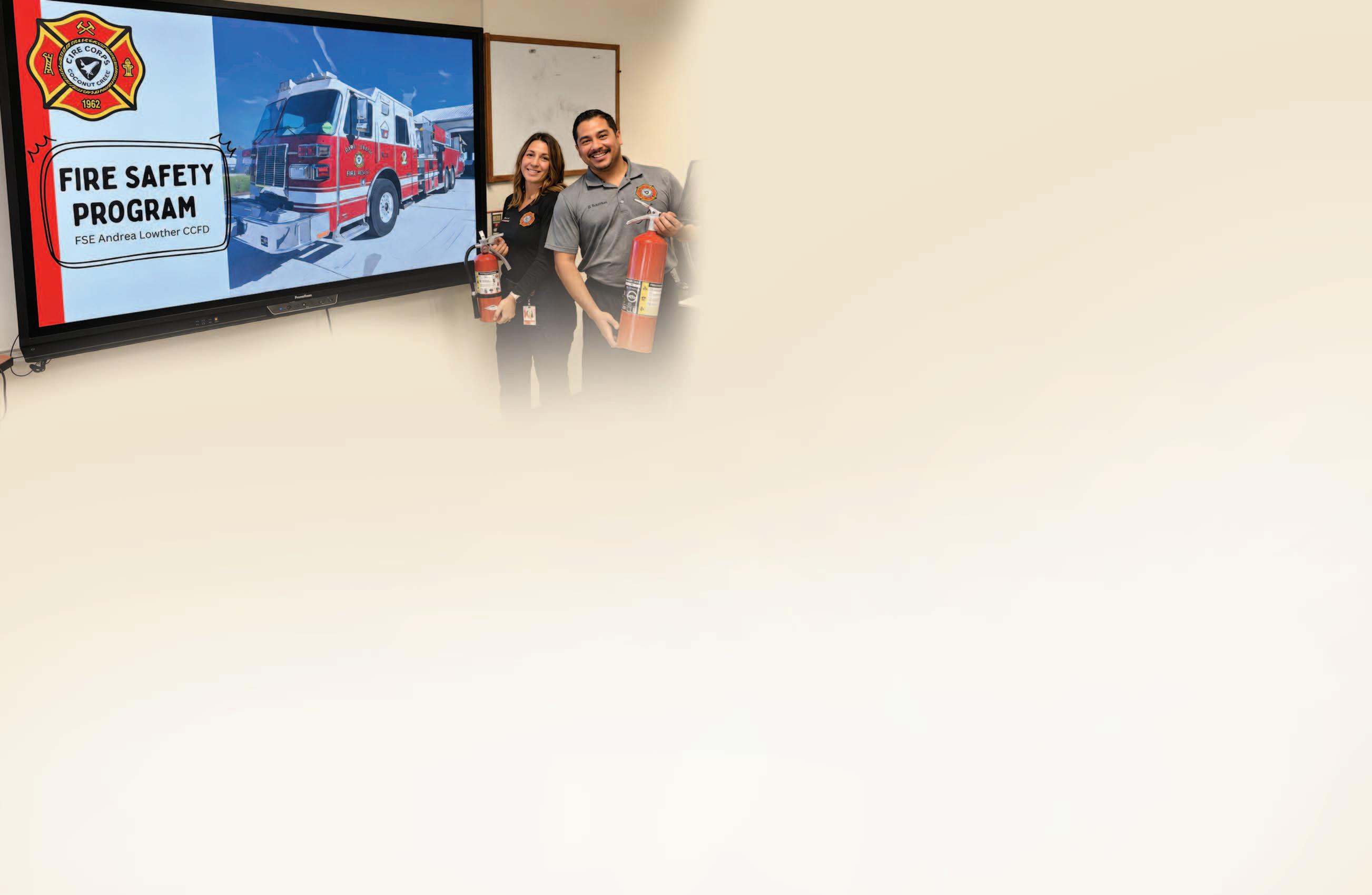
Community engagement remains a cornerstone of the department’s philosophy. Through high school firefighter outreach programs, school education initiatives, fire
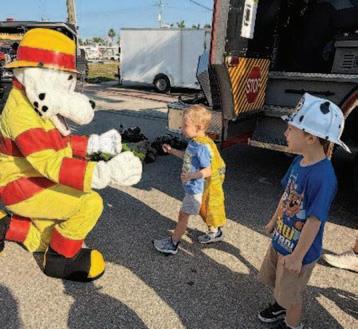
extinguisher training, smoke alarm education, station tours, annual open house events, and numerous public safety events, CCFD strives to build strong relationships with the residents and businesses it serves while helping inspire and develop the next generation of firefighters and public safety professionals.
The Cape Coral Fire Department takes pride
in its highly trained personnel, strong executive leadership team, supportive city leadership, and commitment to innovation. Whether responding to emergencies on the front lines or reducing risks through proactive prevention efforts, the department remains focused on protecting lives, property, and the future of the Cape Coral community.
By Andrew Armenis
“Two are better than one, because they have a good return for their labor: if either of them falls down, one can help the other up.”
--Ecclesiastes 4:910
In the previous article, I introduced “PAR Tag Accountability for the Soul,” a call to bring the same urgency of fireground accountability to our emotional and spiritual well-being. That message was born from my own story, a story of failure, loss, and ultimately, redemption.
As a child, I endured sexual abuse that left deep emotional scars. I entered adulthood determined to prove my worth through achievement, discipline, and service. In the fire service, I found purpose, but I also learned to conceal my pain behind a façade of per formance. I carried guilt and shame that I never shared, and over time, those hidden wounds shaped the man I became.
To numb the pain, I turned to lust, pornography, and infidelity. I lost my marriage, and the home I had tried to build became another casualty. My second wife fell into opioid addiction, and soon I was a single father raising three girls and one boy on my own. I worked multiple jobs to stay afloat, masking exhaustion with busyness and pretending ever ything was fine. I was a firefighter who saved others while quietly burning out myself.
The breaking point came on a quiet night when the weight of guilt, grief, and isolation convinced me I had reached the end of myself. The silence in my house was heavy. I convinced myself the world would be better off without me, put a gun to my mouth, and was ready to pull the trigger. Just as I was about to give up completely, my phone rang; it was my father. His first words were not a greeting; they were, “Where’s your gun?” Within minutes, he was at my door. Later, he
told me something in his spirit said to call and then to come. That call and that knock saved my life. God reached me through my father’s voice and reminded me that my story was not over.
From that rescue, God gave me a new mission. I realized that the same accountability that keeps us alive in a fire had to be applied to our souls. I began sharing my story of brokenness, grace, and recovery so others would know that help is possible and hope is real.
Today, I stand before firefighters not as a perfect man but as a living testimony that redemption is real. Every time a firefighter hands me their spare PAR tag, I remember that night and thank God for the second chance He gave me. My mission now is to make sure no firefighter ever feels as alone as I did.
I’ve learned that real strength is not hiding your scars but using them to help others heal. The fire ser vice has taught me many things, but the most significant lesson is this: accountability saves lives on the fireground and in the soul.
Check on your brothers and sisters. Conduct your PARs not just on the fireground, but in the heart. No firefighter’s soul should ever be unaccounted for.
Division Chief Andrew Armenis serves as the Fire Marshal and Chaplain for Jupiter Fire Rescue Department. With twenty-five years in the fire service, he has dedicated his career to training, leadership development, and the holistic wellbeing of firefighters. A survivor turned servant leader, he teaches “PAR Tag Accountability for the Soul” to help agencies build cultures of connection, courage, and care.
If you or someone you know is struggling, call or text 988 or visit 988lifeline.org — help is available 24/7.

The fire service is experiencing a growing role in rescue operations involving animal victims, including overturned trailers or entrapment in deep mud or confined spaces. These incidents can quickly evolve into complex technical rescue operations that place responders, civilians, and animals at significant risk. Across Florida, specialized animal technical
rescue teams are helping fill that operational gap by providing trained personnel, specialized equipment, and regional mutual aid support for emergencies involving large animals.
Supported through the Florida State Agricultural Response Team (FLSART), seven specialty response teams are strategically positioned throughout the state and available to
deploy regionally when local resources are overwhelmed or specialized expertise is needed. These teams provide a critical capability for the Florida fire service, particularly in rural and suburban communities where livestock and equine incidents are increasingly common.
The current FLSART-supported teams include:
Lee County Sheriff’s Office
Marianna Fire Department
Martin County Fire Rescue
Pasco County Fire Rescue
St. Johns County Fire Rescue
Sumter County Fire & EMS
Volusia County Fire Rescue
Each agency maintains specialized animal rescue equipment and personnel trained in technical rescue operations involving livestock and other animals. Resources include rescue
glides, lifting systems, rope rescue equipment, mud rescue tools, and specialized harnesses resources designed specifically for animal incidents.
For firefighters unfamiliar with animal technical rescue, these calls present hazards that differ significantly from standard rescue operations. A stressed 1,200-pound horse or cow can unintentionally injure responders within seconds. Entrapment environments often include unstable terrain, confined spaces, water hazards, overturned trailers, or other conditions that complicate access and increase risk.
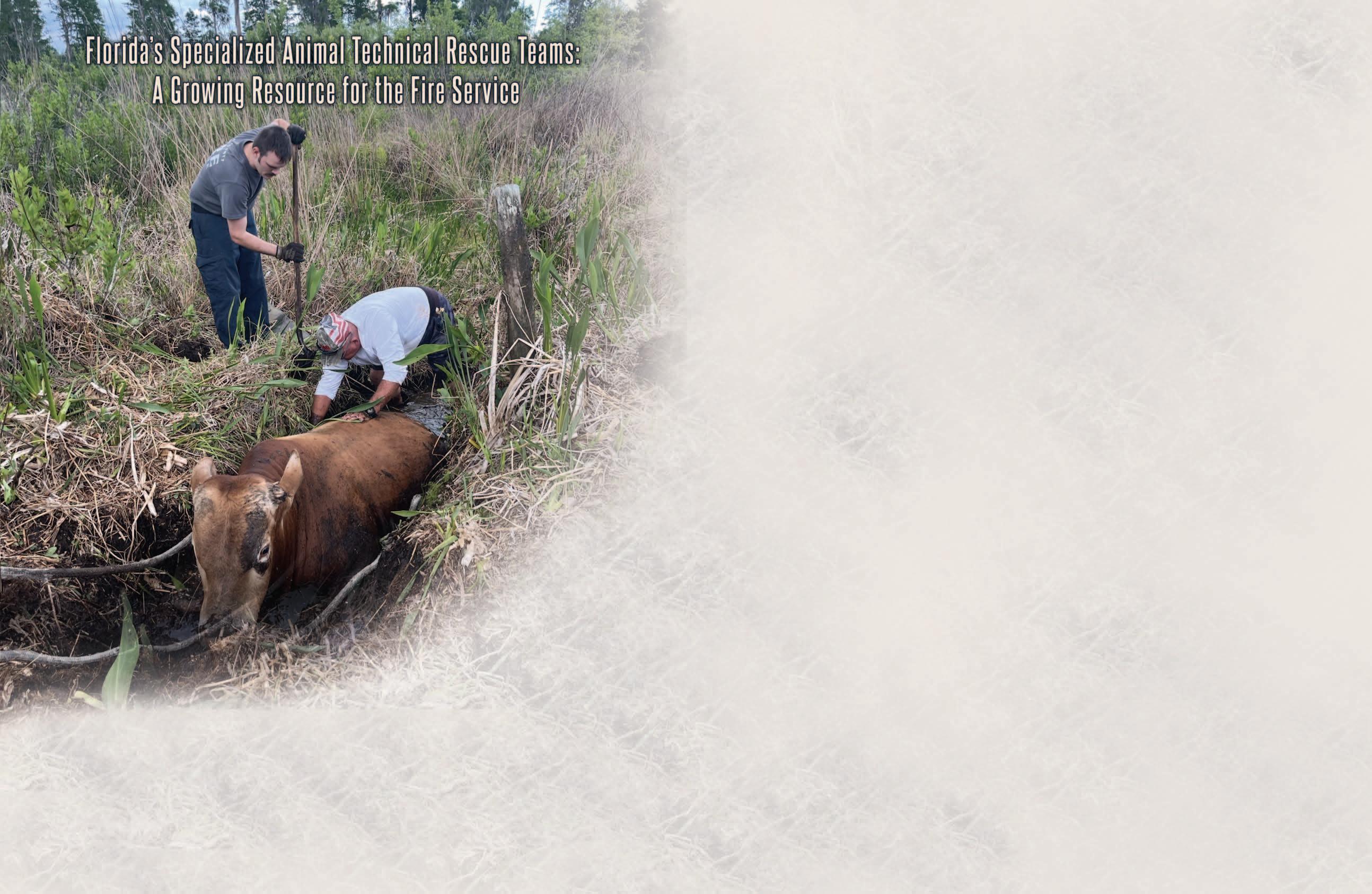
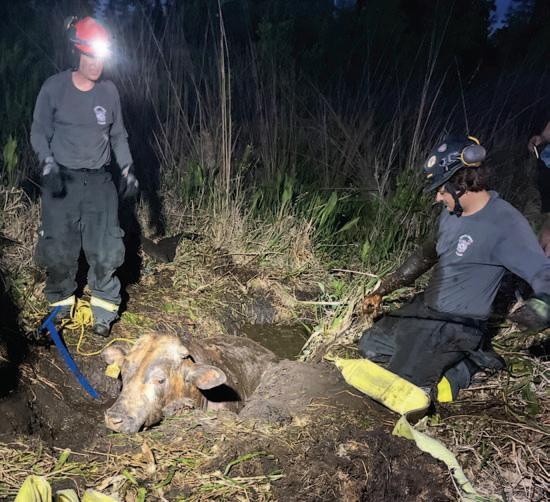
One recent example occurred in Lake County, where a bull became trapped in deep mud and required technical rescue intervention. Attempts were made by both the owner and Lake County Fire Rescue prior to requesting mutual aid. Responders from Sumter County Fire & EMS deployed with specialty rescue equipment and personnel to provide mutual aid for the operation. Using specialized techniques, including the use of a Swiss Seat forward assist coupled with a rescue glide, crews successfully removed the cow from the mud and returned it to safety.
Incidents like these highlight an important reality for the fire service: animal emergencies can rapidly become human emergencies. Owners frequently attempt rescues prior to first responder arrival, placing themselves in dangerous environments alongside frightened and unpredictable animals. Firefighters responding without proper equipment or training may also face elevated risks during improvised rescue attempts.
Jeremy Feil, Division Chief of Sumter County Fire & EMS shared, “Large animal rescues are a low frequency, high risk call for our special operations team. Some of the risks are the size and weight of the animal, along with their unpredictability. One of the keys to a successful outcome is early notification to resources with the specialized training and equipment like our special operations team.”
That is why standardized training and regional coordination are becoming increasingly important. Annual animal technical rescue training supported by Florida State Agricultural Response Team is conducted at the Florida State Fire College and delivered by the University of Florida Veterinary Emergency Treatment Service. The program combines animal behavior and technical rescue principles into realistic operational training for firefighters and rescue personnel.
Training scenarios expose responders to the realities of livestock trailer accidents, mud rescues, downed large animals, confined space incidents, and lifting operations. Just as importantly, the courses emphasize scene safety and coordinated rescue tactics that reduce risk to both responders
and animals.
In addition to expanding operational capability, Florida is also working to strengthen statewide specialty response readiness through a new initiative led by the Florida Department of Emergency Management. The Specialty Response Team Capability Assessment Program is designed to evaluate and document the operational capabilities of specialty teams already participating in these mission areas, including animal search and rescue teams.
The initiative comes as federal funding models continue to evolve, increasingly requiring formal capability assessments and validation processes for specialty teams seeking grant support and operational funding. While participation in the assessment program is voluntary, the process is intended to support and strengthen the work agencies are already performing by helping document training, equipment, operational readiness, and deployable capabilities.
For fire departments and specialty teams, the assessment process represents more than an administrative requirement. It provides a pathway to demonstrate competency, strengthen statewide coordination, and position teams for continued eligibility for specialty operations funding in the future. As technical rescue disciplines continue to grow in complexity, capability validation is becoming an increasingly important component of emergency management and mutual aid readiness nationwide.
These teams represent more than an animal rescue capability They are a technical rescue resource that helps protect responders, reduce secondary incidents, improve operational outcomes, and ensure safer resolutions for both people and animals.
For more information on the Specialty Response Team Capability Assessment Program, click here.

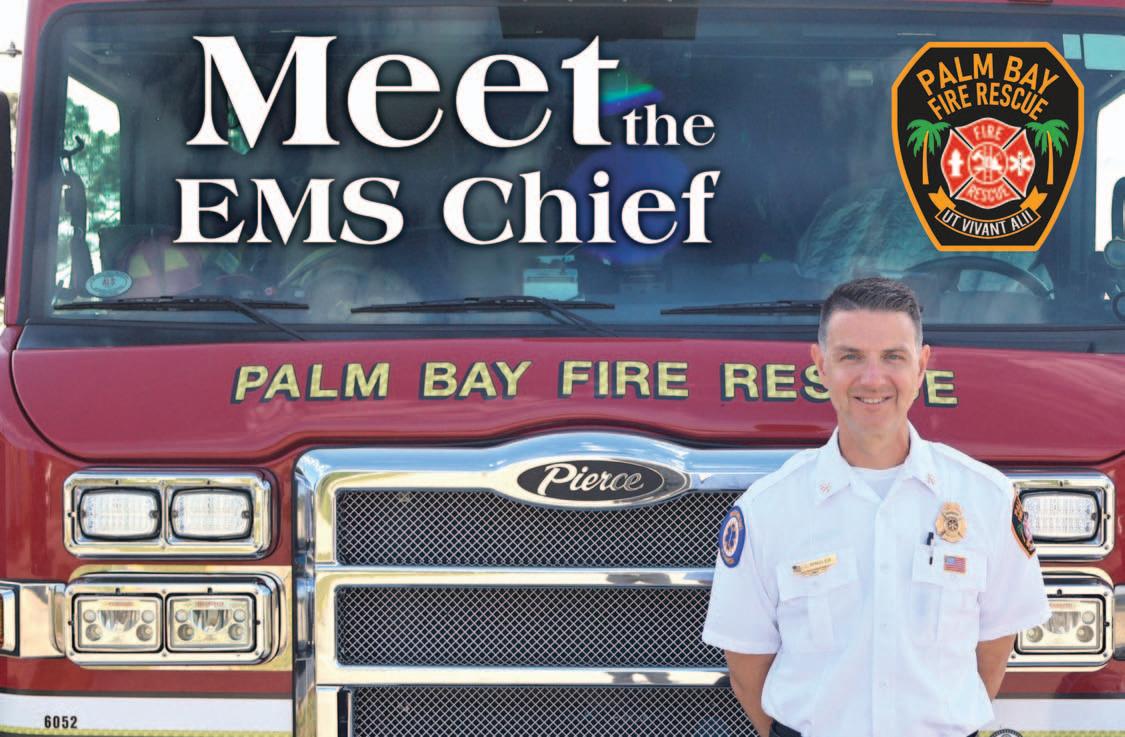
Palm Bay Fire Rescue is proud to introduce Assistant Chief John Ringleb, a dedicated leader whose career reflects a deep commitment to ser vice, professionalism, and the advancement of emergency medical ser vices. With decades of experience, a passion for education, and a steady leadership presence, Assistant Chief Ringleb continues to play a vital role in shaping the delivery of EMS within our organization and the broader community.
Assistant Chief Ringleb began his career with Palm Bay Fire Rescue in 1995. Like many in the fire service, his journey started on the front lines, where he quickly developed a reputation for reliability, strong work ethic, and a willingness to learn. Over the years, he steadily rose through all of the ranks, gaining valuable experience in both emergency response and leadership roles. His progression through the organization reflects not only his technical competence, but also his ability to lead, mentor, and support those around him.
Throughout his career, Assistant Chief Ringleb has remained grounded in the core mission of Palm Bay Fire Rescue, ser ving the community with professionalism, compassion, and excellence. His firsthand experience responding to a wide range of incidents has
given him a comprehensive understanding of the challenges faced by field personnel. Up until transitioning to his current administrative schedule, he continued ser ving as one of the department’s Field Training Medics, helping mentor and develop personnel operating in the field. This perspective continues to influence his leadership style today, ensuring that operational decisions remain practical, effective, and centered on the needs of both members and the citizens they serve.
In his current role as Assistant Chief, Ringleb oversees critical components of the department’s EMS delivery system. He serves as Chairperson of the Palm Bay Fire Rescue EMS Committee, leading ongoing efforts to evaluate, refine, and improve clinical practices, protocols, and patient care outcomes. Under his leadership, the EMS Committee has become a collaborative and forward-thinking body focused on maintaining high standards and adapting to the evolving demands of modern emergency medical services.
In addition, Assistant Chief Ringleb serves as the department’s Public Information Officer, coordinating public messaging, community engagement, and emergency communications during significant incidents.
He also plays a major role in the department’s public education efforts, helping strengthen community relationships through outreach initiatives, safety education, and public engagement programs.
Assistant Chief Ringleb’s commitment to education extends well beyond departmental operations. His teaching career began in 1999, and for more than two decades he has remained actively involved in the academic and training environment. He currently serves as an EMS instructor at Eastern Florida State College, where he helps educate and prepare the next generation of firefighters and paramedics by sharing real-world experience and emphasizing both technical skill and professional conduct. His involvement with the college extends beyond the classroom, as he also serves as Chairperson of the EMS department’s advisor y board, contributing to curriculum development and helping ensure that training programs align with the evolving needs of the fire ser vice and EMS community.
In addition to his academic contributions, Assistant Chief Ringleb is a certified instructor across all disciplines for the American Heart Association (AHA). This designation reflects a high level of expertise and a commitment to maintaining
proficiency in lifesaving techniques and evidence-based practices. Through his work with AHA training programs, he helps ensure that both personnel and community members receive high-quality instruction in critical areas such as CPR, advanced cardiac life support, and other emergency involvements.
One of the defining characteristics of Assistant Chief Ringleb’s career is his dedication to supporting the people within the organization. He is an active member of the department’s Peer Support Team, a group focused on providing emotional and mental health support to members following critical incidents or during times of personal need. His involvement in this area underscores his understanding that the fire service is not only physically demanding, but also mentally and emotionally challenging. By remaining present and accessible, he helps foster a culture where members feel supported, valued, and encouraged to seek help when needed.
Assistant Chief Ringleb’s leadership style is best described as steady, approachable, and grounded in experience. He values open communication and collaboration, recognizing that the best outcomes are achieved when diverse perspectives are considered. Whether working with command staff, field personnel, or external partners, he brings a level of professionalism and respect that strengthens relationships and builds trust.
Assistant Chief Ringleb’s career is a testament to what can be achieved through dedication, continuous learning, and a genuine commitment to serving others. From his early days as a firefighter to his current role as Assistant Chief, he has consistently demonstrated a willingness to step up, take on new challenges, and contribute to the growth and success of the organization.
As Palm Bay Fire Rescue continues to evolve and adapt to the needs of a growing community, leaders like Assistant Chief Ringleb play a critical role in guiding that progress. His expertise in EMS, combined with his passion for training, public education, and member support, ensures that the department remains well-positioned to deliver high-quality care and maintain the trust of those it serves.
Palm Bay Fire Rescue is proud to have Assistant Chief John Ringleb as part of its leadership team and appreciates the lasting impact he has made, and continues to make, on the department and the community.
Has one tossed and turned at night worrying how all the existing fire inspections will be completed? There aren’t enough fire prevention staff to complete all the inspections in a timely manner. One tried obtaining another fire inspector position through the upcoming budget, but the request was not granted. These are all completely normal thoughts every fire marshal experiences at one time or another throughout a career.
Fire Marshals need to think smarter to streamline being efficient. One of the newer tools to help with efficiency is remote inspections.
What are remote inspections? A recent survey conducted by the author found that many fire inspectors have not even heard of remote inspections. NFPA defines remote inspections as: “the use of audio/visual devices and/or other technologies to per form an inspection or witness a test for the purpose of remote verification”. (NFPA 915, 3.3.19*, 2024 edition). As one can read, NFPA leaves it up to the AHJ to determine just what constitutes a remote inspection. The remote inspection could be video from a cell phone, video conferencing, remote controlled drones, a Facetime recording, Teams meeting, timestamped pictures, or other software inspection platforms, etc. Important to note, none of these devices should be used on the fire inspector’s personal device but work issued devices only.
Remote inspections in certain circumstances offer a strategic and sustainable fix to save time, lower costs, ease up workload demands and free up resources.
The main concern about remote inspections is the potential impact on public safety
However, when these inspections are used carefully, with clear procedures and defined outcomes, safety does not have to be compromised. The team responsible for conducting remote inspections should develop and agree on the procedures in advance. No
By Janet A. Washburn, CFPS, MS, Retired Fire Marshal, Fire Plans Examiner, PDCS, LLC

one should be required to perform a remote inspection if they are not comfortable doing so, and staff should have enough time to review and refine the process together. It is also important for the fire marshal to speak with the fire chief before presenting the idea to inspection staff to ensure support. A follow-up with the legal department and IT is then needed to establish how inspection results will be documented and retained keeping the NFPA 915 standard in mind.
Remote inspections became essential during the COVID-19 pandemic as many industries adapted to restrict site access. Construction sites, public buildings, and commercial properties limited entry to reduce exposure. In Florida, for example, assisted living facilities and other healthcare facilities allowed only medically necessary visitors. This created challenges for fire inspectors trying to complete annual inspections, and in some cases, fire sprinkler and fire alarm contractors could not perform the inspections required by NFPA 25 and NFPA 72. The issue became significant enough that the Florida State Fire Marshal’s Office stepped in to provide temporary flexibility for those annual inspections while maintaining compliance with fire safety regulations.
Around this time, NFPA developed NFPA 915, Standard for Remote Inspections. Its introduction marked a significant shift toward broader acceptance of remote inspections across industries. Leaders began to see remote inspections as a practical long-term solution. As technology advanced, new software platforms emerged, making remote inspections a more sustainable option for the future.
Keep NFPA 915 available for guidance, as many of its chapters address common technical issues. Chapters 4 through 8 provide the main framework for conducting remote inspections. Some of the newer fire inspection software has incorporated remote inspection software
into their business model. If one’s current inspection software does not have this feature, reach out to the developer of the software to let them know current technology is demanding this. This is a perfect example of if we don’t ask, we’ll never get it.

Here’s some guidance for developing and incorporating remote inspections into fire inspection procedures.
Step 1 – Meet with Fire Chief first, then Legal, and IT
Step 2 – Discuss with staff and assign inspection roles
Step 3 – Prepare SOPs and other documentation with input from staff
Step 4 – Check equipment that will be utilized
Step 5 - Discuss ahead of time with potential prospects for remote inspections
Step 6 – Roll out the process slowly with a test case and discuss pitfalls and wins with staff after the fact
Step 6 - Set up equipment
Step 7 – Record, capture and annotate
Step 8 – Share recordings, collect feedback and save to archives
(Avatour, May 24, 2023; Remote Inspection Checklist)
Let’s look at a few situations where remote inspections are both useful and appropriate. For example, a fire inspector on light duty who cannot drive may still be able to complete certain tasks remotely. Verifying a fire extinguisher tag, checking exit and emergency

lights, confirming the removal of extension cords, or reviewing a fire suppression report are all examples of inspections or corrections that can be documented through photos, video, or written reports. The key is for each fire inspection office to discuss remote inspections in advance and determine how they can fit into its operations. It is also important to recognize that comfort levels will vary, and an approach that works well for one office may not work for another.
Some fire inspectors assigned territory cover a broad range of miles in the jurisdiction and some re- inspections take a considerable amount of time to drive to the location not to mention the cost of fuel. By accepting remote inspections, it frees up the fire inspector’s time to be more efficient with other duties.
One example I remember for a remote
inspection was a Friday afternoon when the inspector came back to the office. A contractor called us for an “emergency inspection”. The contractor needed an inspection of the drywall behind the shower area in a condominium unit. The fire inspector was able to complete the fire inspection of the drywall from his desk on a remote video device. He was able to check everything had he been on site. This saved a considerable amount of time, and everyone was happy including the condo owner.
Before scheduling a remote inspection, give the contractor or business owner time to prepare and explain the process clearly. Since remote inspections may be new to everyone involved, expect a learning curve. If cut sheets or other documentation are required, request them in advance so they can be reviewed and any questions resolved before the inspection.
An effective way to begin a remote inspection is by verifying the address and occupancy type on video, such as having the owner show the building address. If applicable, the unit number should also be visible to the fire inspector The AHJ should lead the inspection, as most contractors and business owners will appreciate clear direction. Following the same steps for each remote inspection helps create a consistent and efficient process.
Remote inspections are not without legitimate concerns. There may be challenges to be aware of; data security, network reliability, regulatory alignment, and building/storing clear digital trails. It’s highly recommended to sift through these items with one’s IT and legal department before venturing into remote inspections. Once those steps are fully vetted and ironed out, only then can one move forward with finalizing a remote inspection procedure.
Remote inspections are not the right fit for every department. Concerns about new technology or “that’s the way we’ve always done it” mentality should not prevent agencies from exploring practical improvements.
Successful remote fire inspections depend on several key elements:
Clear communication within the office
Reliable technology
Consistent procedures
Regulatory compliance
Strong documentation
When these elements are in place, remote inspections can meet the same safety and regulatory standards as in-person inspections.
Departments willing to adopt thoughtful new practices can position themselves as leaders in modern fire prevention.
By Gregory G. Sutton, Battalion Chief of Administration, Public Information Officer, Titusville Fire Department
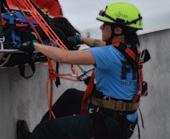
Titusville Fire Department personnel recently participated in a specialized rope rescue training exercise designed to provide a realistic, real-world environment for crews to refine and exercise their technical rescue skills and equipment.
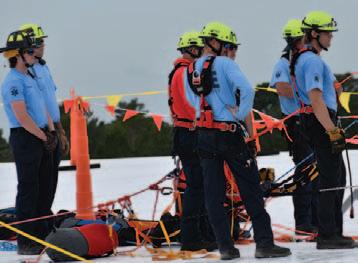
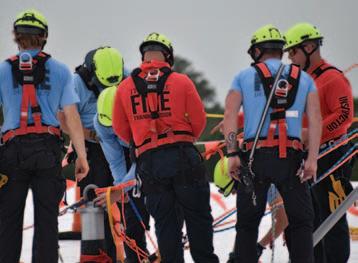
The operation took place at a local construction site and simulated a scenario in which a worker on the roof experienced a medical emergency and was unable to descend safely on their own. Crews responded by deploying a technical rope rescue system utilizing the Arizona Vortex to create an Artificial High Directional (AHD), allowing rescuers to safely transition over the edge of the building and lower the patient to the ground.
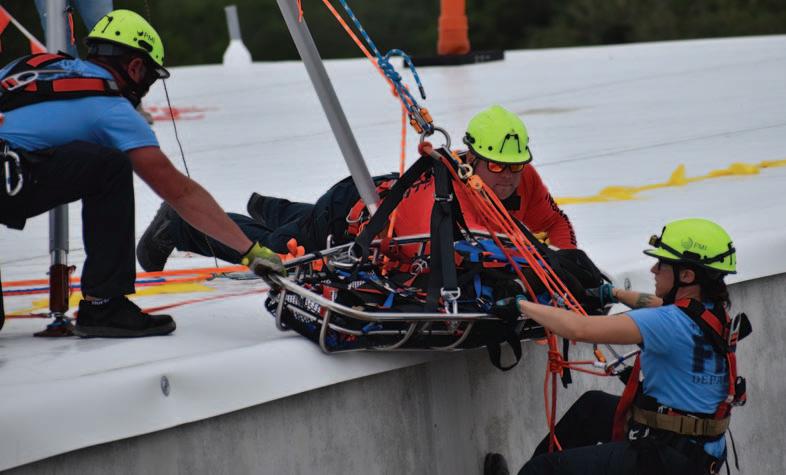
setting.
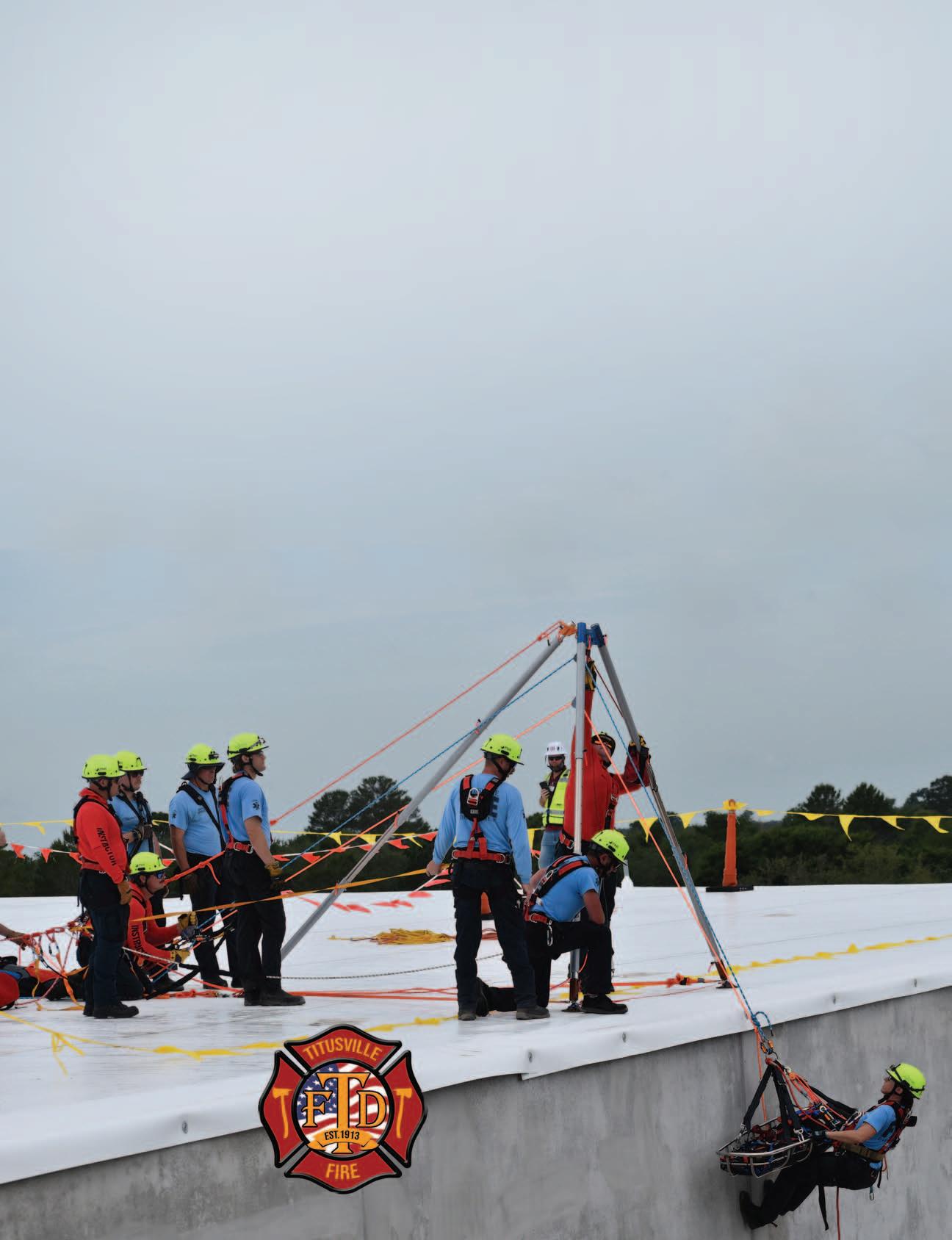
A manikin was used to simulate the patient and was secured inside a Stokes basket before being carefully lowered to the ground with an attendant accompanying the patient during the descent. The exercise allowed personnel to practice critical rigging techniques, patient packaging, edge transitions, communication, and coordinated rescue operations in a controlled but highly realistic
We are extremely thankful for the strong partnerships we have developed with builders and businesses throughout our community that make valuable training opportunities like this possible. Maintaining proficiency in technical rescue disciplines requires continual practice, teamwork, and hands-on experience, all of which are reinforced through exercises such as this one. Training in realistic environments helps ensure our crews remain prepared to respond safely and effectively when real emergencies occur

By Rob Herrin, MSFES/DM, Public Safety Information Section Chief, Hillsborough County Fire Rescue
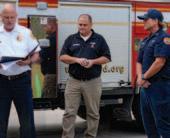
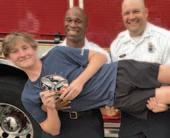
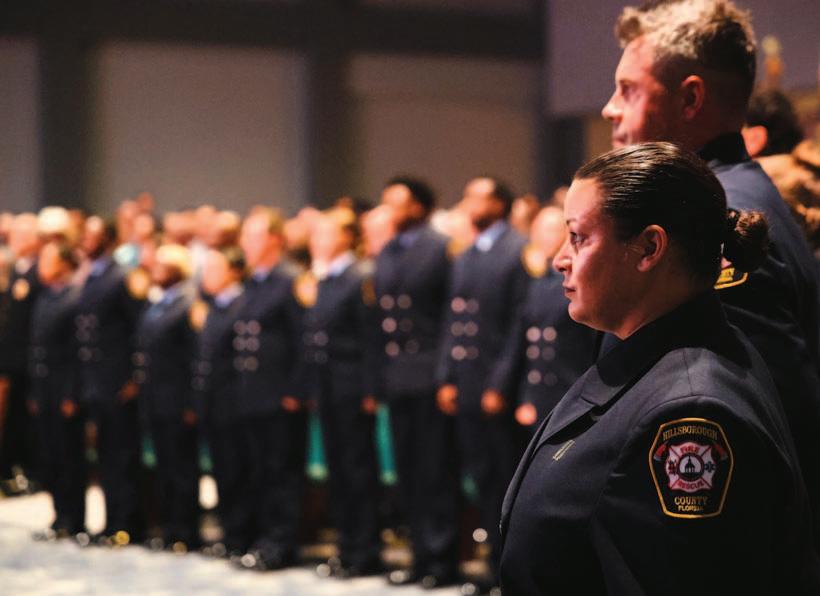
Hillsborough County Fire Rescue (HCFR) officially welcomed 37 new firefighters into the organization during the department’s Recruit Class 2026-01 Graduation and Pinning Ceremony held May 14, 2026.
The class brings a diverse range of life and professional experience to the fire service, including a former chef, an educator, a medical therapist, and a retired military service member. Like many agencies across Florida, HCFR continues to see recruits entering the profession from a wide variety of second-career and public service backgrounds.
During the ceremony, recruits received their station and shift assignments and were presented with their HCFR helmet shields, marking their transition from recruit to operational firefighter. In the five weeks
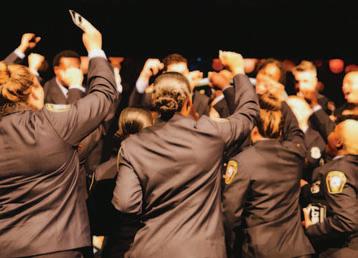
leading up to the graduation, the class completed HCFR’s department orientation process, focused on operational readiness, department culture, county geography, and field integration within one of the Southeast’s busiest combination fire-rescue systems.
The graduates will now begin assignments across HCFR’s 47 stations serving unincorporated Hillsborough County,

operating alongside suppression, ALS transport, special operations, and all-hazards response companies.
Recruit Class 2026-01 reflects the continued growth of the fire service profession and the commitment of agencies statewide to preparing the next generation of firefighters for increasingly complex operational demands.

South Walton Fire District recently recognized four lifeguards and seven firefighters with Lifesaving Awards for their response to a cardiac arrest on the beach in Seaside on April 12, 2026.
The incident began when Full-Time Lifeguard Trent Mayr observed bystanders assisting an adult male to shore near his tower. Mayr entered the water and found the patient unresponsive and without a pulse. He upgraded the call to “CPR in Progress” and began resuscitation efforts with assistance from bystanders.
Full-Time Lifeguard Zac Morgan, Seasonal Lifeguard Alice Fleeman, and Beach Safety Officer Levi Rice arrived and joined Mayr in providing care. The team managed the patient’s airway, performed chest compressions, applied an automated external defibrillator (AED), and delivered shocks. They then applied a LUCAS mechanical CPR device and moved the patient off the beach.
Approximately 10 minutes after the initial water rescue, the patient was transferred to firefighters from South Walton Fire District Station 2 at the Coleman Pavilion.
Firefighters continued care and initiated additional Advanced Life Support interventions. Crews achieved return of spontaneous circulation (ROSC), meaning the patient regained a pulse. Eventually, the patient
also began breathing on his own again.
In follow-up with the patient’s family and hospital staff, the District learned that he is expected to make a full recovery
“Successful outcomes like this are the result of consistent training and strong coordination between our beach safety and fire crews,” said SWFD Fire Chief Ryan Crawford. “Cardiac arrest requires immediate intervention, and the responders on this incident recognized the problem, started treatment without delay, and continued delivering high-quality care all the way through transport.”
The district recognized the responding personnel with lifesaving challenge coins on April 30 in a private ceremony alongside the patient’s family and Seaside staff members. Additional recognition came at the South Walton Fire District’s Board of Fire Commissioners Meeting on May 11, in an effort to build advocacy between crews, district leadership, and Seaside.
Ultimately, this positive outcome was possible due to the partnership between SWFD and Seaside that supports lifeguard operations. The private-public agreement began between SWFD and Seaside in 2025, following discussions between the two entities about the critical need for enhancing beach safety after the closure of the Van Ness Butler Regional Beach Access in 2024.
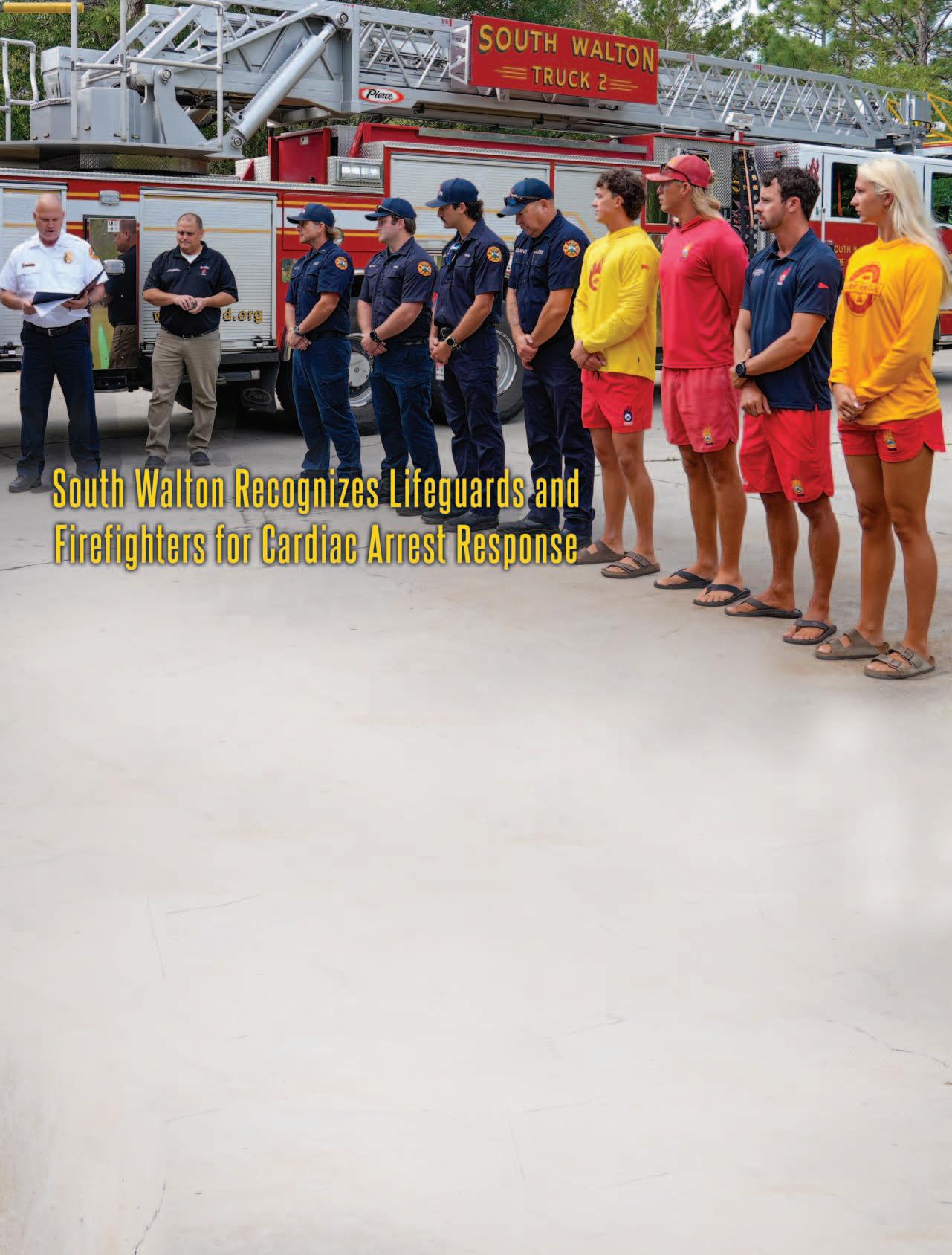
“The closure unfortunately created a three-mile gap between our lifeguard towers in Seagrove Beach and Grayton Beach,” said SWFD Fire Chief Ryan Crawford. “Seaside stepped up to provide its residents and visitors with lifeguard protection, which allows us to more effectively prevent and respond to emergencies in an area with a historically high call volume. This call proves why that lifeguard tower matters for not just Seaside, but anyone within the vicinity of our care.”
Lifesaving Award Recipients include:
Full-Time Lifeguard Trent Mayr
Full-Time Lifeguard Zac Morgan
Seasonal Lifeguard Alice Fleeman
Beach Safety Officer Levi Rice
Firefighters
Sergeant/EMT Rob Hall
Firefighter/Paramedic Adam Baker
Firefighter/Paramedic Griffin Usher
Firefighter/Paramedic Tony Evans
Firefighter/Paramedic John Dowd
Firefighter/EMT David Shepherd
Firefighter/EMT Mike Mosley
South Walton Fire District congratulates all award recipients and extends its best wishes to the patient and his family.
By Andrew Miller Deputy Chief, Charlotte County Fire & EMS
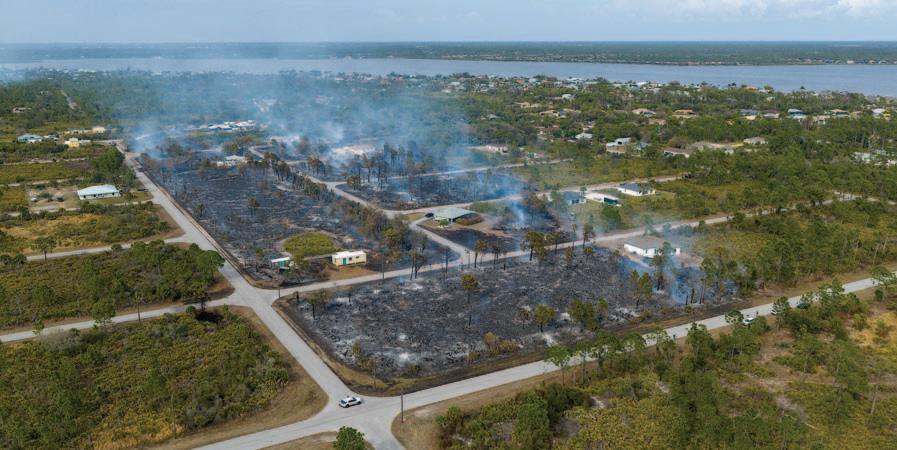
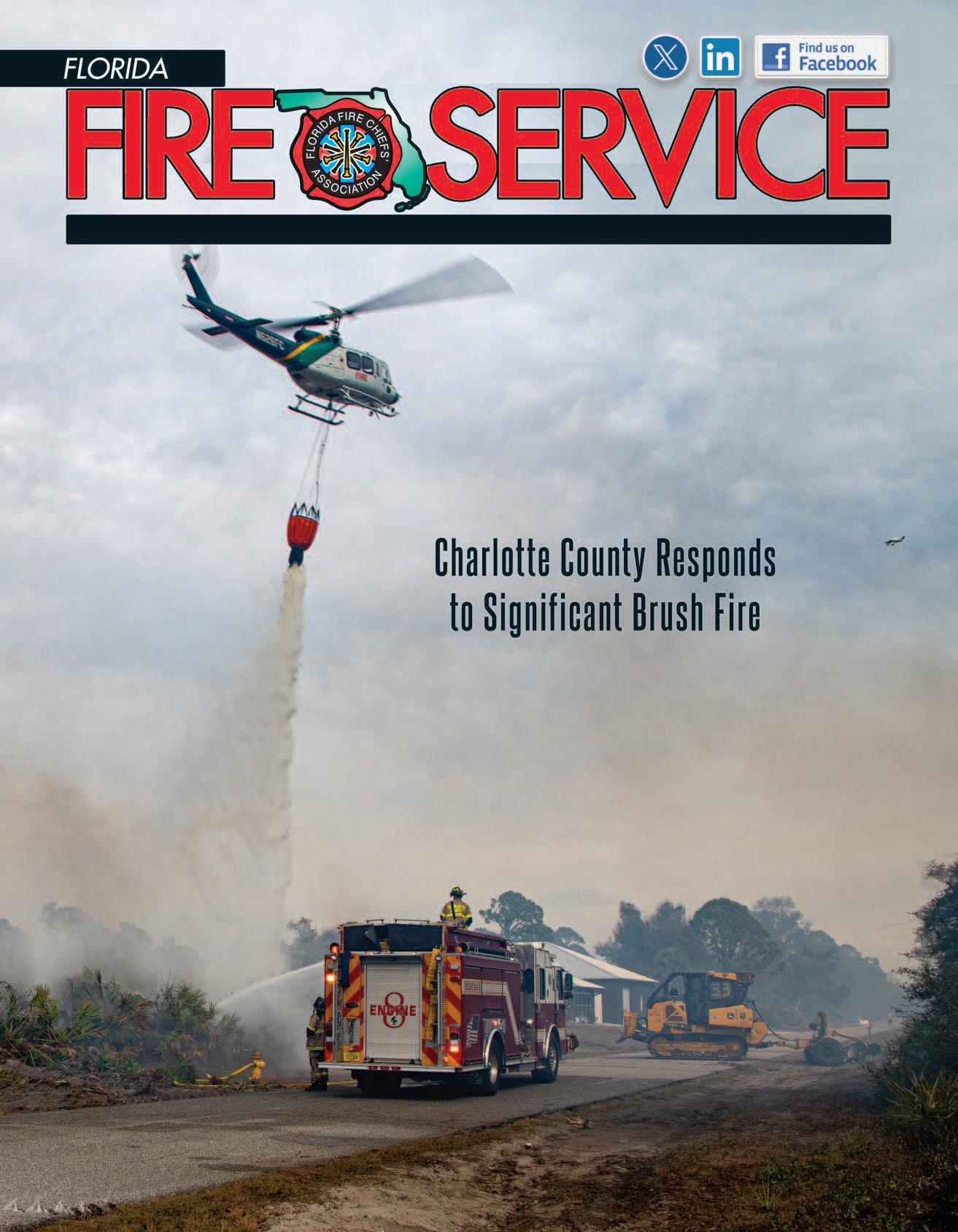
On February 27, 2026, Charlotte County Fire & EMS responded to a significant brush fire. At the time of the incident, Florida was experiencing some of the most severe drought conditions in over 25 years, with the Southwest Florida region being especially impacted. These conditions, combined with an active burn ban, created an extremely volatile fire environment. Weather conditions at the time of dispatch included sustained winds of approximately 16 mph, with gusts reaching into the upper 20 mph range, contributing to rapid fire spread and increased operational complexity The fire originated in an area consisting of multiple blocks of
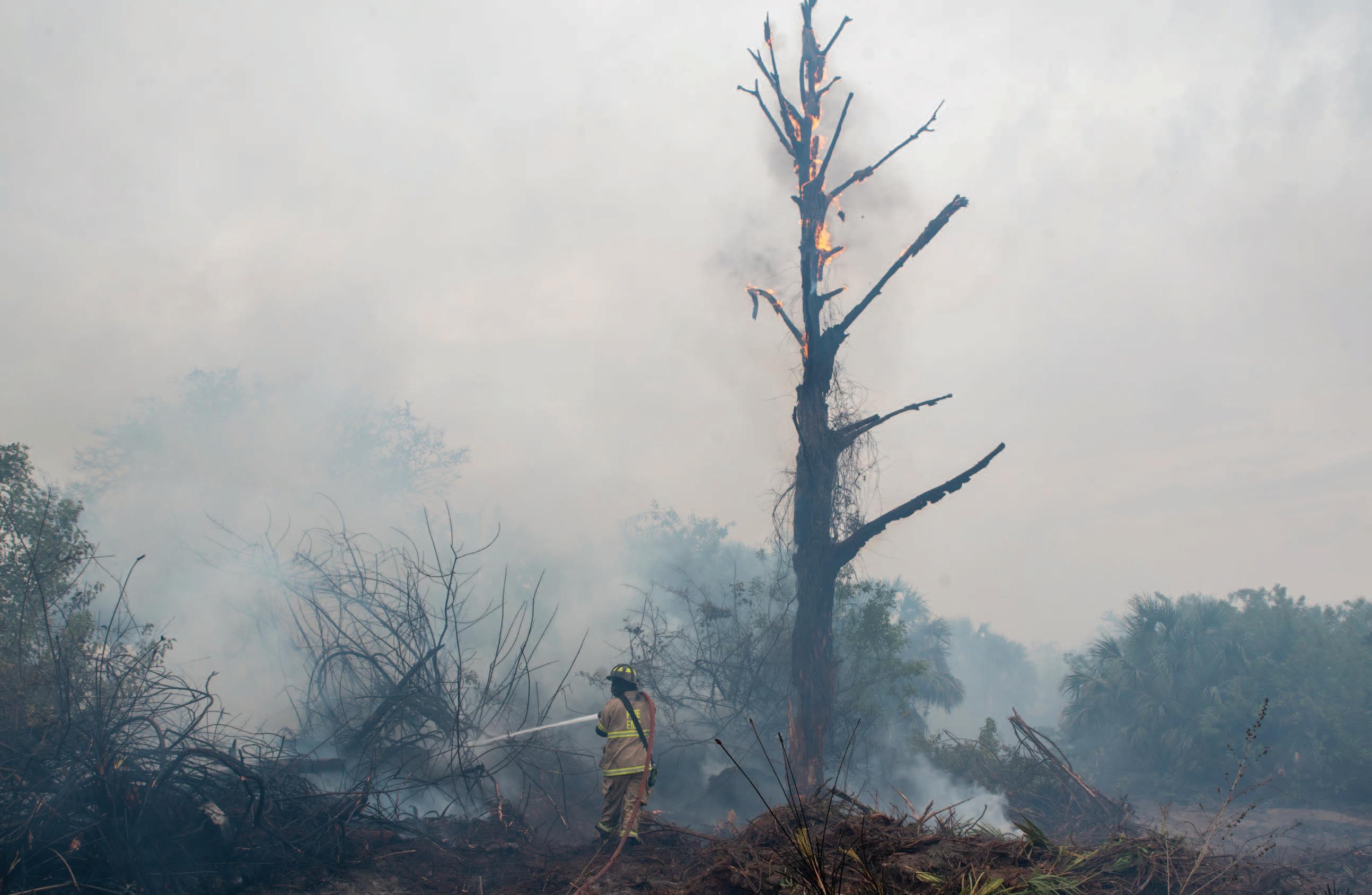
vacant land interspersed with residential structures, creating a challenging wildlandurban interface environment with significant exposure risks. Recognizing the potential for rapid escalation, the on-duty Battalion Chief immediately added additional resources to the assignment based on location, fuel conditions, and anticipated operational needs.
While units were en route, command staff and Battalion 1 proactively coordinated with regional partners to secure additional resources, including mutual aid and aerial support assets, while simultaneously ensuring adequate coverage remained in place to maintain the integrity of the County’s 911
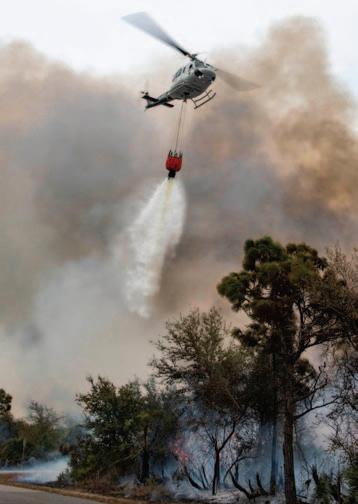
response system. Initial size-up estimates indicated approximately 20 acres involved; however, due to wind-driven conditions, the fire quickly extended across multiple blocks, resulting in a secondary fire area estimated at an additional 25 acres. This rapid extension significantly increased the complexity of the incident, requiring coordinated suppression efforts across multiple operational divisions.
Through aggressive and coordinated firefighting efforts, Charlotte County Fire & EMS, alongside multiple assisting agencies and air resources, were able to bring the fire under control within several hours. One residential structure sustained minor damage; however, due to the rapid response, effective strategy, and coordinated operations, no homes were lost, and no injuries were reported.
This incident serves as a testament to the professionalism, training, and dedication of the men and women of Charlotte County Fire & EMS, as well as the strength of regional partnerships and interagency cooperation. The successful outcome was directly influenced by pre-established relationships, effective communication, and a shared commitment among public safety partners to support one another during complex and rapidly evolving incidents. Without the continued investment in training, collaboration, and operational readiness, the outcome of this incident could have been significantly different.
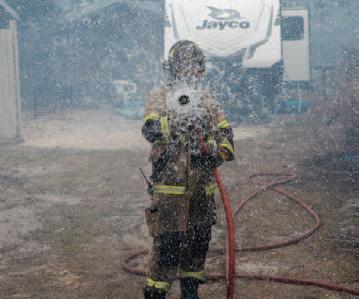
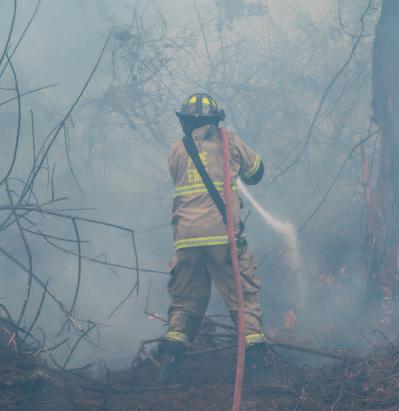
Responding units include over 18 units from Charlotte County Fire & EMS, and mutual aid support from the Florida Forest Ser vice, Charlotte County Sheriff’s Office, Englewood Area Fire Control District, North Port Fire Rescue, Boca Grande Fire, North Fort Myers Fire Control District, Fort Myers Fire Department, Fort Myers Shores Fire, Lehigh Acres Fire Control and Rescue District, Sanibel Fire Rescue District, Bayshore Fire Rescue, and Cape Coral Fire Department.
By Doreen Overstreet, APR, Public Safety Information & Education Officer, Seminole County Fire Department
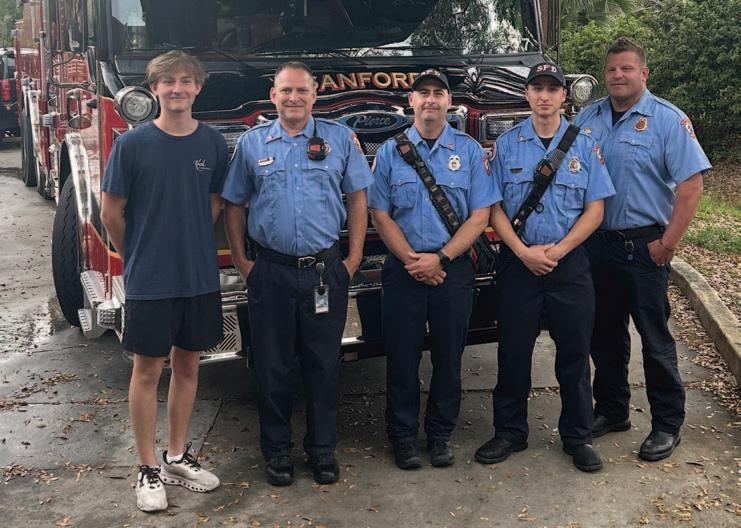
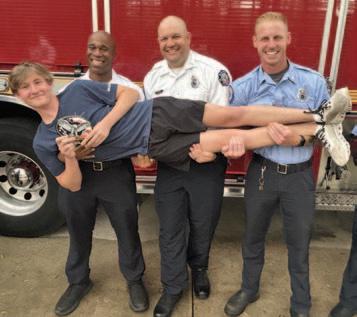
Seminole County Fire Department and the Sanford Fire Department recently presented Lake Mary High School junior Lincoln Sharpe with a Citizen’s Award and Honorary Firefighter badge for his quick thinking in getting his family out of their home fire.
On the evening of Thursday, February 12, 2026, a call was received at 11:27 p.m. on Long Pond Drive in Longwood, FL reporting of flames on a screened-in porch patio.
16-year-old Lincoln Sharpe’s room was right by the pool patio. The other five bedrooms
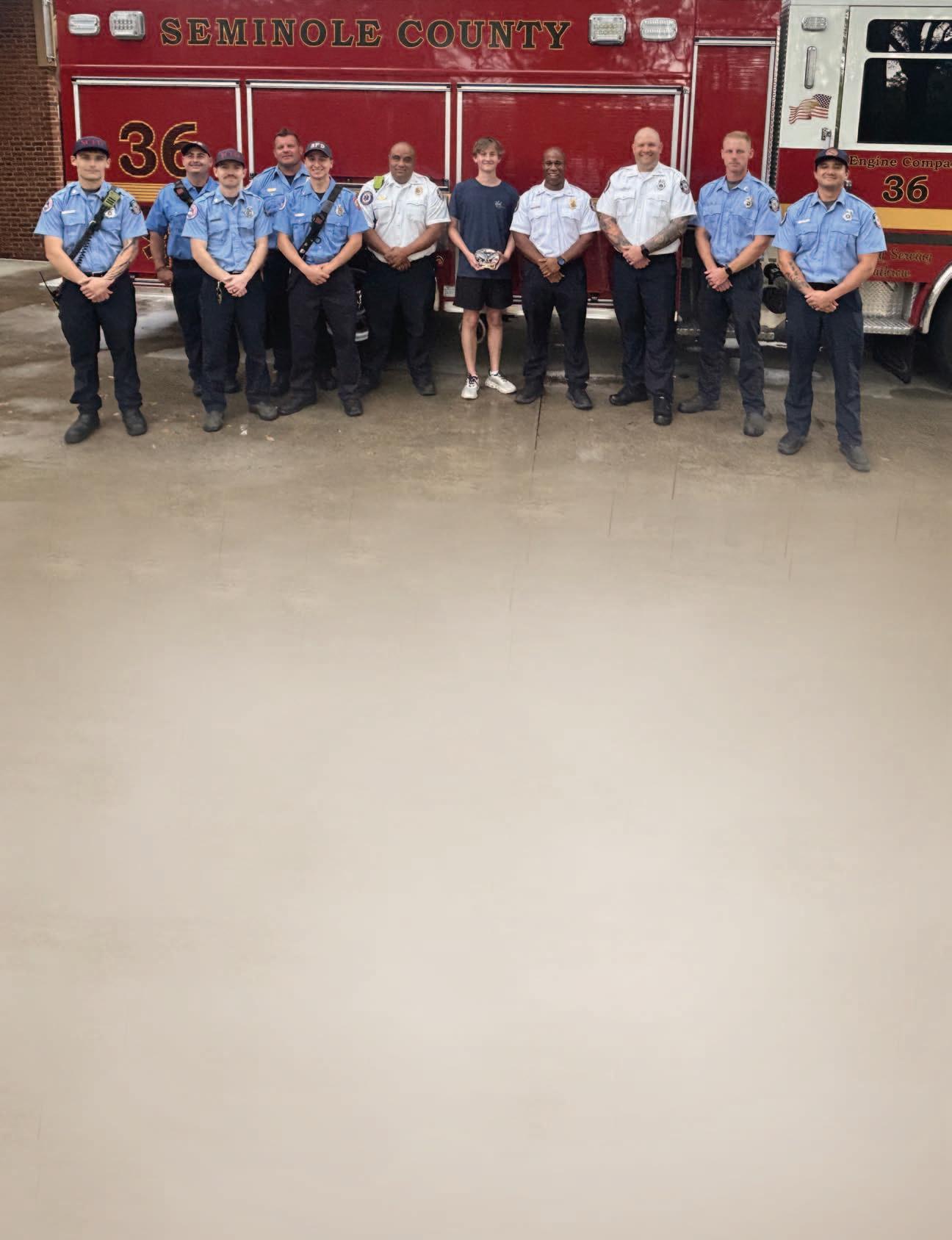
were on the complete other side of the house. Lincoln saw a flicker of light that looked like a spark or something electrical and immediately looked out his window and saw the danger.He quickly helped get all of his eight family members out of the house by pounding on each door and yelling, “fire.” The dogs also made it out safe. Lincoln lived in the home for all of his life with his family for the past two decades.
Within four minutes, fire units were on scene fighting the fully engulfed fire that was spreading rapidly. Unfortunately, the home was
not salvageable, but a crew from the Sanford Fire Department helped recover some sentimental family valuables (e.g., mother’s wedding ring, teddy bear, military flag and an urn).
“As we all know, property can be rebuilt, but our number one priority is saving lives,” said Battalion Chief Chris Baker of the Seminole County Fire Department. “We are so glad that everyone is safe thanks to Lincoln’s help, but understand your sense of security is shaken and the disruption the fire it has caused in your life. We are here to honor Lincoln for his bravery in helping get all his family members quickly out of the house and safe.”
In addition, Lincoln expressed interest in becoming a firefighter in the future as he has relatives in the fire service.
By Tiffany Wood, Public Information Officer/Public Educator, Greater Naples Fire Rescue District
After nearly four decades of dedicated public service, Captain Inspector Shar Beddow is retiring from Greater Naples Fire Rescue, leaving behind a remarkable legacy of leadership, mentorship, education, and commitment to fire and life safety throughout Southwest Florida and across the state.
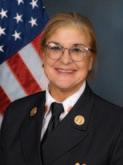
Shar’s career in public safety began in 1987 with the Fort Myers Fire Department, where she served as a Communications Technician and Interim Supervisor. She later moved to Lee Control, serving from 1989 to 1996 in several critical roles, including Communications and EMD Technician, Mapping Database Specialist, and Interim Supervisor. Her work during those years helped support emergency response operations and laid the foundation for a lifelong career centered on protecting communities and supporting firefighters. In 1996, Shar joined the San Carlos Park Fire District as an Administrative Assistant, then transitioned to fire prevention and inspection work with the Pine Island Fire District in 1997 as a Fire Inspector Her passion for code enforcement, education, and life safety quickly became evident.
From 1999 to 2012, Shar served with the Iona McGregor Fire District, where she worked as a Fire Inspector specializing in fire alarms, firestopping systems, inspections, and investigations, and also served as Acting Fire Marshal. In 2012, she joined the Greater Naples Fire Rescue District, where she concluded her distinguished career as Captain Inspector.
Throughout her 39 years in public service, Shar became widely respected not only for her technical expertise but also for her unwavering dedication to education and professional development. She earned a Master of Science in Business Management from Hodges University and a Bachelor of Science in Business Administration from International College. She also completed extensive certifications through the Florida State Fire College, including Firefighter I & II, Fire Safety Inspector I & II, Instructor I & III, Fire Officer I & II, and Fire Investigator I & II.
Shar’s influence extended far beyond her own department. She served on numerous statewide committees and associations, including leadership roles within the Florida Fire Marshals and Inspectors Association and the Lee County Fire Marshals and Inspectors Association. She contributed to statewide legislative efforts, building and fire code curriculum development, and fire sprinkler advocacy initiatives.
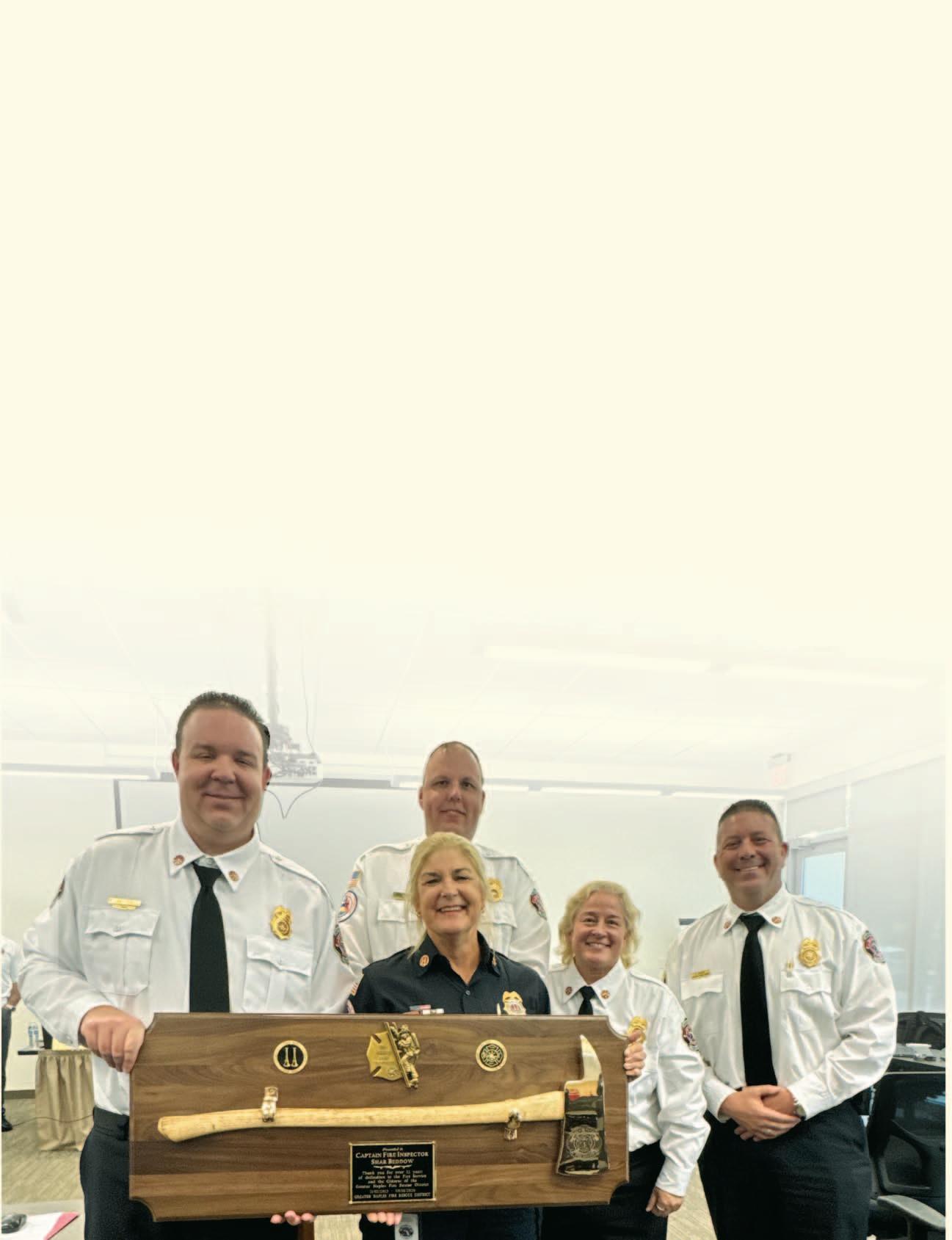
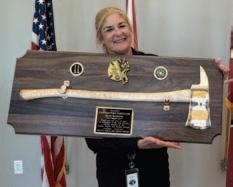
For more than 20 years, Shar served as an Education Chair for fire marshal associations in both Collier and Lee counties, helping train and mentor generations of fire inspectors and fire prevention professionals. Through Beddow Fire and numerous statewide instructional programs, she taught Florida State Certified Fire Inspectors, conducted certification courses, and served as a guest speaker for architects, engineers, school officials, property managers, and fire service organizations throughout Florida.
Her dedication to mentorship and education has had a lasting impact on the Florida fire service community. Countless inspectors, firefighters, and public safety professionals have benefited from her knowledge, guidance, and willingness to invest in others.
As she enters retirement, the Florida fire service celebrates not only Shar’s accomplishments, but also the lasting influence she leaves behind. Her commitment to public safety, education, and professional excellence has strengthened departments, improved fire prevention practices, and helped shape the next generation of fire service leaders.
On behalf of colleagues and friends across the state, thank you, Shar, for 39 years of extraordinary service to the people of Florida. Your impact will continue to be felt for years to come.
By Gregory G. Sutton, Battalion Chief of Administration, Public Information Officer, Titusville Fire Department
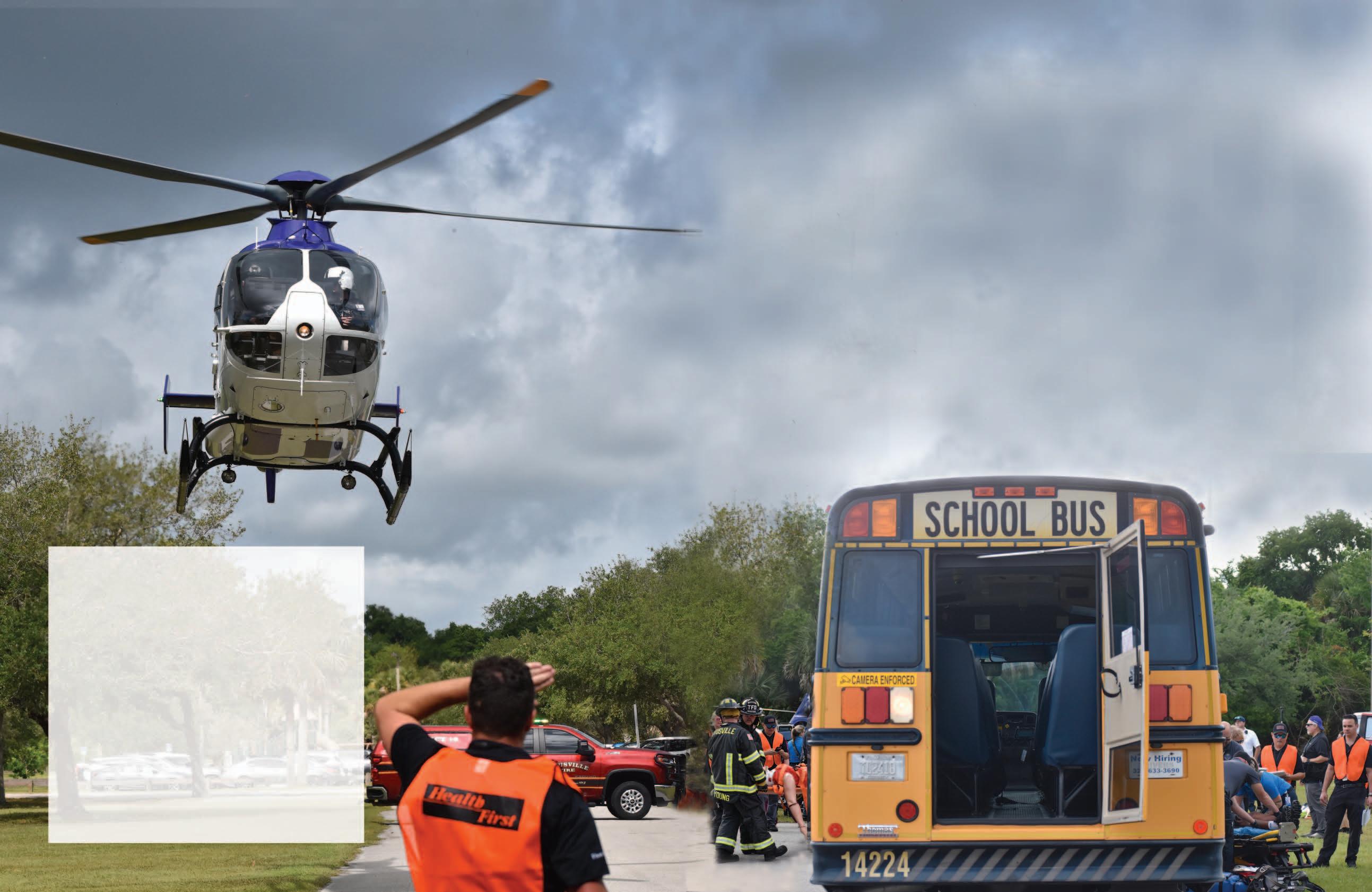
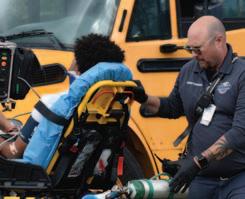
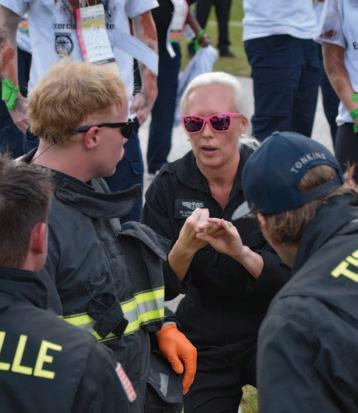
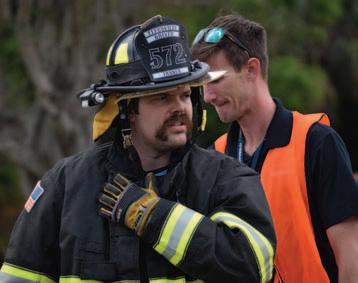
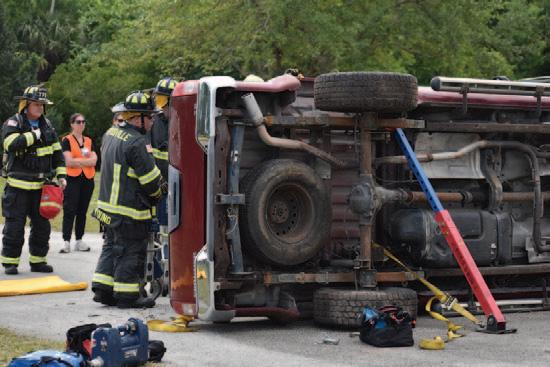
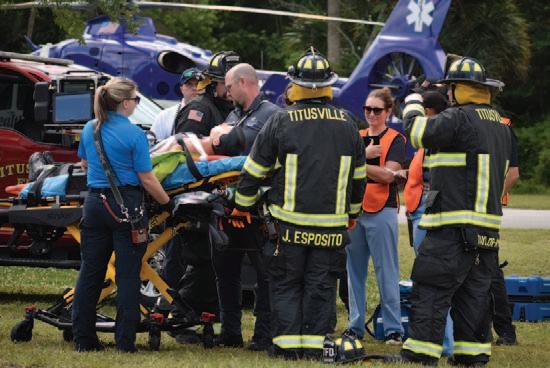
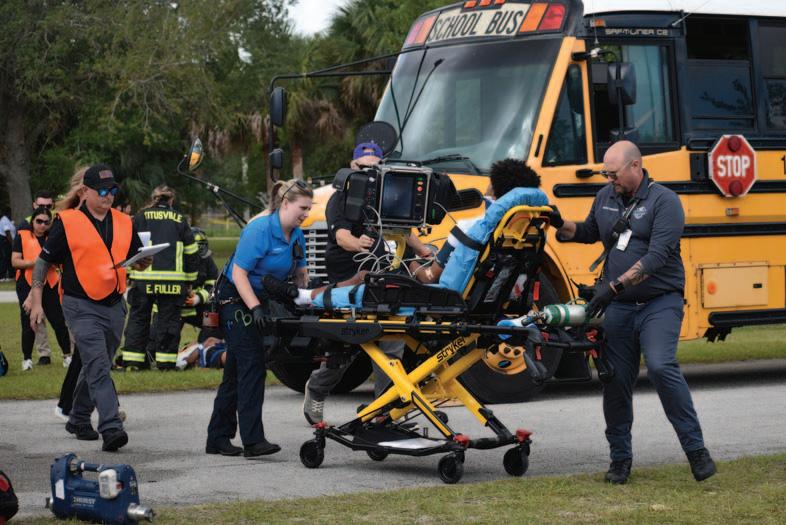
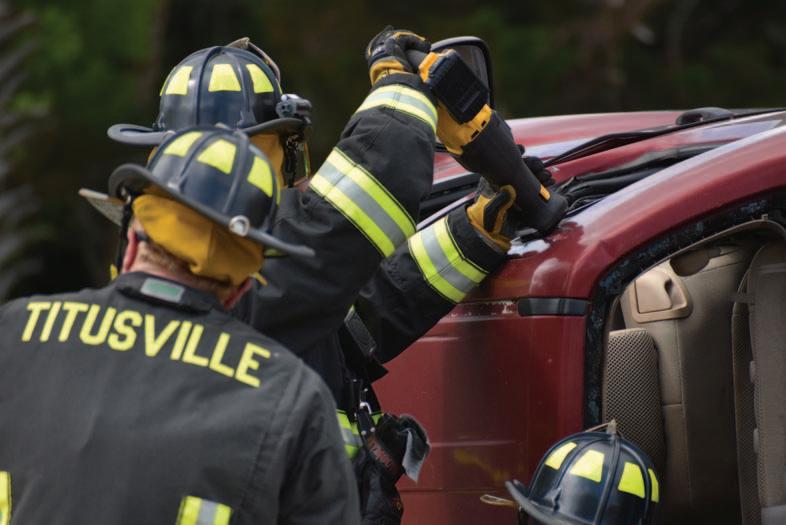
Recently, Titusville Fire participated in a Mass Casualty Incident (MCI) exercise at Chain of Lakes Park coordinated by Health First, First Flight Air Medical Transport and Holmes Regional Medical Center, our regional Level II Trauma Center. The exercise also included Coastal Ambulance, Brevard Public Schools, and EMS students from Eastern Florida State College. Exercises like this help prepare our crews for incidents involving multiple patients, where quick decision-making and effective coordination by arriving units are critical to patient outcomes. Members utilized their skills in patient assessment, treatment, incident management, and vehicle
extrication during a simulated school bus versus pickup truck rollover crash. First Flight 2, Health First’s Titusville-based medical helicopter, also participated in the scenario.
We value every opportunity to train alongside our partner agencies and strengthen our response capabilities together.
Special thanks to C&L Towing for providing training vehicles, Brevard Public Schools North Area Transportation for supplying the bus and driver, Brevard County Parks & Recreation Department for allowing us to utilize this space, Health First, and First Flight for continuing to bring valuable training opportunities to North Brevard.
By John Ringleb, Assistant Fire Chief / Public Information Officer, Palm Bay Fire Rescue
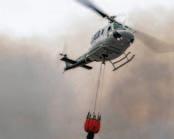
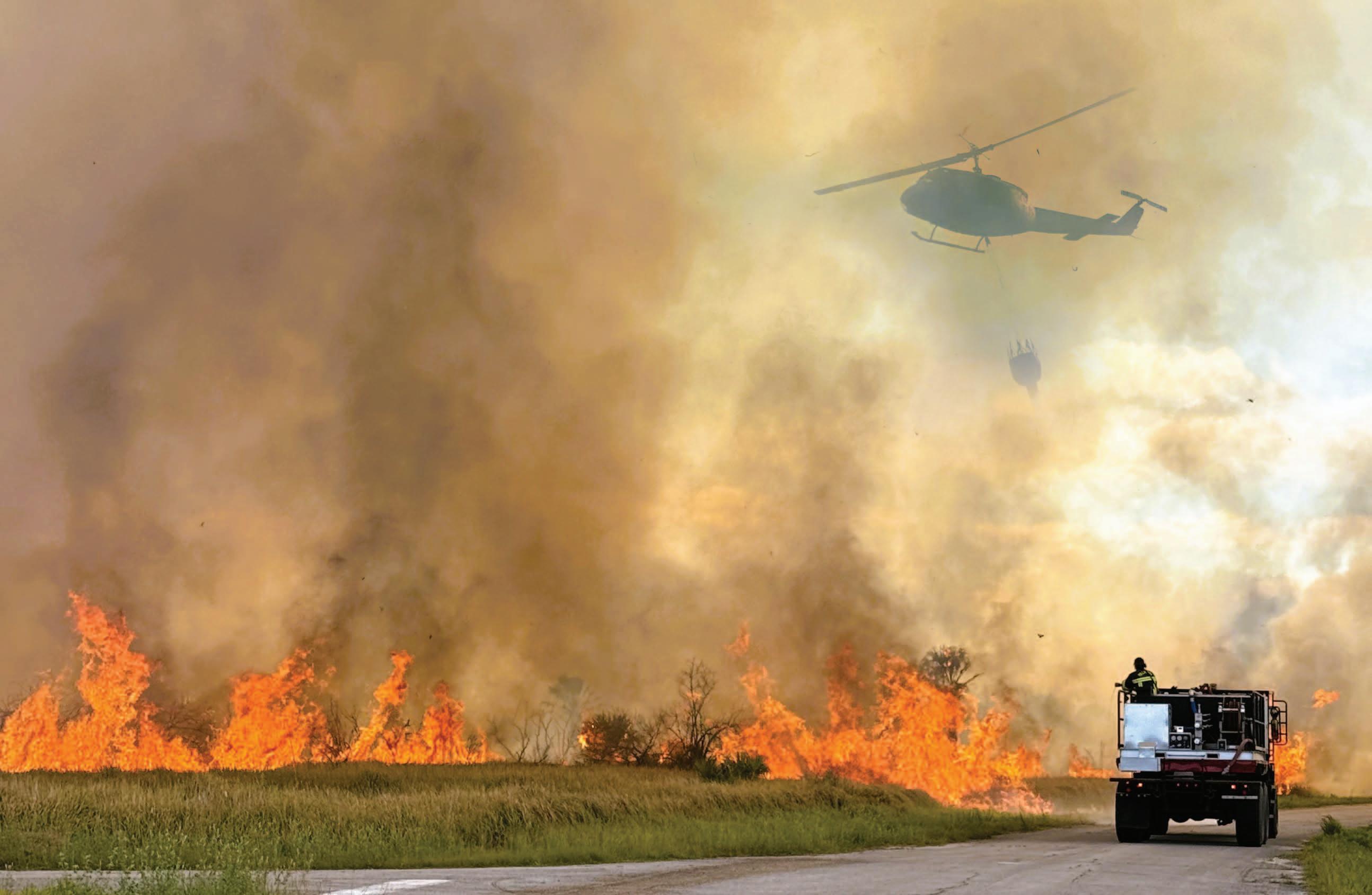
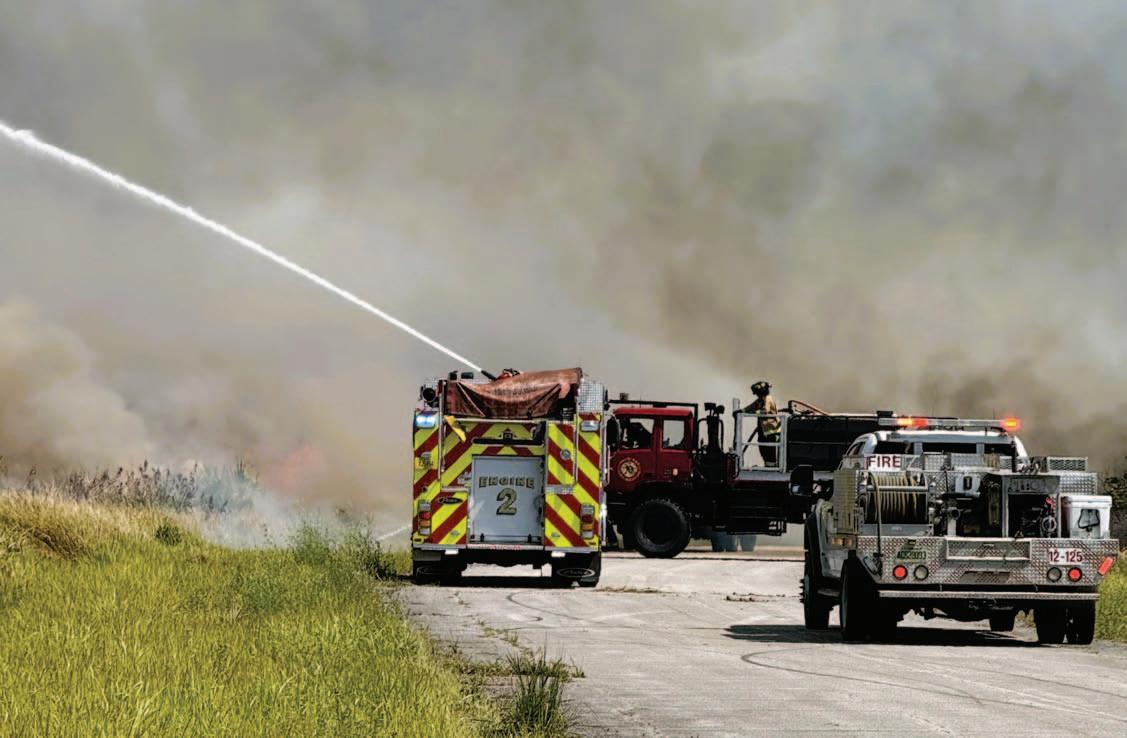
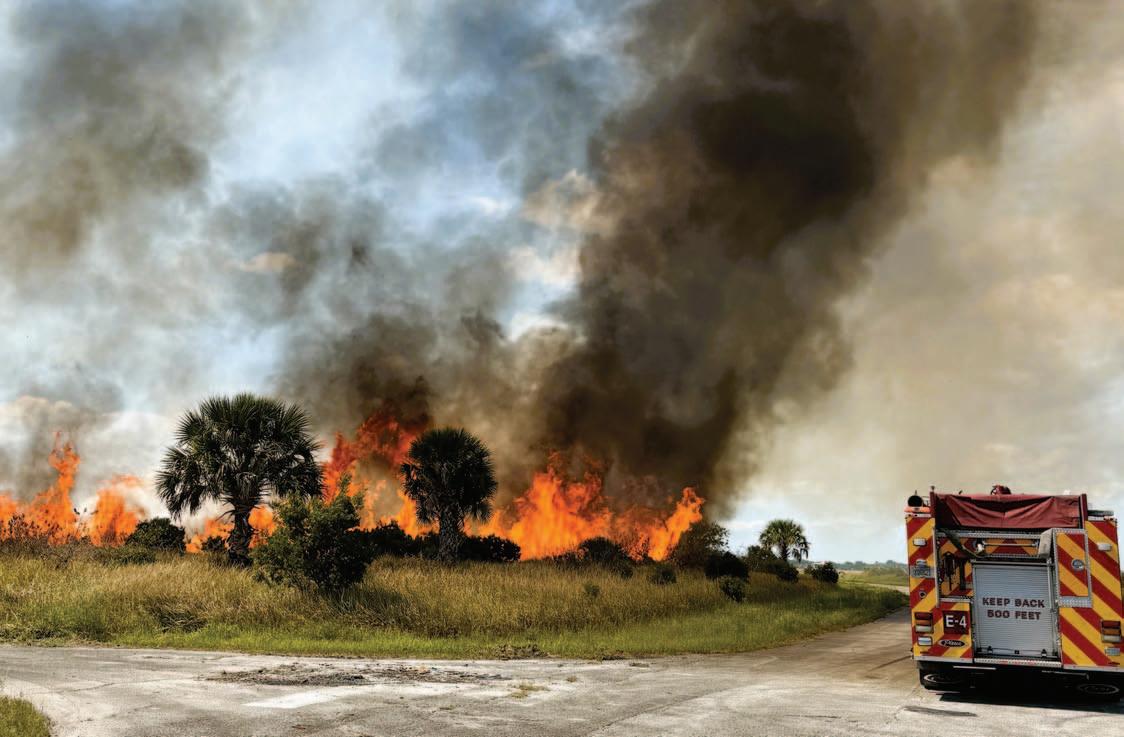
In late April, Palm Bay Fire Rescue battled a series of significant brush fires that burned over 400 acres in the far southwest section of the city known as “The Compound.” Over several consecutive days, crews faced rapidly changing fire conditions, multiple active
fire fronts, limited access, and continued wildfire threats to nearby neighborhoods. Working alongside the Florida Forest Service, Palm Bay Police Department, and the Brevard County Sheriff’s Office STAR helicopter, firefighters conducted aggressive suppression operations,
structural protection, and coordinated wildfire mitigation efforts to keep the fires from impacting homes and property. Despite the challenging conditions and ongoing fire activity, no homes or structures were lost, and no injuries were reported.
By Julie Murphy, PIO, MPIO, Flagler County Communications Coordinator
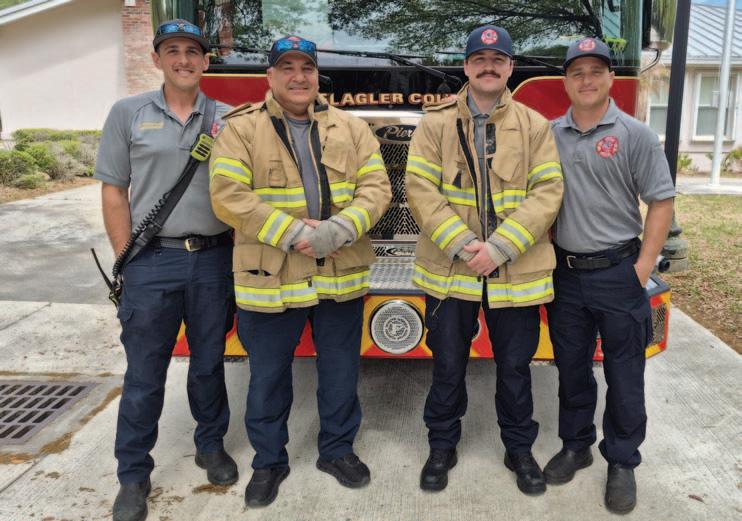
lagler County Fire Rescue Firefighter
Paramedic Chris Calio retired on April 1, no joke, and had the privilege of spending the day with his son, Nick Calio – brand new to the department at Fire Station 16 on the Volusia County border. Also on shift were Chris Calio’s best friends: Noah Hunt and Jake Gonzalez.
“I have been with the department for more than 20 years,” the elder Calio said. “I am excited for Nick joining the department, and I was surprised to see him here on the same shift. Usually, family members don’t work the same shift, same station. I also wanted the chance to work my last shift with Jake and Noah.”
Given that firefighting was a second career for Chris Calio – the first being in hospitality as an Orlando-area bakery owner – he said the job will likely be different for his son.
“I’ve seen the growth in this agency,” the elder Calio said. “There are a lot of great people here.”
Nick Calio, who started two weeks ago but doesn’t have his first shift until Monday, said he always wanted to be a firefighter and noted that

What is policyBUILDERs? Building the right policy manual together.
At its core, policyBUILDERs provides fullservice, digital policy management for fire and EMS departments nationwide. Unlike typical software companies that hand you a platform and a massive folder of templates—leaving you to do the heavy lifting—policyBUILDERs acts as your department's dedicated, off-site policy team.
We handle the writing, formatting, editing, and ongoing maintenance of your entire manual. Our experts work one-on-one with your command staff. We take your outdated paper binders and fragmented documents and transform them into a centralized, fully
his uncle is a New York firefighter.
“I’m like 25% nervous, and 75% excited,” the
customized, web-based manual. This digital hub is instantly accessible to your crews anywhere via smartphone, tablet, laptop, or scannable station QR codes.
What We Offer Florida Fire Chiefs' Association
Florida fire departments operate in one of the most complex, dynamic risk environments in the country. policyBUILDERs goes beyond generic templates to deliver tailored solutions designed specifically for the Sunshine State: Florida-First Policy Frameworks: Old policies often fail to account for Florida's rapid community growth and unique environmental hazards. We close the state's top operational gaps by building modernized SOPs for Hurricane and Severe Weather response, Flooding, and Wildland-Urban Interface (WUI) operations.
State Legislative Compliance: Staying compliant with state laws is critical to protecting your department from liability. When Florida passed House Bill 929, which mandated proactive occupational health and wellness measures, policyBUILDERs actively helped chiefs seamlessly overhaul their manuals to reflect and comply with these new legal requirements.
Mutual Aid & EMS Integration: Because Florida relies heavily on regional coordination
younger Calio said. “This is something I’ve always wanted.”
and complex medical oversight, we develop clear, standardized procedures for multi-agency staging, communication, and patient care reporting to ensure flawless mutual aid integration.
Continuous, Real-Time Maintenance: Policy management is never truly "finished." Whenever an operational standard changes or a new risk emerges, Florida chiefs don't have to navigate cumbersome IT support tickets. You simply contact your dedicated policyBUILDERs representative, and we update your manual in real-time.
policyBUILDERs removes the immense burden of policy management from the Chief’s desk. By delivering a clear, compliant, and highly accessible digital manual, we allow Florida's fire service leaders to stop wrestling with paperwork and get back to what matters most: leading their teams, ensuring operational readiness, and protecting their communities.
Dave
Rocco, CEO/Founder
978-9962774. dave@policyBUILDERS.com
By Blake Watson, Public Information Officer, Dixie County Fire Rescue
Dixie County Fire Rescue units responded on 4/30/26 to a unique emergency involving a dog trapped in a dried-up spring/sinkhole. DCFR crews assistedCross City Fire Departmentduring the department’s first-ever technical rope operation.
Upon arrival, responders located the dog nearly 40 feet down inside a cavern system.
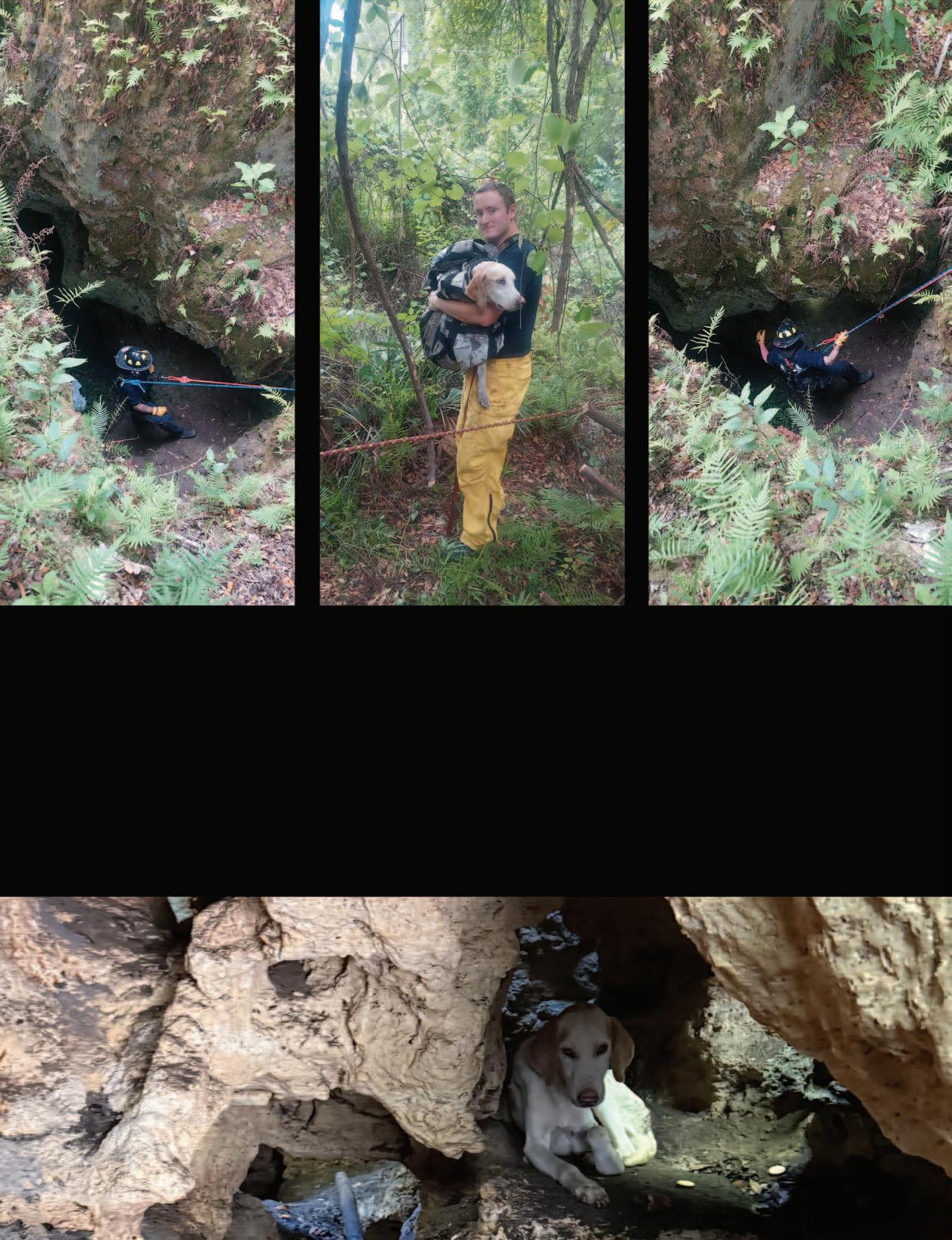
Crews quickly assessed the scene, developed a safe rescue plan, and utilized specialized rope rescue equipment provided by Cross City Fire Department to access the area safely.
Thanks to the teamwork, coordination, and technical skill of all personnel on scene, the dog was successfully rescued without injury.
Dixie County Fire Rescue would like to
commend everyone involved for their professionalism and teamwork during this challenging operation. We also extend a special thank you to Cross City Fire Department for their assistance and deployment of specialized rope rescue equipment that helped make this rescue possible.
By Doreen Overstreet, APR, Public Safety Information & Education Officer,
The Seminole County Fire Department (SCFD) was recently awarded the “Gold Standard” by the Commission on Accreditation of Ambulance Ser vices (CAAS). The Department earned a per fect score from the evaluators. This is the fifth time SCFD has been CAAS re-accredited, and the Department was first accredited in 2011.
There are only 34 fire departments in the United States that are CAAS accredited. In total, there are 189 CAAS accredited agencies in the United States (including private, public, fire department, and hospital-based ambulances). There are only 24 CAASaccredited agencies in the State of Florida tying California for the most accredited agencies in the country.
“Earning CAAS reaccreditation with a per fect score is a remarkable achievement and a testament to the professionalism of our Seminole County Fire Department,” said Chairman Andria Herr of the Seminole County Board of County Commissioners. “This recognition reflects the high standard of emergency medical care our residents rely on every day and reinforces our commitment to providing exceptional public safety services.”
Accreditation is considered one of the highest standards of professionalism across public safety agencies. It is based on the Department’s demonstrated commitment to a body of standards deemed essential to the safety and health of the public.
“Around 76% of response calls by our EMTs and paramedics are emergency medical services-related,” said Fire Chief Matt Kinley of the Seminole County Fire Department. Last year, SCFD responded to 38,455 EMS incidents. “We are committed to continually offering the highest standard of quality prehospital care. I thank the 580 men and women in the Seminole County Fire Department who are dedicated to this standard of excellence that they provide to
our citizens on a daily basis.”
CAAS re-accreditation occurs every three years. This process incorporates a model of continuous self-evaluation and improvement. These processes are then verified and validated through an auditing process that includes a comprehensive self-assessment and an independent external on-site review conducted by CAAS representatives. The accreditation process examines all aspects of ambulance operations and emergency medical services, from administrative and finance to community education, quality control, injur y and illness prevention, safe operations, medical protocols, medical direction, interagency relations, and quality of patient care.
By Chai Kauffman, Public Information Manager, Life Safety Educator, City of Hollywood
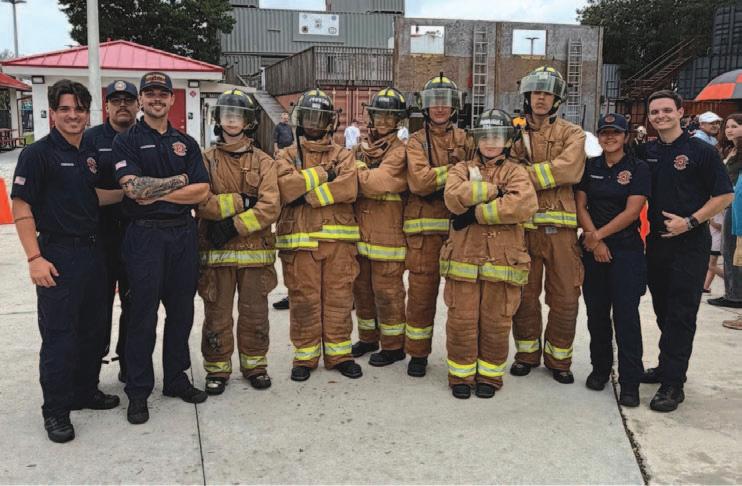
Hollywood Fire Rescue’s Cadet Program made a powerful first impression at the 24th Annual Explorer Cadet Competition, arriving prepared and ready to perform. From the opening event to the final evolution, the cadets showcased the discipline and sharp execution that define the program’s standards. From tackling hose rolls, barrel pushes, or the classic bucket brigade, they approached every challenge with intensity and precision. Yet above all, it was their teamwork by supporting one another, communicating with purpose, and even uplifting competitors from other agencies which truly set them apart and reflected the core values of Hollywood Fire Rescue.
A major part of that excellence stems from the program’s dedicated cadet advisors, whose commitment is nothing short great. These advisors invest countless hours in training, mentoring, and shaping the cadets. Not only do our advisors enhance our cadets’ technical skills but also their confidence, character, and professionalism. Even while some served as judges during the competition, they remained
fully present for their cadets.
We are grateful for the effort, attitude, and determination from our cadets that were evident in every event. They represented
Hollywood Fire Rescue with pride, professionalism, and heart. Hollywood Fire Rescue is proud of each of you, and the future of the fire service looks bright in your hands.
By Chai Kauffman, Public Information Manager, Life Safety Educator, City of Hollywood
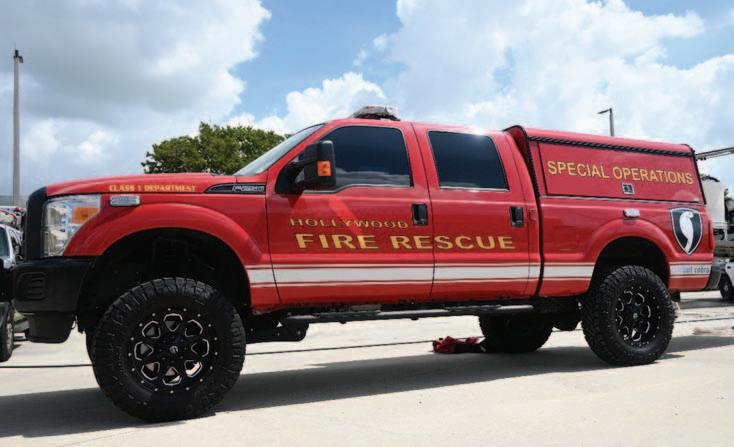
Hollywood Fire Rescue recently had the honor of being invited to the Miami-Dade Fire Training Center to demonstrate one of its most innovative firefighting tools, the COBRA Cold Cut System, which Hollywood Fire Rescue was the first department in the Eastern part of the United States to acquire one. Departments from across Miami-Dade County gathered for the event, creating a regional forum for collaboration, hands-on learning, and shared advancement in firerescue technology.
The demonstration highlighted how the COBRA Cold Cut System can cut through building materials using its highpressure water stream
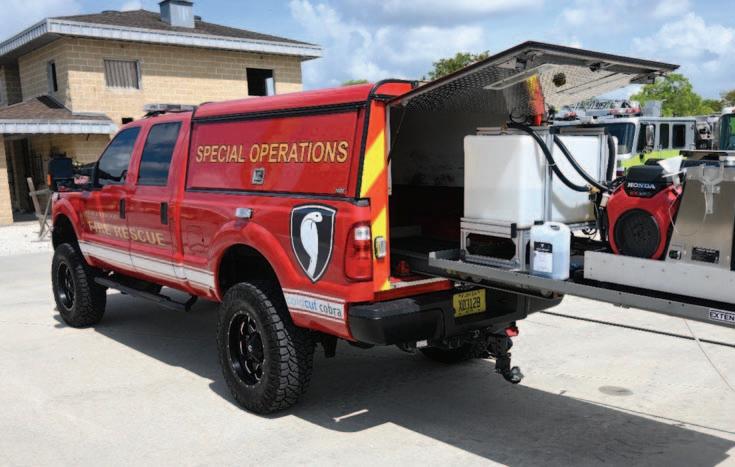
combined with an added aggregate, significantly enhancing firefighter safety and improving operational efficiency during structure fires.
The regional partners included the City of Hialeah, the City of Miami, and Miami-Dade Fire Rescue, all of whom share a commitment to innovation and continuous improvement. Events like this reinforce the strength of South Florida’s firerescue community and the value of working together toward common goals. Sharing training and technology not only elevates individual departments—it strengthens the entire region.
Hollywood Fire Rescue extends its gratitude to Miami-Dade Fire Rescue for hosting the event.
By Lisa Smith and Crystal Maderia, Brevard County Fire Rescue
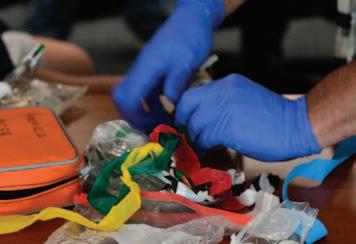
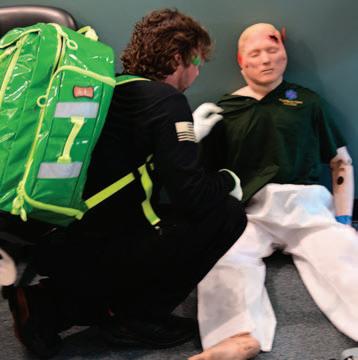
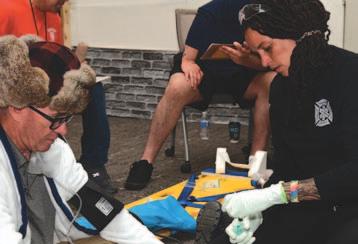
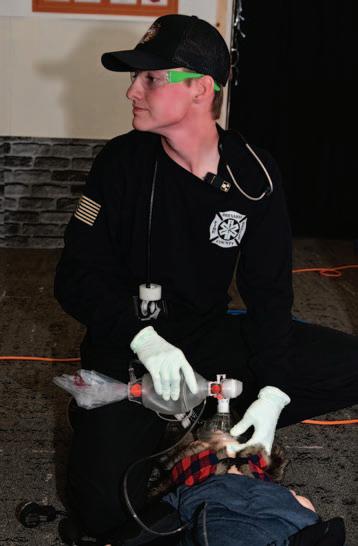
In early May, Brevard County Fire Rescue members Lt. Justin Serrecchia, FM Jayden Pace-Cook, FM Tyler Mikula, PM Crystal Madeira, and PM Jillian Flynn attended the Panther EMS Challenge competition at the Palm Beach Invitational Fire and EMS Conference. The two-day competition included teams from across the State of Florida and consisted of 2 days of timed high-
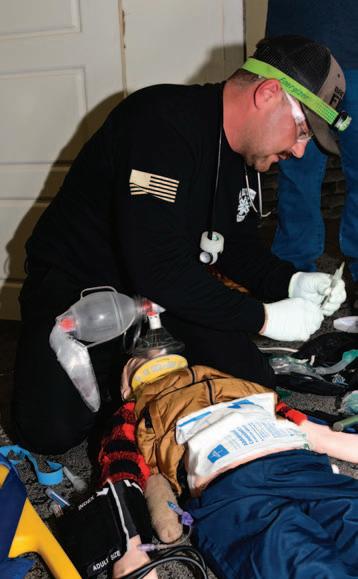

stress mass casualty scenarios, rapid skill challenges and written exams.
In June they will be heading down to Miami to compete in the 2026 Randy Boaz Memorial ALS Competition.
Congratulations! Best of luck in your next competition!
By Jenn Samsel, Independent Journalist
Two firefighters from Clay County Fire Rescue were awarded "Hero of the Day" by the Clay County Fair Lieutenant Kyle Colley and Captain William Futch Jr were nominated for this recognition by their peers and were ultimately selected by the fair.
The day marked a significant milestone for two individuals who go above and beyond in helping others.
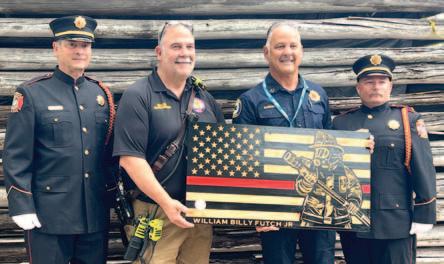
During the ceremony, family, friends, and colleagues gathered to support this significant achievement. The event included a cannon salute and the raising and lowering of the American flag, which was presented to Captain Futch by the CCFR honor guard. Additionally, he received a wooden firefighter American flag plaque and a speech expressing gratitude for his dedication and service.
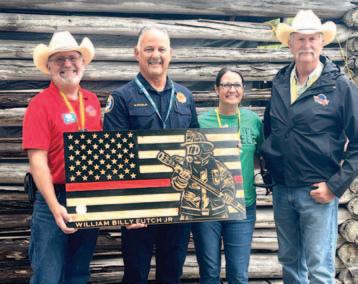
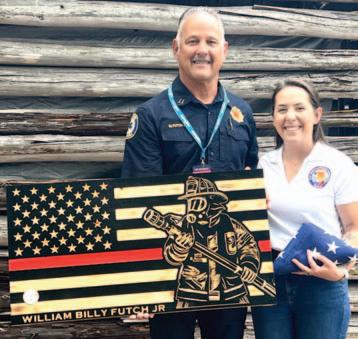
"With over 30 years of dedicated service in North Florida through both the Jacksonville Fire Rescue Department and Clay County Fire Rescue, Captain Futch has exemplified the true spirit of community heroism. His selfless commitment to public service, extensive involvement in community outreach, and countless hours spent training and teaching others have made a lasting impact. Always ready to lend a hand and respond to a call, whether on duty or off duty, Captain Futch consistently goes above and beyond to protect and serve the community and to instill in his department and new firefighters.
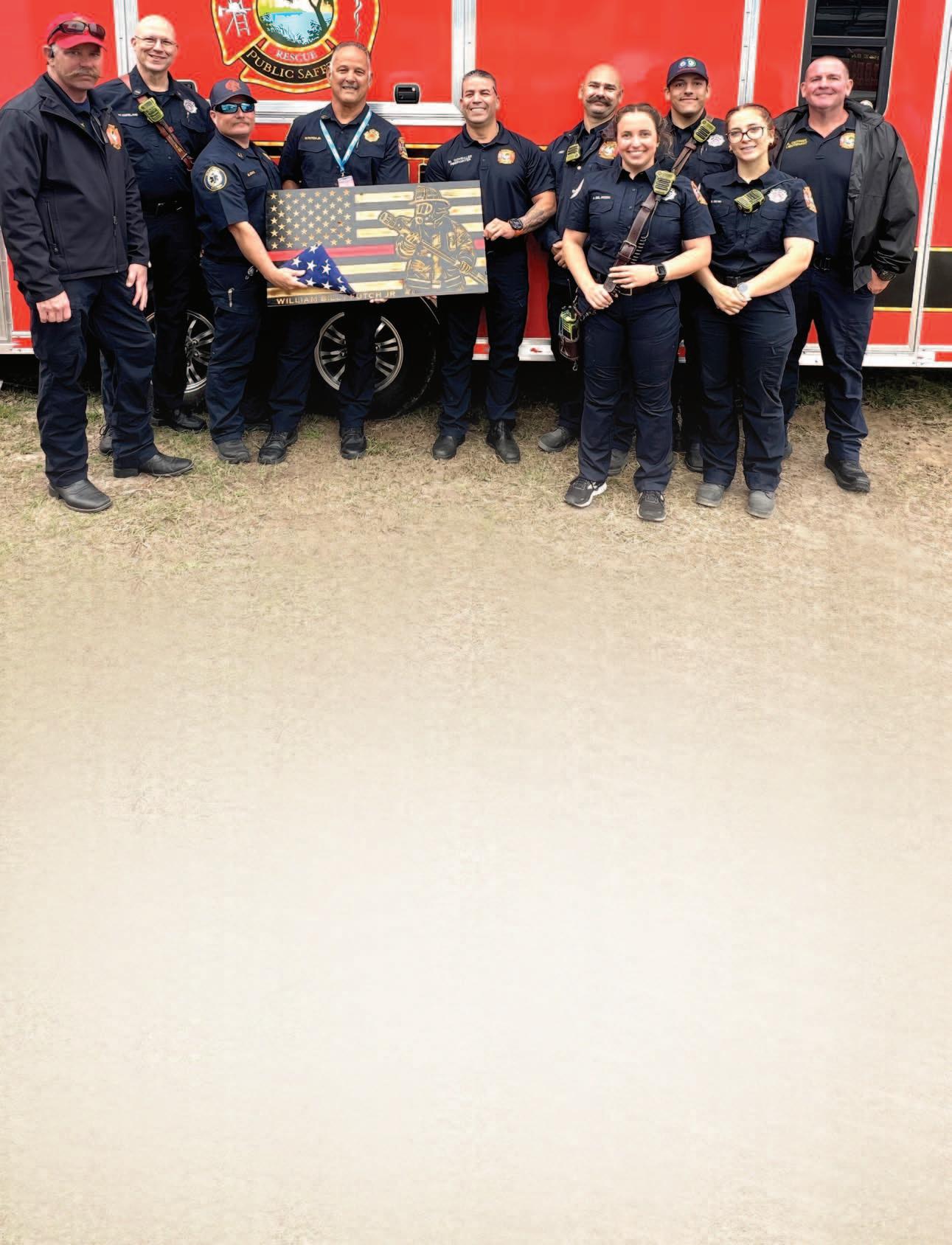
Captain Futch's community service includes BLS training, public safety outreach and training, community events, volunteering at schools, demonstrations, and as a public safety volunteer
On behalf of the Clay County Agricultural Fair Board of Directors, we would like to present you with this token of our sincere appreciation." - Clay County Fair Board Members.
The Clay County Fair started the tradition in 2023 to honor first responders and teachers who go above and beyond in their service to the community, which is held at the Early Florida Village.
Lt. Kyle Colley was unable to attend the ceremony, but he received the same award.
Congratulations to both firefighters for their services and dedication.

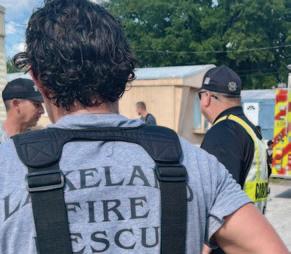
By Stephanie Lewis, APIO, Public Relations and Information Manager
Lakeland Fire Department responded to a residential structure fire on Bert Street Monday afternoon, shortly before 4:00 PM, involving a mobile home.
Arriving crews encountered active fire conditions with reports of a possible occupant inside. Firefighters initiated an immediate search while beginning fire suppression efforts. One adult victim was located inside the residence and confirmed deceased on scene. Two dogs were also located deceased inside the residence.
Crews managed a large crowd in the area and coordinated with law enforcement for scene control.
The fire was brought under control and utilities were secured. The Florida State Fire Marshal’s Office is on scene and investigating the cause of the fire. Lakeland Police Department Crime Scene Unit is also on scene.
By Chai Kauffman, Public Information Manager - Life Safety Educator
Hollywood Fire Rescue’s Mobile Integrated Healthcare Program (MIH) is entering a new chapter of growth and recognition, recently sharing its latest advancements with NBC6 and WSVN to spotlight the department’s expanding role in community health. The timing couldn’t be more meaningful: May is National Mental Health Awareness Month, reinforcing the program’s commitment to community-centered care.
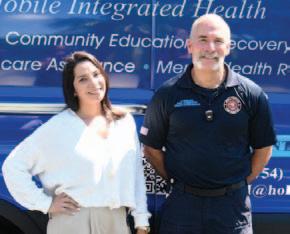
At the heart of this progress is the MIH team’s newest addition, Licensed Clinical Social Worker Alejandra Echeverri, whose arrival marks a significant enhancement to the program’s mental health capabilities. Echeverri’s expertise strengthens the team’s ability to address behavioral health needs directly in the community, expanding services such as crisis intervention, counseling, resource navigation, and longterm support. Her role reflects a strategic investment in mental health, the emotional, social, and psychological factors that shape a person’s overall wellbeing.
Hollywood’s MIH Program has steadily evolved into a model of proactive, integrated care. With contact made with more than 200 individuals, the program continues to demonstrate how early intervention and personalized followup can reduce emergency calls, improve health outcomes, and build lasting trust between first responders and the community As the program grows, its mission remains clear which is to meet residents where they are physically, emotionally, and mentally, and to provide compassionate, comprehensive care that strengthens the entire community.
By Chai Kauffman, Public Information Manager - Life Safety Educator
A routine operation at Quirch Foods in Port Everglades escalated into a major HazMat incident on April 28, 2026, when a forklift struck a 2?inch ammonia refrigeration line, releasing high?concentration anhydrous ammonia throughout the facility. Crews arrived to active vapor conditions, initiated rapid evacuation, and confirmed dangerous atmospheric readings that peaked around 330 ppm. One employee was transported for exposure?related symptoms and later released.
What followed was an extended, highly coordinated response involving Hollywood Fire Rescue, Broward Sheriff Office Fire Rescue, and Fort Lauderdale Fire Rescue's HazMat teams operating under unified command. These HazMat teams conducted multiple Level A entries to locate and isolate the damaged valve assembly, which was heavily iced and still leaking. Crews performed reconnaissance, atmospheric monitoring, decontamination, and tactical mitigation over several hours while maintaining strict safety protocols.
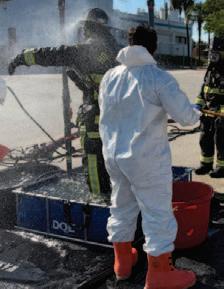
Shortly after midday, entry teams successfully closed the leaking valve, allowing the operation to transition into recovery and ventilation. Over nearly eight hours, responders executed ventilation, runoff monitoring, and continuous atmospheric sampling until readings returned to safe levels. The incident showcased exceptional interagency coordination, disciplined HazMat operations, and the strength of regional training partnerships that resulted in a complex industrial emergency resolved without responder injuries.
By Matt Ferguson, Administrative Chief, Dixie County Fire Rescue
Dixie County Fire Rescue is proud to announce the creation of the Dixie County Fire Rescue Memorial Scholarship, established to honor the brave men and women of DCFR who are no longer with us. Their dedication, sacrifice, and unwavering commitment to serving our community have left a lasting impact that will never be forgotten.
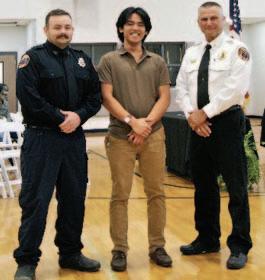
Created to preserve their legacy, the scholarship supports and encourages future generations pursuing higher education. By investing in students and their educational goals, the scholarship reflects the same values of service, leadership, and commitment demonstrated by these heroes throughout their lives.
We are also proud to recognize this year’s recipient, Kenny Nyugent, who was awarded the scholarship during the Dixie County Education Foundation Scholarship Night. Kenny’s achievements, character, and dedication make him a deserving recipient, and we congratulate him as he continues his educational journey.
Dixie County Fire Rescue remains committed to honoring the memory of its fallen members while supporting opportunities that strengthen the future of our community. We are grateful for the continued support from our citizens, partners, and organizations who help make initiatives like this possible.

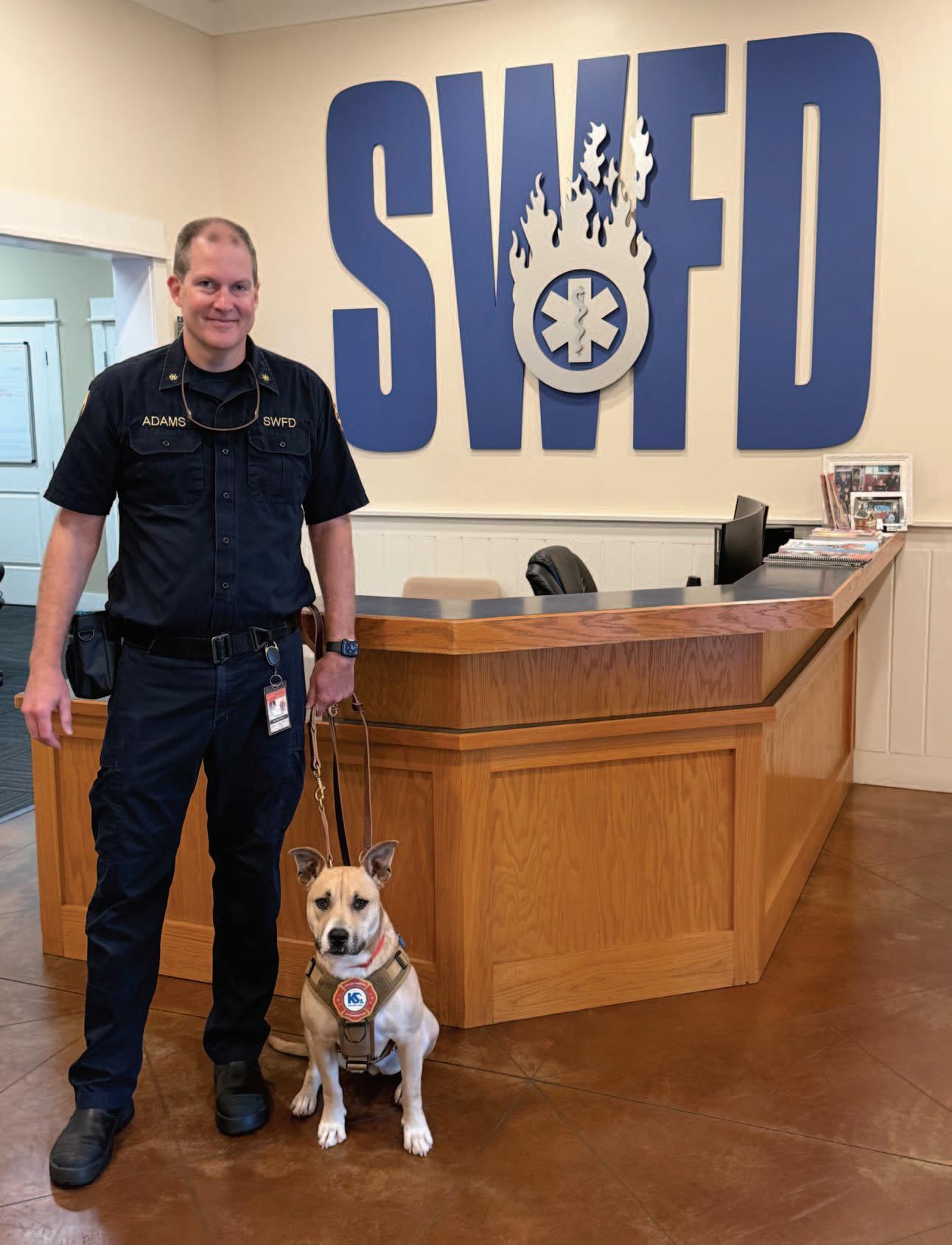
By Mackenzie McClintock, Public Information Officer, South Walton Fire District
The newest addition to South Walton Fire District has four legs, a wagging tail, and an important role all her own. In partnership with the K9s For Warriors Station Dog Program, SWFD is proud to introduce Molly as the District’s official therapy K9 dedicated to supporting responder mental health and wellness.
Specially trained to provide comfort and emotional support, Molly will work alongside the District’s Peer Support Team, helping to relieve stress after significant or traumatic calls, boost morale within fire stations, and strengthen community connections.
“Our responders spend a lot of time taking care of others, but Molly’s role is to take care of us,” said SWFD District Chief and K9 Handler John Adams. “In our short time with her so far,
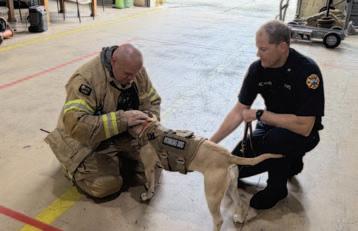
you can feel how she changes the atmosphere in a room and how well people respond to her.”
Molly is a medium-sized mixed breed, approximately one and a half years old. She is fond of belly rubs and enjoys time around people, especially children.
She is just one of 90 dogs placed nationwide through the K9s For Warriors Station Dog Program. The program pairs trained therapy dogs with first responder agencies to support the mental health and wellness of those who routinely face high-stress and traumatic situations in the line of duty.
These dogs are provided to agencies at little to no cost, with K9s For Warriors covering the initial K9 supplies, as well as the training through an American Kennel Club therapy dog program.
“Her impact has been immediate,” Adams said. “She’s already supported our personnel and neighboring departments in multiple critical incidents. Whether it’s through peer support or her interactions with the public, she’s quickly becoming an equal and beloved part of our team.”
In Molly’s first months of work as a Station Dog, she has been part of more than 10 critical incident debriefs, District events, and
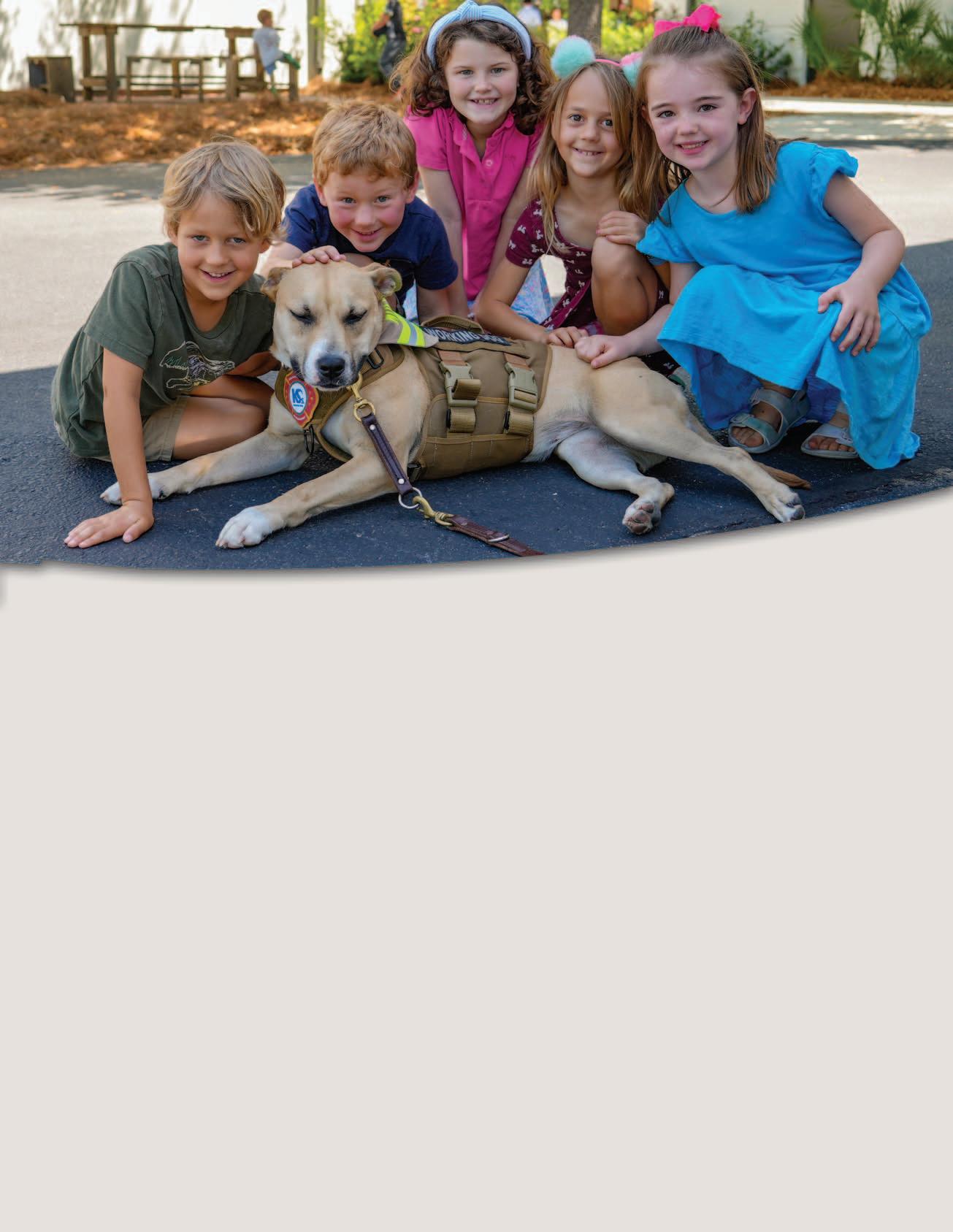
community appearances. Her comforting presence for responders is also reflected through her developing role in the community, where she is a conversation starter. Not just for the District to share its mission and desire to be involved, but to also educate taxpayers on responder mental health and wellness.
“This is the start of even better and more thorough discussions about what comes with a career in the fire service,” Adams said. “The community doesn’t always know what kind of toll the job takes on our men and women, but they do appreciate being educated about what we experience. Truly, when you think about what her impact will be, it’s an endless list of possibilities. She is going to help so many people, not just within the walls of our fire stations. It’s a privilege for us to be part of that.”