







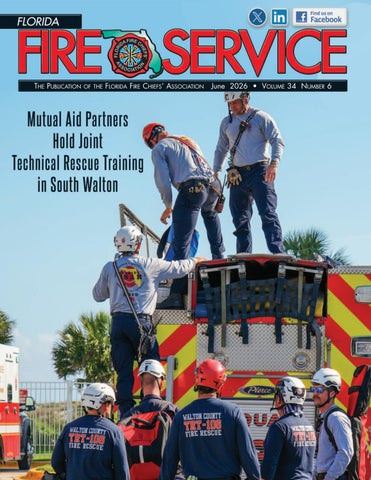

Florida Fire Service is the monthly publication of the Florida Fire Chiefs’ Association, provided to Florida Fire Chiefs’ Association (FFCA) members, by the Florida Fire Chiefs’ Association.
Florida Fire Chiefs’ Association
221 Pinewood Drive Tallahassee, FL 32303
Phone:(850) 900-5180
Email: info@ffca.org • www.ffca.org
FFCA Staff
Harold Theus- Executive Director
Rachel Pardo - Marketing & Member Services Coordinator
Savannah Selski - Exhibit & Sponsorship Sales Coordinator
FFCA Board of Directors
Trip Barrs - President
Ryan Crawford - 1st Vice President
Mike Tucker - 2nd Vice President
Michael Choate - Immediate Past President
Carlos Aviles - Secretary/Treasurer
Jeff Wagner - Northwest Region Director
Brady Rigdon - Northeast Region Director
Todd Allen - East Central Region Director
Chantal Botting - Southeast Region Director
Ian Kemp - West Central Region Director
Gregory DeWitt - Southwest Region Director
Harold Theus - Executive Director
Terry Parris - Foundation Chair
Jeffrey Money - Senior Member
Editorial Submissions magazine@ffca.org (850) 900-5180
Advertising
Scott Leisen, Editor in Chief scott@ffca.org (386) 717-0055
Subscription rate for members is $36, which is included in member dues. Archived electronic monthly editions of Florida Fire Service magazine are available at www.ffca.org. Log in as a member and click on the Publications tab.
Florida Fire Service
June 2026, Volume 34, Number 6 USPS # 016-759
Periodical postage paid in Daytona Beach, Florida, and additional post offices.
POSTMASTER: Send address changes to Florida Fire Service, 221 Pinewood Drive Tallahassee, FL 32303. Statements of fact and opinion are the responsibility of the authors alone and do not imply an opinion on the part of the officers or the members of FFCA.
Copyright 2026 by the Florida Fire Chiefs’ Association. All rights reserved. Materials may not be reproduced without written permission.

OUR GOOD NAME 8
South Walton Lifeguard Earns Region III Best Warrior Title .10
Palatka Firefighter Ben Stevens Honored for Courage & Service 12 Daytona Beach Cuts Ribbon on New Station
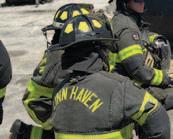
Building Forward: Lynn Haven Fire Rescue’s Transformation


Trip Barrs, Fire Chief FFCA President
As my term as President of the Florida Fire Chiefs’ Association ends, I find myself reflecting on the tremendous honor it has been to serve this organization and the fire service professionals of Florida over the past year.
Above all else, I want to express my sincere gratitude to our members. Thank you for your trust, your support, and your engagement. The accomplishments of this past year belong not to any one individual, but to the collective efforts of thousands of fire service leaders and industry partners who make the FFCA the respected organization it is today.
Serving as your President has provided me with a unique opportunity to witness firsthand

the passion, professionalism, and resilience that define Florida’s fire service. Whether attending regional meetings, participating in legislative discussions, or visiting departments across our state, I have been continually inspired by the commitment of our members to protect Florida’s residents and visitors.
This past year presented both opportunities and challenges for our Association. Through it all, your Board of Directors remained focused on strengthening the FFCA and ensuring we continue to be the leading voice for Florida’s fire service.
One of our most significant accomplishments was maintaining a strong presence in Tallahassee during a period of
considerable legislative activity. The Association actively monitored and engaged on issues affecting local governments, fire departments, emergency medical services, firefighter safety, retirement benefits, communications systems, and public safety funding.
Property tax reform proposals dominated much of the legislative discussion. Throughout these conversations, the FFCA worked diligently to ensure policymakers understood the critical connection between local revenue and the delivery of fire and emergency services. We advocated for protecting the funding necessary to maintain emergency response capabilities while supporting thoughtful solutions that address the concerns of Florida taxpayers. This will be an ongoing issue that our Association will continue to address, providing leadership and solutions that support local emergency services.
We also continued supporting efforts to improve firefighter health and safety. From PFAS-related concerns and bunker gear rulemaking discussions to firefighter wellness initiatives and implementation of new legislation affecting our profession, the Association remained actively engaged with stakeholders to ensure the fire service has a seat at the table.
At the federal level, we partnered with the Florida Fire Marshals and Inspectors Association and national organizations to advocate for funding and programs that support Florida departments, including Assistance to Firefighters Grants (AFG), SAFER grants, the U.S. Fire Administration, the National Emergency Response Information System (NERIS), and critical public safety communications initiatives.
Internally, the FFCA experienced a period of transition and transformation. Like many organizations, we faced challenges associated with staffing changes, financial recovery efforts, and evolving member expectations. Your Board of Directors approached these challenges with
transparency and determination. Difficult decisions were made with a singular focus: ensuring the long-term health and sustainability of the Association.
I am particularly proud of the work accomplished to strengthen our financial position, improve operational efficiency, and position the organization for future success. Through the dedication of Board members, staff, consultants, and volunteers, we made meaningful progress in stabilizing operations and rebuilding a strong foundation for the years ahead. Our new Executive Director, Harold Theus, brings a wealth of experience, proven leadership, and a deep commitment to the Florida fire service. I am confident that under his leadership, the Association will continue to grow and thrive.
One of the greatest strengths of the FFCA remains our commitment to professional development. This year’s Florida Fire & EMS Conference in Orlando was an outstanding success, bringing together more than 3,000 attendees and over 200 industry partners. The conference provided world-class education, networking opportunities, hands-on training, and the opportunity to celebrate the accomplishments of our profession.
Our Safety & Health Conference, Executive
Development Conference, Emergency Services Leadership Institute, and numerous regional meetings continued to provide valuable opportunities for learning and collaboration. These events are only possible because of the volunteers, instructors, sponsors, staff, and attendees who dedicate their time and expertise to advancing our profession.
While we have much to celebrate, we must also acknowledge the challenges that remain before us. Florida continues to experience rapid population growth, increasing service demands, workforce recruitment and retention pressures, rising costs, natural disasters, and evolving public expectations. Departments of all sizes are being asked to do more with limited resources.
The conversations surrounding local government funding, property taxes, public safety communications, firefighter health and wellness, and retirement benefits will continue. These issues require thoughtful leadership, strong advocacy, and a unified fire service voice.
The FFCA must remain engaged, adaptable, and forward-looking. Our success depends on continued member involvement and our willingness to work together toward common goals.
As I transition from President to Immediate

Past President, I want our members to know that my commitment to the FFCA remains unwavering. I look forward to supporting our incoming President, the Board of Directors, Executive Director Theus, and our dedicated staff as they continue advancing the mission of this Association. Leadership transitions are healthy and necessary, but our mission remains constant: supporting Florida’s fire service and ensuring our members have the resources, education, advocacy, and professional network needed to succeed. The future of the FFCA is bright because of the people who make up this organization.
To every member, committee volunteer, instructor, sponsor, Board member, staff member, and industry partner who contributed during the past year, thank you. Your support made my presidency successful, and your dedication will continue to drive this Association forward.
It has been one of the greatest honors of my career to serve as President of the Florida Fire Chiefs’ Association. Thank you for the opportunity, thank you for your friendship, and thank you for your service to the citizens of Florida.
Stay safe, stay engaged, and continue leading with integrity.
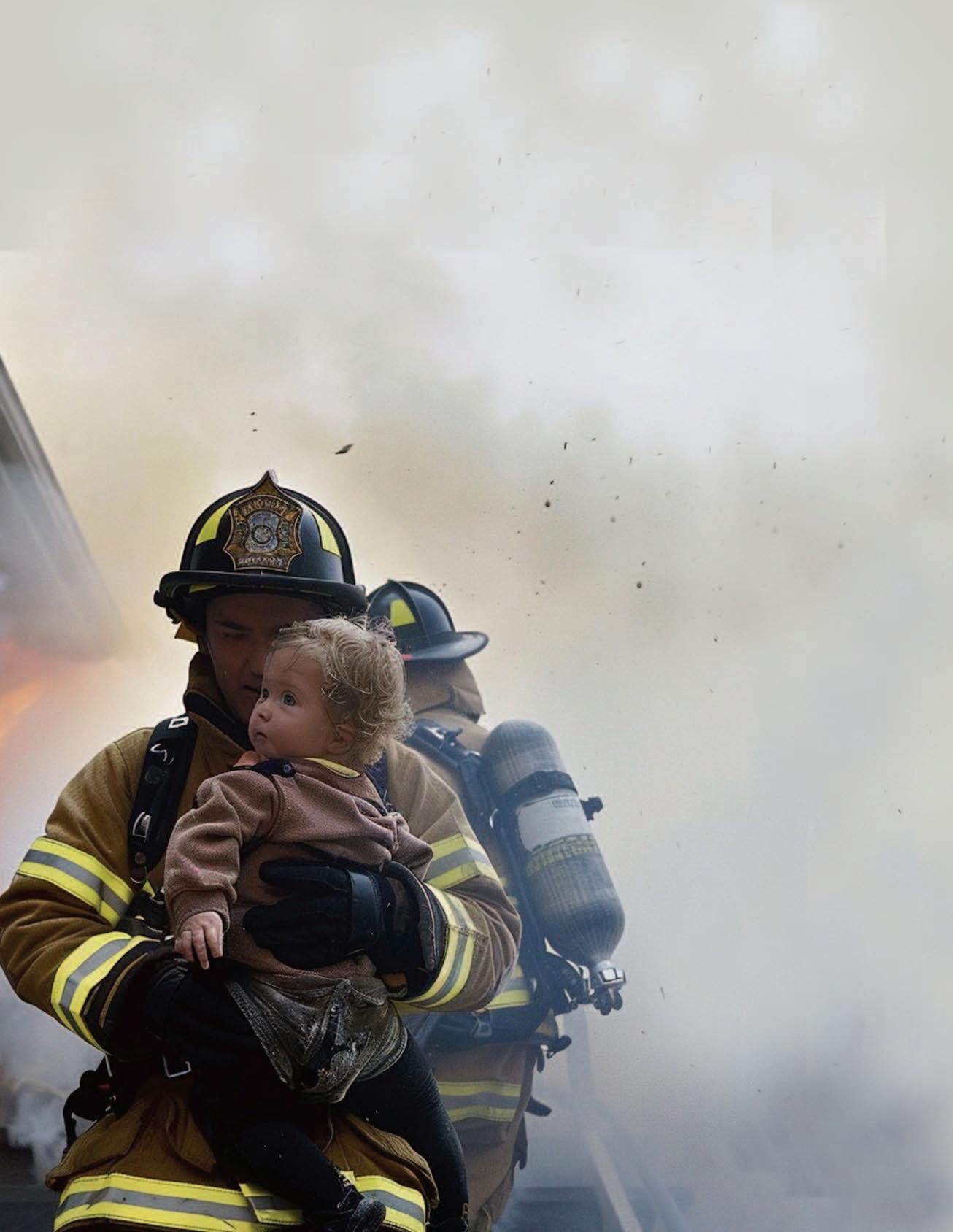
Firefighters have always been one of the most respected and trusted professions for the past 75 years. That is as far back as I could find a survey related to trusted/respected professions. Often during the course of our initial FD job interview, we list that as a reason for going into this field (rarely are we honest enough to talk about the 24/48 hr work schedule). The ironic thing about firefighting being such a highly trusted and respected profession is that we entered the field without contributing to that trust and respect. How we do the job once we are hired helps contribute to the strong perception people have for firefighters. This legacy is something we have inherited from the generations of firefighters that have come before us and has been entrusted to us to pass it on to the next generation of firefighters.
By Rick Spence
The job has always been dangerous, regardless of when you served and firefighters have always been willing to put themselves in harm’s way to save others. Anytime there is a natural or man-made disaster, firefighters are almost always first on the scene and are there until the incident is resolved. Even at the attack on Pearl Harbor and the World Trade Centers, firefighters were immediately on the scene. Often this places them in extreme danger, but they do not shrink away from the incident. Human behavior is instinctively designed for self-preservation, meaning getting away from the scene quickly. Firefighters are not only trained to overcome the instinct to run from danger, but to go forward quickly and rationally and also expected to mitigate the incident in a calm demeanor.
This type of behavior has been exhibited over many years and many major incidents. It has allowed us to build a level of trust and
respect where that enables us to go places and homes where most other people are not welcome. The public expects us to do superhuman things to save others. This expectation has come at a high cost over the years and today’s firefighters consistently continue to live up to the expectation, also at a great cost. Firefighters put the welfare of others before their own safety, which allows them to hold a high place of honor in human society. We have been called “The shield against disaster.” It is very impressive that this legacy has continued over many years. One of the many things that firefighters all have in common is that we want to make the fire service better for those who come behind us. The generations of firefighters before us took that very seriously and did that exact thing. I do not want to be the weak link in the firefighter chain that does not leave the fire service better than it was before we entered it.
“If you have to choose between a good name and great wealth, choose a good name.” Proverbs 22:1.
Lastly, a good name will endure much longer than great wealth and firefighters rarely obtain great wealth.
Rick Spence retired as Assistant Chief from the Reedy Creek Fire Department after 30 years. Heis currently the Chaplain for the Florida Fire Chiefs’ Association, Central Florida Fire Chiefs’ Association,Reedy Creek Fire Department, Lake County Fire Department, Clermont Fire Department, Maitland Fire Department, and the Florida Professional Firefighters. He serves asSergeant of Arms for the Florida Professional Firefighters and International Association of Firefighters.He was selected Florida Professional Firefighter of the Year in 2018.He has been married to his wife Alecia for over 30 years
By Mackenzie McClintock, Public Information Officer, South Walton Fire District
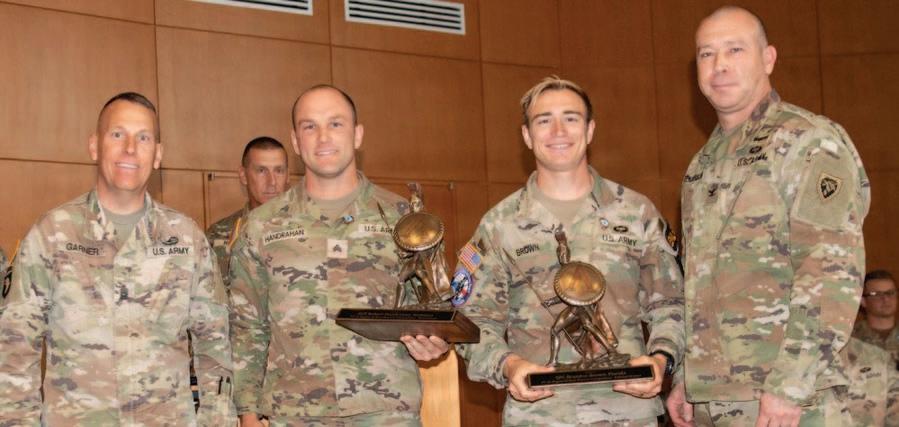
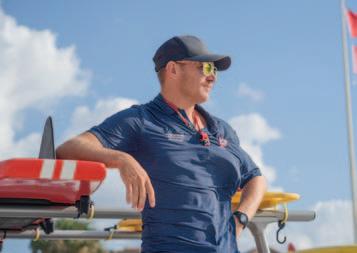
After a hard-fought competition at Camp Butner, North Carolina, South Walton Fire District Beach Safety Lieutenant Brandon Brown was named the winner of the Region III Best Warrior Competition for the Army National Guard. This comes after his victory within the Florida National Guard’s Soldier of the Year competition, where he qualified for the regional event.
During his time at Camp Butner, Brandon represented the state of Florida facing off against other enlisted soldiers from Alabama,

Georgia, Kentucky, Mississippi, North Carolina, Puerto Rico, South Carolina, Tennessee, and the Virgin Islands.
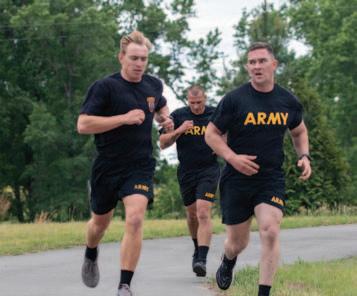
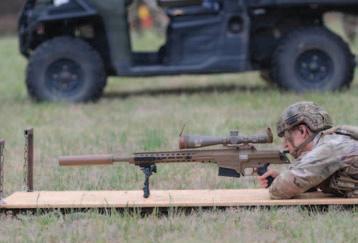
The Regional consisted of 25 events designed to test a soldier’s technical proficiencies, mental toughness, physical endurance, and adherence of Army values. Brandon flashed his beach safety racing roots clocking a speedy 11:02 in the two-mile run and finishing top three in the 18.6-mile ruck.
After the weeks’ worth of competitive backand-forth, Brandon rose to the top to claim the title of Region III Best Warrior.
“This is an extraordinary accomplishment and a reflection of his work ethic, which we are fortunate to see daily in his role with our Beach Safety Division,” said SWFD Fire Chief Ryan Crawford. “His leadership and service across both arenas speaks volume about his character.”
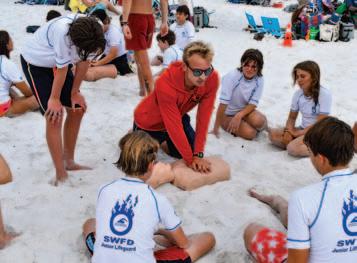
Brown has served approximately seven years as a Beach Safety supervisor with South Walton Fire District, starting as a Beach Safety Officer in 2019. He was promoted to Lieutenant in 2021, when he also took a leadership role in overseeing the District’s Junior Lifeguard Program.
Since then, he was named the Junior Lifeguard Program Coordinator and has grown
the initiative to reach more than 200 children ages 9 to 16 every summer.
“Many of our personnel come from prior military service backgrounds and continue to serve our country in different capacities while working as first responders,” Crawford said. “Brandon earning this honor ahead of our 2026 Junior Lifeguard Program, and being publicly recognized for it, means we are celebrating the example he is setting for the children under his leadership this year. Each Junior should know they can do something great in life, no matter what avenue they choose to explore for their career.”
The South Walton Fire District congratulates Brandon on this exceptional accomplishment that he is bringing home to the South Walton community and the state of Florida. The District looks forward to seeing his journey continue at the U.S. Army’s national competition in July 2026, where he will represent the Southeastern United States.

By Greta Hall, Public Information Officer, City of Palatka Fire Department
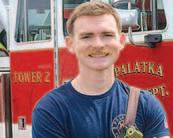
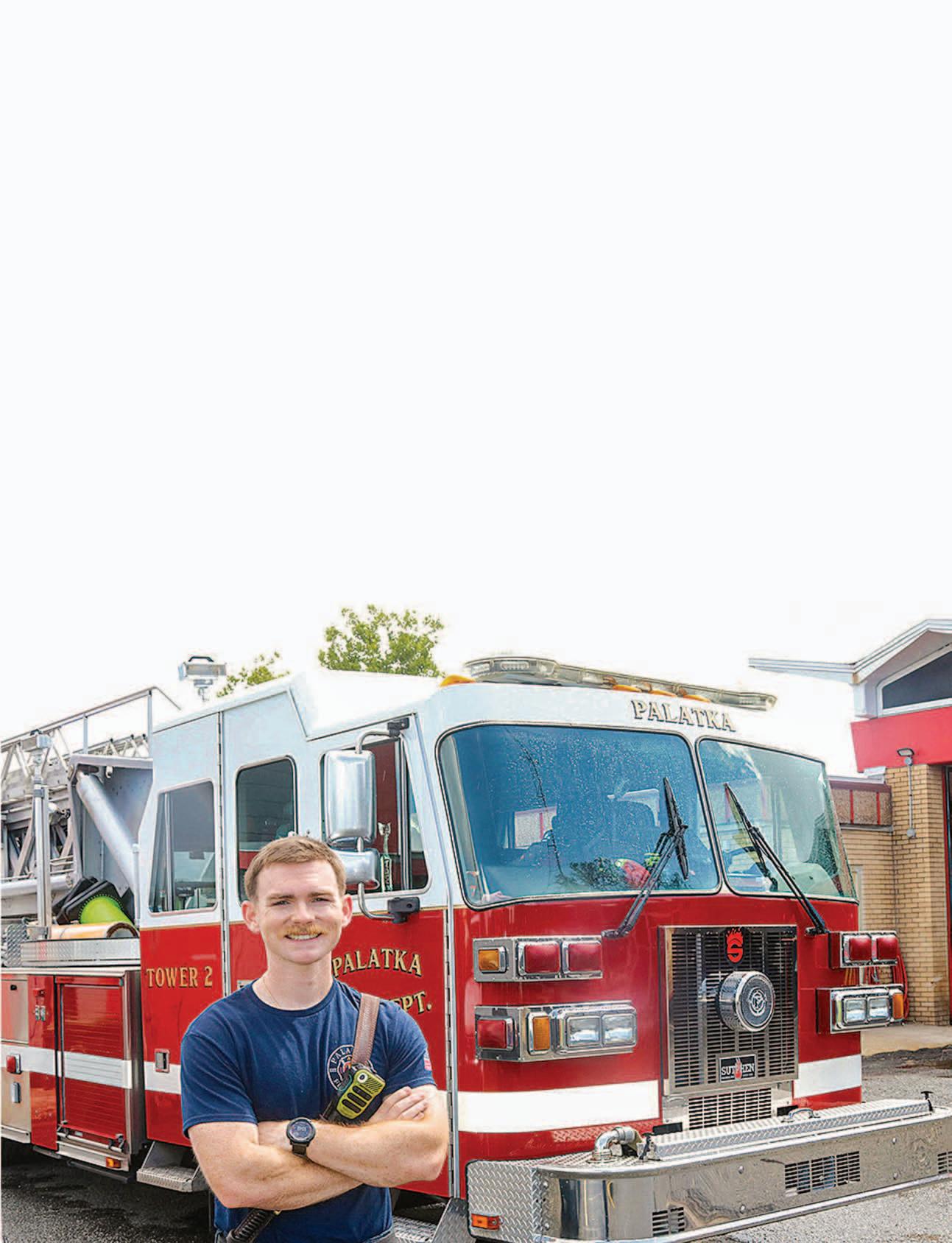
For firefighter Ben Stevens, serving others has always been about showing up on someone’s worst day and doing everything possible to make a difference. That commitment to service, courage under pressure, and dedication to the fire service recently earned the Palatka Fire Department firefighter recognition at the local, state, and national levels.
Stevens, 24, was named the Veterans of Foreign Wars Post 3349 Palatka Firefighter of the Year following his actions during a residential structure fire in East Palatka on May 12, 2025. His heroic efforts during that incident later led to his receiving the State of Florida VFW Firefighter of the Year honor and national recognition from the organization.
The incident began as what firefighters initially believed was a routine structure fire response. Stevens and fellow crew members arrived to find heavy fire conditions and reports of occupants trapped inside the home. As crews searched the residence, Stevens and his team worked rapidly to remove victims through windows and coordinate rescue efforts with law enforcement officers on scene.
Palatka Fire Chief Chris Taylor said Stevens demonstrated exceptional composure, bravery, and leadership during the incident.
“Firefighter Stevens displayed the kind of courage and decisiveness that reflects the very best of the fire service,” Taylor said. “His actions, along with the efforts of the entire crew, showed an unwavering commitment to protecting life under extremely dangerous conditions.”
While the incident resulted in tragic loss, department leadership said the crew’s actions exemplified professionalism and selfless service in the face of extraordinary circumstances.
Stevens credits his preparation and training for helping him remain focused during critical moments. Since joining the Palatka Fire Department, he has completed extensive hazardous materials training, urban search and rescue coursework, and hundreds of hours of firefighter education and certifications. He has also attended advanced training conferences across the Southeast to continue developing his skills.
“There’s always something new to learn in this profession,” Stevens said. “Every training opportunity helps prepare us to better serve our community and support each other on the fireground.”
Department leaders say Stevens also stands out for his willingness to mentor younger firefighters and for his contributions to the department’s culture of teamwork and continuous improvement.
VFW representatives noted that Stevens’ recognition reflects not only individual heroism, but also the professionalism and dedication demonstrated daily by firefighters across Florida.
Despite the accolades, Stevens remains humble about the recognition, emphasizing that firefighting is always a team effort.
“No firefighter does this job alone,” Stevens said. “Every call depends on training, trust, and teamwork. I’m honored by the recognition, but it belongs to everyone who was there that day.”
The City of Palatka and the Palatka Fire Department continue to recognize firefighters whose commitment, training, and sacrifice help protect residents throughout the community every day

By Kylie Kidd, Fire Public Information Officer, Daytona Beach Fire Department
The Daytona Beach Fire Department
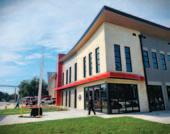
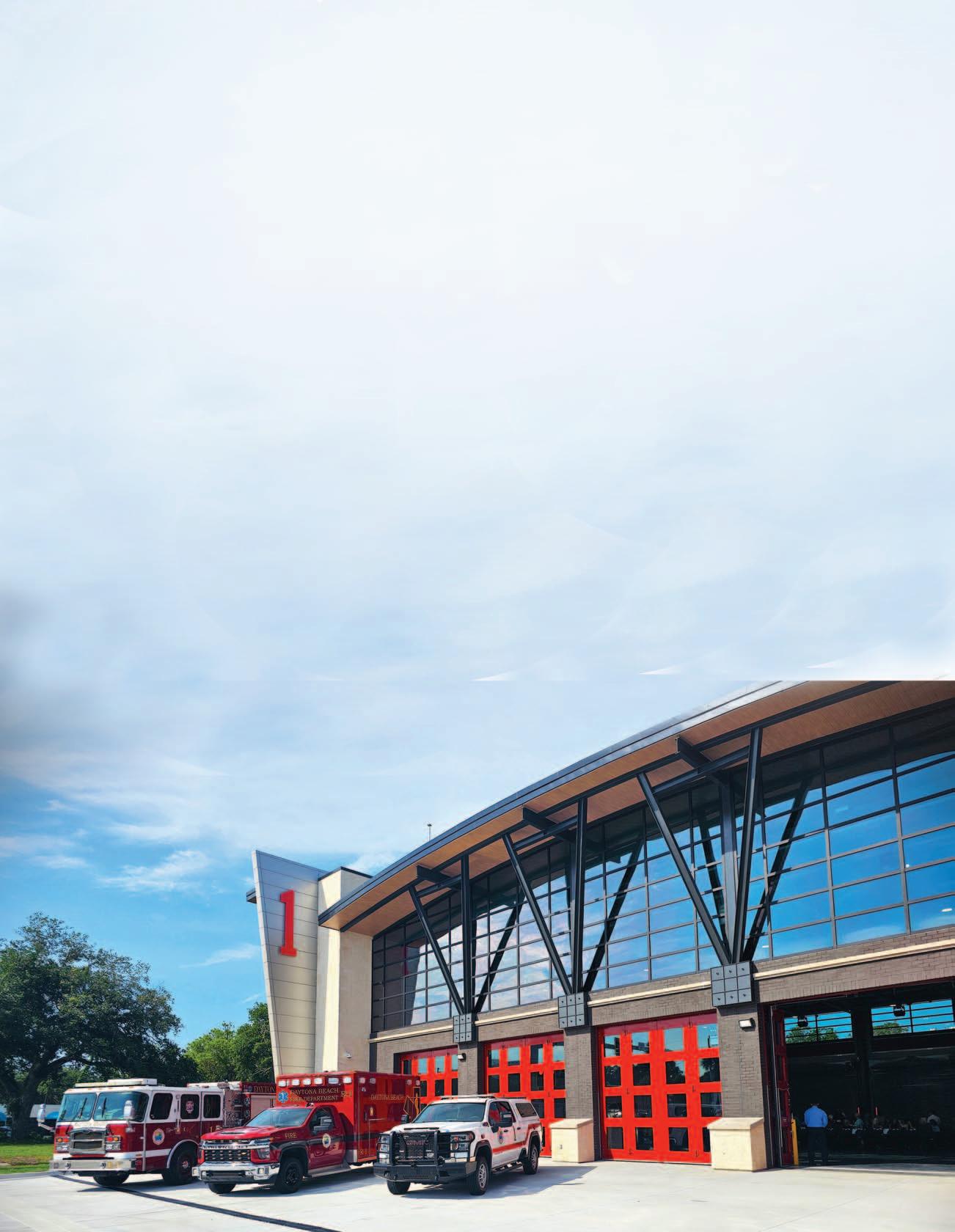
(DBFD) marked the beginning of a new chapter on June 2 when firefighters used extrication tools to cut a ceremonial metal ribbon at the new Fire Station 1 Headquarters. The new state-of-the-art facility replaces historic Fire Station No. 1, the oldest continuously operating fire station in Florida, which has served the community since 1925.
Nearly 400 residents, neighboring public safety departments, and community members joined city and fire department leadership for a Ribbon Cutting Ceremony and grand opening held in the apparatus bay of the brand-new station.
“Today represents an investment not only in a building, but in the firefighters who serve this community and the residents who depend on us every day,” said Fire Chief Dru Driscoll. “This facility provides the tools, training opportunities, and operational capabilities needed to protect Daytona Beach for generations to come while honoring the legacy of those who served before us.”
The new headquarters is a two-story, 31,000-
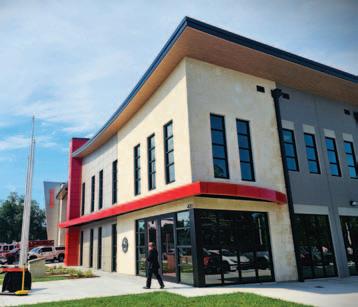
square-foot facility that supports current and future growth of the Daytona Beach Fire Department. The facility includes a community room that seats 90 and doubles as the city’s emergency operations center (EOC) during large scale emergencies.
The community room/EOC sits next to a museum space that houses one of the department’s world-famous Motor Medic motorcycles and the department’s pride and joy, a 1952 Mack Fire Engine called “Rosie” among dozens of historical department artifacts. The second floor of the facility houses the department administration and office of the chief.
Firefighter health and safety were key priorities in the station’s design. Features include upgraded living quarters, modern alerting systems, positive-pressure vestibules that prevent vehicle exhaust from entering occupied areas, and a dedicated decontamination room designed to reduce firefighters’ exposure to harmful contaminant's. Firefighter training features include a gym, training tower with standpipe and multiple technical rescue anchor points, and the opportunity to practice high angle and confined space rescues.
The project took 560 days to complete and is valued at $27.2 million. The former Station?1, located just feet from the Halifax River, flooded repeatedly during hurricanes, often forcing firefighters to relocate. As a result, the project secured significant support from the Florida Department of Environmental Protection’s Resilient Florida Program. Total
state grant funding for the project totaled $15.2 million dollars.
Following the ribbon-cutting ceremony, firefighters gathered as the final alarm sounded at historic Fire Station No. 1 at 2 p.m. on June 2, officially marking the end of more than a century of service from the landmark station.
“Fire Station 1 has been more than just a building, it has been a symbol of service, commitment, and protection for the people of Daytona Beach. Within these walls friendships were formed, lessons were learned, traditions were passed down and countless lives were touched through the acts and dedication of selfless service,” said Volusia County Dispatch in a Volusia County-wide page.
While the transition marks the end of a historic era, the new headquarters will soon become home to the next generation of Daytona Beach firefighters and serve as a cornerstone of emergency response for decades to come.




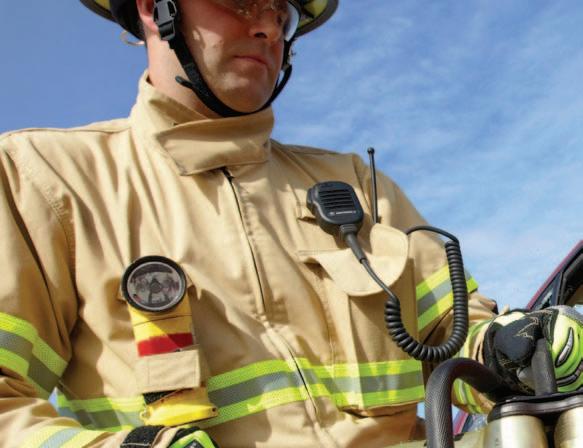


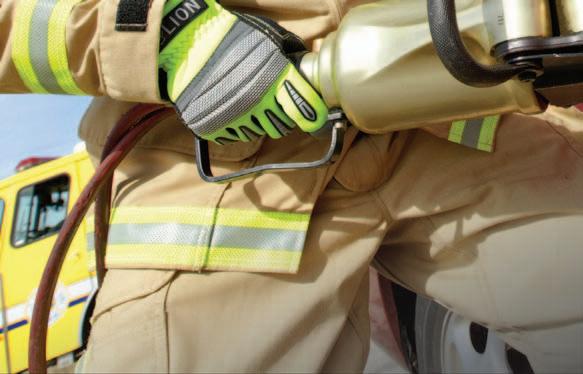
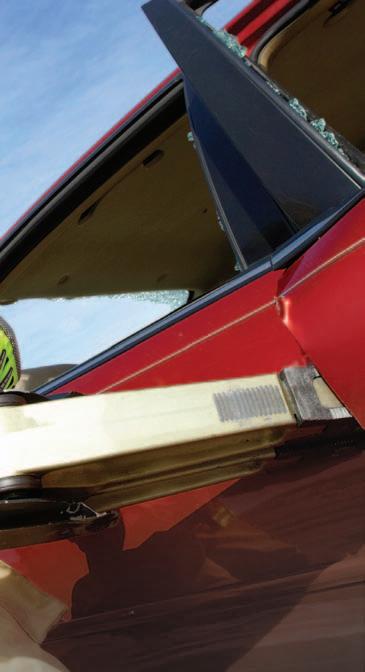

Over the past 18 months, Lynn Haven Fire Rescue has experienced a period of significant growth and transformation that has strengthened operational readiness, expanded professional development opportunities, and deepened the department’s commitment to the community it proudly serves.
emergency response capabilities. One of the most important advancements was the implementation of Battalion Chief and Driver Engineer positions, creating a stronger command structure and enhancing operational effectiveness across all divisions.
as well. Over the past year and a half, the department has signed or renewed five mutual aid agreements with neighboring agencies, strengthening interoperability, resource sharing, and coordinated emergency response capabilities throughout the region.
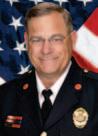
Under the leadership of Fire Chief Mark A. Johnson, a secondgeneration firefighter who began his career in 1999 with the City of Riviera Beach in Palm Beach County, the department underwent an organizational restructuring designed to improve leadership, efficiency, and
The department has also made tremendous progress in advancing medical certification standards among personnel. Today, 25 of the department’s 27 members are Emergency Medical Technician (EMT) certified, dramatically increasing the level of medical care and service Lynn Haven Fire Rescue can provide to citizens and visitors.
Regional cooperation has remained a priority
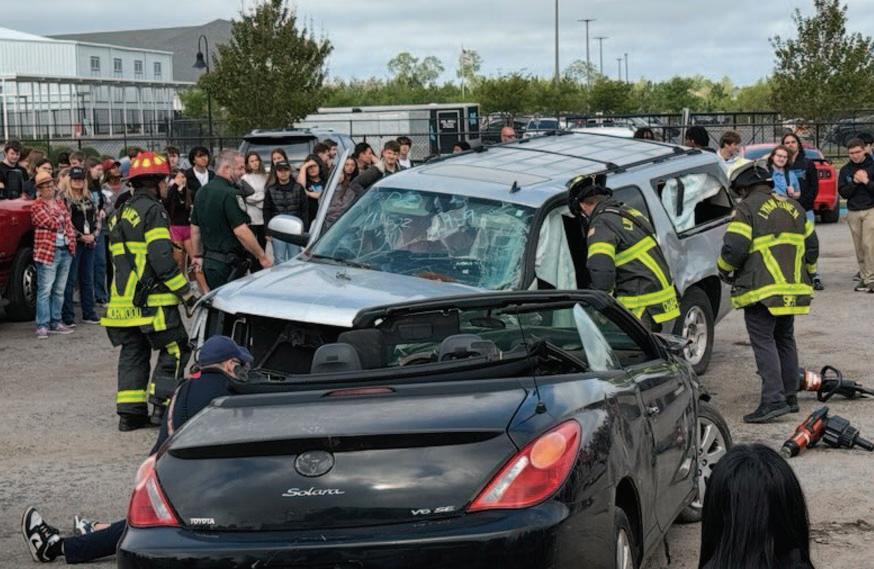
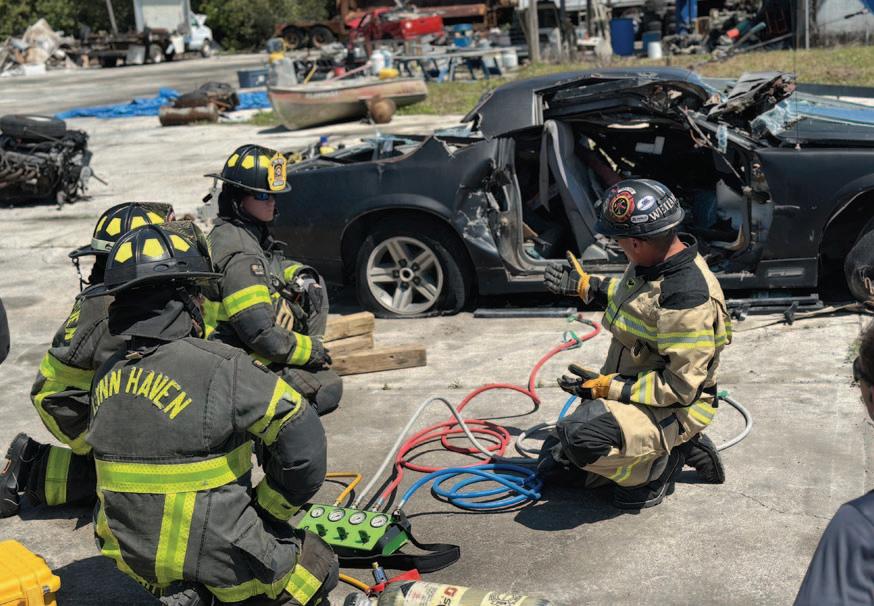
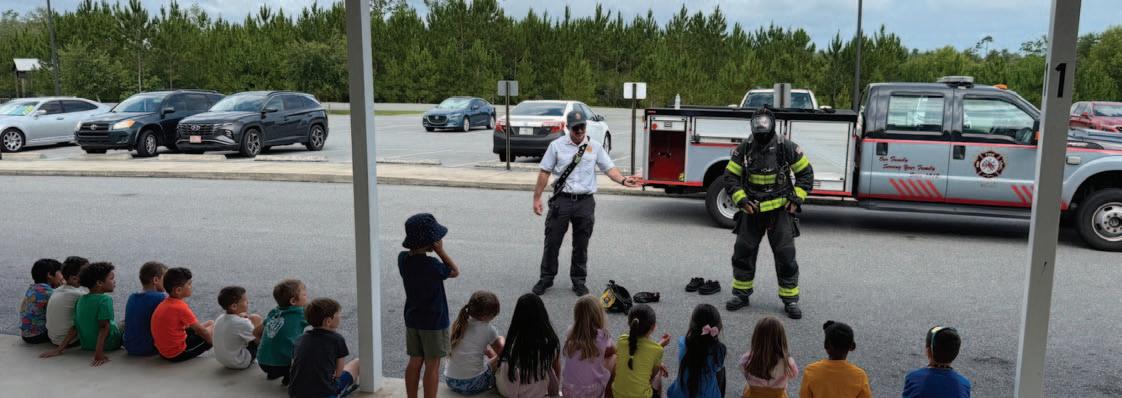
Community engagement efforts have also expanded substantially. Lynn Haven Fire Rescue redesigned its Community Outreach Program and now participates in approximately 20 outreach events annually. These efforts have strengthened relationships with residents, increased public safety education opportunities, and created stronger connections between firefighters and the community they serve.
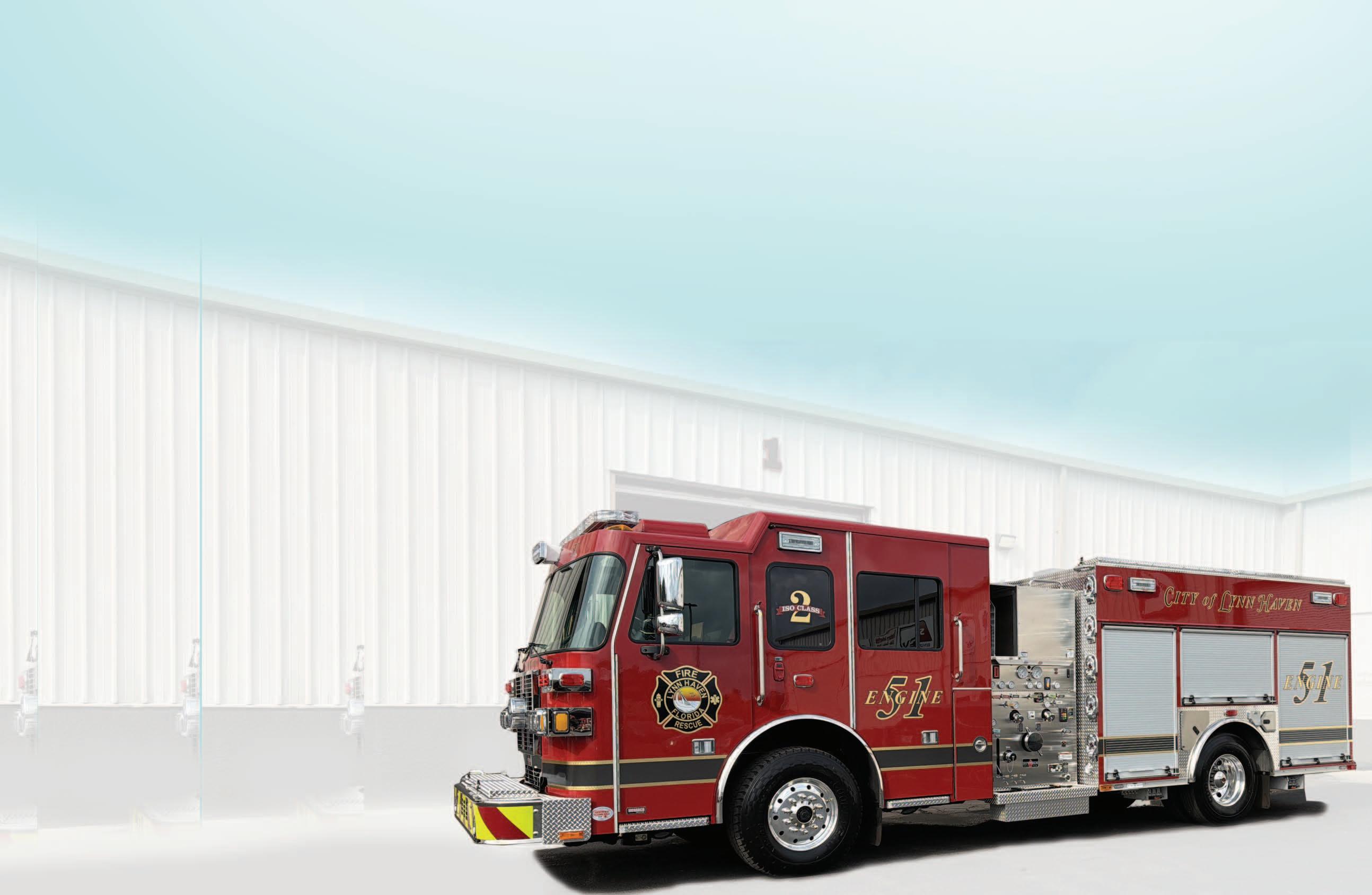
The department has additionally made major investments in apparatus and equipment modernization. All staff vehicles have been replaced, and two new Sutphen fire engines were purchased to replace aging apparatus and outdated equipment. These upgrades help ensure personnel have reliable, modern tools necessary to safely and effectively respond to emergencies.
Another major advancement has been the addition of a dedicated Training Officer responsible for department training and compliance. Under this leadership, Lynn Haven Fire Rescue completed its training tower project and significantly expanded training opportunities through partnerships with
outside agencies. The department also implemented a recruit school and enhanced internal training programs, helping ensure personnel remain highly skilled and prepared for the evolving demands of emergency service.
Professional development has continued to be a key focus throughout this transition. During this period, the department sent its Fire Inspector to the Florida Fire Marshals and Inspectors Association Conference and sent four personnel to FDIC International for advanced fire service education, leadership development, and training opportunities.
Lynn Haven Fire Rescue has also actively pursued grant opportunities aimed at enhancing firefighter safety, emergency
response readiness, and department capabilities. The department applied through the Assistance to Firefighters Grant (AFG) Program to obtain updated firefighting equipment and also applied through the Port Security Grant Program for the acquisition of a new fire boat to strengthen marine firefighting and rescue operations.
In addition, funding assistance was requested through the State of Florida for the design and development of a future fire station to support continued operational growth and the evolving needs of the community.
The department is currently pursuing additional grant opportunities for:
•Wildland firefighting gear
•New extrication equipment
•Ballistic vests
•Firefighter bailout systems
These efforts reflect Lynn Haven Fire Rescue’s ongoing commitment to improving firefighter safety, operational effectiveness, and service to the community.
The accomplishments achieved over the past 18 months are a direct reflection of the dedication, professionalism, and forwardthinking mindset of the members of Lynn Haven Fire Rescue. The progress made during this time has positioned the department for continued growth while further enhancing the level of service provided to the citizens and visitors of Lynn Haven.
By Doug McGlynn
She was over for dinner the other weekend, and as we walked her out, she glanced over at my wife’s car in the driveway and said, “Mom needs an alignment.” My daughter is a mechanic, and over time, I have learned to listen when she says something about a vehicle. She has proven to be good at her craft, but this one I had to challenge. The car was parked in the driveway. She had not driven it. She had not put it on a lift.
“How can you tell?” I asked. She pointed to the tire, as I expected, but I was ready for her to do that! I quickly rebutted, “Look at the wear bar. I am well within the limits.” What I didn’t expect was that one side was wearing unevenly, especially along the inside edge of the front wheel. From where I normally looked, nothing appeared urgent. The car still drove, and my wife never mentioned anything, but in the end, the tire told the truth. The tire carried evidence of misalignment mile after mile, even though the outer wear bars appeared to show no problem to the unsuspecting eye. That is how trained people see things. They read visible signs of silent stress that point to root causes.
Paramedics do the same thing. When a patient calls 911, we listen to the complaint, assess the symptoms, and look for signs. Skin color, breathing, pulse rate, posture, diaphoresis, and weakness. The patient may describe one problem, but the visible signs can point to something deeper. Signs point to symptoms that lead to systems that reveal underlying conditions. Firefighters understand the sense of urgency of certain signs.
On our SCBA, the End of Service Time Indicator (EOSTI) is the low air warning point. Like the tire, it tells the truth before the bottle is empty. The indicator alarm doesn’t care whether your air consumption

rate (ACR) is 90 or 200, or whether the air supply just became a problem. The EOSTI is a matter of life and death, and first responders are trained to pay attention to it. Just like the “wear bar” in the tire, the EOSTI is an indication to swap out before it’s too late.
What about the “wear bars” in the people we love? Are we trained to recognize the moral, mental, and spiritual warning signs in ourselves, our colleagues, and our coworkers before it’s too late? Do we know how to assess for silent stress and hidden wear before someone slides off the roadway? Do we know how to recognize the signs before someone is deep into the IDLH with no margin to exit safely? The signs are often there, but they are not always on the outside edge where ever yone looks. Sometimes the wear is hidden on the inside edge, revealing a misaligned life.
So many of us are living a life out of alignment with God’s plan, purpose, and meaning for our lives, and we wonder how we got so far off track. When it comes to order and alignment, there is a natural phenomenon we all learned in fire school called Entropy. It is a thermodynamic term that means the measure of disorder in a system. As usable energy decreases, entropy (disorder) increases. According to the Second Law of Thermodynamics, entropy in an isolated system does not decrease. It either increases or remains constant, but never lessens on its own.
In plain terms, disorder is the natural drift, not the other way around. This means that for order and stability to exist, it takes additional effort just to maintain a baseline. Without intentional input of energy and effort, disorder will continue to increase on its own. That is true in a physical system, and it is observable in life. This is why hidden wear matters. If the underlying condition remains unaddressed, the
drift continues. A person can still be moving forward and still be drifting into disorder, wearing unevenly out of sight. A leader can still be productive and be pulled off course under tension. A marriage can appear, on the surface, to be functioning while silently bearing stress. An organization can still be growing and still be out of alignment. All of these can appear to mask the problem for a short time. The reality is that the entropic drift of the natural order of things will eventually prevail, unless a greater force of energy is entered into the equation. For many, this added measure falls under the general category of Wellness.
A 2025 McKinsey Future of Wellness survey found that for millennials and Gen Z, wellness has become a daily, personalized practice rather than an occasional activity That helps explain why self-care language is so common among younger people. The 2024 Voices of Gen Z Study reported that only 21% of Gen Z respondents described their mental health as “excellent,” while 24% rated it “fair.” This raises the question of whether the practice of self-care is sufficient. Is it producing true realignment or simply temporar y relief?
That matters because some (not all) of what’s called “self-care & rehab” can become nothing more than “rotating & balancing” the tires. Sticking with the vehicle analogy, this can even make the driver feel as if something has been done to address the problem. But if the vehicle is still out of alignment, the underlying issue remains, and the hidden wear on the inside edge will continue. Simply moving the stress exposure points around is not a real strategy. So it can be with us. The stress and pressure of the “pull to one side” persists, requiring us to compensate by overcorrecting the wheel to move for ward.
Don’t get me wrong, programs that focus on rest, recovery, and rehab matter, but the ones that never address the root cause can become a façade for real improvement. I reflected on how we started this story with my wife’s car, which was her daily driver. Looking back, she likely sensed something was off. The steering wheel may have been slightly off
center. The car may have been pulling to the left all along, but perhaps it wasn’t enough to address. To her, it didn’t feel like an emergency, but the signal was there nonetheless. That is how many of us often live.
We sense something is off and know it should be addressed, but procrastination and complacency make us feel we can deal with it later. Later rarely comes until it is forced upon us as a tire blowout leaves us on the side of the road, or even worse, in a collision. This is where the Fire Point Triangle becomes a useful foundational framework for understanding the person beneath the position. Just as the elements of fuel, heat, and oxygen must align for fire to exist, Heart, Habit, and Attitude must align for formational alignment to exist.
• Heart is the fuel, and the point of all origin. It represents the foundation of where character, conviction, and purpose culminate. It is the heart and soul of a person, and if the point of origin is wrong, nothing downstream will be right. From the heart, all action and intent flow.
• Habit is heat, which represents the repeated behavior and disciplined effort of a person’s actions. Without habit, there is no ignition and no combustion. Without habit, there is no spark, no fire, no progress, no change.
• Attitude is oxygen A positive attitude fuels a person’s energy, growth, and influence, while a negative attitude suppresses it. Just as fire needs oxygen to burn, people need the right attitude to grow and thrive.
Heart, Habit & Attitude do not operate independently or as a transaction. They function as a connected system, and when they are aligned, a transformation occurs, like a fire within each one of us. When they fall out of alignment, it creates internal stress, dimming our internal fire. That dimming is not random. As we mentioned earlier, according to the 2nd Law of Thermodynamics, entropy (disorder) is the natural default. All three must be aligned to narrow the gap between what we do and what we know we ought to do. The gap between your heart’s intention and your mind’s motivation significantly shapes the lens through which you view the world.
• Heart without habit produces desire without action.
•Habit without heart produces effort without purpose.
•Attitude without the other two produces wishful thinking and stagnation.
All three must be present and aligned for stability to exist. Like the vehicle’s steering system, stability is the proper balance of stress and pressure, designed to move in response to opposing forces. That tension keeps the system aligned. Human life works in a similar way. Homeostatic pressure within the body is a great example that keeps blood pressure circulating through the vital organs. This matters for those of us in the fire service because excessive stress can wear us down and wreak havoc on our chronic health. Like a tire, this stress can reach a point where it goes beyond a bad shift, a bad month, or a bad season. Sometimes the blowout within our ranks is more final and permanent.
Firefighter suicide has forced the fire service to look harder at what we missed, what we minimized, and what we failed to see in one another. Florida fire service leaders, behavioral health programs, peer support efforts, and suicide prevention initiatives keep pressing this issue because the cost is real. That work matters, but it shouldn’t be something we turn to as a last resort when the End of Service Time Indicator alarm goes off. We have to do this regularly and watch out for one another continually. A disciplined willingness to notice when someone is wearing unevenly and producing signs of misalignment takes practice. We must commit to looking beyond the wear bar on the tread of those we love and do life with. We must exercise the courage to engage the conversation, to engage the person right in front of us.
Fire Point Formation begins with Heart, Habit, and Attitude, but alignment cannot hold when the heart is fueled by the wrong things. We must be willing to assess what we have given our heart to and what we’ve allowed to define us. Fire Point is not about creating our own fire. It is about stewarding the fire God has already placed within us so it can be fueled from within, without burning out. For that to occur, we must accept God’s authority in our life and faithfully steward the gifts, talents, and purpose entrusted to us. When we tr y to be the masters of our own universe and curators of our own destiny, we
create a void in our identity that achievement, pleasure, status, or distraction cannot fulfill. In doing so, we fall out of alignment with how we were designed. When a person falls out of alignment, a pattern of visible signs emerges. Peace decreases, hope weakens, joy fades, and meaning becomes harder to see. Personal identity and purpose come into question. Thomas Joiner’s work in Why People Die by Suicide reminds us how damaging it can be when a person’s sense of belonging is thwarted, and they begin to perceive themselves as a burden to others. That is entropy at work in the human system. Left alone, habits can turn from virtues to vices, and passion and discipline can give way to depression, disconnection, and a loss of drive. Many of us have seen this pattern in the people we care about. For some of us, we saw the signs. For many of us, we knew something was off. For me, I thought I would reach out when the timing was right, not realizing I had run out of time, and it was too late to make a difference.
Don’t let that be your story.
Doug McGlynn is with Palm Beach County Fire Rescue and is a 30-year veteran of the fire service. Doug is an EFO from the National Fire Academy and obtained his Chief Fire Officer designation from the Center for Public Safety Excellence. He holds a Master’s in Organizational Leadership from Palm Beach Atlantic University, a Bachelor’s in Public Administration from Barr y University, and an AS Degree in Fire Science from Palm Beach State.
Chief McGlynn is a graduate of both the Emergency Services Leadership Institute (ESLI) of the FFCA and the Fire Service Executive Development Institute (FSEDI) of the IAFC. Doug also serves as the Section Chair of the Executive Leadership Development and Resources Section for both the Florida Fire Chiefs Association and the Fire Chiefs Association of Palm Beach County.
By Rob Herrin, MSFES/DM, Public Safety Information Section Chief, Hillsborough County Fire Rescue
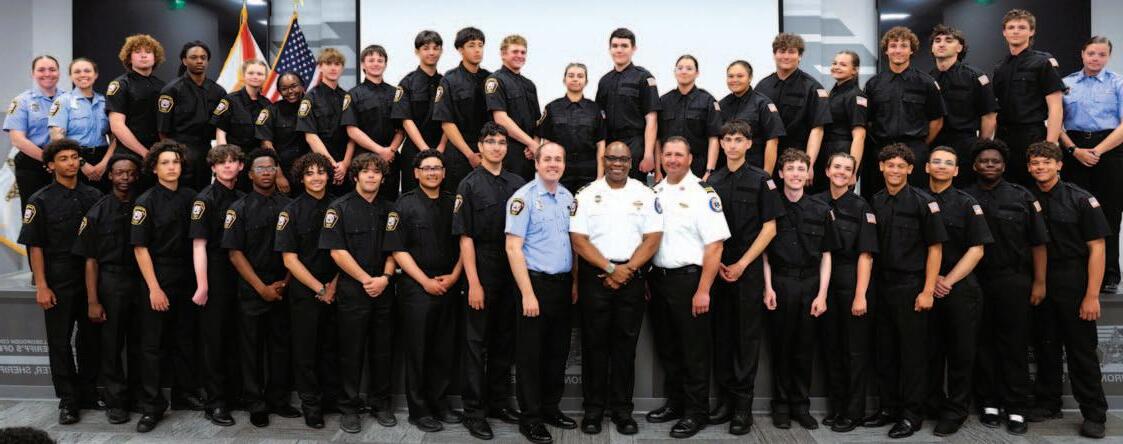
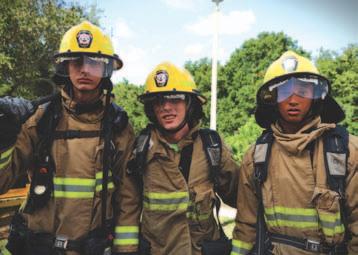
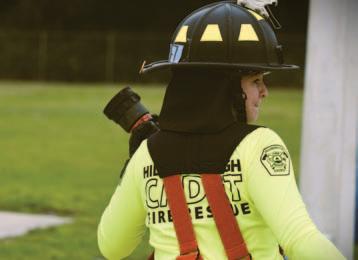
From June 8–18, the Hillsborough County Fire Rescue Foundation’s 2026 Alan D. Anderson Summer Youth Fire Academy provided local students with an immersive introduction to careers in firefighting and emergency medical services.
Hosted at Hillsborough County Fire Rescue Public Safety Operations Complex, the free two-week program welcomed students ages 14 to 18 from across Hillsborough County Through a combination of classroom instruction and hands-on training, participants gained firsthand insight into the responsibilities, challenges, and rewards of serving as a first responder.
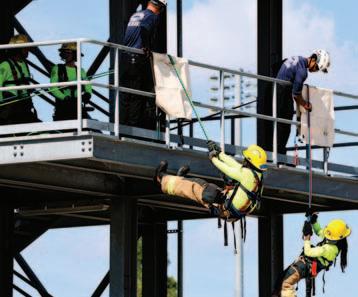
The academy curriculum included fireground operations, fire behavior, ropes and knots, CPR and first aid, emergency dispatch, water safety, public education, and the history of the fire service. Students also learned how to properly wear firefighting bunker gear and were introduced to many of
the tools and equipment used by firefighters and paramedics.
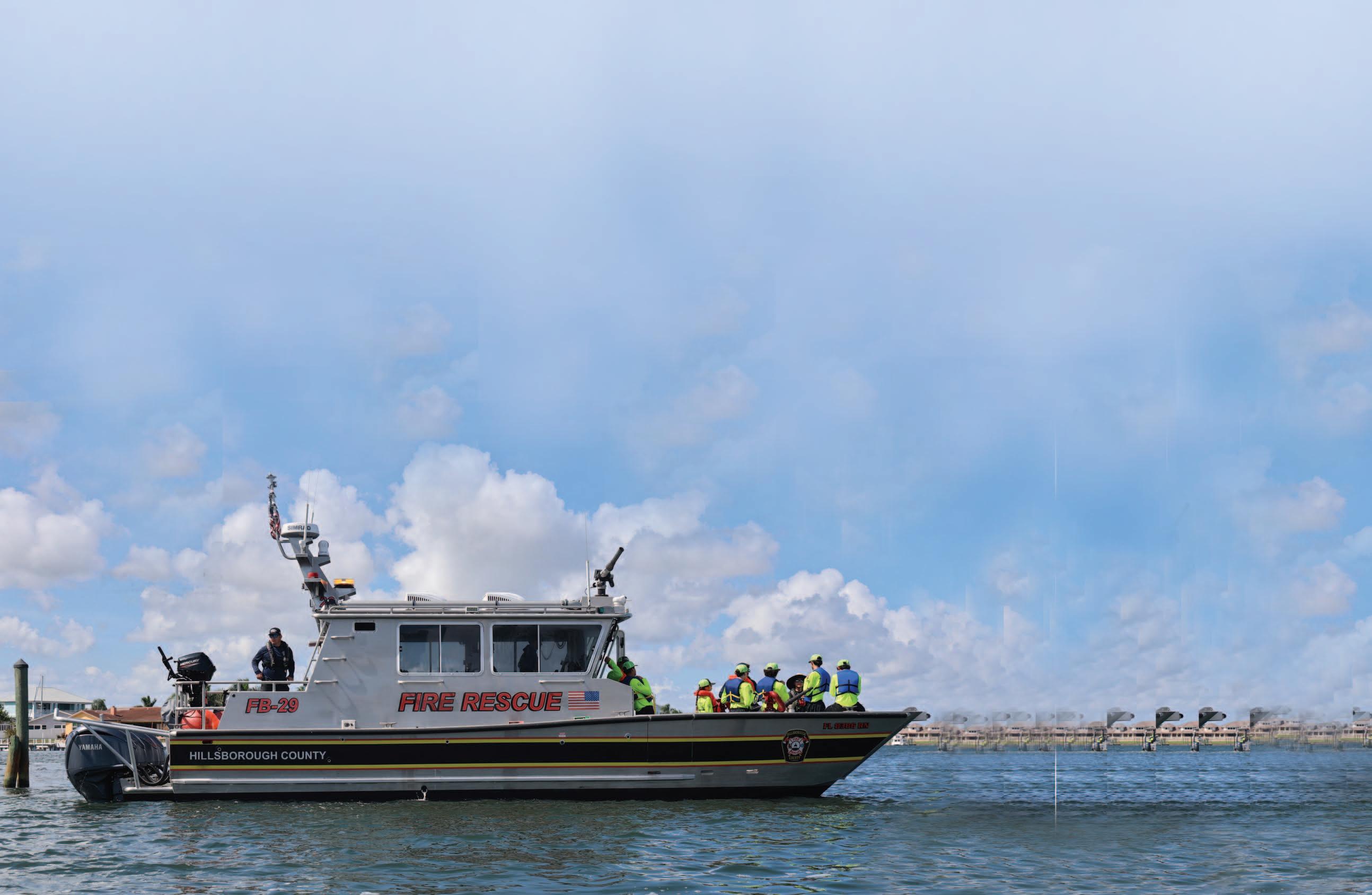
Hands-on experiences were a cornerstone of the program. Participants climbed a 100-foot aerial ladder, practiced search-and-rescue techniques, explored vehicle extrication operations, and participated in marine rescue demonstrations. These activities provided students with a realistic understanding of the physical and mental demands of emergency response while helping build confidence, teamwork, and leadership skills.
Beyond emergency services training, the academy emphasized communication, problemsolving, discipline, and collaboration. Students worked together throughout the program, learning valuable life skills that will benefit them regardless of the career paths they ultimately choose.
The academy concluded with a graduation ceremony recognizing the students’ accomplishments and commitment throughout the two-week experience.
As fire departments continue to focus on recruitment and community engagement, youth programs such as the Summer Youth Fire Academy play an important role in introducing the next generation to public safety careers.
Whether participants eventually pursue careers in fire rescue, emergency medicine, law enforcement, or another profession, they leave with a greater appreciation for service, leadership, and giving back to their communities.
For Hillsborough County Fire Rescue, the Summer Youth Fire Academy is more than a summer program; it’s an investment in the future of the fire service and the communities we proudly serve.
By Bruce Moeller, PhD. Executive Director, Florida Center for EMS
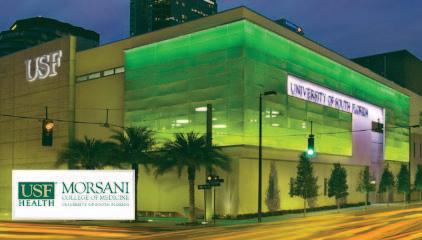
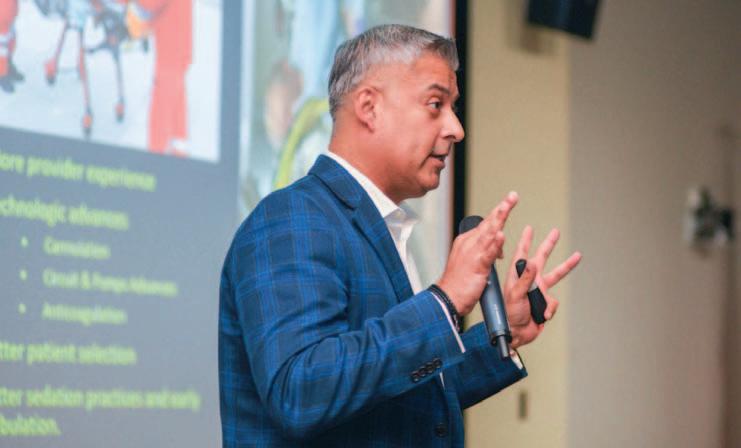
In October 2024, Florida quietly gained a new statewide asset built specifically for the people who deliver emergency medical care every day: the Florida Center for EMS, located in the Morsani College of Medicine at the University of South Florida. While the Center is new, its purpose is straightforward and long overdue—help Florida’s EMS and fire-rescue leaders make better decisions with better information, stronger training tools, and practical innovations that can actually be implemented in the field.
For decades, Florida’s EMS system has been asked to do more with less: rising call volume, longer hospital turnaround times, increasing clinical complexity, tighter labor markets, and community expectations that keep climbing. These pressures affect every type of provider model—third service, private, hospital-based, volunteer, and fire-based. The Center was created to serve all of them, with a specific emphasis on helping agencies translate data and research into operational improvements, workforce strategies, and better patient outcomes.
Florida’s EMS ecosystem is diverse, but the challenges are shared. Recruitment and retention remain persistent headwinds. Training demands are higher than ever. And the “future state” of EMS—community paramedicine, alternate destination, telehealth integration, mobile integrated health, and smarter deployment—requires leadership capacity and a workforce prepared to evolve.
That’s where the Center comes in.
Designed as a statewide resource, the Florida Center for EMS supports agencies large and small, rural and urban, fire-based and nonfire-based. It’s not a membership organization, not a vendor, and not a regulatory body. Think of it as a public-facing, applied-research and leadership-development “backbone” that helps the whole system move forward.
For fire chiefs and command staff, the value proposition is clear: the Center provides tools, evidence, and training resources that can support budget narratives, staffing and deployment decisions, policy advocacy, quality improvement initiatives, and leadership development—without requiring an agency to build a research shop in-house.
From the beginning, the Center’s work has been organized around three pillars:
1) Research that is practical, Floridarelevant, and usable.
This isn’t academic research for its own sake. The Center focuses on applied work that leaders can use—workforce analysis, system performance, community need, and operational policy. The goal is to answer the kinds of questions that chiefs and EMS directors wrestle with:
• What does the workforce pipeline look like in my region?
• What factors are driving turnover, and what interventions show promise?
• How will population growth and aging change demand over the next decade?
• Where are the biggest operational bottlenecks—and what are realistic options?
2) Education designed for leadership. The Center is building and curating education for the realities of modern EMS leadership: workforce planning, data literacy, quality management, policy development, and innovation implementation. Importantly, the Center is not tr ying to replace local training programs or state credentialing. Instead, it’s filling a persistent gap— accessible, leadership-oriented learning for mid-level to senior personnel, or those aspiring to those positions, who will shape the agency’s future.
3) Innovation that is grounded in operations.
Innovation in EMS isn’t about chasing shiny objects. It’s about improving response reliability, clinical outcomes, patient navigation, and system sustainability. The Center works to identify, evaluate, and share emerging practices—especially those that can be piloted, measured, and scaled across Florida.
The Resource Library: reports and policy briefs you can actually use
One of the most immediately useful offerings is the Center’s growing resource library. Agencies can access research reports focused on workforce and other operational topics and use them to inform internal planning, public messaging, grant applications, and stakeholder engagement.
A key feature: for major topics, the Center also produces short policy briefs—10 pages or less—written for decision-makers. These
briefs are designed to be practical: clear problem statements, what the evidence suggests, Florida context, and policy or operational options that can be adapted locally. In a world where leaders don’t have time to read a 60-page technical report before tomorrow’s budget meeting, these concise briefs matter.
For chiefs preparing budget narratives or advocating for staffing, training resources, or system changes, the library and briefs can provide credible, consistent language—and a stronger evidence base—than any one agency could easily generate alone.
A free LMS for mid-level to senior leaders
Another standout offering is the Center’s free learning management system (LMS), built around topics relevant to EMS leadership. The emphasis is not on entry-level clinical content. Instead, the LMS focuses on the areas where agencies often struggle to find consistent, high-quality training:
• Workforce strategy and retention approaches
• Leadership development for company officers and command staff
• Quality improvement frameworks that fit EMS realities
• Data-informed decision-making (without needing to be a statistician)
• Change management and implementation planning
• Policy and reimbursement basics as they impact operations
For many agencies—especially those with limited training staff—leadership development becomes “whatever we can squeeze in.” A free, leadership-focused LMS provides a scalable way to standardize
learning and build shared vocabulary across divisions, battalions, and shifts.
Other items Florida fire-rescue leaders may care about
Beyond the headline offerings, there are several additional areas where the Center’s work can directly support fire-based EMS agencies:
Workforce intelligence and trend tracking.
Florida is growing, aging, and changing— fast. That means call patterns, clinical acuity, and operational pressure will change too. The Center’s workforce-focused research can help leaders anticipate what’s coming, rather than simply reacting to the latest staffing crisis.
Support for data quality and perfor mance improvement.
Better data leads to better decisions— deployment, training priorities, and community programs. Agencies that improve the quality of their EMS data are in a stronger position to defend budgets, justify staffing models, identify bottlenecks (like turnaround delays), and demonstrate impact.
Convening and shared learning across the state.
Some of the most valuable “innovation” is simply helping agencies learn from one another—what worked, what didn’t, and what
can be replicated. A statewide center can help curate lessons learned and accelerate adoption of proven practices, especially when agencies face similar constraints.
A neutral, credible partner for system conversations.
In complex systems, it helps to have an objective resource that can translate evidence into options without being tied to one provider model. That neutrality can be useful when agencies are engaging hospitals, local government, regional partners, or state-level stakeholders.
How to engage—and how chiefs can use the Center immediately
The Center exists to be used. Chiefs and EMS leaders don’t need a special invitation to benefit. A practical way to start is to:
1. Explore the resource library and identify one report or policy brief that supports a current priority (workforce, operations, or policy).
2. Assign a small leadership cohort (battalion chiefs, EMS captains, training officers, QI leads) to complete one LMS module and bring back takeaways for implementation.
3. Use the briefs to strengthen internal alignment—shared language and shared understanding improves decision-making speed and consistency
4. Share emerging needs—the Center’s future work should reflect real operational priorities from the field.
Florida’s EMS future will be shaped by the leaders reading this magazine—the ones balancing budgets, staffing, per formance, politics, and patient care every day. The Florida Center for EMS was created to help. It’s new (launched October 2024), but the mission is ambitious: build statewide capacity for smarter EMS policy, stronger leadership development, and practical innovation that improves operations where it counts—on the street, at the bedside, and across the system.
In short: it’s a statewide tool for Florida’s EMS and fire-rescue community. The more we use it, the more valuable it becomes.
For more information, click here
“You’ll learn from them – if you want to. Just as someday, if you have something to offer, someone will learn something from you. It’s a beautiful reciprocal arrangement. And it isn’t education. It’s history. It’s poetry.”
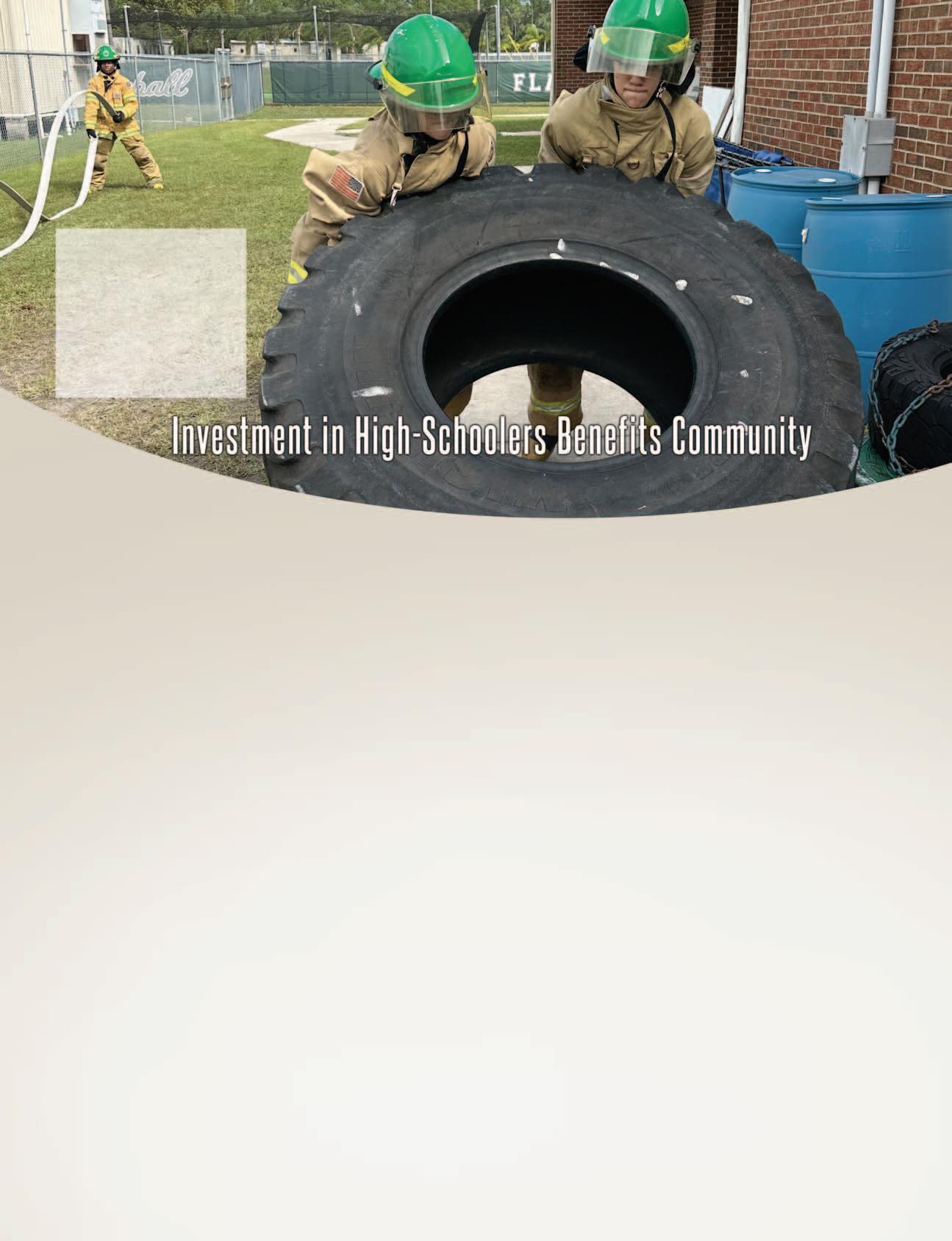
Everyone who has been through it knows the challenge of navigating high school. There is the risk of lasting consequences and implications of – whether veering off or moving full-throttle – choosing a career path, higher education, or both. Getting good advice and positive direction during this overwhelming stretch of near adulthood can often set the stage for the entirety of life.
Flagler County Fire Rescue and Flagler Schools in 2016 launched the “Fire Leadership Academy” at Flagler-Palm Coast High School with the vision that, upon graduation, students who enter the program in their freshman year would be quickly employable – pending official Firefighter/EMT certification.
“More than just becoming employable though, the program sought to help these students become successful,” said Fire Chief Michael Tucker. “The program began with 50 students and ultimately graduated 10 students in 2019, with seven of them completing their summer training and testing for the Florida Firefighter Minimum Standards exam. Having the patience to wait for the proverbial fruits of four years labor is not all teenagers’ strength.”
Nonetheless, these seven graduates were set to begin firefighting careers anywhere within the State of Florida. This springboard provided them with something greater than the ability to make a living – it gave them a chance to make a difference in the lives of community members they serve.
Between 2019 and 2020 graduates of the FPC Fire Leadership, six began their careers
with Flagler County Fire Rescue including Jaevon Jones, Beau Kruitoff, and Tyler Allesee. One additional student remains a volunteer with FCFR.
“All six have earned certification as paramedics, taking on greater roles and responsibilities so they can have an even larger, positive impact on the community where they grew up,” Tucker said. “Some are providing service to adults who held them when they were babies and watched them grow into adolescents, and young adults.”
Jones, Kruitoff, and Allesee have been promoted to the rank of Rescue Supervisor. Additionally, Kruitoff and Allesee have tested, been approved, and sit on the FCFR promotional list for Lieutenant as spots become available.
“I look forward to having the opportunity to lead as Flagler County Fire Rescue grows,” Allesee said. “It’s difficult work, but it’s very rewarding. You can never learn too much about the job.”
His graduating class cohorts agree.
“When I was in high school, I saw this on the elective sheet and thought I’d try it out,” Jones said. “The more I got into it, the better I liked it. So, I stuck with it.”
What is the most rewarding for Jones is to see one his patients “on the outside.”
“Even if I don’t interact with them, it feels really good inside to see them out somewhere and know that they are doing much better than when I was treating and transporting them,” he said.
Beyond career accomplishments, they are buying houses, getting married, raising children – maintaining a livelihood and serving their community. The Flagler-Palm Coast Fire Leadership Academy gives students the skills they need for a successful career, and it allowed them to begin their career journey without debt.
“These young professionals made the decision to stay in the community where they grew up,” Tucker said. “The story doesn’t end with these career-driven Fire Leadership Academy graduates. FCFR has continued to hire graduates from this program, with six additional team members who are now on the path to very successful careers.”
All have gained their paramedic certifications. One is dutifully serving the United States as a member of the Army Reserve. Other students of the Fire Leadership program have gone on to work not just for FCFR, but also Palm Coast Fire Department, Jacksonville Fire Department, and Tallahassee Fire Department to name a few.
“The success of this program goes beyond creating a recruitment tool to meet the needs of the Flagler County Fire Rescue department,” Tucker said. “An investment in these local high schoolers has resulted in their reinvestment in their community. Through the vision of the program, and their long-term dedication and focus to the place they’ve called home for years, a real difference is being made in Flagler County.”
It’s poetry.
By Doreen Overstreet, Public Safety Information & Education Officer, Seminole County Fire Department
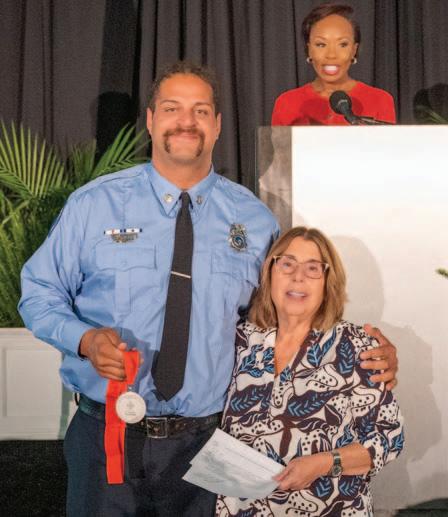
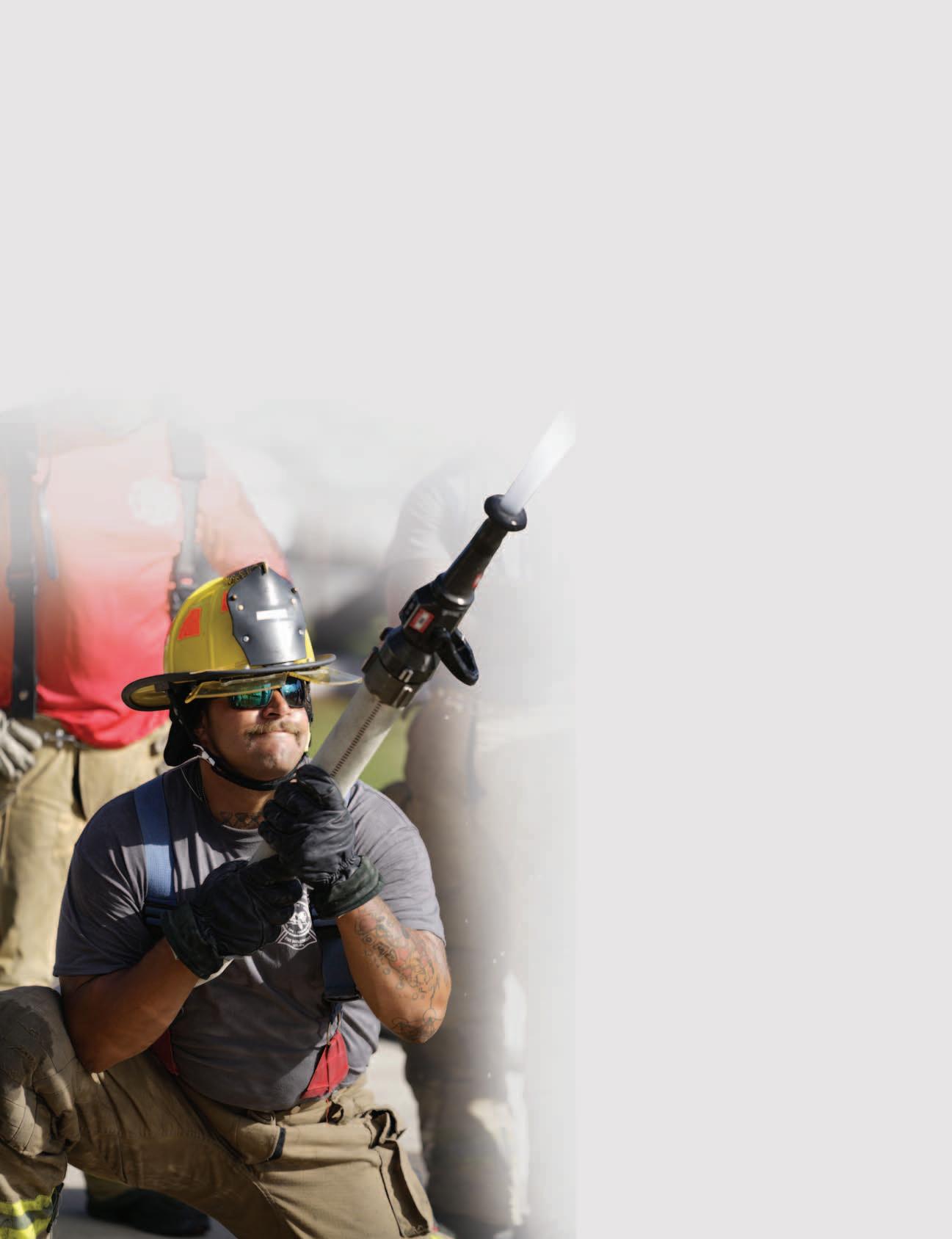
The American Red Cross Central Florida Coast Chapter recently honored Seminole County Fire Department Firefighter/Paramedic Chris Martin during its 2nd Annual Great Orlando Salute to Heroes Breakfast.
Martin, a former UCF and NFL player, was recognized with a First Responder Hero Award for his courage, compassion and dedication to pediatric drowning prevention efforts that embody the mission of the American Red Cross.

He earned the recognition for his commitment to drowning prevention education and pool safety initiatives throughout Seminole County following the tragic drowning of his son, Gunner Martin, on
April 6, 2016. The loss inspired Martin to pursue a career in the fire service in 2022, and he recently became a paramedic. Through his work, he remains dedicated to helping prevent similar tragedies in the community and has responded to local drowning incidents that resulted in lives being saved.
Martin and his wife, Christina, have played an instrumental role in supporting the Seminole County Fire Department’s drowning prevention initiatives through the Gunner Martin Foundation. Their efforts include helping fund and distribute free door alarms, educating residents about layers of protection against pediatric drownings, and assisting in securing a national drowning prevention grant to expand these lifesaving programs.“Protecting lives through prevention and education is a critical part of the Seminole County Fire Department’s mission,” said Seminole County Commission Chairman Andria Herr. “Chris Martin’s leadership and advocacy for drowning prevention have helped strengthen awareness throughout our community and support efforts to keep families safe. We are proud to see both his service and the department’s ongoing commitment to public safety recognized by the American Red Cross.”
“We are extremely thankful for our partnership with the Red Cross and for Firefighter/Paramedic Chris Martin, who serves as a strong advocate in our community for drowning prevention education,” said Seminole County Fire Chief Matt Kinley. “The Martin family has endured tremendous pain and loss, yet Chris continues to turn that tragedy into purpose by helping protect others. In my opinion, he is the definition of bravery and a tremendous asset to our department and community.”
Martin is also a past recipient of Florida Governor Ron DeSantis’ Florida Heroes Award and the Children’s Safety Village First Responder Award for Seminole County.
By Elyssa Walterson, Communications Assistant, Orange County Fire Rescue
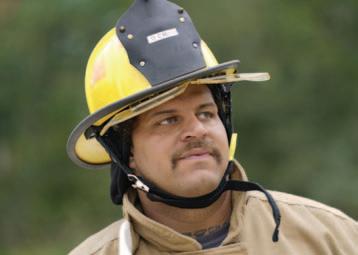
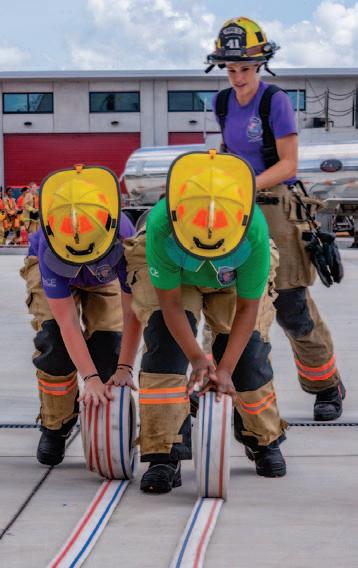
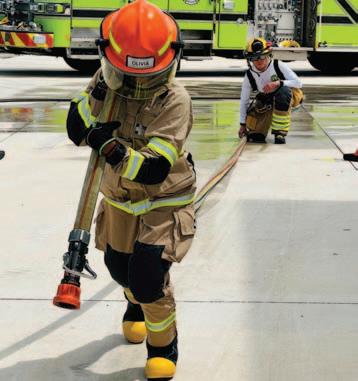
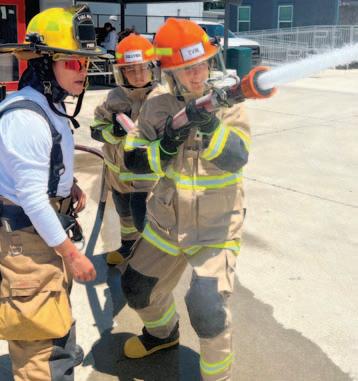
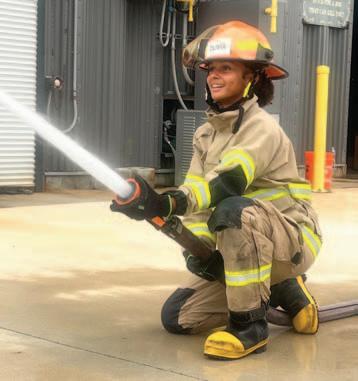
In early June, over two dozen girls aged 14-18 gathered at Orange County Fire Rescue’s Training Facility for their 2nd annual IGNITE Girl’s Fire Camp. These girls had the opportunity to learn and participate in real training exercises, such as victim search and rescue, aerial rescue with a ladder truck, hazmat leak mitigation, fire extinguisher operation, a relay with bucket brigades and charged hoses, and more. They ended the weekend with a competition using all the skills they learned called “Battle of the Squads”, where their families and staff got to cheer them on. IGNITE also hosted “VIPs”, various female professionals from across Orange County who participated in
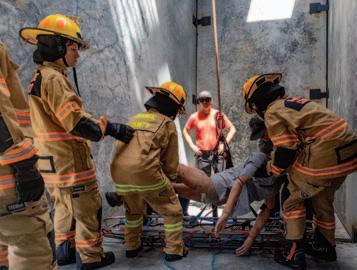
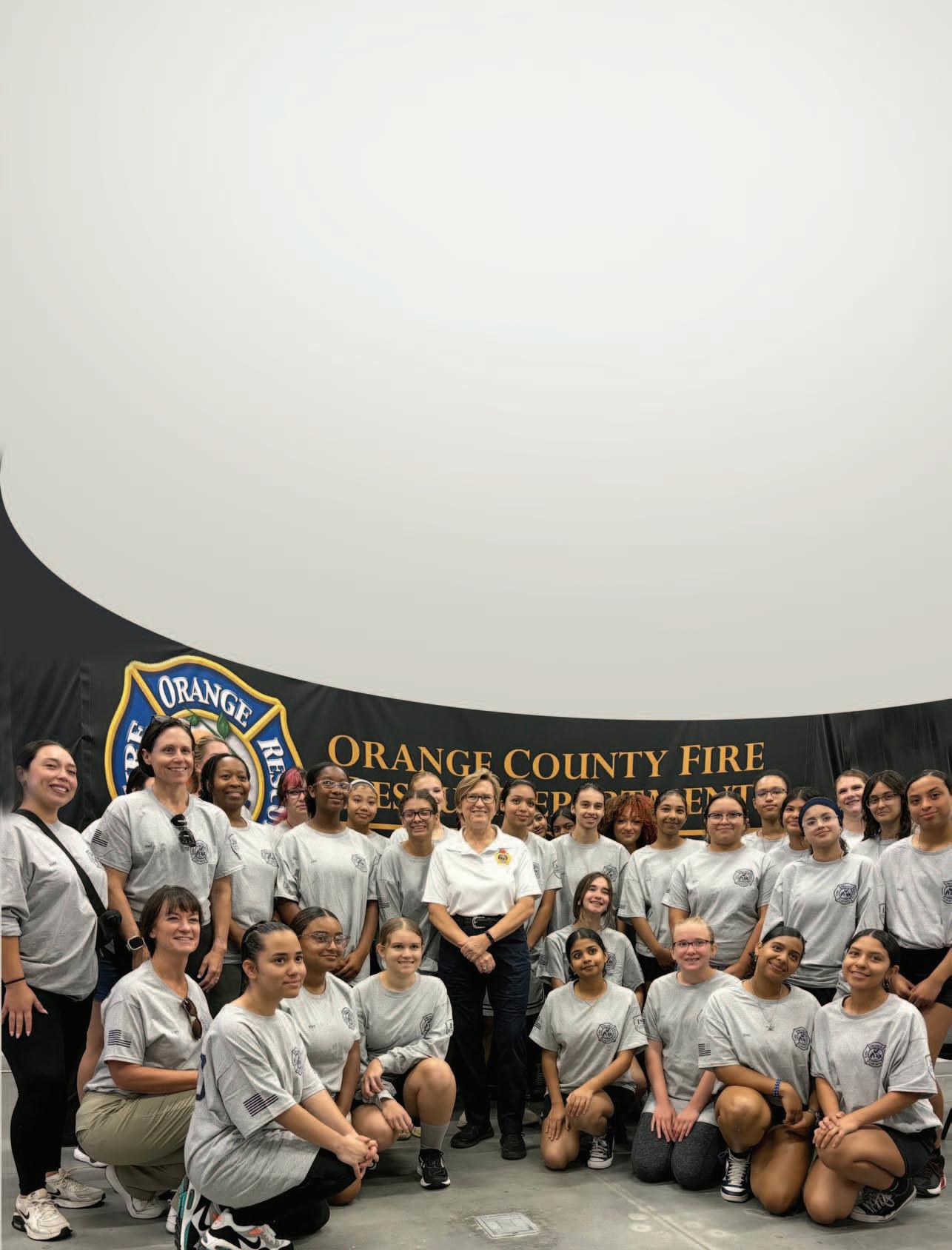
the exercises and got to connect with the young campers.
“The ages of 14 to 18 are a pivotal stage in life,” says Division Chief of Operations Kimberly Buffkin. “It’s a time when young people are beginning to explore their interests and determine the paths they want to pursue.”
The mission of IGNITE is to inspire young women to chase after their goals, whether that be a career in the fire service or otherwise, and allow them to see that they are capable of doing more than they ever thought they could. They learned from women within Orange County Fire Rescue (OCFRD) the practical skills of what it takes to be a firefighter, as well as the
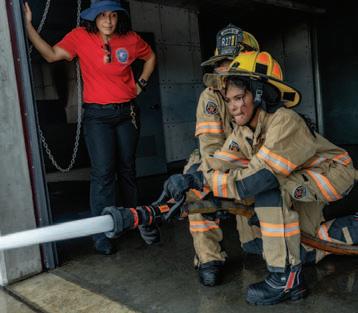
inner strength to overcome obstacles and pursue success. OCFRD is proud to have a second year of IGNITE under their belt, and hopes to continue this new tradition for years to come.
By Nikki McRostie, Executive Assistant, Palm Beach Gardens Fire Rescue
Now in its second year, Palm Beach Gardens Fire Rescue’s Girls on Fire Camp returned this summer with a clear mission: to push limits, build confidence, and prove that women belong in the fire service. Free to attend and open to girls ages 13 to 17, the program took that mission a step further this year, placing leadership at its center and giving last year’s campers the opportunity to lead the next.
Over two weeks, that mission came to life.
The program is led entirely by an all-female fire service team, from fire medics to a division chief, who run every aspect of the camp and give participants a firsthand look at what a career in the fire service can look like.
The first week turned 12 returning campers into leaders. They guided evolutions, reinforced skills,
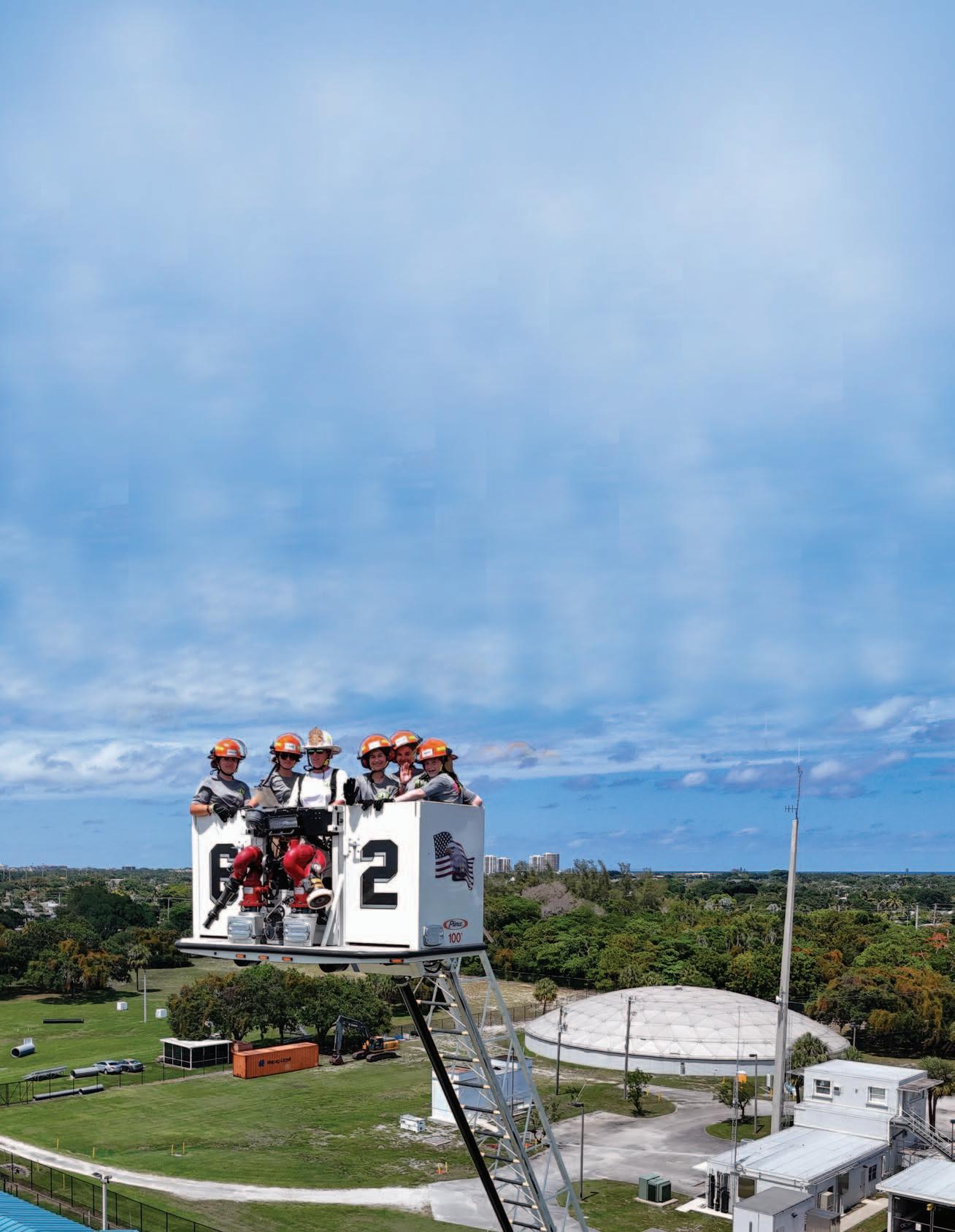
and set the standard for discipline and teamwork, going a step further than what they had learned just a year before. This year introduced a power ful new element: five of those leaders advanced into the second week as official camp leaders, helping guide and mentor incoming campers. For the first time, the camp was not taught by firefighters alone; it was also led, in part, by the girls themselves.
The second week immersed new campers in a high-expectation environment built to mirror the job: radio communication drills, hoseline operations, search and rescue, water safety, and equipment familiarization. Every drill demanded communication, focus, and trust under pressure. At each station, camp leaders worked alongside instructors, serving as proof of where the program can take you.
The training was designed to reflect
real emergency response, where outcomes depend on clear thinking and complete teamwork. Instructors guided every step, but the lesson was unmistakable: growth comes from doing, not watching. As Division Chief Sandi Ladewski, who helps lead the program, puts it, the most rewarding part is watching the girls “overcome fears that they think they can’t do.”
By the closing ceremony, the change was undeniable. Hesitation had been replaced with confidence. Individuals had become a unit. Some were already asking not if they could come back, but how they could lead.
For new campers, Girls on Fire is still an introduction to the fire service: a first, hands-on look at the gear, the drills, and the demands of the job. But it has grown into something more: a proving ground that turns campers into leaders and leaders into mentors for the girls who come next.
By Mackenzie McClintock, Public Information Officer, South Walton Fire District
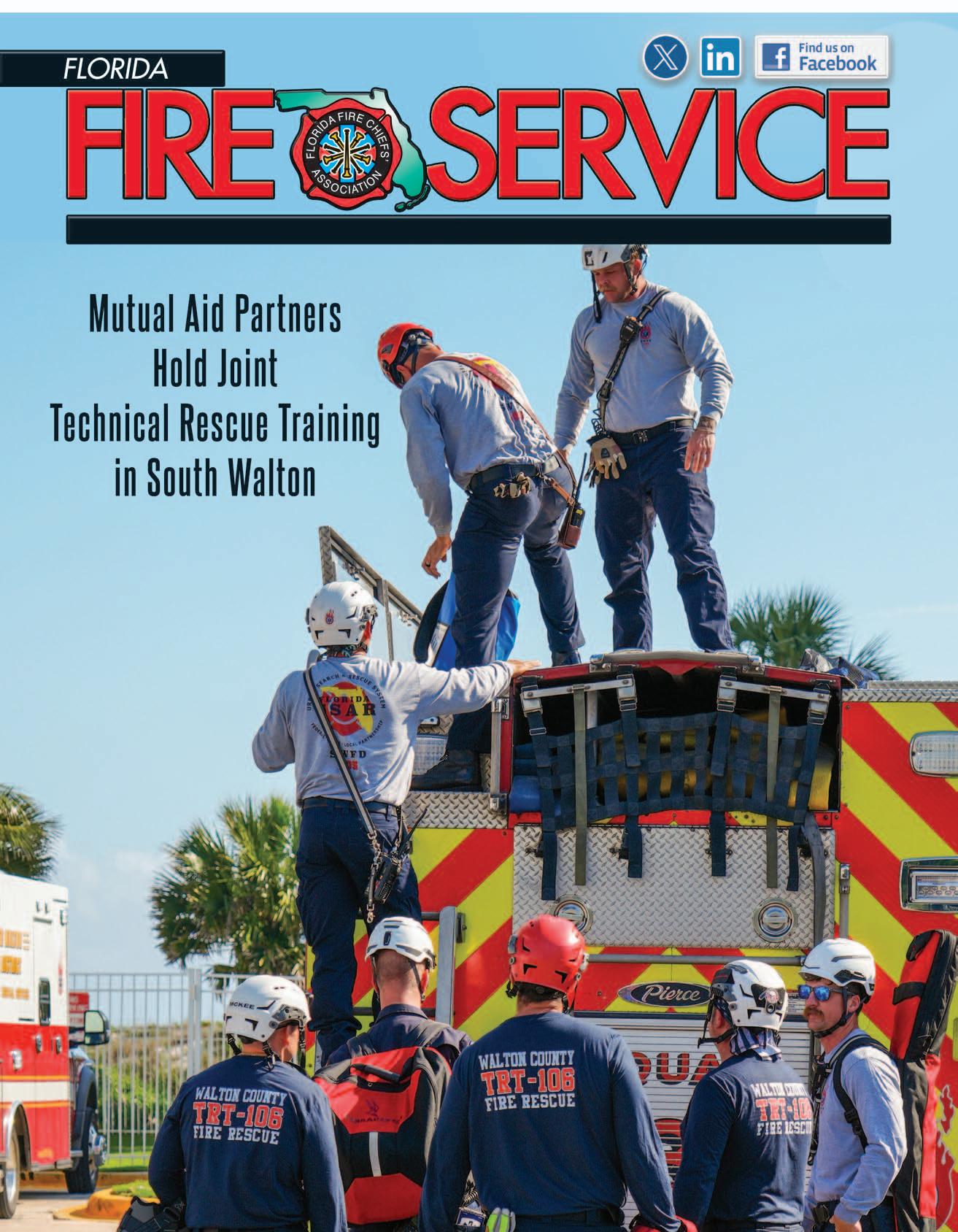
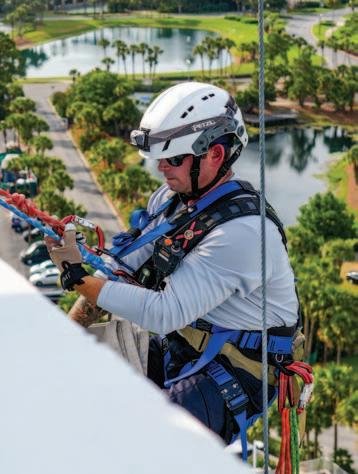
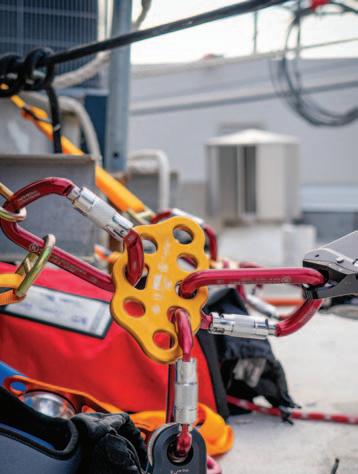
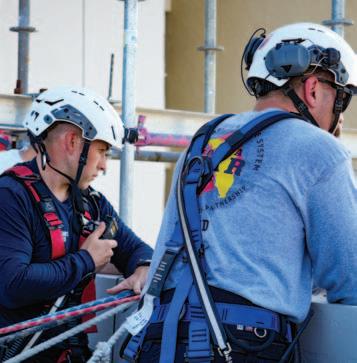
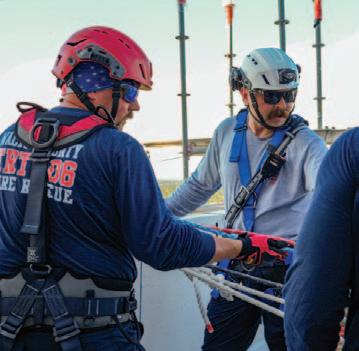
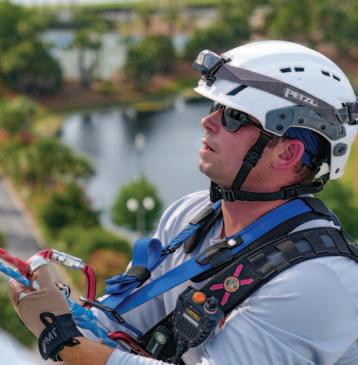
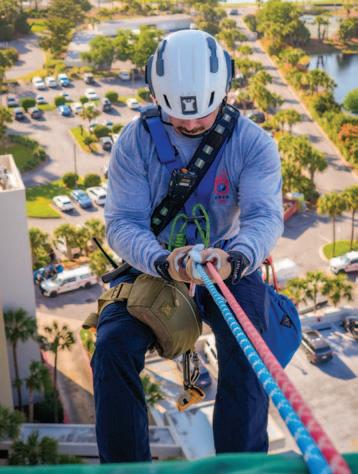
High-angle rescues are among the most technically demanding incidents firefighters encounter, often requiring specialized equipment, advanced rope skills, and extensive coordination between multiple rescuers operating in hazardous environments.
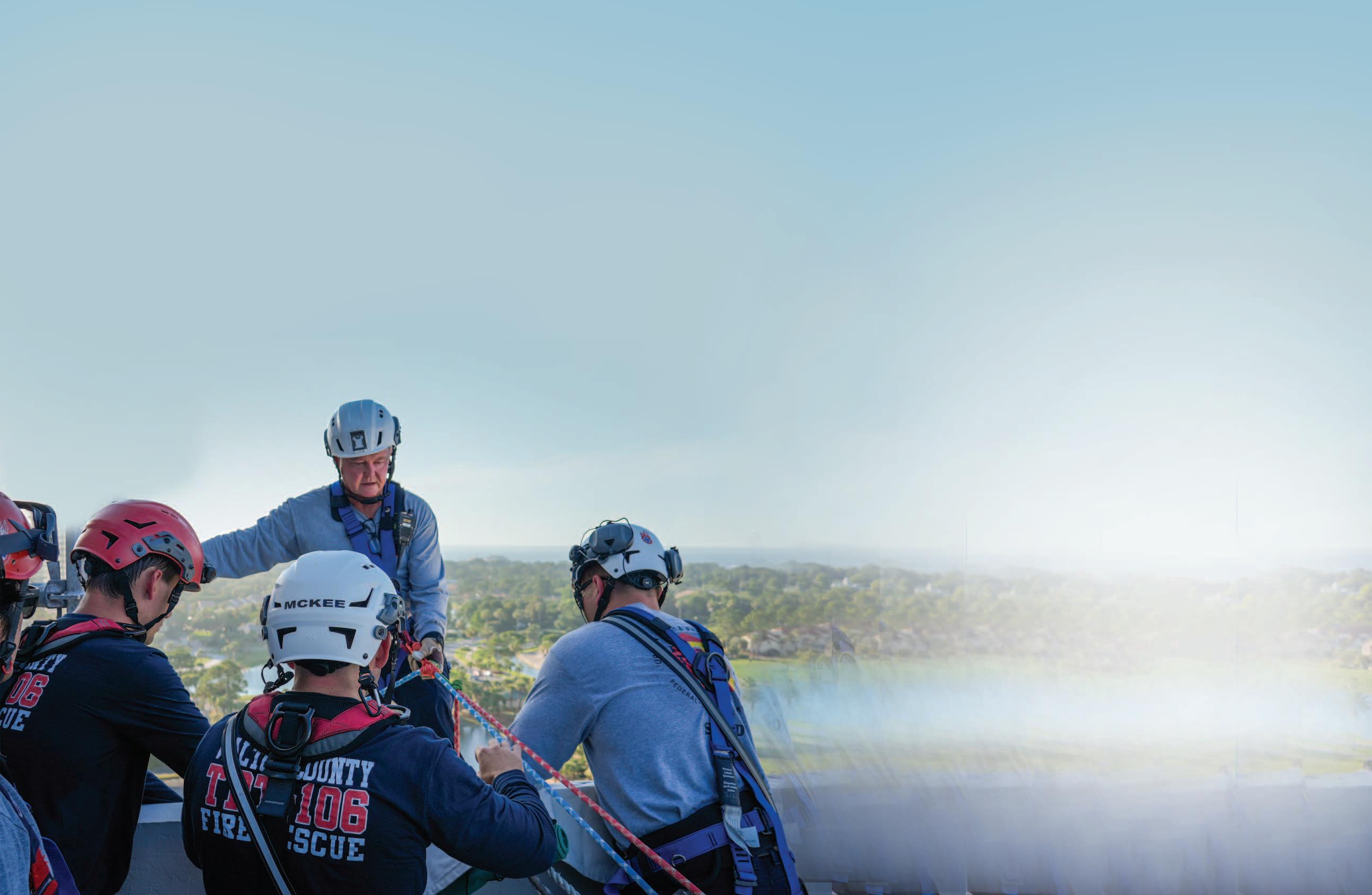
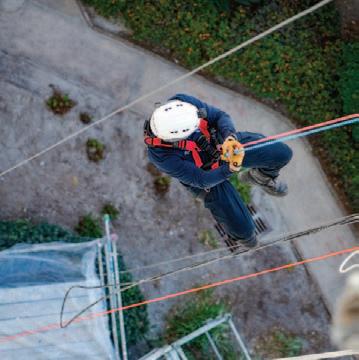
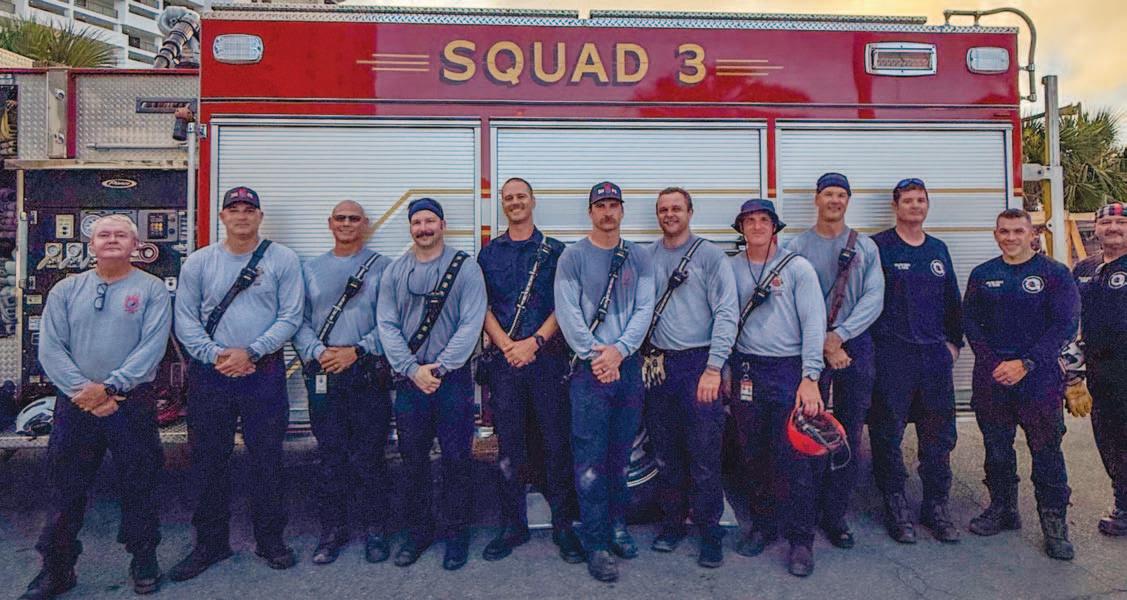
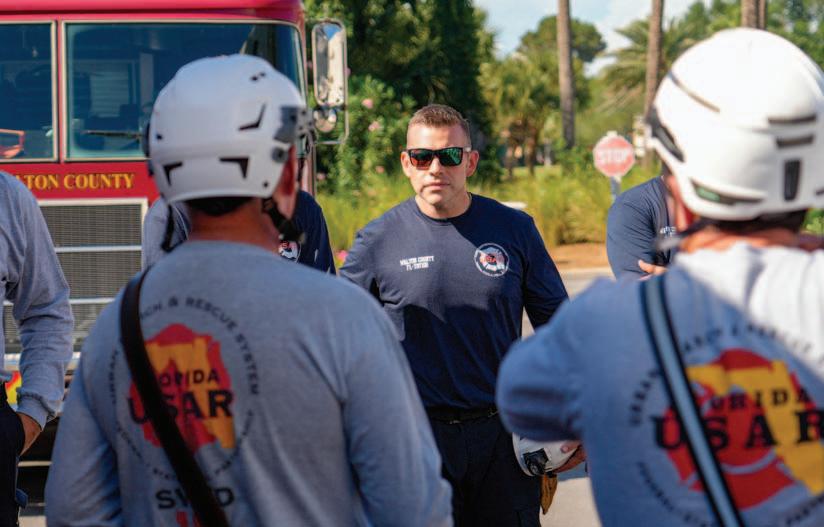
To better prepare for these events within South Walton County, South Walton Fire District TRT (FL-105) members recently hosted training evolutions on-site at a local
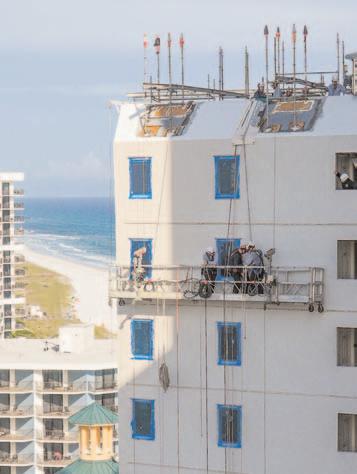
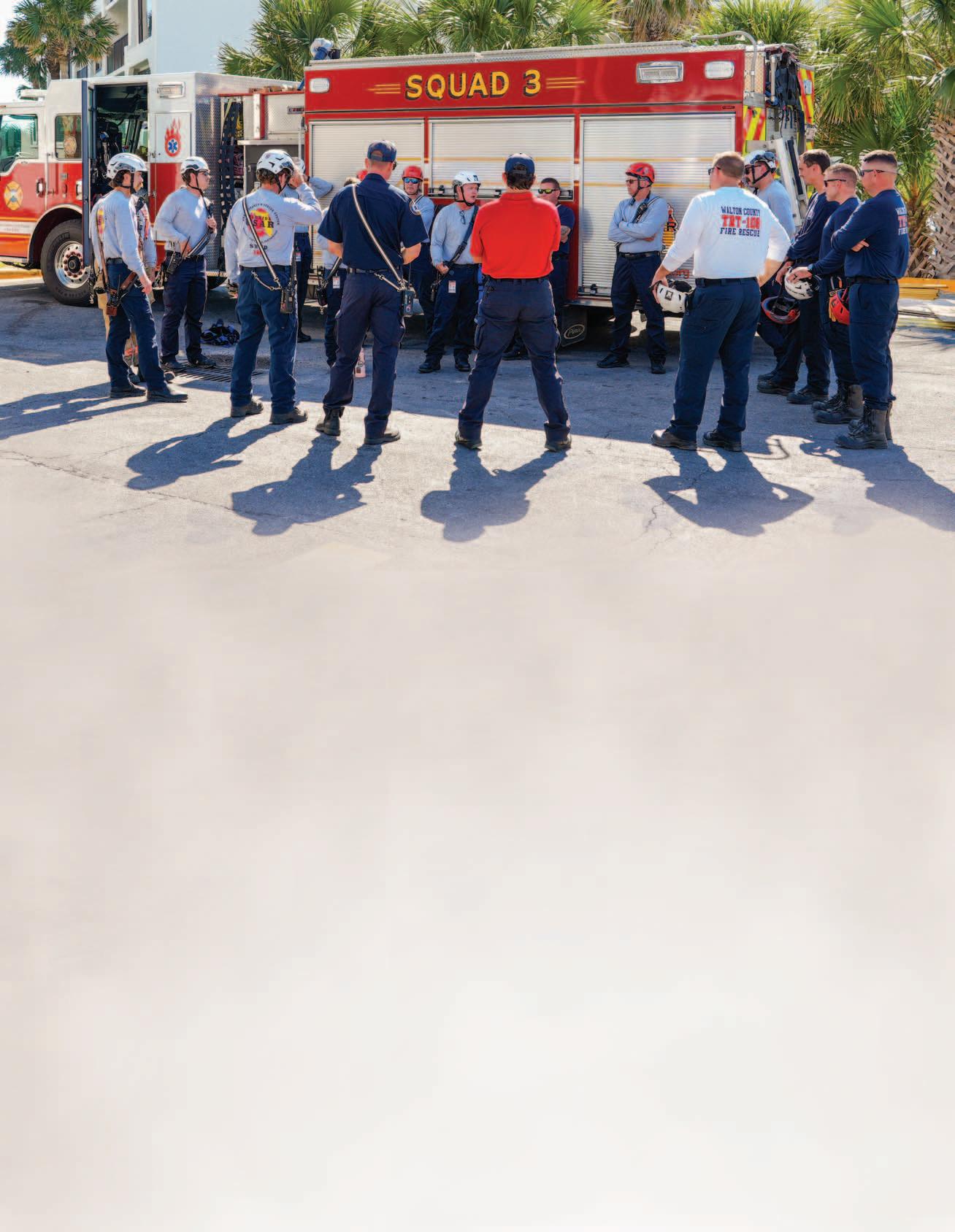
high-rise condominium complex, working alongside neighboring firefighters with Walton County Fire Rescue’s TRT (FL-106).
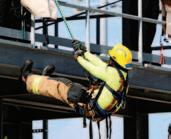
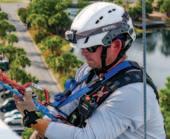
In the training exercise, firefighters were challenged with a roll-up drill to safely rescue and remove a “patient” who was stranded on a suspended work platform. This involved building a high-angle system and rappelling rescuers over the side of the 16-story building, allowing firefighters to strengthen both their technical skills and confidence
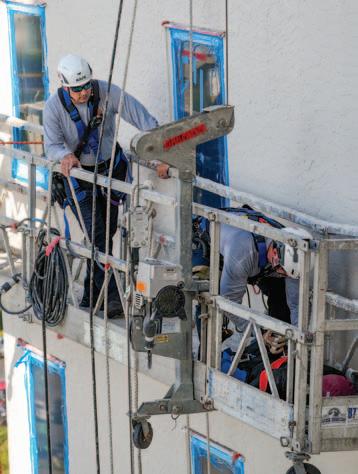
while operating at height.
“There was a similar high-angle incident that occurred just days before our training in a neighboring county, which proves the ‘why’ behind being ready to work alongside each other,” said Glen Kuehner, District Chief and SWFD TRT Coordinator. “These emergencies do happen; it’s only a matter of when it’s our turn to respond.”
See Mutual Aid page 30
Aid continued from page 29
Training opportunities on actual high-rise structures are relatively rare, providing rescuers with realistic conditions that cannot be replicated on a traditional training tower.
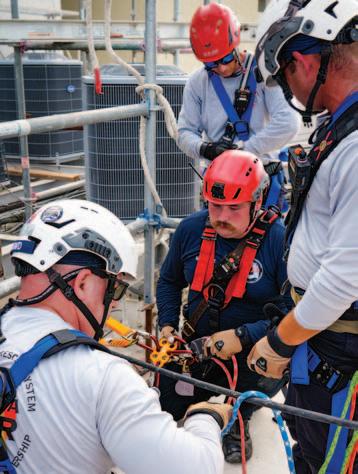
The condominium complex hosted the three different shifts of firefighters for individual drills that spanned several hours, allowing the two departments multiple chances to gain familiarity with each other’s capabilities, equipment, and personnel.
As high-angle rescues often require a coordinated response from multiple agencies, training with mutual aid partners benefits everyone involved, including the community.
“Training side by side with our partners at South Walton Fire District strengthens the relationships and technical proficiency we rely on during complex rescue incidents,” said WCFR Fire Chief Jonathon Davis. “High?angle emergencies demand precision, trust, and seamless coordination. Opportunities like this ensure our teams can operate safely and effectively together when the real call comes in.”
The training event also served as part of the required evaluation process Florida Technical Rescue Teams undergo to maintain readiness and demonstrate proficiency in specialized rescue disciplines.
Firefighters thank all staff members at
Sandestin Golf and Beach Resort, including those on-site at Beachside II, for their hospitality and accommodations that made the training possible.
The District looks for ward to additional opportunities in the works for 2026 to train alongside mutual aid partners.
By Jeremy Radney
One of the greatest lessons you can learn in the fire service is that every opportunity is preparing you for the next one. The challenge is that you rarely recognize it while it’s happening. The classes, the conversations, the difficult calls, the extra responsibilities, and even the setbacks all serve a purpose. They are preparing you for opportunities you may not even know exist yet.
Early in your career, it is easy to focus only on the task directly in front of you. However, some of the most valuable growth comes
from intentionally learning from those around you. During my first six months at Crestview Fire Department, I made it a priority to absorb everything I could from the seasoned firefighters around me. Whether we were playing “stump the chump,” discussing previous incidents, learning techniques that made the job easier, or simply talking through different scenarios and challenges, every conversation became an opportunity to learn. Looking back, I did not realize how much those firefighters were shaping my future. The lessons they shared became part
of the foundation I carried throughout my career. As a young firefighter, seek out those opportunities to learn from experienced personnel. Ask questions. Listen more than you speak. Pick the brains of those who have been where you want to go. The lessons you learn early in your career often become the foundation that supports opportunities years later.
As your career progresses, you may find yourself in a role where you become comfortable and confident. I experienced this firsthand after spending eight years as a firefighter/EMT. During those years, I gained valuable experience, built confidence in my abilities, and developed a strong understanding of the job. However, I eventually realized I had reached a point where my growth had begun to level off. If I wanted to continue developing professionally, I needed to challenge myself by taking the next step and becoming a paramedic. While there is nothing wrong with mastering your current position, there comes a point when growth requires moving beyond what is familiar
Recognizing that moment is important. Sometimes the greatest obstacle to advancement is not a lack of ability, but a reluctance to leave the comfort of a role where you have become successful. If you want to continue growing professionally, you must be willing to challenge yourself and pursue opportunities that expand your knowledge, responsibilities, and influence. When opportunities for promotion arise, remember that leadership is more than a new badge or rank. I experienced this firsthand when I was promoted to lieutenant/paramedic. Like many new company officers, I was excited for the opportunity and eager to learn everything I could about leadership at that level. However, after only ten months in the position, another opportunity
presented itself when a battalion chief position became available. Looking back, I can honestly say there was still much more I could have learned and gained from the company officer role. There were leadership lessons, mentoring opportunities, and experiences that I had only begun to explore.
Many firefighters and officers will find themselves in similar situations throughout their careers. Opportunities do not always arrive on the timeline we expect. Sometimes you are presented with a chance to move forward before you feel completely finished where you are. The reality is that no amount of preparation will make you fully ready for every challenge you encounter. At some point, you must trust the foundation you have built, accept that there will always be more to learn, and be willing to step into the next role.
One lesson many new leaders discover is that leadership extends far beyond emergency operations and daily assignments. I learned this during my two and a half years as a battalion chief. When I first stepped into the role, I naturally focused on incident command, operational decision-making, personnel management, and ensuring our crews were prepared to perform. What I quickly discovered was that leadership involved much more than managing emergency scenes and station activities.
People will come to you with personal struggles, career concerns, family issues, and difficult life situations. During my time as a battalion chief, I found myself ser ving as a mentor, counselor, and sounding board just as often as I served as an operational leader. Firefighters were not always looking for answers; many times, they simply needed someone willing to listen. Leadership is about people first. Technical competence may earn respect, but genuine care for others is what earns trust. The longer you serve in leadership roles, the more you realize that your greatest impact is often not made during an emergency—it is made through the relationships you build and the investment you make in the people you lead.
As you advance through different assignments and leadership positions, you will likely discover roles that align closely with your strengths and passions. I experienced this during my two and a half years as Division Chief of Training. When I accepted the position, my goal was not simply to maintain the training program but to improve it and leave it better than I found it. Throughout my time in the role, I worked to
build upon the foundation that existed while creating opportunities for firefighters to develop their knowledge, skills, and abilities.
Looking back, it was one of the positions that most closely matched my strengths and passions. I have always believed that one of the greatest responsibilities of leadership is developing competent, professional firefighters who are prepared to serve their communities at the highest level. The opportunity to invest in firefighters, help them grow, and contribute to their success was incredibly rewarding.
At the same time, understand that no role is ever finished. Every position will leave behind projects, goals, and ideas that could have been developed further. That is part of professional growth. Sometimes new opportunities arrive before you feel like your current work is complete. Rather than viewing that as failure, recognize it as part of the natural progression of leadership. Your responsibility is to leave the position better than you found it and prepare the next person to continue moving it forward.
Perhaps some of the greatest opportunities you encounter will be those that have never existed before. There may be times when you are given the chance to build a new program, develop a new initiative, or create something from the ground up. I experienced this when I was given the opportunity to step away from operations and into a brand-new Fire Prevention Division. It was a significant transition because I was leaving a role and environment that I knew well to take on something that had never existed within our organization. More importantly, I was entrusted with helping build the division from the ground up and shaping its future direction.
Opportunities like these can be intimidating because there is no established roadmap to follow. There are no previous successes to replicate and often no clear path forward. Yet these opportunities frequently provide the greatest chance to make a lasting impact. Building something new requires vision, patience, and a willingness to learn through trial and error. It also requires earning the trust of those who have given you the responsibility to lead the effort.
Throughout your career, never forget the importance of the people who invest in you along the way. Every firefighter, officer, mentor, and chief who shares knowledge, provides guidance, or entrusts you with additional responsibility plays a role in your development. I am grateful for every chief
officer who provided me with opportunities throughout my career and trusted me to step into new roles. Their confidence allowed me not only to fill those positions, but to improve them and leave them stronger than I found them.
As you reflect on your own career, remember that every assignment, certification, promotion, and challenge is preparing you for something greater. Some opportunities will arrive exactly when you expect them. Others will appear when you least anticipate them. Your responsibility is not to predict the future—it is to prepare for it.
Continue learning. Continue developing your skills. Continue investing in the people around you. Most importantly, remain open to opportunities that stretch your abilities and challenge your comfort zone.
You may not know what the future holds, but if you consistently prepare yourself today, you will be ready when tomorrow’s opportunities arrive. I do not know what the future holds, but I am ready for any opportunity that comes my way while maintaining a high level of performance, professionalism, and commitment in my current role.
Jeremy Radney currently serves as Fire Marshal for Walton County Fire Rescue and has nearly two decades of experience in the fire ser vice.
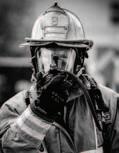
Throughout his career, he has served in operational, training, and fire prevention leadership roles, including firefighter/EMT, firefighter/paramedic, lieutenant, battalion chief, division chief of training, and fire marshal. He holds a master’s degree and numerous professional certifications, including Fire Officer IV, Fire Instructor III, Fire Investigator, Chief Fire Officer (CFO), Live Fire Training Instructor, Fire and Life Safety Educator, Safety Officer, and Fire Inspector II. His passion for leadership development, firefighter training, and community risk reduction continues to shape his approach to serving both the fire service and the

By Adam Thomas, Communications and Marketing, City of Palm Coast
The City of Palm Coast proudly celebrated the grand opening of Fire Station 26 on Memorial Day weekend, marking a major milestone in public safety, service expansion, and community investment.
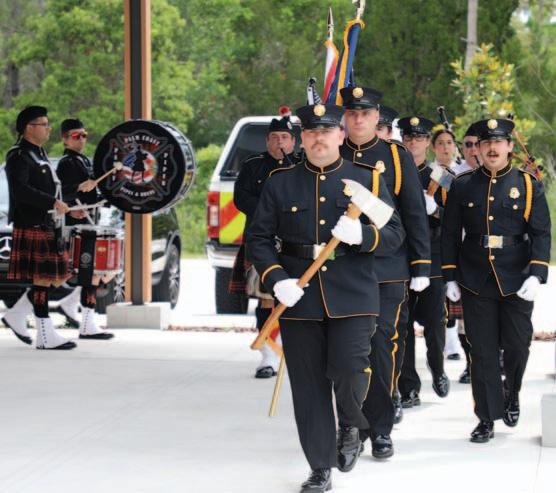
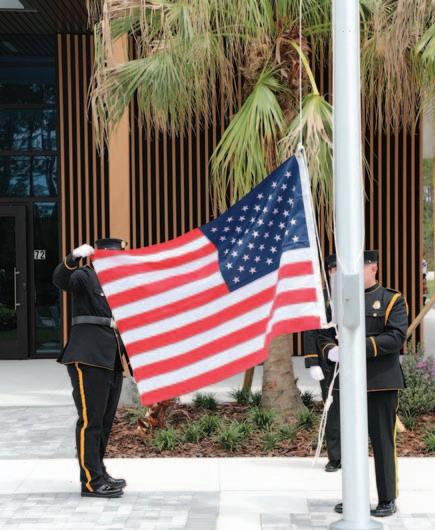
The ceremony was led by Interim Fire Chief Bradd Clark, who served as Master of Ceremonies. Nine-year-old Laurel Duffy delivered a beautiful per formance of the National Anthem, and Fire Department Chaplain Chris Cottle offered the Invocation. Mayor Mike Norris and all City Council Members were in attendance to commemorate the opening of the City’s newest fire station.
The large red bay doors opened as City and Fire leaders took part in a longstanding tradition at the opening of a fire station: a hose uncoupling, performed in lieu of a ribbon cutting.
Chief Berryhill delivered a deeply personal message about the department’s values,
mission, and future, emphasizing that Fire Station 26 was designed to enhance emergency response times and improve the physical and mental wellness of firefighters. He reflected on the department’s core values, “Family, Integrity, and Loyalty,” and reminded attendees while firefighters train for major emergencies, their everyday work is profoundly personal to the families they serve.
This station isn’t just a building, it’s about people’s lives...
Chief Berryhill also outlined how the station will expand service coverage for growing areas of Palm Coast. More than 1,000 residential properties will now be within five driving miles of Fire Station 26, improving emergency response capabilities and potentially lowering insurance costs for homeowners in the area.
He concluded with gratitude to the community, city leadership, firefighters past and present, and the partners who helped bring the project to life:
“This station is not just a building. It is time. It is capability It is trained professionals arriving faster with the equipment, training, compassion, and determination to help people on the worst days of their lives… Thank you all for being here today to celebrate this important milestone in the history of the Palm Coast Fire Department and the City of Palm Coast. We are grateful. We are proud. And we are excited for the future

of Fire Station 26.”
During the ceremony, Vice Mayor Theresa Pontieri, as the wife of a firefighter, highlighted the human side of station life and why the community’s investment matters.
“When they have little off time, when they’re not responding to 27 calls a shift, they may get some time to relax in recliners in the common rooms, play a video game or two when the tones aren’t dropping. When they have those tough conversations that they don’t carry home to their family and friends, they have them in those walls. This is a house. This is their home,” Vice Mayor Pontieri said. “And it’s important to me that the community recognizes how much of a role you play in giving them this. It’s important. It matters.”
When “tones drop” in a fire station, it signals an emergency dispatch, requiring personnel to respond immediately.
By Doreen Overstreet, Public Safety Information & Education Officer, Seminole County Fire Department
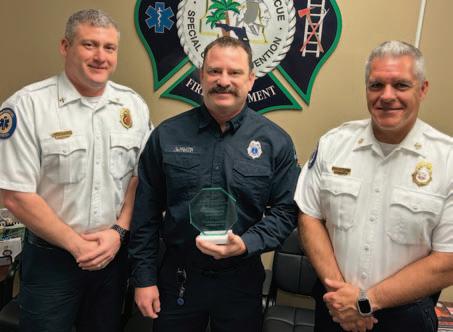
The Seminole County Fire Department’s (SCFD) Community Paramedicine Program has been named “Program of the Year” at the Atrium Health Mobile Integrated Health & Community Paramedicine Conference in Chicago. The annual national conference brings together frontline healthcare professionals, public safety agencies, and hospital-at-home programs from across the country.
SCFD’s program was selected from more than 80 submissions nationwide in recognition of its strong commitment to community health, innovative care model, and measurable positive outcomes for residents.
Since launching in 2022, SCFD’s Community Paramedicine Program has become a valuable resource for Seminole County residents by helping bridge gaps in healthcare access and reducing unnecessary emergency calls and hospital visits.
In 2025 alone, the program conducted nearly 2,500 home visits and served more than 250 enrolled residents. The program also achieved an enrollment rate of more than 90% and a
graduation rate of 78%.
“We are extremely proud of our proactive healthcare approach that not only improves the quality of life for residents, but also helps reduce unnecessary strain on first responders, emergency rooms, and healthcare partners,” said Seminole County Fire Chief Matt Kinley.
“This program allows us to identify needs before they become emergencies, build stronger relationships with the residents we serve, and help people successfully navigate the
healthcare system. I commend all of our paramedics and personnel involved in making this program such a success.”
The Community Paramedicine Program focuses on residents who may lack access to primary healthcare services, frequently utilize 911 services, or are at risk of hospital readmission. Visits are tailored to each individual’s needs and may include medication education, wellness checks, fall prevention assessments, and connecting residents with community resources and healthcare providers.
Members of SCFD’s Community Paramedicine team also presented at the conference, highlighting the program’s integration of field personnel, healthcare systems, and social service partners, a collaborative approach that continues to distinguish the program nationally.
By Nicole Griffin, Assistant PIO, Orange County Fire Rescue
This Spring, Orange County Fire Rescue hosted and participated in the Florida Division of State Fire Marshal USAR Mobilization Exercise (MOBEX). Over the course of three days, task forces from across Florida deployed to multiple simulated disaster sites, and participated in numerous emergency scenarios, including trench scenarios, rope rescue, wide area search, recon and assessment, HAZ MAT, MARC, water rescue, and search. The drill consolidated multi-discipline training into a
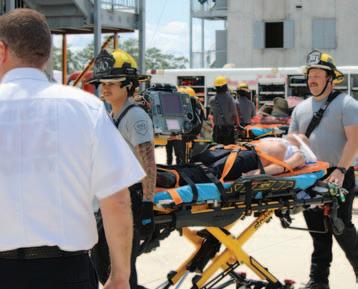
single event that is not achievable through routine operations, equivalent in value to hundreds of thousands of dollars in training.
By hosting this exercise, OCFRD enabled large-scale, multi-agency training that strengthens statewide Urban Search and Rescue (USAR) capabilities and tests the readiness of teams spread across the state. OCFRD personnel gained invaluable handson experience in command, coordination, and technical rescue operations under realistic, high-complexity conditions.
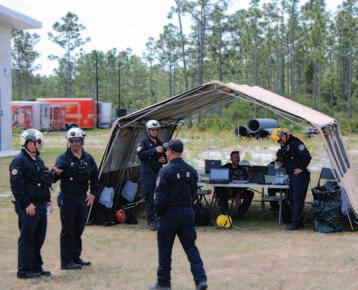
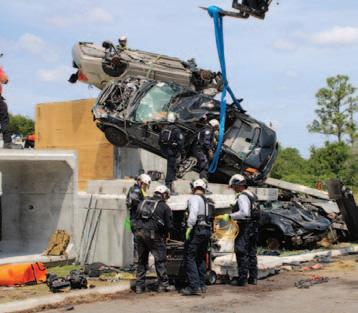
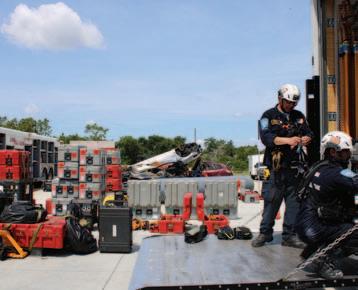
By Jillian Kay, FRD Digital Media & Public Information Officer, Martin County Fire Rescue
Martin County Fire Rescue is proud to introduce its newest member, Mango. This adorable dalmatian fits right into the fire services for obvious reasons, but his presence serves a greater purpose. As a newly trained therapy dog, Mango will be dedicated to helping firefighters navigate the emotional toll of their job.

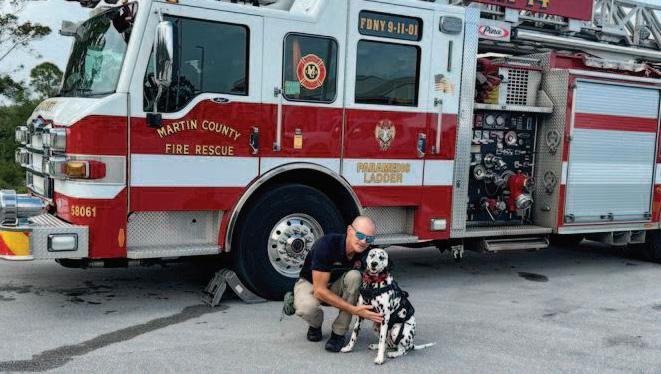
Mango’s owner, Chief Chris Kammel, understands firsthand the weight firefighters carry after responding to traumatic calls.
“Firefighters are trained to be strong for others, but that doesn’t mean we don’t struggle ourselves,” Chief Kammel said. “Mango is here to remind our crews that it’s okay to take a
moment to breathe and heal.” Mango visits our crews following difficult calls and as needed. His presence is designed to create a safe, calming environment where firefighters feel more at ease opening up about their experiences. He’s become a local celebrity across all our stations and the community.
By Shannon Martin, Communications and Marketing, City of Palm Coast
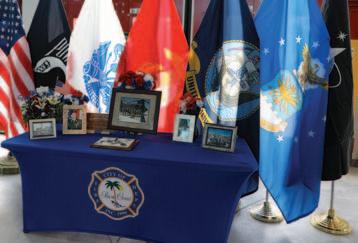
The Palm Coast Fire Department hosted a Gold Star Dedication Ceremony on May 23, 2026, honoring the life and sacrifice of Army Sergeant James M. Treber by dedicating Fire Engine 26 in his memory.
Held at Fire Station 26, the ceremony brought together Palm Coast Fire Department personnel, Gold Star families, veterans, and community members in remembrance of Sgt. Treber’s service to the nation and ultimate sacrifice in Afghanistan.
A Gold Star Family refers to the immediate family members of military personnel who lost their lives while serving in the Armed Forces. Since 2021, the Palm Coast Fire Department
has continued the tradition of dedicating fire apparatus in honor of Gold Star recipients as a lasting tribute to their courage, sacrifice, and legacy.
“This dedication is about more than a fire engine or a building,” said Palm Coast Fire Chief Kyle Berryhill. “It’s about remembering a man who, in the final moments of his life, chose to protect someone else before himself. From this day forward, every firefighter who serves on Engine 26 will carry Sergeant Treber’s name with them on every call, every emergency response, and every life they help protect. His legacy now becomes part of the continuing service this department provides to the Palm Coast community.”
Sgt. James M. Treber, 24, died on June 29, 2008, following a non-combat-related accident near Khosrow-E Sofla in Afghanistan’s Kandahar Province while supporting combat operations with Company A, 1st Battalion, 7th Special Forces Group (Airborne).
A native of San Diego, California, Sgt. Treber volunteered for military service in 2005 and later earned the distinguished Green Beret
before serving as a weapons sergeant with the 7th Special Forces Group at Fort Bragg, North Carolina. During his service, he completed advanced military training including Airborne School, Survival, Evasion, Resistance and Escape (SERE) training, and the Special Forces Qualification Course.
The ceremony featured a presentation of colors by the Palm Coast Fire Department Honor Guard and Flagler Palm Coast High School Air Force JROTC FL-936, remarks from Fire Chief Kyle Berryhill, a biography presentation honoring Sgt. Treber’s life and military service, the unveiling of Engine 26, wiyh a bagpipe presentation.
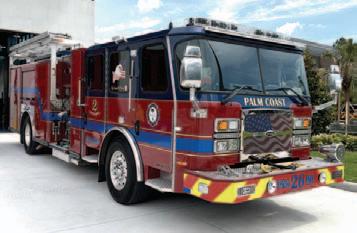
By Chai Kauffman, Public Information Manager, Life Safety Educator, City of Hollywood
Hollywood Fire Rescue’s HazMat and Technical Rescue Team personnel participated in a large-scale, multi-agency training exercise this week, joining three other units from across Broward County for a coordinated maritime emergency simulation at Resolve Academy, located inside Port Everglades.
The joint drill brought together our regional specialized teams from Sunrise Fire Rescue, Fort Lauderdale Fire Rescue, and Broward Sheriff’s Office Fire Rescue, reflecting the high level of interagency cooperation required to protect one of the nation’s busiest seaports.
The training scenario centered on an injured worker trapped inside a confined space aboard a maritime vessel, a high-risk environment that demands both technical rescue expertise and hazardous materials awareness. To elevate realism, instructors incorporated a “dry ice” component, which sublimates into carbon dioxide and displaces oxygen—mimicking the atmospheric dangers often present in ship holds, tanks, and mechanical compartments.
This added a critical HazMat dimension to the operation, requiring teams to monitor air quality, assess oxygen levels, and implement safe entr y procedures before attempting rescue.
Throughout the exercise, paired teams rotated through the scenario, each responsible for accessing the victim, providing medical stabilization, and executing a safe removal from the vessel’s confined interior. The drill tested communication, precision, and the ability to adapt to evolving hazards.
A tripod system was positioned over the vessel’s narrow scuttle opening, allowing rescuers to be safely lowered into the compartment. Once inside, crews used a specialized patient harness designed for confined-space extractions, enabling a controlled vertical lift through the tight passageway
The scenario required rescuers to navigate limited visibility, restricted movement, and the simulated low-oxygen environment— conditions that mirror real world maritime emergencies.
Hollywood’s HazMat team was paired with Sunrise Fire Rescue, demonstrating the seamless interoperability that has become a
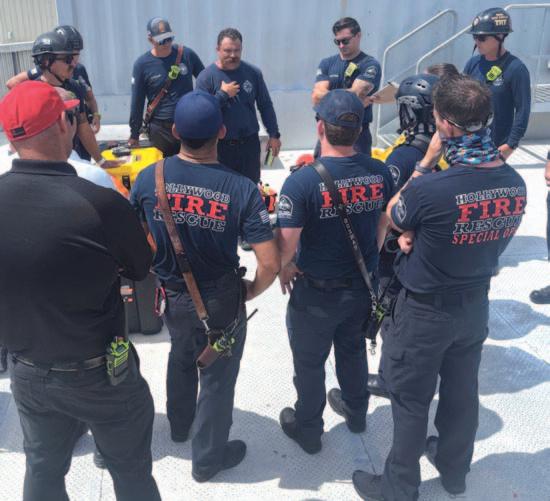
hallmark of Broward County’s regional response system. Crews worked side-by-side, sharing equipment, coordinating tactics, and communicating as a unified team.
Officials say this type of joint training is essential, given the complexity of incidents that can occur at Port Everglades, where cargo ships, cruise vessels, fuel storage facilities, and industrial operations converge. For Hollywood Fire Rescue, the training reinforces a commitment to operational excellence and regional partnership.
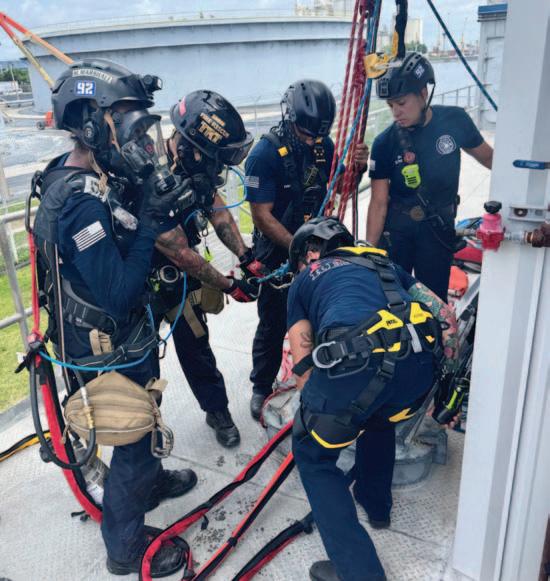
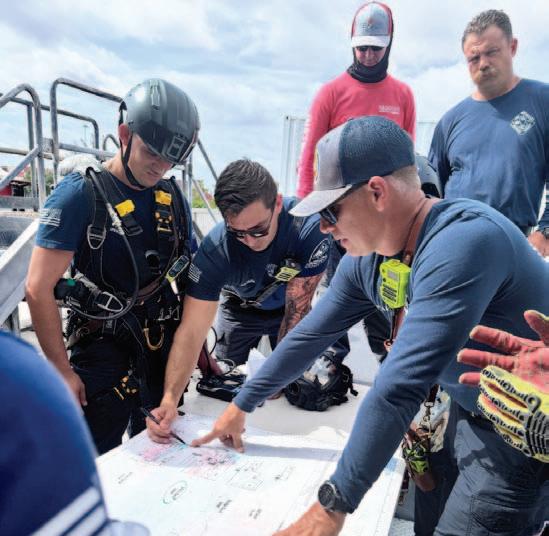
By Ramon Gonzalez, Deputy Chief of Training, Polk County Fire Rescue
On May 4, Polk County Fire Rescue’s Training Center officially opened for business.
At approximately $16 million, facility represents a significant investment in the future of firefighter and EMS training throughout Central Florida.
Sitting on 12.5 acres, the facility was designed to provide comprehensive, scenario-based training for firefighters, EMTs, and paramedics.
The 30,000-square-foot main building includes administrative offices, five interactive classrooms seating 30 students each, a large auditorium, a fully equipped fitness gym, and four state-of-theart EMS simulation labs that replicate realistic patient-care environments.
At the center of the campus stands a six-story training tower constructed by Dräger, affectionately known as the “Beast of the East.” The tower features three live-burn rooms capable of simulating realistic fire conditions and dynamic fire behavior. It supports a wide variety of hands-on training evolutions, including roof ventilation, ladder operations, VES (Vent, Enter, Search), rappelling, hose handling, and rescue scenarios. The tower also includes a firefighter maze designed to challenge crews in low-visibility, high-stress environments while enhancing confidence, orientation, and survival skills.
The facility also includes a dedicated fire behavior laboratory constructed by Dräger, where personnel can study modern fire dynamics, smoke conditions, ventilation profiles, and flashover recognition in a controlled setting. In addition, the campus features a 30,000-gallon drafting pit designed for rural water supply and tanker shuttle operations. When emptied, the pit can also be utilized for confined space rescue training.
To further enhance realistic training opportunities, the training center is equipped with five FireBlast propane-fueled props, including a vehicle fire prop, allowing instructors to safely simulate gas-fed fires, flammable liquid incidents, and industrial emergency scenarios. The campus also includes a dedicated extrication pit where crews can conduct vehicle stabilization, disentanglement, and advanced rescue training. Additionally, the facility features a 170,000-square-foot concrete driving pad used for emergency vehicle operations training, apparatus maneuvering, pump operations, and driver operator certification.
The Polk County Fire Rescue Training Center was intentionally developed to improve operational readiness,
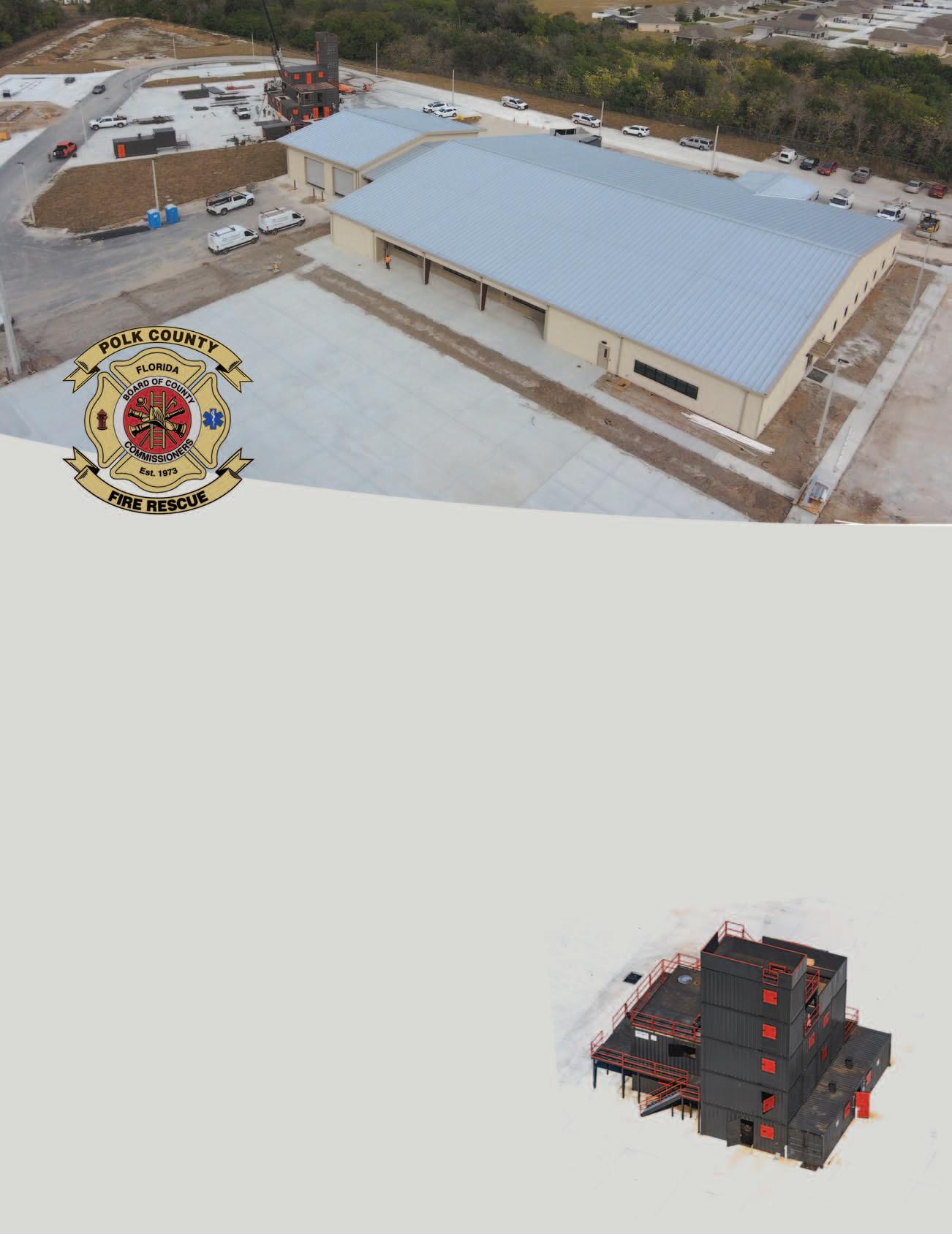
strengthen firefighter safety, and prepare personnel for the evolving challenges of emergency response.
Polk County Fire Rescue extends its sincere appreciation to the Polk County Board of County Commissioners and the County Manager’s Office for their unwavering support, vision, and commitment to public safety. Their investment in this state-of-the-art facility demonstrates a continued dedication to ensuring that first responders have access to the highest level of training and resources necessary to serve and protect the citizens of Polk County.Photo of Polk County Fire Rescue’s Training Center while under construction.
By Jenn Samsel, Independent Journalist
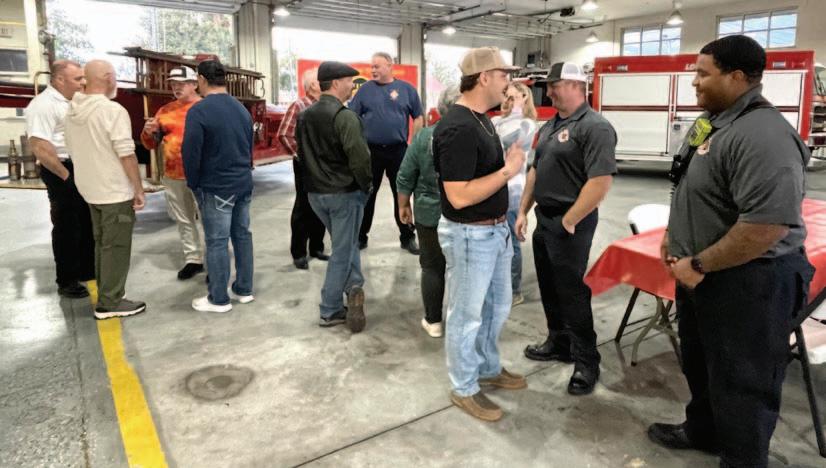
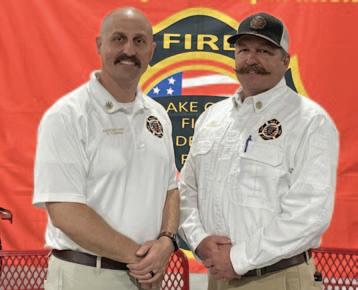
In everyday life, firefighters usually come together for formal events such as conferences, award ceremonies, or funerals. However, the Lake City Fire Department decided to establish an annual tradition of hosting a Firefighter Reunion to bring everyone together in one room beyond the usual job-related events.
The idea, inspired by Fire Chief Josh Wehinger, was to create a special event that would allow members to reminisce about the old days, discuss various topics, and appreciate their colleagues, along with family and friends, once a year.
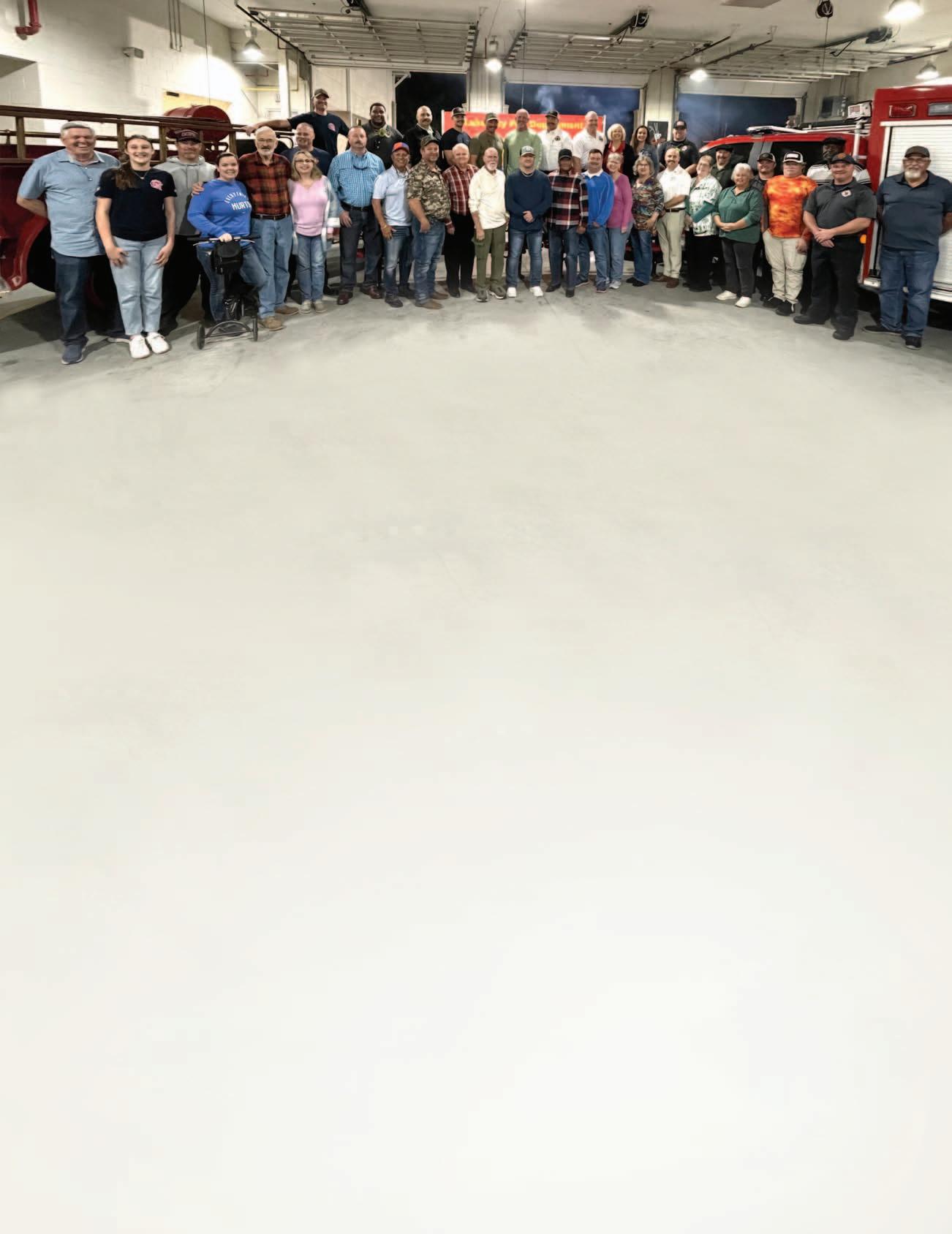
For him and his team, many have experienced the loss of chiefs and firefighters over the years, and this reunion serves as an important reminder to gather together.
During the 2nd Annual Firefighter Reunion, approximately 40 people attended, including former employees of the Lake City Fire Department and Columbia County EMS.
“Other than sad time, when we put our class A uniforms on, we wanted to do something a little more exciting, fellowship time, and just spend some time together. Just a time of fellowship, food, and hanging out together.”
“I think this is something that everybody should do. I know other departments are much
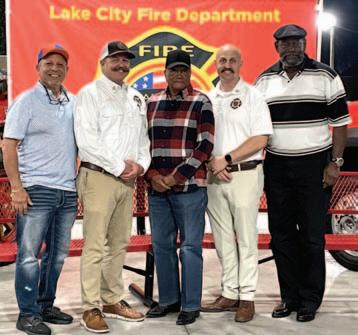
bigger than ours, but you can do it at individual stations, or something like that.”
“This is something we look forward to every year. It’s a major event for us, and we have the support of past firefighters and past EMS employees. Some people, when they get out of the service, are burnt out and don’t really socialize with the service anymore. I’m thankful for all the people that came, everybody that supports this,” said Fire Chief, Lake City Fire Department.
This has now become a special, integral part of the fire station for future firefighters.
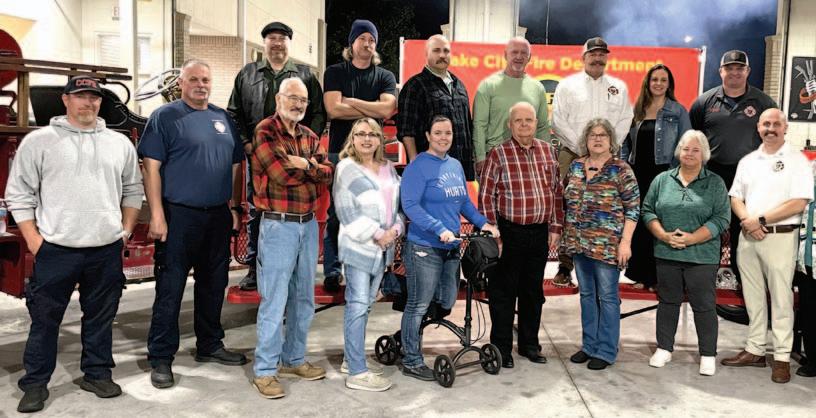
The Seminole County Fire Department (SCFD) recently honored a local dentist and several firefighters for their lifesaving actions that helped save the life of Sanford resident Jeff Kotkin following a sudden cardiac arrest during a neighborhood pickleball game.
The ceremony at Fire Station 34 recognized the “Chain of Survival” that led to Kotkin’s remarkable recovery and featured an emotional reunification between Kotkin, the first responders who treated him and the bystander who immediately stepped in to help.
On Nov. 1, 2025, Kotkin, 58, collapsed while playing pickleball in the Lake Forest community after suffering a sudden cardiac arrest. Fellow player and local dentist Dr. George Mitrogogos quickly recognized the emergency and immediately began hands-only CPR while others called 911.
Crews from SCFD Station 34 arrived in less than five minutes and successfully restored a shockable rhythm before transporting Kotkin to Orlando Health Lake Mary Hospital. Medical staff later determined Kotkin required emergency open-heart surgery, and he was transferred to Orlando Health Orlando Regional Medical Center, where he underwent successful quintuple bypass surgery.
Today, Kotkin has made a full recovery and has become an advocate for the department’s Save a Life Seminole program, which provides free hands-only CPR education to the community. In fact, Kotkin has helped organize those classes for his neighborhood at Lake Forest.
During the ceremony, Dr. Mitrogogos received a Citizen Life Saving Award for his immediate intervention and CPR efforts. Members of SCFD Station 34 were also presented with Life Saving Awards for their coordinated emergency response and advanced medical care.
The following firefighters were recognized:
Lt. Tim Van Fleet
Engineer Ryan Lucas
Firefighter/Paramedic Cooper Knicely
Firefighter/Paramedic Jordan DeCuir
Firefighter Jared Agin
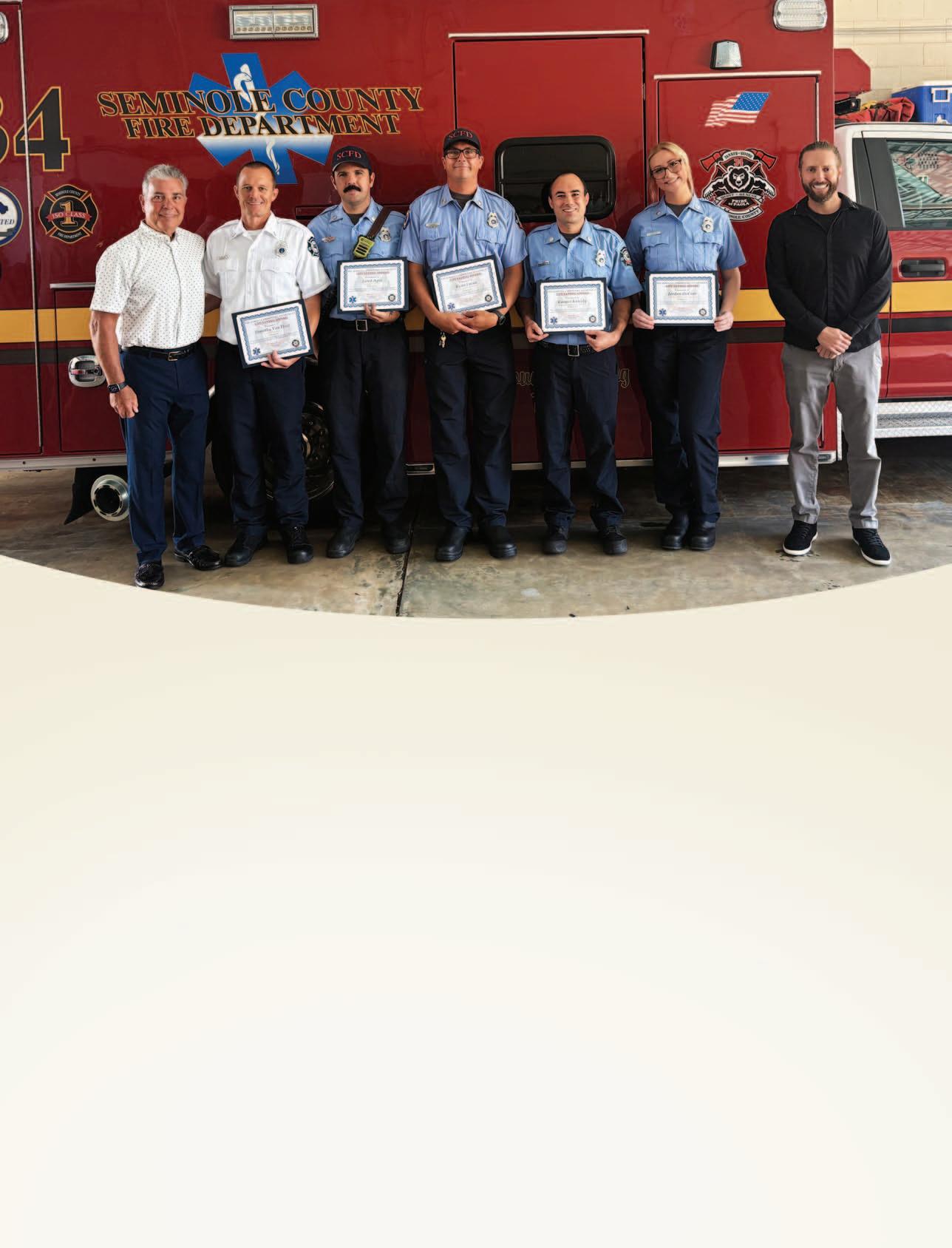
“Station 34’s crew responded to a call that was a cardiac arrest, and they defibrillated the patient and brought him back to Orlando Health Lake Mary,” said Mark Wechsler, assistant medical director for the Seminole County Fire Department. “After arrival, it was determined that the patient needed openheart surgery and was transferred to Orlando Health Regional Medical Center where he received a five-bypass surgery. It was an extremely successful surgery, and I commend the crew and wholeheartedly endorse this award recognition.:
The event also highlighted the importance of bystander CPR and early intervention during cardiac emergencies. SCFD officials emphasized that immediate hands-only CPR can significantly improve survival outcomes and encouraged residents to learn the lifesaving skill through the department’s free community classes.
By Chai Kauffman, Public Information Manager, Life Safety Educator, City of Hollywood
The Hollywood Ocean Rescue’s Junior Beach Lifeguard Program is once again making waves along the shoreline, offering local youth a rigorous, hands-on introduction to ocean safety, lifesaving skills, and the realities of working on a busy South Florida beach.
Open to children ages 8 to 17, the week-long summer program is designed to strengthen aquatic abilities, build confidence, and teach participants how to recognize and respond to hazards in open water environments. Instructors say the program has become a cornerstone of Hollywood’s youth outreach, shaping future lifeguards and responsible ocean users.
Each day begins behind the Hollywood Beach Culture & Community Center at 1301 S. Ocean Drive, where participants gather under the pavilion before heading into the surf. Under the guidance of Hollywood’s certified ocean rescue professionals, students rotate through a series of physically demanding and educational modules, including: Ocean and Beach Safety Understanding rip currents, wave behavior, and environmental risks
Lifesaving Techniques Approaches, victim assists, and safe rescue procedures
Rescue Board and Ocean Kayak Skills Training on the same equipment used by professional lifeguards
Ecology Education Exploring marine life and environmental stewardship
First Aid Treating common beach-related injuries
Ocean Lifeguard Competition Timed events that test speed, strength, and teamwork
Instructors say the combination of physical conditioning, ocean awareness, and hands-on rescue practice gives participants a realistic look at the demands of lifeguard service.
Beginning in 2026, all prospective participants must complete a prerequisite swim test before enrolling. The test requires children to swim approximately 25 yards from the shoreline to a buoy while demonstrating confidence, technique, and the ability to navigate waves and currents.
Beach Safety personnel evaluate each swimmer to ensure they can safely participate in the program’s ocean-based activities. Uniforms, Safety, and What to Bring Participants receive an official program shirt and shorts, which
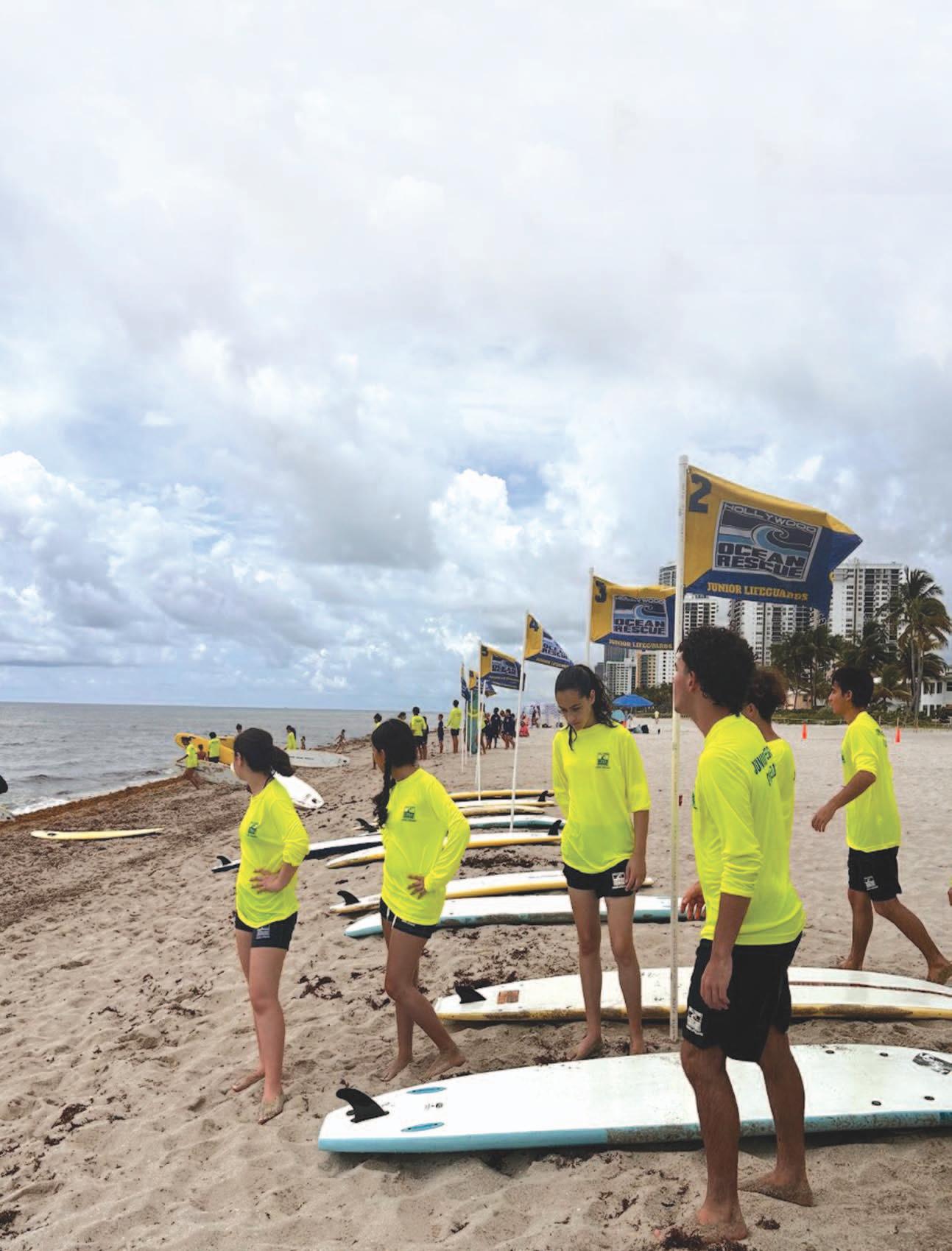
must be worn daily to promote safety and unity. Sunscreen, a reusable water bottle, a towel, and a change of clothes are strongly recommended. Water and Gatorade are provided throughout the day.
Officials emphasize that the program is physically and mentally demanding, involving long hours in the sun, ocean swims, running, and conditioning drills. It is designed to challenge participants and prepare them for the realities of beach safety work.
Hollywood Ocean Rescue staff say the program consistently produces confident, capable young people who leave with a deeper respect for the ocean and a stronger sense of teamwork and responsibility.

By Ashley Turner, EPIO, Public Information Officer
Charlotte County Fire & EMS solemnly announces the line-of-duty death of Firefighter/Paramedic Jan A. "Jay" Sanders Jr., who passed away on June 18, 2026 following a courageous battle with occupational cancer.
Jay dedicated more than 35 years of service to the citizens and visitors of Charlotte County. He began his fire service career with Harbor Heights Fire Department as a firefighter/EMT before joining Charlotte County Fire & EMS through consolidation. Jay was so young when he started he was not yet old enough to drive the apparatus he responded to calls on.
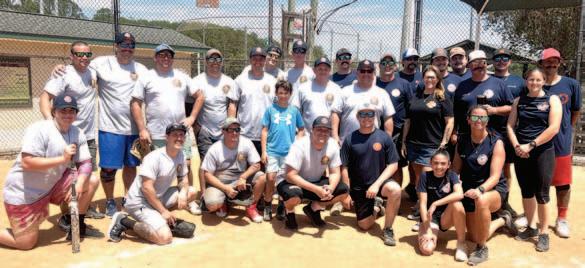
By Jenn Samsel, Independent Journalist
Putnam County Fire Rescue Professionals Local 3529 faced off against Flagler County Fire Rescue Professionals Local 4337 in their annual doubleheader softball showdown at the Flagler Fairgrounds in Bunnell. In the end, Flagler County won. The event brought together firefighters, their families, and supporters for a day filled with softball, food, and fun.
"We are having a little fun playing a friendly softball tournament," said Jeffrey Olsen, Lieutenant with Flagler County Fire Rescue. "It's all for fun, just to get out, build camaraderie, and spend time with other brothers and sisters in the job."
We all do the same job " Olsen said. "This is a good way to decompress a little bit and have fun with the other brothers and sisters in the profession."
According to Matthew Moriarty, Vice President, Local 3529, Putnam County Fire Rescue Professionals, the two departments regularly train together and collaborate during emergency operations.
"We work a lot with Flagler County," Moriarty said. "We do joint training exercises all the time, host classes for each other, and work together often. This is just another way to continue connecting and maintaining those relationships."
"They got us today," Moriarty joked. "Last time I think we split the games, so we're definitely going to have to do another one and settle the score."
Moriarty said firefighters hope to expand the concept into a larger regional tournament featuring multiple fire departments and law enforcement agencies from across Northeast Florida.
Plans are underway to invite teams from Putnam County, Flagler County, Clay County, local sheriff's offices, and potentially agencies from surrounding areas for a full-day event.
The objective is to create an additional opportunity for first responders to connect while raising funds for benevolent organizations that support firefighters and their families.
By Jillian Kay, FRD Digital Media & Public Information Officer
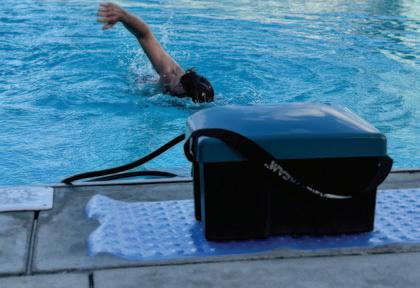
Martin County Ocean Rescue recently expanded their drowning prevention efforts by participating in the Florida Department of Children and Families (DCF) and Slipstream’s statewide rip current simulator initiative. Only a few other agencies in the state have been granted this life-saving equipment that will continue to help teach swimmers how rip currents form, how they behave and how to safely escape them.
Almost 140 children joined the Martin County Ocean Rescue team at Sailfish Splash Waterpark over Memorial Day weekend for life-saving water safety education. Our incredible Ocean Rescue team led multiple rip current simulator demonstrations, while our Community Risk Reduction team gave hands-on CPR instruction. The event also featured “Reach or Throw, Don’t Go” and “Don’t Just Pack It, Wear Your Life Jacket” education stations put on by the county. In exchange for their attendance, children received free, same-day waterpark admission. This incentive helped educated hundreds of children and families on important water safety practice ahead of one of the busiest weekends of the summer
By Jillian Kay, FRD Digital Media & Public Information Officer
Martin County Fire Rescue recently added sensory kits to all our rescue trucks. These essential care packages have already made an impact on how our firefighter-paramedics treat and transport patients with special needs in our community. These kits are designed to provide comfort, reduce anxiety and improve the overall transport experience for patients with special needs. Each drawstring backpack contains calming and tactile items such as noisereducing headphones, fidget toys, sensory objects and other comfort tools intended to help patients self-regulate during stressful situations.
The use of sensor y kits during EMS transport can help decrease sensory overload caused by lights, sirens, confined spaces and unfamiliar environments. By providing appropriate sensor y stimulation and calming resources, these kits may reduce agitation, improve communication and cooperation, lower anxiety levels and create a safer and more positive interaction between patients and our first responders.

By Jenn Samsel, Independent Journalist
St. Johns County Sheriff’s Office and St. Johns County Fire Rescue held their third annual “Fight Night” boxing charity event at the St. Augustine Amphitheater In a competitive matchup, the Fire Department won eight rounds to the Sheriff’s Department’s five.
The event aimed to support an important cause and attracted over 2,000 spectators, benefiting Diamond of Dreams and the Florida Special Olympics Torch Run. This occasion showcased the strong bonds among first responders and the community while generating support for children with special needs.
St. Johns County Sheriff’s Office Robert Hardwick, whose wife, Kendall, leads the Diamond of Dreams initiative, said the project has become a labor of love for their family and the community.

“This money goes back to Diamond of Dreams and the Florida Special Olympics Torch Run,” Sheriff Hardwick said. “It’s a way for brothers and sisters in public safety to come together while supporting something that will have a lasting impact on children and families.”
For St. Johns County Fire Rescue Fire Chief Sean McGee, this event marks another successful chapter in what has quickly become a community tradition.
“Another epic year of boxing,” Chief McGee said. “The fights were outstanding. I think they were even better than last year.”
Although Fire Rescue won in the overall competition by 8 rounds, McGee highlighted that the true success belonged to the community and the organizations benefiting from the fundraiser.
“It was a great night, a great cause, and a great crowd,” he said. “It’s really cool to see the


support.”
He continued, “Get ready for next year because it’s going to be even bigger Come on out next time if you didn’t make it this time”.
“The event brought everyone together to support local charities and make a positive impact beyond the ring. From the fighters who stepped up, to the coaches, sponsors, and everyone who came out to cheer — thank you for making the night a huge success,” said Chris Naff, PIO and Honor Guard
Commander St. Johns Fire Rescue.
According to Sheriff Hardwick, the event highlighted a unique aspect of the first responder community.
“We fight out there, we box, but at the end of the day, we all work together on calls for service,” he said. “Afterward, we embrace each other, support each other, and continue serving our community together.”

Tenure:
Six years as a Project Specialist. Previous work experience
Prior to transitioning to Fire Rescue, I worked as a police dispatcher for one year, where I developed strong communication, multitasking, and emergency response coordination skills. After joining Palm Bay Fire Rescue, I began my career as a Records Supervisor and was later promoted to Logistics Manager, a position I held for three years. In that role, I gained extensive experience overseeing operations, coordinating resources, and supporting organizational initiatives. When the opportunity to become a Project Specialist became available, I pursued the position because it closely aligned with my long-term career goals and provided an opportunity to further develop my skills in project management, process improvement, and organizational leadership.
Briefly describe the structure of the administrative services of your organization.
The Project Specialist position is part of Administrative Services and operates under the Office of the Fire Chief, reporting directly to the Fire Chief. This structure allows the division to closely support departmental leadership by assisting with strategic planning, budgeting, operations, and administrative initiatives that help advance the department’s long-term goals and overall mission.
Briefly describe your job duties. My responsibilities include managing and coordinating fire station construction projects, tracking departmental budgets and payroll, preparing memos and supporting documentation for City Council, assisting with accreditation efforts, and maintaining department certifications to ensure compliance with regulatory and organizational requirements.
What is the most important aspect of your job?
The most important aspect of my job is helping move
the department forward through long-term planning and strategic growth. As our city continues to experience rapid growth as one of the fastest-growing cities in the state, it is critical to ensure the department is prepared to meet future demands. My role focuses on supporting initiatives, infrastructure projects, and resource planning that position the department for sustainable growth while maintaining a high level of service to the community.
What challenges do you face in your position?
The primary challenge I face is keeping pace with the rapid growth of our city. As one of the fastest-growing cities in the state, we must continuously focus on long-term planning to ensure the department can meet future service demands. This requires ongoing coordination, strategic planning, and proactive management of projects, resources, and infrastructure, creating a fastpaced and constantly evolving work environment.
What do you enjoy most about your job?
What I enjoy most about my job is the people I work with every day. We have a strong team dynamic, and everyone is committed to ser ving the citizens of Palm Bay It is rewarding to collaborate with dedicated professionals who share the common goal of supporting the community and ensuring the department continues to grow while providing exceptional ser vice.