THE PUBLICATIONOFTHE FLORIDA FIRE CHIEFS’ ASSOCIATION February 2026 • VOLUME 34 NUMBER 2












THE PUBLICATIONOFTHE FLORIDA FIRE CHIEFS’ ASSOCIATION February 2026 • VOLUME 34 NUMBER 2

Florida Fire Service is the monthly publication of the Florida Fire Chiefs’ Association, provided to Florida Fire Chiefs’ Association (FFCA) members, by the Florida Fire Chiefs’ Association.
Florida Fire Chiefs’ Association
221 Pinewood Drive
Tallahassee, FL 32303
Phone:(850) 900-5180
Email: info@ffca.org • www.ffca.org
FFCA Staff
Ngoc Huynh- Executive Director
Rachel Pardo - Marketing & Member Services Coordinator
Savannah Selski - Exhibit & Sponsorship Sales Coordinator
FFCA Board of Directors
Trip Barrs - President
Ryan Crawford - 1st Vice President
Mike Tucker - 2nd Vice President
Michael Choate - Immediate Past President
Carlos Aviles - Secretary/Treasurer
Jeff Wagner - Northwest Region Director
Brady Rigdon - Northeast Region Director
Todd Allen - East Central Region Director
Chantal Botting - Southeast Region Director
Ian Kemp - West Central Region Director
Gregory DeWitt - Southwest Region Director
Ngoc Huynh- Executive Director
Terry Parris - Foundation Chair
Jeffrey Money - Senior Member
Editorial Submissions magazine@ffca.org (850) 900-5180
Advertising
Scott Leisen, Editor in Chief scott@ffca.org (386) 717-0055
Subscription rate for members is $36, which is included in member dues. Archived electronic monthly editions of Florida Fire Service magazine are available at www.ffca.org. Log in as a member and click on the Publications tab.
Florida Fire Service
February 2026, Volume 34, Number 2 USPS # 016-759
Periodical postage paid in Daytona Beach, Florida, and additional post offices.
POSTMASTER: Send address changes to Florida Fire Service, 221 Pinewood Drive Tallahassee, FL 32303. Statements of fact and opinion are the responsibility of the authors alone and do not imply an opinion on the part of the officers or the members of FFCA.
Copyright 2026 by the Florida Fire Chiefs’ Association. All rights reserved. Materials may not be reproduced without written permission.








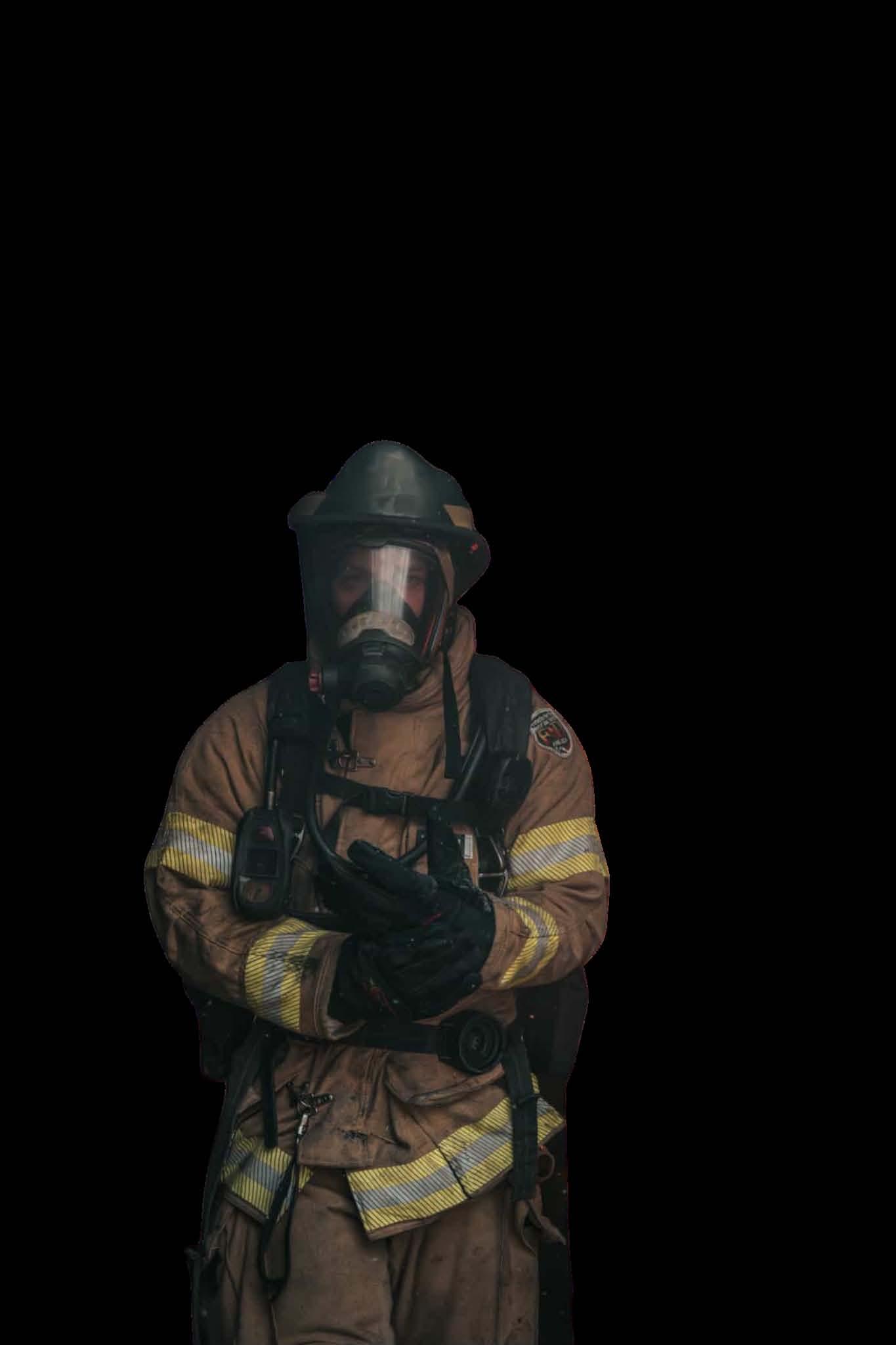
THE BRANDS BEHIND THE RESPONSE Apparatus. Equipment. Protection. Performance.
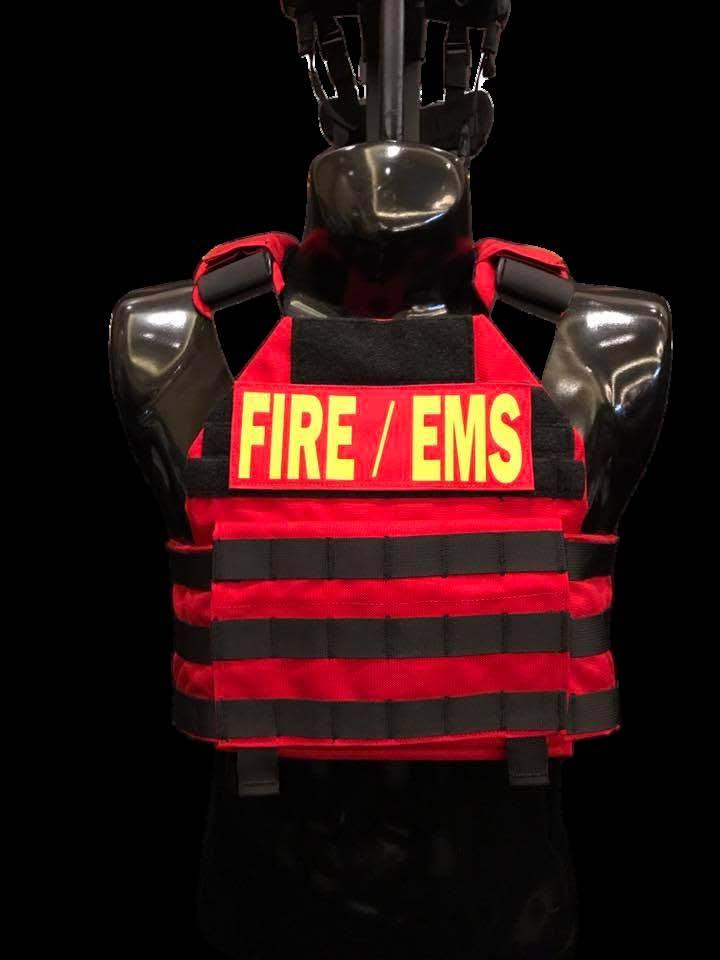


Personal Protective Equipment Fire Suppression Equipment Rescue & Technical Operations
Akron,Harrington Inc.,North AmericanFire Hose,Snap-Tite, Chemguard, ElkhartBrass Fire-Dex,GHArmor, TeamWendy, DickeSafety Products,Paul ConwayShields
CMC,Petzl,NRS, Gemtor,Mustang, RadierOutboards,Mat Jack,BAProductsCo, DuoSafety,LittleGiant, Zodiac,Sensit Technologies

PPE/Gear Care & Storage Scene Support & Equipment
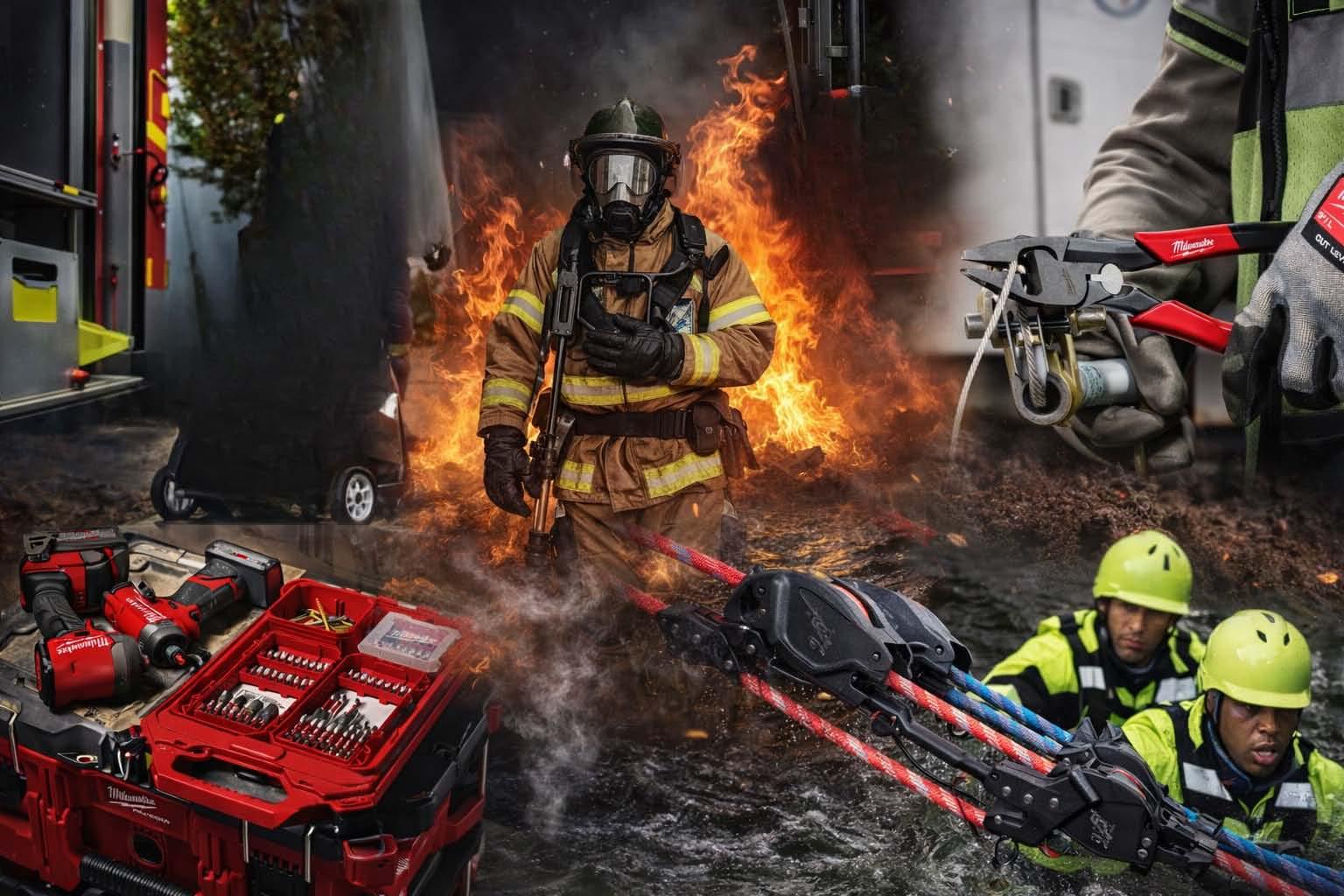
LeatherheadTools,PAC Mounts,Poly-Tech America,Streamligt, CommandLight, Will-Burt,SuperVac, FirehooksUnlimited, Ziamatic,Tele-Lite, MILWAUKEE
Circulair,Meiko, Citrosqueeze,R&B Fabrications,Avon Manufacturing


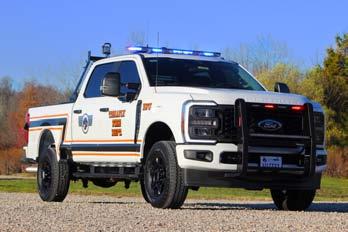
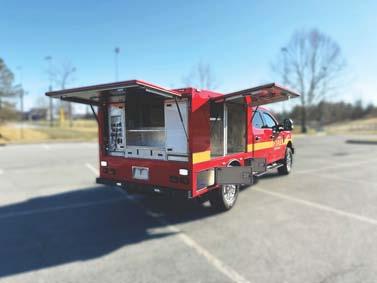

CUSTOM

As we move deeper into the legislative season and a busy spring calendar, I’m proud to share an update on the significant work your Florida Fire Chiefs’ Association has accomplished over the past 30 days. The strength of this association is built on engagement, relationships, and a shared commitment to advancing the fire and emergency services across our state. This past month has demonstrated just how impactful that collective effort can be.
Legislative advocacy remains one of the FFCA’s highest priorities. Over the past 30 days, we have been actively engaged in monitoring and influencing key legislation impacting fire rescue operations, funding, firefighter health and safety, and emergency response capabilities. Our Legislative Committee and contract lobby team have been tracking numerous bills that directly affect our members. We continue to engage lawmakers on 911 communications, PFAS/AFFF transition efforts, and ensuring fire and EMS funding as property tax reductions are considered.
In addition to bill tracking and formal testimony, we have conducted targeted meetings with House and Senate leadership, committee members, and staff to ensure they understand the operational realities facing Florida’s fire departments. The message has been clear: investments in fire rescue are investments in community resilience and public safety.
One of the highlights of the month was Fire Service Day at the Capitol. Chiefs, officers, and firefighters from across Florida stood united in Tallahassee to meet directly with legislators and advocate for our profession, The visibility and professionalism of our members made a powerful statement. When policymakers see firsthand the dedication of Florida’s fire service leaders, it reinforces the credibility of the issues we bring forward. I want to personally thank every member who took time away from their departments and
families to participate. Advocacy only works when we show up—and you showed up.
While in Tallahassee for the fire service day at the capitol, FFCA Board members attended the For Love and Honor Gala. This event was a meaningful and memorable celebration of the service, sacrifice, and families who stand behind Florida’s first responders. Events like this remind us that our profession is more than response metrics and legislative issues—it is about people. Honoring those who have gone above and beyond reinforces the values that define our profession: courage, commitment, and compassion. It was an evening that reflected the very best of Florida’s public safety community.
Earlier this month, I had the opportunity to attend the Florida Sheriffs’ Association’s winter meeting, continuing to strengthen our partnership with law enforcement leadership across the state. We are partnering with law enforcement on developing legislation that will address all stakeholders’ needs for statewide PASP improvements. Our relationships with the Sheriffs’ Association and the Florida Police Chiefs’ Association are vital. Whether responding to hurricanes, large-scale special events, active threat incidents, or community safety initiatives, the fire service and law enforcement operate side by side. Building trust and alignment at the executive level ensures seamless coordination in the field. These meetings provide opportunities to align legislative priorities, discuss emerging threats, and explore collaborative training and operational initiatives. Strong partnerships translate directly into safer communities.
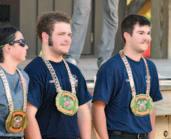
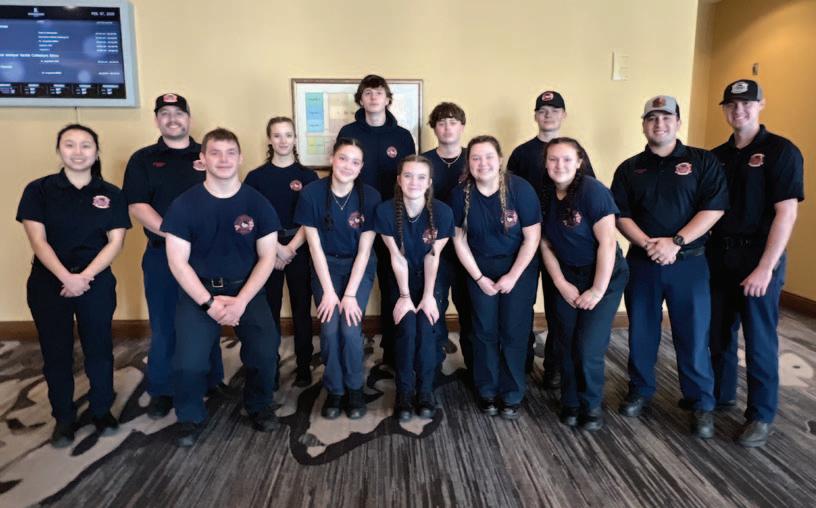
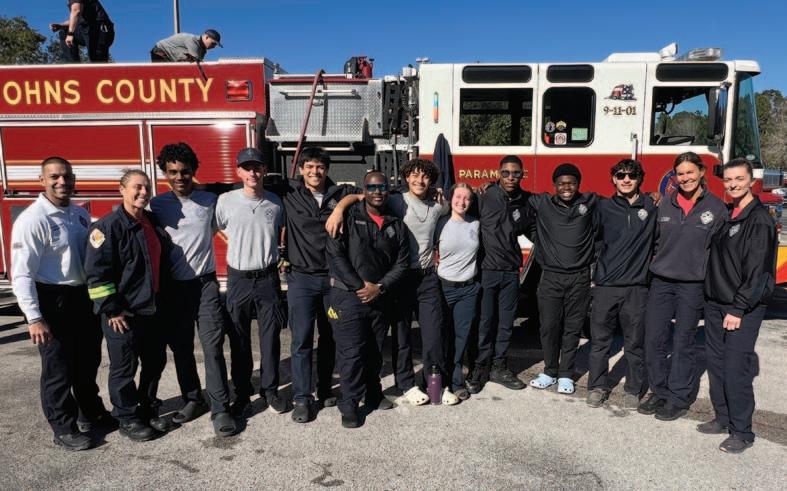
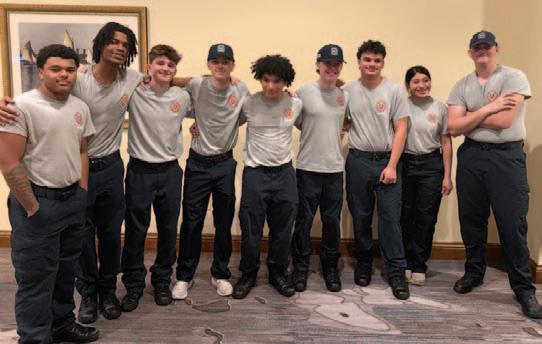
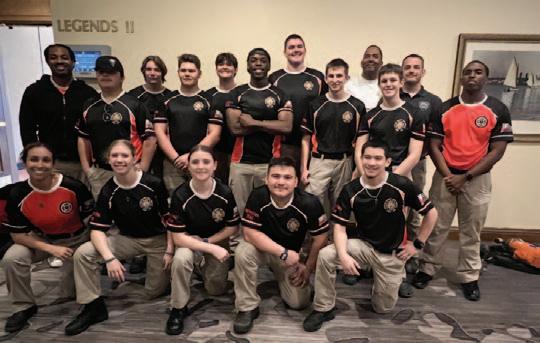
Another highlight of the month was the Cadet Winter Games, where we witnessed the future of our profession in action. The energy, teamwork, and professionalism displayed by these young cadets was inspiring. Programs like this are critical to building the next generation of fire service leaders. They provide hands-on experience, mentorship,
and a pathway into careers in fire rescue. The FFCA remains committed to supporting cadet and training initiatives that strengthen our workforce pipeline. To the advisors, instructors, and departments who invest their time in these young men and women—thank you. Your mentorship is shaping the future of the Florida fire service.
While we are proud of the progress made this month, the work of the FFCA is ongoing—and it depends on member involvement. If you are not currently engaged in a section, committee, or task force, I encourage you to consider stepping forward. Whether your passion is legislative advocacy, training, professional development, emergency management, prevention, or leadership, there is a place for you in this association. Our impact in Tallahassee, our partnerships across the state, and our ability to deliver high-quality programming are all driven by engaged members who are willing to contribute their expertise.
The Florida Fire Chiefs’ Association is strongest when it reflects the diversity, innovation, and professionalism of our statewide fire service community. Thank you for your leadership in your departments and for your continued support of the FFCA. Together, we will continue advancing the fire and emergency services across Florida and ensuring our profession remains strong, unified, and forward-looking.
Stay engaged, stay connected, and as always—thank you for your service.







Fear. It is something that everyone deals with to some degree. Some of our fear is so overwhelming that it does not allow us to fully function as a productive member of society. Fear has been so prevalent throughout time that it is mentioned in Genesis 3:10, the first book of the Bible, where Adam hides from God, stating, “I was afraid …and I hid myself.” Fear is not necessarily a bad thing, but it is often a wedge that drives people away from their faith in God. God knew it would be a major obstacle for people to overcome and live a Godly life. In fact, fear is such a major deterrent in our faith, that “do not fear” or “do not be afraid” are mentioned over 360 times in the Bible, once for almost everyday of the year.
“Do not fear,” is not a denial of danger, but our reassurance that God’s sovereignty and presence is in our lives. Our fear, whatever it is, should draw us closer to God, instead of pushing us into self protection and isolation. Most of us try to avoid situations that cause us fear, but it still affects us in a negative way. That usually causes us to doubt our faith, instead of leaning into our trust of God and relying on Him. The Bible differentiates

By Rick Spence
between a healthy fear and awe of God, as opposed to a disabling, sinful fear of the world. There is clearly a biblical view of fear that it strongly exists, but it should not dominate our thoughts and our lives. The Bible teaches that excessive fear is rooted in a lack of faith in God’s ability to watch over us and causes us to focus on our immediate circumstances, rather than relying on God.
The 360+ verses that refer to ‘do not fear’ and ‘do not be afraid’ were not just for the men and women of the Bible. They are still very much applicable to us today in our everyday lives. In reality, most of the things that we fear rarely ever occur. Getting trapped underwater, being chased down by an evil madman with an ax, appearing naked at a very public event or being in a cage of spiders and snakes, ver y rarely ever occur. When we take the time to dissect our fears, most of them only occur in our minds. Psalm 56:11 states, “In God I trust, I will not be afraid. What can man do to me?” If we truly believe that God is really God, fear will lose it power over us. A strong belief in God
actually pushes out many of our other, often smaller fears.
Isaiah 41:10 states, “Fear not, for I am with you; be not dismayed, for I am your God. I will strengthen you; I will help you, I will uphold you with my righteous right hand.” This is something I need to remember when I am singing, dancing, jumping around and playing air guitar like an 80’s rock star when no one is at home. Occasionally, my fear of my wife checking our security cameras during my “encores” will enter my mind. But that fear has not yet deterred me.
The larger fear of my kids catching me and posting it on the internet is actually a much bigger and realistic fear.
Rick Spence retired as Assistant Chief from the Reedy Creek Fire Department after 30 years. Heis currently the Chaplain for the Florida Fire Chiefs’ Association, Central Florida Fire Chiefs’ Association,Reedy Creek Fire Department, Lake County Fire Department, Clermont Fire Department, Maitland Fire Department, and the Florida Professional Firefighters. He ser ves as Sergeant of Arms for the Florida Professional Firefighters and International Association of Firefighters. He was selected Florida Professional Firefighter of the Year in 2018.He has been married to his wife Alecia for over 30 years

By Diana Hernden
More than 2 decades ago as I began my career in the fire service, the implications of whether or not I would have children someday did not figure in to the equation. I loved the job and I was excited to be a part of it. A few years in as that possibility grew, I began to research what kind of an impact pregnancy would have on my career. At that time, protections in place were limited to adherence to the Pregnancy Discrimination Act, the Americans with Disabilities Act (ADA), and Family Medical Leave Act (FMLA). The lack of clarity and guidance led to widesweeping disparity in how fire departments were accommodating pregnant and postpartum employees, many of whom lacked any specific accommodations at all.
Fortunately, since then, The Pregnant Workers Fairness Act (PWFA) was enacted in 2022. The PWFA took effect in June of 2023, establishing clear federal protections for pregnant and postpartum employees. Many departments, however, are still operating under old policies and practices, often unnoticed until a problem arises. Our goal is to bring awareness and education to emergency service leaders and encourage proactive conversations within their organizations. For fire departments and emergency service agencies, understanding and implementing this law is not optional—it is essential to ethical, compliant leadership.
The PWFA requires employers with 15 or more employees to provide “reasonable accommodations” to workers affected by pregnancy, childbirth, or related medical conditions, unless doing so would cause an undue hardship. While many agencies have historically relied on the Pregnancy Discrimination Act or the Americans with Disabilities Act (ADA), the PWFA fills critical gaps. Unlike the ADA, pregnancy itself does not need to rise to the level of a disability to trigger protections. If a first responder has a limitation related to pregnancy, the agency must engage in a good-faith interactive process with that employee to determine appropriate accommodations.
So what does this mean operationally?
First, departments must move beyond blanket policies. Automatic unpaid leave, forced use of accrued time, or mandatory light duty without discussion is a violation of the law. Many departments, in the most well-meaning of intentions, have required pregnant women to
go out on restricted duty despite their request and ability to stay on full-duty. Conversely, many women have been denied reasonable accommodations when requested. The PWFA emphasizes individualized assessment. In a fire department setting, this could include modified duty assignments, adjustments to physical training requirements, temporary reassignment
away from IDLH environments, modified shift lengths, additional rest breaks, access to hydration, or adjustments to PPE where feasible. The key is open communication with the individual and education of the employee, and ideally the supervising physician, on the risks associated with the job and the minimum standards that still need to be met for full-duty (properly fitting PPE, performance standards, etc).
Second, documentation and process matter. The law requires a timely, interactive dialogue between employer and employee. For command staff, this means supervisors must be trained to recognize accommodation requests—even informal ones—and to route them appropriately. “I can’t properly close my bunker coat” is not a complaint; it is the beginning of a legally protected conversation. Agencies that treat these disclosures with professionalism and discretion reduce liability and strengthen trust.
Third, the PWFA prohibits retaliation. Fire service culture has made meaningful progress over the last decade, but we must acknowledge that pregnancy can still be viewed—consciously or unconsciously—as a staffing burden.
Leadership must set the tone that accommodating pregnancy is not preferential treatment; it is compliance with federal law and an investment in workforce sustainability.
For emergency services, staffing models and collective bargaining agreements add layers of complexity. However, federal law supersedes internal policy. Departments should review SOGs, light duty policies, fitness standards, and return-to-work procedures to ensure alignment. Coordination with human resources, legal counsel, and labor representatives is essential. The importance of educating the pregnant employee AND their physician cannot be overstated. Emergency services, especially firefighting, is a hazardous profession. Having clearly defined job responsibilities and associated risks in a distributable format can help guide physicians and employees to make informed decisions about their own unique capacity
This legislation is not solely about risk mitigation. It is about retention, recruitment, and organizational integrity. If we are serious about broadening our talent pool and sustaining experienced professionals, we must build systems that support firefighters and other emergency responders through all phases of life—including pregnancy. The fire service has always adapted to evolving standards in safety, training, and professional conduct. The PWFA is another step in that progression. Our challenge is not whether we can comply—it is whether we will lead with clarity, fairness, and foresight. Departments that do so will not only meet federal requirements; they will model the kind of principled leadership our profession demands.
For more information or sample policies please contact us at hernden@ionafire.com
Diana Hernden serves as the Division Chief of EMS, Health & Safety for the Iona McGregor Fire District. Diana has been with IMFD for 19 years, working up the ranks and through Operations, Logistics, and Training Divisions. She serves as the Peer Support Team Coordinator, Safety Committee Chair, and is involved with various health & safety initiatives around the State. Diana holds a Bachelor’s in Fire & Emergency Services from University of Florida, a Master’s in Public Administration from Florida Gulf Coast University, and the Chief Fire Officer designation from CPSE.
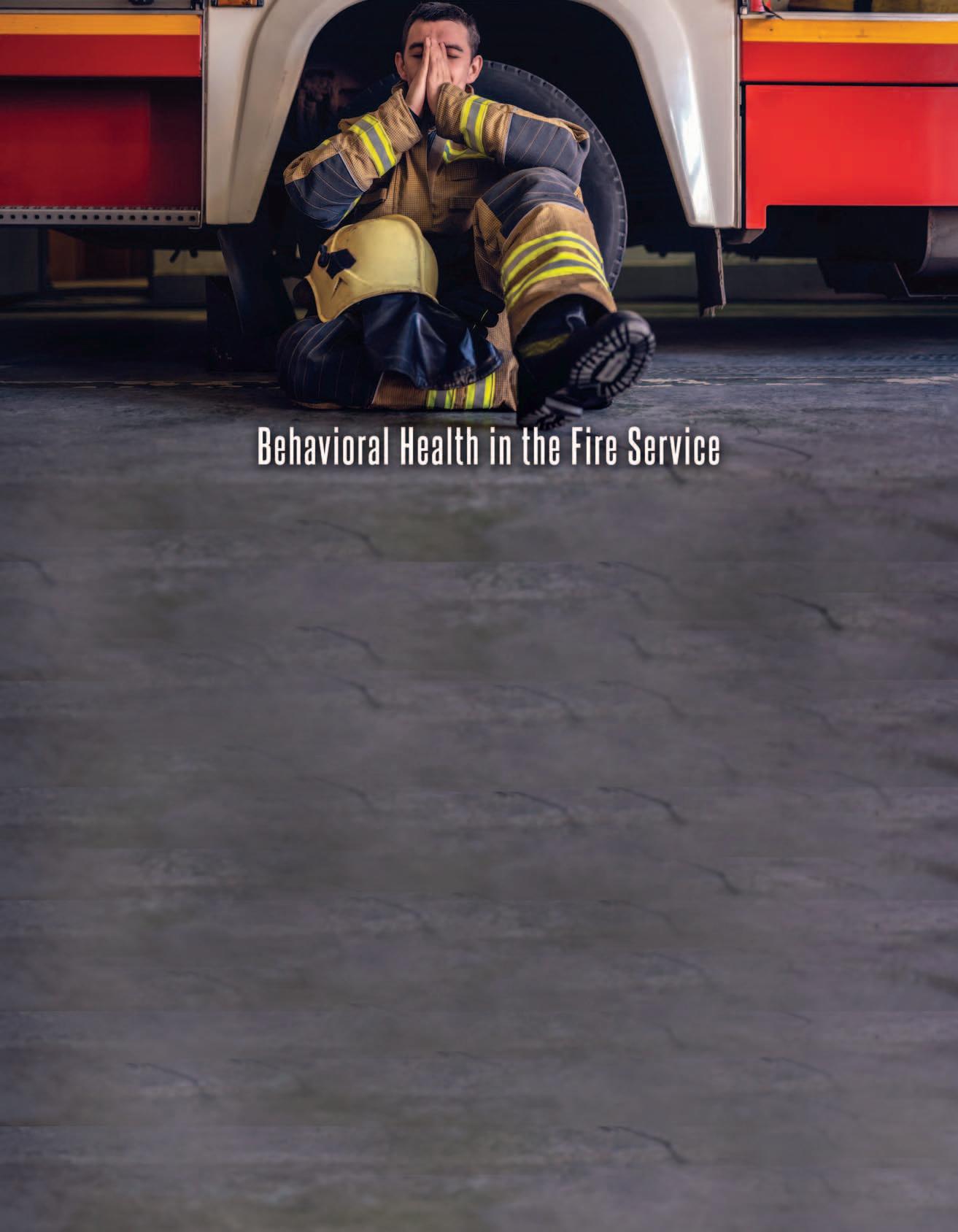
Mental Health in the fire service has come a long way since “suck it up, buttercup”. A shift is happening where feelings of hopelessness, frustration and sadness are met with understanding, openness and a platform to not only acknowledge these feelings but address them head on. First responders and fire departments across the country are developing Behavioral Health programs designed to help process the daily dose of traumatic calls that seem to happen during times of family illness, financial or relationship stress.
Sometimes the best medicine for a bad call is talking through it with your crew or hugging your child. Time also heals. But years later when you drive by the scene, it all comes flooding back. This scenario is too common and has been happening for decades. Those before us struggled in silence, using all the strength they had to show up and do it all over again. They had the same experiences, but minimal outlets to process the complicated issues and feelings. Times are changing and behavioral health programs are emerging in fire departments across the country offering a way forward.
By Kimberly Buffkin
Peer support programs of today complement the traditional Critical Incident Stress Management (CISM) model by offering continuous access to resources. Talking about mental health and access to resources openly, on the good days, prepares first responders with coping skills to step forward when the need arises. Support from the U. S. Fire Administration (USFA) includes a directive to focus on reducing the stigma of mental illness. The USFA’s 2024 Workgroup Summary on Mental Health and Wellbeing highlights the importance of addressing critical issues facing the fire service such as suicide prevention. Additionally, the summary outlines essential resources necessary to support the fire service including trained providers in the form of culturally competent clinicians. The term culturally competent refers to specifically trained clinicians familiar with the unique needs of first responders. Providers who are familiar with the trauma exposure of emergency calls are better prepared to treat depression, anxiety and PTSD specific to firefighters.
Other resources such as UCF Restores and the Second Alarm Project specialize in treating the first responder community offering various therapy modalities. Websites such as Firestrong.org house crisis management resources, videos and contact information for everything from alcohol and drug addiction to gambling and financial assistance. Peer support members are listed as well, offering immediate access to help 24 hours a day, 7 days a week. Other programs such as Chaplaincy and Pet
Therapy complement behavioral health programs offering services to meet people where they are and provide opportunities for healing early, with coping skills to both identify and address stressors before they evolve into deeper issues.
It is clear the fire service is embracing the expansion of peer support programs to provide necessary resources that will support the modern fire service into the future. Reducing the stigma provides an open roadmap for first responders to access help and learn coping mechanisms that will lead to a fulfilling career through to retirement.
Kimberly Buffkin, MA serves as Division Chief of Operations with the Orange County Fire Rescue Department, where she provides operational oversight for one of the largest fire rescue organizations in Central Florida.
With more than 25 years in the fire and emergency management profession, Chief Buffkin brings broad experience across field operations, strategic planning, emergency management, and organizational leadership.
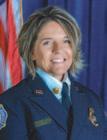
Chief Buffkin holds a Master of Arts in Homeland Security from the Naval Postgraduate School and a Bachelor of Science from the University of Central Florida. She is an active member of the Executive Leadership Development Section of the Florida Fire Chiefs’ Association and is recognized for her ability to bridge operational command with executive planning, bringing a disciplined, data-informed, and people-focused approach to modern fire service leadership.

By Doug McGlynn
The Emergency Management (EM) Module, one of six core courses within the Emergency Services Leadership Institute (ESLI), was held February 3 and 4 at the Florida State Emergency Operations Center in Tallahassee. Delivering this module in the State EOC is intentional. It places participants in the environment where coordination occurs, information is prioritized, and senior leaders are expected to make decisions during realworld incidents.
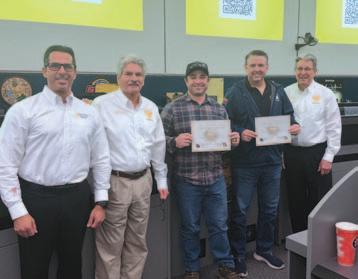
The EM Module included 24 attendees from across Florida, with participants traveling from as south as Charlotte County, through Duval County on the east coast, and into Escambia County in the northwest Panhandle. Seventeen attendees were taking the EM Module as their first course in the ESLI series. Two participants, Chief Daniel Ciorrocco and Chief Patrick Welch, were recognized for completing the full ESLI program, marking an important professional milestone and an outstanding accomplishment.
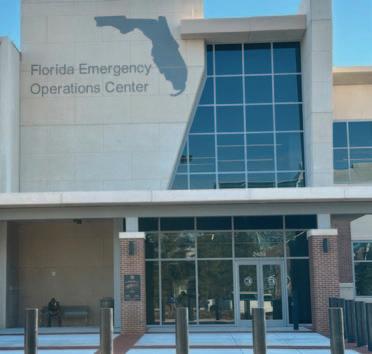
The class represented 16 different agencies and a wide range of ranks. Most participants were chief officers, including fire chiefs, division chiefs, and battalion chiefs, along with captains, lieutenants, and members serving in specialized leadership roles. That mix consistently strengthened discussion and reinforced the connection between operational realities and executive-level decision making.

Being in the State EOC added practical value beyond the classroom. Students were exposed directly to how response coordination, recovery considerations, and statewide mutual aid and EMAC processes function together These discussions generated strong engagement and follow-up dialogue as participants connected state-level systems back to their own agencies and local responsibilities.
As part of the module, participants engaged directly with the Florida Division of Emergency
Management (FDEM) staff who supported the course beyond hosting it in the State EOC.
SERT Chief Ian Guidicelli welcomed the class and framed the role of the fire service within Florida’s emergency management system.
Porschica Griffith coordinated course logistics and facilitated a guided tour of the new State EOC, located across the street from the current facility and scheduled to open in the coming months. Recovery perspectives were provided by Bureau Chief Melissa Shirah and Deputy Melissa Foggy, while discussions on statewide mutual aid and EMAC reinforced how EOC operations support local agencies during complex incidents. Northwest Director Jeff Wagner, Fire Chief of the Ocean City-Wright Fire Control District, who was charged with leading the recent State Emergency Response Plan revision, walked the class through the updated SERP from a fire service perspective, focusing on what today’s leaders need to understand about roles, authorities, and how the plan translates into real-world EOC and field operations.
The EM Module is part of the broader ESLI program, a six-module leadership series designed to prepare fire service leaders for the realities of modern emergency services, both operationally and at the executive level. Each module is delivered as a focused two-day course and can stand alone, while also contributing to an integrated leadership experience.
ESLI was built by fire service leaders, for fire service leaders. While the primary audience is mid-level officers and chief officers, experience has shown that officers at all levels benefit from
the curriculum and peer interaction.
The six ESLI core modules include Human Resources and Labor Management; Personal Qualities, Leadership and the Organization; Government Relations and Public Policy; Marketing Fire and Emergency Services; Finance and Budgeting; and Emergency Management.
Each module provides 16 hours of continuing education credit applicable to Florida Fire Service Instructor certifications. Completion of all six core modules provides equivalency toward Fire Officer III and Fire Officer IV requirements. The program is modular by design, allowing participants to begin with any course and progress as schedules allow.
A more detailed breakdown of the ESLI program and its modules was published by Chief Dave Downey in the October issue of the Florida Fire Service Magazine, Vol.3, Issue 10, Pg.12: click here
At its core, the EM Module reinforces a simple point: emergency management is not separate from the fire service. It is leadership,

coordination, and planning applied at scale.
The ESLI series has been delivered in Central Florida at Valencia College’s School of Public Safety and is expanding to Tallahassee and South Florida to increase access and reduce travel time. Participation requires membership in the Florida Fire Chiefs’ Association, an organization inclusive of fire service professionals at all ranks.
For many officers, leadership eventually extends beyond the command post and into an Emergency Operations Center. The EM Module, and the ESLI program as a whole, are designed to prepare leaders for both.
Doug McGlynn is a Division Chief of Emergency Management for Palm Beach County Fire Rescue and a 29-year veteran of the fire service. Doug is an Executive Fire Officer (EFO) of the National Fire Academy, a designated
FOIV, and a Chief Fire Officer from the Center for Public Safety Excellence. He holds an AS Degree in Fire Science from Palm Beach State, a Bachelor’s in Public Administration from Barry University, and a Master’s in Organizational Leadership from Palm Beach Atlantic University.
Chief McGlynn is a graduate of both the Emergency Services Leadership Institute (ESLI) of the Florida Fire Chief’s and the Fire Service Executive Development Institute (FSEDI 11) of the IAFC. He also serves as an elected member of the Board of Directors for the Fire Chief’s Association of Palm Beach County. In addition, Doug serves as the Section Chair for the Executive Leadership Development Section of the FFCA and is a Program Champion for FSEDI and ESLI.

By Doreen Overstreet, Public Information Officer, Seminole County Fire Department
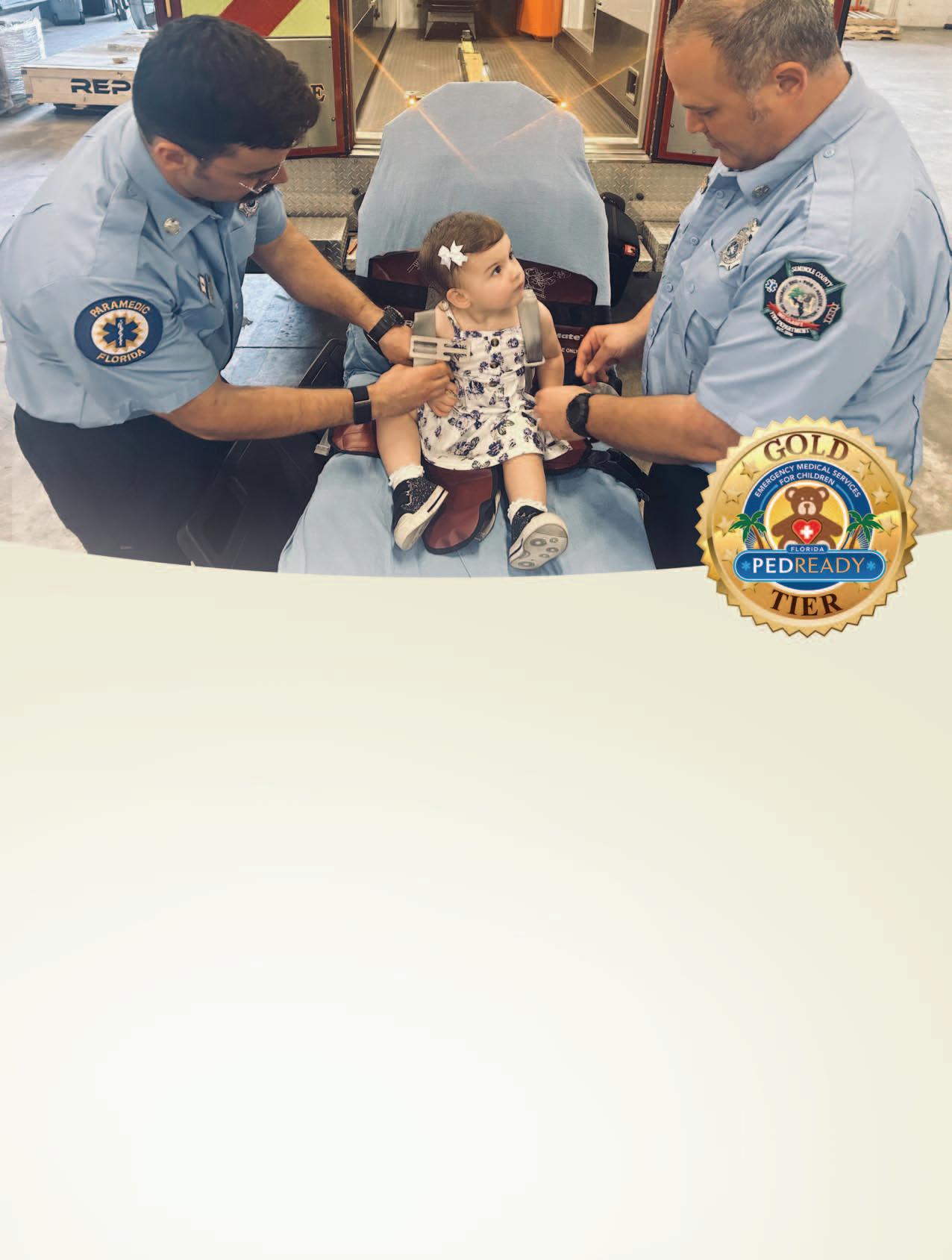
Approximately seven percent of all Seminole County Fire Department (SCFD) emergency medical services calls involve pediatric patients. To ensure the highest level of care for children in emergencies, SCFD maintains a strong focus on pediatric preparedness through specialized equipment, advanced training, and rigorous standards.
In recognition of these efforts, the Florida Prehospital Pediatric Readiness Recognition Program (PRRP) has recognized SCFD with its PEDReady Gold-Tier designation.
The designation honors EMS and fire-rescue agencies that demonstrate an exceptional commitment to improving pediatric emergency care, education, and readiness.
“We’re incredibly proud to be one of only 10 fire agencies in Florida, and among just a few in Central Florida, to achieve this Gold-tier status,” said Chairman Andria Herr of the Seminole County Board of County Commissioners. “It’s a strong reflection of the Fire Department’s dedication to excellence and to protecting our children, while helping families feel confident and secure.”
“We pride ourselves on delivering highquality EMS care across all patient populations,” said Seminole County Fire Chief Matt Kinley. “This recognition affirms our commitment to providing specialized care for our youngest patients and investing in the training and equipment necessary to ensure children receive the best possible medical care when they need it most.”
SCFD’s pediatric readiness includes a comprehensive approach to training, quality improvement, and specialized resources, such as:
• A designated Prehospital Pediatric Emergency Care Coordinator.
• A department-wide Pediatric Quality Improvement Plan.
• Extensive pediatric-specific training, including Pediatric Advanced Life Support (PALS), Prehospital Trauma Life Support, virtual education, and hands-on instruction using SCFD’s Mobile Simulation Lab.
• Scenario-based training addressing pediatric behavioral disorders, developmental delays, crisis recognition, and effective
communication strategies.
SCFD also deploys specialized pediatric equipment on its apparatus, including:
• Pedi-Mate and Pedi-Mate Plus systems to safely secure children on rescue stretchers.
• EleGARD, a positioning and CPR support device that elevates a patient’s head and thorax during resuscitation.
• Handtevy, a tool that provides paramedics with rapid access to pediatric medication dosing and equipment information.
• A pediatric pain assessment flipbook to help children communicate pain and overcome language or communication barriers.
The Florida Prehospital Pediatric Readiness Recognition Program was developed in collaboration with state and national partners to ensure EMS agencies are prepared to care for critically ill and injured children. The GoldTier designation represents the highest level of pediatric preparedness, recognizing agencies that demonstrate excellence through dedicated leadership, specialized equipment, and comprehensive training.

By Jenn Samsel, Independent Journalist
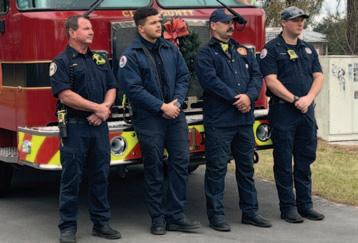
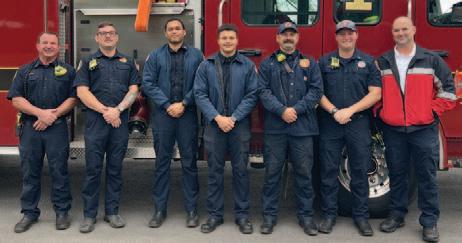
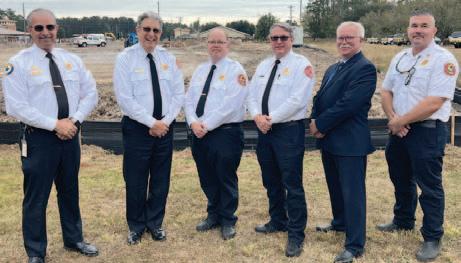
Clay County Fire Rescue hosted two groundbreaking ceremonies in Middleburg, Clay County.
It has been over 25 years since a brand-new fire station was constructed in Clay County. This special occasion marks the long-awaited need for more fire stations to meet the demands of the ever-growing population and increasing call volume in the area.
“These new fire stations truly represent a major step for Clay County. Station One, it’s been more than 25 years since we opened a new service location, a new fire station in Clay County. It will be a location that will serve this community well into the next century,” said


Clay County Fire Rescue Fire Chief, Lorin Mock.
Historically, fire stations in Clay County were built based on the locations of volunteer firefighters at that time. Station 22, located on Pine Avenue, was one of those stations. Today, its relocation to a more central part of the community will improve service for residents.
Furthermore, the new fire station, Station 1, situated off Old Jennings Road in Middleburg, will improve coverage for the community’s growing population. It is a completely new station, not a replacement.
“This is such an exciting, groundbreaking milestone, not just for me, my fellow commissioners, and our hardworking staff, but definitely for our community. These new stations represent progress, safety, and our continued commitment to serving and protecting our residents,” said Clay County District 5 Commissioner Dr Kristen Burke, and Chair of the Clay County Board of County Commissioners.
“We’re deeply grateful to everyone who helped bring this vision to life, and our incredible staff and first responders, thank you for your dedication and professionalism, and service to our community,” she continued.
Both locations will be state-of-theart, making them more efficient and capable of accommodating more firefighters and trucks, thereby helping achieve quicker response times.
Several fire stations are included in the $65 million bond, including Station 1 and Station 22. Station 20, a replacement station that opened in August 2025, was the first completed under the
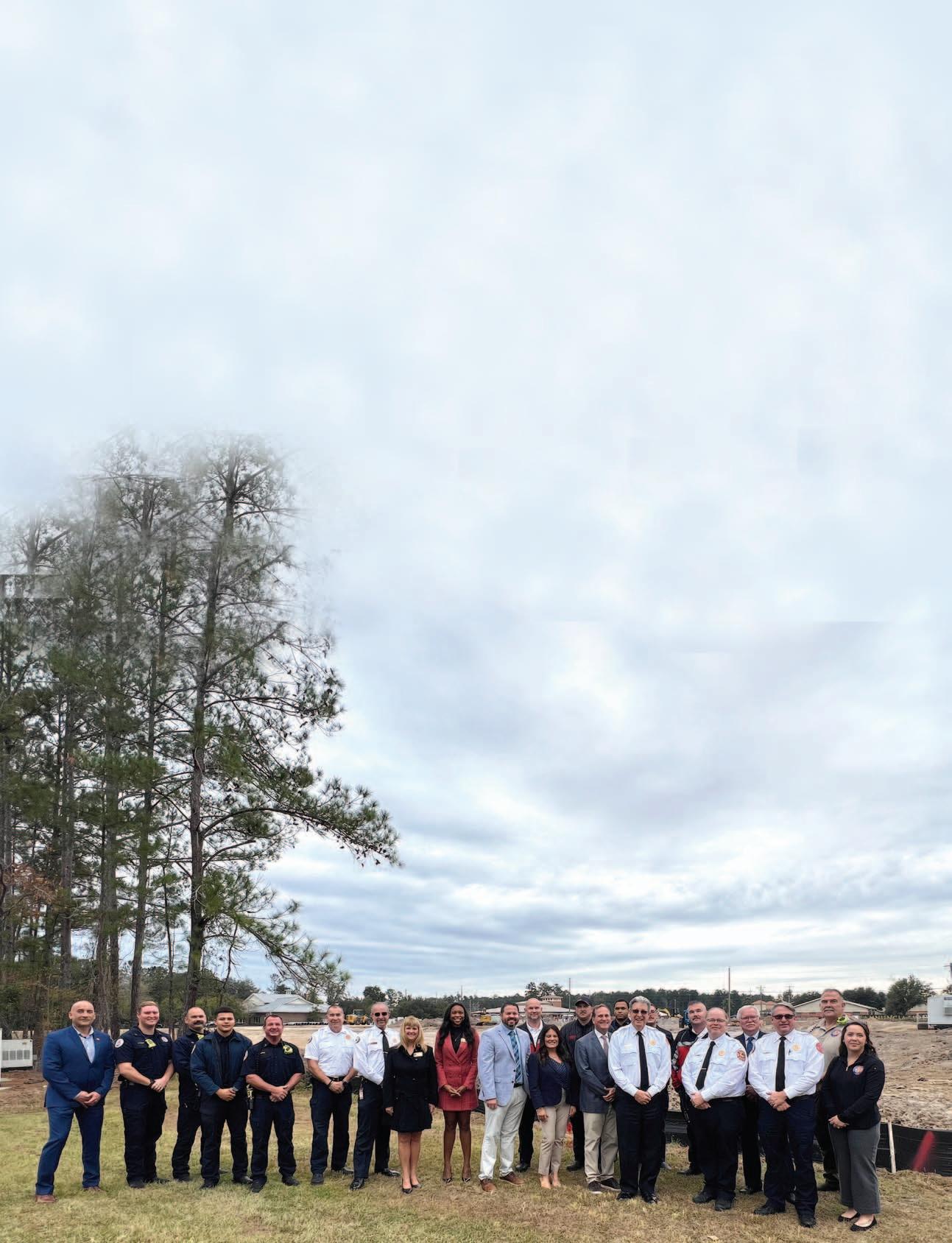
$65 million bond, and several more stations are planned.
“Having this new Fire Station 1 right here in this district means faster response times, expanded coverage, and stronger support for men and women who dedicate their lives to protecting our lives. It means families, schools, and businesses can rest a little easier knowing that help will be closer than ever when it’s needed most,” said Clay County District 2 Commissioner Alexandra Compere.
“It’s a safe haven for kids who want to come sit on the truck. It’s a safe haven for people who are in need, who need immediate assistance. It’s a privilege to stand here and celebrate with you the construction of Fire Station 22, a project that represents safety and the strength of our Clay County community,” said Clay County District 1 Commissioner John Sgromolo.
The need for additional fire stations arises from the significant increase in call volume over the years. Sixteen years ago, they handled approximately 15,000 calls annually Today, that number has surged to over 30,000.

By Kristi Campbell, Mitigation Officer, Volusia County Fire Rescue
In a profession defined by courage, competence, and leadership under pressure, Volusia County Fire Rescue is marking a meaningful moment in its history. Today, all four of the department’s rescue specialty teams—Aircraft Rescue and Firefighting (ARFF), Hazardous Materials (HazMat), Technical Rescue, and Wildland Fire—are led by women. This leadership is neither ceremonial nor symbolic; it is operational, earned, and grounded in experience.
These officers lead some of the department’s most complex and high-risk disciplines, entrusted with critical decisionmaking, team readiness, and operational success. Their roles reflect a deep commitment to excellence and the confidence placed in them by the organization they ser ve.
This milestone represents far more than a demographic achievement. It reflects a deliberate culture of professional excellence—one in which leadership is earned through experience, technical master y, and the ability to build and sustain high-per formance teams. Collectively, these four leaders bring decades of ser vice, specialized expertise, and a shared commitment to preparing their teams for the most complex and high-risk incidents their community may face. Each officer arrived at her specialty through a unique path shaped by different motivations and challenges. What unites them is a common mission: to lead elite, mission-ready teams capable of operating decisively when the stakes are highest.
Lieutenant Lesley Crandall – Aircraft Rescue and Firefighting (ARFF)
Lieutenant Crandall, that responsibility is not daunting; it is motivating. She thrives on the challenge of leading a team that must be ready to perform without error under extraordinary pressure.
Beyond ARFF, Lieutenant Crandall brings a depth of experience that strengthens the department as a whole. She has long served on the Technical Rescue Team and is an instructor at Daytona State College, where she teaches Fire Standards to the next generation of firefighters. She also conducts facility training for VCFR personnel and neighboring agencies, reinforcing regional readiness. Her leadership vision emphasizes professionalism, accountability, and seamless integration. She is committed to building an ARFF team that not only meets regulatory requirements, but sets the standard for safety, per formance, and collaboration with airport and departmental partners.
Battalion Chief Heather Lorimor –Hazardous Materials (HazMat)
Team operates like a well-oiled machine when the stakes are highest and the margin for error is nonexistent.
With 25 years of full-time service, Battalion Chief Kara Haun leads the Technical Rescue Team with energy, experience, and a clear, uncompromising philosophy: be ready for anything. Drawn early in her career to the most physically demanding and adrenalinedriven challenges the fire service offers, Chief Haun has spent years dedicated to Technical Rescue operations. Her leadership is rooted in preparation—ensuring personnel are thoroughly trained, physically capable, and mentally confident to operate in complex, high-risk environments.
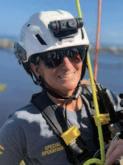


In addition to her work in Technical Rescue, Chief Haun has played a key role in departmental health and safety initiatives, reinforcing her belief that readiness extends beyond equipment and training to include firefighter wellness and long-term sustainability Under her direction, the Technical Rescue Team emphasizes competence, confidence, and operational readiness. Whether responding to confinedspace incidents, structural collapse, or highangle rescues, the team is prepared to mitigate emergencies effectively and safely.
Lieutenant Lesley Crandall, leader of VCFR’s Aircraft Rescue and Firefighting (ARFF) Team, has served in the fire service since 2001. She was drawn to ARFF by its unforgiving operational environment—where preparation, precision, and split-second decision-making can determine the survival of hundreds of passengers. ARFF operations demand flawless coordination, advanced technical expertise, and absolute accountability. For
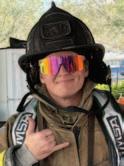
Battalion Chief Heather Lorimor leads the HazMat Team with more than 26 years of fire ser vice experience, 23 years as a career firefighter and three years as a volunteer Her introduction to hazardous materials response came early in her career through encouragement during probation, but it quickly evolved into a passion. HazMat response is often described as solving a complex puzzle under pressure, requiring a deep understanding of chemistry, risk assessment, and strategic problem-solving. Chief Lorimor thrived in this environment, drawn to a discipline that rewards critical thinking, precision, and adaptability. Her influence extends well beyond Volusia County. Chief Lorimor is an instructor for the National Fire Academy, Chair of the Florida HazMat Responders under the Florida Fire Chiefs Association, Chair of Region 5’s Local Emergency Planning Committee, and a recognized HazMat Subject Matter Expert who has deployed during major incidents. As a leader, her focus is sustainability and resilience. She is committed to building a HazMat team supported by strong succession planning, modern equipment, and robust partnerships with local agencies and private industry. Her goal is to ensure the HazMat
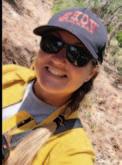
Lieutenant Kristi Campbell leads VCFR’s Firewalker Wildland Team, bringing 14 years of fire service experience and a strong blend of operational expertise and communityfocused leadership. An avid outdoors enthusiast, she discovered her passion for wildland firefighting after attending the Southern Area Engine Academy in 2013. She was drawn to the complexity and adaptability of wildland fire operations, where weather, fuel conditions, terrain, and human behavior constantly influence strategy and tactics.
In Florida’s fire-dependent ecosystem, wildland firefighting extends well beyond suppression. Prevention, mitigation, and
public education are critical components of reducing wildfire risk. Lieutenant Campbell actively collaborates with residents, cooperators, and partner agencies to strengthen preparedness and reduce hazards in high-risk Wildland–Urban Interface areas.
Her leadership extends across the department and beyond. She serves on the Critical Incident Stress Management and Peer Support teams, chairs the Health and Safety Committee, instructs both fire and EMS training and has contributed to the development of statewide line-of-duty death criteria. She also serves as event coordinator for the Florida Fire Foundation’s for Love and Honor Gala.
Looking ahead, Lieutenant Campbell’s vision for the Firewalker Team is both ambitious and forward focused. She is committed to advancing community education, maintaining elite performance on wildfire deployments, strengthening interagency partnerships, and developing a team capable of managing large-scale incidents through the Incident Command System with precision and efficiency.
This achievement is not about gender—it is about excellence. These four leaders earned their positions through experience,
credibility, and consistent performance. Together, they demonstrate that leadership in the fire service is defined by knowledge, preparation, and the ability to inspire others to per form at their best. Volusia County Fire Rescue’s four specialty teams, led by these professionals, reflect an unwavering
commitment to operational excellence and service. Their leadership strengthens safety, builds trust, and elevates the performance of the entire organization. History is being shaped—not by circumstance, but by capability, dedication, and results.

By Rich Ganci, CFO, CTO, CEMSO, Division Chief, Safety & Training, St. Petersburg Fire Rescue
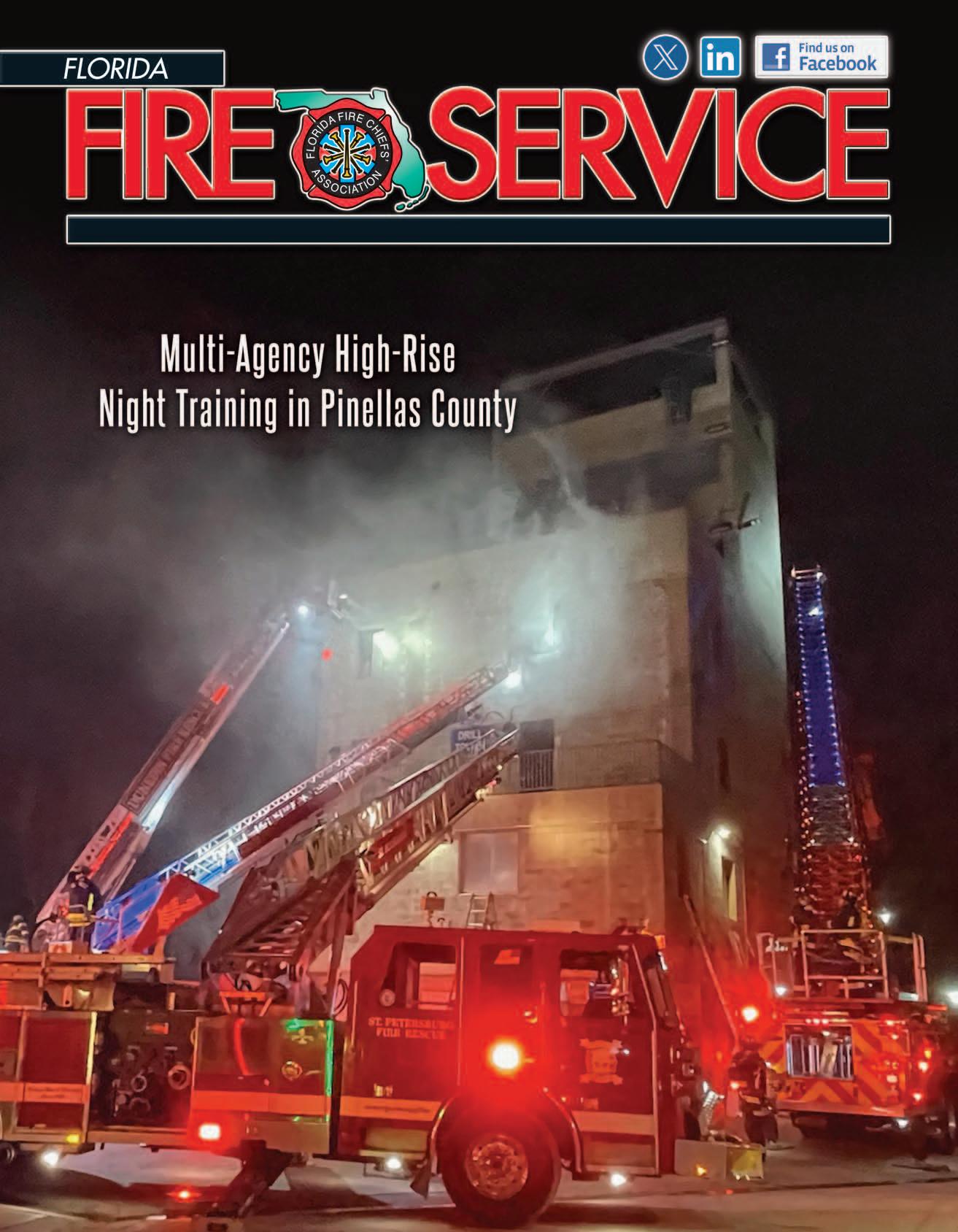
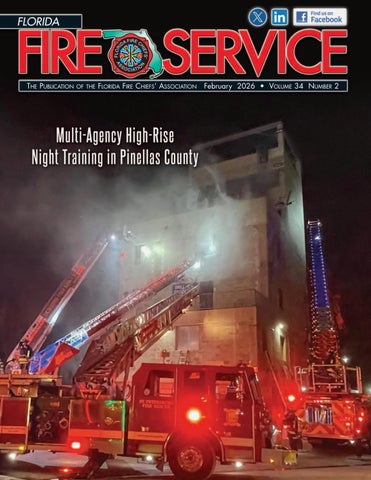
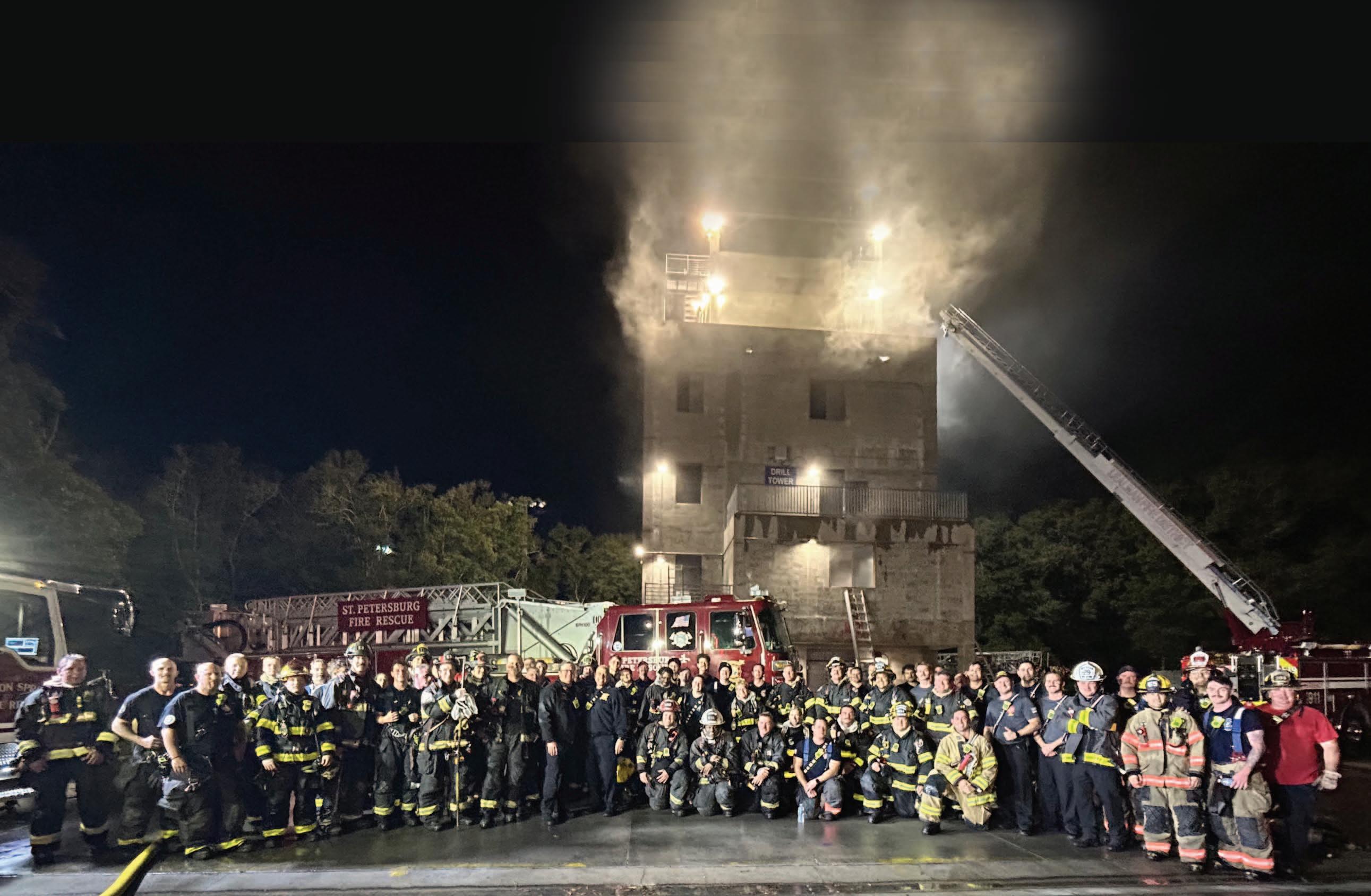
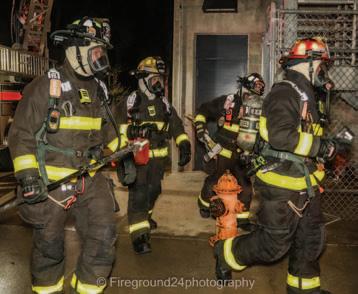
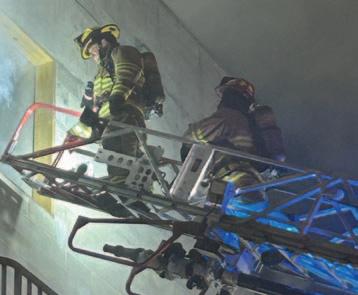
Pinellas County Training Group recently conducted multi-agency high-rise night drills in Pinellas County, FL. Fire departments representing eighteen agencies joined together over eleven deliveries. These high-rise drills are designed to test and strengthen skills when conditions are at their worst.
Operating in low-light, high-risk environments, crews focused on coordination and implementation of fire suppression operations, which included the following tasks defined in the EEG:
• assessing the scene, assigning resources
•establishing an incident command system (ICS) consistent with the NIMS
•communicating the situation status
•requesting additional resources
•establishing a safe perimeter
•evacuating civilians in danger
• rescuing trapped victims
•conducting fire suppression
•determining the cause of the fire(s)
• ensuring the area is left in a safe condition
The benchmarks of the drill included:
• dispatch and safe arrival of the initial fire suppression resources occurs within jurisdictional response time objectives
• The initial arriving unit initiates the incident command system (ICS)
• assesses the incident scene
• communicates the situation and requests appropriate resources
•firefighting activities are conducted safely, and fires are contained,
controlled, extinguished, investigated, and managed in accordance with emergency response plans and procedures
These drills emphasized strong interagency coordination and deliberate repetitions. From command-level decision-making to hands-on execution, firefighters worked seamlessly across departments, reinforcing common tactics and expectations. The result was efficient incident command scene management and confident operations from the street to the upper floors.
Additionally, training extended beyond firefighting tactics. Crews conducted victim treatment following rescue, including a full
cardiac arrest response with Cyanokit administration, ensuring continuity of care from rescue to advanced medical intervention.
High-rise incidents leave no margin for error. These night drills were a clear example of professionals at work, highlighting operational strengths while also helping inform areas for continued refinement and future training.
At the conclusion of the drill, HSEEP was utilized to determine if the goals were met and where refinements can be made. These drills occur every three years and are a demonstration of dedication, teamwork, and a shared commitment to excellence from all Pinellas County fire departments.



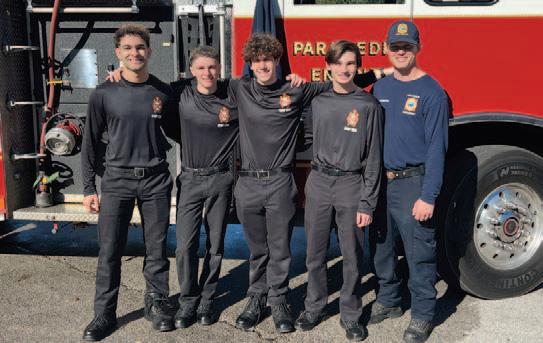
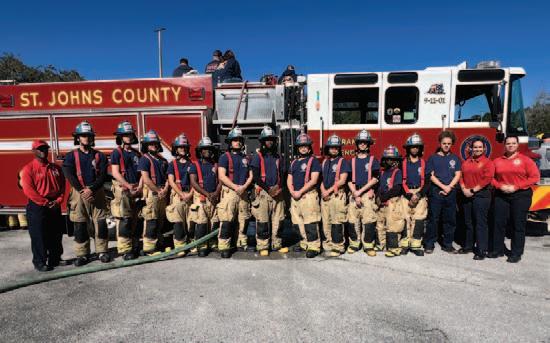
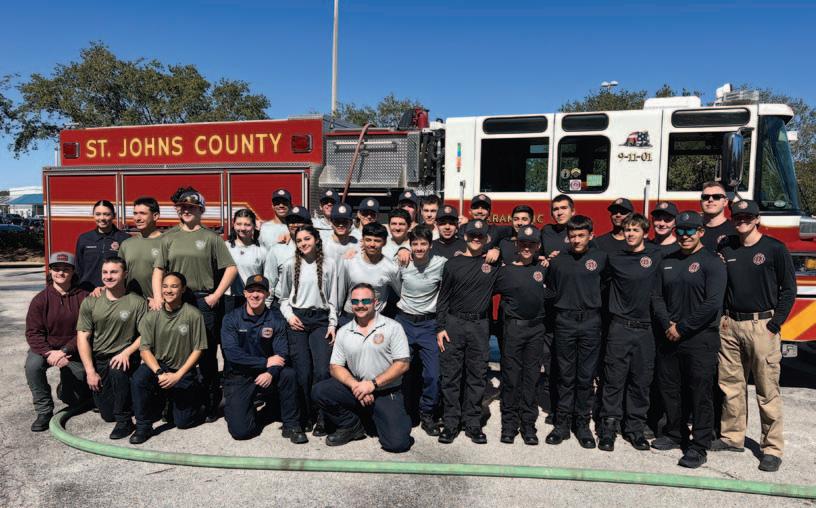
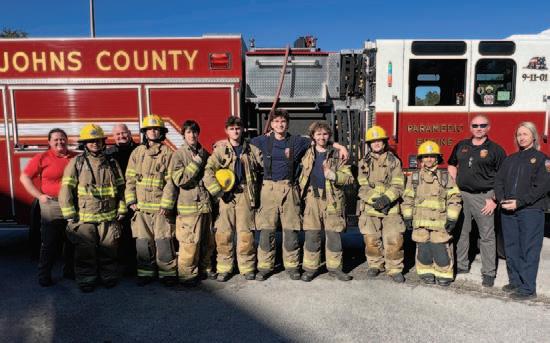
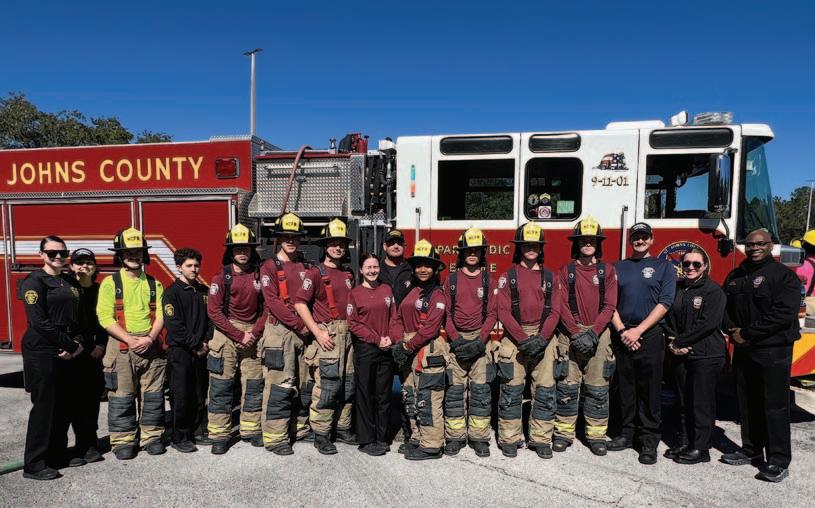
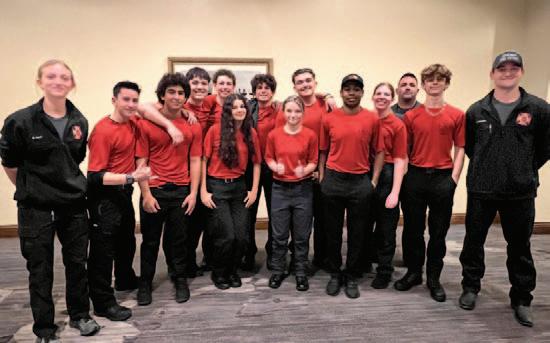
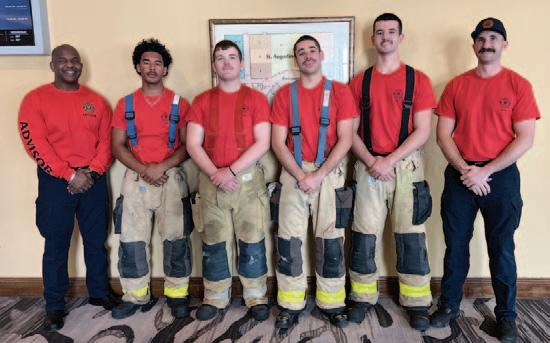
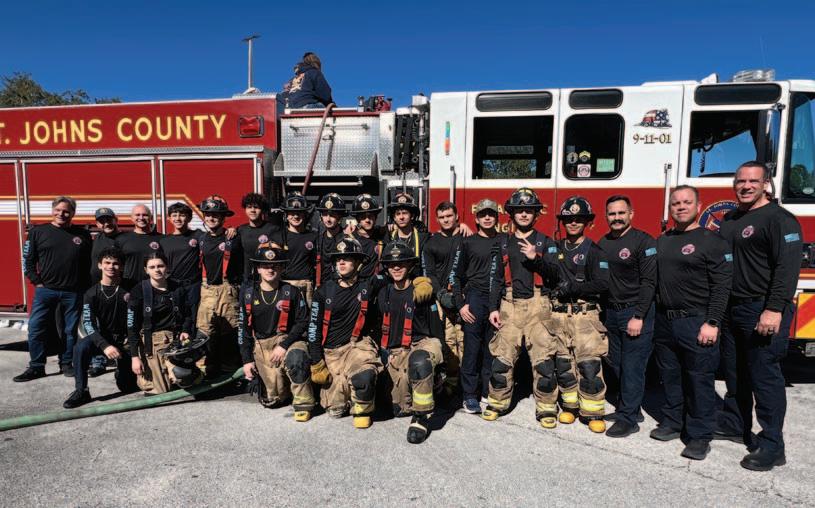
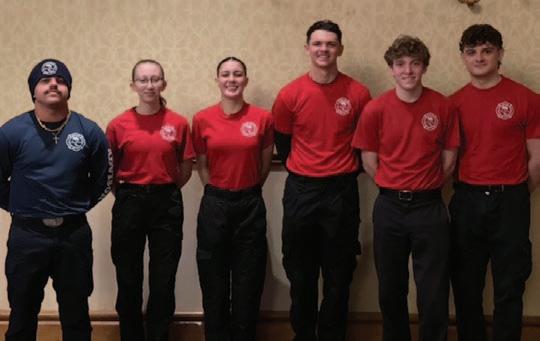
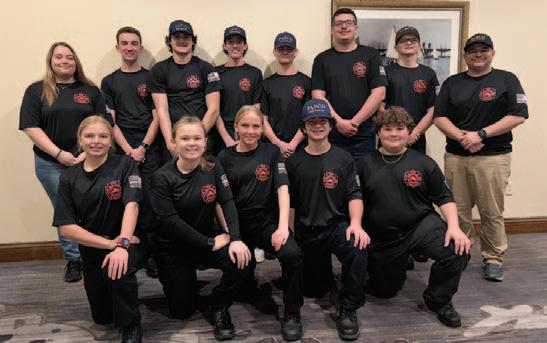
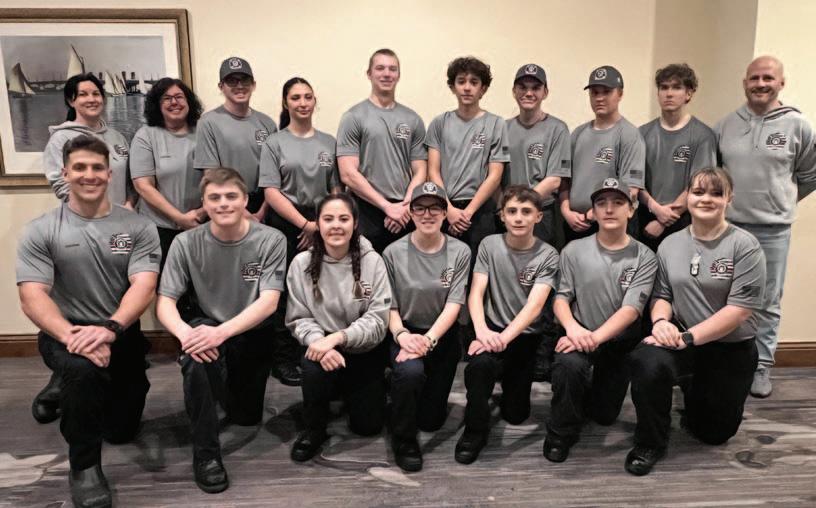
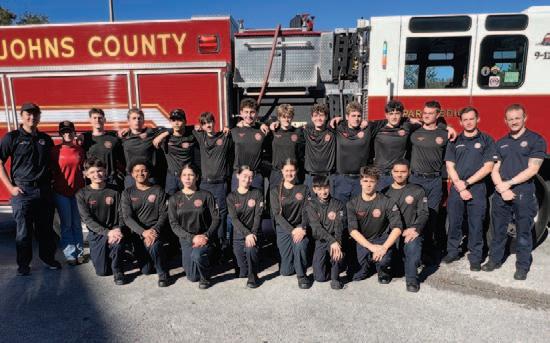
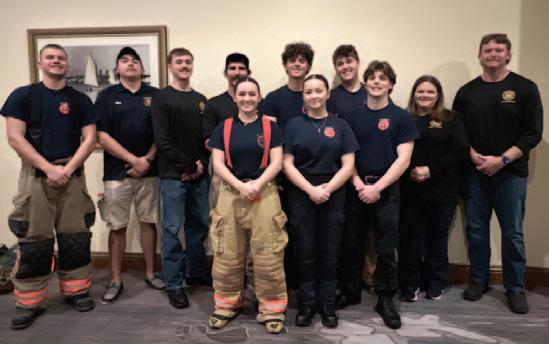
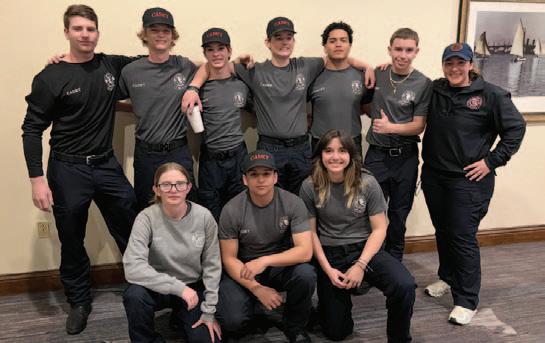
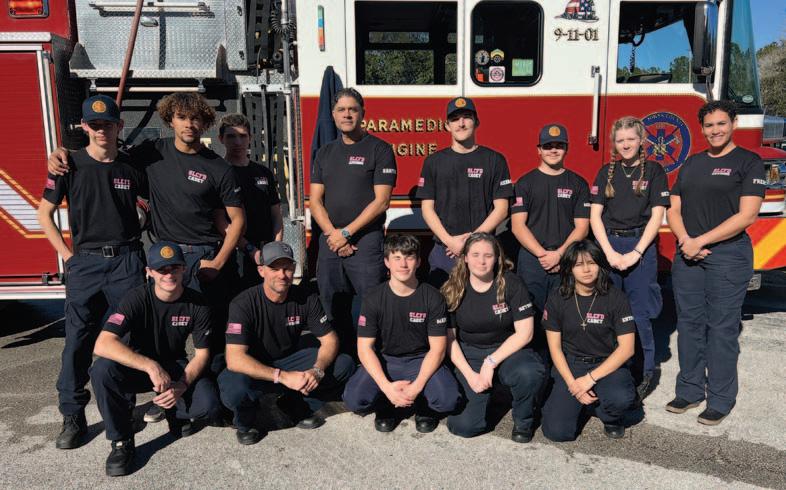
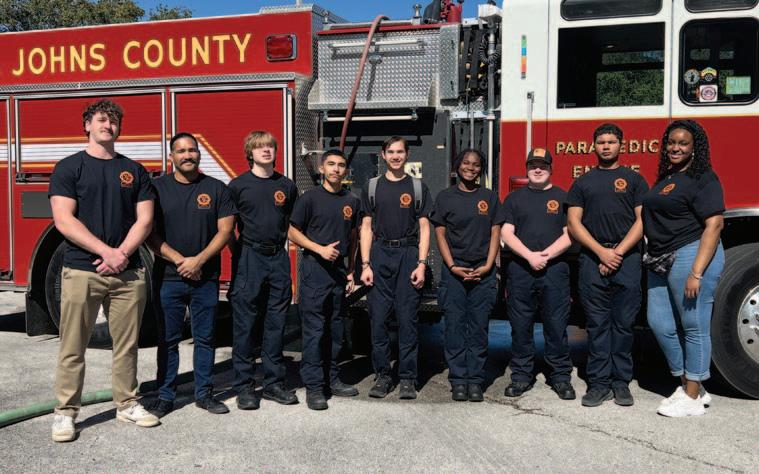
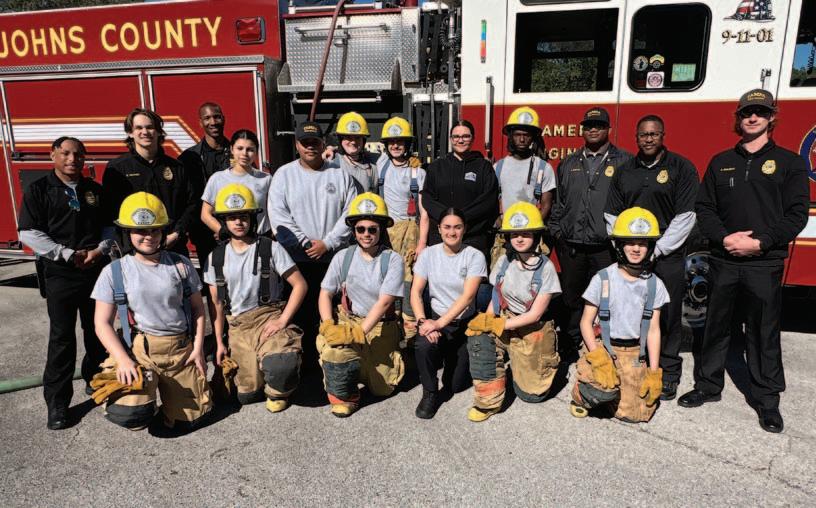
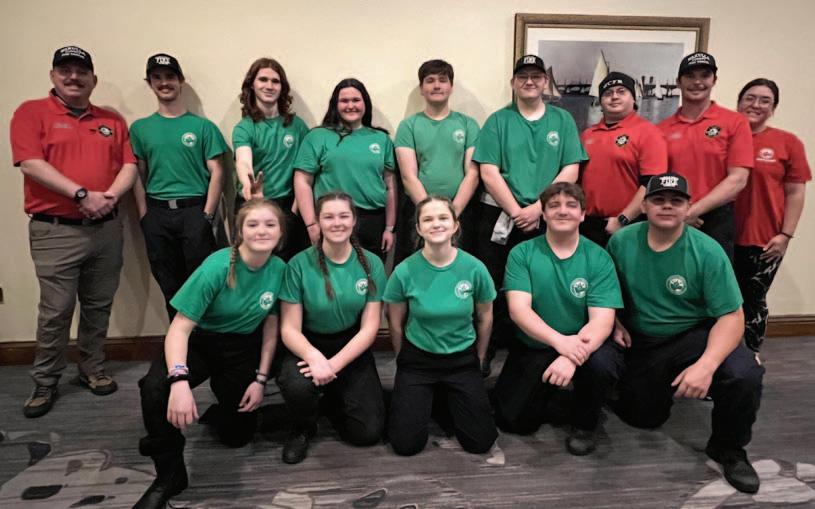
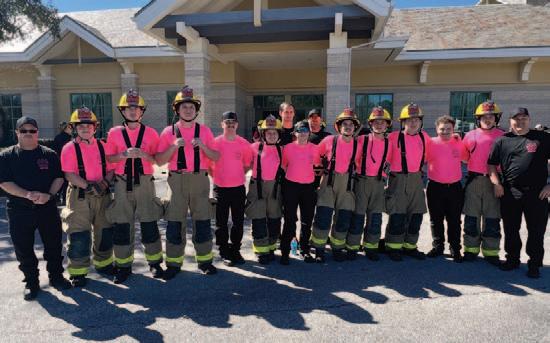
Afierce competition as multiple Fire Cadet individuals/teams from across Florida and Georgia vied for 1st, 2nd, and 3rd place in various events.
This year’s event was held in St. Augustine, Florida, and hosted by the St. Johns County Fire Department and the Florida Fire Chiefs Association Fire Cadet Section for its 10th Annual Florida Fire Winter Games.
“The Winter Fire Games are a great opportunity for the cadets to show the pride they have for their Post and to be rewarded for the dedication and hard work they have put in with every competition practice. It is also a great time for the advisors and cadets to meet and network with other advisors and cadets from different departments. It is amazing to watch the friendships grow over the years. This is my 3rdWinter Games, and I look forward to it more every year. Chief Coulter and his team do an amazing job organizing the event,” said Stephanie Whaley, Section Chief, Health and Wellness, St. Johns County Fire Rescue.
The event was open to cadets in the Fire program, ages 14 to 21.
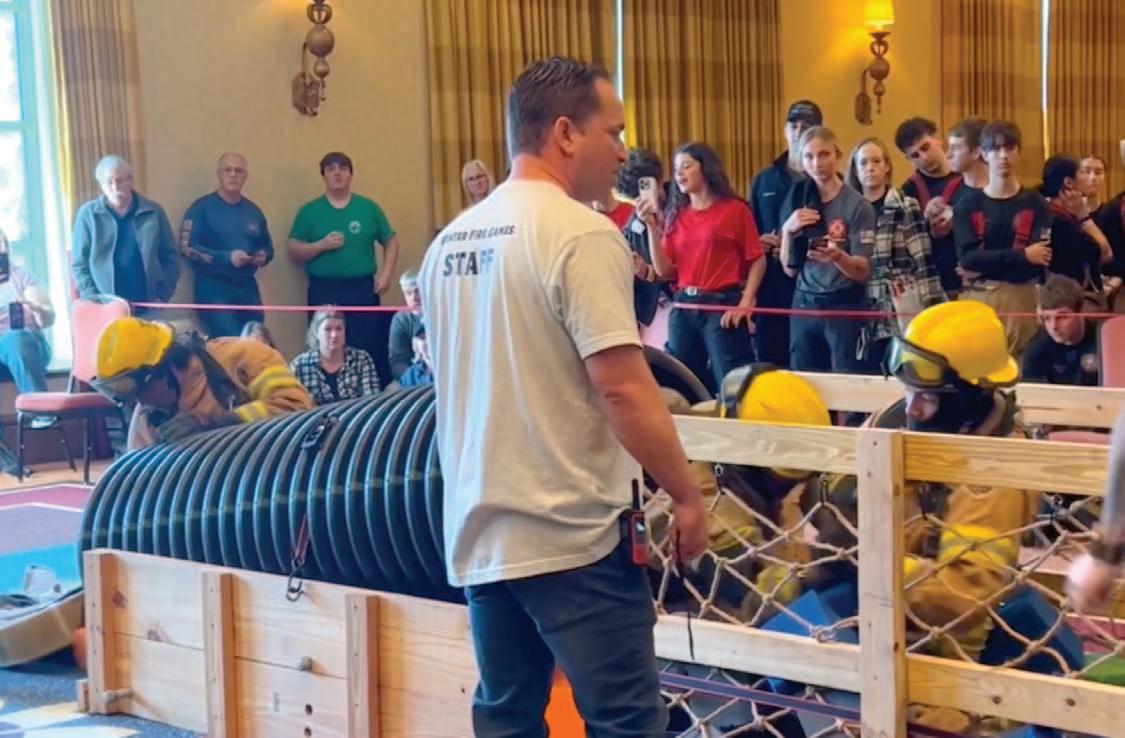
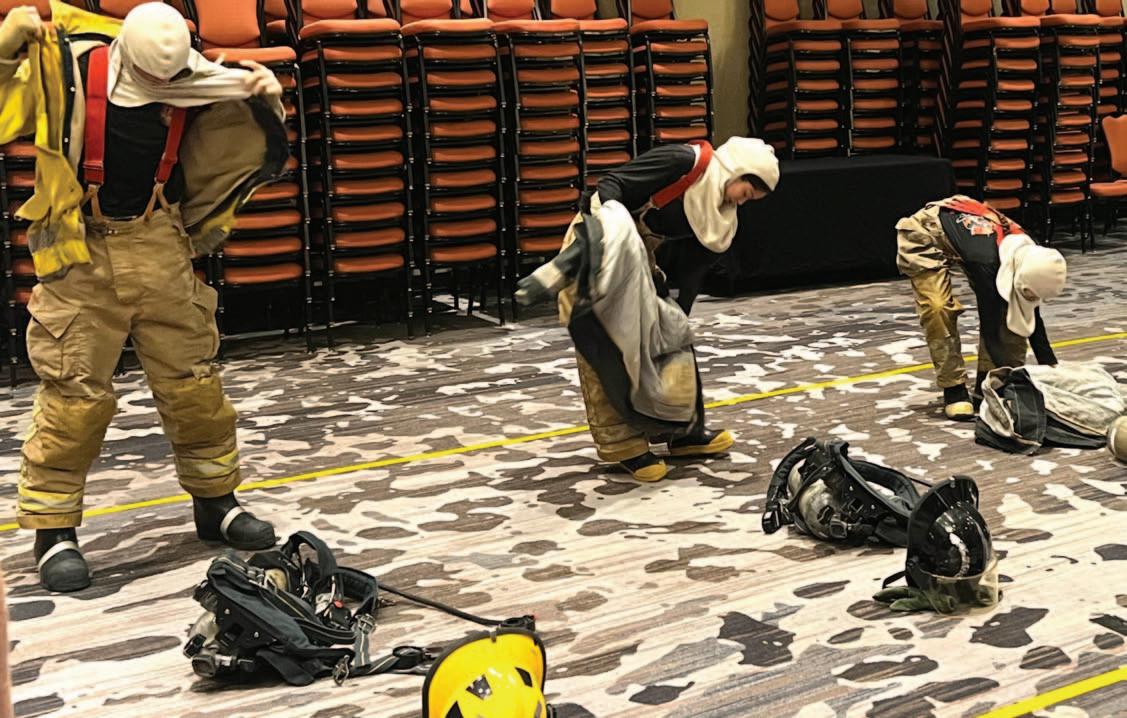
The categories in which the students competed included the Rapid Doff and Don,
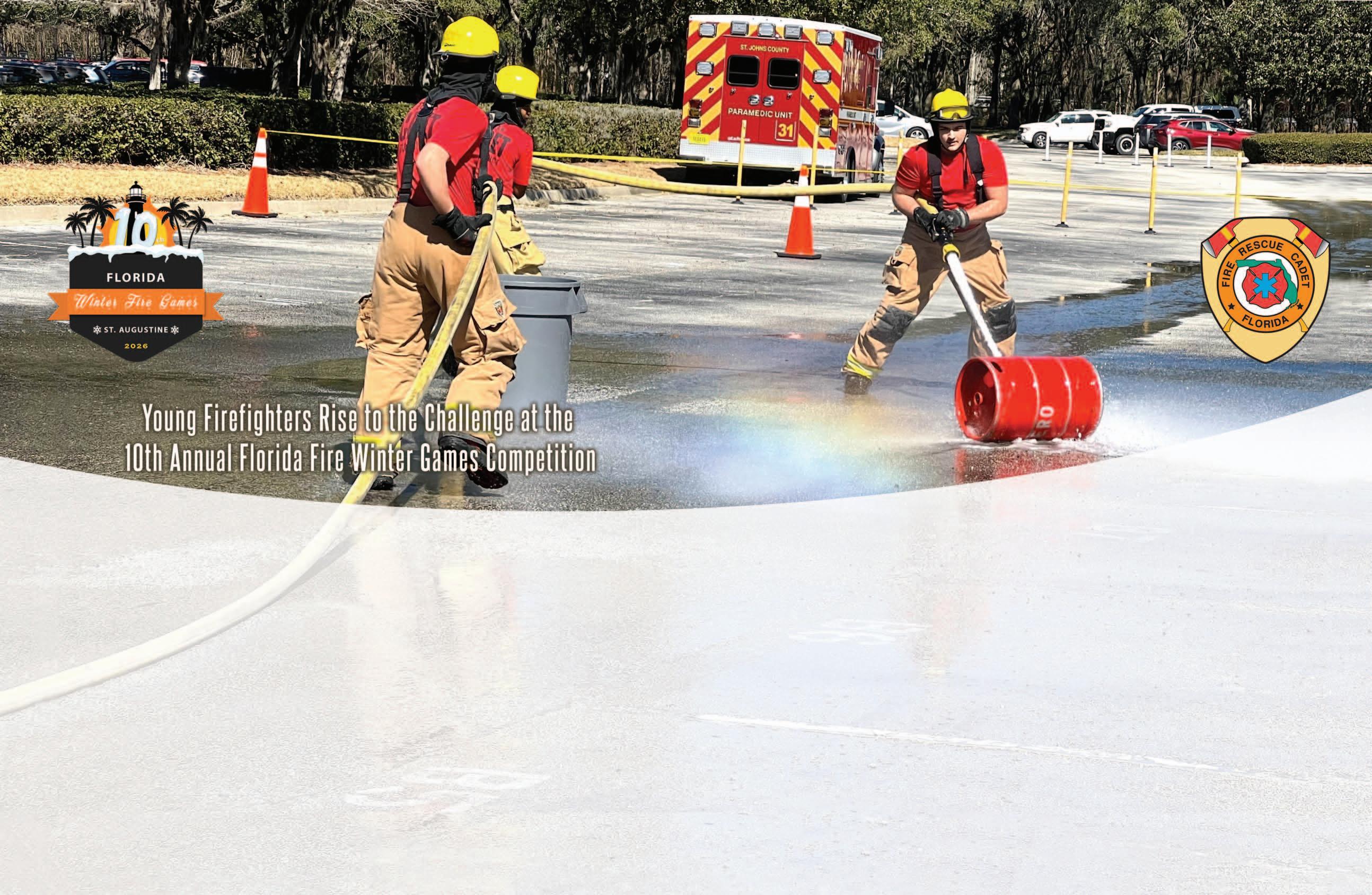
Station Fitness Relay, Victim Rescue Drill, Barrel (Keg) Push, EMS Communications Challenge, and the Firefighter Relay.
The competition challenged their quick thinking, reaction to timed drills, ability to work under pressure, and teamwork as they encountered various obstacles, including endurance challenges.
All of these skills assist with the training and knowledge needed for those aspiring to become firefighters.
“We saw that all the other fire departments across Florida and neighboring departments were doing it. We already had a strong junior cadet program, so we thought that it would be the best outcome for us is to come here and compete and showcase the hard work that these young kids are doing every day. I love the intensity of the kids, and we are very excited to be here. This is our first time competing in a long time,” said Gerry Rodriguez, Assistant Fire Chief, Training Division for the City of Miami Fire Department.
Some teams participated for the first time, while others have been involved since the
program began.
“We have two teams here today, and we’re hoping to do well, make friends, and collaborate with other cadet programs and support each other in that process. With the FFCA having been hosting the Cadet Winter Games for as long as we can remember, we’ve been part of it from the beginning, and it’s an awesome experience. I thank Chief Coulter and the staff of the Cadet section for the awesome job that they do with this, putting this on every year,” said Norman Brown, Section Chief, Hillsborough County Fire Rescue.
“We have 12 cadets, so three teams are competing today, and four additional advisors are here helping out with us. We’ve been involved in this for now seven years. We know we have to compete against departments that are a lot larger than we are, have more resources, so the kids really try to push themselves so that they can place,” said Karem Scott-Kotb, Assistant Fire Chief, Alachua County Fire Rescue.
“It’s nice to see the support for the future of the fire service with fire department staff,
parents, loved ones, and friends that have come to cheer these kids on, and it’s really nice to see the investment that people are putting into youth. You see it with all the fire departments here, how much their kids are locked into this and really want to compete and represent the state of Florida,” he continued.
For other students, this was their last chance to compete in the cadet program before transitioning into careers as full-time firefighters.
A family with a long history of firefighter’s shines as her son competes in his final cadet tournament. He has received his Firefighter I certification and is set to complete his Firefighter II training this spring. He aspires to be hired by the Lehigh Acres Fire Department.
“This is our third cadet game, and this will probably be our last because our son is going to be finishing up fire school, and then he says he wants to be an advisor, so he wants to pass it on and help other cadets,” Christi Fulton, North Fort Myers Fire District, PIO.
“I’m a fire investigator, PIO, and a fire inspector for Fort Myers, and his dad is a fire medic at Lehigh, and then my father was a fire
chief for Okeechobee, and he was a major at the state fire marshal’s office, and then my mom worked for Bonita Springs fire, it’s a lot of fire. Not many people can say that. Like a piece of everybody is part of the fire service somewhere, and then we do have, my oldest brother is retired from the Osceola County Fire Department, keep on adding one more,” she said.
A total of 25 counties and 49 teams, with 300 participants from across Florida and Georgia, competed this year. The winter games are one of the largest tournaments.
Who is the Florida Fire Chiefs’ Association Fire Cadet Section
The Mission of the Florida Fire Chiefs’ Association Fire Cadet Section is to provide fire departments with the necessaryresources to sponsor youth programs that will develop future firefighters and emergency medical providers. The section is dedicated to “Home Growing Our Own” by ensuring the leaders of each program have the resources to provide purposeful training in fire, emergency medicine, and leadership development.
The goal for each sponsoring fire department is to provide a program that will
provide the youth of their communities an opportunity to become mature young adults with good leadership and decision-making skills.
-Fire Rescue Cadets Section of the Florida Fire Chiefs’ Association
Reminder: Summer Gator Games, July 31 to August 2, 2026, in Gainesville, Florida.
Congratulations to all the participants for an outstanding job! Here are the final results.
Barrel (Keg) Push
1st place - Lehigh Acres
2nd place - Palm Beach County
3rd place - Broward County
EMS Communications
Challenge
1st place - Miami-Dade
2nd place - Palm Beach County
3rd place - Alachua County
Firefighter Relay
1st place - Miami-Dade
2nd place - Miami-Dade
3rd place - St. Johns County
Rapid Doff and Don (Team)
1st place - Miami-Dade
2nd place - Boca Raton
3rd place - Miami-Dade
Station Fitness Relay
1st place - Miami-Dade
2nd place - Miami-Dade
3rd place - Tallahassee
Rapid Doff and Don (Individual)
1st place - FB Boca Raton
2nd place - Aiden Miami-Dade
3rd place - German Miami-Dade
Victim Rescue Drill
1st place - Miami-Dade
2nd place - Hillsborough County
3rd place - Miami-Dade


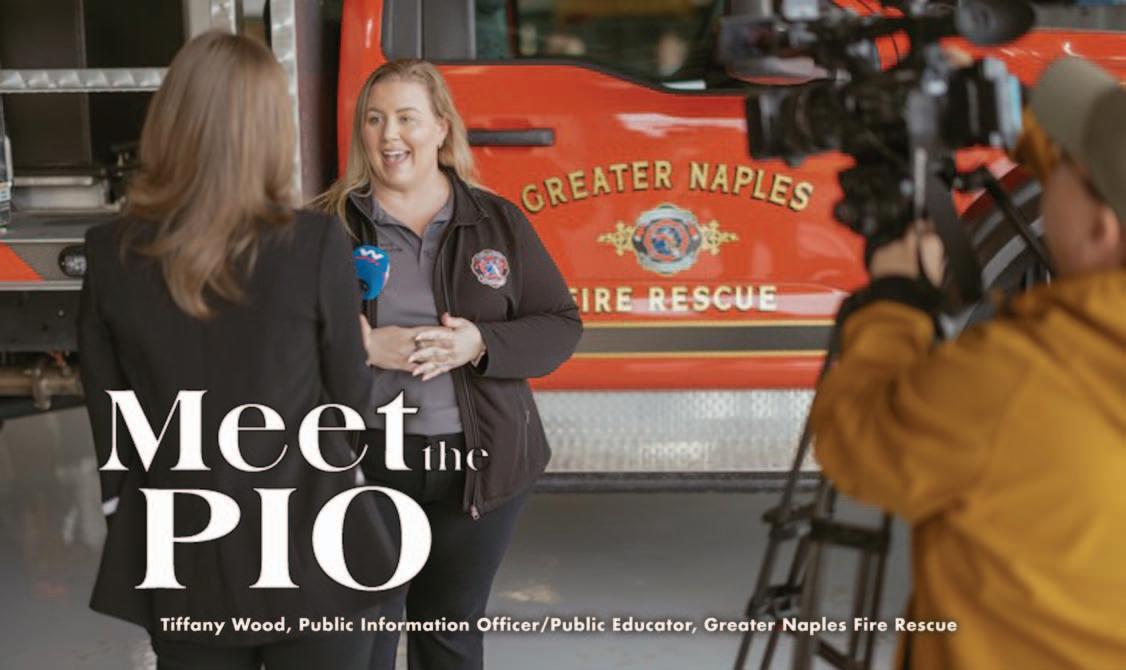
Tell us about yourself personally
I was born and raised right here in Southwest Florida, growing up in the beautiful community of Bonita Springs. Over the past 10 to 15 years, I’ve had the privilege of watching this area—and the Greater Naples Fire Rescue District—grow and thrive. It’s truly rewarding to now be part of an organization that plays such an important role in ser ving and protecting our community.
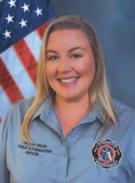
I’m just shy of two years with the District, having previously served 16 years with a local law enforcement agency. That experience gave me a strong appreciation for public safety and community service, which continues to drive my passion for the work we do here at Greater Naples Fire.
I’ve been married to my husband for 13 years, and together we have two wonderful children, Genevieve and James, who keep life fun and full of energy. In my spare time, I enjoy spending quality time with family and friends, traveling to new places, crafting, and, of course, a little shopping here and there.
Describe your PIO philosophy.
My PIO Philosophy is to be as transparent, accurate, and timely as possible. Building public trust and fostering relationships within the public is crucial, but to do that, you must
have buy-in from the crew. Trust is the foundation of effective communication. A PIO must earn the confidence of their personnel to accurately and respectfully represent their work, values, and stories to the public. When employees trust their PIO, they are more likely to share their experiences, successes, and challenges—allowing the agency’s message to be real, relatable, and human.
What is the most challenging issue facing the public information function today?
Honestly, the toughest challenge for PIOs right now is keeping up with misinformation especially when news travels faster than we can fact-check it. Social media lets anyone post “breaking news” in seconds, and it doesn’t have to be accurate. The public often latches on to the first thing they see, so even if it’s wrong, it can be tough to set the record straight later.
On top of that, we’re dealing with deepfakes, edited videos, and AI-generated content that can look incredibly real, which makes proving the truth even trickier. And it’s not just official news sources anymore — you’ve got influencers, bloggers, and anonymous accounts all putting out their own version of events.
So, being a PIO today isn’t just about putting out information. It’s about constantly monitoring the conversation, jumping in quickly to correct misinformation, and making
sure your agency stays a trusted, reliable voice while upholding your values, ethics, and standards, and never compromising your integrity
How has public information changed?
During my time as a PIO at a local sheriff’s office, I launched our social media presence in 2013. Before that, we had no online platforms — public announcements were almost entirely shared through television, newspapers, and radio. Today, social media dominates, often delivering news to the public faster than traditional outlets. PIOs now release breaking updates directly on social media, by-passing media filters and reaching audiences instantly. In the past, we relied on words and the occasional photo to paint a picture; now, we can use videos and livestreams to connect with viewers in real time.
What are some unique aspects of your PIO function?
As the PIO for the largest special district in the state of Florida, I have a uniquely broad and diverse area to cover. Our district includes national preser ves, a panther refuge, the Everglades, and vast stretches of land prone to wildfires. I love that every day brings something new to learn, and our members are always excited for me to share their stories. As the PIO for Greater Naples Fire Rescue, I have the opportunity to set the tone for our
community connections. I’m highly selfmotivated and passionate about showcasing the incredible work our firefighters, fire & life safety, and other staff members do every day to protect and serve.
What skills do you feel a PIO should possess?
A successful PIO should have exceptional communication skills, a strong understanding of media relations, and expertise in crisis communication. They must be social media fluent, an engaging storyteller, and an effective relationship builder. Adaptability and resilience are essential, as is the ability to be a strategic thinker who can anticipate challenges and opportunities.
What do you think is the most challenging issue facing the Fire Service?
I believe one of the biggest challenges in the fire service right now is taking care of firefighters themselves — especially when it comes to mental health.
The job has always been challenging
physically, but today firefighters are also dealing with a ton of emotional weight. Every shift can mean seeing things most people never have to imagine — serious injuries, deaths, devastating losses — and it all stacks up over the years. Add in the stress of long shifts, interrupted sleep, family pressures, and it’s no surprise that burnout, PTSD, and even suicide are real concerns.
The tricky part? Fire service culture has always been about being strong and pushing through. That makes it hard for some firefighters to speak up when they’re struggling, or to ask for help without feeling like they’re letting someone down.
On top of that, the job itself is changing. Cancer risks from toxic smoke, more extreme weather calls, and staffing shortages pile more onto everyone’s plate.
So, at the heart of it, the challenge is figuring out how to protect firefighters’ health physically, mentally, and emotionally — while still keeping that strong, close-knit,
“we’ve got your back” spirit that makes the fire service what it is.
What changes do you think are coming to the Fire Service?
The fire service is evolving beyond just fighting fires. We’re focusing more on medical and community health calls, using new technology to respond faster, supporting firefighter wellness, and adapting to climate challenges — all while working to recruit and retain a skilled, diverse workforce.
What’s the future for PIOs?
I think the future for PIOs is all about being more immediate, transparent, and connected. Social media and digital platforms will continue to dominate, so PIOs will need to deliver accurate information quickly while engaging directly with the community.
Storytelling, multimedia content, and live updates will become standard tools, and PIOs will play an even bigger role in building trust, countering misinformation, and shaping the agency’s reputation in real time.

By Kenny Yost, Division Chief of Training, Department of Fire Rescue and Emergency Services, Broward Sheriff’s Office
We are proud to recognize the seventeen newly hired Firefighter Paramedics of the Broward Sheriff’s Office. These dedicated professionals will complete
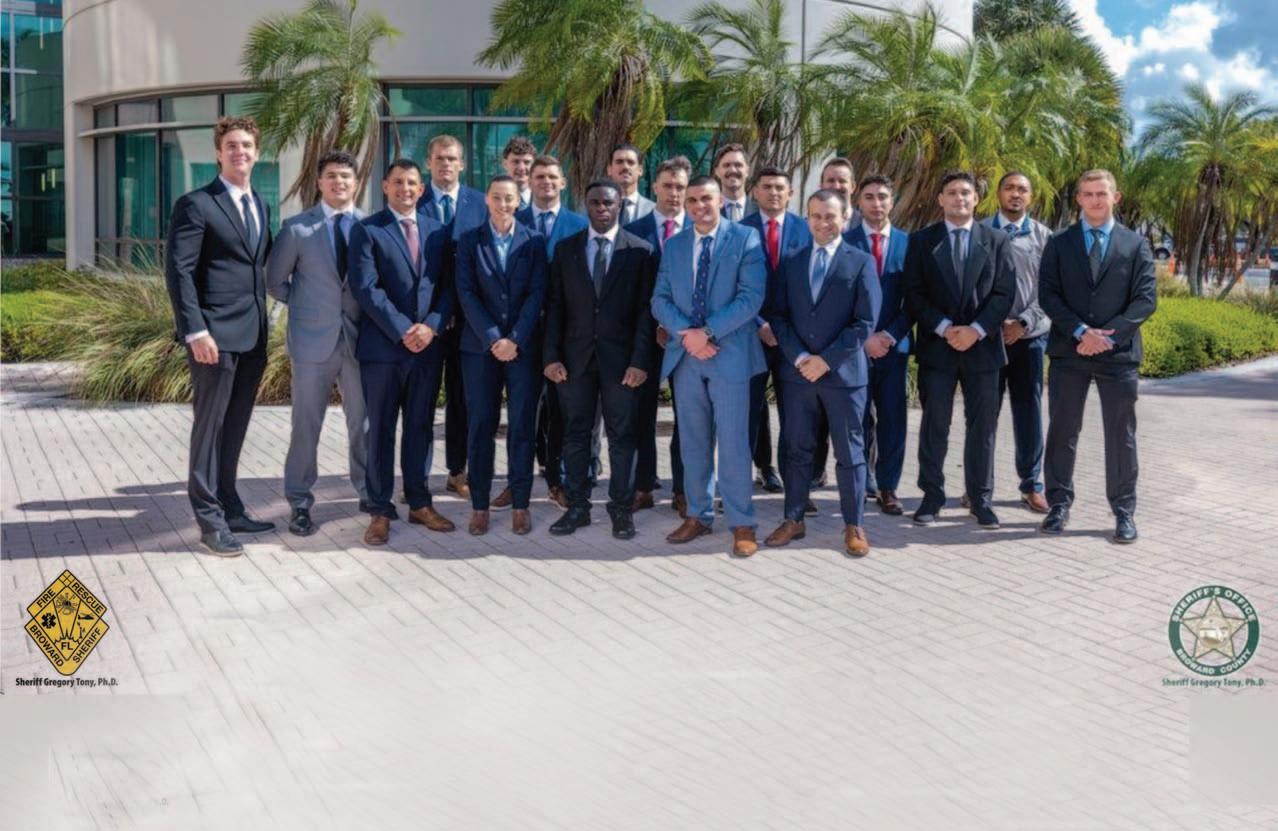
an intensive 10-week new hire orientation, consisting of seven weeks of comprehensive fire training and three weeks of advanced EMS training. This rigorous program is designed to prepare them to meet the
highest standards of service, safety, and professionalism. We commend them for their commitment to protecting our community and wish them success as they begin their careers in public service.
By Davis Wood, APIO, Public Information and Education Officer – Public Safety, Escambia County Board of County Commissioners
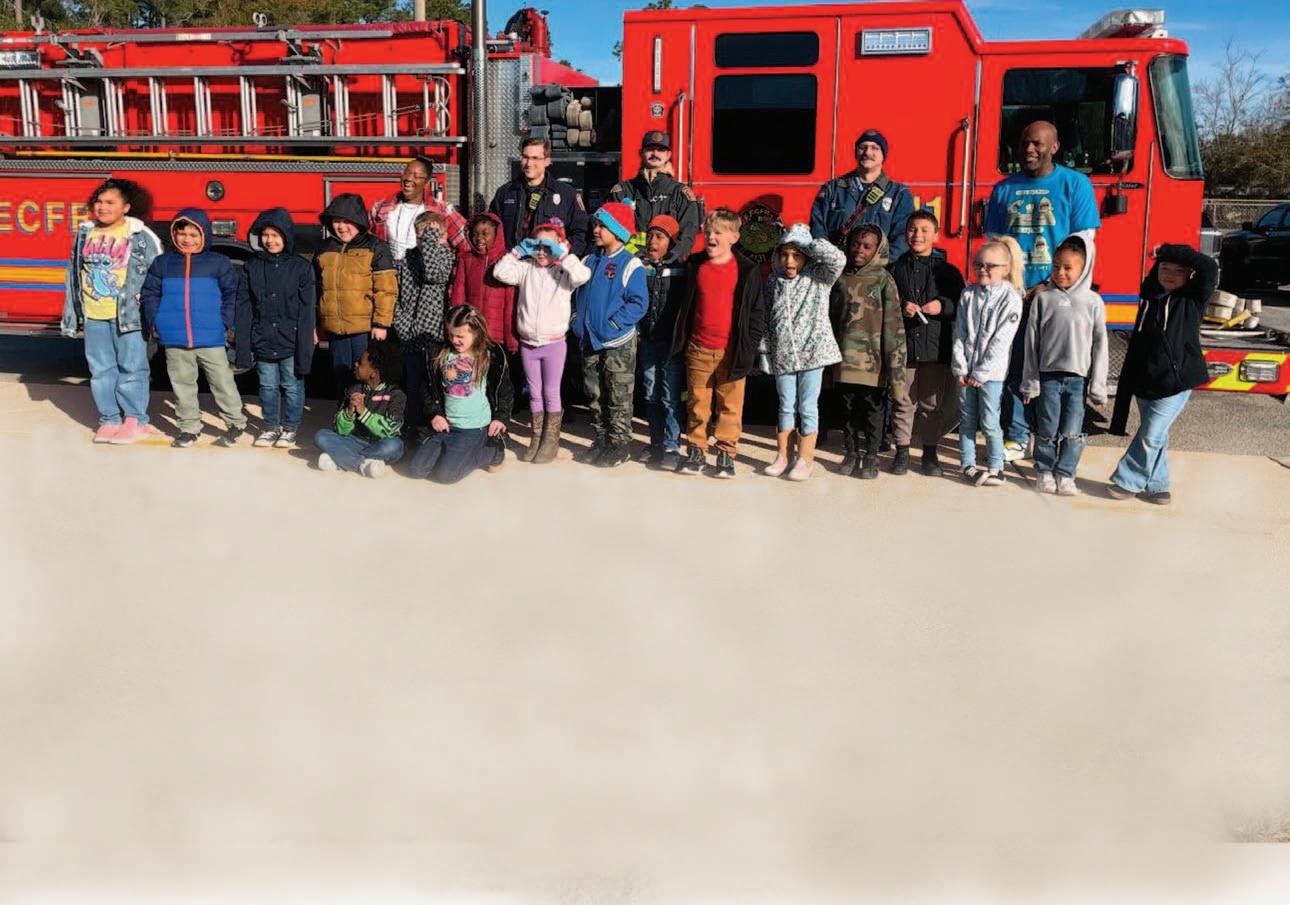
To celebrate Florida Literacy Week, Escambia County Fire Rescue’s Engine 11 read to the students of West Pensacola Elementar y throughout the week. After reading, the students toured Engine 11, getting to see the inside of the fire engine and the tools used by the firefighters
when responding to calls.
Escambia County Fire Rescue enjoyed the time spent with the students at West Pensacola Elementar y. We would like to thank the school and Escambia County Public Schools for hosting the crew of Engine 11.

By Rob Herrin, MSFES/DM, Public Safety Information Section Chief, Hillsborough County Fire Rescue
Hillsborough County Fire Rescue (HCFR) is implementing a new telehealth pathway for select non-emergency 911 calls, designed to reduce low-acuity ambulance transports and emergency department utilization while preserving EMS resources for life-threatening emergencies.
Through a partnership with MD Ally Technologies, HCFR’s Emergency Dispatch Communications Center will soon be able to connect eligible callers directly with licensed telehealth providers within the 911 workflow. The program is expected to launch this spring and will cost Hillsborough County and local taxpayers nothing.
When a 911 call is received, trained dispatchers follow established medical protocols to determine the appropriate response. If a call is identified as nonemergency, callers may be offered a referral to MD Ally rather than an automatic ambulance response.
MD Ally is a cloud-based healthcare navigation and telemedicine platform that connects callers in real time with U.S.licensed physicians, nurses, and paramedics
through secure video or audio consultation. When appropriate, patients may also be guided to urgent care, primary care, or other community-based resources
If, at any point, a telehealth provider determines that the patient requires emergency care, the call is immediately escalated back to HCFR for an EMS response.
HCFR estimates the program will divert 10,000 to 20,000 non-emergency calls annually, representing approximately 8% to 16% of total EMS call volume. By reducing low-acuity ambulance transports, the initiative is expected to improve unit availability and response readiness for high-priority emergencies.
The telehealth program complements other system-wide improvements, including HCFR’s permanent Peak Rescue Division, which focuses on increasing ambulance availability during peak hours.
As EMS systems nationwide face increasing call volume and emergency department crowding, HCFR’s telehealth initiative reflects a growing shift toward right care, right time, right place. By integrating telemedicine into the 911 system, HCFR is aligning response resources with patient acuity while maintaining readiness for true emergencies.

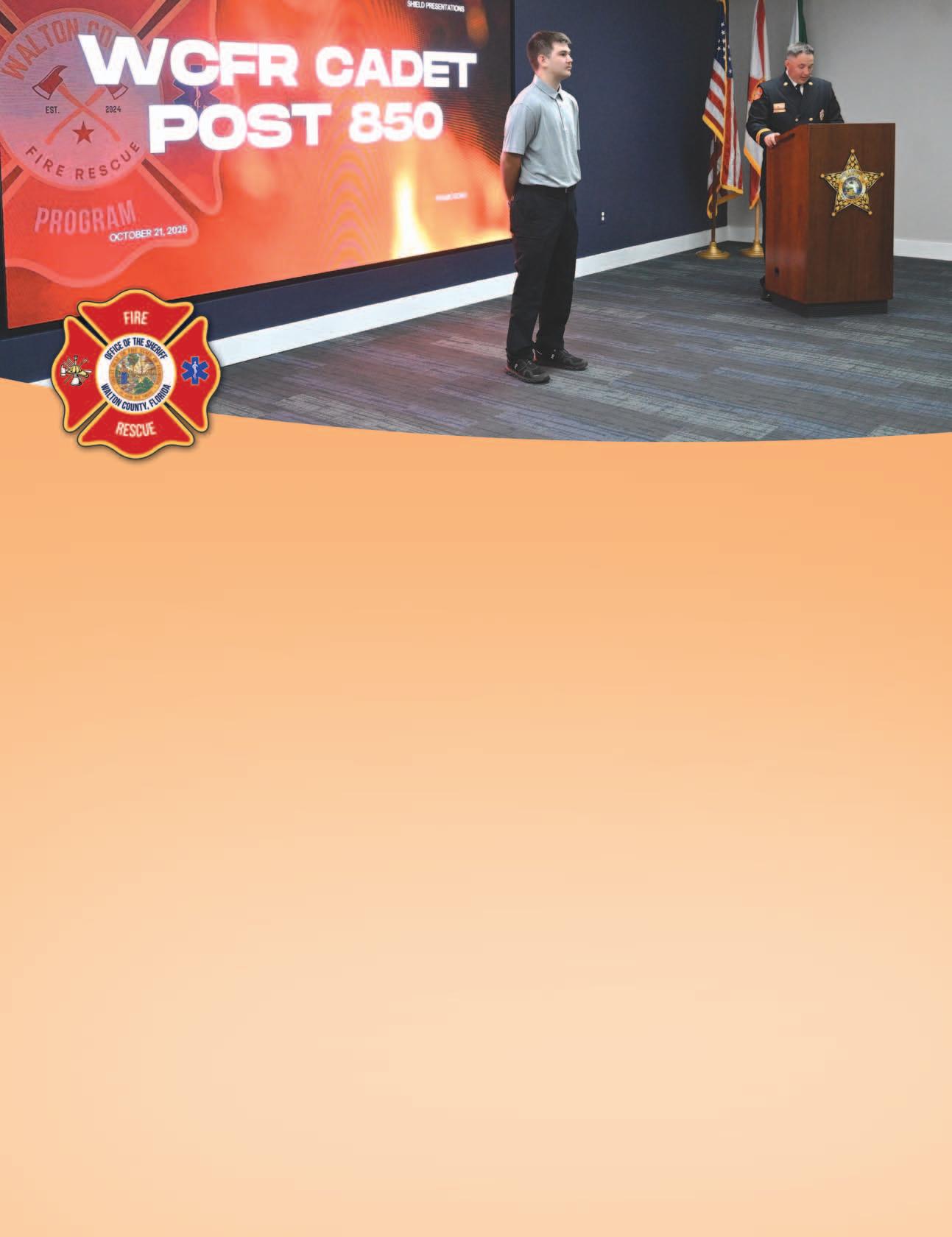
Chief Thomas “TJ” McElyea presenting at a formal Cadet Post 850 promotions and shield presentation ceremony
By Corey Dobridnia, Public Information Officer,Walton County Sheriff’s Office
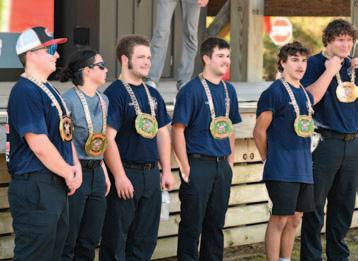
Walton County Fire Rescue celebrated a milestone for youth mentorship and future-ready training at the 2026 Florida Fire Chiefs Association (FFCA) Cadet Winter Games.
Battalion Chief Thomas “TJ” McElyea was named 2025 Cadet Ambassador of the Year. The recognition caps a rapid rise of the WCFR Cadet Post 850, a program that just over two years ago existed solely as an idea.
Today, it stands as a thriving, competitive, and respected pathway for young men and women across Walton County and surrounding areas, to discover fire service values, readiness, and leadership.
“It’s developed into a Cadet Post that has exceeded every expectation in it’s first year,” said WCFR Fire Chief Austin Pugh.
What began as an ambitious hope that exposure to the fire service could offer our local youth structure, leadership experience, and a future career path became reality through Chief McElyea’s cautious optimism and unwavering determination.
Chief McElyea took on the concept with a clear vision and the personal commitment to execute it by investing countless hours in planning, attending, and overseeing training, competitions, meetings, and fundraising events.
Under his guidance, Cadet Post 850 grew from six cadets and a handful of parents into a robust, high-per forming youth organization.
“His presence at every meeting, training, fundraiser, and competition underscores his belief that these young people deserve not only a program, but a community that invests in them,” said Chief Pugh.
Over the past 14 months, Cadet Post 850 has
raised more than $10,000 through community initiatives, boot drives, competitions, and local events. The funds gathered directly support uniforms, training opportunities, and travel for competitive events.
The result is a community-backed effort that deepens public engagement, strengthens relationships, and showcases the best of youth mentorship in the fire service.
Cadet Post 850 by the Numbers
From the first meeting of six cadets to a robust, high-performing Cadet Post (growth described qualitatively; exact current number may be updated).
$10,000+ raised in 14 months to fund education, uniforms, training, and travel.
100% access: No cadet left behind due to financial limitations or experience gaps.
First official ceremony: Shield presentations and promotions held this year.
Competitive events: County and state-level participation, including Summer Games and Gator Games.
Career pipeline: Cadets enrolled in EMT programs and preparing for dual-enrollment
pathways; several aiming to continue with WCFR post-graduation.
“The Cadet Post is now viewed as an essential pipeline for recruiting passionate, trained, and community-oriented young professionals into the fire service,” said Walton County Fire Rescue Lieutenant and Cadet Post 850 Ambassador Brian Mixon.
At the 2026 FFCA Cadet Winter Games, Chief Thomas “TJ” McElyea was honored as 2025 Cadet Ambassador of the Year An award that recognizes his impact on youth mentorship and program excellence across Florida.
WCFR formally nominated him for the FFCA Fire Rescue Cadet Advisor of the Year Award, underscoring his leadership, vision, and handson commitment to WCFR Cadet Post 850.
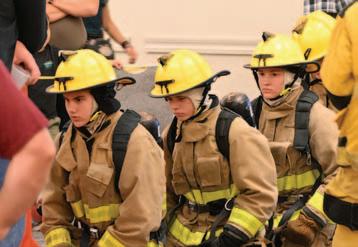
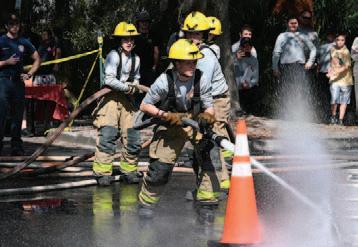
WCFR cadets at competition, demonstrating teamwork, skill, and technique
By Jenn Samsel, Independent Journalist
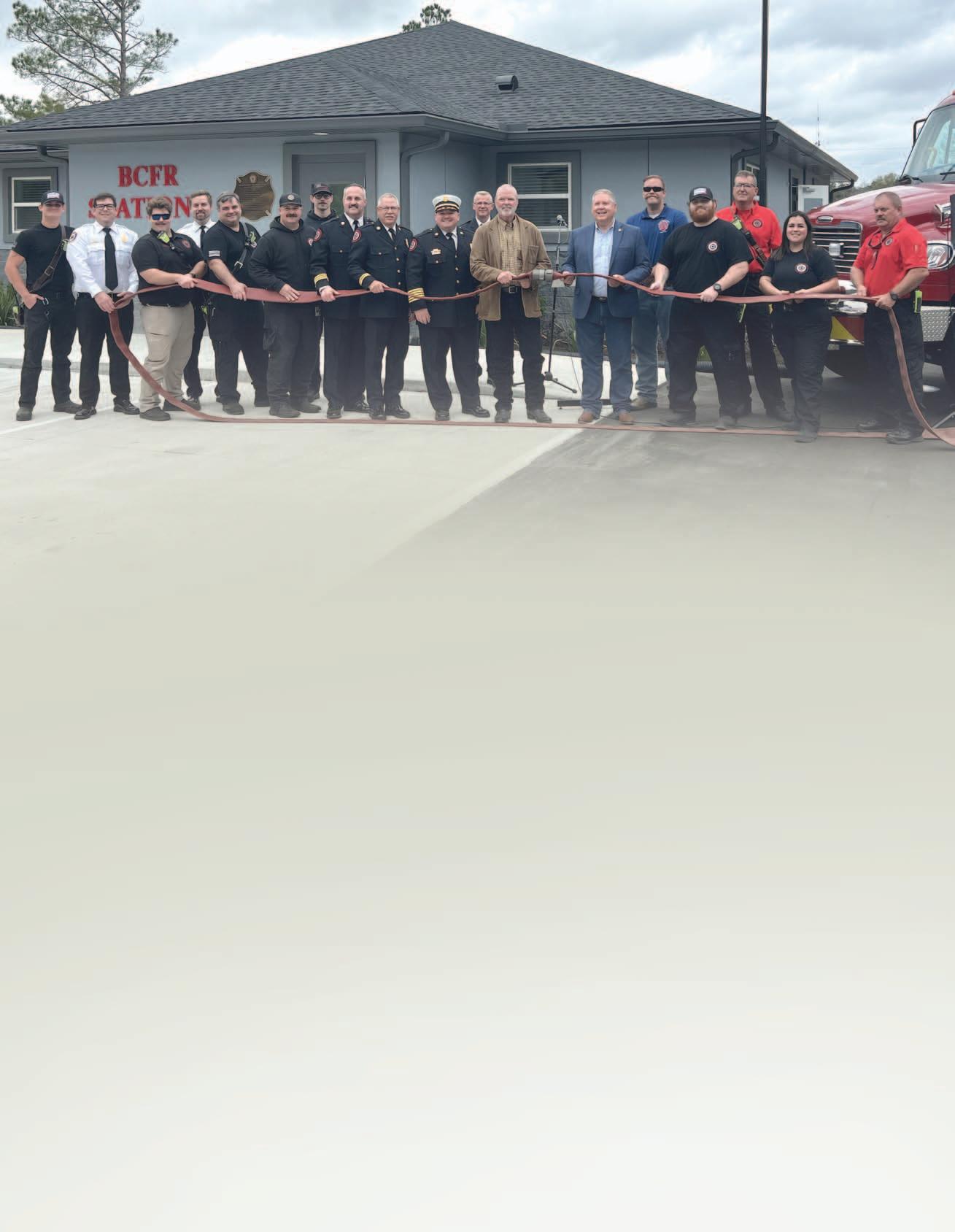
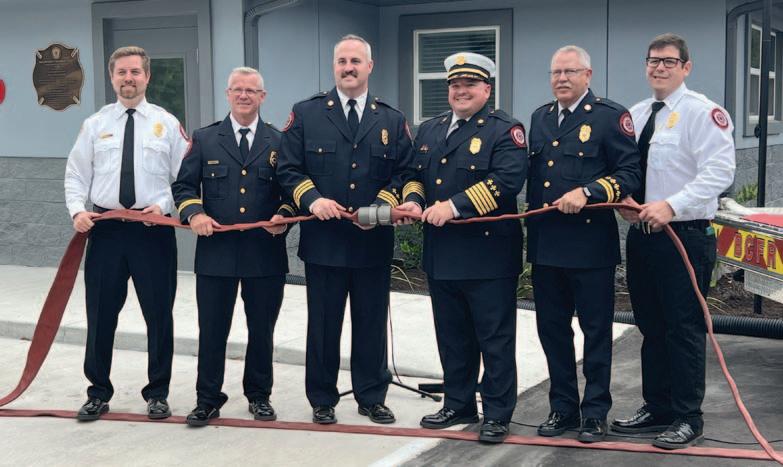
Bradford County Fire Rescue established a new tradition by holding a ceremony to uncouple a fire hose, symbolizing the opening of the new fire station in Sampson City in Bradford County. This event highlights the growing need for additional personnel and aims to reduce response times.
The fire station in Sampson was initially a mobile home, which later became unusable. As a result, a permanent structure was constructed to serve the community for many years.
“I would like to thank the support of the commission, the state, for their participation and support of the project. We also thank the citizens for their support of the Fire Rescue. This is a significant monument for Bradford County, as it will help improve response times as the county continues to expand,” said Bradford County Fire Rescue Fire Chief Ben Carter
The new location will accommodate three personnel, one ambulance, and one fire truck, along with additional staff as needed. With the new firehouse, they expanded their bays to accommodate additional equipment.
In June 2025, the Bradford Fire Rescue received two new fire engines, with one relocated to the newest station, Sampson City, to enhance its resources.
“ I really want to thank my team, the fire rescue department, and my leadership team. I think without you all this would not be possible, and Lauren Tinkler was a huge part in making this happen. Big thank you to her,” he said. Additionally, funding is underway to obtain more equipment.

By Tiffany Wood, Public Information Officer/Public Educator, Greater Naples Fire Rescue District
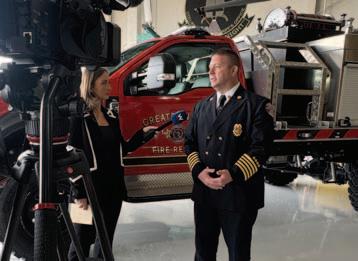
Recognizing the indicators of an early and potentially high-intensity brush fire season, Greater Naples Fire Rescue recently led a joint press conference alongside every fire district in Collier County, the Florida Forest Service, and the Collier County Sheriff’s Office. The event was designed to deliver a unified, proactive message to the public while demonstrating the depth of operational coordination already in place across agencies.
The press conference was strategically hosted at the Collier County Sheriff’s Office Aviation Hangar, underscoring the role of aviation assets in local wildland response. The Sheriff’s Office helicopter remains a critical force multiplier during extended brush fire operations, providing water drops, reconnaissance, and real-time situational awareness to incident command and field supervisors.
Participating agencies used the event to reinforce that interagency coordination is already well established before peak fire activity Unified command protocols, interoperable communications, pre-identified aviation support, and established working relationships
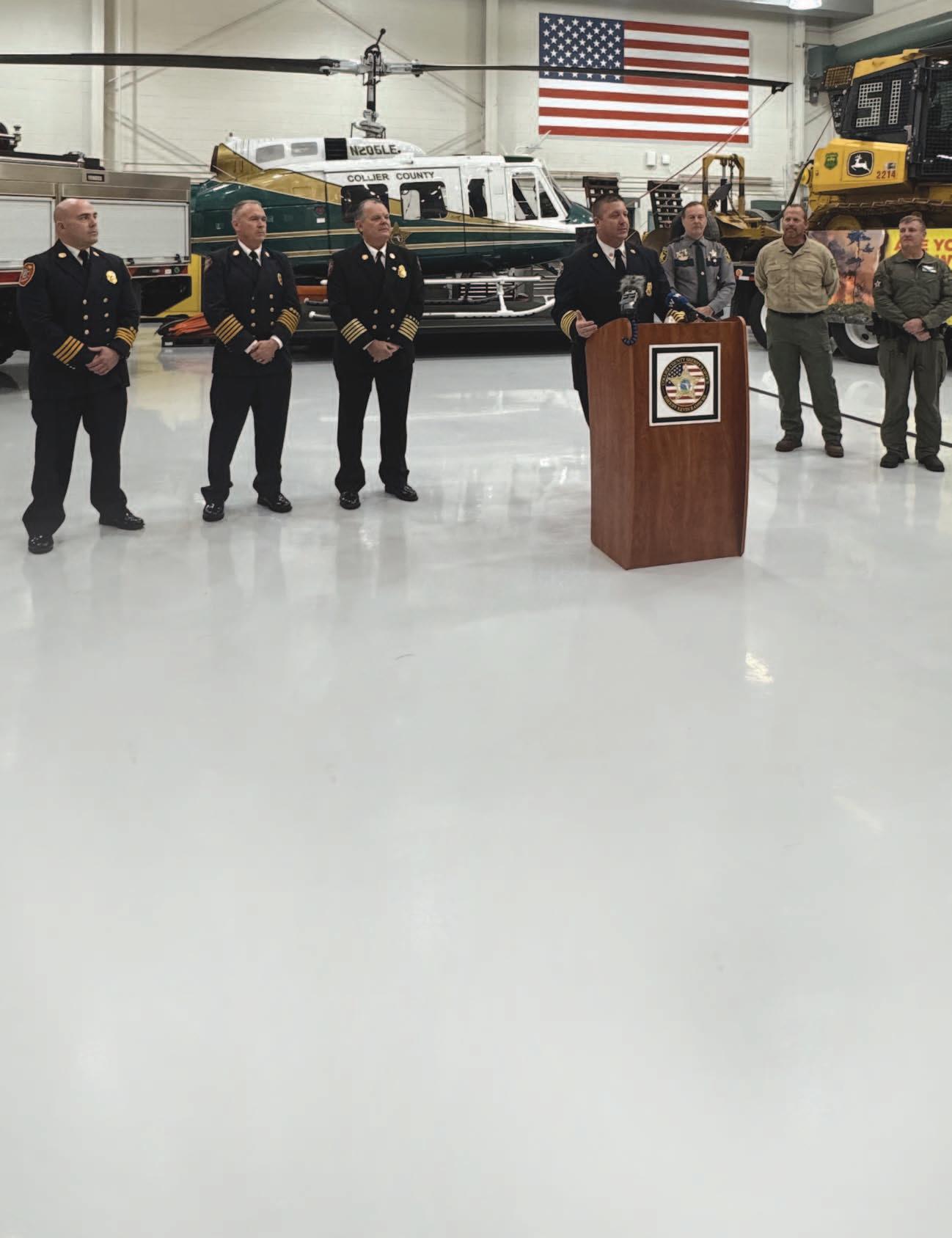
allow for rapid scaling when incidents exceed single-agency capabilities.
The Collier County Sheriff’s Office aviation unit plays a key support role, particularly during wind-driven or inaccessible fires where helicopter water drops and aerial intelligence can significantly improve containment timelines and firefighter safety.
While operational readiness remains the foundation of brush fire response, fire leadership noted that early, consistent public messaging is a critical risk-reduction tool. By delivering a single, countywide message through a joint press conference—with every major media outlet in attendance—agencies reinforced prevention, situational awareness, and preparedness expectations before conditions deteriorated.
This approach minimizes mixed messaging, reinforces public trust, and supports operational objectives by reducing preventable ignitions during high-risk periods.
By convening all county fire districts and law enforcement partners under one message and
one venue, Greater Naples Fire Rescue demonstrated a scalable model for regional collaboration ahead of wildland fire season. The effort reflects a broader shift toward proactive, multi-disciplinary engagement— combining operations, aviation, public information, and law enforcement resources to mitigate risk before the first major fire occurs.
As Southwest Florida enters what is expected to be an early and active brush fire season, leadership across Collier County emphasized that preparedness begins long before ignition— and that unified planning, messaging, and execution remain the most effective tools in protecting firefighters, property, and the communities they serve.
By Mackenzie McClintock, Public Information Officer, South Walton Fire District
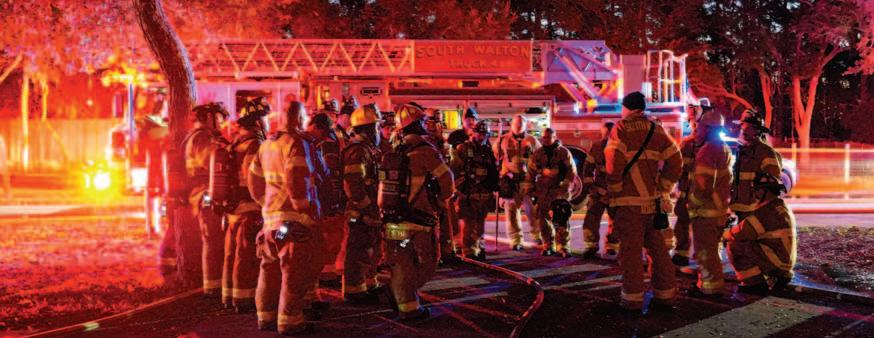
South Walton Fire District firefighters responded to a residential structure fire on January 16 near E. Hewett Road in Santa Rosa Beach.
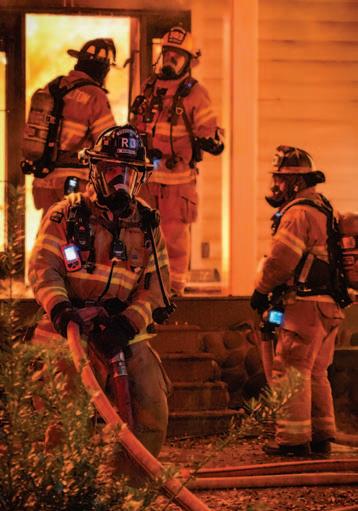
When the first crews arrived on scene around 4:40 a.m., they encountered heavy fire engulfing the home and worked to establish a water supply. The fire threatened two neighboring houses, so crews worked to protect those exposures and search them for occupants.
Due to a roof collapse in the initial home, the incident commander moved crews into a defensive operation to bring the fire under control. Firefighters then remained on scene for several hours mitigating hot spots and
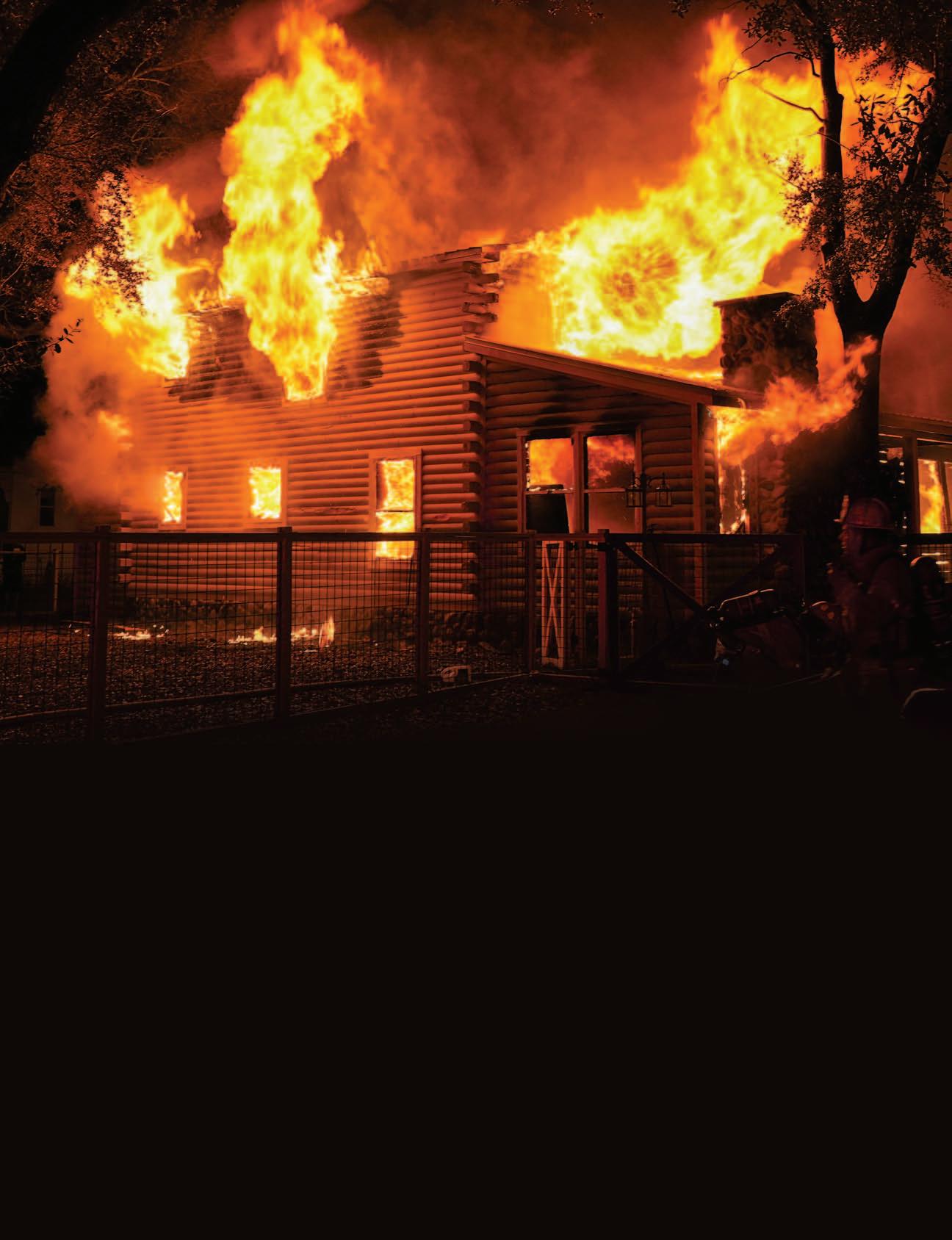
performing overhaul.
The fire caused significant damage to the original home, which was unoccupied and undergoing renovations at the time of the fire. The incident moderately damaged the side of a neighboring residence’s windows and roofline due to the heat and proximity.
South Walton Fire District and Florida State Fire Marshal’s Office personnel jointly investigated the cause of the fire and ruled it undetermined in the initial investigation.
Fortunately, no injuries were reported. Firefighters also located the property owner’s 100-pound tortoise in the backyard. The animal appeared to be uninjured, and firefighters
reunited it with its owners.
SWFD thanks all partner agencies who assisted on-scene and provided mutual aid coverage within South Walton during the call.
The district also extends its support to the impacted property owners.

By Jenn Samsel, Independent Journalist
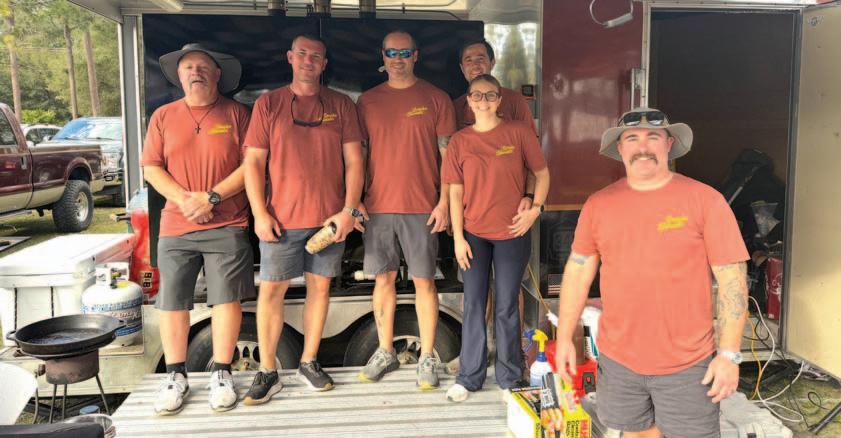
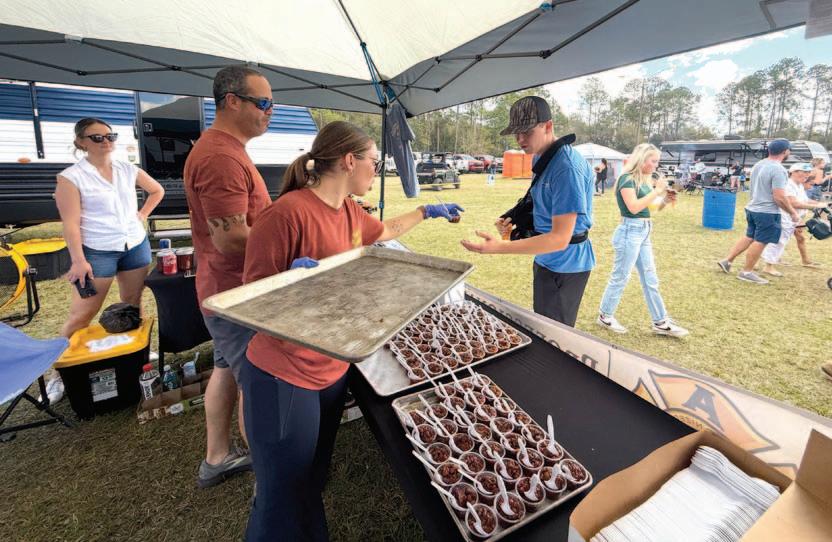
A thrilling, competitive event showcased the finest BBQ and Chili in St. Johns County, all for a worthy cause. Over 70 participants took part in the BBQ competition, while 24 competitors entered the chili category. The event was held at the St. Johns Fairgrounds.
This year, the St. Johns County Professional Firefighters and Paramedics IAFF Local 3865 competed for the first time in the 10th Annual BBQ contest, going up against 70 other businesses and 4 professional teams for the title of Best BBQ. They finished in 7th place in the chicken division.
The competitors had to serve four BBQ dishes to the judges: Ribs, Brisket, Pork, and Chicken in a short amount of time.
“The Jimmy Jam BBQ Slam is a great event in our own backyard. Local 3865 members had a great time learning the world of competitive BBQ and meeting members of the community when they’re not on the other side of a 911 call,” said Nate Edwards, Communications Officer, St. John’s County Professional Firefighters, IAFF Local 3865.
“Jimmy Jam is actually a community outreach. We realized we couldn’t meet the needs at the small church. Volunteers, including my co-founder and me, every penny we make goes to help local families in need. We pay FPL and water bills, car repairs, put tires on cars, and do whatever we can to help someone out. We call it a hand up, someone that’s doing everything right and they’re just struggling a little bit,” said Jeff Gatlin, CoFounder of Jimmy Jam BBQ Slam.
Jimmy Jam BBQ Slam is a fundraiser benefiting the residents of St. Johns County.
By Jenn Samsel, Independent Journalist
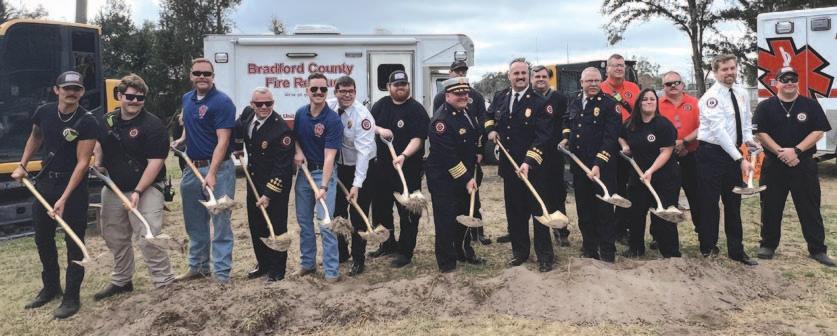
Bradford County Fire Rescue held a groundbreaking ceremony in the Town of Brooker to enhance response times as the county continues to grow. This ceremony marks the start of a long-anticipated project. The city has needed a fire department for quite some time to improve its response times. Currently, the average response time in Brooker is 15 minutes, but with the addition of the new facility, this time will be significantly reduced.
“I would like to thank the support of the commission, the state, for their allocation of the funding to the town of Brooker for their participation and support of the project. We also thank the citizens for their support of the Fire Rescue General. This is a significant monument for Bradford County, as it will help improve response times as the county continues to expand,” said Bradford County Fire Rescue Fire Chief Ben Carter
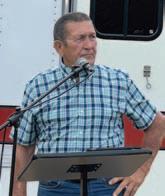
The Brooker location will begin construction of its new fire station to house two personnel, an ambulance, and a fire truck in the coming months.
“With this fire department here, building and being in place, and equipment in place, it’ll take two minutes to get down there. That is a blessing, not only for the town of Brooker but for the whole community in Western Bradford County. Thank you to Representative Chuck Brannan and Senator Jennifer Bradley for standing up for a small community out here in Western Bradford County, and to the Bradford County Board of County Commissioners for your support and for supporting a fire department for the Town of Brooker,” said Gene Melvin, Mayor of the Town of Brooker
They will receive funding for an additional engine for their station, expected to be delivered in February 2026. The opening of the new location is anticipated for 2026.
Please submit your article as a MS word document and include a high resolution jpeg image as an attachment (do not embed photo in document). Try to keep submissions under 300 words if possible. E-mail files and pics to: magazine@ffca.org. If you have an interesting topic that would be informative or entertaining to other departments - feel free to write a feature article for this magazine, we welcome all your submissions!All articles must have a title or headline and a byline as part of the article (please note format in above briefs) - if no byline is supplied- the article will run without.


By Andie Gibson, Public Information Officer
In January Escambia County Fire Rescue’s own Mark Butler was recognized with a proclamation at a Board of County Commissioners meeting. He retired from his position as Volunteer Assistant District Chief after 30 years of service. Mark was accepted as a member of the Molino Volunteer Fire Department on Sept. 21, 1995 — one day after his 18th birthday — and never looked back.
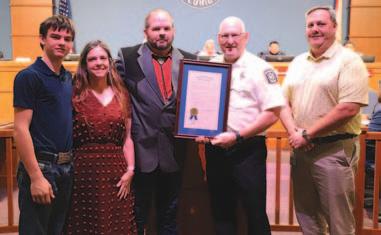
During his 30 years of service, he continuously went above and beyond for our community.
Throughout his service, he established himself as the go-to person for whatever anyone needed, which helped him move up the ranks until he was promoted to the role of Assistant District Chief in February 2021.
Over the years, Mark has volunteered hundreds of hours, working tirelessly during many emergency activations including mutual aides, hurricanes, tornadoes, ice and snowstorms, and more. He has earned numerous accolades from his supervisors and peers for his work ethic, professionalism, and unwavering commitment to his public service and Escambia County.
As a continuation of the Community Providers Pilot Overdose Prevention Program launched in 2022, the Town of Davie is proud to introduce 12 new Emergency Medical Stations now available in key locations throughout the community This initiative reflects Davie’s ongoing commitment to equipping residents with the tools and knowledge needed to respond effectively during life-threatening emergencies.
Each Emergency Medical Station is designed to provide clear guidance and immediate access to critical life-saving equipment. Stations feature a large display screen that presents instructional videos and images demonstrating the proper use of Naloxone (Narcan) and Automated External Defibrillators (AEDs). Beneath the screen, a lower cabinet is stocked with an AED machine, Naloxone Nasal Spray, and Stop the Bleed kits—readily available for public use during emergencies.
These installations are part of a broader effort to make emergency resources more visible, accessible, and community-centered. In addition to these newly deployed stations, all Town-owned facilities are equipped with Naloxone in their AED cabinets. Davie Fire Rescue also recognizes the critical role private partners play in strengthening community readiness, and many local businesses, hotels, and restaurants have joined this initiative by carrying these life-saving tools.
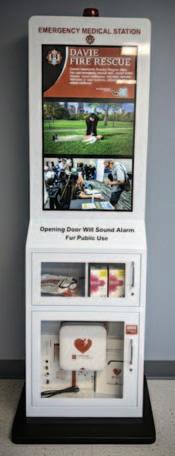
In support of education and prevention, the Community Provider Program also offers free educational classes to teach residents how to use Naloxone, AEDs, and bleeding control resources, while raising awareness about overdose prevention and effective emergency response.
By Jenn Samsel, Independent Journalist
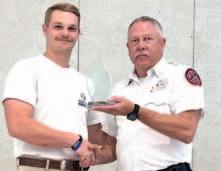
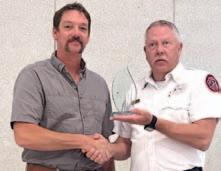
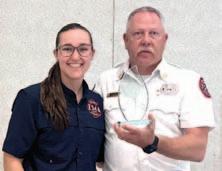
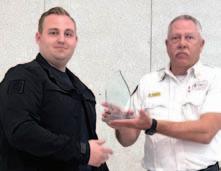
Not many individuals choose to volunteer in the fire service. This year, the Melrose Fire Department recognized two recipients for their dedication and contributions to the community, while also honoring outstanding firefighters who went above and beyond in 2025.
Fire Chief Kevin Mobley presented the award during the Annual Christmas Dinner and Awards Presentation hosted by the Melrose Fire Department.
“It takes the talents of many members, both contract and volunteer, to operate the Melrose Fire Rescue Department. Each December, I recognize those individuals who have stood out in their respective categories. Throughout 2025, our members demonstrated exceptional talent, commitment, and devotion to the station, ensuring the job was done effectively both behind the scenes and on the fire ground,” said Melrose Fire Department Fire Chief Kevin Mobley.
“I do a lot of volunteer work with them, including festivals to raise money, set up the Christmas dinner for all the firefighters, collect gift certificates, anything we can to give to the firefighters,” said Barbara Franklin, Keystone Heights Insurance, Owner
She is very passionate about helping firefighters and her community, dedicating an average of 150 hours each year.
“I just think that if anyone has the opportunity to volunteer, it makes a big difference whether you volunteer a little bit or you volunteer a lot. There are so many things around here that people could volunteer their time,” she said.
Not pictured: Board Director of the Year, Barbara Franklin and Explorer of the Year, Ezra Cook.
It is with great sadness that Hendry County shares the passing of Paramedic Ellery Uribe who died in his home of natural causes on Februar y 10, 2026.
Paramedic Uribe served as a paramedic with Hendry County EMS for over three years and was beloved by his colleagues.
“Eller y will be truly missed he was a beacon of light for our department, always happy to be here and to serve our community,” said EMS Chief Amy Stafford. “He thought the world of his co-workers and truly left a legacy of love, kindness and joy.”
Paramedic Uribe dedicated 23 years to public service during which he served in Estero, Riviera Beach, Highlands and Polk County prior to joining Hendry County.

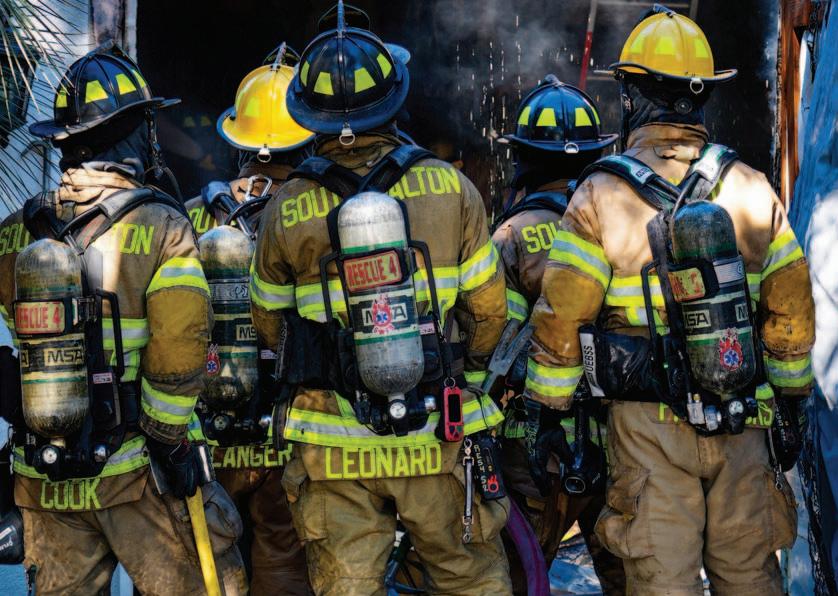
By Mackenzie McClintock, Public Information Officer
South Walton Fire District firefighters responded to a residential structure fire Monday, February 2, in Santa Rosa Beach near E. Mack Bayou Road.
At approximately 1 p.m., first-arriving crews encountered heavy fire engulfing the home’s garage area and immediately started their fire attack. The next-arriving units were assigned to conduct a primary search for occupants and ventilate the garage’s roof.
Ventilation aided in bringing the fire under control and crews had the flames knocked down around 1:30 p.m.
Firefighters continued working on scene for another hour to overhaul the structure and extinguish hot spots.
One of the home’s occupants was evaluated for smoke inhalation, as well as minor burns, and transported to a local medical facility for further care.
Firefighters also rescued one animal from within the home, but unfortunately lifesaving efforts were unsuccessful.
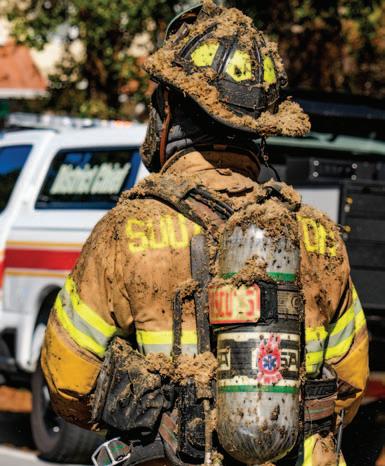
The fire caused heavy damage throughout the house. SWFD fire investigators determined a space heater could not be ruled out as the most likely cause.
SWFD thanks the responding deputies and partner agencies who assisted on scene, as well as those who provided mutual aid coverage within South Walton throughout the call.
The District extends its heartfelt support to the impacted residents.
By Wendy Schaefer, Education & Awareness Manager
As Florida continues to experience unprecedented levels of excavation given the state’s top-rank for construction activity, the risks for damage to our fragile lifelines of underground utilities and more importantly, dangers to public safety, also grow exponentially.
April is Safe Digging Month. It’s an ideal time to work with and remind our enforcement partners – from fire departments to police and sheriffs to code enforcement – about their important role in ensuring compliance with Florida Statute 556 (a law created to protect our underground infrastructure and safeguard our citizens), including issuing citations to violators.
More than 73 underground utility lines are being hit each day in Florida, resulting in everything from outages, accidents, evacuations, injuries and billions in damages. Fire personnel have likely responded to incidents like these where crews or homeowners inadvertently damaged an underground gas line.
Among the biggest contributors of damage is work being done with hand tools. Utility lines can be shallow or entangled with roots, making any type of digging – whether with hand tools or backhoes – a greater risk for hitting those lines. We know that a greater understanding of how this affects your community can help in better enforcing the safe digging law.
According to the damage information reporting tool for Florida, the #1 cause of damage to underground facilities is failure to contact 811 before digging –a violation of state law It carries fines of either $500 or $2,500 when gas facilities are involved. If a serious incident occurs to underground lines transporting gas, flammable or toxic materials, those fines can be as high as $50,000.
Sunshine 811, a member of the Florida Fire Chiefs Association, is working to make Florida the safest place to dig. The organization connects excavators to utilities through a 24/7 online system and toll-free number so that buried lines can be appropriately marked. It also offers comprehensive educational resources on safe digging.
The organization’s goal is to help preserve public safety, protect underground infrastructure, and prevent damages or disasters from occurring. To accomplish this, Sunshine 811 works with dozens of organizations and partners throughout the state, including fire, police, sheriffs and code enforcement officers, to help ensure enforcement of Florida’s safe digging law.

As part of this work, Sunshine 811 has several resources and new tools for fire chiefs and personnel:
∑ Our education and safety liaisons are always available for one-on-one meetings, presentations and more. Reach out to your dedicated liaison, based on your geographic area: www.sunshine811.com/safety-ed-liaisons.
∑ Our special Enforcement webpage provides a summary of the safe digging law, sample citation, examples of violations and more.
∑ Go to: www.sunshine811.com/enforcement.
By Emily Myers, BSN, RN, CEN – EMS Quality/Clinical Coordinator, Sarasota County Fire Department
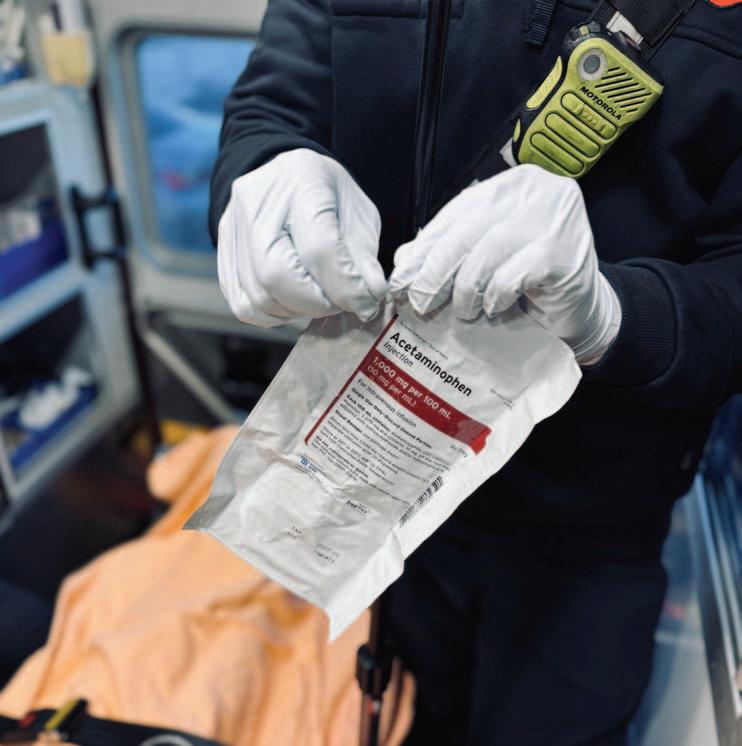
Sarasota County implements intravenous acetaminophen as first-line agent in prehospital acute pain control.
The management of acute pain with adequate pain assessment and appropriate analgesia remains a priority in the prehospital setting. Literature worldwide highlights that EMS providers as a whole do not adequately control acute moderate to severe pain. One of these barriers includes the fear of contributing to the opioid dependency crisis as opioids most often are the primary medication available for pain control in the prehospital setting1. Another barrier found in EMS systems are logistical difficulties such as the cradle-to-grave system when handling the narcotics safely with proper waste and witnessing procedures.
As highlighted in the National Association of EMS Physicians (NAEMSP) position paper on prehospital pain management, there is a significant challenge in effectively treating pain with medication without the risk of physiological compromise2
On Jan. 12, 2026, the Sarasota County Fire Department (SCFD) eliminated the use of opioids as the first-line treatment in management of acute moderate to severe pain. In the prehospital setting, the literature does not show the utilization of intravenous (IV) opioids to be superior in the initial management of moderate to severe pain. In fact, evidence-based guidelines favor IV acetaminophen over IV opioids. If pain is
not adequately controlled after 10 minutes from administration of IV acetaminophen, pain dose ketamine may be utilized as a second-line agent for pain management. Guidelines also recommend either IV ketamine or IV opioids equally and state that there is no difference in the desirable effects.
“The idea behind this change is to provide better pain control to our patients,” said Sarasota County Fire Department Medical Director, Dr. Marshall Frank. “By eliminating barriers to administration of pain medication, we will administer pain medication to more patients who require it. Therefore, we will take better care of our patients and achieve more satisfaction of the patient and EMS clinician.”
The Sarasota County Fire Department is the first EMS agency in the state to remove opioids from front-line apparatus and utilize IV acetaminophen for initial pain management. For a patient aged 14 years or older, a pre-mixed bag with one (1) gram of acetaminophen will be given over 10 minutes. The EMS Captain super visors will continue to carr y opioids when on-line medical control (OLMC) is utilized for additional pain control requirements.
References
1 Lindbeck, G., Shah, M. I., Braithwaite, S., Powell, J. R., Panchal, A. R., Browne, L. R., … Warth, M. (2023). Evidence-Based Guidelines for Prehospital Pain Management: Recommendations.Prehospital Emergency Care.27(2). 144–153. https://doi.org/10.1080/10903127.2021.2018 073
2 Héctor M. Alonso-Serra & Keith Wesley (2009) PrehospitalPainManagement, Prehospital EmergencyCare 7(4). 482-488. DOI: 10.1080/312703002260