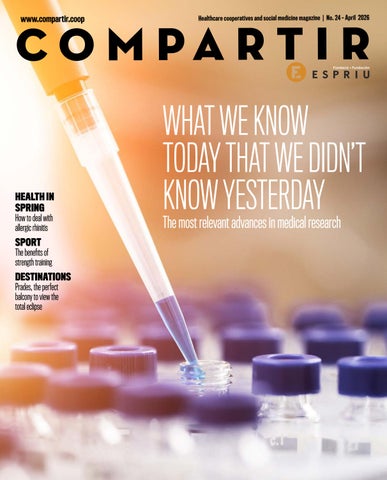
What we know today the we didn't know yesterday

Page 1


HEALTH IN SPRING

How to deal with allergic rhinitis SPORT

The benefits of strength training

DESTINATIONS

Prades, the perfect balcony to view the total eclipse

WHAT WE KNOW TODAY THAT WE DIDN’T KNOW YESTERDAY

The most relevant advances in medical research

Staff Summary

Compartir

Healthcare cooperativism magazine www.compartir.coop compartir@fundacionespriu.coop

Editorial board:

Dr. Ignacio Orce, chairman of the Fundacion Espriu and of Assistencia Sanitaria

Dr. Enrique de Porres, CEO of ASISA-Lavinia

Dr. Oriol Gras sponsor of the Fundacion Espriu

Dr. Carlos Zarco, General Manager and sponsor of the Fundacion Espriu

Publication: Factoria Prisma Diagonal 662-664

08034- Barcelona

Tel. 639 213 710 www.factoriaprisma.com

Director of Factoria Prisma: Angi Gonzalez Vives

Coordination: Laura Martos

Design: Xavi Menéndez

Printer: Centro Gráfico Ganboa SL Legal Deposit: B-46099-2003

ISSN: 2488-6394

ISSN (Internet): 2696-3833

Fundación Espriu

Av. de Josep Tarradellas, 123-127 4.ª planta 08029 Barcelona

Juan Ignacio Luca de Tena, 12, 3.ª 28027 Madrid

FIN: G-59117887

Tel.: 934 954 490

fundacionespriu@fundacionespriu.coop www.fundacionespriu.coop

Spain has become the first European country to finance injectable PrEP against HIV.

Established in 1989, the Fundacion Espriu integrates the bodies that practice the cooperative healthcare model created by Dr. Josep Espriu: Augtogestió Sanitària, SCIAS, Lavinia and ASISA, which form the Assistència Group and the ASISA Group.

HEALTH IN SPRING

21% of adult Spaniards suffer from allergic rhinitis. Its symptoms, however, can easily be mistaken for a cold.

SPORT

Apart from aesthetics or sports performance, strength training is necessary to prepare the body to age better.

COOPERATIVISM

The Espriu Foundation has visited La Casa de los Científicos, a place where cooperatives meet advanced technology.

DEPTH

We are living through a revolutionary period in health research. What significant progress will be made in the next few years?

Health research is undergoing a revolution

Medicine is advancing at an unprecedented pace, and that is why it is appropriate to pause and reflect on the often-silent value of scientific research. Each discovery is the result of years of work, sustained investment and a firm belief in knowledge as a motor of progress. Mariano Barbacid’s recent advances in research on pancreatic cancer are an eloquent example of how research can transform patients’ lives and open up new avenues of hope in the face of complex diseases. This type of progress not only reinforces the prestige of our health system but also reminds us of the need to continue investing in it as one of the fundamental pillars of our society.

In this spirit, we wanted to dedicate the In Depth section of this issue to delving into the process of medical research with the professionals who experience it on the front lines. Dr. Antoni Castells, Dr. Concepción Gómez Gavara, Dr. José Manuel Felices and Dr. Javier Pérez Pallarés share their experience and help us understand how scientific advances come about, what challenges researchers are facing today and what might be glimpsed on the horizon in the near future. Their testimonies highlight that innovation in health is always a collective effort that it requires commitment, resources and a long-term vision. All of them, furthermore, agree that the integration of artificial intelligence in this sector places us on the verge of a health revolution.

Apart from this core theme, you will find a careful selection of content designed to be helpful for you now, in early spring. In the health section, we address how to identify allergic rhinitis at this time of year, tips for taking care of your voice in the event of dysphonia episodes, and the long-term benefits of strength training. We also suggest some routes through the mountains of Prades on the occasion of the next total solar eclipse, which will take place this August, we recover the Chernobyl series to commemorate the anniversary of that disaster and we analyse the rise of reggaeton following the presence of the singer Bad Bunny in the Super Bowl and his recognition at the Grammy Awards.

DESTINATIONS TRENDS

The Prades Mountain Range is the perfect astronomical refuge to enjoy the astronomical event of the decade.

Bad Bunny’s historic triumph at the Grammys and the Super Bowl confirm that reggaeton will be the great musical genre of this century.

Spain is the first European country to fund injectable PrEP against HIV

Spain has become the first country in Europe to provide public funding for injectable pre-exposure prophylaxis (PrEP) against HIV as part of the services provided by the National Health System (SNS). This decision, taken by the Interministerial Commission on Drug Prices (CIPM), will provide access to Apretude, a treatment based on long-acting cabotegravir, an antiretroviral intended for HIV-negative people who are at high risk of sexually acquiring the infection.

Unlike oral PrEP, which requires taking pills daily, this drug is administered by intramuscular injection every two months. According to the Ministry of Health, this can make adherence to treatment easier for certain population profiles, particularly among those for whom complying with a daily regimen is more difficult.

Study Claims Intermittent Fasting Is No More Effective Than a Traditional Diet

Intermittent fasting has become popular in recent years as an almost miraculous strategy for weight loss. However, the largest systematic review carried out so far concludes that, although it can help you lose weight, it is not more effective than a conventional low-calorie diet.

The analysis, published in the Cochrane Library, reviewed 22 clinical trials in overweight or obese adults that compared different forms of intermittent fasting — such as the popular 16:8 model or the 5:2 method — with diets based on daily calorie restriction. The results found no clinically relevant differences in weight loss between the two approaches.

The authors stress that intermittent fasting should not be presented as a superior solution, as weight loss depends on multiple factors, including lifestyle, environment, and above all, the ability to maintain the diet in the long run.

International Day of Deafblindness

Every June 27, the International Day of Deafblindness is commemorated, a date aimed at raising awareness of a disability that combines visual and hearing loss of such intensity that those two senses are unable to compensate for each other. The date coincides with the birth of Helen Keller (1880-1968), a writer and activist considered one of the most outstanding figures of the deafblind community.

The lack of this recognition has contributed for years to the invisibility of deafblind people in statistics, public policies and inclusion programs, limiting their access to specialized services and resources. In this context, the role of interpreter guides is essential in enabling communication, accessing information and exercising rights, in addition to promoting independent living and inclusion in the community.

Quotes that inspire “One cannot think well, love well, sleep well, if one has not dined well.”
Virginia Woolf, writer

The National Health System now funds a preventive alternative that is administered every two months and improves treatment compliance.

International clinical trials have proven that long-acting cabotegravir provides high efficacy in HIV prevention, even superior to that of oral prophylaxis in some settings. The European Medicines Agency had previously authorised its sale, but Spain’s decision to fund it within the public healthcare system places the country at the forefront of Europe in prevention strategies.

The intaroduction of this preventive tool follows the recommendations of international organizations such as the World Health Organization and UNAIDS, which promote expanding access to effective methods to reduce new infections. With this step, Spain bolsters its strategy against HIV, based on combined prevention, early diagnosis, antiretroviral treatment and the reduction of stigma linked to the disease.

More than four million girls remain at risk of female genital mutilation

More than 4.5 million girls could suffer female genital mutilation (FGM) by 2026, many of them under the age of five, according to estimates by United Nations agencies. Currently, more than 230 million girls and women in the world live with the consequences of this practice, considered a violation of human rights and with serious effects on physical and mental health.

Nonetheless, experts stress that progress is possible. In countries where FGM is practised, about two-thirds of the population already support its elimination and the number of girls subjected to the practice has decreased in recent decades, from one in two to one in three. Strategies such as health education, the involvement of community and religious leaders or support for survivors have proven to be effective tools to reduce its incidence.

However, the United Nations warns that cutbacks in international funding

and in health, education and child protection programmes threaten to slow down these advances. Without sustained investment, they warn, millions of girls could remain at risk at a key moment in terms of meeting the goal of eradicating this practice by 2030.

Breast cancer has lower overall mortality but greater incidence among younger women

Mortality linked to breast cancer in Spain has fallen significantly in recent decades. According to an international study published in The Lancet Oncology, deaths due to this tumour have been reduced by about 42% since 1990, despite the fact that the number of diagnoses has increased in the same period. Specialists attribute this progress mainly to better treatments, early diagnosis and screening programs, which have enabled detecting the disease at earlier stages.

At the same time, however, the researchers warn of a change in the profile of diagnoses. Although most cases still occur in women over 55 years of age, the incidence is growing faster among younger women. Specifically, diagnoses in women between the ages of 20 and 54 have increased by around 29% in the last three decades.

The causes of this phenomenon are still not entirely clear. Experts point to a combination of reproductive factors – such as delayed motherhood or shorter duration of breastfeeding – and changes in lifestyle, including more obesity, sedentary lifestyles or alcohol consumption. Furthermore, in young women the tumour is usually diagnosed at more advanced stages, as they are left out of screening programmes.

Meanwhile, research continues to make progress in the field of treatment as well. Recent studies on thousands of European patients show that some surgical techniques, such as sentinel node biopsy, allow breast cancer to be dealt with using less invasive procedures than traditional surgery, limiting sequelae and improving the quality of life of patients without compromising oncological efficacy.

How to recognize ALLERGIC RHINITIS

21% of adult Spaniards suffer from allergic rhinitis, a chronic respiratory disease that causes sneezing, a runny nose, and conjunctivitis. These symptoms, however, can easily be mistaken for a common cold or other more serious infections.

According to estimates by the Spanish Society of Allergology and Clinical Immunology (SEAIC), 1 in 4 people suffers from some type of allergy, with respiratory problems being the most frequent. With a prevalence of between 20 and 40%, they affect more than 6% of the global population and more than 21% of the population of Spain.

The symptoms involved fit the most common clinical picture seen by primary care providers: congestion and runny nose, loss of smell, sneezing, and eye irritation. These symptoms, also given the highly variable weather typical of this season, can easily be confused with a common cold or an infection of another type.

Key aspects of allergic rhinitis

First of all, allergic rhinitis is a chronic respiratory disease. This does not mean that its symptoms are always present, but that the inflammatory predisposition persists over time, even if its symptoms appear intermittently.

It is characterized by nasal passage hyperactivity that causes sneezing, a runny nose, and an itchy sensation, which usually also triggers conjunctivitis or an earache and is often linked to the onset of bronchial asthma. In fact, 70% of asthmatics also suffer concurrently from allergic rhinitis.

This reaction usually occurs as a result of inhaling environmental allergens, the most common being

Why are nasal washes important?

The nasal cavity acts as the first filter against pollutants. Saline solutions, especially seawater, help to:

• To remove allergens and debris by cleaning out the nasal mucosa and its small extensions.

• Decrease congestion, fluidize and eliminate accumulated secretions, facilitating breathing.

• Reduce the presence of microorganisms and organic remains, to hinder bacterial proliferation.

• Moisturize and soothe the mucosa, reducing the intensity of the typical symptoms of allergic rhinitis.

seasonal pollen, dust mites, mould, or pet fur. Added to this is urban pollution (mainly from cars), increasing allergic inflammation and the formation of IgE (the antibody that attacks parasites).

In the most severe cases, it may lead to problems such as poor sleep, exacerbated asthma or ear infections (this last one particularly in children) or sinusitis.

How is rhinitis different from sinusitis?

Allergic rhinitis is easily confused with sinusitis, which is sometimes preceded by rhinitis caused by nasal congestion. Sinusitis, however, is an inflammation of the sinuses and nasal passages, meaning it involves a deeper area of the respiratory system.

Its differential symptoms are the sensation of facial pain or pressure (forehead, cheeks, eye sockets), discharge of thick coloured mucus, and, sometimes, fever. The cause of this infection is bacterial or viral, and its average duration is four to eight weeks.

Steps to follow in the event of allergic rhinitis

In the presence of recurrent or chronic rhinitis, these are some steps to consider:

• Let the process evolve for a few days to find out whether or not it actually is an allergic condition.

• Consult a specialist. A questionnaire and/or tests will enable them to identify the trigger(s) of the allergic reaction.

• Take preventive measures to minimize contact with allergenic substances.

• Your doctor may recommend medication depending on the severity of your symptoms, such as antihistamines, corticosteroids, or decongestants.

• If symptoms of infection are present, antibiotics may also be prescribed.

• In some cases, immunotherapy, which involves gradually injecting the relevant allergen to reduce the body’s sensitivity to it, may be considered appropriate.

The symptoms of allergic rhinitis are hard to precisely tell apart, so your steps will depend on your specific physiological reaction and its cause. In any case, diagnosis and prescription should always be done by a specialist physician.

MYTHS AND FACTS ABOUT HOW TO TAKE CARE OF YOUR VOICE

Clearing your throat, whispering or resorting to home remedies are all common practices when dysphonia appears, although they are not always helpful. Is there any truth in such tips?

Our voice is one of the most personal signs of identity we have and our main means of communication. Our voice enables us to speak, laugh, shout, sing and, ultimately, express ourselves. However, although we use it daily, we don’t always use it properly or take care of it correctly.

During the day we constantly strain the vocal cords. We breathe incorrectly, speak in noisy environments, and clear our throats without taking into account the wear and tear on the larynx. “In the same way that we take care of our heart or our diet, vocal health is also part of a healthy lifestyle,” explains María José Lavilla, a specialist in otolaryngology at the HLA Centro Médico Zaragoza.

In some professions, our voice is the main work tool, so maintaining healthy habits and regular preventive check-ups are the norm. On the other hand, in everyday life, vocal problems tend to be considered normal and folk remedies are often used without a prior professional assessment.

The

most frequent vocal problems

The quality of our voice depends on the balance of a complex system formed by our vocal cords, muscles, nerves and airways. When any of those is affected, that can cause anything from mild dysphonia to total loss of voice.

According to data from the Spanish Society of Otorhinolaryngology and Cervico-Facial Pathology, approximately 5% of the Spanish population suffers from a voice disorder that requires the intervention of a specialist.

Dysphonia

involves altered tone, pitch and volume

The most common conditions are functional dysphonia, vocal cord nodules, and chronic laryngitis. These conditions are usually related to vocal overexertion, stress or poor breathing technique. Likewise, some studies indicate that smokers tend to develop a persistent chronic cough and hoarseness due to the irritation caused by the smoke. “Tobacco, and in fact, particularly when associated with alcohol, is the main risk factor for laryngeal cancer,” says the specialist.

Myths Facts

“In the event of dysphonia or aphonia, the best thing to do is to whisper”

“Honey with lemon cures aphonia”

“Cold weather damages our voice”

“Throat lozenges are beneficial”

•Whispering can be even more harmful than speaking softly, as it creates tension in the larynx and fatigue the vocal cords.

•It is advisable to avoid using your voice.

•It does not act directly on the vocal cords, but it does relieve the feeling of irritation in the pharynx and improves hydration.

•Cold weather, on its own, does not damage the vocal cords.

•What does harm them are sudden changes in temperature, dry air and respiratory infections.

•Many contain menthol or mild anaesthetics that give a feeling of relief, but do not actually cure vocal problems.

•Reducing the feeling of discomfort can lead us to strain our voice further..

•Clearing your throat produces a sudden shock to the vocal cords.

Watch your habits

Lifestyle generally has an important role in preventing aphonia and dysphonia. Dr. María José Lavilla suggests maintaining healthy habits such as:

•Avoiding tobacco and excess alcohol.

•Maintaining good hydration.

•Avoiding shouting or competing with ambient noise.

•Allowing your vocal cords to rest.

•Not self-medicating using. corticosteroids or antibiotics.

•Treating reflux if it appears.

“Clearing your throat is harmless”

•Doing so frequently can result in chronic inflammation or minor injuries.

•The best thing to do is to drink water, swallow saliva or produce a controlled gentle cough.

“Drinking a lot of water hydrates the vocal cords”

•Water does not act directly on the vocal cords, as the digestive and respiratory tracts are separated.

•Moisturizing the body does improve the quality of the mucus that covers them and facilitates their vibration.

Aphonia is the almost total loss of voice

Most vocal problems are benign and can be easily treated. Ignoring warning signs such as prolonged aphonia or dysphonia can trigger more serious disorders.

“Prevention, hydration and consultation with a specialist are still the best tools to safeguard our voice.”

The (future) benefits of STRENGTH TRAINING

Growing numbers of people are including weights, cardio, or resistance exercises in their weekly routine. But beyond aesthetics or sports performance, muscle training helps prepare our bodies to age better.

For decades, muscle was seen only as a “pulley” to move us around. Today we know that it is the largest endocrine organ in the body. Its function is activated when the muscle contracts, through the secretion of hormones called myokines, that travel through the blood and act on the brain improving memory (delaying Alzheimer’s disease, for example), on the liver and pancreas by regulating glucose and in fat tissue by burning fat.

In their metabolic function, myokines are the body’s main glucose reservoir. In fact, a healthy muscle acts like a sponge that absorbs blood sugar, preventing type 2 diabetes and certain cardiovascular diseases. Myokines also reduce chronic inflammation typical of aging (inflammaging), which leads to cellular damage. Finally, these hormones also stimulate the formation of bone tissue.

For all these reasons, every time you train for strength or exercise your muscles, we could say that you are injecting a dose of a “natural endogenous prescription” that helps preserve your whole body in a more capable state.

•Strength training 2 to 4 times a week is recommended, since with less than two days it is difficult to make progress and with more than four it could be counterproductive.

•An effective strength training session usually lasts between 40 and 75 minutes. This time should initially include about 10 minutes of dynamic warm-up and activation, 35-50 minutes of intense strength work and finish with 5-10 minutes of light stretching.

Autonomy at 80 years of age will depend directly on the strength that is built today

How to train well today

Despite its amazing capacity, between the ages of 30 and 40 we reach our peak of bone and muscle mass. That’s when the decisive moment arrives: the higher that peak, the larger the buffer there is before entering a fracture or disability risk zone.

In this context, strength training puts the bone under mechanical stress that forces it to become stronger. In other words, our autonomy at the age of 80 will depend directly on the strength that we build today, and to build that strength functionally we must keep in mind four key factors:

•In the case of younger people, the duration isn’t as relevant as the intensity of the training. On the other hand, in older people, both go hand in hand; the effort must be progressive and become intense, but, at the same time, appropriate for each person.

•Exercise must be accompanied by adequate nutrition and hydration and a good night’s rest, starting at a young age, so that our digestive and metabolic system gets used to making good use of nutrients by the time we reach old age.

What exercises will benefit us in the future?

For an older person to be independent, they basically need three things: strength in the lower body

(legs), central stability and the ability to manipulate objects for their daily life. First, the knee and hip extensors (quadriceps and glutes) are the most critical muscles. They are what allows you to get up from a chair, climb stairs and, most importantly, slow down your body in trips and falls.

The muscles in charge of stability are mainly the muscles that make up the CORE (abdominals, glutes, and the muscles that support the lumbar vertebrae). The point of training this area is not to define the abs (aiming for a “six-pack”), but rather to enable the deep muscles of the abdomen and back to keep the spine upright, achieving good muscle tone. This prevents chronic lower back pain and provides pelvic stability, enabling strength and explosiveness to be transmitted to the legs and the rest of the body.

Finally, grip strength is correlated with basic actions such as supplying nutrition, ensuring an adequate level of hygiene and providing safety.

Strength training and menopause

In the case of women, there is still another further benefit added to the list: reaching menopause with a large reserve of muscle mass and a good density of oestrogen receptors (the main hormone affected in this process, responsible for repairing fibres and

The unilateral dumbbell row on a bench is one of the most effective exercises for back strengthening.
The goal of training the CORE is for the deep muscles of the abdomen and back to keep the spine upright

protein synthesis) in the cells implies you are starting from a much higher level.

From menopause to aging, muscle mass is lost (sarcopenia) and, even more rapidly, strength decreases (dynapenia), partly due to the loss of oestrogen, which accelerates bone degradation. But if the muscles are strong, they continue to send mechanical “building” signals to the bone, largely compensating for the lack of the chemical signals from oestrogen. Furthermore, strength training will also be more effective than light cardio at specifically reducing the visceral fat typical of this stage.

After menopause, to achieve that solid muscle base, some non-negotiables in your training routine should be:

•The jump squat, which generates a controlled impact on the neck of the femur.

•The medicine ball slam, which improves the power of the CORE and the upper body, essential to maintain an upright posture.

•The box step up, which strengthens the glutes and improves unipodal balance, key to avoiding falls in the future.

I’ve hit my head Should I be worried?

Traumatic Brain Injury (TBI) is one of the most common causes of emergency care. According to the World Health Organization, TBIs are a major cause of mortality and disability worldwide. Approximately 70–90% of TBIs seen are mild (known as a concussion). However, a small percentage may be complicated by intracranial haemorrhages, which are more common in older people, patients who are being treated with blood thinners or after high-energy accidents.

What happens inside the head?

When we are hit, the brain, which is a soft structure that is not rigidly attached, shifts inside the skull. This can result in:

• A concussion: causes the accumulation of blood (epidural, subdural or intracerebral), which can increase the pressure inside the skull.

• A cerebral contusion: causes a small injury with tissue damage, i.e. inflammation, pain and possibly some minor functional impairment.

• An intracranial hematoma: causes the accumulation of blood (epidural, subdural or intracerebral), which can increase the pressure inside the skull.

With any of these options, the risk is not always immediate, as some bleeding may develop slowly in the first 24–48 hours, hence, it is recommended to monitor the progression and seek emergency medical attention if symptoms such as severe headache, vomiting, excessive drowsiness, or any neurological changes appear.

Quick checklist after a blow to the head

1. Have I lost consciousness, even for a few seconds?

2. Do I have trouble remembering what happened before and after the blow?

3. Am I taking blood thinners?

4. Am I over 65?

5. Is the pain getting worse instead of better?

If the answer to any of the first three questions is affirmative, or if symptoms appear that might indicate the problem is getting worse, a doctor should be consulted urgently.

How can a blow to the head evolve?

a) Favourable progression:

• Mild to moderate pain that improves with regular analgesics.

• A feeling of transient lightheadedness.

• Complete recovery within hours or a few days.

b) Signs of worsening:

• Severe and increasing headache.

• Repeated vomiting.

• Increasing drowsiness or difficulty waking up.

• Disorientation, changes in behaviour or strange speech.

• Weakness in an arm or leg.

• Seizures.

Cooperatives and social medicine

ASISA Group meets its growth targets in 2025

ASISA and ASISA Vida, the insurers of the ASISA Group, achieved a premium volume of 1,890.52 million euros and the healthcare companies, led by the HLA Group, had a turnover of 725.5 million.

The ASISA Group held its annual Advisory Meeting, at which it presented its 2025 results, a year in which the company continued to develop its strategic plans and met its objective of driving profitable growth in its main areas of activity. In the insurance sector, the company achieved a total premium volume (in Spain and Portugal) of 1,890.52 million euros, after growing by 21.1%. As for the healthcare division, its turnover reached 725.5 million euros, 7.3% more than the previous year.

These results, which reflect the impact of Muface’s new agreement and the company’s commercial strategy to grow in the private insurance sector, are proof of the strength of the ASISA Group’s growth, its capacity to serve new policyholders and patients, and the progress made in the transformation and diversification processes of its activity.

Dr. Francisco Ivorra, Chairman of the ASISA Group, points out that “the ASISA Group achieved the best results in its history in

2025. Despite the uncertainty with which we started the year, the improvement in the Muface agreement and our capacity to serve new policyholders and patients have allowed us to continue growing and developing our transformation and modernisation plans. The ASISA Group is today a more financially sound and robust company and more necessary than ever to guarantee the well-being and health of millions of people, families and companies”.

This growth will allow the ASISA Group to continue to strengthen its cooperative mod-

el, building on the reinvestment of profits for the development of its own healthcare network, the training of its professionals and the improvement of the quality of care. In the last ten years (2016-2025), the ASISA Group has invested 509.3 million euros (53 million in 2025) after generating a cumulative profit before tax of more than 348.2 million euros.

In the coming years, the ASISA Group will continue to develop its strategic plan, which focuses on five main areas: 1) diversifying its insurance activity and transforming its business model to grow profitably; 2) strengthening its own healthcare network; 3) seeking new opportunities abroad to increase its international presence; 4) accelerating the digital transformation process; and, finally, 5) furthering its ESG commitments.

Regarding this last point, in fact, the group already has some milestones to celebrate: employees have received more than 84,000 hours of training and absenteeism has been reduced by 50%. In this context, ASISA was once again ranked among the 100 best companies to work for in Spain in a study commissioned by Forbes magazine for the seventh year in a row. By 2025, the ASISA Group has also managed to become one of the first groups in the health sector to be carbon neutral in scopes 1 and 2.

ASISA Vida celebrates 10 years as the most competitive term life insurance provider in Spain

ASISA Vida celebrates its tenth anniversary this year as one of the most competitive companies in the Spanish market for term life insurance. Since its inception in 2016, ASISA Vida has developed an extensive commercial network and has a portfolio of products covering the protection needs of each family.

Over the past decade, ASISA Vida has led the ASISA Group’s commitment to diversifying its insurance activity and taking comprehensive care of the well-being of its policyholders with products that are

increasingly flexible, easier to understand and, above all, easily accessible.

This process has gone hand in hand with a constant increase in the number of policyholders and volume of premiums, which has allowed the company to make solid progress and achieve growth above the market average year after year. During 2025, ASISA Vida stayed true to its commitment to growth: its premium volume increased by 18% in Spain and Portugal, exceeding 150,000 policyholders.

Image of the ASISA Vida advertising campaign.
ASISA’s CEO, Dr. Enrique de Porres, during the closing of the company’s Advisory Board Meeting at which the ASISA Group results were presented.

The HLA Group cared for 3.3 million patients in 2025

570,000 emergencies, 180,000 surgeries and more than 1 million diagnostic imaging tests.

HLA Hospital Group provided more than 3.3 million consultations in 2025, once again exceeding the records of the previous year. These results reflect the firm foothold the group has as a benchmark in clinical and technological innovation.

During the past year 2025, the HLA Group cared for 570,000 emergencies and more than 210,000 hospital stays. It also performed nearly 180,000 surgeries, 1 million imaging tests and nearly 20 million lab tests.

The introduction of artificial intelligence

In 2025, HLA has established itself as a benchmark in clinical and technological innovation with the introduction of the city’s first Da Vinci robot at the HLA Vistahermosa clinic in Alicante. This technology allows minimally invasive surgeries to be performed with very high precision, improving the surgeon’s control over each surgical gesture and having as a direct result faster patient recovery. This introduction is in addition to the other two Da Vinci robots that the hospital group already has in its centres in Malaga and Madrid, and a fourth that will be added in 2026 in Almeria.

Regarding diagnosis, the HLA Group’s Almeria centre has acquired a state-of-the-art CT scanner with artificial intelligence in 2025, and their lead has been followed by the HLA Montpellier clinic in Zaragoza, which has also acquired a CT scanner with the same characteristics.

On the other hand, the HLA Hospital Group has implemented a new appointment system that uses WhatsApp and artificial intelligence, a first in Spain. This system has been tested with a cumulative experience of more than 280 million appointments.

ASISA defends the contribution of cooperatives to the health system

Dr. José Carlos Sánchez Marcos, director of Lavinia and the ASISA delegate in Ávila, has participated in the VII University Week of the Social Economy 2026 at the Catholic University of Ávila (UCAV). In his presentation, he explained the cooperative model of the ASISA Group and defended the contribution of private healthcare and public-private collaboration to guarantee the quality and accessibility of the healthcare system.

In the discussion with the students, Dr. Sánchez Marcos analysed the impact of artificial intelligence (AI) on the health sector; the importance of establishing mechanisms that facilitate the exchange of health data to facilitate procedures and patient care; protests by medical professionals against the reform of the framework agreement; and the need to promote scientific research.

HLA Universitario Moncloa, on the Spanish list of the best hospitals in the world

The HLA Moncloa University Hospital has been included for the sixth year in a row in the ranking of the best hospitals in the world by the US magazine Newsweek. The Spanish entries on this list place that Madrid hospital at number 53 among the best in the country.

This is the sixth time that HLA Universitario Moncloa has been named in this study, which classifies more than 2,500 hospitals, both public and private, in 32 countries each year, with the aim of providing a data-based comparison of the reputation and performance of hospitals across different countries.

ASISA becomes the main sponsor of Club Joventut Badalona

Club Joventut Badalona and ASISA have reached an agreement whereby the insurance company becomes the club’s main sponsor for the remainder of the season and the next two.

As the main part of this agreement, the first team will wear the brand on the official shirt and the men’s first team will be officially renamed ASISA Joventut in all official competitions and institutional communications, with brand presence on corporate media at the Palau Olímpic.

The official presentation took place just before the start of the Endesa League match against Valencia Basket, where, under the slogan “95 years and we are still called Joventut”, the logo has been unveiled and the image of the shirt with the new brand has been publicly presented. This alliance between the two entities is an important step to strengthen the growth of the Club, now supported by a leading brand in the health insurance sector in Spain.

The president of the Club Joventut Badalona, Juanan Morales, and Dr. Antonia Solvas, secretary of the Governing Council of Lavinia S. Coop. and ASISA delegate in Barcelona, accompanied by all the first team players, during the presentation of the sponsorship at the Palau Olímpic.
Dr José Carlos Sánchez Marcos, director of Lavinia and ASISA delegate in Ávila, together with Concepción Albarrán, dean of the Faculty of Social and Legal Sciences of the Catholic University of Ávila.

Cooperatives and social medicine

Assistència Sanitària sponsors a new edition of the scholarship programme for health professionals

This call for applications strengthens the commitment to the training of excellence of health professionals and bolsters an initiative that has already allocated 498,000 euros to 531 students since 2008.

Assistència Sanitària has opened a new call for applications for its Scholarships Programme for Health Professionals, a well-established initiative that reaffirms, once again, the organisation’s commitment to lifelong learning and healthcare excellence.

The programme is aimed at health professionals who are studying for a master’s or other postgraduate degree at Catalan universities during the current academic year 2025-26. The grants cover 50% of the tuition fee and aim to facilitate access to specialised and high-level training, essential to face the clinical, technological and organisational challenges of the health sector.

The selection process will be carried out in accordance with academic and professional criteria, with special attention to the excellence, track record and vocation for service of the candidates. The announcement of the results is scheduled for June 8 and the delivery of diplomas will take place from June 25.

Since its creation in 2008, the Assistència Sanitària Scholarship Programme has received 4,500 applications and has es-

tablished itself as an effective tool to support professional development. During this time, the organization has allocated 498,000 euros to the training of 531 students, contributing directly to the specialization and progress of the community of healtcare professionals.

Beyond the figures, the programme has made it possible to strengthen healthcare teams, promote new areas of specialisation and share the knowledge acquired, producing a tangible improvement in the quality of care. This sustained commitment is consistent with Assistència Sanitària model, founded, managed and directed by health professionals, with a clear orientation to guarantee the best conditions for the practice of medicine and patient care.

In a context of constant transformation of the healthcare system and the demands for recognition of the medical community, upskilling becomes a key factor in ensuring quality, innovation and adaptability. With this new edition of the scholarship programme, Assistència Sanitària renews its commitment to supporting talent and to actively contributing to the strengthening of the Catalan health system.

Hospital de Barcelona strengthens its commitment to continuous training in 2026

In 2026, Hospital de Barcelona is reasserting its commitment to the training and continuous professional development of its teams and other professionals and health centres. Following the approach set in previous years, the calendar will include numerous events aimed at sharing knowledge and promoting clinical excellence. In April it will host the CT and MRI course of the Spanish Society of Podiatric Surgery, in mid-May it will hold the first nursing day, coinciding with World Nurses Day, and from June 11 to 12 the ultrasound course applied to plastic and reconstructive surgery will take place. In autumn, the fourteenth Conference on Pregnancy Health will be held. With these initiatives, the centre reasserts its role as a leader in teaching in the field of health and medicine.

Assistència Sanitària’s nutrition and nutritional coaching service is well-established in its first year

In a context in which food and lifestyle habits hold a central place in the social conversation, Assistència Sanitària’s Nutrition and Nutritional Coaching Service has become well-established as a timely proposal aligned with current needs. Far from generalist approaches or faddish diets, the service offers a comprehensive, personalized approach based on scientific rigour. It is aimed at both people with a clinical diagnosis who need to adapt their diet – such as diabetes, hypertension or digestive disorders – and those who want to improve their well-being, manage life changes or strengthen their relationship with food from motivation and perseverance.

The combination of clinical and nutritional assessment, individualised action plans and continuous monitoring is complemented by nutritional coaching, which facilitates the real and sustainable incorporation of new habits. This service reflects Assistència Sanitària’s commitment to medicine that prevents, accompanies and places the person at the centre.

Hospital de Barcelona introduces the Da Vinci surgical system for urological surgery

New robotic technology allows

for minimally invasive surgery, with greater precision, better recovery and a more positive patient experience.

Hospital de Barcelona is taking a step forward in technological innovation with the introduction of a Da Vinci surgical system, a state-of-the-art tool that reasserts the centre’s healthcare excellence. This new equipment, which has initially begun to be used in urology interventions, enables complex pathologies to be addressed with a high level of precision and safety, while significantly improving patient recovery.

Robotic surgery has established itself in recent years as one of the great transformative changes in surgical practice, especially in the field of oncological urology. The Da Vinci System facilitates minimally invasive surgery through high-definition three-dimensional vision and extremely precise control of surgical instruments. These characteristics are especially relevant in interventions such as prostate cancer surgery,

in which it is necessary to proceed with maximum accuracy in a delicate anatomical area.

Among the main benefits for the patient are less aggressive surgeries, a reduction in postoperative pain, less blood loss and a decrease in the risk of complications. All this leads to faster recovery. Furthermore, the precision of the robotic system contributes to a better preservation of key functions such as urinary continence and sexual function, fundamental aspects for quality of life after surgery.

Paediatrics opens renovated facilities adapted to current needs

The Paediatrics Unit of the Hospital de Barcelona has begun a new era with the commissioning of its completely renovated facilities, after several months of work.

The project, which was completed last February, was driven by the desire to adapt the patient care spaces to the current needs of children, their families and the professionals who work in the unit, thus reaffirming the commitment to high-quality, safe and personalized healthcare. The

Assistència Sanitària launches a campaign advocating for its essential values

In February, the insurer presented its new communication campaign with an approach that surprises due to its originality and moves away from the usual formulas in this sector. Faced with promotions focused on discounts or listing coverage features, the organization focuses on its values and its uniqueness as a model born from a health cooperative and created by doctors.

The initiative underlines the distinguishing features that have defined Assistència Sanitària since its inception: an entity created, managed and guided by healthcare professionals, with non-negotiable principles of patient-centred service and a vision that prioritises quality of care and professional criteria over strictly economic objectives.

Beyond the conventional channels, the campaign is also supported by various articles published in leading newspapers in Catalonia, where the core values of Assistència Sanitària are set out in greater detail. The objective is to convey the essence of an organization that places doctors at the centre and sees medicine as commitment, proximity and shared responsibility.

renovation has made it possible to comprehensively update the unit, creating larger, more functional and comfortable spaces.

The new design prioritises both the well-being of paediatric patients and their family, a key

element in children’s care. To this end, the new facilities favour a more welcoming environment, designed so that children feel calmer during their hospital stay and so that families can experience the care process more comfortably.

The renovated unit includes the paediatric hospitalization area, new boxes for outpatient surgery and specific spaces for Neonatology. This last area has been conceived following current trends in the care of newborns, facilitating the joint stay of the baby and his family in the same space.

Cooperatives and social medicine

I+Med: a cooperative of scientists at the service of health

The Espriu Foundation has visited ‘La Casa de los Científicos’, a cutting-edge venue that represents the success of the cooperative model when it is combined with the latest technology.

On 20 February, Carlos Zarco, general manager of the Espriu Foundation, paid an institutional visit to the premises of i+Med , the biomedical engineering cooperative located on the Vitoria-Gasteiz Campus of the Basque Country Technology Park. This visit allowed him to see first-hand La Casa de los Científicos (The Scientists’ House), an avant-garde venue spread over of more than 4,000 m² that was inaugurated in 2025 and symbolizes the success of the cooperative model applied to high technology. Since its

establishment in 2013, i+Med has established itself as a benchmark centre in the field of smart nanohydrogels and controlled drug release, a technology designed to deliver a drug into the body through microscopic structures capable of controlling how and when the active ingredient acts, taking into account the patient’s personal needs.

But in addition to its advances in biomedicine, a distinctive element of this entity is its legal basis.

The UN establishes the International Year of Cooperatives every ten years

Following the success of the declaration of 2012 and 2025 as the International Year of Cooperatives, the United Nations General Assembly has taken a historic step towards bolstering the role of cooperatives on the global agenda. In a recently adopted resolution, the international organization has proposed setting a fixed schedule for this commemoration, celebrating the International Year of Cooperatives every ten years. With this decision, which places the next global event in 2035, the UN wants to “promote the effective use of the cooperative business model in order to promote social and economic development.”

Global

Cooperative Monitor reveals the scale of the sector

On 27 January, the European Research Institute on Cooperative and Social Enterprises (Euricse) and the International Cooperative Alliance (ICA) presented the 2025 edition of the World Cooperative Monitor (WCM). This report, which is now in its thirteenth edition, has established itself as the essential tool for measuring the economic contribution and social impact of the world’s largest cooperatives.

With this change, the cooperative movement achieves unparalleled recognition in the international economic context, becoming the only business model that has a guaranteed and scheduled global event every decade on the United Nations calendar.

This unique fact underlines the growing realization by the international community that the cooperative model is, in addition to being a consolidated economic actor, an indispensable structural piece for sustainable development and the generation of prosperity. By institutionalizing this celebration, the UN sends a clear message to governments about the importance of creating legal and social frameworks that foster the development of cooperatives.

This year’s publication takes on special relevance as it commemorates the International Year of Cooperatives 2025, proclaimed by the United Nations. The most important data in the report reveal the size of the sector: the 300 largest cooperatives in the world have a combined turnover of 2.78 trillion dollars, higher than the figure seen in the previous edition. A growth that proves the great vitality of this business model, which faces complex global challenges.

In the healthcare sector, Unimed of Brazil maintains its position as a world leader in

It is a cooperative made up of more than 100 scientists and researchers who contribute their talent in critical areas such as traumatology, cosmetic medicine, ophthalmology and dermatology.

The managers of the cooperative explain that “i+Med was born with the aim of putting science and people at the centre, ahead of the financial ratio” and they state that to achieve this “the key is to place science and the people who generate knowledge at the heart of the company”.

This philosophy, which balances profitability with human well-being, reinforces the cooperative model as a path to excellence for medical research. i+Med demonstrates that collective talent and research vocation are magnificent allies to improve the quality of life of patients.

the health sector. The medical cooperative stands out especially for its high ratio of turnover to GDP per capita, an indicator that proves its extraordinary social impact in that country.

The Espriu Foundation once again ranks among the top spots in this report. In the health sector ranking, it maintains its third position in the world in terms of turnover, retaining the leading position achieved in previous years. With regard to the overall ranking of the 300 largest cooperatives on the planet (Top 300), the Espriu Foundation is in 234th place, reasserting its position as

an international benchmark for the Spanish social economy.

The 2025 edition includes a special article with interviews with leading personalities of the movement. Carlos Zarco, general manager of the Espriu Foundation, contributes to this section highlighting the crucial role of health cooperatives. According to Zarco, these organizations are key instruments in the progress towards universal health coverage, since the cooperative model, in addition to being efficient and competitive, acts as a powerful engine to promote social development and the well-being of communities.

The concept of profitability in cooperatives

The International Labour Organization (ILO) has published a document whose goal is to clarify the relationship between the cooperative model and the concept of profitability. The United Nations body addresses common misunderstandings in the interpretation of cooperative economics, explaining that while cooperatives must be economically viable, their primary goal is not to maximize profits for outside shareholders.

The ILO report highlights that for a cooperative, any financial surplus will be a means to an end (for example, of meeting the needs of its members), rather than an end in itself. By reinvesting surpluses in better services, lower costs or social projects, cooperatives prove that they are a sustainable and ethical alternative to capital-centred business models. This clarification is particularly relevant for health cooperatives, where the priority is always the well-being of patients and the professional dignity of health personnel.

The report can be viewed following this link:

The report can be viewed following this link:

WHAT WE KNOW TODAY THAT WE DIDN’T KNOW YESTERDAY

We are living through a revolutionary moment in health research, which allows us to be optimistic about the treatment of many diseases that, to this day, continue to be major health problems worldwide. To learn more about these advances, we spoke with renowned doctors who split their time between patient care and research projects.
By Enric Ros

Without a doubt, medical research is the fundamental pillar that allows healthcare to continue to evolve. Thanks to the work of the scientists involved in these projects, new treatments, technologies, protocols and prevention strategies can be developed. As Dr. Antoni Castells, gastroenterologist, medical director of the Hospital Clínic de Barcelona and director of the Gastrointestinal and Pancreatic Oncology Research Group at IDIBAPS (August Pi i Sunyer Biomedical Research Institute) explains, health professionals “know very well that it is not possible to offer quality care without good research that enables us to answer the questions that often arise when caring for patients”.

Furthermore, we must be aware of the fact that we are living in a particularly interesting time for research work, in which “disruptions take place in a matter of months, rather than years”, as Dr. Concepción Gómez Gavara, specialist in Hepatobiliary, Pancreatic and Transplant Surgery at the Hospital de Barcelona and researcher in the field of organ evaluation with Artificial Intelligence (AI), points out.

Radiology at the HLA La Vega Hospital in Murcia, who is convinced that “we are experiencing progress in the results of research that I describe as exponential, especially thanks to the application of Artificial Intelligence”. And also with that of Dr. Javier Pérez Pallarés, specialist in Pneumology and Interventional Pneumology, head of Pneumology at the aforementioned HLA La Vega Hospital in Murcia, who is very optimistic regarding the potential of integrating technology into medical practice.

“The time savings that technology offers us must serve to make us shine even more as human beings”

His opinion is aligned with that of Dr. José Manuel Felices, a specialist in Diagnostic and Interventional

However, AI should not become a substitute that depersonalizes health care. On the contrary, the point should be that “it serves so that we can see how much it really contributes to us or in which activities we are still irreplaceable,” says Dr. Felices. For this radiologist, it is important that the time savings that technology can offer do not serve to increase the rate of production, “but to make us shine even more as human beings.” In his opinion, it is very important that the reduction in workload should enable “us to explain more and better to the patient what is happening and what treatments we are going to apply. The goal is that it should help improve communication between doctor and patient.”

Research is not an expense, it is an investment

Currently, some public health problems such as cancer or cardiovascular and degenerative diseases have become the main reasons for admission to hospitals. This means allocating a large amount of health resources. Fortunately, “more and more people realize that research is not an expense, but an investment,” says Dr. Castells.

To continue moving in this direction of commitment to science, at the end of last year the Council of Ministers of the Spanish Government agreed to allocate more than 152 million euros to the 2026 Strategic Health Action, which is — as the Minister of Science, Innovation and Universities Diana Morant has explained is — “the main call for applications to finance research in the biomedical and health sciences with the greatest impact on the well-being of citizens”.

The minister explained that, in this call for applications, topics such as childhood cancer research, research into neurodegenerative diseases such as Alzheimer’s, infectious diseases and research for pandemic preparedness are prioritized.

How does a RESEARCH process work?

The application of a series of procedures and phases in a clinical study has enabled us to make major progress in finding new ways to treat many diseases.

Medicine has made significant progress enabled by the application of the scientific method. Clinical trials have played an important role in discovering new ways to prevent, identify, or treat disease. Normally, a clinical trial starts from a question or a challenge launched by a research group, which seeks to expand knowledge in a given field.

The first step is to design a study, which includes a detailed protocol of action. This must be approved by an ethics committee or by the Institutional Review Board (IRB), which is an independent group of members of the medical and scientific community that is responsible for examining, approving, and monitoring research processes, especially when working with human subjects.

Once approval is obtained, it is time for implementation, which includes recruiting a selected group of volunteer participants, identified according to scientific criteria. An example of common research could be the evaluation of the efficacy of a treatment through a clin-

ical analysis. To do this, it is necessary to go through a series of phases (four, in total) that allow us to obtain more information about how it works in patients, its effectiveness, the side effects it can cause, the risks it could entail, etc. Of course, participants have rights and protections.

Types of Clinical Trials

• Prevention trials: Buscan prevenir la aparición de una enfermedad en personas sanas o la reaparición en pacientes que la tuvieron, pero lograron curarse, mediante la mejora de ciertos indicadores.

• Quality of life trials: They attempt to identify factors that can improve overall health or the situation of people who suffer from a specific condition.

• Detection trials: They explore new ways or improvements in the processes for the identification of an ailment.

• Diagnostic trials: They seek to obtain more accurate

To evaluate the efficacy of a treatment, it is necessary to go through up to four phases that enable us to obtain more information

or easier ways to diagnose a condition.

• Treatment trials: They evaluate drugs or treatments (e.g., surgical methods or methodologies) to combat or treat a disease.

• Behavioural trials: These try to find ways to promote changes in behaviour that contribute to better health.

Researchers meticulously design all processes to ensure that data collection is correct and accurate. They often resort to methods to verify that participants or researchers do not influence the process. Thus, the socalled “blind” or “masked” studies prevent the participants (and sometimes also the researchers themselves) from knowing which drug has been administered so as not to bias the response.

The rigorous application of this methodology has helped medicine to expand its knowledge exponentially, finding new ways to improve people’s health.

Spain, a leader in research

The times of “Let others do the inventing!” (a famous sentence by the Spanish writer Miguel de Unamuno) are definitely a thing of the past. As recently published by the Spanish Agency for Medicines and Health Products (AEMPS), Spain reaffirmed its position in 2025 as the most active country in clinical research in the European Union.

In fact, Spain has become a true leader in some key areas such as research into drugs for the treatment of cancer, with 40% of the total number of clinical trials authorised at the national level. It also ranks highly in fields that require a high degree of specialization, such as the treatment of rare diseases, advanced therapies and the development of innovative medicines.

In 2025, the AEMPS authorised a total of 378 oncology trials, carried out in Spanish hospitals that are recognized as leading centres across Europe. It is followed in importance by research into pathologies of the immune system, with 10.5% of authorised studies; the nervous system, with 6.9%; cardiovascular pathologies, with 6.2%; and respiratory tract, with 4.4%. Furthermore, 22.5% of the research carried out in our country was focused on rare diseases.

The benefits of using AI IN RESEARCH and healthcare

The alliance between medicine and engineering is essential to obtain results that are useful for research. “Doctors have been involved in technological processes so that models can be developed meeting our needs,” explains Dr. Concepción Gómez Gavara. This researcher began training Artificial Intelligence models with patient data as early as 2018. Since then, she has been able to see, once and again, the enormous usefulness of resorting to this type of tool to improve medical praxis. We discussed some of the main advantages offered by the application of AI in research and patient care with her.

Speed

“Artificial intelligence makes it possible to speed up many processes. Work that used to be done in a year, can now be done in about three months.”

Accuracy

“When doctors evaluate livers, we have a success rate of approximately 50%. Often, out of prudence, we used to discard organs that were actually suitable for transplantation. The AI model, on the other hand, achieves a much higher accuracy, around 85%. Currently, we are still working so that it can reach 90 or 95% effectiveness.”

Digital transformation has been a watershed moment in medicine, as it allows more information to be obtained, increased speed and precision in the execution of tasks and contributes to the determination of diagnoses or the assignment of treatments.

Objectivity

“We, doctors who consider ourselves innovators, believe in continuous improvement. Technology must support more informed decision-making, thanks to the 3D vision that robots provide.”

Improved vision

“In fluorescence research, AI is able to distinguish much better what is a tumour and what is not. Thanks to this, we could reduce the margins of tumour acceptance (the edge of apparently healthy tissue that the surgeon removes so that there are no tumour cells in the area) to approximately half”.

Learning

“The new generations want faster answers. In my formative days, we could forgo sleep during a shift to learn from a case that had arisen. Now, we’ve created new ways of training for future doctors. AI allows gamification strategies to be created, such as a video game to review from home. We must also be able to train the AI models to offer us fast and accurate answers based on the criteria that we have set for them.”

Communicating with patients

“AI also facilitates communication and the transmission of knowledge to patients, who should always stay at the centre of the equation. Trained models allow us to translate into understandable language the explanations we must give about a procedure we are going to perform, for example. At the same time, the fact that it can free us from more routine tasks helps us to use this time to provide a higher standard of care.”

Major recent contributions to the field OF RESEARCH

Discovering the benefits of screening programs

The Research Institute of the Hospital Clínic, where Dr. Antoni Castells works, has countless projects under development. Among them we can highlight, for example, “gene and cell therapies that are transforming areas such as oncology”. This is the case of “carpi” cells, which are the patient’s own T lymphocytes, genetically modified in the lab so that they can recognize and destroy cancer cells. This therapy is very useful for the treatment of leukaemias or lymphomas. Progress in the treatment of solid tumours is also worth mentioning.

The group coordinated by Dr. Castells made notable contributions in 2025 with a study resulting from fifteen years of work published in the prestigious journal The Lancet, “which showed that the stool blood test is as effective as a colonoscopy for the detection of colorectal cancer, and also for preventing the resulting mortality”. Thanks to this research, it was possible to prove the effectiveness of “participating in population-level screening programs, using a safe, very affordable and sustainable test”.

Cutting-edge research in respiratory medicine

As Dr. Javier Pérez Pallarés explains, the Pulmonology unit at the HLA La Vega Hospital in Murcia is focused on a number of research challenges. The first, a collaboration with Mount Sinai Hospital in New York, is based on the early detection of possible lung cancers through a nasal sample. The aim is to not need a biopsy to diagnose and study possible genetic mutations.

It also seeks to improve echobronchoscopy techniques, which enable visualizing and taking biopsies of nodes in the mediastinum (which is between the lungs). In fact, the so-called “Ariza-Pallarés method” for CryoEbus (which is the name given to this advanced endoscopic technique) today offers safer, more accurate and more effective biopsies, enabling maximum precision in diagnoses.

At the same time, Dr. Pérez Pallarés’ group is researching a technique for the treatment of cancer in the mediastinal nodes using microwaves. As this talented researcher explains, “in recent times, we have been making incredible leaps in the field of pulmonology that allow us to better diagnose and multiply the survival rate, applying personalized treatments.

The possibility of stopping some of the most aggressive cancers

Pancreatic cancer is one of the cancers with the lowest survival rates. It is often diagnosed at very late stages; furthermore, there are no truly effective therapies to fight it. For this reason, although it does not belong to the group of those with the highest incidence, research in this area is still especially relevant.

Dr. Patricia Sancho’s team, at the Aragón Health Research Institute (IIS Aragón), has discovered, working in animal models, that inhibiting the PPAR-delta protein with drugs can reduce the progression of pancreatic cancer and its metastasis. This protein acts as a sensor for cells, so it is responsible for the fact that, in a tumour environment with nutrient scarcity, cancer cells adapt to survive. The possibility of inhibiting PPAR-delta is a promising strategy that may lead to the development of new drugs.

At the same time, the prestigious biochemist Mariano Barbacid, head of the Experimental Oncology Group at the Spanish National Cancer Research Centre (CNIO), has designed a three-drug combination therapy that manages to eliminate pancreatic tumours in mice completely and enduringly, without significant side effects.

Prevent metastasis before it appears

The research group led by Dr. Toni Celià-Terrassa at the Hospital del Mar Research Institute, for its part, has focused on unravelling the mechanisms by which the most aggressive cancer cells manage to initiate metastasis, identifying the role played by the TIM-3 protein. It is, in fact, responsible for allowing tumour cells to suppress the immune system when they reach distant organs.

The moment of appearance in a new organ is a critical moment and difficult to identify, because there are no clinical or technical manifestations that allow it to be investigated. The aim of this research is to understand what happens in this phase in order to prevent the most dangerous phase of cancer from starting.

Prades, the perfect balcony to EXPERIENCE THE TOTAL ECLIPSE

The Prades mountains, recognized as a ‘Starlight Tourist Destination’ due to the great clarity of the sky in that area, stand out as the perfect astronomical refuge to enjoy the long-awaited astronomical phenomenon of the decade.

August 12, 2026 is marked in red on the calendar of any astronomy enthusiast, and also of those who enjoy the most unusual options when it comes to tourism. After more than a century without a phenomenon of this magnitude crossing the Iberian Peninsula, a total solar eclipse will travel across the country from west to east, from Galicia to the Balearic Islands. This event has triggered unprecedented anticipation, mobilizing thousands of enthusiasts, months before its arrival.

The shadow of the Moon, which will plunge cities such as Gijón, León, Palencia, Tarragona or Palma de Mallorca into darkness as dusk approaches, has unleashed a frantic race for accommodation in the areas where the eclipse can best be enjoyed. Thus, holiday rental platforms register increases in demand of more than 800% in areas located within the “totality strip”, and the feverish interest in experiencing the event has reached a point where even terraces or rooftops of private homes or even plots of land are rented out for ‘D-Day’. The urgency to get a place with a clear view of the western horizon – the eclipse will occur shortly before sunset – has turned every corner with good visibility into an asset of great value.

In this scenario where throngs are expected, there is a refuge that stands out for its geographical location and its historical connection to Prades. Known as the “Vila Vermella” for the reddish sandstone of its buildings, this Tarragona town stands out as a perfect setting to experience the eclipse. Unlike urban areas, where the excess of visual stimuli can make it difficult to observe, Prades offers exceptional visibility, due to its altitude and its natural environment, which make it a privileged viewpoint, but above all, thanks to its certification as a Starlight Tourist Destination. This seal, which was awarded to the area in 2021, guarantees that the sky of the Prades Mountains has

The Roca Foradada, created 350 million years ago by water erosion, the hermitage of La Abellera, built in a cave at an altitude of 1000 meters and the streets with reddish stone buildings of Prades are just some of the many attractions of this region.

an extraordinary quality for viewing, protected by strict regulations that ensure optimal darkness and make it a benchmark for astrotourism in southern Europe.

In view of the big event in August, the Parc Astronòmic Muntanyes de Prades has organized the Eclipse Festival 2026, which will turn the municipality into a global astronomical campus with astrophotography workshops

and highly Instagrammable, with the characteristic red stone of the town lit by the last twilight as the solar corona emerges

Far from being limited to technical observation, the aim is to create an immersive atmosphere. To this end, chamber music concerts and soundscape sessions have been scheduled, specifically designed to complement the dimmer light, generating a complete sensory experience. In addition, for science enthusiasts, the visitor centre will provide experimentation spaces where the impact of the eclipse on the local fauna and on the meteorological variables of the mountain will be explained, providing an educational value that goes beyond mere photography.

Gastronomy and heritage: the value of the territory

The eclipse is the best excuse to visit this region, whose landscapes invite you to enjoy active tourism. The mountain range has carved out natural sculptures such as La Roca Foradada, a natural arch that hikers really can’t miss, while the surroundings of the town are a magnet for trail running and mountain biking, with a network of challenging trails that run through red pine and oak forests. For those looking for a more vertical experience, the area is a European leading location for sport climbing, with crags such as those at Siurana or Arbolí.

and conferences by international experts, coordinated by certified guides who will guarantee safe observation. The technical deployment is supported by a decisive geographical advantage: the terrain of the mountain range. As an elevated block surrounded by valleys, Prades offers clear horizons towards the west, which is critical given that totality will occur with the sun at only 10 degrees of altitude. The visual contrast promises to be unique

The area also stands out for its historical heritage, with essential routes such as the Ermita de la Abellera, carved into the cliff, or the monumental Royal Monastery of Santa María de Poblet, a key piece of the Cistercian legacy and a World Heritage Site. Nearby towns such as Siurana, with its dramatic medieval silhouette overlooking a gorge, or the lonely and mysterious La Mussara, shrouded in legends, are also essential stops along the way.

Finally, you should not miss some dishes of the local cuisine, including Prades Potatoes, with their red skin and persistent flavour, artisanal oak and thyme honey and local chestnuts. There is nothing better than pairing them with a wine from the DO Conca de Barberà, such as its Trepat grape reds, light, fruity and with a very characteristic hint of pepper, to round off an attractive option for tourists.

CHERNOBYL: 40 years of stories

Four decades after the disaster, we are still at a loss of words to express the ecological devastation and desolation that was unleashed. Between intimate testimony and audiovisual reconstruction, book and series continue to challenge the way in which we remember that open wound of the twentieth century.

The explosion of reactor 4 of the Vladimir Ilyich Lenin nuclear power plant, on April 26, 1986, eighteen kilometres from the city of Chernobyl, Belarus, was a turning point in global history, marking the decline of a political model that did not know how to manage and to communicate a catastrophe of this magnitude. At the same time, it forced the whole of humanity to rethink how scientific progress was managed, what its costs were and what dangers lurked.

What should never have happened, however, happened. And it was then that the need arose to find words and images that could explain not only the political and scientific dimension of the event, but also its cost in the common imagination, emotions and, ultimately, the most human dimension.

Intimate history to understand the tragedy

Straddling essay, journalistic account, historiography and narrative, Voices from Chernobyl, by Svetlana Alexievich, remains, today, the best and most complete (and complex) of the texts that try to approach tragedy.

Originally published in 1997 (although it was not translated into Spanish until 2006), the text is based on hundreds of interviews with people who lived through the catastrophe. A chorus of voices made up of firefighters, liquidators (responsible for cleaning of waste hours and days after the ex-

plosion), scientists, soldiers, evacuees or relatives of victims that Alexievich collected over ten years. The result is a fragmented narrative, in which the writer gives herself a role of simple chronicler, seeking that through these intimate stories that mix facts with memories and half-truths, a mosaic of what the tragedy meant for ordinary people is perceived.

Awarded the Nobel Prize in 2015, Alexievich has based her literary production on the idea of polyphony, which we can see in Voices from Chernobyl Trained and early journalists, his works use the collage of testimonies to reach more intimate places of the human experience than would be reached with an exhibition of data and facts.

This can be seen in her other famous works, such as The Unwomanly Face of War, from 1985, in which she seeks testimonies about the participation of Russian women in World War II (or Great Patriotic War, in Russian-Soviet terminology); Boys in Zinc, from 1990, where he presents the testimonies of mothers of soldiers from the war in Afghanistan; or his chronicles on the fall of the Soviet Union, Enchanted by Death, from 1993 or Second Hand Time. The End of Homo Soviéticus, his latest work, published in 2013.

A faithful portrait or opportunistic criticism?

In 2019, thirty-three years after the conflict, and twenty years after Alexievich’s publication, he revived his popularity thanks to the HBO miniseries Chernobyl, created and written by Craig Mazin and

Chernobyl
Created by Craig Mazin and premiered in 2019 by HBO, adapts, twenty years later, Alexievich’s book putting the focus on how the crisis was managed. Want to know more?
Voices from Chernobyl
Written by the journalist Svetlana Alexievich in 1997, this book reflects the testimonies of the people affected in the nucler disaster.

directed by Johan Renck. Although numerous documentaries had already been produced that reflected the scale of the tragedy, that series helped to convey it through fictional storytelling and enabled it to reach the mainstream public around the world.

Celebrated for its attention to detail and apparent historical accuracy, the work of Svetlana Alexievich stands out as one of the main documentary sources. Even so, the main difference between the two lies in the narrative point of view. The series highlights the chain of technical and political errors that led to the explosion, as well as the sacrifice of the thousands of workers who tried to contain the catastrophe, as well as, and more importantly, the culture of secrecy of the Soviet state. In this way, the series thus transforms the disaster into an understandable story, pointing out who was in charge, the decisions and their consequences.

Through small historical licenses, as well as technical elements to generate an oppressive atmosphere and the portrait of both the directors of the plant and state representatives, the series focused its main efforts on portraying the political dimension of the conflict, drawing a Hollywood-style Soviet Union, whose purpose remains, as during the Cold War, to discredit the capitalist alternative. A self-confirmation of Fukuyama’s The End of Historyand the last man which, in 2026, is not delivering on several fronts.

In short, the series approaches the facts with remarkable accuracy and it is technically impeccable, making it a very good consumer product, although it can be controversial in its most conceptual aspect. However, together with Alexievich’s book, it is a splendid portrait of a catastrophe whose consequences continue to haunt us on its fortieth anniversary.

‘De Puerto Rico pa’l mundo’: understanding the global domination of REGGAETON

Bad Bunny’s historic triumph at the last Grammy Awards and his performance at the Super Bowl Halftime Show are two cultural milestones that are not only relevant in themselves but also crystallize the rise of reggaeton as the great musical genre of our ‘zeitgeist’.

Benito Antonio Martínez Ocasio says that exporting reggaeton beyond the borders of Spanish-speaking territories has turned Latin culture (and, specifically, Puerto Rican), with its imaginary and its specific codes, into universal culture. Well, actually, what he says is “I don’t sing reggae, but I’m culture / From Borinquen, PR, perfect archipelago / All around the world they already know my dialect”, and he says it under the stage name of Bad Bunny, the greatest representative of this new generation of Latin artists who is disrupting the limits of pop. But, ultimately, the message is more or less the same.

Although he has been successful for a decade, this last year has been particularly fertile for the Puerto Rican singer: he released his sixth studio album, DeBÍ TiRAR MáS FOToS (I Should Have Taken More Pictures), which received excellent reviews and reached number one on the sales charts in the United States, Spain, Holland, Switzerland and France, among other countries. That same album boosted his international stadium tour in which he is currently immersed (12 dates just in Spain, and all of them were sold out), he won Album of the Year at the 26th Latin Grammys and received the same prize at the 68th edition of the Grammys. becoming the first Spanish-language project to be recognized with this award. Furthermore, he starred in the Halftime Show of the last Super Bowl (the fourth most watched in history): fifteen minutes that enabled him to review his greatest hits (of which there are quite a few), throw jabs at Donald Trump’s immigration policy and confirm him, in case anyone still had any doubts, as one of the greatest stars of our times.

We wouldn’t want to belittle Bad Bunny’s merit, of course, but, actually, this lap of honour doesn’t just belong to him. This bad rabbit had the skills required to become its main representative – extensive knowledge of the tradition of the genre, overflowing charisma, innate freshness and a particularly engaging project – but the reggaeton phenomenon had already gained a lot of momentum. To understand where it is headed, however, our best bet is to examine where it came from.

The Mestizo generation

As often happens with artistic expressions that started on the streets, it is difficult to draw a neat line marking the birth of reggaeton, but its origins can be located, with broad consensus, in the Caribbean during the 90s. That was the birthplace of a hybrid sound that merged

Feminist and experimental reggaeton

The critics of reggaeton have always justified their hatred with two arguments: that it is a simple music form, and that its lyrics are loaded with male chauvinism, but nowadays it is not so easy to defend that position. In recent years, reggaeton made by women artists has undergone a real revolution with figures such as Emilia, Natti Natasha, María Becerra or Young Miko, and they are not afraid to preach independence and empowerment. For their part, other women such as AKRIILA, Ms Nina, La Goony Chonga or Arca extend, deform, blur and rewrite reggaeton as much as they want, experimenting with the genre like never before, and turning it into an addictive game.

The Puerto Rican artist became the first soloist to perform the entire show entirely in Spanish and managed to gather a record audience of more than 135 million viewers.
KicK III
Album cover by the Venezuelan multidisciplinary artist Arca (Alejandra Ghersi), created by photographer Frederik Heyman.

Jamaican dancehall (specifically, the revolutionary dembow rhythm), reggae in Spanish that was made in Panama and the Puerto Rican rap scene (which in turn drew directly from American hip hop, especially the New York scene). It was the many migrations between territories and cultural exchanges that led to the development of this genre, although it ended up taking shape on the Borinquen island. Above all, due to the lack of resources and a professionalized music industry, through homemade and clandestine tapes (the famous playeros) that gathered songs by various artists, selected by key figures such as DJ Bass, DJ Nelson or the legendary producer Playero. At that time, reggaeton was known as melaza (molasses) or underground, since, from its very inception, it was a genre built on mixtures and margins.

In the following five years, classics such as Mundo Frío (Lito y Polaco, 2002), El Abayarde (Tego Calderón, 2002) or The Last Don (Don Omar, 2003) would be published, but they all were dwarfed by Daddy Yankee’s Barrio Fino, whose superhit theme Gasolina was a catalyst triggering the international explosion of reggaeton in 2004.

One step forward, one step back

Towards the end of the decade, early reggaeton began to lose popularity and be replaced by formulas such as electrolatino, while, at the beginning of the 2010s, a

Daddy Yankee’s
‘Gasolina’ superhit was a catalyst triggering the international explosion of reggaeton in 2004

new, more melodic school appeared in Colombia with more of a pop feel, led by artists such as Kevin Roldán, J Balvin, Maluma or Karol G. It was this urban pop, which audiences around the globe found more palatable, that was particularly contagious and began to colour the productions of Latin artists who had, until then, had little to do with reggaeton, such as Shakira or Luis Fonsi.

At the same time, the rise of trap, which was growing steadily in the United States, ended up reaching the Latin record industry as well. In contrast to that urban pop, a much sharper scene was established, which brought back the rough feeling, rhymes and tough productions of classic reggaeton. Here well-known names such as Jowell & Randy, Arcángel or Ñengo Flow joined them, and then others such as Duki, Anuel AA and, of course, Bad Bunny stood out.

Benito began his career with low-key and dark themes, rapping mercilessly, but, as he gained more fans and the time came to release his first album, he seemed interested in trying different things, in exploring, in transforming. Then he deployed his “new religion”: a reggaeton that reconnected with the same roots of fusion, of cultural mixing, and covered, unpredictably and magnetically, a broad range of sound palettes, without ever losing its essence. And the rest, as they say, is history.

Disconnection

Did you know?

Origami is currently used in medicine

The Japanese art of folding has become an unexpected source of inspiration in the design of advanced medical devices. Although we usually think of it in terms of decorative figures, origami is, in essence, a geometric system capable of transforming a flat sheet into complex three-dimensional structures through precise folding patterns. That same logic —folding to take up limited space and then accurately unfolding— is what is currently driving a new generation of biomedical technologies.

Its origins date back centuries in Japan, where paper was a valuable material and its use was initially linked to religious ceremonies and court life. One of the best-known stories associated with origami is that of the girl of a thousand cranes, a story linked to Sadako Sasaki, who, after falling ill due to radiation from the Hiroshima bomb, began to fold paper into the shape of cranes in the hope of recovering. Thus, in the Japanese tradition, those thousand cranes were established as a universal symbol of desire for a better future. And, in fact, that story has

proven to be not so far removed from scientific reality.

A study published in 2017 reviewed the state of the art of medical devices based on origami structures and analysed their applications over the past decade. Researchers highlight its usefulness in fields as diverse as interventional cardiology, vascular stent grafts, gastrointestinal microsurgery, encapsulation devices, surgical microgrippers, microfluidics or controlled drug delivery systems.

These devices can be inserted into the body in a compact format, through a catheter or small incision, and then unfolded into a larger volume or a specific functional shape. This reduces the invasiveness, improves anatomical adaptation, and minimizes tissue damage.

The study also points out that progress does not depend only on geometric design, but also on suitable biocompatible materials, precise manufacturing techniques and computational models capable of predicting how folding and expansion will occur. Challenges remain —from production at scale to clinical deployment— but research is progressing rapidly.

Books

What happened to Shakespeare’s son?

Maggie O’Farrel’s international hit —adapted this year to the big screen and nominated for the Oscars— moves between fiction and reality in Shakespeare’s family history. The result is an intimate story about grief and how it can be turned into artistic creation, with a clear echo in the subsequent creation of Hamlet.

Hamnet. Maggie O’Farrel. Tinder Press

30 years of Foster Wallace’s joke

An elite tennis academy, a rehabilitation centre for addicts and a political cell desperate to find a mysterious movie. In Foster Wallace’s American dystopia, these characters explore the limits of obsession and the search for meaning in a society that lives in a culture of immediate pleasure.

TheInfiniteJest. David Foster Wallace. Penguin Randomhouse

The story lost in the margins

To speak of the peripheries is to speak of neighbourhoods, industrial areas and forgotten urban spaces. In these territories, however, a social terrain grows that, although it does not occupy the media narrative, is decisive for understanding certain cultural, political, economic, and scientific phenomena. This is how Salvador Enguix analyses it in this essay.

Lasperiferiasmudas.(TheSilentPeripheries.). Salvador Enguix. Barlin Libros

A study on sports doping

Doping has been a reality for elite athletes for thousands of years and over the last thousand it has been increasingly regulated. In this essay, Arnés offers us an extensive study on doping, from Antiquity to the latest scientific updates, with a detailed analysis of some substances frequently used today.

Deportista,¡Notelajuegues!(Athlete:don’ttakethatrisk!)!

Juan A. Garcia Arnes. Ediciones Azimut

Turn static files into dynamic content formats.

Create a flipbook