THEHEALTHCAREPULSE
REGULATORYSERVICES:ACONVERSATIONWITHJUSTINEDGE

The life sciences regulatory landscape is undergoing a fundamental shift Advances in generative AI, sweeping reforms, and escalating geopolitical pressures are converging to create both new complexity and opportunity for the companies that navigate drug development and approval At Fengate, our healthcare private equity thesis is built around partnerships with serviceoriented businesses that sit at the intersection of deep domain expertise, high-touch service, and technology enablement Our pharma services thesis spans clinical to commercial – focused on category-leaders that bring speed, accuracy and resiliency to the drug development process
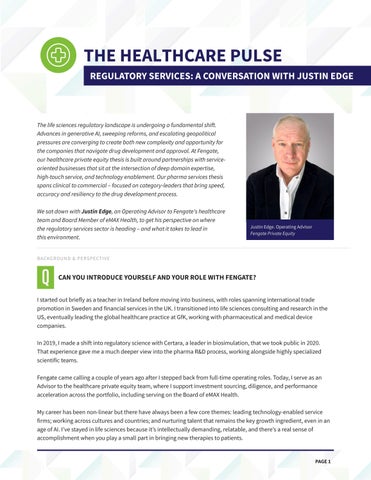
We sat down with Justin Edge, an Operating Advisor to Fengate's healthcare team and Board Member of eMAX Health, to get his perspective on where the regulatory services sector is heading – and what it takes to lead in this environment
BACKGROUND & PERSPECTIVE

CANYOUINTRODUCEYOURSELFANDYOURROLEWITHFENGATE?
IstartedoutbrieflyasateacherinIrelandbeforemovingintobusiness,withrolesspanninginternationaltrade promotioninSwedenandfinancialservicesintheUK Itransitionedintolifesciencesconsultingandresearchinthe US,eventuallyleadingtheglobalhealthcarepracticeatGfK,workingwithpharmaceuticalandmedicaldevice companies
In2019,ImadeashiftintoregulatorysciencewithCertara,aleaderinbiosimulation,thatwetookpublicin2020 ThatexperiencegavemeamuchdeeperviewintothepharmaR&Dprocess,workingalongsidehighlyspecialized scientificteams
FengatecamecallingacoupleofyearsagoafterIsteppedbackfromfull-timeoperatingroles Today,Iserveasan Advisortothehealthcareprivateequityteam,whereIsupportinvestmentsourcing,diligence,andperformance accelerationacrosstheportfolio,includingservingontheBoardofeMAXHealth
Mycareerhasbeennon-linearbuttherehavealwaysbeenafewcorethemes:leadingtechnology-enabledservice firms;workingacrossculturesandcountries;andnurturingtalentthatremainsthekeygrowthingredient,eveninan ageofAI I’vestayedinlifesciencesbecauseit’sintellectuallydemanding,relatable,andthere’sarealsenseof accomplishmentwhenyouplayasmallpartinbringingnewtherapiestopatients

HOWWOULDYOUDESCRIBETHECURRENTREGULATORYLANDSCAPE? WHATISDRIVINGACTIVITYTODAY?
Theregulatoryspaceinlifescienceswasfairlyslow-movingformanyyears,reflectingabroaderdrugdevelopment processthatconvertedlong-awaitedclinicaltrialresultsintostaticnarrativereportsforregulatoryreview.
Thatstatusquohasbeenupendedbyacombinationoftechnologicaladvances,regulatorychanges,andgeopolitics. GenerativeAIhasacceleratedthedevelopmentofcontentgenerationplatformsthatcannowdraftregulatory documentssuchassafetynarrativesandclinicalstudyreports. Thepromiseofacceleratedclinicaltrialsand regulatorysubmissionsiswithinsight,ashumanexpertiseissplicedwithAI-enhancedsoftwareandsystems.
Atthesametime,regulatoryagenciesaremandatingchangestoimprovetheefficiencyandspeedoftheclinical developmentprocess.TheFDAhasannouncedplanstostreamlinethenumberofpivotaltrialsrequiredforapproval andhasencouragedtheuseofbiosimulationasasubstituteforcertainpre-clinicalanimaltesting.Therehasalso beenaspikeinFDAwarninglettersformanufacturingandmarketingtransgressionsthatoftenrequireoutsideexperts toassistwithremediation. TheEMAhasbeenattheforefrontofmorerigorousdeviceregistrationstandards, effectivelysettingthebarforglobalapprovals.HealthCanadaandtheEMA(Policy70)haveledonclinicaltrial transparencyanddisclosure,whichhasincreaseddemandforanonymizationandthepublicationofclinicaltrial findings.RegulatoryagenciesarenowembracingagenticAItoingestdataandspeedupreviews–challengingdrug sponsorsandtheirserviceproviderstorethinksubmissionformats.
Theseregulatoryshiftsarehappeningalongsidebroaderpolicyandgeopoliticaldynamics.Legislativeeffortssuchas MostFavoredNation(MFN)pricingandtheInflationReductionAct(IRA)intheU.S.arereshapingpricing,access,and supplychains,includingre-shoringofmanufacturing.Atthesametime,Chinahasbecomeamajorplayerinnovel drugdiscovery,particularlyinoncology,fuelinglicensingdealswithWesternbiopharmaandtheemergenceofnew waveofhome-grownbiotechs.Infact,2025sawasurgeinbiotechIPOsinHongKong.
Thesestructuralchangeshaveimplicationsforoutsourcedregulatoryservices.
HOWARECLIENTEXPECTATIONSOFTHEIRVENDORSEVOLVING?
Pharmaceuticalandbiotechclientsexpectspeed,technologicalfluency,andglobalknow-howintheirservice providerstomatchtheirownambitionsthatareontheriseafterseveralyearsoflacklusterapprovalsandregulatory uncertainty Thegrowthprospectsofregulatoryservicefirmswillcontinuetobetiedtothefortunesofthe categoriesandclientstheyserve
Largepharmahasrestoreditsappetiteforbiotechacquisitionsandpartnershipstoreplenishpipelines,as evidencedbyNovartis’recentacquisitionsofPikavationandExcellergy Theyaredoublingdownonspecific therapeuticcategoriessuchasoncologicsandrarediseasesthatdemandspecializedskillsonthepartofservice providers Whilevaccineshavesloweddown,weightlossanddiabetesmanagementcategoriesaregrowingrapidly which,inturn,putspressureonGLP-manufacturingsiteinspectionreadiness,creatingdemandforassociated regulatoryandcomplianceservices

Clientsexpecttheiroutsourcedregulatorypartnerstobeagile,knowledgeable,andtechnologicallysavvyto enablespeedtomarket.Submissiondelaysarecostly,bothineconomictermsandalsointermsofunmet patientneeds.
OPERATIONAL EXCELLENCE AND THE CHANGING NATURE OF TALENT
WHATDIFFERENTIATESLEADINGREGULATORYSERVICEPROVIDERSTODAY?
Thepastfewyearshavebeenleanerforregulatoryserviceprovidersasdrugapprovalsslowedandtheregulatory environmentbecamelesspredictable,butweareseeingareturntogrowthin2026.
Talenthasalwaysbeenatthecoreofsuccessfulservicecompanies,butthenatureofthattalentischanging.Teams thatembraceandintegrateAInowhaveanedge.GenerativeAIisnotjustimportanttoembedinsoftwaresolutions–itisbecomingacorecomponentofprocessdelivery.Forexample,therearenowmorethanahandfulofautomated regulatorydocumentationsolutionsthathavebeenembracedbydrugsponsorstoauthorCSRs,protocols,and patientsafetynarrativesacrossclinicalandnon-clinicalapplications.Regulatoryconsultanciesmustbeconversant withthesesoftwaresolutionstoeffectivelysupporttheirclientsandinteractseamlesslywithinternalpharmaexperts.
Inthelongterm,weexpectdata-intensivesubmissionstograduallyreplacenarrativesubmissionsasAIrewiresthe drugdevelopmentprocess.Thiswillrequireregulatoryexpertstointegrateearlierintheprocess,ratherthanrelying onthetraditional“passtheball”approach.Automatedcontentreuseisalreadyunderwayascompaniespreparefor eCTD4.0which,inturn,requiresamorethoughtfulapproachtodatagovernanceandmanagementtomaintain rigorousaccuracy. Regulatorysubmissionexpertsareevolvingfromdocumentwriterstoregulatory“airtraffic controllers”withoversightfordata,documents,andtechnologies.
Finally,regulatoryserviceprovidersarechallengedtobeevermoreagileastheirclientscopewithamoredynamic regulatoryandtechnologicalenvironment.Thisincludesdemandforregulatoryconsultingexpertiseinunforeseen remediationsituationstriggeredbywarningletters.
Accuracyandspeedremainthetwinpillarsofsubmissionsuccess–it’sjustthatthewayweachievethemisevolving.
WHEREDOYOUSEETHEBIGGESTDISCONNECTINTHEREGULATORYLANDSCAPETODAY?
Therearestillmeaningfulgapsbetweenregulatory,clinicaldevelopment,andcommercialfunctionslikemarket accessandmedicalaffairsthatcanimpactdownstreamoutcomes.
Weexpecttoseegreaterintegrationacrossthesefunctionsasreal-worldevidence(RWE)playsalargerrolein regulatorysubmissions.Real-worlddataarenotjustusedforpost-marketsafetyandlabelexpansion,butincreasingly asdefactoexternalcontrolstoevaluateefficacyandsafetyfornewtherapies.RWDcanalsoinformpre-clinical biosimulationmodelsthatimprovethechancesofclinicaltrialsuccess. Thegapbetweenclassicclinicaltrial evidenceandreal-worlddatawillcontinuetoclose,especiallyincategorieswheredouble-blindedclinicaltrialsare impracticaland/ordifficulttorecruit.
Earlyinvolvementofregulatoryexpertsintheseactivitiesincreasestheprobabilityofregulatorysubmissionsuccess.
HOWAREREGULATORYSERVICEDELIVERYMODELSEVOLVING?
Traditionally,largepharmaceuticalcompanieshavefavoredFunctionalServiceProvider(FSP)models,where externalteamsactasanextensionofinternalstaff.Thesemodelsofferscalabilityandahighdegreeofclient controlviadedicatedresources,directoversight,andtheabilitytoflexcapacityupordown.Thetrade-offisthat theyrewardtimeconsumedratherthanoutcomesachieved.Project-basedmodelsworkdifferently.Theyoften usefixed-feestructures,whichmeansefficiencygainsaccruetotheserviceproviderwhiletheclientgetscost certaintyandtheflexibilitytoengageasneedsarise.
Manyserviceprovidersnowofferbothmodelsand/orhybridvariantstotailorsolutionstotheneedsofdifferent typesofclients.Forexample,smallerbiotechshavetraditionallyfavoredproject-basedmodelsastheylackthe internalinfrastructuretodeployFSPsatscale. Regulatoryagencieshavealsoharnessedflexiblelaboronshore, nearshore,oroffshoretomanagecostsandprovide24-hourcoverage.
ButtheunderlyingeconomicsoftheseFSPorproject-basedmodelsareshiftingasAIincreasestheproductivityof eachbillablehour.Oneresultmaybeanadjustmentinthetraditionalpyramidmodelforconsultingfirms(witha lotofjuniorstaffhandlinglower-levelwork)infavoroffirmswithtop-heavyexpertsenabledbytechnology. Regulatoryserviceproviderswitharmiesofoffshorestaffhandlinglowcomplexitytasksareatriskof displacementbytechnology.
Weexpecttoseemorerisk-sharingstructuresthatcombineexpertlabor,technologyfees,andoutcome-based pricing Itislessaboutchoosingonemodelversusanotherandmoreaboutachievingtherightbalanceand alignmenttodesiredoutcomesforeachengagement.
TECHNOLOGY AND DATA ENABLEMENT
WHEREISTECHNOLOGYGENUINELYIMPROVINGWORKFLOWSTODAY?
Aswediscussedearlier,AIandrelatedautomationisalready havingameaningfulimpactindocumentgeneration,content anonymization,contentreuse,anddatamanagement. Workflowscanbeaccelerated,therebycompressing submissiontimelines.Forexample,there’slesstimerequired tomanuallyreviewandeditchangesinsubmissionpackets.
However,thesetechnologiesarestillinearlyinnings,withfew usecasesdemonstratingmorethan50%labordisplacement. Laborreductionisevenlesswithmorecomplexdocumentsor tasksthatstillrequireexperthumaninterventions.

WHATWILLDEFINECATEGORYLEADERSINTHENEXT5–10YEARS?
Myguessisthattheleadingregulatoryservicesprovidersofthenearfuturewillbethosethatsuccessfullycombine deepdomainexpertisewithtechnologyenablementforallthereasonswehavejustdiscussed Akeyquestionfor today’sserviceprovidersiswhethertheyareinvestinginagenticAItostreamlineworkflowsanddelivery Ifnot,they shouldbe
Globalknow-howwillalsobecriticalasNorthAmericawillaccountforadecliningshareofdrugdiscovery,clinical development,andsubmissionactivity Forexample,China’sshareofglobalclinicaltrialsisalmostlevelwiththatof theUS
Therewillalwaysbedemandforhigh-value-addedstrategicregulatoryexpertisetosolvethornyproblemsacrossthe drugdevelopmentandcommercializationcontinuum,influencingearlyclinicalandlate-stageaccessstrategiesrather thanoperatingsolelyatthepointofsubmission Serviceproviderswithanarmyoflow-skilledlaborthatprimarily competeonpriceareatriskofbeingdisplacedbyAI,whichdrugsponsorscanusetohandlehigh-volume,lowcomplexitytasks Relationships,uniqueexpertise,and“cyborgconsultants”thatharnesstechnologywillbethe ingredientsforsuccess
WHATEXCITESYOUMOSTABOUTWHERETHESECTORISHEADING?
Theregulatorysub-sectorofpharmaserviceswillcontinuetobeacompellinginvestmentopportunityasaging demographicssustaindemandforlife-savingandenhancingbiotechnologies.Thenon-discretionarynatureof spendingonregulatoryservicesisalsohighlyattractive.Pharmainnovationwithoutregulatoryapprovalis meaningless.Atthesametime,technologyisfundamentallychanginghowworkgetsdone.Theshifttowardmore efficient,data-drivendrugdevelopmentandregulatoryprocessesrepresentsameaningfulopportunityforthe industry.
Serviceproviderswhocancombinehighexpertisewithadvancedtechnologieswillleadthesector.
At Fengate, our conviction in this space is clear: the companies best positioned to lead in regulatory services will be those that pair irreplaceable scientific and regulatory expertise with a genuine technology backbone – not as a feature, but as a foundation.
If you are a founder, operator, or investor working at the intersection of regulatory science and technology, we would welcome the conversation.
VicePresident