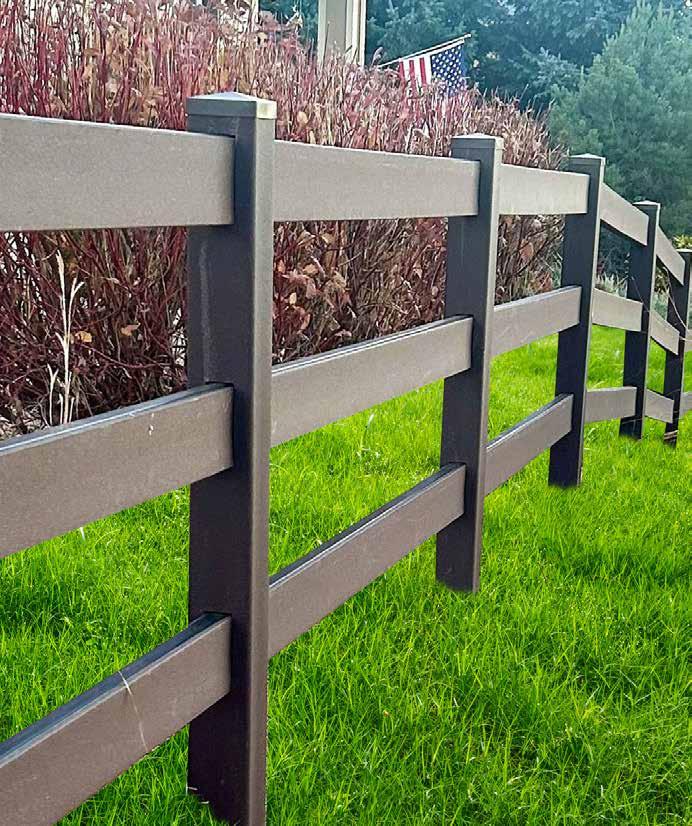
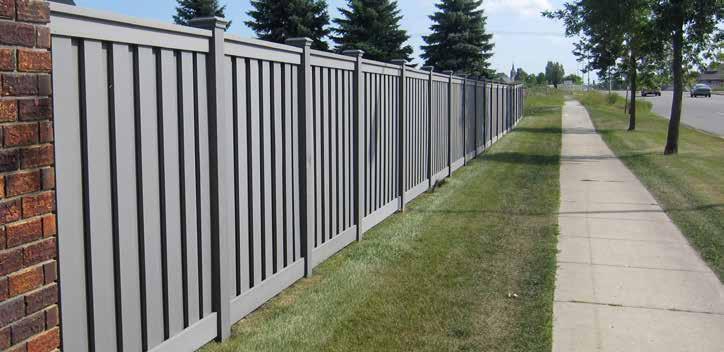
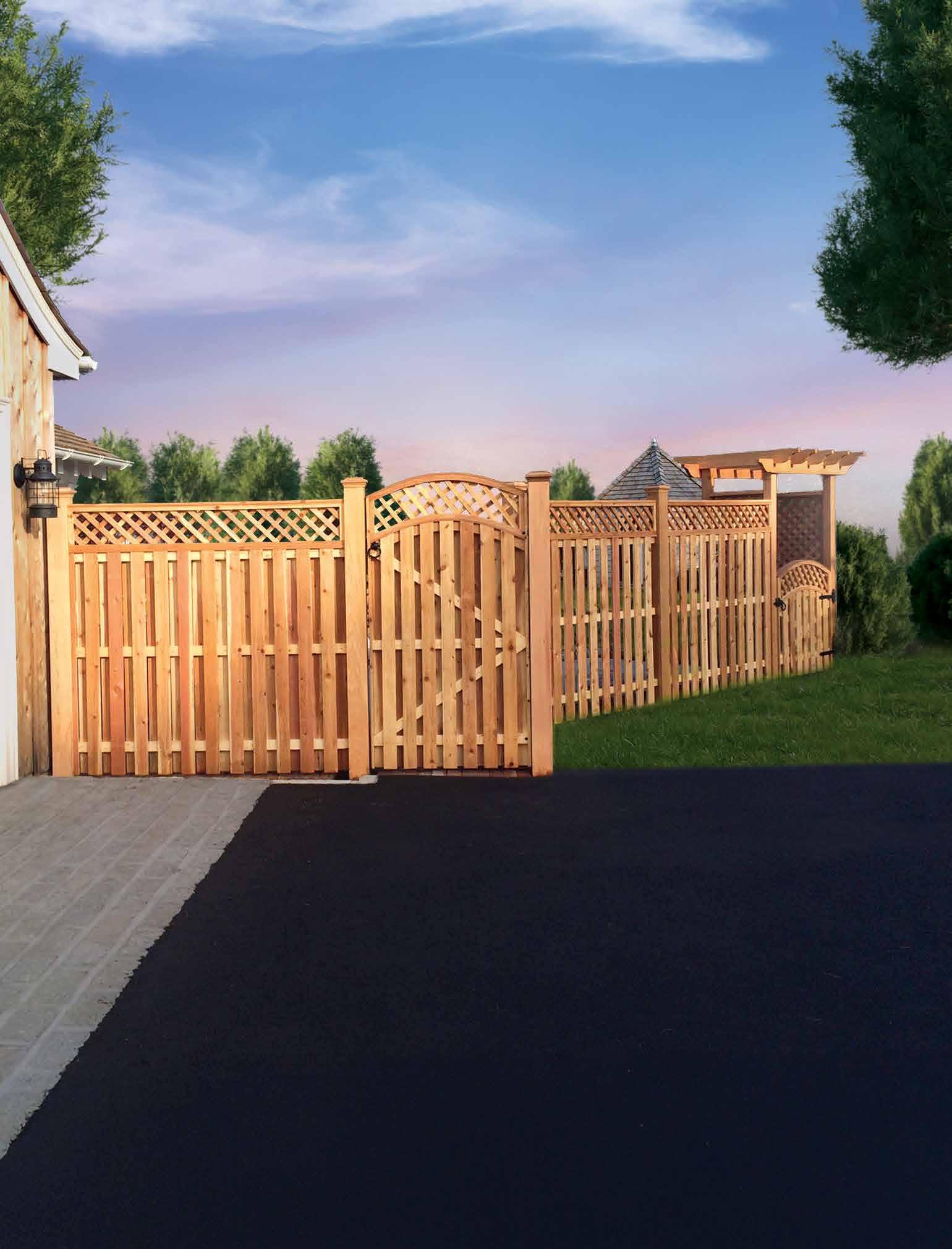
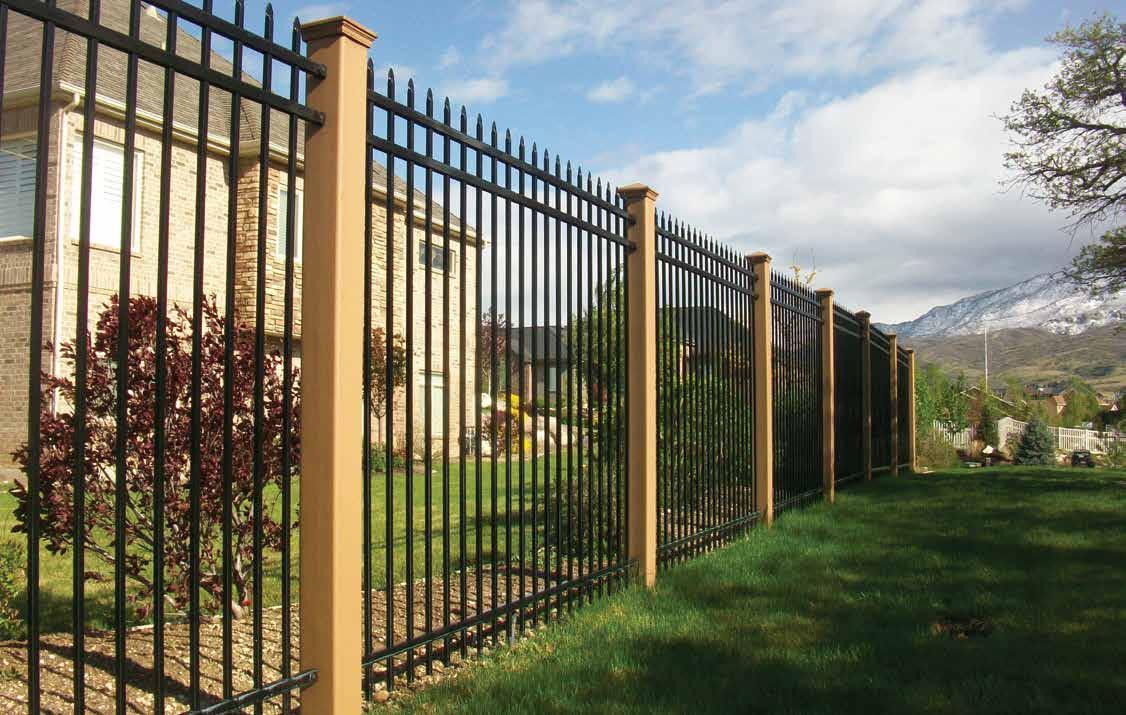
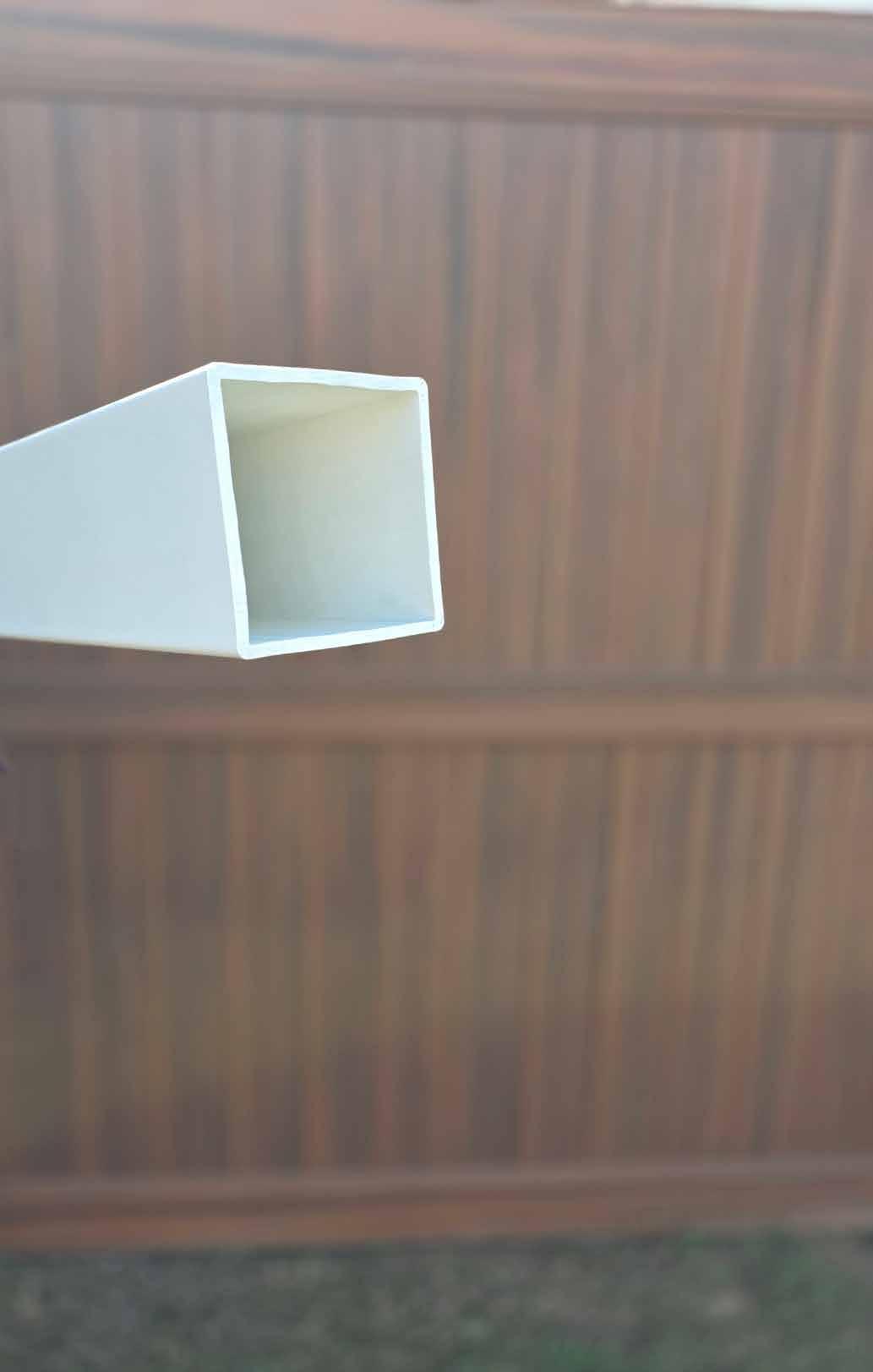
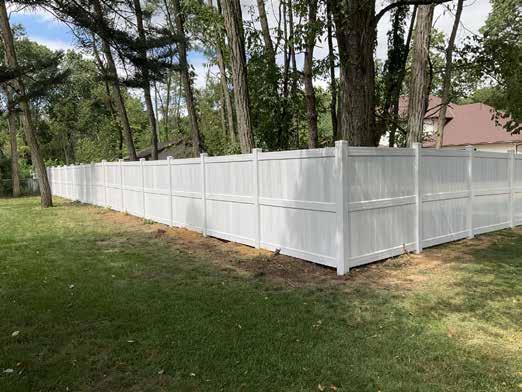
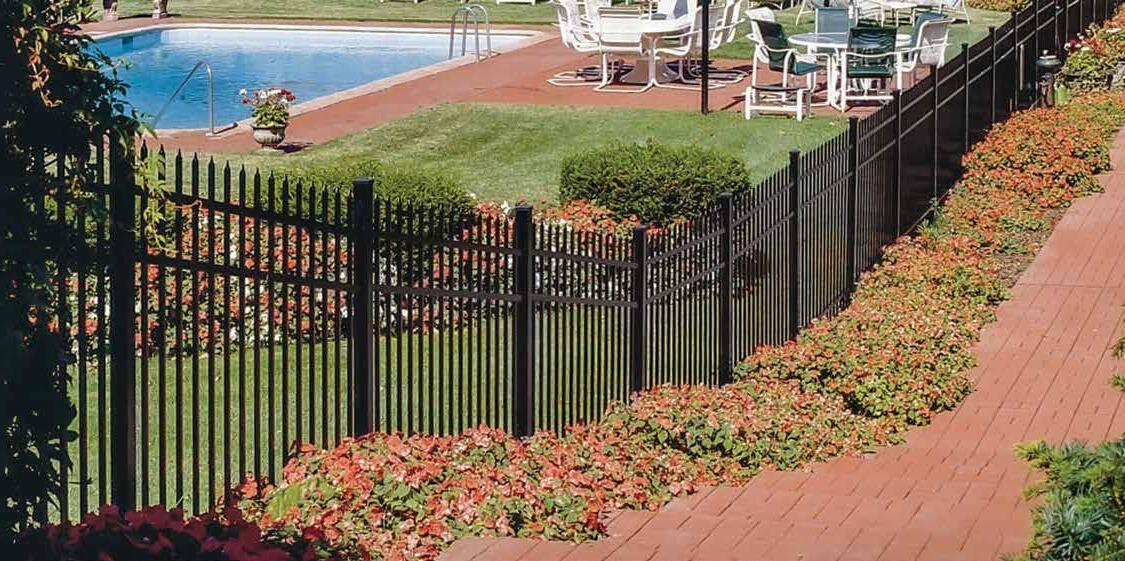
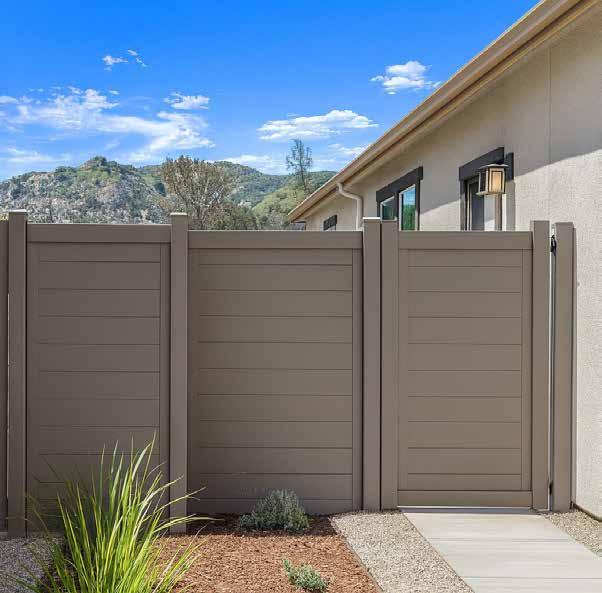
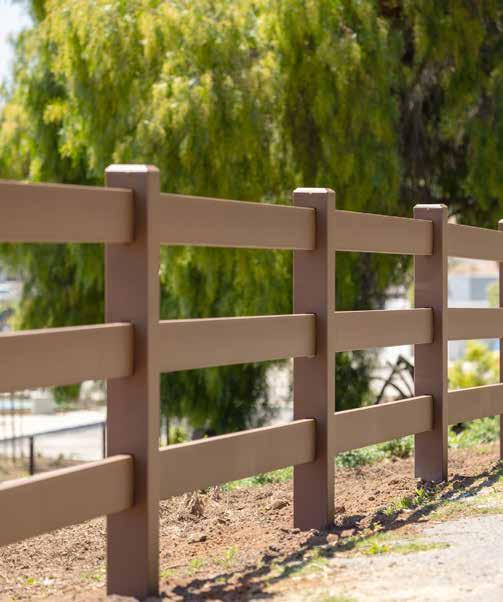
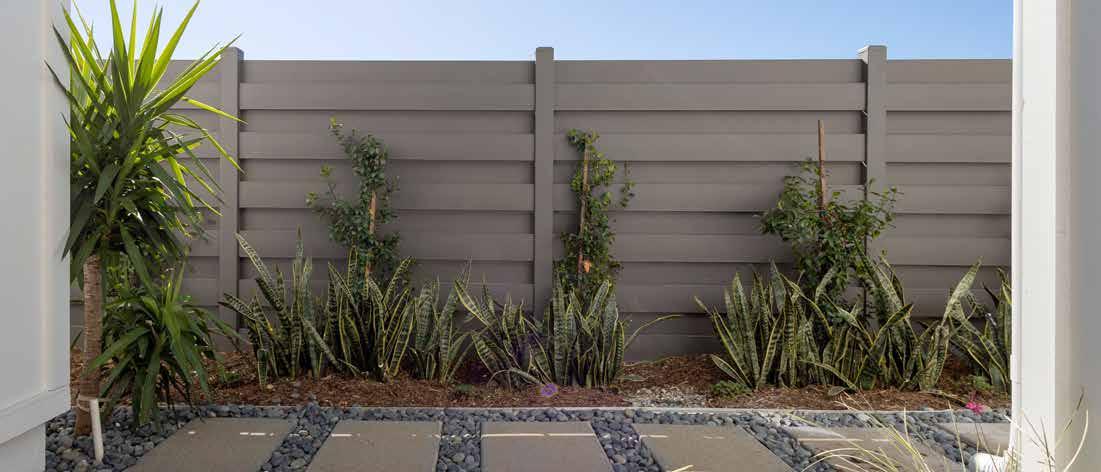
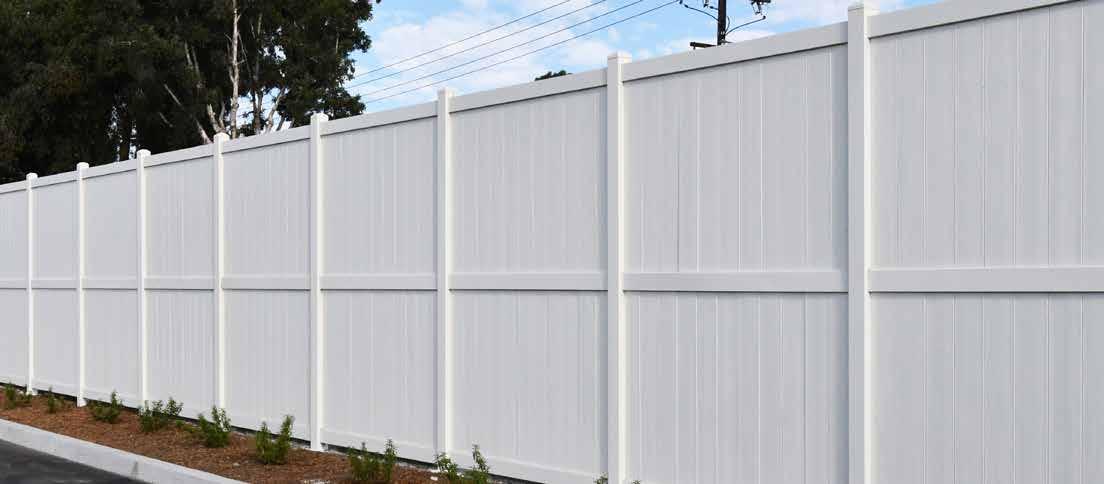
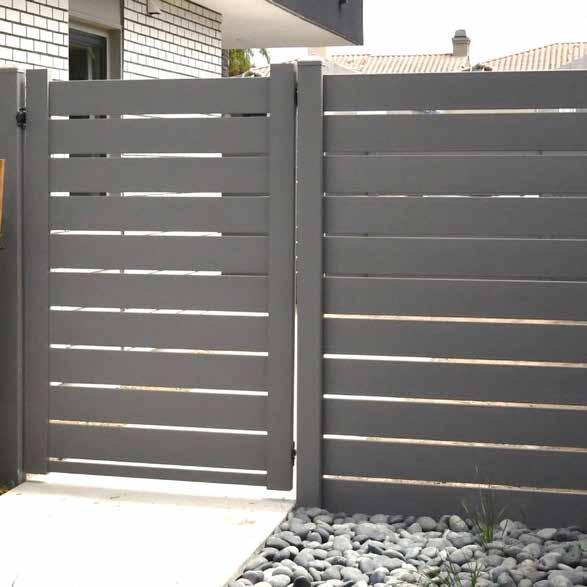
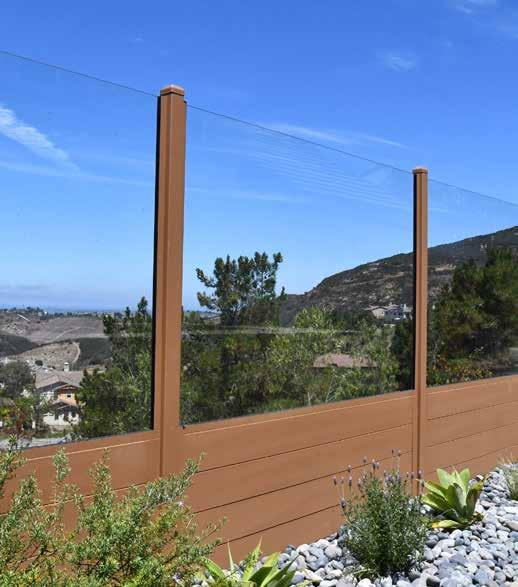
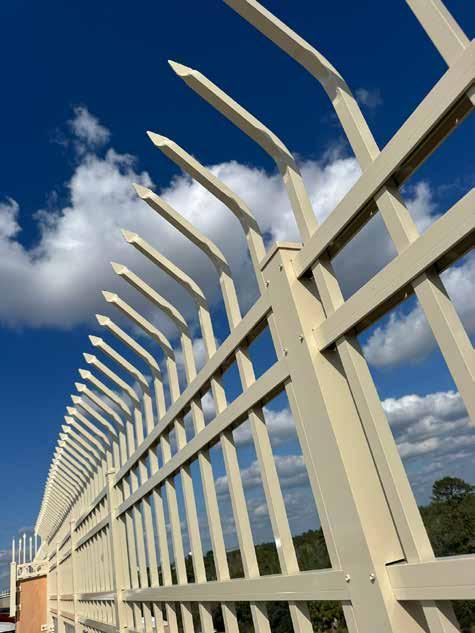
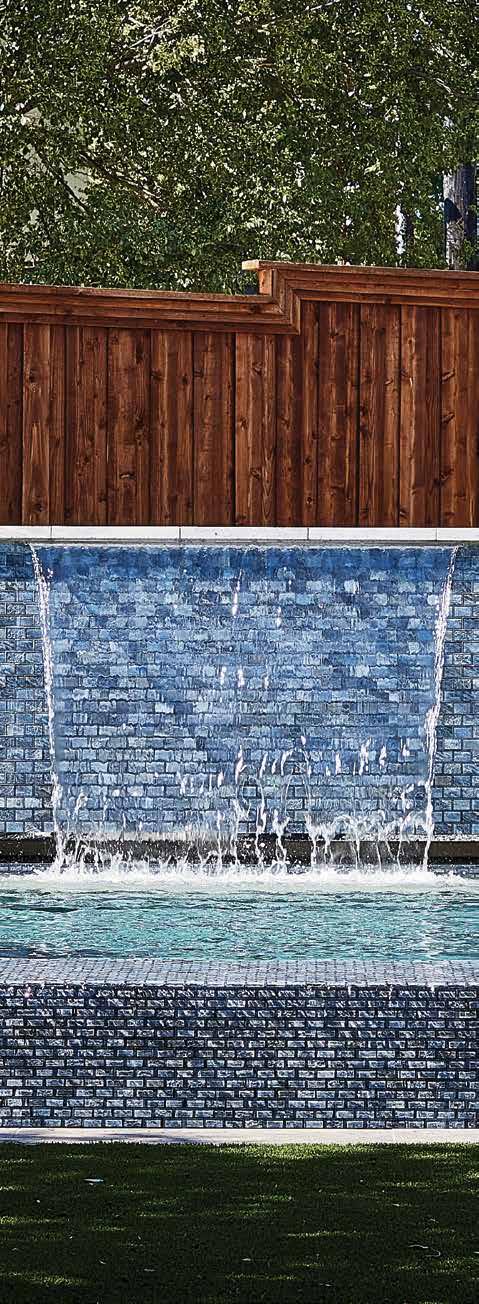
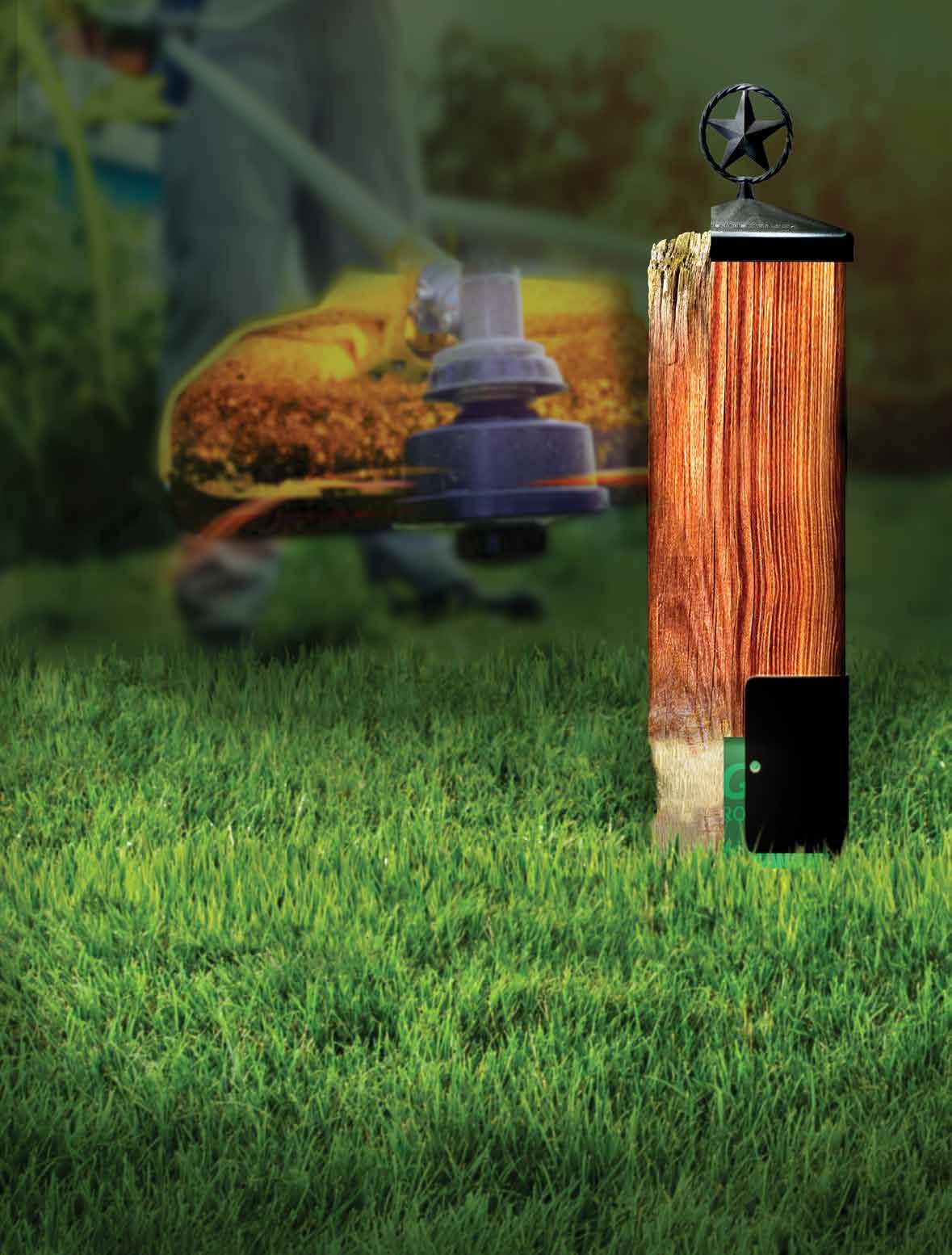
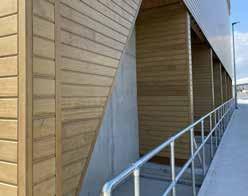
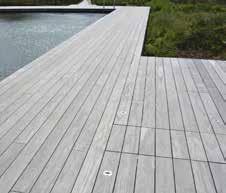
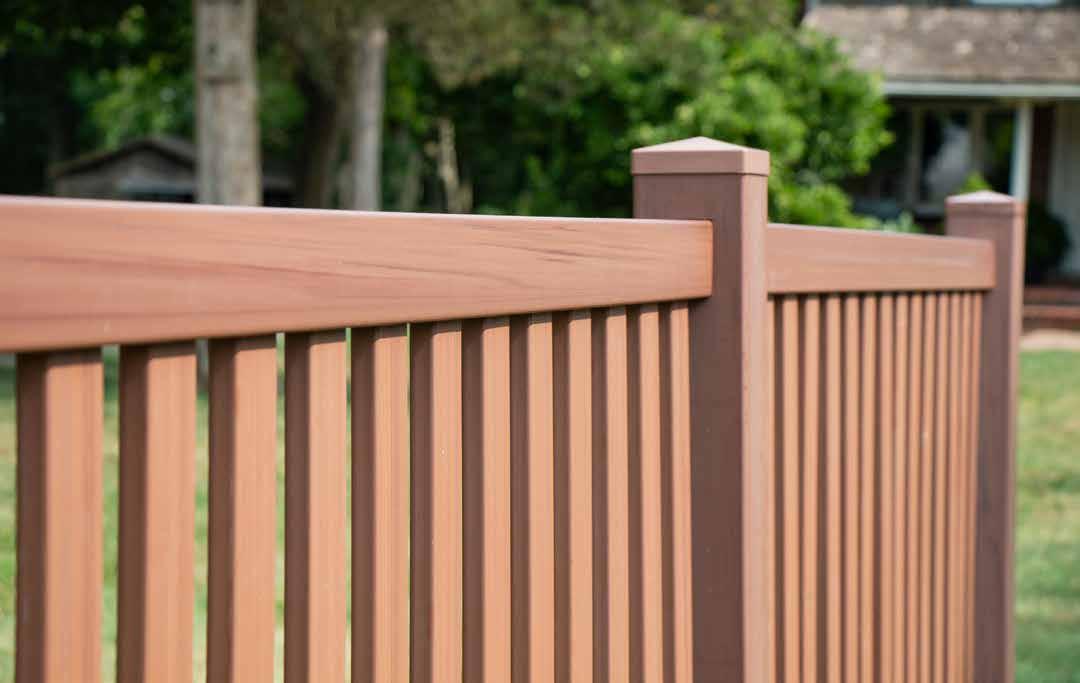
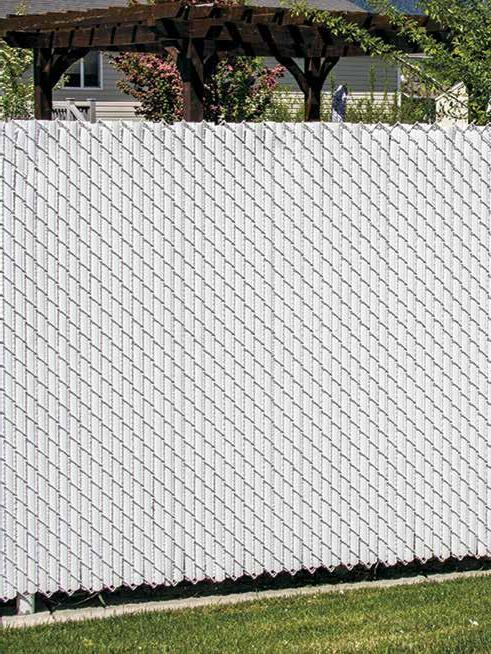
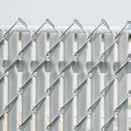
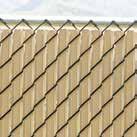
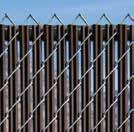
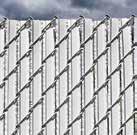
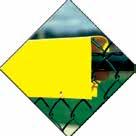
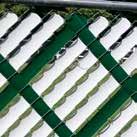
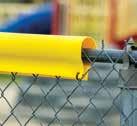
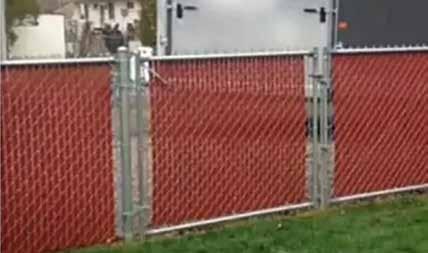
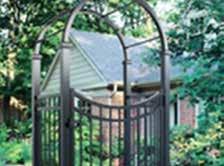
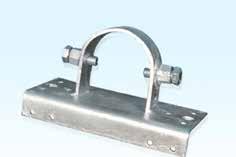
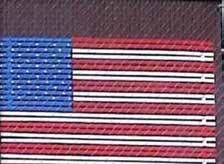
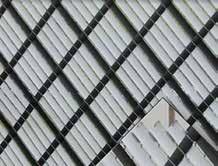
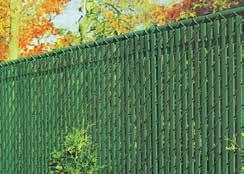
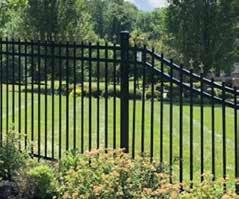
• Add depth and texture vs. smooth plastic Neighbor-friendly fence –same look on both sides No maintenance
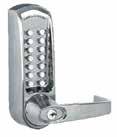
WHEN SECURITY MATTERS, TRUST THE LATCH THAT PROTECTS.
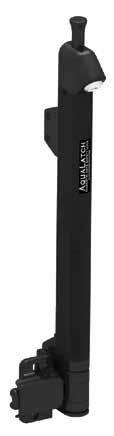
• Magnetic closing power, easy installation and guaranteed to last!
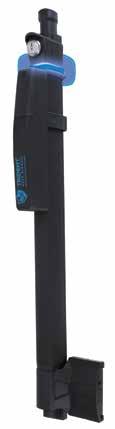
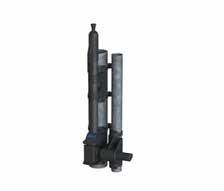
• The AQUALATCH® is the only pool latch with SAFE-ALERT® ! A visible red alert area under the release knob appears any time the latch is not engaged.
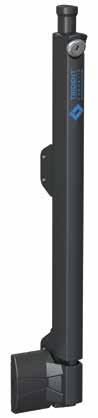
• TRIDENT ™ Safety Pool Latch has a significant amount of play or vertical tolerance. This helps to avoid problems with sagging gates, and allows for simple installation.
• The SAFE-NOTCH® feature engages if someone steps or climbs on the gate, further ensuring your gate will stay closed.
• Two Audio Alarms: First sound alarm is an instant notification the gate has been opened. The second alarm activates when the gate is left unlatched for more than 15 seconds, increasing security measures.
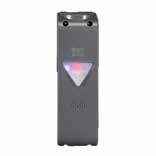
• 360-Degree Visibility: Prominent, blue flashing LED lights offer unparalleled visibility from every angle.
COMPLETE THE SYSTEM
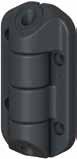
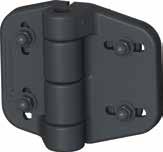
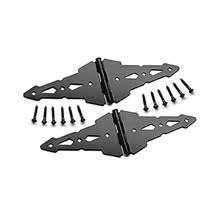
Pair any of these premium pool latches with Cornerstone Self-Closing Hinges to help keep your pool safe, secure, and code compliant all summer long.
THIS AD SPACE COULD BE YOURS
Special Sections
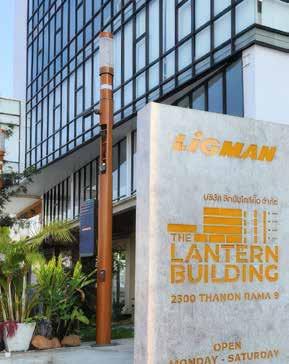
22 Ligman Lighting USA Launches DaVinci Pole: The Renaissance of the Smart Pole
24 High Security Starts with Understanding
Industry News
62 James Hardie and CBUSA Expand Strategic Agreement to Include TimberTech® Decking and Railing 64 AdvantageLumber.com Becomes First to Offer a Full Range of Accoya® Wood Products Online
70 Start-Up Stories: Powered Access
78 Premier Fence Announces Strategic Partnership with SecurityWorks
Business Management
60 Management Corner
68 High Hopes by Tom Luby
72 There is Still Time to Make 2026 a Star-Spangled Year by Mark Levin
76 The Leader in the Mirror: Coaching Yourself First by Michael Reed
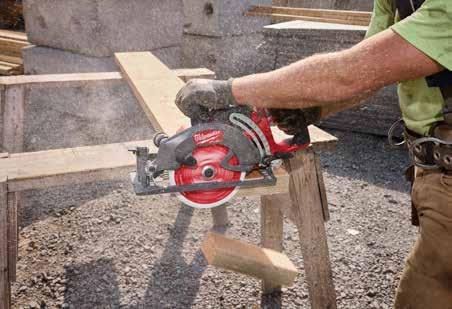
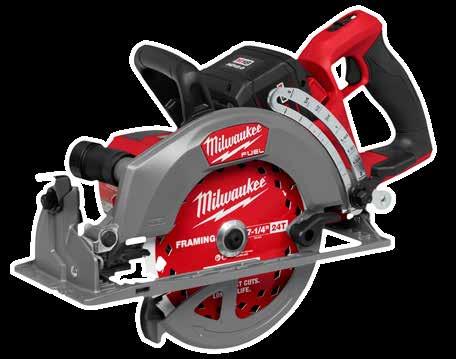
Milwaukee Tool continues to demonstrate their commitment to high-performance cutting solutions with the launch of the M18 FUEL™ 7-1/4" Rear Handle Circular Saw w/ONE-KEYTM Designed for the professional carpenter, remodeler, and general contractor, this solution delivers class-leading performance and cut speed for the most demanding applications.
The M18 FUEL 7-1/4" Rear Handle Circular Saw w/ONE-KEY sets a new standard as the most powerful and fastest saw in its class. Featuring the latest in cordless innovation, the POWERSTATE™ Brushless Motor delivers 6000 RPM maintaining high speed through tough ripping, framing, and engineered lumber cuts. With a 2-5/8” cut capacity, this solution can cut through 3x the material in a single pass, greatly increasing productivity and reducing the need for secondary cuts.
Milwaukee’s M18 FUEL 7-1/4" Rear Handle Circular Saw w/ONE-KEY joins a growing lineup of solutions integrated with AUTOSTOP™ Advanced Kickback Prevention using machine learning technology to detect dangerous bind ups and stop the blade before it leaves the material, significantly reducing the risk of injury.
The M18 FUEL 7-1/4" Rear Handle Circular Saw w/ONE-KEY is fully compatible with the entire M18 line, now offering more than 300+ solutions.
Learn more at milwaukeetool.com
Envision Outdoor Living Products is bolstering its presence in Texas and expanding its partnership with Dealers Choice, which will add Envision’s composite decking lines and Fairway Railings in Tyler and Seguin. The Tyler distribution center serves dealers throughout East Texas while Seguin supplies Central Texas, including the San Antonio corridor and surrounding Hill Country communities.
By offering Envision’s full outdoor living lineup—including Distinction, Expression, and Ridge Premium capped composite decking; EverGrain composite decking; Fairway aluminum, composite, steel, and vinyl railings; and fastening systems—Dealers Choice will provide its extensive dealer network with everything needed to offer customers a complete, cohesive deck build.
“Texas is one of the country’s most exciting and fastest-growing markets for outdoor living and expanding our presence there with a well-established partner like Dealers Choice is a natural next step for us,” says Adam Caplinger, director of sales for Envision Outdoor Living Products. “Their strong reputation
Dealers Choice Expands Its Distribution of Envision Outdoor Living Products into Two New Texas Locations
and deep relationships with dealers and contractors make them exactly the kind of distribution partner we look for — trusted, connected, and committed to bringing quality products to the market. We’re excited not only about our potential for growth in the region but also for the dealers and contractors who will now have Envision within reach.”
With these new locations, Dealers Choice now offers Envision products at 14 of its locations, with coverage across the Midwest, Mid-Atlantic, and Southeast.
“Partnering with Envision Outdoor Living Products allows us to offer our dealer network a truly complete outdoor living solution,” says Joe Noreiko, regional vice president for Dealers Choice. “With Envision’s composite decking and railing lines both now available through our Tyler and Seguin locations, our customers have everything they need to deliver a finished, high-quality deck build from a single source. Envision’s reputation for performance, durability, and design versatility makes it a natural fit for the Texas market, where homeowners and builders are investing in outdoor spaces built to last.”
To learn more, visitenvisionoutdoorliving.com.
Nominations Now Open for CLFMI Les Grube Memorial Design Award
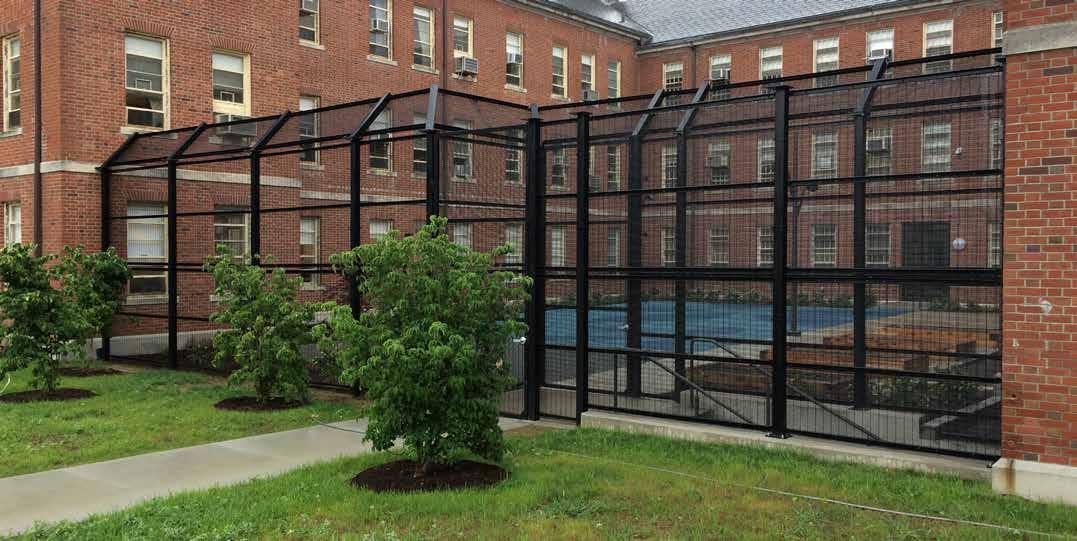
The Chain Link Fence Manufacturers Institute (CLFMI) is accepting nominations for the Les Grube Memorial Design Award, an annual recognition program that honors outstanding design and installation projects using chain link fence materials in creative, practical, and innovative ways. The deadline to submit nominations is November 1.
Named in honor of Les Grube, a past president of CLFMI and a respected leader in the fencing industry, the award was created to highlight the versatility and functionality of chain link fencing products. It celebrates the architects, engineers, contractors and project teams who see chain link fencing as more than a standard perimeter solution.
To qualify, the nominated project must meet the following requirements:
• The project must innovatively use chain link fence materials.
• The project must be commercial or industrial in nature.
• A professional architectural or engineering firm must design the project.
• A professional fence contractor must install the project.
Projects may include traditional fencing applications, architectural installations, creative enclosures, public-facing design elements, security systems, recreational fencing, or other uses that show the flexibility and long-term value of chain link fence materials.
The Les Grube Memorial Design Award recognizes both the design and installation professionals who bring the project to life.
The award includes:
• A specially designed plaque for the winning project
• A $2,500 cash award for the designing architect
• A $1,000 cash award for the installing contractor
• and media exposure
To learn more or submit a nomination, visit chainlinkinfo.org.
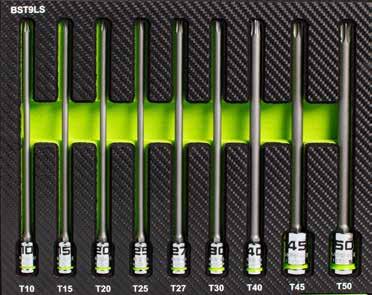
GripEdge Tools announced the launch of the GripEdge™ 9-Piece RPT 1/4" & 3/8" Drive Long Ball Star Bit Socket Set (Part No. BST9LS), a precisionengineered solution designed for professionals who regularly work in confined, hard-to-reach spaces.
Building on the proven success of its first-generation design, the BST9LS introduces a second-generation Ball Star geometry that allows up to 15.5° of pivot — giving technicians the ability to engage fasteners at an angle when straight-on access simply isn't possible. Whether working in tight automotive bays, industrial equipment enclosures, or confined mechanical spaces, this set is purpose-built to get the job done where standard tools fall short.
Patented RPT™ Technology Sets a New Standard for Grip
At the core of the BST9LS is GripEdge™'s patented Rounding Prevention Technology (RPT™), engineered to maximize contact with the fastener and dramatically reduce the risk of rounding. Compared to standard tools, RPT™ delivers up to 50% more grip on undamaged fasteners — giving professionals greater control and confidence during both tightening and loosening operations.
"This set was designed from the ground up for professionals who can't afford to lose a fastener or strip a bolt in a difficult location," says Jared Kukucka, director of sales and marketing at GripEdge Tools. "The combination of our second-generation Ball Star geometry and RPT™ technology gives users a level of access and grip that simply doesn't exist in conventional socket sets."
Precision-Machined for Performance and Longevity
Each bit in the BST9LS is precision-machined from high-strength S2 tool steel, featuring a slimmed-down profile specifically designed to maximize access in confined areas without compromising durability. At 6 inches in overall length, each socket is ideally suited for reaching recessed or obstructed star (Torx®style) fasteners commonly encountered in automotive, industrial, and heavy equipment applications.
Large, stamped size markings with black ink fill ensure fast, easy identification — even in low-light or dirty work environments where visibility is critical.
For more information, visit gripedgetools.com
2025 Les Grube Design Award Winner
Soft Light Glow Illuminates Visitors
NEW INTEGRATION PARTNER: HOMELINK®
From Post-andRail to HighTech Fortress: The Evolution of the White House Fence
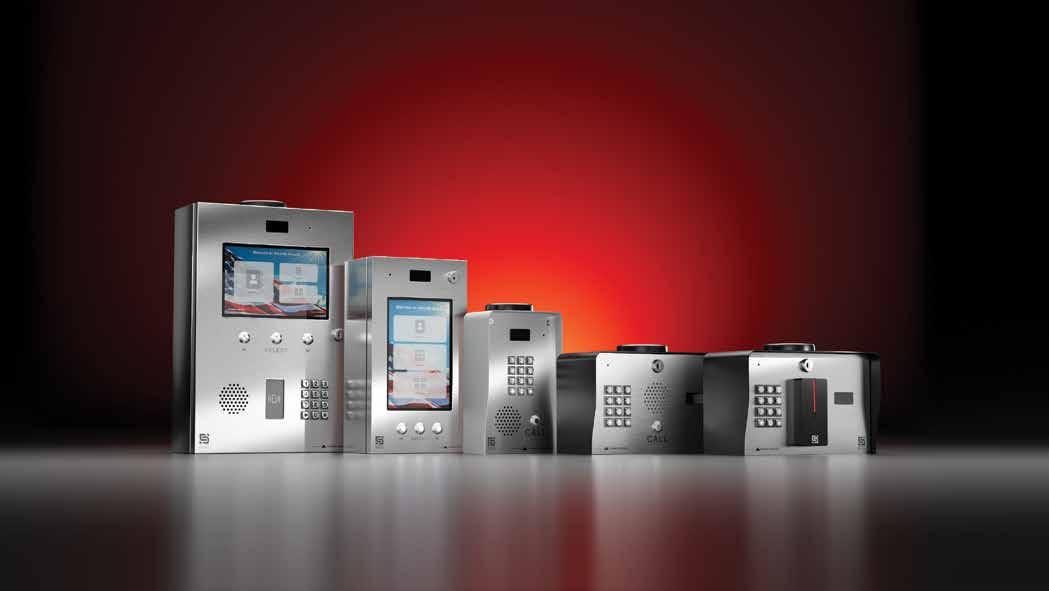
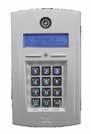
DoorBird Previews New IP Door
Communication at ESX
DoorBird, a leading provider of IP video door intercom and access control solutions, was an exhibitor at ESX (Electronic Security Expo) for the first time in June, underscoring the company’s continued investment in the U.S. professional security and integration market.
At ESX, DoorBird previewed upcoming products including the DoorBird D31 5G, indoor stations A1103/04T, and highlighted its newest integration partnership with HomeLink®, further expanding DoorBird’s ecosystem and integration flexibility.
“ESX gave us an important opportunity to engage directly with integrators, dealers, and monitoring professionals,” says Sascha Keller, founder and CEO of DoorBird. “From new hardware launches to strategic integrations like HomeLink, our focus is on delivering practical, forward-looking solutions that add value in real deployments.”
WHAT DOORBIRD SHOWCASED AT ESX
New Indoor Stations A1103/04T
DoorBird’s new indoor stations, featuring modern design, improved usability, and seamless communication with DoorBird door stations - enabling complete, end-to-end IP door communication systems.
New Integration Partner: HomeLink®
DoorBird highlighted its latest integration with HomeLink, expanding access control options by enabling interaction between DoorBird door stations and HomeLink-enabled systems. This integration supports greater convenience and automation, particularly for residential, gated, and mixed-use properties, while aligning DoorBird with widely adopted in-vehicle and access technologies.
DoorBird D31 5G
Designed for commercial and multi-tenant locations that require reliable connectivity, the D31 5G introduces cellular communication capabilities, making it well-suited for sites where traditional network infrastructure may be limited.
To learn more, visit doorbird.com
It started with wood and good intentions. In 1801, President Thomas Jefferson erected the first White House perimeter, a simple wooden post-and-rail fence designed less for security and more to keep livestock off the grounds. Few could have imagined that more than two centuries later, that humble barrier would evolve into one of the most sophisticated fencing systems in the world.
For most of its history, the White House fence was more symbolic than strategic. But a series of security breaches forced a long-overdue reckoning. The most alarming came in 2014, when an intruder successfully scaled the then-6.5-foot iron fence and made it inside the building before being stopped. The incident that sent shockwaves through the U.S. Secret Service and put the perimeter's adequacy squarely in the spotlight.
The response was sweeping. In 2019, the National Park Service broke ground on a $64 million fence replacement project that would transform the perimeter entirely. The old fence was out. In its place rose a 13-foot steel barrier featuring wider, stronger posts, non-scalable pickets and modern intrusiondetection sensors built directly into the structure. The upgrade expanded the security perimeter to encompass roughly 18 acres, creating what is now considered a heavily fortified installation at the center of the nation's capital.
The permanent fence, however, is only part of the story. The Secret Service routinely supplements the steel perimeter with temporary 8-foot anti-scale fencing deployed around Lafayette Square and nearby government buildings during periods of heightened tension, major protests or significant political events.
Beyond the fence line itself, the White House complex employs a layered defense system that includes ballistic-resistant glass, rooftop radar, drone interceptors, restricted airspace and hardened underground bunkers. The fence is the first point of contact, but it is far from the last line of defense.
For fencing professionals, the White House perimeter offers a compelling case study in how security needs evolve over time and how the industry has risen to meet them. What began as a wooden rail to keep out wandering animals is now a precision-engineered system built to meet modern threats head-on.
76 FENCE Expands in Pennsylvania and Florida
76 FENCE, one of the nation’s fastest-growing fencing franchise brands, is continuing its expansion across Florida and Pennsylvania with the addition of two new multi-territory franchises.
With steady residential growth, a strong base of established communities, and increasing demand for reliable home services, these regions present a significant opportunity for a brand focused on professionalism and customer experience.
“We’re excited to continue growing throughout Philadelphia and Florida with franchise owners who are committed to building strong local businesses and delivering an exceptional experience for homeowners,” says Ed Samane, CEO of 76 FENCE.
76 FENCE BucksMont
Tim Dunn, franchise owner serving Bucks and parts of Montgomery Counties, Philadelphia, is a veteran, West Point and Wharton graduate, and brings a strong foundation of leadership, discipline, and community connection to the business.
Dunn leads the business alongside General Manager Eric Matsinger, who brings extensive experience in leadership, coaching, and team development. Together, they are focused on delivering a higher standard of service to homeowners and businesses across the region.
“Bucks and Montgomery Counties aren’t just strong markets, they’re home,” says Dunn. “This is where I grew up, where my family lives, and where I’m raising my own children. After years of leadership experience, I wanted to build something meaningful that reflects my values while delivering a level of service this community deserves.”
“Everything we do comes back to people; our team, our customers, and our community,” says Matsinger. “We’re focused on building a culture of high standards and strong relationships, and that’s what will ultimately drive our success.”
76 FENCE St. Petersburg
Franchise owner, Patrick Schmitt, serves communities throughout Pinellas County and greater St. Petersburg, Florida.
“I was drawn to 76 FENCE because of the systems, support and longterm vision behind the brand,” says Schmitt. “At the same time, there’s a real opportunity to raise the standard for customer experience in the fencing industry. Homeowners want strong communication, professionalism and accountability, and that’s exactly what we plan to deliver throughout Pinellas County.”
Greater Tampa Regional Developers Kristin Campbell and John Campbell said Schmitt’s leadership style and long-term vision made him a strong fit for the Florida market.
“Patrick understands the importance of combining operational excellence with strong community relationships,” the Campbells said. “Pinellas County is an outstanding market, and we’re confident he will build a business that homeowners across the region can trust.”
To learn more, visit 76fence.com
The world looks different than it did a decade ago, and so does the perimeter. As threats grow more sophisticated, so does the demand for fencing systems that can meet them head-on. From critical infrastructure and government facilities to public venues and industrial sites, high-security fencing is one of the fastest-evolving segments in the industry. We’re taking a closer look at systems, technologies and expertise driving this market forward.
Miller Edge Expands PEGASUS+™
Miller Edge has expanded availability of Pegasus+, the company’s always-on LED visual alert system and sensing edge designed for barrier arm gates. Pegasus+ is now available in additional lengths to support a wider range of barrier arm configurations and arm lengths.
The system combines highly visible LED illumination with sensing edge functionality to help improve visibility and awareness at automated gate openings. Designed for parking, access control, and perimeter security applications, Pegasus+ provides
a streamlined solution for both visual alerting and entrapment protection.
“Pegasus+ was designed to make barrier arm gates more visible and intuitive,” says David Makepeace, director of sales & marketing at Miller Edge. “By expanding the available lengths, we’re giving installers and facility owners greater flexibility while maintaining an integrated solution for visual alerting and sensing edge protection.”
For more information, visit milleredge.com.
AMAROK Invests in Evolon, Uniting Industry Leaders to Redefine Commercial Security
Ligman Lighting USA Launches DaVinci Pole: The Renaissance of the Smart Pole
Ligman Lighting USA has launched the DaVinci Pole™, a canvas that allows inventors to bring lighting and technology systems together into an aesthetically precise solution.
Deploying technology systems is often an afterthought when developing landscape architecture. As a result, technology systems, like cameras, are "bolted on" to light poles due to convenient access to power, location, and height. This approach has led to cost inefficiencies from duplicated installations, reliability issues from improperly integrated systems, and unsightly "franken-poles" that disrupt carefully designed environments. Customers have repeatedly asked for help to avoid these challenges, and Ligman engineering has answered their call by reinventing the smart pole by introducing the DaVinci Pole.
The demand for convenient access to systems like security cameras, Wi-Fi connectivity, EV charging, ADA push buttons, badge readers, intercoms, license plate recognition (LPR), speakers, and device charging is growing; often all within the same space. Rather than deploying these systems separately and "bolting" them to the nearest light pole, DaVinci Pole brings them together into one structure where systems coexist reliably and complement the landscape.
DaVinci Pole invites inventors to reimagine poles and bollards as mini experience centers. Starting from a simple sketch, Ligman's design and engineering teams transform concepts into reality in days, not weeks or months. Customers select their preferred technology systems, and Ligman provides the provisions while leveraging the company's expertise in system integration and purpose-built infrastructure design. Customers are not limited by pre-engineered technology brands; Ligman will provide the needed provisions for any preferred technology selected. The result is a single pole or bollard that houses each system internally, leaving only user-facing components visible for ease of access and a clean aesthetic.
"DaVinci Pole is the physical expression of Ligman's DNA," says Austin Ashe, president of Ligman Lighting USA. "We were founded on customization and projectspecific design. With DaVinci Pole, we're unlocking our customers' inner creator, turning their vision into reality through Smart Poles that meet the unique needs of each environment."
Every DaVinci Pole features MicroPRIM™ finishes, Ligman's decorative powder coating technology that combines creative freedom with long-term durability. MicroPRIM enables custom colors, patterns, and imagery while providing anti-graffiti, UV-resistant, scratch-resistant, and natatorium-rated protection, ensuring the infrastructure remains visually cohesive over time.
All DaVinci Poles are also backed by Ligman's industry-leading 10-year warranty for structure and finishes. Learn more at ligmanlightingusa.com/poles/davinci-pole
30" 43" 55"
High Security Starts with Understanding Access
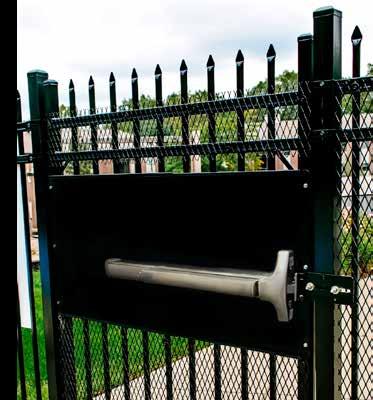
When discussing high-security fencing, most conversations naturally focus on perimeter design, fence height, anti-climb features or access control technology. While those elements are certainly important, one critical component is often overlooked: what happens when someone reaches the gate?
"Everyone wants to talk about the fence itself — the height, the mesh, the anti-climb features," says Jennifer Klassen, owner of DAC Industries. "But we ask our customers, what happens at the gate? That's where security either holds or breaks down, and it's where the right hardware makes all the difference."
For many commercial, industrial, municipal, and educational facilities, panic hardware plays a key role in balancing security with safety. The challenge is that security requirements vary significantly from one application to the next. A storage facility has different access needs than a school. A public park operates differently than a utility site. Yet many people are tasked with specifying hardware without fully understanding which combination of products best supports their security goals.
Klassen says most customers come in knowing exactly what they want the gate to do. They know whether authorized personnel need to re-enter from the outside; whether key access is required; whether the opening will integrate with access control systems; or how restrictive or controlled access should be. “What they often don't know is which hardware configuration can deliver those outcomes, and that’s where DAC comes in.”
One Exit Device, Multiple Levels Of Security
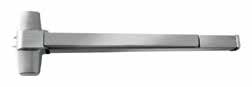
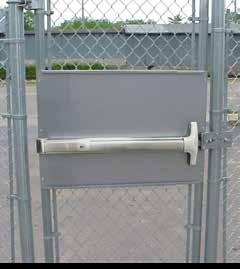
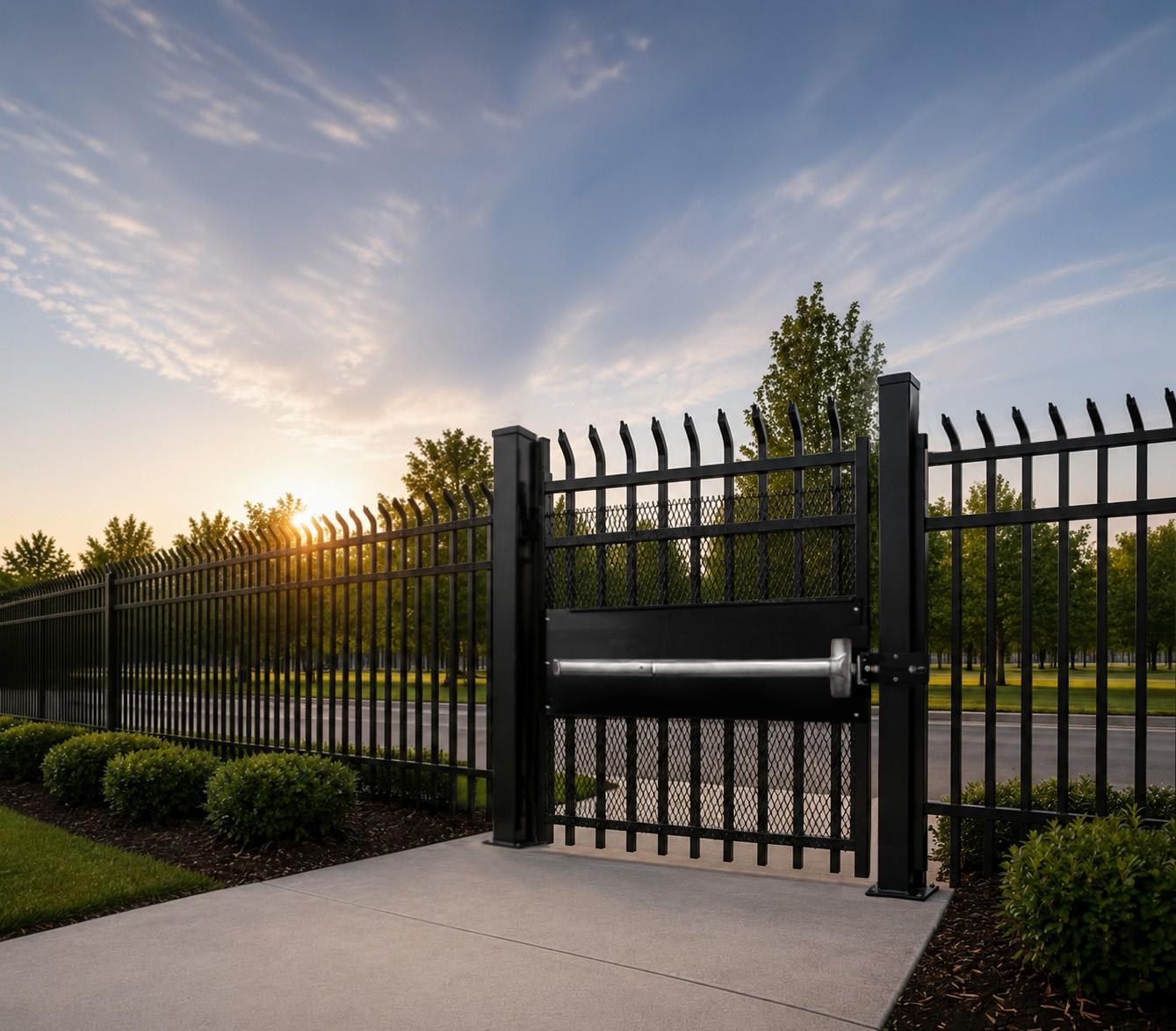
A panic exit device provides safe egress from secured areas, but the level of security can change dramatically based on the trim and access options selected.
For applications requiring basic exit-only functionality, a standard panic device may be all that's needed. These configurations are common in locations where emergency egress is required, but entry is restricted.
As security requirements increase, facilities may incorporate keyed trim options that allow authorized personnel to enter while maintaining safe egress for occupants.
For even greater control, electrified trim, electric strikes, and access control integrations can be added. These solutions allow facilities to manage access through credentials, keypads, card readers, or remote entry systems while still maintaining code-compliant exit functionality.
"Panic hardware is scalable, which allows for custom solutions,” Klassen explains. "You're not starting over every time the security requirements change. You're building on a proven platform and adding the layers you need. That's a smarter investment for the customer and a simpler conversation for the contractor."
Matching Hardware to the Application
The challenge isn't usually identifying the desired outcome. It's translating that outcome into the right combination of products.
• Does the gate require re-entry?
• Should access be controlled electronically?
• Is keyed access sufficient?
• Will the opening integrate with an existing access control system?
• What level of security does the facility require?
These questions can quickly influence which components are appropriate. Klassen says that's why DAC Industries includes as many of these types of details as possible in their product catalog, along with trained team members who can help identify the panic hardware solution best suited for the project.
High-security fencing projects demand careful planning, but gate hardware doesn't have to be overwhelming.
“By focusing first on how the gate needs to function, and then matching hardware to those requirements, contractors, distributors and facility managers can achieve the right balance of security, access control, and safety,” adds Klassen.
To learn more, visit dacindiustries.com.
Security in an Uncertain World: Why Integrated Perimeter Protection Matters More Than Ever
As geopolitical tensions, global instability and security threats continue to rise, organizations responsible for critical infrastructure are placing greater focus on perimeter security than ever before.
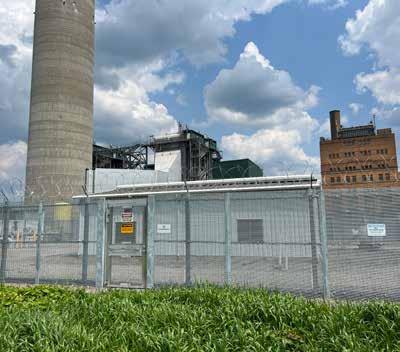
Across North America, sectors such as data centers, utilities, transportation, government facilities and energy infrastructure are increasingly moving beyond traditional fencing requirements and adopting more integrated approaches to physical security.
According to Binns Canada Ltd, the conversation has shifted significantly in recent years.
“Organizations are no longer simply asking for a fence or gate,” says Sam Bradbury, president of Binns Canada. “They are asking how to delay intrusion, mitigate hostile vehicle threats and integrate multiple layers of protection into one coordinated perimeter solution.”
Based in Calgary, Alberta, Binns Canada specializes in hostile vehicle mitigation (HVM), crash-rated gates and bollards, and security-rated perimeter fencing systems for mission-critical sites across Canada and the United States.
Rather than treating perimeter security as a collection of separate products, the company focuses on a holistic approach — integrating crash-rated and security-rated systems together to provide comprehensive protection for high-risk facilities.
This has become particularly important as concerns surrounding sabotage, vehicle-borne threats, unauthorized access and operational disruption continue to grow globally.
“Modern perimeter protection is about understanding the operational risks of a site and then designing the perimeter accordingly,” Bradbury explains. “That may involve crash-rated bollards, hostile vehicle mitigation barriers, automated gates, security-rated fencing and access control integration all
working together as one system.”
Binns Canada works closely with architects, engineers, consultants and contractors during the early design stages of projects to help define operational requirements and develop integrated perimeter strategies.
The company’s portfolio includes LPS 1175 security-rated fencing systems, crash-tested vehicle mitigation products, anti-climb welded mesh fencing, automated gate systems and integrated perimeter solutions designed for critical infrastructure environments.
One of the fastest-growing sectors for these solutions is the data center market, where operators are placing increased emphasis on physical resilience and operational continuity.
“Data centers have become critical infrastructure,” Bradbury says. “Owners and operators want proven, tested systems that provide real protection while still supporting operational functionality and long-term reliability.”
A key advantage of the integrated approach, according to Binns Canada, is the ability to simplify complex projects by providing multiple layers of perimeter protection through a single specialist supplier.
“In today’s environment, clients are looking for trusted partners who understand the bigger picture,” Bradbury says. “They want perimeter systems that are tested, certified and designed to work together; not fragmented solutions from multiple suppliers.”
As uncertainty continues across the global landscape, demand for integrated perimeter protection solutions is expected to remain a growing priority for organizations protecting critical assets and infrastructure.
Learn more at binns-canada.ca
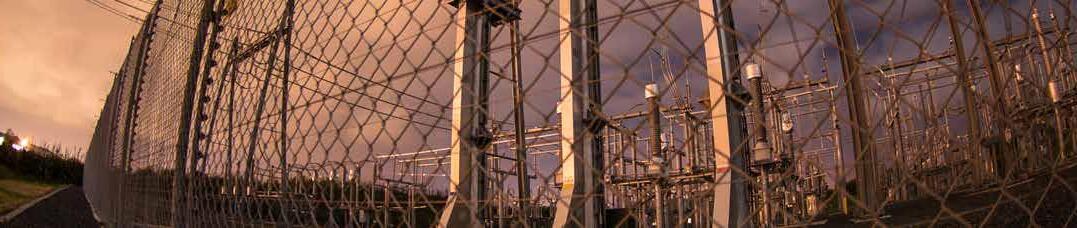
As the United States accelerates its artificial intelligence expansion, the infrastructure powering this digital revolution is facing an unprecedented security challenge. With global data center capacity projected to double by 2030, industry leader Master Halco is sounding the alarm on the critical need for advanced physical perimeter protection.
According to recent data from Jones Lang LaSalle and Institutional Real Estate Americas, the substantial growth in AI capabilities requires a parallel increase in energy and water utility expansions. This expansion has effectively painted a target on the "sixteen sectors" of critical infrastructure defined by the Department of Homeland Security’s Cybersecurity and Infrastructure Security Agency (CISA), ranging from energy grids to information technology hubs.
“Today, we face many different threats that require a layered approach to protecting critical assets,” says James Bodine, board certified protection professional (CPP). As energy and water utilities expand to meet the demands of AI-driven growth, Master Halco draws on more than 75 years of experience to advocate for a layered security approach – beginning with a hardened perimeter or fence line as a critical first layer.
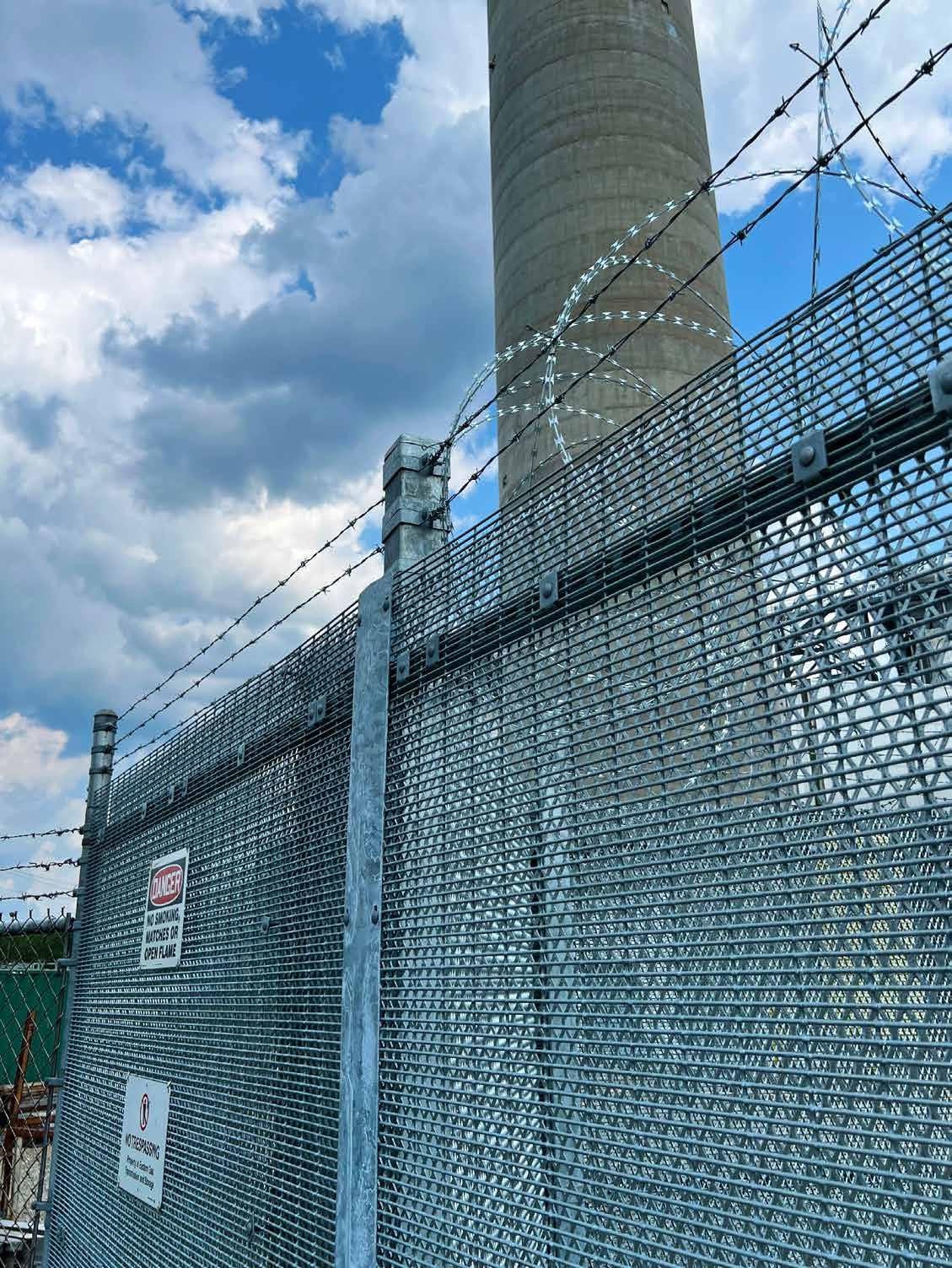
A layered protection advocacy demands a shift toward specialized high-security materials designed to withstand determined attacks. As intruders become more sophisticated in their attempts to cause financial or reputation harm, traditional chain-link solutions are giving way to high-grade alternatives like Welded Wire and Palisade fencing.
For high-threat environments, Palisade and welded wire fencing are two “gold standard solutions”.
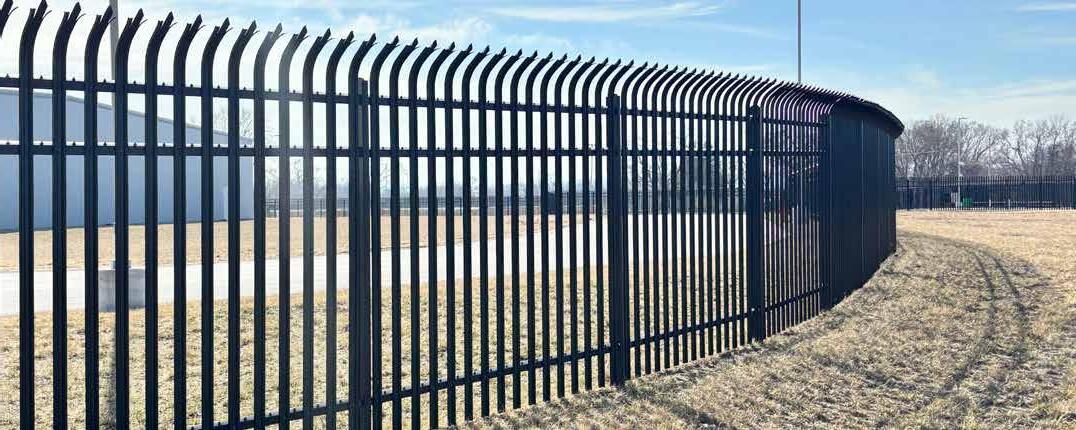
Constructed from hardened, powder-coated galvanized steel, Palisade fences feature three-point spiked tops and anti-pry bolts. These systems are specifically engineered to deter, delay, and defend, making it nearly impossible for unauthorized individuals to scale or dismantle the barrier.
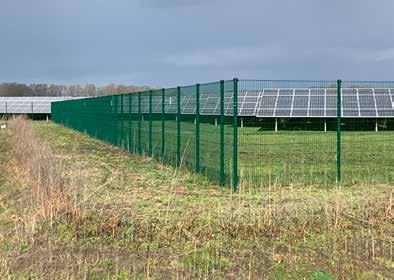
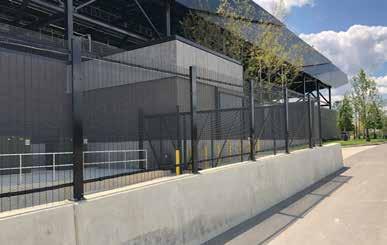
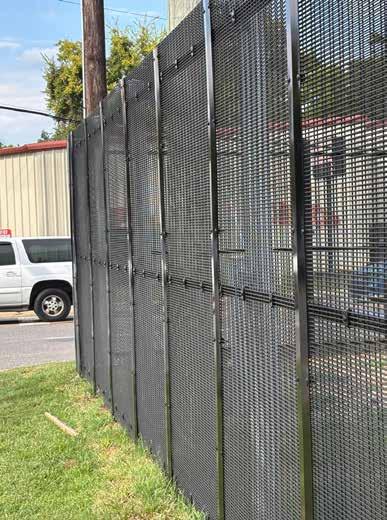
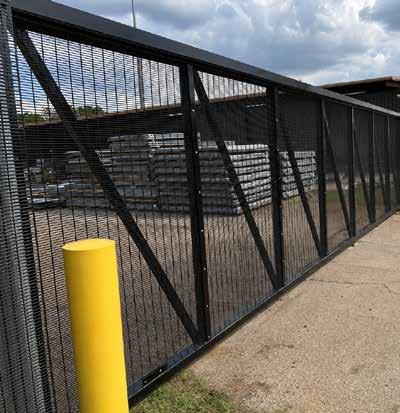
Welded wire has become a preferred solution for logistics hubs and data centers due to its versatility. By tack-welding wire into dense sheets and mounting them on I-beams, the material provides significant anti-climb and anti-cut protection without sacrificing the aesthetic appeal required for modern corporate campuses.
However, a fence, along with other protection capabilities, assures the "layered defense" that today’s current security environment requires which includes:
• Crash-Rated Gates: Utilizing M30 or M50 ratings to stop high-speed vehicular breaches.
• High-Impact Bollards: Increasing use of Crash Rated bollard systems in commercial, retail, and utility verticals to prevent ramming.
• Integrated Technology: Combining physical barriers with detection and access control systems.
As the demand for energy and data processing continues to surge, the fence and security industry must evolve to meet these new challenges. Along with Master Halco, the fencing community’s ongoing commitment to anti-scale and breach-resistant solutions will help ensure that as the U.S. builds for the future of AI, the physical foundations remain secure.
For those managing critical assets, the message is clear: the first line of defense is no longer just a barrier – it is a sophisticated deterrent designed to buy time, protect assets, and save lives.
To learn more, contact a Master Halco branch near you at masterhalco.com/find-a-branch.
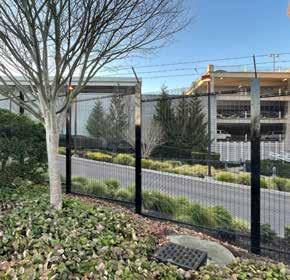
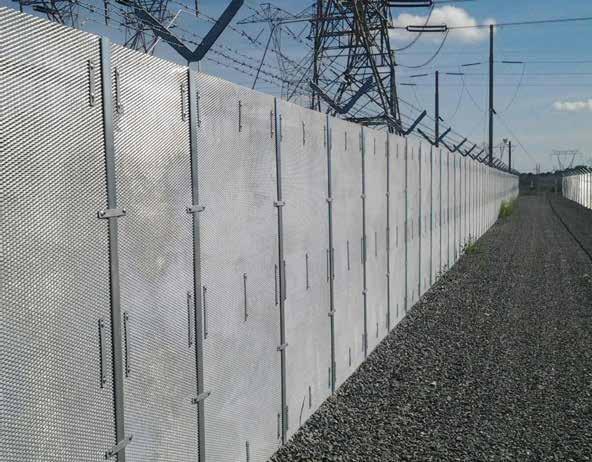
• Stronger, cleaner alternative to traditional chain-link fencing
• Ideal for data centers, transportation, utilities, schools, and critical infrastructure
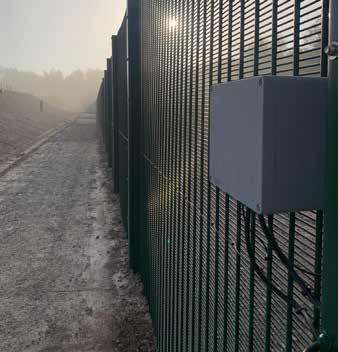
• Anti-climb and anti-cut mesh options for enhanced perimeter protection
• Designed to help resist forced entry from common hand and power tools
• Rail-less, bypass post, and high-security infill configurations available
• Multiple mesh styles available for every application
• Engineered for security performance without sacrificing appearance
• Built by AMICO Security for demanding perimeter applications
Welded Wire Fencing for Security Applications
Welded Wire fencing is becoming more popular for security applications in transportation, data centers and electric utilities for lower security tiered properties. It is already well established in Europe and Canada, according to Markus Erbeldinger, Ph.D., director of product development and engineering with AMICO Security. “For example, in Europe welded wire is the standard fence for electric utilities, and it has many applications in commercial, municipal and even residential fencing. In Canada welded wire fences cover long stretches of railroad tracks. In Europe, welded wire fencing has replaced chain link fences as it is considered to be an aesthetically pleasing alternative with enhanced security without being significantly more expensive.”
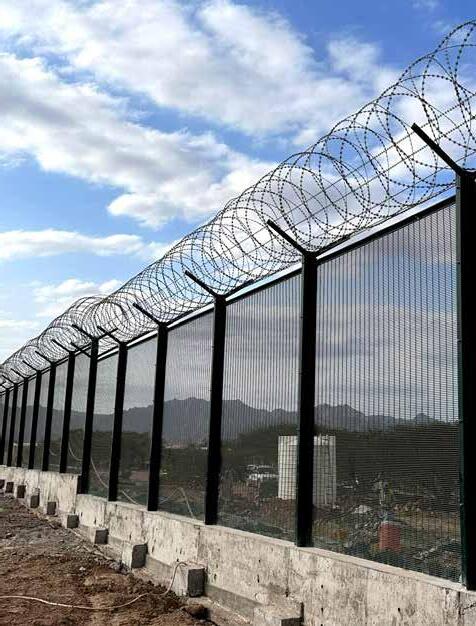
According to the ASTM F2781 Standard for Testing Forced Entry, Ballistic and Low Impact Resistance of Security Fence Systems, breach resistance is defined in the amount of time it takes to create a 2’ x 2’ opening in a security fence barrier. The standard includes three classes of tools:
• Low Threat Level (L) such as bolt cutter
• Medium Threat Level (M) which includes portable power tools
• Aggressive Threat Level (A) for example acetyloxy torch
Due to the prevalence of portable power tools, most security standards defined by end user specifiers and security experts focus on the Medium Threat Level (M) category. While chain-link fences might show breach resistance whenever Low Threat Level tools are used, they are no match against M Threat Level portable power tools portable. Due to numerous break-ins in facilities secured by chain link fencing, most end user security standards require 5 minutes or even 10 minutes resistance to M Level Threats or even A Level Threats for security fencing which is achievable by some types of welded wire fencing.
Welded wire fencing comes in multiple variations suitable for medium and high security applications. There are 3 types of well-established mesh patterns:
1. 358 panels have a 3” wide by 0.5” tall rectangular pattern using 8-gauge wires such as AMIGUARD® 5700 panels. This type is industry-wide considered to be anti-climb and anti-cut and typically used for security applications. Variations of this type include a 3D V-Shape bend like the AMIGUARD® 5705, or double horizontal wire every 6” like AMIGUARD® 5710.
2. 2D panels such as the AMIGUARD® 5500 series have a 2” wide by 8” tall rectangular mesh pattern with two parallel horizontal wires sandwiching the vertical wire. Those panels are available in a wide range of wire diameters ranging from 0 gauge to 6 gauge.
3. 3D panels like the AMIGUARD® 5600 panels have the same 2” wide by 8” tall rectangular mesh pattern as the “2D” panels with single wires and include a V-Shape bend about every 2’ to give it some extra rigidity. Variations of those panels also come in a 2” x 6” pattern.
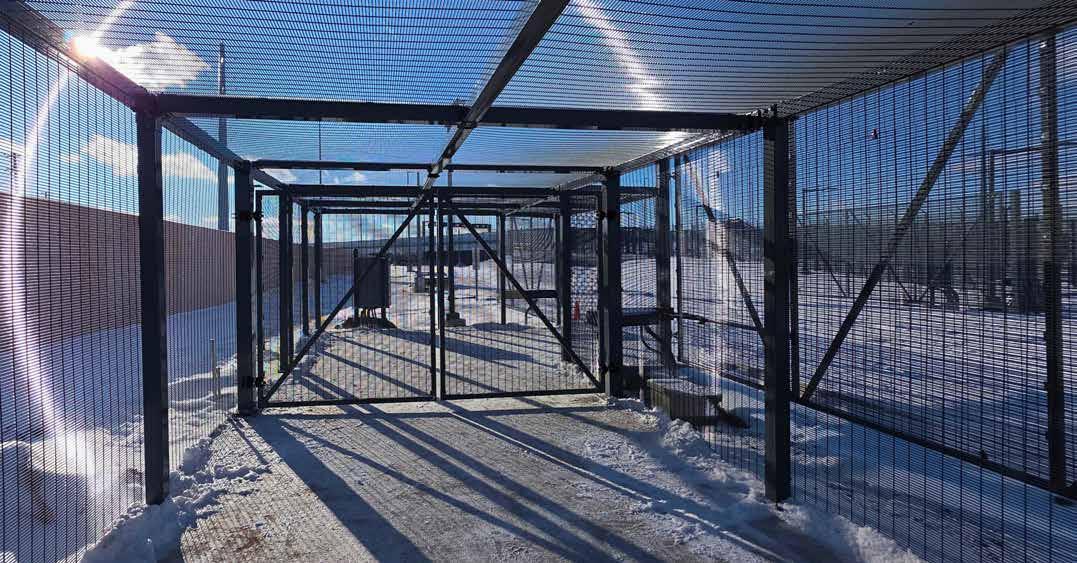
Welded wire panels are designed for rail-less installation by attaching the panels directly to fence posts via Spyder-clamps, U-Bolts or special brackets. Dr. Erbeldinger says most security applications require welded wire panels to be installed on a bypass post system using rails. “In high security applications, welded wire panels can be installed with a secondary infill like heavy duty expanded metal panels, for example, the AMIGUARD® Dual Guard system on Chameleon2® framework.”
Other variations to enhance security is the doubling up of “358 panels” by overlapping two panels staggered by 1.5”, resulting in a 1.5” x 0.5” mesh pattern with two horizontal wires instead of the regular one, such as the AMIGUARD® 5700 Duo on Chameleon® framework.
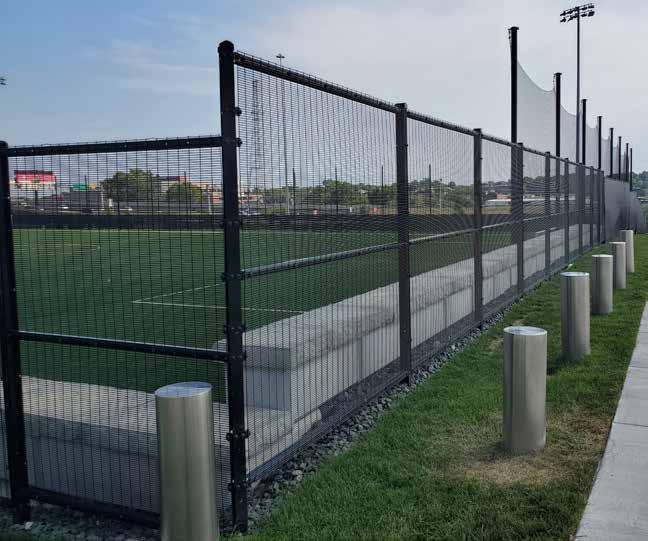
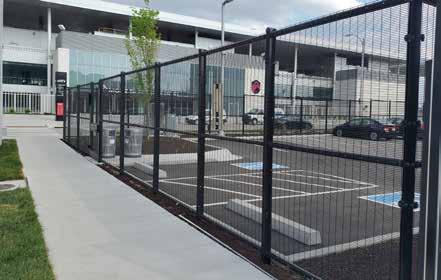
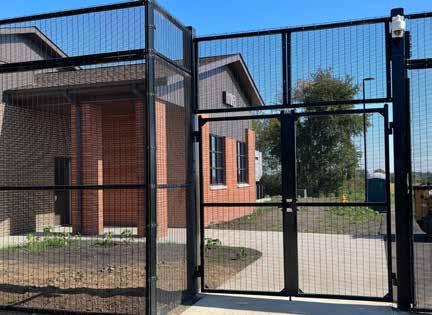
The North American market for welded wire fence is growing, and architects are specifying this type of fence material more often than ever before. Welded wire with a black powder coating finish provides better aesthetics than black vinyl coated chain-link fence for most applications and is becoming a preferred fence type for sports facilities, school yards, and more, in addition to typical security applications.
Learn more at amicosecurity.com.
Innoplast Builds Safer Perimeters Through Layered Protection
When most people think about perimeter security, fencing is often the first thing that comes to mind. While fencing plays a critical role in defining boundaries and restricting access, today's facilities require a more comprehensive approach to protecting people, property, and infrastructure.
From distribution centers and manufacturing plants to stadiums, schools, airports, and government facilities, organizations are looking beyond the fence line to create safer environments. That's where vehicle barriers, pedestrian guidance systems, and traffic control products become essential components of an effective security strategy.
“At Innoplast, we've spent more than 20 years helping organizations improve safety at the perimeter,” says Danielle Hackney, marketing director. “While we're best known for our BollardGard™ bollard covers, our products are often used as part of a larger protection plan that extends well beyond a single barrier or fence.”
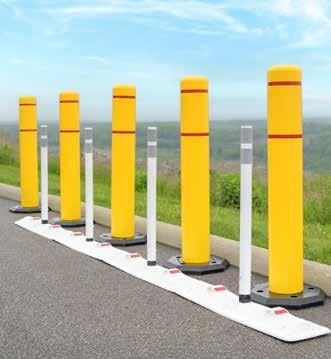
Steel bollards remain one of the most effective ways to protect entrances, equipment, storefronts, and pedestrian areas from impacts. However, visibility is equally important. High visibility bollards equipped with reflective materials help drivers identify protected areas sooner, reducing accidental collisions and improving overall site safety. Bollard covers also eliminate the ongoing maintenance associated with painting while providing a clean, professional appearance.
Crowd control and pedestrian management have also become increasingly important considerations for facility owners. Large venues, transportation hubs, retail centers and industrial facilities all face the challenge of safely directing both vehicle and foot traffic through busy environments.
Hackney says flexible bollards and delineators provide a simple yet effective solution. “These products help define travel paths, separate pedestrians from vehicle traffic, and guide movement through designated areas. Because they flex upon impact and return to their original position, they can withstand the demands of high-traffic environments while minimizing damage and replacement costs.”
Visibility continues to be one of the most valuable tools in any perimeter protection plan. Reflective materials, highly visible colors, and clearly marked traffic control devices help improve awareness and reduce incidents before they occur. Whether protecting a loading dock, directing traffic through a parking facility, or managing crowds at a special event, visibility often serves as the first layer of defense.
Hackney says the most successful perimeter security projects recognize that no single product can address every challenge. Fencing, barriers, traffic control devices, and pedestrian safety products each serve a unique purpose. When combined, they create a layered approach that helps facilities operate more safely and efficiently.
As security requirements continue to evolve, facility owners are seeking solutions that not only provide protection but also enhance appearance, reduce maintenance, and improve the overall user experience. “At Innoplast, we're proud to support those efforts with products designed to stand up to demanding environments while helping create safer spaces for everyone who passes through them,” adds Hackney.
Learn more about Innoplast's complete line of vehicle and pedestrian safety products at innoplast.com
Security and Lighting Systems Manufacturers Partner to Provide Integrated Solution to Make Fences SMART
Question: When is a “static” fence no longer “static?” | Answer: When it becomes a Smart Fence.
Physical fences have long been a great line of defense against unwanted intrusions by acting as a barrier to protect people, property and assets. Unfortunately, motivated adversaries climb, cut or lift fences to get what they want.
News reports frequently detail breaches and theft of everything from copper and vehicles, escapes from correctional facilities, vandalism of public property, airport runway infractions and even attacks on the power grid and other critical infrastructure sites. This activity results in high maintenance costs to repair or replace damaged fence lines.
What is the solution? It begins with becoming proactive instead of reactive when it comes to hardening the perimeter. Turning a static fence or barrier into a smart fence is a simple process of adding intrusion detection capabilities to alarm when someone is cutting, climbing or lifting the fence. In the case of no physical fence being present, invisible fences like microwave barriers can provide a solution.
CIAS Security Systems and CAST Perimeter are manufacturers of products that provide an integrated defense solution against unwanted intrusions by incorporating sensors on the fence to detect a cut versus climb or lift, and low voltage lighting to be activated in the zone of intrusion to deter someone from going farther. Lighting is also an excellent support to cameras in giving them a crisp and clear image of the adversary.
“Lighting naturally provides a passive deterrence to any security plan, and by removing the darkness, would-be intruders are less inclined to do bad when they are highly visible. It’s why crime is higher at night, and why lighting is fundamental to security,” explains Matt Beausoleil, with CAST Perimeter.
“Our partnership with CIAS has enhanced the effectiveness of lighting by becoming a passive deterrence and a reactive, even proactive, one. The combined technologies can turn on the lights only during alarm events, in the exact area of the breach,” he adds. “The lighting system with fence detection gives an automated response to a breach, while optimizing energy usage, and providing better information to security teams, when they need it most.”
He adds that CIAS also offers invisible fences in the form of bi-static microwave barriers and linear barriers (for long narrow corridors) for sites that don’t have a physical fence. Invisible barriers can also be integrated with CAST low voltage lighting systems. The invisible fences create a zone of detection that once breached, will send an alarm to response teams such as police, security personnel or the site manager.
“CIAS and CAST are partnering with fence companies worldwide to add more solutions to their toolkits when selling their products,” says Cathy McHugh, business development manager with CIAS Security, Inc. in Miami. “Whether the
customer has or does not have a fence, and is having unwanted events, we can provide a solution to solve it.”
She adds that the CIAS and CAST systems can be integrated to cameras (PTZ or fixed) that can “view” the exact location, within 3 feet, of the intrusion for verification.
“Most events happen at night and when cameras are used for security, lighting enhances the camera images and can provide full color forensic documents,” says Beausoleil.
More importantly, the alarms generated are analyzed by what is called “fuzzy logic,” an algorithm-based analysis that virtually rules out false alarms caused by things like high winds, hail, and small animals – the things you do not need to detect.
McHugh says CIAS is the only manufacturer using this analysis – versus binary logic – which is analyzing alarms as black and white, on or off, zeros and ones.
“Fuzzy logic assesses the grey area and rules out the alarms you don’t want,” she adds. “This is not AI, but a similar principal for analysis that recognizes 256 learned behaviors, real intrusions versus those that cause false alarms.”
Learn more about these systems at cias-security.com and castperimeter.com
GATES
Choose from prefabricated gates or convenient gate kits for easy onsite fabrication and installation.
VERSATILE DESIGN
Options ranging from 4’ to 12’ tall, including full privacy, contemporary styles, glass panel compatibility, trail fence and easy to fabricate gate kits.
UNMATCHED STRENGTH – STRONGER THAN MASONRY AND PRECAST WALLS
PRODUCT LINES – THE SIMPLEST GATE KITS AVAILABLE
Premium Galvanized Steel Fire Resistant Fence Products – 40% Less Cost than Typical Competing Aluminum Products – Locally sourced, hot-dipped galvanized coil (G60, G90, or G115) from California Steel Industries in Fontana, CA, supplemented by a limted number of imported products
EXTREME DURABILITY
Intertek dynamic wind load tested for sustained winds up to 130 mph and gusts up to 190 mph (for heights of 6’ to 12’).
STRONGER THAN MASONRY AND PRECAST WALLS
MWF products opened up the masonry and Precast market for the fence contractor
COLOR OPTIONS
Bulk product primed and ready to paint onsite to match any aesthetic. Custom color runs available upon request.
EFFICIENCY
Designed by industry experts with 40+ years of fabrication and installation experience. Built for fast installation and long-term, low maintenance performance.
Our various fencing solutions offer unmatched strength and durability, with 30-40% cost savings, compared to typical competing metal products.
ACCESS FIXTURES LAUNCHES SECU:
Convert New and Existing Security Bollards/Safety Bollards Into Security Bollard Lights
Across the United States, ram raids and vehicle-based break-ins are increasing, targeting retail storefronts, financial institutions and warehouses. These attacks often exploit "blind spots" and poorly lit perimeter zones, even when physical bollards are present.
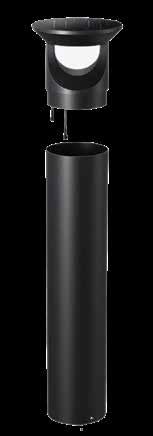
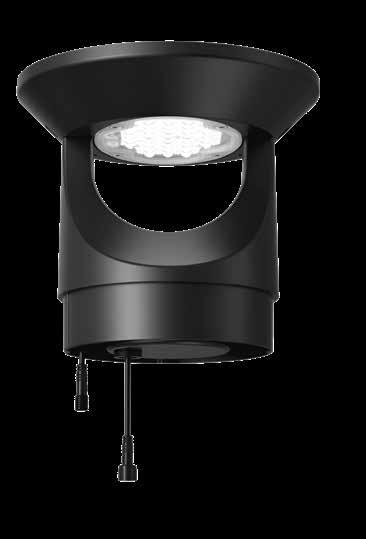
Access Fixtures, a leader in high-performance commercial, industrial, and sports LED lighting, has released the SECU 3-watt Solar Powered Security Bollard Light, to help prevent these types of attacks. This innovative solarpowered LED lighting solution is designed to convert new and existing security bollards or safety bollards into security bollard lights. High-output illuminated assets eliminate the need for wiring, trenching, or costly electrical infrastructure.
SECU introduces a disruptive approach to perimeter protection, enabling organizations to upgrade passive steel posts, concrete posts or security bollards/safety bollards into active security bollard lights with a simple, slideover installation. In approximately 30 minutes per unit, properties can deploy dusk-to-dawn solar illumination. This transformation enhances visibility and surveillance effectiveness while eliminating the prohibitive cost and site disruption typically associated with traditional underground wiring.
“Security bollards have long been used to stop vehicles, but until now they’ve remained largely passive,” says Steven Rothschild, CEO of Access Fixtures. “SECU turns new and existing security bollards into solar security bollard lights by adding powerful lighting quickly, sustainably, and without the need for a single inch of conduit.”
By retrofitting unlit posts into illuminated security bollard lights, SECU strengthens defenses where they are most vulnerable. Improved nighttime visibility increases deterrence, enhances CCTV camera performance and reduces shadowed areas exploited during criminal incidents, all without altering the structural integrity of the existing bollard.
SECU is purpose-built to slide over standard 6-inch OD steel security or safety bollards. The conversion process requires no removal of existing posts and zero electrical work, making it the ideal "plug-and-play" solution for occupied sites where downtime must be minimized.
Available in 44" and 56" heights, SECU integrates seamlessly with common bollard installations at retail centers, parking garages, loading docks, and municipal properties.
SECU delivers professional-grade illumination, producing approximately 390 lumens at just 3 watts. Key technical specifications include:
Dark-Sky & Neighbor Friendly: Featuring a BUG rating of B0-U1-G0 and an optional house-side shield, SECU provides precise light control, preventing light trespass into adjacent properties and ensuring compliance with strict local ordinances.
Specialized Lighting: Multiple CCT options (3000K, 4000K, 5000K) are available, along with a 590nm Amber option for wildlife-sensitive and turtlefriendly applications.
Durable: The system features an EXTREME-LIFE LED module rated L70 at 270,000 hours and a high-capacity LiFePO₄ battery for reliable off-grid performance.
Vandal Resistance: With an IK07 impact rating, a rugged die-cast aluminum housing, and a marine-grade powder coat finish, SECU is built to withstand both intentional tampering and harsh environmental conditions.
Unlike traditional wired lighting, SECU requires no trenching, no electricians, no permits, and zero monthly energy costs. Solar operation ensures that each bollard functions independently, maintaining critical illumination even during regional power outages.
By leveraging existing steel infrastructure, SECU delivers one of the fastest and most cost-effective security lighting upgrades on the market, turning "invisible" gray pipes into visible, illuminated deterrents.
Learn more at accessfixtures.com
Celebrating One Year of Success
ne year ago, we launched our Architectural Specifications Department with a commitment to etter serve architects, contractors, and distributors throughout the commercial and industrial arkets.
nce then, the department has experienced tremendous growth, providing educational Lunch & earn programs, supporting specification development , and collaborating with distributors and ontractors on major projects across the country.
ecent successes include projects with SpaceX , universities, automotive manufacturing facilities, nd other high profile developments We are proud to see American made aluminum fencing and ailing products specified, installed, and protecting some of the nation's most recognized facilities.
AD drawings are now available online You can access and download these files directly from our ebsite. We also provide custom CAD drawings for your specific project requirements.
any of you are already familiar with Kyle Robinson from his years of experience in the fence industry, cluding his service as a CFA Chapter President . Kyle has built strong relationships throughout the industry and brings extensive knowledge of commercial , industrial , and specification driven projects. Feel free to reach out to Kyle at specs@antebellummfg.com for any of your specification and project needs.
RETHINKING TEMP FENCE STABILITY: A Closer Look at What Holds the Line
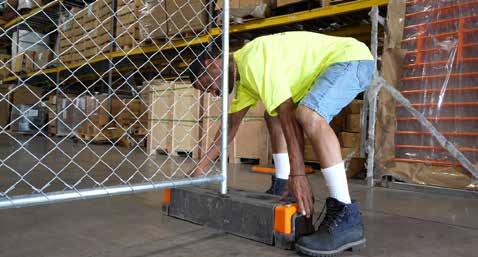
Stand a temporary fence panel up with nothing but a base under it, and it's rated stable in winds up to about 20 mph. Drop a single anchor weight on that base and the same panel holds to roughly 40 mph. Three anchor weights push that to near 60 mph, gale force on the Beaufort scale. The panel never changed. Only the foundation did.
"You can run the exact same panel and get three completely different results, depending on what's holding it down," says Andrew Hession, temp fence specialist with SONCO, a leader in crowd control and perimeter security for 50 years.
BOLTHOLD ASPHALT ANCHORS
What Holds a Line
A temporary fence fails in one of two ways: it tips over or it folds along the run. They look similar from a distance, but each has a different cause and a different fix.
Tipping happens when wind catches a panel and rotates it off its base. Wind loads unevenly. Corners and ends take far more force, so weight belongs where it concentrates. A standard run gets anchor weights; corners and exposed stretches need the heavier footprint of an anchor block. The product follows the problem, not the other way around.
Folding is different. A long run behaves like a row of dominoes, with one panel catching wind, pushing the load down the line until everything goes over, bases still planted. Weight won't stop that; bracing will. Adding angled braces every 2 to 3 panels — roughly every 20 to 30 feet — breaks the run into segments and converts wind's lateral push into a downward force the ground can resist.
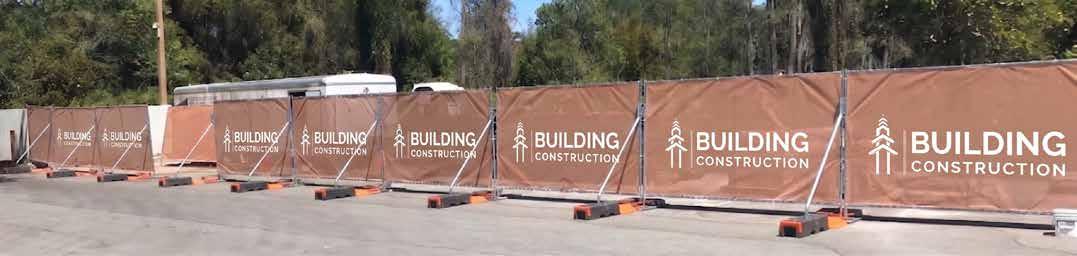
Privacy screen changes the equation entirely. Bare mesh lets wind pass through; solid privacy screen turns the fence into a sail. ASTM F3342 states that screened fence should be engineered for wind load like a permanent structure. The practical fix is allowing wind to blow through. Cleanly cut half-moon vents bleed off pressure before it builds. Cut by a professional, the wind vents hold. Cut on site, they tear and run.
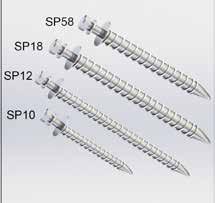
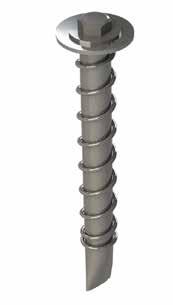
When fixing structures to asphalt, the anchors you choose can make all the difference between a job well done and a job that has to be redone.
For safe and reliable installations that last, choose Bolthold from MJC Sales & Marketing Inc. The world’s smartest anchor for any kind of installation, including fence post based, wrought iron fencing, temporary fencing and gate track. Just drill, fill and insert flush.
•
These solutions compound. Anchor weights on standard runs, an anchor block at corners, bracing every 25 feet, and half-moon vents on any screened panel deliver a combination that doesn't add protection incrementally, it multiplies it. The right configuration isn't one product; it's the right stack for the site.
The Numbers Behind a Fallen Line
Sandbags and concrete blocks look cheap on the quote. The math says otherwise. A sandbag arrives as an empty bag and a pile of dirt. Crews shovel sand, haul it to position, place it, and repeat it on the next job. That time never hits the quote, but it hits payroll every deployment. An anchor weight outlasts a sandbag tenfold and clears its own cost around the sixth deployment. An anchor block lasts roughly 20 times longer than the concrete block it replaces.
Stability Is a Spec, Not an Afterthought
The contractors who stopped getting the "wind-took-it-down" call stopped treating stability like a line item instead of a variable. Wind speed is only a starting point. Panel area, corners, and run length determine the real load. Build to that spec and stability stops being luck.
"Stability isn't something you add after the fact — it's something you engineer before anything goes in the ground," says Stephen Greer, CEO of SONCO.
Treated as an afterthought, an unstable line is a liability waiting for the wrong day. Treated as a specification, it's the difference between a fence that does its job and one that becomes the job.
Learn more at soncostore.com
WHY PARTNERSHIP IS RESHAPING PERIMETER SECURITY
High-security fencing has always been the backbone of perimeter protection. It guards power plants, data centers and other critical sites. It is the first layer of defense people see.
But threats are getting smarter, and projects are getting bigger. The best security programs today are not built around one product. They combine fencing, crash-rated vehicle barriers, cameras, sensors, and communications into one system. Pulling that off takes more than a supplier. It takes a true partnership between the manufacturer, the installer, and the customer—from the first plan to the finished site and beyond.
That is changing how the industry buys. Customers are moving away from shopping product by product. Instead, they want a partner focused on results, smooth delivery, and long-term performance.
Security Starts Long Before the First Post
Every site is different. The risks vary, the needs vary, and the rules keep changing. What works for a truck yard may not work at all for a data center campus or a power substation.
“The best projects begin long before the first post goes in the ground,” says Aryn Vastola, vice president of sales and marketing with Betafence USA. “Our strongest customer relationships started with site walks on empty land—long before trucks and crews ever arrive. We put in the time up front. We study the risks, learn how the site will operate, find the weak spots, and help build a security plan that fits the site’s goals.”
That early work pays off later. When the perimeter is designed around the real threats and not a one-size-fits-all spec, there are fewer surprises, fewer change orders, and a system that works right on day one.
A Model Built Around the Installer
Partnership does not mean the manufacturer does everything. Betafence USA, a PRÆSIDIAD brand, is a world leader in perimeter protection. With more than 145 years of experience, Betafence builds fencing systems known for their quality, securing people, assets, and businesses around the globe. In the US, Betafence does not install its own products. It works only through a network of qualified, professional fence contractors. That network is the heart of the model, not an afterthought.
“The installer is the one standing in front of the customer when the system goes live,” says Vastola. “Our job as the manufacturer is to help that installer win through engineering support, spec help, product training, logistics, and project coordination. Their job is what they do best: great installation work and strong local relationships. When each side plays its position, the customer gets a better result than either of us could deliver alone.”
For fence professionals, that split matters. A manufacturer that backs its installers with design help, crash-rated engineering, and spec support helps them go after and win bigger, more technical jobs.
From Start to Finish—and Beyond
Big projects involve many contractors and many moving parts. Coordinating the design, manufacturing, shipping, installation and system tie-ins can become a full-time job. Add cameras, sensors, and fiber networks, each with its own contractor and its own digging, and it gets more challenging very quickly.
A manufacturing partner that understands the whole picture, and can help coordinate it with the installing contractor, takes much of that load off the table. Staying involved through the whole project keeps the original security goals on track. It also cuts risk, improves communication and avoids costly redesigns during construction.
“And the relationship doesn’t end at handover,” Vastola adds. “Through our installer network, planned maintenance and site audits keep the system working the way it was designed for years to come.”
Choosing a Partner, Not Just a Product
High-security sites need many technologies working together as one system. A strong perimeter uses layers of protection:
• High-security fencing systems
• Crash-rated vehicle barriers and gates, including DoD Anti-Ram listed products
• Access control
• CCTV and thermal cameras
• Perimeter intrusion detection systems
• Fiber optic detection
• Monitoring and control platforms
• Security lighting and communications
When these pieces are designed separately, problems show up during installation. When they are planned together from day one, the system performs better, costs less to run and lasts longer.
“Our project teams have helped protect people and keep businesses running across every industry and threat level, from data centers and utilities to federal sites,” says Vastola. “That track record, plus crash-rated solutions through SecureUSA, means we can propose systems we know will perform for the long haul.”
Learn more at betafenceusa.com
THE AGE OF SPECIALIZATION IN HIGH SECURITY FENCING
The fence industry has long been a significant part of the security industry. Forty to 50 years ago, fence provided the first line of defense, and the standards and products used were limited. The level of security was defined by whether or not barb wire was added to the fence, and high security was upgrading to six strands of barb wire. As threats and vulnerabilities have changed, so have the solutions being used.
The fact is that the consumer is looking for solutions that meet their specific needs, and no longer is a blanket overarching solution applicable for the security of every business sector. Specialization has become the norm in the high security fence industry, with manufacturers focused on crash resistance, climb resistance, ballistics ratings and other distinct needs. Standards have struggled to keep up.
“There has been more change in fence standards in the last five years, than in the previous 35 years combined,” says Robert Miller, subject matter expert and independent consultant from Imperial Professional Consulting Services. “The fence industry needs more innovation, as the gaps between needs and solutions continues to grow.”
Manufacturers have seen the demand, and many have specialized products, trained teams of people, and cater to industry needs more than ever before. For example, as the data center market grows, Miller says many manufacturers and distributors have vertical focus upon that market, attending their trade shows, learning their specific industry needs, and innovating new or existing products to meet those needs. “And though some of these solutions can be
applied to other markets, it’s more likely that those other markets will require small changes and adaptation to meet their specific security requirements.”
Many standards are currently in development focused on distinct markets, such as fence requirements specifically for solar arrays, for example. However, Miller says the challenge is that these needs continue to be approached through the lens of what the fence industry already offers. “We default to existing products and past experiences rather than asking what the market truly needs next. The path forward requires a different mindset; one that is proactive and looks ahead, involves the end user early, and remains open to solutions that don't yet exist.”
Change is already underway. The power utility industry has made its needs clear, and fence industry leaders are responding with purpose-built products and dedicated teams. The same evolution is happening in data centers, warehousing, and even more community-focused projects like daycare centers and schools. Each market has distinct requirements, and the fence industry is rising to meet them, but there is still more ground to cover. “The products manufactured and installed by this industry are not afterthoughts; they are critical components of comprehensive security plans,” adds Miller. “Fence is the first line of defense – a functional construction product that serves multiple layers of need. It is time for our industry, and the industries we serve, to think proactively, put fence first, and demand the innovation needed to meet the challenges of tomorrow.”
WELDED WIRE AT THE CENTER OF MODERN HIGH-SECURITY FENCING
As security challenges evolve across critical infrastructure, public venues, and sensitive facilities, the role of perimeter fencing has changed dramatically. No longer viewed as a simple boundary, fencing is now a front-line security system, expected to deter, delay and integrate seamlessly with advanced technologies.
At the heart of this shift is welded wire fencing, which has emerged as a leading solution for high-security and crowd-control environments due to its unique balance of strength, visibility, and performance.
The Fence as the First Line of Defense
In modern security planning, fencing represents the outermost layer in a defense-in-depth strategy. Its job is not just to keep people out; it is to control how a threat interacts with the site. "The conversation around perimeter security has shifted significantly in recent years," says Yumbert Garcia, product manager with Ameristar Perimeter Security. "Facility managers and security planners are no longer asking 'how do we keep people out?' They're asking, 'How do we control the interaction between a threat and our site?' That's a fundamentally different — and more sophisticated — approach to fencing."
Well-designed fencing systems support several critical objectives:
• Deter through visible presence
• Delay intrusion attempts
• Define and control access points
• Support detection and response systems
For high-security sites, delay is especially important. A fence does not need to be impenetrable, it needs to slow an intruder long enough for detection systems to activate and response measures to be deployed.
This is where welded wire delivers measurable value.
Why Welded Wire Has Become the Preferred Solution
Compared to traditional options like chain link or woven wire, welded wire fencing is engineered differently. Individual wires are fused together at every intersection, creating a rigid grid that behaves as a single structural panel.
This construction provides several advantages that are directly aligned with high-security needs:
• Rigid structure that resists deformation under force
• Small apertures that limit climbing and handholds
• No unraveling when cut, maintaining integrity even after damage
• Predictable performance under load and impact
These characteristics allow welded wire systems to deliver more consistent intrusion delay, which is a key performance metric in security design. "What sets welded wire apart is what happens after it's been compromised," Garcia explains. "A chain link fence, once cut, can unravel and lose its effectiveness entirely. Welded wire maintains its structural integrity even after damage, and in a high-security scenario, that difference can be critical."
Welded wire’s rigidity ensures that the barrier continues to perform as intended, even under stress. In contrast, flexible systems can deform under pressure, reducing their effectiveness over time.
Defense-in-Depth and System Integration
The concept of defense-in-depth emphasizes that no single element should carry the entire security burden. Instead, fencing must work as part of a coordinated system that includes detection, monitoring, and response.
Welded wire fencing is particularly well-suited for this integration. Its open design allows for:
• Clear visibility for surveillance systems
• Efficient placement of cameras and lighting
• Reduced blind spots along the perimeter
At the same time, it serves as an ideal platform for fence-mounted detection systems, such as vibration sensors, fiber optic intrusion detection, and smart monitoring technologies. The result is a fence that is not just a passive barrier, but an active component in the detection process.
The key principle is simple: Detection must occur at the fence, and the fence must delay long enough for response.
The Role of Crash-Rated Protection
In today’s threat landscape, security planning must also account for vehiclebased risks. Many critical sites now incorporate crash-rated barriers and gates designed to stop vehicles at controlled speeds.
In high-security environments, a layered approach is often used:
• Crash-rated elements at access points and high-risk areas
• Welded wire for perimeter control and visibility
Welded wire fencing works effectively alongside crash-rated systems by:
• Providing continuous perimeter coverage
• Maintaining visibility and monitoring capability
• Integrating with reinforced gate and entry
This combination ensures that both pedestrian and vehicle threats are addressed within a single, cohesive design.
One of the most important—and often overlooked—factors in welded wire design is opacity, or how open the mesh appears.
"Opacity is one of those design considerations that doesn't get enough attention until something goes wrong," says Garcia. "The tighter the mesh, the more wind load you're putting on your posts and foundations. If that hasn't been properly engineered, you end up with a fence that looks right on paper but fails in the field. Getting the balance right between security performance and structural integrity is something we plan for in every product we develop." For high-security welded wire systems, especially those with tight apertures, this balance becomes critical.
Foundations and Post Performance
As opacity increases, so does wind load. That load is transferred through the fence system into the posts and ultimately into the ground. This means:
• Post embedment depth must increase
• Footings must be sized to resist overturning
• Soil conditions must be carefully considered
Welded wire’s rigidity plays a key role here. Because it does not flex significantly, it transfers loads more directly and efficiently into the structural system. This improves performance, but also requires proper engineering to ensure stability.
The Role of Rails in Welded Wire Systems
Rails are another essential part of the system, especially in welded wire applications. They distribute the wind loads across multiple posts and provide stiffness to the fence panel. The rails help transfer forces evenly into the structure.
As mesh opacity increases or fence height grows, additional rails may be required to:
• Reduce deflection
• Improve load distribution
• Maintain long-term performance
In this way, rails act as the structural backbone that allows welded wire panels to perform effectively under both environmental and security-related forces.
A Unified System, Not Just a Fence
In high-security environments, the effectiveness of a fence is determined by how well it integrates with the broader security system.
Welded wire fencing stands out because it brings together visibility, strength and structural performance, while supporting detection systems and adapting to modern security threats.
When combined with detection technologies, crash-rated access points and proper structural design, it becomes far more than a barrier.
A welded wire fence is not just a line on a site plan. It is the first point of engagement between a threat and the security system. When designed as part of a defense-in-depth strategy, it provides the critical balance of deterrence, delay, and integration needed to protect today’s most valuable assets.
Learn more at ameristarperimeter.com
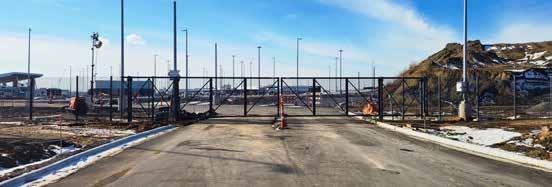
CASE STUDY SECURING AN INTERNATIONAL GATEWAY: Future Fence Company Completes
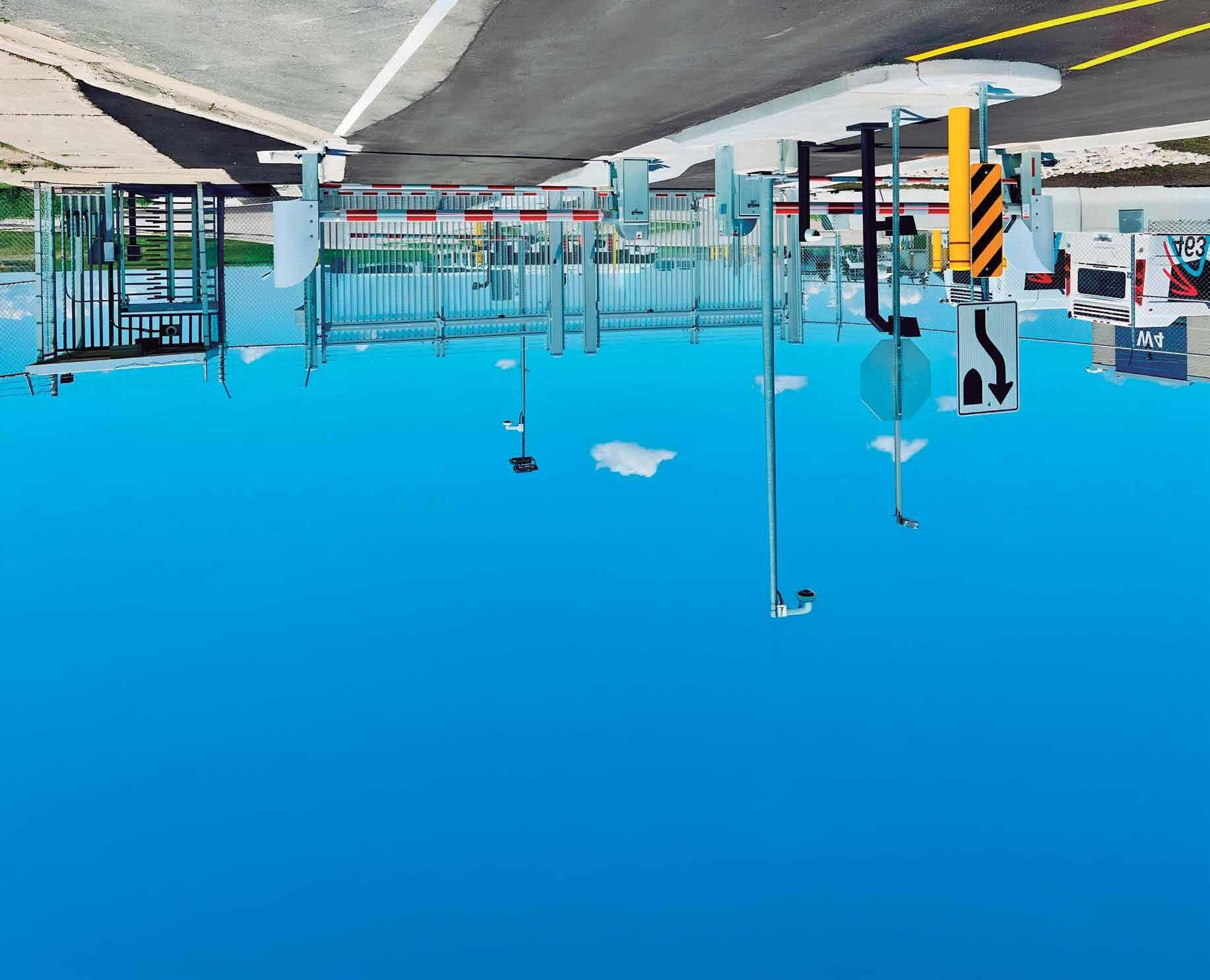
The project is being delivered through a public-private partnership led by Bridging North America (BNA), responsible for the design, construction, financing, operation, and maintenance of the bridge and both Ports of Entry. Delivering a project of this magnitude required a broad network of specialized contractors capable of performing under demanding technical and scheduling conditions.
Future Fence Company was one of them.
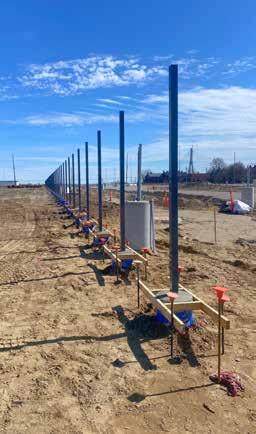
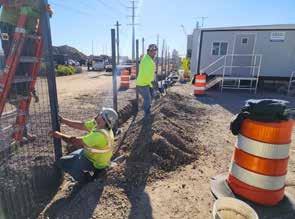
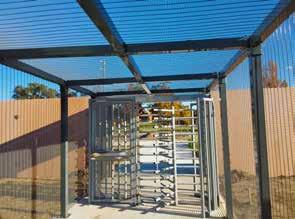
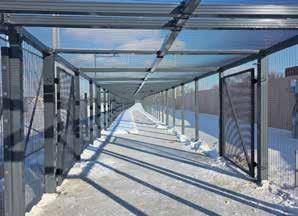
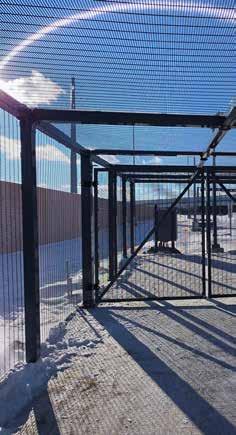
From January 2023 through 2026, Future Fence Company supported the U.S. Port of Entry with a comprehensive perimeter security and access control scope, delivering fencing, gates, automated entry systems, guardrail, and precast concrete security walls across one of the most active infrastructure environments in North America.
Security Infrastructure on a Monumental Scale
While the bridge is widely recognized for its engineering and architectural presence, an equally critical layer of infrastructure surrounds it – the physical security systems required to control access to a modern international border facility.
Over three years, Future Fence Company dedicated over 35,000 man-hours with a ten-person field crew, installing a multi-layered perimeter system designed to support long-term operational security.
The completed scope included:
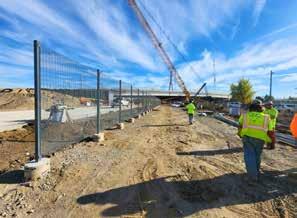
• 4,500 linear feet of 10-foot-high vinyl-coated chain link fence with vehicular resistant cable reinforcement
• 20,000 linear feet of 5-foot-high black vinyl fence with vehicular-resistant cable reinforcement
• 36,000 linear feet of 8-foot-high wire mesh security fence with barbed wire extensions
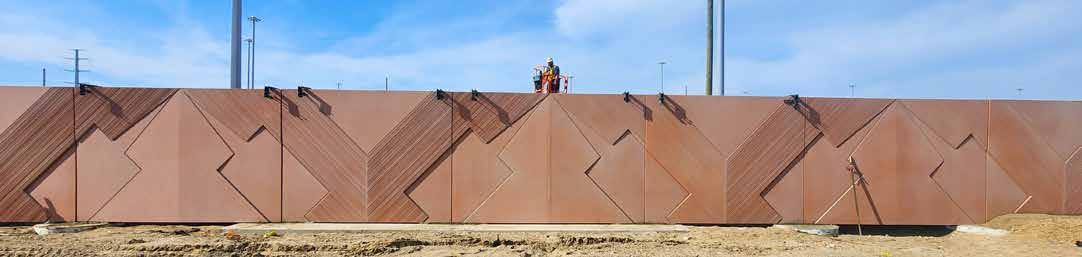
• 400 linear feet of architectural louvered fence panels
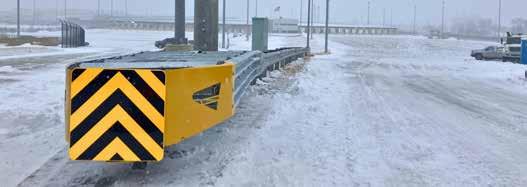
• 5,000 linear feet of guardrail including bridge anchors, approach and departure ends, and four QuadGuard Elite crash attenuators
• 3,950 linear feet of 12-foot-high precast concrete security wall
• Nine cantilever slide gates ranging from 25 to 30 feet wide
• Twenty-two pedestrian double swing gates
• Eighteen vehicular swing gates ranging from 20 to 30 feet wide
• Integrated gate operators, drop arms, and vehicle access control systems
Together, these systems create multiple layers of perimeter protection designed to meet the rigorous operational and security requirements of an international border facility.
Field Conditions That Defined the Work
The challenge was not only the scales of the scope, but the sequencing.
Unlike conventional projects, much of the work had to be completed while major civil construction and grading operations were still underway. As a result, significant portions of the fencing systems were installed in advance of final elevations, requiring extensive post shoring to accommodate future site development.
Crews also worked within a dense network of underground utilities serving the broader bridge and Port of Entry infrastructure. To safely install foundations and fence posts without disrupting these critical components, hydro-excavation became a routine part of the installation process.
“Every day required coordination,” says Marc Bowman, fence program manager at Future Fence Company. “We were working alongside multiple trades, adapting to changing site conditions, and doing what it took to keep the work moving with the rest of the project. It took a flexible crew and a lot of field experience to keep everything moving.”
Few infrastructure projects in North America carry the scale and long-term significance of the Gordie Howe International Bridge. Spanning the Detroit River between the United States and Canada, the crossing represents a major investment in cross-border trade, transportation, and border operations – serving millions of travelers and supporting billions of dollars in annual commerce.
Integrating Security Systems with Active Industry Cooperation
Beyond installation services, the perimeter security scope required close coordination between multiple specialized suppliers providing products and services to the team at Future Fence.
Key project partners included:
• Elite Fence Products
• Amico
• HySecurity
• DKS
• International Controls & Equipment
• International Precast Solutions
• Ohio Gratings Inc.
• Stephens Pipe & Steel
• Master Halco
• Eagle Fence Distributing
• Merchants Metals
• DAC Industries, Inc.
Together, these organizations provided much of the physical security and access control systems that were built to provide long-term performance in a high-security transportation environment.
A Quiet but Critical Contribution
When the Gordie Howe International Bridge opens, attention will naturally focus on the bridge itself, which is a landmark structure and a strong symbol of cross-border cooperation.
Yet every major transportation facility depends on the infrastructure surrounding it. The fencing, gates, barriers, and access control systems installed throughout the U.S. Port of Entry will operate continuously, protecting facilities, directing traffic, and supporting secure border operations long after construction crews have departed.
For Future Fence Company, the project represents a defining accomplishment: contributing specialized expertise to a once-in-a-generation infrastructure project whose impact will be felt across North America for decades.
“Projects like the Gordie Howe International Bridge redefine what perimeter security means in today’s infrastructure landscape,” says Joe Hollowell, owner and president of Future Fence Company. “This wasn’t just about installing fences, it was about building a fully integrated security system on an evolving construction site, where the expectation for long-term security was absolute. Our team had to adapt daily, coordinate across multiple trades, and deliver precision work under conditions where nothing stood still for long. We’re proud to have played a role in securing a project of this scale and significance.”
Learn more at futurefencecompany.com.
WOMEN in Fencing
From the job site to the boardroom, female contractors, installers, sales reps, executives and business owners are making their mark in a field that's stronger for their presence. In this section, we celebrate some of the women who are building fences, breaking barriers and shaping the future of the industry.
Starting From the Ground Up
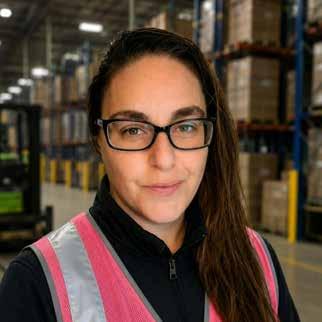
Nicole Lynch is no stranger to hard work. What began as an entry level role at Home Depot grew to an almost 11-year career with Nationwide Industries. From the very start of her professional journey, Lynch learned the value of hard work, customer service, and understanding a business from the ground up.
When she joined Nationwide Industries, she was determined to learn every aspect of the operation. Having held positions in both sales and operations, she developed a strong understanding of their products, customers, supply chain and processes, eventually advancing into leadership and the position of distribution manager.
Nationwide Industries is a leading American designer and manufacturer of fence and gate hardware, recognized for supplying reliable solutions to contractors, installers, and distributors through a broad distribution network.
As a distribution manager, Lynch’s primary responsibility is to ensure operations run safely, efficiently, and effectively while delivering a high level of service to customers. She attributes her success with the company to her willingness to do the work others may not want to do, learning the details of the business, and taking the time to understand not only the processes, but also the people behind them. “I’ve always made it a priority to know my team members, understand their strengths, and learn how the operation truly functions from start to finish.”
A large part of Lynch’s role is coaching and developing team members. She believes strong teams are built through communication, trust, accountability and investing in people. “One of my greatest strengths is my ability to build relationships. Understanding what motivates people and what challenges they may be facing allows me to be a better leader.” On a personal level, her role as a mother and grandmother is a driving force that keeps her motivated
NICOLE LYNCH Distribution Center Manager, Nationwide Industries
to show up for those who support and fulfill her. “At my core, being a caregiver and building relationships across all areas of my life have fueled me and made me successful.”
As a woman in a predominantly male field, Lynch sometimes felt she had to work harder to prove herself, but rather than viewing it as a disadvantage, she used it as motivation to learn as much as possible and let her work speak for itself. “Over time, I found that credibility is earned through consistency, knowledge, integrity and results. Once people see that you know your business, support your team and follow through on your commitments, respect follows.”
She believes women bring valuable perspective to leadership and has seen the industry continue to evolve and become more inclusive over the years. Her advice for women starting a career in this industry is to build knowledge and understand how the operation works from end to end. “The more you understand, the more confidence you will gain. Don’t be afraid to ask questions, learn everything you can and take on opportunities that challenge you.” She also stresses the importance of finding mentors willing to invest in your growth.
Above all, Lynch believes in staying true to yourself. “You do not have to change who you are to be successful. Your reputation will follow you through your career, and that reputation is one of the most valuable things you can build.”
Learn more at nationwideindustries.com
EMMA HASELTON
Trex Northeast & Eastern Canada
Channel Marketing Manager
Prioritizing Relationships Over Perfection
Relationship building, communication skills and deep industry experience is what ultimately led Emma Haselton to her role as channel marketing manager for Trex nearly three years ago. After earning a degree in journalism from Suffolk University, she dove straight into an industry that was entirely new to her, first with a Cape Cod lumberyard and later with a Cape Cod-based custom home builder. Spending a combined eight years in these roles helped deepen her understanding of differing sides of the industry before joining Trex.
Trex is the world’s leading brand of sustainably made, wood-alternative decking and residential deck railing and a leader in high performance, lowmaintenance outdoor living products. Trex employs more than 1,900 people worldwide and boasts the industry’s strongest distribution network with products sold through more than 6,700 retail outlets across six continents.
Today, Haselton feels fortunate to combine her passion for marketing with an industry she has come to know well, helping to support Trex’s channel partners in the Northeast and Eastern Canada. She helps these partners leverage Trex’s national marketing initiatives to position themselves as a trusted local source of Trex products in their markets. In addition to her regional responsibilities, she has a specialized focus on nationwide channel communications and helping strengthen marketing assets and support for the TrexPro contractor network.
Haselton works closely with dealers, distributors and contractors to help their businesses grow through marketing resources, strategic guidance and programs that drive brand awareness and business growth. “Discovering how Trex and different teams can support local success so partners can thrive is incredibly fulfilling. What I enjoy most about my job is working directly with various people within Trex and outside the organization to help bring marketing efforts to life.”
Challenges aren’t foreign to Haselton. Entering an overwhelmingly maledominated field as a female can be difficult. “While it could have put me at a disadvantage, I focused instead on building strong relationships, learning nuances of the dealer and contractor side of the business, and growing my confidence in a space where women were less represented.” Over time the foundation she worked hard to build helped develop both expertise and perspective. “Today, it is especially rewarding to be part of an industry that continues to evolve, where increasing diversity and female representation is helping drive growth, collaboration, and innovation.”
Another challenge Haselton works to overcome is the natural hesitation toward moving beyond traditional marketing approaches and exploring new strategies. She values building trust with channel partners and clearly demonstrating the value of emerging marketing opportunities. “Strong communication and well-established customer relationships help make these conversations more effective and less challenging, ultimately leading to better alignment and outcomes.”
Haselton encourages women not to underestimate the value of their own perspective. “Technical knowledge builds credibility, but so does how you think, communicate, and solve problems. You don’t have to mirror what everyone else is doing to be taken seriously.” The best advice she has ever received is to prioritize relationships over perfection. “Skills can be taught, but reliability, communication, and how you engage with others are what make people want to keep working with you.”
Learn more at trex.com
Do Not Underestimate
Your Own Abilities
DEB KRIKORIAN Chief Financial Officer, Riverdale Mills
While Deb Krikorian, chief financial officer of Riverdale Mills, says gender has never been a barrier in her experience, she believes visibility, representation and mentorship play an important role in helping young women enter and advance in the industry. “Manufacturing and finance leadership have historically been male-dominated fields, but I have had several male mentors who recognized and supported my abilities. That is the benefit of a strong mentor, someone who advocates for talent and creates meaningful opportunities for growth.”
She says the best advice she ever received was that there are no gender boundaries, only mindset and skillset boundaries. “With a strong work ethic, intellectual curiosity, and continuous professional development, the scope of what you can achieve is unlimited, and no role or opportunity should be considered beyond reach. Confidence, resilience and a willingness to keep growing are the keys that open doors.”
Krikorian’s education in business and finance first brought her to Walker Magnetics Group Inc. where she had the opportunity to build a strong foundation in finance, operations, and manufacturing. In her current role with Riverdale, she oversees the company’s financial operations including planning, risk management, supplier negotiations, commodity purchasing and cost stabilization.
“I work closely with all our teams to ensure we remain aligned both operationally and strategically. There is a complexity to the industry that is both challenging and intriguing. I enjoy solving problems collaboratively, supporting employees across departments, and contributing to the long-term success of American manufacturing.”
One of the biggest challenges Krikorian has navigated is the economic uncertainty and volatility in the global steel market.
Riverdale Mills is a leading American manufacturer of premium welded wire mesh for the marine, security, construction, agriculture and industrial markets.
“Steel is our single largest raw material cost, so tariffs and pricing fluctuations can have a major impact on the business,” she says. “During disruptions, I’ve focused on stabilizing supply chains, managing costs, and maintaining strong customer relationships through difficult pricing conversations.”
Krikorian says these same skills are important to long term success. “Building confidence, asking questions, staying adaptable, and developing cross-functional knowledge are all essential. Most importantly, do not underestimate your abilities or limit yourself based on outdated perceptions of the industry.”
Learn more about Riverdale Mills at riverdale.com
SKIDRIL, the originator of the gas powered post driver, introduces the G2XD high power at a great price!
4” POST DRIVER BIGGER MEANER FASTER TUFFER
• On-Off simplicity
• Simple 4-cycle OHV engine or powerful 2-cycle
• Easy service replacement motors, for low cost repairs
• 2 engine makes available
• Few moving parts
• Drive T-Post, round post up to 4”
• Available Multi-Collet option
• Air cushion dampening for virtually no recoil
• High fuel efficiency 1qt/hr
• Modular design
Meghan Brothers
ADMINISTRATIVE MANAGER, ABBEY HARDWARE with
Every successful business has someone at the center making sure the nuts and bolts – literally and figuratively – are in the right place. At Abbey Hardware, that someone is Meghan Brothers. As administrative manager, she is the force who keeps the company’s operations running like a well-oiled machine. Whether coordinating projects, supporting employees or helping customers find solutions, Brothers approaches every challenge with a focus on service and efficiency. Her dedication reflects the values that have helped Abbey Hardware build strong relationships throughout the fencing industry. Fence News spoke with Brothers about her career path, what she enjoys most about her role and the lessons she has learned along the way.
WHAT WAS YOUR BACKGROUND BEFORE JOINING ABBEY HARDWARE?
Before joining Abbey Hardware, I spent five years in the marketing industry. I worked with clients to understand their needs, manage projects and find effective solutions to promote their businesses and organizations. It was a fast-paced environment that required strong communication skills, attention to detail and the ability to juggle multiple priorities at once. In addition to sales and client service, I also gained valuable bookkeeping and administrative experience. That combination of customer-focused work and behind-the-scenes business management gave me a well-rounded understanding of what it takes to keep an organization running efficiently. Many of those skills have translated seamlessly into my role at Abbey Hardware.
WHEN DID YOU JOIN ABBEY HARDWARE, AND HOW HAS YOUR ROLE CHANGED SINCE YOU STARTED?
I've been with Abbey Hardware since the very beginning, so this year marks 22 years with the company. While my primary responsibilities have centered on marketing and overseeing bookkeeping and administrative functions, I've had the opportunity to work in nearly every area of the business over the years. From helping in the warehouse to supporting customer
service and operations, I've gained a firsthand understanding of how each department contributes to the company's success. That experience has given me a unique perspective on the business and has allowed me to grow with the company.
WAS THERE ANYTHING IN YOUR BACKGROUND THAT YOU FEEL PREPARED YOU FOR SUCCESS IN YOUR CAREER?
I was raised in a family that believed in the value of hard work, and that mindset has stayed with me throughout my career. I learned early on that success often comes down to perseverance – having the grit to keep moving forward when challenges arise and the discipline to manage resources wisely during difficult times. I also believe that common sense is one of the most underrated qualities in business. While experience and technical skills are important, good judgment, practical decision-making and a strong work ethic are often what make the biggest difference over the long run.
WHAT DO YOU FEEL HAS BEEN THE KEY TO ABBEY HARDWARE’S GROWTH?
Our commitment to staying closely connected to the fencing industry and continuously looking for ways to improve have been critical to our success. We pay attention to market trends, listen to our customers and take feedback seriously because that's how we
continue to evolve and serve our customers better. Most importantly, we recognize that our customers are our greatest asset. Building strong relationships, providing exceptional service and responding to their needs have been the foundation of our success for more than two decades.
WHAT ARE SOME OF THE BIGGEST CHALLENGES CONTRACTORS FACE TODAY WHEN IT COMES TO HARDWARE SELECTION AND GATE PERFORMANCE?
Finding knowledgeable, accessible support when selecting hardware for a project can be especially difficult for newer companies or when a project presents unique requirements that fall outside the norm. Contractors are experts at designing and building gates, but choosing the right hardware to ensure longterm performance, safety and reliability requires another kind of expertise. That's where we come in. We take pride in being a personal resource our customers can rely on. We work closely with contractors to understand the application, recommend the right products and help troubleshoot challenges before they become problems in the field. We view ourselves as an extension of their team so together, we can help deliver the best possible outcome for the end user.
AS A LEADER, HOW DO YOU FOSTER A STRONG, POSITIVE WORKPLACE CULTURE?
We have high standards, but we also work hard to maintain a positive and supportive company culture. We believe that when employees perform well and contribute to the success of the team, their efforts should be recognized and rewarded. Open communication is a big part of that. We provide regular feedback, encourage collaboration and stay in contact as a team so everyone remains aligned and supported.
WHAT DO YOU ENJOY MOST ABOUT WORKING IN THIS INDUSTRY?
I love our customers and the relationships we have with them. While I'm not on the front lines as much as I was earlier in my career, I still work behind the scenes to keep things running smoothly. I especially enjoy finding solutions when challenges arise. There's a great sense of satisfaction in taking a difficult situation and turning it into a positive experience for a customer.
WHAT IS THE MOST CHALLENGING ASPECT OF WORKING IN THIS INDUSTRY?
One of the biggest challenges in our industry is navigating the natural ups and downs of the construction market. There are always busy seasons and slower periods, and those fluctuations can be influenced not only by the time of year but also by broader economic conditions. The key is being prepared and remaining consistent through all market conditions. Our longevity has allowed us to build strong relationships that help us be responsive to the need of our customers.
DID YOU HAVE A MENTOR IN YOUR CAREER AND WHAT DID YOU LEARN FROM THEM?
My parents have been my greatest mentors. From a young age, my siblings and I were taught the value of hard work, honesty and integrity. My dad always said, “Work is fun!” That’s still how I feel today.
IN A TRADITIONALLY MALE-DOMINATED INDUSTRY, ARE YOU SEEING CHANGES FOR WOMEN?
I think the culture has evolved over time, and it's encouraging to see more women taking on leadership roles throughout the industry. That said, women have always played an important part in the success of fencing businesses, even when, historically, men were more visible. Many companies have been built and supported by strong wives, mothers and female team members working behind the scenes, handling everything from administration and accounting to operations, customer service and more. Those contributions have always been valuable, and today they're becoming more visible and recognized. The industry continues to benefit from the diverse perspectives and talents women bring, and it's exciting to see more opportunities for women to grow, lead and make an impact at every level of the business.
WHAT ADVICE WOULD YOU GIVE TO OTHER WOMEN ENTERING THIS INDUSTRY?
Be a team player and never be afraid to roll up your sleeves and work hard. This industry offers tremendous opportunities for people who are willing to learn, contribute and connect. Be open to new experiences, ask questions and take the time to understand all aspects of the business. Learn more at abbeyhardware.com.
COOLSWAP™ IS HERE:
Advanced Cooling Workwear Designed for Women
Dovetail Workwear has partnered with The LYCRA Company and Sapphire Finishing Mills to launch Dovetail COOLSWAP™, a cooler, lighter and more comfortable future for women’s workwear. COOLSWAP combines lightweight ripstop construction with advanced stretch technology to create performance workwear built specifically for movement in warm conditions.
Sara DeLuca, Dovetail founder and product designer explains, “One of the things we hear from women every day is that they cannot find viable, lightweight workwear options. Partnering with The LYCRA Company allowed us to go lighter than ever before without sacrificing durability and deliver a cooler, more comfortable collection made with sustainability in mind.”
At its core, COOLSWAP is a next-generation performance fabric engineered for demanding, high-heat environments. It is made with LYCRA® EcoMade fiber, a partially recycled material designed to deliver cooling comfort, moisture management, durability and stretch all at once.
LYCRA EcoMade fiber itself is produced with 70% plant-based content sourced from field corn grown in the U.S. Midwest. It is engineered to offer proven performance while integrating seamlessly into existing manufacturing processes.
The COOLSWAP collection also incorporates fabric containing 50% recycled PET diverted from landfills, along with 18% plant-based resources, further reducing environmental impact without compromising functionality.
Performance remains central to the design: COOLSWAP fabric wicks moisture, dries quickly, moves with the body, provides UPF 50 sun protection and is built to withstand repeated washing and real-world wear.
To bring this vision to life, Dovetail partnered with Sapphire Finishing Mills, a leading vertically integrated textile manufacturer in Pakistan known for its commitment to sustainable innovation and a workforce that is 90% women. Staying true to Dovetail’s for women, by women, with women” mantra, the collaboration focused on creating workwear that performs as hard as the people who wear it.
The COOLSWAP™ collection includes five pieces: 2 pant options, cargo short, work shirt, cargo skort. Every piece was designed, tested and refined with feedback from real women working in the field.
Ultimately, DeLuca says COOLSWAP™ is about more than fabric innovation. “It’s about building trust, educating consumers and showing how sustainability can be both aspirational and accessible.”
Learn more at dovetailworkwear.com
“ WOOD DEFENDER ENSURES THAT YOU MAXIMIZE YOUR INVESTMENT.
The reason we use Wood Defender is that it’s an oil-based stain. It conditions your fence by soaking into the pores rather than sitting on top of the fence like a water-based stain . . .”
HOLLY COTTLES, OWNER FRISCO FENCE
SPECIAL SECTION
NOT ALL WORKWEAR IS CREATED EQUAL
Changing the Way the Industry Sees Women in the Field
As more women enter skilled trades across North America, employers increasingly recognize the importance of creating workplaces where all workers can succeed safely, comfortably and confidently.
Industries such as construction, mining, utilities, transportation, and fencing have traditionally been male dominated. As more women build careers in the fencing industry, they continue to help address workforce shortages while bringing valuable skills, perspectives and leadership to the jobsite.
One area receiving increased attention is the availability of properly fitting personal protective equipment (PPE) and workwear. Historically, many women entering the trades have been required to wear garments designed primarily for men, often resulting in compromised fit, comfort, and mobility.
Alicia Woods, founder and CEO of Covergalls, says the issue extends beyond clothing. "When women have access to PPE and workwear that fits properly, they can focus on the work they're there to do. Proper fit contributes to comfort and safety, but it also sends a message that they belong in the workplace and that their contributions are valued," Woods says.
Founded in Northern Ontario in 2013, Covergalls was born from Woods' own experience working in the mining industry. At the time, there were virtually no workwear options designed specifically for women, and female workers were expected to wear garments designed for men. Recognizing the impact this had on comfort, fit, mobility, and belonging, Woods set out to create a solution for women working in industrial environments.
The company continues to hear similar feedback from women working across industries.
"Many women tell us they love their jobs and are passionate about their careers, but for years they had to make do with equipment and apparel that wasn't designed with them in mind," Woods says. "The industry has come a long way, and we're seeing more organizations recognize that inclusion can be reflected in the equipment, policies, and resources they provide to their workforce."
Covergalls is also inviting women working in the fencing industry to participate in its Workshop Wednesday initiative, which highlights women making an impact across skilled trades and industrial sectors. Women interested in sharing their career journey, experiences, and advice for the next generation are encouraged to participate.
As part of the initiative, Covergalls will award a $100 gift card to one participant who submits a photo and brief description of their role in the fencing industry.
"Every woman has a story worth sharing," Woods says. "The more we celebrate the women building careers in skilled trades, the more we help inspire the next generation to see themselves in those roles."
For more information or to participate in the Women in Fencing Spotlight initiative, contact Covergalls at info@covergalls.com.
Our special sections in August will showcase the versatility of the fencing industry, from the beauty and craftsmanship of ornamental fencing to the safety and functionality of playground environments. Plus, our Fence Show 2026 Preview offers a first look at the products, equipment and companies who will be on display at the industry’s next exciting event.
MAKE SURE YOUR COMPANY IS INCLUDED!
Deadline for ad placement and submissions: July 8
Ad Placement: katie@fencenews.com
Editorial Submissions: editor@fencenews.com
Management Corner
Building a Workplace Where Everyone Can Succeed: Avoiding Gender Discrimination
The fencing industry has made real strides over the past decade in welcoming women into its ranks in the field, in sales, in operation and in leadership roles. But maintaining an inclusive workplace requires intentional effort from managers and business owners at all levels. As companies compete for talent, creating a workplace where everyone feels respected and valued is not just the right thing to do, it's good business.
Gender discrimination doesn't always look the way people expect. While overt bias is easier to identify and address, the more common challenge today is awareness of subtle, unintentional behavior that can undermine team members and create an uneven playing field without anyone realizing it. Here's what managers should keep in mind.
Know What Discrimination Actually Looks Like. Gender discrimination can take many forms, including unequal pay for equal work, overlooking qualified candidates for advancement, assigning tasks based on gender assumptions or dismissing contributions in meetings. It can also show up as harassment, exclusion from key conversations or holding employees to different standards based on gender. Managers don't have to intend harm for harm to occur. Awareness is the first step toward prevention.
Audit Your Processes. Take an honest look at how decisions are made in your organization. Are promotions based on clearly defined criteria applied consistently to everyone? Are pay rates equitable across comparable roles? Are mentorship and growth opportunities available to all employees? If the answers aren't clear, that's a signal that your processes may need more structure and transparency. Documenting criteria for raises, promotions, and performance reviews creates accountability and reduces the risk of bias influencing outcomes.
Watch Your Language and Culture. Workplace culture is shaped by everyday interactions. Off-hand comments, jokes or assumptions about what certain employees can or can't handle contribute to an environment where some team members feel less valued. Managers set the tone. When leadership models respectful, professional communication and addresses inappropriate behavior promptly, it signals to the entire team that inclusion is a priority – not just a policy.
Create Clear Reporting Channels. Employees need to know they can raise concerns without fear of retaliation. Make sure your workplace has a clear, accessible process for reporting discrimination or harassment, and that those reports are taken seriously and handled appropriately. If employees don't trust the process, problems go unreported and unresolved.
Invest in Your People Equally. Mentorship, training, and professional development should be available to everyone on your team regardless of gender. Some of the most powerful things a manager can do is advocate for team members who may be overlooked, create opportunities for them to demonstrate their abilities, and recognize their contributions publicly and consistently.
By fostering an inclusive workplace where everyone has the opportunity to succeed, fence companies can strengthen their teams, improve retention and position themselves for long-term growth and success.
Miller Edge Announces Employee Promotions and Awards
Miller Edge has promoted David Makepeace to director of sales & marketing and appointed Joel Porter as product manager. In addition, Tim Castello, vice president of operations, and Flossie Miller, president of Miller Edge, received awards at IDAExpo+ in Las Vegas, Nevada.
LEADERSHIP
Makepeace joined Miller Edge in 2014 in inside sales and has continued to advance through a series of leadership roles, including regional sales manager for the Eastern U.S. and, most recently, general sales manager.
In his new role, Makepeace leads the company’s sales and marketing strategy across Miller Edge’s door, gate, and automation safety product lines, supporting customer engagement, market development, and cross-functional alignment throughout the organization.
Based out of the company’s Jennersville, Pennsylvania, office, Porter will support the full product lifecycle across Miller Edge’s door, gate, and automation safety product portfolio—from product requirements and specification management through release, ongoing support, and continuous improvement.
As product manager, Porter will work closely with engineering, production, sales, and marketing to help ensure products are clearly defined, well documented, and aligned with customer, manufacturing, and application requirements.
AWARDS
Castello received the International Door Association (IDA) Director Service Award. The award recognizes outgoing members of the IDA Board of Directors for their leadership and service to the association and the garage door industry.
Castello recently completed his term on the IDA Board of Directors, where he served on the board as supplier vice president and also served as the chair on the IDA Events Committee. During his time with the organization, he supported industry education, member engagement, and collaboration across the door and access systems industry.
Miller received the Jerry R. Reynolds Volunteer Leadership Award. The award recognizes individuals nominated by their peers for outstanding volunteer leadership and long-standing commitment to the garage door industry.
A second-generation leader at Miller Edge, Miller has spent more than 30 years supporting safety, education, and industry advancement within the door and access systems market. Her volunteer leadership has included service with IDA, IDEA, DASMA, the Far Western Garage Door Association, and the Tri-State Door Association.
Miller served on the inaugural boards of both IDA and IDEA and later returned to the IDA Board as Industry Vice President and Chair of the Member Services Committee, where she helped establish the Young Professionals Network mentorship program.
Learn more at milleredge.com
James Hardie and CBUSA Expand Strategic Agreement to Include TimberTech® Decking and Railing
James Hardie, the North American leader in exterior design solutions, announces an expansion of its strategic agreement with CBUSA, the nation's largest group purchasing organization for custom home builders. The new three-year exclusive deal will provide CBUSA's network of nearly 1,000 custom builders with access to preferred products such as TimberTech®, the #1 brand in premium composite and PVC decking and railing solutions.
This agreement builds upon a long-standing, exclusive deal for siding that has been in place since 2016. The addition of TimberTech, a brand within the James Hardie portfolio following its acquisition of the AZEK Company, marks a significant milestone in James Hardie’s strategy to become the premier provider of complete exterior solutions as The Home of Resilient Beauty™.
“This agreement is a powerful testament to the momentum of our integrated business model and our commitment to providing the industry with a comprehensive portfolio of beautiful, durable, and sustainable exterior and outdoor living products,” says Jon Skelly, president and general manager, James Hardie Building Products Inc. “Together we are creating solutions to drive growth and delivering unmatched value to builders and homeowners alike.”
CBUSA, with members in 41 markets responsible for over 16,000 housing starts annually, represents a critical segment of the custom home building market. This expanded agreement provides its members with a streamlined offering of best-in-class exterior products.
“James Hardie has been a valued supplier of CBUSA for many years, and we’re excited to build on that success with the addition of TimberTech,” says Brian Pavlick, president of CBUSA. “This agreement brings meaningful value to our builders, expanding their access to market-leading composite and Advanced PVC decking solutions and strengthening the overall competitiveness of our network.”
By pairing the trusted durability of Hardie® siding, the #1 brand of siding in North America, with the premium aesthetics and innovation of TimberTech decking and railing, there is a powerful yet simplified solution for builders –this exclusive deal with CBUSA is a clear choice to bring James Hardie’s allencompassing portfolio of brands to more trades and homeowners across the country.
For more information visit, JamesHardie.com and TimberTech.com.
David Makepeace
Tim Castello Joel Porter Flossie Miller
Wheatland Tube is now offering a comprehensive line of PVC fence products, 100% made in the USA.
Available in White, Tan, Clay and Gray. Scan the QR code or contact your Wheatland representative to learn more.
AdvantageLumber.com Becomes
AdvantageLumber.com, a leading direct to consumer supplier of luxury building products, is the first company in the lumber industry to offer a full range of Accoya® wood products available for purchase online.
Building on its legacy as an industry innovator, AdvantageLumber.com continues to redefine how customers source high performance building materials. The company was the first to successfully sell long length lumber products like Ipe decking online as early as 2009, an achievement that remains a challenge for many competitors even today.
Unlike standard eCommerce shipments that rely on small package ground delivery, lumber products often require LTL (Less-Than-Truckload) freight due to their length and size. Even in 2026, many suppliers have yet to overcome this logistical hurdle.
AdvantageLumber.com's expertise in nationwide LTL shipping allows customers to conveniently order long-length, premium wood products online and have them delivered directly to their home or job site.
Accoya wood is a solid wood product that has been modified with a non-toxic treatment known to enhance the durability and stability of the wood. Accoya has seen a surge in demand due to its proven performance in exterior applications. However, sourcing Accoya locally can be difficult, with many lumber yards unable to stock it or facing long lead times.
AdvantageLumber.com's direct-to-consumer model solves this problem by offering a comprehensive selection of Accoya wood products, including:
• Decking
• Siding & Cladding
• Ceiling & Soffit
• Railing
• Fencing
• Custom milled profiles
With four strategically located manufacturing facilities across the United States, AdvantageLumber.com stocks Accoya wood and provides custom milling services to meet exact project specifications. This infrastructure enables the company to deliver orders in as little as one week, significantly faster than many traditional suppliers.
"Customers were coming to us frustrated because they simply couldn't find Accoya wood locally or
were facing long delays," said Jon Fletcher, national sales manager at AdvantageLumber.com. "We built our program around solving that problem by stocking Accoya, offering custom milling, and delivering it quickly. Our goal is to make high performance materials like Accoya easy to access for homeowners and contractors alike."
While some suppliers may offer Accoya products, many do not stock inventory or provide custom milling services, often resulting in extended wait times. Additionally, most competitors charge for product samples.
AdvantageLumber.com sets itself apart by:
• Stocking Accoya wood in the USA
• Offering custom milling from four U.S. factories
• Providing fast, direct to job site delivery
• Supplying free samples to customers
By combining innovation in logistics, warehousing, manufacturing, and customer service, AdvantageLumber.com continues to lead the industry in making premium building products more accessible than ever before.
For more information, visit AdvantageLumber.com
Honoring Your Service
The fencing industry, like many others, has many individuals who have served our country. Fence News honors those within the industry. Thank you for your service.
NAME FENCING COMPANY MILITARY BRANCH
Joe Adams
Ronald Alltop
Emilio Anello
Rodney Amos
Vince Anello
Joe Beachum
Chad Belcher
Kimberly Belcher
Roy Belcher III
Anthony Benefield
Roy Bissada
Josh Boham
Brian Boutte
Jared Burns
Dale Burton
James Clanin
Kyle Clevenger
Gary Conaway
Nathan Downs
Jason Drehobl
Zeb Durr
Brent Erikson
Patrick Fidler
Mark Fitch
Mark Flanagan
Don Fogg
Eduardo Garcia
Dave Gaskins
Brian Granger
Billy R. Griggs, Sr.
James Grider
Charles Harris
Hunter Harris
Conner Helm
George Hendrix
George Horetsky
AMICO Security Products
Stephens Pipe & Steel
Veteran Fence & Yard
Hearne Steel Co.
Veteran Fence & Yard
All American Fence
Belcher’s Fence Co.
Belcher’s Fence Co.
Belcher’s Fence Co
Stephens Pipe & Steel
DoorKing
Black Ops Fence
Controlled Products
Astro Fence Company
Stephens Pipe & Steel
Stephens Pipe & Steel
Eagle Fence & Construction
SW Automated Security
RADIUS Fence & Gate
SW Automated Security
Acreage Fences Inc.
SW Automated Security
American Fence & Flag
Mountain States Fence
Stephens Pipe & Steel
Security Contractor Services
American Fence & Flag
Stephens Pipe & Steel
G-Line Fence & Landscape
United Fence & Construction
Stephens Pipe & Steel
Fence News USA
Stephens Pipe & Steel
Black Ops Fence
DoorKing
Trident Fence
U.S. Marines
U.S. Army
U.S. Navy
U.S. Army
U.S. Navy
U.S. Army
U.S. Air Force
U.S. Air Force
U.S. Air Force
U.S. Army
U.S. Marine Corp
U.S. Army
U.S. Navy
U.S. Air Force
U.S. Air Force
U.S. Army
U.S. Army
U.S. Army
U.S. Navy
U.S. Air Force
U.S. Air Force
U.S. Army
U.S. Marine Corp
U.S. National Guard
U.S. Army
U.S. Navy
U.S. Marines
U.S. Marine Corp
U.S. Army
U.S. Army
U.S. Army Air Corps
U.S. Air Force
U.S. Reserves
U.S. Naval Reserve
U.S. National Guard
U.S. Army
U.S. Navy
U.S. Navy
Brad Howard
David Humphries
Ray Hynes
Jordan Jones
Matt Letteer
Donnie Lockhart
Rick Marrs
Mike Marshall
Ron Meyer
MILITARY BRANCH
Security Contractor Services U.S. Army
Atco Fence Co.
Empire Fence of Tulsa
Hadrian Fence Company
SW Automated Security
RADIUS Fence & Gate
U.S. Army
U.S. Air Force
U.S. Army
U.S. Navy
U. S. Army
Security Contractor Services U.S. Air Force
M&M Fencing U.S. Army
Security Contractor Services U.S. Marines
Joe Miller Miller Fence
Jeremy Moore
Kevin Nelson
David Newcomer
Jesse Newcomer
Paul Newman
U.S. Navy
Hadrian Fence Company U.S. Army
Hip Square Fence
Quality Fence and Deck
Quality Fence and Deck
U.S. Coast Guard
U.S. Marine Corp
U.S. Marine Corp
Security Contractor Services U.S. Marines
Keith Nolin Nolin Fence & Deck U.S. Marine Corp
Paul Orta
Tommy Patton
Alex Petersen
Tom Polen
Brandon Rice
J.R. Roeker
John W. Sallemi
Mike Saltijeral
Mark Schneider
Richard Sedivy
Paul Snow
Larry Simons
Kelly Sloggett
Jake Smith
Jerome Smith
Mike Smith
Steve Stabley
Jeff Stanford
Kyle Stender
Nathan Velerio
Duane Vos
Larry Wanat
Shane Ward
Perry Webster
Jerry Wharton
Benjamin Wild
Steve William
Jeff Wilson
Charles Wood
Richard Woodbeck
Susan Worley
David Zink
If
SW Automated Security U.S. Navy
Stephens Pipe & Steel U.S. Army
Acreage Fences
Elyria Fence
Army National Guard
U.S. Navy
SW Automated Security U.S. Marine Corp
SW Automated Security
Anzalone Fence
Industrial Fence
DAC Industries, Inc
DoorKing
Southwestern Wire
DoorKing
NW Quik Pull
Black Ops Fence
Jay Fencing
Acreage Fences
Belcher’s Fence Co.
AMICO Security Products
J&K Agriculture
Black Ops Fence
StainTrac
DoorKing
Titan Post Drivers
Acreage Fences
SW Automated Security
Bravo Company
Stephens Pipe & Steel
SW Automated Security
Stephens Pipe & Steel
D&D Technologies USA
SW Automated Security
SW Automated Security
U.S. Navy
U.S. Marine Corp
U.S. Marine Corp
U.S. Army
U.S. Air Force
U.S. Air Force
U.S. Army
U.S. Navy
U.S. Army
U.S. Army
U.S. Army
U.S. Army
U.S. Marines
U.S. Marines
U.S. Army
U.S. Army
U.S. Air Force
U.S. Army
U.S. Army
U.S. Air Force
U.S. Army
U.S. Army
U.S. Navy
U.S. Marine Corp
U.S. Air Force
U.S. Navy
U.S. Marine Corp
byTom Luby owner of Profit Builders International
Skyrocketing gas prices, primarily due to the closure of the Strait of Hormuz, where we get virtually none of our oil from, seems crazy to me, and this has become a big problem for many of my fencing clients. I know that world oil prices and macro-economics can be a very complicated, but why don’t China, India and the far eastern countries help us straighten this all out, as they are the ones who need the oil supply, not us? We all need to work together to solve our problems. Same is true in business.
Many years ago in my consulting career, I briefly lived outside Bogota, Colombia. Once I visited a natural spring’s spa deep in the jungle. After the spa treatment, while I was waiting for my ride back to my house, I noticed some ants under my feet. These were no ordinary ants; they were South American leaf cutter ants, millions of them and they were marching about 10 or 20 across, side by side, down the side of the road. The line went as far as I could see in both directions and they were marching up one side of a huge tree, which was close to 100 feet tall, and down the other side.
The ants climbing up the tree were emptyhanded, but the ants coming down the other side each had a piece of leaf in their mouth. They then all marched off into the distance. The natives of the region told me they can strip a giant tree clean in only a matter of days. Talk about determination and organization – wow! That was the message of the old Sinatra song.
I was mesmerized by the teamwork and determination of those ants. I even taunted them by putting obstacles in their path: small stones, tree branches, etc. Nothing stopped them. If together they could not move the object out of their way, they all found another path around in a matter of seconds, and were once again busy on their way to completing their task. Unbelievable, what a workforce! I wonder if we can train them to solve world problems, or even to dig post holes and install fence?
This is a prime example of teamwork and collective priorities. Each ant had their role to play; they had their mission and they did it. I knew there was something to be learned by all of this.
High Hopes
You guessed it: the moral of the story is by working as a team, either on the global stage where nations work together, or simply within your company, great things can be accomplished, together. As individuals, not so much. Functional organization and having a clear mission statement are critical components to teamwork and accomplishing great things.
Do you and your company have a clearly defined mission statement and is everyone in the company working towards that mission, that common goal, as the ants in Colombia were? Here is another example closer to home:
As we all know, in the late 70s and early 80s, IBM was the giant in the computer industry. They had a mission to dominate the worldwide computing industry, and in those days that was pretty much limited to banks, schools, government agencies and major corporations. To accomplish this as a company, their mission statement must have read something like this: “At IBM we want to build the biggest, strongest, fastest and most powerful computers in the entire world.”
At the same time, a couple of guys named Bill Gates and Steve Jobs went to IBM with an idea that would have dramatically changed the mission statement of the company. They wanted to build computing systems for everyone. This would have been a drastic change in IBM’s mission to build bigger and better. It would mean building smaller but in quantities of millions, and mass distribution instead of selective distribution. Needless to say, the idea was turned down. Man, how would you feel if you were the guy to say no to what went on to become Microsoft and Apple? To decide these guys had a BAD idea?
Like IBM, both these entrepreneurs also wanted to build computers and the operating systems to run those computers. Even though both companies were in the very same business, Apple and Microsoft had a completely different vision and developed a mission statement that took them in a totally different direction than IBM.
Do you see my point? Your mission statement is of paramount importance and is necessary to take your company in the specific direction
the owner chooses. What do you want to be? Do you want to be strictly a commercial fencing contractor or do you want to dominate the residential market? Or maybe a little of both?
Do you want a certain product mix? Price point? Size? Do you want to be a distributor, fabricator, what area, how large or small?
Pick a few ideas and work with them. Remember, once you have chosen a mission statement, all of your corporate efforts must be focused in accomplishing that mission, and everyone in the company must understand it and be dedicated to completing it. If not, they need to be replaced. Like the little ants in Colombia, teamwork is essential and even one ant pulling in the wrong direction can derail the entire team effort.
Another important thing to remember: mission statements are also dynamic. They can change with the times and passions of the owner. Just try not to change too often, which can be confusing to the employees and general public.
Tom Luby has helped hundreds of contractors within the fence industry achieve success with maximum profitability and efficiency. With over 25 years of experience consulting in the fence industry, he developed the “Roadmap for Success”, a program that can help contractors succeed. The program is available on CD, along with the sales and marketing guide “The Close” by contacting him below:
Profit Builders International 3421 10th Lane West, Palmetto, Florida 34221
Those on the outside may think owning and growing a business is glamorous. They see the current building, the staff, the equipment and the profits. What they don’t see are the startups. The small beginnings, the ever-present worry, the dreams and the everyday decisions that can either make it or break it.
Fence News honors those who put their hat in the self-employment ring and built their business one small step at a time.
Garrett St. Germain
There’s No Better Time to Start Than Now
Life changed for everyone in the year 2020, often in more ways than one. Not many people were starting a business then, but for Powered Access LLC founder, Garrett St. Germain, it was the perfect opportunity.
“Before starting my own business, I worked for another fence company and became interested in gate automation,” he says.
“After the multiple hurricanes Southwest Louisiana faced in 2020, I became burnt out but I was still interested in gate automation. I did some research and found out that in Louisiana, there was no one between my local area and a two-hour drive to Baton Rouge who solely did gates and gate operators.”
Powered Access LLC provides custom gate and security solutions throughout Louisiana and Southeast Texas. St. Germain built his company by calling on contacts he made during his career in the industry. The initial days were filled with lots of time on the road, but work was steady as he built a local clientele in Southwest Louisiana and completed jobs in other parts of the state.
“I was determined to make the business successful. I reached out to everyone I could and told them what I had to offer. On slow days I went door-to-door and business to business leaving my business card. I also attended many classes and trainings
with industry professionals so I could take that knowledge back home and offer my customers the best of the best. We started with gate operators and now offer facial recognition and other leading technology that allow our customers to open their gates from anywhere in the world.”
Today, St. Germain is in the final stages of finishing a new facility to begin custom gate fabrication and preparing to launch new technology for his clientele. He says the company’s success is attributed to its motto, “Do it right the first time.”
“Call backs are costly and only result in double the amount of work. Doing it right the first time benefits us and our customers. As a faith-built company, we are committed to doing what’s right and believe that everything we have is given by the grace of God.”
St. Germain says he encourages young entrepreneurs that today is the best day to set your dream in motion. “Now is the best time to get started. Don’t focus on the bigger guys, just do what you do, and do it right, not just the easy way.”
Find Powered Access LLC on Facebook, Instagram and YouTube.
There is Still Time to Make 2026 a Star-Spangled Year
by Mark Levin, CAE, CSP executive vice president, Chain Link Fence Manufacturers Institute |
It is here – the 250th anniversary of the signing of the Declaration of Independence and the founding of the United States. There has been, quite logically, a big buildup to this moment. But the “buildup” has been more about what IS going on in 2026 than what WAS going on in 1776. Obviously, we should be looking forward to it because, even though there are a lot of challenges facing the fence industry in the second half of this year, there are also a lot of opportunities for the industry, too.
A bit of history might help us appreciate what we have right now. One of the founders of the United States, Benjamin Franklin*, included the proverb, “Love thy neighbor; yet don’t pull down your hedge,” in Poor Richard’s Almanac in 1754. Franklin used the word hedge to mean fence, so it was a version of the even-older proverb
of, “Good fences make good neighbors.” But, as usual, Franklin tried to impart some practical knowledge into his philosophy.
What Franklin said was a more distinct admonition to Americans to consider a fence not just a sign of being a “good” neighbor. A fence, he opined, should also serve as a boundary to protect your property and your privacy, and to avoid unnecessary exposure to those who would do you harm
And, voilà, we have the modern U.S. fence industry. More than 250 years later, what we provide to the public are those exact benefits: privacy, safety, and community. In 2026, however, it is not quite that simple. Take a look at those three benefits in today’s market.
Privacy is still a major benefit of fencing, but technology is changing the place fencing holds
in providing it. Yes, you can erect a fence that is hard to see over, or even to breach (height, materials, accessories, etc.). But can it stop a drone from flying over your fence to photograph your property or invade your personal privacy?
Safety is a bigger issue now than at any other time in the history of the United States. The challenge that the fence industry faces is convincing customers in all markets (residential, commercial, industrial, and high security) that there are products which can handle three roles of providing safety, complementing technologies, and at the same time, be aesthetically appealing.
Community is actually one of those opportunities alluded to earlier. People tend to see fences as barriers in a community. In fact, fences are builders in a community. Fences showcase
OPEN WIDE!
When a project calls for a large gate turn to Pro Access Systems and Doorking to meet the speci cations. With over a 20 years of gate system design and fabrication expertise, Pro Access has been supplying premium quality gates for critical infrastructure security applications including Commercial / Industrial, Energy Distribution, Transportation, Municipal Facilities and Residential Properties. Pro Access Systems specializes in large systems and is a leading single-source provider of integrated gate hardware, access control solutions with experienced technical support.
2022 Inductee, American Fence Association Hall of Fame
both public and private buildings, designate and protect schools and healthcare facilities, and allow commerce to thrive in communities.
Looking back on the wisdom of Franklin, and the history of the fence industry in the U.S., is not just an exercise in nostalgia or the celebrating of America’s 250 years. It is a way of reminding us to take pride in the historic industry we represent; to anticipate the opportunities that still await us as the needs of our stakeholders change; and to encourage us to create the partnerships needed to grow our industry in 2026 and beyond.
P.S. Of course, many of these things are true of fencing in our neighbor countries, Mexico and
Canada, too. It is just interesting to be able to connect fencing’s place in American history during this semi quincentennial year.)
*(Trivia Note: Franklin was the only person to sign all four of the most important documents in American history: The Declaration of Independence; the United States Constitution; the Treaty of Peace with England; and the Treaty of Alliance with France.)
As executive vice president of the Chain Link Fence Manufacturers Institute for 38+ years, Mark Levin is also an author and avid promoter of the fence industry. He believes in the successful leadership qualities he promotes, including listening, delegating, consensus building, communications and effective decision-making.
Chain Link Fence Manufacturers Institute 10015 Old Columbia Road, Suite B215 Columbia, Maryland 21046 301-596-2583 info@chainlinkinfo.org www.chainlinkinfo.org
Save time & money— eliminate difficult labor & waste.
Maximize Security Minimal Effort
Hassel Free Barbed Wire Installation Begins With Barbwire Hog.
Dispense up to three rolls of barbed wire simultaneously, saving time and cutting down on manual labor—whether you’re handling large or small projects.
Standard Model (BWH)
• Handles up to three 16" rolls— 1320 feet of barbed wire.
• Hydraulic arm for precise placement.
• Dispense from either side of the fence.
NEW Walk-Behind Model (WB-BWH)
• Same capacity as the full-size model— 1320 feet of wire.
• Compact and easy to transport, ideal for tight spaces.
If it can be done better,
safer—we know how.
Get the job done faster, easier, and more efficiently with EZG equipment. Visit ezgmfg.com to learn more.
The Leader in the Mirror: Coaching Yourself First
by Michael Reed executive director, American Fence Association
Imagine you are sitting in a crowded ballroom at an industry awards banquet. The lights are dim as you are called to the stage. Tonight, you are being recognized for your leadership. Before receiving the award, the emcee invites three people to the microphone to describe the kind of leader and person you are. The audience can sense your nervousness.
First, a co-worker steps to the podium. Someone who has worked alongside you during long days, difficult customers, labor shortages and stressful deadlines. They have seen you at your best and at your worst.
What will they say?
Will they describe someone who listens, develops others and leads with integrity? Someone who stays calm under pressure and helps others succeed? Or will they describe the times you were impatient, distracted or hard to approach?
Next comes a family member. Leadership does not stop when the workday ends.
The people closest to us know whether we are patient, present, encouraging and dependable. They know whether we truly live the values we claim to hold. Would they describe someone fully engaged in life at home, or someone always consumed by the next crisis waiting at work?
Finally, a close friend walks to the microphone. Friends see us differently.
Our closest friends know our true character. They know whether success has made us humble or prideful, whether we show up when it matters, and whether we genuinely invest in the people around us.
What stories would these people tell? Would all three speeches have a similar theme?
The best leaders understand that leadership is not measured by titles, awards or business success. Leadership is measured by consistency. The person your co-workers experience, the person your family knows, and the person your friends see should share a similar story.
But here is the challenge. We’re all complex, and very rarely does anyone coach the leader.
As leaders, we coach crews, mentor employees, develop foremen, run sales teams and help others grow. Yet many of us spend little time intentionally developing ourselves. The higher you go in any organization, the harder it becomes to get honest feedback. Fewer people
challenge your thinking. Fewer people tell you the truth. And without intentional reflection, even experienced leaders can struggle to grow.
That is why self-coaching matters.
Great leaders do not wait for an annual review, a crisis, or someone else to point out where they need to improve. They intentionally look in the mirror, reflect and challenge themselves to become better. One simple way to do this is through four self-coaching questions.
SELF-COACHING QUESTIONS WHEN THINGS GO WRONG
1. What happened? Start with the facts.
• Before emotions take over or blame begins, ask yourself: What actually happened?
• Why did the project go sideways? Did a conversation with an employee fall apart? Did a customer relationship become strained?
• Separate facts from feelings. What worked? What did not? What can you objectively observe?
Great leaders learn from reality, not assumptions. They gather data, sometimes data that is counter to their own perspective or intuition.
2. What role did I play? This may be the most important question.
• Instead of asking, Who messed this up? Ask, What part did I play?
• Did I communicate clearly? Did I set expectations? Did I listen enough? Did I avoid a difficult conversation for too long?
SELF-COACHING BEGINS WITH OWNERSHIP. Leadership growth accelerates the moment we stop looking outward for explanations and begin looking inward for responsibility.
3. What am I avoiding? Many leadership challenges are not skill problems. They are courage problems.
• Are you avoiding accountability with an underperforming employee?
• Delaying an important conversation?
• Holding onto work because delegation feels uncomfortable?
Often, the thing we most need to do is the thing we are most tempted to avoid. Great leaders learn to coach themselves through discomfort instead of around it.
4. What will I do differently next time?
• Reflection without action changes nothing.
• The goal of self-coaching is not perfection. It is progress.
• What is one thing you will do differently tomorrow?
Maybe it is asking better questions. Being more patient. Delegating more clearly. Following through faster. Listening longer. Small improvements, repeated over time, create extraordinary leadership.
A Final Thought
Someday, whether or not there is an award, people will tell the story of your leadership. The co-worker, the family member and the close friend will all have something to say. The question is whether those stories reflect the leader you hoped to become.
That story is shaped long before anyone steps to the microphone. It is shaped in the quiet moments of self-reflection, accountability and growth. It is shaped when leaders have the courage to coach the person staring back at them in the mirror.
Michael Reed has been involved with the American Fence Association for nine years, the last three serving as the executive director. Michael loves AFA's history and culture and believes in the power of associations to solve problems big and small. He's focused on building an AFA that develops leaders, increases professionalism, and plays a leadership role in our industry's growth and success. His passion is leadership, and he's currently finishing his doctoral dissertation on trust and leadership development.
American Fence Association
3751 Main St, Suite 600 #343
The Colony, TX 75056
512-431-5360
michael@americanfenceassociation.com
In Memoriam
Michael “Mike” Lowe passed away peacefully on May 13, 2026. Mike was a cherished member of our team and served for 17 years as Branch Manager of the Baltimore location for Overseas Distributors, Inc. He was known for his professionalism, integrity, compassion, and dedication to those around him.
Outside of work, Mike loved his family, enjoyed the outdoors and hunting, and was known as an excellent marksman. His impact on our company and everyone who had the privilege of working with him will never be forgotten.
Mike will be deeply missed, fondly remembered, and forever appreciated. Our heartfelt condolences go out to his family, friends, and loved ones during this difficult time.
MIKE LOWE
Premier Fence Announces Strategic Partnership with SecurityWorks
Premier Fence, a portfolio company of Harkness Capital Partners and a leading provider of fencing, guardrails, and gates and access controls services in New England, has acquired SecurityWorks, LLC. SecurityWorks is headquartered in East Bridgewater, Massachusetts.
Under the leadership of founder and CEO, John McGovern, SecurityWorks has built on a legacy dating back to 1876 by establishing itself as a leading perimeter security services provider in New England. The company provides full-service solutions for fencing, gates and access controls installation and maintenance. SecurityWorks has a reputation for best-in-class service and has built longstanding relationships with commercial, industrial, and residential customers throughout New England.
“Partnering with SecurityWorks represents an important milestone in our growth strategy,” says John Feerick, CEO of Premier Fence. “SecurityWorks strengthens our position as a leader in fencing, gates and access controls services across the New England region. John McGovern and his team bring deep technical experience and strong customer relationships, making SecurityWorks an outstanding addition to the Premier Fence platform.”
John McGovern adds, “We are excited to partner with Premier Fence and John Feerick in this next phase of growth for SecurityWorks. Premier brings the resources, scale, and operational support that will allow us to expand our capabilities while continuing to deliver the high level of service our customers expect. I am proud of all our team has accomplished and am looking forward to this next chapter.”
For more information, visit securityworksinc.net.
AMERICAN FENCE ASSOCIATION (AFA) EVENTS
AmericanFenceAssociation.com
Carolinas Chapter River Float Weekend
July 24
Galax, Virginia
Gulf South Chapter Meeting with Education
August 1
Mobile, Alabama
Indiana/Kentucky Chapter Golf Outing
August 7
The Fort Golf Resort Indianapolis, Indiana
Garden State Fishing Trip
August 9
Charter Boat Miss Michelle III Point Pleasant Beach, New Jersey
North Central Chapter Golf Outing
August 13 Hudson, Wisconsin
Northern Ohio Chapter Meeting and Clay Shoot
August 28 Medina, Ohio
Carolinas Chapter by the Sea Event
September 10 Charleston, North Carolina
Women in Fence Forum
September 10 Online Event
CLFMI
Chainlinkinfo.org
Annual Meeting
November 4-6
Hotel Sofitel Washington, D.C.
AFA UNIVERSITY
AmericanFenceAssociation.com/schools
November 8-14
Fence Contractor Business School
Fence Installation School
Gate Automation Installation School
Leadership Academy
Operations Manager School
Sales Training School
CANADIAN FENCE ASSOCIATION
Candianfenceassociation.ca
Fence Summit
January 20-22, 2027
Pinnacle Hotel Harborfront
Vancouver, British Columbia
MR. FENCE ACADEMY EVENTS
Fence Week – Indiana
July 21-24
August 4-7
September 15-18
October 13-16
November 2-6
CFCA Q3 Chapter Meeting & Golf Tournament
September 11-12
Peppermill Resort Spa & Casino
Reno, Nevada
Midwest Chapter Golf Tournament
September 18
Catoosa, Oklahoma
Texas Chapter Golf and Casino Night & Education
October 1
TBD
NY/LI Chapter Upstate Winery & Education
October 2 White Plains, New York
WOOD DEFENDER TRAINING CLASSES
Mansfield, Texas | wooddefender.com
July 31
August 21
November 25
October 30
November 20
MISCELLANEOUS EVENTS
The Fence Show & Security Expo
October 7-9
South Point Hotel & Casino
Las Vegas, Nevada fenceshow.com
WASA 2026 Trade Show
October 21-23
Peppermill Resort and Casino Reno, Nevada
wasaonline.org/tradeshow
Pool, Spa, Patio and Deck Expo
November 17-19
Ernest N. Morial Convention Center
New Orleans, Louisiana poolspapatio.com/deck-expo/home.html
Gulf South Chapter –Clay Shooting Event
October 24
Jackson, Mississippi
AFA University 2026
November 8
Grapevine, Texas
Women in Fence Forum
November 12
Online Event
CFCA Clay Shoot
December 11
TBD
Jackpot 2027
January 22-23 2027
Harrah's Resort & Casino Atlantic City, New Jersey
Fencetech 2027
March 1- 5, 2027
Phoenix, Arizona
Fencetech 2028
February 14 -18, 2028
Orlando, Florida
CONTROLLED PRODUCTS SYSTEMS GROUP controlledproducts.com
HySecurity HVM Pro Authorization Training
July 8-9
Tampa, Florida
Aug 5-6
Denver, Colorado
Sept 23-24
Tempe, Arizona
ProTech Academy
July 22-23
Orlanda, Florida
Aug 19-20
San Antonio, Texas
Sept 23-24
Montebello, California
Pacific Pro Installer Summit
October 20-21
Oahu Veterans Center
Honolulu, Hawaii
If you have a fencing industry event you’d like included in an upcoming issue, please email the information to: editor@fencenews.com.
• High-impact force
• Uses less than 8 GPM
• Patented accumulator reduces recoil, adds power
• 6” driver tool standard
• Near perfect center of gravity
• Highest hitting force per pound of tool
• Self lubrication prevents damage
• Closed circuit hydraulics creates no exhaust
• Drives wood and steel up to 6” diameter, guard rail and more