


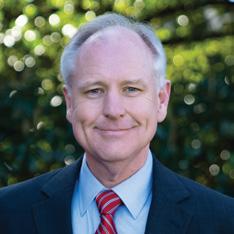
Among all that is true about God, it is undeniably the case that God is ambitious. How else would you describe God’s determination to make Abraham the father of a great nation and a blessing to all the nations of the earth? What else could explain God’s decision to draw the fugitive Moses, or the boy Samuel, into the center of a divine determination to rescue and renew Israel at different seasons of their life?
There is unmistakable ambition in God’s decision to send the church into the world to continue the very mission of Jesus Christ. Jesus’ words to his disciples at the end of John’s Gospel are breathtaking in the scope of the ambition they reveal: “As the Father has sent me, so I send you!” Paul captures the same sentiment in his reflections to the broken and struggling Corinthians: “God was in Christ reconciling the world…but now God is making his appeal through us!” There is compelling ambition in God’s determination to turn grieving women into the first preachers of the resurrection. God’s relentless determination to use people during a mission reveals remarkable ambition.
God is about healing the brokenness of the world, the transformation of systems and structures that hold people in bondage, the healing of human lives, the forgiveness of sin. Ambition rises from the midst of Jesus’ first mission sermon: “The Spirit of the Lord is upon me because the Lord has anointed me to bring good news to the poor, release to the captives, recovery of sight to the blind and to let the oppressed go free.” We hear the same holy ambition in some of the final words uttered in Revelation: “See, I am making everything new!”
God is absolutely, remarkably, steadfastly ambitious. God has ambition for the world and for the church. God has an ambition for your congregation and for our Fellowship. The question is not whether God is still ambitious, but whether we allow ourselves to be overtaken by his ambition so that we are remade.
I believe the Cooperative Baptist Fellowship was founded 35 years ago as a faithful response to God’s holy ambition. I believe God’s ambition was far more than any could have imagined. In this time of challenge and opportunity for congregations, in the midst of deep brokenness in the world, I believe God’s ambition for us is growing. I believe as you read the pages of this edition of fellowship! Magazine, you will see ways we are already living into God’s ambition in ministries in congregations across our Fellowship and communities all over the world.
A Publication of Cooperative Baptist Fellowship Volume 36, Number 1-2 Winter/Spring 2026
Fellowship! (USPS #015-625) is published 4 times a year in September (Fall), December (Winter), March (Spring), June (Summer) by the Cooperative Baptist Fellowship Inc., 160 Clairemont Avenue, Suite 300, Decatur, GA 30030. Periodicals postage paid at Decatur, GA, and additional offices.
In this moment of great opportunity and tremendous urgency, it is essential that we respond in new, powerful and generous ways so that we can join God’s ambition for our Fellowship and participate in the fulfillment of God’s ambitions for the world. CBF is actively discerning new ways to help congregations thrive in this moment. Congregations are making a transformative difference in communities across this nation.
We are finding new and faithful ways to offer transformative public witness. Our field personnel are leading remarkable ministries all around the world in response to the invitation of believers around the world and in partnership with CBF congregations. More than 950 endorsed chaplains and pastoral counselors are embodying God’s ambitious love in specialized settings around the world. In all these ways, we are responding to God’s holy ambition.
In this critical moment, our Fellowship has also launched a fundraising campaign “Compelled by a Holy Ambition.” We seek to raise at least $3.5 million in new contributions to build our capacity to minister in this moment while also catalyzing new ways of preparing congregational leaders, supporting congregational leadership teams and calling new generations of pastors, lay leaders, field personnel and chaplains.
I hope you will make a one-time gift to this campaign or a commitment spread over the next three years. If you are attending General Assembly, you’ll have an opportunity to bring a commitment or a gift in our worship service on Thursday afternoon. If you are not coming, you can make a gift or pledge at any time. Generous gifts now position us to respond even more faithfully to God’s holy ambition for our Fellowship, our congregations, our communities and the world.
God is relentlessly ambitious. Will we be overtaken and remade by that kind of ambition?
To give by credit card, PayPal, Venmo, or ACH, scan the QR code or visit https://cbf.net/holyambition
POSTMASTER: Send address changes to: Fellowship! Cooperative Baptist Fellowship 160 Clairemont Avenue, Suite 300
Decatur, GA 30030
Associate Editor
Graphic Designer
Jeff Langford
8
By Marv Knox
FaithWorks recognized as racial justice trailblazer
By Chris Hughes
16
FaithWorks, reconocida como pionera en la lucha por la justicia racial
Por Chris Hughes
20
By Grayson Hester
22
FBC Asheville embodies Mission Excellence
By Jennifer Colosimo
Melissa Roysdon’s clarity at Providence Baptist Church
By Grayson Hester
28
After being ‘Called in Context,’ Pickett’s ministry blesses two churches
By Marv Knox
Welcome to the Spring 2026 issue of fellowship! magazine. In these pages, you’ll encounter stories of clarity, courage and faithful presence—stories that remind us God is at work in churches, communities and partnerships across the Cooperative Baptist Fellowship.
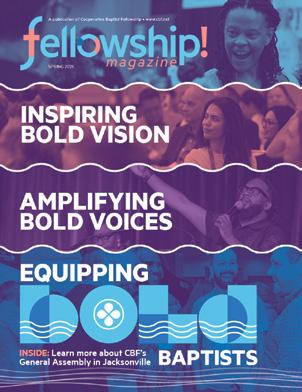
You’ll read updates from CBF field personnel serving in places such as Togo, North Macedonia, Spain and Virginia, where ministry takes shape through healing, food access, discipleship and care for neighbors. You’ll also meet young adults whose experiences through CBF ministries are helping shape not only their own sense of calling, but also the present and future of the church.
This issue also highlights ministries and leaders whose witness is marked by compassion, justice and perseverance—from FaithWorks’ commitment to immigrant justice and racial justice, to the steady partnership of Akinori Taguchi in Japan, to First Baptist Church of Asheville’s faithful response in the wake of Hurricane Helene. You’ll also read how Melissa Roysdon and Kathy Pickett reflect two different but deeply faithful paths of ministry, each offering a compelling vision for how churches can thrive through clarity, adaptability and calling.
May these stories inspire you to see where God is moving—and how you’re invited to be part of it. We hope you’ll join us in June for General Assembly in Jacksonville as we gather to continue this shared work.
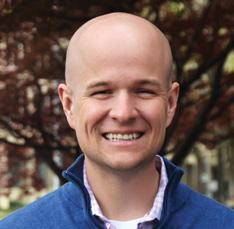
AARON WEAVER is the Editor of fellowship! Connect with him at aweaver@cbf.net
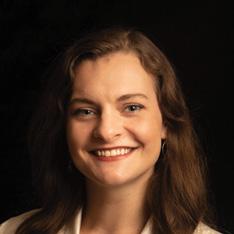
LAUREN LAMB is the Associate Editor of fellowship! Connect with her at llamb@cbf.net
Together as a Fellowship, we boldly listen to and learn from one another, we boldly send field personnel to serve, we boldly embrace innovative ministries, we boldly explore new ways of being and doing church. We celebrate the boldness of the first Christ-followers, the bravery of calling and the hope that is found in being equipped with boldness in the Holy Spirit.
Join us at the 2026 General Assembly to explore a boldly faithful way of being Baptist—using our voices for prophetic witness, telling stories of mission and ministry impact and moving toward innovative ways of thriving.
Three dozen engaging Learning Labs to strengthen your ministries. Full day of innovative training for chaplains and pastoral counselors. Events featuring insightful speakers and prophetic voices.

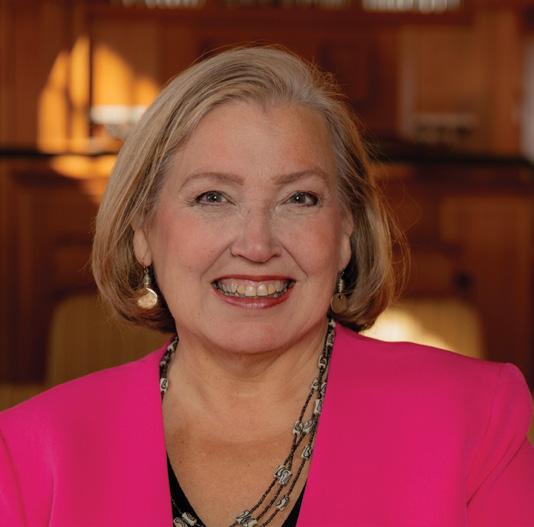
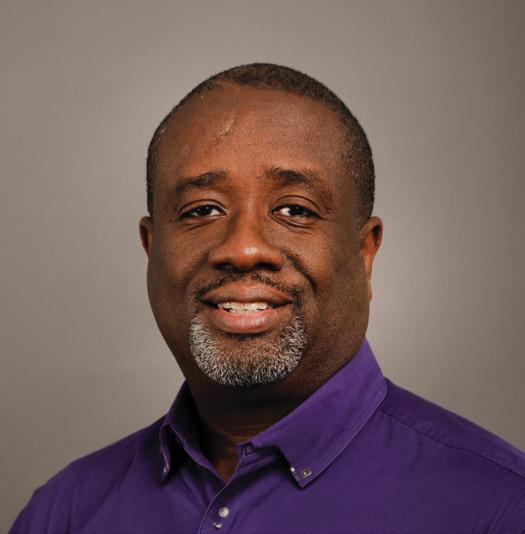


JUNE 17-19, 2026 |
Mary D. Synnott Professor of Youth, Church and Culture & Author
Princeton Theological Seminary | Princeton, N.J.
Keynote Speaker – Plenary Session
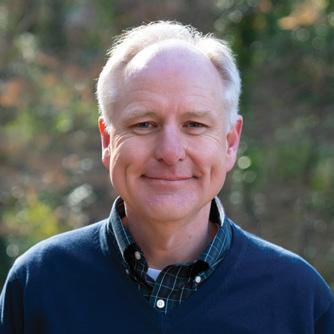
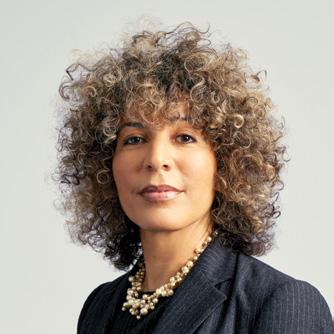
KARL B. JOHNSON
Baptist World Alliance Chair & Pastor
Phillippo Baptist Church | Spanish Town, St. Catherine, Jamaica
Preacher – Friday Worship
PAUL BAXLEY
Executive Coordinator
Cooperative Baptist Fellowship | Atlanta, Ga.
Preacher – Thursday Afternoon Worship
BACARDI JACKSON
Executive Director ACLU of Florida | Miami, Fla.
Keynote Speaker – CBF Advocacy Breakfast
TANYA PARKS CBF Moderator & Pastor University Baptist Church | Baton Rouge, La.
Keynote Speaker –Worshipful Work Session
YOLANDA PIERCE Dean of the Divinity School Vanderbilt University | Nashville, Tenn.
Keynote Speaker - Baptist Women in Ministry Dinner
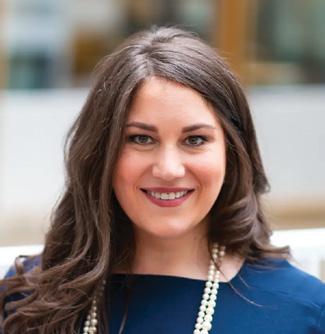
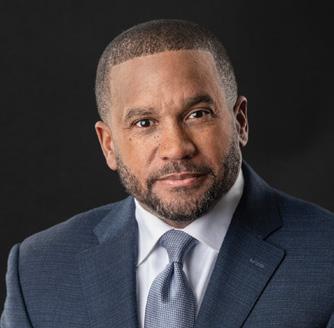
ALLISON GILMORE
Chief Improv Officer
DuMore Improv | Atlanta, Ga.
Facilitator – Pre-Assembly Chaplaincy Training
RUDOLPH W. MCKISSICK JR.
Senior Pastor
The Bethel Church | Jacksonville, Fla.
Preacher – Late Night Worship
SKYE PERRYMAN
President & CEO
Democracy Forward | Washington, D.C.
Keynote Speaker - AWAB, BNG, and GFM Breakfast
HOWARD-JOHN WESLEY
Senior Pastor
Alfred Street Baptist Church | Alexandria, Va.
Keynote Speaker –Dr. Emmanuel McCall Racial Justice Trailblazer Luncheon
MICHELLE ICARD
New York Times Bestselling
Author & Speaker
Charlotte, N.C.
Facilitator – Leadership Institute
Join renowned “parent whisperer” Michelle Icard for our pre-Assembly conversation exploring how leaders can apply parenting insights about feeling discomfort, divisions of labor and the value of taking more risks. Attendees will receive Icard’s book Fourteen Talks by Age Fourteen.

By Karen Alford
Last year, a 15-year-old boy came to us with a swelling on his right hand that had grown far beyond what infection could explain away. Tests confirmed what no family ever wants to hear: cancer. After prayer, consultation and tears, the doctors agreed there was only one way to save his life—his hand would need to be amputated to stop the disease from spreading. For a teenage boy in a farming village, losing his right hand felt like losing his future. He had learned to work the land the same way he had learned to hope—with his hands. And now one of them was gone.
But the story did not end there. A few weeks ago, we were able to take him to a clinic in Lomé where he was fitted with a prosthetic hand. When he saw it—how natural it looked, how it restored something he thought was lost forever—he began to cry. He couldn’t stop. Neither could we. This moment was resurrection in miniature. A reminder that God still brings beauty from ashes, and that through the generosity of faithful donors, healing can take many forms. What you give does more than save lives—it restores dignity, hope and the courage to keep going.
Karen Alford serves as Cooperative Baptist Fellowship field personnel in Vogan, Togo.
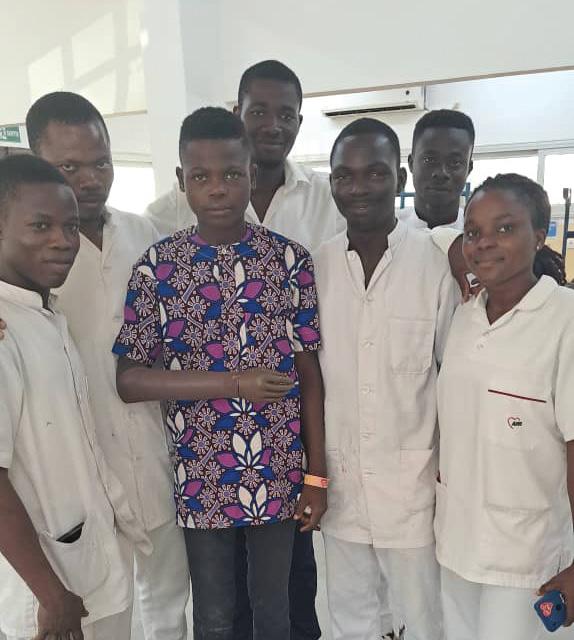
Karen provides health care consultancy to the Christian Mission for the Community of Development of Togo and leads medical training and seminars with the church and community of Vogan.
By Jeff Lee
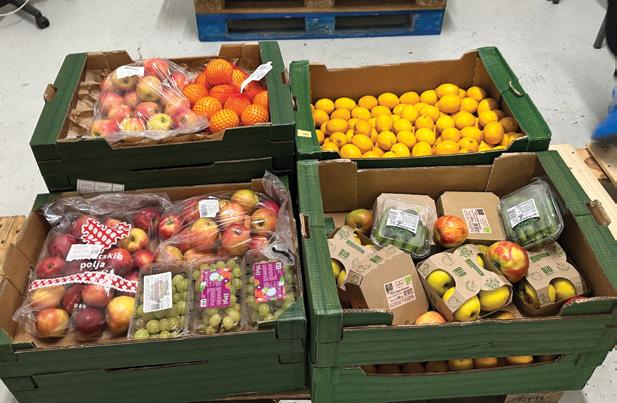
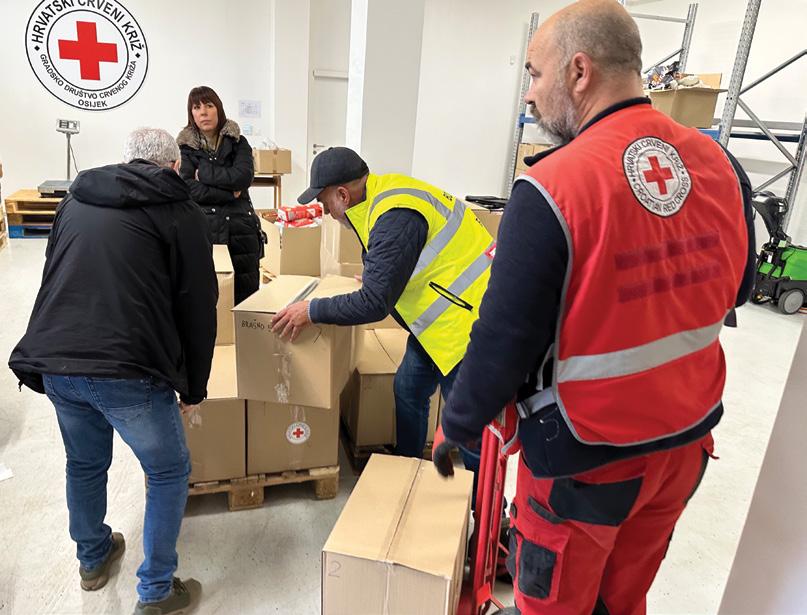
The second week of December found me traveling with Dusko Hristov, the director of the Food Bank of Macedonia, to Osijek, Croatia. There we participated with three others from Macedonia, two from Serbia and the team from the Red Cross of Osijek. Together, we worked alongside the team from Osijek to learn about how they engage with community members. The Red Cross operates the food bank. Their work focuses on working with companies to collect food and distribute it to those in need around the area.
One day brought us out on the road with the workers of the Red Cross to help deliver the food. I rode in the main van with a man named Jorosh. He worked as a volunteer for several years, until they offered him a small salary. Over the hours of delivering, he told me of his work before and his family. Jorosh spoke of the war and how this area was hit very hard during the breakup of Yugoslavia. It was powerful to hear from him and his passion to help those in need because he has lived through very hard times in his youth. He wants to pass it on to others. It was a great experience for us and Dusko came back to Skopje with passion to grow the Food Bank and have more impact on people in need in communities across Macedonia.
Jeff Lee and his wife, Alicia, serve as Cooperative Baptist Fellowship field personnel in Skopje, North Macedonia.
By Eddie Aldape
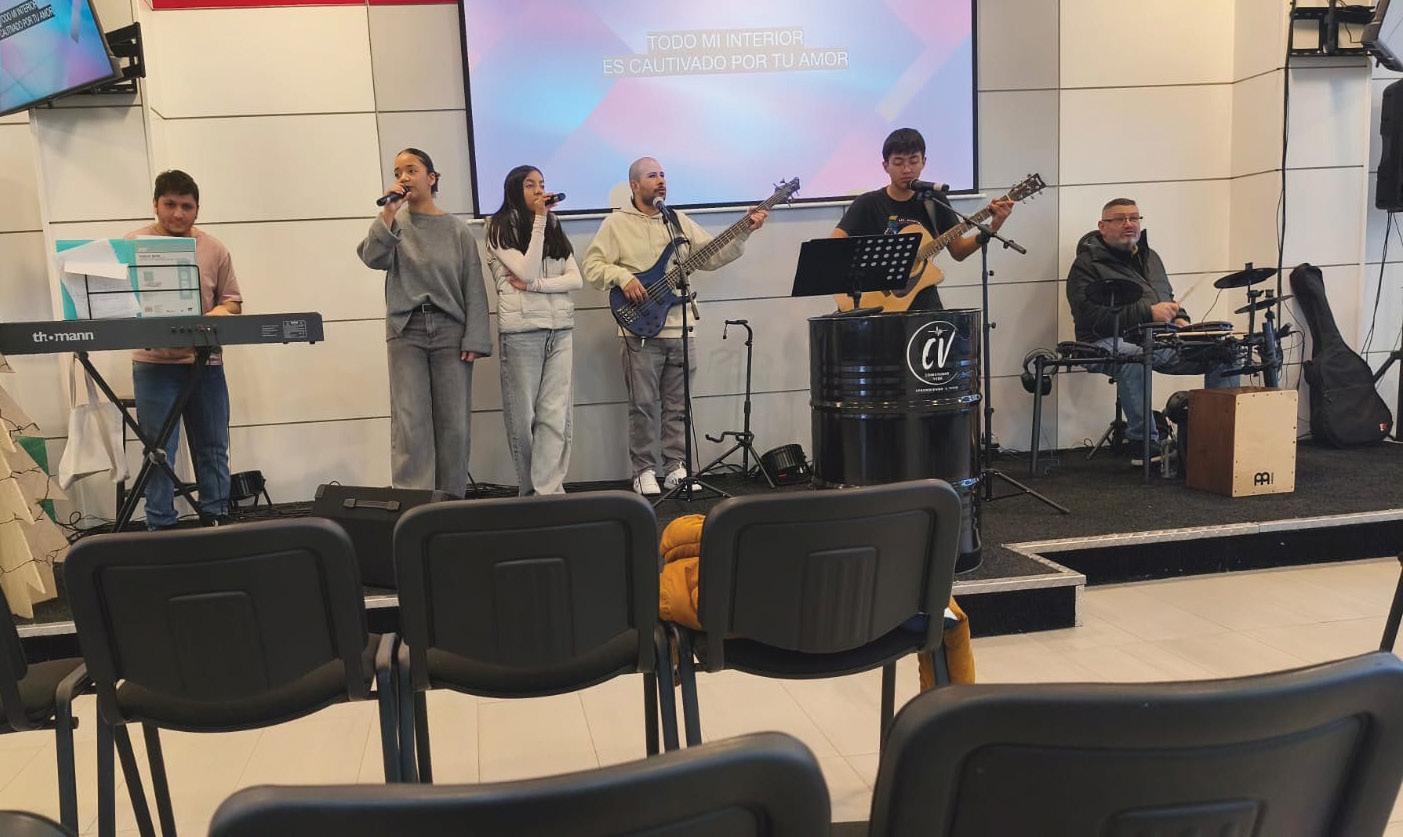
Part of our ministry has been working with students. In Spain the youth groups include students from 13 to 30-plus years as long as they are single. We attend two churches and I am the drummer at both churches. We have a youth praise band but since no one else plays drums I became the drummer for both. I feel young playing with them, but they often remind me of my age; so I remind them of their young talent.
It is such a wonderful blessing watching the young people dedicate their talents to serving God. We play at every youth event, some church events and have gone to the nursing home twice now. Everyone had a great time although some of the elderly people thought the kids were their grandkids. One sweet lady was shocked to see how big I had grown. She kept telling everyone how she babysat me as a child.
We will soon be offering percussion lessons. I’m starting to feel like King Herod when the wise men were asking about the newborn King. Several young people want to play the drums and kick me out of the band. I just remind myself that it will take them some time before they get good enough to play.
Classes will be starting soon and will be made available for anyone willing to learn a percussion instrument. Parents are thanking me for having their children banging on things all over the house. To have everyone play, we will have ensembles and I will probably post some videos once classes start. Pray for our growing student ministry. We started out with five young people and our attendance has since not dropped below 25. We have several nonbelievers in the group, and several have come to Christ.
Eddie Aldape serves as Cooperative Baptist Fellowship field personnel in Almería, Spain, among immigrant, refugee and student populations through Centro de Esperanza (The Hope Center).
By Jessica Hearne
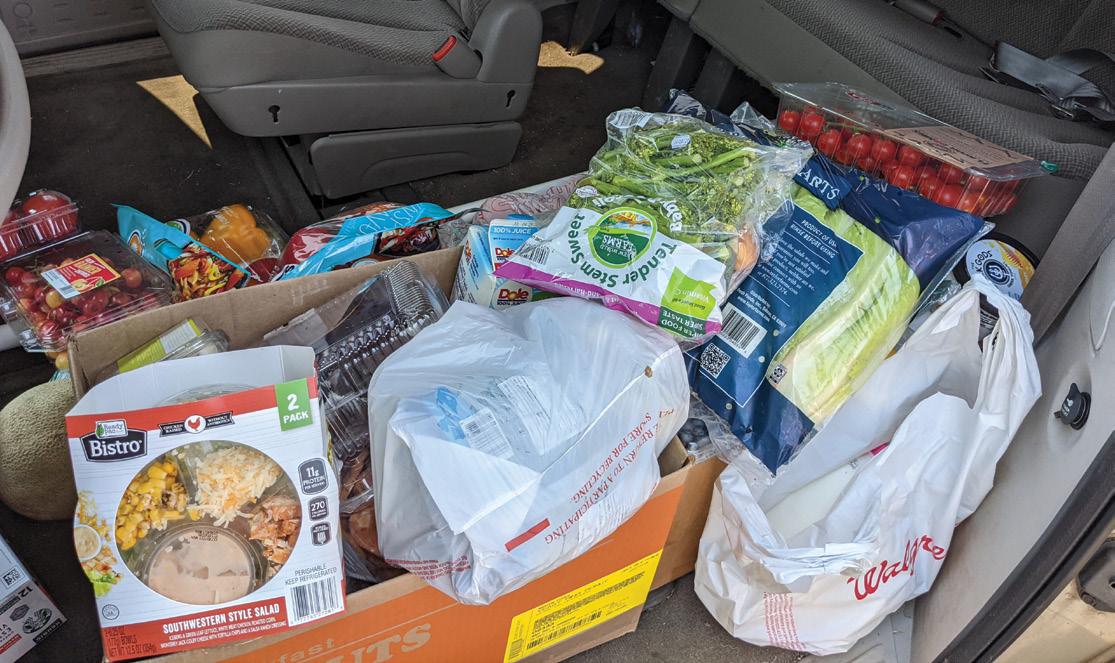
Every year on October 31, the Grace and Main Urban Farm closes for the winter. But there hasn’t been much time to relax. Rising grocery prices, coupled with changes to the Supplemental Nutrition Assistance Program (SNAP), have left many of my friends and neighbors scrambling. Some folks have seen their assistance reduced, while others have lost it altogether. One family, a working mother with three young children, had to wait for months for her annual renewal paperwork to be processed, receiving nothing at all during the wait.
While I did not have any fresh produce to offer these folks, because of the support of my many partners there were still ways to help. This fall, I was able to distribute hundreds of dollars in grocery store gift cards, make multiple weekly trips to the food pantry and share information through our network of leaders about churches and organizations offering holiday food boxes. As we continue to find ways to advocate for better policies and a stronger food system, these short-term solutions are a vital part of keeping our community fed.
Jessica Hearne is a CBF field personnel in Danville, Va.
By Marv Knox
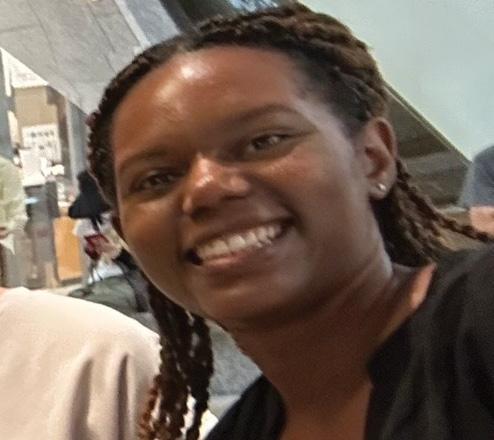
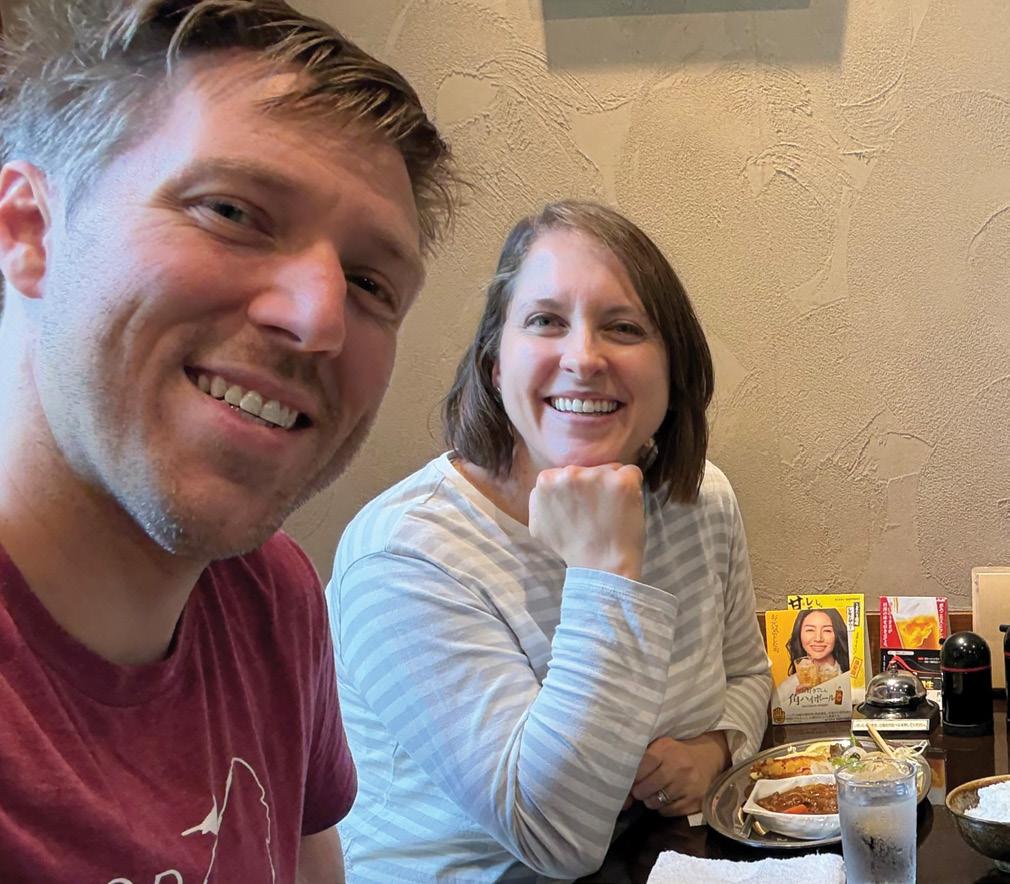
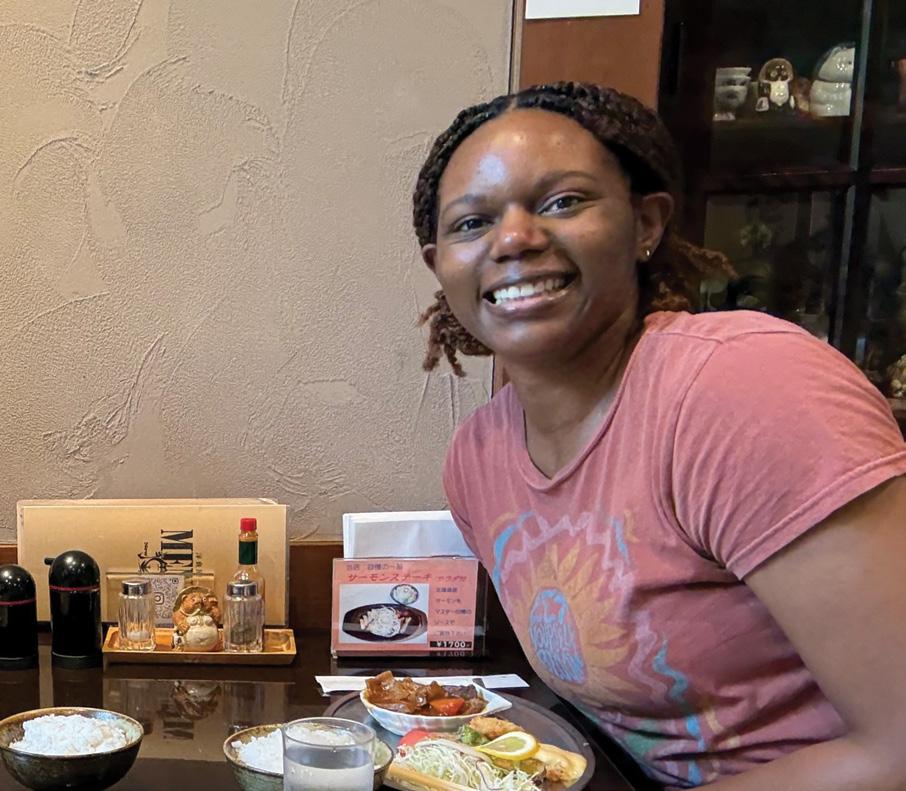
Brianna Rice’s experience in Japan last summer reflects how the Cooperative Baptist Fellowship serves a rising generation of church leaders.
“It was life-changing,” recalled Rice, 29, who is graduating from Mercer University’s McAfee School of Theology this spring.
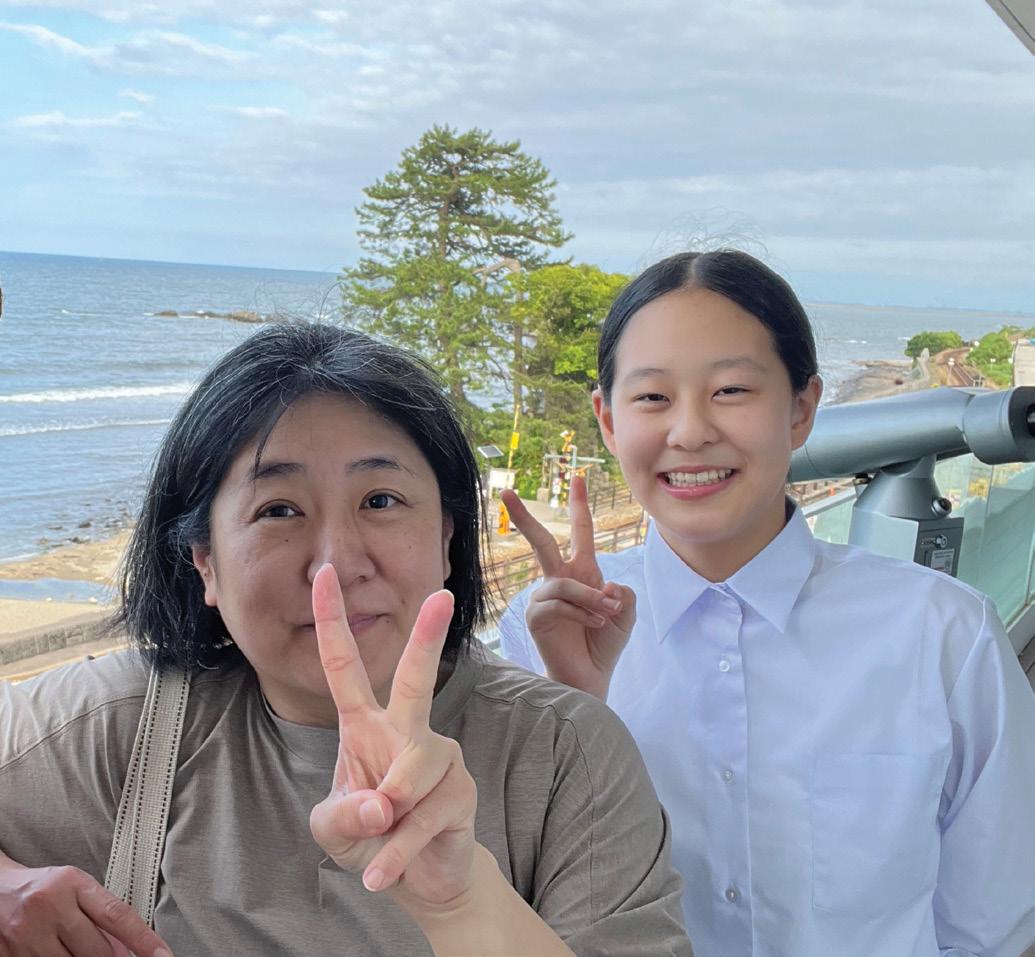
She spent two months in Kanazawa, Japan, as part of CBF’s StudentServe missions intern program. She worked alongside CBF field personnel Carson and Laura Foushee at Kanazawa International Baptist Church as a community engagement intern.
She initially focused on building relationships with participants in the church’s Japanese and international worship services. But she also drew on her educational background, which helped her connect the dots between her gifts, calling and eventual ministry.
CBF’s StudentServe program offers internships for college and graduate students, giving them the chance to serve in domestic and international mission and ministry settings— experiences that can inspire a future calling in church or field ministry.

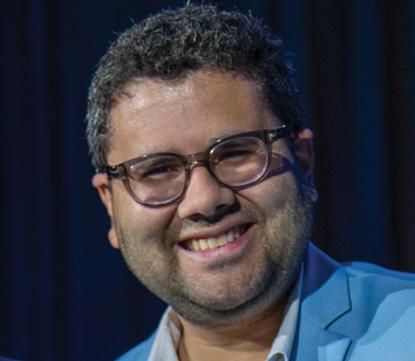
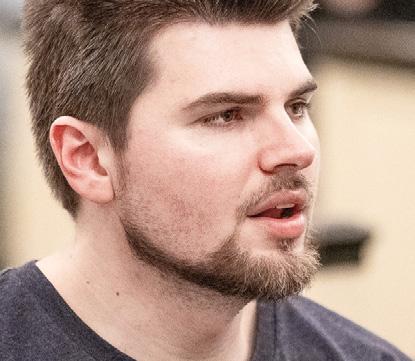
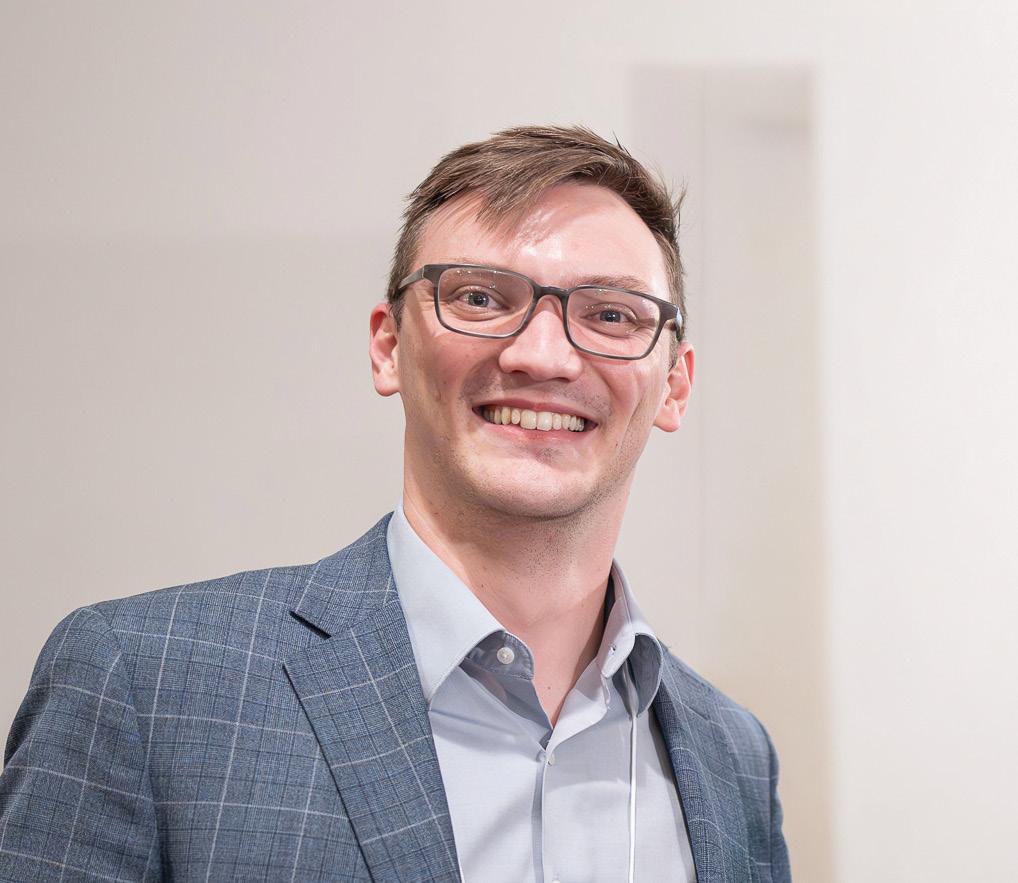
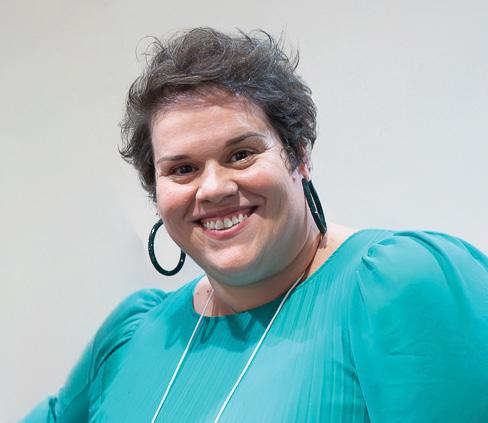
“You don’t have to be in seminary or studying theology to participate,” Colin Kroll (below) said. “We’ve worked with folks pursuing business, communications and English degrees, all who may be experiencing a call to ministry.”
“I taught Sunday school and did training for anyone in the congregation wanting to lead children’s church on how to facilitate and build up their children’s ministry,” she said. “I became more confident in my skills. I didn’t realize things I’m good at were skills until I got there. But then I saw I could do them vocationally. It definitely will impact my future in ministry.”
CBF hopes to replicate Rice’s experience—helping young adults understand and lean into their places of service and leadership in their congregations, communities and beyond, said Colin Kroll, CBF’s young adult ministry manager.
“Young adult ministry focuses on emerging adults and young professionals, mainly ages 22 to 35,” he said. “They are progressing through a series of transitions, from starting a family to beginning a career, and adapting to the changes each transition brings.”
CBF young adult ministry not only seeks to serve individuals, but also comes alongside their churches, Kroll noted, adding CBF sees young adults as more than “the future of the church.”
“We’re not just looking at the future but at the present of the church,” he explained. “We’re not seeing young adults as a mission, but we’re learning what the church is as emerging young adults and young professionals engage the church. We’re
learning from them what church means and looks like for those coming behind them.”
For example, CBF has gained insight by participating in a national survey with the More in Common research organization.
“We’re learning why people leave the church as young adults and why they come back, or if they don’t come back, what they are looking for that will draw them back,” he said.
The survey is poking holes in the stereotype of young adults as disinterested in faith.
“Our young adults are looking for opportunities to participate in community and create change,” he reported. “They’re less interested in membership in organizations and more interested in looking at ways to be involved, to practice agency and to participate in real-world impact. They’re interested in opportunities to lead and to serve without waiting a decade to earn trust.”
Similarly, the research has provided insight into young adults’ views on financial stewardship. “Young adults are not holding onto their wealth, but they’re giving differently than their elders,” he said. “They give to causes more than to organizations. They want to make sure their money and time are making real-world impact. And that shapes how they connect with congregations.”
Contrary to popular assumptions, “a significant percentage of young adults who
have left congregational life are not closed off to engaging congregational life,” Kroll said. “There is interest in being part of real community. Their preferred church size is between 50 and 300 people. They are craving authentic community where they can be known, participate and have an impact.”
Young adults also crave practical application of the gospel, he said, noting that it manifests itself in at least two aspects.
“In terms of spiritual formation, they want to practice their faith in a way that actually shapes their daily lives,” he explained. “They’re choosing each day to engage life in a way they feel Christ is calling them to.
“And they’re willing to be connected (to ministries and congregations) locally, where they can create change that matters.”
The practicality young adults seek resonates with ministries led by two of Kroll’s CBF colleagues, Dane Jackson and Alisha Damron Seruyange.
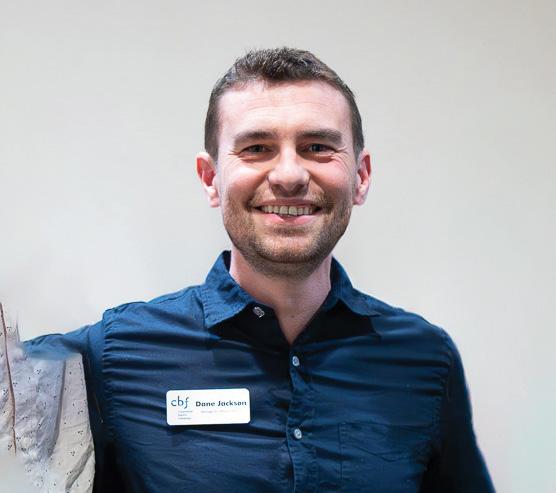
Jackson is the Fellowship’s manager for mission service and leads StudentServe, which, for example, enabled Rice to work in Japan alongside the Foushees. He works with Global Missions but collaborates with Congregational Ministries because of their shared focus on young adults.
For 23 years, CBF has offered student internships to provide ministry experience in local congregations as well as on national and global mission fields. CBF launched
StudentServe two years ago from the merger of Student.Church, which offered congregational internships and Student.Go, which provided missions experiences. StudentServe is open to students age 18 and older, working either with CBF field personnel or in congregations.
“Our goal is to help students discover their place in God’s mission to change the world,” Jackson said. That means encouraging young adults “to thrive, to grow, to discover their calling, to give life to the world using their gifts.”
A significant facet of that process is introducing students to “the breadth of CBF ministry and missions,” he said. CBF’s ministry experiences and learning opportunities reflect a series of concentric rings—beginning with local churches and expanding to regional, national and global service.
StudentServe puts participants in positions to help CBF fulfill its Global Missions goals, he noted. Students have opportunities to cultivate beloved community, to bear witness to Jesus and to seek transformational development in the contexts of global poverty and global migration, all in partnership with the Global Church.
“Everything we do is through those lenses,” Jackson stressed.
Both student interns and ministry partners benefit from their StudentServe experiences, he said.
“Students get a full CBF orientation when they sign on,” he explained. “They get direction from me and from their supervisor. We pair every student with an encourager who speaks to them regularly, providing feedback, experience-processing and a third pastoral voice.
“The congregations and ministry partners benefit because they receive help; but they also get the opportunity to come alongside these students. They get to offer wisdom, encouragement, advice and direction to these students who are experiencing a call to ministry.”
Last year, StudentServe operated spring, summer and fall cohorts involving 21 students, who worked a combined 6,720 hours, Jackson said.
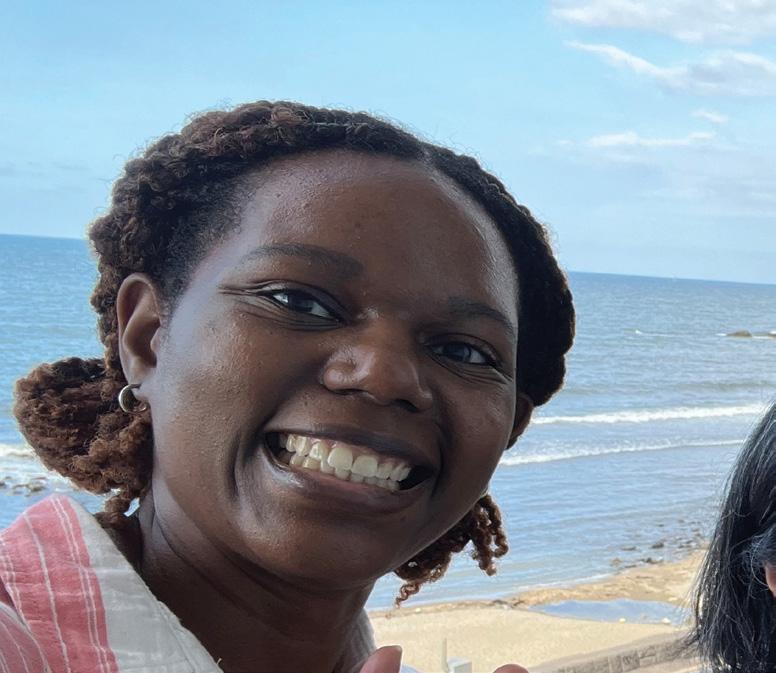
Brianna Rice’s experience spans teaching fourth grade and supporting students in graduate admissions as they pursue seminary studies. “I’m excited to keep growing in project management within Christian ministry. I want my work to help people feel equipped, supported and part of something meaningful.”
“We’re growing the program—exploring what ministry and calling looks like,” he added.
Options for ministry and calling are diverse, as evidenced by the variety of placements, he said. “We’re still sending folks to work with field personnel, as well as work with congregations across the United States. Some served as traditional pastoral, youth and children’s ministry interns. But we also supported a variety of other positions—Spanish-English translators, web-development and social media communications interns, community engagement and outreach interns, immigration advocacy interns and operations specialists.”
The door of opportunity also is wide, Jackson insisted.
“You don’t have to be in seminary or studying theology to participate,” he explained. “We’ve worked with folks pursuing business, communications and English degrees, all who may be experiencing a call to ministry.
“StudentServe is not just an internship and job, but it’s helping students discern God’s call. We also want to help our host supervisors create the best posting possible. We want to cultivate a win-win for everyone.”
Alisha Damron Seruyange is the CBF’s young Baptist events specialist, responsible for local, regional and national gatherings that help Cooperative Baptists connect with each other and with their own callings. She works alongside Kroll in the Congregational Ministries division. She also serves part-time as the associate coordinator of Alabama CBF.
CBF ramped up its interest in developing events specifically for young adults with the creation of Seruyange’s position—a first for the Fellowship—a couple of years ago.
Seruyange plans Selah Vie, an end-ofsummer retreat for college and graduate students, and the Christian Educators Conference, held every other year for ministers to children, youth and college students.
She also works with volunteer steering committees and planning teams from across the Fellowship to prepare for and host gatherings. These events enable churches and groups from different regions to connect, learn and lean into different topics of spiritual formation and discipleship.
Events matter because gathering is sacred, Seruyange said.
“No matter how advanced we become, there is no substitute for the holiness that happens when you’re in the same room with somebody,” she explained. “While the world
is changing rapidly, there is still so much goodness available when we get together.
“Gathering enables us to remember our Baptist identity and remember there is work to do. It enables us to show up and do God’s good work in the world. There is something important about getting together.”
Early this year, she was putting the final touches on plans for 400 youth from CBF congregations to get together for a winter weekend retreat at First Baptist Church in Huntsville, Ala.
“Being together is special,” she said. “And for students in a small youth group, it’s also a rare and beautiful event.”
Student and young adult events impact far more people than the participants who attend them, Seruyange observed. Their echoes reverberate through entire congregations.
“The word that is going around is ‘intergenerational.’ The truth is that anything that impacts part of our churches goes back to the whole,” she said. “And it’s in that group where they are every week—the church— where the real spiritual formation happens.
“So, CBF events are touchpoints in supporting and cheering on what happens in the local church. Events point young adults toward listening to their calling and figuring out what their next right thing is in
faithfulness. A product of youth and young adult gatherings, we hope, goes back to impact churches for good.”
Student and young adult events also contribute to congregations by providing safe spaces and open opportunities for young adults to be thoughtful and creative about church life and practice, she noted. Events give youth and young adults the chance to give voice to what might be possible “back home” in their churches.
“We’re still learning what that looks like— for the church to be brave enough to listen to their students and young adults and to find where God is at work, even if it’s not a Wednesday night program or a committee,” she said. “At that point, the church would then be invited to make space for the ways a new generation is experiencing and discerning God’s calling. That’s a wild good time, but it’s also scary.”
In that regard, CBF student and young adult events can serve as incubators for “transforming narratives”—new ways of thinking about how congregations can embrace and nurture their rising generations, she added.
“It could be something as simple as recognizing that young adults aren’t awake on Sunday morning at nine o’clock. So, what
does that mean? Maybe we could revamp the Sunday-morning script we’ve been following for a few decades. Maybe we could find God at the center of something ‘different’ where churches—including their young adults— could grow in discipleship and depth.”
It also might mean changing how congregations talk about and practice faith, she said.
“I do see young adults are drawn to authenticity, transparency and making real impact in the world,” she explained. “Institutionally, it’s a little unnerving. The unknown always is. But what is out there in that space of the unknown? What if there is this beautiful expression of beloved community?”
Young adults’ desire for authenticity and creativity in church life calls for “reevaluation and space for things to be different,” Seruyange insisted. “It’s the work of the churches to name and nurture young adults’ calling—and to interpret what that means in life.”
So, the decision of CBF and its churches to “show up” matters, she added. “It’s going to shape who we are and what we do next as God’s people in the world.”
By Chris Hughes
From its beginnings, the mission of FaithWorks has evolved through experimentation, through assessing the needs of the churches and through its partnerships with other justice-oriented organizations.
Formerly Fellowship Southwest, the organization—which serves churches in Oklahoma, Texas, New Mexico, Arizona and California— recently rebranded to reflect its broader mission of “putting faith to work outside the walls of the church through compassion and justice.” While some state and regional CBF-affiliated networks emphasize connecting and equipping the churches they serve and others focus on service to the community, FaithWorks found
success pursuing both, while embracing advocacy work and centering its mission on justice, compassion and equality.
Founded in 2017, FaithWorks’ mission was shaped not only by its early leadership, but also by the pressing needs confronting the organization and the churches it serves. “CBF leaders and Marv Knox, founder of what was then Fellowship Southwest, showed real wisdom by giving FaithWorks enough space in those early years to allow us to respond to needs that arose in our region,” said FaithWorks Executive Director Stephen Reeves.
Being primarily in the southwest United States presented its own unique context for ministry—including ministry with
immigrants, advocacy on the border, ministry with Native American communities and more. “Supporting these direct service ministries and engaging in advocacy helped clarify our work as ministry that often takes place beyond the walls of the church,” Reeves explained.
While FaithWorks’ earliest efforts included supporting communities impacted by Hurricane Harvey in Texas in 2017, that work became a catalyst for deeper engagement with historically marginalized groups, including Cambodian, Chinese and Spanishspeaking farm worker communities. Rather than approaching with a mindset of service, FaithWorks listened, learned and began building relationships that strengthened collaboration and shared advocacy with these communities.
By 2018, FaithWorks had fully stepped into its public witness for justice by protesting family separation at the border. It organized prayer vigils in Brownsville, Texas, and convened conversations with border pastors, centering the voices and experiences of immigrants and asylum-seeking families. Through this network of church leaders and advocates, FaithWorks partnered with community leaders to support coordinated access to food, shelter, legal aid and public advocacy already emerging along the border.
Reeves began as executive director in 2021 after Knox retired and brought with him a background well-suited for the mix of congregational support, missions and justice and direct advocacy that was brewing with FaithWorks. For over 12 years, Reeves spearheaded CBF’s advocacy efforts, coordinated efforts with local churches, state and regional fellowships and numerous ministry
partners. Prior to that, he worked for seven years at the Christian Life Commission in Austin, Texas, and was staff attorney for the Baptist Joint Committee for Religious Liberty in Washington, D.C., before that.
FaithWorks churches were eager for the experiment to continue under Reeves as they embraced a three-fold model of compassion, justice and connection, and prioritized work in four critical areas: immigration, hunger, native justice and racial justice. “In 2020, we conducted a survey of almost 90 congregations to see what they were already doing and what they wanted help doing more of and these four priorities arose from that,” Reeves said. “The churches that we partner with and that support us want to be engaged in their communities, and they see these issues as pressing needs affecting their neighbors.
“We also like working on these particular issues because scripture is clear in its instruction to pay attention to these matters—feeding the hungry, welcoming the stranger and loving all neighbors as we love ourselves,” he concluded.
The focus has led to ministries addressing both immediate needs and systemic realities shaping those needs. In partnership with Mariah Humphries, a citizen of the Mvskoke Nation, FaithWorks launched a native justice training program, centering indigenous perspectives and addressing the legacy of colonization within Christian spaces. The partnership with Let’s Talk Race Ministries on the “Let’s Talk Race” course is one example of how FaithWorks is working toward racial justice with the churches it serves.
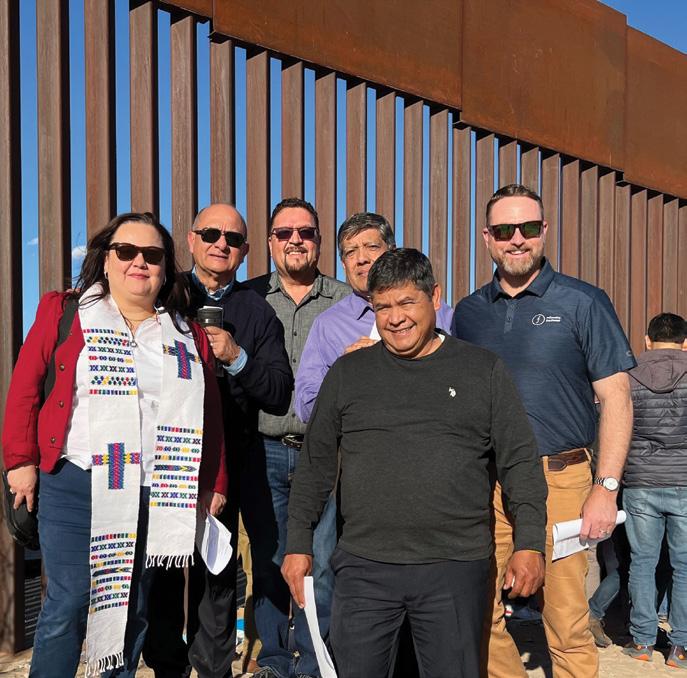
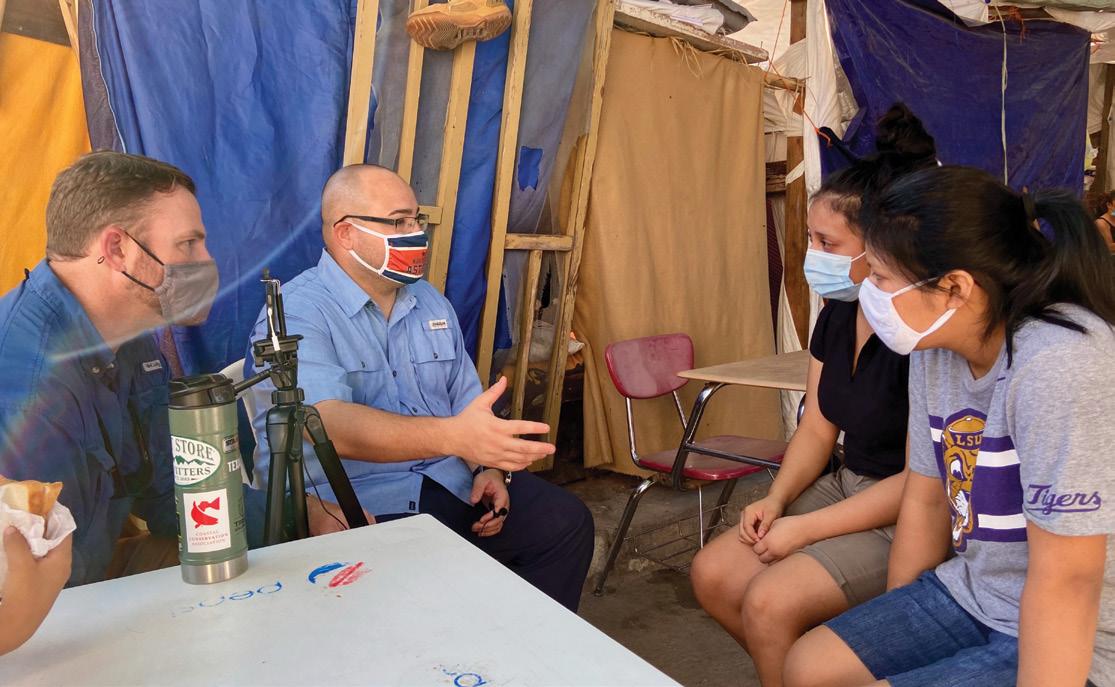
“The next generation will need to see churches working for justice in the world. Their challenge is to model a better way, one that is bold, has real impact in the world and does not give in to the despair and divisiveness we see all around us.”
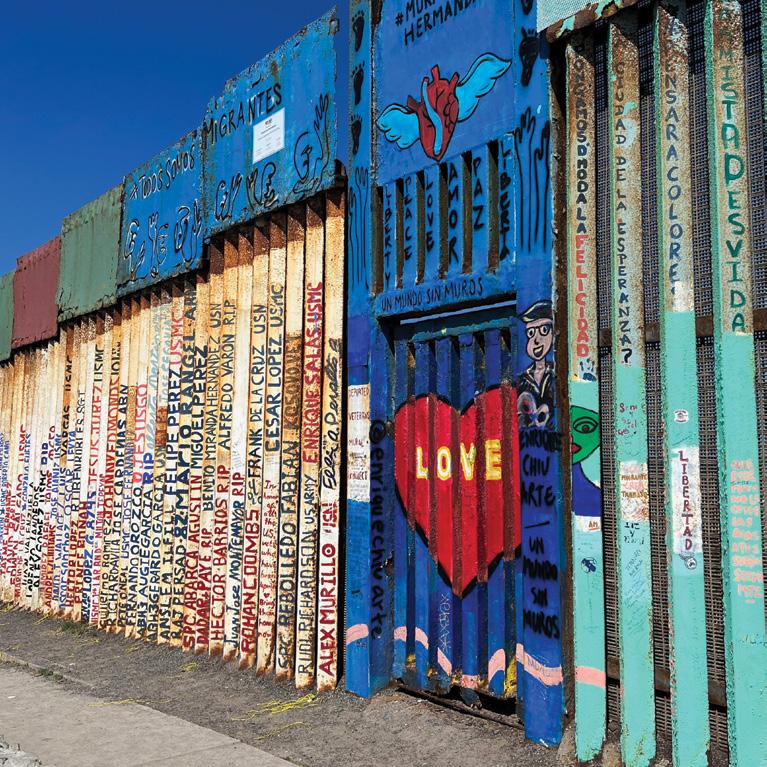
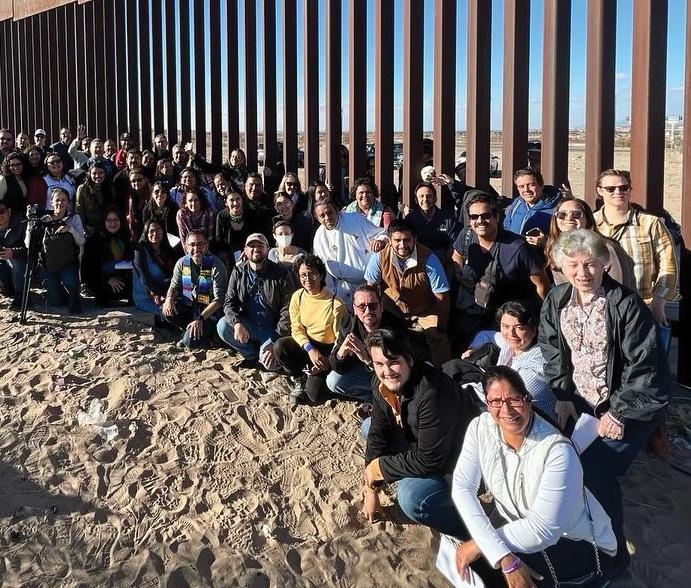
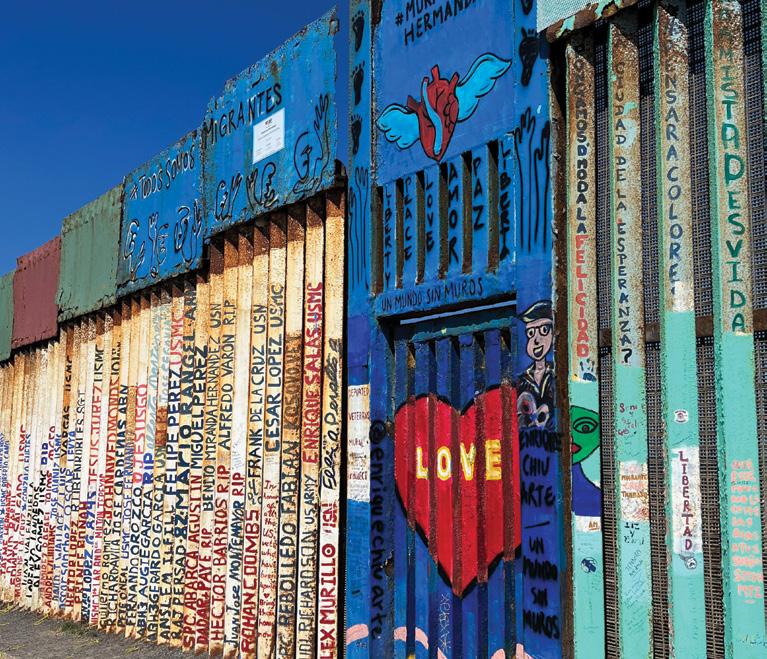
Left: The “Love Wall” is a section of the U.S.–Mexico border painted with murals and messages, working to turn a barrier into a canvas for love and community.
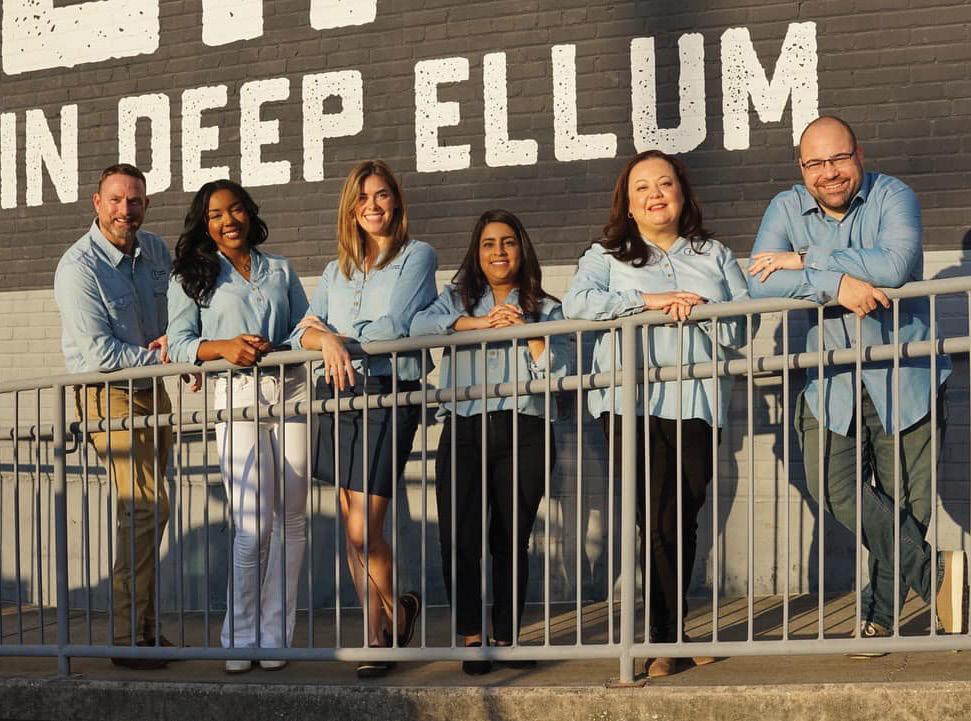
On any given day, people in the ministry walk alongside people from across the globe—Mexico, Central and South America, Cuba, Haiti, Eastern Europe and Africa—listening and learning from their stories, amplifying their voices and defending dignity and resisting the policies that dehumanize immigrants.
With support from the Lilly Endowment, FaithWorks is launching a five-year “Thriving Congregations Immigration Ministry” project to help equip churches to participate in immigrant justice efforts in their communities. That’s in addition to the Knox Fund for Immigration Relief, which has distributed more than $1 million since 2018 toward justice efforts shaped by impacted communities.
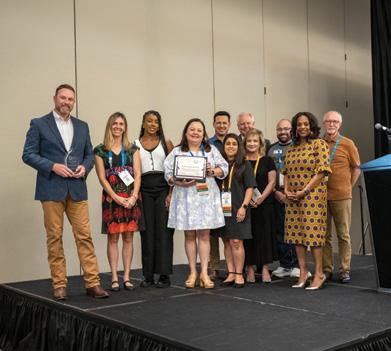
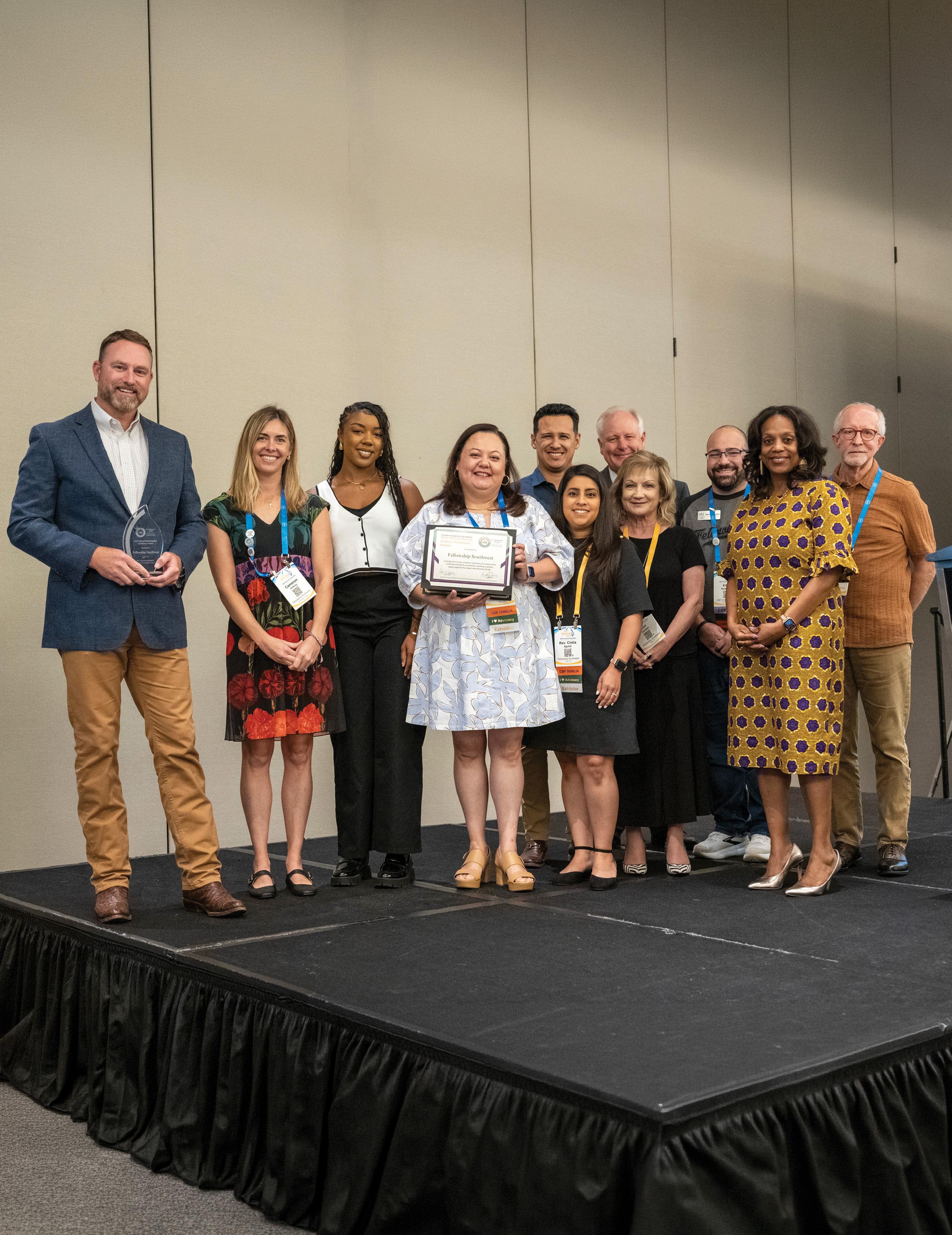
For its work engaging the deep and systemic roots of injustice, FaithWorks received the Emmanuel McCall Racial Justice Trailblazer award in 2025. The award is named in honor of Dr. Emmanuel McCall, a Baptist trailblazer who has spent much of his life working for racial justice—as a student, denominational leader, pastor, author and professor.
The award recognizes “individuals and ministries who charter through unequal and unjust areas of life and initiate proactive
resolutions for communities in the form of policies or practices resulting in greater equity, opportunity, impact and outcomes for all.” FaithWorks was honored alongside Broadway Baptist Church in Fort Worth, Texas, one of its partner churches, at the 2025 CBF General Assembly in St. Louis.
For Reeves, the award is an affirmation that the call to Jesus is for Christ followers to move beyond the walls of the church, and minister with justice and compassion in communities seeking dignity and equity. “People are hungry for Christian work in the world that brings people together and offers a different public witness than what’s so often seen, and they are willing to cross racial and denominational boundaries to do so.”
“For the good of the church, the next generation will need to see churches working for justice in the world,” he added. “The challenge is to model a better way, one that is bold, has real impact in the world and does not give in to the despair and divisiveness we see all around us.” It’s that kind of model FaithWorks hopes to continue living out for racial justice and for the Kingdom of God.



Pathlight is a weekly curriculum that helps children explore the good news of Jesus through stories, scripture and activities. Each download offers an easy-preparation teaching guide with a story, discussion questions, learning activities and a take-home sheet for students.
Por Chris Hughes
Desde sus inicios, la misión de FaithWorks ha evolucionado mediante la experimentación, la evaluación de las necesidades de las iglesias y sus alianzas con otras organizaciones orientadas a la justicia.
Anteriormente conocida como Fellowship Southwest, la organización cambió recientemente de nombre para reflejar su misión más amplia: «movilizar a los cristianos para que practiquen la compasión y busquen la justicia». Mientras que algunas redes estatales y regionales afiliadas a CBF hacen hincapié en conectar y equipar a las iglesias a las que sirven y otras se centran en el servicio a la comunidad, FaithWorks ha tenido éxito al perseguir
ambos objetivos, al tiempo que abraza el trabajo de incidencia pública y centra su misión en la compasión, la justicia y la conexión.
Fundada en 2017, FaithWorks se forjó una misión no solo gracias a sus primeros líderes, sino también a las necesidades apremiantes a las que se enfrentaban la organización y las iglesias a las que sirve. «Los líderes de CBF y Marv Knox, fundador de lo que entonces era Fellowship Southwest, demostraron verdadera sabiduría al darle a la organización el espacio suficiente en aquellos primeros años para que pudiéramos responder a las necesidades que surgían en nuestra región», afirma Stephen Reeves, director ejecutivo de FaithWorks.
El hecho de estar ubicados principalmente en el suroeste de Estados Unidos presentó un contexto único para el ministerio, incluyendo el ministerio con inmigrantes, la incidencia pública en la frontera, el ministerio con comunidades nativas americanas y más. «Apoyar estos ministerios de servicio directo y participar en la defensoría ayudó a aclarar nuestro trabajo como ministerio, que a menudo se lleva a cabo más allá de los muros de la iglesia», explicó Reeves.
Aunque los primeros esfuerzos de FaithWorks incluyeron el apoyo a las comunidades afectadas por el huracán Harvey en 2017, ese trabajo se convirtió en un catalizador de un compromiso más profundo con grupos históricamente marginados, como las comunidades de trabajadores agrícolas camboyanos, chinos y de habla hispana. En lugar de abordar la situación solo con una mentalidad de servicio, FaithWorks escuchó, aprendió y comenzó a construir relaciones que fortalecieron la colaboración y incidencia compartida con estas comunidades.
Ya para 2018, FaithWorks se había comprometido plenamente con su testimonio público a favor de la justicia al protestar contra la separación de familias en la frontera. Organizó vigilias de oración en Brownsville, Texas, y convocó conversaciones con pastores fronterizos, centrándose en las voces y experiencias de personas en movilidad humana, como inmigrantes y solicitantes de asilo. A través de esta red de líderes eclesiásticos y defensores, FaithWorks se asoció con líderes comunitarios para apoyar el acceso coordinado a alimentos, refugio, asistencia jurídica y defensa que ya se brindaba a lo largo de la frontera.
Reeves asumió el cargo de director ejecutivo en 2021 tras la jubilación de Knox y aportó una trayectoria muy adecuada para la
combinación de apoyo congregacional, misiones, justicia y defensa directa que se estaba gestando en FaithWorks. Durante más de 12 años, Reeves encabezó los esfuerzos de defensoría de CBF, coordinando iniciativas con iglesias locales, asociaciones estatales y regionales y numerosos socios ministeriales. Antes de eso, trabajó durante siete años en la Comisión de Vida Cristiana de Texas y, antes, fue abogado de plantilla del Comité Conjunto Bautista para la Libertad Religiosa en Washington.
Las iglesias de FaithWorks estaban ansiosas porque el experimento continuara bajo la dirección de Reeves, ya que habían adoptado un modelo triple de compasión, justicia y conexión y habían dado prioridad al trabajo en cuatro áreas críticas: inmigración, lucha contra el hambre, justicia para los indígenas y justicia racial. «En 2020, realizamos una encuesta a casi 90 congregaciones para ver qué estaban haciendo ya y en qué querían ayuda para hacer más, y de ahí surgieron estas cuatro prioridades», dijo Reeves. «Las iglesias con las que colaboramos y nos apoyan quieren comprometerse con sus comunidades y consideran que estas cuestiones son necesidades urgentes que afectan a sus vecinos».
«También nos gusta trabajar en estas cuestiones concretas porque las Escrituras son claras en instruirnos a prestar atención a estos asuntos: alimentar al hambriento, acoger al extranjero y amar a todos los vecinos como nos amamos nosotros mismos», concluyó.
Este enfoque ha dado lugar a ministerios que abordan tanto las necesidades inmediatas como las realidades sistémicas que las determinan. Por ejemplo, FaithWorks ayuda a satisfacer las necesidades inmediatas de los migrantes en la frontera y de los inmigrantes en nuestras comunidades, al tiempo que realiza la incidencia pública por una reforma migratoria. Invierten en
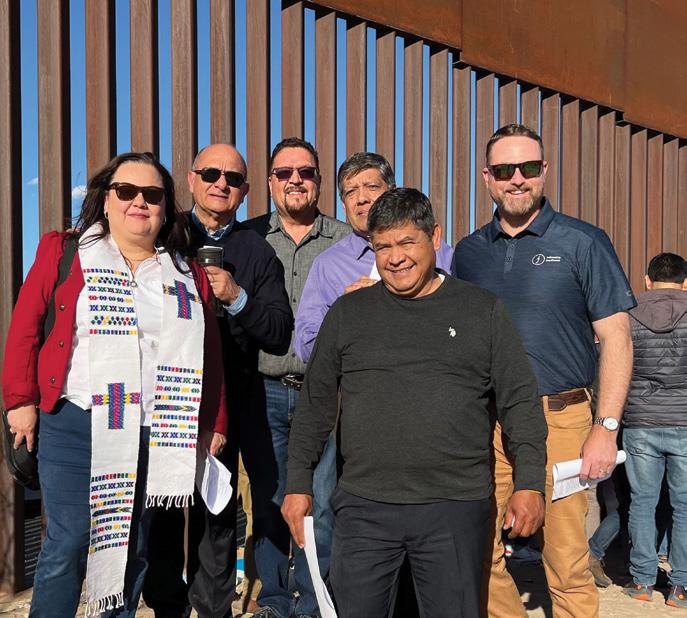
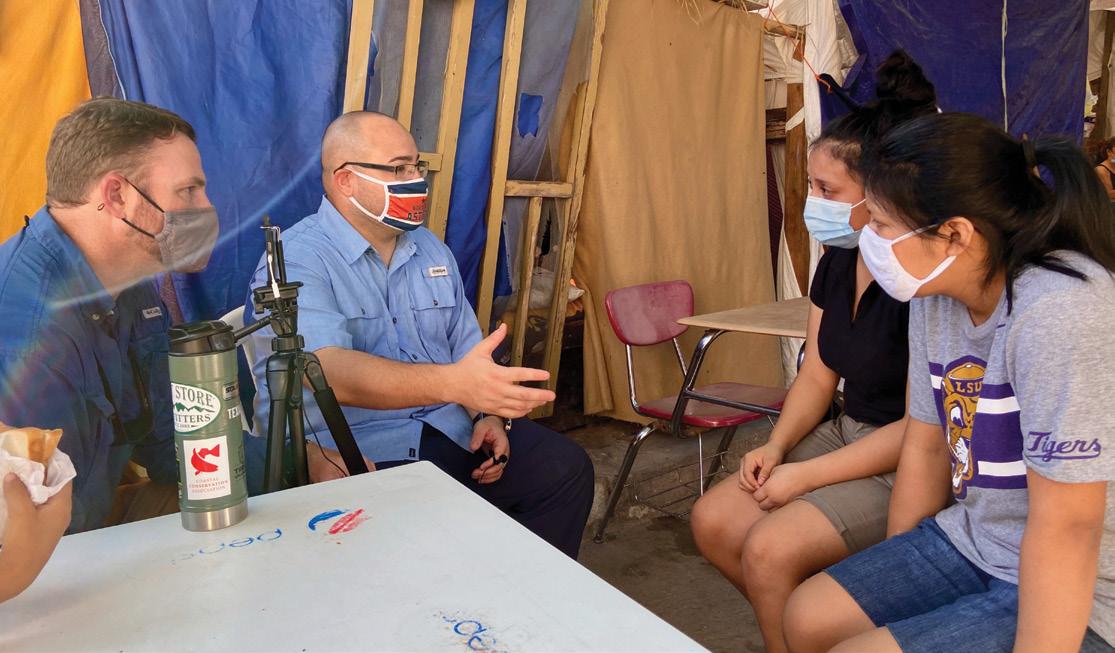
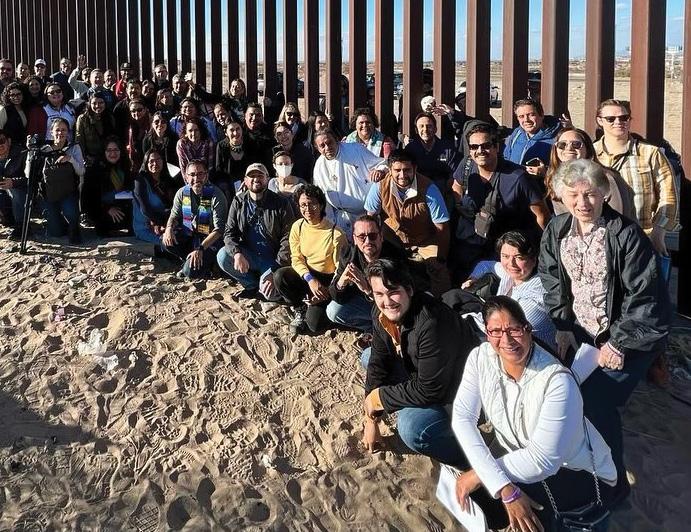
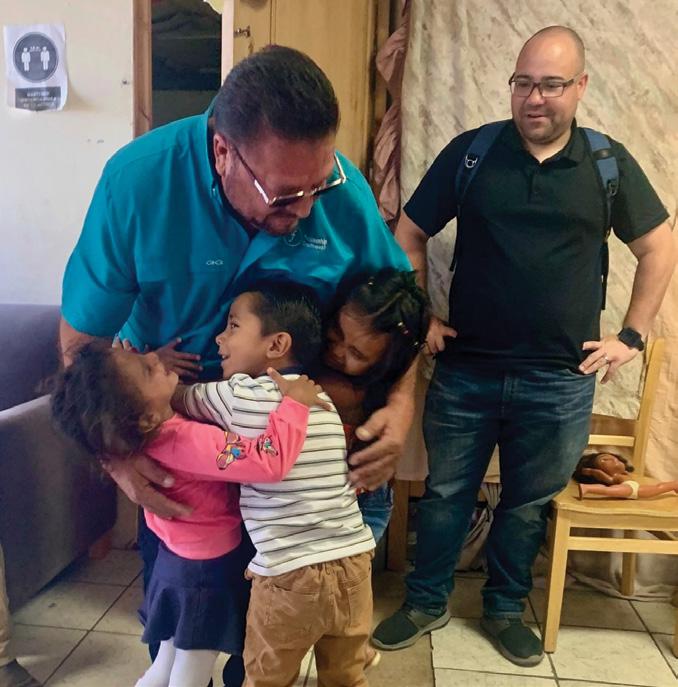
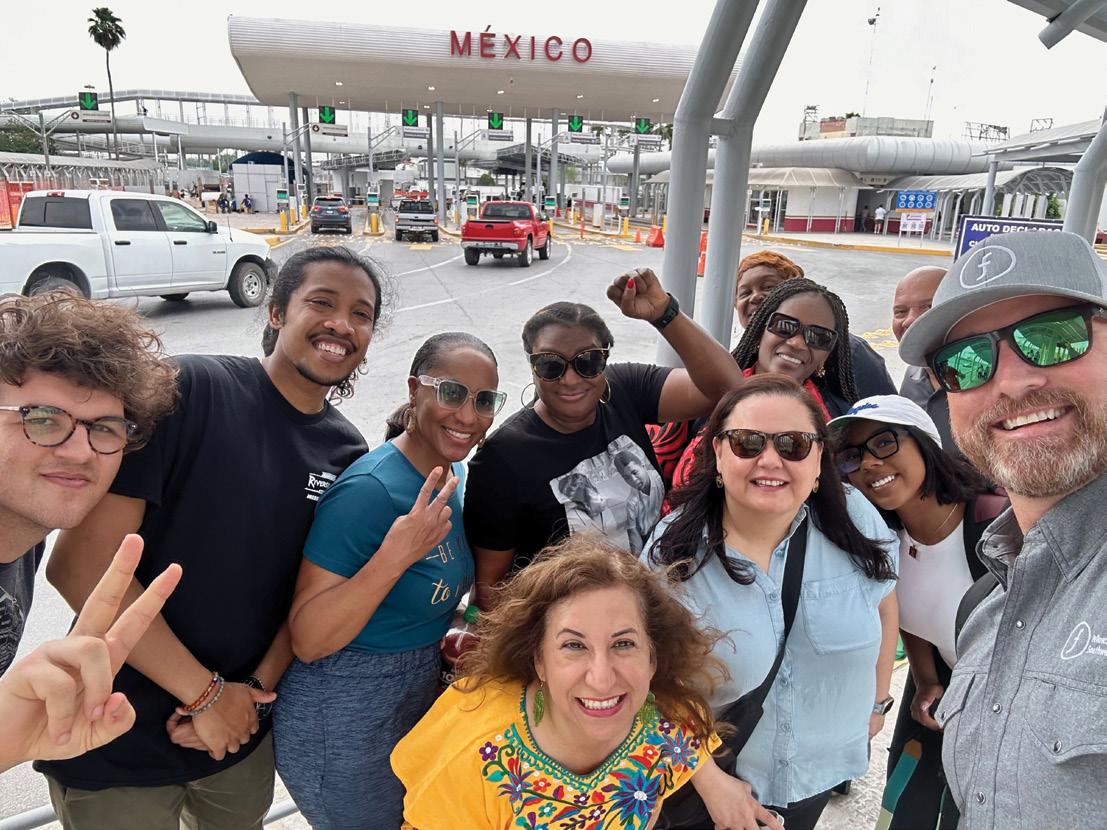
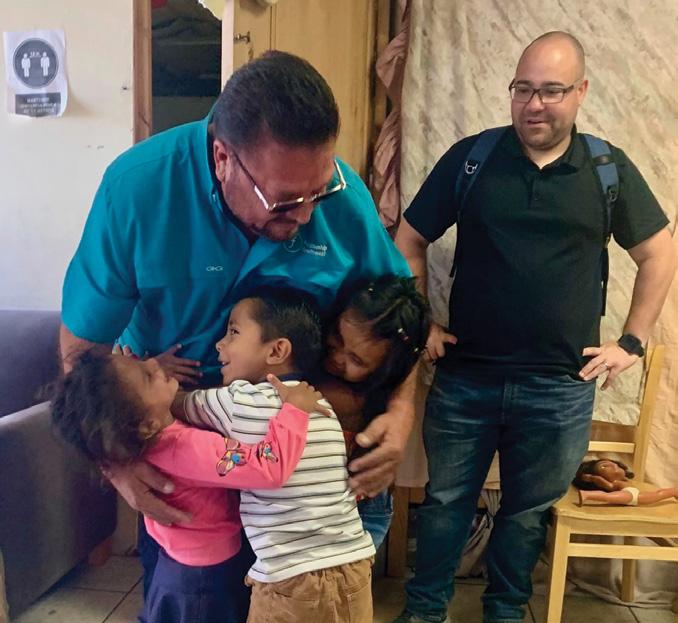
Elket Rodríguez, desde la defensoría en migración global de CBF, colabora con FaithWorks en su labor pastoral en Ciudad Juárez (arriba) y Nuevo Laredo (izquierda), México.
«La próxima generación necesitará ver a las iglesias trabajando por la justicia en el mundo. Su reto consiste en dar ejemplo de un camino mejor, uno que sea valiente, que tenga un impacto real en el mundo y que no ceda ante la desesperanza y la división que vemos a nuestro alrededor».
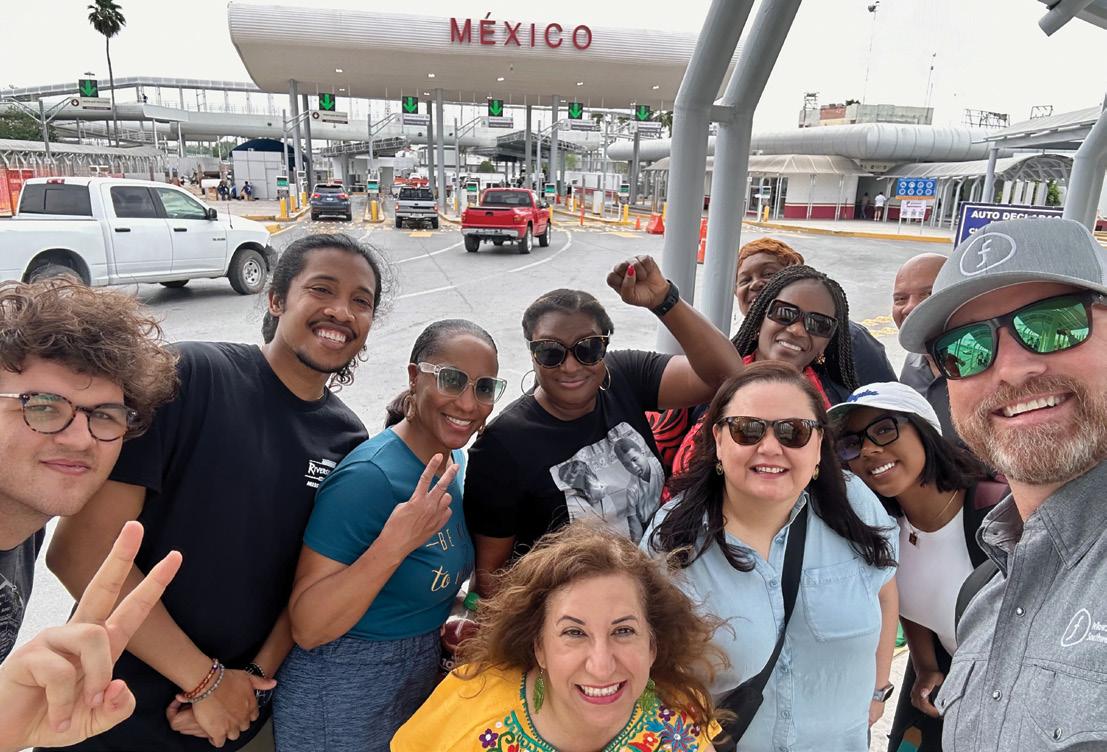
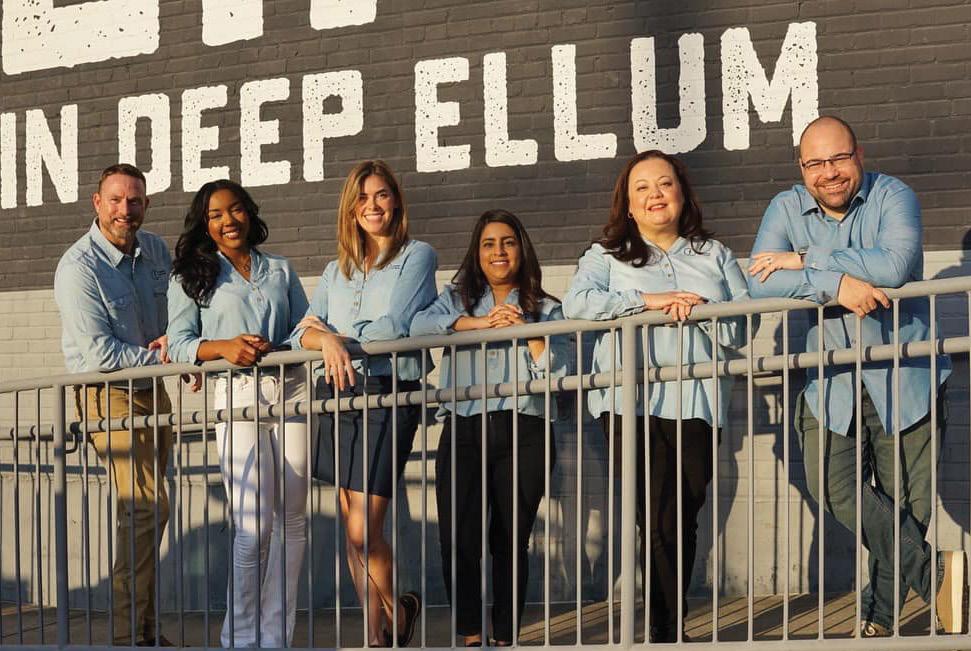
Arriba: Cada día, miembros de FaithWorks caminan junto a personas procedentes de México, Cuba, Haití, Europa del Este y África, escuchando sus historias y orando por ellas.
Izquierda: El «Muro del Amor» es un tramo de la frontera entre Estados Unidos y México pintado con murales y mensajes, que busca convertir una barrera en un lienzo de amor y comunidad.
ministerios de alimentación diaria en la frontera y también están profundamente involucrados en coaliciones nacionales para la lucha contra el hambre. Han contratado a Mariah Humphries, ciudadana de la Nación Mvskoke, para que ayude a FaithWorks a determinar su papel en el trabajo por la justicia de los pueblos originarios y a educar y crear conciencia sobre este. La colaboración con LTR Ministries en el curso «Let’s Talk Race» es un ejemplo de cómo FaithWorks trabaja en pro de la justicia racial con las iglesias a las que sirve, y en 2026 lanzará un programa más sólido de Defensores de la Justicia Racial para personas que deseen profundizar su compromiso personal y su impacto en la justicia racial.
Cada día, las personas del ministerio caminan junto a personas de todo el mundo—México, América Central y del Sur, Cuba, Haití, Europa del Este y África—escuchando y aprendiendo de sus historias, amplificando sus voces, defendiendo su dignidad y resistiéndose a las políticas que deshumanizan a los inmigrantes.
Con el apoyo de la Fundación Lilly, FaithWorks se encuentra en medio de un proyecto de cinco años denominado «Ministerio de Inmigración de Congregaciones que Florecen» para ayudar a equipar a las iglesias para que participen en iniciativas de compasión y justicia en favor de los migrantes en sus comunidades. Esto se suma al Fondo Knox para el Apoyo a los Inmigrantes, que ha distribuido más de un millón de dólares desde 2018 para iniciativas de apoyo en comunidades de inmigrantes.
Por su labor para abordar las raíces profundas y sistémicas de la injusticia, FaithWorks recibió el premio Emmanuel McCall
Racial Justice Trailblazer en 2025. El premio lleva el nombre del Dr. Emmanuel McCall, un pionero bautista que ha dedicado gran parte de su vida a la justicia racial—como estudiante, líder denominacional, pastor, autor y profesor.
El premio reconoce a «personas y ministerios que se adentran en ámbitos de la vida marcados por la desigualdad y la injusticia e inician soluciones proactivas para las comunidades en forma de políticas o prácticas que dan lugar a una mayor equidad, oportunidades, impacto y resultados para todos». FaithWorks fue galardonada junto con la Iglesia Bautista de Broadway en Fort Worth, Texas, una de sus iglesias asociadas, en la Asamblea General Anual de CBF celebrada en San Luis.
Para Reeves, el premio es la confirmación de que el llamamiento de Jesús a sus seguidores consiste en salir más allá de las paredes del templo y ejercer el ministerio con justicia y compasión en comunidades que buscan dignidad y equidad. «La gente ansía una labor cristiana en el mundo que una a las personas y ofrezca un testimonio público diferente al que se ve con tanta frecuencia, una labor dispuesta a traspasar las fronteras raciales y confesionales para lograrlo».
«Por el bien de la iglesia, la próxima generación necesitará ver a las congregaciones trabajando por la justicia en el mundo», añadió. «El reto es modelar un camino mejor, uno que sea audaz, que tenga un impacto real en el mundo y que no ceda a la desesperación y la división que vemos a nuestro alrededor». Es ese tipo de modelo el que FaithWorks espera seguir viviendo en favor de la justicia racial y del Reino de Dios.

Designed to fit into busy church schedules, Learn @ Lunch Webinars provide practical, education-first financial insights for ministers, church staff, and church leaders. Sessions cover key topics such as clergy compensation and taxation, housing allowance, household budgeting, and retirement planning-grounded in the real financial considerations of ministry and church work.

Scan the QR code to viiew
upcomiing webiinars and regiister.

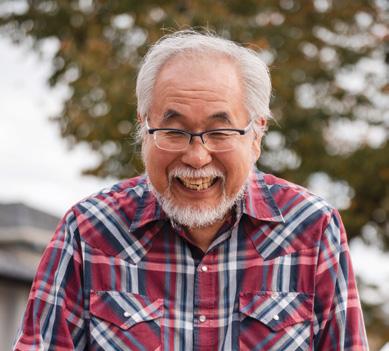
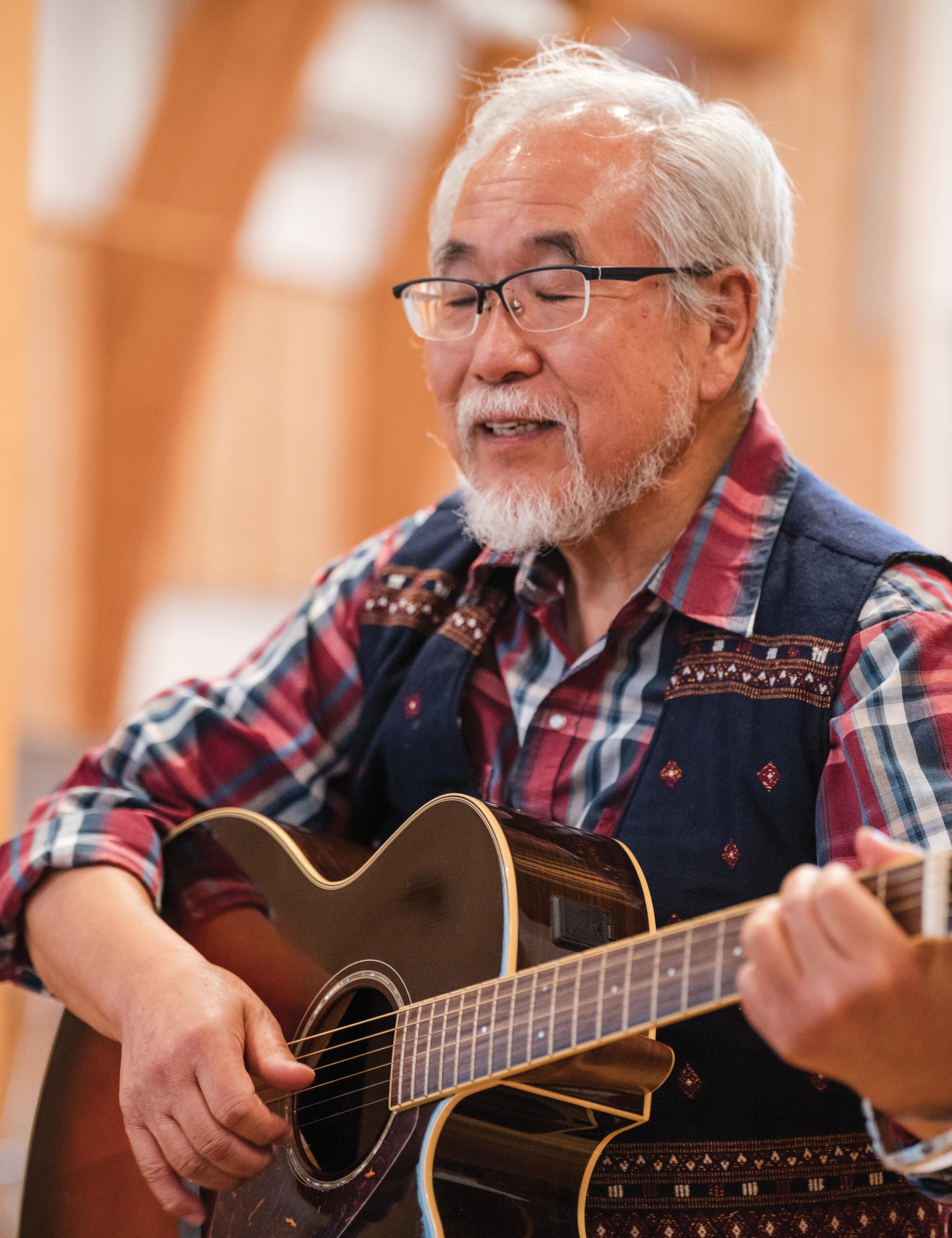
Rev. Akinori Taguchi was sent to Kanazawa 30 years ago and has watched the church grow from five members to 40 on Sundays.
Watch a video of Taguchi’s story at www.cbf.net/ogm
By Grayson Hester
“Prepare the way of the Lord.” So reads the ancient command found in Isaiah 40:3, often repeated today, whether in liturgies on Sunday mornings or in musicals like Godspell on Saturday nights.
It’s a statement both imperative and timeless, particular and universal. It can be read as a direct request, one that compelled its contemporary audience to set the stage for the coming of God. It can be read in the light of the Gospels as a divine warning for those awaiting a Christ who would not appear for centuries. Or, it can be read in a more general and, for our purposes, more applicable sense. That anything good, anything of benefit to both God and God’s people, must be done with great faith.
In short, if we see God in the eyes of the people with whom we minister, and if evidence of God is found in the work we do, then to prepare for this work is to prepare the way of the Lord.
Within this understanding of the text, the Rev. Akinori Taguchi, Pastor Emeritus of Kanazawa Baptist Church (KBC) in Japan, has been preparing the way of the Lord for nearly three decades. “I came to Kanazawa almost 30 years ago,” Taguchi said. “There were only about five church members who gathered at the church. And the kindergarten building was very old.”
In Taguchi’s Japan, a predominantly Buddhist country in which any Christian church exerts significant influence, Taguchi has done just that.
His work in revitalizing KBC has helped bolster the Japanese Baptist Convention (JBC), with whom the Cooperative Baptist Fellowship has long partnered. It’s ministry on a global scale. But it began, as almost all faithful things do, with something profoundly local—the size of a mustard seed.
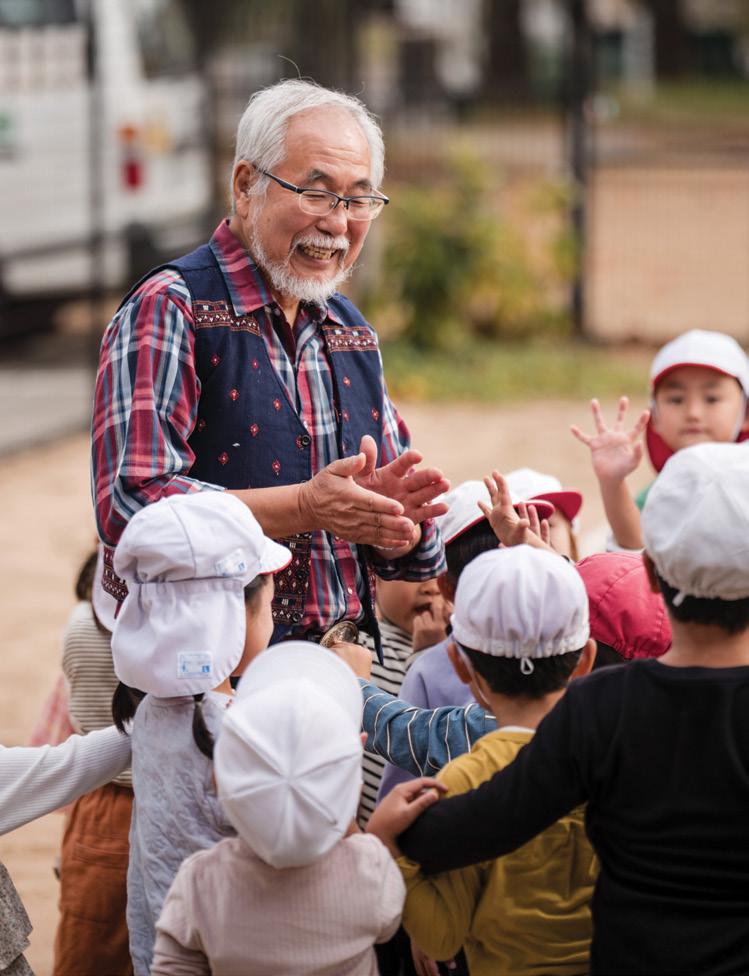
“All of our important things always start small,” he said. “I talked to these teachers all the time, and they worked hard. It made me want to rebuild this kindergarten at all costs. We started working on the dilapidated building, making small changes.”
Over what would be his 26 years as the kindergarten principal and 24 years as pastor of the church, these small changes snowballed into significant growth. And, most importantly, into opportunities for community connection on both the local and international scale.
In 2009, Taguchi shared his vision for continually expanding the presence of Kanazawa Baptist Church—and, ultimately, that of Christianity in all of Japan—at the CBF General Assembly in Houston. It was here that his vision became realized. The partnership with the JBC was sparked, and another way was prepared—this time, for CBF field personnel Carson and Laura Foushee.
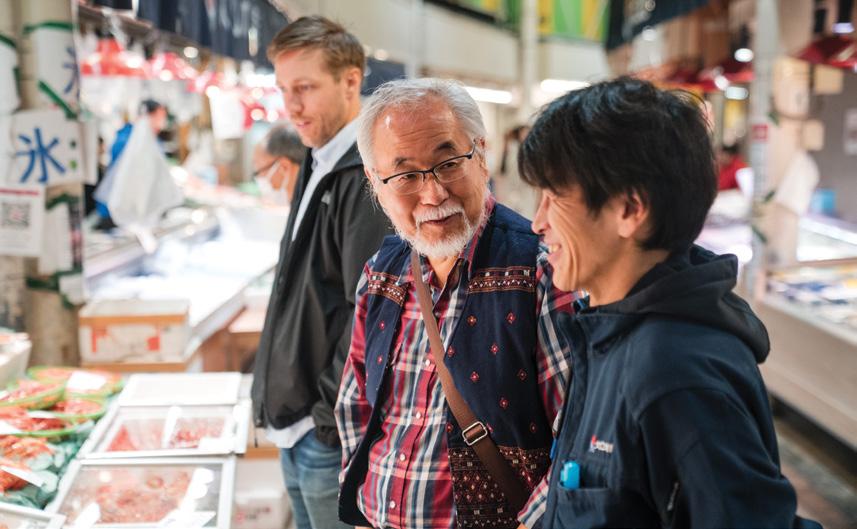
“Taguchi-sensei has been a constant presence for us,” Laura said. “He came to our commissioning in 2013 and he stood with us on the platform as the Fellowship commissioned us to go to Japan.” Fast forward 12 years, and the Foushees remain in Kanazawa today, working alongside Kanazawa Baptist Church to support the spiritual and material needs of international residents in the region. That shared ministry was one of the reasons Taguchi sought field personnel through CBF: so the church could be better equipped to welcome, serve and build community with internationals in Kanazawa.
In that partnership, Taguchi’s presence is not simply one of accompaniment, but of facilitation, collaboration and guidance. He has helped equip KBC for a common ministry and vision, offering support as a colleague and collaborator, and serving as a guide in language and culture when needed. While his work and the Foushees’ work each have distinct areas of focus, their ministry intersects in meaningful ways through their shared commitment to the church, the community and the international neighbors KBC is called to serve. “He was always more than willing to give me advice and give me assistance so that I could learn something new,” Laura said. “So, he’s been with us from the very beginning.”
The fruits of this good work are selfevident. What started as an effort simply
to restore a dilapidated building, to renew a faltering congregation, has resulted in a thriving community and a beautiful church in which to house them. It started small—and has flourished since. And that’s thanks, in large part, to Taguchi.
“We have a new preschool building; we have a new church building; and we have growth—we’re seeing around 40 people come on a Sunday,” Carson said. “Taguchi is a community connector. He has planted himself here, and he is present in his community as a model for us for what it means to be present in our community.”
Having planted a mustard seed that has bloomed into a deeply rooted tree in Kanazawa, Taguchi, with great trust in the Foushees and in the Spirit, has set his sights elsewhere. The very same faith that led Taguchi to Kanazawa many years ago has now steered him to do “a little church work” in Fukuoka, a city about 10 hours away. It’s small, but Taguchi wouldn’t have it any other way. Even though the location is different, the work remains the same. To prepare the way of the Lord is to embrace our neighbors, wherever we find them.
“Jesus meets me in the form of my neighbor,” Taguchi said. “Accepting our neighbor means that we are meeting Jesus Christ anew every day.”
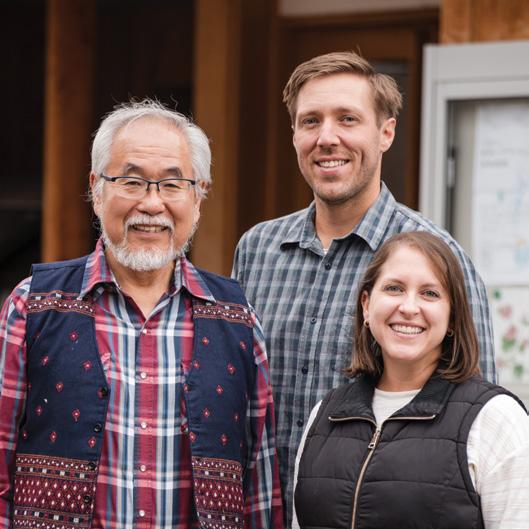
“TAGUCHI-SENSEI HAS BEEN A CONSTANT PRESENCE FOR US.”
By Jennifer Colosimo
IN2024, disaster struck in the form of Hurricane Helene. After knocking around the east coast in true hurricane fashion, Helene continued on, barreling through unsuspecting communities well inland, leaving utter devastation in her wake. Like many mountain towns, in Asheville, N.C., the community reeled from total loss around every corner. It was bleak; and in many places, it is still bleak.
Maintaining hope has enabled them to trudge on, and the people of First Baptist Church (FBC) Asheville are a big part of that. They’re still at work today, building on a missional outreach that existed before the storm, amped up when it was needed and has continued growing in the ways they serve their community since.
That charge is what earned FBC Asheville CBF’s Mission Excellence Award in 2025, an award given to congregations that exemplify CBF’s mission distinctives—cultivating beloved community, bearing witness to Jesus Christ and seeking transformational development—and could inspire other congregations to pursue such mission efforts by their example.
“Our church was honored to receive the CBF Mission Excellence Award,” said FBC’s Coordinating Pastor Casey Callahan. “It helped us feel affirmed and acknowledged—not merely for what we did, but for who we are and how we traversed such a disorienting time together.”
Because they were already a mission-minded church providing free food, clothing and supplies to the community in need, they were

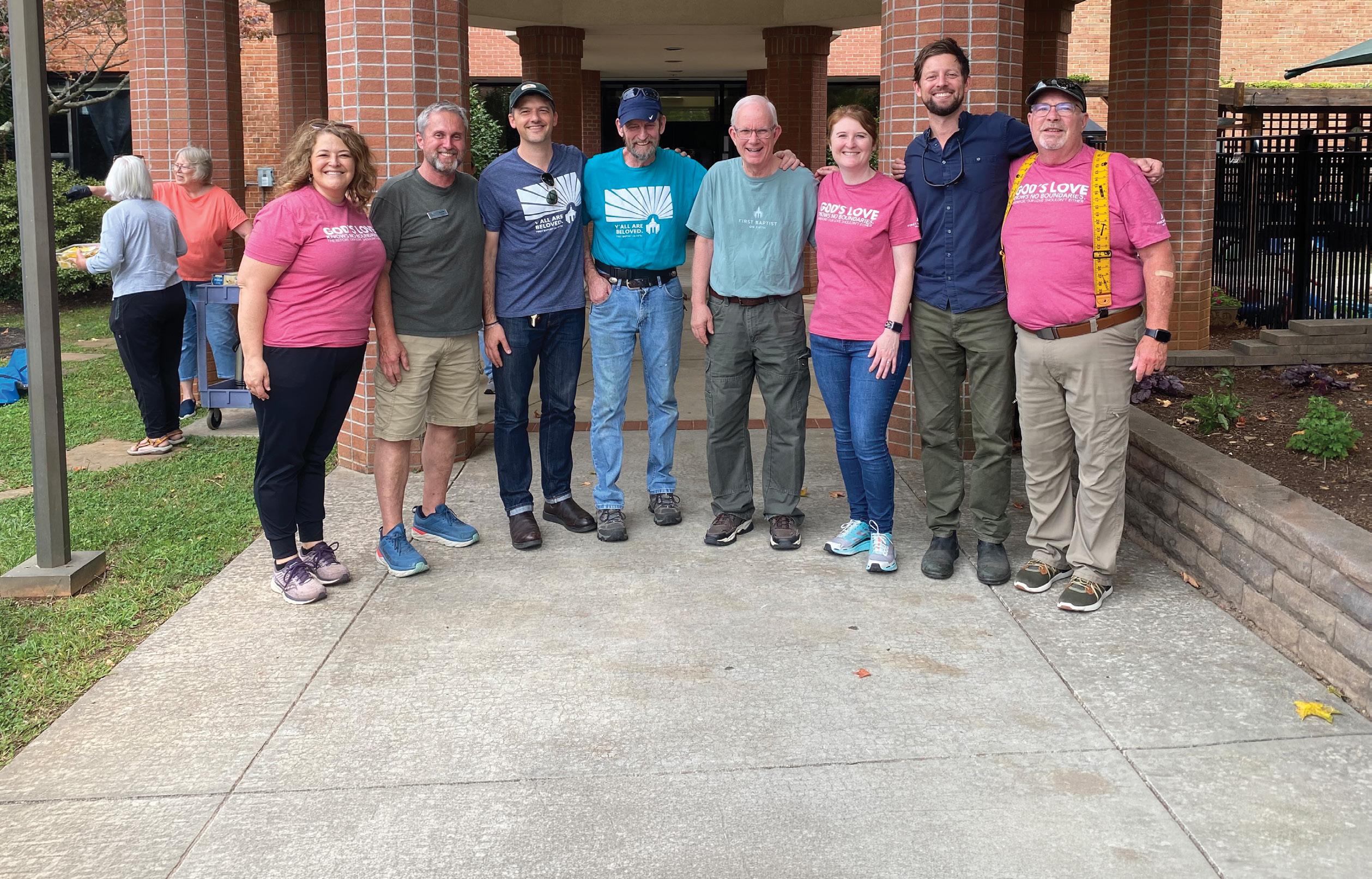
able to launch a Free Market on day two of the post-Helene period.
“It was instinctive for us to relocate all of our supplies of food, drink and essential items, placing them in the center of our main welcome space,” Callahan said. “This began organically, and each day more people arrived—some with items to share, others with time to offer and all with a need to receive things. We needed community, as a loss of cell phone towers and internet access disconnected us with the wider world. We also needed water (so much water), and food and news about where we could help and who needed it the most.”
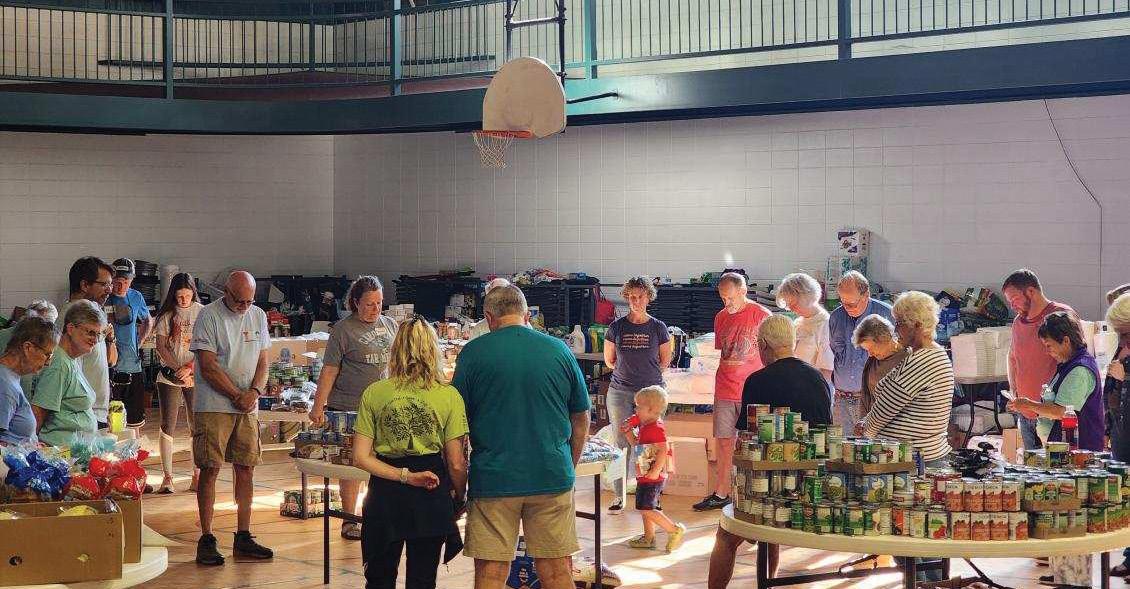
For 21 days, the doors remained open for anyone to come in and get what they needed, share what they could spare and just be together. When space got tight, they expanded to the gym. When things got hectic, volunteers reorganized rations and supplies. They never stopped.
People came from other churches to join their effort. Amenities like a shower trailer, portable toilets, laundry stations and more were loaned. Calls to offer help came from 118 churches, spanning 33 states. Volunteer hours clocked in at more than 3,400. It was about saying yes—to whatever connection was available, to trusting signs from God and to giving as much as they could.
“All of these many good things required significant organization, volunteerism and coordination,” Callahan said. “It was improvisational ministry, and it was possible only through the mysterious and relentless work of the Holy Spirit.”
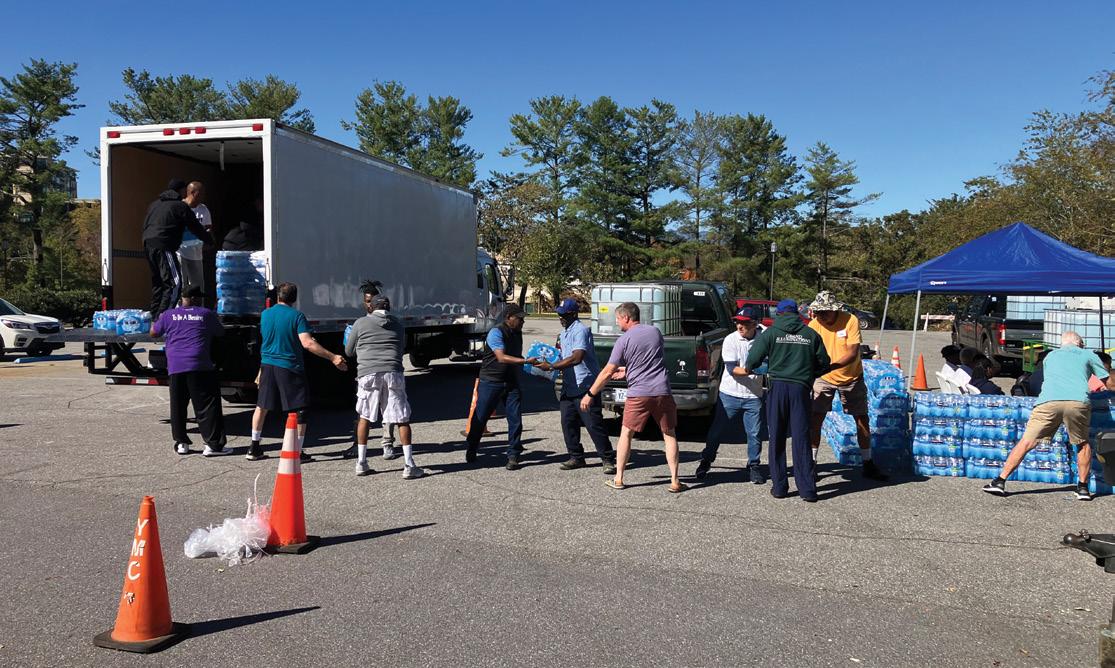
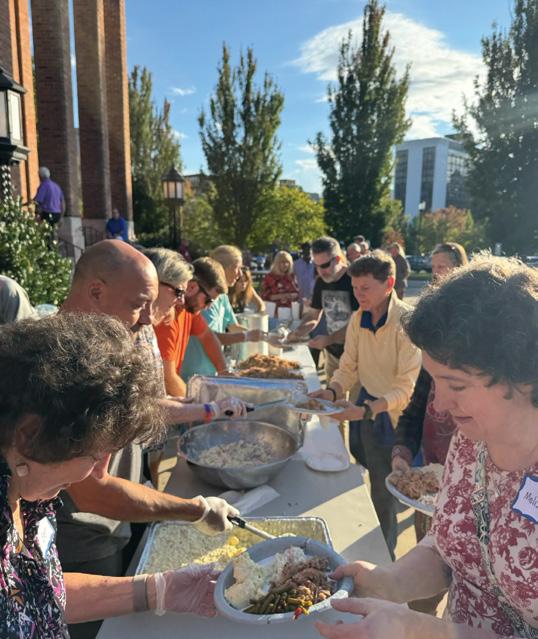
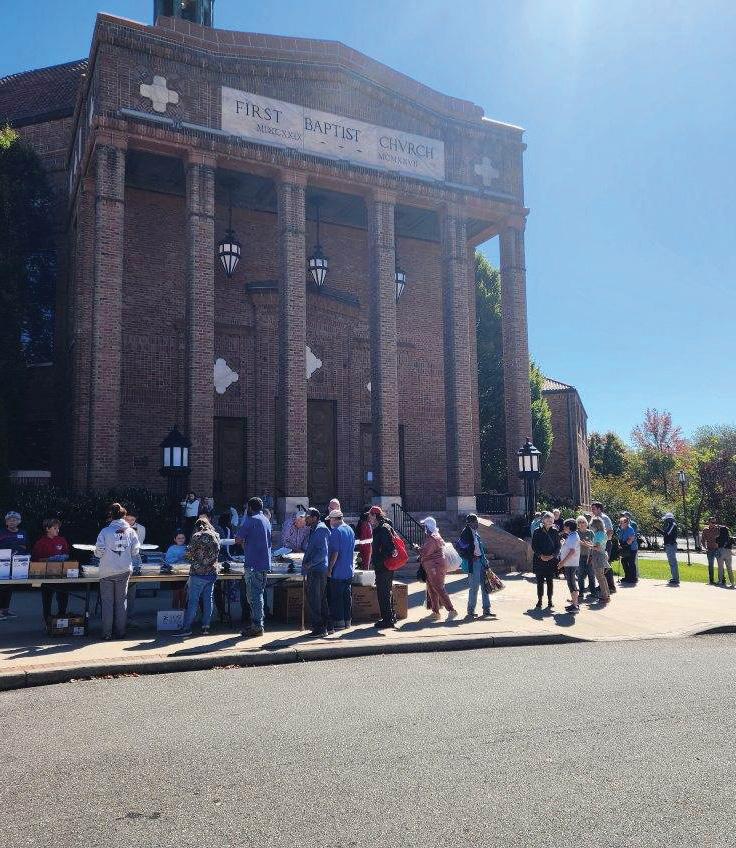
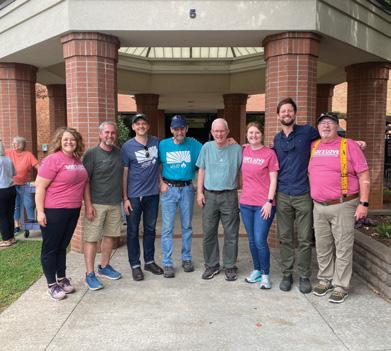
In the aftermath of Hurricane Helene, 118 churches across 33 states volunteered. The volunteers worked more than 3,400 hours serving hot meals and handing out water and food.

“I am proud of our church’s inclination and instinct to help our community by sharing everything we had,” Callahan said. “We leaned into this with a faith that propelled us forward with service and compassion and, miraculously, we never ran out. The needs of our community shifted as our post-Helene world came back into focus with more infrastructure and restored systems. But we ended this improvisational mission with more awareness of our own identity and of God’s relentless work in the world.”
Today, they’re still open on Thursdays with access to food, clothes and a hot meal. They’ve launched partnerships, including a mental health counselor to chat with visitors and continual donations from local businesses like Mercy Chefs and Trader Joe’s. In partnership with CBF Disaster Response and Baptists on Mission, they’ve become a host site for volunteer groups looking to help with disaster relief repair work and construction, allowing them to expand their hospitality ministry and connect with other congregations and groups as they serve together.
“Our mountain region has become adjusted to the lingering effects from Helene. The landscape is one of the most striking visual reminders of the storm: the houses that are no longer present, the
“THESE SHIFTS ARE REJUVENATING TO OUR OWN SPIRITS AND TO OUR NEIGHBORS AND PARTNERS.”
centers of life and community that are missing close to the river, and the unfinished repair work to so many existing structures and homes,” Callahan said.
“There are also unseen effects which are widely shared with our residents: looming trepidation on the eve of any minor or major weather event, trauma that is still being processed (adults and children), memories of extreme vulnerability and an awakened sense of community. As a downtown church, we have shifted some of the ways we serve our community in a post-Helene world, and these shifts are rejuvenating to our own spirits and to our neighbors and partners.”
One of those shifts was the establishment of the Helene Recovery Fund Grant for disaster recovery, counseling and wellness assistance. They received nearly $170,000 in donations, more than half of which were distributed to church members, community members and partner organizations for tree removal, home repair, car repairs, lost income replacement, kids’ programming and mental health services.
Callahan’s message to other congregations is to “lean into responding in ways that are instinctive and practiced in your own community. Every church is able to respond differently, and the variety of gifts among our communal bodies is akin to the variety of the gifts of the Spirit.
“Look to familiar sources of assistance and networking,” he continued. “Pay attention to other existing hubs for community support. We invited experts in to help us serve with more efficiency and wisdom. We trusted in the guidance of the Holy Spirit and relied on collective wisdom to make our way forward with improvisational ministry.”
While it’s nearly impossible to be prepared for such a once-in-alifetime disaster like Helene, the heart of FBC Asheville proves that weathering it together is possible.


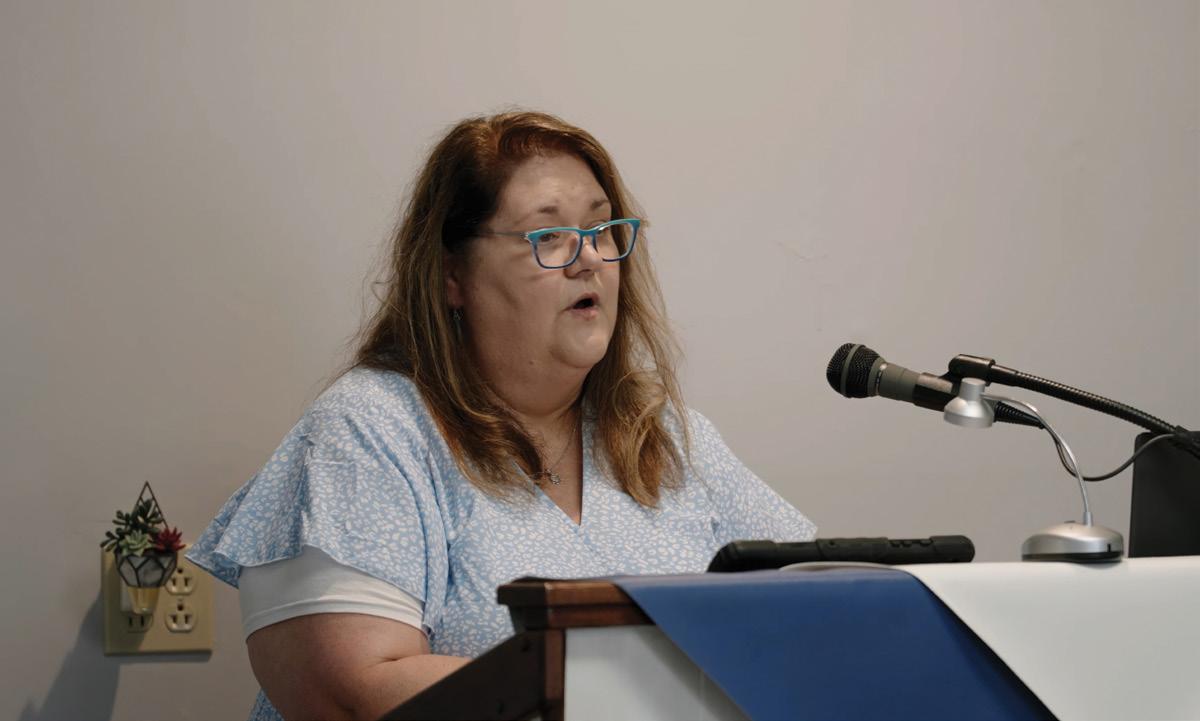

By Grayson Hester

cascading crises, crumbling institutions and a prevailing sense of directionlessness, what stands as the most precious resource we can offer or status we can hold may not be our data or our time, but our clarity.
Clarity is our sense of right and wrong, our perception of our purpose in this world and our resolve to see it through.
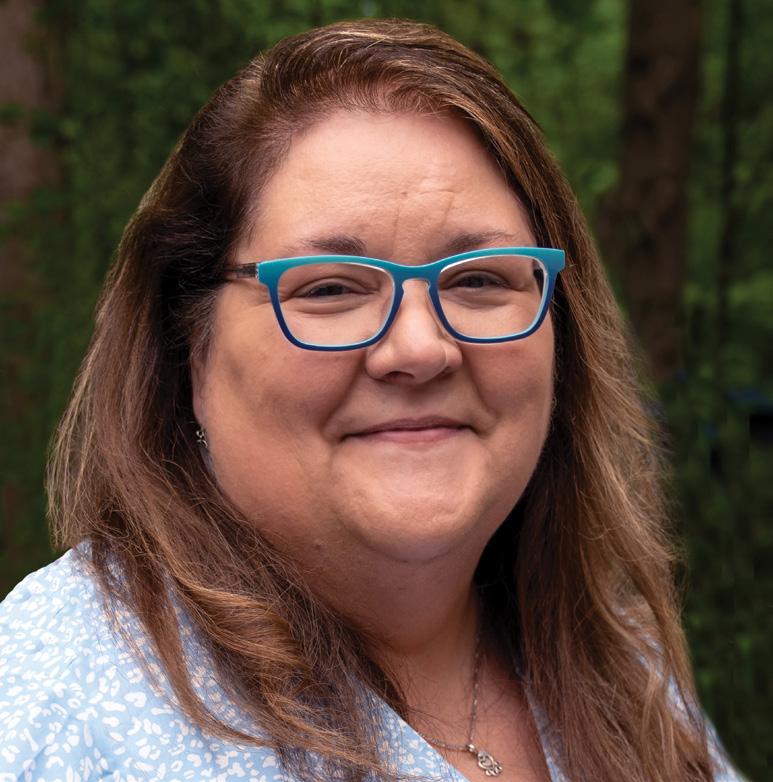
Enter Rev. Melissa Roysdon.
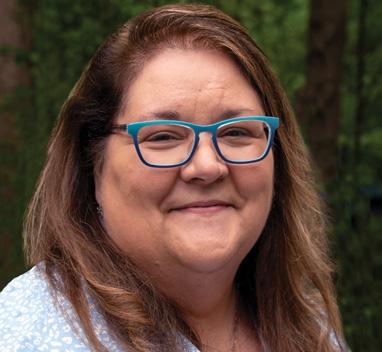
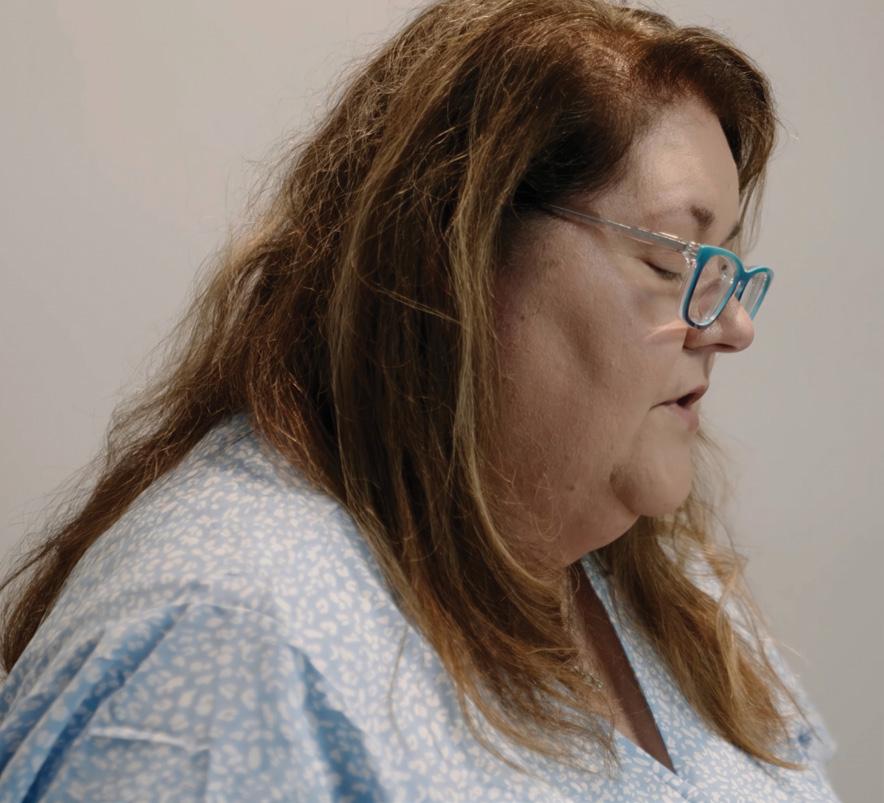
“I have clarity about who I am. I sometimes don’t feel like the most confident person in the room, but I always know that I’m called by God,” she said.
Upon meeting Roysdon and asking about her ministry, “clarity” may not be the first word that springs to mind. She is intentionally multi-vocational, splitting

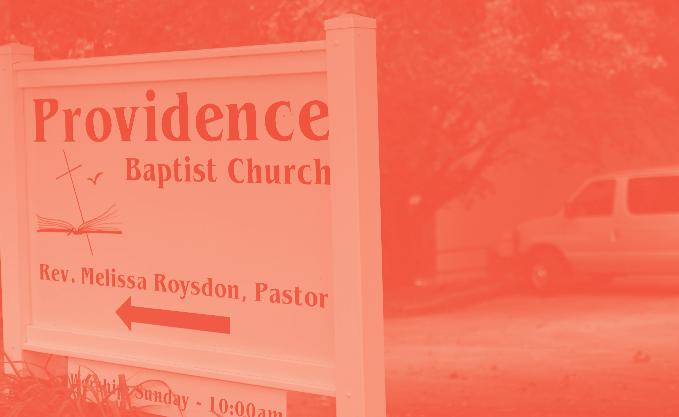
her time between teaching ESL at a local elementary school as well as in the evenings for adults, and serving as the pastor of Providence Baptist Church in Cookeville, Tenn.
In both the public sector and the religious, her purpose and clarity are simple: to love people. In her case specifically this means immigrants.
To split her time is to help bridge everwidening gaps of support, which both places her within the community she’s called to serve and increases her ability to serve it.
“I discovered that I could make a difference for a child and the trajectory of their life, but that really wouldn’t start happening until 10 years down the road,” she said. “But if I help a mother or a grandmother
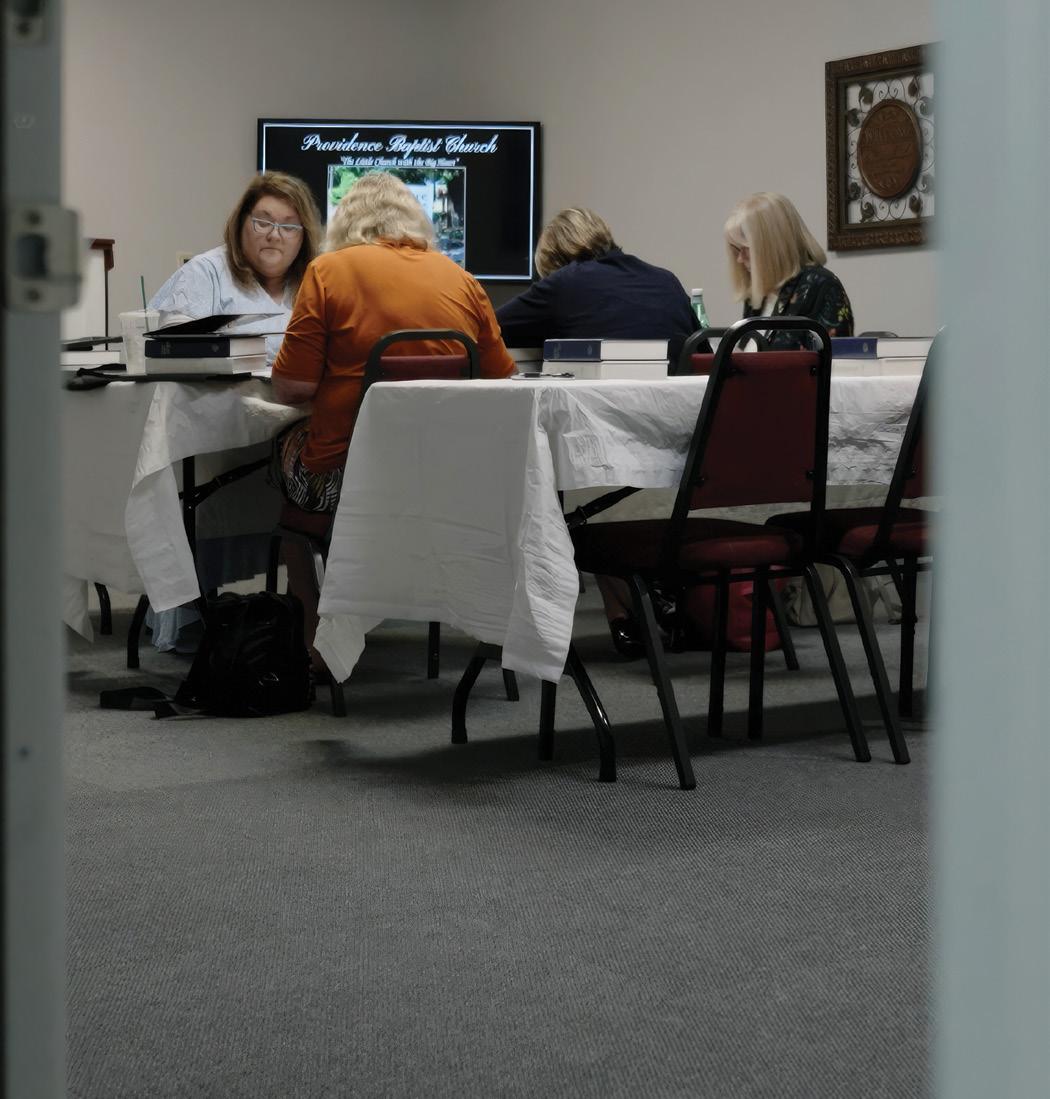
change her trajectory and develop her English skills then I could affect that family’s life a whole lot quicker.”
In this way, pastoring influences teaching, which then supports the people alongside whom she ministers—both inside and outside the church’s walls.
“She makes people feel safe and valued. So I think she models that for us,” Mary Beth Duke, a member of Providence, said. “And you can’t go away from here on Sunday without intentionally thinking, have I been valuing the people in my life the way I should?”
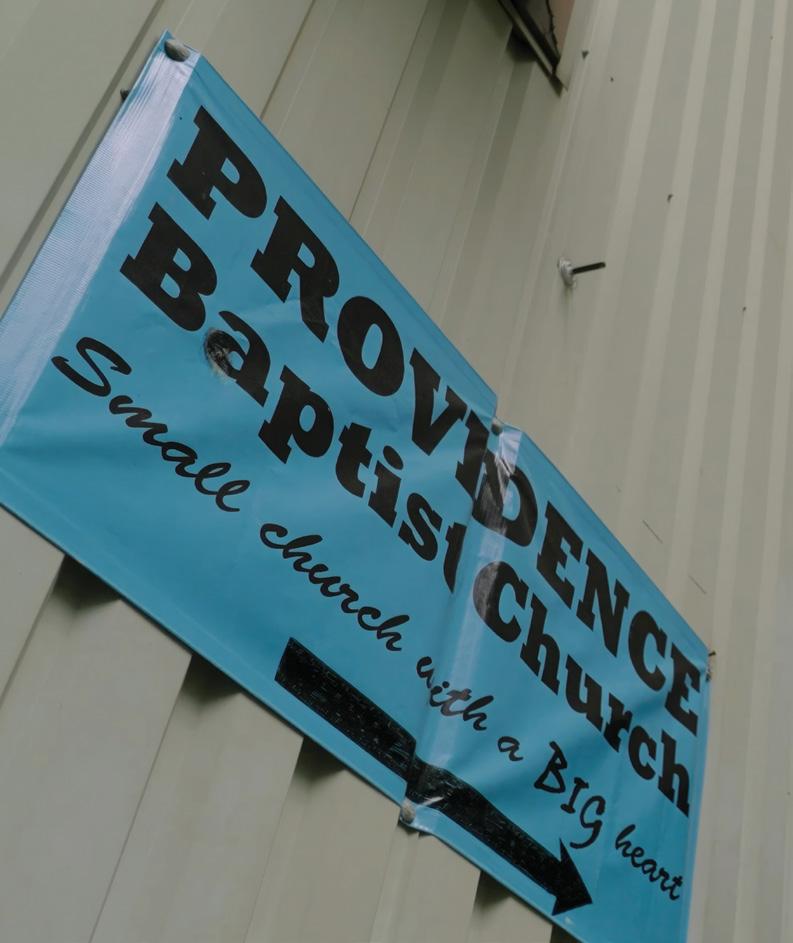
This question shapes every aspect of Providence’s mission in Cookeville, as stated in its Facebook bio: “The small church with a BIG heart.” What it lacks in imposing architecture is made up for in centrality,
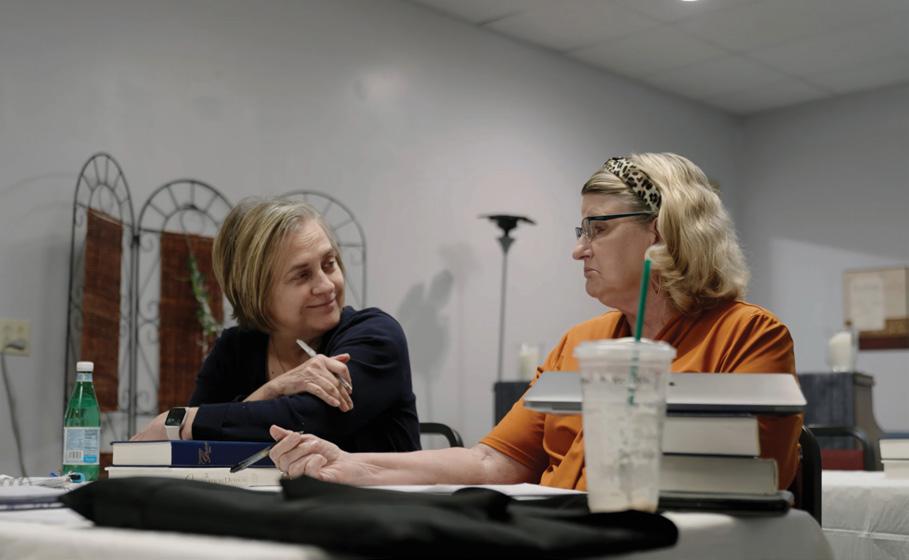
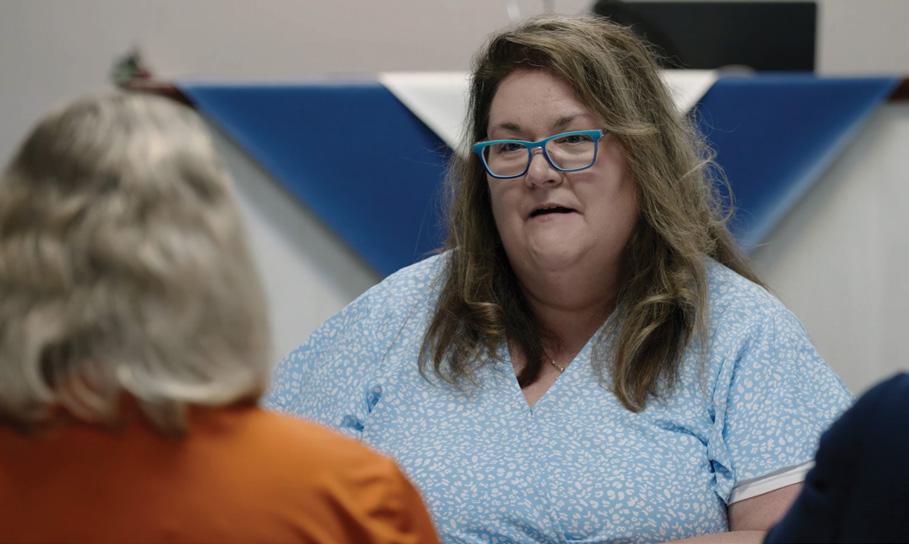

having been built on one of Cookeville’s main streets downtown.
That location symbolizes the role Providence sees itself playing in this mid-sized Middle Tennessee college town about an hour and a half from Nashville. It’s a role of commitment to the Gospel of a refugee Christ and to more down-to-earth concerns.
“We’re right there on one of the main streets downtown and people just didn’t see us. So we moved to another location that was a lot more visible,” Roysdon said.
The “small church” aspect proved to be an obstacle. But the “BIG HEART” emerged as an efficacious remedy. That is, with more than a little help from a congregation related to another side of Christianity altogether.
“This opportunity to move here came about because we had a combined worship

service with the United Church of Christ for Advent,” she said. “It was nice to have a church in town that was very open to us even though we were not exactly the same.”
While the UCC congregation maintains a focus more local than Providence’s global outlook, they both share a commitment to offering help to Cookeville’s more marginalized friends, whether in the form of a warming center for unhoused neighbors or ESL instruction for those who have immigrated here.
UCC’s chance to remodel a space for Providence arose from this service. “Our church has the clarity of our mission—which is missions—and that’s what makes us thrive,” said Joyce Glover, another member of Providence. “We do have a purpose in supporting missions, and that’s our primary purpose of being here.”
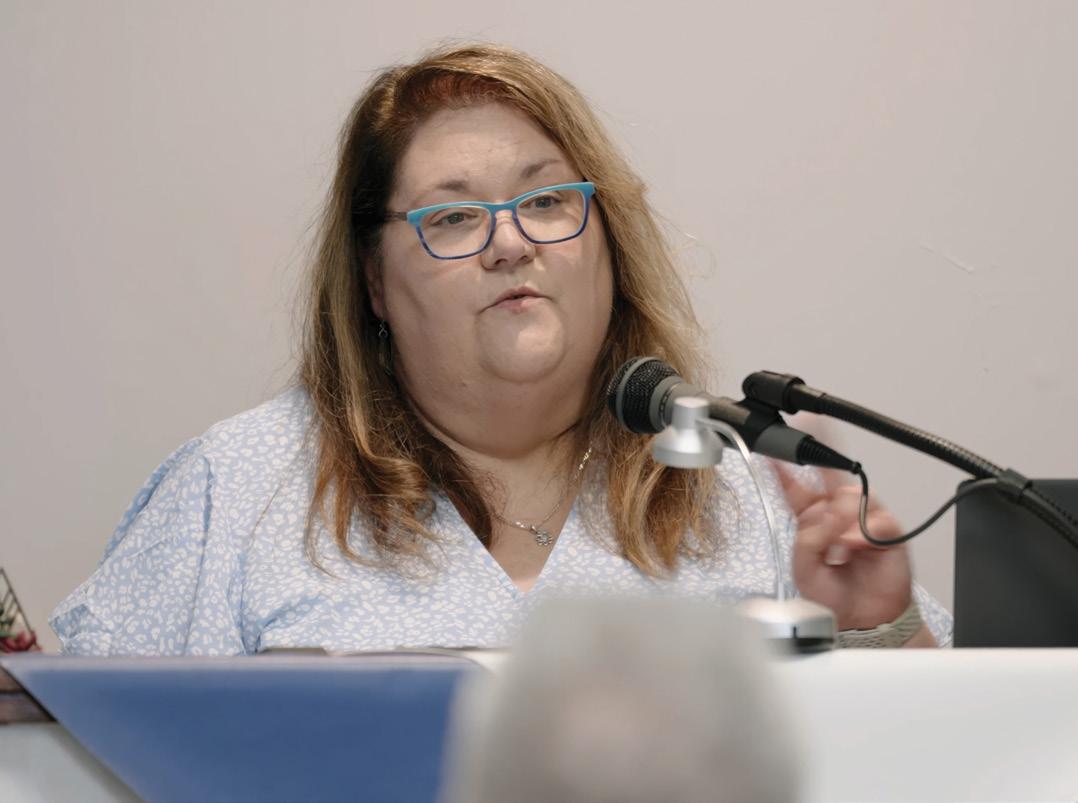
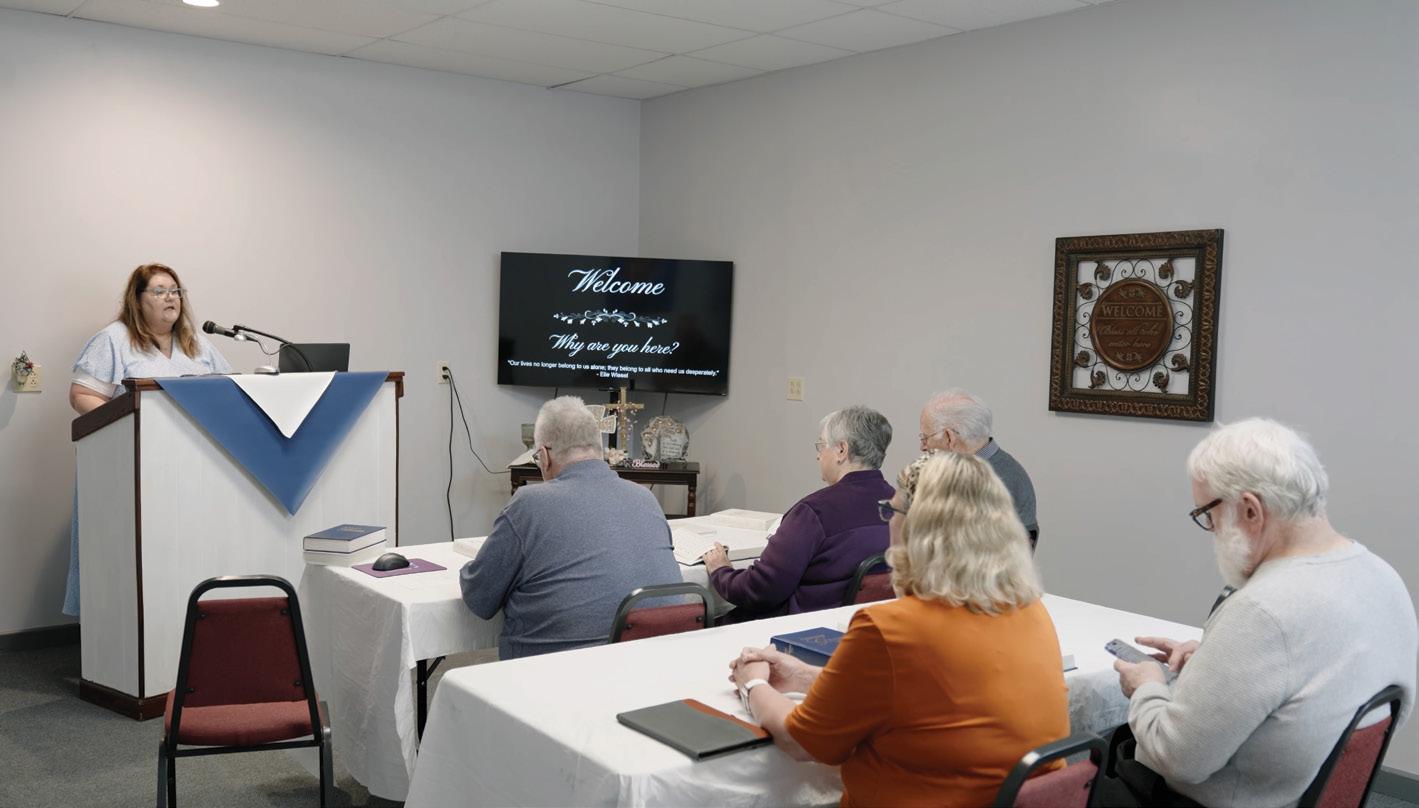
New space, same purpose—and more eagerness with which to achieve it. It took sacrifice, intention and many meetings to make it happen.
But along journeys, there can be few trustier companions than clarity. The clarity of Roysdon’s purpose, of Providence’s mission, saw them through difficult decisions. What has emerged on the other side is a congregation reinvigorated and a model for other churches starting to grow.
“When we go through reimagining, we find a better way, we find a better self and we find a healthier self. As a denomination or a denomi-network or a Fellowship, it’s time for us to reimagine what that means for ourselves and for our collective self,” Roysdon said.
For Providence, that looks like joining other denominations to address the higher

unifying call we all share. It also looks like making a commitment to mission work front and center, both in the church’s budget and in its worship.
According to Roysdon, despite its relatively small size Providence has had “for a very long time,” named Cooperative Baptist Fellowship field personnel as part of their budget. If the name didn’t, for whatever reason, fit, then the work of field personnel took its place.
“And we’ve had this missionary moment as a part of our worship service from the very early days of the church’s formation, even when we were still gathering in a house,” she said.
It was those early days of Providence that fomented and secured the missional outlook as the church’s reason for being. At that time—when Providence initially became
a part of CBF—the congregation joined a program called “Adopt-A-People,” she said, in which they provided support to the Palaung people in Thailand.
“That partnership became the heartbeat of this church.”
Years later, that heartbeat keeps steady time, unfailing and undeterred, whether in the hand-painted halls of public education or the hallowed corridors of religion.
Through moves, restructurings, adjustments and adjournments, Providence has maintained its clarity. It could provide a path forward for CBF churches that are fighting for survival, to say nothing of thriving.
It takes flexibility and great faith. But it is the work to which we are called, and it is work well worth doing.
If churches are struggling in these disjointed days, think of those struggles not as obstacles, but as opportunities. You may find compelling, Christlike clarity.
“It’s an opportunity to be better. It’s an opportunity to be whole in a new way. It doesn’t mean that we’re dead. It means we’re growing,” Roysdon said. “It means we’re progressing and the world needs that as much now as it ever has. There really has never been a time in history when the world didn’t need to know that God loves them.”



By Marv Knox
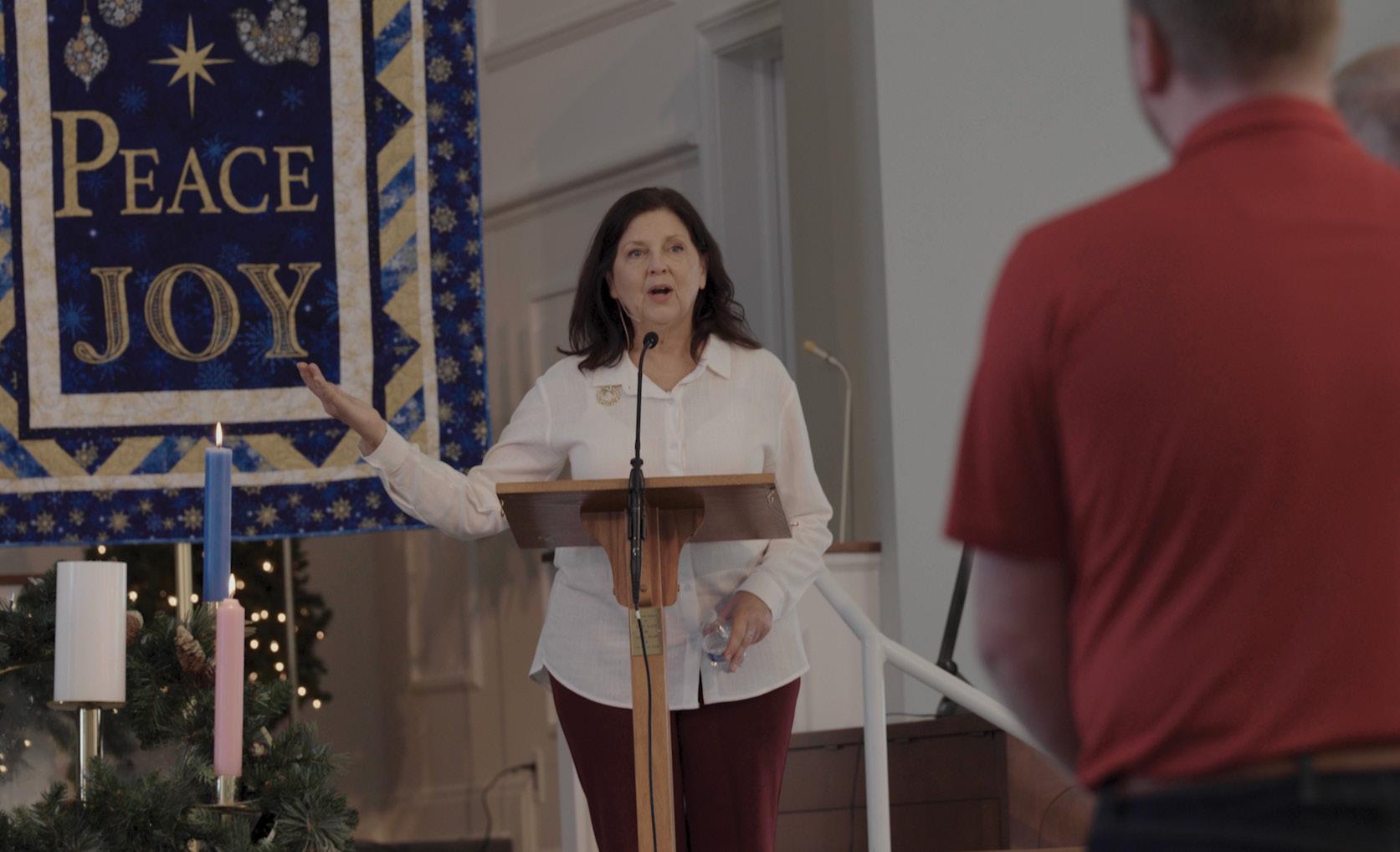
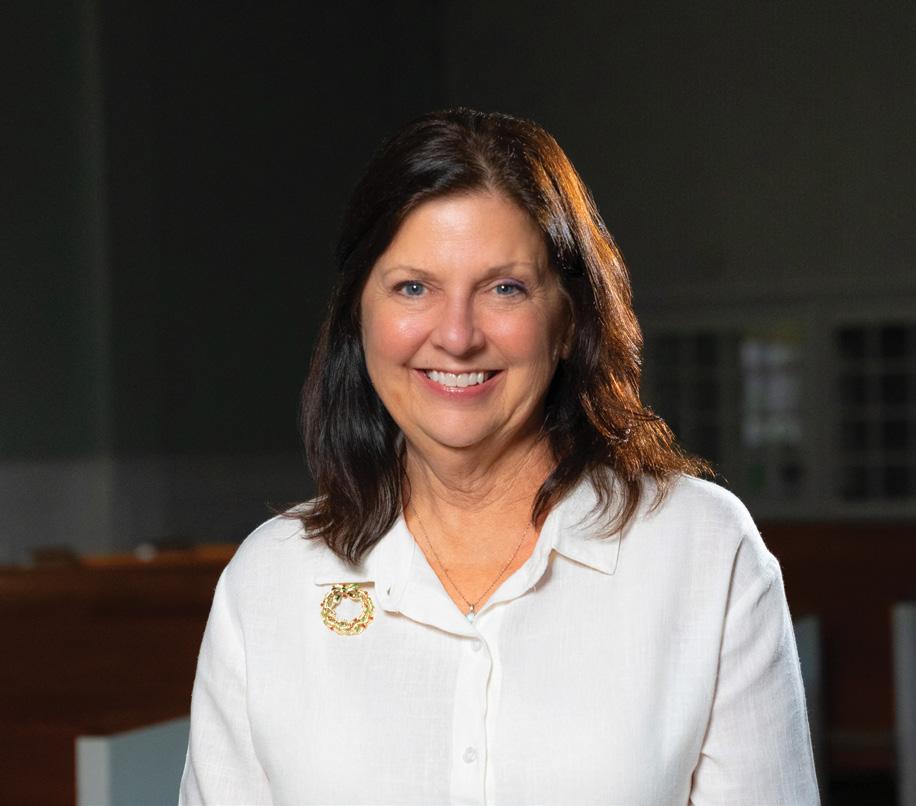
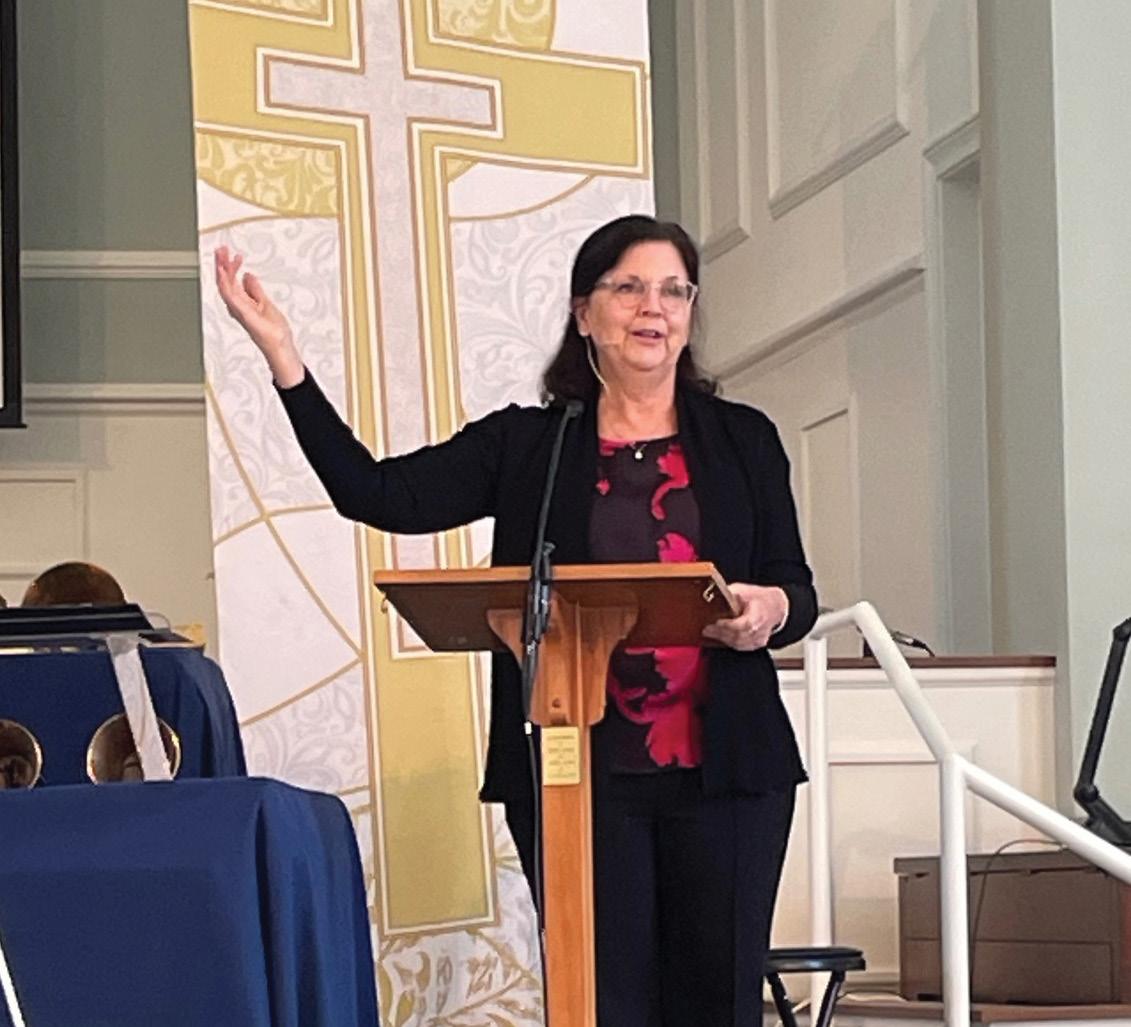
heard God calling her into ministry when she was a 30-something mom who loved her church but never considered becoming a pastor. And just to be sure she got the message, God called her twice.
Pickett’s nontraditional call into ministry opened a vocational path that has blessed two churches. She served her home congregation, Holmeswood Baptist Church in Kansas City, Mo., in a variety of capacities for about 15 years. And she has been senior pastor of Prairie Baptist Church in nearby Prairie Village, Kan., 12 years.
“Even though I have been involved in church my entire life, my call to ministry was surprising,” Pickett conceded. “When I was growing up, my family spent most of our time Wednesdays and Sundays and often in-between at church. I was afforded the opportunity as a child and teenager to try just about every ministry other than preaching.
“But I didn’t feel a sense of calling to vocational ministry until I went to camp with a group of youth as a parent and a volunteer.”
That was 1998, when Holmeswood sent its teenagers to Passport Camp, and Passport’s co-founder, Colleen Burroughs, served as camp pastor.
“It was the first time I experienced a female pastor preaching and sharing and taking a big lead position,” Pickett recalled. “I kept
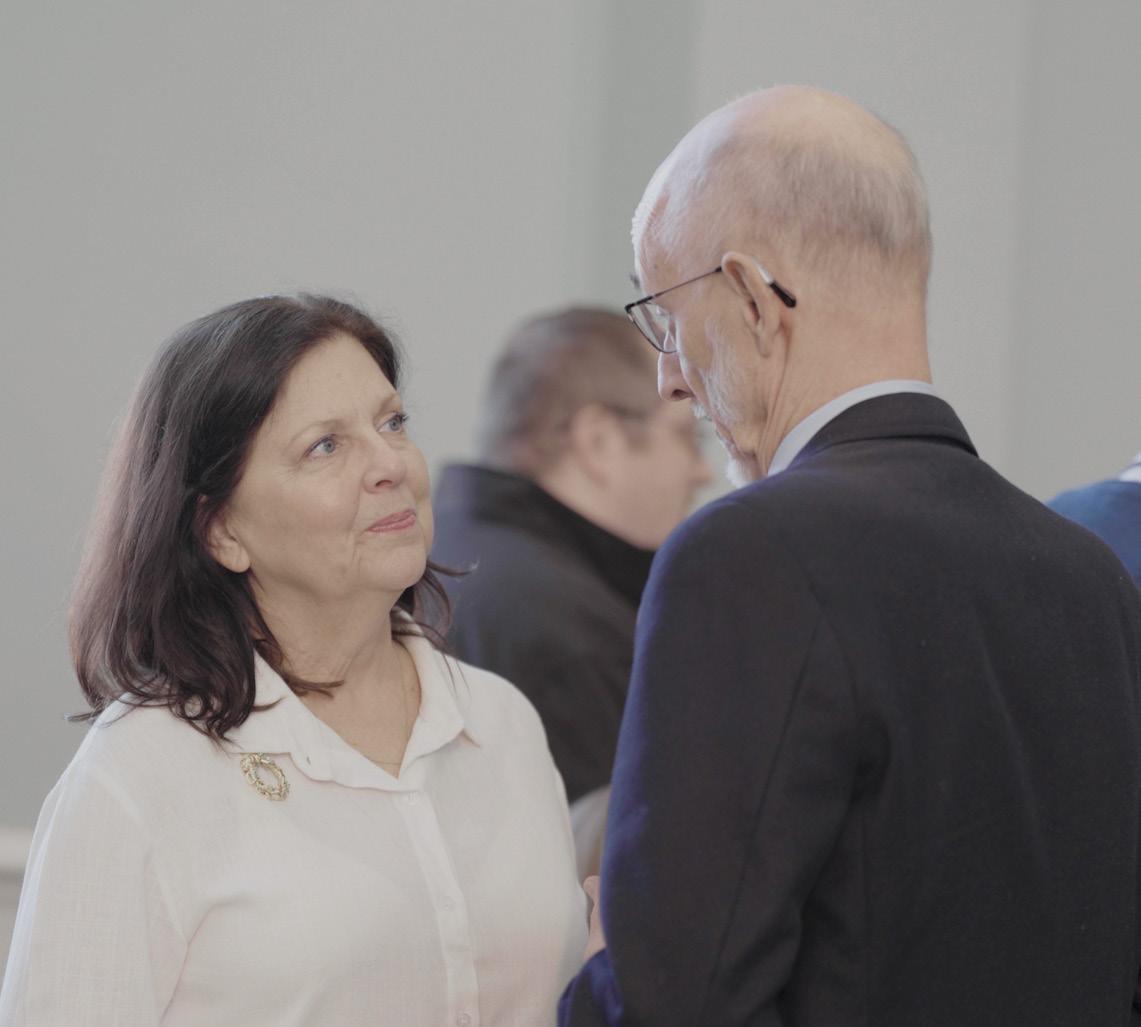
processing everything through the lens of ‘I could do this; I want to do this.’ By the end of the week, I went home and said, ‘I think I’m being called to ministry.’”
Pickett spent an intense week reflecting on what God wanted her to do with her life. During that week, she recalled an earlier experience she had at work. “Three times, I heard, ‘Kathy, if I ask you to leave everything, would you do that?’” she said. The first question was so clear, she went into the next office to see if someone were speaking to her. “The third time, I said, ‘OK, God, if this is you, I’m going to need time to process that.’”
Later that summer, she walked the aisle of her church and told her fellow members, “I don’t really know what this means, but I’m saying yes to whatever God is calling me to do.”
Soon, Holmeswood asked her to serve as interim youth minister, and then, in her words, “it took off from there.”
“Took off” points toward Pickett’s whole-hearted plunge into ministry.
“Kathy crossed over from being a civilian to being a minister,” noted Keith Herron, Holmeswood’s former pastor, who overlapped with Pickett on staff. “She did that by going to seminary, and she got a part-time job at Holmeswood, and then she morphed through multiple positions until she became the one with the most work to do at the associate-pastor level.”
Pickett’s approach to ministry training reflects not only her nontraditional path into ministry, but also flexibility and creativity. When she joined the Holmeswood staff, not only did she not have a seminary degree, but she had not earned an undergraduate degree.
She took advantage of a program at nearby Central Baptist Theological Seminary that allowed her to take master’s-level classes without a bachelor’s degree, demonstrate her capability, then continue on track to receive a Master of Divinity degree. She earned her M.Div. on a presidential scholarship and later earned a Doctor of Ministry degree from St. Paul School of Theology.
In addition to embracing a mid-career, nontraditional call to ministry, Pickett also negotiated “the obstacles of being called to ministry as a woman,” she said.
“What aided me most was learning I would need to take a different approach about how others perceive women in ministry,” she explained. “Rather than being upset or angry when I was challenged, I needed to step back and recognize we all grow differently in our faith and understanding—especially in religious life and in church life.
“Even though sometimes it was discouraging, I decided I needed to allow people to voice opposition to me. I had to recognize folks have a long way to go in accepting a woman as a pastor or a minister. I needed to give them space to journey with me, to ask questions and to figure out for themselves if it is all right or not.”
Eventually, Pickett changed denominations and roles. When she left Holmeswood, a Cooperative Baptist Fellowship congregation, as associate pastor, she became senior pastor at Prairie, affiliated with American Baptist Churches USA.
At Prairie, she followed a female senior pastor and returned to her home denomination.
“The church where I grew up was American Baptist, and it felt like coming home here,” she said. “I just had a sense that I could be fully myself here. Things seemed to line up and mesh theologically for me—spiritually and energy-wise. The congregation has been incredibly supportive from the very beginning, open to me, encouraging. Of course, it’s not been perfect.”
Prairie’s community has changed, and the church’s size has declined from its post-World War II, Baby Boom heyday of 600
“I’ve
attenders to about a third of that now. Changes have resulted in difficult-but-necessary adjustments that affect pastor and congregation alike.
“On some days, when we’ve been working through hard decisions as a congregation, I would have an individual say out of the blue, ‘Kathy, I want to let you know how much I appreciate you,’ or ‘I love to listen to your sermons and the things you have to say.’ Something encouraging and affirmative kept me here and hanging in there on those days when I thought, ‘I can’t do this.’”
The Prairie congregation reciprocates those feelings, reported David Grummon, a lay leader and member of the search committee that brought Pickett to the congregation, and Beverly Cosby, the church’s retired administrator and 40-year member.
“One of the things we really wanted to lean into was someone who could help our church navigate difficult processes and difficult topics,” Grummon said. “That is one of Kathy’s strongest points.”
Pickett is a vital asset to the congregation because of “her openness, her willingness to meet head-on issues that need to be addressed,” Cosby added. “She has skills that help us. Kathy approaches everything with a willingness to make changes and to keep us moving forward.”
A major reason Pickett possesses those skills is the path she followed to ministry, Cosby added. “Life experiences qualify us for a great deal of things education sometimes doesn’t, and Kathy is a perfect example of that. From her past careers, she brings a sense that, ‘Everything matters, and I want to get to the bottom of what it is and how we can address it.’ That’s refreshing.”
Pickett’s life and ministry models receptiveness to the divine nudges that brought her into ministry, as well as the flexibility, creativity and tenacity that enabled her to thrive across the decades.
Those qualities made her a likely model for Called in Context, CBF’s emphasis on helping churches find solid ministers from unlikely—nontraditional—sources, such as among their own members.
Pickett’s experiences—first at Holmeswood and then at Prairie— demonstrate how congregations can find exemplary staff leaders by looking to their laity, stressed Colin Kroll and Brian Foreman, CBF staff members who developed the Called in Context initiative.
The aim of Called in Context is to “create a culture of calling in our congregations,” said Foreman, CBF’s coordinator of congregational ministries. “We want to stimulate conversations about how the resources to fill ministry positions already may be in your church or community.”
“WE WANT TO STIMULATE CONVERSATIONS ABOUT HOW THE RESOURCES TO FILL MINISTRY POSITIONS ALREADY
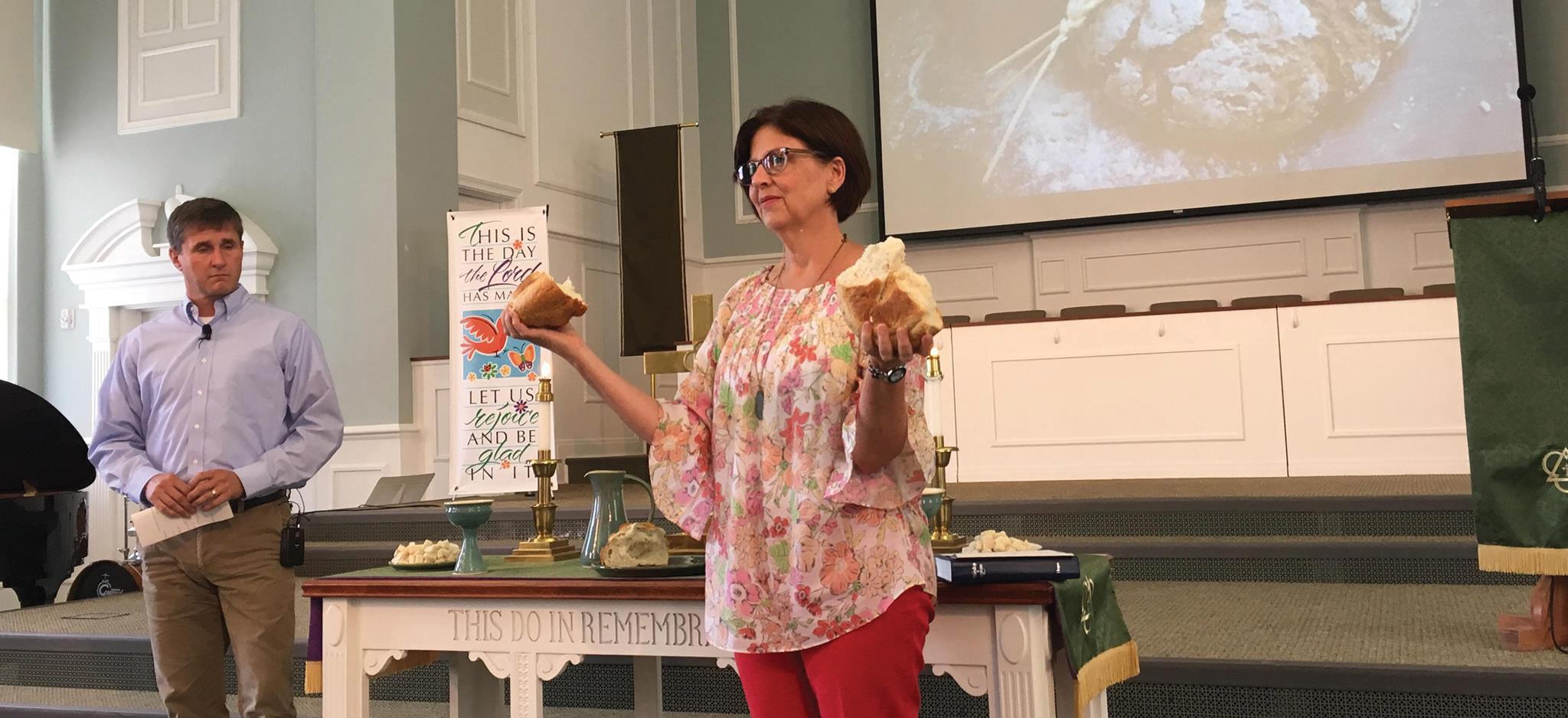
“Although there have been challenges as I have moved into vocational ministry, I still have that same experience. I still love being part of a community of faith who is working hard at getting it right and helping them move to this new place of being.”
CBF’s Called in Context highlights the stories of ministries that emerge when churches look at their congregations for talent in their pews.
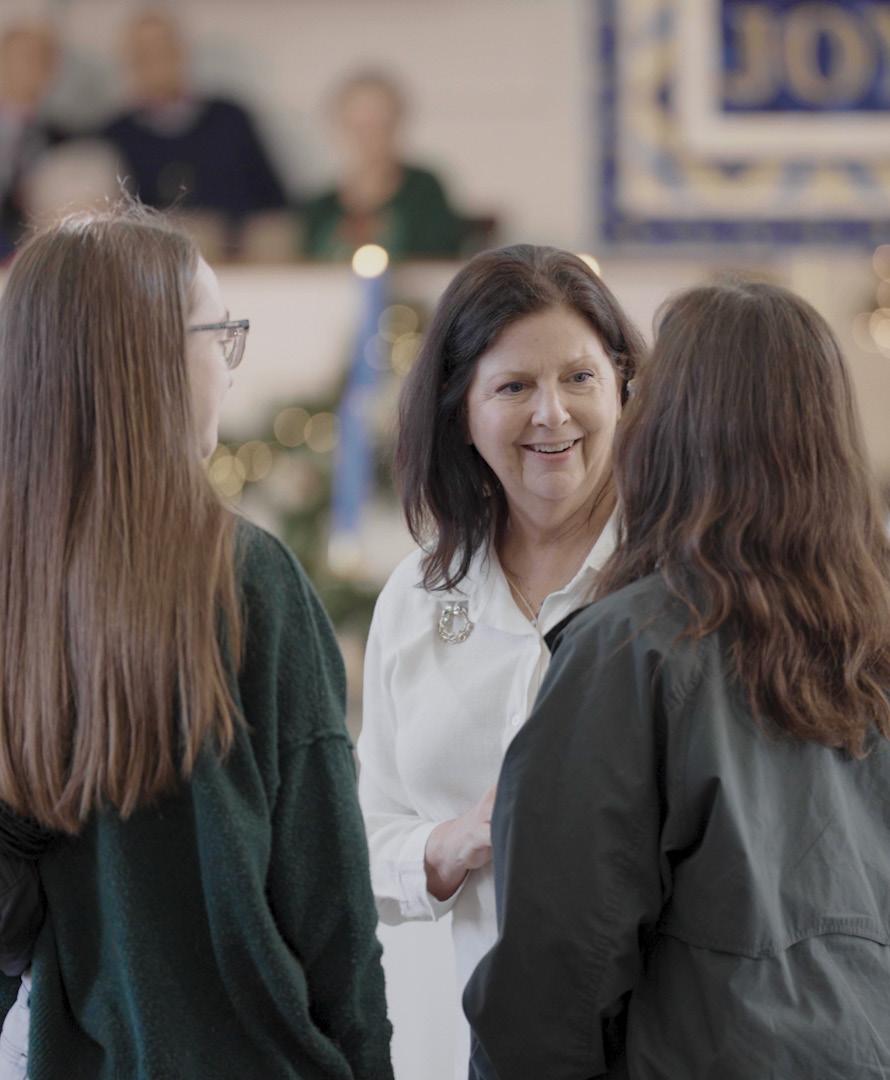
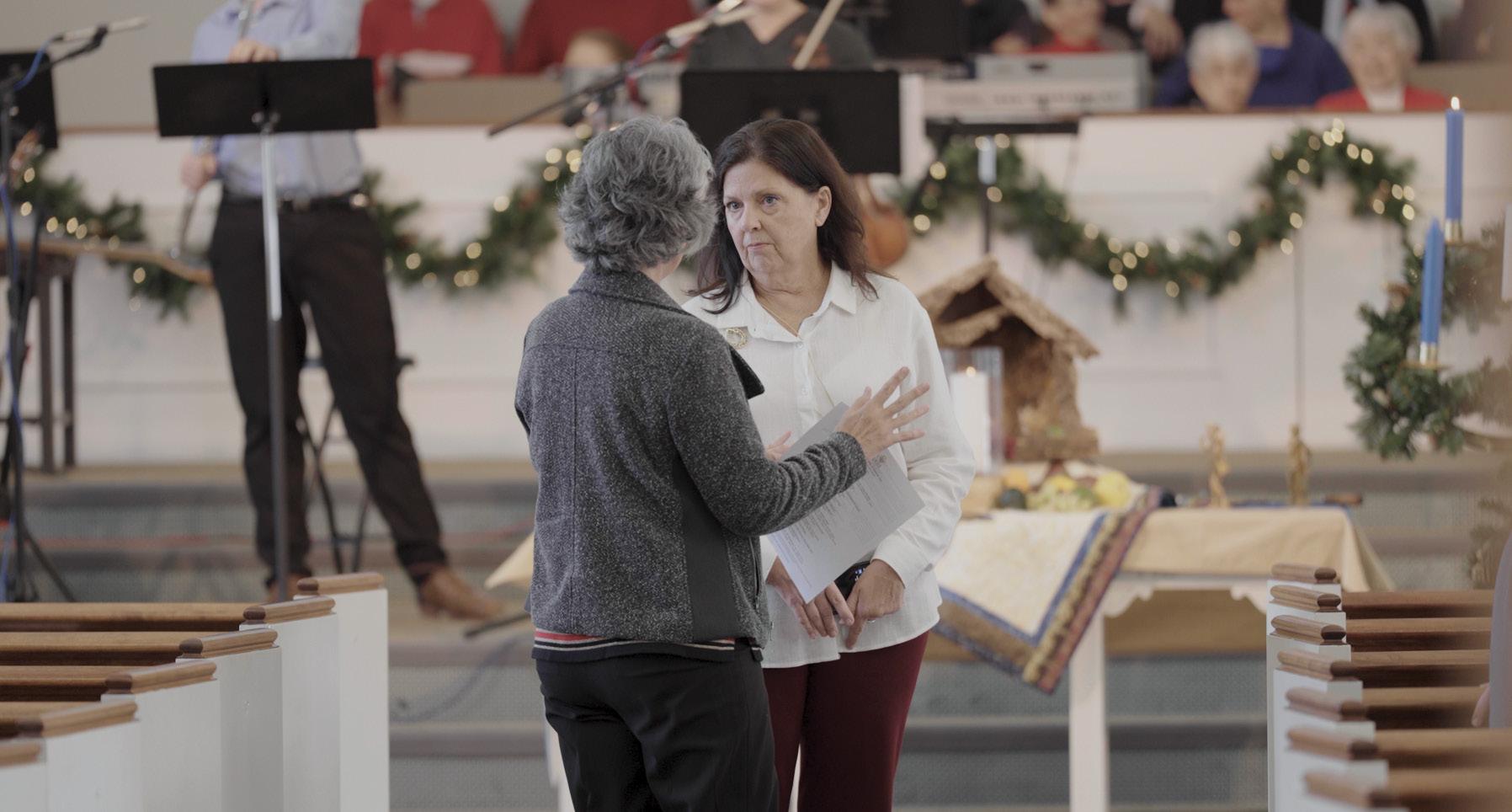
Kathy is trained as a CBF Dawnings church coach. Dawnings is a six-session leadership retreat for a church’s leadership team that provides a story-based approach to congregational calling.
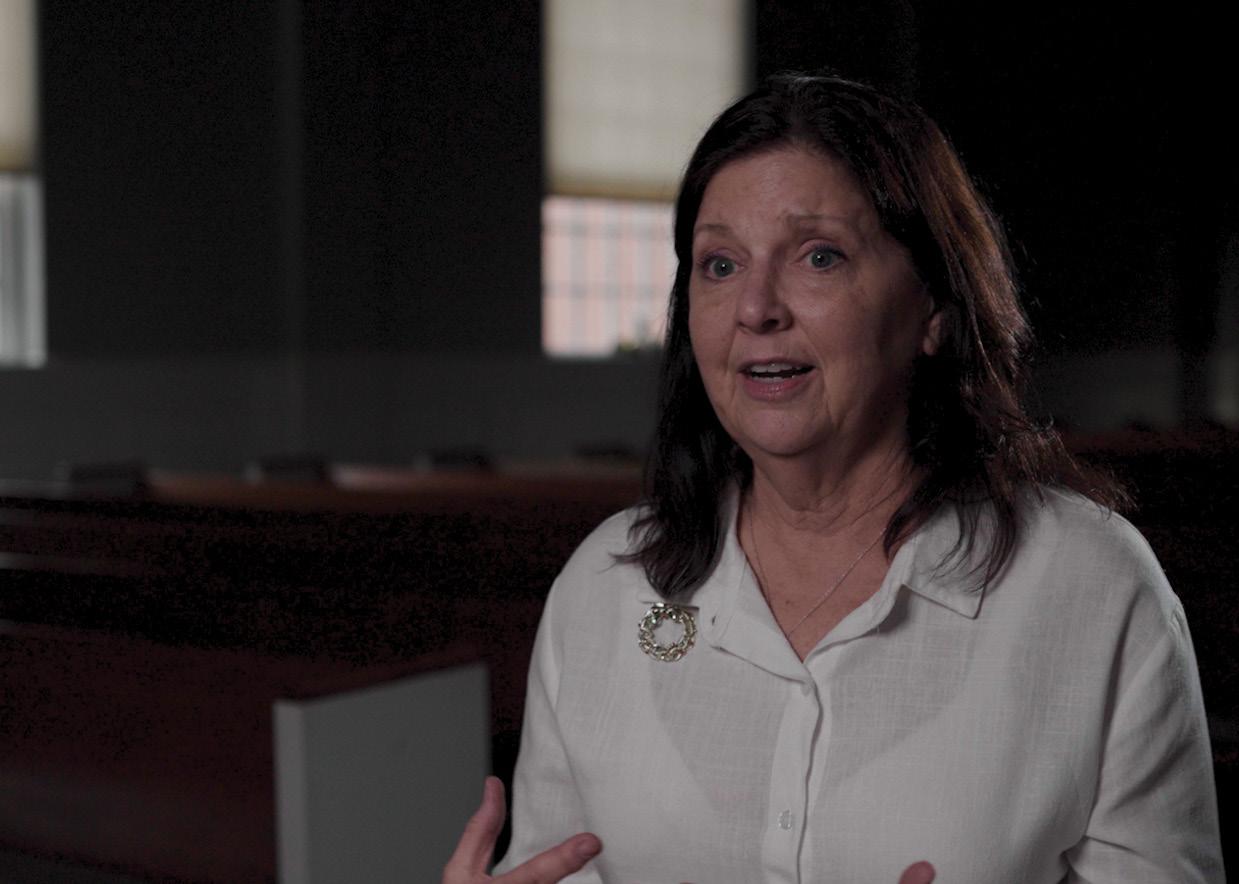
“BY THE END OF THE WEEK, I WENT HOME AND SAID, ‘I THINK I’M BEING CALLED TO MINISTRY.’”
Unfortunately, the “old great model” for filling church ministry vacancies doesn’t work anymore, he said.
That model relied upon a stream of clergy who spanned generations. They trained for ministry in seminaries or divinity schools, signed on to serve congregations and then became candidates who were available to be “called” or hired by other churches when staff positions or senior pastorates opened.
For various reasons, that ministerial pipeline doesn’t function as well as it once did, Foreman acknowledged. “But just maybe the people who can meet your church’s needs are right under your nose.”
Called in Context demonstrates the changing nature of “recognizing and finding good leadership in our faith communities and how God continues to call ministers,” added Kroll, CBF’s young adults ministry manager.
Called in Context’s “culture of calling” must be part of a broad conversation about both heeding God’s nudge into ministry and staffing congregations, he said. It may focus on changing careers and entering full-time ministry, as Pickett did. But it also may involve maintaining a secular job while taking up bivocational ministry.
“Thinking this way could lead to helping churches that cannot support a minister the way they used to because of financial reasons,” he explained. “It also could address the needs of congregations that may find it difficult to invite clergy to move into their communities because they are rural or underserved.
“In both cases, we believe churches have ready-rich members who just need an invitation that calls them into ministry.”
160 Clairemont Avenue, Suite 300
Decatur, GA 30030
www.cbf.net
(800) 352-8741
As a community and school-based counselor, it has been my honor to walk alongside women, children, couples and families as they seek wholeness and transformation in their lives. I have witnessed God heal generational trauma, repair marriages, restore dignity and self-worth, and redeem relationships. Partnerships with individuals and churches across the Cooperative Baptist Fellowship, joining in God’s work in the world, make this transformation possible.
Alicia Lee, CBF field personnel, Skopje, North Macedonia
CELEBRATE 35 YEARS OF BEING THE PRESENCE OF CHRIST BY HELPING US REACH OUR $3.5M GOAL
Your investment in CBF’s 35th anniversary campaign helps to expand the beautiful kind of Baptist witness God is growing among us.
• Building expertise and initiatives to meet the most urgent needs of congregations
• Cultivating God’s call for a new generation of leadership
• Growing our leadership development services for clergy and lay leadership teams
• Sustaining catalytic, entrepreneurial staff presence in growth regions for CBF
• Fostering genuine racial justice, reconciliation and repair
• Expanding advocacy efforts to equip churches and their leaders