ELECTRIFICATION IN EUROPEAN CONTRACT INTERIORS:
Regulations, testing standards, and certification

Regulations, testing standards, and certification
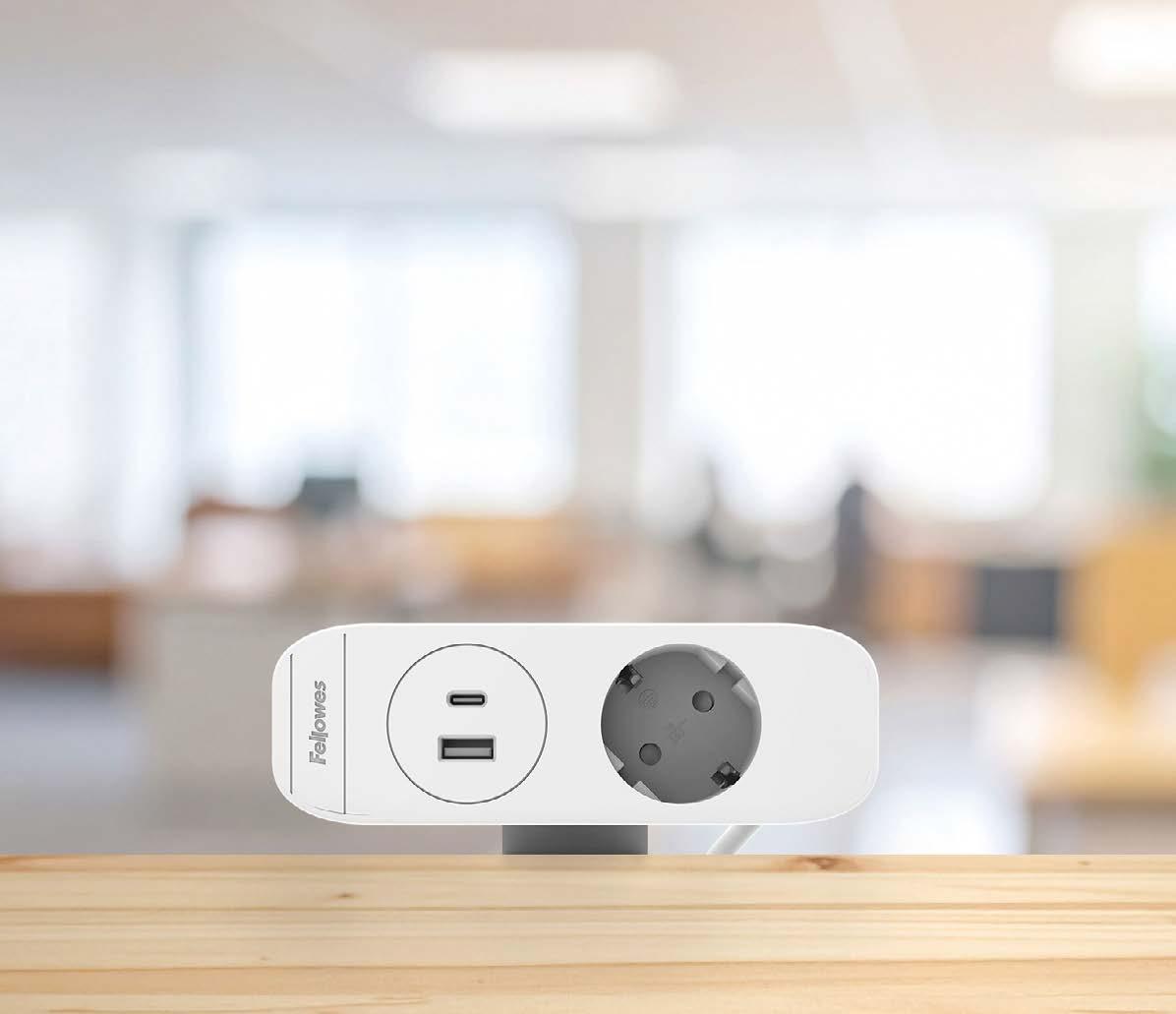
In practice, “electrification” in Contract Interiors is a mixed bag: a unit (e.g., built-in or surfacemounted fixture with 230V sockets, USB chargers, and/or cabling) is a product that is “marketed,” while the installation in a building (connection to fixed cabling, groups, safety devices, grounding, inspection/acceptance) is an installation. These two worlds have different legal frameworks, different standards, and different “proofs” of conformity.
This white paper helps you, as a customer or specification writer, to quickly see the difference between mandatory compliance (the minimum required to deliver/install legally and safely) and extra security (voluntary but valuable independent quality marks and audits).
Every effort has been made to ensure that the information in this document is current and accurate. However, Fellowes cannot guarantee and accepts no legal liability or responsibility for the accuracy or completeness of the information provided. If you discover an error or have additional information, please contact us at nlinfo@fellowes.com
For most electrification units that are part of office and Contract Interiors, the following applies: if the product falls under EU “harmonized product legislation,” then CE marking is mandatory and may only be applied in that case.
Important points that are often misunderstood:
• There is no “CE certificate” issued by a central EU authority. The manufacturer itself declares conformity and substantiates this with a technical file and an EU Declaration of Conformity (DoC).
• CE is not a quality mark or consumer label. It is primarily a legal market access indication and may not be used as a quality mark for marketing purposes.
• A notified body is only required for specific (high risk) product categories and procedures; for many electrical products, self-assessment is permitted, provided that you apply and document the correct requirements and standards.
For electrification units in office and project environments, these are generally the “supporting” legal frameworks:
Low-voltage equipment: the Low Voltage Directive (LVD) 2014/35/EU ensures that electrical equipment offers a high level of protection within certain voltage limits.
Electromagnetic compatibility: the EMC Directive 2014/30/EU requires that equipment does not cause unacceptable electromagnetic interference and is sufficiently immune to interference. This is particularly relevant when the unit contains electronics (e.g., USB chargers).
RoHS: EU regulations restrict hazardous substances in electrical and electronic equipment to protect the environment and public health.
Ecodesign (energy efficiency): When units (or supplied adapters) fall under “external power supplies” or (e.g.) wireless charging, ecodesign requirements may apply. The Commission states that the ecodesign rules for external power supplies (up to 250 W) have been in force since 2020 and that Regulation (EU) 2019/1782 will be replaced by Regulation (EU) 2025/2052 from January 1, 2028, which also addresses wireless chargers and USB C cables.
From law to standard: why EN/IEC standards are crucial
EU legislation usually formulates essential requirements (what the product must achieve), but not always how to do so technically. That is why harmonized standards exist: if a standard has been designated as “harmonized” by the European Commission in the Official Journal, its application generally gives a presumption of conformity with the relevant essential requirements within the scope of that standard.
IEC 61535 is often directly relevant to Contract Interiors because many modular connection concepts in buildings and furniture rely on it (think of “installation couplers” such as GST instead of regular plug socket combinations).
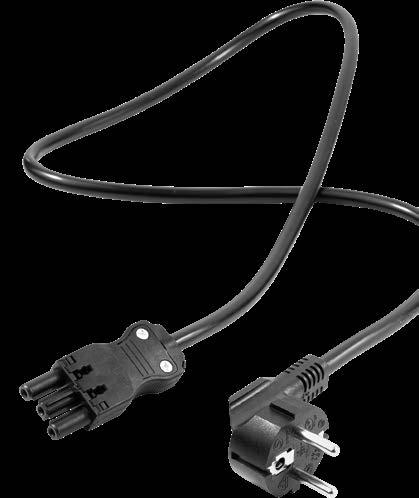
The standard describes installation couplings intended for permanent connection in fixed installations, including voltage and current ranges, and the intention that they are not designed for frequent plugging and unplugging under load.
On the installation side, IEC 60364 (and the European HD 60364 series) is the main framework for the design, construction, and verification of low voltage installations; in Europe, this series is managed within CENELEC structures (including TC 64).
IEC 60364 7 713 (Furniture) is of particular interest for Contract Interiors and “electrification in furniture.”
This standard deals with the wiring system of furniture that is connected to the building installation and explicitly states that furniture may contain lighting components, sockets, switches, and installation couplers in accordance with IEC 61535.
In practical terms, this means that as soon as a “furniture power system” actually becomes part of (or is connected to) the fixed installation, the discussion shifts from “product compliance only” to “product + installation design + verification.”
Mandatory: CE (if required by product legislation)
CE is mandatory when the product is subject to specific EU rules that prescribe CE, and CE may not be used if those rules do not apply.
CE shows that the manufacturer declares compliance with the applicable requirements and that the correct conformity procedure has been followed. It does not automatically mean that an independent third party has tested the product.
This is where most of the confusion arises in tenders: “We want TÜV,” “We want GS,” “It has to be VDE.” It helps to strictly separate these:
GS mark (Geprüfte Sicherheit) - The GS mark is a voluntary but legally regulated German safety mark. It is not a general quality label (i.e., it does not make any claims about service life or performance), but it does offer “genuine confirmation of safety” in contrast to CE.
A GS mark requires that a GS authority tests and certifies the product and that the production process is also monitored (type conformity in production).
VDE - The VDE Institute is a testing and certification institute that issues its own certification marks. The institute states that VDE marks are awarded following checks of production sites, product inspections, and regular production monitoring, and that includes a VDE mark and a VDE GS mark, among others.
Important in practice: VDE is an organization/ brand provider; GS is a legal framework + label. An organization such as VDE can issue GS certificates (provided it is authorized to do so).
TÜV - TÜV stands for Technischer Überwachungsverein and refers to a group of independent German testing and certification organizations, such as TÜV Rheinland, TÜV SÜD, and TÜV Nord. These organizations carry out technical safety and quality checks on products.
A TÜV certificate means that a product has been tested by an independent testing body according to specific international or European standards, such as IEC or EN standards (e.g., IEC 61535 for modular installation connectors or EN standards for plugs and cables). When a product passes these tests, it can receive a TÜV test mark or certificate.
It is important to understand that TÜV itself is not a separate product standard, but a testing and certification body that assesses products according to existing standards. For example, TÜV can:
• Perform product testing according to EN/ IEC standards
• Issue test reports and certificates
• Conduct factory inspections
• Issue quality marks such as GS when authorized to do so
The main difference with CE marking is that CE is essentially a declaration by the manufacturer that the product complies with European legislation. A TÜV certificate, on the other hand, means that an independent third party has actually carried out and assessed the tests. In practice, a TÜV certificate is often seen as additional proof of product safety and quality on top of the mandatory CE marking, but in most cases it is voluntary.
In terms that the customer understands, this boils down to:
Basic safety (mandatory) - In order to be able to offer a product safely and legally on the European market, a correct CE process, an EU declaration of conformity (DoC), a technical file, and application of the relevant (harmonized) standards are essential.
Extra security (possible, often desirable) GS, VDE, or TÜV type procedures provide independent testing and continuous production monitoring. Ideal for large projects, critical environments, or when you want to convey extra confidence to end customers and insurers.
When electrifying workplaces, it is important to distinguish between product standards and installation standards. These two are often confused in practice, but they have clearly different roles.
Product standards relate to the safety, construction, and performance of individual products or components. These are standards against which manufacturers such as Fellowes test and design their products.
Examples of product standards are:
• IEC / EN 61535 – installation connectors for modular electrical installations
• EN/IEC 60884 1 – plugs and sockets
• EN 50525 – electrical cables
These standards ensure that individual products are designed and tested safely before being placed on the market. Installation standards, on the other hand, relate to how electrical systems in a building should be designed, installed, and inspected. These standards focus on the complete electrical infrastructure and how components work together to form a safe system.
Examples include:
• NEN 1010 – electrical installations in the Netherlands
• DIN VDE 0100 – electrical installations in Germany
• BS 7671 – installation rules in the United Kingdom
• HD 60364 – European basic standard for electrical installations
These standards determine, among other things:
• how installations must be connected
• what safety measures are required
• how inspections and tests must be carried out
• who is responsible for the installation
For customers and Contract Interiors, this means the following in practice: Fellowes ensures that the products comply with the relevant product standards, while the installer or system integrator is responsible for safe installation in accordance with national installation standards.
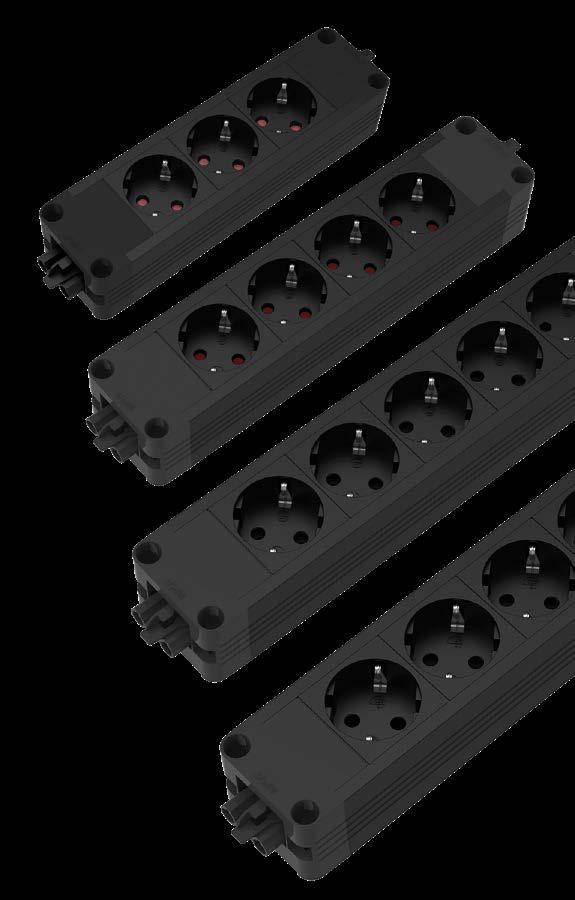
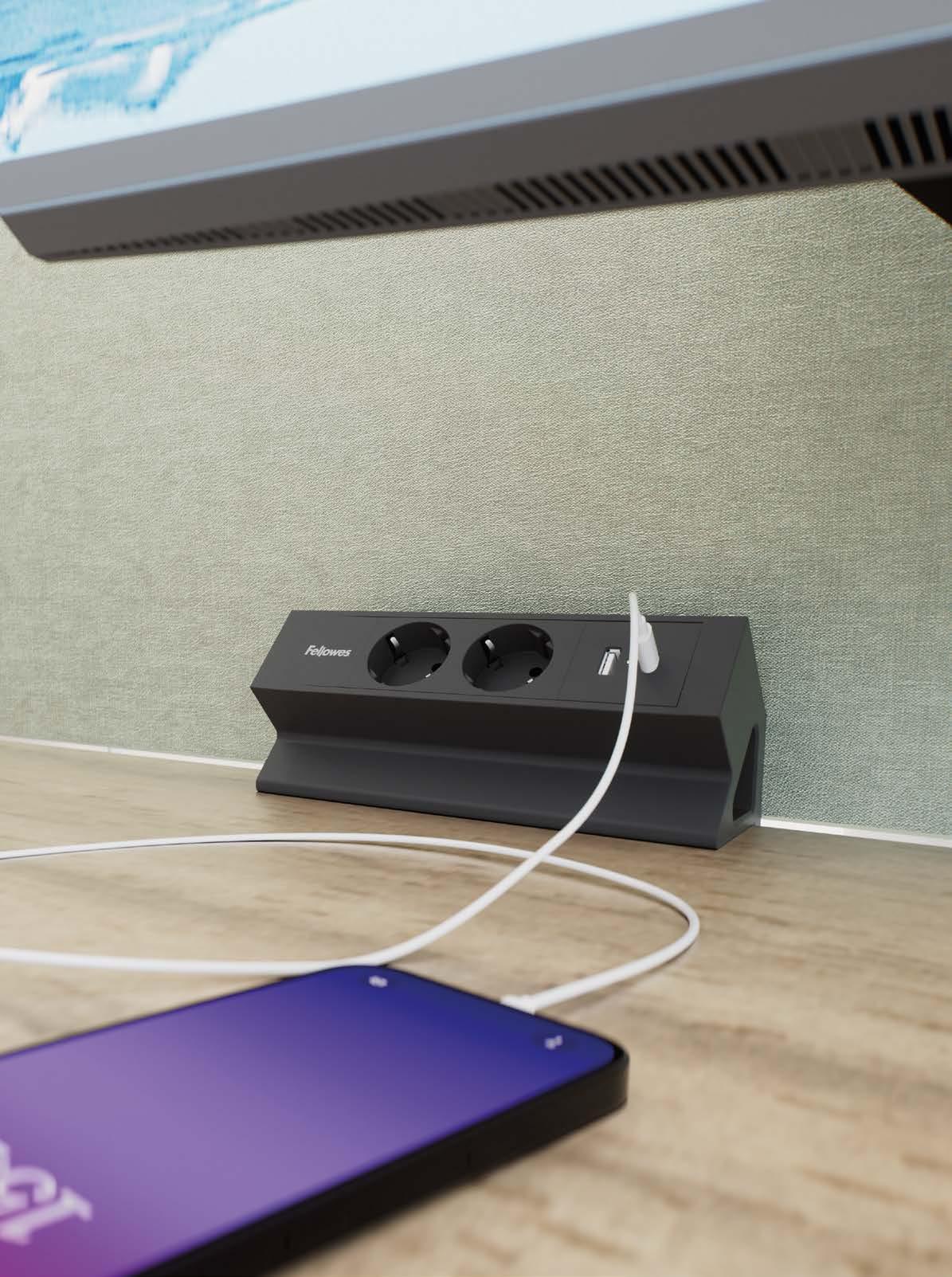
In the context of this white paper, Fellowes’ role is that of a component supplier: we supply electrification components/units that demonstrably comply with the relevant product regulations (with the accompanying documentation).
What we are not in that role: the installer of the complete building installation or the party that certifies the entire project installation (building + connections + delivery).
This distinction is not only practical, but also legally logical:
• The “Blue Guide” (EU framework) defines the manufacturer and makes it clear that anyone who markets a product under their own name is considered the manufacturer, with the associated obligations.
• National frameworks assign installation work and delivery documentation to the installer and/or owner/ client, depending on the country (see next section).
Practical consequence: a component supplier can help you with product documentation (DoC, test reports, material specifications), but cannot usually sign off on the installation regulations “instead of” the installer, because these depend on the design, implementation, and measurements on site.
The market is mainly based on European standards.
Commonly used standards and certifications are:
• EN / IEC 61535 for modular installation systems
• EN 60884-1 for plugs and sockets
• CE marking as a legal basis
Additional quality marks such as KEMA KEUR, DEKRA, or TÜV can offer extra confidence, but are usually voluntary.
In France, certifications recognized by French authorities are often sought after. Common references include:
• NF standards and certification
• European EN/IEC standards
CE marking remains the legal basis.
European standards are leading. In practice, the following are taken into account:
• EN / IEC standards
• CE marking
Additional quality marks such as TÜV or VDE can provide extra confidence in projects, but are not usually mandatory.
The UK has its own standards structure with BS standards, such as:
• BS 1363 for British sockets and plugs
• BS 5733 or BS 6396 for certain power distribution systems
Although the UK is no longer part of the EU, many European standards remain technically comparable.
Germany is known for its strong focus on independent certification. Popular quality marks include:
• VDE certification
• GS mark (Geprüfte Sicherheit)
Although these are not always legally required, they are strongly recommended or even contractually required in many projects.
Poland largely follows European standards, but national regulations often refer to Polish implementations of these standards, such as:
• PN-HD 60364 for electrical installations European standards and CE marking are generally accepted for products.
European standards are also leading here. In practice, the following are taken into account:
• EN / IEC standards
• CE marking
Additional quality marks such as TÜV or VDE can provide extra confidence in projects, but are not usually mandatory.
When it comes to the electrification of workplaces—such as desk power units, power modules, and modular power distribution—there is often confusion about standards, certifications, and responsibilities.
Below are five misunderstandings that regularly occur in practice.
1. CE marking is a quality mark
CE is often seen as a quality mark, but it is not.
The CE marking is a legal declaration by the manufacturer that a product complies with European directives for safety, health, and the environment.
CE is mandatory for marketing a product in Europe, but it is not an independent certification or quality mark by an external body.
Certification marks such as GS, VDE, or TÜV are sometimes considered mandatory, but this is usually not the case. These quality marks are generally voluntary certifications that demonstrate that a product has been tested by an independent third party. They provide additional assurance of safety and quality, but in many cases are not legally required. In some countries or projects, they may be required by contract.
3. If the products are certified, the entire installation is safe.
Certification of a product means that that specific product has been designed and tested to be safe. However, it says nothing about the safety of the entire installation.
The safety of a complete electrical installation depends on:
• correct installation
• correct dimensioning
• application in accordance with national installation standards
4. The manufacturer is responsible for the complete installation
A manufacturer such as Fellowes supplies components for workplace electrification, such as power units, connectors, and cable systems.
The manufacturer is responsible for:
• product safety
• compliance with product standards
• correct documentation and certification
The installer or system integrator is responsible for:
• the complete electrical installation
• connection to the building
• compliance with national installation standards
• inspection and testing of the installation
When electrifying a Contract Interiors, it is important to distinguish between products (such as desk power units, connectors, and cabling) and the complete electrical installation in a building. Products must comply with European regulations, with CE marking forming the mandatory basis. This marking means that the manufacturer declares that the product complies with relevant European directives, such as the Low Voltage Directive and EMC Directive, and that this is substantiated with technical documentation and the application of relevant standards, for example IEC/EN standards such as IEC 61535. Voluntary certifications such as GS, VDE, or TÜV offer additional assurance because an independent party checks the safety and sometimes also the production, but they are usually not legally required.
In addition, a distinction must be made between product standards and installation standards. Manufacturers such as Fellowes are responsible for designing and supplying safe and standard-compliant components, while the installer or system integrator is responsible for correct installation in accordance with national installation rules such as NEN 1010 or DIN VDE 0100. Although European product standards are largely harmonized, there may be differences in preferences for certifications or standards from country to country. By developing products in accordance with recognized international standards, electrification solutions can be safely applied in a wide range of European project environments.
Do you have questions or would you like to know more about regulations, certifications, or installation requirements? Feel free to contact us by email: nlinfo@fellowes.com, or call us directly: +31 (0) 854883666. Our team will be happy to help you.
Fellowes Contract Interiors, De Gruyter Fabriek, Veemarktkade 8, ROOM 5219, 5222 AE,‘s Hertogenbosch +31 (0) 854883666 I nlinfo@fellowes.com