Bachelor of Science Architecture 2022 - presumably 2025
Awards
Beazley Design Award of the Year 2021
The Uncensored Library
First Place Design: Reporters Without Borders in collaboration with DDB Germany; Architect: blockworks
Experiences
Blockworks LLC, London
Level Design for Corporate Commissions, Exhibitions and Governmental cultural/educational reasons
Digital Architect 10.2018 - 4.2025
Ar-wyn GmbH, Hamburg
Planning and Construction of wind farms and wind power plants
Werkstudent Project Management 04.2023 - 06.2024
SDG CAMPUS
Consulting for Heterogenity and Diversity, Exam principles, Student decentralization, Institutionalized student participation Student Advisory Board 05.2023 - 09.2023
Jan Braker Architect
Together with Université Paris Dauphine for a part of a broader academic objective aimed at exploring the notion and importance of time in the process of innovation and design
Workshop Domplatz Dialogues 14.04.2025
Knowledge
German (Motherlanguage)
English (Fluent)
Japanese (Beginner)
Python (Beginner)
CAD (VectorWorks, AutoCAD, Grasshopper in Rhino)
Render (Enscape, Twinmotion)
Microsoft Office, Adobe CC
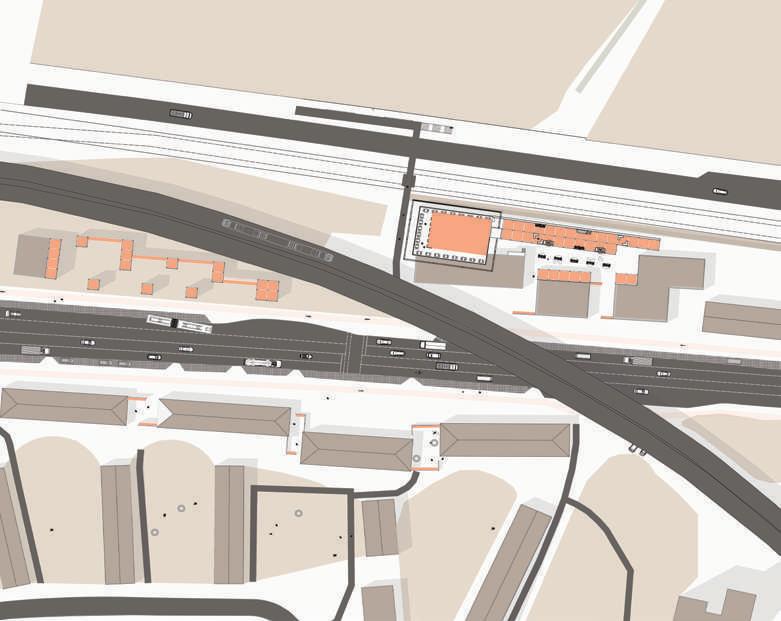
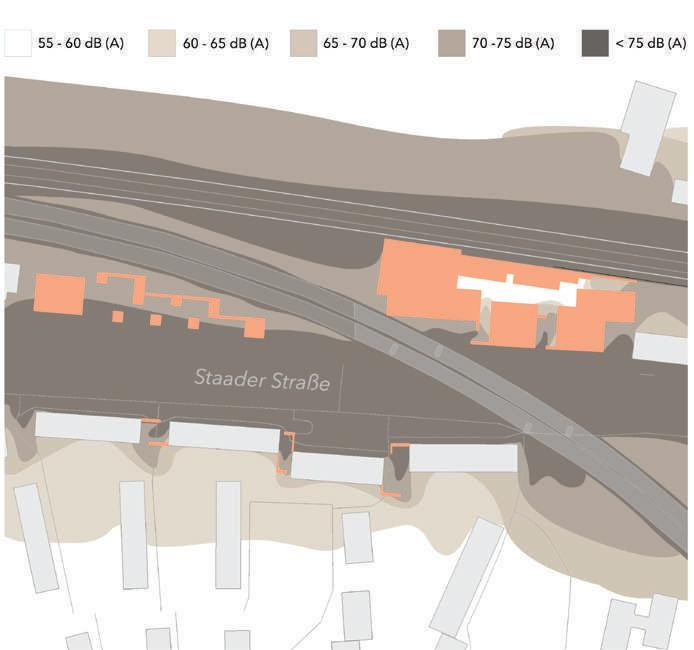
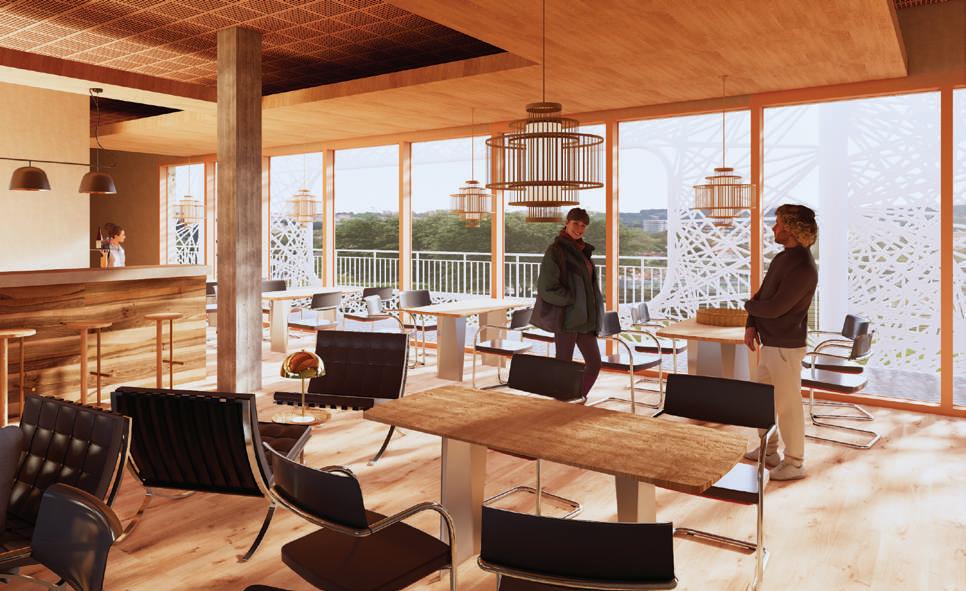
HÖRBAR
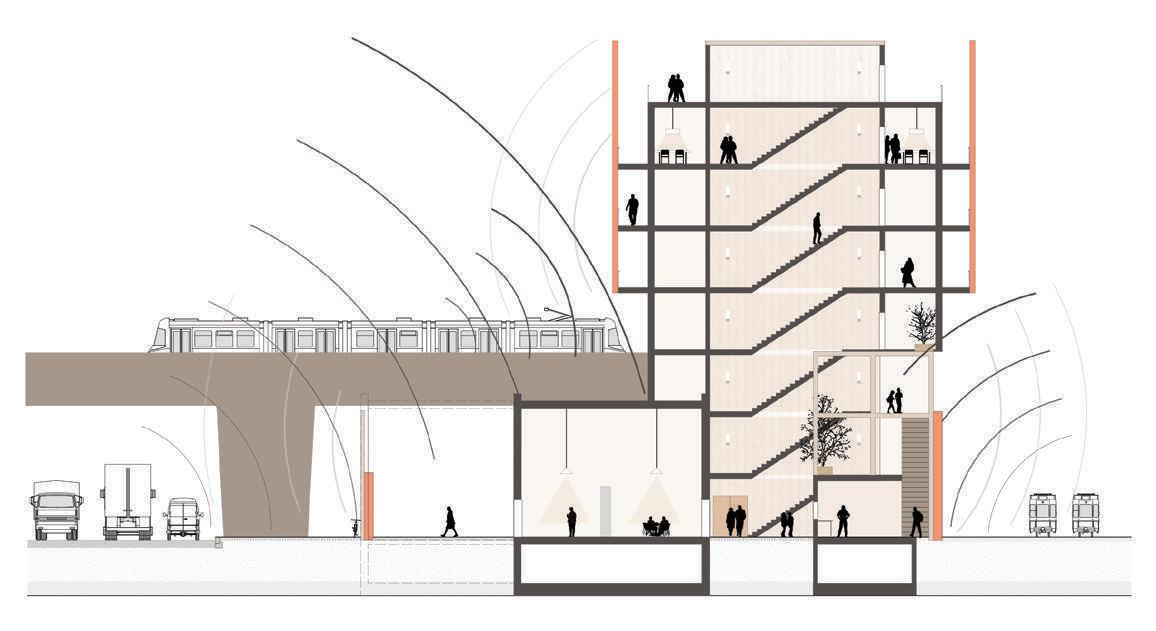
Transformation of noise affected areas around the Magistrale 10 in Hamburg
Year 3 Architecture Studio Urban Gardens
Urban generator with free gardening areas to enhance public health
Year 2 Architecture Studio & Building Construction
Computional Architecture Studies
Personal sketches in the area of parametric design 02.2025 - 04.2025
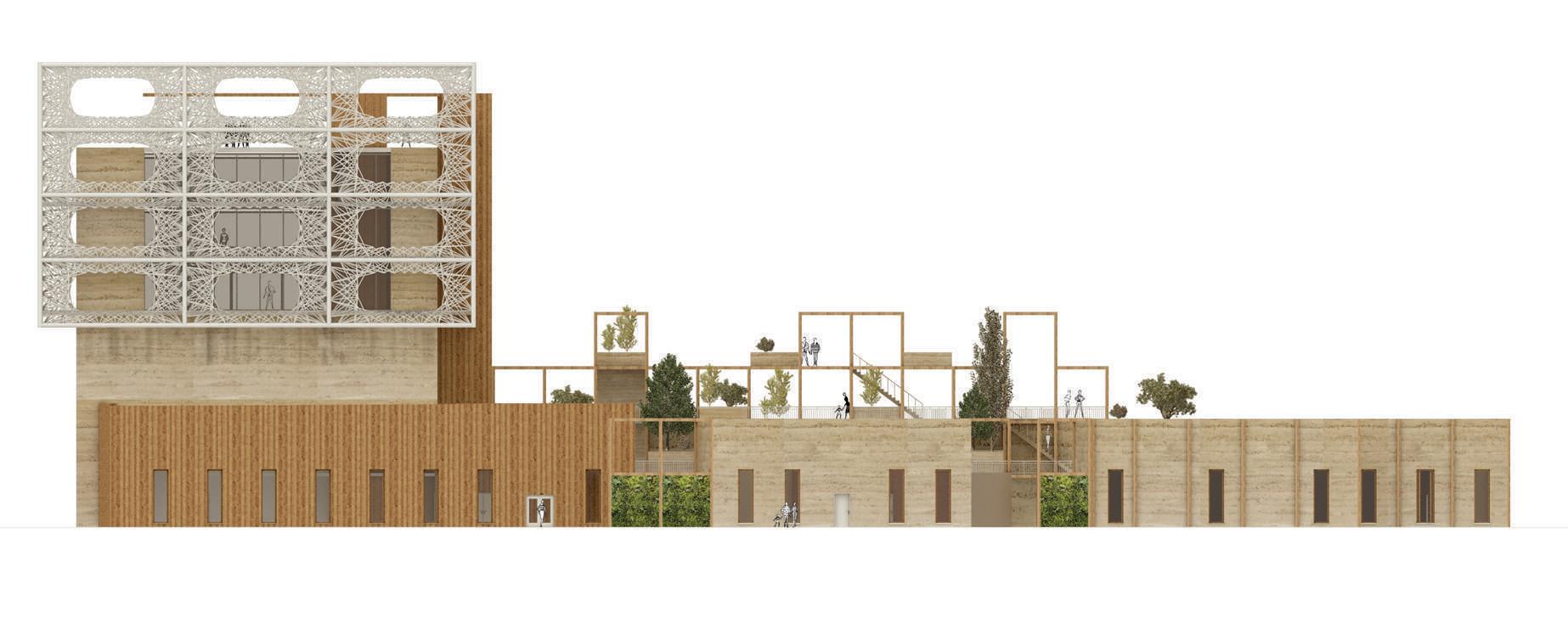
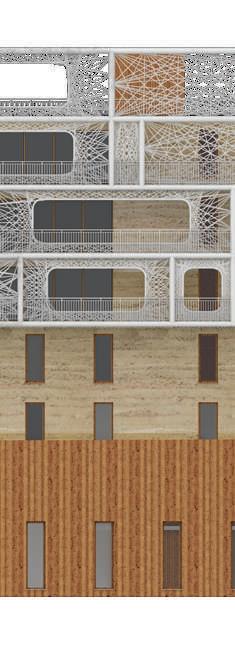
View South 1:100
piezoelectic fibre resonates sound waves
under tension deflects up to 75% of incoming sound waves
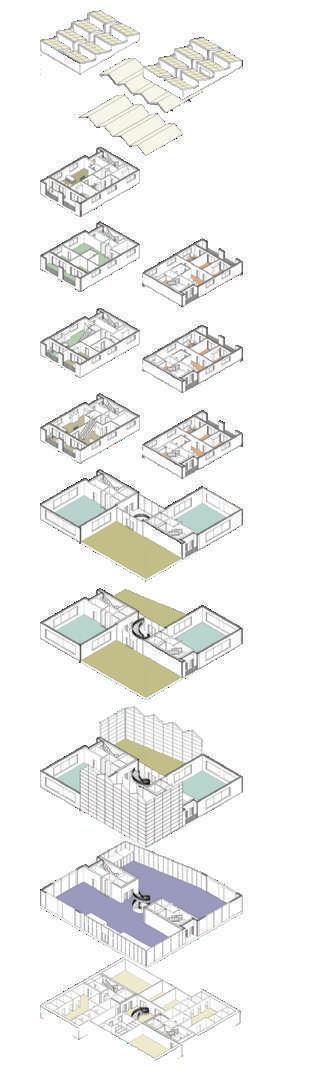
Urban Gardens
Urban generator with free gardening areas to enhance public health
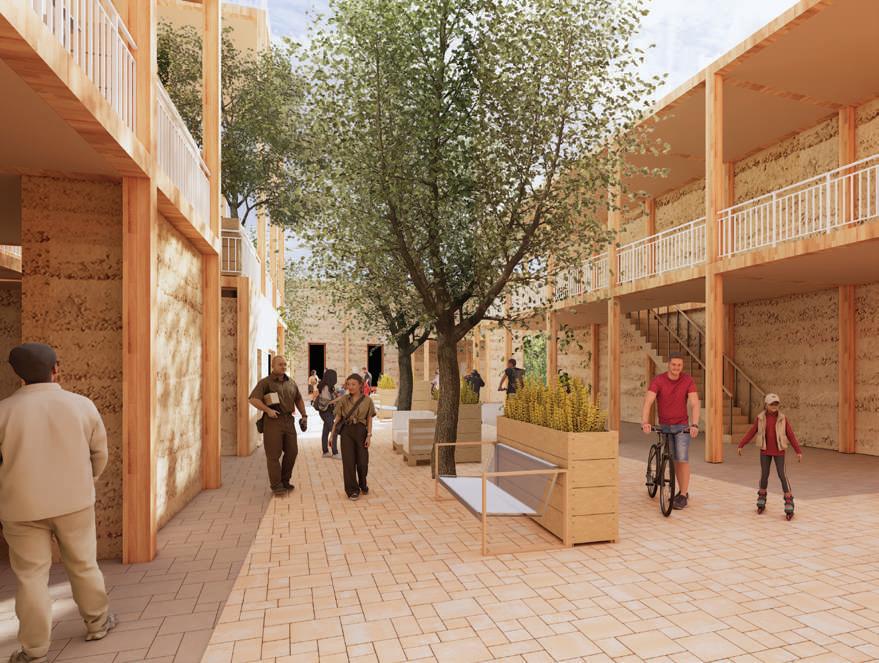
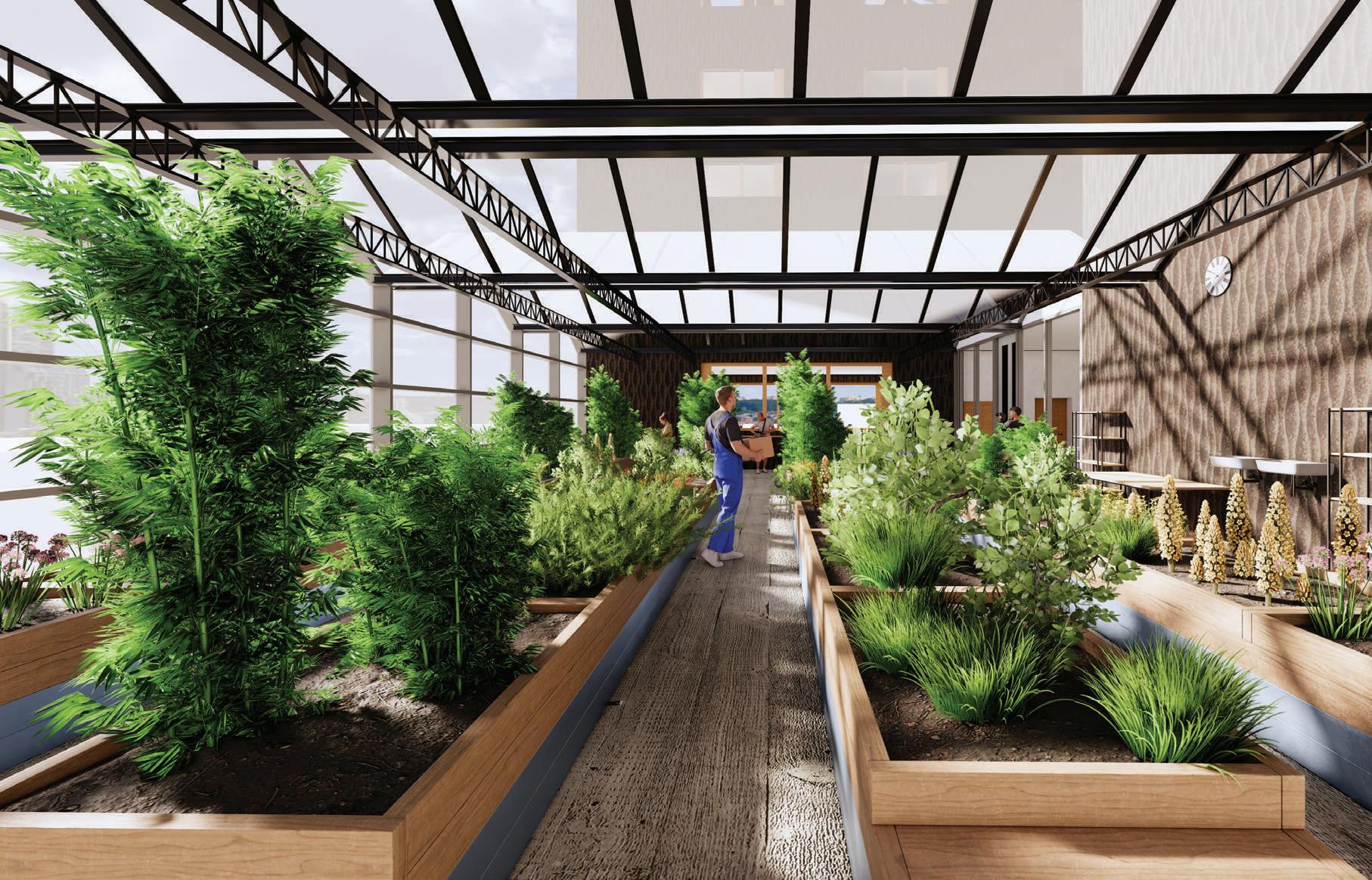
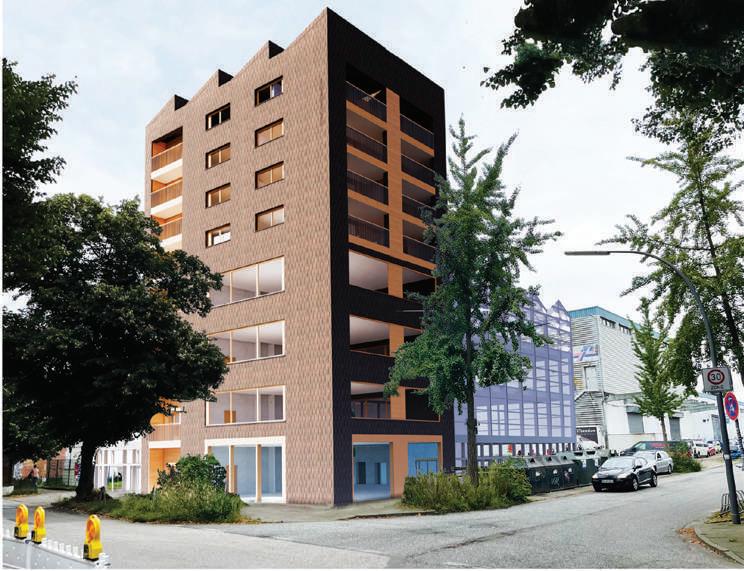
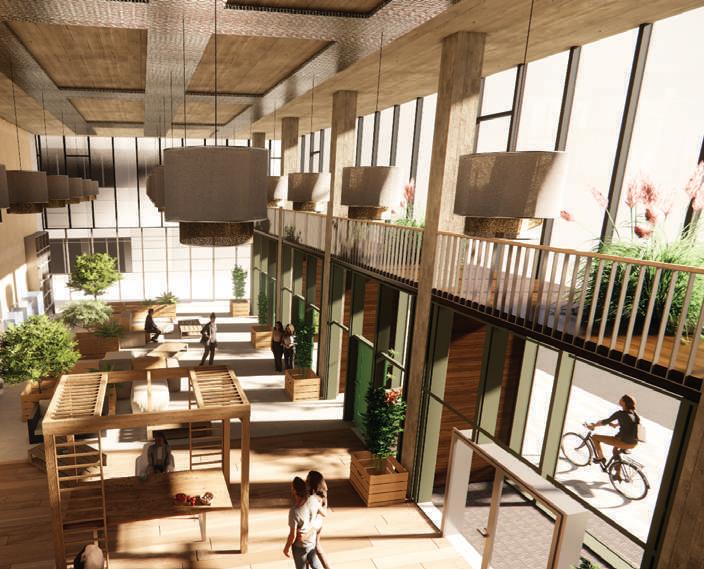
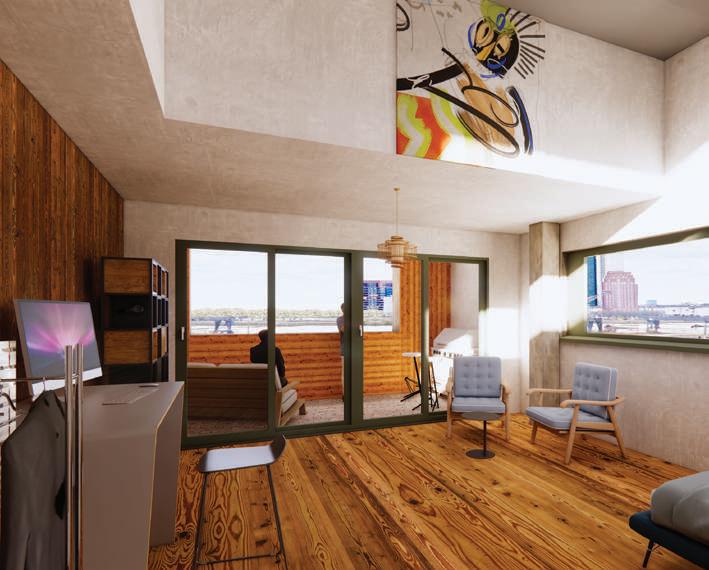
In the context of our architecture studies, we were developing an Urban Generator, a hybrid building concept that redefines how we live, work, and produce in the city. This building is designed to house not only people and small businesses, but more importantly, urban gardens that are accessible to the public.
At the heart of our concept lies the idea of self-determination through cultivation. Each individual, resident or local citizen, can receive a small garden plot (“eine Parzelle”) to plant and grow what they wish. In a time where food is largely disconnected from its origins and simply bought in supermarkets, we aim to restore a sense of autonomy, participation, and connection to nature.
The Urban Generator is not only a building, it is a social infrastructure that fosters interaction, shared responsibility, and ecological awareness. It is an attempt to reintroduce food production into the fabric of the city, empowering people to become co-creators of their environment, rather than passive consumers.
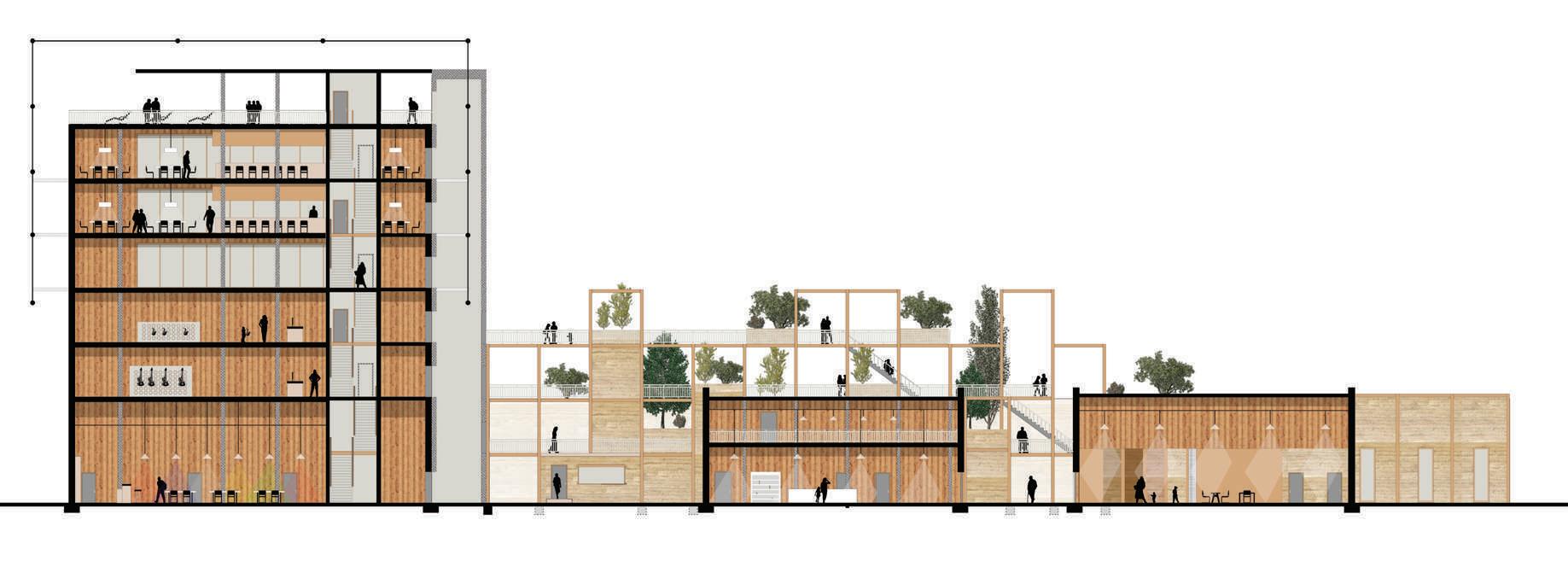
Section West
Detail Attic/Loggia/Terrace-door
Detail Saw-tooth Roof
Computational Architecture Studies
Personal sketches in the area of parametric design
Computational design is the up- and coming backbone of the architectural revolution. It allows for more efficient, adaptive and intelligent architecture while consuming less time, enabling architects to focus on what matters.
Human-centric and nature abiding architecture, incorporating culture, tradition, innovations, natural systems and creativity. Coming up with new forms and shapes, bringing technological advancements into synchrony with our world and enviromental needs.
Algorithmic architecture is not just for complexity, but for crafting responsive spaces.
While at my University we didnt got teached any computational design methods above traditional CAD tools, spend a lot of my freetime learning Grasshopper, JS5 and LLM Tools as the pure creating process through parametric approaches allows me to merge my creativity with calculation, and intuition with logic to create shapes and form that align with our nature and society, which is my biggest inspiration for doing my masters in such field.
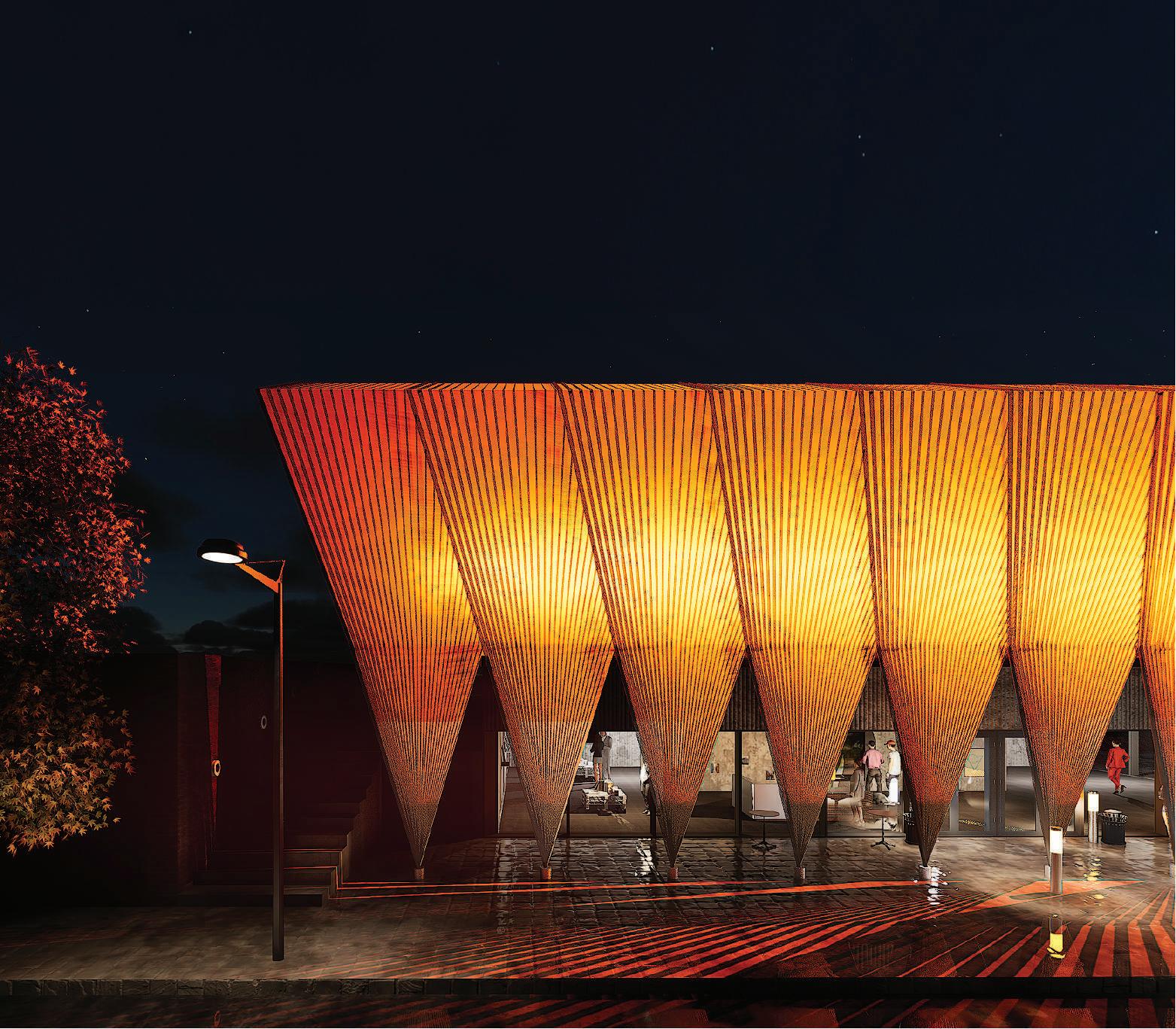
Facade Study: Light Membrane
Concept of a facade focusing on light play
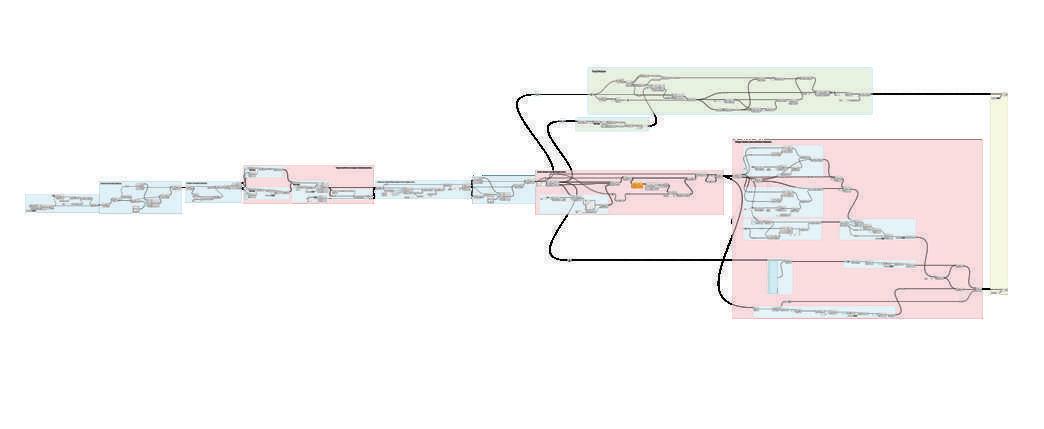
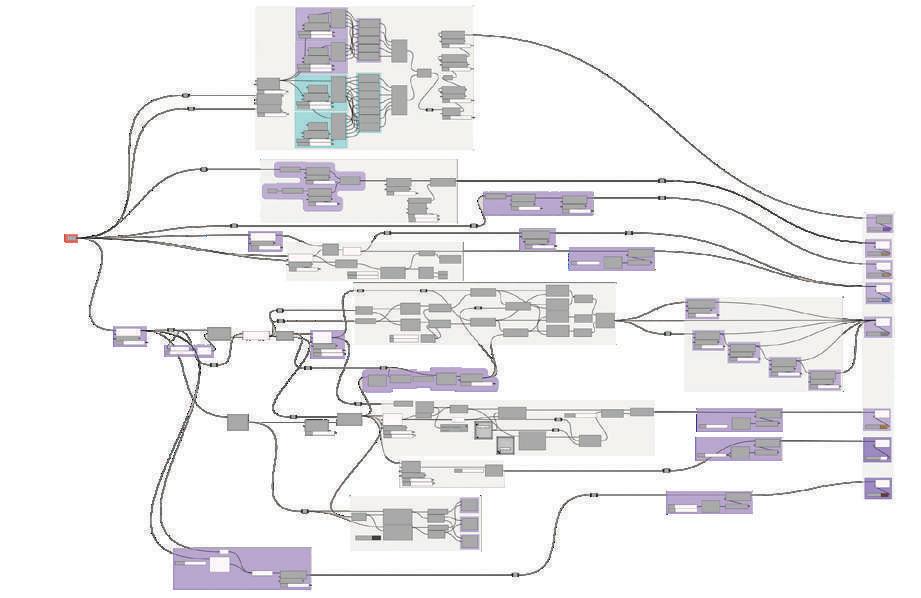
While the facade itself doesn’t look too complex on a first sight, creating this script was the most amount of data management and list operations I had to make till now. The basic optic of the fiber tensile structure, spanning in front of the museum, got created with one single curve, which got divided to create 13 basic node points from which the fibers should tangle up to their end points. The biggest problem to manage was the creation of overlapping lines, as the upper line consists of 300 division points and each of the 13 fiber membranes should have 30 connection points thus overlapping 7 points backwards.
Managing data trees, branch paths, partitioning and adding lists to lists, culling patterns and indexes, merging and entwining lists were the most work of the script to create the overlapping polylines. Cutting them off at certain overlapping so that they aren’t visible as a simple parallelogram pattern, and lofting the end lines of each membrane finished this script. Many more programmatically steps are involved but aren’t worth noticing as they are basic script partaking in every step of using grasshopper.
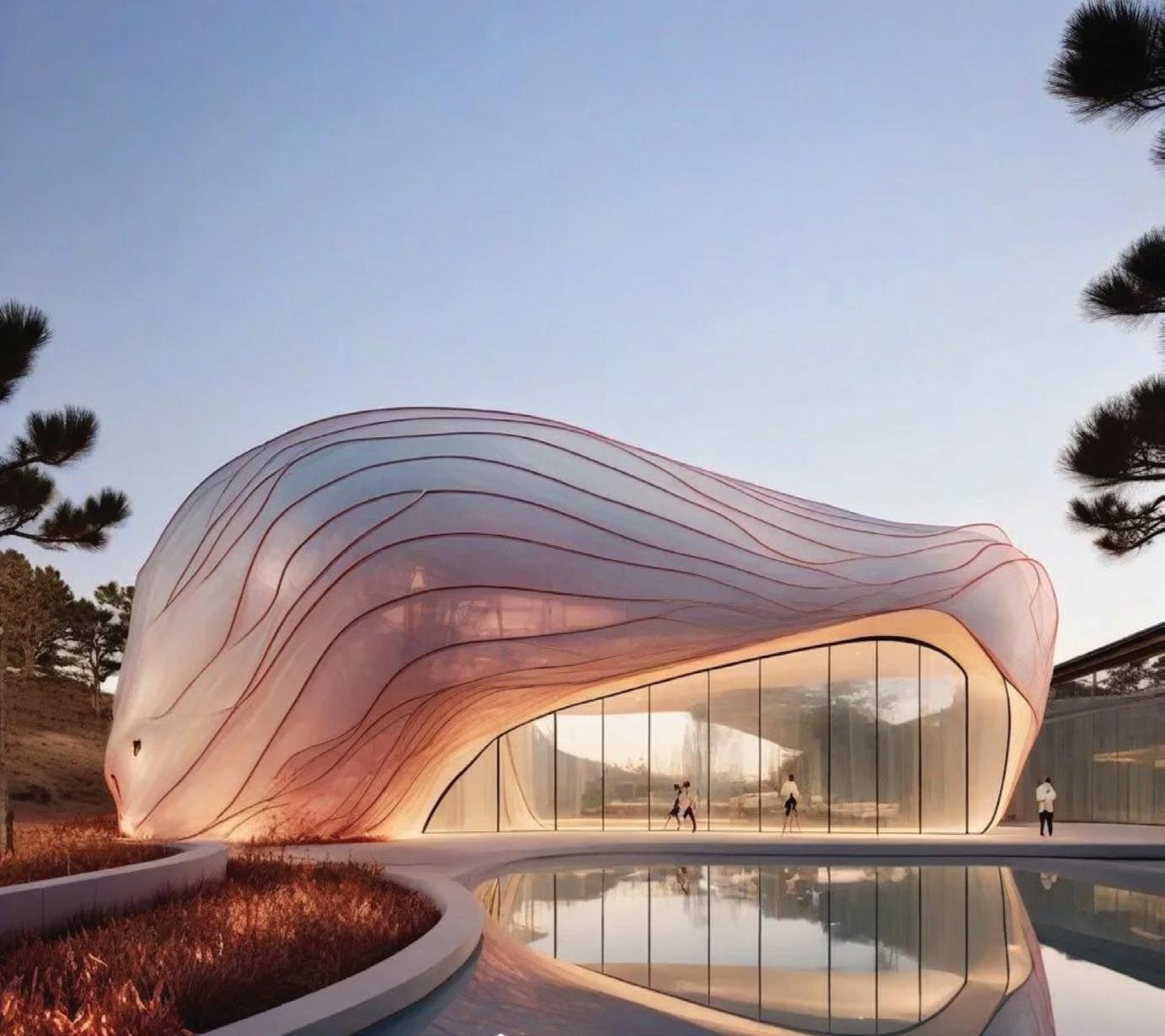
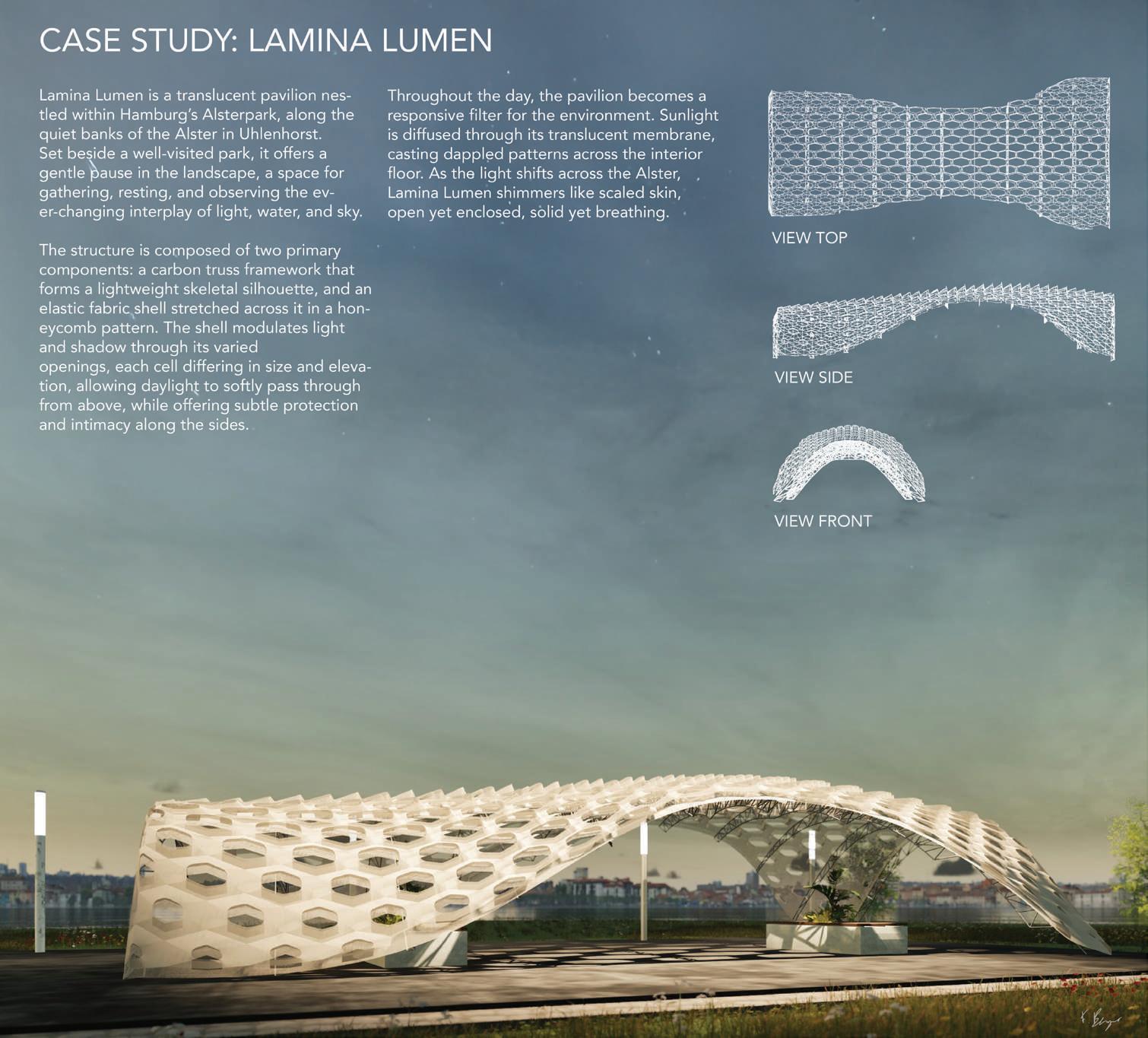
Case Study: Lamina Lumen
Design and Construction of the Pavillon
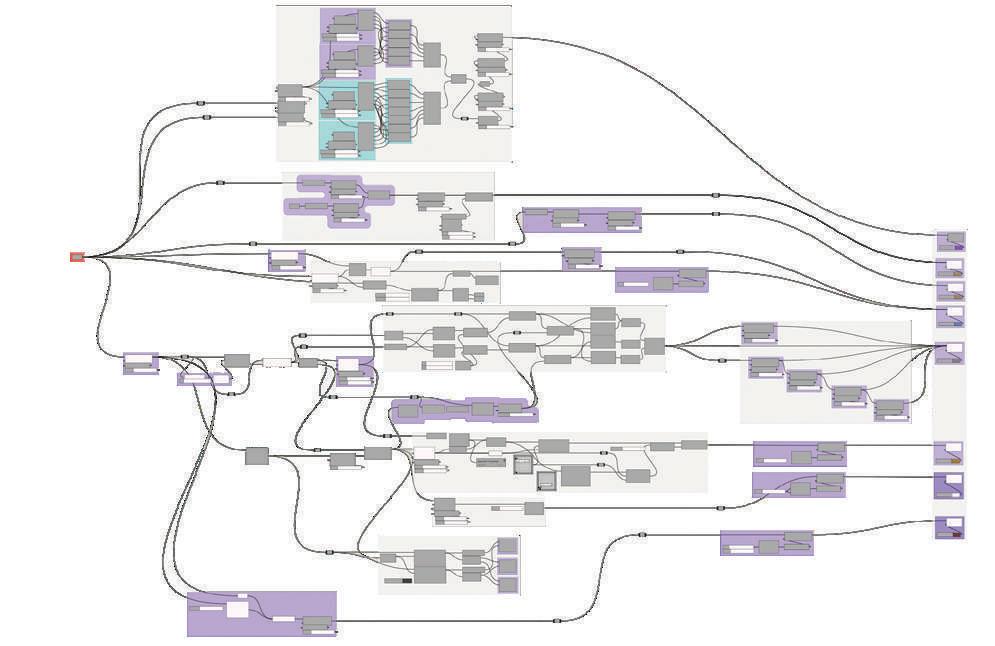
The fiber shell consists of four base lines which got sweeped to create a surface. Problem was many grasshopper plugins like lunchbox can only work with UntrimmedSurfaces, so I had to fractalize the surface into thousands of points, then recreating the surface with a SurfaceFromPoints.
The openings of the shell then were made by a basic honeycomb projected onto the surface, with panel frames. To get different sizes, I used Heteroptera based on a BionicAttractor which takes in the distances from all the center points of the honeycomb polygons towards a single center curve thus returning different values which got remapped and clustered into lists of holes for getting the panel frames.
The „dragon scales“ characteristics which shows different heights at each opening by raising two of the six points of a polyline got made by using Discontinuity on each line, a few more list operations and moving those points towards the Normals direction of each center point regarding its position on the shell, (as a basic Z-axis move wouldn’t get that result) and again based on an attractor towards a main line.
So that all in all the closer a single honeycomb is towards the middle of the Pavillon shell, the higher its scale and bigger it’s opening is this reaching the patternized and attracted parametric openings.
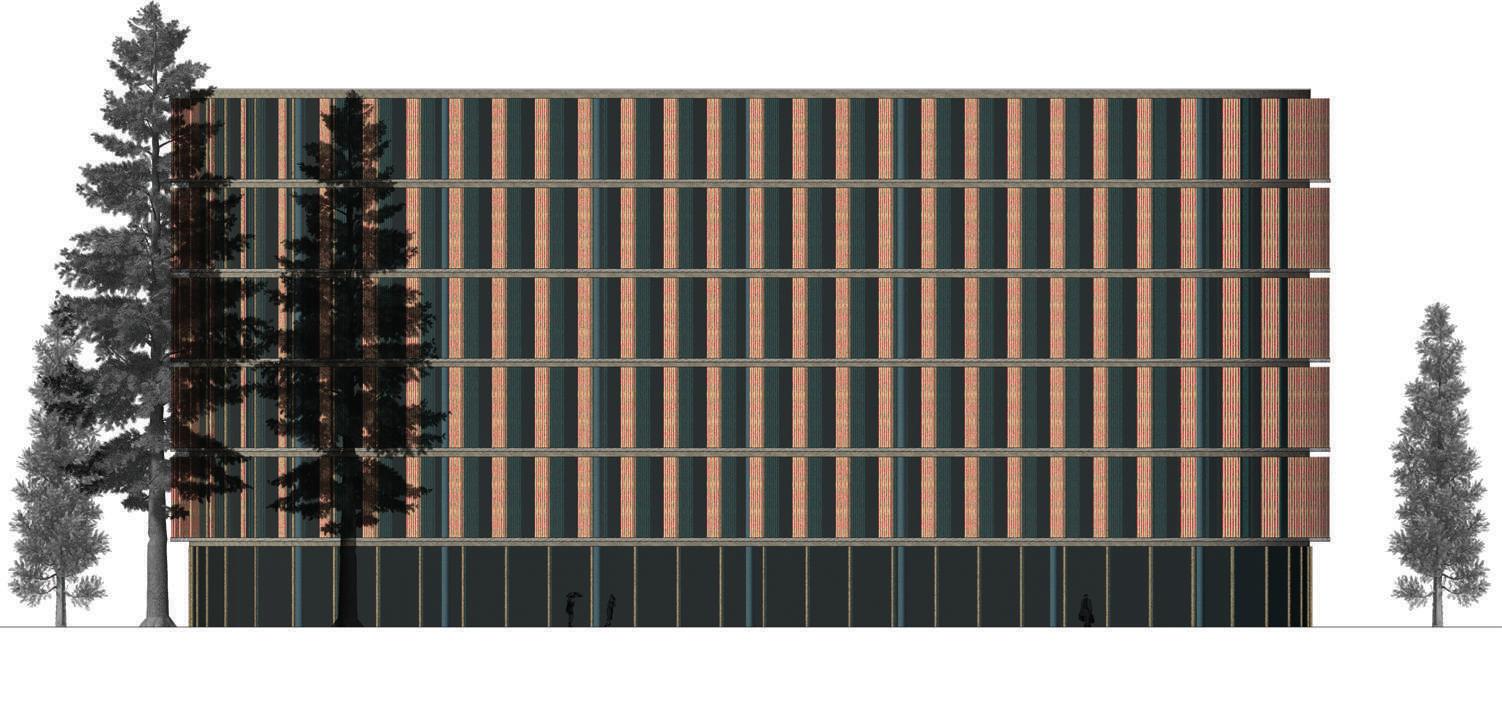
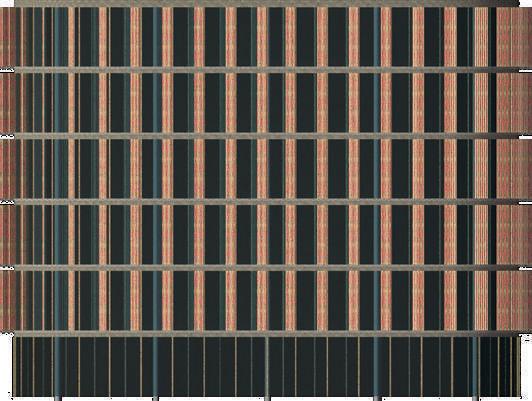
Case Study: Public Authorities Storey
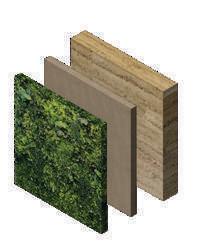
Post beam construction with rotated panels for sun deflection
The storey building shape represents a rectangle with rounded corners, the facade is a curtain wall made of glass and wood to ensure as much light as possible gets inside.
To reduce heat transmission towards the inner of the building theres a rotated panel in a 45° degree made of wood in front of every window.
This keeps the heat outside, deflected by the rotated panels while ensuring enough light gets passed through the curtain wall into the buildings rooms and spaces.