Government To Accelerate Biodiesel Blend Upgrade to B15
Malaysia Targets 32pct Installed Renewable Energy Capacity This Year
IN THE HOT SEAT
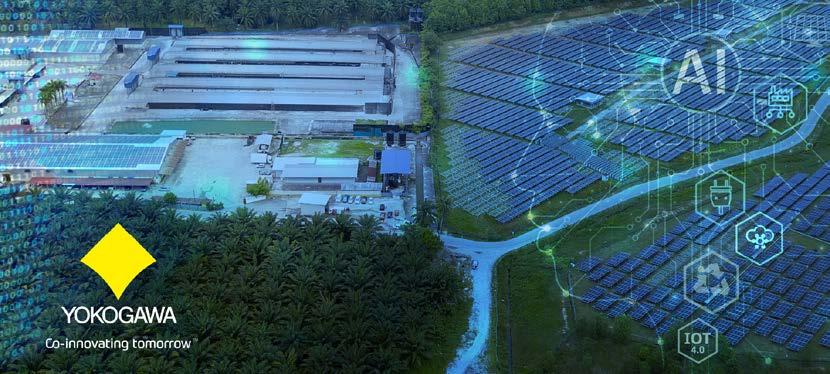
Interview with Yokogawa Engineering Asia Pte Ltd: Driving Sustainable Palm Oil Operations Through Digitalisation, AI and Decarbonisation
The global palm oil industry is entering a decisive period, shaped increasingly by the world’s search for energy security. As governments and industries look for more resilient fuel solutions, palm oil is no longer being discussed only as a food commodity, but also as a strategic feedstock in the transition toward biofuels and alternative energy. This shift is redrawing the balance between domestic consumption, exports, and long-term market competitiveness.
One of the most significant developments is Indonesia’s move toward its B50 biodiesel programme from July 2026. By raising domestic biodiesel blending, Indonesia is expected to absorb more palm oil at home, leaving less available for export. This will likely tighten global supply and may lend support to prices, while also creating fresh uncertainty in international trade flows. For market players across the value chain, the implications are substantial and impossible to ignore.
At the same time, changes in how Indonesia manages palm oil exports are adding another layer of complexity to the global market. In a trade environment that is becoming more sensitive to policy, supply security, and geopolitical pressures, reliability matters more than ever. This creates an opening for Malaysia to strengthen its position as a dependable supplier, especially for buyers seeking consistency, transparency, and long-term business stability.
For Malaysia’s palm oil industry, this is both a challenge and an opportunity. The sector must continue to improve productivity, sustainability, and downstream value creation while remaining responsive to shifts in regional
PUBLISHER
FBI Publications (M) Sdn. Bhd.
PUBLICATION MANAGER
Vanny Lim vanny@asiafbi.com
PUBLICATION EXECUTIVE
Jocelyn Ong jocelyn@asiafbi.com
PROJECT EXECUTIVE
Ethan Loi ethan@asiafbi.com
MARKETING COMMUNICATION MANAGER
Nur Izyan binti Dzulkifli izyandzul@asiafbi.com
CREATIVE DESIGNER
Muhammad Fadzil design@asiafbi.com
BOARD OF DIRECTORS
Kenny Yong Susan Tricia
OFFICIAL MAGAZINE OF
CONTRIBUTOR
- ABS Innovations Sdn Bhd
- Alfa Laval Malaysia Sdn Bhd
- YKL Engineering Sdn Bhd
- Yokogawa Electric (Malaysia) Sdn. Bhd.
policy and global demand. Strong industry coordination, policy engagement, and market intelligence will be essential as the landscape continues to evolve rapidly.
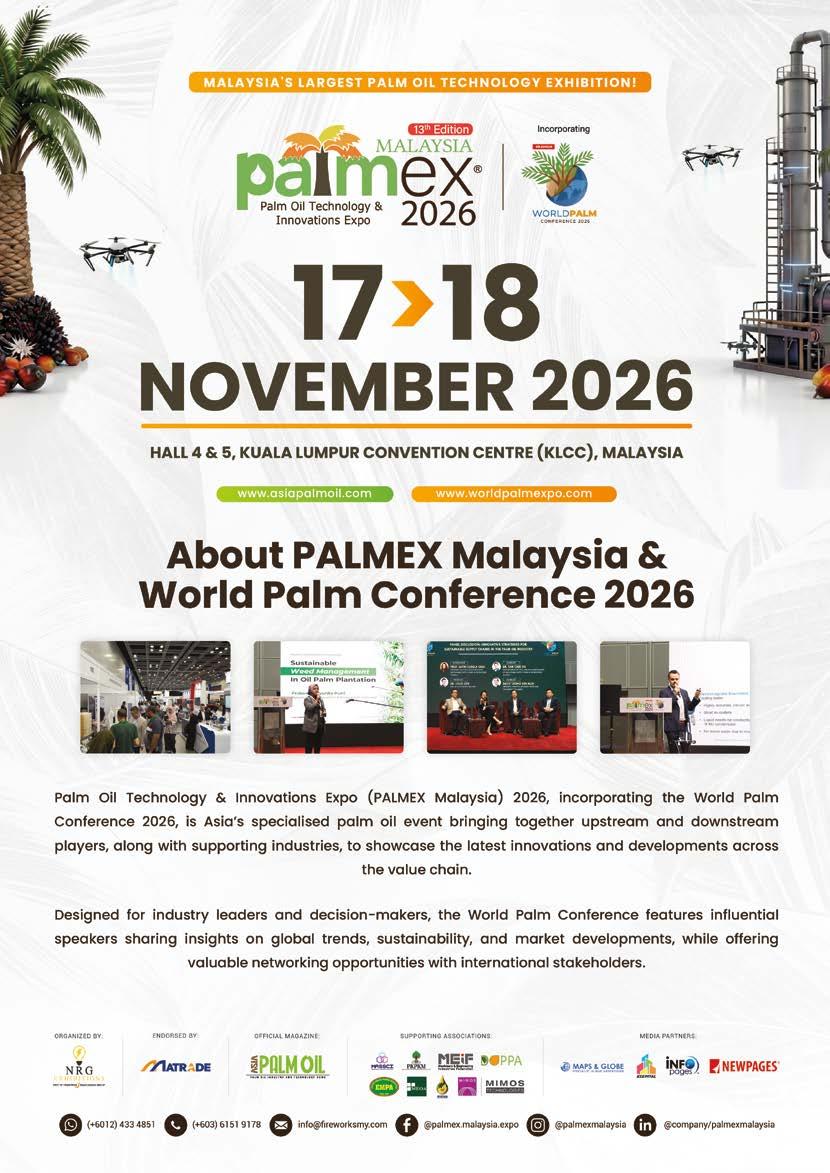
As we present this Jul–Sept 2026 issue of Asia Palm Oil Magazine, we aim to reflect these changes with clarity and perspective. We also look forward to meeting industry friends and partners at PALMEX Malaysia 2026 on 17–18 November 2026, where these important conversations will continue. The new global palm oil landscape is taking shape now, and energy security is becoming one of the defining forces behind it.
Follow us:
: Asia Palm Oil Magazine
: Asia Palm Oil Magazine Susan Tricia Editor
FBI Publications (M) Sdn Bhd (1168942-P) J-3F-1, Encorp Strand Garden Office, No 12, Jalan PJU 5/1, Kota Damansara, 47810 Petaling Jaya, Selangor Tel: +603 6151 9178
PRINTED BY
MMS PRINT SHOP (M) SDN. BHD. (1246387-v) NO 43G, Jalan PBS 14/2, Taman Perindustrian Bukit Serdang, 43300 Seri Kembangan, Selangor.
ENDORSED & SUPPORTED BY DISCLAIMER
The assertions and opinions expressed in articles and announcements on this magazine reflect the views of the author(s) and do not (necessarily) reflect the views of the publisher. Asia Palm Oil Magazine can in no way be held responsible for the content of such views nor can it be held liable for any direct or indirect damage that may arise from such views.
The information in this magazine is regularly supplemented and/or modified. Asia Palm Oil Magazine reserves the right to make any changes with immediate effect and without providing any notice thereof
Empowering the Palm Oil Industry Through Sustainable Excellence and Innovation
08 - Empowering the Palm Oil Industry Through Sustainable Excellence and Innovation
Malaysia Targets 32pct Installed Renewable Energy Capacity This Year
36 - 21,049 Smallholders Benefit from BUDI AgriCommodity Programme in Johor 40 - Interview with Yokogawa Engineering Asia Pte Ltd: Driving Sustainable Palm Oil Operations Through Digitalisation, AI and Decarbonisation 46 - Transforming Deodorization Performance: How a New Spiral Heat Exchanger is Revolutionizing Operations at a Malaysian Palm Oil Refinery 50 - The Behaviour Gap: Why 60% of Your Yield Loss Starts with People — and How to Fix It 54 - Palm Oil: Not Just for The Frying Pan
21,049 Smallholders Benefit from BUDI AgriCommodity Programme in Johor The Behaviour Gap: Why 60% of Your Yield Loss Starts with People — and How to Fix It
Empowering the Palm Oil Industry Through Sustainable Excellence and Innovation
In an industry increasingly shaped by efficiency, sustainability, and responsible technological advancement, YKL Group has established itself as a trusted engineering partner to palm oil millers worldwide. With more than 50 years of industry experience, the company continues to drive operational excellence by delivering innovative machinery solutions that balance performance, environmental responsibility, and longterm value creation.
Founded in 1973 by visionary entrepreneur Yeo Koon Lian, YKL Group was built on the principles of reliability, continuous improvement, and a deep understanding of the palm oil industry. From its early beginnings, the company focused on addressing real operational challenges faced by millers, while continuously evolving its solutions to meet changing industry demands and sustainability expectations. This commitment has enabled YKL Group to expand its global footprint to more than 20 countries, including Indonesia, Thailand, Papua New Guinea, India, the Philippines, African nations, and Latin America.
At the core of YKL Group growth is an unwavering commitment to technology-driven innovation with sustainability at its foundation. Through continuous investment in research and development and close collaboration with industry experts, the company integrates advanced engineering solutions that enhance productivity, optimize energy efficiency, and reduce environmental impact. These innovations support millers in lowering operational costs, improving resource utilization, and adopting more sustainable milling practices—strengthening their competitiveness in an increasingly regulated and sustainability-conscious global market.
Advancing Sustainability Through Certification and Strategic Collaboration
Sustainability is a core pillar of YKL Group long-term strategy driven by 2 key entities, where YKL Engineering focuses on the design and manufacturing of advanced machinery, while SEE - Synergy Ecotech Engineering plays a complementary role by delivering sustainability engineering solutions that support green innovation and operational efficiency.
Sustainability Certifications
YKL Engineering strengthen its sustainability leadership through internationally and nationally recognized certifications that validate the environmental performance of its technologies.
PalmCalc Pro Apps by YKL Group
The company has obtained carbon footprint verification from TÜV SÜD for its EFB press and KCP press machines. This independent verification confirms the accurate quantification of greenhouse gas emissions associated with product fabrication process.
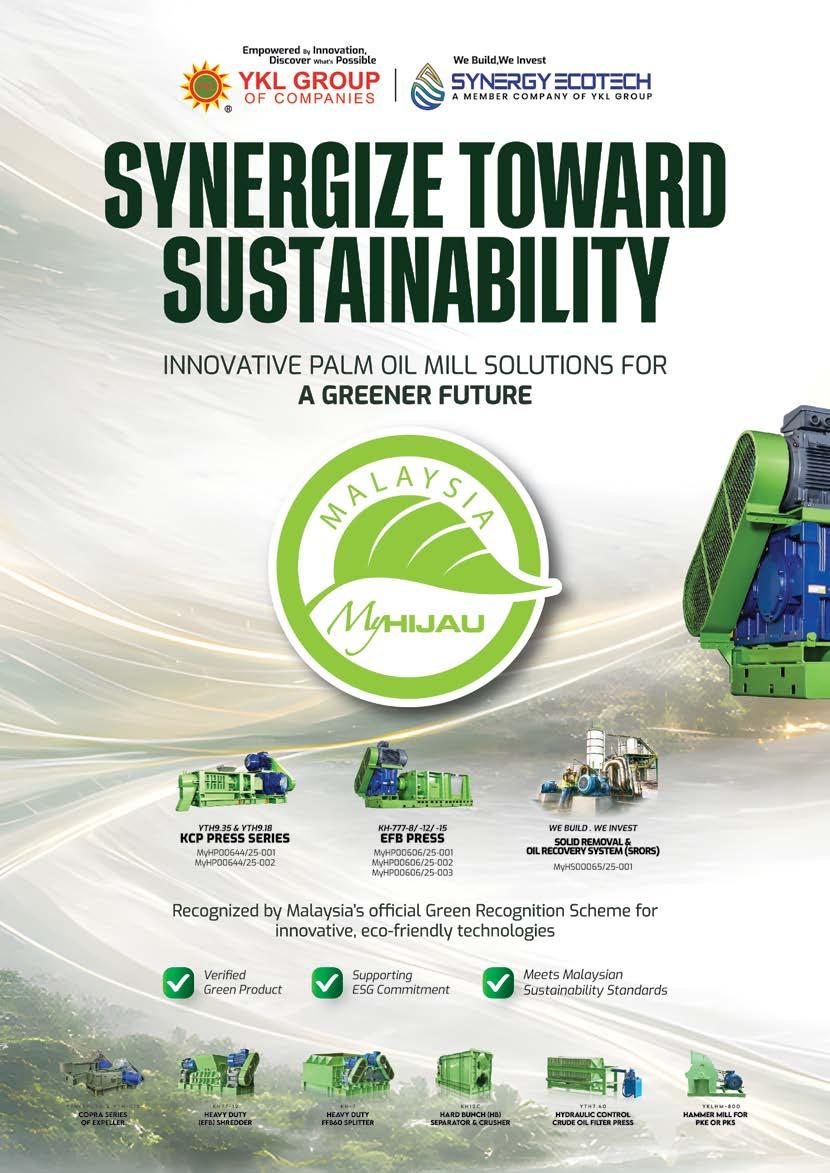
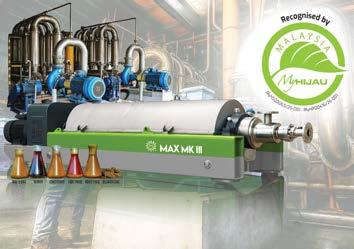
At the national level, YKL Engineering has been awarded the Malaysian Green Technology and Climate Change Corporation (MGTC) MyHIJAU Mark (Product) recognition for its Automated Seed Pressing Machines (YTH9.35 and YTH9.18) and EFB Press Series (KH777-8, KH777-12, and
KH777-15). In addition, SEE has obtained the MyHIJAU Mark (Service) recognition as a registered system service provider (MyHS00065/25-001), while the SRORS System has also been awarded the MyHIJAU Mark (Product) recognition (MyHP00416/26-001). These recognitions affirm that these solutions meet Malaysia's green technology criteria and contribute to environmental protection, resource efficiency, and climate change mitigation.
By qualifying for various smart and green technology financing schemes, our innovations have been recognized for significant environmental impact and contribution to a more sustainable future. In line with global goals for sustainable materials, supply chain integrity, and traceability, Synergy Ecotech (SEE) has successfully obtained the International Sustainability and Carbon Certification (ISCC).
Collectively, these certifications affirm YKL Group role as a trusted technology partner—delivering solutions that align operational performance with verified environmental responsibility and supporting palm oil millers in their transition toward more sustainable, compliant, and future-ready operations.
Recognised by MyHIJAU for SEE as a registered system service provider (MyHS00065/25-001) and for the SRORS System (MyHP00416/26-001)
Recognised by MyHijau for EFB Press Series (KH777-8 : MyHP00606/25-001) ( KH777-12: MyHP00606/25-002) (KH777-15: MyHP00606/25-003)
Collaborative Partnerships for Sustainable Innovation
YKL Engineering actively collaborates with academic institutions and global technology leaders to strengthen innovation, talent development, and sustainable engineering practices.
YKL × Universiti Kebangsaan Malaysia (UKM)
YKL Engineering works closely with Universiti Kebangsaan Malaysia (UKM) on research collaborations focused on applied engineering and sustainable solutions for the palm oil industry. This partnership enables the translation of academic research into practical technologies that enhance efficiency, reduce environmental impact, and support long-term industry sustainability.
YKL × Universiti Tunku Abdul Rahman (UTAR)
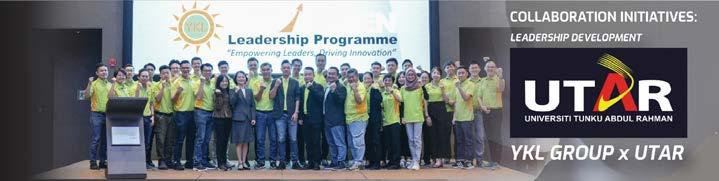
In parallel, YKL Engineering collaborates with Universiti Tunku Abdul Rahman (UTAR) on leadership development initiatives. YKL NextGen Leadership Programme is designed to cultivate future-ready leaders, strengthen organizational resilience, and ensure the continuity of professional excellence within the company.
YKL × Sumitomo Drive Technologies
On the technology front, YKL Engineering partners with Sumitomo Drive Technologies to advance gearbox innovation, with a specific focus on anti-leakage technology. This collaboration improves equipment reliability, minimizes oil leakage risks, reduces maintenance frequency, and contributes to safer, cleaner, and more sustainable mill operations.
Building a Sustainable Future for Palm Oil Milling
Through verified certifications and purposeful collaborations, YKL Engineering demonstrates a holistic approach to sustainability—integrating engineering innovation, environmental accountability, and human capital development. These initiatives reflect the company’s commitment to supporting palm oil millers in meeting global sustainability expectations while achieving operational excellence.
By aligning technology development with recognized sustainability standards and strategic partnerships, YKL Group continues to play a vital role in advancing responsible, efficient, and future-ready palm oil milling.
MPOC Secures RM47.5m Potential Palm Oil Sales
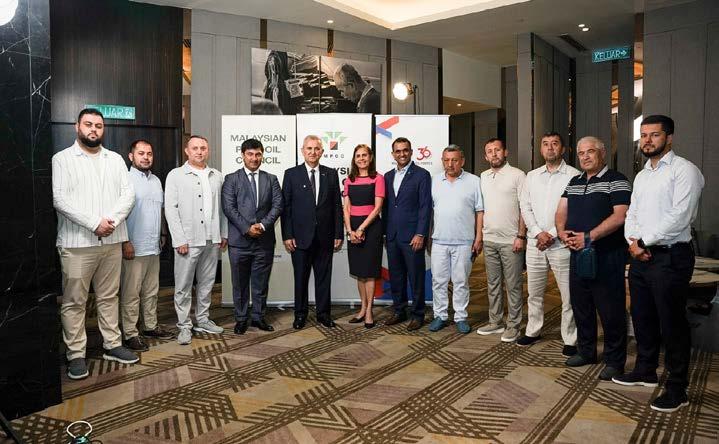
The Malaysian Palm Oil Council (MPOC) has strengthened Malaysia’s push into emerging markets following the successful conclusion of a trade networking visit involving 35 buyers from Central Asian Republics.
The initiative underscores efforts to expand Malaysia’s footprint in high-growth regions, particularly as demand continues to rise across food manufacturing industries such as confectionery, ice cream, bakery and margarine, where palm-based ingredients are increasingly used.
The visiting delegation comprised manufacturers from key segments such as confectionery, ice cream, bakery, and margarine as industries that are increasingly adopting palmbased solutions.
A key highlight of the programme was the BizMatch session, which facilitated 352 structured business meetings between 18 Malaysian suppliers and the visiting buyers.
The engagements generated an estimated RM47.5 million in potential sales, signalling robust commercial interest and strengthening Central Asia’s position as a promising export market.
MPOC chief executive officer Belvinder Sron said the region presents strong growth opportunities, particularly in highervalue segments such as speciality fats and food manufacturing applications.
“The strong engagement observed during this visit reflects increasing confidence among buyers and the readiness of Malaysian suppliers to support this market,” she added.
Additionally, the programme included visits to plantations to observe harvesting operations and tours of advanced bulking facilities in Johor Bahru as well as engagement sessions with industry players who offered insights into downstream capabilities.
The Malaysian Palm Oil Council (MPOC) has strengthened Malaysia’s push into emerging markets following the successful conclusion of a trade networking visit involving 35 buyers from Central Asian Republics.
The event also drew support from Uzbekistan’s ambassador to Malaysia, Karomidin Gadoev, who engaged with both buyers and suppliers.
He noted that Uzbekistan and the wider Central Asian region present significant opportunities for Malaysian palm oil and encouraged Malaysian suppliers to establish a stronger presence in the region, including positioning stocks within Uzbekistan to enhance distribution efficiency.
He added that the government of Uzbekistan stands firmly in support of such initiatives through trade facilitation measures and infrastructure support.
MPOC also noted strong participation from Malaysian industry players, with suppliers showing keen interest in expanding into Central Asia through direct engagement and tailored product offerings.
The strong response from both buyers and suppliers underscores the potential for long-term collaboration, positioning Central Asia as an increasingly important market in Malaysia’s broader export diversification strategy.
expected
SD Guthrie’s Uptrend Remains Intact on Buoyant CPO Price
SD Guthrie Bhd’s uptrend is expected to remain intact, supported by firm crude palm oil (CPO) prices and broader sector tailwinds driven by elevated crude oil prices amid ongoing supply constraints.
Hong Leong Investment Bank Bhd (HLIB) said the counter is well-positioned to benefit from strengthening CPO price momentum, which is likely to underpin a sustained upward trajectory in the near term.
Key upside levels are identified at RM6.45, representing its 52week high, followed by RM6.60 based on a 21.5 times forward price-earnings (PE) multiple, and RM6.91 at 22.5 times forward PE.
On the downside, support levels are seen at RM6.15, corresponding to the 23.6 per cent Fibonacci retracement level, RM5.97 (38.2 per cent retracement), and RM5.81, in line with its 50-day moving average.
HLIB recommends a stop-loss at RM5.90 to manage downside risks, particularly if market sentiment weakens or geopolitical tensions ease.
SD Guthrie Bhd’s uptrend is
to remain intact, supported by firm crude palm oil (CPO) prices and broader sector tailwinds driven by elevated crude oil prices amid ongoing supply constraints. Bernama pic
United Malacca Set to Benefit from Higher CPO Prices
United Malacca Bhd is set to benefit from rising crude palm oil (CPO) prices, supported by strong growth in fresh fruit bunch (FFB) output, according to CIMB Securities Sdn Bhd.
The firm said the palm oil producer achieved an 18.4 per cent year-on-year (YoY) increase in FFB output in the nine-month period of financial year 2026 (9M FY26), reflecting successful yield-improvement efforts at the estate level.
The company’s 9MFY26 core net profit rose 51.2 per cent YoY to RM128.6 million, surpassing CIMB Securities’ forecast at 126 per cent and reaching 97 per cent of the full-year consensus estimate.
CIMB Securities said United Malacca’s Malaysian operations remained the backbone of United Malacca’s plantation earnings, contributing 80 per cent of total earnings before interest, taxes, depreciation, and amortisation (EBITDA) in 9MFY26.
EBITDA from Malaysian plantations rose 31.1 per cent YoY to RM172.7 million, supported by a 19.6 per cent YoY increase in FFB production and a 16.2 per cent YoY rise in palm kernel prices to RM3,326 per tonne.
Higher production volumes also helped reduce unit costs, enhancing overall profitability.
Meanwhile, Indonesian operations saw EBITDA climb 27.3 per cent YoY to RM46.2 million, thanks to improved FFB output, higher PK prices, and stronger mill performance.
“We expect CPO prices to strengthen in 2026, supported by higher biodiesel mandates in Indonesia and the US, which will boost edible oil demand.
“In addition, potential El Niño conditions in the second half of 2026 could tighten supply,” the firm said.
CIMB Securities raised United Malacca’s earnings forecasts by 48 per cent for FY26 and 70 per cent for FY27, based on higher average CPO price assumptions of RM4,186 a tonne for 2026 and RM4,433 a tonne for 2027, as well as increased FFB output estimates of 521,906 tonnes for 2026 and 529,499 tonnes for 2027, factoring in higher fertiliser and diesel costs.
It kept a “Buy” call on the company with a higher target price of RM6.83.
United Malacca Bhd is set to benefit from rising crude palm oil prices, supported by strong growth in fresh fruit bunch (FFB) output. NSTP/ DANIAL SAAD
Government To Accelerate Biodiesel Blend Upgrade to B15
The government is turning to biodiesel to reduce reliance on imported fuels, leveraging Malaysia’s existing production capacity and infrastructure to cushion the impact of the global energy crisis.
As such, the National Economic Action Council (MTEN) has moved to accelerate the increase of the national biodiesel blend from the B10 level to B15, beginning with a B12 formulation.
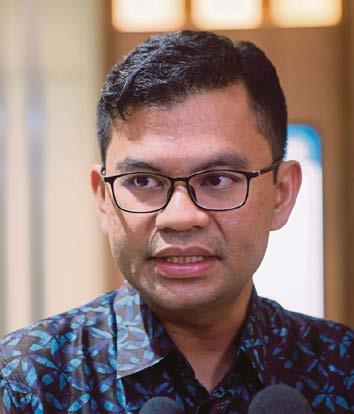
Economy Minister Akmal Nasrullah Mohd Nasir said the integration of green biofuels is the most effective and immediate method to enhance the nation’s energy resilience.
He said modifying industrial refining processes would not burden the government’s fiscal funds, as it leverages existing blending infrastructure at the country’s terminal facilities.
Akmal predicted that the impact of the global energy market cycle would take up to 18 months to peak, necessitating a structural build-up of national economic resilience.
“Biodiesel is highly practical at this time because it can be used directly in existing diesel systems, particularly within the transport, logistics, agriculture, and services sectors,” he said during today’s Global Energy Crisis briefing.
The technical capacity of the local sector is currently bolstered by a manufacturing capacity of 2.36 million metric tonnes, significantly exceeding the actual production of 975,207 tonnes recorded in 2025.
Economy Minister Akmal Nasrullah Mohd Nasir. BERNAMA FILE PIC
He said the existing B10 implementation — which blends 10 per cent palm-based biodiesel with conventional diesel — has laid the groundwork for a gradual increase, as part of efforts to strengthen long-term energy security.
Akmal said the commitment was reinforced during a recent working visit to PS Pipeline Sdn Bhd — a joint venture between Petronas Dagangan Bhd and Shell Malaysia Trading Sdn Bhd — at the Klang Valley distribution terminal, where infrastructure readiness, handling systems and blending facilities were assessed.
“As such, the government has agreed to increase the biodiesel blending rate from B10 to B15 — or 15 per cent biodiesel — beginning with an interim move to B12, without incurring additional costs and by fully utilising existing infrastructure,” he said.
He said the shift would help extend the country’s diesel supply, supported by a broader biofuel mitigation plan, phased upgrades of B20 and B30 depots under the 13th Malaysia Plan, and preparations towards a B30 mandate for commercial and public transport sectors.
Meanwhile, Akmal said the current crisis underscores the risks of overdependence on imported fossil fuels and external markets.
He said a single geopolitical conflict could disrupt routes carrying about one-fifth of the world’s oil and liquefied natural gas (LNG), exposing vulnerabilities in the global energy system.
The current global energy crisis was triggered by escalating conflict on Feb 28, when the United States and Israel launched large-scale military strikes on multiple sites in Iran, targeting key facilities across the country.
The situation has since remained volatile, with peace efforts faltering and no clear resolution in sight.
Malaysia’s Palm Oil Sector in Advantageous Position Despite West Asia Conflict
Malaysia is in an extremely advantageous position as one of the world’s top palm oil exporters, continuing to supply edible oils to countries which are grappling with rising food prices and fertiliser supply disruptions due to the closure of the Strait of Hormuz.
Julian McGill, the managing director of UK-based economic advisory firm Glenauk Economics, attributed this to palm oil production being less affected by fertiliser supply disruptions due to the ongoing conflict in West Asia.
He said that oil palm, Malaysia’s most important crop, accounts for around 75 per cent of the country’s planted area and has several characteristics that put the sector in a better position.
He explained that food crops such as fruits and vegetables are heavily dependent on nitrogen-based fertilisers, of which the Gulf regions produce a quarter to a third of the global supply.
“With disruption (from the conflict), prices have shot up. The secondary effect is that countries such as China and Russia are restricting their exports,” he said on Bernama TV’s Bernama World programme entitled ‘The Impact of the West Asia Conflict on Global Agriculture’ hosted by Melissa Ong.
McGill said that oil palm, while a heavy user of fertilisers, uses a lot of potash and not nitrogen-based fertilisers.
He added that many big producers tend to pre-buy fertilisers, with up to 60-70 per cent of the required volume already secured.
“We have to see whether the suppliers will honour the contracts with the volatility of prices, but in effect, they have already prebought,” he said.
McGill said even if there is a cutback on fertilisers today, it will take a fairly long time, up to two years, to impact production.
“Palm oil can continue reasonably well, even if this (conflict) is causing big problems for the planning and the decision-making. We are not going to see an immediate collapse in palm oil production,” he said.
Given the supply disruption and the period of heightened tension and concern over agriculture and food production globally, McGill said Malaysia is also well positioned to export very large volumes of edible oil, thereby boosting its export income.
“This puts Malaysia in a strategically better position,” he said.
Moreover, McGill said that in times of crisis and rising energy and crude oil prices, the commodity is important as a substitute for diesel, similar to what Indonesia is doing.
“Although it is more difficult to produce biofuel in Malaysia due to higher palm oil prices and a lack of infrastructure, in theory, it can substitute for diesel.
“Nevertheless, it is a strategic crop to have,” he added.
Global impact on agriculture
Touching on the impact of the West Asia conflict on food and fertiliser supply disruptions on global agriculture, McGill said impacts are yet to be seen, but the current situation is “very tense, and people are adopting a wait-and-see attitude”.
“The reason why it’s not yet serious is that the first point is that the Gulf is not a major food-producing region. So unlike in previous crisis situations, such as the Russian invasion of Ukraine, we haven’t seen any immediate impact.
“The other is that we are coming off a period of very many record crops,” he added.
McGill also said that agriculture moves much more slowly than other industries.
“You have to follow nature with agriculture, the planting of the seasons; you plant and wait, and therefore it is an industry that rewards patience, but it is also one where we don’t see an immediate impact.
“Not like a factory where you run out of inputs, you stop immediately. What we’re seeing is concern over the next harvest, over six months from now.
“We don’t see a crisis yet, but it is very tense, and we are monitoring the situation closely, as is everyone,” he added.
Malaysia’s Palm Oil-Based Biodiesel Push to Add 300,000 Tons in Demand, Says MPOB
Malaysia’s palm oil-based biodiesel consumption is set to rise by more than 300,000 metric tons annually, the Malaysian Palm Oil Board said, as the country joins top producer Indonesia in raising blending mandates to reduce reliance on energy imports.
On Tuesday, the Malaysian government said it would increase its 10% biodiesel mandate, known as B10, to a 15% biodiesel blend without giving a timeline. It will start with a 12% blend without incurring any additional production costs and using only existing biodiesel blending plants.
Malaysia, the world’s second-largest palm oil producer, currently imposes the B10 mandate for the transportation sector, though a 20% mandate has been implemented in the federal territory of Labuan, Langkawi Island and the state of Sarawak, excluding the town of Bintulu.
The move from B10 to B12 is expected to increase biodiesel consumption by an additional 130,000 tons per year, while the subsequent expansion to B15 is estimated to boost consumption by about 204,000 tons annually, MPOB Director General Ahmad Parveez Ghulam Kadir told Reuters on Thursday in an email response.
“The new mandate will benefit the national economy by alleviating dependency on imported fossil fuels, strengthening crude palm oil (CPO) price and reducing the burden of diesel users,” he said.
The biodiesel mandate will cover the diesel fuel sold at retail stations and other subsidised sectors, Ahmad Parveez said, adding that the government may consider future expansion to the industrial sector, subject to policy decisions aligned with national interest.
The incremental increase in domestic biodiesel consumption is projected to have only a marginal impact on palm oil exports, Ahmad Parveez said, as Malaysia’s CPO production capacity remains robust. “Overall export volumes are expected to remain largely stable,” he said.
Malaysia produced 20.28 million tons of CPO last year and palm oil exports amounted to 15.27 million tons.
Supply Tightening Boosts Value for Malaysian Palm Oil
The Malaysian palm oil industry has entered a solid growth phase in March, fuelled by a massive surge in exports that pushes inventories to their lowest level in seven months.
The country’s palm oil stocks tumbled 16.1 per cent to 2.27 million tonnes in March from February, marking their lowest level since August, data from the Malaysian Palm Oil Board showed on Friday.
Industry observers said this tightening supply, down for a third consecutive month, demonstrates the global market’s strong appetite for Malaysian palm oil.
With demand significantly outstripping production, benchmark futures are poised for a robust rally, further strengthened by rising global energy prices that enhance the value of Malaysia’s premier commodity, they added.
The Malaysian palm oil industry has entered a solid growth phase in March, fuelled by a massive surge in exports that pushes inventories to their lowest level in seven months. STR/ADZLAN SIDEK.
Reuters said falling inventories in the world’s second-largest producer of the tropical oil could support benchmark Malaysian futures, which have climbed in recent weeks after the Iran conflict drove energy prices higher.
Crude palm oil production increased 7.2 per cent to 1.38 million tonnes, snapping a four-month run of declines. Even so, that was the lowest level of output for the month of March in three years.
Palm oil exports rocketed 40.7 per cent higher to 1.55 million tonness, the most in five months.
A Reuters survey had forecast inventories at 2.18 million tonnes, with output seen at 1.34 million tonnes and exports at 1.56 million tonnes.
“Despite the hefty reduction in March, Malaysian palm oil inventories remain well above typical levels for this time of year,” it quoted Anilkumar Bagani, research head at vegetable oil broker Sunvin Group.
“Export performance will need to be repeated in April to support the market, as production so far this month is still seen as elevated, while exports are sharply down in the first 10 days.”
A recent rally in soyoil prices has widened palm oil’s discount to its rival, potentially drawing Indian buyers back into the market after they stayed on the sidelines last month, said a New Delhi-based dealer with a global trade house.
India’s palm oil imports fell nearly 19 per cent in March to a three-month low, dealers said.
Thailand will tighten controls on crude palm oil exports from Tuesday (April 7) in a bid to maintain a balance between domestic consumption and rising energy demand.
According to the Royal Gazette, the measure, effective for one year, restricts the export of crude palm oil unless prior approval is granted by the authorities.
The move comes amid rising demand for biodiesel blending linked to the ongoing conflict in the Middle East.
The Ministry of Commerce said the key reason for the measure stems from its assessment that the conflict has driven global petroleum prices higher.
“This trend has prompted Thailand’s energy sector to prepare for an increase in the biodiesel blending ratio in diesel fuel.
“At the same time, demand for Thai crude palm oil exports has risen, leading to a corresponding increase in domestic demand,” the ministry said in a statement on Monday.
It added that the Central Committee on Prices of Goods and Services (CCPS) deemed it necessary to introduce measures to manage crude palm oil supply in order to maintain balance across all sectors, including household consumption, industry and energy, and to ensure sufficient domestic supply throughout the year.
Thailand is the world’s third-largest producer of palm oil, and the Kingdom is projected to produce approximately 3.94 million tonnes of crude palm oil in 2026.
Rising demand for biodiesel blending in Thailand is linked to the ongoing conflict in the Middle East. - The Nation/ANN
Felda Touts B100 Biodiesel as Competitive, Sustainable Fuel Alternative
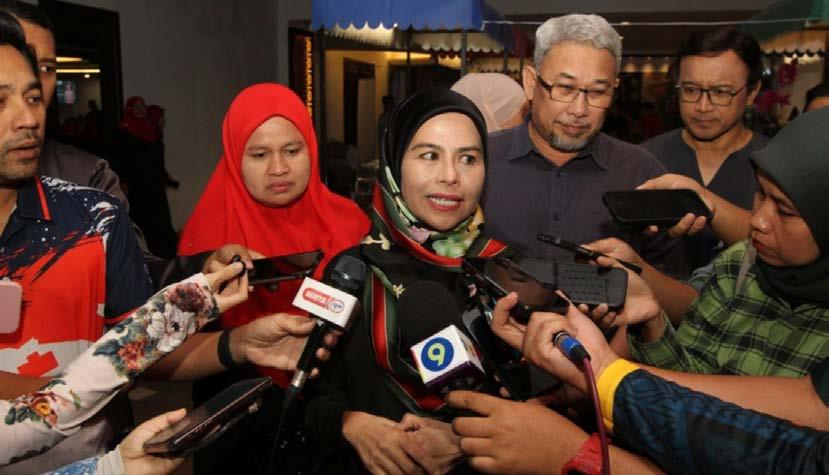
B100, a 100% palm oil-based biodiesel, has the potential to emerge as a more competitive and sustainable alternative energy source amid uncertainties arising from the West Asia crisis, said Federal Land Development Authority (Felda) chairman Datuk Seri Ahmad Shabery Cheek.
He said the B100 implementation, which is still at the policy stage, will kick off within the Felda ecosystem first.
Ahmad Shabery said he has brought up the matter with Prime Minister Datuk Seri Anwar Ibrahim and Deputy Prime Minister Datuk Seri Dr Ahmad Zahid Hamidi.
“At this stage, a government policy needs to be in place, as we may not have sufficient crude palm oil (CPO) supply to roll out B100 immediately,” he told a press conference here on Tuesday.
B100’s factory price is estimated at about RM4.50 per litre, depending on CPO prices, Ahmad Shabery said.
At an estimated price below RM5.00 per litre, B100 could not only reduce the reliance on diesel, but also support domestic fuel price stabilisation and strengthen national energy security, he said.
Meanwhile, Ahmad Shabery said Felda and FGV Holdings Bhd need to expand the B100 biodiesel processing plant development in order to increase production capacity.
“We are having discussions to determine the form of partnership, whether to involve full private sector participation, government support or other parties, to meet the requirement of raising B100 capacity,” he said.
Since 2025, the B100 biodiesel usage pilot project has been implemented using passenger vehicles for 15 months involving a distance of more than 50,000 kilometres.
Ahmad Shabery said a four-month trial test using tanker trucks had also been done earlier in 2024.
Malaysia Targets 32pct Installed Renewable Energy Capacity This Year
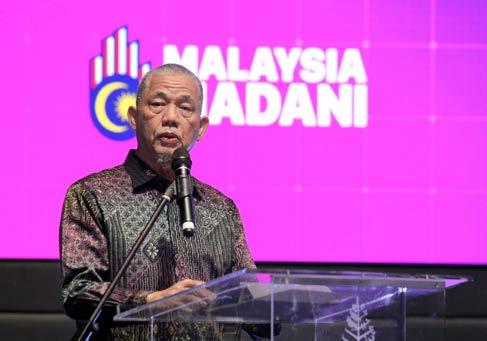
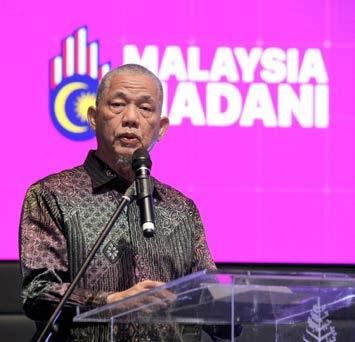
Malaysia is committed to reaching 32 per cent installed renewable energy (RE) capacity this year, Deputy Prime Minister Datuk Seri Fadillah Yusof said.
Fadillah, who is also the Minister of Energy Transition and Water Transformation, said the country had achieved 31 per cent installed RE capacity as of December 2025.
“The government aims to increase installed renewable energy capacity by one per cent a year until we reach 35 per cent by 2030 or earlier.
“The RE mix consists of many different sources such as solar, biogas and biofuels. InsyaAllah, we will achieve this through all the programmes we have introduced, including battery storage and so on,” he told Bernama after appearing as a guest on Bernama Radio’s exclusive interview titled “Geopolitical Crisis Drives Malaysia’s Energy Transition” at Wisma Bernama today.
Under the National Energy Transition Roadmap (NETR), Malaysia aims to reach 70 per cent RE capacity by 2050.
Fadillah said that currently about 40 to 50 per cent of the country’s energy use is based on gas, and although much still relies on carbon-based sources, the country is committed to no longer using coal by 2044.
“That is why we are now introducing a lot of large-scale solar and rooftop solar to encourage more use of renewable energy. InsyaAllah, this year we will also open another tender for the sixth large-scale solar project (LSS 6),” he said.
He said that, besides solar, Malaysia is looking at a mix of other energy sources, including biodiesel, biogas, and others, to ensure the country has a sufficient energy supply in the future.
“For biodiesel, we have agreed to increase the blend of palm oil in diesel to 12 per cent. In addition, biogas can actually be produced from palm oil as well,” he said.
Deputy Prime Minister Datuk Seri Fadillah Yusof. -NSTP/ AZIAH AZMEE
Fadillah said Malaysia is also studying the potential of using nuclear power.
He said studies have been carried out, and the country now needs to enter into international agreements and conduct thorough assessments of law, safety, the environment, and public acceptance.
“In Peninsular Malaysia in particular, there is insufficient baseload supply. Solar is intermittent and unpredictable; our current baseload is gas. We know we rely on imported gas, with volatile prices. We have coal, but that will no longer be usable by 2044. Our biogas and biomass are limited.
“So, we need a mix. During dry seasons, when water is scarce, hydropower can’t generate enough power. That is why the world is now looking at nuclear power,” he said.
According to Fadillah, the Philippines and Vietnam have decided to include nuclear energy in their energy mixes.
“So, Malaysia must consider nuclear power as one viable clean energy option for the future. If we adopt nuclear, once it’s in place, it can guarantee supply for 10 to 15 years before we make changes. That needs a detailed study.
“We need a broader energy mix to ensure a secure energy supply that will support economic growth and the people’s wellbeing. For Peninsular Malaysia, this is the approach.
Fadillah highlighted that Sabah faces a different challenge as the state relies heavily on diesel.
“Diesel is expensive now, so generation costs are higher. In Sarawak, about 70 per cent already comes from renewable energy; now they want to accelerate development in gas and solar,” he added.
Noraini: RM3.5 million Incentive to Support MSPO Certification for Oil Palm FFB Traders
The Ministry of Plantation and Commodities has introduced an incentive amounting to RM3.5 million in an effort to support oil palm fresh fruit bunches (FFB) traders in obtaining the Malaysian Sustainable Palm Oil (MSPO) certification.
The Minister of Plantation and Commodities, Datuk Seri Dr Noraini Ahmad, said this is a proactive step by the government to help oil palm FFB traders meet current compliance requirements, while also strengthening the resilience of the national palm oil supply chain.
More than 3,000 eligible oil palm FFB traders nationwide are expected to benefit, subject to the stipulated terms and conditions, she said in a statement today.
She said applications for this incentive can be submitted to the MSPO Council starting April 15, through the e-MSPO system.
“The implementation of this initiative is in line with efforts to strengthen the comprehensive implementation of MSPO 2.0, while supporting the national agenda to ensure the Malaysian palm oil industry continues to develop sustainably, responsibly and resiliently,” she said.
The initiative reflects the government’s ongoing efforts to safeguard the welfare of stakeholders and strengthen confidence in Malaysia’s palm oil sector in both domestic and international markets
Source: www.nst.com.my
Plantation and Commodities Minister, Datuk Seri Dr Noraini Ahmad (Centre), said that the Ministry has introduced an incentive amounting to RM3.5 million in an effort to support oil palm fresh fruit bunches (FFB) traders in obtaining the Malaysian Sustainable Palm Oil (MSPO) certification. — NSTP/NIK ABDULLAH NIK OMAR
Singapore, Brunei Firms Win RM1.65bil ‘Green’ Fuel Project in Sabah
Singapore-based Oiltek International Ltd and Brunei’s BioSeaga Industries Sdn Bhd have agreed to collaborate on a large-scale sustainable aviation fuel (SAF) biorefinery in Sabah.
Singapore-based Oiltek International Ltd and Brunei’s BioSeaga Industries Sdn Bhd have agreed to collaborate on a large-scale sustainable aviation fuel (SAF) biorefinery in Sabah.
The project, valued at US$350 million (RM1.65 billion), is planned to have a production capacity of 300 tonnes per day.
This project is expected to kick off in the fourth quarter of 2026.
“Phase 1 carries an estimated development value of US$350 million, with future expansion into advanced fuels including green hydrogen and other low-carbon energy derivatives,” it said in a statement.
Oiltek said the planned facility will use palm oil mill effluent and used cooking oil as its main feedstocks.
“Designed as a multi-feedstock, modular, and scalable biorefinery, the project will form part of a broader integrated SAF ecosystem spanning production, blending and export.
“Upon completion, it is expected to position Sabah as one of the largest SAF production centres in the region, with the potential to scale into a globally significant hub supporting aviation decarbonisation efforts,” it added.
Oiltek chief executive officer and executive director Henry Yong Khai Weng said the project offers a strategically important opportunity for the company to apply its established engineering, procurement, construction, and commissioning (EPCC) expertise.
He added that the company will also leverage its experience across the SAF value chain to execute and deliver a large-scale, commercially significant development.
Oiltek announced plans for a secondary listing on Bursa Malaysia’s Main Market and has appointed M&A Securities Sdn Bhd as the advisor for the process.
Oiltek Sdn Bhd (Oiltek Malaysia), a subsidiary of Oiltek, has been appointed as the exclusive EPCC partner for the plant’s pre-treatment facilities, SAF production plant and tank farm and logistics bulking infrastructure.
The company will also handle the plant’s partial blending facilities.
“Oiltek Malaysia shall also have the right of first refusal to participate in any equity investment, joint venture, or ownership opportunity related to the project or its subsequent phases,” the company said.
21,049 Smallholders Benefit from BUDI Agri-Commodity Programme in Johor
Atotal of 21,049 smallholders in Johor have benefited from cash subsidies under the BUDI Agri-Commodity programme, an initiative aimed at supporting farmers who form the backbone of the country’s agri-commodity sector.
Minister of Plantation and Commodities Datuk Seri Dr Noraini Ahmad said the programme, implemented under the MADANI Subsidy Assistance (BUDI MADANI) framework, had received 29,048 applications as of Jan 31, with applications still open.
She said each successful applicant receives RM2,400 in cash assistance to help cushion the impact of rising costs, particularly among those directly affected by the rationalisation of diesel subsidies.
“Recipients comprise smallholders cultivating oil palm, rubber, cocoa, pepper and kenaf, subject to meeting the eligibility criteria, including being Malaysian citizens and registered with agencies under the Ministry of Plantation and Commodities (KPK).
“The agencies include the Malaysian Palm Oil Board (MPOB), Malaysian Rubber Board (LGM), Malaysian Cocoa Board (LKM), Malaysian Pepper Board (MPB) and the National Kenaf and Tobacco Board (LKTN),” she said when speaking at the
BUDI Agri-Commodity Plantation Sector programme in Parit Sulong today.
Also present was Johor Islamic Religious Affairs Committee chairman Mohd Fared Mohd Khalid.
Noraini, who is Parit Sulong Member of Parliament, said among the additional conditions is that smallholders must cultivate land not exceeding the prescribed limit of up to 4.5 hectares for private oil palm and rubber plantations, and up to 2.5 hectares for cocoa, pepper and kenaf cultivation.
“They must also be actively engaged in continuous production, with annual sales valued between RM50,000 and RM300,000,” she said.
Subsidy recipient Puziah Ma’an, 57, said she was among the earliest applicants to receive the assistance, amounting to RM200 per month, describing it as a meaningful government effort to ease the people’s burden.
“I applied just two days ago, and today the assistance has been approved. It will help cover the costs of replanting oil palm trees that are over 15 years old, which are our family’s main source of income,” she said.
Interview with Yokogawa Electric (Malaysia) Sdn. Bhd.
Driving Sustainable Palm Oil Operations Through Digitalisation, AI and Decarbonisation
As the palm oil industry continues to navigate sustainability expectations, rising operational costs, labour shortages, and increasing digitalisation, many producers are re-evaluating how technology can support long-term operational resilience and environmental performance.
For more than three decades, Yokogawa has been supporting palm oil mills, refineries, and oleochemical plants across and customers globally to accelerate their transformation journeys through automation, instrumentation, operational technologies and advanced technologies, aimed at improving efficiency, reliability, and plant safety.
Asia Palm Oil Magazine recently spoke with Darrell Lee from Yokogawa Electric (Malaysia) Sdn. Bhd. on the growing role of digitalisation, AI, decarbonisation, and operational sustainability across the palm oil industry.
1. Could you share more about how is Yokogawa supporting palm oil producers in modernising their operations and driving long-term transformation?
Yokogawa has been involved in the palm oil industry for more than three decades, supporting mills, refineries, and oleochemical producers through automation, instrumentation, and digitalisation technologies. In fact, some of the earliest deployments of Yokogawa’s CENTUM Distributed Control System outside the oil and gas sector were in palm oil oleochemical plants.
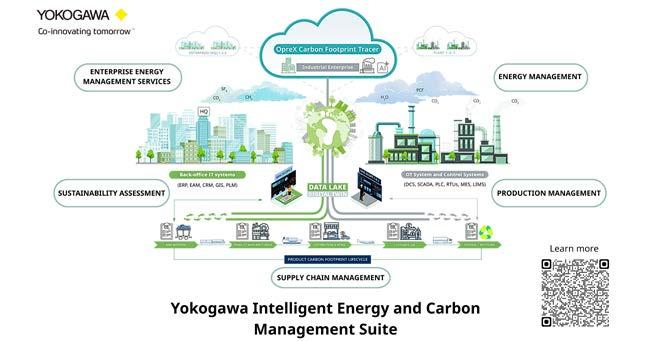
Across the palm oil value chain, from utilities and biomass power generation to refining and POME treatment, our technologies serve as the backbone of operational excellence. Reliable instrumentation and automation systems deliver the visibility and control needed to enhance safety, improve product quality, optimise energy consumption, reduce emissions, and maximise plant uptime, helping customers achieve both business performance and sustainability goals.
Building on this foundation, we integrate these systems with digital platforms that bridge OT / IT environments, enabling better data visibility, predictive maintenance, and more efficient operations to support our customers in their transformation journey.
2. From Yokogawa’s perspective, what are the key sustainability and decarbonisation challenges currently shaping the palm oil industry?
One of the biggest sustainability challenges facing the industry today is greenhouse gas emissions, particularly methane emissions from Palm Oil Mill Effluent or POME. Traditional open pond systems release methane directly into the atmosphere, and methane has a significantly higher environmental impact compared to carbon dioxide.
As a result, many mills are increasingly investing in biogas capture systems to convert methane into renewable energy for mill operations. This not only reduces emissions but also improves energy efficiency and supports long-term sustainability goals.
At the same time, producers are facing increasing pressure around traceability, land use compliance, and ESG reporting, especially from international markets. Sustainability expectations are no longer limited to certification alone. Buyers and regulators are now looking at operational transparency, emissions reporting, and environmental performance more closely.
Energy efficiency is another important area, particularly in high energy consumption processes such as sterilisation, steam generation, and boiler operations. Even small operational inefficiencies can lead to significant energy losses over time.
Beyond environmental concerns, labour shortages also remain a challenge across the industry. This is one of the reasons why more producers are beginning to explore automation, digitalisation, and smarter operational management systems.
Overall, the industry is moving towards stronger measurement systems, better operational visibility, improved emissions management, and more integrated digital operations.
3. We are seeing growing interest in biogas, biomass, and waste-to-energy initiatives across the industry. How is Yokogawa supporting producers in these areas?
Palm oil mills are uniquely positioned within the energy transition because they already generate biomass materials such as empty fruit bunches, fibre, and palm kernel shell. However, converting these materials into stable and efficient energy sources requires proper process optimisation and combustion management.
Yokogawa supports customers through an end-to-end approach that includes instrumentation, analysers, controllers, sustainability monitoring tools, and operational optimisation technologies.
In the area of biogas, our solutions help mills capture methane safely, stabilise gas engine performance, monitor emissions, and support Scope 1 and Scope 2 reporting requirements.
We also strengthened our biomass and waste-to-energy capabilities through the acquisition of Dublix Solutions, a Scandinavian company specialising in biomass combustion optimisation.
Designed specifically for biomass applications, Dublix solutions help stabilise combustion, improve steam output, and reduce emissions, even when operating with inconsistent fuels such as empty fruit bunches, fibre, and palm kernel shells. Solutions such as SulfGen and JetClean also help reduce boiler fouling, and improve overall operational reliability. These technologies can be deployed on top of existing control systems, enhancing performance without significant infrastructure changes, while reducing downtime.
At Yokogawa, we first help customers understand their current digital maturity, identify operational gaps, and prioritise areas that can deliver meaningful operational improvements.
One of the frameworks we use is the Smart Industry Readiness Index or SIRI, which was originally developed in Singapore and is now widely recognised globally. Through S.I.R.I assessments and workshops, we evaluate areas such as process maturity, operational readiness, energy management, and technology infrastructure.
4. Many palm oil producers are still in the early stages of digitalisation. How does Yokogawa support companies that are just beginning their digital transformation journey?
Digital transformation should be approached in a practical and phased manner. Not every company is ready to implement advanced AI or fully autonomous systems immediately.
What differentiates Yokogawa is that we come from the operational technology environment. We do not only assess organisational readiness, but also actual plant operations, control strategies, and process performance.
This allows us to build digitalisation roadmaps that are more practical and aligned with operational realities.
In many cases, the first step is simply improving operational visibility and centralising plant data. Without a proper data foundation, companies will struggle to move towards predictive analytics, optimisation, or AI-driven operations.
Transformation does not need to happen overnight. Small and consistent improvements often create the strongest long-term impact.
5. AI is becoming an increasingly discussed topic across the industrial sector. How do you see AI reshaping palm oil operations in the coming years?
AI will continue to play a growing role across mills, refineries, and oleochemical operations, particularly in areas such as predictive maintenance, process optimisation, energy management, and operational decision-making.
At Yokogawa, this evolution is guided by our IA2IA, Industrial Automation to Industrial Autonomy, approach that progressively advance operations from automated systems to more selfoptimising and adaptive environments. AI is also helping address workforce challenges by capturing operational knowledge and supporting more informed, consistent decisionmaking.
However, AI is only as effective as the data it is built on. Without reliable instrumentation and stable data collection, AI cannot generate meaningful or trusted insights.
At the same time, the adoption of AI must be underpinned by robust governance. Yokogawa emphasises structured AI governance frameworks to ensure reliability, safety, and transparency, particularly in complex industrial environments where operational risk is critical.
While fully autonomous operations will take time, the adoption of predictive and AIassisted operations is expected to grow steadily, enabling palm oil producers to operate more efficiently, enhance sustainability performance, and respond more proactively to evolving industry demands.
6. Despite the growing focus on AI and digitalisation, you have consistently highlighted safety as a key priority. Why is safety still such an important foundation?
For us, sustainability begins with safety.
No matter how advanced digitalisation or AI becomes, plants must first operate safely and reliably. Without a safe working environment and stable operations, digital transformation initiatives cannot succeed.
Industrial incidents across the region continue to remind the industry about the importance of operational discipline, proper safety systems, and structured workflows.
At Yokogawa, we support customers through integrated safety solutions that include emergency shutdown systems, fire and gas detection, digital permit-to-work systems, operation management platforms and cybersecurity solutions to defend against arising threats.
We are also seeing increasing interest in digitalising operational processes such as shift handovers, operator logs, maintenance workflows, and permit approvals. These systems improve traceability, reduce human error, and strengthen operational visibility across the plant.
Ultimately, safety, operational discipline, and sustainability are closely connected. A stable and safe operating environment creates the foundation needed for digitalisation and long-term operational improvement.
7 What final message would you like to share with palm oil producers as the industry continues moving towards sustainability and digital transformation?
The palm oil industry is entering a period where sustainability, operational efficiency, and digitalisation can no longer be viewed separately. These areas are becoming increasingly interconnected.
Today, producers are facing growing expectations around emissions reduction, traceability, energy efficiency, and operational resilience. At the same time, labour shortages and rising operational costs continue to push the industry towards smarter and more automated operations.
The first step towards this transformation is data.
Without proper operational data, there can be no meaningful AI, optimisation, or predictive insight. Building a strong operational data foundation may not always deliver immediate returns, but it creates the platform needed for future improvements.
The good news is that transformation does not need to happen all at once. Small and consistent improvements in measurement, operational visibility, safety, and process optimisation can already create significant long-term impact.
As the industry continues evolving, producers who invest early in digital foundations, operational sustainability, and smarter plant management will be better positioned to remain competitive and resilient in the years ahead.
At Yokogawa, we support this journey as a long-term partner, bringing together deep operational expertise, trusted measurement and control technologies, and advanced digital capabilities. We help customers build resilient, future-ready operations that are not only more efficient, but also safer, more transparent, and aligned with their sustainability goals.
We believe the future of the palm oil industry will be defined by cleaner operations, stronger operational intelligence, and a steady progression towards more autonomous and sustainable production.
Transforming Deodorization Performance: How a New Spiral Heat Exchanger is Revolutionizing Operations at a Malaysian Palm Oil Refinery
In the competitive landscape of palm oil refining, operational efficiency and sustainability have become paramount concerns for producers across Southeast Asia. A recent installation at a Malaysian palm oil refinery demonstrates how proven heat transfer technology can deliver remarkable improvements in energy recovery, fuel consumption, and environmental performance—with a return on investment achieved in under 12 months.
A Partnership Built on Decades of Reliable Performance
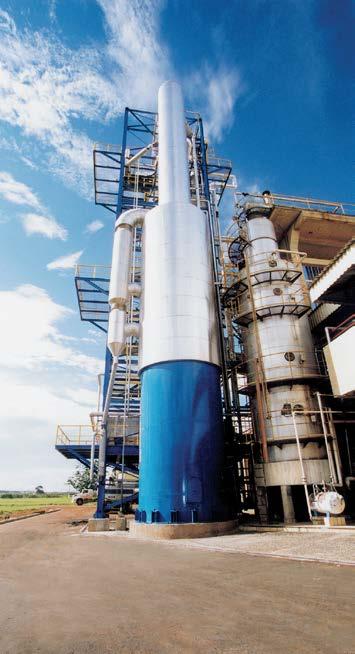
The story begins with a relationship spanning more than three decades. The refinery, located in southern Malaysia, has operated its deodorization plant using two Alfa Laval spiral heat exchangers for approximately 35 years. This remarkable longevity speaks volumes about the robustness and reliability of spiral heat exchanger technology in demanding palm oil refining applications.
When the refinery’s management began exploring opportunities to enhance heat recovery efficiency and boost productivity in their deodorization process, they naturally turned to their trusted technology partner. The existing equipment had proven its worth through decades of continuous operation under challenging conditions, giving the customer confidence that any proposed solution would deliver on its promises.
“The fact that the existing spiral heat exchangers had been performing for 35 years shows the robustness of our technology,” explains MeiKit Wong, Inside Sales for Food Heat Transfer (Malaysia and Singapore), Alfa Laval. “We have a very successful, long-standing relationship with the customer, so when they were looking to see if they could boost performance, they had faith in our equipment and trusted us to deliver.”
The deodorization stage of palm oil refining presents significant technical challenges for heat transfer equipment. Operating temperatures routinely reach 260°C, placing extreme demands on equipment durability and thermal performance. Any solution must not only withstand these conditions but maintain consistent efficiency over extended periods with minimal maintenance requirements.
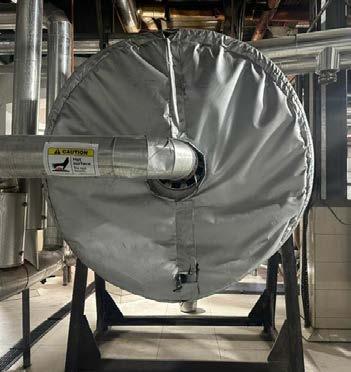
The recommended solution involved replacing one of the original units with a new, larger spiral heat exchanger incorporating the latest technological advancements. This strategic approach preserved the proven performance of the existing equipment while significantly expanding overall system capacity and efficiency.
Sustainable palm oil processing starts with smarter thermal efficiency.
The spiral heat exchanger design brings several inherent advantages to palm oil deodorization applications. Most notably, the single-channel configuration for each fluid stream ensures reliable self-cleaning properties during operation. This same geometry generates high turbulence within the unit, which serves dual purposes: maximizing heat transfer efficiency while simultaneously minimizing fouling from the outset.
Perhaps the most significant engineering advantage lies in the true counter-current flow arrangement. This configuration enables what engineers call “crossing temperature situations”— allowing the cold fluid to be heated to temperatures approaching those of the hot fluid with remarkable closeness. The high turbulence generated by the spiral design further enhances this effect, pushing heat recovery performance to levels difficult to achieve with conventional heat exchanger designs.
Built for Demanding Operating Environments
Beyond thermal performance, the new spiral heat exchanger incorporates robust construction features specifically designed for the rigorous demands of edible oil refining operations.
The fully welded construction eliminates potential leak points common in gasketed designs, while a protection ring limits any projection in the unlikely event of leakage—an important safety consideration when handling hot oils at elevated temperatures. A specific closing design increases overall rigidity, and reinforced covers limit fluid bypass, ensuring optimal thermal performance throughout the operating envelope.
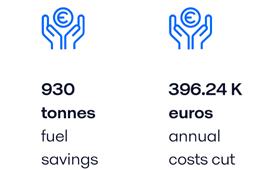
The capital cost savings like reduction of effective surface area, smaller footprint, reduced installation cost, weight reduction, and less time for installation, delivering payback within one year.
Application
Process Engineer, Alfa Laval emphasizes the practical operational benefits: “The product has to be robust because it is working at temperatures reaching 260° Celsius and the new heat exchanger, working with one of the existing units, is delivering high-quality performance while essentially being virtually maintenancefree.”
This combination of thermal efficiency and mechanical reliability addresses one of the most persistent challenges facing palm oil refiners: balancing optimal process performance against maintenance costs and production downtime.
Measurable Results That Speak for Themselves
Ordered in 2023 and installed in late 2024, the new spiral heat exchanger began delivering impressive results almost immediately. The combined performance of the new unit working alongside its 35-year-old companion has transformed the economics of the refinery’s deodorization operations.
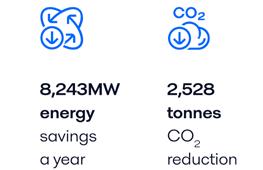
The headline numbers tell a compelling story. Heat recovery has improved substantially, with Refined Bleached Deodorized Palm Oil (RBDPO) temperatures now reaching 235°C—a significant increase over previous performance. More dramatically, fuel consumption has dropped by 20%, directly attributable to the additional 941 kWh of heat recovery now being achieved.
Eser Aydin, Senior Global Technology
and
Reliable heat recovery technology built for demanding refinery conditions.
These energy savings translate into meaningful reductions in operating costs and carbon emissions, supporting both the refinery’s financial objectives and its sustainability commitments. In an industry increasingly focused on environmental performance and responsible production practices, such improvements carry significance beyond the immediate cost benefits.
From a maintenance perspective, the operational simplicity has proved equally valuable. The self-cleaning design, combined with easy full access for inspection when required, has minimized downtime and reduced maintenance labor costs to near-zero levels.
“The customer basically only has to open the heat exchangers once a year to check the unit, and change the cover gaskets at the same time, so the operational costs are almost zero, which would not be the case with a shell and tube solution,” notes Aydin.
A Blueprint for Industry-Wide Improvement
The success of this installation has not gone unnoticed within the customer’s organization. The combination of rapid payback, sustained performance improvement, and minimal operational burden has prompted serious consideration of similar upgrades across their other refining facilities.
“When I last visited the customer, they were delighted with the results and because they have successfully recovered more heat, they have basically changed the structure of their operations and are now looking at using the same technology in their other plants,” reports Wong.
This enthusiasm reflects a broader recognition within the palm oil industry that heat recovery optimization represents one of the most accessible pathways to improved sustainability and reduced operating costs. With energy costs remaining a significant factor in refining economics, and environmental scrutiny of palm oil production continuing to intensify, technologies that deliver measurable improvements in both areas command serious attention.
Looking Ahead: Efficiency as Competitive Advantage
For palm oil refiners throughout Malaysia and the broader ASEAN region, this installation offers valuable lessons. Heat transfer equipment that may have served reliably for decades can often be complemented or selectively upgraded to deliver
substantial performance improvements without requiring complete system replacement.
The key lies in working with technology partners who understand both the equipment and the specific demands of edible oil processing—partners who can assess existing installations, identify optimization opportunities, and deliver solutions engineered for the challenging conditions of modern refining operations.
As the palm oil industry continues navigating the twin pressures of cost optimization and environmental responsibility, success stories like this Malaysian refinery demonstrate that proven technology, thoughtfully applied, can deliver results that benefit both the bottom line and the planet.
New spiral heat exchanger joins stalwart unit to transform deodorization performance at Malaysian oil refinery
The Behaviour Gap: Why 60% of Your Yield Loss Starts with People — and How to Fix It
How behaviour-based digital transformation is closing the productivity gap in Southeast Asian oil palm estates
By
ABS Global | Kuala Lumpur, Malaysia | July - September 2026
The Opportunity You Are Missing Every Round
Every estate manager knows the frustration. You invest in better seedlings, more fertiliser, upgraded equipment — yet yield numbers remain stubbornly flat. The industry tends to blame soil conditions, climate, or commodity cycles. But research across multiple oil palm estates in Southeast Asia points to a different cause entirely.
The average estate produces approximately 3.31 Mt/Ha per year. Best-in-class estates achieve 5.6 Mt/Ha — a gap of 2.29 Mt/ Ha, worth approximately RM18.3 million per year for a 2,000 Ha estate. That gap does not sit in the soil or the weather. It sits in daily operations — in what workers do and do not do, and in how well management sees what is happening in the field.
This is the Behaviour Gap. And unlike commodity prices or climate variability, it is entirely within your control.
The Real Driver of Yield Loss
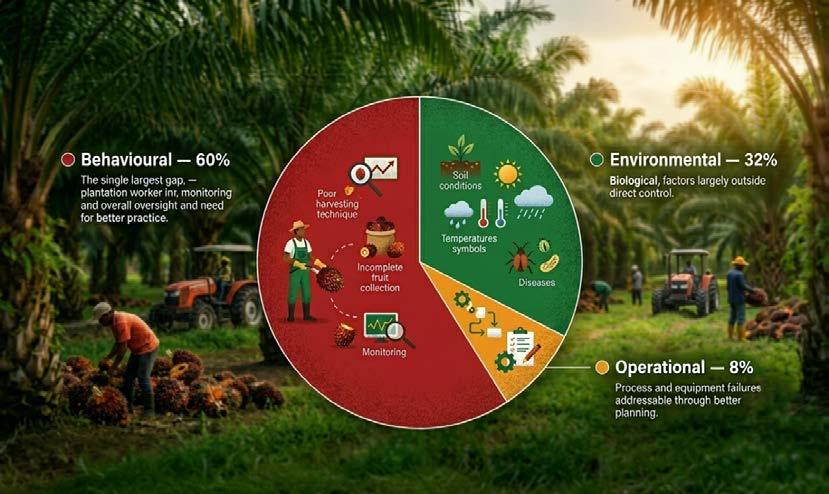
When FFB losses are systematically tracked by cause, the data tells a consistent and striking story. A staggering 60% of all FFB yield loss is behavioural in origin — driven by poor harvesting technique, incomplete fruit collection, and inadequate field monitoring. A further 32% is environmental, stemming from soil conditions, climate, and biological factors that are largely outside direct management control. The remaining 8% is operational, caused by process and equipment failures that better planning can address.
Sixty percent. That means the majority of yield loss in a typical estate is not an agronomy problem — it is a people and management problem.
At the heart of it is one critical behaviour driver: Visibility and Awareness. When workers are not monitored, standards slip. When managers lack clear sight of what is happening across their blocks, problems go undetected. When no structured system exists to surface losses and hold people accountable, the same mistakes repeat round after round — silently draining yield that no one even knew they were losing.
Why Losses Stay Hidden
Here is the uncomfortable truth: most estates do not know how much they are losing, because no one is systematically looking.
After every harvesting round, losses accumulate in the field — loose fruit scattered on the ground, ripe bunches left uncut, partially harvested areas where workers took shortcuts. These losses are never recorded. They are never reported. They simply rot in the field while management remains unaware, and the cycle repeats the following round.
This is not a worker discipline problem at its core. It is a structural visibility problem. Post-harvesting field inspection has never been formalised, standardised, or consistently enforced in most estates. Without it, managers cannot know which blocks have been checked, which workers are consistently underperforming, or how much yield is quietly draining away every single month.
The losses stay hidden — until they show up as a disappointing yield figure that nobody can explain.
The Solution: Bringing Management Into the Field
Closing the Behaviour Gap starts with a simple but powerful shift: getting management out of the office and into the field, with a structured system to capture and act on what they find.
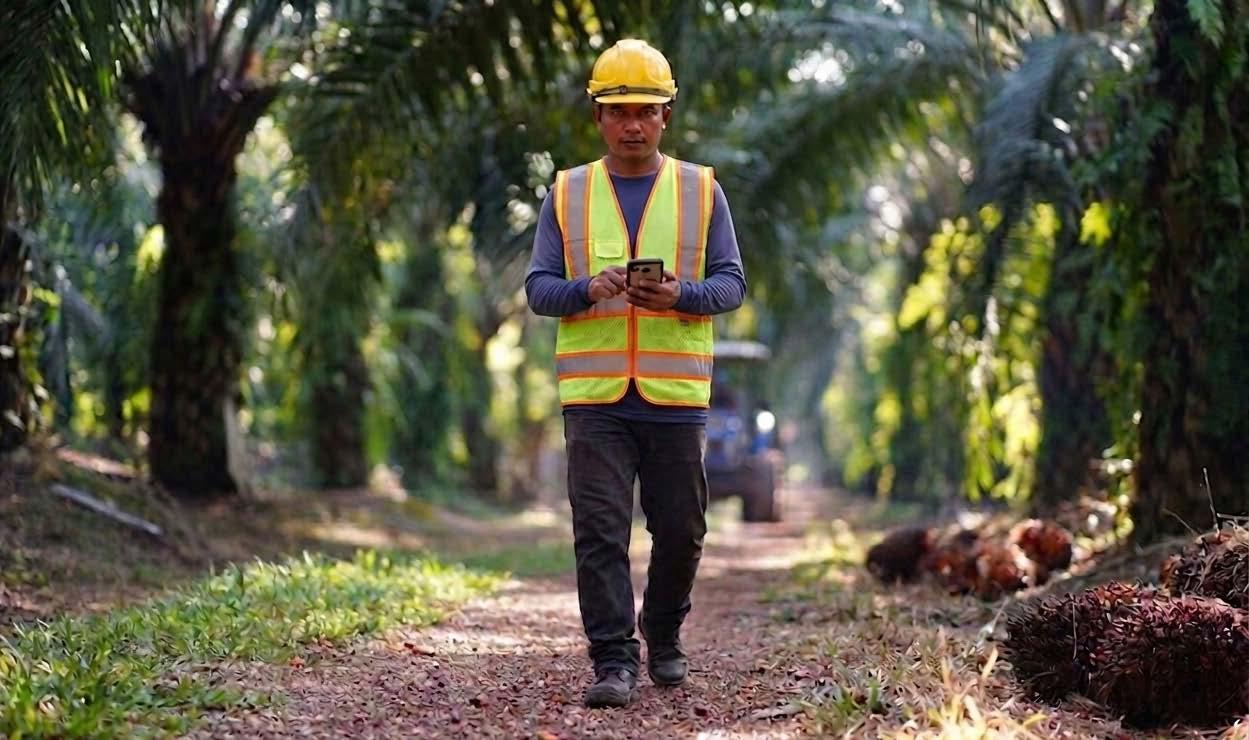
This is exactly what ABS Global’s Plantec platform is designed to do. Plantec is a mobile-first field tool built not just to collect data, but to change how people behave — making the right action the easiest action, every day, across every level of the estate. Unlike back-end reporting systems that tell you what happened last month, Plantec operates where yield is actually won or lost: in the field, in real time, at the moment decisions are made.
Data captured on-site flows seamlessly into back-end estate management systems for payroll, inventory, and executive reporting — so the field and the office are always working from the same picture.
Spotlight: Field Inspection — Turning Hidden Losses Into Recovered Yield
At the centre of Plantec’s approach to closing the Behaviour Gap is the Field Inspection module — a structured, digital postharvesting inspection system that formalises something most estates have never done consistently: sending management into the field to check the work after every harvest round.
A System Built for Every Level of Management
Field Inspection assigns individual inspection targets across the full management hierarchy. Estate managers, assistant managers, supervisors, and mandores all carry personal daily inspection targets. This matters because accountability becomes specific — not a general instruction to “keep an eye on things,” but a named target for a named person, tracked and visible to the entire organisation. When everyone from the estate manager down to the mandore is expected to walk the blocks and report what they find, the culture of the entire estate shifts.
What They Are Looking For
During each post-harvesting inspection, staff walk their assigned blocks looking specifically for harvesting losses — uncollected loose fruit left on the ground, unharvested bunches missed or skipped by harvesters, and incomplete evacuation where bunches were cut but not properly collected. Every finding is recorded digitally on-site with photos, GPS coordinates, and timestamps. Nothing is left to memory or endof-day paperwork.
What Plantec Shows You
Plantec gives management complete, real-time visibility over the entire inspection process. Every staff member’s individual targets and achievement are tracked live — so gaps in coverage are immediately visible to those above them. The total loss
discovery count per block, per inspector, and per round gives the estate its first clear picture of exactly how much yield has been slipping through undetected. And a live digital block map of the estate shows which blocks have been inspected and which have not — eliminating all guesswork around field coverage.
“Before Plantec, we assumed losses were happening but had no way to measure them. Now we know exactly where they are, who found them, and how much we recover every round.”
For many estates using Plantec for the first time, the loss discovery data alone is a revelation. Losses that were assumed to be small turn out to be significant. Blocks that were assumed to be well-managed turn out to have consistent, recurring gaps. For the first time, the estate can see the full picture — and act on it.
The Dual Impact on Yield
Field Inspection drives yield improvement through two distinct mechanisms that compound over time.
The first is direct loss recovery. Every loose fruit collected and every missed bunch recovered is yield that goes straight to the weighbridge instead of rotting in the field. This is immediate, tangible, and measurable from the very first round.
The second is behavioural improvement. When harvesters know that a supervisor will walk behind them and inspect their
work, their behaviour changes. They collect more carefully. They do not skip bunches. Accountability is no longer abstract. Over multiple rounds, harvesting quality improves at the source — reducing losses before they even need to be recovered. Better recovery today means fewer losses tomorrow.
The Opportunity in Numbers
Yield Performance Gap = 2.29 Mt/Ha ≈ RM18.3 million per year for a 2,000 Ha estate
The average estate produces 3.31 Mt/Ha. Best-in-class estates operating under structured behaviour management programs achieve 5.6 Mt/Ha. For a 2,000-hectare estate, that gap represents approximately RM18.3 million in unrealised revenue every single year. Across a portfolio of estates, the opportunity compounds dramatically.
And unlike soil quality or rainfall, this is a gap that is entirely within management’s control.
Conclusion: What Gets Seen Gets Improved
The palm oil industry has invested heavily in genetics, agronomy, mechanisation, and mill technology. These investments matter. But the data shows clearly that the single largest lever for yield improvement remains largely untapped —
not in the lab or the mill, but in the field, in the daily behaviour of the people who run it.
Closing the Behaviour Gap does not require a complete overhaul of operations. It starts with one fundamental change: making what happens in the field visible. When management can see which blocks have been inspected, which losses have been found, and which staff are meeting their targets — everything changes. Workers perform better because they know someone is watching. Managers lead better because they know what is actually happening. And yield improves, round after round, because the losses that were always there are finally being seen — and recovered.
That is what Plantec is built to do. The estates that embrace this shift today will be the ones setting the benchmark for the industry tomorrow.
ABS Global Sdn Bhd is a Malaysia-based technology and business transformation company specialising in behaviourbased digital solutions for the agricultural sector. Founded in 2010, ABS has delivered operational excellence programs across more than 500 projects in Malaysia, Indonesia, and Thailand.
abs.global | contact @abs.global | +6 03 8996 3225 | Bukit Jalil, Kuala Lumpur, Malaysia
Palm Oil: Not Just for The Frying Pan
PALM oil has a curious public relations challenge. For something so widely present in our lives, it is still often rather poorly introduced.
Mention it in conversation and many people think immediately of a bottle in the kitchen, a wok in action, perhaps a biscuit, perhaps a debate.
Its public image remains trapped near the frying pan, as though its chief ambition in life were simply to wait beside a stove for something to be sauteed.
But palm oil has long outgrown that narrow biography. In fact, recent market turbulence has offered a timely reminder of just how wide palm oil’s downstream reach really is.
As conflict in the Middle East disrupted petrochemical supply lines and pushed up the cost of fossil-based inputs, industry players noted that some palm-based oleochemicals suddenly looked more attractive as substitutes in selected applications –even if the benefit came with heavy caution, since higher energy costs and tighter supplies of key manufacturing inputs were also raising operating pressure.
In other words, palm oil’s downstream value is not merely theoretical or tucked away in conference slides. It becomes especially visible when the wider industrial system is under stress.
Palm oil is not merely a product. It begins in the plantation, yes, but it does not stay there.
It rises, branches, transforms and travels – vertically through stages of industry, and horizontally across many parts of daily life – until it turns up in places most people never think to look.
Palm oil is not a straight-line story. It is a family saga.
The vertical journey
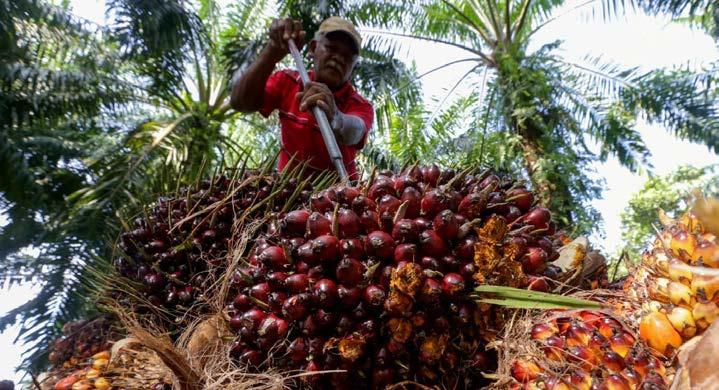
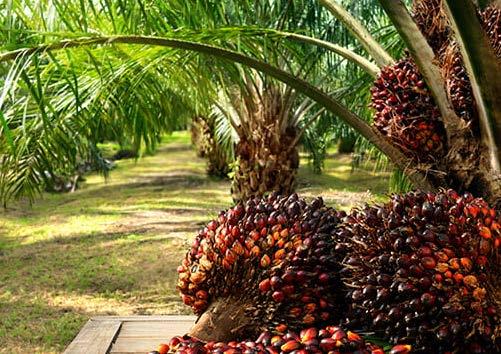
The first way to understand palm oil is vertically. Upstream is where the story begins – in the estate, where fresh fruit bunches are harvested and sent to the mill.
There, the fruit yields crude palm oil from its mesocarp, while the palm kernel provides another valuable stream.
Even at this early stage, the palm is already showing signs of being something of an overachiever. It does not settle for one destiny. It produces more than one stream of value, as though it regards simplicity as a wasted opportunity.
Then comes the next stage, where raw oils are refined, fractionated and processed into products such as refined, bleached and deodorised (RBD) palm olein, RBD palm stearin, RBD palm oil, palm fatty acid distillate and corresponding palm kernel fractions.
By now the family has stopped dressing for the field and begun appearing in proper industrial attire. Acronyms multiply.
Then comes the broader downstream stage, where palm oil’s wider family circle is revealed.
Here, palm-derived materials become glycerine, fatty acids, fatty alcohols, methyl esters, biodiesel, surfactants, soap bases, lubricants, specialty compounds, nutraceutical ingredients and even phytonutrients.
This may sound as though palm oil has wandered into a chemistry textbook and decided to stay. But the principle is simple.
Palm oil is not merely an end product. It is also a starting point from which many other useful things are made.
That matters. A country that exports only crude output is selling only the opening chapter. A country that builds along the value chain is writing the fuller book and keeping more of the value along the way.
The horizontal spread
If the vertical story is about stages, the horizontal one is about reach.
Once palm oil enters the downstream world, it does not remain obediently in one category. It moves across food, personal care, home care, pharmaceuticals, lubricants, biofuels, industrial chemicals and specialised applications.
In one direction, palm-derived ingredients may enter bakery fats, creamers, emulsifiers and food systems. In another, they turn up in soap, shampoo, shower gel, lotions and detergents.
Elsewhere, they appear in biodiesel, industrial lubricants, pharmaceutical excipients, nutritional products and specialty formulations.
So, one fresh fruit bunch from the field may begin life under an oil palm tree canopy, yet its descendants may later appear in a kitchen, a bathroom, a clinic, a truck engine, a washing machine, a laboratory and a factory floor.
Palm oil, in other words, leaves home early and does very well for itself.
That is why it should be understood not as a static commodity, but as a living industrial ecosystem – stretching from agriculture to chemistry, from field operations to formulation science, from plantation logic to modern consumer life.
Before breakfast, palm oil is already at work. A more human way to appreciate palm oil is to follow palm oil through one ordinary day and notice how often it quietly shows up without introducing itself.
The day begins in the bathroom. Before breakfast has had a chance to negotiate peace with your stomach, there is toothpaste, soap, shampoo, facial cleanser and perhaps a moisturiser promising brightness and bottled optimism.
Palm-derived ingredients may already be present – in surfactants, emulsifiers, soap noodles, moisturising agents and cleansing systems.
These are the backstage workers that allow toothpaste to foam, soap to lather, cleansers to cleanse and creams to spread without the temperament of wet cement.
Nobody begins the day by thanking a surfactant. Yet civilisation, I have long suspected, rests on many such underappreciated citizens.
Then comes breakfast. Margarine, creamers, bread spreads, bakery products and nutritional drinks may all carry some contribution from the broader palm family – through refined fractions, specialty fats, stabilisers or emulsifiers that help products blend, spread, hold texture and remain shelf-stable.
Consumers like flakiness, smoothness, consistency and convenience, but rarely pause to admire the quiet chemistry that helps provide them.
Palm oil has built a long and respectable career in that backstage world. It does not demand centre stage. It merely keeps breakfast from collapsing.
By midday, it has changed clothes. As the day gathers pace, palm oil’s family moves beyond food.
Goods travel. Warehouses hum. Trucks roll. Supply chains perform their daily miracle while being appreciated mainly when they fail.
Somewhere in that movement, palm-derived inputs may be helping again - whether in the products being transported, in biodiesel blends, in lubricants or in industrial systems that keep machinery running smoothly.
This is the point where palm oil takes off the kitchen apron and puts on a hard hat.
Industry does not run on opinion. It runs on performance, reliability and practicality. Materials must work - repeatedly, quietly and without dramatic speeches.
Palm-derived oleochemicals and bio-based inputs have found their place here not because they are fashionable, but because they are useful.
By lunchtime, palm oil may reappear in more familiar forms - in the frying medium, in the snack, in the bakery system, in the emulsifier holding the whole thing together with molecular discipline and no public recognition whatsoever.
One must admire such versatility. It can attend an industrial meeting in the morning and still be on your plate by noon without looking tired.
The quiet workforce
By afternoon, the story enters one of its least glamorous and most important chapters: industrial chemistry.
Machines need lubricating. Surfaces need cleaning. Ingredients must be blended, preserved, emulsified, dispersed and stabilised.
Manufacturing does not run on sentiment. It runs on systems, and many of those systems depend on hardworking molecules that will never appear on a motivational poster.
Palm-derived fatty acids, fatty alcohols, esters and related compounds belong firmly in that quiet workforce.
There are no tourist postcards celebrating a good emulsifier or surfactant. Yet the modern household and the modern factory rely more heavily on such compounds than most people realise.
There is something rather noble in that. The world is held together not only by stars and speeches, but by reliable things that quietly do their jobs well. Palm oil, at its best, belongs in that company.
The evening shift
By evening, the household changes rhythm. Dishes are washed. Floors are cleaned. Laundry liquids are uncapped with confidence. And here too, palm oil’s extended family turns up for work.
Home care products often rely on surfactants, cleansing agents and emulsifiers that help remove grease, suspend dirt and rinse effectively. Foam, of course, helps performance look convincing too.
So there is a quiet irony here. Palm oil may sometimes be criticised loudly in public, while helping discreetly in private to wash the dishes, clean the shirt and tackle the grease left behind by dinner.
Then comes night. The bathroom shelf opens once more. Lotion. Ointment. Cream. Capsule. Supplement. Perhaps a pharmaceutical preparation.
And again, palm-derived ingredients may be presentin moisturisers, excipients, emulsifiers, delivery systems, antioxidants and specialised formulations.
At dawn it was in the soap. At breakfast it helped the table. By midday it had moved through logistics and food systems. By afternoon it had gone industrial. By evening it was helping clean the home. By night it had returned in care and comfort.
Palm oil, one begins to suspect, keeps longer hours than many executives - deserving overtime.
Meet the palm oil clan
And yet even this day-in-the-life view does not fully capture the richness of the story. For once palm oil enters oleochemistry, it no longer appears as a single character. It becomes a family portrait.
At one end stand the basics: fatty acids, glycerine and fatty alcohols. These are the sturdy elder siblings - dependable, practical, understated and essential.
Fatty acids help build soaps, surfactants and intermediates. Glycerine finds its way into cosmetics, pharmaceuticals and moisturising systems. Fatty alcohols serve as key building blocks in detergents, personal care and industrial chemistry.
Then come the esters and specialty derivatives - more polished, more refined in manner. These help lotions glide more elegantly, creams feel better and formulations perform better.
Further along the chain come the higher-value cousins - life science ingredients, pharmaceutical applications, specialised nutritional components and phytonutrients. These are the family members who have clearly gone into advanced professions and now attend conferences with sharper name tags.
Fair enough. They have earned it. Because this is where palm oil moves beyond crude and bulk into sophistication - beyond tonnage and into formulation, beyond basic chemistry and into higher-value opportunity.
From molecule to multifunctionality
This movement from basic oleochemicals to specialised derivatives and phytonutrients is not merely technical. It is economic and strategic.
Countries that remain only in upstream production or basic processing do the heavier lifting while often leaving richer margins to others further down the chain.
Countries that deepen vertically and widen horizontally do something far more intelligent. They build sophistication, capture more value and create stronger industrial linkages.
That is the real beauty of the downstream story. Palm oil is not merely a commodity to be defended. It is a platform to be developed.
Too often, palm oil is spoken of in only one vocabulary: plantation, price, yield, export, cooking oil. But its real vocabulary is much wider - from refining and formulation to oleochemicals, home care, personal care, pharmaceuticals and life sciences.
A crop that speaks in so many registers should not be reduced to a single accent.
So the next time someone says, “Palm oil? Ah yes, cooking oil,” one might smile and reply: yes, cooking oil too - but also your soap, shampoo, cleanser, detergent, cream, biodiesel, lubricant and more of your day than you may realise.
Palm oil is at once agricultural and industrial, humble and sophisticated, familiar and quietly unseen.
So let us stop meeting it only at the frying pan. Let us meet it properly - from field to refinery, from breakfast table to bathroom shelf, from industrial chemistry to phytonutrient promise.
For palm oil, truth be told, does not travel alone. It arrives with a very accomplished family.
Joseph Tek Choon Yee has over 30 years of experience in the plantation industry, with a strong background in oil palm research and development, C-suite leadership and industry advocacy. The views expressed here are the writer’s own.