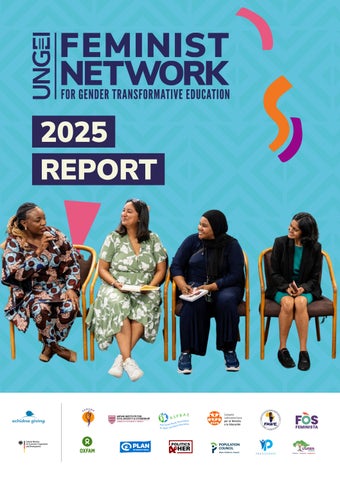
2025 REPORT
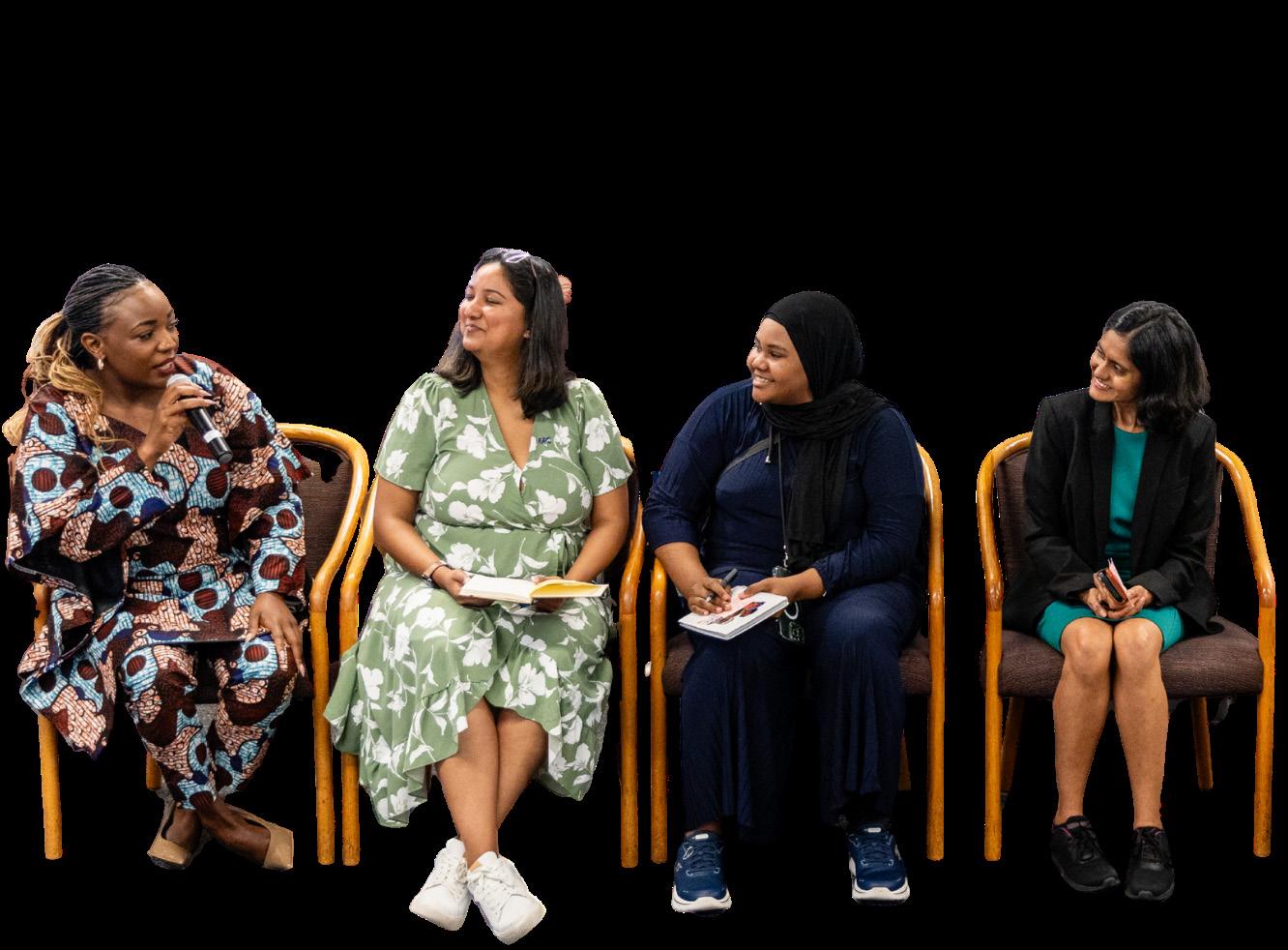

ABOUT US
The Feminist Network for Gender Transformative Education (FemNet4GTE) is a powerful, diverse and intergenerational movement of 630+ individuals representing 350 organisations, coalitions and governments from over 100 countries working towards gender equality in and through education. The Network was founded to advance the global agenda for gender transformative education by amplifying the voices of least-heard feminist CSOs and activists working in the field of gender equality in and through education. The Network was established at the Transforming Education Summit in 2022. It is convened by UNGEI with support from Echidna Giving and the German Federal Ministry for Economic Cooperation and Development (BMZ).
This report focuses on the Network’s activities and impact in 2025, and is divided into two parts:
Part One – Strengthening the movement through convening, exchange and dialogue
Part Two – Influencing the narrative
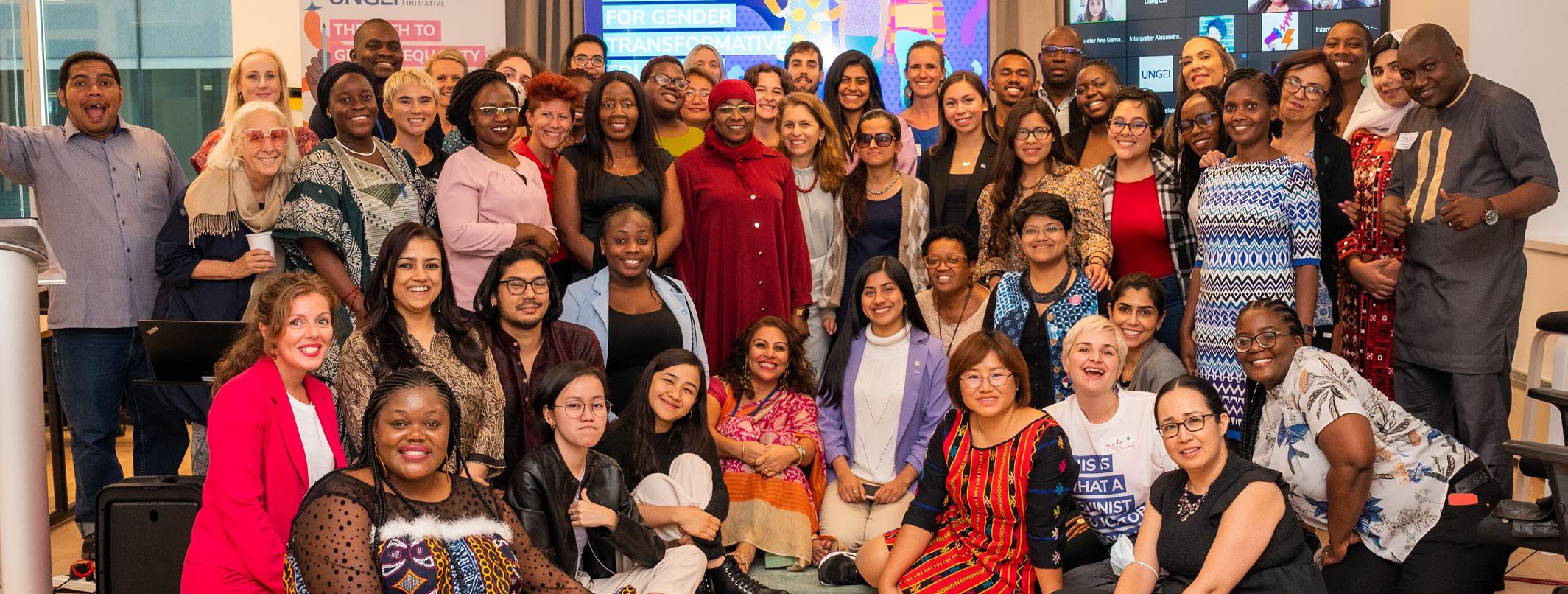
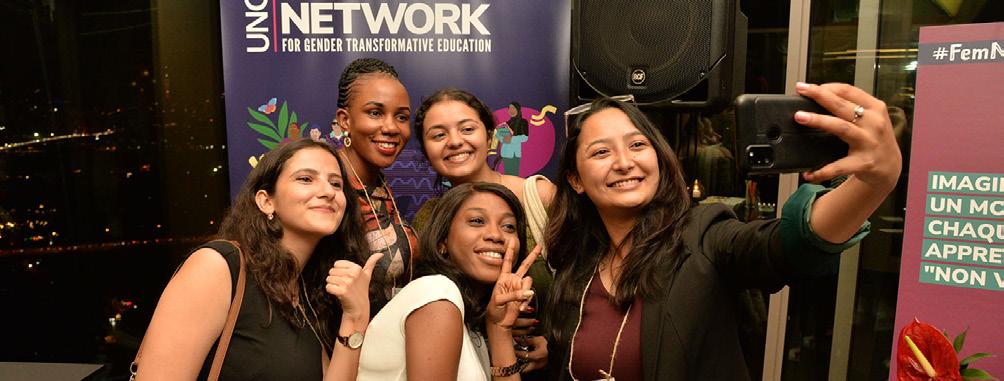
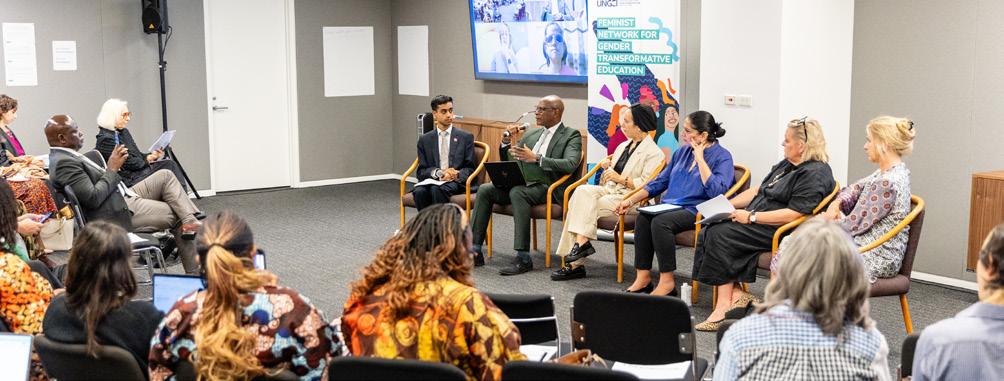
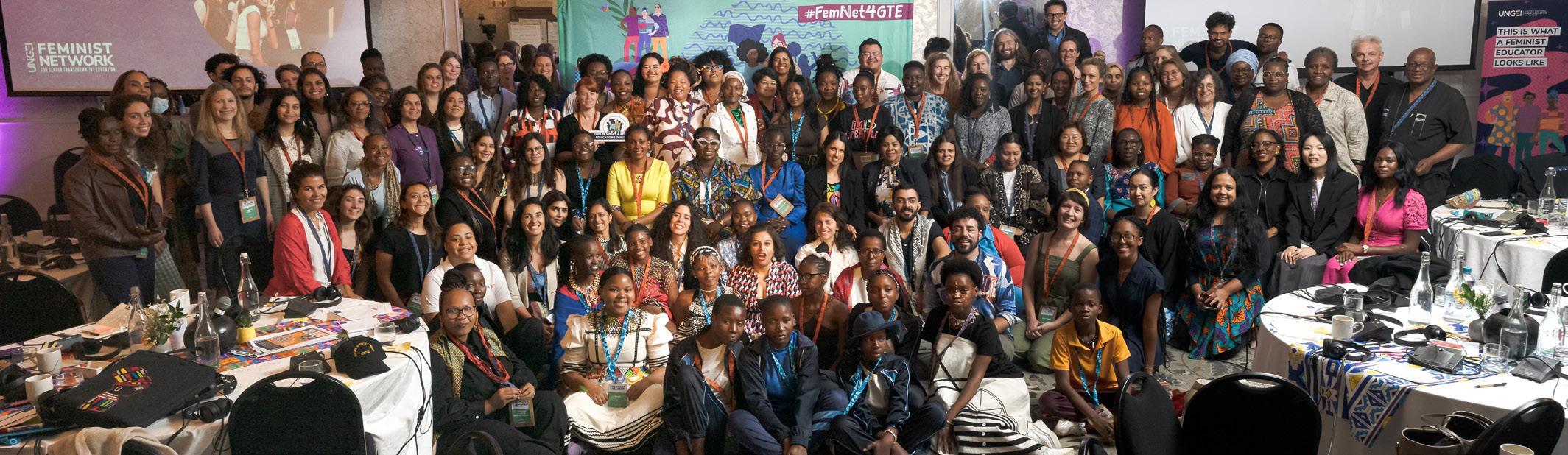
NEW YORK, 2022
ISTANBUL, 2023
NEW YORK, 2025
JOHANNESBURG, 2024
LONG TERM VISION of FemNet4GTE: The world we want to see
All learners, regardless of gender or sex, are supported with gender-transformative education (GTE)* to realize their full potential and contribute to achieving equal, just societies including by removing barriers to girls’ and women’s rights.
STRATEGIC APPROACH:
How will we get there?
FemNet4GTE will galvanize influential actors like policy makers, budget holders, women and girls’ rights actors, education actors and culture shapers to meaningfully implement GTE by elevating the urgency, efficacy and achievability of gender equality in and through education. We will do this by:
1. Strengthening the movement through convening, exchange and dialogue
2. Influencing the narrative
FEMNET4GTE GOALS
1. Targets & indicators on gender equality in and through education are included in the post2030 agenda
2. Governments commit to integrating gender equality in their education budgets / policies / plans
2025 OUTCOMES
• Build a roadmap to put gender equality in and through education in the post 2030 targets and indicators
• To develop evidence-backed tools, plans & strategies to inform advocacy and policymaking towards this end
• To strengthen and grow the FemNet4GTE movement, especially at the regional level
“Education is not only a fundamental right but also a form of reparative justice – it must be seen as a tool to address historical injustices, restore dignity, and equip marginalized populations with the skills needed to overcome inequality.”
- FemNet4GTE Africa
2026-2029 Objectives
Targets and indicators for GTE, built on the foundational research undertaken in 2025, co-led by Network
Build an alliance of ministries across the regions to deliver GTE in collaboration with civil society
Deploy regional advocacy and influencing strategies to meaningfully mobilise governments, funders and member states
WHAT WE HAVE ACHIEVED
A strong and collaborative network of 349 members from 105 countries, with shared leadership at regional and global level
3 global in-person convenings; 4 regional in-person convenings & 11 virtual meetings
A first-of-its-kind G20 side event on gender-transformative education, co-led by the government of South Africa, resulting in commitments from South Africa and Sierra Leone
Impact on regional level policies including the Continental Education Strategy for Africa and the Tlatelolco Commitment, which establishes a decade of action to achieve substantive gender equality in the LAC region
10 global public goods including GTE glossary; GTE power map; 3 advocacy briefs; World We Want Call to Action; 4 regional declarations on GTE:
• Africa
• Asia and the Pacific
• LAC
• SWANA
A Community of Practice established in Africa (formal) and LAC (informal)
Partnerships with organisations including Girls First Fund, Oxfam, Fos Feminista, UNESCO, UNAIDS, UN Women, Government of South Africa
Continued funding from German Federal Ministry for Economic Cooperation and Development (BMZ) secured for 2025-2028
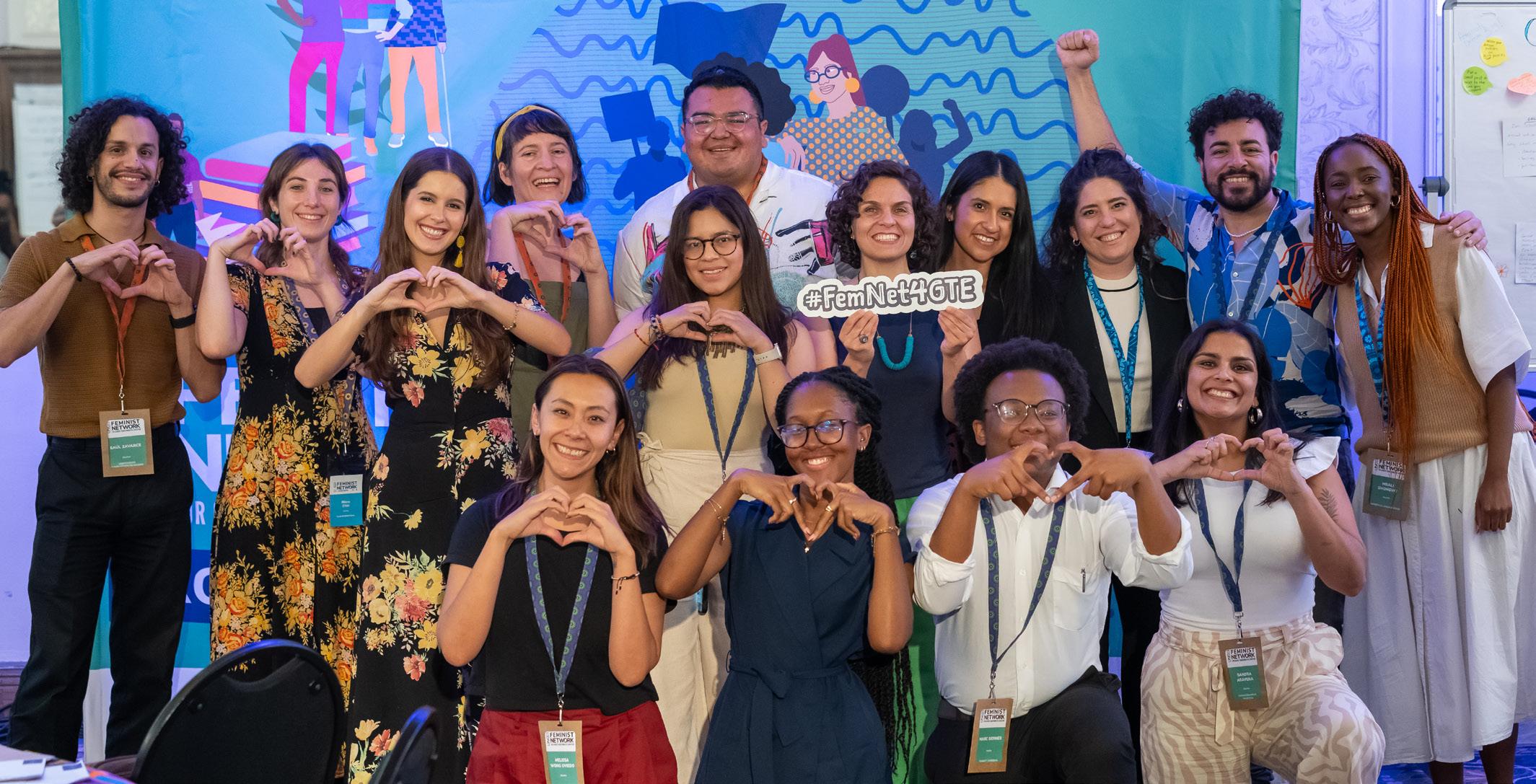
PART ONE – STRENGTHENING THE MOVEMENT THROUGH CONVENING, EXCHANGE AND DIALOGUE
AFRICA REGIONAL ACTION WORKSHOP, NAIROBI, KENYA,
26 – 27 AUGUST 2025
OVERVIEW
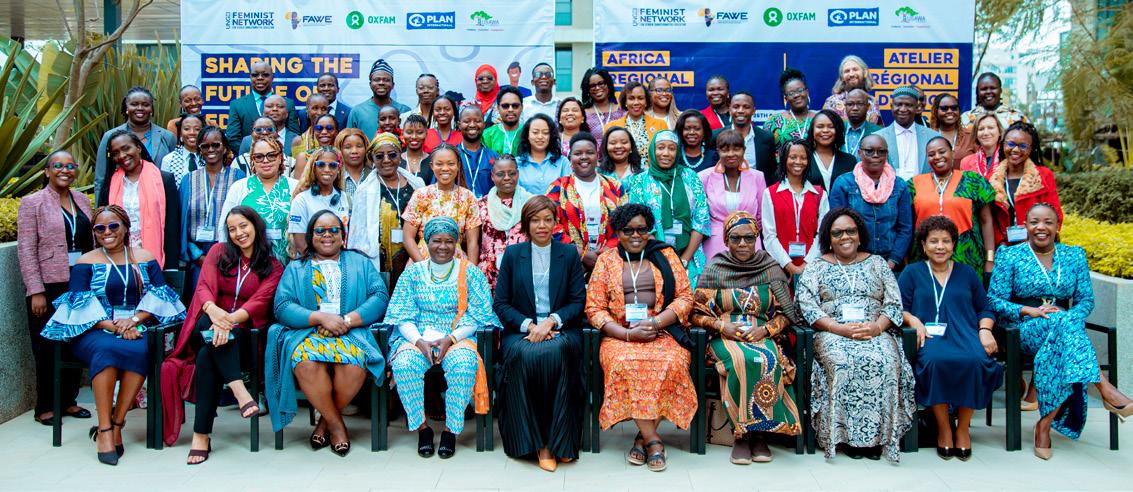
The Africa Regional Action Workshop for FemNet4GTE brought together 81 participants from 22 African countries, including representatives from civil society, NGOs, governments, National Education Coalitions, multilaterals, academia, the African Union, Regional Economic Communities and young feminist experts. The workshop created space for a diverse range of actors to reflect critically on persistent and emerging barriers to advancing gender equality in education. The discussions highlighted systemic issues that continue to undermine inclusive, transformative education across the continent.
DISCUSSION POINTS
• Education is not only a fundamental right but also a form of reparative justice – it must be seen as a tool to address historical injustices, restore dignity, and equip marginalized populations with the skills needed to overcome inequality.
• Education financing is one of the most pressing concerns. Participants pointed to weak domestic resource mobilisation, shrinking fiscal space due to debt and austerity, and the impact of illicit financial flows.
• Learners with disabilities continue to face systemic exclusion. This exclusion goes beyond access, extending to discriminatory practices and attitudes that reinforce marginalisation.
• While civil society and youth are often invited into policy spaces, their influence on outcomes is limited. Participants insisted that meaningful participation requires mechanisms enabling civil society and young people to shape decisions.
Through discussions, participants noted that if education actors don’t address these systemic issues, Africa’s education systems will continue to reproduce inequality. Achieving gender-transformative education demands sustainable financing, inclusive practices, empowered grassroots and youth leadership, and urgent responses to new global challenges.
“Our regional or global advocacy will not make any sense if it is not based on the local reality.”
Solange Akpo, Africa Network Campaign on Education for All (ANCEFA)
SESSIONS
• Panel Discussion – How can civil society push and support governments to deliver on their promises on gender equality?
• Unpacking the AU theme of the year and GTE
• Panel on Gender-Transformative Education best practices and recommendations
• The right to education and the implications for child rights organisations
• The Intersection of gender and disability
• Financing Gender Transformative Education
• Localisation of funding and ways of working
Africa Regional Leads: Forum for African Women Educationalists (FAWE), OXFAM, Plan International and Usawa Agenda
ACTIONS FROM AFRICA REGIONAL CONVENING
• Influence Education Sector Plans (ESP) with gender-transformative commitments and push for these commitments to receive financing. This will be done by ensuring Network Members join their country’s Local Education Group (LEG) and are a part of the ESP process.
• Utilise FAWE’s upcoming triennial conference happening in November 2026 (The FAWE International Girls Conference) as a moment for more advocacy for the regional declarations and as a platform to share best practices and build community
• Leverage advocacy moments such as CSW and International Day for Persons with Disabilities to strengthen GTE visibility.
• Network members will officially launch the
FemNet4GTE Africa Community of Practice as a platform to share best practices, advance accountability, and sustain advocacy.
• Network members committed to beginning the process of gaining observer status with the AU African Committee of Experts on the Rights and Welfare of the Child (ACERWC). This is an African Union organ mandated to monitor the implementation of the African Charter on the Rights and Welfare of the Child as well as promote and protect children’s rights in Africa.
• FemNet4GTE will be involved in the Gender is My Agenda Campaign (GIMAC) process. There will be 2 meetings in 2026 on the margins of the AU Heads of State meetings. The GIMAC sessions will be held in February (in Addis Ababa) and in November.
ASIA AND THE PACIFIC REGIONAL ACTION WORKSHOP
BANGKOK, THAILAND, 26-27 AUGUST 2025
OVERVIEW
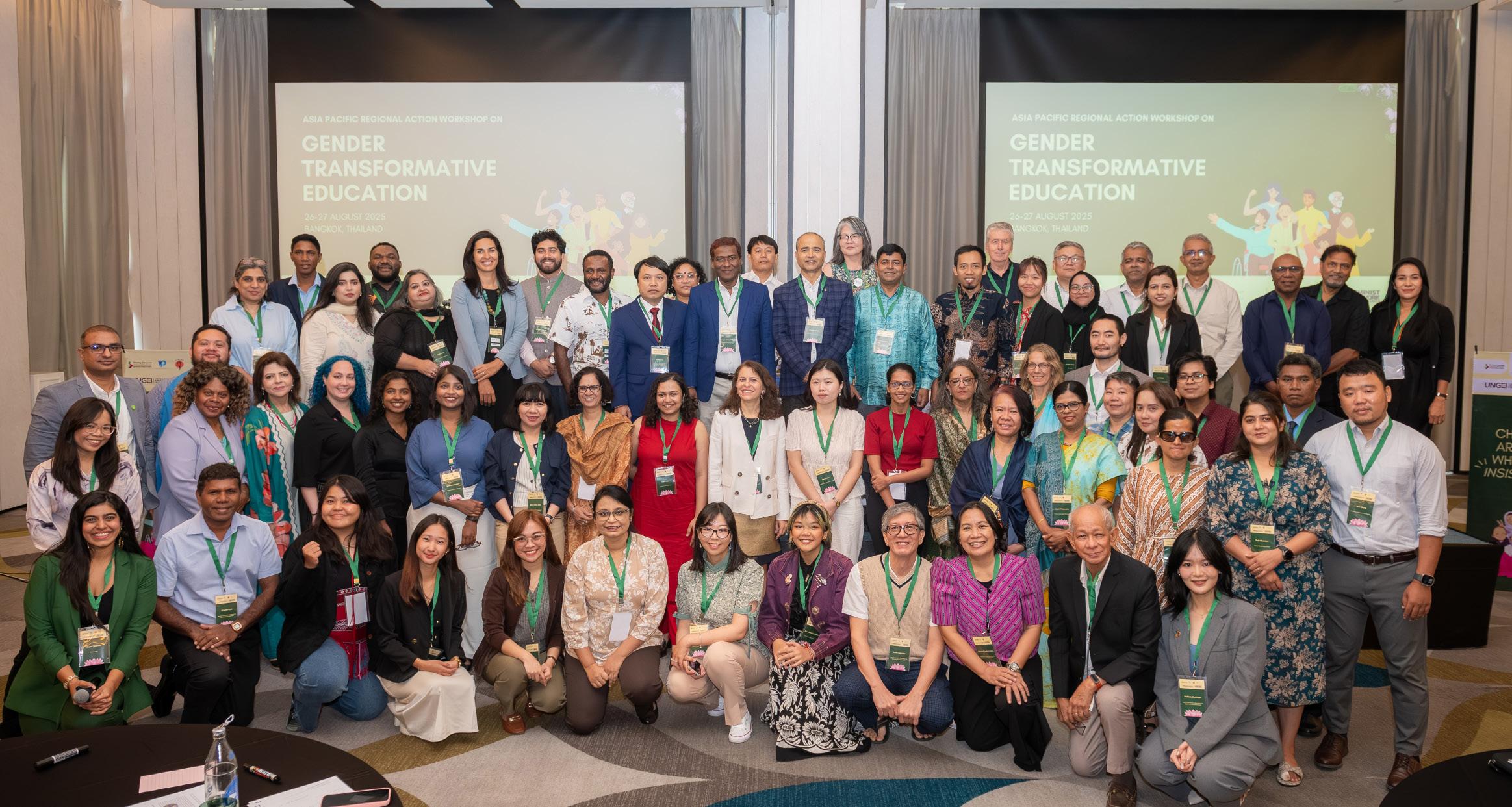
The Asia and the Pacific Regional Action Workshop, Bangkok, Thailand, 26-27 August 2025, brought together 75 participants from 20 countries in the region. Participants included included feminist organisations, government officials, national education coalitions, young feminists, youth leaders, academia, child rights organisations, development partners, multilateral and UN agencies.
DISCUSSION POINTS
• Education financing: How we can pursue gender-responsive budgeting at a national level?
• Digitalisation and AI: How we can undertake more research on the impacts of digitalisation?
• Education in Emergencies: Developing a research agenda and how we can include EiE in policy recommendations?
• Geopolitical shifts and shocks that the sector has faced in recent years, including slow progress and reversals on SDG4 & SDG5.
• The persistence and resistence of education coalitions, feminist groups and civil society.
• The opportunity of sustained advocacy for the Regional Declaration on GTE.
All in all, the workshop allowed for thorough and comprehensive discussion, and also for a chance to strategize on how Network members can maintain momentum on GTE in the region.
APAC Regional Leads:
Aahung, Asia South Pacific Association for Basic and Education (ASPBAE) and Pratisandhi
“The FemNet4GTE 2025 workshop has been an inspiring space of solidarity, learning, and collective action, strengthening our commitment to advance gender transformative education in the region!”
- Asia and the Pacific Workshop Participant
SESSIONS
• Confronting challenges in GTE through collective action
• Occupying spaces and engaging in the processes that matter
• Deepening collective understanding and crafting policy recommendations
• Tackling digitalisation and AI challenges in education for gender equality
• Strengthening data & evidence on education in emergencies: Sharing of key findings from recent research on girls’ education in conflict and crisis settings.
• Reforming the education system towards GTE and pursuing the changes we want.
ASIA AND THE PACIFIC
REGIONAL ACTIONS
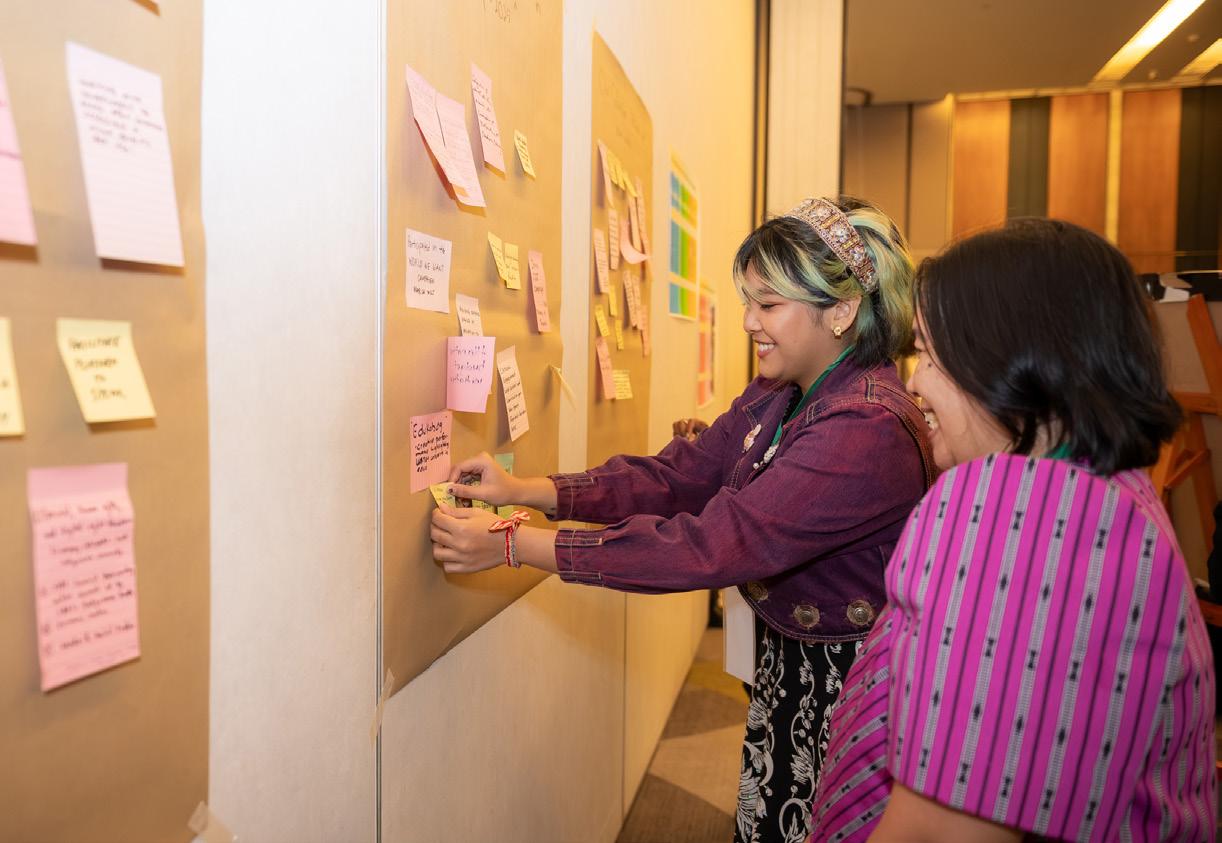
• Network members will work together to develop regional, sub-regional and national plans for GTE. This will be done by mobilising the six learning collaboratives that were formed at the regional action workshop. These collaboratives will meet regularly over the course of the next year to share knowledge and best practices on the following 5 themes:
1. Mainstreaming Comprehensive Sexuality Education (CSE) - Learning Collaborative led by Pratisandhi
2. Support Teachers Training for GTE –Learning Collaborative led by Aahung and ASPBAE
3. Disability Inclusive Education – Learning Collaborative led by VAEFA
4. Addressing LGBTIQA+ concerns – Learning Collaborative led by LGBT Centre, Mongolia and E-NET Philippines
5. Embedding Lifelong Learning in the policy recommendations and pursuing thematic learning collaboratives – Learning Collaborative led by ASPBAE.
• Expand the reach of FemNet4GTE by engaging more with National Education Coalitions in the region. This work began at the workshop, with 14 National Education Coalitions joining the network.
• Continued policy advocacy at National and Regional levels. Some key moments for advocacy in 2026 will be the Asia-Pacific Forum on Sustainable Development (APFSD) and the Asia Pacific Meeting on Education (APMED), amongst others.
Additionally, ASPBAE committed to embedding GTE in it’s intergovernmental frameworks and in the work of National Education Coalitions. ASPBAE also committed to advocating for GTE financing for the region.
“As a government representative, I appreciate connecting actions to strategies, acts, policies and frameworks”
Asia and the Pacific Workshop Participant
LATIN AMERICA AND THE CARIBBEAN (LAC) REGIONAL ACTION WORKSHOP
OVERVIEW
The LAC regional action workshop consisted of three different components:
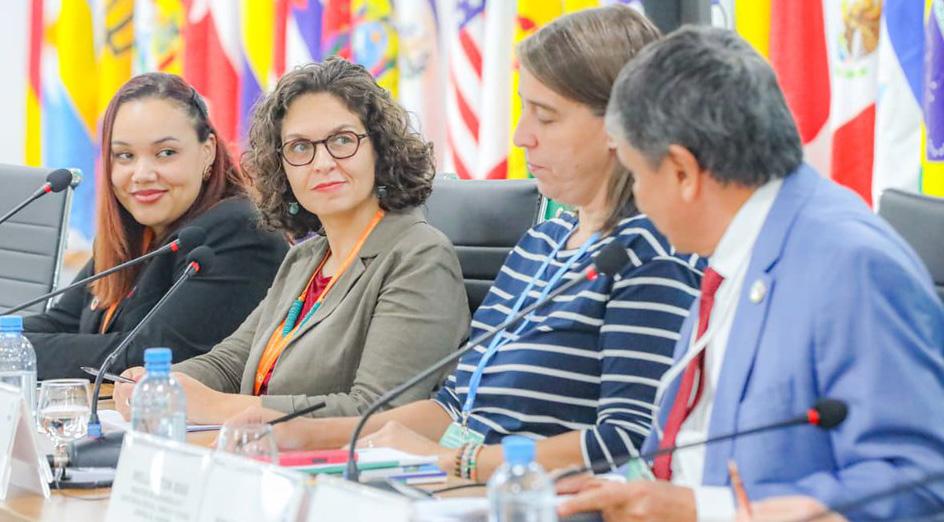
• A FemNet4GTE Side Event during the XVI Regional Conference on Women in Latin America and the Caribbean in Mexico City, Mexico, 12 – 15 August 2025
• A 2-Day virtual strategy session with Network Members, 2nd and 5th September 2025
• FemNet4GTE participation at VI Conferencia Regional sobre Desarrollo Social de ALC, 1 – 4 September 2025
Regional Conference on Women in Latin America and the Caribbean, 12 – 15 August 2025
FemNet4GTE members in LAC organized a side event titled “Education and Care: gendertransformative education as a political strategy to dismantle the patriarchal system in Latin America and the Caribbean”, during the XVI Regional Conference on Women in Latin America and the Caribbean in Mexico City. Speakers included representatives from the Mexican Government’s Ministry of Women, ECLAC, the Buenos Aires Ministry of Education, the Network of Women for Popular Education, the Latin American Campaign for the Right to Education, the University of Buenos Aires, among other organisations. The event was a space to dialogue about the intersections between education and care, including the impact of care work in continuing education, the relevance of gender-transformative education to transform gender norms and promote equitable caregiving, among others.
Statistics: The event was attended by 50 participants from 17 countries (39 women, 8 men and 3 trans & non-binary participants)
CONFERENCE OUTCOMES
• As a direct result of FemNet4GTE advocacy, the terminology ‘Comprehensive Sexuality Education’ was included in the Tlatelolco Commitment, which is a declaration that establishes a decade of action to achieve substantive gender equality in the LAC region
• Network members disseminated the Regional Declaration on GTE to the members of the Regional Committee on Education 2030-SDG4
Virtual FemNet4GTE Strategy Session, 2nd & 5th
September 2025
Regional leads facilitated a 2-day strategy session that allowed for Network members to come together and decide on key regional actions in the lead up to 2030. Some of the discussions that were had over the 2 days included:
• Unpacking the definition of gendertransformative education: participants discussed how GTE must question not only gender roles, but also the very meaning of education at a time of global and regional crises, promoting critical skills and hope for change.
• GTE as cultural change: participants discussed how GTE is not limited to the formal school environment: it encompasses entire lives and all educational spaces (formal, community, popular).
• Ethics and pedagogy, participants discussed which teaching-learning spaces are necessary for the changes we need and how it is essential to recover the ancestral wisdom anchored in women.
Statistics: 25 CSO participants from 12 countries.
LAC Regional Leads: Fòs Feminista and La Campaña Latinoamericana por el Derecho a la Educación (CLADE)
LATIN AMERICA AND THE CARIBBEAN
REGIONAL ACTIONS
• Develop a new piece of research, led by FemNet4GTE members, highlighting the impact of GTE in-practice in the LAC region, sharing insights and best practice to be used in regional advocacy.
• Develop tools for civil society organisations to raise awareness among educational communities and local, regional and global government representatives about Gender Transformative Education.
• Increase the inclusion of GTE in local, regional and global government programmes and the work plans of multilateral organisations as a mechanism for contributing to the transformation of gender norms and inequalities in education.
• Mapping of organisations working directly or indirectly in GTE
FemNet4GTE Participation at the Regional Conference on Social Development in Latin America and the Caribbean, 1–4 September 2025
Organised as a regional preparatory process for the Second World Summit on Social Development, the Sixth Regional Conference on Social Development brought together governments, CSOs, UN agencies, multilateral organisations and development banks to agree on a Global Compact for Inclusive Social Development.
In the Civil Society Declaration drafted at the Summit, FemNet4GTE members succeeded in including the importance of “free, inclusive, antiracist, anti-ableist, non-sexist and secular public education, from early childhood to postgraduate studies”.
“Sometimes we think we are alone, but these meetings strengthen us to know that there are others nearby who are also working. The regional cooperation strengthens local initiatives and gives them greater impact.”
Carla Ljubetic, Fundación Niñas Valientes
SOUTH-WEST ASIA AND NORTH AFRICA (SWANA) REGIONAL ACTION WORKSHOP, PAPHOS,
CYPRUS, 28 – 29 AUGUST 2025
OVERVIEW
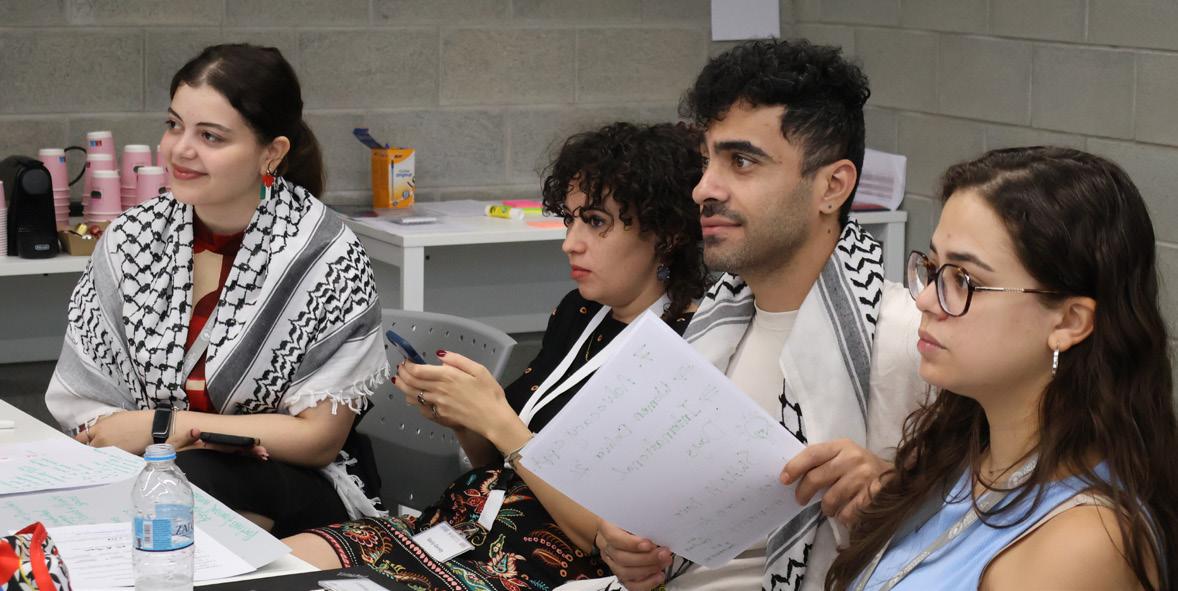
The SWANA regional action workshop brought together a mix of voices from across the region, with strong participation from Lebanon, Jordan and Egypt. Participants collectively unpacked challenges and opportunities for GTE in their contexts. The combination of presentations, contributions, and dialogue created a space where participants not only exchanged knowledge but also built shared ownership on a way forward.
DISCUSSION POINTS
• Ensure girls’ safe access to education and increase retention
• Eliminate early, forced, and child marriage through community education
• Prioritize girls’ bodily autonomy and sexuality education
• Build inclusive, gender-transformative education systems and infrastructure
SWANA Regional Leads: Asfari Institute and Politics4Her
SESSIONS
• Barriers to GTE
• Opportunities for GTE
• Discussion of the Four SWANA goals in the Regional Declaration
• Building the SWANA Roadmap to 2030 and committing to regional actions
• Formation of Regional Working Group
SWANA REGIONAL ACTIONS
• Mobilisation of the regional working group that was created at regional action workshop
• Regional working group will lead a series of awareness campaigns on child marriage
• Network members will work with Ministries of Education in their countries to review national curricula from a gender perspective & develop a toolkit for gender mainstreaming in national curricula
• Development of a GTE Gender-Mainstreaming Toolkit. The toolkit will consolidate regional principles, MoE inputs, examples, and technical criteria into a usable set of tools for curriculum teams, CSOs, teachers, and training institutes.
“Inclusivity starts with rethinking everyday practices. Education can be a tool to shift power toward equality.”
SWANA Workshop participant
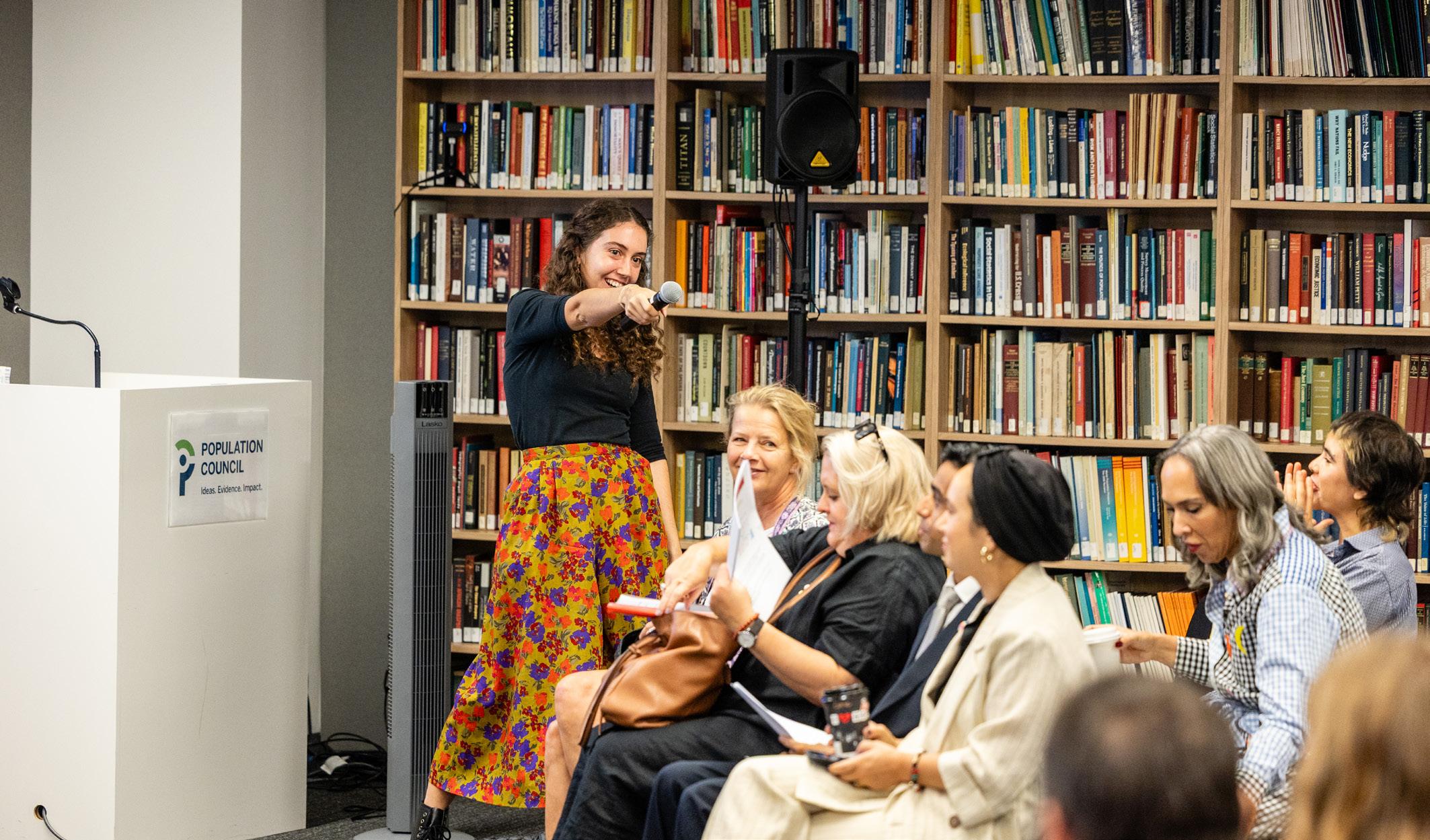
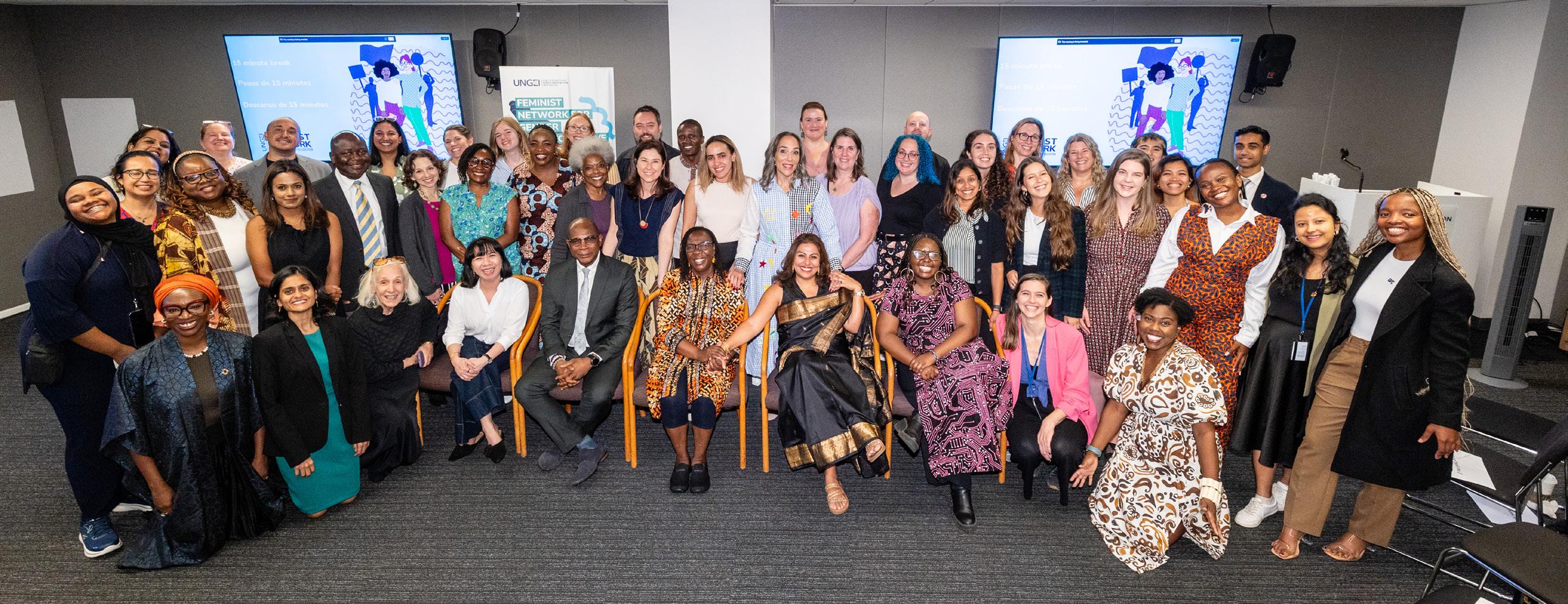
On 20 September 2025, the Feminist Network convened for its annual global meeting. Through a dynamic, intergenerational and multisectoral hybrid meeting that moved across timezones, Network members came together to call for bold commitments on education for equality, education for peace and set out our shared commitments and road to 2030. This meeting was delivered in partnership with Population Council, who generously co-hosted the meeting.
The one-day workshop brought together multilaterals, governments, funders, civil society and young feminist actors working across issues including education, child protection and women’s rights to share new commitments to and build actionable strategies towards a new agenda for education for equality, education for peace.
DISCUSSION POINTS
• Millions of women and girls face a gendered digital divide – the digital space facilitates technologically facilitated gender based violence, we need to ensure that our strategies are evolving to address digital challenges.
• Intersectionality and multi-sectoral responses are non-negotiable when it comes to gendertransformative leadership in education
• Political commitments to girls education should not just exist on paper but should be translated into actions. It is our job to move people into moving policies.
• Gender Transformative Education includes queer inclusive education.
• Systems and curricula need to be designed not just for girls but with girls.
• We need to look at education holistically and ensure that we are creating inclusive, safe, quality education.
• Wars and crises interrupt children’s education and take an extraordinary toll on the lives of those living within it. We need to sharpen our focus to support learners in crisis and also leverage education as a tool for peacebuilding.
“Parity was never the goal. At least 12 years of safe and quality education for girls is the goal – that should be our north star.”
- Lena Alfi, Malala Fund
MEETING AGENDA
• Workshops on the development of education indicators for:
Trauma-informed, gender-sensitive learning for those impacted by crises
Education systems that enable the reduction of early teenage pregnancy and HIV through comprehensive SRHR Violence-free schools that prevent / reduce GBV
Schools that teach positive gender norms and support equality & peace, reducing instances of harmful practices
· Education budgets that ringfence spending for vulnerable populations
How can education systems deliver the end of early, forced and child marriage
• Recaps from Regional Action Workshops
• Road to 2030 digital timeline and strategic planning
• Panel Discussion on Gender Transformative Leadership in Education
• Launch of new FemNet4GTE Advocacy Briefs: Gender Transformative Education: A MultipleImpact Investment in a ResourceConstrained World
• Future and Commitments
OUTCOMES
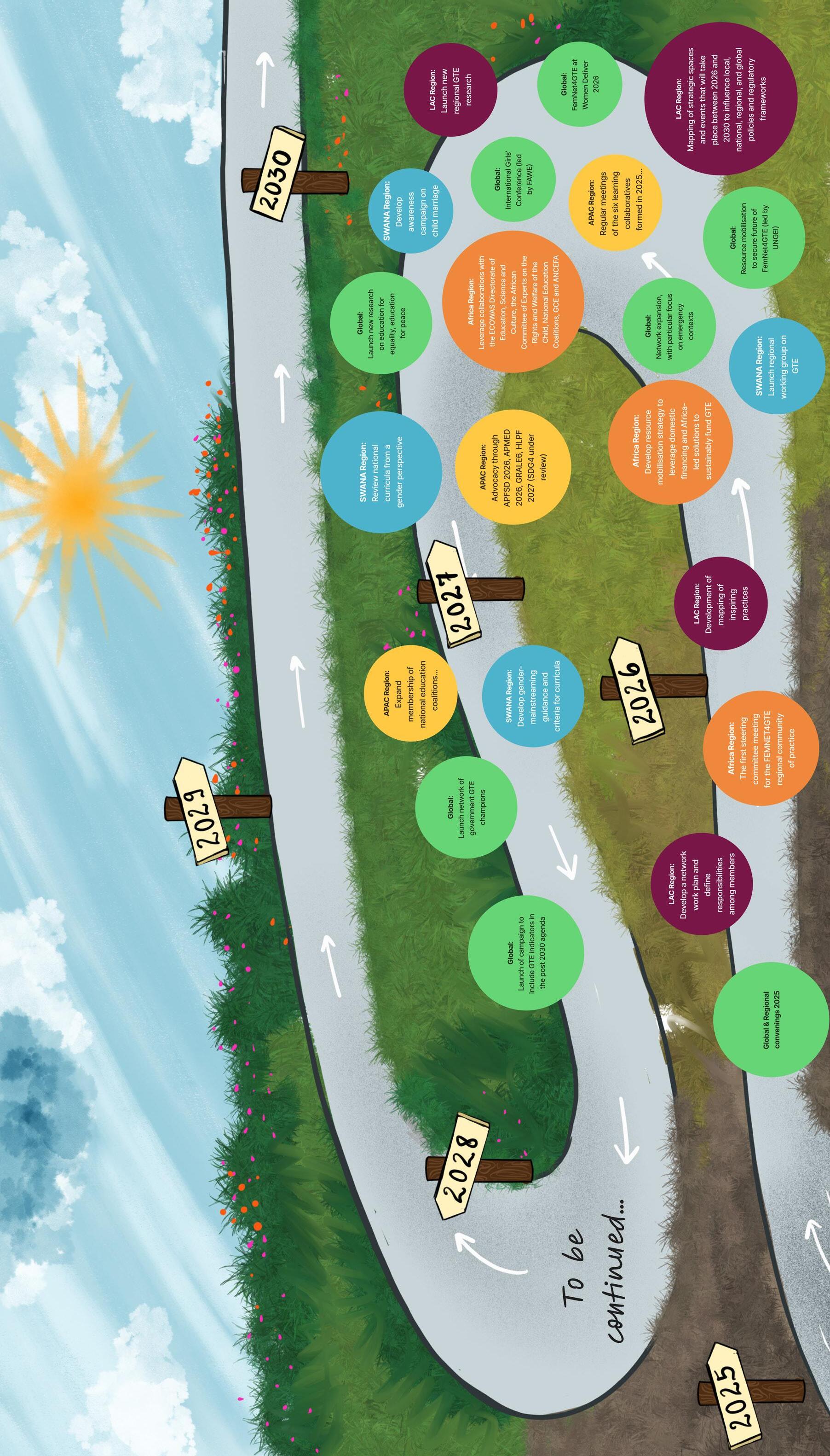
• Building the road to 2030
We collectively built The Road to 2030, featuring commitments and actions from Network members over the next two years to build tangible progress towards our goals for 2030. This digital resource will continue to grow and enable us to reach milestones on our advocacy journey and hold each other accountable for driving the movement forward.
“A multi-sectoral approach is necessary, not only within ministries, but also inter-ministerial. Cross-ministerial budget lines are needed.”
- Minister Conrad Sackey, Ministry of Basic and Senior Secondary Education in Sierra Leone
“If access had been the answer, it would all be okay, but access just opens a door, then the next generation of challenges come”
- Pia Britto, UNICEF
• Indicators & Targets for GTE
Through workshop sessions on six thematic areas on GTE, we began our work to build indicators and targets to be taken forward to 2030. The workshops built on desk research from Population Council, who compiled lists of existing indicators per theme for Network members to review, discuss and add to. The workshops led to suggestions of new indicators and key target asks for each theme. While more work is needed on this as we look ahead to 2026 and beyond, it was a strong beginning and we have insights and data to build on as we continue to develop these as a central part of our advocacy strategy moving forward.
PANEL DISCUSSION
There was a spirited and insightful discussion in the high-level panel, which asked – today there are more girls in school than boys as a global average. Is girls’ education a goal we have already met? Powerful speakers came together in support of continuing to take bold action for girls, including by centering gender-transformative education to achieve gender equality for all children.
PARTICIPANT FEEDBACK
The 2025 FemNet4GTE meeting was unlike any meeting the network has held in the past. The meeting happened online and in person, it moved across time-zones and most importantly, it brought together the depth and insight from the four regional action workshops that happened earlier in the year. Participants called the meeting “an inspiring convergence of feminist leaders and education”, noting that their takeaways from this meeting were “immense both in terms of learnings and relationships.” Network members also shared that being in this space reminded them that there is power in the collective and that regardless of the current situation worldwide, organizers, feminists, activists and allies are not backing down instead we are all collectively re-strategizing.
A full breakdown of participants’ feedback can be found in the annex.
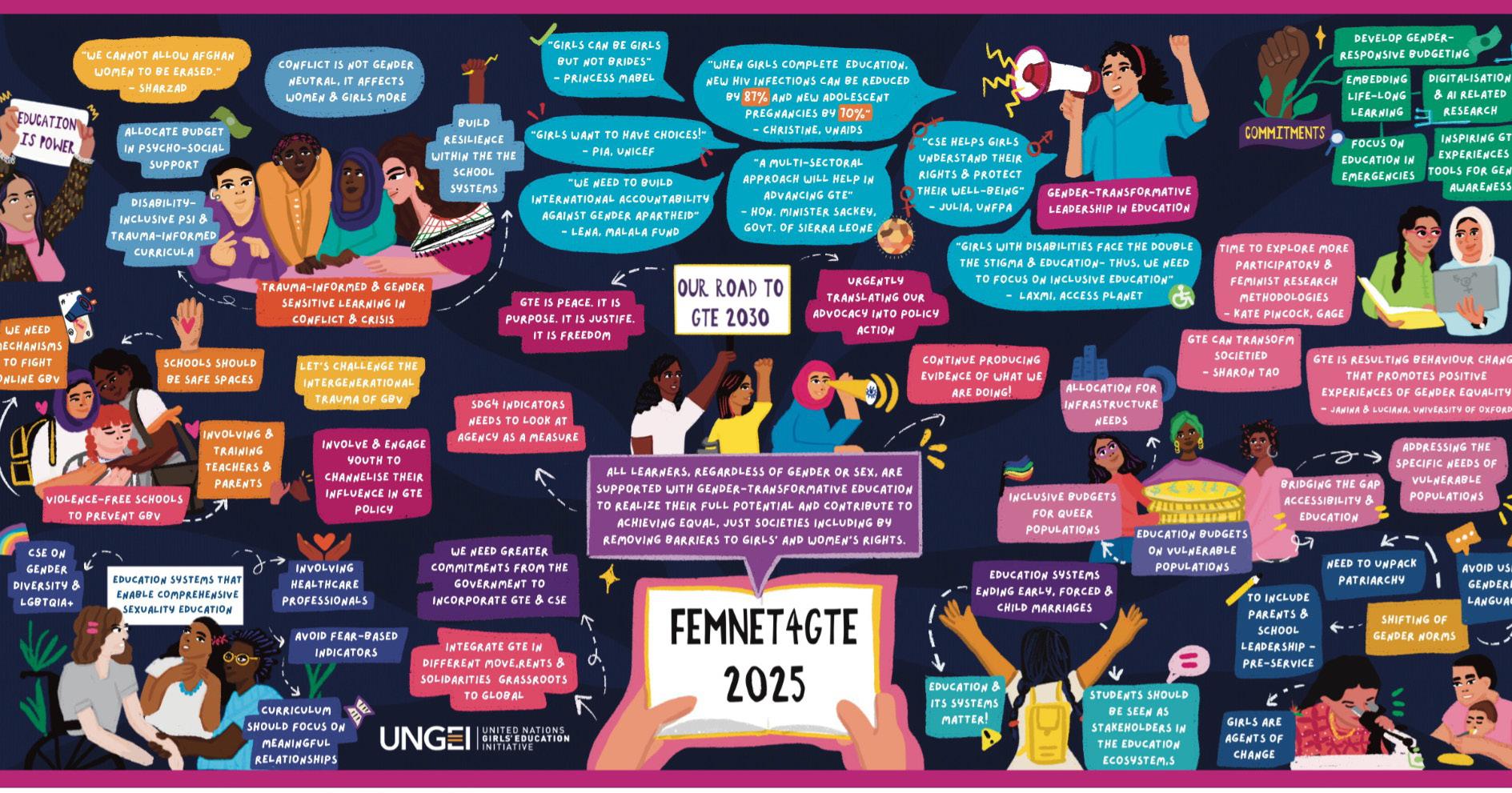
The graphic recording highlighting key discussions and topics from the global meeting, developed by Ipsita
Divedi
PART TWO – INFLUENCING THE NARRATIVE
THE WORLD WE WANT CAMPAIGN, MARCH 2025
In 2024, FemNet4GTE led consultations with 590 people from civil society organisations, education institutions, and governments across 112 countries to formulate four Regional Declarations for Gender-Transformative Education. These declarations share powerful and practical ideas to advance gender equality in and through education across Africa, Asia and the Pacific, Latin America and the Caribbean, and South West Asia and North Africa
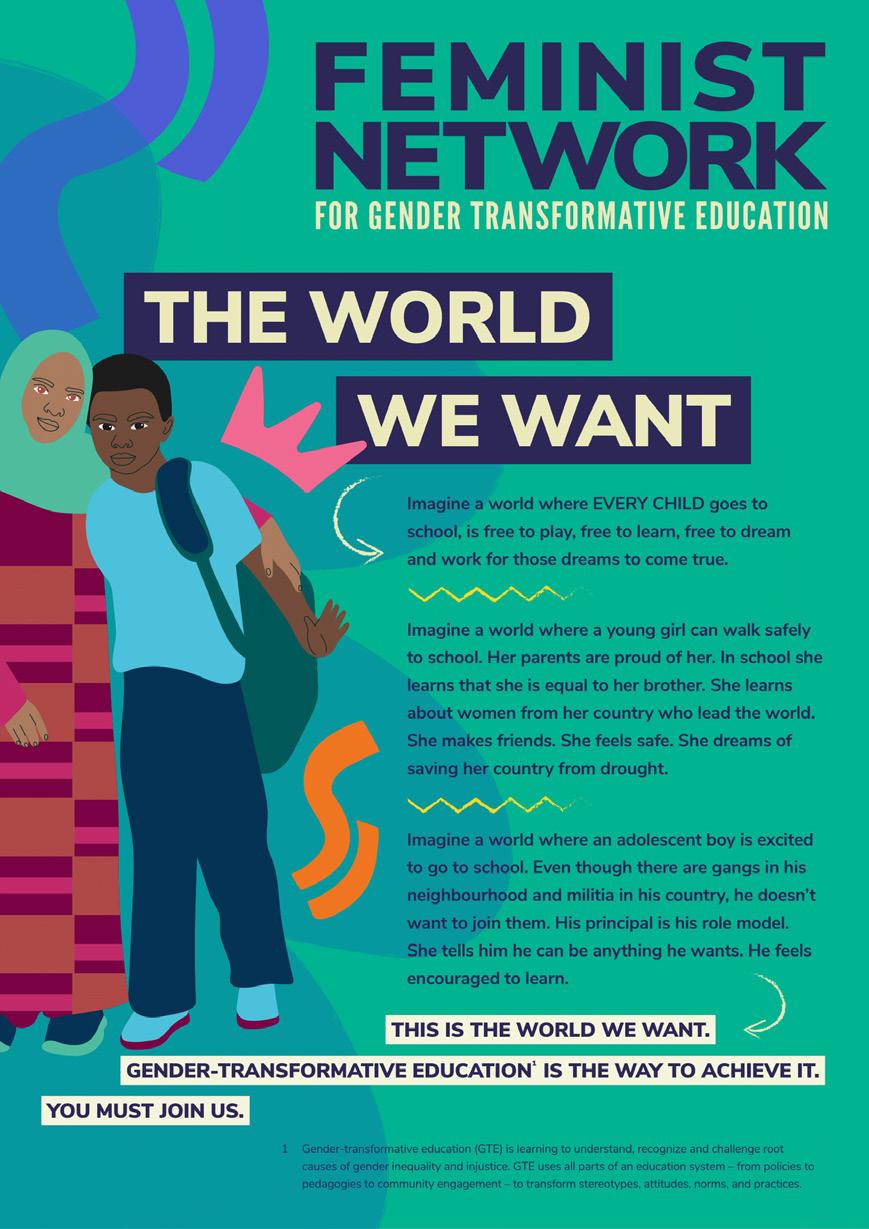
A shared vision emerged from these regional declarations and formed the basis of the World We Want call to action. This call-to-action urged world leaders to transform education systems to be safe, inclusive, and gender-transformative. FemNet4GTE members rallied together in March, on International Women’s Day and afterwards, to deliver the Call to Action and the regional
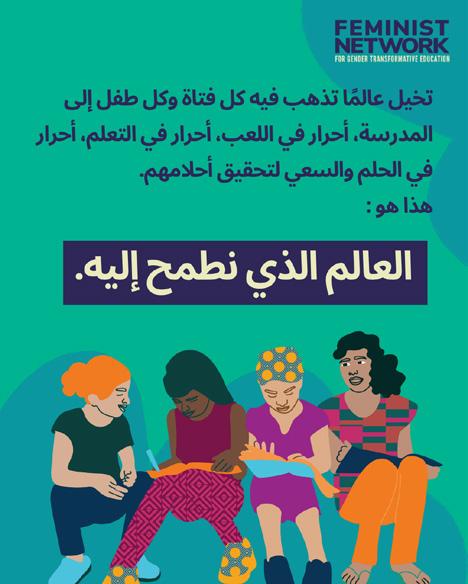
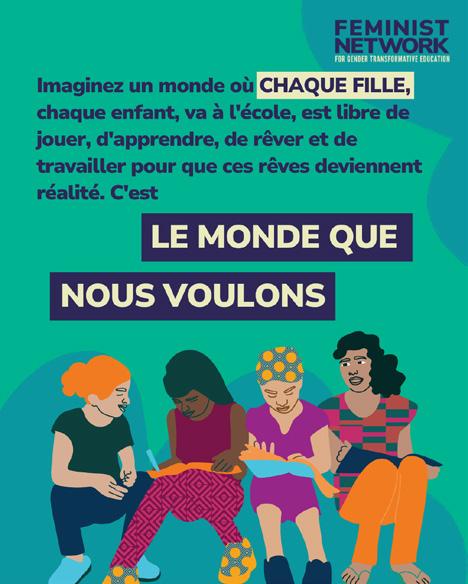
declarations to decision makers in their countries. The Call to Action was also disseminated online along with the regional declarations and a petition urging world leaders to take action.
The campaign garnered over 900,000 views online. The World We Want Campaign also continued the momentum for the Network’s involvement at a regional level as it helped to inform the agendas of the regional action workshops that were held later in the year.
G20 SIDE EVENT, EDUCATION FOR GENDER EQUALITY AND PEACE:
In support of the Network’s aim to ensure governments commit to GTE in their domestic budgets, policies and plans, FemNet4GTE delivered a G20 side event in partnership with the South African Department of Basic Education and the Department of Higher Education and Training in July 2025. The event aimed to galvanize G20 leaders, education ministers, civil society and young activists to make equal and safe education a lived reality for girls and all children.
The programme, opened by the Deputy Ministers for Basic Education and Higher Education and Training, featured rich discussions and plenaries. The event was attended by 320+ participants, including G20 country representatives. The event took place at the ICC in Durban.
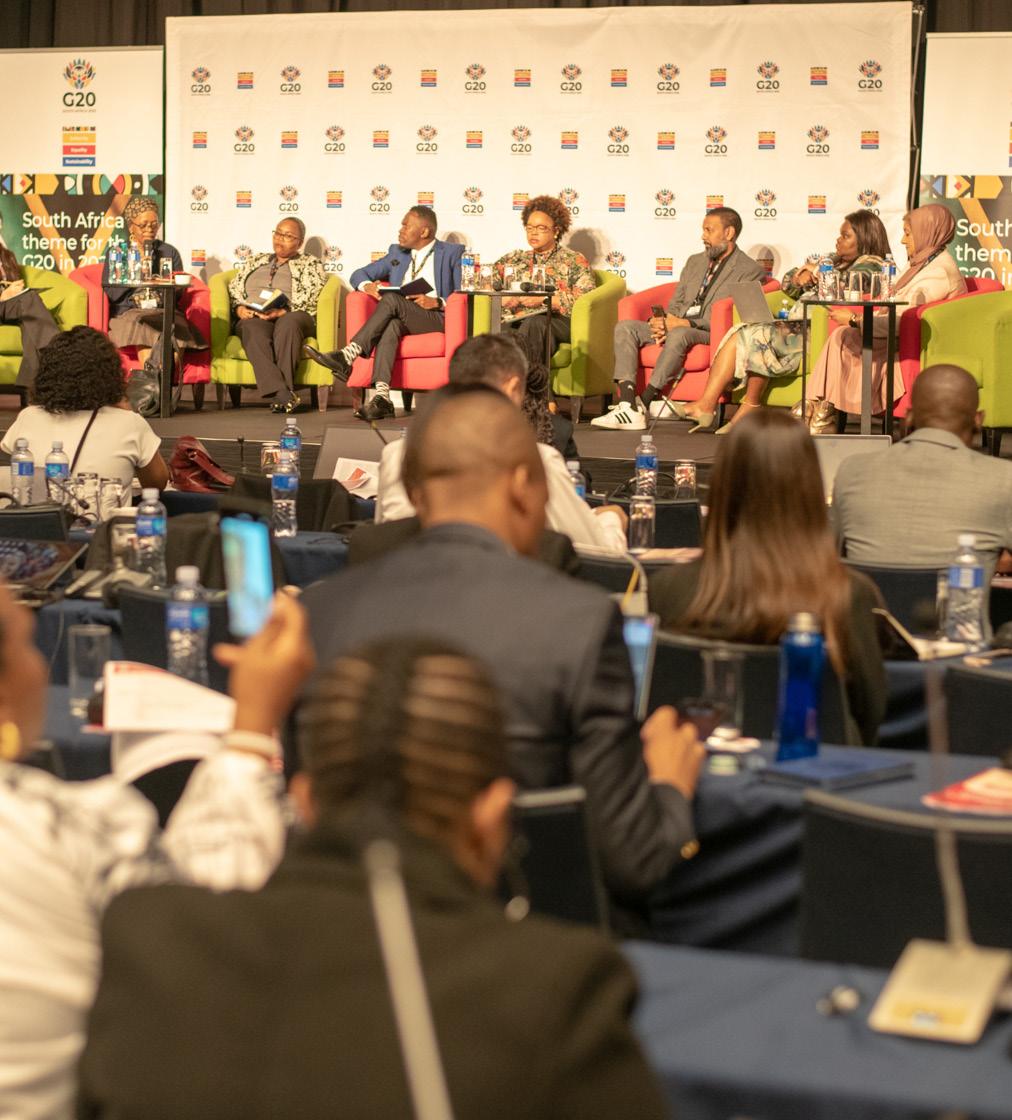
Sessions included:
• Gender-transformative Education as a pathway to gender equality & inclusive economic growth
• Gender-transformative Leadership & The Freetown Manifesto
• Ending Gender-Based Violence in Education Settings
• Addressing Gender Stereotypes in & through Education
• Engaging and understanding boys and young men
Cross-sectoral collaboration to achieve gendertransformative education.
“I imagine a world where education systems challenge inequality rather than perpetuating it. Where every child no matter their gender, socio economic background or disability status can thrive in and through education. Today we have the opportunity to accelerate this process exponentially.”
- Deputy Minister Dr. Reginah Mhaule, Department of Basic Education in South Africa
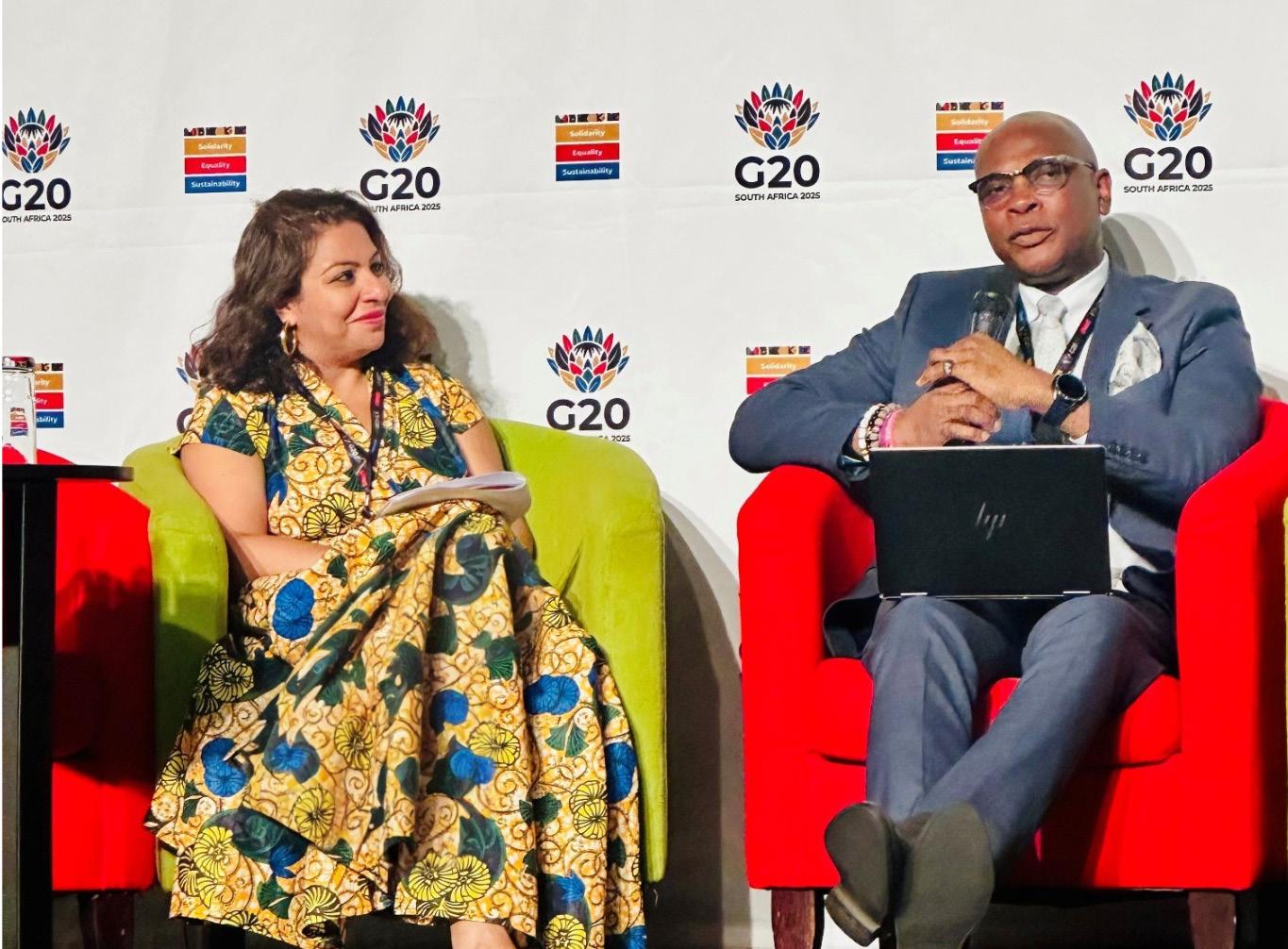
SOUTH AFRICA SIGNS THE FREETOWN MANIFESTO
At the event, Deputy Minister of Basic Education, Dr Reginah Mhaule, announced South Africa was signing The Freetown Manifesto for GenderTransformative Leadership in Education, a landmark commitment to advance gender equality in and through their education systems, policies and budgets. South Africa is the sixteenth African country to sign the Manifesto, which is also supported by the governments of Belgium, Canada, Germany and the United Kingdom, along with leading civil society organisations, donors and researchers. The Freetown Manifesto is coordinated by UNGEI and the IIEP-UNESCO through Gender at the Centre Initiative (GCI).
“Gender norms are like prisons. We aren’t born into them but as we grow up society builds them around us. A gender-transformative education can dismantle these walls.”
- Antara Ganguli, UNGEI Secretariat
TRANSFORMATIVE EDUCATION
The Feminist Network for Gender transformative Education knows the multifaceted impacts and potential of GTE. In a time of shrinking investments in rights-based issues, and even in education, FemNet4GTE launched three briefs that show GTE as a critical investment to achieve multiple domestic and development goals.
The briefs, launched at the global meeting on 20 September, were developed by FemNet4GTE members Accelerate Hub, GAGE and Level the Field, the UN Girls Education Initiative (UNGEI). Published together and separately, the briefs are:
1.
2.
Multi-sector Impacts and Economic Returns of Gender-Transformative Education details the impact on health, well-being, learning outcomes, safety from violence and equitable attitudes/ beliefs of 25+ in-country and several more regional/ global GTE programmes. It also reflects on the cost of inaction given the high cost of violence, inequality and instability on individuals and communities. This brief makes clear that GTE has a strong case for high RoI by supporting multiple results with known economic value and preventing multiple costly negative outcomes.
Gender-Transformative Education: Transitioning Young Women to Work reminds us that girls graduating from school does not automatically mean they are empowered and independent. Detailing the many gendered barriers (pull and push factors) that prevent young women from accessing decent, paid work, the brief notes describes how a system-wide approach like GTE can prevent these expensive barriers from arising in the first place by enabling support for gender equality as they grow up to be tomorrow’s workers, employers and leaders.
3. B
Beyond RCTs: Diversifying Rigorous Approaches to Measure Gender Norm Change in Education is a much-needed, much-asked-for summary of all the reasons why randomised control trials should not be the impact standard for norm change. Describing the limitations of this “gold standard” borrowed from the clinical trials of epidemiology, this brief describes the risks and consequences of using RCTs to measure gender norm change (in education) and proposes alternatives, especially mixed method research approaches and tools.


GENDER-TRANSFORMATIVE EDUCATION: A MULTIPLE-IMPACT INVESTMENT IN A RESOURCECONSTRAINED WORLD




WHAT’S NEXT FOR THE NETWORK
2025 marks our fourth year as a Network and the end of a three-year funding cycle supported by BMZ and Echidna Giving. We are grateful for continued support from BMZ from 2025-2028. In 2026, we will deliver selected research and advocacy, driven by the regional lead organisations and UNGEI. As we look ahead to 2030, UNGEI and the Network are working to mobilise further funding and support to continue to grow this powerful movement and deliver our ambitious agenda for the future.
ANNEX 1. PARTICIPANTS’ FEEDBACK
• In 2025, the network grew by 66%, moving from 210 organisations to 349 organisations
• 27% of participants were new to FemNet4GTE and had not attended a convening in the past, indicated continued growth of the network across the regions
• 73% of participants had attended at least one FemNet4GTE event in the past, this level of retention allows for continuity of the network’s activities and also shows that members see the value of FemNet4GTE’s work.
• 94% of participants said that the workshops helped to clarify what results should be measured and how they should be measured, with 30% of participants saying that this was very clearly explained. One of our aims as FemNet4GTE is to ensure that targets and indicators on gender equality in and through education are included in the post-2030 agenda. The high level of clarity reported by participants shows that Network members are building a shared understanding of these targets and indicators as well as the knowledge needed to advocate for them.
• 81% of participants felt that their voice and perspectives were heard during the meeting
• 87% of participants believe that the most important objective of FemNet4GTE is ‘Progress towards building a movement’
• Participants would like to see the following topics prioritised in future FemNet4GTE meetings:
Education in crisis and occupation contexts, with a focus on gender and protection. Mental health and psychosocial support through gendertransformative education. Community-based advocacy for safe and inclusive schools. The intersection of digital education, AI, and gender equality in fragile settings.
Transforming education financing to support GTE.
Gender transformative practices both in formal and non-formal educational spaces
· How to integrate findings into programs
What do you think are the most important objectives of the Network? (Select all that apply)
Progress towards building a movement
Feeling solidarity with others who work on similar issues
Learning about work in other themes or regions
Networking and making connections
Coming out with clear outcomes to take forward
Learning new ideas and concepts
Other (please specify)
• Participants said that, as a result of the FemNet4GTE meeting, they were inspired to make the following commitments:
“Strengthen our institutional focus on gendertransformative and social-emotional education in crisis and conflict-affected contexts.”
“Apply what we learned to improve teacher capacity and school-based initiatives that promote equality and safety for all learners.”
“Collaborate more closely with partners in the SWANA region to share experiences and amplify regional voices in global advocacy.”
“Continue contributing to the FemNet4GTE network through active participation and practical knowledge-sharing.”
“My organisation will fully commit to advocate with the Ministry of Education to prioritize the review of the gender policy.”
“Sharing the advocacy briefs with colleagues and my Linkedin network.”
“Pursuing the regional commitments as part of our regular advocacy and capacity building work”
“Use creative storytelling and evidence-based tools to raise awareness of the barriers and resilience of children and teachers in crises.”
• Participants also shared key constructive feedback and learnings that will take forward as we plan future gatherings, some of this feedback was as follows:
Joining online was difficult for participants in remote areas with less access to internet
· The meeting needed less emphasis on the high-level panel and more emphasis on collaborative activities and discussions
· Needed more youth-led sessions and discussions
The fact that the meeting was on a Saturday made it difficult to join
ANNEX 2.
LIST OF PARTICIPANTS
(CLADE)
Osorio La Campaña Latinoamericana por el Derecho a la Educación (CLADE)
Asego Forum for African Women Educationalists (FAWE)
Cecile Mazzacurati UNFPA
Chantal Kalala Mujinga Coalition National de l'Education Pour Tous en RDC
Charles Kafa Ministry of Education and Human Resources Development (MEHRD)
Charles Nyukuri Plan International
Chimwemwe Fabiano Researcher
Christina Lowery Girl Rising
Christina Wellington Rotary International
Christine Heckman UNICEF 52 Christine Tano Girls Congress
Christine Stegling UNAIDS
Collins Olang VVOB 55 Conrad Sackey, Honourable Minister Minister of Basic and Senior Secondary Education, Sierra Leone 56 Cosmas Zuma Light and Hope Initiative
Daizy Angela Apondi Elimu Yetu Coalition
David Kumie Papua New Guinea Education Advocacy Network (PEAN) 59 Djimtibaye Djimramadje COSOCIDE-Tchad 60 Do Thu Hien Vietnam Association for Education for All (VAEFA)
Dominic Deregester Salzburg Global
Dorjjantsan Ganbaatar LGBT Center 63 Dr Martha Muhwezi FAWE 64 Dr. Georgette Brou Ministère de l’Education Nationale et de l’Alphabetisation
65 Eddie Gideon Coalition for Education in Solomon Islands (COESI)
Eduard Francois Beukman Oxfam 67 Eline Versluys UNGEI 68 Elizabeth Vásquez Abriendo Oportunidades
# Full Name Organisation
69 Elsy Wakil Arab House for Adult Education and Development
70 Emma Hamilton-Clark Safe to Learn
71 Emily Barcklow D'Amica Fòs Feminista
72 Emily Gumba Forum for African Women Educationalists (FAWE)
73 Emma Pearce Girls Not Brides
74 Emmanuel Manyasa USAWA
75 Enamul Hoque Asia South Pacific Association for Basic and Adult Education (ASPBAE)
76 Erin Ganju Individual
77 Estelle Dade UNICEF
78 Esther Adaeze Ezem CHEVS
79 Esther Carmel Bans Cortina Asia South Pacific Association for Basic and Education (ASPBAE)
80 Eunice Kaanye All-Africa Students Union (AASU)
81 Evelyn Letiyo UN Women
82 Evgeniia Karpovich Center for Democratic Research
83 Fatima Altawil The Syrian women's Political Movements
84 Fatou Fall Plan International
85 Fawzia Koofi Afghanistan's first female Deputy Speaker of Parliament and former peace negotiator
86 Feliciano Soares Civil Society Education Partnership (CSEP)
87 Filipe de Jesus Civil Society Education Partnership (CSEP)
88 Florence May Bans Cortina Asia South Pacific Association for Basic and Education (ASPBAE)
89 Fouzia Khan Sindh Education and Literacy Department (SELD)
90 Francisco Quiñones Cuartas Mocha Celis
91 Gabriela Arrunátegui La Campaña Latinoamericana por el Derecho a la Educación (CLADE)
92 Gianina Marquez Quinta Ola
93 Giovanna Mode Global Campaign for Education (GCE)
94 Grace Anaja Teenage Network
95 Grace Moraa Areba Chanuka Deaf Women Group
96 Grant Kasowanjete Global Campaign for Education (GCE)
97 Gregor Adriany Asia South Pacific Association for Basic and Adult Education (ASPBAE)
98 Hafsatu Sey Sumani NOORSAC
99 Haimanot Mulugeta FAWE Ethiopia
100 Harouna Sall COMEDUC
101 Helen Dabu Asia South Pacific Association For Basic And Education (ASPBAE)
102 Helen lfeoma Osu Federal Ministry of Education
103 Hussienatou Manjang African Committee of Experts on the Rights and Welfare of the Child
104 Innocent Chifipa Gondwe Human Power Organisation
105 Ipsita Divedi Graphic Recorder
106 Irene Christopher Kanyakole Haki Elimu
107 Irene Fredriksson Oxfam
108 Irene Ogeta ATHENA Network
109 Isadora Freitas Colectivo Mariposas Mirabal
110 Ishaan Shaun Stolen Dreams, UN Foundation Next Generation Fellow
111 Issoufou Komou OXFAM
112 Jack Kalisto Coalition for Education in Solomon Islands (COESI)
113 Jaloud Toure UNGEI
114 Jayani Prisangika Ministry of Education, Sri Lanka
115 Jeanette Nyanjom FAWE Kenya
116 Jen Thomas UNGEI
117 Jesca Jepkosgei Kiplagat Oxfam
118 Jesica Baez Colectivo Mariposas Mirabal
119 Jeyda Bicer UNGEI
120 Joan DeJaeghere University of Minnesota
121 Joan Kembabazi Gufasha Girls Foundation
122 Joanne Sandler Gender at Work
123 Joelyn Soldevilla Biag Civil Society Network for Education Reforms, Inc. (E-Net Philippines)
124 John Philip Hein Htet Thinking Classroom Foundation (TCF)
125 Jose Campi Portaluppi Equimundo
126 Joshua Munthali Malawi Institute of Education (MIE)
127 Joshua Philip Bitalac Civil Society Network for Education Reforms, Inc. (E-Net Philippines)
128 Joy Offere Shenovate Initiative
129 Joyce Laker VSO
130 Julia Bunting UNFPA
131 Julie Juma Global Campaign for Education
132 Jyotsana Prajapati SM Hub Nepal
133 Kaneez Zehra Society for Access to Quality Education
134 Karen Ondwasi FAWE
135 Karishma Desai Rutgers University
136 Kasun Chandana Sumaga Ruhunu Circle of The Deaf organization
137 Kate Pincock ODI Global
# Full Name Organisation
138 Kebba Omar Jarjusey Education For All Campaign Network
139 Khanysa Mabyeka Gender at Work
140 Khatira Abdul Samad Ameen Foundation for Refugees and INEE
141 Khodzhaeva Sanobar Alliance of CSOs in Tajikistan for Education (ACTE)
142 Kira Boe OXFAM
143 Kisa Paul Kumwenda Civil Society Education Coalition
144 Komal Qidwai Aahung
145 KONE Mariam Epouse Kamagaté Réseau Ivoirien pour la Promotion de l'Education Pour Tous
146 Lambou kaze carelle Brain Builders Youth Development Initiative
147 Laraib Kiani Society for Access to Quality Education
148 Laura Giannecchini La Campaña Latinoamericana por el Derecho a la Educación (CLADE)
149 Lauren Gerken Inter-Agency Network for Education in Emergencies (INEE)
150 Laurette Abuya Global Campaign for Education
151 Lawrencia Owusu Ghana National Education Campaign Coalition (GNECC)
152 Laxmi Nepal National Campaign For Education (NCE) Nepal
153 Lena Alfi Malala Fund
154 Lily Rosengard International Lesbian, Gay, Bisexual, Trans, and Intersex Association (ILGA)
155 Lopa Gandhi Ugam Education Foundation
156 Louise Hallman Population Council
157 Luciana Leite Accelerate Hub
158 Luyanda Mndzebele Women Deliver Fellow
159 Lydia Madyriapanze FAWE Zimbabwe
160 Lyndley de Torres Asia South Pacific Association for Basic and Adult Education (ASPBAE)
161 Magdalena Fernandes Lemos Global School Leaders
162 Maitreiyee Krishna Pratham Education Foundation
163 Maji Mun Aung Thinking Classroom Foundation
164 Makhosazane Mngadi National Department of Basic Education
165 Maliha Fawzia Teach for All
166 Mameaseng Siriwalai Sangsan Anakot Yawachon Development Project (SAYDP)
167 Manal Alatrash TCC
168 Mangia Macuacua Resurj
169 Marah Kharma Freelance
170 Margaret Waithiegeni Young Feminist Activist
171 Maria Helen Dabu Asia South Pacific Association for Basic and Adult Education (ASPBAE)
# Full Name Organisation
172 Maria Njeri Disability Inclusion
173 Maria Rosario Mayor Civil Society Network for Education Reforms, Inc. (E-Net Philippines)
174 Marie Siby Ministère de l'Education Nationale Senegal
175 Martha Muhwezi Forum for African Women Educationalists (FAWE)
176 Mary Chepkemoi Zizi Afrique Foundation
177 Mary Rose Balagtas Asia South Pacific Association for Basic and Adult Education (ASPBAE)
178 Masuma Bashirova Association for Education Development (AED)
179 Maureen GreenwoodBasken Wellspring Philanthropic Fund
180 May El Tabbal Ministry of education
181 Mehrangez Azimzoda Alliance of CSOs in Tajikistan for Education (ACTE)
182 Melissa Wong Equimundo
183 Mercy Achieng Odhiambo Kenya women teachers association
184 Meredith Kozak Population Council
185 Mohammad Muntasim Tanvir Global Partnership for Education (GPE)
186 Monica Aleman Ford Foundation
187 Morris Taiyebwa EAC
188 Aisha Usman ECOWAS
189 Mun Aung Thinking Classroom Foundation (TCF)
190 Munkhchimeg Yadamsuren All for Education! National Civil Society Coalition in Mongolia (AFE)
191 Mwasi Wilmore Ubongo
192 Nabila Aguele Malala Fund
193 Nadine Postigo Asia South Pacific Association for Basic and Adult Education (ASPBAE)
194 Nafissatou Ide Sadou Ong-FAD
195 Nagla Abbas Women Deliver Fellow
196 Namukwaya Olivia Girls Outloud Luweero
197 NAPOE épse AKPOGNANDI Koumbon ANCEFA
198 Narand Beerbul Kolisen Blong Leftemap Edukesen (KOBLE)
199 Nataly Rivas Movimiento Por Ser Niña
200 Natasha Harris-Harb UNGEI
201 Nelisiwe Thandi Dlamini Swaziland Network Campaign for Education for All (SWANCEFA)
202 Nelsy Lizarazo La Campaña Latinoamericana por el Derecho a la Educación (CLADE)
203 Nepali Sah UNGEI
204 Nguyen Thi Kim Anh Asia South Pacific Association for Basic and Adult Education (ASPBAE)
205 Night Agnes John Wani National Education Coalition (NEC)
# Full Name Organisation
206 Niyati Sharma Pratisandhi
207 Nma Dhahir AUB
208 Nohelia Rivas Movimiento por Ser Niña
209 Nokutenda Magama Rozaria Memorial Trust
210 Nouran Akrab Dawar For Arts And Development
211 Nupur Jain Nirantar Trust
212 Oamogetswe Chikwado Black Womxn Caucus
213 Ohotuowo Ogbeche Outright International
214 Olanike Timipa-Uge Teenage Network
215 Olasupo Abideen Opeyemi Brain Builders Youth Development initiative
216 Olga Ambot Inyongo GPE-Global Partnership for Education/World Bank
217 Oluwaferanmi Esther Afolabi The Sapphires Development Initiative
218 Pauline Gomes Breakthrough
219 Peter Clinton Foaese Asia South Pacific Association for Basic and Adult Education (ASPBAE)
220 Peter King Asia South Pacific Association for Basic and Adult Education (ASPBAE)
221 Phemelo Mashweshwe MB Teen Lifestyle
222 Phumlani Holinhlanhla Magagula UNDP Estwasini Student Ambassador
223 Princess Mabel Van Oranje Girls not Brides, Girls First Fund and VOW for Girls
224 Prof Elvis Fokala University of Pretoria
225 Puja Bhandari Access Planet Organisation
226 Rachel Marcus ODI
227 Rachel Mukuhi GRIC Africa
228 Raffiela Santiago Asia South Pacific Association for Basic and Adult Education (ASPBAE)
229 Rahbar Majidova Public Organization Gurdofarid
230 Rajendra Pahadi National Campaign For Education (NCE) Nepal
231 Ramiro Antonio Diaz Nacional de Servicios Educativos de CIES Bolivia.
232 Renata Koch Alvarenga Empodera Clima
233 Rene Raya Asia South Pacific Association for Basic and Adult Education (ASPBAE)
234 Renu Singh Young Lives India
235 Rita Matos OXFAM
236 Rochelle Prasad Women Deliver Fellow
237 Rocío Osoro Empodera Clima
238 Rodrigo Barraza Global Fund for Children
239 Roma Tuidam Milne Province, Papua New Guinea
240 Rory Healy VVOB
241 Rose Abuk WART South Sudan
242 Roselyne Onyango Global Initiative for Economic, Social and cultural Rights
243 Ruben Avila Fòs Feminista
# Full Name Organisation
244 Rubibi Aimee Rwanda Education For All Coalition (REFAC)
245 Salam Chreim Consultant with UNICEF, UNFPA, World Learning, Terre Des Hommes, Italian Cooperation
246 Sally Gindy IECD/The Sex Talk
247 Sally Yeboah Camfed
248 Samaa Abdelhamid Synerjies Center for International & Strategic Studies
249 Sana Ali Aahung
250 Sandra Aravena Niñas Valientes
251 Sanjita Dhanuk UNGEI
252 Sapphire Alexander Transform Education
253 Sarah Jakiel Girls First Fund
254 Sebabatso Ntlamelle Lesotho Council of NGOs
255 Selina Nkoile Nashipai Maasai Community Projects
256 Sereti Nabaala Matasaru Ntoyie Pastoralist Foundatio
257 Shahrzad Koofi Ahmadi Justice for Equality Organisation (JEAO)
258 Shaima Aldhabyani European Institute of Peace
259 Shamah Bulangis Girls’ Congress
260 Shantha Kulathunge Coalition for Educational Development (CED)
261 Sharon Tao Level the Field
262 Sherry Hutchinson Population Council
263 Shreya Shreeraman Inter-Agency Network for Education in Emergencies (INEE)
264 Shula Judith Wirngo Education for All (E4A)
265 Shuo Guo UNGEI
266 Sidra Fatima Minhas Education Out Loud (EOL) Oxfam Denmark
267 Sihem Aouadi Coalition Educative Tunisienne
268 Sirine Bouguacha Politics4her Africa Hub
269 Sohail Aziz Oxfam Denmark
270 Solo Rakotosoa Ministère de l’éducation Nationale Madagascar
271 Sonakshi Sharma UNICEF Innocenti
272 Sophia Lane Girls Not Brides
273 Suha Sawaya Jusoor
274 Sunita Menon Breakthrough India
275 Susana Medina Fòs Feminista
276 Susmita Choudhury Asia South Pacific Association for Basic and Education (ASPBAE)
277 Ta Ngoc Trí Department of General Education / Steering Committee on Education for Children with Disabilities and Children in Difficult Circumstances
278 Tala Abdulghani Asfari Institute
279 Tala Nassif Asfari Institute
# Full Name Organisation
280 Tamara Jacod Humanity & Inclusion
281 Tasnim Alhmouze Arab Campaign for Education for All-ACEA
282 Tchamanbe Tchuissu
Doriane Orlyse Epse
Moluh GCE
283 Terry Ince CEDAW Committee of Trinidad and Tobago
284 Tungalag
Dondogdulam All for Education! National Civil Society Coalition in Mongolia (AFE)
285 Uijeong Son UNESCO Regional Office in Bangkok
286 Valeria Montúfar Girls First Fund
287 Vanita Kariappa Educate Girls, India
288 Victoria Egbetayo Gates Foundation
289 Viviana Rojas La Vía Campesina
290 Wafa Dhaouadi UNFPA
291 Wesley Chabwera FAWE Malawi
292 Wessam Sherif Egyptian union for Educational Policies and Research
293 Willie Descalzo Asia South Pacific Association for Basic and Adult Education (ASPBAE)
294 WOPPA DIALLO AMFE SENEGAL
295 Yasmeen Alaa ElDin
Abdel Atey Elsayed Nazra for Feminist Studies
296 Yeyawane Seck ANCEFA
297 Yolanda Areas Blas CLOC Vía Campesina
298 Yona Nestel Plan International
299 Yousra Hassan Elneel Females Technology Foundation- FTF
300 Yvette Efevbera Girls First Fund
301 Zaid Salameh Columbia University Alum
302 Zeinabou Walet
Mohamed Ali Accountability Lab
303 Zeynep Aydemir
Koyuncu UNGEI
304 Zulmira Leonor Alves Rocha Civil Society Education Partnership (CSEP)
ANNEX 3. PLANNING GROUP MEMBERS
The following organisations were members of this year’s planning group: Aahung, Asfari Institute, Asia South Pacific Association for Basic and Education (ASPBAE). Equimundo, Forum for African Women Educationalists (FAWE), Fòs Feminista, Girls Not Brides, Global Campaign for Education (GCE), International Lesbian Gay Bisexual Trans and Intersex Association (ILGA), IPAS, La Campaña Latinoamericana por el Derecho a la Educación (CLADE), National Forum for Women with Disabilities, Oxfam, Plan International, Politics4Her, Population Council, Pratisandhi, Transform Education, Usawa Agenda
ANNEX 4. INDICATORS AND TARGETS FOR GTE
FemNet4GTE member Population Council developed lists of existing indicators against six agreed themes for Network members to discuss and interrogate as we begin to build GTE targets and indicators to advocate for in the post-2030 agenda.
4.1 Indicators relating to trauma-informed, gender-sensitive learning for those impacted by crises
• Percentage of girls/boys accessing and completing primary/secondary education (data for crisisaffected countries) [UIS]
• Percentage of girls/boys reaching minimum proficiency in reading/mathematics (data for crisisaffected countries) [UIS]
• Number of crisis-affected school-age children who attended school during the previous academic week (disaggregated by sex) [OCHA]
• Number of attacks on students, personnel and institutions [UIS]
• Extent to which (i) global citizenship education and (ii) education for sustainable development are mainstreamed in (a) national education policies (b) curricula, (c) teacher education and (d) student assessment [UIS]
• Percentage of students by age group (or education level) showing adequate understanding of issues relating to global citizenship and sustainability (including gender equality, peace, freedom, social justice) [UIS]
4.2 Indicators relating to education systems that enable the reduction of early teenage pregnancy and HIV through comprehensive SRHR
• Percentage of primary/secondary schools providing life skills-based HIV and sexuality education [UIS]
• Presence of legislation to protect and facilitate education of pregnant adolescent girls [UNESCO, HerAtlas]
• Proportion of women aged 15–49 years who make their own informed decisions regarding sexual relations, contraceptive use and reproductive health care [World Bank[
• Percentage of women aged 20-24 years who had a first birth before age 18 [UNICEF]
• Percentage of young men/women age 15-24 who know of at least one formal source of condoms [DHS]
• Percentage of men/women age 15-24 years old who correctly identify the two major ways of preventing the sexual transmission of HIV, who reject the two most common local misconceptions about HIV transmission, and who know that a healthy-looking person can have HIV [DHS]
• Percentage of men/women who say that a female teacher who is HIV+ but not sick should be allowed to continue teaching in school [DHS]8
• Percentage of men/women who say that children with HIV should not be able to attend school [DHS]9
• Percentage of women who believe that a woman is justified in asking that they use a condom if she knows that her husband has an STI [DHS]
• Percentage of women who believe that a woman is justified in refusing to have sexual intercourse with her husband if she knows he has sex with other women [DHS]
4.3 Indicators relating to violence-free schools that prevent / reduce GBV
• Percentage of students experiencing bullying in the last 12 months in primary / lower secondary education, disaggregated by sex [UIS, UNESCO, Institute for Statistics]
• Intimate Partner Violence - Percentage of ever-partnered women and girls aged 15-19 subjected to physical and/or sexual violence by a current or former intimate partner in the previous 12 months
• Percentage of the population agreeing / disagreeing with the statement ‘It is important for girls to continue their schooling even if they become pregnant and have children’ [World Values Survey]
• Number of attacks on students, personnel and institutions [UIS]
• Percentage of students who experienced one or more forms of sexual violence perpetrated by teachers / classmates [VACS]
• Percentage of women who ever experienced physical violence since age 15 [DHS]
• Percentage of students who experienced one or more forms of physical and sexual violence perpetrated by teachers and/or classmates [DHS]
• Missing school as a result of any sexual violence [VACS]
• Missing school as a result of any physical violence by a classmate / teacher / in childhood [VACS]
• Percentage of children age 2-14 years who experienced any violent discipline method [DHS]
4.4 Indicators relating to schools that teach positive gender norms and support equality & peace, reducing instances of harmful practices
• Existence of processes to support coordinated action on gender equality in and through education by ministries, civil society, youth organisations and other actors [UNESCO, CreatedForthcoming[1]]
• Existence of systematic processes to review and update curricula and learning resources, with a view to eradicating gender stereotypes and promoting gender equality [UNESCO, CreatedForthcoming[2]]
• Proportion of women aged 20-24 years who were married or in a union before age 18 [UNSDG]
• Presence of legislation protecting the right to education without discrimination based on sex/ gender [HerAtlas]
• Training on gender-responsive pedagogies is embedded in teacher training programmes [UNESCO, Created - Forthcoming[3]]
• Percentage of students in lower secondary showing adequate understanding of issues relating to global citizenship and sustainability (Non-cognitive Dimension, Gender equality, both sexes) (%) [UIS]
• Percentage of women / men who believe that female circumcision should not be continued [DHS]8
• Endorsement of traditional beliefs about gender, sexual behavior and intimate partner violence [VAC]
• Percentage of girls age 0-4/ 0-14/ 5-9/ 10-14 circumcised [DHS]
• Proportion of girls and women aged 15-49 years who have undergone female genital mutilation, by age 10 Legal discrimination on female genital mutilation, 0-100 scale [Gender Institutions and Development Database (GID-DB)]
• Percentage of the population who agrees / disagrees that a university education is more important for a boy than for a girl [World Values Survey]
[1] This is part of work being done under the Global Platform for Gender Equality and Girls’ and Women’s Empowerment in and through Education. This is one of the six draft indicators drawn the from the Transforming Education Summit’s Call to Action, developed by Population Council. [2] Same as above [3] Same as above
4.5 Indicators relating to education budgets that ringfence spending for vulnerable populations
• Existence of funding mechanisms to reallocate education resources to disadvantaged populations [SDG indicators]
• Initial government expenditure on education as a percentage of GDP (%) [SDG indicators]
• Prevalence of physical violence in childhood [VAC]
• Prevalence of witnessing physical violence in the community/neighbourhood prior to age 18 [VAC]
• Percentage of students who experienced one or more forms of sexual violence perpetrated by teachers / classmates [VAC]
• Percentage of youth not in education, employment or training, female [SDG indicators]
• Proportion of children engaged in economic activity and household chores [SDG indicators]
• Percentage of children under 5 years experiencing positive and stimulating home learning environments [SDG indicators]
• Percentage of students in a) early grades, b) at the end of primary, and c) at the end of lower secondary education who have their first or home language as language of instruction [SDG indicators]
• Proportion of school attending children receiving school meals [SDG indicators]
4.6 Indicators relating to how education systems can deliver the end of early, forced and child marriage
• Proportion of women aged 20-24 who were married or in a union before age 15 and before age 18 [SDG indicators]
• Percent aged 15-19 who are currently married or living in union [UNICEF, DHS]
• Completion rate, upper secondary education, female [UNESCO, UIS]
• Number of years of free primary and secondary education guaranteed in legal frameworks [UIS]
• Proportion of respondents who feel confident in their ability to choose not to marry their daughter before they turn 18 despite the social pressure [UNICEF, UNFPA RF, household survey]
• Percentage of youth (girls, women) not in education, employment or training, female [SDG indicators]
• Gender gap in ownership of land [SIGI]
• Proportion of girls and boys aged 15-19 who consider a husband to be justified in hitting or beating his wife for at least one of the specified reasons, i.e., if his wife burns the food, argues with him, goes out without telling him, neglects the child [DHS]
• Number (and proportion) of boys and men actively participating in group education/dialogues that address harmful masculinities and gender norms [UNICEF, UNFPA RF, household survey]
• Proportion of adolescent girls of lower-secondary school age that are out of school [World Bank data]