“There are two different use cases,” Codi elaborated. “Are you looking for a cure? Or, are you looking to manage symptoms of treatment and improve your quality of life?”
This question is key to setting patients up for success in consuming cannabis.
“Every cancer fight is different. What kind of cancer are we talking about? Is it stage one or stage four?” Codi said. “Where someone is at in the disease course, the goals of their therapy, the type of cancer they have—all of those specifics will drive the right cannabinoid choice.”
A high dose of RSO via a suppository may work well for one person, while another prefers to take tokes off a one-hitter packed with hemp flower. It’s not a one-size-fits-all solution— which is what makes it both so complicated and so promising.
MINOR CAnnABINOIDS FOR CANCER TREATMENT
What about CBD, the headline-grabbing cannabinoid that's being included in everything from tinctures to pillowcases?
“There’s a lot of literature around CBD,” Codi said. “But there is reason to bring calmness to this conversation, because CBD is really hard to study in test tubes. The benefit is going to be cancerspecific.”
What would really move the needle and push the conversation forward is more research. But not just any research—studies that move outside of the sterile lab environment.
“We need more large-scale, long-term multicannabinoid, multi-cancer studies. Real-world, human data and peer-reviewed research. Test tube studies can only bring us so far.”
None of this, Codi emphasizes, is reason to write off the possibilities of mitigating cancer’s effects with cannabis. People can and do benefit from this plant while fighting cancer every day.
“Cannabinoids are generally non-toxic and welltolerated in people. I’m not here to tell people what to do. I want patients to know their tools and their options.”
As a medical professional deeply invested in cannabis and the endocannabinoid system, what would Codi tell a patient with cancer? Again, it’s a nuanced question.
“It totally depends on what their goal is. Do they want to use it to fight the cancer? Do they want to improve their quality of life during other treatments? Or, are they looking to enjoy what time they have left?”
Answers to these questions drive product recommendations, dosing, and consumption.
RSO FOR CANCER
I can’t let this conversation go without bringing up the hottest topic in the cannabis/cancer conversation: RSO.
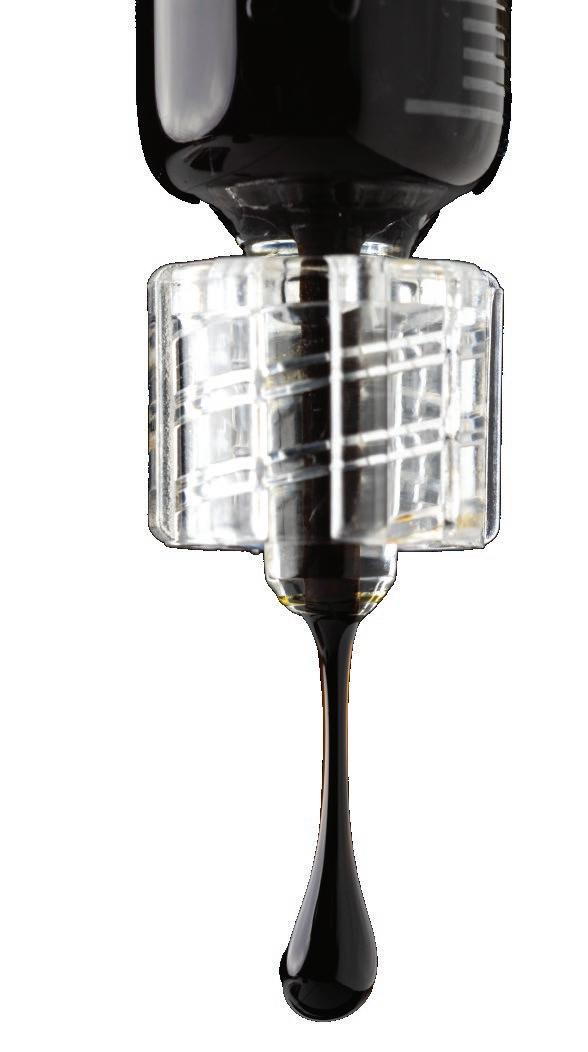
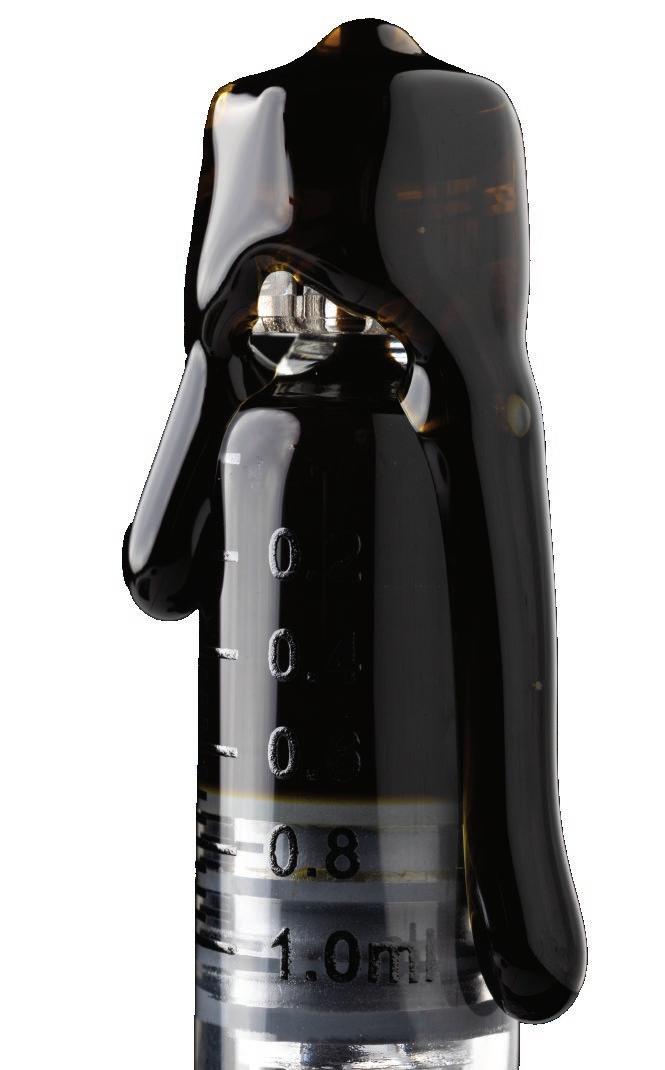
Rick Simpson Oil is a potent, highly concentrated form of cannabis that was popularized by Rick Simpson, who said he used it to cure his cancer. It’s controversial, and its efficacy is hotly debated between the cannabis and medical spaces.
For better or worse, RSO is not going anywhere in the cancer conversation. But given the promising results of test tube studies with high doses, could the potency of RSO facilitate efficacy?
“Possibly,” Codi said. “It’s a full plant extract, not an isolate. It’s a complex matrix of interactions. It’s possible that certain cancers respond well to THC. It’s reasonable to think whole plant medicine could work better than an isolate gummy.”
What’s in the RSO matters too. “Traditionally, it’s a high THC concentrate. But RSO made from a type II flower would have a completely different makeup.”
The type of cancer also plays an important role. “[Rick] used it for topical purposes,” Codi said. “He applied it directly to the area with cancer. The risks and potential harms of topical applications are much lower.”
RSO is one of those suggestions that elicits strong reactions from both sides of the belief system. People who believe in it, really believe. However effective it is or isn’t, RSO isn’t a miracle cure.
“People get sold hope in the form of RSO, but there’s a lot of work to be done to tease apart the issue of how, if, and why it works. We need more research, now.”
ENDOCAnnABINOID STIMULATION FOR CANCER, WITHOUT THC
Endocannabinoid stimulation has a lot to do with the potential benefits of cannabis. I asked Codi if there are other ways people can stimulate their ECS to potentially create similar benefits.
“Our diet affects our ECS in ways we don’t fully understand. Changing your diet could have an impact that’s really hopeful for fighting cancer.”
In fact, there’s a long list of things that can stimulate your ECS, many of them based in Eastern healing traditions.
ECS-stimulating activities include:
• Gentle exercises
• Morning and evening sun
• Good sleep: regularly getting 8 hours
• Mind/body connections: mindfulness and meditation
• Yoga
• Socializing with loved ones
HOW TO MOVE THE CONVERSATION ON CANCER AND CAnnABIS FORWARD
The fact that this is not a simple conversation may be a hard pill for the vehemently pro-cannabis crowd to swallow, but like all biologically active substances, there’s nuance here.
The conversation around cancer and cannabis needs to start with a few simple questions:
1. What kind of cannabis do you have?
2. What stage?
3. What is your goal with cannabis?
4. What cannabinoids are you consuming?
From there, the conversation needs guidance from a person who understands cannabis, cancer, and pharmacokinetics, to avoid potentially deadly drug interactions. Unfortunately, people with that level of knowledge are hard to come by.
While there are very real potential benefits to consuming cannabis for people with cancer, there is still so much we don’t understand.
“I understand why people are searching for hope,” Codi said. “Cannabis can provide tremendous value in fighting cancer. But we don’t have the evidence to mass direct people to a “cure” when it’s not.”
At the same time, the placebo effect works. And when people are facing life-threatening diseases, belief in the efficacy of their treatment goes a long way toward success. The reputation of cannabis for cancer has been built up for decades, and with good reason. The cannabis community knows that the research is behind on the potential benefits of this plant, and the conversation around cancer is no different.
Ultimately, there’s only so much stoners can do on our own. We need more clinical trials, more research on cannabinoids outside of THC, and medical professionals to have a better understanding of the endocannabinoid system.
“People with cancer are searching for hope,” Codi said. “It’s critical to push this forward to get better data so patients aren’t left looking to oneoff stories and getting shut down by doctors.”
Nothing in the article is intended to be, or should be taken as, medical advice.
WHITE PINE PHOTO BY DERRALL PEACH
PHOTO BY PAOLA TELLO
THE MEDICINE IN HER PACK:
Cannabis As Cancer Medicine
By Rob Sanchez
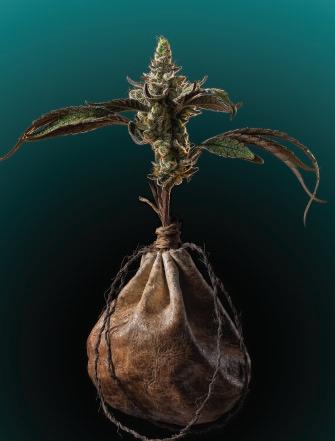
In 1993, a young Siberian woman was found preserved in Altai permafrost. She had been there for roughly 2,500 years. Among the items buried alongside her was a leather pouch of cannabis.
Modern imaging, run in 2014, revealed what had likely defined the final years of her life: a breast tumor with evidence of spread to her lymph nodes. The cannabis buried with her was almost certainly there for a reason: the pain, the nausea, and the things the disease was doing to her body. Whatever understanding she or the people around her had about the plant, that knowledge wasn’t passed on to future generations.
A BRIEF HISTORY OF CANNABIS AS CANCER MEDICINE
Researchers at the National Cancer Institute published a paper in 1975 showing THC inhibited the growth of lung adenocarcinoma cells in a dish and in living mice. However, the research wasn't funded or built upon. Spain and Italy picked it up in the late 1990s and spent the next four decades doing the work. Meanwhile, cannabis stayed Schedule I in the US, with no accepted medical use, grouped with heroin and above cocaine. The research that should have happened sat behind a legal wall.
Even without the research, everyone could see that cannabis worked for nausea. Dr. Donald Abrams, an oncologist who has practiced in San Francisco since the early 1980s, wrote in a 2016 clinical review that he needed a controlled trial to prove cannabis worked as an antiemetic (nausea aid) “about as much as I need a placebo-controlled trial to demonstrate that penicillin is an antibiotic.”
A 42-year-old with metastatic colon cancer wrote to him: “It did what no other drug could do, completely solved the severe nausea I had. It allowed me to play with my children, attend their sports and school functions, and just function very normally in day-to-day activities.” That letter is in the peer-reviewed literature, but the federal government wasn't reading it.
The FDA approved Marinol in 1985, synthetic delta-9-THC in a capsule, for chemo nausea, which meant the government acknowledged the mechanism worked while keeping the plant illegal. The problem with that arrangement, beyond the obvious, is that Marinol isn't cannabis. It's one compound.
Cannabis contains somewhere between 400 and 500 chemical constituents, and a 2020 review on cancer documented that terpenes and flavonoids independently demonstrate cytotoxic activity against cancer cells. Myrcene, limonene, and betacaryophyllene aren't just responsible for how weed smells; they're pharmacologically active. The pill doesn't have them. Patients who used both noticed this before the researchers did.
There's also the whole endocannabinoid system, which nobody really understood until the discovery of the CB1 receptor in 1988. CB1 receptors are throughout the brain and nervous system. CB2 receptors are dense in immune tissue, including the thymus gland, which trains T-cells and is loaded with those receptors. A 2024 paper in Toxicological Sciences specifically examined how cannabinoids interact with thymic tissue.
ONE WOMAN’S EXPERIENCE WITH CANNABIS AS CANCER MEDICINE
My friend and former co-worker, Melanie King, spent five years being told the thing in her chest wasn't there. She grew up in Massachusetts, moved to San Francisco in the late '90s, and was employee number five at the Internet Archive when the tech world still thought it had good intentions.
She found cannabis the summer after high school, watching Fantasia on a friend's back deck with the pool lights reflecting into the trees until they started to look like a zoetrope. “I felt like I let my hair down in my brain,” she said.
She built an events career through CannaCraft, managed the first onsite cannabis sales at Outside Lands with 300,000 people in Golden Gate Park, and pulled off the first cannabis event at Fenway Park. At the end of that night, a Boston cop told her, “If the Grateful Dead didn't burn this place down, you guys weren't going to.”
She was working the Cookies booth at Outside Lands when she first noticed the pain in her throat. Something wasn't right when she swallowed. She went to the ER during the festival, and a scope found nothing. Over the next five years, she saw specialists and ENT doctors, collected a heartburn diagnosis, and eventually something called Globus syndrome, a clinical designation for the sensation of a lump in your throat attributed to stress rather than anything physical. She was accurately describing what it feels like when a tumor presses on your esophagus and trachea from the outside. Nobody found the tumor.
It was Labor Day weekend when she finally drove herself to the ER, alone, because the pain had gotten bad enough that she couldn't justify staying home. They did a chest X-ray. The doctor came in and delivered the news with the measured calm that means it isn't good: you have a substantial tumor in your chest. She was admitted immediately.
The diagnosis was thymoma, cancer of the thymus gland, the structure tucked behind your sternum that trains immune cells during childhood and becomes largely unused in adulthood. Fewer than 400 Americans are diagnosed with it each year, and most oncologists encounter only a handful of cases in an entire career. The thymus is also a gland dense with CB2 receptors that researchers are now specifically studying in relation to cannabinoids. Meanwhile, Melanie's cancer had been quietly growing for five years, while doctors told her she was imagining things.
KU Med in Kansas City said the tumor was inoperable. Too large, too involved with her heart and lungs. “It's curtains for you kind of thing,” she said, which, of course, was shattering. A friend mentioned his father was a Mayo Clinic physician. Melanie wrote them a letter explaining her situation and asked if they'd take her case. They said yes. Mayo was a different experience entirely, an interdisciplinary team of specialists reading the same case and deciding by consensus rather than the succession of individual appointments that had missed her diagnosis for five years. Thoracic surgeons, cardiologists, oncologists, and radiation specialists all working toward the same conclusion.
“They knew,” she said. "This is what the medical system was supposed to do.” The plan was chemotherapy to shrink the tumor first, followed by surgery.
She had Rick Simpson Oil (RSO) during chemo, a fullspectrum high-potency cannabis concentrate. A friend had made suppositories by dissolving RSO into coconut oil and letting it solidify, because a rectal delivery route means nausea can't interfere with dosing, and absorption stays consistent even when nothing oral is viable.
Melanie gets nauseous easily in normal circumstances. Cisplatin, part of her chemotherapy regimen, is one of the most nausea-inducing drugs in use, hitting both the brain and the gut lining simultaneously. Standard antiemetics help most people most of the time, but not all people all of the time. The RSO got through where the standard options were falling short. The tumor shrank more than the doctors had anticipated.
“It's clear,” she said, “that the RSO significantly impacted that tumor shrinkage.”
What came next was a sternotomy, with her chest opened through the sternum and ribs broken apart to give the surgical team access to a tumor that had grown into both her heart and lungs, both of which had to be stopped during the procedure. The best thoracic surgeon in the world handled it, she said. She kept her kids at home for all of it and didn't let them see what the hospital stay involved.
The surgery didn't close without complications. She had to be put under again to address them and again had to be resuscitated. Then came the Dilaudid for the pain, and Melanie, who has difficulty with nausea, immediately began vomiting. Not a gentle experience when your chest has just been cracked open.
The ICU doctor, German with small, round glasses and a bow tie, leaned toward her at some point during the worst of it and asked, “What did you do during chemo that made you better?” She pointed to her backpack. The nurse reached in and pulled out the RSO she had brought from California, sealed in its original packaging with lab reports included.
Minnesota had medical cannabis, but Melanie was an out-ofstate patient and couldn't obtain a license. Cannabis transported across state lines remained federally illegal regardless of what either state had decided about the matter. The doctor walked it all the way up to Mayo's top administration. They said no.
“I will never forget being in my bed,” she said, “and hearing him banging his fist on the desk, yelling: I have a patient who is suffering, and I have a way to heal her in my hand, and you won't let me use it. This is an atrocity.”
Mayo offered Marinol instead. It had to be sourced from outside the hospital and took time to arrive. When it did, it wasn't the same.
“It's almost like if you're expecting sugar and someone gives you old-school NutraSweet,” she said. “There is an effect, but it's a shadow of it. Marinol comes in with this weird, chemical, squeaky quality. It doesn't have that beautiful earthy thing. With cannabis, you can feel Mother Nature wrapping her arms around you, especially when you're sick. But this was trying to be an opioid and even failing miserably at that.”
Melanie spent three weeks in the ICU before recovery could really begin. Then the panic attacks developed, something that happens, she later learned, to many people whose hearts have been stopped and restarted during surgery. When she got home and could take RSO again, her nervous system could finally settle back down to something recognizable. All of her current doctors know about her medicine now because she educated them herself. She explains that her case is part of a larger movement pushing for change at Mayo and other hospitals regarding cannabis as medicine.
In San Francisco in the 1990s, Melanie used to drive around delivering cannabis to AIDS patients who were too sick to leave their homes. “Little did I know,” she said, “so many years later, that I was one of those people who needed medicine.”
At some point, I just had to say it. I asked, “How are you so tough?” She didn't even pause. Shrugged in a motherly way and turned it back on me, saying I was just as tough.
I'd just spent 30 minutes listening to her describe having her chest cracked open alone, being brought back twice, fighting for a medicine she knew worked while a doctor banged his fist on a desk outside her door with her two kids out of state. I was sitting there genuinely in awe of this woman and her story, and somehow she was the one making me feel better about myself. That's Melanie.
In 1975, the NCI researchers found something real, and the government didn't act on it. In 2014, we learned that the Siberian people 2,500 years ago already suspected a connection. A doctor in a bow tie found it again in a hospital room in Minnesota, only a few years ago, and couldn't use it. With the schedule change, the research will run, and we can only hope that change will follow.
Some things just take a long time to catch up to what people already know.
“Let's hope that this will help anyone who needs the encouragement to speak their truth about plant medicine or needs to feel that they aren’t alone.” —Melanie King
Nothing in the article is intended to be, or should be taken as, medical advice.
REFERENCES
• Polosmak NV. Discovery of the Ukok ("Ice Maiden") burial, Altai Mountains, Siberia (1993).
• Letyagin AY, et al. High Field Magnetic Resonance Imaging of a Mummy from Ak-Alakha-3 Mound 1, Ukok Plateau, Gorny Altai: Findings and Interpretations. (2014)
• Munson AE, et al. Antineoplastic Activity of Cannabinoids. (1975)
• Sánchez C, et al. Δ9-Tetrahydrocannabinol induces apoptosis in C6 glioma cells. (1998)
• Galve-Roperh I, et al. Anti-tumoral action of cannabinoids: involvement of sustained ceramide accumulation and extracellular signal-regulated kinase activation. (2000)
• Guzmán M. Cannabinoids: Potential Anticancer Agents. (2003)
• Abrams DI. Integrating Cannabis into Clinical Cancer Care. (2016)
• Tomko AM, et al. Anti-Cancer Potential of Cannabinoids, Terpenes, and Flavonoids Present in Cannabis. (2020)
• Devane WA, et al. Determination and Characterization of a Cannabinoid Receptor in Rat Brain. (1988)
• Lins, Marvin Paulo, et al. Exploring the Interplay Between Cannabinoids and Thymic Functions. (2024)
• Engels EA. Epidemiology of Thymoma and Associated Malignancies. (2010)
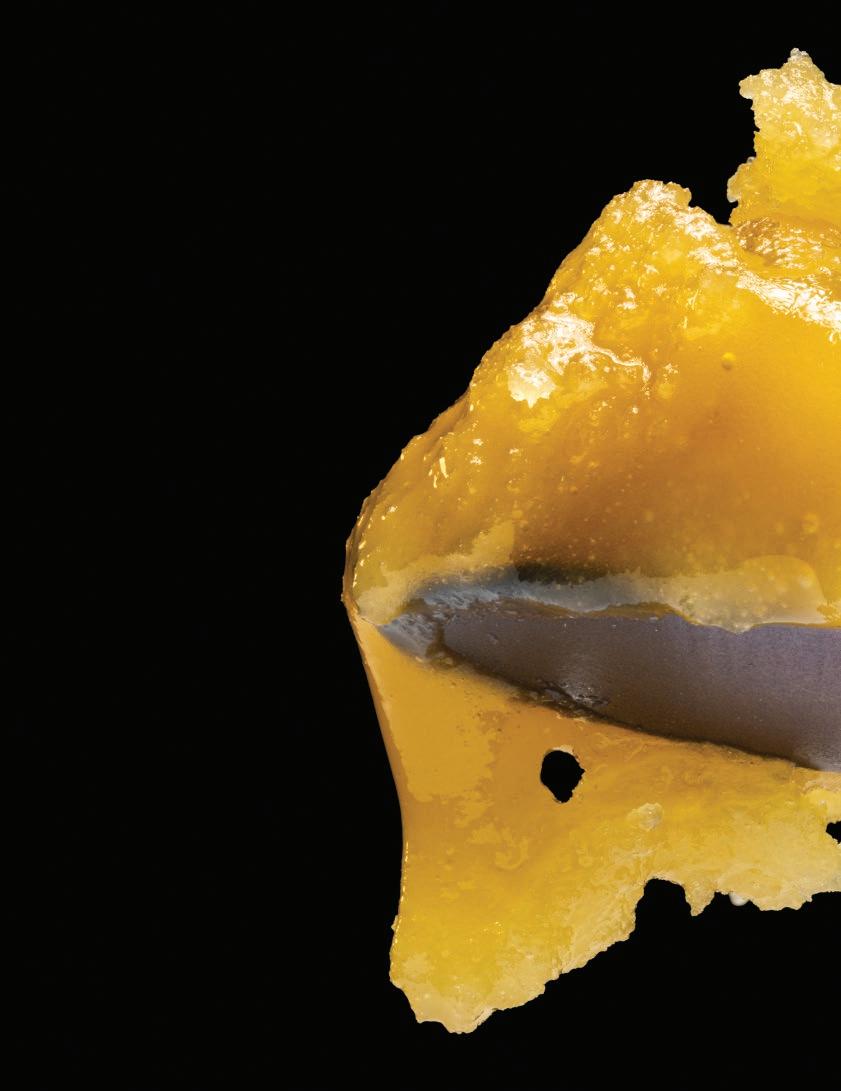
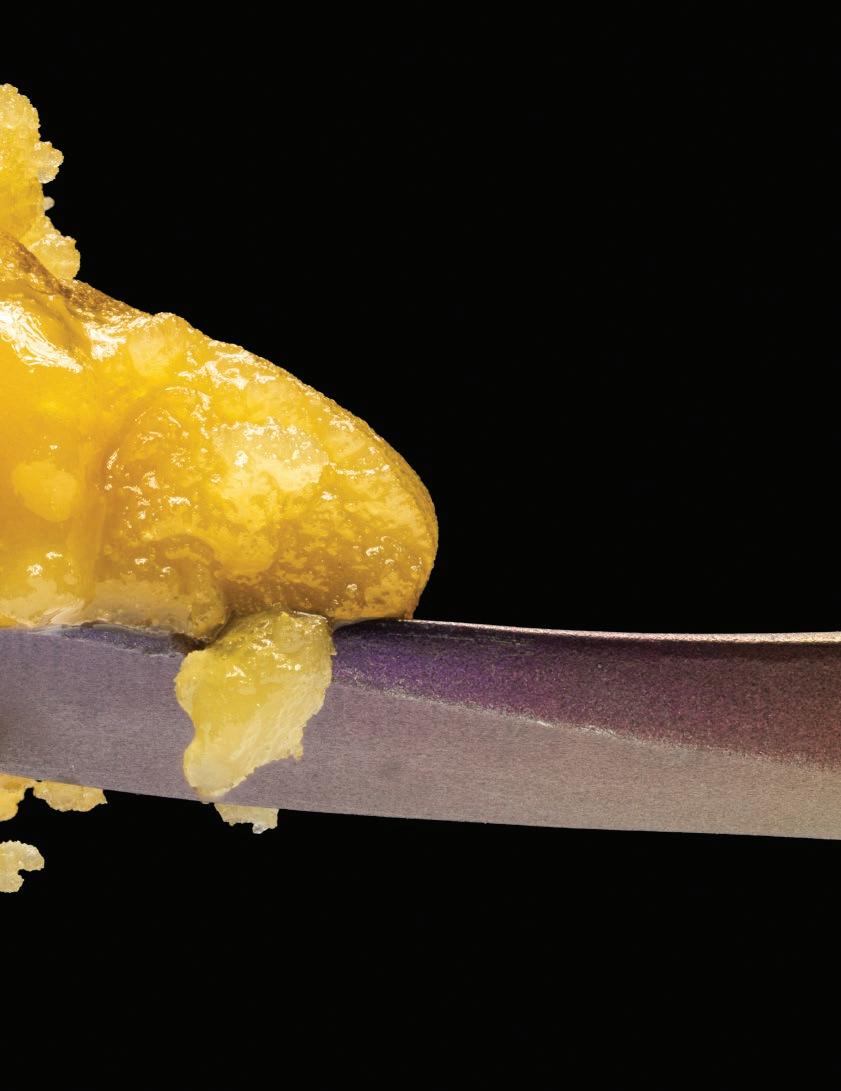
RSO PHOTOS BY PAOLA TELLO
I REALLY SHOULDN’T BE HERE:
One Man’s Lucky Moment at the Intersection of Cancer and Cannabis
By Brian Caine
It was a beautiful July afternoon.
“Why don’t you join me? It’s been a minute since you’ve seen the doctor.”
I wasn’t on a call, didn’t have a meeting, and nothing was scheduled for the remainder of my day. My wife was halfway out the door to get a personalized blood test for something she had been dealing with.
With that simple invite, the most amazing woman I’ve ever met, the person who has been my biggest fan and supporter for the last 30 years, who loves me more than I love myself, saved my life. Again.
It wasn’t the first time she’d done it, nor was it uncommon (especially over the next 18 months). I know it won’t be the last.
THE DIAGNOSIS: DEVASTATING NEWS AND TERRIFYING THOUGHTS
When the tests came back, I expected, “You’re in good shape, for your age.” After saying that, the doctor followed with “Except for this number here...” My world began to change. I knew enough about prostate cancer to realize the reading was much too high.
The next few months were a blur of trying not to focus on the score I had received and coordinating doctors’ appointments, referrals, scans, and MRI’s to determine what we were dealing with.
In mid-November 2024, after unsuccessfully deciphering the medical jargon in my record, I decided to wait until my appointment in December with my specialist to get the details. But just a week later, re-reading the results to my brother, it was as if Latin was now a language a 5th grader could understand.
I had cancer. And it seemed severe.
A lot was happening in our lives at the time. Stress levels were high. My wife had launched her new business, and I had started a second one. I was thankful that the upcoming appointment with the specialist in December slipped my wife’s mind, as she was preparing for the return of our three daughters and the initial round of holiday celebrations.
Not wanting to alarm my family without details, I kept the information to myself and tried to make the most of the holidays. Thanksgiving came and went. The noise in my head was loud, but I was determined to be as present as possible during the festivities.
On a Friday in December, I learned it was Stage IV prostate cancer. How was this even possible? No symptoms. No pain. No warning signs. Random blood test - straight to Stage IV.
The noise in my head became crashing waves of sadness. Distantly, I heard the specialist tell me we needed to begin treatment as quickly as possible. How was I going to tell my family? What was going to happen to them if I wasn’t around? Would I be there to walk my daughters down the aisle?
It was minute-by-minute trying to plan for my family’s future without me, and being present during what I thought may have been one of my last holidays with the ones I loved most.
ATTACKING THAT WHICH WAS ATTACKING ME
By early January, my wife and family were up to speed. She immediately adopted the attitude that my diagnosis was happening for us, not to us. That thought process was the beginning of my victory, although it would take several more months to see results, and even more to believe it. I had to go after cancer with everything while simultaneously preparing for the “What ifs.”
Plan A was throwing everything at it, including the kitchen sink. Plan B was far less optimistic and inspiring.
Treatment started in late February and consisted of hormone therapy with radiation sessions to follow. I began to reach out to everyone I could think of for guidance, ideas, and encouragement, which was in short supply in my head.
The list of things I began doing and taking was long and exhausting. My strict keto diet led to me shedding 30 pounds and nearly all my strength in two months. I was also considering solutions like ivermectin, zinc, and fenbendazole. I adopted new habits like meditation, visualization, and exercising with limited oxygen. I learned how powerful positive thinking, practicing manifestation, and gratitude can be.
CANNABIS: THE DIFFERENCE MAKER IN MY CANCER FIGHT
Cannabis was always going to play a part in my treatment. But I didn’t need it for symptoms, nausea, appetite, or any number of things cannabis can positively affect when it comes to cancer treatment. I started searching for answers as to how cannabis could be part of the solution.
I began to dose Rick Simpson Oil (RSO) and quickly reached a gram each evening after dinner. My knowledge was limited, but the support and phone calls from my cannafam helped me hone in on a strategy I was comfortable with.
A LinkedIn post to the cannabis community led to another conversation with a friend, Dustin Hoxworth, Editorat-Large for this very publication. He and I met online and talked a handful of times. At that point, we had only recently met in person. Like most things in cannabis, where intention is everything, Dustin’s heartfelt email introduction to a very knowledgeable individual of our canna-community changed everything. That basic act of help and humanity will always be remembered.
RAINBOW GUAVA
PHOTO BY PAOLA TELLO
FINDING A CANNABIS GUIDE
Mike Robinson is truly an OG. There’s very little in cannabis he hasn’t done. Mike’s remarkable life and career include his time as a professional racecar driver and stuntman, the decade he spent as a California legacy caregiver helping thousands, and even an early contributor to Fat Nugs Magazine. (Read his article on page 32).
His life’s passion as a lover of Mother Earth led Mike to cannabis compassion. He then became a researcher to study, advocate, and educate. He creates products and protocols that have helped the world understand cannabis’s ability to provide relief and to heal. Mike has collaborated with so many of cannabis’ greats like Peron, Herer, Bearman, and Mechoulam.
Mike’s response to me was filled with paragraphs of detailed information, including terms like anandamide, 2-AG, and NADA; all of it above my pay grade at that point. He signed off with - I look forward to helping you.
On the phone, the first thing Mike said was, “Brian, tell me everything.”
The way he said it was all I needed for trust to be established and for me to begin believing I could beat cancer. Perhaps 90 minutes later, after listening intently and sharing bits and pieces of his background, along with his courageous
Mike suggested continuing the evening RSO dosages I had started (at a lower dose) and MCO and kief in a pill format in the morning. Taking the MCO/kief combination as a pill allows it to get past the stomach before opening in the intestinal tract, where, as Mike said, “it gets to do all its magic.”
Without a doubt, I believe this is when my healing process began. Everything within me began to change the day I started Mike’s protocol. Avoiding unnecessary details, what began leaving my body that day had absolutely no business being there in the first place. If not for the actions of two people I now consider steadfast friends, Dustin and Mike, I believe my outcome would’ve been different.
Radiation treatment began about 30 days later, and after the fourth of five treatments, my oncologist pulled me aside. She needed to confirm that what she saw on the live scan was my previously cancer-filled lymph node, shrunk to a size that made it unrecognizable.
I needed to confirm that a vanishing lymph node was a good thing. Her face broke into a huge smile, and she said, “That’s a great thing!” I realized I was finally beating it. Within 24 hours, the change within my body completely and abruptly stopped, as if in harmony with my radiation treatment and the initial positive news.
Diligently following treatments and putting maximum effort into beating what was happening to me worked. There are many individuals and moments in the last year that contributed to my results, and I am forever grateful. I know that believing in the power of the plant and wholeheartedly buying into the early results was a powerful contributing factor to success.
CANNABIS GOT ME HERE
I really shouldn’t be here. Based on my life leading up to the summer of ’24, and a coin flip’s chance of joining my wife to get a random blood test, it’s miraculous I’m not fighting a much worse situation, or simply a memory in my loved one’s minds. Cannabis was instrumental in where I am today.
I’ve recently said of cannabis: “One of my best friends of the last four decades asked me - ‘You need me to save your life too?’ - Sure, I can do that.”
Not only has the plant been there for me during one of
every person in it, and the future advocacy for the power of the plant.
Cannabis as a protocol works. There are alternatives, there is hope, and there is a real chance. We don’t yet fully understand all the power the plant possesses and provides, and we’re still learning. If you or someone you know is facing a serious health condition, intentional and knowledgeable use of cannabis can make a difference.
As of May 11th, 2026, my first results post-treatment show that I am still kicking cancer’s ass. With the support of so many, I intend to continue that trend and help as many others as part of my life’s mission.
Nothing in the article is intended to be, or should be taken as, medical advice.
PHOTOS BY PAOLA TELLO
THE PROTOCOL THAT SAVED MY LIFE
By Chris Biggar
Cannabis didn’t kill my cancer, but it definitely helped my body survive the fight.
In May 2022, I felt I’d finally figured my life out. I reconnected with the girl who got away, I quit my retail management career, and we were North Carolina-bound so I could pursue a career in the hemp side of cannabis. I’d never been happier or prouder. On Labor Day Weekend, just three months later, everything changed in an instant.
GETTING INTO THE CANCER FIGHT
I stood up from the couch, and a sharp and sudden pain stabbed my abdomen. I fell to my knees, yelping in pain. I went to Urgent Care, which sent me to Duke Emergency Room, thinking it may be gallstones. They kept asking if I was ok besides the pain, that my hemoglobin was less than half of what it should be. The scan revealed a tennis ball-sized lesion in my liver. I knew it, my girlfriend knew it, neither of us said it. I left the hospital a few days later with a Stage IV Colorectal Cancer diagnosis.
Upon meeting my oncologist, I asked the obvious question of how long I had to live. He barely looked up from my charts to respond, “We don’t do timelines. We fight.”
Chris the Fighter was born. I looked at it like a title boxing fight. 12 rounds with the heavyweight champion of the world. I got absolutely worked for the first few months. In and out of emergency hospitalizations every couple of weeks with pulmonary embolisms, deep vein thrombosis (DVT), emergency hemicolectomy, and infections from procedures. Our first Thanksgiving as a joint family with Sam and her mom started with me signing my living will and giving power of attorney to my 72-year-old father, because statistically, he would likely outlive me.
With my diagnosis came palliative care. Make me as comfortable as possible during the fight. That came with painkillers. I hate pills. I was addicted for a short period
in my younger years and tried to push back with only cannabis consumption. I was reprimanded by my medical team and family and told, “You absolutely need this.”
We compromised, and after a talk with my oncologist about possible heart rate issues from the THC after my pulmonary embolisms, I said I’d monitor it. I took that seriously; it is absolutely the patient’s responsibility.
From then on, I looked at it from a scientific standpoint and wore a biometric monitor. Because of the stigma around cannabis use, I used my data-centric brain to create a spreadsheet. Date, time, heart rate, food consumed, mood, pain level, dosage, form of ingestion, and any additional comments.
THE PROTOCOL THAT SAVED MY LIFE
The protocol started sometime in mid-October.
From the day I was diagnosed, I steadily declined rapidly over the next four months. I lost 30 lbs, and I looked like I was losing the fight as badly as I was. My oncologist stressed, “You have to gain that weight back. I don’t care if you have to eat pizzas and milkshakes every day, do whatever it takes, your body needs it to fight.”
So I did. Doc was handling the medical science, and I was technically doing my job of not dying, but I needed to level the playing field. I needed to start winning rounds. I knew I needed to increase cannabinoid intake. I needed Rick Simpson’s help.
When it came to cannabis, I knew I needed to avoid contamination, have precise dosages, and I wanted fullspectrum products. A few days later, I was measuring out RSO syringes into pre-dose gel capsules and took my first capsule at my target dose. I ate that night. Not much, but compared to nights with no solid food, it was a win. I filled out my spreadsheet like a good nerd and fell asleep at a reasonable hour. Great sleep. I woke up at 3 am to get more snacks, but again, at this point, that was a win for me.
The protocol began as my way of controlling just one part of my life. I needed to feel like I was actually part of the team trying to kill my cancer. Not just a patient, a fighter, or a medical experiment. Well, I was that for sure, but this idea was mine.
Starting my RSO treatments helped me in a lot of ways, but one month later, I was still rapidly declining and losing my battle. I increased my efforts and bombarded my system with RSO and other cannabinoids. Cancer wreaked havoc on my body and was rapidly taking it over. Even if the RSO didn’t slow the cancer down or kill it, part of me just hoped I was pissing it off.
My protocol notebook was filling up with data. Even though I was still dying and I doubt my doctors would have wanted it to help solve my next medical mystery, it gave me purpose. When I was sick, my girlfriend said the only time I was happy or excited was when I was doing remote work or analyzing my data from the protocol.
A CHANGE IN THE DATA
I started mapping this protocol on the off chance I had a mysterious change in health so my doctors could rule out cannabis as the culprit. By the end of December 2022, the data that I’d collected on the protocol was consistent and thorough.
A highlight I pulled from the data: I was more than just eating, I was feasting. The foods I was able to stomach were chicken parmesan from one specific place (more RSO usually meant two chicken parms a day) and store-bought cornbread (I formed a dependence. It got bad.) Both were counted hundreds of times.
By mid-January, I was managing my symptoms and eating my RSO capsules like they were store-bought cornbread. One day, I noticed I felt different.
I started remembering things. I began to understand some of the words my doctors used around me. I had learned how to feel the cancer in my body through meditation. And one day, I couldn’t find it. I told my oncologist, “I know this sounds insane, but I’m telling you, it’s not there anymore.”
He ordered a circulating tumor DNA test to detect any cancer in my body. A few weeks later, my oncologist, my dad, and I celebrated at Duke Cancer Center that I had won the fight.
MEDICINE SAVED MY LIFE
Cannabis didn’t kill my cancer; the immunotherapy and my oncologist’s expertise did. He did his job, I did mine, and I somehow lived.
The protocol was my action for patient responsibility in a cancer battle. It was a hobby for a very bored man. Did my tumor start shrinking after I began bombarding my system with cannabinoids? Or did I start bombarding my system because I was in so much pain and discomfort, while my oncologist dialed my treatment in with precision? It depends on how you read the data. In my house, we say thank you to my oncology team and to Rick Simpson.
After I healed from surgery, I got to finally go back to work in hemp. I even got moved from warehouse specialist to R&D Lab Tech.
Nothing in this article is meant to be, or should be constituted as, medical advice.
THE DOCTOR WHO ASKED THE QUESTION
CANNABIS, CANCER CARE, AND THE LONG ROAD TO LEGITIMACY
By Sara Payan
PHOTO BY PAOLA TELLO
There are moments in cannabis history that do not look like movements at the time. They look like quiet resistance. A doctor asking a question no one else wants to ask. A patient choosing relief over stigma. A researcher pushing against a system designed to say no. Dr. Donald Abrams has lived at the center of all three.
A physician, researcher, and leader in integrative oncology, Abrams has spent decades caring for patients with cancer and HIV. Long before cannabis was a category, a market, or a headline, he was asking whether it could actually help people. Not cure them. Help them live better inside their illness. This is not a conversation about miracle cures. It is about evidence, ethics, and what compassionate care looks like when the system is not built to support it.
BEFORE CANNABIS WAS ACCEPTABLE
Abrams did not come to cannabis as an outsider. He understood it early, long before it entered a clinical setting. “I knew what it was and what it did and what it didn’t do,” he says. That understanding mattered later.
He entered medicine during the AIDS crisis in San Francisco, a time when patients were not only dying, but doing so under stigma, fear, and a lack of real options. Cannabis was already present. Patients were using it to manage nausea, stimulate appetite, and get through the day. Caregivers were risking arrest to provide it. Then came Brownie Mary.
In 1992, Mary Rathbun was arrested for baking cannabis brownies for AIDS patients at San Francisco General. Abrams was at an international conference when he saw the news. That moment shifted something. He came back and decided to stop asking whether cannabis belonged in care and start asking how to prove it.
A MEDICAL SYSTEM BUILT TO RESIST
What he ran into was not just skepticism. It was infrastructure. At the time, the only legal source of cannabis for research in the United States was the National Institute on Drug Abuse. Their mandate was clear. Study substances as drugs of abuse, not as medicine. “So my request to study the potential health benefits of cannabis was not going to go anywhere,” Abrams explains. It took five years to get approval, funding, and access to research-grade cannabis. Five years.
The only way forward was to reframe the question. Instead of asking whether cannabis helped patients, Abrams asked whether it might harm them. Specifically, whether it would interfere with HIV medications. “As long as I was looking for potential harm, I was able to get funding,” he says. That is how the first study moved forward.
THE DIFFERENCE WAS OBVIOUS
Inside the clinical setting, patients were given either cannabis, dronabinol, or a placebo. The contrast was immediate. “The dronabinol patients were in bed almost 24 hours a day,” Abrams recalls. “The marijuana people were up cleaning their room and dancing in the hallways.”
You did not need a complicated data set to see what was happening. The plant behaved differently than the isolated compound. That distinction still matters.
Cannabis is not just THC. It is a complex system of cannabinoids, terpenes, and flavonoids working together. When you isolate one molecule and remove everything else, you are not recreating the plant. You are creating something entirely different.
“The plant is the best medicine,” Abrams says. We are still catching up to that reality.
CANNABIS & CHEMOTHERAPY
A SURVIVOR’S PERSPECTIVE ON USE, RISK, AND REAL RELIEF
By Sara Payan
When I was diagnosed with stage III colon cancer, I followed the treatment plan, trusted my doctors, and tried to get through it. I also used cannabis. Not because I thought it would cure me, but because I needed relief. Cannabis can be a useful tool during chemotherapy when used intentionally and thoughtfully.
WHAT IT CAN HELP WITH Cannabis may support:
• Nausea and vomiting
• Appetite loss
• Sleep disruption
• Pain
• Anxiety and mood
For me, it helped me eat again when nothing sounded appealing. It helped me sleep. It helped me stay grounded during treatment. It also helped me avoid medications that created additional complications, especially constipation, which can be dangerous for colon cancer patients.
CANNABINOIDS MATTER
Different cannabinoids can support different symptoms.
• THC is most effective for nausea, appetite stimulation, and pain
• CBD can help with anxiety and nausea, but it is not effective for appetite
• CBG may support appetite and anxiety
• Ratios matter. The combination of cannabinoids can change how a product feels and how it works.
WHAT PATIENTS LIKE ME ALREADY KNOW
In practice, Abrams has seen cannabis work in ways that matter. It helps with nausea. It supports appetite. It improves sleep. It can reduce pain. In some cases, it allows patients to lower their reliance on opioids.
“One botanical can address appetite, nausea, pain, insomnia, anxiety, and depression,” he explains. Compare that to the standard model, where patients often leave with multiple prescriptions that can interact with each other and create new problems.
Cannabis is not perfect. It does not work for everyone. But when it does, it simplifies care in a way modern medicine often does not. That matters, especially in cancer treatment.
I am a stage III colon cancer survivor. That experience informs everything I do in this space. Constipation is not a minor side effect when you are dealing with colon cancer. It can be dangerous. Many standard medications for nausea and pain can slow everything down in ways that create real risk.
During my treatment, cannabis became part of how I got through it. I used it for nausea, sleep, appetite, pain, and to manage anxiety and mood. It was not a cure. It was a tool. But it made a difference. I also had a unique lens. My mother is a cancer researcher. She ran the clinical trials for the chemotherapy protocol I was on. She was precise. She told me THC would help with nausea. Not cannabis broadly. THC. That distinction mattered in medicine, especially back then.
My treatment happened before we were having the conversations we are having now. We were not talking about CBD, terpenes, or the broader spectrum of cannabinoids. It was THC or nothing. Looking back, I could have benefited from that expanded understanding. More nuance. Better guidance. That is why this moment matters.
Patients today have more information, more options, and more open conversations with their providers. That is real progress. And it is why we have to keep pushing for better research and honest dialogue about what cannabis can and cannot do. Abrams still sees that same dynamic in his patients. “They don’t want the ondansetron (for nausea) because it’s so constipating. They prefer cannabis. And it works.”
DRAWING THE LINE BETWEEN FACT AND HOPE
For all of its benefits, Abrams is clear about where cannabis does not belong. It is not a cure for cancer. “If cannabis cured cancer, I would have a lot more survivors,” he says.
That clarity is important. There is a lot of noise in this space. A lot of hope. A lot of desperation. And a lot of people willing to fill that gap with certainty that does not exist.
In lab settings, cannabinoids have shown promising effects. They can trigger cell death in cancer cells. They can slow tumor growth in animal models. But what happens in a lab does not always translate to people. “Only about 5% of substances that work in the test tube make it to the market as
something useful in humans,” Abrams explains. That does not mean the research is not worth doing. It means we need to be honest about where we are.
THE GAP BETWEEN USE AND UNDERSTANDING
One of the biggest challenges is that cannabis has been widely used while being poorly studied. Decades of prohibition made it extremely difficult to conduct meaningful research. At the same time, patients continued to use it and share what they learned through experience.
That disconnect shows up clearly in clinical practice. In one survey of oncologists, most said they discuss cannabis with patients.⁸ Most of those conversations are initiated by patients. Only a small percentage of doctors feel confident in their knowledge. That is the gap. Patients are using cannabis. Doctors are being asked about it. The system has not caught up.
THE NARRATIVE IS SHIFTING AGAIN
As cannabis becomes more mainstream, the narrative is shifting. We are seeing more headlines about potential risks. Heart health. Cognitive effects. Long-term harm. Some of these concerns are worth paying attention to. Some are overstated. “I think it’s Reefer Madness 2026,” Abrams says. He points out that many of these studies rely on small event rates or fail to account for other variables. The headlines rarely reflect that nuance.
At the same time, research priorities are changing. Funding is harder to secure. Cannabis research is often grouped with tobacco regulation, which shapes the questions being asked. The focus moves toward harm, not potential. That shift is worth paying attention to.
THE WORK AHEAD
The next phase of this conversation is not about proving that cannabis works. Patients have been demonstrating that for years. The work is understanding how it works. When it works. For whom it works. It is about building systems where patients can talk openly with their doctors. Where research reflects real-world use. Where we stop forcing a complex plant into overly simple narratives.
It is about remembering where this started. Not in a lab. Not in a boardroom. In hospital rooms, where people were trying to eat, sleep, and get through another day. That is still where the conversation matters most
Nothing in the article is intended to be, or should be taken as, medical advice.
FORMAT MATTERS
• Inhalation works quickly and is easier to control in the moment
• Edibles last longer but require careful dosing
• Tinctures can offer a middle ground
• Topicals can be a great starting point for noneuphoric pain relief. Earlier in my treatment, we were not having these conversations. It was THC or nothing. Patients today have more options and more nuanced guidance. That is real progress.
SAFETY MATTERS
Not all cannabis is created equal. For patients with compromised immune systems, product quality matters. Mold, mildew, and contaminants can pose real risks.
Always talk to your doctor and let them know what you are using so they have the full picture and can watch for potential drug interactions. They may not understand cannabis, but they do understand how medications are metabolized and what a cytochrome P-450 interaction looks like.
THE BOTTOM LINE
Cannabis is not a cure for cancer, though research is suggesting it may have therapeutic benefits for certain types of cancers. It is a support tool that can improve quality of life and make treatment more manageable when used as part of a broader care plan.
My cancer Journey Over the Decades
By June Blankin
Where does one begin with a cancer journey? While cancer affects way too many people, each person’s path through this disease is unique and nuanced—and mine certainly has been.
My journey with cancer has spanned several decades, each iteration looking slightly different from the last, and requiring something different of me. I share with you my story and what has helped me, in the hopes that it may help you as well, or someone you love.
Yes, our healthcare system is fractured, to say the least, but I’ve been fortunate to have clinicians who actually care about their patients. Of course, I’ve found some who don’t,
but I encourage all of us to advocate for ourselves first and find a healthcare provider who will do the same. It takes work, but it is worth it.
MY FIRST BRUSH WITH CANCER
My first cancer diagnosis came just a few years after my father had passed away from lung cancer. I was in my twenties, working for an airline, traveling around, and generally loving life.
This job provided me with very affordable healthcare options that I took advantage of. The news came at a yearly check-up. The physician's assistant was doing her exam and asked, “How long has this lump been here?”
“What lump?” I replied. She gave me a referral that ended with a needle aspiration, and abnormal cells in the test result.
Ok, I thought. Now what?
I caught a lucky break with my surgeon, who removed one side of my thyroid and told me I would be fine. The spot was encapsulated, and no further treatment was required. The only thing that changed was that I was now hypothyroid and had to take a tiny pill forever.
I felt invincible! Cancer was just a blip on my radar, and life went on. For years, my annual checkups ended with “all healthy.”
CANCER RETURNS TO MY LIFE
Fast forward a few decades. I met a guy, left North Carolina, and moved to Virginia. I jumped into the cannabis industry in 2017. By 2021, I took an early exit from the airline industry to start another chapter in life with cannabis. I became a budtender and got my master’s in Medical Cannabis Science and Therapeutics. Still, I was getting my annual check-ups, but now I knew so much more about this plant and its benefits in treating a plethora of health issues, including cancer.
Cancer #2 and #3 came simultaneously. In the spring of 2023, during my annual visit, my nurse practitioner recommended a calcium score. This test is another way to check heart health and is fairly inexpensive if one doesn’t have insurance.
At the same visit, I asked her for a referral to a dermatologist. I had not been for a skin check in years, but had worked outside during my airline career and knew the importance of continued checkups. The dermatologist recommended removing a few moles, and sure enough, one of them was melanoma. She removed the mole and
the surrounding tissue, and thankfully, my margins were clear! That was my second lucky break—clean and easy removal. But once melanoma was found, I had to increase my checkups to every three months for two years. These days, I’m back down to my annual visit, and thankfully, all is good!
Meanwhile, my calcium score showed “ground glass nodules” in my lung. It’s an odd description for spots that looked opaque and hard to define. My NP referred me to a pulmonary doctor and chest CT scans for further investigation.
ADVOCATING FOR MY HEALTH— AND MY LIFE
Here, for the first time, I ran into issues. I had decided years ago that I would be honest about my cannabis use with doctors. No one needs to be in agreement, but respect for my choices is important.
My PET CT (positron emission tomography–computed tomography), the gold standard for many cancer diagnoses, came back inconclusive, with a 23% chance of malignancy. My doctor began to fixate on my cannabis use and exactly how I got cancer. She was very anti-cannabis and focused too much on the how, rather than on the actionable steps.
She recommended we wait a few months before testing again and that I abstain from all cannabis consumption in the meantime. I pushed for further, faster action, and finally, she referred me to a clinic in a cancer institute near me. My advocacy and choice to move forward doubtlessly saved my life.
I met with an amazing thoracic surgeon who specialized in cancers of the chest and cared about my opinion. We agreed to skip the biopsy and remove
anything that was not on my original list of body parts. I had the surgery in July 2023. He removed a malignant tumor that, thankfully, had not spread to my lymph nodes. My third lucky break—the margins of surrounding tissue were clear.
Lung cancer is hard to diagnose because it doesn’t often present symptoms until it’s advanced. It could have easily spread, had I waited a few more months as the pulmonary doctor had suggested.
Again, I was spared from further treatment, but was now a lung cancer survivor who required the observation protocol of chest CTs every six months until I was cancer-free for a full two years. Then, I would be downgraded to a checkup once per year for the next five years, to be considered in remission.
Well, I didn’t make it that far.
ONE OF THE UNLUCKY FEW Cancer #4 arrived in August of 2025.
Through my years of dealing with cancer, I had become more experienced in medical terms. I was at a six-month chest CT
with my thoracic doctor when I noticed a note about a lipoma possibly present behind the chest wall.
Lipomas are fatty cells that are usually benign. In fact, only about 4 in 100,000 become malignant. But I was one of the unlucky ones.
Given my history, my doctor recommended removing the lipoma along with my thymus gland. I had my 4th cancer surgery on Halloween that year, and sure enough, the pathology read malignant cells within the tumor.
I was surprised at my 2-week post-op visit that both my thoracic doctor and oncologist recommended no treatment. My lymph nodes were still clear, and my margins were clear. The removed tumors had not spread. Yet another lucky break.
Still, I will now be under their care for the rest of my life with chest, abdominal, and pelvis CTs every six months. Additionally, my oncologist has recommended scans of every area of my body to ensure no new tumors appear.
DOSI BREATH BY DERRALL PEACH
WHERE CANNABIS FITS INTO MY CANCER JOURNEY
Where does cannabis fit in all of this? Everywhere.
I used cannabis instead of the opioid prescriptions one receives after most surgeries. I didn’t bother to get them filled at the pharmacy. Instead, I managed any discomfort with Tylenol/Ibuprofen every 4 hours. Around three days post-op, I began to incorporate gummies and infused beverages. These control my pain very well.
Unfortunately, cancer has altered my love of flower, so I use a vaporizer, gummies, and infused beverages as my daily cannabis routine.
From here, an RSO regime is next. My plan is to build up to 1g per day for at least 90 days, in the hope of killing cancer cells that may be present in my body.
While some believe RSO eradicating cancer cells is anecdotal, I believe it is possible. I know many people in the cannabis industry who are having amazing results incorporating RSO into their cancer battle. My philosophy is, why not? Cancer is a tough disease to beat, and I want as much help as I can get from this amazing plant.
I’m beyond lucky and grateful to be alive. I try never to take any day for granted. No one is guaranteed tomorrow, but damn if cannabis doesn’t make each day just a bit better.
Stay well, and always advocate for yourself!
Nothing in the article is intended to be, or should be taken as, medical advice.
FROZEN GRAPES BY PAOLA TELLO
FROZEN GRAPES CANNABIS STRAIN
Frozen Grapes is an indica-dominant hybrid that has become popular because of its dense, frosty flowers, rich grape-forward aroma, and relaxing but functional effects. One thing worth noting is that there are multiple versions of Frozen Grapes on the market, depending on the breeder or cultivation company. While the name is the same, the genetics can differ.
GENETICS
Several versions exist:
• Jungle Boys cut: Often described as descending from Grapes N Cream, although exact genetics have never been officially confirmed.
• Gus' Unique Selections: Grapes of Wrath × Banana Split. Some licensed producers and extract companies list it as:
• Mendo Breath × Platinum OG (or Platinum).
CANNABINOID PROFILE
Typical ranges:
• THC: 20-30%
• CBG: Around 1%
• CBD is usually very low.
DOMINANT TERPENES
Most lab-tested samples report:
1. β-Caryophyllene
2. Limonene
3. Linalool
Some phenotypes also contain noticeable amounts of:
• Myrcene
• Ocimene
• Pinene AROMA
Expect a combination of:
• Fresh grape candy
• Dark berries
• Plum
• Cream
• Sweet earth
• Pepper
• Light gas
• Mint
FLAVOR
• Concord grape
• Purple candy
• Cream
• Earth
• Diesel
• Kush
• Mint on the finish
APPEARANCE
• Deep purple coloration
• Forest green undertones
• Bright orange pistils
• Extremely heavy trichome coverage
• Dense golf-ball style buds
• Sticky resin
EFFECTS
• Euphoric
• Happy
• Uplifted
• Creative
• Light cerebral buzz
CULTIVATION NOTES
Growers often report:
• Medium height
• Dense canopy
• Excellent trichome production
• Purple coloration in cooler finishing temperatures
• Flowering time around 9-10 weeks (63-70 days) depending on phenotype.
HASH & ROSIN POTENTIAL
Frozen Grapes has developed a strong reputation among solventless enthusiasts because of its:
• Heavy resin production
• Thick trichome heads
• Loud terpene profile
• Attractive purple hash
FROZEN GRAPES BY PAOLA TELLO
HOW AUTOPHAGY PUT ME IN REMISSION FROM MESENTERIC CANCER
By Mike Robinson
APOPTOSIS: programmed cell death
AUTOPHAGY: a recycling process in cells that destroys old, damaged, or abnormal proteins and other substances
CANCER FORCED ME INTO THE STUDY OF SURVIVAL
I never set out to become a cancer survivor story. Nor did I wake up one day and decide I wanted to spend my life studying plants, cannabinoids, the ECS, and the quiet intelligence built into the human body. I was pushed into this world by pain, disease, survival, and the harsh moments when you know things aren't right within you.
Cancer has come for me more than once; the first time was in 2003, but it wasn’t the last. I felt that feeling again a few times, and sure enough, each time, it was that dreaded dragon cancer there to blow fire in my face again.
Every time, I had to meet cancer with everything I had. I didn't always have nature, discipline, research, faith in the body, or the stubborn OG grit to keep standing when my body was trying to sit me down for good. I've fought multiple cancers, severe epilepsy, chronic pain, stroke, and years of pharmaceutical dependence after a racing wreck that changed my life—all with one plant.
I'm talking about this from my researcher's desk without a borrowed theory; this is my life, and this is how I fought to preserve it. I speak from the depths of the floor, time spent in hospital beds, from the hard nights unable to sleep with pain, and those moments when I felt weak inside but knew I had to be strong.
HOW CANNABIS OILS BECAME PART OF MY CANCER RESEARCH AND RECOVERY PATH
For the past 15 years, nature has been my foundation for survival. Cannabis oils were part of my cancer story, but they also became part of a much bigger research path. I started watching patterns, studying patients, myself, and learning how cannabinoids interact with the body's internal signaling systems.
A decade ago, when my original cancer diagnosis returned, I was on the road of compassion, giving away cannabis oils and quietly studying the plant, the oils, and the people who used them, including myself.
Who would have known a plant I used to get high would end up so embedded in a fight for life, over and over again? Cannabinoids from cannabis speak to our internal system, the master regulator—the Endocannabinoid System (ECS).
It wasn't my first cancer battle, but my second, starting in 2015, in which I chose to learn about this great brain we have within us that regulates inflammation, pain, immune tone, sleep, appetite, mood, and cellular balance.
FROM COMPASSION PROVIDER TO RESEARCHER IN A TRIPLE CANCER BATTLE
For a long time, I used nature as my teacher, and I shared that with others. In 2015, when I received three concurrent cancer diagnoses, cannabis was my lifeline. I had non-
PINEAPPLE DONUT TRICHOME PHOTO BY PAOLA TELLO
Hodgkin's, prostate, and a rare one, NHL or nodular histiocytic lymphoma, that would consume the next four years of my life.
During my multiple recurrences, I relied on a boatload of THC oils. I added CBGa in late 2016, and things began to get smoother. The years of 2015 through 2018 were a pothole-filled road of survival, but by February of 2019, I was in full remission from everything.
A month before I went into remission, I decided to get clean from a 24-year prescription opioid addiction. That made 2019 a pretty rough year, but by 2020, I had my life back and emerged energetically again.
But by late 2022, I started feeling off; my abdomen bloated, and the pain within it became too great to bear.
WHERE I TURNED WHEN NON-HODGKIN'S RETURNED WITH A SECOND CANCER
I went to the ER, where they did blood tests and scans. The next day, I was in oncology with non-Hodgkin's, once again, this time with a second cancer in my mesentery, the backdrop to our internal organs. In less than a month, I underwent exploratory surgery. I lost a lot of blood as they looked for more cancer, but could only find dead tumor tissue. I was diagnosed and sent home with low hemoglobin; blood counts 20% below the 'low' mark.
During a post-surgical follow-up with a Physician Assistant in gastroenterology, I started talking about cannabinoids and apoptosis, programmed cell death. Apoptosis is often the focus of cancer and cannabis conversations. But she shared a way to clean up cells without killing
them: autophagy. With my blood counts already low, I was intrigued by the idea of cellular cleanup rather than targeting the disease for apoptosis.
AUTOPHAGY OVER APOPTOSIS
Most cancer patients think apoptosis is a guided missile that only hits the bad cells. But even without cancer treatment, the disease can easily stress our marrow, trash our immune system, and harm healthy tissue. With my blood counts already 20% below the low mark, I couldn't look at cell death as if it were automatically the best path.
The PA explained that sometimes survival isn't about killing cells; it's about helping the body clear damage, recycle what it can, and have new healthy cells overpower sick ones.
In cancer, apoptosis isn't a guided missile that only hits the bad cells. The disease process can stress the marrow, immune system, and healthy tissues. With my blood counts going so low, I needed sensible options.
After two decades fighting cancer, that PA gave me the tools I needed. A different word shifted my focus instantly; it was a glimmer of hope and positivity.
CELLULAR CLEANUP, CBD, CBG, AND THE SHIFT AWAY FROM CELL DEATH
I scoured for research and found that this new word was only new to me. Cells use this function to break down damaged parts, recycle materials, and clear waste, which means cancerous cells could rid themselves of the disease. When autophagy functions properly, the body is better able to manage cellular stress.
PINEAPPLE DONUT TRICHOME PHOTO BY PAOLA TELLO
This realization hit me hard. After everything I had been through, after all the oils, all the plant medicine, all the studying, and all the personal battles, I still had been looking at survival from the outside in. The PA made me look from the inside out.
Autophagy isn’t a magic cure. It requires discipline and control, as it works best during fasting, which isn't easy for most cancer patients. What I dove into was how and when damaged cells should be cleared, corrected, or controlled.
As I worked through the cannabinoid maze, I realized that ingested CBD and CBG seemed to push my body further into the autophagy process. I could tell as I was improving, and my blood counts slowly started to increase.
It wasn't coincidental; I used the information given to me by that PA to go down a research rabbit hole, where I discovered a study titled "Cannabidiol regulates apoptosis and autophagy in inflammation and cancer: A review" [1] . CBD and CBG were like smoke signals of the past—a sign of life to my body. I initiated 12-14-hour intermittent fasting to push the cellular cleanup even harder—and it worked.
Oncology offered me treatment plans, but I turned them down, thinking of that PA who steered me in a different direction. It was a gut move to use those two cannabinoids based on information from the PA, which I felt was just as credible as the oncologist, who never mentioned the word we all should know.
Things started changing in my body; I felt the mesenteric mass shrinking. PET scans verified it was happening, with
no treatment at all from the Cancer Treatment Center. Slowly over the next two years, that mass turned into a very small signal on the scans, and often fell below the level of uptake necessary to call it 'cancer'.
UCLA DECLARED ME "CURED"
In January 2025, I returned for a routine checkup to oncology, but due to changes in insurance, I couldn't see the same doctor. Instead, I got an order for a PET exam, which came back positive. I received a letter in the mail explaining that I had non-Hodgkin's, and the oncologist could no longer see me. Panic set in.
I reached out to the UCLA School of Medicine for input. My primary doctor called UCLA Health directly, asking them to take my case. Our attempts were successful, and in February 2025, a UCLA oncologist saw me.
He blurted out, "You don't have non-Hodgkin's lymphoma; it’s been a misdiagnosis since December 2022. You've had negative bone marrow biopsies since 2019. After 5 years, we consider you cured.”
He went on, "Your mesentery has one small spot, which was a surgical error. It's healing, but still inflamed."
My smile was enormous; I was free of cancer!
I asked them to document the file that I'd used cannabis oils, but UCLA declined, as they neither provided it nor documented it. However, my primary care doctor and the oncologist did document that I’ve used cannabis oils in all cancer battles since 2015.
I didn't stop using pro-autophagy methods to improve my GI health, and soon, I was proven right. In early 2026, a landmark study on CBD and CBG being central to the regulation of autophagy was published, confirming what I had suspected. [2]
ADVANCING THE CONVERSATION ON CANNABIS AND CANCER
The cannabis community's cancer discussion needs to grow up. Apoptosis has its place, but it's not the whole story. We've all been laser-focused on killing bad cells, without considering much of anything else. Sometimes healing means the body finds a way to protect itself and needs our help. That's autophagy.
My last fight helped me see that nature and science can actually speak the same language, and need each other to do so. Beating cancer never focused on only one thing. It wasn't just cannabis, diet, or mindset. It wasn't fasting, oils, supplements, research, or declaring myself a warrior. It was the combination of all of this, with assistance from a natural pro, that helped sharpen my science—the cannabis plant.
Smoking cannabis was in my protocol to fight cancer, but it ended up opening my mind to different approaches. Concrete thinking doesn't work when you're in survival mode. When we inhale the plant, it changes even for the most rigid of minds. For me, it created a strong desire to learn everything that a Physician Assistant knew about how to clean up my cells.
Autophagy gave me language for something I had felt for years—the body wants to survive, but it needs the right conditions. It needs support at the cellular level. For too long, medicine has focused on surface-level symptom management. The future of plant medicine is cellular support.[3]
I admit that when I first started dosing heavily with CBGa, CBG, CBDa, and CBD in this cancer journey, I didn't know what autophagy was. I'm so thankful to that PA for dropping that knowledge on me and getting me off of apoptosis as the only option.
Radioactive treatments trigger apoptosis in both good and bad cells; that's the cleanup. But during that type of treatment, autophagy can help bad cells survive chemotherapy. Oddly, the same bad cells don't seem to survive cannabinoids.[4]
This is why I use plant extracts: I'm not just a cancer survivor, I'm also a survivor of cancer treatment. I'm still here because I didn't stop asking questions. Nature gave me a path when the road looked closed.
My story isn't about cheating death, it's about learning from every fight I've been in. Cancer tried to end me more than once; it's been five times since 2003, but I've stolen its pen to send the world a message: autophagy, chewing up cancer by cleaning one cell at a time!
Nothing in this article is meant to be, or should be taken as, medical advice.
RESEARCH CITED:
1. Fu, Ze, et al. “Cannabidiol regulates apoptosis and autophagy in inflammation and cancer: A review” (2023)
The cannabis industry was built on the backs of medical patients. Cancer patients, in particular, were foundational to the start of cannabis normalization. In most legal states, medical cannabis has been a Trojan horse for recreational use, and once the floodgates open, medical patients are left in the dust.
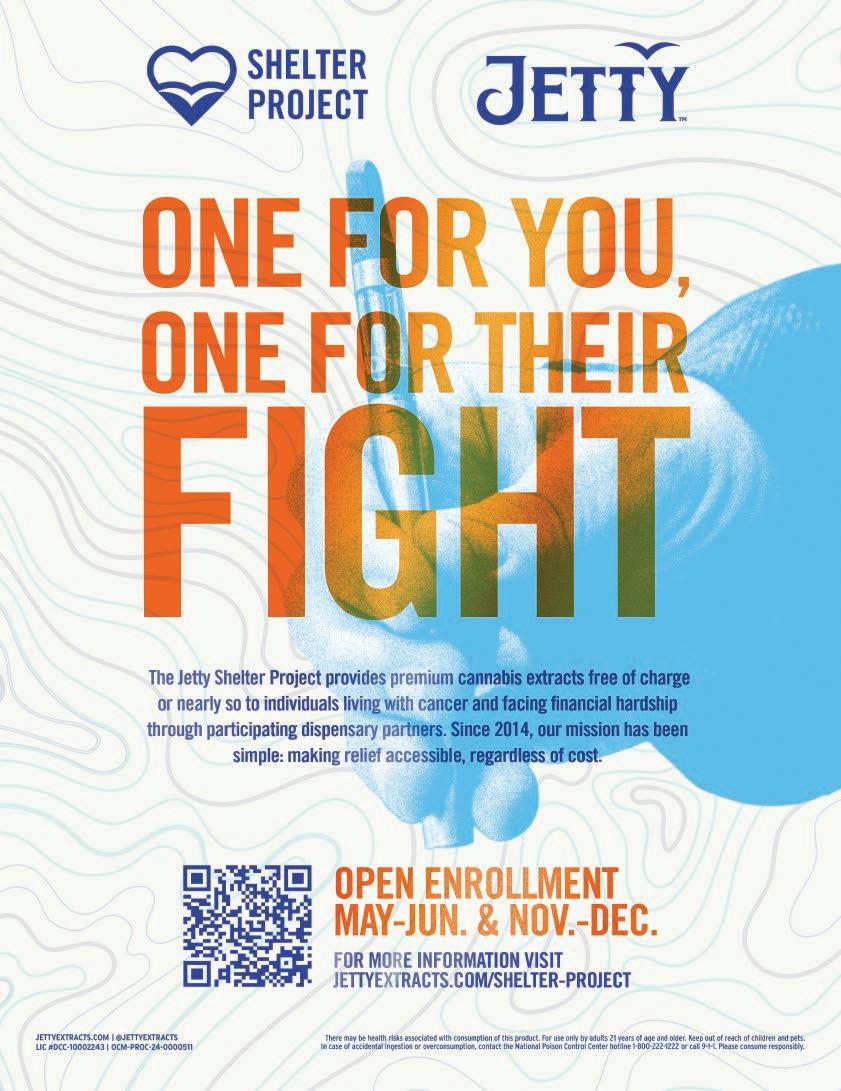
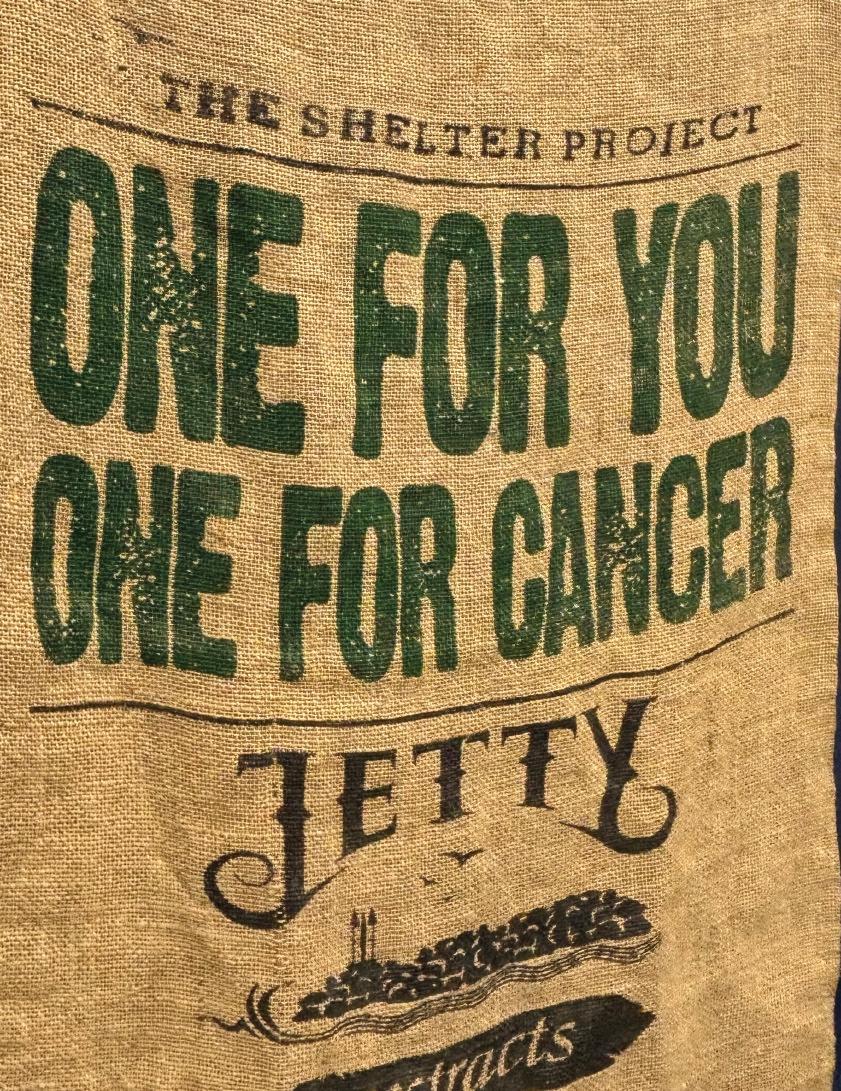
Jetty wants to change that. Since 2013, The Jetty Shelter Project has offered free cannabis products to cancer patients in New York, California, and Colorado.
THE CREATION OF THE JETTY SHELTER PROJECT AND CENTERING CANCER PATIENTS IN THE CANNABIS INDUSTRY
I sat down with Rob Ferguson, Co-founder and Chief of Strategy, to learn more about this program.
Why did Jetty start the Shelter Project?
We started in cannabis back in 2013 in California with a dispensary, and we saw firsthand how many sick patients needed this medicine. Without Proposition 215 (Prop 215) and terminally ill patients, this industry wouldn’t exist. We wanted to give free oil to the people who started this industry and do good for these people.
PHOTO BY PAOLA TELLO
Why has the Shelter Project remained such a big focus for Jetty?
We see what this medicine can do for people who are really sick. It’s become our mission to give back to the patients, the root of this industry. That’s how it all started—sick people advocating for access to this plant. It’s been really special to witness people in this program share their stories and how it's helped them.
What do you say to people who think programs like this are a waste of money?
It hasn’t been easy to scale this and make it affordable. But it is so important; it’s a core part of Jetty. Giveback and compassion programs are good for the cannabis industry.
Customers respond well to helping people; most people know someone who has battled cancer. This plant helps so many people, and it’s important to give access to people who don’t have the means to afford cannabis.
How can people join the Shelter Project?
We have open enrollment twice a year on our website. The next one is in the fall of 2026, October and November.
Testimonials from Cancer Patients in the Jetty Shelter Project FROM THE FRONTLINE:
ALEX L., CALIFORNIA
• Brain tumor
• Chemo and radiation, plus cannabis oil
• In remission for 13 years
Considered patient zero, Alex is a friend of Jetty co-founder Ron and was the first person Ron gave cannabis oil to in order to help him deal with the side effects of chemo.
“I would absolutely recommend [cannabis], especially in the oil form, especially if it’s a high dose, medical-grade type of potency, especially while going through chemo. It’s incredible. When it comes to relieving the nausea and initial pain from chemotherapy, it does wonders. It would give me instantaneous relief from the effects.”
“I’m proud to be patient zero. Anyone who’s going through the throes of cancer, whatever form it’s in, and they’re suffering from the debilitating effects of the chemotherapy—they should absolutely be joining the Shelter Project.”
KATHY C., CALIFORNIA
• Breast cancer
• Pharmaceutical regimen
• In remission
Diagnosed with breast cancer in 2016, Kathy joined the Shelter Project in 2019 and has been a member since.
“You guys saved my life. [Having free cannabis products] helped a lot. I don’t like taking medications, but it helps me. I still have to take some medicines, but the medicines are expensive. Cannabis helps me relax and gives me peace of mind. A lot of meds tear up my stomach, so it’s impacted my life a whole lot. It’s always been a medicine.”
EZEKIEL R., CALIFORNIA
• Kidney cancer
• Emergency kidney removal
• In remission for 10 years
Ezekiel was temporarily paralyzed in a workplace accident in 2014, and during treatment, doctors discovered kidney cancer. After an emergency kidney removal in 2016, he became a Shelter patient in 2017 and has been ever since.
“When I found out about your program, I was like, 'That will help me so much.’ I signed up, got connected, and I’ve been coming to your facility ever since. I really do appreciate it. I was so happy to have that help because of my financial issues at the time. I need the cannabis— sometimes I can’t eat when I come from my appointments. It helps me financially, physically, and mentally. Everything.”
“It would put me to sleep if I needed it. It would give me my appetite back after appointments when I wouldn’t be able to eat for hours, sometimes days. It eased my anxiety, eased my pain—it just helped me all around. I was like, “Look at my magic medicine. There are just so many benefits that I can’t even name. You can feel it as soon as you try it. My advice is: try it, and don’t knock it until you do.”
“[The Jetty Shelter Project] helping me with my cannabis—it meant so much to me. You were helping me when everybody else wasn’t. Even my insurance was trying to tell me I didn’t have enough money to get my kidney removed. You don’t care if people don’t have the money—you still help.”
JIM S., CALIFORNIA
• Stage 4 bladder cancer
• Immunotherapy
• In remission for 10 years
In 2016, Jim was diagnosed with a rare and aggressive form of bladder cancer. After a failed surgery, he was told he had a year to live. But emerging immunotherapies gave him a new lease on life.
“In 2016, I was told I was going to die in a year. That was life-changing. I had a very rare and aggressive bladder cancer. Unlike most bladder cancers, it formed on the outside of the bladder rather than the inside—it formed a film on the outside, which meant it was metastatic. I was at stage four when I was diagnosed. The prognosis was a year. Being told that you’re going to die in a year and this is your last year on Earth, as you can imagine, has interesting consequences.”
“Financially, [The Shelter Project] has helped me enormously. It’s made it possible for me to continue my treatment, and I consider this part of my treatment, without the expense that would otherwise be incurred.
“My oncologist has been aware of the research on cannabis and cancer and was impressed by it. What helped me was immunotherapy—that’s why I’m alive today. But because my response was so different than anybody else’s, my oncologist said, “Just keep doing what you’re doing.” She’s not saying it cured my cancer, but she’s saying, “Don’t stop.” I feel grateful for whatever ways the Jetty concentrates have contributed to my situation.”
LISA F., NEW YORK
• Neuroendocrine carcinoid cancer
• Surgery, pharmaceutical regimen, and clinical trial treatment
• Cancer under control
Lisa was diagnosed with neuroendocrine cancer in 2019 while living in California. Jetty expanded the Shelter Program shortly after she moved home to New York, giving her access to products.
“When you get diagnosed with cancer, and you’re out of work, your whole world changes completely. Having people that offer to help, that make it fairly easy to find the right questions to ask—that’s a really big thing.”
“Let’s talk about the free part. I had been a customer and knew the level of quality Jetty had. Having the Shelter Project offer the Dablicator and the carts at no cost is a relief. That’s one less thing I have to factor in every month. I can’t even express to you—with the level of stress and the things you have to deal with, something you don’t have to worry about is huge.”
“Knowing you’re getting something that’s quality, you hear terrible stories about people getting something that wasn’t what they thought. You never want to put yourself at risk when you’re already immunocompromised.”
PHOTO BY PAOLA TELLO
TURNING CANCER SURVIVAL INTO A CANNABIS CAREER
By Lance Lambert
While many know me as an advocate for the plant, few know the motivation behind it. There was a moment in my life that caused me to give pause and really question modern medicine. I haven’t looked back since.
In 2003, I lost my father to pulmonary fibrosis. Beyond being an amazing dad, he was my mentor and my best friend. Like many families, he was the metaphorical glue that kept us all together. He always supported his four kids, no matter what. He was that proverbial ‘true north’ for the entire family. When he passed in March of that year, it was hard on all of us.
I was just 27 years old and knee-deep in my career as a Commercial Accounts Manager. Losing my father made me rethink the path I was on. Did I really want to climb the
corporate ladder, as I had been doing for years by that time, or was there something more?
I decided there must be something more. I started my own business offering high-end transport services, something I had wanted to pursue ever since doing Roadside with AAA for five years.
MY JOURNEY WITH CANCER
A few short months after starting the business in 2003, a health issue surfaced. By this time, I had been coping with an uneasy pain for three years. I saw four different doctors about this, getting an ultrasound and blood work. In late August, cancerous cells were found.
GSB BADDER PHOTO BY PAOLA TELLO
One thing that still sticks with me from that doctor appointment. He stated I was the first to ever bring him pre- and post-images of a cancerous growth. I had imaging done in 2000 when the pain started, and brought it in to contrast with imaging taken just a week prior.
I asked why I had the pain for so long, but it hadn’t been found before. He said the cancer cells likely started growing on a pain receptor, causing pain. Of course, I thought it was worse, having felt the pain for so long up until then. He assured me it wasn’t likely to the point of metastasizing, but still wanted to get me into surgery as soon as possible.
A week later, I was admitted for surgery. It didn’t feel like a big deal until I was greeted by six doctors and nurses in the operating room. I wasn’t given much time to think about the whole ordeal, with just a week’s notice before going under. I learned then that nurses do God’s work.
Why do I share my experience of going through and beating cancer? Because it changed the way I look at health and medicine.
FIGHTING RADICAL CELLS WITHOUT CHEMO
I don’t agree with post-cancer treatments like chemotherapy. Having to kill good cells to combat bad cells is a napalm approach towards eradication.
I decided to learn about other ways to fight radical cells, which took me down the path of homeopathic and Eastern medicines. I truly believe Mother Nature has more answers
than mankind gives her credit for. This has been proven in regions like Asia and Africa, where herbal medicine has deep, ancestral roots.
ALTERNATIVE PLANT MEDICINES
As an example, I’ve found ginger is an excellent natural alternative to GasX. Garlic is great for your immune system. Compared to ibuprofen, turmeric has amazing abilities to combat inflammation and joint pain for me. The list goes on of tried-and-true alternatives to Western medicines peddled to the masses for over a millennium now.
Another very popular plant I’ve seen in elders’ gardens around Asia is (you guessed it) cannabis. It was used for centuries in the old world and in the modern era. In the 19th and early 20th centuries, cannabis was widely prescribed for a plethora of ailments. People used it as an analgesic, sedative, or appetite stimulant. Long before anyone knew the name Charlotte’s Web, it was prescribed as an anticonvulsant, too. It was well-known for easing rheumatism, nerve pain, and severe muscle spasms. Even gastrointestinal issues like cholera, dysentery, and diarrhea were addressed with cannabis tinctures and syrups.
All of this education caused me to give up Western medicine, except when absolutely required—making such changes as swapping out Advil for CBG, NyQuil for CBN, and Tylenol for CBD. I also incorporated a plethora of other herbs into my daily routine, one of my favorites being homemade ginger and turmeric green tea.
FINDING A HOME IN THE CANNABIS INDUSTRY
Fast-forward 10 years after beating cancer; an opportunity arose to transition into the cannabisadjacent space, helping with a new media site out of Denver called The Cannabist.
Colorado had just kicked off their adult-use program, and I jumped at the opportunity, realizing now was the time to make a move. I was firmly pro-cannabis. I grew up in NorCal surrounded by hippies, and between my familiarity with the community, culture, and craft, along with digital media, I eventually segued into a GM position.
While this position was a great fit, the parent company was owned by a hedge fund. They had stated an increase in investment, yet when the new year came, they asked me to cut a few positions. That was my cue to move on, and I vowed never to work for another hedge fund. Profit over people, a company’s biggest asset, just didn’t sit well with me.
I had another “aha” moment after my departure. I had several years of digital media and marketing experience, along with cannabis. A few friends called out how I could easily bury the cannabis portion of my journey and leverage my media focus to get back into digital and dotcom. My response was, “Why would I hide my focus and support for cannabis?”
I saw firsthand in Colorado how this plant was helping so many people, especially people like Charlotte Figi, who was fighting SMEI (Severe Myoclonic Epilepsy
of Infancy, also known as Dravet syndrome), and the countless other children battling grand mal seizures, going from up to 300 a day to as little as 30.
The community itself made it clear this is where I was meant to be. After a few calls, exploring open positions, an opportunity came from Weedmaps. I had already locked in a great media partnership between The Cannabist and Weedmaps by that time, so we had a great rapport. This job would eventually bring me back to the beaches of California from the mountains of Colorado; I was sold. This is the job that really took my focus to the international movement.
LIFE AFTER CANCER
13 years later, I have been fortunate enough to scale up some of the most familiar brands in the industry. Surviving cancer is a big part of who I am, and it was a big influence on where I am career-wise today. Being able to support this amazing community and pushing forward the global freedom of this plant all began with beating cancer and having my eyes opened to all the amazing things Mother Nature has provided us to be healthy, happy human beings.
As the 19th-century German philosopher Friedrich Nietzsche wrote in his 1888 book Twilight of the Idols: 'Out of life's school of war—what doesn't kill me, makes me stronger.'s school of war—what doesn't kill me, makes me stronger.
Nothing in this article is intended to be, or should be taken as, medical advice.
BOREALIS KUSH MINT LIVE ROSIN
PHOTO BY PAOLA TELLO
BUD BACKSTORIES:
Dairy Queen
By Lucas Indrikovs
There's a moment, if you're lucky enough to pop the right jar in the right shop, where the smell detonates faster than your brain can sort it. It's more than cheese, or fruit, or cream. It’s all of it at once, in a sequence your nose hasn't caught up to yet. Sitting underneath the whole thing, patient and weird, is something warm.
Something dairy.
That's Dairy Queen. And if you've never smelled this strain, the name leaves you completely unprepared for what it’s capable of.
On paper, the whole profile is a bad investment. Funky cheese and cherry have a long-standing restraining order against sharing a jar together. The vanilla note has no right being there, and yet there it is, sticky and gooey, smelling like a cheesecake that got Sweet Tarts hurled at it and somehow came out better for it. One tester called it Tropical Cheese before he knew the parents, another dubbed a specific phenotype "the piña colada pheno" thanks to a coconut smell he'd never encountered in any strain before or since.
The buds themselves are conical and spear-shaped, lime to forest green, with enough trichomes blanketing the surface that the whole thing looks like it got caught in a snowstorm. Orange pistils cutting through, and sticky to the touch, the way honey sticks to Velcro.
In other words, bust up a nug or two of Dairy Queen, and you've already committed to finding a sink. But if you’ve spent any time growing or smoking Dairy Queen, the sink was already in your business plan.
THE SMOKE REPORT
On smoke or vapor, Dairy Queen honors every promise the smell makes. Cherry creamsicle up front, vanilla sweetness
in the middle, and an earthy cheese on the exhale you didn't expect, but now don't think you can live without. The flavor is velvety smooth. Surgically clean.
You can read the terpene profile like a map somebody left open on the dash. Some report you're working with terpinolene in the lead, myrcene behind it, caryophyllene running the back of the house, giving everything a peppery spine, keeping it from tipping into dessert-shop sweetness. Others claim caryophyllene is the Boss Hoss of the group. Either way, that trio keeps Dairy Queen from being just pretty.
The high is sativa-forward, and it's not subtle about it. Uplifting. Creative. Your brain clocks in first, but once you hit the back nine, the body quietly catches up, and you're already winding down without having noticed.
It hits day or night. Dairy Queen doesn't ask what time it is.
THE BREEDING ROOM THAT BUILT DAIRY QUEEN
Subcool bred this in the late 2000s with a plan to take UK Cheese—that iconic, pungent Skunk #1 phenotype out of England—and cross it with Space Queen, his own refined hybrid of Romulan and Cinderella 99. Subcool wanted to nail the cheese and let the fruit tag along. He was selecting for flavor and resin and nothing else.
What came out was so loud in the jar he warned growers they'd need odor-masking technology, and he wasn’t being cute about it. Trimming this cultivar is an occupational hazard that punches your sinuses into next week. It's that kind of strain.
The cannabinoid DNA is THC-dominant, reportedly running 20 to 26% THCA on a good day, total cannabinoids sometimes clawing towards 28% when you count the
minors. CBG and CBC are in the mix, in minor fractions. A rounding error on most lab reports. Barely a blip on the radar.
But that number, and CBC, is precisely why this article exists.
MINOR CANNABINOIDS: THE BLIP ON THE CANCER RADAR
Everyone who's ever sparked a joint or popped a gummy has called it medicine at some point. And look, they're not entirely wrong. Joy is medicine. Sleep is medicine. An hour where your brain stops eating itself is definitely medicine.
But that's not what this strain is.
Ovarian cancer is the most lethal gynecologic malignancy we’ve got. 70% of cases are diagnosed at an advanced stage, and late-stage ovarian cancer is, in most cases, where the story ends. It's a contract you can't get out of. There is no routine screening test, no early warning system, no heads up.
Women find out when it's already been somewhere it shouldn't have been for way too long.
Professor Hinanit Koltai is a senior research scientist studying cannabis at Israel's Volcani Institute. In 2020, she began collaborating with environmental biology professor Bruce Kendall and his wife, Michelle, who had a devastatingly personal reason to care about finding a cure: Michelle was battling it.
Michelle worked alongside her husband and Koltai, her name on the paper as co-author, listed in full. In September 2021, she died, but Bruce kept the promise he made to her, and so did Koltai.
Their work didn’t stop.
THE PROMISE HER HUSBAND KEPT: DAIRY QUEEN VS OVARIAN CANCER
The team screened five cannabis strains against ovarian cancer cell line HTB75. Strains like GB-11, GB-14, GB-18, Paris, and Dairy Queen. Four of them did nothing at all, at any concentration. Not even at the highest dose tested made a lick of change. They clocked in, clocked out, and left nothing on the table.
But Dairy Queen? Dairy Queen killed the cancer cells. Killed them. And it was the only one.
The IC50—the concentration required to take out half the cancer cells—came in at 21.51 micrograms per milliliter. The researchers found that the most effective combination wasn't THC alone, or even THC with CBD. Not even close.
Of course, stoners know the entourage effect. But scientists have clearly never rolled a salad joint with two strains doing two totally different things to you, but playing off each other like a tight-knit orchestra or a kitchen full of experienced sous chefs.
What makes Dairy Queen’s profile so remarkable is the same thing that makes it so unusual. Its cannabinoid combination: THC working alongside minor players CBC and CBG. That combo, working alongside niraparib (a PARP inhibitor already used in ovarian cancer treatment), was approximately 50x more cytotoxic to cancer cells than to healthy cells. The cancer absorbed the full cost; the healthy cells didn't.
The mechanism ran through the Wnt signaling pathway, one of the key drivers of tumor development and metastasis, and the cannabinoid fraction tore through it. Disrupted it enough to stop cancer cells from replicating, enough so that a follow-up study found the THC+CBG+CBC trio also caused cell cycle arrest, inhibited cell migration, and enhanced PARP1 cleavage across multiple ovarian cancer cell lines, including cells taken from a living, breathing patient.
ONE STRAIN, MULTIPLE CANCER STUDIES
The research in Dairy Queen didn’t stop at ovarian cancer. In 2025, a study published in the Asian Journal of Urology took it into bladder cancer.
Researchers from Bar-Ilan University, Tel Aviv University, and the Cleveland Clinic threw Dairy Queen against urothelial carcinoma cell lines and three-dimensional human tissue models. That IC50 came in at 17.99 micrograms per milliliter: lower than the ovarian results, and more potent.
The extract shut down cancer cell migration, renegotiated cell cycle progression, and stalled 52.3% of cancer cells in the S phase, the horrible sweet spot where replication thrives, compared to 19% in the control group. In the human tissue models, it triggered expression of apoptosis-related genes, the genes that tell cancer cells their time is up, like a light.
Two cancers. Multiple research institutions. One strain: Dairy Queen.
NONE OF THIS IS ON DAIRY QUEEN’S LABEL
None of this is what you’re thinking about when you pop that jar of Dairy Queen.
The cheese and the cherry and the Sweet Tarts and the warm dairy thing underneath, none of it screams laboratory or peerreviewed anything. After all, you can't smell the Volcani Institute. You just smell the cheesecake.
But the strain stumbled into a higher purpose.
That minor cannabinoid fingerprint, the one most breeders weren't even trying to hit, the one that barely shows up on a CoA, turned out to be the most valuable line item on the whole sheet. Subcool was hunting the cheese, selecting on flavor and resin. He was trying to make something that smelled like an experience. He did just that, and as a magnificent happenstance, Dairy Queen did something even bigger.
The jar is still on the shelf, if you're lucky enough to find it. It still smells the way it smells, as long as breeders are worth their salt.
But now, it carries a heavier weight and a bigger purpose. Michelle Kendall's name is on a paper she didn't live to see published. The research was dedicated to her. Her husband is still funding it. The work doesn’t stop.
REFERENCES
• Shalev, N., et al. Phytocannabinoid Compositions from Cannabis Act Synergistically with PARP1 Inhibitor against Ovarian Cancer Cells In Vitro and Affect the Wnt Signaling Pathway (2022)
• Shalev, N., et al. Integrated transcriptome and cell phenotype analysis suggest involvement of PARP1 cleavage, Hippo/Wnt, TGF-β and MAPK signaling pathways in ovarian cancer cells response to cannabis and PARP1 inhibitor treatment (2024)
• Anis, O., et al. Targeting bladder cancer: Potent anti-cancer effects of cannabichromene and delta-9tetrahydrocannabinol-rich Cannabis sativa strains (2025)
WHEN PSYCHEDELICS MEET MORTALITY:
A story of Psilocybin and cancer
By Megan Mbengue, MS-MCT, BSN, RN
MUSHROOM PHOTO BY PAOLA TELLO
People who venture into psychedelics are often drawn to the phenomenon of ego death, the experience where the sense of self dissolves, and a person feels a deep interconnectedness, or profound oneness, with the universe.
But what happens when someone is truly facing death? How do ego, intuition, identity, spirituality, and psychedelics intersect when mortality is no longer theoretical, but imminent?
If you’re new to my work, I’m the founder of EntheaCare, a company that guides patients in the therapeutic use of cannabis and psychedelics. We have an incredible line of hemp products and a deeply compassionate team of nurses who have helped transform hundreds of lives through guidance with both microdosing and macrodosing psilocybin.
This is the true story of a cancer patient who used psilocybin during her cancer journey.
A ST o RY o F PSILO c YBIN AN d c AN c ER
Her name is Holly Stokes, a 42-year-old mother of two, and she gave permission for her story to be shared as part of her legacy.
Holly first reached out to us shortly after her Stage IV breast cancer diagnosis in 2024. She was already using cannabis, and we helped her reduce her THC use while optimizing her CBD and CBG. One of our nurses introduced the idea of microdosing, and Holly signed up.
She received her medicine and let it sit untouched for six months. She knew microdosing would make her feel her feelings, and at the time, she simply was not ready.
After a severe period of anxiety and depression following a medical incident, she decided she was finally ready for change and began microdosing.
At first, she felt everything. She cried the tears, felt the grief, and moved through the emotional heaviness she had
been holding. But then something shifted. Her mood lifted. Her anxiety quieted. She was able to navigate her cancer treatment with more intuition and clarity, rather than reacting purely from fear and emotion. Coincidentally, she achieved remission with her cancer at that time, too.
A few months later, the cancer returned and had spread to her brain. She received a treatment that ultimately caused liver failure, and she reached out to me asking whether the low-dose gummies she used for sleep would cause additional harm. They wouldn’t, but during that conversation, she told me she had only been given a few weeks left to live.
For the record, the treatment caused the liver failure, not the cancer itself, which is another heartbreaking conversation for another time.
I asked Holly whether she had ever experienced a macrodose, a larger psychedelic mushroom journey. When she said no, I told her it might be something meaningful to experience in her lifetime. She wanted to.
What happened next was nothing short of remarkable.
We knew time was limited, and charging her money for the experience did not feel aligned. So we reached out to our community and asked for donations to help cover travel expenses for one of our nurses to facilitate an end-of-life psilocybin journey for Holly, completely pro bono.
Within 36 hours, donations poured in. We had more than enough to make it happen.
Just four days later, our nurse Ariane was flying across the country to facilitate Holly’s end-of-life mushroom journey.
It was beautiful. It was emotional. It was challenging. And on the other side of it, Holly processed so much of the anger and heartbreak surrounding the unfairness of her situation. She felt more ready for her transition, more at peace, and less afraid.
PSILO c YBIN AND c ANCER
Microdosing
There are many reasons someone with cancer, or someone supporting a loved one through cancer, may choose to microdose psilocybin. The most common outcomes we see are improvements in mood, easing of anxiety, quieting of the brain chatter, and a deeper connection to both self and others.
For cancer patients and their families, this can translate to greater peace in the midst of uncertainty, less emotional overwhelm, deeper connection with loved ones, and a renewed sense of purpose, gratitude, and presence during an incredibly difficult chapter of life.
I also can’t overlook the profound effects psilocybin may have on pain. Through both its anti-inflammatory properties and its effects on pain perception, we’ve seen psilocybin help with everything from general aches and pains to severe chemotherapy-induced nerve pain.
Microdosing can also be a gentle way to begin building a relationship with the mushrooms before stepping into a larger journey.
Macrodosing
A macrodose involves taking a larger dose of mushrooms in a single sitting and entering what many people describe as a trip or journey. These doses often begin around two grams of whole mushrooms.
For people facing cancer, these larger journeys are often sought out for deeper insight into the meaning of life, connection to a higher power, emotional healing, or support in navigating the transition from this life to whatever comes next.
A macrodose can be deeply therapeutic, and for some people facing mortality, it can feel almost necessary. Cancer forces people into profoundly unfair circumstances. It confronts them with mortality, uncertainty, grief, and sometimes the reality of leaving behind the people they love far earlier than they ever imagined.
A psychedelic journey can create space for acceptance, peace, emotional release, forgiveness, awe, connection, and moments of profound meaning in the middle of suffering.
For some, it softens the fear of death. For others, it reconnects them to life itself, their relationships, their spirituality, or parts of themselves they had lost touch with through illness and survival mode.
These experiences are often described as deeply personal and transformative, shifting the way someone relates to pain, grief, uncertainty, and mortality. Instead of feeling trapped in “why me,” some people emerge with a greater sense of trust, surrender, gratitude, love, and emotional clarity.
SPECIAL CONSIDERATIONS WITH PSILOCYBIN AND CANCER
Research on psilocybin in cancer patients has shown improvements in anxiety, depression, existential distress, quality of life, and spiritual well-being, with some participants describing the experience as one of the most meaningful events of their lives.
At the same time, psychedelics are not appropriate for everyone.
Physically, there can be medication interactions or cardiac considerations. Emotionally and psychologically, psychedelics can bring unresolved pain, grief, trauma, or fear to the surface. The experience is not always rainbows and butterflies. And spiritually, not everyone is ready to surrender to the uncertainty of the journey or whatever truths may arise within it.
The same is true for caregivers and loved ones navigating grief, anticipatory loss, anxiety, and acceptance.
This is why I strongly encourage support and guidance for anyone exploring psychedelics in the setting of serious illness. Proper support helps ensure safety, intentionality, and integration through what can be a deeply profound and vulnerable experience.
If you feel called to explore this path, the nurses at EntheaCare are phenomenal at safely guiding people through both microdosing and macrodosing journeys. For Holly, microdosing helped her reconnect with herself and her intuition while easing her anxiety. Her macrodose helped soften the edges of the very real anger she carried about her situation and allowed her to face her mortality with less fear and more acceptance.
And maybe that’s the true lesson of ego death: when we finally loosen our grip on who we thought we had to be, we can meet even death with a little more peace, connection, and surrender.
Nothing in the article is intended to be, or should be taken as, medical advice.
DOSI BREATH
PHOTO BY DERRALL PEACH
HOMEGROWN WITH JIM BERRY:
BENEFICIAL BUGS FOR CANNABIS PLANTS
Hey, folks! Welcome back to my basement. Watch your head!
Today, let’s talk about bugs. I have always been a very antibug person. As a kid, if any sort of anything with more than four legs entered my space, I would freak out. I’m sure it was entertaining to watch, but not a great trait for a gardener.
Experience and my love for the plant have chilled me out quite a bit. I am still not a big fan of anything crawling on me, but I have learned a tolerance and appreciation for the role many of the creepy crawlies play in cannabis cultivation.
KEEPING THE RIGHT BUGS IN AND THE WRONG BUGS OUT
Winter is generally a time when the indoor home grower can breathe easier about pest infestations. Sure, you may get something sneaking in with your substrate, or you may catch something from the clone you got in the mail from that guy in California that you used to trust. But winter is a time when I’ll let down my guard about pests.
Once May hits, life outside is popping. It’s time to start taking more precautions when entering my grow space and
to start scouting diligently for signs of bugs that may have found their way in from my yard.
I live on the cold side of Zone 6 and grow inside. In my garden, there have been spider mites, western flower thrips, and white flies. Spider mites were definitely the worst, but there are more invasive species out there—root aphids, russet mites, and broad mites, to name a few.
Pest infestations are the worst. But spraying conventional insecticides on cannabis is usually a bad idea, especially during the flower cycle. This is why many growers choose to control pests with other creepy crawlies, or beneficials, as we usually call them. Before cannabis cultivation was common, there was already an entire industry of bug producers, serving the food and ornamental cultivators.
BENEFICIAL BUGS FOR CANNABIS PLANTS NEMATODES
Nematodes are parasitic worms that live in the substrate and are generally considered pests. But one specific species of nematode, known as “SF” (Steinernema feltiae), is very helpful in controlling both fungus gnats and thrips. Gnats lay their eggs in the soil, where they also spend the larval stage of life. Nematodes will actively hunt these larvae.
They penetrate the insect’s body and release a bacteria that eats the gnat from the inside out within a few days. Thrips actually lay eggs on the underside of leaves, but will spend the prepupae and pupae stages of their development in the substrate, where the nematodes control them in the same way. To apply nematodes, you would typically water them into your soil every couple of weeks or so.
MITES
Predatory mites, or Stratiolaelaps scimitus, are the most commonly deployed control in cannabis cultivation. They are tiny arachnids that feed on fungus gnats, thrips, and root aphids. They live in the soil and like warm, moist environments. If the substrate gets too dry or cold, they will struggle to survive. They are a great tool for preventing infestations, but once one has occurred, they “mite” not be able to keep up with it. Predatory mites, or “strats,” are applied to the substrate surface every couple of weeks.
Cucumber mites (Neoseiulus cucumeris) are another commonly deployed arachnid used to hunt thrip larvae before they can reach the soil. They also live above the surface, in the foliage of the plant. Because of this, they should be deployed every week or two through sachets. They look like tiny doorhangers, hung directly on the plant or trellis. They are shipped as a live colony, hundreds of mites in each sachet. They show up hungry, already breeding and ready to work.
As I mentioned, two-spotted spider mites are probably the worst pest that I have had to date. They love warm cannabis
rooms and have a very rapid reproductive cycle. They will feed on leaf surfaces, sucking out the plant’s sap, while laying their eggs along the way. Left unchecked in a warm room, they can quickly get out of control.
If you use beneficials to control them, the gold standards are other predatory mites—namely, persimilis and Neoseiulus californicus. Both species will actively eat both the eggs and adults alike. In the case of persimilis, they can eat up to 20 mites or eggs a day. Both of these species are deployed through sachets every couple of weeks. Persimilis are generally faster to react and are more effective, but are harder to establish than californicus, and like a more humid room.
With all of these measures, the bugs will become ineffective or die if the environment falls outside of a range of temperatures and humidity. But then, so will many of the pests, and your plants won’t be too happy about it either.
THE LIMITS OF FIGHTING
BAD BUGS WITH GOOD BUGS
These are the most common beneficial bugs used in cannabis cultivation. There are many others that can be used that may be better suited to the environment or to handle more specific, less common pests. I have even released lady beetles in my room. I didn’t find them very effective at controlling spider mites—mostly, I was just cleaning up dead lady beetles. But having a few in the room is fun and makes for good photographic opportunities.
Beneficials can be very effective at preventing and treating an outbreak of pests. But they have their limits. If an outbreak becomes too severe, they won’t be able to keep up. If they don’t have enough to eat, they will die, and populations will need to be replenished.
Beneficial bugs are almost always applied continuously as a preventative. But depending on where you grow, you may have to rely on a couple of different strategies and benefits to control a specific problem.
You’ll likely have to order them from major suppliers on the web, unless you have a very competent grow shop or garden center in your neighborhood. Beneficial bugs typically have to be shipped overnight or 2nd day air, at least. These suppliers don’t structure their products with the homegrower in mind, so you’ll often pay too much for a larger population than you need, because these products have no shelf life.
Using them continually can get expensive. But I would much rather pay that expense than use most foliar products (or worse) in my flower room.
BENEFITTING FROM BENEFICIALS
If a new grower is interested in beneficials, I would recommend they start with nematodes or a few sachets of cucumeris. This will help prevent and control fungus gnats and thrips, which are the two most ubiquitous pests when growing cannabis.
From there, be vigilant about scouting and preventing new pests from getting into your garden on your person. If you have a pest pop up, make sure that you properly identify the pest to ensure that you’re treating the right problem. If it lives above ground, those sticky cards are excellent at trapping pests, helping you to identify them. Once you’ve identified the pest and researched a bit, you can decide whether you’d like to attack it with other bugs.
If you choose to use foliar sprays, please, please, please make sure that it is safe for cannabis. If you’re in veg, make sure that the product is not systemic, meaning that the plant won’t absorb the pesticide into its vascular system (much like us taking an oral antibiotic).
With very few exceptions, you should not spray anything on your flowering plants. Cannabis is one of the only agricultural products that is often smoked, and we need to hold it to the highest standards when it comes to the chemicals that we use in its production.
From my experience as a home grower, you will usually be better off cutting your losses and starting over from a pest infestation, with a complete sanitation of your space in between. It is a lot of work and a little heartache, but a hard reset is much better than living with pests forever.
AGAP PHOTO BY PAOLA TELLO
CANNABIS AND PSILOCYBIN:
Two Evolving Paradigms in Cancer Care
By RN Collins
Cannabis and psilocybin both show up in cancer conversations. They’re doing completely different things.
Two plant-derived substances show up with increasing frequency in cancer conversations, getting mentioned in the same breath. Cannabis, derived from Cannabis sativa, and psilocybin, derived from Psilocybe mushrooms.
Both have been used by humans for thousands of years and are federally illegal. Both are subjects of serious clinical research in oncology. Both face regulatory and access barriers that patients are working around rather than through. And both create questions that deserve specific, accurate answers.
These similarities explain why cannabis and psilocybin travel together in patient conversations, in integrative oncology discussions, and in media coverage of plant medicine and cancer.
But treating them as if they’re two flavors of the same alternative medicine misses something important. Cannabis and psilocybin are not doing the same thing, are not being used for the same reasons, and do not share the same mechanism, evidence structure, therapeutic context, or clinical conversation.1
Understanding what distinguishes cannabis and psilocybin matters for anyone in cancer care, advising cancer patients, or trying to have an accurate conversation about what the research actually shows.
Cannabis in Cancer Care: Symptom Management
Cannabis in cancer care is fundamentally a symptom management tool. The reasons cancer patients use it are well documented: difficulty sleeping, pain, mood, anxiety, poor appetite, and nausea.2
These are the same symptoms that cancer treatment always produces. Patients reach for cannabis because they want anything that helps when the alternative is lying awake at 3 a.m., losing pounds they can’t afford to lose, or spending the morning after chemo unable to leave the bathroom.
Evidence Around Cannabis as Cancer Symptom Management
The clinical evidence for cannabis as a symptom management tool is real but limited. The 2024 ASCO guidelines—the first from a major U.S. oncology body— found the strongest evidence for treatment-resistant chemotherapy-induced nausea and vomiting when standard antiemetics have already failed.1
For pain, sleep, appetite, anxiety, and mood, the evidence is “insufficient to make formal recommendations either way”. This framing is a finding about the research base; patients who use cannabis for sleep and feel like they sleep better are not wrong. However, the research hasn’t yet caught up to those uses with enough controlled-trial rigor to make clinical recommendations from.
Cannabis Works Quickly and As Needed
Pharmacologically, cannabis interacts with the endocannabinoid system through CB1 and CB2 receptors in the brain and body. The effects are dose-dependent, route-dependent, and heavily influenced by the ratio of THC to CBD and other cannabinoids in the product.3
Cannabis does not require a multi-hour supervised session. It does not produce an altered state of consciousness that needs preparation and integration support. It can be bought at a dispensary in most states and fits, imperfectly, into the standard category of supportive care medications— even though the regulatory and evidence infrastructure for treating it that way is still catching up.
The fit is imperfect because the retail cannabis market does not operate like a pharmaceutical supply chain. Products vary in potency and composition. Labels may overstate THC content. The clinical guidance infrastructure (the equivalent of a pharmacist who reviews your medication list before dispensing) does not exist in any systematic way. Cancer patients using cannabis are largely doing so without the clinical support that would make any other medication of this complexity manageable.2,8
Psilocybin: Addressing the Psychological Implications of Cancer
Psilocybin in cancer care operates in a different space. It addresses the psychological and existential dimensions
of serious illness: fear of death, loss of meaning, identity disruption, the uncertainty that comes with a cancer diagnosis. These are the features of cancer distress that standard pharmacology addresses poorly, and standard psychotherapy addresses incompletely.4
The clinical research on psilocybin in cancer populations began in earnest with the 2016 trials at Johns Hopkins and NYU. Both were double-blind, placebo-controlled crossover designs enrolling patients with life-threatening cancer diagnoses and clinically significant depression and anxiety. Both found that a single high-dose psilocybin session, embedded in structured psychotherapy, produced rapid and sustained reductions in depression and anxiety—with approximately 80% of participants showing clinically significant reductions at six-month followup.5,6 Participants described their sessions as among the most personally meaningful of their lives, producing new relationships with mortality, forgiveness, and connection that lasted well beyond the session itself.
How Psilocybin Works for Cancer Patients
Psilocybin is primarily a serotonin 5-HT2A agonist, in a way that temporarily disrupts normal default-mode network activity in the brain — the network associated with self-referential thought, rumination, and ego maintenance.6
At therapeutic doses, the result is a profound and temporary alteration of consciousness that allows new perspectives on fixed patterns of thought. In the context of cancer, those fixed patterns often include an inability to hold the reality of mortality with any equanimity, or a loss of meaning so complete that the present moment becomes inaccessible. Psilocybin appears to interrupt those patterns in a way that persists after the drug is metabolized. Structured psychotherapy surrounding the session helps patients make meaning of what happened.
Psilocybin Requires Therapy, Integration, and Support
Psilocybin therapy requires extensive preparation before the session and integration support afterward. The session itself lasts six to eight hours and requires the continuous presence of trained guides. The setup is specific: participants lie on a couch, wear eyeshades to encourage inward attention, and listen to a carefully curated music program designed to support the emotional arc of the session.
This is not meaningless detail—the therapeutic container, physical environment, guide relationship, and the participant’s own intentions and expectations are directly relevant to outcomes. This is a carefully structured therapeutic event that cannot be replicated at home or dosed against a flare of symptoms.
The conditions that appear to make it work are the same conditions that make it difficult to scale.7 A patient undergoing psilocybin therapy enters a therapeutic relationship with a high level of vulnerability and dependency on the skill and boundaries of the treating clinician.
The ethical weight of that relationship, and the specific obligations it imposes, are simply different in kind from what cannabis use involves. They belong in separate clinical conversations and separate institutional frameworks.5,7
Where People Confuse Cannabis and Psilocybin in the Cancer Conversation—and Why It Matters
Both substances are federally Schedule I and have histories of being dismissed as fringe medicine. Both have been subjects of recent clinical research that generated significant media attention. And both are, at some level, conversations
about plant-derived compounds that the conventional medical system has been slow to take seriously.
But the confusion between cannabis and psilocybin has clinical consequences.
A cancer patient asking whether they should use cannabis for their nausea is asking a very different question than one asking whether they should seek psilocybin therapy for their fear of death. The first question has a practical, near-term answer involving product type, dose, route, timing, and interaction screening. The second involves understanding what psilocybin therapy actually is, what the evidence shows, who it might be appropriate for, where they could access it, and what the regulatory constraints look like in their state.1,5
Potential Medical Interactions for Cannabis and Psilocybin in Cancer Patients
Among the clinical distinctions that matter most right now, two go largely unmentioned in conversations that treat the substances as equal.
The first is the immunotherapy interaction signal. Cannabis has potent immunosuppressive properties, mediated through CB2 receptor agonism. Several observational studies have raised concern that cannabis use may reduce the efficacy of immune checkpoint inhibitor therapy—a finding with direct relevance given that immunotherapy is now a frontline treatment across many cancer types.
Psilocybin has no comparable immunosuppressive mechanism and no documented interaction with immunotherapy. For a cancer patient receiving ICI treatment, this is a clinically meaningful difference.1,5
The second is pharmacokinetic: cannabis significantly inhibits cytochrome P450 enzymes (particularly CYP3A4 and CYP2C9), which are involved in the metabolism of a wide range of oncology drugs—including tamoxifen, some targeted therapies, and anticoagulants commonly used in cancer care.
Psilocybin does not share this interaction profile in any clinically meaningful way. The interaction screening conversation that belongs to cannabis use during cancer treatment is a specific clinical task with no psilocybin parallel. Conflating the two at the level of clinical guidance means that interaction risk goes unaddressed.
The evidence structures are also different. For cannabis, the problem is insufficient evidence across most indications, combined with a large and enthusiastic user population and a retail market that outpaces clinical guidance significantly.1,2
For psilocybin, the problem is a small but compelling evidence base with significant methodological limitations. The most important limit is that nearly every participant in a psilocybin trial knows whether they received the active drug. The subjective experience of a full therapeutic dose is unmistakable.
This introduces expectancy effects that are difficult to disentangle from pharmacological effects. The effect sizes in cancer psilocybin trials are large enough that expectancy
alone cannot explain them—but specific effect estimates should be interpreted with care until trial designs better address expectancy.
What Cannabis and Psilocybin Share, Accurately
Both cannabis and psilocybin are being used by or considered by significant numbers of cancer patients in the absence of adequate clinical infrastructure to support that use. 2,7
It’s estimated that 20 to 40% of adults with cancer combine cannabis with active treatment, mostly without clinical guidance.1,2 Psilocybin access for cancer patients is almost entirely confined to research trials, but patient interest is growing substantially ahead of clinical availability. In both cases, the necessary clinical conversation is often absent or inadequate by providers who have not developed the expertise it requires. 1,10
Both cannabis and psilocybin sit in evidence environments where the research has been structurally constrained by Schedule I status. The rescheduling process underway for cannabis would ease some of those constraints, but for now, observational studies dominate cannabis literature. Psilocybin remains Schedule I, but the FDA has granted Breakthrough Therapy designation for psilocybin-assisted therapy in both treatment-resistant depression and major depressive disorder. 1,4
Cannabis and psilocybin represent a broader pattern in cancer care: patients experiencing significant symptom and psychological burden, finding the conventional medical system’s toolkit insufficient, and reaching for options that address what standard treatment leaves unaddressed.4,5
Filling the Gaps of Cancer Care with Plant Medicine
Cannabis is pointing to gaps in symptom management support. Psilocybin is pointing to gaps in psychological and existential care. Both are filling real gaps in the lives of people for whom the standard options have not been enough.
A growing number of cancer patients are managing both simultaneously—using cannabis for ongoing symptom management while also seeking psilocybin therapy for psychological distress. These are not equivalent uses, and they are not mutually exclusive, but they require coordination.
Cannabis’s CYP enzyme inhibition could affect drug metabolism, and the potential immunotherapy interaction warrants disclosure to the medical team. Most psilocybin protocols ask participants to abstain from cannabis in the days before and after sessions because cross-tolerance can alter the phenomenological quality of the experience. Patients using both should disclose both to their care teams, and those teams should communicate with each other rather than managing in parallel silos.
The clinical infrastructure gap connecting this is provider training. Most oncology providers are not equipped to engage knowledgeably with either cannabis or psilocybin questions, and the clinical education system has not moved quickly enough to address that. What is needed is different for each: cannabis requires pharmacokinetics, interaction screening, routes and doses, and honest acknowledgment of where evidence supports use versus where it does not.
Psilocybin requires understanding the evidence base, recognizing appropriate candidate populations, screening for contraindications—personal or family history of psychosis, certain cardiac conditions, specific drug interactions—and knowing how to refer rather than dismiss patient interest. Neither is standard in oncology education, and the patients who need these conversations are arriving at appointments now, not waiting for the curriculum to catch up.
Understanding what these substances are each actually doing—separately, in their own terms—is the prerequisite to having either conversation well. Cannabis and psilocybin are both in the room, but they are doing different things.
Nothing in the article is intended to be, or should be taken as, medical advice.
MUSHROOM & CANNABIS PHOTOS BY PAOLA TELLO
References
1. Braun, I. M., Bohlke, K., Abrams, D. I., Anderson, H., Balneaves, L. G., Bar-Sela, G., Bowles, D. W., Chai, P. R., Damani, A., Gupta, A., Hallmeyer, S., Subbiah, I. M., Twelves, C., Wallace, M. S., & Roeland, E. J. (2024). Cannabis and cannabinoids in adults with cancer: ASCO guideline. Journal of Clinical Oncology, 42(13), 1575–1593. https://pubmed.ncbi. nlm.nih.gov/38478773/
2. Ellison, G. L., Helzlsouer, K. J., Rosenfield, S. M., Kim, Y., Ashare, R. L., Blaes, A. H., Cullen, J., Doran, N., Ebbert, J. O., Egan, K. M., Heffner, J. L., Lee, R. T., McClure, E. A., McDaniels-Davidson, C., Meghani, S. H., Newcomb, P. A., Nugent, S., Hernandez-Ortega, N., Salz, T., Vidot, D. C., Worster, B., & Zylla, D. M. (2024). Perceptions, prevalence, and patterns of cannabis use among cancer patients treated at 12 NCI-Designated Cancer Centers. JNCI Monographs, 2024(66), 202–217. https://academic. oup.com/jncimono/article/2024/66/202/7728495
3. Radparvar, S. (2024). Clinical evaluation of the cannabis-using patient: A moving target. The Permanente Journal, 28(4), 77–86. https://pmc.ncbi. nlm.nih.gov/articles/PMC11648329/
4. Schuman, H. D. M., Savard, C., Mina, R., Barkova, S., Conradi, H. S. W., Deleemans, J. M., & Carlson, L. E. (2025). Psychedelic-assisted therapies for psychosocial symptoms in cancer: A systematic review and metaanalysis. Current Oncology, 32(7), 380. https://pmc. ncbi.nlm.nih.gov/articles/PMC12293737/
5. Griffiths, R. R., Johnson, M. W., Carducci, M. A., Umbricht, A., Richards, W. A., Richards, B. D., Cosimano, M. P., & Klinedinst, M. A. (2016). Psilocybin produces substantial and sustained decreases in depression and anxiety in patients with life-threatening cancer: A randomized doubleblind trial. Journal of Psychopharmacology, 30(12), 1181–1197. https://pmc.ncbi.nlm.nih.gov/articles/ PMC5367557/
6. Ross, S., Bossis, A., Guss, J., Agin-Liebes, G., Malone, T., Cohen, B., Mennenga, S. E., Belser, A., Kalliontzi, K., Babb, J., Su, Z., Corby, P., & Schmidt, B. L. (2016). Rapid and sustained symptom reduction following psilocybin treatment for anxiety and depression in patients with life-threatening cancer. Journal of Psychopharmacology, 30(12), 1165–1180. https://pmc.ncbi.nlm.nih.gov/articles/PMC6726261/
7. Lapid, M. I., Pagali, S. R., Randall, A. L., Donovan, K. A., Bronars, C. A., Gauthier, T. A., Bock, J., Lim, S. D., Carey, E. C., Sokolowski, E., Ulrich, A. M., Hassett, L. C., Kung, S., Whitford, K. J., Olivier, K. R., & D’Andre, S. D. (2025). Evaluating the effectiveness of psilocybin in alleviating distress among cancer patients: A systematic review. Palliative & Supportive Care, 23, e99. https://pubmed.ncbi.nlm. nih.gov/40259688/
8. National Cancer Institute. (2024, October 16). Oncologists struggle with patients’ questions about cannabis. NCI Cancer Currents Blog. https:// www.cancer.gov/news-events/cancer-currentsblog/2024/medical-cannabis-oncologists-patientscommunication
9. Petridis, P. D., Grinband, J., Agin-Liebes, G., Kinslow, C. J., Zeifman, R. J., Bogenschutz, M. P., Griffiths, R. R., & Ross, S. (2024). Psilocybin-assisted psychotherapy improves psychiatric symptoms across multiple dimensions in patients with cancer. Nature Mental Health, 2(11), 1408–1414. https://www.nature. com/articles/s44220-024-00331-0
10. Oncology Nursing Society. (2023, August). An oncology provider’s guide to patient use of medical cannabis during cancer care. ONS Voice. https:// www.ons.org/publications-research/voice/newsviews/08-2023/oncology-providers-guide-patient-usemedical
MAPLE NECTAR PHOTO BY DERRALL PEACH
LOW SUGAR CANNABISINFUSED BANANA BREAD
By Aretsha Lawrence
Banana bread is one of the coziest recipes to make at home. It’s perfect for any time of year and is always a nice treat to enjoy when you want a comforting snack.
For the cancer feature, I wanted to infuse a recipe that would be easy to make anytime, with simple household ingredients, while also having a low sugar content. This recipe swaps traditional refined sugar for coconut sugar to keep it more blood sugar and sensitive stomach-friendly—without sacrificing taste or quality.
I recommend enjoying this banana bread toasted with a pat of melted butter and a warm cup of your favorite tea. If you want to make the infusion stronger, use infused butter on the bread or infused honey in your tea.
HOW TO MAKE CANNABIS-INFUSED BANANA BREAD
INGREDIENTS
◒ 4 ripe bananas, peeled
◒ 1/3 cup cannabis-infused coconut oil (75 grams)
◒ 3/4 cup vanilla coconut sugar
◒ 2 large eggs
◒ 1 teaspoon vanilla extract
◒ 1 3/4 cups all-purpose flour (210 grams)
◒ 1 teaspoon baking soda
◒ 1 teaspoon ground cinnamon
◒ 1/2 teaspoon salt
◒ 1 teaspoon molasses
◒ Optional: 1/2 cup chocolate chips, nuts, or other mix-ins
EQUIPMENT
◒ Large mixing bowl
◒ Medium mixing bowl
◒ Whisk
◒ Loaf pan
◒ Parchment paper
This infused banana bread stores well in the fridge for up to a week. If you want to keep it for longer, wrap it well in plastic wrap and store it in the freezer.
Pro tip: slice the banana bread before storing it in the freezer for a quick, toastable snack!
INSTRUCTIONS
This cannabis-infused banana bread is simple and quick to make, especially if you have infused coconut oil already on hand.
1. Gather all ingredients.
2. Preheat oven to 350 degrees.
3. Using a 9x5 loaf pan, line pan with a sheet of parchment paper (for easy removal).
4. In a large mixing bowl, place 4 bananas into bowl and mash with a fork.
5. Once bananas are mashed, add 1/3 cup of cannabis infused coconut oil and 3/4 cup vanilla coconut sugar and mix until smooth.
6. Add in 2 large eggs, vanilla extract, and molasses to the banana mixture.
7. Using a medium-sized bowl, whisk together flour, baking soda, cinnamon, and salt.
8. Gradually add the flour mixture to the banana mixture until incorporated. Do not over-mix!
9. Stir in a half cup of chocolate chips, nuts, or mix-ins.
10. Pour batter into parchment-lined loaf pan.
11. Bake at 350 degrees for 55 mins or until a knife comes out clean in the middle.
12. Once removed from the oven, let cool for 10 mins before removing from the pan.