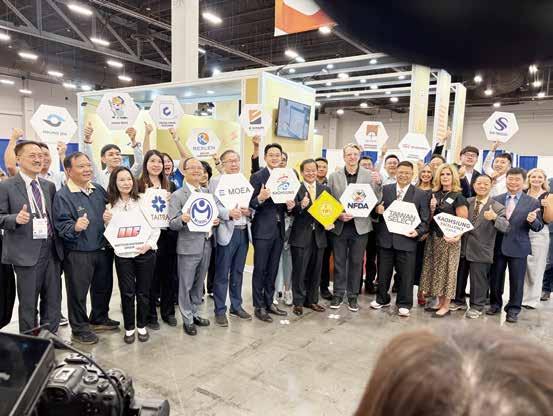
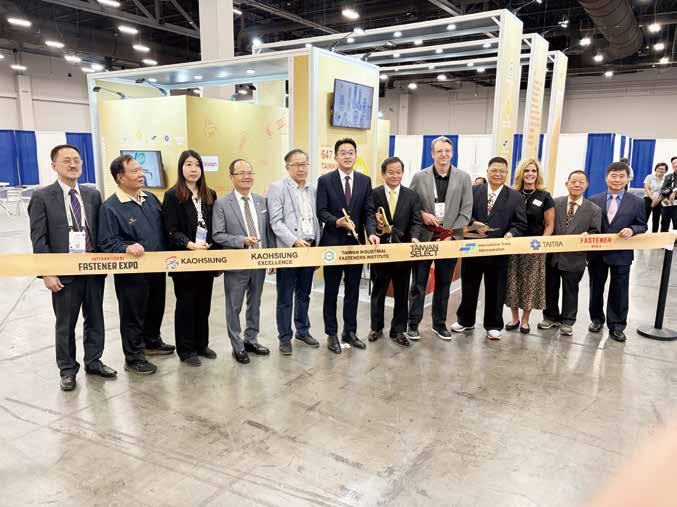
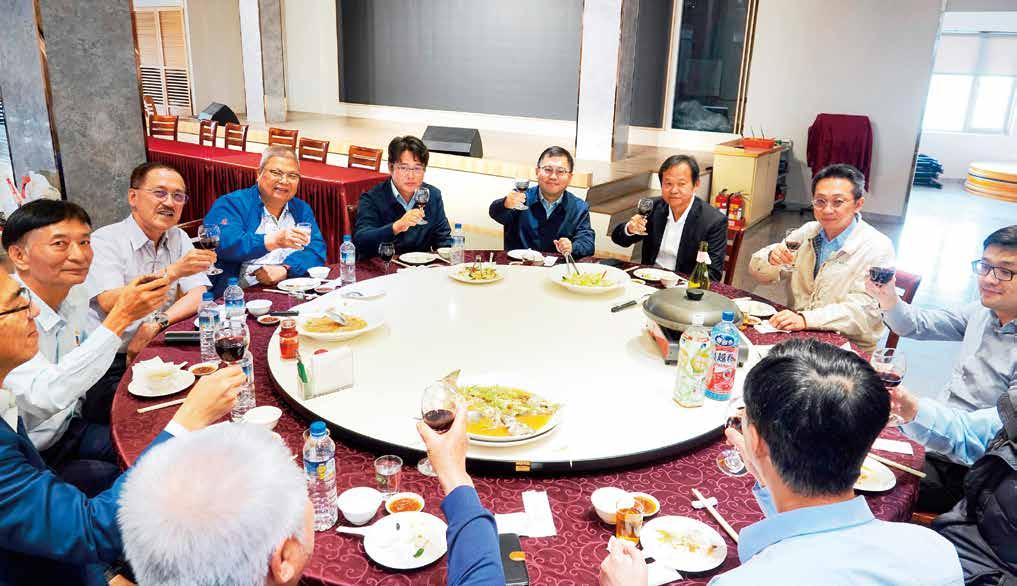
From the first quarter of 2026, the global market landscape is once again being reshaped by historic upheaval. On March 5, the day when Taiwan CSC held a conference with Taiwanese fastener companies, the U.S. and Israel were charging intense strikes on Iran, igniting fierce conflict. Industry insiders were stunned: If the Strait of Hormuz is blockaded and the Middle East war drags on for months, supply chains could fracture again, with soaring oil prices triggering inflation and skyrocketing manufacturing costs! Taiwan Industrial Fasteners Institute (TIFI) Chairman Yung-Yu Tsai warned in his opening remarks that the industry's next turning point is clear: "Securing materials will be the key to overtaking competitors on the next bend!"
Taiwan CSC Conference with Fastener Companies:
From Middle East to Material Scramble, Fasteners Brace for Resource War Era
Chairman Tsai cautioned that the Middle East war directly hits oil, natural gas, and power supplies. For Taiwan importing 96% of its energy, the impact is massive! From Trump's pre-war deploying to his heavy-handed strikes, it's evident he's wielding an iron fist over control of global "strategic resources," including materials. Drawing lessons from afar, Chairman Tsai urged Taiwan's fastener business owners: The world has entered the "resource war" ignited by Trump—prices for gold, silver, copper, iron, tin, nickel, steel, and wire rod are all surging! He likened the international situation to the 1962 Cuban Missile Crisis, with stagflation looming. "Wire rod is the lifeblood of fastener production costs and a 'critical strategic resource'! Makers without control over wire rod will risk elimination in this resource war!"
Chairman Tsai elaborated that the biggest challenge now is: Who can grab the most revenue in the harshest conditions? He called strongly for a mindset shift: "Break free from relying on traders and importers! Think deeply: Who to sell to? Who's the most critical customer? Find the right partners!" Taiwan's fasteners, with 70 years of glorious history, are essential parts that safeguard human life and won't be obsolete. "Fasteners aren't low-end parts—they're 'premium products'! Their value isn't measured by price alone, so don't sell them cheap!"
Beyond the inflation threat from Middle East fires, Taiwanese makers must counter China's lowprice dumping. Getting trapped in price wars is a quagmire! Instead of chasing orders with just 3-5% margins, pursue highvalue fastener orders—Taiwan's technology can absolutely deliver! Chairman Tsai urged makers to communicate with overseas clients, letting them understand that Taiwanese fasteners are premium. Highlight Taiwan's trustworthiness, seamless collaboration, and longterm partnership potential!
6,500,000,000
6,000,000,000
5,500,000,000
5,000,000,000
4,500,000,000
Global Economic Recovery Affirmed—But Monitor Middle East Risks
4,000,000,000
Economic data from Taiwan CSC’s briefing shows global GDP growth projected at 2.7-3% this year, with Taiwan at 3-7%. Other than China's ongoing structural slowdown, recovery in the U.S., Europe, and India is solidified. Last year's growth was driven largely by AI; this year, it's shifting to traditional industries. Yet Trump's unpredictable strategies and the broad fallout from Middle East conflict mean close monitoring of the war is essential amid this rebound.
According to TIFI’s statistics, Taiwan's 2025 fastener exports totaled 1.23 million tons, down 4.1% year-over-year, with an average price of USD 3.53 per kg, up 0.8%.
Taiwan’s Customs data reveals 2025 fastener exports to all 5 major continents declined, except for ASEAN, which grew 9.7% as the top growth region for Taiwan. Over the past three years, Taiwan's fastener export value has fallen cumulatively by 8.3%, and 2025 may not have hit bottom yet (Figure 1) , signaling clear contraction of Taiwan’s fastener export.
Fig 1. Value of Taiw an's Fastener Export to the World
6,500,000,000
6,000,000,000
5,500,000,000
5,000,000,000
4,500,000,000
4,000,000,000
4,600,022,138 4,374,025,745 4,215,769,519
Turn Crisis into Opportunity: Treat Fasteners as Premium and Products
With Middle East flames and resource wars ignited, Taiwan's fastener companies must stand strong. Facing inflation woes and China's lowprice onslaught, Taiwan's fastener companies are urged to secure wire rod, target high-value partners, reject cheap sales, and leverage 70 years of craftsmanship to forge the "premium" value of Taiwanese fasteners—breaking free from the low-price trap. Chaos reveals true heroes; the future belongs to bold transformers who overtake on the next bend and claim global high ground!
Table 1: TIFI's Fastener Statistics
Sharing Key Policy Direction with Member Companies -Sunco Industries Held Sunco-kai Year-End Gathering
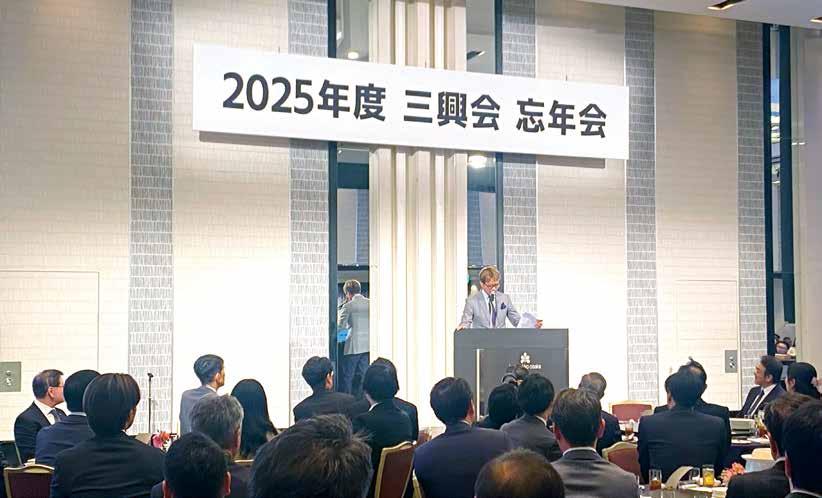
Ayear-end gathering of the Sunco-kai, hosted by Sunco Industries Co., Ltd., was held on November 21 last year at Hotel Nikko Osaka. The Sunco-kai is an association made up of manufacturers that supply products to Sunco Industries, with the aim of exchanging information and fostering mutual growth. This year’s year-end gathering was held on a grand scale, welcoming 171 member companies and a total of 244 participants. The event opened in a warm and friendly atmosphere.
Opening Address (Mr.Yasuhiro
President
of Nishi Seiko Co., Ltd.)
Nishi,
At the outset, an opening address was delivered by Mr. Nishi, President of Nishi Seiko Co., Ltd. and Chairman of the Sunco-kai. He touched on social topics that became prominent in Japan in 2025, including the Expo 2025 Osaka, Kansai, as well as the achievements of Japanese athletes active on the domestic and international sports scene. He then expressed his view that fasteners are also an industry Japan can be proud of. In closing, he stated, “Even as the yen is expected to continue weakening, we will remain steadily committed to manufacturing, and I hope Sunco Industries will continue to expand its exports,” concluding his remarks with words of expectation for the future of the fastener industry.
Speech by Mr. Yoshihide Okuyama, President of Sunco Industries Co., Ltd.
Next, President Mr. Okuyama took the stage and delivered a speech on the company’s performance in 2025 and its policies for the coming fiscal year. From March to October, the company’s sales increased by 101.6% compared to the same period last year, while the volume of products sold slightly declined to 98.3%. President Mr. Okuyama analyzed this by noting, “Even though the sales amount is growing, the decrease in units sold suggests that the real economy lacks strength,” presenting a measured assessment of the current situation.
As the main theme of his speech, President Mr. Okuyama emphasized strengthening information sharing with Sunco-kai member companies, and announced that, starting in early December 2025, the company will distribute the “SUNCO Trend Report”, which summarizes inventory circulation, quantities, and shipment volumes at Sunco Industries. Unlike reports organized by individual products, this report provides an overview of supply
and demand across the entire company and is scheduled to be distributed regularly at the beginning of each month. The report will be shared with all Sunco-kai members, and President Mr. Okuyama stated, “We hope that by providing an overview of the company as a whole, it will help you better understand the current situation.”
In addition, he announced plans to make available to members the company’s internal demand forecast data, which has long been used within Sunco Industries and summarizes daily shipment volumes. President Mr. Okuyama explained, “By sharing the same indicators, we can discuss issues from a common perspective and make our work proceed more smoothly,” encouraging members to make use of the data.
Guest Address (Mr. Yoshikazu Noda, Mayor of Higashiosaka City)
As a guest, Mayor Noda took the stage and spoke about the international recognition of Japan’s fastener industry. He mentioned the 3rd Japan International Art Festival, highlighting the diorama of the Grand Roof Ring made entirely of fasteners, which attracted attention at the festival. He noted that the exhibit demonstrated the high level of technology and quality of Japanese fasteners. Finally, he expressed that Higashiosaka City will continue to support the development of local industries, concluding his address.
This year’s Sunco-kai Year-End Gathering provided a valuable opportunity to share the current state of the industry and key policies for the coming fiscal year. In particular, President Mr. Okuyama’s speech, which emphasized creating a common language for business through data sharing to facilitate smoother operations, drew great interest from the participants. The Sunco-kai will continue its activities aimed at promoting mutual development among member companies and contributing to the growth of the industry.
Expo 2025 Osaka, Kansai, Japan
Expo 2025 Osaka, Kansai, Japan was an international exposition held for 184 days from April 13 to October 13, 2025, on Yumeshima, an artificial island in Osaka, Japan. It was the first World Expo in Osaka in 55 years and the first large scale Expo in Japan since the 2005 Aichi World Expo. People and exhibits from around the world gathered in large numbers, and more than 160 countries and regions introduced their latest technologies and unique cultures through national pavilions.
Section 232, CBAM, and Price-Cutting Editorial3 Major Challenges for Taiwan Fastener Industry in 2026:
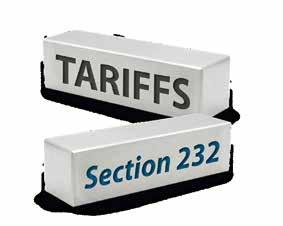
The war between the U.S. and Iran began the end of February, but for fastener manufacturers, the 50% steel & aluminum tariffs have already been a grueling battle lasting nearly a year. Facing this seemingly endless tariff war which started in mid2025, Taiwanese fastener manufacturers must not only overcome rising distribution costs, but also confront multiple internal and external pressures. These include carbon
reduction requirements from the EU CBAM, labor shortages in traditional industries fueled by the high-tech boom, and relentless lowprice competition from Chinese and emerging market rivals flooding global markets. These challenges have placed unprecedented survival pressure on Taiwan fastener industry, which once had a glorious era. Some industry players openly warn that if these issues remain unaddressed, the much-touted “golden decade” of future growth will only grow increasingly distant for Taiwan fastener industry.
Taiwan's Fastener Exports Slightly Declined in 2025; Unresolved High Costs May Hinder Competitiveness
Last year, Taiwan exported nearly 1.2 million tons of fasteners, marking a slight YoY decrease of approx. 4%. Objectively speaking, this fluctuation aligns with normal market fluctuations when reviewing performance from previous years. However, January exports this year saw a significant YoY decline exceeding 13%, with February exports potentially falling further due to the longer Lunar New Year bank holidays. Among the top 20 export partners, many European and American countries showed declines of at least 10% (U.S. down 12.29%, Germany down 35.66%, and the Netherlands down 18.02%), indicating a short-term reduction in procurement demand from major European and American buyers, with full-year performance still to be observed. If this situation is not due to a cooling local market or simply seasonal factors reducing demand, it may be time to worry whether this is an early warning sign of order loss or diversion.
COST
The competitiveness of fastener exports largely stems from cost control. Over 60% of fastener manufacturing costs come from wire rod. Despite manufacturers' persistent feedback, Taiwan CSC's quarterly wire rod pricing seems consistently out of touch with market realities. Although CSC offers preferential project pricing to loyal customers, the nearly 4-fold surge in Taiwan's imports of cold heading wire rod from South Korea this year indicates that some Taiwanese manufacturers are no longer buying CSC's wire rod, whose price remains 15-20% higher than that of South Korean alternatives even with discounts. Compounding this, the EU CBAM has entered its formal implementation phase this year (requiring carbon emissions from 2026 onwards to be included in carbon fee declarations and certificate submissions), significantly increasing operational costs associated with CBAM compliance. With CBAM costs becoming the new normal, Taiwanese fastener manufacturers failing to narrow the cost gap with low-price competitors by addressing raw material expenses (the largest cost driver) may face increasingly challenging business conditions over the next 3-5 years. A sharp 20% decline in annual export performance may also become possible.
Taiwan's current industrial development environment has become increasingly unfavorable for fastener manufacturing. High-tech factories in industrial parks have snatched up many skilled workers. YoY increases in land costs and electricity expenses that remain higher than in other countries have also left many fastener manufacturers unable to offer competitive pricing even if they wanted to. Taiwan's fastener exports once peaked at 1.65 million tons annually, but in recent years have hovered around 1.2 million tons. Previously, manufacturers would selectively take orders from importers or distributors. Now, they accept whatever OEM/ODM orders they can get (e.g., small batches, diverse products, special designs, and high-tech requirements), highlighting the situation that against the backdrop of stagnant demand in the U.S. market, economic downturn in Europe, aggressive price competition from emerging economies, and Chinese companies expanding overseas production and sales networks to capture market share, Taiwanese manufacturers face limited options if they wish to retain their orders.
Detailed Regulations Should be Expedited for Refinement, Although CBAM is Well-Intentioned
Although CBAM is intended to promote industrial decarbonization and requires non-EU businesses to participate through regulations to prevent unfair competition, theses businesses still face significant implementation challenges, such as questions remaining unanswered regarding the authorized certification bodies for reporting, the documentation and complex calculation methods required for reporting fastener carbon emissions, difficulties in obtaining carbon emission data from subcontractors, the issue of offsetting carbon fees between the EU and certain countries, etc. Taiwanese manufacturers are highly willing to comply with regulations and are actively pursuing energy saving and carbon reduction across all fronts. They have even invested substantial resources in obtaining ISO 14064, 14067, and related certifications. Yet, with many aspects still lacking clear guidance, even those genuinely committed to implementation find themselves stymied at every turn, facing exponentially increased cost pressures. Compounding these challenges, the recent US-Iran conflict has raised the specter of a full blockade of the Strait of Hormuz, a vital transit point for many containers bound for Europe. Should containers be forced to reroute, transit times could increase by 1.5 times. Manufacturers must brace for the possibility of shipping costs to Europe rising by thousands of US dollars. If the detailed regulations of CBAM could be published ASAP to provide manufacturers with a clear basis for implementation, it would likely prevent the generation of unnecessary operational costs.
Does It Make Sense to Have Fasteners Subject to the Steel and Aluminum Tariffs, Even Though U.S. Consumers May Bear the Brunt?
Hand tools and components are also steel derivatives yet remain excluded from the steel and aluminum tariffs. Conversely, fasteners which inherently carry low added value and profit margins face an additional 50% tariff. This discrepancy appears ripe for further discussion. Many industry players privately lament that “imposing such high tariffs on basic necessities used in manufacturing across most industries makes no sense whatsoever.” Under the spirit of the U.S. Section 232, the criteria for including items in the steel and aluminum tariffs include: their steel content, whether they are derivative products of steel, and whether they are essential to the steel industry's core development, etc. Hand tools and components, being functional processed goods with added value far exceeding the proportion of their original materials, inherently fall outside the scope of the steel and aluminum tariffs. While theoretically sound, this approach may fail to protect the domestic steel industry when applied to the U.S. fastener sector. Instead, it could increase fastener procurement costs for U.S. consumers, as over 70% of U.S. imported fasteners are items either not produced or unattractive for domestic manufacturers to produce. Despite the Trump administration's push for U.S. manufacturing, the high labor costs in the U.S. make it impractical for fastener manufacturers already facing substantial production expenses to invest in local factories. Ultimately, cost pass-through could lead to higher fastener prices for U.S. consumers. Is this truly beneficial for many domestic manufacturing sectors reliant on fasteners? The answer is self-evident.
Fastener Taiwan Ready to be Held This April: Presence of European, American, and Japanese Visitors Will Be Key
Taiwan International Fastener Show (Fastener Taiwan) will be held at Kaohsiung Exhibition Center from April 22-24. Over 300 Taiwanese and international exhibitors are expected to participate. Fastener World welcomes all industry friends to visit us at Booth 1202 in the South Hall. On-site, you can obtain the latest supplier information for finished/semi-finished fasteners, raw materials, molds & dies, machinery & equipment, secondary processing, and peripheral services. Our professional marketing team will also be present to assist with procurement matchmaking. Many exhibitors have already expressed high expectations for this year's visitor turnout. Equipment and mold & die manufacturers anticipate meeting buyers from emerging markets, while finished product manufacturers urgently seek opportunities to connect with buyers from Europe, the US, and Japan. However, in recent years, some voices have suggested that Fastener Taiwan should be held every 3-4 years to better align with Taiwan's fastener production and sales cycles. Taiwan fastener industry possesses a globally unique, complete supply chain capable of meeting diverse buyer demands worldwide. We sincerely invite you to visit. In today's uncertain global market, Taiwan's stable fastener supply chain remains your best choice for sustained success.
Copyright owned by Fastener World / Article by Gang Hao Chang, Vice Editor-in-Chief
Financial Reports of Fastener Companies
U.S.A (in million USD)
Alcoa's 2025 net sales were USD 12,831 million, up 7.8% from USD 11,895 million in 2024. Net income was USD 1,170 million in 2025, up 1,850% from USD 60 million in 2024. Total assets increased to USD 16,212 million in 2025 from USD 14,064 million in 2024. EACO Corporation's 2025 revenues were USD 427.931 million, up 20.1% from USD 356.231 million in 2024. Net income was USD 34.650 million in 2025, up 7.5% from USD 32.218 million in 2024. Total assets increased to USD 230.153 million in 2025 from USD 188.538 million in 2024.
Fastenal’s 2025 net sales were USD 8,200.5 million, up 8.7% from USD 7,546.0 million in 2024. Net income was USD 1,258.4 million in 2025, up 9.4% from USD 1,150.6 million in 2024. Total assets increased to USD 5,052.9 million in 2025 from USD 4,698.0 million in 2024.
Nucor's 2025 net sales were USD 32,494 million, up 5.7% from USD 30,734 million in 2024. Net income was USD 1,744 million in 2025, down 13.9% from USD 2,027 million in 2024. Total assets increased to USD 35,104 million in 2025 from USD 33,940 million in 2024.
Simpson Manufacturing's 2025 net sales were USD 2,332.808 million, up 4.5% from USD 2,232.139 million in 2024. Net income was USD 345.083 million in 2025, up 7.1% from USD 322.224 million in 2024. Total assets increased to USD 3,073.626 million in 2025 from USD 2,736.168 million in 2024.
Compiled by Fastener World
Japan (in million JPY)
JPF’s 2025 revenues were JPY 5,064 million, up 0.5% from JPY 5,040 million in 2024. The company ended the year with a net loss of JPY 30 million in 2025, down from a net profit of JPY 509 million in 2024. Total assets decreased to JPY 5,619 million in 2025 from JPY 5,785 million in 2024. The company forecasts 2026’s revenue at JPY 5,300 million, up 4.7%.
Kyowa
Kogyosyo’s 2025 revenues were JPY 10,457 million, down 4.7% from JPY 10,972 million in 2024. The company ended the year with a net profit of JPY 708 million in 2025, down 50.9% from JPY 1,443 million in 2024. Total assets increased to JPY 18,151 million in 2025 from JPY 17,903 million in 2024. The company forecasts 2025’s revenues at JPY 10,300 million, down 1.5%.
Mitsuchi’s 2025 revenues were JPY 12,411 million, down 5.6% from JPY 13,147 million in 2024. The company ended the year with a net loss of JPY 95 million in 2025, down from a net profit of JPY 419 million in 2024. Total assets decreased to JPY 15,858 million in 2025 from JPY 16,450 million in 2024. The company forecasts 2026’s revenues at JPY 12,522 million, up 0.9%.
Nitto Seiko’s 2025 revenues were JPY 50,238 million, up 6.7% from JPY 47,069 million in 2024. The company ended the year with a net profit of JPY 2,152 million in 2025, down 2.2% from JPY 2,199 million in 2024. Total assets increased to JPY 57,673 million in 2025 from JPY 55,604 million in 2024. The company forecasts 2026’s revenues at JPY 52,000 million, up 3.5%.
Torq’s 2025 revenues were JPY 22,538 million, up 0.6% from JPY 22,409 million in 2024. The company ended the year with a net profit of JPY 904 million in 2025, up 1.0% from JPY 895 million in 2024. Total assets increased to JPY 34,042 million in 2025 from JPY 33,680 million in 2024. The company forecasts 2025’s revenues at JPY 21,000 million, down 6.8%.
Europe
Bufab's 2025 net sales were SEK 8,072 million, up 0.4% from SEK 8,035 million in 2024. Net profit was SEK 626 million in 2025, up 13.6% from SEK 551 million in 2024. Total assets increased to SEK 9,319 million in 2025 from SEK 9,191 million in 2024.
Bulten's 2025 net sales were SEK 5,045 million, down 13.1% from SEK 5,807 million in 2024. Net income was SEK 18 million in 2025, down 88.8% from SEK 161 million in 2024. Total assets decreased to SEK 4,447 million in 2025 from SEK 5,099 million in 2024.
Trifast
’s 2025 revenues were GBP 223.466 million, down 4.3% from GBP 233.671 million in 2024. Net profit was GBP 1.040 million in 2025, down from a net loss of GBP 4.440 million in 2024. Total assets decreased to GBP 41,165 million in 2025 from GBP 44,557 million in 2024.
Fastener World News
U.S. Export Tariffs at 50% Unchanged, TIFI: “Taiwan Fasteners Shift to Higher Quality & Differentiation”
Taiwan and the U.S. have finalized reciprocal tariffs—now at 15%—but Taiwan's fasteners sector remains under Section 232 provisions, maintaining 50% U.S. import duties. Secretary-General Mr. Fang-Yi Yang of Taiwan Industrial Fasteners Institute (TIFI) stated that global steel exports to the U.S. face the same 50% rate; Taiwan firms must compete via high quality, product differentiation, and international strategies. Yang noted the industry had been impacted before the negotiation and urges the government to keep NTD exchange rate stablized.
Kaohsiung City Government highlighted Kaohsiung as Taiwan's fastener production hub, accounting for over 50% of national output, with North America as a key market. The government collaborates with industry associations for real-time impact assessment, guiding firms toward high-value, digital, and low-carbon development to boost global competitiveness.
Market Watch: Trump Tariff 2.0
Reciprocal Tariff for Taiwan Totals No More Than 15%, Including Auto Parts
Taiwan-U.S. tariff negotiations achieved significant progress on January 15, reaching four agreements on key areas: “Taiwan's reciprocal tariffs reduced to 15% without accumulation,” “Semiconductors and related derivative products subject to Section 232 tariffs are granted MFN treatment,” “Expanded supply chain investment cooperation,” and “Deepening the Taiwan-U.S. AI strategic partnership.” Representatives from the Taipei Economic and Cultural Representative Office (TECRO) and the American Institute in Taiwan (AIT) signed a memorandum of cooperation at the U.S. Department of Commerce.
The reduction of reciprocal tariffs to 15% without accumulation will grant Taiwan “most-favored-nation treatment” among major U.S. trade deficit countries, placing it on par with trading partners like the EU, Japan, and South Korea. While the agreement primarily focuses on future investment plans in the U.S. and tariff incentives for Taiwan's semiconductor, chip, and high-tech industries, traditional industry sectors like hand tools and machine tools—previously subject to 20% reciprocal tariffs—along with the auto parts industry (facing 25% tariffs under Section 232 starting May 2025) will also see rates reduced to 15%. Additionally, according to the announcement of U.S. Department of Commerce, aircraft components falling under reciprocal tariff coverage will enjoy a 0% tariff rate, benefiting manufacturers in related sectors.
According to Taiwan's negotiation task force, the U.S. has committed that raw materials, equipment, and components required for Taiwanese enterprises investing in, establishing factories in, and operating within the U.S. will be exempted from reciprocal tariffs and Section 232 tariffs. Additionally, regarding potential new items added under the U.S. Section 232 measures in the future, both Taiwan and the U.S. have also agreed to establish a mechanism for ongoing negotiation on mostfavored-nation treatment.
Fastener Importer Challenges CBP's Section 232 Tariff Valuation Method in U.S. CIT Lawsuit
Illinois-based fastener importer Express Fasteners, Ltd. has filed a lawsuit at the U.S. Court of International Trade (CIT), contesting the U.S. Customs and Border Protection (CBP)'s valuation and application of Section 232 tariffs on imported steel and aluminum derivative products. The plaintiff argues that CBP unlawfully imposed 50% steel duties on its imported fasteners by applying the tariff to the full product value— including machining, manufacturing, factory overhead, and other non-steel costs—rather than limiting it to steel content alone. This shift violates longstanding CSMS guidance, FAQs, and Customs rulings, and was implemented without public notice, comment, or rulemaking procedures, constituting an arbitrary and unlawful change.
At the heart of the case is an internal, unpublished memorandum from CBP's Base Metals Center of Excellence and Expertise (CEE) issued last December. Express alleges the memo redefines manufacturing, machining, overhead, and profit as "steel content," inflating duties dramatically. The company claims this generally applicable rule required Administrative Procedure Act notice-and-comment processes, which CBP failed to follow. Express seeks a court declaration invalidating CBP's approach, reliquidation based solely on steel content, and refund of excess duties plus interest.
Record China 2025 Trade Surplus Defies US Tariffs
National Bureau of Statistics of China announced that the Chinese economy grew 5% in 2025, hitting its target, fueled by a historic USD 1.19 trillion trade surplus. Despite Q4 slowing to 4.5%, exports defy Trump tariffs, a slumping property market, and weak consumer spending.
However, analysts call it a "dual-speed economy": robust manufacturing and exports contrast with lagging domestic demand and real estate. Capital Economics suggests the data overstates growth by 1.5 points. Compounding woes, births hit a record low of 7.9 million, with the population dropping 3.4 million to 1.4 billion. Natixis (France trade bank) warns lowprice exports aren't sustainable. Last December saw home prices fall 2.7%, investment drop 17.2%, and retail rise just 0.9%. The head of National Bureau of Statistics of China acknowledges supply-demand imbalance but expects stability. Beijing plans proactive policies to boost confidence, curb debt, and reduce export reliance.
Industry Development
Market Watch: CBAM
Taiwan Environment Minister Confirms EU CBAM Exemptions in His Europe Visit: 2,600 Taiwan Firms Relieved of Carbon Tariff Pressure
Environment Minister Chi-Ming Peng visited the EU on February 21 for in-depth discussions on CBAM, confirming that SMEs can apply simplified carbon emission formulas and de minimis exemptions. With annual imports under 50 tons fully exempt, approximately 2,600 Taiwan SMEs exporting to Europe will benefit, significantly easing administrative burdens.
Presenting on "Taiwan Green Strategy," the minister outlined net-zero pathways, carbon fee mechanisms, and climate governance plans. The EU praised Taiwan's carbon fee deductions covering Scope 2 emissions. Discussions focused on three key issues: carbon price deduction calculations and certification, mutual verifier recognition, and technical exchanges. The EU revealed that multiple countries have complained about high verifier administrative costs and is amending regulations to include mutual recognition provisions, potentially validating Taiwan certificates.
Taiwan ranks 13th among the EU's top 20 CBAM product import sources during the transition period, with 3.74 million metric tons mainly being steel products including screws, fasteners, stainless steel, and carbon steel. The Climate Agency noted Taiwan's carbon fees are CBAM-recognized but awaits EU’s deduction formulas, urging clearer calculation methods and proof requirements. The minister emphasized Taiwan's precision manufacturing and urban mining recycling strengths, positioning it as a "global green solution" to deepen Taiwan-EU climate collaboration.
War, Price Cutting, and Import Surge: Taiwan Fasteners Hit by Freight Spike and Chinese Undercutting
U.S. strikes on Iran have nearly halted Hormuz Strait shipping, with carriers suspending Middle East cargo acceptance. Spot rates to Europe and Middle East have surged USD 1,000 above contract rates plus surcharges. Evergreen Marine maintains all scheduled services but closely monitors Middle East, Red Sea, and Hormuz developments, promising timely customer notifications for any adjustments.
On the other end of the world, China's 2025 fastener exports hit 6.23 million tons, up 6.7% YoY, but average price fell to USD 1.9/kg from USD 2/kg, continuing the decline. Taiwanese manufacturers note that China's low-price dumping and intense internal competition have customers using Chinese quotes to pressure Taiwanese suppliers for lower prices. Taiwan's high costs make it hard to compete, leading to a "severe competition" in standard products, with Taiwanese firms opting to reject orders to avoid losses.
In steel trends, according to Taiwan CSC's statistics, cold heading material imports in Taiwan from South Korea surged 395% in 2025 to 26,857 tons. Taiwanese manufacturers shifted purchase because Korean material is 10-15% cheaper, with cold heading mainly used for automotive cold-forged bolts, nuts, etc. Taiwan CSC's price plan to balance the price gap still struggles against the appeal of Korean material.
Taiwan's fastener industry confronts freight spikes, Chinese low price, and Korean steel substitution in a perfect storm of challenges.
Companies Development
Tariffs Ease, Sumeeko Aims for Recovery with European Factory Boosting Annual Operations
Automotive fasteners leader Sumeeko welcomes a turning point, with profit structure improving significantly this year, paving the way for operations to return to normal levels.
Sumeeko's consolidated revenue last year reached NTD 2.554 billion, down 7.64% year-over-year, mainly due to advance payments for high tariffs and the ongoing optimization of its German plant. Around 60-70% of revenue comes from OEM clients. Last year, orders from its Taiwan plant to Europe and the U.S. remained stable. However, the company shipped goods to U.S. warehouses in advance and held them there until customers placed orders, which required it to pay tariffs upfront and significantly hurt profits. In the second half, Sumeeko actively negotiated with clients; some have agreed to cover tariffs, while others adjusted shipping strategies. With the Taiwan-U.S. tariff situation finalized, pressures have clearly eased. Sumeeko announced that its German subsidiary, MAX MOTHES GmbH, invested €1.8 million to establish a wholly-owned new subsidiary, Beco Group GmbH, targeting acquisitions of suppliers to German OEM clients. This is expected to add €3-5 million in annual revenue, directly boosting this year's revenue and profits. Positive news also came from the U.S. plant, which is undergoing customer certification and is slated for production in the first quarter, aligning with localization demands. Sumeeko's operations look promising this year, with the market optimistic about these dual positives driving a recovery.
General Fasteners Company Appoints New President
U.S. Suburban Detroitbased fastener and Class C components distributor General Fasteners Company has named John Hickey as its new president. Previously vice president of strategic operations and sales, Hickey was promoted as announced via social media. Company officials described him as the "driving force" behind operations, growth, and corporate culture. "I'm honored to step into this role and continue building on General Fasteners' legacy of reliability, innovation, and partnership," Hickey stated.
The 70-year-old distributor rebranded to General Fasteners last year, symbolizing its evolution from fasteners to a "trusted partner in global supply chain management."
Edson Manufacturing Expands, Investing USD 4 Million in New Facility in Connecticut
Edson Manufacturing (Connecticut, USA) is rapidly expanding its operations and has announced a roughly USD 4 million investment to relocate to a new facility exceeding 38,000 square feet on over 36 acres of land. The move is expected to be completed by mid-2026. Combined with existing facilities, the total space will surpass 78,000 square feet, enhancing service to customers.
Established in 1964 as an eyelet manufacturer, Edson has evolved from a small 5,200 sq ft shop with just seven employees into a powerhouse producing over 450 million fasteners, tools, and components annually for thousands of customers across industries. It now employs more than 50 people and specializes in domestic blind rivets made from stainless steel, steel, aluminum, copper, and monel. Since 1987, under current ownership, the company has prioritized quality assurance, on-time deliveries, competitive pricing, and exceptional customer service.
ARP Launches New Specialty Nuts and Washers Lineup
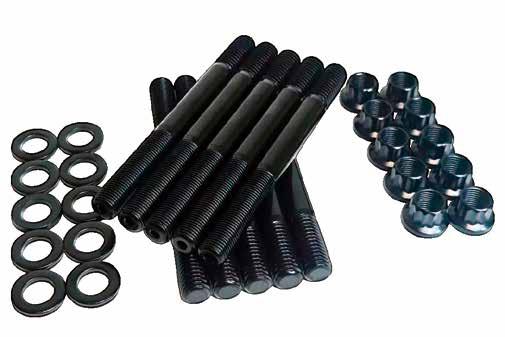
U.S. high-performance fastener manufacturer ARP has expanded its nuts and washers offerings, introducing nearly 60 new kits for 2026 to complement its diverse bolts and studs. The washer lineup features polished stainless steel or black oxidetreated 8740 chrome moly in SAE sizes from 1/4" to 3/4", with standard or chamfered options; metric sizes M6 to M18 are also available. Special insert washers prevent hole galling or collapsing in popular SAE and metric sizes.
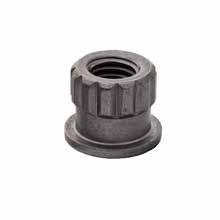
Founded in 1968 as a family-owned and operated company, ARP in-house manufactures premium nuts to the industry's strictest specs. These include polished stainless steel and black oxide 8740 chrome moly 12-point and hex nuts for SAE coarse/ fine and metric uses, plus Nyloc self-locking hex "Jet" nuts, 12-point "K" nuts, and serrated flange nuts.
Bulten Group to Invest Rs 525cr in Tamil Nadu Fastener Plant
Sweden-based fastener leader Bulten Group, through its Indian subsidiary PSM Fasteners India, has signed a Memorandum of Understanding with the Tamil Nadu government to establish a new manufacturing facility in Oragadam. The project involves a Rs 525 crore investment, as announced by Tamil Nadu Industries Minister T R B Rajaa on social media. It is expected to create around 2,000 jobs.
The new plant will produce a full range of microfasteners to meet domestic demand and target key export markets in Europe and the United States. This move strengthens Bulten's southern India manufacturing base, combining advanced technology with local advantages to enhance global supply chain competitiveness and boost the regional economy.
U.S. structural fastening leader Simpson Strong-Tie is expanding its RFB retrofit bolt series with new diameters and lengths in Grade 36 rod, plus new Grade 55, 105, and Stainless Steel 304/316 options. These precut, precleaned threaded rods come fully assembled with nut and washer, pairing seamlessly with anchoring adhesives for quick anchoring into existing concrete and masonry, saving significant jobsite time. RFBs stand out with clear dual-end markings: length stamped in inches (for 1/2" diameters and up) and color-coding by steel grade for easy identification. Paired with Simpson adhesives, they form a complete engineered system.
Associate Product Manager Jerry Miller stated: "Field engineers struggling to verify post-install specs will appreciate our stamped and color-coded RFBs for time savings and peace of mind in inspection. The expanded line now offers greater versatility, including 3/8" diameter, shorter lengths for 1/2"-3/4" bolts, and 7/8"-1" zinc-plated carbon steel to meet diverse capacity needs."
Punch Industry and Misumi Group Launch Mold Parts Logistics Partnership
Punch Industry began outsourcing logistics operations to Misumi Group’s East Japan Distribution Center, starting October 2025. Punch's former Tokyo Logistics Center is integrated into Misumi's facility, with Misumi providing third-party logistics services. Results include 110 hours/month reduction in truck waiting/loading time and 216 fewer 10-ton truck visits monthly, plus shelf-transport robots and automated picking systems enhancing efficiency.
Volume consolidation generates scale economies for stable customer supply. Misumi, serving 323 thousand global clients with 30M+ items, won JILS's top 2025 Logistics Improvement Award. Future plans include joint procurement, mutual supply, leveraging Punch's precision machining with Misumi's digital technology for overseas expansion and supply chain optimization in metalworking/mechanical parts.
Mercedes-Benz Returns to Screws, Replacing Glue for Enhanced Sustainability and Repairability
Under its Tomorrow XX program, German automaker Mercedes-Benz is rethinking fastening technology by switching from glue to screw assemblies, significantly boosting vehicle sustainability and repair convenience. This addresses material waste reduction, easier part disassembly, and owners' demands for repair-friendly designs.
The first application targets headlight lenses: shifting from glued attachments to screw fixation allows damaged lenses to be replaced individually by unscrewing a few bolts, avoiding full headlamp disposal. This cuts resource use and enables easy self-repairs. For decades, adhesives were favored for lighter weight, lower fuel use, and CO2 reduction, but they complicate repairs—leading to whole assemblies landfilled—and hinder material separation for recycling.
Mercedes is also testing thermoplastic rivets for soft door panels instead of ultrasonic welding, allowing simple drilling for disassembly in repairs or end-of-life recycling. Engineers stress this screw revival balances innovation, environmental duty, and user ease. Future models will feature these solutions, upholding the century-old brand's commitment to progress and responsibility.
Southco Thailand Chon Buri New Plant Opens, Deepens Southeast Asia Fastener Market Presence
Global engineering solutions company Southco has officially opened its new facility in Chon Buri, Thailand, marking a major milestone in its Southeast Asian expansion. Spanning over 2,255 square meters, the plant focuses on manufacturing captive screws, electronic access solutions, ejectors, and Quick Disconnect Adapters, significantly reducing lead times and enhancing supply chain resilience while bringing world-class operations closer to fastgrowing markets.
Following Southco's record-breaking year of global expansion, the Chon Buri facility positions the company to deliver cutting-edge solutions across Southeast Asia while maintaining rigorous quality standards. Southco emphasized that the new plant strengthens localized production capabilities and customer service efficiency. This expansion underscores the company's long-term commitment to the Asia-Pacific region, establishing Chon Buri as a key manufacturing hub supporting rapid response and customization needs throughout Southeast Asia.
FasLab Established as Japan's First Fastener Think Tank
Japanese fastener firm Saima Corporation has announced the establishment of Faslab, a fastening technology consulting firm, to provide neutral and objective professional advisory services to mechanism designers. This move addresses the common shortage of verification and consulting resources in screw, bolt, and bolted joint design practices.
Faslab caters to designers' real-world needs by offering paid technical consulting services based on theory, testing, and analysis—including inspection analysis—without bias toward any specific vendor. Bolt-related failures directly impact product quality and safety, yet design sites often lack professional consulting channels. The company tackles designers' core challenges head-on, delivering practical solutions.
Saima Corporation's expertise in fastening technology will, through this new service model, help design teams solve tough problems and enhance manufacturing reliability. Faslab's services are slated to launch this April. This initiative ushers in a new era of technical support in Japan's fastener industry and is poised to become an indispensable professional think-tank partner for designers.
Nitto Seiko's India Vulcan New Plant Launches, Boosting Cold Forging Capacity for Japanese Clients
Nitto Seiko announced that its Indian subsidiary Vulcan Forge's Jhajjar plant in Haryana began production in December 2025. Anchored by 5S systems, it strengthens customer engagement to optimize quality, delivery, and costs, integrating with group operations to enhance local manufacturing and supply stability.
Located in Reliance MET City industrial park near the capital region—a smart city hub drawing major Japanese firms—the facility produces nuts and special cold-forged parts. Designed with second-floor expansion potential for future scaling.
Future plans include accelerating client development for reliable Japanese supply; installing solar panels to cut power costs and emissions; consolidating HQ functions for optimized staffing, shorter lead times, and lower logistics expenses; and rolling out group training to build on-site personnel cohesion.
This strategic move solidifies Nitto Seiko's Indian footprint, supporting global forging chains.
Acquisitions
Young Mobility Wins Ford Q1 Certification: First in Korean Fasteners Industry, Eyeing Global Expansion
South Korean fastener maker Young Mobility (YM) announced on November 18, 2025, that it has become the first domestic company to earn Ford Motor Company's top-tier Q1 certification. This award follows rigorous evaluation of quality, production capabilities, and supply chain management, designating YM as an official primary partner with rights to bid on new business.
YM formed a cross-functional task force last October spanning quality, production, and sales, achieving certification after about one year. Currently supplying bolts for Ford Europe's (Germany, UK) powertrains, YM now targets North America and Ford Thailand for new opportunities. Ongoing projects with global giants like Hyundai-Kia (largest ICE and EV customer), Schaeffler, LG Magna, and BorgWarner continue expanding. YM is ramping up sales with Ford, GM, and Rivian, driving steady export and revenue growth.
Applied Industrial Technologies announced on January 27 the acquisition of Thompson Industrial Supply. Thompson distributes industrial bearings, power transmission, hydraulics, pneumatics, linear motion, and lightweight belting with 40+ employees across two locations serving food & beverage, consumer products, pharma, life sciences, and more. Integrated into Applied's U.S. Service Centers, it's expected to add USD 20M in first-year sales.
President & CEO Neil Schrimsher stated: "Thompson bolsters our local service centers and motion control aftermarket support. This bolt-on enhances our footprint with technical expertise, supplier ties, and in-house fabrication boosting value-added services regionally." Applied ranked No. 7 in industrial supplies, and No. 10 in fasteners on MDM's 2025 Top Distributors list. This acquisition continues to strengthen Applied's local service center advantages, enhancing after-sales support for motion control solutions.
Japanese Seika Corporation Acquires Coating Machine Maker
Asahi Sunac
Seika Corporation announced it acquired 100% of the shares in Asahi Sunac—a manufacturer and seller of coating machines, die-casting machines, and precision cleaning equipment—on December 1, 2025, making it a subsidiary. The market has expectations of performance contributions. The two companies previously established joint ventures in Germany and Thailand. This acquisition aims to leverage Seika Corporation's expertise as a comprehensive machinery trading firm, deepening collaboration not only in sales but also in business development. The acquisition price was not disclosed.
2025 Market Periscope
German Home Improvements and Fastening Tool Market Demand
Copyright owned by Fastener World / Article by Shervin Shahidi Hamedani
Germany’s home improvement market in 2025 stayed large, but demand was uneven and selective. The most reliable near-term demand proxy for fastening tools is the DIY and home improvement retail channel’s reported turnover. Through January to September 2025, the channel reported EUR 16.08 billion, down 1.4% year on year (like-for-like down 1.2%).
The year did not deliver a clean rebound: Q2 turned positive, while Q1 and Q3 were negative.
For fastening tools, this pattern usually means essentials and consumables stay comparatively resilient, while discretionary upgrades and “nice-to-have” purchases remain under pressure. In parallel, official housing and construction indicators show early signs of improvement on permits and construction turnover toward late 2025. Those signals tend to influence fastening demand with a lag, meaning they are more relevant for 2026 planning than for explaining 2025 retail performance.
What the DIY Channel Reported in 2025
Retail sell-through matters because it captures what households and small trades are buying in real time. The latest publicly available 2025 update covers January to September.
The quarterly breakdown is the best way to understand how demand behaved:
• Q1 2025: EUR 4.57 billion, -4.0% year on year (like-for-like -3.5%).
• Q2 2025: EUR 6.47 billion, +1.2% year on year (like-for-like +1.4%).
• Q3 2025: EUR 5.04 billion, -2.3% year on year (like-for-like -2.2%).
• Jan–Sep 2025 total: EUR 16.08 billion, -1.4% year on year (like-forlike -1.2%).
This tells a practical story: demand activated in spring, but the market did not sustain momentum through late summer.
Table 1. German DIY and Home Improvement Retail Turnover (all values: gross turnover)
How to Interpret These Signals for Fastening Tools
Fastening tool demand is not a single category. It is a chain of purchases that shifts depending on whether people are doing large renovations or small fixes. In a year like 2025, three demand layers matter:
Maintenance and replacement (most stable)
Layer A:
Small projects and seasonal work (highly seasonal)
Big renovations and upgrade purchases (most volatile)
Maintenance and replacement (most stable)
This is the everyday layer. People still need to mount, repair, replace, secure, and reinforce. Even when budgets tighten, this work does not disappear. This supports steady demand for:
• core screws, anchors, plugs, washers, brackets
• basic hand tools and small kits
• consumables such as bits, blades, and abrasives
Housing and Construction: The Real Drivers Behind Project-Led Demand
Fasteners and fastening tools are downstream of housing and construction. The official indicators help explain why 2025 looked selective at retail even as some upstream signs improved.
Housing completions weakened in 2024
Germany completed 251,900 dwellings in 2024, down 14.4% year on year. Completions matter because they trigger downstream spending: fit-outs, move-ins, and a wave of installation work.
Backlog remained substantial
At end-2024, the official backlog of approved but incomplete dwellings was 759,700, including 330,000 already under construction. A large backlog supports medium-term activity, but it can also signal that delivery is stretched and demand is spread out.
Layer B:
Small projects and seasonal work (highly seasonal)
These are weekend and household projects that often activate in spring and early summer. Typical examples include fencing repairs, garden structures, outdoor fixtures, storage upgrades, and small carpentry. This layer supports demand for outdoor-rated fixings and corrosion-resistant hardware, plus the accessories that make work faster.
Layer C:
Big renovations and upgrade purchases (most volatile)
This layer drives the bigger baskets: multi-room upgrades, kitchens and bathrooms, flooring refits, large drywall work, and heavy structural improvements. It is also where discretionary power-tool upgrades happen. When the retail channel is down and choppy, this layer usually becomes selective. Many consumers either postpone, narrow scope, or trade down.
So the 2025 takeaway is that the mix likely leaned more toward Layers A and B, while Layer C remained cautious.
Permits improved in late 2025
Permits are a leading indicator. In October 2025, permits were 19,900 dwellings, up 6.8% year on year. Over January to October 2025, permits totalled 195,400, up 11.2% year on year. This is constructive, but the demand impact typically arrives later via starts, completions, and trades activity.
Construction turnover turned positive
For October 2025, nominal turnover in the main construction industry was reported at EUR 11.6 billion, up 7.0% year on year, with real turnover up 4.5%. For January to October 2025, real turnover was up 1.8% versus the prior-year period.
These indicators help separate two realities:
• Retail demand in 2025 stayed cautious and seasonal.
• Upstream signals began to improve, supporting a more stable planning case for 2026.
Table 2. Housing and Construction Indicators Relevant to Fastening Demand
Channel Dynamics: Why 2025 Was a “Precision Year”
When growth is not broad-based, execution matters more than messaging.
Availability beats variety
In selective markets, shoppers are less patient. They want the correct size, the correct anchor, and the correct tool accessory to finish a job. Out-ofstocks in core sizes can lose the entire basket, not just one item.
Promotions influence mix
A slightly declining market often triggers promotion intensity. That can move volume, but it changes what sells: buyers may shift to multipacks, entry-level ranges, or whichever accessory set is
What This Means for Suppliers and Distributors
Here are the 2025 implications that translate into concrete actions:
/// Treat consumables as your volume stabiliser
Bits, blades, anchors, and core fixings often provide the most predictable turnover in selective years. The priority is to protect service levels and reduce gaps in top movers.
/// Align assortment to common jobs, not only to categories
Retail customers do not think in “fasteners”. They think in tasks: mounting a TV, fixing a fence, hanging cabinets, repairing a hinge, reinforcing a joint. Packaging and planograms that map to jobs can lift conversion even in a soft market.
/// Improve the entry-to-mid ladder
When the market is cautious, many buyers trade down on big-ticket items while still buying reliable essentials. That is where mid-tier value positioning often outperforms premium-only positioning.
/// Expect uneven demand timing
The Q2 uplift in 2025 underlines how seasonal activation can still be strong even when the year-todate headline is negative. Supply planning should focus on spring readiness for outdoor projects and maintenance spikes.
/// Watch upstream indicators for 2026 production planning
Permit improvement and construction turnover growth suggest the project-led layer could strengthen later. If that translates into activity, demand may shift
on offer. For suppliers, this makes forecasting by SKU more volatile than forecasting the overall category.
Small-basket behaviour increases
When consumers postpone bigger upgrades, they buy more frequently in smaller baskets. That supports steady unit movement in essentials, but it also increases the importance of packaging formats and shelf clarity. In fastening, the “search cost” matters. If selection is confusing, the customer either abandons or buys the simplest option.
toward larger trade packs, anchoring systems, and higherthroughput tool usage.
/// 2026 Outlook: Clear Forecast Framing
Given that the most recent published 2025 retail update covers only the first nine months of the year, this article does not present a full-year 2025 market size projection. Instead, the 2026 outlook is framed as the most likely direction based on the latest retail trend, housing pipeline signals, and construction activity indicators.
For 2026, the most likely outcome is a stabilising home improvement market, with demand shifting gradually from pure maintenance toward a higher share of project-led work as the housing pipeline improves. In this environment, fastening tools should track at least in line with the broader home improvement channel, with consumables and core fixings remaining the most resilient, and project-linked volumes recovering more slowly as renovation confidence returns.
What this Means Operationally
• Expect steady baseline demand for essential fixings, anchors, and refills throughout the year.
• Plan for a firmer second half versus the first half, driven by gradual improvement in project timing and trades activity rather than a sudden market rebound.
• Prioritise range discipline and availability in core sizes and high-rotation accessories, because selective buying behaviour remains the defining feature even in a stabilising market.
Sources
• German DIY and garden retail trade association market reports (2024 results, 2025 updates).
• Destatis: housing completions and backlog (2024).
• Destatis: dwelling building permits (2025).
• Destatis: main construction industry turnover (2025).
Potential U.S. Fastener Demanding Markets in 2026:
DIY Fasteners
Fasteners
rarely dominate market headlines, yet they are embedded in nearly every home improvement activity. Whether a homeowner is repairing a loose deck board, installing shelving, updating cabinet hardware, or reinforcing a fence, screws, nails, anchors, bolts, and washers are essential. As the U.S. moves into 2026, the outlook for DIY fasteners is closely tied to broader housing and remodeling trends rather than to any single trade statistic. Because HS codes classify fasteners by function and physical characteristics, such as under 7318 for screws and bolts or 7317 for nails and staples, rather than by end use, it is impossible to isolate “DIY fasteners” directly from trade data. Instead, we must extrapolate likely demand from housing activity, consumer behavior, and policy conditions.
Based on current forecasts and market signals, 2026 appears to be a year of cautious stability for DIY fasteners. The market is unlikely to experience explosive growth, but neither does it show signs of collapse. Instead, demand is expected to concentrate on repair-driven projects, aging housing upgrades, and smaller-scale improvements that homeowners can justify in a still-elevated interest rate environment. At the same time, tariff uncertainty and ongoing trade measures remain critical variables that could shape pricing, sourcing, and product availability.
Remodeling Stability and the Resilience of Small Projects
The foundation of DIY fastener demand in 2026 rests on remodeling activity. Major housing research institutions project that overall homeowner improvement spending will continue to expand, although at a slower growth rate than in prior years. Annual spending is expected to reach record levels, even as year-over-year growth moderates. This suggests a large, active remodeling base that continues to consume fastening products, albeit without the urgency or speculative energy of a boom cycle. Mortgage rates are forecast to remain above historical lows, hovering around the mid-6% range. While this may limit large, financed renovations, it reinforces the “lock-in” effect: homeowners who secured lower mortgage rates in earlier years are less inclined to move and more likely to invest in maintaining or upgrading their existing properties. An aging housing stock further supports this trend. With the median age of U.S. homes exceeding four decades, repair and maintenance are not optional but rather inevitable. Aging decks need reinforcement, fences require replacement sections, doors need rehanging, drywall requires patching, and exterior trim must be secured or replaced. All of these tasks are fastener intensive.
The median age of US homes has been over 4 decades.
In my view, repair and maintenance projects represent the most reliable demand engine for DIY fasteners in 2026. These are not discretionary lifestyle upgrades; they are functional necessities. Even in slower economic periods, homeowners continue to purchase wood screws, masonry anchors, corrosion-resistant exterior fasteners, and general hardware assortments to address structural or safety concerns. Small projects may not generate high ticket values, but collectively they produce steady unit volume.
Additionally, aging-in-place modifications are quietly expanding the demand base. As more homeowners adapt properties for long-term occupancy, installations such as grab bars, reinforced railings, and accessibility fixtures require secure anchoring into studs or masonry. These projects often require highergrade anchors and structural fasteners, supporting demand for more specialized fastening solutions. Even when professional contractors perform the installations, products frequently move through the same retail channels that serve DIY customers.
Tariff Pressure, Trade Policy, and Pricing Volatility
Outdoor living and exterior upgrades also remain important contributors. When budgets are constrained, homeowners often prioritize visible improvements with manageable scope, such as repairing decks, replacing fence boards, upgrading pergolas, or assembling sheds. Exterior work typically requires corrosion-resistant screws, galvanized nails, structural connectors, and weather-treated fasteners. Seasonal demand peaks are likely to persist, particularly in spring and summer, sustaining consistent movement through retail outlets.
Transaction-driven DIY demand may also provide incremental support. While existing-home sales are not projected to surge, modest improvements in inventory and transaction volume could trigger “move-in” projects. New homeowners frequently undertake quick installations such as shelving, curtain rods, storage systems, and minor hardware replacements. These seemingly minor tasks translate into high turnover for wall anchors, cabinet screws, and assorted fastener kits. Even a slight uptick in transactions can ripple through fastener aisles.
Overall, the remodeling and housing backdrop suggests that DIY fastener demand in 2026 is more likely to be steady-to-moderately positive rather than contractionary. Growth may be uneven, but the structural need for maintenance and small-scale upgrades provides a resilient foundation.
While underlying demand appears stable, tariff dynamics introduce complexity into the 2026 outlook. Fasteners are heavily steel-dependent, and U.S. trade policy continues to shape cost structures. Section 232 steel tariffs were increased in mid-2025 from 25% to 50% on covered steel articles and derivative products from most countries, with certain exceptions such as the United Kingdom. These tariffs apply to a broad range of steel items, including many fastener classifications within Chapter 73 of the tariff schedule.
In addition to Section 232 measures, Section 301 tariffs related to imports from China remain in force and continue to evolve through scheduled modifications. Layered onto these broad tariff frameworks are product-specific antidumping duty orders, such as those covering certain steel nails and threaded rod from China. Together, these measures affect sourcing strategies, landed costs, and supply chain decisions for importers and retailers.
For DIY fasteners, which are highly pricesensitive and often sold in competitive retail environments, tariff-driven cost fluctuations can quickly influence shelf prices. When input costs rise, retailers face the choice of absorbing margin pressure or passing increases to consumers. In a cautious consumer environment, higher prices may encourage project downsizing rather than outright cancellation. A homeowner might choose to repair a deck instead of replacing it or buy value-pack screws instead of premium coated options.
The greater risk in 2026 is not a collapse in demand but a lack of pricing stability.
maintaining core inventory availability
diversifying sourcing
communicating clearly about price drivers
From my perspective, the greater risk in 2026 is not a collapse in demand but a lack of pricing stability. Tariff changes, compliance complexities related to steel-content valuation, and potential shifts in trade remedies can produce short-term supply disruptions. Smaller importers and private-label programs may feel disproportionate strain, particularly if sourcing must pivot rapidly to alternative countries. Inventory cycles could become uneven, with periods of stock buildup followed by destocking as buyers adjust to cost changes. Tariff uncertainty also influences strategic planning. Long-term contracts become more difficult to price accurately, and annual purchasing cycles may require built-in contingencies. In such an environment, supply chain agility becomes a competitive advantage. Companies capable of diversifying sourcing, maintaining core inventory availability, and communicating clearly about price drivers are likely to outperform.
Taking all factors into account, the 2026 outlook for U.S. DIY fasteners can best be described as cautiously optimistic. The remodeling base remains large, repair activity is structurally supported by aging housing stock, and small-scale projects continue to resonate with homeowners navigating higher mortgage rates. Exterior upgrades, aging-in-place modifications, and move-in installations are likely to sustain volume across common fastener categories. However, optimism must be tempered by recognition of tariff-driven volatility. Elevated steel duties under Section 232, continuing Section 301 adjustments, and existing antidumping orders mean that pricing calm cannot be assumed. Demand may remain steady, but cost structures could shift unpredictably.
In practical terms, 2026 may be characterized by steady unit movement rather than dramatic expansion. Growth is likely to cluster in repair-oriented and safety-driven categories, while large discretionary remodel-related fastener demand may remain more sensitive to financing conditions. The winners in this environment will not necessarily be those chasing aggressive volume growth, but those maintaining product availability, cost discipline, and flexible sourcing strategies. Ultimately, fasteners benefit from an inherent advantage: they are indispensable. Homes require constant upkeep, and even modest improvement cycles translate into recurring fastener consumption. If homeowners continue to repair, reinforce, and refresh their living spaces, the baseline demand for DIY fasteners in the U.S. should remain fundamentally sound in 2026, even amid the ongoing uncertainty of global trade policy.
Copyright
owned by Fastener World / Article by Sabrina Rodriguez
American News
News provided by:
John Wolz, Editor of FIN (globalfastenernews.com)
Mike McNulty, FTI VP & Editor (www.fastenertech.com)
Optimas Solutions Opens in India
Optimas Solutions opened an office in India. “This expansion reflects our continued investment in our people and our commitment to global growth, while ensuring we deliver strong, localized support to our customers,” CEO Mike Tuffy said. The India office strengthens Optimas’ global footprint and enhances its ability to support customers with engineering expertise, supply chain efficiency, and operational excellence.
Illinois-based Optimas provides fasteners and c-class components and services to OEMs and Tier 1 suppliers in the automotive, agricultural, and medical equipment markets. Optimas has locations in 19 U.S. states plus Mexico, Europe and Asia/Pacific.
Bisco Industries Opens in Mexico
Bisco Industries opened in Chihuahua, Mexico. The office marks its 53rd global location. California-based Bisco distributes fasteners and electronic components, with 52 North American sales offices, one office in Asia, and seven distribution centers. The National-Precision division sells electronic hardware and commercial fasteners to OEMs in the aerospace, fabrication and industrial equipment industries. The Fast-Cor division distributes fasteners and components exclusively to distributors.
Foley’s STAFDA Highlight: One-on-One With Reagan
After 31 years with the Specialty Tools & Fasteners Distributors Association, including 26 as CEO, one of Georgia Foley’s favorite STAFDA memories was an event prior to her first full-time job with the association. In 1990 Foley was managing another association when her father, Morrie Halvorsen, STAFDA’s first executive director, left her alone in the green room with the keynote speaker – former U.S. president Ronald Reagan.
“He had just come out of office,” Foley recalled. While Reagan had tea and honey before going on stage, the two talked “about bees, nature and other generalities. He was the nicest, most congenial man and you’d never know he was the immediate past president of the United States. We laughed and had a delightful conversation.”
Foley subsequently was hired by STAFDA and was promoted to CEO upon Halvorsen’s retirement.
Beginning in 2026, STAFDA will be managed by Frontline Co., an Illinois-based association management company. With all the member company consolidations, what will trade associations look like in a decade? “We’ll all have to pull together in order to survive,” Foley suggested.
“No doubt about it. Associations continue to have an important role, but we too need to consolidate, at least on shows and joint programs,” Foley said. Foley described the 1,900-member STAFDA as “a relationship organization” and said it “will continue to be so.’
Fastenal finished 2025 with double-digit fastener sales growth in December, closing a year in which the company’s legacy fastener sales recovered after nearly two years of declines. Fastener sales rose 10.8% to USD 186.14 million (29.6% of overall sales) in December, down from 14.6% growth in November. Fastenal has reported double-digit fastener sales gains since July.
During the fourth quarter of 2025, fastener sales gained 12.6% to USD 614.3 million (30.3% of overall sales). Direct products outpaced indirect products due to greater contribution in fastener sales from increased sales to manufacturing customers. Overall Q4 sales grew 11.1% to USD 2.03 billion, with operating income up 11.4% to USD 384.3 million and net income gaining 12.2% to USD 294.1 million.
Full-year sales rose 8.7% to USD 8.2 billion, with operating income increasing 9.6% to USD 1.65 billion and net income improving 9.4% to USD 1.26 billion. Sales were boosted by higher pricing. Meanwhile, 26% of participants reported slower supplier lead times/deliveries (up from 13% in November), though the majority (69%) continue to indicate similar levels. Lastly, 17% of respondents said customer inventories were “too high,” compared to just 3% in November.
Fastenal Announces CEO Transition
Fastenal announced that Daniel L. Florness decided to step out of his role as Chief Executive Officer (CEO) of Fastenal on July 16, 2026. On December 19, 2025, Fastenal’s Board appointed Jeffery M. Watts, Fastenal’s current President and Chief Sales Officer, to succeed Florness as CEO effective as of July 16, 2026.
“The Board of Directors would like to recognize Dan for his impressive 30 years of service to Fastenal and commend him on the shareholder value he has helped create while being CEO over the past 10 years,” said Scott Satterlee, Fastenal Board Chair. “This transition represents the next step in an orderly succession plan that began in August 2024, when Jeff Watts stepped into the role of President of Fastenal. There are the complete confidence of Dan and the entire Board for Jeff to be Fastenal’s next CEO to further lead with the cultural values Robert Kierlin and the Founders established decades ago.”
Florness will continue to serve Fastenal as a Strategic Advisor to the new Chief Executive Officer until early 2028. The Board intends to appoint Watts as a Director to fill the vacancy left by Florness.
Supply Technologies Building Ohio Center
Supply Technologies, a Park-Ohio Holdings Corp. company, announced it will build a 375,000 sq ft-North American distribution center in Ohio. Cleveland-based Supply Technologies has 70+ warehouses globally. The new facility will be their flagship location, with warehouse, quality, engineering services and an innovation center. The site will have more than 100 employees. Capital investment will exceed USD 20 million.
“The investments we are making in this facility include robotic automation, more advanced warehouse systems, and best in class equipment in our quality and engineering lab,” President Brian Norris said. Hiring will begin in early 2026, with the official opening targeted for July 1, 2026. Supply Technologies is a global supply chain management company for assembly components and fasteners.
Fastener Distributor Index Improves
The Fastener Distributor Index jumped to 56.4 in December 2025, reflecting improvement across most components of the FDI (sales, supplier deliveries, and customer inventories). The improvement marks the strongest FDI reading since before the 2024 U.S. presidential election.
Sales, supplier deliveries and customer inventories increased, while employment levels acted as a drag on the index. Although still growing, the employment index moderated to 52.9 (vs. 54.8 in November) as the share of participants noting levels “lower than seasonal norms” increased to 11% from 3%; however, the overwhelming majority (71%) still report employment is in line. Sales trends were particularly strong, with the index rising to 58.7 (compared to just 49.6 in November) and 43% of respondents reporting sales above seasonal norms (vs. 23% in November), exceeding the one-year average of 38%.
The Forward-Looking Indicator declined to 51.2 in December from 55.4 in November, driven by customer inventories (17% indicated “too high” versus only 3% the previous month), though the majority of respondents say in-line (69%). Despite the headline sequential dip, the data suggests a stable six-month outlook, with 51% of respondents forecasting better trends six months from now (was 52% in November), which is higher than the 24-month average (43%). Just 14% forecast lower activity levels in six months, drifting slightly lower from 16% in November, with the remaining 34% anticipating stable momentum (vs. 32% in November).
The 2026 outlook skewed positive. “(2025 was) our best year to date. I expect the same type of activity in the new year,” one respondent wrote. On the tariff front, one respondent summarized the consensus view. “Tariffs suck.” Higher prices are serving as an offset to lower volumes in some cases. “Passing along round two of tariffs has been a challenge.”
Tariff confusion seems to be running even higher in Canada. “Total confusion with CBP on tariff calculations has led to uncertain pricing. Importers are starting to receive letters advising them of miscalculations when CBP did virtually nothing to clarify the 232 rules.” Another respondent noted: “Canada has hastily announced and will enforce a global 25% tariff on steel derivatives and specifically, all fasteners beginning Dec. 26th. Without any real domestic sources for most parts, this will have a dramatic increase on prices.”
RivetKing Wins Assembly Fastening Product of Year
Industrial Rivet & Fastener Co., also known as RivetKing, won Product of the Year in the fastening category at the Assembly trade show in 2025. The new MTC controller provides process control and data collection for the company’s full line of FreeSet cordless tools, including the RK-777C for blind rivets, RK-787C for rivet-nuts, and RK-797C for lock bolts.
“With the MTC controller, we can count the number of fasteners installed, and give guidance to assemblers when they need it to ensure that they’re not missing any fasteners,” engineering vice president Steven Sherman said. Sherman said there are new fasteners coming out that will bring RivetKing back into its legacy infrastructure applications. “We are developing lock bolts and structural fasteners for solar farms and AI data centers,” Sherman said.
Williams to Lead YFP
Zechariah Williams of Würth Industry USA was elected as the 2026 president of the Young Fastener Professionals. Nihar Sinha of AmeriSteel Fastener is vice president and Hristijan Georgievski of IFE Americas becomes immediate past president. Continuing on the YFP board are Craig Beaty of Beawest Fasteners, Jake Glaser of Sherex Fastening Solutions, and Mallory Nichols of Advance Components. Founded in 2014, YFP seeks to empower the next generation of fastener professionals through education, collaboration and networking.
LindFast Completes AZ Wire Acquisition
LindFast Solutions Group (LSG), a Nautic Partners portfolio company, announced the acquisition of AZ Wire & Cable, a MFG Partners company. CEO Mike Spencer said the acquisition marks “a defining moment for LSG. With AZ now part of our organization, we are combining two industry leaders to create a more diversified and scalable platform.” “The acquisition expands product breadth and cross sell capabilities, Spencer said.
AZ will continue to operate under its current leadership. Founded in 1988, AZ Wire & Cable is a master distributor of industrial, commercial, and specialty wire and cable, offering services including cutting, reeling, paralleling, striping, and coiling. The Illinoisbased company and eight locations in New York, North Carolina, Florida, Texas, Colorado, Arizona, California, and Oregon. Founded in 1983, Blaine, MN-based LSG is a master distributor of specialty fasteners. Nautic Partners acquired LSG in 2019 in partnership with management.
NEFCO Acquires STS Industrial
STS Industrial supplies fasteners, pipe, valves and fittings, gaskets, pipe supports and cutting tools to refinery and chemical facilities, oil and gas operators, industrial contractors, and manufacturing customers across the U.S. NEFCO CEO Matthew Gelles noted STS had “deep roots in the Gulf region, and their expertise and culture align directly with NEFCO’s focus on speed, service, and technical solutions for contractors.” STS Industrial will introduce NEFCO’s expanded product portfolio, SHARP fabrication capabilities, value-added services, and technologyenabled solutions to its customers.
Founded in 1981, Connecticut-based NEFCO is a family-run construction supply company with more than 20 East Coast and Midwest locations. The NEFCO Fastening Solutions division provides OEM inventory management.
Faspac Closes Fastap Screw Products
Fastap Screw Products parent company Faspac Inc. ceased operations after 41 years of business. Washington-based Faspac also closed the Screw Outfitters online store. “Over four decades ago, the principals of what would become Faspac offered an otherwise technically undistinguished screw product to contractors from a small store front contractor's supply in a suburb of Seattle, Wa. Although it might have looked like the average ‘self-tapping’ screw product of the time, its one distinguishing hallmark over other screw products, was its uncompromising quality in materials used in its design and manufacture.”
Five years later, the company relocated to California and was renamed Faspac, offering its product line as Fastap Self Tapping Screw Products. There they developed a new screw product named Fastap Plus Self-Tapping Exterior Grade Screws, with a special polymer coating Fastap trademarked as “Duracoat.” “This coating was common in automotive and aerospace manufacture and prized for its rust resistance while keeping the screw free from ‘hydrogen embrittlement’ (a problem with galvanized products), but unheard of in woodworking circles,” the company stated.
American Ring Celebrates 50 Years
Maker and distributor of retaining rings and components, American Ring, Solon, OH, USA, celebrates five decades of growth built on trust, perseverance and solving customer challenges. Officially founded in 1976, American Ring’s roots go back further. Founder Robert L. Morrissey entered the fastener industry during World War II, eventually starting his own business with the support of customers who valued his work ethic. “My father got into the fastener business during the war to support a war-related industry,” said Jim Morrissey, Chairman. “He went off on his own in 1958, when a couple of companies allowed him to earn a living.”
In the 1960s, Morrissey represented British retaining ring maker Anderton, building international relationships that shaped the firm’s technical expertise. By the mid-1970s, Morrissey and his sons moved beyond sales to start a Midwest-based USA distribution business. American Ring launched in Highland Hts., OH, USA, in 1976, and ownership passed to Morrissey’s sons in 1983. “My dad said, ‘If we could get to USD 4000 in sales a month, that would be incredible,’” Jim Morrissey said. “Today, we reach that amount in under an hour.”
American Ring weathered economic downturns, manufacturing shifts and supply chain disruptions. Key milestones include the 1989 acquisition of Precision Spring & Manufacturing, the 2017 purchase of Ring Master and the acquisition of assets from S&M Retaining Ring in 2018. And bringing more manufacturing capabilities inhouse has helped the company stay competitive.
European News
by Fastener + Fixing Magazine www.fastenerandfixing.com
MEKR’S Acquires HOPE fix
MEKR’S s.r.o has acquired HOPE fix A.S, bringing the company into the MEKR’S group and strengthening its position in the fastening market, whilst also enabling customers to get larger quantities of standard fasteners more reliably.
Czech Republic-based HOPE fix supplies standardised fasteners to the wholesale trade, including screws, nuts and bolts, washers, threaded rods, rivets, turnbuckles and anchors. HOPE fix exports to the central European market such as Germany, Austria, Italy, Spain, Slovakia, Hungary, Poland, Romania, the United Kingdom, Ireland, Finland, Sweden, Lithuania, Slovenia, Bulgaria and Serbia.
The HOPE fix catalogue of around 5,000 standard fasteners will be added to MEKR’S catalogue of approximately 60,000 items. By joining forces, the MEKR’S Group can now supply bigger volumes of commonly used products, helping businesses avoid delays and shortages.
“Customers in manufacturing, construction, and retail, will now benefit from faster deliveries and more secure access to essential fasteners,” comments MEKR’S. “This acquisition ensures projects can keep moving smoothly, with the materials needed available when they are needed. With HOPE fix now part of the MEKR’S Group, we can meet growing demand for standard fasteners and offer customers a stronger, more reliable supply.”
Norm Ranked Among the World’s Top 10 Performers
Norm Fasteners has reached a significant international milestone by being ranked among the world’s top performing companies in continuous improvement at the KAIZEN™ Global Awards 2025. Widely recognised as one of the most respected distinctions in Lean management and continuous improvement, the KAIZEN™ Awards honour organisations that successfully integrate Kaizen principles into operational and managerial practices.
Norm Fasteners secured its place on the global stage after being named the overall winner at the KAIZEN™ Award Türkiye 2025, following evaluations conducted during the KAIZEN™ Türkiye Conference by a jury of industry leaders and Kaizen experts. This national success qualified the company to represent Türkiye at the 7th Edition of the KAIZEN™ Global Award, where 33 national champions, selected from more than 1,500 applications worldwide, competed for global recognition. After an extensive and multidimensional assessment process, Norm Fasteners was ranked sixth worldwide, positioning the company among the top 10 Kaizen-driven organisations globally.
M. Selim Göksu, head of fasteners at Norm Fasteners, comments: “Customer focus is a core value for us, and Kaizen is embedded in the way we operate every day. This recognition reflects the commitment, discipline and ownership demonstrated by our teams across operations, production and process management. Achieving global recognition following our success in Türkiye is a great source of pride for both our company and our country.”
This achievement further strengthens Norm Fasteners’ Lean transformation vision and its capability to compete at a global level. Through a Kaizen-driven culture of continuous improvement, the company continues to create sustainable value in productivity, quality and long-term performance.
NORMA Begins Voluntary Redundancy Programme
NORMA Group has reached an agreement with the Group Works Council on a voluntary redundancy programme in Germany, to generate savings in personnel costs in a manner that is as socially acceptable as possible.
Starting in January 2026, the voluntary programme intends to reduce at least 61 and up to 70 jobs. CEO Birgit Seeger comments: “NORMA Group is in the process of transforming itself into an industrial powerhouse, a leading industrial supplier for a number of industries. We are reviewing our cost structures and are working together to ensure we are an excellent partner and competitive supplier for our customers. With the voluntary redundancy programme, we have collaborated with employee representatives to put together a socially responsible package and made it as attractive as possible under the circumstances.”
The agreement is valid for salaried employees of NORMA Group’s sites in Maintal and Marsberg, Germany. NORMA Group has also reached an agreement with employee representatives to strengthen the long-term competitiveness of Germany as a production location. Over the course of the next two years, the company and the Works Council will work together to develop appropriate measures as part of a collaborative improvement process.
The voluntary redundancy programme is part of NORMA Group’s global transformation programme announced in May 2025. The company is reducing costs and reviewing site capacities in order to return to long-term profitable growth. Based on current plans, the company expects to cut around 400 jobs globally by 2028. The transformation process will save the company a cumulative total of between €82.5 million and €91.5 million by 2028.
CELO Expands Capacity
CELO Befestigungssysteme is strengthening its production site in Aichach, Germany, with a strategic investment in modern manufacturing technology, including three new Engel high performance injection moulding machines that combine maximum efficiency with sustainable energy savings.
CELO’s new machines enable more flexible set-up processes and enable the use of large tools on smaller tonnages – a significant advantage in daily operations. Particularly noteworthy is the energy balance, with the modern drive technology reducing energy consumption by up to 70%, as power is only drawn when actually needed.
All new machines have been equipped with the same control software. This enables employees to be trained uniformly and efficiently, set-up times are shortened, and processes are significantly more standardised. At the same time, optimal conditions are created for training future process mechanics for plastics and rubber technology, who can work with state-of-the-art technology from the very beginning.
With this investment, CELO underlines its commitment to Aichach and remains true to its standards: Production at the highest level –Made in Germany.
Brazilian News
News provided by: Sergio Milatias, ‘Revista do Parafuso’ (The Fastener Brazilian Magazine) revistadoparafuso@revistadoparafuso.com www.revistadoparafuso.com
New Annual Record Fasteners Import in Brazil
As ever, China leads with share of 28%
The Brazilian Ministry of Development, Industry, Trade and Services (MDIC) recorded two fastener import records in 2025: ① It was 259.4 thousand tonnes in volume, 2.5% more than 2024; ② it was US$ 1.2 billion in value, 5.2% ahead of 2024 (US$ 4.6 per kg of FOB price).
Despite those results showing a slight increase, it is important to see that the fastener imports in 2024 were already so high over the year of 2023: ① it was 253.1 thousand tonnes in volume, 33.2% above 2023; ② it was US$ 1.1 billion in value, 15.8% more than 2023 (US$ 4.5 per kg of FOB price).
About the share of fastener imports, by no surprise, China remained at the top with the share of 28.4% in 2025. However, if including the 0.6% and US$ 7.7 million from Hong Kong, the share of China reached 29%.
Top 10 Fastener Exporters to Brazil in 2025
China: US$ 337.8 million / 28.4% share
USA: US$ 182 million / 16.1% share
Italy: US$ 98.8 million / 8.3% share
▓ Germany: US$ 98.1 million / 8.2% share
▓ Japan: US$ 92.9 million / 7.8% share
▓ France: US$ 73.3 million / 6.2% share
▓ Taiwan: US$ 40.1 million / 3.4% share
▓ S. Korea: US$ 30.6 million / 2.6% share
▓ India: US$ 27.5 million / 2.3% share
▓ Sweden: US$ 26.4 million / 2.2% share
Export - Representing only 14.5% of its fastener imports in value. Brazil's exports ended 2025 with US$ 173.5 million in value (7.6% higher than 2024) and 27.7 thousand tonnes in volume (6.6% above 2024), equivalent to US$ 6.4 per kg FOB price). No surprises about the Top 10. Argentina remained ahead with a 22.2% share.
Top 10 Fastener Importers from Brazil in 2025
Argentina: US$ 38.5 million / 22.2% share
USA: US$ 37.9 million / 21.8% share
Paraguay: US$ 17.8 million / 10.3% share
▓ France: US$ 13.8 million / 8.0% share
▓ Germany: US$ 7.9 million / 4.6% share
▓ Chile: US$ 6.5 million / 3.8% share
▓ Uruguay US$ 5.4 million / 3.1% share
▓ Mexico: US$ 5.3 million / 3.1% share
▓ Colombia: US$ 5.0 million / 2.9% share
▓ Peru: US$ 3.8 million / 2.2% share
Temporary Import Tax Rate Increase Measure
Sinpa announced a change in the import tax rate for fasteners and raw materials
On December 18, 2025, during the 232nd Ordinary Meeting of the Executive Management Committee of the Brazilian Foreign Trade Chamber (GECEX), the trade defence issues including an approved measure to temporarily increase the import tax rate for Other Wood Screws falling within NCM 7318.12.00 from 14.4% to 25% with a validity for 12 months (with immediate effect around 3 days after the meeting) were addressed.
That measure is part of the so-called DCC List (Temporary Tariff Increases due to Conjunctural Trade Imbalances), which follows the rule of the average volume imported in the last 3 years plus 30%, and whose maximum term is 12 months. In the same meeting, it was decided to reject the requests for inclusion of the remaining Screws, Nuts and Washers (falling within NCMs 7318.14.00, 7318.15.00, 7318.16.00, 7318.21.00 and 7318.22.00) in the List of Exceptions to the Common External Tariff.
"The next steps focused on securing supplies of steel wire for local production of fasteners. Sinpa monitors the evolution of these imports monthly, and any possible classifications under rules for the application of trade defence," stated Mr. Fernando Martins, president of Sinpa (Sindicato da Indústria de Parafusos, Porcas, Rebites e Similares), the Brazilian union of local fastener manufacturers.
Reyher Appoints Rivex as Sales Agent in Brazil
Since last December, F. Reyher Nchfg. GmbH & Co. KG from Hamburg (Germany) has concluded an agreement appointing Brazilian Rivex Commercial and Importing Ltda. as its representative in Brazil and South America.
“The Rivex CEO, Ivar Benazzi Jr., has many years of experience in the South American market. In turn, Reyher is well known in Europe, the USA and Asia (with subsidiaries in China and Taiwan). We expect this collaboration to increase our visibility in South America. Brazil is a very large country, so we will start there. The target audience we want to reach together is the retail sector. We have prepared our agreement very well and, therefore, both parties are confident of great success,” said Mr. Michael Martsch, Vice President of Sales at Reyher.
Nord-Lock Opening a Branch in Brazil
With a local inventory, the company seeks to ensure greater product availability and faster deliveries
A global leader in secure fastening solutions, Nord-Lock opens a branch in Brazil, a strategic move in the country, with the main focus being to enhance its logistics, service, and support for local distributors and resellers.
Inaugurated in 2025, the new unit includes a distribution centre, which generates significant reductions in delivery times. In addition, the branch is equipped to store its complete line of products for bolted joints, ensuring prompt delivery, especially for its main sectors of operation, such as agriculture, energy, heavy industry, mining, and transportation.
"Being present in Brazil goes beyond expanding logistical capacity. It's about building closer relationships, providing local support, and ensuring quick access to the solutions they need to keep their operations safe and efficient," describes Mr. Gediael Bernardes, the regional sales manager for Latin America.
Gediael Bernardes
Michael Martsch
Fernando Martins
Ivar Benazzi Jr.
Taiwanese
Fasteners
in
the Semiconductor
Equipment
Sector: Development Analysis (Part 2)Domestic Status & Development Strategies
(Note: Part 1 of this article was published on page 200 of the January 2026 issue of Fastener World Magazine)
Introduction
In the previous article, I provided an initial overview of the global market and product characteristics of fasteners for semiconductor equipment. This market, though a small niche, features high technical barriers, high added value, and strong customer loyalty. Demand is concentrated in Asia, with key technologies and brands dominated by the US, Japan, and Europe. However, Taiwan's fastener industry has long focused on standard parts in the US market. In recent years, influenced by US tariffs on steel and aluminum derivatives and supply chain restructuring, its existing cost and scale advantages have gradually weakened. This has forced industry players to reassess strategies shifting from volume to quality, and from price competition to technological competition. This article comprehensively examines the supply and demand in Taiwan's semiconductor equipment fastener market, characteristics and demand estimates for fasteners in various semiconductor processes, Taiwan’s technological gaps and bottlenecks in semiconductor equipment fasteners, and subsequent development and response strategies. It reviews Taiwan's gaps in materials, processes, cleanliness, testing, and quality documentation, proposing countermeasures for Taiwan's fastener industry to enter the semiconductor equipment supply chain as a reference for future industry upgrades and deployment.
Current Supply and Demand Status of Taiwan's Semiconductor Equipment Fastener Market
Current Status of Taiwan's Supply Chain and Entry Barriers
Taiwan's fastener industry holds cost and scale advantages in carbon steel and standard parts, but lags behind international leading suppliers in high-end materials, clean processes, and validation capabilities required for semiconductors.
1. Domestic Supplier Types:
① Type 1 (Channels and Agents): Some domestic manufacturers can supply high-end fasteners, but most are imported brands.
② Type 2 (Local Manufacturing): A few Taiwanese SMEs have screw processing capabilities, but still need to strengthen cleanliness, vacuum specifications, and inspection documentation systems.
2. Markets of Major Foreign Suppliers:
① Suppliers of vacuum-grade fasteners and special materials like Inconel, Hastelloy and Ti: Primarily from US manufacturers, providing vacuum-grade or special material fasteners.
② Precision screws, set screws, non-magnetic screws, and vacuum fasteners: Main suppliers from Japan, the US, UK, etc.
3. Price Range per Kilogram:
General semiconductor SUS fasteners are about NTD 1,500–3,000/kg; high-cleanliness/vacuum-grade ones are NTD 3,000–6,000/kg; titanium fasteners exceed NTD 5,000/kg.
Participation of Taiwan's Fasteners in the Semiconductor Equipment Market
1. Direct Supply to Equipment OEMs (First-Tier Market):
Advantages: Large purchase volumes from each client, stable specifications, and potential for higher added value.
Challenges: Must pass strict internal audits and customer certifications, including cleanroom environments, vacuum and particle testing, and complete quality and traceability systems.
2. Maintenance Kits and Consumables Market:
① Assemblies include over 100 types of parts, with fasteners comprising only a small portion but serving as high-margin consumables.
② Example calculation for a typical maintenance kit: Approximately 15 fastener types per kit × 200 pieces per type × NTD10 to 25 per piece, totaling about NTD 30,000 to 80,000 per kit.
③ Converted for M4–M12 fasteners, semiconductor-grade ones range from NTD 2,000 to 6,000/kg depending on grade and use—far higher than general industrial fasteners.
3. Second-Hand Equipment Dealers and Service Providers:
Second-hand equipment dealers bear the audit pressure; fastener manufacturers can first enter the maintenance and equipment refurbishment market as a frontline battleground to accumulate experience with semiconductor specifications.
Current Status Analysis of Taiwan Fasteners in the Semiconductor Equipment Market:
Although Taiwan is a global semiconductor manufacturing powerhouse, "semiconductor equipment fasteners" currently focus mainly on the "maintenance market" and "specific project demands," without forming a mature industry chain. The current status can be analyzed from supply-side, demand-side, and market entry mode perspectives.
1. Supply-Side Status—
Insufficient materials and cleanliness specifications, and domination by general industrial fasteners: Taiwan fastener manufacturers' strengths are concentrated on general carbon steel screws, construction screws, automotive screws, etc., with mass production capabilities and cost advantages. However, high-end materials and clean processes required for semiconductors remain the weaknesses, preventing Taiwan fastener players from gaining one-time approval from semiconductor equipment suppliers despite having processing capabilities. Typical limitations include:
① Lack of processing capabilities for high-end materials like 316L, A286, Inconel, Hastelloy, Ti, etc.
② Lack of clean process production lines for ISO Class 5–7 cleaning, vacuum drying, nitrogen sealing, etc.
③ Surface treatments mostly being conventional zinc plating or nickel plating, not meeting low outgassing requirements.
④ Lack of advanced testing equipment for CMM full inspection, surface roughness, vacuum leak rate, etc.
⑤ Not having adopted quality systems such as IATF16949, FAI, CPK, traceability systems, etc.
2. Demand-Side Status:
Taiwanese equipment manufacturers have small but diverse and rapidly growing demands. They are gradually expanding into front-end processes (etching, cleaning, thinfilm deposition) and advanced packaging equipment. While the demand volumes are not as large as for standard parts, specification levels, added value and customization ratios are high—suitable for upgrading from standard parts. These
approaches can help them reduce initial investment costs, gradually enhance technical capabilities, and accumulate customer documentation and measurement records. Demands include: vacuum chamber studs, flange fasteners, vented screws (degassing screws), high-locking-force screws for hightemperature/high-corrosion environments, high-cleanliness/ low-particle fasteners, high-precision set screws and alignment pins, and non-magnetic screws for optical modules.
3. Current Entry Modes:
Feasible entry points for Taiwanese manufacturers include "maintenance kits" and "second-hand equipment dealers."
① Maintenance Fasteners (Maintenance Kit): Semiconductor equipment maintenance kits often include 10–20 fastener types, about 100 pieces each, with kit values exceeding NTD 1 million. Specifications are fixed and parameters are clear, making them ideal for fastener manufacturers' first-stage entry. Equipment structural overhauls (major overhaul/rebuild) occur every 3–5 years; high-load or critical equipment may require maintenance checks every 1 to 3 years.
② Second-Hand Equipment Dealers and Service Providers (Refurbishment): Most semiconductor equipment has an engineering usable life of 10–15 years, extendable to over 20 years for mature processes with proper maintenance. In the refurbishment stage, second-hand dealers are more willing to use Taiwan-made fasteners, with lower audit thresholds. This allows accumulation of processing and inspection experience for semiconductor-grade fasteners before advancing to OEMs.
Semiconductor Equipment Fastener Demand Volume and Characteristics at Each Stage
Continuing from the previous article, the global semiconductor equipment output value in 2024 was approximately USD 110 billion. Assuming fasteners account for 0.5–1.5% of the equipment's bill of materials (BOM) value, the annual global market value for semiconductor equipment fasteners is about USD 500 million to 1.5 billion—a "small scale but highly technical barrier" critical components market. The following breaks down semiconductor equipment by process stages and estimates fastener quantities required for each equipment type:
(1) Front-End of Line (FEOL) processes average fastener quantity per front-end equipment: 1,500–3,000 pieces/unit
(2) Back-End of Line (BEOL) processes (within wafer fabs) average fastener quantity per back-end equipment: 1,200–2,500 pieces/unit
Dielectric Deposition PECVD / Spin-On
/ Trench Etcher Vias/Trenches
(3) Back-End Assembly & Test (primarily in packaging plants) Average fastener quantity
Taiwan's Current Technological Gaps and Bottlenecks in Semiconductor Equipment Fasteners
(1) Material Technology Shortfalls— Lack of HighPerformance Metal Processing Capabilities: Primary materials for semiconductor equipment fasteners, such as A286, Inconel 718, Hastelloy C-276, and Ti-6Al-4V, have extremely low processing rates among Taiwan fastener manufacturers. Most lack capabilities in tooling, heat treatment, forging, and CNC machining. Required attributes include: non-magnetic properties, low outgassing, high-temperature processing, high strength, and corrosion resistance.
(3) Insufficient Precision (Thread, Concentricity, and Roughness Capabilities Need Upgrade):
Semiconductor fasteners require tolerances of ±0.01–0.02 mm, surface roughness Ra ≤ 0.8 μm, and ISO 6H or JIS Grade 2 thread precision. While Taiwanese manufacturers have excellent processing capabilities, mass-producing such precision fasteners while maintaining yield remains challenging.
(5) Gaps in Documentation and Quality Management System:
(2) Lagging Surface Treatment and Clean Processes:
Taiwanese manufacturers generally lack maturity in low outgassing technology. Semiconductor equipment fasteners must not delaminate, must avoid particle generation, have oil/greasefree surfaces with no residues, and produce no chemical gases under high vacuum. Specific surface treatment technologies are needed, such as passivation, DLC, TiN, PEEK coating, etc., combined with ultrapure water cleaning, ultrasonic degreasing, vacuum baking, and ISO Class 5–7 packaging.
(4) Inadequate Testing Capabilities (Lack of Vacuum Leak Rate and Particle Testing Equipment):
Semiconductor equipment fasteners require extensive testing items, mostly available only in research institutions rather than fastener manufacturers, who rarely invest independently. Thus, complete test reports cannot be provided to customers. Required testing includes: leak detection, outgassing tests, particle generation tests, material spectral analysis, and CMM highprecision dimensional measurement.
Semiconductor equipment fastener supply chains demand extensive documentation. Most fastener manufacturers operate under general mechanical industry standards, failing to meet semiconductor clients' requirements. This includes: complete FAI (First Article Inspection), batch traceability, complex process capability index (CPK), material test report (MTR), surface treatment records, and packaging records.
Future Strategies for Taiwan's Development of Semiconductor Equipment Fasteners
(1) Technical Aspects: Simultaneous Development of 3 Major Technology Platforms
1. High-Performance Materials Technology Platform: Assist manufacturers in adopting forging, heat treatment, and CNC processing for high-end materials like titanium, Inconel, and A286. Introduce tooling and parameter databases, creating a "High-Performance Fastener Processing Manual" tailored to each factory's characteristics and processes.
2. Clean Process Platform: Establish clean process equipment such as ultrasonic cleaning, circulating ultrapure water, high-vacuum drying, and nitrogen-sealed packaging. Research institutions should provide "fastener cleanliness testing" and "particle testing" services to reduce manufacturers' investment costs.
3. Reliability and Vacuum Testing Platform: Offer services like leak detection, outgassing testing, and surface roughness testing. Develop "Semiconductor Fastener Reliability Standards" and testing procedures.
(2) Industry Aspects: Three-Stage Localization Model from Standard to Precision Parts
1. Stage 1 (Localization of Maintenance Kits and Consumables): Start with lowbarrier items like SUS316L stainless steel, passivated screws, and vacuum gaskets to establish a product list of 50–100 "basic semiconductor fasteners."
2. Stage 2 (Localization of High-Performance Screws and Flange Fasteners): Include materials like A286, Ti, and Inconel, requiring manufacturing capabilities for composite structures such as set pins and flange fixtures.
3. Stage 3 (Co-Development of Customized Fasteners with Equipment OEMs): Cover special-spec fasteners for extreme ultraviolet lithography (EUV) peripheral modules, high-temperature modules, inflation systems, fluid modules, etc., gradually replacing some imported products.
(3) Supply Chain Aspects:
Build bridges between the fastener industry and equipment manufacturers. Government-led "Semiconductor Equipment Fastener Matching Program" to facilitate collaboration between fastener makers and Taiwanese semiconductor equipment firms. Encourage fastener manufacturers to join the Semiconductor Equipment and Materials International (SEMI) association and co-develop standard products with Taiwanese and international equipment makers. Additionally, create a reliable "Qualified Fastener Supplier List" for Taiwanese equipment manufacturers' reference.
(4) Policy Aspects:
Establish comprehensive audit guidance, technical subsidies, and R&D investment regulations and systems. The government can assess incentives for guiding fastener manufacturers to adopt "semiconductor audit systems." Leverage Article 10 (R&D expenditure investment tax credits) and Article 12 (doubled R&D expenditure incentives) of the Industrial Innovation Ordinance to support fastener manufacturers' R&D and material technology upgrades. Also, consider promoting dedicated projects for semiconductor fastener localization.
Conclusion
Although semiconductor equipment fasteners represent a small global niche market, their high technical barriers, stable demand, and high added value make them a key target for Taiwan's fastener industry to advance toward precision manufacturing and internationalization. If Taiwan can address critical gaps in high-performance materials, clean processes, vacuum testing, and system documentation—through government-introduced technology platforms, localization programs, and international matching mechanisms—it has the potential to form a competitive "semiconductor fastener supply chain" within 3–5 years. However, the global market for semiconductor equipment fasteners (USD 500 million–1.5 billion annually) is still a small fraction of total global fastener demand (about USD 90 billion). With high upfront costs, numerous technical hurdles, and the need to address current pressures from US tariffs, exchange rates, material costs, and rising operational expenses, short-term profitability gaps remain. Manufacturers entering this field should conduct thorough preliminary assessments to minimize entry risks.
Position, Competition and Transformation in the European Supply Chain
As the Turkish fastener industry enters 2026, it is positioning itself not merely on volume, but on speed, flexibility, lead time and technical capability within the European supply ecosystem. While global fastener markets remain highly competitive in tonnage terms, Türkiye’s competitive edge lies in its geographic proximity to the EU, deep integration with automotive and machinery industries, and a broad manufacturing base capable of serving medium-to-high value-added segments.
Trade Landscape: HS 7318 and Türkiye’s Global Standing
Under HS 7318 (iron and steel fasteners such as bolts, nuts, screws, washers and rivets), Türkiye maintains a visible presence in international trade statistics. According to global trade data sources, Türkiye ranked among the top exporting nations of iron fasteners in 2024, with export volumes exceeding USD 800 million, placing it around 12th globally. Although fasteners represent a relatively small share of Türkiye’s total exports (approximately 0.3% in HS classification terms), the sector holds strategic importance due to its integration with high-value industries such as automotive and machinery.
At the same time, Türkiye also imports fasteners in the range of approximately USD 700 million annually. This dual structure indicates that while Türkiye exports competitive and specialized fastener products, it continues to import certain categories—particularly standard or cost-driven segments—depending on price dynamics and product specifications.
Automotive as the Primary Demand Engine
The most decisive driver for Türkiye’s fastener sector remains the automotive industry. With total vehicle production reaching 1,419,464 units in 2025 and automotive exports amounting to 1,057,920 units, generating USD 41.5 billion in export revenue, the scale of the ecosystem directly influences fastening demand.
Automotive requirements elevate industry standards across the fastener supply chain, particularly in:
• High-strength property classes (8.8, 10.9, 12.9 and above)
• Full traceability and process validation under IATF 16949
In 2026, competition is increasingly defined not by price alone, but by quality consistency, delivery performance and engineering support capability.
Nearshoring Advantage in the European Market
As European manufacturers continue diversifying supply chains and reducing dependence on single sourcing, Türkiye’s geographic proximity offers measurable advantages. Shorter transit times, reduced inventory requirements and faster engineering revisions make Türkiye an agile alternative for EU buyers.
Energy cost volatility and production capacity constraints in parts of Europe further reinforce Türkiye’s positioning as a complementary manufacturing hub within the regional supply chain.
Steel, Cost Structure and Sustainability Pressure
Fastener production is highly sensitive to steel wire rod pricing and energy costs. Developments in Türkiye’s steel production directly affect the competitiveness of downstream fastener manufacturers. With national crude steel production exceeding 28 million tonnes in the first nine months of 2025 and continued monthly output above 3 million tonnes, supply continuity remains relatively stable.
Sustainability considerations are increasingly central. Even where fasteners are not directly targeted under carbon border regulations, automotive and industrial OEMs increasingly request Scope 1 and Scope 2 emissions data from suppliers. As a result, energy efficiency, renewable electricity sourcing and carbon accounting practices are becoming standard requirements within export-oriented fastener firms.
Technology and Automation as Differentiators
Investment momentum continues in cold forming lines, optical sorting systems and automated packaging solutions. European-bound manufacturers are aligning operations with near-zero defect targets, implementing camera-based inspection systems, digital traceability and batch-level documentation systems to meet OEM audit requirements.
The transition is not limited to machinery upgrades; it includes broader process digitalization and quality data management systems that strengthen long-term customer integration.
From Volume to Value: How Türkiye, Taiwan and China are Shaping the 2026 Fastener Landscape
The global fastener industry in 2026 is no longer defined solely by production volume. Instead, it reflects differentiated regional strengths.
China continues to lead in large-scale standard fastener production and competitive pricing. Taiwan maintains its global reputation for precision fasteners and high-mix manufacturing flexibility. Turkey, positioned geographically between Asia and Europe, is increasingly focusing on high-strength bolts, automotivecertified production and reduced lead times for EU markets.
Rather than displacing Asian suppliers, Turkey’s investment wave in cold forming, coating and digital quality control reflects a broader diversification of supply chains. European buyers are increasingly adopting dual- or multi-region sourcing strategies, integrating suppliers from Taiwan, China and Turkey depending on product complexity and delivery requirements.
This shift suggests that 2026 will be characterized less by regional rivalry and more by structural rebalancing within the global fastening ecosystem.
Investment Momentum Continues in Turkish Cold Forming and Coating Capacity
Türkiye’s fastener supply base is entering 2026 with a clear investment narrative: manufacturers and surface-treatment specialists are scaling up not only capacity, but also process stability, automation, corrosion performance, and OEM-grade compliance. The strongest investment signal is coming from two linked areas— cold forming / forging modernization and high-performance coating capacity, especially zinc flake systems increasingly demanded by automotive and heavy-duty applications.
A major driver behind this investment cycle is the growing requirement for repeatable quality, traceability, and higher corrosion performance from European and global OEMs. In practice, that means more multi-station forming capability, tighter process control, upgraded heat treatment, and coating technologies that deliver high corrosion resistance while minimizing risks such as hydrogen embrittlement in high-strength fasteners.
Coating Capacity: Zinc Flake and OEM-grade Surface Engineering
On the coating side, Türkiye’s market is seeing continued emphasis on zinc flake and advanced systems used widely in automotive. Norm Coating has highlighted investment in rack dip-spin zinc flake coating technology, positioning it as a method that prevents thread damage and delivers high corrosion resistance with a thinner layer and without hydrogen embrittlement risk—particularly relevant for chassis-related coatings.
Norm Coating’s investment agenda has also been tied to broader industrial coating infrastructure, including a new factory project announced with 20,000 m² open area and 14,000 m² closed space, and planned capabilities such as wet painting, powder coating, e-coating, rack galvanizing, and zinc alloy coating—illustrating how Turkish coating players are expanding beyond “fasteners-only” lines into broader metal component finishing ecosystems.
Other Turkish surface-treatment operators have similarly positioned themselves around zinc flake growth. Tekno Metal Kaplama’s coating-line investments include a zinc flake coating line and subsequent fully automatic zinc alkaline and zinc nickel coating lines, with the company also referencing IATF 16949 quality certification—an important signal for automotive-facing coating capacity.
Cold Forming and Forging: Modernization Plus Process Reliability
On the manufacturing side, Turkish fastener producers are pairing capacity expansion with deeper digitization and tighter process control. A recent industry interview with Kaleliler Cıvata described 2025 as a year focused on “digital transformation and capacity growth,” citing roughly 12% tonnage growth vs. 2024, alongside investments in new forging lines aimed at improving speed and precision for large-diameter bolts and the integration of new-generation, energyefficiency-focused heat treatment furnaces.
Kaleliler also framed automation and traceability as part of an integrated production strategy—tracking the process from raw material acceptance through packaging and emphasizing in-house testing capability—an approach increasingly mirrored across export-oriented Turkish fastener makers serving safety-critical and high-strength segments.
Capacity disclosure from sustainability reporting also reflects the scale of some Turkish producers. A sustainability report published by Mita Civata states total production capacity of 61,500 tonnes/year, including 48,500 tonnes/year cold-forged bolt capacity and 9,600 tonnes/year nut forging capacity, indicating that Türkiye hosts producers operating at substantial industrial scale with diversified forging portfolios.
Meanwhile, capacity additions are also visible among specialized cold-forming manufacturers expanding factory footprints and output. Teknoform, for example, has been reported as targeting 6,000 tonnes/year production capacity at a new factory and producing fasteners via cold forging within a stated diameter range (e.g., M5–M22), underscoring the continued investment appetite in cold forming capability and product breadth.
What These Investments Mean for International Buyers
Taken together, these investments point to a Turkish fastener ecosystem that is increasingly optimized for OEM-grade supply expectations, particularly in Europeadjacent procurement strategies. Coating investments (zinc flake and associated masking/adhesive coatings, plus laboratory and process-control additions) directly support higher corrosion performance and assembly reliability, while cold forming/ forging modernization supports tighter tolerances, higher strength classes, and more consistent delivery performance.
For buyers, the practical outcomes are shorter lead-time options in many categories, a maturing base of coating capacity aligned with automotive needs, and an industry that is actively building out quality assurance infrastructure—ranging from digitized process monitoring to inhouse testing and traceability capabilities.
Türkiye’s Automotive Industry Results for 2025
In 2025, while total automotive production increased by 4% compared to the previous year, automobile production decreased by 4%. During this period, total production reached 1,419,464 units, while automobile production stood at 872,538 units.
In 2025, the total market increased by 10% year-on-year, reaching 1,413,903 units. In the same period, the automobile market increased by 11% compared to the previous year, reaching 1,084,496 units.
Within the commercial vehicle group, production increased by 19% in 2025; light commercial vehicle production rose by 21%, while heavy commercial vehicle production increased by 1%. In 2025, compared to the previous year, the commercial vehicle market increased by 8%, the light commercial vehicle market increased by 10%, while the heavy commercial vehicle market decreased by 4%.
Total automotive exports increased by 4% yearon-year on a unit basis, while automobile exports decreased by 8% in 2025. During this period, total automotive exports reached 1,057,920 units, while automobile exports stood at 599,687 units.
According to data from the Turkish Exporters Assembly (TİM), total automotive exports increased by 12%, reaching USD 41.5 billion in 2025. According to data from the Uludağ Automotive Industry Exporters’ Association (OİB), automobile exports increased by 4%, reaching USD 11.8 billion.
Fastener Innovation Alley
Lightweight Aerospace Interior Fastening Solution
German fastening company Böllhoff has collaborated with high-performance adhesive specialist DELO to develop an aviationgrade lightweight fastening system. Böllhoff's ONSERT fastening element paired with DELO PHOTOBOND FB4151 lightcuring adhesive creates material-friendly, flame-retardant compliant joints for aircraft interiors, offering an efficient alternative to conventional screws and rivets.
DELO PHOTOBOND FB4151, designed specifically for aviation interiors, cures in seconds to achieve 20MPa strength on aerospace plastics and metals with 80% elongation at break as well as flexibility. Operating from -40°C to +120°C, it meets FAR 25.853 fire standards, ABD0031, low outgassing requirements, is solvent-free, and RoHS compliant.
ONSERT technology integrates adhesive bonding with mechanical fastening, eliminating the need for drilling to prevent damage to composite materials. It cures in just 8 seconds and supports automated mass production. Transparent plastic components directly bond to lightweight materials, allowing easy snap-in installation into functional parts like cable fastener s after curing, offering exceptional design flexibility.
Böllhoff product manager Franz Drüke stated: "This combination creates the ideal mass-production technology for aircraft interiors." DELO product manager Sebastian Stasch added: "Light-curing adhesives enable shorter cycle times and greater design flexibility." The technology has been applied to securing Recaro business-class seat cables, with qualification testing underwa y for other cabin components.
Magnetic Hanging Rail Socket to Prevent Nut Drops
Top Kogyo released the "ECS-17LTM" magnetic socket for use with hanging rails. This product targets the frequent "nut drop" issue at construction sites, developed specifically to enhance safety and work efficiency.
Key specifications include 17mm across flats dimension, 115mm total length, 70mm depth, and hexagonal surface socket design. Dual neodymium magnets securely hold nuts, preventing drops during removal. It's optimized for D-1 and D-2 rails as well as low-height hanging rails, and functions with both power and manual tools. Compatible with 13mm ratchet wrenches and box-end wrenches.
This innovative design significantly reduces high-altitude work risks, ideal for cable rails installations. The company leverages its manufacturing expertise through magnetic technology to solve industry pain points, earning widespread praise from field workers.
Sport Compact Cylinder Head Bolt Stud Kits
U.S.-based PRW Power has announced that its new Head Bolt Stud Kits for sport compact applications are now in stock and shipping. Tailored for performance engine builders and speed shops, these kits deliver the strength, consistency, and reliability essential for critical cylinder head assemblies.
Precision thread engagement ensures accurate torque retention and uniform clamping force, enhancing head gasket sealing in boosted and high-compression builds. Each complete kit includes studs, hardened washers, and 12-point nuts to boost clamping load and simplify installation. Made from 8740 chromoly steel with 200,000 PSI tensile strength for superior wear resistance.
PRW's sport compact head stud kits offer premium quality and performance at competitive prices, creating strong value and margin opportunities in today's performance fastener market.
SFS TDBL-nonut® Fastener
UK-based SFS Group Fastening Technology's TDBL-nonut ® fastener, with ETA11/0191 approval, features a patented thread shape, under-head locking detail, and tri-lobular geometry that ensures it stays firmly secured without loosening— revolutionizing alternatives to traditional nuts and bolts. Single-sided installation is simple and backed by full testing, increasingly favored by cladding specialists to meet Building Safety Act (BSA) goals and efficient workflows.
Key design highlights include tri-lobular start to reduce operator torque load on hands and arms; full 360° thread engagement for effective bite; and impact overdrive for reliable, warrantied connections. Case-hardened thread forming enhances durability. Available in 8.6mm dia. x 16mm length, 10.6mm dia. x 23/30/50mm lengths, plus new low-profile flat-head versions, ideal for steel frames and substrates.
A recent two-storey commercial office case study demonstrates: Replacing traditional "tech screws" in curtain wall-to-steel frame fastening, TDBL-nonut ® provides robust BSA Golden Thread data for performance certainty. SFS UK Marketing Head Vincent Matthews noted: "This design delivers complete technical proof from installation to verification, supporting Golden Thread and BSA requirements."
The project team praised: "SFS experts guided calculations and selection. Its 'drill, drive, tighten' simplicity is reliable an d time-saving, backed by excellent support." This product bolsters building safety and efficiency.
Ground Screws to Accelerate U.S. Solar Projects
Vertically integrated manufacturer American Steel and Aluminum (ASA) has intr oduced its domestic steel ground screws, providing solar EPC contractors and developers with reliable infrastructure to meet growing demand for predictable timelines. Fully U.S.-produced, it shortens lead times, reduces risk, and ensures longterm durability for energy infrastructure.
Designed by ASA's experienced engineering and solar team, the ground screw addresses critical construction delays. Featuring full traceability and domestic manufacturing, it's compatible with most tracker systems, fixed-tilt racking, and cable management platforms, with A-frame assemblies available. Backed by 20+ years of partnerships in data storage, energy storage, shipbuilding, and industrial equipment.
Business Development Director Robert Souliere stated: "The ground screw targets early-stage delays and supply chain risks, offering full production visibility and customization flexibility." President Sam Blatchford added: "Our New Hampshire facility delivers high-quality, traceable production perfectly suited to domestic solar growth."
ASA is ready to ship to EPCs, developers, installers, distributors, and OEMs for the 2026 construction season.
Revolutionary Permanent Fastener
Global aerospace and transportation engineering solutions leader Howmet Aerospace has unveiled the Huck ® Bobtail ® R fastener, a breakthrough in fastening technology that combines the permanence of traditional lockbolts with easy removal using standard torque tools, resolving engineers' longstanding tradeoff between durability and serviceability.
This latest lockbolt iteration provides robust vibration-resistant fastening that can be quickly disassembled without specialized equipment, unlike conventional threaded fasteners or welding. Its intuitive installation tools address global manufacturing skills gaps. Howmet's Engineering and Technology Director Jonathan Craven stated: R extends the immense value of Huck® lockbolts to broader users—permanent lockbolt, yet safely removable with conventional tools when needed."
Key features include reduced maintenance costs by preventing loosening under stress; simplified training; joint strength up to five times the fatigue life of traditional bolts; and easy removal with standard torque wrenches. Ideal for marine, heavy machinery, support vehicles, and structures requiring safety, reliability, and serviceability.
Craven added: "This is more than a fastener—it's a productivity tool: maintenance-free, vibrationresistant, with simple, reliable installation like traditional Huck® lockbolts." Available now in various diameters and coatings, with custom options.
Functional Pre-Coating for Fasteners,
A Forward-Looking Value Solution Provider
Amid the global push for safer fasteners and more efficient assemblies, TSLG stands out as a pioneer with its exclusive core competencies and technology in functional pre-coating. By offering one-stop solution, it has risen to prominence worldwide.
In addition to sites in Taiwan (Yangmei, Taichung, Kaohsiung) and China (Kunshan, Dongguan, Wenzhou, Chongqing), TSLG has established plants in B ắ c Ninh in Vietnam and Chonburi in Thailand
By aligning with customer needs and local production, the company provides sample validation, engineering and technical support, and coordinates Taiwan, China, and Southeast Asia operations, production, and service systems to enable local or multi-site mass production. Leveraging the world’s most complete range of pre-coating materials, engineering design capability, verification technology and equipment, combined with precise coating processes and robust quality systems, TSLG aims to become a global leader in pre-coating.
Anti-loosening pre-coating comes in mechanical and chemical types. Mechanical types, like the well-known Nylok patch, offer reusability and customizable torque design. Chemical types, exemplified by the industry-leading brand precote®, are pre-coated on screws, providing high-strength, one-time-disassembly capability, boosting product safety and drastically increasing production-line efficiency. TSLG also develops its own product line for electric vehicle leak proof anti-leakage and insulation, such as products T-71/66/69/94. It can tailor pre-coat services to customer needs for antiloosening, anti-leakage, lubrication, rust and corrosion prevention, anti-sticking, high-temperature locking, and insulation, delivering truly customized solutions.
TSLG’s pre-coating delivers benefits in both reducing assembly costs and improving product performance. TSLG
utilizes laboratory data of vibration test, friction coefficients, and clamping force to support automotive customers’ design decisions, ensuring component safety under high-impact conditions. Electronic customers rely on its precise quality control to prevent screw loosening and related failures, reducing the risk of large-scale product recalls. This value—combining product safety with user’s peace of mind—is TSLG’s mission.
Its brand spirit centers on “consistent quality, satisfying service.” Through solid daily operations and multinational manufacturing bases, it supports global mass-production needs, playing a critical role in industries with evident offshoring trends. It also embraces future challenges, continuing to R&D coating applications for aluminum, titanium and other new materials, as well as special specifications and production-line automation upgrades. The goal is to lead the fastener technology toward the next peak of innovation.
Beyond expanding coating technology for automation, lightweight electronic products, and EV fastener precoating demand, TSLG plans to look toward AI+, EVTOL and robotics, combining green sustainability with technology and professional services to set new benchmarks, ensuring that every screw becomes a key force safeguarding the safety of products across industries worldwide.
Thailand Plant
Vietnam Plant
Taiwan International Fastener Show 2026
April 22-23, 2026 | Kaohsiung Exhibition Center
Fastener Taiwan 2026 serves as a significant international trade show for the global fastener industry. Under the theme “Sustainable Fasteners, Precision in Action!”, the show focuses on the practical applications of sustainability, green innovation, and smart manufacturing, driving the industry’s transition toward a net-zero future.
In the face of net-zero transformation and global supply chain realignment, Taiwan has firmly retained its position as the world’s third-largest exporter of fasteners, thanks to its well-integrated industrial clusters, strong precision manufacturing capabilities, and highly flexible supply chain. Fastener Taiwan 2026 emphasizes value-added manufacturing and low-carbon development. The show will highlight breakthroughs in R&D, smart manufacturing, and carbon reduction, offering the latest fastener applications across advanced sectors such as EVs, aerospace, semiconductors, medical devices, and construction. More than 10,000 buyers and industry professionals from around the world are expected to attend to explore cross-border and cross-sector business opportunities.
S1202
FASTENER WORLD INC.
www.fastener-world.com
Established in 1987, Fastener World Inc. is a world-renowned marketing media for fasteners, hardware, and industrial components industries. With a team of over 35 years of experience in offering the global industry the most effective marketing solutions and the combination of printed magazines, online B2B platform, representation of leading int’l trade shows, and instantaneous business info service, Fastener World provides the industry with diversified marketing approaches to promote brand awareness and boost order intake.
• Fastener World Magazine
• China Fastener World Magazine
• Hardware & Fastener Components Magazine
• Emerging Fastener Markets Magazine
• Fastener World Europe Special Edition
Our publication has a circulation of over 10,000 printed copies per issue sent to more than 200 countries and we participate in at least 30 int’l trade shows per year. We are also the exclusive sales agent in Taiwan of Fastener Fair Global, IFE, Fastener Poland, Fastener Fair India, Fastener Fair Mexico, etc.
Pro Power’s New Experimental Factory SOPs for Even the Smallest Details; No More Reliance on Master Craftsmen
"They just have a knack for coming up with amazing new highlights," is almost the first impression of visitors to Pro Power. Although Pro Power is a relatively "young" company in the development spectrum of Taiwan fastener industry, it has laid a solid foundation for growth in the international construction screw retail market. While other companies typically have a lead time of up to 90 days, Pro Power can significantly reduce it to only 45 days, and more importantly, the price is extremely competitive! Especially after the opening of the new Yanchao factory at the beginning of 2026 and the introduction of an experimental automated factory which no other Taiwanese industry peers had tried before, Pro Power is demonstrating a breakthrough experiment that may become a new paradigm for the upgrading of Taiwan fastener industry in the future.
Halved Lead Time and High Turnover Rate Alleviate Customers' Inventory Pressure
Pro Power's ability to offer more competitive pricing than its competitors is largely due to its impressive lead time and turnover rate. Customers can obtain goods in half the time, significantly reducing inventory costs by 50% and greatly enhancing their cost advantage. "Everyone says Pro Power’s products are too cheap, but I believe the core issue is competitiveness and a focus on providing loyal customers with service! We excel at creating opportunities in highly competitive markets that prevent competitors from manipulating prices further, while still allowing for reasonable profits. Unlike many competitors who offer a wide range of products but lack expertise, Pro Power focuses on the DIY construction screws sector and helps customers expand their market share," stated Pro Power's President Chris Chen. This advantage of not having to worry about inventory costs and having readily available stock has allowed Pro Power to capture 80% of the orders from a DIY screw customer in the U.S., and the strong customer loyalty has earned it the ‘Best Vendor of the Year’ for many consecutive years.
Pro Power contact: President Chris Chen
Email: chris@propowerfastener.com
Overseas Factories are Not Essential; Even Amateurs Can Produce High-Quality Screws
Amidst the demand from European and American clients for "overseas factory" outside of China and Taiwan, Pro Power, which insists on 100% Madein-Taiwan products, continues to demonstrate strong operational capabilities. President Chen believes: "While machinery and real estate costs are indeed lower in countries like Vietnam, electricity in Taiwan is relatively inexpensive, and Taiwan has a complete satellite supply chain capable of handling electroplating, heat treatment, and wire drawing. Unlike overseas factories, it is not easily subject to production limitations. Excluding the short-term and unpredictable impact of tariffs, Taiwan's upfront costs remain lower, while setting up factories overseas may generate additional cost risks." This experimental production line started by establishing SOPs to enable "people who don't know anything about screws to make good screws." The entire experimental factory is equipped with advanced Italian equipment. Without any experienced technicians to guide them, IT personnel without a screw-related major rely on their own knowledge to operate and explore. At the same time, imported thread rolling dies are used to eliminate external factors such as tolerances, establishing a standardized process applicable to all situations. This allows novices who do not understand the principles to make professional-grade screws without relying on the experience of predecessors. President Chen emphasized: "A faulty thread rolling die might be still ‘usable’ with the repair of an experienced master craftsman, but I don't consider it impressive to use non-compliant dies to create compliant products. Making compliant products with compliant dies is what counts. Screw manufacturing doesn't require a 'secret formula,' but rather SOPs." Over the next 2-3 years, Pro Power will experiment with parallel production lines, hoping to achieve true unmanned production lines, similar to electronics factories. President Chen stated: "Many people mistakenly believe that industrial upgrading is simply about selling products at higher prices. I believe that true upgrading involves improving every aspect of the production line."
Corners of the new factory
Booth no.
S1136
Optimistic About the Experimental Factory's Success and Expanding Market Reach
Pro Power anticipates that the experimental factory will show significant results in 3-5 years. At that time, on-site personnel will not need technical skills and can operate the factory simply by setting SOP parameters and using highly sophisticated equipment. Production costs will be greatly reduced, and Pro Power will also have the opportunity to expand from DIY screws to more industrial fields such as automotive parts and aerospace.
President Chen stated: "If this trial is successful, the same model will be gradually implemented in other Pro Power production lines. This will not only significantly reduce manufacturing costs for products for the DIY market, but also for other high-end markets such as aerospace, allowing us to offer customers more competitive prices. Since its inception, Pro Power has always looked to successful large corporations as role models, and we continuously strive to improve in areas such as production line upgrades and providing employees with safe and comfortable working conditions and benefits. It's not that we want to be different; it's simply the way for a company to achieve sustainable survival."
Copyright owned by Fastener World / Article by Gang Hao Chang, Vice Editor-in-Chief
“Spec” New Plant AI Upgrade, Patented Lock Washer Unlocks New Opportunities
Fastener Taiwan Show Highlight: TEC-Washer
Spec Products Corp. is to exhibit again at the upcoming Kaohsiung Show with a fresh look, with its booth set to be an eye-catching highlight. This Taiwanese company with 25 years of history goes beyond conventional screws to promote component solutions. Last year, it was listed on the OTC stock market and entered the semiconductor equipment supply chain for major wafer foundries, driving innovative and diversified growth!
Its booth will feature Taiwan's one and only patented TEC-Washer. This washer brings innovative technology that transcends conventional friction-based locking, using precisely calculated large and small tooth angles so the washer's inner teeth exceed the thread angle. When the assembly begins to loosen, tension is generated to prevent screw rotation, achieving permanent anti-loosening. This product promises to draw buyers from automotive fasteners and electronics assembly. Additionally, the company’s new VMI inventory management service shortens lead times and cuts inventory costs for customers. Spec Products excels at customized products per drawings or samples, managing high-difficulty processes with one-stop services from product design and development to dies making, part design, and application testing. It embraces Industry 4.0, integrating electronic management and e-commerce platforms into manufacturing and operations. It prioritizes long-term relationships, partnering with hundreds of factories and innovative organizations to internalize new technologies.
Facing international buyers, its slogan is: "Profession / Service / Diversity!" It exports 25,000 specification types of fasteners annually, showcasing unmatched product variety and customization. This isn't just a calling—it's a promise: Choosing Spec Products means selecting a reliable partner to tackle global competition together.
New Sinji Plant Ushers in Automation Era
Breaking news— its new plant in Tainan's Sinji Industrial Park was launched last year, spanning 13,223 square meters of land with a 6,611 square-meter Phase 1 factory. The plant focuses on TEC-Washer assembly lines, including coating, assembly, baking, and laser marking; it introduces large 6-die 6-punch forming machines, produces bent parts and U-bolts, and enhances packaging and inspection. Its exports reach worldwide, with capacity set for major expansion.
Positioned for high-end automation, the new plant will soon introduce AI assistants, automated guided vehicles, and robots to boost energy savings and carbon reduction. It's advancing automated packaging optical inspection lines and auto-assembly lines. The goals include higher in-house production rates and full-process automation, elevating unit prices and value in the traditional fastener industry!
The new plant is progressively adding equipment, with high staff morale and multi-skilled operators proficient in various machines. Spec Products states: "The fastener industry can only break through with elevated automation. Enhanced collaboration among peers will counter overseas low-price competition." This vision points to the future of Taiwan's fastener manufacturing.
Spec Products' transformation mirrors Taiwan's fastener industry. In the Industry 4.0 wave, it wields the TEC-Washer patent, combining VMI services, new plant automation, and balancing profession, service, and diversity. At the Kaohsiung Fastener Show, its booth will be a must-visit, showcasing Taiwan's innovation in precision manufacturing. Global buyers and local partners alike are welcome to keep a close eye on its bold leap into semiconductors and the AI wave!
Spec Products' contact: Matt Chang Email: matt.chang@spec.com.tw
Booth no. S1226
Fastener Fair USA 2026
May 5-6, 2026 | Charlotte Convention Center, Charlotte, NC
As North America's premier trade show and conference for the fastener industry and its allied manufacturing sectors, Fastener Fair USA offers an unparalleled opportunity for every link in the supply chain to converge, collaborate, and cultivate new connections.
The Fair covers every facet of the industry, from manufacturers to master distributors, equipment makers, processors, packagers, and end-users. Fastener Fair USA isn't just an event; it's a gateway to the future of fastening technology and solutions.
Top Reasons to Attend
• Networking: Fastener Fair USA provides a unique platform for attendees to network with peers, exchange ideas, and establish new business relationships.
• Product Showcase: Attendees can explore the latest products and technologies in the fastener industry and gain insights into emerging trends.
• Industry Insights: The event features expert-led sessions and workshops that offer valuable insights into the latest industry developments, best practices, and regulatory updates.
• Supplier Sourcing: Attendees can source new suppliers, evaluate products and services, and compare prices to make informed purchasing decisions.
• Professional Development: Fastener Fair USA provides opportunities for attendees to enhance their professional skills, expand their knowledge base, and stay abreast of industry trends and advancements.
Industries Represented
• Advanced manufacturing
• Aerospace
• Agriculture & off-highway
• Appliances
• Automotive
• Construction
• Distribution
• Electronic & telecom
• Furniture
• Industrial machinery
• Maintenance
• Marine
• Military
• Renewable energy
And more…
WORLD INC.
www.fastener-world.com
Established in 1987, Fastener World Inc. is a world-renowned marketing media for fasteners, hardware, and industrial components industries. With a team of over 35 years of experience in offering the global industry the most effective marketing solutions and the combination of printed magazines, online B2B platform, representation of leading int’l trade shows, and instantaneous business info service, Fastener World provides the industry with diversified marketing approaches to promote brand awareness and boost order intake.
• Fastener World Magazine
• China Fastener World Magazine
• Hardware & Fastener Components Magazine
• Emerging Fastener Markets Magazine
• Fastener World Europe Special Edition
Our publication has a circulation of over 10,000 printed copies per issue sent to more than 200 countries and we participate in at least 30 int’l trade shows per year. We are also the exclusive sales agent in Taiwan of Fastener Fair Global, IFE, Fastener Poland, Fastener Fair India, Fastener Fair Mexico, etc.
Liang Ying Targets Fastener Fair USA
In the precision manufacturing sector, Taiwan's parts makers are renowned worldwide for exquisite craftsmanship, and Liang Ying Fasteners Industry is emerging as a trusted value-added partner for international buyers with its diverse product lineup and top-tier machining technology. This May, Liang Ying will shine at Fastener Fair USA, drawing key buyers’ eyes from U.S. markets and beyond. From automotive and aerospace to medical and semiconductor components, Liang Ying delivers miniature-level precision to meet the most demanding high-end needs.
The company boasts 6 factories spanning approximately 4,959 square meters of expansive space, equipped with 220 advanced machines focused on CNC machined parts and customized components. Product outer diameters range from 1mm to 52mm, covering everything from micro-precision to mid- and large-sized parts with exceptional processing flexibility. It supports both lowvolume diverse prototyping and high-volume production runs. Its export markets have long spanned Europe (Germany, Italy), the U.S., Japan, and Canada, with a solid foothold on the world stage.
Facing rigorous customization demands from overseas buyers, Liang Ying demonstrates professional adaptability. It specializes in milling precision machining, tailoring products to client drawings, samples, or special specs to boost product performance and cut overall costs. Its rapid prototyping and flexible production capabilities effectively respond to market shifts, ensuring stable quality, on-time delivery, and real-time feedback with dynamic adjustments to perfectly fulfill client needs. This "reliable partner" model has earned acclaim through countless international orders.
Liang Ying places a focus on fields where precision and safety are paramount. Its success hinges on a comprehensive technical philosophy and rigorous management. First, it processes a wide array of materials like aluminum alloys, stainless steel, carbon steel, copper, etc., to suit diverse applications. Second, it holds ISO9001:2015 and IATF16949 certifications proving unrelenting quality systems. Ongoing upgrades to measuring equipment, strengthened process controls, and regular staff training ensure every product maintains consistent precision and meets global standards. This "precision-first, continuous evolution"
Liang Ying Fasteners Industry’s contact: Linda Chen
Email: linda@liang-ying.com
ethos transforms Liang Ying from a Taiwanese precision specialist into a vital global supply chain player.
At Fastener Fair USA, Liang Ying's booth will be led by two expert sales representatives showcasing high-precision parts and hand tool components. The goals are clear: develop potential customers through face-to-face interactions to deepen collaboration; boost global visibility; highlight machining technology and precision; and gauge U.S. industry trends for future planning. As North America's premier manufacturing event, the fair serves as Liang Ying's ideal platform to expand in the Americas. The company is convinced that amid global supply chain reshuffling, Taiwan's precision manufacturing edge will dazzle: "If you're seeking a stable, professional, long-term manufacturing partner, we sincerely invite you to our booth to experience Liang Ying's craftsmanship!"
U.S. Fastener
Imports in 2025:
Shifting Sourcing in a Volatile Trade Environment
Data note: The data for this article is derived from the US Census trade statistics. US Census trade statistics analyze imports across all modes of transportation. The value is calculated in CIF USD. HS Code 7318 is defined as screws, bold, nuts, coach screws, screw hooks, rivets, cotters, cotter pins, washers, and similar articles of iron or steel. This article focuses on all the subcategories of 7318 including 731811, 731812, 731813, 731814, 731815, 731816, 731819, 731821, 731822, 731823, 731824, and 731829.
In 2025, the U.S. fastener market has continued to navigate a complex and evolving trade landscape shaped by tariffs, supplychain recalibration, and shifting sourcing strategies. During the first three quarters of the year, U.S. imports of iron and steel fasteners under HS 7318 totaled just over 5 billion USD, representing a 5.6% decline compared to the same period in 2024. While overall import values softened, supplier dynamics remained highly competitive, with Taiwan emerging as the United States' top trading partner for fasteners by value. Against a backdrop of ongoing trade policy uncertainty, cost pressures, and efforts by U.S. buyers to balance reliability with diversification, 2025 has underscored how sensitive the fastener supply chain remains to both economic and geopolitical forces.
U.S. Fastener Imports by Trading Partner and Product Category
Taiwan maintained its position as the United States’ largest fastener trading partner throughout the first three quarters of 2025, accounting for approximately 32% of total import value under HS 7318. China followed at 18%, with Japan (9%), Germany (5%), and South Korea (5%) rounding out the top suppliers. While Taiwan’s share of U.S. fastener imports remained remarkably stable on a month-to-month basis during the first nine months of the year, China’s share declined noticeably, falling from 22% in January 2025 to 16% by March, before stabilizing in a narrower 16%–18% range through the remainder of the period. This shift aligns with the continued impact of elevated U.S. tariffs on Chinese-origin fasteners, imposed under Section 301 trade measures, which have significantly increased landed costs for Chinese suppliers. By contrast, fasteners imported from Taiwan generally enter the U.S. under lower duty rates, preserving Taiwan’s cost competitiveness despite broader trade volatility. In terms of monthly activity, January 2025 marked the highest import value at US$623 million, with March close behind at US$606 million, while June recorded the lowest monthly total at US$510 million.
Table 1. U.S. Monthly Fastener Imports by Country in 2025
Country of Origin
Country in 2025
Overall, U.S. fastener imports declined quarter over quarter during the first three quarters of 2025. Import value totaled US$1.78 billion in Q1, decreased to US$1.62 billion in Q2, and slipped further to US$1.60 billion in Q3, reflecting softer demand, inventory adjustments, and ongoing trade uncertainty. Despite this contraction, the product mix remained highly consistent. The dominant subcategory was HS 731815 (threaded screws and bolts), which accounted for 44% of total import value, followed by HS 731816 (threaded nuts of iron or steel) at 22%, and HS 731814 (self-tapping screws) at 18%. Imports across these subcategories showed little volatility both month over month and quarter over quarter, highlighting steady underlying demand from core industrial and manufacturing sectors even as overall import values declined.
Table 3. U.S. Fastener Imports by Category in Q1-3 2025
From a logistics standpoint, U.S. fastener imports continued to be concentrated in the Chicago, Illinois, customs district, followed by Los Angeles, California, reflecting long-established supply-chain efficiencies rather than short-term trade shifts. Los Angeles remains the primary West Coast gateway for trans-Pacific shipments, serving as the initial point of entry for large volumes of fasteners originating from Taiwan and China. The Chicago district, by contrast, functions as a critical inland distribution and manufacturing hub, benefiting from its central geographic location, extensive rail and intermodal
Table 2. U.S. Quarterly Fastener Imports by Country in Q1-3 2025
Table 1. (Continuing) U.S. Monthly Fastener Imports by
infrastructure, and proximity to major end-use industries including automotive, industrial machinery, and equipment manufacturing. Many importers and distributors warehouse and redistribute fasteners through the Midwest to reduce transit times and transportation costs when serving customers across the eastern and central United States, reinforcing Chicago’s role as a cornerstone of the U.S. fastener supply chain.
How 2025 Compares: Fastener Import Trends Over Recent Years
Compared with the same period in 2024, the first three quarters of 2025 recorded an overall decline of 5.6% in U.S. fastener imports by value. The steepest declines were concentrated in select product categories including HS 731829 (non-threaded fasteners), HS 731823 (rivets), and HS 731812 (wood screws) each posting declines of more than 16% year over year. While HS 731815 (threaded screws and bolts), HS 731816 (threaded nuts), and HS 731814 (self-tapping screws) remained the top imported fastener categories in both 2024 and 2025, the combined import value of these leading subcategories fell by an average of 5.3% during the first three quarters of 2025. This pattern suggests that the overall slowdown was driven more by demand softening and cost pressures than by a fundamental shift in product preference.
Looking across a longer time horizon, trends since 2021 highlight both resilience and adjustment within the U.S. fastener market. Imports of HS 731815 increased by 4% when comparing the first three quarters of 2021 to the same period in 2025, reflecting sustained demand for core industrial fasteners. Imports of HS 731816 also posted a modest net increase over the same timeframe, though volumes remained largely stable. By contrast, HS 731814 experienced a gradual decline, decreasing from 21% of total import value in 2021 to 18% in 2025. Total U.S. fastener imports rose from US$4.81 billion during the first three quarters of 2021 to US$5.01 billion in 2025, despite notable volatility in the intervening years. The most pronounced peak occurred in 2022, when imports surged to US$6.4 billion, marking the highest level observed over the past five years amid post-pandemic restocking and elevated industrial demand.
Table 4. U.S. Fastener Imports by Port in Q1-3 2025
Table 5. U.S. Q1-3 Fastener Imports in 2021-2025 by Country
Table 6. U.S. Q1-3 Fastener Imports in 2021-2025 by Category
01/01/202109/30/2021
01/01/202209/30/2022
09/30/2023
HS Code (6)
731815 - Threaded Screws and Bolts Others, With or Without Their Nuts or Washers, of Iron or Steel
-
On the supplier side, Taiwan has consistently remained the largest source of fastener imports into the United States, though its share has gradually declined over time. Taiwan accounted for approximately 38% of import value in 2021 and 39% in 2022, compared with 33% in 2025, reflecting both diversification efforts by U.S. buyers and increased competition from alternative sourcing markets. Over the same five-year period, countries including South Korea, India, and Italy recorded measurable gains in import share during the first three quarters of each year. While these suppliers remain smaller in absolute terms, their growth showcases a broader trend toward incremental sourcing diversification as importers seek to balance cost, reliability, and trade-policy risk in an evolving global environment.
Taken together, U.S. fastener import trends through the first three quarters of 2025 reflect a market in transition rather than contraction. While total import values declined modestly year over year, underlying demand for core fastener categories remained stable, and long-term import levels continued to sit above pre-2022 norms. Taiwan’s sustained leadership as the top trading partner highlights the importance of reliable, tariff-advantaged supply chains, even as its share gradually declines amid broader sourcing diversification. At the same time, elevated tariffs on Chinese-origin fasteners, shifting cost structures, and ongoing trade policy uncertainty have continued to influence supplier dynamics and purchasing behavior. As U.S. importers balance cost, risk, and resilience, the data from 2025 underscores a fastener market shaped less by abrupt disruption and more by deliberate adjustment, one likely to carry forward into 2026 and beyond.
2026 CBAM UpdateCarbon Emissions Transparency to Be Key Competitive Edge for Taiwanese Manufacturers
The EU has made partial adjustments to the implementation details of the Carbon Border Adjustment Mechanism (CBAM) and issued an official announcement in December 2025. Given that CBAM has now entered its officially announced implementation phase, businesses still face significant uncertainties regarding timelines, product coverage, required documentation, and various implementation details. These uncertainties leaves many struggling to navigate carbon emissions calculations and related reporting procedures. As a result, Fastener World’s editorial dept. has compiled this overview for readers' reference, aiming to help businesses quickly understand: What needs to be done? How to proceed? Who is responsible? What should be noted?
Origin
The EU Emissions Trading System (EU ETS) has been implemented within the EU since 2005. This market-based mechanism aims to promote greenhouse gas emission reductions and decrease global carbon dioxide emissions. The system caps total greenhouse gas emissions for regulated entities, allowing them to buy or sell additional allowances within the cap. Entities must annually report emissions within their allocated allowances or face penalties. Free allowances allocated to EU operators under the ETS will decrease annually and phase out completely between 2026 and 2034. Despite years of ETS implementation, most non-EU countries lack comparable regulatory frameworks. To prevent carbon leakage, harmonize global decarbonization efforts, and ensure fair competition between EU enterprises and non-EU imports by aligning carbon costs, the EU enacted the CBAM legislation in 2023, which has taken effect since May of the same year
Key Timeline for CBAM
The EU CBAM competent authority recognizes the significant variations in carbon emissions and industrial structures across countries. Upon the legislation's entry into force, a phased implementation schedule has been established to provide businesses with sufficient time to prepare and adapt.
Transition Period 10/01/2023-12/31/2025
Importers were only required to report direct carbon emissions (Scope 1) data from the supply chain end for imported goods “on a quarterly basis,” but were not obliged to “pay carbon fees or submit certificates.” The direct/indirect carbon emissions data covered in the declaration will be used solely for data collection prior to formal implementation and for establishing future carbon emissions calculation standards.
Implementation Period
01/01/2026~
Starting in 2026, importers must not only declare carbon emissions data but also purchase and submit certificates based on their emission volume (each certificate represents 1 metric ton of CO₂ emissions). EU Customs will also verify whether the CBAM Authorized Declarant Status has been obtained prior to product clearance. CBAM allowances will be issued starting February 1, 2027. Businesses must complete CBAM declarations and submit allowances for the entire 2026 year by September 30, 2027, at the latest. Violators face fines or import bans. Readers may wonder why certificates must be purchased and submitted starting early 2026, yet certificates become available only after February 1, 2027. This discrepancy arises because the “taxation year” for carbon fees and the “certificate submission/purchase year” are separate, similar to income tax calculation principles. Specifically, in 2026, carbon emission liabilities will be calculated cumulatively based on each importer's imports. Any carbon fees already paid in the country of origin (if applicable) will be deducted, with final settlement required by the end of September the following year. This approach prevents businesses from facing penalties while still operating and prevents importers from being forced to purchase credits based on inaccurate estimates deviating from actual values, which ensures accurate calculations and minimizes trade disruptions.
Reporting Requirements Following Formal Implementation in 2026
Unlike the quarterly reporting during the 2023-2025 transition period, starting in 2026, an “annual reporting” + “certificate submission” system will be adopted. Importers (who must obtain authorized declarant status within the EU) must submit the following when reporting:
+ annual reporting certificate submission
1. Annual total imports of CBAM products by CN code
2. Actual emissions (Scope 1) and indirect emissions (Scope 2, phased in) from each production facility (Note: Direct carbon emissions (Scope 1): Greenhouse gases directly emitted during factory production processes, such as fuel combustion and calcination, including emissions from heating and cooling regardless of origin. Indirect carbon emissions (Scope 2): CBAM requires monitoring and calculation of carbon emissions resulting from electricity consumption during production, e.g., CO₂ emissions generated when power plants produce electricity.)
3. Emission Calculation Methodology
4. Amount of Carbon Price Paid in Country of Origin Eligible for Offset (Note: While Taiwan's competent authorities have engaged in framework discussions with the EU regarding CBAM carbon fee offsets, the EU has yet to finalize implementation details for mutual recognition. Clarity is anticipated after mid-2026).
5. Emissions report verified by an EU-approved third-party verification body (which must include: production facilities, product categories, corresponding annual emissions)
6. Third-party verification statement (detailing: verifier's identity and accreditation number, verification scope (product and facility specifics), verification conclusions)
7. Record of submitted CBAM certificates (including: number of certificates, corresponding annual emissions, certificate price) (Note: EU importers (including their customs representatives) are exempt from reporting obligations if the cumulative net weight of imported goods in a specific calendar year does not exceed 50 metric tons.)
Reporting Channel
All carbon emissions declarations must be submitted exclusively through the EU CBAM online declaration system (CBAM Registry). Only importers within the EU and their designated indirect customs agents may submit declarations and certificates online for subsequent review by EU authorities. Manufacturers themselves are NOT permitted to submit declarations directly online.
How are Carbon Emissions Calculated?
Taking the items (falling within CN code 7318) most relevant to the fastener industry as an example: Carbon emissions calculations for fasteners must include “embedded emissions from upstream steel production (accounting for approx. 70-90%)” and “direct emissions from manufacturing processes (cold/hot forging, heat treatment, surface treatment, fuel combustion) + indirect emissions from electricity consumption.” Although fastener process-related emissions are relatively lower compared to the steel refining, they must still be included in the calculation. Currently, the most common approaches in use are direct emission formulas, or applying the EU default values (which may increase future costs).
Carbon intensity per ton of fasteners (tCO2 /ton) =
( currently excluded from calculation)
*Raw steel emissions = steel consumption × steel carbon emission factor (factor can be provided by steel mills)
*Electricity-related indirect emissions = electricity consumption (kWh) × electricity emission factor (kgCO₂e/kWh) (Refer to Taipower's official annual factors)
(Note! Currently, CBAM certificate calculations only account for direct emissions, with indirect emissions reported for informational purposes only. However, if direct emissions data is unusually low, additional reporting of indirect emissions or the use of default values may be required.)
The total export tonnage multiplied by the carbon intensity per ton of fasteners (tCO₂/ton) yields the number of certificates required. (Note: Decimal places are rounded up; certificate prices are calculated based on the weekly closing average price of EU ETS allowances.)
( Raw steel emissions + direct process emissions + indirect electricity emissions ) ÷ fastener production volume
What If Direct Emission Data Cannot be Provided?
If the declarant cannot provide actual emissions data or verifiable supplier emissions data, or if estimated or modeled data is used (which may require third-party verification), the reporting system will automatically apply the default values published by the EU for calculation purposes (which typically results in higher costs and requires companies to purchase more allowances). Furthermore, according to the EU's latest announcement in December 2025, if the emission data provided by the declarant is deemed unreliable by the authorities, national or category default values may be mandatorily applied for calculation. Starting in 2026, CBAM default values will be calculated by weighting total emissions by 10% based on country, increasing to 20% in 2027, and applying a 30% weighting from 2028 onwards.
The following outlines the default carbon emission values for the EU's top five fastener import sources (Taiwan, China, Türkiye, Vietnam, India). Among these 5 major import origins, the average default values are ranked from highest to lowest as follows: India, Turkey, China, Taiwan, Vietnam.
CN Code and Descriptions
TAIWAN
CHINA
VIETNAM
Which Third-Party Verification Bodies for CBAM are Recognized by the EU?
Although CBAM declarations require declarants to submit third-party verification statements, the EU has yet to publish a complete list of officially approved verification bodies. According to CBAM implementation rules, CBAM verification bodies must obtain EU accreditation and possess greenhouse gas verification capabilities such as ISO 14065. Currently, publicly available entities offering CBAM verification, pre-verification, or verification preparation services include Applus+ Certification, RINA, TÜV SÜD, etc. (Note: These entities are not yet EU-recognized). Other verification bodies already accredited under the EU ETS or ISO frameworks (e.g., DNV, SGS, Bureau Veritas, Intertek) may potentially gain recognition as verification bodies in the future. The complete list of accredited bodies is expected to be published in the CBAM Registry system for declarants to verify after Q3 2026.
Conclusions
The implementation rules for CBAM will gradually be finalized over the coming months. As a result, companies will have less room for speculation or ambiguity when submitting their declarations. It is recommended that companies promptly establish their own CBAM carbon emissions databases to prepare for future official audits. Additionally, while default emission values for countries like Taiwan appear relatively advantageous compared to the other major import origins, relying on default values for reporting will inevitably increase the cost and risk of purchasing credits in the future, as opposed to using actual emission data. Companies are advised to proactively assess their own and their upstream suppliers' actual carbon emissions. If calculations indicate poor carbon reduction performance, they should promptly identify a more costeffective and competitive solution. This will position carbon reduction as a key factor enabling Taiwanese businesses to expand market opportunities in the EU and globally.
Copyright owned by Fastener World Article by Gang Hao Chang, Vice Editor-in-Chief
BRICS+4
(Note: Part 1 of this article series has been published on p.195 of Fastener World Magazine Issue #216)
At the BRICS Summit held in South Africa on August 24, 2023, Egypt, Ethiopia, Iran, and the UAE were formally accepted as new members of the BRICS group, with their membership taking effect on January 1, 2024. The BRICS group expanded from its original 5 members (Brazil, Russia, India, China, South Africa) to a new 9-member framework. This expansion represents not only a numerical increase, but also signifies enhanced representation for emerging markets within the global governance architecture and challenges to the U.S.dominated international financial order.
In recent years, significant shifts have occurred in the global geopolitical and economic landscape. Although the U.S. and Europe continue to dominate the international financial system and the U.S. dollar remains the primary reserve currency and settlement tool, the rise of cryptocurrencies, intensifying U.S.-China trade competition, the ongoing Russia-Ukraine war, and escalating energy & food security issues have significantly heightened global financial uncertainty, with many emerging economies now seeking alternative platforms to reduce their reliance on the US dollar and the Western financial system. Against this backdrop, the BRICS countries have chosen to expand by welcoming key countries from the Middle East, Africa, and North Africa. This move represents not only an increase in membership, but also an extension of their strategic footprint. Table 1 below provides basic information on the 4 members joining BRICS in 2024.
natural gas,
Egypt, a major African country with a population exceeding 100 million, holds immense strategic significance due to its geographical position, controlling one of the world's most vital shipping routes—the Suez Canal. This waterway linking the Mediterranean Sea and the Red Sea serves not only as a lifeline for energy & goods transportation but also positions Egypt as an indispensable player in the international trade. However, Egypt's industrial base remains relatively limited, with its demand for metal fasteners being primarily concentrated on construction projects, infrastructure development, and automotive maintenance sectors. For Taiwanese fastener industry, leveraging the BRICS platform to strengthen trade cooperation with Egypt could unlock new export opportunities in infrastructure and automotive parts markets. Yet significant challenges persist: Egypt's market is price-sensitive, and Chinese fastener suppliers have established deep roots over many years, creating intense competition. To successfully penetrate this market, Taiwanese companies must leverage quality advantages and technological differentiation as their breakthrough points to establish a solid foothold in this emerging market.
Fastener demand: construction projects, infrastructure development, automotive maintenance
▼ Table 1. Profiles of the 4 Countries Joining BRICS in 2024
Ethiopia is Africa's 2nd most populous country with over 120 million people and hosts the African Union headquarters, symbolizing its central role in African politics and regional cooperation. Although its industrialization remains in the early stages, its massive infrastructure needs continue to drive market growth. In recent years, Ethiopia has actively invested in road, railway, and industrial park construction, gradually revealing its potential in manufacturing and infrastructure. For Taiwanese fastener industry, while current industrial demand remains limited, the future demand for metal fasteners will inevitably increase alongside infrastructure and manufacturing development. Through cooperation via the BRICS platform, Taiwanese fasteners have the opportunity to find new export opportunities in the engineering construction and machinery equipment markets. However, Ethiopia remains a low-income country with a limited market scale, meaning its short-term impact on Taiwanese fastener exports is minimal. For companies seeking to enter this market, a long-term strategic approach and collaborative partnerships are essential to seize opportunities when the market matures.
Fastener demand: automotive manufacturing, petrochemical equipment, heavy industry
Fastener demand: reginal re-export center
As one of the world's major oil & natural gas exporters, Iran wields significant influence in the Middle East energy market. Despite enduring long-term Western sanctions, its vast energy reserves and export potential position it as a pivotal player for BRICS countries in energy security and de-dollarization settlement. Iran possesses a relatively complete industrial base in the Middle East, particularly with its automotive sector ranking among the region's largest. This creates substantial demand for fasteners across automotive manufacturing, petrochemical equipment, and heavy industry applications. Should BRICS countries further advance “de-dollarization” and local currency settlement mechanisms, Taiwanese enterprises may indirectly access the Iranian market through third-party platforms like China or Russia, thereby tapping into opportunities driven by its industrial demands. This underscores that while Iran holds immense potential, Taiwanese fastener industry must approach market entry with strategic planning and flexible trade strategies to navigate complex international dynamics.
The UAE is renowned as a financial and logistics hub, with Dubai and Abu Dhabi in particular having long established themselves as one of the Middle East's most vital trade centers. They serve as critical nodes for global capital flows and trade transshipment, possessing robust import-export and redistribution capabilities. Although the UAE's own industrial scale is limited and its direct demand for fasteners is not substantial, its status as a regional re-export center makes it a crucial springboard for Taiwanese fasteners entering Middle Eastern and African markets. If Taiwanese fastener manufacturers can establish a solid trade foothold in the UAE, they can not only leverage its sophisticated logistics and financial systems, but also expand into broader regional markets through Dubai's re-export network. However, competition in the UAE market is fierce, with Chinese fastener suppliers having established a strong presence over many years and holding a price advantage. To break through this barrier, Taiwan must emphasize high-quality and specialized products, positioning technological differentiation as its core competitive edge to carve out a unique niche in this highly internationalized market.
This article summarizes Taiwan's 2024 exports of iron and steel fasteners (HS code 7318) to the newly added 4 BRICS countries as shown in Table 2. Taiwan's total fastener exports to these markets exhibit characteristics of “low volume and low prices.” In 2024, the exports to the UAE and Iran accounted for 0.28% and 0.17% of Taiwan's total exports, respectively, with unit prices significantly below the national average, reflecting high price sensitivity in these markets and requiring Taiwanese manufacturers to maintain competitiveness through scale and supply stability. Although exports to Egypt were smaller than those to the UAE, its unit price was close to the national average, indicating that the market still had certain quality requirements and the main demand came from the
infrastructure and building materials industries. As for Ethiopia, no export data has been formed yet, indicating that Taiwanese fasteners are still absent in this market. It can be considered a potential development target in the future.
Overall, Taiwan's fastener export strategy for these 4 BRICS countries should focus on price competition in larger markets (Iran, UAE) and quality-driven regions (Egypt), while simultaneously exploring emerging markets (Ethiopia). This market distribution poses significant challenges to the flexibility of Taiwanese fastener industry within the global supply chain.
▼ Table 2. Summary of Taiwan's Iron & Steel Fasteners (7318) Exports to the Countries Joining BRICS in 2024
The addition of the 4 emerging countries in 2024 expands BRICS' geographic reach across South America, Eurasia, the Middle East, and Africa, forming a broader strategic network. In terms of energy resources, Russia’s and Iran's oil & natural gas, Brazil’s and South Africa's minerals, and Egypt’s transportation hub collectively build a diverse and complementary resource foundation. In terms of population scale, the inclusion of Egypt and Ethiopia further expands the BRICS total population, enhancing its consumer and labor force advantages in the global market. Regarding financial influence, the UAE's status as a financial hub complements China's manufacturing exports, providing the BRICS with a more complete “resources-market-finance” triangular framework. Therefore, this expansion is not merely a symbolic addition of members but a strategically significant move with far-reaching implications. It enhances the BRICS countries' representativeness in global governance and strengthens their influence in energy security, financial settlements, demographic markets, and geopolitics. In the future, such a diverse grouping may emerge as a significant force challenging the dominance of the U.S. dollar and driving a multipolar world order. The concept of a “BRICS common currency” has garnered considerable attention in recent years, as the BRICS countries seek to reduce their reliance on the dollar by establishing a shared currency or payment system. In 2024, Russia proposed the BRICS Cross-Border Payments Initiative (BCBPI), emphasizing trade settlements in national currencies rather than immediately introducing a single currency. The 2025 BRICS Summit confirmed that a euro-style common currency would not be introduced in the near term. The current focus remains on expanding trade in local currencies and advancing payment platforms. BRICS countries must continue political coordination, fiscal stability, and central bank cooperation to potentially achieve a true common currency.
Although the expansion of the BRICS organization to 9 member states in 2024 has enhanced its representativeness and influence on the global stage, it still faces numerous challenges. First, significant internal disparities exist, with vast gaps in political systems, economic structures, and development levels among member states, making it difficult to establish a unified policy direction. Second, geopolitical tensions cannot be ignored. Ongoing border disputes between India and China, coupled with regional rivalries like those between Iran and the UAE, may erode the cohesion of cooperation. Moreover, inconsistencies in financial systems make advancing a common currency extremely difficult. The absence of unified financial regulation and monetary policy hinders BRICS' progress toward financial integration. Finally, external pressures cannot be ignored. The U.S. and the EU may seek to weaken BRICS' influence through intensified financial and trade sanctions, further increasing the cost of cooperation for member states.
In summary, while the 9 BRICS countries have expanded in scale and representativeness by 2024, they must still overcome multiple internal and external challenges to establish deeper institutional coordination and political mutual trust before truly assuming a leading role in the global economic order. The expansion of the 9 BRICS countries signifies a gradual shift toward multipolarity in global governance. While it is unlikely to replace the dollar or the Western-dominated financial order in the short term, its advantages in energy, food, population, and markets will enable it to play an increasingly significant role in the global economy.
Copyright owned by Fastener
World
Article by Dr. Wayne Sung
Characteristics of Taiwan's Automotive Parts Industry
Taiwan's automotive and motorcycle parts industry began to develop after the establishment of Yulon Motor. Over the years, as vehicle manufacturers and manufactured models increased, along with rising consumer awareness of quality, most companies adopted partial process automation to develop flexible small-batch, multi-variety manufacturing technologies. Quality has caught up to international standards, with significant improvements in product technology. Currently, aside from a few engine and transmission components, Taiwanese automotive parts manufacturers are capable of producing most automotive parts, forming a highly complete supply chain. Since its development, Taiwan's automotive industry has primarily acquired technology transfers through technical collaborations with foreign companies, with Japanese firms being the closest partners, laying the foundation for production and assembly technologies of Taiwanese automakers. Generally, automotive parts can be divided into those directly supplied to original equipment manufacturers (OEM) for vehicle assembly and those supplied globally for aftermarket (AM) repairs.
From the perspective of the OEM market, Taiwan's automotive parts OEM market has been constrained by the small domestic market size, as well as strict quality requirements and controls from OEMs, creating development bottlenecks. However, in
recent years, companies have focused on R&D, achieving substantial improvements in production technology and product quality. Some parts now possess international competitiveness and are gradually expanding into global markets. Additionally, to align with new vehicle model launches from automakers, the OEM market is larger in scale than the aftermarket and offers more stable orders, though bargaining power is weaker when automakers demand price reductions. In contrast to the challenging OEM market, AM market has become the mainstream for Taiwan's parts development, primarily through exports to the EU, the US, Japan, and other regions. Compared to OEM, the AM market offers greater autonomy and flexibility, with small-batch, multi-variety characteristics. AM products are mostly exported and not restricted by OEM specifications, though orders are less stable than in OEM.
Taiwanese automotive parts manufacturers are moslty small- and medium-sized enterprises. Constrained by the domestic market, a very high proportion of them engage in global exports, mainly focusing on aftermarket components with small-batch, multi-variety traits— distinct from the large-volume, low-variety nature of OEM parts. Taiwan's automotive parts industry has a complete supply chain. Leading companies have leveraged process automation to develop flexible small-batch, multi-variety manufacturing technologies, achieving international-level quality and significant product technology advancements. Over the years, they have focused on reverse engineering and customized flexible manufacturing, with more and more gaining product advantages. Through various marketing networks and bases, distribution warehouses, local factories abroad for on-site supply, technical collaborations, and joint ventures, they have entered the supply systems of international major automakers for OEM parts. Whether in the aftermarket or OEM, leading companies have been deployed in global markets for years and are emerging prominently on the world stage.
Due to advancements in mechanical manufacturing precision and mold-making technology, automotive parts in the aftermarket—such as vehicle lights, bumpers, rearview mirrors, rubber/plastic injectionmolded parts, various sheet metal components, and stamped parts— account for over 80% of the North American and European aftermarket. Table 1 lists the types of Taiwanese automotive parts entering international markets, roughly divided into two major categories: traditional automotive parts and automotive electronic parts. Automotive electronic parts are often closely related to the vehicle control network (Controller Area Network, CAN BUS). These two types differ significantly in aspects such as certification/ validation, market entry barriers, lifecycle, introduction timelines, investment recovery, and ties to automakers. Among Taiwan's exported automotive parts, the main categories include rubber and plastic parts, stamped metal parts, vehicle lights, tires, and other general repair components, with the aftermarket (AM) as the primary sales channel. Taiwan's automotive parts export market has grown steadily, benefiting from cost competitiveness and accumulated mold-making capabilities, plus the diversification of procurement by major international automakers. Taiwanese parts manufacturers have clearly benefited and continue to expand production scales.
After Taiwan joined the WTO, its export-oriented automotive parts industry already held a cost advantage, and market liberalization had minimal impact on domestic firms. Benefiting from reduced trade barriers among WTO members, export competitiveness greatly improved. Following China's WTO accession and the signing of the Economic Cooperation Framework Agreement (ECFA) across the Taiwan Strait, tariffs on automotive parts entering China were eliminated or substantially reduced, giving parts manufacturers higher profit margins. Currently, aside from diesel engines, engine management systems (EMS), and electromagnetic continuously variable transmissions (ECVT), Taiwanese automotive parts manufacturers can produce nearly all types of automotive parts, with manufacturing quality meeting the standards of advanced countries in Europe, America, and Japan.
This article focuses primarily on conventional automotive parts, including some automotive electronic parts.
Table 1: Types of Taiwanese Automotive Parts Entering International Markets
Certification/ Validation (AM)
Non-safety exterior parts (mostly collision parts such as bumpers, lights, sheet metal, rearview mirrors, etc.)
Related certifications (e.g., lights: ECE/SAE/ CAPA/AQRP)
Control technology, sensor applications, vehicle specs, innovation and services, product (price) differentiation
Defined by (component, module, or system) product specifications
Introduction Timeline Short (depending on mold-making or rapid prototyping) Long (months to years)
Investment Return Faster Slower
Ties to Automakers
None (AM)
Synchronized component R&D with automaker (OEM)
Taiwan's Automotive Parts Production and Sales
Taiwan's automotive parts industry features a complete industrial cluster satellite system, with manufacturers excelling in both moldmaking and flexible production. Beyond the domestic market (including local vehicle assembly and repairs), exports have been the focus in recent years, with quality reaching international standards and companies progressively obtaining aftermarket certifications from Europe and America.
(1) Taiwan's Automotive Parts Production
In 2024, Taiwan's automotive parts production value was NTD 272.84 billion, down 3.5% from 2023. The main production items included other automotive parts (HS code: 8708) at 54.1%—the highest share—followed by automotive lights and components (15.3%), automotive electrical parts and components (10.2%), transmission and suspension systems and components (5.87%),
Synchronized component R&D with automaker (OEM) Link to In-Vehicle Control Network (CAN BUS)
automotive wheels and components (5.1%), engines and components (4.0%), truck and other body parts (2.5%), brake systems and components (2.2%). Figure 1 shows the production value of Taiwan's automotive parts over the past 5 years; Figure 2 shows the production items and their shares.
(2) Taiwan's Automotive Parts Exports
In 2024, Taiwan's automotive parts sales value reached NTD 307.27 billion. Aside from supplying domestic vehicle assembly and the local repair market, 58.5% of parts were exported to Europe, America, and Japan, with other automotive parts (HS code 8708) leading at NTD 147.61 billion (54.1% share). The total export value was NT$187.32 billion, up 0.1%
Data source: Industrial Technology Research Institute (ITRI), International Division (Feb. 2026)
Data source: Ministry of Economic Affairs Statistics Department; ITRI International Division (Feb. 2026)
Automotive Parts Production Items and Shares in 2014 (Value at NTD 272.84 Billion)
Automotive light and components, 15.3%
Steering system and components, 0.8%
Wheel components, 5.1%
from 2023. The top five export destinations were the US (52.3%), Japan (4.6%), Mexico (3.6%), Germany (3.3%), and the UK (2.8%), accounting for 66.6% of total exports. Figure 3 shows Taiwan's main export countries and shares; Figure 4 shows the main exported items and shares.
Taiwan's Automotive Parts Exports to the US
Other automotive components, 54.1%
Data source: Ministry of Economic Affairs Statistics Department; ITRI International Division (Feb. 2026)
Automotive electric equipment and components, 10.2% Trucks and other vehicles, 2.5%
Automotive engines and components, 4%
Drivetrain, suspension system and components, 5.8% Braking system and components, 2.2%
Leading Taiwanese automotive parts manufacturers produce rubber/plastic collision parts (e.g., bumpers, lights, rearview mirrors) or body exterior parts (e.g., body panels, fenders), most of which have passed US product validation, giving them competitive advantages. Exports to the US in both volume and value have grown annually. Figure 5 shows Taiwan's total parts export value and the share exported to the US, with the US share rising from 44.8% in 2015 to 52.3% in 2024, making it the top destination. Most Taiwanese parts suit the aftermarket (e.g., collision or machined components like gears and drive shafts, often ordered by Taiwan for export). Amid anticipated reciprocal tariff negotiations and exchange rate fluctuations (NTD appreciation in 2025), Taiwan’s US export share may decline.
Taiwan's Main Automotive Parts Export Destinations and Shares
Other countries, 33.4%
2.8%
3.3%
3.6%
4.6%
Data source: Ministry of Finance Customs Administration Database; ITRI International Division (Feb. 2026)
The U.S., 52.3%
Taiwan's competitive advantages in automotive parts exports to the US lie in items such as rubber/plastic (collision-type) parts (bumpers, front/rear lights, rearview mirrors), body sheet metal (fenders, etc.), machined parts (drive shafts, gears, etc.), sheet metal and stamped parts, brake system components (brake discs/holders/calipers, etc.), and forged aluminum alloy wheels. Taiwanese manufacturers excel in small-batch, multi-variety production (specializing in flexible or mixed-line manufacturing, handling orders as small as a few pieces), stable quality (full inspection required, with most achieving 0 ppm defect rates), precision and reliability, and delivery times (most have shipping warehouses in the US for quick fulfillment).
Main competitors include Japanese parts makers (e.g., Aisin Seiki, Denso), German ones (e.g., Hella, Continental), and South Korean ones (e.g., Hyundai Mobis). Leading Taiwanese firms' collision parts have passed SAE, CAPA, or AQRP certifications, creating differentiation from Chinese exports. This explains why Taiwan's aftermarket parts hold 80-90% market share in North America (e.g., ~85% for lights, 80% for body sheet metal, 90% for bumpers).
Fig. 1: Taiwan's Automotive Parts Production Value Over the Past 5 Years
Fig. 3:
Fig. 2: Taiwan's
INDUSTRY FOCUS
The U.S. is Taiwan's top automotive parts export destination, consistently holding the highest share in recent years. In 2024, exports to the US totaled NTD 97.89 billion, down 1.1% from 2023. Collision parts for the aftermarket dominate, with key items including bumpers, sheet metal, rearview mirrors, exterior trim, and various metal plates (e.g., body panels, fenders). Shares include 60-70% for automotive lights, 85% for rubber/ plastic parts (including trim), and up to 90% for bumpers.
Main exported items to the U.S. and their shares: other automotive parts (HS code 8708) (30.5%), trucks and other bodies (18.6%), automotive lights and components (15.8%), bumpers and components (8.7%), motor vehicle lighting equipment (4.8%), transmission/ suspension systems and parts (3.2%), automotive wheels (2.7%), and others (15.7%). Figure 6 shows the main items and shares exported to the US. This includes machined automotive parts like gear sets, drive shafts, output shafts, reduction mechanisms, brake systems, or electrical components such as alternators, starter motors, and power components.
(The second half of this article with exciting content will be published soon—stay tuned.)
Fig. 4: Taiwan's Main Exported Automotive Components and Shares
Other automotive components, 18.2%
Automotive vehicle electric signal equipment, 4.4%
Suspension system and components, 2.9%
Bumpers and components, 5.1%
Wheels and components, 5.3%
Automotive light, 9.5%
Automotive vehicle components, 29.9%
Vehicle body and components, 16.1%
Head and tail light, 8.6%
Other items, 15.7%
Wheel components, 2.7%
Drivetrain, suspension system and components, 3.2%
Automotive lighting equipment, 4.8%
Bumper and components, 8.7%
Automotive light and components, 15.8%
from Taiwan to the U.S. in 2024
Other automotive components, 30.5%
Trucks and other vehicles, 18.6%
Data source: Taiwan Institute of Economic Research (TIER) Industrial Economics Database; ITRI International Division (Feb. 2026)
Fig. 5: Taiwan's Total Automotive Parts Export Value and Share Exported to the U.S.
Copyright owned by Fastener World / Article by James Hsiao
Data source: USITC; ITRI International Division (Feb. 2026)
Fig. 6: Main Automotive Parts Items and Shares Exported
Data source: Ministry of Finance Customs Administration Database; ITRI International Division (Feb. 2026)
2025 Fastener Trade Statistics of USA/Canada/Japan/Taiwan/EU
Editor-in-Chief
Import
- US fastener imports peaked in 2024 and then declined slightly in 2025.
- Taiwan remained the largest source, but saw a significant drop in 2025; imports from China and Japan also declined.
- India and Italy continued to grow, indicating a trend towards supply chain diversification.
- Germany and Canada saw more significant declines in 2025.
Export
- US fastener exports grew in 2024 and remained flat with a slight decline in 2025.
- Mexico and Canada remained the main markets, but exports have declined slightly in the last two years.
- The European market (UK, France, Germany) continued to grow, with demand increasing significantly.
- Brazil, Japan, and South Korea saw steady expansion, indicating a trend towards market diversification
Copyright owned by Fastener World / Article by Gang Hao Chang, Vice
Source: EU Trade Helpdesk in descending order according to weights of 2025
Import
- EU fastener imports declined slightly in 2024 but rebounded in 2025, while import volume continued to increase, indicating a recovery in demand in 2025.
- China remained the largest supplier and continued to grow, further expanding its market share.
- Taiwan remained the second largest source, but after declining in 2024, imports only rebounded slightly.
- Vietnam saw significant growth in both import value and volume, demonstrating a clear trend of supply chain expansion into Southeast Asia.
Export
- EU fastener exports grew in total value in 2024 and remained flat with a slight decline in 2025, while export volume decreased year by year, indicating rising unit prices.
- The US remained the largest export market and continued to grow.
- Exports to China declined significantly in 2025, indicating weakening demand.
- Türkiye, India, Morocco, and Norway saw stable growth, indicating a gradual diversification of export destinations.
Import
- Taiwan's fastener imports declined in volume year by year, but the import value increased significantly by 2025, indicating rising unit prices.
- Imports from China in both volume and value continued to increase, leading to increased supply dependence.
- Japan remained the main source, but its import volume and value declined year by year.
- The value of products imported from the U.S. and Europe grew, indicating an increase in imports of high-value products.
Export
- Taiwan's total fastener export volume and value both declined in 2025, indicating weak overall demand.
- The U.S. remained the largest market, but both export volume and value declined; exports to the European markets (e.g., Germany, the Netherlands, and the UK) slightly decreased or remained flat.
- Exports to Canada saw stable growth, indicating increased demand for high-value products in Canada.
- Export volume to Japan increased slightly and export value fluctuated only slightly, indicating a trend towards greater concentration and slight diversification in the overall export destinations.
Source: ITA of Taiwan in descending order according to weights of
CANADA
Source: Canada.ca in descending order according to figures of 2025
Import
- Total Canadian fastener imports remained largely unchanged from 2023 to 2025, indicating a stable market.
- The U.S. remained the largest source, but its share declined year by year; imports from China, Germany, and Italy gradually increased.
- Imports from Taiwan and Japan declined slightly or fluctuated, while Southeast Asian countries (e.g., Vietnam and India) gradually increased their share, indicating a clear trend towards diversification of supply sources.
Export
- Canada's total fastener exports declined significantly in 2025, with the largest drop observed to the U.S.
- Exports to European markets (e.g., Germany, UK, France, Poland) gradually increased, indicating growing demand in Europe.
- Emerging markets such as Singapore, Australia, and Türkiye also showed stable growth, reflecting increasing diversification of export destinations.
- Exports to China and Mexico declined, indicating weakening demand in some traditional markets.
JAPAN
Source: Ministry of Finance, Japan in descending order according to weights of 2025
Japan P.C. Code 61703 Nails, bolts, nuts, etc.
Import
- Japan's total fastener imports increased slightly from 2023 to 2025, with a continued rise in import value, indicating an increase in average unit price.
- China remained the largest source and showed steady growth, while Taiwan remained the second largest source.
- Imports from Vietnam and Thailand fluctuated slightly in volume, but the value increased year by year, indicating rising unit prices of products imported from Southeast Asia.
Japan P.C. Code 61509 Nails, bolts, nuts, etc.
- Imports from the U.S. decreased in volume, but the value increased significantly, with a noticeable increase in unit price; imports from European sources (e.g., Germany and Italy) saw growth in value, indicating a gradual diversification.
Export
- Japan's total fastener exports declined year by year from 2023 to 2025, but the export value peaked in 2024 and then slightly decreased, indicating an increase in unit price.
- The U.S. remained the largest export market, with the value remaining high but slightly decreasing, indicating strong demand.
- Exports to China and Indonesia declined in volume, while exports to India and Brazil steadily increased in value, indicating growing demand in emerging markets.
- Exports to Thailand and Mexico fluctuated slightly, reflecting increasing market diversification and a decrease in reliance on traditional markets.
Wrap-up
Based on the import and export data of various regions, North America (USA and Canada) generally showed a trend of growth in 2024 and decline in 2025 during the period of 2023-2025 (except for Canada's imports, which showed a decline in 2024 and a rebound in 2025). In 2025, the EU's imports showed a recovery in demand, with a significant increase in purchases from China and an increase in export unit prices. Japan's purchases from China and Taiwan showed a strengthening trend, while its main export destinations were the U.S., China, and Thailand.
While China and Taiwan remain the main partners in global fastener import and export trade in terms of both quantity and value, and Europe and the U.S. remain the mainstream markets for global fastener demand, trends indicate that some countries are adjusting their procurement ratios at different stages and are gradually strengthening cooperation with more emerging trading partners. Therefore, strengthening their irreplaceable role in fastener procurement and actively becoming an indispensable part under the framework of the global procurement strategies of Europe and the U.S. will be crucial for fastener manufacturers in the future to avoid gradually losing their original price and market dominance as more emerging competitors rise.
“The bolt pays dearly for its coat – like a fox to its fur”
The aphorism in the title can be considered a metaphor, which is intended to emphasize the importance of the designer's decision when choosing the right size and system for securing bolted joints. If he does not make the right decision, he is responsible for the possible collapse of the structure. So what is really the responsibility of the designer?
Maintain Equipment Early
Division of Responsibility
First, a few examples: While driving on the highway, a bolt came loose from the wheel of a truck and at full speed it smashed through the window of a passenger car, seriously injuring the passenger. Who was responsible? Most people would probably answer that the truck driver was, because the rule is that it is mandatory to check the technical condition of the car before driving.
However, the case had an interesting outcome. The truck driver submitted an invoice stating that the service had changed his tires just before the trip. However, there was a note on the invoice stating that he should come for an inspection after driving 50 to 100 km. And he did not do that. Despite this, the arbitrator did not accept this note and claimed that they should have drawn up a separate document about it and had the driver sign it. According to legal regulations, the service was at fault.
A clearer case is vehicle overloading because it can be proven exactly (Fig. 1). Apart from the specific case in Fig. 1, this often happens, for example, consciously or when transporting sand during rain. In such cases, the regulation requires the use of a tarpaulin. In both cases, the driver is responsible. The case in Fig. 2 is clear. The dent is a result of the low strength of the material.
Unfortunately, the fatal mistake of the designer of the indoor swimming pool ( Fig. 3 ), who hung the heavy concrete ceiling on stainless steel screws of the austenitic type (A2), had tragic consequences. He did not take into account the penetration of aggressive Cl- cations into the inaccessible space above the ceiling. As is known, A2 stainless steel is defenseless against the attack of Cl-. Ironically, when viewed from the pool area, everything seemed OK because the screw heads were untouched by corrosion. The arbitrator's decision in this case was uncompromising. Unfortunately, this is not an isolated case (Fig. 4)
▼ Fig. 1. Deformed wheel screws
▼ Fig. 3. Bolt corrosion due to Cl-
▼ Fig. 4. Swimming pool roof damage (Wikipedia)
▼ Fig. 2. Insufficient material strength
It is more difficult to determine the guilt in the case of unknowingly applying plagiarism. Fig. 5 shows a bolt that has come loose from the wheel of a truck while driving. At first glance, it is clear that this is plagiarism. According to ISO 898-1, each structural bolt must be provided with information about the strength class and the manufacturer's mark. In this case, the declared strength of 10.9 was not confirmed and the manufacturer's mark was missing. In most cases, the suppliers of plagiarism are anonymous. So who is responsible in such a case? The decision is up to the arbitrator.
There are many cases of collapse of entire structural units due to failure of bolted joints. The reasons are various. As SKF's experience shows, the most common are bolt or nut loosening and material fatigue (Fig.6). In such complex cases, the arbitrator has expert opinions prepared by several independent expert institutions. Unfortunately, these expert opinions often differ from each other or do not contain clear-cut opinions, because usually none of the academics has mastered the theory of the behavior of bolted joints during assembly and operation. They will examine material changes with the help of REM microscope in vain if no one notices that in a given case the contact surfaces were not parallel (Fig. 11).
Cases of loss of tightness of flange joints in hard-to-reach places (Fig. 7) are also complicated. A leak in a flange connection can have fatal consequences. An explosion of the leaking gas demolished the surrounding residential buildings (Fig. 8). Corrosion is also dangerous, especially for pipes. There are several types, which are regulated by the ISO 8044 standard - Corrosion of metals and alloys. For the purposes of this publication, a specific breakdown of corrosion types is shown in Fig. 9. The least dangerous is surface corrosion visible to the naked eyes. The most dangerous type is what can be called insidious because it cannot be identified. The best known are hydrogen embrittlement (Fig. 10) and stress corrosion (Fig. 11). This image shows that the cause of the crack under the screw head was the non-parallel contact surfaces.
Conclusion
As has been shown, the care of bolted joints does not end with assembly. Neglecting regular inspection of bolted joints can have a cruel revenge. This is doubly true for hard-to-reach places where no one knows what is going on there. It is precisely such cases that future research and development should focus on.
▼ Fig. 5. Plagiarism
▼ Fig. 9. Types of corrosion
▼ Fig. 10. Hydrogen embrittlement
▼ Fig. 11. Stress corrosion
▼ Fig. 7. Pipeline at height
▼ Fig. 8. Gas explosion (Wikipedia)
▼ Fig. 6. Failure frequency
Dr.Fastener-
Q1: What is Ultimate Tensile Strength?
A:
To answer that we must consider what happens to a fastener when we apply an increasing load along its axis. Under increasing load, the fastener initially just stretches like a rubber band). In fact, at this point, if we release the load we are pulling with, the fastener will return to its original non-stretched length. While the fastener is behaving this way, it is described as “elastic.” Let us start pulling it again, but this time we will not let off the load. Eventually we reach a point where the part stops behaving elastically, and the stretching becomes permanent (entering what is known as the plastic region.) Once we make this transition, we can say that the fastener begins to yield. The point where this transition occurs is known as the Elastic Limit of the fastener. The fastener is still completely intact, but once it has reached its Elastic Limit, the stretch is now plastic and on a lower strength bolt may become very visibly obvious. We keep pulling until we reach the ultimate stress that the part can handle before fracturing. This is known as the Ultimate Strength or Ultimate Tensile Strength. Thus, the tensile strength is the maximum tensile applied stress or force that a specimen or part can support prior to or coincidental with its fracture.
Understanding Tensile Strength
Q2: Why can an M6 Bolt have the same Tensile Strength as an M39 Bolt? Isn’t the M39 Bolt much stronger than the M6 Bolt?
A:To answer this, we must put a couple of concepts into context. When we generate a universal standard, we want to be able to specify properties/ characteristics that are universal across many different parts. With fasteners our standards usually define anywhere from a single strength grade or class to several grades or classes. ISO 898/1, the standard that defines strength classes for externally threaded metric fasteners defines about a half dozen different strength classes, but only three primary ones, Property Class 5.8, 8.8, and 10.9. These can be associated with describing the fastener, respectively, as low strength, medium strength, and high strength.
The next concept that is important to understand is regarding mechanical properties. Properties are characteristics about the material or part and are categorized as mechanical, physical, electrical, thermal, chemical, and magnetic. For fasteners, we usually are primarily interested in the mechanical and physical properties. The best definition of a property that I have encountered defines a property as “something you can measure about a part that doesn’t matter how big it is.”
The last concept is understanding the difference between stress and strength. Stress is defined as the “internal resistance per unit area developed by the part to resist deformation”. In engineer’s vocabulary, stress is the force divided by the cross-sectional area. Since stress is a value determined by size, it cannot be a material property. On the other hand, strength is defined as “the maximum ability of the material to withstand the load without causing failure.” Clearly this value is independent of part size and helps one to understand why an M6 bolt can possess the same strength as an M39.
Thus, if we pull it all together, we can see that two parts of significantly different size can possess the same strength. However, because they have different cross-sectional areas, their load capacity at the same strength level will be vastly different. In the example above, let us assume that both the M6 and the M39 possess a strength of Property Class 8.8. In this instance, the tensile load which a standard pitch M6 part can sustain is 16,100 Newtons while the M39 is 810,000 Newtons. So, to answer the question, both parts are equivalent strength BUT the tensile load carrying capacity of the M39 is 50 times greater than the M6.
Q3: If you know the strength class and size of a bolt, can you figure out what the minimum tensile load will be to satisfy the strength level of the bolt?
A: Yes, there are two ways to go about approaching this question. The easiest way is to simply reference the standard. The performance standards make it easy for us and usually include a table (or series of tables) that provide the minimum tensile loads and proof loads of different fastener sizes at different strength classes. It is as simple as matching three pieces of information, nominal thread size, strength class, and thread pitch. However, if a table is not readily available, or you prefer to figure such values for yourself, this can be easily calculated. Remember that stress is defined as force (load) divided by cross sectional area. In the case of a fastener part, the smallest diameter on the part is usually the minor diameter of the threads. Keep in mind, however, that threads must be inclined to allow them to advance. This means that the cross section through the threads is not as simple as one might suppose because it’s not perfectly round. In fact, it is more elliptical. We refer to this as the Tensile Stress Area. Once again, the standard will usually publish the equation used to derive the Tensile Stress Area, but it is usually also published with the same tables that illustrate the loads. Therefore, one can rearrange the strength equation around to solve for load using the Tensile Stress Area.
Q4: How does one evaluate tensile strength?
A:
The best method to evaluate tensile strength is to perform a full-size Axial Tensile Test on the bolt. This is accomplished by fixturing the part in a tensile tester and applying an axial load until the part breaks. The point at which it breaks is the Tensile Load. This test load can be compared with the load to meet the minimum tensile strength to verify that the part meets the standard requirement. In most cases the part must break in the threads.
Q5: Is this the only test for tensile strength?
A: No, one can also conduct a Wedge Tensile Test. It is like an Axial Tensile Test except a wedge made to an angle prescribed by the standard is placed underneath the head. Once again, it is fixtured in the tensile tester and pulled in an axial direction until the part breaks. Acceptance is the same as in the Axial Tensile Test, the break should be in the threads, and the head must not separate from the body. The Wedge Tensile Test is far more severe than the Axial Tensile Test because the introduction of the wedge is not only verifying the part meets the required minimum tensile strength but also a measure of head soundness and ductility.
Q6: What happens if the parts are too big or too small for Tensile Testing?
A:
Wrap-up
Tensile Strength is an important value used to qualify the quality of fasteners. Although designers may be more interested in other material properties such as yield strength or shear strength, Tensile Strength remains the strength value most important to the average user of the fastener.
Both scenarios are addressed in the standards. If the part is too big for the available load frame, a test specimen can be machined from the larger part and used to make the tensile test. The standards usually provide guidance for this test with specific information regarding required performance and guidance on producing the machined specimen. If the part is too small for the test frame, the tensile strength can be predicted from the part hardness. For steels, the relationship between hardness and tensile strength is reliable. It should be noted that in both the case of using hardness or a machined specimen, the results may not be as good as using a full-size part. The reason is that both the machined specimen and the hardness collect results at a localized section of the part rather than across the entire cross section. Thus, a full-size test will always be considered the referee method should there be any dispute.
Copyright owned by Fastener World / Article by Laurence Claus
The World’s First Fully Unmanned Factory for AI-Intelligent Wire Drawing Production
The AI-intelligent metal wire drawing production line enables a fully automated manufacturing model with 24-hour unmanned operation and remote factory monitoring. The system ensures complete control over wire quality throughout the production process, preventing defective products caused by human error or improper management. At the same time, it significantly reduces annual labor costs and improves overall production efficiency. With the implementation of an Auto-Learning System Software, even operators with little or no experience can easily operate the production line. The system is integrated with MES (Manufacturing Execution System) and connected with ERP systems to collect and analyze single-order production cost data. When combined with AI analytical modules, the system can gradually evolve into an intelligent decision-support platform—essentially functioning as a company-specific ChatGPT for production operations.
Integrated Intelligent Production Line
This production line is integrated through a centralized SCADA control system , which unifies the programming languages and communication protocols of all equipment. The mechanical equipment includes:
• AGV Automatic Lifting Compression Transport Vehicle
• Intelligent Rotating Electric Feeding Machine
• Robotic Arm Wire-Hanging Device
• Intelligent Wire Feeding and Straightening Device
• Intelligent Automatic Wire Pointing Device
• Intelligent Inverted Wire Drawing Machine System
• Gantry Robot Discharge Conveying System
• Intelligent Wire Compression, Steel-Strip Strapping, Weighing and Labeling System
• RGV Roller Conveyor Transfer Vehicle
The central SCADA system collects and stores all production data and displays it in a central control command center, where monitoring personnel can oversee the entire factory’s operations in real time. The system provides a unified communication platform for various programming languages, enabling seamless fully automated production processes. The production line is designed with collision prevention systems, error-prevention mechanisms, and automatic error-correction functions. Each stage includes safety checkpoints to prevent equipment collisions and ensure 100% industrial safety accident prevention.
Auto-Learning System
The Auto-Learning System Software records operational parameters when operators manually confirm machine characteristics for different materials and wire diameters. Once each process step is verified as correct, the system automatically stores the parameters as a process recipe. When the same production conditions occur in the future, the stored recipe can be selected, and the production program will automatically load into the production line. Integrated with the MES system, production orders can be automatically assigned to specific production lines, while the corresponding production recipes are simultaneously loaded into the system. The production line supports both manual and automatic operation modes, and all operational activities are fully recorded in data logs. By integrating AI analytical modules, the system can analyze and determine:
• Optimal equipment operating procedures
• Maximum production efficiency workflows
• Optimal power consumption modes
The system can also automatically receive MES data and connect with ERP systems to calculate per-order production costs. Through centralized monitoring and integrated software systems, together with production line monitoring cameras, every process and operation can be supervised. With SCADA handshake communication, all production data becomes transparent, enabling effective tracking, review, and optimization of production performance.
Digital Twin Smart Factory
The smart factory platform includes a Digital Twin system, consisting of:
Through data acquisition, analysis, and algorithm processing, the system enables the digitalization and intelligentization of wire manufacturing production lines. This intelligent wire drawing factory continuously improves production conditions through AI production analysis, making the entire manufacturing process more visualized, transparent, and optimized. Ultimately, the factory operates like a living AI-driven autonomous management system, transforming the traditional image of the wire manufacturing industry into a modern intelligent manufacturing model.
System Architecture
The Intelligent Wire Drawing Production Line System consists of multiple software systems, including:
• Production Operation System (Central SCADA Control System)
• Process Monitoring System (L2 Level-2 Control System)
• Wire Weighing, Compression, and Packaging System
During production, the system communicates in real time with several other systems, including:
• AGV Automated Material Handling Dispatch System
• Heat Treatment Spheroidizing Process Information System (MES L2 Control System)
• Inbound and Outbound Production Line Systems
• Intelligent Logistics System
• Smart Warehouse Management System (WMS/WME)
Together, these systems enable fully automated and intelligent operation of the entire factory production line.
U.S. New Housing Starts in 2025 and Outlook
What are Housing Starts and Why They Matter
After more than a decade of structural underbuilding in the United States, the housing market entered 2025 facing persistent supply constraints, affordability pressure, and demographic headwinds. Throughout 2025, housing starts — a key leading indicator — have remained below long-term trend levels, reflecting ongoing barriers rather than cyclical recovery. Even where there are pockets of improvement, structural factors such as financing costs, labor shortages, and regulatory hurdles are dampening the potential for a robust rebound.
Housing starts measure the number of new residential building projects that begin construction in a given period. They are reported monthly by the U.S. Census Bureau (in collaboration with the U.S. Department of Housing and Urban Development) and serve as a leading indicator for:
• Builder confidence
• Homebuyer demand
• Economic activity linked to jobs, materials, services, and household formation
A start indicates that builders have secured financing, permissions, and sufficient market confidence to break ground — but it does not mean a completed, saleable home yet exists. Completions typically occur months after the start, meaning the supply effect is lagged.
The behavior of housing starts is critical because it reflects the decision point where expectation meets investment.
2025: Modest Activity with Notable Variability
National Performance Relative to Trend
In 2025, housing starts did not accelerate toward historically robust levels. Instead, they hovered within a constrained range, demonstrating the same pattern evident since mid-2024.
When we analyze the annual data:
Estimates for 2025 are drawn from data through Q3, extrapolated to approximate an annual range.
Key Takeaways:
• Starts declined from 2023 to 2024.
• Single-family starts have stabilized but not expanded appreciably.
• Multifamily starts have compressed more sharply, dragging down the total figure.
This data shows that 2025 has been a year of modest activity — not recovery to pre-pandemic momentum and not the kind of surge that meaningfully shrinks the housing shortage.
Monthly Volatility Reflects Stagnation
When we look at specific months in 2025 (seasonally adjusted annual rate):
Mild uptick from late-2024 softness
Softened as multifamily slowed
Flat
Declined ahead of key policy zones
The repeated fluctuations within a narrow range (~1.24M–1.32M) indicate stagnation rather than a breakout trend.
Single-Family vs. Multifamily: Divergent Paths
Single-Family Starts
Single-family construction held up better in 2025. Stable demand — manifested in demographic needs and persistent affordability pressure — supported continued activity. Yet despite resilience, singlefamily starts did not accelerate rapidly enough to narrow the deep structural supply gap.
This is significant because the U.S. has underbuilt single-family units relative to household formation for more than a decade, contributing to a nationwide shortage that hampers affordability and residential mobility.
Multifamily Starts
Multifamily starts — apartments and multi-unit buildings — were more volatile.
Why?
• Higher sensitivity to interest rates
• Greater capital cost pressures
• Delayed absorption of completed inventory
As a result, 2025 saw multifamily starts frequently trailing single-family starts and failing to stabilize until late in the year. The combined effect is that total starts were weighed down by multifamily contraction.
Why Housing Starts Still Matter
It may seem dry to focus on starts instead of prices or sales, but starts reveal the capacity of the market to respond to need. Even modest shifts here can influence:
• Inventory levels
• Affordability
• Job creation
• Materials and logistics demand
Despite low existing inventory and high demand pressure, starts have not accelerated enough to materially change housing availability — a reflection of deeper structural constraints, not short-term market sentiment.
Drivers of Housing Starts in 2025
1. Interest Rates and Affordability
Mortgage rates are a powerful lever influencing housing demand — and, by extension, builder confidence.
From 2023 to 2025:
While rates declined modestly from their peaks, they remained elevated relative to the low-rate environment of the earlier decade. Elevated rates suppress homebuyer affordability, reducing buyer traffic and delaying purchases. This in turn dampens builder confidence and slows new project initiations.
Thus, the interest rate → affordability → demand → starts chain remained weak but intact throughout 2025.
2. Inventory and Completions Lag
A frequent misinterpretation is to assume that high housing starts directly translate to high available inventory.
In reality, starts need time to become completed, saleable housing units.
In 2025, several metros reported comparatively higher inventories of unsold completed homes — the backlog of projects started in prior years — which reduced the urgency for builders to initiate new projects.
This dynamic decouples starts from immediate improvements in inventory in the short term.
3. Economic and Demographic Forces
2025 economic projections indicated moderate growth, not boom conditions. For example:
• GDP expansion was forecast near ~1.7% in 2025 and similar in 2026.
• Consumer spending softened.
• Unemployment edged up slightly rather than tightening.
On the demographic side, U.S. population growth slowed — largely due to lower net immigration — which directly affects household formation. Because housing demand arises from household formation rather than total population alone, slower population growth acts as a structural limiter on demand in the mid-term.
The combined result: measured growth that lacks sufficient gasoline to power a construction boom.
A Balanced View: What Experts Forecast
Different institutions provide forecasts that generally align around modest improvement but no dramatic rebound:
Why Strong Housing Starts Have Been So Elusive
A key question: if demand exists, why don’t starts reflect a stronger response?
Consensus: Recovery in starts, if it occurs, is incremental. None of these forecasts anticipate returns to 2010s-era construction surges or levels above ~1.5 million in the near future.
2. Labor Shortages – Skilled construction labor remains constrained, especially in highdemand regions.
3. Rising Material Costs – Volatile prices for key inputs (steel, lumber, cement) raise breakeven costs.
4. Regulatory and Zoning Barriers – Local processes slow approvals and drive costs higher.
5. Capital and Lending Standards – Tighter criteria for construction loans can delay projects or reduce feasibility.
These combined barriers create a situation where starts can remain muted even with demand pressure — because bringing new projects to market is costly, slow, and riskier than in past cycles.
Regional Variation Matters
National averages obscure meaningful geographic differences:
• Sunbelt states (Texas, Florida, Arizona, etc.) have seen stronger builder activity — supported by inbound migration, lower land costs, and more permissive zoning.
• Rust Belt & Northeast regions show slower starts due to weaker demographics, higher costs, and regulatory friction.
• Coastal markets differ widely depending on local policy environments.
These regional disparities mean that builders in one part of the country may feel momentum while others face stagnation.
The Bottom Line: A Reality Check
Let’s be candid:
• 2025 was not a breakout year for housing starts.
• Activity fluctuated within a constrained range below long-term trend levels.
• Structural barriers, financing costs, and slower demographic momentum explain much of this.
• Forecasts into 2026 and 2027 suggest incremental improvement at best, not a dramatic recovery.
What to Watch in 2026–2027
Here are the key variables that will shape the next phase of housing starts:
1. Mortgage Rate Trajectory
A sustained drop below 6% could unlock latent demand and spur more starts.
2. Population Growth Trends
Rebounds in immigration or household formation could re-energize baseline demand.
3. Policy Shifts on Zoning and Permits
Quicker permitting and zoning reform can reduce development timelines and costs.
4. Broader Infrastructure Investment
Tying housing development to transportation, utilities, and regional planning could open corridors for growth.
Each variable remains uncertain. Forecasts should therefore be treated as guidelines, not prophecies.
Final Thought
The U.S. housing starts story in 2025 is not one of collapse, nor is it one of rapid ascent. It is a story of structural equilibrium under constraint: builders, buyers, financiers, and policymakers navigating affordability headwinds, demographic shifts, and layers of structural friction.
That’s not exciting — but it is realistic.
Copyright owned by Fastener World Article by Behrooz Lot an
In practical terms:
• Builders must manage cost pressures and demand uncertainty.
• Investors should temper expectations about rapid housing sector acceleration.
• Buyers face persistently constrained affordability.
• Policymakers have significant opportunities to change outcomes — but only through targeted structural reforms that reduce permitting delay, lower costs, and improve financing dynamics.
EU New Housing Starts in 2025 and Outlook
2025 did not deliver a clean, broad-based rebound in EU new housing. Instead, it looked like a transition year where affordability pressure, planning and capacity constraints, and still-elevated financing costs kept the pipeline tight, while policy attention to housing supply moved up the agenda. For fastener manufacturers and distributors, that combination matters because it shifts demand from pure volume growth toward a more mixed pattern: fewer large, price-sensitive newbuild packages in some markets, but steadier pullthrough in segments tied to energy upgrades, prefabrication, and public or semi-public housing programmes.
A key limitation when discussing “EU housing starts” is comparability. Some countries publish starts as a standard indicator, others emphasize permits and completions, and definitions differ. So the most practical way to read 2025 is to triangulate: (1) national starts where available, (2) building permits as the closest cross-country leading indicator, and (3) policy and macro signals that determine whether permits convert into starts.
What 2025 Data Says in the Biggest Markets
France: starts stayed under pressure
France is one of the clearer cases because official statistics track both authorisations (permits) and housing starts. According to the French SDES (Ministry for ecological transition statistics), 2025 ended with 379,222 dwellings authorised and 274,611 dwellings started. A contemporaneous industry recap reporting the SDES figures highlights the same magnitude, and frames the year as another step down from prior-cycle levels.
Implication for fasteners: France’s 2025 mix typically weakens demand for structural and framing fasteners tied to multi-family starts, but it does not erase demand. It tends to reweight business toward renovation-related fixings, building envelope applications, and smaller-lot distribution, particularly where contractors prioritize energy performance work.
Germany: permits remained low versus need, even if late-year data hinted at stabilization
Germany remains the single most important swing market for EU residential construction sentiment, and it is still working through a post-rate-shock adjustment. A Destatis (Federal Statistical Office of Germany) extract cited in late-2025 reporting indicates that from January to October 2025, permits were issued for 286,300 dwellings in Germany. This sits alongside the broader reality that the pipeline had already fallen sharply in the prior year. A Reuters report, referencing a German federal research institute study commissioned by the housing ministry, notes that only about 216,000 building permits were granted in 2024, far below the government’s 400,000 annual target and below estimated need.
Implication for fasteners: Germany’s downturn changes buying behavior. Instead of long, stable call-offs for large newbuild sites, the market often becomes more fragmented and price-competitive, with demand tilting toward: (a) smaller contractors,
(b) renovation and energy retrofit categories, and (c) industrialized methods where builders try to protect margins via off-site production and faster on-site assembly.
Spain: momentum is more constructive, with policy support for industrialized delivery
Three quick takeaways for the outlook
Spain’s housing discussion in 2025 was shaped by affordability and supply shortages, but the supply side showed more momentum than several northern markets. Reporting based on Spain’s Ministry of Transport data indicated that in 2024, new-build permits rose to 127,721, up 17% year on year. In 2025, Spain also pushed policy support tied to industrialized construction of social housing, backed by multi-year EU funds, explicitly aiming to deliver more units faster through factory-based methods.
Following these country signals, the next step is the EU-level driver. In 2025, housing policy and affordability moved closer to the center of the EU economic and social agenda. That shift matters for housing starts because it influences permitting reform, public financing tools, and delivery models such as industrialized construction. These, in turn, shape the construction pipeline that feeds fastener demand over the next 6 to 24 months.
Implication for fasteners: industrialized housing construction is typically fastener-intensive in a different way than traditional builds. It tends to pull more standardized, specification-driven components, with stronger emphasis on quality consistency, corrosion protection, and traceability. That can favor suppliers with strong technical documentation, stable coatings, and packaging optimized for production lines.
EU-level driver in 2025: the housing affordability crisis moved to the center of policy
At EU level, the signal in late 2025 was clear: affordability constraints are no longer treated as only a local urban issue, but as a systemic drag on labor mobility, social outcomes, and competitiveness. The European Commission’s Staff Working Document accompanying the European Affordable Housing Plan explicitly frames the crisis as EU-wide, outlines demand drivers and supply constraints, and documents distributional stress (for example, the housing cost overburden rate and the much higher burden for at-risk-of-poverty groups).
This matters for starts because policy focus usually precedes permitting reforms, public financing tools, and accelerated delivery mechanisms. However, policy intent does not instantly convert into starts. In practice, the conversion depends on land availability, planning throughput, labor capacity, and the financing channel for developers and buyers.
What This Means for the Fastener Industry in 2025
1. Volume was uneven, but technical mix improved in several subcategories
1. France: Approvals rebounded strongly but starts rose only modestly. That gap usually signals delayed project execution and a more cautious release of new sites, so demand skews toward selective new-build phases plus renovation and energy upgrades.
2. Germany: The pipeline improved year-on-year, but the absolute volume remains low by historical standards. The mix is still dominated by multi-family permits, which typically concentrates fastener demand in façade systems, drywall, flooring, and MEP support as projects progress.
3. Spain: Approvals were stable to slightly higher, and the market narrative remains constrained by delivery capacity and affordability. This tends to support steadier consumption for anchors, screws, and fixings tied to continuous
residential output, plus rehabilitation-driven categories.
When starts soften, commodity fastener volumes linked to structural shells can decline. At the same time, the technical mix often improves because more work shifts to building performance upgrades and compliance-driven installations. Even in softer newbuild years, demand can remain resilient in:
• building envelope fixings (facades, cladding substructures, insulation systems)
• window and door installation fasteners
• roofing and waterproofing systems
• mechanical, electrical and plumbing supports
• mounting hardware linked to on-site electrification and energy equipment upgrades
Table 1. New Housing Activity Indicators (latest official releases)
2. Industrialized construction is a structural tailwind, not a short cycle
Spain’s explicit push and broader EU interest in faster delivery methods suggest that prefabrication and modular methods will keep gaining share where supply shortages are acute. For fastener suppliers, this shifts the sales motion toward earlier engagement, specification work, and repeatable bill-of-materials supply.
3. Procurement behavior stayed defensive
Across many EU markets, contractors and distributors typically manage risk by reducing on-hand inventory for slow-moving SKUs, tightening supplier terms, and favoring proven availability. That tends to reward suppliers that can deliver high fill-rates and stable lead times, even if headline construction volumes are not growing.
Outlook: 2026 to 2027 Scenarios that Matter for Starts
Base case: gradual improvement, led by policysupported supply and easing financial stress
The Commission’s affordability workstream signals continued policy pressure to expand supply, improve access, and reduce bottlenecks. If this translates into faster permitting, more public or quasi-public projects, and scaled industrialized delivery, starts can recover gradually even without a rapid private-developer boom. Spain’s direction is an example of the kind of supply response policymakers now want to replicate.
Upside case: faster permit-to-start conversion in core markets
Germany is central here. If the pipeline stabilizes and public tools and planning reforms begin to bite, the distance between underlying housing need and delivered supply becomes a powerful driver. The Reuters-cited study estimate of roughly 320,000 apartments per year needed to 2030 highlights how large the gap is. A faster recovery would lift demand for construction fasteners broadly, and it would typically tighten pricing power for higher-spec products with certification requirements.
Downside case: construction capacity and affordability remain binding constraints
Even with policy focus, the EU can fail to generate starts if labor shortages, land constraints, and financing affordability remain restrictive. The Commission document is explicit that supply is not keeping up with demand and that averages can hide acute regional tightness. In that case, the market stays selective: public housing and industrialized projects move, while private multi-family development remains patchy.
Fastener Supplier Playbook for the Next 12 to 24 Months
• Treat housing as a portfolio, not a single cycle: balance exposure between newbuild structural categories and renovation/ energy-performance categories.
• Build an “industrialized-ready” offer: consistent coatings, QA documentation, line-friendly packaging, and stable repeat supply for factory-style assembly. Spain’s policy direction makes this a near-term commercial opportunity, not just a trend.
• Prioritize markets with clearer conversion signals: France’s official starts data shows where the floor is, Germany shows the scale of unmet need, and Spain shows policy-backed supply acceleration.
• Stay alert to public programmes: EU and national affordability responses can drive project pipelines that behave differently from private development, often with stricter compliance and tender specifications.
Closing View
2025 was not a uniform “recovery year” for EU housing starts. It was a year where the supply shortage became impossible to ignore, but the build pipeline still reflected the lagged impact of financing conditions, planning throughput, and capacity constraints. For the fastener industry, the near-term opportunity is less about chasing a broad volume upswing and more about winning in the categories and delivery models that keep moving regardless of the cycle: envelope and performance work, standardized industrialized construction, and policy-supported housing supply.
Sources
SDES (France), Construction de logements: résultats à fin décembre 2025 (permits and starts), published 30 Jan 2026.
Destatis (Germany), Press Release No. 018: Building permits in new residential buildings, Jan–Nov 2025, published 16 Jan 2026.
CSCAE (Spain), Visados de dirección de obra 2025 (new-build approvals), published 5 Feb 2026.
European Commission, European Affordable Housing Plan and supporting Staff Working Document (Dec 2025).
Eurostat, Building permit index overview (indicator method and context).
Reuters, Spain industrialized social housing plan with EU funds (24 Apr 2025) and Germany housing need estimate (20 Mar 2025).
Copyright owned by Fastener World / Article by Shervin Shahidi Hamedani
Japanese New Housing Starts in 2025 and the Outlook
Copyright owned by Fastener World / Article by Dr. Sharareh Shahidi Hamedani, UNITAR International University
In 2025, Japan’s residential construction sector faced a pivotal year. While short-term fluctuations suggested occasional bursts of activity, the annual data painted a clear picture of ongoing structural contraction. Total housing starts dropped to 740,667 units, a 6.5% decline from 2024, marking the lowest annual total in more than six decades.
2025 Japan’s New Housing Starts
740,667 units
lowest in 6+ decades
This decline is not a simple market cycle. It reflects persistent demographic shrinkage, evolving consumer behavior, rising construction costs, and the growing concentration of housing demand in major urban centers. Japan’s housing market is not collapsing but is undergoing a long-term adjustment.
Defining Housing Starts in Japan
Housing starts represent the number of new residential construction projects officially initiated within a given period. To qualify, projects must meet minimum size and occupancy requirements. This data is collected and published by Japan's Ministry of Land, Infrastructure, Transport and Tourism (MLIT), making it a reliable indicator of the construction sector health and developer confidence.
Housing starts encompassing several types of residential projects:
• Owner-occupied single-family homes
• Rental apartment units
• Condominiums and subdivided housing
• Prefabricated and two-by-four construction
Unlike home sales or price indices, housing starts signal upcoming construction activity, often providing an early indication of market trends.
2025 Annual Results: A Broad-Based Decline
In 2025, total housing starts fell to 740,667 units, down from approximately 792,000 units in 2024. This represents the third consecutive year of decline, pushing activity to levels not seen since the early 1960s.
◆ Segment Breakdown
All major segments recorded declines:
• Owner-occupied housing dropped sharply, reflecting fewer new household formations and cautious borrowing.
• Condominiums and for-sale units also decreased significantly, indicating that speculative demand could not offset the broader slowdown.
No sector showed meaningful resilience.
Monthly Volatility: False Signals
Despite the annual decline, monthly data in 2025 exhibited considerable fluctuations, which can obscure underlying trends.
Selected Monthly Housing Starts (2025)
Structural Drivers of the Decline
Structural Drivers of
March posted a 39.1% year-on-year increase, reaching nearly 90,000 units — the strongest monthly total since 2008. However, the surge was short-lived. April and May saw sharp contractions of 26.6% and 34.4%, respectively.
Such volatility likely reflects:
• Regulatory timing effects, including stricter energyefficiency standards introduced in April 2025
• Project scheduling adjustments
• Seasonal and reporting factors
Spikes in individual months do not indicate structural recovery; the downward trajectory remained intact.
◆
Demographic Contraction
Japan’s population shrinkage is the primary driver of declining housing demand. Household formation is closely tied to population trends, so fewer young households directly reduce demand for new homes.
Projections suggest Japan’s population may fall below 100 million by 2050. Even ambitious policy interventions are unlikely to reverse this trend within the next decade. The housing market’s size is ultimately constrained by its demographic base.
◆ Household Income and Consumer Spending
Consumer confidence remains fragile. In late 2025, household spending declined nearly 3% year-on-year, one of the fastest drops in recent memory.
Stagnant disposable income, rising living costs, and limited wage growth delay major purchases such as homes. Mortgage affordability depends not only on interest rates but also on wages; in urban areas, moderate wage growth has not offset rising construction and property prices.
◆ Construction Costs and Labor Limitations
The construction sector faces persistent labor shortages caused by:
• An aging workforce
• Limited inflow of skilled foreign labor
• Falling domestic participation
Material prices remain elevated due to global supply chain issues and currency fluctuations. Rising costs squeeze margins and limit the feasibility of projects, particularly outside highvalue urban areas. Even if demand stabilizes, these supply-side constraints will restrict expansion.
Regional Dynamics
Major urban centers continue to dominate housing activity, but even these areas experienced declines.
• Tokyo saw housing starts drop approximately 6% in 2025.
• Osaka (Kansai) and Nagoya (Chubu) also recorded lower totals.
◆ Urban-Rural Divergence
Urban centers continue attracting internal migration and foreign capital, while many rural areas face accelerating depopulation. In some regions, demolitions exceed new construction, further concentrating housing demand in economic hubs.
Expansion outside major cities is unlikely, making Japan’s housing market increasingly spatially concentrated.
Price Trends Versus Starts
While overall starts fell, prices in central Tokyo continued rising, highlighting a divergence:
• Urban land scarcity and ongoing investor demand have kept prime properties expensive.
• Rising prices, combined with falling starts, suggest affordability constraints.
This is a segmented market rather than one expanding in volume. Strong prices protect asset values but limit participation among first-time buyers.
Outlook (2026–2030)
Forecasts from Mizuho Financial Group suggest annual housing starts will stabilize in the mid700,000 range, with no significant rebound expected.
Models from Trading Economics indicate monthly starts will remain below historical averages into 2027–2028.
• Significant productivity gains in construction technology
Absent these factors, structural stagnation is the most realistic scenario.
Major housing activity
Emerging Opportunities
Even in a contracting market, some segments are expected to grow:
◆ Renovation and Replacement
Japan’s aging housing stock presents opportunities for renovation and reconstruction, especially in post-war homes needing safety or efficiency upgrades.
◆
Senior-Oriented Housing
An aging population is increasing demand for:
• Assisted living facilities
• Smaller, accessible units
• Housing integrated with healthcare services
These segments will expand but cannot compensate for overall demographic decline.
◆
High-End Urban Assets
Luxury and investment-grade condominiums in Tokyo attract domestic and international buyers. While profitable, these remain niche markets without large-scale impact on national totals.
Historical Perspective
Annual housing starts in the early 2010s often exceeded 1 million units. Since then, the trend has been a steady decline:
• Fell below 900,000 units mid-decade
• Dropped under 800,000 units in 2024
• Reached 740,667 units in 2025
This reflects structural resizing rather than cyclical downturns.
Strategic Implications
With new housing starts weakening and demand concentrating in selected urban pockets, the focus shifts from volume growth to efficiency, specialization, and tighter targeting of end-use segments.
Developers
• Prioritize cost efficiency and productivity
• Focus on urban hubs and high-demand areas
• Target aging demographics
Policymakers
• Consider targeted housing incentives
• Address labor shortages in construction
• Align supply with demographic realities
Investors
• Differentiate between volume-driven and price-protected micro-markets
• Avoid assuming historical growth trends will persist
Conclusion
Japan’s housing starts in 2025 point to a structural adjustment rather than a temporary dip. Total starts fell to 740,667 units, down 6.5% from 2024, and the decline was broad-based across owner-occupied, rental, and condominium segments. Month-to-month volatility created some mixed signals, but it did not change the underlying direction of the market. The more realistic outlook is stabilization around a lower baseline, not a return to high-volume expansion. Demographic contraction remains the central long-term constraint, reinforced by affordability pressure, elevated construction costs, and persistent labor limitations. As a result, Japan’s residential construction market is shifting toward quality, replacement and renovation activity, efficiency, and sharper demographic targeting, with demand increasingly concentrated in specific segments and locations.
Analyzing EU's New Construction Products Regulation (EU) 2024/3110
(Part 1: Regulatory Amendments & Implementation)
Introduction
To strictly enforce CE marking (certification) for construction products, the EU's Construction Products Regulation 305/2011/EU (abbreviated as CPR) fully replaced the former Construction Products Directive 89/106/EEC (abbreviated as CPD), effective July 1, 2013. The shift from implementing CPD to CPR introduced entirely new requirements not only for manufacturers—already restricted under the old rules—but also for traders, importers, and distributors involved in product circulation. All construction products compliant with CPR must bear the CE mark to enter the EU market. CPR ensures products meet basic requirements with clear guidelines: only those with the CE mark are deemed safe and suitable, enabling unrestricted free trade across the EU. Under the CPD, there was no clear definition of product categories or types requiring mandatory CE marking. CPR explicitly defines the scope of construction products, including fasteners used directly in buildings and those for construction engineering purposes. Products within this scope must meet relevant standards and carry the CE mark to be imported into the EU.
The Official Journal of the European Union (OJ L, December 18, 2024) published the new CPR (EU) 2024/3110, replacing the EU Construction Products Regulation CPR 305/2011/EU effective from July 1, 2013. The new CPR (EU) 2024/3110 comprises 15 chapters, 96 articles, and 11 annexes. Per Article 96, CPR (EU) 2024/3110 takes effect 20 days after publication in the Official Journal. Implementation timelines vary by article content and transition progress, with full mandatory enforcement of all provisions by January 8, 2027. See Table 1 for details.
Regulatory Amendments:
In addressing climate change, the European Green Deal— proposed by the EU in 2019 serves as a policy framework to achieve climate neutrality (net-zero greenhouse gas emissions) by 2050 through energy transition, circular economy measures, and more. Its scope spans multiple levels: European Taxonomy for Sustainable Activities, Emissions Trading Scheme (ETS), Corporate Sustainability Reporting Directive (CSRD), Corporate Sustainability Due Diligence Directive (CSDDD), Carbon Border Adjustment Mechanism (CBAM), Ecodesign for Sustainable Products Regulation (ESPR), Products Regulation, and Environmental Product Declaration (EPD). With construction as a key focus, the Green Deal includes and emphasizes green sustainability, sustainable product design, increased use of recycled materials, repair and reuse services, and circular economy regulations. Thus, the Construction Products Regulation falls under the Products Regulation level and has been amended accordingly, while also incorporating carbon emissions requirements (see Figure 1). Revisions to building product regulations must also consider carbon emission-related tiered requirements.
INDUSTRY FOCUS
The new CPR forms part of the European Green Deal, aligning with its goals to benefit European citizens and businesses through a sustainable green transition. It prioritizes environmental sustainability and aligns with the Green Deal, and is a critical part of the EU's 2050 climate neutrality target. Key amendments promote a green transformation of construction products, addressing shortcomings in the old 305/2011/EU regarding green and sustainable development. They update obligations for economic operators, strengthen market surveillance, eliminate regulatory overlaps and contradictions, enhance legal certainty, and reduce administrative burdens. New provisions mandate environmental sustainability for construction products, minimize environmental impact, boost resource efficiency, and advance EU climate and circular economy goals. To meet digital-era needs, it establishes efficient information flows using electronic and machine-readable formats, ensuring transparent and accurate transmission of product performance data to drive digitalization in construction products and the industry.
Table 1. Mandatory Implementation Timeline for CPR (EU) 2024/3110 Articles and Annexes
Article/Annex
Articles 1 to 4
Article 5(1) to (7)
Article 7(1)
Article 9
Article 10
Article 12(1) - first subparagraph
Article 16(3)
Article 37(4)
Article 63
Article 89
Article 90
Annexes I, II, III, IV, VII, IX, and X
Remaining articles (except for Article 92)
Article 92
Mandatory Implementation Date
January 7, 2025 (Official regulation effective date)
January 8, 2026 (Start date for application of new regulation articles, excluding Article 92)
January 8, 2027 (Final deadline for full replacement of original CPR)
Figure 1. Overview of the European Green Deal's Initiatives, Directives, and Regulations Interrelationships
European Green Deal
European Taxonomy
Emission Trading Scheme (ETS)
Regulatory Amendments:
A comparison of chapters, articles, and annexes between the new regulation CPR (EU) 2024/3110 and the old regulation 305/2011/EU is shown in Table 2.
Reviewing the structure of chapters and articles reveals the structural evolution of the new regulation. The new regulation fundamentally encompasses the scope of the previous CPR 305/2011/EU, retaining its chapter framework with some reordering of sections—yet fully covering all prior requirements. The new regulation supplements or adds articles by incorporating requirements from various levels of the European Green Deal, revising the original CPR provisions accordingly. Examining the annex structures and content, the new regulation introduces numerous additional annexes, providing more detailed specifications for construction product classification, basic requirements, product information, and certification assessment criteria. A detailed correlation table for these supplemented or added articles is listed in Annex XI. The new regulation defines construction products in Annex VII, classifying them into 36 product families—an increase of one from the previous 35 categories. The scope of the prior 35 construction product categories remains unchanged. Therefore, fastener products that complied with the previous CPR must also meet the requirements of the new regulation CPR (EU) 2024/3110 within its mandatory implementation timeline.
For core modifications to CPR's essential requirements through supplemented or added articles in the new regulation CPR (EU) 2024/3110 compared to the previous CPR, please refer to Analyzing EU's New Construction Products Regulation (EU) 2024/3110 (Part 2: Core Requirements) which will be released in an upcoming Fastener World publication.
Table 2. Comparison of Chapters and Articles: CPR (EU)
CHAPTER X Digital Product Passport
CHAPTER XI International Cooperation 81
CHAPTER XII Incentives and Public Procurement
CHAPTER
CHAPTER
ANNEX I Basic Requirements for Construction Works ANNEX I Basic Requirements for Construction Works
ANNEX II Predetermined Environmental Essential Characteristics
ANNEX III Product Requirements
ANNEX IV General Product Information, Instructions for Use and Safety Information
ANNEX V Declaration of Performance and Conformity Referred to in Article 15 (1)
ANNEX VI Procedure for Requesting European Technical Assessments and for Adopting a European Assessment Document
ANNEX III Declaration of Performance
ANNEX II Procedure for Adopting a European Assessment Document
ANNEX VII List of Product Families ANNEX IV Product Areas and Requirements for TABs
ANNEX VIII Requirements for TABs
ANNEX IX Assessment and Verification Systems (AVS) ANNEX V Assessment and Verification of Constancy of Performance
ANNEX X Essential Characteristics of a Horizontal Nature
ANNEX XI Correlation Tables
References
1. Wei-Ming Wang, April 2011, "Dynamic Report on the EU Construction Products Directive (CPD)," Taiwan Fastener Magazine vol. 291 by Taiwan Industrial Fasteners Institute.
2. Wei-Ming Wang, May 2011, "Fastener CPD Certification and Approval Modes (AoC) and Selection of CPD Issuing Bodies," Taiwan Fastener Magazine vol. 291 by Taiwan Industrial Fasteners Institute.
3. Wei-Ming Wang, Zong-Liang Lin, Shun-Hui Liu, July 2010, "Challenges and Opportunities in Fastener Product Certification," Fastener-World Magazine No. 123 (Traditional Chinese Edition), Fastener World Inc., pp. 113–117.
4. Wei-Ming Wang, July 2011, "EU Supervision on the Use of CE Mark," Fastener-World Magazine No. 129 (English Edition), Fastener World Inc., pp. 382–390.
5. Wei-Ming Wang, Zong-Liang Lin, Jing-Hai Chen, May 2013, "EU CPR Regulation Requirements," Fastener World Magazine No. 140 (Traditional Chinese Edition), Fastener World Inc., pp. 109–112.
6. Wei-Ming Wang, Zong-Liang Lin, Jing-Hai Chen, July 2014, "Technical Regulatory Provisions of AVCP under EU CPR Regulation," Fastener World Magazine No. 147 (International Chinese Edition), Fastener World Inc., pp. 82–85.
7. Wei-Ming Wang, Zong-Liang Lin, Jing-Hai Chen, September 2015, “The ETA Requirements and ETA Application Process in Accordance with EU Construction Products Regulation (CPR, 305/2011/EU)”, Fastener World Magazine No. 154 (Traditional Chinese Edition), Fastener World Inc., pp. 66–69.
8. Wei-Ming Wang, September 2018, "ETA Assessment Documentation for CE Certification of Construction Fastener Products," Fastener World Magazine No. 172 (Traditional Chinese Edition), Fastener World Inc., pp. 88–94.
9. OJ L, December 18, 2024, Official Journal of the European Union.
Reassessing Taiwan Fastener Industry's Competitiveness in 2026
Copyright owned by Fastener World / Article & data compiled by Kristy Chi / Data Source: ITC
In the first quarter of 2026, the external environment faced by global manufacturing has grown even more complex and unstable than in previous years. On one hand, escalating military tensions between the US, Israel, and Iran are driving up international oil prices, shipping risks, and market risk aversion, creating fresh pressures on manufacturing sectors heavily reliant on cross-border logistics and raw material supplies. On the other hand, the US Supreme Court ruled in February 2026 that the Trump administration's prior use of the International Emergency Economic Powers Act to impose global tariffs was unlawful. Yet the administration quickly pivoted to new tariff arrangements and trade investigation tools, signaling that U.S. trade protectionism persists—not in retreat, but evolving into a phase with more legal packaging and policy uncertainty.
Against this backdrop, the global fastener industry maintains a semblance of stable transaction volumes and supply chains on the surface, but its underlying dynamics have shifted rapidly. Companies no longer compare just price and quality; they now simultaneously assess production site security, country-of-origin, tariff risks, delivery resilience, and customer localization demands. For Taiwan, fastener exports haven't slowed dramatically, but the competitive edge built on stable quality and flexible manufacturing is facing renewed scrutiny amid regional supply chain reshuffles and the rise of emerging manufacturing nations. This article thus examines Taiwan's true position in the new international competitive landscape—from aspects like global market shifts, key competitors' export performance, and Taiwan's export structure and pricing strategy. Is Taiwan still a resilient, highly trustable supplier, or is it at a turning point of "calm on the surface, but turbulent in reality" ?
Global Market Trend Shifts
Table 1. Top 10 Global Fastener Export Markets by Value in 2025
INDUSTRY FOCUS
In Table 1 on the top 10 global fastener exporting countries, we see that the supply landscape from 2021 to 2025 has largely preserved its ranking structure on the surface. However, growth rates and export compositions reveal clear internal divergences. China held the global top spot at USD 12.29 billion, underscoring its enduring lead in production scale and supply chain completeness. Yet its 5-year CAGR of just 0.8% shows that amid global demand fluctuations and trade restrictions, export volumes remain high but growth momentum has reached a plateau. In Europe, Germany has long held the No. 2 position, with its 2025 exports reaching USD 8.31 billion—evidence of its strong market stickiness in high-precision engineering and industrial-grade fasteners. Meanwhile, France and the UK have seen notable export growth recently, with their 5-year CAGRs of 9.2% and 7.9%, respectively, reflecting ongoing expansion by some European manufacturers in high-value-added fastener markets. Overall, Europe's supply system continues to play a key role in the global fastener market as a hub for high pricing and technical barriers.
Notably, Taiwan remained the world's 4th largest exporter, but its 2025 export value fell to USD 4.38 billion—a 3.6% year-over-year decline—with a negative 5-year CAGR. Meanwhile, the U.S. has seen a 7.9% 5-year CAGR, fueled by infrastructure investments and manufacturing reshoring policies, signaling a gradual shift toward regionalization and localization in global fastener demand structures.
However, examining CAGR reveals diverging development paths among countries. On one side, nations like China and Vietnam leverage scale and cost advantages to steadily expand export volumes, preserving price competitiveness in global markets. On the other, Germany, Japan, and certain European countries maintain higher export unit prices, reflecting a product mix skewed toward engineering-grade or high-value-added fasteners. Emerging hubs like India and Thailand have posted export growth far outpacing mature suppliers in recent years, indicating that global supply chain reconfiguration is reshaping the fastener industry's competitive map. Overall, competition in the sector has evolved beyond mere production volumes, manifesting in three distinct models: "price competition," "technology premiums," and "supply chain geopolitical advantages."
This shift has moved competition away from pure price wars toward integrated battles over technical capabilities, supply chain positioning, and trade regime strengths.
In summary, the global fastener industry has solidified into a tripolar structure— "Asian mass production supply, European highvalue manufacturing, and American demand expansion"—with emerging bases steadily gaining market share amid supply chain reshuffles. This shift has moved competition away from pure price wars toward integrated battles over technical capabilities, supply chain positioning, and trade regime strengths.
Competitor Analysis
In this supply chain reconfiguration battle, China holds the global No. 1 spot thanks to its domestic market and scale advantages. However, India, Thailand, and Turkey are rising swiftly on cost and geopolitical edges, serving not just as "friendshoring" partners for U.S. firms but also gaining advantages in EU duty-free access and Middle East transshipment. Vietnam warrants special attention, too: Taiwanese fastener giants Anchor Fasteners Industrial and Thread Industrial have been entrenched there for over 20 years, and in the past three years, major first-tier players like Sheh Fung Screws and Boltun have also set up Vietnamese operations at customers' behest. Thus, Vietnam will be also included in this section for Taiwan's competitive analysis.
1. China
As shown in Table 2 , China's fastener industry retained its position as the world's largest supplier in 2025, with export momentum driven primarily by upstream steel overcapacity and resulting cost advantages. China long accounts for over half of global steel output, giving standard fasteners like screws and nuts a clear edge in material costs. In 2025, amid ongoing real estate market adjustments, some domestic steel demand shifted to exports, indirectly bolstering fasteners' price competitiveness abroad.
Meanwhile, Chinese government investments in infrastructure and new energy industries continue to fuel industrial demand—sectors like electric vehicles, wind power equipment, and power transmission all require vast quantities of mechanical and engineering fasteners, keeping overall capacity utilization steady. Yet under U.S. and EU trade restrictions and tariffs, Chinese firms have set up factories or used transshipment via Vietnam and Thailand to hold market share, creating a "China manufacturing + overseas export bases" supply chain model that sustains downward pressure on global prices.
Amid the US push for supply chain "de-risking," companies worldwide are shifting capacity out of China, forming a new "China+1" regional production model.
Chinese firms have set up factories or used transshipment via Vietnam and Thailand to hold market share, creating a "China manufacturing + overseas export bases" supply chain model that sustains downward pressure on global prices.
Additionally, China's exports to Vietnam have surged notably over the past three years, driven by escalating international geopolitical tensions. Amid the U.S. push for supply chain "de-risking," companies worldwide are shifting capacity out of China, forming a new "China+1" regional production model. Southeast Asia has emerged as the hotspot for this wave of manufacturing investments, especially among Chinese firms flocking to Vietnam and Thailand—not just to diversify geopolitical risks through local factories, but likely also to sidestep high EU/U.S. tariffs and bolster influence in ASEAN markets. Beyond conventional contract manufacturing, high-tech sectors like electronics, semiconductors, and EVs are relocating to Vietnam, too, markedly increasing China's fastener exports there.
Europe is another bright spot for China, with strong performances in markets like Germany, the UK, and Italy. Europe genuinely relies on Chinese manufacturing for cost efficiency and parts availability, which is vital for its firms' competitiveness. However, Europe is acting to reduce this dependence—through stricter scrutiny of Chinese goods, alternative supplier searches, domestic industry boosts, and resource recycling. By October 2025, multiple European countries had launched anti-subsidy or anti-dumping probes into Chinese EVs, solar panels, steel, and aluminum. EU officials have repeatedly signaled tougher defensive trade measures to counter China's uneven market environment, highlighting the complex interplay of dependence and decoupling in China-EU trade ties.
2. India
India's manufacturing sector has matured over the past decade. In aerospace, suppliers like Hical Technologies and JJG Aero provide components to global giants such as Boeing and Raytheon. The automotive industry features makers like Maruti Suzuki, with Taiwanese OEMs like Hiwin collaborating there. Electronics manufacturing is booming, too, exemplified by Apple's shift of some iPhone production to India.
The rise of India's fastener industry ties closely to the rapid expansion of these aerospace and high-end manufacturing sectors. In recent years, it has drawn major global players like Rolls-Royce and Airbus to ramp up sourcing and investment. Rolls-Royce procurement VP Huw Morgan once noted in media: "India is the best solution to supply chain challenges." The company plans to double its Indian procurement over the next five years, signaling trust in India's supply chain stability and capabilities.
Airbus awarded aircraft door manufacturing contracts to Indian suppliers for the second time in 2024 alone. Its international business head, Michel Narchi, stated that India's contributions to the Airbus supply chain exceed €1 billion, with Indian-made parts in nearly every Airbus aircraft. These moves by flagship firms show India evolving from basic components to a high-end supply chain role with design and integration prowess. Government initiatives like "Make in India" and aerospace defense policies—coupled with robust certification systems, English-speaking business environment, and cost edges—have propelled India's fastener sector, positioning it as a key partner in global aerospace and engineering supply chains.
As shown in Table 3, India's 2025 export performance has thrived amid the US-China trade war, pleasing both sides. In the first half of 2025, exports to the U.S. grew about 25% year-over-year (vs. H1 2024), a red flag for Taiwanese firms—especially in standard products, since the U.S. is also Taiwan's top export destination. Under identical market and product-grade conditions, price comparisons are inevitable, and price hinges on cost and quality. Taiwan's production costs are indeed higher than India's, and as India absorbs long-term foreign investment and upgrades equipment, it will increasingly become a viable U.S. alternative to Taiwanese standard fasteners.
Table 3. India's Export Performance
3. Thailand
Table 4 shows Thailand's fastener exports to the US improving over the past two years. Lacking a direct US free trade agreement, Thailand benefits from flexible tariff networks under RCEP and bilateral FTAs with multiple countries. The Thai baht's depreciation in end-2024 further sharpened export pricing competitiveness, boosting exports.
Performance
Moreover, Thailand's fastener industry has long benefited from its mature automotive clusters, where Japanese brands' local factories have built complete component supply chains, providing stable endmarket demand. As shown in Table 4 , Thailand's fastener exports reached USD 770 million in H1 2025, up 2.4% year-over-year, indicating mild overall growth. The U.S. remains the top market at USD 200 million (up 3.5%), reflecting post-inventory stabilization in U.S. demand.
Notably, exports to India grew most sharply at USD 90 million (up 12.5%) in H1 2025, signaling synchronized component demand across South and Southeast Asian manufacturing chains. In contrast, Japan and Indonesia saw slight declines, tied to regional manufacturing cycles. Overall, Thailand's edge isn't just price—it's rooted in automotive clusters and regional supply chain integration, cementing its role as a key Asian components hub.
Table 4. Thailand's Export
INDUSTRY FOCUS
4. Turkey
Referring to Table 5 , Turkey's top 10 export destinations are mostly European countries, leveraging geographic proximity. Yet exports to its largest client, Germany, are declining, and even more so to its second largest destination—U.S. market. Key reasons: Despite Europe's PMI rebound, overall demand remains in mild recovery—auto and machinery orders haven't fully revived, with importers focusing on clearing inventories. High energy costs and inflation have made end-markets cautious, slowing Turkish fastener exports to Germany, France, Poland, Italy, and other European countries. Next, the U.S.'s ongoing "reindustrialization" and "friendshoring" policies have shifted some importers toward Mexico and Indo-Pacific sources. Though a NATO ally, Turkey faces distance and shipping cost disadvantages, compounded by a strong USD, rising freight rates, and eroding price competitiveness. Local high inflation and tight financing have squeezed smallto-medium fastener makers, forcing them to trade volume for price—driving down unit prices and margins while sapping export momentum. This explains Turkey's declining US market performance. Notably, two Turkish export markets—Czechia and Romania—have grown sharply, likely due to Europe's "nearshoring" push. Central and Eastern Europe are emerging as alternatives to high-cost German/French manufacturing hubs. Turkey's mid-price fasteners align well with European standards while offering clear cost advantages, steadily boosting market share in these newer EU members.
5. Vietnam
For Taiwan, Vietnam isn't just a rival but a supply chain reconfiguration node, potentially evolving into a complementary model where Taiwan provides tech enablement and Vietnam scales capacity.
Table 6 highlights Vietnam's stellar 2025 export performance, driven by three main factors. First, Vietnam has become a prime destination for global manufacturing shifts, with its fastener growth fueled by foreign investment and a web of free trade agreements. Post-US-China trade war accelerating "China+1" strategies have drawn electronics, machinery, and metalworking firms to build factories, rapidly expanding Vietnam's industrial base—led by Chinese, Taiwanese, and Japanese investors, broadening export foundations. Second, Vietnam boasts effective FTAs like EVFTA, CPTPP, and RCEP, slashing tariffs and easing access to EU/US markets. Third, political stability and aggressive investment incentives have attracted FDI in electronics, machinery, and hardware components, aided by improved port infrastructure for higher export efficiency. Intriguingly, Taiwan ranked as Vietnam's 6th largest export market in 2025—previously outside the top 10. Many Taiwanese fastener firms have invested there, too, forming clusters blending Taiwanese and foreign capital. For Taiwan, Vietnam isn't just a rival but a supply chain reconfiguration node, potentially evolving into a complementary model where Taiwan provides tech enablement and Vietnam provides scales capacity.
Conclusion
The 2025 performances of these competitors go beyond mere export fluctuations; each embodies distinct threat profiles. China and Vietnam continue pressuring Taiwan via price and supply chain substitution—China with its scale, policy backing, and low-cost stability; Vietnam leveraging EVFTA, CPTPP, RCEP, and FDI factory booms to rapidly scale exports. India and Thailand deserve special vigilance from Taiwan, as they're not mere low-cost players but evolving into foreigner-led, end-market-driven local manufacturing bases— India boosted by "Make in India" and PLI policies, Thailand anchored by longterm Japanese auto clusters. In contrast, Turkey—despite its Eurasian hub and EU customs union perks—focuses on European nearshoring, posing less direct rivalry to Taiwan. The real long-term squeeze comes from Asian peers with FTA edges, end-use support, and pricing flexibility. A decade ago, Taiwan was benchmarked against Japan and South Korea. Today, they highlight a core issue: Without robust domestic auto, machinery, or electronics end-markets, even a strong fastener industry struggles to achieve the tech upgrades and spec leadership that Japan and South Korea have enjoyed through strong domestic demand.
For Taiwan's fastener sector, 2026 isn't about economic recovery—it's a pivotal year for repositioning with clients. Short-term strengths like quality stability, delivery management, dies expertise, and mid-to-high-end trust remain intact, averting immediate displacement. But clinging to standard products risks dual squeezes: Chinese/Vietnamese price erosion and Indian/Thai substitution as they capture FDI orders.
Taiwan's fastener strategy for 2026 should center on "Becoming a highly reliable guardian": First, fortify mid-to-high-end markets in auto, machinery, engineering, and specialty applications to minimize price competition. Second, address the lack of end-market pull by proactively linking to EV, aerospace, semiconductor equipment, and energy engineering scenarios— becoming a solution partner rather than just a fastener and part supplier. In essence, 2026 isn't about chasing volume; it's about proving Taiwan can upgrade from high-quality maker to trusted key supply chain ally.
Table 5. Turkey's Export Performance
China's Fasteners Stage a Strong Comeback! Taiwan's
Market Share in Crisis: 2024-2025 Export Data Warning USD 10 Bn Mark
According to the latest 2024 data from the UN commodity trade statistics database (UN Comtrade), global fastener imports totaled USD 46.6 billion and exports exceeded USD 47.2 billion, indicating a massive and stable fasteners trade market. However, amid US-China trade frictions and global demand fluctuations, China (taking up 20.5% of global market share in 2024) and Taiwan (9.3%)—the two major fastener exporting powerhouses—exhibit starkly divergent export momentum and market share trends. This article analyzes bilateral fastener export trends to Europe, the Americas, Asia, Africa, and the Oceania using data from China Customs, Taiwan's Bureau of International Trade (up to 2025), and regional trade sources (up to 2024), with a focus on market share comparisons in the Americas, EU, ASEAN, and Latin America to reveal competitive dynamics and future outlooks. 2,795,615,250
China's Fastener Export Momentum
Figure 1. China's Fastener Export Values to the World's Five Continents (Source: General Administration of Customs of China; Data up to 2025; Unit: USD)
4,600,000,000
Values of China's Fastener Exports to
Values of China's Fastener Exports to the Oceania
Values of China's Fastener Exports to the Oceania 1,343,355,549 1,729,121,859 1,449,581,216 1,520,710,984
1. China's export values to Europe, the Americas, and the Oceania showed a downward trend, while exports to Asia (including ASEAN) and Africa rose.
2. In 2025, China's exports to ASEAN grew 16.7% YOY, hitting a new fiveyear high; exports to other regions did not surpass prior peaks. Notably, exports to Europe, Asia, and Africa in 2025 were approaching their respective historical highs.
3. China's global fastener exports have risen annually over the past three years, with a cumulative increase of 9.9%, returning to the US$10 billion mark in 2025—watch if it will reach the 2022 peak in 2026.
4. Overall, China's fastener export momentum is clearly recovering. Over a five-year horizon, it has not been significantly impacted by US tariffs, and as long as there are no major tariff changes, it is poised to surpass prior peaks in the coming years.
5. In a nutshell: China's fastener exports are rebounding from the bottom.
Taiwan's Fasteners Export Momentum
Figure 2. Taiwan's Fasteners Export Value to the World's Five Major Continents (Source: Bureau of Foreign Trade, Ministry of Economic Affairs; data up to 2025; Unit: USD)
U S
Values of Taiwan's Fastener Exports to Europe
Values of Taiwan's Fastener Exports to Europe 2,609,339,924 3,148,645,536 2,332,224,502 2,285,599,599 2,151,411,463
Values of Taiw an's Fastener Exports to Latin Americas 845,796,116
Values of Taiw an's Fastener Exports to Latin Americas
Values of Taiw an's Fastener Exports to Africa
Values of Taiwan's Fastener Exports to the Oceania
Values of Taiw an's Fastener Exports to Africa
Values of Taiwan's Fastener Exports to the Oceania
Values of Taiwan's Fastener Exports to ASEAN
Values of Taiwan's Fastener Exports to the World
Values of Taiwan's Fastener Exports to the World
Values of Taiwan's Fastener Exports to ASEAN 5,319,398,407 6,140,678,189 4,600,022,138 4,374,025,745 4,215,769,519 4,000,000,000
1. Taiwan's exports to all five major continents showed a downward trend.
2. ASEAN stood out: Despite a sharp drop in exports to Greater Asia, Taiwan's exports to ASEAN grew 9.7% in 2025. ASEAN is Taiwan's largest target region for fastener export momentum, aligning with recent trends of Taiwanese fastener manufacturers' increasing investments in Southeast Asia.
3. Taiwan's global fastener exports have declined annually over the past three years, with a cumulative drop of 8.3%, and no bottom in sight as of 2025.
4. Overall, Taiwan's fastener export momentum was clearly contracting. Although Taiwan enjoyed better conditions than China amid US-China tensions, exports to the Americas continued to fall, and other regions could not fill the gap. This indicates the decline stemmed from reduced global demand for Taiwanese fasteners, not directly related to tariffs.
5. China's rising export momentum signaled recovering global demand for Chinese fasteners and declining demand for Taiwanese ones. Taiwan faced intense competition from China.
6. In a nutshell: Taiwan's fastener exports are still probing for a bottom.
China's and Taiwan's Overseas Fastener Market Share
Figure 3. China's and Taiwan's Market Share in the Americas (Source: US International Trade Commission; data up to 2024; Unit: Million USD)
Imports from China
Values of the United State's Fastener Imports from Taiwan
Values of the United State's Fastener Imports from China
Values of the United State's Fastener Imports from Taiwan
1. In 2024, US global fasteners imports totaled USD 6,617 million; imports from China were USD 1,187 million, for a 17.9% market share. Comparing China's 2025 exports to the US (USD 1,261 million) against 2024 US total imports yields a 19.0% share.
2. US demand for Chinese fasteners showed a downward trend but bottomed in 2023 and began recovering in 2024.
3. In 2024, US imports from Taiwan were USD 2,171 million, for a 32.8% market share. Comparing Taiwan's 2025 exports to the US (USD 1,808 million) against 2024 US total imports yields a 27.3% share.
4. US demand for Taiwanese fasteners also trended downward but was still probing for a bottom in 2024.
5. As of 2024, Taiwan remained the top source of US fasteners imports, followed by China. Taiwan's US market share exceeded China's by 14.9%.
Figure 4. China's and Taiwan's Market Share in the EU (Source: European Commission; data up to 2024; Unit: USD)
1. In 2024, EU global fasteners imports totaled USD 7,469,960,104; imports from China were USD 1,815,632,420, for a 24.3% market share. Comparing China's 2025 exports to the EU (USD 2,652,129,356) against 2024 EU total imports yields a 35.5% share.
3. In 2024, EU imports from Taiwan were USD 1,406,897,879, for an 18.8% market share. Comparing Taiwan's 2025 exports to the EU (USD 1,165,305,324) against 2024 EU total imports yields a 15.5% share.
Values of ASEAN's Fastener Imports from Taiwan
Values of Europe's Fastener Imports from Taiwan 1,142,395,062 1,196,065,614 1,175,610,958
1. In 2024, ASEAN global fasteners imports totaled USD 3,927,396,093; imports from China were USD 1,448,670,416, for a 36.8% market share. Comparing China's 2025 exports to ASEAN (USD 1,775,744,391) against 2024 ASEAN total imports yields a 45.2% share.
2. ASEAN demand for Chinese fasteners has increased, growing 26.8% over the past five years.
3. In 2024, ASEAN imports from Taiwan were USD 216,452,661, for a 5.5% market share. Comparing Taiwan's 2025 exports to ASEAN (USD 178,011,757) against 2024 ASEAN total imports yields a 4.5% share.
4. ASEAN demand for Taiwanese fasteners declined 20.1% over the past five years but rebounded in 2024.
5. As of 2024, China was ASEAN's top fasteners import source, followed by Japan and the US; Taiwan ranked fourth. Taiwan's ASEAN market share lags far behind China's by 31.3%.
6. Despite Taiwan's recent increased investments in Southeast Asia, it cannot keep pace with China's advances.
Figure 6. China's and Taiwan's Market Share in Latin America (Source: Inter-American Development Bank / Fastener World Magazine Issue 214; 2024 data; Unit: USD)
1. In 2024, the top 15 Latin American countries' global fasteners imports totaled USD 4,863,204,949 (refer to Fastener World Magazine Issue 214); the top 5 (Mexico, Brazil, Argentina, Chile, Peru) imported USD 868,918,325 from China, estimating a ~17.8% market share.
2. The same top 5 imported USD 390,369,449 from Taiwan, for an 8.0% market share.
3. China holds the top market share in Brazil, Argentina, Chile, and Peru, and second in Mexico (behind the US).
4. Taiwan's market share in Latin America trails China's by 9.8%. Taiwan's ranking remains far behind China.
Taiwan's Fasteners Industry Must Accelerate Breakthrough Against Encirclement
Reviewing 2024-2025 data, China's fasteners export momentum was strongly recovering, with record highs to ASEAN and Africa, global exports back above USD 10 billion, and leading market shares in the EU (35.5%) and ASEAN (45.2%) over Taiwan. In contrast, Taiwan's exports were sliding across the board; while it still led in the Americas (27.3%), it lagged significantly in the EU (15.5%) and ASEAN (4.5%), with overall momentum yet to stabilize. Despite Taiwan's geopolitical advantages and Southeast Asian investment dividends, China's regional penetration and demand recovery pose formidable competitive pressure. The current industry challenge lies in global demand reallocation—Taiwanese manufacturers should accelerate diversified strategies and high-value product upgrades to counter China's market share squeeze.