![]()


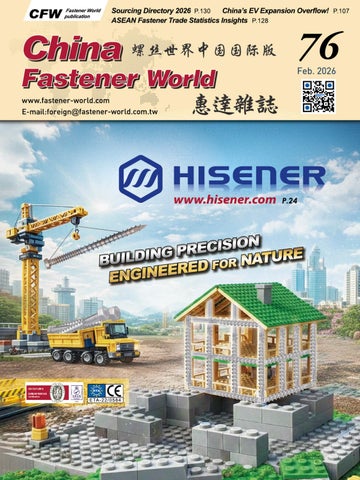
On the global fastener stage, Hisener shines as a testament to the resilience of Chinese manufacturing. From its beginning in 2004 to today's three smart factories producing 1,500 tons monthly, it has conquered Europe and America with stainless steel screws and bi-metal screws. Through green manufacturing and talent empowerment, Hisener sets sustainability benchmarks. This cover story uncovers the secrets to its explosive growth!

Looking back with deep emotion on his milestones, General Manager Simon Liang says Hisener started in 2004 as a fastener trader; by 2010, his first fastener factory launched in-house production; in 2022, the fastener smart factory came online, tripling output across a 32,000-square-meter site housing over 300 machines integrated with ERP and WMS for automated warehousing and material feeding. In 2023, the bi-metal screw factory debuted—its innovative products combining stainless steel and alloy steel with 12.5mm penetration and exceptional pull-out strength gain popularity in construction, solar, and machinery sectors. Then in 2024, the stainless steel screw factory opened, with products using 304/316/410-grade materials, passing salt spray tests and earning CE and ETA 22/0584 certifications.


Simon shares: "These aren't just numbers—they're the result of a decade-plus of equipment expansion and team unity! Innovation isn't done in isolation; it targets market pain points. Smart green upgrades don't discard tradition; they empower it with tech. Every step upholds 'customers first,' making Chinese fasteners a globally trusted symbol. It touches our heart and marks our new starting point!"
He credits employees’ and executives’ devotion to transforming Hisener into a global supplier. Annual systematic training builds a professional resolute workforce and is divided into four modules: (1) basic skills like hands-on heading, threading, and heat treatment; (2) technical upgrades covering smart equipment maintenance, bi-metal screw craftsmanship, stainless steel optimization, and eco-friendly production; (3) quality control including ISO operations and client standard interpretation; (4) guiding principle of "quality as root, innovation as soul." Training blends classroom sessions with production practice, plus pre-course case shares, monthly tech exchanges, and quarterly skill contests to ignite passion for learning. Employees ensure full traceability for every batch's dimensions, microstructure, and mechanical properties, delivering zero-risk, peak-quality products!
His ESG governance embodies modern flair: "Compliance as base, talent as core, synergy as framework, transparency as measure." Talent loops are created through the "train-promoteincentivize" process; boundaries between different divisions are shattered for tech-sales-service synergy, with transparency in staff promotion paths and performance rules. Massive supply for megaprojects or small-batch product customization can be handled via flexible capacity across full product line and quick switches between smart production lines.

Green practices like rooftop solar power, recyclable packaging, and full LED lighting make Hisener stand out in the decarbonization trend. Partnering with 150 suppliers to offer 4,000 fastener types, its global footprint expands as Simon attends trade shows in person to forge client trust.
Hisener is more than fasteners—it holds belief and future. It declares boundless ambition in the Chinese year of galloping horse (2026): "Guided by client needs, powered by tech innovation, backed by our talent team, we'll conquer wider horizons and make Chinese fasteners shine worldwide!"
Hisener's contact: Simon Liang, General Manager Email: simon@hisener.com


As one of the wholly owned screw factories of CHINFAST, Haiyan Yousun Enterprises Co., Ltd. is a specialized producer of wood timber screws, chipboard screws, and drywall screws with an estimated manufacturing capacity of 1,000 tons every month.


Complying with the internationally-recognized regulations, Yousun has not only had its wood timber screw certified by ETA, but also has had its drywall screws and chipboard screws certified by CE. Yousun and its sister factory Joystart Automotive Parts Co., Ltd. specialized in the production and DIY package services for advanced multi-purpose screws, stainless steel screws, etc. each play a vital role in their respective areas of expertise. Yousun also enjoys a better tariff rate in exporting to the EU market and is subject to a more favorable anti-dumping duty of only 39.6% under the tariff code of C788.
When it comes to deepening the business reach and consolidating a firm presence in the European market, which accounts for 50% of CHINFAST’s total exports with the annual shipments of +100,000 tons, the pivotal role of Yousun in providing CHINFAST with great manufacturing support to expanding its supplies to Europe since its inception definitely cannot be ignored. Moreover, in order to help CHINFAST further develop


emerging market in Japan and Australia, Yousun’s 2nd phase of facility, which is built on the concept of “Smart Factory 3.0” is also about to become operational soon.
Without the strong support of Yousun, CHINFAST’s transition from manufacturing to service innovation would not have been so smooth and successful. CHINFAST stays ahead of market trends by upgrading both hardware and software capabilities—including automated warehousing, a dedicated accessories design team, advanced packaging production lines, and an integrated ERP system—to comprehensively enhance the efficiency and flexibility of DIY packaging services. It enables YOUSUN to deliver highly efficient and competitive packaging solutions to clients. Leveraging the cost advantages of industrial-scale production and extensive experience, CHINFAST demonstrates exceptional innovation in customized packaging and product structure optimization.
According to Yousun, “Providing customers with competitive price, good quality, punctual delivery and perfect service has always been our everlasting pursuit and solemn promise.” As an industry-leading fastener manufacturing company in China, Yousun will remain


steadfast in the commitment to a customer-centric, innovation-driven service philosophy, advancing steadily within the fastener industry and solidify the strong international reputation through exceptional product quality, innovative service models, and a global market presence.
Contact: Mr. George Yu
Email: george@chinfast.com
Article by Gang Hao Chang, Vice Editor-in-Chief


Sanhewlett Metal Products’ contact: Hellen Gong
Email: business@sanhewlett.com.cn


Metal Products (Taishan) specializes in customized processing of non-standard screws, nuts, and precision machined parts, delivering engineering solutions affirmed worldwide through its unwavering commitment to quality and innovation. Amid the fervent global manufacturing upgrade trend, it leverages solid technical prowess and global deployment to embark on a fresh starting point. The latest relocation to a new plant signifies a dual upgrade in globalization strategy and manufacturing capabilities.
To ensure sustainable operations and capacity expansion, Sanhewlett acquired land in Taishan, Guangdong Province of China, to build a modern factory. Spanning 15,000 square meters with nearly 200 machines, the plant boasts a monthly output of 250 tons. Its division structure covers workshops, quality inspection, and packaging, ensuring seamless collaboration across the entire process from raw materials to shipments. This delivers core value on three fronts: optimized production and operations, redesigned processes that skyrocket efficiency, and comprehensive upgrades in technology and digitalization. The new facility shortens material handling times, boosts production line flexibility for easy additions of production lines, warehouses, or equipment, and simultaneously advances automation equipment and smart systems—setting sail toward higher automation.
The new plant focuses on customizing non-standard screws, nuts, and precision machined parts based on client drawings or samples. In quality, it holds TUV ISO 9001:2015 and Wantai ISO 14001:2015 certifications, underscoring commitments to quality and environmental standards. Production and testing adhere to ISO 898 standard, guaranteeing superior mechanical performance and durability. Overseas clients span Europe, North America, Southeast Asia, and Japan, with exports accounting for 70% of sales—affirming its steady foothold in global supply chains. Sanhewlett notes that


the global fastener market is propelled by rising infrastructure demand in emerging regions like Southeast Asia and Latin America, alongside dual drivers of supply chain resilience and upgrades. China's supply chain resilience and tech advancements have solidified Chinese fasteners' global position, though this trend brings challenges like trade barriers and value chain elevations.
Facing trade frictions and global competition, Sanhewlett breaks through with "specialized, refined, unique, and innovative" strategies. In automotive, it targets high-safety, highreliability areas like engines, chassis, and brakes, using rigorous quality control and material traceability to ensure component stability under extreme conditions—and it plans to secure IATF 16949 certification this year. In medical, it prioritizes ultimate cleanliness and traceability, building production environments and quality systems that exceed standard norms to meet stringent clinical and device requirements. Through proactive R&D, it engages early in client R&D, offering design collaboration and testing validation, evolving from only fastener supply to reliable solutions for entire assembly systems. Plus, its zero-defect production system and full-chain traceability make global clients willing to entrust critical fastening parts to Sanhewlett!
For overseas clients, Sanhewlett offers not just individual fasteners, but comprehensive technical solutions, including material reports, full-dimensional inspections, performance test reports, and vertically integrated capabilities from material modification and precision forming to surface treatment. This cuts clients' incoming inspection costs and supply risks. In highend manufacturing, choosing a supplier is a pivotal "risk vs. trust" decision. Sanhewlett doesn't just sell products—it sells "certainty." Partnering with it delivers not only top-tier fasteners but an intimate technical ally that makes end products more reliable, efficient, and competitive!


Jiaxing
XC Washer Co., Limited has specialized in the development and manufacturing of washers and stamped parts for over 20 years. It provides high-quality products made from low-carbon steel, stainless steel, brass, copper, aluminum, or special materials, compliant with major European, American, and Japanese standards including DIN, ANSI, ISO, and JIS. Its products are widely adopted globally across industries including construction, steel structures, photovoltaics, power generation, machinery, industrial equipment, railways, energy, hydraulics, chemical engineering, and shipbuilding.
Through continuous upgrades to equipment and processes, XC Washer now operates over 80 automated stamping machines with a complete die inventory, capable of supplying metric (M1.6-M100) and inch (#0-4") specifications. 60% of its production is automated or semi-automated. By leveraging mass production and employing highprecision composite/progressive die processing, it simultaneously maximizes efficiency, precision, and product consistency to achieve optimal performance.
To ensure consistent quality and reliability, every batch of XC Washer products undergoes initial inspection, surface treatment inspection, and packaging inspection in accordance with international standards. Only after confirming quality compliance are products stored in inventory. For diverse customer application requirements, it provides at least two options, clearly outlining their respective advantages and disadvantages

to assist in selecting the most suitable product solution. For customization, it can develop molds and produce samples based on customer drawings within one month, followed by mass production upon confirmation. Its products are widely sold in markets including Europe, America, Japan, and Australia. XC Washer can also manufacture according to various customer and product standards and maintain corresponding inventory based on customer preferences.
General Manager Jeremy Chiang stated: “Beyond washers and stamped parts, we can also supply fasteners such as bolts and nuts through our partner factories. This not only significantly reduces customer communication and shipping costs, but also ensures consistent product assembly. Moving forward, we aim to enhance our development of tapered washers and leverage greater supply chain integration capabilities to provide customers with one-stop services.”


For +30 years, Foshan City Guangqingchang Metal Plastic has specialized in the R&D and production of rivets and fastening hardware. It has progressively introduced automated production equipment, expanded its product line to include standard/nonstandard fasteners, and obtained ISO9001 and IATF16949 certifications. It has successfully entered the supply chains of industries such as electronics and automotive. In recent years, it has actively promoted the international visibility of its “Powerchang” brand, aspiring for its high-quality products to become a reliable partner for global industries.
Guangqingchang's Foshan factory is equipped with +200 multistation cold heading machines, thread rolling machines, assembly machines, heat treatment lines, and inspection equipment. The factory operates in accordance with ISO 9001 and IATF 16949 quality management processes, emphasizing cross-departmental quality planning initiated upon order receipt. It prevents issues during the design phase and employs SPC during production for real-time monitoring of critical process parameters, with regular measurement system analysis to ensure consistent stability across every production batch, not to mention it also implements rigorous performance management for its suppliers. Its capabilities in rapid prototyping, trial production, and shortened lead times enable it to help customers control production costs and maintain competitiveness. Past success stories include providing a “screw reduction” solution for a server client that decreased screw usage by 70%, shortened assembly time by ~25%, and enhanced vibration resistance. In response to a customer request for thinner aluminum alloy sheet assembly, which often suffer from deformation or loose riveting with standard

Guangqingchang contact: Jiaqi Guo, Sales Manager
Email: jiaqi.guo@qingchang.com.cn

rivets, Guangqingchang adjusted the material selection and structure parameters as well as optimized the rivet core’s breaking force and the rivet head’s forming angle to develop a solution preventing deformation while delivering stable pullout strength. During collaborative R&D discussions with clients on efficiency improvements, its technical team can assist with fastener selection, structural optimization, and failure analyses to deliver proven comprehensive solutions that give clients peace of mind. Guangqingchang believes: “True manufacturing capability lies not only in producing to specifications, but in understanding trends, collaborating on R&D, and delivering proven solutions.”
Guangqingchang strictly adheres to RoHS, SVHC, and REACH directives, promotes low-carbon production, avoids hazardous substances, establishes raw material traceability mechanisms, continuously monitors regulatory developments, and regularly conducts employee environmental training to encourage creating maximum value for customers. Beyond its Foshan plant as the production hub, Guangqingchang also has operations in Dongguan and Shenzhen respectively for component supply and technical integration & brand expansion, forming a “production-supply-service” system reducing costs and enhancing resource allocation efficiency. Guangqingchang is expanding into sectors such as electronics, automotive, furniture, nuclear power, rails, and medical devices, while also actively developing emerging applications including new energy, 5G communication equipment, and lowaltitude economy (drones, eVTOL).
Guangqingchang has evolved from a simple fastener supplier into a strategic partner offering technical support, comprehensive solutions, and global supply chain assurance, guided by the business philosophy of “Integrity, Quality, Service, and Value.” In the next 3-5 years, it’ll expand its high-value-added product lines and strengthen non-standard customization capabilities based on the existing product portfolio. Crucially, it’ll advance the internationalization of its “Powerchang” brand, striving to become the global leader in premium riveting and fastening hardware solutions.
Copyright owned by Fastener World / Article by Gang Hao Chang, Vice Editor-in-Chief


compiled by Fastener World
寧波緊固件協會越南行 產業交流開啟中越合作新篇
Ningbo Fastener Industry Association traveled to Vietnam in December 2025, joining forces with the Vietnam Zhejiang Chamber of Commerce and key enterprises for a themed seminar. This international exchange not only built a fast-track bridge for Ningbo companies' overseas expansion but also injected fresh momentum into Chinese-Vietnamese industry cooperation.
The association chairman highlighted at the event that Ningbo's fasteners excel through comprehensive supply chains and relentless innovation. He eagerly anticipates deeper partnerships with Vietnamese counterparts to seize shared opportunities, contributing Ningbo's solid support to industrialization across Vietnam and Southeast Asia. An association representative added that the regions boast strong industrial complementarity and cultural ties, with Ningbo's growth fueled by the global network of local entrepreneurs.

Looking ahead, Ningbo plans to deploy an "Industry Brain + Future Factory" model to construct a digital economy framework. Led by flagship firms, it will advance smart manufacturing, establishing a global smart manufacturing hub and industrial internet hub. These strides will provide enduring power for bilateral collaboration, accelerating supply chain optimization and upgrades.
香港螺絲業協會新理事長吳鴻僑當選
Hong Kong Screw Industry Association's 2025-2027 member general meeting and 12th Board of Directors election took place in Hong Kong on December 12, 2025. Industry elites gathered, including lifetime honorary presidents, directors, and member representatives, to select new leaders and chart the future blueprint.
Outgoing 11th Chairman Mr. Tsui Ping Fai delivered opening remarks and a work report, thanking attendees and highlighting achievements: organizing industry events, fostering member exchanges, expanding business opportunities, and strengthening ties with China and international peers—particularly securing the Trade and Industry Department's TSF project and government funding.
Following the association's bylaws, the 12th Board was elected, with Hip Hing Screw Industrial's President Mr. Ng Hung Kiu voted in as the new chairman. In his address, he expressed gratitude to the previous board, was honored by the role, and outlined priorities: enhancing member services, advancing industry innovation and standards, nurturing young talent, boosting domestic and international exchanges, and exploring global markets. The meeting concluded with a group photo, showcasing industry unity and signaling a new chapter in serving members and leading development.


中國2025出口貿易順差破紀錄抗美關稅
National Bureau of Statistics of China announced that the Chinese economy grew 5% in 2025, hitting its target, fueled by a historic USD 1.19 trillion trade surplus. Despite Q4 slowing to 4.5%, exports defy Trump tariffs, a slumping property market, as well as weak consumer spending.

However, analysts call it a "dual-speed economy": robust manufacturing and exports contrast with lagging domestic demand and real estate. Capital Economics suggests the data overstate growth by 1.5 points. Compounding woes, births hit a record low of 7.9 million, with the population dropping 3.4 million to 1.4 billion.
Natixis (France trade bank) warns low-price exports aren't sustainable. Last December saw home prices fall 2.7%, investment drop 17.2%, and retail rise just 0.9%. The head of National Bureau of Statistics of China acknowledges supply-demand imbalance but expects stability. Beijing plans proactive policies to boost confidence, curb debt, and reduce export reliance.
寧波舟山港首開東協準點降本航線
The "on-time cost-saving" route from Ningbo Zhoushan Port to Vietnam's Ho Chi Minh Port officially launched its maiden voyage on December 12, 2025. As the first such service targeting ASEAN, it enhances schedule reliability and cuts overall costs, creating a stable, efficient maritime corridor that injects new momentum into fastener exports from Zhejiang and across China.
The route directly links China's southeastern hub, Ningbo-Zhoushan Port, with Vietnam's bustling economic and logistics center in Ho Chi Minh City, bypassing transshipment delays for faster, more dependable delivery. Zhejiang, China's top province for fastener exports, benefits immensely—Ningbo Zhoushan serves as the key gateway for the Yangtze River Delta's foreign trade. This tailor-made "maritime express" streamlines cargo consolidation and shipping for local firms, solidifying regional logistics edges.
Customs data show Zhejiang's steel fastener exports to Vietnam reached USD 80.73 million in the first 10 months of 2025, accounting for 15% of China's total, with August peaking at USD 9.76 million. China's exports to Vietnam surged 22% from 2023-2024 to USD 518 million. The route aligns with rising demand from Vietnam's electronics, machinery, automotive, and infrastructure sectors, underpinning deeper trade ties.
This initiative from Ningbo Zhoushan Port builds a highefficiency logistics network, empowering fastener companies to tap ASEAN opportunities.

In the first 11 months of 2025, Chongqing topped China's auto output at 2.4981 million units, seizing the "auto capital" title. Amid the new energy surge and revised statistics, this powerhouse blended manufacturing with smart tech for a comeback, while Hefei City nipped at its heels with over 1.2 million NEVs in fierce contention.
The National Bureau of Statistics' new calculation guideline reshuffled rankings: Shenzhen's near-3-million vehcles dominated 2024, but 2025 saw BYD's plants in Changsha and Xi'an divert output, sidelining Guangzhou and Anhui. Zhengzhou eyes million-truck milestones; Qingdao, Changsha, Wuhan, Xi'an, Liuzhou, and Wuhu deepen roots in EVs and exports. This signals China's auto sector evolving from single-city scale to a nationwide, layered ecosystem of complementary strengths.

USD86.59 Billion from Jan-Nov 2025
China Association of Automobile Manufacturers (CAAM) reports, based on customs data, that China's auto parts exports hit USD 7.88 billion in November 2025, up 14.3% from the previous quarter and 1.5% year-over-year. For January-November, cumulative exports reached USD 86.59 billion, a 2.7% increase from 2024.
On imports, November auto parts inflows totaled USD 1.89 billion, rising 12.6% quarter-on-quarter but down 20.2% annually. The January-November total stood at USD 19.49 billion, reflecting a 22.2% year-on-year decline.

From January to September 2025, Malaysia's fastener trade showed persistent losses, with imports nearing USD 490 million against USD 260 million in exports—the former 1.9 times the latter, resulting in a clear deficit. Third-quarter imports surged while exports held steady, underscoring local capacity struggles to meet booming manufacturing needs.
Exports remained resilient, averaging USD 26-35 million monthly, peaking at USD 31.57 million in August, affirming international competitiveness. Imports accelerated sharply, hitting a nine-month high of USD 59.08 million in September (about 59.08 million kg); Q2 hovered around USD 55 million, on an upward trend.
The widening gap stems from manufacturing recovery and infrastructure projects boosting demand for high-strength fasteners, Malaysia's Southeast Asian hub status fueling re-export trade, and global supply chain shifts driving industrial imports. China leads as the primary source, bolstering Malaysian local chains. This signals a Southeast Asian manufacturing boom, urging Malaysia to accelerate localization and narrow the shortfall.


Shenzhen Zhengyuan New Energy Technology's high-end fastener AI super smart factory has officially broken ground in Putuo Economic Development Zone. This marks China's first advanced high-end fastener AI smart factory, signaling a new era of intelligent transformation in the fastener industry.
The project boasts a total investment of 500 million RMB, covers 100,000 square meters, and has a 30-month construction period, with completion slated for May 2028 . Centered on "all-element intelligence, full-chain collaboration, and full-process green production," it adheres strictly to national green factory standards. Innovations include integrated photovoltaic roofing, smart microgrids, and waste heat recovery systems, creating a closedloop "materials-production-waste" ecosystem and an industrial community integrating high-end R&D, precision manufacturing, and smart services.
Compared to traditional factories, this AI facility achieves breakthroughs in three dimensions: a "5G + industrial internet + AI" architecture with stereoscopic warehouses, AGV smart handling, and flexible production lines, enabled by full 5G network coverage for millisecond-level data transmission; visual inspection systems with 99.99% accuracy for zero-defect output; and a digital twin platform mirroring production lines, using machine learning to optimize forging, heat treatment, and precision processing, boosting material utilization to over 95%.
Putuo Economic Development Zone officials stated that upon completion, it will establish a national-level testing lab and industrial internet platform, offering process optimization and quality traceability services to drive upstream-downstream chain upgrades. The factory targets aerospace, new energy, and high-end equipment sectors, developing over 60 high-end products like ultra-corrosionresistant bolts, lightweight titanium alloy bolts, and ultra-low-temperature high-strength fasteners. At full capacity, it will produce 1.5 billion premium fasteners annually, equipping major projects like large aircraft, next-gen wind turbines, and advanced nuclear power with Chinese-made screws.
On November 8, 2025, Shitelao Group established a subsidiary in Yangjiang City in China with a registered capital of 5 million RMB. This new subsidiary specializes in fastener manufacturing and related technical services, aiming to strengthen the industrial supply chain in Yangjiang region.

The company's business scope is extensive, covering technology services, development, consulting, exchange, transfer, and promotion. Core operations include fastener manufacturing, general parts manufacturing, sealing parts manufacturing, and mechanical parts processing and spring manufacturing. It also extends to railway locomotive vehicle accessories, automotive parts and accessories, marine transport equipment parts, high-speed rail equipment,
and wind turbine components manufacturing and sales. Additional services encompass metal surface treatment, heat treatment, electroplating, spray coating, dies manufacturing, as well as R&D for automotive parts and metal products.
This move signals the group's deeper commitment to China's manufacturing sector, leveraging Yangjiang's industrial strengths. It is expected to enhance fastener product quality and supply efficiency for automotive, railway, high-speed rail, and renewable energy sectors.

China Components Test and Zhejiang Xizi Aviation Manufacture signed a strategic cooperation agreement. This partnership deepens synergy between testing and manufacturing in the aerospace supply chain, injecting fresh momentum into Zhejiang's high-end manufacturing.
The deal targets critical areas like aerospace parts quality control, material testing, and process validation. Both sides will merge detection expertise with precision manufacturing strengths to build an advanced quality assurance system. As a stateowned third-party tester and national "little giant" in specialized innovation, China Components Test brings authoritative materials testing capabilities, having supported national projects like the C919 airliner. Xizi Aviation, Zhejiang's aviation manufacturing leader, demands top-tier part quality while advancing high-precision production.
The collaboration amplifies Zhejiang's aerospace industry ecosystem, streamlining issue resolution in production via direct testingmanufacturing links to boost chain reliability and competitiveness. It will fuse service demands with manufacturing needs, fostering new productive forces in transportation and delivering robust professional support. This alliance reflects upstream-downstream trends in aerospace, elevating "Made in Zhejiang" standards and reputation while fueling regional advanced manufacturing growth.


Germany's fastener giant Böllhoff continues to deepen its presence in the Chinese market, achieving significant results since entering in 1999. The company officially opened a new sales office in Guangzhou on October 21, 2025, further expanding its footprint in South China and enhancing regional service capabilities.
As early as 2004, Böllhoff established its first production base in Asia in Wuxi, integrating sales, manufacturing, and logistics, with over 330 employees today. Previously, this was the company's sole major hub in China. The new Guangzhou office spans about 610 square meters, featuring a sales area and its own warehouse, currently staffed by 8 employees. Its location near southern client clusters enables swift and efficient responses to demands.
A Böllhoff spokesperson stated: "The Wuxi base has long served the East China region; the new Guangzhou outpost will bolster southern connections, more precisely meeting evolving client needs." The company emphasized that this move embodies its motto of "a passion for successful connections" and marks a key milestone in delivering long-term value. Moving forward, Böllhoff will keep optimizing products and services to support China's manufacturing upgrades.

Vossloh AG's China subsidiary has won a major contract to supply rail fastening systems for the new Xi'an-Chengdu high-speed rail section, valued at nearly €20 million, with delivery slated for 2027. This deal further cements Vossloh's role as a trusted long-term partner in China's high-speed rail network.
Group CEO Oliver Schuster commented: "China boasts the world's largest and still-expanding high-speed rail network, setting benchmarks for the rail industry. We're proud to contribute as a reliable partner to sustainable transportation." The Xi'an-Chengdu line spans from Qinghai's capital Xi'ning to Sichuan's Chengdu, tackling extreme elevation changes and rugged terrain. Upon completion, it will integrate the two economic hubs and enhance logistics in challenging regions.
Vossloh has operated successfully in China for nearly 20 years, with its Kunshan facility employing about 130 staff as a leading regional rail fastening provider. China's high-speed rail spans over 50,000 km today, projected to exceed 70,000 km by 2055, offering vast opportunities for international suppliers.


Ironline Metals擴大漢普頓郡營運 投資650萬美元創20新職
US precision steel framing manufacturer Ironline Metals announced a USD 6.5 million expansion of its Hampton County plant in South Carolina, set to come online in Q2 2026. The project will add 20 jobs and boost capacity for cold-formed steel framing, studs, metal decks, fasteners, and ties.

President Sebastian Higdon stated: "South Carolina offers a superior workforce and business climate. We're proud to expand, enhancing customer service and creating opportunities for local families." The news drew enthusiastic support from local and state leaders. Governor Henry McMaster praised: "This expansion highlights South Carolina's manufacturing success, bringing growth opportunities to Hampton County families." SouthernCarolina Alliance Chairman Steve Murdaugh added: "Ironline's deep roots here prove our region's labor and business strengths—we welcome their future growth."
Headquartered in Louisville, Kentucky, Ironline specializes in steel framing products. The expansion will strengthen the local economy and manufacturing sector.
日東精工的印度Vulcan新廠啟用 強化壓鑄產能穩供日系客
Nitto Seiko announced that its Indian subsidiary Vulcan Forge's Jhajjar plant in Haryana began production in December 2025. Anchored by 5S systems, it strengthens customer engagement to optimize quality, delivery, and costs, integrating with group operations to enhance local manufacturing and supply stability.
Located in Reliance MET City industrial park near the capital region—a smart city hub drawing major Japanese firms—the facility produces nuts and special cold-forged parts, designed with secondfloor expansion potential for future scaling.


Future plans include accelerating client development for reliable Japanese supply; installing solar panels to cut power costs and emissions; consolidating HQ functions for optimized staffing, shorter lead times, lower logistics expenses, and rolling out group training to build on-site personnel cohesion.
This strategic move solidifies Nitto Seiko's Indian footprint, supporting global forging chains.
(Hunan)
Energy Technology Acquires 60% Shares of Chengdu Xinsan Aerospace Technology
飛沃科技收購新杉太空60%股權
Finework announced on January 5 that it has completed the acquisition of 60% equity in Chengdu Xinsan Aerospace Technology (transliteration) on December 30, 2025. Xinsan specializes in metal 3D printing services, with key products including liquid rocket engine components such as injectors, combustion chambers, nozzles, turbine pumps, as well as aero-engine blades and other precision parts. In 2025, its commercial aerospace revenue reached about 10.81 million RMB.
Amid market buzz around commercial space trends, Finework's core business remains to be R&D, production, and sales of high-strength wind turbine bolts. It is actively expanding into aerospace, aviation, and gas turbine starter and parts segments. Finework's commercial aerospace operations are still nascent, generating roughly 1.23 million RMB in 2025— just 0.05% of total revenue.


日本西華產業將塗裝機械製造商
Seika Corporation announced it has acquired 100% of the shares in Asahi Sanac—a manufacturer and seller of coating machines, die-casting machines, and precision cleaning equipment— on December 1, 2025, making it a subsidiary. The market has expectations of performance contributions. The two companies previously established joint ventures in Germany and Thailand. This acquisition aims to leverage Seika Corporation's expertise as a comprehensive machinery trading firm, deepening collaboration not only in sales but also in business development. The acquisition price was not disclosed.
This move represents a key step in RCF's ongoing growth strategy, expanding its product range and enhancing its capacity to meet rising customer demand across multiple sectors. By integrating Lyndenway's expertise and product portfolio, RCF can now offer a broader selection of fasteners with improved efficiency and availability. Both companies share a longstanding commitment to quality, reliability, and exceptional customer service. The acquisition supports RCF's mission to invest in UK manufacturing, expand capabilities, and deliver the best possible solutions to customers.
RCF looks forward to the opportunities this deal brings, continuing to grow, strengthen its strengths, and uphold the high standards customers expect from RCF. As a key player in the UK fastener market, this transaction not only expands market share but also highlights the resurgence of domestic manufacturing, helping the company stand out in a competitive global supply chain.


億美元收購
Howmet Aerospace announced it has signed a definitive agreement with Stanley Black & Decker to acquire its subsidiary Consolidated Aerospace Manufacturing (CAM) for approximately USD1.8 billion in cash. CAM is a global leader in the design and manufacture of precision fasteners, fluid fittings, and other highly engineered products for aerospace and defense applications. The transaction qualifies for favorable federal tax treatment, delivering significant tax benefits to Howmet. Howmet expects CAM's fiscal 2026 revenue to range from USD485 million to USD495 million, with EBITDA margins exceeding 20% (excluding synergies). Including synergies and tax benefits, the transaction multiple is approximately 13x.
Howmet Executive Chairman and CEO John C. Plant stated: "The acquisition of CAM is an important step in expanding our differentiated fasteners portfolio. CAM's established brand, engineering expertise, and deep customer relationships perfectly complement this transaction, enabling us to serve aerospace and defense customers with a broader range of critical fastening solutions and create value for shareholders." The deal is expected to close in the first half of 2026. This move strengthens Howmet's leadership position in the high-demand aerospace market.


Valley Fastener Group proudly announces the acquisition of Chicago Fastener, a strategic move that broadens its portfolio of companies and reinforces its dominant position in the fastener industry. For over five decades, Valley Fastener Group has earned its reputation as a reliable U.S.-based producer of semi-tubular and solid rivets, threaded components, and custom coldformed specialties—all rooted in its renowned heritage of superior rivet solutions. The addition of Chicago Fastener enhances its ability to provide customers throughout North America with expanded production capacity, cutting-edge innovation, and unmatched value. This integration promises stronger service and growth opportunities as it continues to lead the market.


河北超躍標準件模具
匠心鑄就,二沖模出海全球
Hebei Chaoyue Standard Fastener Mould Co., Ltd. (below referred to as “Chaoyue”) was founded in 2008 and is located in Renqiu, Cangzhou of Hebei Province—conveniently near Beijing. From the outset, the company targeted bottlenecks in the second punch die market, focusing on boosting product competitiveness. Guided by its core philosophy—"Talent


first, quality as the foundation, win-win partnerships, and customers above all"—this ethos permeates every aspect of operations. The facility spans 7,200 square meters and features advanced CNC machining equipment, vacuum heat treatment and coating equipment, manufacturing space, and quality inspection departments. A computer dashboard system provides realtime monitoring of production processes and quality control, ensuring on-time delivery and consistently reliable products.
Chaoyue's main products are screw and bolt dies, with a strong emphasis on second punch (header punch), carbide dies (heading die), and thread rolling dies. The lineup also includes wire drawing dies, punch pins, and trimming dies, offering one-stop purchase and custom development services. Its second punches stand out for superior wear resistance, high precision, and extended lifespan, which help customers cut costs. The comprehensive one-stop service—from new product design and development to rapid customization—has earned widespread market acclaim!
Deeply rooted in China, Chaoyue is aggressively expanding overseas by exporting to Southeast Asia, Central Asia, Southern Europe, etc. With China's exports on the rise in recent years, Chaoyue has ramped up its global deployment through trade shows, field marketing, industry publications, and online marketing. These multi-channel efforts have steadily boosted its market share.
Looking ahead, Chaoyue is doubling down on new product development, tailoring dies to customer needs and providing robust technical support. It is actively pursuing overseas investments and factory setups to bring high-quality products and service to the world, elevating brand value. It welcomes screw manufacturers and die buyers to collaborate for mutual success!
Hebei Chaoyue Standard Fastener Mould’s contact: Mr. Yim Law, Trade Manager Email: hbcymj@qq.com


Born from a joint patent between Yamashina and Nippon Light Metal Company in Japan, the game-changing automotive aluminum bolt "ALTIMA" is now available. Surpassing traditional designs, it prioritizes durability and safety by mitigating stress corrosion cracking risks from prolonged stress concentration. Matching the corrosion resistance of legacy bolts used in European and select Japanese cars, ALTIMA boosts strength by over 10%. It is built on the July 11, 2024 joint patent (No. 7496106) and four years of rigorous safety validation. Features: Tensile strength over 460 MPa, yield strength over 380 MPa—equivalent to JIS aluminum grade AL5 (one tier above conventional AL4)—with anti-cracking and void-free processing for flawless internals. Targeting EVs, unmanned aerial mobility, robots, inverters, batteries, aluminum busbars, and eco-infrastructure, it excels in lightweighting, non-magnetism, conductivity, corrosion resistance, and anti-loosening, supporting low-carbon circular economies. Nippon Light Metal and other partners will continue collaborating to expand. ALTIMA doesn't just enhance vehicle safety—it powers the green mobility revolution and sets new precision manufacturing benchmarks.


緊固件
新品大道


Osaka Research Institute of Industrial Science and Technology, in collaboration with Osaka Metropolitan University, has rolled out its AI-powered metal fracture analysis software "Fract(ure) AI" at public testing and research institutions across Japan. This service integrates scanning electron microscope (SEM) imagery for AI-driven metal fracture analysis, ushering manufacturing failure diagnostics into the intelligent era. Manufacturing floors frequently encounter trial and error, where pinpointing failure (fracture) causes is crucial for boosting product reliability. "Metal fracture analysis" examines fracture surface features to uncover root causes. Fract AI uses just SEM images to automatically predict fracture types like fatigue or ductile failure with high precision, highlighting key areas via color contour maps. Incorporating judgment criteria from veteran technicians' years of observations, it powerfully supports novices, sharpening their skills amid labor shortages and succession challenges—doubling as an invaluable training tool. Future updates will include fracture origin prediction features for ongoing evolution, accelerating product improvements and sharpening corporate competitiveness.


Genius追蹤器專用鉚釘固定系統


GameChange Solar, a leading U.S.-based provider of PV trackers and fixed-tilt racking systems from Connecticut, has unveiled an innovative two-piece rivet mounting solution compatible with its Genius series trackers. This alternative delivers faster field installation, reduced long-term costs versus bolt methods, and proven reliability through independent and internal lab testing. The rivet system—featuring a rivet pin and tubular collar—employs a rivet gun for automatic locking and pin trimming, bypassing torque adjustments entirely. Unlike bolt connections through pre-punched holes that demand regular tightening for environmental resilience, this design ensures permanent tightness and durability. Targeted at EPC firms as a bolt replacement, the solution has passed rigorous UL 2703 testing for structural integrity, electrical grounding, and flat-type PV module performance. Certification came from third-party Intertek labs and GameChange's in-house facilities, with zero failures. Installation and removal tools were validated at the company's training center, confirming real-world deployment efficiency. This advancement streamlines solar project timelines while enhancing system longevity for developers.


防旋轉螺絲端子 適用高密度印刷電路板


Keystone Electronics unveils an upgraded SEMS screw variant for its PCB screw terminals, designed to streamline wire connections and boost mechanical reliability in dense board assemblies. The pre-assembled SEMS screw enables secure fastening of wire leads—including bare wires—without the rotation issues common during tightening. Rated for 15- and 30-amp applications, these terminals feature an anti-rotation, non-wobbling structure ideal for high-density PCB layouts. The SEMS screw incorporates a captive, free-spinning lock washer that preserves clamping pressure and stops wire spin under torque. Available in horizontal and vertical orientations, they suit diverse board configurations. Constructed from tinplated brass, the terminals ship either fully assembled with SEMS hardware or as components for custom integration. Keystone distributes them via its worldwide network and e-commerce platforms, alongside its extensive interconnect solutions and custom machining, stamping, and assembly services.


Japanese YS Corporation has developed the "Tentacle® Nut", based on years of screw research that thoroughly analyzes nut loosening causes. This patented product is now expanding into the market. Designed like an octopus tentacle "firmly wrapping" bolts, it fits standard M6, M8, M10, M12, and M16 bolts, with the latest addition of M2 size for more precise applications. Loosening mainly occurs due to vibration causing cumulative thread gap shifts. "Tentacle Nut" uses a double-nut structure where the upper nut compresses the lower nut's protrusion, filling tolerance gaps to ensure axis alignment and no bolt damage. The lower nut manages torque and tension, with easy removal by reverse rotation from upper to lower. Ideal for vibrating machinery in factories, amusement rides, towers/bridges, or high-temperature sterile environments, it enhances safety and maintenance-free operation. In NAS3350 impact tests (30Hz, 30,000 vibrations) it retained over 80% tension; DIN25201 vibration tests (2,000 cycles) show no detachment with 94.3% residual tension, far surpassing standard nuts. Analysis confirms no self-rotation, achieving "never-loosening" bolt-nut combos with simple nut replacement.

Japanese Fuji Seira Company has unveiled the globally pioneering trademark-registered (No. 5757876) "Seal Up® Screw," featuring a largecontact-area flat sealing gasket automatically embedded in the seat's annular groove. This dramatically enhances waterproofing, oil-proofing, and dustproofing performance. Simply replace the screw to use immediately on existing equipment—no hole modifications needed. Key advantages include no gasket detachment: the inner diameter is smaller than the thread outer diameter for secure fixation. The gasket offers high adhesion volume for superior waterproofing. Even with larger pilot holes in workpieces (standard: nominal thread diameter +0.5mm Max.), it reliably compresses and deforms, enabling easy screw swaps. Performance rigorously verified: tightened in a sealed fixture under 115MPa water pressure (equivalent to 11,000m depth), confirming no leaks; withstands Mariana Trench pressure (10,994m depth), the world's deepest. Ideal for marine engineering, high-pressure environments, or precision machinery. Fuji Seira announces the addition of the Hex Socket Bolt “Seal Up Cap" variant to the
for hex socket bolts.

enhancing


According to the latest 2024 data from the UN commodity trade statistics database (UN Comtrade), global fastener imports totaled USD 46.6 billion and exports exceeded USD 47.2 billion, indicating a massive and stable fasteners trade market. However, amid US-China trade frictions and global demand fluctuations, China (taking up 20.5% of global market share in 2024) and Taiwan (9.3%)—the two major fastener exporting powerhouses—exhibit starkly divergent export momentum and market share trends. This article analyzes bilateral fastener export trends to Europe, the Americas, Asia, Africa, and the Oceania using data from China Customs, Taiwan's Bureau of International Trade (up to 2025), and regional trade sources (up to 2024), with a focus on market share comparisons in the Americas, EU, ASEAN, and Latin America to reveal competitive dynamics and future outlooks.

Value of
1. China's Fastener Export Values to the World's Five Continents (Source: General Administration of Customs of China; Data up to 2025; Unit: USD)
2,000,000,000 2,100,000,000

S D
Value of China's Fastener Export to the Oceania
Value of China's Fastener Export to Asia
Value of China's Fastener Export to the Oceania 1,343,355,549 1,729,121,859 1,449,581,216
Value of China's Fastener Export to ASEAN
Value of China's Fastener Export to Africa
Value of China's Fastener Export to the World
Value of China's Fastener Export to the Oceania
11,500,000,000
11,000,000,000
10,500,000,000
10,000,000,000
9,000,000,000 9,500,000,000
1. China's export values to Europe, the Americas, and the Oceania show a downward trend, while exports to Asia (including ASEAN) and Africa rise.
Value of China's Fastener Export to ASEAN
2. In 2025, China's exports to ASEAN grew 16.7% YOY, hitting a new five-year high; exports to other regions did not surpass prior peaks. Notably, exports to Europe, Asia, and Africa in 2025 approached their respective historical highs.
3. China's global fastener exports have risen annually over the past three years, with a cumulative increase of 9.9%, returning to the US$10 billion mark in 2025—watch if it will reach the 2022 peak in 2026.
1,449,581,216 1,520,710,984 1,775,744,391
8,000,000,000
8,500,000,000
8,000,000,000
Value of China's Fastener
4. Overall, China's fastener export momentum is clearly recovering. Over a five-year horizon, it has not been significantly impacted by US tariffs, and as long as there are no major tariff changes, it is poised to surpass prior peaks in the coming years.
5. In a nutshell: China's fastener exports are rebounding from the bottom.


Figure 2. Taiwan's Fastener Export Values to the World's Five Major Continents (Source: Bureau of Foreign Trade, Ministry of Economic Affairs; Data up to 2025; Unit: USD) Taiwan's Fastener Export Momentum
Value of Taiw an's Fastener


Value of Taiw an's Fastener Export to Latin Americas
Value of Taiw an's Fastener Export to Asia
Value of Taiw an's Fastener Export to Africa
Value of Taiw an's Fastener Export to the Oceania
230,000,000
220,000,000
Value of Taiw an's Fastener Export to the World
Value of Taiw an's Fastener Export to ASEAN 5,319,398,407 6,140,678,189 4,600,022,138 4,374,025,745 4,215,769,519 4,000,000,000
1. Taiwan's exports to all five major continents show a downward trend.
Values of the United State's Fastener Imports from China
2. ASEAN stands out: Despite a sharp drop in exports to Greater Asia, Taiwan's exports to ASEAN grew 9.7% in 2025. ASEAN is Taiwan's largest target region for fastener export momentum, aligning with recent trends of Taiwanese fastener manufacturers' increasing investments in Southeast Asia.
3. Taiwan's global fastener exports have declined annually over the past three years, with a cumulative drop of 8.3%, and no bottom in sight as of 2025.
Values of the United State's Fastener Imports from Taiwan
4. Overall, Taiwan's fastener export momentum was clearly contracting. Although Taiwan enjoyed better conditions than China amid US-China tensions, exports to the Americas continued to fall, and other regions could not fill the gap. This indicates the decline stemmed from reduced global demand for Taiwanese fasteners, not directly related to tariffs.
5. China's rising export momentum signaled recovering global demand for Chinese fasteners and declining demand for Taiwanese ones. Taiwan faced intense competition from China.
6. In a nutshell: Taiwan's fastener exports were still probing for a bottom.

Value o Taiw an's Fastener Export to ASEAN
Value of Taiw an's Fas ener Export to the W
Figure 3. China's and Taiwan's Market Shares in the Americas (Source: US International Trade Commission; Data up to 2024; Unit: Million USD)
Values of the United State's Fastener Imports from China
1. In 2024, US global fastener imports totaled USD 6,617 million; imports from China were USD 1,187 million, for a 17.9% market share. Comparing China's 2025 exports to the US (USD 1,261 million) against 2024 US total imports yielded a 19.0% share.
Values of Europe's Fastener Imports from China
2. US demand for Chinese fasteners shows a downward trend but bottomed in 2023 and began recovering in 2024.
3. In 2024, US imports from Taiwan were USD 2,171 million,

Values of the United State's Fastener Imports from Taiwan
for a 32.8% market share. Comparing Taiwan's 2025 exports to the US (USD 1,808 million) against 2024 US total imports yielded a 27.3% share.
4. US demand for Taiwanese fasteners also trended downward but was still probing for a bottom in 2024.
Values of Europe's Fastener Imports from Taiwan
5. As of 2024, Taiwan remained the top source of US fasteners imports, followed by China. Taiwan's US market share exceeded China's by 14.9%.
Figure 4. China's and Taiwan's Market Shares in the EU (Source: European Commission; Data up to 2024; Unit: USD)
Values of Europe's Fastener Imports from China
Values of the United State's Fastener Imports from Taiwan 1,955,274,221 2,559,551,086
Values of ASEAN's Fastener Imports from
1. In 2024, EU global fastener imports totaled USD 7,469,960,104; imports from China were USD 1,815,632,420, for a 24.3% market share. Comparing China's 2025 exports to the EU (USD 2,652,129,356) against 2024 EU total imports yielded a 35.5% share.
2. EU demand for Chinese fasteners shows a downward trend but bottomed in 2023 and began recovering in 2024.
Values of Europe's Fastener Imports from Taiwan
Values of ASEAN's Fastener Imports
4. EU demand for Taiwanese fasteners also trended downward but was still probing for a bottom in 2024.
5. As of 2024, China was the EU's top fasteners import source, followed by Taiwan. Taiwan's EU market share trailed China's by 5.5%.
3. In 2024, EU imports from Taiwan were USD 1,406,897,879, for an 18.8% market share. Comparing Taiwan's 2025 exports to the EU (USD 1,165,305,324) against 2024 EU total imports yielded a 15.5% share.
Values of ASEAN's Fastener Imports from China
Values of ASEAN's Fastener Imports from Taiwan
Figure 5. China and Taiwan's Market Shares in ASEAN (Source: AseanStats; data up to 2024; Unit: USD)
Values of ASEAN's Fastener Imports from China
Values of ASEAN's Fastener Imports from Taiwan
1. In 2024, ASEAN global fastener imports totaled USD 3,927,396,093; imports from China were USD 1,448,670,416, for a 36.8% market share. Comparing China's 2025 exports to ASEAN (USD 1,775,744,391) against 2024 ASEAN total imports yielded a 45.2% share.
2. ASEAN demand for Chinese fasteners has increased, growing 26.8% over the past five years.
3. In 2024, ASEAN imports from Taiwan were USD 216,452,661, for a 5.5% market share. Comparing Taiwan's
2025 exports to ASEAN (USD 178,011,757) against 2024 ASEAN total imports yielded a 4.5% share.
4. ASEAN demand for Taiwanese fasteners declined 20.1% over the past five years but rebounded in 2024.
5. As of 2024, China was ASEAN's top fastener import source, followed by Japan and the US; Taiwan ranked fourth. Taiwan's ASEAN market share lagged far behind China's by 31.3%.
6. Despite Taiwan's recent increased investments in Southeast Asia, it could not keep pace with China's advances.
Figure 6. China's and Taiwan's Market Shares in Latin America (Source: Inter-American Development Bank / Fastener World Magazine Issue 214; 2024 Data; Unit: USD)


1. In 2024, the top 15 Latin American countries' global fastener imports totaled USD 4,863,204,949 (see Fastener World Magazine Issue #214); the top 5 (Mexico, Brazil, Argentina, Chile, Peru) imported USD 868,918,325 from China, estimating a ~17.8% market share.
2. The same top 5 imported USD 390,369,449 from Taiwan, for an 8.0% market share.
3. China held the top market share in Brazil, Argentina, Chile, and Peru, and second in Mexico (behind the US).
4. Taiwan's market share in Latin America trailed China's by 9.8%. Taiwan's ranking remained far behind China.
Reviewing 2024-2025 data, China's fastener export momentum was strongly recovering, with record highs to ASEAN and Africa, global exports back above USD 10 billion, and leading market shares in the EU (35.5%) and ASEAN (45.2%) over Taiwan. In contrast, Taiwan's exports were sliding across the board; while it still led in the Americas (27.3%), it lagged significantly in the EU (15.5%) and ASEAN (4.5%), with overall momentum yet to stabilize.
Despite Taiwan's geopolitical advantages and Southeast Asian investment dividends, China's regional penetration and demand recovery pose formidable competitive pressure. The current industry challenge lies in global demand reallocation—Taiwanese manufacturers should accelerate diversified strategies and product high-value upgrades to counter China's market share expansion.
Copyright
owned by Fastener World / Article by Dean Tseng

2025美國緊固件進口:
動盪貿易環境下的採購轉變

Data note: The data for this article is derived from the US Census trade statistics. US Census trade statistics analyze imports across all modes of transportation. The value is calculated in CIF USD. HS Code 7318 is defined as screws, bold, nuts, coach screws, screw hooks, rivets, cotters, cotter pins, washers, and similar articles of iron or steel. This article focuses on all the subcategories of 7318 including 731811, 731812, 731813, 731814, 731815, 731816, 731819, 731821, 731822, 731823, 731824, and 731829.
In 2025, the U.S. fastener market has continued to navigate a complex and evolving trade landscape shaped by tariffs, supply-chain recalibration, and shifting sourcing strategies. During the first three quarters of the year, U.S. imports of iron and steel fasteners under HS 7318 totaled just over 5 billion USD, representing a 5.6% decline compared to the same period in 2024. While overall import values softened, supplier dynamics remained highly competitive, with Taiwan emerging as the United States’ top trading partner for fasteners by value. Against a backdrop of ongoing trade policy uncertainty, cost pressures, and efforts by U.S. buyers to balance reliability with diversification, 2025 has underscored how sensitive the fastener supply chain remains to both economic and geopolitical forces.
Taiwan maintained its position as the United States’ largest fastener trading partner throughout the first three quarters of 2025, accounting for approximately 32% of total import value under HS 7318. China followed at 18%, with Japan (9%), Germany (5%),

Country of Origin

Table 1. (Continuing) U.S. Monthly Fastener Imports by Country in 2025
and South Korea (5%) rounding out the top suppliers. While Taiwan’s share of U.S. fastener imports remained remarkably stable on a month-to-month basis during the first nine months of the year, China’s share declined noticeably, falling from 22% in January 2025 to 16% by March, before stabilizing in a narrower 16%–18% range through the remainder of the period. This shift aligns with the continued impact of elevated U.S. tariffs on Chinese-origin fasteners, imposed under Section 301 trade measures, which have significantly increased landed costs for Chinese suppliers. By contrast, fasteners imported from Taiwan generally enter the U.S. under lower duty rates, preserving Taiwan’s cost competitiveness despite broader trade volatility. In terms of monthly activity, January 2025 marked the highest import value at US$623 million, with March close behind at US$606 million, while June recorded the lowest monthly total at US$510 million.

Overall, U.S. fastener imports declined quarter over quarter during the first three quarters of 2025. Import value totaled US$1.78 billion in Q1, decreased to US$1.62 billion in Q2, and slipped further to US$1.60 billion in Q3, reflecting softer demand, inventory adjustments, and ongoing trade uncertainty. Despite this contraction, the product mix remained highly consistent. The dominant subcategory was HS 731815 (threaded screws and bolts), which accounted for 44% of total import value, followed by HS 731816 (threaded nuts of iron or steel) at 22%, and HS 731814 (self-tapping screws) at 18%. Imports across these subcategories showed little volatility both month over month and quarter over quarter, highlighting steady underlying demand from core industrial and manufacturing sectors even as overall import values declined.
Table 3. U.S. Fastener Imports by Category in Q1-3 2025


From a logistics standpoint, U.S. fastener imports continued to be concentrated in the Chicago, Illinois, customs district, followed by Los Angeles, California, reflecting long-established supply-chain efficiencies rather than short-term trade shifts. Los Angeles remains the primary West Coast gateway for trans-Pacific shipments, serving as the initial point of entry for large volumes of fasteners originating from Taiwan and China. The Chicago district, by contrast, functions as a critical inland distribution and manufacturing hub, benefiting from its central geographic location, extensive rail and intermodal infrastructure, and proximity to major end-use industries including automotive, industrial machinery, and equipment manufacturing. Many importers and distributors warehouse and redistribute fasteners through the Midwest to reduce transit times and transportation costs when serving customers across the eastern and central United States, reinforcing Chicago’s role as a cornerstone of the U.S. fastener supply chain.
Compared with the same period in 2024, the first three quarters of 2025 recorded an overall decline of 5.6% in U.S. fastener imports by value. The steepest declines were concentrated in select product categories including HS 731829 (non-threaded fasteners), HS 731823 (rivets), and HS 731812 (wood screws) each posting declines of more than 16% year over year. While HS 731815 (threaded screws and bolts), HS 731816 (threaded nuts), and HS 731814 (self-tapping screws) remained the top imported fastener categories in both 2024 and 2025, the combined import value of these leading subcategories fell by an average of 5.3% during the first three quarters of 2025. This pattern suggests that the overall slowdown was driven more by demand softening and cost pressures than by a fundamental shift in product preference.
Looking across a longer time horizon, trends since 2021 highlight both resilience and adjustment within the U.S. fastener market. Imports of HS 731815 increased by 4% when comparing the first three quarters of 2021 to the same period in 2025, reflecting sustained demand for core industrial fasteners. Imports of HS 731816 also posted a modest net increase over the same timeframe, though volumes remained largely stable. By contrast, HS 731814 experienced a gradual decline, decreasing from 21% of total import value in 2021 to 18% in 2025. Total U.S. fastener imports rose from US$4.81 billion during the first three quarters of 2021 to US$5.01 billion in 2025, despite notable volatility in the intervening years. The most pronounced peak occurred in 2022, when imports surged to US$6.4 billion, marking the highest level observed over the past five years amid post-pandemic restocking and elevated industrial demand.
01/01/202109/30/2021 01/01/2022


On the supplier side, Taiwan has consistently remained the largest source of fastener imports into the United States, though its share has gradually declined over time. Taiwan accounted for approximately 38% of import value in 2021 and 39% in 2022, compared with 33% in 2025, reflecting both diversification efforts by U.S. buyers and increased competition from alternative sourcing markets. Over the same five-year period, countries including South Korea, India, and Italy recorded measurable gains in import share during the first three quarters of each year. While these suppliers remain smaller in absolute terms, their growth showcases a broader trend toward incremental sourcing diversification as importers seek to balance cost, reliability, and trade-policy risk in an evolving global environment.
01/01/202109/30/2021
01/01/202209/30/2022
01/01/202309/30/2023 01/01/202409/30/2024
09/30/2025
- Nuts,
-
Taken together, U.S. fastener import trends through the first three quarters of 2025 reflect a market in transition rather than contraction. While total import values declined modestly year over year, underlying demand for core fastener categories remained stable, and long-term import levels continue to sit above pre-2022 norms. Taiwan’s sustained leadership as the top trading partner highlights the importance of reliable, tariff-advantaged supply chains, even as its share gradually declines amid broader sourcing diversification. At the same time, elevated tariffs on Chinese-origin fasteners, shifting cost structures, and ongoing trade policy uncertainty have continued to influence supplier dynamics and purchasing behavior. As U.S. importers balance cost, risk, and resilience, the data from 2025 underscores a fastener market shaped less by abrupt disruption and more by deliberate adjustment, one likely to carry forward into 2026 and beyond.


In shipbuilding, fasteners are not a single product group. They sit across multiple “consumption zones” inside a vessel, from structural and block-assembly applications to piping systems, machinery foundations, deck equipment, accommodation, and electrical and HVAC supports. Because of that, the cleanest way to analyze demand is to start from shipbuilding activity and then translate it into a fastener demand profile.
For China specifically, the main demand engine is newbuild construction, supported by a second layer of repair and retrofit work. In practice, when shipbuilding completions rise and shipyards carry larger orderbooks, fastener demand strengthens in three ways:
• Volume effect: more ships delivered means more total fasteners consumed.
• Mix effect: more complex ships (for example, gas carriers and alternative-fuel newbuilds) tend to raise the share of higher-grade fasteners and stricter documentation requirements.
• Scheduling effect: high orderbooks extend forward purchasing windows, which increases the importance of lead time management, capacity reservation, and supplier qualification.
These points are included to explain, in practical terms, how shipbuilding activity translates into marine fastener demand. In this article, official shipbuilding indicators are used to set the baseline for China, and the outlook is estimated from the same shipbuilding signals and widely used market reporting, since marine fastener consumption is not published as a standalone public statistic.
China’s “three major shipbuilding indicators” are typically reported as:
• Shipbuilding completions (delivered output)
• New orders (contracting)
• Orderbook (holding orders)
For marine fasteners, completions are the closest proxy to consumption in a given year, while the orderbook and new orders shape forward visibility and procurement pressure.
Across 2023-2024, China’s completions and ordering rose strongly. In 2025 (based on the latest available year-to-date reporting), completions continued to rise year on year, while new orders softened from an exceptionally high base. For fastener suppliers, that combination usually means:
• Near-term demand stays firm because deliveries remain high.
• Competitive pressure increases on pricing and lead times, because shipyards focus on delivery execution and cost control.
• Specification-driven segments (stainless, duplex, certified traceability lots, fatigue-critical bolting, and corrosion-resistant systems) remain attractive, even if overall ordering slows.
The most important structural point is that China’s orderbook remains very large. A large orderbook does not guarantee identical demand across all fastener types, but it does support a sustained baseline of consumption for core marine fastener categories used in construction and outfitting.
For industry planning, shipbuilding fastener demand is grouped here into six practical consumption zones. This grouping is used here for clarity and planning purposes and is not presented as a formal industry standard.

1. Block assembly and structural integration
• High-volume usage in assembly fixtures, structural attachments, foundations, and integration points.
• Demand is sensitive to shipyard production cadence and modular construction practices.
2. Piping systems and fluid handling
• Stud bolts and bolting sets tied to flanges, valves, pumps, strainers, and system interfaces.
• Corrosion environment and media drive material selection, documentation, and coating requirements.
3. Machinery foundations and rotating equipment interfaces
• Higher criticality: vibration, fatigue, alignment, and maintenance access often influence fastener selection and locking solutions.
4. Deck equipment and mooring systems
• Exposure-driven: weather, spray, salt, and mechanical loading.
• Often requires higher corrosion resistance and robust surface protection.
5. Accommodation and interior outfitting
• Large SKU variety, lower criticality on strength compared to machinery zones, but strong requirements on corrosion resistance, appearance, and consistency.

6. Electrical, HVAC, and cable support systems
• Very high piece counts across brackets, supports, trays, and penetrations.
• Typically procurement-heavy in late-stage outfitting, when schedule risk is the highest.
This demand map matters because China’s yard mix and the global move toward alternative fuels changes the relative weight of zones 2-4, where higher-grade fasteners and tighter documentation are more common.

Even when total ship counts fluctuate, the “value per ship” for fasteners can rise because of:
• More complex ship designs and system density
• Higher documentation expectations (traceability, certification, test reporting)
• More corrosion-challenging systems and operating environments
• Greater emphasis on maintenance planning and reliability
A useful market signal is the continued share of alternative-fuel capable ships in global ordering, even during periods when total ordering slows. That matters for fasteners because alternative-fuel systems, fuel handling, and associated safety systems tend to increase the use of higherspec bolting in defined parts of the vessel.
For suppliers, this typically pushes the market toward:
• Better corrosion resistance in exposed zones
• Higher confidence in mechanical performance in fatigue- and vibrationsensitive installations
• Stronger documentation discipline to match yard and owner quality systems
Marine fastener demand in Chinese shipbuilding does not flow through a single buying desk. It usually shows up through a combination of:
• Shipyard direct procurement for core consumables, standardized fastener sets, and approved vendor lists
• OEM and system integrator procurement (pumps, valves, engines, deck machinery, HVAC, electrical systems) where fasteners are bundled into equipment packages
• Tiered distributors and service centres that support last-mile delivery and urgent schedule recovery
Because deliveries and outfitting schedules create peaks, suppliers that can combine:
• stable capacity,
• controlled lead times,
• consistent quality documentation,
• and packaging that matches shipyard workflows, tend to capture repeat share even in price-sensitive cycles.
How to interpret Table 1 for fasteners:
• Completions are the closest consumption signal for newbuild-related fasteners.
• Orderbook supports sustained baseline demand and longer forward procurement visibility.
• A pullback in new orders after a boom year does not immediately reduce fastener consumption, because the delivery pipeline remains full.


All figures are as reported by the cited institutions. Units are million dwt unless stated otherwise.
Completions still growing year on year; new orders lower vs 2024 peak; orderbook remains very large
Shipbuilding deliveries are the most practical way to read near-term marine fastener demand in China. Every vessel delivered represents completed hull work and outfitting, which is where fastener consumption happens in volume. With a very large orderbook still sitting in Chinese yards, the delivery pipeline remains supported into 2026 and 2027. This keeps baseline demand for newbuild fasteners strong, even if new orders cool compared with the 2024 peak.
The forecast below is presented as a demand range, not a single number. It is built from two inputs that the market already follows closely: China’s 2025 completion outlook from industry reporting, and Clarksons’ global shipbuilding growth outlook for 2025–2027. The low case reflects a steady-growth path similar to recent domestic progress, while the high case reflects a faster delivery ramp consistent with the global production outlook. The base case sits between them to represent a balanced market view. The result is expressed as an index (2024 = 100) so procurement teams and suppliers can translate it into their own product mix and pricing assumptions.
The key takeaway for fastener suppliers is that 2026–2027 is expected to remain a volume-supported period for China’s newbuild channel, backed by a large orderbook and a high delivery pipeline. The biggest opportunities are in products that reduce delivery risk for shipyards, especially corrosion-resistant and system-critical fastener sets, consistent documentation and traceability, and reliable lead times for late-stage outfitting. Suppliers positioned as schedule-safe partners, not only lowestcost vendors, are more likely to hold share as shipyards focus on converting backlog into delivered tonnage.
Note: 2024 is actual, 2025 is an industry outlook, and 2026–2027 figures are estimated scenarios based on published shipbuilding outlooks and global growth signals.
What the forecast means in practical terms is simple: the market is not deciding whether demand exists, it is deciding how fast deliveries expand. If yard capacity keeps ramping and delivery schedules remain heavy, demand can track toward the upper range. If yards prioritize cost control and scheduling discipline over aggressive ramp-up, demand is more likely to sit in the lower to mid range. Either way, the expected floor remains above 2024 because the backlog is still large.
Sources:
- Ministry of Industry and Information Technology (MIIT), China, shipbuilding “three major indicators” releases
- China Association of the National Shipbuilding Industry (CANSI), shipbuilding statistics releases and 2025 outlook statements
- SteelOrbis, coverage citing CANSI monthly or year-to-date indicators and outlook statements
- S&P Global Commodity Insights, coverage citing MIIT shipbuilding indicators
- Clarksons Research, global shipbuilding production and deliveries outlook data (as cited in market reporting)
- DNV Alternative Fuels Insight (AFI), statistics on alternative-fuel capable ships and ordering trends
- UNCTAD, Review of Maritime Transport (latest edition used for shipbuilding capacity and market context)


The consumer electronics market in China is often described in sweeping terms — “largest in the world,” “engine of growth,” “driver of supply chain dynamics.” These claims have a factual basis, but the key question for component suppliers is not hyperbole: How exactly does the scale and trajectory of the Chinese consumer electronics ecosystem influence demand for micro-level precision components such as micro screws? To answer this, we must link market statistics about electronics production and consumption to data on micro screw production and applications.
To understand component demand, we start with macro scale:
1. Overall Market Size and Growth 1
Reliable industry data show that China’s consumer electronics market is massive:
• In 2024, the Chinese consumer electronics market generated about USD 214.4 billion in revenue. Forecasts estimate that by 2030, this could rise to about USD 347.7 billion, implying a compound annual growth rate (CAGR) of ~8.4% from 2025 to 2030.
These figures underscore China’s central role not only as a manufacturer but also as a major consumption market, especially within segments like smartphones, tablets, laptops, e-readers, and smart home appliances.
2. Segment Breakdown: What Drives Revenue
Within this huge revenue pool, some product categories are particularly important:
• Smartphones are consistently the largest revenue segment in China’s consumer electronics market, making up a major share of unit volumes and total revenues.
• Telephony (mobile phones) alone is forecast to reach over USD 115 billion in revenue in 2025 within the Chinese market.2
• Emerging segments — including e-readers and Internet-connected devices —are often the fastest-growing categories, indicating a shift from basic devices toward more diverse electronic products.
This segmentation matters because different device types require different quantities and types of miniaturized components — including micro screws. Smartphones, for example, are among the most screw-intensive products due to their compact, high-density internal assemblies.
1. https://www.grandviewresearch.com/horizon/outlook/consumer-electronics-market/china
2. https://www.statista.com/outlook/cmo/consumer-electronics/telephony/china
3. https://www.info-china.com.cn/index/Article/show/id/24/cat_id/14
4. https://www.marketgrowthreports.com/market-reports/micro-screws-market-111413
5. https://www.marketgrowthreports.com/market-reports/micro-screws-market-111413
6. https://www.ft.com/content/f934f79c-5239-4713-a5b5-15f4e7ac225d
7. https://www.databridgemarketresearch.com/nucleus/china-electronic-components-market
8. https://www.verifiedmarketreports.com/frontier-insight/outlook/micro-electro-mechanical-systems-mems-market/ china/
US$ 214.4 bn in revenue in 2024
US$ 347.7 bn in revenue by 2030
CAGR~8.4% from 2025-2030
Dual Facets of China’s Consumer Electronics Ecosystem
One of the world’s largest consumption markets The dominant global manufacturing hub
China’s consumer electronics ecosystem is dualfaceted:
• It is one of the world’s largest consumption markets , driven by large middle-class demand, growing digital adoption, and e-commerce penetration.
• It is concurrently the dominant global manufacturing hub — a status reinforced by concentrated ecosystems around Shenzhen, Dongguan, and the broader Guangdong manufacturing belt.
Domestic production volume (not just revenue) has a direct link to component demand. For example, China’s electronics manufacturing revenue exceeded 14.5 trillion RMB (~USD 2 trillion) in 2023, with rapid growth in smart devices and connected products. Within that ecosystem — electronic components alone exceeded 5 trillion RMB (~USD 700 billion) in market size.
This integrated supply chain — from components and assembly to finished consumer products — reinforces sustained demand for not just semiconductors and printed circuit boards but also precision mechanical components like micro screws.
To evaluate how consumer electronics affects micro screw demand, we need a careful look at the micro screws market itself.
“Micro screws” are small-diameter threaded fasteners — typically below about 2.5 mm in diameter — used to secure components inside electronic assemblies. They are essential in:
• Mobile phones and tablets
• Laptops and wearables
• IoT devices (e.g., smart speakers, sensors)
• Precision medical equipment (in smaller volumes)
In consumer electronics, these screws often secure PCBs, housing shells, connectors, displays, and internal modules. Because modern devices are increasingly miniaturized, the number of screws per device has risen in recent product generations as engineers trade larger single fasteners for multiple smaller screws that better distribute mechanical loads and fit compact spaces.

Micro screws represent a specialized slice of the overall mechanical fasteners market — and precise public data are limited because this segment is often covered by paid industry reports. Still, some credible figures exist:
• In 2023, production of screws in the size range around M2.0–M2.5 — which is typical for electronic assemblies — exceeded 1.56 billion units worldwide.
• Alongside that, production of even smaller screws (M1.0–M1.9) used for ultra-compact devices reached about 1.1 billion units in 2023, driven by demands from wearables and micro-optical assemblies.
These figures suggest that global micro screw production volumes exceed several billion units annually, with substantial technical precision.
Existing industry estimates indicate:
• China produces more than 1.5 billion micro screws annually, representing over 55% of global manufacturing capacity.
• Japan and South Korea together produce about 600 million units, specializing in high-precision segments like medical screws and premium electronics components.
These figures, indicate China’s dominance not only as a consumer of electronics but also as a global supplier of the core mechanical building blocks used in those products.
Having laid out the scale of both markets, we can now trace the causal link from consumer electronics activity to micro screw demand.
Consider a simplified quantitative thought experiment grounded in real statistics:
• China’s smartphone market alone involves hundreds of millions of units shipped annually. In 2024, total Chinese smartphone shipments exceeded 285 million units, a modest increase over prior years. 1
• Even at a conservative estimate of 30 micro screws per smartphone (some models use more), this implies over 8.5 billion micro screws used in smartphone assembly per year in China alone.
• If we include other categories — laptops, tablets, wearables, smart IoT devices — the total number of required micro screws could easily exceed 10–15 billion units annually in China’s electronics ecosystem.
China’s consumer electronics supply chain — including component manufacturing, PCB assembly, and device integration — continues to deepen:
• Electronics manufacturing revenue topped 14.5 trillion RMB (~USD 2 trillion) in 2023.
• Export value of Chinese electronics products accounted for roughly 38% of the global market in 2023.
• China’s electronics component market — including semiconductors, passive components, and active devices — exceeded 77 billion USD in 2024.7
These figures demonstrate that China’s entire electronics ecosystem is vertically integrated and both export- and domestic-oriented. The result is a massive base of production volume, which in turn supports high micro screw demand.
China’s electronics industry is not monolithic; segments that contribute to micro screw demand are expanding, too:
• Active components (semiconductors and IR devices) reached over 80 billion USD in revenue in 2023 and are projected to grow.
• Smart IoT device adoption and MEMS systems (e.g., sensors used in mobile and wearable devices) are growing, with MEMS projected to expand from around 680 million USD in 2025 to nearly 1.5 billion USD by 2033. 8
China’s consumer electronics market is not just large by headline revenue figures. It is structurally central to global electronics manufacturing, deeply integrated with domestic component industries, and a major driver of mechanical fastener demand at scale.

The evidence shows that:
• The consumer electronics market in China is among the largest in the world, with revenues exceeding USD 200 billion annually and substantial growth projected through 2030.
• Micro screws — although a niche mechanical component — are produced in multi-billion ‐unit volumes globally, with nearly half of demand coming from electronics applications.
• China accounts for more than half of global micro screw manufacturing capacity, reflecting the sheer scale of local electronics assembly activities.
• Structural trends such as miniaturization, high-density assemblies, and multi-device ecosystems reinforce ongoing growth in micro screw usage.
These data together paint a realistic picture: China’s consumer electronics industry is a foundational driver of micro screw demand. This is not speculative hype but logical inference from credible market statistics.
Copyright owned by Fastener World
Article by Behrooz Lotfian


China’s robotics and automation ecosystem is expanding rapidly, reshaping manufacturing and industrial supply chains. At the same time, the Chinese fastener industry—a foundational but often overlooked segment of manufacturing supply chains—faces growth pressures and opportunities from multiple directions. This article assesses whether and how the AI robotics sector can act as a niche or growth frontier for China’s fastener players, using current statistics, industry forecasts, and strategic market analysis.
The short answer: there is opportunity, but it isn’t straightforward. For fastener companies to meaningfully leverage the AI robotics boom, they must rethink value creation—not simply sell more bolts and screws—but integrate into robotic assembly, tailor solutions for smart manufacturing cells, and differentiate into higher-precision, highmargin components.
China today is indisputably the largest global market for industrial robots. According to the International Federation of Robotics, China installed over 295,000 industrial robots in 2024, representing about 54% of global demand and pushing its total installed base beyond 2 million units. 1
The robotics industry in China has also seen dramatic revenue growth—from 106.1 billion yuans (~US$15 billion) in 2020 to 237.89 billion yuans in 2024, nearly doubling in five years. Exports of Chinese industrial robots have similarly expanded, rising from US$390 million in 2020 to over US$1.15 billion in 2024. 2
These figures underscore three vital trends:
1. Rapid adoption of automation across manufacturing sectors, not just traditional heavy industries.
2. Domestic Chinese robotics firms are gaining market share, surpassing foreign suppliers within China.
3. Robot applications are diversifying as industries adopt not just programmable arms but AI-driven, adaptive robotic systems.
Market analysts also expect robust expansion in both traditional industrial robotics and AI-powered robotic applications. Morgan Stanley estimates China’s robotics market could more than double from around US$47 billion in 2024 to US$108 billion by 2028, with compound annual growth exceeding 20%. 3
Key takeaway: China’s robotics transformation is real and accelerating, creating large volumes of demand for components, assembly, and integration services.
2.Snapshot of the Chinese Fastener Industry
The Chinese industrial fastener market alone was valued at about USD 12.24 billion in 2024 and is forecasted to grow to USD 22.79 billion by 2032—a CAGR of roughly 8%. 4
1. https://ifr.org/downloads/press_docs/2025-09-25-IFR_press_release_China_in_English.pdf 2. https://en.people.cn/n3/2025/1205/c90000-20398797.html 3. https://www.chinadaily.com.cn/a/202507/31/WS688ad8f2a310c26fd717cbec.html
https://www.credenceresearch.com/report/china-industrial-fasteners-market 5. https://www.intelmarketresearch.com/screw-tightening-robot-market-9723
Within the fastener segment, some sub-markets—such as automotive fasteners—are expected to see growth in parts demand thanks to electric vehicle manufacturing and global automotive production trends.
The Chinese fastener industry is:
• Highly fragmented, with many small and midsize producers.
• Export-oriented, serving global assembly capacity.
• Naturally integrated into broad manufacturing supply chains, as fasteners make up essential sub-components in sectors like automotive, electronics, construction, appliances, and machinery.
Nevertheless, the industry faces challenges such as raw material price fluctuations, environmental regulations, intense competition on price rather than value, and pressure to innovate and customize. China’s fastener industry is large and growing, but mostly centered on traditional manufacturing value chains where scale and cost advantages drive competition.
At first glance, robotics and fasteners seem disconnected. One is cutting-edge automation; the other is basic hardware. But on closer inspection, fasteners are intrinsic to robotics and automation supply chains in three ways:
Industrial robots and automated systems are complex machines requiring hundreds of custom-grade fasteners— from precision nuts used in motion joints to specialized bolts securing actuators. Although these are low-value per unit, they are often high in volume and must meet strict tolerances and quality specifications.
Growth in robot production increases the demand for these precision fasteners. Given China’s rapid domestic robot manufacturing growth, this could translate into meaningful demand uplift for high-precision fasteners if suppliers can meet required quality and certification standards.
Beyond robot hardware, many modern automated production environments use robot-driven assembly cells where automated screw tightening, precision fixture assembly, and repeatable joining operations matter.
For example, the global screw tightening robot market— robots specifically designed for assembly tasks previously done manually—was valued at about USD 807 million in 2024, and is projected to grow to USD 1.34 billion by 2031. China is seen as a growth hotspot for these systems due to rapid automation adoption.
Such systems require not only the robotic unit itself, but also:
• Fasteners optimized for robotic handling.
• Sensors to confirm torque and placement.
• Integration hardware to facilitate automated quality control.
This creates niche opportunities for fastener manufacturers willing to develop robots-friendly product lines.
Moving beyond commodity screws and bolts, fasteners tailored for intelligent manufacturing—such as feedback-enabled smart fasteners that report torque and stability data—could open up premium product niches.
Industry 4.0 encourages interconnected, sensor-rich manufacturing components. Fasteners with embedded sensors or traceability features could become integrated elements in smart factory environments. Robotics adoption increases demand for both traditional fastener volumes and new types of fastening solutions designed for automated assembly and digital integration. But scaling into this niche requires more than basic products—it demands precision and often technological augmentation.
Simply betting on growth in robotic installations does not guarantee gains for fastener companies. Several structural issues must be addressed:
Fastener requirements in industrial robotics are high—tolerances in robot joints can be microscopic, and failure can lead to expensive downtime. Many Chinese fastener companies historically focused on low-cost volume, not precision aerospace- or robotics-grade components.
To become part of robotic manufacturing value chains, companies must upgrade capabilities—often a steep investment— but one that enables access to higher-margin segments.
To capture niche robotics opportunities, fastener firms must innovate—moving beyond commodity bolts and screws into smart and customizable components. That means investment in R&D, advanced machining, and sensor-integration capabilities, an explicit departure from traditional models.
Industrial robotics makers often require suppliers to meet rigorous certification and quality control standards. Fastener firms without international credentials or recognized quality assurance may struggle to become preferred suppliers to robotics OEMs.
Competitive Landscape
Technological Differentiation
Branding and Certification
The robotics supply ecosystem is global and competitive. In high-end precision fasteners, European and Japanese firms currently dominate. Chinese fastener firms may need to carve niches (for example, price/quality balance for domestic robotics makers) rather than directly compete at the top tier.
If a fastener company wants to capitalize on the AI robotics boom, the following strategic paths merit consideration:
5.1. Partner with Robotics OEMs
Rather than approach the robotics opportunity alone, fastener manufacturers can form strategic partnerships with robotics original equipment manufacturers (OEMs). This can enable co-development of fastening standards and ensure tighter integration into assembly bills of materials.
5.2. Invest in Precision and Innovation
Upgrading machining capabilities toward micro-precision fasteners, and exploring smart integration (e.g., torque sensing or RFID tagging) could unlock higher margins. Precision microfasteners are valuable in robotic end-effectors and compact robotic units where tolerance is critical.
5.3. Focus on Automation-Friendly
Fasteners optimized for automated assembly—e.g., features that facilitate robotic gripping, self-aligning heads, or embedded indexing features—can win preference where manufacturing cells use automated screwdriving robots.
5.4.
Fastener firms should seek ISO and industry-specific certifications, and align their quality systems with robotics OEM purchasing requirements. This might entail retooling QC processes and elevating traceability and documentation.
China’s robotics ecosystem is not just large—it’s policydriven. The “Made in China 2025” initiative explicitly prioritizes robotics and smart manufacturing as strategic sectors. Fastener companies that position themselves as contributors to localized supply chains could benefit from policy incentives and local OEM relationships.
The Chinese AI robotics industry is booming, asserting global leadership in automation installations and technological development. That growth does open opportunities for the fastener industry—but only for players that move beyond traditional product offerings. Volume demand from robotics assembly exists and will continue to grow. However, the real niche lies at the intersection of precision, automation compatibility, and value-added fastening solutions—not simply increased bolt and screw output.
To seize this niche, fastener manufacturers must consciously elevate their technological capabilities, align with OEM requirements, and strategically innovate around products designed for the needs of AI-driven automation and smart factory ecosystems.
In other words: Yes—the AI robotics industry can be a meaningful niche for Chinese fastener firms—but only if they evolve beyond commodity supply and become partners in automation’s future. Quality and Precision Standards
Copyright owned by Fastener World / Article by Dr. Sharareh Shahidi Hamedani, UNITAR International University


The event attracted over 400 exhibitors and buyers from 70 countries, covering 7,500 square meters. As the largest hardware industry event in central Taiwan, the expo showcased hand tools, automotive repair, fasteners, metal processing, and gardening tools, demonstrating the diverse technologies and product advantages of Taiwan’s hardware parts industry. Mr. Wu-Zhi Hsieh, Chairman of Taiwan Hand Tool Manufacturers' Association, stated that promoting Taiwan’s quality products through international shows and expanding global markets are key opportunities for the industry to overcome difficulties, accelerate transformation, and strengthen front-end sales and back-end manufacturing. This exhibition is not only a stage to showcase Taiwan’s technology and products but also a platform for industry exchange. Through the event, Fastener World enhanced international cooperation and promoted industrial upgrade, working alongside manufacturers to create a new chapter for Taiwan’s hardware parts industry.
Oct. 21-23, 2025


METALCON 2025, the most authoritative and professional metal construction industry event in North America covered approximately 20,000 square meters and attracted around 21,800 attendees and 367 exhibitors from over 50 countries and regions. Exhibits ranged from metal fabricated products, metal processing systems, welding equipment and technology, to metal cutting machinery. Many visitors focused on logistics and tariffs, actively seeking partners with warehouses established in the U.S., reflecting actual business collaboration needs in the local market. Most visitors’ demands were specific and demonstrated real cooperation potential.
Oct. 21-23, 2025


As a major international professional event in China, the exhibition gathered top global enterprises and technical equipment suppliers in the fastener and new energy vehicle parts sectors, showcasing the latest industry products and technologies. It has become an important platform for business and professional buyers to exchange technologies and cooperate on procurement. Over 500 exhibitors from around the world participated, with the visitor count exceeding 12,000, spanning diverse industries including auto parts, machinery, construction, electronics, and hardware. Visitors were mainly traders, wholesalers, and end manufacturers who generally focused on the cost-effectiveness and market pricing of fastener products, reflecting intense local market competition.
Oct. 22-24, 2025


The show covered a total area of 32,157 square meters. It was the largest metal and industrial materials event in South Korea for the second half of the year. The exhibits covered a wide range of industries, including fasteners, automotive parts, wire production, die casting, 3D technology, and machinery automation. Visitors were mainly from Asia, especially Chinese companies, as well as representatives from Taiwan and South Korea. Most visitors represented enterprises related to aluminum and steel products. The organizer also set up a large "China Pavilion" turning into the focal point for onsite traffic. During the show, Fastener World gathered important market insights from Chinese companies, revealing that the U.S. import tariff policy on aluminum products had created operational pressures. Aluminum products are especially excluded from tax rebate benefits, increasing operational burdens for manufacturers and reflecting challenges faced by the global supply chain.
Oct. 29-31, 2025


SteelFab was held from January 12 to 15 at Expo Centre Sharjah, once again establishing itself as the leading event for the Middle East's steel materials and metalworking industries. The event focused on power tools, machine tools, welding and cutting, and pipe processing, while hosting welding competitions and B2B meetings that successfully forged business agreements, partnerships, and bolstered the UAE's industrial digital transformation and economic growth.
Exhibitors included steel mills, metal sheet processing equipment manufacturers, automotive parts factories, precision machined parts makers, robotic arm producers, and power tool companies. Given the show’s emphasis on steel and large-scale industrial components, fastener exhibitors were scarce, but Fastener World was able to engage with a handful of Chinese fastener exhibitors, as well as an exhibitor specializing in chemical coatings for fasteners.
Chinese fastener exhibitors revealed receiving numerous visitor inquiries on the first day. Amid global political tensions, Chinese manufacturers are accelerating multi-regional global market expansion, shifting toward highend, high-quality, high-precision, and customized designs. Some premium Chinese fastener products now rival the quality of those from Europe, America, Japan, and Taiwan. Fastener World observes that if Chinese firms successfully establish a foothold in the Middle East, their price competitiveness and improving quality could position them as formidable rivals to European, American, Japanese, and Taiwanese players. On the other hand, the chemical coatings exhibitor serves as the Middle East agent for a European company, supplying high-quality coatings for local fastener surface treatments.
Jan. 12-15, 2026

Compared to the previous edition, this year's visitors were predominantly end-users and manufacturers, far outnumbering traders. They told Fastener World they preferred purchasing fasteners locally in the Middle East, requiring foreign suppliers to establish factories or sales offices. These visitors hailed from electronics, automotive, construction, IT, quality inspection, laboratory equipment, power towers, elevators, and pump manufacturing sectors. They also included a Japanese company specializing in fastener gauges, several local engineering design companies, largeproject firms, and representatives from a Middle East machinery equipment association interested in machines screws. While most sought standard fasteners, a small number expressed demand for large volumes of special fasteners. Fastener World successfully matched these visitors with highquality fastener suppliers from Taiwan, China, and Japan.

SteelFab continues to serve as a key engine driving innovation in Middle East metalworking, delivering the latest products and expertise to the manufacturing sector. The event not only expands distribution networks but also strengthens the Middle East's position as a metal industry hub.
03/31-04/03, 2026
Shenzhen World Exhibition & Convention Center
◆ Exhibition area: 20,000 M² ◆ Number of exhibitors: 300
◆ Number of standard booths: 900 ◆ Expected number of visitors: 30,000
Compiled by Fastener World

◆ Exhibit category: Precision standard parts, high-end fasteners, industrial-use fasteners, non-standard parts, CNC machined parts, fastener materials, equipment, dies & molds, and consumables
◆ Exhibition feature: The show for all fastener supply chains in Southern China, connecting over 120,000 industry professionals visiting ITES and related procurement resources.
◆ Co-located with: ITES 2026 in Shenzhen

04/22-04/24, 2026
Kaohsiung Exhibition Center
Fastener Taiwan is the most professional B2B international fastener exhibition in Taiwan, serving as a one-stop sourcing platform with a full range of fastener products and a highly integrated supply chain. Fastener Taiwan 2026 serves as a significant international trade show for the global fastener industry. Under the theme “Sustainable Fasteners, Precision in Action!”, the show focuses on the practical applications of sustainability, green innovation, and smart manufacturing, driving the industry’s transition toward a net-zero future. In the face of net-zero transformation and global supply chain realignment, Taiwan has firmly retained its position as the world’s third-largest exporter of fasteners, thanks to its well-integrated industrial clusters, strong precision manufacturing capabilities, and highly flexible supply chain.
Fastener Taiwan 2026 emphasizes value-added manufacturing and low-carbon development. The show will highlight breakthroughs in R&D, smart manufacturing, and carbon reduction, offering the latest fastener applications across advanced sectors such as EVs, aerospace, semiconductors, medical devices, and construction. More than 10,000 buyers and industry professionals from around the world are expected to attend to explore cross-border and cross-sector business opportunities.
05/05-05/06, 2026
Charlotte Convention Center, Charlotte, NC

As North America's premier trade show and conference for the fastener industry and its allied manufacturing sectors, Fastener Fair USA offers an unparalleled opportunity for every link in the supply chain to converge, collaborate, and cultivate new connections. The Fair covers every facet of the industry, from manufacturers to master distributors, equipment makers, processors, packagers, and end-users. Fastener Fair USA isn't just an event; it's a gateway to the future of fastening technology and solutions.
◆ Networking: Fastener Fair USA provides a unique platform for attendees to network with peers, exchange ideas, and establish new business relationships.
◆ Product Showcase: Attendees can explore the latest products and technologies in the fastener industry and gain insights into emerging trends.
◆ Industry Insights: The event features expert-led sessions and workshops that offer valuable insights into the latest industry developments, best practices, and regulatory updates.
◆ Supplier Sourcing: Attendees can source new suppliers, evaluate products and services, and compare prices to make informed purchasing decisions.
◆ Professional Development: Fastener Fair USA provides opportunities for attendees to enhance their professional skills, expand their knowledge base, and stay abreast of industry trends and advancements.

05/13-05/16, 2026
In 2026, SUBCON Thailand returns with an even stronger role as a premier platform connecting global buyers with high-quality component manufacturers across rapidly expanding industries - including Automotive & EV, Electronics, Smart Logistics, Automation, Machinery, and Industrial Parts. This year’s buyer portfolio spans OEMs, Tier 1–2 manufacturers, component and technology importers, procurement and sourcing managers (Procurement / Sourcing / SCM), as well as executives from leading companies in Thailand and abroad - ranging from EV and battery producers, global electronic parts manufacturers, warehouse and logistics solution providers, to technology companies expanding their production bases across ASEAN. These buyers are actively seeking specialized partners in automation, industrial components, warehouse management, and cost-optimization solutions that enhance efficiencyaligning with the manufacturing sector’s goal of developing next-generation supply chain solutions to compete on the global stage.
SUBCON Thailand stands as a pivotal gateway for meeting high-quality buyers and unlocking new business opportunitiesleading toward SUBCON Thailand 2026, the regional business-matching arena that empowers manufacturers to achieve end-to-end growth, from supply chain solutions to large-scale industrial partnerships.
05/20-05/22, 2026
Shanghai World Expo Exhibition & Convention Center
As one of the most influential global fastener exhibitions aiming at enhancing global industry exchange and cooperation, this edition of IFS China will be arranged upon the established Hall 1 (raw materials, equipment, molds, and consumables) and Hall 2 (fastener products), adding Hall 3 (cutting-edge fastener technologies, high-end fasteners, smart and "intelligent" manufacturing brands). The synergy of these three halls forms a complete industrial ecosystem of "R&D-Production-Application-Upgrade." Hall 3 is primarily open to the renowned Chinese and international fastener brand enterprises, for the sake of creating an exclusive platform for gathering top brands, demonstrating core strengths, and facilitating high-level dialogue. From May 20 to 22, 2026, the "Golden Combination of 2+1 Halls" will be launched at the Shanghai World Expo Exhibition and Convention Center. With a massive scale of 60,000 square meters, 1,300 global exhibitors, and 40,000 professional visitors, the IFS China 2026 will reshape the exhibition and communication ecology of the global fastener industry. This edition will provide the first interconnection of Hall 1 to 3, creating a three-dimensional display system of "Basic Core + Terminal Application + Innovation Engine," precisely matching the needs of diverse industry participants. By virtue of a million-level buyer database, the organizers of IFS China have confirmed the organization of procurement groups from emerging markets including Brazil, Russia, and the Middle East, as the international procurement zone will facilitate "zero-distance connection between suppliers and buyers." Over 20 professional events will be held concurrently with the exhibition, directly addressing the three major trends: "High-End, Environmental, and Intelligent."

05/20-05/22, 2026

JIEPXO, Jakarta International Expo
The fastener industry is facing steady growth driven by automotive, construction, and manufacturing sectors. With a projected CAGR of over 7% in industrial fasteners through 2030, the market is seeing innovation in materials and technology, positioning Indonesia as a rising player in the regional and global fastener supply chain. The fastener and hardware industries are related to each other with the shared supply chains and mutual reliance in product use. Fastener & Hardware Indonesia 2026, will be held in conjunction with INAPA 2026, which focuses on fastener, tools, equipment, and hardware industries. This exhibition provides a platform for businesses and professionals to present their products, innovations, and technologies related to fastening and fixing solutions and hardware tools.
05/20-05/23, 2026

For the past decade, METALTECH & AUTOMEX has pioneered the growth of metalworking, machinery, robotics and automation industry in Malaysia, being the first dedicated business event to represent various sectors of the manufacturing industry including electrical & electronics, automotives, aviation, food & beverages, plastics & rubbers, pharmaceuticals and medical technology. The annual event hosts more than 1,500 providers of metalworking and machine tools technologies from 19 countries & regions as well as group pavilions from China, Germany, Singapore, Taiwan and South Korea. Both trade events are held at Malaysia International Trade & Exhibition Centre (MITEC), Kuala Lumpur, Malaysia. METALTECH is world renowned for the manufacturing industries as the most effective platform for suppliers to launch their new products and services to local and regional buyers, gaining new leads and attaining new businesses. The show will feature the latest technologies from 33 specialised profiles; attracting more than 20,000 visitors over the four day duration. METALTECH will also feature its established co-exhibition, the International Automation Technology Exhibition (AUTOMEX), an industry leading automation technology exhibition. Attracting exhibitors and visitors from around the world, AUTOMEX is the ultimate showcase of the latest technologies in automation and manufacturing processes, while featuring a variety of robotics, assembly and machine-vision solutions.


Over the past five years, especially between 2022 and 2024, the number of Chinese new energy vehicle (NEV) manufacturers and their production and sales volumes have consistently broken historical records (see Table 1). In 2022, benefiting from policy subsidies and supply chain advantages, China’s NEVs captured a global market share of 60%, ranking first worldwide for the first time, surpassing Europe and the U.S., and have since maintained a leading position.
According to a report by China Passenger Car Association, from January to October 2025, global sales of NEVs reached 17.36 million units, a 30% year-on-year increase, with China accounting for 68%. In October alone, China’s market share rose to 75%. The U.S. sold 1.4 million NEVs from January to October 2025, a 10% increase year-onyear, but only 93,000 units in October, down 32% year-on-year and 51% month-on-month, impacted by high tariffs and subsidy cancellations.
Although China’s market share continues to rise, approaching 70%, fierce domestic competition (involution) and overcapacity have caused many Chinese NEV manufacturers to fail, with at least 35 companies either ceasing operations or exiting the market. Therefore, despite rapid growth in overall NEV sales and vehicle ownership in China over the past two years, the number of Chinese NEV companies has significantly decreased due to consolidation, elimination, and closures.
Table 1. Peak Sales and Market Share of Chinese NEVs (Data Compiled from Global News Releases)


Against a backdrop of overcapacity and overseas expansion, how are Chinese NEVs distributed in foreign markets? This article analyzes China’s top ten NEV export destinations and market shares in the U.S., the EU, Brazil (representing Latin America), and the ten ASEAN countries, using available trade statistics to reveal the actual situation of Chinese NEVs abroad.
870340
870350
The data sources include the UN Comtrade database, ASEANstats, EU’s Access2Markets, Brazil’s comexstat, and China’s General Administration of Customs. At the time of writing, except for Brazils and China’s customs data which provided January to October 2025 figures, all the other data were updated through 2024. All sources reveal trade values only, without sales volume by unit.
This article refers to NEVs classified under the following customs codes in Table 2:
Other vehicles, with both spark-ignition internal combustion reciprocating piston engine and electric motor as motors for propulsion, other than those capable of being charged by plugging to external source of electric power
Other vehicles, with both compression-ignition internal combustion piston engine (diesel or semi-diesel) and electric motor as motors for propulsion, other than those capable of being charged by plugging to external source of electric power
870360 Other vehicles, with both spark-ignition internal combustion piston engine and electric motor as motors for propulsion, capable of being charged by plugging to external source of electric power
870380 Motor cars with only electric motor principally designed for the transport of persons
Figure 1 (Source: China Customs) shows that China's NEV exports to the world have leapfrogged over the past five years: over 3.8 times in 2021, 2.2 times in 2022, 1.7 times in 2023, and 1.1 times in the first ten months of 2025, reaching USD 51.75 billion. Although the growth multiples have declined due to competition from Europe, North America, and other markets, the total growth over the five-year

Fig. 1.
2.
period has reached an astonishing nearly 20 times, appearing almost as a perfect "bottom-left to top-right" beeline in the line chart. Since the export value for the first ten months of 2025 has already far surpassed the full year of 2024, it can be concluded that China will confirm another leaping growth in the twelve months of 2025.
Figure 2 (Source: China Customs) ranks China's top ten NEV export destinations, revealing a noteworthy phenomenon. As of the first ten months of 2025, excluding the top ten destinations, China’s exports to other countries (including 186 nations) accounted for a high 43%. Apart from Belgium and the UK, each at about 10%, the remaining top eight destinations each hold roughly 5%. This indicates that China is highly fragmenting its NEV exports, dispersing them across the world.
From another perspective, among the top ten export destinations, European countries accounted for 27.5%, and Middle Eastern countries 9.7%, showing that Europe and the Middle East were the top export target regions for Chinese NEVs during this period, with the remaining share (about two-thirds) distributed to other countries.
After learning China's export market distribution, we move on to analyze import values from China to the U.S., EU, Brazil, ASEAN and the corresponding proportions to grasp the actual overseas expansion of Chinese NEVs.


Overall, the U.S. import proportion from China remains very low. From China Customs data (Figure 1), in the first ten months of 2025, China's exports to the U.S. (USD 438 million) accounted for only 0.08% of China's global exports (USD 44.67 billion), ranking only 29th among China's export partners, thus the U.S is excluded from the top ten in Figure 1.
From UN data, Figure 3 (Source: Comtrade) shows value changes in U.S. imports of Chinese NEVs from 2020 to 2024. U.S. imports peaked in 2023 at USD 1.29 billion, then plummeted 60.8% in 2024 to USD 507 million, accounting for only 1.1% of China's global exports in the first ten months of 2025 (USD 51.75 billion). In other words, the U.S. share of imports from China continued to decline over the past year, eliminating the need to analyze Chinese NEV market share in the U.S.
Figure 4 (Source: Access2Markets) shows that EU imports of Chinese NEVs surged 9.8 times between

2020 and 2023, peaking at €12.28 billion in 2023, then falling 9.5% in 2024 to €11.11 billion. Although 2025 data had not been released at the time of writing, reports indicate that the EU's increased tariffs and anti-subsidy duties may indirectly impact NEV exports to Europe.
Figure 5 (Source: Access2Markets) shows that in 2024, the EU's top five import sources were China (26.0%), Japan (20.3%), the UK (18.2%), South Korea (12.5%), and Turkey (9.3%). Chinese automakers hold the largest share of the EU import market but face fierce three-way competition from Japanese and UK manufacturers.
Among these, Asian countries accounted for 58.8%, and European countries 27.6%, indicating that the EU primarily relies on Asian and European automakers for NEV supplies.
3,000,000,000 3,500,000,000
2,500,000,000
Figure 6 (Source: Comtrade and comexstat) shows that Brazil's import value of Chinese NEVs surged 63.0 times between 2020 and 2024, and declined 5.9% in the first 11 months of 2025, yet remained at very high levels compared to previous years. Combined with Figure 2 showing Brazil as China's sixth-largest export partner, it is evident that the demand for Chinese NEVs in Brazil remains strong.


Figure 7 (Source: Comtrade and comexstat) shows that China held an astonishing 70.4% market share in Brazil , nearly dominating it. European countries accounted for 14.4%. Besides China as the dominant source, Brazil's other NEV imports mainly came from Europe.
Energy Vehicle Import Sources in Jan to Nov 2025 (Unit: USD)
Figure 8 (Source: ASEANstats) shows that ASEAN’s import value of Chinese NEVs grew for five consecutive years between 2020 and 2024, reaching USD 3.821 billion in 2024, with a total growth of an even more astonishing 467.1%, demonstrating explosive demand for Chinese NEVs in ASEAN.
Figure 9 (Source: ASEANstats) shows that China held a 51.8% market share in ASEAN, capturing half of the local import market. ASEAN's import market primarily relied on China, Japan (16.2%), Southeast Asia (14.4%), and Europe (9.9%).
Fig. 8. ASEAN's New Energy Vehicle Import from China by Value
This article reveals the astonishing global diffusion and influence of Chinese NEVs. Leveraging policy support and strong supply chain advantages, China not only maintains its leading position in the global NEV market but has also achieved nearly 20-fold explosive growth in exports over the past five years. Although the number of domestic Chinese automakers has shrunk due to fierce competition and overcapacity, Chinese NEVs have successfully penetrated diverse international markets including Europe, ASEAN, and Brazil—particularly holding over 50% market share in Brazil and ASEAN—demonstrating a highly fragmented and diversified global layout. Meanwhile, the U.S. market shows low penetration due to high tariffs and policy restrictions, reflecting regional differences in the global market. Overall, China's aggressive overseas export model and rapidly rising market share underscore its core role and future potential in the global automotive industry transformation.
Copyright owned by Fastener World / Article by Dean Tseng

2025巴西緊固件供需分析
According to the latest comprehensive market data report, Brazil's economic performance in each quarter of 2025 and across the year exhibited significant fluctuations. First-quarter GDP growth benefited from robust export momentum (a 1.4% quarterly increase compared to Q4 2024), placing Brazil at the forefront among all G20 nations- even outperforming China and Turkey.
The second quarter saw a turning point, with economic momentum slowing and facing multiple challenges.
However, the good times did not last. The second quarter saw a turning point, with economic momentum slowing and facing multiple challenges, which was primarily due to persistently rising inflationary pressures in the market (with some Brazilian economists projecting the annual inflation rate for 2025 to reach 4.45%), forcing the Central Bank of Brazil to maintain its benchmark interest rate at a high of 10.75%. This has dampened investment sentiment and consumer demand in the domestic market to a certain extent. Additionally, the Brazilian government's recent implementation of stricter fiscal measures to achieve budgetary targets indirectly contributed to the deceleration in economic growth.
Market analyses generally suggested that Brazil's GDP performance for the full year of 2025 might not see a significant growth surge, with forecasts potentially declining to around 2% (Moody's projected 2.1%, the Central Bank of Brazil projected 2.0%, and Deloitte projected 2.8%). Growth projections for the subsequent years of 2026 and 2027 may also be revised downward to below 2%. Furthermore, following U.S. President Trump's imposition of 50% tariffs on global steel and aluminum imports, declining U.S. orders have slowed market demand. This has also imposed substantial operational cost pressures on related industries within South America's largest economy. Under these combined market and regulatory impacts, various Brazilan industries are beginning to sense signs of fluctuating supply and demand within the local market.
The following statistics show the changes in Brazil's fastener imports and exports in 2023, 2024, and 2025. Imports and exports of fasteners reveal different fluctuating trends.
Brazil's imports of fasteners showed growth in both volume and value between 2023 and 2024, with only imports from the United States and India experiencing a reversal and decline. In 2025, Brazil imported approximately 241,525,298 metric tons of fastener products globally; in monetary terms, imports totaled about US$1.11 billion. China, Italy, and Japan were Brazil's top three import partners, with over 60% of imported fasteners originating from China, clearly demonstrating China's dominant position in Brazil's fastener imports. Additionally, approximately 5% came from Italy and 4% from Japanese suppliers, though their supply volumes fell far short of those from Chinese manufacturers. Taiwan, alongside the United States and Germany, each held about a 3% market share in Brazil's fastener market. South Korea, India, and France also ranked among Brazil's top ten fastener import partners.
HS 7318 Iron and steel screws, bolts, nuts, screw hooks, rivets, washers (incl. spring washers), cotter pins and similar articles
(Note: Table data sorted by weight for 2025; source: http://comexstat.mdic.gov.br/en/geral)
Although Brazil is primarily an import-oriented country for fasteners, its domestic fastener industry still exports a portion of its products to foreign markets. However, these exports are largely confined to the United States and South American nations. Among Brazil's top ten export partners, only Germany and France are European countries. Brazil's fastener exports began showing signs of decline as early as 2023. In 2025, Brazil exported approximately 23,000 metric tons of fasteners globally, valued at around US$162 million. A significant portion was exported to Argentina, Paraguay, the United States, and Uruguay. Argentina accounted for about 35% of Brazil's total fastener exports, Paraguay for approximately 21%, the United States for roughly 13%, and Uruguay for about 6%.
(Note: Table data sorted by weight for 2025; source: http://comexstat.mdic.gov.br/en/geral)
As one of the founding members of BRICS and a founding signatory of the Southern Common Market (Mercosur), Brazil stands as Latin America's largest country by land area, most populous nation (with approximately 200 million people), and one of the region's most robust economies. Its industrial strength has long rivaled Mexico's for supremacy in Latin America, making it a crucial barometer for the region's market economy. Its slightest shifts can ripple through neighboring economies in Central and South America, including Argentina, Chile, Peru, Colombia, Panama, Paraguay, etc. Brazil remains a crucial pillar supporting strategic industrial development in South America. This is due to its abundant iron ore reserves and mature manufacturing sectors, including automotive, aerospace, steel, and shipbuilding. Looking at Brazil's top fastener import partners in 2025, besides China, which holds a competitive edge in average pricing, many are nations specializing in supplying mid-to-high-end fastener products—such as Italy, Japan, the United States, Germany, and Taiwan. For manufacturers primarily focused on high-precision, specialized components, or mid-tohigh-end industrial fasteners, these countries may also warrant inclusion in future product marketing expansion and market development strategies.

《飛行器用高強輕量化緊固件設計要求》解讀
As aircraft design continuously moves toward lightweighting, high reliability, and long service life, conventional fasteners have become inadequate in weight reduction, strength performance, and environmental adaptability to meet modern technical requirements. Standardized procedures are urgently needed to regulate the design, material selection, manufacturing, and testing processes for highstrength lightweight fasteners. To this end, China Electromechanical Product Circulation Association (CMEPCA) has initiated the standard T/CMEPCA 091-2025 “ Design Requirements for High-Strength Lightweight Aircraft Fasteners.” The goal is to leverage high standards to support high quality, improve the performance and quality of China-made fasteners, and promote industry technological innovation.
Proposed and integrated by the Standard Working Committee of CMEPCA, the said standard was issued on July 25, 2025 and effective from July 31, 2025.
The standard defines terms and definitions for high-strength lightweight aircraft fasteners, outlines the design requirements, design principles and contents, and verification methods for such fasteners. The new standard applies to the design, production, inspection, assembly, and verification of lightweight aircraft fasteners and their components (hereafter referred to as “fasteners”). It specifies the design requirements, principles and contents, as well as design verification, including safety checks, static load test checks, fatigue test checks, and anticorrosion performance checks, as well as marking, packaging and delivery.
1. Functional requirements: Fasteners shall facilitate their function of connection, ensuring that clamped components do not separate during service. The fasteners should employ post-processing treatments such as surface finishing and sealed lubrication to keep the friction coefficient within a reasonable range, thereby reducing assembly problems for lightweight fasteners during use.
2. Performance requirements: Fasteners shall have adequate service life, strength, fatigue resistance, and anti-loosening performance. Specifically, titanium alloy materials shall guarantee a minimum tensile strength not less than 800 MPa, aluminum alloy materials shall guarantee a minimum tensile strength not less than 450 MPa, and carbon fiber materials shall guarantee a minimum tensile strength not less than 300 MPa, ensuring the safety and reliability of the fastening connection. Fasteners should employ surface coatings or plating to meet corrosion resistance technical requirements.

1. Lightweight material design and selection principles: Depending on the material of the connected part and the service conditions, choose high-strength-to-weight materials to replace steel fasteners (e.g., titanium alloy, aluminum alloy). Before employing titanium or aluminum alloys and other lightweight materials, perform design checks, reviews, finite element simulations, physical testing, and other validations to ensure that the connected structure’s strength and stiffness meet design requirements.
2. Minimum physical size structural design principle: It is a must to satisfy fundamental theories such as elastoplastic mechanics, the third-strength theory, and the fourth-strength theory, in combination with thread mechanics and deformation coordination of the connection structure, to calculate the minimum physical design dimensions of elements such as the head, shank diameter, and engagement length. The safety factor of the fastener matched to the clamped parts must meet applicable externalload-related conditions. During the fastener design process, the practical safety factor should approach but not exceed this safety factor. When performance requirements are met, for the countersunk head structure we should preferentially use a small countersunk head; for standard head shapes, we should preferably use small hexagonal head or 12-sided head fasteners (without flange). Weight-reducing pockets (weight-reducing holes) may be added to the head as needed. Under the use requirements, the thread length should be moderate or short.
3. Equal-strength structural design principle: Lightweight design objectives are achieved under the premise of meeting the overall static and dynamic connection strength requirements, based on the principle that the safety factor of each structural element approaches that of the weakest structure. According to external loads and related conditions, employ advanced structural topology optimization simulation technologies for refined fastener design, ensuring better coordination and matching among structural elements to attain product lightweighting.
1. Lightweight material design and selection: For material lightweighting, prioritize high strength materials for fasteners, such as titanium alloys and aluminum alloys. Based on layers and usage requirements, select from the options in Table 1
2. Minimum physical size structural design: Including threaded connection dimensional structure design, rivet connection dimensional structure design, equal strength structural design, etc. The structural topology optimization design process is shown in Figure 1.
The standard fastener structures follow VDI-2230 Part I-2015. Nonstandard fasteners shall use the Grade IV fastener model specified in VDI-2230 Part II-2014 for CAE simulation analysis or bench testing verification.
Fastener static load test checks: Performance requirements of fasteners under tensile and shear loads shall comply with GB/T 16823 and GB/T 3098.
Connection joint static load test checks: Depending on service

Aluminum Alloy (Rivet
Alloy (Threaded Type)
conditions, verify the ultimate loads of connection joints under shear, tension, and combined loads.
Fastener axial fatigue test check: Performance requirements of fasteners under tensile fatigue loads shall comply with GB/T 13682.
Fastener transverse loosening test checks: Performance verification tests for fasteners under transverse fatigue loads shall be conducted according to GB/T 10431.
4.4.
Conduct neutral salt spray tests as per GB/T 10125. Conduct ammonium nitrate accelerated corrosion tests as per GB/T 5267.2. For other anti-corrosion treatments, negotiate the test methods. Table 1. Peak Sales and Market Share of Chinese NEVs (Data
Provides certain corrosion and oxidation resistance; suitable for applications requiring relatively high shear strength; mainly used for various rivets
Used below 200 °C; requires good formability and excellent corrosion resistance; mainly used for rivets
Used below 300 °C; requires excellent oxidation and corrosion resistance; mainly used for bolts, screws, and nuts
Tensile strength ≤1450 MPa; requires good high-temperature oxidation and corrosion resistance; long-term service below 540 °C; mainly used for highlocking bolts
Long-term service below 400 °C; suitable for applications requiring high strength; mainly used for various bolts and screws
Long-term service below 400 °C or shortterm use at 450 °C; higher strength and service temperature than TC4
Service temperature below 300 °C; stable in atmosphere and seawater; corrosion resistance superior to TC4; mainly used for bolts, screws, and nuts
High strength with excellent resistance to stress corrosion cracking and exfoliation corrosion; mainly used for rivets
Good oxidation resistance; T73 provides the best stress corrosion resistance; mainly used for various nuts, highlocking nuts and washers
Good oxidation resistance; T76 offers good stress corrosion resistance; mainly used for bolts, with limited use for nuts
The implementation of the standard “Design Requirements for High-Strength Lightweight Aircraft Fasteners” aims to regulate the design, material selection, manufacturing, and testing processes for high-strength lightweight fasteners through standardization. It holds significant importance for improving the design, manufacturing quality, and inspection levels of high-strength lightweight aircraft fasteners. To better execute the new standard, aircraft fastener production and manufacturing units are recommended to formulate operable enterprise standards, manufacturing process documents, inspection documents, etc., based on the new standard's provisions and their actual conditions, further refining and clarifying the requirements. Aircraft OEMs and relevant group companies should define acceptance criteria for high-strength lightweight fasteners based on manufacturing and usage requirements, particularly the new standard's provisions on safety check, static load test check, fatigue test check, and anticorrosion performance check in design verification. Thoroughly understand and apply the new standard to enhance the quality of high-strength, lightweight, and highly stable fasteners for aircraft, ensuring flight safety.
Copyright owned by Fastener World / Article by Hsien Ming Chang


The Russian market for fasteners and related machinery has undergone one of the most significant structural shifts in recent industrial history. The combined pressure of international sanctions, restrictions on steel and machinery exports, financial limitations, and supply chain reorientation has created a landscape that is both challenging and unexpectedly dynamic. Despite these barriers, many suppliers, particularly from China, reported that Russia remains a large and commercially attractive market, partly because alternative suppliers from Europe and North America have withdrawn.
From 2022 onward, Russia accelerated a deep reconfiguration of its import patterns. The European Union, the United States, and allied economies introduced sanctions affecting iron and steel products, machinery, industrial components, and high precision equipment. As these markets closed, Russia redirected its import channels towards Asia, the Middle East, and select non-aligned economies. The outcome has produced a Russian industrial ecosystem that relies more heavily on partners outside the Western sphere.
Russia has historically depended on imported fasteners and mechanical components for both civil and industrial use. Domestic output covers part of the demand, but not enough for sectors such as automotive, heavy machinery, and construction. Sanctions have not erased this dependency. Instead, they increased cost pressures and created incentives for new suppliers to enter.
Trade data show that Russia’s import volumes of industrial goods shifted dramatically toward China. Several economic studies confirm that China now accounts for roughly one third of Russia’s total trade, making it by far the largest external partner. Machinery and manufactured components represent some of the strongest growth areas within this relationship. This includes standard fasteners, high tensile bolts, structural components, tooling, and machine parts.
For Chinese exporters, the Russian market has become both a buffer and an opportunity. Many Chinese fastener manufacturers report rising orders from Russian distributors and construction firms, despite the complexity of financial transactions and logistics. Russia’s inability to source many items from Europe creates high demand for alternatives, while supply chain adaptation has been fast and resourceful. This shift accelerated after Western suppliers halted shipments because of sanctions.
The machinery and machine tool sector offers an important indication of the industrial conditions that shape fastener consumption in Russia. In 2024, Russian machine tool output increased as part of government supported efforts to build domestic capacity and compensate for the withdrawal of Western suppliers. Despite this growth, Russia still lacks the capability to manufacture many advanced or high precision machines, which keeps demand for imported equipment and tool grade fasteners at a high level.


Chinese suppliers play a central role in meeting this demand. Following the conflict in Ukraine and the introduction of extensive US and EU sanctions, nearly all European and North American machinery manufacturers withdrew from the Russian market. Restrictions on high precision equipment, metal forming machines, and industrial technology created a wide supply gap. Russian buyers responded by increasing purchases of Chinese metalworking equipment, forming machines, thread rolling units, and other machinery that they could no longer access from Western sources. Trade data confirm this shift. Chinese exports of fastener making and metal forming machinery to Russia grew from less than eight million USD in late 2022 to more than twenty six million USD by the third quarter of 2025. The strongest growth periods occurred in late 2023 and again in 2025 as Russian plants replaced sanctioned European equipment and expanded production under wartime conditions.
Although machinery deliveries remained significant, the wider trade environment softened in 2025. Chinese Customs data indicate that total Chinese exports to Russia declined during the middle of the year, reflecting weaker industrial investment and tighter financial conditions. This general slowdown did not remove the need for fasteners or machinery, but it contributed to steadier import volumes in 2025 after the sharp increases recorded in late 2024.
Export Values of Chinese Fastener Machinery to Russia
One of the clearest effects of sanctions has been the rise in import prices for industrial goods, driven by limited supplier availability, complex routing, and higher compliance costs. Peer reviewed research shows significant increases in the unit prices of controlled goods between 2021 and 2024. Machinery and mechanical appliances saw some of the sharpest jumps, in some cases rising more than 70 percent beyond pre-war levels.
Fasteners are not formally high technology items, but restrictions on steel supply chains create indirect pressure. Many jurisdictions prohibit imports of iron and steel products processed with Russian materials. This rule affects trade routing, payment procedures, documentation requirements, and shipping patterns. Non Western suppliers can still sell to Russia, but compliance requires careful handling, and risk premiums are often embedded in prices.

Import price rise in some machinery & mechanical appliances.
Higher import prices influence purchasing behaviour. Russian companies are increasingly selective about which fasteners they import and which they replace with domestic products. High precision fasteners, corrosion resistant components, and specialty machinery bolts still require imports. Lower grade commodity fasteners, on the other hand, are increasingly substituted with domestic production, even if quality varies.
Feedback from the industry indicates that many Chinese fastener suppliers have experienced rising demand from Russian buyers since 2022. Several factors support this trend:
• Russia remains a large market with substantial consumption in construction, energy, agriculture, and machinery;
• Western sanctions and export restrictions removed most European suppliers from the market;
• The departure of European suppliers creates open space for new entrants;

• Russian distributors often prefer Chinese shipments because of competitive pricing and fast delivery cycles;
• Currency arrangements and settlement routes have improved, reducing initial barriers.
Despite this, the market is not entirely stable. Recent reporting shows that Russia’s overall import demand from China softened in early 2025 due to a slowing economy. Industrial investment has been volatile. Exchange rate fluctuations add further uncertainty. High import prices may restrain purchasing in some heavy industry segments.
0
Recent trade statistics confirm this pattern. China’s HS 7318 fastener exports to Russia increased from about 88 million USD in the first quarter of 2023 to roughly 142 million USD in the third quarter of 2025. The strongest surge occurred in late 2024, when exports reached nearly 186 million USD in a single quarter. Although Russia’s economy slowed in early 2025, demand for imported fasteners stayed consistently above pre sanction levels. This suggests that Russia has become a structurally important destination for Chinese fastener producers and that substitution for European suppliers continues to shape the market.
For manufacturers, the Russian market continues to offer strong potential, but strategies must be flexible. Product categories that remain in high demand include high tensile bolts for machinery, structural fastening systems for construction, agricultural machinery fasteners, automotive components, and replacement parts for legacy European machines no longer serviced by their original suppliers.

Forecasting the Russian fastener market under sanctions requires balancing several conditions. On one hand, demand for industrial input materials is sustained by construction, mining, energy, logistics, and public infrastructure projects. On the other hand, sanctions, price inflation, and macroeconomic uncertainty limit Russia’s ability to maintain previous levels of investment. A realistic base case projection suggests modest growth in the value of fastener imports over the next two years. Growth in volume is likely to remain flat or slightly positive. Import values may rise primarily because prices remain elevated. Russia’s accelerated efforts in machine tool development may gradually increase domestic capacity, but replacement cycles and quality limitations mean that imported fasteners will continue to play a central role. An optimistic scenario would require stronger industrial activity, wider use of Chinese industrial credit facilities, and improved settlement systems. Under such a scenario, Russia could see moderately higher import activity in fasteners and machinery components, especially if price pressures ease. A pessimistic scenario would involve further economic decline or stricter sanctions, which could reduce import volumes and cause buyers to choose more domestic substitutes. Even under these conditions, certain fastener categories remain difficult for domestic producers to replicate, preserving at least a core segment of import demand.
Suppliers targeting the Russian market should monitor regulatory shifts closely. Compliance with international trade rules is essential, especially for goods that have steel content or dual use potential. Competitive advantage will depend on reliability, shipping stability, flexible payment arrangements, and technical support for buyers working with complex machinery.
The continued reorientation of Russian trade towards China and the wider Asian region provides opportunities for exporters with the capacity to scale production and maintain consistent quality. Russia’s industrial base remains large and active. The challenge lies in navigating a market where economic volatility and geopolitical pressure sit alongside strong structural demand. Suppliers also need to monitor changes in secondary sanctions enforcement, which can affect logistics partners and financial routes even if the products themselves are not restricted.
Copyright owned by Fastener World / Article by Shervin Shahidi Hamedani
Sources: Chinese Customs (GACC); European Commission - Russia
US BIS / OFAC export controls; Reuters China-Russia trade reporting (2024-2025)
ITC Trade statistics for international business development

The global situation has become more unstable and turbulent since 2025. Besides Taiwanese companies, operators from other countries also regard Southeast Asia as an investment target to diversify political and economic fluctuation risks. Over the past 5 years, demand for fasteners in Southeast Asia, especially in ASEAN countries, has shown a growing trend. ASEAN's main economic indicators also reveal growth momentum. Can we discern local fastener demand trends from the statistical data of these indicators? This article analyzes ASEAN's economic indicators, compiles the fastener trade statistics and rankings for the 10 ASEAN countries, and lists the top 10 import & export trade partners for each ASEAN country, providing readers with references for future business investments. Additionally, the latest data available at the time of writing are all from 2024, sourced from the official ASEAN statistics website (ASEANstats).
Table 1 lists 7 major economic indicators of ASEAN. In 2024, ASEAN ranked third globally in population, accounting for 8.4% of the world's total, with nearly half the population under 30 years old and over half living in urban areas, reflecting a very young population and rapid urbanization in this region. From 2020 to 2024, ASEAN's “population” grew by 3.8%, reaching 682 million people. During the same period, “GDP” grew 28.8% to 3.98 trillion USD; “GDP per capita” grew 22.6% to 5,768.30 USD; “merchandise trade volume” grew 43.9% to 3.84 trillion USD, with “exports” up 39.8% to 1.95 trillion USD and “imports” up 48.5% to 1.89 trillion USD; and “foreign direct investment inflows” grew 88.6%.
Except for the single-digit growth in population, all other indicators exhibit double-digit growth, clearly showing that ASEAN's economic growth momentum and potential are surging upward. Could fastener products also be part of this upward trend?

Major Economic Indicators of ASEAN
Figure 1 shows the total value of fasteners imported by the 10 ASEAN countries from the world, reaching a 5-year peak of USD 3.91 billion in 2024, up 37.0% from 2020. Except for a decline in 2023, all the other years in this period recorded positive growth, indicating substantial overall expansion across ASEAN.
Key drivers include large-scale expansion in manufacturing and infrastructure, along with vibrant automotive and electronics industries boosting demand for industrial-grade fasteners. Post-pandemic supply chain diversification and increased foreign investment in factories have further contributed to recovery in raw materials and parts imports. ASEAN nations' push for Industry 4.0 and smart manufacturing policies has also spurred demand for high-specification fasteners. Overall, ASEAN fastener demand has risen sharply, benefiting from industrial development, infrastructure investment, and global supply chain reconfiguration.
Figure 2 shows ASEAN's top five import sources: China (USD 1.44 billion, taking up 36.9%), Japan (USD 747 million, 19.0%), the U.S. (USD 328 million, 8.37%), Taiwan (USD 207 million, 5.29%), and Malaysia (USD 168 million, 4.31%). China's market share far exceeds the others, nearly 7 times that of Taiwan.
Figure 3 shows the total value of fasteners exported by the 10 ASEAN countries to the world, peaking at USD 2.33 billion in 2022, then dropping 17.4% in 2023 due to weak global demand, inflationary pressures, and end market inventory adjustments. In 2024, exports rebounded 7.8%, signaling restored growth momentum , driven by global economic stabilization, vibrant regional manufacturing, construction, and automotive sectors, plus order replenishment after inventory depletion. The economic recovery in China at the time and the ASEAN regional agreements drove regional export growth, also prompting an increase in export volumes from ASEAN countries. In addition, the capacity enhancements and price competitiveness in ASEAN countries, and flexible adjustments of international supply chains were also
3,500,000,000
3,000,000,000
4,500,000,000
2,500,000,000
4,000,000,000
2,000,000,000
2,858,893,240
2,858,893,240 3,642,698,457 3,809,139,194 3,674,162,420 3,918,093,272
3,500,000,000
3,000,000,000
2,000,000,000
2,500,000,000
2,000,000,000
2,500,000,000
2,000,000,000
[HS 7318] Screws, bolts, nuts, coach screws, screw hooks, rivets, co�ers, co�er-pins, washers (including spring washers) and similar ar�cles, of iron or steel 1,448,458,981 747,047,513
328,024,813
[HS 7318] Screws, bolts, nuts, coach screws, screw hooks, rivets, co�ers, co�er-pins, washers (including spring washers) and similar ar�cles, of iron or steel 1,448,458,981 747,047,513
328,024,813
[HS 7318] Screws, bolts, nuts, coach screws, screw hooks, rivets, co�ers, co�er-pins, washers (including spring washers) and similar ar�cles, of iron or steel 1,448,458,981 747,047,513
Fig. 2. ASEAN Region's Top 10 Fastener Import Sources in 2024 1,648,062,422 2,077,220,694 2,339,101,165 1,931,457,054 2,083,795,956 1,500,000,000 1,600,000,000 1,700,000,000 1,800,000,000 1,900,000,000 2,000,000,000 2,100,000,000 2,200,000,000 2,300,000,000 2,400,000,000
207,379,543 168,698,893 161,987,838 157,266,616 114,434,053 100,768,103 53,211,639 0 500,000,000 1,000,000,000 1,500,000,000 2,000,000,000 Unit: USD
[HS 7318] Screws, bolts, nuts, coach screws, screw hooks, rivets, co�ers, co�er-pins, washers (including spring washers) and similar ar�cles, of iron or steel 1,448,458,981 747,047,513 328,024,813 207,379,543 168,698,893 161,987,838 157,266,616 114,434,053 100,768,103 53,211,639 0 500,000,000 1,000,000,000 1,500,000,000 2,000,000,000 Unit: USD
Fig. 3. Global Fastener Export Value of ASEAN by Region
Fig. 2. ASEAN Region's Top 10 Fastener Import Sources in 2024 1,648,062,422 2,077,220,694 2,339,101,165 1,931,457,054 2,083,795,956 1,500,000,000 1,600,000,000 1,700,000,000 1,800,000,000 1,900,000,000 2,000,000,000 2,100,000,000 2,200,000,000 2,300,000,000 2,400,000,000
Fig. 5. Global Fastener Import Value of ASEAN Countries in 2024 China
0 500,000,000 1,000,000,000 1,500,000,000 2,000,000,000
Fig. 3. Global Fastener Export Value of ASEAN by Region
Unit: USD
Fig. 3. Global Fastener Export Value of ASEAN by Region
[HS 7318] Screws, bolts, nuts, coach screws, screw hooks, rivets, co�ers, co�er-pins, washers (including spring washers) and similar ar�cles, of iron or steel
[HS 7318] Screws, bolts, nuts, coach screws, screw hooks, rivets, co�ers, co�er-pins, washers (including spring washers) and similar ar�cles, of iron or steel
Fig. 2. ASEAN Region's Top 10 Fastener Import Sources in 2024 1,648,062,422 2,077,220,694 2,339,101,165 1,931,457,054 2,083,795,956 1,500,000,000 1,600,000,000 1,700,000,000 1,800,000,000 1,900,000,000 2,000,000,000 2,100,000,000 2,200,000,000 2,300,000,000 2,400,000,000
Fig. 4. ASEAN Region's Top 10 Fastener Export Des�na�ons in 2024
259,724,397
Fig. 4. ASEAN Region's Top 10 Fastener Export Des�na�ons in 2024
259,724,397 176,067,543 162,298,783 157,689,067 139,506,204 106,045,069
100,000,000 200,000,000
Fig. 4. ASEAN Region's Top 10 Fastener Export Des�na�ons in 2024
[HS 7318] Screws, bolts, nuts, coach screws, screw hooks, rivets, co�ers, co�er-pins, washers (including spring washers) and similar ar�cles, of iron or steel 259,724,397 176,067,543 162,298,783 157,689,067 139,506,204 106,045,069 104,576,658
important forces driving the recovery of exports. Figure 4 shows ASEAN's top 5 export destinations: the U.S. (USD 259 million, 12.4%), Germany (USD 176 million, 8.4%), Japan (USD 162 million, 7.7%), Indonesia (USD 157 million, 7.5%), and India (USD 139 million, 6.6%). ASEAN primarily exports fasteners to the U.S.
[HS 7318] Screws, bolts, nuts, coach screws, screw hooks, rivets, co�ers, co�er-pins, washers (including spring washers) and similar ar�cles, of iron or steel 259,724,397 176,067,543 162,298,783 157,689,067 139,506,204 106,045,069
Fig. 5. Global Fastener Import Value of ASEAN Countries in 2024 [HS 7318]
1,037,346,587


Confronting with the influence of spiking operating costs that may hinder your business growth, you’ll need an effective approach to diversifying the risks.
The 2026 edition of Sourcing Directory offers the select reliable suppliers of finished and semi-finished fastening items mostly from the greater China region. Discover your opportunities now by scanning their QR codes.
NEED ANY ITEM ELSE?
Check out https://www.fastener-world.com/buyandsell.php to find out more.


BEIJING JINZHAOBO HIGH STRENGTH FASTENER CO., LTD.

BEST QUALITY WIRE CO., LTD.
Standard Parts / Automotive Parts / Dowel Pins / Spring Pins & Retaining
Structural Bolts / Stud Bolts / Anchor Bolts / High Strength Bolts / Welding Studs / TC Bolts www.bjzhaobo.com info@jzbolts.com
北京金兆博高強度緊固件有限公司 CE, ISO-9001, FPC
Alloy Steel Wire & Rod / Stainless Steel Wire & Rod / Iron or Steel Wire Rod / DRILL13(550) / A286 / Automatic Sludge
Separator / Electrolytic Polishing and Grinding Machine / Fine Particle Oil
Sludge Filter / Ultra S.S. Anti-Corrosion Screw
www.bqw.com.tw sales@bqw.com.tw
ISO-9001


Wood Construction Screws / Decking Screws / Drilling Screws / Drywall Screws / Multi-Purpose Screws / Bi-Metal Screws / Stainless Steel Screws www.yousunfastener.com vicky@yousunfastener.com
海鹽友上五金有限公司 EU Anti-Dumping Rate: 39.6%, Taric Code:C788 ETA-24/0796, SMETA, BSCI, CE, ISO9001, REACH, RoHS
Figure 5 shows Thailand as ASEAN's top fastener importer in 2024 at USD 1.03 billion, followed by Vietnam (USD 872 million), Malaysia (USD 620 million), Indonesia (USD 500 million), Singapore (USD 494 million), Philippines (USD 286 million), Cambodia (USD 81.58 million), Myanmar (USD 9.75 million), Brunei (USD 8.44 million), and Laos (USD 7.47 million).
These countries feature strong industrial bases, rapid automation and industrialization, regional manufacturing hub status, and expanding infrastructure and export processing zones. Thailand excels in automotive, appliances, and infrastructure; Vietnam attracts foreign production bases with strong electronics, machinery, and construction fastener demand; Malaysia’s and Indonesia’s imports benefit from automotive, electronics, and construction; Singapore demands precision manufacturing despite its small market size; the Philippines sees demand driven by residential and industrial infrastructure. These economies together indicate a strong fastener demand from the major manufacturing and export-oriented countries in ASEAN.
Fig. 5. Global Fastener Import Value of ASEAN Countries in 2024 [HS 7318]
Thailand
Fig. 6. Global Fastener Export Value of ASEAN Countries in 2024
[HS 7318]
Fig. 6. Global Fastener Export Value of ASEAN Countries in 2024 [HS 7318]
Figure 6 shows Thailand also leads ASEAN in fastener exports in 2024 at USD 594 million, followed by Vietnam (USD 541 million), Singapore (USD 409 million), Malaysia (USD 328 million), Indonesia (USD 131 million), Philippines (USD 75.14 million), Myanmar (USD 1.94 million), Brunei (USD 392.18 thousand), Cambodia (USD 124.99 thousand), and Laos (USD 48.47 thousand).
Thailand boasts complete automotive, electronics, and appliance supply chains, high capacity, and regional logistics advantages as ASEAN's top exporter. Vietnam drives growth via foreign factories, export-oriented industries, and low labor costs, enabling local production and global transshipment. Although Singapore has a small industrial scale, it focuses on precision manufacturing and hightech industries, making it competitive in exporting high-value fasteners. Malaysia leverages diverse industries, foreign clusters, and port infrastructure. Indonesia grows via population scale, strengthening manufacturing, and rising regional output. The common traits among these countries include solid manufacturing foundations, strong global supply chain links, and good infrastructure.
As Southeast Asia's key production base, Thailand offers mature processing, logistics integration, re-exporting imported materials and parts after reprocessing and assembly—exhibiting high volume import and high export characteristics. Active foreign investment attraction, export processing incentives, and complete supply chains position it atop both import and export markets. Diverse industry structure, international supply chain integration, and regional hub role give Thailand a competitive edge in fasteners.
Next, our focus shifts to each ASEAN country's fastener trade dynamics, each of their top 10 trade partners in 2024, and each trade partner's proportion in the top 10 partners, detailed in Figure 7 (arranged alphabetically by country).
Fig. 7. Each ASEAN Country's Fastener Trade Dynamics and Top 10 Trade Partners in 2024

DONGGUAN TOBON SCREWS CO., LTD.
Professional to Provide Spare Parts Processing Services
www.tobon.com liucwen@tobon.com
東莞拓邦螺絲有限公司 IATF16949, QC 080000, ISO-9001, ISO-14001, ISO-45001

DONGGUAN YAOLIN MACHINERY CO., LTD.
Automatic Feeding and Packaging Equipment HOIST Machine / Loading Machine / Automatic Hoist / Automatic Feeding Machine / Packer / Automatic Dispensing Machine / Consumables Screening Machine www.dgyaolin.com 385324878@qq.com
東莞市垚林機械有限公司

GOODFIX INDUSTRIAL CO., LTD. (FIXDEX )
Wedge Anchors (Through Bolts) / Threaded Rods / Short Thread Rods / Double End Threaded Rods / Concrete Screws / Hex Bolts / Nuts / Screws / Chemical Anchors / Foundation Bolts / Drop In Anchors / Sleeve Anchors / Metal Frame Anchors / Shield Anchors / Stub Pin / Self-Drilling Screws / Hex Bolts / Nuts / Washers / Photovoltaic Brackets, Etc.
www.fixdex.com
info@fixdex.com
CE, ETA, ISO-9001

HAIYAN

FOSHAN CITY GUANGQINGCHANG METAL PLASTIC CO., LTD.
Standard Rivets / Sealed Rivets / Peel Rivets / Tri-firm Rivets / Uni-grip Rivets / Multi-grip Rivets / Hemlok Rivets / Monobolt Rivets / Interlock Rivets
www.qingchangrivet.com
sales@qingchang.com.cn
佛山市廣慶昌金屬塑料有限公司 ISO-9001, IATF16949
Concrete Screws / Wood Screws / SelfTapping Screws / Self-Drilling Screws / Chipboard Screws / Deck Screws / Carriage Bolts / Guard Rail Bolts / Hex Flange Bolts / Hex Socket Bolts / Square Head Bolts / T Bolt / Machine Screws / Stainless Steel Bolts / Stainless Steel Screws / Wing Nuts / Square Nuts / Furniture Screws www.getehardware.com yyp@getehardware.com 海鹽格特五金有限公司 ISO-9001:2015

HAIYAN LONGWEI IMPORT & EXPORT CO., LTD.
According to customers' drawings. Carbon and Stainless Steel Eye Bolts / Hooks / U-bolts / Pipe Clamps / Non-standard Stamping Parts for Construction, Shipbuilding, Railway, Machinery, etc.
www.longweimetal.com lwnicoel@aliyun.com
Brunei's Top 10 Import Sources in 2024 (in USD)
Switzerland, 170,496, 2 15%
UAE, 201,595, 2 55%
7,000,000 9,000,000
Germany, 209,145, 2 64%
5,000,000
Taiwan, 227,775, 2 88%
Japan, 422,814, 5 34%
Singapore, 2,461,098, 31 09%
Malaysia, 1,561,876, 19 73%
China, 1,080,639, 13 65%
Brunei's Top 10 Export Des�na�ons in 2024 (in USD)
Vietnam, 1,154, 0 30%
Thailand, 1,233, 0 32%
UAE, 1,994, 0 51%
Nepal, 5,135, 1 32%
USA, 8,887, 2 29%
UK, 20,059, 5 16%
Singapore, 152,575, 39 24%
Netherlands, 88,910, 22 87%
Malaysia, 75,273, 19 36%
UK, 726,575, 9 18%
Brunei's Top 10 Import Sources in 2024 (in USD)
USA, 854,396, 10 79%
UAE, 201,595, 2 55% Switzerland, 170,496, 2 15%
Switzerland, 170,496, 2 15%
★ From 2020 to 2024 (hereafter referred to as "the same period" below), total imports fell 46.8% to USD 8.44 million. Brunei's import demand shrank sharply after the pandemic outbreak, showing recovery by 2024 but lacking strong rebound momentum.
UAE, 201,595, 2 55%
Germany, 209,145, 2 64%
Taiwan, 227,775, 2 88%
Japan, 422,814, 5 34%
Singapore, 2,461,098, 31 09%
Singapore, 2,461,098, 31 09% Malaysia, 1,561,876, 19 73% China, 1,080,639, 13 65%
Malaysia, 1,561,876, 19 73%
China, 1,080,639, 13 65%
★ Main import sources: Singapore (31.0%), Malaysia (19.7%), China (13.6%), the U.S. (10.7%). Imports from Southeast Asian nations— Singapore and Malaysia—totaled 50.8%. Imports from European countries—UK, Germany, and Switzerland—accounted for 13.9%, slightly above China.
UK, 726,575, 9 18%
UK, 726,575, 9 18%
Cambodia's Global Import Value [HS 7318]
USA, 854,396, 10 79%
Brunei's Top 10 Export Des�na�ons in 2024 (in USD)
Indonesia, 33,610, 8 64%
Brunei's Top 10 Export Des�na�ons in 2024 (in USD)
Vietnam, 1,154, 0 30%
Thailand, 1,233, 0 32%
Vietnam, 1,154, 0 30%
Thailand, 1,233, 0 32%
UAE, 1,994, 0 51%
UAE, 1,994, 0 51%
★ From 2020 to 2024 (hereafter referred to as "the same period"), total exports surged 921% to USD 392.18 thousand, but the small scale and fluctuations limit trend predictions.
Singapore, 152,575, 39 24%
Nepal, 5,135, 1 32%
Nepal, 5,135, 1 32%
USA, 8,887, 2 29%
USA, 8,887, 2 29%
Netherlands, 88,910, 22 87%
★ Brunei mainly imports from Southeast Asia, Europe, China, and the U.S.
U n i t : U S D
U n i t : U S
USA, 339,408, 0 42%
Malaysia, 98,989, 0 12%
S Korea, 448,567, 0 55%
Italy, 95,494, 0 12%
52,906,760 53,962,486
Taiwan, 1,120,521, 1 38%
Japan, 1,314,146, 1 62%
UK, 20,059, 5 16%
UK, 20,059, 5 16%
★ Main export destinations: Singapore (39.2%), Netherlands (22.8%), Malaysia (19.3%). Exports to 5 Southeast Asian countries—Singapore, Malaysia, Indonesia, Thailand, Vietnam—totaled 50.8%.
Malaysia, 75,273, 19 36% Indonesia, 33,610, 8 64%
Cambodia's Top 10 Import Sources in 2024 (in USD)
Hong Kong, 2,172,340, 2 68%
Thailand, 2,903,382, 3 58%
China, 68,862,687, 85 01%
Cambodia's Global Import Value [HS 7318]
Vietnam, 3,651,936, 4 51%
Cambodia's Top 10 Import Sources in 2024 (in USD)
USA, 339,408, 0 42%
USA, 339,408, 0 42%
Malaysia, 98,989, 0 12% Italy, 95,494, 0 12%
S Korea, 448,567, 0 55%
Taiwan, 1,120,521, 1 38%
Japan, 1,314,146, 1 62%
2,903,382, 3 58% Hong Kong, 2,172,340, 2 68% Japan, 1,314,146, 1 62% Taiwan, 1,120,521, 1 38%
333,024,395
3,651,936, 4 51%
85 01%
★ During the same period, total imports rose 54.2% to USD 81.58 million, with 5 consecutive years of growth indicating steady fastener demand momentum.
★ 85.0% imported from China, showing tight import ties between Cambodia and China.
★ Cambodia mainly imported from China.
★ Brunei mainly exports to Southeast Asia and the Netherlands.
Cambodia's Global Export Value [HS 7318]
S Korea, 70, 0 06%
Lao PDR, 119, 0 10%
Denmark, 290, 0 23%
Hong Kong, 389, 0 31%
Japan, 438, 0 35%
Cambodia's Global Export Value [HS 7318]
China, 44,348, 35 49%
Cambodia's Global Export Value [HS 7318]
Cambodia's Top 10 Export Des�na�ons in 2024 (in USD)
Kenya, 3,651, 2 92%
Vietnam, 40,485, 32 40% USA, 19,181, 15 35%
Cambodia's Top 10 Export Des�na�ons in 2024 (in USD)
Thailand, 15,987, 12 79%
Cambodia's Top 10 Export Des�na�ons in 2024 (in USD)
S Korea, 70, 0 06%
S Korea, 70, 0 06%
Lao PDR, 119, 0 10%
Lao PDR, 119, 0 10%
Denmark, 290, 0 23%
Denmark, 290, 0 23%
Hong Kong, 389, 0 31%
438, 0 35%
Japan, 438, 0 35%
3,651, 2 92%
3,651, 2 92%
★ During the same period, total exports increased 55.9% to USD 124.99 thousand; small amounts and high fluctuations hinder trend predictions.
★ About one-third each exported to China (35.4%) and Vietnam (32.4%), followed by the U.S. (15.3%), Thailand (12.7%). Exports to 3 Southeast Asian countries—Vietnam, Thailand, Laos—totaled 45.2%, exceeding China overall.
★ Cambodia mainly exported to Southeast Asia, China, and the U.S.

Automotive Fasteners / Hex Bolts / Carriage Bolts / Flange Bolts / Hex Nuts / Metal Torque Nuts / Weld Nuts www.sanhuan-co.com info@sanhuan-co.com

Construction Bolts / Fastener Bolts / Special-shaped Flange Bolts / Nonstandard Wood Screws / Non-standard Flange Self-tapping Screws / Nonstandard Adjustment Feet / Adjustable Feet / Hexagonal Adjustment Feet / Shaped Flange Nuts, Sofa Nuts / Knurled Nuts / Stainless Steel Nonstandard Screws / Machined Parts / Welding Screws / Hexagon Bamboo Bolts / Shaped Wood Screws / Combination Screws www.sjujcn.com sjzhz@hyshangjia.com
ISO-9001:2015

HANDAN CITY DAONING FASTENER MANUFACTURING CO., LTD.
Tapping Screw / Drilling Screw / Drywall Screw / Wood Screw / Chipboard Screw / Threaded Rod
Material: Carbon Steel, Stainless Steel www.dao-ning.com info@dao-ning.com

HANDAN CITY OUCHEN METAL PRODUCTS CO., LTD.
Wood Screws / Eye Bolts / All Kinds of Nuts / Custom Pins / Expansion Anchors / Door And Window Accessories / J Bolts / Lag Screws / Hexagon Head Cap Screws / Eye Screws / Wedge Anchors / Frame Plugs & Screws / All Kinds of Metal Pins www.oc-metal.com
jc@jingcielectric.com

HAIYAN WEISHI FASTENERS CO., LTD.
Hexagon Nuts / Flange Nuts / Nylon Insert Nuts / American Standard Nuts / Cold Forged Nuts / Heavy Nuts www.wsfastener.com andy.huang@wsfastener.com
ISO-9001

HANDAN FEITE METAL PRODUCTS CO., LTD.
Concrete Screw / Masonry Screw Bolt / Wedge Anchor / Hex Bolt / Set Anchor / DIN571 Screw / Furniture Screw / Washer / Spring Nut / Dyna Bolt / Lag Screw / Construction Fastener / Security Fastener / Eyelag Screw / SelfTapping Screw / Hanger / Hook Bolt / Concrete Masonry Screws and Bolt
www.dropinanchor.com
dc_metal@126.com
USA, 339,408, 0 42%
Malaysia, 98,989,
S Korea, 448,567, 0 55%
Taiwan, 1,120,521, 1 38%
Japan, 1,314,146, 1 62%
Hong Kong, 2,172,340, 2 68%
Thailand, 2,903,382, 3 58%
Vietnam, 3,651,936, 4 51%
3,651, 2 92%
21,221,160, 4 62%
★ Imports peaked in 2022 at USD 591.45 million, but declined for 2 consecutive years afterward; by 2024, still above 2021 levels. 40.8% (over one-third) from Japan, followed by China at 23.4%.
3,061,240, 2 73%
2,630,731, 2 34%
3,268,898, 2 91%
★ Total exports dipped in 2023 but grew 71.8% during the same period to USD 131.57 million, maintaining an upward trajectory with strong demand momentum.
5,104,642, 4 55%
★ Indonesia shows clear heavy reliance on Japan and China for imports.
★ Imports from 3 Southeast Asian countries—Thailand, Singapore, Malaysia—totaled 15.5%, second to China.
8 69% USA, 28,229,915, 6 15% Australia, 27,261,986, 5 94%
★ Indonesia mainly imported from Japan, China and Southeast Asia.
★ Nearly half exported to Philippines (48.1%), followed by Germany (10.6%). Exports to 4 Southeast Asian countries— Philippines, Thailand, Singapore, Malaysia—totaled 65.4%.
★ Indonesia mainly exported to Southeast Asia and Germany.
11,897,153, 10 60% Thailand, 9 358 763 8 34% Netherlands, 8,543,015, 7 61% Japan, 7,332,184, 6 53% Singapore, 6,992,122, 6 23%

HANDAN TEDUN FASTENER GROUP CO., LTD.
Anchor Bolts / Curtain Walls / Steel Struture / Photovoltaic en.tedunzg.com sales05@tedunzg.com
邯鄲市特盾緊固件製造有限公司 CE, ISO-9001

Self-Drilling Screw / Carbon Steel CSK Head Self-Tapping Screw / Chipboard Screw / Stainless Steel Drywall Screw / Carbon Steel Drywall Screw / Hex Head Self-Tapping Screw / Stainless Steel CSK Head Self-Tapping Screw / Stainless Steel Pan Head Self-Drilling Screw / Carbon Steel Pan Head Self-Drilling Screw / Stainless Steel CSK Head Self Drilling Screw / Carbon Steel CSK Head Self-Drilling Screw www.xj-fastener.com xj@xj-fastener.com
邯鄲市曉軍緊固件 製造有限公司 ISO-9001

HANDAN ZHONGDUN FASTENER MANUFACTURING CO., LTD.
Gasket / Nut Series / Bolt Series High Strength Nut / Hot Dip Galvanized Nut / Colored Zinc Hexagon Nut / Flange Nut / Slotted Nut / Lock Nut / Galvanized Lead Screw / Hex Bolt / Stud Bolt / Flat Pad / Spring Pad
www.zdfastener.com nutsvbolts@gmail.com 邯鄲市中盾緊固件製造 有限公司


HANDAN YONGNIAN HONGJI MACHINERY PARTS CO., LTD.
Bolt / Thread Rod / Nut / Anchor / Screw / Rivet / Washer
www.hongjifasteners.com taylor@hdhongji.com
邯鄲市永年區宏吉機械配件有限 公司 ISO-9001:2015

Second Punch / Carbide Die / Thread Rolling Die / Punch Pin / Knock Out Pin (K.O Pin) / Trimming Die / Wire Drawing Die / Screw / Wire / Screw Machine www.chaoyuemould.com hbcymj@qq.com
Malaysia, 43,946, 0 60%
37,045, 0 50% Laos’ Top 10 Import Sources in
Japan, 104,152, 1 41% Singapore, 53,805, 0 73%
4,082,393, 55 39%
★ Imports peaked in 2023 at USD 25.23 million, then plunged 70.3% in 2024 to USD 7.47 million.
Germany, 136,456, 1 85%
2,318, 4 78%
10,000, 20 63%
USA, 337,199, 4 58% Australia, 185,105, 2 51%
★ Over half imported from China (55.3%), followed by Thailand (27.7%). Imports from 4 Southeast Asian countries—Thailand, Vietnam, Singapore, Malaysia—totaled 33.7%, second to China.
2,043,043, 27 72% Vietnam, 346,794, 4 71%
[HS 7318]
★ Laos mainly imported from China and Southeast Asia.
Laos’ Top 10 Import Sources in 2024 (in USD)
Malaysia, 43,946, 0 60% France, 37,045, 0 50%
Malaysia's Global Import Value
Singapore, 53,805, 0 73%
Japan, 104,152, 1 41%
Germany, 136,456, 1 85%
Australia, 185,105, 2 51%
383,835,503 522,623,686
USA, 337,199, 4 58%
300,000,000
China, 4 082 393 55 39%
Thailand, 2,043,043, 27 72% Vietnam, 346,794, 4 71%
2 72%
★ Imports peaked in 2022 (USD 612.29 million), then hit a new high in 2024 at USD 620.13 million; 61.5% growth during the same period indicates strong momentum.
Hong Kong, 15,676,274, 2 77%
Thailand, 19,050,272, 3 36%
Germany, 23,591,561, 4 17%
★ Nearly half imported from China (40.6%), followed by Singapore (18.4%), Japan (11.0%), and the U.S. (10.1%). Imports from 3 Southeast Asian countries—Singapore, Thailand, Indonesia—totaled 23.9%, second to China.
57,371,968, 10 13% Taiwan, 25,356,898, 4 48%
40 65%
★ Malaysia mainly imported from China and Southeast Asia, with Japan and the U.S. each holding at least 10%.
104,503,810, 18 45% Japan, 62,743,826, 11 08%
★ During the same period, total exports fell 54.1% to USD 48.47 thousand; too small with too high fluctuations to make clear predictions.
36,158, 74 59%
★ Export destinations were limited to 3 countries, indicating low export demand.
(Data Undisclosed)
Laos’ Global Export Value [HS 7318]
Vietnam, 2,318, 4 78% Laos’ Top 3 Export Des�na�ons in 2024 (in USD)
Myanmar, 10 000 20 63%
Thailand, 36,158, 74 59%
9,448,766, 3.96%
9,694,543, 4.06%
9,924,532, 4.16%
10,211,938, 4.28%
18,930,043, 7.93%
19,018,811, 7.97%
16.44%
★ Exports peaked in 2021 (USD 363.75 million), declined, then recovered in 2024 to USD 328.48 million; 21.4% growth during the same period, with momentum slowing.
★ Thailand took up nearly one-quarter (24.7%), followed by Singapore (22.2%), the U.S. (16.4%). Exports to 3 Southeast Asian countries—Thailand, Singapore, Indonesia— totaled 51.0%. Exports to 4 European countries—Germany, Netherlands, Turkey, Poland—totaled 20.4%, second to Singapore.
★ Malaysia mainly exported to Southeast Asia, Europe and the U.S. 18,119,170

HEBEI DUOJIA METAL PRODUCTS CO., LTD.
Hex Flange Nut / Sleeve Anchor / Hex Bot Sleeve Anchor / O/C/L Bolt Sleeve Anchor / Wedge Anchor / Drop in Anchor / Rawl Bolt / Christmas Tree Anchor / Tie Anchor / Ceiling A nchor
www.dj-fastener.com admin@dj-fastener.com
河北多加金屬製品有限公司 (河北彌迦)
Product Environmental Footprint (PEF), IAF

HISENER INDUSTRIAL CO., LTD.
Deck Screws / Wood Screws / Roofing Screws / Chipboard Screws / Concrete Screws / Self-Tapping Screws / Machine Screws / Self-drilling Screws www.hisener.com sales@hisener.com
浙江海迅精密科技有限公司 CE, CE 14566, CE 14592, ETA, ISO-9001:2015, ISO-14001, ISO-45001

Wing Nuts / Riveted T-Nuts / Pallet Nuts / T-Nuts with Prongs / Propeller Nuts / Hopper Feed Nuts / Plain Base Nuts Without Prongs
www.t-nuts.cn
hbxinyujs@t-nuts.cn
河北鑫宇金屬制品股份有限公司 ISO-9001

CO., LTD.
All Kinds of Hex Nuts / Hex Bolts / Thread Rods / Sleeve Anchors / Flat Washers / Screws with DIN, BSW, ANSI, MS, OEM
www.ytfasteners.com
info@ytfasteners.com
河北越通緊固件製造有限公司 ISO-9001, IATF16949, ISO 14067, ISO-14001, ISO-45001, ISO 10683, ISO 16047, ISO 4753


Blind Nuts Rivet Nuts
www.liangang.com sincerelaura@vip.sina.com
湖南蓮港緊固件有限公司 ISO-9001, IATF16949
Straightening Machine www.honin.com.tw hi.sales@msa.hinet.net
鴻印企業行
18 45%
Myanmar's Top 10 Import Sources in 2024 (in USD)
India, 113,515, 1 20% USA, 101,346, 1 07%
Italy, 118,075, 1 25%
Germany, 145,346, 1 53%
Vietnam, 179,411, 1 89%
Taiwan, 273,357, 2 88%
China, 3,398,282, 35 84%
Japan, 1,340,720, 14 14%
Thailand, 3,363,334, 35 47%
Myanmar's Top 10 Import Sources in 2024 (in USD)
S Korera, 447,869, 4 72%
India, 113,515, 1 20% USA, 101,346, 1 07%
Italy, 118,075, 1 25%
Myanmar's Top 5 Export Des�na�ons in 2024 (in USD)
Malaysia, 2,762, 0 14% India, 1,835, 0 09%
Thailand, 79,296, 4 08%
Japan, 1,612,653, 83 04%
Myanmar's Top 5 Export Des�na�ons in 2024 (in USD)
S Korera, 245,552, 12 64%
★ During the same period, total imports fell 75.5% over 5 years to USD 9.75 million, with demand momentum sharply declining.
Germany, 145,346, 1 53%
Vietnam, 179,411, 1 89%
n i t : U S
Malaysia, 2,762, 0 14% India, 1,835, 0 09%
★ Over one-third imported from China (35.8%) and Thailand (35.4%) each. Imports from 2 Southeast Asian countries—Thailand, Vietnam—totaled 37.3%, higher than China.
Taiwan, 273,357, 2 88%
S Korera, 447,869, 4 72%
China, 3,398,282, 35 84% Thailand, 3,363,334, 35 47% Japan, 1,340,720, 14 14%
Philippines' Global Import Value [HS 7318]
Thailand, 79,296, 4 08%
★ Myanmar mainly imported from Southeast Asia and China, with at least 10% from Japan.
S Korera, 245,552, 12 64%
U n i t : U S D
★ Exports peaked in 2022 (USD 4.66 million), then declined; despite 234% growth during the same period, momentum clearly slowed.
Japan, 1,612,653, 83 04%
Philippines' Global Export Value [HS 7318]
Japan S
★ Export destinations were limited to 5 countries, indicating low demand.
Philippines' Top 10 Import Sources in 2024 (in USD)
Thailand, 6,032,023, 2 35%
Vietnam, 12,600,647, 4 91%
Singapore, 12,846,982, 5 00%
Germany, 13,122,069, 5 11%
Philippines' Global Import Value [HS 7318]
Taiwan, 14,162,385, 5 51%
Hong Kong, 5,447,106, 2 12%
China, 89,499,499, 34 85%
Japan, 58,395,454, 22 74%
Philippines' Top 10 Import Sources in 2024 (in USD)
USA, 16,654,733, 6 48%
Thailand, 6,032,023, 2 35%
Vietnam, 12,600,647, 4 91%
Singapore, 12,846,982, 5 00%
Germany, 13,122,069, 5 11%
Taiwan, 14,162,385, 5 51%
Malaysia, 28,083,627, 10 93%
Hong Kong, 5,447,106, 2 12%
361,285,084 437,315,140
USA, 16,654,733, 6 48%
China, 89,499,499, 34 85%
Japan, 58,395,454, 22 74%
Malaysia, 28,083,627, 10 93%
★ Total imports dipped in 2022 but grew 92.0% during the same period to USD 286.52 million, maintaining an upward trend with strong momentum.
★ China took up over one-third (34.8%), followed by Japan (22.7%), Malaysia (10.9%). Imports from 4 Southeast Asian countries— Malaysia, Singapore, Vietnam, Thailand—totaled 23.1%, slightly above Japan, second to China.
★ Philippines mainly imported from China, Southeast Asia, and Japan.
U n i t : U S D
Philippines' Top 10 Export Des�na�ons in 2024 (in USD)
Spain, 1,251,218, 1 82%
China, 1,166,600, 1 69%
Brazil , 1,507,935, 2 19%
Thailand, 2,760,100, 4 01%
Taiwan, 3,029,116, 4 40%
S Korea, 3,453,519, 5 01%
Philippines' Global Export Value [HS 7318]
Japan, 26,801,217, 38 91%
France, 3,788,963, 5 50%
USA, 19,400,935, 28 16%
Philippines' Top 10 Export Des�na�ons in 2024 (in USD)
Germany, 5,728,114, 8 32%
Spain, 1,251,218, 1 82% China, 1,166,600, 1 69%
Brazil , 1,507,935, 2 19%
Thailand, 2,760,100, 4 01%
Taiwan, 3,029,116, 4 40%
S Korea, 3,453,519, 5 01%
France, 3,788,963, 5 50%
Germany, 5,728,114, 8 32%
Japan, 26,801,217, 38 91%
USA, 19,400,935, 28 16%
★ Exports peaked in 2021 (USD 142 million), declined, recovered in 2024 to USD 75.14 million; down 31.2% during the same period, indicating weakening momentum.
★ Japan took up over one-third (38.9%), followed by the U.S. (28.1%). Exports to 3 European countries—Germany, France, Spain—totaled 15.6%, second to the U.S.
★ Philippines mainly exported to Japan, the U.S., and Europe.

Blind Rivets / Blind Nuts / Rivet Nuts / Structural Rivets / Lockbolts / BOM Rivets / Hand Rivet Tools / Air Hydraulic Rivet Tools / Battery Rivet Tools / Plug-in Rivet Tools www.delonrivet.com z.tao@delonrivet.com
江蘇狄龍緊固件製造有限公司 IATF16949, ISO-9001

EN-14399, EN-15048, A325, A490, JIS1186, AS-1252, DIN912, DIN931, DIN933
www.yongyifasteners.com sales@yongyifasteners.com
江蘇甬怡緊固件有限公司 CE, ISO-9001:2015, ISO-14001, ISO-45001, CNAS ISO 17025, ISO/IEC-17025

JIASHAN UNITED OASIS FASTENER CO., LTD.
Drywall Screws / Self-Tapping Screws / Outdoor Screws / Deck Screws / Woodworking Screws / Concrete Screws / Cement Board Screws / Collated Screws www.uofastener.com webb@uofastener.com
浙江合洲緊固件科技股份有限公司 ISO-9001, CE, EN 14566

Carbon Steel & Stainless Steel A2, A4 Hex Bolts / Nuts / Washers / Anchors / Self-Drilling Screws / Self-Tapping Screws, Etc. / Non-Standard Customized Items
www.china-tuyue.com export@zjraise.cn

JIANGSU ZSA INDUSTRY CO., LTD.
Bolt / Nut / Studbolt / Washer / Hex Plug / Precision Components / Precision Shafts / Swiss Screw / Thumb Screw / Connector www.zsaindustry.com admin@zbindustry.com
江蘇中鯊精工科技有限公司 ISO-9001:2015

JIAXING FASTEN FIX CO., LIMITED
Blind Rivets / Blind Nuts / Rivet Nuts / Pneumatic & Hydraulic Riveters / Welding Studs www.fasten-fix.com sales@fastenfix.cn
嘉興捷固五金制品有限公司 IATF16949
14,162,385, 5 51% Germany, 13,122,069, 5 11% Singapore, 12,846,982, 5 00%
16,654,733, 6 48%
[HS 7318]
Philippines' Top 10 Import Sources in 2024 (in USD)
Thailand, 6,032,023, 2 35%
Vietnam, 12,600,647, 4 91%
Singapore, 12,846,982, 5 00%
Germany, 13,122,069, 5 11%
Taiwan, 14,162,385, 5 51%
300,000,000
Hong Kong, 5,447,106, 2 12%
USA, 16,654,733, 6 48%
Singapore's Global Import Value [HS 7318]
China, 89,499,499, 34 85%
Japan, 58,395,454, 22 74%
Malaysia, 28,083,627, 10 93%
Philippines' Top 10 Export Des�na�ons in 2024 (in
Spain, 1,251,218, 1 82% China, 1,166,600, 1 69%
Brazil , 1,507,935, 2 19%
Thailand, 2,760,100, 4 01%
Taiwan, 3,029,116, 4 40%
S Korea, 3,453,519, 5 01%
France, 3,788,963, 5 50%
Germany, 5,728,114, 8 32%
Singapore's Global Export Value [HS 7318]
Japan, 26,801,217, 38 91%
USA, 19,400,935, 28 16%
Singapore's Top 10 Import Sources in 2024 (in USD)
550,000,000
14,583,386, 3 51%
500,000,000
400,000,000 450,000,000
15,153,734, 3 64%
361,285,084 437,315,140
Singapore's Top 10 Import Sources in 2024 (in USD)
★ Total imports dipped in 2023 but grew 36.7% during the same period to USD 494 million, steady upward with solid momentum.
UK, 14,583,386, 3 51%
Indonesia, 15,153,734, 3 64%
Italy , 15,378,126, 3 70%
Japan, 17,070,991, 4 11%
USA, 128,424,135, 30 88%
★ The U.S. took up nearly one-third (30.8%), followed by China (25.6%), Malaysia (13.3%). Imports from 4 European countries— Liechtenstein, Germany, Italy, UK—totaled 16.1%, above Malaysia and second to China.
Germany, 17,165,809, 4 13%
Singapore's Top 10 Export Des�na�ons in 2024 (in USD)
Hong Kong, 14,048,992, 4 24% S Korea, 6,954,196, 2 10%
17,501,407, 5 29% Philippines, 17,104,126, 5 17%
18,248,860, 5 51%
20,441,810, 6 18%
21,593,849, 6 52%
22 88%
34,522,744, 10 43%
Singapore's Top 10 Export Des�na�ons in 2024 (in USD)
Hong Kong, 14,048,992, 4 24% S Korea, 6,954,196, 2 10%
Philippines, 17,104,126, 5 17%
★ Total exports dipped in 2023 but grew 37.9% during the same period to USD 409.70 million, steady upward with solid momentum.
USA, 17,501,407, 5 29%
700,000,000
China, 106,439,446, 25 60%
★ Singapore mainly imported from the U.S., China, Europe, and Malaysia.
:
Liechtenstein, 20,136,399, 4 84%
800,000,000 850,000,000 900,000,000 950,000,000 1,000,000,000
Taiwan, 26,869,522, 6 46%
Thailand's Global Import Value [HS 7318]
882,213,198 1,147,314,022 1,097,818,019 1,024,931,614 1,037,346,587
Malaysia, 54,592,442, 13 13%
Indonesia, 104,889,770, 31 68%
Australia, 18,248,860, 5 51%
★ Indonesia took up nearly one-third (31.6%), followed by Malaysia (22.8%), India (10.4%). Exports to 4 Southeast Asian countries—Indonesia, Malaysia, Thailand, Philippines—totaled 66.2%.
China, 20,441,810, 6 18%
440,945,411 604,781,260
Thailand, 21,593,849, 6 52%
Thailand's Global Export Value [HS 7318]
Malaysia, 75,734,366, 22 88%
★ Singapore mainly exported to Southeast Asia.
India, 34,522,744, 10 43%
Thailand's Top 10 Import Sources in 2024 (in USD)
Italy, 12,815,601, 1 34% UK, 12,230,464, 1 28%
Singapore, 18,836,781, 1 97%
S Korea, 21,166,646, 2 22%
316,389,811, 33 12%
882,213,198 1,147,314,022 1,097,818,019 1,024,931,614 1,037,346,587 800,000,000
Germany, 39,446,337, 4 13%
Malaysia, 69,859,824, 7 31%
70,580,092, 7 39%
Global Import Value [HS
311,926,456, 32 65%
82,038,514, 8 59%
Top 10 Import Sources in 2024 (in
700,000,000
650,000,000
600,000,000
550,000,000
500,000,000
South Africa , 26,076,773, 6 40% Malaysia, 22,620,894, 5 55% UK, 20,394,184, 5 00% Italy, 16,794,275, 4 12%
450,000,000
91,929,210, 22 55%
604,781,260 667,555,890 605,387,733 594,516,963 400,000,000
Argen�na, 30,277,615, 7 43%
Indonesia, 36,696,958, 9 00%
Thailand's Global Export Value [HS
Thailand's Top 10 Export Des�na�ons in 2024 (in USD)
Argen�na
Japan, 38,939,051, 9 55%
84,449,960, 20 72% Germany, 39,421,198, 9 67%
Top 10 Export Des�na�ons in 2024 (in


Turning Parts / Die Casting Parts / Stamped Parts / Special Parts / Special Cold & Hot Forming Parts / Fastener Kits / Drawing Parts / Assembly Parts / Laser Cutting Parts / CNC Machining Parts / Injection Parts www.goodway-fastener.com info@goodway-fastener.com
嘉興市固威貿易有限公司 ISO-9001:2015
JIAXING GOODWAY HARDWARE p.33
Concrete Screws / Wood Screws / Chipboard Screws / Roofing Screws / Stainless Steel Screws / Concrete Screw Anchors / Wood Construction Screws / Collated Screws / Long Screws www.kinfast.com info@kfproduct.com 嘉興海德五金有限公司 CE, ISO-14001, ISO-45001, ISO-9001, CNAS (ISO/IEC 17025)

JIAXING TAIGOR MACHINERY CO., LTD.
Main Dies / Punches / Thread Dies / Trimming Dies / Others www.taigor.com jimli@taigor.com
嘉興泰格爾機械有限公司 ISO-9001

JIAXING UPRIGHT IMPORT AND EXPORT LIMITED COMPANY
Hexagon Nuts / Lug Nuts / Cap Nuts / Flange Nuts / Nylon Insert Nuts / Tee or T Nuts / Blind Nuts / Rivet Nuts www.hynut.com kellenhoo@hynut.com
嘉興市正上進出口有限公司
JIAXING LIXIN FASTENERS CO., LTD.
Lock Nuts / Weld Nuts / Flange Nuts / Wheel Nuts / Thin Nuts / Hex Nuts / Square Nuts / Brass Nuts / Special Parts www.lxfasteners.com zhoufeng@lxfasteners.com
嘉興立欣緊固件股份有限公司 ISO-9001, IATF16949, ISO-14001, ISO-45001

JIAXING VODA FASTENER CO., LTD.
Customized Fasteners / Stainless Steel Fasteners / Strut Accessories / Stamping Parts / Clamps / Anchors www.vodafast.com sales@vodafast.com
嘉興渥達緊固件有限公司 ISO-9001
Taiwan, 26,869,522, 6 46%
Malaysia, 54,592,442, 13 13%
7318]
Thailand's Top 10 Import Sources in 2024 (in USD)
Italy, 12,815,601, 1 34% UK, 12,230,464, 1 28%
Singapore, 18,836,781, 1 97%
882,213,198
S Korea, 21,166,646, 2 22%
Germany, 39,446,337, 4 13%
Malaysia, 69,859,824, 7 31%
USA, 70,580,092, 7 39%
Thailand's Global Import Value [HS 7318]
Japan, 316,389,811, 33 12%
China, 311,926,456, 32 65%
Taiwan, 82,038,514, 8 59%
Thailand's Top 10 Import Sources in 2024 (in USD)
★ Total imports declined from 2021, bottomed in 2023, and slightly recovered in 2024. Due to the low baseline formed in 2020, there is still a growth of 17.5% compared to the same period; The 2024 value clings above 2023, signaling slowing decline and weak momentum.
Italy, 12,815,601, 1 34% UK, 12,230,464, 1 28%
Singapore, 18,836,781, 1 97%
S Korea, 21,166,646, 2 22%
Germany, 39,446,337, 4 13%
622,577,713
755,585,521 730,771,963 692,070,369 872,319,136
Thailand's Top 10 Export Des�na�ons in 2024 (in USD)
Malaysia, 22,620,894, 5 55%
UK, 20,394,184, 5 00% Italy, 16,794,275, 4 12%
South Africa , 26,076,773, 6 40%
Indonesia, 36,696,958, 9 00% Argen�na, 30,277,615, 7 43%
Thailand's Global Export Value [HS 7318]
Japan, 38,939,051, 9 55%
USA, 91,929,210, 22 55%
India, 84,449,960, 20 72%
Germany, 39,421,198, 9 67%
Thailand's Top 10 Export Des�na�ons in 2024 (in
�na
Malaysia, 22,620,894, 5 55%
UK, 20,394,184, 5 00% Italy, 16,794,275, 4 12%
million), and declined to USD 594.51 million in 2024. Due to the low baseline formed in 2020, there is still a growth of 34.8% compared to the same period, signaling weakening momentum.
★ Japan took up one-third (33.1%), followed by China (32.6%), Taiwan (8.5%). Imports from 2 Southeast Asian countries—Malaysia, Singapore—totaled 9.2%, above Taiwan and second to China.
550,000,000
Malaysia, 69,859,824, 7 31%
500,000,000
USA, 70,580,092, 7 39%
Japan, 316,389,811, 33 12% China, 311,926,456, 32 65%
South Africa , 26,076,773, 6 40%
USA, 91,929,210, 22 55%
★ Thailand mainly imported from Japan, China, Southeast Asia, and Taiwan.
★ Total exports surged from 2020, peaked in 2022 (USD 667.55
Taiwan, 82,038,514, 8 59%
Vietnam's Global Import Value [HS 7318]
Vietnam's Top 10 Import Sources in 2024 (in USD)
900,000,000
850,000,000
Italy, 5,295,639, 0 63%
Malaysia, 3,827,946, 0 46%
800,000,000
750,000,000
India, 5,638,142, 0 67%
700,000,000
Germany, 13,452,428, 1 61%
622,577,713
755,585,521 730,771,963
600,000,000 650,000,000
Thailand, 18,009,377, 2 15%
500,000,000 550,000,000
USA, 25,131,620, 3 00%
Taiwan, 45,565,839, 5 44%
S Korea, 93,626,539, 11 18%
China, 525,311,151, 62 71% Japan, 101,876,590, 12 16%
Vietnam's Top 10 Import Sources in 2024 (in USD)
Italy, 5,295,639, 0 63% Malaysia, 3,827,946, 0 46%
India, 5,638,142, 0 67%
Germany, 13,452,428, 1 61%
18,009,377, 2 15%
★ Total imports dipped in 2023 but grew 40.1% during the same period to USD 872.31 million. Demand back on growth track.
★ China took up over half (62.7%), followed by Japan (12.1%), South Korea (11.1%).
★ Vietnam mainly imported from China, Japan, and South Korea.
★ Exports peaked in 2022 (USD 680.89 million), declined, then
★ Mainly exported to the U.S. (22.5%) and India (20.7%). Exports to 3 European countries—Germany, UK, Italy— totaled 18.7%. Exports to 2 Southeast Asian countries— Indonesia, Malaysia—totaled 14.5%.
Argen�na, 30,277,615, 7 43%
Indonesia, 36,696,958, 9 00%
India, 84,449,960, 20 72%
★ Thailand mainly exported to the U.S., India, Europe, and Southeast Asia.
Japan, 38,939,051, 9 55%
Vietnam's Global Export Value [HS 7318]
Germany, 39,421,198, 9 67%
Vietnam's Top 10 Export Des�na�ons in 2024 (in USD)
Thailand, 11,723,750, 2 84%
India, 12,187,582, 2 95%
450,000,000
China, 14,126,411, 3 42%
400,000,000
350,000,000
Italy, 18,086,042, 4 37%
300,000,000
Canada, 18,120,129, 4 38%
Poland, 37,630,945, 9 10%
Germany, 96,007,191, 23 22% USA, 88,339,850, 21 36% Japan, 72,376,447, 17 50%
680,892,576 525,885,996 541,867,807
Germany
USA
Japan
Netherlands
Poland
Canada
Italy
China
India
Netherlands, 44,895,194, 10 86%
Thailand
Vietnam's Top 10 Export Des�na�ons in 2024 (in USD)
Thailand, 11,723,750, 2 84%
India, 12,187,582, 2 95%
China, 14,126,411, 3 42%
Italy, 18,086,042, 4 37%
Canada, 18,120,129, 4 38%
96,007,191, 23 22%
88,339,850, 21 36%
72,376,447, 17 50% Netherlands, 44,895,194, 10 86% Poland, 37,630,945, 9 10%
slightly recovered to USD 541.86 million in 2024. 19.5% growth during the same period, but with weak momentum.
★ Mainly exported to Germany (23.2%), the U.S. (21.3%), Japan (17.5%), Netherlands (10.8%). Exports to 4 European countries— Germany, Netherlands, Poland, Italy—totaled 47.5%.
★ Vietnam mainly exported to Europe, the U.S., and Japan.

Belleville Disc Washers / Carbon Steel Washers / Cup Washers / Hardened Steel Washers / HDG Washers / Flat Washers / Washers / Special Washers / Square Washers / High Strength Washers / Metric Washers / Structural Washers
www.xcwasher.com jeremy@xcwasher.com
嘉興曉程墊圈有限公司
嘉善曉春金屬製品廠 CE, ISO-9001:2015

NINGBO ANBOR HARDWARE CO., LTD.
Screw / Bolt / Nut / Washer / Anchor / Rigging / Stamping / Stainless Steel Fastener / Customized Products / Clamp / Heating Accessories / Die Casting www.cnanbor.com sales1@cnanbor.com 寧波傲貝五金有限公司

T-head or T-slot Bolts / Eye Bolts / Special Bolts / U Bolts / Eye Screws / Machine Screws / Wood Screws / Drywall Screws / Chipboard Screws / Self-Tapping Screws / Self-Drilling Screws / Special Screws / Wood Screws / Carriage Bolts / Hanger Bolts / Nuts Series / T Bolts / Concrete Bolts / Stainless Steel Screws www.jinglecorp.com sales@jinglecorp.com
寧波鈞固五金制品 有限公司
ISO-9001, CE, IATF16949

NINGBO CISINE FASTENER CO., LTD.
Professional Manufacture of Blind Rivets www.cisine.com cisine@cisine.com
寧波馳芯緊固件有限公司 ISO-9001:2015

LIANYUNGANG SULI HARDWARE TECHNOLOGY CO., LTD. (Chiayo)
Construction Fasteners / Deck Screws / Chipboard Screws / High Low Thread Screws / Roofing Screws / Self-Tapping Screws / Drywall Screws / SelfDrilling Screws / Concrete Screws / Countersunk Screws / Wing Screws / Screws in Small Packs www.kocmoc.cn sales@kocmoc.cn
ISO-9001, CE 14566, CE 14592

NINGBO HUASHEN YULU SET SCREWS CO., LTD.
Socket Set Screws / Socket Head Set Screws / Slotted Set Screws / Security Set Screws / Hollow Set Screws / Hollow Jam Socket Set Screws / Brass Tip Set Screws / Stainless Square Set Screws / Headless Set Screws www.set-screw.com hs@hs-bolt.com
寧波華申羽路緊固件有限公司 ISO-9001
★ ASEAN's fastener import market scale exceeds exports.
★ In the ASEAN import market, China (36.9%) and Japan (19.0%) hold the largest market shares. China's fastener export spillover effects have significantly expanded to the ASEAN region, dominating the market share.
★ Except for Laos, all the other ASEAN countries have imports from Taiwan, with Taiwan's share at 5.2%. Taiwan's top 3 fastener export destinations by value are Thailand (USD 66.24 million), Philippines (USD 37.84 million), and Singapore (USD 16.14 million).
★ Cambodia has the closest fastener trade ties with China, where China accounts for 85.0% of its import market and 35.4% of its export market.
★ Singapore shows steady growth momentum in both imports and exports.
As Figure 7 reveals, it is evident that 5 ASEAN countries—Malaysia, the Philippines, Singapore, Thailand, and Vietnam—demonstrate resilient demand for fastener imports, with the capacity to withstand shocks or achieve new highs. From a long-term investment perspective, these represent lowerrisk targets backed by solid fundamentals for fastener companies across different countries. Although Cambodia's fastener import demand exhibited explosive growth during the same period, reaching a new high of an USD 80 million market size, its high risk stems from heavy monopolization by China, requiring lower prices than China and compatibility with the country's social system to compete effectively.
For Taiwanese fastener companies, amid the current US-China conflict and rising investment uncertainties, Taiwan's 5.2% market share in ASEAN signals room for further expansion as part of diversification and risk dispersion strategies. Chinese fasteners, emphasizing price competitiveness, and Japanese ones, prioritizing high quality, represent the two extremes of the scale; if China and Japan can secure the top two market shares in ASEAN, Taiwan's mid-tier pricing with high quality could form a tripartite balance with them.
Finally, below are 4 key recommendations for global fastener manufacturers considering factory investments in ASEAN:
Market and Supply Chain Strategy: ASEAN has become a top choice for global supply chain diversification due to US-China trade frictions. Fastener firms should actively assess capacity expansion potential in ASEAN nations, prioritizing areas with stable political environments and robust logistics infrastructure to mitigate cross-border supply chain risks.
Localization and Policy Leverage: Many ASEAN countries offer investment incentives and free trade agreements (FTAs). Fastener producers can combine local labor advantages to boost cost competitiveness, fully utilizing regional economic integration for cost reductions and facilitating exports to global markets.
Technology Upgrades and Automation: To meet high-quality fastener demands and rising labor costs, invest in smart manufacturing and quality control technologies during factory setup. This enhances production efficiency, product value, and opportunities in emerging industry chains.
Sustainability and Regulatory Compliance: ASEAN nations are increasingly emphasizing environmental policies. Fastener enterprises should proactively adopt green manufacturing processes to meet ESG standards and regulations, avoiding future trade barriers or export restrictions while seizing opportunities in the green market.
Copyright owned by Fastener World / Article by Dean Tseng

Stainless Steel Screws / Self-Drilling Screws / Chipboard Screws / Machine Screws / Self-Tapping Screws
www.ry-screw.com sales@ry-screw.com
寧波瑞熠金屬製品有限公司 ISO-9001


Standard Rivet (Open End, Sealed, Multi-Grip, Peeled, Grooved Type), Structural Rivets (Hemlock, Maomate, Drive Rivet, T/Q-Rivet, Earthing Rivet) and All Kinds of Industry Rivets (Solid, Tubular, Semi-Tubular) www.zsrivet.com sales@zsrivet.com
寧波至上特種緊固件有限公司 (茂旺鉚釘)
IATF16949, ISO-9001

RUIAN DOUBLE-GOLD MACHINERY ACCESSORY FACTORY
Spring Washers / Split Washers / Wave Washers / Bearing Shield Rings / Bearing Clamps, Etc. www.double-gold.com.cn shuangjin@double-gold.cn
瑞安市雙金機械附件廠
ISO-14001, ISO-9001, REACH, RoHS2.0

Lock Pin / Spring Washer / Spring Pin / Clamp / Auto Spring / Hardware Spring / Other Wire Forming / Stamping Part / Repair Kit / Spring Clip / Key & Key Cylinder www.chinahuilida.com valia@chinahuilida.com
CO., LTD.
All Kinds of Screws / Alloy Steel Screws / Appliance Screws / Assembly Captive Screws / Automotive & Motorcycle Special Screws & Bolts / Automotive Screws / Ball Ended Screws / Building Parts / Chipboard Screws / Customized Special Screws & Bolts / Drywall Screws / Furniture Screws
www.princefastener.com
princefastener@gmail.com
王梓標準件製造南通 有限公司 CE, ISO-9001

SACMA Progressive Headers, 1d2b Combined Headers (Forming + Threading), Combined Headers (Forming + Pointing + Threading), Warm Forming Headers; Ingramatic Micro Threaders, Single Starter Unit Threaders, Double Starter Unit Threaders, Warm Rolling Machines; HS ASPE Tapping Machine, Combined Machine (Drilling Tapping), Transfer Machine, Turning Machine; Tecno Lift Vertical Elevators, Porter Units, Belt Feeders, Sub-Batching Units, Conveyors, Vibrating Hoppers, Bin Tilting Elevators, Porter Unit With Combined Weighing Hoppers www.sacmagroup.com info@sacmalimbiate.it ISO-9001

瑞典主要緊固件需求產業分析
Sweden, as one of Europe’s most industrialized nations with a diversified manufacturing base, offers a fertile ground to examine demand potential for fasteners. By analyzing Sweden’s industry structure, output, and key industrial segments, we can identify where fastener demand likely concentrates — which may offer useful signals for suppliers, traders, or exporters.
Manufacturing is a Major Economic Pillar
According to a recent sector breakdown, the industrial sector (which includes manufacturing, mining, energy, construction) contributed about 22.6% of GDP in 2024. More narrowly, manufacturing value added reached US$ 84.15 billion in 2024. Historically, manufacturing has accounted for nearly 20% of GDP.
Within manufacturing, traditional heavy industry segments, such as steel (basic metals and metal products), automotive, industrial machinery, and metal fabrication, remain substantial contributors. Sweden’s “advanced manufacturing/industrial engineering” sector is estimated to be about US$ 40 billion, contributing significantly to exports. Around 75% of Swedish exports reportedly come from manufacturing/industrial engineering.
The manufacturing sector also provides employment to a large workforce — many hundreds of thousands: some sources estimate around 700,000–800,000 people employed in manufacturing in recent years. This broad industrial base implies that Sweden remains heavily reliant on production sectors where mechanical joining (fasteners) is essential.
1 https://www.sgu.se/en/about-sgu/news-from-sgu/2025/june/swedish-mining-industrycontinues-to-grow--despite-decreased-ore-production-in-2024/#:~:text=The%20ore%20 production%20in%20Sweden,extending%20the%20lifespan%20of%20mines.
Industrial Machinery & Equipment, Mechanical Engineering, Automation Equipment, Metalworking
Metals and Basic Metal Products
Automotive and Transport Equipment
Manufacturing

Construction and Infrastructure
Sweden’s Diversified Heavy-duty Industries
Forest based Industries, Including Timber, Pulp/Paper, Wood Products, and Wood Derived Building Materials
Aerospace Industry
Sweden’s industrial profile is broad and heavy duty — exactly the kind that generates sustained demand for fasteners across many use cases. Sweden’s industrial diversity spans:
• Metals and Basic Metal Products: Every metal fabrication job, whether building a steel structure, frame, machine casing, sheet metal housing, or heavy-duty structural parts, requires fasteners or welded assemblies, including steel production, metal processing, and metal fabricated goods. In 2024, Sweden's metals and basic metal products industry had revenues of approximately US$9.2 billion, with a 0.9% contraction in the industry. Ore production was just over 80 million tonnes, a 5% decrease from 2023, though the number of active mines increased to thirteen. Despite production declines, Sweden remains a leader in sustainable and fossilfree advanced metallic material production, supported by its natural resources and energy system. 1
• Automotive and Transport Equipment Manufacturing (vehicles, trailers, semi trailers, heavy vehicles): It is part of “motor vehicles and transport equipment” classification within manufacturing. In 2024, Sweden's automotive and transport equipment manufacturing industry had an estimated revenue of US$5.2 billion and produced 270,500 units, representing a decline from previous years due to the transition to electric vehicles. The sector employed approximately 60,400 full-time equivalent employees in 2023, with a significant export value of approximately 14% of total Swedish goods exports in 2022, notes Sharing Sweden. 2
• Industrial Machinery & Equipment, Mechanical Engineering, Automation Equipment, Metalworking: The Sweden Industrial Process Automation Market size was valued at US$390.6 million in 2024 and was projected to grow to US$407.9 million by 2025. Additionally, the industry is expected to continue its growth trajectory, reaching US$ 446.4 million by 2030, at a CAGR of 2.25% from 2025 to 2030. 3
• Forest based Industries, Including Timber, Pulp/Paper, Wood Products, and Wooden Building Materials: In 2024, Sweden's forest-based industry was a major economic force, with exports valued at US$19.6 billion, representing about 85% of its products. The industry is a significant employer, supporting 140,000 jobs, and consumes approximately 15% of Sweden's total electricity for its operations, which are largely powered by bioenergy. The sector has also invested billions, with US$ 6.9 billion invested between 2020-2024. 4

SAN YUNG ELECTRIC HEAT MACHINE CO., LTD.
Annealing Furnace / Quenching Furnace / Surface Treatment and Related Equipment / Heat Treatment Continuous Furnace / Normalizing Furnace / Aluminum Alloy Solid Solution & Aging Furnace www.sanyung.com tsy@sanyung.com
三永電熱機械股份有限公司 CE, ISO-9001

SANHEWLETT METAL PRODUCTS (TAISHAN) CO., LTD.
Professional Non-Standard Screws & Nuts / Precision Hardware Parts / Automotive Bolts / Screws / Bolts / Lathe Parts
www.sanhewlett.com business@sanhewlett.com
三合利金屬制品(台山)有限公司 IATF16949, ISO-14001, ISO-9001

SHANGHAI CHUN ZU MACHINERY INDUSTRY CO., LTD.
Fastener Maker / Nut Formers / Screw (Bolt) Formers / Three, Four, Five, Six and Seven Blow Bolt and Nut Parts Formers / Headers / Thread Rollers www.chunzu.com.cn chunzu@chunzu.com.cn 上海春日機械工業有限公司 ISO-9001:2015

Cup Washers / Flat Washers / Heavy Gauge Washers / High Strength Washers / Toothed Washers / All Kinds of Screws / Building Parts / Dowel Screws / Eye Screws / Furniture Screws / Eye Bolts / Flanged Head Bolts www.shanghai-deltametal.com export@shanghai-deltametal.com 上海舜昶國際貿易有限公司 ISO-9001:2015 SHANGHAI DELTA METAL PRODUCT CO., LTD.

SAILUK RIVET CO., LTD.
Aluminum Rivets / Stainless Steel Rivets / Blind Rivets / Multigrip Rivets / Rivets
www.sailuk-rivet.com sales@sailuk-rivet.com
佛山市南海區西河五金製品有限公司 ISO-9001, IATF16949

Roofing Screws / Wood Screws / Deck Screws / Concrete Screws / Bi-Metal Screws / Self-Drilling Screws / Self-Tapping Screws / Furniture Screws / EPDM Bonded Washers / Customized Screws
• Aerospace Industry: In 2024, Sweden's aerospace industry was valued at approximately US$14 billion (Market Cap) and had a 2021 sales revenue of about US$2.586 billion, with projections to reach US$5.24 billion by 2033. The sector is driven by a strong focus on defense, with companies like Saab experiencing significant order growth. It also has a leading role in the development of electric aviation technology, with initiatives like ELISE (Electric Aviation in Sweden).
• Construction and Infrastructure: It is especially given the importance of construction in complementing industrial activity and urban development. In 2024, the Swedish construction industry's value was around US$ 49.30 billion, with a notable but shrinking transportation infrastructure sector valued at approximately US$ 16.86 billion. While residential construction declined significantly due to high interest rates, investments in transportation and energy are expected to provide some support to the overall market, which is projected to shrink by about 3.9% in real terms for the year. 5
Sweden’s import profile in 2024 shows a sharply concentrated sourcing pattern. Out of a total of US$ 525.2 million, Germany accounted for more than a quarter with US$ 142.4 million. The reasons may be: Germany sits close, offers stable logistics, and holds a strong reputation for industrial reliability.
More interesting is the second tier. Taiwan, at US$ 79.9 million, has secured a position far beyond what its size suggests. This isn’t an accident; it reflects specialization, consistency, and the kind of high-precision manufacturing that buyers can rely on. China, despite its global manufacturing scale, trailed at US$ 46.7 million. This gap points to a purchasing environment where quality, trust, and technical standards matter as much as price—areas where Taiwan tends to outperform.
Italy’s US$ 41.9 million formed the tail of the top exporters, reinforcing a pattern: Sweden relies on partners that deliver engineering quality, predictable supply chains, and regulatory alignment. The hierarchy isn’t driven by sheer production capacity but by assurance, precision, and consistency.
2 https://sharingsweden.se/app/uploads/2024/11/SI_IP_Transport_Overview_241101.pdf
3 https://www.nextmsc.com/report/sweden-industrial-process-automation-market
4 https://www.nextmsc.com/report/sweden-industrial-process-automation-market
5 https://www.nextmsc.com/report/sweden-construction-market#:~:text=Sweden%20 Construction%20Industry%20Overview%20The%20Sweden%20Construction,CAGR%20 of%206.6%25%20from%202025%20to%202030.
Sweden’s Fastener Export Reach (USD)
Importers
United
Sweden’s outward trade flows in 2024, totalling US$ 399.8 million, reveal a pattern that is anything but random. The country’s export footprint is broad, yet its commercial gravity remains firmly regional.
Norway led with US$ 57.4 million, a familiar result given tightly integrated Nordic supply chains and low logistical friction. But notice the next positions: the United States at US$ 41.3 million, followed closely by Germany at US$ 33.1 million. This mix tells you Sweden succeeds where established trust, regulatory compatibility, and demand for advanced, reliable goods converge.
The presence of Denmark (US$ 29.6 million) and the United Kingdom (US$ 25.2 million) reinforce the point: Sweden’s strongest markets are countries that value quality over scale and place a premium on dependable long-term partners. These are not markets won by price competition alone; they’re shaped by technical standards, cultural proximity, and industrial alignment.
In short, the numbers expose a highly stable export ecosystem—broad internationally, but with undeniable concentration among Sweden’s closest economic and regulatory allies.
Taken together, Sweden’s industrial structure and its trade patterns point to a market where fastener demand is anchored in longstanding, technically demanding sectors rather than speculative growth pockets. Heavy industries such as metals, automotive, machinery, and forest-based manufacturing continue to dominate both output and employment, ensuring a consistent baseline need for mechanical joining solutions. Even in segments facing cyclical pressure—construction, vehicle production, or basic metals—the underlying engineering intensity remains high. These industries cannot function without reliable fastening systems, meaning suppliers who match Sweden’s expectations for precision, certification, and supply-chain stability will remain relevant despite short-term fluctuations.
The country’s import and export dynamics reinforce this industrial profile. Sweden relies on partners known for quality and engineering standards, not cheap volume, and its outward trade is the strongest with regions where industrial expectations mirror its own. This alignment suggests that the Swedish fastener market is not simply large—it is selective. For foreign suppliers or exporters, the opportunity is real but contingent on meeting the technical, regulatory, and reliability thresholds that Swedish industries treat as non-negotiable. In essence, the data describe a market where demand is robust, but access must be earned through capability rather than price.

Customized Special Screws / Precision Electronic Screws / Plastite Screws / Tri-Lobular Screws / Thread Rolling Screws / Thread Cutting Screws / Bi-Metal Self-drilling Screws / Precious Metal Screws / Miniature Precision Screws / SEMS Screws / Captive Screws / Set Screws www.shscrewtool.com info@shscrewtool.com CE 14566, CE 14592, CE, ISO-9001:2015

Blind Rivets / Hand Riveters / Blind Nuts / Rivet Nuts / Closed End Rivets / Hand Rivet Tools / Hand Rivet Nuts/ Rivet Bolt Tools / Air Hydraulic Rivets / Multigrip Rivets / Painted Rivets / High Strength Rivets / Rivet Nut Tools / Structural Rivets / Nickel & Nickel Alloy Rivets / Pneumatic & Hydraulic Riveters
www.srcrivet.com
srcrivet@ms12.hinet.net
恆昭企業股份有限公司 恆昭金屬制品(嘉善)有限公司 ISO-9001

Pneumatic & Hydraulic Riveters / Rivet Nut Tools / Hand Rivet Tools / Hand Rivet Nuts & Rivet Bolt Tools / Air Hydraulic Rivets
www.sweet-tool.com tone@sweet-tool.com

Nylon Nuts With Conical Washers / Kep Nuts / Conical Washer Nuts / Hex Nuts With Conical Washers www.shawguang.com.tw tom.huang@shawguang.com.tw 紹光實業有限公司 IATF16949, ISO-9001:2015

SSF INDUSTRIAL CO., LIMITED
Stamped Parts / Furniture Fittings / Flat Washers / Lock Washers / Finishing Washers / HDG Washers / Square Washers www.ssfwashers.com lilian@ssfwashers.com
聊城市固特金屬製品有限公司 ISO-9001

SUZHOU RUIBO MACHINERY & ELECTRONIC CO., LTD.
DIN25201 Wedge Lock Washer / DIN6796 Conical Spring Washer / NFE25511 Conical Contact Lock Washer / SN70093 Toothed Contact Lock Washer / DIN9250 Double Side Knurl Lock Washer
www.rbo-global.com/en jack@rbo-global.com
蘇州瑞博機電有限公司 IATF16949, ISO-9001:2015
不容忽視的緊固件市場-
Copyright owned by Fastener World / Article by Behrooz Lotfian
Denmark is often underestimated when you look only at its population (≈5.9 million) and think “small market.” That’s the wrong lens for fasteners. The right lens is: what industries in Denmark consume high-spec fasteners? The country hosts leading offshore wind developers and turbine OEMs (Vestas, Ørsted as project developers and integrators), a strong maritime and shiprepair cluster, advanced food and pharmaceutical equipment manufacturing, and a sophisticated construction sector focused on durable, sustainable solutions. These sectors need premium fasteners — stainless, duplex/super-duplex, high-strength bolts, and coated corrosion-resistant solutions — often in traceable, certified formats (EN/ISO standards, material certificates, and batch traces). The offshore wind pipeline — new tenders and maintenance for existing farms — alone creates long-term predictable demand for millions of specialized fasteners and structural bolting systems. 1
Denmark’s imports of bolts and screws are substantial. In 2024, the country imported USD 321.5 million worth of fasteners, totalling 64.5 thousand tons. In the same year, Denmark exported more than 33 thousand tons of fasteners, valued at USD 239 million. That reflects a steady reliance on foreign suppliers for many fastener types. Denmark is not a low-margin bulk screws market. Success hinges on technical differentiation, certification, and supply reliability.
Industry analysts project a steady growth path for Denmark’s industrial fasteners market (cited forecasts show CAGR estimates in the 4–6% range until 2030 driven largely by renewables, construction refurbishment, and manufacturing upgrades). These forecasts reflect higher-end fastener demand (special alloys, coated products) rather than commodity low-cost screws alone.
2024 Denmark’s Fastener Import/Export Values
Denmark’s Import Market Structure
321.5 million USD
▓ Import: 321.5 million USD
▓ Export: 239 million USD
▓ Germany: 35.2%
▓ China: 10.5%
▓ United Kingdom: 8.1%
▓ Sweden: 7.1%
▓ Taiwan: 7.0%
▓ Other countries: 32.1%
Denmark imported USD 321.5 million worth of fasteners in 2024.
Now look at the distribution:

◆ Germany: 113,115 thousand USD → 35.2% of Denmark’s total imports.
◆ China: 33,617 thousand USD → 10.5% of Denmark’s total imports.
◆ United Kingdom: 25,972 thousand USD → 8.1% of Denmark’s total imports.
◆ Sweden: 22,697 thousand USD→ 7.1% of Denmark’s total imports.
◆ Taiwan: 22,560 thousand USD→ 7.0% of Denmark’s total imports.
These five suppliers alone accounted for 68% of Denmark’s fastener imports.

Steel Carbon / Stainless Steel / Brass Bolt / Nut / Washer / Threaded Rod / Screw / Anchor / Furniture Parts / Wire Rigging / Pin / Nail / Rivet / Nylon Product
www.chite.com.tw bill@chite.com.tw 上海尚嘉貿易有限公司
ISO-9001:2015, TAF

Screws and Nuts Locking and Sealing Process
www.tslg.com.tw tslg.kh@tslg.com.tw
ISO-9001, IATF16949, ISO 14064-1

Open Die Machine / Cold Header / Multi-Station Cold Forming Machine
www.tze-ping.com tpp.machine@msa.hinet.net 智品精密機械有限公司


Pumps / Filters For Hydraulic Systems / Lubricators / Pipe Fittings for Hydraulic Systems / Hydraulic Pumps / Hydraulic Piping Systems (Tube and Hose Assembly) / Hydraulic Motors / Centralized Lubrication Systems www.zenloon.com.tw peja741017@gmail.com 維良企業股份有限公司 CE
Visual Packing Machine / PE Film Packing Machine / Semi-Automatic Packing Machine / Weighing Packing Machine / Counting Packing Machine / Customized Packing Machine / SemiAutomatic Lifting Packing Machine / Woven Bag Weighing Sealing Machine www.gonyopacking.com
Stainless Steel Fasteners / Self-Tapping Screws / Self-Drilling Screws / Machine Screws / Material: Stainless Steel 201, 304, 316, 410 www.fastener-world.com/en/ supplier/yunhu louis@yunhufastener.com 溫州市云湖緊固件有限公司 CE, ISO-9001:2015
Germany supplied over one-third of Denmark’s total fastener imports. That only happened when:
◆ Proximity and delivery time mattered more than price.
◆ Industrial customers required strict certification.
◆ Supply chain reliability was critical.
◆ Long-term purchasing contracts dominated the category.
If any country is planning to compete with German suppliers, they need an argument beyond cost.
China supplied 10.5% of Denmark’s market. Given China’s role as the global low-cost producer, the number is lower than what one might expect.
This means:
◆ Denmark was cautious with quality-critical imports.
◆ There might be EU tariffs, standards, or buyer preferences holding China back.
◆ Lead times and reliability still mattered in this industry.
▓ Germany: 21.9%
▓ United States: 11.3%
239.4 million USD
▓ United Kingdom: 8.5%
▓ Sweden : 7.1%
▓ Norway: 6.9% ▓ China: 6.1% ▓ Other countries: 38.2%
Total exports: USD 239.4 million.
Top destinations:
◆ Germany: 52.5M (21.9%)
◆ United States: 27.2M (11.3%)
◆ United Kingdom: 20.4M (8.5%)
◆ Sweden: 16.9M (7.1%)
◆ Norway: 16.4M (6.9%)
◆ China: 14.5M (6.1%)
These six countries together made up 62% of Denmark’s fastener exports.
But This Time for a Different Reason
Germany was Denmark’s largest export destination and the largest supplier to Denmark.
This usually means:
◆ The supply chain between Denmark and Germany was deeply integrated
Each contributed 7–8% of the market. They were not dominant, but they were not marginal either.
They likely served:
◆ Specialized fasteners
◆ Niche certifications
◆ Automotive or machinery-specific components
The market was fragmented at the technical level even though the top supplier dominated volume.
◆ Companies on both sides were part of the same manufacturing networks
◆ There might be reprocessing or value-added steps (import → refine → re-export)
This pattern is typical in precision engineering, automotive parts, and machinery.
The U.S. buying USD 27M from Denmark is meaningful. The U.S. did NOT import high-value fasteners from everyone. They bought when:
◆ The product was highly specialized
◆ Certification requirements were stringent
◆ Supply reliability was essential
◆ The supplier had strong reputation
This indicates Denmark isn’t just trading commodities.
There is a niche, value-added manufacturing capability inside the country.
Sweden and Norway together imported USD 33.4M, about 14% of Denmark’s exports.
This is happened because:
◆ These markets are geographically close.
◆ They share industrial standards.
◆ They have machinery, maritime, and construction sectors with similar needs
Proximity alone doesn’t guarantee this level of trade, but Denmark’s producers are trusted in the region. Quality over price.

WUXI ANSHIDA HARDWARE CO., LTD.
Blind Rivets / Blind Nuts / Lock Bolts www.anshida.com service@anshida.com
無錫安士達五金有限公司 AS-9100B, IATF16949, ISO-14001

WUXI WUDA MACHINERY TECHNOLOGY CO., LTD.
Free Running / Tailless Screw Sleeve / Screw Lock / Blind Hole Screw Sleeve / Self-Tapping Screw Sleeve / Pin Socket / Threaded Insert / Coach Bolt / NonStandard Fastener / Military Standard / Automotive Standard www.5shardware.com jennychen@5shardware.com
無錫市務達五金製品有限公司

YOUWEI AUTOMOTIVE PARTS (JIAXING) CO., LTD.
Nuts / Bolts / Wheel Nuts / Wheel Bolts / Stampings / Steam Standard Q / National Standard GB / German Standard DIN / International ISO / Japanese Standard JIS / American Standard ASME www.yw-f.com sales2@yw-f.com
有為汽車零部件(嘉興)有限公司 ISO-9001, ISO/TS-16949

YUYAO AKF FASTENERS CO., LTD.
Wood Screws / Self-Drilling Screws / Self-Tapping Screws / Machine Screws / Metric Screws / Metal Screws / Furniture Screws / Floorboard Screws / High Strength Screws / Combined Screws / Bi-metal Screws / Carbon Steel Screws www.akffastener.com anchor@anchor888.com
余姚奧可飛緊固件有限 公司 ISO-9001, CE

Screws / Bolts / Nuts / Washers / Anchors / Riggings / Stampings / Photovoltaic Accessories / Stainless Steel / Furniture Hardware www.meigesi.com sales@nbrhino.com 余姚市美格斯緊固件有限公司 CE 14592, ETA YUYAO MEIGESI FASTENER CO., LTD.

YUYAO XINTAI HARDWARE CO., LTD. (XTANCHOR)
Masonry Screws / Mechanical Anchors / Light Duty Fixings / Screws / Fasteners
www.xtanchor.com sales01@xtanchor.com
China is the world’s biggest producer of fasteners, yet it imported USD 14.5M from Denmark.
That doesn’t happen unless Denmark makes things China cannot easily produce.
Denmark holds technological or certification advantages in selected segments.
Possible reasons:
◆ Aerospace or defense-certified fasteners
◆ High-spec, corrosion-resistant marine fasteners
◆ Custom precision-engineered components
◆ Niche production for European OEMs operating in China
Denmark is a global leader in offshore wind development and continues to open large tenders: the Danish Energy Agency recently announced tenders for three offshore areas totalling at least 2.8 GW (Contracts-forDifference model). This kind of pipeline produces large, concentrated demand for heavy structural components.2
★
Denmark’s maritime cluster (shipowners, repair yards, and marine equipment manufacturers) relies on corrosion-resistant fasteners and custom bolting solutions (e.g., for retrofits, deck machinery, hull joints). In 2024, Denmark was a top-ten global maritime nation with 740 ships flying the Danish flag and a fleet tonnage of 60.5 million tons. While its traditional shipbuilding capacity has decreased, the industry's overall size is strong due to its leading position in maritime equipment manufacturing, design, and repair services.
The pharmaceutical market in Denmark is expected to reach a projected revenue of US$ 19,029 million by 20303. A compound annual growth rate of 6.5% is expected of Denmark pharmaceutical market from 2025 to 2030. The combined market for food and pharmaceutical machinery in Denmark was estimated to be around US$3.78 billion in 2025. This figure was based on the 2025 projection for the broader "Industrial Machinery Manufacturing" market, as specific, up-to-date data for just food and pharmaceutical machinery was not readily available for 2024. This broader market is expected to have a compound annual growth rate of 0.18% through 2029.4
Denmark’s construction sector is focused on renovation, sustainable materials, and quality builds. Indices and statistical series from Statistics Denmark point to active construction indices (residential, civil engineering, maintenance/renovation) that sustain demand for structural bolts, anchors, and specialty fasteners used in façade systems, bridges, and public infrastructure. The Danish construction and civil engineering market was valued at approximately US$46.19 billion in 2024. The market was predicted to grow to US$51.97 billion by 2025 and is supported by government initiatives and green development projects.


Denmark stands out as a high-value fastener market not because of its size, but because of the industries that anchor its economy. Offshore wind, maritime engineering, pharmaceutical machinery, and advanced construction collectively create a level of technical demand that few countries of similar population can match. These sectors require certified, traceable, corrosion-resistant, and highstrength fasteners — the kinds of products that reward capability, not low-cost competition. The country’s import profile, dominated by Germany and other European producers, reinforces that buyers prioritize reliability, standards compliance, and consistent delivery over price alone. At the same time, Denmark’s export structure reveals a deeper layer of opportunity. The country not only imports premium fasteners but also produces specialized components trusted by top-tier markets such as the United States, China, and the Nordic region. This confirms the presence of high technical standards within Denmark’s industrial ecosystem and positions the country as a strategic gateway to the broader Northern European market. For fastener suppliers capable of meeting stringent specifications, Denmark represents a stable, growing, and technically sophisticated market where strong positioning and certification can translate into long-term, defensible business.
1https://ens.dk/en/press/danish-energy-agency-opens-tenders-three-new-danish-offshore-wind-farms
2https://www.grandviewresearch.com/horizon/outlook/pharmaceutical-market/denmark
3https://www.statista.com/outlook/io/manufacturing/industrial-machinery-manufacturing/denmark
4https://www.statista.com/outlook/io/manufacturing/industrial-machinery-manufacturing/denmark

ZHEJIANG DONGHE MACHINERY TECHNOLOGY CO., LTD.
DIY Industrial Mechanical Fasteners / DIY Fasteners for Civilian Home Decoration / DIY Electronic and Electrical Fasteners / DIY Outdoor Building Fasteners / Stainless Steel Wood Screws / Copper Fiberboard Nail / Aluminum Self-Tapping Screw / Alloy Steel Drill Tail Screw / Nut / Stamped Parts / Rigging / Stainless Steel Products / Non Standard Parts www.donghefastener.com baoyu@donghejx.com
浙江東禾機械科技股份 有限公司
ISO-9001:2015, ISO-14001, ISO-45001, IATF 16949, CE 14592, CE 14566

ZHEJIANG HYSTRON AUTO PARTS CO., LTD.
4 Pronged T Nuts / Weld Nuts / Sleeve Nuts / Spacers / Special Nuts / Barrel Nuts / Automotive Nuts / Flange Nuts / Hexagon Nuts / Knurled Nuts / Tee Nuts www.hystron.com chenzhen@hystron.com
浙江洪揚汽車零部件有限公司 IATF 16949:2016, ISO 9001:2015, IS0 14001:2015, ISO 45001:2018

ZHEJIANG EXCELLENT INDUSTRIES CO., LTD.
Wood Screws / Timber Structure Screws / Thumb Screws / Tapping Screws / Self-Sealing Screws / Self-Tapping Screws / Screws in Small Packs / Drywall Screws / Deck Screws / Coach Screws www.excellenthardware.com fangx@excellenthardware.com
CE, ISO-9001:2015, BSCI, CE 14592, CE 14566

ZHEJIANG RUIZHAO TECHNOLOGY CO., LTD.
All Kinds of Screws / Automotive Screws / Clip Nuts / All Kinds of Nuts / Flange Nuts / Square Nuts / Wheel Nuts / Cap Screws / Chipboard Screws / Split Pins / U Nuts / Automotive Nuts www.wzsnlon.com snlon@wz-snlon.com
浙江瑞昭科技股份有限公司 IATF16949, ISO-14001, ISO-9001:2015, OHSAS-18001

ZHEJIANG FUXIN
Fasteners / Stamping Parts / Long Nuts / Nylon Nuts / Flange Nuts / Swivel Nuts / Hex High Nuts / Wheel Nuts / Slot Nuts / Round Nuts / Coil Nuts / Shear Nuts / Hex Jam Nuts / Hex Nuts / Spring Channel Nuts / Plastic Channel Nuts / Pipe Clamps / Buckle Pads / Strengthened Lock Screws www.longnuts.com sales@fuxinhardware.com
浙江富鑫五金科技股份 有限公司
ISO-9001:2015