This report aims to analyse the luxury fashion market for Yves Saint Laurent (YSL) across three contrasting territories; Monaco, Mexico and China, implementing a cohesive yet localised strategy per region. These markets were recognised as the most suitable for YSL due to their significant market maturity, diversity and stability Additionally, they present a juxtaposition of social and economic characteristics, consumption, cultural impacts and strategic opportunities; these assets have differing long term benefits to the luxury brand While Monaco represents a highly affluent and established luxury landscape, Mexico and China offer rapidly evolving luxury consumers, characterised by differing patterns of aspirational consumption with the potential for further growth This contrast enables a comparative evaluation of how YSL can balance global brand consistency with the necessity for local market adaptation
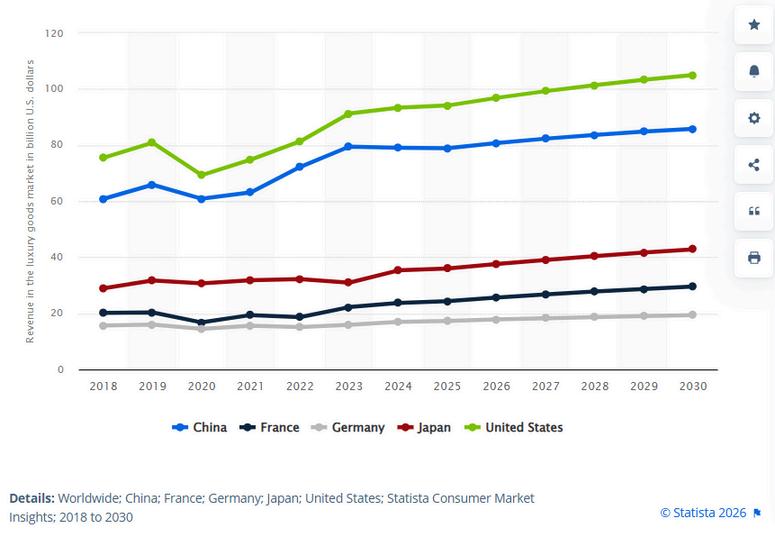
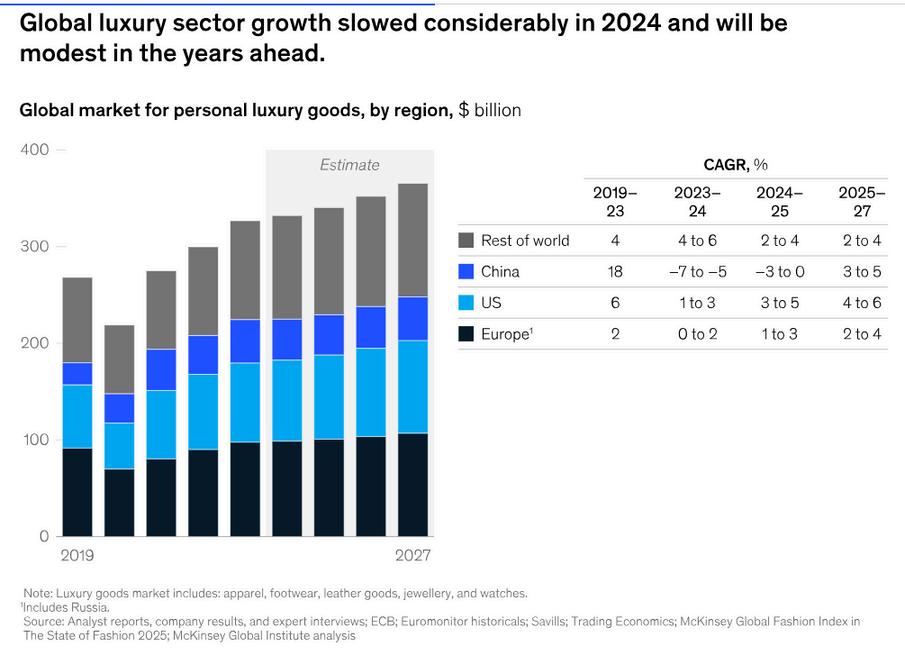
From a macro economic perspective, the global luxury market continues to present strength as it is forecast to grow from $473 9 billion USD in 2024 to $577 8 billion USD by 2029 (Statista, 2024) However, this growth doesn’t suggest significant regional fluctuations, which requires cautious interpretation Consequently, this report adopts a critical, strategy led approach that is researched through secondary data, acknowledging limitations in capturing a rapidly evolving, market and consumer dynamics


Of the selected markets, Monaco presents one of the highest concentrations of wealth globally and has a high percentage of overall luxury consumption, with consideration of their small population According to Knight Frank (2023), approximately one third of Monaco’s residents are qualified as millionaires, giving them the highest density of ultra high net worth individuals (UHNWIs) in the world This wealth concentration is supported by Monaco’s political stability and reputation as it being a location where wealth is preserved This supports in the continuation of attracting the global elites (Knight Frank, 2023; Deloitte, 2024) Their luxury market is highly concentrated with prestigious retail districts such as Monte-Carlo’s, Carre d’Or and the One Monte-Carlo development, where luxury brands sell close to five-star hotels, casinos, marinas, and cultural institutions This creates a fully immersive luxury system (Visit Monaco, 2024; Monte-Carlo SBM, 2024)
Consumer behaviour in Monaco highly differentiates from aspirational luxury markets, such as Mexico, as purchasing decisions are driven less by wanting status and more by exclusivity, heritage and value (Kapferer & Bastien, 2012; Bain & Company, 2024) Yves Saint Laurent aligns closely with the intersection of luxury heritage and the high end demand in Monaco
In addition, Monaco offers strategic opportunities through the elite events held annually such as the Monaco Grand Prix and the Monaco Yacht Show These events enhance exclusivity and reduce the threat of substitutes by creating an immersive luxury experience However, the Porter’s Five Forces analysis reveals significant structural limitations The competitive rivalry is intense due to the market’s small size and the strong presence of heritage luxury houses such as Hermes and Chanel, whose established legitimacy strengthens the consumers loyalty (Kapferer, 2015; Okonkwo, 2016). The bargaining power of buyers remains high, as the ultra high net worth consumers have extensive access to luxury brands, increasing the pressure of differentiation and store experience The threat of new entrants is low due to the barriers caused by high reputation however, Monaco’s reliance on affluent tourism and limited retail space restricts the regions long-term growth This positions it primarily as a prestige market rather than a growth opportunity for YSL to scale.
In contrast to Monaco, Mexico reveals a large and emerging luxury market that is shaped by significant demographic, economic and political differences With a population exceeding 130 million, Mexico has evident income inequality, resulting in distinct consumer segments with vastly differing spending power and priorities. From a macro economic perspective, economic growth and regional trade integration, particularly through strong trade relationships with the United States and Canada, support Mexico's market expansion All while their political complexity and employment landscape create uneven luxury consumption patterns Despite these challenges, Mexico offers growth potential for YSL, with luxury market revenues projected to increase from $838 million USD in 2025 to $995 million USD by 2030 (Statista Market Insights, 2025).
Applying Porter’s Five Forces, competitive rivalry in Mexico is fairly moderate but increasing This is driven by the expansion of global luxury brands targeting urban centres such as Mexico City The bargaining power of buyers varies depending on their segment, affluent consumers prioritise heritage and long-term value, while the aspirational consumers, who drive volume growth, show higher price sensitivity and lower brand loyalty The threat of substitutes is higher than in Monaco, as aspirational consumers may trade down to premium or accessible luxury alternatives, such as categories like beauty and accessories The aspirational segment aligns with Veblen goods theory, where the brands visibility and price suggest social status, reinforcing the strategic importance of accessible luxury categories for YSL (Ansari, 2023).
Differently to both Monaco and Mexico, China represents a broad and structurally complex luxury market shaped by their mass scale, generational change and evolving consumer values With one of the largest populations of approximately 1.4 billion, China accounts for over one third of global luxury consumption. With Chinese consumers projected to represent around 40% of the global luxury market by 2030, including overseas purchases (Bain & Company, 2023) From a PESTLE perspective, economic expansion and digital infrastructure support continued market growth, while political regulation, sustainability pressures and cultural expectations increase the level of complexity The luxury consumption in China is predominantly driven by Gen Z and Millennials, who account for over 65% of spending, which is significantly higher than in Western markets This highlights the importance of long-term brand engagement (McKinsey, 2024)
PESTLE Monaco (Western Europe)
Mexico (Latin America) China (East Asia)
Political
Economic
Highly stable political environment with strong governance and favourable tax structures, reinforcing Monaco’s role as a wealth-preservation and elite luxury destination
Moderate political stability with periodic uncertainty, which can affect consumer confidence but does not significantly deter luxury consumption among affluent and aspirational segments
Social
Technological
Extremely high concentration of UHNWIs with low price sensitivity, but limited population size restricts long-term volume growth.
Luxury consumption driven by heritage, exclusivity and discretion rather than conspicuous status signalling, favouring ultra-heritage brands
Lower reliance on digital innovation in-store, with luxury experiences prioritising personal service and physical environments
Large and growing economy with increasing upper-middle-class wealth, supporting aspirational luxury consumption and longterm market development.
Social mobility and status signalling drive aspirational luxury consumption, particularly in visible categories such as accessories and beauty
Growing digital adoption, particularly in social media and ecommerce, supporting brand discovery and aspirational engagement
Strong central government control with regulatory oversight, creating a stable but tightly managed operating environment for foreign luxury brands
One of the world’s largest luxury markets with high growth potential, though recent economic moderation increases consumer selectivity and competition.
Younger, digitally native consumers place increasing importance on brand storytelling, cultural relevance and experiential value rather than logo-driven consumption
Highly advanced digital ecosystem, where CRM, social commerce and data-driven personalisation are critical to luxury brand success
Legal
Environmental
Strong intellectual property protection and low regulatory risk for established luxury brands
Increasing expectations for sustainability among elite consumers, though exclusivity and craftsmanship remain primary drivers of value.
Intellectual property enforcement exists but remains inconsistent, increasing the importance of brand control and distribution management
Sustainability awareness is emerging but remains secondary to price accessibility and brand visibility.
Strict regulatory environment governing data usage, advertising and foreign brands, requiring careful compliance and localised digital strategies
Rising consumer and regulatory focus on sustainability, traceability and ethical production, influencing purchasing decisions among younger consumers.
Maintain prestige and visibility with limited investment; focus on brand theatre, elite experiences and cultural relevance rather than revenue growth
Invest selectively in entry-level luxury categories to build share; success depends on converting aspirational consumers into long-term, higher-value customers
Continue investment but with strict control; prioritise CRM, gated access and experiential engagement to sustain growth while protecting brand equity
No markets currently fall into this category; YSL should avoid markets where growth and brand leverage are both limited
The boston box framework is applied to go alongside the external market analysis by evaluating how YSL should prioritise and allocate internal resources across its product portfolio in response to differing markets While PESTLE and Porter’s Five Forces identify external opportunities and constraints, the Boston Box provides an internal assessment for YSL’s existing product categories This is particularly relevant for a multi market luxury brand such as YSL, where growth potential, competitive intensity and consumer demand vary significantly across territories.
When the Boston Box framework has been applied to YSL’s portfolio, it suggests that the products perform distinct strategic roles across the three markets. In Monaco, core fashion lines function as the brands cash cows, that reinforce the brands prestige within a mature but low growth environment. In Mexico, accessible luxury categories such as beauty and accessories operate as stars, benefiting from high market growth and expanding the aspirational consumer. In China, digitally driven fashion and experiential retail formats represent question marks. They offer substantial growth potential but require large investments to navigate intense competition and rising buyer power. This portfolio based perspective reinforces the need for selective resource allocation, ensuring that investment decisions are aligned with both market attractiveness and YSL’s internal capacity to sustain a competitive advantage
Applying Porter’s Five Forces, competitive rivalry in China is exceptionally high due to the intense market saturation. Also the presence of both global luxury houses and strong domestic competition. While luxury consumption aligns with Veblen’s theory, recent evidence suggests a behavioural shift towards more selective purchasing, increasing the bargaining power of buyers, who now demand cultural relevance, sustainability and an immersive brand experiences alongside status signalling (Statista, 2024). The threat of substitutes has also increased, as younger consumers may favour niche, sustainable or experiential luxury alternatives. China have also participated in the production of dupe culture, in which aspirational consumers are able to access counterfeit luxury items. Consequently, despite China’s undeniable growth potential, brand visibility alone is insufficient, YSL must navigate the intense competition and rising consumer expectations This positions authenticity and value creation as central to sustain success (Porter, 2008)
Porters 5 Forces Monaco (Western Europe) Mexico (Latin America) China (East Asia)
Competitive Rivalry
Threat of New Entrants
Very high among ultra-heritage houses such as Hermes and Chanel, where brand legacy and scarcity dominate competition rather than price or volume.
Very low due to extreme capital requirements, strong brand loyalty and the cultural entrenchment of heritage luxury brands.
Bargaining Power of Buyers
Bargaining Power of Suppliers
Low, as UHNW consumers prioritise exclusivity and heritage over price sensitivity.
High, due to reliance on specialised craftsmanship, artisanal production and premium materials.
Threat of Substitutes
Low, as luxury consumption is tied to symbolic value, heritage and exclusivity rather than functional substitution.
Moderate, with fewer global luxury houses and lower competitive sophistication, particularly outside major urban centres.
Moderate, as emerging luxury and premium brands can enter through accessories and beauty categories.
Moderate, particularly among aspirational consumers who compare brands and prices across accessible luxury categories.
Moderate, with greater flexibility in sourcing for beauty and accessory categories.
Moderate, as premium and affordable luxury brands can substitute for higher-end products.
Very high due to market scale, global brand concentration and intense competition across both global and domestic luxury players.
Low to moderate, with high investment, regulatory complexity and brand trust acting as significant barriers to entry.
High, driven by informed, digitally literate consumers with strong brand awareness and increasing selectivity.
Moderate to high, particularly for premium materials and high-quality manufacturing supporting luxury positioning.
Moderate, with increasing competition from domestic premium brands and alternative luxury experiences.
9
To summaries the overall market analysis, in markets where symbolic strategies outweigh scaling, such as Monaco, YSL should prioritise selective visibility through event led partnerships and brand activation, rather than extensive retail expansion This approach preserves the brands exclusivity, ensuring that the strategy is aligned with brand value building rather than volume driven performance In addition, emerging markets such as Mexico require a more complex strategy. This is because YSL should simultaneously market its heritage positioning for the affluent consumers in Mexico. All whilst leveraging accessible luxury categories to engage the aspirational segments. Strategic emphasis on controlled distribution, entry-level products and aspirational storytelling can enable growth without diluting brand prestige. China demands the most differing strategic response. The findings indicate that growth potential alone is an insufficient justification. YSL must move beyond visibility based strategies and implement authenticity, digital innovation and transparent sustainability practices to meet rising consumer expectations and mitigate increasing buyer power.
All together, these insights reinforce the need for a globally consistent brand story that is supported by locally differentiated strategies.
Building on the previous market and competitive analysis, this strategy recognises that Yves Saint Laurent’s future performance will depend on its ability to translate the market insight into a disciplined strategic action, rather than broad expansion The findings highlight that luxury value is not created in uniform across the differing markets, but through differing strategies that are built on the consumer maturity, competitive intensity and cultural expectations Consequently, the strategic challenge YSL faces is not identifying where growth exists, but understanding and determining how growth can be pursued without diminishing the brands value.
Therefore, this strategy adopts a global marketing tactic using a tiered approach, in which each territory has a specific role within YSL’s global portfolio Rather than applying a standard growth model, the strategy prioritises differentiation that's controlled through selective access and consumer progression. This ensures alignment between the brands internal capabilities and the external conditions of each market This aim of this approach is to leverage YSL’s strengths in brand recognition, creative heritage, portfolio and CRM capability Simultaneously, while addressing the risks such as increasing buyer power, the intensified competitive rivalry and shifting expectations around engagement and sustainability.
The intent of the strategy is to allocate the strategic priorities according to markets function rather than market size alone Monaco is positioned as the prestigious anchor It reinforces symbolic value and brand legitimacy through selective distribution, private events which enhances the brands cultural relevance. China is treated as a controlled growth market, where investment is directed toward experience management, loyalty and relationship building rather than volume expansion Mexico, on the other hand, functions as an aspirational recruitment market YSL would be using accessible luxury categories such as accessories and cosmetics, to build long term brand relationships and support future progression into higher value segments.
This proposed strategy integrates portfolio, competitive analysis and localisation principles Additionally, providing a cohesive yet flexible framework which YSL can sustain global relevance, manage potential risks and compete against heritage rivals in an increasingly evolving luxury landscape.
CHINA: CONTROLLED GROWTH, BUYER POWER AND CAPABILITY ALIGNMENT
The consumer in China continues to rapidly evolve and benefit Saint Laurent (YSL) because the heritage brand combines strong recognition alongside credibility within the market This allows YSL to work across both status driven entry points and the more refined categories. From a BCG Matrix perspective, China functions as the star market, but one that requires a much more controlled investment rather than expansion There are categories such as beauty and accessories, that are considered entry level luxury due to the more accessible price points These can be used as a door to recruit new consumers, while limited releases, private digital access and customer relationship management (CRM) led clientele, help move high potential customers into leather goods and ready to wear.
This is in comparison to Mexico, where aspiration and first time luxury purchasing dominate The Chinese consumers are further along the luxury learning curve, as China is the more mature market Unlike Monaco, where ultra wealth eliminates price sensitivity entirely, China requires YSL to carefully balance growth with exclusivity.
The strengths of Yves Saint Laurent lie in the power of their global brand recognition and heritage As a result, the brand has succeeded in subcategories such as cosmetic developments and accessories With a strong ability to communicate in ways that creatively align with consumers of differing cultural values and accessibility. This has enabled the brand to broaden their portfolio, spanning beauty, cosmetics, accessories, as well as ready to wear In 2023, YSL was the leading luxury beauty brand in China, with an annual revenue of 4 billion Yuan (Statista, 2025) This approach has widened their reach and assisted to improve their CRM, digital engagement and brand awareness
Alongside an increasingly competitive luxury landscape, a key limitation to be aware of for Yves Saint Laurent in China, is the growing buying power and product knowledge of the luxury consumers This improves buyer power within the market (Porter’s Five Forces) Chinese consumers are highly informed, digitally savvy and have access to a wide range of both global and domestic luxury brands, making switching between labels easier and potentially weakening long term brand loyalty.
As the market matures, consumers are also becoming more selective and have expectations beyond brand visibility alone There has been a rise in sustainability awareness among the younger Chinese luxury consumers As a result, this has increased buyer power, as brands are expected to communicate their ethical credibility. YSL’s operational scale and CRM capability enable sustainability to be embedded as part of the luxury experience rather than positioned as mass market messaging This supports long term loyalty while mitigating a potential reputation risk in a highly competitive market
The evolving consumer expectations are made evident, with 88 percent of Chinese luxury consumers stating that participation in luxury brand membership or loyalty programmes is important or very important to them (Ruder Finn, 2023) This indicates a demand for deeper brand relationships and knowledge in the brands manufacturing process rather than transactional purchasing This places increased pressure on YSL to justify its premium to luxury pricing through meaningful experiences, cultural relevance and relationship building. Without formal transparency, YSL risks reduced customer loyalty, particularly within highly competitive categories such as cosmetics and accessories
In China, pricing should reinforce the strategic hierarchy, through using YSL’S standard pricing strategy, and not using a discounted range approach, to signal value Distribution is the primary strategic lever in this market, which requires a controlled omni channel approach that integrates flagship stores in popular Chinese cities with luxury e-commerce and social commerce platforms This aligns with Chinese consumers’ digital behaviours while allowing YSL to manage availability and reduce buyer power (Porter, 2008) Promotion should move beyond awareness toward consumer and business relationship building, using membership programmes, personalised experiences and controlled access to launches This strategy ensures that growth in China strengthens brand authority rather than diminishing the luxury positioning A recommendation for a membership program that would closely align with the digital habits of the Chinese consumer is a ‘We-chat’ digital membership Accessible through product purchase, members will automatically be enrolled to a tiered system based on purchases and be rewarded through personalised content, early access to drops and event invitations Using localised translations to communicate effectively, this would work in China, as it aligns with their local digital habits, enables control over the access within a scalable platform and supports the omni channel distribution without the risks of over exposure
On the contrary, the challenge YSL faces in Monaco, presents an opportunity in Mexico. Mexico's market conditions give YSL a strategic advantage In an aspirational luxury market, expanding access to beauty, cosmetics and accessories allow these subcategories to thrive, as consumers are increasingly engaging with entry level luxury products that offer status and connection to global fashion houses With a focus on product, these more accessible categories act as introductions into the brand, enabling YSL to build awareness, emotional connection and long term aspiration among middle and upper middleclass consumers in Latin America As purchasing power and brand awareness grow over time, this can support progression into higher value categories and strengthen overall brand value Additionally, it is important that YSL carefully balance accessibility and control This is to ensure that growth within these segments enhances brand desirability rather than diluting the brands value. This will allow the brand to maintain its positioning while capitalising on expansion opportunities in developing luxury markets
Pricing should remain premium but attainable, reinforcing aspiration while encouraging repeat purchase and gradual brand progression. As for place, distribution will remain central to this strategy, with YSL expanding selectively through premium shopping malls, high end department stores and controlled digital platforms to ensure that the brand is visible without overexposure Promotion should support this distribution strategy by emphasising aspirational storytelling, cultural relevance and celebrity led communication that directs consumers toward authorised retail environments This can be done through product placement on local TV and localised messaging across stores. This integrated marketing mix enables YSL to build further relevance in Latin America
A key limitation of this strategy lies in the risk that increased accessibility through entry-level categories and expanded distribution could weaken perceptions of exclusivity if brand control and progression are not carefully managed within the aspirational market
MONACO: PRESTIGE, EXCLUSIVITY AND STRATEGIC LIMITATIONS
When looking at internal capabilities, YSL thrives in its ability to work across both aspirational and luxury segments, which is supported by their strong accessories and beauty portfolio, CRM systems, and a globally recognisable brand identity, as previously stated However, compared to the major heritage competitors such as Hermes and Chanel, YSL may face limitations in the perception of timelessness amongst the wealthy consumers, particularly in markets such as Monaco.
Though Yves Saint Laurent is recognised globally for its wide product offering, brand story and heritage, a key challenge is where the brand sits within the luxury landscape YSL is far more accessible than competitors such as Hermes, who strategically built the luxury brand around scarcity and strict control of access to protect their brand value and exclusivity (Kapferer & Bastien, 2012) While YSL’s accessibility allows it to reach a broader audience and remain culturally relevant, it also reduces the sense of rarity that typically defines luxury (Deloitte, 2023)
Hermes, in contrast, limits availability and distribution intentionally, reinforcing the idea that its products are not easy to get and therefore more desirable (Michigan Journal of Economics, 2022) Hermes have waiting lists that take years and a purchasing structure that is relationship based, acting as a key element of exclusivity (AM World Group, 2023) In highly affluent markets such as Monaco, where status, discretion and exclusivity have a strong influence on the consumers behaviour, this approach works in favour of Hermes, and not so much for Yves Saint Laurent (Bain & Company, 2023).
Within the Boston Box framework, these offerings function as "cash Cows,” that deliver high margins through low volumes and high value sales (BCG, 1970) This is supported by strong brand value As for the logistics within the strategy, pricing should remain firmly premium and justified through rarity and experiential value. Distribution should remain extremely selective, with boutiques, private spaces and invitation only retail experiences acting as the highly important strategic barriers to brand access YSL will contribute to the exclusive events and luxury hotel stays by providing YSL embroidered towels and bath robes, these are subtle luxury communication tactics, to keep to consumer interested but maintaining the brands luxury standing. This controlled distribution reinforces scarcity, a core principle of luxury value creation, and something the luxury competitors do well Promotion should be discreet and relationship led, focusing on private viewings and elite cultural alignment rather than mass communication In this market, distribution is not a growth mechanism but a strategic tool used to reinforce exclusivity and social distinction


STRATEGIC INTEGRATION & COMPETITIVE POSITIONING
From Porter’s generic strategic perspective, Yves Saint Laurent adopts a differentiation strategy They compete on branding, design, heritage and experience rather than price Unlike traditional differentiation models, YSL’s luxury portfolio requires controlled and limited access and selective distribution to preserve their exclusivity, particularly in high growth markets YSL’s strategy is enabled by valuable and one of a kind resources This includes its global brand recognition, creative heritage and diversified product portfolio These capabilities allow the brand to operate across multiple luxury tiers at the same time, capturing aspirational consumers while maintaining their elite brand positioning.
Overall, YSL’s strategy must engage on its strengths in accessibility, creativity and the broad category selection to remain globally competitive These strengths is what will allow the brand to expand and gain new customers and long term B2C relationships With the risk of overexposure consistently being considered, actively managing selectivity through strategic distribution and experience led engagement
GROWTH DIRECTION: ANSOFF MATRIX APPLICATION
Within Ansoff’s growth framework, it's suggested that YSL combines market penetration in established luxury markets such as Monaco. Additionally adopting market development strategies in China and Mexico using entry level categories to recruit consumers while managing progression into high value categories Monaco has a primary focus on market penetration, prioritising the reinforcement of prestige, rather than increasing volume sales China is a market development region, despite its mature and informed market, this development is supported by controlled penetration through controlled access, strategic distribution and CRM led growth. Additionally, Mexico is also a market development region, through entry level categories that allow new and aspirational luxury consumers to engage and purchase, encouraging progression in the Latin American region
This report presents that an effective strategy plan is defined by controlled brand management as apposed to the pursuit of scale For Yves Saint Laurent, competitive advantage lie not in identifying markets with growth potential, but in determining how growth can be achieved without diminishing the brands value and long term legitimacy The proposed tiered strategic approach reframes global expansion as a process of strategic role allocation, enabling YSL to balance commercial opportunity with brand control
In an environment that is characterised by the increasingly rising buyer power, intense competition and heightened expectations around experience and sustainability, the visibility led strategies are no longer sufficient Instead, controlled differentiation, selective access and relationship driven engagement work as critical options for maintaining exclusivity while preserving the brands relevance This strategic orientation allows YSL to respond to evolving consumer challenges without compromising its core identity
Overall, the strength of this strategy lies in the alignment of internal capabilities with external market dynamics, prioritising the strategic intentions over short term expansion Also embedding growth within a disciplined framework, YSL is positioned to sustain relevance and compete effectively within an increasingly complex global luxury landscape
Monaco
Prestigious market, improving brands luxury positioning and identity
China Controlled growth market
Maintain a client retention and improve local relationships among hotels, events and high net worth clientele
Year on year CRM retention data Improved relationships and brand engagement measured through sales before activation and afte
Mexico
Aspirational recruitment market
Increase repeat purchase rate. Increased among CRM registered customers.
CRM data tracking purchase frequency and customer spending habits including how what they’re buying and when.
Achieve a 50 % increase in new customers through entry-level luxury categories over 2 years
Sales data from beauty and accessories categories
Monaco Enforcing exclusivity
China Controlled growth & loyalty
Client retention rate.
Purpose
Private event attendance. Brand engagement with said retained clients. Measures brand legitimacy, loyalty and elite relationship strength.
• Repeat purchases CRM member engagement. Mixture of category purchasing Tracks quality of growth and manages the buying power
Mexico Aspirational recruitment
• New customer acquisition
• Entry-level product sales.
Brand awareness growth Evaluates effectiveness of recruitment strategy and future progression potential in other countries in Latin America.
This report looks at strategic opportunities for Yves Saint Laurent across three opposing markets The main aim is to develop localised strategies that still align with YSL’s global brand It also explains why each market requires a different approach and how these strategies can be executed to communicate effectively with target consumers. The analysis found that while each market requires a different strategy, they each have a distinct strategic purpose for longterm stability
For context, the report begins with a market overview. Research was broad, but key insights were understood from the use of PESTLE, Porter’s Five Forces and the BCG Matrix to understand both external market conditions and YSL’s capabilities Starting with Monaco, this market offers one of the most politically stable environments of the three Competitive rivalry in the luxury sector is extremely high, as YSL competes with ultra luxury heritage brands such as Hermes However, the threat of new entrants is low. Monaco functions as a cash-cow market for YSL, offering prestige rather than volume growth.
Monaco has minimal price sensitivity YSL should focus on deepening relationships with existing luxury clientele This can be achieved through invitation only events, private boutiques and experiential brand activations Opportunities also exist through strategic sponsorships and collaborations with elite events. A key challenge identified was the limited availability of market and competitor data, reflecting Monaco’s small size and highly concentrated luxury environment
Mexico contrasts strongly with Monaco It is a larger, growing economy with increasing interest in luxury consumption Competitive rivalry remains high, but the risk of new entrants is greater due to economic fluctuation and market expansion. Within the BCG framework, Mexico functions as a question mark market, requiring higher investment to build brand presence among aspirational consumers
YSL’s product portfolio provides a key advantage in Mexico, through entry-level luxury categories such as beauty and accessories However, this strategy requires significant investment to establish brand identity in a less stable market China holds a strategically critical position within YSL’s global portfolio It is one of the world’s most mature luxury markets and has the largest consumer base Competitive rivalry and buyer power are exceptionally high, consistent with Porter’s Five Forces. This requires YSL to differentiate beyond product, focusing instead on experience, storytelling and relationship-led engagement
China functions as a star market, supporting long-term growth while reinforcing brand value However, this growth must be carefully managed to avoid brand dilution in an increasingly saturated market. YSL’s strategy in China should prioritise digital communication, CRM integration and social commerce Premium pricing should be maintained, while loyalty is encouraged through a tiered membership programme focused on access and experience rather than discounts
Finally, success is measured differently across each market In Monaco, success is evaluated through client retention and engagement In China, CRM data tracks repeat purchasing and loyalty In Mexico, success is measured through new customer acquisition via entry-level products Overall, each market has been assigned a clear strategic role, ensuring YSL can grow while protecting long-term brand value.
LAND, Gabriella 2025 ‘High-End Hand-Me-Downs?: How Resale Is Reshaping Luxury Markets – Michigan Journal of Economics’. Umich.edu [online]. Available at: https://sites.lsa.umich.edu/mje/2025/04/03/high-end-hand-medowns-how-resale-is-reshaping-luxury-markets/ [accessed 22 Jan 2026].
LANNES, Bruno and Weiwei XING 2025 ‘Luxury Market in Mainland China to Stay Flat in 2025’ Bain [online] Available at: https://www bain com/about/media-center/press-releases/2024/luxury-market-in-mainland-chinato-stay-flat-in-2025/ [accessed 22 Jan 2026]
LANNES, Bruno, Weiwei XING and Emma GU. 2025. ‘2024 China Luxury Goods Market: Navigating Turbulent Waters’. Bain & Company [online]. Available at: https://www.bain.com/insights/2024-china-luxury-goods-market/ [accessed 22 Jan 2026]
MCKINSEY n d ‘Tapping China’s Luxury-Goods Market | McKinsey’ www mckinsey com [online] Available at: https://www mckinsey com/capabilities/growth-marketing-and-sales/our-insights/tapping-chinas-luxury-goodsmarket [accessed 22 Jan 2026]
MCKINSEY & COMPANY. 2024. ‘The State of Fashion 2025: Challenges at Every Turn’. McKinsey [online]. Available at: https://www mckinsey com/industries/retail/our-insights/state-of-fashion [accessed 22 Jan 2026]
MONACO 2025 ‘Visit Monaco - Organisez Votre Séjour à Monaco’ Visitmonaco com [online] Available at: https://wwwvisitmonaco com/ [accessed 22 Jan 2026]
MONACO. n.d. ‘Monte-Carlo Société Des Bains de Mer, Hotels, Restaurants, Casinos in Monaco’. www.montecarlosbm.com [online]. Available at: https://www.montecarlosbm.com/en [accessed 22 Jan 2026].
RODEA, Alex 2025 ‘A Summary of the Luxury Strategy: Key Insights & Principles’ Alexrodea com [online] Available at: https://alexrodea com/the-luxury-strategy-summary/ [accessed 22 Jan 2026]
STATISTA 2025 ‘Luxury Goods - Mexico | Statista Market Forecast’ Statista [online] Available at: https://www.statista.com/outlook/cmo/luxury-goods/mexico [accessed 22 Jan 2026].
STATISTA 2022 ‘Global Personal Luxury Goods Market Value Forecast 2012–2025’ Statista [online] Available at: https://www statista com/statistics/1063757/global-personal-luxury-goods-market-value-forecast/ [accessed 22 Jan 2026]
STATISTA 2023 ‘Value of the Global Luxury Goods Market 2009–2018 | Statistic’ Statista [online] Available at: https://www.statista.com/statistics/266503/value-of-the-personal-luxury-goods-market-worldwide [accessed 22 Jan 2026].