
Farrago Magazine 2026 — Volume 102, Edition One

Page 1


photos + graphics product placements book launches magazine features event activations + coverage etc.

We are accepting sponsors, collaborators and advertisers in 2026. If you’re a business who wants to reach young people, send your ideas and enquiries to editors@farragomagazine.com

and here!

Tune in to our student radio station live: radiofodder.live or listen to past episodes: https://www.mixcloud.com/RadioFodder_/ @radiofodder

Join the longest-running student publication in Australia (us!)

join@farragomagazine.com (applications) editors@farragomagazine.com (submissions)

More info and department-specific details: farragomagazine.com/contribute

Acknowledgement of Country

We share these stories from the stolen lands of the Wurundjeri and Boonwurrung people of the Kulin Nation. Sovereignty was never ceded. The team at Farrago pays our respects to the Traditional Owners and Elders past and present, who have and continue to be the first storytellers on this land.

It is the responsibility of all writers, readers and students to consider the colonial ideologies that remain upheld and unquestioned in so-called Australia, and to resist these structures through education. This always was, and always will be Aboriginal land, and we encourage all readers of Farrago to nurture an understanding of the Indigenous histories from the places you call home.

Contents

Editorial — 2

Op-Ed

REGENERATION PROTOCOL

Khush Shah — 4

UMSU Office Bearer Reports — 6

News In Brief — 9

Kew Stabbing Enters National Femicide Debate And Sharpens Focus on Student Safety On Campus

Syakira Setiananda — 13

Invasion Day Protest Terrorist Attack

Felicity Bayne — 15

Containing Catastrophe: Bushfire Management In The Age Of Climate Change

Finley Monaghan-Mc Grath — 16

Right Tur n Ahead: One Nation Takes The Lead As Coalition Stalls

Pryce Starkey — 18

Unionism At The Hands Of Labor Party

Culture — 20

Studying Abroad—A Rite of Rupture

Guanhua Huang — 24

We Are Not Neighbours

Zeinab Jishi — 26

Obscenities of the Wealthy Orientals

Maxwell Chong — 28

Can Reading Books by Bad People Make You a Better Person?

Saria Ratnam — 30

Variations on the Theme of Hunger

Fergus Sinnot — 32

Zain Bleed’s Flying Sheep

Ruby Weir-Alarcon — 34

Melbourne Fashion Festival

Felicity Bayne — 36

A Night at le Caveau de la Huchette

Sofia Perica — 38

Pillion Introduces My New Favourite Genre: The Dom-Com

Sabine Pentecost — 43

Cover art by Felicity Bayne

Living in Rare Form: When Treatment Means Moving Countries

Rosa Cole — 44

At The Librarian’s Desk: Quotes From a Conversation with the Founder of Terrain

Chiaki Chng — 46

Westwood | Kawakubo: The Fashion Rebellion

Ben Zhou — 49

Chloe Zhao’s Matriarchal Masterpiece Hamnet is a Reminder of Mother Nature’s Wisdom

Astara Ball — 50

In The Absence of O’Hara

Lachie Carroll — 52

Hometown

David Wu — 54

Quidquid agunt homines nostri farrago libelli est

Janice Hui, James Muller & Tom Weir-Alarcon — 56

A Critical Overview of (Some of) the University’s Statues

Janice Hui, James Muller & Tom Weir-Alarcon — 58

Get Ducked! A History of People Getting Thrown Into UniMelb’s Lake

Sophia Chu — 60

Photography Series — 62

Nurhildayati

Hannah Ollerenshaw

Daphanie Wong

Wan Makhzanah Huriyah

Christmas Day | “I Made This Mixtape For You”

Aaron Agostini | Helani Munidasa — 66

The Guilt of Leaving

Megan Nicole Yin — 67

Sand Pills

Amali Deane — 68

Firework Gums

Harrison Abbott — 69

Spineless

Pip Murphy-Hoyle — 70

Birds and Saffron

Sonnett Pandrit — 72

BREAKING: Sit-Down Interview with a Myki Inspector

Eric Xie — 76

Puzzles

Lucy Russ, Jemima Healey, Honey Raut & Lee Tran — 77

Editorials

Maria

Regeneration: renewal or restoration of a body, bodily part, or biological system (such as a forest) after injury or as a normal process.1

Regeneration as a natural process. Regeneration as ongoing. Regeneration as neverending.

Contemporary problems desperately seek answers from the next generation. What is the solution? If not this, then what? But what of the value of pondering, reflecting, inventing, imagining. What of the value of sitting with discomfort, facing it, and regenerating for the sake of the act itself.

The Farrago name has engaged in this exercise since its inception in 1925 with our motto “whatever men do forms the motley subject of our page” anchoring the ethos to always focus on the efforts of students, wherever those may lead. Reflecting on our past and where we wish to go it is clear our purpose has and will continue to be defining student media not by the output, but by the constant act of challenging, learning, regenerating new forms of communication and of creation.

Farrago will remain a place that permits the next generation to experiment. Our change in visual language seeks to welcome the new, the bold, and the brave. Stylistically inspired by Deanna Hitti’s oeuvre2, our cover story seeks to honour the stories present on the grounds of the University of Melbourne, and regenerate their meaning in a contemporary context.

Ruby

As Farrago enters its new century, we, as its inaugural editorial team, play an important role in defining the culture of a new Farrago. As years have gone by, Farrago has developed somewhat of a pretentious reputation across campus, with rigid guidelines making it harder to enter the publication and learn from those around you. This year, in particular, we are looking to change the narrative and alter the culture, establishing less elitist application processes and rather focusing on those who want to grow.

With that, as we move through the year, we fall back to the original ethos of Farrago, with “whatever men do form[ing] the motley of our page”. We seek to increase the number of workshops and teaching opportunities within the system and ensure the publication is representative of the student body’s interests, not our own.

We have continued the managerial structure from the year prior, only this time, increasing the number of people within those positions—developing managerial teams, rather than a set of individual managers. These little things will help us to regenerate the culture and embed Farrago into the modern world.

This edition is the product of the efforts of our ever growing team, to whom we are so grateful for. Without the hard work

1“Definition of REGENERATION.” n.d. www.merriam-Webster.com. https://www.merriam-webster.com/dictionary/regeneration.

²Deanna Hitti’s art at State Library Victoria’s World of the Book; 2025

The idea of ripping the past out at the root and starting anew is seductive. Newness, shiny and fresh, breeds a promise of hope—something I’m finding harder to make last as of late.

These days, the future’s uncertainty drives us back to the past like the comfort of a womb. Where did we go wrong? Was there a time before the rot started to set in? Would we even know if there was? This edition seeks to take our catalogue of feelings—optimistic to pessimistic—as they are, actively creating the ‘now’ as an amalgamation of where we have come from and where we will go.

At university, particularly in an Arts degree, we are taught to entertain post-structuralist conceptions of reality (boooo, she’s talking about philosophy again!). The idea that we construct reality through our experiences, our interaction with the world, a thumbprint on the wet cement of society, is attractive to those of us discontent with the way things are. If social reality is constructed, then its construction is ongoing, so long as society remains ongoing. The state of flux our reality occupies is inherently malleable, allowing for change, for reflection, for action. The uncertainty is opportunity, for we are a work in progress.

In this new year, Farrago has certainly regenerated, but the roots of the past still nourish what we’re building. They maintain a firm grip on the future, bursting forth in expected bloom.

libraries and schools overseas are being bombed to the ground. It’s easy to romanticise a bygone analogue world when the insatiable cruelty of the current leaves us little else to turn to. Upheaval breeds a need for regeneration.

This year, our UMSU budget was cut by 22% and salaries by 40% as voted on by Students’ Council, and all around us, we watched as arts institutions and beloved cultural projects were forced to close or reduce their operations. In Writing Feature Stories, Matthew Ricketson writes that journalism, with its “constant deadlines and yen for the new, is notoriously unreflective.”3 Arguably, in a time where the importance and function of media is constantly in question, journalism is forced to be more reflective than ever. Above all, our work is an existential one. It should excite. It should identify. It should challenge and comfort and converse. But what should it be?

Farrago also looks different this year. In an attempt to represent our hub of information, entertainment, art and criticism, our new logo honours the modes of mass print communications seen in political and counter-cultural spaces. The pamphlet, the rave ticket, the gig stamp and the badge were all used to democratise ideas, or to express affiliation and identity. Above all, they brought people together in the way that we hope to serve our valued and growing media collective. We’ve opted for our brilliant Creative Manager Khush’s poem as an op-ed in this edition because after all that is solid melts into air (lol), what should remain is not apathy or fear, but a boundless capacity for innovation and interrogation.

Art
3Ricketson M. Writing Feature Stories : How to Research and Write Newspaper and Magazine Articles. Allen & Unwin; 2004.

by Khush Shah

REGENERATION PROTOCOL

Archive Classification: Living Document

Revision: 5.0

Clearance Level: Internal

I. PRELIMINARY FINDINGS

The damage was subtle. No visible breach of skin. No interruption in syntax. The subject continued laughing at appropriate intervals.

However, imaging revealed an interior hollow expanding behind the sternum, measured not in centimeters but in withheld confessions. Silence had begun construction. No alarms were triggered.

II. BACKGROUND

Prior configuration believed stable.

Records indicate:

A structure capable of tenderness.

A pulse calibrated to remembered names.

A rib cage shaped around a particular absence. Cause of fracture remains undetermined.

Possibilities include: prolonged exposure to unspoken weather accumulation of unsent sentences gravitational pull of former versions Original blueprint unavailable.

III.

APPLICATION FOR REGENERATION

To initiate regrowth, the subject must confirm:

1.Acceptance that restoration is impossible.

2.Willingness to undergo architectural modification.

3.Consent to the possibility of unfamiliar outcomes.

Please note:

Regeneration does not imply resemblance.

Regeneration does not imply mercy.

Regeneration implies continuation under altered conditions. Signature required below. The hand hesitates.

IV. RECONSTRUCTION LOG

Day 1

Bone begins knitting in darkness. It does not ask permission.

Day 3

Scar tissue arranges itself with quiet authority.

Day 6

The lungs expand around newly reinforced silence.

Day 9

A memory attempts to return in its original form. It is denied entry.

Day 12

The mouth rehearses an old name and fails phonetic verification.

Day 16

The mirror scans the face. Identity mismatch.

Day 21

The body stabilises. Stability does not equal familiarity.

V. STRUCTURAL VARIANCE REPORT

The regenerated rib curves at a different angle. It protects an ache that cannot be cross-referenced.

Former grief has been reformatted.

Its edges dulled.

Its coordinates shifted.

Certain rooms in the interior architecture have been sealed.

Others have multiplied without authorisation.

The subject reports a sensation of occupancy by a successor.

VI. ETHICAL REVIEW

Question submitted:

If the original framework is unrecoverable, does continuity still exist?

Response:

Continuity is an administrative convenience.

Replacement ensures operational efficiency.

Authenticity cannot be guaranteed.

VII. POST-REGENERATION ASSESSMENT

Speech resumes.

Laughter returns, slightly delayed.

Hands relearn the geography of another’s shoulder.

Silence remains foundational, but now reinforced.

The fracture is no longer detectable.

Neither is the original self.

VIII. ADDENDUM: ON SUCCESSION

Regeneration is not return. It is succession.

What grows back does not remember breaking. What continues does not recognise what was lost.

The body proceeds.

The archive updates.

The file remains open.

Breathing.

“Regeneration Protocol” reframes regeneration not as restoration but as succession. Rather than imagining healing as a return to an original state, the poem presents it as a procedural reconstruction in which continuity cannot be assumed. Structured as a living document, the piece adopts bureaucratic and clinical language to mirror the systems through which identity, damage, and recovery are processed and validated. This formal structure contrasts with the intimate implications of fracture, suggesting that what emerges after rupture may operate efficiently yet no longer resemble what preceded it. The poem ultimately questions whether regeneration preserves the self or authorises its replacement.

The University of Melbourne Student Union Office Bearer Reports

President

“Hi everyone! My name is Lushy and I’m so excited to be your UMSU President for this year!

Whilst you’ve been enjoying your summer breaks, the Office Bearers and I have been working hard to ensure that you have an amazing 2026. It was incredible to see so many of you come along to our O-WEEK@ UMSU events! For 3 days we had lots of free food, live student performances and SO many clubs. I hope that you’ve been able to find a club you love! Or even get involved with one of our many departments through their collectives, events and more!

I’ve personally enjoyed the time I’ve spent visiting some of the colleges and meeting with students all around the crescent!

This year I want to focus on three main things: accessibility, safety, and student representation.

This semester I’m launching, Safe@ Uni, Safe@Home a campaign directed at keeping YOU safe through a number of ways. It’s 12 weeks and 12 topics all about keeping you safe and making sure the Uni supports you!

As always come chat to me about anything and if you want to keep up with what I’m doing be sure to follow @umsu_president on Insta!

General Secretary

Hi there, my name is Daniel Motika and I am your 2026 UMSU General Secretary. The start of semester is always a bit hectic (but exciting), so I want to warmly welcome our new cohort, whether you’re brand new to UniMelb or returning for another year. A little about my role: the General Secretary position can be less

day-to-day than some other offices, but it’s a key part of making sure the Union runs smoothly and that student reps have the support they need to do their work. From serving as the official secretary of the organisation, to acting as the publisher of UMSU communications, to processing and maintaining minutes and records for committees and Council, there’s a lot happening behind the scenes to keep everything accountable, organised, and moving forward.

Beyond the formal side, I help to connect volunteers with UMSU opportunities and events, or making sure important student issues reach the right people in the University, advocacy, or legal support spaces. Like all student representatives, I work closely with the officers and broader student community to strengthen student voice, tackle student problems, and build community. At the same time, the role also involves pushing reforms that improve the Union as a whole.

Please don’t hesitate to get in touch if you have any questions or issues and I’d also encourage you to get involved in your student life and your student union.

Welfare

Tsun Ying (Cynthia)

Wong & Alexander Hams

It’s been an amazing month preparing for Orientation Week and the semester ahead. This year, UMSU Welfare will be introducing frozen meals into Union Mart and expanding Welfare Brunch from once a week to three days a week. With the cost of living crisis continuing to impact students, ensuring students have access to adequate support remains our top priority. We also recently visited Werribee campus, where we chatted with student representatives and staff about increasing UMSU’s presence and services there. Lastly, a big thank you to everyone who visited us during

Orientation Week. We were genuinely blown away by how popular our pop-up Clothes Swap sessions were, and we are now planning to incorporate that into our Welfare Brunch schedule to make it a more regular event. We have so much planned for the year ahead and we cannot wait to share this journey with you.

Clubs & Societies

Alex Gwynn & Seamus Donnellan

We are so excited to be representing the Clubs and Societies department in 2026!

We have had an incredible start to the year with Clubs Expo where we showcased 208 amazing clubs over 3 days, which we couldn’t have done without the efforts of the voluntary committees who run the clubs! We also want to give a huge thanks to the UMSU staff who made the week go so smoothly, our 2026 C&S Committee members, and of course all the students who attended to make what we do worth it.

We are looking forward to a year full of opportunities for clubs and societies to make the most out of and hope that every student can find a club where they belong!

Environment

Bella Beiraghi & Kay Pritchard

Hey! We’re the Enviro OBs Bella & Kay <3

Our departments mission is clear, we want a more sustainable and green University.

Over the first few months of the year we have begun planning for our Fossil free degrees campaign in collab with other Uni’s to hopefully push UniMelb to divest from climate criminals such as Santos, Rio Tinto and

Exxon Mobil, all of which have varying concerning relationships with UniMelb which they refuse to disclose!

We are again running Meat Free Mondays to bring you sustainable FREE food fortnightly at the IDA bar! We also have our environment collective on the alternating weeks which also will get you FREE food! Our department also has been planning to run low waste budget cooking workshops and teaching you how to farm your own herbs and veggies, yay easy cheap food!

We’ve got plans to run Thrift markets to make our clothing consumption circular and to collaborate with clubs to run Aid fundraising event for the Environment. Remember to attend the March for Forests on March 22nd with Bob Brown so we can fight to end native forest logging.

We hope to meet you soon! - With Love and Green Thumbs UMSU Enviro

Education

Corbin Afanasyev, Hesheya T Anandan, Hridey Kapoor & Rutvi Tolani

O-week was massive for Education! We kicked off the semester with welcoming the new students to our campus, teaching them about UMSU and what the Education departments are all about. We printed off plenty of copies of our NEW handbook “Your Uni. Your Rights.”, which you should grab a copy of if you’re new (or really even if you’re not).

We engaged students and chatted to them over some snacks at our Volunteer Welcome event which we held at Ida Bar in the first week; and it was lovely to meet you all! For all those who missed out, this was technically the first of our ongoing series of Education Action Collectives. We run these on a fortnightly basis all through semester, and hope to see you at the next one!

As always, it’s been lovely to get settled into this role, and, from the Education team, we have been so happy to have met all the new people through this Union. We look forward

seeing more of everyone all through 2026!

Activities

Saaisha Vohra & Louis Huang

The start of the year has been nothing short of electric! We kicked things off with a massive O-Week outreach across Southbank and Parkville, resulting in a significant surge in our student following. Highlights included our participation in the Midsumma Pride March, the Lantern Festival, and the legendary “Soup” event at Ballers Clubhouse, which hosted over 800 students and provided a vital space for newcomers to forge lasting friendships.

Student welfare remains a top priority. We successfully launched the “Party Safe with Tobias” campaign, distributing drink covers and QR-code postcards to promote a safer nightlife culture and digital guide access.

Looking ahead, we aren’t slowing down! We are currently busy organizing initiatives for International Women’s Day and St. Patrick’s Day, alongside our upcoming “Tobias Loves You” project and the highenergy Bites & Bustles. From our “Soft Drink Olympics” to giant games, we’re committed to keeping the Friend Zone the heart of campus life.

People of Colour

Anyang Wal & Chengyang (Eason) Gu

forming, cultural barriers softening, and more students feeling confident to participate, introduce their traditions, and learn from others. It was genuinely heartening to see belonging actively nurtured on campus — not as a slogan, but as an experience students could feel.

Looking ahead, we’ll continue delivering student-oriented services and events that centre inclusion, care, and cultural pride. We’re committed to building a stronger multicultural campus community and creating more opportunities for students to feel seen, welcomed, and supported.

Creative Arts

Semester One has been all about building momentum, creativity, and community.

As Creative Arts OBs, Ethan and I kicked off the year with budgeting and strategic planning to ensure our programs are not only exciting but sustainable and accessible. Behind every paintbrush and playlist is a carefully balanced spreadsheet.

For O-Week, we launched a 5-metre student mural, ran a dance therapy workshop, hosted tote bag painting at both Parkville and Southbank, and gave out Creative Arts merch. Our focus has been creating low-barrier, high-energy spaces where students can experiment, express, and connect — whether they’re experienced creatives or just giving art a go.

Hi Legends! The UMSU People of Colour Department has recently been focused on O-Week and cultural programming, including the Lantern Festival and our Holi celebrations. Across these events, we saw an incredible turnout and a strong appetite for spaces where students can connect through culture, music, food, and shared celebration.

What stood out most was the community effect: new friendships

Looking ahead to Semester Two, we’re excited for Tastings Festival, Above Water (in collaboration with Media), art therapy and dance workshops, tote bag, canvas and mandala collectives, an Arts & Crafts Market, and of course, Karaoke Nights. What we love most is seeing students linger after sessions, meet new people, and return with friends. That’s when we know Creative Arts is doing what it’s meant to do.

Ethan McNeil & Yashesvi Verma

Burnley

Students have a right to good, real food. We’re calling it Grown for Students by Students!

Since Semester Two last year, a passionate group of Burnley students have been harvesting surplus produce grown on campus and redistributing it to students through UMSU’s Union Mart. We’ve since worked with campus staff and lecturers to secure land to grow fresh, organically produced and culturally diverse food, alongside continuing to harvest what’s already here.

With this space, we’re aiming to better reflect the dietary needs and food cultures of our student community, including growing vegetable varieties that many students can’t easily find in supermarkets.

Beyond food access, the project is about connection. Not only is it a right to have access to food, but to food that is produced, shared and eaten in ways that recognise and celebrate its environmental, social, and cultural relationships.

Want to get involved? We run weekly volunteer sessions at the historic Burnley field station and will be hosting food-focused workshops this year (think fermentation, composting and cooking).

If you’d like to get involved, contact burnley@union.unimelb.edu.au or fill in this quick EOI: https://tinyurl.com/BurnleyG4SbS

What’s happening at Southbank? Well, just like the rest of the University, we’ve been full swing welcoming students back into classes. We had a stall for UniMelb’s O-Week where we were situated next to the Muse Festival stall (a dream come true). As well, we ran our own welcoming event in Week 1 - BBQ, ice-cream and stalls of UMSU departments and our beloved clubs (check out the Music Students’ Society, our longest running club!). What’s next? Every Monday and Wednesday we run our breakfasts in the student hub and throughout this year we’re keen to collaborate with Parkville-based departments on running collectives throughout the week. Lastly, we’ve got some big things coming with your very own Media department... follow us at @umsu_southbank to keep up to date with everything happening at Southbank!

Picture taken by Jasmine Pierce! Pictured: Bethanie Matic and Nick Waddington from the VCA Music Theatre Society.

Want to learn more about your Union, Departments & Office Bearers? come to council!

you can find the council schedule at https://umsu.unimelb.edu.au/about/ studentscouncil/

history nerd?

read council minutes from 2019 onwards at https://umsu.unimelb.edu.au/about/ studentscouncil/council-minutes/

come speak to us!

all office bearer offices can be found in Building 168, between Levels 1 and 4.

we have a bar! the ida bar has returned to campus. visit them on Level 1 of 168.

Southbank

Elizabeth Pardallis, Caleb Jarcevic, Charlotte Dickinson & Tirion Luff-White

What’s happening at Southbank? Well, just like the rest of the University, we’ve been full swing welcoming students back into classes. We had a stall for UniMelb’s O-Week where we were situated next to the Muse Festival stall (a dream come true). As well, we ran our own welcoming event in Week

All Office Bearers were invited to submit a report for Edition One of Farrago . The Women’s, Disabilities & Indigenous Officers failed to submit a report.

not a member?

visit

https://umsu.unimelb.edu.au/about/ become-a-member/ to learn how to join UMSU.

News In Brief

For live reporting and timely updates, visit www.farragomagazine.com and follow @farragomagazine on Instagram and Twitter/X.

Alleged ‘Pam the Bird’ Graffiti Artist Trial Update

A 22-year-old Melbourne man accused of being the graffiti artist known by his infamous tag ‘Pam the Bird’ has pleaded not guilty to 209 charges in Melbourne Magistrates’ Court at the beginning of February.

Prosecutors allege that Jack Gibson-Burrell’s graffiti character has caused $700,000 in damages across Melbourne.

Included within the 209 charges are counts of reckless conduct endangering life and serious injury, car theft, and aggravated burglary.

Gibson-Burrell arrived at court on a RipStick with his Lightning McQueen Crocs in sports-mode ready for his defence lawyer, Micky Milardovic to inform the court that they wished to contest these charges in a higher court.

Pam the Bird has been sprayed frequently across Melbourne, notably appearing on trams, high-rise buildings and prominent infrastructure including the “Cheese Stick” column on the CityLink tollway.

Gibson-Burrell and his alleged accomplice, who is also before the courts, have been accused of frequently abseiling from rooftops to paint these high-profile locations. Consequently, “Pam the Bird” has become a familiar sight to many in the city.

Gibson-Burrell will likely appear again in County Court during March 2026.

The First Stage Of The Greenline Project Is Now Open To The Public.

The first sections of Melbourne’s Greenline boardwalk and promenade along the north bank of the Birrarung/Yarra River opened to the public late 2025.

The 450m riverside boardwalk stretches from Batman Avenue to the eastern edge of Federation Square and is the first of five planned stages of the project.

This initial section is home to over 70 native trees, roughly 25,000 native plants and 900m2 of seating and lawn along the river.

The City of Melbourne approximately matched the Albanese government’s $20 million investment into this first stage. While this first section is a move towards the originally planned 4km boardwalk running between Birrarung Marr and the Bolte Bridge, the other four key segments of the project are unlikely to be finished anytime soon.

This is a result of Greenline funding being redirected to other projects, such as the new community hub in North Melbourne and a library in Southbank.

Phillip Island Loses The Australian MotoGP To Adelaide Street Circuit

The Australian Motorcycle Grand Prix will be raced in South Australia from 2027, giving the sport its first street circuit.

Adelaide’s track will be made up of 4.195-kilometre of city streets. Organisers say the raceway will allow speeds of up to 340 kilometres per hour.

The MotoGP Sports Entertainment Group signed a six-year race deal with the South Australian Government, replacing the Phillip Island Grand Prix Circuit as host.

The move was the result of a disagreement between MotoGP Sports Entertainment Group and the Victorian Government. The former wanted the race moved to the infamous Albert Park street circuit; the government did not.

The Victorian Minister for Tourism, Sport and Major Events, Steve Dimopoulas said the government had offered additional funding to keep the race at Phillip Island.

Member for Bass, Jordan Crugnale stated, ‘the race and the benefits it brings are important for the region’.

Phillip Island has spent nearly 30 years hosting the event, annually welcomes tens of thousands of MotoGP attendees, supporting local businesses and close to 300 full-time jobs.

Western Health Opens New Footscray Hospital

Words by Taylah Xuereb

The new Western Health Footscray Hospital officially opened on 18 February 2026, marking a major achievement for healthcare in Melbourne’s west.

The refurbished facility will house more than 500 beds and annually treat approximately 15,000 additional patients.

As one of Victoria’s largest health infrastructure projects, it is expected to support the growing demand for healthcare in Melbourne’s west.

This $1.5 billion renovation has created new facilities, including expanded mental health services and Victoria’s first fully public pathology service.

Moreover, the hospital sits on the corner of Ballarat Road and Geelong Road, next door to Victoria University, enabling a partnership that supports the education of future healthcare workers.

However, on opening day, thousands of health workers gathered outside the new facility to protest ongoing wage negotiations with the Victorian Government. Coinciding with the demonstration, the government made an offer that more closely met the demands of healthcare workers.

Premier Jacinta Allan personally intervened in the dispute, offering a 12 per cent wage increase over two-and-a-half years, which is close to the workers’ original demand of 12 per cent over two years.

‘But we’re closer to a deal now that we’ve been in over a year,’ stated the Health Workers Union Lead Organiser Jake McGuinness.

Student Council Clashes over Budget Restraints

Tension simmered at Students’ Council 3(26), where office bearers clashed over budget cuts, revenue projections, and the reality of what it means to run a student union.

Before the routine passing of the office bearer reports, Activities OB Saaisha Vohra spoke to protest budget cuts to the Activities Department and seemingly unrealistic revenue targets, starting a prolonged debate over budgetary restraints.

OBs from Environment, Media, and Welfare expressed sympathy for Activities, but fell short of backing their criticism of inflated revenue targets.

Environment OB Kay Pritchard stressed the dangers of overspending, citing the challenges that the Environment Department has faced due to ongoing budget cuts. “The reality is that we have to do with what we have,” Kay told Activities.

Media OB Ruby Weir-Alarcon suggested alternative methods of reducing spending, like collaboration with other departments, inviting Activities to use music and radio equipment used by Media.

A lengthy exchange then began as to whether Activities had already contacted Media about such a collaboration.

UMSU CEO Sarah Pheasant reiterated to Council that revenue

estimates are projections, and should not be relied upon for future spending, urging unity among the departments.

“I need you all on board. If this conflict goes back to Council, all you are is proving that Council is not fit for purpose,” she said. “How do we look forward into the future, so this student union is here for students?”

Trump’s “Board of Peace” Inaugural Meeting Seeks Big Pledges, Raises Big Questions

United States. President Donald J. Trump convened the first high-level summit of his Board of Peace (BoP) on 19 February 2026, at the United States Institute of Peace in Washington, D.C., marking a high-stakes debut for the initiative that Trump first unveiled at the World Economic Forum earlier this year.

In his opening address, Trump touted participation from roughly 27 countries and observers from the European Union, and announced that nine nations had pledged nearly $7 billion USD toward Gaza’s reconstruction which is a centrepiece of the BoP’s agenda. The USA pledged $10 billion USD of its own, though President Trump did not detail how these funds will be allocated or specify whether Congress has approved the spending.

In parallel, leaders from multiple nations committed forces to a proposed International Stabilization Force designed to secure the territory. According to organisers, several countries agreed to deploy thousands of personnel to support security and reconstruction..

Yet the gathering drew sharp criticism from legal experts and global diplomats who argue the BoP’s structure resembles a private club anchored by Trump’s executive authority, rather than a balanced multilateral body, raising fresh doubts about legitimacy and long-term impact.

The United Nations and several Western powers have stayed largely on the sidelines, questioning whether the BoP will complement or compete with established global peace mechanisms.

Stranded in Syria: Australian Families Linked to Islamic State Face Harrowing Stalemate

Dozens of Australian women and children connected to alleged Islamic State (IS) fighters remain trapped in the al-Roj detention camp in north-eastern Syria, their hopes of returning home dashed amid political resistance in Canberra and brutal conditions on the ground.

On 16 February 2026 , a convoy of 34 Australians (11 women and 23 children) most of whom are relatives of deceased or jailed IS fighters, attempted to depart al-Roj under Kurdish military

escort toward Damascus and onward to Australia.

Syrian authorities blocked their exit near Qamishli after issuing a warning they would be attacked if they crossed into government-controlled territory. The distressed group was forced back to the camp, where some children have never known life outside tents.

Inside al-Roj, recorded voices of children describe their desire for simple freedoms — ice cream, cartoons and safety — underscoring their plight amid a growing humanitarian controversy.

Some of the detained mothers have publicly urged Canberra to repatriate their children separately, a plea that has added urgency to the debate.

New South Wales is preparing reintegration plans for some returnees, while federal leaders grapple with security concerns and public backlash over the potential repatriation of those linked to extremist networks.

Debate continues over whether Australia should bring home vulnerable children or leave them in camps that critics call unsafe and unjust.

Chaos Erupts in Mexico After the Death of the Nation’s Most Powerful Cartel Leader

Chaos erupted in Mexico after the leader of the New Generation Jalisco Cartel (CJNG), Nemesio Rubén Oseguera Cervantes, “El Mencho,” was shot and killed by the Mexican army.

In response to the death of their kingpin, the CJNG launched a spree of unprecedented attacks against soldiers, infrastructure, and civilians across 20 different Mexican states. So far at least 73 people have been killed, including 25 National Guard soldiers, marking Sunday the 22nd as one of the deadliest for the army since the revolutionary and religious wars of the early twentieth century.

Luis Romero Valdez, 20, from an outer suburb of Guadalajara, the capital city of Jalisco, explained to Farrago how the attack against the state began:

“Yesterday we went to [hike] a hill, and we had to turn back because of the events that were happening in the city. When we returned to the town of Santa Lucía, the municipality was like a ghost town.”

“We took shelter in a church and shortly after we started hearing bursts of gunfire at close range.”

While reflecting on watching his home descend into violence, Luis drew on a Mexican saying which translates to, “When it’s your time, it’s your time. And when it’s not, nothing you do will make it so.”

He continued, “Every day different crimes happen in the state of

Jalisco, you just hear about them and then keep living your life.” Guadalajara, a World Cup hosting city, was one of the most targeted areas during the assault.

Organised crime groups successfully disrupted civilian life as shops were set alight, blockades containing burning cars obstructed main roads, and reports emerged of multiple international airports being attacked, causing flights to be suspended.

Luis, saw these effects firsthand, “a few blocks from my house there’s a Oxxo store, yesterday they set it on fire.”

New Generation Jalisco Cartel

The CJNG is widely considered the most powerful cartel in Mexico, known for their speciality in cultivating synthetic drugs to traffic into the United States and other countries including Australia.

The organisation has been known for their use of hyper-violent tactics in the past. In 2015 they shot down an army helicopter with a rocket launcher.

While their military arsenal and capacity had allowed El Mencho to function outside the rule of law in Mexico since the CJNG was conceived in 2009, it was the tracking of a romantic partner of his that led authorities to his hideout.

After a firefight with authorities, the cartel boss and two of his bodyguards were seriously injured and captured, and were taken into custody only to die soon after while being airlifted to a hospital in Mexico City.

Kew Stabbing Enters National Femicide Debate And Sharpens Focus On Student Safety Beyond Campus

Aserious stabbing in Melbourne’s inner east has intensified national conversations about gendered violence and femicide, raising renewed questions about how universities respond when the risks students navigate lie beyond their physical grounds.

A young woman remains in hospital after she was stabbed multiple times in the driveway of her Kew home earlier this month in an alleged attack by an 18-year-old man known to her. Emergency services were called to the residential street at approximately 1am.

Victoria Police allege the offender fled the scene before his body was later located in regional Victoria. Investigators have said they are not searching for further suspects and that there is no ongoing threat to the public.

The incident did not occur at the University of Melbourne. But its proximity to Parkville, and the ages of those involved, has made it resonate with the student cohort, whose daily routines extend far beyond campus.

It has also unfolded during Australia’s ongoing reckoning over what researchers, advocates and victim survivor organisations describe as femicide: the gendered killing of women and the continuum of violence that precedes it.

A National Crisis

The term femicide gained national prominence during the mass rallies against gendered violence in 2024, when tens of thousands of people gathered in cities across the country calling for stronger prevention and response.

While the Kew attack is not being investigated as a homicide, its circumstances — a young woman seriously injured in a non-random attack by a man known to her in a residential setting — reflects patterns that criminologists and prevention organisations say are consistent with the broader landscape of gendered violence.

According to the Australian Bureau of Statistics Personal Safety Survey, one in five women in Australia have experienced sexual violence since the age of 15. Separate figures from the Australian Institute of Criminology show that, on average, one woman is killed every nine days by a current or former intimate partner. Advocacy groups argue that these killings represent the most extreme point on a spectrum that includes harassment, coercive control, threats and non-fatal assaults.

Framing incidents within that continuum has become central to national policy, including the National Plan to End Violence against Women and Children 2022-2032, which positions education settings, including universities, as key sites for early intervention.

Universities as prevention sites

In the higher-education sector, the 2021 National Student Safety Survey conducted by Universities Australia found that one in six students had experienced sexual harassment since starting university. Most incidents occurred off campus and involved someone known to them. The findings have driven new federal expectations for universities to strengthen prevention education, reporting pathways and support services for victim-survivors.

For institutions like the University of Melbourne, the challenge is structural. Students’ highest-risk environments are often the places where universities have the least direct control: private housing, public transport, late-night workplaces and suburban streets.

Where campus safety ends

The University provides a range of personal safety services designed to support students across its campuses. University Security operates 24/7, and trained officers can be contacted at any time by calling 03 8344 6666 or the free call line 1800 246 066; trained security staff can also escort students to locations on or near campus if they feel unsafe, and blue emergency help phones connect directly to Security at multiple points across Parkville, Southbank, Burnley and Werribee campuses.

Students and staff are also encouraged to download the SafeZone mobile app, which allows them to share their location with University Security, request assistance, or call for help quickly from their phone.

For broader support, the University’s Safer Community Program provides confidential advice, reporting pathways and support for inappropriate or threatening behaviour — contact them on (03) 9035 8675 or via email at safer-community@unimelb.edu.au.

In a life-threatening emergency on or off campus, students should always call 000 first and then University Security if safe to do so.

Farrago also contacted the University of Melbourne Student Union to ask about any additional services or initiatives supporting students experiencing gender-based violence, but had not received a response at the time of publication.

But for many students (particularly those commuting long distances, living in shareho uses or working evening shifts) those measures cover only a small portion of daily life. Informal safety strategies fill in the gaps. Live-location sharing, “text me when you get home” messages and coordinated travel have become routine.

The Kew attack has circulated throughout those same student networks not as a distant crime story, but as a scenario that mirrors existing precautions.

Youth, gender and early intervention

The fact that both the victim and the alleged offender were 18 has also drawn attention to the systems designed to intervene earlier in young people’s lives.

Victoria’s Respectful Relationships program, introduced following the Royal Commission into Family Violence, aims to address consent, gender norms and emotional literacy throughout schooling.

Demand for youth mental-health services continues to outpace supply. The Australian Institute of Health and Welfare reports that Australians aged 16-24 experience the highest levels of psychological distress of any age group. Prevention specialists caution against reducing gendered violence to individual mental health alone, instead emphasising the interaction between social norms, access to support and early education.

A Geography That Students Recognise

Kew’s reputation as one of Melbourne’s safest areas has been central to the shock surrounding the attack. But crime research consistently shows that assaults involving known perpetrators most often occur in private residential settings. For students, the relevance lies less in the location than in the circumstances: a young woman returning home at night, in a place understood to be secure.

After the headlines

Police have urged the public not to speculate while the investigation continues. The woman injured in the attack remains in hospital, and the legal process will eventually conclude. But the issues the case intersects with including prevention funding, youth intervention, consent education, and the national debate over femicide are all part of reforms that are still unfolding across the university sector.

For many students, the significance of the Kew stabbing is not that it occurred near the University of Melbourne . It’s that it reflects a pattern already documented in national data, already shaping federal policy and already embedded in the routines that structure how they move through the city.

Invasion Day Protest Terrorist Attack

CW: Discussions of terrorism, violence, racism, gun violence

The Invasion Day rally in Boorloo (Perth) on 26 January was an odd sort of day—within a short afternoon there was sunshine, rain and an alleged terrorist attack. An estimated 2,500 people came together to listen to speeches and march in support of First Nations resistance on the anniversary of Britain’s colonial invasion. The gathering was held in Forrest Place, a square in the heart of the CBD with a long history of political action and resistance. There, a local man allegedly threw a bomb into the crowd. The device did not detonate. A full nine days later, the incident was declared an alleged terrorist attack. This marked the first time anyone has been charged with alleged terrorism in Western Australian history.

Incident Details

Liam Alexander Hall was principally charged on 26 January, with one count of an “unlawful act […] with intent to harm”, and one count of “making or possession of explosives under suspicious circumstances”. This improvised explosive was identified by the WA Police as a “fragment bomb”, filled with explosive materials, and covered in nails and ball bearings allegedly designed to hit bystanders on detonation. Strong criticism followed the initial charges as many groups, such as the Human Rights Law Centre, and First Nations leaders called for the incident to be treated as a hate crime or terrorist act given the alleged attack targeted a high number of First Nations peoples.

WA authorities confirmed on 28 January that they were further investigating the event as a “potential terrorist attack” after two days of

public appeal. Australian Minister for Home Affairs Mr Burke later clarified, “Within 40 minutes of [the initial] arrest, the Joint Counter Terrorism Team [JCCT] had been engaged.”

That the WA JCCT was privately investigating the attack was not public knowledge during initial criticisms of WA Police’s response. On 5 February WA Premier Roger Cook announced that the WA JCCT had determined the incident a terrorist attack and that a man had been charged with “engaging in a terrorist act” the previous day, on 4 February. The delay in explicitly labelling the incident as alleged terrorism on 26 January was cited as an effort to ensure the government would not interfere with the legal process.

Notably, in the days after the arrest and police action on 26 January, a witness who identified the bomb came forward and shared her experience with the ABC. Speaking anonymously, the witness criticised the “nonchalance of the police”: after approximately 10 minutes of waiting with the device in the crowd, the witness picked it up herself and presented the bomb directly to officers.

Present at the rally, I personally saw the bomb had been thrown into the crowd before 12:19pm, and police did not muster the crowd until at least 12:45pm. Initially, demonstrators were told they could not continue to gather and must move on. Assuming the police were attempting to shut down the protest, which has happened at many social justice campaigns in recent years, the crowd did not move. Only the mention of a bomb threat made evacuation efforts progress.

Response

In a Darwin press conference soon after Invasion Day, Albanese commented that authorities should “throw the book” at the then unnamed perpetrator. With his identity concealed at this time, Hall was wellprotected from the court of public discussion. Following his arrest on 26 January, a suppression order was put in place to prevent the media from revealing the alleged terrorist’s identity on the basis of safety concerns. It was illegal to name Hall for over three weeks. When lifting the order, Magistrate Lynette Davis stated “it is not in the interest of justice to make a suppression order.” Questions have been raised about why the suppression order remained in place long after Hall was taken into secure police custody, a move that arguably reduced the safety risk used to justify it. Keeping Hall out of the public eye for weeks shielded him from scrutiny by the public, and the media, generating concerns about the transparency of the legal process.

First Nations activists, such as Menang Noongar Woman Megan Krakouer, have pointed to the alleged terrorist incident on 26 January as representative of “so much racism, discrimination and hate towards [First Nations] people.” Krakouer also emphasised the incident was comparable to attacks on Camp Sovereignty in Naarm / Melbourne last year, and the “terrible” rhetoric surrounding Indigenous deaths in custody.

Hall was allegedly radicalised by “pro-white” material online, making the case this is not a contained incident.

Prime Minister Anthony Albanese made a statement in Parliament on 5 February about national concern following the Boorloo attack: “This alleged act of terrorism was deliberately aimed at Aboriginal and Torres Strait Island Australians. [...] this was alleged terrorism driven by racism and hatred.”

Containing Catastrophe: Bushfire Management In The Age Of Climate Change

After receiving a warning about incoming catastrophic fire conditions from VicEmergency, Tilly Schier and her partner evacuated from Chewton in central west Victoria, making the 116-kilometre trip to Melbourne before any of the fires had begun.

With pets in tow, they arrived in the city as alerts from VicEmergency began flooding in, warning of several fires burning near their local townships.

AP News. 2026. “Aerials Show Extent of Destruction from Bushfires in Australia’s Victoria State.” AP News.Jauary 9, 2026. https://apnews.com/video/aerials-show-extent-of-destruction-from-bushfires-in-australias-victoria-state-3538e6f787014593a83db3baae9b86eb

“We were watching from the city where we were completely safe and seeing [bushfires] grow and move just closer and closer to our workplace, all these people we knew, and then closer to the farm.”

The fires intensified overnight. By the following day, a cool store facility which their employers, and another 90 local businesses used, had been destroyed. Tilly’s workplace lost 500 drums of produce in the fire.

The bad news kept coming in over the following days, “we found out bit by bit, person after person, [saying that] they’ve lost everything,” she said.

Over 50 homes in the local area were destroyed.

The Mount Alexander Shire was not alone. During the first month of this year, wildfires burning across Victoria destroyed approximately 434 homes, damaged more than 435,000 hectares of land and claimed one life.

As climate change intensifies both the ferocity and frequency of wildfires, Tilly said many regional communities now see disasters as increasingly common.

“This isn’t just a freak day. This is our reality, and it’s not going to get better.”

Researchers argue that these blazes reflect a broader shift in how fire must now be understood—not as isolated emergencies, but as a structural feature of Australia’s landscape in a warming climate.

Rethinking Fire

The research team at FLARE is one of Australia’s largest fire research collectives based at the University of Melbourne, connecting climate science, land management and community preparedness to prevent recurrent catastrophic fire seasons.

Professor Trent Penman said worsening bushfires cannot be explained solely by changing weather conditions as climate change is also reshaping Australia’s vegetation in complex and regionally specific ways.

These shifts alter fuel loads and composition, which in turn shape how fires ignite, spread and intensify.

“A good example [from] the Northern Territory are things like buffel and gamba grasses [which] are completely invading different areas,” he said, “they’re completely changing the ecosystem and therefore changing the fire regimes.”

In response, FLARE is examining how region-specific strategies can be developed for policymakers.

Associate Professor Hamish Clarke said there is no universal solution.

“It’s not the same solution everywhere… come back to the local landscape, what’s the vegetation? What’s the fire history, the regime, the patterns. What works there may not work somewhere else.”

Penman added that adopting place-based strategies may require acting before every variable is fully understood.

“We don’t have time to do all the research. If we just sit here and say we need to do more research, climate change will have come past us before we have the data to do it properly.”

Consequently, Penman says for bushfire management to function properly, it must not only be responsive but forward thinking in nature, planning for both today and 20 years from now.

Staying one step ahead

Such an approach requires collaboration across disciplines, sectors and knowledge systems, Clark said.

“We need to be listening to as many different people and sources as possible.”

He pointed to Indigenous fire knowledge as an example.

“Indigenous knowledge about fires is the greatest kind of national assets, [even] global assets, we have. You know, this is incredibly rich, nuanced and complex going back tens of thousands of years. It is very place based.”

Even so, members of the FLARE team emphasise that wildfire will remain part of Australia’s landscape. Damage to infrastructure and ecosystems cannot be eliminated entirely.

“Rather than trying to save everything and failing at everything, we need to probably focus in on a subset of things that we think we can save, and do [it] well,” said Penman.

Inevitable trade-offs

One example lies in communities situated beside dense, shrubby forest with vegetation capable of producing intense fires.

A way to manage such a situation could be to regularly burn those areas frequently or use mulching to change the vegetation structure so it becomes a grassy understory, similar to a public park.

In such a landscape, fires approaching houses would encounter less fuel and generate less heat, potentially reducing damage to homes. This would require sacrificing some ecological diversity, affecting birds, plants and small mammals.

Penman said these decisions must be made within the context of the broader landscape. Such ecological changes in one area must be balanced by the existence of sufficient habitat elsewhere to support vulnerable species.

As such, direct action made irresponsibly has the potential to result in the immediate extinction of a particular species.

Looking ahead, Penman said there will be times when protecting human life will take precedence, and others when endangered species will be prioritised.

While there will be more fires and more damages across our communities and landscapes, Penman is positive about the future of wildfire management in Australia.

“We have the diversity of people needed to make these complex decisions so we shouldn’t shy away from those. We have enough people in the space that are able to do it, we just need to figure out how to do it.”

“But it requires massive change in the way we have our legislation. It requires massive change in the way we think about things and it requires compromise.”

Right Turn Ahead: One Nation Takes The Lead As Coalition Stalls

Australia’s two-party system has been upended by surging support for Pauline Hanson’s One Nation, which has overtaken the Liberal-National Coalition in most opinion polls.

A long-time anti-immigration agitator in Australian politics, Pauline Hanson’s political party, which adheres to a right-wing populist platform, has risen to unprecedented heights, rising above the Coalition, a first in modern Australian political history.

The latest Newspoll, conducted between the 23th and 26th of February found the Coalition parties at their lowest ever level of support, at just 20 per cent, with One Nation at 27 per cent, a historic high for a third party. Labor’s primary vote remained relatively stable at 32 per cent.

In a historic moment in polling history, Newspoll has chosen to discontinue its calculation of two-party preferred (TPP) results, traditionally used to evaluate the popular vote, indicative of a rapid collapse of Australia’s two-party system.

A TPP estimate by elections analyst Kevin Bonham puts Labor decisively ahead of the Coalition 54 per cent to 46 per cent, while One Nation would marginally outpace the Coalition, trailing Labor 47 per cent to 53 per cent.

If replicated at a federal election, this would yield the worst ever election result for the Coalition on primary votes, and likely seat counts, second only to the 2025 federal election.

The Coalition’s primary vote would fall by 12 percent, while One Nation’s primary vote would surge by 11 per cent. Labor would see a small swing of three per cent against it, but would retain a decisive lead against the Coalition and One Nation in head-tohead matchups, as suggested by TPP estimates.

The latest Newspoll follows a bombshell January Newspoll which sent shockwaves through the

Australian political scene, showing the first ever polling result with One Nation ahead of the Coalition.

Since the poll, One Nation has taken a decisive lead in the polls, overtaking the collapsing Coalition in most opinion surveys.

One Nation on the Rise

In the 2025 federal election, amidst collapsing support for the Coalition, One Nation doubled its representation in the Senate from two seats to four, picking up one in New South Wales and Western Australia.

In a tide of anti-immigration sentiment in Australia, frustration over the cost of living, and infighting within the Coalition, voters have flocked to One Nation, with the party’s membership numbers more than doubling since the May election.

The party has also received a range of high-profile defections from the Coalition, including Cori Bernardi, a former president of the South Australian Liberal Party, who now serves as the leader of One Nation in South Australia, and Barnaby Joyce, former leader of the National Party, who served as deputy prime minister under Scott Morrison and Malcolm Turnbull.

Joyce has been touted as a future successor to the ageing Pauline Hanson, who is currently 71, while Bernandi will lead One Nation to the upcoming state election in South Australia, to be held on 21 March, where the state Liberal Party is facing electoral decimation to the Labor government, amid a range of highprofile scandals and extinction-level polling results.

One Nation has also announced its intention to run more than a hundred candidates in the Victorian state

election in November, along with all 88 seats in the lower house.

With One Nation’s entry into the race, polling for the Victorian state election has seen the Coalition’s dominant primary vote lead over Labor upended, with One Nation cannibalising the Coalition’s primary vote, placing substantial pressure on Victorian Liberal leader Jess Wilson, who has opted not to make a preference deal with One Nation.

A Roy Morgan poll in February showed One Nation with a shock primary vote lead over both Labor and the Coalition, with One Nation at 26.5 per cent, Labor at 25.5, and the Coalition at 21.5 per cent. In TPP and a hypothetical three-party preferred metric, Labor was found to have a comfortable lead over both One Nation and the Coalition.

Policy Platform

One Nation’s platform includes policies like slashing the federal budget by $90 billion per year, scrapping net zero, increasing natural gas production, rolling back abortion laws, and introducing joint tax statements for couples with at least one dependent child.

However, its primary focus is on immigration, which serves as its foundational policy issue. The party has proposed capping visas at 130,000 per year, deporting 75,000 immigrants living illegally in Australia, introducing an eight-year waiting period for citizenship applications, and rejecting migrants from countries with ‘antiAustralian values.’

Amidst the housing crisis, One Nation’s housing policy has been closely intertwined with its immigration stance, with Pauline Hanson believing housing affordability to be shaped by immigration policy.

A Redbridge poll published in November last year found that housing affordability and immigration were the second and fourth most important policy issues among voters respectively.

27 per cent of respondents allocated One Nation as the best party to handle immigration, followed by 20 per cent for Labor, and 19 per cent for the Coalition.

A YouGov poll published in January found that 64 per cent (+56) of people supported cutting immigration numbers, 28 per cent supported keeping immigration at about the same level, and only 8 per cent supported increasing immigration.

Among those who supported cutting immigration were 51 per cent (+41) of Labor voters, 43 per cent (+28) of Greens voters, and 51 per cent (+36) of people from non-English speaking households.

Who is Pauline Hanson?

A long-time agitator in Australian politics, leader Pauline Hanson emerged in the late 1990s as a firebrand anti-immigration advocate. Kicked out of the Liberal Party for derogatory comments made towards Indigenous Australians, Hanson has earned stardom among conservatives for her defiance against ‘political correctness’ in Australia.

Hanson held the federal Queensland seat of Oxley from 1996 to 1998, forming the One Nation party in 1997, which saw unprecedented momentum towards it.

In the 1998 Queensland state election, One Nation garnered 23 per cent of the primary vote, splitting the conservative vote share, and ushering in Labor for its first of five continuous election victories in the state.

In the 1998 federal election later that year, Labor and the Coalition opted to direct vote preferences against One Nation, resulting in a stunted result for the party, and Hanson’s defeat to the Liberals in the seat of Blair, due to preference flows from Labor voters.

However, Hanson returned to parliament in 2016, being elected to the Senate, and has since received renewed media attention for her controversial statements and stunts, which Hanson has become widely known for.

In her first speech to parliament in 1996, Hanson claimed that Australia was being “swamped by Asians,” and criticised cultural enclaves in the country. With the rapid growth of Australia’s Asian population, which has grown to a dominant 17 per cent, as of 2021, Hanson has since turned her attention to Muslim Australians, warning of the dangers of ‘sharia law.’

In one stunt in 2017, she wore a burqa in a session of the Senate to promote her attempts to ban fullface coverings, earning her mass condemnation from a wide array of public figures. Hanson repeated the stunt in November 2025, receiving a similar reaction.

In February, Hanson once again received mass condemnation after claiming in an interview that there were “no good Muslims.” Hanson issued a partial apology, but doubled down on her views.

Unionism At The Hands Of Labor Party Culture

Words

by

A Concerned Student Post National Union of Students National Conference ‘25

In 2000, Anthony Albanese, a then federal Labor MP, attended a ProPalestinian rally where he says into the microphone “the response of Israel has been to meet children throwing rocks with helicopters, with tanks and with missiles”. A year prior in 1999, alongside Joe Hockey, he cofounded the Parliamentary Friends of Palestine group. In the 1980s, he led the Hard Left faction of Labor Left, a group closely aligned with left wing groups such as the People for Nuclear Disarmament. It was in this period that his career within the Labor party began.

But that was when he had minimal skin in the game. That was when true power was far from his hands and when speaking against the war industry accelerated his career through capitalising on radicalism among his equally radical young peers. Then when things get serious and the actors backing you become lobby groups with deep pockets, you’re left shaking hands with alleged war criminals. Enter Herzog’s invitation to Australia by our former Pro-Palestine protester and current Prime Minister, Anthony Albanese.

It is within this context that I am judging the young Labor student

politicians I had the displeasure of rubbing shoulders with during The National Union of Students’ National Conference (NUS NatCon). An institution that Penny Wong, among many other current Labor members of Albanese’s government, have been part of. The platform whereon Labor culture is taught and learnt. The stage where the shift from protest-attending young politicians to enablers of police brutality can be perceived in real time.

I begin with this because the circus of NUS NatCon is not irrelevant to actual politics, to so-called ‘Adult Labor’. No, the NUS will not unite Ireland, as proposed in the 505 page policy book that I doubt many even

opened. Yet the connections built in places like NatCon and the behaviours learnt are what lead to political careers within the Labor Party. So, to understand how a political party can be built on members who join for its left-wing ideology, yet ditch it when in Parliament, we must see patterns from the beginning. Unfortunately, this embryonic stage is at NUS NatCon, a place where despicable behaviour is rewarded and baked into our future politicians.

What is NUS NatCon?

The National Union of Students’ National Conference takes place yearly for the purpose of composing a policy book for which the elected members will advocate in that coming year. The four-day conference revolves around the debating and voting of proposed motions from different political factions, although in reality, many of the decisions have been previously made in backroom deals, with the conference acting as a formality (followed by mass drinking and indoctrination rituals; head-kickers were thrown into ponds, some were tomatoed, the tame drank brat-green punch). This year, the conference did not begin until 2:45 of day three because of a stalemate between some of the Labor factions and Socialist Alternative (SAlt). Due to this, most of the action happened in backroom

talks and meetings, with caucuses held for each faction multiple times per day without many updates. In the meantime, quorum was not met while SALT members refused to concede until the Labor Factions, namely NLS and NSW Unity, confirmed that the position of Education Officer would be given to Yasmine Johnson.

As the floor filled with students on day one, it seemed plausible that we would make a smooth start. Though alas, within seconds of Yasmin Johnson attempting to address the crowd, the room burst into screaming, chants, and booing led by Labor factions against SAlt members. As the conference had not yet begun, student media was at liberty to film this interaction–leading to several videos of the incident going viral on social media–where the behaviour of students, most prominently Labor members, was heavily criticised.

Needless to say, the first point of business when quorum was met was to prohibit any filming in the conference room.

This chaos set the precedent for the following day, with cacophonous yelling remaining a persistent motif across the entire conference. The root cause essentially boiled down to a central point of tension between SAlt and the Labor Factions; to what extent is the Labor Party serving students?

Perhaps the most symbolic moment was in the afternoon of day three, when the topic of “being in the room where it happens” was debated between NSW Unity and SAlt. For a brief moment it seemed the conference was discussing actual strategies of how to face off against universities. NSW Unity argued for the importance of being in the spaces where university decisions are being made, while SAlt emphasised that this does not matter if those in said room are not staunchly standing up for students. Luckily however, this conversation was interrupted by an eruption of Labor students screaming “6 7” when the numbers appeared on the screen where motions were displayed. As the pack of student

journalists at the back of the room looked to one another in disbelief, we became secure in our judgement that “staunchness”, if left at the hands of the Labor party, would in fact not appear in the room “where it happens”.

“Keep fucking licking boots” someone from SAlt screamed.

The name for Bizz comm (the table where motion admin is happening) is changed to “big chungus”.

I have never felt more hope in my peers and future leaders leave my body.

The night continued after dinner and the effectiveness of protests and encampments were debated, with Labor members claiming they “don’t work”. These arguments proved themselves to lack democratic significance as large blocs of motions were voted upon without voting members reading them and instead being head-kicked into voting. The conference closes and mass drinking ensues. All in a day’s work.

At 2:35pm the next day, the conference begins again. Because of the lockout, the last day of conference included the passing of large blocs and the nit-picking of every few motions with the same arguments going back and forth: SAlt yelling about why Labor factions won’t speak out against Labor, and Labor yelling about anti-liberal rhetoric. The two groups are incapable

of agreeing, even when all motions have already passed unanimously, leading to the conclusion that the NatCon is not about the motions. If it were, there would be more financially and time-effective ways of creating a policy book every year. The conference exists only as an indoctrination ritual: new student politicians are exposed to mass drinking and bonding events and become comfortable in a political environment that asks only loyalty and submission of them. When they graduate from this class, they become the head-kicker, a powerful position that gives students a taste of power and control, all while simultaneously being head-kicked themselves by Adult Labor over the phone. What’s created is a new class of Labor staff that understands the “correct” procedures to make it into the party, and that once in power, will have no qualms obeying with the status quo.

The conference ends with SAlt students marching out of the room chanting “Free Palestine”. Once they have left, the remaining three quarters of students consisting of Labor Party members and one Liberal member cheer at the “free” (paid for by your SSAF fees) drinks provided in celebration of achieving very little. Several student journalists cried, for we are indeed doomed.

It is easy to wear a keffiyeh on Parkville campus. It is easy to place a sticker on your laptop that you only carry to your sociology classes with the Palestinian flag. It is easy to claim moral righteousness when it does not ask of you any personal consequences. As I write and question my desired anonymity with this piece, I too admit to my own cowardice when faced with real world consequences (i.e. being blacklisted from the job market). When speaking to friends about it, I am told “this is different, you’re making your views public, they are hiding behind party lines”. But in a media environment of information overflow, what does my anonymous critique matter if it does not attempt to imagine new ways of going forward? Am I not simply preaching to the choir, asserting myself in my own echo chamber, being congratulated among peers whose views this does not challenge? But without critique of our current systems, we cannot imagine new ones. To quote Audre Lorde, you cannot dismantle the master’s house with the master’s tools, and unions are perfectly positioned to be forces that seek to reinvent our current metaphorical modes of accommodation.

Simultaneously, I see difficulty in stepping out of this circle. Student politicians of all factions are university students, many with rent to pay, facing incoming HECS debt, and probably juggling multiple part-time jobs. Additionally, these are all people that despite motivation, are giving their time and effort to advocate for students. A 505-page policy book was indeed written via contributions of all factions, proof of the efforts of a body of people committed to proposing strategies to improve the lives of students dealing with increasingly corporatised institutions. Unions serve a purpose. Our own UMSU for example, for all its faults, has brought 5-dollar meals to campus, provides free legal services, and acts as a lobbying group to fight for students’ rights within the University of Melbourne, including more protest rights. Its lobbying powers and active positive change to the lives of students are extraordinary when compared to the measly

amount of SSAF money it is given by the university, and the increasing restrictions being imposed on it. The actions of individuals in this should not be undersold. Yet the system is broken, and our collective inability to look beyond the differences we see in one another and imagine radical new ways of collectivising will lead to the rapid deterioration of unionism.

I know my audience for this piece are the very student politicians I am actively critiquing and not beyond this category. Apologies for the lack of gossip and finger pointing you all expected. Frankly, I do not care for how you wish to distinguish yourselves from one another. The fact is, you all play by the same rules and act as shamelessly as the other when the opportunity presents itself. Our current system rewards this, therefore I cannot judge you individually for trying to carve a path for yourselves. I hope to convey that the beast you are fighting is not the different student factions, but an education system that prioritises profit and leaves behind students. Choose to wake up to this reality, or don’t, and be politically rewarded as your predecessors have been.

Retrospectively, this piece is somewhat pessimistic. But there are no good guys nor villains,just a series of systems that do not work for the people they were built to serve, and a lack of engagement and attention being put on how to reinvent them. Unionism is struggling.

How can we cease to yell at one another in private lecture theatres, and instead organise in ways that force universities to take care of their students? How do we come together and encourage strategies that do not seek to bolster personal goals, but instead prioritise advocating for those marginalised? How do we ensure that radical movements are not just words, but actions to take seriously?

Ultimately, these questions don’t address the goals of the elite. NUS NatCon, like other breeding grounds for future politicians in other parties, cement the status quo of party politics from an early age, prepping young people to point fingers at one another rather than organise and take the fight up to those with the puppet strings.

So, we will continue to attend 12-hour conferences in sweaty university lecture theatres where students scream at one another in the hopes of peer recognition, and a career in a precarious job market. One day, when the lucky few make it to the big leagues, we will pretend to be shocked and outraged when they do not stand for the ideologies they once held. As if the signs had not been clear as day. We will imagine ourselves acting with more candour in those positions, when there are no rewards for doing so, nor are there free lunches.

Figure 1: Reilly Sullivan. 2023. “‘True colours’: Anthony Albanese’s past appearances at pro-Palestine rallies laid bare in resurfaced protest video.” Sky News. October 25, 2023. https://www.skynews.com.au/australia-news/ true-colours-anthony-albaneses-past-appearances-at-propalestine-rallies-laid-bare-in-resurfaced-protest-video/news-story/5e34fccbbd39b8f559bf3e4b036030a4

Figure 2: Holly Tregenza. 2026. “Israeli President Isaac Herzog welcomes ‘new beginning’ in meeting with Anthony Albanese.” ABC News. February 11, 2026. https://www.abc.net.au/ news/2026-02-11/protesters-rally-as-mps-skipquestion-time-for-herzog-visit/106331226

Figure 3 : Catie McLeod and Nino Bucci 2026. “Police use of violence ‘disturbing’ and ‘disappointing’ at Sydney rally against Israeli president, experts say.” The Guardian. February 11, 2026. https://www.theguardian.com/ australia-news/2026/feb/10/police-use-of-violence-disturbing-and-disappointing-at-sydney-rally-against-israeli-president-experts-say

Photography by Felicity Bayne, Wan Makhzanah Huriyah and Iman Amani Azmi

Studying Abroad—A Rite of Rupture

Camus said we must imagine Sisyphus happy. I say: you must imagine yourself happy.

Lately, I have been asking the same question: as someone who has studied abroad, do you still think it’s worth it today?

With only half a year left before graduation, this feels like the right moment to put my answer into writing. First, we must acknowledge a brutal reality: studying abroad is part of a complex industrial chain whose inner logic is far more intricate than most people imagine. Most top universities in the world are research universities. Their educational model is designed to cultivate philosophical minds, civilizational thinkers, industry elites and researchers. The market, however, often rewards compliance and operational efficiency. The tension between these roles is structural rather than accidental.

Parents believe studying abroad is a product that augments their children’s educational life. What students purchase though is a course in intellectual liberation.

Parents don’t understand the curriculum; they only believe that reputable universities breed success. Students don’t dare tell them that they spend their days reading Foucault, Hayek or environmental justice.

Universities also know perfectly well that such content does not translate directly into employable skills, and yet they package it as “holistic development.” As a result, the aspirations of students, parents, and universities are not collinear —in fact, they exist in parallel universes. The only thing connecting them is the tuition payment receipt.

For most people, studying abroad ultimately becomes an expensive detour: glamorous, brief, and fleeting. So, do I regret studying abroad?

No. I don’t regret it at all. In fact, I feel profoundly fortunate.

For me, the core value of studying abroad was never those overused

clichés—“broadening horizons,” “international perspectives” or “cultural exchange.” In an era where industrial civilization has reached full maturity, the real difference between Melbourne and my hometown of Wuxi, China may simply be the brands on supermarket shelves, the hollow exhaustion in commuters’ eyes on buses and trains that appear to be globally standardized. What studying abroad truly did was force me to confront the real world head-on—to pay with time, sweat, and money for the rupture between ideals and reality. Over a few short years, it compelled me to rewrite the rules of my life entirely, shifting from passively accepting the world to actively designing my own. This cognitive transformation may be invisible to outsiders, but it can reshape a person’s entire worldview, as it did mine.

So if studying abroad forces you to experience an early collapse of your worldview—and then to rebuild your life with dignity from the ruins—then the tuition was indeed worth it. In that case, studying abroad becomes a gift of fate. Your twenties are not too early; they are precisely the right time, while everything is still salvageable. You might otherwise have struggled your entire life within invisible social shackles. Now, you see the essence of the world. You learn to trust only yourself, to remain rational while others panic, and to let realism— not fantasy—guide your life. You understand that the world is a giant noisy classroom with no homeroom teacher, and that the direction of life must be steered by your own hands. Then you decide to rewrite your life— from values to principles, from career paths to consumption habits, even down to daily routines, relationships, and interests. If necessary, you reconstruct everything. This is a cognitive revolution, a personal miracle

of anti-entropy.

It may appear extreme, it may generate enormous friction with the surrounding world, but it is a baptism offered to life itself—agonizing, yet worthwhile. Experiences like studying abroad can catalyze this kind of transformation. Wisdom has never been free; it does not naturally emerge in the comfort of home study. In comfortable environments, no one voluntarily changes their mind. True intellectual leaps often arise from structural pain— not philosophical games, but survival responses. They are the desperate struggles of someone drowning in open water, the soul’s counterattack against adversity.

Epiphanies are not read from books, nor heard at TED talks. They occur when your parents spend millions, yet you still can’t find your footing in a foreign city; when you want to cry on the subway but can’t, so you put on headphones and pretend to be normal; when you walk past the gates of an elite university, yet feel more abandoned by the world than ever before.

These moments become the breeding ground for real, individual thought. Philosophy is not planned. It grows from ruins. It is never about being “cool”—it exists because without it you cannot survive.

This is an era unseen in a century. All signposts have fallen. Behind the towers we once admired lies barren land. We are like lost children in a desert, walking paths our parents never tread. Aside from our feet and our minds, we have little to rely on—and even our minds may not fully belong to us. Once, we studied late into the night, grinding forward for over a decade. Yet at the level of genuine thinking, most people spend the years after elementary school running in place, masking stagnation with increasingly complex terminology. We confuse

knowledge with capability, education with wisdom. This is a massive misunderstanding. Meiosis, the Industrial Revolution, the Prime Meridian, or the invention of the steam engine—these exam topics once tormented us with rote memorization, only to be forgotten immediately after. And rightly so: they were never meant to help us understand the world, but to filter high scorers. They are tools of the system, not ladders we scale for individual growth. But the world is not a fixed textbook. True understanding depends on independent thinking, systemic observation, strategic judgment, and continuously refined cognitive models—none of which exams ever test.

For years, we believed we were becoming stronger. In fact, we were merely performing maturity. We learned restraint, cooperation, tolerance, and humility—not because they deepened our understanding of the world, but because they helped us survive within existing systems. We passed bar exams and CFA Level III, mastered interview techniques, navigated KPIs and promotions, yet remained largely ignorant of how the world actually works.

This is how “hollow professionals” are produced: polished, articulate, compliant, and perpetually busy, yet incapable of independently solving complex problems. Parents pour money into tutoring; children burn out physically and mentally; organizations reward imitation and packaging. We keep moving, but rarely stop to ask the most basic questions: Is our direction of effort even reasonable? Did these sacrifices generate real understanding—or merely the appearance of competence? And today, some of us can no longer keep acting.

I, too, was once lost—unsure how the engineering mindset taught at the University of Melbourne could function in a Shanghai office or a Singapore construction site. Then it clicked: once I built a multi-dimensional cognitive framework, everything I had learned could be integrated within it, fundamentally reshaping how I understood the world. I eventually realized that reconstruction does not come from discovering new knowledge, but from reorganizing old knowledge under a new framework. The weapons of reconstruction are not secret. They hide in textbooks, in everyday facts we once dismissed as useless.

Take boiling water—something we learn in middle school and quickly forget. On its own, it seems trivial. But when abstracted into a model, it explains why corporate cash flow can collapse within days, or why operational risks erupt suddenly rather than gradually. The same applies elsewhere. Most legal systems allow close relatives to refuse testimony—not as a loophole, but as an acknowledgment that trust precedes rules. This principle applies far beyond law: relationships, organizations, even societies collapse not because rules are broken, but because trust fails to form or endure. Physics and economics, law and intimacy, appear unrelated on the surface. Yet beneath them lies the same transferable logic. Once you learn to extract models rather than memorize facts, fragmented knowledge—boiling water, steel fracture points, inertia—becomes a cognitive arsenal. This is how one escapes the traps of common sense and begins to see the world as a system rather than a script. Much of our cognitive potential remains underutilized within

conventional educational frameworks—unless one experiences severe pain, actively constructs the self, deliberately steps outside collective consensus, and enters deep exploration. Studying abroad gave me that threshold moment. Ultimately, life is not about scoring points in games designed by others. It is about recognizing the structure behind the game—and designing a better system to avoid unfair competition altogether. True freedom is never granted. It is reclaimed with dirt-covered hands.

We live in a post-growth, postindustrial, hyper-informational era. Social structures are largely fixed. Most tracks are monopolized. Opportunities are scarce. Elite institutions across the world excel at producing engineers, researchers, and institutional pillars, but they often suppress humanity’s rarest traits: independence and rebellion—the very forces that drive civilization forward. Those who dare to question, to fail, to create may contribute little to maintaining the machine—but when the machine starts to fail, they build new ones. While everyone else climbs the ladder, someone invents the elevator. My “elevator” is not complex algorithms, but a few core principles: independent thinking, long-termism, and cross-disciplinary reasoning. These ideas are old, even cliché—but studying abroad forced me to commit to practicing them for life. It’s like giving up a comfortable apartment to walk alone across an open wilderness. I’m used to solitude. I’m not afraid.

Camus said we must imagine Sisyphus happy.

But I say: you must imagine yourself happy.

A deconstruction of the narrative that Israel is a ‘neighbour’ of Lebanon and Palestine; why this is not only a false claim but a further act of erasure and violence against the countries it has colonised and attacked.

I stood in front of a table of nametags, behind it a woman asking which belonged to me.

I pronounced my name with open vowels, knowing it sits uncomfortably on a white Australian tongue, and after much struggle, I decided to just point at my name tag and take it.

I was attending a lecture on Great Power Politics and the evolving tensions between the US and other nations since Trump’s presidency. I knew that this wasn’t a typical way for a 20 year old to spend their Friday evening, so I was ready to feel out of place, but I just didn’t realise exactly how out of place I would be. I looked to my left to see a venue that was much smaller than I imagined it to be, but also much more intimidating. It was very brightly lit and packed with old white men who looked and sounded nothing like me. Immediately, I felt uncomfortable in my own body, wishing I looked different so I could blend in.

looking up. Instead, they landed on my name tag, and that’s when I quickly realised she was trying to figure out where I was from.

“Your name, it’s an Arab name.” she called out. Her voice was weak. I could hear the air struggling to come out of her mouth to make a full sound. Surprised that a woman like her could recognise the origins of a name most couldn’t even pronounce, I turned to her in surprise, “Yes, it is.”

We Not

“Where are you from?” She interrogated further.

“I’m from Lebanon.”

Her eyebrows raised and her once-pale skin became more salmon coloured; “We are neighbours!”

I looked at her a little longer, and in fact, we did not look like neighbours. From then, I knew exactly how this conversation was going to pan out. And I could feel the heat of my body rise to my head and my vision beginning to blur just a little bit.

Even though I already knew the answer to my question, I reluctantly asked anyway, “Oh really? Where are you from?”

“Israel.”

Gulp.

Luckily, in a little corner, a sushi bar became my sanctuary—a place where I didn’t have to introduce myself to another person and watch them struggle to pronounce my name. After placing the sushi on my plate with shaky hands, I found a table next to a woman closer to my age; finally, someone I could relate to. Next to her, however, stood another, much older woman. I had a strange feeling about her immediately. Her eyes were too focused on me, as if she was analysing me. Her gaze seemed to struggle to register me, another reminder of how much I stood out. We looked nothing alike and that was very clear.

My hair and eyebrows are dark and thick and my eyes a deep brown. She had sparse hair so blonde it blended in with her pale skin—skin that was almost translucent so you could see the blood circulating beneath. Her blue eyes hung low, too tired to keep

This is not the first time I’ve had a conversation with an Israeli that has gone exactly like this—it actually happens a lot. “We are neighbours” spills out of them like a line recited dispassionately by a bad actor. The reason why it happens so often is because it is a calculated phrase, one which adheres to a narrative Israel tries so hard to maintain. It simultaneously forces us to acknowledge Israel’s “right to exist,” suggests its indigeneity to the region, whilst erasing Palestine and moving attention away from its violent actions. But most sinisterly, she knew she could get away with enacting this narrative because she knew I would not be able to respond, given we were residing on top of another settler-colonial state that is actively supporting Israel’s zionist mission.

By describing us as neighbours, she essentially forced Israel’s existence and presence directly on top of Palestine and in the region upon me, expecting me to imagine this shared history Israel

has invented—one without all the displacement and destruction. But all I could think about was exactly that. Israel has never existed without violence and so I can never imagine it without it. By claiming a neighbourly relationship with Lebanon, she suggested that no other country stood between us, forcing me to recognise Israel whilst neglecting the historical presence of Palestinian interaction with Lebanon. This strategy echoes Israel’s claim that they have a “right to exist” because she immediately insinuated a long-standing relationship between Israel and Lebanon that does not include a rivalry or a forced removal of our previous neighbours— the Palestinians. The alignment of Israel with Lebanon suggests Israel’s presence, and therefore its violent actions, as a return to home and a righteous mission rather than one that is colonial in nature. Instead of allowing me to decide the nature of our relationship, she took it upon herself to establish it before even telling me where she was from. Essentially, Israelis attempt to force a relationship with their Arab “neighbours”, one where we must accept the violence they impose whilst not retaliating because of their so-called “right to exist.”

The zionist project can no longer frame itself as being openly colonial, especially since the popularisation of decolonial movements cemented by The United Nations Declaration on the Rights of Indigenous Peoples in 2007. So, it has decided to co-opt the terminologies of decolonial movements. Hence, this claim that “we are neighbours” represents a shift in Israeli and zionist messaging from an openly colonial project to one that is decolonial. However, Israeli actions can never be framed as “decolonial” when they are oppressive by their very nature and Israelis fail to meet the criteria of an “Indigenous” population. According to the UN, an Indigenous group is not simply individuals who are native to the land in which they reside, rather, they are a group who inhabited or existed in a land from before the arrival of colonists and are nondominant. Neither category describes Israeli settlers.

Eve Tuck and K. Wayne Yang, in their essay, “Decolonisation is not a metaphor”, describe this strategy as a metaphoric invasion and co-optation of decolonisation which “recentres whiteness … resettles theory … extends innocence to the settler [and] entertains a settler future.” By describing themselves as our neighbours, Israelis suggest a shared history of oppression with Lebanon in achieving independence from European colonisers, painting their violent actions as one of resistance, while Palestinian resistance is terrorism. It manipulates the casual observer, such as the woman standing next to me, by painting Israel as “Indigenous” so that they fail to realise that its identity is built on the brutal dispossession and continuous oppression of the Palestinian people. Her comment was poorly timed and only further reminded me of Israel’s recent and ongoing violence. Whilst she was trying to construct a false image of camaraderie, the only image that came to my mind for me was the current state of my neighbourhood in Southern Lebanon— the place where my mum grew up and the only place I can truly call home as a Lebanese diasporan. While our building was miraculously left standing, with only the windows shattered, the front door blown open and a couple of items broken, the same cannot be said for the rest of the neighbourhood. Right next to our building, one stood like the Leaning Tower of Pisa—now demolished because of the severity of the structural damage. On the other side of the road were three other buildings, one laying on top of the other, leaving bystanders unable to distinguish which rubble belonged to which, and a third that looked like it had been nibbled off by a giant. Once colourful and filled with multi-generational families, the neighborhood is now a hollow version of what it was, with the sound of Israeli drones filling the air. This is not a unique sight, and not the worst of it. More than 90 per cent of Gaza has been decimated, 1.9 million Palestinians have been displaced and an estimated 100,000 people have been murdered since 7 October

2023. In the West Bank, 44 Palestinian herding communities were fully displaced and 10 communities were partially emptied. In southern Lebanon, 10,000 structures were heavily destroyed, and in three municipalities— Yarine, Dhayra and Boustane—the Israeli military destroyed more than 70 per cent of all structures, leaving the towns within them deserted. Most of the destruction occurred during the ceasefire agreement and outside of active combat when Israel had control over the areas. This violence could not have been any more unnecessary and is an indictment of Israel’s cowardice and cruelty.

With this in mind, I hope you would have understood if my reaction had been hostile, if I had screamed at her, called out the elephant in the room. Or even if I had thrown my sushi at her and started crying and playing victim, exclaiming that her presence threatened me. Except, I did not do any of that, because I knew I did not have the upper-hand in this conversation. That I did not have the privilege to play victim in the way she does. Instead, all I managed to get out of my mouth after a couple of quick blinks was, “oh!”

for both settler-colonial states. For now, the anglosphere, including Israel, will continue to have a collective agreement to stay silent, to justify and support each other’s actions as they continue to oppress the Indigenous people that reside on these lands. They think they can help each other keep the red stain of blood off their hands, but this stain will forever remain in the foundations of the societies they have built off the profound violence of divesting Indigenous people of their lands.

By claiming we are neighbours, she was not trying to be nice or reconcile peace, it was a complete rewriting of our history, replacing the long-standing interactions between Palestine and Lebanon with a grotesquely false characterisation of Israel and Lebanon’s relationship. This is a deeply offensive act that should have warranted a stronger reaction from me. But by expressing my real emotions, I knew I would risk further demonising my people in a country that barely knows and understands them. I knew I wouldn’t be able to make my case for why the invasion of Palestine and Lebanon is unjustified in a country that has already successfully justified its own violent history of invasion. I stayed quiet because I knew it would keep me safe, and now I write so that I can finally say what I wanted to tell her.

Are Neighbours

The power dynamics between Israelis, Palestinians and Lebanese people don’t just go away in Australia, they are amplified. As I stared at this woman with all her audacity I knew this dynamic was one that we were both aware of. And that was what emboldened her to say that to me against the backdrop of the brutal destruction of multiple Lebanese neighbourhoods, and why I, in return, couldn’t give a more aggressive response. Australia, being a settlercolonial state itself, has to support Israel’s actions to justify its own. It has to follow Israel’s narrative because its reputation cannot afford it being involved in another colonial project. Noam Chomsky highlights this as well in On Palestine ; “[In Australia and the anglosphere], I suspect that there is a kind of intuitive feeling on the part of the population. Look, we did it, it must be right. So they are doing it, so it must be right.” Therefore, Israelis are safe to continue to spread their false narratives mutually beneficial

We are not neighbours.

Obscenities of the Wealthy Orientals

A breakdown of the film Crazy Rich Asians; why this popular rom-com is actually problematic in its portrayals of love, race, sexism, gender, class and tradition.

I am a man of rage, but polite society has conditioned me to channel that rage into having grievances with Hollywood movies whose cultural relevance died out about a decade ago. The target of my rage today is Crazy Rich Asians , a film that’s inoffensive enough on the surface but contains dangerous narratives on love, sexism, race, and tradition. Recently, I had the opportunity to view the movie with my sixteen-yearold sister, and when it ended I sought her thoughts.

“I don’t really know,” she said, “There’s a lot to say.”

There is so much wrong with this movie that to even think about explaining it is a chore in and of itself. It’s an intersectionality nightmare; a junction where the petrol tanks of race, gender, and class collide to generate an explosion that’s pretty from afar but devastating if you even consider a fraction of its implications.

For the uninitiated: Crazy Rich Asians is a classic Hollywood fish-out-of-water story of an underdog butting heads with the stifling system before coming out on top. Our protagonist is Rachel Chu (Constance Wu), an economics professor. She is invited by her boyfriend Nick Young (Henry Golding) to Singapore to attend his best friend’s wedding. In Singapore, Rachel comes into conflict with Nick’s mother Eleanor (Michelle Yeoh), the matriarch of the crazy rich Young family. Eleanor is mean to Rachel because she is a dream-chasing American instead of being rich tradwife material. As per romcom tradition, all difficulties fade in the face of love.

Nick proposes to Rachel, willing to give up his entire family and all of his wealth to be with her. Eleanor gives in and all’s well.

I don’t like how the film revels in excessive wealth and careless consumption, or how wealth is the reward for “good people” who deserve it by being virtuous and individualistic. I don’t like how Asian representation is limited to Westerners parading around an empty, soulless country embodying the most stereotypical traits of a Chinese person: dumplings, mahjong and money. And I especially don’t like the way this movie treats women.

Crazy Rich Asians pretends to be progressive. It’s a story where historical forces are reduced to the singular dimension of personal choice; a film slathered in individualistic ideological slop. The key to understanding this is looking at my favourite character, Eleanor Young. She’s the cold matriarch of the Young family who forbids Rachel from being involved with Nick because she’s American and doesn’t know how to put family first.

Eleanor is the black sheep of the family, given poor reviews by Ah Ma, Nicholas’ paternal grandmother and head of the family. Ah Ma forbade her son from marrying Eleanor, claiming that Eleanor was insufficient to meet the demands of raising and managing a rich family. And despite Eleanor’s years of working and attempts to redeem herself in Ah Ma’s eyes, she never matched up to the ideal of a rich Chinese tradwife. I find Eleanor to be a far more sympathetic character than Rachel could ever be: she’s trapped in rigid familial hierarchies, having dedicated years of toil to the service of her in-laws, her value reduced to a nursemaid juggling labour both emotional and administrative. The audience is expected to side with Rachel by default.

She’s young, pretty, not overly assertive, and faced with an antagonist who attacks her for being “American.” For all intents and purposes, she is likeable, but not memorable. Rachel has the narrative role of symbolising American individualism, which needs to come out on top for this story to work as a romcom and narrative. Individualism centres the narrative conflict around a single person, divorcing them from external forces to make a simple, straightforward tale. The film’s U.S origins privileges those characters that, like Rachel, follow through on their individualist potential. American individualism endorses the underdog narrative: one person can succeed in the face of mountainous odds without ever confronting what made those odds in the first place. This is a role asserted for her by other characters: not once does Rachel ever make a big deal of her U.S origin. Rachel is elite but not crazy rich, is unacquainted with tradition, and is considered a “banana:” white on the inside, yellow on the outside. In contrast, Eleanor is the matriarch of a rich family, who emphasises tradition and family unity. Having Eleanor as its antagonist allows the film to dictate morality, designating “tradition” as bad and sluggingit-out-as-an-individual as “good.” Painting Eleanor in this unfavourable light allows the film to express a stance in favour of individualist ideology:

“I chose to help my husband run a business and to raise a family. For me, it was a privilege. But for you, you may think it’s oldfashioned… All this [wealth] doesn’t just happen. It’s because we know to put family first, instead of chasing one’s passion.”

“Pursuing one’s passion. How American. Your mother’s very

open-minded, not like here, where parents are obsessed with shaping the lives of their children.”

Eleanor says these lines unprompted, but that doesn’t detract from their alarming nature. These lines come from the mouth of a one-dimensional villain who inevitably gives in to the power of love. The problem is that her villainy stems from her being a caricature of traditionalism, making Crazy Rich Asians different from and more confusing than other romcoms because it muddies the waters of morality with notions of class, tradition, and race. Eleanor’s character operates in a superposition: acting as both an individual antagonist and the worst representation of patriarchal tradition. This comes at the cost of dwindling the complexity behind Eleanor’s motivations and decisions, allowing the film’s story of a mean rich lady bullying a “poor” young lady to occur.

At the end of the film, Rachel bests Eleanor in a game of Mahjong, symbolising that the ball is in Rachel’s court; unless she chooses to move on, Nick will never marry a girl that Eleanor deems “suitable.” This move eventually leads to Eleanor giving in to Rachel’s demands. Rachel achieves a moral victory over Eleanor, but never questions the structures and norms that hold Eleanor in place, the same

norms that threaten her relationship with Nick. The structures which restrict women’s choices are collapsed into a singular individualist dimension, a clear “evil individual” (read: Eleanor) who is responsible for all the obstacles our lovely protagonist must endure and overcome to achieve her rewards. Eleanor is guilty of reproducing patterns of misogynistic trauma. But her actions feel more genuine and realistic than Rachel’s ever could. Within a constricting structure, she must make certain choices. Instead of dissecting, critiquing, or satirising the structures that have held women back, Crazy Rich Asians decides in favour of “Gotcha!” moments that seize upon a performative idea of girl power. Think of those scenes where Peik Lin’s dad (Ken Jeong) endlessly harasses her daughter’s best friend by objectifying her in front of his young daughters. Think of Astrid’s (Gemma Chan) subplot, where she divorces her husband because she doesn’t want to be responsible for making him feel like a man. It’s a scene that triggers the primal brain into a standing ovation, but looking past the superficialities reveals an instance of patriarchy affecting men.

Crazy Rich Asians doesn’t critique systems: it critiques individuals who are mean within these systems. An alternative viewing of the film is

that it’s a nail-biting satire on how capitalism has affected the modern Chinese. I disagree on two levels: the film does not work as satire because it is brain dead and glamour-obsessed to a masturbatory extent. In its banality the film reveals more about the people and culture in which it was forged than it does about its subjects. On another level, Crazy Rich Asians does not work as satire because Eleanor’s portrayal only allows her to operate as an isolated bad egg, instead of an exaggerated yet naturally occurring byproduct of a toxic system. If the film is to be read as satire, its target is not the systems which hold women back. Its targets are the individual, mean mother-in-laws who don’t let the Rachel Chus of the world grab Henry Golding’s ass by the fistful.

In Crazy Rich Asians one will not find female solidarity amongst those trapped in power relations. Instead, the film is content to have those oppressed characters prance around the ring in a rigged game, designed to dull the neurons of its audience and leave them feeling more progressive than they were going in.

But hey, maybe it’s just another romcom.

Can reading books by BAD people

I was asked to review a new short story collection for Farrago; little did I know that reading it would force me to confront how much I’m willing to sacrifice to be a good person.

‘[redacted] is a genius. Dark and funny and weird and incisive and honest and magical and heartbreaking. He is truly original.’ - Francesca Segal, author of ‘The Innocents’

Last year, as a reviews journalist for Farrago , I was sent a copy of Scribe’s new release catalogue and asked if there were any titles I might be interested in. This review for a new short story collection caught my eye immediately.

And Segal was right. It’s a brilliant collection. Some of the stories are hilarious; many are deeply, deeply moving. [redacted] consistently nails the art of tragicomedy, which I’ve rarely seen done right. The alternate realities he constructs are weird, original but oddly beautiful. His use of sci-fi or magical realist elements doesn’t feel excessive or out of place; it’s as if he only invokes them in order to breathe new life into the aspects of human existence that otherwise seem boring, irrelevant, or obvious. By making the scenarios in which they arise ever-so-slightly supernatural, a little abnormal, [redacted] makes you feel as if love, yearning, grief or regret are emotions being discovered anew by the reader. Like you’ve never really paid attention to them before, never seen how wonderful and impossible they are even though they’ve been there all along.

In the collection’s first story, A World Without Selfie Sticks , the protagonist’s girlfriend, Debbie, moves to Australia, but the next week he runs into her (or someone who he thinks is her) in a coffee shop. This woman, who he terms Not-Debbie, comes from another planet, where contestants on a game show are sent to other worlds and compete to discover the one thing that exists in their world

which is missing from the new planet. It could be a selfie stick, waffle or lawn mower. The winner returns home; every other contestant must live forever on a foreign planet, never knowing if the game is still going or if they’ve lost. But Not-Debbie quickly gets attached to the protagonist, and is no longer certain of whether she wants to win, or stay on earth forever. This unexpected, instant attachment between these two people – is written with as much humour as it is imbued with sadness and beauty.

Some of the stories aren’t sci-fi or magical realism. Instead, they’re mundane snippets of life on earth, or otherwise exaggerated versions of it. One of my favourite stories was a biting, hilarious satire on capitalist hyper-efficiency, which becomes weirdly poignant by the end. It was one of the best short story collections I’ve read in a long time.

But reading it made me feel a bit guilty, and pretty conflicted.

Because a few weeks after I had ordered the book, before I’d read it, I Googled the author, and the first search result said that he lived in Israel. The second was a quote from him: ʻthe moment that you say Israel is committing genocide, it means you don’t want to have a conversation.’

I felt equally shocked and disturbed. The United Nations has declared that a genocide is taking place in Gaza. To deny that fact is a further act of erasure and violence against the Palestinian people. I didn’t want to assume the author’s politics based on a single comment though. I researched further, and became less and less sure of his views.

In an interview for K. La Revue, he said that he ʻwill not say that [Israel is] committing genocide, but [he] will say that it commits war crimes.’ His

most recent op-ed for Le Monde, in August 2025, was decisively critical of Netanyahu. ʻThe war in Gaza must stop now. It should have ended over a year ago, in the early months of the war, when there was an offer for a comprehensive hostage deal on Netanyahu’s desk. Stopping the war will put an end to the daily killing and starvation of Gazans, and bring the Israeli hostages home… [Netanyahu] continues to drag Israel into committing war crimes in the name of democracy.”’

None of the stories mention Gaza, but a few feature Israeli Defence Force soldiers as characters. One revolves around a character praying for over 24 hours, mostly for a wife and children, but also for ʻpeace on Israel.’

I felt uncomfortable reading the stories that were heavily centred on the IDF or Israel. But knowing what I did about [redacted] didn’t change how much I loved the collection overall. It didn’t alter how attached I was to the characters, how devastated I felt as I read about their trials and tragedies, how funny I found their everyday problems.

If I could go back in time and choose not to read the book, I wouldn’t. Athough denying that a genocide is taking place is deeply concerning to me, [redacted] isn’t a fervent supporter of Netanyahu or Israel. But that’s not really the point.

Rather than leading me to dissect his values, my experience of reading this book forced me to reflect on my own. My ability to read and enjoy [redacted]–a book created in Israel, which means that money from its production is funding a genocide–made me wonder how much I’m willing to sacrifice my values in order to keep enjoying good art.

make you a better person?

I’ve never believed that separating the art from the artist is possible. In my eyes–and it’s hardly an original take–stories stem from human minds and human feelings. They can’t be divested from the experiences that birthed them.

I also feel as though believing that art is created and exists in a vacuum limits the extent to which literature can function as a means of resistance, testimony or protest. There’s no meaning in James Baldwin’s The Fire Next Time if the lines “they do not know Harlem and I do. So do you. Take no one’s word for anything, including mine, but trust your experience” aren’t spoken by the author who has lived through those experiences.

And then there’s the practical dimension of it. By giving an artist money you fund their future actions. By praising them, you give them attention and increase their standing in the world, which is arguably more valuable than money. Even if you just privately read and enjoy a book of theirs, without ever mentioning it to anyone, you’re giving their book life; you’re fulfilling the ultimate desire they had in writing it.

But if this separation isn’t possible, where does that leave me, an enjoyer of art made by ʻbad’ people?

Until now, I didn’t really feel as if I had a stake in the art-artist debate. It’s easy to say that you can’t separate the art from the artist until you fall in love with a book whose author’s views make you deeply uncomfortable. On some level, I must be separating [redacted] from his writing, if I can feel such disdain for his personal views and such love for his stories.

So, if it’s possible to enact this separation, that leaves the question of whether we should. The utilitarian argument is tempting–that art can be so good that it outweighs the suffering

or horror needed to create it. But I don’t think I’d feel that way if I was living in Palestine right now, and [redacted]’s book money was funding the IDF. Maybe, however, it’s more complex than that. Weighing the value of the art that has been produced against the extent of wrongdoing that went into creating it is practically impossible. Aesthetic value and ethical value are measured on different scales, in a sense; there’s no correlation between how good a piece of art must be for it to outweigh bad behaviour. No two people have the same sense of ethics, or the same taste in art either; so it’s difficult to measure either of them on their own scales, let alone together.

But I wonder if it would be worth looking at the ethical output of art, rather than just the ethics of its production. Essentially, whether it encourages good behaviour in those who consume it. Because even if art is created through wrongdoing or supports it, that doesn’t mean it can’t encourage ʻgood’ actions in people who engage with it. In this way, rather than measuring aesthetic output against ethical input, we’re measuring ethical output against ethical input. In this case, I didn’t just derive enjoyment from reading [redacted]. I think in a way, my experience reading it made me a better person, too. It forced me to confront my principles and how strongly I abide by them. It made me think deeply about the intersection of art and suffering, of artists and wrongdoing. I hope that I’ll be a more thoughtful consumer of art, a better critical thinker, because of that.

The most concrete effect this book had on me, though, is that it made me want to write. I felt inspired for the first time in a while; I changed my university subjects to enrol in a short fiction writing subject. And, importantly, just

because [redacted] is the reason I’m writing again doesn’t mean that my writing will reflect his views or his subjects. I’m not going to write stories about IDF soldiers. I’m going to write about genocide and oppression. About politics. I hope that my writing will call out and discourage the kind of behaviour that [redacted] is indirectly supporting – even though, somewhat paradoxically, my impulse to write comes from his book. If I somehow created political change through my writing, would that justify my reading of the collection? I believe it could. I believe that it’s not about weighing art against evil – it’s about weighing the good that can stem from art against the evil that created or supported that art.

Or maybe I’m just a bad person; at the very least a weak person, trying to justify my complicity. Trying to justify the ease with which I set aside what I state to be my ʻvalues.’ The ease with which I ignore other people’s real-world suffering for the sake of a good short story.

I’m not sure. But I’m trying to engage with problematic art in a way that limits how much financial and reputational gain its creator receives – hence my decision to withhold the author’s name. I know I could choose not to engage with any remotely controversial literature at all. But I think that the lessons we can learn from not only the books themselves but the experience of reading them – the way we each, as readers, choose to engage with them, and what we discover about ourselves because of that decision – is too valuable to lose.

Variations on the t heme of h unger

Hunger (noun): a craving or urgent need for food or a specific nutrient; an uneasy sensation occasioned by the lack of sustenance.

She calls to tell you that she’ll be late to your birthday party. You’re already walking down to the restaurant with a group of people, none of whom you ever really made an effort to get to know. It’s the first party you’ve ever held for yourself. Someone is taking photos on a digital camera and you don’t know whether the occasion is reason enough for you to smile with your teeth this time. You’ve corralled together people from concentric social circles. Anyone who wanted to come was welcome, which is your way of addressing the fact that you don’t know enough people to fill the length of the table out in front of the venue with the people who did turn up. When she arrives, she buys you a drink and wishes you a happy birthday. You say thank you, clink your glasses.

The rest of the night, the sole pervading thought: in five years none of you will remember me.

You watch the bird get run over by a red Citröen in a supermarket parking lot. He’s gone into the supermarket to get something for dinner. Two cars have plowed into the mangled puddle of feathers. He might’ve been the one to flatten it in the first place.

It’s two o’clock in the morning and he is asleep on the couch beside you. You’re watching a documentary about seabirds. You watch as a pelican heaves up a stomachful of fish and feeds it to its chicks. You watch as one forces its way into its parent’s mouth and scurries for the remains.

This is not your house. This is not your living room. You have ownership over very few things, certainly not enough to consider selling anything off to someone else. Even if you had to, what

would you offer? What of yours could be someone else’s sustenance?

He kisses like he’s searching for something you keep stored in the back of your throat, a cool, dry place, hollowed out for safekeeping.

Deer are the only mammals capable of fully regenerating an appendage. Every year a deer will shed and regrow its antlers. You imagined a deer dragging its discarded antlers through a clearing in a forest or up a steady incline. You imagined a deer bereft of its crown like Samson of his hair, desperately cleaving to that which has already been lost, oblivious to the fact that, unlike so many things which are lost, it would one day return.

You have no stories of your own to tell. You have no experiences from which to draw. Instead, it is always the act of listening in on the conversation taking place in the room into which you are not permitted entry. It’s always the act of catching a microexpression as it dances its way across someone’s face before they repress it. It is always, like many things, an act of climbing. You climb your way into someone else’s head, sort through the files, forward them to your own mailing address. You climb into someone else’s bed and commune with their dreams, stare down their fears, hear their sorrows. You climb into the cold body of water and don’t wait to adjust to the temperature before you begin to swim.

You swallowed a five-cent coin because you thought he would find it funny. He did not find it funny. Later, you go to the bathroom and dry heave until you hear the coin ping against the ceramic of the toilet bowl.

The most pervasive of intrusive thoughts: raw meat. There was a slab of mincemeat on the kitchen table. Someone was getting ready to make hamburgers. There was no one else in the house, so you went around the table and dug your hands into it. It was cold, heavy and fibrous, like clay. You let it ooze out from between your fingers, tested the tensile strength of the marbled strands. You could eat it all now, you thought, you really could.

Later, you would think about cutting him open. I need to see, you thought, I need to be sure that on the inside we are both made of the same ingredients, and that that should’ve, could’ve, been enough.

Someone at a party is telling you about their dead friend. All you can think about is how desperately you need a cigarette. He was in a car accident and you desperately need a cigarette. He hadn’t had a drop to drink but his friend who was driving was drunk and you desperately need a cigarette. This is the kind of conversation you need a cigarette for. This isn’t the kind of conversation you wanted to have tonight.

He has to ask you what the word ‘appetitive’ means. You explain that it concerns an attempt to satisfy bodily desire. Plato divided the soul into three distinct parts, you say, one component of which was ‘epithymetikon’, or the appetitive soul. According to Plato this is the part of the soul that seeks out food, drink, sex, money, and is located in the stomach and abdomen. “So, like here?” he says, and touches you. You bat his hand away and say “yes, right there.”

You have no palate, no refined taste, no inclination towards any cuisine. Food is something you put in your body, like petrol into a vehicle. There is no feeling beyond that. In many ways, you were born bereft of hunger. Or perhaps the hunger disappeared, dwindled, snuffed out like a candle that was never meant to be lit.

The days begin to slump into one another. The sun goes up and down like a shrug of the shoulders. There is no goal, no endpoint, no version of your life towards which you are progressing, or that you might’ve been able to imagine in dreams. The first

believable thought you have before breakfast: I will not live to see myself turn thirty. We will only ever live to see the world go up in flames.

He always looked better in certain kinds of light. Think of him early in the morning, shaving in the bathroom mirror. Think of him asleep on the grass in his backyard, the sun moving its way across his body as it sets like a slow-motion searchlight. Think of him bathed in the fluorescent glow of the open refrigerator while you watch him from the couch. Think of him turned away from you, as if already preparing to make his exit.

–Three years later you think of calling her. You want to tell her that you’re sorry you weren’t a better friend. You want to tell her that almost nothing has changed, about how you wish things could’ve turned out differently. You wish you had something to show for yourself, that by now you’d be closer to knowing where you were going and what you were doing.

You don’t call. No-one calls. The day goes on eating itself.

Interview & Photography by Ruby Weir-Alarcon

’ve always found the idea of mutual friends so weird, yet so interesting. You know so much about them without even ever meeting them—and then once you do, you realise you know nothing at all. I first discovered Zain Bleed and their work through our mutual friend, Angela. Angela had just finished filming the duo’s first short film, The Trunk , which had been nominated for the 2025 Melbourne Fashion Film Awards. I was amazed by the work someone my age had created, whilst still being a student. I didn’t get to meet them at this time, as they were studying at the Fashion Institute of Technology in New York and so the mystery continued.

Fast forward to 2026 and Zain’s rise to stardom has continued rapidly. In the past year, they have had two successful runways at the Melbourne Fashion Festival and Melbourne Fashion Week , graduated with a Bachelor of Fashion (Design) and once again, been nominated at the Melbourne Fashion Film Awards. Only this time, they took home the title of Best Student Fashion Film.

After the show, I sat down with Zain to discuss their recent endeavours and find out what more is to come. All of your collections have been quite distinct from each other—how did you get the idea for Flying Sheep and how did the production process differ from your previous works?

This was my first time getting to not only conceptualise and design a collection but also bring each look to life in the construction process. The concept came together when I was in New York. We had an assignment in one of my classes to design a 12-look collection, and we had, like, 8 weeks to do it, so I really got to sit with my ideas and be critical of my designs and edit. I started designing this collection inspired by the deer that I saw in Nara on a trip to Japan.

I enjoyed the process of designing from animals so much, and I thought of what I would like to do when I returned from New York. I had the idea to do a collection inspired by ‘prey animals’ and make a commentary on how women are preyed upon or hunted for sport by society and men, but I kept wanting to draw inspiration from

these cute sheep and lambs, which are less prey and more livestock. I knew I wanted the collection for my graduate semester to be deeply personal, both in a uniquely me way and also touching on themes that I really cared about and wanted to address.

I thought of my relationship to sheep and remembered my childhood stuffed sheep animal, and it was this cute little plump sheep with wings. I instantly knew I would draw on the idea of sheeple and herd mentality to tackle the social conditioning of gender and the constructs and use the wings as a symbol for breaking free.

For me the biggest difference I noticed was how minimal my palette was; I mean, the collection is all white with the exception of the ‘black sheep’ look. In the past I have not shied away from bold colours; I think generally I’m quite maximalist and enjoy big shapes and silhouettes and surreal elements or references. This wasn’t very different from that, but it was more costumey/couture than I am used to getting to design. I was less concerned with this being hypothetically commercial and more interested in having fun.

Walk me through your usual design process: Do you take a formulaic approach? Or are you dependent specific factors (e.g., materials)?

I wish I had more of a formula for designing. I start with some ideas, and even if the concept isn’t 100%, I compile other designers’ work that I’m drawn to, some literal inspirations in this case photos of sheep and animals and the countryside. I also had a mood board of all the trans women that I look up to or am inspired by. When I started sketching, I was in New York and was fortunate enough to go to all the amazing fabric stores in the garment district to get swatches. I’m talking about fabrics that are like $210 USD per yard or more for gorgeous liquid silk organza or embroidered and beaded fabrics.

I think I often start with shapes/ techniques that I want to do/use. I love working with volume, so gathering lots of fabric on a sleeve or in a skirt, etc. I find myself just drawing lots of sketches and slowly drawing out my favourites and seeing how cohesive

they are. But truly it’s kind of a messy process, and the idea evolves and devolves throughout.

Your collection, Flying Sheep , debuted at Melbourne Fashion Week in 2025. It returned to the Melbourne Fashion Festival with two new looks. What was it like expanding on your previous ideas? Having the collection be selected for Melbourne Fashion Week was so exciting. We had to apply and submit our proposed collections before the semester even started, and once we found out, it was go, go, go from there. It felt like we had less than 3 months to make 3 looks, and I was so slow in deciding which 3 I would be making and what techniques I would be using. I felt so pulled in every direction trying to please other people’s ideas and take all the advice I was getting on board, but it ended up confusing me, and to top it all off, I was trying to produce and plan a fashion film for the collection that was not even fully in development. So getting the opportunity to do the Melbourne Fashion Festival ’s National Graduate Showcase, I was so excited to get to fix some of the issues I had with my collection. For Melbourne Fashion Festival , each designer was required to have a minimum of 4 looks, so I very quickly whipped up the 4th white look, which was the high-low bubble skirt and steel-boned corset with the giant veil headpiece, to submit, and then once I started talking to Karinda Mutabazi, the stylist for the show, she mentioned it would be great to have the black sheep that I had submitted in my collection lineup, and so a month before the show, I started making a 5th look.

It was nice getting back to sewing and designing after the break from uni, and I was able to enjoy the process more without all the external opinions. I would love to say these 2 looks turned out how I wanted, but I think there’s not a single piece in the collection that I have 0 issues with. But overall, the process of making these 2 new looks, whilst so stressful because of the time crunch, was thrilling because I got to explore things I didn’t previously like, such as corsetry and some resin 3D printing for the wings on the shoes, etc.

MELBOURNE FASHION FESTIVAL
Photography by Felicity Bayne

what’s bothering you? my ex keeps appearing on my fyp. is it a sign? he cheated on me four times but i’m certain he’s the one my girlfriend hates me.

what do i do?

FARRAGOSSIP.

Farrago’s advice column for all things love, lust and everything in between tell us about it. it’s anonymous

a night at

le Caveau de la Huchette

Somewhere between the crooked cobblestones, Notre-Dame loomed nearby, a whisper of centuries past cutting through the bright summer heat.

I followed the sound, a muffled pulse of music, to a narrow stone stairwell that descended into the Caveau de la Huchette. The stairs spiralled downward, and with each step, the air grew cooler. The walls closed in, heavy with the weight of centuries.

At the bottom, I entered a cellar unlike any other. Arched ceilings curved overhead, their stones bathed in dark amber light. The humidity of bodies pressed against the ancient brick walls, creating an atmosphere so thick and warm it felt alive. Energy hummed through the space, electric, intoxicating, as if I’d stepped onto a movie set rather than into a real venue.

The ceiling arched low above me, its stone ribs glistening with condensation. Everything glowed in a kind of golden haze, a shimmering threshold where past and present refused to separate. I couldn’t decide whether I’d stumbled into a medieval crypt or a 1950s fever dream.

The place was alive. Strangers danced in the open space, the creak of shoes echoing against the old stone floor. Couples kissed in shadowed corners, while older pairs spun each other in dizzying circles. For a few minutes, everything felt weightless, like we had slipped into a moment suspended between 1950 and now.

An old jazz band leapt onto the stage as if they had defied time itself. Their youthful energy electrified the crowd as the four of them lost themselves in their instruments. The lead singer’s raspy voice filled the room with a smoky rhythm that lingered in the air. When they closed their eyes mid-solo, leaning into the beat, it felt as though they were remembering some long-lost Parisian night when the city still smouldered with war and wine.

Between sets, glasses clinked, and laughter rippled through the room. People danced, spoke in French, and swayed together as if caught in the same current. The heavy door groaned open and shut like a ship’s hull on the jazz seas. The crowd moved as one body, dancers twirling, lovers locking eyes. An old man danced with a woman who looked like his granddaughter. I leaned against the cold stone wall, drink in hand, and let it all wash over me. When I finally stumbled back up the stairs, the street above felt too quiet. Yet somewhere beneath my feet, I could still feel the bass pulsing through the catacombs.

August 7th 2025

If you’re annoying like me, you may be familiar with the phrase: he has a sadness in his eyes you only see in Eastern European gay porn. Ladies and gentlemen, we have found the porn in question. Alexander Skarsgård and Harry Melling have delivered to us the most heartfelt BDSM movie we could have hoped for: Pillion . I went to the screening of Pillion at the end of a period dubbed by my roommate and I as ‘Freak Week’. We went to The Dare’s ‘Freakquencies’ DJ set, I saw Blue Velvet on Valentines Day, rewatched Steven Shainberg’s Secretary and went to the Ethel Cain concert. This film was undoubtedly freaked out, but I wasn’t expecting it to be so sweet and so charming.

I’m so glad that we’re in an age where the BBC funds films about gay BDSM subculture. Not only is it a positive sign for queer media, sex-positivity blah blah blah, but it also means that the BBC’s prime demographics are entering the preview screening of Pillion, peering over their spectacles. I jest, but Alexander Skarsgård’s Primark trash alley dick-skin reveal got some gasps early on. Although I couldn’t see in the dark, I assume that hands were clasped around pearls at some point.

Pillion follows Colin—a young,

pillion introduces my new favourite genre

awkward fourth of his dad’s barbershop quartet, and Ray—an impossibly handsome motorcycle rider with an aptitude for weaponised incompetence and leather jumpsuits. Together, the two embark on an experiment in devotion that brings Colin into an unfamiliar world.

Harry Melling nailed the awkwardness is this role. He is certainly meek, yet he possesses an innate agency in his submission that quells audience concerns about significant power imbalance outside of the bedroom. He ends the film clouded by hopeful melancholy, a man who has found himself. Ray was a vessel for this discovery.

Colin’s relationship with his parents and the level at which it occupies his life is forced into flux throughout the film as a further symbol of coming of age. His parents are desperate to set him up with someone, to foster an environment of acceptance and love, but Colin finds the boundaries of their comfort zone when it comes to this acceptance. His mother can accept that he is gay, but when he enters this taboo, non-normative style of relationship with Ray, she is unnerved. An uncomfortable family dinner with Ray and Colin’s family illustrates this, ending with Colin’s mother calling Ray

a cunt.

In the final stages of cancer, Colin’s mother is desperate to see her son come out of his shell, to find happiness, and the tension she experiences in accepting a ‘abnormal’ life for her son is heartbreaking, particularly for Colin as he centres family so completely in his life.

Following his mother’s death, Colin’s relationship with his father continued to be supportive and tender. When Ray disappears after the couple’s most vulnerable moment, Colin retreats to the love and support of his father, but with a newfound agency that is palpable in their interaction. He feels like an adult in a way that was absent at the beginning of the film, and his father respects this. Besides, I think if every father was willing to drive their heartbroken son around to various BDSM biker meeting spots in search of his dom like a lost puppy, maybe the world would be a better place.

Pillion was an emotionally bare and tender cherry on top of my ‘Freak Week’. We as an audience watch a man meet the boy, get the boy, and lose the boy, all the while getting to know his own heart. It was never really about Alexander Skarsgård.

The Dom-Com

Living In Rare Form

When Treatment Means Moving Countries

Being diagnosed with a rare disease is destabilising. Being told your country cannot fund the treatment that could stabilise it is something else entirely.

When I was diagnosed with Paroxysmal Nocturnal Hemoglobinuria (PNH) and aplastic anaemia in July of 2024, my survival was determined by geography, not only biology. In New Zealand, publicly funded access to complement inhibitor therapy was not available yet. My condition could be managed elsewhere, but not at home. The implications were immediate and deeply personal: pause my studies, leave my support network and relocate across the Tasman in search of care.

Moving to Australia was not a choice made lightly—it was a medical necessity.

Or at least, that’s what we told ourselves during the many family dinners that followed. Between bites of pasta, my future was dissected. My doctors weighed in, my family weighed in and at some point, Australia began to sound less like a country and more like a treatment plan.

Technically, I had options. I could have stayed in Italy with my family and accessed treatment there—a medically sound plan, except for one minor complication. Universities in Italy don’t even offer a degree in Biomedicine in English. There was also the possibility of returning to the leading PNH centre in Leeds, England. Scientifically, it made sense. Emotionally, less so. Leeds and I have history—I dropped out of university there in 2021, which didn’t exactly scream “fresh start.” In theory, this was a complex, carefully considered international relocation involving healthcare systems, academic continuity, and long-term prognosis. In reality?

Flights were booked. Bags were packed. Life pivoted. If you ask my mother, it was all done in under 24 hours—a timeline she now recounts with the same drama reserved for breaking news segments. Since my diagnosis, I entered a healthcare system where treatment for PNH was accessible, Eculizumab and its longer-acting successor Ravulizumab are funded under the Pharmaceutical Benefits

Scheme. These therapies target the complement protein C5, preventing the formation of membrane attack complexes responsible for the intravascular haemolysis that defines PNH.

PNH is a chronic bone marrow disorder caused by mutations in stem cells. But the difference between unmanaged haemolysis and controlled complement inhibition is profound. Instead of living in a cycle of haemoglobin drops, fatigue and uncertainty, I entered a structured monitoring and proactive management plan. Being under the supervision of one of the foremost PNH specialists, and his exceptional healthcare team, I feel profoundly grateful. Stability changes the psychological landscape of disease.

Since arriving here, the first months have been a mix of relief and adjustment. On one hand I had my medical

effectiveness. In small healthcare systems rare diseases often fall victim to economic modelling. How many years of life does the treatment add? How many hospital admissions does it prevent? These are the questions that swarm policymakers’ heads and often expressed in Quality-Adjusted Life Year (QALY)—a metric that determines whether the treatment is both efficient and affordable to fund.

The result is a quiet, but consequential reality: where you live can determine how safely you live. Rare disease patients do not move countries lightly. We move because policy leaves us no alternative. I am acutely aware of the privilege embedded in mobility—not every patient has the luxury to relocate in response to funding gaps. Australia did not cure my PNH, but it gave me access to treatment—and with that, the ability to plan, to study, to build and to continue.

“You’ll get someone sort of come in and just be like, what is this place? And they’re immediately coming in, and asking questions. And that’s exactly what needs to be done. So they’re asking questions, they’re asking about the materials, they’re asking, “why these books, what are the topics”, which is awesome. And then [whoever] is in the bookshop has got some kind of knowledge around an answer to these questions, so they can kind of direct attention or curiosity in that way.”

Interview

Terrain is a concept bookstore and transdisciplinary hub/organisation that brings together academia, arts, community, activism and public forum. With a shop counter manned by experts in its key fields of interest (the exhaustive list of which can be found on its website), Terrain seeks to foster a space for like-minded individuals and create a dynamic supporting curiosity and learning. When I visit, founder and UniMelb alum Cristina Napoleone is behind the desk.

Quotes From A Conversation With Cristina Napoleone,

The Founder Of Terrain

She says.. .

“ We con s t a n tl y fo c u s o n an d i t ’s re a l l y im p o r t a n t that w e d o on th e

k i n d o f t e c h n o l o gic al a s pe c t , a n d th e m a t e ri al so lu tio n s t o s u s t a i n

s u s t a in ab i l i t y t ra nsitio n s: th e w or l d e cono m y, s y s t em s , th e w a y w e

l i v e We do n ’ t t al k a b ou t th e i mma t e ri al s u s t a i n a b ili t y, w hi c h is h a rd t o qua n ti f y an d o th e r w is e h a rd t o i m p le m e n t i n t o th e k i nd s o f

f ra m ew o r k s th a t w e h a v e, and tha t ’s s t u f f l i ke hu man em p a t h y, c o m p a ssio n , o u r rela ti on shi p t o a n y thi ng b e y ond th e se l f

W h en y o u rem o v e th e b o unda r y and alm o s t d i

“ We ’ v e re all y se p a ra t e d ou r sel v e s and l i ke , d raw n ou r sel v e s i n t o s c re ens and fo rg o t t en that th e w orld is al T he ' ma n y s en s e s th a t can b e engag e d , and j u s t b y th e a c t o f e n gag i ng y ou b ri ng y ou r s el f n t , w hich , in a w a y, is l i ke bri n ging y o u r se l f i n t o a m e di t ati v e s t a t e. A nd whe n y o u ’ re i n l k i nd s o f w onde r f ul thi ng s can h a p p e n . Yo u h a v e g re a t th ou g h t s , y o u c an eng a g e w ith an h a v e s p a c e fo r p e o p l e, and thi nk w ith c on si de ra ti on and , l i ke, all k i nd s o f thi ng s . ”

e t ti ng pe o pl e b a c k i n t o that f re quen c y is re all y th e d e si gn and th e c once p t t o g o h o w c ould t his s p a c e t ? And the n b y al s o i n viti n g a k i nd o f c u ri o si t y i n , w h e re e t a nd th e y ’ re d rawn i n t o this s t ra n g e l o okin g i n t eri o r

y e n t e ri n g th e s p ac e w ith a f ram e o f cu ri o si t y S o b y

j o y, w o n d e r, c u ri o si t y, w e’ re p o sitio n e d t o t a ke on i d e a s hi c h is exa c tl y w h a t w e n ee d t o d o , t o en a bl e th e k i nd o f

“ T h a t ex p e ri enc e, e v en w ith an algo rith m , y o u ca n ’ t re all y ma t c h th a t randomn e ss [ d i g i t all y ] L i ke , th e re is n o rand o mn e ss i n “algo rith m i c rando m ” E v en , I thi n k , Cloudfla re , th e t e c h com p a n y, a re th e o n e s that c re a t e d th e b e s t random is e r algo rith m ic all y, and i t ’s a c t uall y b a s e d on re al w o r ld ob j e c t s! I t ’s w ith th e ro om th a t th e y h a v e a t th e i r da t a ce n t re, w ith a w h ol e w a l l o f la v a lam p s T h a t ’s a c t uall y h o w th e y gene ra t e random s e cu ri t y ke y s . And funn i l y enoug h , i t ’s b a s e d on th e p h y si cal . S o I thi nk th a t ’ ' s s om e thi ng t o b e s a id a b o ut th e i m p o r t an c e o f p h y sical s p ac e

Tthe fashion rebellion

he Westwood | Kawakubo exhibition at the National Gallery of Victoria brings together two of the most influential figures in contemporary fashion, whose practices have fundamentally challenged the conventions of dress, beauty, and authorship. Vivienne Westwood and Rei Kawakubo emerged from distinct cultural and political contexts, yet both reshaped fashion through acts of resistance. While Westwood employs politicised reinterpretations of historical dress, Kawakubo pursues a radical deconstruction of form and silhouette. Together, their practices reveal a shared conceptual intent expressed through distinctly individual design languages.

Through its carefully considered spatial design and immersive curatorial approach, the exhibition invites audiences to engage with fashion as both spectacle and experience. Rather than presenting garments as static objects, Westwood | Kawakubo situates them within broader conversations surrounding identity, power, and cultural expression. The exhibition boasts many recognizable pieces, such as Rihanna’s 2017 Met Gala fit and the tartan Westwood wedding dress worn by Kate Moss. Every room is just stunning, I think even Anna Wintour would be impressed.

The exhibition is meticulously

considered in its design, presentation, and pacing. Fashion exhibitions can often struggle to sustain audience engagement, particularly when compared to more conventional fine art displays of paintings, sculptures, and installations that visitors typically anticipate in gallery spaces. Yet during my visit, I overheard a younger visitor describe the experience as feeling as though they had participated in a fashion show, rather than merely observing one from the sidelines. Their comment encapsulated this exhibition’s success.

Rather than positioning high fashion as something distant or untouchable – reserved for invite-only fashion-week runways or celebrities on red carpets – the exhibition invites audiences into that world. For many visitors who have never attended a fashion show, this immersive exhibition demystifies an otherwise exclusive sphere. What the exhibition achieves so effectively is a careful balance: making fashion accessible and engaging for general audiences, while simultaneously offering a rich, curatorial masterclass for fashion enthusiasts.

Given Melbourne’s long-standing underground and arts-oriented culture, the exhibition sits comfortably within the city’s fashion landscape. Melbourne has historically embraced experimental and non-conformist

design, a sensibility that aligns closely with Rei Kawakubo’s work for Comme des Garçons. This relationship is evident in the presence of dot Comme, an archival Comme des Garçons store that reinforces the brand’s established and ongoing relevance within the local fashion community.

Our existing cultural affinity to this style of fashion is also acknowledged by the Comme des Garçons pop-up store at the end of the exhibition. This collaboration of NGV x Comme des Garçons allows the exhibition to extend beyond the gallery space, offering visitors a material point of connection to the designers’ work. Rather than functioning purely as retail, the pop-up operates as a final extension of the exhibition experience, positioning both designers’ labels as enduring institutions within contemporary fashion history.

The NGV Friday Nights are particularly worth attending, transforming the gallery into an atmospheric after-hours experience complete with DJs, food, and immersive access to the exhibition. This fashion experience is definitely not one to miss for all Melbourne fashion baddies.

Westwood | Kawakubo is on display from 7 December 2025 to 19 April 2026 at NGV International.

Chloe Zhao’s Matriarchal Masterpiece

Hamnet is a Reminder of Mother Nature’s Wisdom

Chloe Zhao’s ambitious homage to grief and love, Hamnet , is more than just a Shakespearean tragedy. The matriarchal exemplar of regenerative creativity realigns our wavering sense of reverence back towards women and the natural world. Released in the latter end of 2025, Hamnet , starring Jessie Buckley ( The Lost Daughter , 2021) and Paul Mescal ( Aftersun , 2022), revives William Shakespeare’s titular Hamlet and reimagines the experiences of passion and sorrow in the personal lives of those behind the play’s conception. Focusing on the death of Shakespeare’s son Hamnet, the film is adapted from the 2020 novel of the same name by Maggie O’Farrell, speculating the impact of grief upon Shakespeare (Mescal) and his family. Set primarily in the rural countryside of Stratford Upon Avon far from the grimy streets of 16th Century London where Shakespeare made his name, we are instead placed in the world of Agnes (Buckley), his wife. Zhao’s most unfeigned picture yet sweeps you into an incredibly moving tale about the universal human experiences that mould art, reminding us that it is the artist’s purpose to connect and console.

In Hamnet , we are granted a much anticipated and complex gaze into the lives of Shakespeare’s ‘forgotten’

family. Often regarded as a historical enigma, Shakespeare’s works are known so thoroughly that it seems absurd historians know very little about his own biography, much of which is presumed based on his fictional works. Mescal’s performance brings depth to such a momentous figure, reminding us of not only the brilliance of Shakespeare’s mind, but also his heart. Yet this depth is merely the surface of who Buckley embodies in Agnes, who is passionate and unmoveable in both her grief and love. With this Zhao teaches her audience a lesson in the wisdom of nature innate to women. She does this so effectively in her nurturing of Agnes that the prolific impact of Shakespeare or rather the over-indulged ageold narrative of male ambition and intellectual enlightenment is forgotten. As his counterpart, Agnes is grounded, animalistic and intensely strong in her sense of self. Witch-like in her unconventional approach to motherhood, she is deeply connected to her natural surroundings and is herself, a powerful force of nature. Zhao hones in on the experience of motherhood and recontextualises the domestic sphere as a simple and primordial place where the cycles of pain and devotion play out, perhaps even where women gate-keep a form of wisdom untouched by men.

While Agnes sits comfortably in a place of knowing, Shakespeare must venture out into the world to write, learn and create so that he can meet her at her level. Zhao divinely honours this feminine power, a sentiment that supporting performances such as Bartholemew Hathaway, Agnes’ brother (Joe Alwyn) and Mary Shakespeare, Shakespeare’s mother (Emily Watson) also encapsulate. Bartholemew’s dedication to his sister is wholesome and subtly feminist, he cares for her and values her needs, comfortable as patriarch of his father’s estate. Mary Shakespeare, who has also suffered the loss of children, juxtaposes Agnes, as she surrenders to the facts of life by suppressing her pain, whilst Agnes cries out like a bear and refuses to accept her fate. Hamnet encapsulates a tipping point in British Imperialism’s shift towards urbanisation and the abandonment of nature’s wisdom. Subtextually, Zhao is eco-feminist, which is a concept best explored by Vandana Shiva, who posits that “the marginalization of women and the destruction of biodiversity go hand in hand”. The pillaging of natural resources is symptomatic of the same colonial and patriarchal violence imposed upon women and marginalised peoples. Chloe Zhao is one of only 3 women (and the only

of colour) to have won an Oscar for Best Director, she achieved this for Nomadland (2020)—and is nominated again for Hamnet, a film that diverts from the undeniable patricentrism of the Academy and Hollywood. Zhao imbues her work with eco-feminist wisdom perhaps rooted in her own Chinese heritage, emerging from a rich cultural legacy of spiritual healing practices grounded in the individual’s body. On set, she encouraged her actors to dance after filming intense scenes so that their emotions didn’t “solidify”, and ran meditations to ensure a light and tranquil environment whilst developing a film with such impactful themes. In the mise-enscene, she used colour symbolism coinciding with the Hindu/Buddhist Chakras to signify aspects of her characters. Shakespeare dressed in blue for the throat Chakra associated with the arts and intellect and Agnes wore red for the heart and base Chakra representing love and passion. This also amplified her boldness and became a beautiful and intricate way in which Zhao could navigate both the fictional and realist aspects of the narrative.

Furthermore, Agnes works alongside her natural surroundings, a focal point in the cinematography of Hamnet . She uses naturopathic herbal medicines to treat her children and is implied to possess psychic abilities that allow her to foresee

her future. She even gives birth to her first child in solitude among a beloved tree. Her hand healing and breathing practices are intentional depictions of Qi (Chi) balancing in Chinese philosophies, believing that all living beings are composed of vital and flowing energy. To me she also echoes the wisdom of the Ngangkari healers of Central Australia, as well as alludes to Celtic/pagan rituals and herbalism associated with Buckley’s own Irish heritage. Zhao blurs together global Indigenous wisdom, blending and honouring Eastern and Western holistic philosophies through the matriarchal symbol of Agnes. In her own caring creative practice, Zhao provides her actors with a safe space where both the women and child actors can bloom. Jacobi and Noah Jupe, actor brothers who play Hamnet and Hamlet (acting in Shakespeare’s play) respectively are not only excellently cast, but convey a wisdom and emotional maturity beyond their years in their portrayal of death and innocence. In a climatic scene in which Agnes views Hamlet at the Globe Theatre, she reaches out her hands to the dying Hamlet and releases her grief and rage directed at the distant Shakespeare, absent in his son’s death who watches on from behind the curtains. This is a moment for the audience (fictional and literal), all spluttering in tearful understanding of such a beautiful ode to the history of

cinema and theatre’s ability to connect us all. With this, Zhao provides us with a truly rare gift of a union between human activity and place—most distinctly nature and our emotional subconscious, once again illuminating ancient matriarchal wisdom we are at risk of losing.

Criticised by The Independent for being overly tragic and an “emotionally manipulative,”... “fan fiction”. I argue that views such as this are misogynistic attacks that gravely misunderstand the film and regrettably demonstrate what we are seeing globally; a fraying connection to our sensitivity, our emotional core, our humanity. Hamnet instead portrays raw and embodied emotional release, representing how grief and human existence is grounded in the natural world, which honours women and all beings. The film, as a piece of regenerative art imbued with Zhao’s eco-feminist ethos, beckons us to return to how we used to live, exist and practice, to decomplicate the tangles of our intellect and to simply ground ourselves through meditation, through connection to others: family and the people we hold close and of course to nature. Zhao teaches us that we must reconcile with Indigenous wisdom, and return to mother nature so that we may heal, renew, endure and re-ignite our lost values.

In The Absence of O’Hara

Art by Kelly Ly

Like many others, some of the most fundamental years of my childhood were underscored by Disney’s animated classics. The 2D marvels like The Little Mermaid , The Princess and the Frog and Hercules captured a sort of magic that seemed impossible to my young mind, and I clung to every word and note that escaped the mouths of my animated heroes. There was one film, and one performance, however, that has remained by my side for far longer than its peers.

There’s something hypnotic about Tim Burton’s The Nightmare Before Christmas . Perhaps it’s the film’s singular use of stop-motion that brought to life only the most chilling of my childhood fears, or maybe it’s the film’s ability to toe the line between children’s fantasy and a foray into the dark and disturbing. Whatever the reason may be, The Nightmare Before Christmas has culturally separated itself from other Disney animations, establishing itself as a sort of primary school cult classic—the kind of movie that might get dismissed as too macabre by a kindergarten teacher during a wet weather timetable.

Despite the film’s twisted storybook nature, however, exists a glimpse of such inescapable human sorrow that perhaps accounts for the most feeling minutes of its runtime. Near its midpoint, we catch a glimpse into the inner world of Sally—who until this point has been little else but a Frankenstein pastiche. With ‘Sally’s Song’, the full spectrum of human emotion is laid out before listeners in less than two minutes, as Sally reveals her inner turmoil and envelops listeners into the innate tragedy of her mind. As a child, the song fascinated

me, as I could not begin to comprehend the maturity expressed by Jack Skellington’s forlorn beau. It was not until recently that I revisited the piece and found it had taken on an entirely new meaning.

Catherine O’Hara, the legendary comedic performer that lent her voice to ‘Sally’s Song’, passed away on January 30th, 2026. This loss was something much deeper than any celebrity death I’ve previously reckoned with. Not only was O’Hara renowned for her deep and varied catalogue, she was also actively pursuing further greatness. In the last year alone, the actress held two large roles in culture-defining shows—a grieving psychologist in The Last of Us and an eccentric studio executive trying to claw her way back to the top after termination in The Studio. These two roles speak volumes regarding not only O’Hara’s incredible range as a performer, but also her sheer cultural prominence. She had graduated to an actress who was not only skilled in her own craft, but also the sort of figure that elevated whatever form of media she found herself in, immediately assigning it with prestige and cultural relevance no matter her level of involvement.

If it were another performer, this sort of prevalence could be associated with overexposure, but such sentiments were never raised against O’Hara. An actress who had spent over 60 years active in the film and television industry, it wasn’t the case that she was reaching for greatness with every new role, instead she was meaningfully welcoming new roles into her storied career that spoke to her concerns and capabilities as a veteran

of the industry in the truest sense of the phrase.

In some divine coincidence, O’Hara’s last narrative film role was a rare instance of the actress encouraging self-reflexivity. The actress reprised her role as Delia Deetz in 2024’s Beetlejuice Beetlejuice , over 30 years since she originated the role in Tim Burton’s original film. The unintentionality of this being O’Hara’s final performance does not escape me. For a performer so intent on charting further into new and boundary-pushing roles, it hardly seems likely that this was where her film appearances were supposed to end. While it seems poetic, there’s something invertedly abrupt about it. The performance was not meant to bookend a career, but now holds the weight of such an expectation. For O’Hara, however, any one of her roles could provide meaningful scope to reflect on the rest of career. She was not an actress to float between roles, but instead provide every script with her unique brand of intelligence and wit, making any of her characters a resolute note to conclude on.

The response to O’Hara’s passing, however, does encourage some level of hope and optimism. The actress’ legacy exists not only within the scope of my own career, but stretches far beyond, lining the fabric of the performances and public personas of her contemporaries. While we cannot hope for another defining O’Hara turn in our film and television, we can search for glimpses of her influence between the noise, reminding us of what once was and might come to exist because of it.

These photos are from my recent trip to Kunming, China. It was the first time I felt like a tourist in the city I was born in. The Cuihu lake, filled with Siberian seagulls avoiding the harshness of winter in the far north, together with the wooden beams and the mud wall of the old town they bought to the surface warm, yellow tinted memories. I could remember birthday movies with my father, and spring trips with primary school classmates whose face and names I have forgotten. The cherry blossoms always came early in the Spring City; the place was familiar, yet the people felt foreign. The baked sweet potato vendor, the pet seller and the street sweepers, the people I saw everyday growing up, all lived lives I will never be able to fully relate to or emphasise with. With each spring, a cycle of renewal and change begins for the city, and maybe also for me.

Photography by David Wu

“Quidquid agunt homines nostri farrago libelli est” Has Farrago Been Paying Enough Attention To Its Motto For The Past

by Janice Hui, James Muller and Tom Weir-Alarcon

Somehow, despite 101 years of controversies, funding cuts, and form factor changes, Farrago persists into 2026. This is largely thanks to the hundreds of editors that have pulled all-nighters at the Farrago office and the thousands of volunteer student contributors that bless the pages of each edition. This has always been the glue holding Farrago together, as printed on 3 April 1925, “ Farrago is an experiment in cooperation. No charge is made for it; consequently staff and contributors cannot be paid. Farrago depends for its life upon what YOU do for it… And if you can neither write nor criticise, read it, talk about it, abuse it if you will but don’t be apathetic.”

This is reflected in the motto of Farrago “ Quidquid agunt homines nosti farrago libello est” meaning “whatever men do forms the motley subject of our page” in latin. The translation of “farrago” in that sentence is a little generous, as it more closely translates to “a confused collection of random things” rather than “motley”, but it really shows the mindset that Farrago was founded with. This magazine in your hands right now reflects what students are willing to write and create. If you’re unhappy with the contents, you can change that.

Every year, Farrago gets a new editorial team, and along with that a large swath of changes that keep it distinct from the year before without being too different. Big format changes are a rare occurrence. For the first 44 years of its existence, Farrago generally kept its broadsheet printing and newspaper format mostly intact. In 1968, it began its slow yet steady transformation into a magazine. Farrago of the late 60s often had one large designed image in colour as its cover, and its monochrome contents often focused on large visual images. By 1971, coloured designed covers were present for every issue. The

content also started to resemble what it does today. Instead of acting as just a newspaper reporting on the news around campus, Farrago started to have a stronger focus on student reactions to global events. Nuclear testing, the Vietnam War and prominent Australian political figures became the focal point of entire issues. However, did this reflect the opinions of the entire student body at the time, or just the editorial team at Farrago ? Was Farrago still focusing on whatever men did, and were their pages still “motley”?

As the century turned, Farrago faced management changes atop management changes atop budget changes. The collapse of the Melbourne University Student Union in 2004 tossed the ownership of the Media Department into question, not helped by the hostile editorial takeover from the Liberal party that same year. Even after these were all resolved however, the introduction of Voluntary Student Unionism to union fee requirements in 2006 hit the Media Department’s budget like a bomb. Without a steady stream of funds and unstable ownership, the 2000s marked a tumultuous period for student media at the University. However, it was also a period chock full of fruitful opportunities for our publication, most notably from the rise of the internet. Our presence on the world wide web can be traced back as far as our deep blue 1997 website, joining many in the student media space in an early internet gold rush. Though it would start primarily as a host for text copies of existing editions, covers and joke adverts, it would eventually blossom into its own ecosystem of original, exclusive material that still continues on to this day.

As stated in a 2008 editorial, “Don’t be fooled by the sometime scarcity of fiction and poetry in the pages of

Farrago —we’re eager to publish more than we currently do.” The push for creative writing in the magazine had been in the works for a while, and creative fiction articles have been dotted throughout the publication’s history, especially through satire. However, a specific section dedicated to any sort of Creative work for the magazine can be found as early as 2011’s fifth edition in the features section. It wasn’t until edition one the following year that it would be solidified as its own section, along with the introduction of something bold: “The Fodder”, a retooling and consolidation of Farrago ’s initial focus on campus and cultural happenings into a single section. It would feature a hodge podge of several cultural pieces that had struggled to be placed into a single column of the magazine, from artist QnAs and event roundups to bike path rankings and goon reviews (no not that kind of goon). “The Fodder” would eventually get phased out of the paper to become the radio station we all DEFINITELY know and listen to today (broadcasting on radiofodder.live from 9 am to 9 pm weekdays, tune in ya animals!). However its content would bleed into other sections of the paper through the return of a reviews section and the content created for features and non-fiction in recent years.

Farrago may have 100 years of history behind it now, but that doesn’t make it old. “When we can no longer look to the future with high hopes, we have grown old indeed. We are left with the past, and it is what we have made it.” This was written by the second set of editorial staff in 1926, and we believe this accurately matches the ideals the 2026 editors want to embody. This year, Farrago will focus more on the website and social media accounts, so if you haven’t visited them already, go do it now!

Statues. We walk past them all the time on campus, but how much do we know about them?

They are supposed to represent the ideals of the community that placed them there, and of the people who take care of them, so what do some of the most prominent sculptures on campus say about us as a student body? In this edition, the archive team has taken up the task of dissecting three entrancing statues on campus and their compelling relationship with The University of Melbourne. These statues may have been built as neo-classical sculptural tributes, but how do these artworks actively inform or contradict the University’s current conduct over student culture and learning on campus?

Charity Being Kind to the Poor

Looking benevolently over stressed out students walking through the doors of the Bailieu library and the smokers of South Lawn, Charity being kind to the Poor may be one of the most iconic statues on campus. The sculpture was designed by Victor Tilgner and sculpted by Edward W Raht in Austria in 1893 and depicts the goddess Charity providing protection and shelter to a mother and her children. Originally mounted on the Equitable Life Assurance Society Limited headquarters building on the corner of Collins and Elizabeth Street, the bronze statue was eventually gifted to the University of Melbourne in 1959 when the building was considered “uneconomical” and was demolished. Previously positioned at the University’s School of Architecture property at Mount Martha, Charity was moved to its current location on Parkville campus in 1981.

Themes of protection are prevalent throughout these insurance company commissioned sculptures at the time, with Charity representing the security Equitable provided its clients. When the statue was relocated to the University, it’s not unreasonable to translate this idea to the University’s responsibility to care for and protect its students.

A Farrago writer in 1985 mused about the irony of Charity ’s location on campus, saying, “I think it’s very sneaky the way they’ve put this figure of ‘Motherhood’ right outside the library to remind girls that even though they might strive for academic excellence, their place is really in the home protecting budding little boy academics.” Currently standing over South Lawn, Charity has bore witness to many student protests and unrest over the years. Recently, it has also become a site of when the University failed to protect its students as student demonstrators were subjected to unlawful surveillance and dismissal for their protests on the genocide in Palestine. As students become more and more distrustful of the University and grow disillusioned with their education, Charity prompts the questions: Is the University protecting its students? Who exactly is being protected now?

Atlantes

You could make an entire article just on all the items and events of interest associated with the University Square Car Park. With tree roots coming from the ceiling and the filming location of an iconic Mad Max scene, this car park has seen everything. That said, the average student (especially those without a proper driver’s license like yours truly) would most associate the building with its ornate exit that sits across from the Baillieu Library. It’s a bit of an oddity in that it hasn’t really been acknowledged or referenced too much in student media back at its installation or even prior.

It’s even weirder, even in a campus full of neo-classical sculptural works, for it to be a work depicting Atlas’s struggle to hold up a car park.

This is James Gilbert’s Atlantes , a pair of pillar sculptures depicting figures in the shape of the titan Atlas finished sometime around 1880, though not intended for the car park. The work was actually donated in 1932 from its original place of exhibition, the Colonial Bank of Australasia, after their building was demolished. Even then, according to the University’s own sculpture guide, it was used to hold up the Old Physiology Building, I guess until Atlas’s arms got tired and let that building also get demolished

in 1970. For a work made to keep buildings up, these Atlas fellows sure didn’t bring their A-game. Traditionally, this pillar style is set up to appear as though its struggle supports the entire structure of the building, like the real Atlas against the sky.

But who are the two Atlas meant to represent at the university level? Sure one could easily argue towards the students that make up the University’s purpose, stuck in a constant struggle for their education. But Atlas’s struggle wasn’t selfinduced. After all, it was his punishment for his involvement in the War of the Titans. What did we as students get punished for? Wanting to follow further education? It certainly couldn’t represent the hard working tutors and teaching staff. Those whom the University dragged their feet on renewing their enterprise agreements back in 2023, leading to allegations of overwork and withheld salaries, as well as a nice two week interruption to classes. It couldn’t represent the chancellery board could it? No, no. That amount of ego would be too on the nose I fear.

Replica God of Artemision

This statue is one of two replicas of an ancient Greek original. The first replica was made in 1953, and was given to the United Nations headquarters in New York where it remains on display. The second replica was given to the University of Melbourne by the Greek Orthodox community in 1958 to commemorate the 1956 Melbourne Olympic Games (the Suez canal crisis delayed delivery by two and half years). However, it really exists to show the strong connection between Melbourne and Greece, due to the high Greek diasporic population in Melbourne. The statue is obviously positioned as to be holding a long rod. Due to the statue being found like that on the ocean floor, no one is sure if it was supposed to depict Zeus holding a lightning rod or Poseidon holding a trident, as they are traditionally distinguished from each other by the weapon they’re holding. Art historians are pretty sure it’s Zeus but if you want to avoid any olympian wrath, you could call him Poszeus.

Poszeus was placed on a pedestal in front of the new and shiny Beaurepaire Centre on the tenth of September, 1958. In a Farrago published the week of its unveiling, one art history professor said, “A free standing state has traditionally invited pranks in universities throughout the world… Vandalism of this kind would be a lasting reproach to a university. I am sure, therefore, that all students will regard themselves as trustees of the statue and help it.” Unfortunately for the professor’s hopes and the statue’s dignity, the students decided to follow tradition instead. No one really seemed to take Poszeus seriously, mostly due to its nakedness. A year after the statue was installed, a first year student was pictured with the statue, and remarked in Farrago , “It’s a question of biceps, it must have been wonderful to live in Ancient Greece.” Another student commented, “On leaving the Beaurepaire Sports Centre last week towards dusk I was very surprised to espy the rear view of a naked Greek god thrusting forth to cleave the atmosphere in a superman-like flight back to Olympus.”

The statue was also the subject of many pranks: vandalisers threw paint, dressed it in women’s clothes, and most strikingly, cut off its penis. The university had to call a sculptor to cast and attach a new penis to the statue, which would have been a very entertaining phone call. However, the public eventually lost interest and Poszeus was moved into the courtyard of the Elisabeth Murdoch building in 1994. In 2023, the building stopped hosting classes, and so Poszeus stands alone, mostly forgotten by many of the students on campus.

For a piece of art with such an entertaining and rich history, it’s sad that the university has left it to oxidise alone in a small, sad courtyard. Sure, moving the statue somewhere prominent would cost a bunch of money and inevitably result in students following in the footsteps of their predecessors and vandalising it, but that would at least make it interesting. Why would the university sacrifice student culture just to save a few bucks? Surely they would never engage in practices that hurt students in an attempt to cut costs.

Get Ducked!

A History Of People Getting Thrown Into UniMelb’s Lake

Most of us probably do not know, but our campus was once home to a Lake. Our university was established on a swampland significant to the Wurundjeri people, fed by creeks that flowed down towards the Yarra. But it was not until 1861 that the creeks were dammed and formed the Lake, which used to sit to the east of the old Union House.

As I sifted through the Farrago archive, I saw a campus that feels utterly alien to us today: the Lake with aerial displays staged by the Aerial Club, students yabbying along the bank, skylarking during mock battles, as well as lakeside romances and picnics accompanied by swans waddling past. Eels would journey up the creek each year to breed, and it is said that they still travel up from the Yarra through the stormwater drains, occasionally surfacing above ground. Next time when a heavy rain sweeps across campus, perhaps I should test my luck and go see for myself.

During Gala Nights, the first years used to gather along the lakeside to watch skits performed by students that almost inevitably ended with participants being immersed in the Lake. In 1931, for example, Applied Science and Civil Engineering students staged a satirical act in which they played as Parliamentarians, culminating in a “political baptism” as performers jumped into the Lake at regular intervals. Some observers suspected that such antics were rehearsing for the “rumoured intentions” of the “political assassins,” who had toyed with the idea of immersing a notoriously ill-reputed politician, should he visit the university. This time-honoured method of expressing disapproval was perceived pejoratively by some as a “primitive sense of humour,” while others saw it merely as students

taking the law into their own hands. This practice of “ducking” others into the Lake extended beyond staged performances and carried on across to the student body, evident whenever the Lake turned into a site for informal student jurisprudence.

Duckings were hardly uncommon on campus, though only a scattered few with complete names of victims and perpetrators found their way into Farrago . The “Lake Incident of 1931”, however, stood apart as it was situated within the broader ideological clash between nationalists and communists during the inter-war period. Driven by a fierce wave of anti-communist fervour that swept the campus, disorderly mob behaviour transformed the Lake into a site where inter-war tensions turned physical. Gradually, resentment was directed to Farrago ’s coverage. Students accused its editors of purposefully trimming sports coverage, notably those of “inter-university matches where Australian Blues were awarded,” while cramming its columns with “verbatim reports” of Socialist Club meetings on communism and the general meetups of the Labour Club.

As Farrago appeared increasingly left leaning, its editors of 1931, Alan Nicholls and Alwyn Lee, were among the first to be blamed. Some members of the Anti-Fascist Association went so far as to propose “plunging all Communists in the lake” and “sacking the editors” as a way of suppressing opposite views. According to Nicholls’ own account, “matters approached a climax” at a Debating Society meeting where he and fellow leftist Frank Shann were scheduled to debate. At an obscure signal during the opening words, a coordinated cluster in the crowd “made for the dais in a flying wedge”. In the chaos that followed, Nicholls, Shann and several other

leftists managed to escape. Nicholls later recalled that the mob, “baulked of its prey”, was “howling like an animal” before police dispersed it. The unrest spilled into the following day. The mob reconverged at the old Union, determined to seize any leftists they could find. Acting on advance warning, Nicholls barricaded himself inside the Farrago office, wedged furniture against the door before “scrambling down the ivy on the far side of the Union and catching a tram to the city”, narrowly escaping the mob. But Sam White and Geoffrey Vellacott were not so fortunate. When the mob stormed into the building, they found these two prominent leftists and dragged them to the Lake, where they were ducked in the name of justice. Among the mob’s leaders was Wearie Dunlop, who would later earn admiration for his courage and compassion as a prisoner of war on the Burma Railway. Yet he reportedly told Nicholls that he had “no political motive” and had simply thought “if there was to be some fun he would like to be in it.”

Another regular target of the duckings were members of the Student’s Representative Council (SRC). In June 1938, a few engineering students used Farrago to issue a

warning, stating that when necessary, they would “stir up mud” at the Lake with the ominous threat: “Take care, Herb., take care!” Soon after, the committee member Herbert A. Smith was ducked in the Lake for perceived ineptitude in the SRC and for profiting from exaggerated reports of campus brawls sold to city newspapers. The engineers denounced him as “puerile and petty,” accusing him of lacking the “sense of decency” expected of a university student. Unsurprisingly, the ducking incident sparked debate in Farrago Some students condemned the act as “little amateur lynching,” ridiculing those who believed that “wetting another man’s trousers” was a brave way to show their manliness. They also compared the act of ducking to the archaic practice of drowning witches, asserting that it was an outdated and unjust form of punishment. Yet others rose to the perpetrators’ defence, describing the ducking as “a means of cooling [Smith’s] journalistic ardour” and even as a kind of moral “cleansing.” Nonetheless, during these disputes, Farrago vividly documented how students interacted with the Lake. The student magazine was serving as a battlefield in which accusations were aired, warnings were put out

and competing visions of justice were contesed.

In its heyday, we were so proud of our Lake too. While the University of Sydney referred to theirs as a “pond”, we insisted on calling ours a “lake”. The 1931 Farrago editors even boasted that the Sydney pond was becoming more “pond-like” each year, whereas ours was fortified with an elaborate stone edge to bolster up the belief that our pond really was a lake. The irony, of course, is that Sydney still has their lake, which was renamed to Lake Northam in 1947. Ours, unfortunately, got shrank after taking a big slice of it to make room for the Chemistry School, until it was reduced to little more than a duckpond. And by 1940, the Lake had vanished altogether, removed from sight and erased from maps. But the Lake lives on in memory, at once cherished and feared. It lives on in the hearts of those who had once known it and had their experiences preserved in the pages of old Farrago editions. Lucky for us that through these accounts, even those who never experienced the Parkville campus with its Lake can still imagine how it once was a vibrant space serving as a theatre of student life.

It is about the struggle of being drifted and confronted by shadows. What had long been quiet reappears in certain moments that invited it back. Fear used to come with it, but this time, instead of avoiding it, I sit with it, look it in the eyes, and I slowly begin to find my colours again.

SEEING WHAT’S QUIETLY THERE Photography by Nurhildayati

Photography by Hannah Ollerenshaw

This work began with a desire to feel materials before naming them. I allowed colour, shadow, and texture to guide my seeing, softening my habits of quick recognition.

Through this process, the textures of oil and acrylic paint were reimagined on skin, using body wax, body paint, and flowers across the model’s face and body. What once appeared as paint slowly transformed into soil and stone in my perception.

As the body moved, the surface shifted. Light, skin, and texture changed together, offering moments of quiet discovery and renewed ways of seeing.

CONTEMPLATIVE EMBODIMENT

Photography by Daphanie Wong
DETAILS OF ITALIAN ARCHITECTURE
Photography by Wan Makhzanah Huriyah

Christmas Day

Looking like a sidepiece at 33. Outside, 33, just above freezing liquid water falls from the sky periodically​​​. A​​​table, flat and firm​,​ holds lunch: more chemicals in food — now, more than ever, it lasts forever. Shitting out other things that eat sunlight and trap carbon forever.

A book: ensnared, tied with twine around outstretched fingers, weaving (this is called) in and out, secrets, stories, outside of your dirty shoes are the real you. They rest on your porch. You are inside. A child. Palliative care. Lying inside a pallid tub; lying, rinsing everything else off.

“I

made this mixtape for you”

The poetess sat at her desk by the crackling fire, satisfied with the fine work of art she had crafted—it was ready to be gifted. She caressed it, gently in the way she’d strum the strings of her guitar. Music filled silent spaces in her head before spilling into the room. She twirled towards the window where purple pansy, withered wild daisies and lemon-scented candle wax scattered lazily over unsent letters. She placed the gift next to the letters and picked up a pen. Under the dim fire light she wrote, I made this mixtape for you.

Art by Erin Ibrahim

The Guilt of Leaving

Everyone online often showcases the fun and exciting aspects of moving to a new environment, a new country. Moving is often framed as a way of romanticising life or living to the fullest—full of promised adventure. But hardly anybody talks about the uninvited guilt that accompanies every journey toward opportunity.

As reality sinks in, the Masters’ congratulatory email I received is no longer just a celebration of what lies ahead, but a quiet acknowledgement of what I must leave behind. Leaving home means leaving the people who raised me—not because I love them any less, but because I am becoming my own person. Because growth demands movement. Because progress and the pursuit of a career sometimes require distance.

The guilt settles in quietly. The people I once saw every day became a face behind a video call once or a few times a week. Through the screen, I noticed the small changes I would have missed otherwise: increased strands of grey hair, deepened frown lines, wrinkles that have formed with time. Stress becomes visible in their eyes. As one child leaves the nest, each after the other, their worry deepens, and all you can do is reassure them—I’m becoming. My old bedroom now stands unoccupied, the bench at the dining table sits unused and the study room stands unusually tidy, free from the mess of my arts and crafts projects. It settles, too, into the people and pets I have left behind.

My childhood dog is now a senior, the pinnacle of health at 14 years old. Her big cavalier eyes still sparkle for treats, attention and love, while her affectionate poodle nature remains. And yet, I worry. A million hypothetical scenarios fill my head. As I walk away with my luggage in hand, I urge myself not to look back. What used to be “see you later” has become “see you, hopefully in December.” She won’t understand. But I know she will wait for me, for as long as she can anyway.

Moving is not unfamiliar to me. I moved once before at twenty-one. That girl was full of life— ready to jump boldly into her creative ambitions and love, go on adventures that would ultimately change her, and discover parts she hasn’t met yet. For the second time, I have the opportunity to return to university for a master’s degree at 24. 6,040 kilometres away from home. I still have to remind myself, “I am a big girl, I am experienced.” Yet I find leaving the second time feels harder than the first.The excitement I had diminished, no longer carrying the weightlessness of youth. It is now a half-hearted emotion, knotted with guilt and becoming. A progression that feels akin to a term, dialectic synthesis—holding loss and growth in the same breath.

Leaving now means time taken away from my 60-year-old aging parents—the people who held me in every doubt, sheltered me through every uncertainty and picked me up when life was unkind. My therapist taught me that, in time, the term guilt may soften as it transcends into gratitude, new perspectives and a way to appreciate independence and individuation.

Even with a heavy heart to leave, my roots are etched in the way I go through life from now. I notice them in small, quiet ways. My mother’s resilience shows through the ways I handle unexpected challenges; my father’s persistence reminds me to stay steady when uncertainty presses in and the lessons they wove into ordinary days now anchor me across continents. Guilt still lingers, but it’s a reminder of what I have left behind. I am learning to carry it home with me, not as a burden, but as a source of strength and warmth.

To go on this journey of becoming is not a selfish path. Time won’t stop and the people and pets we love will keep growing old—we can flourish too. Love does not diminish with distance. It stretches, it adapts, it learns new shapes. Becoming does not mean leaving them behind, it means carrying them differently.

From your doctor you receive the prescription. You know the myth of doctor’s handwriting, that illegible scrawl. This doctor is no different. All illegibility behind the eyes and in the wrist. She creates a barrier of paper between you both, delivers it to you. What would you prescribe yourself if you were a doctor? A dose of boredom and a shot of Mornington Peninsula sand right into the flesh of the bicep. Fresh off the chemist rack. When you realised sand was shattered seashell, you refused to go to the beach for two years. How could the Earth shatter a seashell? How could it burn a freckle off its own flesh? More difficult than coming to terms with this realisation was learning the tongue-twister ‘Sally sells seashells by the seashore.’ Seashells seemed more promising than sand, which was scratchy, and elusive. Selling sand would be near impossible. Each time you went to the beach you washed your thongs in the shallows and prayed to the seagulls that sand would not rub against your thighs. Or rub off onto the backseat of your mum’s Ford TM

You imagined the seashells Sally would sell all lined up and organised. Labelled, wrapped, tagged. The conch shell would —naturally—be the most expensive. You can blow on conches like horns, like Lord of the Flies . Instagram would caption Sally’s stall with “ Lord of the Flies -esque”. It is a shell that can be both beautiful and useful.

than what the other pills market—a fresh start.

Everyone is ill these days. Paper slotted between pointer-finger and thumb, you exit the doctor’s office with a single glance at the poster of humanity’s innerworkings. That pinkish brain matter like a halo. The human body diagram is the poster child of doctors’ offices. You used to be able to name all of the main bones: tibia, ulna, clavicle, carpals, sternum, femur, fibula, ribs, spine, skull. You counted them on your fingers. The hourglass on the

feel all of ‘the feelings,’ and observe them like they are specimens. You feel that your emotions are as old as dinosaur bones. Hidden away in layers and layers of hardened sand, only there to be dusted with brushes and detailed with dental picks. Only ever discovered in part, to be guessed at and sifted through and assumed. Palaeontologists, doctors, and therapists lean over the operating table. They appear in shadow and outline as the light shines bright into your eyes. There is a red spot that moves behind your eyelids. When you go to the beach on Monday you will swallow your pills beforehand, after breakfast. You’ll wonder who invented sandboxes. Google will tell you Friedrich Frobel— all hail the father of the kindergarten—used sand for children’s play in 1847. It probably stemmed from those madwomen sent to the beach to heal.

I contain multitudes , blows the conch.

If you were a girl in the 18th century, you would be prescribed time by the beach instead of the pills. Fresh sea air to cure all your ills. It is preferable to little tablets gulped down before bed. The ones that snake their way down your intestine as you dream. You don’t mind the birth control ones though. Magic modern science, they are. You believe their ability to stop bodily functions is more promising

reception desk is fitting. Time does fall through fingers like sand. Loose and all over the car, all over the soles of your feet. Opposite of loose change, with the gold peeking out like a sunrise. Sand works into the crevices of you. On Monday you will go to the beach. Ride the train all the way and listen to the tracks pass underneath. Stare into the reflection of the window and marinate in thought. Even then, you’ll feel yourself acting as if you’re boxed into a movie screen. Therapy taught you to sit with your thoughts, to

Sand Pills Amali Deane

firework gums

i.

boy arrives home afterwards, fireworks scarring skies & scraping numb gums with dirty fingernails.

suddenly, red sand hand print over his heart like never before &, too, another alcohol gag pressing lips into lip into i.

ii. i licked metropole off the window on the drive home. tasted like cognac.

i mean to ask how many resolutions am i allowed?

temporal equity or just another distorted refraction of all “this” we drive through (to get home)?

& sure, tastes like cognac, but, maybe i only know that cause i’m part of this “this”.

iii. Country feels boy, here. send him windowsill cockatoo for new year.

all calculated, formulated, premeditated: reminders of itself & the distance between the body & its armoury of sandy dead cells.

Country feels boy. here, taste me in caked pollen on car window. but fireworks in gum and cognac in brain leave palate spilling over in “this”.

all he knows of you is capital C at the start of your name.

Spineless

The violet sea snails arrived in December. They washed ashore after a storm—a scattering of periwinkle on the endless beige. Two hours later, they drowned in the sea breeze, gasping for the water they were spewed from—science says so.

But there were no storms in December. Not in Gull Point. Only a heatwave that made the sand a torturous bed of hot coals. The invertebrates should’ve fried before they suffocated, but they did neither. On unpractised feet, they crawled up the dunes, creeping across the vacant cusks and bleached bones of their distant relatives. They tottered along in a purple swarm—aimless, loose, happy to feel the sun on their shells.

Some were lost to the mazes of beached seaweed. Some, mourning the loss of the ocean’s buoyancy, writhed and wriggled in search of the familiar, burying themselves into an early grave. The important ones— the miraculous survivors—found themselves in the throngs of a wellmanicured hydrangea bush 100 metres from the shoreline. In time, they would adapt and evolve and spawn, smearing the town in a silver-slick mucus.

They were Ilse’s; they left only after she was already gone.

The guy behind the desk has sweat stains reaching his waist. The elongated crescents cling to him like a second skin. He can’t be much older than Stevie. He’s all crisp lines in his collared shirt and polyester pants, but his face is doughy, elastic-looking, like he’s one growth spurt away from moving out of his mum’s place. She watches him search for the booking on an old desktop computer. It groans in protest, leaking hot air.

“You’re one of the biologists?” He must sense her surprise because he waves her off. “There’s always one of you guys around. Always booked in the same place too. Does your boss know the owners or something?”

Stevie shrugs. “I’m not sure.”

“Like a revolving door, that place.” His hands are light on the keyboard.

Spindly fingers, delicate wrists. Pretty, if they weren’t so hairy. “And it says you’re here for three months?”

Stevie nods. He seems to consider something privately, head tilted like a dog. Sweat pools like dew drops on the downy hairs of his upper lip. They threaten to spill.

“Right!” He claps once. “I’ll go get you your key.” He pivots behind the desk and slips into a back room.

This is Stevie’s first time inside a real estate agency; owning property was a faraway concept she’d long since abandoned. It feels a lot like an airport. Sterile overhead lighting, framed stock photos, carpet resembling the dull dance of phosphenes behind closed eyes. A sense that time is dawdling. Though she imagines that’s just how time feels in Gull Point. She’s still yet to see any gulls.

The guy returns, a set of keys encircling his index finger. He spins them absentmindedly. He gives Stevie something to sign, which she does without question, and passes her a map of the local area and some takeaway menus. He points to a list of numbers to call in an emergency and scribbles down the agency’s landline, in case she has any issues with the house. She thanks him, expecting the keys, but he stalls. Whirl of silver. Muffled clink of metal on skin. He assesses her, eyes dragging, before he splays his hands on the desk, keys caged in the prison of his right palm.

“Are you here for the slugs?”

“Sea snails,” she corrects.

He hums, drums his fingers. “You know, there was another guy here a few weeks back, one of you lot, also here for the slugs. Barely lasted two days before he hightailed it outta here. Left the key in the door and took off in one of our rentals. Very sus.” He pulls at the damp fabric of his shirt. It billows and puckers with trapped air. “Anyways, just let us know if you’re gonna disappear, yeah? It’s really fucking inconvenient otherwise.”

Stevie nods, “For sure.” She shuffles the pamphlets he gave

her into the crook of her arm and extends an open palm. He smiles and surrenders the keys. They’re wet in her hand.

*

She wouldn’t call it a house, more like a decked-out shack. The bed, kitchenette, and bathroom are all within a couple metres of each other. There’s wood everywhere: on the floors, the walls, the ceilings. It’s a fully furnished birdhouse, but the owners are clearly rabbit people. It seems that, at a certain age, people will designate themselves an animal and then plaster it on every available surface. For Stevie’s mum, it’s bees. Here, the taxidermied bunny on top of the dresser speaks for itself. She sits on the edge of the bed and tries to imagine herself living here for the next ninety days. Everything is within walking distance: five minutes to the general store, ten minutes to the beach and the sea snails. She needs to figure out the food situation, see if there’s anything in the pantry that could get her through the night. Needs to visit the snails, should probably unpack. She eyes her suitcase in the corner: a sleek hard-shelled thing she doesn’t register as her own. A birthday gift from Asha that now feels like an omen—a heavy confession. She gets up and inspects the kitchen cupboards: salt and pepper, an unlabelled oil, stock cubes, Vegemite. The bench top holds a selection of home-brand tea bags and instant coffee. There’s a bread canister next to the sink—rabbit-themed, the lid ajar. She opens it and finds salvation: three packets of Mi Goreng, a lone Curly Wurly and a box of Twinings English Breakfast Tea, half-full. She grabs the Curly Wurly. The chocolate-coated caramel has softened in the heat, flexible in its plastic packaging. She tears it open and watches the thin bar fold in on itself: a sad, wilted thing. She scoops it into her mouth, pleased it still has that tough, taffy pull—sweet and chewy and fusing to her back molars. There’s a strange quiet. Nothing beyond the wet smack of her mouth.

Not the peaceful alternative to the city—the sleepy purr of a life without sirens and commuters and thin apartment walls. But a quiet more like an absence. Something emptied, something missing. For a coastal town, there’s very little wind, barely a breeze. Through the windows, the outside appears still: trees unmoving, sedges like a fixed, indistinct mass—a theatre stage awaiting its actors. She looks long enough to see the minute rustle of leaves, a vague confirmation of life, and hopes this isn’t a permanent thing, this heat without relief. It’s different here, not quite the Australian sun she was used to. It still burns like the ozone layer is nothing but a gaping hole, but it feels muted, heavy, weighed down with moisture. The clouds above seem to be a permanent fixture, a dewy breath on the back of her neck. The result is a kind of tropical humidity unnatural to the landscape, to its burrs and bleached rushes and salt-washed rocks.

She considers the sea snails and their oceanless existence, their newfound desire for oxygen and garden beds. Janthina, janthina. Dr. Murray had already been here to scout the habitat and take the necessary samples. All the interesting work had accompanied him back to the lab. Like her previous assignments, Stevie is here to observe and monitor. A familiar process—people and creatures and places condensed, absorbed into tables and figures and footnotes. She thinks it’s likely she prefers them that way, transparent and succinct, then decides that isn’t a helpful thought.

*

She pauses at the edge of a gravel driveway. The map on her phone is outdated, showing outlines of buildings and bus stops that no longer exist. It tells her she’s arrived at her destination, the blue dot swallowing the screen as she zooms in. She checks the address that Dr. Murray sent her and repeats it back to herself as she looks around. All the houses sit above street level, on hills or stilts. There are no signs or mailboxes below, nothing to confirm she’s in the right place. Ilse would be expecting her; she’d been informed of the research process and had surrendered three square metres of her backyard to

accommodate it. Stevie knows that Ilse has lived in Gull Point for almost thirty years. She moved here from somewhere in Europe and is in her early seventies. When Dr Murray had briefed Stevie, he’d said, She’s very interesting, which felt significant considering his lack of interest in anything terrestrial, but it was difficult to know whether he was talking about Ilse or the gastropods colonising her garden. He had a habit of referring to most specimens as ‘she’ or ‘her’.

Stevie walks up the steep incline

of the driveway and hopes she has the right house. Her hands are heavy, thrumming, too hot. She hazily registers a note of panic and ignores it. Slip of gravel. Cloud of dust just below her knees. She doesn’t know how to talk to older women. Often ends up mirroring them, regurgitating their vocabulary, expressing only vague truisms that they’re sure to agree with. A shameful performance that she’s entirely aware of: her exaggerated lilt, her compulsion to pepper in nonsense like Once in a blue moon or Better safe than sorry. She spins herself into a cocoon of palatability; an apolitical, sexless spectre.

The gravel ends and she is enveloped in shrubs. Wattle, wild rosemary, saltbush. They’re unruly and overgrown, crowding her torso, ghosting her arms. Mottled eucalyptus trunks dot her vision; a blockade of manna gums trapping her in place. She feels like prey caught in a snare and

briefly wonders if this is a test, if Ilse is watching, waiting to see her next move. Asha’s mouth, a kissed thing, teasing: Yes, Stevie, everything is about you. She trudges forward, pushing her weight off the gums, trampling the plants in her path. They bounce back in retaliation, thwacking and scratching her legs. A sliver of a structure ahead— painted wood, a duck egg blue. She stumbles into a patch of clearing, a slippery mix of sand and dirt, the house revealed in front of her.

She’s sweating, breathing too loud in the quiet around her. The house is big, double-fronted, a veranda at its entrance. The painted exterior is peeling and weathered. It glistens in the overcast glare—dappled wet with moisture, a dotted film of damp. A twig snaps to her left. At the edge of the veranda, a woman kneels on the ground, nestled in the shrubs. Stevie makes out the sharp glint of metal— gardening sheers.

“Are you Steve?” The woman has her back to Stevie. Her hair is long, reaching her lower back. It’s dark and marled with streaks of grey.

“Stevie.”

“Steve-ee.” Snip, snip. “Like the blind man?”

Not a common comparison, but she’ll take it. “Yeah.”

The woman turns towards Stevie. Her face is all sharp angles, peaks and pinnacles that shine with sweat. Her eyes travel across Stevie languidly, pausing at her shoulders, her hips, then back to her shoulders. She raises herself up, sheers abandoned in the dirt. A flowy skirt swallows her lower half, grass-stained and muddied. She sighs and shirks off her gardening gloves. “You have scoliosis, Steve-ee.” She steps up onto the veranda, light and swanlike, and disappears into the house, flyscreen door wailing behind her.

A great blankness. Brief but sweet, like those moments between sleeping and waking. Stevie closes her mouth, has no idea how long it’s been open, and adjusts her spine, her hand reflexively resting on the small of her back.

A flood of feeling: a wave crashing at her feet before settling, syrup-like. It marks her like a stain, trailing her path as she inches forward.

Birds and Saffron

through a narrow and motionless gully a boy carries his sister on his back two of us look down from the balcony without even pretending to look away we don’t carry our sisters through we don’t wear shirts frayed open at the elbows he plods across the gully toes curled on concrete his sister’s sandals dangling like birds too drained to fly

he lingers past our eyes across our consciousness sunlight caught in his tousled hair now we are five flights down the stairs he is five yards down the gully and we watch him lumber past ‘children, come in for chai!’ they pour saffron tea into english teacups and he tramples across the gully without watching us some things distance themselves easily and some are harder to forget still remember the scent of saffron habits and consciousness

fall)

(let us get married in prague bells bending the dusk air honeymoon in madrid and settle in sicily)

some evening you and i will play badminton sending the birdie across polished floors victories with every flight hit the birdie— let it soar for scores!

i wonder what will happen if it doesn’t lift will we slam our rackets break the net or remember some wings are too worn to fly like sandals silently striking the back of a boy who carries a weight he never asked for and still loves.

BREAKING:

BREAKING: SIT DOWN INTERVIEW WITH A MYKI INSPECTOR

We got an exclusive interview with Bryce, 42, an experienced Myki inspector who has been clear about his favorite spot to work being at the University of Melbourne tram stop.

“I just like the vibe of the University. My passion has always been working with young people and the University of Melbourne has the cream of the crop.”

“I’m especially a fan of multiculturalism in Melbourne, I think that’s what makes our city great. The great cuisine and the multicultural events. I take any opportunity I can to interact with our multicultural community.”

“I even take my children to Box Hill sometimes for cultural appreciation.”

Asking Bryce about what he believes are tell-tale signs of a far evader, he replied:

“You know that’s a great question, obviously we in the ‘biz’ have the tricks of the trade. We can spot an evader from a mile away.”

“With some of my colleagues, they prefer to go after those pesky students who always have their faces dug in a screen or a novel. I mean, go out and look at the trees and the scenery. All that reading is bad for the eyes and rotting our young people’s brains, am I right?”

When asked about his personal working methodology, Bryce replied:

“I personally love talking to international students. I always think: ‘Gosh, what a good opportunity for cultural exchange! The fresher off the boat the better!’ That way, when I work with them they get a taste of that English language hospitality right away.”

“To me it’s all really 50/50 anyways. I believe you can’t really tell who’s tapped on just by looking at them. I just like talking to international students. There’s something about them that just appeals to me. ”

When our interviewer insisted that Bryce’s workplace preferences appeared racially prejudiced against

international students, he got up and threatened to storm out of the building.

“Don’t say that, because that irritates me, and I’ve punched blokes in the mouth for saying that!”

After he stomped off, our crew secretly trailed Bryce and captured a glimpse of him immediately returning to work.

“Miss what stop did you tap on?” “Sorry, what t-tap?. Sorry my English not very good.”

Reporters noted that Bryce’s face seemed to light up as he fined a student (who our reporters identified as first year undergraduate student from China, Wang Bichen). Bryce was also observed smiling gleefully and murmuring “Score!” under his breath.

Wang, 19, speaking with a translator, told us it was his first week in Melbourne and he wasn’t too sure why he couldn’t tap on using his credit card. He was fined $300 for not having a Myki.

Farrago Puzzles.

Lucy Russ

Cryptic Clues

For answers, explanations and examples, visit @farragomagazine on Instagram.

1. flower found on porch identified (6)

3. type of syrup reportedly could attract (5)

2. make a lot of money with herb (4)

4. stole item to craft christmas decor (9)

5. vehicle decomposes into rabbit food (7)

6. deface not so flowery language for flower (4)

Mini Crossword

ACROSS DOWN

1. Title of a Beatles song; once described by Frank Sinatra as “the greatest love song of the last 50 years”.

6. Term for the final carriage of a freight train which typically houses its crew.

7. A semi-solid substance.

8. A chocolate-flavoured malt powder, often mixed with water/milk to form a sweet beverage.

11. A Chinese martial art.

12. ‘____ & Stitch’ from the Disney film of the same name.

1. Famed Indigenous American explorer; a Montana river is named in her honour.

2. To organise a group of people for collective action.

3. Spiny shrubs or trees; varieties include the ‘Anderson’ and ‘Silver’.

4. The final section of the small intestine.

5. A mythical being often associated with graveyards.

9. A phrase or expression which typically carries figurative meaning; e.g. ‘once in a blue moon’.

10. Woodwind instrument.

13. Largest baboon species which, by length and average bodyweight, is also the largest monkey.

Honey Raut & Lee Tran
Jemima Healey

it’s the most umsu-ful time of the year...

Big thank yous to our media collective and friends for making this house (Building 168) a home (ha...), to Tash and the Comms office and Isaac from AV Melbourne for helping us with housekeeping, to Mary Kin Chan for helping me set up my school wifi, to our department managers who worked tirelessly to wrangle this magazine into fruition, to all our staff who bring stories and ideas into the world, to our friends who don’t actually know what tips and leads are but nod their heads and pretend to agree so we stop talking, to the crazy and/or cool people who give us content to report on, to you guys who pick up the mag or chat with us at events, to the public transport that brings us together!

Media wouldn’t be Media without you <3

BEST LEADERSHIP TEAM EVER: Alex Revyakina + Emily Macfarlane (subediting), Dom Lepore + Junae Won + Hayley Yeow + Lachie Carroll (reviews), Felicity Bayne + Wil Simmonds (photo/video), Finley Monagan-McGrath + Pryce Starkey + Syakira Setianda + Taylah Xuereb (news), Helani Munidasa + Pip Murphy-Hoyle + Khush Shah (creative), Fergus Sinnott + Saria Ratnam + Lucy Russ (features), Janice Hui + James Muller + Tom Weir-Alarcon (archives), Charlotte Rankin + Maddie Barrett + Sophie Gehling + Tom Weir-Alarcon (again) (Radio Fodder)

BEST SUBEDITORS EVER: Emily Macfarlane, Zeinab Jishi, Alex Revyakina, Pip Murphy-Hoyle, Harrison Abbott, Sabine Pentecost, Janice Hui, James Muller, Tom Weir-Alarcon, Ruby Weir-Alarcon, Lachie Carroll, Finley Monaghan-McGrath, Pryce Starkey, Syakira Setiananda, Taylah Xuereb, Maria Quartel, Fergus Sinnott & Saria Ratnam.

Turn static files into dynamic content formats.
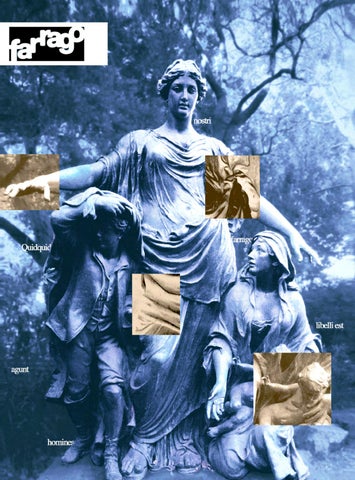
Create a flipbook