GET A $50 BONUS BUCKS CARD WITH EVERY $1,000 SPENT ON SELECTED PRODUCTS IN-STORE OR ONLINE.*
NOVEMBER
INTEREST
3 Farmlands staff profile
3 From the CEO
4 5 minutes with Dr Richard Spelman
6 Special Feature
– Weathering a dry: It takes a team
12 Crew helps Monowai chart stormy waters
16 Advances bring farm tech to tipping point
18 Forestry options much more than pine alone
23 Spray plans on hand anytime, anywhere
25 Help your co-op team help your community
26 Teams collaborate to close lifestylers’ gap
31 Burn injury peak reveals dairy link
59 Century Farms
– Family and farm grow together
62 Property Brokers update
PLAN365
Plan365 Nutrition
35 Feed mills focus on shareholder needs
37 Balancing act to get to sale-ring condition
39 Expert advice hallmark of support to lifestylers
41 Feeds take strain as grass dries out
Plan365 Animal Management
45 Users give tick to easier drenching
47 Smart tech energises electric fencing gear
49 Drench combinations aid lamb growth rates
Plan365 Forage and Arable
53 Lots to gain in keeping potassium replenished
55 Beets hard to beat once they get going
Plan365 Rural Infrastructure
57 Choose your weapon for the insect battle
The ON THE COVER
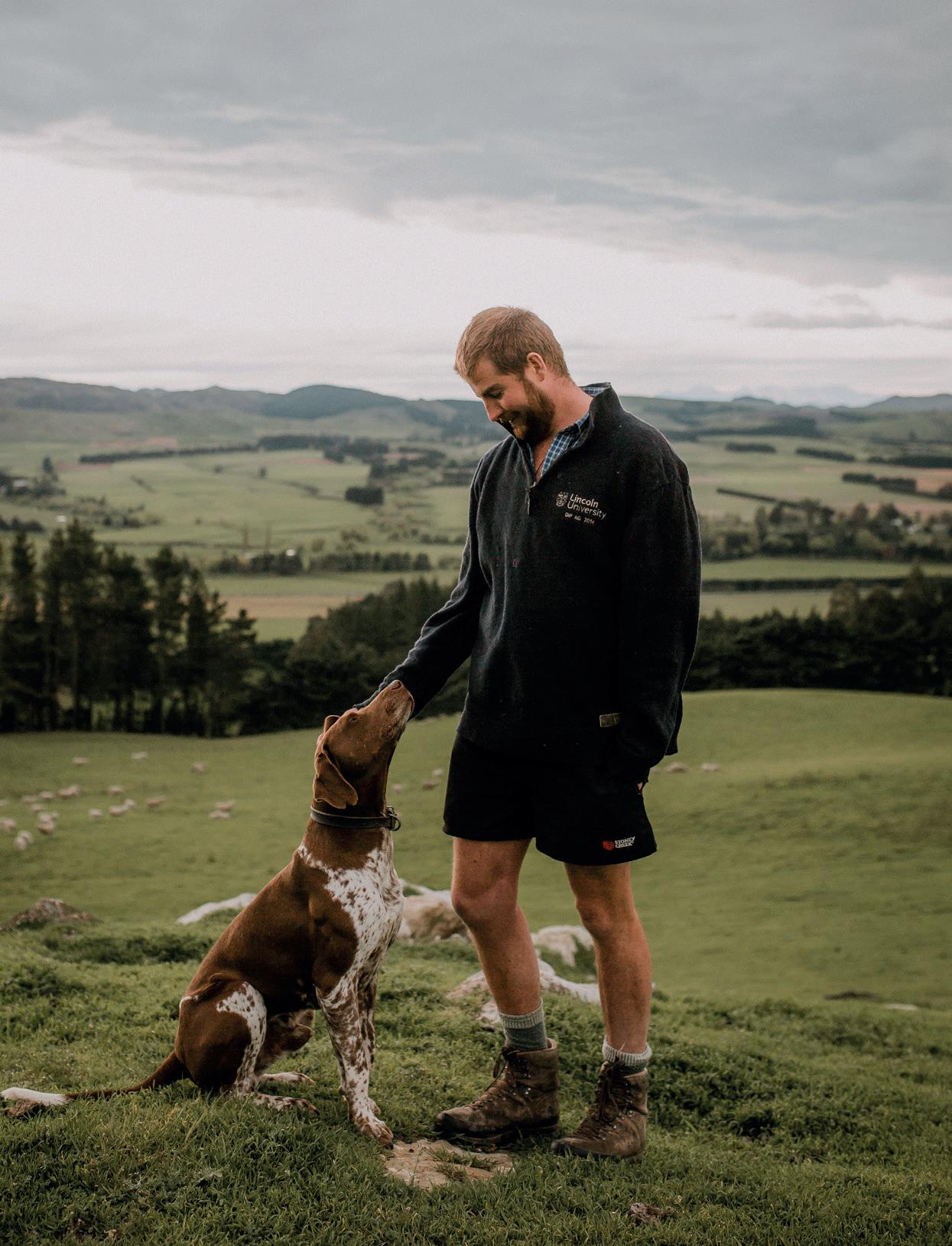
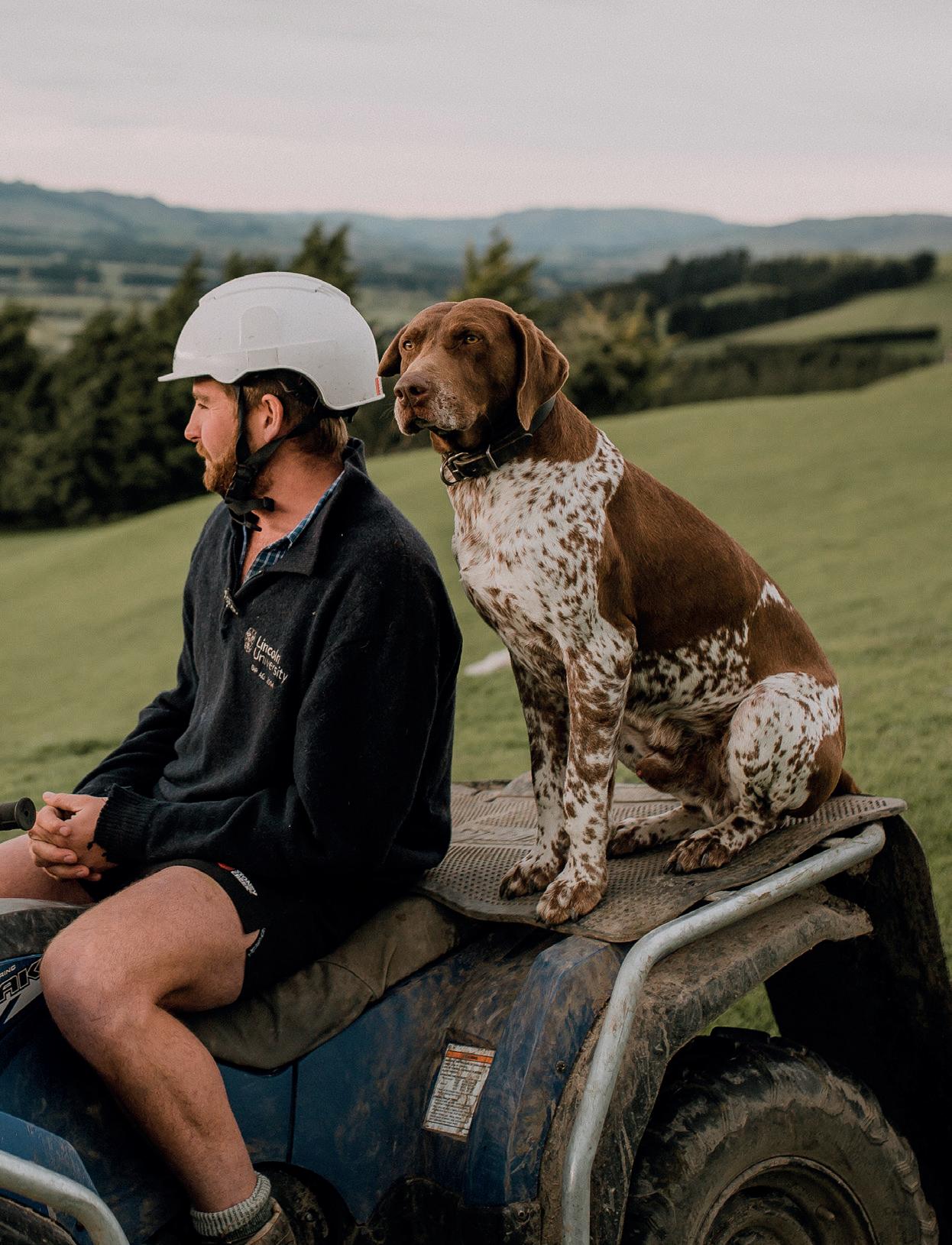
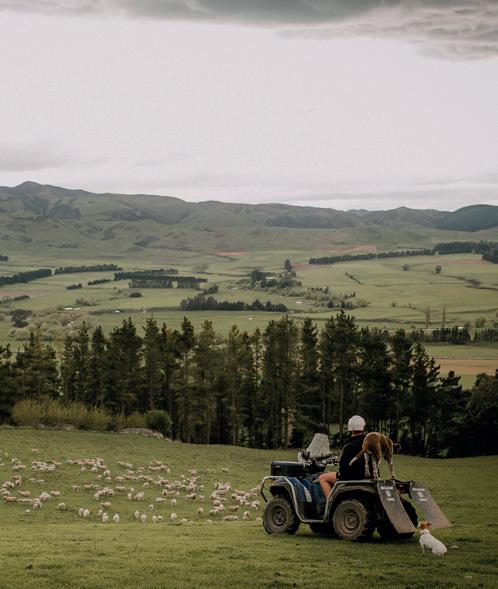
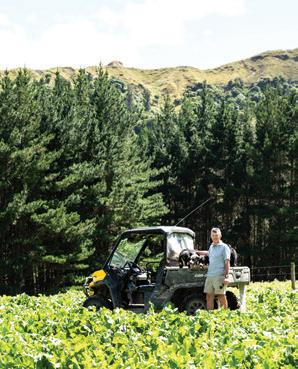
North Canterbury farmer Sam Harrison and his dog, Hugo. Sam has learned the value of support when drought is on the way.
BOOK GIVEAWAY
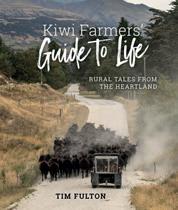
Thank you to all those shareholders who entered our September competition to win a copy of Tim Fulton’s book Kiwi Farmers’ Guide to Life. Our three winners are:
• Wayne Philip Wardell
• K S Brunette
• McCraith Family Trust
If you missed out, Kiwi Farmers’ Guide to Life: Rural Tales from the Heartland (Bateman Books, RRP $39.99) is available now.
WHAT’S ON 18
NOVEMBER
Farmlands AGM
Join us at the fifty-eighth Annual General Meeting of shareholders of Farmlands Co-operative Society Limited, to be held at Farmlands Co-operative Support Office, 535 Wairakei Road, Christchurch. Shareholders are invited to join the Directors and Executive of the Society for refreshments at the conclusion of the meeting. Doors open at noon; event starts at 12.30pm. The event can also be livestreamed. RSVP by 4th November to attend in person or online.
Graeme Wilson Head of Customer Engagement, Christchurch Support Office
Q: How did you come to be working at Farmlands?
A: For me it was about bringing my Agile coaching and customer experience transformation expertise from Spark and using it to support Farmlands in creating effortless, engaging and world-class customer journeys. Farmlands has a unique and pivotal role in growing shareholder success and I love being part of our journey to get better every day.
Q: What do you enjoy most about your job?
A: I really enjoy finding ways to automate, simplify and digitise how we work so we can free up our talented Farmlanders to deliver more meaningful and valuable experiences. Part of this includes finding new ways to support our shareholders such as MyFarmlands, messaging and booking video appointments.
Q: What challenges have your team faced from COVID-19?
A: When we cannot engage directly with each other we can often feel disconnected or less engaged. Starting and ending the day with a more personal conversation and being open about the personal support we need from each other has really helped.
Q: What is one of your goals in life?
A: To teach my daughter Ruby to play the piano so we can have four generations that have played on our family Steinway grand piano, built in 1890.
Q: Do you have a favourite inspirational quote or person?
A: “Never think you’ve arrived” – Gilbert Enoka. Despite tenure, never take it for granted and become complacent. Every day is an opportunity to learn and grow.
Sweet and Spicy Method
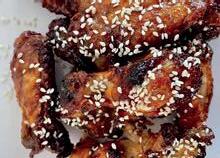
Chicken Nibbles
Ingredients
• 1.5kg chicken nibbles
• 1.5 tbsp baking powder
• 1 tsp salt
• Sesame seeds and green onion to garnish (optional) Sticky sauce
• 1/3 cup soy sauce
• 2 Tbsp rice wine vinegar
• 1 Tbsp sesame oil
• 3 Tbsp brown sugar
• ¼ cup sweet chilli sauce
• 2 Tbsp Sriracha (more or less to taste)
• 2 tsp minced garlic
• 2 tsp minced ginger
(Don’t just wing it!)
1. Preheat oven to fan bake 220 degreesC Coat a wire rack with non-stick spray.
2. Pat each nibble dry using paper towels. In a large bowl, combine nibbles, baking powder and salt. Ensure each nibble is lightly coated and shake off any excess.
3. Place nibbles on prepared wire rack and bake for 35-40 minutes until crispy and lightly browned, turning nibbles halfway.
4. While nibbles are cooking, combine sauce ingredients in a small pot. Bring to boil and then reduce to simmer for 3-4 minutes until slightly thickened, stirring constantly.
5. Change oven to grill. Line oven tray with foil.
6. In a large bowl, coat the nibbles with the sauce mixture and place on prepared oven tray. Grill for 3-5 minutes until bubbling and caramelised.
7. Garnish as desired and serve. Finger-licking good, some would say!
Kia ora everyone. Welcome to the November issue of The Farmlander.
Amazingly, despite COVID-19 continuing to create challenges for all of us, Christmas is now right around the corner. Through uncertain times and changing alert levels, our team has continually stepped up to support our customers.
This Christmas we want to do more and will be stepping up again – this time to provide specific support for our local rural communities.
Christmas is a time when the mental health of many rural Kiwis is pushed to the limit. Our plan is to support our rural communities by giving back, particularly focused on our most vulnerable. For the first time we are launching a Christmas Charity Campaign, teaming up with I Am Hope to help fundraise counselling sessions for rural youth.
You may know I Am Hope as Gumboot Friday and Farmlands has worked with this amazing organisation before. Gumboot Friday funds one counselling session a week per client, capped at two sessions. These funds are not intended as a long-term funding solution and they encourage counsellors to work on their clients’ urgent need until the client can access other health services.
We have chosen I Am Hope because of the visibility they provide with their service and their commitment to supporting rural youth. We will ensure the money we collectively raise stays in your local communities.
Farmlands has kicked the campaign off on behalf of our team with a $35,000 donation to I Am Hope. That is $35,000 going direct to our local communities. In addition to I Am Hope, each of our 82 stores will choose a local registered charity to raise money for this Christmas, then when you shop with us or pop into store, you can choose who to donate to. Maybe even both!
Our team is really excited about this initiative and most importantly about the difference it will make to the lives of those around us. Expect to hear more from your local team about how you can participate. To highlight our Christmas Charity Campaign, you will also see new Christmas displays in-store. These have been designed to be reusable year on year and will be a central point for the campaign.
All the best for the month ahead.
Ngā
manaakitanga
(With
best wishes)
Tanya Houghton Chief Executive Officer Farmlands Co-operative Society Limited ceo@farmlands.co.nz
5 minutes with Dr Richard Spelman
LIC Chief Scientist Richard Spelman on breeding cows that emit less methane.
What was the genesis of this project?
LIC undertook extensive work in measuring methane production in the early 2000s. This work was part of a gene discovery programme and through this we discovered that measuring methane on a large number of animals was very difficult. A visit from Harry Clark, Director at the NZ Agriculture Greenhouse Gas Research Consortium, reignited interest in how
we could improve methane efficiency in dairy cattle. Working with CRV, we travelled the world and looked at how other countries were undertaking methane measurement in dairy cattle. We are now doing this work.
Given its potential, how special is this work for you?
Greenhouse gas mitigation is very important to the dairy industry now and in the future, especially biogenic methane. Right now a lot of the discussion is around reducing numbers of cows whereas this project gives us the opportunity to identify animals that emit less methane per kg dry matter that they eat – thus having the ability to farm more methane-efficient
cows and ensuring we continue to produce dairy food for the world.
Were there any particular challenges in designing and setting up the pilot?
One of the most significant challenges in the pilot was doing this through the first COVID lockdown. We had issues with getting machines and feed into the country and there was also an impact on being able to do the research at our research farm as it was due to start when we went into Level 4 lockdown.
Now there will be a much larger study – what progress has been made?
The larger study commenced in 2021, a year after the pilot study. LIC undertook measurements over 120 bulls in April,
| Dr Richard Spelman explains the project to Agriculture Minister Damien O'Connor.
One of the benefits of genetic improvement is that it’s permanent and cumulative.”
May and June where we measured methane output and how much feed the bulls had eaten. Similar work commenced in September at CRV –they are measuring a similar number of bulls over the next month or two. We will continue to do this work over the next 2-3 years and we will calculate breeding values for methane output and from that identify which bulls are the most and least methane efficient. We will then generate daughters from the most and least methane-efficient bulls and test that what we are seeing in a growing young bull is the same as a lactating cow. This will be the proof as to whether the work we are undertaking now will have a positive impact for the NZ dairy industry.
Is the cooperation shown between LIC and CRV on this project typical of agricultural research?
This project is a significant industry and NZ challenge and both organisations realise that working together on this is the most effective way to bring a solution to NZ dairy farmers. Although LIC and CRV are fierce competitors in the marketplace, we have on a number of occasions collaborated on research and I am sure that will continue in the future.
A sceptic might say this will do too little to make a real difference – how would you respond?
We have seen in other species that there is genetic variation for methane, and we are confident that we will see that in dairy cattle as well. One of the benefits of genetic improvement is that it’s permanent and cumulative. So genetics may have a small effect now but with permanent and cumulative improvement we hope that by 2050 the genetic approach could reduce biogenic methane in a meaningful way for farmers. One of the nice things of a genetic approach is that famers don’t need to change anything in their farm management system, they just need to use artificial breeding to mate their cows as they do currently. Genetics will hopefully be one of many tools that farmers will have in the future to reduce methane.
What’s your favourite way to spend the day? What do you do for time out?
At work it is thinking and strategising about how to generate future science and business opportunities. Away from work, I spend a lot of time in the outdoors. I am a very keen endurance adventure racer. I like to get out into the hills walking, running and
mountain biking. I also enjoy getting out on the river in my kayak as well.
Is there a book, author, or speaker you have found particularly helpful in your life or career?
There is no one book or speaker, but I do love to read and listen to people who have succeeded whether through sport, business or other endeavours. It is inspiring to read and hear their stories of how they put the hard work in, their challenges and how they succeeded.
If you could give people one piece of advice, what would it be?
Keep learning, look ahead, see what the challenges are and think/dream of ways to overcome them and thus generate opportunities for the future.
WEATHERING A DRY: IT TAKES A TEAM
For three Farmlands shareholders, the lessons of drought have been hard learned. Amid warnings of a summer with low rainfall, they share their stories and experience of farming through a dry.
For Sam Harrison, dryland farming in North Canterbury’s Scargill Valley has already shown him the best of times and the worst of times. He’s only been at it 3 years, during which North Canterbury has gone from “grass capital of New Zealand” in 2018 to being under extended drought relief since March 2020.
| North Canterbury farmer Sam Harrison with his dog, Hugo.
The threat of drought is always present and is at the forefront of our minds with every decision made throughout the year.”
Jono Miller
Sam runs about 900 mixed-age ewes, 280 hoggets and 100 trading cattle on the 225ha family farm. This year he wintered 30 R1 Angus steers and 65 R2 Hereford/Friesian steers and heifers. The land ranges from easy rolling hill country to flat and includes about 15ha of forestry.
When it comes to surviving a dry, one thing he has learned is the value of talking to other farmers and tapping expert advice. A local discussion group has been a big help. So has questioning his farm system and being flexible and resilient in the face of challenges.
For Sam and thousands of farmers on the east coasts of both islands, dealing with drought is one of life’s certainties. NIWA predicts that with climate change, the frequency and length of droughts will slowly increase over this century and beyond, and not just in the east.
Nature’s not an ideal business partner – it will do whatever it wants and rarely consults. That’s why your co-operative is here to help you plan for adversity and respond when it arrives. Farmlands’ advice is to plan early and be prepared to take decisive action.
Just down the road from Sam, Andy Fox has the answers. In fact he has 40 of them. Having farmed through drought in 2015-17 (“the worst”) and earlier in 1988, 1998 and 2009, Andy has compiled a list – “Learnings from 30 years of adverse events in farming and life”. From No. 1 (“Make lists of jobs and cross them out as they are completed”) to No. 40 (“You can fall out with 2 people, but as soon as it's 3, start looking at yourself), the list contains such nuggets of wisdom as “Share your thoughts. Work as a team” and “If your advisors are tough on you in tough times, you probably have good advisors”.
Andy and wife Kath are the fifth generation to farm Foxdown, which was established in 1877 when it was carved off from Glenmark Estate. The 1,600ha sheep and beef farm runs 6,000 ewes and 230 cows. The Foxes also have an accommodation side hustle in Foxdown Hut, a rural retreat that combines backcountry hut with 5-star luxury.
For Andy, farming through a drought is about making early decisions. He’s a big fan also of fodder beet as a reserve feed supply – “It can be grazed by cattle or sheep”. How does he prepare for drought? “Communicate – help others and that in turn helps you.”
Making some changes to his stock management helped Sam get through. “Having a good proportion of trading stock to capital stock meant I was able to offload cattle early so I didn’t have to buy in any feed. I did buy in grain to feed the ewes prior to lambing. Otherwise there were no major changes in policy other than checking ewes’ body condition scores more regularly to prioritise feed where needed.”
TOP TIPS FOR A DRY
Nuggets of advice from three Farmlands’ shareholders:
Jono and Michelle Miller, Central Hawke's Bay “Our financial forecast and budget allow us to have faith in our decisions and confidence that we are on track to achieve our financial and environmental goals.”
Andy Fox, Amberley Fodder beet as a reserve feed supply – “It can be grazed by cattle or sheep”.
Sam Harrison, North Canterbury “Be willing to change so you can be flexible and resilient.”
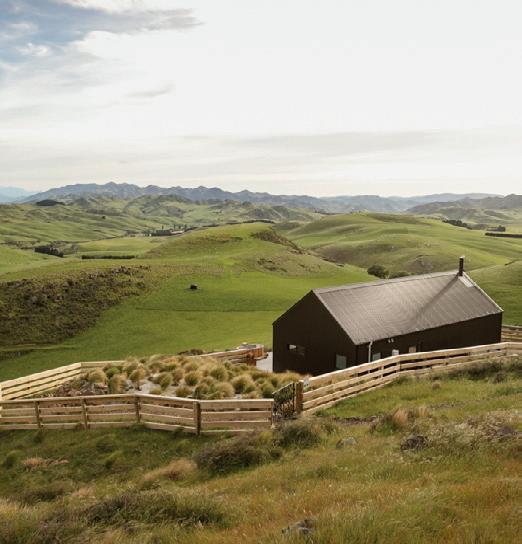
| Foxdown Hut, the Foxes’ accommodation offering.
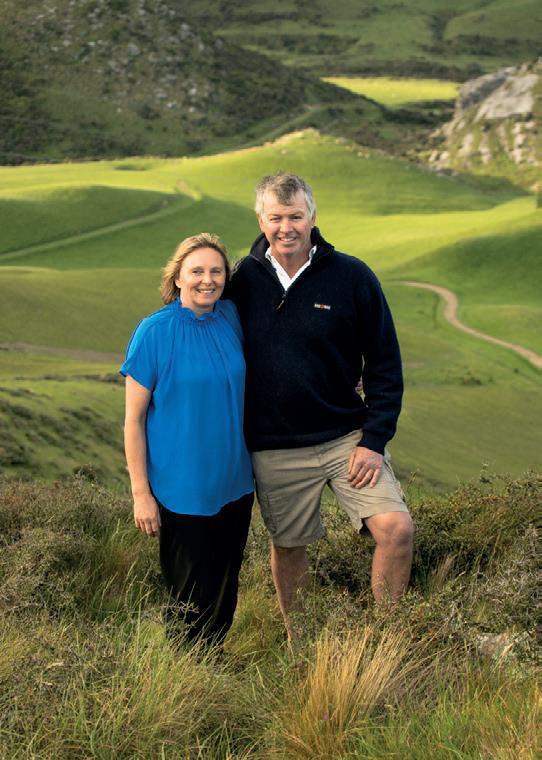
| Andy and Kath Fox at Foxdown.
He prepares now by having a good feed budget. “Knowing how much supplementary feed you have and need means that if you are going into a severe feed deficit you can make decisions whether to buy in more feed or offload stock early, without sacrificing the condition of your capital stock,” he says.
Forecasts, budgets and a trusted team of rural professionals are what Jono and Michelle Miller rely on to weather the extremes in Central Hawke’s Bay. Farming 670ha in the Flemington district, about 25km south of Waipukurau, the Millers have experienced multiple periods of extreme dry since taking up the farm in 2009.
“On occasion this has consisted of back-to-back dry years, with rainfall rates as low as 700mm in 2016. The threat of drought is always present and is at the forefront of our minds with every decision made throughout the year,” Jono says.
The farm is mostly rolling hill country with heavy clay soils that are prone to erosion. While every year is different, average rainfall sits at 880mm and soil moisture is expected to be dry from late October through to June each year. Stock units are made up of 2,000 terminal sired breeding ewes and 400 R2 Friesian bulls.
The Millers have a flexible lamb trading policy that moves 3,000 to 6,000 lambs through the system each year.
Analysing farm data has helped the Millers identify winter as their most reliable period of growth and farming policies have been formulated accordingly. Stock policies have been simplified. Cropping policies are resilient against dry autumns. Flexibility has been built into the operation to allow it to adapt to changing and unpredictable seasons.
As important if not more are the ‘people policies’ – the Millers have established a trusted team of rural professionals to support them in achieving their goals. Part of that valued team is Farmlands.
“Farmlands consistently provides us with top quality advice and support,” Jono says. Local TFO Joseph Butler gets a shout-out for being “always on hand” to advise on options and how best to look after crops and pasture through the changing seasons.
Right now, the Millers’ focus is to get their final trade lambs off the property and get ewes, lambs and bulls fully fed and moving through the system. The goal is to reduce stock units from 6,500 to 2,500 by mid January in anticipation of the dry period that usually follows.
“We are also in the process of getting our crops sown as early as possible to maximise soil moisture levels,” Jono says.
Does he have any tips for farmers going into a dry? “Our financial forecast and budget allow us to have faith in our decisions and confidence that we are on track to achieve our financial and environmental goals. It also allows us to tweak our spending as and when required.”
Jono and Michelle use farm management website Figured to keep tabs on finances. “The continuous updating and assessment of our budget and financial forecast on Figured is a weekly exercise for us as the season progresses and this can provide a feeling of control when the weather is not behaving,” Jono says.
All three shareholders champion the importance of reaching out to others for advice or even just a chat when things get tough. And of doing the same for others. The final word goes to Andy. Learning No. 4 – “Do something for others. This can be one of the most satisfying things you can do when you are under stress.”
| Jono and Michelle Miller farm near Waipukurau in the dry Hawke’s Bay.
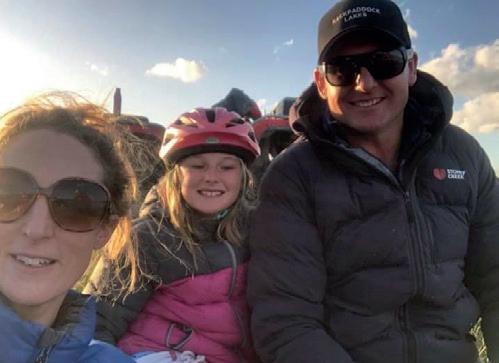
| Jono with Brooke, 5, Ciara, 11, and Penny, 10.
DROUGHT DECISION MATRIX
Body Condition Score (BCS)
FARMLANDS DROUGHT GUIDE
Our own drought guide has a summary of tips and a handy drought decision matrix. Farmlands’ advice is:
• Plan early and be prepared take decisive action sooner rather than later.
• Prioritise stock suitable for early de-stocking.
• Consider the long-term implications of losing capital stock — especially the youngest ones if genetic gains have been made that are important for your farming system.
• Focus on maximising income rather than reducing costs.
• Consider long-term changes such as growing different forage crops or pasture mixes, changing calving/lambing dates or even the livestock type to build resilience.
• To download the Farmlands Drought Guide, go to www.farmlands.co.nz/Documents/Guides/Farmlands-Drought-Guide.pdf
Crew helps Monowai chart stormy waters
A rough start to running their own farm quickly taught Angus and Liv France the benefits of a solid network of supporters, including Farmlands.
As the third generation on their family farm, Angus and Liv France know that networking and collaboration are key to the stability and success of their business.
Angus and wife Liv took over the familyowned Monowai Station, near Albury, South Canterbury, 5½ years ago. While the sailing wasn’t smooth at first, the couple have persevered and worked collaboratively to come up with their own programme for the property. The trading operation now uses the feed it grows in the summer to fatten stock
over the winter in what is turning out to be a winning self-sufficient formula.
Looking back on a rough start, Angus says he and Liv had to quickly build a support network. “Luckily we found good people and they are still the ones who are looking after us today, as we are looking after them.
“Our stock agents get the stock when we need it and then sell it at the right time at the other end. From our accountant and lawyer through to vet advice and our local Farmlands Fairlie store it is a massive interlocking
network that supports our business.
“It’s great to have a collective team around us who we can quiz, get advice from and just chat around farming practices and batting ideas around.”
The France family’s farming ownership began in 1948 when Angus’s grandfather, Jim France, returned from war and drew a ballot block. He had a few areas to choose from and selected the property, naming it Monowai after the first Navy vessel he served on. The next generation came through with Angus’s father John and wife Jenny
taking over, although still assisted by Jim, who carried on farming into his 90s.
Angus and his two brothers and sister had been encouraged to gain off-farm qualifications, particularly during a time when farming was challenging. But for Angus the bug kept biting. He completed a farm management diploma at Lincoln University and went shepherding on South Island properties.
Angus then headed overseas and the farm was leased out to a dairy farmer. After 4 years Angus returned and he and his parents began talking succession. In March 2016 the timing was right for purchase and Angus and Liv bought the 1,000ha property.
Angus said he had always wanted to end up at home on the farm and enjoys the support his dad still offers.
“When we were growing up Dad had always farmed sheep and beef but because the property had been leased out to dairy prior to us purchasing it, we did our initial budgets on dairy grazing.
Unfortunately, the 2016 dairy market crash turned our budget upside-down and with limited dairy demand and reduced options we needed to make some quick decisions about how we moved forward.”
The Frances ended up buying in half breed lambs and Angus steer calves to complement the cows they already had and began a relationship with the Five Star Beef feedlot in Ashburton.
“For us it was about going back to what works. We mainly run the farm as a trading operation and while we have tried a lot of other stock to see if they fit, like dairy cow grazing and different
It’s great to have a collective team around us who we can quiz, get advice from and just chat.”
Angus France
age groups of Friesian bulls, we found they didn’t really work. So now we stick with half breed lambs and Angus steers, which is what suits our unique farming operation.”
The right mix is also about factoring in the farm make-up and environment. Monowai Station has 500ha of flat
| Angus and Liv hope their children, Pippa, 7, Digby, 5, and Jack, 8, will become the fourth generation at Monowai.
non-irrigated land and 500ha of tussock steeper hill face. It receives an average annual rainfall of about 800mm.
“It can certainly get pretty dry and with no irrigation we are very much reliant on rainfall and timing.”
The property now runs 230 Angus breeding cows, with all progeny finished on the property. They buy in 400 Angus steer calves at around 250kg in April and take them through until late November. The calves are sold in batches over the summer at around 480-500kg, usually going to the Five Star Beef feedlot to be grown on.
Around 150 R2 Angus steers are bought around February and wintered for the August market and around 150 of the steers they breed are taken through for a second winter.
Angus is a major fodder beet fan and grows 53-54ha of Brigadier fodder beet on-farm every year, which is fed to the steer calves and R2 stock.
Angus describes their model as working backwards. “We have the most stock on in the winter and it can get cold, but we have the feed from what we have made in the summer. We have silage pits, fodder beet and bales
and that enables us to grow our stock through the winter to meet the market in the spring when it’s at its premium.
“Basically, we capitalise on what we’ve got and what we can grow to get the most out of the market.”
Angus buys in 5,000 half breed lambs early in the new year and takes them through the winter, selling them in the spring. Around 3,000 lambs are pad fed with barley and lucerne baleage with the rest grazed on the hill faces.
A total of 30ha of lucerne is planted on-farm and fed to the lambs over the winter. Angus says the drought tolerance of the high feed-value crop is key to the lambs’ fast growth rates.
“When the lambs arrive, we shear them, they have lucerne bales throughout the winter, we shear them again around the end of August. Then they go onto spring grass and hopefully head off the farm at 45kg plus. Holding them for nine months so they are still classed as a lamb and growing them to a 20kg carcass weight is the goal.
“We try and have all the lambs finished by the end of November as we are very aware of the extra pressures a dry summer can have.”
Angus acknowledges that while his farming programme is intensive, he also feeds the land with fertilisers and lime on the hill faces, to keep the property and its production at the highest level possible.
“To make the farm pay we have to have it humming to meet the requirements. It was certainly a hard few years when we first started out and we were finding our feet, but once we got our systems in place and knew what worked, and what didn’t, life got easier.
“Dad has been a great support and role model. He let me try things, he’d say, “I’ve done that, and it didn’t work.” Then I would do it anyway and he was right, it didn’t work, but he let me learn from my own experiences.”
Angus and Liv hope their children, Jack 8, Pippa 7, and Digby, 5, will become the fourth generation at Monowai.
“We hope they are succession in the making. They love being involved in the farm at the moment and we will be pushing for that to continue.
“Farming can offer a lot of freedom and also a lot of stress. With the support of people around us we have developed a good unit and we look forward to taking that into the future.”
We try and have all the lambs finished by the end of November as we are very aware of the extra pressures a dry summer can have.”
Angus France
Advances bring farm tech to tipping point
Digital tools have been used in agriculture since the late 1990s. It was in 1999, while working with John Deere, that I first came across a satellite receiver. It immediately became apparent to me the benefits that accurate positioning of machinery would have for agriculture. Yet it has taken 20 years for this to become mainstream technology in modern tractors. The need for more efficiency in the field has moved the market to see this technology as a must-have rather than a nice-to-have.
What this illustrates to me is the adoption timeline for technology in agriculture. Most agtech is a vitamin, not a painkiller. If you take vitamins you know you will be better off long term but there is no immediate need to go to the
Most agtech is a vitamin, not a painkiller.”
Farmlands’ Head of Enabling Technology, John Arrell, says the stars are finally aligning for digital farm technology.
pharmacy to buy vitamins at 8 o’clock at night, whereas if you have a headache and there are no painkillers in the house, you will drive to get some straight away. The headache is an immediate need and the payback for taking painkillers is immediate relief from discomfort. To make matters worse, because widespread market adoption has been slow, the companies producing the tech have not had the scale to invest in the user experience to make it simple to adopt. Nor have they offered
business models that ensure the investment in new technology keeps up with innovation. Just think how the mobile phone market now works. The handset is part of a monthly payment plan that ensures the customer can update their hardware every few years at minimal or no capital cost to ensure they keep up with innovations. Why do I think agtech is turning a corner? Farmers are facing more challenges today than in the last 20 years. They have always been driving for efficiencies but it has stepped
up a notch with environmental legislation and changing consumer demand resulting in the nice-to-haves becoming must-haves.
The technology market has also stepped up to this challenge, understanding the user journey more, designing technology solutions to seamlessly integrate into the existing system and offering business models that enable the hardware to effectively be leased. This offers a complete solution that delivers the benefit the technology was designed to provide while taking away the barrier to deploying the tech on-farm.
One agtech company taking the lead on this is CropX, in my opinion one of the first to really understand
the customer experience.CropX soil moisture sensors are part of a hardware and software solution that is easy to deploy, thus overcoming the adoption barriers of the past.
You can pick up a CropX soil sensor from a Farmlands store, download the app, scan the QR code on the sensor and screw the sensor into the soil. That’s it. The product activates itself and sends data to your app. You can track soil moisture at two depths, helping you understand how water moves through your soil profile, and irrigate accordingly. This ensures you optimise your water usage, which is better for the environment, better for your pocket and helps you grow an optimum crop.
CropX has also come up with new business models that are replicating the mobile phone business models, offering a leasing option. This ensures that as CropX innovates and evolves its solution, the customer gets access to the newest technology on the market. No more outdated agtech gathering dust at the back of the shed.
Farmlands is on a journey to bring you the best and easiest to deploy technology on the market with the most innovative business models. We are here to support your journey and keep you informed about new and innovative solutions for your farm.
More information can be found on CropX at cropx.com.
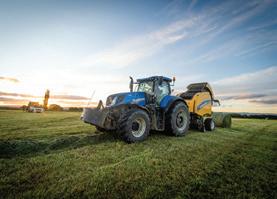
| It has taken 20 years for positioning systems to become mainstream technology in modern tractors.
Forestry options much more than pine alone
The place of trees in our farming systems has engendered much debate. This has focused mostly on single-purpose carbon farming or pine tree monoculture and its longterm effects on livestock farming, rural economies and biodiversity.
Thought leadership from Farmlands’ Head of Sustainability and Land Use, Katie Vickers, on the various options emerging for on-farm forestry.
But this misses the genuine opportunity for diversification. Other options include diverse native tree plantings based on regeneration, mixed species use and mixed-age indigenous forests.
Conversations about on-farm forestry are necessarily more complex today and involve more than the plant-holdharvest model. Emotion, tension and the unknowns of mass land conversion are real. How do we balance sequestering
carbon with sustainable farming and food production? We know the importance of biodiversity, that it’s no longer about protecting the beauty of our landscapes but a moral responsibility as well to develop and protect something fundamental to food production, clean air, clean water, carbon sequestration and nutrient recycling.
Farmers are wanting to understand the opportunity to convert marginal land to
a higher and better use by incorporating planting of permanent forests into our farming systems.
There are two contexts:
• Famers already planting trees for soil conservation as part of an on-farm plan. Forestry is part of their management practice but they want advice on how to incorporate it into the ETS and gain the economic benefit.
• Farmers with marginal or uneconomic land that they want to plant as offset. Options vary from wanting to plant radiata to wanting a native mix that generates enough credits to cover costs.
Phil Orme of Orme and Associates, an ETS forestry and land-use advisor, suggests that those torn between planting more economically viable exotics such as pinus radiata or natives for better biodiversity need to remember why they are planting. “It’s typically a mix of wanting to do the right thing and to maximise return, so you can plant a
We all know the saying – right tree, right place.”
Phil Orme, land-use
advisor
combination of natives and hardwoods. “The key is to get some good advice but also be clear on the reason for the planting. That helps with understanding the best use of that land. We all know the saying – right tree, right place. If you do a diverse planting you can keep costs low, plant a mix of flowering eucalypts and underplant with native shrubs to encourage other species and birds, and over time that will develop and regenerate naturally.”
For advice and support on the ETS and on-farm forestry, Orme and Associates are part of the Farmlands family and offer a 7.5% percent rebate. To learn more, talk to your Technical Field Officer or pop into your Farmlands store.
POINTS TO CONSIDER
Integrating trees into your farming system helps manage landscapes and meet climate change targets.
It’s important to bear in mind your long-term goals on-farm. Some questions to consider:
• Does how I manage my vegetation already qualify for inclusion in the ETS?
• Could my waterways and soil conservation plantings qualify?
• Do I have indigenous reversion that can provide an income?
• How much carbon am I sequestering now?
• Are there unproductive areas that are difficult to fit into my management plan?
• If I plant, what species and at what cost?
NOTICE OF ANNUAL GENERAL MEETING
You’re invited to the fifty-eighth Annual General Meeting of shareholders of Farmlands Co-operative Society Limited.
Shareholders are invited to join the Directors and Executive of the Society for refreshments at the conclusion of the meeting.
WHEN:
Thursday 18th November, Doors open 12.00pm Event starts 12.30pm
WHERE:
RSVP:
Farmlands Co-operative Support Office, 535 Wairakei Road, Christchurch
Or livestreamed on the Farmlands website
By 4th November 2021 at www.farmlands.co.nz/agm To attend in person or online
Parking available onsite and will be signposted.
For decades, merchants and growers have relied on printed wall charts for planning their spray programmes. While useful, the wall charts can quickly become dated and don’t provide the concise or detailed product information that can be critical to making good spraying decisions.
Spray plans on hand anytime, anywhere GrowGuide
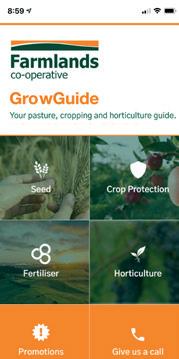
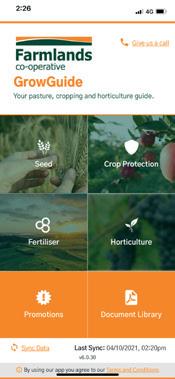
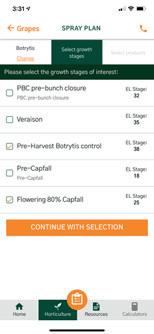
To ensure shareholders have easy access to the most up to date information when formulating spray programmes, Farmlands has developed a series of crop health programmes that can be accessed through our GrowGuide app. The programmes are proving popular with growers of apples, kiwifruit and wine grapes. Using them, growers can produce a full season’s crop spray plan or a plan for one pest or disease. The app is also a convenient tool for quick queries, allowing the user to drill through to product information, product labels and safety data sheets.
This means the GrowGuide horticulture crop health programmes give growers all the information they require at their fingertips.
The app works off a centralised cloud database, allowing it to be kept up to date with the latest information. The horticulture crop health programmes are driven off the user’s selection of crop
growth stage and the pest or disease concerned.
In developing these programmes, Farmlands has worked to the three industry crop protection standards to ensure compliance for market access and chemical residue thresholds: the Zespri Crop Protection Standard, the NZ Apples & Pears PHI Database, and the New Zealand Winegrowers Vineyard Spray Schedule. The GrowGuide app has been updated for the 2021/22 growing season, with any changes from these
industry schedules reflected in the crop health programmes.
Growers that already have GrowGuide downloaded on their phones will be prompted to sync when opening the app, and this will pull through all updates. In addition to the horticulture crop health programmes, GrowGuide has extensive information on the range of crop protection products, seed, fertiliser, and weed identification across the broader horticulture, pasture and cropping sectors.
All the information you need is now at your fingertips.
• Quickly and easily find the products you need
• Create and send an order enquiry to Farmlands
• Access the latest resources and calculators to help you find products
Help your co-op team help your community
Drought, floods, COVID-19 and constant change – it’s been a tough year down on the farm. Christmas is coming and while for many this is a time to celebrate and kick back, it’s also when the mental health of many rural Kiwis is pushed to the limit.
That’s why Farmlands is shining a spotlight on mental health this holiday period and we want customers to help us make it shine even brighter.
Farmlands has teamed up with I Am Hope, founded by mental health champion Mike King, on an in-store Christmas charity campaign to raise funds for counselling sessions for rural youth. Each Farmlands store will also choose its own local charity, and customers who donate will decide which charity will get their money. Farmlands has started the ball rolling by donating $35,000 to I Am Hope, also known as Gumboot Friday.
Welcoming the news, Mike King says mental health statistics around the world and New Zealand paint a grim and worrying picture.
“It’s on us as a society and community to step up and offer a helping hand and a listening ear before tragedy strikes,” he says. “We need to come together and ring-fence the top of the cliff, rather than keep sending ambulances to the bottom. It’s because of people like the great folks at Farmlands that we are able to roll our sleeves up and help our young people who’re struggling in silence within our communities, by making help accessible to those who need it, when they need it.”
Money raised for either cause will stay local. Farmlands will work with I Am Hope to ensure the money raised stays in that community.
Mental health isn’t fixed by a new pair of socks from Santa, with 20 percent of young people likely to experience a mental health issue. Depression and anxiety are widespread: one in five young New Zealanders will be affected by depression by the age of 18; almost one in five meet the criteria for an anxiety disorder by age 19. Counselling is expensive, even more so in rural
HOW IT WORKS
Customers will be able to add a donation of $2, $5, $10 or more when making a purchase at Farmlands. In-store donors will receive a token, a symbol of the connections within the community that keep us together. They will indicate their charity of choice – I Am Hope or the local charity – by attaching the token to an in-store Christmas tree.
areas, where the cost per session can range from $150-$250.
“Our young people need help now more than they’ve ever needed it,” Mike says.
“Since 2013, we’ve reached 300,000 Kiwi youth to smash mental health stigmas and help them deal with the incessant inner critic in their minds and ears. I Am Hope ambassadors have spoken to 40,000 rangatahi (young people) this year alone, helping educate them on mental health and coping with rising pressures of today’s uncertain world.
“Gumboot Friday has picked up the bill for more than 16,000 critical counselling sessions since 2018 and the recent launch of the online counselling services in the current lockdown has seen usage go through the roof, demonstrating the clear need for our young people to talk to somebody who will listen when they most need it,” he says.
You will be able to donate at your local store from 1st December to support your charity of choice.
Teams collaborate to close lifestylers’ gap
Farmlands is collaborating with LSB’s Kate Brennan and Sarah Clews from ‘Sez the Vet’ to provide lifestyle farmers with courses on everything from animal behaviour to changing regulations.
Falling in love with a horse in the paddock next door got Kate Brennan started as a lifestyle farmer. That was over 20 years ago, when resources were thin for those new to the countryside who wanted to learn the mysteries of fencing and pasture management.
A knack for technology and a drive to fill that gap pushed Kate to launch lifestyleblock.co.nz (LSB). The website provides relevant, up-to-date information on all things animal welfare, pasture, feed and managing a slice of rural life.
As the appeal of lifestyle blocks has motivated more people to move to rural areas, Farmlands has also switched on to this need for knowledge. This has led to a collaboration with LSB’s Kate and Sarah Clews from the ‘Sez the Vet’ YouTube channel. Using the LSB online learning platform, the joint project shares knowledge about animal behaviour, welfare, pasture and fencing management, government regulations and more through comprehensive “allyou-need-to-know” courses.
The LSB story began in 2000. Alongside friend Kay Swann and Waikato
Polytechnic lecturer Dr Clive Dalton, Kate developed the lifestyleblock.co.nz website to provide learning modules and courses to the everyday lifestyler.
“We didn’t have videos and very few pictures – it was very simple as we were all still on dial-up internet,” Kate says.
Being ahead of the technology curve meant Kate and Kay had to put the word out themselves – with no Google in the early 2000s, Kate and Kay were travelling to expos and sending out emails and press releases to gather momentum for the site.
| Kate Brennan and some kids.
“At a Hortenz expo in the Waikato, a TV crew did a piece on us and it ended up on the news – we got around 300 people a day onto the site after that. While there was no Google, there was also no YouTube or Facebook so people weren’t on the internet for entertainment like they are now – they were wanting information,” Kate says. “Nobody else was doing it at the time and it’s been an organic progression, just growing steadily. We have great quality of information which pushed us up the ranks in Google metrics when Google did come in – our site was popping up for just about anything you searched for.”
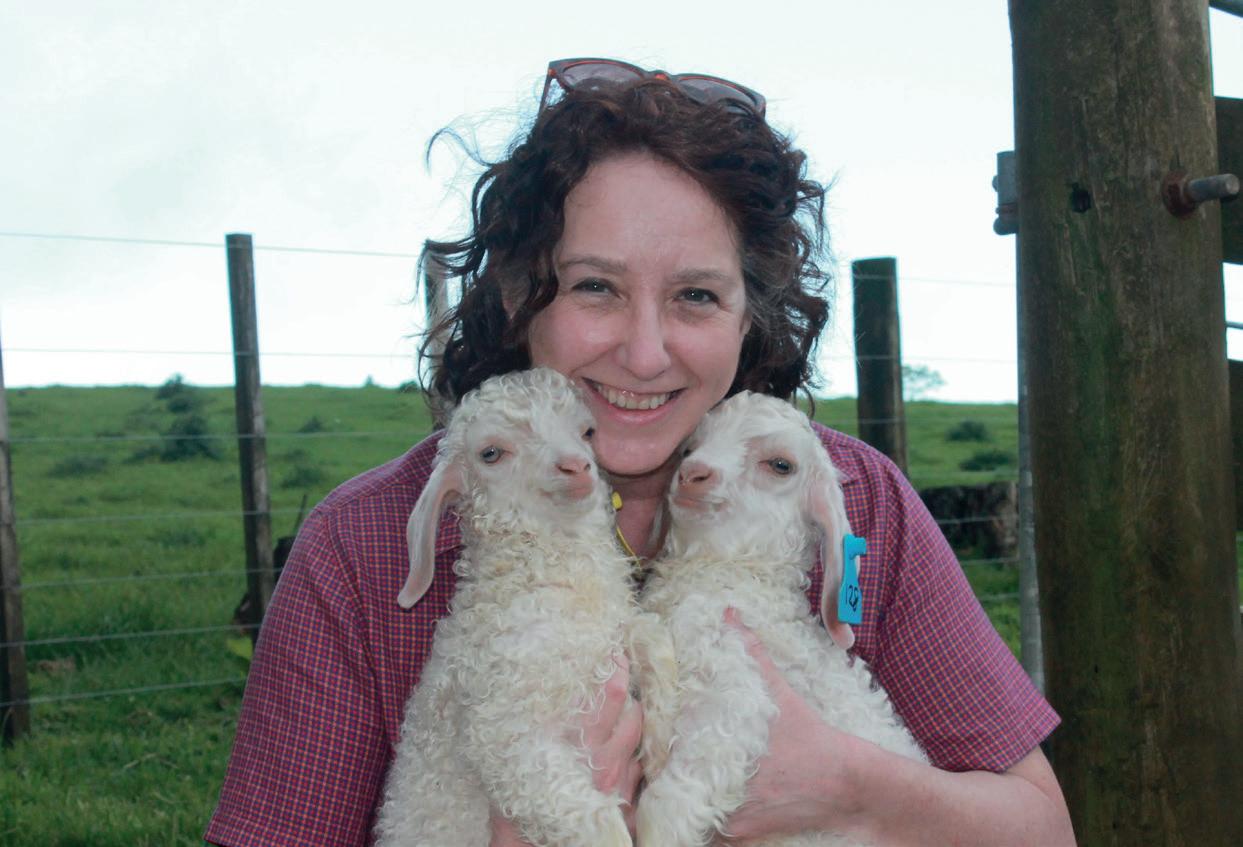
With Kate purchasing LSB from Kay in 2004, the workload intensified. In 2009 Kate moved to a 88ha block, consisting of 60ha of native bush, 150 Angora goats and some cattle roaming the remaining pasture land. Despite the increasing audience, the venture wasn’t as profitable as it could have been and Kate announced that she would be shutting it down. What she didn’t
expect was the hundreds of emails she received in reply, begging her to leave the site up.
“LSB isn’t trying to sell people something and the forums are an opportunity to discuss real-life experiences with other lifestyle farmers. It’s a hugely valuable resource.”
LSB now has more than 1,500 articles onsite, constantly revised to keep them up to date. With so much content, sorting the articles into an easily accessible format has been a challenge.
“People don’t know what they need to know. If you don’t know that you need to know about NAIT, you aren’t going to search for NAIT,” Kate says.
That was the impetus for developing comprehensive training modules in a “everything you need to know” format.
“I started putting together some training modules, did all the back-end development and tried to present it in front of a camera – it wasn’t for me!”
That’s when veterinarian Sarah Clews stepped in. Sarah had been running Sez
The forums are an opportunity to discuss real-life experiences with other lifestyle farmers.”
Kate Brennan, LSB
the Vet, an easy-to-understand video series on animal behaviour and welfare, for a year before reaching out to Kate about collaborating to fill the void of lifestyle-specific online information.
“I knew that Sarah was exactly who I needed to present these videos. So, the LSB and Sez the Vet joint venture was born in early 2021,” Kate says.
“These courses are a great way to get all the information to people. We have what you need to look after chickens, cattle, pigs etc – everything you need to know and everything that you’ll come up against,” Kate says.
“The lifestyle community is incredibly diverse with everyone from organic, off-grid growers to those running a few horses and cattle on a block out of town and small farming types that run businesses through farmers’ markets.
“We have to assume that people don’t know stuff and we want to ensure lifestyle farmers are successful and don’t get blindsided from the get-go,” Kate says.
With Sez the Vet and LSB teaming up with Farmlands to share nutrition and whole-of-farm expertise, lifestyle farmers now have huge amounts of information at the click of a button.
• Expert advice hallmark of support - page 39
COURSE DETAILS
The series of courses begins with a set of eight geared towards animal health care. These cover keeping livestock, chickens, cattle, sheep and goats.
Future courses will give more in-depth information on aspects of farming livestock, growing pasture, trough set-up and more.
To access the modules, go to https://courses.lifestyleblock. co.nz/collections
Burn injury peak reveals dairy link
More than 500 people a year suffer burn injuries on farms severe enough to require ACC claims – and the highest number occur in November and December.
“On average, during most months of the year, 40 to 50 people will seek treatment and make ACC claims for burn injuries suffered in a farm workplace,” Al McCone, Agriculture Lead for WorkSafe NZ, says.
“Numbers drop during May and June, when cows are dried off, which suggests a lot of the burn injuries on farms may be associated with the dairy shed and use of very hot water. They start to rise again in July and August and peak around now, while dairy farms are at the height of milk production.”
With the weather improving and more children and visitors out on farms, it is particularly important to ensure you have identified all risks and have a plan for how to manage them. Hot water should be included.
Al says good approaches include:
• Place very hot water taps where children cannot easily reach them. If they are easily accessible for children, get them moved.
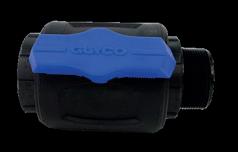
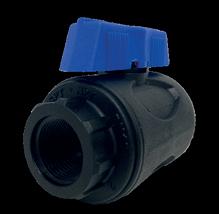
• Hot water taps should not be easily opened by getting caught in clothing or being leaned on. The best option is a tap that requires a two-step process to turn on.
• Make sure pipes and hoses are extended deep into drums to reduce splashing.
• Hoses on farm dairies tend to be high pressure, which heightens the risks with hot water, so consider having a high-volume but low-pressure hose.
• Insulate exposed pipes to prevent burns.
• Label hot water pipes and taps with safety signs saying, ‘very hot water’. Particular care should be taken before flushing out the dairy shed or pit.
“You should always check the area is clean before flushing hot water through,” Al says. “You should have a system – perhaps cones and signage –to alert others when you are going to be cleaning with hot water or chemicals. Children, especially young ones, may still not take notice of signs so you need to check in advance that they will be well supervised and well clear.”
Outdoor fires also pose risks of burns, whether it’s a burnoff, bonfire or burn pile, or fire in a drum, incinerator or brazier. Burnoffs in particular need detailed planning. WorkSafe and the National Rural Fire Authority have information about these, including survival techniques.
“If you are considering lighting any kind of outdoor fire, you should first check your local fire plan,” Al says. “Also, at www.fireandemergency.nz, you can find specific information for rural properties that highlights risks farmers may not have identified. For instance, fires can be started by mowers hitting stones or by exhausts when driving through or parking in stubble or long, dry grass. Sparks from welders, chainsaws and slashers can also cause fires.
“You need to factor these potential hazards into your risk management plan and to take on board the fire and emergency advice to take appropriate precautions and carry suitable fire extinguishers, shovels or knapsack sprayers during periods of high fire danger,” Al says.
A guide to staying safe in and around farm dairies can be downloaded at worksafe.govt.nz
|
a lot of the burn injuries on farms may be associated with the dairy shed and use of very hot water.
We all need them but don’t want to spend hours dealing with the bills. By switching to one of your essential service Card Partners or switching your payment method to bill through your Farmlands Account, you’ll get one consolidated bill each month that will save you time and might even save money in the process.
Find out how easy it is to go from this to that by visiting farmlands.co.nz/essentialservices
Articles in the Plan365 section allow Farmlands suppliers to share best practice and the latest advances in rural technology, to help shareholders with their farming needs all year round.
Feed mills focus on shareholder needs
Farmlands is in the animal feed game in a big way, which is perfect as we know it is one of the most important inputs for our shareholders. Every animal has specific nutritional needs, from chickens on a lifestyle block to milking cows on a dairy farm and everything in between, so Farmlands offers an extensive product range to suit every farm’s needs.
Farmlands owns two feed mills, one in Rolleston and one in Winton. These mills produce some iconic brands of animal feed – NRM, Reliance Feeds and McMillan Equine Feeds. Formulating and manufacturing animal feed is a fine art and the nutritionists and the feed mill team at Farmlands are passionate about producing top quality products. Each feed formulation is crafted to ensure the animal will be getting the best nutrition possible, perfectly suited to optimise animal health and productivity. ‘The difference is in the detail’ the mantra for Farmlands’ nutritionists.
Farmlands grain traders work closely with growers to ensure we pay a fair price for locally grown grains and pulses. At the mills, it all starts at intake where the team ensure the incoming grain and raw materials, which we source from shareholders wherever possible, are of high quality. Next comes the processing
of the raw materials, which involves hammer milling and pelletising in the case of pellets and nuts. Both mills manufacture pelletised feeds but at the Rolleston Feed Mill there is an extra line producing molasses textured feed, often referred to as muesli-style feeds as they look good enough to have for breakfast. Kiwi classic NRM Moozlee is made on this feed line as well as a newer feed, NRM Lamb Start Mix, which has quickly built traction in the last few years and is a firm lamb favourite. Equine feed is another speciality of the Rolleston Mill. Steam-flaked grains are used in these blends to create an extensive range of equine feeds, some of which fuel New Zealand’s most successful racehorses. Quality assurance is important to the Farmlands team and a stringent programme is in place to ensure that every bag of feed or bulk load going out the door is fit for purpose. The nutrient value of grains and by-products can change through the season and our complex formulations and quality control measures help ensure typical feed values are met.
The Farmlands mills are FeedSafeNZ accredited. FeedSafeNZ is a programme designed to enhance the quality assurance of New Zealand-produced stockfeed, so the FeedSafeNZ mark assures farmers that the feed they buy is
made to the highest possible standard. Supporting the Farmlands feed brands is a great way to not only nourish your animals but also nourish your cooperative. Domestic production allows us to customise bulk feeds for the specific needs of a farmer’s livestock at any particular time. Strength in the lifestyle, equine and bulk market delivers economies of scale and drives best practice, which benefits all customers.
For more information on NRM and McMillan products, contact the friendly team at your local Farmlands store.
Article supplied by Stacey Cosnett, Farmlands Nutritionist
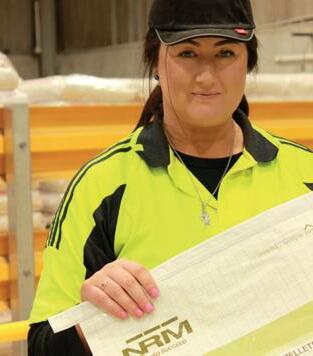
| Marianne Erikson is part of the feed mills team.
Balancing act to get to sale-ring condition
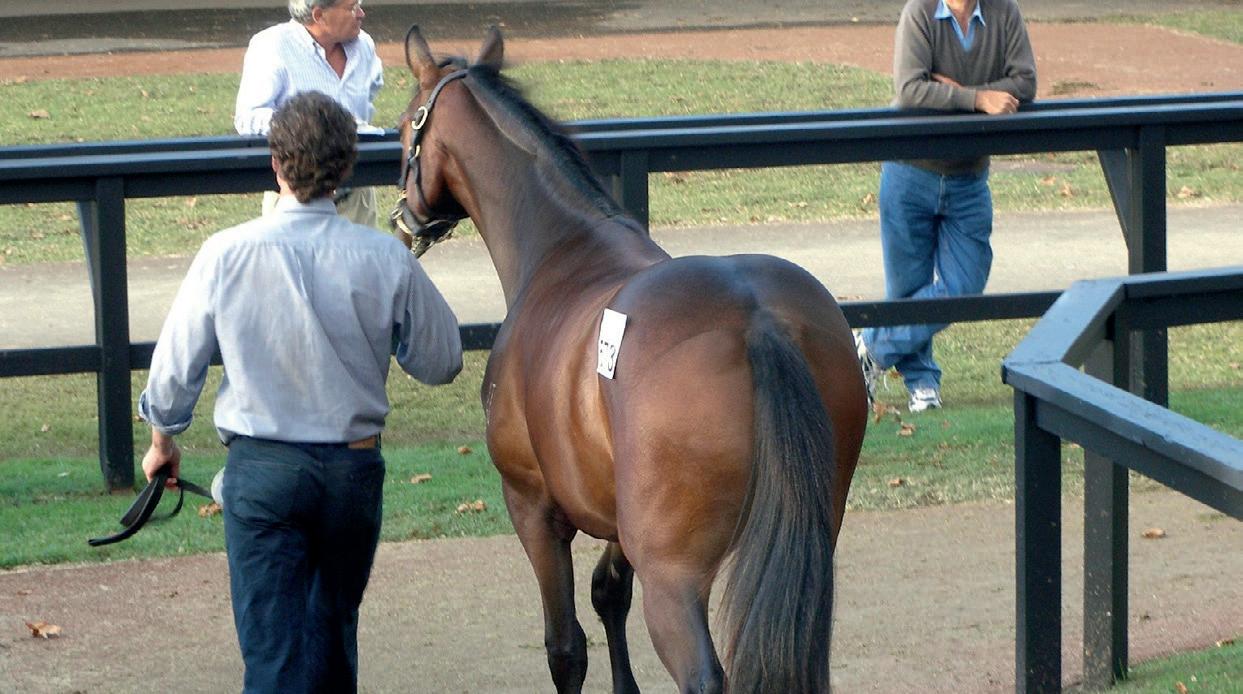
Preparing a yearling for sale is an important event in the stud calendar for both thoroughbreds and standardbreds. It involves a carefully tailored balance between nutrition, conditioning, growth and fitness. Properly prepared yearlings will be fit, sound and well grown, with shiny coats and little body fat.
Reaching that goal requires an understanding of the nutrient requirements of the horse and the critical balance between feed intake and exercise as they affect condition and soundness.
Forage should always be the first consideration in any horse’s diet and some amount of pasture along with a high quality, high energy hay is important for yearlings. Higher energy hays such as lucerne and clover blends will contribute to energy and protein requirements while maintaining digestive health. Also, using a high quality, early cut hay minimises the appearance of gut-fill, often associated with a mature hay of high lignin content. Including additional fibre sources through chaff, ensiled forages and
super fibres such as beet pulp and soy hulls often helps reduce the amount of hard feed or grain the horse requires, which can in turn reduce symptoms of starch overload including diarrhoea, colic, laminitis and behaviour problems. Yearlings do best on a 14-17 percent protein ration balanced for macro and micro-minerals, with adequate fat and water-soluble vitamins. Feeding rates of hard feeds for yearlings are extremely variable depending on choice of feed, growth history, skeletal size, individual metabolism, actual age and quantity and quality of forage. It is essential that all yearlings are fed as individuals, paying careful attention to body weight, weekly weight gain and body condition score, with feed intake adjusted appropriately.
Selecting a muesli style textured hard feed is often beneficial as the high palatability encourages consistent intake of feed through stressful times of increased workload, travel to sales complexes and new surroundings. McMillan Rapid Gain, NRM Assett or NRM Prepare are great options of well-balanced textured feeds
containing steam-flaked grains, ideal for sales preparation. Another option for yearling preparation is NRM Evolve, a nut that now contains BMCTM , vitamin C and organic trace minerals from Kentucky Equine Research. BMC has been shown in studies to serve as a potent buffer in the stomach and large intestine and is a key component of a new supplement shown to increase bone density in young working horses and weanlings. While there is an overwhelming array of supplements that claim to enhance coat quality and condition, including a fat source is always one of the best ways to achieve that sale-ring shine. KER Equi-Jewel is a high fat, low starch conditioning supplement that is beneficial for improving coat quality and highly popular for finishing yearlings and ensuring optimum muscle definition and conditioning.
For more information and diet advice on preparing a yearling for sale, contact a reputable equine nutritionist.
Article supplied by Luisa Wood, Equine Nutritionist
Expert advice hallmark of support to lifestylers
Supermarket staff are good at pointing customers to the right aisle but I would never think of asking them for meal ideas or cooking tips. The retail staff at hardware stores are a different beast entirely. Each seems to permanently habit only one or two aisles and in addition to knowing exactly where everything is in their domain, they have intimate knowledge of how each item should be used.
The retail staff in Farmlands stores are, to my mind, phenomenal as they can give advice on apparel, pipe fixings or nutrition just as readily as drenches, electric fencing or gates. Last year a lot of effort was devoted to creating online e-learning modules for our retail staff to increase their understanding of farmers’ feed needs and to support better buying decisions. We have created booklets on calf rearing, poultry keeping, goats, pigs and sheep and these are available instore and online. Feeding guidelines have been added to product spec sheets to give more information to the user. For more general information, the much-loved Lifestyle Guide (one woman
said it was her read of choice during a luxury ship cruise) is now available to buy and could represent one of the best value Christmas stocking fillers for your favourite lifestyler. Alternatively, buy a new lifestyle block through Property Brokers and look forward to getting a copy in your gift pack when you move in. More support is only a phone call away through our Customer Experience team, which is supported by a vet, in-house nutritionists, agronomists and fencing specialists. COVID-19 has driven a surge in interest in working from home and sustainable self-sufficiency. Last month I suggested that the modern lifestyler could hope to be pretty good at lots of things because of the power of Google. Unfortunately, sometimes when you try to learn something from YouTube you can’t tell if the presenter is a master in their chosen specialism or a deluded amateur with a trail of DIY disasters behind them. A good source of detailed, credible information and tips for the new livestock farmer is the online Lifestyle Block (www.lifestyleblock.co.nz).
Recognising the need for more information, Farmlands has become the exclusive rural supplies and nutrition sponsor of Lifestyle Block, or LSB. Collaborating within the nutrition and animal health space initially, we are especially excited about new comprehensive training modules being developed aimed at people looking to farm different species for the first time. Sarah Clews and Kate Brennan from LSB can truly talk the talk and walk the walk. As experienced small-block owners, Kate and Sarah – better known as Sez the Vet – can help people looking to upgrade from pets to farm animals to ensure a happy outcome for all. The LSB forums are a valuable source of seasonal ideas to encourage people to try different classes of stock while avoiding the pitfalls inexperience can bring.
For further information, contact your Farmlands Technical Field Officer or the friendly team at your local Farmlands store.
| Booklets on calf rearing, poultry keeping, goats, pigs and sheep are available in-store and online.
Article supplied by Dr Rob Derrick Head of Nutrition and Animal Health
Accommodation Group
Hanmer Springs
Feeds take strain as grass dries out
We are great at growing grass in New Zealand and it makes up a huge chunk of the diet of our grazing animals, offering us a competitive advantage and making our end products more desirable to consumers around the globe – but is grass always the perfect feed for our animals?
Grass doesn’t grow with our stock’s needs in mind and grass will essentially do what it needs to do for its own survival rather than for the animals grazing it. This can be a particular issue as we head into the summer months. Hot, dry conditions can stress our pastures and trigger reproductive growth that increases the nondigestible and tougher to break down components of the grass, thereby decreasing the energy and protein levels on offer to our animals. Even without water stress, perennial ryegrass growth rates suffer if it becomes too hot, so a quality issue can be compounded by a quantity issue. What does this mean for our grazing animals? When animals are grazing more stalky forage, every bite they take has less energy and protein. Another thing to consider is that our animals can eat less of a stalkier pasture due to its bulk. It takes up more room in the gut and takes longer to break down, which restricts total dry matter intake potential, even if there is plenty of this grass on offer. This means animals on a lower quality pasture will eat less, with the double whammy that every bite they do take gives them less energy.
MODERATE PRODUCTION
MAINTAIN DRY STOCK
WEIGHT LOSS OF DRY STOCK
| As grass goes reproductive its quality decreases.
This can become a real issue for our animals, particularly those that require a higher level of nutrition such as growing young stock or during pregnancy and lactation. These are the animals we need to keep an extra close eye on heading into the summer months. We can’t always see the changes in the grass either – sometimes small changes in pasture quality that we can’t pick up on by eye can still be enough to have knock-on effects.
We can fight this issue by feeding high feed value alternative summer crops or feeding high quality supplements to buffer the changes in grass quality. Feeding a grain-based supplement adds more energy into the diet and as grains are low in fibre they do not add to the bulky nature of the diet and can help to optimise total dry matter intake.
• For your growing calves, keep them on a good quality calf pellet right through the summer. If you do take hard feed out of the diet, don’t be
afraid to add it back in if the pasture is not playing ball. The improved growth rates and decreased animal health issues in your calves will pay for it.
• For your milking herd, a balanced diet is a good diet. Feeding a high energy feed through an in-shed system can help to improve energy in the diet and help to support milk production and cow condition through the summer. Protein may be an issue at times during the summer too. Getting an expert to take a look at your cows’ diet can be helpful – your local Farmlands Nutrition Specialist has a wealth of knowledge to draw on.
For further information, contact your Farmlands Technical Field Officer or the friendly team at your local Farmlands store.
Article supplied by Stacey Cosnett, Farmlands Nutritionist
Active growth, green
CELEBRATE CHRISTMAS YOUR WAY WITH CHOICES REWARDS
Whether you’re looking for a great time indoors, or time in the great outdoors, your Choices Rewards Points are ready to be redeemed for the best Christmas ever.
LESS STRESS FASTER TURNAROUND INCREASED PRODUCTIVITY
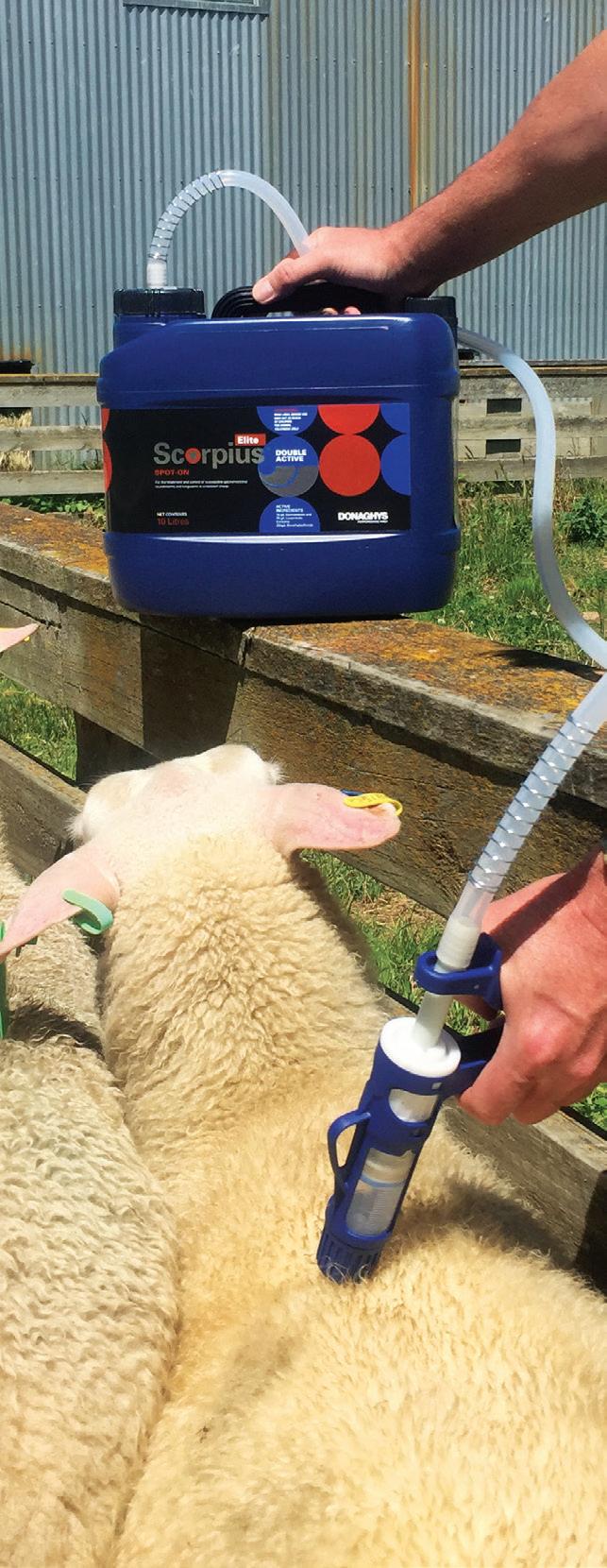
World’s first combination spot-on drench for sheep.
Highly effective against roundworm and lungworm, using Scorpius Elite means less stress for your animals, less time spent in the yard and increased productivity.
Exclusive to Farmlands, Scorpius Elite is a highly effective anthelmintic that’s safe and easy to use for all classes of crossbred sheep.
Talk to your TFO or local Farmlands store today about introducing Scorpius Elite to your farm and cutting your drenching time by more than half.
Users give tick to easier drenching
As lambs approach weaning, it’s time for farmers to plan their parasite control programmes. A pre-weaning drench is a useful tool for farmers to get maximum growth rates from their lambs leading up to weaning. This is particularly important in summer dry areas, where growth rates cannot be relied upon after weaning through the summer.
A pre-weaning drench can easily be coordinated with a 5-in-1 vaccination or vitamin B12 supplementation, which are also important for young growing lambs. With large numbers of lambs to be drenched pre-weaning and at weaning, Scorpius Elite can make this job easier and quicker for farmers.
Scorpius Elite was launched to the market by Donaghys with much fanfare
in March. Donaghys created Scorpius Elite in response to requests from New Zealand farmers for an easier way to drench sheep. Uptake of the new product has been high, with over 400,000 doses of Scorpius Elite used in the field in the first 6 months since launch, with farmers receiving excellent results.
Donaghys surveyed users and received the following feedback:
You’ve taken one of the worst jobs and made it easy (no more stress).
Awesome product, very little stress on my animals.
…great product…
…game changer…
…very happy with results…
The most exciting feedback came from Rob and Alex Foreman in Pahiatua:
“We have been dealing with triple combination drench resistance for 18 months and after really struggling we tried Scorpius Elite. So easy to put on the sheep, and the egg count at 11 days post drench was zero! We couldn’t believe it! We have resistance to the two ingredients when given traditionally in the mouth. Scorpius Elite has given us another tool in the toolbox to farm our way out of drench resistance.”
So not only have farmers been benefiting from the ease of use with Scorpius Elite, they have also been getting excellent results, even in situations where drench resistance is present. This backs up what was shown in the trial work supporting Scorpius Elite’s registration.
Scorpius Elite is used at a dose rate of 1ml per 2.5kg body weight and is applied in one spot to the base of the fleece onto the skin between the shoulder blades. It can be used in crossbred sheep of any wool length from 2 weeks after shearing. Scorpius Elite has a meat withhold of 16 days, giving farmers flexibility when regularly drafting lambs to the works.
The team at Donaghys and Farmlands are looking forward to even more farmers taking advantage of the benefits that Scorpius Elite provides in its second season in the market.
For further information, contact your Farmlands Technical Field Officer or the friendly team at your local Farmlands store.
Article supplied Donaghys
| Farmers have been searching for an easier and quicker way to drench sheep.
Smart tech energises electric fencing gear
Smart high-performance tools are the next step towards the fully integrated farm – and electric fence technology is part of this smart evolution.
Datamars Livestock Global Product Manager Fadi Allos says the rise of smart technology integrated within rugged tried-and-true tools is transforming the way farming is done. “Smart technologies are becoming easier to operate, providing the freedom to get on with more important jobs, keeping farmers reliably abreast of changes in real time and providing more opportunity to enjoy life on and off the farm,” he says.
It’s easy to see why smart electric fence technology is a valuable farm asset. “Think about high-stake fencing. High-risk crops, testy animals, breeding stock, danger spots – slips, waterways, boundaries and effluent ponds. A simple phone alert saying that your fence voltage is down can save a lot of grief,” he says.
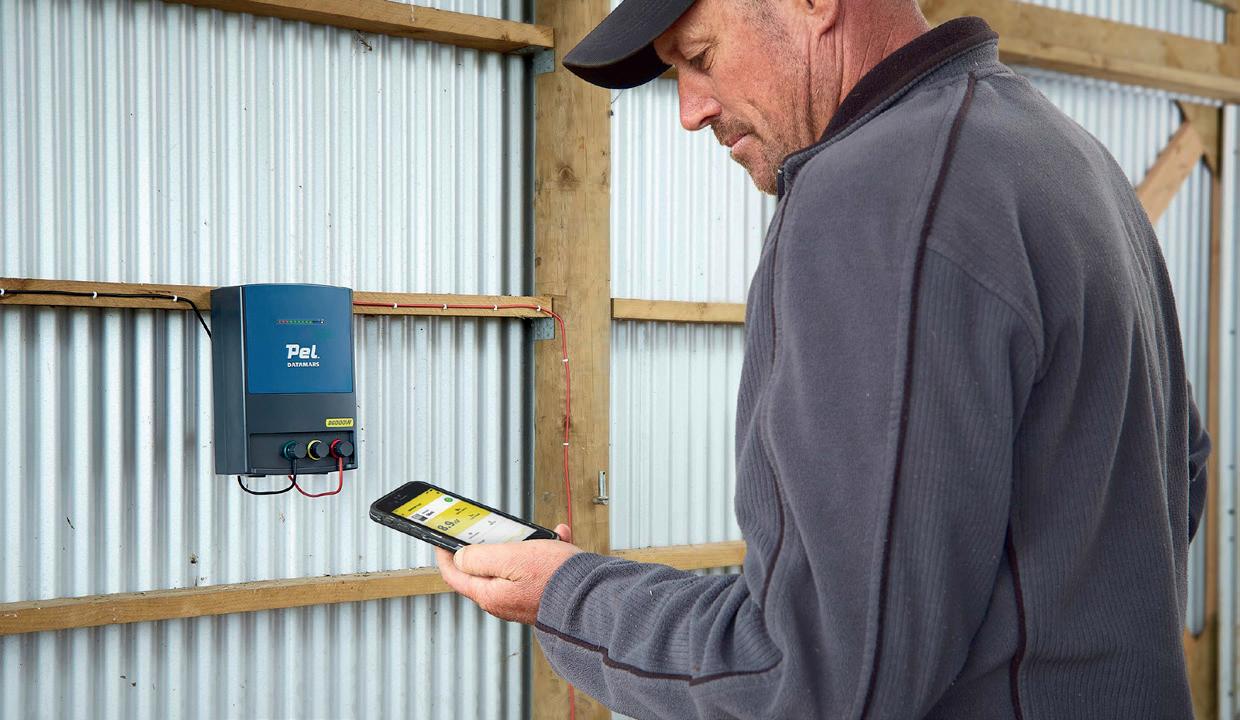
The new Pel 86000W mains energizer from Datamars is equipped with inbuilt Wi-Fi or Bluetooth® connectivity.
Farmers can monitor and control the energizer and check the voltage in real time from their phone. They can configure voltage settings, set up phone alerts if the fence drops below a voltage that they care about, turn the energizer off and on and then check that the voltage is back to normal.
The 86000W is easy to set up via the Datamars Livestock Farm app and brings across all the smart technology of the 46000W mains energizer launched last year. It is remote-capable and works with existing remotes. It also connects with your phone to take the place of a remote when you need it. The app can also connect with multiple phones so several people can receive alerts, view voltage outputs and settings and control the energizer via the phone app when there’s no remote on hand. This means faster response times to possible faults, shorts or animals breaching the line.
Datamars Head of Sales New Zealand Shane Nolan says the new Pel 86000W offers a huge amount of grunt as well as its powerful smart technology.
“The 86000W is a perfect partner when farmers need to reliably push power a significant distance. This energizer powers up 500 hectares with 86 Joules of output energy and 128 Joules stored energy. Reliable power for larger farms, longer fences and intensive operations is a certainty. It has fantastic performance under load –with 10000V at 100 ohms meaning even when the fence isn’t ideal it will deliver effective voltage. For those farmers who don’t need all that energy now, they will be able to extend their farm or develop more fencing in the future with confidence this unit is up for the task.”
The 86000W sports a new terminal design, simplified LED design and is 35 percent more powerful than its predecessor, the Pel 863RS Energizer.
For further information, contact your Farmlands Technical Field Officer or the friendly team at your local Farmlands store.
Article supplied by Datamars
Our portfolio of powerful, proven products has helped farmers from one end of the country to the other create and maintain thriving businesses, and has earned us a reputation as New Zealand’s brassica protection specialists.
With every product suitable for ground or aerial application, our suite of herbicides and insecticides provides local farmers with everything they need to win the war on pests and weeds.
Huski Beer Cooler with every $1000 spent on Brassica Protection Products* * Scan the QR code or go to https://my.corteva.com/BrassicaBeerCooler for promotional T’s & C’s and to claim your FREE Huski beer cooler.
The full range of Brassica Protection products are available at your nearest Farmlands store.
Drench combinations aid lamb growth rates
A key driver of farm productivity is the weight of lambs at weaning. If lamb growth rates are good and more lambs are at killable weights at weaning, this reduces the number of lambs that a farmer has to keep on into the summer. Gastrointestinal parasites can have a negative effect on these growth rates.
The key points of an effective parasite management programme are to manage pastures to reduce parasite challenge, use effective drenches and use refugia and combination drenches to reduce the selection for drench resistance. When the immune system is under stress around lambing, parasites inside ewes produce eggs onto often low pasture covers. In spring the parasite larvae from these eggs are taken up by lambs and depress growth rates until weaning. If the spring pasture growth is slow or pasture covers are low, this negative effect can be increased. In situations such as this, a drench pre-weaning should be considered to maximise growth rates. Where drenching is required, all farmers should be using an effective combination drench. Farmers can find out what drenches are working on their farm by completing a Faecal Egg Count Reduction Test or FECRT. Farmers unsure of their drench resistance status should use a triple combination such as Alliance®. Combination drenches also have the benefit of reducing the selection pressure for drench resistance. The chance of a worm being resistant to all active ingredients in a combination is low and
the proportion of resistant parasites surviving on-farm compared with sensitive parasites on pasture is less.
Cattle and sheep do not share the same parasites, so pasture grazed with cattle will have reduced numbers of infective larvae for sheep on it and vice versa. By rotating the grazing of sheep with cattle in the spring, the growth rates of both classes of stock can be improved.
Refugia is another tool that farmers can use to reduce the selection for drench resistance. Refugia is the practice of allowing parasites from undrenched animals to populate pasture, thereby diluting any resistant parasites that may have survived drenching. This could be by leaving a proportion of the mob undrenched, putting drenched animals onto pasture that has had undrenched grazing animals on it previously or following drenched animals with a mob of undrenched animals.
As it takes most parasites 21 days to start producing eggs once ingested, using a short-acting drench at 28-day intervals ensures that some sensitive parasites, not exposed to drench, reproduce before another drench is used. These larvae are also a form of refugia and dilute any resistant parasites that have survived the previous drench.
Reducing the number of young stock on-farm is one way to reduce the impact of parasite production, their reliance on drenching and the potential for developing drench resistance. Ensuring optimal growth rates in spring and more lambs to the works early is one way that farmers can achieve this.
For further information, contact your Farmlands Technical Field Officer or the friendly team at your local Farmlands store.
Article supplied by MSD
| Rotating the grazing of sheep with cattle will improve the growth rates of both classes of stock.
Scan the QR code or go to cardpartners.farmlands.co.nz to see for yourself.
Stay safe this spring with 12.5% rebate at Molemap.
ARE YOU MAKING THE MOST OF YOUR CARD?
Any time you buy, anything you buy, you’ll be leaving money on the table if you don’t access the exclusive shareholder discounts and
Our network of over 7,000 Card Partner locations is searchable through our online directory, and with some Partners you can pay online as well. Make the most of your Farmlands Card this summer, both at your local Farmlands store and with our trusted team of Card Partners.
Shareholders saved over $5.7m with Noel Leeming over the last year. Save time and switch your household bill payments to your Farmlands account.
So far in 2021, Farmlands shareholders have saved over $4m when buying their new Ford vehicles.
Mitre10 – shareholders have earned over 2.5m Choices Rewards Points in the month of September.
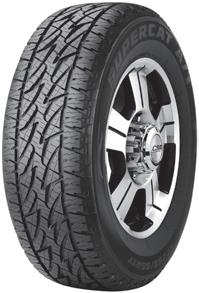
Bridgestone – since the National Partnership Launch in June 2021, Farmlands shareholders have saved 25-30% on Bridgestone and Firestone-branded tyres for cars, 4x4s and van.
Blacks Fasteners – Farmland customers can save up to 50% on nuts and bolts and engineering products.
Bunnings In the last year, Bunnings has accepted over 300,000 transactions from Farmlands shareholders.
Hunting & Fishing – expertise, advice and a 2.5% rebate storewide.
Save up to 40% on RRP storewide at Torpedo7. Need some parts? Shop online with Repco in November and get double rebate.
Fuel up and save 12c a litre with your Farmlands Card at any Z, Caltex and Challenge servication.
Join the organic revolution
Organic Crop Protectant products are a revolution in organic technology, and work alongside nature to enhance garden ecology - without the use of synthetic chemicals. Created nearly 30 years ago to service organic commercial growers in Australia. NEW to the New Zealand range are BioGro certified insecticides and fungicides for organic home gardeners!
eco-oilTM
ORGANICˆ INSECT SPRAY
100% plant-based spraying oil –contains no petroleum based oils
Controls a broad range of problem insects including mealybugs, black scale and citrus leafminer on certain citrus, vegie and ornamental plants
HIPPO ENHANCED -
Attracts good (beneficial) bugs into your garden
BioGro certified for use in organicˆ gardens
eco-fungicideTM
eco-neemTM
ORGANICˆ FUNGICIDE
Controls powdery mildew, black spot and rust on plants including tomatoes, zucchini and roses
Perfect as a two-in-one insecticide and fungicide. Simply add the eco-oil to the eco-fungicide concentrate and spray
BioGro certified for use in organicˆ gardens
ORGANICˆ BOTANICAL INSECTICIDE
Controls a broad range of 16 insects including mites, whitefly, caterpillars, aphids, thrips, grass grub beetle, psyllid and more on ornamental and edible plants
A patented waterextraction process is used to enhance its performance
BioGro certified for use in organicˆ gardens
Safe for beneficial insects, including bees
Organic Crop Protectants range available from your local Farmlands store. Go to ecoorganicgarden.co.nz to find out more.
ˆBioGro certified for use in organic gardens
Organic Crop Protectants
Lots to gain in keeping potassium replenished
Potassium (K) is critical for pasture quality and productivity but large amounts of it are removed when hay or silage is harvested.
“Repeatedly cropping a paddock without replacing K and other nutrients removed at harvest can lead to declining pasture quality and productivity and leave pasture increasingly vulnerable to undesirable species,” Ballance Science Extension Manager Ian Tarbotton says.
“Herbage contains a lot of K as plants take up more than they need, which is known as ‘luxury uptake’. Potassium is the second most concentrated nutrient in herbage, after nitrogen, so large amounts are removed at harvesting.”
Potassium is especially important for clovers, which are poorer foragers of the nutrient than grasses so are more prone to K deficiency. Lack of K can limit clover growth, affecting longerterm nitrogen fixation and pasture production and quality. Post-grazing or silage-making clovers in particular need potassium as they recover from being shaded out by grasses.
What about K in the soil?
“Most K in the soil isn’t plant available so the soil can’t provide new pasture with the K it needs,” Ian says. Unlike other nutrients, K is not stored in soil organic matter and 90 to 98 percent of K in the soil is in mineral form. This slowly becomes available to plants as soil minerals weather and break down.
“Potassium leaching is also an issue in some soils. Pumice soils and sands, for example, have a low cation exchange capacity so can’t hold onto mineral K and if high rainfall occurs, K can easily be lost via leaching.”
Replacing K
Muriate of potash (MOP), a concentrated source of K that dissolves readily when applied, is the most widely used, affordable K fertiliser on pastoral farms.
“Applying K at the right rate and time can minimise luxury uptake of K, as well as leaching losses,” Ian says.
Potassium requirements are largely driven by the amount removed in product, so more intensive farming activities will require more K to be applied. Soil testing to determine
existing reserves of K will help to refine the rate. Use either a Quick Test to measure K readily available for plant uptake or the TBK test to measure both readily and slowly available K. On soils prone to K leaching, frequent applications will minimise losses and maximise plant use.
MOP is inert and may be blended with virtually all other fertiliser products. It is contained in the Superten range (5K, 7K, 10K, 15K and 25K options), which replenish the phosphorus, sulphur and K removed by pastures and crops during their growth cycle. To boost growth with nitrogen and replenish K levels at the same time, SustaiN also comes in 15K, 20K and 25K options.
Post-harvest fertiliser takes care of the nutrients removed by the harvest but regular maintenance fertiliser is still needed.
For more information, contact your Ballance Nutrient Specialist, your Farmlands Technical Field Officer or the friendly team at your local Farmlands store.
Article supplied by Ballance Agri-Nutrients
Beets hard to beat once they get going
With cropping, planning ahead is everything, as Farmlands Technical Field Officer Peter Smart will tell you. Recently he caught up with a farmer, a regular client, who mentioned he was considering including beet in their programme in the next 2 years.
That’s a subject 19-year Farmlands veteran Peter knows a fair bit about. He is also a big fan of taking the time to match farmers’ management styles and systems with crops, as well as soil types, climate and products. “You try to fit the crop to the farmer. You talk to them and consider; is this the best for them? I enjoy working out the best solutions for every individual.”
Peter has a perfect example of experienced and very successful beet growers right on his doorstep – leading Matamata dairy farmers Bruce and Jacquie Tiddy. This season, the Tiddys grew 22ha of sugar beet and Peter was once again impressed by the yield and quality of the crop. “They were pushing 30 tonnes of DM/ha off the better paddocks and 15.2 ME. It’s rocket fuel. It’s really good stuff.”
The beet was harvested in a split lift, with the first in April and the second in late May.
One of the beauties of sugar beet, Peter says, is that they just keep on growing while they are in the ground, increasing the yield.
The beet was being chipped and fed to cows with maize silage as part of their feed ration.
Peter says the Tiddys kept the paddocks “very clean”, a must for the highly technical and sometimes difficult to establish beet crops.
As experienced growers, agronomists and TFOs will tell you, beets will generally hold their own once they reach canopy closure but getting there is the real challenge. It is at this vulnerable early post-emergence stage that beet seedlings are particularly at risk from serious fodder beet seedling pests Nysius and cutworm, both of which can severely damage unprotected crops.
This is where Mavrik® Aquaflow Insecticide (Mavrik) came in. New to the market, Mavrik was part of the comprehensive ADAMA beet protection programme used on the Tiddys’ crop. Mavrik is a breakthrough synthetic pyrethroid (SP), proven
in local trials to combine effective control of Nysius and cutworm with greater environmental benefits.
Doug Speers, ADAMA New Zealand Commercial Manager, says Mavrik’s unique, low toxicity active tau-fluvalinate is gentler on beneficials including parasitoids, predators and pollinators than other SPs available in New Zealand. And it is part of a broader approach.
“Our specially designed, whole crop beet programme is based on a robust pre-emergence herbicide spray with a follow-up that controls any subsequent weeds and pests, providing the best possible start for valuable, highyielding sugar, red and fodder beet and mangolds.”
The ADAMA herbicide programme, which also includes Goltix®, ToreroTM, Ethosat® and Rifle®, has been tested and refined to complement New Zealand growing conditions and beet varieties.
For further information, contact your Farmlands Technical Field Officer or the friendly team at your local Farmlands store.
Article supplied by Adama
| Matamata dairy farmers Bruce and Jacquie Tiddy grew 22ha of sugar beet, with impressive yield and quality.
Choose your weapon for the insect battle
When it comes to finding the best way to control the range of crawling pests inside your house, buildings and outside areas, it is important to know what kind of insecticide you need.
The most common crawling household pests are ants, cockroaches, silverfish, carpet beetles, mites, springtails, fleas, ticks, cluster flies, bed bugs, white-tailed spiders and myriad other spider species. Despite a large number of different active ingredients, all insecticides fall into one of two categories – repellent or non-repellent. Unfortunately, many insecticides don’t state this on the label, which can lead to the wrong product being used for the wrong pest.
Most insecticides claim efficacy on a wide range of pests, but if they are repellent then the only insects killed will be the ones that come in direct contact with the chemical as it is applied. Those not in target range at application (this can be most of the population) will avoid the sprayed area because of its high level of repellence.
In general, only a small percentage of any population is visible at any one time. To ensure a pest population eventually encounters a sprayed surface, it is important to apply a non-repellent insecticide on crawling insects.
This should last for many months on the sprayed surface and still be efficacious even on porous surfaces. Many formulations such as Emulsifiable Concentrates (ECs) are absorbed into porous surfaces and have limited residual activity. Insecticides that have the best activity on all applied surfaces are water-based suspension concentrates (SCs). These are also less likely to damage paint and wallpaper when applied.
Spiders (arachnids) fall into two categories, web builders and non-web builders. They can be controlled easily if the correct product is used. Web building spiders are generally fixed to one location and near their web. They are an easy target and both repellent and non-repellent insecticides will be equally effective in controlling them. White-tailed spiders are more problematic as they hunt at night and seek dark recesses during daylight hours. They are able to move on a silk thread from one height to another, so repellent insecticides will cause them to deviate from the sprayed area, limiting control. For this reason, white-tailed spiders should be treated the same way as crawling insects, with their crawl zones and hunting territory treated with a non-repellent insecticide.
For flying insects and general spider control, No Pests Bug Spray will offer good control. For crawling insects and white-tailed spider control, No Pests Crawling Insect Spray for indoor applications and No Pests X-it Ant for outdoor use have been designed specifically for New Zealand conditions. They are suspension concentrates with no repellence and have a high level of efficacy. A feature of the two sprays is that 90 percent of the active ingredient particles are less than 10 microns in diameter. This small size allows for optimum spray contact and assists in rapid uptake of the insecticide by the insect.
If you use the same sprayer to apply repellent and non-repellent insecticides, you will need to clean the sprayer well to avoid repellents tainting the non-repellent insecticides. The best solution is to have a sprayer dedicated to applying nonrepellents. If that is not possible, clean your sprayer by filling with an enzyme-based washing powder and leaving it to soak overnight. Rinse thoroughly before use.
For further information, contact your Farmlands Technical Field Officer or the friendly team at your local Farmlands store.
Article supplied by Key Industries
| Web-building spiders are generally fixed to one location and are an easy target for insecticides.
• Cycle Time: 18 seconds
• Engine: 15hp
• Hydraulic Capacity: 60L
• Max Log Length: 610mm
•
Shareholder pricing is off RRP and does not include Lowprice
• Pump Type: 2 Stage 28gpm
• Valve: Auto Return
• Weight: 350Kg
• Wheels: 406mm
• Assembly Required
• Weight: 216Kg
• Engine: 16hp Vertical Petrol
• Start Mode: Electric
• Capacity: 13L
• Cutting Speed: 8 - 10km/h
• Maximum Towing Speed: 35km/h
• Cutting Height: 25 - 250mm
• Cutting Width: 1,168mm
• Coupler Size: 50mm
Clearance or
Additional rural shipping charges may apply for outlying islands and very remote areas. Assembly may be required.
The New Zealand Century Farm and Station Awards aim to capture and preserve the history of our country’s farming families. Each month we will share stories from Farmlands shareholders who have worked their land for 100 years or more.
Family and farm grow together
With
each generation, the Brophys’ farm expanded its footprint.
James and Mary Brophy started married life working James’ dairy farm on Brophy Road, Okato.
A few years later, James bought another farm a short distance away on Kaihihi Road. This farm was 141 acres (57.1ha) and was purchased in 1919. Both farms were farmed with help from hired staff.
In 1926, James had the big family homestead built on the Kaihihi Road farm. James, Mary and their six children moved in later that year. When Jim (James and Mary’s youngest son) left school, he worked the Kaihihi Road block with the help of farm workers. Jim later married Mary Barrett and had one child, Brian. They milked jersey
cows in a walk-through shed until 1972 when a 16 aside herringbone shed was built. In June 1961 James sold the farm to his daughter-in-law, Mary.
In 1974, Jim and Mary’s son, Brian finished school and began to work the farm. At this time the farm was milking 180 cows and supplying the Okato dairy factory.
In 1983, Brian married Lynne McGlashan and had two children – Shamus and Mark. They continued to sharemilk for Mary for a number of years.
In 2000, a block of 120 acres across the road was purchased. This meant a larger cow shed was needed so the shed on the new block was extended to a 30 aside and a total of 320 cows were then milked. Brian and Lynne’s son, Mark took over the running of the farm in 2010 and together with his wife Catherine, they maintain and improve a successful farming operation.
| Aerial photo of the farm.
| Jim and Mary.
| Original owners - James and Mary.
Guyco Ball Valves
High Quality Glass Reinforced Nylon Construction
Full Flow Ball Valves
The “full flow” design ensures there is minimum head loss.
Features
; Male and female options ; UV stabilised and corrosion resistant
; Removable and interchangeable handles
; Pressure rating 16 bar/235 PSI @ 20˚C
; Smooth open and close action
Guyco ball valves are manufactured from materials that meet potable water standards. They are also non-corrosive and UV stabilised, making them suitable for New Zealand conditions.
Long BSPT threads allow for better engagement.
More Information
For more information on this product visit hydroflow.co.nz or scan the QR code.
Rural market update
Market confidence is well ahead of the same time last year!
We have a very different set of market drivers heading into 2022 compared with the same time last year. Rural debt levels continue to consolidate, underlying earnings at the farm gate continue to improve, and overall, there is better public awareness of our primary sector’s role in NZ’s economic recovery. Our primary sector export receipts are forecast to hit $49b this season, $8b up on 5 years ago.
Nationally, farm sales equalled $3.5b, up $1.5b on 12 months ago. This is a big positive swing, and while dairy is off a low base, horticulture, too at $516m, is up 145% on last season.
The dairy real estate market has seen a three-fold increase in sales over the last year with 260 farms sold to the 12 months to August 2021 for $1.2b, up from 106 sales for $435m the prior year. This staggering recovery is not simply a pay-out story; dairy pay-outs have been tracking up since 2017. Confidence again in Fonterra, is having a big impact on farmers’ view of the future, and indirectly too, as Fonterra sets the market for many of the smaller processor pay-outs.
While uncertainties remain as to whether this upward trend in commodity prices is signalling a new price cycle, there is no question that food prices continue to soar internationally. The UN Food & Agriculture Organisation (FAO) cost of food index is up at its highest level since 2011 and has been on the rise for 12 straight months, up 31% on 12 months ago.
Economic and social themes impacting producers this season include the availability of seasonal labour, the uncertainty with the Emissions Trading Scheme (ETS) and associated carbon pricing, and environmental planning. These issues are not confined to New Zealand. Food producers worldwide are grappling with similar challenges, particularly mitigation strategies for methane emissions arising from food production.
Ultimately, it’s our reputation with consumers, as we innovate our way through these headwinds, that will set our primary sector apart from the rest. Our country has always had proud history internationally for primary sector innovation, and the 21st century will be no different. We
must back our next generation as they step up to the science and provide the passion needed to bridge the gap. The payback this century will be much bigger than simply export receipts.
Right here and now, one of the most obvious policy impacts is the influence of the carbon price on land-use change, as emitters seek to offset their ETS liabilities. Across all land uses, Property Brokers sold 40,000ha of rural land last season; we feel certain this season will see another step change on that result given the demand we already have for post-1990 pastoral land for forestry planting.
Last season, sheep and beef producers were competing and winning a significant share of the listings as they came headto-head with forestry associated interests, while the carbon price tracked between $25-$35 per tonne. This season, the carbon price looks set to be double that of last season, with predictions that it could even hit $100+ per tonne. Our preference is to take productive farmland to the open market; however, pastoral farmers will struggle this season to compete for land at these projected ETS levels. Current central government regulatory settings are heavily skewed in favour of fueling carbon farming (permanent forests) demand at the expense of traditional pastoral production. The long-term economics of managed forest estates will come under pressure, too, as bare land prices ramp.
Long term, less available farmland and increasing international demand for our food will translate into higher asset values for those intergenerational pastoral farmers that stay the course. Short term, however; to quote Professor Keith Woodford, “The government never foresaw the land-use forces they were unleashing with the ETS,” which has created something of a carbon goldmine for those looking to exit farming with qualifying land. Our view is the current carbon window will not last, but the ETS will stay. Farmers wanting to exit the industry, and take advantage of inflated land values, should be looking at their options this season, not next.
The government has a range of policy options available to moderate/regulate demand for rural land, everything from regional land-use policy to overseas investor criteria for rural land, right through to the actual ETS settings themselves and the associated credits available to investors from afforestation. The ETS and carbon pricing is here to stay and left unchecked has national implications for our primary sector exports. Our view is that the Baker Ag report is much closer to the actual land-use change than MPI officials are currently prepared to accept.
A lot can change in 12 months, as we have already seen. So, before those little green trees become a lot more obvious to Central Government, now would be a good time to have that family conference, particularly if the family is considering an exit from the business of sheep and beef farming.
Regulators will inevitably look to moderate the current level of carbon offsetting associated with rural land afforestation; we just don’t know when. Then it’s likely to be quite a long wait before land values attributed to the actual business of earning export receipts catches up with today’s carbon windfall.
For rural and lifestyle property advice from a national team of committed salespeople, supported by our expert marketing team, right across New Zealand, call 0800 367 5263 or visit pb.co.nz.
Conrad Wilkshire, GM Rural for Property Brokers Ltd conrad@pb.co.nz
National Rural Sales 20ha+ rolling 12 months to August 2021 v 2020
260ha (STS) finishing property virtually on the town boundary of Waipukurau. An easy 40 min commute north to Hastings. Flat – easy contour with some steeper limestone hills overlooking the township that provide for some outstanding house sites. Excellent water from permanent limestone springs. English specimen trees along a central lane through the property provide for a park-like setting. The character four bedroom homestead that can be purchased separately is set in a mature country garden. The property is presently being used as a lamb and cattle finishing unit but has in the past finished bulls. lslington is being offered to the market for the first time in three generations.
This dairy farm has been 20 years in the making to become an environmentally award-winning operation with sound economic and environmental practices.
The property is 426ha with a 250ha milking platform, 80ha of support land and the balance in riparian plantings etc. Farm is run as a level 2 input system. The “Once a Day” milking system creates sound animal welfare and a staff-friendly environment.
3 houses, numerous sheds and only 15 mins to Dannevirke. 125ha is irrigated by centre pivot and laterals. The shed is a 50-bail rotary. Excellent racing with your own red metal and lime quarries. A standoff area with a capacity for 300 cows to protect these quality soils.
The farm is milking 700 cows on a OAD system. 3-year average production of 225,000 kgMS. There may be upside in production as has a resource consent for 270,000 kgMS subject to nutrient leaching limits.
All the key ingredients - location, water and quality dairy soils
131 hectare (more or less) dairy unit located minutes from Putāruru in two titles.
This property is currently farmed as a 168ha dairy farm with a 36ha lease block, milking 420 cows producing 215,000 kgMS year on year.
The farm is made up of predominately flat to gentle rolling contour with approximately one fifth of the farm having slightly steeper contour. Subdivided into 80 paddocks by wide surface laneways, reticulated with an abundance of excellent water and a consistent fertiliser history and strong healthy pastures.
Farm buildings include a 28 ASHB with in-shed meal feeders, 6-bay calf shed, 5-bay calf shed, 2 barns, 2 concrete bunkers and a 2.2m litre lined effluent pond with stirrer and 30hp pump controlled by mobile phone.
This property has two homes, a four-bedroom homestead built in 2000 complete with in-ground pool and a three-bedroom cottage providing excellent accommodation for farm staff.
More milking systems can now get the VacPlus advantage
With their innovative square barrel, VacPlus Milking Liners have been proven to create a superior seal around the teat.
Now compatible with more milking systems!
• Enhanced milk flow
• Faster, more efficient milk out VacPlus milking liners reduce the chances of cup-slip. Join other farmers who get the benefit of potential cost-savings from reduced animal health costs.
Is your shed compatible? To learn more, visit your local Farmlands store or book a dairy shed rubberware review at skellerup.co.nz/book-a-farm-visit
WORTH THIS SPRING WITH OVER 550 SERVICE STATIONS AND TRUCK STOPS NATIONWIDE.
Make sure you fuel up and save 12 cents per litre* with your Farmlands Card at any Z, Caltex and Challenge service station.
*Off the pump price. IS THIS NZ’S MOST VALUABLE CARD? YOU DECIDE.