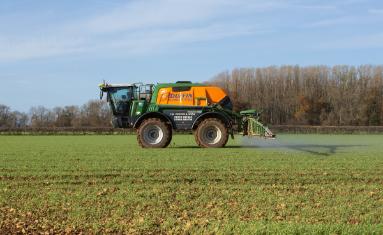
Yara Launches YaraPlus Platform CESAR Milestone Announced at LAMMA
Don't miss a thing! Tune in to our Farming Monthly Podcast every month for in-depth discussions on all the topics found in this month's magazine, available on all major podcast platforms listed below.
Farming Farming
EDITOR
editor@farmingmonthly.com
EDITORIAL ENQUIRIES
editorial@farmingmonthly.com
ADVERTISING ENQUIRIES
Tel: +44 (0) 2476 353537
ADVERTISING DIRECTOR
Shona Beedham
shona@farmingmonthly.com
ACCOUNT EXECUTIVE
Jennifer Mills
jennifer.mills@farmingmonthly.com
ACCOUNT EXECUTIVE
Vicky Smith
vicky.smith@farmingmonthly.com
SUBSCRIPTIONS subscriptions@farmingmonthly.com
PRODUCTION production@farmingmonthly.com
in DIGITAL & WEB
For editorial, general enquiries or to advertise please call +44 (0) 2476 353537 or email sales@farmingmonthly.com
Farming Monthly National is published monthly in the UK by Farming Monthly Ltd, Tel: +44 (0) 2476 353537 UK based Digital Farming Magazine.
No part of this magazine may be reproduced without permission from the publisher.
Whilst every attempt is made to ensure accuracy, the opinions expressed in the magazine are not necessarily those of the Editor or publication. The Editor also reserves the right to alter or edit material as required and no responsibility is accepted for inaccuracies.
Full copyright applies. All rights reserved. ISSN 2044-0190 (print) ISSN 2044-0200 (digital) Agriculture. Covered.
A New Year message from the NFU President
As 2025 came to a close, NFU President Tom Bradshaw reflected on the past twelve months and the farming sector’s future in the coming year.
He said:"As we head into the new year, we can take pride in the resilience UK farming has shown over the past 12 months. I am optimistic that we now have firmer ground to build on and grow in 2026.
"It is right to look back and acknowledge that 2025 has been one of the toughest years on record. From impacts caused by global geopolitics and trade deals with the potential to undermine our marketplace, to ongoing price volatility and uncertainty around farming schemes, farmer confidence has reached an all-time low. Add to that the devastating spell of dry weather and drought which wreaked havoc with the summer's harvest and created ongoing issues for farmers and growers, compounded by the changes to inheritance tax – which has now thankfully been changed.
"However, it is at testing times like these when I am most proud of our sector. Proud to see farmers standing together and proud of the work of the NFU to ensure farming's voice is heard nationally and locally.
"It is sometimes easy to forget that we have seen notable successes, from our campaign to strengthen the law around attacks on livestock1, our lobbying work around planning system reforms2to an NFU-led amendment on renters' rights3. We secured concessions on beef access to the US market while US imports were restricted to a limited quota of hormone-free beef4and we successfully securedthe re-opening of the SFI application window anda rollover of Countryside Stewardship Mid-Tier agreementsafter several months of campaigning5, benefitting thousands of farmers. It's also great to see that many of the government's priority actions from the recently published Farm Profitability Review reflect the proposals we put forward in our own submission.
"Our most notable, significant success was of course the changes the government made to Agricultural Property Relief and Business Property Relief, raising the threshold to £2.5 million7.The change has taken 14 months of persistent campaigning by the NFU, its membersand allied industries, and thousands of farmers and their families have dug in deep, standing up for what they knew to be right.
"We have had hours of calls with Labour backbenchers, particularly those representing rural seats, resulting in a rebellion with nearly 40 abstentionson the vote on Budget Resolution 50.I also had two very constructive meetings with Prime Minister Sir Keir Starmer and dozens of conversations with Defra Secretary of State Emma Reynolds. I am thankfulthatcommon sense has prevailed, the government has listenedand there is a huge sense of
relief for many farming families across England and Wales.
"Our education programmes have reached over half a million schoolchildren with our live lessons. Our 'Farmers for Schools' programme – where trained farmers and NFU staff visit classrooms to talk about food and farming – has more than doubled in reach in the last year alone.Thank you to all members involved in this programme; it really does make a difference.
"2025 was also the year when public support for British farming continued to surge. Our annual Farmer Favourability Survey8saw the public again rank farming as the second most respected profession in the UK for the third-year running, behind nursing. This unwavering support from the British public is a source of great strength and ensures that when farming speaks with one voice, those in power listen.
"Looking ahead to 2026, UK farming continues to face challenges in an uncertain world, but we now have a stronger foundation to build on and grow. In the new year, as the government takes forward its five key recommendations from the Farm Profitability Review, we stand ready to work in partnership to deliver our shared ambition: an agriculture sector that is set up to thrive and drive economic growth.
"Effective use of tax reliefs, alongside a push for greater energy resilience and a stable policy environment to encourage investor confidence, could allhelp domestic production thrive.
"Reforming supply chain relationships, creating an enabling planning system and addressing high energy costs and standing charges – issues the NFU has consistently raised – will also be vital. Together, these measures can help create a more collaborative and equitable marketplace, enabling our farmers and growers to invest in their businesses and drive profitability and growth in the long-term.
"We will also continue to lead the charge in the new year on the other big issues impacting our members. These include trade and border security, farm safety, rural crime, avian influenza vaccination schemes, flexibility within the Seasonal Workers Scheme, the public procurement of more sustainable British food, stopping the worst aspects of trade deals, protecting tenant farming rights and securing the future of uplands farmers and protecting the iconic landscapes they manage.
"To NFU members, yourunwaveringsupport has helped to deliver the successes we have seen in 2025. As we move into 2026, a united voice can help deliver a dynamic, resilient domestic food system for 70 million people across the United Kingdom.Thank you. Together, we are stronger."
Inheritance tax reliefs threshold to rise to £2.5m for farmers and businesses
The government has today (Tuesday 23 December) announced that the level of the Agricultural and Business Property Reliefs threshold will be increased from £1m to £2.5m when it is introduced in April 2026.Thisallows spouses or civil partners to pass on up to £5m in qualifying agricultural or business assets between them before paying inheritance tax, on top of existing allowances.
Following the reformstoAgricultural and Business PropertyReliefsannounced at Budget 2024, the government has listened to concerns of the farming community and businesses about the reforms. Having carefully considered this feedback, the government is going further to protect more farms and businesses, whilemaintainingthe core principle thatthemost valuable agricultural and business assets should not receive unlimited relief. The change will be introduced to the Finance Bill in January and will apply from 6 April.
Raising the threshold will significantly reduce the number of farms and business owners facing higher inheritance tax bills under the reforms, ensuring that only the largest estates are affected.
Today's announcement will halve the number of estates claiming AgriculturalPropertyRelief(including those also claiming BusinessPropertyRelief) who are affected by the reforms – better targeting the relief.
As a result:
• The number of estates claiming agricultural property relief (including those also claiming business property relief) affected by the reforms in 2026-27 halves from 375 to 185.
• Most estates will benefit, with inheritance tax cut by hundreds of thousands of pounds for many families.
• Thenumber of estates affected by the reforms claiming only business property relief – excluding those holding onlyAIMshares – will fall by a third, reducing complexity and ensuring support goes where it's needed most.
• Around 85% of estates claiming agricultural property relief in 2026-27, including those that also claim for business property relief,are forecast topay no more inheritance tax on their estates.
Environment Secretary Emma Reynolds said:
"Farmers are at the heart of our food security and environmental stewardship, and I am determined to work with them to secure a profitable future for British farming.
"We have listened closely to farmers across thecountryand we are making changes today to protect more ordinary family farms. We are increasing the individual threshold from £1m to £2.5m which means couples with estates of up to 5m will now pay no inheritance taxon their estates.
"It's only right thatlargerestates contribute more, while we back the farms and trading businesses that are the backbone of Britain's rural communities."
To deliver this, the government will introduce an amendment to the Finance Bill 2025 to:
• Increase the threshold at which 100% AgriculturalPropertyReliefand BusinessPropertyReliefapplies from £1 million to£2.5 million per estate, with 50% relief continuing to apply to qualifying assets above that level.
• Given the allowancewill be transferable between spouses, a surviving spouse or civil partner will be able to pass on up to£5 millionof qualifying agricultural and business assets tax-free, on top of existing nil‑rate bands.This will apply to people who are widowed and have lost spouses orcivilpartners before the policy was introduced.
The government remains committed to making the tax system fairer by reducing the generous inheritance taxreliefsavailable to owners of large agricultural and business estates,whilecontinuing to recognise the importance of farms and businesses to local communities and the wider economy. The revised approach continues to ensure that qualifying agricultural and business assets are taxed at a much lower effective rate than most other assets. The changes we are implementingreflects the concerns that have been raised while preserving the majority of the revenue from reformto help cut debt and borrowing andfund public services.Thecostings for today's announcement will be incorporated into the next OBR forecast.
Today's announcement follows the government's commitment to establish a new Farming and Food Partnership Board to bring together senior leaders from farming, food production, retail, finance and government to take a practical, partnership-led approach from farm to fork to strengthen our food production.
It builds on updates to the planning rules, via the National Planning Policy Framework, to cut unnecessary red tape and help farmers expand their businesses with easier approvalson farm reservoirs, greenhouses, polytunnels and farm shops, boosting food production and rural growth.
2026 State of Local Government Finance in Scotland
No improvement to the financial sustainability of councils across Scotland with seven in ten saying they will be unable to balance budget within five years
The latest research from the Local Government Information Unit's (LGIU) third annualState of Local Government Finance in Scotlandreport reveals that all councils who responded will be increasing council tax and decreasing their spending on services this year.
Yet, despite utilising these and other available measures, the new research found that seven out of ten senior council figures believe they won't be able to balance their budgets within the next five years, and not one respondent expressed confidence in the sustainability of local government finance.
Chief Executives, Leaders and Directors of Finance representing 81% of Scottish local authorities took part in the research, which paints a picture of a sector pulling out all the stops available to them to respond to rising service needs with ever-diminishing resources. These responses provide an unparalleled look into the view from the inside when it comes to managing local government finances.
Adult social care once again topped the table for both immediate and long-term pressures that council finances face, and the majority of councils want more powers to raise revenue, including the freedom to levy other local taxes. Seventy per cent also supported a local share of national taxes being made available.
Some of the other key recommendations from the report include enshrining in legislation the principles of the Verity House Agreement as well as a full-scale review of local government finance, including sources of funding, the formulae for
distribution, and the place of local government in the wider public sector. A full list of recommendations from the report can be found below.
An embargoed copy of the full report is available upon request.
Jonathan Carr-West, Chief Executive, LGIU,said: "Local government finance in Scotland is still not fit for purpose. Despite recent changes, the underlying problems that threaten councils' financial sustainability have not been resolved.
Financial pressures on councils continue to move in only one direction as service demands increase and local leaders have ever-diminishing budgets with which to respond. Local government is in a precarious position. With 70% of respondents indicating that they are close to effective bankruptcy, something has to give very soon.
Our latest research, released as we approach the 2026 Scottish Parliament election, serves as a stark warning: councils overwhelmingly feel their current funding situation jeopardises their ability to protect vulnerable citizens, increases the risk of insolvency, and diminishes the quality of life in their communities.
However, this negative trajectory is not inevitable. Councils across Scotland are ready and willing to collaborate with the Scottish Government to implement meaningful and lasting reform. Our research clearly defines the necessary changes and presents the sector's solutions for achieving them.
While the complexities of local government finance mean there is no single simple fix, the sector shares near-universal agreement on the problems and offers a wealth of ideas on how they can be solved."
Carter Jonas responds to Defra announcement on
the Sustainable Farming Incentive
Carter Jonas Partner, James Bradley, said: "News that the SFI is reopening will be welcomed by farm and estate owners, but its structure raises a number of questions which will cause uncertainty among those who want to plan.
"Having two application windows is helpful in some respects, but if each window has a fixed budget, the scheme becomes effectively competitive again.
"That is a significant shift from what farmers have been used to over the past decade.
"The government says it is considering including limits on the area of certain options and reviewing payment rates where uptake has been high. This is a reaction to how the previous scheme was administered, and while lowering rates may allow more farms into the scheme, it also raises questions around whether options remain financially viable.
"It is good to see SFI coming back and to have some indication of direction. The success of the scheme will depend on whether options genuinely work for farm businesses, not just on paper, but in practice and over the long term."
armers operating as sole traders will have an extra year before they need to start using Making Tax Digital (MTD) for Income Tax, after the NFU successfully argued that the system had not been tested sufficiently for those who wish to use their entitlement for profit averaging.
From April 2026, self-employed individuals and landlords with an income of more than £50,000 will be required to keep digital records and provide quarterly updates on their income and expenditure to HMRC through MTD-compatible software.
But following sustained NFU campaigning, farmers who may reasonably expect to use profit averaging will now be entitled to a deferment until April 2027, saving time and costs.
The NFU has engaged extensively with HMRC on Making Tax Digital for Income Tax raising concerns over:
• timescales for implementation
• the need for a robust pilot phase to identify problem areas
• additional complexity resulting from Basis Period Reform for many farmers
• the level of complexity with MTD reporting for diversified farms.
NFU President Tom Bradshaw said:"This announcement is a big win for our members. Deferring Making Tax Digital until 2027 for sole traders using profit averaging will save many farmers significant time and money, giving businesses vital breathing space.
ophie Throup has been appointed to succeed Terry Jones as Director General of the NFU when he steps down in the spring.
Sophie will join the NFU from Myton Food Group where she has been Senior Director since 2023. She brings with her experience in manufacturing, processing and retail, and has previously held the role of Head of Agriculture at Morrisons. Herexperience in the food supply chain is preceded by a decade in the veterinary sector and time in non-executive and advisory roles, including with Defra as part of the Trade and Agriculture Commission's development.
Coming from a mixed farm which produces milk, arable crops and free-range eggs, Sophie has a passion for farming. In recent years,she led in setting up the 'School of Sustainable Food and Farming' at Harper Adams University with Morrisons, the NFU and McDonalds, which helps shape research, training and innovative support to boost sustainable farming.
Sophie said:"It is an honour and a privilege to have the opportunity to lead the NFU and take this great organisation forward with energy,commitmentand a clear vision for its future.
"With our family farming back home in Yorkshire, my roots have always been in agriculture, and I know how important this period of change is for the sector. I am a great believer of strength in unity, something the NFU has at its core, and I'm looking forward to working with and listening to our
"However, it's important to recognise thatthis initiative has the potential to streamline tax administration in the long-term as a well-tested and workable system that could ultimately reduce paperwork and improve accuracy for farm businesses.
F S NFU welcomes delay to Making Tax Digital for Income Tax NFU announces new Director General
members to help make a positive difference for farming in England and Wales."
NFU President Tom Bradshaw said:"I'd like to welcome Sophie to the NFU and we are delighted with her appointment at this pivotal time for the farming industry. She brings with her a wealth of experience in the commercial and animal health sectors alongside a clear passion for farming and food production. I look forward to working with her to deliver a thriving, vibrant NFU that creates opportunities for our members.
"I'd also like to thank Terry Jones for his dedication to the NFU and its members over the past 10 years, and for leading the NFU through one of the most challenging periods for the sector."
A Andrew Arbuckle MBE–Obituary
nextraordinarywork ethic,dogged determinationandawonderful sense of humourunderpinned theoutstandingachievements ofAndrew Arbuckle MBE, who diedpeacefullyon Christmas Day,aged 81.
Andrewwill longberemembered for hisexceptional contribution tofarming,an industry he loveddearly, and hisremarkable and varied careerincluded four decades asajournalist withThe Courier, where hebecame agricultural editor in1985,laterworkingforThe Scotsmanand alsofreelance for a spell.
Hisprolific andinsightful reporting on food and farmingissues,along withthoughtprovoking commentaries andopinion columns, earnedhim the top UKaccoladefor agricultural journalism, theNetherthorpeAward, in 2012.
Andrew wasawarded an MBE in the New Year's Honours2024for services to farming and to the community of Fife,with a highlight being his support ofagricultural charityRSABI. He was a Trustee of the charityprior to becoming an HonoraryVicepresident,raisingmore than £100,000 forRSABIthrough thepublicationofthree books (twoproducedwith hislatebrother,John)takinga light-hearted look at farming life.
Thisrecognitionfollowedanaward forOutstanding Contributionto RSABIpresentedon HM Albion in June 2022 as part of the Diamond Jubilee
celebrations,in the presence ofHRH The Princess Royaland in2023he was awarded theprestigiousNFU Scotland and NFU MutualAmbassadorAward.
Other agricultural positions includedserving asa director of Fife Growers co-operative from 1974 to 1977,promoting the growing of field scalevegetablesfor the frozen market following the closure of the Cupar sugar beet factory.
In the 1970s, he served as a director of the Scottish Nuclear Stock Associationestablishedto promote the raspberry industry through the sales of healthy canes,and in 1992he was electedchairmanof the Fife & Kinross Area of NFUScotland.He also served on the NFUS Legal committee at national level for seven years.
The strong work ethic which propelled himthroughout his life was doubtless kindled
during a childhood on the family farm,Logie, near Newburghwhere hehadmany happy memoriesofgrowing up. It is notasurprise that he channelled the same energy, focus and dedication into his endeavours inotheraspectsof his life. From local and national politics to the arts and sport, there were no half measures - he consistently gave his all.
Andrew gavefour decades ofservice to Scottish local and national politics, from1986 to May 2007, serving as both a Liberal Democrat MSP and a hard-working councillor in Fife.
In1986,hewas elected to Fife Regional Council and became a member of its influential Policy & Resource Committee.Then in 1995when Local Government re-organisation took place and Fife Council was created,hewas elected to Chair the East Area Committeeand from 2003 to 2005hechaired Fife Council's Standards & Audit Committee.
FromJanuary2005toMay 2007,hewasLiberal Democrat MSP for Mid Scotland and Fifein theScottish Parliamentand duringthat period,he wasFinance Spokesperson for the Party.
His communitywork includedchairingNewburgh Community Trust (NCT)during a period whenin excess of£250,000was raisedto convert a former factory brown field site into Riverside Park which is now much enjoyed by the local community as an informal recreation parkland area. Andrewalsoled the Trust to successfully raise£60k to buyandrunthe former town reservoir as an informal recreational park. This was the first community-owned reservoir in Scotland.
Other notable projects between 2000 and 2010, when Andrew was chair of NCT, included upgrading the paths in a local park and creating a pathway along the riverside. In his 16 years at the helm of NCT, thetown attracted almost one million pounds of investment, with the initiatives Andrew was involved in making a significant contribution to preserving its heritageand alsobeing transformational to the community.
In 2006hechaired a committee of the Howe of Fife Rugby Club in Cupar and led efforts to raise over one million pounds to provide a Community Sports facility for the area,andin 2016he ChairedtheTayportCommunity Trust, leading a project to raise £2.5 million for a new Community Centre and acaravanpark.
Other roles included beinga member of the University of St Andrews Courtfrom 1995 –2000,servingon the Finance Committee of the
Court,and afterserving as a Board Member on the Tay Road Bridge Board,hewas electedchairmanin 2007.Hewas also aTrustee on the St Andrews Links Trustand from1996 to 1998hewas on the Board of the Scottish Chamber Orchestra,reflectinga lifelong interest in classical music.
A keen supporter of Dundee United FC, Andrew was also a founder member of Fife Athletics Club, later being made an honorary life member. One of his greatest athletics achievements was becoming over 60s pole vault champion.
While Andrew's legacy includes a vast number of achievements, he will be fondly remembered for his witty observations about life, his unwavering sense of fun and the sheer joy he took from the company of friends and family.
He will also be remembered for his immense capacity for kindness, constantly seeking ways to step up to help others in times of need.
Andrewis survived by his daughters Lydia and Elizabeth, three grandchildrenJessica,Emmaand Archie, and by his brotherWillie and sister Gina.
GOVERNMENT MUST GO 'FURTHER AND FASTER' TO PROTECT OUR CERAMICS SECTOR, REPORTFINDS
Areport outlining recommendations to Government on safeguarding and futureproofing the UK's ceramics sector has been launched today. The report, headed up by the ceramics union GMB, the Trade Union Congress and the independent environmental think tank group Green Alliance, is the first ofittype to turn the experiences of workers in the sector at the heart of its recommendations. It comes after severalhigh profileclosures of iconic pottery brands in 2025, and alarm bells were rung that Government was not taking urgent action to support the sector.
ChrisHoofe, GMB Organiser, said:
"Tens of thousands ofworking classjobs rely on the ceramics sector; we cannot afford to leave its future to chance.
"But sofarwearen'tseeing enough action from aGovernmentgrappling with the unique challenges the sector faces.
"We need action on gas pricing and an end to
tel: 01724 850224 fax: 01724 289317
unnecessary red-tape, and we need it quick. "This report will hopefully be a wake-up call for decision makers and pave the way for policy that safeguards UK ceramics for generations to come".
Paul Nowak, TUC General Secretary, said:
"Britain's ceramics industry is a fundamental part of our national identity and a vital economic powerhouse for the whole country.
"It's a critical enabler of key strategic sectors - from energy to defence, medical technology and advanced manufacturing.
"But for too long, the ceramics industry has been chronically overlooked and under-supported - and is now on its knees from sky-high energy bills, unfair dumping of cheap imports, and years of underinvestment.
"While the Chancellor's budget last week offered some welcome signals, government support still falls short of what's needed to protect the livelihoods of the 20,000 workers and their communities that rely on this industry.
"That's why this government must go further and faster cutting energy costs, tackling unfair trade, and investing at scale to help sites modernise.
"With the right action now, we can secure the future of British ceramics, safeguard skilled union jobs, and ensure this strategically vital industry continues to power the UK's economy for generations to come."
Cath Smith, Green Alliance, said:
''Britain's ceramics industry supports thousands of skilled jobs and underpins vital sectors from energy and defence to medical technology and advanced manufacturing.
"But after decades of being overlooked,it'snow at a critical point.
"The budget offered some welcome steps, but ceramics needs government to go further, faster. "Paired with urgent support, decarbonisation offers a path to futureproofing the industry but only with action to reduce industrial energy costs, tackle unfair trading, and targeted capital support to help sites modernise.
"Without this, the UK risks losing strategic capabilities we won't get back.''
Small Shropshire “starter farm” available on 10-year let
New entrants to farming are expected to lead interest in a 30-acre holding in Shropshire which includes a house and buildings and is available on a long-term tenancy.
A viewing day for Hole Farm in Aston Pigott, 12 miles from Shrewsbury, is being hosted by national property consultancy Carter Jonas on Friday 30 January.
The successful applicant will be offered a 10-year farm business tenancy to start on 25 March.
“County Councils used to offer these sorts of holdings regularly, but a lot have been sold so this is quite a rare opportunity in this part of the world,” says Carter Jonas Associate John Cooke, who is based in the company’s Shrewsbury office.
“We expect it to interest people who are getting into farming. It’s a small-scale farm, so manageable, and would be a great foot on the ladder for someone.”
and amenity. Mature hedges and stock fencing surround the six fields.
“It’s a self-contained unit which would suit a variety of purposes from animals or crops to fresh produce in a market garden format,” says Mr Cooke.
Close to Westbury, Hole Farm is equipped with a period farmhouse and a range of farm buildings and hay stores, set within 30 acres of productive pasture.
Soils are predominantly loamy and clay – well suited to grassland and cereal production, and there is a belt of woodland, providing useful shelter
“The owners are offering a 10-year let so there is time for the successful tenant to establish a business. They are very supportive of regenerative and organic systems, and sustainable food production in all its forms.”
The detached farmhouse has great views across the Shropshire Hills. It also retains its period charm and offers generous accommodation arranged over two floors plus a cellar.
A traditional Dutch barn requires some work to improve but could be used for storage or stock.
A number of other buildings can be made available with the tenancy by separate negotiation but are in need of repair prior to use.
Viewings need to be booked for the day between 12 noon to 3.30pm. Contact John Cooke at john.cooke@carterjonas.co.uk for a tender pack and to attend the day.
NFU responds to SoS Oxford Farming Conference speech
NFU President Tom Bradshaw said:"It's encouraging to see the Defra Secretary of State's real ambition for a thriving agriculture industry, demonstrated by her announcements made today, as well as her commitment to workingcollaboratively with farmers and growers.
"Domestically, creating policies that support productivity and growth remain key and I am pleased to hear the Secretary of State talk about the much-needed clarity coming ahead of each payment windows for the Sustainable Farming Incentive (SFI). Farming is a long-term investment, measured in years, not months, and clarity is essential for confidence. Transparency around the farming budget is critical to this. Without transparency, farmers and growers are unable to plan for their businesses' future.
"On a global scale, growing exports for British food abroad and ensuring imported products meet our productions standards will ensure our sector can compete on a level playing field.
"Important questions remain on the detail and delivery, from the 25-year Farming Roadmap to the roll out of the Farming Profitability Review. We want to work with government to drive these policies forward to create confidence and profitability for farming and growing businesses and ensure 2026 sees British farming achieve all it is capable of."
Responding to the Defra Secretary of State's update on SFINFU Deputy President David Exwood said: "It's positive to hear Defra Secretary of State talk about much-needed plans to reform the SFI and a commitment to work collaboratively with farmers and growers, particularly in our uplands and protected landscapes.
"But there remains a huge lack of detail that farmers and growers urgently need and this uncertainty continues to undermine farmers' confidence, ability to invest and do the best for their business.
"We recognise that the farming budget is finite and that SFI has to be spread more evenly across the industry, with a particular focus on the coming 12 months. But for farming and growing businesses to deliver the public goods the scheme originally set out to achieve, it is vital that it is accessible and relevant to all food producing businesses, no matter the size. That is whyif there has to be an SFI funding cap, we support a cap per hectare for SFI agreements on farm.
"There are 27,8002farmers in agri-environment schemes whose agreements are set to expire at the end of the 2026/2027 financial year. With that deadline on the horizon, it is essential that we get a clear understanding from Defra about the SFI budget for the two application windows to allow continuity of environmental delivery that already exists of farm."
"Farming families need to be treated better" throughout railway development projects
The NFU has stressed the need for lessons to be learned from the chaotic HS2 project around how farming families were and continue to be treated, as the government today announced plans for new railway developments over the coming years.
NFU Vice-president Rachel Hallos said: "Farming families along these routes will have lots of questions and plenty of concerns about how the projects will be delivered.
"Those along the Birmingham to Manchester route have already endured years of disruption because of HS2 flipflopping, delays and insufficient communication, uprooting both their businesses and everyday lives. Now they will be held in limbo forleast another decade, possibly even two,before
work on the new line even starts.
"These are not developments that take a few months, they are years in the making. This means another generation of families will be hit, many of whose homes, land and livelihoods already bear the scars from HS2. Lessons need to be learned from that experience - farming families need to be treated better.
"The NFU will seek to engage with the delivery companies and urge them to work with farming families on these projects. It's vital farm businesses are able to be productive and profitable throughout this process and remain focused on what they do best – producing food and caring for the great British countryside."
British Wool launches young farmers' ‘Ewe and Your View’ social media competition
British Wool, in collaboration with the National Young Farmers’ Clubs (NFYFC), CFfl Cymru/Wales YFC and Scottish Association of Young Farmers Club (SAYFC) is proud to launch ‘Ewe and Your View’ an exciting new competition designed to give young farmers a platform to share their voice.
The competition is open to YFC members aged 18–30 and invites young farmers to create a short video of up to two minutes exploring their thoughts and experiences within the wool industry.
Gareth Jones, Head of Member Engagement, said: “This competition reflects our continued commitment to supporting and engaging with the next generation of farmers. ‘Ewe and your Views’ will be an excellent opportunity for young farmers to demonstrate their social media skills, engaging with others from the industry, as well as consumers. The competition will lead us nicely into February were, for the eighth year in succession, we’ll be launching our offer of 50% off any shearing course to all young farmers.”
Entrants can choose from a range of engaging themes, including what British Wool (the organisation) means to them, how the shearing course discount supports young farmers, ways to promote British Wool to the next generation, or why supporting the wool industry is so important. These topics encourage creativity while highlighting the vital role wool plays in British farming and rural life.
Participants may enter more than one video, giving them multiple opportunities to showcase passion, pride, and innovation within the agricultural community.
The competition launches on Wednesday, 7th January, providing young farmers with an opportunity to plan, film, and submit their entries. The closing date for entries is Friday, 23rd January, and all entries will be judged during the week commencing 26th January. Winners will be announced in the week commencing 2nd February via British Wool’s farm social media channels.
Entries will be judged by Cammy Wilson of The Sheep Game and Emily Ashworth from Farmers Guardian, both respected voices in UK agriculture with experience in social media and digital communication.
On being asked to judge the competition, Emily said: “I am so pleased to help judge this competition. Young farmers are our future, and we must do all we can to encourage and support them while showcasing the sustainable and un-beatable qualities of wool. I am looking forward to seeing all the creative and innovative entries these youngsters have to offer.”
For those successful in the ‘Ewe and your View’ competition, the overall winner will receive a cash prize, while other standout entries will receive a free place on one of British Wool’s shearing courses.
Successful entries will also be featured across British Wool’s social media channels, offering valuable exposure within the industry.
AsDefra andthetwo largest environmental regulators, the Environment Agency (EA) and Natural England (NE), embark on a period of reform they face severalchallenges,andsuccess will depend on a joined-up, strategic approach, saysthe National Audit Office (NAO)in a new report.
Overthe past two years, Defraand the regulatorshave increased their focus on improving how they regulate andhaveset up a series of reform programmes. Threerecent major reviews1haveadded momentum for reform.
In total, the three reviews make 149 recommendations to Defra or its arm's-length bodies.Alongside responding to these recommendations, Defra and its arm's-length bodiesare responsible formore than 3,000 pieces of legislation, leading to complexity for both regulators and regulated businesses.
The NAO's report, Environmental Regulation, highlightsthis complexity and thechallenges that face Defra and the regulatorsastheyembarkontheirreforms.
The report says that an overly cautious and riskaverse culture in Defraand the regulatorshas developed, in part due to the potential for legal challenge, and this has restricted some efforts to innovate and embracenew approaches.
Defra's approach to environmental regulation in recent years hasbeen shaped by the 2021 Environment Act targets and 2023 Environmental Improvement Plan commitments, however at timesithasbeen reactive rather than based on a clear strategy, focusing on short-term priorities or high-profile issues.
Thishassometimesled to Defrabeing slow to act when the regulators suggest regulatory changes or system improvements that would produce better outcomes or cut costs.
The regulators have introduced some joint-working projectseffectively,where they have similar areas of regulatory responsibility. ButDefra and the regulatorshave not rolledthis approach out more widely,mainly due tosystemic barriers
includinglegislative requirements, data protectionissuesand cultural differences between regulators.
The ability of EA and NE to regulate in a consistent and well-targeted way has been constrainedin partby outdated IT systems.WhileDefraisworking to improveitsdigital technologies,ithas beenslowto moderniseits systemsanditis only part-way through a programme to do so, for which it received a further £300 million in the 2025 Spending Review to invest between 202627 and 2028-29.
To address the issues raised in the recent reviews,Defraneeds to balance'quickwin'recommendationsthat are easier to implement with the more structural changes that will take longer but have greatest potential for impact.
The NAO report recommends thatupon embarking on their period of potentially significant reform,Defra and the regulatorsshouldtake a focused and integrated approach to the changes needed.The recommendations include:
• Settinga plan for how existing change programmes and new reforms – including digital change – will link together, so they are planned and delivered in a coherent way
• More effectively usinginformation to target limited resources on the areas where there is greatest risk to the environment
• Definingrisk appetite to support a culture of change and innovation.
Gareth Davies, head of the NAO, said: "The government intends for the regulatory system to both protect the environment and enable economic growth, but it is not working as effectively as it could. The current system is complex and outdated.
"Defra and the regulators are working to improve how they regulate, including in response to recent major reviews. Success will depend on taking a sufficiently strategic approach and sticking to the course set."
TheRSPB sets out vision for how farming can help save nature
In a brand-new report, the RSPB reveals how farmers can be critical allies against wildlife decline while also storing carbon, helping prevent floods, and creating more reliable and healthy food sources. Critically, however, the report emphasises that farmers cannot do it alone, and need support from governments, retailers, and financial institutions.
Farming covers 70% of UK land, and so farmers play a key role in reversing wildlife declines across what is one of the most nature-depleted countries on earth. The RSPB’s report, published this week at the Oxford Farming Conference, draws on examples from around the UK where farmers are already creating vital wildlife habitats whilst investing in soil, pollinators, and water, protecting their land as well as helping threatened species such as Turtle Dove and Lapwing.
Through steps such as creating and maintaining habitats across at least 10% of the farm, cutting hedgerows every two-three years rather than every year, and creating or maintaining sources of water such as ponds or scrapes, farmers can see huge benefits for their crops and livestock as well as boosting local wildlife.
But without support from government, supermarkets, and banks, the report emphasises, these transitional changes will never be possible on a national scale. Governments in all four UK nations, the RSPB states, must:
• create well-funded, effective agri-environment schemes that pay farmers to provide sufficient
Syear-round resources for nature, supported by funded advice.
• put trade policies in place that raise standards and avoid offshoring the UK’s environmental footprint.
• tackle unfair contracts and food waste, amongst other wider food system issues.
Businesses and retailers, the report says, also play a key role by being transparent about their impact on the environment and working with farmers to set clear targets, as well as putting long-term contracts in place that give farmers the time to transition to nature-friendly farming. Banks and other financial institutions, meanwhile, must support through their investments and lending models.
Through detailing examples of farmers across the UK who are already working with government and local institutions to help nature, whether it's rewetting peatlands or phasing out insecticides, the report shows where farms are already welcoming back bird species not seen in decades, and where butterfly numbers continue to climb and climb.
Alice Groom, the RSPB’s head of sustainable land use policy, said: “Governments and businesses must play their part and give farmers long-term security, but a UK Government announcement only this week about naturefriendly farming schemes once again failed to plan any further than 2028. Farmers need security, and nature needs action now.”
reaction to IHT
ean McCann, chartered financial planner at NFU Mutual, the financial advisory firm, said:"Today's important announcement from the Government will come as a relief to many familyowned farms and businesses across the UK.
"Together with the change announced in the Budget allowing married couples to transfer any unused allowance between them, this latest move will allow up to £5million in qualifying agricultural and business assets to be passed on free of Inheritance tax
"While this is a significant improvement on the previous proposals and will take many smaller farms and businesses out of the Inheritance tax net, it will still leave many farming and business owning families facing a large inheritance tax bill.
"Although farm asset values can be high, the returns are often low. In many cases we could still see land and buildings having to be sold on the farmer's death to pay the tax bill, with the next generation inheriting smaller less efficient farms as a result."
Government must reboot nature-friendly farming schemes for food security
As farmers and the agriculture sector prepare to attend the big conferences in Oxford this week,Vicki Hird, strategic lead for agriculture at The Wildlife Trusts, writes,there are concerns about the future ofEnvironmental Land Management schemes – despite clear evidence that nature-based farm approaches are essential to ensure that farmers and the land can adapt to a rapidly changing climate.
Although there is major support across the farming community for the schemes, their future remains uncertain since the new Ministerial team arrived and progress on the main scheme was stalled over 9 months ago.
State of play on the three farm schemes
• TheSustainable Farming Incentive(SFI) was paused in March 2026 causing significant anger and frustration across the farming sector. It meant that essential new funding for nature-friendly farming practices is not currently accessible to most farmers. The SFI is a key tool to support farmers in managing their land sustainably and reward them for restoring nature, cleaning rivers, and mitigating against climate change. The Wildlife Trusts believe the SFI must be opened for all farmers as a matter of urgency given the stresses they are under. The Government was right to review the scheme which needed more ambition and strengthening to ensure whole natural systems like rivers are protected. But the process must be managed more clearly for farmers in future to avoid financial cliff edges.
• Countryside Stewardshiphas higher ambition for nature recovery – vital given the continuing decline of the natural world – and so it demands more from farmers. But it is not open to everyone and is limited by small budgets and capacity to administer. The Wildlife Trusts welcomed the extension of the Countryside Stewardship agreements as a step forward in ensuring that farmers taking stronger action for nature are not left with a funding shortfall. Continuation and wider take-up of these more ambitious schemes is critical.
• Landscape Recoveryschemes are major projects covering large areas and multiple land managers which could deliver nature recovery and flood management at a really exciting scale. But they are at risk of failing due tounreasonablecontractual demands and uncertain long-term funding.
Currently none of the Environmental Land
Management schemes are open for new applications and future long term Government budgets are uncertain – this leaves farmers and landowners without a clear pathway towards a sustainable future. Against a backdrop of squeezes in food prices and the challenges presented by a rapidly shifting climate, farmers and the land they care for are struggling.
While it is admirable that Defra fought successfully to maintain farm budgets, the reality is that there is not enough money in the pot for it to do everything it needs to do. Independent analysis in 2024 on behalf of The Wildlife Trusts, RSPB and National Trust found that at least£3.1 billion (compared to an average of £2.5bn) needs to be spent on nature-friendly farmingand land management annually in England to meet the UK Government's own legally-binding targets. Such needs will only have grown given inflation and the ongoing crises of nature loss and climate change.
We need to maintain ambition
The Secretary of State will speak at the Oxford farm conference on Thursday 8thJanuary. She must confirm a strong long-term ambition for the three English farm schemes as a core feature of future farming prosperity, and provide more finance for training, advice and collaboration so that skills and learning grow rapidly. The disastrous uncertainties of the last few years must end.Through nature-friendly practices, farm businesses can transition to become more climate resilient – and in doing so, help to clean up rivers, prevent flooding, store water in times of drought and restore nature.
All three schemes must also provide clear value for money for the taxpayer through public benefits – they must not be watered down to become merely a means of income support with nothing expected in return.
The Wildlife Trusts are hosting a Wild Live panel discussion event at 6pm on Wednesday 7thJanuary in Oxford:Can we afford nature-friendly food?Register to attend in person – or online –here:www.wildlifetrusts.org/events/2026-01-07-wildlive-can-we-afford-nature-friendly-food. Panellists include: Dev Sharma - food activist and founding member of Bite Back, Julia Kirby-Smith - executive director of Better Food Traders, Tom Pearson - farmer and doctor, and the event is chaired by Craig Bennett - chief executive of The Wildlife Trusts.
Both Craig Bennett and Vicki Hird (strategic lead on agriculture for The Wildlife Trusts) will be at the Oxford farm conferences this week and are available for interview.
Hutton forensic soil scientist Professor Lorna Dawson named Dame Commander of the Order of the British Empire in New Year Honours List
Aleading forensic soil scientist from The James Hutton Institute has been conferred the honour of Dame Commander of the Order of the British Empire (DBE) in the New Year Honours List.
Professor Lorna Dawson, Head of the Centre for Forensic Soil Science at the Hutton, was recommended for the award by His Majesty the King for her services to innovations in soil and forensic science.
An internationally renowned soil scientist, Professor Dawson has over 35 years of experience in managing and conducting research in soil and plant interactions, particularly their application in the criminal justice system.
She has reported and advised on over 200 criminal cases and written over 150 Expert Witness reports, both in the UK and abroad. Additionally, she has presented evidence in more than 25 cases, including the World's End murders and the Sheku Bayoh Public Inquiry.
Professor Dawson has previously been awarded a Commander of the British Empire, having been named in the Queen's Birthday Honours list in June
2018. She has also received a Special Recognition award at the 2017 Pride of Britain awards ceremony and is a fellow of the Royal Society of Arts, the Royal Society of Edinburgh, the Royal Royal Scottish Geographical Society, the British Society of Soil Science and the Royal Society of Biology.
Professor Dawson said: "I am deeply honoured and immensely humbled to be recognised with a Damehood in His Majesty the King's New Year 2026 Honours List. This award reflects the extraordinary contributions of the Centre for Forensic Soil Science at the James Hutton Institute and the many dedicated collaborators who work with us.
"Soil science may seem an unsung discipline, but its applications — from underpinning sustainable land management, producing safe, nutritious food, to providing robust scientific evidence that supports the criminal justice system — make a real difference to society in the UK and across the world. I am grateful for the support of my family, my professional networks, and the wider scientific, policy, policing and legal communities, whose collective passion and expertise have made this pioneering work possible."
Hutton awarded almost £44,000 from NatureScot to create plan for nature restoration in harmony with farming at Glensaugh Research Farm
The James Hutton Institute has been awarded almost £44,000 from NatureScot to create a robust, exciting and compelling plan for restoring nature in harmony with farming, based around the Hutton's Glensaugh research farm in Aberdeenshire.
This project is supported by the Scottish Government's Nature Restoration Fund, which is managed by NatureScot and provides funding for planning and executing large-scale restoration projects in Scotland.
In partnership with neighbouring land owner, Forestry and Land Scotland (FLS), the ambition is to create a plan that covers a whole headwater catchment area (the region of land that drains into a river system) of the North Esk and will detail restoration activities both for habitats and species, and for water management.
Upland farm areas, such as Glensaugh, are important environmentally, economically and culturally. They support a range of threatened species and habitats, play a major role in carbon storage, water storage and supply, and form the fabric of rural communities. However, decades of intensifying food production have depleted biodiversity both above and below ground, and there is an urgent need to transform how this land is managed and address the biodiversity
crisis.
Change is also needed to mitigate the impacts of climate change on water availability, biodiversity, soils and food production, and Glensaugh is home to the Hutton's climate Positive Farming Initiative which is helping to find ways in which farming can help address these impacts.
The authors of the plan aim to demonstrate "win-wins" which show how nature, water management and farming can come together for mutual benefit. As a 1,000ha livestock farm with a range of habitats, Glensaugh provides an excellent testing and demonstration site for developments that could potentially be utilised at other farms, giving landowners an insight into restoration activities which may work for them.
Dr Stephen Addy, a Hutton hydromorphologist and the project's lead, said, "Thisfunding gives us a fantastic opportunityto plan restoration actions on a large scaleat Glensaughthat could be applicable to upland farming systems elsewhere to tackle climate change impacts and threats to biodiversity.Future implementation and demonstration of actions within the planhavethe potential to benefit the resilience of both upland ecosystems and farms."
Researchers are currently gathering evidence for the plan, which is set to be complete by the end of March 2026.
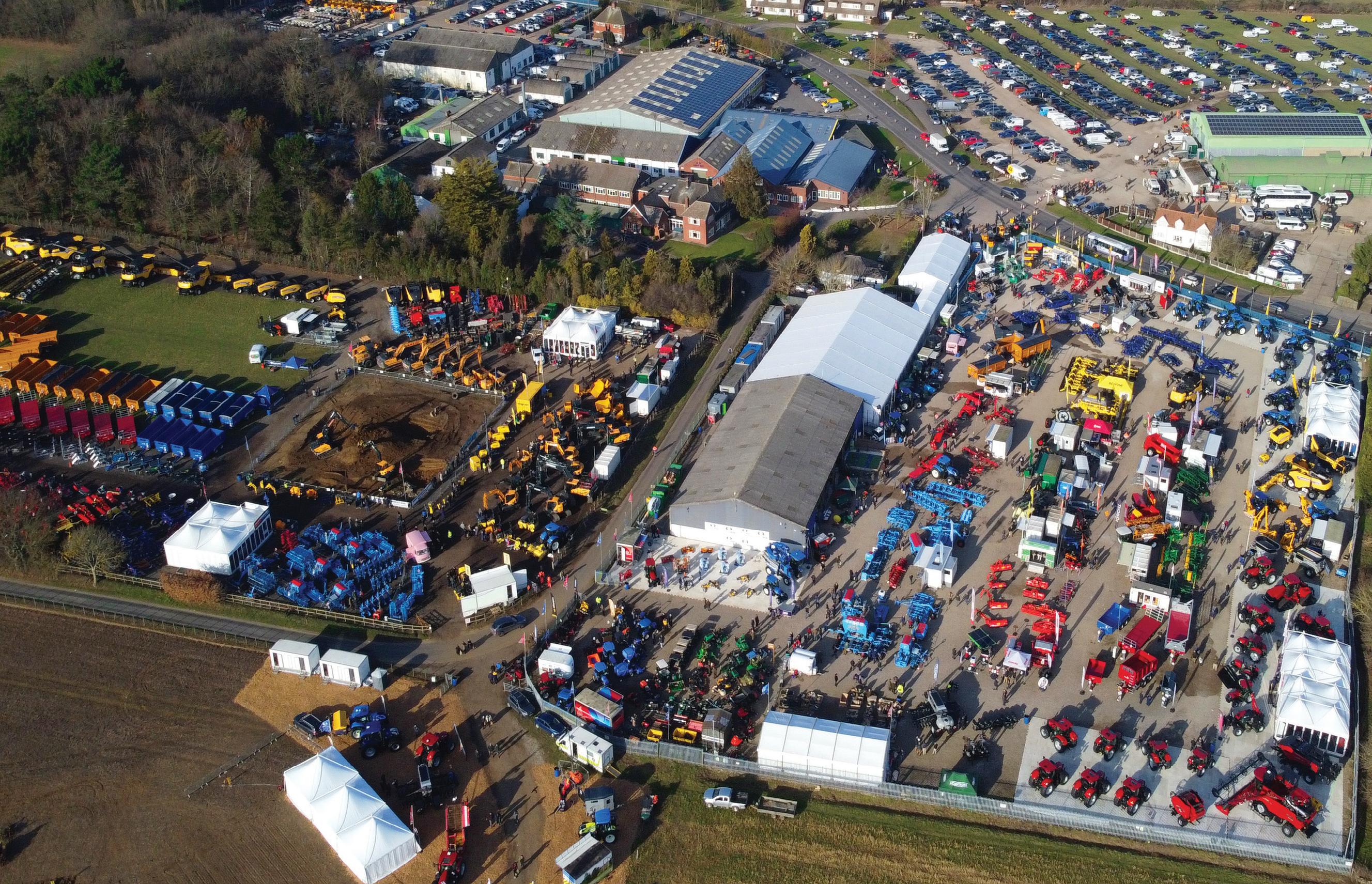
DOE SHOW 2026: THE UK’S LARGEST AGRICULTURAL, CONSTRUCTION & GROUNDCARE DEALER SHOW
The UK’s largest agricultural, construction, and groundcare machinery dealer event will be back soon! Running from Tuesday 3rd February to Thursday 5th February, our 66th show will be packed with machinery, working demonstrations, and unbeatable Doe Show Deals plus all the latest products available on the market! If you’ve never visited before, click the video link to see what you’ve been missing, and get the date in your diary – Tuesday 3rd, Wednesday 4th and Thursday 5th February 2026 – see you there!
With over 150 suppliers represented, the Doe Show features something for everyone. Visitors have the chance to talk with industry experts and explore the very latest agricultural, fruit and vegetable farming, construction, and groundcare machinery. On the demonstration field, expect to see the latest innovations in action. Case IH and New Holland tractors will showcase their power, pulling a range of cultivation equipment alongside vintage classics, including the crowd-favourite Triple D.
A SFI update needs organic commitmentgreen groups call for 10% land target
long-awaited update on the Sustainable Farming Incentive (SFI) now "desperately" needs to include backing for organic as green groups sign an open letter calling for 10% of farmland to go organic, according to the Soil Association.
Environment Secretary Emma Reynolds has today (Wednesday 7 January) announced June and September dates for the reopening of the SFI, ahead of her speech at the Oxford Farming Conference tomorrow.
Replacing the Basic Payment Scheme (BPS), which provided subsidies to farmers before Brexit, the SFI provides financial rewards for farmers in England for sustainable practices.
It was paused abruptly in March last year, removing government support for organic farmers, which had previously been provided in recognition of theenvironmental benefitsthat organic delivers as a whole-farm approach to nature-friendly farming.
The freeze on SFI also removed support for those going through the two-year organic conversion period – a time when farmers must adhere to the strict standards but cannot market their products as organic.
The announcement from Defra today does not yet include organic and comes on the same day that 18 environment and farming groups signed a Soil Association open letter calling for government to back the sector.
The letter, signed by Wildlife and Countryside Link, Nature Friendly Farming Network, RSPB, The Wildlife Trusts, River Action and others, calls for a 10% organic farmland target in England, backed by an Organic Action Plan.
Soil Association Policy Director Brendan Costelloe said: "It's good to finally get confirmation that the Sustainable Farming Incentive will reopen after an uncertain wait for farmers over the last year. But we are concerned that there remains a long wait for many farmers when we need all farms, big and small, to be adopting nature friendly practices right now.
"We also desperately need the government to provide reassurance that they will back organic in both SFI windows. With 30% more biodiversity on
organic farms, the UK's declining wildlife cannot afford more uncertainty. The government needs more of this type of farming if it is going to meet its climate and nature goals. More and more people are buying organic and it is madness to offshore the environmental and economic benefits by meeting this demand with imports.
"The government urgently needs to provide clarity for organic within the SFI, and listen to all of the groups signing our open letter calling an Organic Action Plan for England with a target for 10% of farmland to go organic."
The open letter points out that the previous Labour government's Organic Action Plan from 2002 led to a peak in organic farmland in England in 2008. But since then, it has decreased by around a third while organic farmland in the UK remains stuck at 3%.
At the same time, the UK organic market has more than doubled, with recent figures indicating growth of 7.3% in 2024 to £3.7 billion, meaning the UK is heavily reliant on organic imports.
Wildlife and Countryside Link CEO Richard Benwell said:"A wildlife-friendly farming boom is the only way to save nature in England. That can only happen when whole farms ditch chemicals and prioritise habitats and species. Currently organic is the only whole-farm system in town, and it's increasingly popular with health- and nature-conscious consumers. But somehow we're letting that demand be met by imports. The government should speed forward with an Organic Action Plan as a top priority in its Farming Roadmap."
In response to today's announcement from Defra, the Soil Association also calls for:
• Continued investment in farm collaboration schemes and protected landscapes as set out in today's welcome announcement. However, the Soil Association urges government to focus on heavily nature depleted lowland areas and back organic as a solution that can restore nature without taking land out of production.
• Earlier windows for SFI applications, while still ensuring small farms and those without an existing agreement are prioritised, to enable all farms to swiftly put nature-friendly farming plans into action.
Proceed
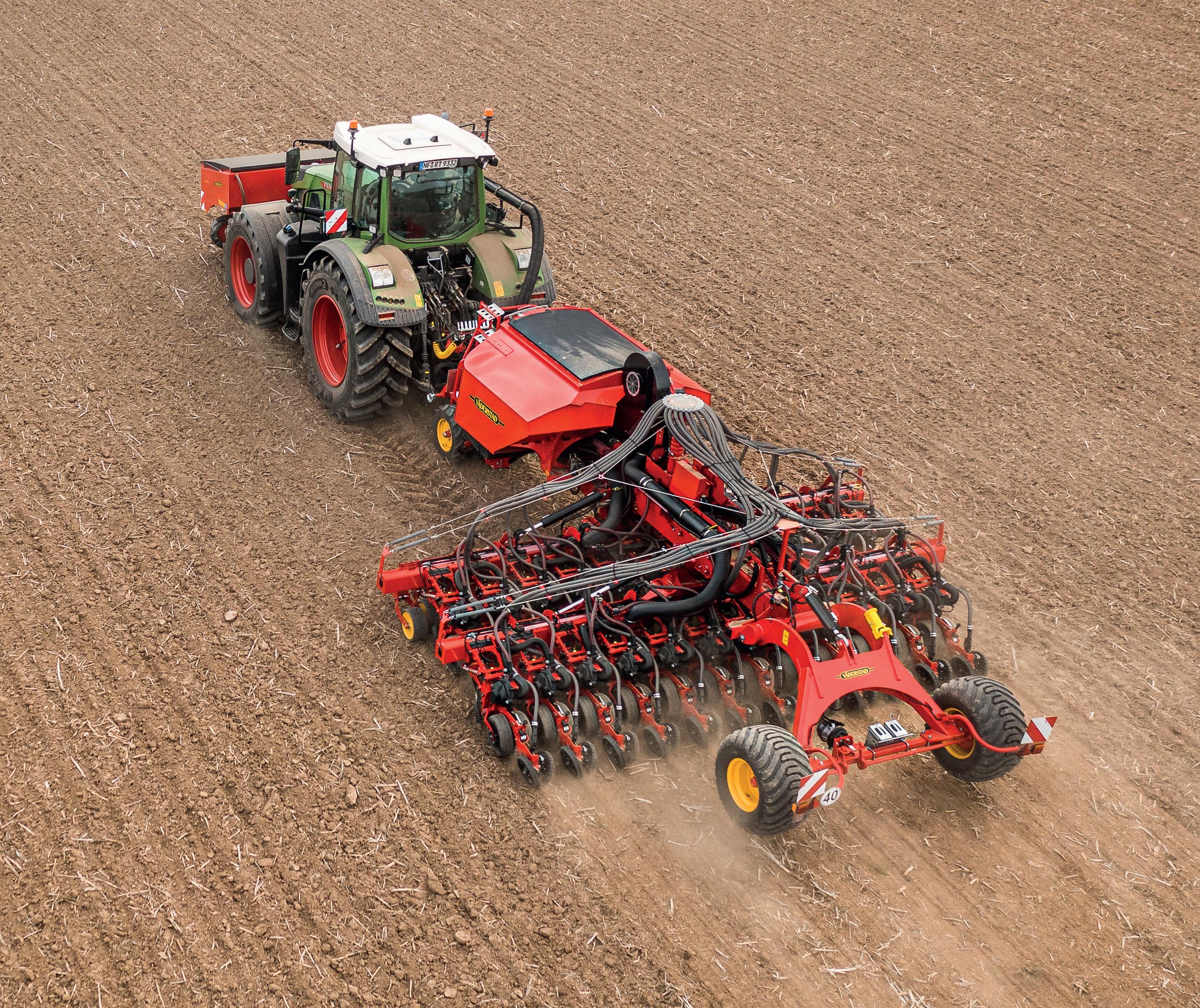
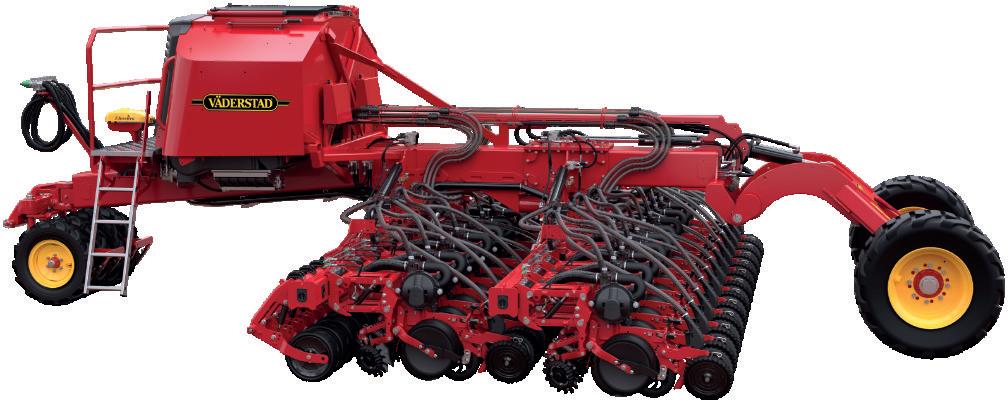
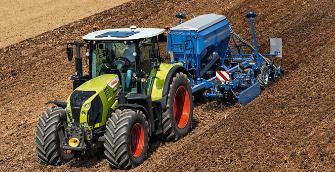
Proceed is a whole new category of seeding machinery. With an unmatched level of precision, it works with full capacity to fit every farmer’s needs. This one machine can increase the yield potential of a full range of crops, such as cereals, oilseed rape, sugar beet, peas, maize and more. Proceed simply offers more than any previous seeding machine, making farmers ready for a fast-changing future. One Machine. Many possibilities.
Study shows striking convergent selection history of wheat and barley and its potential for breeding
Researchers from The James Hutton Institute's International Barley Hub (IBH), working within an international consortium led by the research units of the ClermontAuvergne-Rhône- Alpes Centre (INRAEUCA), have identified genomic evidence of convergentselection, a process where unrelated, or distantly related, crop species independently evolve similar genetic adaptations to the same environmental pressures.
Their findings have been published in the prestigious scientific journalNature Plants.
Distantly related ancestral wheats and barley became founder crops of the agricultural revolution that began over 10,000 years ago in the near-east fertile crescent and later spread worldwide, where their successful cultivation demanded they adapt to diverse new and unique ecological demands.
The IBH, part of a £62m investment through the Tay Cities Region Deal (TRCD) a partnership between local, Scottish and UK governments and the private, academic and voluntary sectors, promotes scientific discovery and innovation to future-proof barley, the UK's most valuable crop. Climate change and other environmental challenges, coupled with an increasing demand for the crop mean that research into genetics and breeding is vitally important to safeguard production and ensure a sustainable future for this most critical of crops.
The researchers on this study undertook a comparative genome wide molecular analysis of over 1,300
domesticated barley, emmer, durum and bread wheat lines searching for signs of perfectly or partially conserved molecular variants between the evolutionary counterparts of the same genes in order to understand whether the genetic changes reflecting such adaptations were the same among the different species.
They discovered that different species often adapted using similar genetic changes, and identified shared variants in genes that control plant development, inflorescence structure, starch grain size, tillering, root architecture, drought avoidance,and key domestication traits.
Professor Robbie Waugh, leader of the IBH contribution said, "These discoveries are important because they provide access to trait-associated gene sequence variants identified in one species that can be used as a guide to the creation or selection of the parallel variants in other species where the trait holds potential breeding value.
"Combining these discoveries with modern precision breeding or targeted, chemical, mutagenesis (the production of genetic mutations) has the potential to impact and enhance modern plant breeding as it strives to address challenges in current and future crop production".
The research lays the foundation for the concept of intercrop translational breeding and provides a route to identify genes that are crucial for adaptation, along with sources of diversity for use in improving cultivated species.
MASTER L PLOUGH RANGE
Designed
for intensive use on medium sized farms
- Available in 4 to 6 body configurations
- Manual or hydraulic cutting width adjustment
- Suitable for tractors from 150 to 300hp
- On land or in furrow versions
- Duoliner integrated press available on VML in furrow version RVW Pugh Ltd
Tel: 01588 620545 www.rvwpugh.co.uk RVW Pugh Ltd
Tel: 01477 533560 www.rvwpugh.co.uk RVW Pugh Ltd
Tel: 01695 816444 www.rvwpugh.co.uk
Tel: 01952 936900 www.trmachinery.co.uk
Tel: 01926 813 426 www.southamagri.co.uk
Yara UK launches 'YaraPlus' platform for easier, more precise crop nutrition
New digital platform will bring Yara'sagronomic tools, expert knowledge and products all together in one place,helping farmers and agronomists make more informed decisions.
Yara UK & Ireland has launched YaraPlus, a digital platform designed to give farmers and agronomists everything they need to make informed crop nutrition decisions in one, easy-to-use app.
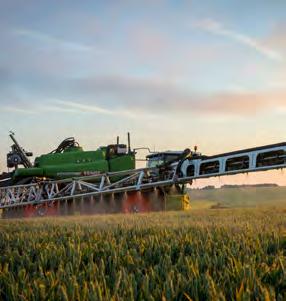
Developed in collaboration with farmers, agronomists and machinery manufacturer John Deere, the platform consolidates Yara's existing digital tools and much more, into a single intuitive interface. It has already been successfully trialled in Germany over the last 18 months.
The platform's variable rate application system uses satellite imagery combined with algorithms from Yara's N-Sensor technology to measure both crop biomass and greenness, providing significantly more accuracy than standard NDVI mapping.
"Other platforms enable you to create a variable rate application map, but none will give you a target rate. YaraPlus can tell you exactly how much fertiliser a crop needs," Darren emphasised.
YaraPlus can also link to Yara's N-Tester handheld chlorophyll meter for variety-specific nitrogen recommendations, photo analysis for early-season crop assessment and Tankmix compatibility checks with other crop protection products.
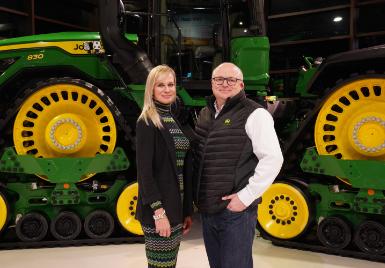
"We're not just a fertiliser manufacturer, we're a crop nutrition business," explained Darren Glegg, Commercial Solutions Manager at Yara UK. "What we've been wanting to do for some time in the UK is bring all our tools, global expertise and local knowledge together into one platform. It will bring clarity for farmers and agronomists and help them make quicker, smarter decisions aboutnitrogen use that will save time and money."
Precision tools that deliver results
YaraPlus provides tools for precision crop nutrition that can be accessed anywhere, anytime via desktop or mobile – even on the go. It will help farmers apply the right amount of fertiliser at the right time to optimise yield and deliver the best return on investment.
Seamless connectivity with the cab
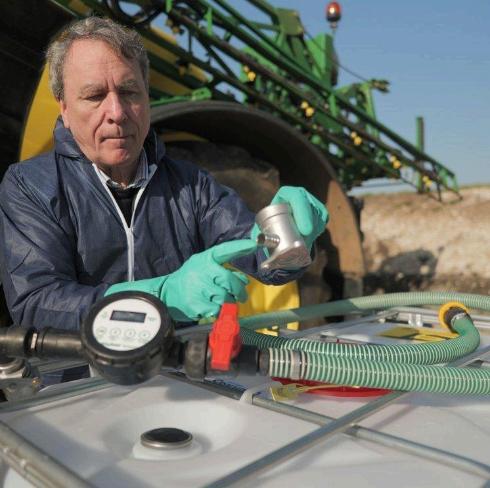
Another key benefit is YaraPlus's integration with John Deere's own digital platform. "Farmers on the John Deere platform will be able to import fields directly into YaraPlus, create variable rate application maps and send them straight back as workplans with a single press of a button," said Darren.
In addition, YaraPlus can link you directly to Yara's customer order portal, speeding up orders and reducing manual steps.
Targeted support for farmers
YaraPlus will also enable highly targeted, practical communication with farmers based on their specific location, activities and crops.
"This platform allows us to get to know our farmers better than we've ever done before," said Chrissy Holmes,Digital Solutions Lead, Yara UK & Ireland. "Users will be able to see crop nutrition advice and recommendations precisely targeted to their fields, their growing conditions. This is just the start of a really exciting era of simpler, more effective digital connectivity with our farmers that will help them tomake better farm decisions."
YaraPlus will be demoed at LAMMA YaraPlus will be take centre stage at Yara's LAMMA stand on the 14thand 15thJanuary 2026, where visitors can explore all the platform's possibilities and see interactive demonstrations taking place.
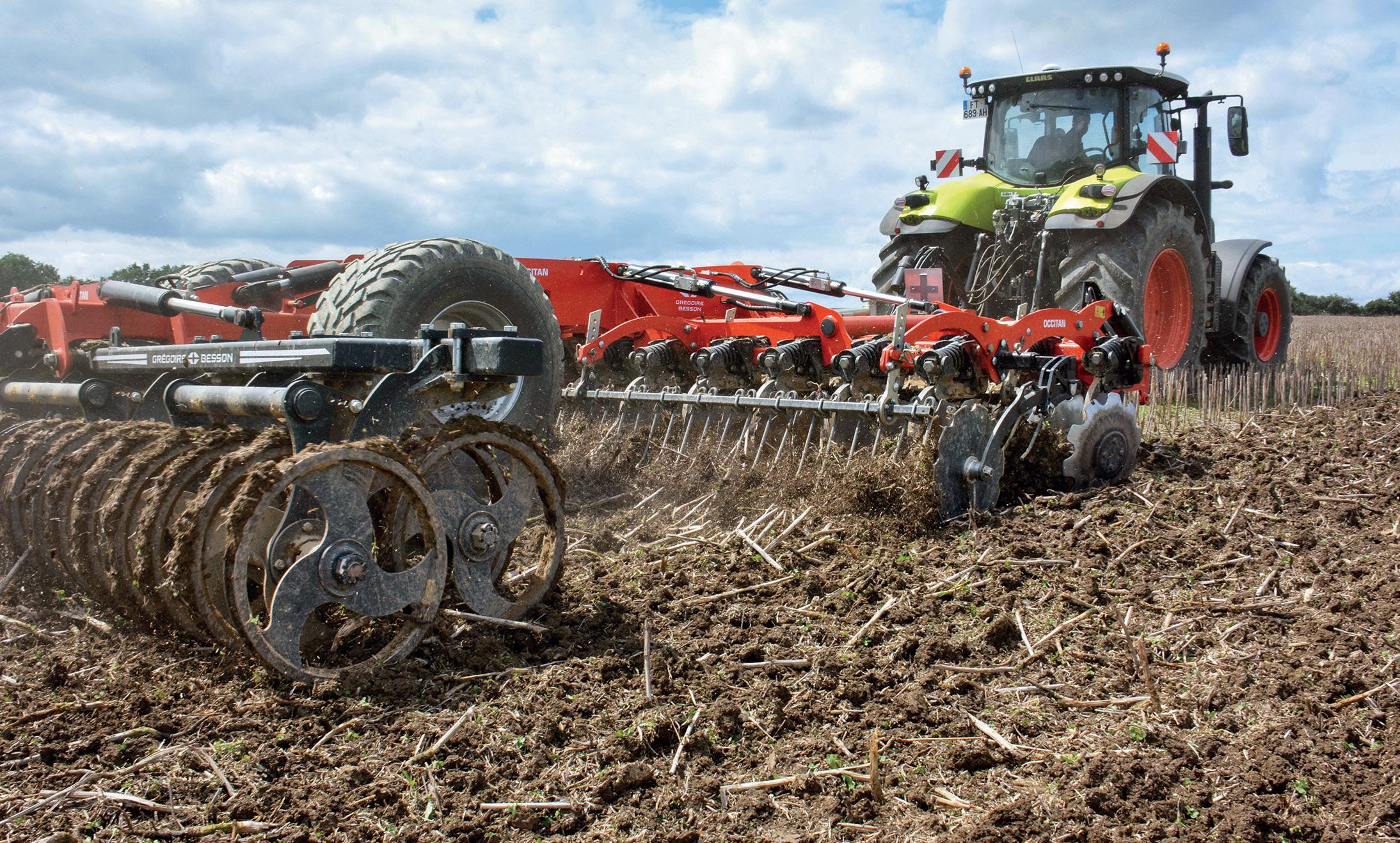
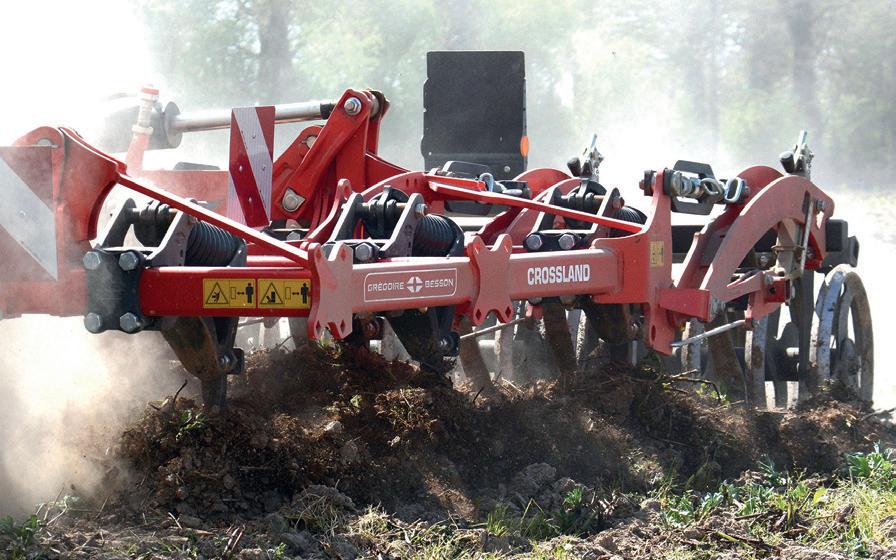
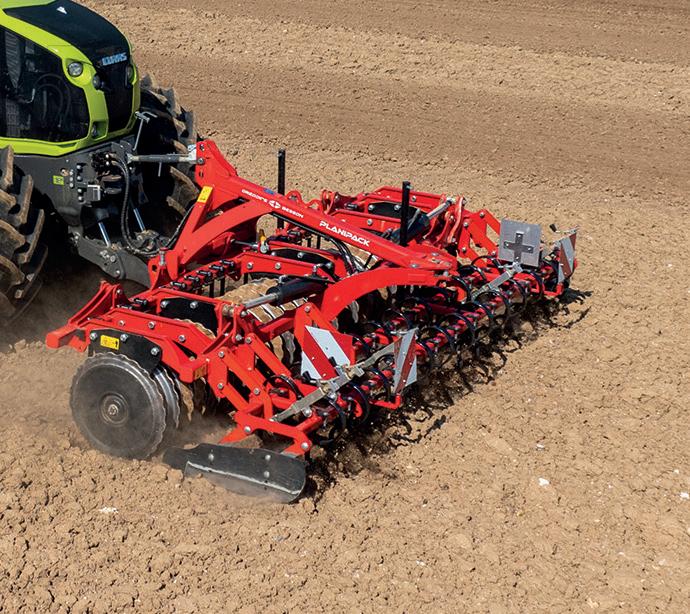
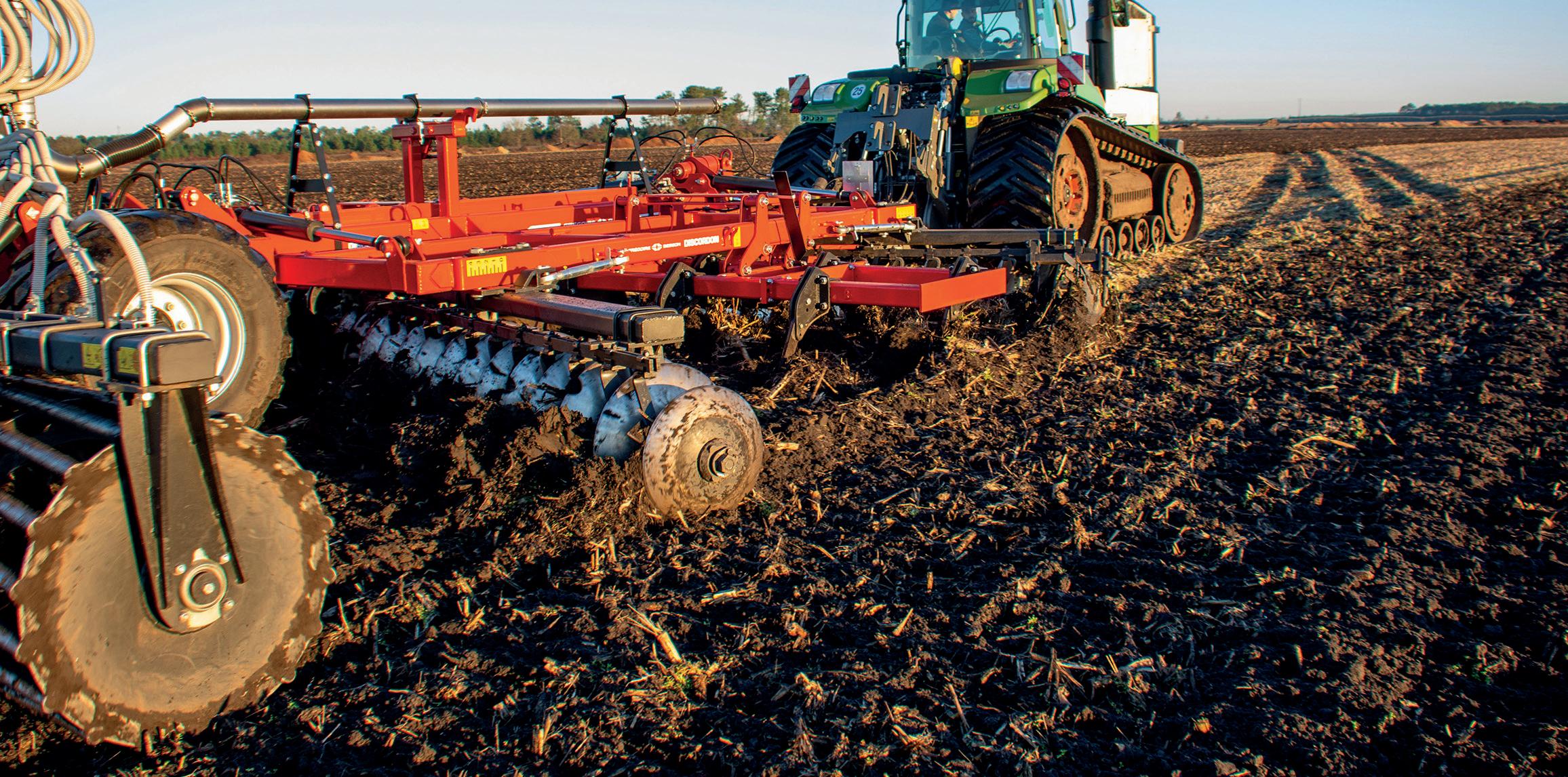
Your soil cultivation specialist
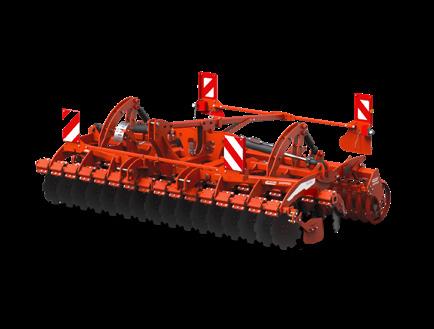
With over 220 years of experience serving the agricultural world, Grégoire Besson offers a complete range of machines dedicated to soil tillage. Ploughs, disc implements, tine implements, soil preparation machines and subsoiling equipment: our range covers all the needs of the most demanding farmers.
Bruce Farm Machinery
Bogauldy, King Edward, Banff, AB45 3LX
Tel: 01261 821659
Dinas,Caernarfon, Gwynedd, LL54 5UG
Tel: 01286 830 918 www.menaitractors.com
Grégoire Besson machines and parts are imported into the United Kingdom by Maschio Gaspardo UK. For further information, please contact your nearest Maschio Gaspardo dealer or call +44 1522 448161.
s 2026 gets underway, growers are reminded not to overlook the importance of early-season weed control in spring cereals.
Despite a cold and wet start to the new year, residual herbicides were applied in warm, dry conditions last autumn, and are therefore likely to lose efficacy sooner than expected.
Mild weather following this application would also have encouraged the ongoing germination of both grassweeds and broad-leaved weeds.
With residual chemistry potentially running out of steam and weed emergence continuing, timely intervention will be critical. Weeds such as bromes, ryegrass, meadow grasses and broad-leaved weeds including cleavers and mayweeds should be controlled as early as possible to stop them from impacting crop performance.
Where residuals have not been applied, or where performance has been compromised by poor seedbeds or use on organic or lighter soil types, meadow grasses often dominate by spring. Annual meadow grass is the most common grassweed in the UK, with a wide emergence window and a rapid lifecycle that allows populations to build quickly.
"Annual meadow grass thrives in fertile soils and is encouraged by min-till practices," says Hugh Guinan, Cereal Herbicide Field Technical Manager for Corteva. "Less competitive than other grass weeds, it steals nitrogen from the soil and does increase the moisture content of the straw at harvest, which slows progress and affects quality.
"Populations can often be high in winter cereals because many lifecycles can occur within a relatively short space of time, typically six weeks."
To help tackle these challenges, Corteva Agriscience launched Broadway® Ultra in 2025. The product combines two of the most effective grassweed herbicides, pyroxsulam and
mesosulfuron-methyl, enabling arable farmers to control a wide spectrum of grass and broad-leaved weeds in a single pass.
A Gearing up for spring: tackling early weed pressures in cereals
Broadway Ultra applied at 100g/ha delivers 14 grams of each active per ha, in an easy to use, wettable granule.
"Growers will know that pyroxsulam provides excellent grass and broad-leaved weed control, but there is also a synergistic effect with the mesosulfuron, which brings in control of chickweed, sow thistle, shepherd's purse and meadow grass," says Hugh. "Good control of rat's tail fescues has also been reported."
Getting the best results out of Broadway Ultra
Applications may be made in winter wheat and triticale from 1 January until the middle of May. Growers should use it at a rate of 100g/ha in combination with an approved adjuvant.
"It's quite a wide window of application, but we always advise growers to treat weeds early when they are small and actively growing," says Hugh. "These conditions can often occur in late January and early February, so growers need to be prepared ahead of the season."
On-farm use in 2025 demonstrated the benefits of this approach, removing grassweed competition early while also controlling a broad spectrum of broad-leaved weeds.
Hugh adds that the product delivers greatest value where residual programmes have been compromised, leaving higher levels of grass and broad-leaved weeds to tidy up in the spring.
With excellent crop safety and a long tank-mix compatibility list, Broadway Ultra offers spray operators the flexibility to apply alongside a wide range of ALS herbicides from both Corteva and other manufacturers.
Great value hydraulic products and services for local farmers
We supply and source an extensive range of high quality, great value products. Whether you need to replace a slurry hose, malleable fitting, or food hose, we can help.
From 24/7 on site hose replacement service, to planned preventative maintenance, we can keep your business moving day and night.
Pirtek Cambridge
Tel: 01223 835 222
www.pirtek.co.uk/service-centres/cambridge/
Pirtek Ipswich
Tel: 01473 688 288
www.pirtek.co.uk/service-centres/ipswich/
Our specialised agriculture solutions
We supply a range of high quality products including:
– Malleable fittings
– Workshop fuel and lubrication
– Hydraulic hoses
– Fittings
– Quick release couplings
– Pumps and motors
– Valves
– Cylinders
– Irrigation
– Jet wash and washdown
– Spill control products
– Food grade parts
– Oils and lubricants
Launch of on-farm roadshows looks to help improve homegrown forage production
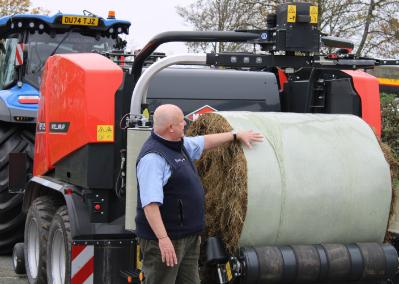
Leading bale wrap manufacturer, Silotite, is kicking off 2026 with a second series of roadshows to help farmers optimise forage quality, following the success of the 2025 events.
The events will take place throughout the UK and Ireland and intend to engage farmers and contractors on the benefits of film and film wrapping and review best practices, while maximising overall forage production.
Stuart Anthony, technical manager at Silotite, says: “The roadshows will provide technical advice as well as first-hand endorsement from farmers who have made the switch, to showcase the benefits of using film and film, and the latest Silotite bale wrap technology available.”
“Each roadshow event will be hosted in collaboration with McHale or Kuhn, and Bale Shear manufacturer, Tanco Autowrap, who will deliver valuable insight into how the film and film concept could work for your system.
Several of the roadshows in 2026 will be hosted on-farms, with one taking place in the South West, and one in the Scottish Borders.
“We recognise the importance of peer-to-peer learning, and this new format will allow attendees to hear and see the benefits of using net replacement film on baled silage first-hand.”
The events will also provide an opportunity to engage with Silotite product managers and baler manufacturers, for a full-service insight into best practice baling advice.
“To illustrate the benefits of the film and film concept, the events will offer practical demonstrations of the wrapping process as well as the opening of a bale to showcase the enhanced quality of the forage produced using this method,” he says.
Film and film wrapping combines bale wrap with a baler film, in place of traditional net wrap, to achieve a more effective oxygen barrier, enhancing the fermentation process and increasing protection of the bale.
“We also look forward to welcoming external speakers to our roadshows this year, who will be able to provide a deeper level of insight into the full silage making process, to help farmers get the most out of their forage.”
Silotite will announce speakers in the new year, to be the first to hear about who will be at the events, follow them on Facebook.
To register your interest in attending a Silotite roadshow event, enter your details here: www. silotite.com/roadshows/
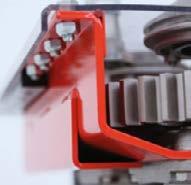
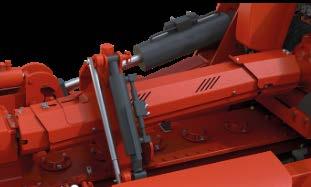
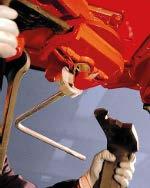
DRIVELINE SIDE SHIELDS
Increased longevity –built for tough environments.
Makes maintenance easier, increases safety.
Top and bottom bearings provide high load capacity, top bearing retainers prevent expensive repairs.
Connected to the packer so adjusts with you – aids soil refinement.
Only one tool required, no pins or bolts to lose.
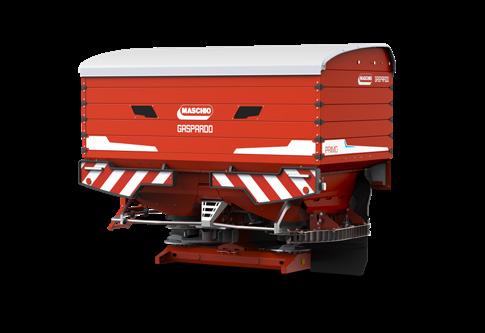
Primo Spreaders
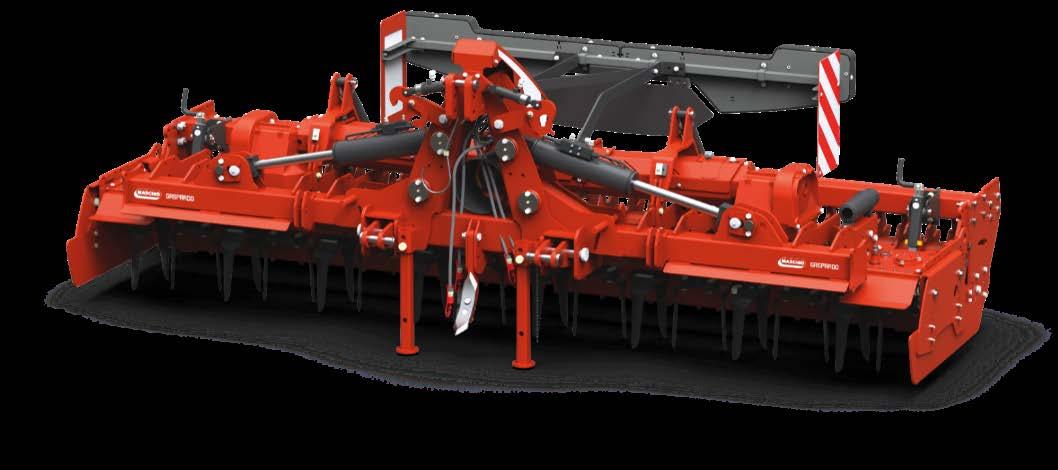
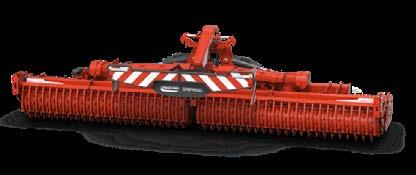
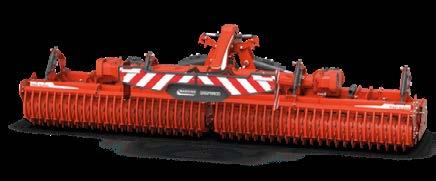
Seeding Power Harrows
Farmers urged to prioritise flexibility and proven varieties when selecting spring barley seed
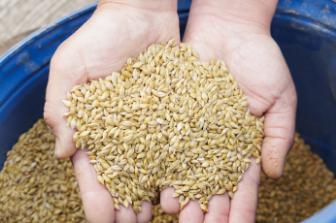
UK farmers are being advised to focus on proven barley varieties with strong market flexibility when selecting seed for the coming season, as uncertainty over area, premiums and end-market demand continues to shape decisionmaking.
While UK growers consistently produce some of the highest-quality barley in the world, premiums have remained under pressure in recent seasons due to an oversupply both domestically and across Europe, coupled with declining demand. However, early indications suggest spring barley area could fall by more than 15% this year, potentially creating improved premium opportunities compared with the past two seasons.
According to Saxon Agriculture’s malting barley trader, Laura Jones, changes in cropping plans following recent wet winters are expected to see winter wheat area increase at the expense of both winter and spring barley.
“Spring barley area is forecast to be down by more than 15%, according to AHDB surveys, which could support premiums,” she explains. “However, it is still a major crop, as the UK’s second-largest crop behind winter wheat, but with demand significantly contracting year on year, crop marketing is essential.”
Laura says market uncertainty means growers should consider how and when they market malting barley, as well as what they grow.
“In a volatile market, decent yields combined with the opportunity to lock in premiums early can make a real difference,” she says. “We’ve seen how quickly things can turn, and malting barley is one
area where forward selling has consistently helped growers manage risk.”
Variety choice critical to managing risk
Jonathan Baxendale, Saxon Agriculture’s head of seed trading, says variety selection in malting barley should be driven by end-market access and proven performance.
“Our advice is to focus on varieties with the widest range of marketing options,” he says. “Growing a new or niche variety without a contract or a clear end market at the point of drilling can significantly increase risk.”
Jonathan points to the continued dominance of established varieties as evidence of this approach. Laureate, a dual-purpose variety suitable for both malting and brewing, currently accounts for around 60% of the certified spring barley seed market. “Laureate remains popular because it’s well established, widely accepted and gives growers the highest chance of finding a home if quality is achieved,” he explains.
Skyway, a brewing-only variety, has also gained ground, now accounting for around 14% of the English certified seed market. It offers higher yield potential than older brewing varieties, alongside a high bushel weight and good straw characteristics. “The key is choosing varieties that align with realistic marketing routes and having those conversations early.”
While the advice this season is to stick largely with established varieties, Jonathan notes that new options are emerging. Belter and SY Arrow are potential new dual-purpose varieties offering a yield advantage over Laureate. “There are currently limited contracts available, so growers should speak to their grain merchant before securing seed,” he advises.
Plan early, prioritise realism
Over the last two season the UK malting barley yearly demand has dropped from 1.9 million tonnes to 1.7million tonnes, highlighting that with reduced demand early discussions around both variety choice and marketing strategy remain essential.
Laura concludes. “This is a year for realism — understanding your market, choosing varieties that offer flexibility, and using forward contracts where appropriate to protect value.”
4.5m - 20.3m
Contour Following
Much more than consolidation
CAMBRIDGE ROLLS
HE-VA’s hydraulically folding rollers adapt to the contours to efficiently consolidate and level, but can be used for much more.
All HE-VA rollers have the unique SAT system as standard, allowing weight to be evenly transferred across the full working width.
The range also feature market leading NG Cambridge or Cambridge and Breaker rings in 20” 22” or 24”.
KO Machines Ltd
Lower Laches Farm, Laches Lane
Wolverhampton, WV10 7PA
Tel: 01902 798771
www.komachines.co.uk
• King Roller 12.3m - 20.3m
• Tip Roller XL 12.3m - 15.3m
• Tip Roller 4.5m -10.2m
Make your Rollers work harder!
Add shattaboards, slicerboards, a top-cutter or straw tines to Tip or Tip XL rollers to create a multi-purpose cultivator. A seeder can also be fitted to spread slug pellets, grass seed or to apply Avadex.
SoilWorx's new fertilisers will help farmers to protect yields while rebuilding soil health
As 2026 crop plans are refined and finalised, organicfertiliser producer SoilWorx has announced it is expanding outside its traditional Irish heartland. It is now set to offer mainland UK farmers new ways to improve soil health whilst maintaining yields.
The business promises to combine proven performance, consistency and large-scale, dependable supply with the agility and responsiveness of its family firm. SoilWorx says it will continue to support organic farmers whilst opening up new opportunities for farmers considering regenerative and hybrid approaches that blends organic and chemical inputs.
"Best
of both worlds"
Whilst SoilWorx has traditionally served organic farmers with fully certified, products, it believes real benefits also exist for farmers incorporating organic nutrition into their crop plans.
Three new agricultural product ranges are launching, with Organo Mineral Fertilisers (OMFs) at their core – products that blend instant-release mineral nutrients with the phased release of organic amendments.
"It's that best of both worlds," Dr. Paul O'Hora, SoilWorx Sales Director explains. "An instant hit of mineral fertiliser that's readily available to the crop, followed by the phased release of nutrients from
theorganic matter. You get that nice balanced approach."
SoilWorx's core product is a 4-2-3 NPK, but listening to farmer feedback – something Paul believes SoilWorx is uniquely positioned to do –has driven development of higher nitrogen options. These include an 8-2-2 formulation which is now available and a range of OMF products such as 121-1 and 10-4-4 in advanced stages of development.
Quality, consistency and dependable supply
The hybrid approach offers multiple benefits: maintaining yields, building soil health over time and potentially reducing synthetic inputs whilst organic matter improves nutrient availability. Together with SoilWorx's circular manufacturing process, it can also enable access to sustainability schemes and carbon payment programmes and open up new markets to customers further along the food chain, seeking to reduce their Scope 3 emissions.
"A real problem that farmers have faced in the past is product consistency and the reliability of supply," says Paul. "That's not an issue with SoilWorx. We've invested heavily in our plant and our fully automated production line is capable of producing 500 tonnes of pellets every week, to exactly the same specification. Our process of composting, heating and sterilising delivers consistent product quality whilst eliminating pathogens too."
After milling, the material is pelletised to approximately 5mm diameter before bagging. This means the pellets are designed for practical use –consistently smaller, denser and more compact than many competitors' products that can disintegrate into dust when spread. SoilWorx pellets work in standard spreading equipment and require no investment in new machinery.
Investing in research
With a track record in both The Republic of Ireland and Northern Ireland, SoilWorx's confidence in their products rests on farmer satisfaction levels and has been further boosted by early indicators from independently verified field trials data. SoilWorx is now working with Rothamsted Research on long-term soil health studies and participating in a soil health barometer project examining DNA of soil microorganisms.
Trials with Agrii across the UK in 2026 will explore hybrid approaches and OMF applications across multiple soil types. Early results from other OMF trials have shown the products outperforming mineral and other systems in 2024's wet conditions, with nutrients retained rather than leached out.
"We're not looking for additional yield boost," Paul clarifies. "We're looking to show our products maintain yields whilst building soil health. This provides added bonuses – for example reduced micronutrient inputs, or less synthetic fertiliser required."
The right time for hybrid approaches
SoilWorx believes multiple factors make 2026 the ideal time to consider hybrid approaches. Fertiliser prices are climbing again, environmental pressures continue to mount and climate change impacts are increasingly visible on farm. Policy frameworks are beginning to reward more sustainable farming practices through schemes like SFI and various carbon payment systems.
With SoilWorx's products having a lower carbon footprint compared to traditional fertiliser, there's a straightforward route to reducing Scope 3 emissions. Looking further ahead, the Carbon Border Adjustment Mechanism (CBAM) coming to the EU in 2026 (and likely to impact the UK in 2027) will add carbon taxes to imported fertilisers, potentially driving synthetic fertiliser prices higher and making hybrid approaches increasingly costcompetitive.
Built for growth, built for farmers
SoilWorx is an independent, family run firm set up by the Gilroy familywhose long-standing involvement in agriculture shapes how the business operates today. Since its foundation in 2020, SoilWorx has grown rapidly. The company's £15
million production is capable of scaling from its current 20,000-tonne annual capacity to 30,000 tonnes, with plans for further expansion to 75,000 tonnes.
"Being independent and family run we're able to listen at the farm gate and respond to market needs rapidly, working in partnerships with farmers. The plant was built with growth in mind," explains Paul. "We're able to grow with the demands that come from our ambitions for 2026.
The benefits of partnerships and UK supply
SoilWorx currently works with key distributors in mainland UK and distributors /co-ops in Ireland, ensuring farmers can access products through their normal merchant relationships.
But the partnership extends beyond distribution –the company is engaging directly with food chain partners, retailers and agronomists to build collaborative nutrition strategies. The company's engineering capability through, parent company, the College Group, enables rapid response to market challenges, with investment continuing in research, future new product ranges and capacity expansion if required.
Being UK-based matters in an uncertain fertiliser market. SoilWorx isn't subject to port delays, currency fluctuations or the risk that European suppliers will divert product to higher-paying markets. The company is building inventory to meet spring demand peaks, with typical delivery lead times of around one week to UK destinations.
A real alternative
"When farmers are looking at crop plans for this season and making purchasing decisions, this is a real alternative that will bring long-term benefits by improving soil health, whilst maintaining crop yields." says Paul. "I'm not here to say everything has to be fully organic," he clarifies. "But it's clear that doing something with organic based products and then using your typical other inputs will probably give you the best of both worlds at the moment. That's why we're delighted to be providing farmers with new tools for their crop nutrition box."
SPRAYER TESTING
The Sustainable Use Directive (SUD)* requires all pesticide application equipment to be tested by the relevant dates.
Legal requirements
First test due before the machine is 5 years old
1. Boom sprayers over 3 metres, air blast sprayers, train and aircraft sprayers
Re-test every 3 years
2. Booms 3 metres and under, slug pellet & micro-granular applicators, weed wipers, seed treatment, manually propelled or self-propelled trolley type equipment with 3 or more wheels & a motorised pump, and other specialist equipment
Re-test every 6 years
3. Knapsack, handheld and pedestrian* equipment
a. Must be checked on a regular basis by a competent person
b. Make any repairs necessary
c. Keep a record
* Maximum 2 wheels or with a manually pressurised pump
Crop assurance scheme requirements
a. Annual testing for sprayers over 3 metres and air blast sprayers
b. Annual testing of granular nematicide applicators
c. All other equipment to SUD timescales
* The legal requirements are contained in the Plant Protection Products (Sustainable Use) Regulations 2012
Bushel Plus Launches X9 Split Frame MAD Concaves™ for John Deere X9 Series Combines
ushel Plus Ltd., the global leader in harvest optimization technology, today announced the launch of its new X9 Split Frame MAD Concaves™, purpose-built for John Deere X9 Series Combines. Designed to maximize throughput, reduce dockage, and simplify crop transitions, this modular concave system sets a new standard for combine performance and operator safety.
Faster Crop Changeovers
The Bushel Plus X9 Split Frame MAD Concaves feature a modular design that replaces traditional concaves that require full removal during crop changes. The system utilizes a structural split framework that remains securely installed in the combine, with lightweight interchangeable inserts that slide in and lock into place.
reducing foreign material. Gentle yet aggressive separation preserves kernel integrity, improving storage quality and market value - while enhancing combine performance at higher harvesting speeds.
“Field testing across North America shows the X9 Split Frame MAD Concaves consistently deliver lower losses and cleaner samples, no matter the crop or conditions,” says Kringe. “Farmers can harvest faster, maintain grain quality, and reduce fuel costs - improving both efficiency and profitability.”
Constructed from AR-200 abrasion-resistant steel, these concaves provide long-lasting durability and consistent performance across a wide range of crops and harvest conditions.
Works with Classic MAD Concave Models
While the X9 Split Frame MAD Concaves offer enhanced modularity and ease of use, they are specifically engineered to complement the Classic X9 MAD Concave models.
“Think of it as a base frame that stays in the machine, while smaller concave inserts tailored for wheat, barley, corn, or soybeans can be swapped quickly and easily,” says Marcel Kringe, Founder and CEO of Bushel Plus. “Each insert fits precisely into the fixed split frame, maintaining correct spacing and alignment for optimal threshing and separation, eliminating the need for cover plates.”
For farmers who switch concaves between cropssuch as small grains and corn - the system reduces changeover time from hours to approximately 15 minutes, eliminating the need to re-level concaves. This saves time, reduces operator fatigue, and minimizes the risk of injury in the field and workshop.
Optimized Threshing for Cleaner Grain
Engineered for precision threshing, the X9 Split Frame MAD Concaves deliver cleaner samples and stronger returns by minimizing cracked kernels and
For best results, Bushel Plus recommends transitioning to the split frame designs in the positions most frequently adjusted for specific crop types. This ensures consistent threshing quality while allowing farmers to take full advantage of the modular system’s flexibility. It also protects previous investments.
Farmers can mix and match the original MAD design with the new split frame models, placing the modular concaves where quick changes are most beneficial. This flexible approach supports a smooth transition while maintaining proven performance.
According to Kringe, the X9 Split Frame MAD Concaves are especially valuable for farmers who prioritize top-tier grain quality – such as seed producers - where consistent threshing and minimal grain damage are critical. The modular design enables precise configuration and rapid adjustments to maintain crop integrity across changing harvest conditions.
The X9 Split Frame MAD Concaves are now available through Bushel Plus’s global dealer network. For dealer locations and additional product information, visit bushelplus.com or call 1833-376-7726 to speak with a Bushel Plus product specialist.
Grain and Oilseed Markets
K feed wheat futures (May-26) closed near the 20-day simple moving average at the end of last week and remained above the nearest support level of £167/t.
The relative strength index (RSI) rose to 54 on Friday from 44 the previous week, indicating a slight increase in market momentum.
Market drivers
May-26 UK feed wheat futures prices ended last week unchanged (9–16 January) at £169.20/t. The price of Chicago wheat futures (May-26) was also unchanged, while Paris milling wheat futures decreased by 0.4% over the week. After decreasing at the start of last week following the USDA reports, prices increased again towards the end of the week, encouraged buying by wheat importers.
The USDA's World Agricultural Supply and Demand Estimates (WASDE) report showed increased global wheat supplies and consumption in 2025/26 compared to the previous report, as well as higher ending stocks. Projected global ending stocks increased by 3.4 Mt from December’s report to reach 278.3 Mt, primarily due to increases in Russia and Argentina.
During last week, global grain futures came under pressure from Chicago maize futures (May-26), which fell by 4.8% over the week. Last Monday, the USDA's WASDE report showed an 11.76 Mt (China + 6Mt, US +5Mt) increase in world maize ending stocks for 2025/26 compared to December figures. However, Paris maize futures (Jun-26) fell by just 0.7% Friday to Friday, partly due to the weaker euro against the US dollar.
Recently, we have seen some activity from wheat importers. The Saudi Arabian state grains agency, the General Food Security Authority, announced that it had purchased an estimated 907 Kt of hard wheat in an international tender (LSEG).
Looking at the 2026 wheat crop prospects, market participants are paying close attention to dry weather in the US and severe frosts in parts of Ukraine. However, Expana slightly increased its forecast for the EU 2026 soft wheat crop, raising it from 128.3 Mt in December to 128.6 Mt. The company noted that growing conditions remain favourable for winter crops across most EU countries.
According to the latest forecast from the Rosario Grains Exchange, the 2025/26 Argentinian crop could reach a record 62.0 Mt due to increased planting areas. Meanwhile, planting of the second crop in Brazil, the Safrinha crop, has begun.
UK delivered cereal prices
Feed wheat deliveredinto East Anglia and Yorkshire in February was quoted at £171.00/t and £180.50/t, respectively. Meanwhile, bread wheat for delivery in February to the North West and Northamptonshire was quoted at £193.50/t and £182.50/t, respectively.
Rapeseed
Paris rapeseed futures in £/t
In £/t, May-26 Paris rapeseed futures again held above the 20-day moving average last week with the market pausing after volatility in previous weeks. The May-26 contract ended last week slightly higher at just under £405/t.
The Relative Strength Index (RSI) also rose slightly (from 46 to 50) between 9 and 16 January, reflecting the pause in momentum.
Market drivers
After falling on Monday, May-26 Paris rapeseed futures ended last week up €2.50/t at €467.00/t. Most of the gain happened on Friday after Canada and China announced a trade deal, which included reduced tariffs for Canadian canola (rapeseed) and Chinese electric vehicles (EVs).
China introduced a tariff of almost 76% on Canadian canola last autumn, which stopped exports to China and weighed on rapeseed prices. The new rate, around 15%, sparked optimism that trade would resume and lifted prices. This morning (19 January), Reuters reported that China has since bought 60 Kt of Canadian canola.
The USDA increased several of its key supply and demand estimates on Monday night by more than the market had expected, which triggered price falls. The USDA’s 2025/26 forecasts include US soyabean end of season stocks at 9.5 Mt, up 1.6 Mt from December and global end of season stocks at 124.4 Mt, up 2.0 Mt.
There was some support mid-week from a weaker euro against the US dollar, plus positivity on demand for US soyabeans on Thursday. The US government announced it will aim to finalise biofuel quotas by March, which could support soy oil, and so soyabean, demand. The US National Oilseed Processors Association also announced strong crush data for December, while net US soyabean export sales in the week ending 8 January for 2025/26 exceeded trade estimates (USDA, LSEG).
However, early harvesting of the soyabean crop in Brazil (around 1% complete), and the expected size of the crop kept a limit on prices. While the Brazilian government agency, Conab, trimmed its estimate by 1.0 Mt last week to 176.1 Mt, it is still a new record. The USDA forecasts the crop even higher at 178.0 Mt (+3.0 Mt vs December), with private forecasters Safras & Mercado at 179.3 Mt.
UK delivered rapeseed prices
Rapeseed to be deliveredto Erith in February was reported at £422.50/t in Friday’s survey, up £0.50/t from the previous week. In contrast to the futures market, the reported price for May delivery (£424.50/t) is higher than the February price.
There were stronger rises for new crop delivery points. Harvest 2026 delivery into Erith was up by £3.00/t Friday-Friday to 399.50/t, with November 2026 delivery up £2.50/t to £408.00/t.
A year ago (17/01/25), harvest 2025 delivery into Erith was reported at £410.00/t, with November 2025 at £419.50/t.
ore than 45,000 people and over 800 exhibitors descended on the NEC Birmingham, marking the highest attendance in the event’s 44-year history.
For the first time, the show joined forces with CropTec and Low Carbon Agriculture Show, creating an expanded hub of information and innovation under one roof.
Alongside a wide range of machinery launches and live demonstrations, several new features debuted in 2026, including a Dairy & Beef Hub, Innovation Trail and the
Focus on the next generation
M Landmark year for LAMMA 2026 with recordbreaking attendance and exhibitor numbers
Future in Farming Zone, all designed to support the next generation of farmers.
The role of young people was a central theme throughout the event, highlighted by Kaleb Cooper and Tom Pemberton launching the 2026 Young British Farming Awards. Now in its third year, the awards celebrate emerging talent and recognise how the next generation is positively shaping British farming.
Water is our element. We make soil fertile
Intelligent irrigation is the basis for a reliable harvest and optimal yield. The solutions from BAUER are the result of over 90 years of experience, expertise and innovation.
The needs of our customers are diverse. We maintain a complete product range. And we are sure to have the right product for you.
This message continued during theHow can we make regenerative farming profitable? panel, where David Exwood, Deputy President of the NFU, said: “If we want profitable, sustainable regenerative farming in this country, we need to get young people involved. They work differently, think differently and approach challenges in new ways. If regenerative farming is to succeed, we must hand the business to the next generation.”
Commenting on labour shortages in the dairy supply chain, Hugh Pocock, Founding Director at Cultura Connect said: “The Clarkson effect has certainly made people look at the industry, but we have to keep promoting that. Most of the next generation are on social media and that is the place we need to start.”
Celebrating Innovation
The 2026 LAMMA Innovation Awards recognised outstanding engineering, creativity and forward-thinking solutions designed to solve realworld challenges faced by farmers.
Agro-Vital was announced as the overall winner for their pioneering solution TRIPLEX, chosen from a group of exceptional Gold Award winners from eight categories.
TRIPLEX is an advanced nutrient management system that combines soil and sap analysis with farm-specific data to create fully tailored liquid and foliar fertilisers, providing measurable productivity and sustainability benefits.
On receiving the award, Managing Director and Owner of Agri-Vital said: “It's a huge honour - LAMMA is recognised throughout the industry so to be recognised here in front of all of our peers is a huge achievement.”
Exhibitor Optimism
display, the stand was busy throughout the day and sparked strong interest in the latest technology. It’s been a valuable opportunity to engage directly with our customers, hear their priorities and challenges, and showcase how our innovations can support efficiency in their businesses.”
A joined-up approach to farming’s future
Bringing CropTec and Low Carbon Agriculture Show together with LAMMA proved a major draw, giving farmers and industry professionals a more connected view of the challenges and opportunities facing modern agriculture.
There was a focus on policy, innovation and future energy systems in the Low Carbon Agriculture Theatre, which hosted panel discussions on low carbon farm fuels alongside a Q&A with Lord Bamford, exploring JCB’s engineering journey and investment in hydrogen technology.
Despite a challenging 12 months for the agricultural sector, LAMMA 2026 demonstrated the industry’s continued appetite for innovation, investment and faceto-face engagement. Exhibitors reported strong footfall, high-quality conversations and a clear willingness from farmers and contractors to explore new ideas and machinery solutions.
LKL Services said: “A great show bringing all of agriculture together and the quality of conversations we’ve had with dairy producers was excellent – see you at LAMMA 2027!”
KW, Feedlync and NMR commented: “It is our first time at LAMMA and we have had a fantastic few days! We’ve spoken to existing and new customers and we’ve really enjoyed the show.”
Neil Macer, CNH Marketing Manager - UK & ROI added: “LAMMA has been a successful show for CNH this year. With an almost entirely new line-up of machines on
In the CropTec theatre, discussions focussed on efficient farming - from managing fixed costs to resilient rotations, rounded off with a keynote address from George Freeman MP, Chair of the All-Party Parliamentary Group for AgriTech.
Victoria Atkins MP, Shadow Secretary of State for Defra, also attended the event in support of the Farmers Guardian Save Britain’s Family Farms Campaign, highlighting the impact of coordinated industry action on policy outcomes: “The result we got with Inheritance Tax is a result of the work you’ve done alongside the NFU and Farmers Guardian… I will continue to fight for you and hold the Government to account.”
Director of Events Philippa Christer said: “What a show! We are delighted that LAMMA 2026 proved such a success and is obviously a firm fixture in so many people’s calendars. Thank you to all the exhibitors and team behind the scenes that put so much work into this event – it is a big show which takes more than a year to plan. We look forward to seeing everyone again at the NEC next year on 20 -21 January 2027.”
G How To Drive Down Your Drying Costs
rain drying is an expensive process.
Key components of that cost are the manpower and fuel to run the dryer.
Both of those costs can be significantly reduced by installing Grain Sentry.
What is Grain Sentry?
Grain Sentry is the automatic dryer control system from Perry of Oakley that is delivering consistent savings to customers in numerous countries.
The automation removes the need to have anyone control or monitor the performance of the drier.
This means you no longer need to employ that summer student or you don’t need to worry if your long-standing dryer operator has left, as Grain Sentry does it for you.
Grain Sentry can be retro-fitted on to any make of continuous flow grain dryer.
How does it work?
It is an Award-Winning automated PLC moisture sampling & dryer control system. It uses moisture samples automatically obtained from the dryer filling & discharge equipment to adjust the speed of the dryer which optimises the dryer performance, driving up your profit.
The Grain Sentry only requires a calibration check once a year (it’s a game changer) and as it takes the readings automatically there’s no manpower lost in ensuring accurate up to date data is being used to run the dryer.
Plus, the grain is returned to the system so it’s not lost in the process resulting in no loss of tonnage due to the frequency of the testing.
If your dryer is connected to the internet you can monitor its performance fully remotely.
How much cost does it actually save?
With a throughput capacity dryer of 30tph on wheat, drying 6000T per season, during an average UK summer, based on removing 6% of moisture the saving
would be ~£17,000 per season. That goes up to ~£40,000 per season for a 60tph dryer drying 15,000T per season.
Those savings are derived from manpower and also fuel savings as the automatic system keeps the dryer operating at the optimum performance so it does not over dry and consume unnecessary fuel.
The accurate control of the moisture content of the dried crop also means you achieve the best price per ton for your crop when you sell.
What crops will it work on?
Grain Sentry is suitable for drying wheat, maize, soya bean and most combinable crops.
Why should you buy from Perry Of Oakley?
Perry have been drying the worlds grain since 1954. The advances in design and technology through the decades has resulted in their dryers being one of the most energy efficient and reliable grain dryers available on the market.
Integration is key
Perry of Oakley can provide a complete design, manufacture and supply of everything you need from a single conveyor through to an entire grain processing plant, and take away the integration challenges for you.
We are able to supply all the key components for your grain processing facility including drying, conveying, storage, control panels, samplers, cleaners, colour sorters, the list goes on.
Contact us today
To discuss your next project or your individual machine needs please contact Perry of Oakley today on +44 (0)1404 890300 or email sales@perryofoakley.co.uk.
CFMOTO Makes a Statement at LAMMA with New AGRI Range and Real-World Electric Utility Power
LAMMA has always been the place where farm machinery gets scrutinised down to every nut and bolt. It’s a space teeming with honest conversations between manufacturers and dealers, with farmers deciding what earns its keep. This year there was no question about where the energy was… it was on the CFMOTO UK & Ireland stand.
As the number one best-selling ATV and UTV brand in the UK you could feel
Atkins MP (Shadow Secretary of State for Environment Food and Rural Affairs) to pull the covers off the new AGRI machines.
exactly why. There was confidence around the brand and momentum that was impossible to ignore.
A huge part of that energy came from the unveiling of the all new AGRI range. Built specifically for agriculture and developed with real farm work in mind this was not a concept launch or a future promise. These are machines farmers can instantly see working back home whether that is feeding sheep checking stock towing trailers or shifting kit around the yard. The new range blends proven CFMOTO platforms with practical working features and unbeatable value for money. No unnecessary extras, no overcomplication, just solid reliable machines that get on with the job.
The atmosphere ramped up even further during the official unveiling which brought together a brilliant mix of agriculture and politics. Brand ambassador and Jersey Dairy farmer Charlotte Ashley was joined by Victoria
Following the launch the stand remained packed as Charlotte Ashley, Rebecca Wilson, Harriet Cowan and Victoria Atkins MP took on the CFMOTO Strength Challenge. It was a powerful moment on the stand and a brilliant reflection of modern British agriculture. A strong mix of women from farming, politics and rural life stepping forward and setting the standard.
Alongside the AGRI range the launch of the electric UFORCE EVU6 COMMERCIAL adds another string to CFMOTO’s bow. Electric utility vehicles are quickly becoming a practical option in some agriculture sectors. Priced at £14,999 + VAT, the EVU6 delivers strong real-world performance while coming in at roughly half the price of many established electric competitors. Quiet operation and low running costs make it an attractive solution for users and businesses looking to move into electric capability without taking on excessive cost.
By comparison, electric utility vehicles such as the Polaris Ranger XP Kinetic offer comparable performance but sit in a significantly higher price bracket, typically starting close to £30,000 and rising substantially depending on specification. While these
UFORCE EVU6 COMMERCIAL
£14,999 + VAT
£14,999 + VAT UFORCE EVU6 COMMERCIAL
many, particularly during hard times for farmers who are under increasing financial pressure.
At the other end of the market, brands such as HiSun and Corvus enter the electric utility space at higher price points than
Frontier highlights strategies for profitability and resilience at LAMMA 2026
rontier Agriculture highlighted the solutions available to growers to help boost profitability, reduceriskand unlock new opportunities through tailored solutions at LAMMA 2026.
This activity reflects Frontier’sfocus onusing itsposition and understanding ofthewhole arablesupplychainto supportfarmerstocreateresilient, profitable farm businesses in an increasingly complex operating environment.
Visitors to the show were able to connect with Frontier’s experts from across the business to learn more about the value of taking a datadriven approach, as well as diverse marketing strategies, funding opportunities across the supply chain and innovations such as the closed transfer system.
“As the industry navigates significant shifts in agricultural policy next to mounting environmental pressures, extreme weather events and challenging global markets, building farm business resilience has never been more critical” explains head of knowledge exchange, Michelle Nuttall.
“Our goal is to help farmers make informed decisions that not only protect their business today but create opportunities for growth in the future.
“By bringing together expertise, insight and market access, we’re demonstrating how Frontier continues to advance agriculture through practical, joined-up support,” she adds.
“At LAMMA, we demonstrated the value of data and insights to support the longevity of their farm business through our MyFarm platform, as well as opportunities to access additional revenue streams and leverage new markets.”
Frontier’s MyFarm platform includes a range of tools to support business administration, crop management, farm operations, optimised inputs and grain marketing. Its precision tools provide growers with innovative mapping technology to help monitor field conditions and crop progress across the season, and analytics powered by Yagro support growers to benchmark performance and assess cost of production.
Together, these capabilities show how Frontier is investing in continuous improvement and innovation that delivers real, practical outcomes for customers.
A future-focused seminar: “Resilient rotations: Maximising the value from spring and break crops”
As well as activity on stand, Frontier’s experts also hosted a seminar in the CropTec theatre exploring the practical approaches and commercial opportunities available to growers incorporating spring and break crops into the rotation, with a specific focus on beans, oilseed rape and spring barley.
Michelle continues: “These crops can offer viable income opportunities for growers when approached strategically.
“With the right support, not only can they deliver agronomic benefits but they can also open up valuable new markets, helping growers to diversify their cropping plans and spread their market risk.”
The session also reflected Frontier’s role in raising its voice on behalf of the industry, sharing insight and supporting debate on longterm resilience.
Speakers who participated in the session:
• Jim Knightbraid – Head of customer proposition
• Rebecca Geraghty – YAGRO managing director
• Finley Hawkins – Fertiliser business development manager
• Jess Saunders – Commodity trader
The session was chaired by Frontier’s head of digital strategy, Richard Johnston.
Safe, clean, efficient inputs with the Wisdom closed transfer system
Always a popular talking point at the LAMMA Show, the closed transfer system (CTS) from Frontier and Wisdom Systems was also on stand again, with visitors able to see the technology up close and learn more about the practical benefits it’s delivering on farm.
Partnering with Richard Garnett of Wisdom Systems, the CTS is being increasingly adopted and Frontier’s team are pleased to be working with a growing number of crop protection and micronutrient suppliers to continually increase the portfolio of products that are available. Just recently, approval was granted for Privest® - a protectant fungicide from BASF to help prevent late blight in potatoes – to be supplied exclusively by Frontier in 300l CTS-compatible IBCs.
This work forms part of Frontier’s ongoing investment in innovation to improve safety, efficiency and standards across the industry. Michelle concludes: “These partnerships are a real positive for the industry. More and more manufacturers are moving to CTS-compatible packaging to reduce the risk of exposure, cut waste and help increase overall farm efficiency. LAMMA was a great opportunity for visitors to see the CTS for themselves, speak to our experts and learn more about the benefits.”
JCB PRESENTED WITH GOLD LAMMA SHOW FARM MACHINERY AWARD
UKLIMITED
JCB has been presented with the top ‘Machine of the Year’ award at the LAMMA show, the UK’s biggest agricultural machinery and technology event, held at NEC Birmingham on 14/15 January.
The award judges chose JCB’s all new Fastrac 6000 Series tractor above a host of new agricultural machines launched at the event for being “unique in its power class, featuring as it does adaptive suspension all round, resulting in greater stability on the road and outstanding ride comfort in the field, with multi-mode four-wheel steering –another feature no other tractor in this class can boast – adding to the tractor’s capabilities.”
Managing Director, John Smith, who said: “We are delighted to be the recipient of this award, an accolade that underscores our passion for innovation in pursuit of performance, cost-efficiency and productivity from all the agricultural machines we manufacture.”
The new 284hp Fastrac 6260 and 335hp 6300 agricultural tractors expand the iconic high-speed Fastrac range and introduce a number of new features, including the ability to quickly change tyre pressures using the iCON touch-screen control and settings display in the cab to optimise tyre performance for field work and road travel.
The LAMMA ‘Machine of the Year’ Gold Award was presented to JCB Agriculture
There is also a new high-precision guidance system to help operators achieve accurate field work with maximum productivity.
AndyWallis07850988382andy@thermobile.co.uk
JohnHall07775635527john@thermobile.co.uk
NFU Education showcases future of farming to next generation at LAMMA
FU Education returned to LAMMA 2026 to help young people discover the breadth of opportunity and innovation within modern British farming.
Young people were welcomed into the heart of the UK’s largest agricultural machinery show to see first-hand the technology and talent driving the sector forward as well as the diverse career opportunities available across the food and farming sector.
The inaugural cohort ofAgriFuture Scholars–young people taking part in NFU Education’s scholarship programme with the British Veterinary Ethnicity and Diversity Society – spent the first day looking at cutting-edge machinery, engineering innovation and hearing directly from the people shaping the future of agriculture.
“Introducing young people from wide and diverse backgrounds to the agricultural industry is vital for its future sustainability.
“Whether it’s students from local schools or scholars on our AgriFuture programme, giving them the chance to see modern farming up close helps bridge the disconnect so many feel from where their food comes from.
“At LAMMA, they can see the innovation, engineering and environmental stewardship that underpin today’s agriculture. Our hope is that these experiences spark ambition and show young people that farming is a dynamic, rewarding and essential industry – one that needs their talent, their ideas and their passion for the future.”
Long-term future of the industry
Agriconnect Marketing Manager Sophie JacksonHolgate said they were “proud” to host NFU Education students and scholars as part of the Future in Farming Zone.
On the second day, Year 9 students from local Birmingham secondary schools Hodge Hill Girls School and Bishop Challoner Catholic school, took part in interactive workshops and guided activities, in collaboration with event organisers Agriconnect and with sponsorship from AGCO. For many, it was their first encounter with modern agriculture and the career possibilities it offers.
Together, these two events reflectNFU Education’scommitment to ensuring that every young person, wherever they live and whatever their background, has the chance to discover how food is produced and to see themselves as part of farming’s future.
Bridging the disconnect
NFU Vice-president Rachel Hallos said:
Ms Jackson-Holgate went on to say:
“Many young people are unaware of the wide range of career pathways within the agriculture industry, making this a valuable opportunity to showcase the sector’s innovation and technology.
“By connecting students with farmers, manufacturers and industry leaders in this environment, we’re aiming to help them see the breadth of opportunities available and inspiring the next generation to build rewarding careers in agriculture.”
AGCO Ltd. Aftersales Training Business Development Manager Ash Briggs said they were delighted to deliver a series of short, engaging micro-teach sessions on basic vehicle electrics to the students.
“While we continue to ‘grow our own’ future agricultural engineers with the AGCO NexTech Programme, we firmly believe that inspiring interest in agricultural engineering at an early stage is essential to securing the long-term future of our industry,” he said.
“We would like to thank both the NFU and Farmers Guardian for providing us with the opportunity to demonstrate some of the technology, diagnostic tools and fault-finding processes our dealer technicians use every day to identify and resolve electrical issues in modern agricultural machinery.”
CESAR confirms 700,000th system, announced at LAMMA with Kawasaki
he CESAR Scheme has confirmed its 700,000th system has been delivered, with the milestone announced yesterday, Wednesday 14 January, at the LAMMA show at the NEC, Birmingham. Kawasaki, an established CESAR supporter, is the manufacturer linked to the landmark system.
Since launching in 2007, CESAR has become the UK's official security and registration system for construction and agricultural machinery. It is now fitted to hundreds of thousands of machines across construction, agriculture and plant hire, and is widely adopted by leading OEMs.
Kawasaki already fits CESAR to its machines, and its association with the 700,000th unit reflects the continued commitment from major manufacturers to make security part of the standard specification rather than an optional extra.
Powered by Datatag ID Ltd's multi-layered forensic marking technology, each CESARmarked machine is given a permanent, unique identity. This is recorded on a secure database accessible 24/7 by police and law enforcement, enabling quick confirmation of ownership and supporting the recovery of stolen equipment. The system combines visible ID plates, RFID transponders, Datadots® and forensic DNA.
Kevin Howells, Managing Director of Datatag ID Ltd, added:
"Delivering 700,000 systems is the result of longterm commitment from manufacturers and the wider industry. CESAR reduces theft, improves recovery rates and gives police a practical way to identify stolen machinery. That is why it continues to be specified as standard."
The CESAR Scheme is owned by the CEA ( Construction Equipment Association) and supported by the AEA (Agricultural Engineers Association) and AMPS (Association of Manufacturers and suppliers of Power generating Systems). It is backed by police forces across the
Machinery theft continues to cost the UK economy millions each year. Police and insurance data show that CESAR-marked machines are four times less likely to be stolen and six times more likely to be recovered than unmarked equipment. This has driven widespread adoption by manufacturers, including JCB, Kubota, Manitou, John Deere, New Holland and Kawasaki, many of whom now fit CESAR as standard before machines leave the factory.
Viki Bell, CEO of the CEA (Construction Equipment Association), which owns the CESAR Scheme, said:
"Reaching 700,000 systems delivered shows how far CESAR is now embedded across construction and agriculture. Manufacturers are choosing to make security standard, and that is having a real effect on theft and recovery. This milestone reflects the collective effort of the industry, the police and our delivery partner, Datatag."
UK, with officers trained to identify CESAR-marked machinery both on the roadside and at ports, helping prevent stolen equipment being exported.
Craig Watson, Kawasaki's Sales and Marketing Manager, said:
"At Kawasaki we know how important our machines are to the people who rely on them every day. Security is not an optional extra – it is part of the product. Our continued commitment to CESAR, and our association with the 700,000th system announced at LAMMA, reflects the value we place on protecting our customers' equipment and their businesses."
Kawasaki has already shown its commitment to machinery security. In 2024, the manufacturer confirmed the adoption of the CESAR system across its utility range, integrating CESAR as standard on all ATV models in anticipation of the Equipment Theft (Prevention) Act 2023. The move brought CESAR's Datatag-powered technology to every new Kawasaki ATV, giving owners a built-in layer of protection from day one.
About The Great British Farm Fest
brand-new national festival celebrating the livelihoods, skills and produce of Britain’s farmers. Starring Sheep, Horses, Cows and Pigs, Tractors, Dozens of bands and DJs including Alex James, Chris Moyles, Jeremy Clarkson, Lisa Hogan, Kaleb Cooper, Charlie Ireland and Adam Henson. Plus, chefs, producers, vineyards and artisans led by Matt Tebbutt, special guests, and hundreds of hero farmers from across the nation.
Combining the traditional joy of a large country fair with the excitement and energy of a modern music festival, the event will run from Friday 22nd May- Sunday 24th May with day tickets, weekend tickets with or without camping and specially subsidised tickets for farmers and their families.
Led by a specially assembled team with credits that include The Country Living Fair, The Game Fair, Taste of London, Pub in the Park, CarFest, The Big Feastival, Top Gear Live and the Blenheim and Gatcombe horse trials, and working with The Royal Agricultural Society of England, The National Federation of Young Farmers, The Royal Agricultural University and The
Farmers Guardian the event will bring former glory back to the original home of the Royal Show in Stoneleigh Warwickshire.
There’s never been a more important time to support and celebrate the work of our nation’s talented farmers, there’s never been a better time for a new national festival.
A Big Day Out
The Great British Farm-Fest will be set across 300 acres of entertainment and agricultural talent.
By Day the show will consist of 12 major festival fields.
By Night
As the day draws to a close and the animals go to bed, the All-Star Festival Parade will wind its way through the showground leading the visitors to the Hawkstone Music Arena for 4 hours of Bands, DJs, and special star guests.
The Great British Farm-Fest – NAEC Stoneleigh 22-24 May 2026
Rootstock 2026: Leading Voices in Agriculture
Gather
at Westpoint to Champion Resilient Farming
inette Batters, former Chief Executive of the NFU, Professor Pete Falloon, the Met Office’s Science Lead for food security, and Alan Lovell, Chair of the Environment Agency, will headline the 2026 Rootstock Conference at Westpoint Arena, Exeter, on Thursday 5th February 2026. They will be joined by experienced farmers, soil microbiologists, and animal behaviour experts from across the UK to tackle the most pressing issues facing agriculture today.
This year’s programme will explore:
• The broader context for UK agriculture
• Resilient arable rotations
• Optimising livestock production
• Enhancing farm profitability
Organised by the Devon County Agricultural Association (DCAA), Rootstock.ag provides a unique platform where academia and farming come together. The conference is designed to help farmers adapt by exploring regenerative practices that balance profitability with environmental stewardship.
Now in its fourth year, Rootstock has become a cornerstone for Southwest farmers, researchers, and policymakers seeking practical solutions to the challenges of climate change, shifting markets, and evolving government policy.
Mel Bradley, Rootstock coordinator, commented:
“Rootstock was launched in 2023 to create a forum for collaboration and learning, bridging the gap between cutting-edge research and everyday farming practice. The 2026 conference will focus on profitable, resilient farming systems that work with natural processes, offering attendees actionable strategies to thrive amidst uncertainty. With 340 delegates attending last year, Rootstock has quickly become a mustattend event for everyone involved in farming and agriculture in the Southwest.”
Tickets include access to all sessions plus a buffet lunch:
• Farmer or DCAA Member Ticket – £35
• Non-farmer ticket - £50
Full programme and booking details:www. rootstock.ag
Rappa launches the fastest electric fencing system
appa has launched its vehicle mounted fencing machine, theRappa Winder, across the U.S and Canada, cutting the time it takes to put out and bring in electric fencing by 80 percent. This equates to erecting 650 yards of fencing in under 15 minutes, approximately 10 acres an hour, and dismantling in 10 minutes. To fence the same distance by hand using a hand reel would take approximately two hours, which makes the Rappa Winder the quickest system on the market, the only system of its kind, and ideal for cell, strip and rotational grazing.
Harling Ranching, a family-owned 4,500-acre ranch across Texas and Oklahoma, comments: “Because of the time we save using the Rappa Winder, we don’t have to hire in other people to help us out during busy periods, and we can concentrate on a variety of jobs, not just one. I normally spend my spare time fixing up various equipment all winter. But, by November almost every piece of kit has been fixed, and I am so far ahead of myself it’s fantastic”.
The ability to put out and retrieve electric fencing in a matter of minutes also has significant benefits for grass management and herd health. Faster grazing rotation increases plant recovery and diversity. This supports long-term pasture sustainability, while reducing carbon emissions and the need for supplemental cattle feed which is key for ranchers trying to enhance productivity but reduce costs.
It is the innovative design of the Winder that delivers the speed. Unlike hand-winding systems or battery-powered spools, it attaches to an ATV or Side-By-Side, powered directly from the rear wheel, unwinding or picking up the electric fencing wire as the ATV moves along. Uniquely it has a mechanism which maintains the wire tension, while its automatic feed winds the wire evenly, minimizing the risk of tangling.
Efficiency is also delivered by the Winder’s capability of putting out and bringing in electric fencing with one, two, three, four or six lines of wire at a time.
Cutting fencing time by 80 percent reduces labor costs, physical strain and frees up the team to spend time on other essential work, boosting ranch productivity.
Hamish Harley, Rappa customer and part owner of
Meanwhile the ability to quickly put out fencing means cattle can be kept away from stagnant water in stock ponds and other dangers, keeping the herd healthy.
In addition to protecting livestock from hazards, the Rappa fencing system also protects the herd from predators, including wolves, bears, and foxes - a significant advantage for the North American market.
Nick Cockayne, Rappa Managing Director, comments: “Labor shortages and cost increases are impacting cattle operations, so we are really pleased to be able to bring the game-changing Rappa Winder to the North American market. Being able to fence in minutes rather than hours brings extensive benefits and we’ve been busy building a strong distribution network to meet market demand.
“Rappa Winders and fencing equipment have been successfully used in the UK and Europe for decades. It is tried and tested equipment and we’re delighted to bring it to the USA market. We’ve had such a positive response to the Winder and we’re looking forward to meeting potential customers and distributors at our booth at CattleCon.”
Rappa Winderswill be hosting customers and potential distributors on its booth 3239 at CattleCon Feb 3-5 2026.
How to choose the right agricultural fencing
encing is a critical investment for any farm or rural estate, providing safety and security for livestock and crops, preventing trespassing and theft, and potentially adding value to your property. However, when it comes to choosing agricultural fencing, there is no one-sizefits-all solution!
In this blog post we explore how to choose the right agricultural fencing, by considering your livestock type, fencing purpose (containment, predator control, rotational grazing), budget, and maintenance requirements, as well as the specific terrain and climate. Read on for a detailed breakdown…
1. Livestock Type:
As you will know, each type of animal has specific needs and behaviours that require particular types of fencing.
Horses: Require visible, sturdy fences that can't hurt them, with a height of at least 4 to 5 feet to prevent jumping.
Cattle: Can be contained by sturdy fences that can withstand their weight, like barbed wire or woven wire fencing.
Sheep: Need sturdy fences, but avoid barbed wire as it can injure them.
Pigs: Require strong fences with additional protection, such as barbed wire or electric wire on the bottom, to prevent burrowing.
Chickens: Need a good height and protection from digging underneath to protect them from predators.
Goats: Will climb, jump, and crawl under fencing, so you'll need to add stock fencing and possibly barbed wire or electric fencing.
2. Fencing Purpose:
Perimeter Security: Barbed wire or mesh fencing are commonly used, ensuring that livestock and machinery remain within the farm’s boundaries and that trespassers are deterred.
Containment: Ensure your livestock stays within the designated area. Choice of fencing will depend on the livestock.
Crop Protection: It’s important to understand which animals pose a threat, so that you can choose the appropriate fencing to deter them. For example, a woven wire fence for rabbits versus a deer fence over 4ft high to deter deer.
Rotational Grazing: Opt for electric or temporary fencing for flexibility and ease of movement.
Handling Facilities: Timber fences are generally used in handling facilities to provide a secure environment for managing livestock, sorting and loading.
Aesthetic or Decorative Use: Adding a visual appeal to the farm, particularly around the home, garden or entrance, can enhance the farm’s appearance.
3. Factors to Consider
Cost: What is your fencing budget? By carefully considering the costs associated with each fencing option, you can select a solution that meets your
individual needs and budget. For example, some fences may be more expensive to install than others, whereas others may be more costly to maintain over time.
Installation: Consider the fencing installation requirements/process. Some fences will be more difficult to install than others and may require specialist equipment and/or professional installation.
Maintenance: How often are you likely to need to repair or replace parts of your fence? Will it be easy/quick/ inexpensive to do yourself or will you need to employ a fencing contractor?
Terrain and Climate: Consider the terrain and local climate when choosing fencing materials and installation methods.
4. Types of Agricultural Fencing
There are a number of types of agricultural fencing, each with its pros and cons.
Wire Fences: Made up of multiple strands of wire stretched between posts. Inexpensive to install but requiring regular maintenance.
Post and Rail: A traditional look where horizontal timber rails are attached to vertical posts. Post and rail fencing is suitable for horses/livestock (or to define boundaries), as it’s visible, sturdy and durable, easy to maintain and can be customised to fit any area.
Woven Wire: Effective for containing pigs, goats, and sheep. Woven Wire Fencing is built by interlocking wires that create a solid barrier.
Barbed Wire: Can deter unwanted intrusions and be a cost-effective option for containing cattle and other large livestock, however, it can be dangerous if not installed properly.
Electric Fencing: Uses a low-voltage electric charge to create a barrier that deters animals from crossing. Effective and versatile, this fencing can be easily adjusted to fit different areas, but does require regular maintenance.
High-Tensile Fencing: Requires less maintenance than barbed or woven fencing and can withstand pressure from livestock.
Mesh Fencing: A popular and versatile choice for containing chickens and other small livestock. Different mesh types can be used to suit specific livestock and settings.
Cleft Rail Fencing: Chestnut ‘cleft’ rails are split, resulting in an organic and non-uniform appearance. Rails are a standard length and fences are available in different heights by varying the number of rails. Suitable for small or large areas with sloping or uneven terrain. Cleft rail fencing can be combined with galvanised stock fences to create a seemingly open yet secure fencing system.
Estate Railings: This option has become increasingly popular in recent years as customers appreciate their longevity, traditional appearance and elegant form. Costeffective modern estate fencing incorporates a tubular galvanised steel construction which is stronger than the traditional flat bar iron railings. Installing estate railings can really add value and enhance a property’s visual appeal.
Credit: https://www.profencing.co.uk/
Pinnacle Zero-Turn Performance for Professionals
n the world of professional lawn care, downtime isn’t just inconvenient – it’s expensive. Missed appointments, delayed contracts, and idle teams can quickly eat into your margins. That’s why the newAriens SUMMIT PRO Series zero-turn mowersare engineered with a clear goal:deliver maximum performance, every single day, with minimal interruption.
Developed specifically for commercial landscaping professionals, this heavy-duty mower series combinesunmatched reliability, high-speed mowing efficiency, and precision cuttingin one robust package. Whether you’re maintaining sports fields, municipal grounds, or high-demand private estates, the SUMMIT PRO ensures you stay productive and profitable.
These machines are built for long seasons, tough terrains, and the real-world pressures of the
professional market – because when the grass keeps growing,your mower can’t afford to stop.
Trusted by Fleet Operators Worldwide
Across the globe, Ariens SUMMIT PRO models have earned a reputation asfleet favorites. Built to handle between500 and 1,000 hours of operation per season, these machines are the go-to choice forhigh-output, high-reliability mowing. For landscape contractors, municipal services, and groundcare professionals, theSUMMIT PRO keeps running when others stop– even under extreme working conditions.
Commercial Mowing Without Compromise
What truly sets the SUMMIT PRO apart is that it wasdeveloped from the ground up based on realworld inputfrom service providers. That means every component – from the heavy-duty chassis to the suspension seat – was designed
withrobustness, efficiency, and comfortin mind. The result:a zero-turn mower that’s not just tough, but built to last.
Key requirements from the field, now met in full:
• Extreme durabilitythanks to a reinforced heavyduty frame
• Extended service intervalsand long life-cycle components
• Minimal downtime, even during peak season
• Extended commercial warranty– up to 5 years or 1,500 hours
New
high-performance blade spindles
The new blade spindles of the ARIENS SUMMIT PRO models are made of cold-forged aluminium. They are particularly resistant to vibration and dissipate any heat generated. They are each equipped with two double ball bearings. The entire unit is sealed to prevent corrosion caused by moisture and dirt. Maximise service life and minimise downtime.
New Ariens ENVY-Pro mower deck
The deck has been completely redesigned for the
best possible grass distribution and cut quality. It is welded from 4.6 mm thick sheet steel and offers the robustness for years of use. With its great depth, it is perfectly suited for the installation of the optional mulch kit.
Ultra-smooth mowing, every time.
The high-quality PARKER® hydrostats are known for their smooth response when changing from forwards to reverse. In combination with the large 24” or 26” wheels, they offer maximum driving comfort and reduce wheel spin during turning manoeuvres. Extra-long oil change intervals for the hydrostats avoid inconvenient workshop visits during the season.
Premium Kawasaki FX engine
Kawasaki engines are renowned for their legendary durability and performance. Paired with the exceptional design of the ARIENS SUMMIT PRO models, they deliver unmatched power and longlasting reliability. 852 cm3 displacement, V-twin, double air filter, high performance oil cooler, electronic ignition, internally ventilated twin carburettor, metal housing, oil drain hose and cleaning openings deliver full power at all times. Oil change every 100 hours.
Puncture-proof front wheels
The large 15” and 360° swivelling front wheels are semi-pneumatic. This means that they are
completely filled with rubber foam. Flat tyres and loss of pressure are therefore ruled out.
Convenient cutting height adjustment
A rotary wheel allows easy height adjustment between 2.5 and 13 cm. Spring-loaded foot pedal for easier lifting of the mower deck.
Large 48 litre tank
Constantly refilling the tank costs time and energy. That’s why all ARIENS SUMMIT PRO models have an extra-large 48-litre tank to account for long working days.
Fully welded tubular frame
One look is enough to recognise its stability and strength. Large square tubes are seamlessly joined to create a solid, durable frame.
Up to 40% Time Saving
With anAriens zero-turn mower, you save time at every turn and every obstacle. Grass collection and disposal are not necessary, significantly reducing overall work effort. The advanced maneuverability allows you to cut faster and smarter – leading to more jobs done in less time.
Maximum area performance per model at full speed:
• Model 348 at 14.5 km/h: 17,800 m²/hr
• Model 352 at 14.5 km/h: 19,000 m²/hr
• Model 360 at 14.5 km/h: 22,200 m²/hr
• Model 560 at 21.3 km/h: 32,460 m²/hr
• Model 572 at 21.3 km/h: 38,960 m²/h
Which cutting deck size is right for you?
• 48”– Compact and transport-friendly; ideal for tight, structured or undulating terrain with narrow access points.
• 52”– The universal solution offering an optimal balance of precision and area performance.
• 60”– High area output and superior coverage around edges and under shrubs.
• 72”– Maximum output for large-scale mowing.
Fleet Power, Ariens Precision
No matter which model you choose in theSUMMIT PRO Series, every machine represents the same promise:unmatched cutting performance and class-leading productivity. With powerful Kawasaki FX engines, advanced transmission systems, and Ariens’ signature precision handling,you get commercial-grade output from start to finish.
The SUMMIT PRO isn’t just another mower – it’s a fleet workhorse that your team will trust day in, day out.With options tailored for every application, you can’t go wrong – one of them is sure to be the perfect fit.
R Future livestock auctioneering equipped for a changing
esilient, strategically minded professionals are vital to the future of the livestock trade, says Harper Adams University lecturer Dr Mark Simcock, as seven students graduate from the Livestock Auctioneers Association (LAA) Certificate of Higher Education in Livestock Operations and Management. The four-year programme concluded with a graduation ceremony on Monday 5 January.
Now in its 15th year, the course has retained its core principles while evolving to reflect the demands of a rapidly changing agricultural landscape. Today’s students, Dr Simcock explains, must be increasingly strategic, adaptable and resilient as the sector responds to ongoing change.
“Agricultural support has undergone its biggest transformation since the Second World War,” he says. “The course has evolved to examine the impact of these changes on the wider industry and livestock markets, ensuring graduates are nimble enough to adapt quickly. We are developing future professionals who will champion their
industry and respond confidently to policy changes.”
Dr Simcock adds that the graduation ceremony is a powerful reminder of the course’s impact: “It demonstrates that we are making a real difference by bringing forward people who can seize opportunities and adapt. I am confident the agricultural industry is in very good hands.”
Of the seven graduates, four were students from the LAA and three from the Institute of Auctioneers and Appraisers in Scotland (IAAS).
Graduates
The LAA graduates were Zanna Dennis (LAA and Bentham Auction Mart), Lloyd Humphreys (McCartneys LLP), Tom Pritchard (McCartneys LLP) and Jack Walton (Hexham and Northern Marts).
The Livestock Market Operations and Management course is developed by Dr Mark Simcock and run by Harper Adams University on behalf of the Livestock Auctioneers Association (LAA) and the Institute of Auctioneers and Appraisers of Scotland (IAAS).
Designed specifically for practising livestock auctioneers, a defining feature of the programme is its emphasis on networking alongside academic study, with students describing it as “50% study and 50% meeting people”. With small cohorts of around ten students per year, participants build strong professional networks that often last throughout their careers. In addition, the four
LAA students achieved Fellowship status within the organisation.
Speaking about the value of the course, Jack Walton, graduate and assistant managing director and auctioneer at Hexham and Northern Marts, praised the programme, highlighting its breadth and relevance:
“It’s an excellent course that shows a different side of auctioneering. We covered everything from agricultural policy and welfare to law and taxation and gained a better understanding of the challenges farmers face. Livestock markets are social hubs, and the connections made with people from England, Wales, Scotland and Ireland are invaluable.”
Awards
Fellow auctioneer, Tom Pritchard, associate partner and livestock auctioneer at Brecon and Kington Livestock Markets, McCartneys LLP, said:
Several awards were presented at the graduation ceremony by LAA executive secretary, Chris Dodds; Zanna Dennis received the LAA Golden Gavel award, presented to the top graduating LAA student The Dick Harrison Trust Award for the top first-year student was awarded to both Anders Brown and Kerry Foster (Harrison & Hetherington).
Zanna Dennis, development officer at the LAA and drover at Bentham Mart, said:
“It’s a huge privilege to receive this award. I come from a family of auctioneers and I’m proud to represent this industry. The course has given me a deeper understanding of how LAA markets operate and has helped me build a great professional network.”
“The course has helped me understand the importance of the work done before and after a sale. Ensuring you have the right buyers, staff and facilities is just as important as the sale itself, as is maintaining strong relationships with buyers and sellers afterwards.”
“I have made a lot of friends from all over the UK who I know I can call on for advice or help if needed. It has given me an insight into how farming and the marketing of livestock is done in other areas.”
Entry to the course requires employment at an LAA member mart, with one to two years’ experience recommended. The LAA encourages anyone interested in a career in livestock auctioneering to get involved with their local market or contact the Association for more information.
By
| British Lifestyle
Women, the Land, and the Stories We Tell: From the Women’s Land Army to Gossip
026 has been designated by the United Nations as the Year of Women in Agriculture, a landmark moment to celebrate the countless contributions women make to farming and food production around the world. Here in the United Kingdom, where agriculture is woven into the fabric of our cultural identity, this recognition invites us not only to acknowledge women’s work today but also to reflect on the remarkable women who helped shape rural life in the past.
Their stories are not merely historical footnotes; they are the foundation of a continuing legacy of resilience, innovation, and steadfast commitment to the land.
When Women Took the Plough
During the darkest days of the Second World War, as men went off to fight, an extraordinary change swept across British farmland. Thousands of women donned wellington boots and overalls and stepped into roles that had been predominantly male. They ploughed fields, harvested crops, milked cows, repaired machinery, and did whatever was needed to ensure the nation could still feed itself.
Yet, despite their immense contribution, the women of the Women’s Land Army have too often been forgotten.
Emily Ashworth, author of The Land Army’s Lost Women, has spent years uncovering this overlooked chapter of history. She reflects:
“If we’re talking about evolving women’s roles in farming, we cannot overlook the contribution of the Women’s Land Army. … You may not have heard of them; their role has been severely overlooked, and that is telling, isn’t it?”
Ashworth brings history alive not just as a scholar but as someone with personal roots in this story. She shares:
“My grandma, Vera Ashworth, was studying fashion in Liverpool before getting her call‑up papers, and she ended up marrying my grandad, a dairy farmer in Lancashire. She was a strong lady, a fiery Liverpudlian, but she had a way with the countryside and said her life may not have been as colourful had she not been a land girl.”
By the end of the war, more than 200,000 women had served in the Land Army, yet so many of their voices remain unheard. In Ashworth’s words: “These women learnt to drive, milk, plough, catch
rats, harvest, calve, and so much more, but what they really gained was freedom and independence. Yet, after the war, many were forced back into the more stereotypical role. Yes, the gender landscape has changed, but not enough.”
Readers can follow Emily’s research and reflections on her work via her Instagram at @EmilyAshworth, a living archive of both history and reflection.
Seen but Not Heard
We often like to say that agriculture no longer has a gender problem, but the reality is more complex. Women are the beating heart behind many of this country’s farm businesses, juggling manual labour, paperwork, family life, innovation, and community leadership. Yet visibility does not always translate into voice.
As Ashworth powerfully notes:
“Just because we are seen, it does not mean we are heard, and it may be over 80 years since the women of the Land Army had to fight to showcase that females could farm, but there is still a fight left to win.”
Her words highlight that the struggle for recognition and equality in farming is not a relic of the past but an ongoing journey.
Stories From the Land: Gossip
This thread of overlooked stories and unspoken histories is central to the short film Gossip, directed by Hannah Renton. The film brings emotional depth and sensory richness to the long, intertwined history of women, land, and community.
Renton’s inspiration for Gossip grew from a deep connection to place and history:
“As a filmmaker, I'm really inspired by rural landscapes, the natural world and the stories they bear witness to. As I learnt more about the history of the persecution of people as witches, particularly in Essex/East Anglia, where a lot of my family is from, it was when I was in these rural spaces that I felt most connected to those women.”
The film is set in 16th‑century East Anglia and revisits the untold stories of women condemned as “witches, women who were midwives, healers, and custodians of knowledge long before they were feared or maligned. In the vivid world of Gossip, these women deliver life, build community, and confront danger together.
Renton explains her casting approach:
“So, alongside professional actors, we cast non‑actors with direct experience of birth and/or land work, bringing an existing physical knowledge that helped create a grounded, connected and sensory atmosphere.”
The result is a film that does more than tell a story; it invites viewers to feel it.
Birth, Art, and Collective Memory
Gossip is part of a broader cultural tapestry showcased by The Birth Rites Collection, the world’s first and only contemporary art collection dedicated to the subject of childbirth and the lived experience of women’s bodies, histories, and lives.
Founded in 2009 by curator Helen Knowles, the
Birth Rites Collection comprises photography, sculpture, painting, drawing, print, new media, documentary and experimental film, artworks that open spaces for dialogue about the cultural, political, and personal dimensions of birth. What makes this collection profoundly significant is its refusal to shy away from themes often relegated to the private sphere: the politics of birthing, the body as landscape, the interdependence of community, and the power of women’s embodied knowledge.
These works challenge assumptions about birth, about visibility, and about whose stories get told. The collection’s home is birthritescollection.org.uk, a rich portal where readers can explore the works, learn about the artists, and immerse themselves in this vital archive.
Watch, Share, Connect
Gossip can be watched directly on Vimeo here: https://vimeo.com/ondemand/gossip/1144477950, or through the Birth Rites Collection page here: https:// www.birthritescollection.org.uk/more-works/gossip6ewnd. Sharing these links on social media, newsletters, or with your community helps ensure that women’s stories, historical and contemporary, continue to reach audiences far beyond the farming community.
Where to Find More
In addition to Gossip, The Birth Rites Collection continues to host programmes, events, online discussions and opportunities for engagement that bring art and lived experience into public conversation.
Whether through virtual tours, summer schools, or special exhibitions, the collection invites everyone to rethink how we understand birth, body and culture.
For ongoing reflections on women’s place in rural life, identity, art and agriculture, follow @hanlaren on Instagram. You can also connect with @birthritescollection for updates from the collection itself. Many contributors share further insights on LinkedIn and Bluesky, continuing the conversation across platforms.
Why It Matters
The women of the Land Army showed us that capability has no gender; Gossip shows us that stories carry power; and the Birth Rites Collection shows us that art can reshape what we see and how we think.
If history teaches us anything, it is that progress is not a straight line but a tapestry woven from countless individual threads, voices, memories, struggles, and triumphs. In 2026 and beyond, celebrating women in agriculture must be more than symbolic: it must be transformative, recognising labour, elevating stories, and honouring the deep connections between women, land, life, and community.
nconsistencies in Environmental Impact Assessments for large-scale solar power projects on UK farmland has compelled The Institute of Sustainability and Environmental Professionals (ISEP) to issue new advice to protect agricultural land and biodiversity, while balancing the growing demand for renewable energy.
With the UK government recently committing to a target of 47 gigawatts of solar power by 2030 – nearly tripling the existing 15 GW of installed capacity – there will be a significant increase in the number, size and scale of solar developments seeking planning consent.
While at the same time, the range of energy, environment and planning policy, legislation and guidance between UK and devolved authorities has increased complexity for decisionmakers leading toinconsistencies in Environmental Impact Assessments (EIAs) forlarge-scale solar photovoltaic projects.
ISEP has published the new guidanceADVICE
NOTE:Solar PV on Agricultural Land – Essential Components of Environmental Assessments and Reportsto support consistent, evidence-based decisionmaking for all sides of the UK planning system, including for environmental consultants, developers, and local planning authorities. The guidance sets out projects by setting out clear expectations for Agricultural Land Classification surveys, soils, biodiversity net gain, pollution risk management, and socio-economic analysis.
ISEP Senior Policy Lead for Impact Assessment, Dr Rufus Howard, said:"There is inconsistency in the approaches taken for Environmental Impact Assessments and planning applications for solar PV projects.
"With a significant increase in the number, size and scale of solar developments seeking planning consent expected in the next 5 years, there are risks for agricultural land in the UK without proper assessment.
"We need a balance between tackling energy security and the climate crisis, our need for food security and preserving biodiversity and natural habitats.
"Providing detailed best-practice guidance, will help developers, environmental consultants, and local planning authorities deliver consistent, transparent, and high-quality assessments that balance renewable energy against food production needs and the sustainability of our rural environment.
"Crucially this guidance emphasises the importance of protecting the 'best and most versatile' (BMV) agricultural land and maintaining the reversibility of solar developments.
"We recommend promoting the use of poorer-quality land wherever possible and call for independent soil audits following decommissioning to ensure farmland can be restored to good condition.
"Beyond the technical aspects, the guidance also recognises the broader environmental and social dimensions of solar expansion: impacts on rural livelihoods as well as opportunities for biodiversity and carbon sequestration."
Projects for solar PV range from those covering a few hectares (ha) to large schemes covering hundreds of hectares, including some in excess of 1,200 ha. Following the revision of the latest National Planning Policy Framework:
• Local Planning Authorities will be responsible for low carbon energy developments of 100 megawatts (MW) or less, which typically occupy up to 150 ha;
• Solar farms over 100 MW capacity, classed as Nationally Significant Infrastructure Project (NSIP), are considered by the Secretary of State for Energy and Net Zero via a Development Consent Order (DCO), and the affected LPAs are statutory consultees.
• An EIA is likely to be required for solar PV development in environmentally sensitive or vulnerable locations, and for most NSIPs[1].
Currently solar farms occupy less than 0.1% of UK land, according to data presented by Solar Energy UK (a solar industry trade body)[2]. To meet the government's netzero target, the Climate Change Committee estimates that we will need 90 GW of solar by 2050 (70 GW by 2035), which would mean solar farms would at most account for approximately 0.6% of UK land. Conversely, in July 2025 CPRE pointed out that 59% of England's largest operational solar farms are located on productive farmland, principally in the arable East of England, where almost a third (31%) of the area they cover is classified as BMV agricultural land[3].
[2]Solar Energy UK (2024).Fact Sheet: Solar Farms and Agricultural Land 2024.
[3]CPRE (2025).Two-thirds of mega solar farms built on productive farmland
niversity of Birmingham researchers have designed a novel energy storage system that could pave the way for decarbonisation of commercial buildings by charging from surplus renewable power that would otherwise be wasted, and delivering heat or cooling when required.
Developed by Professor Yongliang Li, Chair in Thermal Energy Engineering at the School of Chemical Engineering, the compact system is intended for buildings where traditional appliances such as heat pumps are impractical, and has been demonstrated at lab scale with a 5kW demonstrator unit that responds intelligently to smart tariffs and grid signals.
The system uses advanced thermochemical materials that have dramatically higher energy densities than conventional systems. Early analysis has shown commercial adopters can expect lower upfront and running costs than existing systems. Professor Li explains: “Thermochemical storage differs from classical methods of heat storage such as hot water tanks, where there is significant energy loss
as the water temperature falls to meet the ambient temperature.Thermochemical storage behaves more like a fuel: it is triggered by a chemical reaction, so there is no loss during storage, offering higher energy density and long-term storage capability.”
He added: “The race to decarbonise commercial buildings is intensifying. One of the biggest challenges is how to deliver low-carbon heating and cooling without overwhelming the electricity grid or pushing up cost. The increased generation of zerocarbon power, means the limiting factor is now the flexibility of energy storage systems that unlock the full value of clean energy, by storing energy when electricity is cheap and abundant and releasing it when buildings actually need it.”
The research team is working with a UK company to develop a fully integrated system for demonstration at a practical scale, and University of Birmingham Enterprise is now seeking further commercial partners to pilot the system in energy-intensive commercial settings, in sectors such as HVAC, manufacturing and engineering, or commercial building management. Commercial enquiries should be directed toJon Robertsat University of Birmingham Enterprise.
Towering Landmark for Landia Pumpa and Mixers with 100,000 custom-built units sold
eading pump and mixer manufacturer Landia has completed the sale of its 100,000th unit.
Established in 1933, the company has earned an enviable reputation for the longevity of its equipment.
From humble beginnings, making slurry pumps for farmers, Landia now designs pumps and mixers for numerous industries, including municipal wastewater treatment,
biogas and food as well as maintaining and growing its near century old working relationship with the farming community.
In 1950, Landia invented the world’s very first Chopper Pump, and to this day, the design remains simple yet highly effective for dealing with hard to handle effluents and slurries. The proven Landia aeration system (AirJet) and the Landia GasMix (biogas digester mixing system) have the Chopper Pump design
classic as an integral part of their operation.
“We know that there are some big manufacturers in our industry with very high volumes of sales,” said Liz Robinson, Landia UK’s Operations Executive, “but we don’t sell off-theshelf. We build to order. Every pump and mixer matters, and is traceable back to the individual skilled craftsman who built it. Landia engineers take huge pride in building truly reliable products of top quality.”
She added: “Reaching this major milestone in the company’s history with tailor-made solutions for the precise needs of our customers is therefore all the more remarkable. As a company, we continue to grow year-on-year.”
The 100,000th Landia unit, which is a DG-I 80 4.0kW 1500rpm submersible chopper pump, is on its way to a leading fluid handling solutions provider in the Midlands who supplies, installs and maintains pumping systems across the UK. Landia now sells all over the world with bases in the UK, Germany, China, America, and head office in Denmark.
Grain Store Standards: Meeting Red Tractor Requirements with CXCS
ith 2025’s harvest stored away, it is important to make sure your grain stores are fully compliant. Meeting Red Tractor standards protects your grain quality, maintains buyer confidence, and secures your assurance status.
Red Tractor requirements for grain stores
• Cleanliness – Stores must be emptied of old residues, swept, and cleaned before grain enters.
• Pest Control – Bait boxes in place, checks carried out, and records kept.
• Moisture & Temperature – Grain stored cool and dry to prevent spoilage.
• Segregation – Treated or rejected crops clearly separated and marked.
• Record Keeping – Cleaning logs, pest control records, and inspections must all be up to date.
Tip: Keep a whiteboard in your grain stores for cleaning, traceability, mass balance calculations and checks – inspectors value clear records.
Temporary vs permanent grain stores
Permanent stores
• Weatherproof
• Vermin proof
• Dedicated store
• Doors must fit with no gaps
Tip: The assessor may ask for all or a sample of the doors to be closed at the assessment to demonstrate they fit and close properly.
Temporary stores
• Short-term use only when space is limited.
• Can be open with no sides.
• Must be sound enough to keep the crops dry and free from contamination.
• If using a Livestock Shed, no livestock can be housed during the crop storage period and it must be thoroughly cleaned, power washed and sanitised with a combined food grade detergent/ disinfectant and allowed to dry before grain is tipped.
• The grain store walling must be constructed from materials that do not pose a risk of contaminating the stored grain
Reminder: If a member is likely to exceed the 31st October deadline, they must apply for a derogation as early as possible through their certification body – either Intertek SAI Global or NSF.
Please note that derogations are not automatically granted and are assessed on a case-bycase basis. In exceptional circumstances, such as a nationwide shortage of transport, blanket derogations have been granted in previous years.
Do’s & Don’ts
DO:
• Clean and inspect stores before filling.
• Maintain bait stations and records.
• Keep grain cool and dry.
• Record all treatments and checks.
DON’T:
• Store grain in damp, dirty, or verminaccessible areas.
• Forget to separate treated/rejected crops.
• Rely on temporary sheds for long-term storage.
Whether using silos, sheds, or temporary stores, the rule is simple: clean, dry, pestfree, and well-documented.
Both farmers and contractors have duties under health and safety laws to ensure that everyone stays safe and is aware of their responsibilities. We explain what you have to consider when employing contractors and explain what safety management policies and procedures you need to have in place.
Agricultural contractors play a significant and important role in modern farming, and it is estimated that up to 91% of farmers use agricultural contractors in some form or other.
Farmers use contractors because they have the knowledge, expertise and specialist equipment that is needed for farm operations and to supplement and support resources available on farm.
Safety in the farm workplace is equally important for farmers and for the contractors delivering services on farm.
Anyone using a contractor on farm has a duty to ensure their health and safety.
A farmer cannot simply tell a contractor what to do and let them get on with it. Incidents can happen because contractors do not know about risks on farm, or farm workers may not know that contractors are on site.
Contractor considerations
When selecting any contractor or supplier to work on farm, you should:
• Assess competence to do the job
• Do they have the experience and skills needed?
• Check with neighbours if they have used the contractor and their experiences.
• check that the contractor has the right kit and enough people to do the job safely
• find out if they are a member of a trade association such as NAAC?
• provide the information the contractor needs to do the job efficiently and safely, for example, the location of powerlines in areas they will be working
• check that the contractor knows the health and safety standards that you expect everyone in your business to follow.
Importantly, you should also agree on how you will cooperate, coordinate, and communicate with each other.
Working safely with contractors
To help farmers and contractors work more efficiently and safely together, the NFU and NAAC have teamed up and produced aWorking safely in partnershipchecklist. The checklist is easy to use and covers the essentials to help ensure work is done efficiently and safely.
Farmers and Contractors Working Safely in Partnership
It is vital that farmers and contractors work together to ensure that safety management is a priority while contractors are on farm. Both parties will have duties under health and safety law and open communication is essential to ensure that everyone is fully aware of their individual responsibilities to protect staff and the public. Both parties will need to have in place their own safety management policies and procedures and make everyone aware of any risks from each other’s work.
Selecting a contractor:
Choose a properly insured professional
Check that they have sufficient skill/training/ qualification to carry out the operation safely and to the necessary standard
Check they can meet your Assurance Scheme requirements (e.g. proof of professionalism such as NAAC’s ALBC)
Check if sub-contractors will be used and who/how they will be managed to maintain safety standards
Check they have a written health and safety policy.
Before a job starts both parties must agree on:
Designated responsibility for waste produced from the operations carried out by the contractor (e.g. plastics, PPP containers, spent sheep dip etc)
Work plan – ideally in writing
Responsibility for notifying residents/public prior to work taking place if necessary (e.g. local residents, beekeepers)
If specific local routes are needed to avoid public nuisance
Risks of the job and how they will be managed/ controlled and by whom
Terms and conditions
Payment rate and terms.
The farmer must provide the contractor with:
Clear and detailed instruction on the operation(s) to be carried out by the contractor (ideally using maps and in writing).
This should include:
Access points and one-way systems
Location of hazards on a map
e.g. overhead power lines, underground services/ hazards, areas out of bounds, members of the public/public footpaths, shared access routes, boundaries, steep slopes/ manhole covers, bridge strengths if applicable, livestock hazards
Location of drains and watercourses
Secure areas where children may be playing or where there is a risk children may stray
Environmental designations, wildlife or constraints
Specific instructions relating to farm assurance/ Government schemes
Location of first aid facilities
Location of firefighting equipment
Information about location of other workers, contractors, visitors on site
Details of welfare facilities if provided (or the contractor is providing their own)
Contact details and procedures in an emergency.
The contractor will carry out a visual risk assessment on-site. If there are significant risks, the customer should expect that work will be stopped until satisfactorily controls are put in place. Farmers do not shift all responsibility for safety to a third party when a contractor is used, and it is vital to work in partnership and always keep lines of communication open.
National Association of Agricultural Contractors
New advertising campaign targets older farmers
HSENI, DAERA and the Farm Safety Partnership have launched a powerful new advertising campaign aimed at reducing the number of work-related deaths and injuries among older farmers. ‘Farm Wiser to Farm Longer’ aims to get farmers to realise that as they get older their experience and knowledge increases - but sadly so do the risks
Speaking about the launch of the campaign DAERA Minister Andrew Muir said: “Our farming community is built on years of experience, commitment and hard work. However, the statistics clearly show that older farmers are more likely to be killed or injured and those who are injured take longer to recover, in fact some may never farm again.
“This campaign is not about asking farmers to stop doing what they love - it’s about supporting them to make changes to protect their health and wellbeing as well as supporting the family farm.
“We want to encourage older farmers to pause, assess risk, and adapt how certain tasks are carried out. The message is simple: farm wiser to stay in farming for longer,” he added.
Bryan Monson, Deputy Chief Executive of HSENI explained that many serious accidents happen during familiar, everyday jobs where experience can mean risks are being misjudged.
“Sadly, from 2014 to 2024, some 40 older farmers have died and many more have been seriously injured in farm-related accidents - many of them preventable. This new campaign is here to help farmers protect their health, avoid preventable accidents and stay active on the land for many more years. We know for older farmers it’s not just a job; it’s a way of life - but it is a physically demanding and unpredictable working environment,” he said.
“As well as the normal risks of working with farming machinery and vehicles, working at heights and with livestock, as we get older, balance, strength and reaction times can change. This means that tasks that once felt routine can become much more dangerous.
“Farm Wiser to Farm Longer encourages farmers to take a moment to stop and think before doing high-risk jobs and to ask two simple questions: “Am I putting myself at risk?” and “What can I change to make it safer?”. Even small changes can prevent life-changing accidents,” he added.
The campaign, which is funded by DAERA, will run on TV, radio, bus stops and digital and social media using simple but powerful messages to encourage farmers to change their behaviour and keep themselves safe.
It focuses on three key areas:
• Farm vehicles and machinery
• Working with livestock
• Working at heights
Farm vehicles and machinery
The risk
Farm vehicles remain one of the leading causes of serious injury and death for older farmers. Risks from vehicles are widespread including being struck or crushed by moving vehicles, vehicles overturning, losing traction or having mechanical failures. Reduced balance, grip strength and slower reaction times can turn routine jobs into high-risk tasks.
Stop and think
• Am I using the safest vehicle for the job?
• Am I competent to operate the vehicle?
• Can I get in and out safely?
• Can I apply the handbrake properly?
Take action
• Consider switching from a quad to a side-by-side vehicle with a seatbelt
• Always wear the seatbelt
• Keep vehicles well maintainedespecially brakes and controls
• Always use the handbrake, put the vehicle in neutral and switch off the engine before leaving the cab
Livestock
The risk
Even quiet animals can behave unpredictably. Physical changes associated with aging, such as reduced strength, mobility, balance, eyesight and reaction time, increase the risk of serious or fatal injuries when working with livestock.
Stop and think
Do I need to consider changing the type of animal I keep e.g. transition from activities like calving to a dry stock system?
• Do I have appropriate handling facilities for the livestock I keep?
• Do I have a safe escape route?
• Am I rushing or working alone?
• Is this animal safe to handle?
• Do I have my mobile phone with me for an emergency?
Take action
• Avoid working alone with cattle
• Cull aggressive animals
• Use handling aids and proper facilities
• Don’t take risks with animals you’re unsure about
• Use CCTV to reduce unnecessary yard visits
Working at heights
The risk
Working at height is an ever-present danger on farms. Falls from ladders and heights are a major cause of life-changing injuries among older farmers.
Stop and think
• Do I really need to climb?
• Is there a safer way to do this job?
• Is the equipment safe and suitable for the job?
• Do I have a plan for doing the work safely?
Take action
• Avoid ladders where possible
• Work from the ground using longhandled tools
• If you have to work at height you must plan the job and use appropriate equipment
• Never lift people on tractor/ telehandler forks or buckets
• Take consideration of weather conditions when carrying out work, wind, rain, ice, snow and poor light increases risk
• Know your limitations and employ professionals with proper access equipment for high risk jobs
Harry Sinclair, Chair of the Farm Safety Partnership said health considerations are also a core part of the campaign.
“As we get older, changes in health, strength and mobility can increase the risk of accidents. Injuries also take longer to recover from and can stop you farming altogether. So we are encouraging farmers to have regular checks for eyesight, hearing and blood pressure, as undiagnosed health conditions can significantly increase accident risk,” Harry explained.
“Adapting how you work does not mean giving up farming. Many older farmers lead by example, using safer equipment, avoiding unnecessary risks, pacing their workload, asking for help, making sure they carry a mobile phone and letting someone know where they are when working alone.
“We believe the campaign builds on that good practice and shows that safety is a sign of good farming, not weakness. We’re here to help and support our farmers and together we can keep farming safe and productive for future generations,” he added.
Fertiliser Security: NaCTSO Launches Five-Point Plan
Superintendent Steve Fosher, Head of the National Counter Terrorism Security Office, would like to remind farmers and growers that at this time of year, particularly when large amounts of granular fertiliser are being delivered and stored, to consider security to prevent it from falling into the wrong hands.
‘Regardless of how much fertiliser you store, it is important you consider measures to prevent it from being stolen and misused by potential terrorists as the threat level to the UK remains atSubstantial –An Attack is Likely.’
The National Counter Terrorism Security Office (NaCTSO), together with partners including Red Tractor and theFertiliser Industry Assurance Scheme (FIAS)have put together a ‘Fertiliser Security Five Point Plan.’
1. Wherever possible use a FIAS approved supplier.
2. Wherever possible keep in a secure area such as a building or sheeted away from public view.
3. Carry out regular stock checks and report any loss to the police immediately (call 101).
4. Avoid leaving fertiliser in a field overnight –never leave fertiliser in a field for a long period of time.
5. Remember it is illegal to sell ammonium nitrate without the correct documentation.
This planhighlights five key areas for farmers and growers to follow when using and storing Nitrogen based fertilisers.
The key objective is to prevent your fertiliser being stolen in the first instance. Whilst there is no such thing as absolute security, there are some simple measures that can significantly reduce the
likelihood of theft. Storing your fertiliser in an enclosed secure building or covering fertiliser with a tarpaulin in an open-sided barn may seem basic but can be effective.
For practical, cost effective security advice follow the link below:
Secure your fertiliser | Protect UK
This website provides practical guidance about securing your fertiliser with a range of security measures that can be tailored to your individual farming needs. It is recommended that farms adopt a balanced mix of integrated security measures incorporating a combination of both physical security and supporting procedures. Superintendent Steve Fosher says ‘It is hoped that by following this advice we will not only prevent it being stolen, which causes a financial loss to farmers and growers, but ultimately restricts the availability of nitrate based fertilisers for use by terrorist groups within the UK.
We all have a role to play to help prevent terrorism, if you think someone is acting suspiciously around your farm contact your local Police, the AntiTerrorist hotline 0800 789 321 or online atACT: Report suspicious activity | Protect UK. If you Suspect it – Report it.’
In an emergency always dial 999.
Credit: Roberta Reeve, Technical Manager, AIC Services www.agindustries.org.uk
Revolutionary four-way milking technology
The GEA IQ's revolutionary fourway technology ensures that you always have maximum milk quality, quantity and udder health. Using it is incomparably easy! Easier attaching, milking and maintenance.
The new milk guide piece has been designed following the natural structure of a cows udder. It is sub-divided into four guide chambers. The milk flows directly and quarter individual to the outlet. Thanks to the incline in the respective cluster chamber this process is faster and much more gentle.
Features & Benefits
clean your milk filters are with the IQ Milking Unit.
Maximum milk quality - smarter vacuum control significantly reduces milk contamination. Vacuum is greatly reduced when the liner is not attached, which means less manure and other soil/debris is sucked into the milk line. You won't believe how
Improved udder health - with four separate guide chambers there is no threat of teat-to-teat cross contamination of mastitis-causing bacteria. Unlike conventional milking units, the new IQ unit is subdivided into four quarters, and milk from each
Holds on any shaped udderthe short milk tubes are longer which allows proper placement on virtually any udder shape. The unit weight is ideally distributed 80% on the teat and 20% in the claw. Plus, better unit alignment means fewer unit slips and squawks.
Easy maintenance - unique and patented liner connection makes liner changes quick and easy. Shells, liners, and air dividers can be preassembled to allow liner changes in minutes instead of hours.
Faster milk-out times - improved vacuum stability
increases flow rates and the sharper angle of the milk chamber speeds flow to the milk line.
Quieter operation - the automatic vacuum shifting system makes for virtually noise-free milking - even during attachment or during a kick-off.
More reliable performancethe slim profile of this unit is harder for cows to kick-off.
Components for IQ Milking Cluster
For the milkers of today and tomorrow: The GEA IQLiner is
unique in that it is fitted individually onto the IQ cluster! Take advantage of the optimum adhesion and flexibility on the udder! The well thought-out benefits of our IQLiner ensure animal-friendly milking together with the best possible teat conditions and the well proven rubber and silicone material works as reliably as ever.
GEA and local GEA Dealers are offering a special offer on the IQ Milking Cluster this Autumn until 31st October 2025. Benefits from four-way technology to ensure you always have maximum milk quality, quantity and udder health by contacting GEA today for the special offer price. Contact your local GEA Dealer or visit www.gea. com for further information.
New plans to improve welfare for laying hens and lambs
Laying hens and lambs will benefit from better animal welfare standards under detailed plans set out by the Government at January 12th.
Under the proposals all colony cage systems across the laying hen sector would be phased out by 2032 including for smaller producers. Proposals for tighter restrictions on sheep mutilation practices such as castration and tail docking, which cause pain to lambs and are often carried out without pain relief, are also being consulted on.
Enriched ‘colony’ cage eggs supply just over 20% of the UK shell egg production. These cages heavily restrict the movement of British laying hens with up to 80 birds are in each cage, with each bird having space that is no bigger than an A4 sheet of paper.
With the UK’s leading retailers, from Sainsbury’s to Aldi, already committed to not selling eggsproduced fromcagesystems and widespread public support – the move announced today is in line with widespread best practice and public opinion.
To improve welfare for lambs, farmers will be expected to take steps to minimise pain when castration and tail docking has to be carried out. This could include through greater use of pain relief and consideration of alternative methods which farmers wouldget improved access to. This reflects the latest scientific evidence and follows expert advice from the independent Animal Welfare Committee.
Farming Minister Dame Angela Eagle said:
“We are committed to improving the lives of farm animals and to supporting farmers to produce food sustainably, profitably and to the high standards consumers expect.
“British consumers want high animal welfare standardsand these measures reflect thosevalues, creating healthier livestock and high welfare food production.”
Anthony Field, Head of Compassion in World Farming UKsaid:
“We warmly welcome the UK Government’s leadership in honouring a key commitment in its
Animal Welfare Strategy by swiftly launching a consultation on phasing out the use of cages for laying hens. This marks an important and longawaited step towards ending the cage age.
“We are optimistic that this will be the first of many meaningful and lasting changes. Phasing out cages for the millions of hens kept behind bars every year cannot come soon enough, and we hope the outcome of this consultation will be an ambitious timeline for phasing out these cruel systems.
“We also welcome the launch of a consultation to improve the welfare of lambs. Lambs are routinely subjected to painful, unnecessary mutilations. Castration and tail docking are usually carried out without anaesthetic or pain relief, causing great suffering, so this is an extremely encouraging move.
“We look forward to seeing positive changes for millions of other farmed animals in the coming years and to working with Government to achieve this.”
The proposals announced today are a significant first step toward advancing the ambitious animal welfare reforms set out in the Animal Welfare Strategy, ensuring farm animals have greater freedom to express their natural behaviours and dignity.
The Animal Welfare Strategy builds on this Government’s strong track record of delivering reforms for animals, having already introduced world leading zoo standards, and supporting passage of the Animal Welfare (Import of Dogs, Cats and Ferrets) Act 2025 and the Dogs (Protection of Livestock) (Amendment)Act 2025.
We are committed to working with farmers on any changes as part of our commitment to ensuring a productive and sustainable farming sector.
The proposals will be subject to 8-week consultations, so any impacts on farmers and trade can be fully considered and managed. Both consultations will open today, and farmers, industry and animal welfare organisations are encouraged to share their views.
TOMAHAWK
The UK’s market leading bale processor range.
Models to suit every farm:
Up to 30% straw saved | As reported by users of our TOMAHAWK bale processors.
Consistently even chop | Proven to reduce waste, improve TMR and boost yield.
Improved cow health and happiness | Uniformly chopped straw in TMR supports rumen activity, fertility, and butterfat production.
Biomass pre-processing | Reliable, efficient performance for biofuel applications.
Value for money | Proven to reduce waste, improve TMR and boost yield.
2 year warranty* | Comes standard with all Teagle manufactured products.
CowToilet Launch in UK Could Cut Farm Ammonia Emissions by a Third
Agroundbreaking new technology, the CowToilet, is set to make its UK debut at Lamma 2026, offering dairy farmers a practical way to reduce ammonia emissions by up to a third, improve nutrient use, and enhance sustainability on-farm.
Developed by Dutch agri-tech company Hanskamp, the CowToilet offers a unique solution for reducing on-farm emissions by separating cow urine and faeces, which, when combined, produce ammonia.
Using the simple fact that cows never urinate and defecate at the same time, the CowToilet collects urine directly from under the cow’s tail before it mixes with solid manure.
The CowToilet integrates seamlessly into a free-access out-of-parlour feeding station which can be installed in most cattle sheds. As a cow enters to eat, the CowToilet gently rubs against the suspensory ligament of the udder, triggering a natural nerve reflex that encourages urination. The urine is then collected in a sealed receptacle, removed by suction, and stored in an airtight tank.
Research by Wageningen Livestock Research shows that keeping urine and manure separate can reduce ammonia emissions by up to 38%, total nitrogen by 33%, and nitrous oxide by 18% compared with conventional housing systems
“Ammonia is one of the biggest
environmental challenges facing the livestock sector,” explains Hanskamp founder Henk Hanskamp. “We wanted to create a system that works with nature, not against it – improving animal welfare and helping farmers meet environmental targets without adding to their workload. The CowToilet achieves this in a simple, natural, and effective way.”
In addition to reducing emissions, the CowToilet transforms waste into a resource. Nitrogen-rich urine can be reused as a natural fertiliser or even sold, while the remaining solid manure retains phosphate and organic matter for soil health. This separation allows farmers to apply nutrients more precisely, improving crop performance and reducing reliance on artificial fertilisers.
Separating cow faeces and urine also keeps housing cleaner and improves air quality, contributing to improved animal health and hygiene.
Developed in close collaboration with Dutch livestock farmers, engineers, and researchers – including Wageningen University’s Paul Galama – the CowToilet is already successfully operating on over 35 dairy farms in the Netherlands, delivering strong results and positive farmer feedback.
Each CowToilet unit is designed to serve 25 cows, and costs approximately £28,000 per unit (excluding installation).
“This technology is about more than compliance,” adds Mr Hanskamp. “It’s about giving farmers tools that make sense – improving the environment, animal health, and profitability. The CowToilet shows that innovation and sustainability can go hand in hand.”
To see the CowToilet in action, visit: https://hanskamp.com/en/solutions/ cowtoilet/
Watch the demo video: https://www. youtube.com/watch?v=c7duvrYtEmk
Mid-Ulster Dairy Services
21a Donaghrisk Road, Tullyhogue Cookstown, County Tyrone, BT80 8UU
National Sheep Association Scotland sets out key priorities for farm support, flock growth and rural sustainability
ational Sheep Association (NSA) Scotland has written to the Scottish Government to set out its key priorities for sheep farming and rural communities as policy decisions are taken ahead of the 2026 election.
In the open letter sent to Jim Fairlie MSP, NSA Scotland stresses the critical importance of continued, ring-fenced multi-year farm support, calling for funding to increase at least in line with uplifts to the UK Treasury block grant. The organisation says guaranteed, long-term support is essential to underpin business confidence as agriculture continues through a period of change.
Concerns were also raised about the future of the Sea Eagle Management Scheme that aims to support farmers and crofters affected by sea eagle predation on livestock.
NSA Scotland welcomes the continuation of enhanced shepherding initiatives as part of the scheme but warns practical and economic realities
FEEDERS
cannot be ignored. Labour shortages and the long-term cost-effectiveness of the scheme, NSA believes affect its long term viability and notes that shepherding could have wider environmental value if integrated into monitoring and biodiversity programmes. NSA Scotland emphasises that, where all other reasonable options have been exhausted, lethal control may be required in isolated cases to protect the viability of businesses affected by persistent predation.
In the letter NSA highlights the ongoing importance of Less Favoured Area (LFA) and Scottish Upland Sheep Support Scheme (SUSSS) payments in maintaining sheep farming across Scotland's marginal land. It also calls for greater transparency around the £21 million Farming and Food Infrastructure Scheme (FFIS), stating that while the 100% grant rate may have been generous, it proved transformative for some businesses and generated valuable learning for future schemes.
NSA Scotland Chair Peter Myles says:"It is important to remember that that the Scottish national flock continues to contract due to economic pressures, land use change and predation. Projections suggest UK sheep meat production could fall short by 37,000 tonnes by 2030 if current trends continue. With markets currently strong, NSA Scotland believes now is the time to invest, grow domestic consumption and exports, and increase, rather than reduce, sheep numbers, particularly on marginal land where grazing remains the most effective land use."
Additional pressures facing the sheep sector including inheritance tax changes due in April that could threaten farm succession and proposed Food Standards Agency charging reforms that could jeopardise the future of smaller abattoirs were also highlighted in the letter. NSA Scotland considers that the loss of local processing capacity would have serious implications for Scottish producers and local supply chains.
Mr Myles concludes:"This new year presents an opportunity for leadership and long-term vision for Scotland's rural economy. Sheep farming plays a vital role in food production, land management and rural livelihoods, and we are keen to work constructively with government to ensure the sector remains a cornerstone of Scotland's prosperity."
Making small ‘tweaks’ can dramatically improve lamb survival
Arenowned sheep vet is urging farmers to make small, but significant ‘tweaks’ to lambing management procedures to dramatically improve lamb survival.
Just eight years ago, 68% of sheep farmers were using oral antibiotics ‘just in case’1 and a quarter were dosing every lamb born2. Additionally, one in four farmers were also using injectable antibiotics routinely1. The new Veterinary Medicine Regulations has finally and decisively removed routine prophylactic antibiotic-use and the farming industry needs to rapidly come up to speed on the many alternative tools available.
Dr Fiona Lovatt from Flock Health Ltd is encouraging farmers to fine-tune their lambing practices to help improve and safeguard lamb survival and encourage stronger lambs.
The move follows a challenging year that has seen some farmers facing drought over the summer that has a significant effect on forage, leading to short supplies and forage of questionable quality. Dr Lovatt is advising farmers to follow these top tips focusing on prelambing diet, colostrum, good hygiene and navel protection in the up-and-coming lambing season to underpin good lambing management procedures.
1. Pre-lambingdiet - when things are tight it is more important than ever that the prelambing diet is given with precision and calculated with care, so that there is sufficient energy for every ewe in her final eight weeks and optimum protein for the last fortnight of pregnancy. Data collected from 1,295 colostrum samples from Welsh ewes in 2022 emphasised the importance of feed space, forage protein levels and appropriate supplementation of ewe diets3.
• Colostrum– colostrum is not new or innovative; it is a concept that is as fundamental or basic as every lamb birth. However, new to some, is the appreciation of its liquid gold value and the importance of the three essential factors to ensure passive immunity transfer in newborn lambs - ‘quality, quantity and quick delivery’. The availability of hand-pump ewe milking
devices makes harvesting colostrum easier than ever, and many farmers will collect and store their own reserves rather than relying on powders, which are both expensive and inferior to the real deal. Powders vary greatly in quality, but even the very best is only half
as good as the colostrum that can be harvested from a ewe in the flock.
• Goodhygiene - joint ill is one of the most challenging diseases faced at lambing time and one where attention to detail is paramount. The odds of joint ill are dramatically increased in larger flocks and those where the staff fail to either wash their own hands or use good hygiene when applying ear tags4. There is evidence to suggest that shavings may make better bedding for lambing pens than straw, but with joint ill no single thing will be the answer for every flock. It is always worth the farmer and vet taking a focused look at all the lambing procedures to ensure that every risk factor has been considered.
• Navelprotection - one of the most recent lambing innovations is the use of NoBACZ Navel instead of iodine for treating navels and ear tags. This was demonstrated in the largest ever navel protection study in lambs which revealed that the mortality in all the lambs that had the barrier solution applied to their navels and ear tags was 6.5% while mortality across all the control lambs that had iodine applied was 8.36%5. These figures suggest that if a thousand lambs had the barrier solution used on their navels and ear tags at birth, instead of 10% iodine, there would be more than 18 more alive at eight weeks old. The study also
revealed that navels should be dipped, not sprayed, and ears and tags should be treated at the point the skin is pierced.
Dr Lovatt comments: “There are plenty of new and exciting tools for farmers to use at lambing time as an alternative to the routine use of antibiotics, some of which are just tweaks to traditional routines. Picking up just a few of these new habits, such as using NoBACZ Navel on lambs’ navels and ear tags, will help ensure that farmers are doing all they can to improve lamb survival.”
For further information on NoBACZ Navel contact your vet, agricultural merchant/country store or visit www.nobacz.com.
References
1. Douglas, F., & Sargison, N. D. (2018). Husbandry procedures at the point of lambing with reference to perinatal lamb mortality. Veterinary Record, 182(2), Article 52.
2. Lima, E. (2020). A data driven approach to the evaluation of ewe, lamb, flock and farmer factors that influence productivity of UK sheep farms (Doctoral thesis, University of Nottingham).
3. Page, P., Sherwin, G., Sampson, R., Phillips, K., & Lovatt, F. (2022). Ewe colostrum quality on commercial Welsh sheep farms. Livestock, 27(1)
4. Jackson L.P., Higgins H.M., Duncan J.S. A cross-sectional survey of farmer reported prevalence and farm management practices associated with neonatal infectious arthritis (“joint ill”) in lambs, on UK sheep farms. Front Vet Sci. 2024 Dec 23;11
5. Lovatt, F., (2025) 'A randomised controlled trial to compare the use of a novel solution versus iodine to protect navel and ear tag sites of neonatal lambs' International Sheep Veterinary Conference, 27 - 31 October, Wollongong. Australia.
Pearson Milking TechnologyThe Smart Dairy Choice
Established in 1948,Pearson Milking Technologyis a third-generation Irish engineering company with over 76 years of experience designing and manufacturingmilking parlours and dairy automation systems. From its headquarters inAthy, Co. Kildare, Pearson suppliesherringbone, double-up, rotary, and rapidexit parloursto dairy farms in over20 countries worldwide.
At the heart of every Pearson system is a commitment toengineering excellence, cow comfort, and milking efficiency. The company combines decades of craftsmanship with the
latestsmart technology and data-driven innovationto help farmers improve herd performance, reduce labour, and enhance overall dairy efficiency.
Through continuous product development and close collaboration with farmers, Pearson ensures that each system is tailored to meet the demands of modern dairy farming — balancing technology with reliability in every design.
Built on heritage, powered by innovation, and trusted by farmers globally, Pearson remainsthe farmer’s partner of choice — and The Smart Dairy Choice.
Appetite for British dairy and red meat highlights export opportunities to North America
Future opportunities for exports of quality British dairy and red meat to North America have been highlighted by the Agriculture and Horticulture Development Board (AHDB).
Dairy exports could be the biggest winner with an anticipated increase in cheese consumption in North America of 11% on average by 2034.
The latest updatedProspects for UK agrifood exports: North America | AHDBanalysis by AHDB revealed how artisanal British cheese is well-placed to capitalise on North American consumer appetite for premium products which they believe are good value based on the quality of the product.
AHDB's analysis has also highlighted opportunities for UK red meat exporters, driven by higher than global average consumption levels, particularly in the US and Canada. An anticipated modest 1% growth in US consumption of sheep meat over the next decade, coupled with projected increases in consumption of pork and beef in Mexico could also provide UK red meat exports with further opportunities.
Jonathan Eckley, AHDB International Trade Development Director, said: "Support for our red meat and dairy export trade forms one of the cornerstones of AHDB's work on behalf of our levy payers. Market insight plays a crucial role in helping shape our strategy to support levy payers through activity on the ground, including inward and outward trade missions and participation in major trade shows.
"Analysis and insight, coupled with connecting with people on the ground, helps ensure we have a broad portfolio of markets for our red meat and dairy sectors. Our updated analysis for North America is encouraging in highlighting long-term opportunities for premium red meat and dairy products in the region.
"Our beef exporters can now benefit from the Economic Prosperity Deal (EPD) with the US, enabling them to ship 13,000 tonnes of beef tarifffree to this high-value market. Heritage and
provenance of British produce can also act as an important selling point for American consumers, especially with territorial dairy products such as Stilton and Cheddar, which our exporters can potentially capitalise on."
AHDB's updated analysis for North America also coincided with AHDB and 13 dairy exporters taking part in an exclusive British Cheese Night event in San Diego promoting world-class British produce for key industry buyers. The event, now in its fourth year, attracted 130 guests and connected British cheese exporters with existing customers and potential new ones.
Lucy Randolph, AHDB Head of International Trade Development (Dairy), said: "The US is the UK's second biggest dairy export market. Our dairy exports have an established reputation in the US market, supported by promotional work of our in-market representative Victor Willis.
"The updated AHDB analysis underlines the strong opportunity for the growth of cheese exports in this important market. Events like our British Cheese Night in San Diego are therefore essential in ensuring our world-class produce is showcased to buyers to help build on our strong foothold in the US market."
Further details about export opportunities for British red meat and dairy can be found in theAHDB analysis Prospects for UK agri-food exports.
Sheep carcase classification rules to deliver fairer prices for farmers
New regulations mandating classification and price reporting for sheep carcasesin
Englandcome into force this week (Monday 12 January), bringing the sector in line with beef and pork and ensuring farmers are paidmorefairly for their livestockat slaughter.
The government has brought in the rules following extensive consultation with industry toestablisha consistent and transparent system, giving producers clear information on how animals are assessed and priced at slaughter.
By standardising classification, farmers can respond more effectively to market demand and better understand the characteristics that attract premium prices.Fairness within the agricultural supply chain is a key priority for the government and integral to food security.
Farming Minister Dame Angela Eaglesaid:
“British lamb is rightly recognised worldwide for its exceptionalflavourand production standards–andsupply chain fairness is vital to ensure farmers and processors areproperly rewarded for thequalityfood they produce.
“By ensuringafair and transparentsheep market,we’rebacking British producers, strengthening our foodsecurityand supporting a resilient future forthe sector.”
Phil Stocker, CEO of the National Sheep Association, said:
“I welcome the introduction of this new regulation on which Defra has worked closely with industry.It’sa helpful step to simplify and give more clarity to sheep farmers over deadweight price comparisons between processors.
“It also means that for all but the smallest abattoirs we will now see sheep carcass grading come under the control of the RPA, bringing us in line with cattle grading.
“Both these improvements further ambitions to create better transparency and trust through the supply chain. Farmers selling live through martswon’tbe directly affected and we are in a better place with choices and greater transparency in how we choose to sell our lambs.”
Similar regulations for Scottish slaughterhouses also take effect this week, with Wales and Northern Ireland to introduce equivalent measures in early 2026, creating a consistent UK-wideframework.
The new rulescomplementthe government’swider work to protect farmers in trade deals, strengthen supply chain resilience, lower costs for consumers, and deliver a thriving, innovative food sector through the Good Food Cycle.
M²ERLIN
Churchill Dairy & Parlour Services
Goddards Farm, Sturminster Newton, DT10 2AZ
Tel: 07885371731
office@churchillsdairyandparlour.co.uk
Holding Dairy Engineering Unit 18, The Gardens, Malton Road, York, YO32 9TN
The modern calf feeder with individual calf feeding, whole milk system, intuitive control of the graphic display and many other features
CalfExpert is a calf feeder that has been developed to meet the latest standards in calf feeding. State-of-the-art feeding technology ensures that the milk for the calves is always freshly mixed. It does not matter whether milk replacer or pasteurised whole milk is used. CalfExpert prepares the milk automatically and individually for each animal.
You, as farmer, remain completely flexible in your work schedule while calves are fed 24/7. The calf feeder takes your calf rearing management to a whole new level.
Intuitive operation via the graphic display and the link to the CalfGuide mobile app make it easier for you and your team to monitor your animals. All the information
about your calves, status reports and alerts are at your fingertips in the app and directly on the calf feeder at all times.
Different feeding programmes form the basis of successful and performance-oriented calf rearing in automatic calf feeding. Labour savings and complete supervision included.
Individual animal feeding
Feeding a large number of calves with a fresh mix adapted to each individual calf is a major challenge. CalfExpert makes it child's play.
Always freshly mixed
The CalfExpert calf feeder mixes the milk fresh for each calf. Any residual milk is kept warm and flushed out of the system following longer drinking breaks. Other calf
Feed calves automatically. Organise feed changes gently: milk mixed freshly and precisely matched to the calf. For healthy and productive calves.
this way at 40 °C, the bacterial count doubles every 20 minutes. In contrast, the CalfExpert guarantees maximum hygiene and feeding suitable for every individual animal.
Individual adaptation
A central milk supply has another major disadvantage: modern feeding programmes (e.g. metabolic programming) require a higher CMR concentration (e.g. 160 g/l) at the beginning of rearing to stimulate performance. However, a lower milk replacer powder concentration (130 g/l) is necessary in the weaning phase. This individual animal feeding can only be achieved if the mix is prepared individually for each calf, as is the case with CalfExpert.
QuickChange logic for greater performance
We have accelerated the mixing process and the change of calves in the CalfExpert, thereby optimising utilisation of the HygieneStations.
Milk is mixed quickly and can be called up at the feeding station after just 3 seconds. Once the milk meal is finished, a switch is immediately made to the second
feeding station. Here, a second calf can be fed immediately while the first is still satisfying its need to suckle.
In addition, priorities can be specified in the CalfExpert menu so that young or sick calves are given preferential treatment. The tried and tested flexitime programme ensures that meals are distributed very evenly throughout the day without clusters of visits to the stations. The result is reduced waiting times with high animal occupancy and a positive "visiting experience" for the calves.
Enjoy calm and compliant calves
Since CalfExpert does not restrict feeding to certain times of day, calves can come and feed at any time. Your calves will no longer see you as a nurse and will therefore remain calm when people enter the barn. Younger and weaker calves have all the time they need to consume their full ration.
As the CalfExpert also works with an intelligent credit logic, all calves have a feeding credit at a different time. As a result, fewer animals crowd around the station. The
steal milk. The result: extremely uniform, relaxed groups of calves.
QuadroFlex: simultaneous and yet flexible feeding
With the new QuadroFlex system, four calves can feed at the same time at two PowerMixers. The CalfExpert mixes the milk freshly when calves wish to drink. This means no tank supply system is required. The feeding quantity is determined precisely for each calf by maintenance-free sensors. If a calf requires a special mix e.g. including medicine or electrolytes, only the sister stall at the same PowerMixer is switched off. Feeding continues at the second Power Mixer at both stations. This allows 120 calves to be fed at 4 HygieneStations. Thus the capacity of the CalfExpert has been increased by approx. 20 – 30 % compared to its predecessor H&L100.
Flexible feeding programmes
Modern feeding programmes should always adapt to the age and breed, personally set rearing goals and state of health of the calves. CalfExpert allows you to do all this in the optimum way.
Weaning process
CalfExpert prepares your calves in a particularly gentle way for the intake of concentrate and roughage. It reduces the amount of feed at the end of rearing in small steps of 0.1 l per day and thus stimulates the development of the forestomach system.
8 feeding curves
CalfExpert can be used to turn any feeding programme into reality. Feeding curves can be adjusted very flexibly in each of the 8 groups. Up to 16 "turning points" allow you to fine-tune your personal feeding concept down to the last detail. Or you decide in favour of one of the proven and pre-set CalfExpert feeding programmes.
Metabolic programming
Intensive feeding in the first few weeks of a calf's life will usually lead to significantly higher milk production later. However, the correct weaning of calves, for example after an ad libitum phase, poses particular challenges for every calf breeder. With CalfExpert, each calf is slowly weaned off high milk intake, in terms of volume as well as concentration.
Effective mixing of milk replacer powder
Flexible feeding also means that a wide range of CMRs and additives have to be prepared in an optimum and lump-free way. The continuously variable PowerMixer ensures a soft start to avoid splashing and then stirs the milk replacer powder thoroughly. This means the calf receives its freshly mixed milk directly at the teat in just 3 seconds.
The feeding process can sometimes take longer where young or weak calves are involved. We prevent the separation of the milk replacer powder by slow permanent stirring. And if it gets colder, the heater in the mixer always ensures the mix is kept at a constant temperature, for no matter how long the calf needs.
Second milk powder chamber
The new option allows the CalfExpert to feed two different types of milk replacer (CMR).
The milk powder compartment is at a 90° angle to the CalfExpert and feeds milk powder into the PowerMixer of the machine via a dosing augur on the side. The volume of 50 kg of CMR can be supplemented by a further 25 kg via the additional powder chamber. This gives the CalfExpert the largest milk powder storage capacity of any automatic feeder on the market, with a maximum powder storage capacity of 150 kg (2 x (50 + 25 kg)). Ideally, this is done in such a way that one type of milk replacer slowly takes the place of the other. This can make sense, for example, if a high-quality skimmed milk replacer is to be used in the first few weeks of life in order to promote the early development of the calves with highly digestible CMR.
Later, cheaper milk replacers can be used, whose ingredients (e.g. certain proportions of high-quality vegetable proteins) are intended to support the transition to ruminant.
Specific additive feeding
Minimal doses of feed additives can be added to the milk diet in order to stabilise the gastrointestinal system. Sick calves can be treated with medicines in the milk. You can use two powder dosing units and two liquid dosing units. As with the milk programme, you can set different feeding curves for these additives as well. This means maximum flexibility for top calf health.
EvenMilk: intelligent whole milk feeding
Whole milk is digested perfectly by the calf and results in the best performance. With the CalfExpert whole milk programme you can set whole milk proportions or supplement the whole milk in the feeing programme flexibly. What happens with your feeder when the whole milk supply has been used up? Does it then feed powdered milk? This causes changeover stress with your calves and is likely to cause digestion problems. "EvenMilk", our intelligent whole milk control, knows how much whole milk is available and how much is to be fed. It makes sure that whole milk and CMR are mixed in balanced proportions even when whole milk quantities fluctuate daily.
Clean and reliable
A calf feeder is designed to make your work easier and perform continually for 24 hours. To achieve this it has to work reliably under the rough conditions of a calf stall, like the CalfExpert does.
Hose cleaning including the teat
All hose systems used to have deposits of contaminated milk because they had not been cleaned often enough or thoroughly enough. The HygieneStation rinses the entire milk hose through to the teat during longer drinking breaks. In addition, the complete milk system is cleaned several times every day. If theDoubleJugmilk tank is used, the supply line to the CalfExpert is also cleaned automatically. This will reduce a calf’s exposure to bacteria, improve the health of the calves and save on manual cleaning.
Two cleaning agents
To optimise cleaning even further, the CalfExpert can use two different cleaning agents: either alternate with each cleaning cycle or combine in one cleaning cycle (alkaline, rinse, acid, rinse). The cleaning agent pumps are fitted on the outside. They can thus draw directly from the tanks. This is safe and convenient. In addition, the CalfExpert generates automatic messages as soon as a canister is empty.
Fly shield as standard
Two large doors protect the critical area where the mixer bowls are located. This keeps flies away from the milk and avoids problems in the milk system. The doors can be locked so children cannot be harmed or injured.
Integrated operating instructions
The 7″ graphic display not only allows all calf data to be conveniently viewed. Pressing the key with the book icon opens help texts and information from the operating instructions at every level of the application.
Ready to work whatever the weather
Calves love the outdoor climate, your CalfExpert does too. It comes with a frost protection programme that is activated automatically as soon as there is a risk of frost. Sensors in every HygieneStation and in the CalfExpert mixing chamber measure the ambient temperature and then adapt the mixing temperature and intensity of the frost protection programme accordingly. You can clean the outer surfaces of the automatic feeder with water, since all the sensitive components are water spray-proof.
Simple maintenance
Regular inspection of the technology is easy: you can test all the important CalfExpert components quickly and easily in the maintenance menu. You can also carry out calibration quickly yourself, because the software always tells you exactly what to do. We recommend that you have your CalfExpert serviced by a qualified technician at least once a year. This provides you with the peace of mind that the automatic feeder will be ready for the next rearing cycle.
Automatic calibration
The CalfExpert checks the flow rate of milk and water at regular intervals. ensuring a consistent amount of water
for the calves without your needing to actively worry about it. Although this unfortunately does not apply to the amount of powder, the machine will remind you as soon as calibration needs to be performed. However, with its Brix-TS option, CalfExpert compensates for deviations in the mix concentration, so that you are always surethat the calves have been fed correctly.
Smarter work – better performance
Kill two birds with one stone: CalfExpert not only frees you up from tedious and strenuous work. Intelligent software and smart operation also increase feeding quality.
SmartKeys
We deliberately avoid the use of touch technology and rely instead on the use of SmartKeys, meaning that a CalfExpert can be operated reliably even in frost, rain, with gloves or even dirty fingers. The illuminated SmartKeys guide you through the programme.
The completely new control software offers maximum clarity and simple CalfExpert operation. All calf data with individual feeding curve, alarm lists, technical parameters etc. can be viewed on the 7" display. The Wi-Fi connection also allows you to retrieve individual items of data on mobile devices and to receive push notifications in the event of error messages.
Higher income thanks to improved performance
Calves supplied with a lot of energy start lactation at an earlier age and produce more milk later on. CalfExpert also provides you with the best prerequisites for optimum animal health. This means a lower death rate and more animals in the herd reared from your herd offspring. This in turn gives you the opportunity to select the offspring in a targeted manner and to sell surplus heifers at a profit. And last but not least: by saving working time, you are freeing up capacities on your farm that can be used profitably.
CalfGuide
app
CalfExpert comes with a WiFi interface as standard. The CalfGuide app allows you to access important information directly on your mobile phone. This includes the general calf feeder data and details of the calf lists with the entire calf history. You can easily modify calf information and feeding curves in the app. The CalfExpert also sends messages when the cleaning containers are empty, for example. A particularly practical feature is a health check, which allows you to objectively assess the health of your calves.
AmmoniaDetect
Ammonia irritates the mucous membranes of calves, even in small doses. This can lead to bronchitis in the long run, which can soon turn into pneumonia. Ammonia is only perceived as an odour when it is already in the harmful range. AmmoniaDetect is an electrochemical sensor that permanently measures ammonia levels in the barn air. It is installed directly in the lying area, protected from the calves by a pipe. CalfExpert analyses the measured values continuously and documents them in a chart. This enables you to optimise the ventilation of the calf barn and determine the best time for mucking out.
Let's Eat Balancedmarks five years of success supporting British farming
Five years on from its launch, AHDB'sLet's Eat Balancedcampaign continues to help people understand the nutritional benefits of British beef, lamb and dairy, while championing the farmers behind the food.
The campaign returned to screens on 1 January (2026) and will run until the end of the month, shining a light on lean British beef, lamb and dairy as natural sources of essential nutrients, such as protein and vitamin B12, with vitamin B12 helping to reduce fatigue. Alongside taste and nutrition, Let's Eat Balancedputs British farmers at its heart, highlighting their care for nature and their animals.
Since launching in 2021, the campaign has delivered significant results. Evidence from the campaign shows that more people feel positive about the health benefits of British red meat and dairy[1]. It also shows that more people agree that British red meat and dairy are produced sustainably[2].
Over the past five years,Let's Eat Balancedhas featured 34 farmers sharing personal stories about the care they put into producing British beef, lamb and dairy (Let's Eat Balancedsocial channels). This January, audiences will see videos featuring Martha Hayes, a beef farmer from Lincolnshire, whose family farm is built around lush green pastures that support healthy cattle. They will also
meet Emma Furnival, a dairy farmer from North Shropshire, who farms alongside her family and is committed to protecting and enhancing the land.
Emma said: "We're working hard to enhance our farm for future generations, knowing each paddock like the back of our hands. We meticulously monitor grass growth to ensure our dairy cows can graze outside for as long as the weather permits. Grazing in this way means cow manure returns nutrients to the ground, helping the soil remain healthy and fertile."
Additionally, people will see a familiar face on TV: Mike Greenwood-Wilkins, who is a sheep farmer and was a contestant on The Great British Bake Off TV show.
The 'This & That' adverts are now showing across cinema and TV, including ITV, Channel 4, Sky Media, Netflix, Discovery+ and Disney+. They will be seen on YouTube and social media channels such as Facebook, Instagram and Pinterest. The campaign will also appear in print, including theinewspaper, and in retail magazines and stores.
Carrie McDermid, AHDB Head of Domestic Marketing, said: "Five years on,Let's Eat Balancedcontinues to play a vital role in helping people understand the nutritional benefits of British beef, lamb and dairy as part of a varied and balanced diet. We haveachieved 717 million
impressions through paid social campaigns, which is equivalent to everyone in the UK seeing content on Facebook, Instagram or Pinterest roughly 10 times (Media plans 2021-2026). Every year,the Let's Eat Balancedcampaign has been seen by over 40 million adults (Media plans 2021-2026). Over 50 million stickers have sharedrecipe inspiration in grocery stores (Stickers printed 20212026).
"Our levy payers are also seeing clear returns on their investments. Every £1 of dairy levy invested has returned £28 in retail sales[3]. Every £1 of beef and lamb levy invested has returned £10 in retail sales[4]. It is encouraging to see how far the campaign has come and how it continues to champion our farmers. We are proud to have initiated the campaign and help drive its success."
Originally launched asWe Eat Balanced, the campaign was rebranded in 2024 following consumer research. Rooted in an evidence-based approach, the campaign communicates accurate information about the nutritional benefits of lean red meat and dairy. It is firmly aligned with the Government's Eatwell Guide, which promotes a varied, healthy, and balanced diet.
For more information about AHDB'sLet's Eat Balancedcampaign, and the vibrant 'This & That' advertisements, please visitahdb.org.uk/ letseatbalanced
Pig producers encouraged to plan ahead as ASF threat remains
Following recent outbreaks of African Swine Fever (ASF) in Spain, UK pig producers are being urged to maintain strong biosecurity measures and ensure robust contingency plans are in place.
Julian Sparrey, group technical director at Livetec Systems, says the outbreaks reinforce the importance of preparedness, even though the immediate risk to UK pig farms remains unchanged.
“The cases in Spain are part of the ongoing ASF situation across Europe,” he says. “They highlight the potential impact an outbreak could have here, and why producers must stay one step ahead of ASF and other disease threats.”
If ASF were to enter the UK, pig units within restriction zones could face a minimum of 40 days without pig movement. Mr Sparrey stresses the importance of understanding what this would mean in practice, including space availability, pig flow and staffing.
“Pressure-testing contingency plans now is critical to business resilience and to regaining disease freedom as quickly as possible,” he says.
Mr Sparrey notes that the most likely route of ASF entering the UK would be through contaminated, illegally imported or undeclared meat.
To minimise the risk of on-farm spread, he advises producers to review all potential transmission routes, including vehicle movements, hygiene protocols, pig-to-
pig contact and site layout.
“Effective biosecurity doesn’t always require major investment,” he explains. “Small, practical improvements can make a significant difference if they’re consistently applied.”
He also highlights the need for greater awareness of wild boar and other pig populations as a potential transmission route. Nose-to-nose contact could create pathways that are difficult to monitor and control.
“While ASF poses no risk to human health, it is highly contagious among pigs,” says Mr Sparrey. “Measures such as double fencing to prevent incursions may be justified in higher-risk areas.”
Rare breed pig owners are also encouraged to register their animals and ensure suitable quarantine facilities are in place, which may help protect them from culling if the epidemiological situation allows.
Throughout the year, AHDB, in partnership with Livetec Systems and the National Pig Association (NPA), has hosted vet-led workshops to support ASF preparedness. Mr Sparrey encourages producers to seek external assessments of their biosecurity and contingency planning.
“It can be difficult to spot vulnerabilities on your own farm,” he says. “Regular biosecurity reviews allow producers to make steady improvements. We have time now and we should use it.”
Three Top Dairy Innovations Shortlisted for Prestigious Royal Award
Three innovations have been shortlisted for this year’s Royal Dairy Innovation Award and will compete for the prestigious title when judging takes place at Dairy Tech, organised by the Royal Association of British Dairy Farmers (RABDF), on 4 February at Stoneleigh Park, Warwickshire.
Selected from a high calibre of online entries, the award recognises research and development innovations that are practical, relevant and have the potential to shape the future of dairy farming.
Commenting on this year’s shortlist, dairy farmer, RABDF council member and competition judge Tim Downes said: “The standard of entries this year has been exceptionally high, making the judging process challenging. The shortlisted innovations demonstrate real potential to improve efficiency, sustainability and profitability on dairy farms.”
• Milk Source Heat Pump – Arkaya Energy
The Milk Source Heat Pump from Arkaya Energy is a one-stop solution providing milk cooling, hot water generation and energy efficiency. The system instantly cools milk to 4°C while simultaneously producing hot water up to 90°C for dairy wash-downs. By recovering heat from milk cooling, the technology can significantly reduce electricity use, lower carbon footprint and cut energy costs, helping modern dairies save time, energy and money.
This year’s finalists are:
• EpiHerd – Antler Bio
EpiHerd helps dairy farmers identify and address factors limiting their herd’s true potential by combining gene expression data with practical, actionable insights. Using RNA testing from blood samples taken from just 10% of the herd, the system measures more than 27,000 genes and 15,000 metabolic pathways. Insights cover areas such as environment, handling, stress markers, disease resistance, and the impact of feed and supplements. By reactivating underperforming genes, farmers can improve cow health, longevity, milk yield and quality, and resilience.
• CowToilet – Hanskamp
CowToilet offers a novel approach to reducing on-farm emissions by separating urine and faeces at source. Using a natural reflex, the system collects urine before it mixes with solid manure. The urine is stored in an airtight tank, preventing ammonia formation. Research by Wageningen Livestock Research shows separating urine and manure can reduce ammonia emissions by up to 38%, total nitrogen by 33% and nitrous oxide by 18%, while also improving housing hygiene, air quality and animal health. The CowToilet integrates into free-access out-of-parlour feeding stations and can be installed in most cattle sheds.
The finalists will present their innovations live at Dairy Tech to a panel of independent judges comprising Mr Downes, RABDF council member Karen Halton, and last year’s winners Anthony and Jane Marsh of HoofCount.
The winner will be announced at 3.15pm on the Innovation Hub at Dairy-Tech and will later in the year receive a signed, framed certificate and trophy from HRH The Princess Royal.
For more information on Dairy Tech, visit dairy-tech.uk/
Four ways rumen-protected fats provide dairy rations with ‘safe’ energy
Rumen-protected fats support cow health, milk production and provide a ‘safe’ source of energy in dairy rations. Dr Richard Kirkland of Volac Wilmar Feed Ingredients explains how.
Dairy farmers and nutritionists often walk a tightrope when balancing energy supply in rations without destabilising rumen function. Get it wrong, and cow health, fertility and milk production can all suffer. According to Dr Richard Kirkland, Global Technical Manager for Volac Wilmar Feed Ingredients, rumenprotected fat supplements are ideal for maintaining this balance by delivering a safe, concentrated energy source that supports overall cow performance.
Below, he outlines four ways rumen-protected fats provide dairy rations with a source of safe energy:
“We manufacture rumen-protected fats for two reasons,” says Dr Kirkland. “The first is to protect the rumen from the fat, avoiding reductions in fibre digestibility. The second is to protect the fat from the rumen to avoid biohydrogenation of unsaturated fatty acids, ensuring they pass to the small intestine for functional benefit.”
2. They supply high energy density without increasing acid load
Fat is highly energy-dense, with 500g of Megalac increasing energy density by 0.5 MJ/kg dry matter. Compared to cereals, it contains over 2.5-times the energy while maintaining rumen function.
“Fat offers flexibility in ration formulation by allowing higher energy density diets without adding to the acid load in the rumen. Cereals like corn, barley, and wheat ferment quickly, producing acid, which lowers rumen pH — increasing acidosis risk,” says Dr Kirkland.
1. They pass through the rumen while avoiding disruption to fibre
A key feature of rumen-protected fat supplements is their ability to pass through the rumen to deliver nutrients directly to the small intestine. This avoids the negative effects of rumen-active oils on fibre digestion, maintaining rumen function and improving supplement utilisation. Megalac provides rumen-protection by the formation of calcium salts with fatty acids.
“While a protected fat passes through the rumen with minimal degradation, the opposite happens when ‘unprotected’ fat sources, such as vegetable oils or highfat byproducts like brewers grains, are fed. These unprotected fats coat feed particles, inhibiting fibre digestion and throwing off rumen pH,” explains Dr Kirkland. “This leads to feed efficiency loss, but most critically, puts the animal at high risk of acidosis and significant performance loss, in particular a fall in milk fat.”
Volac Wilmar’s manufacturing process for Megalac takes this further, producing calcium salts with larger particle sizes that improve rumen protection compared to other sources.
3. They reduce heat generation
Because fats are relatively ‘simple’ molecules and don’t ferment in the rumen, heat generation during digestion is minimal compared to other feed sources, making them particularly ideal in hot climates to reduce internal heat production, which otherwise adds to heat stress.
“Fat is considered a ‘cool’ nutrient because it produces minimal heat during digestion and metabolism. Its high metabolic efficiency helps offset lower dry matter intake during heat stress, helping cows meet energy requirements even when appetites decrease,” says Dr Kirkland.
4. They support targeted performance
Research and on-farm results show that rumenprotected fat is more than a rumen-safe, energy-dense ingredient; it is a strategic tool to target specific performance outcomes.
C16:0 boosts milk fat production, but it is recognised that part of this effect may be at the expense of body fat and condition. In contrast, C18:1 enhances total diet fat digestibility, energy supply, body condition and fertility, supporting reproductive and metabolic health in early lactation.
“This unique ability to target nutrients toward different areas of cow performance at different lactation stages ensures a cow’s energy demands are met to protect her health and performance,” concludes Dr Kirkland. “Rumen-protected fat supplements are an effective tool to provide highly concentrated energy without compromising rumen health, supporting milk production, body condition, fertility and overall performance in a safe, efficient way.”
3Stirlingshire Monitor Farm open meeting to ask 'What are you feeding for?'
Using forage crops and growth targets to drive value in your beef and sheep system will be key topics for discussion at the upcoming Stirlingshire Monitor Farm meeting, nowopen for booking.
The meeting, on Tuesday 27 January at the Duncan family's Lands of Drumhead Farm, Balfron Station, will pose the question 'What are you feeding for?'
The Duncans have introduced forage crops and set target growth rates for housed growing cattle. Making good feed and forage decisions which fit your system can help control costs and ensure stock hit target markets. The meeting will be a practical, hands-on session delving into confidently making those forage crops and stock feeding decisions.
calculations, and visitors will see how the flock are using the strip grazed turnip and kale mix. The session will include measuring the crop, discussing feed allocation, infrastructure, and management.
Starting at 10.30am, the morning will start in the field, focussing on calculating the value of forage crops and using the Duncan's crops as an example. The family are in their second year of growing fodder crops with advice from the Bordersbased farmer and grazing specialist Graham Lofthouse, Andrew Best from Watson Seeds and theMonitor Farmmanagement group.
Rebecca Duncan has led the charge with feed
After lunch at The Winnock Hotel, Drymen and an update from the Duncans on projects and progress on the Monitor Farm, the afternoon will see consultant Emily Grant from Forrit Consultancy discuss cattle target growth rates. Working with Duncans, Emily and attendees will discuss why they want to set a target growth rate, their goals and how to manage that growth for success, along with managing risks.
Monitor Farm regional adviser Christine Cuthbertson says: "This will be a very practical meeting, from being in the fields looking at forage crops in the morning, to discussing how to drive value from those crops in beef and sheep enterprises. I look forward to welcoming everyone along and hearing from the Duncans, Graham, Andrew and Emily."
Booking is essentialfor catering purposes, and car parking is very limited so please car share if possible. Please wear suitable outdoor clothing and sturdy/waterproof footwear and clean vehicles, footwear and clothing before attending for biosecurity. Sorry, no children under 16 or dogs allowed.
• What are you feeding for? - Stirlingshire Monitor Farm open meeting on Tuesday 27 January, 10:30-14:00 at Lands of Drumhead Farm, Balfron Station G63 0NH. Lunch included.
Book here:https://Stirling.eventbrite.co.uk
Sheep farmers misusing antibiotics for treating orf
Anew study (1) has revealed that sheep farmers may be misusing antibiotics for the treatment of the zoonotic viral skin infection, orf.
The study, conducted by the Royal Veterinary College (RVC) and NoBACZ Healthcare, found that 65 % of respondents used a topical antibiotic spray and a quarter of farmers admitted using injectable antibiotics, which is not appropriate first line treatment for orf and will have no impact on the viral lesions unless secondary infection is present.
The study also highlighted that while antibiotics were the favoured orf treatment by many farmers, pain relief was used by 34 % and rock salt licks by 14%.
Orf is endemic in the UK, with the disease having been seen on 73 % of respondents’ farms in the past year, with 90 % of sheep farmers with orf on their premises stating that the disease had affected their naturally reared lambs, 50 % highlighting that their adult ewes had been affected and 11 % reporting orf in their rams.
Moreover, a third of farmers had reported contracting orf themselves in the past, with 20
% stating that this had been within the last 12 months.
Despite the high prevalence, only 23 % of farmers questioned were using the licensed vaccine, even with the National Office of Animal Health (NOAH) Livestock Vaccination Guideline categorising orf vaccination as a category two vaccination recommended in flocks where there is already orf present on the farm.
David Charles, veterinary surgeon at NoBACZ Healthcare and one of the researchers behind the study, comments: “The impact of orf on flocks is huge, and little has been done to assess treatment approaches or the economic impact of orf for over a decade2. The new study revealed a median cost per affected lamb was £5.00 and farmers highlighted treatment costs, time involved in treatment, and ewes with mastitis as the biggest areas where these economic losses occur.
Management of an orf outbreak can be challenging and there is currently no licensed treatment for the disease. Antibiotics are often not an appropriate choice for the management of orf, and proven antibiotic-free alternatives are a more responsible first choice.”
Ambugreen from NoBACZ Healthcare features unique patented technology providing both physical and microbial protection to prevent the passage of microbes, allowing for natural healing underneath. The long-lasting and durable gel barrier is copper-free making it suitable for use on all livestock, including coppersensitive sheep breeds.
One sheep farmer who used Ambugreen for an orf outbreak during last year’s lambing season is Eleri Williams from Denbighshire in Wales.
“We see orf cases each season with approximately 50% of lambs affected with lesions around their muzzle, which is followed by transfer onto ewes’ teats,” says Eleri. “In the past we would typically use antibiotic spray to reduce the risk of secondary infection, together with orf buckets and rock salt, however infection would be prolonged, leading to loss of body condition. Where teats were affected, lambs could deteriorate quickly when ewes were too uncomfortable to allow feeding. In the very worst cases we’ve lost lambs.
“Last year we used Ambugreen for the first time and found significantly fewer instances of orf, with only 20% of lambs and no ewes effected. The Ambugreen barrier seemed to limit the spread of infection between the lambs and onto ewes’ teats, drying the lesions rapidly and improving healing time. We found that lambs kept better body condition throughout treatment and recovery as they were still able to drink from their mothers. Recovery times were also much quicker, with some lambs only requiring a single treatment. In our worst cases, orf was gone within 10-14 days. Ambugreen is now an essential part of my lambing kit as I know I’ll be equipped with something that really works!”
References
1. Reilly, B., Charles, D., and Crilly, J.P., (2025) 'Contagious Pustular Dermatitis: Prevalence and Impact in the UK' [Poster presentation],International Sheep Veterinary Conference,27 - 31 October, Wollongong. Australia. DOI: 10.13140/ RG.2.2.29324.58247
For further information on NoBACZ Healthcare and its products contact your vet, agricultural merchant/country store or visit www.nobacz. com.
2. Case-control study of Orf in preweaned lambs and an assessment of the financial impact of the disease. Lovatt F.M. et al (2012). Veterinary Record 170, 673-677
NRW highlights key steps for farmers’ safe spreading
ules to help protect land and water are being highlighted by Natural Resources Wales (NRW) as farmers across Wales prepare for the re-opening of the organic manure spreading season.
Over the autumn and winter, measures were in place preventing the farming community from spreading slurry or other highnitrogen manures as a way of minimising agriculture pollution.
Although grassland spreading can resume on 16 January with tillage land spreading opening on 31 January, a number of restrictions under the Control of Agricultural Pollution Regulations (CoAPR) remain in place until the end of February.
This includes applying no more than 30m³ of slurry per hectare or eight tonnes of poultry manure at once, with at least three weeks between applications.
Before spreading organic manure, producers are required to carry out field inspections to assess weather and soil conditions, slope, ground cover, and proximity to watercourses helping reduce risk of runoff.
Farm businesses are expected to plan and record all applications in their Nitrogen Management Plan to ensure they meet soil and crop need and remain within nitrogen limits.
Spreading is strictly prohibited on waterlogged, flooded, snow-covered‑ or frozen ground including soil that has been frozen for more than 12 hours in the previous 24 hours.
NRW teams will continue supporting farmers and monitoring compliance.
Simon Griffiths, Team Leader of NRW’s Agricultural Pollution Inspection Team, said:
“As the closed periods come to an end, we want to remind farmers, tenants, landlords and contractors of the restrictions which remain in place until the end of February.
“This means anyone considering spreading organic manure needs to ensure the conditions are suitable before work starts.
“NRW is committed to protecting the environment and any instances of pollution will be investigated and appropriate enforcement action taken.”
NRW urges farmers and members of the public to report any pollution incidents immediately by contacting our 24/7 incident communications centre via ouronline report it formor by calling 0300 065 3000.
S Celebrations and Anniversaries at this years' Tractor World Show
hake off the winter blues! The muchloved Tractor World Show returns to the Three Counties Showground in Malvern on Saturday 21st and Sunday 22nd February 2026, and this year's show promises to be the biggest and most exciting yet.
A firm favourite with farming fans, machinery enthusiasts and families alike, the 2026 show will take place over four spacious exhibition halls plus acres of outdoor hardstanding. Expect more exhibitors, more displays, more demonstrations and more bargains than ever.
70 years of the FE35. Case IH Club have a celebration of their own, as they are marking 70 years since the Bradford Built small tractor first appeared on UK farms. Both clubs will be bringing examples of these fine machines to the show.
Visitors can look forward to hundreds of vintage, veteran, classic and brand-new tractors, alongside classic commercials, lorries, trucks, Land Rovers, vans, stationary engines, historic farm machinery and agricultural exhibits.
The always-popular horticultural and gardening section also returns, showcasing everything from classic and modern ride-on mowers to specialist equipment, and fans of the small scale will love the miniature model area too. There's lots of Club displays already booked in and a vast and eclectic range of traders selling tools, garage equipment, tyres, workwear, clothing, books, gifts, toys and more.
Features of This Years' Show
2026 is a year of anniversaries and celebrations, as the Friends of Ferguson Heritage and the Ferguson Club will be celebrating 80 years of the Ferguson TE20 and
Saturday kicks off with the renowned H J Pugh & Co live auction, a must see for buyers and collectors. This years' sale is expected to feature over 1,000 lots including more than 100 tractors, plus vehicles, machinery, parts, tools and spares.
Sunday hosts the Outdoor Vintage Autojumble, dedicated entirely tostrictly second-handmotoring memorabilia, collectables and bygones. It's the perfect place to hunt for hidden gems or clear out your own shed. If you'd like to take part, plots are £45 and must be prebooked online by completing the application form.
Sunday once again features the always-popular Classic Commercial Drive-in Day.
With more areas available for free parking, disabled access, weekend camping, and plenty of places to refuel, including a heated restaurant, coffee lounge and outdoor food stands, visitors and exhibitors alike can enjoy the show comfortably, whatever the weather. Just follow the brown tourism signs and AA signs.
Pre-booked weekend tickets are held at 2024 prices and are available now atwww.tractorworldshow.co.uk
Accompanied children under 15 and dogs on leads are warmly welcomed and both get free entry!
Major Machinery auction to take place
Cheffins will undertake a major timed online auction of modern and classic agricultural tractors and machinery on behalf of Lancashire-based salad grower, Baybutt Holdings Ltd from 22ndJanuary until 5thFebruary.
There will be 35 lots on offer, with highlights including three 2019 John Deere 6120Ms, a 2017 John Deere 6195M, a 2012 John Deere 6930, a 2023 Massey Ferguson 5S.145 and a 2021 Massey Ferguson 7718S. Also available are eight classic tractors and a classic Morris FG lorry. The highlights of which include a Massey Ferguson 165 MultiPower which is set to sell for £6,000. In addition, there will be a series of well-maintained implements and machinery to include a 2012 Lemken Zirkon 10 6m power harrow and 2012 Gregoire Besson DXRVL HD Discordon 4.5m cultivator.
effective way to secure better-quality equipment at a fraction of the cost of buying new.”
Based near Preston, Lancashire, Baybutt Holdings Ltd is one of the UK’s leading salad producers, with its produce sold at major supermarkets throughout the country. The company has recently taken the decision to review its fleet of tractors and machinery and has instructed Cheffins to sell the surplus stock via its highly successful timed online format.
Oliver Godfrey, Head of the Machinery Department at Cheffins comments:
“With a good selection of well-maintained tractors and machinery coupled with classic interest, we expect strong participation from farmers and collectors across the Northern Counties, throughout the UK and overseas. Our online timed sales have become a staple auction format for many clients, providing a quick, straightforward and hassle-free way to renew fleets, liquidate assets and clear yards, all from the convenience of their own farm.”
“This sale is set to kick-start the market for 2026, offering a standout selection of well-maintained and desirable agricultural machinery and presenting an excellent opportunity for local farmers to update their fleets quickly and efficiently. Classic tractor collectors will also find plenty of interest among the lots on offer.”
Jamie Baybutt from Baybutt Holdings comments: “We have taken the decision to refresh our machinery fleet this year and make space in the yard for new kit. While we are retaining some of my late father’s classic tractor collection, we have decided to sell some of the pieces which have not yet been restored. As the leading auctioneer in the agricultural machinery business, we were confident that Cheffins would be the best company to assist us in disposing of our surplus machinery.”
Oliver Godfrey continues:“The machinery market remained resilient throughout last year, with record sales achieved at Cheffins despite ongoing political uncertainty. A strong calendar of sales across the country during 2025 brought high-quality machinery to market, much of which was snapped up by UK-based farmers and contractors who turned to auction as a cost-
The sale will take place online from 22ndJanuary until 5thFebruary athttps://www.cheffins.co.uk/machineryvintage-auctions.htm
For more information, please visit contact Cheffins Machinery Department on 01353 777 767,machinery@cheffins.co.uk
New Fendt dealer partnership announced
Brockhills of Yorkshire and P.V. Dobson have announced a new partnership as a Fendt dealership for Cumbria, Lancashire, Yorkshire, and the North East. The new partnership will trade as P.V. Brockhills from the beginning of 2026, with a head office based at the business’s Dalton depot.
P.V. Brockhills will also operate dedicated Fendt service centres from P.V. Dobson’s existing sites in Levens and Skipton, with an additional centre at P.V. Dobson’s Washington depot. Expert Fendt specialists will provide dedicated sales and service support in these areas, operating independently from P.V.Dobson’s existing service hubs, which will continue to support existing franchises.
Managing director, Peter Swales and director Andrew Dobson are equal shareholders in the new partnership. Andrew Dobson will focus on the Massey Ferguson, Kubota, Manitou, Bomag and Thwaites franchises held by P. V. Dobson, and will remain involved with the Fendt too.
With a combined 69 years’ experience as Fendt dealers, the new partnership will supply
the full range of Fendt products including tracked and wheeled tractors, combines, selfpropelled forage harvesters, sprayers, large square and round balers, and a range of grassland equipment including mowers, tedders, and rakes.
“This partnership represents two strong dealerships coming together to provide excellent support and focus on the Fendt brand,” says Andrew Dobson, Managing Director at P.V. Dobson.
“It gives us a wider footprint across the North, continuity of service for our customers, and the combined expertise to support the full range of tractors and machinery available from the brand,” he adds.
“We are proud of our long history as a dedicated Fendt dealer,” says Peter Swales.
“Partnering with P.V. Dobson allows us to strengthen that tradition while ensuring customers continue to receive the premium level of service we are both renowned for. Ultimately, we will focus on strengthening the Fendt brand in the North of England by working together,” he concludes.
Beneath the stunning design of the new bonnet, 240 hp and a torque of 983 Nm pulse at 1400 rpm for a robust increase in power and performance.
The Stage V engine, nestled within the tractors rugged chassis, reduces consumption and vibration. The advanced VT-Drive driveline and the front suspension with independent arms ensure traction, manoeuvrability and comfort. The control unit now has 5 programmable MyFunctions buttons, and the spacious semi-active suspension cab is topped by a new roof with 12 LED work lights that ensure 360° visibility even at night.
The new X7.624 VT-Drive wins the toughest challenge: outdoing itself.
Timberlake, Week St Mary
Devon. EX22 6XG
Phone: 01288 341326
www.cornishtractors.co.uk
Valley Farm, Thorncliffe Rd, Leek, ST13 8TG
Phone: 01538 224228
www.jbournetractors.co.uk
MANITOU EXPANDS AGRICULTURAL AREA WITH RUSSELLS
Russells, one of Manitou’s longestablished agricultural machinery dealers, is expanding its Manitou agricultural area of responsibility. Effective from 1st January, Russells will assume responsibility for the former Farmstar Marr and Brigg territory.
Russells newly acquired area extends from North Sheffield eastwards through South Yorkshire and northern Lincolnshire to Grimsby, covering key agricultural centres including Barnsley, Doncaster, Gainsborough and Brigg, along with the surrounding rural areas.
This expansion complements Russell's existing Manitou territory which currently operates from depots in Northallerton,
Leyburn, Malton, Boroughbridge, Cranswick, Eggborough and Owstwick. Together, this established infrastructure provides a strong sales, service and parts support network across North, East and West Yorkshire, while the addition of the Marr and Brigg area further strengthens Russells’ regional coverage and ensures continuity of support for Manitou customers.
Peter Smyth Manitou Sales Director UK and Ireland commented
Manitou UK has worked closely with Farmstar for many years and we thank them for their support of the Manitou brand. As part of our continued focus on strengthening our dealer network and ensuring a consistent, high level of specialist service, we have decided to
transfer the territory to the Russells Group. With over 80 specialist engineers and seven locations across Yorkshire, Russells has the scale, experience and infrastructure to support Manitou customers both now and in the future.
Founded over 100 years ago, Russells is one of the UK’s longest-established agricultural machinery dealers. The business has built its reputation on local expertise, long-term customer relationships and dependable aftersales support, serving farmers and contractors across some of the UK’s most productive agricultural regions.
Russells has been a Manitou dealer for over 40 years, supplying and supporting the full Manitou agricultural product range, including telehandlers, articulated loaders, compact equipment, and Manitou’s industrial range within the agricultural market.
Paul Russell, CEO of Russells, comments;
“We are delighted to be awarded the additional territory from Manitou. Our commitment to our new and existing customer base, is that our dedicated sales team are supported by experienced service engineers and a fully stocked parts departments, to ensure all customers will receive expert advice, a great sales experience and strong aftersales support. We look forward to working with customers old and new, for all your Manitou needs”.
The transfer of the territory reinforces Russells’ long-term commitment to Manitou and its customer base, providing enhanced local support across this expanded area of responsibility.
Appointed as Dual-Brand Dealer in Carlisle and Penrith
Lloyd Ltd expands to offer Case IH across Cumbria / Carlisle and Penrith depots operate as dual-branded locations / Partnership enhances choice and service for farmers
Case IH announces a strategic expansion of its dealer network in the North of England. Effective 1stJanuary 2026, Lloyd Ltd will officially add the Case IH brand to its operations at the Carlisle and Penrith depots.
By becoming a dual-branded dealer alongside New Holland, Lloyd Ltd will provide farmers across Cumbria with a comprehensive "one-stop" solution for CNH's agricultural machinery brands. This move ensures that Case IH customers in the region benefit from the extensive infrastructure, local expertise, and premium service for which Lloyd Ltd is renowned.
David Rapkins, CNH Business Director UK & ROI, commented:"We are excited to see Lloyd Ltd
represent both New Holland and Case IH at their Carlisle and Penrith depots. This dual-brand approach is a key part of our strategy to offer Cumbrian farmers greater choice and localised support. Lloyd Ltd has a proven track record of excellence, and by bringing the Case IH brand into these key hubs, we are ensuring our customers receive the highest level of technical expertise and parts availability. We look forward to a successful future and a strengthened long-term partnership with the Lloyd team."
George Lloyd, Managing Director of Lloyd Ltd, added:"Integrating Case IH alongside New Holland at our Carlisle and Penrith depots is an important step in ensuring we meet the diverse needs of farmers in the region. We recognise the deep loyalty of Case IH customers across Cumbria and are looking forward to supporting them with a full suite of Sales, Service, and Parts. This expansion reflects the strength of our partnership with CNH, and we are eager to begin working with Case IH's customers throughout the region.
Kubota (UK) Ltd is pleased to announce an extension to George Browns Ltd operating area at its Dunmow, Essex depot, for Kubota’s agricultural and ground care portfolio.
Effective from 01 January 2026, the additional area sees Brown’s coverage extend to the East, taking in Colchester and beyond, reaching the coast at Harwich before sweeping south to Maldon.
“The extension of George Browns area in Essex provides comprehensive coverage for customers throughout these areas,” said Henry Bredin, general manager of Kubota (UK)’s agricultural and ground care machinery business.
“Creating this larger area for George Browns will provide on-going support to existing customers operating in these areas, in addition to delivering sales, service and aftercare for Kubota’s agricultural and ground care portfolio.”
To further enhance its operations, George Browns has been through a period of consolidation to protect the future of its business, part of which has enabled remote working, team well-being and enhanced communication – all of which has a focus on delivering first class customer care.
“We have invested heavily in service and support, putting a greater emphasis on field-based operations that can better look after new and existing customers across this additional area,” said Steve Brown, managing director of George Browns. “From our four depots, we are now operating with 25 technicians, four apprentices and over 20 fully-equipped service vans.”
“It is our goal to increase the support for the entire area we operate in, with dedicated sales and service personnel, along with manufacturer-backed knowledge for the Kubota portfolio that we currently sell,” he said.
www.brassingtonagri.co.uk Barlows Farm Machinery Unit 2B, Yew Tree Works, Congleton Road (A34), Marton, Macclesfield,Cheshire, SK11 9HN Tel: 01625 422489 www.barlowsfm.co.uk
new range of bale choppers has been launched, adding to the portfolio of Kubota implements
A New range of bale choppers launched
The four-model range includes one mounted and three trailed models, with capacities from two- to six cubic metres. All are capable of handling round and square bales, and can be loaded with clamp silage which can be fed through the spout.
Available models are the BC1200, BC2300, BC2300 Pro and BC2600 Pro, and can be used as self-loading models thanks to a hydraulically operated rear door.
Pro models feature a hydraulically activated belt clutch. This allows the shredding rotor to run independently of the flywheel. Activated from the cab, this feature lets the operator achieve maximum flywheel speed before starting the shredding rotor, reducing the risk of blockage in the flywheel.
Six-cube models feature dual shredding rotors that sit in front of the flywheel housing, with others using a simpler, single rotor design. All BC models get a wide-section, four-stage swivel chute, and a generous shredding area around each rotor, which provides improved access to the flywheel to deliver greater throughput and powerful material flow, reaching a distance of up to 20m.
Carter Excavators – Strength, Reliability & Value
hitches
– Backed by a 2-year warranty for total confidence.
The new IceTiger Inox winter salt spreader from AMAZONE
With the newIceTiger Inoxand the smaller model, theIceTiger S Inox, AMAZONE is setting new standards in professional winter road gritting. These spreaders impress with abase hopper madeentirely of highqualitystainless steeland feature a belt floor and full ISOBUS compatibility – for precise, efficient and reliable spreading.
Base
hopper made entirely of stainless steel
The base hopper, made entirely of high-quality stainless steel, offers maximum protection against corrosion and ensures an exceptionally long service life for these winter salt spreaders. This design is specially engineered for continuous, arduous use under extreme conditions. Be it moisture, aggressive gritting materials such as salt, or freezing temperatures, the functionality of hopper never fails, even under this most intensive use, thanks to the robust, quality stainless steel. The sturdy stainless steel construction of the hopper comes with a 7-year manufacturer guarantee against rust perforation.
the spread fan allows the spreading width to be precisely set to cover either one lane of the road or both lanes at the same time if required. Critical areas such as junctions or bridges can also be gritted with double spread rate.
IceTiger
INOX - for wider spreading widths and higher capacities
The base version of the IceTiger Inox has a capacity of 1,000 litres. As an option, the capacity can be increased to a maximum of 1,900 litres with extensions, making it suitable for urban areas and inter-regional use with a long range and high work rates. The IceTiger Inox can also be equipped with a pre-wetted salt system as an option. The application of pre-wetted salt significantly reduces the amount of salt required and is particularly suitable for precautionary gritting.
IceTiger S INOX - compact and flexible
The IceTiger S Inox comes with a hopper capacity of 380 litres and is extendable up to a maximum of 920 litres. The machine is ideal for confined spaces, narrow paths and lighter carrier vehicles, but also offers all the technical advantages of its "big brother".
Smart Precision System – settable belt floor and electric delivery point adjustment
The hydraulically-driven belt floor ensures an even flow of material onto the disc. The machine is particularly suitable for spreading sensitive materials, such as pre-wetted salt or grit. It reduces wear and tear and ensures reliable, blockage-free delivery – even with varying material properties and especially at very low spread rates. The precise spreading disc enables working widths from 1.5 to 8 m, meaning that the IceTiger can be perfectly tailored to meet the demands of the area needing treatment.
The electric delivery point adjustment in conjunction with the automatic regulation of the spreading disc speed via ISOBUS is also a significant advantage. This allows the desired symmetrical or asymmetrical spread pattern to be set. The flexible adjustment of the working width of
The advantages at a glance: robust machine for intensive use
Whether for urban applications, motorway maintenance or used by private service providers, the IceTiger Inox and IceTiger S Inox are two professional solutions which meet current winter grit spreading requirements using durable materials, a robust construction, precise metering and intelligent control.
• Hydraulic drive for all functions
• Infinitely adjustable spreading width and spread pattern symmetry
• Reliable control of all components in all weathers
• Easy maintenance and cleaning thanks to the sophisticated design
• Loose chippings can be applied to roads during the summer months for year-round use
• Stainless steel construction of the hopper and spreading system
David:
Chris:
McCormick appoints Ibbetts as New Tractor Dealer in Cambridgeshire
McCormick has strengthened its UK dealer network with the appointment ofIbbetts,the wellestablished agricultural and groundcare machinery specialists based in St Neots, Cambridgeshire since 1851.
The partnership marks an important step in expanding McCormick’s support network across the region, providing customers with access to the full range of McCormick tractors, from versatile compact models through to high-horsepower machine parts, alongside genuine parts, servicing, and technical support. With a strong reputation for customer care and agricultural expertise built over generations, Ibbetts is ideally positioned to represent McCormick and support farmers in the surrounding area.
Ibbetts has built a long-standing reputation for quality products, and takes pride in offering excellent service across Cambridgeshire and the surrounding counties. The addition of
McCormick tractors further enhances the dealership’s offering to its agricultural customers.
“We are delighted to welcome Ibbetts into the McCormick Tractors network,” said Richard Haines, Commercial Director of Argo Tractors GB. “Their 175 years of expertise, and commitment to customer care make them an ideal partner for the McCormick brand as we continue to grow our presence in the region.”
Ibbetts is equally enthusiastic about the partnership and the opportunity it brings.
“Joining the McCormick dealer family is an exciting step for us,” said Tim Ibbett, Managing Director. “McCormick’s product range, reliability, and focus on supporting farmers aligns perfectly with our values. We look forward to offering customers McCormick’s high-quality tractors, backed by strong aftersales support.”
The new dealership agreement is effective immediately, with McCormick tractors now available through the Ibbetts showroom.
Case IH Brings AI Innovation to Parts Search with New mycnhstore
Case IH is rolling out upgrades to its parts e-commerce platform, mycnhstore.com. These enhancements make the platform even easier to use, thanks to the inclusion of new technology that incorporates the latest advances in Artificial Intelligence (AI) and Machine Learning (ML). As a result, users are able to make the right parts selections even quicker than before.
Mycnhstore.com allows users to simply photograph the part they need on their machine and use this to quickly locate the matching component on the website’s online catalog. This technology makes the selection and purchasing processes even faster and lessens the chance of mistaken identification.
Developed by a team from across the CNH Parts & Service business, the enhanced mycnhstore.com
blends their wide-ranging product and technical knowledge with the very latest artificial intelligence technology, creating a system designed to meet the practical needs of both farmers and dealers alike.
The new technology will be released in phases, with the first element covering 200,000 parts for tractors currently in production. In 2026, the next phase will see harvesting machines included.
Yavuz Sikca, Head of CNH Parts & Service, says the value of this technology aligns with the Case IH commitment to helping customers maximise uptime.
“By harnessing the very latest AI and ML technology, we are giving Case IH users an even faster parts selection experience, meaning they get back to work quicker, for maximum productivity.”
Brute Force 750 / 750 SE
Sitting firmly at the top of Kawasaki’s ATV hierarchy, the Brute Force 750 range embodies everything the brand is known for: performance, real-world capability, and a no-nonsense, can-do attitude. Powered by a 749cc V-twin engine and equipped with electronic power steering, these flagship machines are designed to work hard, go further, and do it all with ease.
With an impressive 37.3 kW (51 PS) on tap and a class-leading 58.1 Nm of torque, the fuelinjected V-twin delivers relentless pulling power and effortless acceleration. Whether towing, climbing, or pushing through challenging terrain, the Brute Force 750 feels unflappable.
For 2026, Kawasaki expands the lineup with the introduction of the Brute Force 750 SE, a model that raises the bar on standard
equipment and everyday practicality. Hand guards come fitted as standard, alongside a robust front brush guard and a chassismounted Warn VRX 25-S winch, providing serious pulling power when conditions turn demanding. It’s a specification that underlines the SE’s all-season, all-terrain credentials.
Both standard and SE models benefit from electronically selectable two- and four-wheel drive, paired with double wishbone suspension at both ends. The result is a machine that
For more information and to find your local Kawasaki dealer, visit
combines automotive-style control with the compact agility only an ATV can offer.
Thoughtful details elevate the experience further. Variable front differential control improves traction in the toughest situations, while a practical handlebar-mounted LED light is a small but telling example of Kawasaki’s attention to real-world usability.
When it comes to allround performance, durability, and sheer capability, the search for the ultimate ATV begins—and ends— with the Brute Force 750.
The Brute Force 750 is available in Grayish Blue, while the Brute Force 750 SE is offered in camouflage colourways.
Kawasaki’s current UK ATV range includes the Brute Force 750/SE, Brute Force 450 T-Cat, and the KFX90 ATV. For more information, visit www.kawasaki.co.uk or contact your local Kawasaki Utility Dealer.
Yamaha ATV Specialists
s newly appointed Main Dealers for Yamaha ATVs for North Yorkshire, Tom Taylor ATV can offer you a wealth of choice with their extensive range of New ATVs to suit your individual needs. All pre-owned ATVs are fully serviced in our own workshops to the highest standards, we aim to give you, the customer, that all important “peace of mind”. When your machine requires service or repairs, pick-ups and drop-offs can be pre-arranged. It’s just a phone call away. Specialists servicing Yamaha, Honda and Can-Am ATVs. Come and see us to
view new machine in our showroom, deals always available or call Tom Taylor for a demo on 01904 758105
With over 40 years ATV experience, Tom Taylor knows how provide the best possible service and support to the industry. We have a comprehensive selection of ATV Accessories and Equipment available from • C-DAX ATV Equipment • LOGIC ATV Equipment • TFM TRAILERS • Longdog ATV Equipment • Chapman Machinery • Moose ATV Products • Data Tool Tracker Recovery Systems.
RVW Pugh Ltd
Oakwood Park, Holmes Chapel Cheshire, CW4 8AX
Tel: 01477 533560 www.rvwpugh.co.uk
Stirling's Powersports
East Fulton House, Darluith Road, Paisley, Linwood, PA3 3TP
Dualways, the UK distributor of Segway Powersports, unveiled an updated version of the popular Segway UT6 at this year’s LAMMA agricultural machinery exhibition, held at the NEC in Birmingham.
In the mid-range, utility vehicle sector, the Segway UT6 has quickly gained a reputation for its high-spec, powerful and versatile features, all designed to enable it to tackle a multitude of terrains and tasks with ease, all at a surprisingly competitive price point.
The new Premium Full Cab model takes the proven value-for-money versatility of the UT6 to a new level with a fully enclosed cab, featuring full doors for protection from the elements, a sturdy
roof, halogen lights, heater,tilt-out front screen for ventilation,electric windshield wiper, a 4500lb wireless winch, and an LCD dashboard.
Powered by a robust and well-proven 570cc engine delivering 44HP and paired with a CVTech transmission, the Segway UT6 offers exceptional performance. A rear differential lock, hydraulic disc brakes on all four wheels and Electronic Power Steering (EPS) ensure class-leading capability and precision control.
A 385ltr tilting cargo bed, with a maximum bed load capacity of 454kg, completes the robust and durable package.
SRP: £12,600.00 inc VAT.
SERIOUS ABOUT WORK
Corvus Terrain DX4 and DX2. The first UTVs made in Europe bring together pioneering sustainability and advanced technology. Constructed for the hardest off-road work in agriculture, livestock, forestry, groundscare and construction.
Highly adaptable, the Terrain features a 3-cylinder 24hp Yanmar Diesel engine for excellent fuel efficiency and range.
• St ag e V emission compliant
• Road legal to T1a/T1b tractor regulation with top speed of 40mph/65kph
• Power steering
• Full cab and heater options, including air conditioning
Supported by a specialised dealer network throughout the UK and Ireland.
To find your local dealer, visit www.bossorv.co.uk
Unit 20, Cromarty Firth Business Park, Invergordon, IV18 0LT
Tel: 01349 854620
www.highlandleisuresport.co.uk
John Drysdale
DAVID TAYLOR GARAGES
44 Lurganeden Road
Granada Park Motors, A4077, Llangattock, Crickhowell NP8 1HW 01873 810304
Pomeroy, Dungannon
Co. Tyrone, BT70 2TS
Tel: 028 8775 8419
www.andersonagri.co.uk
TOM TAYLOR ATV
Agricultural Engineers
Unit 16/17 Windmill House Ind Est, Sutton Road, York YO32 2RA 01904 758105
Park House Farm Main Street, Kinross KY13 9HN
Tel: 01592 840691
Taylors Tools (KL) Limited
Smithfield Tractors
Bill Davies ATV
Paxtons – Head Office
Polaris Off Road Elevates 2026 RANGER Lineup with Enhanced Factory Features for Nordic Pro Models
Polaris Off Road, the world leader in powersports and off-road innovation, has announced, earlier this year, a range of user-inspired upgrades to its utility side-by-side lineup for 2026, including new features added to its purpose-built RANGER Nordic Pro product offering with the introduction of a factory-installed, 360degree cab system now available as standard within the RANGER 570, 1000 and XP 1000 Nordic Pro platforms, redefining UTV comfort and convenience by keeping the elements out, and enabling riders to remain protected and productive.
most. We continue to listen and respond to the demands of our customers across Europe and beyond, resulting in product updates that truly matter to them, and offering solutions that help to achieve a better way of working.“
Building on the bestselling side-by-side platform in the industry, confidence-inspiring performance upgrades and new graphic and colour options can be seen across the entire RANGER lineup for 2026, resulting in the most comfortable, versatile, capable, and stylish lineup of RANGER vehicles on the market.
2026 RANGER XP 1000
Built to take on extreme climates and everchanging weather conditions, RANGER Nordic Pro completes the vehicles with premium features tailored for the cold, the wet and the unpredictable. For the first time, RANGER Nordic Pro models now come equipped with a factory-installed, enclosed cab system that adds complete protection from the elements with a roof, tip-out windshield, rear panel and full doors complete with manual-crank windows, weatherproofing every ride and protecting riders from water, dust, sun and dirt. Not only that, but Nordic Pro models are also fitted with an in-cab heater and defrost system for yearround climate control, as well as a Polaris Engineered heavy-duty winch, ideal for plowing snow or pulling logs. New for 2026, all Nordic Pro editions now come in a signature Blue Dusk colourway.
“The announcements to the RANGER lineup are a direct result of our unwavering dedication to enhance every aspect of ride quality, putting the rider at the centre of product development,”said Rodrigo Lourenco, Vice President Off Road Vehicles Sales, EMEA.“The latest Nordic Pro enhancements are a great example of this; it’s a model specification that truly goes above and beyond our standard offering for those who need it
Setting the bar for owner-inspired upgrades and class-leading capabilities, the top-of-the-range RANGER XP 1000 lineup is built for the most demanding users with a host of new upgrades for 2026, including new 29-inch Pro Armor X Terrain 8-ply tyres with a variable tread pattern to minimise in-cab noise on the RANGER XP 1000 Premium and Nordic Pro models. The ABS model variant also features the new Pro Armor variable-tread 27-inch tyres along with upgraded Gen 2 transmission for 50% easier shifting. The new XP 1000 Nordic Pro sees the allnew factory-installed cab system, along with a new Polaris Blue winch tether, replacing the previous orange tether that is cohesive with the all-new Nordic Pro Blue Dusk colourway.
Models, homologations and colour availability for the RANGER XP 1000 lineup across EMEA are as follows:
• 2026 RANGER XP 1000 in Blue Slate Metallic Smoke [MD / Tractor T1a / T1b]
• 2026 RANGER XP 1000 ABS in Blue Slate Metallic Smoke [Tractor T1b/ABS]
• 2026 RANGER XP 1000 Hunter Edition in Polaris Pursuit Camo [Tractor T1a / T1b]
• 2026 RANGER XP 1000 Nordic Pro SE in Blue Dusk [MD / Tractor T1a / T1b] –NEWCOLOUR
2026 RANGER 1000
The new-and-improved 2026 RANGER 1000 models continue to enhance performance, with the
new high-output electronic power steering seen across the standard RANGER 1000 and Nordic Pro models, offering enhanced responsiveness and slow-speed manoeuvrability. New colours are available across the 1000 lineup, including CREW models, now available in Mirage Beige. The Nordic Pro variant follows suit of the latest upgrades with all-new Blue Dusk colourway, cab system fitted as standard, and new blue winch tether.
Models, homologations and colour availability for the RANGER 1000 lineup across EMEA are as follows:
• 2026 RANGER 1000 Nordic Pro SE in Blue Dusk [Tractor T1a / T1b] –NEWCOLOUR
2026 RANGER DIESEL
To round out the full-size lineup, Polaris updates its bestselling RANGER Diesel range with new rideenhancing upgrades, including Gen 2 transmission for 50% easier shifting, new high-output electronic power steering that offers enhanced manoeuvrability, especially at slow speeds, and improved responsiveness. Both the standard Diesel and Diesel Deluxe models now feature 27inch Pro Armor X Terrain 8-ply tyres with a variable tread pattern to reduce in-cab noise. Similar to its petrol counterparts, the RANGER Diesel sees the all-new Blue Dusk painted bodywork available on its Deluxe model for 2026.
Models, homologations and colour availability for the RANGER Diesel lineup across EMEA are as follows:
• 2026 RANGER Diesel in Sagebrush Green [MD / Tractor T1b]
• 2026 RANGER Diesel Deluxe in Blue Dusk [Tractor T1b] –NEWCOLOUR
2026 RANGER SP 570
Polaris’ bestselling small-but-mighty RANGER SP 570 sees product updates for 2026, including allnew side view mirrors for improved vehicle integration and even more protection with a fullbody skid plate as standard across the range. The Nordic Pro model, customers will now benefit from the full cab kit fitted as standard, along with the Blue Dusk colourway and blue winch tether seen on its full-size Nordic Pro equivalents.
Models, homologations and colour availability for the mid-size RANGER lineup across EMEA are as follows:
• 2026 RANGER SP 570 in Sage Green [MD / L7e / Tractor T1a / T1b]
• 2026 RANGER SP 570 Nordic Pro SE in Blue Dusk [L7e / Tractor T1a / T1b] –NEWCOLOUR
2026 YOUTH LINEUP
Also announced as part of Polaris’ 2026 model updates are two new colour options available for the Outlaw 110 EFI Youth model – fan-favourite Indy Red or striking Lime Squeeze. Polaris Youth ATVs suitable for riders aged 10+, including the Outlaw 110 EFI and Sportsman 110 EFI, come standard with important safety features including an adjustable speed limiter, safety whip flag and tether, and daytime running lights.
Models and colour availability for the Polaris Youth lineup across EMEA are as follows:
• 2026 Outlaw 110 EFI in Indy Red or Lime Squeeze –NEWCOLOURS
• 2026 Sportsman 110 EFI in Velocity Blue
• 2026 Phoenix 200 in Storm Grey
The 2026 RANGER and Youth lineup is available in dealers across Europe – Contact your local dealer today.
Yorkshire ATV Ltd
Unit 3
Tong Park Industrial Estate Baildon, Shipley, West Yorkshire, BD17 7QD
Tel: 07701 070156 www.yorkshireatv.com
Now is the right time to get a CAN-AM 2 YEARS OF EXTENDED WARRANTY ON ATV & SSV !
Suzuki ATV Confirms Model Line-up and New Limited-Edition Colour for 2026
Suzuki GB has announced its line-up for 2026, headlined by the arrival of a new limited-edition colour for the KingQuad 500XPZ.
Landing with Authorised Suzuki Dealers in spring 2026 in very limited numbers, the Armoured Blue Grey 500XPZbrings a bold, rugged new finish to the KingQuad model. Complete with lightweight aluminium wheels powered-coated in black, and machined spoke and rim edges, the new colour option is a stylish choice for businesses and operators. Customers are encouraged to contact their local Authorised Suzuki Dealer (visitatv.suzuki. co.uk/find-a-dealer) to secure this exclusive 500XPZ.
offer while stocks last. With every new ATV purchased, customers can claim an exclusive care package, containing protective equipment including branded overalls, headtorch and skincare kit to support them during their work.
Alongside the new Armoured Blue Grey KingQuad, the True Timber Kanati 500XPZ remains available for customers.
Completing the 2026 line-up are the 750XP, 500XP and 500X KingQuads, all offered in the proven and popular Flame Red and Terra Green colour options.
To add further value for customers, Suzuki is also continuing their VIP Experience
2026 sees Suzuki continue to deliver dependable, refined ATVs for commercial applications, backed by over 40 years of agriculture engineering experience and a nationwide network of Authorised Dealers.
To explore Suzuki’s 2026 range and learn more about the VIP Experience, visit atv. suzuki.co.uk or contact your local Authorised Suzuki Dealer.
Bruce Hopkins Limited
Shenington Airfield Oxon, OX15 6NW Tel 01295 680 711
Argyll Engineers Limited
www.brucehopkins.co.uk
Tel: 0330 041 5141 Polarisbritain.com
Lindstead Farm & Garden Machinery
The Garage, Linstead Parva, Halesworth, IP19 0AA Tel 01986 785272
Glenshellach Road, Oban PA34 4BH. Tel 01631 565 011 www.argyllengineers.com
Bruce Hopkins Limited
www.polaris-halesworth.co.uk
Taylors Tools (KL) Limited
Shenington Airfield, Oxon OX15 6NW. Tel 01295 680 711 www.brucehopkins.co.uk
Discover the exceptional from a global leading powersports manufacturer. Unleash the power with V-Twin engines. Tackle the most rugged trails and rough terrain. Enhance your ride with advanced suspension and electronic fuel injection. Enjoy the comfort with a cab, heating and air conditioning.
Satisfy all your expectations with the Workcross 525/650/800/1000cc GO BEYOND
ROADS. GO TO YOUR DEALER
AK Offroad
66 Glenshesk Road
Ballycastle
Co Antrim, BT54 6PY
Tel: 07548 788592 or 07764 250425
www.akoffroad.co.uk
Conagri
Burston Court, AMIA House, Burston Lane, Crediton
EX17 6LB
Tel: 01392 984258
www.conagri.co.uk
Readman Mowers
The Shed, Sand Lane, Wilberfoss, YO41 5PB
Tel: 01759 380 231 readmanmowers.co.uk
Agri Service
The Workshop Denne Hill Farm, Womenswold, Canterbury, Kent, CT4 6HD
Tel: 07484 120086
Workhorse on a Budget: Why the Aodes 650 Punches Above Its Weight
By Marcus Sutton, Farmer – Crosby Grange Farm, Northallerton
The Aodes 650 UTV is possibly the lowestpriced machine on the market, yet it comes packed with features you’d usually expect on far more expensive models. It offers a full cabin with heating, wipers, and lighting, along with switchable 4WD and differential locks. Inside, you get 12v and USB charging sockets, a practical opening windscreen, positive-shutting doors, comfortable seating, a wellpositioned steering wheel, cup holders, and handy lockers. There’s even the option of a touchscreen media centre, which is a nice modern touch.
Powered by a strong 56hp engine, the Aodes 650 delivers more than enough performance for everyday farm use. It’s economical, quick, and nimble, with excellent lowdown torque for when you really need pulling power. Whether tackling steep inclines or towing, it copes with ease. Payload capacity and towing capability are both impressive, adding to its versatility.
On the farm, we put the machine to use carrying tools and materials, fencing, and towing tasks. In every case, it handled the work with comfort and confidence.
In essence, I could start looking for things to knock it, but the truth is, for a little over £12,000, it would be unfair. That’s the price tag of many used machines from the wellknown brands. This is a winner for the money – it’s brand new and comes with a very good and comprehensive warranty.
For me, it’s difficult to find fault with this machine, especially considering its price tag. It represents outstanding value for money. My only reservation would be around long-term service and dealer support, but that will depend on the local network.
Overall, the Aodes 650 UTV is a well-built, capable, and affordable workhorse that does everything asked of it without complaint.
CFMOTO ROUNDING OFF THE BEST YEAR YET!
It’s safe to say that 2025 has been a landmark year for CFMOTO UK and Ireland. A year of firsts, milestones, hard work and momentum that has firmly positioned us as a brand to be taken seriously in our respective industries.
Here is a look back at what has been, without question, their biggest and most successful year to date.
The UK’s Number One ATV and UTV Brand
For the first time in history, CFMOTO became the UK’s number one best-selling ATV and UTV brand, overtaking Honda at the top spot. This achievement is a huge moment and a clear reflection of the trust placed in their machines by farmers, landowners, dealers and riders across the country.
Award Recognition That Matters
In 2025, CFMOTO were shortlisted for two awards and proud to win the BizX Award for
Best Manufacturer Wholesaler. A standout moment from the night was discovering that one of the judges had even asked his mate, Alan Sugar, for advice when making the final decision and he chose CFMOTO UK.
At the British Farming Awards, they were shortlisted for both Manufacturer of the Year and Employer of the Year. While they did not take home the trophies, being shortlisted alone was a major statement. It showed that CFMOTO is now viewed as a credible and respected brand within the agricultural industry, something they have worked incredibly hard to achieve.
Representing the Industry at the Highest Level
This year saw them also attend Parliament alongside the Agricultural Engineers Association, with their director Harry representing the industry as Chairman of the ATV sector. It was a proud moment to be involved in conversations that help shape the future of our sector and ensure the ATV
industry has a strong, informed voice at government level.
They also attended the AEA’s 30-year anniversary dinner at the Science Museum, where they met with Victoria Atkins to discuss proposed immobiliser legislation. These conversations are vital for protecting ATV users and dealers alike and underline our commitment to backing the ATV industry in the UK and ensuring any future legislation is practical, proportionate and fit for purpose.
More Shows, More Events, More Conversations
In 2025, CFMOTO attended more shows and events than ever before. From Agri events to land management and stalking/field sport events, nothing beats meeting dealers and customers face to face. These conversations on the stand, in the field and over a brew (or more often a beer) are what keep them grounded and focused on what really matters.
A First for the CFMOTO Dealer Network
One of their proudest moments of the year was taking their top 20 performing dealers to China on a factory visit, the first time they have ever done this. It is not something CFMOTO see their competitors doing, and it was important to them to show their dealers the scale, investment and innovation behind the CFMOTO brand. The feedback from the trip was outstanding and reinforced the strength of their dealer partnerships.
Getting People on the Machines
Last January, they hosted their first ever CFMOTO demo event, welcoming both dealers and customers to test ride their machines in a proper off road setting. The event was a huge success and proved just how powerful it is to let people experience CFMOTO capability first hand.
A Standout Year for Motorsport
More CFMOTO machines were seen racing at the infamous Western Beach Race than ever before, which is a strong sign of growing confidence in the brand not just in the agricultural sphere, but also in motorsport.
At the Mudbillys off road event, CFMOTO dominated the 4×4 class entirely, with first, second and third place all taken by CFORCE 1000 machines.
Taking to the Airwaves
They made our way onto BBC Radio Lincolnshire, sharing the CFMOTO story and talking about their achievements throughout the year. It was a great opportunity to reach a wider audience and showcase how far the brand has come.
Supporting the Next Generation
Continued ongoing support of the National Federation of Young Farmers, an organisation that is incredibly close to their hearts. Supporting NFYFC means supporting the future of British agriculture and CFMOTO are proud to play their part.
Looking Ahead Bigger Things to Come
To round off the year, they took the two-wheel (motorcycle) contract back from KTM, opening the door to exciting new opportunities and growth as for 2026.
A Thank You from CFMOTO
None of this would be possible without our dealers, customers, partners and supporters. Your trust, feedback and belief in CFMOTO have helped make 2025 the best year we have ever had.
If this year was anything to go by, 2026 is shaping up to be even bigger. And we are only just getting started.
M MG ACCOMPLISHES NEW HIGH IN 2025
G Motor has achieved 300,000* annual sales in the UK and Europe for the first time. This milestone was reached during December, with MG achieving an almost 30 per cent uplift over the equivalent period in 2024 when the brand recorded about 233,000 sales.
Strong customer demand for MG’s Hybrid+ models, including the highly popular MG HS SUV, has made a significant contribution to the brand’s strong performance. Across Pan-Europe year-todate combined hybrid vehicle sales have reached 137,000 units, up almost 300 per cent. Meanwhile, sales of the MG ZS range totalled 123,000 units, delivering an exceptional 32 per cent growth compared with the same period in 2024.
MG’s growing representation throughout PanEurope is also driving growth. The marque is now active in 34 countries and has about 1,300 retail partners. In the UK, MG has over 150 retailers and recently launched a new parts and warehousing facility to further improve support for its 370,000 customers. Guy Pigounakis, MG UK’s Commercial Director comments:
“Despite ongoing challenges across Europe that continue to influence new vehicle sales, MG has delivered consistent and sustainable growth.
Over the course of 2025, MG significantly strengthened its EV offering and continued to offer even more access to new technologies. This included introducing the MGS5 EV SUV and there was also the launch of the technology-focussed MG IM range in the UK, Norway and Switzerland. The MGS6 EV, a spacious, practical and technology-accessible SUV, was introduced in the last quarter of the year.
Reaching a milestone of 300,000 sales before the end of 2025 clearly demonstrates that our product range resonates strongly with customers — offering the right combination of design, technology, quality and accessibility. With more exciting new models scheduled for launch in early 2026, we are confident that MG will continue to expand customer choice and strengthen its position across European markets.”
MG celebrated its 100th anniversary in 2024 and today offers customers a comprehensive range of petrol, hybrid and electric vehicles. The line-up ranges from the agile and practical MG3 to the performance-focused, critically acclaimed electric MG Cyberster convertible, which embodies MG’s ambition for continued market expansion.
Kia launches new year offers to get excited about
Kia launches its latest customers offers designed to help more ways to get into a new Kia.
Kia’s Q1 2026 offers run from 17 December 2025 to 31 March 2026 and are available across the Kia UK dealer network, online and at PBV Centres for PV5 Passenger orders.
Kia’s fully electric offers
Kia’s multi award-winning fully electric models –including the Kia EV3, the 2025 UK Car of the Year and 2025 World Car of the Year – are now available with generous finance deposit contributions (FDC). This includes up to £3,000 towards all grades of EV3, as well as the EV4 ‘GT-Line’ and ‘GT-Line S’. A £1,500 FDC is available towards the EV4 Fastback, EV5, EV6, EV6 GT, EV9, and EV9 GT. A £1,000 FDC is available for the EV4 ‘Air’.
Kia’s fully electric models are each available with 3.9% APR finance offers, and no minimum customer deposit.
5.9% APR finance offers [4]. This includes the new Sportage, recently unveiled new Stonic, XCeed, and Niro HEV. Each of these cars further benefits from substantial FDCs for customers choosing a three-year PCP offer: new Sportage HEV £2,000 FDC, new Sportage (ICE) £1,500 FDC, new Sportage PHEV £500 FDC, new Stonic £1,000 FDC; XCeed £2,000 FDC, and Niro HEV £1,750 FDC.
7.9% APR on Kia’s best-selling cars
Customers looking to get into a K4, the latest addition to Kia’s petrol-powered line-up, can choose finance options with 7.9% APR [5] with a £1,000 FDC towards a deposit.
In addition, existing Kia Finance customers looking to upgrade into a new fully electric Kia can save a further £1,000 with the ‘Kia EV Finance Upgrade’ loyalty incentive [3].
Discover Your Kia EV
Kia’s fully electric models now benefit from two years free servicing with the new ‘Discover Your Kia EV’ campaign. This offer is available across all grades and variants of EV3, EV4, EV4 Fastback, EV5, EV6, EV9 and PV5 Passenger, for retail customers.
5.9% APR on SUVs
Customers looking to get behind the wheel of Kia’s popular compact SUV models can benefit from
Additional models available with 7.9% APR [5] on finance offers include the Picanto, Niro PHEV, and Sorento. Each of these models is also available with a £500 FDC.
Sportage Finance Upgrade
Existing Kia Sportage finance customers [3] looking to get into a new Sportage can benefit from a £500 finance renewal loyalty incentive. The new Sportage – Kia's most popular model – is available with a choice of powertrains, including plug-in hybrid, hybrid, and petrol. The loyalty offer is in addition to the finance deposit contributions available across the range: £2,000 FDC towards a new Sportage HEV, £1,500 FDC towards a new Sportage (ICE), and £500 FDC towards a new Sportage PHEV.
Small Car Finance Upgrade
Existing Picanto finance customers looking to upgrade to the latest Picanto model, or Stonic customers looking to get into a new Stonic, can each benefit from a £500 finance renewal offer. Similarly, existing Rio customers can either choose to jump into a new Picanto or new Stonic and benefit from the same £500 finance renewal offer.
Emily Cox is the new brand ambassador for Volkswagen. The Austrian actress with Irish-English roots, known from international Netflix productions such as The Last Kingdom and the German comedy series Jerks, stands for versatility and authenticity. In her roles, she embodies multifaceted characters while remaining approachable and down to earth –values that also characterise Volkswagen. This Christmas, she celebrated the world premiere of her latest film in Germany – The Physician 2.
As a Volkswagen brand ambassador, Emily Cox drives a Tayron and tests the spacious SUV in everyday life with her family. Jens Katemann, Head of Communications for the Volkswagen Brand and Brand Group Core, says: “Volkswagen has been accompanying families for generations and stands for reliable mobility. With Emily Cox, we have gained an authentic and down-to-earth brand ambassador who credibly brings our values into everyday life. She embodies exactly what Volkswagen stands for: approachability, openness,
and the feeling of being part of our customers’ lives.”
The actress herself associates personal memories with the brand. She says: “Volkswagen was already part of my childhood – our first family car was a Golf. That makes it even more special for me to now drive a vehicle of the brand with my own little family.” Professionally, Emily Cox travels a lot and regularly commutes between Vienna, Berlin and other filming locations. “As a mother, I especially appreciate the safety of a Volkswagen –as well as the generous space and comfort of the Tayron,” she adds.
Currently, Emily Cox stars in the leading role of The Physician 2 (Constantin Film), which premiered in German cinemas on 25 December. She has previously appeared in German-language productions such as Achtsam Morden and Jerks. Her international breakthrough came with the Netflix series The Last Kingdom, where she played the Viking warrior Brida.
Skywell are pleased to launch a new manufacturer-approved insurance partnership with one of the most trusted and recognised names in the insurance industry, Adrian Flux.
With the ability to search across a wide panel of insurers, Adrian Flux the UK's largest specialist motor insurance broker has more than 50 years’ experience of offering great value car insurance. From prestige to specialist cars, Adrian Flux have become a household name, offering insurance since 1973. As one of the biggest employers in Norfolk, their state-of-the-art systems used in their customer contact centre, allows them to provide fantastic levels of customer service enabling fast claims handling solutions - with 9 out of 10 customers surveyed, recommending Adrian Flux Insurance.
Insurance group ratings in the UK are provided by automotive industry research consultants Thatcham Research, who collate essential information such as security and safety features, low speed impact results, repair manuals and processes, plus parts catalogues and pricing; which is subsequently shared to the UK motor insurance industry by Thatcham.
Prior to launching the BE11 in the UK, Skywell’s technical team in the UK, with the engineering team in China’s, worked closely with Thatcham to ensure that this information was made freely available. Providing this information without restrictions also assists third-party repairers and insurance companies in reducing claim time and shortening the claim and repair process.
Emma Ward, Business Development Coordinator,
Adrian Flux said: “Adrian Flux are proud to be working alongside Skywell in providing tailored insurance quotes for their electric vehicle customers in the UK. We are passionate about being on the forefront of anything new, such as electric vehicles, so to work with Skywell was a great fit. Both companies see this as a long-term relationship where the emphasis is looking after Skywell customers and their vehicles.”
David Clark, General Manager, Skywell UK said: “Along with offering genuine Skywell parts and accessories, a buy now-pay later programme, a seven-year warranty and extendable roadside assistance programme up to ten years, the new partnership with Adrian Flux meets our goals of expanding our aftersales focus of putting the customer ownership experience first.”
“Adrian Flux have a long history of offering fantastic levels of customer service, and we are incredibly proud to have the support of such a recognised brand within the car insurance market, enable us to launch our manufacturer-approved insurance programme and expand our customer offering. We are striving for the Skywell name to be recognised as a brand offering great levels of aftercare, and I am confident that Adrian Flux can support us during our growth..”
Hyundai’s leadership in electrification has been underlined again as it picked up two of the top honours in the The Car Expert Awards 2026, with the All-new INSTER named Best Small Car and the All-new IONIQ 9 recognised as the Best Large Car.
The winners of The Car Expert Awards are calculated by TheCarExpert.co.uk via the site’s unique ‘Expert Rating Index’, an algorithm which aggregates car reviews from more than 30 of the UK’s top motoring titles. This enables an overall score to be attributed to each car, which accurately reflects the consensus of the country’s leading outlets.
For the 2026 awards, only cars that have been launched over the past 12 months were considered, which saw the creation of a brand-new algorithm prioritising media review scores, but also taking into account ownership criteria such as Euro NCAP ratings and running costs.
Stuart Masson, Editorial Director at The Car Expert, said: “The Hyundai INSTER is not just a practical small electric car, it’s a funky and fresh take on the whole genre. Who said small cars had to be boring? With stand-out styling,
comprehensive equipment levels, top-notch build quality and plenty of battery capacity for most household needs, the INSTER continues Hyundai’s impressive run of EVs, with all the goodness of the IONIQ 5, IONIQ 6 and IONIQ 9 distilled down into a compact package. The new car market needs more small cars like this.
“The Hyundai IONIQ 9 is the company’s biggest EV yet, and it upscales all the clever thinking that has gone into the IONIQ 5 and IONIQ 6. It’s enormously practical and flexible, has a lovely cabin for both driver and passengers, comes loaded with top-notch tech, and has more than enough driving range to suit almost any household needs. It ticks pretty much every box a growing family could ever want.”
The INSTER has picked up a number of highprofile awards over the past 12 months, being crowned 2026 Supermini of the Year by TopGear. com, 2025 World Electric Vehicle at the World Car Awards, and Best Small Electric Car for the City by What Car?
Hyundai’s first small EV for the European market, it blends robust but compact SUV styling with effortless urban driving and strong performance on longer drives, thanks to a potential range of up to
229 miles. The range starts with the INSTER 01 42kWh 97PS, which is priced from £23,505, while the INSTER 02 49kWh 115PS gets under way at £26,755. The more adventurous, ruggedly styled INSTER Cross starts at £28,755. All three are currently available with £3,750 off courtesy of the Hyundai Electric Grant, which has been introduced to help more people make the switch to electric mobility.
The Hyundai IONIQ 9 has also impressed since its launch, being named Best Seven Seat EV in the TopGear.com Electric Awards and Comfortable Cruiser of the Year by Carwow. The IONIQ 9 is Hyundai’s most advanced and spacious electric SUV to date, powered by a 110.3 kWh battery delivering up to an estimated 385 miles (WLTP) of range. Available in RWD, AWD and Performance AWD variants, it offers ultra-fast 800V charging, while inside there’s a choice of six- or seven-seat configurations, a completely flat floor and up to 2,419 litres of total load space. Premium comfort features include available captain’s chairs, Nappa leather upholstery, heated and ventilated seating and a 14-speaker BOSE sound system.
Technology is at the heart of the IONIQ 9, with highlights including Hyundai’s new AI Assistant for natural voice control, a panoramic widescreen cockpit, and available digital mirrors for enhanced visibility. Quietness and refinement are maximised through Active Noise Control and acoustic glazing,
creating a serene electric driving experience. It is priced from £64,995, but is currently offered with a £1,500 saving, courtesy of the Hyundai Electric Grant.
Ashley Andrew, President of Hyundai & Genesis UK, said: “The Car Expert awards of Best Small Car for the INSTER and Best Large Car for the IONIQ 9 reflect Hyundai’s determination to offer exceptional electric models throughout the entire range. With financial support available on these models, and the IONIQ 5, IONIQ 5 N, IONIQ 6 and KONA Electric, via the Hyundai grant, now is the perfect time for customers to experience the excellence of all our EVs.”
*Hyundai Electric Grant customer saving applicable to vehicle price at point of sale. Discounts of £3,750 for INSTER and £1,500 for IONIQ 5, IONIQ 5 N, IONIQ 6, IONIQ 9 and KONA Electric. Applicable to orders between 01/10/25 and 04/01/26, registered by 04/01/26. Retail orders only. Grant cannot be claimed retrospectively against previous orders. No cash alternative. Hyundai Motor UK has the right to extend or reduce the end date at any time.
For more information on all the cars in Hyundai UK’s award-winning range, visit www.hyundai. co.uk
BYD UK has bolstered its growing sales team with a mix of new appointments and promotions for key staff.
Marcus Hazelwood joins the business as Head of Retail Sales. He brings a huge wealth of experience to BYD UK, having moved from his role as Head of Manufacturer/OEM at Autotrader, with previous stints at Ineos Automotive, Nissan and Volkswagen Group. The new role will see Marcus lead the 11-strong team spread across regional postings and sales operatives based at BYD HQ in Uxbridge.
Beyond this new introduction to the team, BYD is also delighted to announce that three existing members have been promoted into new roles. Due to the company’s significant success in both fleet sales and the growing importance of remarketing for the brand, the two areas now have dedicated resources, allowing greater focus on each side of the business.
These changes have seen Claudio de Freitas promoted to Head of Fleet Sales in the UK, from his previous role as National Contract Hire & Leasing Manager. Alongside this change, Malcolm Fryer, who joined BYD in 2023 following a stint at
Ineos Automotive, now becomes the UK’s Head of Remarketing & Fleet Operations.
Thomas Brady also becomes BYD UK’s Network Lead, moving on from his previous position as Network Development Manager. This vital role sees him overseeing the expansion of BYD’s dealership network; in a short timeframe he has already played a significant part in the brand’s UK expansion to 38 dealer network partners over the course of 2025.
Speaking on the announcement of the new appointments, Steve Beattie, Deputy Country Manager of BYD UK, said:
“I’d like to warmly welcome Marcus to the business, and I’m delighted that Malcolm, Claudio, and Tom have worked so hard during their time here to grow into these increasingly important roles. I’d like to particularly thank Malcolm for the outstanding work he has done in setting up our fleet team and for now moving across to help drive our remarketing strategy forward. I’m very confident that we have the right people in the right places to ensure BYD continues its strong growth in the UK throughout 2026.”
The first and only MercedesBenz Unimog body builder and dealer in the UK to achieve the official Unimog Partner status has been named as South Cave Tractors in Brough, East Yorkshire.
As a specialist commercial vehicle for extreme tasks and all-wheel drive to tackle any terrain, the Unimog Partner programme recognises dealers and bodybuilders who meet MercedesBenz's exacting standards for supporting Unimog customers across diverse applications, from agriculture and forestry to municipal services and specialist industries.
A rigorous accreditation process includes an onsite audit to assess showroom and workshop facilities, plus technical and bodybuilding capabilities, and customer service standards. Only a handful of Mercedes-Benz Trucks dealers around the world have achieved Unimog Partner status.
A key factor in South Cave Tractors' successful application was it being a Unimog specialist for over 50 years and being able to demonstrate an unparalleled depth of expertise in sales, aftersales support and specialist bodybuilding services.
Ross Paterson, Head of Special Trucks, Daimler
Truck UK, commented: “Unimog Partner status is a rare privilege only given to exceptional MercedesBenz Trucks dealers globally, so we are extremely proud to see this honour being awarded to a UK dealer for the first time. South Cave Tractors has an unrivalled, in-depth knowledge of the Unimog and a passionate and talented team who all deserve credit for working consistently to deliver outstanding results for their customers.”
Joe Baines, Workshop Manager at South Cave Tractors said: “Unimog is such a diverse product which excels in so many different industries, so being able to provide new and existing customers with solutions for their business needs has always been one of our core objectives. To receive the Unimog Partner Status from Daimler Truck AG has been an amazing achievement for the whole team, with the successful indepth review of our in-house systems, engineering processes and quality management system, it really cements our commitment to delivering excellence for our customers.”
The Unimog range encompasses gross weights from 7.5 to 16.5 tonnes and is built around two core variants: the UGE implement carrier U219-U535, and UHE extreme off-roader U4023-U5023 that can be fitted with many different types of body.
KGM Motors UK, formerly SsangYong, is delighted to launch its nextgeneration Dual Tech Hybrid powertrain, debuting in the new Torres Hybrid and Actyon Hybrid. The advanced series-parallel hybrid system delivers a driving experience that is as close as possible to a full electric vehicle while preserving the long-range capability, durability and towing-friendly character expected of an authentic KGM SUV. It marks a major step in KGM’s strategy to expand its electrified line-up and introduce new powertrains tailored to UK customers.
Developed in collaboration with BYD, a global leader in low and zero-emission vehicle powertrain development, the Dual Tech Hybrid System perfectly combines a 1.5-litre turbo petrol engine with an e-DHT hybrid transmission and in-series dual motors. By managing how and when each component contributes power, the system delivers strong performance and refined progress while maximising real-world efficiency across a wide variety of driving conditions.
The new-designed petrol engine employs Miller-cycle operation to improve thermal efficiency and a variable geometry turbocharger to deliver responsive performance across the rev range. Fuel injection pressure has been raised from 250 bar to 350 bar, improving combustion efficiency to deliver more power and lower emissions. Advanced cylinder-block coatings have also been applied to boost durability, helping the engine cope with the frequent start-stop cycles and changing loads typical of hybrid driving.
In this configuration, the engine delivers 149.6PS and 220Nm of torque and frequently operates primarily as a high-efficiency generator, supplying electrical energy to the dual motors and battery rather than always driving the wheels directly.
The Dual Tech Hybrid System itself is built around Korea’s first P1 + P3 dual-motor architecture, derived from BYD’s proven plug-in hybrid technology and adapted by KGM as a full hybrid for Torres Hybrid and Actyon Hybrid. A large-capacity 130kW P3 drive motor is mounted close to the drive shaft so that it can respond instantly to throttle inputs, providing strong acceleration and confident overtaking. This motor delivers up to 177ps and 300Nm of torque, giving both hybrid SUVs the effortless, linear response drivers expect from an electrified powertrain.
The e-DHT, an electrified Dual Hybrid Transmission developed specifically for this application, supports electric-only EV driving, series hybrid operation where the engine works primarily as a generator,
and parallel hybrid and engine drive modes where the engine and motors combine or hand over depending on speed and load. The Dual Tech Hybrid System also achieves optimal power distribution by simultaneously carrying out charging and electric driving with the dual motors, allowing the system to recover more energy and redeploy it more intelligently in everyday use.
The system also recognises a wide range of driving environments and automatically switches between nine operating modes, including EV mode, HEV mode (series-parallel), and engine drive mode to deliver smooth, versatile and quiet performance. This means the driver does not need to manage the powertrain manually; instead, the vehicle constantly selects the most efficient configuration for the conditions, whether that is crawling through city traffic, cruising at motorway speeds or tackling hilly, mixed routes.
To help drivers understand what the system is doing, an energy flow diagram is displayed in the instrument cluster. This clear graphic shows in real time whether the vehicle is operating in electriconly mode, serial hybrid mode or parallel hybrid mode, how energy is flowing between the engine, motors and battery, and when regeneration is taking place.
All-electric driving is possible up to 62mph, creating a calm, near-silent environment with instant torque and smooth, one-step acceleration. On faster roads and motorways, the high-output drive motor and petrol engine work together to provide robust acceleration and efficient high-speed cruising.
To enhance efficiency even further, the Dual Tech Hybrid powertrain incorporates an adjustable regenerative braking system with three selectable levels of deceleration. Drivers can tailor the feel to suit their preferences, from a lighter, more conventional response to stronger braking that maximises energy recovery and reduces reliance on the friction brakes. When Smart Regenerative Braking is activated, the system automatically adapts the level of regenerative deceleration according to the distance to the vehicle ahead, helping to make braking smoother in stop-start traffic while capturing as much energy as possible.
Both Torres Hybrid and Actyon Hybrid are equipped with extensive sound-absorbing and insulating materials, positioned throughout the structure and cabin to block engine and acceleration noise, ensuring that when the powertrain is operating outside of EV mode, the interior remains quiet. In addition, smart frequency dampers are applied to the shock absorbers, improving body control over uneven surfaces and providing a more stable and comfortable ride over a wide range of speeds and road conditions.
Kevin Griffin, Managing Director of KGM Motors UK, said: “The new Dual Tech Hybrid powertrain in Torres Hybrid and Actyon Hybrid shows exactly where KGM is heading in the UK. It gives our customers the smooth, near-silent feel they associate with electric vehicles, but with the range, robustness and everyday usability they expect from a KGM. This technology is the foundation for our next generation of powertrains, as we bring more practical, real-world electrified options to the market.”
Both the Torres Hybrid and Actyon Hybrid are designed with a clear connection to the brand’s 70-plus-year Korean heritage, while offering an extensive range of driver assistance, convenience and safety systems as standard. The Actyon Hybrid builds on the strong Torres Hybrid specification with a 360-degree camera, premium suede interior, noise-cancelling tyres, a hexagon steering wheel and a kickoperation power tailgate.
Customers can find more information or book a test drive, here: www.kgmmotors.co.uk
JAECOO has been named the most searched Chinese car brand in the UK, according to Google UK’s Year in Search 2025, signalling rapidly growing consumer awareness and curiosity around the adventure-focused marque.
Google’s annual data release highlights the models and automotive topics that gained the fastest momentum over the past year. “JAECOO cars” featured prominently in the UK top 10 trending car searches for 2025, ranking third overall, alongside long-established European and Korean nameplates and ahead of several legacy manufacturers.
milestone for JAECOO. It shows that British consumers are actively seeking new brands that offer distinctive design, advanced technology and all-encompassing value. As awareness grows, our focus remains on building trust, educating customers and delivering products that resonate with the UK market. With 2026 a big year for OMODA with the OMODA 7, we expect our sister marque [OMODA] to also have high search volumes on Google.”
As consumer curiosity continues to rise, JAECOO UK expects digital interest to play an increasingly important role in shaping future demand across both retail and fleet markets.
For its 91 retailers, the rise of JAECOO in search behaviour points to increasing brand recognition, translating into showroom consideration. JAECOO, one half of the OMODA&JAECOO brand house, achieved a 3.39% share of the UK new car market in November – according to data from the Society of Motor Manufacturers and Traders (SMMT)**demonstrating how digital interest is beginning to convert into real-world sales momentum.
Gary Lan, CEO of JAECOO UK, said: “Being recognised by Google as the most searched Chinese car brand in the UK is a significant
From becoming Leasing.com’s Overall Car of the Year to being named Carwow’s Brand of the Year 2026, JAECOO UK’s debut year has been defined by strong, consistent momentum. With more than 26,000 JAECOO 7s now on UK roads –and having been the UK’s best-selling Chinese car in October (SMMT records**) –prices start from just £30,115 OTR*, with the JAECOO 7 SHS priced from £35,165 OTR*.
Launched earlier this year, the latest addition to the JAECOO family, the JAECOO 5, has become the brand’s first pure electric model, with the compact SUV offered in both EV and ICE versions. The JAECOO 5 is available to order now from £24,505 OTR*, while the JAECOO E5 starts at £27,505 OTR*, with all models available through the growing OMODA&JAECOO UK retailer network and supported by the company’s comprehensive 7-year/100,000-mile warranty.
* All prices quoted are correct at time of writing, December 2025
Kia UK is proud to announce the EV4 and PV5 Passenger as the brand’s first vehicles to gain support from the UK Government’s Electric Car Grant.
Every EV4 ‘Air’ and PV5 Passenger ‘Essential’ and ‘Plus’ now qualify for the UK Government’s Electric Car Grant Band 2, providing £1,500 off the on-the-road (OTR) purchase price, and helping more drivers make the switch to zero-emission motoring. This includes both battery options for both vehicles.
Kia’s eligible models combine advanced battery technology, practical design, and the brand’s industryleading 7-year/100,000-mile warranty (8-years for the high-voltage battery), ensuring peace of mind for new EV owners.
Paul Philpott, President & CEO of Kia UK, said: “We are delighted that Kia customers can now benefit from the UK Government’s Electric Car Grant. This milestone demonstrates our commitment to making electric mobility accessible, practical, and affordable. With the support of the grant, even more drivers can experience the innovation, reliability, and sustainability that Kia electric vehicles have become known for. This eligibility comes at an important time, as our nationwide network of PBV Centres become operational, delivering the new award-winning PV5 to customers”
The Kia EV4
The Kia EV4 is the latest in a line-up of highly decorated fully electric vehicles from Kia, following in the footsteps of its crossover-SUV sibling, the EV3. Aided by its streamlined shape, the EV4 ‘Air’ 81.4kWh is capable of up to 388 miles of range on a single charge – and the furthest of any Kia EV to date. When equipped with the 58.3kWh battery pack, the Kia EV4 ‘Air’ offers a range of up to 273 miles on a single charge.
The EV4 also marks a significant milestone in Kia’s history, as the first EV to be manufactured at the brand’s Slovakian production plant in Europe. The vehicle also marks Kia’s entry into the competitive electric hatchback market, and means Kia offers a variety of powertrains across one of Europe’s most competitive markets.
This now makes the entry price to the Kia EV4 £33,245 OTR, with the Electric Car Grant applied.
The Kia PV5 Passenger
Available to order from Kia’s brand-new network of PBV Centres, the PV5 Passenger is designed to carry five passengers in comfort thanks to its versatile and capacious interior. Two grades, ‘Essential’ and ‘Plus’ bring generous levels of equipment, while two battery
options give a choice of range and cost. The Standard Range battery offers up to 183 miles range, while the Long Range battery provides up to 256 miles (WLTP combined).
Built using the E-GMP.S platform architecture, the PV5 Passenger benefits from ADAS safety systems as standard, and a low step-in height of just 399mm, which makes access to the rear compartment more convenient and accessible. Every PV5 comes with an industryleading seven-year/100,000-mile warranty as standard (eight-years for the high voltage battery).
This now makes the entry price to the Kia PV5 Passenger £31,495 (OTR), with the Electric Car Grant applied.
Kia electric car offers
Kia has launched its latest quarterly offers, bringing even more savings to help customers get into a new car. The EV4 ‘GT-Line’ and ‘GT-Line S’ grades now benefit from a £3,000 Finance Deposit Contribution, while the ‘Air’ grade receives a further £1,000 FDC in addition to the Electric Car Grant. All EV3 grades are available with a £3,000 FDC, while Kia’s other electric vehicles – EV4 Fastback, EV5, EV6 (and GT), EV9 (and GT) – each receive a £1,500 FDC.
Available today
Both the Kia EV4 and PV5 Passenger are available to order with the Electric Car Grant applied now at Kia dealerships and PBV Centres across the UK. Keenly priced, the EV4 starts from £34,695, while the PV5 Passenger starts from £32,995 on-the-road.
The Electric Car Grant
The UK Government’s Electric Car Grant is exclusively available to electric cars adhering to a strict minimum criteria covering emissions, range, sustainability and warranty support. The ECG criteria requires a brand to have SBTi (Science Based Targets initiative) verification, which sets greenhouse gas (GHG) emissions reductions targets in line with what is needed to keep global heating below damaging levels and reach net-zero by 2050 at latest.
A sustainable journey
Kia will have introduced 15 EV models and 10 HEV models by 2030, while all Kia manufacturing sites will be powered by 100% renewable energy by 2040. The company is pursuing multiple global initiatives to achieve carbon neutrality across the entire product lifecycle by 2045, including achieving RE100, conducting Life Cycle Assessments (LCA) for all vehicle models, and strengthening its electrification strategy.
Polestar, the Swedish electric performance car brand, has partnered with Dolby to launch a new Dolby Atmos festive playlist featuring a specially remastered version of Silent Night. The release showcases the immersive audio capabilities of Dolby Atmos within the Polestar 3, the brand’s first SUV and the world’s first vehicle to feature an in-car Bowers & Wilkins sound system with integrated Dolby Atmos.
Designed to bring greater depth, clarity and dimension to familiar festive favourites, Silent Night has been reimagined specifically for Dolby Atmos, allowing listeners to experience its layered harmonies, choral textures and delicate instrumentation with a sense of space and realism not possible in traditional stereo*.
The track release draws on Polestar’s longstanding commitment to delivering exceptional in-car audio. The optional Bowers & Wilkins audio system in the Polestar 3 features 25 strategically placed speakers, including the proprietary Continuum™ cone and is complete with a 1,610 watt power output, 3D surround sound, Dolby Atmos capability, and active road noise cancellation – making the luxurious interior of the flagship SUV the perfect place to experience music on the move.
Matt Galvin, Managing Director at Polestar UK, says:
“Sound is a core part of the Polestar experience, and our partnership with Dolby allows us to bring an entirely new level of immersion to in-car listening. Reimagining ‘Silent Night’ in Dolby Atmos celebrates the quiet, calm nature of electric driving while demonstrating the incredible level of detail
that our Bowers & Wilkins system can deliver. We’re proud to collaborate with Dolby on this next chapter of audio innovation.”
Jane Gillard, Head of Music from Dolby said:
“Dolby Atmos transforms the in-car listening experience by placing every instrument, vocal and harmony in precise three-dimensional space. Unlike traditional stereo, where sound is limited to left and right channels, Dolby Atmos allows audio to move around the cabin, above you, beside you and in front of you, creating a truly immersive soundscape.
“Christmas music is full of layered vocals, choirs and delicate instrumentation, and Dolby Atmos lets those elements shine. When combined with the near-silent cabin of an electric vehicle, it creates a peaceful, enveloping atmosphere that’s perfect for long journeys home for the holidays.”
Tom Henderson, Director Partnerships Marketing, Bowers & Wilkins, commented: “Working with Polestar to deliver the first Bowers & Wilkins in-car system to support Dolby Atmos has been a milestone moment for us. The quiet interior of an electric vehicle provides the perfect environment for high-performance audio and our proprietary technologies featured in Polestar 3 enables Spatial Audio to shine with accuracy and realism.”
The remastered version of ‘Silent Night’ is now available on major streaming platforms that deliver Dolby Atmos content including Tidal, as part of the Dolby Atmos DrivEVing Home for Christmas playlist: https://tidal.com/playlist/40aa0315-77874570-aeb3-eb688c38c3fe
koda is set to end the year with another Car of the Year award. The Czech brand’s mid-size all-electric SUV has added to its remarkable haul of industry titles by topping The Car Expert’s list of the best cars for 2026.
Unlike other industry accolades, The Car Expert Awards are calculated using its Expert Rating Index, which aggregates new car reviews from more than 30 of the UK’s top motoring titles, including its own. The Car Expert then attributes an overall score to each new car that accurately reflects the consensus of the country’s leading automotive titles.
The Car Expert team found that the Elroq was a consistent high scorer for practicality and value for money, with numerous reviews praising the car’s intelligent design and ease of use. Naming the Elroq Best Small Crossover and overall Car of the Year 2026, The Car Expert’s Editorial Director Stuart Masson, said: “The Škoda Elroq is the ideal new family car for 2026, so it’s no surprise to see it winning our top award. It’s well designed, cheap to run and has a five-star safety rating from Euro NCAP. It provides a spacious interior with clever and practical features, while the driving experience is refined and comfortable.”
Highlighting the Elroq’s value for money, Masson
added: “All of this comes at a very competitive price, making it an all-round champion and worthy winner of The Car Expert’s Car of the Year 2026 award.”
In 2025, the Škoda Elroq has quickly established itself as one of the most acclaimed new electric cars in the UK, securing multiple major industry honours. The all-electric SUV was named Car of the Year and Mid-Size SUV of the Year at the Auto Express New Car Awards, and also took top honours at the What Car? Electric Car Awards 2025, being named Best Family Electric SUV. In addition, the sporting flagship of the range, the Elroq vRS was crowned Car of the Year by The Sunday Times Driving.
Launched in April, the Škoda Elroq is available with three battery size options: 63 kWh (59 kWh net), 82 kWh (77 kWh net) and 84 kWh (79 kWh netvRS only). All feature rear-mounted motors and are rear-wheel drive, with the range-topping vRS model coming with all-wheel drive as standard. The Elroq offers a combined WLTP range of up to 360 miles with the largest 82 kWh (77 kWh net) battery option (Edition 85). Power outputs range from 170 PS to 340 PS.
A full database of images, b-roll and technical information relating the Škoda Elroq is available to download at www.skodamedia.com.
I ISUZU D-MAX V-CROSS COMMERCIAL NAMED BEST WORK PICK-UP AT INAUGURAL VAN REVIEWER AWARDS 2026
suzu UK is proud to announce that the Isuzu D-Max V-Cross Commercial has been named Best Work Pick-up at the inaugural Van Reviewer Awards 2026, reinforcing its position as one of the most capable and commercially focused pick-ups on the UK market.
Judged by the editorial team at vanreviewer.co.uk, the award recognises vehicles that deliver genuine real-world value to working professionals. The DMax V-Cross Commercial was selected for its clear commercial intent, robust capability and financial practicality for customers following recent double cab pick-up tax legislation changes.
Specifically engineered for SMEs, farmers, tradespeople and construction professionals, DMax V-Cross Commercial is based on Isuzu’s flagship V-Cross model and professionally converted into a permanent two-seat commercial vehicle. The rear passenger area has been reengineered into a secure internal load space, ensuring long-term compliance and reinforcing its status as a serious work tool.
The model retains core pick-up strengths, including a 1-tonne payload, 3.5-tonne towing capacity, fourwheel drive, Rough Terrain Mode and a rear differential lock, while also delivering premium comfort and technology for everyday working life.
George Barrow, Editor at vanreviewer.co.uk, commented: “Work-focused pick-ups need to be tough, practical and genuinely capable on the job, but they also need to make financial sense. The Isuzu D-Max V-Cross Commercial shows exactly how to balance those demands. Built with real
commercial intent by navigating last year’s double cab pick-up truck tax changes, it combines serious payload and towing capacity with even more practicality from a secure loadspace in place of the second row of seats. Isuzu UK has seen a challenge and boldly stepped up to the task of making the D-Max Commercial a must-have pickup for anyone who is serious about using their pick-ups for work.
“Isuzu’s quick response to the government’s tax changes for pick-up trucks has led them to produce a superb work-focused truck. What stands out about the D-Max Commercial is how honest it feels. The V-Cross trim is exactly what pick-up truck customers have come to expect, and there’s nothing overcomplicated about it. The workmanship of the conversion is top-notch, and tax rules aside, for those who don’t need a second row of seats, it’s an absolute no-brainer. The DMax Commercial is built to be a tough, honest pickup, and it’s a job that it does extremely well.”
Alan Able, Managing Director at Isuzu UK, added: “We’re delighted to see the D-Max V-Cross Commercial recognised as Best Work Pick-up at the first Van Reviewer Awards. This award is particularly meaningful because it reflects exactly what we set out to achieve: listening to our customers and delivering a pick-up that is genuinely fit for purpose, fully compliant and built with real commercial intent. The V-Cross Commercial proves that businesses no longer have to choose between capability, comfort and tax efficiency. They can have all three in one vehicle.”
The Van Reviewer accolade adds to the already successful start to the year for Isuzu UK. In 2026, the Isuzu D-Max has also been awarded Pick-up Towcar of the Year by the Caravan and Motorhome Club Awards and Pick-up of the Year by Company Car & Van, while Isuzu’s electrification journey has been recognised with a “One to Watch” award for the upcoming Isuzu D-Max EV from What Van?.
The Van Reviewer Awards are a new industry initiative launched in 2026 by vanreviewer.co.uk, celebrating the best vans and pick-ups on sale in the UK. Judged by experts with a strong focus on real-world usability, value and ownership experience, the awards aim to highlight vehicles that truly deliver for businesses.
New Navy Blue colour makes its debut on the all-new Mazda CX-5
The all-new Mazda CX-5 will see the debut of a new colour in the Mazda palette – Navy Blue. Offering a refined, timeless shade developed through Mazda’s global design co-creation process, the new shade will expand the colour line-up available on Mazda’s best-selling SUV from launch.
Showcasing an evolved Kodo Design approach, the all-new Mazda CX-5 will be enhanced by the subtle yet confident Navy Blue colour that reinforces the CX-5’s refined character as a versatile SUV, crafted with a Japanese soul and designed to resonate emotionally with modern lifestyles.
suitable shades for upcoming model years. This process guided the development of Navy Blue for the CX-5, and we are already applying the same approach for future colour generations”, explains Alena Gersonde, colour and material senior designer at Mazda’s European R&D Centre.
When it arrives in the UK this spring, the all-new Mazda CX-5 will be offered with eight exterior colours including Navy Blue. While Mazda is often associated with red, blue has played a defining role in the brand’s history for decades: from the R360 Coupe to iconic models like the Familia and MX-5. With more than 150 blue shades in Mazda’s heritage, the new Navy Blue builds on Mazda’s legacy as a colour designed to feel timeless, emotional and globally appealing.
Commenting on the new colour, Jo Stenuit, Mazda’s European Design Director, said: “The allnew CX-5 evolves an instantly recognisable design with greater confidence and versatility. Navy Blue was chosen to naturally enhance its Kodo surfaces, it’s a colour that strengthens the design’s presence while feeling familiar, refined and easy to live with.”
Mazda’s new colour was developed through a collaborative co-creation process between Mazda’s regional design, development and production engineering teams. Advanced digital and modelbased development methods were used to precisely translate the designers’ vision into a production-ready finish. “We follow a co-creation approach with our colleagues in Japan when developing new exterior colours. This means sharing proposals both digitally and physically, exchanging feedback from both sides and gradually narrowing down the most
Adding, “the goal was to create a new standard blue to outperform Mazda’s popular Deep Crystal Blue, balancing multiple types of mica1 combining mica selected for brightness with mica optimised for colour development. The result is a high-resolution appearance with strong contrast, vivid and expressive in bright sunlight, yet deep and elegant under cloudy skies or night”.
The all-new Mazda CX-5 retains the iconic shape that has defined the model since its debut in 2012, while further advancing Mazda’s Kodo – Soul of Motion design language. Instantly recognisable, the latest generation gains a more confident presence, with the new Navy Blue emphasising its sculpted surfaces and refined proportions.
Developed under the design concept “Wearable Gear” the all-new CX-5 is designed to fit naturally into a wide range of lifestyles. Like functional, welldesigned clothing, it balances style, comfort, and practicality equally in urban environments and more adventurous settings. This philosophy also guided the development of Navy Blue as a versatile and emotionally resonant colour choice.
The CX-5’s design evolution emphasises a grounded stance and visual stability, achieved through muscular wheel arches, a raised front and a wider track. New linear LED lighting graphics and bold MAZDA lettering at the rear create a stronger, more modern visual impact. Inside, the all-new Mazda CX-5 reflects the Japanese principle of Ma, creating a clean, spacious and functional cabin, ideal for family use and long journeys alike.
A CHERY UK PARTNERS WITH PETER CROUCH AND ABBEY CLANCY FOR BRAND-NEW CHERY TIGGO 9 CSH CAMPAIGN
utomotive brand, CHERY UK, has partnered with British power couple Peter Crouch and Abbey Clancy to launch its flagship seven-seater SUV, the CHERY TIGGO 9 CSH. The partnership places family life and realworld usability at its heart, while also showcasing the CHERY TIGGO 9 CSH’s technology, comfort and high-level specification as standard.
Centred on the new “Get Carried Away” campaign, the creative follows the couple as they navigate everyday life in the flagship CHERY TIGGO 9 CSH and how the car makes a compelling argument to be driven, even when running seemingly ‘boring’ errands. The fully integrated campaign spans TV and cinema advertising, out-of-home placements and digital and social platforms, launching from 12 January 2026.
Known for their warmth, humour, and grounded approach to family life, Peter and Abbey reflect the everyday realities of modern British households. With four children, several pets, and a famously tall footballer to accommodate, space, comfort and versatility are essential. The CHERY TIGGO 9 CSH answers those needs with a generous sevenseat layout, a calm and refined cabin, and a level of standard specification that complements both
daily journeys and longer trips.
Designed as a true day-to-day SUV, the CHERY TIGGO 9 CSH is equally at home on school runs, errands, weekend activities and long-distance travel. Peter’s background as a centre-forward footballer mirrors the CHERY TIGGO 9 CSH’s leading flagship status, setting the pace for the brand’s hybrid SUV line-up. Combined with Abbey’s strong fashion and lifestyle credentials, the partnership reflects a shared appreciation for quality, comfort and considered design.
Positioned at the top of CHERY’s UK TIGGO lineup, the CHERY TIGGO 9 CSH is offered exclusively in Summit trim and has been engineered to deliver a refined, technology-led driving experience. Its advanced plug-in hybrid system enables up to 91 miles of pure electric driving and a combined range of more than 650 miles (WLTP), supporting both electric-first daily use alongside effortless long-distance capability. Rapid charging and 6.6 kW Vehicle-to-Load functionality further enhance versatility, ensuring there’s no need to compromise on comfort or convenience.
Inside, the CHERY TIGGO 9 CSH focuses on calm, space and luxury. Heated and ventilated
seats, ambient lighting and a 15.6-inch central display are complemented by a 14-speaker SONY audio system, the most advanced ever fitted to any CHERY TIGGO model. Every element has been carefully considered to create a cabin that feels both welcoming and technologically advanced.
Abbey Clancy said: “It’s luxurious, practical and comfy. It’s a cool car – it’s versatile but still looks great. And, you know, we’ve got a lot of precious cargo that can fit in this car, so it’s perfect for us. I think it’s quite chic but also practical. You know, we’ve got four kids, three dogs, two cats and one big Peter, and we always travel with a lot of baggage, so it’s ideal for us as a family.”
Peter Crouch added: “The massage seats are great! It’s sleek, spacious and futuristic. This is my day-to-day life, really, Abbey sending me out on errands in a nice car.”
Gary Lan, CEO of CHERY UK, said: “The CHERY TIGGO 9 CSH represents the very best of what CHERY offers today. It brings together hybrid capability, generous space and a level of comfort and technology that feels effortless to live with. Partnering with Peter and Abbey reflects the way we see the CHERY TIGGO 9 fitting into modern British life – refined, highly specified, and designed around real family needs.”
John Zhong, Brand Director of CHERY UK said: “From the outset, we recognised the value in a strategy rooted in authenticity and everyday relevance. ‘Get Carried Away’ reflects the confidence and ease that define TIGGO 9, and working with Peter and Abbey helped us communicate that in a way that feels natural and relatable. It’s about enjoying every journey, no matter how ordinary.”
With customer deliveries already underway, the CHERY TIGGO 9 CSH is now available through CHERY UK’s growing retailer network nationwide, priced from £43,105 OTR*. Finance offers are also available, starting from 1.9% APR and monthly payments from £499**. Terms and conditions apply.
• OTR Cash Price - £43,105.00
• Customer Deposit - £4,536.50
• Test Drive Voucher - £0.00
• Deposit Contribution - £0.00
• Total Deposit - £4,536.50
• Total Amount of Credit - £38,568.50
• Agreement Term - 48 month
• Annual Mileage - 8,000m
• Excess Per Mile - 10p/m
• Option to Purchase Fee - £1.00
• 47 Payments - £499.00
• Optional Final Payment - £17,226.00
• Interest Charges - £2,110.50
• Annual Fixed Interest Rate - 1.88%
• APR - 1.90%
• Total Amount Payable - £45,216.50
NEW YEAR NEWS FROM SUZUKI
Suzuki is very pleased to announce some very attractive customer offers available through until the end of March 2026.
Firstly, Suzuki Granted, its self-funded initiative introduced at the launch of e VITARA last Autumn is now extended to support retail customers looking to go electric. Suzuki Granted offers a customer saving of £3,750 on every model in the e VITARA range.
Taking the 49kWh Motion model as an example, the customer price remains at £26,249 through Quarter one 2026; this offer is applicable across the five-model e VITARA range and is equivalent to the higher-level Government Electric
Car Grant (ECG) announced previously.
Additionally, Suzuki will continue to offer a free Ohme home charger to retail customers ordering their e VITARA during this period.
e VITARA is available optionally with ALLGRIP-e 4WD and Suzuki is currently one of only two brands to offer 4x4 in the SUV EV sector. ALLGRIP-e has been developed specifically for e VITARA and encompasses Suzuki’s 55 years’ experience of 4WD models.
Secondly, to further support customers purchasing their new e VITARA in the New Year, Suzuki will continue its attractive 2.9% APR PCP offer for e VITARA range. As
an example, the 61kWh Motion 2WD model can be chosen with a deposit of £5,599 followed by 48 monthly payments of just £299 with the usual final payment required to keep the car at the end of the agreement.
Across the Swift range, Suzuki now offers a 0% PCP (Personal Contract Purchase) arrangement over four years. If the highly specified 1.2-litre Hybrid Motion model with manual transmission is chosen, an initial deposit of just £1,494 will mean 48 monthly payments of £199 followed by the usual optional final payment to keep the car.
with Vitara 1.4 Boosterjet Hybrid Motion now available at £21,999 and S-Cross 1.4 Boosterjet Motion at £23,999. For greater customer choice, Suzuki recently added an optional six-speed fully automatic transmission for Vitara and S-Cross 2WD and ALLGRIP 4WD models.
Furthermore, a new Swift Hybrid can be driven home with no minimum deposit needed and monthly PCP payment amounts adjusted accordingly.
Headline customer savings continue for both the Vitara Hybrid and S-Cross Hybrid ranges
David Kateley Director Automobile comments “Our announcement of numerous attractive offers across the range from January will give further clarity to our prospective customers and fully supports our brand vision to be the trusted car brand for those who are proud to be different. Every Suzuki product offers all the Tech you need as standard along with Efficiency, Quality and Trust which is further boosted by up to 10 years warranty across the range plus up to 10 years EV battery warranty for e VITARA”.