Ride above it all
RIDE ABOVE IT ALL WITH THE CAN-AM DEFENDER, FEATURING HEAVY-DUTY TOUGHNESS, UNBEATABLE GROUND CLEARANCE AND THE LARGEST CARGO BOX IN ITS CLASS. NO MATTER THE LOAD OR TERRAIN, IT’S BUILT TO POWER THROUGH ANYTHING AND KEEP MOVING FORWARD. LOAD UP AND GO BEYOND.
2026 defender
LEARN MORE AT CANAMOFFROAD.COM
©2026 Bombardier Recreational Products Inc. (BRP). All rights reserved. ®, TM and the BRP logo are trademarks of BRP or its affiliates. In the USA, products are distributed by BRP US Inc. †All other trademarks are the property of their respective owners. BRP reserves the right to discontinue or change specifications, prices, designs, features, models or equipment without incurring obligation. Some models shown may include optional equipment. Product performance may vary depending on external factors. BRP recommends that all ATV-SSV drivers take a training course. See your dealer or call the ATV Safety Institute at 1-800-887-2887 (USA) or the Canadian Safety Council at 1-613-739-1535 (Canada). ATV and SSV can be hazardous to operate. Never exceed the ATV-SSV’s passenger capacity. All adult model ATV are meant to be used by drivers of age 16 and older. Read the operator’s guide. Follow all instructional and safety material and observe applicable laws and regulations. ATV and SSV are for off-road use only; never ride on paved surfaces or public roads. For your safety, the operator and passenger(s) must wear a helmet, eye protection and applicable protective clothing. Always remember that riding and alcohol/drugs don’t mix. Never engage in stunt driving. Avoid excessive speed and be particularly careful on difficult terrain. Always ride responsibly and safely. See your authorized BRP dealer for details and visit https://can-am.brp.com/.


Built
ahead of our time, since 1985.
We started moving grain, seed, and fertilizer differently the moment we built our first conveyor. A decade later, we introduced the industry’s first Commercial Seed Tender. Then came our signature Hydraulic Drive in 2008- another benchmark the industry followed.
Others chase trends. We set them. And we’re not slowing down.


Hursh
Scott Shiels
Paul Kuntz
by Lisa Kopochinski


ANGELA LOVELL
KEVIN HURSH
TOM WOLF
SCOTT SHIELS
PAUL KUNTZ


Kevin Hursh, P.Ag.
Kevin Hursh is one of the country’s leading agricultural commentators. He is an agrologist, journalist and farmer. Kevin and his wife Marlene run Hursh Consulting & Communications based in Saskatoon. They also own and operate a farm near Cabri in southwest Saskatchewan growing a wide variety of crops. Kevin writes regular columns for farm publications and can often be heard on Saskatchewan radio stations. In 2021, Kevin received a Distinguished Agrologist Award from the Saskatchewan Institute of Agrologists. In 2023, he was inducted into the Saskatchewan Agricultural Hall of Fame.
X: @KevinHursh1
Green Lightning
Farmers making their own nitrogen fertilizer
When something sounds too good to be true, people are naturally wary. Personally, I’m highly skeptical of some of the miracle soil quality products being peddled by a number of companies. However, the idea of farmers making their own liquid nitrogen fertilizer on-farm with Green Lightning has increasing credibility.
Green Lightning has been around for a few years now, and you’ve likely heard of it. The Canadian distributor is a family business called Nytro based in Kamsack, Sask. Nytro had booths at both the Crop Production Show in Saskatoon and Manitoba Ag Days in Brandon back in January. At the Saskatoon event, I caught up with company president Chris Nykolaishen.
The theory uses the same principle as how a lightning storm creates nitrogen that falls with the rain. In this case, electricity is the lightning that produces nitrogen within water. The basic Green Lightning factory has been a six-head unit making 100 gallons a day with about $4 worth of electricity.
Since it doesn’t have the salt content of regular fertilizer, measurement of the nitrogen content isn’t straightforward, but Nykolaishen says each gallon has the equivalent of about three pounds of actual nitrogen. The product is typically sprayed on the growing crop, but can also be applied during seeding.
A larger unit within a 10-foot sea can is now available. It can generate 500 gallons of product a day with an electrical cost of $30 to $35 a day.
To generate enough product for a typical farm, the units are meant to be run continuously throughout the year. Nytro is looking into bladders for potential storage – something that can be frozen without bursting.


Publishers
Pat Ottmann & Tim Ottmann
Editor
Lisa Johnston
Design
Cole Ottmann
Regular Contributors
Kevin Hursh
Paul Kuntz
Copy Editor
Scott Shiels
Tom Wolf
Nerissa McNaughton
Sales
Pat Ottmann
pat@farmingfortomorrow.ca 587-774-7619
Nancy Bielecki nancy@farmingfortomorrow.ca 587-774-7618
Erin Dewsnap
erin@farmingfortomorrow.ca 587-774-7620
/farming4tomorrow
/FFTMagazine
/farming-for-tomorrow
/farmingfortomorrow
WWW.FARMINGFORTOMORROW.CA
Farming For Tomorrow is delivered to 79,873 farm and agribusiness addresses every second month. The areas of distribution include Manitoba, Saskatchewan, Alberta and the Peace region of B.C.
The publisher does not assume any responsibility for the content of any advertisement, and all representations of warranties made in such advertisements are those of the advertiser and not of the publisher. No portion of this publication may be reproduced, in all or in part, without the written permission of the publisher. Canadian Publications mail sales product agreement no. 41126516.
In the future, if the product continues to meet expectations, it would seem feasible for large Green Lightning installations to be established to sell the liquid nitrogen to interested producers.
Nykolaishen recommends that farmers start with the smaller unit so they understand the process and what’s required. While the equipment should be monitored every day, it can be set up to operate with little supervision.
Cost is the big driver. Nitrogen from Green Lightning is far less expensive than commercial nitrogen. Of course, that only matters if the product actually works.
To their credit, lots of research trials are being conducted by
credible institutions, and to date the research is showing Green Lightning nitrogen used in combination with traditional nitrogen, or used all by itself, generates a comparable yield response to commercial fertilizer.
The cost of the six-head smaller unit was $66,500 when I visited with Nykolaishen. This unit is designed for placement in a heated shop or some other building. The sea can unit is insulated and self-contained, carrying a price tag of $305,000.
Back in January, about 65 farmers in Canada were using the machines. Nykolaishen was hoping to have the system on 100 farms before seeding.
In the future, if the product continues to meet expectations, it would seem feasible for large Green Lightning installations to be established to sell the liquid nitrogen to interested producers.
Green Lightning is a revolutionary approach to nitrogen fertilizer. It will be interesting to see if it can live up to expectations.


Scott Shiels grew up in Killarney, Man. and has been in the grain industry for 30 years. He has worked with Grain Millers Canada for 10 years and manages procurement for both conventional and organic oats for their Canadian operation.
Scott is an elected board member for Farm and Food Care Saskatchewan and sits on several other committees on both the organic and conventional sides of the oat industry. Scott and his wife Jenn live on an acreage near Yorkton, Sask. Find out more at www. grainmillers.com.
Planting Intentions
As we have now turned the page into a new year, expectations are that we will start to see markets recover from a very lacklustre and overly negative fall. However, the reality of the situation is that, for the most part, we grew a very large crop across Canada, especially in the Prairie provinces.
Between a very bearish StatCan report in early December and the surprisingly bearish USDA report in mid-January, the market is now faced with the realization that North America is sitting on a much larger supply than anyone expected this year. With trade tensions ongoing between Canada and the U.S., as well as tariffs from China and India, Canadian producers face a lot of difficult decisions heading into spring planting for the 2026 crop. However, continuing tariff talks between Canada and China are opening some export opportunities over the short term, which may strengthen at least the old crop canola and pea prices available heading into the spring and summer months.
That being said, all the data to date is leading to massive uncertainty when it comes to planting intentions, which also will have some effect on the markets as we head into the summer. As we sit here today, average crop yields with today’s prices and cost of production leave nothing but red ink on the bottom lines of nearly every major crop on the Prairies. What does this mean for seeding plans? Will we see more chem/summerfallow? Or should producers look to plant cover crops or forages to build soil structure and potentially open some of the regenerative programs on that land for the following years? I believe we will see an increase in both practices this year, but also some acre increases in crops like flax and the more specialty crops like canary seed, lentils and chickpeas.
While flax acreage was up significantly last year – with a good yielding and great quality crop – there is still an opportunity for producers to add flax to their rotation, or to increase the acres they are already planting. The market for food-grade flax has continued to increase, with many food companies looking to increase Omega-3 components in their products. The health food industry will not disappear any time soon, and that leaves the door open for products like flax to continue to thrive. Also, there is a very large market in the pet food industry for milled flax and flaxseed oils. This is another sector that continues to grow as the North American population is very passionate about their pets, and high-end pet food is witnessing sustained growth in that market.
Concerns about diminished returns on the major crops such as canola, wheat and barley are not to be dismissed, but looking at options for more diversity in crops like flax and other specialty crops to offset those numbers is more important than ever this year.
Until next time…
Scott Shiels


Meet broadleaf weeds’ apex predator


Paul Kuntz
Paul Kuntz is the owner of Wheatland Financial. He offers financial consulting and debt broker services. Paul is also an advisor with Global Ag Risk Solutions. He can be reached through wheatlandfinancial.ca.
Where Are Land Values Going?
I had the privilege of going on a vacation this winter, and the plane ride gave me a chance to watch a movie. As I scrolled through the choices, a familiar film from the past popped up that I decided to watch: “The Big Short.”
For those of you unfamiliar with the movie, it is based on a true story. It is about a group of Wall Street hedge fund managers who noticed issues with the American mortgage industry. As they dig deeper and find more evidence of an impending crisis, no one around them sees what they see. The movie points out how glaringly obvious the signs were, yet no one else heeded the warnings.
This group goes on to buy derivatives that would pay out in the event of a collapse. In essence, they shorted the mortgage-backed securities market. And unfortunately, they were correct and won.
As I watched, I could not help but notice the similarities to our current farmland situation. We do not have mortgage-backed securities in the agriculture world, but the rest of the symptoms are there.
This group of Wall Street investors went right out into the field to test their theory. There is a scene where they are riding with a realtor in Phoenix and she describes the market. She points out several houses that once sold for $200,000. But in a matter of a few years, these same houses sold for $275,000, then $350,000, then $400,000 and now $450,000. When they asked her why this was happening, she had no answer. There was no economic boom, there was no shortage of houses, and there was no other sensible reason for the increase in value. They then talked to mortgage brokers. These brokers told the investors that the banks were so eager to lend money and fill these mortgage-backed securities, they approved everything. People with low incomes, people with no assets, and even people with no income.
The banks created special loans offering lower payments that would escalate after a few years. It was when these mortgages renewed into proper payments that the issues arose. Delinquencies and foreclosures were rampant, and all these houses ended up on the market at the same time. The banks also had trouble making new mortgages because their system had failed. What happened was that housing prices plummeted and many banks failed. This was the financial disaster of 2008.
Every farmer agrees that trying to pay for land today is almost impossible. If you take a quarter section of farmland that sells for $500,000 and has 150 arable acres, the cost to service that debt at 4.5 per cent is $224/acre in payments. If the price is $700,000, the cost is $312/acre.
The statistics show we are headed for some kind of crisis.
Following are Saskatchewan’s numbers for farm income. Remember this also includes livestock income, which has improved a lot recently.


Statistics Canada Table 32-10-0052
In the past three years, our gross income has remained about the same, but net income has dropped significantly. The net income for 2025 is projected to fall by 15 per cent according to StatCan. We can all see that the outlook for 2026 is not strong. How can land values keep rising?
According to FCC, land values are still rising in Saskatchewan.
Once this happens, we may see a softening of prices. I doubt we will see a collapse, but we will see a stall in increases, and maybe a pullback on prices. When we look at a land-rich state like Iowa, we can see it has experienced a pullback. In 2023, the average value of farmland was $11,835 USD/acre and in 2025 it was $11,549 USD/acre, which is a 2.51 per cent decrease (2025 Iowa State University Land Value Survey). This is not a drastic drop, but the important aspect of this is that it did not go up.
The question farmers are asking is: how can land values keep going up while net income keeps going down? This defies basic business economics. This leads me to think about what happened in the U.S. with their mortgage meltdown.
In order to keep land values strong, there need to be sales. A sale has some basic requirements. There needs to be a seller, a buyer and most likely a banker to have a land sale. Eventually, one of these participants is going to have to say uncle.
The seller will waver if the sale is taking too long. If you list your farm and it takes two years to sell it, you will most likely have to lower the price. The buyers will start to dwindle and lose interest. Farmers will not be able to afford the price, and investors will not be able to make a competitive return on their money. Bankers will start to lose interest when they see land values stall and/or delinquencies rise. It does not have to be mortgage payment delinquency; it will most likely be lines of credit that stop revolving.
The following scenario could escalate the problem. If a large amount of farmland came up for sale at the same time, the values might drop faster. The average farm in Saskatchewan could most likely buy three or four quarters. Some farms might be able to buy 10 quarters. If hundreds of quarter sections became available at once, we would run out of buyers. This situation would come to fruition if some of the mega-sized (over 30,000 acre) farms decided to sell all at once while there is a bleak economic outlook in farm profitability.
Most likely what will happen is that farming will continue as is and we will adjust to these prices. I had a farmer remind me the other day that $14 canola and $7 wheat are not bad prices; the problem is our costs. We can all remember a time in the not too distant past where we sold our commodities for less than that. Maybe these prices will stay where they are and everything else will adjust. What I know for certain is that we cannot keep spending more than we bring in. This is Grade 4 math. You do not need to be a CPA to figure this out. Farms have sufficient working capital to withstand some cash losses, but eventually the cash runs out.
Make sure you know your true cash outflow costs before you go bidding on land to buy or lease. Make sure you understand the consequences of winning that bid. It might not be winning at all.
hen kochia and its gang run wild, it’s time to call in the posse. The Authority Three won’t back down from tough outlaw weeds. Each product delivers proven, extended pre-seed or pre-emergent control with unique strengths to match different weed spectrums and application needs.


Spring Burn-Off and Pre-Emergent Herbicides
Investing in pre-emergent herbicides provides better return on investment than relying solely on post-emergent rescue treatments
By Lisa Kopochinski

With the goal of “cleaning the slate” by killing early weeds that have germinated before the crop, spring burn-off helps to ensure plants have what is needed to thrive by not having to compete for resources.
Designed to provide effective weed control with minimal disruption to existing plants, pre-emergent herbicides have proven to be a valuable tool for Canadian farmers. By creating a chemical barrier in the soil, they stop weeds before emerging.
Global agricultural sciences company FMC Corporation is dedicated to helping growers produce food, feed and fibre. The company’s innovative crop protection solutions include biologicals, crop nutrition, digital and precision agriculture.
FMC Corporation brings this commitment home through an ongoing commitment to western Canadian agriculture, combining science-driven innovation with strong field support and practical economics that growers can trust.
“This enables growers, crop advisors, and turf and pest management to address challenges economically while protecting the environment,” says Bryan O’Hara, FMC product manager for PrecisionPac Application Innovation and burn-off herbicides.
In early January, FMC Canada introduced seven new crop protection solutions that include five powerful herbicides, an advanced-formulation of fungicide seed treatment, and a next-generation inoculant for soybeans.
Leading this launch is Avireo, a pre-seed/pre-emergent herbicide that combines Group 27 and Group 14 actives. It delivers a fast and reliable burn-off and sets a new benchmark for broad-spectrum control of tough broadleaf weeds –including Group 2, 4 and 9 herbicide-resistant kochia, Group 2 and 4 herbicide-resistant cleaver, volunteer canola and more.
Gowan Canada recently
Herbicide, a multiple mode of action premix to help growers combat resistant wild oats, downy brome and other challenging annual grasses and broadleaf weeds in canola and select pulse crops.
Gowan products manager Dale Ziprick says the major benefit of pre-emergent herbicide is early-season weed control to reduce competition from day one.
“Herbicides such as Edge MicroActiv, Avadex MicroActiv and Garrison prevent wild oats from emerging alongside your crop, eliminating the critical early-season competition for moisture, nutrients and sunlight when crops are most vulnerable. This early protection sets the foundation for maximum yield potential.”
By incorporating pre-emergent products into their rotation, farmers are using different modes of action before weeds emerge, reducing the selection pressure that leads to herbicide resistance. This proactive approach helps preserve the effectiveness of in-crop herbicides for future seasons.
“They provide weeks of residual soil activity, controlling multiple flushes of weeds throughout the critical establishment period,” Ziprick explains. “This extended protection reduces the need for multiple in-crop applications and provides flexibility in timing post-emergent treatments.”
Key Advantages
There are numerous key advantages that pre-emergent herbicides provide, including minimal disruption to existing plants; long-term effectiveness; prevention of herbicide resistance; and the reduction of initial weed competition. In addition, they can be used in various planting situations – from agricultural fields to residential gardens.
“Use of pre-emergent herbicides in a layering program means fewer weeds at harvest, resulting in cleaner fields, reduced dockage, lower grain moisture content and more efficient


combining operations. Clean fields also reduce weed seed return to the soil bank,” says Ziprick.
O’Hara adds, “Some of the big benefits of using preemergent herbicides is reducing that competition for moisture, nutrients and light during critical early-growth stages of the crop. You’re helping protect your yield potential and getting a more uniform crop emergence. This reduces the pressure that the crop herbicides have to deal with later in the season.”
He says Avireo will be the first pre-seed pre-emergent herbicide in Western Canada to combine both Group 27 and Group 14 actives.
“Typically, Group 27s have been used in crops with bromoxynil. By pairing a Group 27 and a Group 14 earlier in the season at the pre-seed or pre-emergent timing, we are going to get better control while those weeds are small, actively growing, and in combination with glyphosate.”
When it comes to application guidelines and what farmers should know, he says it is quite flexible as far as timing is concerned.
“We can go either pre-seed or two to three days after planting. Growers can then plant cereals immediately right after this. We do have re-cropping for pulses in canola after nine months, with most crops within a year.”
O’Hara adds that growers’ flexibility is within their chemical systems, but he prefers to see it applied to actively young growing seeds.
“Performance is better if you can do it with warm moist conditions. By using Group 27 and 14, we can now open up applications for Group 2s in-crop to give a broader spectrum of broad control. The Group 2s are going to deliver a lot of excellent control on perennial weeds, and a lot on your harder-to-control weeds. So, Avireo should give us an opportunity for growers to continue their herbicide options as far as a full systemic treatment.”
New Products
FMC Canada is launching seven new crop products this year, which is its most significant portfolio refresh to date.
“We have three new spring herbicide products,” says O’Hara. “They are going to have varying fits between different soil zones. We have Focus NXT that delivers burn-off, plus extended residual control of both broadleaf and grassy weeds. It is well suited for spring weed growers in the black zone trying to manage broadleaf resistance.”
The company is launching Express FT herbicide, which will provide fast-acting weed control with multiple modes of action to support resistance management in cereal crops.
Bryan O’Hara, FMC product manager for PrecisionPac Application Innovation. Photo: FMC Canada
Dale Ziprick, products manager at Gowan Canada, which recently registered Garrison ® Liquid EC Herbicide. Photo: Gowan Canada
“Within our PrecisionPac platform, we are also launching C-18-878 PRO, so it is a customizable pre-seed solution with exceptional burndown and residual control of a very broad spectrum of broadleaf weeds.”
In addition, FMC Canada is launching Barricade III this year, which features a higher load of fluroxpyr to deliver enhanced in-crop control of tough weeds such as kochia, while having some of the best crop safety in the industry.
And if this isn’t enough, it will also be launching Optimize FXC DS, a next-generation soybean inoculant that can combine two strains of rhizobia with its proven LCO technology to support early nodulation and crop establishment.
“We are also entering into the fungicide seed treatment market with our launch of Avoda Pro,” he adds. “This is an excellent product designed to help protect cereal crops against tough


seed and soil-borne diseases. It is just part of our commitment to practical science-based solutions that can combine proven chemistry with agronomic support that growers can trust.”
Perhaps Ziprick sums things up best when he says that investing in pre-emergent herbicides provides a better return on investment than relying solely on post-emergent rescue treatments.
“Prevention is more economical than cure, especially when factoring in yield protection and reduced need for multiple in-crop passes. Unlike post-emergent herbicides that require specific weather conditions and weed staging, pre-emergent products can be applied in the fall or before seeding in the spring, thus avoiding unpredictable weather conditions that could allow weeds to advance and compete with the crop before it can get established.”


Express® FT herbicide provides excellent glyphosate-resistant kochia control ( 33 days after application)
Proven control against glyphosate-resistant kochia
Source: 2025 Hanley, SK. Photo taken June 23. 12 DAA
Glyphosate (182 g ae/acre)
Glyphosate (182 g ae/acre) Market competitor + glyphosate
Express® FT herbicide + glyphosate (182 g ae/acre)
Aviero™ herbicide + glyphosate + MSO (0.5%) Market competitor


A Clear Road Map – and Beyond
Welcome to the conclusion of this series. By following the continuity planning steps outlined in previous articles, you and your family can enjoy peace of mind now, and for generations to come.
By Nerissa McNaughton

Over this series, you met Derryn Shrosbree, the man behind the mission to ensure farming families never have to endure the heartache he did when a lack of continuity planning tore him and his siblings apart. You learned manageable, actionable steps to secure your legacy now, and ways to ensure the family farm produced generational wealth, even for the family members who moved off the farm to pursue other interests. You learned how, as the senior members of the family, to continue to be active and engaged by investing in real estate for passive income. And you learned how all of this can easily happen with just one phone call to 33seven.
So, if you missed any parts of this series, or just want a handy checklist, here is a recap showing how continuity planning does not have to be a frustrating, costly, time-consuming task. All you need to do is – start.
Step 1: Valuate Your Farm and Set the Structure
Shrosbree says, “The first step on this journey is valuating your business and thinking about incorporation – if you are not already incorporated. Cash flow isn’t always farmgenerated; a valuation can include social benefits like tax credits, insurance and government benefits. Income from personally owned farmland must be reported on personal tax returns, potentially reducing these benefits. Incorporating allows farmers to strategically manage income,
improving eligibility for such benefits.”
This foundational step sets the stage for all future decisions and strategies. Start by determining whether your farm operates as a sole proprietorship/partnership or a corporation, as this distinction significantly impacts taxes, liabilities and financial planning. Corporations, for example, offer lower tax rates, better protection of personal assets and strategic advantages for managing income and benefits.
Additionally, consider factors like capital gains exemptions, which can unlock up to $1.25 million per individual for eligible farm property. A comprehensive valuation should account for all aspects of your farm, from financial statements to social benefits, ensuring a clear picture of its worth.
Step 2: Leverage the Right Type of Life Insurance
Leveraged life insurance offers farmers a strategic solution to secure their farm’s future while maintaining financial flexibility. As Shrosbree explains, “You, the farmer, go out and buy a life insurance policy on your life paid for by the farm. Though the initial $100,000 premium may seem daunting, the farm borrows back the premium, leaving the same amount in the account as before. The only cost is the net interest on the loan, averaging $2,500 annually – or just $200 a month.”
This investment ensures the farm transitions seamlessly to the
next generation without tax implications while preserving family harmony by providing options, such as cash and acreage, for all those involved.
Step 3: Be Strategic and Efficient. Decide Who is in Your “Tent”
He emphasizes the importance of involving family members in the process and working with a one-stop-shop firm for legal, financial and investment expertise. Every family’s “tent” is unique, with roles for both on-farm and off-farm children, and tools like continuity trusts and life insurance help equalize estates and
safeguard assets amid rising farmland values. Strategic financial approaches, such as borrowing against life insurance premiums, allow farmers to fund plans while maintaining farm liquidity.
As the “ringmaster,” it’s up to the farmer to assemble the right people in the “tent,” ensuring a smooth transition and a united family.
Step 4: Write a Will and Power of Attorney (POA)
As Shrosbree bluntly states, “Without a plan, you’re just farming for the government, not for your family and not as a legacy.”
Despite its importance, less than 30 per cent of Canadian farmers have a will, which serves as a crucial “instruction manual” for asset distribution. A will prevents ambiguity and ensures the farmer’s wishes are followed. Equally important is appointing a POA to manage financial and health-care decisions in case of incapacitation, as well as selecting a trustworthy executor to handle estate administration.
Starting the process is much easier than many imagine, with tools and professional guidance making it quick and accessible. Once completed, wills and POAs should be properly signed,

stored and shared with key advisors like lawyers and accountants. Regular reviews are necessary to keep these documents up to date with changes in family, farm or finances.
Step 5: Go Beyond and Ensure Generational Wealth in Perpetuity
Shrosbree emphasizes that when life insurance has been leveraged to protect the farm and provide for the next generation, the senior generation can further secure their financial future through a unique real estate investment strategy. By combining leveraged life insurance with multiresidential real estate projects financed through the Canada Mortgage and Housing Corporation (CMHC), the senior members of the farm family can generate passive income without additional effort.
Professional firms like Generational Wealth Inc. manage the entire process, allowing families to reinvest their initial capital, create retirement income and build generational wealth. This approach ensures financial security for both on-farm and off-farm children while providing peace of mind for future generations.
Why Isn’t Everyone Doing This?
With one call and professional guidance every step of the way, every farmer in Canada can secure their legacy and invest in generational wealth. It sounds too good to be true, but it is not. This is reality, and for those who have taken the initiative, it is
their current and active reality. It’s not new; it’s just new to you.
So, why are so few farmers on board? Why does Shrosbree bemoan the fact that for every 10 farmers, two will consider the steps above and only one will make the call?
He likes to say, “You bring up things like this, and people would rather pour gasoline on themselves and light a match!”
It’s a bold statement borne of frustration but, despite being cheeky, it is true. Discussions about life insurance ... or look at that new combine. Write a POA ... or go out seeding. Get the right people in the tent ... or focus on harvest. For busy farmers, the continuity discussion is easy to kick down the road. Sadly, though, many who do this find they run out of time, and what could have been a smooth and happy transition ends family harmony – and quite often, the farm itself.
The Path Forward
The simple truth is – the path is not difficult. With help from 33seven and Generational Wealth Inc., the hardest step is simply making the choice to get started. From there, it is all handled in a way that is easy to understand and manage.
If continuity planning has been on your mind, or if this series has sparked a desire to secure the family farm’s legacy now, take that step and make the call.
Your future generations will thank you.


FOR THE GROWER WHO IS
ALWAYS IN CONTROL


Now you can implement Pulse Width Modulated (PWM) technology on pull-type sprayers and fertilizer applicators, thanks to four new Ace pumps with integrated control valves. These pumps offer quick rate changes for variable or fixed rate applications. Plus, they only run as fast as necessary, minimizing horsepower along with wear and tear on the pump and other components.
To learn more about how Ace PWM pumps can keep you in control, visit www.acepumps.com or call 800-843-2293.

PEAS & LENTILS YIELD
CDC Engage
Yellow Pea
The next yield engagement is here. CDC Engage boasts enhanced yields, improved protein content and reduced seed coat breakage over current checks.
CDC 5845
Yellow Pea
CDC 5845 will provide growers with a boost in yield over typical yellow pea checks along with improved protein content and an improved seed coat breakage.
106%
Featuring the latest seed offerings and trusted performers for 2026

CDC 6928 CL
Small Red Lentil
High yield potential suitable for all lentil growing areas. With Imidazolinone tolerance.
109%
vs: CDC Maxim
Seed Guides are used as sources for performance
CDC 6956 CL
Small Red Lentil
High yield po tential and larger seed size suitable for all lentil growing areas. With Imidazolinone tolerance.
108%
vs: CDC Maxim
Seed Guides are used as sources for performance


Yellow Peas that Go Above and Beyond
Very high yields
High protein content
maturity
Very high yield potential
High protein content
Very low seed coat
WHEAT

CDC Envy
Canada Western Red Spring
CDC Envy is an exciting new CWRS that is early maturing, high yielding semi-dwarf with good standability.
Data compiled from 2024 SKVPG trials MATURITY vs: AAC Brandon
3 DAYS EARLIER
CDC Evident
Durum Wheat
CDC Evident is the newest, highest-yielding CWAD currently registered and looks very strong in all durum growing areas.
Data compiled from 2024 SKVPG, Area 1 & 2 YIELD vs: AAC Schrader
105%
CS Accelerate
Canada Prairie Spring Red

An early maturing, very high-yielding semi-dwarf CPSR wheat with excellent rust resistance package and improved milling quality. Part of the Warburtons program.
108%
Seed Guides are used as sources for performance YIELD vs: AAC Penhold
AAC LeRoy VB
Canada Western Red Spring
AAC LeRoy VB CWRS has the amazing combination of high yields, disease resistance and midge tolerance, as well as consistent harvest quality that makes AAC LeRoy VB a go-to variety for farmers across Western Canada.
102%
Data compiled from 2024 SKVPG, Area 3 & 4 YIELD vs: AAC Brandon


CS Baker
Canada Western Red Spring
Part of the Warburtons program starting 2026
Very high yield potential
Short, strong straw (-5 cm)
CS Breadwinner
Canada Western Red Spring
Very high yield potential
Excellent disease resistance, MR to FHB
Improved protein content
Average height with good straw strength
OATS & BARLEY

CS Camden
White Milling Oat
Grower and miller approved with exceptional yields, shorter stature, with better lodging resistance and improved quality.
CDC Endure
White Milling Oat
CDC Endure sets the benchmark for yield and quality in oats across Western Canada and is the variety that growers will choose for many years.


AB Maximizer
AB Maximizer is a forage barley that is suitable for all areas of the Prairies. With high yield potential and solid disease resistance package brings a great combination of agronomic, disease and
2-Row Feed Barley
A very high-yielding feed barley with shorter straw and excellent standability. High plump compared to checks and existing competing varieties.
Seed


White Milling Oat
Excellent yield potential
Great protection to crown rust (MR rating)
Multi-purpose variety suitable for grain, forage and silage growers
Seed
White Milling Oat
Very early maturity
High yield potential
Excellent milling quality
High leaf biomass suitable for the forage and silage growers

CS4100 LL
LibertyLink® Canola
Featuring 7+ PodProtect™ shatter rating and high yield potential. Excellent disease resistance with multigenic blackleg and 1st and 2nd generation clubroot resistance.
104%
N=30, 2025 Strip Trials YIELD vs: InVigor L340PC
CS3300 TF
TruFlex® Canola

High-yielding, early maturity canola hybrid featuring 7+ PodProtect™ shatter rating. With multigenic blackleg and 1st generation clubroot resistance.
N=9, 2025 Strip Trials YIELD vs: Pioneer P1530G
110%
CS4000 LL
LibertyLink® Canola
Featuring 6+ shatter rating and high yield potential. With blackleg and 1st generation clubroot resistance and excellent straight cut performance.
108%
N=5, 2025 Strip Trials YIELD vs: InVigor L340PC
CS2600 CR-T
TruFlex® Canola
TruFlex®️ canola hybrid with 1st and 2nd generation clubroot resistance and straight cut harvest option.
109%
N=4, 2023 Strip Trials YIELD vs: Brevant B4015


Todd, Mark and Kyle Sloane with their dog, Max, at the family farm and seed operation.
BY ANGELA LOVELL
PHOTOGRAPHY BY LIL CREEK PHOTO & VIDEO
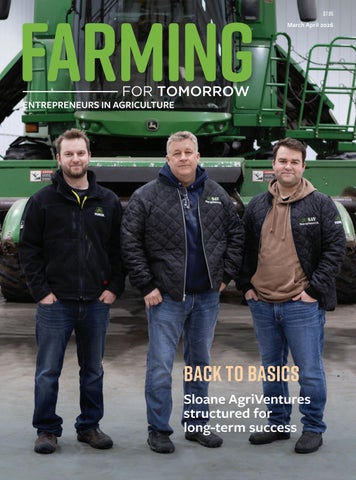
BACK TO BASICS
Sloane AgriVentures structured for long-term success
Mark and Dawna Sloane, owners of Sloane AgriVentures Ltd., represent the fourth generation on their family’s highly diversified farm near Clearwater, Manitoba. With a focus on the basics –sound agronomy and strategic planning – they continue to grow both the farm operation and their successful seed business.
Besides seed production, the 3,000-acre farm grows commercial wheat, barley, oats, canola, soybeans and corn. They also operate an on-site seed agency representing Pioneer Hi-Bred, Northstar Seed and a handful of suppliers of input products such as inoculants, seed treatments and biologicals.
From day one, the Sloanes have applied a business strategy that considers everything they have learned from other farmers combined with their own farming experiences over the years.
“We are focused on the success of our customers through providing the best agronomy support we can,” Mark Sloane says. “We are a local business. We are not going anywhere, and our customers aren’t going anywhere, so our focus is about making sure they’re successful long term, because if that’s the case, then our success will go hand in hand with that.”
Sloane also draws on his prior experience in agricultural lending to offer farm debt mediation through Agriculture & Agri-Food Canada’s Farm Debt Mediation Service to farmers experiencing financial challenges.
Off-farm experience provides valuable insight
Both Mark and Dawna have agricultural degrees from the University of Manitoba and worked in retail agronomy before Mark became the account manager for a major agricultural lender. The couple moved back to the farm full time in 2009, and although the years of juggling on- and off-farm work were challenging, it also provided them with insight that would prove useful in their future business endeavours.
“Farming and working off farm gave us tremendous insight into what farmers are dealing with, and we worked with successful growers and witnessed what was working for them, so as busy as it was, it was a great synergy for us,” Sloane says.
In fact, Sloane missed those conversations with growers so much that when a colleague floated the idea of starting a seed agency, Sloane jumped at the idea. Diversification was key to the overall business strategy in terms of income streams and risk, providing a strategic approach to growth.
“We have the grain farm, and the retail seed and agronomy business, and the farm debt mediation work provides us with different revenue streams that have all got different risks than the grain operation,” Sloane says. “Our strategic approach has been one of sustainable growth. We want to seize any opportunity that comes our way, but we don’t want to do it in an environment where we’re stretching the capacity of people, resources or equity because that growth is taking place too quickly.”
Sustainable growth has meant staying on top of the changing realities of farming and adapting to those changes, especially on the seed business side of things.
“When we first started in 2009, this was largely a canola and cereal area, and soybeans were on just a handful of acres. Then as clubroot and blackleg developed out West and took a
strong foothold, we recognized that, as an area, we needed to be more diverse in our rotation, and soybeans were a great opportunity for that, so that segment grew,” Sloane says.
A few years later, farmers also began to grow grain corn, another crop relatively new to the area, on more acres.
“To give farmers a chance to evaluate that crop, we started into it ourselves,” Sloane says. “We needed to put a corn planter in the yard here, and so we used that to do some custom planting and some custom drying to allow them the opportunity to evaluate corn as an option for two or three seasons to see if they want to stick with it and invest in the equipment and infrastructure that they need.”
As these new crop acres became more established in farmers’ rotations, it became feasible for Sloane to build a bulk seed treating facility in 2016, that can apply accurate and consistent seed treatments, inoculants and seed primers on up to 2,000 pounds of seed per minute.
On-farm research builds trust
Extensive on-site field trials are important to complement both the farm itself and the seed and agronomy business because they allow Sloane to build trust with his customers, some of whom are more than willing to host additional trials on their own farms.
“With the exception of our seed production fields, we have

Mark Sloane, with his sons, Brad, Todd and Kyle, who represent the next generation of the family enterprise.


trials in almost every field that we’re farming in,” Sloane says. “And we partner with organizations like the On-Farm Network that are doing a good job of statistically replicated trials. We are driving by those trials and living them and are involved in every aspect of it, and I think that gives us more complete insight as opposed to just visiting a field two or three times a year. Once we’ve got something that works, we know we can stand behind that and deliver that out to our customer base.”
Sloane sees every one of his customers as a partner in research, which brings more value to more farmers.
“If we demo something on the farm and we like what we see, then we’ll promote it to customers the next year, and then it’s on our radar on maybe 70 or 80 different farms, where perhaps 40 of them are using it, and 30 of them aren’t, so it turns into a large-scale evaluation,” Sloane says. “We can quickly know whether it’s a product that we’re seeing benefit from and understand the environmental circumstances that either led to it working or not working.”
Prioritizing the workload
The Sloanes have learned that one of the most important skills for managing multiple operations is being able to prioritize the workload.
“We meet here every Monday morning as a group with a coordinated approach to identifying what our priorities are for the week,” Sloane says. “It has taught us to clearly understand what we need to make as a focus to work on. Then, outside of that, it’s about filling in the rest of our time to make sure that we’re getting as much done as we can.”
It’s an approach that has kept them flexible and focused, all the while helping customers overcome challenges along the way.
“If we ever start to feel overwhelmed with any kind of situation, we just immediately focus on what we’ve got control over,” Sloane says. “How do we understand the risk and mitigate it? That’s literally every decision we make on the farm. Using the information we have today, how do we understand the risk, and if we make this decision what are the potential outcomes? If we can pull some of the emotion out of those decisions, we are better off because of it.”
Preparing for the next generation
The Sloanes have begun the process of transitioning their highly diversified operation to their three sons, who are as passionate about agriculture as they are. Their oldest son, Kyle, and his wife, Mayson, have just taken on another local seed business, while middle son, Todd, is bringing his financial management and accounting skills back to the farm operation after graduating with a degree in commerce. Youngest son,
Founders Dawna and Mark Sloane.

WE’LL BUILD GROWING BUSINESSES TOGETHER.

Our industry stands ready to meet the challenges and opportunities of the future. With innovation and drive, we will find new approaches, develop new techniques and grow agriculture in Alberta.
PROUD TO GROW AGRICULTURE IN ALBERTA


Brad, recently started his agriculture degree at the University of Manitoba and still helps on the farm when able.
As they navigate the transition to the next generation, the Sloanes are relying on their trusted professional team, which includes their investment advisor, accountant, lawyer and lead lender, to help them with the nuts and bolts of the process. They know that strategic planning and building a healthy culture are vital to the process.
“Whatever the challenge is – whether it’s succession planning or aggressive growth or a major change in the business –strategic planning and a healthy culture for succession and for business discussion are key pillars in successfully moving through any of those challenges,” Sloane says. “We know the farm will need to grow from where it is today, but we can’t jeopardize the responsible financial structures that we think we’ve put in place that are allowing that to happen.”
Sloane adds, “We are working with the boys so they can develop fluency in financial management and continue to build skills in agronomy and day-to-day farm management and risk management. Opportunities will present themselves, but we just need to make sure that we’re ready for them when they come.”
A future in good hands
It’s just as important to be ready for the inevitable challenges that will come along the way.
“For my parent’s generation, the political environment was pretty stable, but in today’s environment, I think the political interference and upheaval around the world – and the way people gather information to support their own viewpoint –is a tremendous risk to society,” Sloane says. “I don’t know how we manage a business that needs to compete on a world scale in that kind of environment where political interference tomorrow can flip an entire industry on its head for one or two business cycles.”
Which is why good leadership skills are going to be more important than ever to help the next generation, and their families, be successful in an increasingly volatile world, but Sloane is optimistic they will be well equipped to take advantage of the opportunities that come their way.
“There is always an opportunity to look at better systems, whether they’re production systems or food handling or food processing or value added at the farm, or value added between the farm and the end market,” he says. “Technology like AI, data management and decision-making algorithms will speed up the pace of that process, but it’s the momentum, enthusiasm and entrepreneurial spirit within this next generation that is impressive. It’s exciting and empowering.”
Dawna Sloane helps share the workload by managing the office.
Seed production remains a large focus on the farm.

CWRS:
AAC
AAC Starbuck VB
CWSP:
Proactive Management on the Farm
Are farmers ready for risk?
By Becky Zimmer

The fact that farming comes with risk is an obvious understatement, especially as farms continue to grow in size.
The total number of farms in Canada has gone from 246,923 in 2001 to 189,874 in 2021, a reduction of over 57,000 farms in 20 years, according to Statistics Canada. In the same data set, the only individual farm size categories to grow were those under 100 acres (a 1,000 farm increase) and those over 3,520 acres (a 3,000 farm increase) over the same time span.
If farmers manage to grow their operations, how does their sense of risk change?
Ten years ago, as an account executive at Westland Insurance Group, Steven Moulding could count on one hand the number of policies over $10,000 in premiums. Now he’s managing many farm insurance policies over $100,000.
Growth and inflation are playing a huge role in that increase. When equipment and infrastructure costs surpass one million dollars apiece, farmers must generate a lot of revenue to pay for it. There’s no choice but to grow.
Moulding reviews insurance plans on an annual basis with his clients. This helps prepare both the farmer and Moulding for whatever may come their way when a claim happens. Whether the farm has grown or shrunk, that review means the insurance needs change with the operation.
“I don’t care what policy it is or what customer it is, there’s always going to be little surprises when a claim does happen and we can mitigate that. It helps things go a lot more smoothly.”
- Steven Moulding
“I don’t care what policy it is or what customer it is, there’s always going to be little surprises when a claim does happen and we can mitigate that,” he says from his Wadena, Saskatchewan office. “It helps things go a lot more smoothly.”
Risk looks different for each individual farmer, whether they have a different operation or different needs than their neighbour down the road, or whether they’re new farmers compared to someone who has been doing it for decades. There always needs to be an extensive discussion on what they need for their farm.


“It focuses on the coverage and the type of coverage they have, the deductibles they have, the property they have insured. I have some farmers who don’t insure any bins at all; I have some that insure all of them; and I have some that insure maybe only the ones that they owe money on. The same thing applies with machinery.”
Some farming practices are being directed by insurance policies and farmers trying to save themselves the headache of having to file a plan. For example, Moulding is seeing a lot more farmers now, especially compared to 10 years ago, rolling most of their land to reduce the risk of combine ingestion insurance. Besides saving them the trouble of filing a claim, as well as saving the increase to their insurance premiums that come with such a claim, farmers are seeing many benefits in their investment of time and inputs.
“Even though you may have insurance coverage on that piece of equipment, it may be down for a week or two when you need it,” explains Moulding. “There’s more to it than just the cost of it as well.”
According to Heather Watson, executive director of Farm Management Canada, managing risk should be part of every farmer’s operational plan, but that can look different whether they’re growing nectarines in southwestern Ontario or operating as a beef rancher in Saskatchewan.
There are many different components of business management that farmers should be looking at, she says, but while risk management is just one small part of the bigger picture, it’s easier if farmers take that piece and look at it in isolation. Farm Management Canada has multiple tools for doing that, including workshops, questionnaires and training sessions.
Start by looking at assets and making calculated decisions on what is going on now and what has gone on in the past, Watson explains. A risk management matrix or a heat map can help farmers make decisions based on a few different factors, she adds. Using Farm Management Canada’s recently announced AgriShield tool, farmers can fill out a questionnaire to identify relevant risk levels using the likelihood or frequency of something happening compared to how severe the impact will be. There is some predictability in this, notes Waston, which can help farmers make decisions or be aware of potential risks before they impact their operation.
Watson provides the example of drought or flooding. What impact is that going to have on staff or levels of production? How about on everyone’s stress levels and mental health? If farmers are prepared, that could weigh in on how severe, or not, the impact might be.
“Even though it’s a high frequency or likelihood of happening
“The bigger they are, the harder they fall. But there are lots of wonderful things that can happen there too: the capacity to invest in new technology, or new ways of doing things, or to hire a CFO.”
- Heather Watson
and high severity if it happens, your actual profile for that risk is lower because you’re prepared,” Watson says. “We add that third layer on because the impact might be high, but if your preparedness is high, then it becomes a lower priority for you, and something you just need to keep your eye on and manage rather than worrying you need to do something about this right here, right now.”
As farms grow, the business environment becomes increasingly volatile and complex. Everything comes with
pros and cons, but as farms grow, risk management becomes more challenging and important, says Watson.
“The bigger they are, the harder they fall,” says Watson. “But there are lots of wonderful things that can happen there too: the capacity to invest in new technology, or new ways of doing things, or to hire a CFO.”
Farms will continue to grow, but Watson believes there is a place for everyone in the agriculture industry. And while risk management is not one-size-fits-all, it’s something everyone needs, and this goes beyond just a focus on the right insurance policies and programs and the impacts of production and markets.
“Running the farm is a business,” says Watson, “and the finances are a big part of that.” But often the risk to the people running the farm – including family, non-family staff, contractors and even the farmers themselves – is overlooked when discussing on-farm risks. Talking about the financial risks and working with farmers to create a proactive and comprehensive approach to risk has opened a larger conversation than the ag sector is used to.
Farm Management Canada conducted a recent study about farmers’ mental health and the stressors they are dealing

A full season of solutions.
Start fresh with Paradigm PRE pre-seed herbicide, followed by Rexade or Rezuvant XL herbicides for your worst in-season weeds. Then finish strong with Telbek PRO, with Adavelt active, for unparalleled disease protection. Find full cereal acre protection at Corteva.ca/Cereals
“When you look at the stress of uncertainty and farmers feeling the loss of control, well, if only a quarter of Canada’s farmers have risk management and business plans in place, and all these other things that we know provide certainty and peace of mind, then it’s no wonder the vast majority are stressed.”
- Heather Watson
with. According to the study, three-quarters of Canadian farmers are feeling overwhelmed, with the top three stressors listed as: unpredictably in the agriculture sector/
feeling a loss of control; financial pressures; and workload pressures/lack of time.
“When you look at the stress of uncertainty and farmers feeling the loss of control, well, if only a quarter of Canada’s farmers have risk management and business plans in place, and all these other things that we know provide certainty and peace of mind, then it’s no wonder the vast majority are stressed.”
Humans tend to avoid doom and gloom, says Watson, so convincing farmers to be proactive about their risk management can be a challenge. With assets in the tens of millions of dollars, transition planning is such an important part of business planning and risk management, yet less than half of Canadian farmers have a successor in mind and only 12 per cent have a written plan in place, she adds. Worrying about the future, especially if you don’t have a plan in place, can have a huge impact on farmers’ mental health.
Increasing operation size can also mean an increased potential for environmental risk, according to Lisa Nadeau. As program director for the Agricultural Research and Extension Council of Alberta’s Environmental Farm Plan, Nadeau works with farmers to assess their environmental risk and then comes up with a plan to address it.

Risk doesn’t always mean that environmental damage will occur, she notes, but farmers should always be looking at their environmental impacts no matter the size of their operation. Additional livestock could mean changes to manure management and more surface runoff into groundwater. If farmers are growing their acres, that could mean additional fertilizer or pesticide applications, which might impact sensitive environmental areas.
In Alberta, farmers are being more cognizant of their environmental impact, says Nadeau, and that includes registering for the Environmental Farm Plan program. Their workbook is free, voluntary and confidential, and is adaptable to farms of any size. Farmers are also paired with a program technician in their area to work through how they can manage environmental risk.
All farming comes with risk, whether that’s drops in production, market volatility or making sure the farm is insured for the season, but it also means managing people and the environment.
As farms grow, farmers need to keep an eye on how these things change their management plans, and what impacts old and new challenges will have on their changing business landscapes.


Turning your used oil and antifreeze containers into patio furniture! Clear the clutter this spring! If you have used oil and antifreeze materials taking up valuable space in your garage, shed or Quonset, now is the time to clear them out!
Find your nearest drop-off location on our website


Tom Wolf, PhD, P.Ag.
Tom Wolf grew up on a grain farm in southern Manitoba. He obtained his BSA and M.Sc. (Plant Science) at the University of Manitoba and his PhD (Agronomy) at Ohio State University. Tom was a research scientist with Agriculture & Agri-Food Canada for 17 years before forming AgriMetrix, an agricultural research company that he now operates in Saskatoon. He specializes in spray drift, pesticide efficacy and sprayer tank cleanout, and conducts research and training on these topics throughout Canada. Tom sits on the board of the Saskatchewan Soil Conservation Association, is an active member of the American Society of Agricultural and Biological Engineers and is a member and past president of the Canadian Weed Science Society.
What’s New in Weed Control Research?
If you want to know more about the future of weed management, it’s sometimes instructive to look at scientific weed science society annual meetings. Most relevant to Canada are two societies: the Canadian Weed Science Society (CWSS), covering all of Canada, and the North Central Weed Science Society (NCWSS), covering the midwestern U.S. and Canada.
These societies report on research that is often funded by local commodity groups, provincial, state and federal governments, as well as private corporations that manufacture and sell inputs. The funding priorities of these groups are a good indicator of where they think we ought to be headed. We also get a chance to see some innovative ideas that might not be ready for prime time.
In this first part of two articles, we look at NCWSS. This is the largest of the regional weed science societies in North America, and it held its annual meeting in Grand Rapids, Michigan, this past December. In all, 235 posters and presentations were listed in the proceedings. They tend to focus on corn and soybeans, with less work on the common grain and oilseed crops grown in Western Canada.
The proceedings were divided into major crop groups, each addressing unique weed control challenges. Researchers also submit their research into special sections for integrated weed management, cover crops, weed biology, weed genetics and herbicide physiology as well as application technology for research that is not directly related to a commodity.
As might be expected, a majority of presentations at NCWSS dealt with herbicide technologies. How effective is herbicide A on weed B in crop C? These types of questions are driven by registrants and commodity groups looking for answers to specific weed issues in particular regions of interest, and these questions have been the basis of so much “weed science” research in the past 50 or more years. The meeting also saw new herbicide mixtures, as well as integration of residual strategies with post-emergent products. These were typically geared toward the control of herbicide-resistant weeds.


There was one new herbicide announcement: a Group 23 mode of action (microtubule inhibition). The product, icafolin-methyl, is manufactured by Bayer CropScience and will be used for non-selective weed control across a broad range of crops (soybean, cereals, pulses, oilseed crops, as well as pome and stone fruits, tree nuts, grapes and citrus) for pre-emergent /preplant burndown of difficult to control grass and broadleaf weeds.
Icafolin will control all known resistant biotypes of labelled weeds and is intended to be used along with other modes of action to delay the onset of resistance. It is currently being evaluated by PMRA and EPA. It should be noted that Group 23 products were first brought to market in the 1950s but have not been used recently in the central Great Plains. Barban (carbyne) was a groundbreaking wild oat product belonging to this mode of action group in its day.
Bayer CropScience also introduced Convintro, a herbicide containing diflufenican (Group 12). Diflufenican has been used in other countries for several years, but its introduction to North America will offer a new active ingredient for control of pigweed species in corn and soybean, pending EPA approval.
A new instance of resistance was reported: a giant foxtail population in Illinois resistant to Group 15 herbicides (in Western Canada, pyroxasulfone: Zidua, Fierce, Authority Supreme, Focus, etc.). In lab studies, the resistant biotypes were tenfold more resistant than their susceptible counterparts; under field conditions the fourfold rate only provided 70 per cent control. Will resistance ever go away? No, it will not. It will steadily grow worse.
Cover crops were a popular topic at this NCWSS meeting, with over 26 posters and papers dedicated to the subject matter. The research questions revolved around cover crop type, the timing and method of termination, and integration with residual herbicides. Generally, the use of herbicides in addition to cover crops enhanced weed control. But with proper timing of establishment and termination, cover crops are proving to be a very effective means of weed suppression.
There was significant reporting of application technologies, with several studies comparing various spot spray technologies and identifying nozzle systems that provided best results. For spot sprays, an arrangement of three adjacent, overlapping nozzles provided better targeting and weed control than a single nozzle passing over weeds located directly under the central nozzle. Lower booms also improved control for both arrangements. Weeds as small as five-millimetre diameter were detected by the One Smart Spray system used in the studies.
In another study, ultra-precision herbicide sprays applied in a
There was significant reporting of application technologies, with several studies comparing various spot spray technologies and identifying nozzle systems that provided best results.
six-centimetre by six-centimetre grid permitted the use of non-selective herbicides within a row crop. When used in conjunction with a good pre-emergent herbicide program, good weed control and minimal crop damage were achievable.
Comparing different broadcast and spot spray strategies, one study showed that crop yields were highest with the spot spray compared to the broadcast treatment, on account of less crop phytotoxicity from the broadcast application. Think Sencor on pulses. Less drift was also documented for the spot sprays.
The use of residual pre-emergent herbicides was critical in setting up for spot spray success in the post-emergent pass. Better residual control resulted in lower weed densities to be managed with the post spray, allowing for greater postemergent herbicide savings. Although residual herbicides are less common in our small-seeded cereal and oilseed crops, there are some options and they are worth investigating.
A symposium on drones for weed control highlighted some of the recent work within Canada and the U.S. A total of 14 studies were presented at this symposium and throughout other topic areas of the proceedings.
Presenters were concerned about the poor patterns from drones, but some were surprised that weed control was still achieved. It was stressed that spray deposition from drones is more complex than from other types of sprayers, being dependent on flying height and speed, droplet size, application volume and ambient wind conditions. Risks from droplet evaporation are also greater due to smaller droplets being used with drones.
Studies looking at swath width on bare ground versus various crop canopies showed that drone swaths can be 30 per cent narrower within a dense crop than on bare ground. This could result in insufficient overlapping between spray passes, resulting in striping.
Some wind tunnel sizing work showed that the droplet sizes reported by the DJI T40 rotary atomizers were actually finer by one category than the drone manufacturer reported. This
will have implications for compliance with pesticide labels where a spray quality is prescribed for drift control.
Several studies reported on herbicide efficacy with drones. One experiment showed that a coarse spray at three gallons per acre (gpa) applied with a drone resulted in less weed control than was achieved with finer drone sprays or higher volumes from ground sprays.
Two additional studies showed that a minimum of five gpa was needed to obtain acceptable control. In the first study of water hemp with glufosinate and 2,4-D choline, two and three gpa provided significantly lower control than the higher volume. A similar result was reported for the second study, this time with pre-emergent herbicides.
These results make sense. Very low water volumes do need more small droplets to achieve adequate coverage (droplets per square centimetre). Drift control is not as easy to achieve with larger droplets because coverage is reduced too much.
There were plenty of interesting studies. One researcher used a cattle prod to control weeds, measuring the duration of the prod needed for best control. It could take some time to cover a whole field this way, but may make sense in small areas. Another showed the incredible utility of weed maps
Presenters were concerned about the poor patterns from drones, but some were surprised that weed control was still achieved. It was stressed that spray deposition from drones is more complex than from other types of sprayers, being dependent
and ambient wind conditions.


Ground squirrels distracting you from your daily to-dos? Minimize the squirrel moments with Rozol RTU.*


Ultimately, weed science will need to return to its roots.
Roots based on an integration of all available agronomic and technological tools to prevent weed emergence, competition, reproduction and spread.
generated with computer vision, a valuable tool in monitoring patches and population dynamics. A third used interplanted soybeans within a soybean crop to suppress weeds, with the interplanted rows later being terminated.
I started attending weed science conferences in 1989. We were still in a golden age of discovery. Elaborate new herbicide introductions were annual events. “Weed research” was dominated by showing how well weeds died after herbicide application. Herbicide resistance was in its infancy. Weed ecology was fledgling. Integrated management was not a common term. All our eggs were in the herbicide basket.
Thirty-seven years later, weed science is alive and well. Importantly, we now have many baskets for weed control. Yes, this NCWSS meeting was still dominated by herbicide
evaluations, but many of these were in the context of maintaining control of resistant weeds. There were very few product introductions that weren’t simply a new mixture of existing products.
New application techniques dominated the proceedings more than others in recent memory. Drones are getting a lot of attention, but could be a brief infatuation unless deposit uniformity can be improved and water volumes can increase to more reasonable levels. The spot spray revolution, on the other hand, received some solid scientific backing and offers enticing options for resistant weed management and product savings. This technology has been on a path towards improvement in detection accuracy, and its power will only strengthen with time.
But the most noticeable aspect for me was the rise of cover crops as a management tool. Cover crops are not new. They preceded herbicides by generations, if not millennia. The overall ability of cover crops to reduce weed populations in the absence of herbicides points to their strength – being a non-herbicidal practice that ultimately reduces reliance on herbicides and thus reduces the detrimental effect of herbicide-resistant weeds.
Ultimately, weed science will need to return to its roots. Roots based on an integration of all available agronomic and technological tools to prevent weed emergence, competition, reproduction and spread. The pieces are there. The next step is to make this level of integration practical and costeffective. I believe we are on our way there.


Peas Lentils Oats Canola
WEED-IT QUADRO + DASH
Precision Spot Spraying backed by Data, Proven in the Field

For more than 25 years, WEED-IT has set the global standard in optical spot spraying, enabling growers to apply herbicide only where weeds are present. The latest evolution of WEED-IT QUADRO paired with the DASH digital platform delivers a complete precision spraying and agronomic intelligence ecosystem designed to reduce input costs, manage herbicide resistance, and support sustainable farming practices.
Unlike camera-based technologies, WEED-IT uses patented fluorescence-based sensing to detect active chlorophyll in living plants. This allows the system to identify weeds instantly, regardless of colour, residue levels, dust, or lighting conditions. Operating day or night, WEED-IT QUADRO delivers consistent and accurate weed detection across real-world field environments. With ultra-fast 50 Hz pulse width modulation, the system provides pinpoint spray accuracy at operating speeds of up to 25 km/h, ensuring every droplet reaches a living target; impact on where it matters.
For Western Canadian producers facing rising herbicide costs, increasing resistance pressure, and growing expectations around sustainability, WEED-IT directly addresses critical industry challenges. Field results consistently demonstrate herbicide savings of 85–95%, significantly reducing chemical use while maintaining effective weed control. This targeted application approach lowers costs, reduces off-target impacts, preserves soil health, and helps slow the development of herbicideresistant weed populations.
The integration of the DASH platform extends spot spraying beyond application alone. DASH captures real-time operational and agronomic data during every spray pass, generating high-resolution weed-pressure maps and exportable field reports. These insights support informed follow-up treatments, site-specific prescriptions, and long-term planning, while also providing documentation for compliance, traceability, ESG
reporting, and carbon-related initiatives. Each application becomes a data-rich event, transforming precision spraying into measurable agronomic intelligence.
Designed for practical adoption, WEED-IT QUADRO is brand agnostic and retrofits easily to most sprayers or independent units. Growers can evaluate potential savings using the ROI calculator available on the WEED-IT website, with many operations achieving payback in under two years. In Canada, WEED-IT aligns with both federal and provincial clean technology programming, with available funding opportunities further supporting adoption.
Performance is proven at scale. Globally, WEED-IT systems have accumulated more than one million operational hours under commercial farming conditions across a wide range of crops, soils, and climates. Since 2021, Canadian validation and demonstration efforts have been conducted in collaboration with Lakeland College’s Bachelor of Agricultural Technology Program, Olds College of Agriculture & Technology’s Smart Farm, and other research institutions conducting independent trials with proven results. In addition, progressive producers across Alberta and Saskatchewan have adopted the technology, with approximately 30 complete WEED-IT systems currently operating nationwide.
Globally trusted and locally validated, WEED-IT QUADRO + DASH represents the next generation of precision agriculture, empowering growers to reduce inputs, make data-driven decisions, and future-proof their operations through proven, intelligent weed management. In recognition of its innovation and impact, WEED-IT was honoured with the Innovation Award at the Western Canadian Crop Production Show and named runner-up in the Innovation Showcase at Manitoba Ag Days.
WEED-IT- Precision you can trust.