Vet grads barely dent shortfall


WHILE debate continues to rage over what He Waka Eke Noa will look like, farmers in New Zealand need only look to the United Kingdom to see how Tesco’s zero-carbon moves are changing farm practices and supply chain expectations.




Alice Ritchie, a Kiwi and Tesco agricultural sustainability manager for the UK’s largest food retailer, told Farmers Weekly the company has been watching developments here with interest, given NZ farmers supply over a third of the company’s lamb, making it NZ’s single largest UK lamb purchaser.
Tesco has set an ambitious goal to be net carbon zero for its own operations by 2035 and has committed to a net zero carbon emissions from its supply chain and products by 2050.
This has initiated widespread audits of food sources and practices in its complex global supply chain.
Given NZ lamb’s sizable contribution to chiller space and its place among the big four emitting products of red meat, milk, poultry and pork, it will be the first in NZ to feel the weight of retailer expectations on how

farmgate emissions are managed down.
“We have been very much focused on the UK, but we have to consider our complete supply chain, not just what is produced within the UK border,” Ritchie said.
In the UK, she said, Tesco’s signals to farmers and processors have possibly been more pertinent than the British government’s signals on GHG reductions in farming.
“The context is so different [in the UK] for agriculture. It is less than 10% of total gas emissions and 0.5% of GDP, but the government has been quite holistic in its approach offering subsidies and incentives to change to lower emitting, nature-positive practices.”


That includes restoring hedgerows, planting trees, and encouraging biodiversity areas are based on subsidies that reflect conservation efforts rather than planted acreage.



“We are starting to see farms running more mixed systems and more of a shift to regenerative practices, which a lot of people call a ‘New Zealand system’.”
Tesco oversees sustainable farmer groups for most main protein and produce types in the UK. It also has a partnership with the World Wildlife Fund aiming to halve the environmental impact of
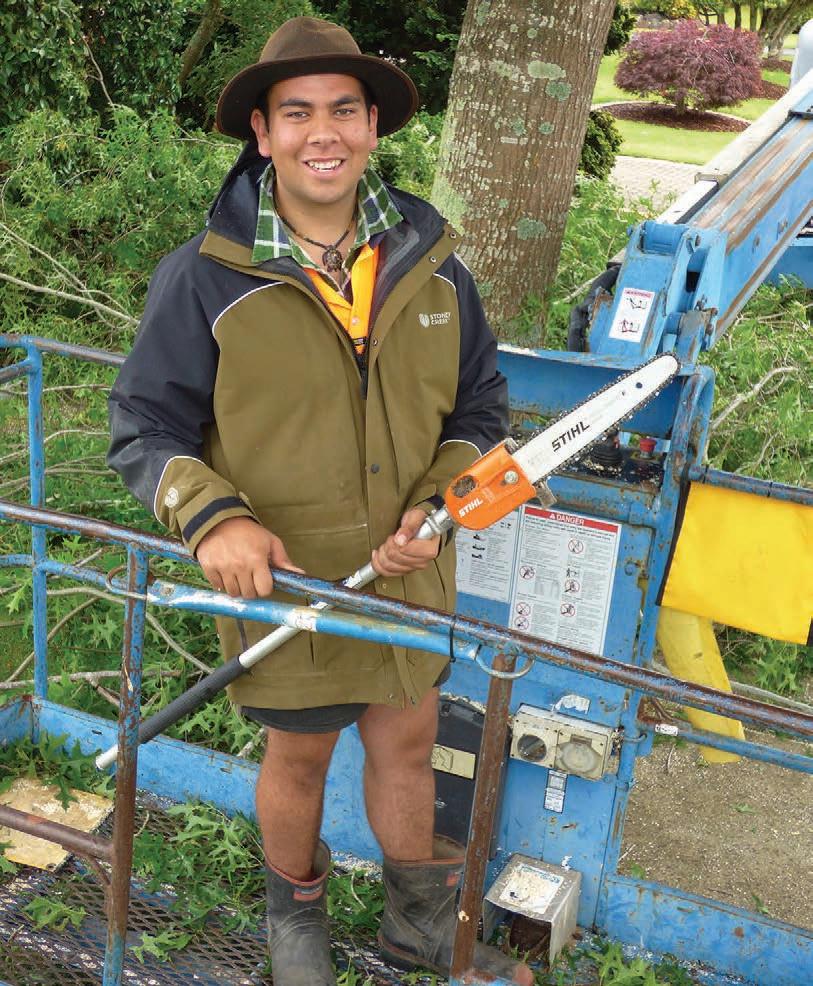
Levi Jennings, 17, takes a strong interest in government policy that affects what he wants to do in the primary sector. He would welcome the chance to vote if the voting age was lowered to 16.
Farming and art are close to the heart of Amelia Dunbar, supreme winner at this year’s Rural Women NZ Business Awards. PEOPLE 28
The growing agritourism industry offers rural communities a way
diversify income and increase resilience. NEWS 20
There was plenty of talk at the recent COP27 conference in Egypt but few solutions offered, Alan Emerson says. OPINION
The primary sector has asked the government to review methane targets and the method by which they are set.
to
Bryan Gibson | 06 323 1519
Managing Editor bryan.gibson@agrihq.co.nz
Craig Page
Deputy Editor craig.page@agrihq.co.nz
Claire Robertson
Sub-Editor claire.robertson@agrihq.co.nz
Neal Wallace | 03 474 9240
Journalist neal.wallace@agrihq.co.nz
Gerald Piddock | 027 486 8346
Journalist gerald.piddock@agrihq.co.nz
Annette Scott | 021 908 400
Journalist annette.scott@agrihq.co.nz
Hugh Stringleman | 09 432 8594
Journalist hugh.stringleman@agrihq.co.nz
Richard Rennie | 027 475 4256
Journalist richard.rennie@agrihq.co.nz
Nigel Stirling | 021 136 5570
Journalist nigel.g.stirling@gmail.com
PRODUCTION
Lana Kieselbach | 027 739 4295 production@agrihq.co.nz

Andy Whitson | 027 626 2269 Sales & Marketing Manager andy.whitson@agrihq.co.nz
Steve McLaren | 027 205 1456 Auckland/Northland Partnership Manager steve.mclaren@agrihq.co.nz


Jody Anderson | 027 474 6094 Waikato/Bay of Plenty Partnership Manager jody.anderson@agrihq.co.nz
Donna Hirst | 027 474 6095
Lower North Island/International Partnership Manager donna.hirst@agrihq.co.nz
Andy Whitson | 027 626 2269 South Island Partnership Manager andy.whitson@agrihq.co.nz
Debbie Brown | 06 323 0765
Marketplace Partnership Manager classifieds@agrihq.co.nz
Grant Marshall | 027 887 5568
Real Estate Partnership Manager realestate@agrihq.co.nz
Andrea Mansfield | 027 602 4925
National Livestock Manager livestock@agrihq.co.nz
Dean and Cushla Williamson Phone: 0800 85 25 80 dean.williamson@agrihq.co.nz cushla.williamson@agrihq.co.nz
Farmers Weekly is Published by AgriHQ PO Box 529, Feilding 4740, New Zealand Phone: 0800 85 25 80 Website: www.farmersweekly.co.nz


ISSN 2463-6002 (Print) ISSN 2463-6010 (Online)

SustaiN contains the nitrogen stabiliser AGROTAIN® which halves the amount of nitrogen lost as ammonia, compared to urea, keeping the N right where it should be, ready for uptake by the pasture or crop.

If you’re looking for a better return on your investment, better ongoing productivity and a nitrogen solution that’s proven better for the environment, SustaiN is always the right nitrogen choice. ballance.co.nz | 0800 222 090
Ruralco has posted a gross profit of $12 million compared to $10.6m last year, despite challenges for shareholders. Retiring board chair Jessie Chan told Ruralco’s annual meeting that fuel and fertiliser costs and general price increases due to supply issues and labour shortages had been a challenge. Turnover was $279.1m compared to $245.3m last year.
Forever Farming NZ abandoned plans to buy Mangaohane Station, the 4800ha central North Island property for sale by international tender, following revelations that the Information Memorandum prepared for the sale did not detail a claim lodged with the Waitangi Tribunal in late 2019 by a local Māori trust. The trust also wants to register an easement to formalise passage to its land at the rear of the property.
Ravensdown is trialling a new source of phosphate rock from Australia. A 5000t shipment from the newly commissioned Ardmore mine in Queensland, Australia, is on its way to Christchurch and Dunedin. Ravensdown said Ardmore phosphate rock has the potential to form part of the company’s nutrient offering and firm up the local supply of high-quality superphosphate for New Zealand.
The global beef market remains solid, but growing economic and supply-side pressures could see the situation change, according to Rabobank’s latest beef report. It warns the United States is headed towards a downward production cycle which will likely affect prices. In previous periods of decline US retailers and restaurants looked to the global market, and US consumers will likely outbid the rest of the world to keep their fill of beef.
MISINFORMATION has fuelled anger among farmers over the pricing of agricultural greenhouse gases, says Agriculture Minister Damien O’Connor.
He said claims such as riparian planting cannot be used to offset emissions are an example of the misinformation that has hindered consultation on the government’s response to the He Waka Eke Noa (HWEN) document.
Submissions on the issue are still being logged, but as of last week almost 19,000 had been received, according to the Ministry for Primary Industries.
About 16,000 were automated submissions via websites such as Beef + Lamb New Zealand and other rural lobby groups.
O’Connor would not be drawn on his response to issues raised, but said the themes were not a surprise.
“We are open to fresh ideas and to find agreement. We need to get this done,” he said.
Asked why the government didn’t simply accept the HWEN proposal, O’Connor said there were questions needing answers and issues in the document to be addressed.
O’Connor said he is open to extending the class of vegetation acknowledged as sequestering, but it has to be scientifically validated.
“Technology will one day allow accurate identification of all forms of sequestration including soil, but these systems must not require more effort to measure sequestration than it is worth.”
Similarly, calls by HWEN to reset long-term methane targets using the GWP* measurement will be
determined by its accuracy and effect on global warming.
O’Connor said addressing climate change is more than not contributing to any additional global warming but involves reducing the impact of greenhouse gases that have been pumped into the atmosphere for decades.
“It is not good enough just to have no further affect, we have to reduce the effects of global warming over the last 100 years.”
Any reset of 2050 methane targets from the proposed range will depend on technical assessments and the trajectory of methane emissions.
The minister maintains the positions of HWEN and the government are closer than is acknowledged, despite industry bodies and companies using terms such as “unacceptable” and “unworkable” to describe the government’s response to the pricing proposal.
Politicians and officials did not need to front public meetings during the six-week submission process, he said, as this was the end of several years of engagement and was a process for industry bodies to confirm their response.
“I don’t think there has been any shortage of avenues for sharing information and views,” he said.
O’Connor said the need for the
sector to address emissions will grow as more global customers start requiring suppliers to quantify and reduce greenhouse gas emissions.
“Those hoping a change in government will make all this go away, it’s not going to happen.
“The National party still intend to introduce a pricing system for emissions.”

Continued from p1
the average UK shopping basket, working in regions both in the UK and offshore.
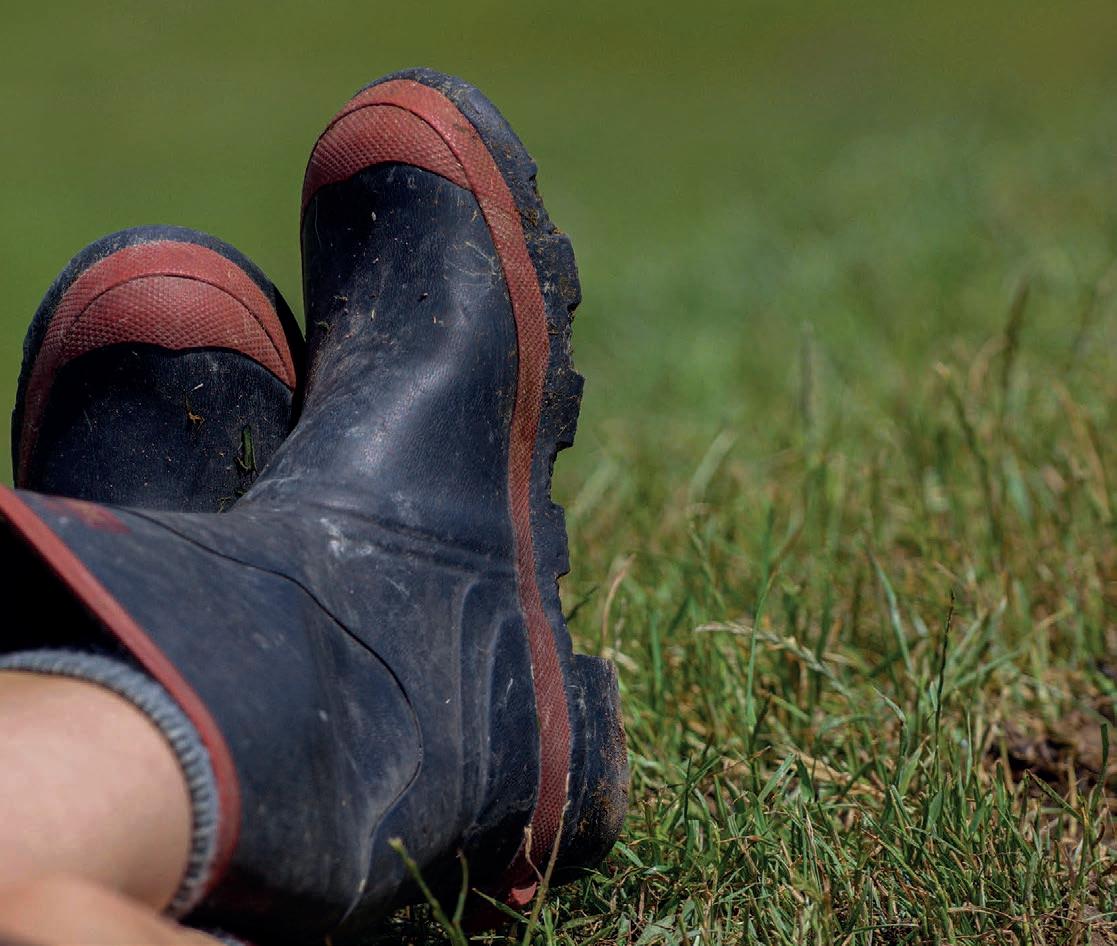
Ritchie herself spends portions of her week gumboot clad, meeting farmer groups and suppliers around the UK.
“Tesco Dairy farmers have known their carbon footprint for 15 years, and there is support for specific on-farm practices, with all farms scored on a sustainability scorecard for a number of environmental outcomes.”
Tellingly, she said having a government-endorsed scheme mapping out carbon reductions is an ideal scenario for many retailers, rather than having to try to manage a mix of carbon
certification schemes.
“We want to be able to say there is a very comprehensive, certified scheme there for the entire industry, knowing we can continue to purchase NZ produce, knowing it is a similar environmental standard to the UK farmers have to supply to.”
She points to Ireland’s Origin Green programme as an example of a well-embedded, nationally accepted scheme that gives Tesco confidence in buying Irish produce.
Tesco is also mapping biodiversity hotspots of supplier farm sources, and NZ, with its huge mix of flora and fauna, will be well in its spotlight.
She said Tesco is aware of how changes at farm level can take

time and is supportive of a need to transition, particularly in an environment of increasing farm costs.
She acknowledges Tesco does carry enough weight to influence change, pointing to a mandate to remove soy feed sourced from deforested areas from pig and poultry feed inputs.
“But a programme like HWEN means we can be pretty well assured lamb from NZ is on the same track to lower carbon farming.”
She said it is far preferable to separate certification schemes or net-zero claims that can carry implications for advertising claims, and at about £22,000 (about $42,500) per product for a full life-cycle analysis, can be
expensive to validate.
“So having an overarching policy would make life simpler, especially if NZ farmers can track how this policy impacts on their on-farm carbon footprint. Accurate onfarm data is critical for companies with supply chains as diverse and wide-reaching as Tesco’s, so having that kind of consistency and regular measurement carries a lot of weight.”
“Carbon leakage”, the risk that food companies will buy product off countries not pursuing lower carbon farming, is a challenge to the global supply chain.
But Ritchie maintains sustainability and zero carbon are rapidly becoming embedded in the right to operate, regardless of the food’s source.
As the UK struggles under a soaring cost of living, she acknowledges the pressure food retailers face as they jockey for market share with price-sensitive shoppers.
However, this is not deterring the lower carbon goals.
“Lower carbon goals bring innovation to operations and to farming, for example regenerative practices using less fuel and fertiliser.
“It’s how much we can embed sustainability in.”
Meantime sustainability, after price, is second on consumers’ “must have” list and there is a growing assumption zero carbon and sustainability are simply part of doing business, not an offering to charge a premium on.
Togethe r, Cre ati ng the Be st Soil and Food on E ar t h
fencing levy funds for research and development and the pricing of nitrous oxide.
THE primary sector has asked the government to review its methane targets and the method by which it sets those targets before it starts pricing agricultural greenhouse gases.
In its submission in response to government proposals on pricing emissions, the He Waka Eke Noa (HWEN) partnership is asking for the Climate Change Commission to take another look at the 2050 emission reduction targets to reset methane levels using the GWP* calculation.
HWEN chair Sarah Paterson said this reflects feedback from farmers and growers during consultation on the government’s proposals.
HWEN chief executive Kelly Forster said it “really is a call to ensure the [commission’s] review takes into account the latest science”.

The current legislated reduction targets are to reduce methane emissions, compared to 2017 levels, by at least 10% by 2030 and 24-47% by 2050.
The current five-yearly review will be completed in 2024 and the commission can change its targets, what gases they apply to, when targets have to be met and how much can be from within New Zealand or paid for overseas.
Sector submissions on the government proposals consistently raised concerns about the proposed governance structure, the paring back of what vegetation will be recognised as sequestering, price setting, ring
The HWEN submission was not endorsed by Federated Farmers, which Paterson said is disappointing but does not close the door on working together in future.

She told Farmers Weekly that adopting GWP* to calculate methane, considered more accurate at measuring actual temperature response than the current GWP100, would relate only to establishing targets.
GWP* is not practical at farm level given the volume of historic data required to use it, she said.
AgResearch scientists have calculated that by using GWP* and sequestration, the carbon footprint of NZ sheep and beef production is half that of other countries. They also determined that farmers have been carbon neutral for at least 20 years.
Forster said the HWEN submission addressed three key issues: ensuring policies take
account of the social and economic impact on farmers, growers and rural communities; that the price encourages change but does not affect the sector’s viability; and that they system recognises more classes of sequestrating vegetation.
Forster said HWEN is aware of concerns and has tried to reflect that in a constructive submission. She said the government has continually said it is open to change.
Federated Farmers president Andrew Hoggard said it withdrew from HWEN to ensure its message was heard and to reflect members’ views.
“We broadly support what HWEN had to say but it was a case of wanting to be crystal clear in what we were saying,” Hoggard said.
Hoggard rejected claims HWEN has been weakened by the federation going it alone.
He said he hopes that taking a position beyond HWEN’s stance will encourage the government’s final position to move even closer to HWEN than had the federation stayed in the partnership.
Beef + Lamb NZ (BLNZ) chair Andrew Morrison said the 10 members of the HWEN partnership have heard the sector’s concerns and are united in their response.
“It highlights how we need to get it right.”
Morrison said he is encouraging the government to listen to submissions and accept BLNZ’s request for a transition period for pricing, as was adopted when the Emissions Trading Scheme was introduced.
This is a call to ensure the review takes into account the latest science.
“It was set up with a low price to start along with a review period so we can learn how it operates.”
There is concern and anger in rural communities, he said.
“Farmers simply don’t understand why a sector which has reduced its emissions by 30% since 1990, has arguably been climate neutral for lamb over the last 20 years, has increased export revenue by 250% since 1990, and has protected 1.4 million hectares of native bush, while also being a backbone employer in rural communities, and underpinning the economy during covid-19, has seemingly been abandoned or even punished by the government’s proposal.”
GROWING a more balanced diet for New Zealanders could also deliver improvements to the country’s greenhouse gas profile and water quality, based on a report from the Our Land and Water National Science Challenge. Going a step beyond the “right tree right place” recommendations made by foresters and the Climate Change Commission, the study looks to place a series of wins not only for the environment but for the nation’s health.
The research, headed by Lincoln University Professor Richard McDowell, examines the impact of responding to two different scenarios requiring land use change.
One is a shift aiming to reduce greenhouse gas emissions, while the other is a land use shift to improve water quality, particularly lowering nitrogen and phosphate levels.
The study was based on the premise that as climate change impact spreads, NZ farmers and growers will be compelled to respond by changing the crops and livestock they use, while also having to meet emissions and water quality targets.
At the same time there is a strong link between a more plantbased diet and improved planetary health.
McDowell described the outcomes as a “win-win-win” for hitting GHG/freshwater targets, feeding the population more healthily, and minimising the financial impact on farmers and growers.
The dietary shifts involve the country consuming more of a plant-based diet, which researchers modified from the internationally accepted EATLancet planetary health diet,
focusing on crops capable of being grown here.
Some things were not included –for example, yoghurt alternatives that may have required coconuts, McDowell said.
The shift required an additional 28,000ha be committed to crops including legumes, vegetables such as onions and potatoes, and cereal crops like wheat, barley and oats.

Overall, the researchers found that to meet the dietary goals and hit either reduced greenhouse gas targets or improve water quality would mean a 30% increase in crop land, and forestry increasing by an average of 100%.
Both would result in a decline in drystock farming land by an average of 15%, and dairying by 10%.
Digging into the gross margin impact on farm profitability, the effect on farmers’ bottom line depends upon whether the country is aiming for improved water quality or greenhouse gas reduction.
The freshwater approach would inflict the greatest cost on the primary sector, with a net $526 million loss across the country.
This compared to an $89m profit for the GHG-focused approach. This was largely boosted by returns of up to $2.4 billion from a bigger arable, horticulture and forestry sector.
McDowell said the significant variation in impact between the policy goals would have to give the government pause as it implements regulations around its national policy statement on freshwater.
“It does mean you have to think harder about the phasing of this sort of policy and its impact. There are areas of the country where the risk [to water quality] is not as great and practices could continue for longer, while in other areas time really needs to be called now.
“It’s critical for farmers with long-term businesses to know sooner than later.”
Across the regions the modelling found Waikato would suffer the greatest gross margin reduction in either scenario, due to its dairy focus, averaging a $287m loss.
Under a GHG-focused regime Canterbury stands to gain in gross margin by up to $58m in catchments under nitrogen pressure.
But under a freshwater regime the impact on Canterbury is major, with nitrogen-pressured catchments in the region hit with a decline of $288m in farm gross margins.

Despite the loss of pastoral land under the scenarios, McDowell said he is confident the meat and dairy sectors are capable of making up the losses through productivity gains.
He cited historically strong productivity gains in the primary sector of 2-4% a year as cause for optimism it could continue these gains, and make up the area lost to forestry and cropping.
“And with respect to the change in land use, what you lose in one area you gain in another, and it is almost a zero-sum game.”
He was also confident the researchers’ efforts to drill into land use changes withstand any potential criticism about whether
the alternative uses are realistic.
“We produced land use suitability maps for 20 different crops, all available through the open platform research that look at climate, contour, and soil type. The resolution of these maps is good.”
He said one shortcoming of the research is the reliance upon average farm data, not individual farm data.
“So, we can only say on a national and regional scale this is a thought experiment that identifies the regimes and what they would change land use to.”
The full research report can be found here:
https://www.scimex.org/newsfeed/ land-use-change-for-healthynew-zealanders-and-a-healthyenvironment/multimedia/Growing-forGood.pdf
And with respect to the change in land use, what you lose in one area you gain in another, and it is almost a zero-sum game.Professor Richard McDowell Our Land and Water National Science Challenge
Choose the bank that can guide you to success.
For 50 years we’ve partnered with New Zealand farmers. So we know where you’ve been – and where you’re going. Which means we can tailor a range of lending solutions to your needs, and guide your agribusiness towards your vision for its sustainable future. Talk to us today.


Sometimes, the grass really is greener.
SEVENTEEN-year-old Levi Jennings has mixed feelings about whether his peers would be up to making the most of a lower voting age, but he believes the opportunity would be worthwhile.
The Bethlehem College student from Tauranga is intent on a career in the primary sector, probably starting off as a farmer. He said he believes lowering the voting age could be a positive if voters put some thought into how they cast their vote, but he’s uncertain that will be the case.
“A lot of people just get influenced by their mates, or who they see in media who they may like the look or sound of,” Jennings said.
“On the other hand, by the time I was 17 I had paid $7000 in tax since I started working. There are policies that influence how I do my work that I would like to have a say in.”
But he also acknowledged he is
probably not a typical 17-year-old in his thinking.
“Not a lot in my age group are getting up in the morning, looking at the weather report, reading SunLive and Farmers Weekly, who are switched on to policies and what they mean.”
He said policies on health and safety, time off and taxation would all prompt him to want to have a say at the polling booth if the voting age was lowered.
Having studied agriculture at Bethlehem College, he is now off to Massey University to study agribusiness next year, buoyed by a $4000-a-year Ballance scholarship.
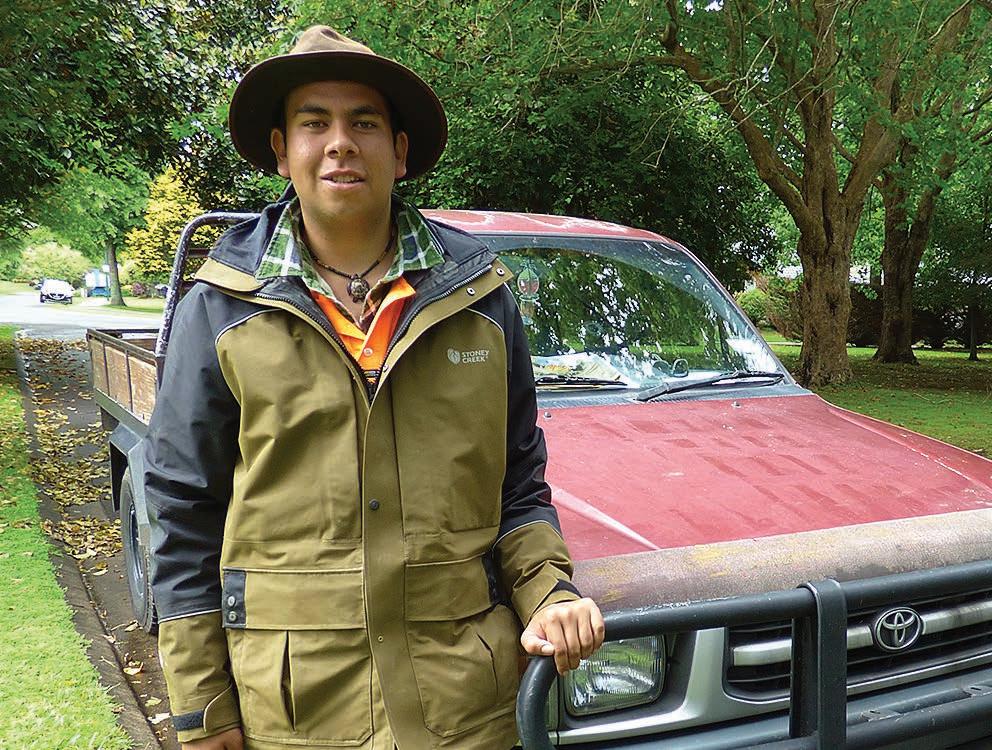
His longer term plans include building an agribusiness enterprise comprising farms, orchards and contracting businesses.
Across the Kaimai range, St Paul’s Collegiate agribusiness student Henry Crawford shares some of Jennings’ concerns about lowering the voting age.
The 17-year-old year 12 student from Auckland – who will be eligible to vote in the next election under the current age limit –spends holidays working on a
relative’s farm at Te Akau, western Waikato.
“I am not sure that 16-year-olds are mature enough or have enough understanding of how the world works,” Crawford said. He would have voted under a lowered age limit, but “I suspect most would probably not take very much interest”.
The key motivators would be linked to his career plans to go farming.
“Big motivators right now are tax-related things, like the ute tax.”
His fellow school mate, 17-yearold Logan Spencer, a year 13 student, said he would definitely be keen to vote if he was given the opportunity. His decision to do so would be heavily influenced by his area of study, and career choice to be a farmer.
“I have been able to compare between National and Labour and their impacts on farming. We farm in the King Country and have seen the effect of pine forestry there,” Spencer said.
He sees this as the single largest policy related issue that
would prompt him to vote.
However, he is conscious there could be a risk, namely that 16and 17-year-old voters are more likely to be influenced by how their parents vote.
Cheyenne Wilson, the first chair of the Food and Fibre Youth Network, said the challenges rural youth face are worlds apart from those of urban youngsters, and the opportunity to vote and have an influence on things like driving licence conditions make it a worthwhile conversation to have.
“I think our young people are mature enough to make an informed decision on these things,” Wilson said.
She said there was always a risk the younger voters would be influenced by their parents’ views, regardless of where they live.
“But there are decisions being made out there today that will affect their farming careers.
“It is for this reason the [Council for the Food and Fibre Youth Network] submitted on He Waka Eke Noa, because otherwise rural youth did not have a voice on it.”
A MASSEY University lecturer and design expert is focusing attention on the importance of preserving New Zealand’s historic and colourful woolsheds.
Federated Farmers is helping Dr Annette O’Sullivan raise the $30,000 she needs to complete a book on the subject.
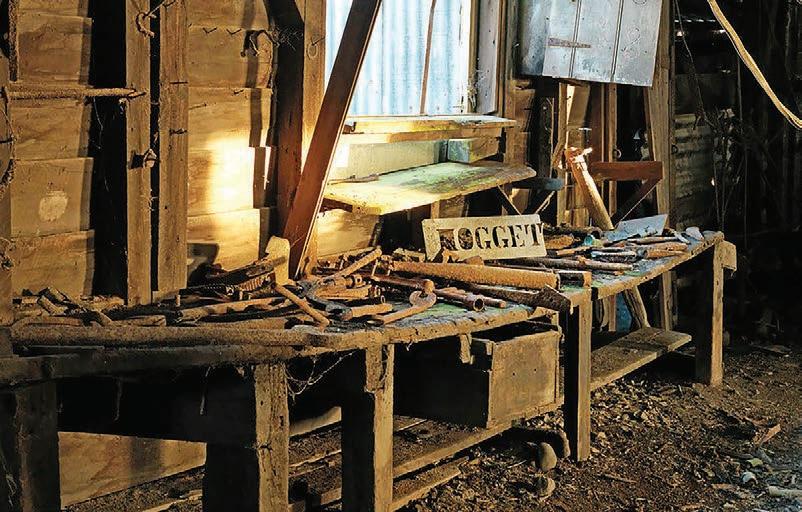
O’Sullivan said she feels a sense of urgency in getting the book completed, as so many iconic woolsheds are being lost due to
changes in land use and sheep farming.
The funding will be used to commission world-class photography of woolsheds from award-winning New Zealand photographer Jane Ussher, known for her work capturing New Zealand’s iconic homesteads.
Feds has set up a PledgeMe campaign to raise the funds, which have already almost reached the $5000 mark.
Anyone making a contribution will be thanked in print in the book. There will also be discounted copies on offer and the chance
to buy exclusive, limited-edition prints of the photography.
“It is important to remember where we’ve come from and this book is a great way to honour the history of the woolshed, the people who have worked in them and the product they make,” Federated Farmers National meat and wool spokesperson Toby Williams said. “We would gratefully appreciate your support for this book.”
MORE:
The link to the campaign is: https:// www.pledgeme.co.nz/projects/7349historic-woolsheds-book-fund



drill some patches but at this stage have come unstuck because of the rain.
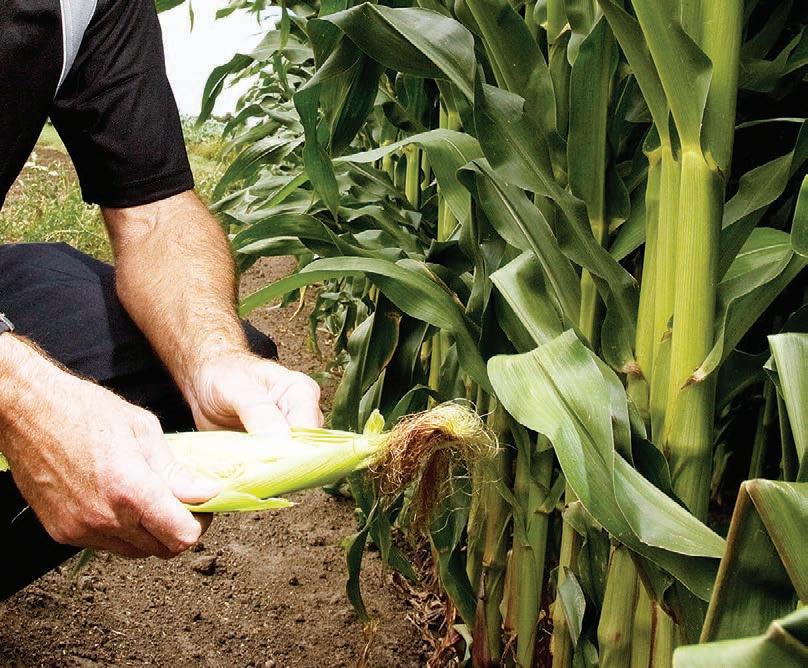
HEAVY spring showers through November are leaving paddocks waterlogged and too wet for sowing summer feed crops or to be cut for silage.












The persistent rain is increasingly concerning Waikato farmers anxious to get their summer feed crops planted and established with summer fast approaching.














































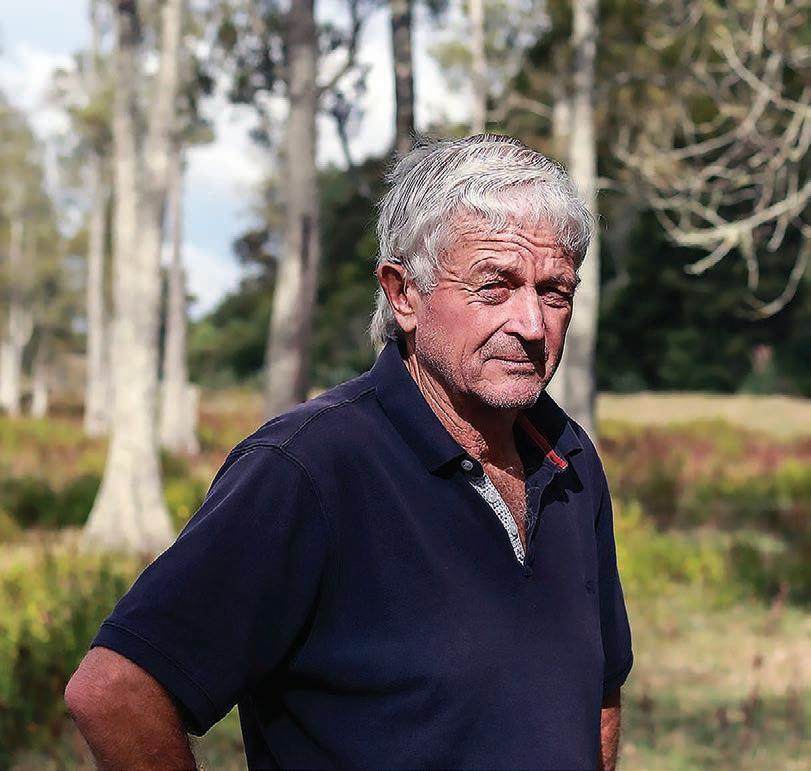
Waikato Federated Farmers arable chair Keith Holmes said in his area, east of Morrinsville, there could be issues with drowned seed and weed infestation.

“A few farmers have tried to re-
“It’s getting pretty close to December and a lot of people, particularly those with maize, have only just got their crops in or are still to get them in.”
Once a paddock going into maize has been cultivated and sown, it is difficult to dry it out and it requires sunlight and heat for it to grow.
But despite the issues, he is confident it will still be a good crop once the summer heat begins.
“There will be those who are worried that it won’t be a good crop because it’s not up at fence high by Christmas, but the reality is that all it needs is heat and we have the advantage of moisture
so once we get some heat, it will race.”
Donald Stobie, who farms between Hamilton and Morrinsville, has had 65mm of rain for the month to date – 163mm in October, 134mm in September and 1061mm for the year.
“Our maize is tall enough to be above the puddles in paddocks, so will not drown, but is very waterlogged and growing slowly, which is compounded by the lack of heat units,” Stobie said.
The crop also battled as strong winds over the weekend blew trees down, he said.

Stobie said his next challenge will be getting urea on the crop and weed spraying, though the 10-day forecast means it was unlikely to have happened before this week.
Some replanting has already happened on maize ground and more will be needed. Very little grass silage has been made to date around the area, he said.

“I know of maize blocks around us that are not planted yet and are just getting wetter each day,
so planting is going to be quite delayed now with no let-up in rain.”
Holmes said weed and insect infestation could be a major issue in maize crops this year with the warm, wet weather being ideal for velvetleaf, slugs and fall army worm.
on their feet and inspect their crops.”
Holmes said that on the flipside, the warm wet weather has helped boost pasture growth and while there will be some anxious farmers wanting to get their pastures cut for silage, they may need to take more of a seasonal approach this season rather than farming to a calendar.
Rural Contractors NZ (RCNZ) president Helen Slattery said the weather so far made it a frustrating season for mowing and silagemaking contractors.
“In Waikato and for us, we haven’t mowed a blade of grass in over a week because of the constant rain.
“It’s been horrendously torrential showers. We have got work booked ahead of us but we just have to be able to get onto the paddocks to do it without causing more damage.”
That length of delay was unheard of for this time of year where contractors are normally working long hours to get crops planted and grass silage cut and baled or stored.
Elsewhere around the country, Slattery said RCNZ board members reported low-lying maize paddocks are underwater in Otorohanga.

Pasture paddocks are starting to take off but harvesting them for silage is impossible because they are too wet.
The weather in Manawatū had gone from wet to dry to wet again and those harvesting grass for silage have only done one third to half of what they would normally do.
In Canterbury, maize, kale and fodderbeet have been planted and silage making has got underway, while in Otago spring barley is growing well and kale crops are also looking good. Silage and balage making have been slow but are picking up pace.
“The message I’d be getting out there is to check your crops.
“For those guys who traditionally just plant their maize and forget about it, they’re going to get really disappointed unless they’re nimble
In Southland, the region has had settled weather resulting in huge grass growth and contractors are struggling to keep ahead.
“It’s been really topsy turvy,” Slattery said.
For those guys who traditionally just plant their maize and forget about it, they’re going to get really disappointed unless they’re nimble on their feet and inspect their crops [for weeds and pests].Keith Holmes Federated Farmers WATCH FOR PESTS: Keith Holmes says weed and insect infestation could be a major issue in maize crops this year with the warm, wet weather being ideal for velvetleaf, slugs and fall army worm.
NEW research shows that improving feed conversion efficiency in dairy herds could see them thrive while still meeting methane reduction targets.
The research by Te Awamutubased Headlands Consulting found that by using a moderate amount of concentrate feeds on fewer but better cows, the total amount of feed required per farm reduces dramatically – and total milk production per farm is retained.
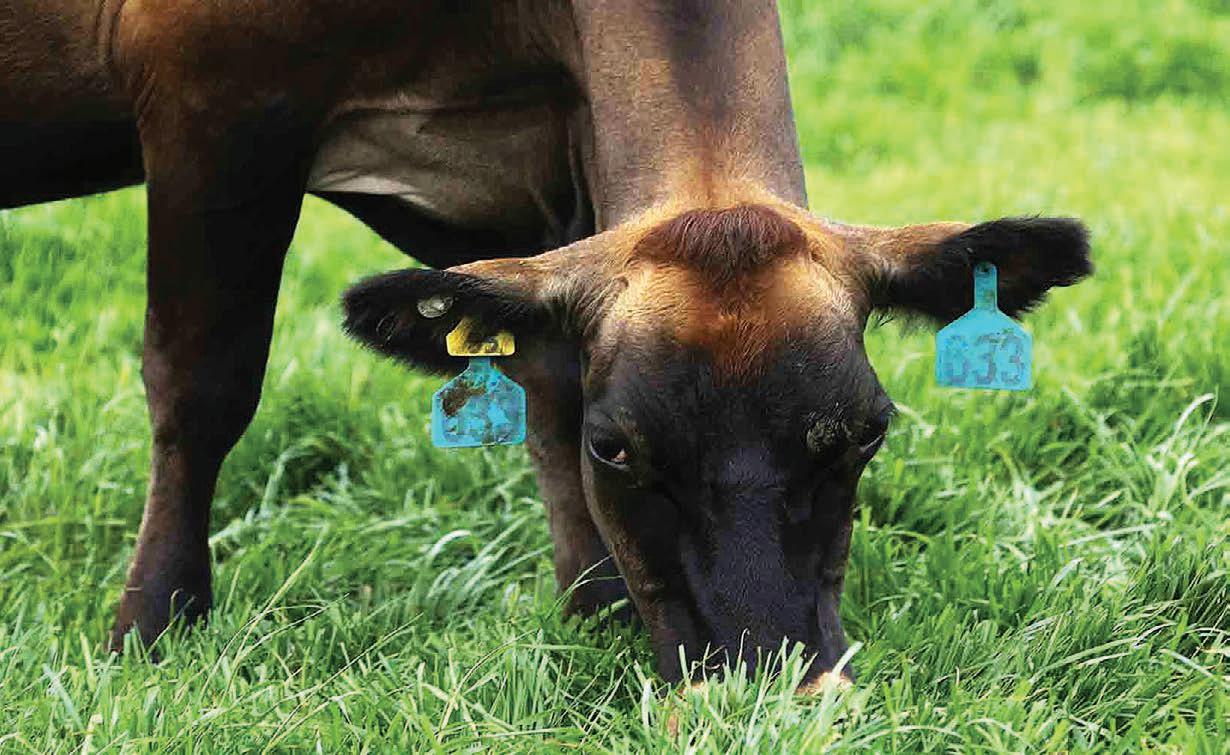
Using the system could reduce a farm’s greenhouse gas emissions by 15.6%.
Headlands managing director Warren Morritt said the research helps to provide some principles for farmers switching to loweremissions farming.
“It’s really a case of we can become more efficient at what we’re presently doing, and in doing so will hit the GHG targets and remain more profitable as an industry, whereas the alternative with what the government is proposing – the only lever is to reduce milk production,” Morritt said.
He was critical of both the Climate Change Commission’s and the government’s recommendations. The latter’s modelling in its response to He Eke Waka Noa’s proposals does not take into consideration feed conversion efficiency when calculating GHG emissions in cows.
The research used modelling based on an average Waikato farm’s DairyNZ statistics for the 2018/2019 season as a control. Five scenarios were then modelled against this control farm.
“There’s things we wanted to achieve here: Hold the milk production at a farm level, maintain or improve profitability, and hit greenhouse gas targets –and ideally stay within Fonterra’s Co-operative Difference [framework],” he said.
The study found there are better ways of achieving and
even exceeding the government’s climate change targets.
Of the five scenarios, the one with the greatest environmental benefit showed that dairy farmers can continue to achieve the same total farm milk production levels with a 36% reduction in cow numbers per hectare, coupled with 8.5% of dairy-farm land being retired for alternative use, delivering a 22% increase in operating profit.
Total GHG emissions were reduced by 15.6% – well in excess of the government’s 10% reduction target for 2030. Nitrogen leaching was also reduced by 15.5% under this model.
Included in the modelling was concentrated supplementary usage made up of grain or grain byproducts, amounting to 20% each of maize grain and dried distillers’ grain. The remaining 60% was soya bean hull.

These concentrates drove the feed conversion efficiency required for the model to work.
“You’re feeding each cow a lot more, but at a total farm level, a lot less feed is used to produce the same amount of milk.”
“It’s surprisingly robust,” he said.
“But the key is we’re able to use substantially less feed to produce the same amount of milk and we’re not disputing the fact that every kilogram of drymatter fed is going to produce methane.
“The key driver of this is, can we produce less feed and maintain milk production, that’s the critical bit, but the only way we can do that is to drop the stocking rate – but feed every individual cow more.”
That feed-to-milk efficiency is what drives GHG reductions.
because the only thing we’re talking about is an in-shed feeding system – no feedpads, none of that is required.”
That system was costed into the model at $80,000.
The 36% fall in stocking rate would mean a more regular pasture surplus. Keeping on top of that and maintaining pasture quality by knowing the right time to cut for silage is critical for the success of the model.
The key to achieving that is proper monitoring by the farmer, he said.
Using these concentrates enabled more feed to be consumed by the cow compared to forage feed. Summer feed crop planning and usage was also unchanged under the modelling.
The model also stacked up from an economic perspective, despite the huge increase in input costs over the past 12 months, Morritt said.
The initial modelling was at a $6.50/kg MS and $550/t blended feed costs. That feed cost was closer to $700/t at the current $9.25/kg MS midpoint milk price forecast.
The imported feed amounted to about 18.5% of total feed, with the rest being home-grown pasture or grass silage, pushing this farming scenario closer to a medium intensive system 3 style farm.
He acknowledged that bringing such a system onto a farm is not without its challenges – variable pasture quality, animal genetics, the pasture management skill level of the farm and its staff being at the top.
“And you wouldn’t do it overnight. The good thing about what we’re saying here is that it requires minimal investment
“When it comes to farming, it’s all about timing and the good ones are good at their timing.”
He is reasonably confident the research’s principles could be extrapolated to other regions in New Zealand.
The research has been peerreviewed by DairyNZ former principal scientist Dave Clark and former principal animal scientist at DairyNZ Dr Eric Kolver.
The findings have also been presented to Agriculture Minister Damien O’Connor, who urged those involved to make them public as soon as possible.
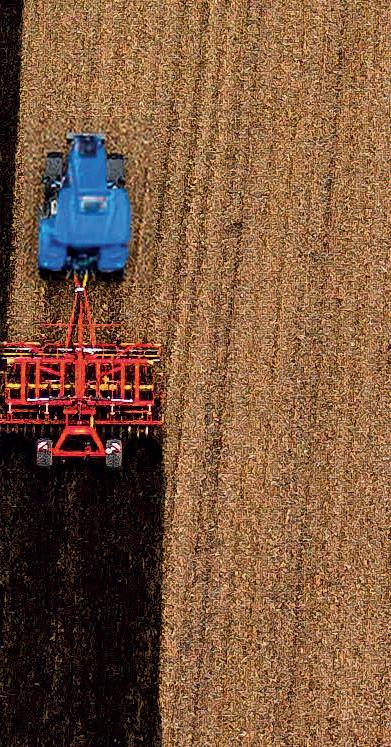
To celebrate 25 years of the partnership between Vaderstad & Norwood, we’re taking you back to where it all began with a trip for two to Sweden where Rune Stark hand welded the very first piece of Vaderstad equipment – a rigid tine harrow. Simply purchase any piece of Vaderstad equipment through Norwood by 31 December, 2022 and be in to WIN*.
Talk to your local Norwood dealer today about Vaderstad’s world leading tillage & seeding solutions. Phone 0800 66 79 663 or visit Norwood.co.nz
You’re feeding each cow a lot more, but at a total farm level a lot less feed is used to produce the same amount of milk.
Warren Morritt Headlands

WITH 32 graduate vets set to begin their careers in rural New Zealand, the profession continues to experience a dire shortage.
Under the government’s Voluntary Bonding Scheme (VBS) for veterinarians, the graduate vets each receive funding of $55,000 over five years to kickstart their careers.
The scheme is aimed at helping to ease the shortage of veterinarians working with production animals in the more remote regions of NZ.
NZ Veterinary Association (NZVA) chief executive Kevin Bryant said the scheme, while helpful, is not enough.
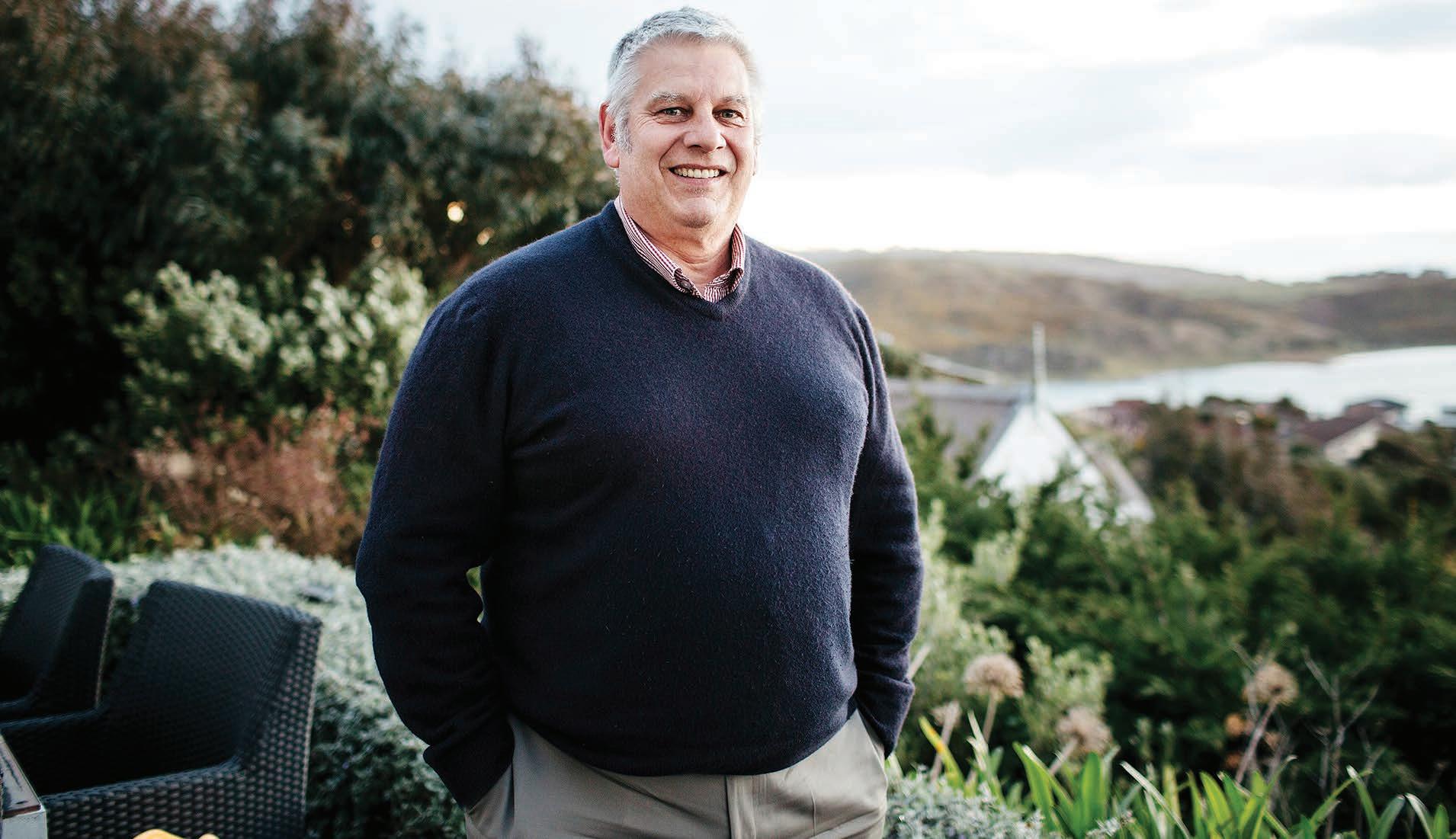
“Right now we have 50 large animal vet vacancies and a further 70 companion vet vacancies on our website and that’s right across the country.
“Schemes like this are really valuable and we are a great supporter of the scheme that opens opportunities for people to bed themselves into supporting our primary industries.
“They must be coming in under the umbrella of an accredited employer, which [speeds up] the process and we are hearing from employers on the green list that this is working well so long as you follow instructions and fill out the forms correctly.”
The NZVA is running advertising campaigns through its social media platforms to encourage vets from overseas to come to NZ.
year’s intake.
Businesses are shuffling staff to streamline the nature of work they need to cover. There are opportunities for technology to make things easier and a drive to attract people who have been vets to come back to the profession.
these schemes,” Bryant said.
Acting Agriculture and Rural Communities Minister Meka Whaitiri said the bonding scheme incentivises vets to take up positions in more remote regions.
Canterbury and ManawatūWhanganui will each get five; Southland and Taranaki, four; Otago, three; and Auckland, Bay of Plenty and Hawke’s Bay one each.
“But with a shortage of vets, vet nurses and vet techs, we need a multitude of these type of initiatives to fill the gap,” Bryant said.
New immigration rules introduced in April this year have vets on the green list of essential jobs which has opened access to vets from overseas.
“But this is not just a NZ problem, the vet shortage is a global issue, every country is navigating the same challenges.
“There is no silver bullet and that’s why we need a series of multiple small initiatives to contribute to the situation.”
Massey University secured increased funding and took an additional 30 students in this
“We need to look at all these things as an industry because the brutal reality is doing what we have done for the past 50 years is not going to get us there.
“It’s not like we are bereft of ideas, it’s challenging and it will be for some time. We have to collaborate as a profession and problem solve together.”
Bryant said vets “are coming in, just not fast enough”.
“We will be advocating to the Ministry for Primary Industries [MPI] to take greater numbers into
“We need these vets to provide the best care for production animals, such as cows, sheep and pigs and working dogs that are so essential in our food and fibre sector.
“Since its inception in 2009, the VBS has supported 416 graduate vets from the top of the North Island to the bottom of the South, providing certainty for students and vital skills for our rural communities,” Whaitiri said.
The programme is delivered by MPI.
Eight of this year’s recipients will be placed in Waikato, while
“Vets are vital members of our rural communities, and many graduates who have taken up the scheme enjoy the lifestyle these locations offer.
“From Waimauku north of Auckland to Winton in the deep south, this year’s graduates will play a crucial role in helping our farmers with production and animal welfare.
“The VBS is just one of the programmes the government is investing in to ensure our farmers have access to high quality, professional veterinary services and help rural communities to continue to thrive,” Whaitiri said.
We need a series of multiple small initiatives to contribute to the situation.Kevin Bryant NZVA SHORTAGE: NZ Veterinary Association chief executive Kevin Bryant says vets are coming in but not fast enough.





 Nigel Stirling POLITICS Trade

THERE are fresh concerns that the government reined in efforts by its negotiators to get the best deal for dairy and meat exporters in its trade agreement with the European Union.
Several high-level sources have confirmed Labour ministers were concerned that pushing the EU too hard on better access to its markets for New Zealand’s dairy and meat exports might have jeopardised the government’s other objectives in the negotiations.
These included enhanced protections for Māori data following last year’s criticism from the Waitangi Tribunal of successive governments for failing to build sufficient protections for Māori data into their trade agreements.
Ministers were also adamant NZ should not bow to European demands for the extension of patents on imports of European pharmaceuticals and agricultural chemicals.
“We managed to hold the line but if we had pushed any harder on meat and dairy we would have had to give ground on [patent extensions] and that would have cost the NZ consumer hundreds of millions of dollars,” one insider and former negotiator said.
The source said officials leading the negotiations with the EU
were grilled by Labour ministers on what the agreement would do to protect Māori interests and protections for Māori data in particular.
“It was certainly a big issue in the minds of Cabinet ministers ... they got sufficient protections in the end but they were concerned if they had pushed further on meat and dairy they would not have been able to get those protections,” the source said.
Dairy and meat sector leaders were bitterly disappointed when four years of negotiations concluded in June with miniscule quotas created for NZ beef and dairy exports relative to the size of the EU’s market of 450 million consumers.
Previous governments have made reducing tariffs and other impediments to trade for exporters the overriding goal for NZ in its trade negotiations.
But under the current Labourled government those market access objectives are increasingly coming into conflict with new objectives trade negotiators would previously have attached much less importance to if they had thought of them at all.
Gender equality, workers’ rights, environmental protections and protection of Māori rights all count as considerations for negotiators under the Labour Government’s Trade for All agenda.
“Officials were called in for every Cabinet paper on the FTA [free trade agreement] and given a hard time by ministers,” a source
briefed on the Cabinet’s dealings with officials said.
“It was more on defensive interests. That officials were giving away too much ... they were concerned [negotiators] were not doing enough to get a better deal for Māori and it was not sufficiently reflecting the Trade for All agenda.”
The National Party’s trade spokesperson, Todd McClay, worked on getting negotiations with the EU to the starting line as trade minister in the previous National government.


He said the insistence on special protections for Māori data late in the negotiations would have played into the hands of EU agricultural protectionists.
They were concerned [negotiators] were not doing enough to get a better deal for Māori and it was not sufficiently reflecting the Trade for All agenda.
Source briefed on Cabinet dealings
“I would imagine that in meeting after meeting our negotiators were having to raise data protection and the Europeans would have been sitting there thinking this is much better than talking about agricultural access or our protectionism.”
McClay said requiring EU
THE government changed its instructions to trade negotiators late last year following the second report of the Waitangi Tribunal in the long-running WAI 2522 case.

The case was brought by a group of Māori activists and academics in 2015 alleging successive governments had failed to consult sufficiently with Māoridom when negotiating trade deals.
It also claimed the government failed to protect Māori data in the negotiation of the 11-country Comprehensive and Progressive TransPacific Partnership trade agreement predecessor agreement the TPP.
In its report back on the second claim last November the tribunal assessed some Māori data as matauranga, or relating to Māori knowledge, and a taonga in need of special protection.
The tribunal agreed the TPP didn’t sufficiently protect data deemed to be matauranga and the government had breached the principles of the Treaty of Waitangi negotiating it without them.
According to one expert witness in the WAI 2522 case, Dr Karaitiana Taiuru, Māori data
qualifying for special protection is exceedingly wide, including any information gathered about Māori in any medium.

No non-Māori should own such data, and it should not be stored outside New Zealand wherever possible.
Only Māori should be involved in its collection, management, governance, security and application.
The digital trade chapter of the EU agreement also provides for a review within three years, with special mention given to the WAI 2522 case and obligations on the government to uphold the principals of the Treaty of Waitangi.
Trade experts are divided on whether market access outcomes would have been much different in the EU agreement had NZ not introduced its demands for protection of Māori data late in the talks.
companies to handle Māori data differently to that derived from the rest of the population would add to their costs of doing business in New Zealand.
Inevitably, he said, NZ would have been forced into a trade-off in the negotiations with the EU to achieve more protections for Māori data.

These could have come in the form of accepting less in other areas of the agreement such as agricultural market access or giving the Europeans more in areas of interest to them such as the exclusive use of European cheese names.
“Farmers will be rightly asking why is it that the government has chosen other priorities over the export of something that has always delivered for the NZ economy?”



Trade Minister Damien O’Connor dismissed the suggestion the
government had not pushed for the best possible market access for NZ’s primary producers as “incorrect” and “politically motivated”.
He said trade agreements globally had evolved to cover many of the items included in the government’s Trade for All agenda.
“Be it data protection or ensuring there are opportunities for women and small and medium enterprises from our trade agreements ... they are all part of our trade negotiations now alongside the traditional areas of meat and dairy and horticultural ... we made progress on all of those.
“We were not trading off one for the other.
“And actually as countries struggle to maintain the social licence for trade many of them are asking us how we have maintained ours and are making inquiries about our Trade for All agenda.”
While the government is not legally bound to follow the tribunal’s findings, it did instruct negotiators to take them into account in the closing stages of their negotiations with the United Kingdom and the EU.
In the case of the UK free trade agreement, the government kicked the can down the road. Agreement in principle had been reached the month before and both sides agreed to review the e-commerce chapter after two years.
One former trade negotiator said the protectionist mindset was hardwired into EU negotiators, meaning NZ was always going to get a poor outcome for its mainstays of meat and dairy no matter what other demands it made.

Another said the WAI 2522 reference in the agreement’s text went beyond carve-outs relied upon in previous FTAs.
So-called treaty exceptions have allowed NZ governments to take actions that may be prejudicial to foreign investors or trading partners to meet the Crown’s treaty obligations.
These clauses were found to
be insufficient by the Waitangi Tribunal in WAI 2522.
“This is different to what has been in other agreements making something that has been rather more general more specific.”
The former negotiator said by ramping up the language in its trade agreements in such a way NZ was going against the trend internationally to remove
barriers to the free flow of data across borders and potentially undermining other demands it might make such as better access for agricultural exports.
“Every time you put something new on the agenda that you want you give an opportunity to the other side to take off the table something that they don’t want to give.”
Only Māori should be involved in its collection, management, governance, security and application.
PĀMU is rolling out a dairy-beef integration programme to rear all non-replacement calves born to the government-owned farming company’s dairy cows.
Although it is early days in the programme, Pāmu’s head of ventures and farming, Jim Inglis, says 2030 is the target time for full implementation across 45 dairy farms and 32,000 cows.
“This is not a one-size-fitsall dairy farms policy but a combination of inputs, farm policies and breeding programmes to improve our business efficiency over time,” he said.
Retention of non-replacement calves born to dairy cows is enabled by the Dairy-Beef Progeny Test (DBPT) provided by Pāmu subsidiary Focus Genetics with support from B+LNZ Genetics, LIC and commercial bull breeders.
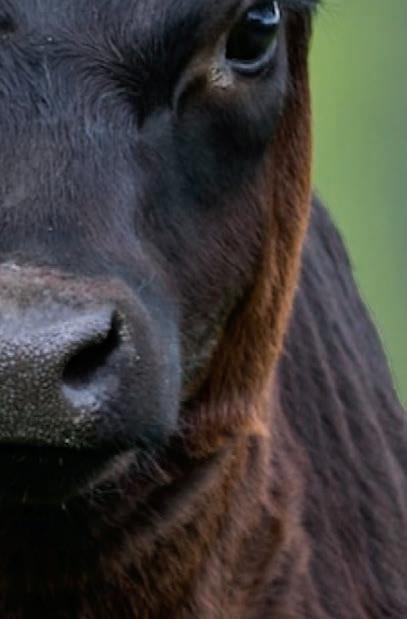
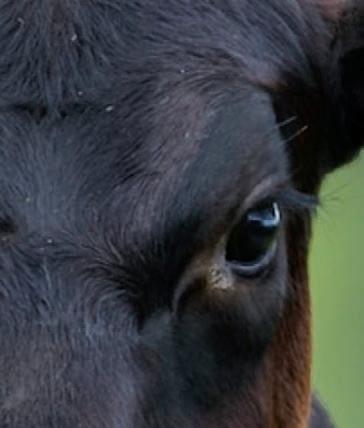
Now in its fifth year, the DBPT is based on Pāmu’s Wairakei Renown farm on Central Plateau where calves from different bulls in the progeny test are finished under commercial conditions with assessment of rearing, growth and carcase traits, as well as calving ease and gestation length.
Under farm manager Damien Watson, Renown uses sexed dairy semen over the best cows for the herd replacements and DBPT semen for the rest of the AI period.
In Pāmu’s 2022 Integrated Report, Watson said the selection of herd replacements on Renown now has first priority, and the dairy-beef programme has no downside for milk production.







































“There are some constraints on how we operate, but the whole integration model is going to



pay dividends over time as more animals leave the farm with higher value for beef production and as bobby calf numbers fall, ultimately perhaps to zero.”
Using sexed semen also allows replacements to be generated from his very best cows, and this is accelerating the rate of genetic gain achievable in his milkproduction herd.



Focus Genetics scientist Rebecca Hickson said environmental benefits come from the replacement of beef breeding cows and their progeny by rearing and finishing dairy-beef crosses born to dairy cows from DBPT bulls by AI.

“The improvement of dairy-beef genetics will ensure beef finishers have a good supply of calves for finishing systems irrespective of breeding cow numbers,” she said.
“It isn’t a case of all or nothing. Any increase in the proportion of finishing cattle that have a dairy origin will have environmental benefit.”

When a dairy cow produces both milk and a calf for beef finishing in the one season, the emissions intensity of both products goes down.

Inglis said Pāmu’s adjacent Kapiro-Takou Bay farms in Northland are already integrated, where Takou’s 200 replacement dairy heifers, 90 once-bred dairycross heifers and 200 Angus-dairy cross finishing cattle are run on Kapiro Station.
Pāmu dairy and beef finishing farms in Wairarapa, Central North Island, Canterbury, West Coast and Otago are also integrated, to some degree.

The dairy farms use dairy AI over 40-60% of their cows and first-bred heifers to obtain 20-25% of herd replacements needed each year.

The use of sexed semen can refine the targeted herd replacements more, he said.


The remainder of the dairy herd is mated to Pāmu beef bulls or by beef AI from DBPT leading bulls, with many of the progeny reared and finished.
Tail-up bulls have higher breeding values in calving ease, birth weight, gestation length and weight gains.


The growth and finishing targets within the system are for one or two winters for the males and only one winter for the heifers, Inglis said.


Once-bred, dairy-beef heifers are also sent to some Pāmu beef breeding farms, which fits with more use of terminal sires.
Local trade beef supply is not a formalised processing agreement, but it does happen with the lighter, younger heifers.

“We produce export, prime, local trade and manufacturing beef and we are working with a couple of processors on lower carcase weight beef,” he said.

“We are collaborating with others across research, farming and meat processing without going down one exclusive route.

“Collaboration in this instance covers genetics, breeding, rearing, growing, finishing and processing.
“For example, we just built more calf-rearing facilities in the central North Island but we also rely on contract rearers in a big way – we are not an island.”
Dairy cow numbers across Pāmu are falling with de-intensification and some transition to organics and lower stocking rates.
“Our beef-finishing systems and our calf-rearing capacity are increasing.
“As we adapt our breeding programmes to make all calves
Greater integration of dairy calf breeding and beef production has potentially huge benefits for New Zealand farmers and their profitability — and the environment.
 Integrated Report 2022
from our dairy cows good for rearing, we look to be on track for 2030,” Inglis said.
Perhaps some bits of the dairy-beef programme could be accelerated but much of the timing is dictated by the cattle breeding cycle.
Other farm management aspects include winter feed requirements for herd replacements and dairybeef finishers, cycling and heat detection and efficient calf rearing.
TURBO Advance® is the ideal treatment for routine worm control in young stock. It’s a world first combination of eprinomectin and levamisole with an improved safety profile*. Unlike oral drenches containing abamectin, TURBO Advance® can be used in calves less than 120kg live weight and formulated as the next generation in parasite coverage. It’s also the recommended follow up drench when weaning with TURBO® Intial.

Available exclusively through veterinary practices nationwide.
Can be used in cattle under 120kg
Next generation in parasite coverage



























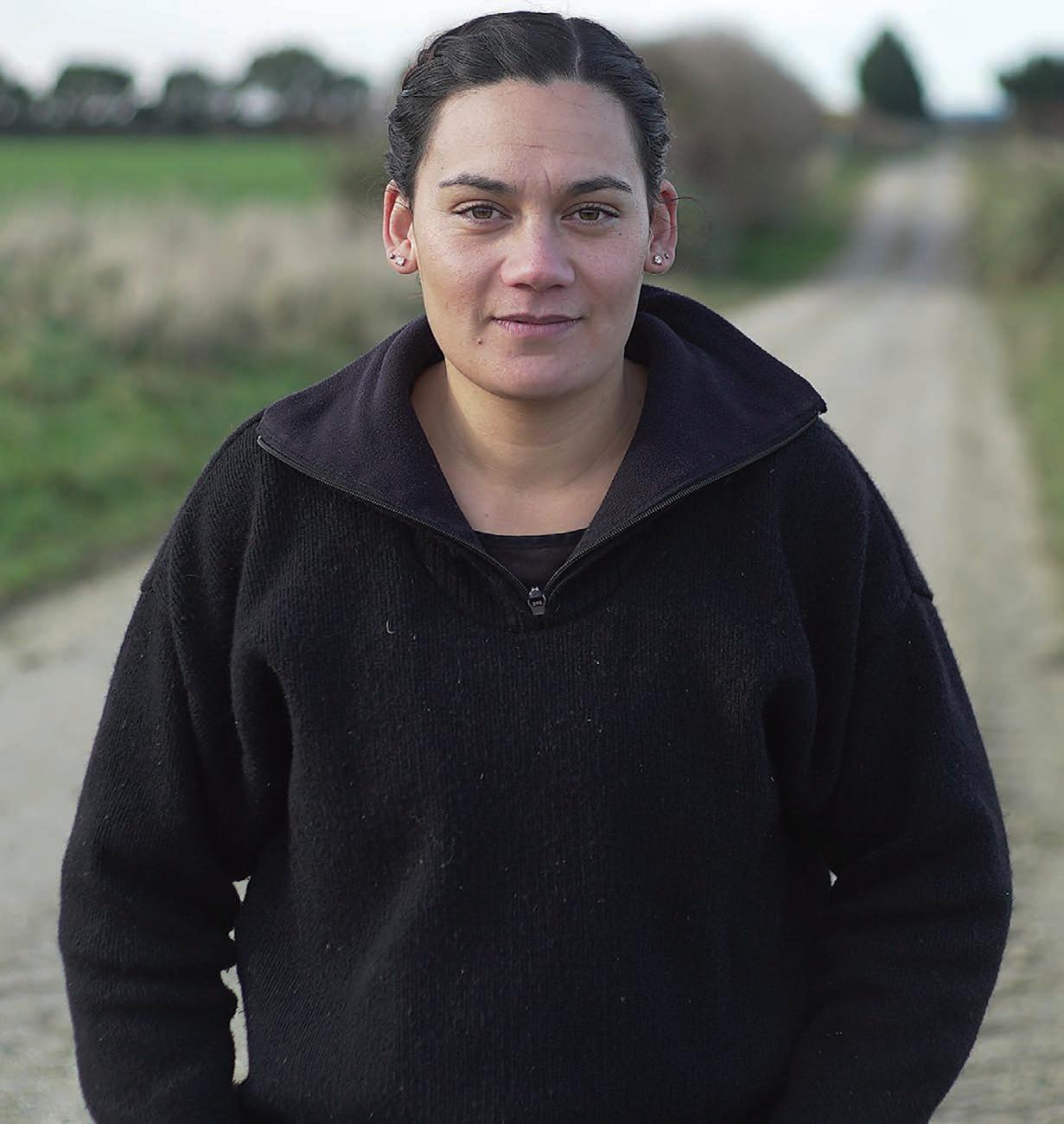
What’s your background in the industry?
I worked in the dairy industry for a number of years, from calf-rearer through to farm manager and as a young stock manager, then studied at Lincoln and now I work as a rural professional. Last June I was appointed to the Food and Fibre Youth Network, which was set up to enable young people across the primary sector to raise industry issues and provide input into critical decisions to shape the future of the food and fibre sector.
Tell us about your new social media initiative.
I’m really passionate about seeing more rangatahi (young people) in the primary industries and making sure the sector is fit for rangatahi to thrive in. So it’s a two-way thing. To advance those goals, I’ve started an Instagram and Facebook page called Te Kaharangi. That translates roughly as “the strength of the skies”. The idea being that the light that fills us up is something we can draw down from the sky.
I realised a lot of what I was posting online professionally were the highlights of working in agriculture, never the challenges. I thought to myself, our rangatahi are going to be reading this and thinking, “Wow, she’s got it all together!”, when that is not always the case [laughs].
We all know working in agriculture can be a real rollercoaster ride sometimes and I wanted to do something that was more authentic and relatable and showed the challenges as well as the opportunities. I also want to share my experiences as a young
The heart of what we do on farm is manaakitanga –feeding and looking after our people – and kaitiakitanga, looking after the environment and improving it.
Māori woman working in the industry and talk about the things that matter to me.
What sort of challenges are you talking about?
Well, a big one for me has been relocating to new areas. That can make you feel very unsettled, finding somewhere to live, trying to make new connections and friends. It can be daunting.
That’s something a lot of dairy farm workers face every year, isn’t it?
Exactly. We move to a new area, and it can take six months just to get everything unpacked and over a year before we feel really settled. If you’re single and don’t have children it can be difficult to meet people, because the usual avenues, such as schools, aren’t there for you.
So, is Te Kaharangi a way of connecting people too?
Yes, I’ve already had people contacting me who recognised me through Young Farmers and reached out to me and invited me along to events once they realised I was new to the area. That’s the beauty of social media.
How important is that social connection to managing the pressures of farming?
It’s vital because it’s so easy to just battle on alone in farming, and I’ve experienced that too. It is great when we can actually create a whānau environment on farm, so people feel genuinely supported. That makes a big difference to how someone feels about the industry and whether they stay.
I want our rangatahi to see the possibilities in farming, but I also want to help them and the industry to deal with the realities.
There are great opportunities in farming, but if you want to attract people, they need to feel valued. I want to start discussion around that too.
What needs to change to attract younger people?
One thing I would like to see is for us to work together across sectors. If we’re going into schools we will have more impact if we
talk about the whole of the food and fibre sector, avoiding making people choose between dairy or horticulture or other industries.
Well, a lot of the Māori farming operations I see are so diversified and so connected to our tupuna and how those people lived off the land and the sea, that approaching things from a single sector point of view doesn’t work. That’s not how Māori think about farming.
How do they think about farming?
The heart of what we do on farm is manaakitanga – feeding and looking after our people – and kaitiakitanga, looking after the environment and improving it. So that could include any sector. For me personally, it’s about my wairua and reconnecting with my whānau and whenua.
What other aspects of Te Ao Māori are helpful?
Creating a sense of connection is a huge thing for Māori. When we do our pepeha as Māori we don’t just do it to share our name, we do it to properly connect with others in the room. In my experience in the industry, that doesn’t need to happen in Te Reo Māori for it to be a really valuable thing. It’s about making the effort to connect with people in a workplace and make them feel seen and valued.
How will the industry benefit from this sort of thinking? Well, the biggest asset on a farm is ourselves – the people. There
might be millions of dollars tied up there in assets and animals, but they hold no value without the right people in the right shape to make it all happen. That’s why placing a value on our own physical and mental wellbeing is so important.
Knowing your “why” is also vital – the values that drive you. I’ve always prioritised those when I’ve chosen jobs in the industry. If the person I’m working for shares those values, it’s a better outcome for everyone. When we share an understanding of each other’s needs and motivations it makes it a lot easier to deal with the dayto-day challenges like weather or new regulations or labour shortages.
Are any of these ideas gaining traction in the industry?
Yes, I think there’s been a big shift thanks to things like Farmstrong raising these issues about the importance of people’s wellbeing and their ability to cope with the pressures of farming. Farmers are much more open nowadays to talking about how they look after themselves and their teams.
You’ve had a number of roles in the industry on farm and at sector level. What makes a good employer?
I think the best employers support you as a person. For example, I had one who acknowledged the fact I was a single woman on farm and if I got home after a long day, I still had to go home and cook myself dinner, so they’d cook extra food and drop
it off to me which was a real help. Something as simple as that took the pressure off.
I was helping another farmer manage stock and even though I was studying and wasn’t on farm all the time, when he was making decisions, he would always ask for my opinions. That meant so much to me.
He made you feel part of the team. Valuing people for the experiences they bring is a big part of attracting and keeping people.
involved in farming?
I think it’s often about relatability. It’s a lot easier for someone like me to connect with young Māori and start the conversation. The other thing is that we already have a lot of our own whenua we’re farming and yet our own people aren’t working there. So that’s a good place to start too.
Overall, I think we need to create workplaces where our people feel comfortable. They’re around their own people and they feel valued and supported. Where it’s a place they can shine.
Farmstrong is a nationwide, rural wellbeing programme that helps farmers and growers cope with the ups and downs of farming. For free tools and resources check out www. farmstrong.co.nz
Cheyenne’s facebook page is: Te Kaharangi | Facebook and her Instagram is: https://www.instagram. com/te_kaharangi/
BREAST Cancer Foundation NZ is calling for help to expand its early detection education programme for rural women.
The charity is fundraising for a new state-of-the-art pink campervan which will allow its team of specialist breast nurses to reach more women in New Zealand’s most isolated rural communities.
With one third of breast cancers diagnosed outside of NZ’s main centres, Breast Cancer Foundation NZ (BCFNZ) is endeavouring to reach further in these regions with its education programme to encourage more women to attend regular breast screening.
Lockdowns created a screening backlog of 50,000 overdue mammograms and while BreastScreen Aotearoa, the government organisation that provides screening mammograms, has been making progress in clearing the backlog, several regions are still lagging behind in breast-screening participation.
The pink ribbon symbol is a trademark of BCFNZ, a not-forprofit, non-government-funded organisation that depends on
donations and fundraising for its work in breast cancer education and awareness, medical research and training grants, advocacy, and supporting Kiwis with breast cancer.
BCFNZ’s programmes are evidence-based and overseen by its medical advisory committee.
“We’ve launched a fundraising campaign for a new pink campervan, an educational vehicle that will reach more women in these regions, particularly in the most isolated communities, to be able to promote the importance of early diagnosis and screening,” BCFNZ chief executive Ah-Leen Rayner said.
Latest figures show the regions that have the lowest participation rates in the national breastscreening programme as Waikato at 56.3% are Gisborne at 58.7%; Northland 63% and Bay of Plenty 63.3%.
These rates fall well short of BreastScreen Aotearoa’s 70% target.
“Getting more women into screening and educating them about early detection is key to our vision of reaching zero deaths from breast cancer, especially in the wake of covid-19 which sent screening levels back by 10 years,” Rayner said.
“If we don’t act now, we’ll lose one of the best tools we have to
deliver our life-saving messages, as our old pink caravan faces too many limitations.”
The charity’s old pink caravan, affectionately known as Pinkie, has travelled around the country since 2014 with breast nurses on board, educating women about the signs and symptoms of breast cancer, family risk, and the importance of mammograms and self-checking.
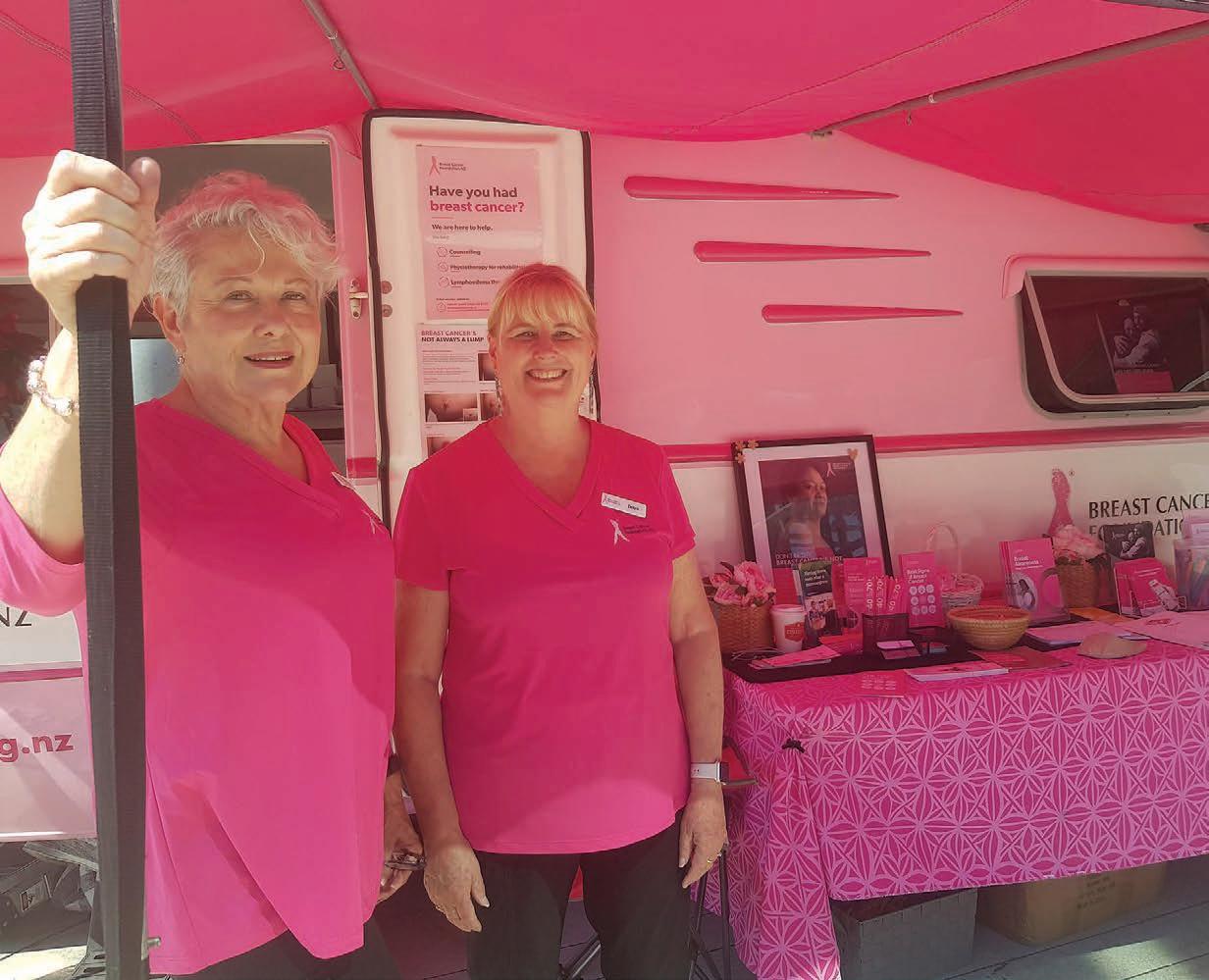
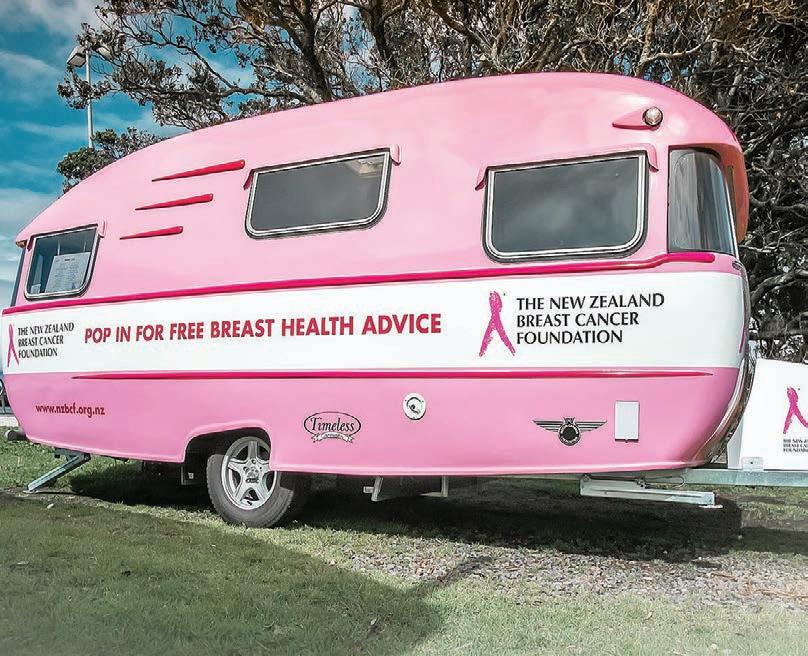
After thousands of kilometres travelled, the retro caravan has become increasingly unfit for purpose.
It relies on volunteers to tow it around, which restricts the timing and location of visits.


The charity is building a new custom-made campervan that nurses will be able to drive themselves, giving them better access to hard-to-reach communities.
“We’re asking New Zealanders to help us to raise the funds to build
the new pink campervan, so we can take these messages to every corner of the country, no matter how remote or isolated, where women need us the most,” Rayner said.
and more survivable.
The programme has achieved a 34% reduction in overall breast cancer mortality in NZ women, but after breast screening was paused during covid lockdowns, participation in the programme has fallen dramatically and Rayner said much work is needed to restore it to pre-covid levels.
During 2020 and 2021 BCFNZ’s Pinkie visited more than 160 towns and sites across NZ.
Ah-Leen Rayner BCFNZ“And the impact of your donations will be doubled, as a generous donor has already committed to matching every dollar raised up to $300,000.”
BreastScreen Aotearoa provides free mammograms to women aged 45-69 every two years with the aim of detecting breast cancer early, at a stage where it is easier to treat
BCFNZ nurses addressed the questions and concerns of more than 6000 people, enrolled 10 women each week on average with their local BreastScreen Aotearoa provider and engaged with women who otherwise wouldn’t be able to speak to a healthcare professional.
MORE: Donations towards the new pink campervan can be made at www.breastcancerfoundation.org.nz
If we don’t act now, we’ll lose one of the best tools we have to deliver our life-saving messages.PINKIE AND THE VAN: Breast Cancer Foundation nurses Trish Sole and Debra Leutenegger with Pinkie, which the foundation plans to replace with a campervan. THINK PINK: Pinkie has done sterling service all over New Zealand, o ering early-detection and treatment advice on breast cancer.
A2 MILK is contemplating a processing plant in China to shorten the route to its largest infant formula market and extend shelf life.
Chair David Hearn, who will stand down at the next annual meeting after nine years in the role, said at the 2022 AGM that more company-owned processing is the next big move for a2 Milk.
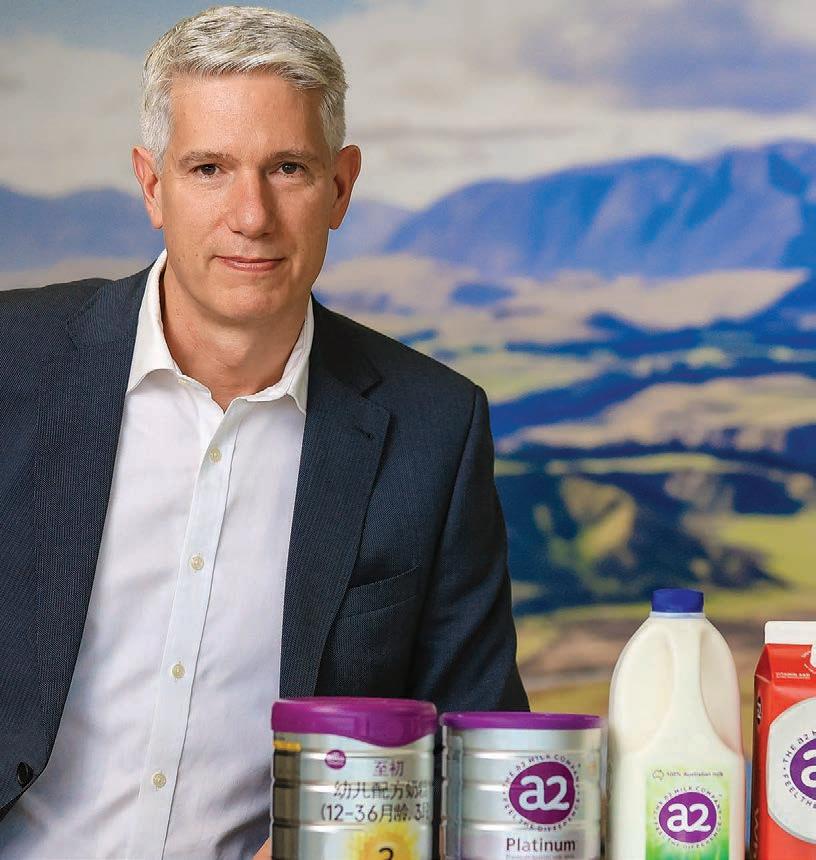
It already has the Mataura Valley Milk plant in Southland, 75% owned by a2 and 25% by China Animal Husbandry Group (CAHG).
However, the infant formula sold by a2 is exclusively produced by Synlait in Canterbury, in which a2 has a 20% ownership stake.

Synlait also holds the Chinese regulatory licence SAMR for the a2 products, attached to the premises, not the brands.
Hearn pointed out that competing infant formula makers in China have a supply chain perhaps only two weeks long, whereas the Synlait-made a2
products take four months to reach the shelves.
Therefore, a2 Milk is looking at its whole supply chain and working out smarter ways of doing things.
The company had over $800 million in the bank at the FY22 balance date and directors decided to use $150m to buy back shares on the market.
“We are expecting continued revenue and earnings growth and, subject to current trading conditions and business momentum remaining favourable, we are on track to deliver on our medium-term financial ambition.”
That is $2 billion of revenue in FY26, including low double-digit revenue growth in FY23.
Revenue was $1.45b in FY22 and a2 had an annual revenue of $1.7b before the years of covid disruption.
Within the past year a2 Milk shares (ATM) have traded in the range of $4.50 to $6.50 and the price is currently at the top end of that range.
Share broker Jarden commented after the a2 AGM that ATM shares are on a neutral rating and have a target price of $5.70.
The rest of the financial reserve will be needed for capitalintensive building in the future, Hearn said.
Managing director and chief executive David Bortolussi told the AGM the outlook for FY23 is positive.
“Our neutral investment view reflects the solid brand equity of ATM and improved execution of growth plans, offset by recovery in earnings being already well priced into recent stock movements and the China end-market still proving difficult.”
The company has spent $20m on the share buyback, at an average share price of about $6.30.
Hearn said nine years is enough for a company chair and while it would not have been appropriate to stand down in the turmoil of the past two years, a2 Milk is regaining strength.
“I am pleased that we reported a much-improved performance for the company in FY22 and, critically, with almost all the underlying business fundamentals
showing strong recovery throughout the year,” he told the AGM in Auckland.


The board has elected Pip Greenwood as the Hearn replacement as chair. Greenwood is a former partner and chair of Russell McVeagh and current director of Westpac New Zealand, Spark, Fisher & Paykel Healthcare and Vulcan Steel.
really seeourselves ascustodianstothefarm… ESG is a long-term journey and it’scriticaltoestablish a long-term partnership with atrusted business adviser.”
Jasper Holdsworth, Paringahau Station, Gisborne.
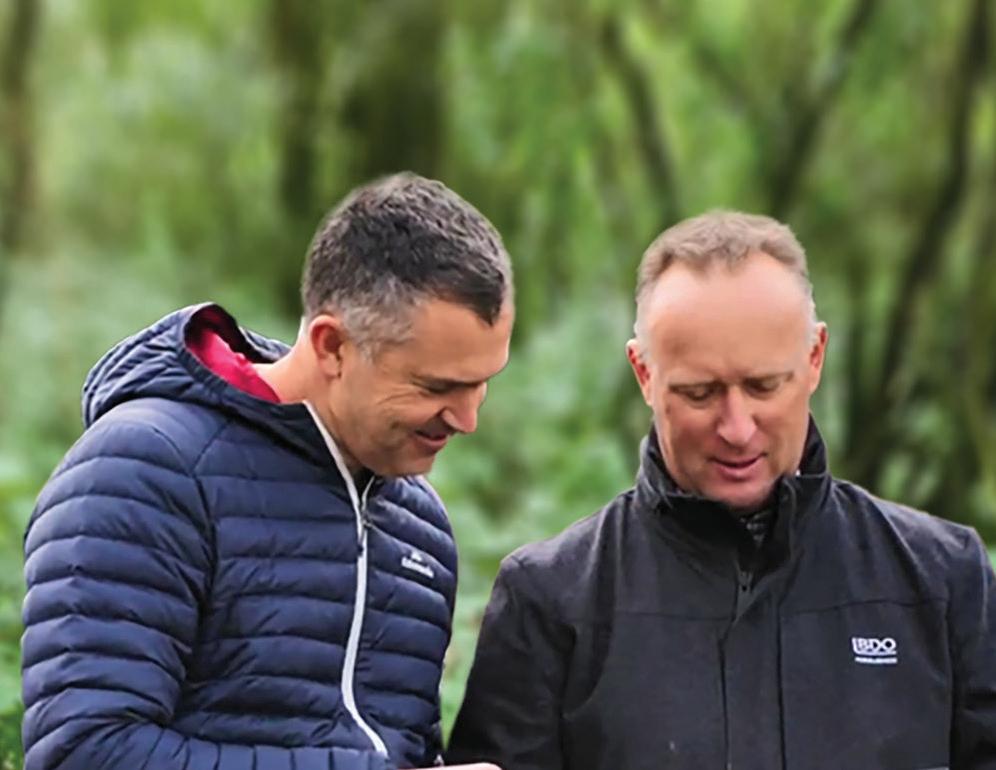
From planting out water ways and registering forest into the ETS, to calculating their on-farm emissions and developing a succession plan, Jasper and the Holdsworth family are on a long-term journey with their environmental, social and governance responsibilities.
What’s the next step on your ESG journey? WATCH THE PARINGAHAU STATION STORY
“We
WHAT DOES YOUR FARM’S ESG JOURNEY LOOK LIKE?
GROWING LONG-TERM RELATIONSHIPS WITH THE LAND AND ITS PEOPLELOOKING UP: Managing director and chief executive David Bortolussi told the AGM the outlook for FY23 is positive.
Subject to current trading conditions and business momentum remaining favourable, we are on track to deliver on our medium-term financial ambition.
David Bortolussi A2 Milk Company
SINCE being introduced to New Zealand’s shores in the late 1800s, rabbits have been a constant – and costly – headache to the food and fibre industry. It’s estimated the rabbit population costs NZ about $50 million in lost production and damage annually, with a further $25m in pest control.
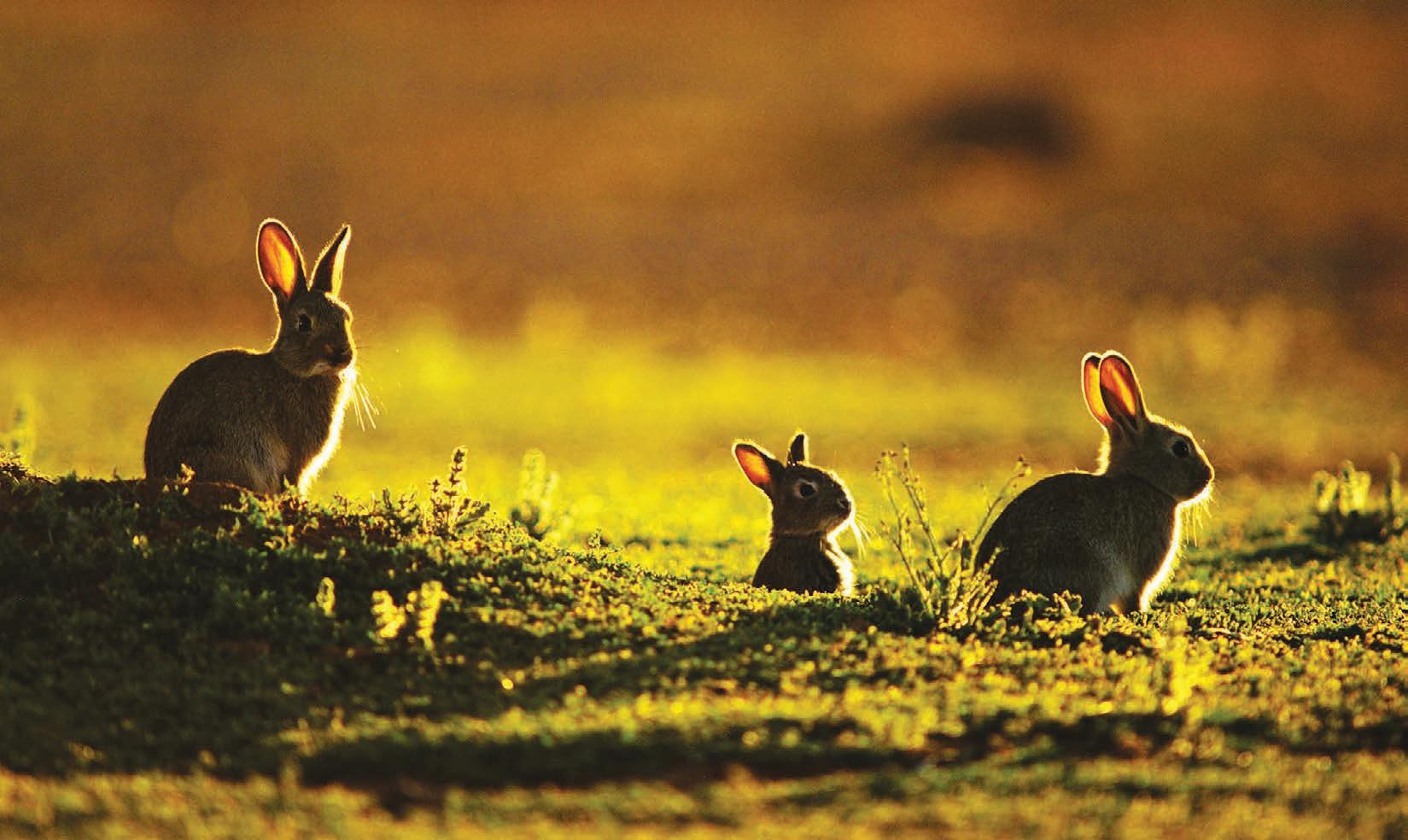
Countless efforts have been made to eradicate these destructive pests, but the problem is still rife across the country. Now, after another record year for rabbit numbers following a warmer than usual winter, the industry is coming together to try a different approach.
One of NZ’s leading pest control companies, which prefers to remain anonymous to keep discussions open and unbiased, is determined to curb the infestation, starting with the development of a communityfocused website (rabbitwatch.org. nz) and Facebook page (facebook. com/rabbitsnz).
Natalie Jarman, managing director of Whatever Marketing, an agribusiness-focused strategic marketing company tasked with bringing the project to life, said creating a community around the problem, as well as spreading awareness about the devastation the pest is causing in NZ, is the ultimate goal.
“The purpose of this is to have one place that everyone can go to for anything related to our rabbit pandemic in New Zealand,” Jarman said.
“Membership is free. We need everyone on board for this to succeed. The website will provide access to a number of different articles and resources, which will hopefully be supplied by the likes of [the Department of
Conservation and Ministry for Primary Industries] and other companies that have R&D around the issue.”
The website has a forum functionality, which lets members engage in discussions about anything related to rabbit control.





Rabbit contractors will be given free listings on the website to promote their services.
Jarman said the hope is that people and groups who have had both successes and failures in rabbit control will come together on the website and share their experiences, including giving advice specific to certain regions.

“A good example is the Otago Regional Council, who are very proactive around rabbit control,

and so we would love them to be able to put resources up on this website that support their efforts and provide a platform for other like-minded businesses and experts to share information,” she said.
“We’ve found there have been a lot of problems that people have found themselves up against, and there have been a lot of really good solutions so we want people to be sharing those with others.”
A key driver in this communityled approach to rabbit control is the growing number of lifestyle properties in NZ, and the logistical issues that come with this.

In 1992, the number of landholdings below 40ha was
about 35,000, a number that has now grown to about 175,000, comprising 873,000ha.
Because of this, rabbit control becomes much more complex, involving the participation of a significant number of landowners.
“It’s all good and well [for] someone getting on top of their rabbits by gassing, shooting or baiting them, but if the neighbour isn’t doing their part then all that’s going to happen is those rabbits will come over once the coast is clear,” she said.
“So without everyone joining forces, it’s pretty simple, we’re not going to get on top of this problem.”
As this is an issue that affects all aspects of the sector, several
to
175,000. This
agricultural companies are wanting to provide members with giveaways and discounts as incentives to get involved with the initiative.
We’ve found there have been a lot of problems that people have found themselves up against, and there have been a lot of really good solutions so we want people to be sharing those with others.
AGRITOURISM is a growing industry worldwide, offering rural communities the potential to diversify income and increase resilience.
It is also a tool for farmers to create value and markets for produce, strengthening agrifood value chains, Lincoln University Associate Professor of Tourism and Sport Joanna Fountain said.
“It is no longer just shearing a sheep or watching a hunting dog round up a mob.
“In the past agritourism may have been viewed as synonymous with farm tourism but it is now recognised as much broader than that,” Fountain said.
“Agritourism is where agriculture and tourism intersect, incorporating a diverse range of experiences that provide opportunities for tourists to connect with primary producers and the agricultural settings in which they live and work,” Fountain said.
For farmers and other primary producers, agritourism offers an opportunity to diversify and create supplementary income, share their way of life, and showcase their products and stories with people from all over the world.
Tim Loughnan Tawanui FarmAt the same time, increasingly visitors are looking to escape urban environments to connect with the land and the people who work and live there, to hear
stories, participate in activities, and learn about the origins of their food and fibre.
“Tourism has shifted from sightseeing, taking a photo of a beautiful river, to memorable experiences with agritourism engaging in all the senses, growing in scope and becoming increasingly professional as links between agriculture and tourism strengthen,” Fountain said.
“Agritourism is becoming a profession and farms have an important part to play with cycleways, pure pods, the classic Devonshire tea in a heritage homestead, but also much broader.”
So why get involved as a producer?
“It diversifies the income base of farmers, provides employment opportunities for family members, social opportunities, and creates brand recognition and brand loyalty.
“It maintains control of the brand story, provides an alternative distribution channel for agrifoods products and there is demand for these types of experiences.”
It’s a good way of bridging the urban-rural divide as consumers increasingly want to know how their food is produced.
“Tourists are looking for deeper experiences, stories of sustainable farming practices, stories of agricultural and family heritage, stories of food provenance.”
Fountain encouraged farmers to respond to the opportunities, to be inclusive rather than exclusive.
For Tim Loughnan, agritourism is what has enabled him and his wife Jaymie to stay on the land with his parents Mike and Elspeth on the family farm near Cheviot, North Canterbury.
The 320ha dryland Tawanui Farm traditionally runs sheep and beef in a trading and finishing prime beef and lamb operation.
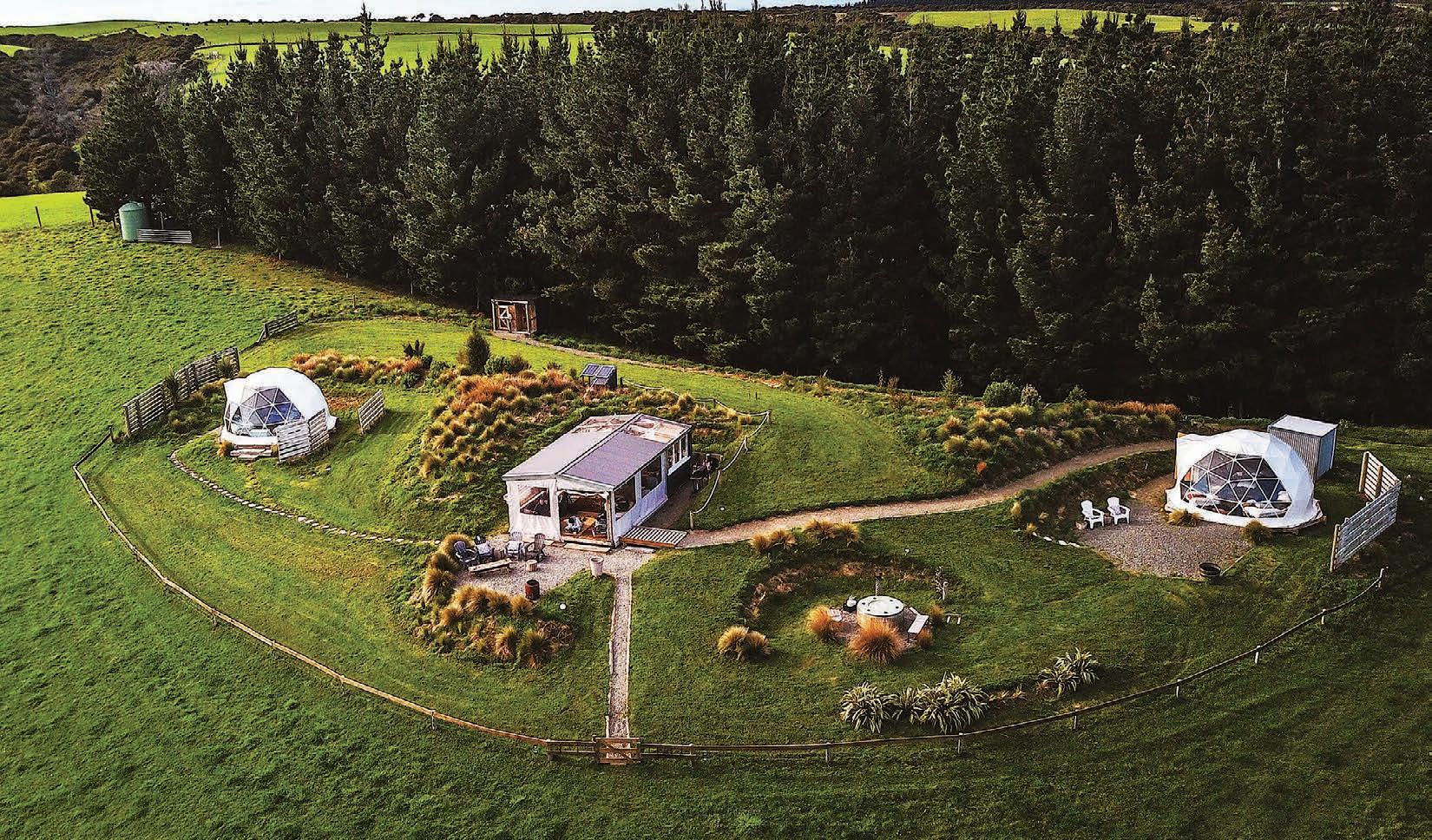
In 2016 the decision was made to sell off some land to manage the high debt level, meaning the property could now support only one family.
“The farm still needed plenty of development and we needed a way to generate more income.
“Diversification was essential,” Tim said.
Options included continuing with the contracting business, considering more potentially risky land use such as dryland dairy, diversifying to generate broader income, or having Tim and Jaymie move off farm.
“In 2017 we went down the tourism route,” Tim said.
“Why? Because we needed to do something, we like hosting and showing people where we live and what we do, we are passionate, it’s an exciting venture and financially it is good return on investment.”
It allowed Tim to remain and help run and develop the now regenerative farming operation and it “revitalised Mike and Elspeth”.
“We had access to 100km of the Hurunui River. Jetboating is a huge passion of mine – this was the catalyst for us, remembering the word ‘passion’, that passion is what you need to succeed.”
Customised trips under the branding Energy Jet Hurunui River Experiences became very popular.

From there accommodation was developed, adding a glamping experience in geodesic domes with
a base kitchen built from timber from the farm, closely followed by the addition of farm tours via a six-seater purpose-designed quad.
“There is good return on investment if you do it the right way,” Tim said. “It has allowed me to stay on farm and the farm to get up to speed.
“You really do need to assess your own situation to see what drives you and you really have got to have that passion – the income is awesome but that can’t be your driver.
“Agritourism has to fit and work around the farm and the driver has to be passion.
“The rewards come in the feel-good factor, in supporting family members, helping to connect people to farming and the environment, building your own brand and, of course, financially.”
The income is awesome but that can’t be your driver.JET SET: With a need to lower farm debt levels, a passion for jetboating and access to 100km of the Hurunui River, Tim Loughnan and his family’s Tawanui Farm entered the world of agritourism. OPTIONS: For farmers and other primary producers, agritourism o ers an opportunity to diversify and create supplementary income. OFF THE BEATEN TRACK: Lincoln University Associate Professor of Tourism and Sport Joanna Fountain says agritourism is more than ‘just shearing a sheep or watching a hunting dog round up a mob’.
FUEL companies required to supply biofuels to reduce carbon emissions have welcomed the government’s decision to push the mandate out a year to April 2024, but are left hanging about whether or not to make significant
investment before the next election.
The government had intended to introduce its Sustainable Biofuels Obligation Act from April 1 next year, requiring any company refining more than 50,000 litres of liquid fossil fuels for transport to reduce the greenhouse gas (GHG) emissions’ intensity of those fuels by including biofuels in their mix. The target is to gradually reduce GHG intensity by 10% by 2035.

But fuel companies’ inability to meet that deadline means it has been extended by a year.
Gull chief executive Dave Bodger, whose company has been supplying ethanol-mixed biofuel for several years, said while the extension is welcome, his company and others face a difficult choice in light of National’s recent announcement that it would withdraw any biofuel mandate should it be elected.
“I have one team saying here comes the mandate, and another saying we are going to repeal it if we become government,” Bodger said.
“We would be facing significant fines if we don’t comply, but also a ballpark figure of about $10 million to invest into plant, on a decision that may change with government,” he said.







The mandate has also highlighted the volumes of product that will be required to meet it in the coming decade.
Back-of-envelope reckoning by Bodger is that New Zealand will need to be capable of importing or producing about 600
million litres of biofuel to blend in within five years to meet the bill’s requirement.
“That is 600,000t of something you have to source or make,” Bodger said.
He said it is unlikely NZ will form a supply chain for locally produced transport biofuels. The quantities of feedstock required, such as tallow, simply are not cost effective enough, or here in sufficient volumes.
Z Energy recently formally confirmed the closure of its tallowbased biofuels plant in Wiri, Auckland, having mothballed it since mid-2020.
The company had concluded that domestic production of tallowbased biofuel was uneconomic compared to importing overseasproduced biofuel.
Tallow prices increased 400% from about $450/t in 2015 to $2077 in March this year. Prices have now settled at about $1740/t.
Z Energy CEO Mike Bennetts acknowledged earlier this year that progress on producing biofuels from NZ has slowed almost to a halt.
Bodger said his company is in the favourable position of probably being able to meet the first-year mandate requirements, but he would be very hesitant to make significant investment in further bulk storage and pipework at this stage.
Brian Cox, executive officer of Bioenergy Association of NZ, said regardless of a mandate or any other incentive, the government lacks clear direction in transport biofuel policy, and this will continue to stymie investment in coming years.
“When you have nothing, you could say a mandate does make a difference, but it is only one thing in a number of things you could use,” Cox said.

The biofuel landscape is starting to resemble 2008, when the previous Labour government introduced an excise exemption on diesel fuel. This was thrown out by National a year later.
Cox said fuel companies need greater long-term certainty before investing in biofuel infrastructure, and a long-term subsidy on renewable biodiesel could be another way to encourage its use.


National’s energy spokesperson, Stuart Smith, said his party supports the use of biofuels, but not the blend mandate.



“A mandate means all fuel
options will have biofuel in them, and this brings problems for normally aspirated engines, particularly with NZ’s older vehicle fleet,” Smith said.
He said National also questioned the total carbon footprint of fuels that require shipping and blending, and separate storage.
“We have been told there is a $50 million investment upstream to enable its distribution and blending. That is a problem.”
Bodger said following European standards on biofuels would remove most of the concerns National has, while a mandate represents an equal start for all fuel companies.
“The best thing about a mandate is it is sort of fair to everyone.”
He said without a mandate NZ could simply let the market determine a move to biofuel.
As carbon prices ramp up, eventually biofuels will become more cost effective to import. However, this would accompany some significant hikes in fuel costs.
I have one team saying here comes the mandate, and another saying we are going to repeal it if we become government.
Dave Bodger CEO GullFUELLING UP: It is unlikely New Zealand will form a supply chain for locally produced transport biofuels.
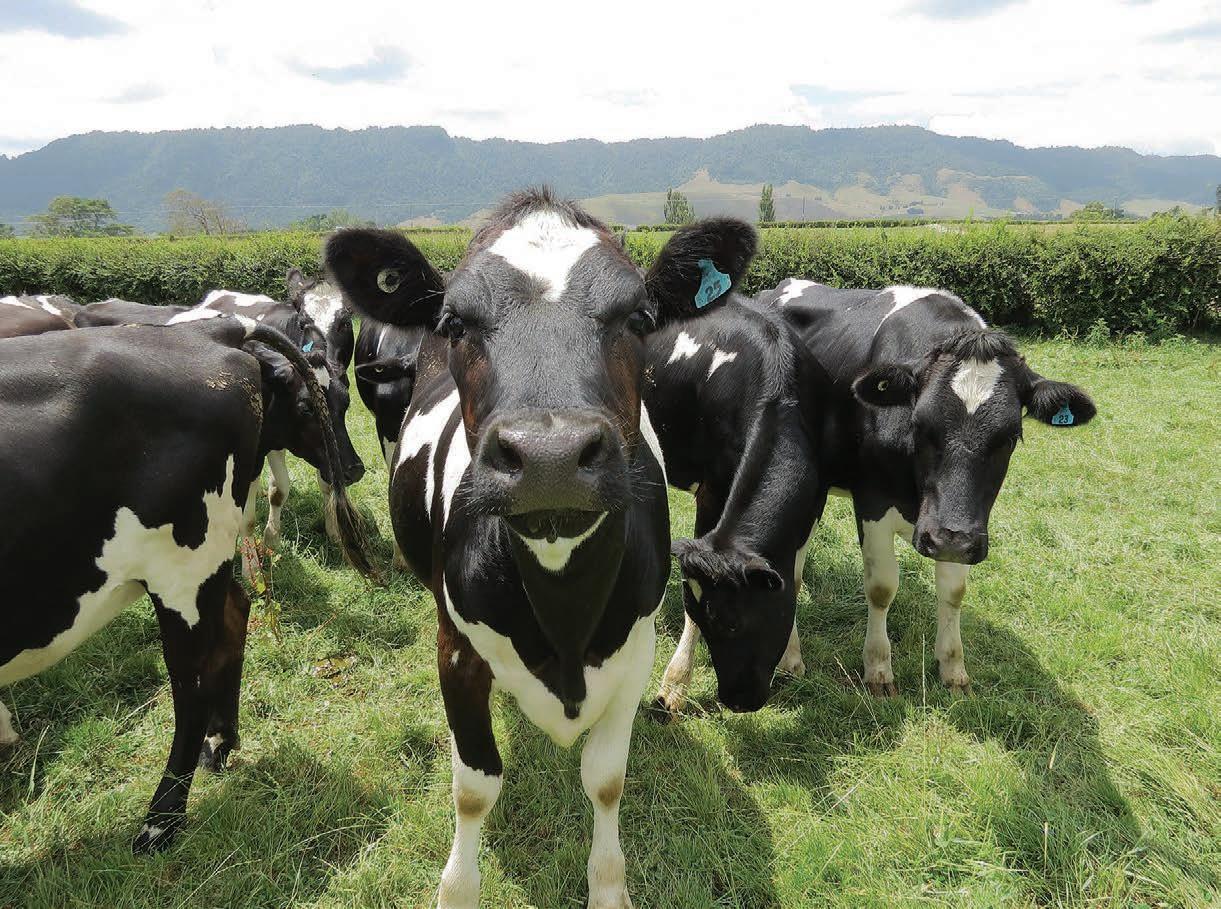





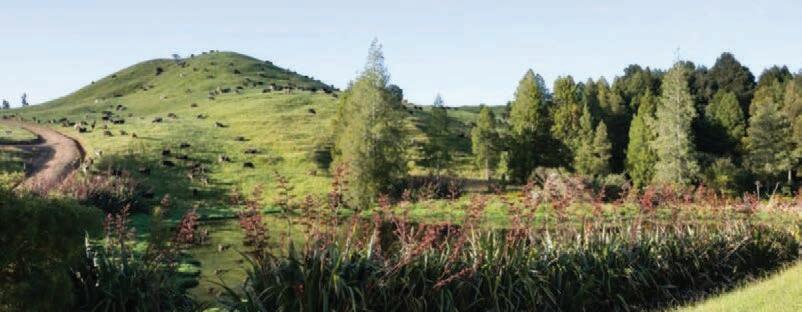
Have a go:
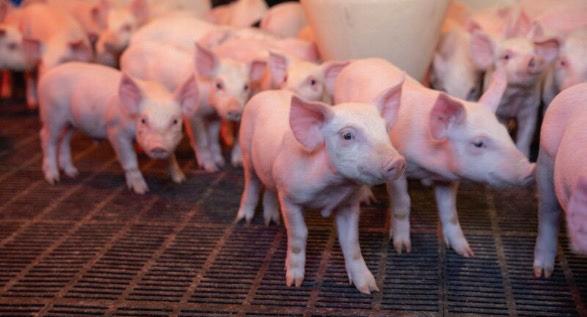
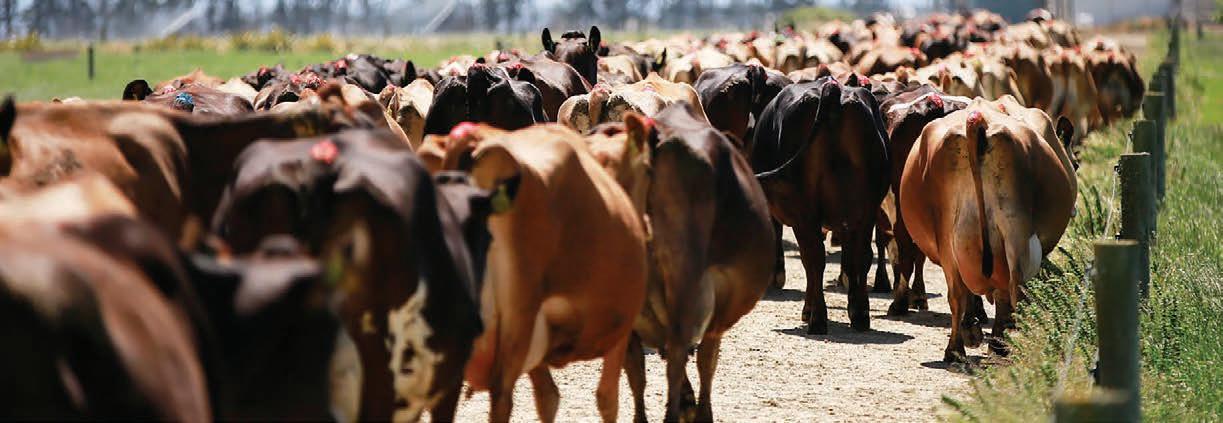
Kate Liversidge is a senior manager of Agriculture Operations at Arla Foods, one of the largest farmerowner dairy cooperatives in the world.
Kate Liversidge is a senior manager of Agriculture Operations at Arla Foods, one of the largest farmerowner dairy cooperatives in the world.

https://bit.ly/beeflambnz-podcast
https://bit.ly/beeflambnz-podcast
Have a go:



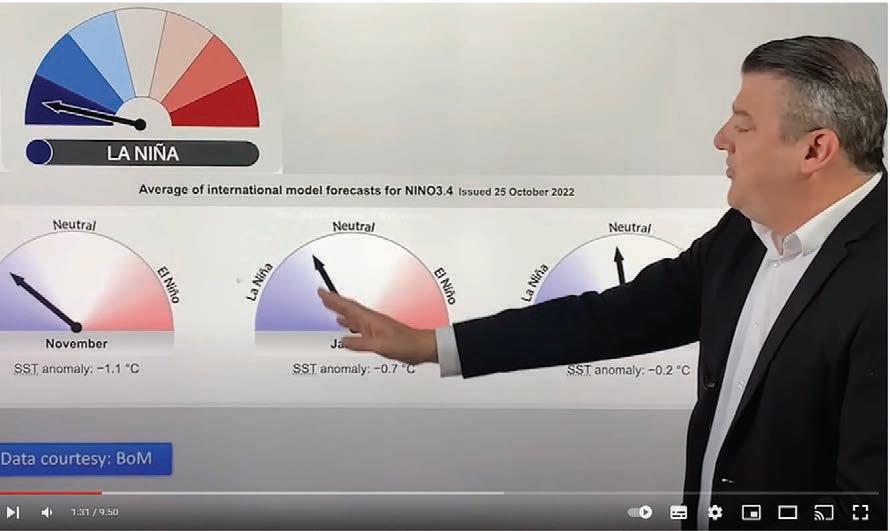

Why or why not? Have
Have a go:
1. When and where is La Nina expected to peak?
2. What kind of weather does La Nina usually bring?

3. Looking at the soil anomaly graph for the end of October, can you name one region looking wetter than average and one region that is looking drier than average?
1. When and where is La Nina expected to peak? 2. What kind of weather does La Nina usually bring? 3. Looking at the soil anomaly graph for the end of October, can you name one region looking wetter than average and one region that is looking drier than average?
1. What is a cooperative? How does being in a cooperative benefit farmers?
2. What is the vision for Arla Foods?
3. Why is this mission important?
4. Kate believes that ‘sustainability’ is both a challenge and an opportunity. Explain her reasoning.
1. What is a cooperative? How does being in a cooperative benefit farmers? 2. What is the vision for Arla Foods? 3. Why is this mission important? 4. Kate believes that ‘sustainability’ is both a challenge and an opportunity. Explain her reasoning.

RURAL communities always seem to find a way to overcome any challenge that pops up.
We’ve known for some time that there’s a need for more investment in health services in rural areas and that distance is often a barrier to care.
That’s prompted a number of groups to meet that challenge by taking health professionals to the people who need them.

In 2020, Farmers Weekly publisher AgriHQ brought to life the brainchild of rural advocate Craig Wiggins in the form of The Glob.
The Glob is a caravan fitted out specifically for general health checks at rural community events and spaces, with a GP, nurses and other volunteers all playing their part.
It’s still going strong and was out in the field at last weekend’s Cross Hills Fair in Manawatū, giving free health checks to attendees.
Breast Cancer New Zealand has been doing something similar since 2014, travelling the country in Pinkie, a pink caravan staffed with nurses to educate people about breast cancer and how to detect it.
Now the charity is fundraising for a new state-of-the-art pink campervan, which will allow its team of specialist nurses to reach more women in New Zealand’s most isolated rural communities.
Latest figures show the regions that have the lowest participation rates in the national breast-screening programme are Waikato at 56.3%, Gisborne at 58.7%, Northland at 63% and Bay of Plenty at 63.3%.
Obviously the best solution would be more funding for rural health.
Let’s hope that happens, but in the meantime people like BCNZ are taking healthcare to the people who are harder to reach.
Funnily enough, this week one of the largest rural get-togethers around kicks off at Mystery Creek.

After a few years of delays and cancellations, organisers are hoping the summer weather will bring the jandalwearing punters flocking to Fieldays.

And, after a tough winter and the prospect of mounting costs and regulations,
farmers will no doubt enjoy some time off the farm to chew the fat with friends and vendors.
Fieldays, A&P shows, farmer meetings and community work are a big part of what keeps our rural communities resilient and connected.
A problem shared is a problem halved, as they say, and there’s nothing more refreshing than giving doubts, frustrations, dreams and plans a good airing with someone you trust.
It sure beats putting them at the mercy of the social media algorithms, which are designed to find the people who disagree, not the ones with a constructive comment or a word of support.
Health is a big part of Fieldays as well, and this year the hub will be offering advice and a range of checkups including blood pressure checks, blood sugar testing, hepatitis C testing and skin cancer spot checks, among others.
At three times the size of the last event, the hub should be a mandatory stop-off for everyone to be sure they’re farm fit.
Mental health is also a focus, which is great to see. For too long we’ve been socialised to be fine with putting a band-aid on a cut, but not treating a problem with the top two inches.
And, as we all know, a farmer’s greatest asset is their ability to observe, think, analyse and make sound decisions.
A healthy mind is a healthy farm business.
THIS is going to upset some people but it needs to be talked about. I’m well aware that this is not the only problem facing the farming industry right now but it could help mitigate some of the damage that high land prices and runaway forestry conversion are causing.
I see a lot of people complaining about not being able to find capable staff.
And yes, there are a lot of people out there who don’t want to work.
But there is also a big group of highly skilled and highly motivated young people.
These people don’t want to just slave their butt off for someone else. They have done that and decided that after gaining all that experience and knowledge they want to do something for themselves.
They didn’t inherit a farm because their parents sold into pines and took the money and ran, or they had other siblings. Or maybe they came from town and have found that they love the farming life and want to grow their own animals and would like a place to shape and be proud of.
So next time you are looking for staff to run that fourth farm you have bought, maybe consider leasing one of your smaller ones out to one of these budding farmers instead. You might have to help them into it at first. Let them graze some of your stock for a couple of years to build up their numbers. What you get in return is someone who will work their butt of every day to make this work. Someone who is up to date with all the latest technology and farming practices. Someone who will care about how the farm is going and will be eager to develop and improve it.
You might be thinking that they could just work for you for 20 years and buy a farm. But the days are gone where you can work hard and maybe go shearing or possuming to pay for a farm. Even if they put nearly all their money to the side for 20 years, say $50k a year, they would still only have $1 million. That won’t even buy you a small lifestyle
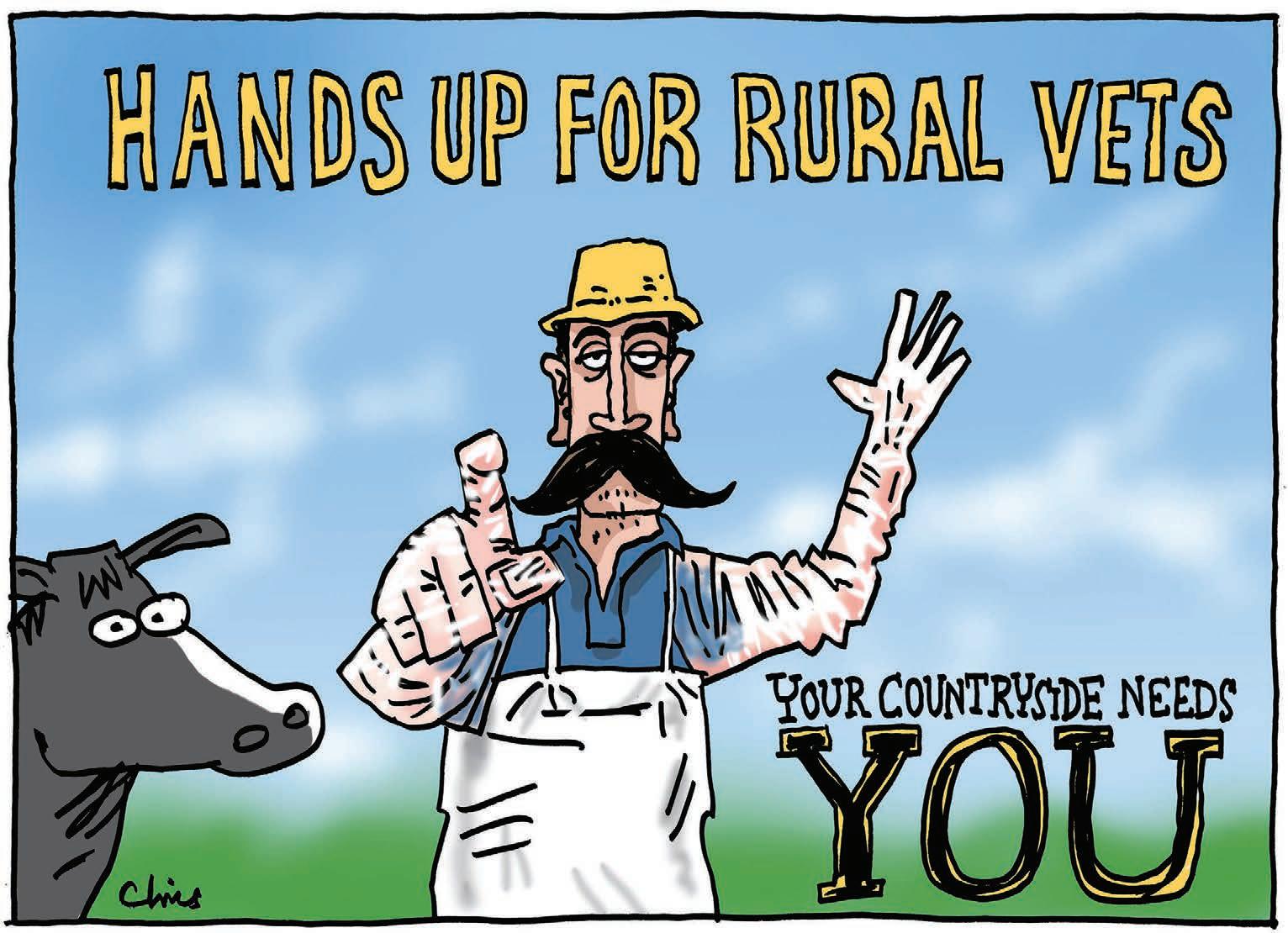
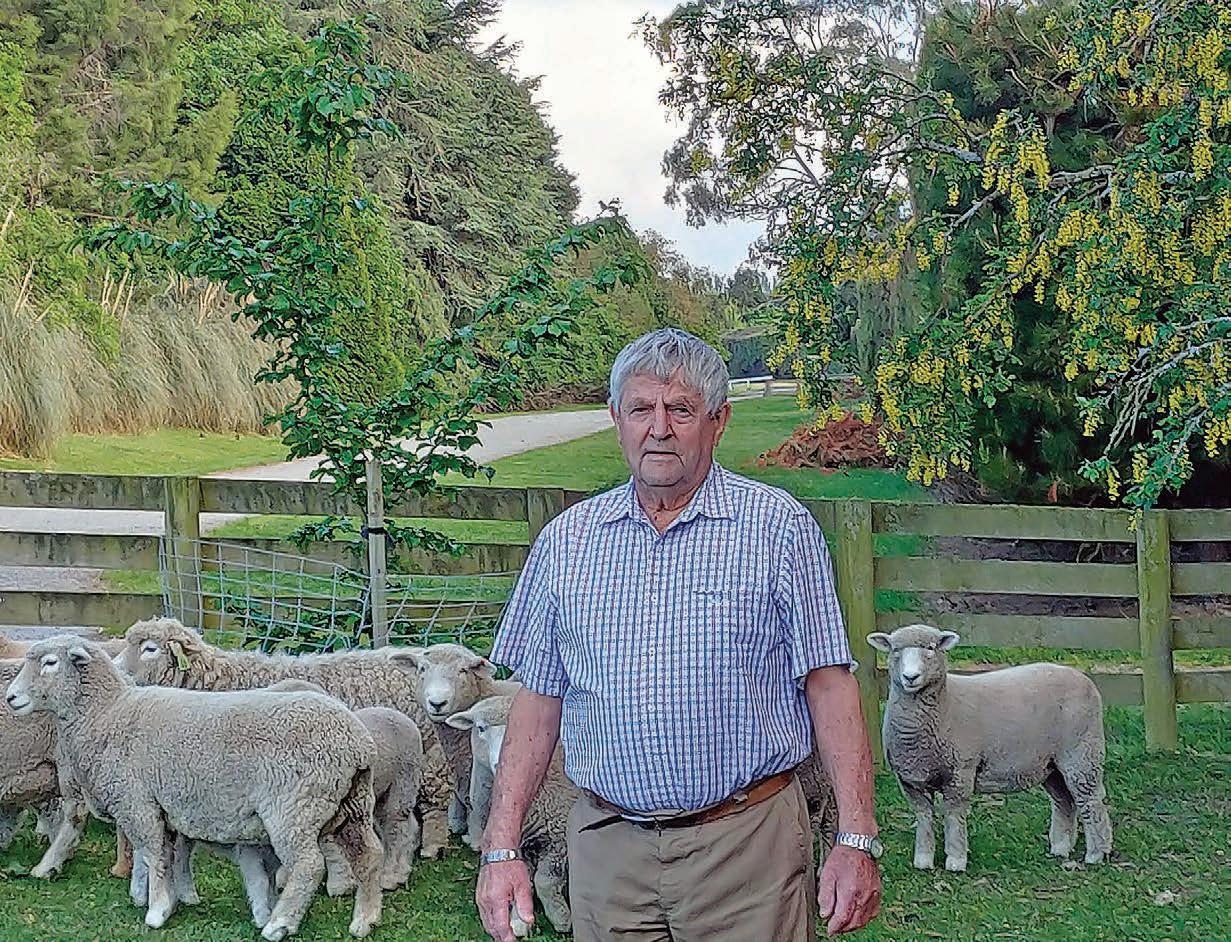
FOR more than 60 years
I have enjoyed the company of like-minded people and the benefits of learning good and bad in the showing of sheep.
This has included the expansion of my knowledge, the reward of comparing and analysing the exhibits, followed by discussion with fellow exhibitors and judges, and then celebrating or commiserating.
In earlier decades the placings were very important to exhibitors and could be achieved using devious means such as false presentation and excess feeding.
This has been almost totally eliminated in the modern era but there remain some unfortunate exceptions.
Such nefarious behaviour in competitive showing of livestock reflects on everyone involved when it becomes a generalisation, and the ignorant fail to accept change because of self-serving motives.
However, this problem has been tackled by the introduction of objective measurement classes, including muscle and fat scanning, SIL records, the involvement of procurement agents and wool testing.
This is best explained with females and their progeny.
Classes used to contain a ewe and a late single lamb because the
Continued from previous page block these days!
They also don’t want to spend the prime of their lives making your farm productive and beautiful just to maybe get their own when they are 50. They will be worn out and tired but won’t be able to pay someone to do the hardest work on the farm because they will also be owned by the bank
So next time you can’t find motivated and capable staff, maybe think outside the box a bit. Or soon there might be no owner/operator farmers any more, just corporate and overseas owners that don’t give a damn about the land, just their profit margin. Or wall-to-wall pine trees
I would love to be in a position to give someone that opportunity one day.
PS This is an idea from a good friend: If you don’t have multiple farms but do have some spare money to invest, maybe find some
lamb extracted too much from the mother.
That was absurd and noncommercial, but now multiple births are richly and deservedly rewarded and scored accordingly.
In my case, in recent decades we have exhibited six to nine ewes bearing over 215% of respectable lambs that could be processed by the end of the year, that is, before 17 weeks, and some sets combined scanning up to 16cm2 of eye muscle area.
This appropriate, necessary and significant change in displaying genetics has not been commercially and universally accepted.
There has to be an explanation. My view is that the original intent of showing was quite rightly opposed, but used as a marketing tool by opposing breeders, basically those who couldn’t compete or perform adequately, and others joined their forces for market share opportunities.
A lot of positives were conveniently ignored and in my opinion the positives far outweighed the negatives.
Advantages include:
• Judges put forward their own policies and you could ignore them at subsequent sales or become interested in what sheep they provided.
• Selection of animals that appeal to you, particularly if they represent the exhibitor’s overall team.
Most spring shows are early
like-minded farmers and save a farm from forestry and let a young farmer lease it or share-farm it with you.
FARMERS Weekly – and most other publications these days – produce article after article about the contortions and calculations that are supposed to provide a solution to our changing and warming climate by taxing the offending emitters.
Recently, at our investment bank’s seminar, we were subjected to the opinion of the newly appointed Ethical Investment Officer or advisor regarding atmospheric carbon and the need for its removal to save us all, and the need for the bank to take an ethical stand on the issue. Her opinion.
I’ve never been convinced and
season so both hoggets and lambs revealed their potential before rams came on the market.
Other traits were also considered important at shows, including the nature, temperament, intelligence, walking ability, feet and general structural soundness.
In a nutshell, many breeds, many sheep, many observers, gathered at one central point to analyse, inspect and discuss the relevant issues in the industry, achieved in a mostly pleasant and learned environment.
my research over the years has only strengthened my conviction that we have another cause to recognise.
Following the seminar, I realised that we all need to just stop and take time to give the “problem” just a little bit of perspective.
So, I’m asking everyone to consider a perspective I think demonstrates just how ridiculous this whole “debate” has become. Particularly the proponents of GHG causing the problem, and here I am thinking of our farming leaders who have been negotiating on our behalf.
Let us take 1 million bottles of wine and empty them – drink it if it’s any good – and line the empties up on a rugby field. First, sleep off the effects if you have drunk the stuff.
You will have 1000 rows of bottles 1000 bottles wide.
Rowed tightly together they will cover the field from sideline to sideline (75m) and from the goal line to the opposing 25m line (75m) – a million bottles!
We then fill the bottles with the appropriate proportion of
Popular field days serve the same function in providing information and opportunities to discuss.
Remember the judge’s opinion is that of just one person, perhaps two or three in some classes.
They should never be accepted as the gospel or an expert opinion, but only a starting point for interest and discussion.
In summary, the A&P movement is synonymous with quality and the exhibition of fact and reality.
It has become the shop window for producers, displaying their products, beliefs, information and learning, and providing for inheriting of knowledge as a consequence.
Shows provide a great opportunity to receive second opinions, reinforce and
atmospheric gases, which are, I believe, regularly measured and monitored by our Ministry for the Environment at Baring Head in Wellington along with other places around the world.
First, we’ll deal with our GHGs as they hold the most interest for us.
We will go to the corner by the goal line and count 21 bottles along the sideline and then go infield and count 20 bottles.
These 420 bottles of the 1 million will hold all the GHG proportion of the atmosphere. In all, 418 bottles of carbon dioxide and two of methane.
Of the two bottles of methane, one will be full and the other one will be 86.7% full.
In considering methane, it pays to keep in mind that this gas is the reason agriculture in New Zealand is supposedly responsible for 48% of New Zealand’s GHG emissions. However, the NZ agriculture contribution to global methane levels in the atmosphere would be difficult to quantify, in my humble opinion.
So, there is something definitely dodgy in the methane calculation,
consolidate your fundamental ideals and beliefs, to further progress your own future and more imperative, that of your clients and subsequent commercial producers for the ultimate benefit of the country.
Got a view on some aspect of farming you would like to get across? We offer readers the chance to have their say. Contact us and have yours.
farmers.weekly@agrihq.co.nz Phone 06 323 1519
The rest of the GHG bottles – 418 – we will fill with carbon dioxide.
And there we have our greenhouse gases!
Now let us reduce the carbon dioxide bottles by seven along the sideline and by six along the goal line leaving 15 x 14 bottles – that is, 210 bottles of carbon dioxide from the original 418.
Considering the whole atmosphere, removing that proportion of carbon dioxide may please many a person keen to solve the world’s problems, I am sure!
However, at that level of carbon dioxide in the atmosphere (around 200ppm), photosynthesis – that wonderful miracle of nature used by every plant on the planet and plankton in the sea, that gives us our food and our oxygen – ceases.
Life as we know it on this planet would cease to exist!
That, I hope, should put a perspective on the debate for many.
We are talking a very, very thin line.
If you doubt it, check it out!
Popular field days serve the same function in providing information and opportunities to discuss.

with a Republican House of Representatives that could be increasingly difficult.
We’re told that 45,000 people attended COP27. That’s the population of the Wairarapa. Averaging seven tonnes of carbon for an economy return flight, that is over 300,000 tonnes of carbon from flights alone. My belief is that most would be flying business class which doubles the figure, or by private plane, which puts it through the roof. Sticking with the 300,000 estimate that’s equal to the annual emissions of 230,000 sheep. That’s for just one two week-long talkathon.
IDOUBT if there’s anyone in New Zealand who isn’t aware that COP27 was recently held in Egypt. While I’m concerned about climate change, I didn’t believe a United Nationssponsored talk fest would provide any answers.
“It’s make or break time” we were told, but that was back at COP26. Today the UN is telling us the planet is in crisis. UN secretary-general António Guterres told me that thanks to climate change we were in a “global suicide pact” and that we were “on the road to hell with our foot on the accelerator”. They’re big words but nothing has changed as a result of COP27.
It was never going to, as over half our climate pollution comes from just four countries: China, the United States, India and Russia.
Only one of those countries, the US, was at the conference and while the administration of President Joe Biden is working to reduce GHG emissions,
We’re told NZ had 13 officials in attendance plus representatives from iwi, business, the Climate Change Commission and National MP Scott Simpson. Their business class travel would be equal to a pile of cow burps while again achieving nothing.
The Daily Mail reported that “world leaders and delegates jetting into Egypt for the COP27 climate conference will be able to dine out on [NZ$180] mushroom sauce-covered beef medallions and sip on fancy bottomless cocktails”.
While I applaud the delegates for eating nutritious beef medallions, the rest of the COP27 crew are going to demand we eat less meat. Also, when it comes to the cocktails can I humbly remind the delegates that you don’t have to drink to have fun as any Kiwi farmer knows.
While researching this article I read a UN report from December 2020 that told me that the world’s wealthiest 10% made up 50% of our total carbon footprint. It went on to claim that the world’s wealthiest 1% account for 15% of the world’s emissions. That was more than twice the emissions generated by people in the bottom 50%.
The super-rich live in North America and Europe.
So, the UN has identified the problem and ignored it. Instead it is insisting on ridiculous changes to food production and restrictions on poor countries burning coal to produce power.
There was an agricultural day at COP27 where everybody came together to wring their hands over burping cows and sheep. There were organisations I’d never heard of like the Global Alliance for the Future of Food and the loftily named Food and Land Use Coalition.
These were philanthropic organisations who were there trying to do good with little practical knowledge in evidence. You wouldn’t want to employ them on a lambing beat or a milking shift.
We also had the World Economic Forum-sponsored Food Systems Initiative. You’d have thought they’d have learnt enough from their futile efforts in Sri Lanka and the Netherlands not to continue with their theories on saving the planet.
Delegates can get carried away by the hype and enthusiasm evidenced at conferences and we’re no exception.
Last year Climate Change Minister James Shaw surprisingly signed up to a major climate agreement that would see the world cutting its methane
emissions by 30% by 2030.
The government was caught “off guard”, officials were “stunned” while farmers were “shocked and worried”.
Prior to this conference you’d wonder what was going to happen. With all the extreme rhetoric you’d hope nothing did.
The only initiative that did occur was an agreement to establish a fund to compensate poor countries for the damage caused by the industrial revolution.
As the industrial revolution started in 1760, that’s a lot of compensation. I had nothing to do with the problem and compensation will achieve nothing to reduce global warming.

For the record, my solution to help poor countries would be to provide advice on farming, including genetics, irrigation and fertiliser, and in the case of humans, birth control.
Amazingly there was no commitment to curb fossil fuels, GHG emissions or coal production, which tells me the conference was a giant chatterfest full of sound and fury while achieving absolutely nothing.
The tragedy for farming in NZ is that our minister, Shaw, is pledging to do our bit, and now. Why? He didn’t say.
Be a part of NZ’s biggest agricultural community and help create a better futureFortunately, despite the delegates agreeing to a fund I’m unaware of any cash going into it. Alan Emerson Semi-retired Wairarapa farmer and businessman: dath.emerson@gmail.com THAT’S RICH: The United Nations identified a key climate change problem and then ignored it, says Alan Emerson.
While I applaud the delegates for eating nutritious beef medallions, the rest of the COP27 crew are going to demand we eat less meat.
DO YOU know much about cryptocurrency?
No, nor do I – other than thinking if you can’t understand it, don’t get involved.
This despite every now and then bumping into a convert who tells me it’s the road to easy riches.
In my experience the road to easy riches often ends in tears, but what would I know?
Several years ago I was visiting a mate and asked him what the noise was coming from his old shed.
He beckoned me to follow and inside were about half a dozen computers going flat-out making the noise my PC does when it’s in serious trouble.
There was an air conditioner going but the computers were generating so much heat that it was still warm in there.
“What’s going on here?” I asked my mate.
“It’s my son’s business. He’s mining cryptocurrency,” he said above the noise.
“What’s that mean?” I asked him.
“I don’t know but I do know that my power bill has gone up by $800 a month, which he reimburses me for,” he replied.
Intrigued, when I got home I googled up what on earth was going on.
It turns out that cryptocurrency mining is the process of creating new cryptocurrency by solving extremely complicated math problems that verify transactions in the currency. When a cryptocurrency is successfully mined, the miner receives a predetermined amount of cryptocurrency.
It seemed that you really could make something out of nothing and so long as everyone else believed there was something, the system worked remarkably well and could be extremely lucrative.
Was this some type of Ponzi scheme or the latest in the centuries-old “Emperor’s new clothes” syndrome?
Many people a lot smarter than me appeared to believe it was a genuine new way of accumulating wealth and using it to transact.
However, there are also clever
people who say otherwise.
Cryptocurrency has been characterised as a speculative bubble by eight winners of the Nobel prize for economics. Investors Warren Buffett and George Soros have called it a mirage and a bubble. And Bill Gates just this year went as far as to say it was based on the “greater fool” theory.
I’d heard about Bitcoin, which was the first and most successful –but I was surprised to see there are now 9000 other cryptocurrencies out there.
If we consider Bitcoin, one can see the attraction to this brave new world.
It came into being in 2011 and one Bitcoin was valued at a modest 30 US cents. By 2013 it had risen to US$13 but a year later shot up to US$770.
Much volatility later, Bitcoin peaked at US$64,000 in November last year. It actually was the road to riches if you had entered the market at 30c but not so great if
you were the one paying $64k.
That’s because the value has had a decent correction during this year and it’s currently down to $16k.
All the other cryptos have seen similar large drops, but that is not to say they won’t recover at some point.
However, in May alone US$2 trillion (about $3.25 trillion) of value was wiped out. This is serious money.

Confidence in the market has been shaken by several failures as well as theft and fraud as crooks have been able to get into the wallets and pinch other people’s coins.
Just in the past couple of weeks, FTX went into bankruptcy.
FTX was one of the largest cryptocurrency exchanges and had its own cryptocurrency as well.

The founder and CEO, Sam Bankman-Fried (his real name) resigned and now the forensics of this massive failure begin.
Certainly, mismanagement and
Was this some type of Ponzi scheme or the latest in the centuries-old “Emperor’s new clothes” syndrome? Many people a lot smarter than me appeared to believe it was a genuine new way of accumulating wealth.
a complete failure of corporate control but there has also been talk of the misuse of client funds, which would indicate the possibility of illegal activity.
Confidence and a belief in the robustness of this financial product is essential for this investment and FTX’s failure has rocked that.
Good luck to those who can live with this sort of volatility and stress in their investment, but I’ll stick to stuff I understand and know – like farming, thanks.
Results from the saleyards, including per kilo prices for store lambs, delivered straight to your inbox.
Farming and art are close to the heart of Amelia Dunbar, supreme winner of this year’s Rural Women NZ Business Awards.
She spoke to Annette Scott
THE arts came up trumps for Amelia Dunbar in the Rural Women New Zealand and NZI 2022 Business Awards.
Operating a rural entertainment business and working as an artist from her home in the Canterbury high country, Dunbar is known to rural New Zealanders as one half of the comedy duo The Bitches’ Box.

Under her maiden name, Amelia Guild, she is also a visual artist. Her excellence in the two fields of endeavour won her the creative arts category in the awards –before she went on to head off the six other category finalists to be crowned overall supreme winner.
Says Dunbar: “Sometimes I don’t know who I am. I’m not sure now why I did it, but I still paint under Guild.”
She is also a mum of a young family and very much a part of the Guild family’s High Peak Station farming, hunting and agritourism operation in the Canterbury high country.
Having made the decision very early in life that she wanted to remain living rurally, Dunbar has been working as an actor-writerproducer of comedy duo The Bitches’ Box, which has toured nationwide delivering comedy shows in rural communities for the past 10 years.
The shows encourage rural communities to come together for a meal and a laugh and to build connections in remote rural New Zealand.

Dunbar teams up with Emma Newborn in the show, which is about two women living their best
lives pretending to be dogs.
The two entertainers bounce from one character to another at breakneck speed, sharing fiercely funny insights into the minds and motivations of dogs.
“We set out to have this community-minded show to give rural people a reason to get together,” Dunbar says.
“We were just two actors putting on a show, yes as bitches in a dog kennel, then it morphed into a mental wellbeing event.”
Dunbar and Newborn recently formed their own production company and are working on a feature-length film based on the live shows.
this to celebrate rural Aotearoa NZ,” RWNZ national president Gill Naylor says.
The sheep, beef and deer on Dunbar’s family farm provide the inspiration for her colourful artworks, which celebrate her love of her rural life.

Dunbar studied art at high school in Christchurch and a BA at the University of Otago, with majors in both art history and theory and theatre studies. She completed her studies at the University of Amsterdam.
“We are recreating the woolshed atmosphere in the cinema. At the moment it’s a moving feast but all going well we will have the funding secured this side of Christmas, start production in February and be in the cinema in winter,” Dunbar says.
In a first for the business awards, the judges were presented with two entries by Dunbar in the creative arts category, featuring her work as a performing and visual artist.
“This provided real insight into her creativity and how she is using
“Living the bulk of my life on a high-country station means that my greatest influence has been all things animals,” she says.
“These moving, lively creatures always prove a challenging and dynamic subject and have given me the vehicle for years of exploration and experimentation in my art practice.
“I never seem to be satisfied with realistic depictions or colourways and I have found great enjoyment in showing my affection for these animals through texture, abstraction and palette.
“Amelia the Artist, that’s me. Nothing fancy, just a bit of paint and the odd bull.”
Career highlights include being employed as expedition artist for the Tracing Tea documentary filmed in India, and a commission from Fonterra to do a series of paintings and prints depicting the dairy industry.
“These works are now hanging in prominent company locations around the world.”
Judge Christina Chellew, executive manager for agencies at NZI, says the competition at the business awards was fierce this year and the incredible calibre of the entrants made judging a real challenge.
“The NZI RWNZ Business Awards continue to flourish year after year and the resilience and innovation of the entrants and their enterprises presented the judging panel with some very difficult decisions this year,” Chellew says.
“We were incredibly impressed by the diversity of businesses owned and operated by rural women throughout the country.”
Dunbar says the supreme winner award came as a real surprise.
“It completely blindsided me,” she says, “Being a part of the awards evening was incredibly inspiring. We all had totally different businesses, all ground-breaking in their own way; it was a really innovative and exciting group of women.”
were:
• Creative Arts: The Bitches’ Box and Amelia Guild Art – Amelia Dunbar
• Emerging Business: Foxtrot Home – Kate Cullwick, Waipukurau
• Innovation: Hopefield Hemp –Jody Drysdale, Gore
• Love of the Land: The Limery –Dianne Downey, Wairoa
• Rural Champion: Whānau Consultancy Services – Serena Lyders, Invercargill
• Bountiful Table: The Craypot –Dayna and Nicole Buchanan, Jacksons Bay
• Rural Health and Wellness
Excellence: Strong Woman –Sarah Martelli, Reporoa
Living the bulk of my life on a high-country station means that my greatest influence has been all things animals.Amelia Dunbar The Bitches’ Box
Taking hyperspectral mapping technology that has been used in aerial mapping and applying it to identify grass seeds’ endophytes is a novel new use for a proven imaging technique. Richard Rennie spoke to John Caradus, CEO of Grasslanz Technology, partners with Massey University’s commercial arm Massey Ventures in the project.
ENDOPHYTES, the naturally occurring fungi that bestow their protective abilities on their host plants, have proven to be part of New Zealand’s winning arsenal defending pastures against many pests and diseases. The early AR1 endophyte offered protection against Argentine stem weevil and mealy bug, while AR37 – launched commercially over a decade ago –has provided even greater protection than AR1.
However, endophytes’ microscopic nature makes them tough to check for in-seed quality assessments, though doing so effectively is vital for seed companies if they are to meet their label claims about what the particular endophyte is delivering.
Hyperspectral imaging – with its ability to detect a range of light types and obtain information on chemical signatures and translate them into an image in a single scan – has provided a keener eye for detecting endophytes’ presence, their health, and their type when assessing seeds for sale.
Newly formed company MI8 Optics reflects Massey University’s lengthy association with

hyperspectral mapping technology that was initiated by Professor Ian Yule a decade ago.
Yule could see the value of the technology in making “single pass” flyovers to map farm vegetation and soil type, ultimately determining fertiliser application amounts.
Taking that technology, MI8 Optics is now capable of offering seed companies a commercially viable option to the lengthy process of determining if a seed sample’s endophyte levels are high enough and are of the right type.
“We are now getting up to 97% accuracy levels off a testing process that can deliver a fast, 48-hour turnaround on seed sample results. This compares to the existing gold standard process that requires seed sample to be germinated and grown out. That is a process that can take a month to do,” Grasslanz Technology CEO John Caradus says.
The non-destructive detection technology will determine not only endophyte percentage but also the strain. This is done through linking the tech to especially developed algorithms that train AI to recognise what constitutes the
THE demand for robotic technologies in agriculture is set to hit US$11 billion [$18b] by 2030, according to a report from GlobalData, a leading data and analytics company.
The global agricultural sector is tackling a multitude of challenges, from climate change to population growth, and the growing demand for food.
Robotics offers a much-needed solution, providing answers from vertical farms to drones.
Last year, field robot sales reached US$1.1b and the report, Robotics in Agriculture, says robotics will be key in helping
China is leading innovation in agricultural drones ... these drones provide imaging and surveying tasks, whilst crop spraying, and terrain monitoring will become key growth areas.

to ease labour shortages, reduce pressure on natural resources and meet the global demand for agricultural products, while also helping the sector adapt to the challenges of climate change.
The report also states that the commercial drone market will overtake military drones and become the largest segment of the drone market by revenue in the next few years and agricultural drones are a key driver.
Agricultural drones are unmanned aerial vehicles used in farming for yield optimisation and monitoring.
Rachel Foster Jones, thematic analyst at GlobalData, said the Chinese drone industry is the largest in the world.
“The country is leading innovation in agricultural drones, with Chinese companies DJI and XAG paving the way.
“These drones provide imaging and surveying tasks, whilst crop spraying, and terrain monitoring will become key growth areas.
“Both companies were the most active in terms of patent applications in the agri-drone sector.

“Between 2018 to 2021, they published 421 patents, reinforcing China’s dominant position in the global drone industry.”
“right” endophyte within the tiny seeds being checked.
Ultimately, Caradus says, the ideal is to build the hyperspectral mapper into seed-sorting equipment, with the ability to detect and reject seed during dressing, as can already be done with natural light seed sorters to
identify the presence of unwanted seeds in dressing runs.
“We see the potential to lift the bar from seed having the minimal 70% endophyte levels now to up over 80%. There is also the potential to use this technology to identify other traits, such as seed purity and germination.”
The ability to detect the “right” endophyte in grass seeds is invaluable where there is the risk an earlier seed crop may have lingered, and with it the endophyte attached to that crop.
“The fact we could identify the strain of endophyte present, that proved to be quite a welcome surprise. We always felt it would be possible to determine the status of the endophyte, if it was alive or dead.”
The most likely cause of endophytes being killed off comes from the conditions seed is stored in, with high humidity and temperature a deadly combination.
The process of assessing seed samples is relatively straightforward. With about 400 seeds spread across a flat surface, a hyperspectral camera is run across them. The algorithms translate its findings into easily understood results.
“We also see in the future the opportunity for its use in phenotyping of plants in the field for plant breeders, and some trials are underway to measure its effectiveness at determining hardto-measure traits in plants. Even if it can provide a rough estimate or ranking, that would be a goal.”
The company is ready to launch into testing for this autumn’s seed harvest, at a charge similar to the lengthy standard testing process.
MI8 Optics is the second commercial venture developed out of hyperspectral mapping after the launch of Hyperceptions joint venture with Ravensdown using the aerial platform to monitor soil fertility and deliver targeted fertiliser application across hill country farms.
“Hyperspectral imaging is a power technology, and we are only just starting to scratch the surface of its potential,” Massey Ventures commercialisation manager Dan Carlisle says.
The report also shows that hiring for robotics-related roles has risen significantly in the agricultural sector, with vacancies increasing by 80% between September 2019 and September 2022.
“Both traditional agricultural companies, such as Cargill and Syngenta, and agricultural startups are hiring in robotics. The agricultural sector is becoming increasingly aware of the potential of robotics as traditional companies are trying to improve their internal expertise of this important themes rather than simply forming partnerships.
“As more traditional agricultural companies try to enhance their robotics expertise, increased acquiring activity will be experienced by the sector.”
We are now getting up to 97% accuracy levels off a testing process that can deliver a fast, 48-hour turnaround on seed sample results.
John Caradus Grasslanz TechnologyTAKING OFF: The commercial drone market will overtake military drones and become the largest segment of the drone market by revenue in the next few years and agricultural drones are a key driver. Rachel Foster Jones GlobalData SCANNED: Hyperspectral mapping offers a quicker, less invasive window into endophytes, says John Caradus.
THE bosses of a dozen of the world’s largest food companies have formed a task force to make regenerative farming more accessible to farmers around the world.
As part of the initiative, launched earlier this month, the chief executives of McCain Foods, McDonald’s, Waitrose and Partners, Olam and PepsiCo produced a joint action plan detailing how to boost adoption of regenerative farming practices globally, in a bid to reduce the food system’s impacts on climate and biodiversity.
The chair of the new Agribusiness Task Force, Grant Reid, suggested better economic incentives need to be introduced to make a switch to regenerative farming practices a “no-brainer’’ for farmers.
“These are unprecedented times, with supply chains under enormous pressure and the impacts of climate change all too real,” he said.
“Regenerative farming is a critical part of the solution and our report shows all too clearly that – despite pockets of great work –adoption rates are far too slow as the short-term economic case for change is not compelling enough for farmers.”
After assessing the progress and impact of regenerative farming in three specific value chains –wheat in the US, basmati rice in India and potatoes in the UK –the task force set out a number of recommendations for how the approach could be deployed at scale.

Proposals include the creation of common metrics for assessing environmental outcomes, the
These are unprecedented times, with supply chains under enormous pressure and the impacts of climate change all too real.
Grant Reid Agribusiness Task Forceintroduction of measures that ensure farmers can generate income from environmental outcomes, such as the sale of carbon credits, and the creation of finance mechanisms that enable farmers to share the cost of transitioning to new practices with other stakeholders, such as food companies and governments.
Government policies that enable and reward farmers that make the transition and the
THE possibility of food made from cultured livestock or poultry cells on supermarket shelves is one step closer after the US Food and Drug Administration announced that it had completed its first premarket consultation on a human food made from cultured animal cells.
The agency evaluated the information submitted by UPSIDE Foods as part of a pre-market consultation for its food made from cultured chicken cells.

An acceleration in investment comes as more consumers want to know how their food consumption affects the environment as the effects of climate change are felt across the globe.
An estimated one third of all human-induced greenhouse gas emissions come from food production and scientists warn it’s nearly impossible to meet climate goals without changing agriculture.
In response, food producers are getting creative when it comes to meeting consumer and government expectations when it comes to climate action and food production, leveraging off advancements in cell culture technology that enable them to use animal cells obtained from livestock, poultry and seafood in the production of food.
UPSIDE Foods, previously Memphis Meats, was one of the first companies in the cultivated meat space and will produce the cell-cultured chicken by harvesting cells from live animals and using the cells to grow meat in stainless steel tanks.
However, before the lab-grown food can enter the market, there are still a few more boxes to tick.
The facility where the cultured
meat will be made needs to meet strict US Department of Agriculture (USDA) and FDA requirements.
The FDA’s approach to regulating products derived from cultured animal cells involves a thorough pre-market consultation process.
While this is not considered an approval process, it concludes when all questions relevant to the consultation are resolved.
A transition from the FDA to USDA-Food Safety and Inspection Service oversight will take place during the cell-harvest stage. Sharing the news in a joint statement, FDA commissioner Robert Califf and Center for Food Safety and Applied Nutrition director Susan Mayne said the world is experiencing a “food revolution”, but did not indicate if there are any other cultured meat applications in the pipeline.
In an interview, UPSIDE Foods chief operating officer Amy Chen lauded the FDA approval as “a tremendous moment for the company and the cultivated meat industry”.
“What will be wonderful is that consumers now who may have heard about this and may have dismissed this as science fiction, will see this news and realise that this is coming maybe much sooner than they think,” she said.
It’s expected that UPSIDE will be able to produce more than 22,000kg of cultivated meat products a year.
development of new sourcing models to spread the cost of the transition could also boost takeup of regenerative farming, the plan argues.
The task force, which also includes the bosses of Mondelez,
Yara International, Bayer, HowGood and Indigo Agriculture, held discussions with key stakeholders at the recent COP27 Climate Summit that would help drive its work forward in 2023.
Farmers GuardianFARMERS must brace themselves for two years of turmoil, a leading economist has warned, cautioning that the United Kingdom could quickly be “operating in a recessionary environment”.
HSBC head of economics Mark Berrisford-Smith told delegates at the National Farmers Union (NFU) Cymru conference last week that a combination of the ongoing war in Ukraine, the transition away from European Union policy and dealing with the aftermath of the covid-19 pandemic means farm businesses are operating in a “very dangerous world”, with financial conditions “never experienced in our lifetimes”.
He said markets had calmed quickly after the “disastrous mini-budget” announced by former prime minister Liz Truss, but the move had led immediately to interest hikes on mortgages and loans and to the issuing of a further fiscal statement that would, he said, “reveal just how much a price there is to be paid”.
He highlighted the fact the UK stood on the brink of recession, with a 0.3% contraction in UK GDP now expected for 2023 – a downgrade from the 1% growth forecast in summer.
NFU Cymru president Aled Jones said in order for farmers to survive the current turbulence, it was vital governments across the UK took action now.
Addressing delegates, Jones said: “Farm businesses, like the rest of society, have had to deal with severe inflation. The latest Defra [Department for Environment, Food and Rural Affairs] statistics show the price index for agricultural inputs
increased by 30.7% in the 12 months to August 2022.
“We are living through a period of unprecedented political instability, but I want to make it clear to politicians in Westminster and Cardiff that commitments made to maintain funding for Welsh farming must be honoured.
“This means we expect, as a minimum, the £374 million [$724m] that is currently provided through the Common Agricultural Policy legacy schemes to be available annually through the Sustainable Farming Scheme.”
His words were echoed by chief executive of the Tenant Farmers Association George Dunn, who said: “There will be no escape from the economic headwinds coming our way, but farmers and growers must not be left bearing the brunt of this by retailers and food service providers seeking to hold consumer prices, while protecting their own profit margins by forcing farmers and growers to accept prices below costs of production.”
According to Berrisford-Smith, the biggest challenge for the farming industry and the UK as a whole is the “stratospheric” price of gas, with recent drops not likely to filter through to businesses until 2024. He said it was critical for the government to get the situation under control and hoped it would be addressed by the forthcoming economic statement.
He said: “The best news we can hope for is an end to the war in Ukraine, but without an end to the conflict, economic life for all of us will be tough.”
What will be wonderful is that consumers now who may have heard about this and may have dismissed this as science fiction will see this news and realise that this is coming maybe much sooner than they think.
Amy Chen UPSIDE Foods
Agricultural shows in the UK have been a key part of the farming calendar for more than 250 years, showcasing the work of British farmers –but with so much uncertainty in a post-pandemic world, how are organisers adapting?
THERE is no doubting the huge role agricultural shows play in the farming world, offering opportunities to see the best livestock and a time for those in the rural community to socialise and exchange knowledge.

Shows also bring value beyond their local communities, by promoting rural tourism and, in some cases, attracting visitors from outside their counties and even from abroad.
Research from the Association of Show and Agricultural Organisations (ASAO) found about 10% of the UK population attend agricultural shows on an annual basis.
And a further study carried out by the University of East Anglia estimated that the Royal Norfolk Show generated $38 million for Norfolk in 2018, including $3.8m spent in the showground alone.
This year saw agricultural shows able to run at full capacity for the first time since the pandemic began and across Great Britain, they were well supported by the number of visitors attending.
But according to the ASAO, about 5% of its members cancelled shows this year.
Additionally, there was a general decrease on 10-15% in trade stands across all sectors at the beginning of the season.
This figure gradually improved during the height of the show season, but did not recover to precovid-19 levels.
The ASAO believes this could be due to the staffing difficulties traders are facing, which it says has been the same for contractors supplying workers, from caterers to car park attendants and volunteer stewards to security companies.
There has also been a drain in knowledge and experience, with many staff members leaving the industry from all types and sizes of shows, both after being placed on the furlough scheme and to source a higher salary.
Some smaller events, including Hawkshead Show in the Lake District, were cancelled again in 2022.
Organisers for that event are set to hold a meeting at the start of next year to decide whether the show will run in 2023.
Representatives said: “This decision has not been taken lightly. Many avenues have been looked at and explored, but unfortunately due to the costs incurred by cancelling several of the previous shows at the last minute and covid-19 restrictions halting any fundraising events, the society could not afford to put on a show this year.
“As the society is a registered charity, it relies heavily on generous donations from sponsors to help with covering the prize monies, for example. In the current financial climate, it was felt that to request monetary donations from businesses would be imposing on their generosity.”
Other shows, however, used the pandemic to their advantage.
The Westmorland Show was able to run towards the end of 2021, creating a two-day show to comply with the UK’s post-pandemic government requirements.
It has continued in this format this year due to popular demand.
Mark Stoddart, financial controller at the Yorkshire Agricultural Society, which organises the Great Yorkshire Show, also pointed to the positives.
He said: “The last few years have given shows a huge opportunity to try things. The Great Yorkshire became a four-day show.
“We have talked about four days for the last 10 years and whether or not we should do it, but because
the council and public health said we could not have full capacity, we had to go to an extra fourth day to make it financially viable.
“Subsequently, in 2022, we have done the same.”
Still, though, the havoc the pandemic wreaked on the agricultural show charitable sector has left a large wound, which the ASAO predicts will take several years for the industry to fully recover from.

Some agricultural shows have set up other events during the year that use the showgrounds to provide a steady stream of income.
One way the Royal Highland Show diversified this year was by hosting a musical festival.
“Big Top” live music concerts took place throughout summer and one coincided with the Saturday of the agricultural show.
Alan Laidlaw, chief executive of the Royal Highland and Agricultural Society of Scotland (RHASS), said: “These concerts and other events which take place at the wider Royal Highland Centre
generate vital funds which support the charitable work of RHASS, which works to promote and protect the interests of Scotland’s agricultural and rural sector.
“The concerts this summer are yet another example of how the society is maximising our income so we can continue our charitable work.”
Some farming visitors to the show, however, were not pleased about the concert, claiming the
The pandemic showed the industry the opportunities and inclusivity streaming can offer and this now has a future, working hand in hand with the practical running and attendance at our shows.
David Tite Association of Show and Agricultural Organisationssound posed a welfare risk to the livestock present.
But Laidlaw said: “The concerts themselves had no adverse impact on the experience of show visitors and the two events went ahead in harmony on the day.”
Other shows have also found there is an inherent tension in trying to appeal to both a farming audience and an urban one, which is increasingly disconnected from the land and rural culture.
This year at the Great Yorkshire Show, for example, the parade of hounds was cancelled after animal rights activists put pressure on the show organisers.
Stoddart said: “It is a huge balancing act. The only way you can do it is by putting the agricultural content in there, then that draws the audience that you are wanting.
“But for those who are not necessarily coming for that, you are then doing the education side.”
One other development that has caused controversy is the attempt by shows to advance technologically, whether by urging people to pre-book tickets online or by holding digital events.
There is certainly a positive case to be made for allowing people all over the world to watch livestock showing from the comfort of their own homes, but some agricultural society members have raised concerns that farmers who have poor broadband or are not IT-literate risk being excluded.
David Tite, chair of the ASAO, said: “Reliable broadband coverage will increase across the UK over the coming years and until that time, we as agricultural societies need to be mindful of the challenges posed by poor connectivity to those very people we really want to see at our shows.
“The pandemic showed the industry the opportunities and inclusivity streaming can offer and this now has a future, working hand in hand with the practical running and attendance at our shows.”
FIELDAYS is urging punters to bring their own drink bottles with them this week, as there will be water filling stations around Mystery Creek and vendors will be happy to make drinks in keep cups.
It’s part of the event’s focus on sustainability this year.
Food vendors will also be using sustainable packaging and Fieldays has teamed up with Instep and Closed Loop to help it be the most sustainable event possible.
There will be Closed Loop bins around the event, each one clearly labelled to make the sorting process easier. Closed Loop sorts waste across Mystery Creek, which is why it’s so important to put rubbish in the correct bin. Last year, 38% of waste was diverted from the landfill.
The Instep team works with exhibitors to create sustainability plans and conducts audits to make
sure that everyone is sharing the load.
Visitors are also urged to avoid the traffic jams by taking the bus to Mystery Creek.
Catch any Hamilton city bus or a regional bus from seven participating stations to the Hamilton Transport Centre, straight to Fieldays.
Regional buses include Raglan, Cambridge, Te Awamutu, Paeroa, Te Aroha, Morrinsville and Huntly.
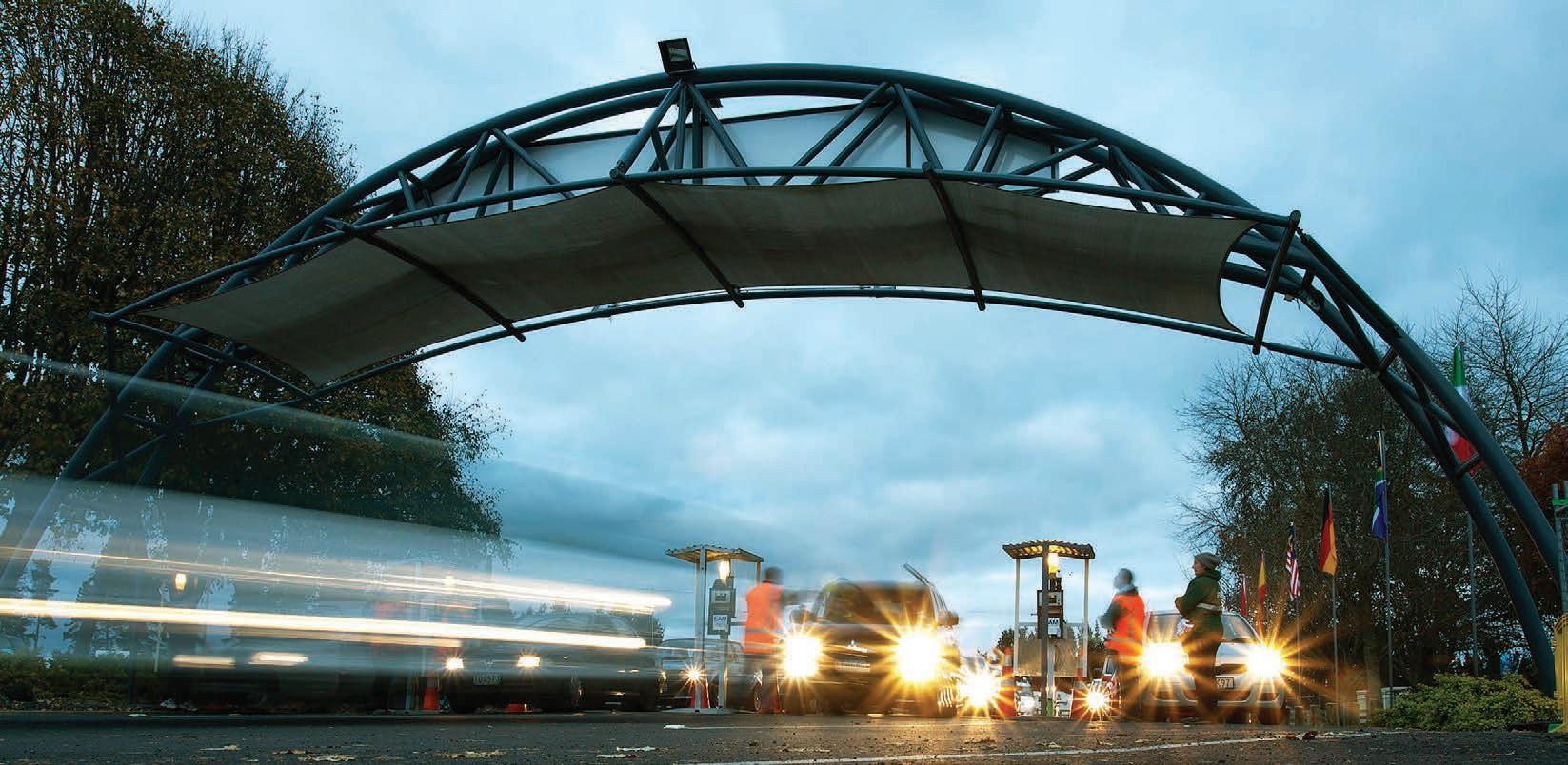
To use the free BUSIT services, a valid 2022 Fieldays ticket must be presented.
Buses depart Hamilton Transport Centre approximately every 30 minutes from 7am to 11am, returning from 1pm to 5.30pm.
There are also park-and-ride options from The Base Hamilton, the BMX Club on Milton Street, Cambridge, or iSite Te Awamutu.
Visitors can park up and catch a bus directly to Mystery Creek.
Like the regional buses, these will be leaving approximately every 30 minutes from 7am.
Fieldays is also making an effort to reduce the amount of paper at the event this year and has again challenged the 1000-plus exhibitors to do the same.
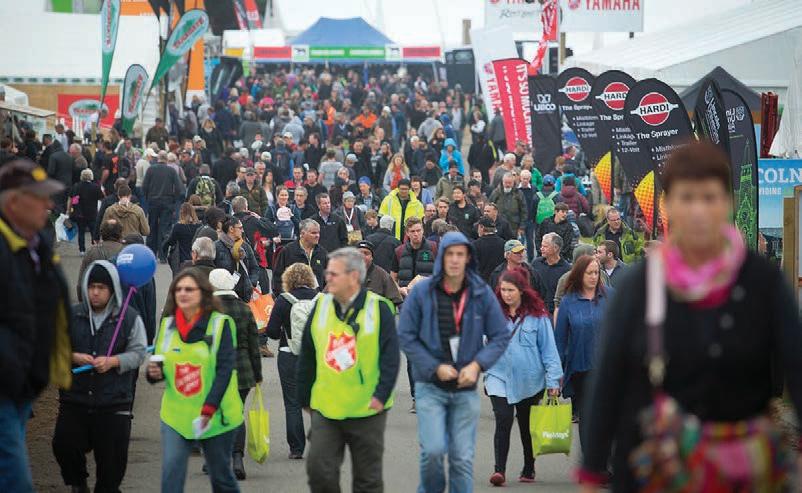
On arrival at Fieldays, attendees will get a SmartBand which can be scanned to enter competitions, receive exhibitor information and engage in exhibitor activations on their sites.
The Fieldays App is the goto information hub where you can search exhibitors, find food vendors, see what is happening where and, most importantly, “pin your car” if you park in one of the carparks.
It is free for download on both Android and Apple devices.
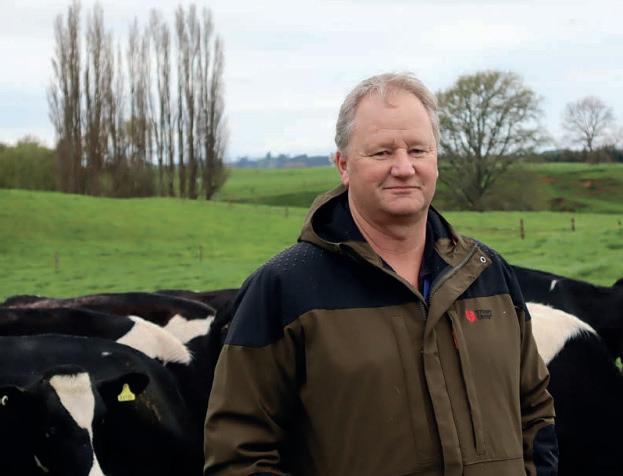
AGRICULTURAL machinery company Case IH has been named a premium sponsor for National Fieldays.
After a forced postponement in June, Fieldays returns to Mystery Creek, Hamilton, from November 30.
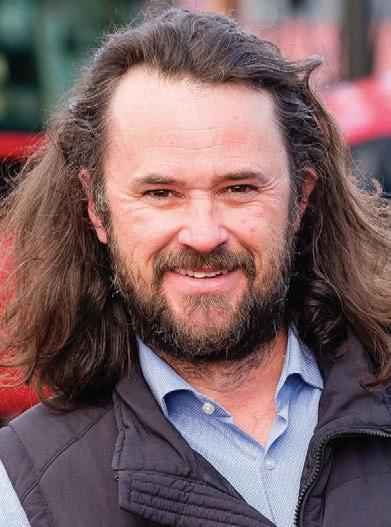
Case IH Australia and New Zealand general manager Pete McCann said sponsoring the event is an important milestone for the brand in the New Zealand market, following on from the distribution changes introduced by parent company CNH Industrial at the start of July.
“Bringing back in house the distribution of CNH Industrial machinery in New Zealand was the start of an exciting new chapter for us, and now this new sponsorship deal really caps off what’s been a great year and cements our commitment to this important and growing market.
“We look forward to this new partnership ... and working alongside the organisers to bring as much as we can to this event and beyond,” McCann said.

DAIRY Women’s
Network has formed a partnership with training organisation Agricademy and its brand Get Milking.
It offers DWN members the opportunity to become a trainer for Get Milking’s dairy assistant and relief milking courses, to
purchase online and on-farm training for staff and, in some cases, to become a Get Milking licensee.
DWN chief executive Jules Benton said they are excited about partnering with Agricademy.
“They listen to the needs of our members and understand what training is needed to ensure that we attract, retain and grow our people to meet the future needs and opportunities in our sector,” Benton said.
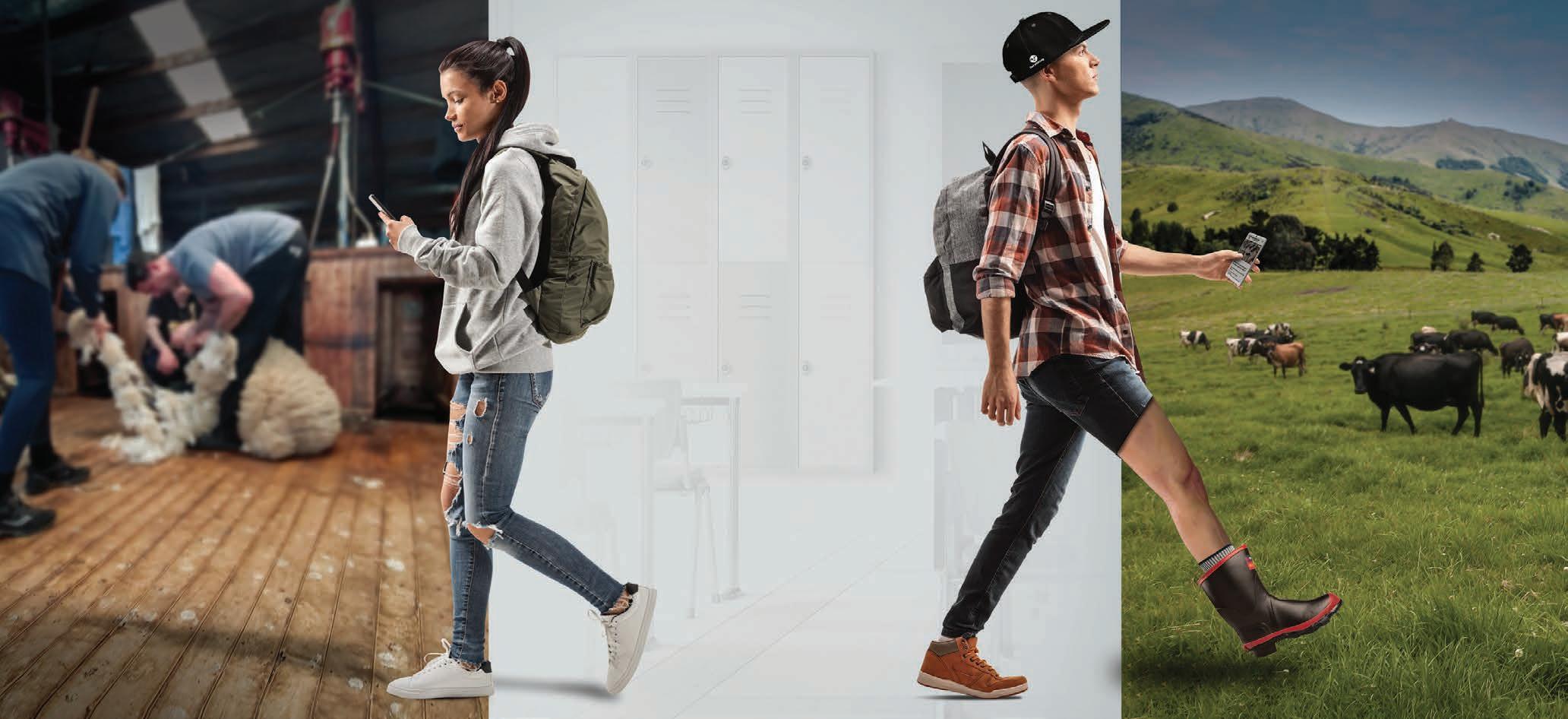
Agricademy estimates the dairy sector needs to train more than 7500 new people each year, as well as retraining or upskilling a similar number of people to meet the changing needs of the industry.
Agricademy’s managing director, Alister Shennan, said: “Get Milking empowers people in rural areas to access training, and if interested, to become a trainer and/or licensee.
“This then leads to increases in the capability and productivity of staff, and contributes to
the success of dairy farming businesses.
“We are really pleased to be partnering with DWN so their members can help co-create targeted and specialised training
content for New Zealand’s dairy farmers, and some may choose to go on to become Get Milking trainers. We are also working with DWN to engage and recruit young New Zealanders to the industry
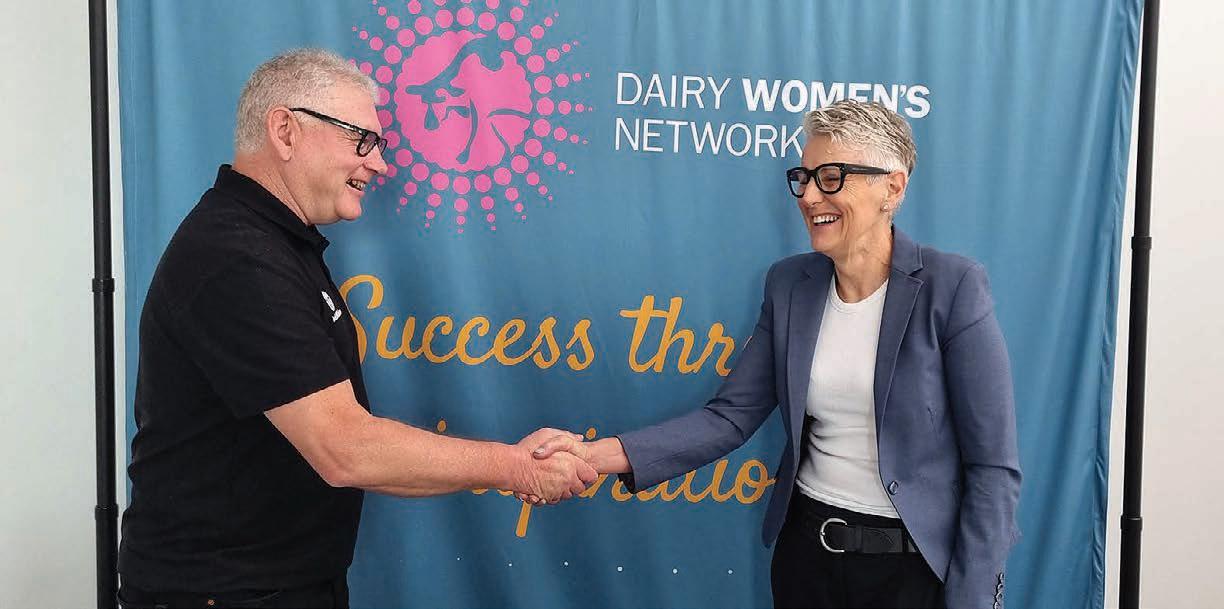
– something we jointly believe is crucial for the future of a sector we love.”
MORE: Visit Agricademy at Fieldays, stand PB18.
BIOCHAR Network New Zealand is campaigning to increase the profile of biochar.

A product made by heating tree or plant waste or other organic matter, biochar – often used as a soil amendment technology –removes carbon from the earth’s atmosphere, the organisation said.
Biochar is one of few negative emissions technologies recognised by the Intergovernmental Panel on Climate Change, safely storing up to half the carbon in its source material for hundreds – and even thousands – of years.
“With large volumes of green
residues from forestry, urban and agriculture resource streams, New Zealand is an ideal place to produce biochar,” said Warrick Isaachsen, chair of Biochar Network New Zealand.
“Not only does biochar store carbon, it increases yield from plants and some animals, improves soil and water quality, and reduces fertiliser and irrigation dependency. This means that people who use biochar also save money while improving ecosystem viability.”
Internationally, Biochar is well regarded for its versatility and benefits not just in agriculture and horticulture, but also its many applications in construction and tech, the organisation said.
New Zealand’s tree dependence
to meet international greenhouse gas commitments is vulnerable to climate change and associated extreme weather events such as drought, wildfire, storm, and pest and disease risks, it said. Biochar can eliminate these carbon offset risks, and can sequester carbon over a much longer period than the life of a pine tree while providing benefits from its use.
One tonne of carbon sequestered in biochar is equivalent to removing 3.67t of CO2 from the atmosphere for hundreds to thousands of years. International voluntary carbon markets and “climate active” businesses are leveraging this chemistry to financially support biochar project development around the world.
Momentum around biochar is
building in NZ, with a number of biochar-related projects in development, the organisation said. Biochar Network New Zealand has been invited to be part of the inaugural Ministry for Primary Industries Fieldays Forestry Hub next month, and internationally renowned biochar expert Professor Stephen Joseph will be in the country to engage with the Marlborough Grape Growers Cooperative, give the keynote address to the New Zealand Society of Soil Science, and attend Fieldays.
There are plenty of important reasons for NZ to grow more trees, said Biochar Network, and one of these is the supply of biomass and forest residues for the production of biochar and pyrolysis coproducts, including energy.
We are also working with Dairy Women’s Network to engage and recruit young New Zealanders to the industry – something we jointly believe is crucial for the future of a sector we love.
Alister Shennan Agricademy
Bayleys’ latest edition of Rural Insight is out now, delivering the most up-to-date market insights directly to our rural clients.
In this edition, we provide in-depth market updates across the dairy, pastoral, horticulture, viticulture, and lifestyle sectors to help rural landowners better understand factors influencing their assets.
We also explore fertiliser options opening up for farmers, question New Zealand’s export dependency on China, look at diversified land use, discuss rural connectivity, and revisit regenerative farming.
When we consider the spring market in the broader rural property sector for 2022, there are three subtle influences at play.
Coming in to spring last year, it was clear that interest rates would be increasing, and with those rate hikes now being felt inside the farm gates, rural landowners are cutting their operational cloth accordingly.
While it is still early days and approval processes are drawn-out, we do expect to see some shift in market dynamics resulting from Overseas Investment Office rule changes effective August 2022.

Overseas investors seeking to convert bare rural land to production forestry will need to meet the higher threshold of the ‘benefit to New Zealand’ test, which adds risk to transactions where there is an offshore buyer, despite potential for price premiums to offset the approval wait time.
Then there’s the agricultural emissions hot potato that He Waka Eke Noa has created. While rural New Zealand has kept production and export wheels turning throughout the extended consultation process around on-farm emissions
pricing, policy makers and farmers are still not aligned and that provides reason for the rural property market to be a little unsettled.
While it may seem the rural sector is at a crossroads, we all agree – New Zealand farmers are global leaders and their stoicism is to be applauded.
Transaction-wise, the market leading into spring was back somewhat on last year, with the volume of nationwide sales down around 24 percent and total sales’ value 10-percent lower.
Some of this downwards shift could be blamed on the very wet winter we’ve just experienced, which dampened transactional activity compared to a more-buoyant 2021 season.
Regardless of cyclical changes in the sector, Bayleys’ rural sales team always welcomes conversations about market sentiment, macro influences and ways to optimise the value of your property.
All our national country sales agents and managers are highly invested in their rural communities and have strong connections with the land. This is why we release our Bayleys Rural Insight – to bring issues close to our rural clients’ hearts to the forefront and provide in-depth market updates across the dairy, pastoral, horticulture, viticulture, and lifestyle sectors to help rural landowners better understand factors influencing their assets.
You can grab a copy of this edition of Bayleys Rural Insight from either our site at the Fieldays (site E74), by contacting one of our Bayleys Country salespeople located in your local office or receive it direct to your inbox – just head to bayleys.co.nz/rural-insight and sign up.
We’d love to have you along for the ride and look forward to connecting with you.
Bayleys’ Country sales team have the market covered with experts in all corners of the country, who understand New Zealand’s rural sector, whether it’s dairy, drystock, horticulture, viticulture or lifestyle real estate. In over 22 years, we have become New Zealand’s number one rural real estate brand, with our dedicated team of country salespeople across New Zealand.
We have the ability to derive insights and expertise from across the country and along with our local market knowledge, we provide our clients unmatched results when it comes to finding the best buyers for your rural or lifestyle property.






It’s altogether better in the country.
Contact your local Bayleys country agent today or get in touch on 0800 BAYLEYS.
the best people, best service and best results for our clients.
Waipaoa Station; 3,662.7ha (STS) is for sale by way of International Tender and provides the opportunity to acquire one of the most exemplary sheep and beef properties in NZ. The Station may be considered in its entirety, or as 4 individual operations, each of which contains a multitude of very favourable farming attributes and is set up to deliver superior farming performance and results. Waipaoa comprises an abundance of flat land, the heart of which is under centre pivot irrigation consented for 125ha. The farm's easy-rolling contour has excellent water infrastructure, and outstanding fertility throughout, with the rear of the farm being home to the esteemed Waipaoa Farm Cadet Training Trust. Years of extensive investment, quality contour and focus on productive performance, have ensured efficient farming practices and has seen farming operations thrive. bayleys.co.nz/2752753
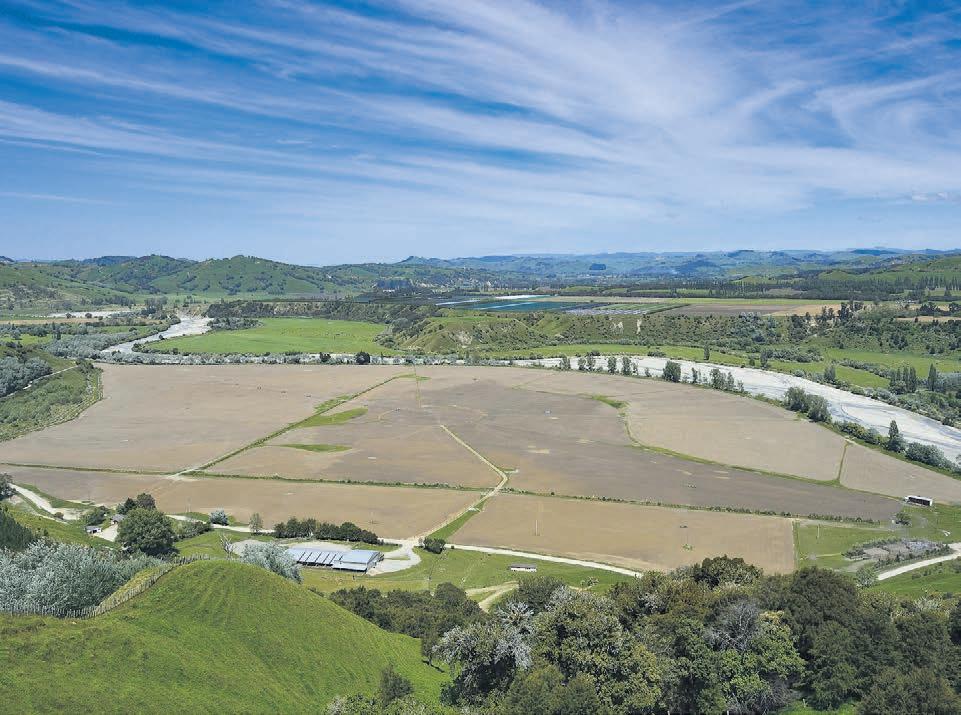
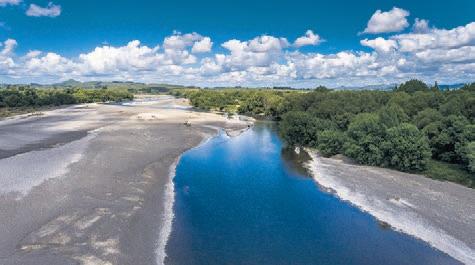
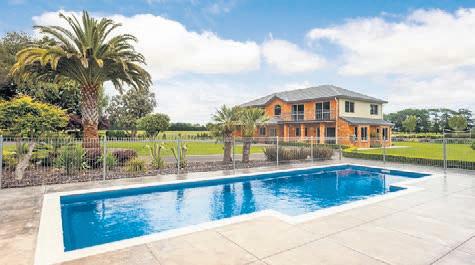
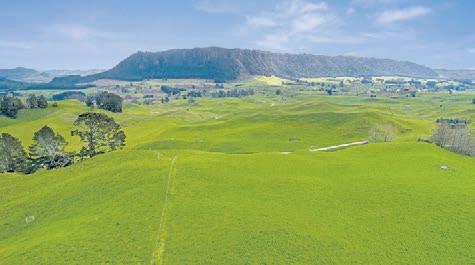
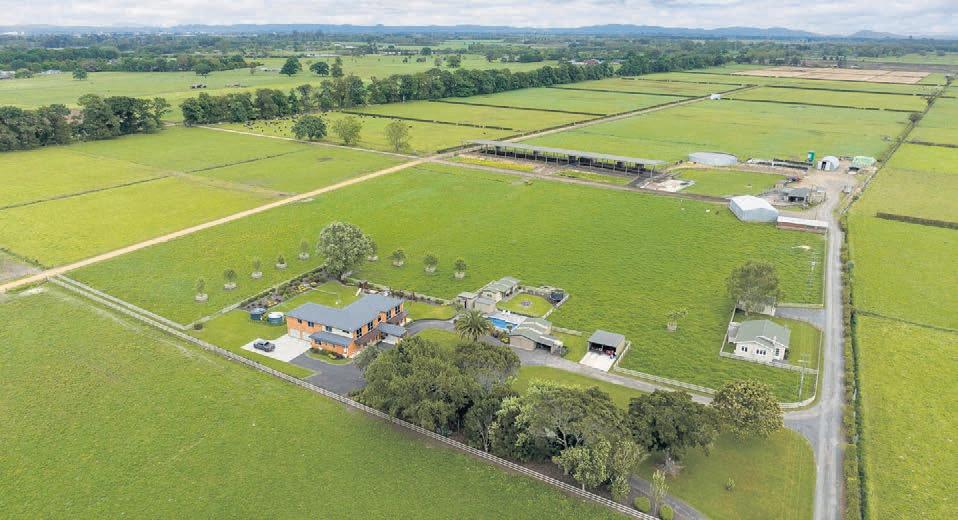
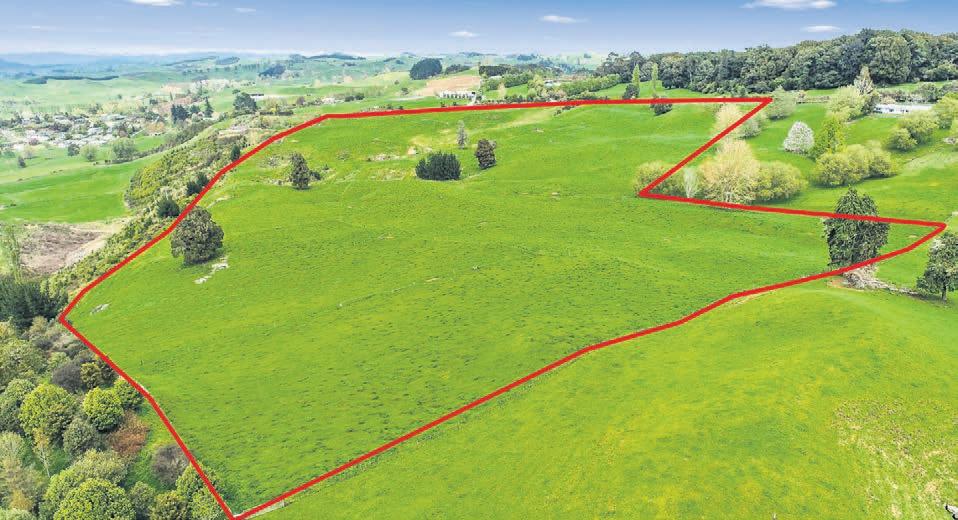
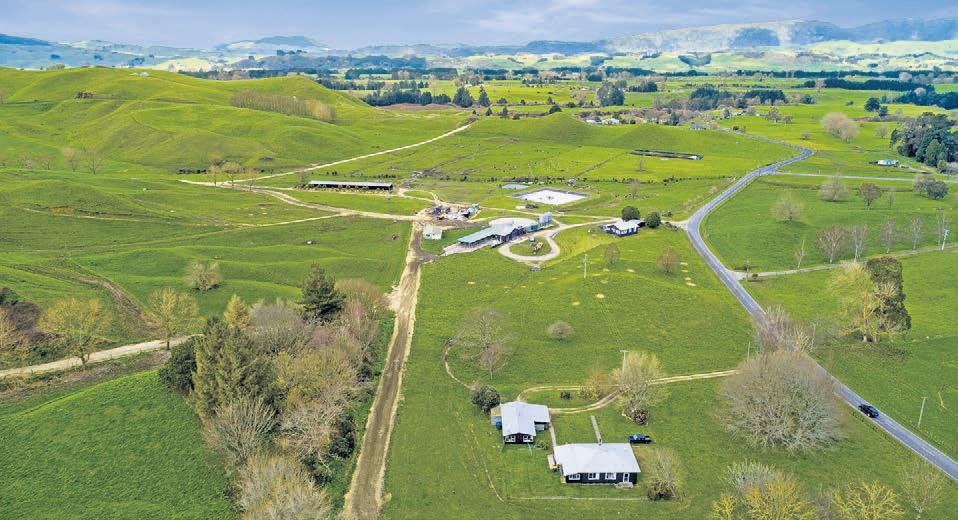
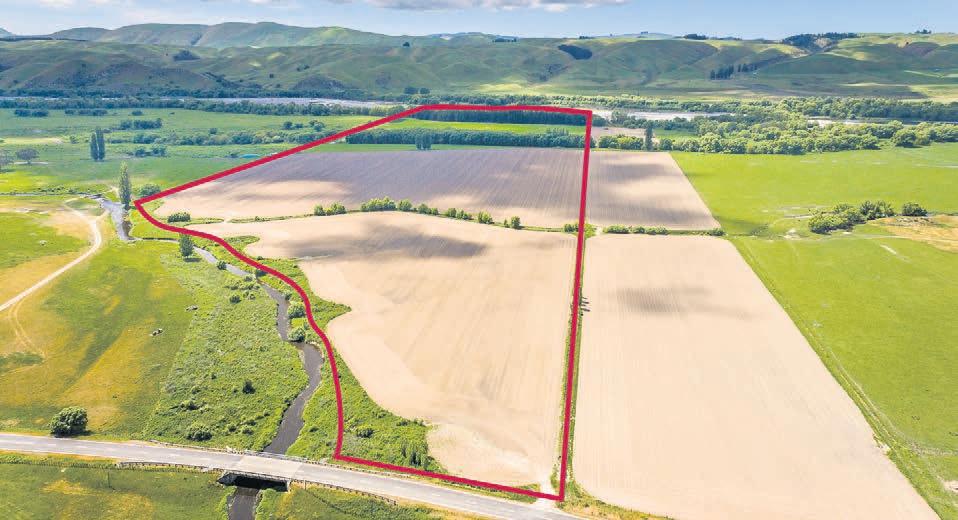
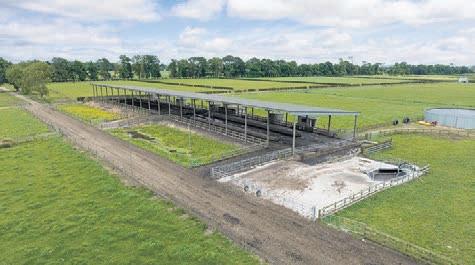
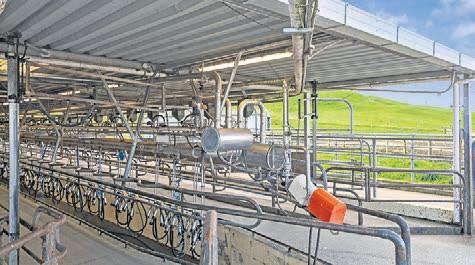
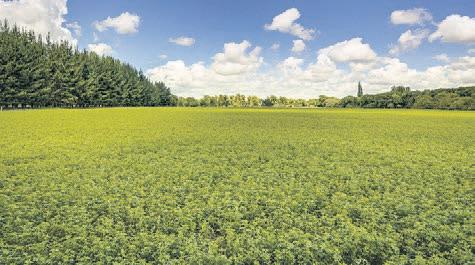
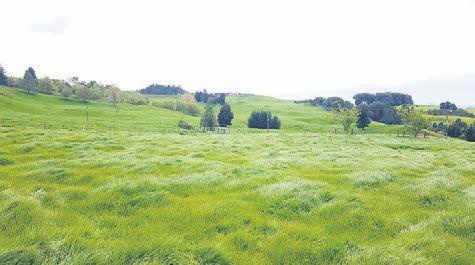
83 Oliver Road 167.8862ha 3
Sale by Deadline Private Treaty (unless sold prior) 1pm, Thu 8 Dec 2022 62 Ardmore Street, Wanaka View by appointment Woodrow Ross 027 527 9690 woodrow.ross@bayleys.co.nz Doug MacGillivray 027 433 9520 doug.macgillivray@bayleys.co.nz
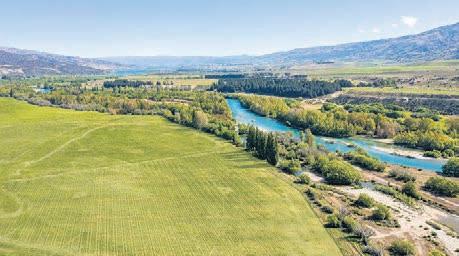

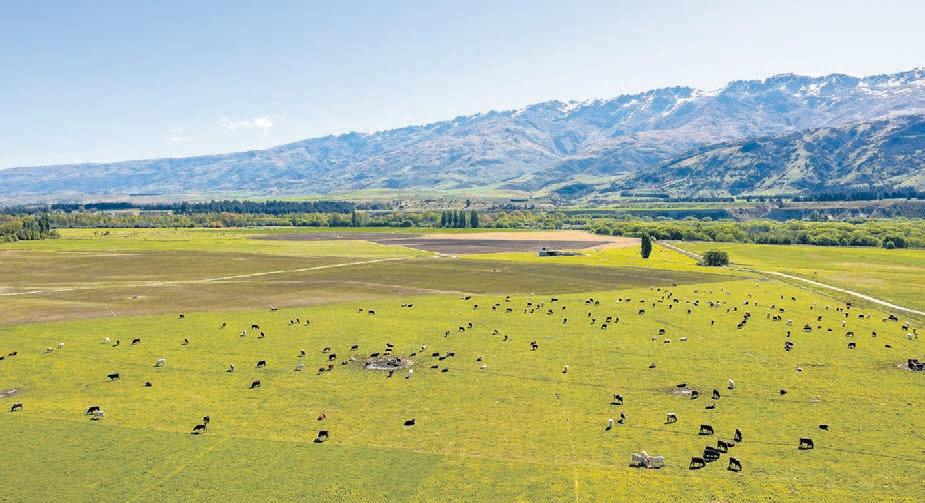
• Economic Farm Surplus greater than $5,000/ha in FY 2022.
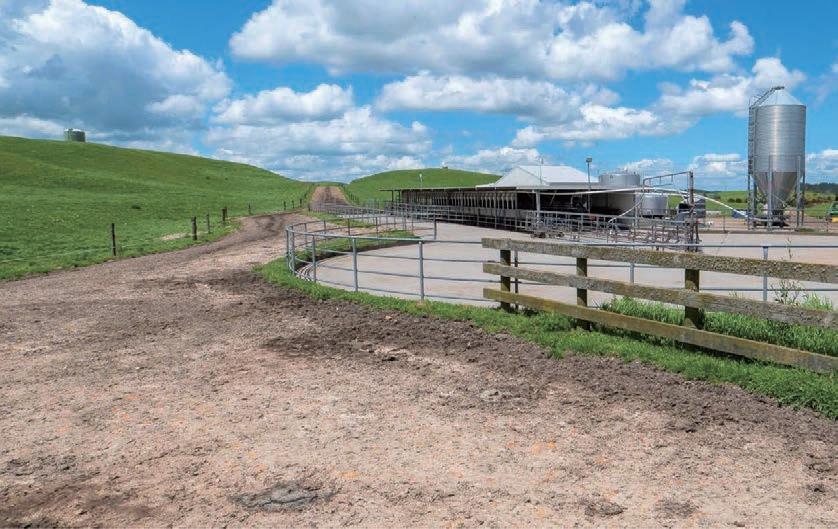
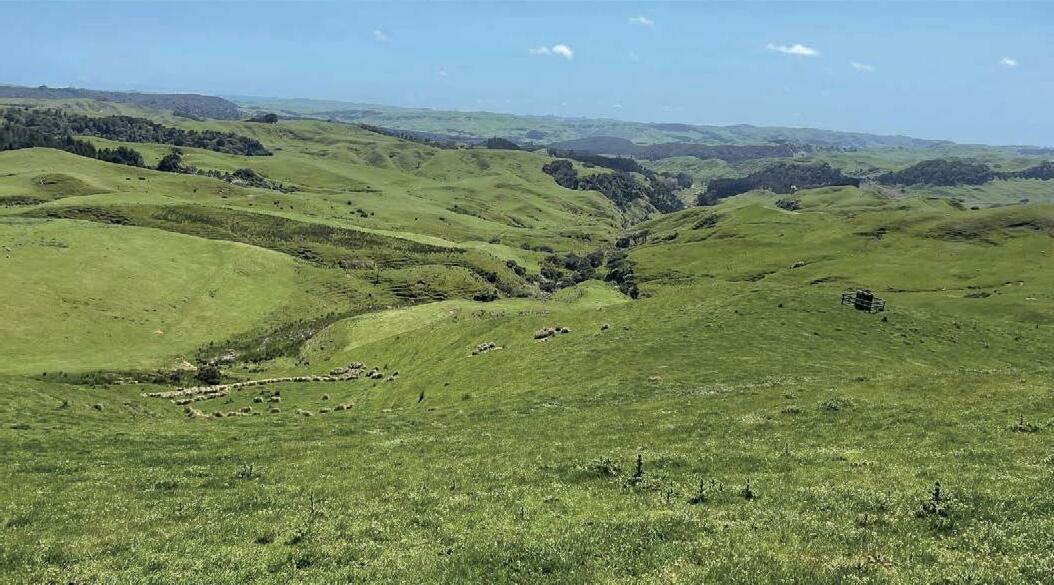
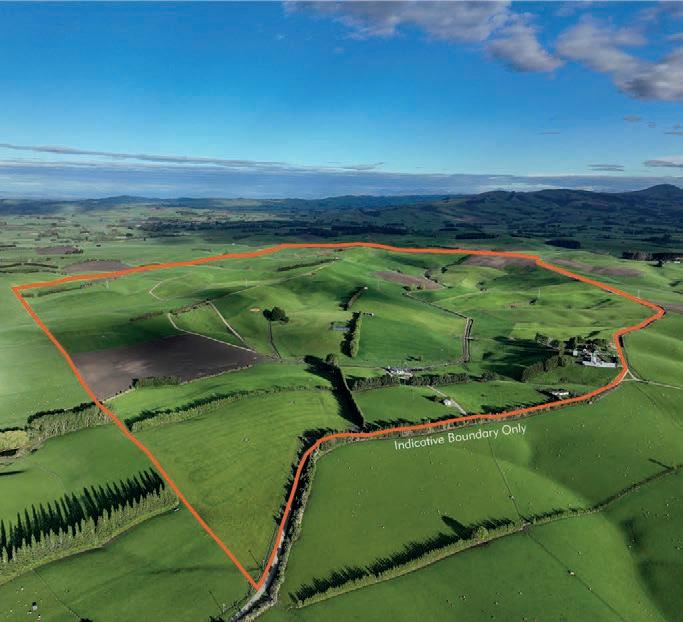
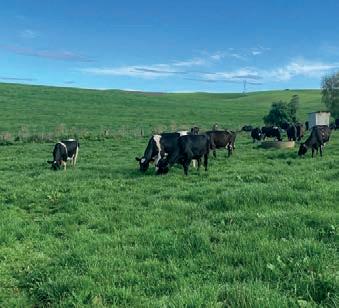
• Farm produced 248,277 kg MS in 2020/21 season ex 560 cows.
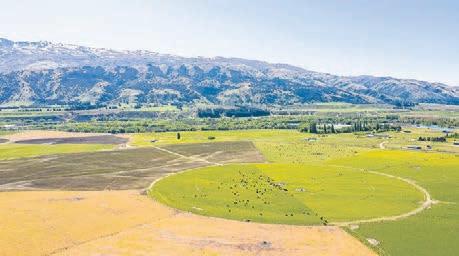
• Well capitalised with 40 bail rotary shed, three housing options.
• Handy location to Gore and West Otago.
• Rolling contour, well thought out layout for ease of management.
• Strong cashflow producing dairy unit.
This 111 ha (subject to survey) dairy unit is located in the highly sought after Wardville District and is presented to the market in excellent heart.
The all-flat contour is held in two titles and has two road frontages. The property is very attractive, well raced and subdivided with quality soils. Farm infrastructure includes a 26 ASHB cowshed with in-shed meal feeders and Protrack drafting system along with a range of good support buildings. The main homestead will be a brand new three bedroom with office nook 'Heartland Homes' build and the second dwelling is a modern three bedroom cottage providing quality accommodation for a farm manager.
Tender closes 2.00pm, Tue 6th Dec, 2022 (unless sold prior), C/Farmlands, 127 Mangawhero Road, Matamata View Tue 29 Nov 11.30 - 12.30pm Web pb.co.nz/MAR111058
Ian Morgan M 027 492 5878
Chelly Aitchison M 022 697 8779
95 ha (approx.) dairy farm - Location counts
An opportunity exists here for those that recognise it.
A great location on the west side of Hamilton, with Raglan, Hamilton and Te Awamutu all within 30 minutes of this location.
With two houses and operating as a spring calving dairy unit, the opportunity exists for those looking for a large lifestyle block, farmers looking for a good sized support unit or a first farm purchaser to own land.


Approximately 3 ha of mature native trees enhance this 85% flat contour property.
Deadline Sale closes Wednesday 30th November, 2022 at 4.00pm
View By appointment Web pb.co.nz/HMR110414
Craig Miller M 021 874 283
John Sisley M 027 475 9808

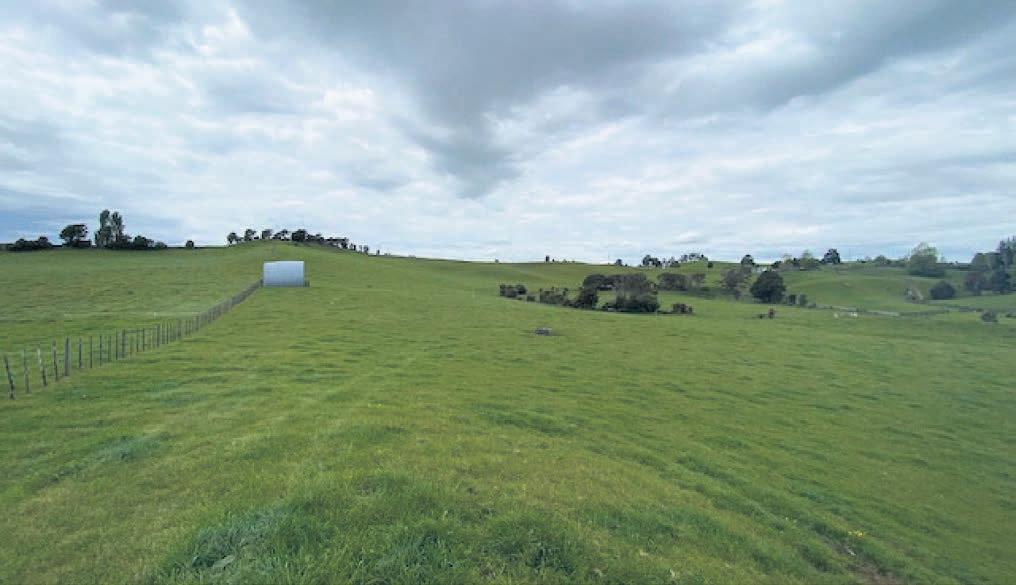
• 164 ha dairy unit - 33 km southeast of Te Awamutu


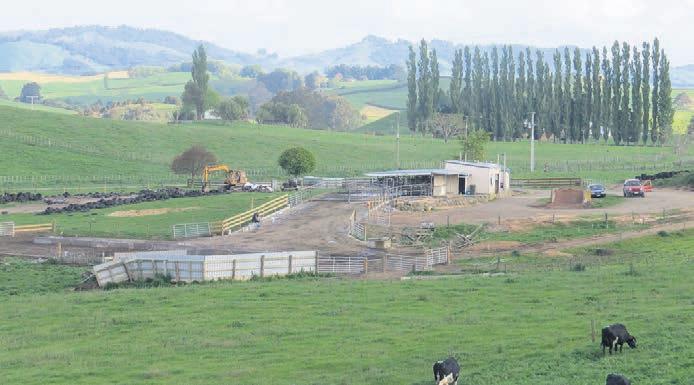
• Production has been around 100,000 kgMS for the last five years
• Large executive style main home; 30 ASHB shed and feed pad
• A mix of contour - flat & easy, steeper with rocky outcrops
• Good fertile free draining soils
• There is work required but the basics are here
Our 'seriously for sale' vendor wants a result! The property can be purchased as one lot or in two parts.
Tender closes 4.00pm, Wed 14th Dec, 2022 (unless sold prior), Property Brokers, 138 Arawata Street, Te Awamutu
View Wed 7 Dec 12.00 - 1.00pm Web pb.co.nz/CBR111025
David McGuire M 027 472 2572 E david.mcguire@pb.co.nz
John Sisley M 027 475 9808 E john.sisley@pb.co.nz
Wardville 629 Wardville Road TenderThis well located lifestyle property has a new executive home on an elevated site and is finished to a standard that most of us dream of. Boasting an open plan kitchen, with scullery, dining and lounge, three double bedrooms, the master with walk in wardrobe and ensuite, a theater room which could be a fourth bedroom and a good-sized office. Complimented with 90 m2 of north facing decking with spectacular views that create incredible indoor/outdoor flow. Garaging is an internal three bay garage. Other infrastructure includes a brand new 130 m2 three bay colour steel shed, two bay implement shed and cattle yards to make for easy stock handling.
3 2 2
Tender closes 4.00pm, Mon 5th Dec, 2022 (unless sold prior)

View By appointment Web pb.co.nz/TER107739
Di Janett M 027 554 2227
Doug Wakelin M 027 321 1343
This well presented 85.3 ha property is located at 286 State Highway 30, just a short drive to Te Kuiti
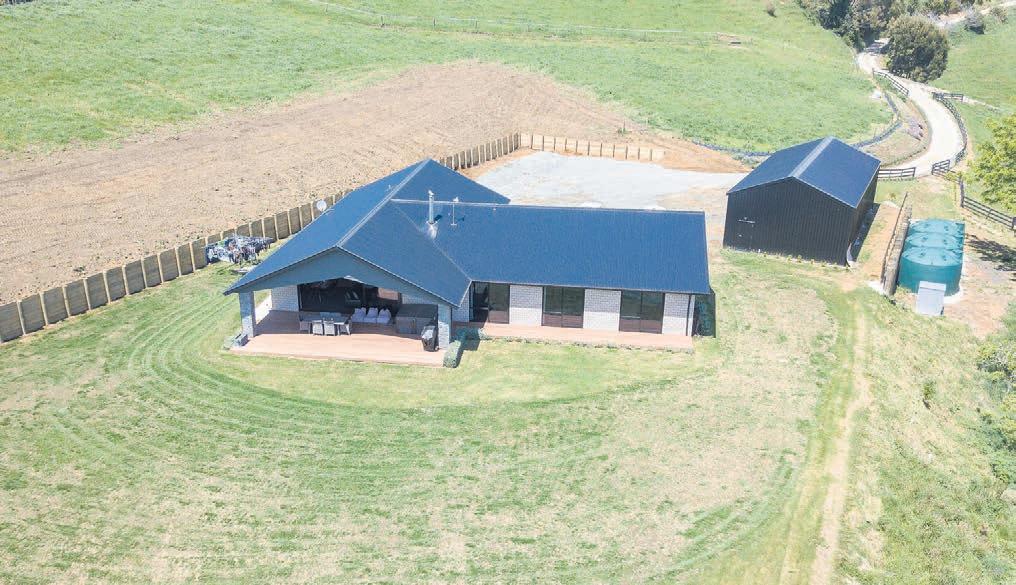
• Mainly flat to undulating with some steeper contour at rear of property. Reticulated water sourced from reliable spring supplies

• Infrastructure includes a gorgeous villa that oozes character and charm, three stand woolshed, three bay implement shed, hayshed and cattle yards
If you're looking for a tidy well balanced grazing property in a handy location then this opportunity is well worth a look. Motorbike and helmet is needed for viewings

Deadline Sale closes Thursday 8th December, 2022 at 4.00pm

View Tue 29 Nov 10.00 - 11.00am

Web pb.co.nz/TER111301
Doug Wakelin M 027 321 1343
Di Janett M 027 554 2227


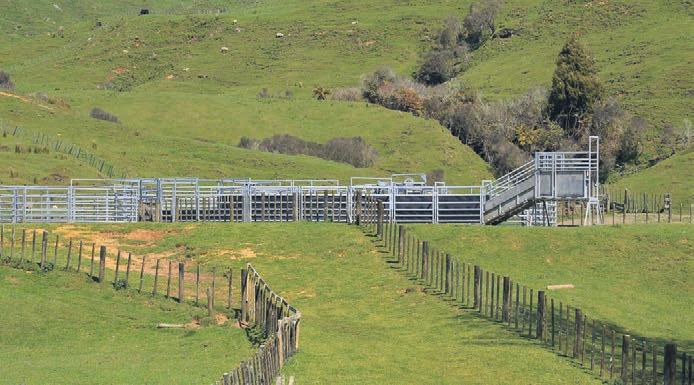

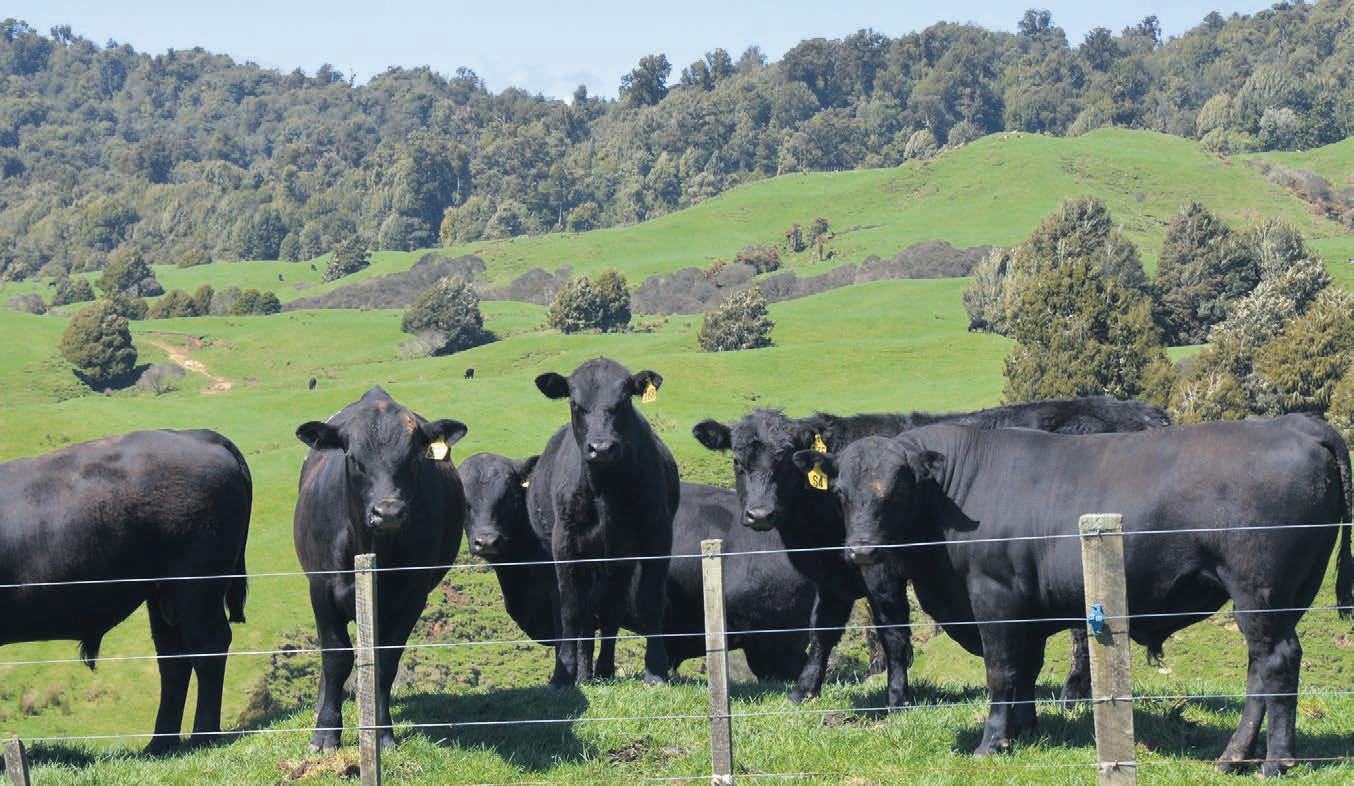
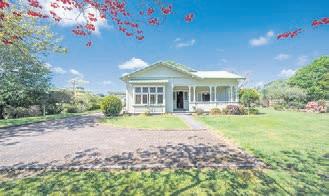
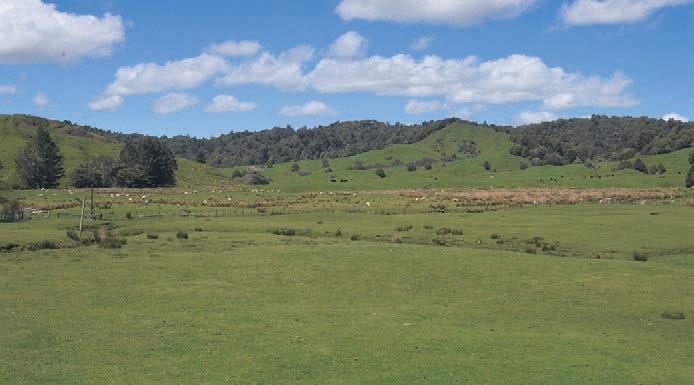


A 546 ha (approx.) grazing property centrally located approx. 117 km southwest of Te Kuiti, 97 km northeast of New Plymouth and 71 km west of Taumaranui. With over half of the 450 ha effective area being easy contour the property is capable of running at least 80% cattle. Fenced into 30 main paddocks with natural water. Winter stocking rates include a total of 850 sheep and 635 cattle.
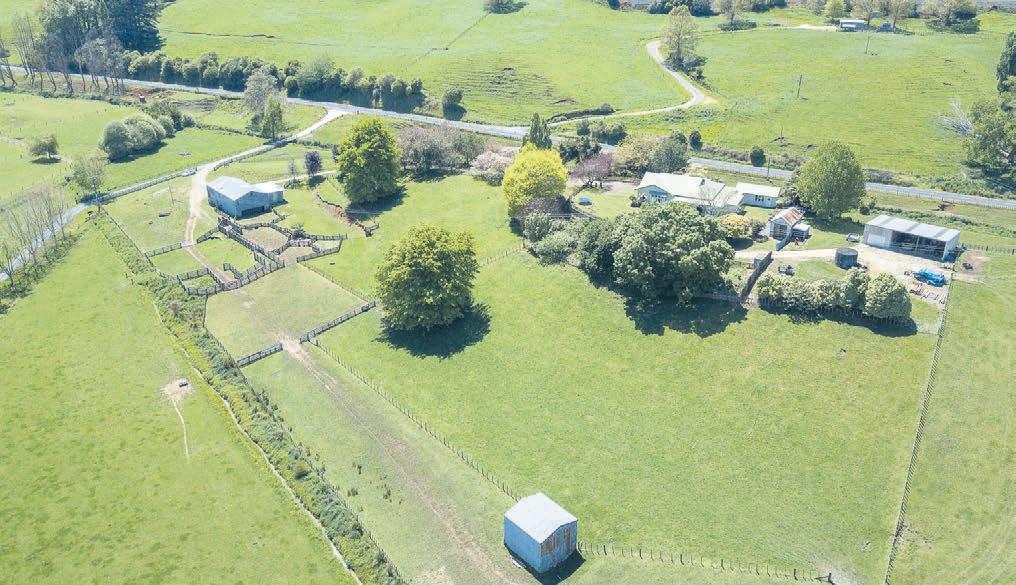
Infrastructure includes a three bedroom and a four bedroom dwelling, a four stand woolshed with covered yards, concreted Te Pari cattle yards, two implement sheds, one hayshed and a fertliser bin.
This farm offers diversity in stocking options and with Manuka and native bush surrounds, bee keeping and exceptional hunting are here for the taking. Motorbike and helmet is needed for viewings.
For Sale By Negotiation + GST (if any)
View By appointment
Web pb.co.nz/TER109593
Doug Wakelin M 027 321 1343 E dougw@pb.co.nz
Di Janett
M 027 554 2227 E di.janett@pb.co.nz
Our motivated vendors have instructed Property Brokers to offer for tender this larger scale Taranaki dairy farm located in the strong farming area of Awatuna. This farm will appeal to those wanting to grow their farming business or looking for a sound investment. The contour is flat and is well subdivided with excellent laneways. Fertile Egmont Black Loam soils help promote excellent pasture growth, and the regular cropping ensures a strong pasture renovation program with modern cultivars used. The average production for the last four seasons is 317,000 kgMS from an approximate peak number of 780 cows. The infrastructure is of a good standard and includes four houses, 60 bail rotary shed, Protrack, inshed feeding, two feed pads, modern effluent systems with traveling irrigators, multiple hay/calf sheds and a workshop. Water is sourced from the Waimate West water scheme. If you are looking for a flat, larger scale and well located South Taranaki dairy farm, look here!
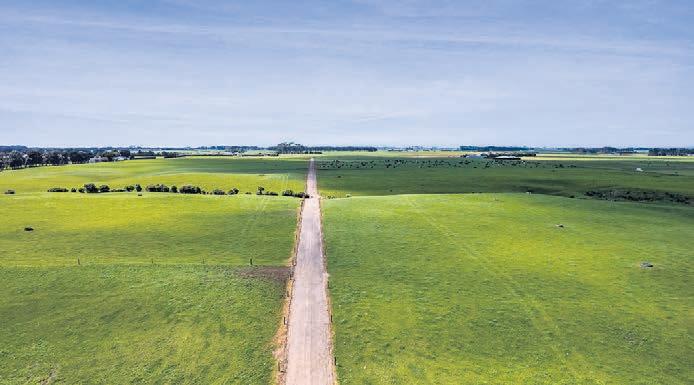
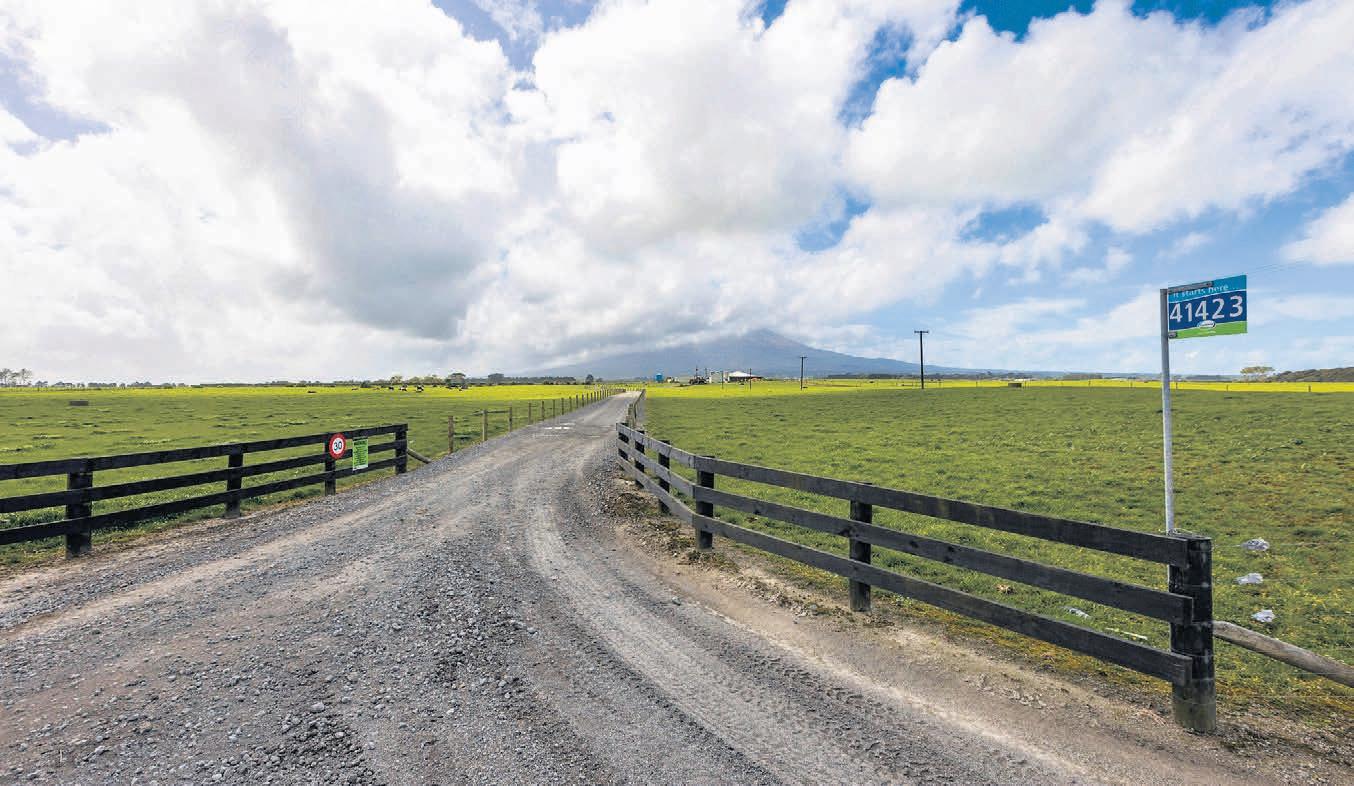
Greg O'Byrne M 027 598 3000 E greg.obyrne@pb.co.nz
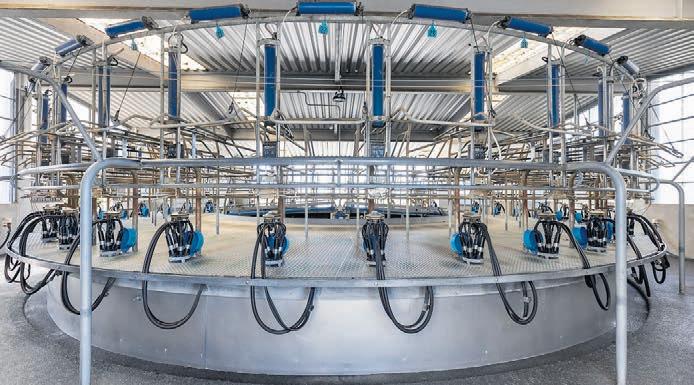
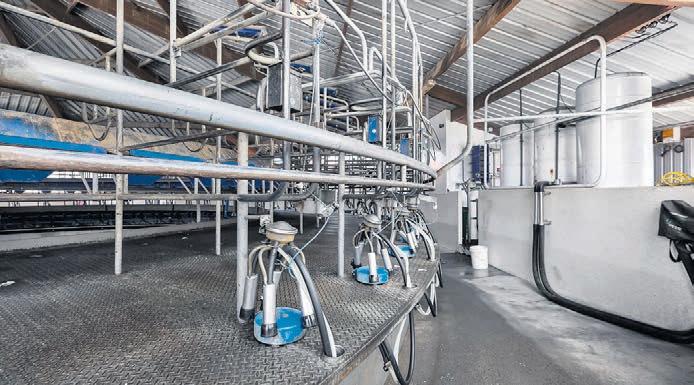
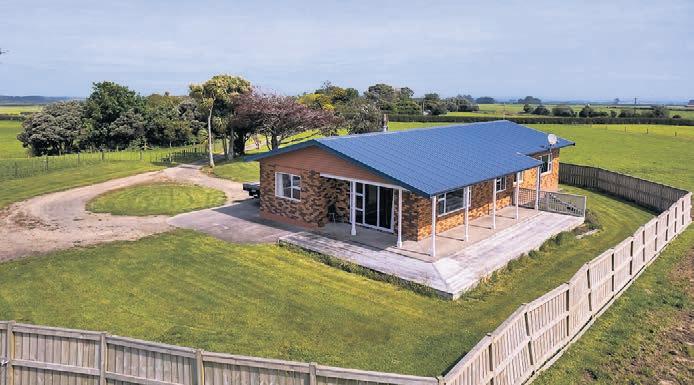




Property Brokers are privileged to bring to the market for tender this absolutely outstanding 96 effective ha dairy farm. It is located in the sought after, renowned dairying district of Pihama in South Taranaki. This immaculately presented dairy farm is supported by a consistently high level of milk production and will appeal to any purchaser looking to buy the best of the best. The contour is flat and consists of fertile Egmont Black Loam soils. The current management system is split calving and supported by a 23 ha leased run-off (available for purchase). The five year average production of 186,500 kgMS is achieved from a peak number of 360 cows. The modern infrastructure is of an impressive standard and includes a four bedroom main house plus office and tidy second three bedroom house, 40 bail rotary shed, Protrack, multiple sheds, feed pad, modern effluent system. Water is sourced from the Cold Creek water scheme. One of the best dairy farms that will come to the market.
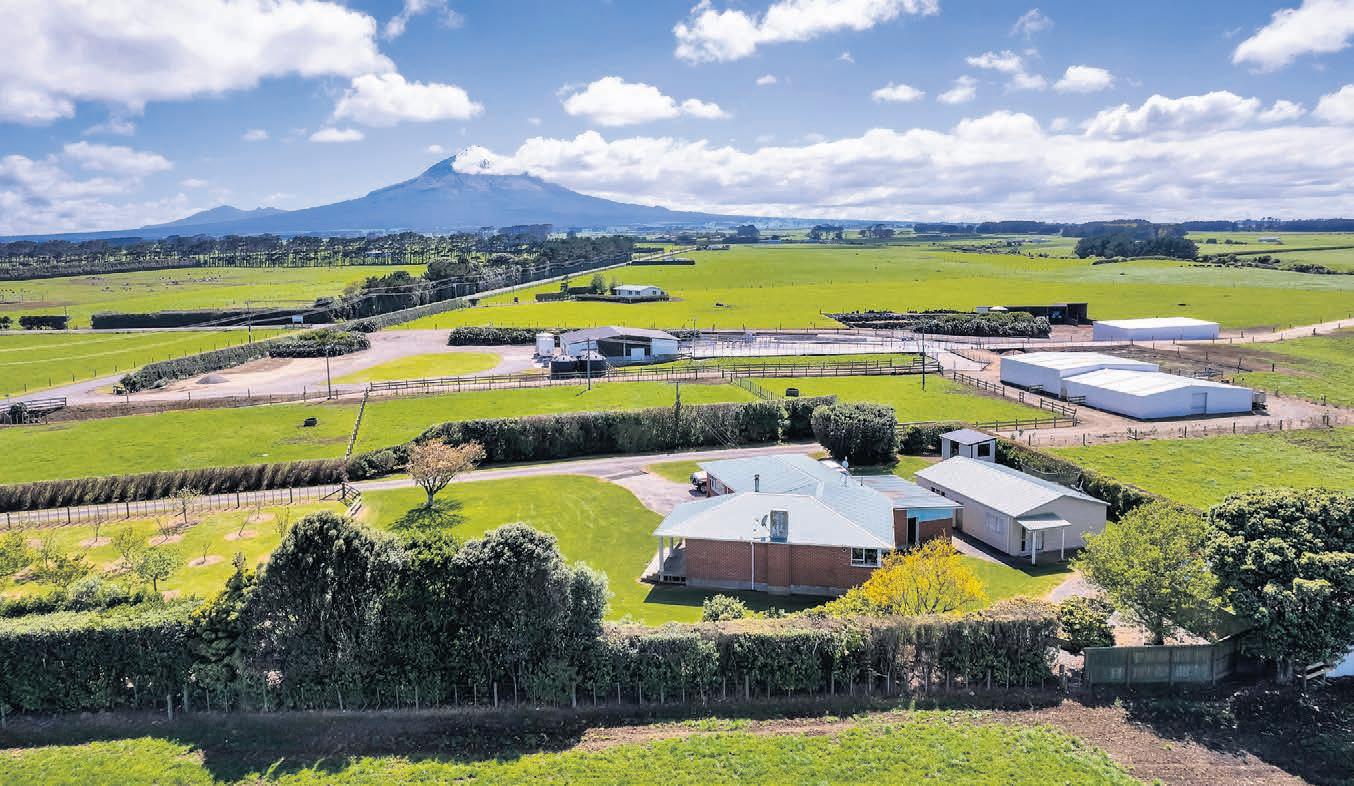
4+ 1+1
Tender closes 4.00pm, Thu 8th Dec, 2022, 227 Devon Street East, New Plymouth.
View By appointment Web pb.co.nz/NPR111318
Greg O'Byrne
M 027 598 3000 E greg.obyrne@pb.co.nz
Located under 10 minutes drive from Pahiatua, Ruawhata Dairies is a 226 ha dairy farm that is well suited to continue as an established dairy unit or a summer safe, support or finishing farm. Regularly high producing with last season 210,000 kgMS off a 180 ha platform, the property boasts superior soils, virtually all flat contour, modern pasture species, quality farm infrastructure and two dwellings. Improvements include a 54 bail rotary shed complete with a 500 cow feed pad and a good range of shedding. Dwellings include a large three bedroom main residence set in established grounds and a second three bedroom home nearby providing excellent on farm accommodation. Ruawhata Dairies will attract interest from across a range of agricultural sectors with it's high productive capability and quality infrastructure.
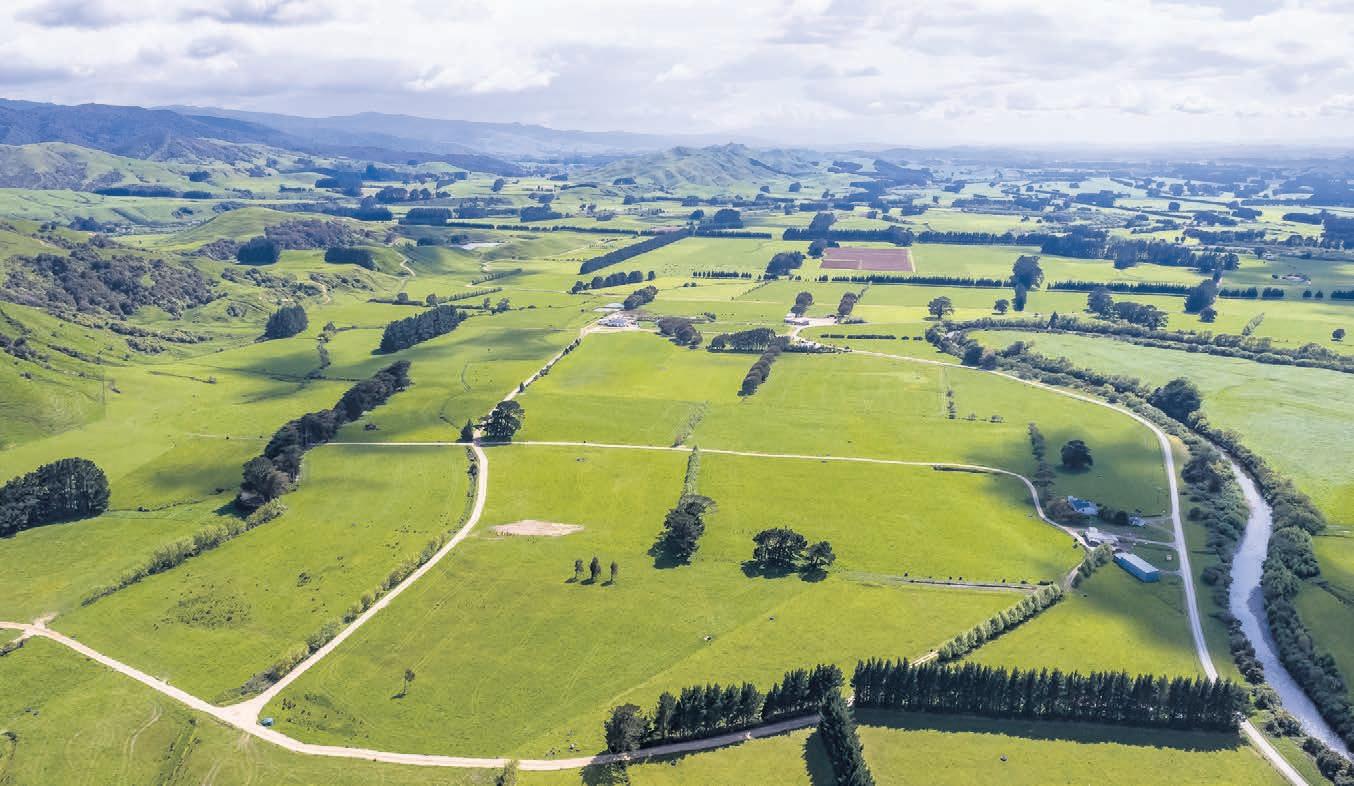
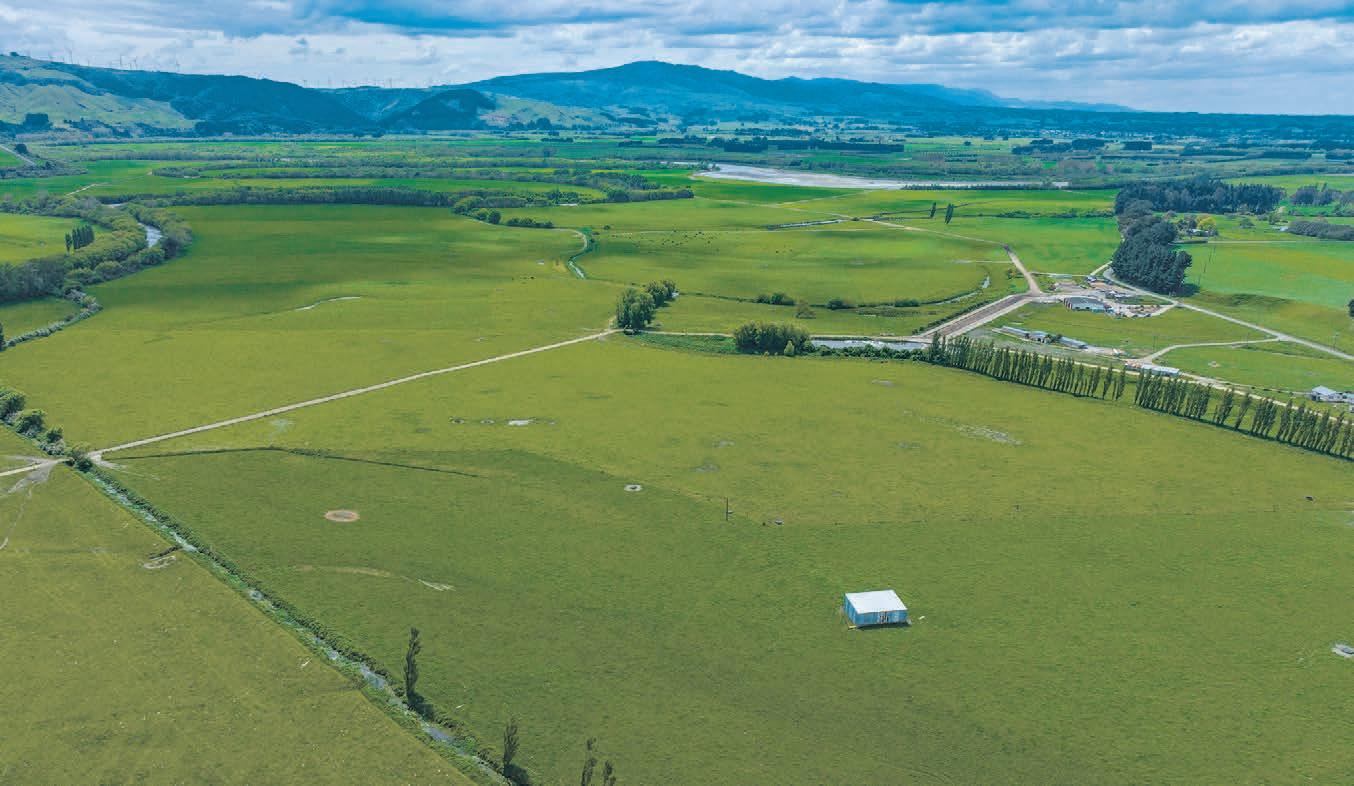
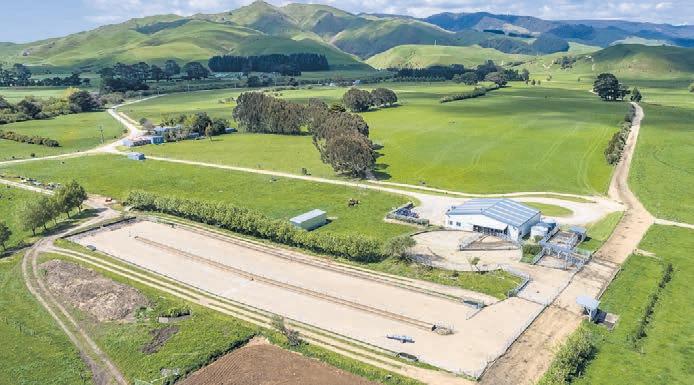
Auction 2.00pm, Thu 15th Dec, 2022, (unless sold prior), Bush Multisport Lounge Bar
View By appointment Web pb.co.nz/PR111895
Jared Brock M 027 449 5496 E jared@pb.co.nz
Sam McNair M 027 264 0002 E sam.mcnair@pb.co.nz
Jamie Smith

M 027 220 8311 E jamie.smith@pb.co.nz
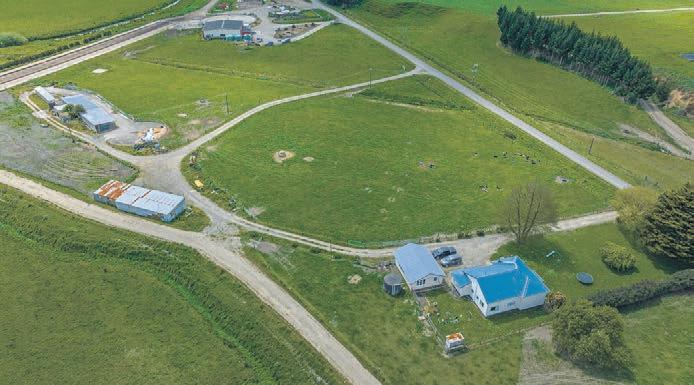
Looking for your next opportunity? Look no further, this well presented 145 ha dairy platform with wrap around support blocks of 180 ha plus a 39 ha supplement block 3 km from the dairy unit offers multiple options for the astute buyer. Currently milking 320 cows averaging 124,217 kgMS from an all grass low cost certified organic system. Consents are in place to milk 450 cows under a conventional system. R1 & R2 young stock, 150 x R1 & R2 beef, all baleage, hay and silage are produced on the property. This property has a modern automated 40 bail Rotary cowshed, 500 cow feed pad, loafing pad, plus multiple shedding including a nine bay calf rearing shed. Complimented with two homes with the main four bedroom, two bathroom home suitable for an owner operator. Offering flexibility of purchasing options either as one 360 ha unit or four 80 ha (approx.) titles and one 39 ha title this property is definitely worth a look.

Tender closes 2.00pm, Wed 14th Dec, 2022, to be submitted to Property Brokers, 129 Main Street, Pahiatua
View By appointment
Web pb.co.nz/PR105005
Jared Brock M 027 449 5496 E jared@pb.co.nz
Jamie Smith
M 027 220 8311 E jamie.smith@pb.co.nz
Eketahuna 125 Larsen Road*This 150 ha finishing farm is located in the Colyton district only 16 mins from the rural township of Feilding and 28 mins from Palmerston North. Our retiring vendors have operated the property as a bull finishing unit for many years with calf rearing being a significant component of the earlier operation. The balance of contour and the well-subdivided nature of the property make this an easy-to-run farm, consistently wintering between 240-270 mixed aged bulls. The property is aesthetically appealing with significant plantings around the large dam near the homestead and across the property. Improvements include a magnificent five bedroom homestead with swimming pool, a second three bedroom home on a separate title, a 320 capacity calf rearing shed, two sets of cattleyards, three bay implement shed, stables and arena. This property represents a high standard of living on an easy to run finishing farm with additional rental income. (Will not be sold prior.)
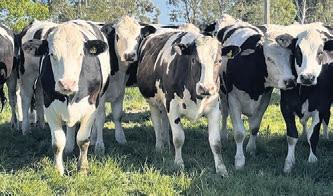
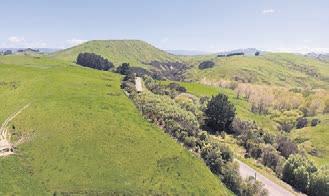
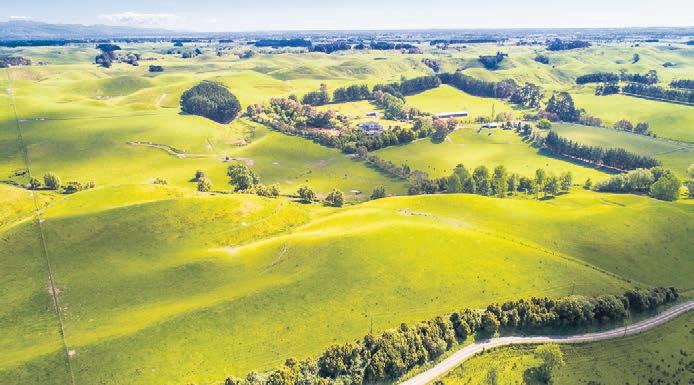
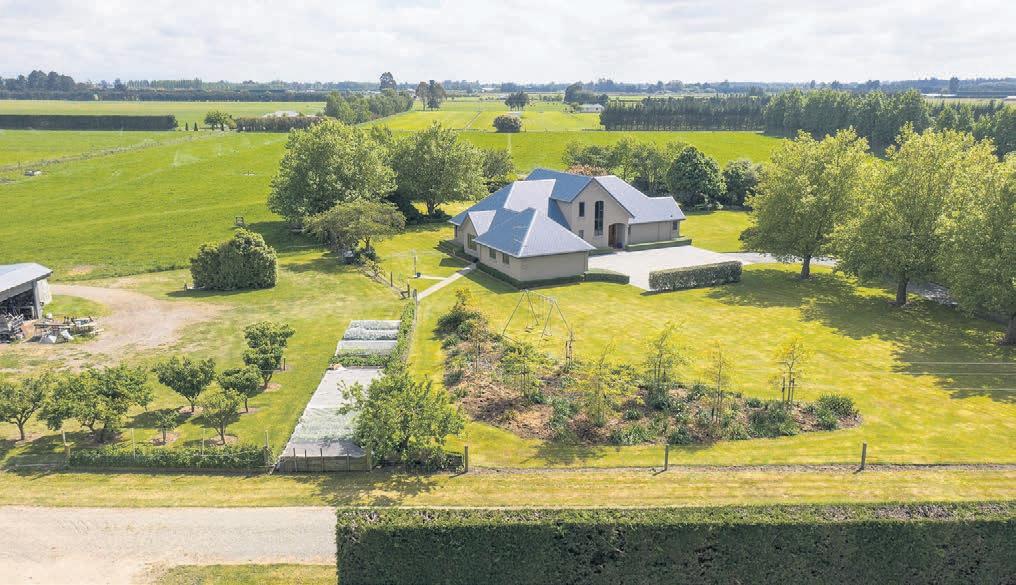


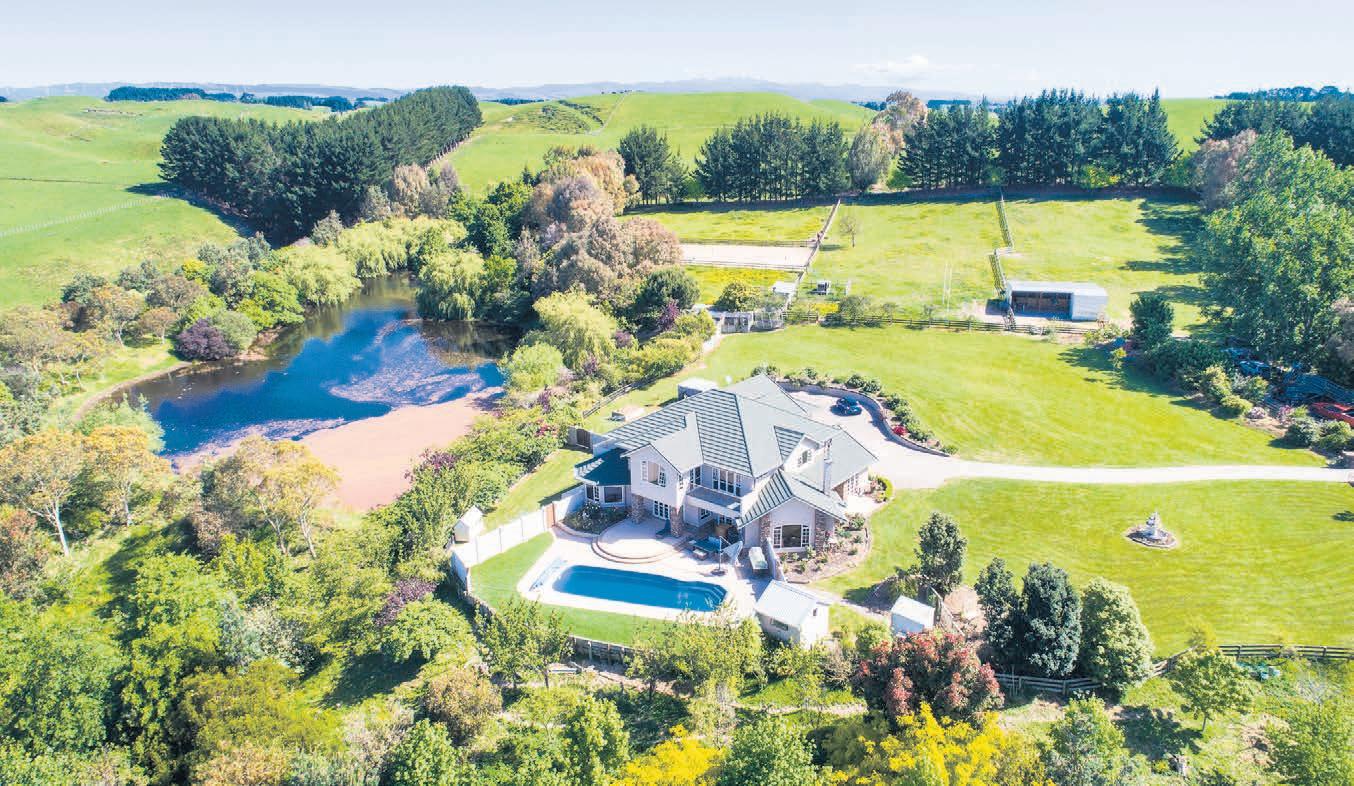
5+3 3+1 3

Tender closes 11.00am, Fri 16th Dec, 2022, 54-56 Kimbolton Road, Feilding View By appointment Web pb.co.nz/FR111952 Yvonne Forlong M 021 456 565 E yvonnef@pb.co.nz
Ashburton 250 Fords Road
Pekanui is located in the Tararua district and is known for its spectacular scenery. Just a little over 15 mins from Dannevirke on Weber Road, this 254 ha property enjoys a balanced aspect that offers amazing views over the Weber District and out to the ocean. Incorporating an excellent balance of farmland with quality soils, stands of native trees, stunning multiple freshwater creeks and limestone rock formations, this unique environment combines a sustainable balance of productive farming and nature. The contour is a mix of easy to medium and some steeper areas. The farm is well tracked and has a high standard of fencing throughout.


Tender closes 2.00pm, Thu 15th Dec, 2022, Property Brokers Ltd
4 Stanley Street, Dannevirke
View By appointment
Web pb.co.nz/DR104636
Sam McNair M 027 264 0002
Jim Crispin M 027 717 8862
46.79
This is a quality small farm offering a wide range of land use options to intending purchasers. From its current use as a highly productive calf rearing / beef finishing operation there are several alternative uses from intensive arable to dairy support. The farm irrigation consent and system provide water for a full range of farming options. Excellent fencing, paddock subdivision, shelter and access are in place along with cattle yards, shed and workshop. Featuring a quality executive home set within private sheltered landscaped grounds with easy-care gardens. The vendors have developed this small farm to a high standard with excellent improvements and infrastructure.
4 2 2
Deadline Sale closes Thursday 15th December, 2022 at 12.00pm, (unless sold prior)
View By appointment Web pb.co.nz/AR111712
Greg Jopson M 027 447 4382
Dannevirke 1921 Weber Road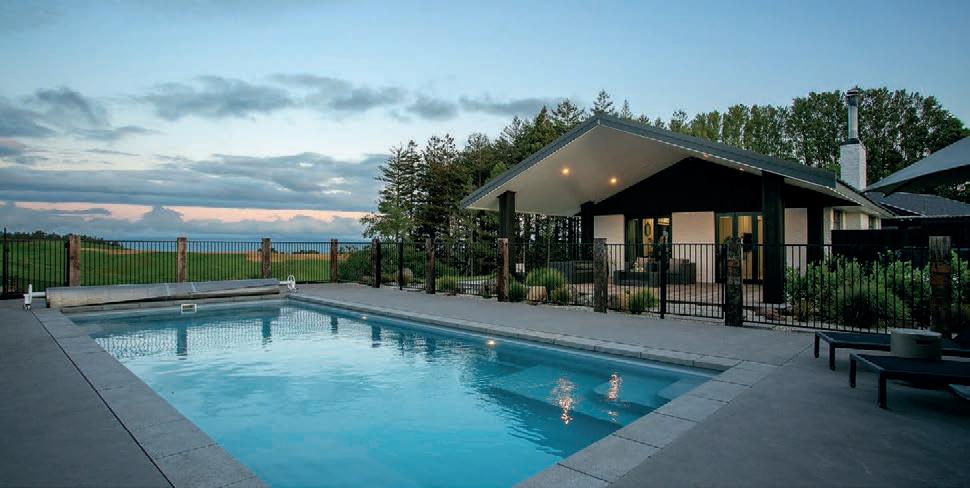
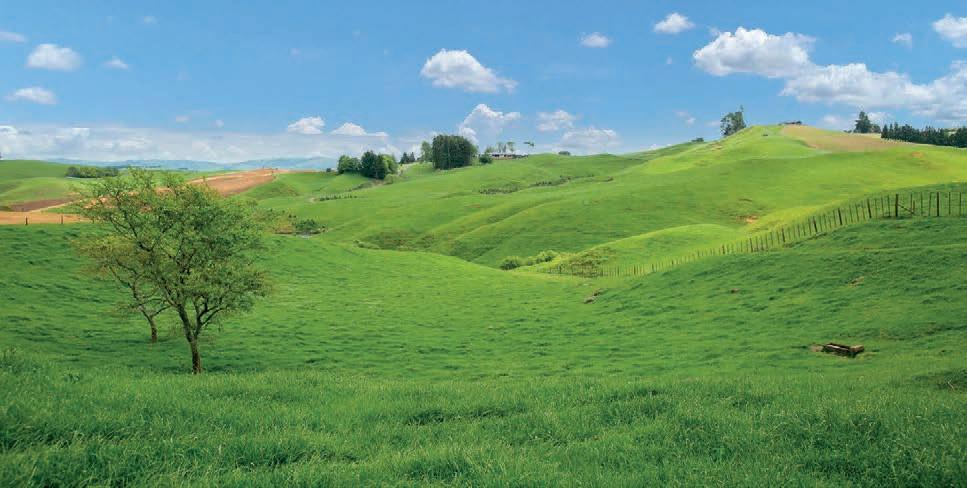
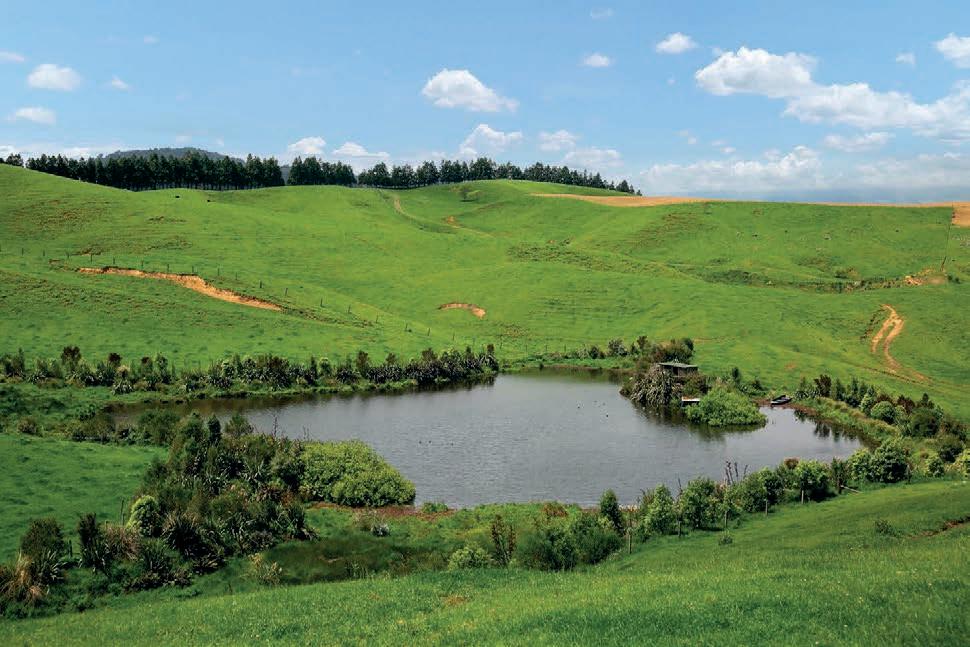
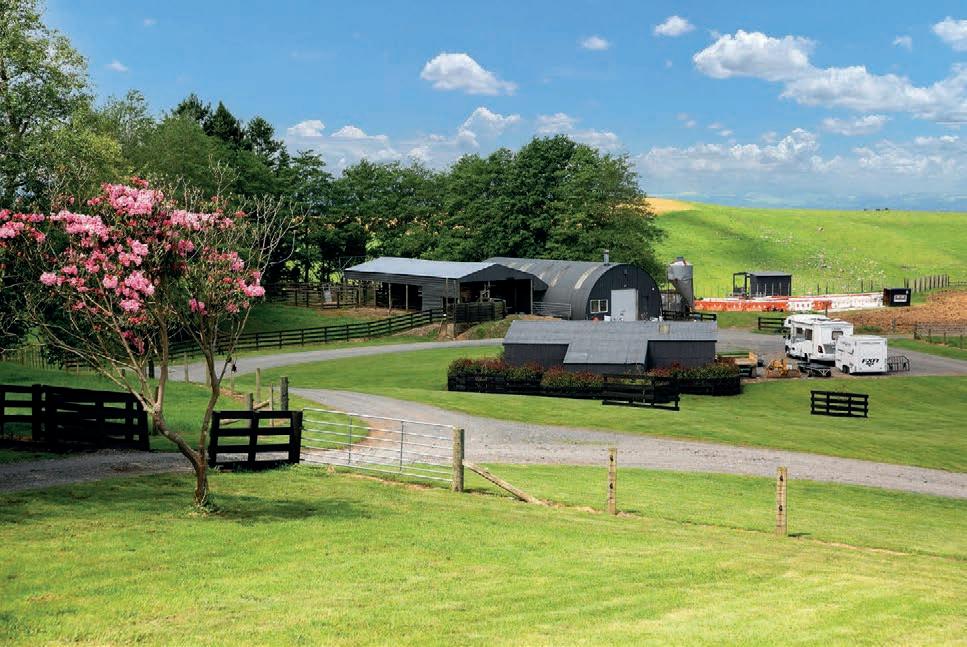











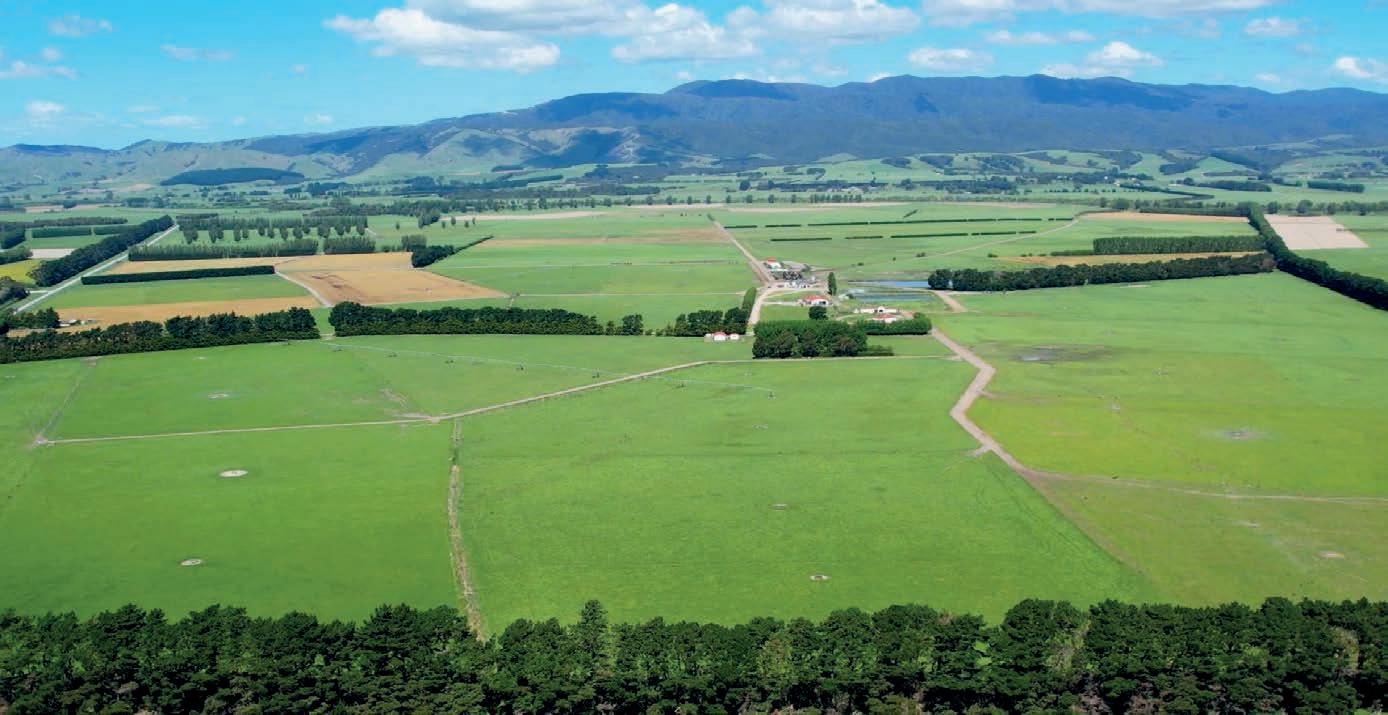
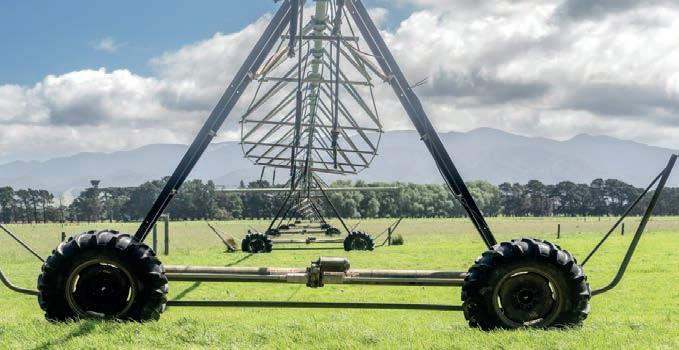
Arguably the Best Soils in the District
Considered by some as being the best dairying land in the District and maybe even the Waikato. For those wanting the best of the best your quest is finally over as this outstanding Dairy property located only a few minutes from town will impress in more ways than one.
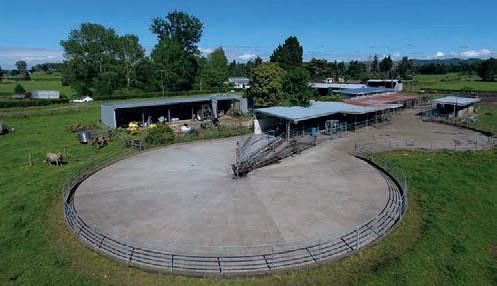
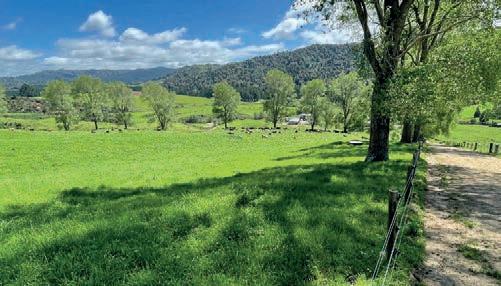
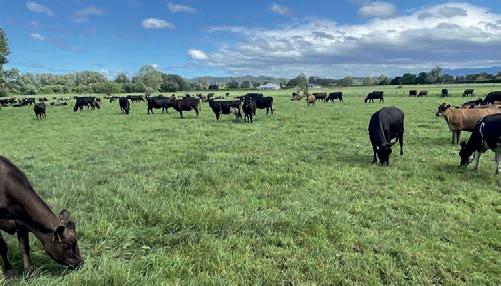
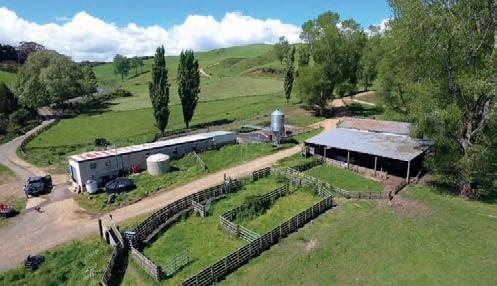
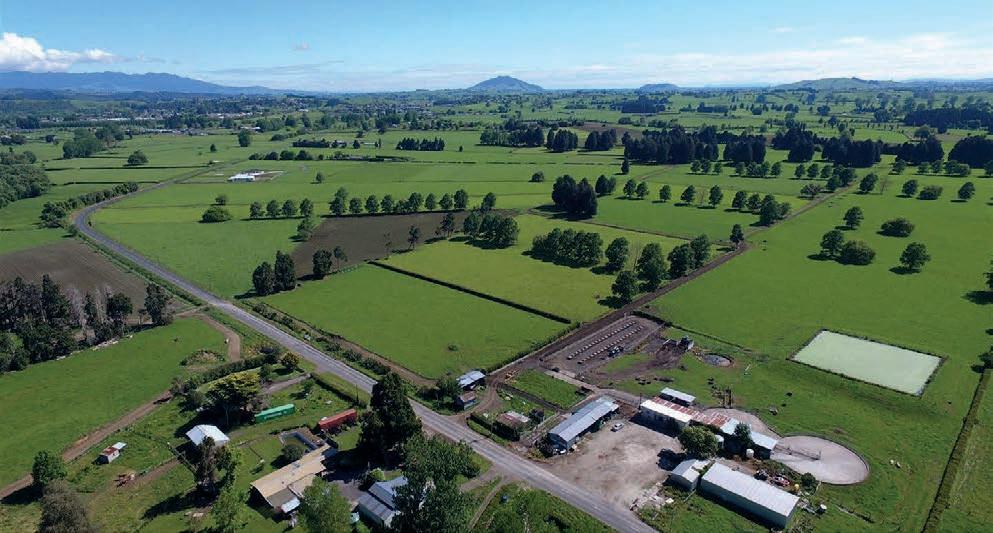
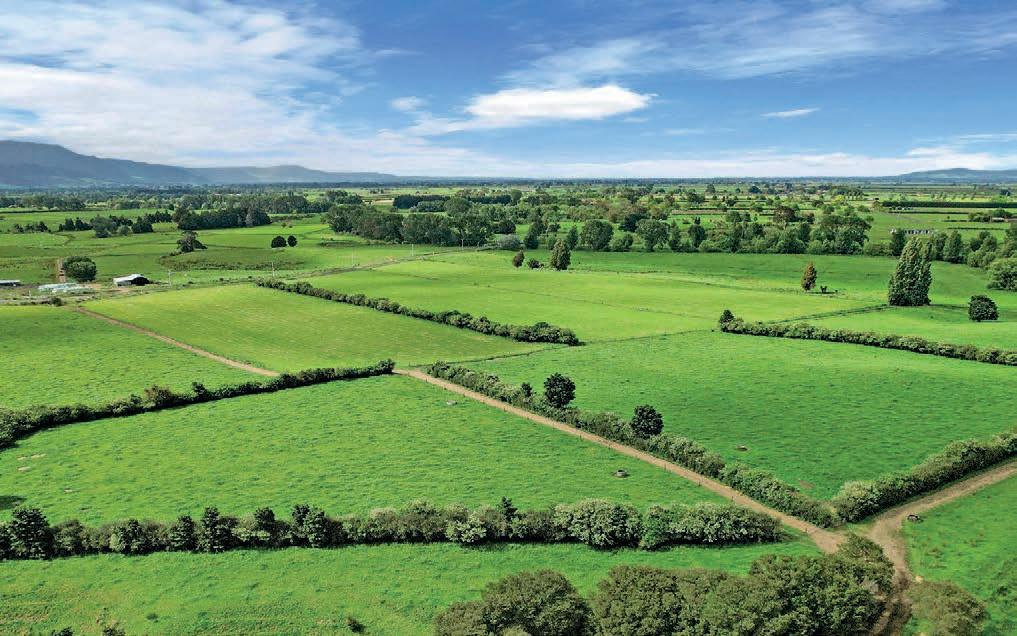

- 74.1460 hectares freehold
- Three separate titles
- Average production of 194,488 kg/ms achieved from freehold and lease land
- Adjoining 80 hectares available to lease
- 42 aside herringbone cowshed
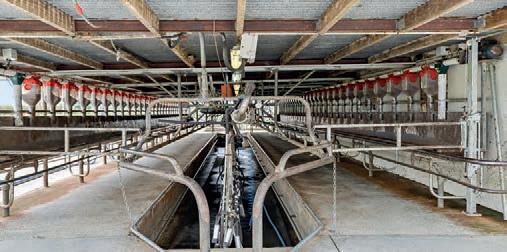
- 400 cow feedpad




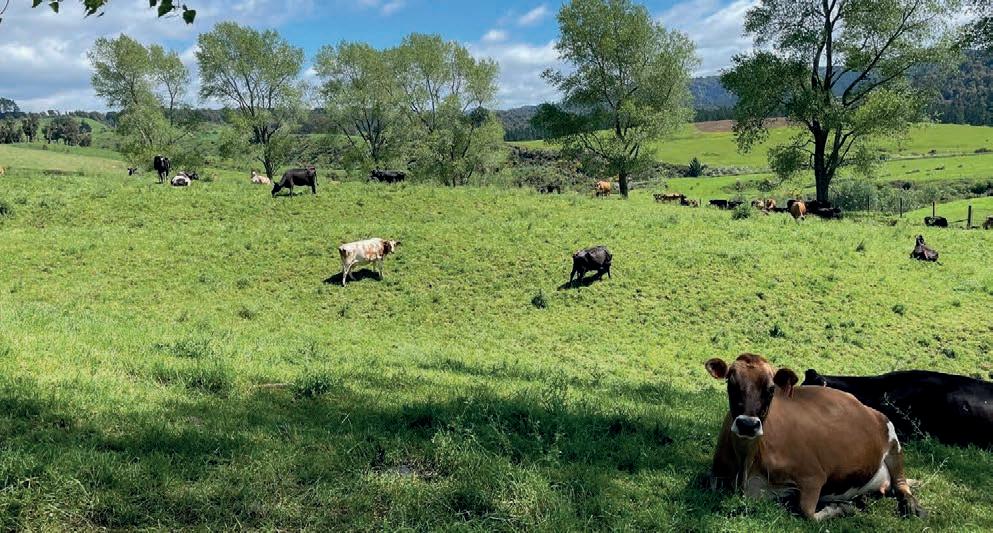
- Three houses
- Modern effluent system and storage facilities
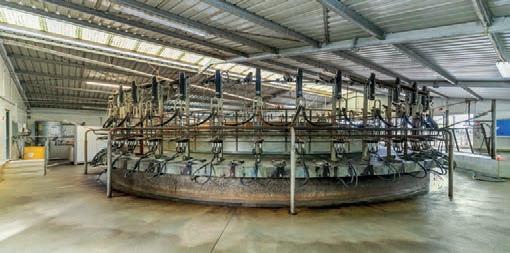
Faithfully farmed by the same family for over 100 years, this is an outstanding opportunity to acquire a quality farm with location, contour and highly fertile soils with the bonus of additional lease land which is just as good as the home block.
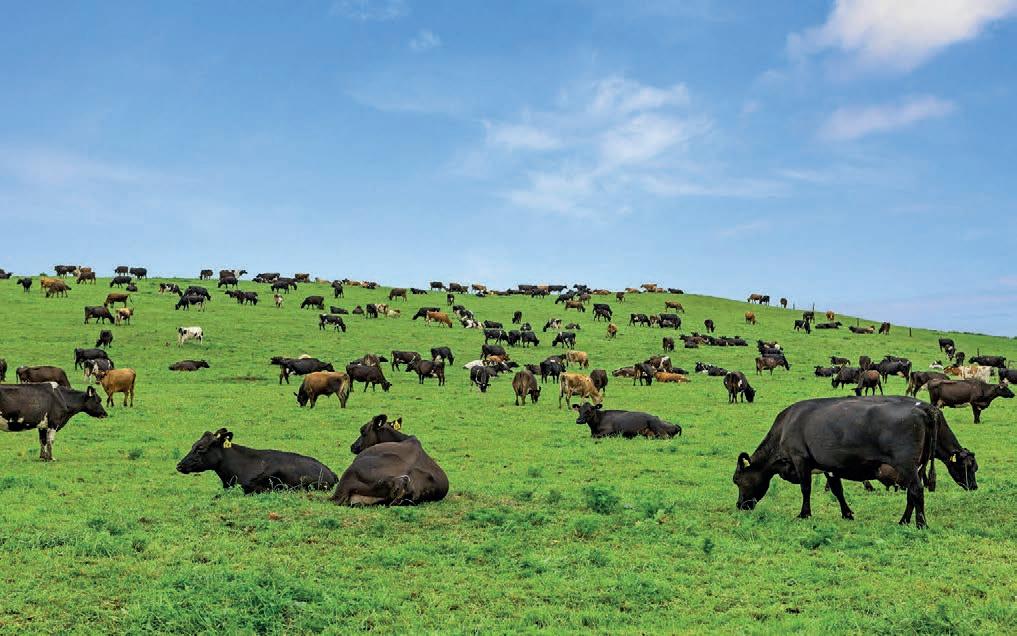
For Sale Deadline closes Thursday 15 Dec, 1pm (unless sold prior)

View Open Homes:
Tues 29 Nov, 11.00am - 12.00pm
Tues 6 Dec, 11.00am - 12.00pm blueribbonharcourts.co.nz/property/OH9756
Priced to Sell Dairy Unit of 111 Hectares


As the price indicates, this property is seriously on the market and with a three year average production of 85,000 Kg/Ms represents true value for money.
- 111.1644 ha more/less (274 acres) ( subject to survey)
- 83 ha utilised as dairy platform milking 230 cows - 25 ha of recently planted Manuka/native & pine areas
- Good standard of support buildings - 20 aside cowshed
4 2 1 2 111 Ha
For Sale $2,500,000 plus GST if any View By Appointment
blueribbonharcourts.co.nz/property/OH9672

Kerry Harty M 027 294 6215 P 07 873 8700 E kjharty@harcourts.co.nz
- Spacious two storey four bedroom home
Whether it be farmed as a dairy or perhaps a change to an easy-care dairy support/grazing or finishing block, this property is a “must view” this spring. Located within a 30 minute commute to Otorohanga or Te Awamutu and handy to Hamilton.

Kerry Harty
M 027 294 6215 P 07 873 8700
E kjharty@harcourts.co.nz
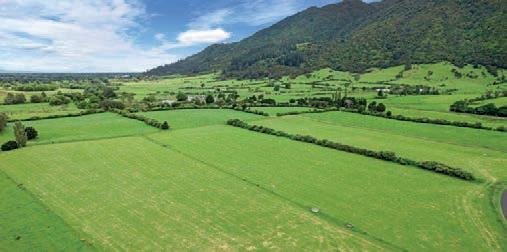
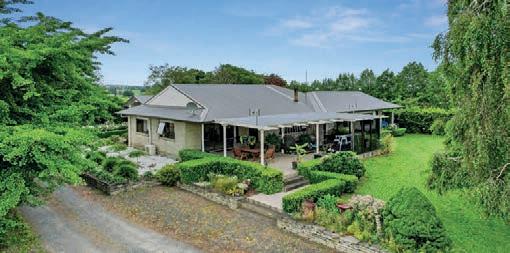
Tender
208 Te Aroha-Gordon Road 360ha Bigger than Mt Te Aroha
Te Aroha
Kevin Deane M 021 970 902
Kevin Cowley M 027 240 7676
917 Piako Road 99.5907ha Right in the Dress Circle
My retiring Vendor says present all offers – make your move today. Licensed Agent REAA 2008
OtorohangaARIA, WAITOMO 24 Pukeuha Road Large
Enterprise - Aria
Large-scale, easy contoured land package. This property is 347ha (324ha effective, more or less) with contour being a mixture of flats to rolling hills and some medium hill along with areas of native bush. Located 6km east of Aria, 16km southeast of Piopio and 40km south of Te Kuiti. An excellent standard of farm infrastructure in terms of laneways, fencing, effluent disposal, calf rearing sheds etc. Modern 54-bail rotary cow shed, built in 2015. The property is five titles and includes four dwellings. Improving pasture species has been priority with pastures continuing to be renewed annually.





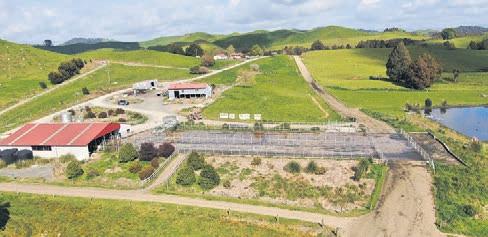
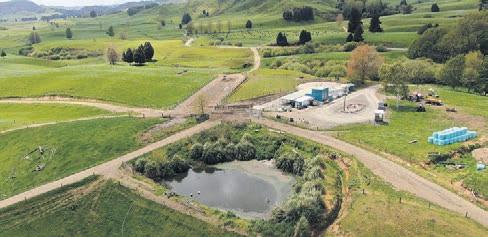
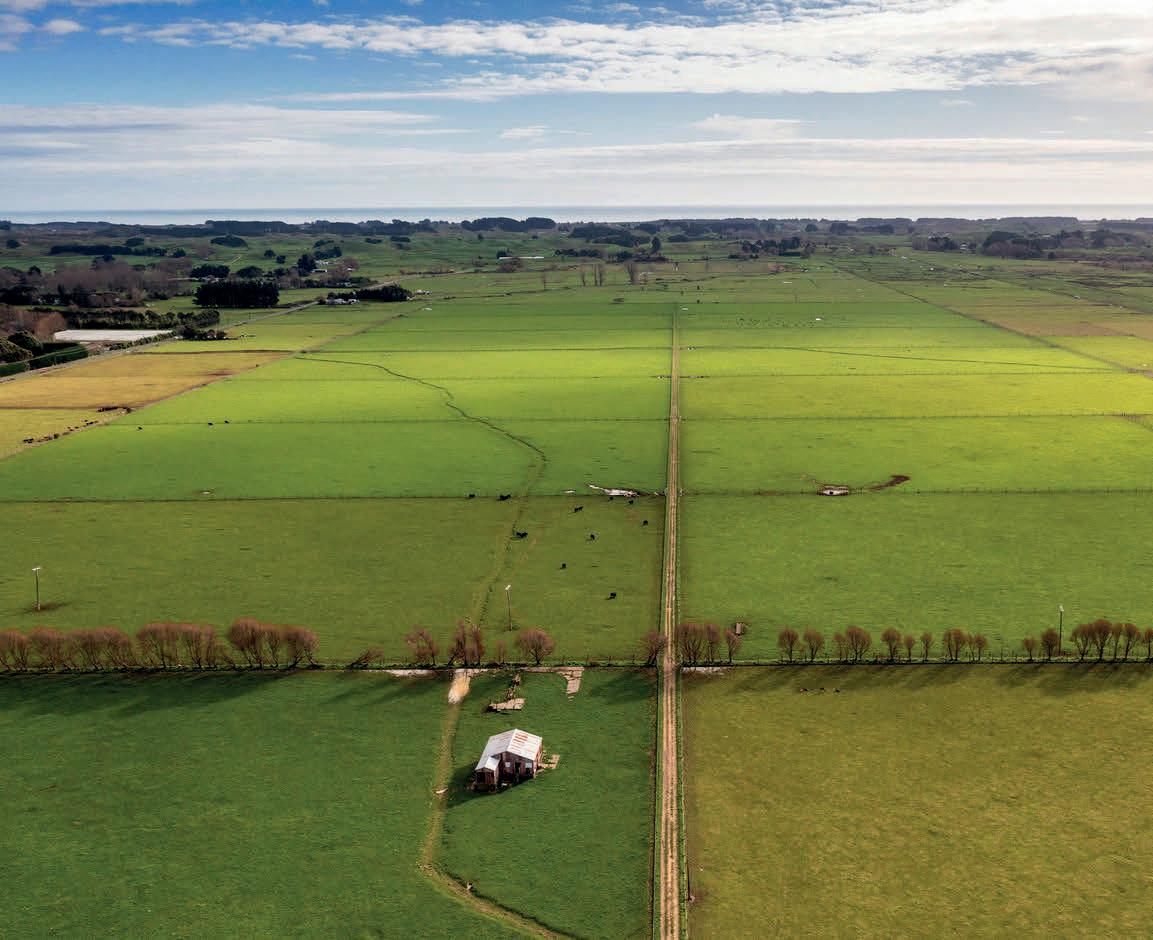
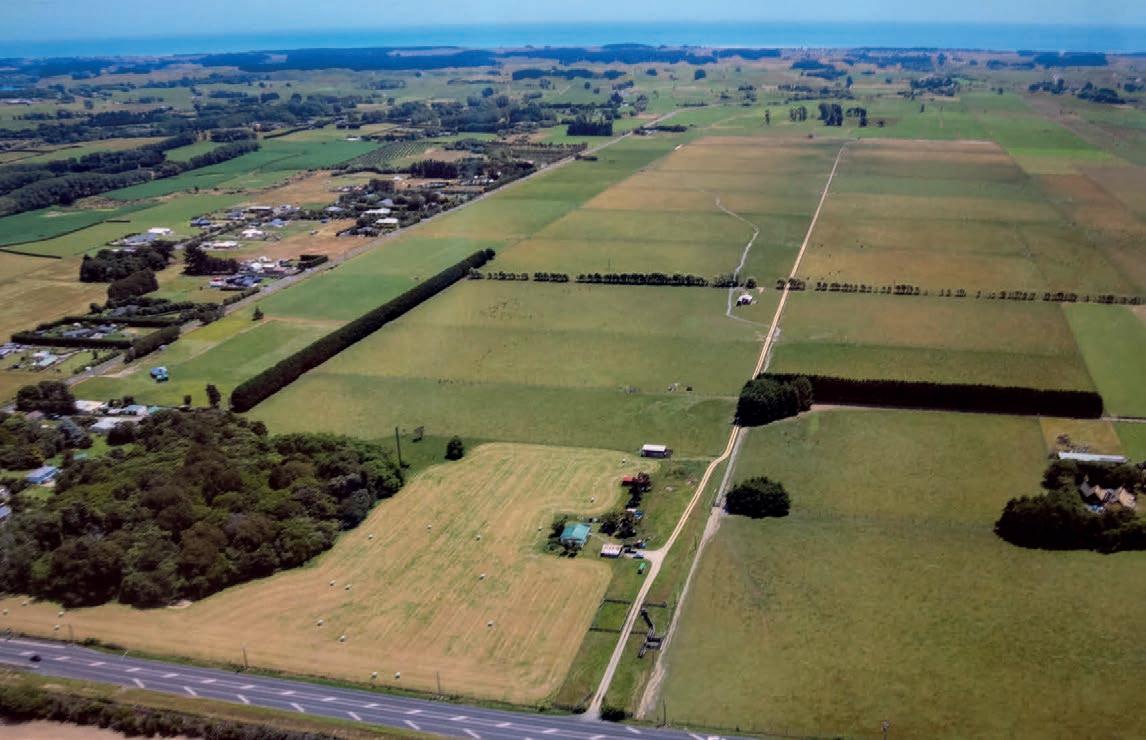
•
•
• Well maintained
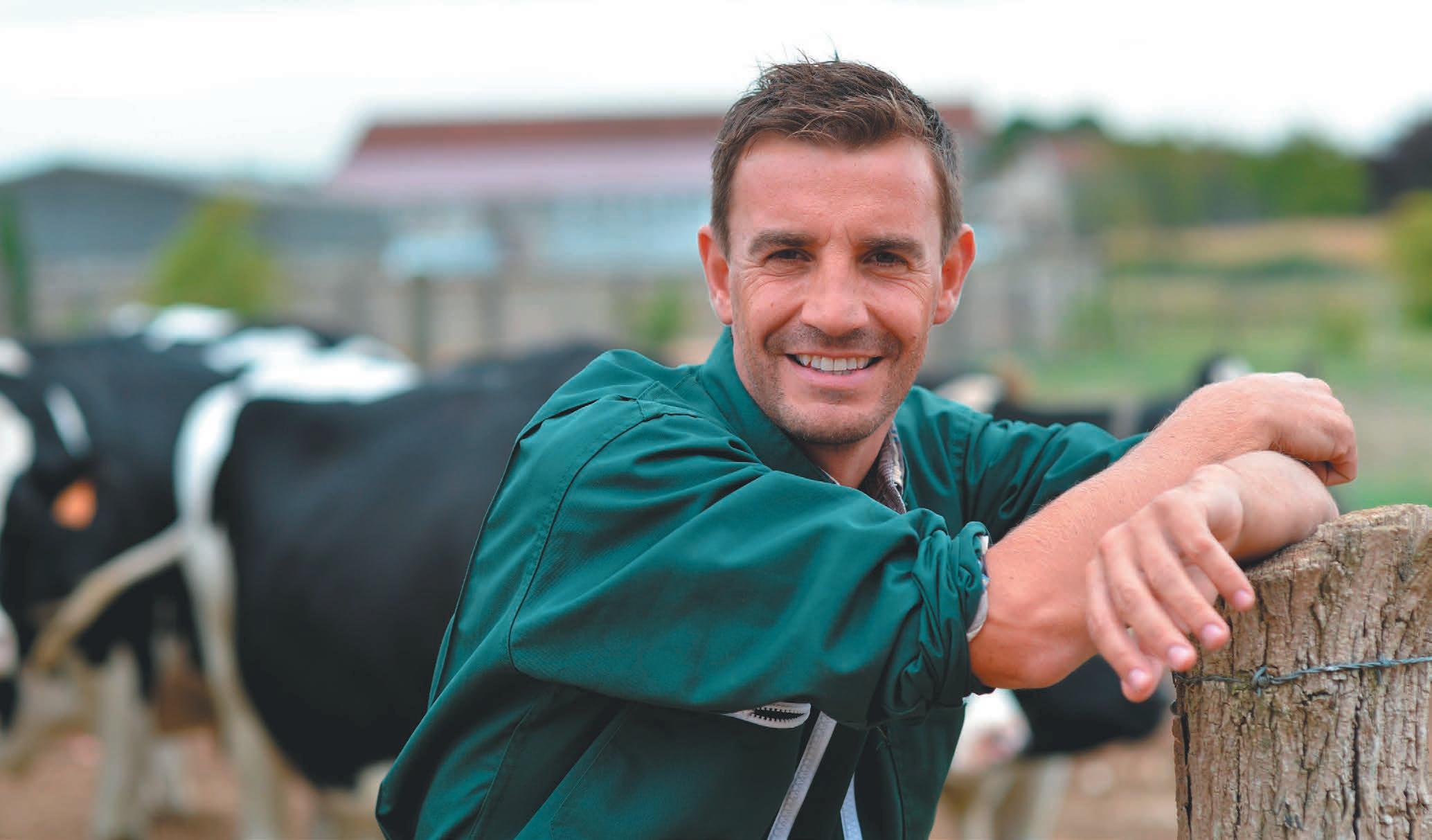




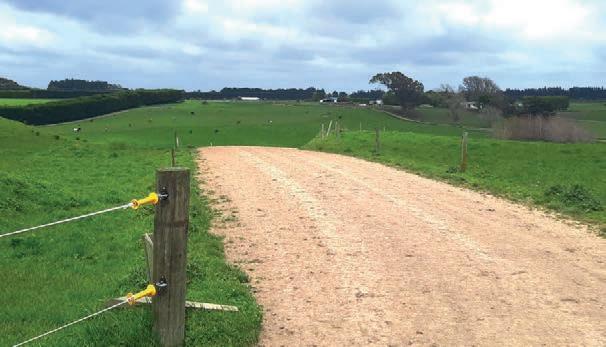
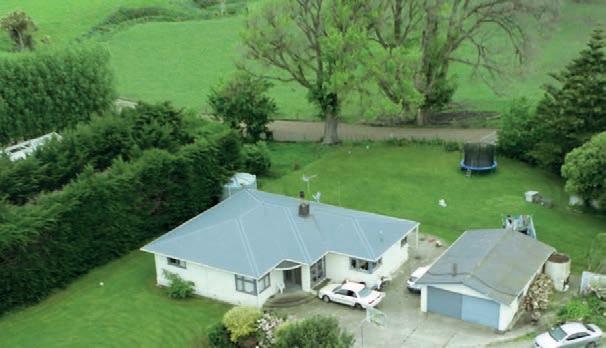
•
•
•
•
This exciting role will suit someone who is passionate about digital marketing and will work with us to make our digital strategy work. We want you to help us build the audience and new marketing opportunities around our great content to increase digital revenues. You’ll be working in the business and on the tools, helping build, maintain and monitor our digital infrastructure.


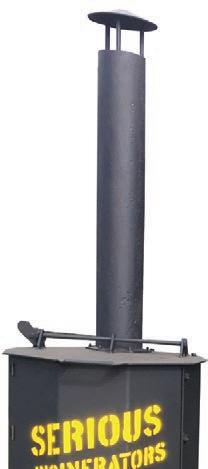






















AgriHQ is home to New Zealand’s largest agricultural community. We’re a family-owned business based in Feilding that connects the agricultural sector with news, information, stories, data analysis, educational resources and community engagement platforms that encourage a more sustainable and profitable New Zealand.

If you’re ready for the responsibility and the challenge, we invite you to register your interest and request a job description and application form now by emailing hr@agrihq.co.nz

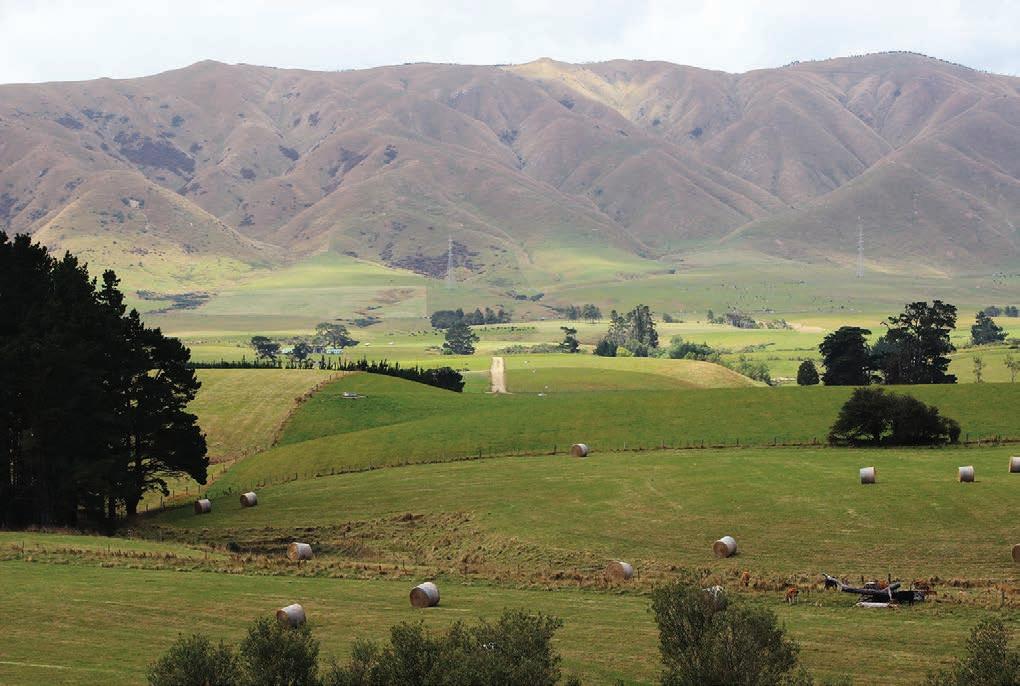







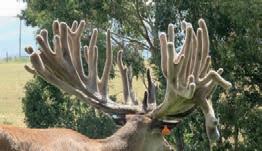

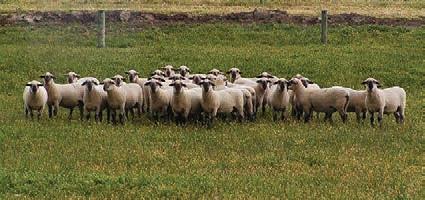

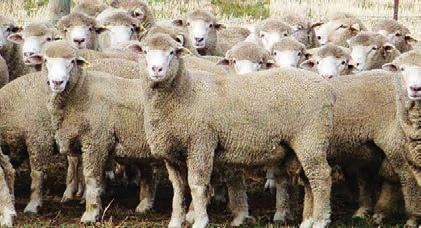

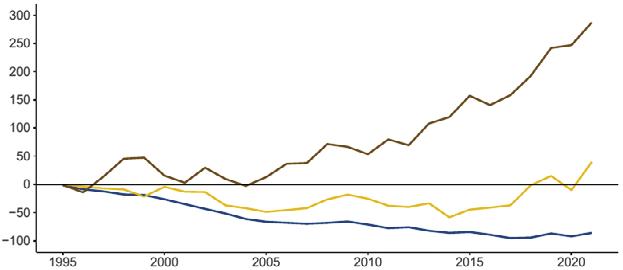
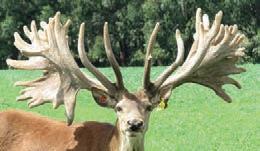

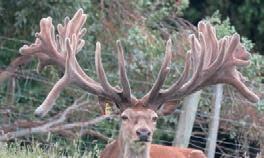
Autumn and Spring calving herd, 90 autumn calving, 60 spring calving, complete herd, MA Ayrshire, Jersey and Crossbred cows, due to calve from 1/4/23 and 15/7/23 respectively, all in calf to Hereford bulls. Recorded, good production cows, will sell breeds and different calving lines to suit. Waikato.


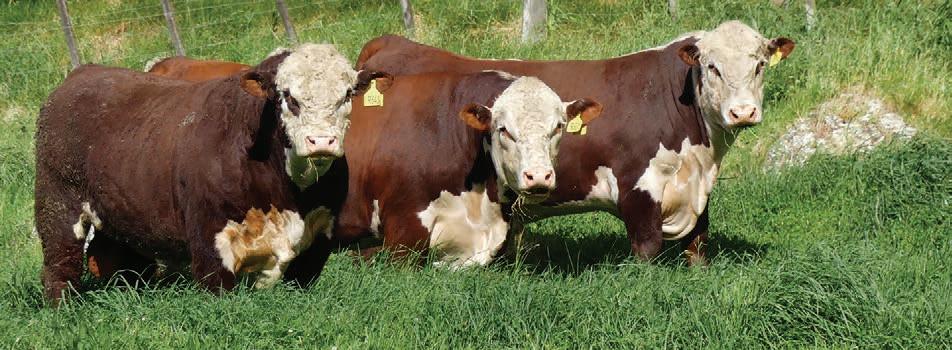
Pick 250 from 300 MA recorded, Jersey, Ayrshire and Crossbred herd. Young cows, all older, unsound cows already taken out which vendor will retain, sale line indice averages BW 198, PW 264, RA 86%, 360/370 kgs ms average on OAD for last 6 seasons, milked through rotary cowshed, due to calve from 1/8/23, Upper South Island.
80 MA Crossbred cows, recorded with line average of BW 257, PW 299, LW 310 on October herd test. Crossbreds from within Jersey herd. Mated to calve July/August 2023. Northland For more

contact Brian Robinson Phone 0272 410 051

What’s the best way of choosing which mustache style to grow? Eeny Meeny Miney Mo.
What would you call a mustache growing on someone’s cheek? A miss-tache!
• What comes after Movember? Decembeard. Which snack has a great mustache? A pi-stach-io.
• Where are all the old mustaches stored? Probably in one of the mo-seums.
• What did the pirate with a beard ask one of the new cruise captains? Where did Mo-stash all the treasure?
The neighbor said to the bearded man, “I think I mustache you a question while eyebrows the wifi?”. To this, the guy replied, “Yeah, sure, go ahead, mullet over.”
• What made me less skeptical about growing a mustache? Well, the idea started growing on me.
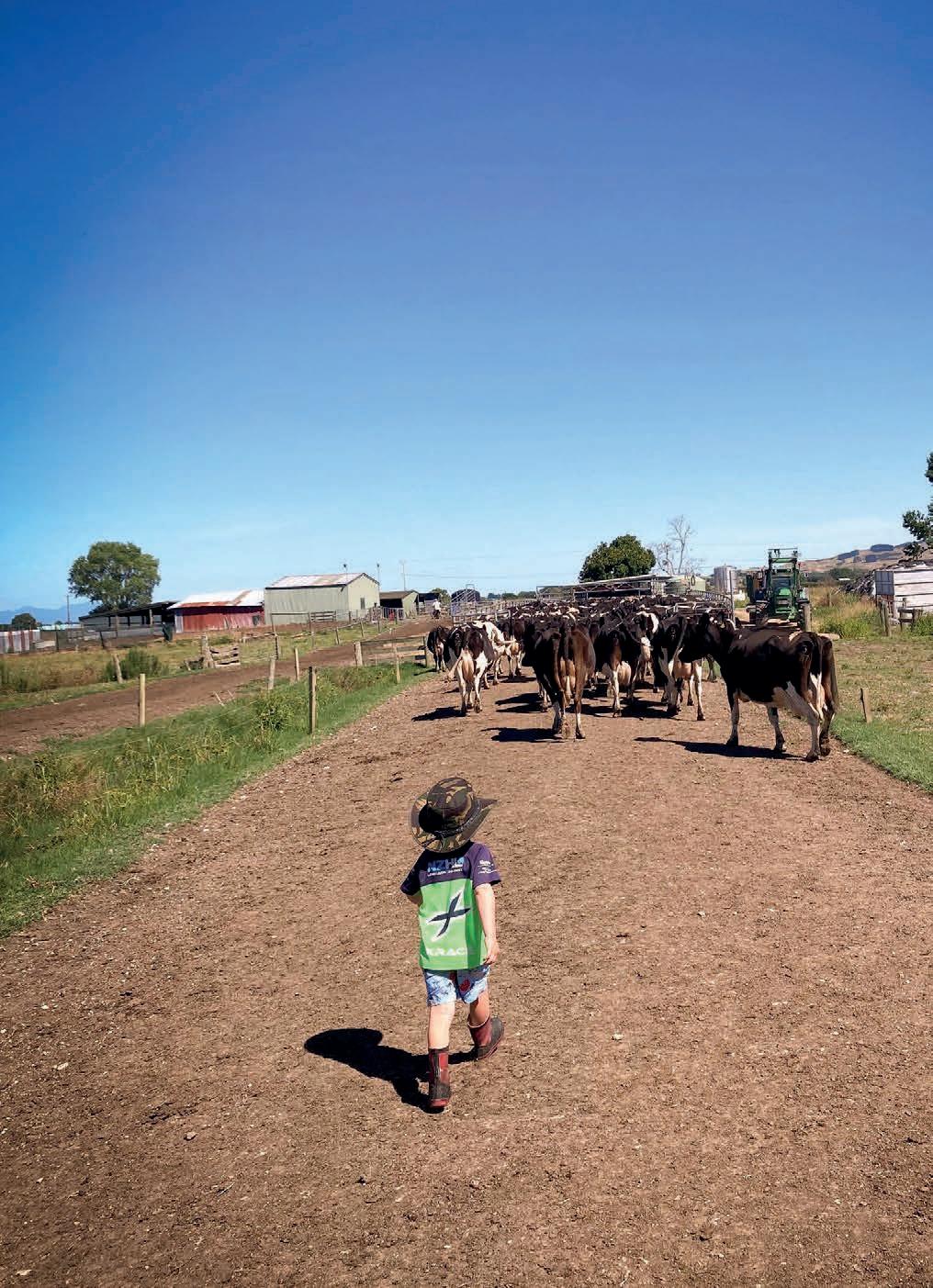
Here at Farmers Weekly we get some pretty funny contributions to our Sale Talk joke from you avid readers, and we’re keen to hear more!
If you’ve got a joke you want to share with the farming community (it must be something you’d share with your grandmother...) then email us at: saletalk@agrihq.co.nz with Sale Talk in the subject line and we’ll print it and credit it to you. Conditions apply
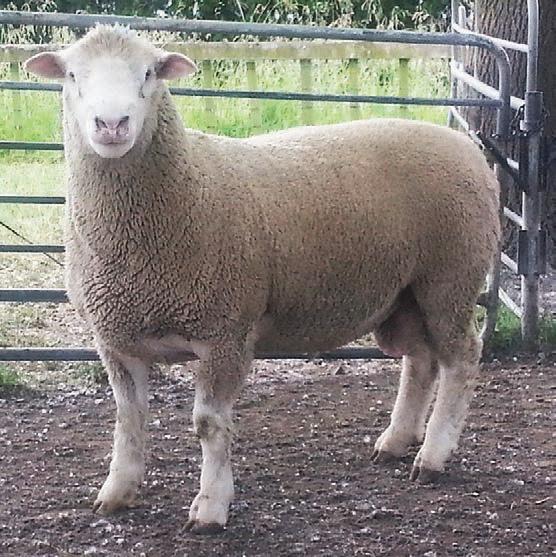

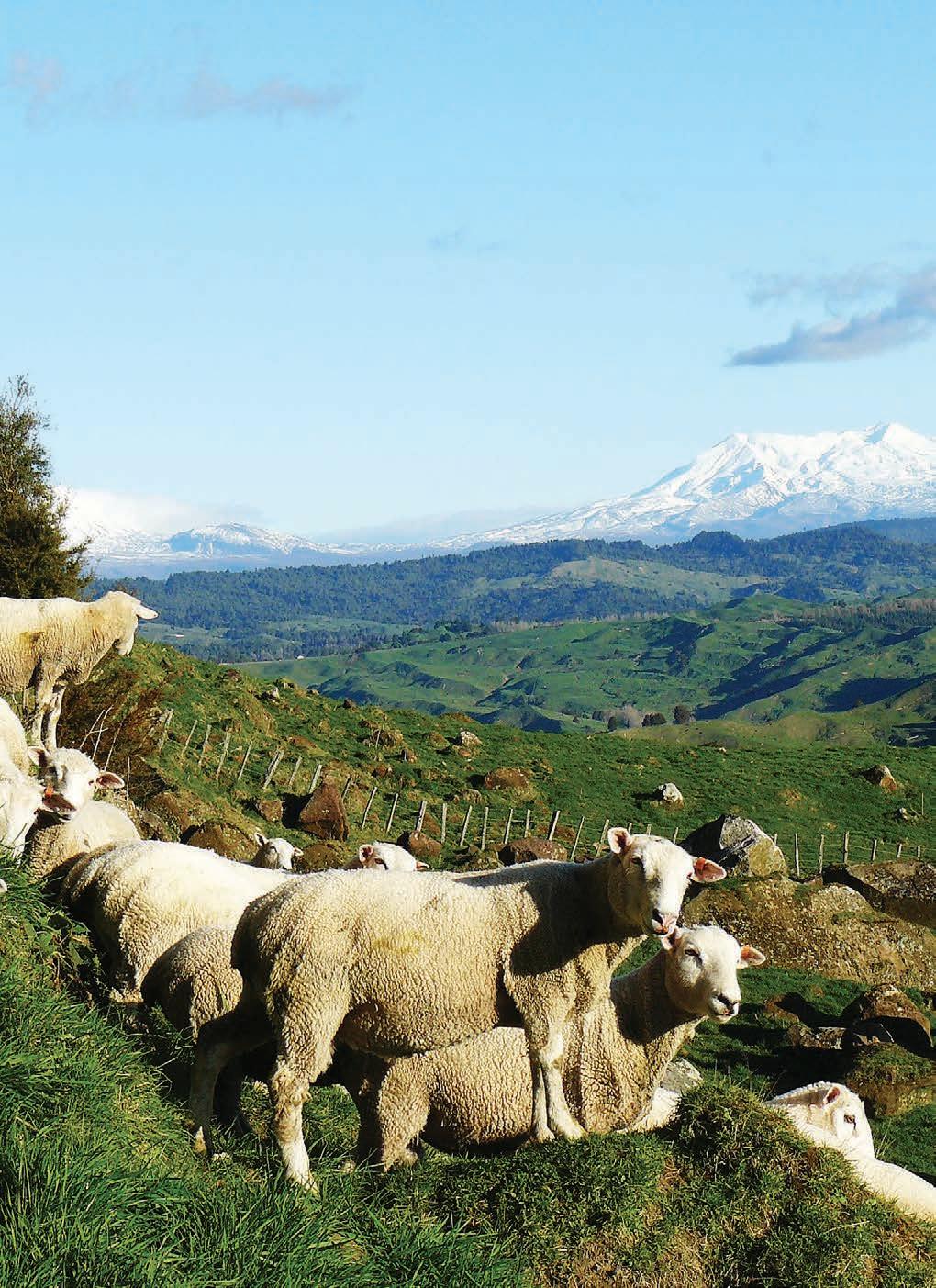







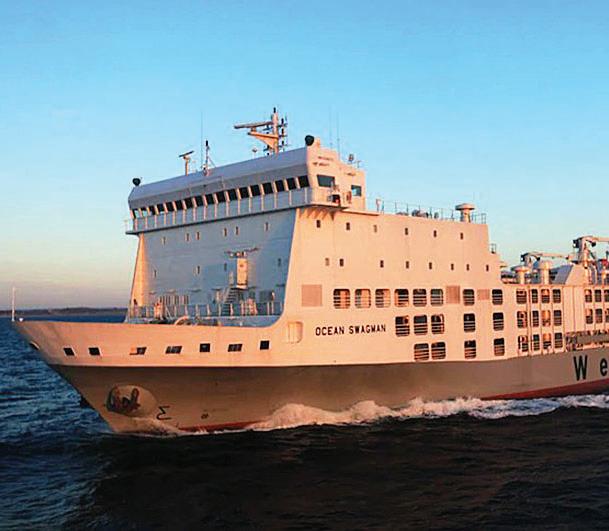


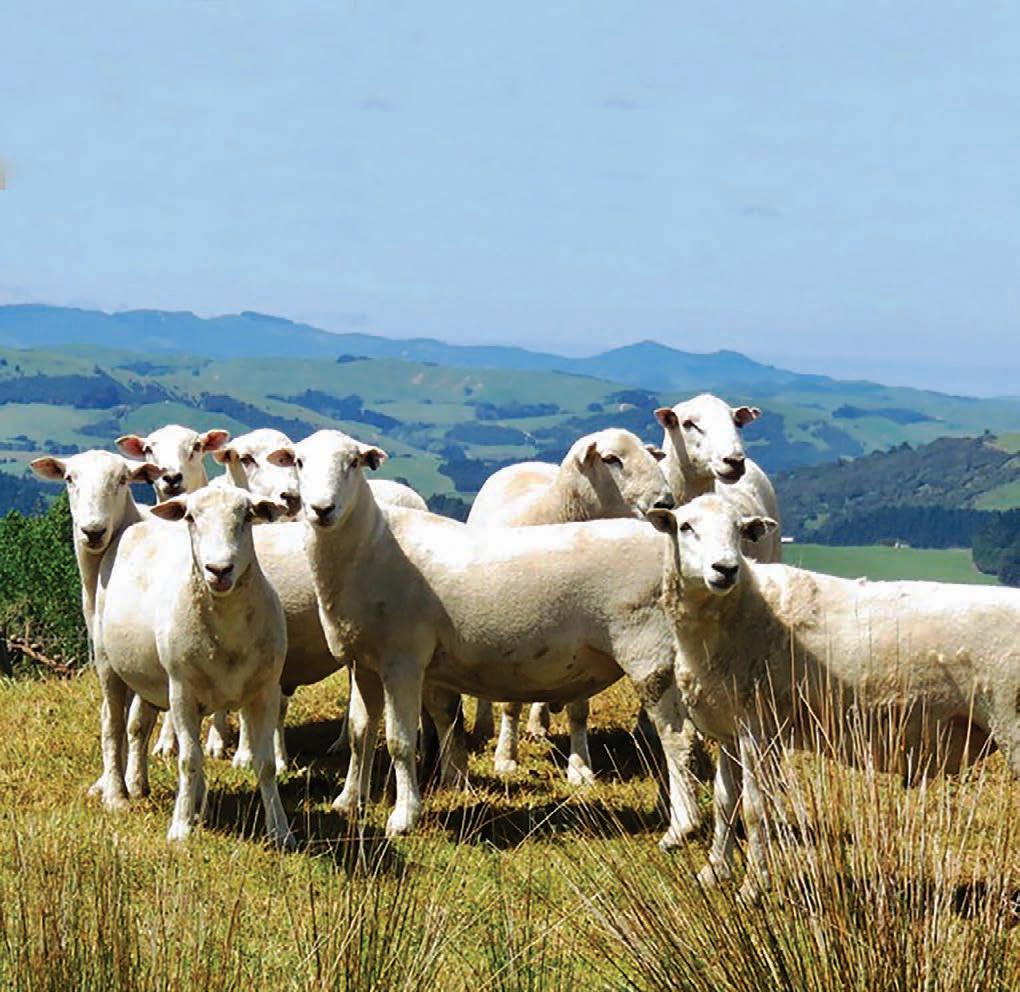



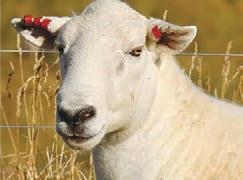
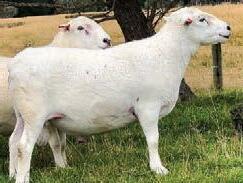



ON-FARM sales have been approached with some apprehension this year due to the current market environment. But recent worthwhile rain that was widespread across the South Island helped and while it couldn’t change the overseas demand it went some way to building local confidence.
Prices were still back on last year, but most sales exceeded expectations in what was a full week of on-farm sales as over 30,000 lambs changed ownership.
Sales stretched from North Canterbury to South Canterbury and buyers from Southland ventured north to compete with mid Canterbury buyers and a small pocket of North Island buyers ventured south to do the same.
The annual Glenmark Drive sale held last Tuesday in North Canterbury is a full day of selling at seven properties. Hazlett general manager livestock Ed Marfell said it was a good day in which “we saw annual line-ups and regular buyers from North Island down to Southland return. Obviously, the market was not as good as last year but given the current environment everyone was pleased.”
Just over 9000 blackface mixedsex and 5000 whiteface lambs sold over the seven properties, which included Glenmark Farm, Manahune, HD Bethell, RedOak, Blue Gum Trading, Mount Cass and JJC Gardiner. Blackface mixedsex lambs traded at $65-$176.
Romney males returned $61-$166 and ewe lambs $85-$108.
Blue Gum Trading offered up Longdown cryptorchid which made $79-$127 and ewe lambs, $85-$108, while at Mount Cass Wiltshire wethers were offered and sold for $70-$135 and the ewe lambs made $65-$82.
Ewes were offered at some of these properties but Marfell said that there was an acceptance that vendors would not sell them if they didn’t meet their reserve.
Rural Livestock agent Donald Cooke said the two sales held as part of the Oxford run last Wednesday exceeded expectations.
“It was a pleasant surprise for these sales to go better than we expected. We had prepped vendors, but a good gallery of buyers turned up and the sales were making around $3.50/kg when we were expecting $3.30/ kg”.
After a slow spring, lambs were around three weeks behind last year as well. At Grafton Farming regular buyers from Mid Canterbury competed and the 2300 undrafted Romney-Poll
Dorset lambs sold for $78-$157. Stokes Farming offered up 3500 undrafted Texel-cross and the majority went to Southland for $68-$153.
The Totara Valley sales in South
Canterbury featured Glenelg Partnership followed by The Brothers Station. At Glenelg 1700 blackface mixed-sex made $84$166 and 1200 Romney-Texel males, $80-$149. Five hundred Romney-Texel ewe lambs sold for $82-$126 and ewes made similar values at $86-$129. PGG Wrightson sold at The Brothers and regional livestock manager Joe Higgins said the market was an unknown going into it.
“Given that this was our first on-farm sale in this area for the season, the market was unknown, but we were pleasantly surprised with the results.
“Prices were only $5 down on last year and recent rain seemed
to help bring a bit of confidence in.”
Most of the 2900 lambs offered were blackface out of older ewes and the top lines sold for $124$143 and stores, $71-$95 for a sale average of $90. Four lines of ewes were also sold and bought by local farmers to fatten at $85-$137.
The previous Thursday, GD Gillanders in Darfield sold 1800 sex-drafted Borderdale-Suffolk lambs with the top line of cryptorchid making $171 and store types, $92-$113. The Malvern sales featured two properties – Ian Chamberlain & Co and Earl Worsfold, and the blackface mixed-sex returned $105-$185 and ewes sold for $91-$137.
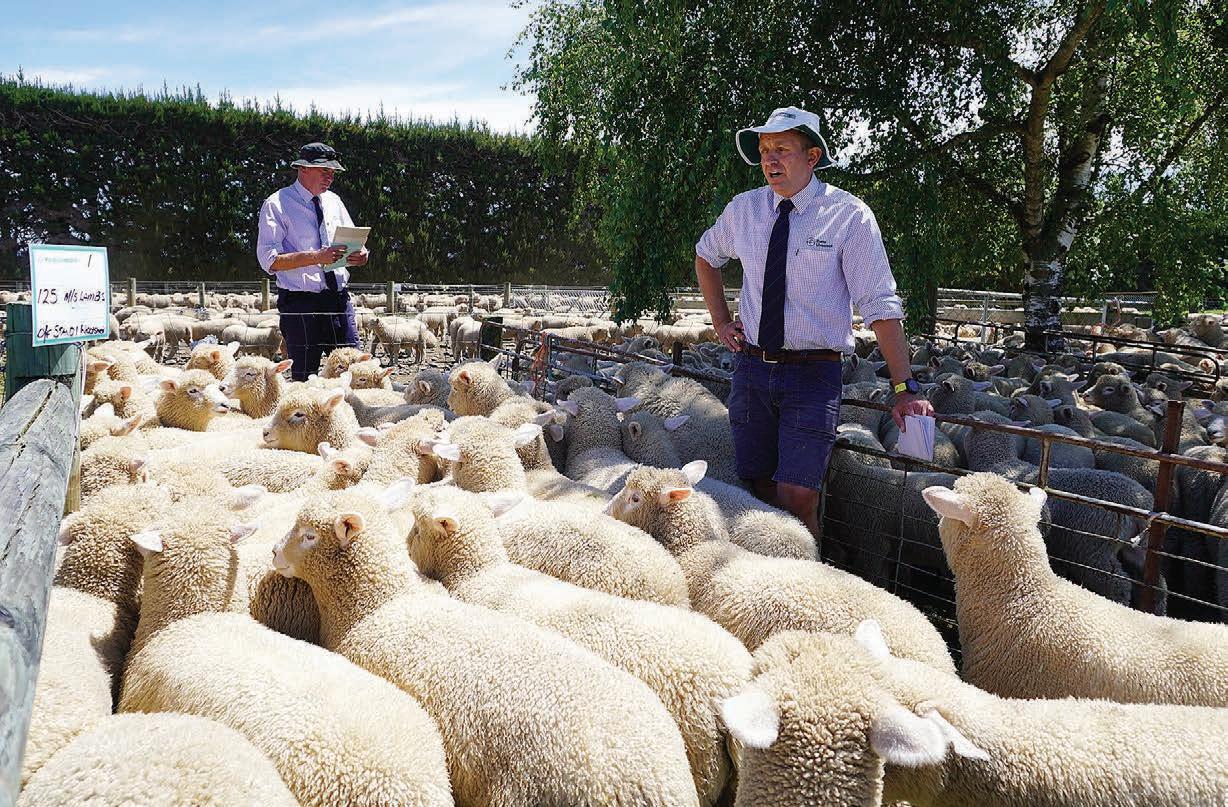
A delayed grass market is better late than never, and recent rain for some and continuing falls for other regions has meant a surge of buying in the store cattle markets. Smaller lines of mixed breeds are finding favour with small block holders and prices have improved relative to type. Bigger consignments of quality exotic, traditional and dairy-beef cattle have also shown some improvement on recent levels as older stock finish and buyers re-enter the market. Cattle are also now coming forward in better condition, having benefited from some warm days and extra feed.
Kaikohe | November 22 | 500 cattle
$/kg or $/hd
2-year dairy-beef steers 3.20
2-year beef-cross heifers 3.00
Yearling beef-cross bulls 3.00
Yearling beef-cross steers 3.35-3.50
Yearling traditional heifers 3.20-3.30
Weaner Friesian bulls, 100kg 540
Wellsford | November 21 | 521 cattle
$/kg or $/hd
2-year Hereford-Friesian steers, 501-565kg 3.05-3.13
2-year Angus-Friesian steers, 471-502kg 2.99-3.02
2-year Hereford-Friesian heifers, 449-457kg 3.04-3.05
Yearling Angus steers, 312-377kg 3.20-3.26
Yearling Hereford-Friesian steers, 339-389kg 3.26-3.30
Yearling Hereford-Dairy steers, 259-266kg 2.97-3.01
Yearling Friesian bulls, 291-330kg 3.09-3.18
Yearling Angus heifers, 355-402kg 3.01-3.11
Yearling Hereford-Friesian heifers, 238-261kg 3.22-3.30
Pukekohe | November 19
$/kg or $/hd
Store bulls 2.83-2.92
Yearling steers 980-1100
Aut-born weaner steers 590-660
Weaner steers 475-560
Weaner heifers 460-550
Prime steers 3.15-3.22
Prime heifers 2.95-3.22
Boner cows 1.98-2.26
Store ewes 58-148
Store hoggets 96-140
Store lambs 95-162
Rangiuru | November 22 | 270 cattle, 355 sheep $/kg or $/hd
Yearling Hereford-Friesian steers, 308-357kg 3.28-3.44
Yearling Hereford-Friesian heifers, 320-350kg 910-1115
Prime Angus steers, 515kg 3.22
Boner Friesian cows, 425-556kg 2.24-2.31
Store mixed-sex lambs, all 64-88.50
Prime ewes, all 90-110
Frankton | November 22 | 412 cattle
$/kg or $/hd
2-year Angus heifers, 359-393kg 2.98-3.06
Aut-born yearling Hereford-Friesian steers, 416-436kg 3.14-3.20
Yearling Hereford-Friesian steers, 355-380kg 3.09-3.23
Yearling Hereford-Friesian (red) steers, 317-366kg 2.97-3.10
Yearling Hereford-Friesian heifers, 283-324kg 3.11-3.16
Prime dairy-beef steers, 537-587kg 3.03-3.08
Prime dairy-beef heifers, 451-547kg 3.09-3.17
Frankton | November 23 | 785 cattle
Aut-born yearling Charolais-Friesian steers, 326-429kg 3.10-3.27
Yearling Charolais-Friesian steers, 248-320kg 3.23-3.57
Yearling Charolais-Friesian heifers, 269-355kg 2.94-3.01
Yearling dairy-beef steers & heifers, 393-475kg 2.96-3.06
Prime Angus-Hereford heifers, 495-554kg 3.09-3.12
2-year steers, 413-584kg, tops 3.29-3.34
2-year steers, 426-454kg, second cuts 2.90-3.19
2-year steers, 370-396kg 2.95-3.01
Yearling Charolais-cross steers, 148-262kg 720-875
Yearling heifers, 306-350kg 2.90-3.27
Yearling Charolais-cross heifers, 152-272kg 580-920
Taupo | November 17 | 425 cattle
Mixed-age Angus-Friesian cows & calves, 357kg, one line 1460
2-year Speckle Park-cross steers, 363kg, one line 3.37
2-year dairy-beef steers, 475-616kg 2.94-3.09
2-year traditional heifers, 398-418kg 3.19-3.21
2-year dairy-beef heifers, 425kg average 2.9
Yearling Angus heifers, 198-211kg 3.54-3.61
Yearling dairy-beef heifers, 250-357kg 2.99-3.13
| November 18 | 586 sheep
Store whiteface male lambs, small 57
Store whiteface ewe lambs, medium 65
Prime ewes, all 120-168
Taranaki | November 23 | 401 cattle
$/kg or $/hd
2-year exotic-cross steers, 500-512kg 3.38-3.40
2-year dairy-beef steers, 480kg average 3.26
Yearling Hereford-Friesian steers, 290-315kg 3.41-3.43
Yearling Hereford-Dairy steers, 318-390kg 3.01-3.18
Yearling Hereford-Friesian heifers, 275-281kg 2.84-2.88
Stortford Lodge | November 21 | 2885 sheep
$/kg or $/hd
Prime ewes, good 115-128
Prime ewes, medium 96-112
Prime mixed-sex lambs, heavy 175-196
Prime mixed-sex lambs, good 151-157
Stortford Lodge | November 23 | 337 cattle, 6389 sheep $/kg
2-year Angus & Angus-cross heifers, 574kg, one line 3.31
Yearling Angus steers, 316-328kg 3.58-3.78
Yearling Hereford-Friesian steers, 282-307kg 3.58-3.65
Yearling Angus bulls & rigs, 267-351kg 3.18-3.25
Yearling traditional heifers, 266-359kg 3.31-3.50
Hogget ewes & lambs, WF lambs, tails, all 70
Store blackface mixed-sex lambs, medium to good 80-126.50
Store whiteface male lambs, medium to good 85.50-130
Store whiteface male lambs, small 62-77
Store whiteface ewe lambs, small to medium 60-85
Dannevirke | November 17 | 469 sheep
Store ram lambs, all 72-104
Store ewe lambs, all 90
Store mixed-sex lambs, all 106-119
Prime ewes, all 123-132
Feilding | November 18 | 1566 cattle, 2621 sheep $/kg or $/hd
2-year traditional steers, 479-573kg 3.47-3.65
2-year Hereford-Friesian heifers, 350-417kg 2.89-3.17
Yearling Angus steers, 375-381kg 3.83-3.85
Yearling Hereford-Friesian steers, 280-345kg 3.10-3.35
Yearling Friesian bulls, 293-367kg 3.11-3.31
Yearling traditional heifers, 305-325kg 3.18-3.22
Yearling Hereford-Friesian heifers, 297-358kg 3.06-3.28
Store blackface mixed-sex lambs, good 114-135.50
Store blackface mixed-sex lambs, medium 91-105
Store Romney cryptorchid lambs, good 100-108
Store Romney cryptorchid lambs, medium 79-95.50
Feilding | November 21 | 53 cattle, 4387 sheep $/kg or $/hd
Prime traditional cows, 453-630kg 2.14-2.36
Prime traditional heifers, 493-535kg 3.20-3.26
Prime ewes, good 124-140
Prime ewes, medium-good 51-119
Prime mixed-sex lambs, very heavy 175
Prime mixed-sex lambs, heavy 131-174
Store blackface mixed-sex lambs, good 94-105
Store Romney cryptorchid lambs, good 93-104
Store mixed-sex lambs, medium 74-90
Rongotea | November 22 | 150 cattle
2-year exotic-cross steers, 530-593kg
$/kg or $/hd
3.02-3.22
2-year Hereford-Friesian heifers, 483-570kg 3.07-3.15
Yearling Hereford-Friesian steers, 338-365kg 2.49-2.66
Yearling Angus-cross steers & bulls, 278-300kg 2.59-2.70
Aut-born weaner Hereford-Friesian steers, 150-186kg 430-685
Aut-born weaner Hereford-Friesian heifers, 143-213kg 410-580
Aut-born weaner Angus-cross heifers, 180-184kg 535-570
Weaner Friesian bulls, 94-118kg 410-550
Weaner Hereford-Friesian heifers, 88-128kg 420-510
Weaner Angus-cross heifers, 104-114kg 510-525
Coalgate | November 16 | 399 cattle, 2191 sheep $/kg or $/hd
Yearling traditional steers, 373-442kg 2.99-3.00
Yearling dairy-beef heifers, 298-355kg 2.52-2.70
Prime dairy-beef steers, 535-645kg 3.02-3.15
Prime Hereford-Friesian heifers, 410-590kg 2.90-3.10
Hogget ewes & lambs, all 44-70
Prime ewes, most 100-131
Prime lambs, all 106-197
Canterbury Park | November 22 | 286 cattle, 3032 sheep $/kg or $/hd
Prime beef-cross cows, 490-665kg 1.90-2.02
Prime traditional steers, 507-685kg 2.90-3.10
Prime Hereford-Friesian steers, 565-715kg 2.89-3.03
Prime Angus heifers, 445-588kg 2.90-3.01
Store terminal-cross mixed-sex lambs, medium 61-90
Honda Outdoors has everything you need for the garden, with a range of mowers, generators, pumps, trimmers, accessories and more. Head to hondaoutdoors.co.nz to find your closest store.
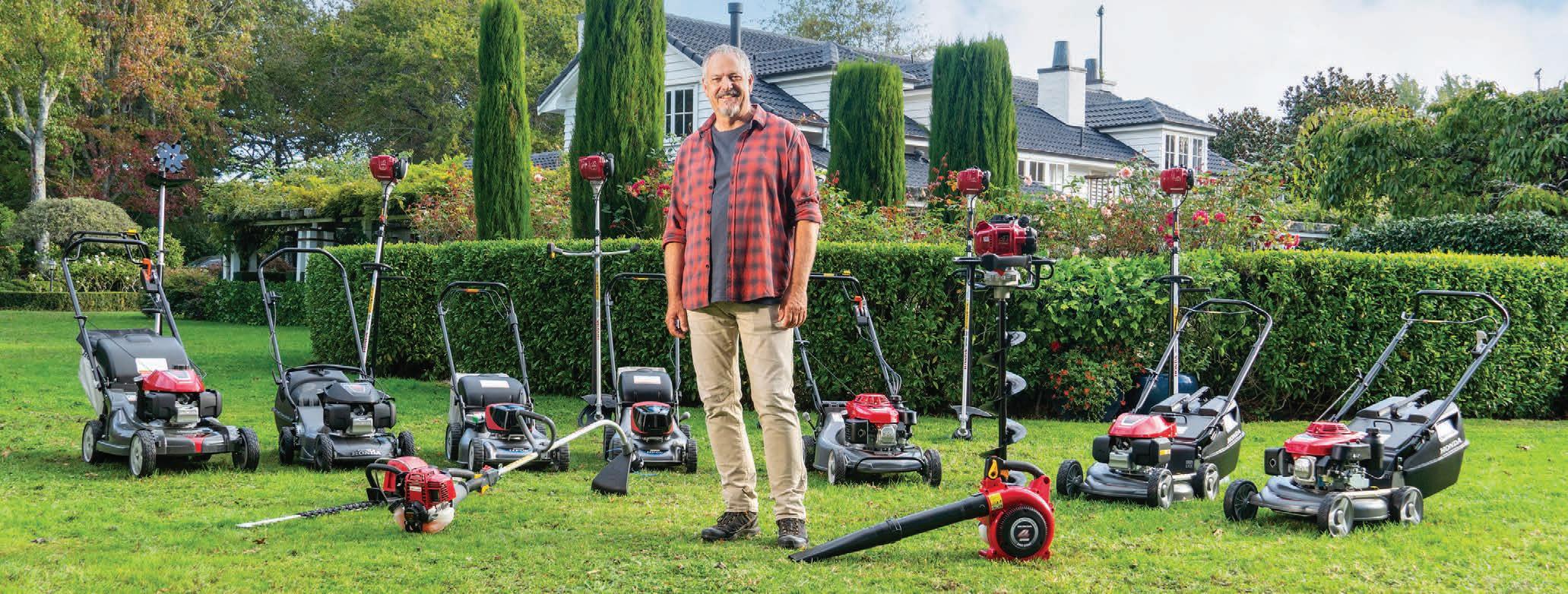
Prime ewes, medium-good 78-119
Prime lambs, good 142-182
Temuka | November 17 | 1344 cattle
$/kg or $/hd
2-year traditional steers, 427-454kg 3.03-3.16
Yearling Simmental-cross steers, 319-339kg 3.13-3.22
Yearling dairy-beef steers, 298-389kg 2.94-3.16
Yearling traditional heifers, 228-324kg 675-980
Yearling Simmental-Angus heifers, 326-360kg 2.90-2.95
Temuka | November 21 | 567 cattle, 3890 sheep $/kg or $/hd
Prime Hereford cows, 510-600kg 2.38-2.45
Prime Angus steers, 510-633kg 2.96-3.18
Prime dairy-beef steers, 590kg average 3.01
Prime Angus heifers, 513-615kg 3.00-3.10
Boner Friesian cows, 502-885kg 1.80-2.10
Hogget ewes & lambs, all 40-70
Prime 2-tooth ewes, medium 100-144
Store hoggets, medium 130-150
Store mixed-sex lambs, all 65-95
Prime mixed-sex lambs, medium 130-145
Balclutha | November 23 | 78 sheep $/kg or $/hd
Prime ewes, all 80-138
Prime hoggets, all 132-188
Charlton | November 17 | 388 sheep $/kg or $/hd
Prime ewes, all 90-160
Prime hoggets, all 170
Prime lambs, all 116-190
Lorneville | November 22 $/kg or $/hd
Yearling Charolais-cross steers, 323-394kg 1330
Yearling Hereford-cross steers, 250-339kg 790-1060
Yearling Hereford-cross heifers, 242kg 680
Prime steers, 440-520kg 3.10-3.20
Prime cows, 500-550kg 2.10-2.22
Store lambs, light-medium 69-80
Prime ewes, all 70-130
Prime hoggets, medium-heavy 140-180
Dairy-Beef Weaner Fairs | November 17 - November 23
Rangiuru | November 23 | 544 cattle
$/kg or $/hd
Weaner Friesian bulls, 113-126kg 400-565
Weaner Hereford-Friesian bulls, 100-112kg 540-620
Weaner Hereford-Friesian heifers, 92-110kg 405-480
Weaner Angus-Friesian heifers, 123-137kg 520-570
Frankton | November 17 | 1483 cattle
$/kg or $/hd
Aut-born weaner dairy-beef bulls, 144-200kg 650-755
Aut-born weaner dairy-beef heifers 480-670
Weaner dairy-beef bulls, 100-170kg 450-695
Weaner Friesian bulls, 102-180kg 500-620
Weaner Friesian bulls, 71-101kg 300-500
Weaner dairy-beef heifers 380-560
Taranaki | November 17 | 977 cattle
$/kg or $/hd
Aut-born weaner dairy-beef steers, 176-195kg 625-640
Aut-born weaner Hereford-Friesian heifers, 218kg 685
Weaner dairy-beef steers, 120kg 650 average
Weaner Hereford-Friesian bulls, 100-116kg 600-720
Weaner Friesian bulls, 106-123kg 450-550
Weaner Hereford-Friesian heifers, 98-117kg 480-520
Dannevirke | November 22 | 292 cattle
$/kg or $/hd
Weaner bulls 565 average
Weaner heifers 450 average
Feilding | November 17 | 1280 cattle
$/kg or $/hd
Aut-born weaner Simmental-Friesian bulls, 220-300kg 975-1050
Aut-born weaner dairy-beef bulls, 185-209kg 710-740
Weaner Friesian bulls, 120-140kg 530-580
Weaner Friesian bulls, 110-120kg 520-540
Weaner Hereford-Friesian steers & bulls, 108-142kg 600-680
farmersweekly.co.nz/everyday farmersweekly.co.nz/everyday
Company Close YTD HighYTD Low
ArborGen Holdings Limited 0.220.270.199
The a2 Milk Company Limited 6.716.744.2
Comvita Limited 3.33.782.98
Delegat Group Limited 9.914.459.9
Fonterra Shareholders' Fund (NS) 3.053.782.75
Foley Wines Limited 1.331.571.32
Greenfern Industries Limited 0.0750.250.075

Livestock Improvement Corporation Ltd (NS) 1.351.731.3
Marlborough Wine Estates Group Limited 0.1850.260.155
NZ King Salmon Investments Limited 0.231.380.187
PGG Wrightson Limited 4.125.763.9
Rua Bioscience Limited 0.2350.530.23
Sanford Limited (NS) 4.235.074.03
Scales Corporation Limited 4.395.594.07
Seeka Limited 3.365.363.33
Synlait Milk Limited (NS) 2.83.582.76
T&G Global Limited 2.53.012.5
THE weather last week became even more unsettled than our outlook was suggesting.
Most regions have had good rain, the western North Island too much and thankfully Canterbury, Nelson and Marlborough are looking a bit healthier.
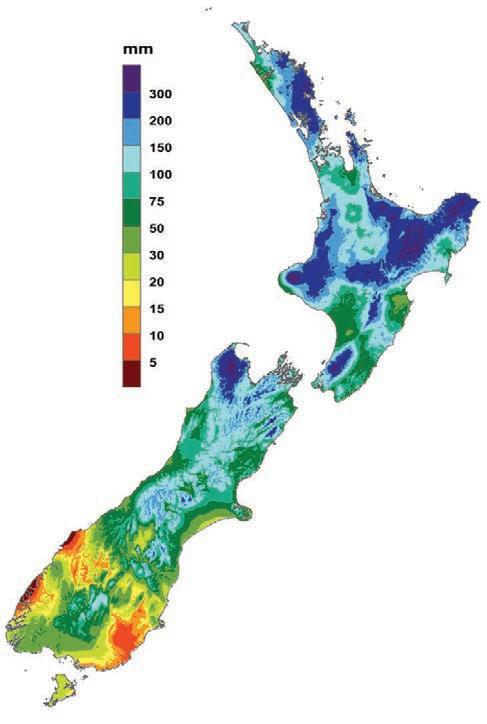
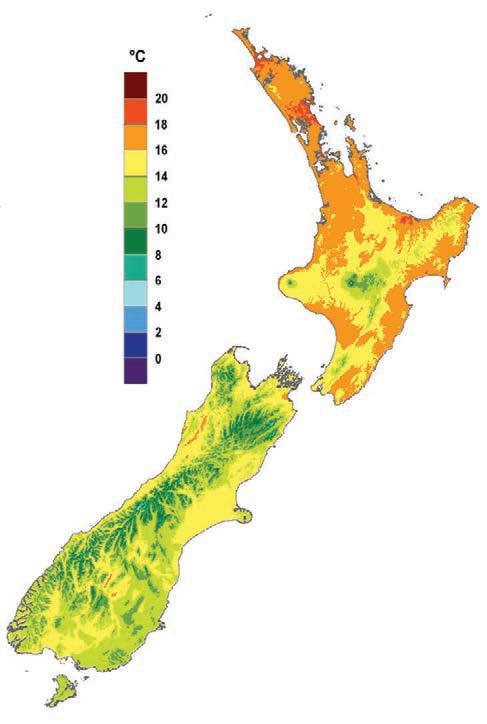
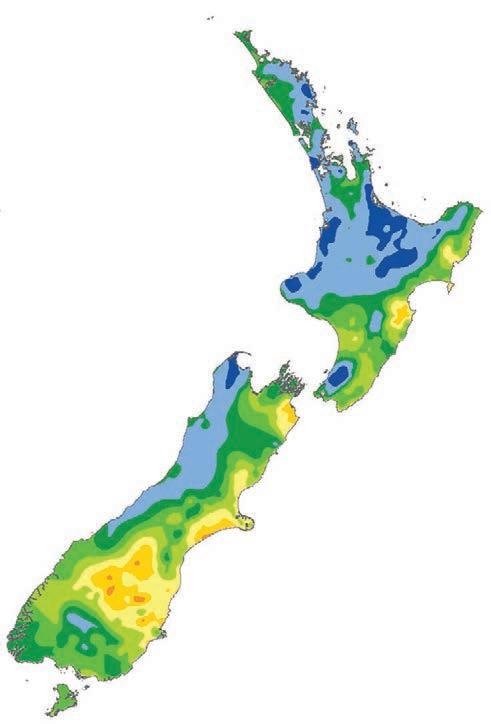
On Monday a front moved in from Tasman bringing rain to western regions and a few spits in the east. Tuesday really ramped up with unstable northerly quarter winds bringing plenty of wet weather in the west, heavy falls, thunderstorms and hail, even a few tornadoes / waterspouts in the mix.
This system pushed out to the east on Wednesday but another front moved in from the Tasman bringing further heavy falls to the West Coast with thunder, reaching the North Island overnight.
On Thursday unsettled weather continued with more thunderstorms in the west, a southerly change pushing into Canterbury may have brought thunderstorms there with some welcome rain. On Friday we backed off.
The weekend brought a low out of the Tasman with more showery weather, thunderstorms too, especially in the North Island.

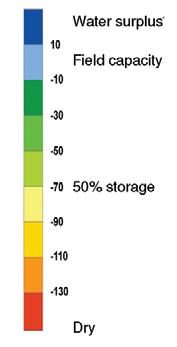
Monday this week we have a brief moment of calm thanks to a ridge, but a new front in the Tasman moves over the South Island on Tuesday bringing heavy
ruralweather.co.nz
Deficit 9am 22/11/2022
rain in the west. This reaches the North Island overnight.
Cool southwesterlies lie over the country on Wednesday with showers in the west and far south. A southerly change moving into Canterbury may bring some more unstable weather with thunderstorms and hail. On
Observed rainfall
9am 07/11/2022 to 9am 22/11/2022
Thursday conditions ease up but a new front moves into the far south later in the day. This moves further northwards on Friday. Meanwhile a low comes out of the Tasman to the northwest and this may bring in some rain to the upper North Island later in the day.
Observed mean temperature 9am 07/11/2022 to 9am 22/11/2022
The weekend may see a high start to move in but there is a chance it stays out in the Tasman. If that’s the case more showers in the west and south are possible in a southwest airflow – perhaps another southwest change moving into Canterbury if lucky.
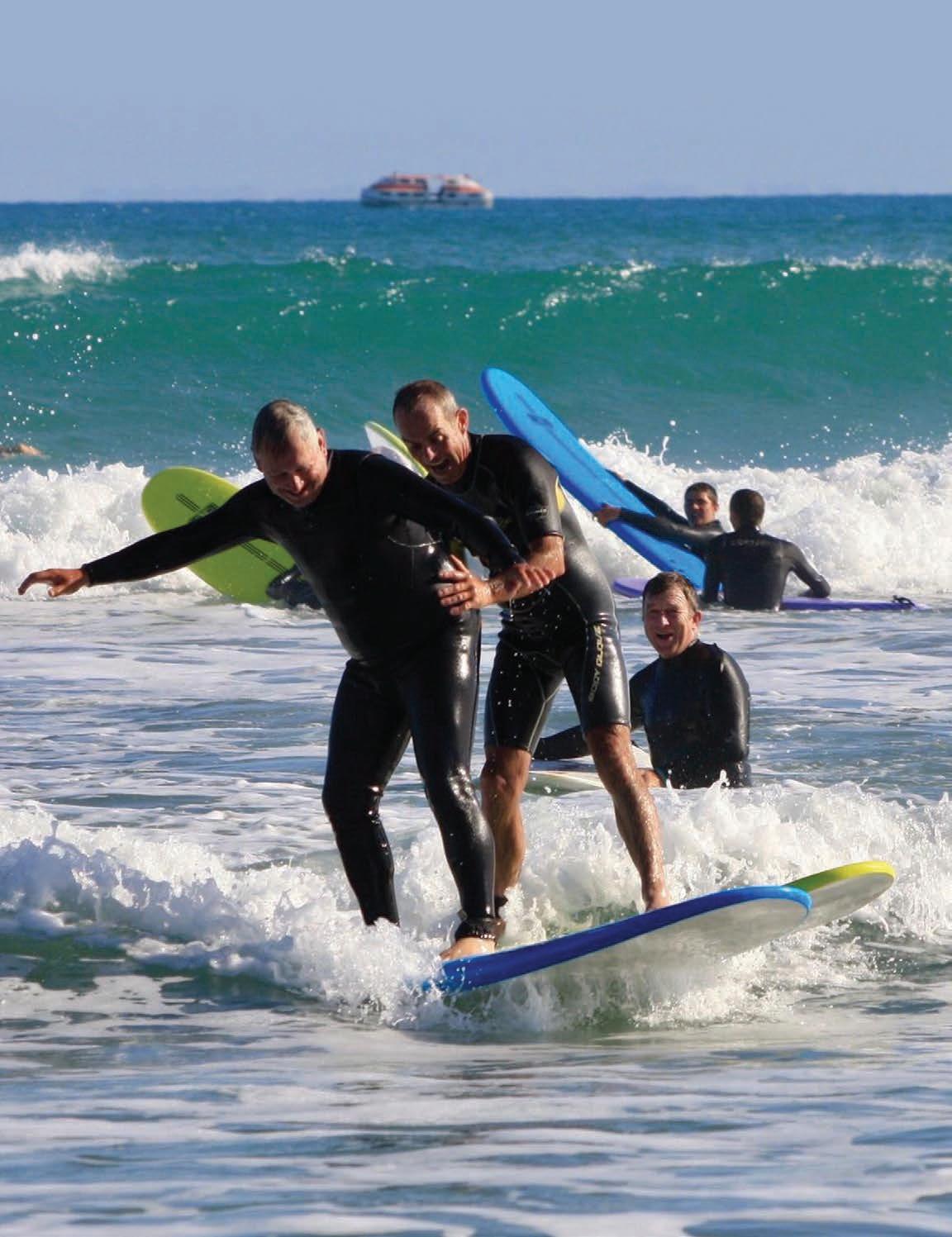
Get along to your local Surfing for Farmers and be in to win a Barron Woolight sustainable surfboard.
Never surfed? No problem. Lessons are free, surfboards and wetsuits are provided, and there’s a BBQ after.
Getting off the farm and into the waves can help balance the stresses and strains of farming and you could win a Barron surfboard, we’ve got 10 to give away.
For more details and to find a surf spot near you visit www.rabobank.co.nz/surfing-for-farmers