
Having been heavily involved in Taratahi’s farm and in educating tomorrow’s drystock farmers, he wants to preserve a sector that is a thriving, attractive and profitable place for them to be. He said farmers are well aware of the significant portion of GHGs they contribute, and HWEN’s cooperative, multi-agency approach is a response that enables them to acknowledge the size of their emissions, and to offset them where“Andpossible.thefact that so many farmers supported a farm gate system, it shows they want to get recognition for their hard work to mitigate and sequester losses where they can.”
Crick said he is loath to see even greater uncertainty put on drystock farmers by ditching HWEN for some other plan. “Sequestration through HWEN will enable us to be sustainable from a financial perspective, but we also want to go beyond that, we want to thrive.”
He is confident that, in years to come, the HWEN model will be capable of including some of the biodiversity and water quality parameters the commission wants captured.“Itispossible to have reviews at year 5 and year 10 to let the science and technology catch up. That benefits all New Zealanders to do “Butthat.the time frame to develop a whole new scheme as suggested, that is a challenge. We all know how difficult it is to develop these systems. HWEN itself has involved a lot of time and energy. Time is short and we need to move forward on it now.” He was quietly confident that the government is unlikely to ditch HWEN’s sequestration model on the grounds of the sequestrationmaketoathatandinvolvedprocessgovernmentrecommendations.commission’s“Rightfromthestarthasinvestedintheandindustrygroupshavedelivered.“So,togoandturnaroundchangeattheeleventhhour,wouldbeabigcall.Butascaveat,forus,wereallyneedgetitovertheline.Itwouldusunviableifwedon’thaveasatool.”
Plant your forest today & reap income from the carbon emissions trading scheme. Contact Us: 021908476 / kiaora@tamata.co.nz We manage the forest We carry all the costs You share 50% of the carbon income! We have the trees You have the land We prepare the land We plant the trees Rugby star goes all in for agri12 Vol 20 No 32, August 22, 2022 farmersweekly.co.nz $4.95 GSTIncl ‘Keep farm trees in mix’
Crick farms 850 effective hectares at Gladstone near Masterton. As things stand under HWEN, his North Island drystock property with its range of hill country right up to class 6-7 will already feel some financial impact.Beef+ Lamb NZ analysis on HWEN notes that, at methane pricing of 11c/kg, 15% of the country’s drystock farmers can expect to take a hit of at least 10% on their net farm profit. But on country of the type that Crick farms, more than 20% of farmers are likely to experience the 10% hit. BLNZ acknowledged in its analysis earlier this year the lack of options open to farmers, other than sequestration when HWEN comes into play. “We lease the property, but we have 50ha of native bush on it so we have to have a conversation when HWEN goes in. Hopefully as emitters we can use it to offset,” Crick said. But despite HWEN’s effects, it provides some certainty for pastoral farming systems already feeling the heat on district land values from the impact of ETSdriven carbon prices.
Richard richard.rennie@globalhq.co.nzRennie
NO CHOICE: Paul Crick says the removal of sequestration as a tool under HWEN would leave drystock farmers in particular facing a real threat to their financial existence.
F ARMING on North Island hill country and being a Beef + Lamb NZ farmer councillor, Paul Crick is more conscious than most of the impact He Waka Eke Noa (HWEN) will have on his farming operation. Crick acknowledges that the HWEN model to measure and charge farmers for GHG emissions is not a perfect one, and will cost all farmers to some extent. But he says it is at least a system that gives farmers some certainty about how they need to respond to their farm’s emissions, including how to reduce them. In contrast, he and his peers on the council are concerned about the Climate Change Commission’s recommendation that HWEN ditch the sequestration/offset aspect of the model and replace it with one that recognises farm biodiversity, ecology, and water quality aspects. The commission made this recommendation on the grounds that bringing on-farm vegetation into a farm-level emissions pricing/offset scheme adds complexity and creates inequity between farmers and other sectors not able to get similar sequestration recognised. “With my farmer hat firmly on, we need that sequestration ability. We are doing our bit with methane genetics but that is more of a longer burn, it takes time.“As drystock farmers we do not have the option of in-shed feeding [of a mitigation product] that dairy farmers may have. Our tools are limited at this point, and that is why sequestration is so important for us.”


BAL13561-SuperPlus-PressAd-DPS Strip_548x120mm_FINAL.indd 1 NEWS REGULARS 4 Competition for milk heats up in Waikato A flurry of expansion by existing dairy companies and the arrival of new players means competition for milk in Waikato has never been stronger. 20 Dyed in the wool after 47 years Barbara Newton’s interest in wool began in her early teens as she selected staples for her mother to spin. Now she has retired from a fulltime – and pioneering – career in the wool industry. 7 Better health lowers livestock gas profile A United Nations report on the role animal health improvements can play in lowering agriculture’s greenhouse gas emissions highlights the opportunities New Zealand farming has to deliver a win-win-win for the environment, farmers and livestock. 16 Measles: It’s a clean sheep for South Island The South Island is ahead of the North Island when it comes to controlling sheep measles as New Zealand bids for “clean sheep” status. Newsmaker 20 New Thinking ............................................... 21 Editorial 22 Pulpit 23 Opinion ......................................................... 24 Real Estate 26-28 Employment 29 Classifieds 29-30 Livestock 30-31 Weather ......................................................... 33 Markets 32-36 GlobalHQ is a farming family owned business that donates 1% of all advertising revenue in Farmers Weekly and Dairy Farmer to farmer health and well-being initiatives. Thank you for your prompt payment.



WHILE farmers and growers are personally proactive about mitigating risk around extreme weather events, they need community wraparound to adapt to their increased frequency and impact, leading rural insurer FMG says. FMG is a member of the Insurance Council of New Zealand and supports its position on the need for communities to adapt to the increased frequency and impact of weather events, FMG chief people officer Peter Frizzell said. He said in the past financial year rural communities were severely impacted by the Canterbury floods, the Canterbury windstorm, July’s New Zealand-wide storms and Cyclone Dovi. Each event cost FMG more than $5 million. “From an perspective,insuranceit’simportant
Mitigating risk together
NEW Zealand is on track for yet another record-breaking year for climate-related insurance claims, prompting a stark warning that society must take a long-term view on climate risks. New claims data released by the Insurance Council of NZ (ICNZ) reveals total insurance payments to communities for extreme weather events are closing in on $200 million for the first half of thisLastyear.year set a new record for such payments at $324m, up on the previous record of $274m in 2020.The new data is to end-June 2022 and does not include claims for three major storm events in July, for which total figures will not be finalised until early in September. Each of these is expected to be more than $5m. ICNZ chief executive Tim Grafton said communities are once again enduring a hard year, reaffirming the need for risks to be reduced by investment in adaption measures such as flood defences.“There is no doubt we are going to be exposed to more frequent and more impactful extreme weather events,” Grafton said. “We have seen record insured losses the past couple of years and we are looking at another record forThe2022.”trend is putting a strain on insurers and communities alike. “As a country we need to focus high-level investment in better adaption measures to reduce risks,” Grafton said. This, he said, will help people living in event-prone communities and also support insurance companies. “If we sit on our hands and do nothing, insurance companies will respond to the challenges in their ownThisways.”could well mean no insurance or at best soaring insurance premiums. “If there was no insurance then we would have to be doing something about it to reduce risk, so that’s where the focus needs to go.“Investment is needed in natural man-made measures in order to keep risks at a level where insurance is affordable for both property owners and insurers over the medium to long term,” GraftonHonestsaid.conversations need to be had where homes, businesses and community assets such as roads and water infrastructure are built and businessescommunityFarmers,maintained.householders,groups,iwi,andinsurersall have a role to However,play. Grafton said, much of the work and cost will fall to central and local government to ensure there is an appropriate legal framework and investment in place to manage these risks over the decades ahead. “What we have done in the past 40-50 years is inadequate for today so we need to look at the next 50-100 years and plan for that.“There will be areas of NZ where the ratepayer base will be low because of population size and they will not be able to afford the work“Therequired.question then being, is there a role for local government to contribute, or opportunity to harness the private investor sector?
21/03/22 3:14 PM FARMERS WEEKLY – farmersweekly.co.nz – August 22, 2022 3
Annette annette.scott@globalhq.co.nzScott
GET TO WORK: Action is needed now to build resilience in the face of local risks such as this on-farm damage in the Ashburton extreme flood event of May 2021.
Annette annette.scott@globalhq.co.nzScott
Super just got stronger ballance.co.nz | 0800 222 090 The most powerful single superphosphate on the market Our new improved SuperPlus® dials up the phosphorus to 9.5% for powerful performance. Apply more nutrients at once, save on spreading costs, and boost soil fertility, sustainably.
to reiterate that insurance transfers risk, it doesn’t reduce it,” Frizzell said. “FMG has a long been an advice-led insurer and used our claims data and expertise from support partners to share insights with farmers and growers on reducing risk around their property. “Our experience is that our clients are very good at taking up the advice that relates to them, in fact they welcome it.” As well as respond.”putsBeingincreasedsupporttoohappening.aheadpersonallypreparationproactivesaidcommunitiessupportingtoadapt,Frizzellfarmersandgrowersareatlookingatwhatcanbedonetoreducedamage,oftheunexpected“Likeotherinsurers,weareadaptingonhowweclientsfollowingtheseweatherevents.NZownedandoperatedusinagoodpositionto
“It comes down to what is the cost of not doing it – we need to find a way.” The reduction of risks through investment in resilience is central to maintaining both the affordability and availability of insurance.“Inthatway we can ensure that when the worst happens, insurers are there to help put businesses and communities back on their feet.”Grafton acknowledged the challenges farmers face in getting insured.“There are a lot of different aspects to what can be insured – fence-lines, for example, crops for another. It can be costly, so through necessity farmers are selective.”Inanew wave of cover options, Grafton said it’s likely NZ insurers will pick up on “parametric cover”, insurance that is being used in other parts of the world. “This is black-and-white cover to a certain threshold. If the adverse event meets the set threshold barrier then there is a payout; if not, there is no payout at “Thisall. could be an option that could suit farmers, but there would need to be full understanding of benefits and limits.”Land remains uninsurable. Nowhere in the world is land covered by insurance, Grafton said.
Photo: Annette Scott PAY THE PRICE: ICNZ chief executive Tim Grafton says if we sit on our hands and do nothing, insurance companies will respond to the challenges in their own ways, which could well mean no insurance or at best soaring insurance premiums.
climate claims spark warning
RecordNews


“The relationship between supplier and processor is a hellishly important one in the context of their business, so I don’t think there will be a lot of volatility between people coming and“Itgoing.doesrely on the processor doing what they say they are going to do, looking after their farmers and speaking up for their farmers and ensuring that farmer interests are well represented in how the processor operates.”
4 FARMERS WEEKLY – farmersweekly.co.nz – August 22, 2022 News
A FLURRY of expansion by existing dairy companies and the arrival of new players means competition for milk in Waikato has never been stronger.Foryears, farmers milking the region’s 3130 dairy herds had a choice of who to supply, Fonterra or Open Country Dairy. In recent years, Synlait has expanded from the South Island to build a factory in North Waikato, Miraka established itself in 2010, and two years later Yashili constructed its factory in Pokeno. Now there are two more players entering the market, with Happy Valley Nutritional and Olam both moving into South Waikato with factories in various stages of construction.Theregion also faces competition from alternative land uses, including horticulture, sheep milking, urban development and forestry.Dairy conversions have largely halted following tough new conditions brought in by the Waikato Regional Council. This puts these companies in competition for a limited pool of suppliers.Theregion’s biggest player, Fonterra, has had its total market share of suppliers across New Zealand fall from the 90%+ range in the 2000s to around 79%-80%. Its group director of Farm Source, Richard Allen, said all companies are having to step up their game to retain suppliers. “It’s extremely competitive. It’s 100% a supplier’s market,” Allen said.“Farmers have a lot of choice in most regions with the exception of Northland.”Hesaidcompetition is a positive because it keeps Fonterra on its toes and obliges the cooperative to keep innovating. It should not be a guaranteed right that Fonterra gets milk in New Zealand, he said. “We have to make sure that our farmers – because they have a lot of choice – that they are choosing to stay at the co-operative. “I think that’s the place you always want to be in. To compel people to supply as a farmer without options is not a healthy thing for the industry either.”
There are theoretically more options for farmers, but they may not necessarily be long-term options, he said. Margrain said the changing landscape has not changed Open Country Dairy’s policies around attracting and retaining farmer-suppliers, emphasising its cashflow, product mix and transparency with farmers. He said the change of supplier from one processor to another is not likely to be frequent.
Richard Allen, Farm Source group director, Fonterra. Karl Gradon, CEO of Miraka. Laurie Margrain, chair of Open Country Dairy. It’s 100% a supplier’s market. Farmers have a lot of choice in most regions with the exception of Northland. Richard FonterraAllen
Competition for milk heats up in Waikato Gerald gerald.piddock@globalhq.co.nzPiddock
One of the newest players in the region is Singapore-based Olam Food Ingredients, busy constructing the global company’s factory near Tokoroa. Milk supply manager Paul Johnson said in a written statement that so far there has been good interest from farmers.“Weare on track for our plant to open in 2023 as planned. We are signing farmers up and we’re looking forward to working more closely with them,” Johnson said. “We took a lot of time to listen to what farmers need, and our offer reflects that through pricing options that work for different farming styles and stages; simple and achievable incentives; worldclass technology tools; and unique services and benefits for helping on farm and in the community.”
This has changed how Fonterra pitches itself to suppliers as the industry evolves, with more companies having a presence in theFarmcountry.Source, its retail arm, was created in response to the growing competition in 2013-2014, followed by My Milk. Over the years there has been a lot of evolution in the way things are done in order to keep its suppliers, culminating last year in the work done around capital structure and flexible shareholding.“Wehavehad to evolve, we have had to innovate, and we will continue to have evolve and innovate,” Allen said. The nature of competing interests has also changed. In the past it was rival dairy companies, but new land uses have emerged as dairying is no longer the only game in town. “More and more, our biggest competition for the next 10-15 years is going to be land-use change. How do we evolve to manage that in a world where milk is flat at best and probably declining? There’s not a lot going in milk production’s favour when you look at all of the environmental and regulatory changes.“Wehave to really think hard about the way in which we ensure that farmers see the co-operative as their best choice for their families and the industry.” What attracts a farmer to a supplier can depend on their situation and background, and every farmer is unique. Bankers, accountants and other advisers may also influence their decision.“Itwill vary and obviously financials and performance are critical. There’s no one-size-fitsall,” Allen said. He said Fonterra’s supplier market share has stabilised and he believes the co-operative is doing a good job of winning back as many suppliers as those who have“It’sleft.going to be an interesting dynamic with more capacity coming on-line,” he said. However, he is confident Fonterra is doing all it can to maintain that “Sustainablesupply.milkproduction is going to be the name of the game over the next 10 years, and how do we support them with these changes around zero carbon and freshwater and give them the tools and services so they don’t have to reduce their milk production?” Synlait declined to comment, but Laurie Margrain, chair of NZ’s second largest dairy company, Open Country Dairy, said dairy farmers now have more options around supplying than they have ever“There’shad. more competition –that’s good for the farmers and it makes sure that processors do their job to the maximum of their abilities,” he said. Margrain warned, however, that while farmers have these options, the industry is also littered with failed processing companies.
GOT MILK? The arrival of new dairy players in Waikato and expansion by existing companies means a lot more competition for the milk produced by dairy farmers.
In July, Miraka chief executive Karl Gradon revealed the company was on the lookout for 40 more farmers to supply its factory at Mōkai, north of Taupō Gradon said Miraka has been overwhelmed with inquiries. Rather than trying to compete with companies such as Fonterra on a scale basis, Miraka uses its small size to establish an intimacy with its suppliers that larger companies may not be able to match.“That’s the key, making your business supplier-centric and making those conversations about the customer’s needs and the values that we have and building a bridge between socially and environmentally aware consumers that are emerging, that gets what they do on farm. “When you’re sitting around someone’s kitchen table as CEO, and that’s something we do very frequently, it becomes more of a connecting and compelling engagement,” he said. Gradon refuses to refer to a supplier by their supply number. “The day our farmers become a number is the day we have lost it. I want to know every farmer’s name, their kid’s name, the sport their kids play and who we should be supporting in the community so we know who to sponsor.”


NZPork believes the costs of NAWAC’s proposals are likely to be as much as $10,000-$20,000 per sow on a standard farrow to finish operation, the equivalent of more than 20 years’ profit. “Our own industry proposals will still need government support along with adequate time to implement change. “The alternatives we propose are based on sound animal welfare science and are more achievable to implement.”
We will be looking for government support by making countries exporting pork to NZ meet the same welfare standards.
NewsNZPork’s own plans better but ‘painful’
NZPork chief executive Brent Kleiss said the industry supports the need for change but the proposals released by NAWAC in its Draft Code of Welfare for pigs would have unintended negative animal welfare outcomes and drive many pig farmers out of business.“While NAWAC is an expert committee, it has no expertise or understanding of pig farming,” Kleiss said. He said the sector has worked with technical advisors to develop alternative proposals based on a rigorous in-depth review of contemporary pig welfare science and good practice. They are substantial and meaningful, and collectively demonstrate welfare standards that go beyond all major porkproducing countries. The proposals include ensuring all sows are provided with nesting material before farrowing. The change from up to 33 days in the farrowing crates to no more than seven are to balance sow behavioural needs with piglet protection.Theminimum space allowance for growing pigs would be increased by 13%.
Sean Molloy Pig farmer Annette annette.scott@globalhq.co.nzScott
FAIR GO: North Canterbury pig farmer Sean Molloy said farmers are happy to change, all they are asking for is a level playing field.
The proposed alternatives include reducing the maximum time farrowing crates can be used from the current 33 days to no more than seven, increasing the minimum space allowance for grower pigs, and eliminating the use of mating stalls for housing sows.Molloy said the industry’s proposal around space allowance makes sense, but the farrowing is a double-edge sword. “It’s early days, the technology is still being developed, the rest of the world is not using it yet. “There will be a lot of cost and a lot to learn, it will be a painful transition both in management and“Itfinancially.willbelike a paradigm shift, a step change that’s for sure,” Molloy said.
NZPork is urging the government to require imported pork to be held to the same higher welfare standards.
The changes would place NZ’s standards beyond those required in the United Kingdom, European Union, United States, Canada, Australia and China, all of which collectively produce the majority of the world’s pork and supply most of NZ’s imported pork. “It will make us less competitive on the global scene,” Molloy said. “We will be looking for government support by making countries exporting pork to NZ meet the same welfare standards. “We are happy to change but on a level playing field. All we are asking for is fair and equal standards and regulations, otherwise we are severely disadvantaged,” Molloy said.
the proposed alternative approach in its submission on the Proposed Code of Welfare for Pigs and Associated Regulations, urging the government to work with the pig-farming sector to confirm the industry-supported alternative standards and agree to an implementation plan that is achievable for pig farmers while ensuring their farms remain financially viable.
The proposals seek to retain an outcome-based approach to deciding when piglets should be weaned, which would better cater for the welfare needs of both sows and piglets, rather than adopting a prescribed and inflexible minimum weaning age as is proposed by NAWAC. Kleiss acknowledged the alternative proposals would still be costly to implement.
The changes proposed by NAWAC are not supported by international pig welfare science and they would lead to additional piglet deaths and pig farms shutting down. This would make New Zealanders rely on even greater volumes of imported pork produced using practices that are illegal in NZ, Kleiss said.
® Hex Wire CentreNetting38mmStrand 0800 330 bayonet.co.nz320 Bayonet Maxline 38mm Hex Netting Centre Strand now features 38mm aperture hexagons and 4 times horizontal centre strand wires. Grab yours at your local Rural Retailer today. DOCKING TIME? GET CENTRE STRAND FARMERS WEEKLY – farmersweekly.co.nz – August 22, 2022 5
PROPOSED industry changes in the way pigs are farmed are making better sense, but they will still mean a painful transition for pigSofarmers.saysNorth Canterbury commercial pig farmer Sean Molloy, who said what the industry is proposing is way more on the mark than the unworkable plans the National Animal Welfare Advisory Committee (NZWAC) signalled to the government “but still challenging financially and management-wise”.TheNewZealand pork sector recently unveiled alternative proposals to improve pig welfare that represent the industry’s most significant changes in a generation.NZPorkoutlined





Grow advantageyour Smarter farming for a better New Zealand You know your farm. We know our nutrients. And we’re driven to help you achieve your productivity and sustainability goals based on best practice soil science, technology, and innovation. Measure. Monitor. Manage. Here’s how we can help you gain ground for spring – rav.link/advantage 0800 100 123 ravensdown.co.nz RAV-22AUG-FW


A UNITED Nations report on the role animal health improvements can play in lowering agriculture’s greenhouse gas emissions highlights the opportunities New Zealand farming has to deliver a win-win-win for the environment, farmers and livestock. Released last month, the UN report was partially funded by the Global Dairy Platform and received financial support from the NZ Unproductivegovernment.emissions from livestock are typically associated with animals that are sub-par, resulting in increased culling, discarded product, prolonged calving intervals and lower per head production per tonne of greenhouse gases (GHG) emitted. The report’s authors note the impact of improvements in animal health are not currently included in most national GHG measurements, and call for this to change.Zoetis global sustainability manager and veterinarian Kristen Baxter is calling for a closer look at how the report’s recommendations could play into better dealing with clinical and sub-clinical diseases present in many NZ dairy and dry stock herds.Baxter recently completed a master’s research project on the carbon footprint of internal teat sealant intervention to prevent mastitis in NZ dairy cows. “Working with AgResearch, we looked at North Canterbury dairy herds that already had relatively low levels of mastitis infection,” Baxter said. “We found they achieved approximately a 1% reduction in whole farm emissions over the entire year just from using teat sealants to prevent early season mastitis. This is a significant amount when put across the national herd, and the gains are even greater in herds with higher levels of mastitis infection.”
This Blue September do something blue to help a mate through. Every year 4,000 kiwi men are diagnosed with prostate cancer. The funds raised by every Blue Do help us make a real difference to the lives of blokes living with prostate cancer. Organise your Blue Do or blueseptember.org.nz DONATE NOW
The UN report cited the Oceania region as one that could achieve 14%-17% reductions in GHG emissions through mitigation packages focused on animalSomehealth.ofthe
Te Kahui Māte Pukupuku Repe Tātea o Aotearoa
herdnatureopportunity,diarrhoeadiseasebyperandlivestockproductivity.emissionscertainmeetdietaryimprovementsrecommendedincludedadjustmentstobetternutrientrequirementsattimesofyear,reducingandimprovinganimalItciteshowparasitesincanaffectfeedefficiencyincreasethemethaneyieldkilogramofdrymattereatenasmuchas33%.ItmentionsoneproblematicfoundinNZ,bovineviral(BVD)asaparticulargivenitssub-clinicalandcorrosiveeffectonproductivity.InNZBVDhasbeenestimated
“We have the numbers on herd sizes [and] production and could put a measurable figure on improvements to GHG losses if some of these diseases were addressed nationally,” Baxter said. With He Waka Eke Noa (HWEN) now requiring farmers to “know your numbers” when it comes to GHG emissions, Baxter said the government has a role to play in ensuring improvements to herd health are measured in terms of their impact on individual farm emissions profiles. In the near future she would like to see farmers able to connect specific animal health actions to lowering a farm’s GHG profiles, possibly by running “what if” scenarios on disease control and outcome.“Thiswould all play into HWEN calculations and New Zealand’s international climate commitments. For farmers, many of the reductions they will have to make to meet GHG emissions targets will be upfront costs, without necessarily any great income“Recognisedgains. improvements to animal health in herds delivers a win for everyone.”
ProstateFoundationCancerNZ
to cost the dairy sector alone $150 million in animal health costs and lost production every year. Experts have said that a focused campaign similar to that applied to M bovis could eliminate the disease in a matter of months. “It would be easier to get rid of than M bovis in the sense we have good tests for it, and it is particularly easy to test for in dairy herds now. But in order to eradicate the disease, we need a focused, co-ordinated national programme, which Massey has been working on,” Baxter said. Another disease that could be targeted is Johne’s disease, which has a similar impact on eroding herd productivity and is endemic in NZ cattle, sheep, deer and goat populations.Baxtersaid higher replacement rates in dairy herds due to infertility or disease in adult herd members mean replacement heifers represent a significant contributor to dairy’s GHG profile, with about 25% of dairy cattle being held as replacements nationally.“Cowlongevity in a herd is a big one. If you can get them in, and keep them there healthy and productive for longer, that has the biggest impact on lowering replacement rates.” Some of the countries covered in the UN report may not have good statistics and data on their herds, but NZ is well placed to work on a farm level to incorporate improvements in animal health into national GHG accounting.
We have the numbers on herd sizes [and] production and could put a measurable figure on improvements to GHG losses if some of these diseases were nationally.addressed Kristen Baxter Zoetis Richard richard.rennie@globalhq.co.nzRennie
BRING IT DOWN: Kristen Baxter says in future she would like to see farmers able to connect specific animal health actions to lowering a farm’s GHG profiles.
HEALTHY OUTCOME: Recognised improvements to animal health in herds deliver a win for everyone, Kristen Baxter of Zoetis says.
BetterNews health lowers livestock gas profile
FARMERS WEEKLY – farmersweekly.co.nz – August 22, 2022 7


Watch the video now at youtube.com/OnFarmStory
A TRANS-Tasman effort is underway to ensure foot-and-mouth disease is kept out of Australia and New Zealand.Australia’s Minister for Agriculture, Fisheries and Forestry, Senator Murray Watt, met with his NZ counterpart, Damien O’Connor, Minister of Agriculture, Biosecurity and Rural Communities, last week. Watt said biosecurity is a central component of Australia’s close and productive relationship with NZ amid a range of common risks, especially the FMD outbreak in Indonesia.“Minister O’Connor and I had a very good meeting and reaffirmed our commitment to maintaining stringent arrangements to protect our countries’ respective biosecurity status,” Watt said. “We discussed ongoing work by senior biosecurity officials to harmonise approaches where possible, primarily focusing on how we are managing the risks of FMD. “Both countries are signatories to the International Animal Health Emergency Reserve, which would afford us additional human resources in the event of an emergency animal disease outbreak, allowing for faster control and increased chances of eradication.”O’Connorsaid greater co-operation is integral to reducing biosecurity risks in the region as threats from FMD and fruit fly loom over Australasia. “I am very pleased to have discussed joint efforts to strengthen preparedness and response capabilities with Minister Watt today and evolve our biosecurity interventions, so we stay in step with each other” O’Connor said. “Since 2018, Australia and New Zealand have collaborated on developing world-first digital technology as part of the transTasman co-operation on biosecurity risk“Wedetection.continue to work together on a range of biosecurity initiatives, such as increasing our intelligence capacity to ensure our biosecurity systems are world’s best.”
Waikato Federated Farmers arable chair Keith Holmes, who was part of initial meetings earlier this year on cost issues, told the Hamilton meeting he fully endorsed the accord being developed.“Farmers and rural contractors need each other,” he said. “My plea is that you take on board what Julia and Andrew are saying and do your numbers and don’t get yourself into a situation where you put yourself at risk by having a handshake deal, particularly when you are trading maize.“Make sure it’s a legal document through Federated Farmers or RuralTheContractors.”NorthIsland roadshows will be followed by meetings in Gore and Christchurch before the end of the month. They also include presentations from the Ministry for Primary Industries and Growsafe’s Dean Bowden, who provided a welcome update to spraying contractors on the requirements of new standards for the storage, transport and use of “Chemicalagrichemicals.storage and labelling is a key area for our members,” Olsen said. “It’s in transition and there are some hard-stop deadlines in 2025 which we and Growsafe will continue to emphasise.”
Trans-Tasman effort against FMD
andofaneedcontractorsJonesJuliaofNZXGAME:NUMBERSHeadInsightssaystohaveclearideatheircostsmargins.
This episode was made possible with support from Rabobank
The roadshow was one of three held in the North Island, with the other two having taken place in Palmerston North and Whangarei.NZXHead of Insights Julia Jones told contractors they needed to know the numbers that drive their business and share them with their farmer clients. Jones said they need to know the margin they are making. “What revenue do you get from a job? No one wins if you are not making money.’’ As a lifestyle block owner in the Waikato, Jones said, she is herself a user of the services provided by the $2 billion rural contracting industry.“Itellmy rural contractor to charge me more,” she said. Jones said rural contractors need to develop an ethos about charging appropriately and realise that “you don’t have to do business with everyone”. World food prices are going through the roof and no matter how global tensions play out, people will always need to eat. Rural contractors are key to that happening, she said. “Your role isn’t going to go away but you do need to evolve and stay relevant.”NZXisbeing contracted to deliver a cost reference point to RCNZ and Federated Farmers. Olsen said it will be available to RCNZ members via the organisation’s website. It will allow them to track fuel and fertiliser costs and help them with their planning. “Other cost reference points may be added in time if we can get meaningful independent data.”They will also be regularly updated and monitored to reflect the farming environment.
Gerald Staff reporter
gerald.piddock@globalhq.co.nzPiddock
TEAMWORK: Australia’s Minister for Agriculture, Fisheries and Forestry, Senator Murray Watt, says he and Damien O’Connor affirmed their commitment to maintaining stringent arrangements to protect Australia and New Zealand from biosecurity threats like foot-and-mouth.
8 FARMERS WEEKLY – farmersweekly.co.nz – August 22, 2022 News
On Farm Story On Farm Story
Restoring the mauri of the Waiau Uwha River
A NEW accord between rural contractors and landowners that accounts for input cost volatility should be ready in time for spring sowing.Thecontract was created as a way to more fairly allocate the costs of fuel, fertiliser and other inputs after they skyrocketed last season from when crops went in the ground to when they were harvested.Itsawmany contractors struggle to break even by the time the crop was ready for harvesting. The accord was created by Rural Contractors New Zealand (RCNZ) and Federated Farmers after a meeting in Hamilton in May this year, when Waikato contractors said their costs had risen by 25%.
John Faulkner is working to restore an 18km stretch of the Waiau Uwha River, after realising that some farming systems are not as friendly to the environment as they could be.
RCNZ chief executive Andrew Olsen updated contractors on the progress at a roadshow meeting in Hamilton.“Theopportunity is to ensure that it’s not only contractors that do well in their business but making sure their customers do as well. We have to keep the farmers alongside this,” Olsen said. “It started with farmers saying it can’t be a race to the bottom. We need to find a way make sure that costs entering the system are dealt withTheappropriately.”roadshowshave confirmed that costs are a big issue for rural contractors and contracts are needed to reflect scalability in how costs are being treated by contractors and farmers, he said. “That’s our focus in the next weeks and months – Federated Farmers and RCNZ wrapping education around this issue.”
New accord for spring sowing


of Waikato dairy farmers are refusing to make efforts to change their farming practices to become fully compliant around effluent management.Ofthe789farms inspected by the Waikato Regional Council for the 2021-22 season, 54, or 7%, were significantly non-compliant.
BuiltforDesignedstrength.tolast. Distribution Centres: Whangarei, Hamilton, Levin, Taupo, Christchurch, Gore 0800 347 greenwoodinfo.co.nz259 SHEDS YARDS BRIDGES GREENWOOD Calf CoveredShedsYards Lifestyle Block Sheds Bells & Whistles Sheds GRW0004 FARMERS WEEKLY – farmersweekly.co.nz – August 22, 2022 9
Patrick WaikatoLynchRegional
Council UP TO SCRATCH? The Waikato Regional Council inspected 789 farms last season and judged 379 as fully compliant with their effluent management.
Hugh hugh.stringleman@globalhq.co.nzStringleman
There were 117 enforcement actions resulting from those inspections including 35 abatement notices, 12 infringement notices and 69 formal warnings. The remaining 356 farms had degrees of non-compliance that sat between the two ends of the spectrum.Beingfully compliant came down to having proper infrastructure and that infrastructure being properly managed. Those 356 farms had issues relating to those factors, he said. “They may have the infrastructure but have let themselves down with the management, or the infrastructure is not quite there yet,” he said. The number of farmers being taken to court has fallen over the past 12 months as the judicial system struggles to cope with delays due to covid-19. It has resulted in delays in trials, he said.In one case, the council initiated court proceedings against a recidivist farmer 18 months ago. The case is set to be heard only in February 2024, he said. “All of the court cases have really slowed down. That’s not a criticism of the court, but a reflection of how challenged they are.”
Effluent proving a problem in Waikato
RURAL APPEAL: Rural investments are lining up well against urban opportunities, MyFarm head of investment Con Williams says.
Gerald gerald.piddock@globalhq.co.nzPiddock
That percentage is unchanged from the previous season, Waikato Regional Council regional compliance manager Patrick LynchManysaid.ofthese farms would have had previous visits from council inspectors, he said. However, full compliance rates had lifted from 37% to 49%, with 379 farms being fully compliant. “We’re finding the bad stuff at the same rate. However, at the other end of the spectrum, there are more people improving,” LynchThosesaid.fully compliant farmers know the rules and are following them. But at the bottom end, a minority of farmers are resistant to change, he said. “It feels like for us, that when we find the bad stuff, these are people who simply don’t want to change. “They have had all of the warnings and guidance from their own industry – supply companies, DairyNZ, the wider community and us as the regulator and yet there is this realm of around that 7% and we’re having to engage with them one at a time and use our harsher regulatory tools to get them to Thoughchange.”7%may seem like a small component of the industry, the scale of the dairy industry in the Waikato means there are as many as 300 dairy farms with inadequate infrastructure, posing a threat to the environment, he said.“The good farmers are doing the right thing and there are more people trending towards doing the right thing, but the real issue is what appears to be this core of poor performers who are absolutely resistant to change.”
ANewsSTUBBORNminority
Investors seek inflation-proof assets
INVESTORS in rural syndicates are placing more emphasis on inflation resilience and the potential of their investment to deliver if interest rates rise, MyFarm head of investment Con WilliamsMyFarmsays.called a nationwide series of winter gatherings of its investors and drew more than 250 attendees, from whom Williams gathered feedback on what investors are seeking in the current economic climate. They are still keen on productive, land-based assets delivering a steady income in uncertain times, investments with strong fundamentals and some tax efficiencies.Overthepast three months MyFarm has signed up $47 million worth of syndicate units, supplemented with $24m of borrowing, to purchase $71m of assets.Williams used the recent Bristol Properties poultry production facility in Taranaki as an example of investors’ needs being met (Farmers Weekly, July 4). “It is in a critical supply chain infrastructure with rentals adjusted by the consumer price index to deliver fixed income growth,” he said. “The company that is leasing your property has a strong market position in food production with good operating margins and buffers against rising costs.”
MyFarm investments carrying 30% to 40% debt will be more resilient than more heavily indebted businesses if interest rates rise. The budgets for its propositions include 5.5% to 6% interest rates, and actual rates charged are currently lower but expected to rise. Williams said rural investments are lining up well against urban opportunities, offering real assets in primary industries with inflation resilience in contrast to falling property values. They have had all of the warnings and guidance from their own industry and yet there is this realm of around that 7% and we’re having to ... use our harsher regulatory tools to get them to change.






Gerald gerald.piddock@globalhq.co.nzPiddock
“This requires not only investing in systems but ensuring we carefully evaluate our performance, injecting new people into our businesses to challenge and improve what we do.”The company’s earnings before interest and tax (EBIT) of $66.8m were up 18% from the previous period, with Skellerup’s industrial division lifting its EBIT 20% to $39.1m, and the agri division’s EBIT up 10% to $33.6m.Mairsaid the company’s agri division is a “world leader” in the design and manufacture of essential items for the global dairy and farming industries, which include fire, forestry and electricity.Hesaidsales of dairy rubberware and footwear in the US and New Zealand markets had increased in the 2022 financial year, and the company’s productivity gains from its NZ and China manufacturing facilities had helped offset the “significant impact” of increased raw material prices and freight costs. Skellerup’s chair, Liz Coutts – who is stepping down from her role in late October – said the company will pay a final dividend of 13 cents per share (cps), 50% imputed, bringing the total payout for the year to 20.5cps – up 21% from the previous year.
Clients are showing caution when it comes to purchasing decisions around inputs such as fertiliser.However, in the horticulture sector, where crops tend to be long-term investments that need to be looked after, growers are still placing orders for inputs, he said. But they are also wanting to ensure they have enough supplementary feed and so far there has been good forward demand for maize seed ahead of spring“Forwardsowing.orders are up slightly on last year. That suggests positivity and they need to ensure they have feed available for their animals,” he said. “There is a degree of certainty here alongside some cautiousness around the discretionary spend.” Further out, Guerin sees the emergence of biological products that will eventually replace agrichemicals usage on farms. “This is an area of real significant change in the agricultural sector here in New Zealand.“PGWis well placed in this space, we have good relationships with the multinational companies, we’re doing lots of research on these products in New Zealand, and they are probably two to three years away from October.yearexpectationscommercialisation.”PGW’sboardwillupdateforthe2023financialatitsannualmeetingin
PGG Wrightson has announced a record result for the financial year ending June 30. It reported net profit after tax of $24.3 million – up $1.6m or 7% on the previous year – and revenue of $952.7m, up $104.9m or 12%. Its operating EBITDA was $67.2m, which was up $11.1m or 20%, and it declared a dividend of 16 cents per share.
SKELLERUP breezed past its previous guidance and lifted annual net profit by 19%, attributing the growth to the rubber manufacturer’s “unwavering focus” on its customers and products. Net profit for the year ended June 30 jumped to a record $47.8 million compared with $40.2m in the previous year. Skellerup forecast full-year net profit between $44m and $47m back in February when the company revealed its half-year earnings had jumped by 19% to $23.2m.Chief executive David Mair said the company’s continuing investment in systems and people was key for the company to deliver financial returns. “We regard investment in systems, process and people as critical to our future success,” he said.
RESULT: year.andremainderthroughlikelyagrimostprofitableGuerinexecutiveWrightsonPGGchiefStephensaystherunforNewZealandsectorslookstocontinuetheof2022intothecoming
Skellerup boosts annual profit by 19% to $47.8m
PGW chair Joo Hai Lee said it is a result the PGW team is very proud of, after a year that was challenging on many levels. “Like all businesses we have had to navigate managing covid-19 protocols, dealing with a high proportion of health-related staff absences, responding to supply chain challenges, and resourcing the business in an extremely tight labourThesemarket.”results were achieved as a consequence of significantly higher revenue growth (up $105m or 12%) with margins broadly in line with last year. Lee said the dividend will be paid to shareholders on October 3, bringing the total fully imputed dividends for the year up to 30 cents per share.
PGG Wrightson posts record result
BusinessDesk
THE ALL NEW COOPER RUGGED TREK®0800 453 418@coopertiresnz www.coopertires.co.nz 10 FARMERS WEEKLY – farmersweekly.co.nz – August 22, 2022 News
PGW chief executive Stephen Guerin credited a combination of factors, ranging from high returns in the primary sector to capital development in the industry –particularly in horticulture – and rising prices, which had lifted revenue, as well as an increased marketGuerinshare.said the company had handled covid-19 disruptions including staffing and supply chain issues well. To help mitigate supply chain risks, PGW sourced product earlier and carried more inventory that it had historically. It, like other sectors, is struggling to find staff in various areas of the business, heItssaid.retail and water businesses performed extremely well, reporting an operating EBITDA of $52.5m, up $15m on the prior year.
Fruitfed supplies also had an excellent year and its wholesale business division, NZ agritrade, performed well over the year. PGW’s agency group –consisting of its livestock, wool and real estate businesses – had an operating EBITDA of $21.8m, down $3.3m on the prior year’s strong result. He said PGW’s real estate has enjoyed another successful year. While returns in the residential and lifestyle channels have been challenging, sale volumes of rural properties were strong. “We anticipate continued solid performance in the rural property market segment with favourable spring appraisals and listings due to continued horticulture growth and carbon/forestry interest in sheep and beef properties,” Guerin said. Its capital expenditure of $8.8m was $2m million higher than June 30, 2021, which was impacted by a slowing in the implementation of projects as a consequence of covid-related disruption. Its net interest-bearing debt was $32.8m as of June 30 2022. Looking ahead, Guerin said the profitable run for most New Zealand agri sectors looks likely to continue through the remainder of 2022 and into the coming year. However, inflationary pressure on input costs will likely translate into reduced on-farm profits, and exporters will still need to navigate high shipping costs and challenging logistics. For PGW, while the commodity outlook is positive, some clients are showing caution as they attempt to manage their costs, he said.“We are seeing some cautiousness in this space. While dairy prices are at $9/kg MS-plus, the cost of production is up to $8,” heGuerinsaid. said the business is conscious of the impacts of inflationary pressure. “Our margins have been stable and we have managed to absorb freight costs and have passed on freight costs so we haven’t pricegouged in this space.”


LINDA AND EVAN POTTER, DEER, SHEEP & BEEF FARMERS, HAWKE’S BAY 2020 EAST COAST REGIONAL SUPREME WINNERS AND NATIONAL AMBASSADORS “ We didn’t want to just be bystanders in our industry and hoped our story could inspire others on their journey.“ AL BROWN, CHEF BAL13643_BFEA_Muster_Campaign_Press_Ad_265x390mm_Individual Ads_v7.indd 1 15/08/22 4:14 PM


Bai met up with Pacific Trade Invest’s New Zealand Trade Commissioner Glynis Miller at the Agro-Rugby farm. He and his rugby-playing learner farmers will soon be looking at export markets for their produce, and for further investment in the project – and that’s where Pacific Trade Invest can help, with its offices in Australia, China, New Zealand and Switzerland promoting entrepreneurial exports from the Blue Pacific, and investment into theRugbyregion.has taught Bai everything: “That there is life after a successful rugby career if you have the vision and passion to pursue your dreams other than rugby. To start a business, for example.” He learnt the hard way. He professionalplayed rugby for 16 years. He made his international debut for Fiji in 2000, in a famous match against Japan which Fiji won 47-22. In that same year, he was also capped for playing test matches against Canada, Italy, Samoa, and the US. In 2001 he played Samoa and Tonga (twice). In that second match against Tonga he broke his ankle, which was a setback he could ill afford. The injury normally takes three to four months to recover from, but this took 10 months of gruelling rehab that was all on Bai’s own bat, without financial support. But he had the sheer determination to get back into the game; and in 2002, he joined Southland for the New Zealand National Provincial Championship, and toured the Northern Hemisphere with the Fiji national team. The thing with professional rugby careers – if they can be achieved at all – is that they have a boom-and-bust cycle. Which Bai is determined to break. “Rugby players can go from nil income to an annual average of US$90,000 [about $140,000]. The contract fee income for professional Fijian rugby players is on average around US$10,000 per month.“InFrance there are around 400 Fijian rugby players playing club level. They can earn US$1.2M annually, yet they have next to nothing to show for it,” Bai said. “But post-rugby employment opportunities for our players do not exist. We end up back in the village with nothing to show for our rugby fame and legendary status. Professional Fijian rugby players return home broke – financially, mentally and spiritually.“Iintend to change that for the next generation of rugby players.”
Hard work pays off –on both kinds of fields
HE’S INSTINCTIVELY working the Colin “Pinetree” Meads model, only in an entirely different context. And Fijian international rugby star Seremaia Bai is making a real success of it – not just for himself.Forwhile Meads trained in his King Country paddocks for his superlative rugby feats back in the day, and went back to farming after active rugby playing, Bai is operating in the new world of professional sport. Which is not all rosy, and which has its own attendant challenges. “The average professional career of a Fiji rugby player is approximately 10 years. But while so many young players have dreams, only 2% make it to the professional level. What happens to the other 98%?” Bai said. To address this question, Bai started the Agro-Rugby Programme. Its vision: Through rugby, to educate young players, through discipline and by holding on to cultural values. To use agriculture as a vehicle for rugby preparation – mental and physical. This is underpinned with entrepreneurial training and coaching for a pre- and post-rugby career, and for the challenges faced during the rugby years.InBai’s programme, rugby training takes place twice a week for one and a half hours, with additional weight training. Farming takes place for three half days a week, with physical work in the fields for half that time, and half taken up with education in financial skills and entrepreneurship.Tothisend,Baibought a substantial farm block in rural Nausori, just outside Suva. The young participants are helping to plant 2,000 taro plants per month. They’ll be ready for harvesting in October-November this year. “We also need to clear more land to prepare for planting more taro, cassava and ginger.”
Staff reporter
UPSKILLING: Young participants in Bai’s Agro-Rugby Academy are helping to plant 2,000 taro plants per month on his farm outside Suva, Fiji.
It’s hard yards as evidenced by the sweating young men wielding machetes and other agricultural tools. It’s living testimony to Bai’s belief in instilling self-discipline. And it’s a tight ship: foul language is not permitted.
Bai’s Agro-Rugby operation was successfully registered as Eastern Saints co-operative in May 2022. There’s also a mobile rugby academy, Kids Club, for children 5-13 years, juniors 14-18 years, girls 16-18 years – and of course the “open division” for the really serious players under the Eastern Saints Rugby Club. The mobile academy includes a Wellness Breakfast programme, which is held fortnightly at Albert Park. Participants bring produce and contributions to a basket, which is then sold. Those funds go to buying taro crops, organic liquid fertiliser, spray tanks, farm implements and power tools like chainsaws.Baihassent a small cohort of players to New Zealand and to Japan on rugby scholarships, the average age of the players being 17Baiyears.knows where he’s come from. He was born in Nausori, Fiji, to a single mom. He dropped out of school at 15, with no real formal education. He’s married, with five children. And he got to play international rugby for Fiji. But most importantly, he knows where the young people he’s mentoring can go. With the Agro-Rugby Academy, Bai is committed to creating a safe environment for the young players. Of those who signed up at the academy, 15 remain as a committed core group. “The majority of youth in Fiji have no formal education,” Bai said. “Hence they look to rugby as a way out of “Farmingpoverty.isseen as a poor man’s job. Everyone wants an office job. No one wants to do farming.” Except for Bai, with his vision for Agro-Rugby. He’s merging three complimentary skill sets – agricultural work, rugby and entrepreneurship – and turning that into a lasting legacy. One of financial security. As Bai said: “Success is when opportunities and hard work converge.”Justlikeit did for that towering figure of world rugby, Colin Pinetree Meads.
WAY OUT: Young Fijians look to rugby as a way out of poverty, Seremaia Bai says, but are often left with little to show for an international career.
Ph: 07 345 9050 e-mail:Markcopeland@copelandlawyers.comCopelandLLB,CMInstDRuralDisputesExpert Available to assist with resolving rural disputes, or for appointment as a Sharemilking Conciliator, Rural Arbitrator or Farm Debt Mediator throughout New Zealand. 12 FARMERS WEEKLY – farmersweekly.co.nz – August 22, 2022 News
We end up back in the village with nothing to show for our rugby fame. I intend to change that for the next generation of rugby players. Seremaia Bai Retired Fijian back


Many New Zealand soils are deficient in the micronutrients vital for optimum soil fertility. NutriMax allows you to optimise your soil and animal health, enabling you to be more productive and sustainable. It’s as simple as adding them to your spring fertiliser application.
| 0800 222 090
Set your farm up for a successful season, with NutriMax micronutrients.
To make the best fertiliser play this season, talk to your local Nutrient Specialist today. ballance.co.nz
Don’t leave your key players on the sideline





HERBICIDE POWERFLO™ Versatill™ INSECTICIDE Jemvelva active Sparta™ INSECTICIDE Qalcova ™ active Naturalyte™ Entrust™ SC

On climate pressures, policymaking should focus on how goods are made rather than which goods are made. NZ’s Export Advantage report
With a range of supplementation options to choose from, using MULTINE® ensures you get everything you need – and nothing you don’t. 5-in-1 + 2mg Vitamin B12 + 2mg Selenium 5-in-1 5-in-1 + 2mg Vit. B12 5-in-1 + 5mg Sel.
©2022 Merck & Co., Inc., Rahway, NJ, USA and its affiliates. All Rights Reserved. NZ-MUL-2201700001. 1 Baron Audit Data, June 2022
FARMERS WEEKLY – farmersweekly.co.nz – August 22, 2022 15News
ACVM No: A934, A935, A11311 & A11766. Schering-Plough Animal Health Ltd. Phone: 0800 800 543. www.msd-animal-health.co.nz
POTENTIAL: NZ has a competitive advantage in 214 areas, mostly linked to farming, forestry and food.
Farming is still NEWindustryprimaryNZ’sZealandfacesanuphillbattleifitwants to diversify exports away from primary industries, says research published by the Ministry for Business, Innovation, and Employment (MBIE).
The MULTINE® range lets you manage how you protect and supplement your sheep.
Your farm, your solution.
Whether standard, boosted with Vitamin B12 and/or Selenised, the MULTINE ® range can cover your flocks’ essential vitamin, mineral and clostridial protection needs. You can get exactly what your sheep require, right when you need it. That’s why MULTINE ® is New Zealand’s leading 5-in-1 clostridial vaccine range1 Learn more at www.sheepvax.co.nz Available from leading veterinary clinics and rural retailers.
VAXIPACK® RECYCLING LEARN MORE
The report, “NZ’s Export Advantage”, says the number of product categories in which the economy is competitive narrowed from a peak of 809 in 2006 to 531 in 2018, with the primary sector dominating those that remained. It said the economy had gone down a path of developing strong capabilities in primary exports, firstly to the UK and then to China, and it would take a deliberate and concerted effort to shift into different kinds of goods production. On climate pressures, the report suggests policymaking should focus on how goods are made rather than which goods are made. The research identified product categories that had a “comparative advantage”, meaning their share of NZ export value exceeded that of the same product’s share of world trade. For example, global exports of apples make up 0.04% of world trade, but they account for 1.4% of the value of NZ exports of goods, showing that our industry is 34.7 times more productive than the average country in exporting apples. MBIE found NZ had a competitive advantage in 214 categories (5.4% of the total), from 1995-2018, and those products are mostly linked to farming, forestry and food production. The 214 categories accounted for 74% of the value of merchandise exports in 2018, up from 70% in 1995, suggesting most growth came from adding scale or variety to existing products. A further 4.6% of the value of merchandise exports came from fast-growing categories that had developed a comparative advantage over the previous decade. These categories were also mainly linked to the primary sector, which suggested the evolution of comparative advantage was first concentrated in the primary sector and continued to follow “path-dependent” rather than “path-defying” trajectories.Forexample, within the machinery and electrical categories, emerging advantages included industrial machinery for food and drink preparation, harvesting machinery, straw balers, manure spreaders, wood and paper dryers, and machines for manufacturing cocoa or chocolate. Outside merchandise trade, only tourism appears to show a comparative advantage, but some services had sustained high rates of annual export growth, including insurance and pension services (16.4%), financial services (8.7%), and use of intellectual property (14.1%). These growth rates greatly outpaced growth in the world markets for these services and, if this continues, these services could emerge as future comparative advantages.
BusinessDesk


Ovis Management project manager Michelle Simpson said controlling sheep measles is important for the primary sector. While NZ currently has relatively low levels of sheep measles, an outbreak can result in downgrading or condemnation of otherwise healthy animals. Only 20% of Ovis-affected carcases are detected during meat inspection at processing plants, therefore the higher the prevalence rate, the higher the risk of meat from affected animals reaching the market, Simpson said.“It costs farmers and processors a lot of money due to condemned stock and one concern with Ovis is that if a farmer is not the one sending their lambs for processing, they may not know that they are passing the problem on.”Simpson said the data demonstrates that sheep measles can be controlled when farmers take the simple step of regularly treating their dogs for the Taenia tapeworm.Dogscan become infected by eating untreated meat or offal that is infected with live cysts. T ovis is then spread to sheep through tapeworm eggs in dog faeces left in grazing areas. Eggs can also be spread from dog faeces over large areas, predominantly by flies. “Best practice for dog health and sheep measles prevention is for all farm dogs to be treated monthly with cestocidal [tapeworm] drugs containing the ingredient praziquantel, a cheap and effective treatment, and an All Wormer every three months.”
Michelle Simpson Ovis Management National lamb Sheep Measles prevalence for period 01/10/2021 - 30/06/2022: 0.41%
MORE: For more information or to view the T ovis prevalence map showing data for all regions go www.sheepmeasles.co.nzto: ADVANTAGE: Ovis Management programme manager Michelle Simpson says many countries have much less-effective sheep measles management and this creates an opportunity for NZ’s ‘clean sheep’ to be seen as superior by the consumer.
Staff reporter It costs farmers and processors a lot of money due to condemned stock.
THE South Island is ahead of the North Island when it comes to controlling sheep measles as New Zealand bids for “clean sheep” status.Inthe latest data released from the Ovis Management programme, farmers in the south are achieving better results controlling Taenai ovis (sheep measles) with most South Island districts recording low proportions of affected carcases. Meat processors’ data from October 1, 2021 to June 30, 2022 show the Southland region heading the compliance ladder with one of the country’s lowest occurrences of sheep measles identified in carcases, despite it sending the highest number of animals for processing. Of 1,919,242 sheep processed in the region from 1510 farms, just 1884 (0.1%) of carcasses were found to be affected. Buller and Westport had no affected carcases after processing just over 13,000 sheep in total. The highest number of sheep processed in a North Island area for that period was from the Gisborne district with 694,266 livestock from 431 farms, of which 5355 (0.8%) of carcases were affected.Opotiki, at 1.7%, recorded the second highest proportion of sheep measles nationally, followed by the Kapiti Coast at 1.1%.
THE government is investing $975,000 in an large-scale horticulture project led by Northland’s Tupuānuku Collective. Agriculture and Rural Communities Minister Damien O’Connor said Northland’s potential to grow food is substantial.“Ourinvestment will enable landowners to get on-the-ground support to identify the best crops to grow in their district and to assess the availability of water for irrigation,” he said. The collective is made up of representatives from 13 whānau, hapū and iwi landowners covering more than 35,000ha from the Far North down to the Kaipara district. Contractors will investigate water accessibility and storage, map soil types and support the collective’s members when it comes to lodging consents and attracting“Accessinginvestment.waterand building the necessary infrastructure, such as dams, will play a vital role in lifting the productivity of this whenua, especially as our climate changes,” O’Connor said. “A key part of the two-year project’s mahi will be to deliver a workforce capability development strategy to support the creation of newThejobs.”minister said in 2020, horticulture was worth $386 million to the Northland region, with kiwifruit and avocados the largest revenue and export earners.Thefunding is part of the government and sector’s Fit for a Better World roadmap, which aims for food and fibre sector exports to earn an extra $44 billion over 10 years.The Tupuānuku Collective was formed with the support of the Ministry for Primary Industries’ (MPI) Māori Agribusiness Extension (MABx) programme. “Since 2019, MPI’s Māori Agribusiness team has partnered with Māori agribusiness clusters across the motu, helping Māori landowners access support and expertise. This has resulted in more than 30 approved whenua development proposals,” O’Connor said. The Ministry of Social Development is also supporting the project by helping to determine said.itsincreasebothJunereachingprofileemployment.neededrequirementsworkforceandthetrainingtoprovideyear-round“Horticulturehasagrowinginourexportearnings,$6.7bfortheyearending2022.ThisinvestmentwillhelpextendthistrendandNorthland’sbountyforruralcommunities,”O’Connor
Measles: It’s a clean sheep for South Island
Simpson said all dog owners, such as hunters or farm visitors who take their dogs near farmland or where sheep graze, should also dose their dogs every month because the tapeworm has a 35-day life cycle and dosing three-monthly is not enough to stop the parasite from spreading.Aspartof their on-farm biosecurity plan, sheep farmers should make this a condition of entry for all visitors bringing dogs onto the property. While NZ currently has relatively low levels of sheep measles, an outbreak can cause a lot of damage in otherwise healthy stock.Many other countries have much less-effective sheep measles management and this creates an opportunity for NZ’s “clean sheep” to be seen as superior by the consumer, Simpson said.
16 FARMERS WEEKLY – farmersweekly.co.nz – August 22, 2022 News
The Chathams recorded the highest incidence at 7.5%, with 10 infected carcases from 134 sheep off just one Whakatane,farm.at0.9%, and Otorohanga and Auckland, both on 0.8%, were also among areas with higher proportions of affected stock. Some neighbouring districts recorded significantly different results, despite similar processing numbers.Hastings-Napier had 669,499 sheep processed from 446 farms with 4451 (0.7%) of carcases affected, while Central Hawke’s Bay processed 653,279 sheep from 462 farms with 2813 (0.4%) affected.Marlborough and Kaikoura recorded the highest incidence rates for the South Island. In Marlborough 56,716 sheep were processed from 242 farms, with 1396 (0.9%) affected, while Kaikoura recorded 1% affected. In neighbouring Tasman, 146,437 sheep were processed from 241 farms, with only 332 carcases (0.2%) affected. In Canterbury, Ashburton recorded an incidence of 0.4%, Selwyn 0.5%, Timaru, Mackenzie and Waitaki 0.2%, Waimate 0.3%, and, further south, Central Otago recorded 0.3%. Ovis or sheep measles is caused by the T ovis tapeworm, and while it poses no risk to human health it can cause blemishes in sheep meat, which is undesirable for domestic consumers and certainly for the export market. The programme works to promote the control of T ovis through communication and collaboration and raising awareness of the importance of all dog owners regularly treating their dogs for the tapeworm.
Annette annette.scott@globalhq.co.nzScott
Māori hort project to unlock ‘Northland bounty’


Our Pure Organics range, backed by science. Togethe r, Cre ati ng the Be s t Soil and Food on E ar t h Introducing Pure Organics from Ballance. Our range of organic fertilisers have been developed to get the optimal performance from your soil. What’s more, they’re BioGro certified – so you know they’ll meet the standards you need, while delivering the results you’re looking for. ballance.co.nz | 0800 222 090 BAL13280 Pure Organics Press Ad Hort_265x390mm_FINAL.indd 1 2/08/22 11:44 AM


ENGINEERS have concerns about the capacity of flood banks in Southland’s Mataura River reducedesignyearsstopbankbetterpreviously,lowerneedWyndhamurbanintegritytoandgeotechnicaltheworkspartassessmentsHulse,catchmentmanagerEnvironmentcatchment.Southland’sofintegratedmanagement,Paulsaidfloodprotectionbeingdoneasofclimateresiliencehaveidentifiedneedfordetailedinvestigations2Dhydraulicmodellingcalculatethecapacityandofthestopbanks.HulsesaidthismeanscommunitiesinGore,andMatauramaytobeevacuatedatariverfloodlevelthanuntilthereisaunderstandingofstopcapacity.“Weknowthatmostofourbanksareatleast30oldandtheyhavesomelimitationsthatmaytheirabilitytohold
large volumes of water or sustained volumes of water, putting the community at increased risk of flooding,” Hulse said. The stop banks were designed to address previous flooding issues but could be tested by the effects of increased flood events and high river flows associated with climate change. The February 2020 floods on the Mataura River also highlighted the issue, and while some remedial work was carried out, more is needed.“Wenow know that the frequency of flooding events is likely to increase and we will be working closely with Emergency Management Southland to take a precautionary approach to keeping our communities safe,” he said. Flood events in the catchment can be predicted up to 12 hours ahead of time. “We also know from experience that we can quickly and effectively evacuate these communities, having done it most recently in 2020 within a couple of hours.”Geotechnical data and hydraulic modelling is being compiled to help establish the best options to protect these areas in the future, while a work plan is underway for the Gore stop banks.
MORE: Support the one in eight Kiwi men and their families affected by Prostate Cancer – Do Something Blue this September. Visit www. blueseptember.org.nz
Join the campaign against cancer
Every year we are blown away by the support we receive from across New Zealand during Blue September.
LK0109662©
18 FARMERS WEEKLY – farmersweekly.co.nz – August 22, 2022 News
the difference between life and death, methods of detecting the disease, treatments and medicines for prostate cancer patients that are considered standard and funded in other countries are severely limited here, or even nonexistent outside of the main centres.Inequities are also painfully evident, as the figures clearly show that tāne Māori diagnosed with prostate cancer experience a disproportionately higher death rate than other New Zealand men. It’s unnecessary and we should all find it living“Theunacceptable.”42,000mencurrentlywithprostatecancerin New Zealand are not just a statistic, they are all dads, sons, grandads and best mates who do not deserve to have the opportunity to share in the lives of their families and those around them taken away far too soon, when an achievable alternative exists. “The social impact of this disease is immeasurable and we’re in danger of losing a generation of men to prostate cancer without a co-ordinated national approach. We’re indebted to the people that take part in a Blue Do on our behalf – thank you, no idea is too small, too wacky, or too blue.”
NZ National Agricultural Fieldays 2022 Visit the traditional Fieldays favourites, like Tractor Pull competitions and the Fencing Championships. Or experience something a little different at the Ag Art Wear show, the innovation Centre, or the Festival of Logging. Witness extreme air displays, cuisine demonstrations, machinery exhibitions, stock handling and many more in one of the demonstrations areas. If you’d like to learn something new, join one of the many seminars, and enhance your presence in the rural Venue:sector. Mystery Creek Events Centre 125 Mystery Creek Rd, Ohaupo, Hamilton For more info: www.fieldays.co.nz/welcome Should your event be listed here? Phone 0800 85 25 80 or email adcopy@globalhq.co.nz
NEW INFO: The people of Gore and other Southland towns may need to be evacuated at lower river flood levels than previously thought.
Agrievents It’s all about YOU Calling all primary sector women! Is 2022 your time to uncover your true value, purpose and identity? Run by our friends at @AgriWomensDevelopmentTrust, ‘It’s all about YOU’ is a popular two-day personal development programme that re-prioritises you. Registrationsarenowopen!Findyournearestprogrammeat:https://www.awdt.org.nz/programmes/its-all-about-you/You’renotyourfarm,yourjoboryourkids.You,areyou.Inyoursearchforconfidenceandself-worth-yourvalues,strengths,goalsandexperienceswillshowyoutheway.It’sallaboutYOUisatwo-daypersonaldevelopmentprogrammethatuncoversyourtruevalueandidentity.Guidingyourgroupareprofessionalfacilitatorswhowillbothcultivateacultureoftrust,andsupportyouone-on-one.It’sallaboutYOUrunsonatwo-tierfeemodel.Ifyouarefromafarm,fromaruralcommunity,orrunningasmallbusiness,youareeligibleforasubsidy.ThankstogeneroussupportfromAWDTandDairyNZthefeeis$420+GST.Wherewomenaresponsoredbytheirprimarysectorbusinessororganisation,thefullprogrammefeeof$1,000+GSTapplies.Wednesday30/11/2022–Saturday3/12/2022
ACROSS Aotearoa New Zealand this year, 4000 men will be told they have prostate cancer, making it this country’s most diagnosed cancer.TheProstate Cancer Foundation of New Zealand (PCFNZ) is committed to being the voice of more than 42,000 men living with the disease in NZ, advocating on their behalf for better health outcomes today and for future generations.Thisyear,Blue September hopes to raise more than $1 million in much needed funds, every cent of which goes toward providing essential wraparound support services for men and their families living with prostate cancer.“Every year we are blown away by the support we receive from across New Zealand during Blue September,” said Peter Dickens, CEO of PCFNZ. “Without the passion and commitment shown to us by our Blue September community, we would not be able to provide the services that patients and those close to them rely on every day across Aotearoa New“FundsZealand.raised are used for vital research into the disease and its impact, to create awareness through our education and outreach programmes, and to advocate for better access to diagnosis and treatments that are so desperately needed. “Prostate cancer is the most diagnosed cancer in New Zealand but if it’s caught early, it is also treatable. It’s frustratingextremely and should be an issue of treatmentandtoevidencedespiteconcernnationalthat,allpointingearlydetectionappropriatemaking
BLUE DO: Funds raised are vital for research into the disease, Prostate Cancer Foundation of New Zealand CEO Peter Dickens says.
Peter FoundationProstateDickensCancerofNZ
Mataura River flood banks under renewed scrutiny


3 Prime cattle have been harder to get into the processors due to space issues this year. What created this?
1 In what year and month were slaughter prices at their highest? Why do you think that they peak at this point?
Approximately 30% of the world's population is iron deficient.
What does iron do for us?
5 Why do you need to take samples from various spots on farm rather than just one place?
2 What is the recommended daily intake (RDI) of iron for girls (age 14-19)? 3 What is the RDI of iron for boys (age 14-19)? 4 Why do you think these are different? (Who needs more iron and why?) Iron is found in both haem iron food and nonhaem iron foods. 1 What is haem? How does it help to increase iron absorption in our bodies?
1 2 3 fill ya boots Recently the government has introduced (or are in the process of introducing) a number of new policies that impact farmers and their livelihoods. One of these is the National Policy Statement for Indigenous Biodiversity (NPSIB). Follow this link to read about what this is and potential impacts for farmers.
2 Can you name each type?
4 Outline the process for getting a good sample of worms on your property
STRETCH YOURSELF: 1 Outline characteristics of each type of worm and what they do.
5 Do some research. What do you think should be the requirements for an area being classed as SNA?
6 When is the best time to take samples?
2 Looking at the trajectory of last year's trading, what would you expect prices to do between now and November?
FOR ENERGY - iron is essential for the body’s chemical reactions that produce energy from food. Therefore, if your iron levels are low, your body may not be able to use all the energy available. DO SOME RESEARCH: 1 What are common symptoms of iron deficiency?
3 Who was involved in the working group that created the NPSIB draft? 4 What are some other policies currently under scrutiny?
AwarenessWorldisIronweek (22-28 August)
What was the prime slaughter price in May 2021? What was the price in the same month in 2022?
It
https://makingmeatbetter.nz/ Test your knowlege Head to https://www.ironweek.co.nz/quizzes at beef+lamb NZ to test your iron knowledge and also to see if you may be lacking in iron North Island prime slaughter price ($/kg)
3a How does not being able to get their finished cattle away at their usual time affect farmers?
2 Can you name five haem iron foods 3 Can you name five non-haem iron foods?
3XFuxwj3Wjtam8aHgI1VEjwOHMYjFfO1JmUVJkwAR3oetTO_9DyiGdJpI24Sprompts-concern/?fbclid=Isna-biodiversity-criteria-www.farmersweekly.co.nz/broad-https://
2 Worms are hermaphrodites, what does this mean? 3 Name the most useful soil forming species of worm and their characteristics
7 How many worms per m2 are expected under high quality arable soil? And under pasture? To find out more on this topic head to http://www.earthworms.nz/ and to learn more on this topic follow this link zealand-earthwormsnz/image_maps/71-common-new-https://www.sciencelearn.org.
1 What are SNA’s? 2 When was the draft of NPSIB released?
STRETCH YOURSELF:
2 What could be the effects of this policy if it did include all areas of indigenous biodiversity on farm?
3b Do you think that this would then have a flow on effect for trading of younger cattle? If so, what is it? Are you a parent or teacher and want to receive AginED every week directly to your email inbox? Send us an email to sign up at agined@globalhq.co.nz 2022 I email: agined@globalHQ.co.nz I www.farmersweekly.co.nz/agined
Volume 119 I August 22nd,
IT’S THREE MAIN ROLES ARE: TO CARRY OXYGEN AROUND THE BODY - every cell in the body needs oxygen. There is iron in the haemoglobin of red blood cells and it carries oxygen from your lungs to the rest of the body. TO ENSURE A HEALTHY IMMUNE SYSTEM - the cells that fight infection depend on adequate stores of iron. This means if your iron stores are low, your body is more prone to infections.
2 How did these compare to the five-year average?
Head to: ill-go-count-worms/farmersweekly.co.nz/i-think-https://www. to read about using worms to measure soil health on farm. Then answer the following questions: 1 How many types of worms are found in most soils?
STRETCH YOURSELF: 1 Why is there concern that all areas of indigenous biodiversity on farms could potentially be classified as SNA?
digging deep





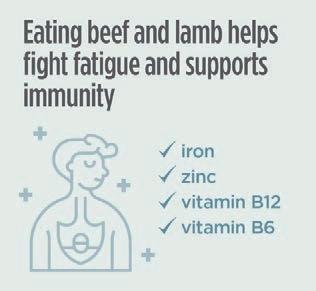


Dyed in the wool after 47 years
‘THE FABULOUS FIBRE’: Barbara Newton says she has given her 47-year career in wool her ‘best shot’. I was born in the Chinese year of the sheep and aptly named Barbara, so obviously I was destined to be involved in the sheep industry.
Photos: Des Williams
Barbara Newton Retired shed classer
Barbara Newton’s interest in wool began in her early teens as she selected staples for her mother to spin. Now she has retired from a fulltime – and pioneering – career in the wool industry. Annette Scott tells her story.
W HEN UniversityfromgraduatedNewtonBarbaraMassey with a diploma in wool and wool technology she never envisaged embarking on a career that would become a lifetime passion. He recent retirement after 47 years’ involvement in the New Zealand wool harvesting industry, initially as a broker classer before embarking on a career as a selfemployed professional shed classer, has seen her encounter manySomechanges.werefor the better, some for worse, but her love for wool has never diminished. “My initial interest in wool began in my early teens from my mother with her fleeces spread out in front of the fire, from which I would select out staples for her to card and then spin,” Newton says. “Of course, I was brought up in an age when wool was the fibre for clothing.”Withtwo grandmothers and her mother all keen knitters and craft persons, there was never any shortage of woollen garments created throughout her childhood. Newton believes she was born with a passion for the sheep industry.“Iwasborn in the Chinese year of the sheep and aptly named Barbara, so obviously I was destined to be involved in the sheep industry.” On leaving school she planned to pursue a career in science, but for several reasons, she says, that was never going to happen in a hurry.She also had two uncles in the wool trade, one a wool store manager and the other in marketing at Alliance Textiles, Oamaru.“Atthe suggestion of the former I decided to do the wool course at Massey to give me some background in the industry before looking to apply that with my science to wool research, which was in its early beginnings with the Wool Research Organisation of New Zealand (WRONZ).” She was awarded a scholarship from WRONZ with that very idea in But,mind.“as it turned out, I had a natural flair and feel for the raw product, so I continued down that road”.Inher first job, between the two stages of study at Massey, Newton worked at the Donald Reid wool store in “ThereDunedin.Iwasdispatched to the oddments department, where for the first few months during the off season I picked pieces, taking out stain from crutchings over a table. “This didn’t impress me much, so I was determined not to spend the first 10 years of my wool career doing such things – as I was led to believe from the senior classers I was working with – before being even considered to do fleece wool andAtclassing.”thattime a huge percentage of clips were classed in the stores. During her time of wool store employment and two years of study, Newton gained her full broker classer registration and is believed to be the first woman to achieve the “Consequently,qualification.Iwasabit of an anomaly in the beginning as a female classer in the store.”
Following the completion of her studies and after spending a year working at the Wrightson wool store in Timaru, Newton was lured back to Dunedin to follow her interest in cricket and to work in the Dalgety wool store. After four seasons working in various wool preparation facilities, the opportunity came in 1981 to class a merino blade run in Upper Waitaki.Shejumped at the opportunity and “pretty much never looked back”, obtaining registration in the merino shed classer division a year later and embarking on what was to become 40 years of shed classing.Aftertwo seasons she took a short break to have her two sons, but still managed to do the odd bit of classing until the late 1980s when she restarted her classing in earnest.“Iwas indebted to my husband, family and friends who made it possible to continue with my classing,” she says. Her wool classing has been based on the merino sector, but Newton’s interest remains with the entire NZ clip. She was appointed the first wool classer representative to the Wool Board Classer Registration Advisory Committee and went on to be an inaugural member of the NZ Wool Classers Association Inc in 2005, when the NZ Wool Board wasFordisestablished.thepast15years she has been an active committee member of the Otago Merino Association, promoting excellence in fine Newtonwool.has seen a lot of changes in the wool harvesting industry.Theswitch from classing most clips in the store to shed classing; the introduction of objective measurement (a big one); selling options; the integration of women in the industry; and the improvement in the standard of preparation in the sheds. The most disconcerting change has been the demise of the educational opportunities. “It’s all very well wanting to be a classer, but vital learning opportunities and relevant institutions have shrunk dramatically.”Newtonwas “extremely saddened” by the discontinuation of the Dunedin wool auctions. “It was an event where shed personnel, classers, growers, brokers and buyers could mingle together, view the entire range of clips and meet and discuss the relative merits with all concerned. “We lost a valuable learning opportunity when this disappeared.”Therehavebeen improvements, including replacement of jute packs and seeing the needle and twine replaced by synthetic and nylon packs and stainless-steel clips; felt pens replacing stencils, coarse brushes and ink; and the fact that crank down box presses are now a rarity, superseded by hydraulic models complete with scales, making bale more uniform in size shape and weight. Long gone are the straw brooms and, for the most part, blades. Shearing machines and gear have moved up to a new level. “For classers we still have to use the same tools, our hands and head, but we can specifically class for end use.” But some things never change. “The industry is still faced with the same concerns – incomplete specifications, contamination, presentation of sheds and sheep, shed conditions, provision of clean running water. “Most importantly the provision of a functioning toilet ... sadly lacking in many shearing facilities.”Newton says she was “anguished” at the thought of retiring, but “I know I’ve given it my best shot”. “I believe there are plenty of people to provide fresh eyes and hands and to give the next generation of growers a chance to build relationships with someone new.“Iwill miss the fabulous fibre, the atmosphere and most of all the people,” she says.
20 FARMERS WEEKLY – farmersweekly.co.nz – August 22, 2022 Newsmaker
CLASSER ACT: Barbara Newton believes there will always be a place for the wool classer who stands at the coal face of the wool harvesting and fibre production chain, providing the vital link that ensures preparation is always done to the best possible standard at the time of shearing.

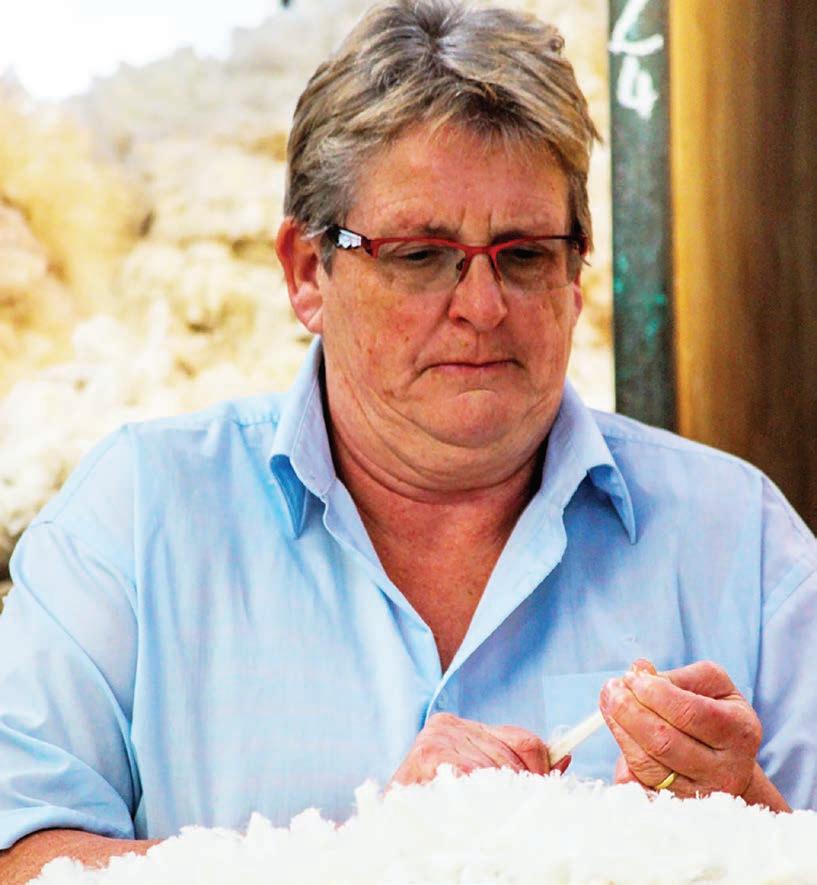
Goodwin said ultimately the work will deliver beekeepers and processors a chemical profile that defines the likes of “rewarewa” or “pōhutukawa” honey. This will make it easier to market their particular type with confidence, and ultimately offer a means of protecting each type with scientific backing.
Research to test tofromhoneyflowerflavour FARMERS WEEKLY – farmersweekly.co.nz – August 22, 2022 21New thinking
ESPITE the runaway success of Mānuka honey as a high-value export product in recent years, the rest of New Zealand’s honey types have tended to languish for want of definition and distinction, something the “Flower to Flavour” research project aims to change. Bee researcher Dr Mark Goodwin says Mānuka has been clearly defined by its chemical characteristics to protect its value andTheprovenance.projectaims to define more clearly what makes “pōhutukawa”, “rewarewa” and others what they are.This honey season he will be co-ordinating a small army across the country tasked with collecting bees and the flowers they have landed on, sending them back to his lab for analysis. More precisely, he and a team consisting of volunteers and scientists will be extracting tiny amounts of honey-generating nectar from the collected bees’ crops for chemical unravelling, ultimately to define what honey it is they were creating in their final days of life. “It is a delicate job, but a relatively simple one. The bees hold the nectar in crop, a little like what birds have. Gently squeezing it extracts the nectar, from which we will have analysis done to identify the chemical markers within that particular nectar. “At present we cannot say exactly what flavours contribute to a particular honey.
“The model we compare it to is coffee. Where we once used to buy coffee as a tin of Greggs instant, now you can select from an array of different coffees, all defined by their source and flavour. We sell a lot of honey we call ‘multi-floral’, but there is a whole story to tell beyond that.”
MORE: Interested parties can contact Goodwin comhoneycharacterisationproject@gmail.on
People make a ‘best guess’ take based on their previous tasting experience. Prior to the ’80s there were as.typehoney,gohoneygovernment-employedactuallytasterswhowouldaroundsamplingdeterminingwhatitcouldbelabelled
Dr Mark Goodwin Bee scientist
“People make a ‘best guess’ take based on their previous tasting experience. Prior to the ’80s there were actually governmentemployed honey tasters who would go around sampling honey, determining what type it could be labelled as.”
“Crisp and grassy with high acidity, and a hint of grapefruit and guava” might be the description of a particular Sauvignon Blanc’s effect on the palate. Now a research project due to start this spring hopes to lend a similarly descriptive taste vocabulary to New Zealand’s array of honeys. Richard Rennie spoke to lead researcher Dr Mark Goodwin about how he hopes to categorise their unique flavour profiles.
A second phase project will be finding a vocabulary to describe the honeys, similar to what the wine industry has done so successfully. “We can start talking about district, year, flavour, all those things wine does using over 200 words to describe flavour alone – and honey has a much greater breadth of tastes than wine does.”Lorimer and Goodwin are working to raise the army of volunteers they need to collect at least 30 bees and their flowers each this Ultimately,season.hehopes to have nectar samples from 400,000 flowers. Volunteers will be supplied with a chilly bin to place collected bees and flowers in, as well as bags and instructions. “It is really an exercise in citizen science. While we want beekeepers to be involved, we are also keen to have enthusiasts and groups engaged. This is a chance to really write a whole new area of value into the industry,” he says.
SWEETER: Dr Mark Goodwin says the research gives the honey industry the chance to market the origin, type and taste profiles of honeys in a way the wine industry does.
International standards require the pollen content of honey to be the determinant of its origin type, but often one is not indicative of the“Theother.problem with pollen analysis is some flowers put huge amounts of pollen into their nectar, and some do not. It is the liquid part of the nectar, and the chemicals found within it that determine honey’s taste, not the pollen itself,” says Goodwin. He says researchers are very confident that the nectar harvested from the sacrificial bees will represent the main nectar type collected by them. “Bees are very specific about what flower they concentrate on when collecting nectar. The nectar will be collected from 300-400 flowers per bee, and of all the research I have ever done only one lone bee has ever gone between two different flower types when collecting – they stick to one type.”
D
Longtime Waikato beekeeper Jane Lorimer of the Beekeepers Association says the process of labelling honey based on its taste can be a fraught one. “I have been beekeeping for 30 years and I still struggle to get the taste buds tuned in, and every year there can be a variation in what that taste actually is, depending upon the season, just as it can with grapes and wine.”
TASTE TEST: Longtime Waikato beekeeper Jane Lorimer says labelling honey based on its taste is difficult and after 30 years of beekeeping she still struggles to get her taste buds tuned in.
Spectrograph analysis will identify the chemical profile of the particular nectar, pointing to the unique chemical markers for each particular flower type, and therefore what defines that honey.
ASSURANCE: Dr Mark Goodwin says their work will give beekeepers and processors a chemical profile that defines the likes of rewarewa or pōhutukawa honey.


I have read contributions whose authors would fill the bill. Necessary prerequisite, simple – putting the future ahead of the past. Geoff Prickett Waikanae Letters to the Editor Letters must be no more than 450 words and submitted on the condition The New Zealand Farmers Weekly has the right to, and license third parties to, reproduce in electronic form and communicate these letters. Letters may also be edited for space and legal reasons. Names, addresses and phone numbers must be included. Letters with pen names will generally not be considered for publication.
of theWeekLetter Farmers Weekly is published by GlobalHQ, PO Box 529, Feilding 4740. New Zealand Phone: 0800 85 25 80 Website: www.farmersweekly.co.nz Best letter each week wins a quality Victorinox Hiker knife WRITE TO The Editor, Farmers Weekly P.O. Box 529, Feilding EMAIL farmers.weekly@globalhq.co.nz • FAX 06 323 7101 So go on! Stickknifethein MANAGING EDITOR Bryan Gibson 06 323 1519 bryan.gibson@globalhq.co.nz ClaireEDITORIALRobertson claire.robertson@globalhq.co.nz Neal Wallace 03 474 9240 neal.wallace@globalhq.co.nz Annette Scott 021 908 400 annette.scott@globalhq.co.nz Hugh Stringleman 09 432 8594 hugh.stringleman@globalhq.co.nz Gerald Piddock 027 486 8346 gerald.piddock@globalhq.co.nz Richard Rennie 07 552 6176 richard.rennie@globalhq.co.nz Nigel Stirling 021 136 5570 nigel.g.stirling@gmail.com DeanPUBLISHERWilliamson 027 323 9407 dean.williamson@globalhq.co.nz AndyADVERTISINGWhitson 027 626 2269 National Sales and Marketing Manager andy.whitson@globalhq.co.nz Steve McLaren 027 205 1456 Auckland/Northland Partnership Manager steve.mclaren@globalhq.co.nz Jody Anderson 027 474 6094 Waikato/Bay of Plenty Partnership Manager jody.anderson@globalhq.co.nz Donna Hirst 027 474 6095 Lower North Island/international Partnership donna.hirst@globalhq.co.nzManager Grant Marshall 027 887 5568 Partnership Manager South Island and Real Estate South Island realestate@globalhq.co.nzRealgrant.marshall@globalhq.co.nzenquiriesEstateenquiries Debbie Brown 06 323 0765 Noticeboard/Word Only/Primary Pathways classifieds@globalhq.co.nz Andrea Mansfield 027 602 4925 National Livestock Manager Salesforce livestock@globalhq.co.nzDirector LanaPRODUCTIONKieselbach 027 739 4295 Advertisingproduction@globalhq.co.nzmaterialadcopy@globalhq.co.nz SUBSCRIPTIONS 0800 85 25 80 subs@globalhq.co.nz LK0107425© ISSN 2463-6002 (Print) ISSN 2463-6010 (Online) Printed by Stuff Ltd Delivered by Reach Media Ltd 22 FARMERS WEEKLY – farmersweekly.co.nz – August 22, 2022 Opinion EDITORIAL LETTERS Home truths about farming in NZ It’s time to work on the unworkable UNWORKABLE” is a popular word in the farming world right now. The pork industry has just released an alternative welfare plan after it deemed the Draft Code of Welfare put forward by the National Animal Welfare Advisory Committee unworkable.Pigfarmers say the cost of implementing changes suggested in the code would be prohibitive and would lead to more imported pork being needed here – from farms that don’t meet our welfare standards now. It’s the same story on many other New ZealandSouthlandfarms.farmers say the winter grazing rules are unworkable. Many other farmers think regulations covering freshwater, greenhouse gas emissions and biodiversity are also unworkable. Ironically, this word unworkable does a lot of work when used in this context. In some cases, like the scrapped planting deadlines in the winter grazing regulations, it’s physically impossible to do the work. In other cases, even though it might not be the intent of the message, the one everyday New Zealanders are getting is that doing the work is either too hard or not required. It’s worth noting that despite opposing the path laid out for it, the farming community wants to reach the same destination as those making the rules. Industry leaders are united on the need to reduce emissions and improve the environment.So,what’sthe solution? Legislators need to realise that some practical input from those who work the land might avoid the bind we find ourselves in. Farmers should realise that politicians and the public have been patiently waiting for actions to follow words. And all of us should have a discussion about how we want our nation to look, export and earn.Arecent report found that food production is still the biggest export advantage NZ enjoys over other nations, and that will be the case for some time. It’s in everybody’s interests to make sure we capitalise on that advantage. To do that, we need a thriving farming community and a nation that believes in it and sees opportunities to help in its evolution. It’s time to get to work. Bryan Gibson THANK you Andrew Luddington for a wonderful and positive piece on what could be the future of farming in New Zealand. How refreshing to read some home truths about the consequences of NZ farming’s resistance to change. What an antidote to the endless moaning from the Feds, Groundswell and too many of my old farming mates – and don’t get me into the battle over the right to own the biggest ute you can find! Luddington talks about rules and regs and change. Twenty years ago another Labour Government was arguing with farmers about its determination to move on the Kyoto Protocol. As is sadly still the case, too many farmers saw the isandsituationfreakishanthefarmers,wechange,“farmerscommentedofonimplementationprotocol’sasanattacktheirindustryandwaylife.ALabourministeratthetimethatshouldfearclimatenotKyoto”.Overthepast18months–IamtalkingaboutNewZealandandworld–haveexperiencedunprecedentedarrayofweatherevents.Thishasbeenpredictedhereitis.Thebadnewsthatclimatechange,long seen to be a linear process, is shifting to exponential as change ramps up the speed of change and its consequences. It will only get worse and faster.The future of much more than farming is at stake here. We are talking about the future of humanity and planetLuddington’sEarth. piece has jolted me into wondering if the Farmers Weekly could run a regular column from someone positively engaged in thinking and acting for the future of farming. Perhaps there might be several who could alternate. Certainly
“


The Pulpit
BETTER TOGETHER: Consultants have to evolve to help farmers navigate a veritable minefield of planning uncertainty and amplified financial risks, Lee Matheson says.
EVOLUTION: Rural professionals need to start to think less about defining themselves in terms of the work they do for their clients, and more about the role they undertake for them.
Premium New Zealand Merino heirloom baby www.naturesgiftforbaby.comblanketsAt Natures Gift For Baby we believe the key to a good nights sleep is a great blanket! Gentle on Baby’s skin and gentle on the 5environment.timelesscolours. $99ea LK0112712© Free deliverywithinNZ Re-imagining the rural professional FARMERS WEEKLY – farmersweekly.co.nz – August 22, 2022 23Opinion Your View Got a view on some aspect of farming you would like to get across? The Pulpit offers readers the chance to have their Phonefarmers.weekly@globalhq.co.nzsay.063231519 Who am I? Lee Matheson is the managing director of Perrin Ag. Lee Matheson I T SHOULD be apparent to anyone involved in New Zealand’s primary sectors that the trajectory of our reality has abruptly changed over the past two years. The environment that existed when most of us came into the industry is significantly different to the one in which we operate today.Much of the physical and legal infrastructure we took for granted has been upended, disrupted and in some cases devastated by a combination of politics, climate change and a global human pandemic.Ourtraditional farming models are also being challenged as we contend with plant-based proteins, lab-grown meats, decarbonisation, artificial intelligence, vertical farming and robotics.Theonly constant is change and NZ farmers recognise they can no longer afford to navigate these challenges on their own. The increasing complexity of farm businesses, however, means our rural professionals and farm management consultants, who are helping farmers to navigate these challenges, are also having to reorganise the way they work and challenge their traditional thinking.Engaging a generalist farm consultant who can cover all the bases for your farm is no longer adequate, or a reality. Farming practices are being driven by consumer preference and the need for a social licence. Policies are being developed at such a rapid pace that often the accompanying regulations, tools and legal precedents haven’t been confirmed. Alongside this, re-imagined or rediscovered agricultural practices are displacing traditional established farming techniques. It all creates a veritable minefield for farmers of planning uncertainty and amplified financial risks. It is leaving them increasingly posing questions to their traditional advisers that many rural professionals are either not equipped to answer, or for which definitive answers do not actually exist.That’s not to say our rural professionals are not well placed to rise to the challenges, but our traditional roles need to evolve alongside our clients’ needs. Our more traditional model, which has relied on technical expertise supported by existing science and commercial and legal frameworks, is no longer enough on its Ourown.knowledge needs to be applied in more uncertain environments. It also needs to be considered alongside parallel knowledge frameworks, like Mātauranga Māori and alternative systems, which are not as easily measured in the world of spreadsheets and hardWescience.stillneed our farm consultants working behind the farm gate advising on systems, operations and processes for specific operations. But alongside them we need specialist educators, trainers, resource providers and technology enablers who can bring a wider set of knowledge and skills and actively build the capability of farmers.Outside of that we need our experts who can connect the individual farm to the wider market, its communities and its customers.Theycan only do that through driving policy and understanding and developing the products our consumers want. They need to connect our producers and their products to the market and tell stories that demonstrate the value of our farmers’ businesses. Our rural professionals need to be able to move from expert to coach, from teacher to facilitator, and from providing answers to asking questions, and then back again, depending on the situation. And our farmers need to see the significant value of working with rural professionals even when the answer is, “I don’t know – let’s find outTotogether.”beofthe greatest help to our clients, rural professionals perhaps need to start to think less about defining themselves in terms of the work they do for their clients, and more about the role they undertake for them. As a profession we need to recognise that our farm businesses reach all the way from the gate to the plate. The rural profession has an equally expansive remit, which gives us all the opportunity to grow and potentially re-imagine our roles with farmers. As knowledge and resources become more directly accessible to farmers, our new currency is assisting with processes, providing connections to resources, technology and specialist knowledge, and sharing the value proposition to our farmers’ consumers.Weneedto evolve ahead of our clients so we can help them shape tomorrow. Our professionalsruralneed to be able to move from expert to coach, from teacher to facilitator, and from providing answers to asking questions. Lee PerrinMathesonAg


Sri Lanka shows how not to go organic 24 FARMERS WEEKLY – farmersweekly.co.nz – August 22, 2022 Opinion
IN AUSTRALIA there has been considerable media coverage on the crisis in Sri Lanka and its causes. Strangely, that coverage hasn’t been replicated in New Zealand.Basically the country has gone from one of relative prosperity to near bankruptcy in less than three years. It’s a basket case. The reason for the crisis? They wentImmediatelyorganic. after the 2019 Sri Lankan elections the new prime minister, Mahinda Rajapaksa, outlined his 10-year vision for a transition to organic agriculture. It was believed the PM “fell under the spell of Western green elites peddling organic agriculture andWeESG”.hear a lot about ESG in NZ. It means meeting higher environmental, social and governance criteria. So successful was Sri Lanka’s move into ESG, it was awarded the near perfect score of 98%. It was followed by Finland at 89% and the United States at 51%.The Dutch investment company Robeco puts NZ at 85%, which is highly creditable. We don’t want the same status as Sri Lanka. What happened following the Rajapaksa green vision of 2019 was a total ban on artificial fertilisers and all pesticides. The immediate result was it took just two short years to make a third of Sri Lankan farms dormant.Thereason simply was that organic farming was more costly and its yields were lower than those of conventional practices. Rice production immediately fell 20%, with a resultant price rise of The50%.country had been selfsufficient in rice. It now has to import the product to the value of $US450 million (about $706m). The Sri Lankan tea industry, a major export earner, lost a massive $US425m between June 21 and April 22. In one region where the majority of farms are around 1ha, families reported a 50%-60% reduction in their harvest. That was all because the country went organic as some would like to happen here. The result of all the organic chicanery was the economy became an economic basket case followed by a breakdown in civil order. The prime minister has since fled the country. The debt to GDP ratio was just 86.9% in 2019 before the country became organic. It went to 105.6% in The2021.country is so broke, it has to ration imports. What that achieved was a rationing of petrol, which resulted in, among other problems, long power cuts. What that meant was that the tourism industry, which was responsible for 12% of GDP, effectively vanished. There were obviously other factors involved in the Sri Lankan crisis and they included covid and the Ukraine war. It was, however, a sudden lurch into organics that was the major reason for the crisis and that crisis was because the country “fell under the spell of Western green elites”.Weneed to be extremely careful we don’t contemplate the same insanity.AsIsaid at the start, the Sri Lankan saga has created major media interest in the international media. That it’s hardly created a whisper in NZ is an indictment.
Back home I do another round of tagging until dark. I come in and tell Jane that I’m getting too old for this now.
There should be a lesson in the Sri Lankan saga for everyone in NZ. After all we have no shortage of elitist greenies giving advice.
Your View Alan Emerson is a semi-retired Wairarapa farmer and dath.emerson@gmail.combusinessman:
YOUNG LEGS: What with my gumboots and leggings and ageing legs, 24-hourold lambs are getting harder to catch.
Wyn-HarrisSteve From the Ridge
There’s one born every minute
The issue for me is the Western green elites’ advice to Sri Lanka, which centred on the World Economic Forum (WEF). The Sri Lankan president, Mahinda’s brother Gotabaya Rajapaksa, said he’d make his country “rich by 2025” partly by adopting WEF-sponsored “climate change initiatives”. The other green elite in an advisory role was the Rockefeller Foundation. Go to the WEF and you have CEOs (Siemens, Nestle, European Central Bank, Blackrock), the World Trade Organisation and the International Red Cross, and politicians including Al Gore and representatives from Canada and Singapore, among others. As we know, the WEF is never backward about giving advice and opinions.Inthiscase it offered advice that was enthusiastically adopted and a previously financially stable country lurched into bankruptcy and civil unrest. All courtesy of the blind adoption of organics. There should be a lesson in the Sri Lankan saga for everyone in NewAfterZealand.allwe have no shortage of elitist greenies giving advice on organics.Therehave been cacophonous cries on banning artificial fertilisers, much of them from Greenpeace. We’re never short of a word of advice on achieving higher ESG criteria. Just go to the WEF website and have a look – but there are many local examples. Air NZ, Meridian and A2 Milk star. My point is that we have numerous “experts” and “advisers”, some with messianic fervour, telling us the way forward.There is no single answer and it sure as hell isn’t blindly following the organic cult as Sri Lanka did. As Sri Lanka found out, food was more expensive to produce and yields were down. In NZ we have developed a strong, sustainable and environmentally responsible farming sector. We can and must continue to improve, but it should be as the result of our own credible scientific research and not on the advice of an overseas green elite.
ORGANIC CHANGE: Rice production in paddies like this one in Ampara, Sri Lanka, fell 20% after the organic fertiliser edict, sending the price soaring.
LIKE many other sheep and beef farmers at this time of the year, my life is dominated by a succession of lambing beats and shifting cattle.Made more challenging by how wet it has been underfoot by the consistent rain. However, it is far wetter in other places in the country with the storm last week so hopefully things are drying out and getting back under control for thoseThisaffected.willbemy
40th lambing, with a few before that helping my parents with theirs. I make sure my diary remains free throughout August. I don’t accept any invites, don’t go out and don’t play golf. I’m not much fun to be around. But lambing is my harvest, and you don’t hear of apple growers or arable farmers shagging off in the middle of theirs and nor am I. I get up and have a couple of cups of coffee. While the egg is poaching, I do my daily Wordle. Then it’s down to the Woburn Road property, which is 5km towards town, to do a quick ziparound the MA ewes to tip over the odd cast ewe and anything else that needs Althoughhelp.Ihave plenty of feed and the sheep are chock full of lambs and in reasonable order, there have been a lot less casts than usual. It could be the lack of sun perhaps, and they are not getting itchy. To date I’ve lost just five and it can often be double that by now, even with two checks a day. It’s the most frustrating and unnecessary of sheep deaths. When I do roll a ewe over, I rejoice at the $450 saved and think it’s the only easy money I ever make. These sheep are bred to be easy care but with scanning percentages over 200%, the number of ewes with triplets might be an opportunity but they are invariably where the problems arise. I’ve even started to tighten up my better-conditioned ewes going into tupping to try and keep a lid on the triplet numbers, without much success yet. It’s one of farming’s great ironies that sheep have two tits, and these modern genetics are capable of so many triplets and cows have four massive teats and can barely get one calf out. Then its back home to Hinerangi Road to tag the stud lambs.Tagging at birth is quite a commitment and for accuracy’s sake I find it helps to do it twice a day.Imust catch the lambs and if there are three or they look particularly fit, I use my trusty fishing net. This year, with gumboots, leggings and ageing legs, there are even more good reasons for doing them twice a day as 24-hour-old lambs are now getting a bit quick for me. I read the ewe’s number, put EID tags in the lamb’s ears, a ring on their tails so I don’t have to dock them later, weigh them and give them a spot of spray mark so I don’t catch them again, and in case they need putting back with mum over the next day or so. I’ve toyed with the idea of recording the data digitally, which I’d do if I had someone with me, but will see out my career doing as I’ve always done and jot all the information down in my notebook.Thenit’s a check of the flock two-tooths in their lambing paddocks, and shift some cattle breaks.Areturn home for lunch and a welcome break. Then it’s back down to Woburn for another ride through the lambing paddocks. I’ve only got a two-wheeler down there so it has been a challenge getting around with the wet conditions. Check on the cattle and new breaks if required.Backhome, put the pouch of tagging gear around my waist again and do another tagging round until dark, and finally give Ditch the dog a run and a feed. I come in and tell Jane that I’m getting too old for this now. My back is sore, my arthritic hips hurt, my broken collarbone and cracked shoulder blade ache and my legs are tired. She offers little sympathy and tells me of others who are worse off, but always has a warm house and a good meal prepared so I suppose I shouldn’t grumble. Your View Steve Wyn-Harris is a Central Hawke’s Bay sheep and beef farmer. swyn@xtra.co.nz
Alternative EmersonAlanView


The BraidedWoodfordKeithTrail
FARMERS WEEKLY – farmersweekly.co.nz – August 22, 2022 25Opinion
The takenrocketfarmingcarbonhasoff
THIS past week I spent two days in Rotorua at the New Zealand carbon forestry conference, where I was also one of the speakers. I and others presented perspectives on the path ahead for this new industry. There were close to 300 attendees at Carbon Forestry 2022 plus an international online audience.Although there was diversity of perspectives as to how the industry might develop, I sensed no doubt that we all saw ourselves as being involved in something big that, one way or another, is transformational for NZ. Most of the attendees were either forestry people already in the business, or service-industry people who either are already or in future want to be part of this new industry. There were also some government and Climate Change Commission people there to help explain the current regulatoryHowever,framework.therewere not many farmers at the conference, apart from those who were already in the business of carbon farming – and doing rather well, I might add.For me, the value of a conference like this is not only to hear the formal presentations, but to talk informally to a diverse range of industry people. That is how I can learn from those on the ground whether there is some key factor I might have missed. There was nothing there that made me change my views in any significant way, but there was information that helped further enrich what I have been learning in recent times about this fascinating industry. One of the foundation points of my own address was that, if simple economics from a landowner perspective is the criterion, then the answer is also very simple. On the sheep and beef lands of New Zealand there is nothing that can touch the economics of carbon farming. Of course, simple economics is only one part of the story. Also, that story does change somewhat according to land type. However, the differences in the story are mainly in relation to the other land-use opportunities that are foregone as a result of carbon farming, rather than the carbon farming itself. One of the remarkable things about carbon farming is that the returns are similar for both soft country and hard country, and largely independent of either on-farm infrastructure or distance to towns and ports. However, there are differences between the North and South Island related to climate, and also some variation between the north and south of each island. A consequence of this is that for each area of NZ there is a difference in land price that carbon foresters are prepared to pay, but at least in the North Island those differences are modest. Southern Hawke’s Bay farms have been selling for about $15,000 per hectare in recent months.Gisborne has been about $17,000 and King Country about $14,000. This is for pastoral land that fits the carbon farming regulatory environment. The publication last week in the New York Times of an article on New Zealand carbon farming provides further evidence that this is now an industry of international interest. I was aware some weeks back that this article was in the offing as I was myself interviewed for it. I am always cautious of media interviews where, following an interview of an hour or so, the journalist picks out a few sentences to weave into and support a perspective that may or may not be accurate. However, I reckon this journalist did a good job within the word limit. An example in the New York Times article – which did not come from me – was of a Gisborne farmer who purchased a sheep and beef farm in 2013 for $1.8 million, and recently sold it forIt$13m.wasdescribed as a windfall outcome, and it is hard to argue withThethat.likelihood is that, at the $1.8m paid for it in 2013, it would have been marginal for sheep and beef, but is now highly suitable in 2022 for exotic forestry. It might be a windfall, but it is also likely to be an appropriate change of land use. The New York Times journalist sought my perspective on whether NZ sheep and beef farmers deserve sympathy for being pushed off their land. My response was that farmers who sell need no sympathy, as they are doing very well from it. If there is sympathy to be shown, it is for the prospective generation of sheep and beef farmers who cannot compete with forestry interests. My real concern is whether, from a broader societal perspective, a lot of the forestry is going in the wrong places. I am positive about long-rotation and permanent carbon farming being developed on marginal pastoral land, but far from happy when I see farms sold for short-rotation forestry on what is good pastoral land.Fundamental to that perspective is that pastoral farming provides export income, whereas carbon farming is an internal industry providing climate credits for fossil-fuel use, with this generating no export funds.Iwas intrigued to learn at the carbon-forestry conference that some of the big companies are now promoting leasehold rather than purchase arrangements. One such arrangement is where the forestry company plants the trees on a portion of the land at its cost, and then, for an annual land rental paid to the farmer, earns the carbon credits for the next 16 years before handing the land back to the farmer. I am cautious of such arrangements. Farmers need to understand that carbon credits that have been earned through forestry leases rest as liabilities on the land that the farmers own. Unless the credits are repaid, the land must stay in successive cycles of forestry but with no further carbon credits. Farmers leasing out land for forestry need to be very sure they understand all of the fine print. I am also concerned that foreign investors are still very much involved as the pine trees march across Aotearoa New Zealand.Thecarbon credits will be sold in NZ but the cash returns from these sales will then be repatriatedCurrently,overseas.thereisa bill working its way through Parliament to make it harder for foreigners to invest in NZ forestry, be that for carbon farming or timber production or a combination thereof. However, I am also hearing that lawyers believe they will still be able to find a pathway to approval for these overseas investors. That sends a chill down myAnotherspine. of the key take-home points from my own presentation was that the new averaging scheme for carbon credits, within newly planted productionforestry systems, is providing great incentives for planting exotics on the better class of pastoral land. It is the carbon credits earned in the first 16 years rather than the prospective value of the timber that is driving this process.Whatwe are seeing is the prospect of 16 years of carbon credits for new production forests, with this 16-year period being a very short time, yet driving investment into ongoing cycles of production forests, with no further credits. This has huge land-use implications for future generations of New Zealanders. In recent months I have been saying that the pathway forward needs to have two key components. The first is to allow long-term and permanent exotics on the marginal country, recognising that afforestation with natives on much of this country is impractical, despite being emotionally appealing to those who do not understand the constraints.Thesecond component would be to recognise that on many sheep and beef farms there is about 20% of land that is steep and that this would also be best in exotic trees. Farmers know which land fits this category and it is reasonable to allow them to plant this land with minimal consenting. The specific allowable limit could be set regionally, or even on a farm-by-farm basis taking into account the specific land classes. Afforestation beyond that level on any property would require detailed consenting.Alotofpeople have been saying to me that this sounds sensible. My response is that current policy is a long way from this. Of course, the devil is always in the detail. However, we have good maps of every square metre of NZ and specific property-based zoning is totally practical, with this being managed by regional councils.
Your View Keith Woodford was Professor of Farm Management and Agribusiness at Lincoln University for 15 years through to 2015. He is now Principal Consultant at AgriFood Systems Ltd. He can be contacted at kbwoodford@ gmail.com Previous articles can be found at wordpress.comhttps://keithwoodford.
Farmers leasing out land for forestry need to be very sure they understand all of the fine print.
MARCH OF PINES: Leaseholds, foreign ownership, the monitoring of land use ... there are many moving parts as carbon farming gathers momentum.


Located in the favoured farming location of Anama/Mayfield area of Mid Canterbury this large-scale pivot irrigated dairy support property is well worthy of inspection. This unit has two homes, plus near new single person one bedroom unit, large set of cattle yards, excellent lane system, silage pit and excellent range of farm improvements. With a solid history of dairy support over many years this unit has all the requirements for sustainable environmental and resource parameters that is required in today's new world. Irrigated by seven pivots the farm has approximately 357 ha irrigated by Barrhill Chertsey Irrigation (BCI) water. This is a great opportunity for large scale dairy farmers or corporates to purchase a proven dairy support farm.
Tender closes 12.00pm, Wed 21st Sep, 2022 (unless sold prior), Property Brokers Ashburton View By appointment Web pb.co.nz/AR85829 Greg Jopson M 027 447 4382 E gregj@pb.co.nz
195.11 ha - When quality counts
Tender closes 12.00pm, Mon 19th Sep, 2022 (unless sold prior), Property Brokers Ashburton View By appointment Web pb.co.nz/AR105873 Chris Murdoch M 027 434 2545 E chris@pb.co.nz
8
Ashburton 150 Anama Station Road, RD Tender
Rakaia 113 McKays Road Tender
Property Brokers Ltd Licensed REAA 2008 pb.co.nz Proud to be here
434.56 ha - Large scale dairy support
"The Willows" presents a once in a lifetime opportunity to purchase a quality farm in one of Mid Canterbury's most tightly held and premier farming areas. Held in the same family for over 100 years, the sale is a unique offering of a generational farm. A 195.11 ha irrigated intensive arable farm unit which features highly productive Rakaia and Templeton soils. Soils of this quality together with an efficient irrigation system enable growing a diverse range of specialist high value and yielding crops including yams, flower bulb's, small seeds and cereals plus lamb finishing. The farm demonstrates above average reliable yields with the ability to take production to another level for the future. A quality large main family homestead plus two other homes, efficient irrigation, sheds/workshop and grain storage provide the infrastructure and platform for all buyer enquiries. Multiple potential land use options are possible from intensive arable, vegetables, horticulture.


Together Stronger PB053815 Our combined strengths complement each other, creating more opportunity for our customers and Farmlands shareholders across provincial New Zealand. • A nationwide network from Northland to Southland • Sound, trustworthy advice from market-leading experts • Shareholder benefits and preferential commission rates means more money in your pocket Bigger networks, more buyers, better results For more information call 0800 367 5263 or visit pb.co.nz/together Matangi 411 Marychurch Road Auction Opportunity in Matangi • 14.01 ha in a premium location with easy access to Hamilton and •CambridgeImprovements include a three bay implement shed with lockable workshop and tidy cattle yards. • Opportunity for a variety of land uses including; grazing, equine, horticulture or large lifestyle • Excellent building platform with panoramic views • Flat contour with free draining Horotiu sandy loam soils • Water is sourced from town water supply Call or email David or Cathy to request an information pack, and viewing by appointment or open farms. Auction 12.00pm, Wed 14th Sep, 2022, (unless sold prior), Property Brokers, 94 Duke Street, Cambridge View By appointment Web pb.co.nz/CBL106578 Property Brokers Ltd Licensed REAA 2008 pb.co.nz Cathy O'Shea M 021 266 3823 David McGuire M 027 472 2572 KIRIKAU A FARM LAND Taumarunui Manawatū-Whanganui SMALLER SCALE FARMING OR AFFORESTATION OPPORTUNITY Arotahi Agribusiness Limited, Licensed Real Estate Agent REA Act Chan Singh +64 27 767 7113 Deadline Offers: Thursday 15 September 2022 at 4pm (NZST) + ½ share of 120ha* freehold land + 65*ha farm land suitable for afforestation or ongoing grazing + Flat to medium hill country contour + Attractive native bush with potential for hive income + CV of $390,000 (whole property) + Attractive setting near Whanganui river A unique smaller scale farming or afforestation opportunity, being a ½ share in 120 hectares* total land area. Located in the established farming district of Kirikau, 20km* south-west of Taumarunui, the property includes attractive native bush, flat to medium hill country contour and approximately 65*ha of farm land currently grazed. The Kirikau district benefits from favorable climatic conditions, including high sunshine hours and rainfall in excess of 1500mm per *Approximatelyannum. Boundary lines are approximate only. FOR SALE Get in touch with your agent today to list your property next to news that farmers read. 0800 85 25 farmersweekly.co.nz/realestate80 Your one stop shop for rural Real Estate Contact your agent to advertise today. FARMERS WEEKLY – August 22, 2022 farmersweekly.co.nz/realestate 0800 85 25 80 27Real Estate


www.forfarms.co.nz - ID FF3447
Accelerating success. Breeding, Fattening, Trading or Hunting
SMALL BEEF BLOCK DANNEVIRKE 70 HECTARES How often can you get into the market to raise beef for under one million dollars? Here’s an opportunity to purchase this 70 hectare (172 acre) beef block that is located approximately 30 minutes from Dannevirke, in Weber. With a relatively new set of cattle yards, race and handy load-out facilities and in two paddocks, your part-time farming is sorted. $775,000 + GST Viewing by www.forfarms.co.nzappointment.-IDFF3445
LK0112803©
For Sale By Deadline Private Treaty closing Thu 15 September 2022 at 4pm (unless sold prior) 23 Mahoe Road, Waitomo InfrastructureQualityLand421.7Area:Ha Sheep and Beef unit colliers.co.nz/p-NZL67020179 This 421.7 ha sheep & beef unit has opportunity stamped all over it. Set in the proven Waitomo farming district offering 311 ha grass subdivided into 17 main paddocks with a mixture of contour, predominantly rolling with some steeper sidings. The balance of 110 ha is in native bush. Water is via creeks, dams and springs, and the property is well tracked for stock movement. Our vendors want action! CRTGA Limited Licensed under the REAA 2008 ContourMixed Clint Brereton 027 897 1161 Chris Meban 027 484 4574 28 farmersweekly.co.nz/realestate 0800 85 25 80 FARMERS WEEKLY – August 22, 2022Real Estate
LK0112802©
WHEN LOCATION & CONTOUR COUNT DANNEVIRKE 15 Okarae Road is a 102 hectare (252 acre) bareland block located in the heart of Tararua and only 13km from Dannevirke. Comprising of 45 hectares of easy country with a further 40 hectares of rolling hill country, the property is well suited as a breeding or finishing block. This bareland block has an excellent fertiliser history, there is access to water in each of the 20 plus paddocks and the property’s infrastructure includes a 2 stand woolshed, 220 night pen and 2 bay haybarn. Call me today to view. Buyer Enquiry Over $1,750,000 + GST Viewing by appointment.
LK0112821©
BARELAND BLOCK DANNEVIRKE 228 hectares (563 acres) of bareland in its’ own title located 43km from Dannevirke on Route 52. 63.4 hectares second rotation pines (not eligible for carbon). 15.5 hectares registered trees. 9 paddocks between 10 hectares and 27.3 hectares. Ideal as a grazing and/or forestry block. 6km metal tracks providing excellent access for future tree harvesting. Excellent forestry infrastructure due to second rotation. Currently farmed as part of a larger farm so no production, rating or CV information available. For Sale by Tender (if not sold prior) Tender closing 27 October 2022 at 4pm Viewing by appointment.
Jerome Pitt M: 027 242 2199 H: 06 374 4107 E: jeromep@forfarms.co.nz colliers.co.nz
www.forfarms.co.nz - ID FF3443
Jerome Pitt M: 027 242 2199 H: 06 374 4107 E: jeromep@forfarms.co.nz
Jerome Pitt M: 027 242 2199 H: 06 374 4107 E: jeromep@forfarms.co.nz


horticultural programs to
AND PRACTICAL farm maps showing area sizes of paddocks and vegetation. Visit farmmapping.co.nz for a free quote. MAPPINGFARM WANTEDTOBUY PINK GALAH PARROT, nine months old, female. Comes with two cages. Phone 027 672 6435. FOR SALE WANTED NATIVE FOREST FOR MILLING also Macrocarpa and Red Gum New Zealand wide. We can arrange permits and plans. Also after milled timber to purchase. NEW ZEALAND NATIVE TIMBER SUPPLIERS (WGTN) LIMITED 04
service. Payment on pick up. My on farm prices will not be beaten. Phone David Hutchings 07 895 8845 or 0274 519 249. Feral goats mustered on a 50/50 share basis. LONGAVAILABLEGRAZINGTERMGRAZING available for 150 dairy heifers from November 1st. 50/50 split on age. Rodney area. Phone 021 076 0765. NZHORTICULTUREKELP.FRESH,wild ocean harvested giant kelp. The world’s richest source of natural iodine. Dried and milled
•
The Managing Director is planning to step away from the day-to-day management of the business to focus on new opportunities for the EAL Group. We are looking for an experienced senior manager to transition the business and the team to new leadership and to manage operational challenges and opportunities while maintaining a strong client focus and team culture.
FORFORESTRYONLY$2.30 + gst per word you can book a word only ad in Farmers Weekly Classifieds. Phone Debbie on 0800 85 25 80.
You will have a solid understanding across all aspects of financial management, a passion for agriculture and a wide range of technical and professional knowledge. Experience within an agricultural contracting environment is a clear advantage, however we are open to strong candidates from other areas of the agricultural sector.
027 225 5283. tim@organicstud.nz STOCK FEED 120 BIG ROUND bales meadow baleage made December 2021. Available at Tutira for $104 per bale + loading. Phone 06 8397 494. WHAT’S SITTING IN your barn? Don’t leave it to rust away! We pay cash for tractors, excavators, small crawler tractors and surplus farm machinery. Ford – Ferguson – Hitachi – Komatsu – John Deere and more. Tell us what you have no matter where it is in NZ. You never know.. what’s resting in your barn could be fattening up your wallet! Email admin@ loaderparts.co.nz or phone Colin on 0274 426 936 (No texts please) somethingGottosell? List it in the deliveredpaperto77k+ruralmailboxeseachweek 0800 85 25 80 classifieds@globalhq.co.nzfarmersweeklyjobs.co.nz JOBS BOARD farmersweeklyjobs.co.nz 2IC/Stock2IC Manager Data and Customer Specialist Farm Business Manager General LabourerManager Livestock Talent Programme Operations Manager Sales Tractor/Truck/MachineryStockSeniorManagerAgronomistsManager Operator *FREE upload to Primary Pathways Aotearoa:*conditionswww.facebook.comapply Contact Debbie Brown 06 323 0765 or email classifieds@globalhq.co.nz FREE CRATE! When I buy a working dog from you! 07 315 dogs@farmside.co.nzmikehughesworking5553.
• Providing
About the opportunity: Costa is currently seeking experienced Agronomists within our Berry Category for roles including Senior Agronomist/Horticulturist and Agronomy/Horticulture Manager. These roles lead horticultural activities associated with the production of raspberries, blackberries, and blueberries with responsibilities to include production planning, irrigation and nutrition management, pest and disease management, canopy management, crop pollination, weed control, growth and development projects, and R&D. About the roles: We currently have roles available in Queensland, Western Australia and Northern New South Wales. Each farm has their own requirements from the role, which could include any of the following: Cultivating a team environment which strives for horticultural excellence in crop production Mentoring and developing direct reports or farm teams Optimising irrigation and nutrition programs to improve plant health and productivity Ensuring pest and disease management systems are optimised and executed effectively to minimise negative economic impact Developing annual site pollination plans, securing contracts with apiarists and ensuring compliance with site procedures and policies Managing the crop scouting program to ensure proactive and effective control measures are implemented on time training and understanding to operations teams regarding safe handling, storage, and usage of agrichemicals all horticultural and agrichemical records programs with Costa Sustainable Commercial Farming Principles planning and technical inputs to ensure operational tasks (e.g. planting, pruning, weed control, mulch application) are out with optimal timing and technique. tracking ensure execution optimized, aid budget business varietal selection, site behaviour in line with the Costa Values (https://costagroup.com.au/about-us/values/)
You will be focused on operational leadership, developing strong relationships with key clients, suppliers and business partners and creating opportunities for new business development. Your visibility with our existing clients will be a key aspect of this role. The General Manager will provide a people-first leadership approach that is centred on ensuring the team are fully engaged and upskilled with an emphasis on Health and Safety.
carried
This is a challenging role in a highly supportive environment, and a thorough onboarding and handover plan will be in place to ensure a smooth transition with the Managing AnDirector.attractive remuneration package is offered, which includes a vehicle and health insurance. For a full position description, www.ealgroup.co.nz/employment/visit: To apply If you possess the passion, drive and competency required for this role, submit your CV and cover letter to: Applicationsoffice@ealgroup.co.nzcloseFriday 26th August 2022. LK0112859© FLY OR LICE problem? Electrodip – the magic eye sheepjetter since 1989 with unique self adjusting sides. Incredible chemical and time savings with proven effectiveness. Phone 07 573 www.electrodip.com8512
MANAGERGENERAL
www.drench.co.nz
and
optimization for future development projects • Coordinating research and development activities with a clear vision toward long term production Theimprovementsroleswehave available are senior roles within their regions, with significant impact on the success of our crops. About you: We are looking for people with the following: • Tertiary qualification degree in horticultural or agricultural science • 3-5 years professional experience in horticultural production • Experience in developing and managing a team in a production environment • Financial and business acumen • Drivers license In addition, you should have: • A sound understanding of agronomic principles • A strong desire to get into the field and ‘get your hands dirty’ • A diligent, pro-active and reliable work ethic • We developed time management skills and the ability to prioritise • Experience in training and development of employees • The ability to communicate effectively and relate to people • The ability to improve processes, train and delegate to ensure timely delivery of quality outcomes • Economic judgement relating to decision making and budget management • Experience in the development, execution, analysis and reporting of horticultural research projects • The ability to present information concisely and in a relevant format, including written reporting and group presentations • Good computer literacy skills What we offer: • Permanent, Fulltime position + Base Salary + Superannuation • Opportunities for learning, development, progression, mentorships and coaching • Opportunities for travel • Free access to an Employee Assistant Program • Flexible work-life balance • Full IT kit • Annual Performance Review Process Costa is seeking applicants who can demonstrate their
WANTEDDOGS WANTEDGOATS
is
ACCURATE 293 2097 Richard.
•
•
If these roles are not suitable for you but you would like to explore other work opportunities with Costa, please contact HRCostaberry@costagroup.com.au with a brief summary of your experience and the role you are looking for.
• Maintaining
• Coordinating and
Senior Agronomists – Multiple Roles
Next Steps For more information about the available roles, please contact the berries HR team through HRCostaberry@costagroup.com.au. We are happy to talk to you about your experience and preferred location in order to match you with the most suitable role for you.
•
preparation • Providing recommendations to the
CULLING. Stock proof dogs. SI. Can travel. Phone 027 353 0661. 12-MONTHATTENTIONFARMERSDOGSFORSALEHEADING dog and bitch. Fast, strong, good stop, pulling sides. Station and trial potential. Nolan Timmins. Phone 027 932 8839. SEE VIDEOS OF dogs I’m selling at the Whatatutu Dog Sale, 10/9/22. videosmikehughesworkingdog/youtube.com/user/www.073155553. PURINA PROPLAN WHATATUTU dog sale.
•
•
and expenses align with budget • Assisting harvest teams with crop forecasting activities • Forecasting annual horticultural programs to
EAL AgriServices is an agricultural contracting company that has been partnering with Canterbury farmers for over 20 years, delivering a competitively priced, efficient and high-quality agricultural contracting service. Processing silage and baleage is our core business and we pride ourselves on our reputation for providing a premium service with modern well-maintained machinery and highly skilled operators.
ANIMALHANDLINGANIMALANDHUMAN healer, also manipulation on horses and dogs. 22nd to 24th August, Kaikoura / Blenheim areas. 25th to 27th August, Nelson area. 29th August to 12th September, North Island. Phone Ron Wilson 027 435 3089. SHEEP JETTERS. Sensor Jet. Deal to fly and Lice now. www.craigcojetters.com06ableperformance.GuaranteedUnbeat-pricing.Phone8356863. farmer owned, very competitive prices. Phone 0800 4 DRENCH (437 362). HEALTH CONTRACT PIG Saturday 10th September. At Otara Station, 319 Whatatutu Road, Te Karaka, Gisborne. Sales start at 12 noon. Dosing clearance required. Enquiries and to enter go to: Whatatutu Dog SaleFacebook page or phone 027 443 8350.
PASTUREPROMOTESPROMOTANTGIBB-GROGROWTHQUICK growth. Only $6.50+gst per hectare delivered. 0508-GIBBGRO [0508 442 247] www. gibbgro.co.nz. “The Proven One.” GOATS WANTED. All weights. All breeds. Prompt for use in agriculture and horticulture. Growth promotant / stock health food. As seen on Country Calendar. Orders to: 03 322 6115 or info@nzkelp.co.nz RED DEVON BULLS. Well grown, purebred. Feilding. Phone 027 224 3838.
NoticeboardPrimary Pathways – Jobs, Education & Training
CRAIGCO
• Aligning
on
Applications will close once the right candidate has been selected, so if you wish to be considered, apply now!
ANIMAL
WELL BRED HEADING pups, 5 to 8 months. Phone 027 243 8541. Taihape. 12 MONTHS TO 5½-yearold Heading dogs and Huntaways wanted. Phone 022 698 8195.
WILTSHIRES-ARVIDSON.LIVESTOCKFORSALE Self shearing sheep. No1 for Facial Eczema. David 027 2771 556. HAIRFORRAMSSALESHIRE® Low input meat rams! www. organicstud.nz
• Providing


SALE TALK A frog comes into the bakery and says, “Ten rolls, you idiot!” “How very rude!” says the baker, but he sells the frog the buns. The next day, the same thing: “10 buns, you Grittingidiot!” his teeth, the baker sells the frog the Therolls.third day, the same thing: “Ten buns, you Theidiot!”baker gets angry: “Say that again and I’ll nail you to the wall!” Another day later the frog comes again: “Do you have a hammer?” “No, I don’t.” replies the baker. “Do you have any nails?” “No, I don’t have any either.” “Then give me ten buns, you idiot!0800 85 25
YEARLING BULL & HEIFER SALE A QUALITY SELECTION OF 30 IMPRESSIVE YEARLING BULLS WITH LOW BIRTH WEIGHT & EARLY GESTATION + HEIFERS WHICH ARE SOLD IN LOTS. NON-TRANSFERRABLE THURSDAY 29TH SEPTEMBER 2022 12 NOON, 662 RANGITATAU EAST ROAD, WANGANUI DON’T MISS OUT – ENQUIRIES TO: LINDSAY JOHNSTONE 027 445 3211 MARIA JOHNSTONE 027 610 5348 OR YOUR LOCAL LIVESTOCK AGENT LK0112761© NZ’s Virtual Saleyard UPCOMINGAUCTIONS Regular Livestream coverage of seven North Island Saleyards Head to bidr.co.nz to find out more. TUESDAY 23 AUGUST 1pm Cambridge Calf Sale 7pm Royal Valley Speckle Park Dispersal WEDNESDAY 24 AUGUST 7pm PGG Wrightson Genetics Hereford Semen Sale 7pm PGG Wrightson Genetics Angus Semen Sale TUESDAY 30 AUGUST 1pm Cambridge Calf Sale THURSDAY 1 SEPTEMBER 12pm Waimarie & Otengi Herefords Annual Bull Sale 12.30pm Piquet Hill Farms Yearling Angus Bull Sale SPECIALISING IN EASE OF CALVING AND HEIFER MATING On Farm Sale & Bidr Auction teatarangi.co.nz SALE DATE: Tuesday 6th Sept 2022, 12.30pm Check out PollFacebookNZDorseton Ph 021 047 9299 Heavy duty long lasting LK0109558© Contact us to discuss your requirements anytime. Competitive Rates Kitset Sheds & Fencing Supplies. Phone: 027 963 5396 Email: trutimbernz@gmail.com LK0112596© $160* $150* valued at $320 valued at $280 New Zealand owned & operated New boots arrive soon - new specs: NEW - WIDER TOE BOX for improved downhill comfort NEW - WIDER STEEL CAP ** for improved toe comfort NEW - KEVLAR PENETRATION RESISTANT SOLE ** for lightweight safety NEW - 300 DEGREE HEAT RESISTANT OUTSOLE NEW - BALL BEARING SPEED LACING for greater comfort & adjustability NEW - FLEXIBLE RAND for less stress on the instep & leather NEW - STRONGER OUTSOLE STITCHING for strong rand to midsole connection NEW - STRONGER MIDSOLE NEW - STRONGER FORESTRY GRADE SHANK for greater support & overall strength (**safety models) $109 $99 $88 valued at $230 JACKET valued at $160 valued at $140 BIB OVERALLSLEGGINGS100%FleeceFlexibleWaterproofCollarHoodVisorAcidResistantDurableSeams Stitched On Soles Plain Toe* or Steel Toe175% more crack resistant than normal leather Buffalo Leather earthwalk.co.nz free shipping0800 16 00 24 sizes: BOOTS 5 - 13 (NZ) RAINWEAR XS - 4XLPHONE9am-5pm 175% more crack resistantNEW BUFFALO BOOTS RAINWEAR Acid DurableResistantSeams SALE ends soon STOCKRosswww.dyerlivestock.co.nzDyer0274333381REQUIREDG.A P MALE or EWE LAMBS 36 42kg SIL Pere or Pere X EWES Due Sept/Oct R2YR FRSN/FRSN X BULLS 360 430kg R1YR FRSN BULLS 180 250kgs 2YR BEEF HEIFERS 400kg BULL CALVES FRSN OR CHAROLAIS 100kg E info@rdlfinance.co.nz A Financing Solution For Your Farm 30 classifieds@globalhq.co.nz – 0800 85 25 80 FARMERS WEEKLY August 22, 2022Noticeboard WOOLY Tthe WEARABLES www.kellswool.co.nztheWOOLYT RANGE BY KELLS WOOL NZ WEARABLESMERINOMADEWOOL SHOP PRODUCTS AT livestock@globalhq.co.nz– 0800 85 25 80 Livestock Noticeboard
Livestock Advertising? Call Andrea:
80 Selling something? Advertise in Farmers Weekly Email classifieds@globalhq.co.nz or call 0800 85 25 80 today LK0112861© SALE DATE ON BIDR AUCTION September 5 at 7.30pm 6 YEARLING BULLS Plenty of Nuts, Butts and Guts. Embryos for sale sired by Baldridge Beast Mode, Dam Te Mania 12 302. Bulls on MATAI MARA ANGUS Contact Bruce Orr 027 492 2122 VETMARKER LAMB DOCKING / TAILING CHUTE With automatic release and spray 0800www.vetmarker.co.nzsystem.DOCKER(362537) LK0112439© DOLOMITE NZ’s finest BioGro certified Mg fertiliser For a pricedeliveredcall.... 0800 436 566


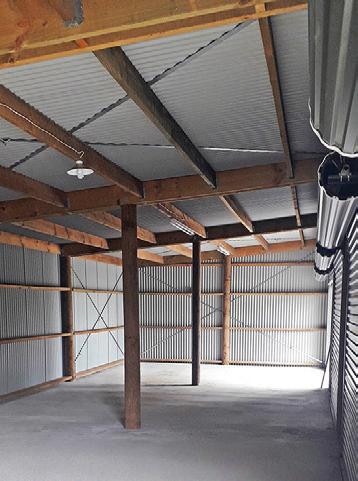


Thursday 8th September 2022 at 1pm M C F A D Z E A N C R U I Z Y C A L V E 100% Registered Angus Positive for calving ease Short gestation Positive fats & good growth Suited for heifer mating At least 75% Angus Moderate framed hill country cattle Excellent growth rates and superior muscling Positive fats & high IMF % Strong milking & maternal traits M C F A D Z E A N S U P E R A N G U S Superior weaning weight % Instant impact on calf size growth & muscling Higher carcass yields High EMA scores Strong milking & maternal traits M C F A D Z E A N M E A T M A K E R PROVEN PERFORMANCE Our bulls consistantly wean at 60% of cow weight 45 Years of Proven Performance • Top Quality Yearling Bulls 216 Wiltons Road, Carterton www.mcfadzeancattlecompany.co.nz Johnie McFadzean 0274295777 | Andrew Jennings PGG Wrightsons 0275946820 Open Day 24th August 12-2pm McFadzean Meat Maker 1243 Daily weight gain since weaning 1.5kg per day Limehills Boss 180099 Thursday Sept 15th 2022, 12 Noon 183 Mangaotea Road, Tariki, Taranaki 190 Registered and Purebred 1 year and 2 year Angus, Hereford, Murray Grey and Jersey. Full Traceability and Strict Biosecurity Policies. 26th Annual On Farm Sale Contact Robin Blackwell 06 762 4805 • mangaotea@xtra.co.nz LK0112512© 1ST ANNUAL 1YR ANGUS BULL SALE THURSDAY 1ST SEPTEMBER 2022 - 12.30pm 51 KARAPIRO ROAD – CAMBRIDGE 20 X TOP 1 YEAR ANGUS PEDIGREE BULLS Having purchased Waitawheta cows Piquet Hill Farms Ltd are pleased to announce their inaugural sale of quality Angus bulls. Bred for low birthweight and great calving ease. If you require Angus heifer mating bulls we highly recommend you attend this sale. Live streamed with mylivestock & bidr. Delivery up to 1st November If required deferred payment 20th December. For further information please contact: Vendor: Will Jackson – 07 825 4480 or 027 739 9939 Contact Agents: Warren Charleston – 027 496 3007 NZFL Stud Stock: Brent Bougen – 027 210 4698 Contact Agents: Steve Hickey – 027 444 3570 Tony Blackwood – 027 243 1858 LK0112823© FARMERS WEEKLY – August 22, 2022 livestock@globalhq.co.nz – 0800 85 25 80 31Livestock Noticeboard 2021 Angus Heifers (price on approach) October pre mating delivery. Please contact your local agent for further information. BEEFGEN : Brian Pearson : 021 0907 1688 BEEFGEN : Jess Crow : 022 074 1210 BEEFGEN Office : 06 927 7154 LK0112593©www . waitangiangus.co.nz Enquiries and Inspection Welcomed: Contact John, Joss or Phil Bayly M 027 474 3185, Email jbayly@xtra.co.nz Sale Catalogue www.waitangiangus.co.nz/upcoming-salelink:s Tuesday 13th September 2022 12 noon on farm with bidr 88 YEARLING BULLS Top rated proven genetics Semen tested : BVD vaccinated Well grown and ready to go! Waitangi Angus LK0112809© Bulls born and bred on the top of the Coromandel Contact Roy or Kaye Ward 021 128 7174 Dave Stuart 027 224 1049 Cam Heggie 027 501 8182 • 26 x 20-month Bulls • 25 x 1-year-old Bulls LK0112664© KAIRAUMATIHEREFORDPOLLED 23RD ANNUAL BULL SALE Sale will be live on also 68 NGATAIPUA RD, TURUA, THAMES 15TH SEPTEMBER 2022 – 12.30pm


S&P/NZX 10 INDEX 11525 S&P/FW SECTORPRIMARYEQUITY 12600 S&P/NZX 50 INDEX 11853 Company Close YTD High YTD Low ArborGen Holdings Limited 0.23 0.27 0.205 The a2 Milk Company Limited 5.46 6.39 4.2 Comvita Limited 3.29 3.78 2.98 Delegat Group Limited 11.8 14.45 10 Fonterra Shareholders' Fund (NS) 3.13 3.78 2.75 Foley Wines Limited 1.44 1.57 1.38 Greenfern Industries Limited 0.18 0.25 0.089 Livestock Improvement Corporation Ltd (NS) 1.38 1.73 1.3 Marlborough Wine Estates Group Limited 0.181 0.26 0.155 New Zealand King Salmon Investments Ltd 0.26 1.38 0.187 PGG Wrightson Limited 4.42 5.76 3.93 Rua Bioscience Limited 0.315 0.53 0.29 Sanford Limited (NS) 4.4 5.07 4.03 Scales Corporation Limited 4.57 5.59 4.07 Seeka Limited 4.37 5.36 4.37 Synlait Milk Limited (NS) 3.26 3.54 3.04 T&G Global Limited 2.7 3.01 2.65 S&P/NZX Primary Sector Equity Index 12600 14293 11724 S&P/NZX 50 Index 11853 13150 10588 S&P/NZX 10 Index 11525 12725 10291 Company Close YTD High YTD Low Meridian Energy Limited (NS) 5.35 5.36 4.32 Fisher & Paykel Healthcare Corporation Ltd 21.4 33.4 19 Auckland International Airport Limited 7.75 7.95 6.88 Spark New Zealand Limited 5.18 5.25 4.3 Mercury NZ Limited (NS) 6.395 6.695 5.2 Mainfreight Limited 79.45 94.4 66.11 Ebos Group Limited 38.5 44.3 36.11 Infratil Limited 9.06 9.155 7.33 Contact Energy Limited 7.99 8.42 6.82 Port of Tauranga Limited 7.07 7.37 5.96 Listed Agri Shares Top 10 by Market Cap 5pm, close of market, Wednesday Sheep SHEEP SlaughterMEATprice (NZ$/kg) Last week Prior week Last year NI lamb (17kg) 9.30 9.25 9.15 NI mutton (20kg) 6.10 6.10 6.50 SI lamb (17kg) 9.40 9.35 9.05 SI mutton (20kg) 6.10 6.05 6.70 Export markets (NZ$/kg) UK CKT lamb leg 12.03 12.16 12.13 (NZ$/kg)WOOL Two weeks ago Prior week Last year Coarse xbred ind. 2.62 2.62 2.86 37 micron ewe 2.85 30 micron lamb Cattle SlaughterBEEF price (NZ$/kg) Last week Prior week Last year NI Steer (300kg) 6.45 6.40 6.20 NI Bull (300kg) 6.25 6.25 6.10 NI Cow (200kg) 4.65 4.65 4.50 SI Steer (300kg) 6.30 6.25 6.00 SI Bull (300kg) 6.15 6.10 5.80 SI Cow (200kg) 4.75 4.75 4.80 Export markets (NZ$/kg) US imported 95CL bull 9.36 9.44 9.27 US domestic 90CL cow 9.33 9.34 8.83 NZFERTILISERaverage (NZ$/t) Last week Prior week Last year Urea 1340 1340 844 Super 495 495 339 DAP 1794 1794 1135 FertiliserDeer SlaughterVENISON price (NZ$/kg) Last week Prior week Last year NI Stag (60kg) 8.25 8.15 6.00 SI Stag (60kg) 8.40 8.30 6.20 Dairy Data provided by MILK PRICE FUTURES WMP FUTURES - VS FOUR WEEKS AGO Grain CANTERBURY FEED WHEAT WAIKATO PALM KERNEL DAIRY FUTURES (US$/T) contractNearby Last price* Prior week vs 4 weeks ago WMP 3465 3460 3650 SMP 3470 3480 3680 AMF 5525 5525 5530 Butter 5180 5210 5630 Milk Price 9.31 9.32 9.35 * price as at close of business on Wednesday CANTERBURY FEED BARLEY MARKET SNAPSHOT32 Market Snapshot brought to you by the AgriHQ analysts. Reece Brick Fiona QuarrieMel Croad Suz Bremner Hayley O’Driscoll Caitlin Pemberton Ingrid Usherwood Sara Hilhorst 4.0 4.5 5.0 5.5 6.0 6.5 7.0 CW$/kg North Island steer slaughter price 4.0 4.5 5.0 5.5 6.0 6.5 7.0 Oct Dec Feb Apr Jun Aug CW$/kg South Island steer slaughter price 5-yr ave 2020-21 2021-22 5.0 6.0 7.0 8.0 9.0 10.0 CW$/kg North Island lamb slaughter price 5.0 6.0 7.0 8.0 9.0 10.0 Oct Dec Feb Apr Jun Aug CW$/kg South Island lamb slaughter price 5-yr ave 2020-21 2021-22 5.0 6.0 7.0 8.0 9.0 10.0 11.0 CW$/kg North Island stag slaughter price 5.0 6.0 7.0 8.0 9.0 10.0 11.0 Oct Dec Feb Apr Jun Aug CW$/kg South Island stag slaughter price 5-yr ave 2020-21 2021-22 7.0 8.0 9.0 10.0 11.0 A… O… D… F… A… J… A… MS$/kg Sep-22 Sep-23 350 400 450 500 550 600 650 700 Aug-21 Oct-21 Dec-21 Feb-22 Apr-22 Jun-22 Aug-22 $/tonne 350 400 450 500 550 600 650 700 Aug-21 Oct-21 Dec-21 Feb-22 Apr-22 Jun-22 Aug-22 $/tonne 3800360034003200Aug Sep Oct Nov Dec Jan US$/t Latest price 4 weeks ago 300 350 400 450 500 550 Aug-21 Oct-21 Dec-21 Feb-22 Apr-22 Jun-22 Aug-22 $/tonne


Windissues.Highlights/Extremes
Very strong northerlies on Wednesday could be cause for concern. There is also some heavy rain for the West Coast on Wednesday and Thursday. Friday and Saturday should see some snow in the ranges thanks to a cold southwest change. Weather brought to you in partnership with WeatherWatch.co.nz 7-day rainfall forecast
Highlights Average temperatures today, starting to perk up a little tomorrow then more so on Wednesday as a northerly airflow strengthens. Dropping down a notch on Thursday but still warm, as southwesterlies move northwards on Friday and Saturday most will notice a reasonable drop in
OverviewWEATHER We start the week with a dying southwesterly airflow today. Showers for both the North and South Islands clear away. Settled with high pressure for the North Island on Tuesday, meanwhile northerlies start building further south. Northerlies strengthen over all of New Zealand midweek with gales developing for some in the South Island and through Cook Strait then a front pushes in from the west later in the day with the airflow changing more westerly in behind. Northwesterlies build on Thursday with rain or showers in the west, changing southerly on Friday for the South Island then reaching the North Island on Saturday. High pressure follows in behind on Sunday as southerlies ease.
Overnight Tuesday and into Wednesday strong to gale northerlies develop for the South Island and lower North Island. This will be the main wind feature this week. Northwesterlies on Thursday change southwest for the South Island on Friday but these winds shouldn’t cause
TURANGANUI ROMNEYS “The team behind the sheep” Michael Warren 06 307 7841 or 0274 465 312 Guy Warren 027 848 0164 William Warren 027 824 9327 Kieran Brown Ron LettMike WarrenGuy Warren Jayden Hume William Warren TURANGANUI ROMNEYS RD 2 Featherston 5772 LK0112172© FARMERS WEEKLY – farmersweekly.co.nz – August 22, 2022 33
Beef lookingmarketssolid
Analyst intel
Soil Moisture 17/08/2022
Mel mel.croad@globalhq.co.nzCroad
DEMAND: A jump in the values reflects the strength of demand for beef globally.
FARMGATE beef prices have shown an early spring in their step. AgriHQ data shows that over the past five weeks prices have lifted by 10c-30c/kg. Admittedly, this is occurring in the processing off-season, so not everyone is benefiting. But those gearing up to target a spring offload of finished cattle will be happy with the current pricing direction. Much of this has been underpinned by the recent rally in local trade prices, particularly around Canterbury and the wider Auckland region. Expectations of a spring void of any covid-19 lockdowns means it’s been a priority to shore up beef supplies to service local consumers. That’s not to say export markets for beef are weak in comparison. Beef export returns have set a consistent pace throughout this season. From December, average export values pushed into record territory and haven’t looked back. In February they climbed higher and have since held over $10/kg. This compares with a $7.60/kg average over the same period last year and is $2.85/kg higher than the five-year average. The position of the NZD this year is helping drive these record returns, but even in USD terms (which most of our exports trade in) it’s clear there has been a jump in the values. This reflects the strength of demand for beef globally. Strong export values lead to strong farmgate prices, and we have seen that all season. The last quarter of the year is crucial for both beef farmers and exporters. As our supplies seasonally lift, so does production and ultimately export volumes. The sheer volume and value of R2 cattle still trading suggests there is plenty of confidence in the beef job in the months ahead. Recent AgriHQ analysis also predicts further upside in farmgate beef prices through to early summer at levels ahead of lastForseason.farmgate slaughter prices to remain upbeat, export markets must be positioned to absorb the extra supply. Current analysis suggests there are more positives than negatives for beef into the new season. The US imported beef market has been weaker than expected this year due to extremely high domestic lean beef supplies. Lingering drought conditions have forced significantly more breeding cows to be culled. It is expected these high slaughter rates will taper from November, which would spark some timely interest in imported beef again. Looking at China, NZ beef is having a solid run within this market. In many cases asking prices are at a premium to other markets NZ beef trades in. The ability to access this market more freely than some Australian exporters puts us in a strong position. Brazil is again focusing its attention on China, but we have been here before and know what to expect. To be honest, Brazil caused more pricing upset for NZ beef in the US imported beef market earlier in the year, so having it focusing on China over the US could be considered a win.Other key markets are seasonally quiet but steady. One area to watch is the amount of US and Australian beef circulating within export markets. This is particularly noticeable in Japan and South Korea, whereby interest has dampened. NZ beef has been partly insulated from this due to the beef being predominantly grain fed. But even so, larger volumes of beef generally cause an adjustment to all beef prices or at least a slowdown in sales. Fortunately, this is occurring in our off-season, limiting any negative impact on NZ beef prices. However, we still expect an increased presence of Australian beef over the coming months as it starts to see the effects of its recent herd rebuild.
over seven days starting from 6am Sunday, August 21 through to 6am Sunday, August 28, forecast generated at 12am Thursday, August 18.
This week starts off reasonably calm then midweek we see very strong northerlies develop ahead of a front that pushes over New Zealand later in the day moving in a west to east fashion. Northwesterlies on Thursday give way to a cold front on Friday that reaches the North Island on Saturday. There should be some snow about the ranges with this cold change. Sunday we start to see a high pressure system move in and if long-range models stay consistent with current guidance then next week we see plenty of high pressure with the chance of a low teasing the far north. 14-day outlook
Temperaturetemperatures.
Showers clearing away today, dry tomorrow although expect showers for the West Coast. Heavy rain on Wednesday for the West Coast, showers then rain later in the day for the western North Island and overnight eastern regions may get a few spots. Wet in the west on Thursday and Friday, showers push up the South Island’s east coast on Friday reaching the eastern North Island on Saturday. Drying out RainfallSunday.accumulation


• Prime lambs sold from $140.50 to $234 Just over 1500 store lambs were penned at DANNEVIRKE on Thursday, August 11. There was almost an even split of males and ewe lambs though males still had a slight advantage. They were split down into wethers at $102$143, cryptorchid at $107-$205 and a small yarding of ram
HAWKE’S BAY Stortford Lodge store cattle and sheep
WAIKATO PGG Wrightson Frankton cattle
• R1 Hereford-Friesian steers, 259-288kg, made $3.61-$3.73/kg
• One prime Friesian steer, 700kg, returned $3.56/kg
• Prime Hereford-Friesian heifers, 499-501kg, made $3.26/kg
NZFL Frankton cattle
• R1 Hereford heifers, 225kg, fetched $3.44/kg
• R1 Hereford-Friesian heifers, 287-338kg, made $800-$1020
• Very heavy male lambs fetched $250-$255 It was a wet day at MATAWHERO on Friday, August 12 and this continued to put pressure on the store lamb market. Shorn lambs received the usual premiums and heavy types traded from $137 up to $183 for very forward options. Priced dipped below $100 for anything light. A small selection of in-lamb Romney ewes were in lightmedium condition and the top draft made $126. Prime ewes all traded from $170 to $180. Read more in your LivestockEye. TARANAKI Taranaki cattle
• R1 dairy-beef heifers, 170-210kg, also firmed to $3.35/kg A small sale attracted good interest for quality cattle at TARANAKI last Wednesday, though lesser lines were discounted as more forecast rain dampened demand. The top pen of R2 steers reached $3.39/kg and a small pen of Speckle Park-cross heifers made $3.29/kg. R1 cattle generally sold in two’s and dairy-beef steers at 230-250kg attracted bids up to $860-$945. One pen of 14 autumn-born weaner Charolais-Friesian bulls, 108kg, reached $610. Read more in your LivestockEye.
• R1 Hereford-Friesian steers, 238kg, fetched $3.87/kg
• Prime steers reached $3.70/kg
• Heavy prime lambs made $180-$220
• R2 Angus-Friesian heifers, 376-407kg, held at $2.90-$2.97/kg
• R1 Hereford-Friesian steers, 191-244kg, varied from $3.65/kg to $4.03/kg
• Prime lambs made $160-$218 Supply was limited at the TE KUITI yearling beef cattle fair on Friday, August 12. R1 Angus steers, 300kg, earned $3.50/kg. R1 Hereford-Friesian steers, 223kg, returned $3.31/kg while R1 Hereford steers, 221kg, sold for $910. Simmental-cross heifers, 280kg, made $920, $3.08/kg and Hereford heifers, 205-238kg, made $3.26-$3.38/kg. There were 800 store lambs offered last Wednesday with the best of the males able to achieve $140-$160. Ewe lambs returned $125-$140 and light to medium types sold for $60-$120. Prime 2-tooths returned $80-$144 and mixed-age ewes, $90-$156. BAY OF PLENTY Rangiuru cattle and sheep
COUNTIES Tuakau prime cattle 17.8, sheep 15.8, store cattle 11.8
Around a hundred prime cattle were trucked into the yards for the New Zealand Farmers Livestock FRANKTON sale last Wednesday. The steers couldn’t quite reach the $3.54/kg high of the previous auction and most were $3.44-$3.52/kg with $3.39/kg achieved by second-cuts. R2 Friesian and Friesian-cross steers were the most numerous of this section and several lines of 448kg returned $3.13$3.21/kg. The dominant type available in the R1 steer pens was Hereford-Friesian and they included a pen of 165kg that earned $4.27/kg, and another of 121kg that made $4.46/kg. In the autumn-born weaner bull pens, Belgian Blue-cross and Charolais-cross often achieved $500-$540. Read more in your LivestockEye. Feeder calves Volume was around the same as the previous week at the FRANKTON feeder calf sale last Tuesday. Buying power was noticeably limited as a smaller gallery participated due to sheds filling up around the district. Good Friesian bulls sold for $100-$135, medium $60-$90 and small, $20-$45. Top Hereford-Friesian eased to $240-$270 and the balance made $110-$200. Angus-cross bulls ranged from $30 up to $170 and heifers of same breed, $15 to $130. Not a lot more was paid for the Hereford-Friesian heifers as they started at $25 and good types made $130-$165.
• Heavy R2 beef-cross heifers were able to achieve $3.20/kg Poor weather limited supply at KAIKOHE last Wednesday and heavy male cattle were in strong demand, PGG Wrightson agent Vaughan Vujcich reported. R3 beef-cross bulls were able to achieve $3.00/kg. Lighter R2 Herefordcross heifers made $2.50-$2.60/kg. R1 white-face heifers achieved $3.00/kg and lesser types returned $2.40-$2.50/kg. Cows with calves-at-foot earned $1200-$1300 per unit.
• R2 dairy-beef steers, 415-470kg, firmed to $3.35/kg
• Boner cattle over 380kg largely earned $2.51-2.54/kg
• R1 Angus heifers, 278-338kg, traded at $800-$1020, $2.78/kg to $3.01/kg
• Small pens of ewes with lambs-at-foot sold for $100-$120 all counted While cattle volume shrunk, lamb volume increased to 9000-head at STORTFORD LODGE last Wednesday; the highest tally since early May. The extra volume was met by a big bench of local and outside buyers and the market was firm across most classes. A premium was paid for short wool lines over woolly and most short wool cryptorchid sold for $153-$187. Wether lambs were mainly woolly and sold on a softer market at $124-$153 for medium types. Demand for ewe lambs was strong as medium types sold for $151-$168. Read more in your LivestockEye. Stortford Lodge prime sheep
• Heavy ewes sold for $180-$188 and the balance mostly $147$174 Several particularly hefty lambs earned $230-$246 at STORTFORD LODGE last Monday. Heavy lines were more numerous than previous sales and managed $183-$203 while lighter pens made $169-$173. Read more in your LivestockEye.
Dannevirke sheep
• R2 Hereford-Friesian steers, 437-486kg, firmed to $3.18-$3.20/kg
SALE YARD WRAP34
• R1 Hereford-Friesian heifers, 168kg, returned $3.57/kg
• Heavy lambs made $224 Quality was lacking in the wake of the recent cattle fair at RANGIURU but the odd good pen sold to similar levels last Tuesday. The mixed-type R2 cattle generally traded 10c/kg either side of $3.00/kg. Well-marked R1 HerefordFriesian steers, 215-279kg, returned $3.80-$3.81/kg and reds managed $3.66/kg. Charolais-Angus and Herefordcross heifers were good sorts and earned $3.50-$3.56/kg while dairy-beef made $3.20/kg or less. R1 Hereford bulls collected $3.55/kg and autumn-born weaner HerefordFriesian traded at $410-$420 for heifers and steers respectively. Prime dairy-beef heifers, 500-527kg, collected $3.40-$3.42/kg and same breed steers, 505kg, managed $3.47/kg. Sheep pens mostly held prime lambs which held value and top ewes made $155. Read more in your LivestockEye. POVERTY BAY Matawhero sheep
KING COUNTRY Te Kuiti cattle 12.8 and sheep 17.8
• Top male lambs reached $200-$230
Demand for small tallies of finished cattle continued to soar at the yards and that has led to yet more high prices. South Island buyers are leading the charge and at Canterbury Park, 10 high-yielding Angus steers were chased to $3.86-$3.87/kg, giving per head values of $2548-$2577. This was a record per kilogram level achieved for any cattle over 500kg. It followed a successful sale of traditional heifers at Coalgate the week prior where a new yard record was also set at $3.69/kg for three Angus-Hereford heifers. These cattle are selling above schedule but are destined for local butchers. North Island prices have also been strong, though they are more in line with current schedules.
AUCKLAND Pukekohe cattle
• R1 Charolais-cross steers, 279-306kg, returned $1105-$1180
• R2 store steers sold up to $3.50/kg Prime steer and heifer prices lifted 20c/kg at TUAKAU last Wednesday, Carrfields Livestock agent Sam Cowley reported. Most 600-800kg steers in the 300-head yarding returned $3.40-$3.60/kg, although one pen of HerefordFriesian made $3.70/kg. Steers in the 500-600kg range earned $3.40-$3.50/kg while 420-580kg heifers also sold strongly at $3.20-$3.50/kg. Good-medium boner cows, 400-600kg, managed $2.20-$2.50/kg. Competition for prime lambs softened last Monday due to a lack of processor space but medium still made $140-$160 and store lambs, $100 to $140. Good ewes traded at $150-$180 and lightmedium, $100-$120. About 400 store cattle were yarded on Thursday, August 11. Most R2 steers, 400-500kg, returned $3.30-$3.50/kg and R1, 300-400kg, $3.80-$4.00/kg. Heifer prices eased and R2 Hereford-Friesian, 300-450kg, sold for $3.00-$3.10/kg while most R1, 250-320kg, made $2.80$2.90/kg.
• Autumn-born Hereford-Friesian steers, 115kg, made $610 and similar heifers, $520 High fair prices attracted a larger than expected store cattle yarding at WELLSFORD last Monday. True-to-type and forward cattle reflected the stronger markets at the fair, yet a larger percentage of lesser types and mixed lines were discounted. Small entries of R2 Hereford steers, 441-482kg, sold for $3.09-$3.20/kg though lesser lines ranged from $2.66/kg to $2.81/kg. R2 Hereford-dairy heifers, 330-393kg and in good condition, eased to $2.71-$2.77/kg. Second cuts of R1 steers were in small lines and of mixed quality and varied from $3.15/kg up to $3.42/kg though there were lines that fell short of $3.00/kg. Read more in your LivestockEye.
• R2 Hereford-Friesian heifers, 415-442kg, managed $3.18-$3.26/kg
• R2 Charolais-cross steers, 410kg, collected $3.27/kg
• Good ewe lambs firmed to $164-$172
• Weaner crossbred steers earned $450-$490
• Very heavy ex-stud ewes reached $245
Kaikohe cattle
• R1 Angus-Friesian steers, 273-340kg, made $1012-$1260, $3.64/ kg to $3.80/kg
• A pen of 269 shorn and good condition ewe lambs collected $149
• Good store steers lifted to $1430-$1590
• R2 Hereford-Jersey steers, 437kg, earned $3.40/kg
• R2 beef-cross steers made $3.15/kg to $3.22/kg
• R1 Angus and Simmental-cross steers made $3.50/kg to $3.55/kg
• One prime Hereford-Friesian steer, 715kg, earned $3.57/kg
NORTHLAND Wellsford store cattle
In typical fashion for the time of year dairy-beef cattle accounted for the core of the sale at PGG Wrightson’s FRANKTON sale last Tuesday. A level of $3.39-$3.49/kg was achieved by most short-term R2 steers over 400kg while the top pens of heifers, 361-476kg, were either HerefordFriesian or Angus-Friesian that made $3.24-$3.32/kg. While there were several particularly heavy steers available in the prime pens, they were outweighed by a line of Friesian cows off a feed pad that tipped the scales at 753kg and made $2.51/kg. Read more in your LivestockEye.
• R3 Friesian bulls, 486-513kg, sold well at $3.30-$3.32/kg
• Very heavy 2-tooth ewes made $214.50
Angus soar to new heights
• Prime heifers made $3.13-$3.16/kg Prime cattle sold on a strong market at PUKEKOHE on Saturday, August 13 with medium prime steers able to achieve $3.20/kg. Very light R1 steers made $620-$790. Good store heifers lifted to $1100-$1300. Cull cows made $1.89/kg to $2.75/kg.
MANAWATŪ Feilding store cattle and sheep • R2 Angus-Hereford steers, 484-494kg, lifted to $3.65-$3.70/kg
• Very large lines of R1 Angus steers, 313-349kg, R1 made $3.77$3.90/kg
• R2 Hereford-Friesian steers, 387-509kg, made $3.05/kg to $3.34/ kg
CANTERBURY Coalgate cattle and sheep • Angus-Hereford heifers, 562kg, set a new sale yard record at $3.69/kg • Hereford cows, 645kg, collected $2.68/kg on a stronger market Quality was plain among prime steers at COALGATE on Thursday, August 11 and most which weighed 488kg to 655kg returned $3.30/kg to $3.50/kg. Local trade heifers made similar money at $3.30-$3.46/kg while those over 500kg earned more. Friesian heifers, 530-573kg, collected $2.94-$3.00/kg and dry Friesian cows, 535kg, realised $2.40/ kg. Other boner cows typically traded from $2.00/kg to $2.20/kg.R2beef steers, 333-344kg, sold up to $3.18/kg and 400kg Hereford-Friesian made $2.93/kg. R1 Angus bulls, 323kg, returned $2.88/kg. All sheep sold on steady markets and most prime lambs collected $160 to $260. The bulk of the ewes realised $120-$173 and better in-lamb options earned $215. Store lambs were limited, and most fell within $100$126. Read more in your LivestockEye. Canterbury Park cattle and sheep • Angus steers, 660-666kg, fetched a record $3.86-$3.87/kg
• Prime lambs sold for $150-$230 Prime ewes offered by PGG Wrightson at BALCLUTHA on Wednesday, August 10 ranged from $98 to $200. Store ewes returned $195 and a small yarding of prime rams made $80.
• Better store lambs eased to $150
Smarter farming for a better New Zealand You know your farm. We know our nutrients. And we’re driven to help you achieve your productivity and sustainability goals based on best practice soil science, technology, and innovation. Here’s how we can help you gain ground for spring – rav.link/advantage 0800 100 123 ravensdown.co.nz Grow your advantage
• Heavy prime lambs lifted to $192-$252
• R2 Meatmaker-cross heifers, 400-430kg, sold for $3.49-$3.50/kg
• R1 beef-cross heifers, 255-285kg, earned $790-$910
• R2 Hereford-Friesian heifers, 340-374kg, returned $2.02/kg to $2.78/kg
• All store lambs averaged $138 It was a ripper sale for the nearly 900 store cattle at FEILDING on Friday, August 12. R3 Angus steers, 529582kg, made $3.45-$3.52/kg while straight-beef R2 steers were mostly $3.55-$3.58/kg for 546-561kg and $3.45-$3.55/ kg for 378-519kg. R2 straight-beef heifers, 352-378kg, sold for $3.30-$3.32/kg. R1 Hereford-Friesian steers, 216-267kg, were $780-$900 while 248kg heifers of the same breed made $850, $3.43/kg. Under 2000 store lambs traded on a softer market than earlier in the week. The majority were ewe lambs where heavy lines made $159-$161, mediumto-good $138-$160 and light, $101-$123. Some 4-year and mixed-age Romney ewes, scanned-in-lamb 148-170%, made $201-$211. Read more in your LivestockEye. Feilding prime cattle and sheep • Hereford bulls, 685-780kg, fetched $3.51-$3.52/kg
• R2 Hereford-Friesian steers, 386-406kg, jumped to $3.52-$3.54/kg
• R1 beef-cross steers, 158-365kg, made $2.90/kg to $3.22/kg Heavy store cattle were in strong demand at RONGOTEA last Tuesday, New Zealand Farmers Livestock agent Darryl Harwood reported. R1 Friesian bulls, 170-234kg, made $2.65/kg to $2.91/kg. R1 Hereford-Friesian heifers, 184255kg, lifted at $2.67/kg to $3.24/kg. In the calf pens, Hereford-Friesian bulls made $80-$295 and beef-cross bulls, $100-$160. Hereford-Friesian heifers returned $90$230 and beef-cross, $105-$155.
• Top store lambs lifted to $140-$180 There was a small yarding of quality cattle which sold on a strong market at LORNEVILLE last Tuesday. Prime bulls, 650kg and above, earned $3.15/kg. R2 Friesian bulls, 680kg, made $1990. R2 Hereford-cross steers, 512kg, earned $1660. Heavy prime ewes made $150-$188 and $92-$148 was paid for lighter types. Charlton sheep
• Top prime mixed-age ewes made $218 An increased yarding of cattle at TEMUKA last Monday sold on a steady market. No major market movements were seen aside from one pen of Angus heifers, 514kg, that topped the sale and sold for $3.44/kg. The best of the steers was Angus, 514kg, that returned $3.40/kg. Sheep pens were well-supported, and tallies increased to 3029-head. The sale was primarily made up of prime and store lambs, but prime ewes were also well-represented. Good mixed-sex lambs returned $155-$179 and up to $197 for heavy types. Prime lambs varied from $140 to $282. Most ewes sold for $142$176 and the best ewes with lambs-at-foot made $150 all counted. Read more in your LivestockEye.
SOUTHLAND Lorneville cattle and sheep • Prime beef cattle, 480kg and above, made $3.20-$3.30/kg
• The best of the store lambs lifted to $142
• R1 Angus steers, 305kg, collected $3.90/kg There was just a small yarding of 408 cattle at TEMUKA last Thursday and only 31 were R2 steers. Hereford-Friesian which weighed 427kg joined 385kg Angus at $3.26-$3.31/ kg and a pen of Angus and Angus-Hereford with the odd horn were discounted to $3.08/kg. R2 heifers were easily the dominant group at 140-head and the best of the bunch were beef-cross which included Speckle Park and Charolais. These realised $3.23-$3.25/kg while better dairy-beef options made $3.11-$3.17/kg. Outside of these, the money often dipped below $3.00/kg. A premium was paid for R1 traditional steers off fodder beet while others traded from $3.44/kg to $3.57/kg for 222-273kg. Angus heifers, 183kg, reached $3.50/kg and 220kg options made $3.30/kg. Read more in your LivestockEye.
• Top prime lambs reached $260 Extra competition created a random pocket of strength in the prime cattle market at CANTERBURY PARK again last Tuesday. Beef-cross and Hereford-Friesian steers with better covers collected $3.70-$3.77/kg and almost everything else made $3.30/kg or more. Heifers were also stronger, and heavier Hereford-Friesian managed $3.50$3.62/kg while good local trade types settled at $3.40-$3.49/ kg. A small selection of mixed-quality store cattle met the market. Store lamb throughput and demand was limited but better types managed $126-$150. Prime lambs sold on a steady market, most from $160 to $220, and ewes ranged from $90 to $225 on a softer market. Read more in your LivestockEye.
• Heavy male lambs collected $246 Cattle throughput was limited at FEILDING last Monday and Hereford-Friesian heifers, 455-509kg, started the sale at $3.13-$3.14/kg. Friesian cows with reasonable weight started at $2.39/kg and reached $2.48/kg. Lamb numbers were also low and buyer demand lifted returns on the previous week so that much of the yarding traded from $185 to $225. Of the 577 ewes penned, most returned $130$172 and the heaviest reached $182. Read more in your LivestockEye. Rongotea cattle
• Heavy traditional cows returned $2.80-$2.82/kg
• Prime lambs made $150-$230 There were 164 prime ewes offered by PGG Wrightson at CHARLTON on Thursday, August 11 which averaged $162 and reached $214. Store ewes averaged $167 and a small yarding of prime rams sold for $85.
• R1 Hereford-Friesian steers, 158-244kg, earned $3.17/kg to $3.28/ kg
OTAGO Balclutha sheep
SOUTH-CANTERBURY Temuka prime and boner cattle; all sheep • Angus cows, 514kg, reached $3.44/kg
• Boner Friesian cows, 460-560kg, sold for $2.35/kg
• R2 Angus and Angus-Hereford steers, 420kg, fetched $3.52/kg
lambs at $146. Ewe lambs ranged from $72.50 to $161 and averaged $119. Prime ewes tallied up to 270-head and sold for $90-$171 though most were at the lighter end and the sale averaged $110.
FARMERS WEEKLY – farmersweekly.co.nz – August 22, 2022 35
CLEAR PREMIUM: Shorn and short wool lambs are making a clear premium at auction.
Temuka store cattle

Stop BVD in its tracks.
•
ULTRAVAC is a registered trade mark of Zoetis Inc. or its subsidiaries. ACVM No. A10730: RVM; Available only under Veterinary Authorisation. BVD outbreak could cause: – farmersweekly.co.nz 22, 2022 $3.61-$3.73/kg $160-$239 R1 Franktonsteers,Hereford-Friesian259-288kg,at Most prime lambs at Temukahighlights NI ($/KG)STEERSLAUGHTER 6.45 NI ($/KG)LAMBSLAUGHTER 9.30 SI ($/KG)STAGSLAUGHTER 8.40 PRIME TRADITIONAL STEERS, 585KG AVERAGE, AT CANTERBURY PARK ($/KG LW) 3.71
36 FARMERS WEEKLY
And the frustration has been very real for many farmers trying to get the job done – they know they need to shear the lambs to get the best return possible at auction, but the ability to do so, plus the added cost, has to be weighed up against sending woolly lambs to auction and receiving a discount. At the end of the day, though, the premium is covering the cost of shearing and so removing the jerseys is proving to be a very worthyRecentexercise.auctions at Feilding and Stortford Lodge have proved there is money to be made in shearing theWhilelambs.the premiums have varied through the winter months, it has become more obvious in the last month. On average, short wool lambs have been making 20c-30c/kg, or about $10 per head, more than woolly lines.Insome cases, the premium is higher and does depend to some extent on how long the lambs have to finish. A good example of that was two lines of 60kgLW lambs that were penned at Stortford Lodge recently – the short wool line of Romney cryptorchid were able to achieve $230 while the woolly lines of males reached $208. There is more interest in longerterm lambs that are fresh off the shears, yet any lines that will not need another trip to the woolshed for shearing are taking preference over those that will. Processors also prefer shorn lambs, and premiums are offered at some plants. While woolly lambs will be taken, there have been instances where penalties have been added for lambs that are muddy, which is another reason shorn or short-woolled lambs will take preference over woolly, especially in this unpredictable season when there have been more wet days than dry. It is expected that the preference for short wool at both auction and processors will continue to the end of the season, and therefore shearing will give farmers the best return possible on lambs that are left.
Lamb price comparison by sex and wool for Feilding and Stortford Lodge
– August
The most devastating impacts of BVD are on pregnant cattle and their unborn calves, so protecting heifers and cows from infection during mating and gestation is critical. Protect the health of your herd by keeping your herd BVD free with Ultravac BVD® the premium foetal protection vaccine proven in New Zealand.1 See your vet today. Decreased milk production conception rates Persistently infected calves Abortions, mummies, and stillbirths 1 R Packianathan, WJ Clough, A Hodge, DK Holz, J Huang, GL Bryant & C Colantoni (2017): Prevention of fetal infection in heifers challenged with bovine viral diarrhoea virus type 1a by vaccination with a type 1c or type 1a vaccine, New Zealand Veterinary Journal, DOI:10.1080/00480169.2017.1291376. Zoetis New Zealand Limited. Tel: 0800 963 847; www.zoetis.co.nz.
A
•
•
Markets
Long and short of store lamb prices Suz suz.bremner@globalhq.co.nzBremner
O VER the past few weeks shearing has been one job that has been a challenge to complete, but those who have managed to get lambs dry and into the shed are now receiving a clear premium at auction and in the paddock. This was always going to be the case as the season winds down and buyers look more favourably on lines of lambs that do not need to be shorn before finishing.
Find out more about AgriHQ at agrihq.co.nz
• Poor
While the premiums have varied through the winter months, it has become more obvious in the last month.


