National


greenhouse gas prices, which will not be determined until 2025, set at the lowest level needed to meet reduction targets.
ANEW agricultural emissions reduction policy approved by the cabinet removes most but not all aspects of an earlier proposal that the primary sector walked away from in June.

Issues raised at the time by the He Waka Eke Noa (HWEN) partnership appear to have been addressed, such as delaying the requirement to report farm-level emissions by almost a year and the pricing of those emissions from late 2025, and the government recognising scientifically validated on-farm sequestration in the Emissions Trading Scheme (ETS).
But a review of methane targets and their impact on global warming – requested by Beef + Lamb New Zealand (BLNZ) and Federated Farmers – is not included.
Agriculture Minister Damien O’Connor said the new proposal is the result of discussions and agreement with farming leaders.

“The decisions announced today set out a path that gives farmers certainty and addresses the everstrengthening market signals from overseas on climate,” he said.
The policy includes the development of a system to measure emissions and retains the proposal to price emissions at farm level, a split gas approach and

This year’s Budget allocated $15.4 million to continue the development of a system to enable farmers and their advisers to calculate and report agricultural emissions, which is needed to underpin farm-level pricing.
O’Connor said like it or not, the sector has to adapt and reduce its emissions, a fact he said the HWEN partnership acknowledges.
He said the government has listened, is being flexible and is accommodating issues raised by the HWEN partners on timelines and establishing a framework for factors that will determine the farm-level levy price.
“We have shifted farm-level emissions reporting requirements into Quarter 4 of 2024. Emissions pricing won’t start until two years from now in Quarter 4 of 2025, and work will also get underway to allow scientifically validated forms of on-farm sequestration into the ETS, which can help reduce the cost to farmers.”
He said the implementation plan supports farmers’ transition, helps meet the requirements of export customers and works alongside other climate policies.
A policy to defer until later in the year the requirement for farmlevel reporting from January 1
Continued page 3
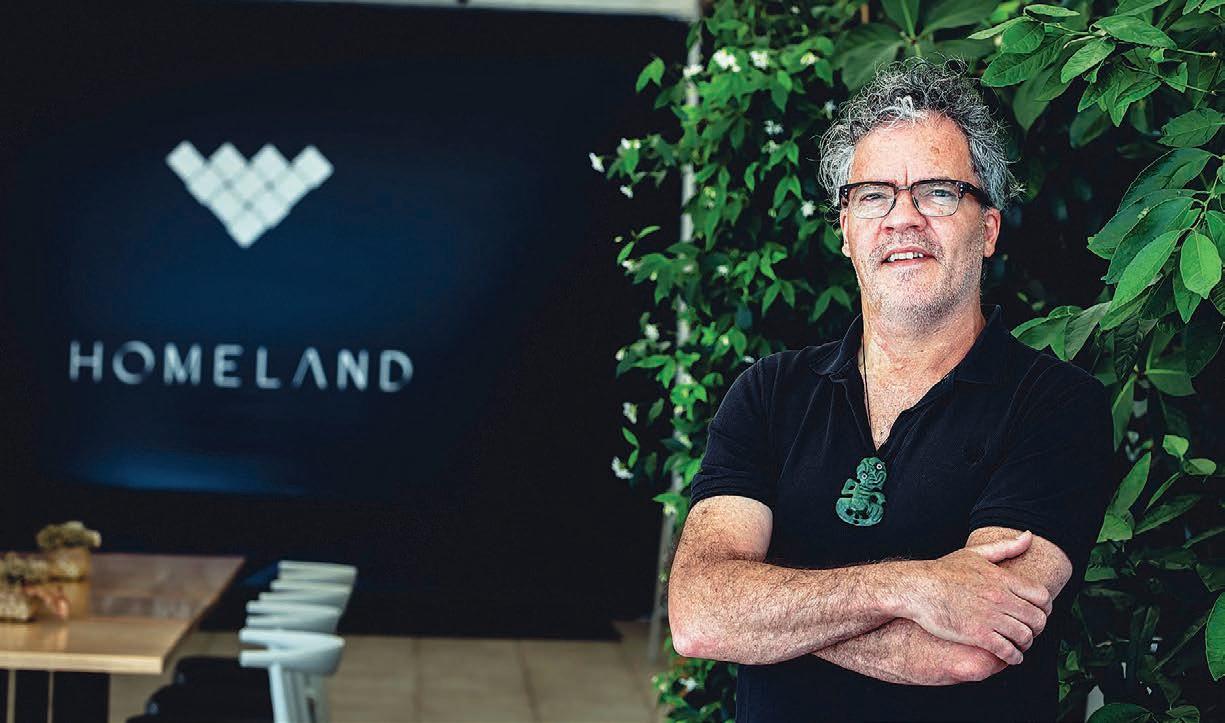
Internationally recognised chef Peter Gordon is giving back to the community through his Auckland business, Homeland – a restaurant, cooking school and food retail outlet.
NEWS 7


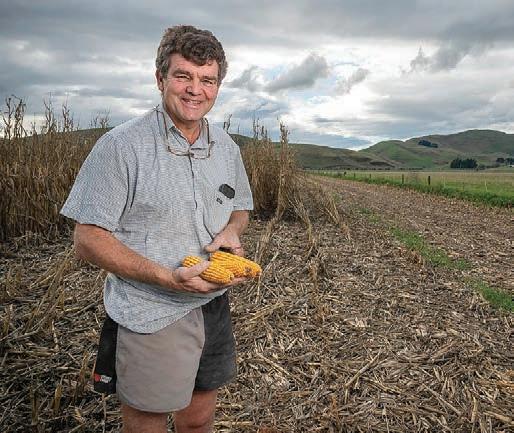
Arable Farmer of the Year Hugh Ritchie is a progressive, innovative farmer who knows the value of perseverance, but he still reckons there are better growers in New Zealand than him.
PEOPLE 18
Eat plenty of fruit and vegetables but don’t neglect meat and dairy, urges new research.
NEWS 3
NEWS 9
Parties need to think about what lies beyond Wellington, Environment Canterbury says.
OPINION 15


‘would restore ag con dence’
The trade delegation visiting India cannot expect to land a free trade deal right out of the gate.Neal Wallace NEWS He Waka Eke Noa
EDITORIAL
Bryan Gibson | 06 323 1519
Managing Editor bryan.gibson@agrihq.co.nz
Craig Page | 03 470 2469 Deputy Editor craig.page@agrihq.co.nz
Claire Robertson
Sub-Editor claire.robertson@agrihq.co.nz
Neal Wallace | 03 474 9240
Journalist neal.wallace@agrihq.co.nz
Gerald Piddock | 027 486 8346
Journalist gerald.piddock@agrihq.co.nz
Annette Scott | 021 908 400
Journalist annette.scott@agrihq.co.nz
Hugh Stringleman | 09 432 8594
Journalist hugh.stringleman@agrihq.co.nz
Richard Rennie | 027 475 4256
Journalist richard.rennie@agrihq.co.nz
Nigel Stirling | 021 136 5570
Journalist nigel.g.stirling@gmail.com
PRODUCTION
Lana Kieselbach | 027 739 4295 production@agrihq.co.nz
ADVERTISING MATERIAL
Supply to: adcopy@agrihq.co.nz
SUBSCRIPTIONS
0800 85 25 80 subs@agrihq.co.nz
PRINTER
Printed by Stuff Ltd
Delivered by Reach Media Ltd
Andy Whitson | 027 626 2269 Sales & Marketing Manager andy.whitson@agrihq.co.nz
Steve McLaren | 027 205 1456 Auckland/Northland Partnership Manager steve.mclaren@agrihq.co.nz
Jody Anderson | 027 474 6094 Waikato/Bay of Plenty Partnership Manager jody.anderson@agrihq.co.nz
Palak Arora | 027 474 6095 Lower North Island Partnership Manager palak.arora@agrihq.co.nz
Omid Rafyee | 027 474 6091 South Island Partnership Manager omid.rafyee@agrihq.co.nz
Debbie Brown | 06 323 0765 Marketplace Partnership Manager classifieds@agrihq.co.nz
Andrea Mansfield | 027 602 4925 National Livestock Manager livestock@agrihq.co.nz
Real Estate | 0800 85 25 80 realestate@agrihq.co.nz
Word Only Advertising | 0800 85 25 80 Marketplace wordads@agrihq.co.nz
Dean and Cushla Williamson Phone: 027 323 9407 dean.williamson@agrihq.co.nz cushla.williamson@agrihq.co.nz


Farmers Weekly is Published by AgriHQ PO Box 529, Feilding 4740, New Zealand Phone: 0800 85 25 80 Website: www.farmersweekly.co.nz
ISSN 2463-6002 (Print)
ISSN 2463-6010 (Online)
Tony Carter has been appointed to the board of Ravensdown.
Carter is currently chair of New Zealandowned technology business Datacom Group, My Food Bag, TR Group, The Interiors Group and the Skin Institute. He previously chaired Air New Zealand for six years and Fisher & Paykel Healthcare.
Five independent South Otago rural health providers have created a collaborative network to advance joint initiatives, share knowledge and provide mutual support.
The five parties to the Clutha District Health Network memorandum of understanding are all community owned and governed. The parties are Catlins Medical Centre (2017), Clutha Community Health Company, trading as Clutha Health First, Milton Community Health Trust, Tuapeka Community Health Company and West Otago Health.
ADAPT: M bovis governance group chair Kelvan Smith says the Pest Management Plan proposal will ensure the M bovis programme continues to adapt to the work ahead.
Agribusiness group Scales Corporation has expanded its global proteins division, purchasing a 50% shareholding in newly established pet food ingredient processing operation Esro Pet Food.
The joint venture will be based in Europe alongside Esro Food Group. Esro has factories in the Netherlands, Belgium and Spain.
Happy Valley Nutrition’s creditors have given the administrators an extra month to see if there is any substance in potential deals to save the embattled milk processor.
The company planned to build a factory in the Waikato town of Ōtorohanga but ran out of capital. At the latest meeting, in early August, creditors voted to adjourn the meeting for 30 working days to give administrators time to work through potential deals.
ANEW Zealand delegation visiting India is not arriving with expectations of landing a free trade agreement with the populous nation any time soon.
A delegation of 50 business leaders representing all aspects of New Zealand industry are to attend a four-day summit in New Delhi from August 28.

Delegate and long-time trade negotiator Stephen Jacobi said expectations should not be pinned on landing an FTA, but rather on building understanding and stronger relationships with India’s business and political leaders.
“We have been down the FTA track before with India, over the five years between 2010 and 2015. There are things on both sides that just do not make a deal feasible at this stage, including dairy and immigration settings,” he said. As one of the world’s fastest developing emerging economies, India represents an attractive trade prize for any developed nation’s export portfolio. Its current annual economic growth rate of 6% to March this year needs to continue at a rate of
Continued from page 1
next year will be subject to public consultation, which opened on Friday and closes on September 6.

The original agricultural greenhouse gas pricing proposal fell apart earlier this year due to farmer disquiet at changes proposed by the government to what had been agreed to by HWEN.
The partnership said those changes disproportionately affected the meat and wool sector and did not recognise the various forms of on-farm sequestration as extensively as the original proposed.
7-8% per annum to build a strong manufacturing base and facilitate a move away from its highly agrarian focus.
At present 45% of India’s workforce is engaged in the rural sector, which contributes 25% of India’s GDP.
A recent India-NZ Business Council report on relations between the two countries has highlighted how NZ needs to take swift action to shore up its relationship with India or risk missing out on future opportunities as it emerges as the world’s third largest economy. Despite being the world’s most populous nation, as of last year, India has slid to be NZ’s 16th largest trading partner.
Michael Fox, chair of the IndiaNew Zealand Business Council, said the business community has been advocating strongly for enhanced government investment in the relationship, given the opportunities it would help create.
“There are some great examples of New Zealand businesses succeeding in India and Indian businesses here, whether it’s Rakon, Valocity, Zespri or any other number, but there’s room and ambition to do lots more, especially if we’re willing to think creatively and to invest appropriately.

BLNZ chair Kate Acland said in June that while committed to a partnership, the producer group would not support a system that threatened the viability of sheep

“What’s been really encouraging is the level of interest from businesses in the delegation, seeing or in many cases already pursuing those opportunities, and we hope this visit allow us to build on that,” he said.
Jacobi said there are things to be learnt from Australia’s approach to building a relationship with India. It has taken a long, measured focus on strengthening trust and understanding before trade issues were discussed.
Earlier this year Australia earned an “early harvest” FTA with India that excludes dairy, beef and apples. Indian Prime Minister
and beef farmers or current methane targets without a review based on the science of warming.
It also argued the focus should be establishing an agreed farmlevel measuring and a reporting system for emissions with no price set until issues such as sequestration were resolved and viable mitigations were available.
The primary sector partners considered methane targets were too high and did not reflect the latest science on methane’s warming impact.
Dairy NZ chair Jim van der Poel said earlier this year that the







Narendra Modi received a rock star reception when he visited Sydney in May.
The India-NZ Business Council report highlights that NZ has only had four PMs visit India in 40 years, with diplomatic resources stretched thinly across the region.
NZ has one high commission, one consulate and one trade commissioner covering 17.7% of the world’s population.

No funds are provided by NZ for aid projects anywhere in India.

Jacobi said a softly-softly approach focusing on investment and education would be a good pathway. The kiwifruit sector has
HWEN partnership would continue to advocate for a standardised measurement and reporting system, ongoing investment in research and development, education, extension, an equitable pricing mechanism and validation of all forms of sequestration.
Federated Farmers had a similar approach, calling in June for a review of methane targets, forestry rules in the ETS and the net carbon zero target.
The Climate Change Commission has previously called for reform of the ETS and more focus to reduce emissions instead of allowing the planting of forestry for offsets.
been highlighted for its proposal to work closely with Indian growers for mutual benefit. The Bay of Plenty region holds one of the highest proportions of people of Indian descent in NZ, with deep investment in the kiwifruit sector.
Jacobi agreed that an offer for more Indian undergraduates to attend university to study areas like agriculture and horticulture could be a good way to build stronger relationships.
“Australia has been very focused and very strategic but there are differences there. There are things India wants from Australia that we just do not have.”
He said given NZ has already signed an FTA with the European Union that has significant compromises around dairy and beef, this country should be loath to sign up to another with similar constraints.
“The fact this delegation is led by the India-NZ Business Council and has five business organisations behind it means we are putting our money where our mouth is and all turning up,” he said.
• Farmers Weekly journalist Richard Rennie will be travelling with the delegation. His visit has been funded by the Asia-New Zealand Foundation and Zespri.
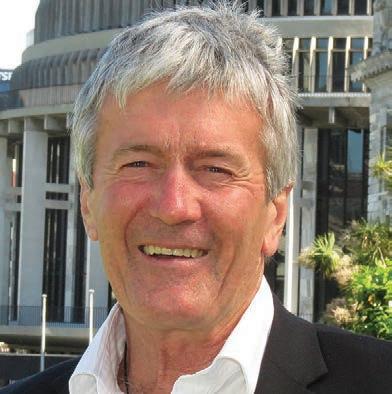
The decisions set out a path that gives farmers certainty and addresses the ever-strengthening market signals from overseas on climate.Damien O’Connor Agriculture Minister ACCOMMODATING: Agriculture Minister Damien O’Connor says the government has listened and is being exible on issues raised by the HWEN partners.
 Bryan Gibson POLITICS Agriculture
CHRISTOPHER Luxon says a National government would not only ensure farming is profitable but also restore confidence to farmers, who have been battered by market downturns and regulations.
Visiting the AgriHQ office this week, Luxon said farmers have been villainised in recent years and that needs to change.
“I want them to know there’s nothing more important to New Zealand than agriculture.
“Because when we look at where we sit in a recession, now, the only country in the Asia-Pacific region doing so, there’s only one pathway and it’s growth. There’s nothing that gives us a bigger growth opportunity than expanding and growing agriculture.
“So I want farmers to know, the mindset needs to shift across the country to a positive one, backing farmers, because they are deeply valued.”
National has released a 19-point action plan that Luxon said will ease the regulatory burden.



“I remember meeting with some young farmers and they showed me all the farm plans on a trestle table. It was a huge duplication of money and information they

need to provide Ministry for the Environment, councils and other government agencies. And when you ask, well, how much of your week is spent doing this, they said it used to be 5% and now it’s 30% of my week is spent just doing compliance stuff. None of it is
Christopher Luxon National Partyadding any value whatsoever.”

Luxon said National’s plan will get Wellington out of farming and free up farmers to do what they do best.
He said emissions pricing is necessary, however, to ensure other trading nations don’t use climate change as a trade barrier.
“In order to protect their own farmers, countries will actually start to apply environmental practice as a trade barrier, essentially. That’s why I want us to get ahead of the curve by embracing technology, giving credit to farmers for the work
they’ve done and only then introduce pricing that will work in a way that doesn’t drive leakage.”
National would also look at the rules around genetic modification.
“We’ve got legislation that was written for technology that didn’t even exist then,” he said.
“So it’s a bit like your mobile phone from 1996 – it’s a bit different from one you’ve got today in 2023. So we need to update all that. We will have a biotech regulator, exactly as the Australians have set up. But it means that we can now join other advanced economies in the world and actually not have our farmers try and do their job with one hand behind their back.”
On trade, Luxon sees India as a big opportunity, saying Australia, the European Union, the United Kingdom and Canada are making progress, but NZ had yet to start the race.
“New Zealand hasn’t even picked up the phone with India and it’s the most populous country on earth. So we have to do business there ultimately as well.”


described the result as “terrible”.
ASB has lowered its dairy forecast to $6.60/kg MS in the wake of the latest “terrible” Global Dairy Trade auction, which saw overall prices reach their lowest levels since 2018.
The auction on August 16 saw dairy prices slump by 7.4%, led by an almost 11% nosedive in whole milk powder (WMP) to US$2548 a tonne, its lowest point since 2016.
Skim milk powder (SMP) fell 5.2% to $2333 a tonne, as did butterfat, with the butter index dropping 3% to US$4539/t.
Anhydrous milk fat (AMF) took a 5.3% knock, falling to US$4452/t. The only positive to come out of the fortnightly auction was the cheese price, which rose by almost 6% to USD4127/t.
ASB economist Nathaniel Keall
“We’ve been among the most bearish forecasters this season, but dairy prices have fallen further and faster than even we had anticipated.
“While we’ve long had a bearish view relative to the rest of the market, our new forecast is 40c below the $7 figure we were anticipating at the beginning of the year.”
It would be prudent for farmers to budget on a milk price in the lower half of Fonterra’s present guidance range of $6.25-$7.75/kg, he said.

RaboResearch senior agricultural analyst Emma Higgins said the immediate challenge in New Zealand is that the industry is coming into its seasonal production curve – so that more dairy is being added to the GDT in the face of weak demand.
“China’s rebalancing of excess


supply and inventory over weak demand will result in less GDT demand tension and therefore lower prices.”
June milk flows for the region were barely ahead by just 0.2% year on year, with production in some parts hampered by hot weather.
Higgins emphasised that NZ milk production is what the market will be watching for. Influenced by weather events, production for June was lower by 1.8% YOY – but there are small volumes at this time of the year.
Nathan Penny said the catalyst for the price slump was a sudden increase in auction volumes on offer.

Before the auction Fonterra announced an 11.1% increase in WMP volumes along with announcing a 5.6% increase in auction volumes over the next 12 months.
Milk supply is tightening up in the northern hemisphere. United States June milk production was flat versus the year before, bringing an end to an 11-month year-on-year growth streak. The decline was a key driver in moving total US output to flat in June. Meanwhile, European Union
“Weather has been a mixed bag for July, with sodden soil still plaguing some areas. August production is likely to be higher YOY – if only based on weak comparables from last year,” she said.
“However, still half a month to go and the past few years have shown we can’t get complacent at this point when it comes to fickle weather ... lucky there is still a lot of runway ahead for the current 2023-24 season.”
Westpac senior agri economist
“It’s unclear what’s driven the sudden increase in volumes. Fonterra stated rather unhelpfully that ‘these changes are the result of movements in market demand’.
“We speculate that buyers see an opportunity to purchase at lower prices on the auction platform. To this end, these buyers may have signalled to Fonterra that they no longer want to buy direct from Fonterra on a contracted basis. As a result, Fonterra has had to shift this product that it would have sold on contract to the auction platform.”
It means that we can now join other advanced economies in the world and actually not have our farmers try and do their job with one hand behind their back.Gerald Piddock MARKETS Dairy
We’ve been among the most bearish forecasters this season, but dairy prices have fallen further and faster than even we had anticipated.
Nathaniel Keall ASB
PROSPECTS for the coming year are likely to be a bit bumpy for the primary sector, but in the longer term the head of one of New Zealand’s largest rural service companies is optimistic.
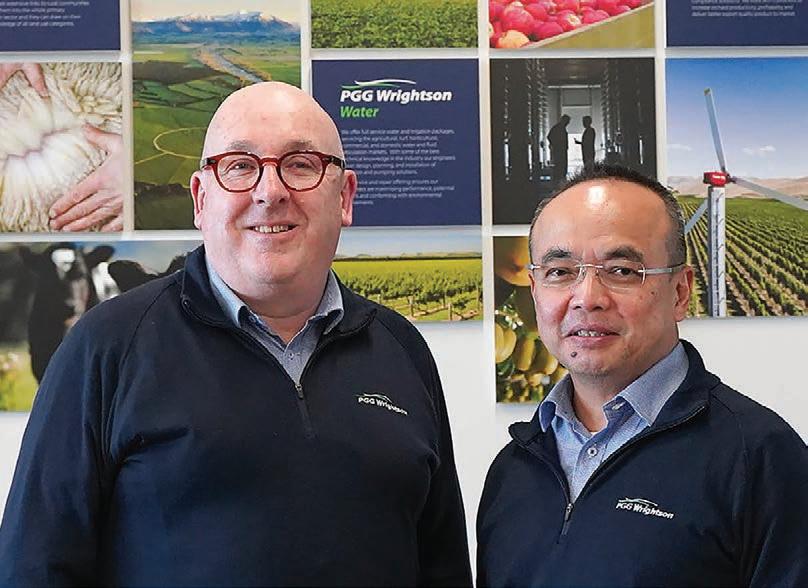
PGG Wrightson chief executive Stephen Guerin said with falling product prices and rising costs, the publicly listed company will be watching its costs in the coming year but has no restructuring plans.
“It’s our people who have made this business and getting people is hard, so better to keep the ones we’ve got.”
Guerin was commenting after the company announced its second-best annual financial result since the divestment of PGG Wrightson Seeds, bettered only by the 2021 result.
challenging year,” he said.
Operating cash flows during the year were $25.5m, $1.8m higher than the year before, impacted by larger income tax payments on last year’s record results along with higher funding costs.
Working capital investments during the year included implementing a strategy to grow its GO-STOCK receivables book to $74m by the end of the 2023 year, an increase of $7.9m or 12%.
Capital expenditure of $17.1m was $8.4m higher than at the start of the year, driven by significant investment in its IT Systems Business Improvement Programme (which includes both operating expenditure and capital expenditure components), which is due to go live in the 2024 financial year.
Net interest-bearing debt was $65.3m at year end, an increase of $32.5m from the prior period.
During the year the company contended with a wet and cold spring that delivered frosts that affected crops, along with two cyclones in late summer that left a trail of crop and rural infrastructure damage in the North Island.
It will take several years before those areas recover, he said.
Global supply chain disruptions meant the company had to carry higher levels of inventory, which caused challenges with storage and working capital management. Its Agency Group, incorporating livestock, wool and real estate, recorded an operating EBITDA of $16.1m, down $5.8m (26%) with revenue steady at $188.8m, just $0.6m below the previous year.
The livestock business faced difficult market conditions from softer sheep pricing, weather events and declining tallies, but greater pasture growth than normal created unseasonal summer and autumn trading.
The GO-STOCK grazing programme achieved a second



record year with the highest balances recorded in terms of values and tallies, while the PGW Velvet business achieved its best result ever from trading higher volumes.
The board has declared a fully imputed final dividend of 10c/ share, to be paid on October 3. This will effectively bring the total fully imputed dividend for the year up to 22c/share.
BusinessDesk
POLITICS Regulation
THE government’s five-year effort to reform and replace the 31-year-old Resource Management Act has succeeded, with the passage of two key pieces of legislation through Parliament.
“It’s really important we do that because there’s a whole army of officials doing a lot of work on all of the implementation of the new regime,” Bishop said. The new regime is intended to come into force over a 10-year transition period.
National Policy Statement on Indigenous Biodiversity.
Stephen Guerin PGG WrightsonCompared to 2021, operating earnings before interest, tax, depreciation and amortisation (EBITDA) of $61.2 million were down $6m (9%) and the net profit after tax (NPAT) of $17.5m was down $6.8m (28%).
Revenue grew to $975.7m, up $23m (2%) on the back of increased market share, with proceeds soon absorbed by rising costs.
Guerin told Farmers Weekly that growth reflects the efforts of staff and the technical, research and development network that supports them.
“It’s a result that reflects a
The wet spring led to increased sales of agricultural chemicals.
It was a record performance for the Retail & Water business, which incorporates Rural Supplies, Fruitfed Supplies, Water and Agritrade, with the division recording an operating EBITDA of $54.1m, up $1.6m (3%), with revenue $24m high to $785.3m, a lift of 3%.
This was driven by increased sales in the animal health, fencing, general merchandise and horticultural categories.
Guerin said viticulture is one bright spot, and horticulture is expanding into Waikato and Canterbury.
A Rural Supplies store in Waikato was recently rebranded Fruitfed Supplies.
However, the National Party is vowing to repeal both the Natural and Built Environment Act (NBA) and the Spatial Planning Act by Christmas if it gets to form a government after the October 14 election.
The architect of the complete overhaul of environmental and planning law, which all political parties have long agreed requires reform, Environment Minister David Parker, hailed the passage of the two laws for simplifying and modernising environmental and planning regulation.
National’s Resource Management Act (RMA) spokesperson, Chris Bishop, confirmed a National-led government would make repeal of both a pre-Christmas priority.
“That starts basically the moment the bill passes. So, we have to stop all of that.”
National would then begin its own RMA reform process, which would be likely to include some elements of Labour’s new regime, including a simplified regional planning process.
National would approach the issue in three stages.
“The first stage is getting rid of the NBA and spatial planning, getting them off the statute books. The second stage is legislating our own amendments to the existing RMA, and then the third stage is comprehensive and substantive reform of the RMA.”
National would also seek a fasttracking regime for infrastructure projects and roll back elements of the recently instituted
Parker slammed National’s intentions, saying it was ironic that National had spent nine years in government saying the RMA needed reform but had done nothing, and is now proposing to roll back work that Parker began in 2019 and has produced more than 900 pages of new law.
Parker said it is “up to the people of New Zealand as to whether they think they want to vote for a party who, having railed against the RMA, kicked it to death for decades, now for political opportunism say that they’re going to repeal these new changes and actually bring back the RMA with all its faults”.
National is also promising to repeal and replace legislation, which also passed on Wednesday, to establish new water entities that will become responsible for so-called “three waters” –drinking, waste and stormwater. The timetable for that repeal is within the first 100 days of a National-led government.
$19,995

It’s our people who have made this business and getting people is hard, so better to keep the ones we’ve got.



community groups to teach them how to cook and enjoy the pleasures of a shared meal.

They use only NZ and Pacific produce, if it is available.
AYEAR earlier the 15 Afghani women had been among the hordes of people at Kabul Airport fleeing the advancing Taliban.
Here they were, 12 months later, in a restaurant in the Wynyard Quarter in downtown Auckland with chef Peter Gordon teaching them how to make pavlova using his late mother’s recipe.
A chef for 30 years, Gordon had returned home to New Zealand in March 2020 planning to hang up his apron and enjoy a less hectic life.
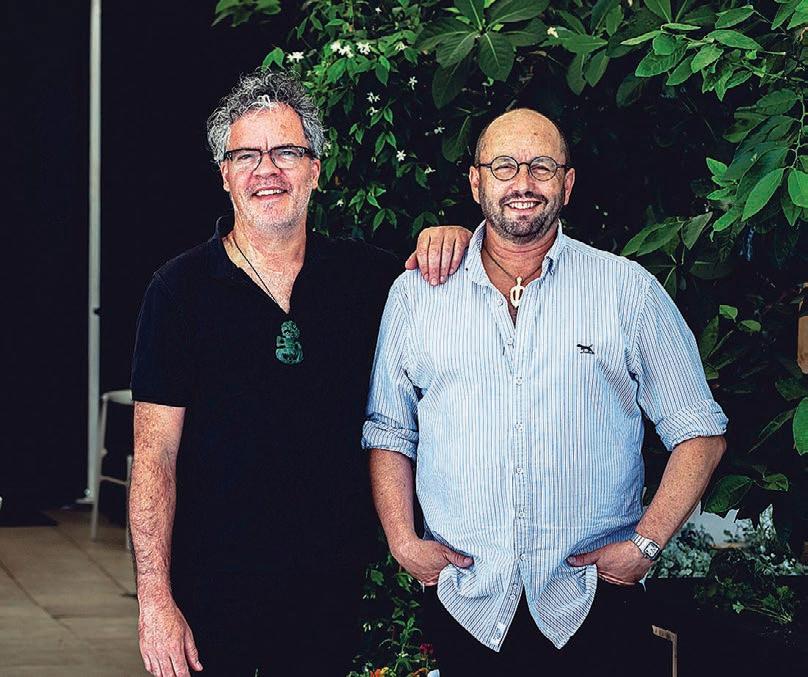
But instead he and partner
Alastair Carruthers opened Homeland, a facility that is part restaurant, part cooking school and part food retail outlet.
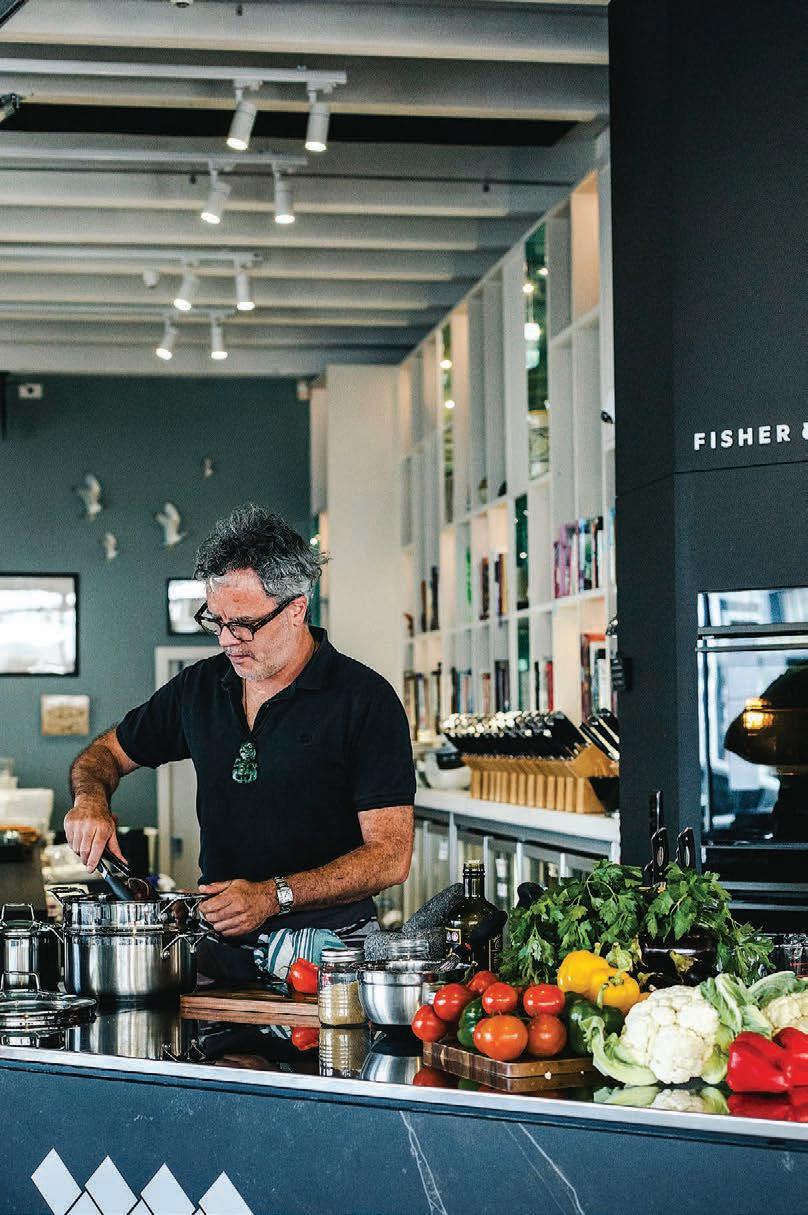
Every second Wednesday, Homeland opens its doors to
On the day the Afghani women learnt to cook a NZ dish, they in turn taught Gordon and his staff how to cook dishes from their homeland.
Gordon had worked in the United Kingdom since 1987. In that time he had owned his own restaurant and was an ambassador for Beef + Lamb NZ, unashamedly promoting NZ red meat.
When they arrived home – a day before the country was locked down due to the covid pandemic –it dawned on the couple that local producers needed help.
“Markets were closed, farmers were having problems with processing issues.

“We decided to provide a venue that is a conduit between consumers and producers, including a cooking school and a dining room where we support local producers.”
“Homeland is all about supporting our producers,” Gordon said.
Homeland uses miso from Nelson rather than importing it from its native Japan, and paneer from Southland dairy farmers the Guise family.
The Guises started making the Indian cheese after meeting an Indian migrant family.
They launched their own paneer only to have the main market in Queenstown disappear during covid.
When Gordon heard about them, he tasted the paneer and decided to use it in his kitchen – and stock it in his retail area.
“We also put them in touch with a company that does our branding and they rebranded it Good Guise.”
Good Guise paneer is now stocked at Costco in Auckland, among other outlets.
One goal when establishing Homeland was to have a social conscience, hence the decision to every second week open their cooking school to community groups.
Homeland, which receives support from Beef + Lamb NZ, provides the staff, food and cooking space.
Ethnic groups and clients of groups such as Auckland City Mission and the police charity Blue Light are provided with recipes and taught to cook.
Gordon recalls how Blue Light brought 18 young women to the cooking school.
Initially, many were kidding around and not focused on learning to cook.
Within 20 minutes, however, most were engaged and three hours later they all sat down and ate a meal together.
“Community days are the most rewarding thing we do here,” he said.
Recently a number of young farmers attended the cooking school. Their visit included a demonstration from a master butcher on how to break down a forequarter and then lessons on
how to turn the cut into a dish. Gordon said diners want to know the origins of the food they are being served.
They want to know the story behind their food, to have an assurance that it has been produced ethically and is of a high standard.
“A good story always works well,” he said.
If there is one thing he would like as a chef, it is access to good quality hogget and mutton, something he struggles to get. “I grew up on hogget and mutton.”
Homeland is all about supporting our producers.Peter Gordon Homeland
AGRONOMISTS play a key role in the cropping industry and for his part Paul Johnston was named the 2023 Agronomist of the Year at the recent arable industry awards event.
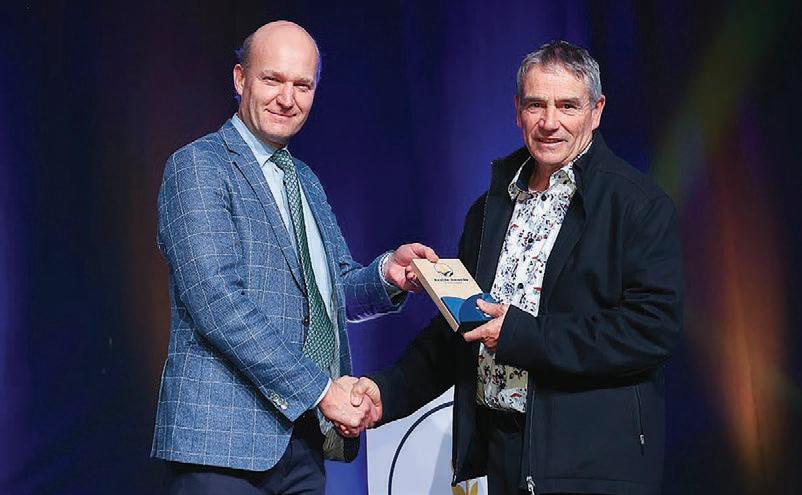
Johnston works with Yara Fertilisers NZ based in Canterbury. New Zealand Grain and Seed Trade Association (NZGSTA)
grains and pulses business group chair Ed Luisetti said the award was recognition for Johnston’s high level of technical abilities combined with exceptional agronomy service for his clients.
Earlier in his career he helped Mid Canterbury farmers Eric and Maxine Watson become world record holders for the highest yielding crop of wheat.
Luisetti said agronomists play a key role in the success of farmers’ crops.
Providing expert knowledge
on herbicides, fungicides and insecticides as well as specific nutrient requirements and timings of application, agronomists help farmers maximise their financial returns.
They also ensure crops are grown sustainably and to the best environmental practices.
“Agronomists visit their crops on a regular basis throughout the growing season and build strong trusting relationships with farmers.
“An agronomist will take just as much satisfaction out of growing a successful crop as their farmer clients do,” Luisetti said.
The Agronomist of the Year award was sponsored by the NZGSTA and recognises an agronomist who has up-to-theminute knowledge of crop options and agronomy and goes above and beyond to help their growers produce high- quality, profitable crops.
The Barenbrug NZ plant breeding team was the winner of the Plant Breeder- Researcher award presented by the NZ Plant Breeding and Research Association (PBRA) at the awards ceremony held in Christchurch. The breeding team were
recognised for their contribution to crop development and the impact on seed quality and yield.
Barenbrug head of research and development Courtney Inch said the award validates the breeding work done over many years.
“The work of all plant breeders adds to the strength of plant breeding in NZ and helps keep our agriculture sector at the forefront,” Inch said.

PBRA general manager Thomas Chin said plant breeding is the starting point for the arable and seed industry, relying on the skills of many talented individuals as they strive to meet the needs of farmers and growers.
“Their positive contributions mean a more productive and profitable primary industry and ultimately all of NZ,” Chin said.
Plant breeders underpin the
arable sector, generating $800 million in annual sales, including $245m from exports.
Bringing a new seed variety to market can take several years from concept to commercialisation –and often up to 10 years.
“What the new variety will bring may include improved yield, persistence, climate tolerance or resistance to disease and insects with these traits mainly driven by customer demand,” Chin said.

The inaugural Plant BreederResearcher award was sponsored by NZPBRA to recognise individuals or breeding teams whose work makes an outstanding contribution to the arable and pastoral industries and the advancement of plant breeding of NZ.
MORE: See page 19
Food and fibre
EAT your fruit and veggies, but don’t neglect meat and dairy – that’s the latest conclusion of vitamin uptake research.
A recently published review by Riddet Institute food scientists
Dr Sylvia Chungchunlam and Distinguished Professor Paul Moughan appeared in the academic journal Critical Reviews in Food Science and Nutrition, published online on July 31.

Most vitamins are naturally widely distributed in foods, but vitamin deficiencies are very common, despite what appears to be a good diet.
Dr Sylvia Chungchunlam Riddet InstituteThe Riddet Institute is a Centre of Research Excellence (CoRE), hosted by Massey University in Palmerston North. The institute focuses on advanced food research. The review found mixed diets comprising animal- and plantbased foods continue to be the best option for optimal vitamin
intake, sufficient to meet the vitamin needs of the human body.
Across a range of global research studies, the review looked at the quantity of a vitamin that is available to be used by the human body. This bioavailability was compared between food sources.
“This breakthrough in our knowledge of the comparative inherent bioavailability of vitamins amongst foods sources from animals and plants is of a strong nutritional significance,” Chungchunlam said.
“It is important from the standpoint of choosing appropriate vitamin-dense foods to meet the vitamin requirements of all.
“We are strongly encouraged to consume a plant-based diet at present, instead of animal-based foods,” Chungchunlam said.
“Most vitamins are naturally widely distributed in foods, but vitamin deficiencies are very common, despite what appears to be a good diet. Sometimes this may be due to inadequate absorption and utilisation of vitamins present in the diet.”
Vitamins are essential components of enzyme systems involved in normal growth and function.
Bioavailability is the proportion of an ingested nutrient that is released during digestion and






absorbed for use or storage in the body.







The review found that while bioavailability is highly variable among dietary sources, in general most vitamins in animal-derived foods, such as meat, milk, eggs and fish, are more bioavailable than the equivalent vitamins in plantbased foods, such as vegetables, fruits, legumes, cereal grains, nuts and seeds.
The review found that animalsourced foods are the almost exclusive natural sources of dietary vitamin B-12 and preformed vitamin A retinol,


to delegates at this year’s KVH biosecurity seminar the recent discovery of a Psa variant.

and contain highly bioavailable biotin, folate, niacin, pantothenic acid and vitamin B-6. Vegetables and fruits are the main natural sources of vitamin C, provitamin A carotenoid β-carotene, and vitamin K. Riboflavin (vitamin B-2) and thiamine (vitamin B-1) were similarly bioavailable when foods are sourced from animals or plants.
The researchers noted that the bioavailability of naturally occurring choline, vitamin D, vitamin E, and vitamin K in food await further studies to evaluate the comparative bioavailability of

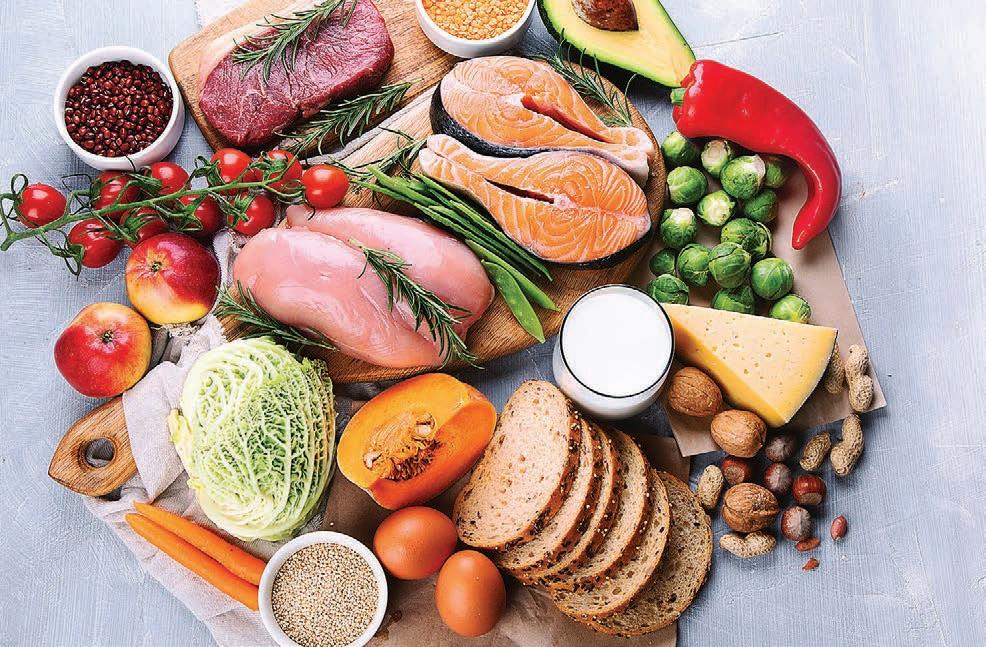
EAT YOUR VITAMINS: A mix of meat, sh, dairy and plantderived foods represent the optimal nutritional combination for human diets according to a new review of vitamin research by the Riddet Institute.
these essential nutrients among animal- and plant-based foods. “There have been many studies about the inherent bioavailability of vitamins naturally occurring in food, but the data were very scattered.”
Chungchunlam said before this study, there was no real comparison of the bioavailability of naturally occurring vitamins between animal-based and plantbased foods.
The review looked at the current state of knowledge for 13 essential vitamins, and the vital nutrient choline.
COMMITTED follow-up through the national plan on Psa management has paid dividends for growers and scientists in the past year.
The National Pest Management Plan was established after the major outbreak in 2010. It first aimed at delivering more cohesive, collaborative management of the disease in its wake. This included monitoring for any variants or shifts in the disease’s behaviour and characteristics over time.
Ruakura based Plant & Food scientist Stephen Hoyte and Kiwifruit Vine Health (KVH) tech specialist Lina Peacock outlined
“The industry conducts a survey looking for resistance and every two years looks for any genetic variation.













“Last year Plant & Food detected a new Psa variant. Sequencing it and checking against plants they found it out-competed existing Psa when put on Hort 16a plants,” Peacock said.
Hort 16a is the earlier Gold kiwifruit variety that was hit so hard in the original Psa outbreak, and later replaced by the more Psa-tolerant SunGold variety.
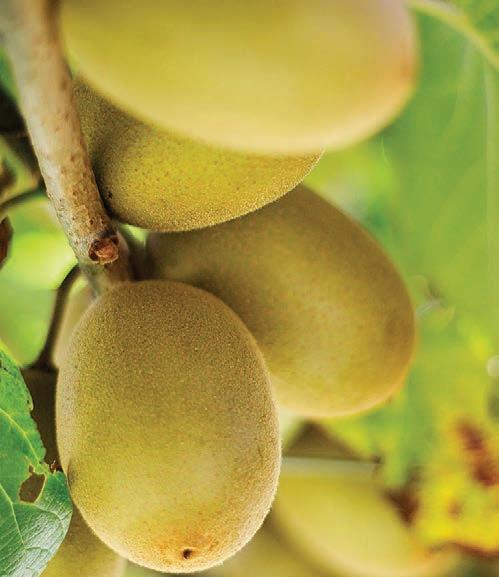
“We need to know how it would behave on the G3 [SunGold] and Red plants. We had found it on two orchards and then in spring 2022 sampled further and found it in four additional orchards, making it six in total.”

































































Steve Hoyte said researchers were compelled to quickly develop a PCR test capable of rapidly identifying the new strain, which was achieved.
“What we have found is there is no difference on Gold 3 plants between the two types of Psa [new and existing], but some increase on Red plants – though to a much lesser extent than on Hort16a.






“It is out there in orchards, but it is no more aggressive than the wild type,” Hoyte said.






“But is something that needs to be monitored.”





Peacock said the response highlighted the huge value of collaboration enjoyed across the post-Psa years at a research and personal level. She told growers to get in touch if they see any unusual growth activity, while genetic monitoring of Psa variants will also be continuing.

ACOMPLETE loss of confidence among forestry owners in the Emissions Trading Scheme proposals has prompted them to call for the government to put any planned changes on hold until options can be revisited.
The government is putting forward four options for ETS reform, all which have drawn criticism from various sectors amid claims they risk overcomplicating the market, or pulling in too much centralised control.
One option is to achieve closer parity between offsetting with ETS credits and actual emissions reduction by restricting the type of New Zealand Units (NZUs) emitters can use.
This could involve the government limiting how many forestry-generated units emitters can buy to offset emissions with.
A second proposal is to create two ETS markets, one for emissions reduction and one for emissions removal.
A third option is to limit the ability of big emitters to use forestry NZUs to offset, and selling NZUs to government or on a separate market.
But critics have claimed this could create an “A” and “B” status
in the NZU market, with forestry units facing a possible tumble in value if they cannot be bought by big emitters.
This would further disincentivise NZ’s tree-planting rate, the largest tool the country has on hand to at least offset emissions.
Another option is to allow the government and overseas buyers to buy NZUs from removal activities like carbon-absorbing
trees, raising the price to incentivise reduction and removal of carbon.
Forest Owners Association president Grant Dodson said the third and fourth options border on nationalisation of private property. “Foresters have invested in the ETS in good faith and the NZUs have been vested to foresters who can sell them on a free market to offset emissions.”
GISBORNE’S mayor has not ruled out the potential for a forest slash bioenergy plant in Tairāwhiti, but cautions it would be only one part of dealing with the region’s forest slash problem.
The government’s response to the ministerial inquiry into the east coast land use report includes a woody biomass research fund, costing $10.4 million over three years, to investigate investing in biomass forestry. This includes support for development of a bioenergy plant in Tairāwhiti that uses forest slash as a material source that could be turned into pelletised wood fuel products. Trial work at Huntly power station has proven the fuel source is a valid one for replacing coal in high energy industrial boilers.
“Over the last five to six years I have been part of several discussions with parties keen to investigate this. It would be part of a multi-pronged approach to dealing with the issue,” Gisborne District Council (GDC) mayor Rehette Stoltz said.
She said the GDC has long battled with national
policy standards on forestry management, with the one-sizefits-all regulations failing to acknowledge Gisborne’s distinct topography and soil types.
In its response to the inquiry report, the government has said it will help council by providing a resource management adviser to help develop new management measures that are fit for purpose.
He said all were aware of the price risk involved but those two options amount to the government pulling the rug from under them.
Iwi, forest owners, farmers and carbon credit investors have already lost about $3 billion in the downgraded carbon values resulting from uncertainty around the market.
Before Christmas carbon values were about $88 a NZU, but they now sit at $60 a unit.
The collapse occurred when the government failed to act on the Climate Change Commission’s recommendations to tighten the ETS settings and unit quantities.
The government has since moved to back down and take heed of a High Court ruling calling for tighter settings that reflect carbon budgets and NZ’s commitments under the Paris Accord.
Dodson said the timing of the ETS review is bad, with planting well underway for the season.
Forest plantings for coming years are already looking tenuous after this season. The collapse in carbon prices earlier this year discouraged many investors from expanding their holdings and NZ’s targeted forestry plantings are likely to fall below minimum within three years.
“It’s been only recently that the planting rates have increased. We hardly even know if the increase is short term or not, and with the options presented in the ETS consultation document, investor
confidence has been smashed.”
Meantime Beef + Lamb NZ has heralded the release of a report it commissioned on changes to the ETS, supporting the need for urgent changes including the introduction of some limits on forestry offsets.
Foresters have invested in the ETS in good faith and the NZUs have been vested to foresters who can sell them on a free market to offset emissions.
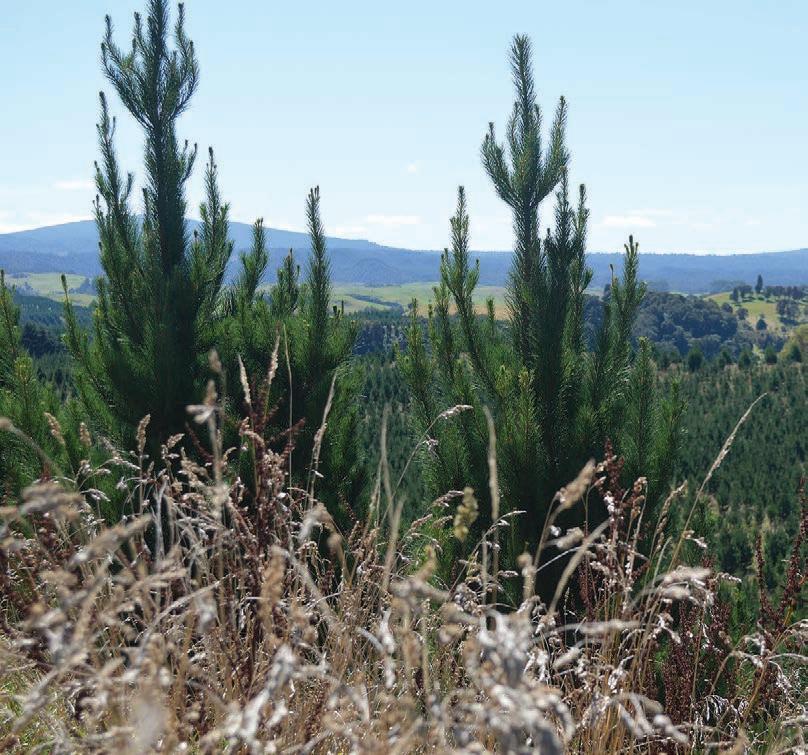
One key change proposed is the exclusion of using exotic plantations as a permanent carbon forest, except in limited circumstances.
The report says that in 2022 10,000ha of new permanent exotic forests were established, up from 5000ha in 2019. It acknowledges the increase in permanent exotics is modest.
Estimates are that there are about 30,000ha of exotic permanent plantings in NZ, out of a total exotic forestry estate of 1.75 million hectares.
But the report’s authors claim permanent exotic is expected to account for over half the 645,000ha of new afforestation by 2030.
Stoltz said the GDC had acted on its slash problem even before Cyclone Gabrielle by appointing a taskforce in January, after Cyclone Hale.
It has also been the most active council in the country for prosecuting forestry companies failing to comply with resource consent conditions.
“Maybe before 2018 we were not as active, but we certainly are now,” Stoltz said.
“We are such a unique region and standard rules do not work for us and we have objected every time the national policy rules have been raised.”
She said the GDC is poised to receive news in the coming week about what the region’s settlement package will be to deal with dwellings that fall into Category 3 (no longer inhabitable) and Category 2 (requiring significant repair).
She said the vast majority are in Gisborne city, but there are also properties scattered throughout the region in those categories. The region has about 50 homes in Gisborne and beyond expected to be Category 3, and hundreds in Category 2.
The region will also share in the $275m announced for Waka Kotahi and local council roading repairs, with its allocation still to be confirmed.
Stoltz said it is through no failure of the region, or its people, that they incurred the damage they did, with climate change exacerbating the storms’ effects.
“For that reason we really need to have a central governmentfunded approach to dealing with it.”
Other funding also in play includes $10.5m allocated to
help clean up at least 70,000t of wood debris from high priority river catchments in Hawke’s Bay and Gisborne, and $200m of
support for sediment clean-up that includes $100m to help councils collect and dispose of the material.
We are such a unique region and standard rules do not work for us and we have objected every time the national policy rules have been raised.
Rehette Stoltz GisborneSLASHED: Gisborne Mayor Rehette Stoltz says a bioenergy plant that uses slash from forestry could prove one part of a solution for Tairāwhiti’s forest waste challenge.



FARMERS are encouraged to have their say as the Mycoplasma bovis partners propose to move the disease eradication programme from the Ministry for Primary Industries to OSPRI.
MPI, DairyNZ and Beef + Lamb New Zealand are seeking farmers’ views on a proposed National Pest Management Plan (NPMP) as the cross-sector effort moves to a new phase that is expected to create savings and efficiencies for farmers.
M bovis Governance Group
independent chair Kelvan Smith said all evidence indicates the programme is now in the tail end of the outbreak.
This means the focus is now on building evidence that M bovis is not present, rather than tracing risk events associated with active infection in the national herd, Smith said.
“With no active confirmed infection in NZ we have made good progress, but it hasn’t been easy getting here.
“The three partners recognise this and want to ensure that the ongoing activity causes minimal disruption to farmers.”
OSPRI is nominated as the management agency in the NPMP proposal.
“With natural synergies in running the M bovis programme alongside NAIT and the TBfree programme, there is potential for up to $15 million in savings across the three programmes.
“We all know how crucial the NAIT system is for the timely tracing of cattle that may have been in contact with infected cattle, and the programme can achieve efficiencies by aligning some aspects of M bovis testing alongside TB testing.”
Combining resources and capability would allow the programme to continue to adapt to the work that remains ahead and
help strengthen NZ’s biosecurity system, Smith said. While the current administrative model has worked well, providing the necessary support and resources to get to the present status, Smith said having the next few years focused on background surveillance, a different model and some different capability is required to ensure the industry is getting the best value for the taxpayer and farmer levy payers.
It is expected that farmers and rural groups directly affected by M bovis will notice very little difference under the proposed model, but programme partners are seeking feedback on some key changes.
SAME: Farmers and rural groups directly a ected by M bovis will notice very little di erence under the proposed model.
a set of 15 rules to support the eradication objective; and a new reduced National Plan levy to finance the remainder of the programme.
These changes include the establishment of a National Plan, with OSPRI appointed as the agency to administer the programme and manage disease to achieve eradication; formalising disease control activities through


The NPMP opens for consultation on August 14 and runs until September 25.
Feedback on the draft proposal is being sought from the public, especially from those who play an important part in the ongoing success of the eradication effort including farmers, meat and dairy
processors, testing labs and vets. The full NPMP proposal and more information including how to make a submission can be found on the MPI website Administration of the Mycoplasma bovis Eradication Programme | NZ Government (mpi.govt.nz). The M bovis programme currently has no active confirmed properties and over time has cleared 280 properties, paying out compensation of $256.2 million across 2901 claims.
STARTS:
• Unused New Holland Megacutter 860P Mower
• Unused New Holland Duradisc F300 Mower
• New Holland Square Baler BB1290 Plus
• New Holland Square Baler BB9060
• New Holland Square Baler BB950A
• New Holland Roll Baler 135 Combi Bale Wrap
• New Holland Roll Baler BR6090 Combi Wrap
• New Holland Roll Belt 150 Cropcutter Baler
• New Holland Roll Belt BR740 Cropcutter Baler
• Lely Roll Baler 245 Combi Bale Wrapper
• McHale 991B Trailing Bale Wrapper
• Hustler Bale Feed Out Unrolla LM105
• Hustler Soft Hand Bale Grab
• Fella SM 2460 3Pl Disc Mower
• Robinson Super Comby Feed Wagon
• Giltrap MSX100 Feed wagon
Tractors
• New Holland T4.100F 0hrs, Narrow
• New Holland Boomer 50, 0hrs & Loader
• New Holland Boomer 35, 0hrs & Loader
• New Holland Boomer 25, 0hrs & Loader
• New Holland T7-185 5,910hrs & loader
• New Holland T7-165 1,086hrs & Loader
• New Holland T6-175 3,883hes & Loader
• New Holland T6-175 7,323hrs & Loader
• New Holland T7050 9260hrs & loader
• New Holland T6070 4,170hrs Cab
• New Holland T6050 4,074hrs & Loader
• New Holland T6050 5,140hrs & Loader
• New Holland T6030 3,195hrs & Loader
• New Holland TS135A 8726hrs & loader
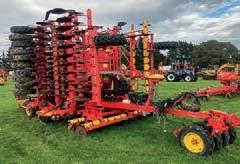
• Horsch Simba Pronto DC6 Disc Seeder
• Horsch Simba Pronto DC6 Disc Seeder
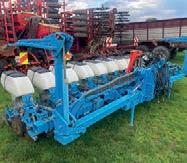
• Monosem NG4 plus Vac Planter 12 Row
• Kverneland Monopill SE 18 Row Planter
• Taege 300EDW 3mtr Tyne Seeder
• Aitchison Roller Drill 20row Seeder
• Alpego RK350 Power Harrow Disc Seeder
• Jean De Bru Monoliner VRV36 Offset Disc.

• Simba Great Plains SL500 Cultivator
• Amazone Catros 5501-T, 5.5m Speed Till
• Lemken Diamante Reversable Plough 7 Farrow
Hay Equipment
• Unused Khun 8131 Hay Rake
• Unused New Holland ProTed 690 Tedder
M7152 691hrs & Loader
• Kubota M7151 868hrs Cab
• Kubota M7171 2,765hrs & Front 3PL
• Kubota M135X 6,272hrs & Loader
• Kubota M126X 6,742hrs & Loader
• Kubota M100GX 4,650hrs Cab
• Kubota M9540 3,363hrs & Loader
• Massey 5445 2381hrs & loader
• Case IH JXU105 4620hrs & loader
• Case IH CX70 6,780hrs & Loader
• Claas 640 Arion 7731hrs Cab
• Landini Ghibi 90 3901hrs & Loader
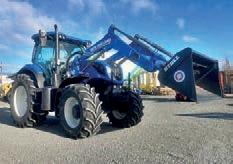
• Unused Quickie C13S loaders & 4in1 Hay Equipment
Holland
• SIP Star 850/26 & Spider 900/8 Rakes Tillage & Seeders
• Unused NH Mouldboard 5 Plough
• Unused NH Mouldboard 4 Plough
• Kuhn Multi-Master 123 5 Plough
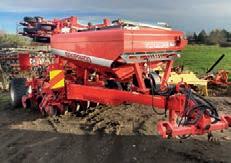
• Gaspardo Gigante 4mtr Disc Seeder
• Breviglieri 3mtr 3Pl Rotory Hoe
• APV PS250 Seeder & Tyned Weeder
• Hustler Katipoi 890 3PL Sprayer
• Vaderstad RX450 Roller Trailing
• Maschio Powerharrow DMR3000 SD
• Aitchison Cambridge Roller 3m
• Sam 5 Tonne Trailing Spreader ATV & Lawn Mower
• Kubota RTV-X1120 Side by Side
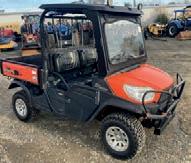
• Kubota RTV-900 Side by Side
• Kubota F3680 Lawn Mower
• Kubota GR1600 Lawn Mower
• Kubota BX2670 Lawn Mower
• Cub Cadet Lawn Mower
• Kubota M7171 2,295hrs & Loader
• Kubota M135GX 6286hrs & loader
• Case IH MUX135 5,400hrs & loader

• Case IH CVX1190 8,990hrs Cab
• McCormick MC105 & loader
• Deutz K610 3,398hrs & Loader
• Massey Ferguson 6,368hrs 8680 duals
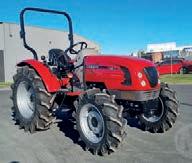
• John Deere 6620 & Loader
Grape Harvester
• Braud 9060L SP 4,495hrs Harvester
Tillage & Seeders
• Unused NH Mouldboard 5 Plough
• Unused NH Mouldboard 4 Plough
• Vaderstad Rapid RDA800S Disc Seeder
• Vaderstad Rapid RDA600S Disc Seeder
• Vaderstad Rexius RS 820 Roller
• Unused New Holland ProTed 880 Tedder
• Unused New Holland C820 Rotor Hay Rake
• Unused New Holland Megacutter 860P Mower
• Unused New Holland Duradisc F300 Mower
• Gowell Roll Baler F1 F125 Combi Bale Wrap
• Gowell Roll Baler G5020 Trailing Wrapper
• Massey Ferguson 187 Square Baler
• Kongskilde GSX3206 3Pl Mower
• Kongskide VM22-2 Mixing Wagon
• Giltrap RG21 Side Feed Out Wagon
Extras
• Mailleux Loader Frame MX T10
• Agris Quip 3Pl Spreader
• Husqvarna R216 Ride on Lawn Mower
• Husqvarna TC342 Lawn Mower
• Tyre & Rims, GP Buckets
The three partners want to ensure that the ongoing activity causes minimal disruption to farmers.Kelvan Smith M bovis Governance Group

ANGUS, Hereford and Simmental bull breeders are being encouraged to nominate sires for use in an innovative beef programme.
The Informing New Zealand Beef (INZB) programme is seeking bulls for the next mating season on Pāmu’s Kepler farm near Te Anau and Lochinver Station near Taupō.

Dr Jason Archer, genetics specialist at Beef + Lamb New Zealand (BLNZ) and INZB science lead, said the Beef Progeny Test (BPT) allows breeds to be compared as well as bulls.
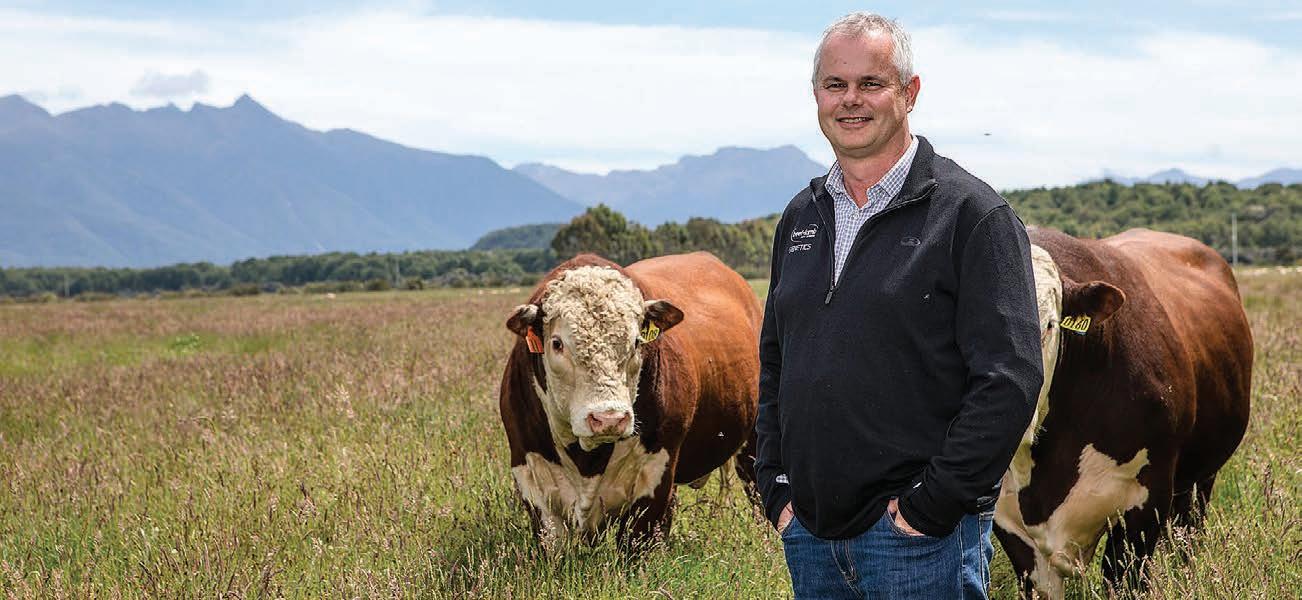


“It enables BLNZ genetics to evaluate good bulls on the same level playing field while demonstrating the differences and similarities between the breeds as well as the benefits of hybrid vigour.



“The BPT plays a key role in strengthening New Zealand’s beef industry for the benefit of all farmers.”







Breeders of bulls selected for use in the BPT will be provided with detailed information about the performance of their bull’s progeny including processing data (in the case of steers).
The latest test builds on data gathered from the previous BPT, carried out between 2014-2020 on several large-scale commercial cattle operations throughout the country, Archer said.
Lochinver Station joined the programme as a progeny test host farm last year, and in January this year around 600 Angus cows were artificially inseminated using Angus, Hereford and Simmental bulls.
Becoming a progeny test site for the INZB programme provides benefits for the farm business and the wider industry.
















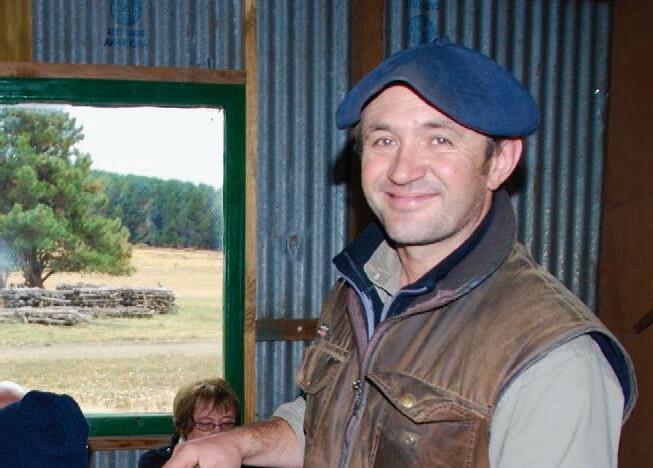
“We’re a progressive farm with a strong focus on beef production and so we are pleased and proud to be a part of something that will help build a stronger beef industry in New Zealand,” said Steve Smith, business manager at Lochinver Station, a 9500ha sheep and cattle farm on the Rangitaiki Plains near Taupō.
“We get provided with data on the growth, fertility and carcase traits. That will help us on farm to identify how we could introduce different breeds of bulls and create hybrid vigour to produce more efficient cattle.”
Lochinver’s inclusion in the programme allowed Simmental genetics to be included in the BPT for the first time. While Simmentals are typically used as a terminal sire in New Zealand, Archer said the breed is commonly used in maternal crossbred cows in other parts of the world.
Bull owners can nominate their bulls through the online nomination form. Nominations close August 25.

The world’s most populous nation, India is working towards greater economic prosperity and wealth with a burgeoning middle class and world-beating economic growth of 6-7% per annum.

A NZ trade delegation is travelling to the capital, New Delhi, this month, but the three words “free trade” and “deal” are being firmly muffled.

Delegates are urged to take a far more nuanced, considered approach to the conversations they have with Indian businesspeople and politicians.
NEW Zealand trade czars and exporters have generally been chuffed lately at getting a package of free trade deals over the line.
The European Union free trade agreement opens some doors that had appeared permanently shut, while the United Kingdom FTA shores up an eroded historical relationship with a country that was once our No 1 trade partner.
But long-time trade negotiators have cautioned that future FTAs like these are likely to be increasingly fewer and further apart, as the world aligns more with geopolitical values than it does with rulesbased trade opportunities.
It could be almost instinctive, then, for NZ’s primary sector to look at India through the same lens of opportunity – as a ripe trade fruit to pick in a diminishing harvest.


JULY

BECAUSE I live alone, much of what I do, think, say and experience is raw, unmoderated, untainted or uninformed.
When our (I speak for the farm) fruit trees – fig, plum, walnut, grape, pears and more – all failed last summer I blithely blamed a November frost.
This spring something else has “failed”. Thistles – Scotch, welted, winged and California – have all neglected their usual role of providing turkeys and larks with nesting cover.
I’m not complaining. These 500ha of hill country know how to grow thistles but so far have yielded perhaps one thousandth, perhaps one ten-thousandth, of their usual annual crop.
Beside being blissful, it’s spooky – like having clean undies.
Again, I’m not complaining.

But, why no thistles?
could bring something mutually rewarding to these early conversations to build the relationship. This could include a focus on education, something Indian families prize highly.
The opportunities for the primary sector, for example, may be in mutual exchanges of horticultural and agricultural undergraduates, and the offering of skilled extension staff from here to visit and help improve crop productivity.
Greg Gascoigne CambridgeNEIL Henderson quite correctly has questioned Beef + Lamb New Zealand to see if they know the level of warming our farming livestock cause, “First state the problem” (Letters, August 14). They don’t know.
All agree pricing emissions should be based on warming.
Only then can He Waka Eke Noa be correctly implemented.
India walked away from an FTA with NZ and Australia over five years ago, with concerns over its most valued agricultural sectors, which employ almost half its population.
NZ dived into its EU and UK deals, but Australia pushed on with India in a measured, subtle and diplomatic way.
It built on elements of trust, communication and mutual exchange that culminated in an “early harvest” FTA with India this year on certain products, excluding dairy and apples.

The Aussies built on shared concerns over China, immigration settings and mutual commercial opportunities far beyond the nations’ mutual love of cricket, although this undoubtedly played a role in getting many conversations started.

NZ shares the passion for cricket but lacks the coal and minerals India as a growing nation needs from Australia.
This requires delegates to get creative in thinking how their particular sector
Even getting direct air links and simpler immigration settings would be a good first start and a strong display of faith between countries.
The visit may also require a resetting of subconscious bias about what India is and what its people aspire to.

As with China, there is no generic nation. It comprises 28 populous and diverse states that share a strong desire to modernise and to be a world power.
Given it is only 76 years into democracy, its people are also averse to approaches that reek of colonial-type capitalism, as they seek partnerships in trust to build on their aspirations, not simply transactions in goods.
However, before we can assume that certain GHGs are the cause of warming, we need to ascertain the levels of those gases in our atmosphere sufficient to cause warming.
The level of methane in the atmosphere is a relatively consistent 1.867ppm or 0.0001867% of the atmosphere. Less than two molecules in a million!



Livestock methane, especially New Zealand livestock methane, is but a fraction of that amount.
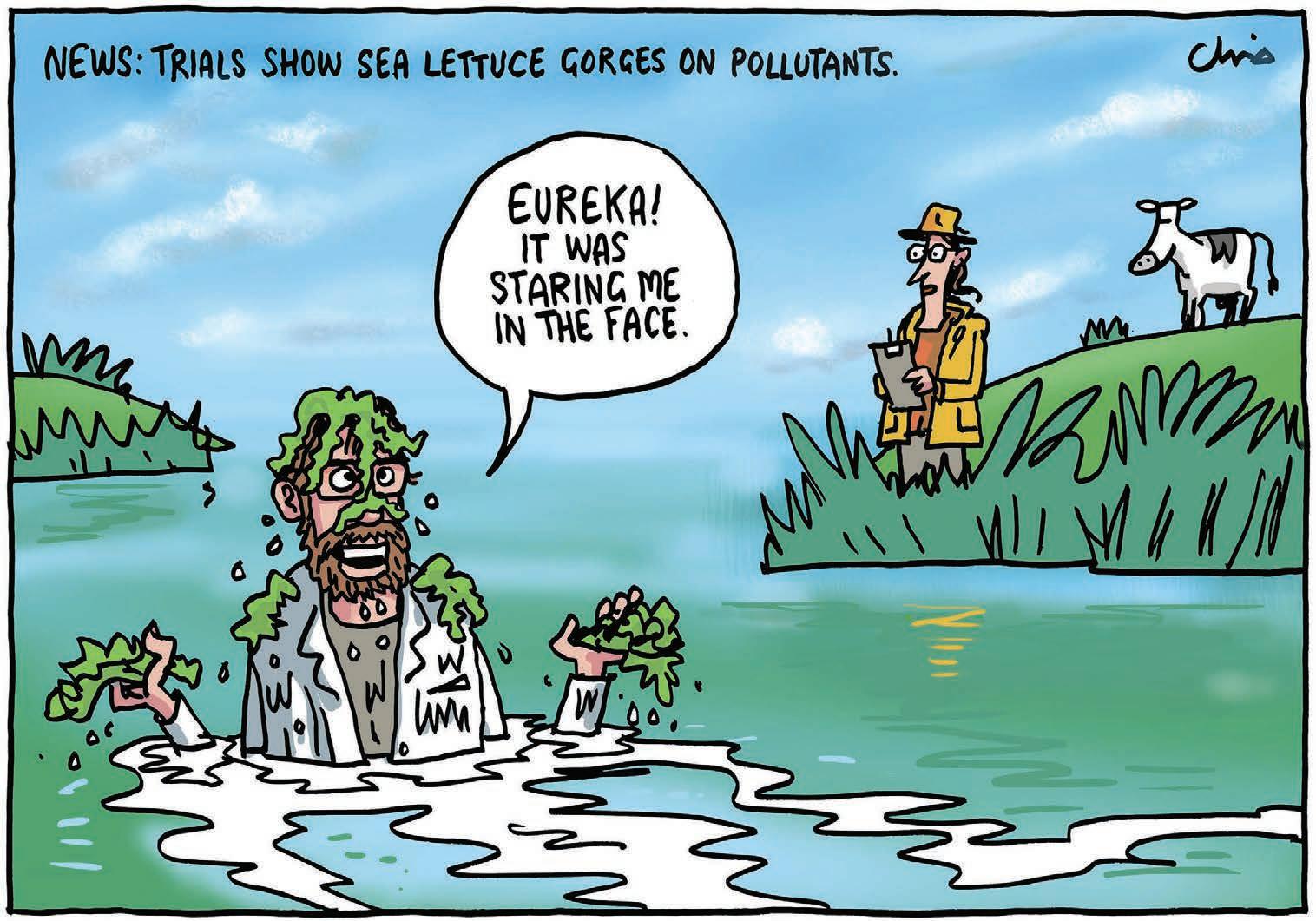

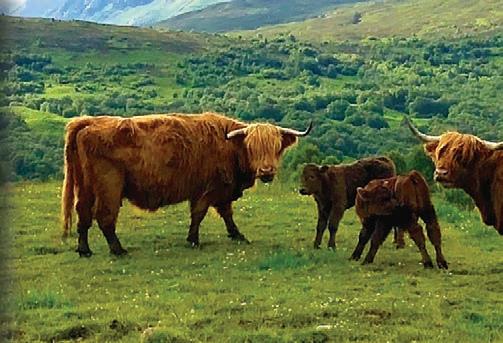
To accept that the above level of GHG is responsible for 48% of NZ’s emissions, let alone that the NZ farmer is the sole source of nearly half NZ’s emissions, clearly demonstrates just how ridiculous the whole subject has become.
Global warming is a fact we can all observe and acknowledge.
Earth’s orbit has a natural eccentricity, which is currently taking us closer to the sun.
The population, if they think about it, will understand – it’s getting warmer!
There’s more to India than just a deal
Richard Rennie Senior reporter
This requires delegates to get creative in thinking how their particular sector could bring something mutually rewarding to these early conversations.
AS THE election approaches, I encourage all candidates and political parties to think about the Aotearoa New Zealand that lies beyond Lambton Quay and Queen Street.
While you compete for office space in the Beehive, consider Waitaha Canterbury and everything we have to offer.
We are one of the most ecologically diverse regions in the country, and with mana whenua we’re responding to government direction to deliver better environmental outcomes.
Our two ports provide opportunities for trade and are important assets, especially in the face of natural disasters. We have world-leading innovative industries and tertiary institutions, and can meet any demand for food production if and when needed.
Canterbury Regional Council (Environment Canterbury) needs a strong relationship with central government to deliver good outcomes for our community and the environment. We’ve proven ourselves, time and again, in the face of short timeframes, significant changes, and unprecedented natural disasters. However, the pressures and challenges are immense. The scale of rates rises across the country shows the burden ratepayers are having to bear so that we can deliver what central government expects from us. I ask you to be mindful of this as you set policies and make election promises.
That’s why I’m writing this letter. I don’t want to see government action (or inaction) forcing us to compromise our
Do
community and our environment.
I want the new government –whatever makeup it might be by the end of October – to seriously consider the following priorities for our region.
Recognise the role of regional government
The new government needs to co-ordinate with regional councils so that we can deliver our statutory obligations. We need you to make clear decisions and give us realistic timelines and adequate resources.
Uncertainty has knock-on effects and puts even more pressure on us.
Canterbury isn’t getting a fair go when we look at how funding is allocated nationally. I don’t think it’s too much to ask for the resources and time we need to meet our obligations, without unfairly impacting our ratepayers.
We’re not the only regional council experiencing these challenges. However, it’s my job as the chair of Canterbury Regional Council to speak on behalf of Canterbury ratepayers.
The past year has been another unfortunate reminder that Aotearoa New Zealand needs to prioritise flood resilience and protection.
A future government needs to consider rivers and flood protection as primary infrastructure so that we can be adequately resourced to manage them effectively.
Regional councils invest millions to keep rivers out of backyards, off farms and away from vulnerable national infrastructure. Climate change is exacerbating all the risks we face in this area.
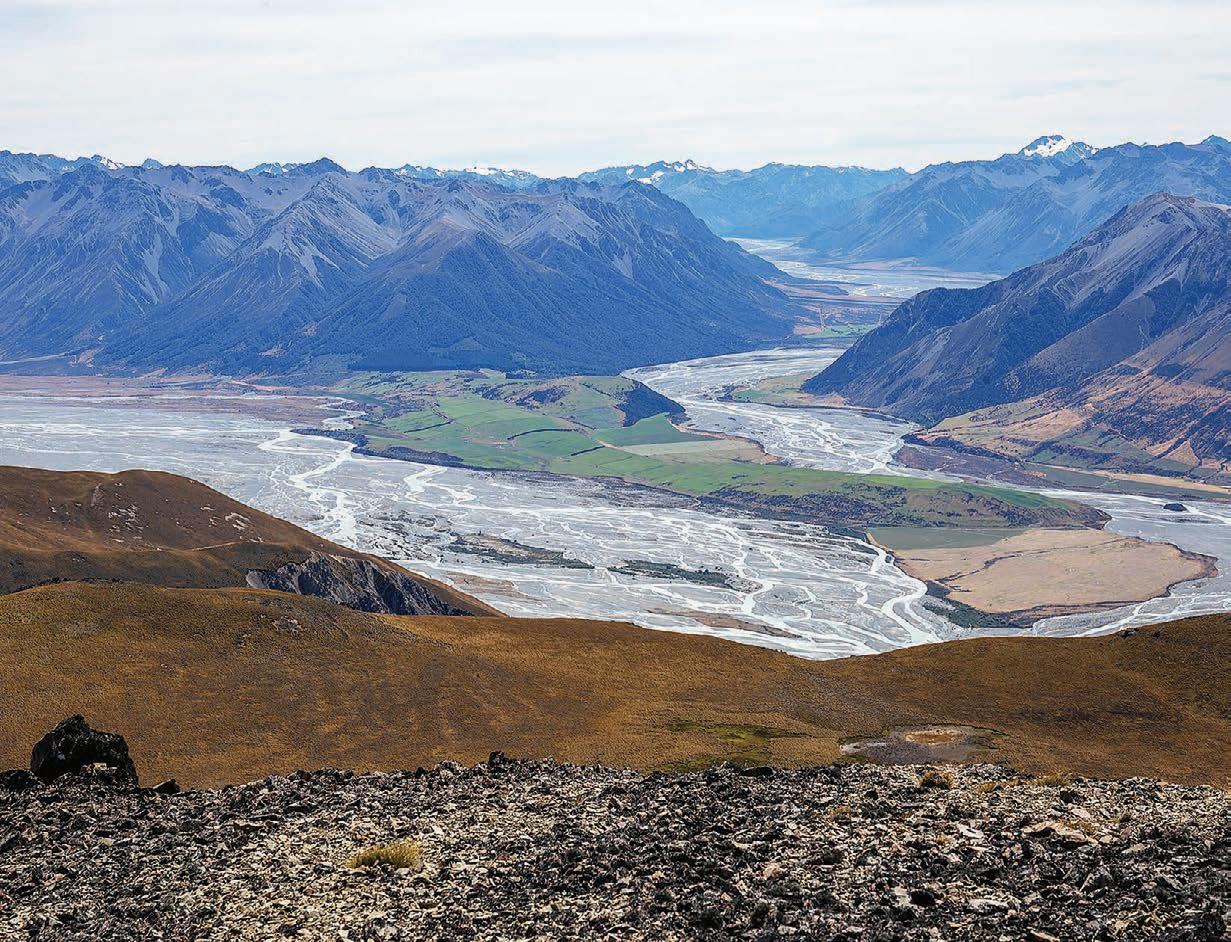
Canterbury’s unique braided
The
rivers with wide riverbeds and massive variation in flow add extra complexity.
Simply put, setting up and maintaining flood protection for the future is increasingly expensive and complex. I recognise the co-investment we’ve received from the government to date.
However, it doesn’t go far enough – we need an ongoing commitment to future-proof the region. No one wins if we bankrupt the country or the region trying to recover from more frequent and more severe flooding events.
Sustained investment in biodiversity and pest management
Biodiversity enhancement and pest management would be our biggest problem if we didn’t keep getting flooded.
We’ve been working to get on
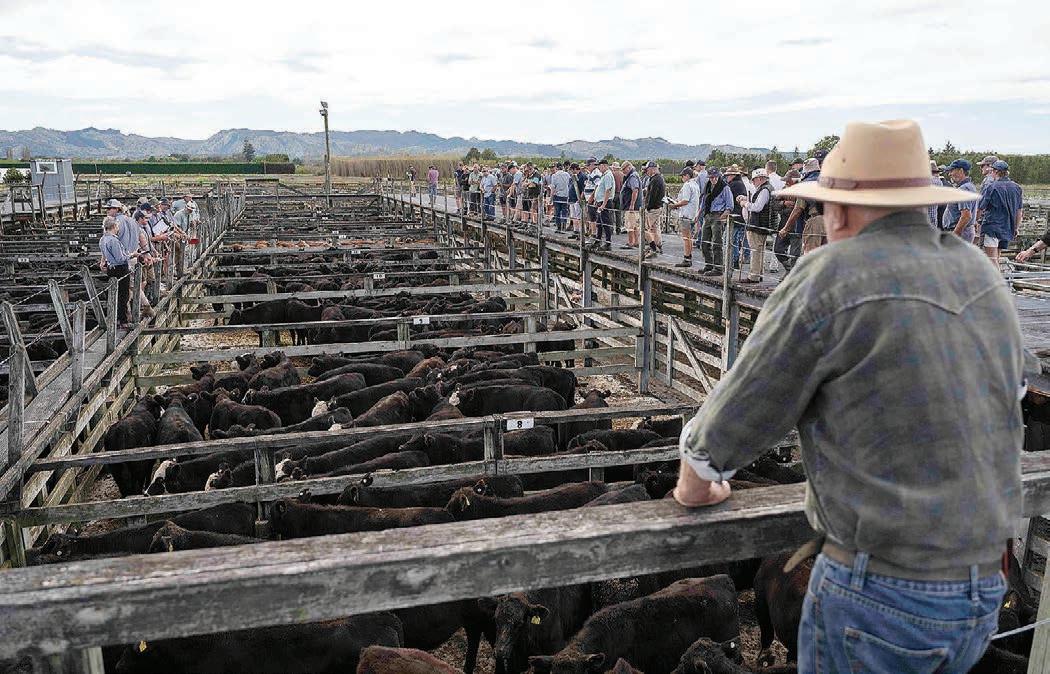
We’re keen to hear local stories about the innovators, inspirations and characters that keep our communities ticking over.
Farmers tell the best stories and we want to hear yours.
yourstory@agrihq.co.nz
top of, and stay on top of, a range of pests including wallabies, wilding pines and other pests that are killing our native wildlife.
These threaten our native species and biodiversity, our cultural identity, and our economy. In the past we’ve worked in partnership and received government support for pest management, but it has been scattered and project-based.
Funding needs to be sustained and focused, otherwise we’ll end up wasting the investment and progress that have been made to date. We know what we’re doing, we just need the resources to do it.
Planning and investment for public transport
Public transport in Canterbury is about more than just buses –it’s about total mobility access, community cars, inter-regional travel, and transport systems that can enable localism.
Together, we need to think about public transport holistically and understand how it can shape and grow our region and economy and reduce emissions.
We have made significant investment to improve access, simplify and reduce fares, and to collaboratively plan for the future.
However, we still have a way to go. What we need is for future governments to trust us, and to keep up the investment, so we can continue transforming our region for the better.
Canterbury has the potential to tackle some of the biggest challenges facing Aotearoa NZ. And we need some positive and pragmatic change – now – to ensure a sustainable future.
We want to hear from all candidates, especially our local candidates, and political parties who see themselves being part of the next government. If you’re keen to get stuck in and do some mahi alongside us, give me a call and let’s chat.
Ngā mihi nui
new government needs to co-ordinate with regional councils so that we can deliver our statutory obligations.
the Wool Impact initiative.
And I’m not going to give you a history lesson of all our previous bad decisions regarding the wool industry.
That stupidity is continuing.
While I believe the Campaign for Wool is doing well with limited resources, it is but one light in a sea of darkness.
For example, local carpet company Bremworth made the decision to ditch synthetic carpet and just concentrate on wool. I’m also aware of the considerable resources it is putting into research and development that includes waste reduction, carbon reduction and improved energy efficiency.
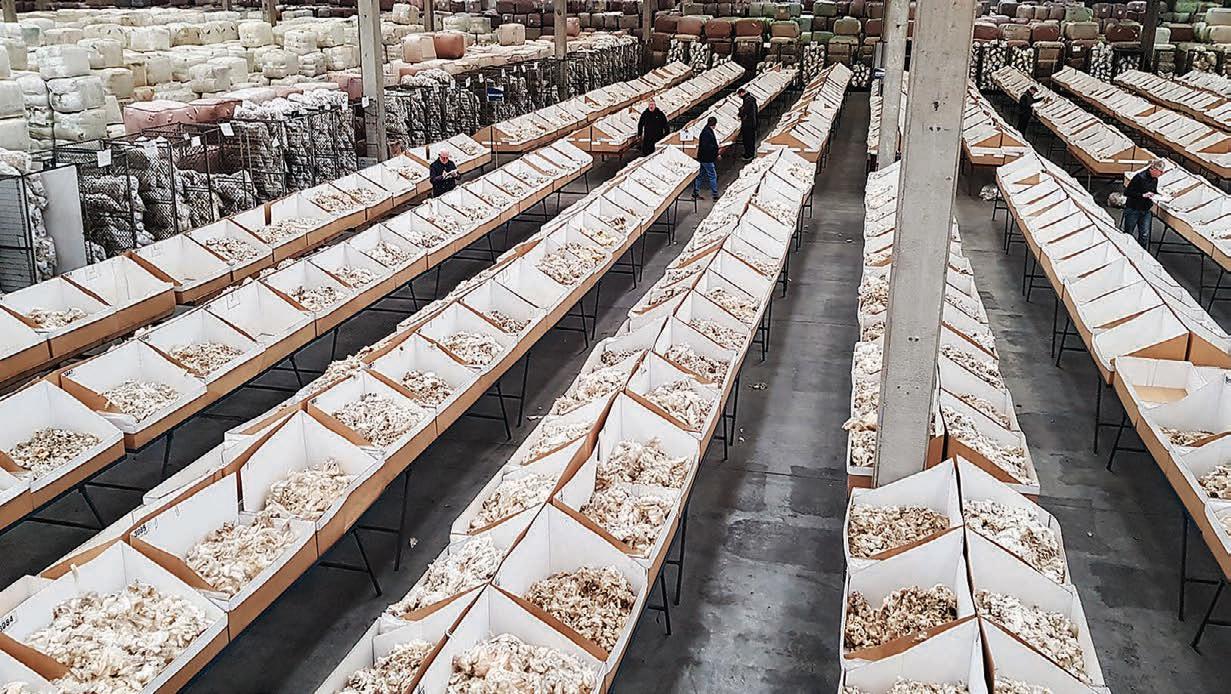
IWAS interested to read that Federated Farmers was wanting a return to a wool levy. I’m not against levies per se, but my view is reinstituting the wool levy would be a complete waste of time and money.
Wool isn’t lacking for funds. It has $11.4 million in the Wool Impact NZ fund plus almost $40m in the Wool Research Organisation, plus farmer funds in Wools of NZ.
Feds spokesperson and Gisborne farmer Toby Williams said “the industry lacks unity and leadership in the face of desperately low wool prices” and on that one I agree with him entirely.
The tragedy is that the wool industry has languished for decades and it has been a problem largely caused by farmers themselves.
Currently we have farmers losing money shearing sheep, leaving just two profitable options – to either sell the farm for forestry or purchase shedding sheep like Dorpers.
I wouldn’t mind just one dollar for every hour I’ve spent over the years listening to people talking about how we can fix the strong wool industry. Currently there’s
It has developed a prototype rug that contains zero plastic and has also developed a new Ahuru range of carpets “featuring bold colours from nature”.
So what did Wools of NZ do? It took manufacturing offshore to the low-wage companies of Turkey and Thailand.
What that achieves is that we have a local manufacturer who is committed to both local manufacturing and promoting strong wool, Bremworth. It is competing with a farmer-owned co-operative that’s ignored locals and taken its manufacturing offshore. Such has been the siloed mentality of our strong-wool industry.
It doesn’t make sense.
Then we had the ridiculously stupid Ministry of Education tender that’s put nylon carpet into rural schools. You’ll be aware of all the rubbish coming out of the ministry justifying the unjustifiable but again I’d suggest it is an industry problem.
We’ve always had grandiose schemes and grand plans that have never achieved much. It’s been a little like watching a couple of kids play monopoly.
What we do need is a simple, gutsy campaign selling the virtues of wool.
For a start, as Massey’s Professor Jacqueline Rowarth pointed out, carpeting the average New Zealand house with synthetic carpet is the equivalent of 20,000 plastic bags. We’ve banned plastic bags. Synthetic carpet and polyester clothing come as by-products of the world-polluting oil industry.
The Campaign for Wool is doing well with limited resources, it is but one light in a sea of darkness.
We’ve banned oil exploration, we’re taxing oil, why not synthetic carpets and polyester?
Then there are the harmful microplastics that are affecting our health and having a massive effect on the environment.
A South Korean study showed that microplastics in humans cause inflammation, neurotoxicity, oxidative stress and reproductive toxicity. They’re carcinogenic and
they alter our metabolism.
So what the Ministry of Education has done by using synthetic floor covering is to put the health of our schoolchildren at risk, not to mention the environment.
According to the National Geographic Society, microplastics have also been detected in marine organisms from plankton to whales, in commercial seafood and drinking water. Standard water treatment doesn’t remove all microplastics.
The United Nations tells us that a third of plastic waste ends up in soil or freshwater. It affects all organisms, including earthworms and invertebrates.
One could humbly ask why we’re taxing fertiliser and utes, and putting farmers under draconian environmental requirements, when we’re encouraging synthetic carpets and polyester clothing? It doesn’t make sense.
Finally, wool has been used for over 8000 years with no visible environmental side-effects.
Plastics have only been around a
relatively short time and caused massive environmental issues and affected the health of most organisms on the planet.
A recent British research paper from the University of Portsmouth concluded that the carpet industry basically couldn’t care less about its pollution, even though it is fully aware of the environmental issues and the implications for human health, with microplastics found in “blood, liver, lungs and placenta”.
When local and overseas visitors come to Rewa Rewa Station, Patrizia Vieno tells them about wool.
She says it’s “sustainable, renewable, recyclable, ecofriendly, compostable, selfcleaning, insulating and a fire retardant, and it stores up 50% of organic carbon”.
Against that there’s a pollutant that’s threatening human health and the environment.
Farmers have an excellent story to tell. They should get together and do it loudly and with one voice.
Policy Assessment – Navigating a Shifting World – should be compulsory reading.
The connotations and implications apply to all, however, and the themes are being expressed locally.
For MFAT to note that while opportunities may open up, “in the near term the future looks grim” is telling. That is not usual language for any government organisation to use but gives a clear steer on where we could be headed.
One common aspect is risk – a lot more of it.
foundations of “foreign, trade and economic policies for decades”. We have been protected from global threats by geography and a peaceful Pacific region. “Economic growth models of the past 40 years have been based on concepts of efficiency and free market competition with minimal state intervention.”
Cameron Bagrie Managing director of Bagrie Economics and a shareholder and director of ChaperonFOR anyone engaged in exporting, the Ministry of Foreign Affairs’
For a generation or more, MFAT notes, “we have enjoyed a comparatively stable and secure strategic environment that has been favourable to New Zealand’s interests and values”.
We have relied on trade liberalisation and international co-operation, which have been
The world has not suddenly changed overnight. MFAT’s 2018/19 Annual Report noted that “New Zealand’s wider Asia-Pacific region is a centre of geostrategic competition and home to a number of flashpoints”.
NZ is still managing to make progress in key areas, including trade; witness the recent trade agreement with Europe, though the dividend that will be delivered is a long way down the track. However, the tide has turned. Global trade peaked as a share of
gross domestic product around the global financial crisis. Tensions between China and the United States have been brewing over a long period, in part because the US has been the hegemonic power since World War II and does not want to give up that position. Technology is the new battleground, but those microchips also need minerals. As the world becomes more and more connected and interdependent, differences are accentuated, providing challenges to achieving unity.
Populism, self-interest and protectionism are on the rise, along with distrust of institutions. Liberal democracy is being challenged. Covid-19 was notable for a lack of global leadership early on, along with a lack of leadership on action to limit warming to 1.5degC. Self-interest is usurping
debated. We have too many eggs in that China export basket.
group interest. Covid, inflation and transitioning to climate resilient economies are challenges not only to growth, but to the equality and equity of growth.
MFAT identifies three major shifts:
• From being directed by rules to influenced by power. Power brings the ability to challenge the status quo and rules. Witness Russia and the Ukraine, and China’s greater assertiveness.
• From economics to security. The
Continued next page
Dependence versus diversification needs to be
there is collective agreement that this natural product taken directly from the sheep’s back is surely better than a petrochemicalderived synthetic nylon alternative. Surely my school’s floors would be better lined with Aotearoa wool than crude oil nylon?
My mistake here is thinking I produce a product and that nylon is the alternative. My wool is at best an alternative to synthetic polymers, with wool used in 10% of carpets these days, and demand is a far cry from the Korean wool boom of 70 years ago.
Phil Weirproducer bias), the salesperson pointed out my slight winter sniffle and questioned whether allergies might be an issue with a woollen carpet.
My school board paper review and carpet-buying experience drove home the fact that if you are in commodities, you are providing a raw material, not a product. I produce strong wool, not carpets; 95CL bull beef, not hamburgers. It also illustrates the need for economies of scale. With wool, the competitor is not wool from Peru or Scotland. The market leader is Chinese nylon polymers produced from Russian or Saudi Arabian oil.
STANDING FIRM: Strong wool has natural variables that do not compete as a commodity ingredient. This might suggest pessimism about our future with commodities, says Phil Weir, ‘but I love producing a commodity’.
Phil
Weir is a Waikato sheep and beef farmer and AgFirst agribusiness consultant. eating.the.elephant.nz@gmail.com
IAM a small-scale wool farmer and trustee at my local school, so the latest petition around our most failed commodity, strong wool, has left me wondering again about commodities and their risks and benefits.
Mates will attest that I am not a massive fan of sheep. I prefer cattle. Every time I look at sheep, they die or have a bearing. Because I am usually holding a drench gun when I’m with them, they are a good reminder that I am now middle aged. But, every spring and then again in autumn, I mutter to myself (whilst also cursing the harvesting cost) that this white woolen stuff is truly fantastic.
By beer’s end following shearing,
economic imperative is being usurped by the geopolitical imperative. Security is being prioritised in food, energy and technology, with the latter critical for economic advancement. The geostrategic contest for the Indo-Pacific
As I rummage through the papers on my desk, two documents tell our commodity story well. One is the school board paper. I review my local school’s balance sheet and find it to be as challenged as my own farm business for the year ahead. I think about my kids and their mates in our community and the fact that they’re in want of a music teacher, a playground, a teacher aid to keep everything together. How much more would our school be willing to pay for the ingredient in their carpet to be wool?
The other document is a carpet catalogue from our recent renovation. As an experiment, I kept my negative bias against the market-dominating synthetic option hidden from the carpet salesperson. The sales playbook was predictably focused on value, on durability, on colour, on cleaning, on price. It was carpet for sale, not wool. When I disclosed my interest in wool (but not my
region is intensifying with China growing more assertive.
• From efficiency to resilience.
“Just in time” is morphing into “just in case”, with riskmanagement-style discussions around management and board tables more prevalent. Supply chain effectiveness can no longer be taken for granted. The
We are talking about the biggest actors in a global economy, who exert massive economies of scale and invest significantly to create bespoke synthetic polymers perfect for carpet.
Our wool, collected naturally in the same way as 50 years ago, has natural variables that do not compete as a commodity ingredient. No matter how much we tell the “story of wool” as a commodity into carpet, we will struggle to stack up.
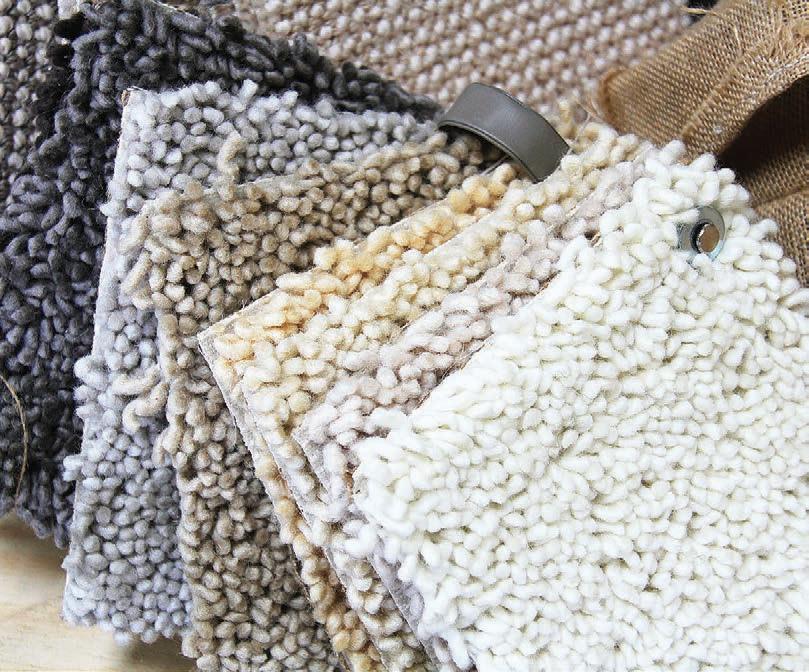
This rationale might suggest pessimism about our future with commodities, but I love producing a commodity and here is why.
I love that, notwithstanding commodity volatility, my commodity beef will sell. I know global demand means my cattle, here today, will be gone by Christmas, something mānuka honey producers might wish for.
I love that supplying a global commodity market (95CL beef),
new buzzwords are decoupling, de-risking, near-shoring, reshoring, on-shoring, friendshoring. Shoring up resilience including access to resources, markets and supply chains comes at an economic cost as it represents a move away from relying on competitive advantage.
With wool, the competitor is not wool from Peru or Scotland. The market leader is Chinese nylon polymers produced from Russian or Saudi Arabian oil.
I am able to specialise on farm. Work behind the farm gate is hard; supplying a commodity market means I can “simply” use science and rational agronomic practices to continuously improve and get more from less.
I love that commodity products are the basis of our rural communities. Whether through co-operatives in the past or not (less so today), community cohesion is maintained despite the weather and markets.
These shifts are local too. Politicians such as the former minister of transport not playing by the rules, or even reading the rules.
Other cabinet ministers the same. The audacity of ram raids. Funerals now disrupting everyday activities. NZ is seeing subsets of Rules versus Power.
Boardroom discussions now talk more about risk as just-incase sinks in. The politicians do not appear to appreciate the risk associated with our energy dependence and reliance on global supply chains.
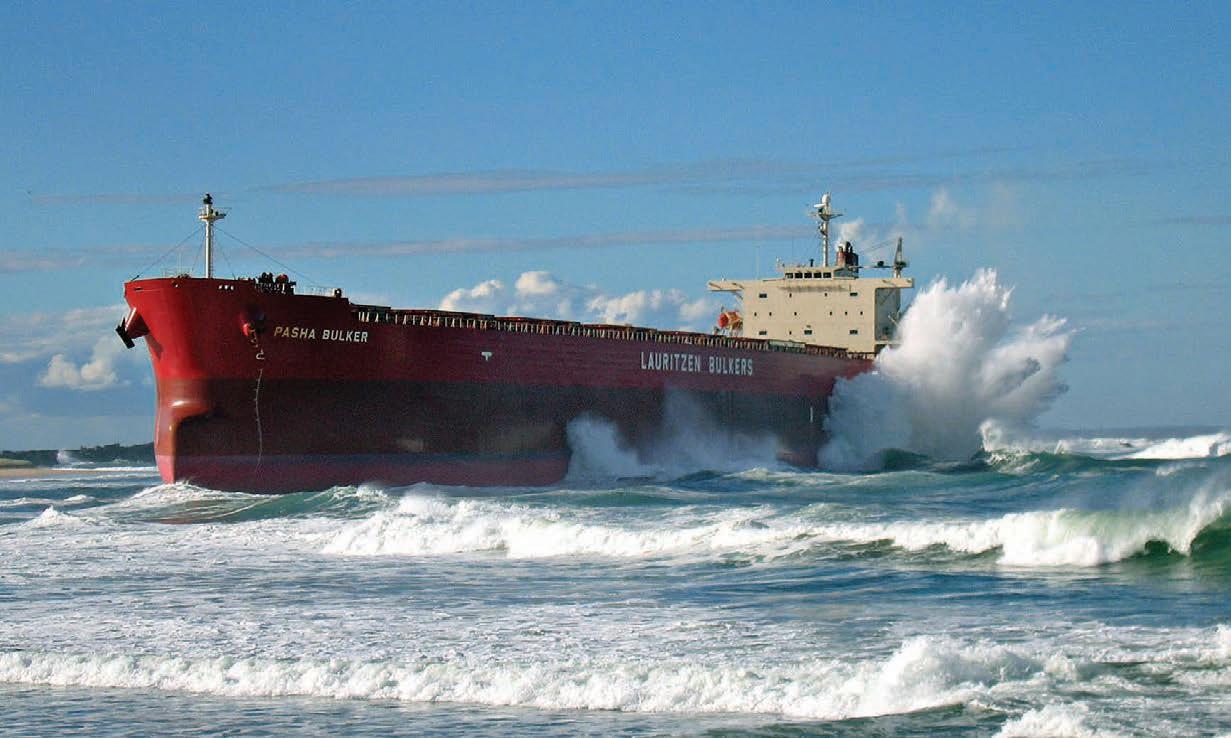
MFAT’s report is light on where to, in part because the uncertainty is huge.
The themes identified will challenge the low-inflation orthodoxy we have been used to. We could be entering a series of rolling supply shocks. Russian President Vladimir Putin’s recent strong-arm movement, which has seen wheat prices bounce, is an example. Two percent inflation on average looks an aspirational target as opposed to a realistic one.
Navigating inflation means higher interest rates; lacking a central bank backstop – which inflation has removed – we are now taking real risk to make real
We battle alongside our neighbour, we don’t compete with them.
Certainly if I am successful and my neighbor is not, I will likely buy them out to achieve economies of scale (an imperative of commodity production), but that is usually far from our thoughts. Ninety-nine percent of the time, we help each other and we share.
I have enough challenges with my commodities. Fellow Eating the elephant columnists Dave Eades and Dan Eb will talk to the rewards of more risky business models.
For now, the limited time and cash I have outside farming will be invested in my family, local school or native bush remnant.
We have choices about where we spend our time and money. I am a proud commodity beef producer, who next week will have new woollen carpets.
money. Higher average inflation also means the same for interest rates.
Dependence versus diversification needs to be debated. We have too many eggs in that China export basket.
Managing or mitigating risks does not come for free but neither can it be ignored, and I would not describe NZ as being a strong manager of risk.
Energy has been a debacle. What will be the shape of defence spending going forward? A lot more I suspect. Another spending pressure that works against tax relief.
Division will drive more use of power and less obeying of rules locally. We have growing division. Who is the leader or what is the policy platform that can unite the majority?
NZ is somewhat fortunate in that food production is our strength, and security in it is now a global priority. That provides opportunities if executed well.
Managing risk is not about putting naysayers in charge. It is about balance, the use of data to validate the risk-return tradeoffs, and executing. The shifting landscape just means lifting our game and modifying for a few different rules.
HUMBLED by his win in the 2023 arable industry awards, Arable Farmer of the Year Hugh Ritchie says it is a great honour.
“I’m absolutely rapt, bit blown away really. It’s certainly not something I aspired to but it is a great honour to be nominated by your peers and then to be selected the winner.
“And no way do I think I am the best arable grower, it really isn’t about that. There’s a lot better than me,” he says.
The Arable Farmer of the Year award recognises an arable farmer who excels in all aspects of the arable industry, with the judges looking for a sustainable farm business that balances production and profitability, and a grower who shows evidence of a long-term commitment to the industry.
The judges said Ritchie is progressive and innovative.
“He’s always looking to do better, always looking to see what he can learn, reaching across sectors and integrating them to strengthen his farm business,” the judging panel said.
“He is proactive and supportive of the Cultivate Investments concept delivering innovation for New Zealand’s growers and farmers.”
In his time on the board and as chair of the Foundation for Arable Research (FAR), Ritchie was a key driver of the Cultivate Investments project, investing in bold and impactful companies transforming NZ’s food and fibre sector.
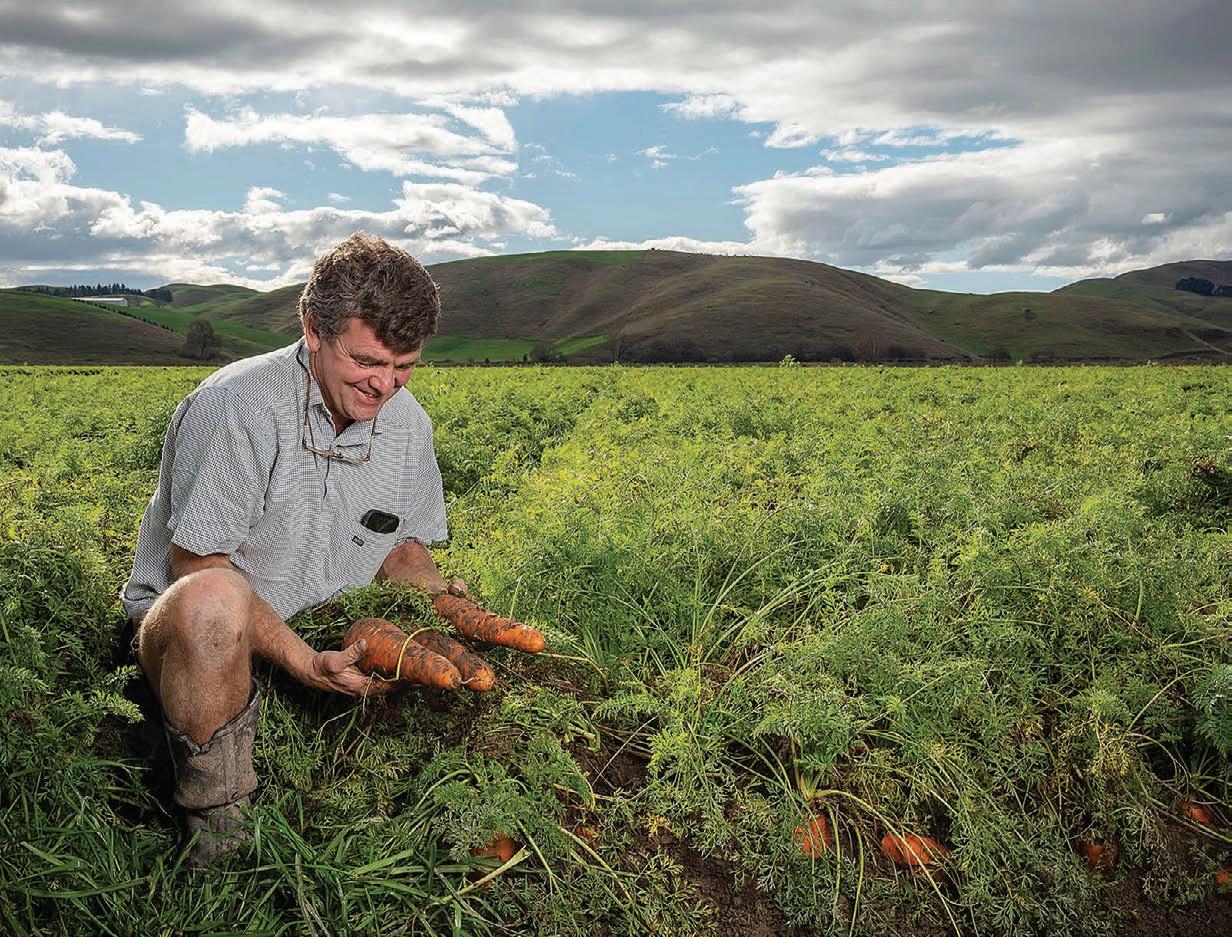
“We [arable] were always seen as the poor cousins in farming. As chair of the FAR board I looked at how we do things, how we could change things and find new ideas
to leverage investment and take our business closer to market,” Ritchie says.
“It was all with the backing of the board that as an industry we created this investment fund with the focus being to create more opportunities for farmers.”
Meanwhile he almost missed his opportunity to take the top honour.
The all-important interview date as a finalist for the awards was set down but Ritchie was taking family time away from the farm.
“It was one of those times. I forgot all about the 1pm interview with [FAR chief executive] Alison Stewart. She got me on the Mt Hutt ski field.
“There was snow everywhere, I was shielding my phone in the snowstorm to try hear her, the kids were skiing on thinking. ‘Oh yeah, Dad is busy on his phone for work again.’”
But despite the interview challenges Ritchie clearly made an impression, his perseverance as evident on farm as it was in the interview in a snowstorm.
Ritchie and his wife Sharon run Drumpeel Farms, an intensive arable and livestock operation across two properties – the home block at Ōtāne and a second property south of Hastings.
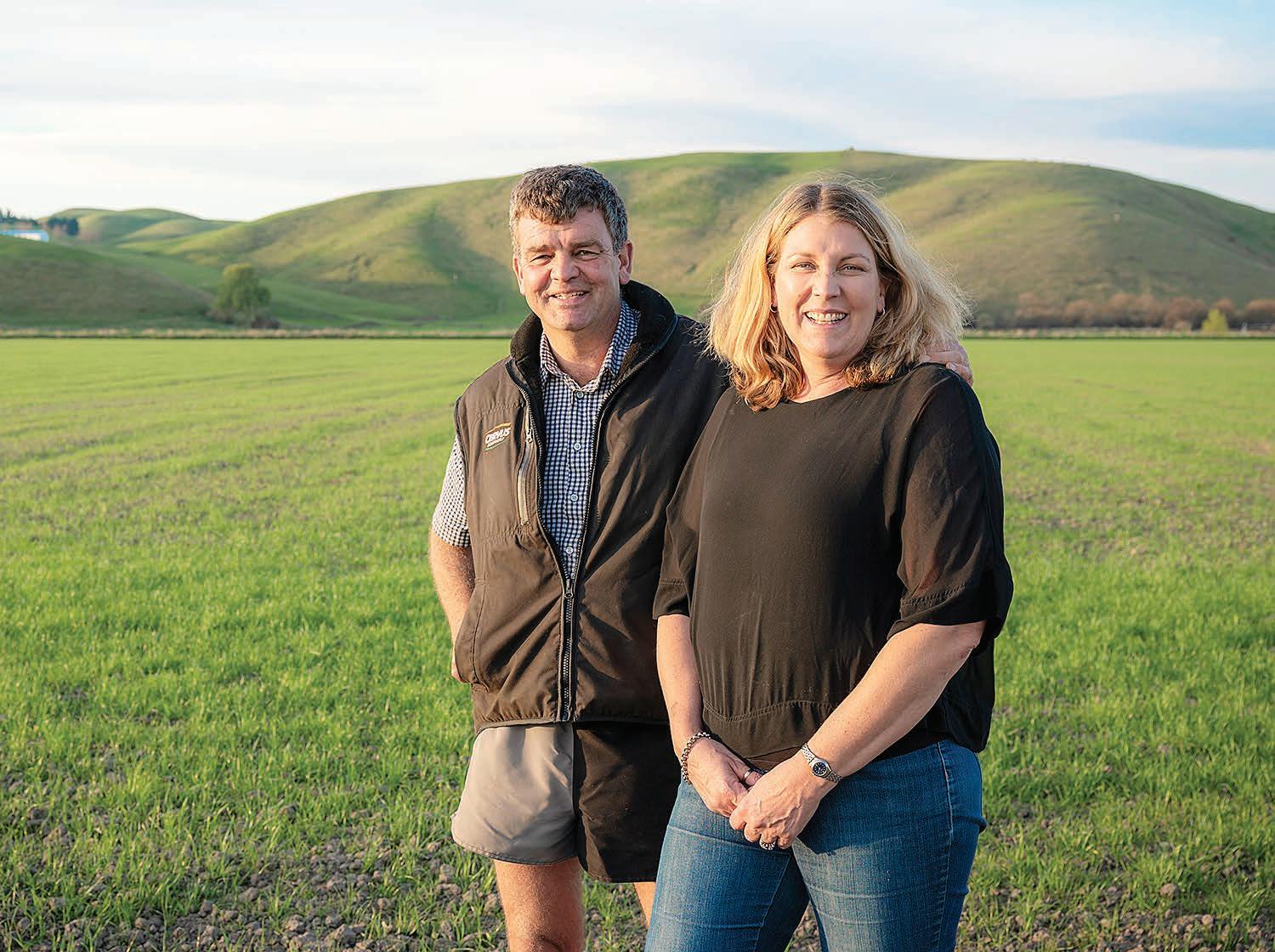
They have an emphasis on efficiency improvements in soil health to keep their greenhouse gas emissions down, with the overriding caveat being to make the farm operation sustainable.
Ritchie is pragmatic in his approach to changes that need to be made around GHG emissions, acknowledging that the ability to be flexible and willingness to try new ideas will help propel the business forward while addressing
climate change regulations.
“No farmer would argue about being efficient and making changes to be more efficient. It goes a long way to making gains on the emissions journey and you look at that as positive and move forward.
“The ultimate aim is to reduce our carbon emissions; if you look at the massive zero outcome as an end goal you lose sight of the journey.
“It’s how do you eat an elephant; you know it’s one bite at a time. Start on part of the business and make some gains there and then move on to the next bit.”
Ritchie used opportunities such as his Nuffield Scholarship to travel to investigate different
farming methods and he has continued his strong involvement in local research and innovation to progress his farms productivity.
With a total of 2050ha, the farming operation takes in 880ha of cropping incorporating half of that in cereals including autumn malting barley, spring oats and barley, wheat, vegetable seed production as well as process carrots, beans, peas and sweetcorn for McCain and export squash. Maize is the biggest chunk of the cropping in both area and tonnage.
The home block property has been in the family since 1962, when Ritchie’s parents David and Sally moved from Canterbury and purchased the farm in Hawke’s Bay.
“Dad was reasonably innovative and not afraid of change so that helped me when I came along, keen to make some changes,” Ritchie says.
Zero tillage to promote soil sustainability was a goal.
“First and foremost I was looking at efficiencies.
“In 2000 I started strip tilling and direct drilling all on the back of Nuffield. We are now using track machinery reducing soil compaction, with precision agriculture and GPS allowing us to be very accurate in what we are doing, and the fuel load per hectare is a lot lower than it has been in the past.
“Organic matter is increased, erosion from both wind and water is decreased, earthworms are increased and internal drainage is increased.
“We are using variable rate irrigation, getting the right amount of water in the right place on the right soil types.
“Rotation has been a big part of the farm for 60 years. There is not a lot of tractor work and the fiveyear rotational concept is limiting the amount of fertiliser going on.
“We are cropping 880ha with two and half people, the half being me.”
Livestock is involved in the system, helping to encourage nutrient cycling and, together with rotational crops, makes the system as efficient as possible.
More sustainable farming methods have not only improved the soils but also the bottom line on the farm accounts.
Initially the goal was to at best match productivity under traditional methods.
No farmer would argue about being efficient and making changes to be more efficient. It goes a long way to making gains on the emissions journey, and you look at that as positive and move forward.
Hugh RitchieThe fact that they are producing greater returns with sustainable farming is a bonus.
“The technology is there now; you can do a lot without too much cost,” he says.
The farm took a huge hit from Cyclone Gabrielle, but the diverse farm system, built to survive, is slowly but surely recovering.
“We had 300ha that just looked like a moonscape.
“Going back to eating the elephant, you can’t do it all in one bite; recovery has been broken down into manageable chunks.
“We have had tractors, diggers, dozers – levelling, aerating and incorporating silt into the soil. Support has come from far and wide. We are making progress. The soils will take time to recover – we will get there, eventually.”
Trials on the Coromandel Peninsula have shown that sea lettuce will gorge itself on pollutants in freshwater, potentially removing a signi cant source of contamination from New Zealand’s waterways. Gerald Piddock reports.
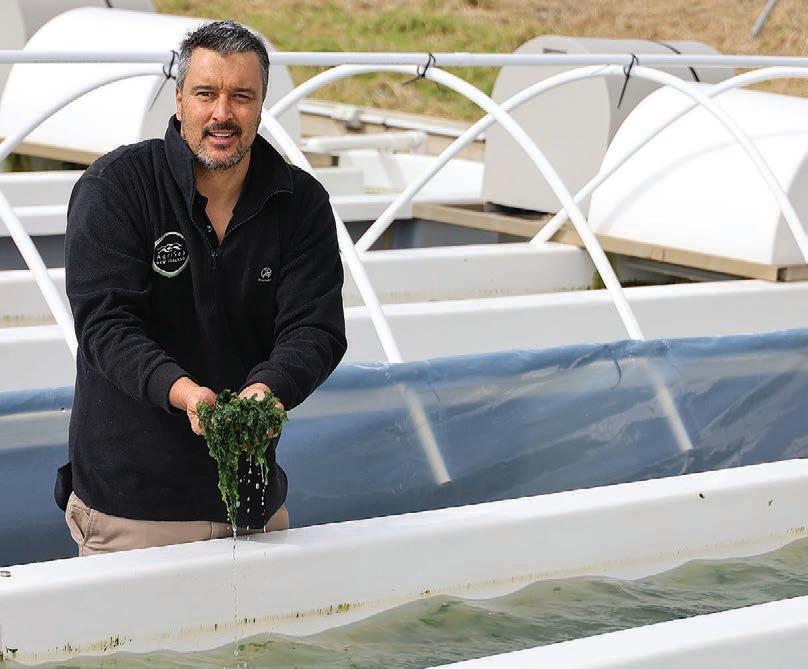
SEAWEED could soon be used to clear pollution from waterways after a successful trial in Thames that tested the aquatic plant’s ability to soak up freshwater contaminants.
The study by AgriSea and Waikato University took water from the Waihou Estuary and pumped it into tanks on land filled with seedings of sea lettuce, Ulva australis.
The seedlings feed on the nutrients in the water, acting like a sponge in the process as they grow.
The resulting filtered water has 90% less nitrates and 70% less phosphorus, according to measurements by Waikato University.
AgriSea chief innovation officer Tane Bradley says the results far exceeded their expectations, compared to the initial nutrientremoval modelling they had calculated.
The Paeroa-based company set up a testing site on the outskirts of Thames close to the Waihou River using three custom-made high-rate algal ponds – tanks that resemble oversized bathtubs.
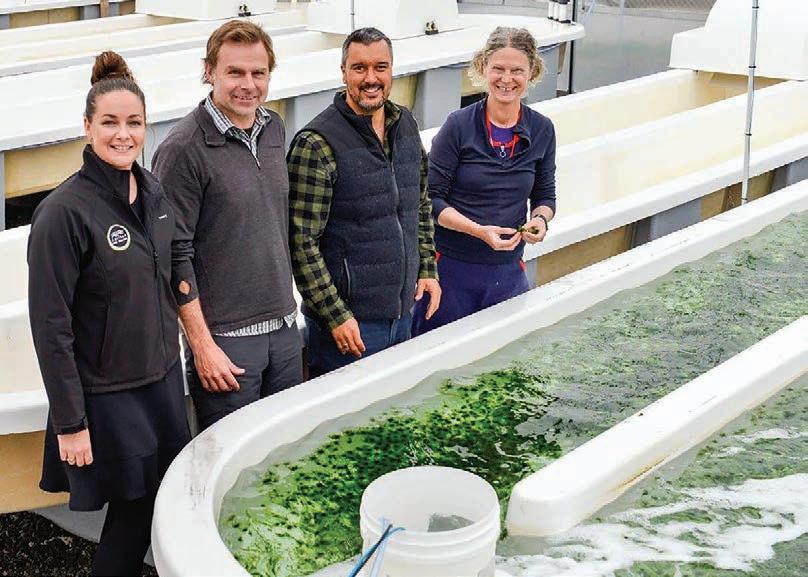
Each tank has a different weight of seaweed and water flow rate to determine what the optimal amount of seaweed is required versus the flow rate to result in the best nutrient removal.
The water is also constantly in motion to ensure a steady supply of nutrients for the seaweed and to prevent the seaweed from floating to the bottom of the tank, where it would be deprived of light.
The testing site will help
formulate what will be needed if the project takes its next step, which is to be scaled up.
Overseeing the day-to-day handling of the project is AgriSea research technician Taylor Moore. Every week, the tanks are stocked with seaweed, and water samples are collected twice a week and analysed by scientists at Waikato University to determine the rate of nutrient removal using a beforeand-after comparison.
Our hope is that it can be adapted and scaled to fit alongside any waterway.
Moore says he was initially skeptical of the likelihood of seaweed growing in such contaminated water, which he described as “the rankest water ever”, but the results shocked him with the lettuce growing almost twice as well as what was hypothesized at the beginning because of the nutrient availability in the water.
Moore says the pilot system is projected to have an average biomass production of 15g per square meter per day, yielding around 328kg of dry weight biomass annually.
With the sea lettuce biomass containing about 4-5% nitrogen in nutrient-rich conditions, harvesting 328kg of biomass would eliminate around 16kg of nitrogen
CLEANER: AgriSea chief innovation o cer Tane Bradley says the 90% reduction in nitrates and 70% reduction in phosphorus exceeded their expectations.
from the environment.
“Scaling this up, using the same productivity assumption, annual production would reach upwards of 54.8t of dry weight per hectare, removing 2.7t of nitrogen – equivalent to 12t of nitrate per hectare annually.”
For AgriSea, the project is not just about research, it is also about determining if it is scalable, which Bradley believes they have achieved.
“We wanted to see if this system could work in open environments to soak up nutrients and provide a model for others to pick up and upscale across the country. We are happy with the results of this pilot phase.”
The next steps will be more modelling around the cost to upscale the project so it will work in a full-scale commercial setting. There is an opportunity to partner with others who are interested in the technology, including councils, water treatment companies, local iwi, farmers and landowners –anyone wanting to clean up water and create opportunities.
The pilot was funded using just under $700,000 from the government’s Sustainable Food
and Fibre Futures fund (SFF Futures). AgriSea contributed $108,000 and the Agricultural and Marketing Research and Development Trust (AGMARDT) is investing $150,000.
Thames-Coromandel District Council gifted the land lease for the project term worth $40,000, with support from Ngāti Maru and Ngāti Hako. Hauraki District Council, PwC and Te Waka are also assisted with the consent and application process.
Bradley says the collaboration between all these partners has been key to the success and outreach of this project.
“We’ve had local school groups, film crews, national and even international interest for this work – for us it’s about providing solutions and opportunities to the nutrient challenges we have.”
AgriSea met with members of local government and scientists and community recently to plan the project’s next steps.
“There’s a genuine opportunity here and it’s not about pointing fingers.
“Our hope is that it can be adapted and scaled to fit alongside any waterway.”
AgriTech NZ chair Bridgit Hawkins said.
TWO industry champions have been honoured for their collective action for the benefit of the sector at an AgriTech New Zealand event.
The event, hosted at Parliament, honoured the work of individuals in the industry, with the Robin Davidson Memorial Award going to AgriSea chief executive Clare Bradley.
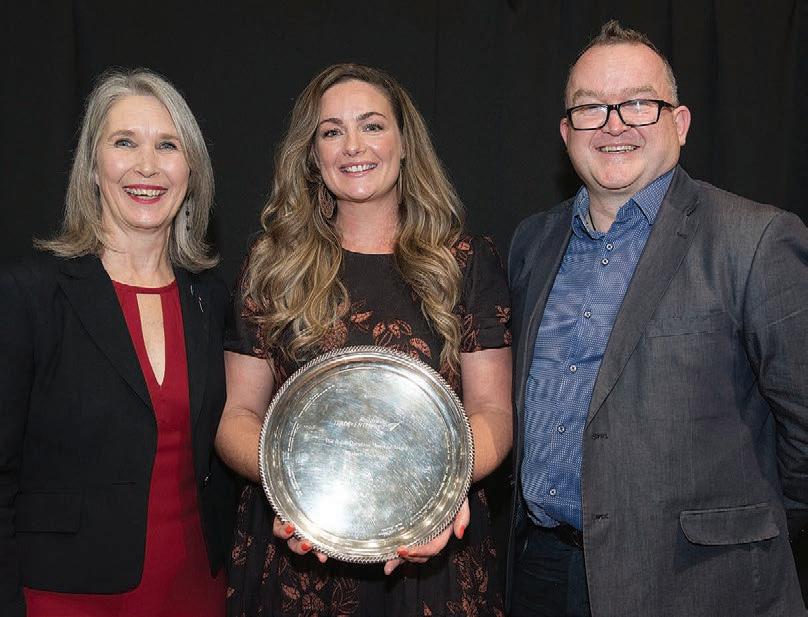
The award celebrates the work of individuals in the agritech industry who represent good citizenship through collaboration, collective action for the sector and supporting the development of others in the community.
“The nominations we received for this award were of the highest calibre and the executive council had a hard decision to make,”
“Ultimately Clare’s work as a champion for industry made her a great choice.
“She’s an incredible role model and shares her time, knowledge and support generously with all those involved.
“Clare reflects the behaviours that Robin Davidson exemplified, being a passionate advocate not only for agritech but also for the health and wellbeing of people, place and planet,” Hawkins said.
The AgriTech Lifetime Achievement Award was presented to Wharf42 chief executive Peter Wren-Hilton.
Currently overseas working on new agritech collaborations, WrenHilton accepted the award via a recorded video.
AgriTech NZ chief executive Brendan O’Connell has worked closely with Wren-Hilton over
many years and said the award was a fitting recognition of years of dedication.
“Peter has had a vision for the role of agritech from NZ for many years.
“He has championed an ecosystem approach to connecting globally and has played a key role in the growth of the industry including the creation of AgriTech NZ,” O’Connell said.
The nominations we received for this award were of the highest calibre.
Bridgit Hawkins“It is fitting that on a night where we celebrate all that has been achieved through collaborative practice for the industry that we recognise Peter’s foundational and ongoing role.”
Both Bradley and WrenHilton acknowledged the work they undertake would not be possible without support and collaborations across the sector.
This dairy farm is a great unit and will give buyers many options. This farm would be a perfect first dairy farm or would suit a couple looking for an easy-to-run operation close to town. This great opportunity is located on the tarseal very close to Kaitaia.
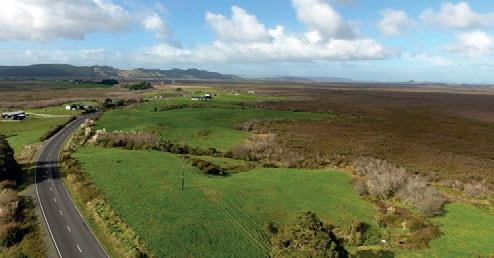
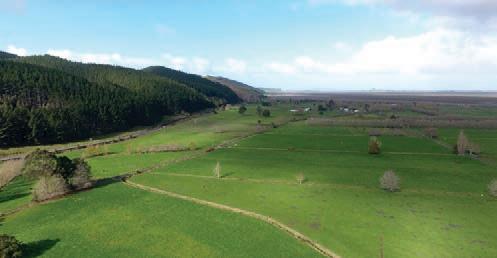
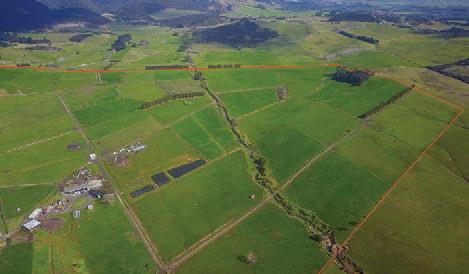
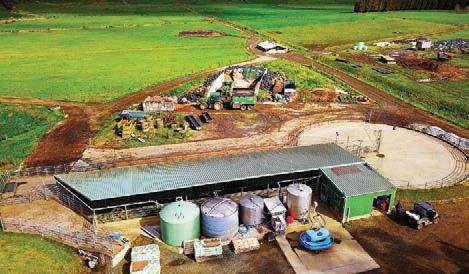
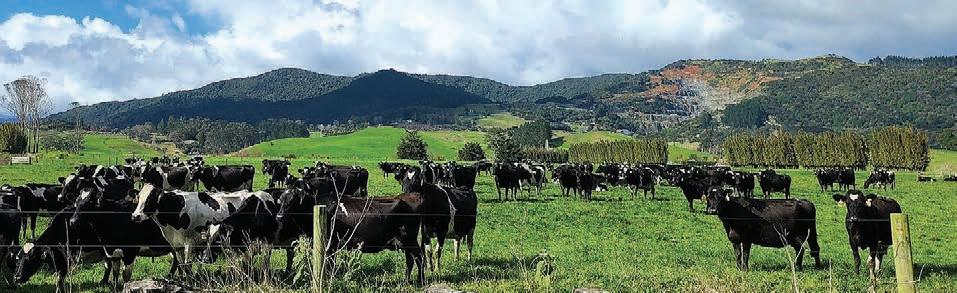
109.29ha approx. of flat to rolling land with a very little amount of medium hill. The fencing is in good order and this property has great infrastructure. There is good shedding and the 34 ASHB milking shed makes milking the cows a piece of cake. There is a unit providing accommodation for a worker. A comfortable 3-bedroom, 1-bathroom farmhouse with a big entertainers deck completes this package.
This lovely unit has been well farmed and is set up well. Good races and fencing make moving the cows an easy job. The farm is fenced into about 60 paddocks. With two waterways running through the property giving you an all year round water supply for the stock. Currently the water is pumped out of one of the waterways and reticulated to all paddocks.
This farm would give buyers other options such as cropping, horticulture, intensive beef farming or calf rearing. With fert being added and re-grassing having been a part of the operation, this farm grows good feed. Milking about 270 cows on a split calving system, the average production for the last 3 years is 106,666kg MS.
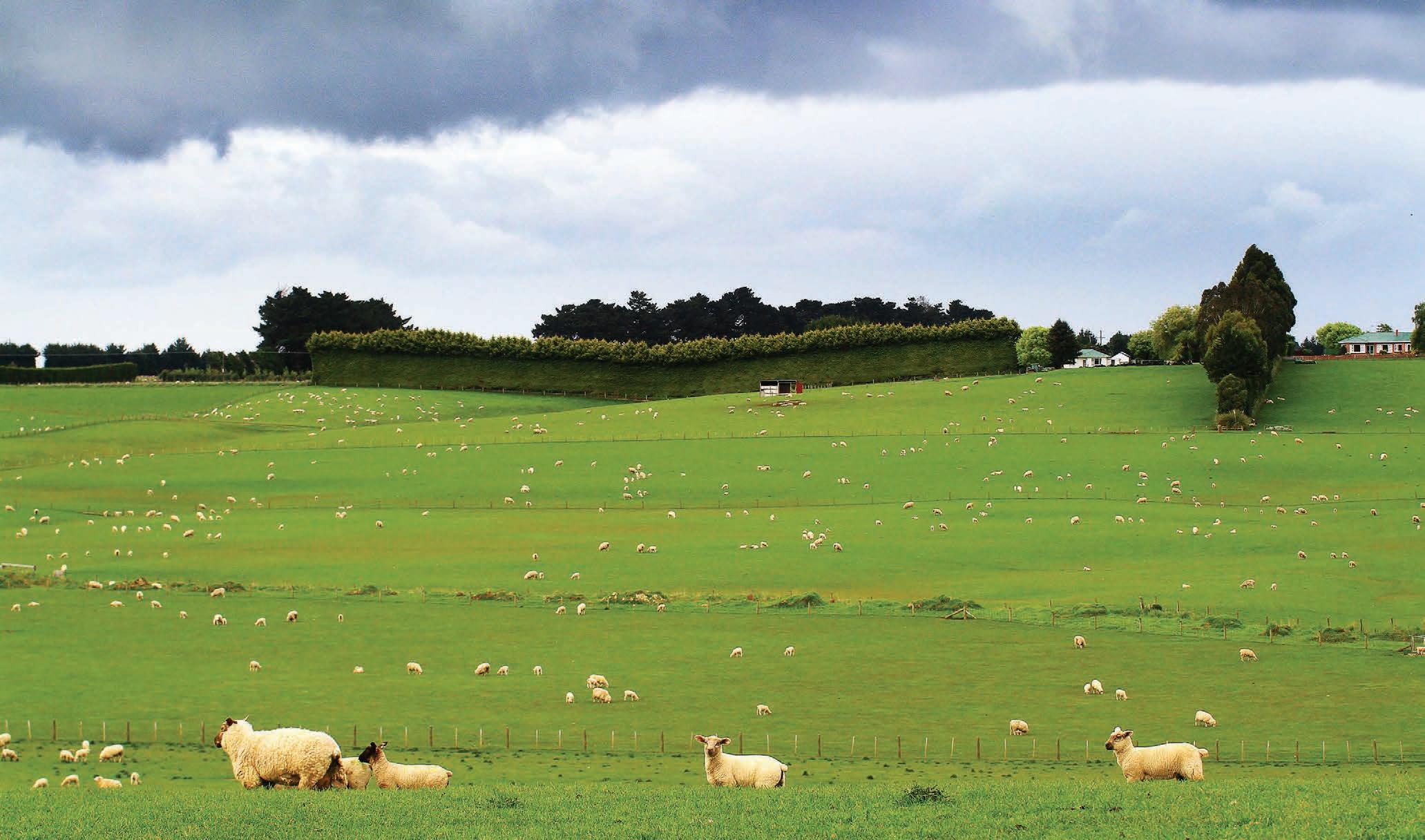
Viewings are by appointment only.
FOR SALE BY TENDER (unless sold prior) – Price is plus GST (if any)
Tenders close 7th September 2023 at 1pm
Joel Vieviorka | 020 403 60603joel.v@hazerealestate.co.nz https://www.hazerealestate.co.nz/

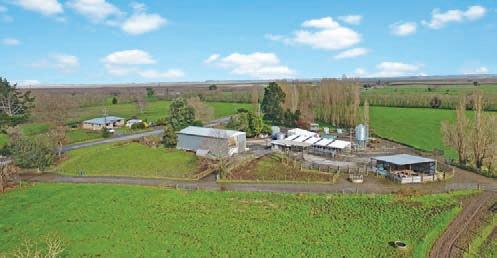
This is a well-presented dairy unit, the main dairy farm is 98ha in 6 titles with a 13ha support block on its own title giving a total of 112 hectares in 7 titles. The contour is all flat and it is well fenced into 51 main paddocks accessed off a central race system. Milking around 200 cows, with a 4-year production average of 101,000 kgMS. Milking through an older but very functional 15 ASHB shed with a meal feeding system and 16T silo with a good array of support buildings and a 4 bedroom Huntly brick dwelling.
Tender closes 3.00pm, Thu 14th Sep, 2023, Property Brokers, Morrinsville Web pb.co.nz/MOR165942
The 13.49ha support block is located 785m south on Falls Road. Peter Lissington M 027 430 8770
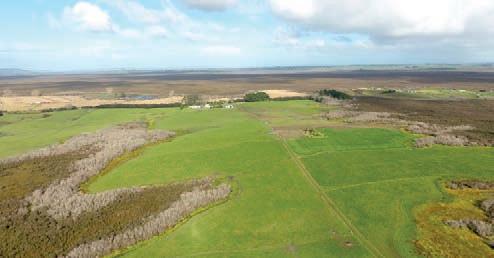
Runoff / Maize / Horticulture
This appealing north facing block is currently used as a support block for the dairy farm. Growing maize and silage, grazing young stock along with wintering some cows. The property is well fenced and raced with a bore supplying good water to all paddocks. A small shed is great for hay or implement storage.
Peter
Bring your own 4X4 on a guided tour to discover more of the South Island.
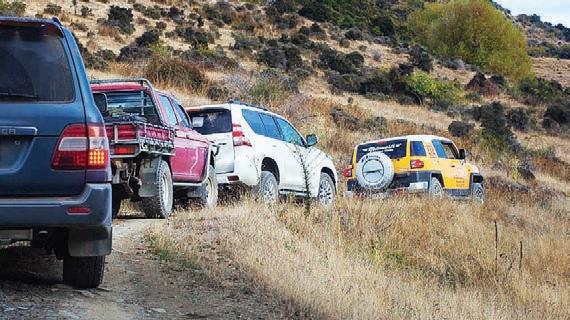

Tour 1: Molesworth Station, St James, Mailings Pass & Rainbow Stations
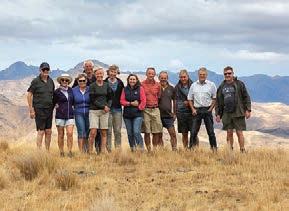
Dates: 2023 – Nov 13-16
2024 – Feb 19-22, March 4-7, March 11-14, March 25-28 April 8-11, April 22-25
Tour: 2 D’Urville Island and Marlborough Farms Tour
Dates: 2024 – Feb 11-15, March 12-16 FULL, April 24-28 Other

At Beef + Lamb New Zealand (B+LNZ) we are passionate about the sheep and beef industry and committed to growing a sustainable and profitable future for our sector. We are farmer owned and funded and work on their behalf.
Our vision for the sheep, beef and dairy industry is Sustainable and profitable farmers, thriving rural communities, valued by New Zealanders. Our priorities are focused around three key areas: Supporting farming excellence; Championing the sector and Increasing market returns. B+LNZ has an Associate Director position available commencing November 2023. The purpose of this Associate Director position is a developmental opportunity to provide governance experience and mentoring to aspiring farming leaders in the sector. It specifically aims to extend the knowledge and understanding of governance, its environment, the role of the B+LNZ Board, the legal framework and Directors responsibilities, and offers a unique opportunity to experience strategy and governance in action from within a sector organisation. All prospective Associate Directors must have a direct connection to a levy paying farm, and be strongly committed to furthering our farming sector, have the highest levels of integrity, be collaborative in nature, possess sound judgment, and be innovative and strategic in their thinking. The qualities we are looking for are:
• Passion and commitment to the sheep and beef sector
• Highest of ethical standards and behaviours


• Independence in thinking; be prepared to challenge, and be challenged
• Innovative and values continuous improvement and responsiveness to the sectors challenges and opportunities


• Effective, persuasive and respectful communicator
• Empathy with farmers and their rural communities
• A role model for the values of the organisation.
The commitment required will be on average one to two days per month with the majority of the 6-weekly meetings held in Wellington. This is an unpaid position however all expenses related to fulfilling this position will be covered.
To request further information on this Associate Director opportunity please email the hrhub@beeflambnz.com
Please apply via the B+LNZ job site https://beeflambnz.com/about-blnz/work-for-us


Applications close Sunday 10 September 2023.
ANIMAL HANDLING
DOGS FOR SALE GOATS WANTED
BEARDIE PUP 10 weeks old. From working parents. $400. Phone 027 783 2900.
RAMS FOR SALE
www.electrodip.com
CRAIGCO SHEEP JETTERS. Sensor Jet. Deal to fly and Lice now. Guaranteed performance. Unbeatable pricing. Phone 06 835 6863. www.craigcojetters.com
3½-YEAR-OLD Heading bitch, by ‘Harry’, top working and trial potential. In pup to a top dog, a brother to ‘Drive’ 23809. 6-MONTH-old Heading pups, working, out of the above bitch, by ‘Scope’ 23810. 15-MONTH-old Heading dog, top breeding, in training paddock works well, plenty of style. 5½-YEAR -old Huntaway dog, qualified last two seasons. Phone Dave Andrews 027 450 6095.


WORD ONLY ADVERTISING. Phone 0800 85 25 80.
GOATS WANTED. All weights. All breeds. Prompt service. Payment on pick up. My on farm prices will not be beaten. Phone David Hutchings 07 895 8845 or 0274 519 249. Feral goats mustered on a 50/50 share basis.
NZ KELP. FRESH, wild ocean harvested giant kelp. The world’s richest source of natural iodine. Dried and milled for use in agriculture and horticulture. Growth promotant / stock health food. As seen on Country Calendar. Orders to: 03 322 6115 or info@nzkelp.co.nz
WORD ONLY ADVERTISING. Phone 0800 85 25 80.

WILTSHIRES-ARVIDSON. Self shearing sheep. No1 for Facial Eczema. David 027 2771 556.
RURAL MASSAGE
RELAXING FULL BODY massage in rural Ohaupo. Unwind. De-stress. Visit ruralmassage.co.nz for details.

WANTED TO BUY
HOUSES AND SHEDS for shifting, relocating and removal. Phone 020 473 2394.
SAWN SHED TIMBER including Black Maire. Matai, Totara and Rimu etc. Also buying salvaged native logs. Phone Richard Uren. NZ Native Timber Supplies. Phone 027 688 2954.

BALAGE FOR SALE
EXCELLENT QUALITY, $90 per bale plus GST. Unit loads available. Phone 021 455 787.

BIRDS/POULTRY
PULLETS HY-LINE brown, great layers. 07 824 1762. Website: eurekapoultryfarm. weebly.com – Have fresh eggs each day!!!
CONTRACTORS
GORSE AND THISTLE SPRAY. We also scrub cut.
Four men with all gear in your area. Phone Dave 06 375 8032.
DOGS FOR SALE
HUNTAWAY AND HEADING dogs for sale. Huntaway bitch, 4yrs old, $2000. Heading dog bitch, 5yrs old $1200. Phone 027 583 6063.
FARM MAPPING
MEASURE YOUR FARM’S effective area with a practical and cost-effective map. Visit farmmapping.co.nz for a quote.

SHEEP AND BEEF breeding farm. Approx 600-1000ha. Hawkes Bay, Dannevirke, Pahiatua area. Experienced
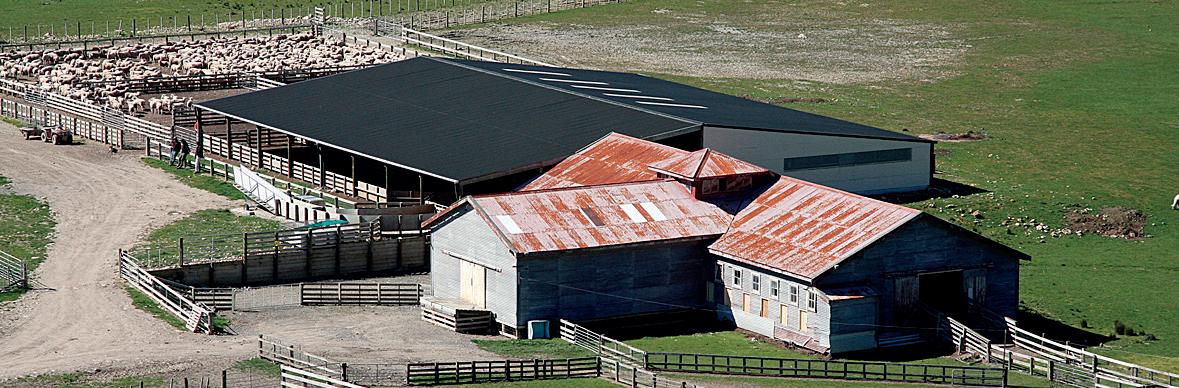

Leasee. Contact Pete Hammond. Phone 027 412 1466. trekh.b@xtra.co.nz

DAIRY OR GRAZING FARM wanted. Open to leasing, equity, share farming or developing land in partnership. Rangitīkei, Manawatū or HB areas. Phone Michael 027 223 6156.
GIBB-GRO GROWTH PROMOTANT GIBBOOST

WHAT’S SITTING IN your barn? Don’t leave it to rust away! We pay cash for tractors, excavators, small crawler tractors and surplus farm machinery. Ford –Ferguson – Hitachi – Komatsu – John Deere and more. Tell us what you have no matter where it is in NZ. You never know.. what’s resting in your barn could be fattening up your wallet! Email admin@ loaderparts.co.nz or phone Colin on 0274 426 936 (No texts please)
PROMOTES QUICK PASTURE growth. Only $6.50+gst per hectare delivered. 0508-GIBBGRO [0508 442 247] www. gibbgro.co.nz. “The Proven One.”
INCREASE PASTURE growth and dry matter. $5.50 per/ha ex store + GST. Phone 0508 733 343. www.vernado.co.nz
Stud Herefords & Angus
3G Recorded Jerseys, Xbred & Friesian Quietest Bulls in the Country!
12 years experience
Tested & Vaccinated For Sale or Lease

Herd Lease Bulls from $800




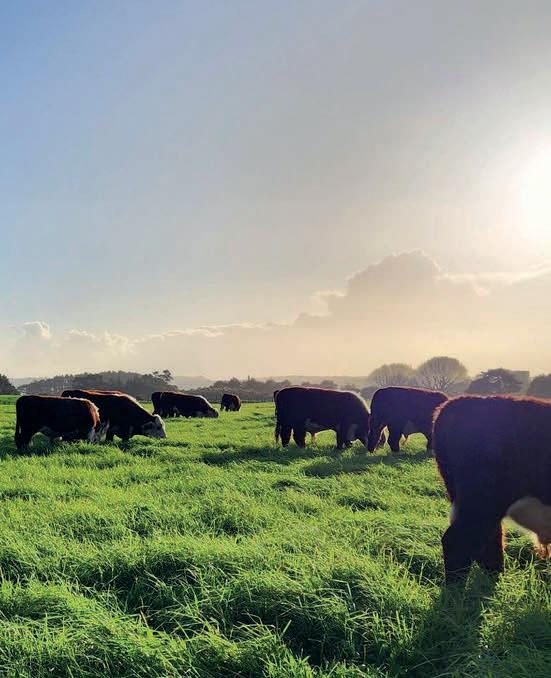


Heifer Lease Bulls from $600



30 minutes west of Hamilton
Chris & Karren Biddles, RD1, Te Kopuru,
A Financing Solution For Your Farm


2YR BEEF BRED or FRSN/HERE STEERS 400-500kg E info@rdlfinance.co.nz

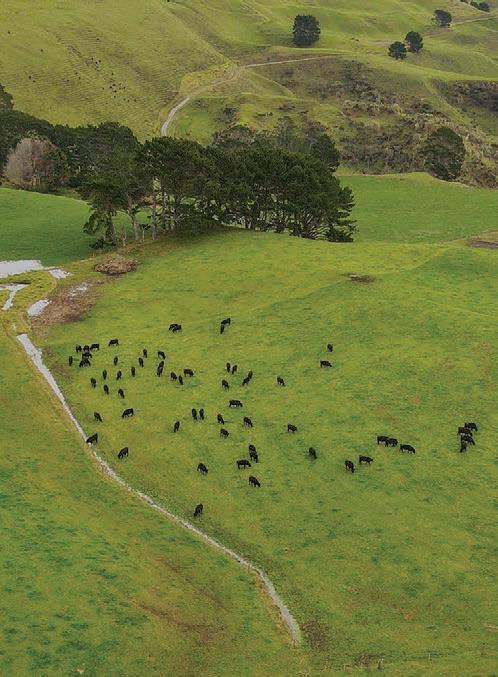


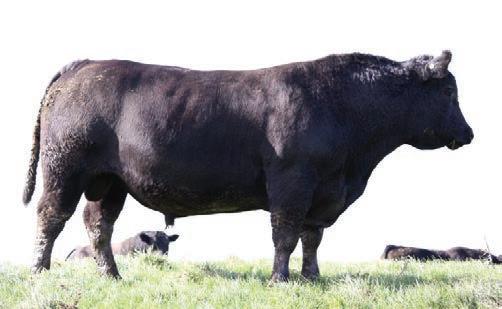
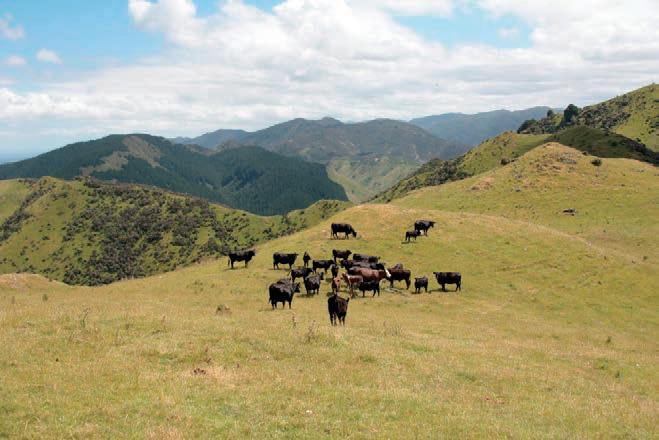

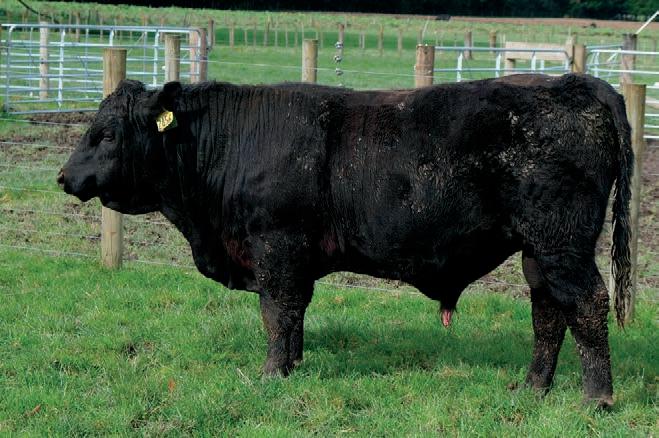

A man in ancient Rome cannibalizes his wife and frames his neighbor Ridiculus.
Ridiculus goes to court and says, “I’m-a in-nocent-a!
You have-a gott to beli-eve-a me!” (Ancient Romans sounded like Italians, in case you didn’t know.)
They sentence him to fight in the colosseum. Turns out he is quite good at fighting. In no time he becomes the best, and he makes a great friend along the way.
One evening, after another day of tough fighting, his friend says, “Don’t you wish-a, with all of your figh-ting skills, you could have-a your neigh-bor in front of-a you now-a? Wouldn’t you want-a to cut-a him right in half-a?!”
Ridiculus says, “I used to be-a furious about-a it, but now I’m-a glad he ate her!”


Here at Farmers Weekly we get some pretty funny contributions to our Sale Talk joke from you avid readers, and we’re keen to hear more!
If you’ve got a joke you want to share with the farming community (it must be something you’d share with your grandmother...) then email us at: saletalk@agrihq.co.nz with Sale Talk in the subject line and we’ll print it and credit it to you.
Conditions apply


Future-proof your farming operation when you buy rams this season.

WormFEC Gold genetics are 578c above MW national flock average performance, plus have the highest levels of resistance to parasites in NZ.

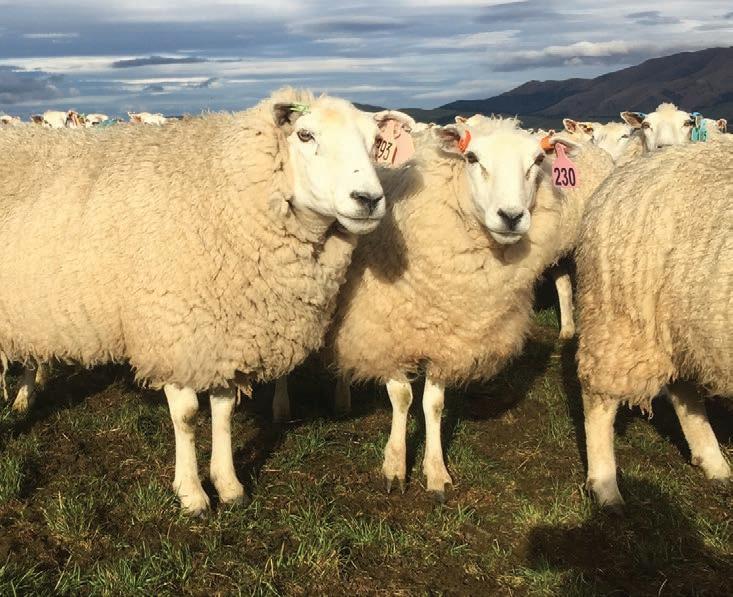
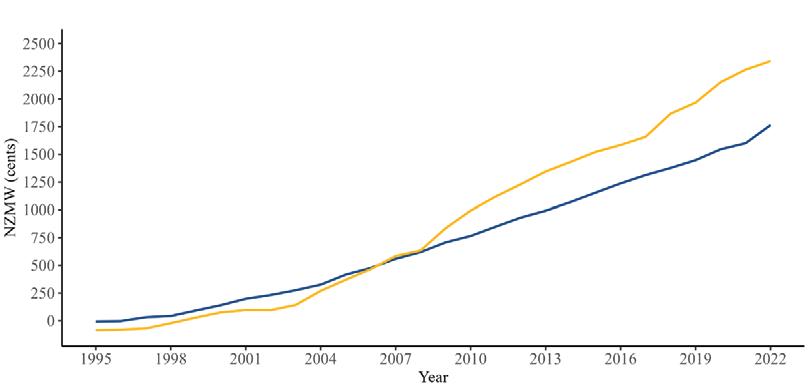

- Reduce your dependence on drenching over time




- Increase your flock performance




- Reduce the need for dagging


- Follow Wormwise protocols


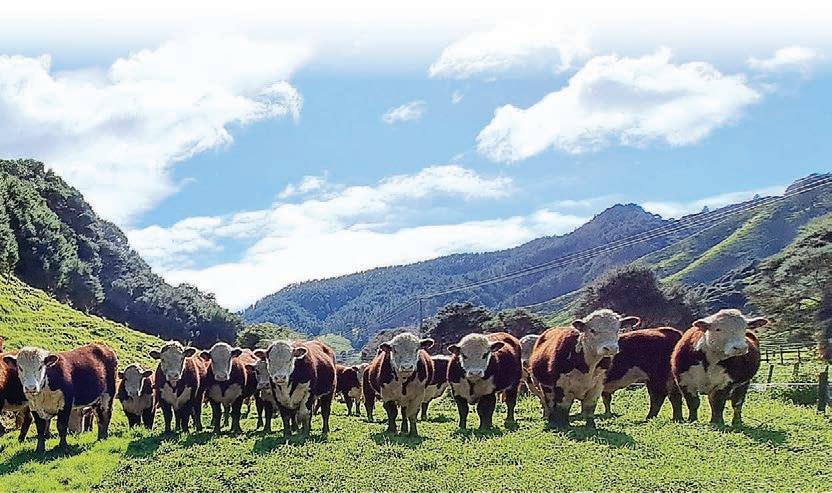
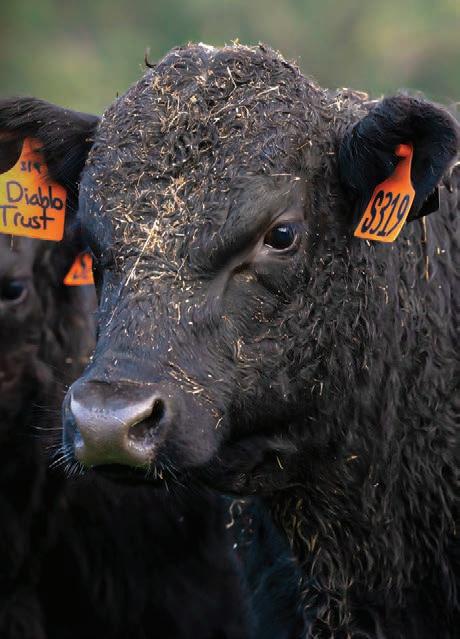

Specialist low birth weight bulls averaging birth weight EBV of 1.7, top 10% of breed, compared to the Trans Tasman breed average of 4.
Tuesday
Herd rebuilding in the US was widely expected to tighten supply this year. Instead slaughter rates have approached record levels.
the US beef supply and eventually positive outcomes for imported beef demand.
THERE was widespread anticipation that the United States imported beef market would have delivered strong returns this year. This was based on tightening supplies as the US moved into its herd rebuilding phase.
While there was some good upside earlier on, it couldn’t be maintained, and current imported prices have fallen below five-year average levels.
The only hope is what didn’t eventuate this year will come to fruition next year.

Data for the first six months of this year showed a distinct lack of herd rebuilding. US beef cow slaughter was the second highest in 30 years, just falling short of 2022’s record. It was also supported by a significantly higher US dairy cow slaughter because of falling milk prices.
Overall beef cow slaughter rates are lower than last year, but they are still vastly higher than historical patterns. US beef cows have been the largest casualty of lingering drought conditions. This will have lasting implications for
US domestic cow prices are currently sitting just shy of US$3/ lb. In contrast, US imported beef prices have struggled to gain any pricing traction. A wave of much higher volumes from Australia and New Zealand hasn’t helped.
In the seven months to the end of July, these two countries combined shipped an extra 75,000t of beef into the US compared to the same period last year. Indications from the US point to a further surge of Australian beef thus far into August.
These higher imported beef supplies dampened demand and contributed to a wide spread between US domestic and imported prices.
Armed with choice, higher supplies of fresh domestic lean beef with its multiple use options have been favoured over frozen imported beef, which is generally only used in the foodservice sector – a sector that has struggled with high prices and reduced spending this year.
Every piece of data out of the US points to lower cattle numbers over the next few years, be it
As US beef supplies start to run thin, reliance on imported product will return. All going to plan, this bodes well for stronger farmgate returns through 2024.
cow and calf numbers, feed lot numbers or even cattle outside of feedlots.
The US Department of Agriculture July inventory saw all cattle and calf numbers drop by 2.7 million head since July 2022. An 800,000-head drop in beef cow numbers, combined with a 600,000-head drop in heifer numbers, points to even tighter calf numbers in 2024 and 2025. Ultimately this will head to lower beef production within the US. At some point, based on weather conditions and profitability, US
farmers will start to rebuild cattle numbers, which will further tighten production.
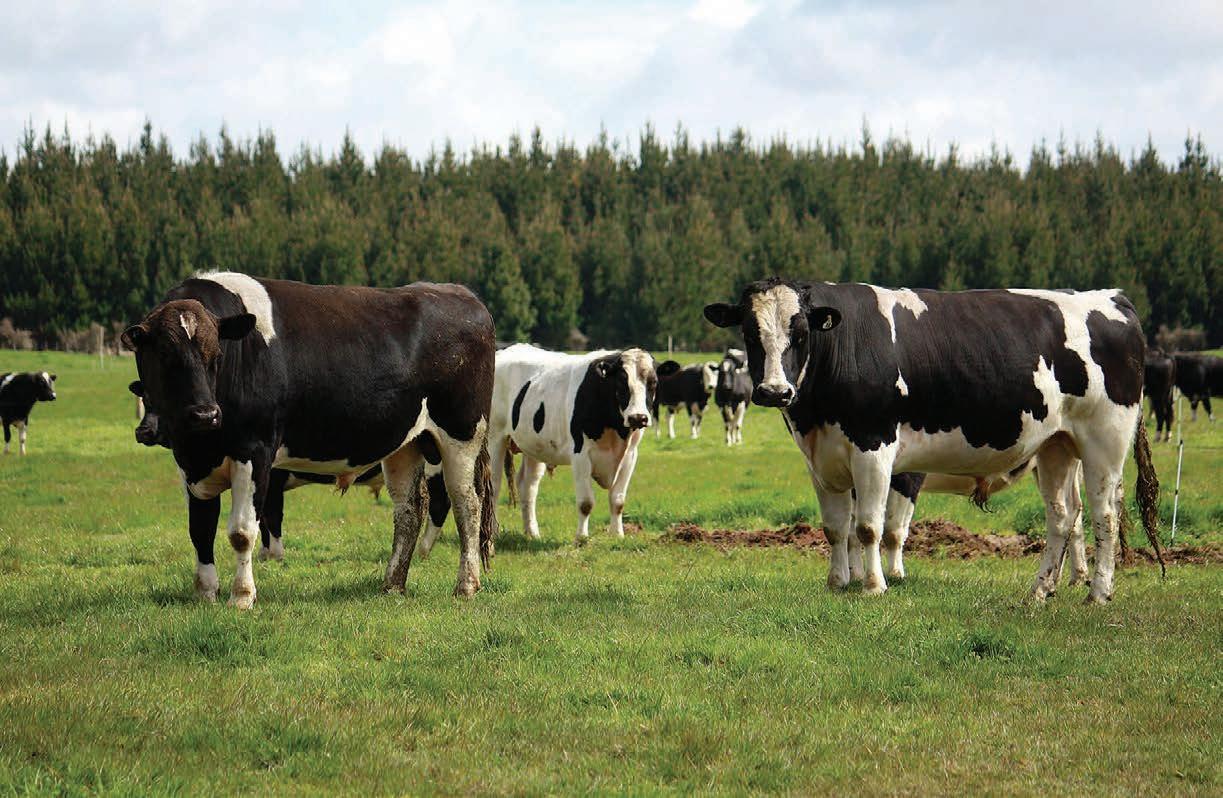
The estimated inventory of US beef cows on July 1 was 29.4 million head. The last time the beef herd fell this low was in 2014. Back then the drop in availability created a positive pricing environment for imported beef as the US needed to offset their production shortfalls.
By mid to late 2014, buoyed by strong export demand, NZ bull and cow prices climbed over $4/kg and $5/kg respectively, with prime prices also following suit. While hard to imagine now, this was pushing into new pricing territory back then. Those higher prices were maintained until covid-19 appeared in early 2020.

The key is if the US is facing large production lows from next year then, as US beef supplies start to run thin, the country’s reliance on imported product will
return. This leads many to expect 2024 will be a solid year for US imported beef prices. All going to plan, this bodes well for stronger farmgate returns through 2024. There is a risk we may not see the pricing reaction of days gone by. This is simply because external factors continue to exert more influence on the general market than through the last rebuild phase. Drought, increased Australian supplies and Brazil’s production all remain additional wildcards.
Despite this, the prospects are looking decidedly stronger than this season. The question is, will we have the beef numbers available to fully capitalise on this brighter outlook?
• Last week’s market analysis piece stated farmers are reluctant to rear 60-100kg calves. This should have read 60-100 calves. We apologise for the error.
A key date on the calendar, the annual Feilding Marton Hogget Fair, yarded just over 8000 sheep on August 16. With a falling schedule, many vendors throughout the country have opted to maximise lamb weight. This was especially evident at Feilding as a large proportion of lambs were very heavy and the average weight lifted nearly 5kg compared to last year.
The average price was just over $27 per head lower than last year and woolly lambs were heavily discounted. However, most lines sold and, considering the uncertainty in the market, it was a good day out.
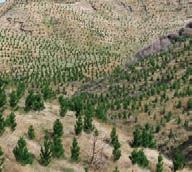
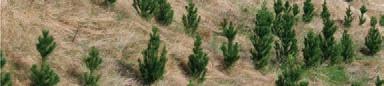















NOTE: Slaughter values are weighted average gross operating prices including premiums but excluding breed premiums for cattle.


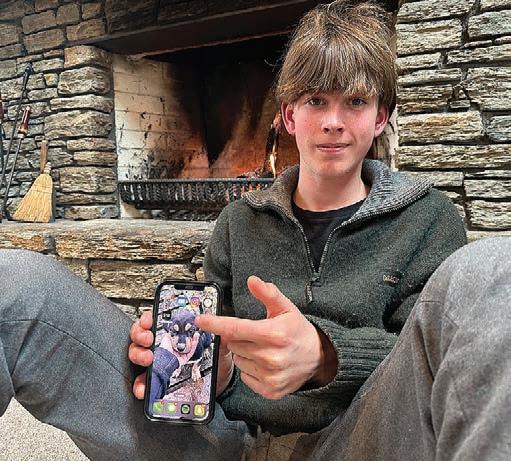



THE days may be getting longer but in some regions you may not be noticing it due to all the extra cloud.
The “neutral” weather pattern we’re in this winter means we don’t have a dominant direction our weather is coming from, although in the past month or two there has been a definite swing to more westerly-driven weather.
This set-up has allowed for plenty of low pressure zones and fronts to move into the New Zealand area, while the high-pressure zones mostly staying parked over Australia.
This is allowing for plenty of cloud to smother our southern regions and those in the upper North Island. In particular it’s been extra gloomy in Southland, Otago, South Canterbury and some coastal parts of Canterbury towards Banks Peninsula, the southern half of the West Coast, Wellington, Wairarapa, Kāpiti, Horowhenua, Manawatū, Whanganui, Taranaki, Auckland and Northland.
That’s a large percentage of land





that’s cloudy – not to mention that’s roughly three-quarters of NZ’s population.
Cloudy weather can lead to SAD, or Seasonal Affective Disorder.

If you’re feeling a lack of energy, struggle to wake up, have a general feeling of flat and down coming and going across the day, it’s possible you may be suffering from SAD.




It’s quite normal to experience this when our nights are longer and the days shorter – and it certainly doesn’t help to have so much extra cloud around lately.
For most of us, experiencing SAD is only mild and we cope with it just fine. But for others the gloom of darker days can really affect you mentally in crippling ways, especially if it makes other issues you may be dealing with feel even heavier and darker.
Thankfully the days are now getting longer – and that increases the fastest in September by 20 minutes of extra sunlight each and every week. Also, spring is just around the corner with more westerlies to move our weather along.
Not everyone is in the doom and gloom – surprisingly, waterlogged Waikato has seen above normal
sunshine hours over the first half of August. Also surprisingly, the upper West Coast is also in a sunlight surplus.
But the region with the most amount of more-than-usual sunlight is perhaps one of the regions most in need of it – Hawke’s Bay, with over 125% of the normal brightness from the sun in the first half of this month.
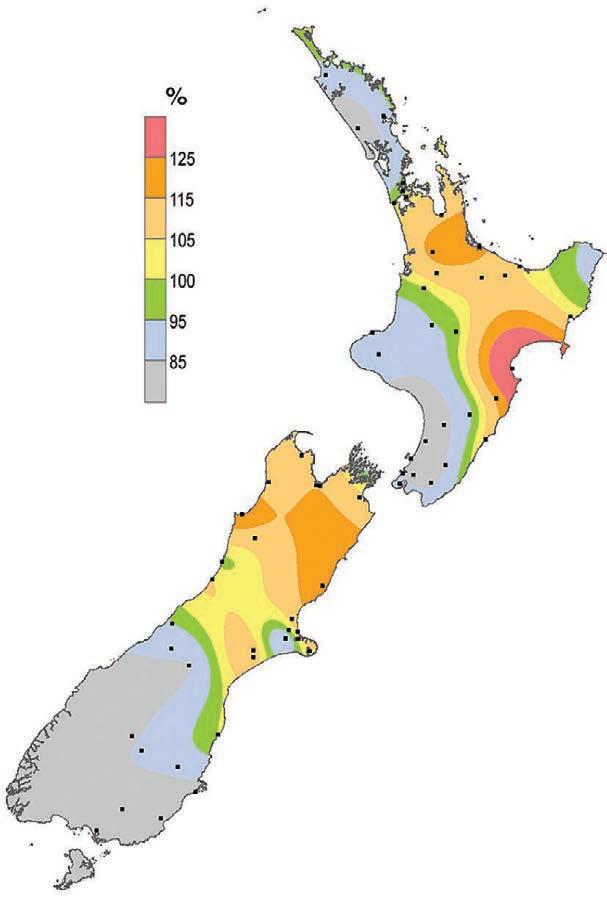
In real terms that means instead of the average five to six hours a day this region normally has with bright sunshine, it has had eight to nine hours on average (based on NIWA public data). The sunshine, coupled with some windy westerly days and some nights with frosts, has helped further dry parts of Hawke’s Bay lately.

Following weekend rain, many regions will be drier this week
• High pressure kicks off this week across NZ (been a while!)
A weak cold front midweek falls apart
• More high pressure returns late week
Windy westerlies may clip the lower South Island late week























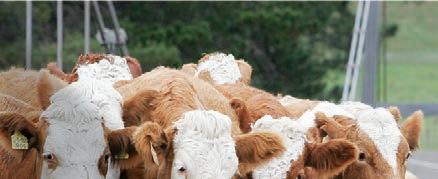

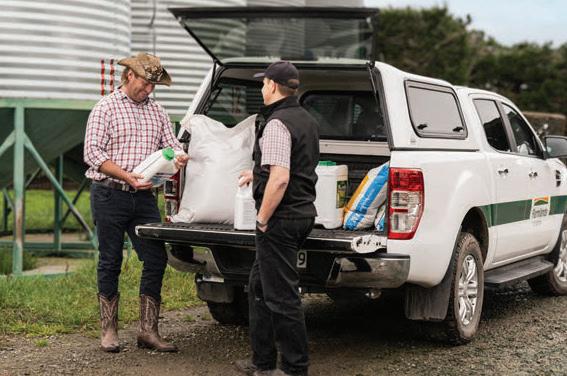


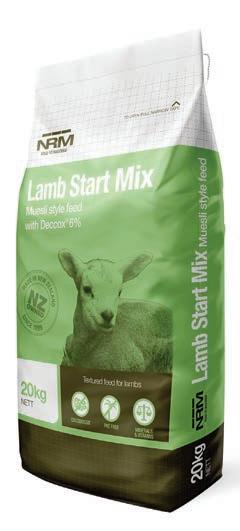








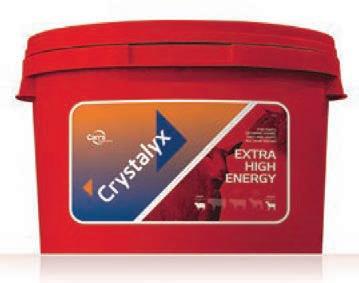



























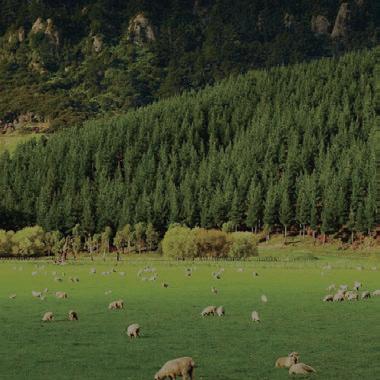















































































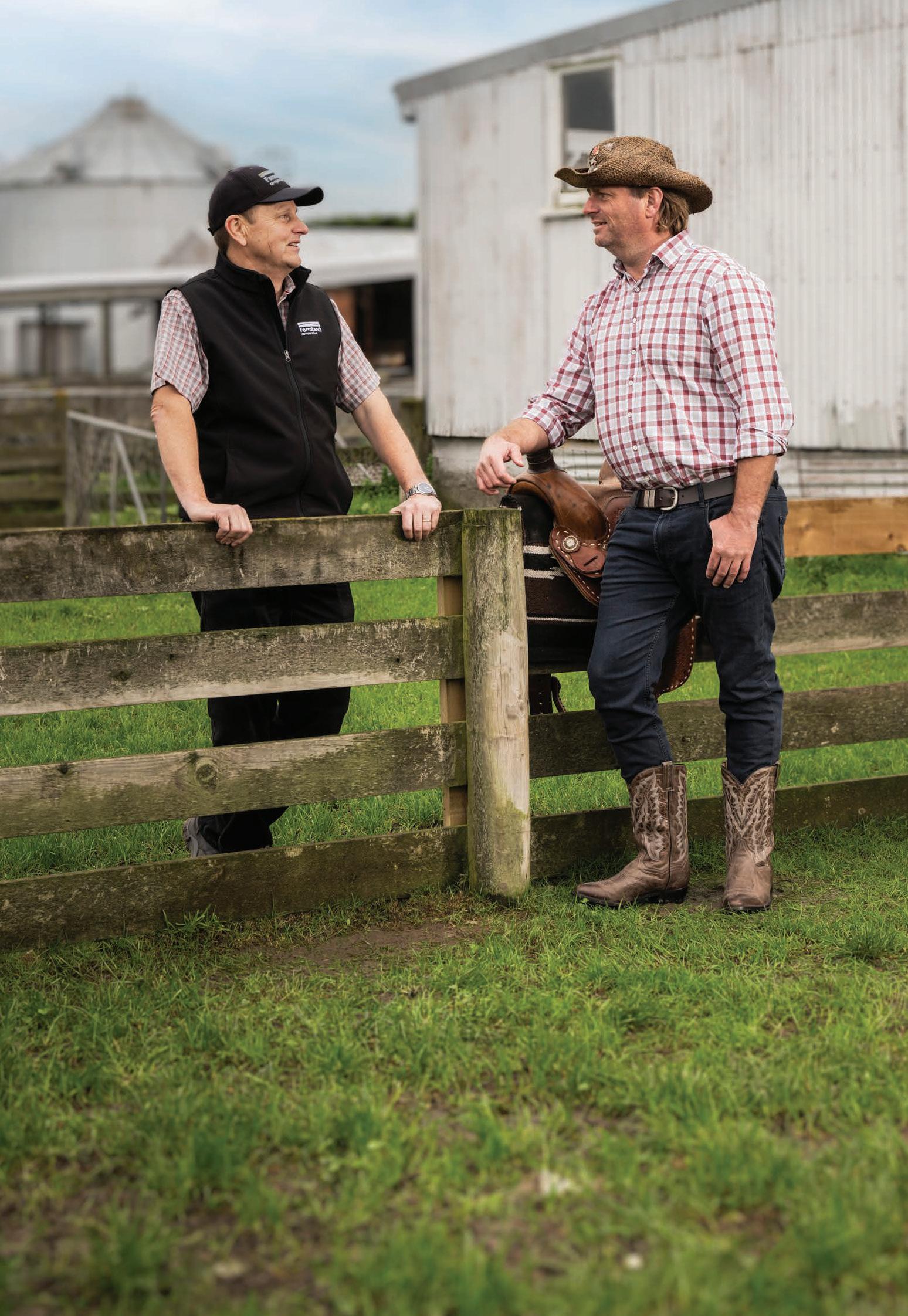








Excludes loading ramp. Add loading ramp for $3,695.00 + GST (Plus freight)
$ 7,295 $ 14,990
• 7-rail multi-purpose for cattle and sheep
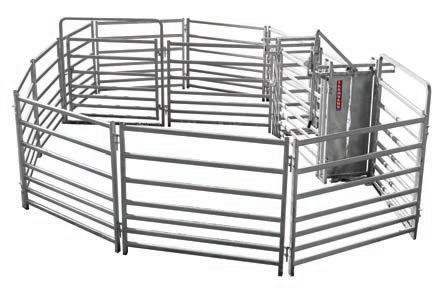
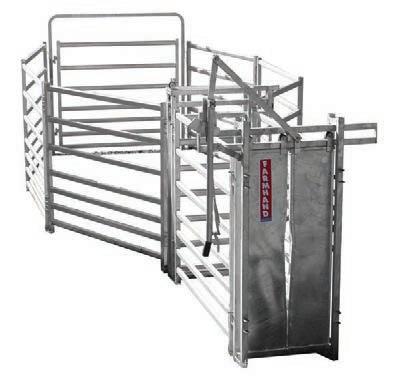
• Farmhand walkthrough
head yard size, depending on animal size)
$9,795 $19,995 $ 34,990