
PEOPLE
N EW Zealand’s agricultural and potentialindustrieshorticulturalhavehugetosustainably feed more people in the world, ANZ agricultural economist Susan Kilsby says. A global population forecast to approach 10 million people by 2050 is going to need 50%60% more food than is currently produced.Kilsbyis the New Zealand contributor to a comprehensive insight report on food sustainability by ANZ bank for its clients here, in Australia and around the “Agricultureworld.currently uses 40% of land and 70% of freshwater, and is responsible for 30% of global carbon emissions, so it is necessary to transform the sector to make it sustainable,” Kilsby said. “Just increasing food production is not a sustainable solution. “For food production to be sustainable other aspects need to be addressed, such as reducing food wastage via better supplychain management, changing our dietary mix, and adopting technology to drive efficiencies throughout the food production supplySurveyschain.”show that sustainability of food production is a priority with more and more consumers in the developed world, and NZ needs to get recognition for what are already good practices. Rising incomes and changes in dietary preferences towards proteins and fruits will put further pressure on food producers, the ANZ report Expansionsays.infood production over the past three decades to sustain the present population was achieved by expanding the area of irrigated land, converting forest to agricultural land, adopting new technologies, increasing mechanisation, using genetically modified seeds and very large increases in the use of fertiliser, pesticides and herbicides. “This has resulted in plentiful production but has come at a huge and unsustainable environmental cost to the Agricultureplanet.”contributes nearly 45% of methane emissions, 80% of nitrous oxide emissions, and about 30% of total greenhouse gas emissions, via land-use change, farm-level production and the processing of agricultural products.
Life’s no beach for coastal farmer Dairy farmer Owen Greig, pictured with grand-daughter Nellie Sarcich, is battling ponding on his already saturated property after yet more rain. 5
NEWS
Emissions are highly concentrated in methane from ruminant livestock, manure management and rice farming. Nitrous oxide emissions come primarily from fertiliser usage.
TECHNOLOGY 42 Vol 20 No 34, September
NEWS 22 Te Kapunga Dewes is happy for iwi to take credit for forcing the exotic carbon forests issue. 39 Maize growers facing increasing production costs need to refine their production systems. 5, 2022 View online at farmersweekly.co.nz
PEOPLE 6 Head of MPI’s new farm support services says he’s not out to compete with rural professionals.
The good news is that emissions per kilogram of production and per capita of producers have been falling.
NORTH ISLAND FENCING BEST PRACTICE DAYS Gisborne | Thursday 29 September | 9.30am 3.00pm Tauranga | Tuesday 27 September | 9 30am 3 00pm SETTING INDUSTRY STANDARDS WWW.FCANZ.ORG.NZ/EVENTS Register online before 20 September: See best practice fencing techniques showcased through practical demonstrations, learn new skills, explore the latest fencing gear and meet like minded fencing contractors at your local FCANZ Fencing Best Practice Day 1
NZ farms key to green revolutionfood
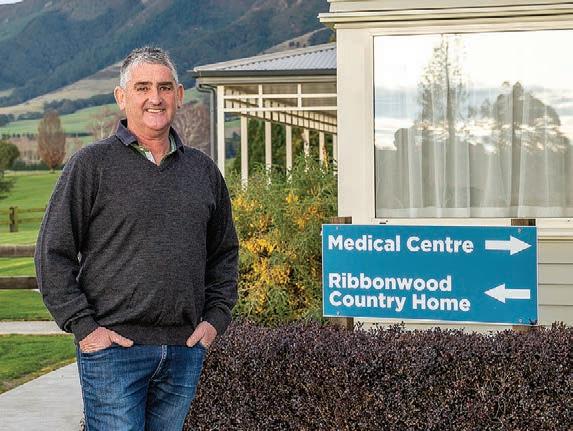
Keeping a sharp eye out for health workers West Otago needs health professionals and Allister Body, the chair of West Otago Health, said they are constantly looking for the next employee.
$4.95 Incl GST Call for CCC to engage 12 Hugh Stringleman NEWS Sustainability Continued page 5




Jocelyn leads Plant & Food Research’s Food Innovation portfolio, made up of approximately 130 researchers. The food innovation science teams investigate horticultural, arable, and marine foods, as well as the influence of food on health and wellness. A recent focus has been strengthening the value proposition for future plant-based foods for New Zealand.
“We’re working five to ten years ahead to ensure NZ farmers can continue to be sustainability leaders on the world stage.“
Suzanne Young has worked in the agricultural industry for over 15 years. She has a Bachelor of Science degree in Zoology and Ecology and a Masters of Science in Animal Behaviour and Welfare. With a special interest in the future of food, Suzanne is the Programme Manager for our SFFF partnership, a $25.1m fund in partnership with The Ministry of Primary Industries.
FarmingFutureopportunities. BAL13369_BallanceEx New Food Technology DPS_380x545mm_FINAL.indd 1 2
These Future Farming Conversations are proudly brought to you by BallanceEx and hosted by dairy farmer Tangaroa Walker. What is BallanceEx? It’s our “Ted-Ex”- inspired platform that brings together experts, scientists, and other big thinkers. They share their expertise and points of view, getting us ready for the future of farming and growing in New Zealand. For more from BallanceEx visit ballance.co.nz/ballanceex
FarmingFutureopportunities. BAL13369_BallanceEx New Food Technology DPS_380x545mm_FINAL.indd 1
With climate change and global consumer demand for more choice, we are seeing food producers innovate and diversify their offering. This creates exciting opportunities – and plenty of questions too! Is lab-grown meat a better choice? Can alternative proteins be less processed/closer to nature? Is oat milk really milk? Will anything ever taste as good as a well-aged prime beef steak? What role do NZ farmers and growers have to play in meeting these changing demands? We spoke with the experts about the future of food, and how farmers and growers can make the most of these
“There’s nothing better than showing the world how it’s done, from one of the most challenging parts of the world.” When not running his 500-cow dairy farm in Southland, Tangaroa is using his own experience to teach others about the farming industry. His mission to redefine New Zealand farming led him to BallanceEx, where he’s able to share his enthusiasm for innovation with like-minded farmers.
Tangaroa Walker, Host & farmer Suzanne Young Dr. Jocelyn Eason
Suzanne Young has worked in the agricultural industry for over 15 years. She has a Bachelor of Science degree in Zoology and Ecology and a Masters of Science in Animal Behaviour and Welfare. With a special interest in the future of food, Suzanne is the Programme Manager for our SFFF partnership, a $25.1m fund in partnership with The Ministry of Primary Industries.
“New Zealand isn’t recognised as high-tech overseas, but we should be.”
“We’re working five to ten years ahead to ensure NZ farmers can continue to be sustainability leaders on the world stage.“
The future of food
“New Zealand isn’t recognised as high-tech overseas, but we should be.”
The future of food
“There’s nothing better than showing the world how it’s done, from one of the most challenging parts of the world.” When not running his 500-cow dairy farm in Southland, Tangaroa is using his own experience to teach others about the farming industry. His mission to redefine New Zealand farming led him to BallanceEx, where he’s able to share his enthusiasm for innovation with like-minded farmers.
Jocelyn leads Plant & Food Research’s Food Innovation portfolio, made up of approximately 130 researchers. The food innovation science teams investigate horticultural, arable, and marine foods, as well as the influence of food on health and wellness. A recent focus has been strengthening the value proposition for future plant-based foods for New Zealand.
These Future Farming Conversations are proudly brought to you by BallanceEx and hosted by dairy farmer Tangaroa Walker. What is BallanceEx? It’s our “Ted-Ex”- inspired platform that brings together experts, scientists, and other big thinkers. They share their expertise and points of view, getting us ready for the future of farming and growing in New Zealand. For more from BallanceEx visit ballance.co.nz/ballanceex Future Farming Meet the Panel
With climate change and global consumer demand for more choice, we are seeing food producers innovate and diversify their offering. This creates exciting opportunities – and plenty of questions too! Is lab-grown meat a better choice? Can alternative proteins be less processed/closer to nature? Is oat milk really milk? Will anything ever taste as good as a well-aged prime beef steak? What role do NZ farmers and growers have to play in meeting these changing demands? We spoke with the experts about the future of food, and how farmers and growers can make the most of these
Future Farming Meet the Panel
Tangaroa Walker, Host & farmer Suzanne Young Dr. Jocelyn Eason


Scan or subscribe to listen to the full episode:
In addition to traditional ways to produce food, there are new ways to help produce food at scale to feed our growing population, whilst reducing the environmental footprint. While they may not all be relevant to NZ farms, it’s worth thinking about how these methods may integrate into NZ’s food production opportunities in the future.
NZ farmers and growers are already global leaders in premium, sustainable food and fibre. Continued effort will be required to maintain this position as other nations try to catch up to us. But with a growing global population, increased pressure from climate change, and changing consumer demand, it will become more and more important to look for new ways to optimise your farming and growing system. We need more food, and more food producers –which means farmers and growers will matter more than ever.
can new food choices impact how you farm and grow?
A closer look at the future of foodHow
While a lab-grown steak or rack of lamb may not be possible yet, it’s likely we’ll see lab-grown meat used for things like mince, chicken and pork where protein convenience is key.
Helping you be productive and sustainable whilst caring for our unique natural resources. If the natural world is healthy, so too are the people.
Advances in food science are helping farms be more productive and sustainable. Genetic Engineering, or Genetic Modification (GE/GM) is the science of modifying a plant or animal’s genes to produce desirable traits. While not being used in NZ yet, GM/GE is being used more and more around the world, so it’s something to keep an eye on for the future.
It’s not about swapping entire farming systems, or replacing one method of food production with another. It’s about continually adapting and learning, staying open to new ideas, perhaps having a trial paddock or two to test out opportunities that could work on your farm. Talk with your neighbours, industry good organisations and other experts about what they’ve seen or are doing. What issues are they dealing with? What opportunities do they see? On-farm field day events as well as annual regional ones are great showcases to see what others are considering and working on. Farm and catchment groups are also great ways to share ideas and learn together. If you’re a Ballance shareholder, register to attend one of our in-person BallanceEx events. These involve future thinking experts alongside farmers and growers like you who are wondering where best to start.
Vertical Farming
This involves growing crops in vertically stacked layers of trays, housed within climate controlled buildings. Vertical farming allows food to be grown and produced closer to highly populated areas like cities, cutting down on land use and shipping. This will become more important as environmental pressures increase. For example, when COVID-19 reached Singapore – where the majority of food is imported – their food supply was all but cut off. Having the ability to produce foods in regions with little farmland or dense populations, helps futureproof food production and keep populations fed.
Lab-grown meat
Currently NZ horticulture produces $8 billion of value from just 140,000 ha. Whilst not all our agricultural land is suitable for cropping, it’s estimated that there is more than 1.7m ha of land that could grow plant protein crops, based on slope, ease of access and climate. As weather patterns shift due to climate change, we’ll need to adapt what we grow to suit these changing conditions.
One option to explore is introducing alternative plants and grains to your farm’s rotation. Understanding the unique landscape including climate and soil parameters of your land, could mean it is favourable for growing crops such as quinoa, oats, or other crops, providing opportunities for diversification on your farm.
There’s a strong consumer trend towards variety, where consumers demand more unique choices. Consumers are looking for more options beyond meat, rice, and wheat.
Vertical farming is already a reality for annual crops like leafy greens and herbs, but creating varieties and growing systems for perennial tree crops will be a little harder.
One example of this is CRISPR technology. CRISPR technology acts as a precise pair of molecular scissors that can cut a target DNA sequence, meaning it can be used as a gene editing tool. CRISPR cuts DNA at a highly specific point to cause a mutation which can, in turn, switch the targeted gene in an organism on or off for different outcomes. For example, gene editing might be able to help produce a crop with waxier skin, so it can survive longer in shipping and reduce wastage, or improve yield.
What are the opportunities for NZ farmers and growers?
What’s happening in the world of food science?
Gene editing technologies also have the benefit of making faster genetic progress than traditional breeding, achieving results in 2-3 years that would take ten years in traditional breeding programmes. It’s an exciting area to keep an eye on for the future. Technologies such as CRISPR could help you to farm and grow more productively and sustainably. NZ has a way to go yet to decide if the opportunity can be accommodated in our current GM free positioning.
Taiao ora, Tangata ora.
withBallanceNature
Exploring options you’ve never tried before can help you keep up with consumer demand for more variety on the plate, and also make your farming and growing system more flexible in the future, to better withstand the impacts of climate change and help manage your environmental footprint.
Brought to you by
We’ve heard a lot recently about lab-grown meat, which is produced through cultures of animal cells. It’s another way to offer options to consumers looking for more choice, and keep the growing population of the world fed.
24/08/22 12:30 PM 3
What’s changing in how we grow food?


4 Contents SALES CONTACTS Andy Whitson | 027 626 2269 New Media & Business Development Lead andy.whitson@agrihq.co.nz Steve McLaren | 027 205 1456 Auckland/Northland Partnership Manager steve.mclaren@agrihq.co.nz Jody Anderson | 027 474 6094 Waikato/Bay of Plenty Partnership Manager jody.anderson@agrihq.co.nz Donna Hirst | 027 474 6095 Lower North Island/international Partnership donna.hirst@agrihq.co.nzManager Grant Marshall | 027 887 5568 South Island Partnership grant.marshall@agrihq.co.nzManager Debbie Brown | 06 323 0765 Marketplace Partnership Manager classifieds@agrihq.co.nz Grant Marshall | 027 887 5568 Real Estate Partnership realestate@agrihq.co.nzManager Andrea Mansfield | 027 602 4925 National Livestock Manager andrea.mansfield@agrihq.co.nz PUBLISHERS Dean and Cushla Williamson Phone: 0800 85 25 cushla.williamson@globalhq.co.nzdean.williamson@globalhq.co.nz80 Farmers Weekly is Published by AgriHQ PO Box 529, Feilding 4740, New Zealand Phone: 0800 85 25 80 Website: www.farmersweekly.co.nz ISSN 2463-6002 (Print) ISSN 2463-6010 (Online) EDITORIAL Bryan Gibson | 06 323 1519 Managing bryan.gibson@agrihq.co.nzEditor Claire Robertson claire.robertson@agrihq.co.nzSub-Editor Neal Wallace | 03 474 9240 neal.wallace@agrihq.co.nzJournalist Gerald Piddock | 027 486 8346 gerald.piddock@agrihq.co.nzJournalist Annette Scott | 021 908 400 annette.scott@agrihq.co.nzJournalist Hugh Stringleman | 09 432 8594 hugh.stringleman@agrihq.co.nzJournalist Richard Rennie | 07 552 6176 richard.rennie@agrihq.co.nzJournalist Nigel Stirling | 021 136 5570 nigel.g.stirling@gmail.comJournalist PRODUCTION Lana Kieselbach | 027 739 4295 production@agrihq.co.nz ADVERTISING MATERIAL Supply adcopy@agrihq.co.nzto: SUBSCRIPTIONS 0800 85 25 subs@agrihq.co.nz80 PRINTER Printed by Stuff Ltd Delivered by Reach Media Ltd New Zealand’s most trusted source of agricultural news and information Advertise Contents News in brief Get in touch SPRING SOUNDS: Lambs travelling to the yards with their mothers herald the start of the spring selling season. PAGE 58 Subscribe on YouTube Meet the people behind the farm gate On Farm Story is a celebration of farmers and farming - told in under five minutes. News . . . . . . . . . . . . . 1-30 Opinion . . . . . . . . . 34-37 World . . . . . . . . . . . . . . 38 People . . . . . . . . . . 39-41 Technology . . . . . . . . . 42 Ag&Ed . . . . . . . . . . . . . 43 Real Estate . . . . . . 44-48 Marketplace . . . . . 49-50 Livestock . . . . . . . . 51-57 Markets . . . . . . . . . 58-63 Weather . . . . . . . . . . . . 64 Seaweed farm greenlit
Chan joins NZPork board New Firearms Registry law
Fieldays tickets on sale
CONSTRUCTION of a land-based aquaculture farm to produce methanereducing supplements for cattle from native New Zealand seaweed will start later this year at Ocean Beach near Bluff in Southland. In what CH4 Aotearoa said is a world first, the company is to construct an ecopark to farm and cultivate a NZ-native seaweed, Asparagopsis armata, for its animal
FIELDAYSsupplements.,the
THE police are inviting public submissions on proposed regulations to support the new legislation for the Firearms Registry – which will be in place by June 2023. The registry will link firearms to licence holders and track sales of all firearms, parts andOverammunition.time,thiswill ensure greater, centralised oversight of the number and location of firearms as well as who holds them.
JESSIE Chan has been appointed to the NZPork board as an independent director. Chan said this is a challenging time for pig farmers and the industry. “The sector has significant concerns about the impractical regulations in the draft Code of Welfare and a growing wave of imported pork produced using practices that are illegal in this country.”
Southern Hemisphere’s largest agricultural event, is being held in November after covid restrictions prevented it from being held in June, its traditional month.Itwill be the same event in the same location – Mystery Creek, Hamilton – but just at a different time, said the Fieldays Society. Fieldays 2022 runs from November 30 to December 3. Tickets can be purchased at tickets.fieldays.co.nz/tickets/.


More food, more sustainably is the challenge
demand&
Fielding dairy farmer said, pasture cover is lower than ideal, meaning low pasture utilisation and a tough winter for livestock and farmers. Hocken had to dip into feed reserves early but said recent fine weather has encouraged some pasture growth. Hawke’s Bay Federated Farmers president Jim Galloway said persistent rain has coincided with lambing and sowing. “We haven’t had the volume of rain of other places, but it is very wet underfoot, especially in the Central Hawke’s Bay.” Fortunately, temperatures have beenGallowaywarm.said the ground conditions are so wet, machinery cannot get onto paddocks in some areas.The sowing of onions and peas is late, but Galloway said seeding has to be programmed so harvesting at the other end coincides with the ability of processing facilities to handle the incoming produce. “It’s a real art to get continuity of supply to processing factories.” Galloway said this means sowing can’t suddenly be unleashed when the weather improves. These sowing delays could compound and delay the planting of sweet corn, maize and beetroot.
Neal Wallace NEWS Weather
WORST HE’S SEEN. Dairy farmer Owen Greig, pictured with granddaughter Nellie Sarcich, said his Himatangi farm is normally free draining, but another 70mm a week ago caused more ponding on his already saturated property. We’re all a bit sick of putting on wet weather gear. Mat ManawatūHockendairy farmer
Every
Long Sofmakeswetpondspaddocks
Continued from p1
month, receive in-depth analysis of key trade data, important financial markets, and critical market trends here and around the world. FARMERS WEEKLY – farmersweekly.co.nz – September 5, 2022News 5
ATURATED soil across parts of the central North Island is causing headaches for farmers with lambing, calving and delayed tractor work. The volume of rain is less than that which has fallen on Nelson and Marlborough, but North Island farming leaders say its persistence has saturated water tables, creating mud and ponding. One badly impacted area is the coastal sand country between Marton and the Kāpiti Coast. Dairy farmer Owen Greig said his Himatangi farm is normally free draining, but another 70mm a week ago caused more ponding on his already saturated property. The wet conditions have been difficult for stock and also for staff, who he says are doing a fantastic job in testing circumstances.Heisconcerned about the impact of ponding on pasture he normally starts cutting for silage in mid to late October. Trees have toppled over due to the saturated soils weakening the hold of their roots. Greig said he hopes there will not be any strong winds before the farm starts to dry out. Manawatū-Rangītikei Federated Farmers president Murray Holdaway said some areas are waterlogged, causing low pasture growth and stock utilisation. “There hasn’t been a major flood event as such but rather a prolonged period of wet weather,” Holdaway said. Manawatū dairy farmer Mat Hocken said constant rain has made this the most challenging winter for him in more than a decade.“We’re all a bit sick of putting on wet weather gear,” Hocken said. Following a dry autumn, the
5 SHEEP & BEEF REPORT Subscribe from only $100 per agrihq.co.nz/our-industry-reportsmonth
supplyTrack
While grain and meat production grew 60%-80% over the past three decades, emissions grew by 20%.Reducing emissions from the agriculture sector will be tough compared to other sectors, as there is a need to ensure ongoing food security, biodiversity, the viability of farming communities and meeting nutritional needs. Therefore, a transformationgradualisrequired and there are some relatively easy wins, including reducing food wastage, considering what is eaten, and applying new farming techniques, including crop intensification. Though Australia and NZ are among the most efficient users of water in agriculture – defined as the value created for each cubic metre of water used – world use and degradation of water has major“Withchallenges.theglobal agricultural industry having reached a critical threshold limit there is a heightened need to restore natural resource usage to sustainable levels. “This means limited land expansion, less use of water, less use of fertilisers, and a reduction in greenhouse gas emissions, which can most easily be achieved with less Reducinglivestock.”foodwastage is urgent, as the United Nations estimates that a third of all food produced is wasted.Indeveloping countries this tends to be early in the supply chain, perhaps through storage losses, and in our part of theworld it is in household cupboards and fridges when food reaches its useby dates and is thrown away. Global per capita meat consumption has risen 17% in the past two decades, to 34kg in 2020. There has also been a shift from red meats to white meats. Despite a growing preference for vegan diets, developed countries have a much higher meat consumption than developing countries and there is a growing need to cut consumption“Reducingconsumption.redmeatinfavourof seafood and poultry could be one way to reduce the carbon footprint of the global agriculture sector,” the report says. “The actual emissions profile can vary hugely from country to country and farm to farm. “This is the type of information environmentally aware consumers will be seeking (and NZ producers should be Technologyproviding).”isgoing to help reduce the footprint of agriculture by using less land and inputs, emitting less greenhouse gases and being more precise. This will be done by using a combination of sensors, satellite navigation and positioning technology, and the Internet of Things.


to train as nurses. The sector needs an immediate solution and it would like changes to immigration settings to allow more nursing migrants to work here, with a requirement that they are tied to an employer for two years.Last month the government exempted the sector from median wage requirements and offered a two-year work-to-residence pathway when employees reach the Level 4 pay rate. Wallace said there is a global shortage of nurses and NZ is competing with countries like Canada that offer much more favourable visa conditions. The association is also seeking government support to grow and upskill the nursing sector, such as enabling caregivers to perform some of the roles of registered nurses. A paper outlining such initiatives has sat dormant with government officials for two years. “The government knows full well the sector is in crisis and it needs to rethink its immigration settings,” Wallace said. Health Minister Andrew Little said he is listening to the industry’s concerns, but Wallace said no progress has been made. “We’re a bit sick of hearing the same old words coming from the Beehive because we are not making any progress at all.”
Keeping an eye out for health workers in the community
Helping grow the countryFreephone 0800 10 22 76 store.pggwrightson.co.nz THESELECTINGRIGHT SEED. QUALITY SEED OPTIONS AND TECHNICAL ADVICE TO HELP YOU MEET YOUR FUTURE FEED DEMAND. 6 FARMERS WEEKLY – farmersweekly.co.nz – September 5, 2022 News6
Nurse crisis spreads to aged care
IT’S A BATTLE: West Otago Health Ltd chair Allister Brody says they are constantly searching for the next employee.
Photo: Natwick
Neal Wallace PEOPLE Wellbeing
The government knows full well the sector is in crisis and it needs to rethink its immigration settings.
W
Simon Wallace Aged Care Assn
Wallace said those needing to move to residential care may have to remain in their homes longer than they should, medically speaking, because there are no beds available. In NZ, 30% of rest home providers are corporate. The rest are run by non-profit, religious or welfare encourageisyear.aaddress.theemployedwhowageWallaceorganisations.saida$15,000-$20,000disparitybetweennursesworkinresthomesandthoseinhospitalsisanissuegovernmenthasbeenslowtoWallacesaidthesectorreceivedfundingincreaseofonly4%thisPartoftheassociation’ssolutiontoprovideincentivestomoreNewZealanders
WEST Otago Health has become astute at unearthing the background of people moving into theLikecommunity.manyrural areas, West Otago needs health professionals and Allister Body, the chair of West Otago Health Ltd, said they are constantly looking for the next employee and usually that person is the partner of someone moving into the district.
UPROOTED: The Glengarry Lifecare rest home in Wairoa closed recently, and its 15 residents were moved to facilities in Gisborne and Napier.
“It’s a constant battle, who is qualified, who is not qualified? We’re always stock taking,” said Body.In2016 community-owned West Otago Health built a 14-bed rest home with hospital and residential beds in Tapanui. It employs about 48Itpeople.hasstarted work adding another five beds, but Body said they can expand with existing staffing levels. Body said the whole purpose of the complex is so local people can have rest-home care close to their community and families.
Neal Wallace PEOPLE Wellbeing
HEN the Glengarry Lifecare rest home in Wairoa closed recently, its 15 residents had to shift to facilities in Gisborne and Napier. Glengarry is symptomatic of a nationwide nursing shortage, estimated by Aged Care Association chief executive Simon Wallace to stand at 1200. This has caused the closure of more than 1000 rest-home beds so far this year.Wallace estimates half of those closures are in rural areas, where the nursing shortage is “in the hundreds”.Theshortage has pushed the aged care industry into crisis. “It’s quite simply a problem caused by a shortage of nurses. “Very rarely the closure of rest homes is an economic issue. It’s because we cannot get registered nurses and providers do not have options when they cannot provide optimal care.” He said he expects more rest homes to close. Wallace said the industry has sought help from the government for the past year but there has been no Solutionsprogress.suggested by the association have not been responded to. When a home closes, residents have to move to where beds are available, or to hospitals.


7 FARMERS WEEKLY – farmersweekly.co.nz – September 5, 2022News 7 Follow us Be a part of NZ’s biggest agricultural community and help create a better future farmersweekly.co.nz
EETING the challenges of carbon net zero farming is about being ahead of the game and “when there is a challenge, looking for the opportunity”, says global dairy co-operativeTheArla.United Kingdom-based coop’s farmer owners are among the most climate-efficient dairy farmers in the world, and Arla has created the largest externally validated climate data sets from its dairy farms to aid the journey to carbon net zero by 2050.Arla Foods senior manager of agriculture operations Kate Liversidge this week addressed a Beef + Lamb New Zealand webinar. She discussed market trends, environmental challenges, opportunities for Arla’s farmers and how the co-op tackles challenges with a consumer mindset.Oneof the largest dairy coops in the world, Arla has 8,956 owners in Denmark, Sweden, Germany, Belgium, Luxembourg, the Netherlands and the UK. Liversidge said sustainability is the biggest challenge the coop faces, but “also our greatest opportunity”.“Retailersexpect producers to drive sustainable product development and consumers are demanding more sustainable choices. This is a huge opportunity to place ourselves as a trusted brand and allow us to grow with the different demands,” said Liversidge.“Arlaison a journey to demonstrate how the dairy industry can feed the world sustainably.“Arlaandour dairy farms have been working for many years to reduce CO2 emissions and use more renewable energy across our operations.”Theco-op has come a long way, with a 22% reduction in carbon emissions since 1990 equating to 1.15% of carbon emissions per kilo of milk with Arla’s carbon emission about half the global average for dairy production.
Annette Scott MARKETS Dairy Government kicks off dairy export quota review
THE government is to review the allocation to dairy companies of quota in regulated export markets, presently done pro-rata on the volumes of milk each company collects.Access into a number of dairy export markets is controlled through tariff quotas that provide access into a market for set volumes at a lower or zero tariff.
Arla operates five pilot farms setting precedents across feed efficiency, protein efficiency, animal robustness, fertiliser use and land use.
The review will cover all dairy export quotas that are allocated under the Dairy Industry Restructuring Act (DIRA), not only the new quotas under the trade deals NZ concluded with the United Kingdom and the European Union.
“We fought hard for our dairy exporters and secured improved access through these FTAs. I know our dairy industry is looking to take up the benefits under these agreements as soon as possible,” O’ConnorAllocationsaid.of dairy export quota under the DIRA is an important part of Fonterra’s valueaddSimonstrategy.Tucker, the company’s director for global sustainability, stakeholder affairs and trade, said the allocations ensure leverage of sustainability and innovation credentials in key markets, maximising returns to the NZ economy.“Weappreciate the engagement we have had to date with the Ministry for Primary Industries on the current dairy export quota allocation mechanism. “We will review the formal consultation document once it is released and provide feedback on the basis of those proposals.”
Arla supports its pilot farmer owners with rigorous climate checks through Arlagarden, a cutting-edge online platform tracking climate performance and highlighting opportunities. Since 2020 more than 16,000 climate checks have been performed, with a participation rate of more than 90%.Communicating with farmers in the right language is key to getting them on board. “It’s not purely talking in a carbon sense as all these things are profit drivers, so incentivise to perform in dollars, make it a business decision and incentivise as such, assuring farmers how important it is and their input and hard work is not wasted. “Farmers’ biggest frustration is doing the admin and data and it goes into a black hole and is not used, but we are using it to sell the product and farmers can see that.”The climate check process involves farmers carrying out annual self-assessments. This data is reported through the Arlagarden platform. Advisory visits guide farmers to improve on-farm sustainability towards the 2030 and 2050 targets, and the resulting data will show the carbon footprint of the farm. “We use external and independent experts to validate the data so we are not marking our ownLiversidgehomework.”said Arla’s early start on the road to the final destination of carbon net zero by 2050, while a nerve-racking and anxious time, has paid off. The next step is to incentivise farmers to make the changes – without leaving them out of pocket. And then it’s about recouping the money from the market.“Weabsolutely will charge a premium for branded strategy bringing premium product into the company,” said Liversidge.
Sustainability an opportunity, not a threat, UK’s Arla says
Agriculture Minister Damien O’Connor said the purpose of the review of the allocation is to ensure that New Zealand receives the best possible return from its newly negotiated free trade agreements (FTAs). Dairy export quota allocations are set each year by the Ministry for Primary Industries and allocated to eligible processors proportional to the milk they collect from farmers.
M
Hugh Stringleman MARKETS Dairy
The government expects to consult on the review of the dairy export quota allocation system in late 2022, with any prospective legislative change being initiated following consultation.
DOING BUTTER: Arla will charge a premium for branded strategy bringing premium product into the company, senior manager of agriculture operations Kate Liversidge says.


RAV05SEP-FW 0800 73 73 www.hawkeye.farm73 Start ordering with HawkEye HawkEye by Ravensdown With increasing national regulations and compliance, knowing where and when your nutrients have been applied on-farm is vital. From ordering to recording to reporting, we have you covered. Ensure you have the data you need when you need it. Order your fertiliser nutrients through HawkEye today. Order fertiliserRavensdownyournutrients Record your proof of placement and activities Reporting made simple for nutrient tracking and compliance 8








Hugh Stringleman MARKETS Horticulture
MASHED: Mid-North grower Mark West says last season was the worst of his 20-plus years in the industry.
“Our sprays have rocketed up in price and we are price-takers, without any way to pass on these added costs,” West said. He said market diversification is progressing well and Asian markets have been served since the establishment of the Avanza partnership 20 or more years ago between Southern Produce and Primor Produce. In difficult circumstances with shipping and personal contacts, sales into Asia increased threefold last season. “The Asian markets are viable and we need to let them grow with quality fruit,” West said. Commenting on the surge in Far North avocados to come in a few years, he said growing conditions for huge orchards will present problems, such as winter soil saturation.“Thebiggest players in the north and at Tapora will have the same cost structure as the rest of us. “Families or smaller companies can pay more attention to detail,” heWestsaid.Avocados has 33 canopy hectares and 5000 trees on the northern slope of Whatitiri Mountain in Maungatapere.
The industry’s estimates show that production will increase from 9 million trays in 2021-22 to 13m inMore2030-31.than 1000ha of orchard canopy will be added to the current 4000ha.
ECLIPSE® and EPRINEX® have formed the backbone to New Zealand farms over the generations for animal health. So together with these Merino Icebreaker Thermals, we’ve created the ultimate legends of the land for you and your stock this season.
Purchase qualifying cattle drench products this season and you’ll receive either an ICEBREAKER short sleeve merino tee or a long sleeve merino jersey FREE *
T
HE New Zealand avocado industry is picking itself up and dusting down after the worst season for export returns, trying to find more markets to take a surge in fruit volumes from trees already planted. Early reports from leaders and exporters said the new season, which started in July, should deliver better prices, if only because of lower production from biennial bearing here and in Australia.Hurting growers at the NZ Avocado annual meeting in Whangarei last month called for a reduction in industry levies and increased accountability in what is a well-unified industry compared with some other fruits. But cutback remits did not pass and industry leaders defended the existing collaboration, research and marketing spending. Last season everything collided for the worst possible outcome, large Mid-North grower Mark West said.Itwas the worst of his 20-plus years in the industry. Orchard gate prices were perhaps $4 a tray below the costs of production combined with rapidly rising inputs such as labour, fuel, chemicals and fertiliser.
The bounce-back from biennial bearing will mean over 10m trays in the 2023-24 season when the first of the new Northland trees reach four to six years of age and near full production.
Leading exporter John Carroll, co-principal of Primor Produce and the Avoco joint venture, said the outlook for export prices was brighter this year. The main factors in the improvement include a light crop in Western Australia, a lower volume here because of biennial bearing and the steady demand for fruit here and in Australia. “We are now packing fruit into coolstore ahead of our window in Australia from the middle of November until the end of February. “Last season was the perfect storm with a record Western Australian crop, shipping issues and fruit quality problems, along with the biggest invisibility, uncertain consumer demand.” Asian markets are building but those consumers don’t yet believe avocados are a must-have in the diet and shopping habits have been affected by covid, he said.
PROVENANCE: New Zealand avocados have provenance, good attributes and sustainability, says NZ Avocado chief executive Jen Scoular. Last season was the perfect storm with a record Western Australian crop, shipping issues and fruit quality problems, along with the biggest invisibility, uncertain demand John Carroll Avoco and Primor
Fruit from new plantings will come to market beginning this season, although the current crop forecast is down 2m trays form 9m to 7m because of biennial bearing, a regular problem in the NZ industry.
The annual meeting heard the latest crop estimates incorporating huge orchard plantings in the Far North and in the Tapora district of the Kaipara Harbour region in Northland.
Avo sector shakes off season from hell
NZ Avocado chief executive Jen Scoular pointed out that the top yielding orchard in 2020-21 was 59t/ha, while the industry average was 11t/ha, showing there is a lot of upside potential in existing orchards.Shesaid the future for the industry lies in premium fruit with NZ provenance, quality attributes, mandatory systems, environmental mitigation and a trusted supply chain.
futureproducers.co.nz PROUDLY AVAILABLE FROM YOUR LOCAL PARTICIPATING VETERINARY CLINIC.
*Promo runs from 1st Aug - 30th Sept 2022. Ask in clinic for qualifying products.
9 FARMERS WEEKLY – farmersweekly.co.nz – September 5, 2022News 9
The world’s first avocado lifecycle assessment for sustainability claims will be finished by Massey University and published by NZ Avocado this month.
Boehringer Ingelheim Animal Health New Zealand Limited. Level 3, 2 Osterley Way, Manukau, Auckland, New Zealand. ECLIPSE and EPRINEX are registered trademarks of Boehringer Ingelheim Vetmedica GmbH, used under license. Registered pursuant to the ACVM Act 1997. No’s A011151, A009270, A007191. © Copyright 2022 Boehringer Ingelheim Animal Health New Zealand Limited. All rights reserved. NZ-BOV-0022-2022.








R
Zoetis New Zealand Limited. Tel: 0800 963 847; www.zoetis.co.nz. CYDECTIN is a registered trade mark of Zoetis. ACVM No. A6203.
USE ANY TIME. NIL WHPsFORPROTECTLONGER
ABOBANK has released a white paper outlining key actions to help guide New Zealand’s food production as it faces challenges around climate change and food security.Among the conclusions of “Steering into the food transition” is that we need to feed more people while cutting back on emissions.Theglobal population is projected to reach 10 billion by 2050, while at the same time there is scientific and political consensus that global warming must be contained to 1.5°C. Food producers will have to balance both challenges. NZ farmers and growers are in a strong position to set the standard for the rest of the world, the paper argues.“Wealready have relatively low emissions profiles per kilogram of food production and are starting to make further inroads. Our biggest emitter, the dairy sector, is the most carbon-efficient in the world,” it Historically,says.NZ agriculture is innovative and adaptive when presented with a problem and given the time and resources to solve it, the report says. Reducing emissions is challenging but possible with the right strategies, actions and commitment.“Bymoving, over time, towards a combination of high-efficiency production, healthy and plantricher diets and reduced waste, we can get across the line with room to spare,” the paper says.
So keep your profits up and parasites down. Invest in CYDECTIN – New Zealand made for healthy Kiwi cows.
‘NZ farmers can show the way’ – Rabobank
Staff reporter NEWS Food security
CONDITIONIMPROVEBODY PRODUCTIONINCREASE&PROFIT 3164_262x190_S 10
Bring out her best
FOOD WASTE: Reducing food waste will be key to reducing greenhouse gas emissions, says a Rabobank paper on the future of food production in NZ. We already have relatively low emissions profiles per kilogram of food production and are starting to make further inroads. Our biggest emitter, the dairy sector, is the most carbon-efficient in the world.
It recommended taking a “swarm” approach to innovation on farm, off farm and system-wide to move the worst performers towards the best performers. Precision agriculture needs to be embraced and unnecessary food waste“Foodtackled.waste is a major source of emissions, both at the consumption stage and from producing and distributing the food. In New Zealand, households throw away an average of 86kg of food waste each year, with an economic value of some $3.1 billion,” it Biodiversitysays.also must be built while engaging in responsible offsetting. Forestry cannot be allowed to eat into broad swathes of productive farmland, but it does have a strong complementary role. Steering the food transition is also better than having it imposed. It is up to the food and agriculture sector to help steer the transition. Doing nothing will see the planet reach a 2°C warming threshold from agriculture alone. “Retailers, consumers, competitors and regulators will impose their solutions on us if we don’t get ahead of the curve,” the paper says. For its part, the NZ government needs to create an environment where research and innovation can thrive.This includes providing both financial support and, more importantly, a regulatory environment that encourages research into innovative solutions. “Without this, research will stall and NZ will be at a relative disadvantage to our competitors,” the report says.
A happy, healthy cow is a better performing cow. So bring out their very best this Spring with CYDECTIN®.
For more information visit cydectin.co.nz
Autumn sees the highest parasite challenge for your stock. But CYDECTIN makes short work of them, which means energy can go into improving body condition and milk production. The nil milk and meat WHPs also give you flexibility to treat when you need.
CYDECTIN is long lasting, with 35 days protection against Ostertagia ostertagi. It kills biting and sucking lice too.
FARMERS WEEKLY – farmersweekly.co.nz – September 5, 2022 News10


But Forster said HWEN has been careful not to exacerbate or confuse ETS plantings with HWEN sequestration.HWEN’sproposals have been designed to not create an additional incentive for conversion of farms to forestry by excluding ETS-eligible exotics from recognition under HWEN.
Concerns that HWEN will drive 25% of extensive sheep and beef farmers out of business were raised in the letter.
Forster said she is conscious that the government will be following the dissent expressed in the letter, but she is confident it will continue to support the HWEN proposal.“Ifeelcomfortable that when we first set up HWEN it was recognised sequestration was an agreed principal with government.”However,she is also conscious of the ETS sitting in the background as the default scheme farming could still be put into. “If government is worried farmers will not get on board with HWEN, it can still pull the ETS trigger,” she said.
But Forster said the plan is neutral towards farm type, and farms with lower emissions will have lower obligations, and those with higher emissions will have higherSequestrationones.
E WAKA Eke Noa head Kelly Forster says she is surprised at the public approach taken by some opponents to the emissions scheme to voice their concerns over its impact on their farming bottom line. An open letter published in Farmers Weekly last week, titled “Waka adrift – farmers urgent call for change”, was signed by more than 140 “concerned sheep and beefTheyfarmers”.calledon their peers to challenge industry groups such as Federated Farmers and reconsider support for them if they continue to endorse pricing mechanisms based “on politics rather than science”.Thegroup raised concerns over the impact of He Waka Eke Noa (HWEN) on their sector, compared toTheydairying.also cited a lack of public scrutiny of the methane reduction target of 10% by 2030, saying the scheme throws the red meat sector overboard. The authors claimed Fonterra and dairy farmers knew it would be the red meat sector bearing the brunt of mitigating reductions.HWENprogramme director Forster said several of the farmers signing the letter had been heavily involved in the farmer reference group consulted during HWEN’s development.“Whathasbeen critical is getting beyond individual sector issues with HWEN, to a panindustry“Everyoneagreement.hashad to make compromises, and everyone thinks everyone has compromised too much, which means we may be close to where we need to be,” said Forster.Sheacknowledged that when HWEN’s impact on the bottom line is compared between groups, extensive drystock operators’ economic farm surplus is affected most by it. “And our analysis does not shy away from that. But they also have significantly greater opportunity than dairying for sequestration of theirMeatemissions.”IndustryAssociation (MIA) chair Nathan Guy acknowledged the concerns raised in the letter. But he said the industry continues to maintain HWEN’s emissions pricing framework is the fairest and most equitable option for all farmers and growers.
on farm will be netted off that amount, and analysis indicates extensive drystock farms are likely to have a greater ability to offset.
Rennie POLITICS He
SURPRISED: HWEN programme director Kelly Forster says some of the farmers signing the open letter against HWEN were deeply involved in the farmer group consulted during HWEN’s development.
The letter’s authors said HWEN in effect means drystock farmers will be subsiding more intensive farming systems, namely dairying.
HWEN rebuts protest letter, says plan on track H
Beef + Lamb NZ’s own analysis revealed that modelling pricing methane at 33 cents a kilogram highlighted the significant impact HWEN would have on farmers’ profitability, and is the reason the sector initially pushed strongly to keep the methane price at 11c/kg. “It was clear in recommendationsourto government there needs to be careful balancing of the levy settings to ensure farmers remain productive, profitable and competitive.” She acknowledged there is a fine line to walk between enforcing behaviour change on farm to lower emissions practices, and retaining profitability. She said the 11c/kg benchmark would achieve that.
FARMERS WEEKLY – farmersweekly.co.nz – September 5, 2022News 11 Premium New Zealand Merino heirloom baby www.naturesgiftforbaby.comblanketsAt Natures Gift For Baby we believe the key to a good nights sleep is a great blanket! Gentle on Baby’s skin and gentle on the 5environment.timelesscolours. $99ea LK0113070© Free deliverywithinNZ 11
Kelly HWENForsterprogramme director
“This framework demonstrates to New Zealanders and to our global customers we’re committed to producing environmentally sustainable red meat and that our story is backed by science and modern farm management practices,” said Guy. MIA chief executive Sirma Karapeeva said the Emissions Trading Scheme (ETS) would be a far worse option for farmers and the red meat sector. “The ETS would mean farmers would lose the split gas outcome and be at the mercy of a rising carbon price. Farmers would also get less recognition for their sequestration.”Theletter’sauthors said it was ironic that industry leaders were voicing concerns about the planting of 3 million hectares in trees while openly acknowledging “that this will be a consequence of their proposals in HWEN”.
Richard Waka Eke Noa What has been critical is getting beyond individual sector issues to a pan-industry agreement. Everyone ... thinks everyone has compromised too much, which means we may be close to where we need to be.


Call for CCC to open up and engage ITH urgency on climate AUTrampingchangeup,anUniversity social scientist is calling on the Climate Change Commission (CCC) to be more open and community-focused in its recommendations to effect a more rapidDavidresponse.HallofAUT University’s social science and public policy department said even though the CCC is an independent advisory body, it will always face the possibility its recommendations will be subject to political expediency.Itsstatusmeans it lacks the practical authority to be anything more, despite the urgency of what it may be recommending. He has explored the challenge of how the CCC can exert greater authority in getting its expert-based, andtransitionfrommakersresultsdictatorialChinatechnocratsHallinresultanotclimatebelieved,institutionbecomerecommendationsnon-politicalputintoplay.OnesolutionisfortheCCCtoatechnocratic,top-downthatnotonlycanbebuthastoalsobeobeyed.“Butattheendofthedaychangeisalonggame,ashortone.Myworryisthatdictatorialapproachwouldonlyinlimitedpoliticalcapitaltakingadictatorialapproach,”said.Heacknowledgeditiseasyfortolooktothelikesofanddrawanarctousingaapproachtoachievehere.“ButevenChinesedecisionarenotcompletelyfreethisproblem,ifthecostsofaredeemedinequitableunfair.”HecitestheFrenchexperience
Richard Rennie POLITICS Climate change OPEN UP: David Hall’s research on the Climate Change Commission calls for it to be more transparent in its sources and better linked to communities a ected by its recommendations.
with a specific climate change policy where the government was to increase the carbon tax content in fuel in 2018. The resulting protests, known as “gilets jaunes” (yellow vests), were a trigger for wider social protests where citizens cried “enough” at what they saw as the inequity of the costs the policy was forcing on them.“People were feeling they were not being listened to. We saw it earlier here when the Clark government tried to introduce the carbon tax in the early 2000s.” NZ’s response to having the CCC as only an advisory body has been to have public submissions and consultation feed into it to help provide feedback. It is a process Hall suspects is relatively rare in the world, but also one that threatens to bury its participants under a flow of policy documents and submission deadlines.“Thisisalongside the many other policies including resource management reform, biodiversity, Three Waters and water quality. They are all generating this huge swathe of consultation, even I feel it’s tough to keep up with it and it is my day job.” Hall is calling for another democratised approach to keeping people engaged with the CCC’s recommendations. Acknowledging a “top down” authoritarian approach is a no-go, he accepts politics cannot be removed from decision making around climate change.Rather he sees an opportunity for the CCC to lean harder into democracy to enhance its influence. It is something he sees New Zealanders being open to, given their acceptance of the science-based government policy that came with the covid epidemic. Firstly, he is calling for the CCC to be more transparent in its communications. The Zero Carbon Act gave confidentiality to all its functions and powers, attracting criticism of its modelling work as a result.“Thislends a level of uncertainty about the integrity of recommendations. The risks ought to be well known, especially after the Climategate controversy in 2009.”Healso called on the CCC to link its science more closely to the values and emotions of communities, directing its efforts strongly towards people who are most ambivalent about climate action.Thethird opportunity would involve finding an alternative to the avalanche of submissions and consultation rounds, to better engage with communities.
Hall said he sees some value in the likes of the community catchment groups used in Canterbury for water quality policy, or a form of citizens’ assembly as proposed by Sir Peter Gluckman for gene-editing policy.
“There would be more openness there, the chance to co-design policy. The challenge is, however, that it requires government bodies to let go some of their power, something they don’t always like to do.”
David Hall AUT University
EXTENSION: David Hall says the commission, led by Dr Rod Carr, pictured, needs to link its science more closely to the values and emotions of communities.
People were feeling they were not being listened to. We saw it earlier here when the Clark government tried to introduce the carbon tax in the early 2000s.
FARMERS WEEKLY – farmersweekly.co.nz – September 5, 2022 News12 IT’S BACK! One of New Zealand’s most trusted brands in flystrike protection has returned. Ask for Vetrazin from your preferred rural Veterinary clinic. Vetrazin® Spray-On Registered Pursuant to the ACVM Act 1997, No. A005717 Vetrazin® Liquid Registered Pursuant to the ACVM Act 1997, No. A005835 12
“If there were more local involvement that could be articulated to policy makers in Wellington, we would be on a better footing,” Hall said. Such an assembly could be broadcast, helping provide an alternative forum to often polarised social media platforms, and giving all New Zealanders a chance to see and hear the views of groups they may otherwise have dismissed on social media.
W









FARMERS WEEKLY – farmersweekly.co.nz – September 5, 2022 ONF207005NF Down for the count. With a unique cereal coating slugs can’t resist, superior coverage per m² and the ability to last longer than competitors in wet conditions, Slugout ® is still the heavyweight champ. • Cereal coating and metaldehyde both lure slugs/snails • Highest chance of pest feeding on the bait • Durable in the weather with mould inhibitor • Not toxic to earthworms or predatory beetles • Proudly developed and trialled in NZ Contact your local Rural Supplier or Nufarm Territory Manager today, or for more information visit nufarm.co.nz/slugout ®SlugOut is a registered trademark of Nufarm Technologies USA Pty Ltd. 13








She noted more people coming through now who may not usually attend workshops or use computers, but who have realised they “just need to know their number”. Peel Forest Estate’s Mark Tapley said attending a DINZ Know Your Number workshop made things a lot clearer and was helpful in getting his head around what is involved and what it might mean for his operation when emissions pricing is introduced in 2025. Tapley said GHG accounting is complex. He is also doing the NZ Farm Assurance Plus and a carbon-zero initiative with Silver Fern Farms, using some intelligent mapping software to work out his sequestration. “Without knowing how much carbon you are sequestering you cannot know your true number. Technology such as satellite mapping makes it much easier to work out sequestration on individual properties,” Tapley said. He doesn’t like the idea that he’s going to pay a levy for biological emissions “but I believe we should be doing something”.
MORE: To attend a Know Your Number workshop in your area check out the events page at: www.deernz.org
FARMERS WEEKLY – farmersweekly.co.nz – September 5, 2022 News14 14 Same Cows. Same Pasture. Still Twice-a-Day. No Milkers. delaval.com With DeLaval VMS™ you don’t have to change how you farm, just how you milk. B&DEL0577
Deer NZ sets target for emissions plans D
EER Industry New Zealand wants at least 440 deer farmers to know their greenhouse gas emissions by the end of the year – and have a plan in place to reduce them.
SENSE: Peel Forest Estate farmer Mark Tapley says the Know Your Number workshop was helpful in getting his head around what is involved when GHG pricing comes in.
The industry is encouraging all farmers to attend a Know Your Number workshop to find out how to calculate on-farm GHG emissions.DINZchief executive Innes Moffat said the threat posed by climate change is such that the agricultural industry, including deer farmers, need to do their bit in reducing GHG emissions. “Our customers expect us to reduce our carbon footprint, as do our fellow New Zealanders.“TheCarbon Zero Act also has the support of the major political parties, so isn’t going to change substantially even with a change of government,” he said. “It’s important for all farmers to get our heads around what reducing or offsetting emissions might mean on their farms.” DINZ and the He Waka Eke Noa partners are still awaiting a formal response from the government to the HWEN farm level pricing system recommendations made in June. Moffat said once you know how, an emissions reduction plan does not need to be very detailed because there are no magic bullets for reducing emissions. Workshop presenter and environmental consultant and deer farmer Danette McKeown said workshop participants have said that their understanding of the issues is much clearer, and that participation has given them a straight-up understanding of the Emissions Trading Scheme and HWEN, and what they may mean for their farms.McKeown said some farmers don’t necessarily agree with or like the greenhouse accounting proposals, but the feedback following the workshops shows attending is definitely worthwhile.
MAKING
However, the level at which NZ’s deer farmers are going to be taxed for methane needs to be fair, he said, when methane levels across all agriculture in New Zealand are stable, if not declining. “As farmers, we’re doing the very best we can to reduce any environmental footprint, with waterways, planting trees, we’re doing our part.” He said going into the ETS would be even worse than being subject to the rules proposed by HWEN “because they treat methane as a long-term gas, the same as carbon dioxide ,with no offsetting of emissions through on-farm sequestration”.
Annette Scott NEWS Sustainability







New tool to boost hill country health
Annette Scott PEOPLE Wellbeing HELPING HAND: FarmSalus has been designed for rural professionals and farmer group facilitators to support their conversations with farmers, BLNZ sector science strategy manager Suzanne Keeling says.
N INNOVATIVE farmer wellbeing assessment tool for hill country farmers aims to help understand and monitor the human component of FarmSalus,farming.launched in August, is part of the $8.1 million Hill Country Futures (HCF) programme focused on future-proofing the profitability, sustainability and wellbeing of New Zealand’s hill country farmers, their farm systems, the environment and rural communities.BLNZsector science strategy manager Suzanne Keeling said the scene is changing for New Zealand sheep and beef farmers with society’s expectations around food production transparency, environmental sustainability and climate change obligations all affecting farmers’ livelihoods. In response to the needs articulated by programme end-users, the focus of the FarmSalus assessment tool is on measures relating to healthy farmers. “It is a tool to help understand and monitor the human component of farming. “This includes farmers’ health and wellbeing as well as the aspects of farm business and the farm environment that may influence farmers’ health and wellbeing,” Keeling said. She said FarmSalus has been designed for rural professionals and farmer group facilitators to support their conversations with farmers about farmer wellbeing and how this affects the resilience of their farm business and environment. “A healthy farmer and healthy farm business overlap as do a healthy farmer and a healthy farm.” FarmSalus fills a gap in the existing toolkit that is available to rural professional and facilitators. There are a lot of tools and surveys to measure economic or environmental success, but there is little around to monitor the health and wellbeing of the farmers themselves, Keeling said. FarmSalus considers all aspects of the farm system and how these affect farmer health.Thetool consists of a survey that takes about 30 minutes to complete and is accompanied by training resources for facilitators.FarmSalus was designed to assist meaningful discussion between farmers and their advisors rather than be a detailed tickbox“Thelist.point of difference in this tool is its origin, taking in the interviews of farmers with the genesis and inception based on the interviews.” Keeling said the plan is to roll FarmSalus out to the full spectrum of primary producers.TheAgri Women’s Development Trust is currently piloting two of the programmes with promotion now the focus for the FarmSalus programme team. “It will only have value if we get wide adoption, so the focus now is to promote widely to farming groups and stakeholder organisations.” BLNZ’s five-year multidisciplinary research programme, the HCF programme, ends at the end of 2022.
15
A
With all of the complexities and busyness that come with calving, you want to be as prepared as you can, as soon as you can. Your local Technical Sales Rep and store team are there for you to bounce ideas off and to provide seasonal tips, calf rearing insights and to make sure you’ve got the right mix of products in time for the months ahead. We’ve also locked in pricing between now and the end of October on a wide range of products, from metabolics to feeding supplies.
FARMERS WEEKLY – farmersweekly.co.nz – September 5, 2022News 15 REAR THEM WITH CERTAINTY
Visit nzfarmsource.co.nz/calving for more info or to shop online
FITNESS: The wellbeing of hill country farmers is at the heart of the new FarmSalus tool.
Photo: ER Imaging/Vicky O’Connor


Livestock gives Pāmu a leg up
POSITIVE: Revenue gains from livestock and carbon credits outweighed sharply increased input costs, Pāmu chief executive Mark Leslie says. We have specialist capability and the ability to take more risk than most farmers.
THE downward slide in milk prices over the past few months has seen Fonterra lower its milk price forecast for this season by 25 cents, from $8.75-$10.25/kg milk solids to $8.50-$10/kg MS. It reduces the midpoint of the range from $9.50 to $9.25/kg MS. The current advance payment rate of $5.70/kg MS is unchanged. Fonterra chief executive Miles Hurrell said while the change in the forecast will be disappointing for farmers, it reflects a number of factors.These include “the recent downward trend in global dairy prices driven by some short-term softening in global demand, and the general impact of inflation on purchasing behaviour”, he said.“However, we believe the longerterm outlook for dairy remains positive,” Hurrell said. Fonterra will release its financial results for the year ending July 31 2022 on September 22.
L ANDCORP Farming, trading as Pāmu, increased its earnings 23% to $75 million in the financial year ended June 2022 and has declared a dividend of $5m payable to the government. Net profits after tax nearly doubled to $59m compare with $29m the previous year, when including a $18m book value gain from the reversal of historical revaluation losses on land and buildings and a $20m fair value gain on biological assets. The increase in earnings before interest, tax, revenuedueinandpasture17.6%particularlyheftyandamortisation,depreciation,depreciationrevaluationswasafterincreasesininputcosts,fuelandfertiliser.Totaloperatingexpensesroseto$220mandspendingonmaintenance,croppingfeedwas$71m,upfrom$59mthepreviousyear.Revenuewasup13.9%to$287,largelytoincreasedlivestockandincreasedsalesby Pāmu Foods. Milk revenue was up 4% to $120m and the average milk price received was $9.48/kg milksolids. Fewer sheep and cattle were finished because of livestock processing capacity constraints, and larger numbers of animals were sold through store markets. Livestock revenues benefitted from higher product prices across the board and rose 13.4% to $127m with the biggest gain in sheep. Wool revenue was unchanged at $3m, as was revenue from forestry harvesting at $2m, although carbon credits were up $5m to $13m.Chief executive Mark Leslie said farm production and earnings were impacted by covid-19, geopolitical conflict and adverse weather events in Westland and Manawatū and drought in the Te Anau basin.
“As a large entity, with specialist capability and the ability to take more risk than most farmers, we are pleased to play this role.”
The wet winter has highlighted the need for adaptation to climate changes, he said.
Hugh Stringleman
Staff reporter MARKET Dairy SLIDE: Fonterra chief executive Miles Hurrell says the revision will be disappointing for farmers.
Mark Leslie Pāmu
Leslie said the rising value of carbon credits along with gains on previously signalled farm sales on the West Coast and in the Wairarapa helped offset the impact of significant inflation in farm operating expenses.
NEWS Business
FARMERS WEEKLY – farmersweekly.co.nz – September 5, 2022 News16 16 SHOP IN-STORE OR ONLINE AT SHOP.FARMLANDS.CO.NZ/FLYINGSTART *Terms and conditions apply. Prices valid 1st–30th September 2022. Entries limited to 10 per person and to Farmlands shareholders only. Must be spent in a single transaction. Promotion runs 1st August – 31st October 2022. For full terms and conditions go to shop.farmlands.co.nz/flyingstartFAR_10624 NEW EXCLUSIVE& FARMLANDSTO Tag® G2 Herbicide 20L $627.89 1004032 SAVE $64.11 SPECIAL INTRODUCTORY OFFER Waterwatch Tank Level MonitorGallagher TW-1 Weigh Scale + 1.5T Loadbars + 2.2m Platform $3,999.95 1053700 SAVE $560.05 30,000L $ 4,499.95 1044830 SAVE $645.11 WIFI Connected $ 499.95 1056838 SAVE $75.05 25,000L $3,899.95 1044828 SAVE $460.01 4G Connected $749.95 1056836 SAVE $147.05 Promax XPRESS Water Tank SummitWireBarbedSoft 2.5mm x 75mm 25kg or 2.5mm x 150mm 25kg $199.95 1001713, 1002523 SAVE $42.55 Iplex Nexusflo Pipe 110mmPunchedx100m $619.99 1001237 SAVE $465.01 *Mist Green only STARTFLYING With every $1,000 or more you spend on your Farmlands shareholder account. Be in to WIN A BRAND NEW HONDA PIONEER 700*START 700
Being a clear link between science and technology providers and commercialisation at farm scale is a key role Pāmu can play for the sector. “Pāmu doesn’t have all the answers but being able to bring ideas to life and test them on our farms across different species and landscapes will undoubtedly help innovation go faster, which benefits all farmers.
Fonterra cuts 22-23 milk price forecast





FARMERS WEEKLY – farmersweekly.co.nz – September 5, 2022News 17 THE DE JONG FAMILY, FEIJOA, CAPSICUM & CHILLI GROWERS, MATAMATA 2015 WAIKATO REGIONAL SUPREME WINNERS “ The awards have been a wonderful showcase for our business, allowing us to develop even better relationships with new and existing customers.“ AL BROWN, CHEF BAL13643_BFEA_Muster_Campaign_Press_Ad_FW_262x380mm.indd 1 22/08/22 2:28 PM 17


Zespri’s efforts last year to get growers to agree to a trial with Chinese growers was defeated by a very similar margin. Zespri has been dogged by illegally grown SunGold kiwifruit in China, with an estimated crop area of 12,000ha compared to 9000ha grown legally in NZ. At present there are no authorised SunGold plantings in China.
Colin Bond NZKGI CEO Richard Rennie MARKETS Horticulture
News18 18
Northern Hemisphere to secure year-round shelf space for kiwifruit has been a key plank in Zespri’s broader strategic plan for coming years. Last year support also fell short for proposals to run a trial with Chinese growers with Zespri-branded kiwifruit being grown and marketed there. Zespri CEO Dan Mathieson said the result is Hedisappointing.notedZespri had received a lot of feedback, including the need to tackle NZ fruit quality concerns and the cost of the licence.Akey challenge had also come from growers who do not own shares, who do not believe an increase in offshore plantings delivers enough benefits to non-shareholders.NZKiwifruitGrowers
Expansionsupport.intothe
STALLED: Zespri CEO Dan Mathieson says the grower decision is disappointing.
CEO Colin Bond said Northern Hemisphere expansion is a key part of Zespri’s strategy and he cannot see the board moving away from that approach, but this was the second consecutive defeat in 12 months on the same issue. “Importantly, you have to note that only about 60% of growers actually voted on this, an issue that affects 100% of growers. Zespri needs to take time to find out why growers are not participating in voting more than they are.” He agreed growers may also be preoccupied with quality and losses here at home, issues that need to be resolved before the next Growersharvest.facethe prospect of having $2.80 a tray shaved off SunGold returns and $1.95 off Green due to unprecedented levels of fruit loss and quality issues this season. Bond said he suspects a key concern of some growers is the loss of plant variety exclusivity with cuttings of Zespri approvedvines being removed and illegally grown, as evidenced in China already.
Kiwifruit growers reject foreign crop – again I N a repeat of last year’s thumbs-down to Zespri’s China ambitions, kiwifruit growers have again voted against further expansion of fruit plantings offshore.Aproposal to enable expanded plantings of SunGold fruit overseas, excluding China and Chile, of up to 10,000 additional hectares was narrowly defeated with 67% of growers voting in support. A 75% “yes” vote is required to get the proposal over the line. In addition, a second vote to allow planted areas of all new varieties of up to 1000 extra hectares was also defeated, achieving just 70% grower
“And there is the increase in brand risk exposure, through a grower doing something wrong that affects the brand’s reputation.”Creepofoverseas shoulder-grown fruit into NZ fruit’s shelf space, and earnings, is also a common concern. “But if we do not take advantage the risk is there you leave space for a competitor. That risk is quite hard to quantify, but it is a justifiable one.”
Importantly you have to note that only about 60% of growers actually voted on this, an issue that affects 100% of growers. Zespri needs to take time to find out why growers are not participating in voting more than they are.
Zespri’s authorised offshore out-of-season supply has been growing steadily with Italian, French, Greek and South Korean growers now supplying 13% of the total crop.Italy is the largest supplier, comprising 80% of offshore supply, with SunGold accounting for two thirds of the 2700ha planted.Mathieson said it is estimated Zespri’s overseas growers will supply 21-22 million trays of SunGold this year and, based on existing plantings, that will more than double by 2029.





Your
5-in-1 + 2mg Vitamin B12 + 2mg Selenium 5-in-1 5-in-1 + 2mg Vit. B12 5-in-1 + 5mg Sel. farm, your solution.
Whether standard, boosted with Vitamin B12 and/or Selenised, the MULTINE ® range can cover your flocks’ essential vitamin, mineral and clostridial protection needs. You can get exactly what your sheep require, right when you need it. That’s why MULTINE ® is New Zealand’s leading 5-in-1 clostridial vaccine range1 Learn more at www.sheepvax.co.nz Available from leading veterinary clinics and rural retailers. With a range of supplementation options to choose from, using MULTINE® ensures you get everything you need – and nothing you don’t.
Griffiths and DINZ chief executive Innes Moffat will travel to South Korea later this month for what will be Moffat’s first opportunity in his new capacity as CEO to meet the industry’s Korean contacts since the outbreak of the covid pandemic. Key to the visit is to gain an understanding of the current market dynamics ahead of the new season. It will also be important to foster relationships in the important market, which currently consumes more than half of all the velvet NZ produces. While more than 75% of the velvet ingredients used by the companies is from NZ, competition from Russia is growing as its suppliers work to increase their market share.
Two of the 12 new products contained Russian velvet. While historically dominating the traditional Korean market, Russian velvet has not made much inroads to date in the new healthy food category. However, Griffiths said Russian velvet companies are now “upping the ante” promotionally and starting to develop a velvet ingredient brand. Accessing Russian velvet will have its complications for Korean importers this year, but it is not impossible, Griffiths said.“I’m not concerned by that; I think it’s a natural evolution of the market,” he said. Griffiths said the beachhead advisor workshops being conducted with NZ Trade and Enterprise in the market are helping NZ velvet connect better with Korean consumers.Heurgedvelvet producers to be prepared for the season operationally and also to maintain close contact with velvet buyers so they are close to the signals buyers are receiving from the market. “We need to continually challenge ourselves. We cannot become complacent because doing that will erode our market share faster.”
ACVM No: A934, A935, A11311 & A11766. Schering-Plough Animal Health Ltd. Phone: 0800 800 543. www.msd-animal-health.co.nz ©2022 Merck & Co., Inc., Rahway, NJ, USA and its affiliates. All Rights Reserved. NZ-MUL-2201700001. 1 Baron Audit Data, June 2022
FARMERS WEEKLY – farmersweekly.co.nz – September 5, 2022News 19
PLAYERS: Rhys Gri ths says NZ velvet producers have competition at their heels and must not become complacent.
Annette Scott MARKETS Deer NEW SEASON: DINZ chief executive Innes Mo at will meet industry contacts in Korea later this month to get an understanding of the current market dynamics ahead of the new season. We cannot become complacent because doing that will erode our market share faster.
The MULTINE® range lets you manage how you protect and supplement your sheep.
Velvet takes off in S Korea N EW healthy food products containing New Zealand velvet are taking off in South Korea but the market buoyancy comes with warning about complacency. Deer Industry NZ (DINZ) markets manager Rhys Griffiths said newly launched products entering the South Korean market are demonstrating the confidence of the big food companies, many of which are now working to implement their Chuseok campaigns.Of12new healthy food products launched in South Korea over the past six months, eight have used and are being marketed as containing NZ velvet. But Griffiths said NZ has competition at its heels and must not become complacent.
DINZ has been working closely with key partners in the market, like the Korean Ginseng Corporation (KGC), to develop strategies for the new healthy food category, including around Chuseok, the Korean harvest festival which this year falls in mid-September.
VAXIPACK® RECYCLING LEARN MORE 19
Rhys Gri ths DINZ





Togethe r, Cre ati ng the Be s t Soil and Food on E ar t h Introducing Pure Organics from Ballance. Our range of organic fertilisers have been developed to get the optimal performance from your soil. What’s more, they’re BioGro certified – so you know they’ll meet the standards you need, while delivering the results you’re looking for. ballance.co.nz | 0800 222 090 Our Pure Organics range, backed by science. BAL13280 Pure Organics Press Ad Dairy_262x380mm_FINAL.indd 1 1/08/22 4:44 PM 20


C
an appointment e-mail: copeland@copelandlawyers.com 21 Farm
2015-17.Recent strong growth in agricultural incomes has caused strong demand for inputs and that will exert ongoing pressure on operating costs. The demand will continue and therefore suppliers will pass on price increases for farm inputs, Penny and Ranchhod said. But the drivers of cost increases are going to shift more to those onshore, such as wage and feed prices, and away from imported goods.Oilprices have dropped from US$120 a barrel in June to $95 currently and worldwide urea prices have fallen US$300/tonne or about one-third from their peak inInApril.the year to end-June fuel costs had the biggest increase, at 70%, followed by fertiliser at 40%. Smaller category increases, nonetheless significant, were debt servicing costs up 21% and feed costs up by 12%. There were increases below the headline rate of inflation for repairs, maintenance and vehicles, for animal health and breeding, local and central government rates and fees, rent and hire charges, and wages and salaries. Electricity was the only category to reduce in cost during the year. Going by farm type, dairy farms experienced the biggest jump in input costs, with prices up nearly 16% over the period. Sheep and beef farmers and cropping farmers experienced the next biggest lift, with prices lifting about13%, while for horticulture, prices were up close to 10% for the year. Stats NZ reported that the business sector as a whole experienced 10% inflation, so the farming industries exceeded that nationwide rate. Although wages rose 2.8% in the year to June, the forecasters said they believe wage pressures will be a big factor in the year ahead.
Hugh Stringleman NEWS In ation Hugh Stringleman MARKETS Wool Signs of wages pressures have already bubbled to the surface, with the June quarter showing the highest wages increases since 2008.
The Westpac economists predict that farm cost inflation will be 6% and 4% respectively in the years ending June 2023 and 2024. Input costs across all farm and orchard types, excluding livestock values, rose by 13.7% in the year ended June 2022, after costs rose 9.9% in the year ended March. Penny said both these numbers were records set since Stats NZ started keeping on-farm costs in 1994, but farmers with longer memories will recall the 1980s when on-farm inflation was very high.The leap in costs is in stark contrast to the decade from 2010 to 2020, when inflation stayed under 4% annually, and actually dipped into negative during
or Farm Debt
The national unemployment rate is close to an all-time low at 3.3% and all farmers and growers know how hard it is to recruit workers.
The note to bank customers on farm cost inflation ended with a general warning to be vigilant on all types of input costs for the months ahead.
FARMERS WEEKLY – farmersweekly.co.nz – September 5, 2022News 21
“Signs of wage pressures have already bubbled to the surface, with the June quarter showing the highest wage increases since 2008,” they said.
AAMINZ Rural Disputes
STILL COOKING: The costs of some imported farm inputs have come o the boil in recent months but ‘farmers are likely to see sizeable increases in their operating costs over the coming years’, says senior agri economist Nathan Penny. OST inflation in agriculture notched a record 13.7% in the 12 months to the end of June but may have come off the boil and be merely simmering now, Westpac economists say. Prices for some imported farm inputs such as fuel and fertiliser have eased back in recent months, according to senior agri economist Nathan Penny and senior economist Satish Ranchhod. “Even so, farmers are likely to see sizeable increases in their operating costs over the coming years,” they said.
Westpac economists
Bremworth reports steady progress on move into wool
Wool-buying subsidiary Elco Direct had a good financial year with revenue up 20% to $19.2m as the average selling price increased due to growing demand for strong wool.Bremworth has a strong cash position of $15m at balance date because of the sale and leaseback of its main plant in South Auckland in FY21. The listed company is still in the early stages of a five-year transformation to wholly woollen carpets and rugs and during FY22 it exceeded the goals set. Its share price is around 60 cents, having risen in the past three months from 45c, but below the high point of the past 12 months of 85c reached soon after the FY21 announcement.resultsThemarketcapitalisation is $41m on 69 million shares issued. Bremworth said sales in New Zealand are growing slowly in response to advertising and brand campaigns, while in Australia the company is moving away from high-volume, low-margin commercial segment into higher valueWoolresidential.iscurrently 15% of the carpet market and so there is room for growth. “Revenues are expected to increase from FY23 as the transformation programme gathers momentum and sales of higher margin, higher value woollen carpets increase.” Investments have been made into decarbonisation projects at two carpet-yarn spinning plants in Napier and Whanganui and Bremworth received a sustainability award at the recent Primary Industries award series. Bremworth chair George Adams said there is a shift underway towards natural materials in floor coverings, for which the company is taking credit. “We are heading into the new financial year with a stronger operating platform, continued consumer demand and a focus on driving sales of our beautiful carpets and rugs. “We look forward to adding value for our shareholders, staff, and consumers.”PROGRESS: Bremworth is converting its Napier spinning plant from natural gas to electricity.
Available throughout NZ to assist with rural disputes, including as an appointed Sharemilking Conciliator, Rural Arbitrator Mediator Mark Copeland LLB, CMInstD, Expert Ph: 07 345 9050 for cost
resolving
WOOL carpet specialist Bremworth has reported steady progress in its transformation away from synthetics, notching up a 29% increase in net profit to $2.2 million in the year ended JuneWool30.carpet and rugs revenue was steady at $73m while the residual synthetics revenue shrank as inventory was sold.
simmeringhikesdown


FARMERS WEEKLY – farmersweekly.co.nz – September 5, 2022 News22 22
“The entire system that we take for granted is based on that partnership and that partnership has been lost,” Roche said. “The vast majority of the solutions we are going to face in the next decade sit with farmers and growers, they know it and we just have to bring it out and that is our aim – to partner with you guys and support farmers and growers.”Industry was facing a large number of regulatory changes around climate change, water and biodiversity.Rochesaid the industry can meet the regulatory changes but needs a genuine partnership approach with rural professionals and farmers.TheMPI will take a region and catchment approach to helping the primary sector adapt to these changes because it recognises the different challenges each region has.Roche said the fatalism and despondency around farming is misplaced, and he believes agriculture is “going to have its day in the sun again”.
ON FARM: The vast majority of solutions to the next decade’s challenges will be found with farmers, says the MPI’s John Roche.
PERCEPTION: Lincoln University’s Sir Graeme Harrison chair, Professor Hamish Gow, says as the world shifts to greater transparency, farmers should consider how their treatment of bobby calves is perceived by overseas customers.
Farmers and businesses are also going to have to consider how to create shared value rather than concerning themselves with creating value just for themselves. Any controversyfarmingwillbe put straight into our markets and we’ll be closed down within seconds.
Hamish Gow Lincoln University
ARMERS will no longer be able to hide what occurs on their farms as the world shifts towards more radical transparency and opensourced data and information. As a small island nation, New Zealand has to form a strategy around this, Lincoln University Sir Graeme Harrison chair Professor Hamish Gow said at the NZ Institute of Primary Industry Management conference in Hamilton.“Everything you do on your farm today will be observable by anybody in the world whether you like it or not, so let’s get over it,” Gow“Wesaid.have to be absolutely open. We have to go for radical transparency because that is our only defence, when everybody can come and have a look at us.” In such a world of radical transparency, the industry has to consider if it is comfortable with how it looks when it comes to issues such as the treatment of bobby calves, he said. “Would you treat your pet the same way? This is how consumers sitting in Europe are looking at it,” he“Theysaid. don’t know anything about our agricultural systems and how we do things but are looking at that and thinking, is that the right way to treat them.” Gow compared it to how the merino industry reacted to mulesing 20 years ago. “The question now is, are bobby calves the mulesing equivalent in the sheep sector to the dairy sector?”Whenthe controversy around mulesing erupted, it was on the front pages of the major fashion magazines in North America and Europe. If a similar kind of battle erupts, it will occur outside NZ and the industry needs to be aware of that.“They’ll put it straight into our markets and we’ll be closed down within seconds.” Gow said in terms of trade NZ is facing a massive reset, similar to what it faced from 1985 to the 1990s.Many of NZ’s managers have not been trained to operate in this new marketplace, Gow said. With such a massive structural change occurring, NZ has to be in it for the long game and be a trusted partner, rather than just focusing on a trade mentality and taking the highest price available.Whenthe dust settles, NZ could be in a trading bloc with countries that care deeply about sustainability, he said.
THE RELEASE of the Ministry for Primary Industries’ integrated farm plan system has been delayed as it resolves issues around data sharing and standard setting – much to the frustration of Agriculture Minister Damien O’Connor.“It’sbeen a frustration of mine how the wheels of progress move so slowly,” he told rural professionals at the NZ Institute of Primary Industry Management conference in Hamilton.
The inter-inoperability around data sharing and intellectual property is another major frustration, he said. In last year’s budget the government allocated $37 million to help roll out this plan. At the time, O’Connor said it would help farmers meet their climate change and sustainability goals. He said it was easy to use and integrated with their business requirements. He said the plan was needed so farmers would have a single plan and avoid having to duplicate it for all of the different government agencies and sector groups they may interact with. “It’s working alongside you, not working on top of you,” he said at the time.
We come in peace – new MPI team
THE HEAD of the Ministry for Primary Industries’ newly formed farm support services team says it wants to work alongside rural consultants rather than compete withNorthem.isittrying to poach staff from farm consultancy businesses, John Roche told rural professionals at the New Zealand Institute of Primary Industry Management national conference inRocheHamilton.was appointed MPI establishment director of its new on-farm support services team
four weeks ago. He remains the MPI’s chief science advisor. Roche said they are still in the process of building up their team and assured the professionals in the room the MPI is not out to poach their staff.
“Our first foray into this should put you at ease. We have had very few [sector organisation] people actuallyHowever,apply.”they are is getting inquiries from farmers with corporate experience who have managed staff and people returning from maternity leave, heThesaid.team will start out small and hopes by March-April next year to have 45-50 staff out in the regions.
“We won’t be stealing any business from you, in fact the only way we will be successful is if we work through you.”
PLUG IN: Minister Damien O’Connor says he just wants ‘a platform in which we can plug in the necessary components ... and get assurance that what is happening on that farm is okay’.
The entire success of the primary sector in New Zealand is built on the fact that the government, farmers and scientists worked together. This new service will restore that link, he said.
“We need to bring back that hope and that’s what we are about here, working with you guys to give that hope back to the farming sector.”
F
He said the MPI had been “bogged down” in defining standards that are credible and certifiable around issues such as health and safety, labour, biosecurity, animal welfare and water quality. “My approach, and it might be a bit idealistic, is that I just want a platform in which we can plug in the necessary components so that the farmer and the agency can go to that platform and get assurance that what is happening on that farm is O’Connorokay.”was responding to a question from a member of the audience who asked for an update on how the system was progressing and what it could look like for farmers.
Farmers must face up to a new era of radical transparency
Farm plan delays frustrate minister
Gerald Piddock NEWS Animal welfare Gerald Piddock POLITICS MPI Gerald Piddock NEWS Farm support



Squeeze on profit margins hits home
“We need to be future-proofing our businesses for this new normal.”Keycommodity goods were already in short supply coming into 2022. Gas right through to grains and oil seed have all been affected by the war in Ukraine, she said.“It’s not surprising that the cost of living has risen substantially across the globe. It’s not just you facing these challenges. It’s a globalPressureproblem.”around energy costs –particularly in Europe – is huge and will have ramifications for New Zealand, she said. NZ is an island nation, but it imports a lot of inflation and there are some reports of some fertiliser manufacturers overseas deciding not to make their products because of the costs involved.
“What happens if we start to pull back on that and the commitments that those companies in those countries have made to 2030?”
Gerald
H
ONEST conversations will be needed between farmers and their advisors if their margins continue to be squeezed by high input prices and other business-related costs. Those conversations need to be front-footed because if farmers are not making money everybody is affected, Rabobank senior agricultural analyst Emma Higgins said at the NZ Institute of Primary Industry Management conference inAHamilton.consultant told Higgins the operating costs for his farmerclients have jumped from $5.35/ kg milk solids in 2020-2021 to $6.15/kg MS in 2022 and are now heading towards $6.75/kg MS. She said the margin squeeze is looking scary. “The risk is that we see these stubbornly high costs of production and then we see a sliding farmgate milk price.” This risk is starting to occur with Fonterra revising its milk price by 25 cents to a new mid-point range of $9.25/kg MS. Higgins said the bank’s view is that the price will stay around $9/kg MS for the season and that input costs will stay high for longer.Shesaid farmers need to budget for a higher cost of production. Input costs are going to be higher for longer and farmers will need to be more efficient.
“When it comes to food security, we’re in the absolute best position,” she said. Piddock MARKETS In ation
The risk is that we see these stubbornly high costs of production and then we see a sliding farmgate milk price. Higgins Rabobank
FACTOR IN: Rabobank senior agricultural analyst Emma Higgins says the higher costs of inputs mean farmers need to future-proof their businesses to manage this new normal.
FARMERS WEEKLY – farmersweekly.co.nz – September 5, 2022News 23 23 New disease prevention resources for sheep born in the digital age. Visit sheepvax.co.nz ACVM No’s A934, A11311, A11766, A9028. Schering-Plough Animal Health Ltd. Ph: 0800 800 543. www.msd-animal-health.co.nz © 2022 Merck & Co., Inc., Rahway, NJ, USA and its affiliates. All rights reserved. NZ-MUL-220800001 Up-to-date animal health information for New Zealand farms Vaccination options and product Detailedcomparisons:ROIcalculators
“There will be some impacts come through in this space globally and New Zealand won’t be immune to that,” Higgins said. “The cost of living crisis is real, whether it’s energy, whether it’s food price inflation.” However, lately, prices have eased after a broad pullback on commodities since June. “The question we have now is whether that worm will turn again given some of the challenges around the supply side,” she said. For NZ, there are some big structural challenges. Things are going to be more disruptive for longer and the sector needs to plan in case inputs such as fertiliser do not return to pre-2019 price levels and global disruption worsens, she said.Higgins questioned what this would do to sustainability goals, which are more likely to be met when people are well fed and they have money in their pockets.
Higgins said NZ is the best country to be in despite all of the uncertainty. The world is being reordered around who can produce commodities and who can buy them.
Emma


Wanting to make the step into a rural career?
TECHNOLOGY Sustainability
The conversion of pastoral farms and horticulture either wholly or partially to ‘solar farms’ is a new area that Federated Farmers is navigating in terms of our position.
FARMERS WEEKLY – farmersweekly.co.nz – September 5, 2022 News24 PODCAST WeatherburnOliviaWITH
SFF has up to five farmer directors elected by shareholders with a further two appointed by the board for three-year terms.
Construction on the first stage is planned to start in the last quarter of 2022, with all three stages to be completed and the solar farm operational by the last quarter of 2027.Todd Corporation lodged landuse consents with the Taupō District Council and the Bay of Plenty Regional Council in April. The Taupō council notified the consent in May and hearings on the proposal are planned for September 20. The proposal has received a handful of submissions. Federated Farmers Rotorua/Taupō has taken a neutral stance in its submission, which was written by provincial president Colin Guyton. “We note that the conversion of pastoral farms and horticulture either wholly or partially to ‘solar farms’ is a new area that Federated Farmers is navigating, in terms of our position and understanding of effects.“Federated Farmers wants to ensure that due diligence is undertaken by the applicant, and any environmental impacts can be appropriately managed or mitigated,” Guyton said. Waka Kotahi NZ Transport Agency also took a neutral stance, and Fire and Emergency NZ supported the project.
The arrays will range in length between 28m and 90m, with 11m spacings between the arrays when in the horizontal position. The inverters are similar in size to a shipping container, and the switchyard will cover an area of 10,000m2. Some of the components will be 23m in height, with most of the structures being 9.1m high. About 20 staff will be employed in the operation and maintenance of the farm. Once fully operational, control of the farm will be automated with remote monitoring of the plant from a controlAccordingroom.to Todd Corporation’s website, it is anticipated that the plant will eventually generate renewable electricity to power 100,000 homes. “The Rangitāiki solar power plant represents a significant investment in New Zealand’s future renewable energy supply. About three-quarters of a million individual solar panels covering more than 1000ha will track the sun from east to west each day,” the website reads. It says plans also include restoring wetlands, riparian planting along the Otamatea River, which runs through the site, and job training for locals. Todd Corporation has been approached for comment.
SUN FARMING: Todd Corporation is planning to turn a 1022ha dairy farm – seen here on Google Street View –into a solar farm where 900,000 panels will generate 400MW of power.
Staff reporter PEOPLE Meat industry
The Road to Rural podcast connects you with young people already working in the sector, to give you an insight into how to get there, and why they love it. This week Olivia talks with Hiraina Tangiora, who tells us about her role as a policy advisor at MPI, how she got there, and why she loves it. Or head to: https://spoti.fi/3wHpFntTo listen scan the QR Code
Colin Guyton Federated Farmers MEAT company Silver Fern Farms Co-operative has added Tirau farmer Adrian Ball to its board as an appointed farmer director.Balland his wife Pauline runs Dennley Farms, a 196ha fully integrated dairy and dairy beef finishing farm in the Waikato. He is also the chair of Rahinga Dairies in Dacre, Southland. Raised on a family cattlefinishing farm, Ball said for 30 years he watched the highs and lows of the meat sector and remains a supporter of the cooperative ownership model. “Continuing to grow benefits that encourage share-backed supply, and preferential access to processing space and programmes, will be the key to strengthening loyalty and the sustainability of the co-operative,” he said in a statement.Ballisalso a supporter of SFF’s market-led focus and said that as consumers become increasingly aware and connected to how their food is produced, their requirements will increase. “Investment in science and innovation along with strong customer relationships will be critical in keeping our sector in front of disruption.” In 2019 the Balls were the recipients of the 2019 Gordon Stephenson Trophy, which is part of the Ballance Farm Environment Awards, and were the 2019 National Ambassadors for sustainable farming and growing. He recently completed a Strategy Specialisation Certificate at the Harvard Business School and an Advanced Directors course at the Institute of Directors NZ. Ball starts his three-year term this week, after which he will be up for election.
Gerald Piddock
LANS are underway to establish a large-scale solar farm on a 1022ha site southeast of Taupō. If and when it is completed, it will comprise 900,000 groundmounted solar panels arranged across the site, 98 centralised inverters and a switchyard near the south side of the transmission lines. Construction will take place in three stages. It will generate 400MW of energy for the national grid according to the company behind the proposal, Todd Corporation. The site – which is 35km southeast of Taupō and directly opposite the Rangitāiki Tavern – is currently a 2600-cow dairy farm, which will be phased out as the stages are completed. This is expected to take place over a five-year period, with stage one taking two years to construct and commission, and stages two and three taking one year each.
Ball makes SFF board
According to consent documents, the solar panel arrays will stand 2.3m high at the centre of the array, with panels tilted at a 45-degree angle measuring 4.3m at their highest.
Huge solar farm on cards near Taupō
24
P
Local farmers Allan and Beth Crafar opposed the project, saying it would involve the loss of 3000 dairy cows to New Zealand, resulting in an annual loss of at least $30 million to the NZ economy. They also opposed the project on the grounds that its construction would cause environmental damage, as would the eventual disposal of the solar panels, they said. “My information is that solar panels never, in their useful life, return enough energy to replace the environmental and energy cost of making them,” the Crafar submission said. “NZ does not need these eyesores on the landscape that only produce intermittent power, which causes all sorts of problems balancing the power in the national grid, when we have abundant 24/7 power potential being wasted by not harnessing our water resources properly.”


Grow advantageyour Smarter farming for a better New Zealand® You know your farm. We know our nutrients. And we’re driven to help you achieve your productivity and sustainability goals based on best practice soil science, technology, and innovation. Measure. Monitor. Manage. Here’s how we can help you gain ground for spring –rav.link/advantage 0800 100 123 ravensdown.co.nz RAV-05SEP-B-FW 25




Delivering a complete suite of crop protection solutions for today’s forage brassica growers. HERBICIDE Arylex™ active HERBICIDE POWERFLO™ Versatill™ INSECTICIDE Jemvelva ™ active Sparta™ INSECTICIDE Qalcova ™ Naturalyte™active Entrust™ SC INSECTICIDE Isoclast™ active Our portfolio of powerful, proven products has helped farmers from one end of the country to the other create and maintain thriving businesses, and has earned us a reputation as New Zealand’s brassica protection specialists. With every product suitable for ground or aerial application, our suite of herbicides and insecticides provides local farmers with everything they need to win the war on pests and weeds. Visit corteva.co.nz to view our range of online brassica Watchingresources. over your brassica crop so you don’t have to. Visit us at corteva.co.nz ®, ™ Trademarks of Corteva Agriscience and their affiliated companies. CTA0034 26

Hugh Stringleman NEWS Land Hugh Stringleman NEWS Dairy Hugh Stringleman NEWS Livestock
Chief executive David Bortolussi said the rebuilding is progressing well and the revenue target is $2b in five years’ time. “In the past year we have returned to double digit growth in revenue and earnings despite significant headwinds. “We are pleased with the progress that has been made in stabilising the business, refreshing our strategy and improving our execution.”Liquidmilk sales in Australia maintained a value market share of 12% and revenue was up only 2% despite price increases across the milk market. No mention was made of New Zealand liquid milk sales, reintroduced through a partnership with Fonterra five yearsMatauraago.
FARMERS WEEKLY – farmersweekly.co.nz – September 5, 2022News 27 27
TARGET: The rebuilding is progressing well and the revenue target is $2b in ve years’ time, chief executive David Bortolussi said.
Veal processing is expected to provide another good result in FY23 although capacity constraints in processing plants have been temporary constraints. ALF shares are trading at 75 cents, having risen 14c during the past year and touching 90c in January.
A2 Milk rebuilds its business bones
The earnings contribution from NZRLM was $1.624m in its first full year of operations.
TO MARKET: NZ Farmers Livestock reported a vastly improved contribution from its veal processing business.
Valuations boost
SUBSTANTIAL gains in property valuations gave NZ Rural Land Company (NZL) nearly $40 million of net profit after tax in the 2022 financial year, ended June 30. The adjusted funds from operations (AFFO) were $4.3m, of which 95% will be paid to shareholders as dividends. The net asset value of the company’s shares has risen to $1.65, about 30% higher than its current trading price. Therefore, the company is claiming net asset value per share growth of 18.6% over the financial year.The directors have declared a full-year dividend of 3.61c a share, 2.01c of which was paid after the interim results. Both the AFFO and the dividend were about 0.5c a share below the most recent guidance, due to the dilution effect of 16% increase in shares issued to 112.85m on June 30. In a flurry of activity before balance date, a one-for-five entitlement offer raised a further $20m of capital which, with $9m of new borrowing, financed the purchase of two large Southland dairy farms. At balance date NZL had total assets of $289m, being 11 farms comprising 11,710ha of prime production land, all under longterm leases to experienced sharemilkers.Italsohad$100m of debt, which almost doubled in the past year.Inthe outlook for the current financial year, the NZL directors made an AFFO guidance between $4.9m and $5.4m. They said that bank debt had been arranged and hedged to have an average all-in cost of 4.69% during the year. The NZL board wants to change the balance date to December 31 to shift the company’s results to February, well ahead of the May/ June season when pastoral farms traditionally trade.
ROLLING GREEN: NZ Rural Land Company recorded nearly $40m of net pro t after tax in the 2022 nancial year.
David Bortolussi a2 Milk Company
NZL full-year profit
Both arms of Allied Farmers trade well ALLIED Farmers (ALF) made a 42% increase in net profit after tax to $2.876 million in the 2022 financial year. Almost equal contributions came from subsidiaries NZ Farmers Livestock + Finance and the NZ Rural Land Management Company (NZRLM).Operating and financing costs of the parent company Allied Farmers were reduced from $501,000 to $470,000. The finance company Rural Finance SolutioNZ was wound down and referrals made to Heartland Bank. Capital released was used to participate in NZ Rural Land Company’s (NZL) capital raisings.
A 2 MILK Company (a2MC) is rebuilding its revenue and earnings after the considerable disruption of covid-19 to its China business streams, figures reported in the 2022 accounts show. The company has announced a substantial on-market share buyback of $150 million because of the strength of its balance sheet, totalling $880m in closing cash and term deposits. After languishing around $5 for much of the past six months, the share price went to $6.20 after the positive results announcement. Directors said the capital buyback was considered the most appropriate form of capital management at this time; the company has never paid a dividend, opting instead to reinvest all profits. In the year to June 30, revenue was up 20% to $1.44 billion and earnings before interest, tax, depreciation and amortisation (EBITDA) were up 59% to $196.2m. Net profit after tax was up 42% to $115m, which will be retained or used in the share buyback. But these numbers are still well below the $1.7b revenue and $550m EBITDA achieved in FY20 before the covid crisis, when the ATM share price went over $20.
Allied owns 2.9 million NZL shares along with 50% of the management company. It reported that NZ Farmers Livestock had a vastly improved contribution from its veal processing business. But this was partially offset by a lower contribution from livestock agency business reflecting reduced tallies related to periodic weather and market conditions, covid disruption, and several small yard shareDairylosses.herd sales were strongly improved on earlier years.
In the past year we have returned to doubledigit growth in revenue and earnings despite significant headwinds.
Valley Milk (MVM) in Southland made an earnings loss of $18.8m for the 11 months of a2 Milk’s ownership during FY22. The loss reflects the current product mix of lower-value milk powders on the commodity market, a2MC said. “The result was slightly better than expected due to favourable foreign exchange and Global Dairy Trade pricing partly offset by higher raw milk costs during the period.”MVMis 75% owned by a2MC and 25% by China Animal Husbandry Group.Thestrategic value of MVM was re-stated in light of the opportunity to participate in nutritional manufacturingproductsandthe potential to pursue additional China label registrations and product innovation opportunities in the future.“Itstrengthens relationships with key strategic partners in China, achieves supplier and geographic diversification, reduces risk across the infant formula and other nutritionals businesses, and over time will offer access to insourced manufacturing margins.”Full-cream a2 milk powder drying has begun at Mataura, replacing production done at Synlait Dunsandel. The next move is skim milk a2 powders and third-party customer opportunities, and MVM has begun planning to build a laboratory and blending and canning plant. MVM is continuing to source a1 protein-free milk supply from farms in the region, a2 Milk said. Bortolussi said the FY23 outlook for a2MC is for significant China label infant formula sales growth, steady Australian liquid milk sales and repeat negative earnings for MVM.MVM will take until 2026 to achieve profitability.


ITH a new chair at the helm – the first woman to hold the office at Deer Industry New Zealand – and good demand feeding into the price, venison recovery is on the move. Shipping, however, continues to be a real Venisonproblem.companies have been sharing their spring season expectations with their suppliers, delivering the prices these are well up on last year, but that sea freight risks shortening the export window.Published schedules for venison in August lifted to between $8.25$8.45/kg, 48%-51% above the national average for July 2021, and were tracking just under 2%-4% ahead of the five-year average for theSilvermonth.Fern Farms (SFF) general manager sales Peter Robinson said chilled sales are well advanced for the period, and New Zealand can take advantage of the premiums available for chilled supply. “Prices are up on last year, which is a good start. This is the rebuild of venison demand,” Robinson said.“We want to reduce our reliance on the European commodity trade, and new markets are going well, but it means investing in new markets for the long term, so we don’t go back to boom or bust.
PILOT: Cyn Smith says she and her team have laid a solid foundation for the future of the agricultural training programme.
GFF chair John Jackson said there is an opportunity to continue to grow and refine the programme for young students who are keen to train at an entry level in the sheep, beef and deer industries.
Growing Future Farmers seeks full-time GM
Venison getting back on its feet
DRYSTOCK DEER: The rst woman to chair DINZ, Mandy Bell, says large untapped potential for pro table venison production exists on drystock farms. The industry’s response to the covid pandemic has been focused on building opportunitiesmarketandwe ... can offer much greater income security to venison producers.
Mandy Bell DINZ
GROWING Future Farmers (GFF) is recruiting a new general manager to support its growth, with the number of students joining the programme skyrocketing by more than 700% in two years. Current general manager Cyn Smith has been instrumental in the programme’s success, supported by a team of 10 regional liaison managers and the GFF board of trustees. The original GFF pilot programme started in 2020 in Wairarapa and Gisborne, involving just 10 students and 10 sheep, beef and deer farms. This year, more than 60 firstyear students started with the programme.For2023,80 students are expected to take up placements on 80 farms in 12 regions across New Zealand.Smithtook up the role in 2020 on a part-time basis while the programme was in its infancy. As GFF continues to thrive, she said there is an opportunity for a full-time general manager to lead the programme and its team into the next phase of growth.“Right now, our primary industries are crying out for staff and there are limited pathways for succession, which presents a real risk to the industry. Growing Future Farmers can help fill the gap, while providing school leavers with a viable career option,” Smith said.“Our goal has always been to raise the industry standard of fitfor-work, educated and reliable farm“I’mstudents.proudof what we have achieved over the last two years, and I am confident we have laid a solid foundation for the future growth of the programme.” The recruitment process is already underway.
Staff reporter NEWS Education
W
FARMERS WEEKLY – farmersweekly.co.nz – September 5, 2022 News28 28
“We are confident this is the right strategy to rebuild venison returns. This is how we best position ourselves to capture greater value as the market overcomes its current supply chain and inflationary pressures.” Duncan NZ general manager marketing and operations Rob Kidd said European Union chilled demand has been firm. “We had hoped prices would have recovered more over the past 12 months, however, the sentiment in Europe is one of caution as they face tougher times,” Kidd said. For the coming season, SFF and its in-market partners have identified shipping routes and specific shipping companies that are delivering to schedule at an acceptable level, though exporters acknowledge risk does still exist. Kidd said airfreight to specific markets will always be an option for Duncan NZ, but it will remain on a case-by-case basis. The continuing exorbitant airfreight prices are testing the viability of that alternative for SFF, however.Anyvolumes sent by air will probably not be at a premium over chilled as both the exporter and importer will need to absorb the cost to make the product affordable for the consumer, RobinsonMeanwhilesaid.DINZ is committed to accelerating the industry’s recovery from covid under the new leadership of Central Otago deer farmer and veterinarian Mandy Bell, who was elected to the chair’s seat in July. First Light Foods group managing director Gerard Hickey was elected deputy chair with two new producer appointees, Hamish Fraser, South Canterbury, and Dr Jacqueline Rowarth, Waikato, joining the board. They replace Mark Harris and former chair Ian Walker, who have retired. Bell said both she and Hickey will be active in the governance of the board, which has committed itself to accelerating the recovery of the industry from covid. “We believe there is a large untapped potential for profitable venison production on drystock farms,” Bell said. “The industry’s response to the covid pandemic has been focused on building market opportunities and we now have a much greater spread of markets and market segments than ever before and with those, we can offer much greater income security to venison producers.” Bell said the board also recognises the value that velvet adds to the industry. “This is true, even on venison operations, where velvet from spikers and sire stags adds significantly to the economics of farming deer.” She said DINZ will continue to support producers with policy advocacy where needed, with plans to use the industry’s environmental leadership to build sales of venison and velvet to affluent customers who are seeking healthy foods that are produced to the highest environmental and animal welfare standards.Belland her husband Jerry, a former DINZ board member, farm 6,000 deer on Criffel Station near Wanaka.Shehas commercial interests in animal health product importing and trading companies and the couple’s other business interests include tourism and property development.Bellhasalifelong interest in deer, after attending NZ’s first live deer auction as a child and working with fallow deer as a vet student.Shehas also been involved in the development of several major deer industry initiatives. These include the Passion2Profit programme that was instrumental in the development of new venison markets; the deer progeny test that strengthened Deer Select, the industry’s genetic database; and DeerPRO, which monitors and manages Johne’s disease in deer. Bell is a passionate believer in the potential of sustainable land management systems to deliver better environmental performance and economic outcomes for farmers. In this field she was a member of the Freshwater Leaders Group and is chair and programme director of WAI Wanaka, a collaborative approach to improving environmental outcomes in Lake Wanaka and the Upper Clutha.
Annette Scott NEWS Deer
“These keen young future farmers have a crucial role to play in supporting our primary sector to thrive.”


WE’VE GOT A MOWER FOR THAT. Buy with confidence visit omcpowerequipment.co.nz Zero-turn, ride-on, remote controlled, brush mowers — at OMC, we’ve got the right mower for any job. We only sell equipment we can stake our reputation on, and it’s all backed by our industryleading servicing and aftercare so you can buy with confidence. With OMC, it’s all good. Book a demo at your place. 29


Colin
High court upholds kiwifruit rates hike K
Gisborne
STUNG: NZKGI CEO Colin Bond said growers across NZ, and across the horticultural sector, risk being stung by a similar rating move.
GDC appealed the tribunal’s decision in February in the High Court.NZKGI CEO Colin Bond said the group was disappointed in the High Court decision, saying it will only add to increased industry costs, making kiwifruit a less attractive investment and reducing growers’ ability to invest and spend
Escape under a Big Sky
Richard Rennie NEWS Horticulture growers return over $80m to the Gisborne economy and should be supported by their council. Bond NZ Kiwifruit
Entries close 11th September 2022 farmersweekly.co.nz/escape We’re giving away a $500 canopy camping gift voucher and a copy of Tim Saunders’ new book, Under a Big Sky, to one lucky reader. Stay in a highfield forest retreat, book a beach cabin on Banks Peninsula, or even try out a terrific tiny house – the choice is yours. Ts & Cs apply. Enter at farmersweekly.co.nz/escape Plan your next escape with Farmers Weekly and Canopy Camping Escapes
The court accepted the GDC argument that SunGold kiwifruit licences can be included in land valuations, a move resulting in significant rates increases for growers in the region. NZ Kiwifruit Growers Incorporated (NZKGI) has led an effort to head off the move that was initiated when the council added the cost of SunGold licence to the property valuation of grower TimHeTietjen.hasbeen at the centre of the test case, with a 3.1ha SunGold orchard that had a valuation increase move from $2.8m to $4.1m as a result of including the orchard’s $500,000-a-hectare licence valuation. He took the case to the Land Valuation Tribunal for a ruling, and the tribunal emphatically ruled against the council’s action, concluding the licence was not an improvement to the land or a benefit to the land.
Growers Inc
IWIFRUIT growers intend to seek leave to appeal a High Court decision upholding the Gisborne District Council’s (GDC) move to include kiwifruit licence values in orchard rating valuations.
“Gisbornelocally.growers return over $80m to the Gisborne economy and should be supported by their council,” he said. In 2022 growers paid on average $921,000 a hectare for their SunGold licence. Tietjen faced an increase in his rates from $4363 a year to $8220 a year, as a result of the revaluation based upon the 2020 licence fee of $500,000 a hectare.Thecouncil argued that the effect of the decision would be to treat SunGold orchards the same as other kiwifruit orchards. For growers with a new crop in the ground there will be a threeyear period when they incur the higher rates charges without any income generated until at least yearBond3. said the case concerns more than just a kiwifruit grower issue, as the decision could prove wide-ranging with other councils across NZ indicating they will follow suit. The district council in the Western Bay of Plenty, where 80% of NZ’s kiwifruit is grown, has been watching the outcome of the case closely in the lead-up to its district-wide ratings revaluation, due for completion about now. Bond said he is concerned local councils elsewhere may adopt a similar approach to that of the GDC.Horticulture NZ CEO Nadine Tunley said Hort NZ supports NZKGI’s appeal of the High Court ruling. She said it is concerned the ruling could be applicable to councils across NZ and expanded to other licenced crops. Tietjen had no comment to add to NZKGI’s views on the revaluation.TheValuer General is backing the appeal costs GDC incurred in the case. NZKGI provided legal assistance to Tietjen.
30 FARMERS WEEKLY – farmersweekly.co.nz – September 5, 2022 News30





For more information 0800 171 825 It’s time to do things differently Choose Germinal for cutting-edge clover and ryegrass varieties that improve livestock performance while reducing your environmental footprint. germinal.co.nz G_NZ_220824_Spring Advert Campaign_Farmers Weekly_(380Hx262Wmm).indd 1 24/08/2022 11:07 31

32 Editorial
Dean Williamson AgriHQ publisher we can build the future we all want
respectful, constructive discussions is what
and my AgriHQ
spokesperson Letters of the week Groundswell NZ puts the record straight on its plan
Join Insteadus. of joining echo-chambers that suit our outrage, we need to lean in to the frameworks designed to represent everyone’s views, and participate in our own future.Thank you for reading, watching, listening, connecting, conversing and working with us. AgriHQ is your gateway to New Zealand’s agricultural community. The more we work together, the better it will be.
From the Editor Together
OT everything in New Zealand agriculture right now is good, and it’s our fault. When the governance of a school, a health board or a city council is dysfunctional, the government is left with no choice but to send in the commissioners, take over and make decisions for them. That’s how it feels with the primary sector and farming right now. But when the framework is right and people work together, the government steps back and lets the community get on with it.
Catchment groups throughout New Zealand are a good example. They are doing an exceptional job of local environmental improvement. In fact, their actions and outcomes are informing government strategy. They’re participating in the direction of their community and developing better policy.It’sa win-win-win, for the people, the government and the environment.
out of bed every morning. Got a view on some aspect of farming you would like to get across? We o er readers the chance to have their say. Contact us and have yours. Phonefarmers.weekly@agrihq.co.nz063231519 Continued page 36 Jamie
Our job is to share all your news and all your views, so you can decide together on a successful pathway to the future and make better, more informed community and business decisions.
GROUNDSWELL NZ supports environmental change. The opinions from Andrew Luddington, “New regs? Bring them on” (August 8) and Geoff Prickett, “Home truths about farming in NZ” (August 22) misrepresent the positions of Groundswell NZ and Federated Farmers.Asearch across the credentials of many of the representatives of both organisations reveals farmers at the forefront of positive environmental change. Groundswell NZ leader Bryce McKenzie is co-founder of the award-winning nationally acclaimed Pomahaka Watercare Group, which has set a new level in terms of addressing water quality issues. For my sins as a fellow Groundswell NZ spokesperson, Google search my environmental work with farmers for the past 20 years and ours as a family – it speaks for itself. Hopefully this dispels the false notion articulated by Luddington that Groundswell NZ are resistant to change and not walking the walk. As to the regulations themselves, where does one start? Otago University research quantified that the freshwater regulations could result in worse outcomes for the environment and the exit of environmentally progressive farming families from the industry. The Significant Natural Area policy has proven in our district of Hurunui (and others) to be disastrous for the environment and destroyed relationships between councils and their communities. Both the Freshwater and Indigenous Biodiversity regulations penalise the most those proactive in environmental endeavour and with the lightest footprint. I am surprised Luddington and Prickett are supportive of regulations that deliver these outcomes.
FARMERS WEEKLY – farmersweekly.co.nz – September 5, 2022 Opinion32 Delivered to the farm gate of more than 24,000 Kiwi dairy farmers every month Advertise with us Call 0800 85 25 80
we can
Believing create a better framework for gets me, team, McFadden Groundswell NZ environment
N
For us all to feel as though we are participating in setting the direction of a community we need a healthy dose of good information, communication and connection.Providing that is what we love doing at AgriHQ, publishers of Farmers Weekly and other top sources of news, data analysis, opinion, and education for and about rural NewBelievingZealand.we can create a better framework for respectful, constructive discussions is what gets me, and my AgriHQ team, out of bed every morning. Our business has a big part to play in the future success of this country. Every day we’re sharing good information, building connections and feeding the discussions that deliver solutions for everyone.Ourjob is not to please any one group, peddle any one narrative, or drive any particular agenda. Our job is to inform, communicate and connect, so the communities that read, watch, listen to and enjoy our hard work are armed with the knowledge they need to co-create a future for New Zealand agriculture with the people and businesses who drive it.
It’s been said that a truly great library contains something in it to offend everyone.


Serious265.02x700105428Incinerators-Pulpitpage Phone 021 047 9299 • www.irontreeproducts.co.nz Scraper Attachment for leaf blower Spark arrestor & ash guard LK0112755© INCINERATORSSERIOUS•Heavyduty•Longlastingincinerators Three sizes available. Options include: 33 In My View FARMERS WEEKLY – farmersweekly.co.nz – September 5, 2022Opinion 33
Hamish Bielski South Otago farmer P ASTURE-fed livestock in New Zealand is the most scalable and sus tainable food system in the world: ruminants turn solar energy into a nutritious super food. They harvest the abundance of relatively low input perennial plants in NZ and convert it into nutritious food while we farm ers observe and manage them to market.Thescarcity of fossil energy and food will make the biogenic methane tax an exercise in futility. Methane is a natural-flow gas lasting 12 years before dissipating back into its original form. Threatening to include this gas in the Emissions Trading Scheme is pure political blackmail. It’s a tax on one of the most sustainable global food production systems. A friend of mine said to me “it’s truth vs the world”. The “livestock are the villains” narrative has been a convenient distraction for politicians and urban “intellects” who know that they themselves can’t use less fossil fuel each year. Critical thinking has been replaced with groupthink; if you challenge the narrative you get called names and the discussion is shut down. Even our own industry leaders have fallen for theOnepropaganda.fundamental fact is that ruminants are carbon neutral. They convert one carbon molecule in CO2 into one carbon molecule with water vapour added or CH4 (methane). Another way to say that is that is ruminants are completely sustainable. Add in the trees on our farm and we are able to sequester the carbon used in fuels and making of machinery etcetera. Then add in the soil carbon on drystock farms at 16.2 tonnes/ha more than annual crop land and 13.8 tonne/ha more than exotic forest. You can quickly see that livestock become planet heroes when managed well. That is our responsibility as farmers. What about this “potent” gas methane. Methane has been part of our atmosphere before humans, and the millions of wild ruminants roaming our earth have always been converting CO2 into CH4. The only warming effect would be the extra domestic livestock number over and above what original wild animals there were. The increase would be negligible in comparison to the amount of CO2 released in the last century via fossil fuels and soil carbon through ploughing. However, methane doesn’t accumulate like fossil fuel and lasts only about 12 years. If we were to bring a sheep onto our farm in 1990 for 10 years there is some warming effect from the conversion of CO2 in pasture to CH4 while ruminating. This warming is neutralised by pulling CO2 back down into the plants through photosynthesis in a beautiful cycle. Thirty years on, it’s all recycled, not accumulated. This is the GWP* calculation, where the carbon is calculated as part of a cycle.
In essence, livestock may be 42% of NZ’s gross emissions from methane but as we have less livestock than in 1990, we have had a cooling effect and therefore agricultural emissions come back to the fossil fuels used to run our farms (10% of agricultural emissions). If we had 50 million people, like Japan, methane from livestock would be such a low percentage of our emissions, it would hardly get a mention. Besides, that 42% is just counting the same amount of methane, over and over again. Zero percentage warming effect. Amazing how you can manipulate statistics.Ourtunnel vision focus on carbon means we use the same reductionist thinking to get us out of our pollution problems as the ones that got us into it. How are our land and ecosystem improving? Water quality, biodiversity soil, people, profitability? If we want a stable planet, we need more green space, less bare ground, less pavement, fewer buildings, more grasses and herbs, more trees and shrubs and more animals, insects, birds. Increased soil biology, organic matter, fewer roads, less disturbance to waterways, less soil disturbance, less plastic, less use of mined non-renewable resources. How about making less useless material goods to fulfil our endless desires and comfort? How many millions do we spend in techno fixes to reduce biogenic methane. How much fossil fuel is used coming up with all these solutions to a problem that doesn’t exist. The United States alone has more than three million untapped gas wells spewing fossil methane into our atmosphere every second of the day. That is the context of using GWP100 in comparison to our ruminantbased systems. Again, the gas isn’t to blame, it’s human management. This should be where the focus of reducing methane is. It is human management that drives stocking rates beyond biological and ecosystem limits through N fertiliser, boughtin supplements etcetera, not the ruminants. As CS Lewis so eloquently said: “When the whole world is running towards the cliff, he who is running in the opposite direction appears to have lost his mind.” my view
... carbonlivestockWell-farmedareheroes
FORCE FOR GOOD: It’s our duty as farmers to manage livestock so that they are part of the solution, says Hamish Bielski, here with wife Amy. Our tunnel vision focus on carbon means we use the same reductionist thinking to get us out of our pollution problems as the ones that got us into it.
Phonefarmers.weekly@agrihq.co.nz063231519
In
Got a view on some aspect of farming you would like to get across? We offer readers the chance to have their say. Contact us and have yours.




I was bloody annoyed when the garage wouldn’t give it a warrant of fitness due to chassis rust, as it was still going strong.
Who’s going to be next?
The next one was a secondhand Mazda ute, which lasted a little longer than the Pumpkin, but it too finally had a reckoning with the wrecker. And then my first and possibly last new vehicle when I succumbed to the allure of a Ford Ranger. It has just clocked up 200,000km and might outlive me if it plays its cards right. Every dollar was a hostage and when I had a spare one, it was put either into improving the farming business or retiring a little bit of debt. No flash toys or extravagant holidays. Retiring debt was an imperative with interest rates on the farm mortgage in the high teens. When I went through my overdraft limit I paid a penalty rate in the high twenties, making the current interest rates that we are all trying to get used to not look so bad in comparison.Butinthat first decade or so it was exceedingly difficult to retire debt with such low returns, even with a tight hold on the cheque book.
Having seen pigs raised in quite a few of those countries, I don’t want to consume any of it.
The manufacturing companies have no idea of hygiene standards, animal welfare or whatever of the pork they import. Because it’s cheaper, they use it.
To summarise, we have a draft welfare code for pigs that has significant issues. I remain totally unconvinced that the National Animal Welfare Advisory Committee (NAWAC) is a robust organisation that is capable of impartially considering issues without fear or favour. NZ Pork told me that “NAWAC accepted very limited input from farmers and the industry’s technical advisors, including NZ Pork’s animal welfare scientist, when NAWAC itself has no experience at all of pig farming”.
I STARTED writing this col umn back in 1995 so it has spanned 27 years, which is a fair bit of my nearly 40-year farming career – and life, for that matter.
ON WELFARE: With so much of the pork in NZ being cheaper imported produce, consumers have no way of knowing if they are eating pigs raised abroad in less-than-ideal conditions, says Alan Emerson.
One could humbly ask what NZ pig farmers have done to encourage a bureaucratic backlash that aims to make their farming practices uneconomic.
34 Opinion
Alternative view Pork industry deserves a better deal from regulators
before.From
We’re feeling a bit down on the farm, but we have choices
It said the draft code lacks scientific credibility and justification and imposes unachievable minimum standards.
Steve Wyn-Harris Central Hawke’s Bay sheep and beef farmer: swyn@xtra.co.nz Continued next page Finland, France, Germany, Ireland, Netherlands, Poland, UK, Spain, Sweden, USA.”
Let’s consider those points. For a start you have a committee, NAWAC, making recommendations in an area where it has little if any expertise. It had minimal input from NZ Pork’s animal welfare scientist. One would have to ask why. We then have a draft code from an organisation that the industry believes “lacked scientific credibility and justification”, yet it is able to propose and perhaps confirm ridiculous limitations on a local industry.
WHY THE LONG FACE? Red tape and weird weather are taking their toll on farmers’ spirits but baby boomer farmers have seen tough times the ridge
There was much change, returns were poor, we felt governments were against us and that the city folk didn’t appreciate what we were dealing with, and didn’t they understand we were still an important part of the economy
The 1990s were still tough farming years after the change and turmoil, not to mention low returns, of the late 1980s.
I’m still given a hard time for being tight even if that is more historical than current, but I am a product of those first 15 years of my farming career, which began the day subsidies were removed.
Imported pork isn’t raised under the welfare regime that is operating in NZ now. Under international trading rules, NZ cannot set welfare standards for imported pork. Despite that, we intend to raise the so-called welfare bar in NZ making local pork less economic. For example, most of the countries we import pork from allow a month or more in mating or gestation stalls. In the United States it is for the entire length of pregnancy. Most of the countries allow sows to stay in farrowing crates for at least four weeks. In most countries except NZ, piglets are routinely castrated. In many countries pain relief is not required.
It wasn’t until the early 2000s that the pressure started coming off and instead of just fighting for financial survival here we started making progress with the improved returns.
I’ve owned only three vehicles in four decades. I thrashed a poor old second-hand Mitsubishi Lancer around the farm for the first 15 years, using it to drag a trailer around laying out fence posts with dogs in the boot and fencing gear on the back seat. It was orange with a black roof and known widely as the Pumpkin.
FARMERS WEEKLY – farmersweekly.co.nz – September 5, 2022 Opinion34
For example, we had some Beehive Ham that had “New Zealand’s most delicious” in large letters on the front label. Go to the back of the packet and in very small lettering you can read, “Made in NZ using pork raised in one or more of the countries below. Australia, Belgium, Canada, Denmark,
Alan Emerson Semi-retired Wairarapa farmer and dath.emerson@gmail.combusinessman:
One could humbly ask what New Zealand pig farmers have done to encourage a bureaucratic backlash that aims to make their farming practices uneconomic.
Because it is cheaper, 60% of the pig meat we consume is imported. With ham and bacon that figure is nearly 85%. Now it seems the powers that be want to increase our imports of pork and pork products at the expense of local pork. So we’re going to raise our animal welfare standards to allow more imported pork from countries whose welfare standards can’t be considered as a condition of import. That means, internationally, pigs are far worse off.It gets more extreme. If you go into a supermarket you have no idea if the pork or pork product is locally grown.
The bureaucrats are obviously not policing the labelling, meaning local farmers are even more disadvantaged. NZ pig farmers and consumers deserve one hell of a lot more than they’re getting. If a faceless committee wants to produce ridiculous regulations then the government should insist all imported product meets those same standards. But this career is a choice, it’s not compulsory, and if it really is weighing heavily, the record land prices and flush balance sheets make the option of exiting worth considering.
Going into the local supermarket, I couldn’t find a brand of bacon that used NZ pork. Despite what’s on the front of the packet, the minute lettering on the back says basically the same as Beehive. Farmland, Pam’s, Hellers and Grandpa’s all use imported pork.
There are about 90 commercial pig farmers in NZ, with countless smaller operators. The commercial farmers operate under the rigours of the PigCare welfare assurance programme. We read that “NZ farmers are world leaders when it comes to pig welfare standards”. Let’s consider the logic of all that. NZ pig farmers are world leaders when it comes to animal welfare. That has a cost, which farmers are bearing. That means that locally produced pork is more expensive than imported pork that doesn’t meet those high welfare standards. Despite that, a committee, NAWAC, has decided that welfare standards should increase further, putting the price of pork up an additional 18% at farm gate, making imported pork even more attractive. Consultancy Sapere projected the costs on a 350-sow farm. Currently the annual earnings from that farm are estimated at $385,000, which the industry says is overstated given recent cost escalation. When or if the regulations come into force, that figure is more than halved, to $184,000. That puts the farm out of business. Is that what the government wants?
I RECENTLY wrote about the crisis in our pig industry, and the situation has moved from farcical to stupid as recently highlighted in Farmers Weekly.


There is no evidence that this will change. Growing more food is now a huge global challenge, largely disguised until recently by massive historical productivity gains in both plant and animal agriculture, combined with huge fossil fuel inputs. So, given the fundamental importance of dairy, there is a need to face up to the environmental and other challenges that dairy faces. If NZ walks away from its pastoral industries, it is inevitable the whole economy will decline as imports have to be reined in. A starting point is to address vociferous calls that dairy somehow threatens planetary survival.Thereis no point in denying that methane and nitrous oxide, both fundamental byproducts from dairy farming, are greenhouse gases. These emissions have been with us since ruminant animals first evolved millions of years ago. The issue is complex because methane is a short-lived but powerful greenhouse gas, whereas carbon dioxide has less power but over a much longer atmospheric life.The focus on methane is driven by short-term temperature targets rather than long-term planetary sustainability. Holding informed debates on that issue is challenging.Iamreasonably relaxed about the current legislated 2030 methane target of 10% reduction from 2017 levels. This is a combined target for all biogenic methane and some, perhaps most, will come from the current transformation of sheep and beef land being converted to forestry. However, the 2050 target of between 24% and 47% methane reduction across all ruminant species is of a very different order. Quite simply, there are no technologies currently available to achieve this without a huge reduction in all of dairy, sheep and beef.The second challenge facing dairy is the impact of dairy on water quality. Once again, there is no doubt that dairy can have a big impact on water quality, but sorting out truth from fiction is challenging. A key fact is that most of the nitrogen-leaching comes from urine deposited on paddocks in the second half of autumn and in winter. I am closely associated with the development of compostingshelter farming systems where cows and in some cases beef animals are off-pasture during the winter, and are also bedded in these shelters at night time in autumn. This greatly reduces the leaching.Oneof the current ironies is that development of these farming systems, which can also be super friendly for animals, is being led by innovative farmers who are learning through trial and error. It is time for the formal research and development system to catch up. There are also health challenges with some dairy products. I have for the past 15 years been closely associated with researching and communicating the health issues associated with A1 beta casein and the need to convert to A2. Right now, the A2 issue seems to have “gone quiet” in NZ, but elsewhere things are steadily moving ahead. Given the lack of commitment in NZ within the mainstream dairy industry, most of my own A2 work is now focused offshore. Each of these challenges to the dairy industry deserves multiple articles of its own. All of them are big issues, with progress inhibited by a mix of misinformation and defensive lethargy. There are tough times ahead for most New Zealanders, and it is not just dairy farmers. There is an old saying that one reaps what one sows.
Keith Woodford Principal consultant at AgriFood Systems: kbwoodford@gmail.com
The other argument I hear from people who consider themselves economically literate is that not only dairy but also the overall agriculture sector is unimportant because it comprises such a small part of GDP. As I have pointed out many times, the GDP of agriculture captures only a small proportion of the on-farm valueadd and none of the off-farm added value. Also, much of the on-farm contribution, including shearers and all other contractors, is allocated to the service sector. It is a crazy anomaly bound up in distant history when farmers did everything on-farm themselves.
35
There is a need to face up to the challenges dairy faces. If NZ walks away from its pastoral indus tries, it is inevitable the whole economy will decline. and bringing in much-needed returns from our exports? Exactly what we are saying now, except that returns are at or near recordLet’shighs.notforget how fortunate we are to have these great prices and the longest run of decent prices in my time. A lot of rural debt has been paid off recently because of this. And despite the recent quick rise in interest rates, having come off historic lows they have simply returned to long-term average rates.Isee Federated Farmers’ latest confidence survey inevitably had farmers’ confidence plummeting. It’s more a political poll than anything. Ask anyone in a wet sunless winter how they are feeling about the outlook and its hardly going to be an optimistic view of the future. Someone should be telling those fellows at the sale yards about how bad our confidence in the future is because they have obviously missed the memo as they are paying record prices for both sheep and However,beef.itis tough now, no doubt about it. A lot of legislative change is about, and even if there is a change of government next year most of these changes will remain in place so don’t think that will go away.The climate change and these extreme weather events are making farming and life bloody difficult and that isn’t going to disappear either. And large increases in costs are eroding the high prices for our products, so we need to be smarter about how and where we spend our money – as we were in the past.But this career is a choice, it’s not compulsory, and if it really is weighing heavily, the record land prices and flush balance sheets we have the privilege of owning make the option of exiting worth considering.I’mcontemplating the beginning of the end of my own farming career because I’m feeling these pressures as well. Nothing is forever.There is a generation of millennials who are more up to the farming challenges and opportunities ahead than we baby boomers who did well back in the day but might have finally hit peak challenge.
So, the bottom line when it comes to imports such as pharmaceuticals, computers, vehicles, machinery and fuel, plus surprisingly high quantities of imported food of types we do not grow, is that physical imports need to be balanced by physical exports.Theonly alternative to this balance is to keep importing capital from overseas. NZ has become very good at this. But there has to be a day of reckoning. Accordingly, the inevitable conclusion is that NZ’s future depends critically on its export industries.Itisnoaccident that NZ is so dependent on its primary industries for these exports. This follows naturally from being a small country isolated from much of the world. Very simply, NZ will never have the scale required to build a comparative advantage for large-scale manufacturing. Also, although some would like to pretend otherwise, NZ education levels provide minimal advantages and significant disadvantages when comparisons are made to that bigger world. As for the specific primary industries, the development path that NZ has followed is also no accident. For example, the temperate maritime climate, the topography, and the low inherent fertility of nearly all NZ’s soils all lead inevitably to pastoralism rather than large-scale cropping.
I also read that NZ’s dairy will in future supposedly face trade barriers. However, I only hear that from people who are well-versed in political lobbying but are not out there in the Asian markets that NZ exports to. The overall trend in dairy and other food prices, albeit with inevitable volatility, has been upwards for the past two decades, with populations increasing and producers struggling to meet the increasing demand.
It is no accident that NZ’s most important export industry is dairy, comprising some 30% of the export value of goods that leave NZ’sAddshores.insheep, beef, timber, fish, kiwifruit and wine, and NZ’s primary industries contribute a little over 80% of the export earnings derived from merchandise goods. The remaining exports are led by aluminium and some machinery. However, with these and other manufactured goods, the net contribution is typically much less than the export earnings, given the imports that are required to feed into the manufacture of these exports.
T HE KEY message of this article is that dairy is of fundamental importance to the future of Aotearoa New Zealand. However, the jour ney to get there is not straightfor ward and it will be controversial.
I read regularly that dairy consumption globally is supposedly in decline. But this is false news. Fresh milk consumption is in global decline, but overall dairy consumption, led by cheese, continues to increase.
COW COUNTRY: It’s no accident that pastoralism and not cropping is so crucial to NZ, given its climate, topography and the low inherent fertility of the soil. trail
The braided
There are also non-merchandise invisible exports. These are largely tourism and international education of foreigners who come to Alas,NZ. even in the good times these invisible inflows are more than balanced by the invisible outflows of foreign currency. These invisible outflows include Kiwis spending money on their own overseas tourism, plus interest paid to foreign lenders, plus profits to the overseas-owned businesses operating in NZ, with banks and insurance institutions being the standouts.
FARMERS WEEKLY – farmersweekly.co.nz – September 5, 2022Opinion 35
A quick look at export statistics confirms that exports of staple crops such as wheat, barley, oats and maize are insignificant. Major crops such as rice and soy are not grown at all in NZ. This is not going to change. As for horticulture, kiwifruit is clearly the standout but there are other successes such as apples and some sub-tropical fruit. But if anyone thinks that horticulture can save NZ’s export economy, they lack understanding of the issues.Themajor non-horticultural crops that NZ does export are small seeds, with this mainly linked to out-of-season production on behalf of overseas plant breeders. This trade is also at close to peak, given the need for isolation between cross-fertile cultivars.Thelong-term perspective of Treasury economists, echoed by the Climate Change Commission, is that resources allocated to dairy and pastoralism can over time be re-allocated to other industries. However, the key resources that underpin dairying are sunlight and the rain that falls on the NZ countryside. How will those resources be allocated given the fundamental unsuitability of most of this land to non-pastoral activities?Ihaveyet to hear an answer to that question. I suspect this reflects the lack of biological understanding held by quantitative desk economists.
Dairy is fundamental to NZ’s future


* Forestry has been a much more productive export earner than sheep and beef for decades, earning around twice the export dollars per hectare per year.
* Production forestry is recognised as a more effective way of offsetting carbon emissions than permanent carbon sinks.
Major wins so far in emissions negotiation
So go on! Stickknifethein
The reason I am, in the words of Luddington, “braying like a demented donkey” over emissions tax is because it will deliver worse outcomes for the environment and our country. It is causing the exit of more farmers from the industry and accelerating even more foodproducing land into pines. The emissions tax policy penalises the best environmental farmers and will deliver a raft of disastrous consequences.Luddingtonappears quite happy with the regulations on his flat Canterbury plains farm devoid of all original vegetation surrounded by neatly trimmed conifer hedges. But for a steep hill-country farmer who faces an unaffordable bill to fence 10km-20km of waterways and with over half their farm designated a Significant Natural Area, life is not so peachy.
WRITE TO The Editor, Farmers Weekly P.O. Box 529, Feilding EMAIL farmers.weekly@globalhq.co.nz
LK0107425©
Consider the following:
I do always manage for pruned regimes and have a major advantage in generally easy access, but forestry has long beaten livestock for returns. Did a major harvest in June, when the export log market was at its nadir, and returns, buoyed by pruned logs, were down by only aboutThere10%.are no carbon returns in my operation because it is mostly pre-1990 forest and I didn’t register my more limited plantings from the 1990s. I do have NZUs allocated for the pre-1990 plantings but they are still sitting in the Registry.
Andrea Mansfield 027 446 6002 Salesforce andrea.mansfidirectoreld@globalhq.co.nz LanaPRODUCTIONKieselbach 027 739 4295 Advertisingproduction@globalhq.co.nzmaterialadcopy@globalhq.co.nz
SUBSCRIPTIONS 0800 85 25 80 subs@globalhq.co.nz
BryanEDITORGibson 06 323 1519 bryan.gibson@globalhq.co.nz CarmelitaEDITORIALMentor-Fredericks editorial@globalhq.co.nz Neal Wallace 03 474 9240 neal.wallace@globalhq.co.nz Colin Williscroft 027 298 6127 colin.williscroft@globalhq.co.nz Annette Scott 021 908 400 annette.scott@globalhq.co.nz Hugh Stringleman 09 432 8594 hugh.stringleman@globalhq.co.nz Gerald Piddock 027 486 8346 gerald.piddock@globalhq.co.nz Richard Rennie 07 552 6176 richard.rennie@globalhq.co.nz Nigel Stirling 021 136 5570 nigel.g.stirling@gmail.com
While there are still important things to fix, like the methane targets, BLNZ and sector partners have had two major policy wins along the way. Back in 2019, almost 20,000 submissions supported all of the greenhouse gases going to net zero and the government had legislation written to bring agriculture into the Emissions Trading Scheme in 2020. We secured separate targets for methane and convinced the government not to bring the sector into the ETS. The government said we must come up with an alternative pricing framework from 2025. If not, the government would put us into the ETS. It is important we stay out of the ETS because under this system the methane price will be linked to the carbon price and we’ll have lost the split gas approach –effectively facing a net zero target for methane. We would also not have the sequestration outcomes that we’ve proposed in He Waka Eke Noa (HWEN), nor the potential incentive payments to support uptake of new technologies. While not perfect, we believe the HWEN recommendation is the best one. It carefully balances levy settings to ensure farmers remain productive, profitable and competitive. We share the concerns of farmers who have limited reduction and offsetting opportunities. As a result, there is specific provision in the proposal where levy relief can be applied on a case-by-case basis. We also argued for a maximum starting price for methane of 11c per kilo, and to have the price held for three years. We did explore the scope for a land-based approach that favoured extensive farmers during the process, but that would have put a higher price on intensive farmers and did not get consensus. Some partners argued for an outputs-based approach, which in our view favoured intensive farmers, but this would have created problems for extensive farmers.Somefarmers have asked why BLNZ supports HWEN when our own modelling shows the significant impact on sheep and beefSheepfarmers.andbeef farmers are more impacted by a price on agricultural emissions because of our profitability per unit of methane emitted. That’s why we published modelling when the HWEN proposal was released to demonstrate the impact and reinforce the need to take a cautious approach to pricing. We’re also fighting for sequestration as a critical part of HWEN. While we didn’t get everything we wanted, HWEN recognises a wider range of vegetation than the ETS. It also recognises native vegetation that is ineligible under the ETS. Our long-term goal is to get the ETS improved to include this vegetation, but the reality is this will take years. If farmers are to face a price for their emissions, it’s a bottom line they have to be able to get proper recognition for their sequestration from that day. Price sensitivity is a key reason we need to review methane targets and ensure they reflect the latest science. The higher the reduction targets, the higher the prices on emissions will potentially need to be. BLNZ doesn’t agree with the reduction targets in the Zero Carbon Bill. Getting this addressed is a separate process to HWEN but is a top priority. BLNZ is also urging the government to report on warming as well as emissions. We need to take a warming approach in the national methane targets. Key aspects of the HWEN proposal reflect this science (such as having a unique methane price, measuring by weight, and not converting it into a carbon equivalent). But we must also be mindful of unintended consequences, such as applying a warming approach at farmApplyinglevel. a warming approach at the farm level is complicated. It requires 20 years of data and fluctuates significantly. If there were a drought one year and you restocked the next, you could face a high bill for the rebuild of stock numbers as emissions would increase.Thesheep and beef sector has made significant gains in reducing emissionss. A large part of this was due to a reduction in livestock numbers and dairy conversions. Our analysis, however, indicates the remaining sheep and beef farms have been getting bigger and therefore a warming approach at the farm level may not be the best approach.Likemany farmers, we are concerned and frustrated at the policies coming at us and we will remain in the fight. However, it’s now more important than ever that we remain united. Informing our approach along the way in developing the proposal has been a split gas approach that takes account of equity, environmental sustainability and on-farm viability.
WEIGHING OPTIONS: Andrew Morrison says Beef + Lamb NZ has been focused on getting the best outcome for farmers.
Grant Marshall 027 887 5568 South Island and AgriHQ Partnership grant.marshall@globalhq.co.nzManager
A VERY good article on carbon forestry by Keith Woodford, “The carbon farming rocket has taken off” (August 22). However, there is one issue that I feel Keith neglects in his articles, and that is production forestry.
ISSN 2463-6002 (Print) ISSN 2463-6010 (Online)
Javier Roca 06 323 0761 Livestock Partnership Manager 027 602 4925 livestock@globalhq.co.nz Debbie Brown 06 323 0765 Noticeboard/Word Only/Primary Pathways classifieds@globalhq.co.nz Grant Marshall 027 887 5568 Real Estate Partnership realestate@globalhq.co.nzManager
In my situation with roughly 45% of my “poorer” land in production forestry, the forestry operation, without any carbon returns, matches the gross returns from sheep and beef farming and comfortably exceeds it for profitability.
Send your letter to the Editor at Farmers Weekly P.0. Box 529, Feilding or email us at farmers.weekly@agrihq.co.nz of theWeekLetter
Farmers Weekly is published by GlobalHQ, PO Box 529, Feilding 4740. New Zealand Phone: 0800 85 25 80 Website: www.farmersweekly.co.nz Best letter each week wins a quality Victorinox Hiker knife
Guest column
Andrew Morrison Beef + Lamb NZ chair
Nor is it for the West Coast landowners who lost all their land to wetland designations and have been told their properties are now virtually worthless. There are hundreds of examples throughout NZ where people are unfairly impacted by unworkable regulations.Unfortunately for Luddington and Prickett, they will have to put up with more of my “braying” because I will not rest until we have workable regulations that respect people and their property; instil nature on farms as an asset; reward rather than punish environmental effort; and deliver the desired environmental outcomes.
• FAX 06 323 7101
FARMERS WEEKLY – farmersweekly.co.nz – September 5, 2022 Opinion36
There are hundreds of examples throughout NZ where people are unfairly impacted by unworkable regulations.
DeanPUBLISHERWilliamson 027 323 9407 dean.williamson@globalhq.co.nz
AndyADVERTISINGWhitson 027 626 2269 New Media & Business Development Lead andy.whitson@globalhq.co.nz Steve McLaren 027 205 1456 Auckland/Northland Partnership Manager steve.mclaren@globalhq.co.nz Jody Anderson 027 474 6094 Waikato/Bay of Plenty Partnership Manager jody.anderson@globalhq.co.nz Donna Hirst 027 474 6095 Lower North Island/international Partnership donna.hirst@globalhq.co.nzManager
Letters of the week
Best letter each week WINS a quality Victorinox Hiker Knife
anotherforestryProductionworthlookDenisHocking Bulls Continued from 32
Printed by Ovato NZ Ltd Delivered by Reach Media Ltd
T HERE has been debate in the past few weeks about the recommended emissions pricing option sent to the government. It’s right that farmers are asking questions, and debate is healthy. As an organisation accountable to all levy-payers, our job is to answer those questions and we always encourage farmers to speak up. This significant policy reform has long-term implications for our sector and it’s important we get it right. It’s also a very difficult time as many farmers are feeling overwhelmed by the volume of flawed policies coming at them. Of course, we would prefer there was no pricing of agricultural emissions. However, the government is forcing emissions pricing on us so we’ve been focused on trying to get the best outcome for farmers.
* Wood is an extremely valuable, renewable, carbon sequestering resource for uses ranging from long-term construction to zerocarbon fuel. We have major advantages over pretty well all other temperate countries in producing wood, and especially the top-shelf, pruned clearwood.Unfortunately there are signs that we are throwing away our clearwood advantage. Already our best pine clearwood, treated with new, environmentally friendly processes such as acetylation, is regarded in Europe as a very satisfactory substitute for tropical hardwoods. We have the Norwegians walking past all their forests and coming to us to buy clearwood for their top-shelf “kebany” wood. So my plea is to have the arguments around production forestry included in the debate. Forestry should be seen as much more than just carbon sinks.
I believe production forestry warrants much more attention than it gets, smothered as it is by arguments over carbon.


Guest column
The government’s fit for a better world export strategy projects mediocre export performance. We need a lot more than mediocre and strategy to deliver it. For decades New Zealand has benefitted from rising food prices (what we export) relative to manufacturing import prices. It has been reflected in a rising terms ofIftrade.that trend turns and manufacturing prices suddenly outperform food prices, we will need to be more reliant on volume-based growth. Where will that volume come from? A persistent current account problem will weigh on the NZD. The scrum will need to turn more in the export community’s favour. We are already seeing signs of this. There are some temporary and cyclical factors why the NZD is lower, but deteriorating fundamentals such as a high current account deficit will weigh overThetime.bottom line is that NZ’s fundamentals are deteriorating, signs of an unsustainable growth trajectory. The current account deficit will eventually get more attention.
Overseas persons have been able to buy up productive land, plant in pines, claim carbon credits, destroy the life of small communities, not harvest the trees and “walk away” having made another raft of money, of which they have plenty anyway, and leave NZ any problems while China is spewing out global-warming gases like there’s no tomorrow. Is this sensible, or fair?
Cameron Bagrie Managing director of Bagrie Economics and a shareholder and director of Chaperon
SELF-SOWING: A new report flags the ‘pervasive and ongoing invasion of radiata pine outside plantations’.
This raises two questions: is the comment accurate or is it not? If it is not accurate, no problem, but if it is accurate the mind boggles. I know that bureaucracy is becoming pervasive but surely not to that extent! Even without the mind boggling, it concerns me that Prime Minister Jacinda Ardern and Climate Change Minister James Shaw seem so willing to damage New Zealand’s productive capacity because they are besotted with their current thinking.
BAD NEWS: When the current account deficit rises above 5% it starts outpacing the economy. At the moment it stands at 6.5% of GDP. E ARN more or spend less? We could be in for another wakeup call, with trends around the current account becoming more and more concerning.Thecurrent account is the combination of trade in goods, services (think tourism) and return we get on offshore investments relative to what offshore investors receive on New Zealand assets. It includes borrowing on offshore debt and bank profits. Farming is the backbone of trade in goods. We sell food and import manufacturing goods, including lots of consumable items but capital and intermediate goods too. The current account deficit – our national chequebook with the rest of the world – is currently $23.3 billion, or 6.5% of gross domestic product (GDP). It includes a goods deficit of $7.4b, a services deficit of $6.4b and $9.4b deficit on investment income.
The latest trade figures show a $10.5b trade deficit, bad news for the next lot of current account figures. Exports are up 11.9% on the year prior, but imports rose 28.7%.Soaring bank profits – as they are foreign owned – increase the current account deficit. The current account deficit is on track to hit 8% GDP according to the Reserve Bank’s latest forecasts. More troubling is that it is projected to remain above 7% of GDP right out until 2025. Net foreign liabilities (think net overseas debt and how we fund the current account deficit) is projected to rise around $100b over four years. That is a lot of borrowing or asset sales. There is nothing wrong with borrowing if you are investing and getting an appropriate return. If you do not, then that borrowing becomes a tax on the future production of the economy. We have been here before. New Zealand recorded a $14.7b current account deficit in 2008. Net external debt rose above 80% of GDP. It is now 49%, not good but less bad, driven lower largely by GDP growth as opposed to paying off debt. When the current account deficit rises above 5%, it starts outpacing the economy and hence your debt burden increases relative to the size of the economy. When that looks a trend as opposed to a blip, warning bells should start to ring. The hope is that a recovery in the tourism sector will help turn the services balance around from deficit to surplus as tourists return The reality is that New Zealanders look, equally, if not more, inclined to travel with borders open so it may remain in deficit.Aslowing domestic economy and switch away from consuming goods to spending on services should help contain import growth, though rising inflation is pushing imports’ dollar values the otherExportway.performance faces challenges given environmental constraints. Replacing livestock land with trees has boosted land values but will detract from production over time. Staffing is a huge problem for the primary sector, which restrains current production, and investment in future production. Net migration is now an outflow and New Zealand’s population aged below 65 has shrunk in the past year.
The harvesting was done 12 months ago. I was stunned at the degree of devastation to fences and races. I planted my hills in pines 30 years ago. This is what happened ...
FARMERS WEEKLY – farmersweekly.co.nz – September 5, 2022Opinion 37
NZ’s current account is due for some attention Straight talking
A RECENT report by Dr Peter Bellingham of Manaaki Whenua Land care Research refers to the ability of pine trees to invade and spread. This is particularly rel evant with the current fascination surrounding the Emissions Trading Scheme and got me thinking about my experiences over the past 70plusOuryears.farm has always had a few small (up to 1.5ha) areas of pines because either the land was too steep for cattle and/or it was an excellent way to control the gorse, that method of control preceding the advent of the 2 4 5 T herbicide (which was all Father had at the time of original pine planting). Thirty years ago I planted about 12ha in radiata because it was deemed that such action would generate more income than was being achieved from the sheep; the demands of labour required at particular times clashed with the weather and the need to concentrate on the dairying aspect of the farm; and forestry was being promoted as financially worthwhile.Notallthe hills were planted in pines – we needed sufficient area left for the dairy support cattle. The trees were well pruned and (basically) adequately thinned. At the time there were a lot of stupid ideas being promoted: planting 6m apart so they don’t need to be thinned; no need for pruning; leaving “coat hangers” around the bottom of the trunk as protection against deer; leaving the outside row unpruned for wind protection of the inner trees. But I stuck with basic action: planted 2m square, pruned all the trees that were going to be harvested to a “ridiculous 8m”, and thinned.
John Martin Manakau farmer
The harvesting was done 12 months ago. I was stunned at the degree of devastation to existing infrastructure (fences and races). The cost of resurrection is significant. Admittedly the fences may have been “showing signs of age”, but they were still there and were still effective and would have continued to be effective for many more years. Because of the level of infrastructure damage, and because of the influx of blackberry and a small scrubby native in the non-pine area of what was originally sheep and cattle area following the departure of most of the sheep, we are considering putting some of the harvested area back into grass and increasing the sheep numbers again.
In order to recover the land as we increase the sheep numbers I have been spraying the blackberry and scrub – despite what the Greens may fantasise about, chemical spraying is the only practical way – and can’t help but notice the number of self-sown pine trees that are appearing.
I thought about the Landcare Research article. If NZ continues down the current pine-planting track, are we creating an unforeseen problem? Time for a rethink?
The bottom line is that NZ’s fundamentals are deteriorating, signs of an unsustainable growth trajectory.
Somebody said, “You will need a resourceResourceconsent.”consent?


38 World FARMERS WEEKLY – farmersweekly.co.nz – September 5, 2022 World38
Glyn FarmersRobertsUnion of Wales
“By comparison, the support provided in the UK has been negligible, resulting in a reduction in our capacity to produce food as farmers have sought to tighten theirRespondingbelts.” to Cunningham’s question, Sunak said if he won the election he would look to break the link between the inflated gas price and the rest of the wholesale energy market – a step several European countries have already taken.AUK Government spokesperson said action is being taken to help farmers by bringing forward 50% of the Basic Payment Scheme payment, as well as reducing employer National Insurance, cutting fuel duty and introducing 50% business rates relief. Farmers Guardian
SECURITY: UK leadership hopeful Rishi Sunak has faced questions about the effect of soaring energy prices on food security.
“If you take livestock out of UK agriculture, the whole wheel falls off, so the consultation is a massive positive,” he said.
Energy crisis could hit UK food output, ag leaders say
“We have to look at every tool in the toolbox to reduce methane output.” Farmers Guardian
SAY AAH: Getting supplements into sheep will be hard, given that they graze for most of the year, said Phil Stocker, CEO of the UK’s National Sheep Association.
Farming Minister Victoria Prentis said the call for evidence will give the government a better understanding of how they can help drive the development of the technologies forward. But Stocker noted it would be difficult to get the products into sheep, given they graze grass for most of the year. “There needs to be proper financial incentives for farmers to use these products, since there is no market benefit currently,” he said.
However, Neil Shand, chief executive of the National Beef Association, said it is positive the government is looking at means to ensure livestock numbers are maintained with lower environmental impacts, saying it highlights the sector’s importance.
FARMERS must not be forced to feed sheep a methane-suppressing diet that disrupts natural and well-established grazing systems, National Sheep Association chief executive Phil Stocker has warned. His comment came in response to a new UK-wide government consultation on methanesuppressing animal feed products, including “sustainableoffarmersIreland,Scotland,theantimicrobials.oils,inhibitors,methanogenesisseaweeds,essentialorganicacids,probioticsandWestminster,togetherwithdevolvedadministrationsinWalesandNorthernisseekingviewsonhowcanincreaseadoptionthesetechnologiestosupportproteinproduction”.
“To routinely use them in a feed additive is the wrong direction.”
SOARING energy costs are forcing some UK farmers to consider cutting production, posing a food securityBritishrisk.agricultural leaders are pleading with the UK Government for some kind of support to mitigate the impact of the stratospheric rises, pointing out commercial customers do not benefit from a residential price cap.Nottinghamshire farmer Oliver Cunningham, who grows arable and root crops, told Conservative leadership hopeful Rishi Sunak that his electricity bills are expected to increase by 500%.
National Farmers Union deputy president Tom Bradshaw said the industry is facing a “perilous” winter period, with energy price hikes coming on top of rising fuel, fertiliser, feed and finance costs.
The EU has secured the same NZ market access for its exporters at a much lower cost to its domestic producers.
In a joint letter to UK Minister of State for Trade Policy Penny Mordaunt, Gougeon and McKee said: “The UK’s deal emphasises the futility and economic selfharm of the UK Government leaving the EU, making its own trade agreements and then ending up with a worse deal than if we had stayed in the EU.” In the first year of its Free Trade Agreement (FTA), the UK will allow 12,000 tonnes of NZ beef into the UK, while the EU has agreed to only 3,333t across all 27 EU countries.Byyear15, the UK Government will allow 60,000t of NZ beef into the UK and after that an unlimited quantity, while the EU will cap imports at 10,000t and still apply a 7.5%Similarlytariff. for sheepmeat, the UK FTA allows 50,000t into the country by year 15, with no limit on imports after that.
Speaking at the National Farmers Union hustings held with Sunak in Stoneleigh last week, Cunningham said he would have to leave 50% of his land barren in the coming season as the cost of irrigation is Meanwhileincreasing.inScotland, Graham Bruce, managing director of Laurencekirk-based Ringlink, is currently negotiating electricity supply renewals for 400 of the cooperative’s members. Bruce said: “One of our pig farmers said the increase would increase his cost of electricity per pig reared from £3 to £12.50 [about $5.70 to $23.70]. That is simply unsustainable and the same goes for potato farmers with cold stores. “I am advising members only to renew for a year, because something will have to be done to bring prices back. I would like to hear more from Scottish MPs on this crisis.”
“Given the huge importance of energy to the entire food industry, it is essential there is crossgovernment collaboration on how to address this issue.” Farmers Union of Wales president Glyn Roberts also warned “crippling” increases in costs would “clearly have an impact on food production”.
The Scottish ministers said: “In return for this limited access to the EU market, New Zealand is offering the EU full tariff liberalisation on EU exports to New Zealand from day one, which is the same outcome as the UK Government secured for UK exports.
“Countries across the European Union have announced support packages worth hundreds of billions to support businesses suffering as a result of massive price rises and to bolster and boost food production,” he said.
The EU-New Zealand FTA, however, allows a maximum of 38,000t.Inboth cases, this is in addition to the current World Trade Organisation country-specific quota for sheepmeat imports from NZ, which already provides significant market access for NZ producers.
Scottish ministers’ letter
swallowhardgasSheepdietto
BAD DEAL: In its deal with NZ, the EU secured better safeguards for its farmers than the UK did, says Scottish Rural Affairs Secretary Mairi Gougeon.
The support provided in the UK has been negligi ble, resulting in a reduction in our capacity to produce food.
The pair went on to warn that the UK deal has left Scottish farmers on an unlevel playing field.
“The British Government will continue to champion farmers and food producers across the country.” Farmers Guardian
Scots cast envious eye over NZ deal
Rural Affairs Secretary Mairi Gougeon and Trade Minister Ivan McKee pointed to a “stark contrast” between the two agreements, with the EU securing the same market access for its exporters but seemingly better safeguards for domestic producers.
“So it seems clear that the EU has secured the same market access for its exporters at a much lower cost to its domestic producers.”Gougeon and McKee have called on the UK Government to set out what mitigations and compensation it will put in place for economic sectors and communities that suffer as a result of trade Ministerdeals.for Trade Ranil Jayawardena said: “Our deal with New Zealand will increase bilateral trade by almost 60% and open even greater opportunities, including paving the way to accession to the Trans-Pacific Partnership – a trading area worth £9 trillion [about $17 trillion].
WO Scottish cabinet ministers have hit out at the UK Government’s trade deal with New Zea land, noting the European Union has secured more favourable terms for its farmers in its deal.
“I was also a little bit alarmed by the mention of antimicrobials, as every part of the industry is being driven to use them in a responsible way.
T


Being able to grow permanent exotic forests on their own land is a bottom-line demand for iwi, and one as important to New Zealand’s ability to meet Paris emission goals as it is to Māori wealth creation. Richard Rennie spoke to Te Kapunga Dewes, head of the National Māori Forestry Association.
Dewes offers constructive solutions to the five key areas he sees the government grappling with when it comes to exotics versus native carbon forests.
We are providing agri teachers with quality teaching equipment, from shearing handpieces and tools to wool samples, break fence equipment and an artificial insemination demonstration model.
DENIED: Te Kapunga Dewes says it is o ensive that iwi are denied the right to plant pro table carbon forests – while New Zealand may have to go o shore to purchase more carbon credits in the future.
E KAPUNGA Dewes is happy for iwi to take credit for forcing the government’s hand recently on its proposed ban on permanent exotic carbon forests. After initially proposing a rule change to allow only native species to be planted as permanent carbon forests, Minister of DevelopmentEconomicStuartNash and Climate Change Minister James Shaw changed their tune, instead delaying any decision for the time“Webeing.quickly came to the realisation it [the rule change] was politically motivated, not scientifically based,” Dewes says. He is clearly impatient with the repetition of the claim that permanent pine forests will spell ecological disaster in 100 years’ time when they supposedly all collapse and decay. “Twice I have asked Minister Nash to withdraw that claim about forest collapse,” he says. Research from Scion scientists has indicated pine populations do not collapse at year 100, rather populations become self-thinning with stronger trees continuing to grow through as smaller trees fall away over time. The Ministry for Primary Industries website also cites research references to pine trees having the ability to live beyond 100 years. Nash “has acknowledged the science since, but it still gets picked up and repeated”, says Dewes.Healso ruefully notes the irony of ministerial concern at a supposed ecological disaster in 100 years’ time while the world faces down one far more immediate in the here and now as the climate changes. Pushback from iwi on the native-exotics rule was also driven by a deep sense of indignation that they should be shut out of the one land-use option their poorer quality class 6-8 land could afford them. “We have 1.6 million hectares of iwi land, of which at least 160,000ha is suitable for permanent forestry, with 80% being class 6-8, and 50% is underutilised, basically growing gorse,” Dewes says.
A NEW in-school programme being piloted at Feilding High School and Palmerston North Boys High School aims to boost students’ agri-skills. The pilot programme, launched by Westpac Agri Futures, Property Brokers and the Ministry for Primary Industries, will use a combination of tools, technology, champions and eventually culminate in an event where the students can demonstrate their newfound skills – thanks to the New Zealand Rural Games Trust.Industry leaders like Farm 4 Life founder Tangaroa Walker, world champion shearer Rowland Smith and others will lead students through activities required for them to achieve NCEA level 1 and 2 credits.
Longer rotations result in less prime land heading into trees and makes the economics of tougher hill country planting significantly better, playing well to iwi’s land portfolio in areas like East Coast. Dewes freely admits he’s been labelled a “farming antiChrist”, even by his own iwi members at times. But he contends the problems some rural communities face are not necessarily attributable to forestry. He finds claims about forestry workers only offering “drive in, drive out” contracting services in communities’ forests ironic, given he spent so much time doing just that in a shearing gang around the East Coast for years. But he is even more concerned about the burning platform that NZ and the world now stand upon, and the cost to NZ if it doesn’t adopt more trees to do the heavy carbon lifting. “By 2030 we may be required to buy 100 million carbon credits on some offshore carbon credit market at a cost of billions. “Yet we as iwi are being told we are not allowed to take our land here in NZ and turn it to forestry, which would significantly reduce that offshore cost of greening someone else’s country.“Itoffends me deeply that we would not be talked to collectively about what we could do here with the land we have, to avoid that.”
Standing firm on the need for carbon forestry
The Agri Futures School Programme pilot is being organised by the New Zealand Rural Games Trust and is led by Feilding High School agri teacher Kain Nixon. “We’ve created modules to complement the curriculum,” Nixon said. “We are providing agri teachers with quality teaching equipment, from shearing handpieces and tools to wool samples, break fence equipment and an artificial insemination demonstration model.”
Staff reporter EXPERT HELP: Farm 4 Life founder Tangaroa Walker is one of the experts who will be interacting with the students during the programme.
“Stand collapse is one, and we know that is just not true. “The second is the risk of ‘plant and leave’ forests arising. We agree, we don’t want this either, it could be a problem, but it can be dealt with by having covenants and standards to which forests have to be planted and managed under through time.” The third concern in the government is the risk of carbon price collapse as forest size grows.“Butthat can be dealt with. Carbon credits are created, the supply can be limited down, or a minimal legislated floor price can be set. At present it is set at $25 a unit, it could be set higher.”
T
Fourthly, the government is concerned forests may not be able to transition from exotics to natives.“Admittedly we have not had enough time in NZ to know with certainty that this will work, but we can draw inferences from modelling, and early research it is highly likely it will work, and we as iwi are comfortable we can manage that.” He is also bemused by NZ’s definition of a forest’s rotation being as short-lived as 28 years. Other foresters are pushing for an extension to 40 years, or even 50, to facilitate trees like redwoods that need a longer run-up for carbon sequestration. “In other countries including USA they only get started at year 50 and go from there. In Europe it’s 150-year inter-generational rotations. Why not here?”
The students will also have access to Farm 4 Life’s Hub, providing access to a instructional videos that will further expand their knowledge base and skill level.The MPI’s director of investment skills and performance, Cheyne Gillooly, said the aim of the pilot is to inspire and equip young people across the year. “There are tonnes of exciting and varied career opportunities available in the food and fibre sector and through this pilot programme we’ll help equip rangatahi with the skills and knowledge they need to succeed,” Gillooly said.
39 People FARMERS WEEKLY – farmersweekly.co.nz – September 5, 2022People 39
Kain Nixon Feilding High School
The year-long programme culminates on October 26-27 with students demonstrating their new skills and having one-on-one discussions with food and fibre sector champions. The programme has been made possible thanks to support from Heiniger, PGG Wrightson Feilding and Lister.
Agri school programme to boost students’ skills
That land could generate $2000/ha/year in carbon forestry income, compared to the next most suitable use as sheep and beef at $250-$500 a hectare. “I have estimated the wealth potential to be about $7 billion based on $2000/year carbon value.“But Infometrics has put it as high as $64b, and it may fall somewhere between the two. But even at $7b, that is a big number.”
We have 1.6 million hectares of iwi land of which at least 160,000ha is suitable for permanent forestry – and 50% is underutilised, basically growing gorse. Te Kapunga Dewes National Māori Forestry Association


40 People (OFS) FARMERS WEEKLY – farmersweekly.co.nz – September 5, 2022 People40
Finding a river’s future in its past
stakeholders.Findingprojects that can be supported by regional and district authorities, central government, local body, industry and environmental agencies enables communities to work actively towards solutions, Faulkner says. The Waiau Uwha restoration such a project.Heisleading the charge and –while throwing his support into the wider catchment group project – has also been undertaking a major restoration project on his ownPartland.one is his Lockerbie Farms project, which has received $50,000 from the HDLG through the Government’s One Billion Trees Fund to cover restoration of a previously wasted river boundary, designated Te Wahi o Te Hononga – the Place of Connection.Workhasalso begun on the Kingfisher Corner and Totara Walk, with a privately facilitated drylands river terrace experiment being monitored on site. Planting started in August 2020 and to date 7000 plantings taking in 70 different species –all endemic within a 5km radius and including traditional Māori medicinal plants – have been planted.Eachplanting area is unique in character, with its biodiversity benefits, challenges and conservation opportunities reflected in the name of each specialised area.
As the sites at Lockerbie are developed, particularly Te Wahi, the Totara Walk and the drylands experiment, public interest and awareness is heightened. “This is a great opportunity to build a public profile attracting sponsors, extending knowledge in the community, contributing to survivability successes on other district projects and creating great walk experiences for visitors,” says Faulkner.Toencourage biodiversity there is an opportunity to encourage more diverse flora and fauna, including more owls, breeding more rare birds and specialised plants and encouraging the local bee industry as well as insects and skinks.Educational tours of the sites have been enjoyed by a variety of groups and businesses including Fonterra, Environment Canterbury, An ambitious project to restore a stretch of river to what it was like before humans set foot in New Zealand is the passion project of North Canterbury dairy farmer and environmentalist John Faulkner, who has realised, he says, that the farming system may not be as environmentally friendly as it could be. He talked with Annette Scott about his biodiversity drive.
HABITAT: John Faulkner is working to restore an 18km stretch of the Waiau Uwha River, one of the South Island’s most significant braided waterways and a key habitat for native – and sometimes critically endangered – fish and birds.
We have a big job on our hands and it may not be completed in my lifetime, but unless we as landowners get involved nothing will happen.
Photos: Annette Scott ACTIVE SOLUTIONS: Finding projects that can be supported by various bodies all the way from central government to district authorities and environmental agencies enables communities to work actively towards solutions, John Faulkner says.
“I have a young daughter and I want to leave something positive forHeher.”has a vision to restore endangered native bird and fish habitats, and restore the water of the Waiau Uwha River, one of the South Island’s most significant braided waterways.
The river is a key habitat for native fish and birds with at least two bird species, the dotterel and wrybill, critically endangered. The project vision includes extensive riparian planting and a weed- and theindustry,historydirectorwilllandownersinandgoingimposingantownship.ofprogrammepredator-eradicationalongan18kmstretchtheriverleadingtotheWaiauFaulkneracknowledgesitisambitiousproject,butsaysregulationsaloneisnottoachievewhatisneeded.“Wehaveabigjobonourhandsitmaynotbecompletedmylifetimebutunlessweasgetinvolvednothinghappen.”AnexperiencedmanagingwithademonstratedofworkinginthefarmingFaulknerisinvolvedwithHurunuiDistrictLandcare Group (HDLG) and is a former chair of the Hurunui Waiau zone committee.Thezone committee achieved a lot, he says, but it was exhausting and is now in hiatus. Faulkner is collaborating with neighbouring farmers and supporting moves for a wider catchment group to involve up to 40 farmers in the restoration and enhancement biodiversity project of the Waiau Uwha River. The waterway stretches from the Spenser Mountains in the Lewis Pass area to the east coast of Canterbury about 50km south of Kaikōura.Theflood plain is home to rare and threatened birds including the black stilt, wrybill, white-fronted tern, black-billed gull and banded dotterel, as well as endangered invertebrates.Theriveristhreatened by human activities and weed and pest invasion. Despite a regional council regulatory planning process built around the Canterbury Water Management Strategy (CWMS), actions undertaken to protect and enhance the braided river have met with limitedEffortssuccess.atalocal and regional level to advance environmental restoration projects have been slow, with parties unable to agree on a process that delivers significant on-ground action while minimising landowner angst about new landownersacceptableactionsFaulknerregulations.saysground-upcandeliverthemutuallyoutcomessoughtbyandenvironmental
OHN Faulkner is passionate about farming and equally passionate about the natural Culturallyenvironment.andsocially aware of both his responsibilities as a farmer and the community’s obligation to future generations, he has a vision for his Lockerbie Farm, and big plans for a restoration project that includes taking part of the land back to the state it would have been in when first encountered by Māori settlers.“Ithink as you go through life, look at farming, you see the pros and cons and see some of the farming systems are not as friendly to the environment as they could be, and you figure out there are things you can do better,” Faulkner says. “There is a pathway out of the problems we are faced with.
J
John Faulkner Lockerbie Farms


41 FARMERS WEEKLY – farmersweekly.co.nz – September 5, 2022People 41
Farmlands, local landowners and overseasFaulknervisitors.sayshe has always had an interest in biodiversity and the environment as a farmer, but he did not understand all the specifics needed to build this vision. “I have talked with a lot of experts and scientists in a lot of fields and learnt a lot,” he says. And without Canterbury-based native plant and restoration project specialist Sue McGaw, Faulkner says, he would be struggling.“Sueknows every plant, her knowledge and passion is invaluable, her involvement has been a turning point.” Part of the development on the farm’s river boundary is a site based on the concept of a nohoanga, a campsite used by iwi as a base for fishing and food harvesting influenced by maihinga kai (food resources) values. “The aim is to create an area on this tradition as an access to maihinga kai. Plantings have included fruit trees, clean water is available and toilet and shower facilities at the camp area could be a plan for the future.” He is hopeful his on-farm project will be the catalyst for other landowners to become a part of the greater Waiau Uwha River riparian restoration project with HDLG managing the funding.
In conjunction with his 47ha support block at Mouse Point north of Culverden, Faulkner is also managing his 162ha dairy farm, milking 560 HolsteinFriesian cows in tandem with his overall vision to restore and enhance the land and biodiversity. Over the past five years an irrigation upgrade has included four new pivots, one linear irrigator and 195 pole sprinklers to replace rotorainers. This has improved pasture growth and quality, helping to also keep water within the root zone and reducing leaching losses, while a new effluent system with a 640,000L tank can now apply effluent to 120ha, from just 36ha previously.Nitrogen rates have been dialled back with the irrigation upgrade meaning the farm is close to maximising the uptake and benefit of the nitrogen. An upgrade to the dairy shed last year enabled more efficient milking on a split herd basis and helped towards an environmental project A grade audit with the Amuri Irrigation Company. Winter grazing and animal welfare are the current challenges, with a 500-cow composting barn being considered. “I am convinced of all the positive points for the environment, mauri of the water, animal and staff and wellbeing, but does it [a composting barn] stack up as a business investment? I am investigating with consultants,” Faulkner says.
I think as you go through life, look at far ming, you see some of the farming systems are not as friendly to the environment as they could be and you figure out there are things you can do better.
The Waiau Uwha restoration project sits at the northern side of the Amuri Basin, 35km from Hanmer Springs, with its geographic isolation lending it to the establishment of marketing opportunities for the agricultural products produced in the area. The project presents an opportunity for Amuri Basin agricultural products to use modern technology to identify track, trace, and market high-value culturally and environmentally sustainable produce. If commercial benefits are seen to flow from the project this will support landowner uptake, Faulkner says.
John Faulkner Lockerbie Farms
“It is very doable to have pockets of plantings on farms that are within a short distance of each other to create bird hops that will see bellbirds” – and he promptly spots one – “and other native birds coming back into these areas again.” Faulkner has had conversations with many as to whether to protect the river or not. “Do we let it do its own thing –no. A thriving and healthy Waiau Uwha will ensure that future generations growing up along its banks will continue to prosper, provide increased maihinga kai and many recreational opportunities,” he says. A biodiversity corridor of native flora will also help native birds to flourish by providing yearround food, and removing pests and weeds will help critically endangered birds and other species to safely breed. Tourism is part of Faulkner’s vision.“There is potential for tourism with fishing and kayaking and exploration of the native pockets created for picnicking and camping, but at this stage it’s a hard“Thesell.only way all this will happen is if all stakeholders work together and the only way to proceed is for landowners to get involved.“Ijustwant to get on with it and I think there are many others –farmers and conservation groups – that want to do stuff and make it happen“Landownerstoo. are doing the heavy lifting, we’re doing it in the economy, biodiversity space, for greenhouse gas emissions. “But we have to be given the capacity and space to do it, and we will make most progress with people in the community getting on with it together.”
FOR THE BIRDS: With its straight trunk and dense, rounded heads, the cabbage palm is characteristic of the NZ landscape and is also a favourite with the kererū and other native birds.
LEGACY: ‘I have a young daughter and I want to leave something positive for her,’ says John Faulkner, and to that end he is collaborating with neighbouring farmers in a major restoration and biodiversity project on the Waiau Uwha River.
The education component can teach the Ngāi Tahu history and the associated cultural values in the harvesting and collection of kai.Community education and engagement with the project will teach the importance of braided rivers and associated biodiversity values.
PLANTING: John Faulkner’s Lockerbie Farms project has received $50,000 through the government’s One Billion Trees Fund to cover restoration of a wasted river boundary, designated Te Wahi o Te Hononga – the Place of Connection.


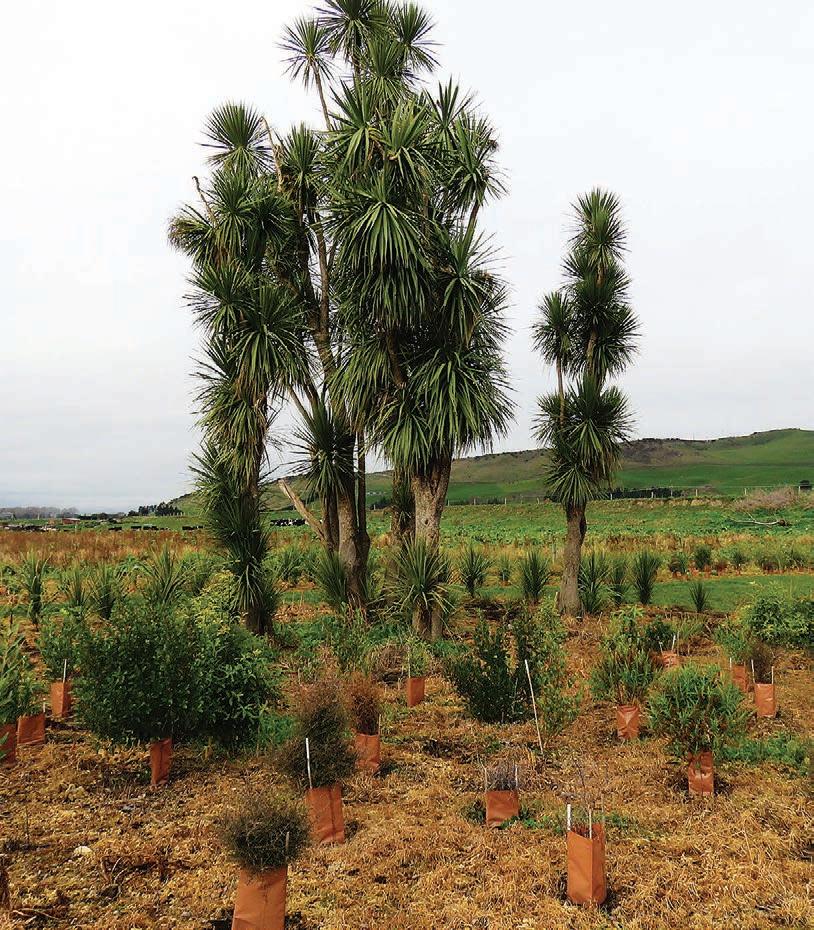
MAKE IT COUNT: FAR environment team member Turi McFarlane says there are key di erences between GHG calculators.
He suggested that farmers trial deep N sampling to gain some trust and apply side dress nitrogen based on the results.
TECHNOLOGY
Some growers have tried no till using old systems and thinking and it hasn’t worked so they have abandoned it.
MORE: For more information on E-Check and the Greenhouse Gas Farm Planning go emailToto: www.far.org.nz/environmentregisterforaworkshopnearyou,admin@far.org.nz.
“Some growers have tried no till using old systems and thinking and it hasn’t worked so they have abandoned it.
M
Annette Scott Maize Annette Scott TECHNOLOGY Emissions
isforlossperiodthe52mm417mm.withtotalproductionduringevapotranspirationdetermine(ET)ratesthe2021-22maizeseasonshowedtheETwas469mm,comparedthe20-yearaverageofThismeantcropsneededmoremoisturetoachievesameyield.Duringthecriticalgrainfilltheestimatedmaizeyieldwhendroughtstresspersistsfourormoreconsecutivedaysabout3%-9%yieldlossperday of stress. Weather data also showed that soil temperatures in October are not much higher than the longterm average.
FAR lays out better ways of growing maize
AIZE growers facing increasing production costs need to refine their production systems. So says Foundation for Arable Research (FAR) senior researcher maize David Densley, who cited more extreme weather events and warmer temperatures as reasons for maize growers to continually adapt their production systems to be more resilient or face falling yields. Densley led a series of FAR maize workshops throughout the North Island and Canterbury at which discussion focused on maize agronomy practices that could help growers improve profitability. The yield potential from modern maize genetics is significantly higher than what maize growers are currently achieving, with no yield improvement for maize grain or silage production over the past 10 years. Anecdotally, grain yields of 1618 tonnes a hectare and silage yields of 26-28t/dry matter/ha are beingDensleyachieved.saideven though
“The planter becomes very important when adopting no till in particular, as the objective is to place the seed into the soil at a uniform depth to achieve emergence uniformity and that requires a different skillset and equipment.”
LEND AN EAR: FAR senior researcher maize David Densley says maize growers need to continually re ne and adapt their maize production system or face the prospect of falling yields.
The cost of carrying out the sampling, which measures plant available soil nitrogen levels to a depth of 60cm, is more than covered by savings in applied nitrogen and also provides environmental gains with reductions in nitrogen loss and greenhouse gas emissions.
How to E-Check your emissions
David Densley FAR
ARABLE farmers unsure about how to calculate their greenhouse gas emissions number can learn more through a series of workshops being run by the Foundation for Arable Research (FAR) during September. Numbers will be generated using E-Check, a simple and straightforward online calculator, purpose-built by FAR researcher Dirk Wallace for arable farmers.
All farmers are expected to know their GHG emissions number by the end of this year, with more than 60% of arable farmers in FAR’s 2021 survey yet to do the calculations.
“So, if growers’ strategy is to plant earlier to beat soil moisture stress during flowering, the October soil temperatures aren’t helping much,” Densley said. An increasing number of maize growers are using no till or strip till to prepare and plant maize crops, rather than turning the soil over using conventional cultivation.Theyalso utilise cover crops and catch crops over winter, which include nitrogen-fixing legumes to reduce nitrogen inputs. These farmers are applying variable-rate lime and using variable-rate seeding rates for plant population, as well as deep N sampling to better match inputs withDensleyproductivity.recommended all farmers adopt pre-side-dress deep N sampling, which does not require precision agriculture technology.
paddock variability exists, typically maize growers’ management practice continues to base all inputs and management on averages, with blanket applications for a paddock. He did acknowledge that a small number of future-focused growers are dividing their paddocks into management zones using precision agriculture technology such as electro magnetic (EM) soil survey mapping, extensive soil fertility testing, remote sensing vegetation mapping using satellites and drones and previous yield map information. Weather data to
As well as developing E-Check, FAR environment team members Turi McFarlane, Dirk Wallace and Diana Mathers have been gathering data on arable farms’ GHG emissions. A pilot study involving 26 mixed arable farms in Canterbury, Manawatu, Southland and Otago using the Overseer emissions calculator showed total farm emissions ranged from 2024 to 6139kg CO2e/ha (carbon dioxide equivalent per hectare). This was made up of 41% methane, 26% carbon dioxide, and 33% nitrous oxide.Livestock is often a major driver of GHG emissions, with 93% of arable farms indicating that they run a mixed cropping and livestock operation. McFarlane said a number of agricultural-based GHG emissions calculators have been approved by He Waka Eke Noa (HWEN) to help growers meet this year’s target, but it’s important to appreciate there are some key differences between calculators. E-Check has been designed entirely with the arable industry in mind and is aligned to biological emissions considered by HWEN.
Dung is a free gold mine of fertiliser and carbon, if buried. There is only one way to do that rapidly and sustainably. AVAILABLE NOW Boost Your Profits. Improve Water Quality. Contact us Dung Beetle Innovations Shaun 021 040 8685 shaun@dungbeetles.co.nz For more information or to order online go to www.dungbeetles.co.nz LK0113016© Farming For Our Future Generations 42 Technology FARMERS WEEKLY – farmersweekly.co.nz – September 5, 2022 Technology42
“E-Check is simple and for most farmers it will take less than 20 minutes to calculate, depending on the level of detail farmers want toE-Checkinclude.”is a spreadsheet-based GHG calculator that farmers can use to input easy to access information on farm size, fertiliser applied and livestock moving on and off farm, to calculate a farm’s GHG number. For livestock, E-Check calculates livestock emissions on a daily time step, so the number of days farmers hold stock for is important.


What is the most important thing that travellers can do to stop the spread of foot and mouth?
A recent
4. This study is seen as a “first” in its field as it recognises cows as sentient beings with individual behaviours. Do you think this thinking is new to most dairy farmers? Why or why not?
Listen at 1.0rXguFUQNyC/take-action-against-foot-and-com/podcasts/talking-dairy/https://www.listennotes.
5.
co.nz/cow-personalities-affect-productivity/?utm_ source=GlobalHQ&utm_campaign=46d9eb089d-EMAIL_ CAMPAIGN_7_18_2022_16_27&utm_medium=email&utm_ term=0_4f497899e6-46d9eb089d-82897495 1.
Do some research and find/read the draft code of welfare for pigs by the National Animal Welfare Advisory Committee (NAWAC). Then head to own/pork-sector-releases-plans-of-its-https://www.farmersweekly.co.nz/
2.
It investigated
3. What are the main differences between each group’s proposals?
3. Is the government doing enough? 4. Mr O’Connor refers to a public awareness campaign that has been undertaken recently that was intended to target all New Zealanders. Have you or your family seen or heard of this campaign and its intended messages? Do you think it has reached or is reaching enough Kiwi’s for there to be a good understanding of the risk to our country’s primary industries? If not, what do you think needs to be done now?
by DairyNZ and AgResearch
to read the alternative proposals made by NZ Pork who have worked to find options that are workable on farm.
production. To
43 AginED
MUTTON DRESSED
AS LAMB?
What steps have been taken to minimise the risk of foot and mouth disease reaching NZ 2. The government has made further investments in biosecurity. How much more has been invested? How much of this has been used for diagnostic, surveillance and investigative capabilities?
2. How were the personality traits of the cows measured? 3. What other aspects were studied?
to:
3.
5. What was the hypothesis of this study? Was the hypothesis confirmed or dispelled?
5. Are these standards high enough or do we need to make other changes? If so, what do you think these need to be?
It is that time of year when a good number of spring lambs are on the ground and most of last year’s lambs are in limbo with some still being classified as lambs while others graduate as they lose their baby teeth and replace them with two permanent incisors.
2. How many cows were studied? How long was the study carried out for?
1. Why is this seen as an exciting step for animal welfare experts?
2. What would it mean to our food and fibre industries if foot and mouth made its way to NZ shores?
At the end of July Damien O’Conner (Minister of Agriculture) talked about NZ’s biosecurity systems and the threat that foot and mouth poses if it reached our shores. Follow this link to watch the video 1.ZAVV6HO64EFOWB5NWCCJYHP7LY/of-agriculture-on-foot-and-mouth-disease/nzherald.co.nz/the-country/video/focus-minister-https://www.
1. Why does NZ Pork consider the original draft untenable and that it would have negative animal welfare outcomes? 2. Why do they think that their proposals will have better outcomes?
STRETCH YOURSELF:
Proposed new welfare codes for pork are seen as unworkable by the bulk of the NZ pork sector.
DO PRODUCTIVITY?AFFECTPERSONALITIESCOWS'DAIRY
6. Do you think that studies like this are useful? Should there be more studies like this carried out on a greater scale? Why or why not? study has been published. whether personality traits of pasture-based dairy associated with daily behavioural patterns and milk find out more head https://www.farmersweekly. Once they have cut these incisors what are they known as? What is another term commonly used for them? Are these terms interchangeable or is there a difference? When do they then become mutton? Why do lambs lose oncevaluethey cut their teeth? On a purely culinary level - what are the differences between lamb and mutton?
4. If NZ Pork proposals are adopted where would that leave NZ standards in comparison to international standards?
Are you a parent or teacher and want to receive AginED every week directly to your email inbox? Send us an email to sign up at agined@agrihq.co.nz Volume 121 I September 5th, 2022 I email:agined@agrihq.co.nz I www.farmersweekly.co.nz/agined
With the very real threat of foot and mouth disease literally as close as someone’s footprint on farm or even in the bush after travelling from an infected country. Liz Shackleton, Biosecurity Manager for DairyNZ, talks about the level of risk, who is involved, and shares some tips for farmers on what to look for and what to do.
4.
1. What breed of cows were studied? Do you think that the results may have been different if another breed was studied? e.g. Jersey or Friesian?
cattle are


44 Showcase your rural property in our latest Spring magazine and reach over 75,000 rural letterboxes this October, further supported by our early bird digital magazine and take advantage of our strongest rural property market yet! List by the 22nd of September to have your property out in front of the market, from the far North to the deep South, and beyond. Change your Rural Outlook this Spring To get your property in front of our motivated buyers, talk to your local Property Brokers rural team today. 0508 4 PBRURAL (0508 472 787) Property Brokers Ltd Licensed REAA 2008 | pb.co.nzPB062472


45 Ashburton 150 Anama Station Road, RD 8 Tender 434.56 ha - Large scale dairy support Located in the favoured farming location of Anama/Mayfield area of Mid Canterbury this large-scale pivot irrigated dairy support property is well worthy of inspection. This unit has two homes, plus near new single person 1 bedroom unit, large set of cattle yards, excellent lane system, silage pit and excellent range of farm improvements. With a solid history of dairy support over many years this unit has all the requirements for sustainable environmental and resource parameters that is required in today's new world. Irrigated by seven pivots the farm has approximately 357 ha irrigated by Barrhill Chertsey Irrigation (BCI) water. This is a great opportunity for large scale dairy farmers or corporates to purchase a proven dairy support farm. 4 1 2 Tender closes 12.00pm, Mon 19th Sep, 2022 (unless sold prior), Property Brokers Ashburton View By appointment Web pb.co.nz/AR105873 Chris Murdoch M 027 434 2545 E chris@pb.co.nz Together Stronger PB062743 Our combined strengths complement each other, creating more opportunity for our customers and Farmlands shareholders across provincial New Zealand. • A nationwide network from Northland to Southland • Sound, trustworthy advice from market-leading experts • Shareholder benefits and preferential commission rates means more money in your pocket Bigger networks, more buyers, better results For more information call 0800 367 5263 or visit pb.co.nz/together North Otago 246 Tilverstowe Road Deadline Sale A rare opportunity • 302 ha breeding, finishing or forestry block • Renowned for its ability to hang on well in the dry spells • Impressive array of improvements including 2006, four bedroom brick home in a lovely established setting. Three stand woolshed with 800 np, two x three bay implement sheds, eight bay haybarn, 10 x 15 m barn and three sets of cattle yards • Well fenced to compliment the contour and subdivided into 45 •paddocksGreataccess with tarseal road around the majority of the property 4 2 Deadline Sale closes Thursday 6th October, 2022 at 4.00pm, (unless sold prior) View By appointment Web pb.co.nz/OMR107444 Merv Dalziel M 027 439 5823 Property Brokers Ltd Licensed REAA 2008 | pb.co.nz Proud to be here


bayleys.co.nz/country FARM, SPECIALTY AND LIFESTYLE COLLECTION 2022 Marketing options Premium Feature + Digital Package $9,800 + GST A limited number of these packages are available in each issue of Country. They provide a more in-depth property overview, offering even greater levels of exposure for the more exclusive property. Professional design, copywriting and photography ($1,500 for photography) Feature in the Country release eDM Country digital listing package Double Page Advert + Digital Package $5,800 GST Full Page Advert + Digital Package Half Page Advert* + Digital Package Country digital listing package Your advertisement in the Country magazine is complemented by a comprehensive digital listing campaign. Your property will receive listings on the below websites: bayleys.co.nz realestate.co.nzfeaturegold package interest.co.nz listing Key dates #1 Issue Issue 2 2022 release dates Friday 18th March 2022 Friday 7th October 2022 farm portfolio
LICENSED UNDER THE REA ACT 2008 Call 0800 BAYLEYS or visit bayleys.co.nz/country-portfolio
ALTOGETHER BETTER Residential Commercial Rural / Property Services
Bayleys’ Country is New Zealand’s premier rural property marketing publication showcasing quality farms, horticulture, viticulture, forestry and lifestyle properties for sale throughout New Zealand. For over 22 years, Bayleys’ Country has provided an altogether better way for potential buyers to find their next rural or lifestyle property. Country is published biannually and holds unique position in the market as much for its quality, as for its variety and geographic spread of properties. Utilising combination of printed distribution and digital promotion, the multi-channelled Country campaign ensures your property receives maximum exposure to all key markets. Be part of Bayleys’ next Country campaign and entrust us to achieve an altogether better result.
Whether you’re moving on from a farm, orchard, forestry block, vineyard or lifestyle property, or growing your rural property portfolio, securing your spot in Country will ensure your property is among the pick of the bunch this spring.
Secure your space in the upcoming Bayleys’ Country portfolio, New Zealand’s multi-channel leading campaign showcasing the latest rural and lifestyle properties for sale.
Residential / Commercial / Rural / Property Services
46
Get in front of motivated buyers and have a well-seasoned nationwide team of rural agents put in the hard yards for you. For over 22 years, Bayleys has delivered our customers an extensive network of qualified buyers, more audience reach and ultimately better results in a highly cost-effective marketing campaign. That’s why we’re New Zealand’s #1 rural real estate brand.
We’re altogether better at rural real estate – so put your stake in Country to get the best result for the sale of your property.
Contact your local salesperson today, or get in touch on 0800 BAYLEYS bayleys.co.nz/country


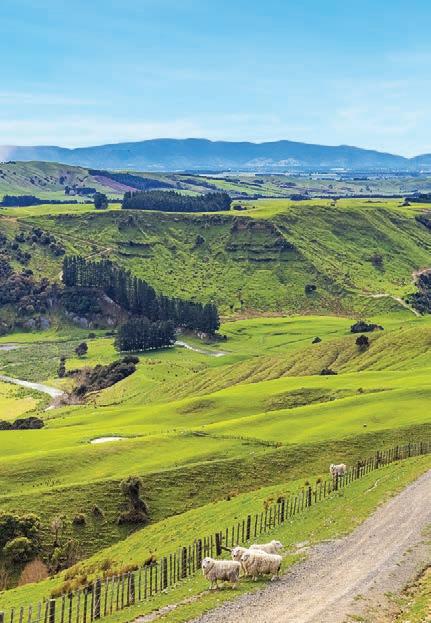


ESTATE LTD, BAYLEYS, LICENSED UNDER THE
BARTLEY REAL REA
Lifestyle, hunting, If you are looking for a ‘get-away-escape”, with income potential, then these two properties located 27kms from Whanganui, may just tick the boxes. Two titles are available, currently utilised for honey production. Both have potential building sites, with power and phone lines at the road. Lot 1 is 147.49ha (more or less), being predominantly Manuka and native bush, with a picturesque flat area between the road and the Kauarapaoa Stream, an area which previously had a home on site and the power transformer is still in situ (due diligence required for suitability). Lot 2 is closer to town, being 204.535ha (more or less), with similar dynamics except a larger area of flats, multiple paddocks, cattle yards and a hay barn. bayleys.co.nz/3001943
PGG Wrightson Real Estate Limited, licensed under REAA 2008 Helping grow the country pggwre.co.nz/PUK36278 NEW MARAMARUA,LISTINGAUCKLAND Unique Investment Opportunity • 142 hectare farm with multiple income options from this property • 400 sow commercial piggery over 9ha Well subdivided grazing land with 22ha irrigated • Forestry containing established trees and new plantings • Current owner would look at leaseback options for the piggery or selling as a going concern • Four houses, 1 x 4 bedroom, 3 x 3 bedroom A comprehensive Information booklet is available DEADLINE PRIVATE TREATY Plus GST (if any) (Unless Sold Prior) Closes Wednesday3.00pm12 October VIEW By Appointment Only E kane.needham@pggwrightson.co.nz M 027 336 8709 Kane Needham E mneedham@pggwrightson.co.nz M 027 704 6833 Mark Needham RURAL | LIFESTYLE | RESIDENTIAL OPTIMAL LOCATION, OPTIMAL SIZE HALCOMBE 56 Managhs Road, Halcombe When location, size, contour and productive soil types count, you can’t go past 56 Managhs Road, Halcombe. This 45 hectares (111 acre) sheep and beef fattening block offers plenty of versatility. Nearly all effective and with approximately 75% of the farm being flat to easy-rolling contour, this farm is ready to crop or graze. With excellent soil test results, production and infrastructure, as well as the 2015 built three bedroom plus office Sunshine home, this property needs to be viewed. Viewing by appointment. DEADLINE SALE (if not sold prior) on 23 September 2022 www.forfarms.co.nz - ID FF3461 LK0113076© Jerome Pitt M: 027 242 2199 H: 06 374 4107 E: jeromep@forfarms.co.nz FARMERS WEEKLY – farmersweekly.co.nz – September 5, 2022Real Estate 47
47 NEW LISTING Brunswick Kauarapaoa Road 352.125ha For Sale by Deadline Private Treaty (will not be sold prior) 2pm, Wed 28 Sep 2022 158 Wicksteed Street, Whanganui View by appointment Knud Bukholt 027 222 knud.bukholt@bayleys.co.nz6161
honey
ACT 2008




Kihikihi, Te Awamutu 102/110 Allen Road For Sale By Negotiation View By 106.0277hablueribbonharcourts.co.nz/property/OH9627Appointment
•
By
Te Awamutu 0
• Modern 44 aside herringbone cowshed Quality home with two other dwellings Excellent standard of support buildings
• No building covenants It’s hard to find bare land this close to town and offering enviable contour with prime elevated building sites which won’t disappoint.
First Time on Market for 35 years
By
The decision to sell has been a hard one. We challenge you to find better, and with so much on offer.
TWENTY FOUR PROPERTIES Licensed Agent REAA 2008 KERRY HARTY M 027 294 6215 P 873 8700 E kjharty@harcourts.co.nz KAREN LENNOX M 027 559 4468 P 873 8700 E karen.lennox@harcourts.co.nz
Dairy Support/Grazing with a Difference
Kihikihi, Te Awamutu Allen Road Sale Negotiation View 45.3248hablueribbonharcourts.co.nz/property/OH9627Appointment
By
• 20.2343 hectares (50 acres) Fenced into nine paddocks with a central race Majority of land is flat to gentle rolling Located just 7km from Te Awamutu township Good fertilizer history
For
For those looking to secure an exceptional cropping or smaller dairy support block, view with urgency to avoid another missed opportunity.
With just over 40 hectares of flat to gentle-rolling pasture and just minutes from town, we have no doubt that this exciting new listing will be of interest to anyone looking to secure quality land in a highly sought-after location. 45.3248 hectares in two titles • Fenced into 18 paddocks, well raced • Excellent fertilizer history Bore water supply
Prime Land and Location
• 40.4686 hectares to two titles • Quality 4-bedroom home set on mature grounds A second well maintained 3-5 bedroom home • Modern cowshed and numerous support buildings Ideal as a semi-retirement block - land bank now and consider options for future use.
Kihikihi, Te Awamutu 102 Allen Road For Sale By Negotiation View 40.4686hablueribbonharcourts.co.nz/property/OH9629Appointment
Deadline sale date will be sale date so view with urgency.
Available for immediate possession if required, this well contoured turn-key operation is seriously for sale.
• Three-bedroom brick home Ideal as a semi-retirement block - Land bank now and consider options for future use.
•
For
Kihikihi, Allen Road Sale Negotiation View 20.2343hablueribbonharcourts.co.nz/property/OH9625Appointment
By
For those wanting more land, the adjoining 45 hectare & 20 hectare blocks are also for sale and can also be purchased.
70
By
Two Dwellings on 100 Acres Quality home, outstanding infrastructure and amazing contour. A rare opportunity to secure a highly fertile farm with the added advantage of location and infrastructure, allowing a wide range of possible land uses to be explored.
• 106.0277 hectares, flat to gentle rolling fertile pasture Five titles could allow for future subdivision and relocation of boundaries


The position is part-time with flexible hours, but does require good time management to ensure Awards Programme timelines are met. For more information about the Ballance Farm Environment Awards, please visit: www.nzfeawards.org.nz
National Facilitator / Coordinator
49 Marketplace
• Annual face-to-face meeting with the national team and others from around the regions
• Key in the successful delivery of the annual Ballance Farm Environment Awards programme (Awards Programme)
• Finding skilled, respected and pragmatic volunteers to strengthen certain skills across the group • Facilitating training of volunteers • Putting together teams with the right mix of skills for site visits
The position is part-time with flexible hours, but does require good time management to ensure Awards Programme timelines are met. For more information about the Ballance Farm Environment Awards, please visit: www.nzfeawards.org.nz
At Beef + Lamb New Zealand (B+LNZ) we are passionate about the sheep, beef and dairy industry and committed to growing a sustainable and profitable future for our sector. We are farmer owned and funded and work on their behalf.
• Focusing on giving our participants a valuable and valued experience
• Assisting with the delivery of an annual field day
All prospective Associate Directors must have a direct connection to a levy paying farm, e.g., through family or iwi and strongly committed to furthering the farming sector, have the highest levels of integrity, be collaborative in nature, possess sound judgment, and be innovative and strategic in their thinking. The qualities we are looking for are:
• Innovative and values continuous improvement and responsiveness to the sector’s challenges and opportunities Effective, persuasive and respectful communicator
• A role model for the values of the organisation.
https://beeflambnz.com/about-blnz/work-for-us
If you have questions, please ask via the same email address, or request a call. If these roles are not suitable for you, but you are interested in joining our volunteer community, please email a brief summary of your background and/or experience and how you would like to help.
• Key in the successful delivery of the annual Ballance Farm Environment Awards programme (Awards Programme)
Please apply via the B+LNZ job site
• Maintaining and growing the volunteer base who visit properties as part of the Awards Programme
Next Steps If you are interested in the above role (or one of our regional roles), please send your CV with a cover letter through to Jane Hill on jane.hill@nzfeatrust.org.nz. If you have questions, please ask via the same email address, or request a call. For more information about the NZ Farm Environment Trust, please visit: www.nzfetrust.org.nz Applications will close once the right candidate has been selected, so if you wish to be considered, apply now! If this role or our regional roles are not suitable for you, but you are interested in joining our volunteer community, please email a brief summary of your background and/or experience and how you would like to help.
• Working from home • 200-300 hours per annum, steady base workload with higher seasonal demands
• Building and maintaining a national pool of good farming practice experts
The commitment required will be on average one to two days per month with the majority of the six-weekly meetings held in Wellington. This is an unpaid position however all expenses related to fulfilling this position will be covered.
• Accompanying teams on some of the site visits
About the opportunity: Are you passionate about great farming stories and the points of interest that make these stories worth shouting from the rooftops? Do you have a keen interest in all types of farming systems? Are you known for bringing people together and getting the best out of them? If so, then we are looking for you.
• Being a point of contact for regional facilitators to mentor, assist with problem-solving, and support national consistency • Annual face-to-face meeting with the national team and others from around the regions, with a focus on continuous improvement
• Empathy with sheep, beef and dairy farmers and their rural communities
Are you known for bringing people together and getting the best out of them? If so, then we are looking for you.
About the role: We currently have roles available in Canterbury, Otago, Greater Wellington and Waikato, as follows:
South PartnershipIsland Manager
• Coordinating and assisting with feedback/report-writing
You’ll be a proven self-starter with great relationship building skills who loves the agricultural industry and, more importantly, loves selling! If that sounds like you, get in touch. Send your CV and Cover Letter to dean.williamson@agrihq.co.nz
Next Steps Applications will close in each region once the right candidate has been selected, so if you wish to be considered, apply now! For more information about the NZ Farm Environment Trust, please visit: www.nzfetrust.org.nz
About the opportunity: Are you passionate about great farming stories and the points of interest that make these stories worth shouting from the rooftops? Do you have a keen interest in all types of farming systems?
Facilitators / Coordinators – Multiple Roles
• Maintaining a comprehensive standard national judging programme for all regions which is continuously improved
• Staying abreast of health & safety and biosecurity requirements
B+LNZ has an Associate Director position available commencing November 2022. The purpose of this Associate Director position is a developmental opportunity to provide governance experience and mentoring to aspiring farming leaders in the sector. It specifically intends to extend the knowledge and understanding of governance, its environment, the role of the B+LNZ Board, the legal framework and Directors responsibilities, and offers a unique opportunity to experience strategy and governance in action from within a sector organisation.
Oversee our national team of regional facilitators who maintain and manage our grassroots volunteer base, who we unofficially think of as our “National Community of Good Farming Practice Champions”. These volunteers come from a range of backgrounds, from agribusiness professionals to award-winning farmers and growers, and are respected in their fields.
Informing rural New Zealand LK0113053© LK0113046©
If you are interested in one of the above roles, please send your CV with a cover letter through to Jane Hill at jane.hill@nzfeatrust.org.nz by 25 September.
About the role: This role can be delivered from anywhere in New Zealand:
• Reviewing and assisting with feedback reports
Our vision for the sheep, beef and dairy industry is Sustainable and profitable farmers, thriving rural communities, valued by New Zealanders. Our priorities are focused around three key areas: Supporting farming excellence; Championing the sector and Increasing market returns.
To request further information on this Associate Director opportunity please email Applicationshrhub@beeflambnz.comcloseonSunday, 11 September 2022.
• Passion and commitment to the farming sector
• Designing training programmes and developing or sourcing training materials for regional volunteers • Assisting with training of volunteers, when required
• Focusing on assisting our regional teams to give our participants a valuable and valued experience • Staying abreast of good farming practice at a high level
LK0113047©
Be part of our national team of regional facilitators who maintain and manage our grassroots volunteer base, who we unofficially think of as our “National Community of Good Farming Practice Champions”. These volunteers come from a range of backgrounds, from agribusiness professionals to award-winning farmers and growers, and are respected in their fields.
• Highest of ethical standards and behaviours • Independence in thinking; be prepared to challenge, and be challenged
AgriHQ is a family-owned New Zealand publishing company serving a community that is already 80,000 strong and the largest in the agricultural sector. We’re growing and this is your opportunity to be part of it.
We’re after an experienced media sales professional to look after and grow our clients in the South Island and help them take advantage of the many opportunities our publications offer to engage with rural New Zealand.
Contact Dean Ph: 027 323 9407 Join the team!
FARMERS WEEKLY – farmersweekly.co.nz – September 5, 2022Marketplace 49
• Predominantly facilitation and administration • Overseeing regional facilitators and running online team meetings
ASSOCIATE DIRECTOR – 1 YR TERM
• Based within the region, but primarily working from home • 120-150 hours per annum, seasonal (heavier from Sep – Feb; lighter from Mar – Aug)
• Predominantly facilitation and administration


Boer goat buck hoggets. $500+gst. Phone 06 328 5710. WILTSHIRES-ARVIDSON. Self shearing sheep. No1 for Facial Eczema. David 027 2771 556. RAMS FOR SALE HAIR SHIRE® Low input meat rams! www.organicstud. nz 027 225 5283. tim@ organicstud.nz
STOCK FEED HIMALAYAN ROCK SALT. $800+gst per ton. Phone 06 855 6862 / 027 4494 385. HB. WHAT’S SITTING IN your barn? Don’t leave it to rust away! We pay cash for tractors, excavators, small crawler tractors and surplus farm machinery. Ford –Ferguson – Hitachi – Komatsu – John Deere and more. Tell us what you have no matter where it is in NZ. You never know.. what’s resting in your barn could be fattening up your wallet! Email admin@ loaderparts.co.nz or phone Colin on 0274 426 936 (No texts please)
BOOK AN AD. For only $2.30 + gst per word you can book a word only ad in Farmers Weekly Classifieds section. Phone Debbie on 0800 85 25 80 to book in or wordads@globalhq.co.nzemail
DOLOMITE For a pricedeliveredcall.... NZ’s finest BioGro certified Mg fertiliser 0800 436 566
NZ KELP. FRESH, wild ocean harvested giant kelp. The world’s richest source of natural iodine. Dried and milled for use in agriculture and horticulture. Growth promotant / stock health food. As seen on Country Calendar. Orders to: 03 322 6115 or info@nzkelp.co.nz
BOOK AN AD. For only $2.30 + gst per word you can book a word only ad in Farmers Weekly Classifieds section. Phone Debbie on 0800 85 25 80 to book in. Call 0800 85 25 80
Advertisewithus
50 Combi Clamp Stock Handling Equipment offers a user-friendly design, versatility and incredible reliability with manual operation, durable construction and minimal maintenance requirements. Whether you’re handling Sheep or Cattle, the resounding feedback is that this gear is clearly designed by practical farmers. 0800 227 228 | combiclamp.co.nz BTZ Forestry Marketing and Harvesting (Obtaining the best profits for our customers) Farmers/Woodlot owner Tired of waiting for someone to harvest your trees? We are not committed to one buyer that is how we get our customers the most profit we can. Set up to do the smaller, trickier wood lots. No job too big or too small. Buyers of Woodlots and Forest. Free quotes • Markets for all species Email: BTZforestry@gmail.com LK0112808© REFRIGERATIONELITE LTD Email:Mobilechris@asaer.co.nz0212306904 www.asaer.co.nz LK0112765© • Kit set chiller / freezer rooms • refrigerationMono-block units • Freezer / chiller Builtroomsto order • Ice machines • Trailer mounted rooms • Repairs – service – installations VETMARKER LAMB DOCKING / TAILING CHUTE With automatic release and spray 0800www.vetmarker.co.nzsystem.DOCKER(362537) LK0112768© EXPRESSIONS OF INTEREST WELCOME We are a growing bull beef finishing enterprise, currently farming 1050ha effective of owned and leased farms near Whangarei, wintering 3000 head. We are looking for opportunities to expand our enterprise and would welcome expressions of interest from prospective farmers in Northland looking to lease farmland suitable for bull finishing. We have a proven record of building/ maintaining relationships, are financially sound, and are excellent custodians of the land. JAMES DONALDSON – 027 601 4559 k8towen@hotmail.com LK0112987© Contact us to discuss your requirements anytime. Competitive Rates Kitset Sheds & Fencing Supplies. Phone: 027 963 5396 Email: trutimbernz@gmail.com LK0113060© FARMERS WEEKLY – farmersweekly.co.nz – September 5, 2022 Marketplace50FLY OR LICE problem? Electrodip – the magic eye sheepjetter since 1989 with unique self adjusting sides. Incredible chemical and time savings with proven effectiveness. Phone 07 573 www.electrodip.com8512 ANIMAL HANDLING CRAIGCO SHEEP JETTERS. Sensor Jet. Deal to fly and Lice now. Guaranteed performance. Unbeatable pricing. Phone 06 835 www.craigcojetters.com6863. www.drench.co.nz farmer owned, very competitive prices. Phone 0800 4 DRENCH (437 362). ANIMAL HEALTH CONTRACT PIG CULLING. Stock proof dogs. SI. Can travel. Phone 027 353 0661. ATTENTIONFARMERS DOGS FOR SALE DOGS FOR SALE PURE BRED RED Kelpie pups. Ready 10th October. $900. Phone 027 589 2505. Nelson. SEE VIDEOS OF dogs I’m selling at the Whatatutu Dog Sale, 10/9/22. videosmikehughesworkingdog/youtube.com/user/www.073155553.
PASTUREPROMOTESFORESTRYQUICK growth. Only $6.50+gst per hectare delivered. 0508-GIBBGRO [0508 442 247] www. gibbgro.co.nz. “The Proven One.” GIBB-GROPROMOTANTGROWTH LIVESTOCKFORSALE
GOATS WANTED. All weights. All breeds. Prompt service. Payment on pick up. My on farm prices will not be beaten. Phone David Hutchings 07 895 8845 or 0274 519 249. Feral goats mustered on a 50/50 share basis. GOATS. 40 YEARS experience mustering feral cattle and feral goats anywhere in NZ. 50% owner (no costs). 50% musterer (all costs). Phone Kerry Coulter 027 494 4194.
WANTED TO BUY HONDA Z50 minibike wanted. Any condition considered. Please phone 021 847 751. 12 MONTHS TO 5½-yearold Heading dogs and Huntaways wanted. Phone 022 698 8195. DOGS WANTED GOATS WANTED FREE CRATE! When I buy a working dog from you! 07 315 dogs@farmside.co.nzmikehughesworking5553. ACCURATE AND PRACTICAL farm maps showing area sizes of paddocks and vegetation. Visit farmmapping.co.nz for a free quote. FARM MAPPING WANTED NATIVE FOREST FOR MILLING also Macrocarpa and Red Gum, New Zealand wide. We can arrange permits and plans. Also after milled timber to purchase. NEW ZEALAND NATIVE TIMBER SUPPLIERS (WGTN) LIMITED 04 293 2097 Richard.
PUREHORTICULTUREBRED
WANTED TO BUY WORD ONLY ADVERTISING. Phone Debbie on 0800 85 25 80.
WORD ONLY ADVERTISING. Phone Debbie on 0800 85 25 80. FOR ONLY $2.30 + gst per word you can book a word only ad in Farmers Weekly Classifieds. Phone Debbie on 0800 85 25 80. FOR ONLY $2.30 + gst per word you can book a word only ad in Farmers Weekly Classifieds. Phone Debbie on 0800 85 25 80.



51 Livestock hillcroftangus hillcroftangus.co.nzHillcroft 1-21 pictured, son of Stern 18711 Fraser Crawford 07 828 5755 • 0272 85 95 87 Malcolm Crawford 07 828 5709 • 0274 721 050 32 Angus 2yr olds 95 Angus yearling 38 Hereford 2yr olds OUR TOP YEARLINGS, SELECTED FOR CALVING EASE, LOW BIRTH, AND GROWTH FROMSEPTMONDAY19TH,11.30AM Freephone 0800 10 22 www.pggwrightson.co.nz76 Helping grow the country Friday 16 September 11.30am | Paeroa Saleyards Comprising: • 4 Recorded 2yr bulls Ave BW 366 • 37 Recorded yearling bulls Ave BW 360 • 4 Recorded Xbred yearling bulls Ave BW 326 BWs to 424 - 5 bulls over 400 BW. Two of our vendors have supplied numerous bulls to the AI industry (Crescent & Little River) over many years and regularly have bulls in the top indexing sires in the country. A lot of bulls on offer are bred from or closely related to these highly sort after families who have supplied these AI sires. The bulls are well grown, owner bred & reared on their farms so tick all the health security boxes. Most of these bulls are G3 profiled and their A2 status is listed in the footnotes so the resultant offspring can be kept with confidence. BVD tested and vaccinated. For purchasers outside the Waikato arrangements can be made to hold bulls for a few days for transport. Catalogues can be viewed online either at AgOnline or Bidr for a hard copy please phone. Chris Ryan 027 243 1078 Andrew Reyland 027 223 7092 THAMES VALLEY GENETIC LEADERS HIGH BW JERSEY BULL SALE NZ’s Virtual Saleyard bidr.co.nz Freephone 0800 10 22 www.pggwrightson.co.nz76 Helping grow the country Wednesday 14 September 11.30am | Morrinsville Saleyards Comprising: • 70 Friesian/Friesian X Spring Calved Cows BW 175 PW 198. Due to a change in farming policy our vendors are reducing cow numbers & selling a genuine cross section of their Theherd.herd consistently produces in excess of 550 ms/cow & will come forward in great order. Cows are currently producing 2.2ms/ day. Vendors are offering a 20th October delayed payment and for purchases outside the region cows can go back to vendors until transport is sorted (South Island). TB C10 & EBL free. Profile of sale cows available on AgOnline or Enquiries:Bidr. Chris Ryan 027 243 1078 Andrew Reyland 027 223 7092 IN-MILK HIGH INDEXING & PRODUCTION FRSN/FRSN X GENUINE SPRING CALVED COWS NZ’s Virtual Saleyard bidr.co.nz Freephone 0800 10 22 www.pggwrightson.co.nz76 Helping grow the country Monday 12 September 11.30am | 105 Tahaia Bush Road, Comprising:Otorohanga 160 2yr Jersey Bulls • Bulls ideal for both Heifer & Cow mating’s • Come forward in excellent condition • Farmed on hills, fit & active rearing to go • Double vaccinated & booster shot for DeliveryBVD Option 1 – 50kms transport subsidy if purchaser takes bulls day after sale date. Option 2 – Free grazing until 20th October, nominated delivery days (every Monday and Thursday) until 20th October, pick your delivery date. Great opportunity to purchase quality Jersey Bulls for Herd & Heifers. Enquiries: Shay Egan 027 473 5856 Dean Evans 027 243 1092 25TH ANNUAL 2YR JERSEY BULL SALE A/C TETLEY JONES AGRICULTURE LTD WANTED 2021 FRIESIANBORNHEIFERS F12+: $1950 + GST / head F8-F11’s: $1850 + GST / head F7/Unrecorded: $1650 + GST 190 kgs min live weight Delivery – September SPECIFICATION REQUIREMENTS: • True to type Friesian Heifers, including the F8-F11 unrecorded heifers. • Standard Chinese Protocol, heifers must have been on the property for a minimum of 6 months at the time of delivery. NORTH & SOUTH ISLAND PHONE TIM ON 027 443 7420 FOR MORE INFORMATION or email timbrandonlivestock@outlook.com LK0112894© Auahi Charolais For inspections phone John 027 633 1775 or 07 873 8477 Henderson Partners Pio Pio Est. 1981 C10 • EBV’s will be available • Vaccinated BVD tested clear LK0113069© • 10 Very Good 2 Year Old Bulls • 700/800 kilos • Over winter rearing to go! • Priced from $4,500Check out Poll Dorset NZ on Facebook LK0112874© Wednesday 14 September 10.30am WAITARA STATION, Te Pohue Lloyd & Sonya Holloway • 185 R1yr Angus Steers • 35 R1yr Angus Heifers These are a quality line of October/ November born Tarangower bred Angus Cattle with fantastic temperament that are farmed up to 4000ft above sea level. • 65 R2yr Hereford Friesian Heifers • TB status: C1 Enquiries: Sam Wright 027 247 9035 Helping grow the country STORTFORD LODGE LK0113077© FARMERS WEEKLY – farmersweekly.co.nz – September 5, 2022Livestock 51





A city dweller goes duck hunting in the countryside. When he sees a duck, he takes aim and shoots. But the bird falls on a farmer’s farm and he won’t give up the “That’sprey. my bird,” the city dweller insists on his right. The farmer suggests settling the dispute with a kick in the abdomen, as is customary in the countryside. “Whoever shouts less gets the bird.” The city dweller Theagrees.farmer lunges and lands a huge kick in the man’s soft parts. He collapses and remains on the ground for 20 minutes. When he is able to get up again, he gasps, “Okay, now it’s my turn.” “Nah,” the farmer says as he walks away. “Here, take the duck.”Here at Farmers Weekly we get some pretty funny contributions to our Sale Talk joke from you avid readers, and we’re keen to hear more! If you’ve got a joke you want to share with the farming community (it must be something you’d share with your grandmother...) then email us at: saletalk@agrihq.co.nz with Sale Talk in the subject line and we’ll print it and credit it to you. Conditions apply
52 PREDICTABLE PROFITABLE PERFORMANCE GENETICS TE TAUMATA POLL HEREFORDS rm Bull SAle 2012 at 12pm To view our bull sale catalogue pictures of sale lots go freewww.tetaumata.co.nzto:DelIVerYBVDVACCIn POLL HEREFORDS Est. 1962 Beef Alistair CELEBRATING 50 YEARS HEREFORD BULLS FOR THE GroWTH & meAT m Give us a call to discuss your 2022 ram requirements Romney and Border Leicester Rams Alistair & Eileen McWilliam Ph 06 372 7861 or 027 455 0099 www.tetaumata.co.nz Te Taumata Genetics LK0113035© Wednesday 21st September 2022 100 REGISTERED BULLS SELL! 40 COMMERCIAL HEIFERS SELL! * Fertility tested * Carcass Scanned * HD50K’d for parentage and higher accuracy * Very good temperment * Grown well to breed heifers or cows * C10, BVD tested and Vaccinated CALL FOR A CATALOGUE OR TO VIEW BULLS AT YOUR CONVENIENCE Mark, Sherrie and Jake Stokman Phone 07 333 2446 Mark 027 640 4028, Sherrie 027 499 7692, Jake 027 787 4008 Email: SaleFacebook:mtkiwi@farmside.co.nzStokmanAngusFarmLocation:1708TeKopiaRoad,WaikiteValleyRotorua 2022 STOKMAN ANGUS YEARLING SALE THE STOKMAN BULL . . . Can’t make it on Sale Day? We work with BIDR, so you can bid from a location convenient to you. Average EBV’s on our Sale Bulls NZAverageBreed Calv Ease +6.1 +1.8 Gestation Lgth -6.3 -4.3 Birth Weight +2.8 +4.1 200 Day +50 +42 600 Day +117 +101 Cow Wt +90 +88 IMF +1.8 +1.1 $PRO +165 +112 THE CHOICE IS Safe, Quiet, Performance Bulls AIMING FOR ZERO BOBBIES AND HIGH VALUE CALVES? 300 AVAILABLEBULLSMIKECRANSTONE0272180123 SALE Thursday 22 Sept, 12noon Riverton Herefords, Wanganui WILL027MORRISON6401166 SALE Tuesday 27 Sept, 12noon Ardo Herefords, www.ezicalve.co.nzMarton LK0112759© www . waitangiangus.co.nz Enquiries and Inspection Welcomed: Contact John, Joss or Phil Bayly M 027 474 3185, Email jbayly@xtra.co.nz Sale Catalogue www.waitangiangus.co.nz/upcoming-salelink:s Tuesday 13th September 2022 12 noon on farm with bidr 88 YEARLING BULLS Top rated proven genetics Semen tested : BVD vaccinated Well grown and ready to go! Waitangi Angus LK0112810© Enquiries and inspection welcome. Contact Kevin or Megan FRIEL ph: (06) 376 4543 625 Jackson Road, kev.meg.co@xtra.co.nzwww.mtmableangus.co.nzKumeroa625JacksonRoad,Kumeroakev.meg.co@xtra.co.nzwww.mtmableangus.co.nz5thAnnualYearlingBullSalethAnnualYearlingBullSaleMonday19thSeptember2022 ● TB Status C10 ● Herd completely free of known genetic defects ● Renowned for great temperament ● Three year comprehensive guarantee Top quality bulls bred for NZ Farmers ● BVD Tested Clear, BVD and 10 in 1 Vaccinated ● Calving ease, moderate birth weight bulls suitable to mate 1 or 2 year old heifers or cows ● Breedplan RecordedSTOCKRosswww.dyerlivestock.co.nzDyer0274333381REQUIRED EWES WITH LAF STORE LAMBS 36 42kg 1YR ANG & ANGX STEERS 280 320kg 2YR ANG & ANGX STEERS 430 550kg 2YR ANG & ANGX HEIFERS 400kg 1YR FRSN BULLS 200 260kg E info@rdlfinance.co.nz A Financing Solution For Your Farm FARMERS WEEKLY – farmersweekly.co.nz – September 5, 2022 Livestock52
SALE TALK


53 JustBetterBeef” “ Visitors always welcome. For all enquiries, contact: Sam LeCren M: 027 474 9989 E: sam@takapoto.co.nz Andy Transom, PGGW M: 027 596 514 Our bulls are purpose bred for Calving Ease and short gestation 41 YEARLING BULLS FOR SALE Our bulls are proven for mating with heifers and MA cows BVD free and vaccinated TB free C10 Structurally guaranteed 7th Annual Yearling Bull Sale – FRIDAY, 23 RD SEPTEMBER 2022 1:00 PM AT 43 FINLAY ROAD, CAMBRIDGE – viewing of bulls from 11:00 AM Follow Takapoto Angus on Facebook www.takapoto.co.nz SHADOW DOWNS POLLED HEREFORD STUDNZ FARMERS LIVESTOCK Mark Howells: 027 664 8832 Selling online with My Livestock in the app for the online auction “The beef breed for every need” Offering Merit Sires • Low Birth Weights • Easy Calving • Whitehead Premiums Performance Recorded • BVD & Lepto vaccinated/tested Owner Bred - Closed Herd WEDNE SDAY 14th SEPTEMBER 2022 - 12 NOON LOWER HERENGAWE ROAD, WAVERLEY HOME-BREDGENUINEBEEFBULLS52 - 2yr Hereford Bulls 16 - 1yr Hereford Bulls 4 - Hereford/Speckle Park X 1yr Bulls PGG WRIGHTSON Mark Neil: 027 742 8580 IAN & DANIEL SMITH P/F: 06 762 7899 • Mobile: 021 749 235 • Email: shadowdownsnz@gmail.com Resurgam Angus Yearling Angus Bull Sale [plus a selection of R2 bulls] Sean & Jodi Brosnahan – 386 Wainui Road, Ohope Friday 16th September 2022, 12pm For Further Inquiries: Sean & Jodi Brosnahan Waitangihia Station – 06 864 4468, 021 997 519 www.resurgamangus.comresurgamangus Brent Bougen - Auctioneer 027 210 4698 Shaun Bicknell - 027 221 1977 These R1 bulls are from NZ’s most remote farming area. They are truly station bred from hill country and are mainly NZ genetics. They are of impeccable temperament, soundness, type. 100% grass only – Closed herd. TB = C10. These bulls will be available for pre-sale inspection in Ohope, Thursday 8th September, 9-12pm. LK0113027© 58th HerefordAnnualBullSaleWednesday28thSeptember2022,12noon ON FARM - LUNCHEON PROVIDED 660 Ngaroma Rd, 26km off SH3, Sth East of Te Awamutu. Also available online on 33 TOP YEARLING BULLS & 69 2-YEAR OLD BULLS Full EBV details in catalogue. Bulls ideal for Beef & Dairy. Sound bulls with exceptional temperament. Selection of Short Gestation & Low Birth Weights. Free local delivery or grazing till 1st Nov. Payment 20th Oct KELVIN & CYNTHIA PORT P: 07 872 2628 • M: 022 648 2417 E: ROBERTWeb:kelvin@bushydowns.co.nzwww.bushydowns.co.nz&MARIANPORT•P:07872 2715 Limited number of ¾ Speckle Park x Angus Ylg Bulls Sales by Private treaty View details www.korakospecklepark.co.nzonForfurtherdetails:BillFlowerday–Taurangabilanwen@farmside.co.nzPhone0272724361 LK0112758© FARMERS WEEKLY – farmersweekly.co.nz – September 5, 2022Livestock 53 15TH ANNUAL IN-MILK AUCTION High Indexed – A2/A2 Cows Verified BW 241 PW 347 LW 355 A/c FINCH CONTRACTING will be available for online bidding Date: Thursday 22nd September 2022 Address: 972 Paterangi Road, Te Awamutu Start Time: 11:30am (undercover, luncheon COMPRISING:provided) 218 x Friesian & Friesian Cross and Jersey CrossDETAILS:Cows • BW 241 PW 347 LW 355 Herd Tested, A2/ A2 Tested • 22nd August herd test – 1.72KG/MS/COW –SCC 61,000 • BWs up to 361, PWs up to 724 (60 x Cows with PWs above 400) • Breed breakdown – 25 % Fri, 35 % Fri X, 25 % Jer X, 15 % Jer • TB CM – The cows are BVD Bulk Milk tested and Lepto Vaccinated AUCTIONEERS NOTE: Due to a robust selection, this will be one of the highest offerings they have presented. Selected from local established Te Awamutu herds. Cows calved from May onward. Once cows are sold the whole farm will be planted in Young,maize.all sound, these cows will be presented in optimum condition for mating. Annual buyers have confidence in the standard of cows being offered. All breeds to suit all buyers and can select A2A2 cows PAYMENT TERMS: Payment is 20th October 2022 – deliveries immediate to suit trucking CARRFIELDS LIVESTOCK AGENTS: Ben Deroles 027 702 mike.mckenzie@carrfields.co.nzben.deroles@carrfields.co.nz4196MikeMcKenzie0276741149 35 YEARS CLOSED CRV JERSEY/XBRED HERD IN-MILK AUCTION A/c C M & K C O’DONOGHUE will be available for online bidding Date: Wednesday 21st September 2022 Address: 294 Totman Road, Tirau Start Time: 11:30am (undercover, luncheon COMPRISING:provided) 193 x Mainly Jersey & Jersey Cross Cows (90%) with the balance Crossbred & Friesian (10%) 60 x Spring born heifer calves – Expected Average BW DETAILS:253 • BW 192/49 & PW 208/64 • Recorded Ancestry 95% • Herd Tested prior to the auction • Milk Solids – 300 M/S & SCC 50,000 • Lepto and Salmonella Vaccinated • TB Status C10 AUCTIONEERS NOTE: This closed herd has been owner bred for 35 years. The cows are very quiet and loved and are a credit to our vendors who are retiring from milking. CRV breeding has been used the entire time, resulting in a very well uddered and great dairy type cow. Very low SCC. Buy with confidence. PAYMENT TERMS: Within 14 days of the sale. DELIVERY DATE: Sale day and the week following the sale. SPECIAL CONDITIONS At the vendors request, cows to be only single deck transported from sale. CARRFIELDS LIVESTOCK AGENT: Kelly Higgins 027 600 2374 E: kelly.higgins@carrfields.co.nz LK0113075©View our catalogues at www.carrfieldslivestock.co.nz





54 polledcraigmoreherefords We’ve done the work for you! All bulls are: • Performance recorded • Genomics tested to improve accuracy of EBVs • Polled gene tested • Sire verified YEARLING BULL SALE On farm bull sale plus online sale at bidr Sign up at www.bidr.co.nz Monday 12th September 2022, at 12.30pm Luncheon available On A/C D.B & S.E Henderson At the stud property: 429 Rukuhia Road, RD 2, Ohaupo 110+ registered well grown bulls Craigmore has been breeding Hereford cattle for over 50 years! We have bulls that will suit beef and dairy farmers www.craigmoreherefords.co.nz For further information or inspection, please contact: Vendors: David 021 166 1389 or the selling agents: PGG Wrightson: Vaughn Larsen 027 801 4599, Cam Heggie 027 501 8182 LK0112748© All bulls are ready to perform! Bulls born and bred on the top of the Coromandel Contact Roy or Kaye Ward 021 128 7174 Dave Stuart 027 224 1049 Cam Heggie 027 501 8182 • 26 x 20-month Bulls • 25 x 1-year-old Bulls LK0112665© KAIRAUMATIHEREFORDPOLLED 23RD ANNUAL BULL SALE Sale will be live on also 68 NGATAIPUA RD, TURUA, THAMES 15TH SEPTEMBER 2022 – 12.30pm 3RD ANNUAL SALE 60 Hutchinson Road, Walton Tuesday 13th September 2022 – 12 Noon 40 x Registered 1yr Hereford Bulls All bulls have been DNA tested and all are Homozygous Polled. 39 bulls have all passed Genomic Testing. Exceptionally quiet and very good low birth weight bulls. Live Streamed with online bidding available. (please register 48 hours before auction) Contact NZFL Agent: Chris Martelletti – 027 497 3802 Contact NZFL Stud Stock Agent: Brent Bougen – 027 210 4698 VALDA ROSE HEREFORD BULL SALE LK0112721© Buy & Donate For every Allflex tag order purchased PBB will donate 15% to applyConditionsTerms Phone today 0800 AG TAGS (0800 248 247) or order online pbbnz.com YEARLING BULL & HEIFER SALE A QUALITY SELECTION OF 30 IMPRESSIVE YEARLING BULLS WITH LOW BIRTH WEIGHT & EARLY GESTATION + HEIFERS WHICH ARE SOLD IN LOTS. NON-TRANSFERRABLE THURSDAY 29TH SEPTEMBER 2022 12 NOON, 662 RANGITATAU EAST ROAD, WANGANUI DON’T MISS OUT – ENQUIRIES TO: LINDSAY JOHNSTONE 027 445 3211 MARIA JOHNSTONE 027 610 5348 OR YOUR LOCAL LIVESTOCK AGENT LK0112762© NZ’s Virtual Saleyard UPCOMINGAUCTIONS Regular Livestream coverage of eight North Island Saleyards Head to bidr.co.nz to find out more. TUESDAY 6 SEPTEMBER 12.30pm Te Atarangi Angus Yearling Bull Sale 1pm Cambridge Calf Sale WEDNESDAY 7 SEPTEMBER XXpm Hereford Youth Charity Auction THURSDAY 8 SEPTEMBER 1pm McFadzean Cattle Co. Yearling Bull Sale FRIDAY 9 SEPTEMBER 11am Heather Dell Angus Annual Yearling Sale 12pm Kokonga Hereford Annual Yearling Bull Sale MONDAY 12 SEPTEMBER 10am Te Whanga Angus Yearling Bull Sale 12.30pm Craigmore Herefords Annual Yearling Bull Sale FARMERS WEEKLY – farmersweekly.co.nz – September 5, 2022 Livestock54


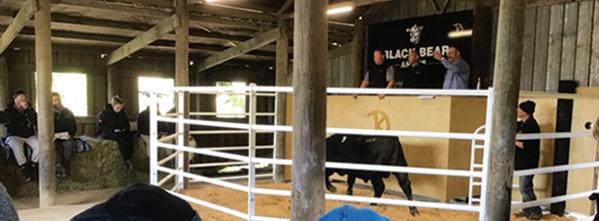
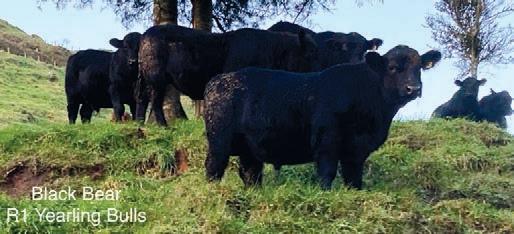


55 Alan & Catherine Donaldson P: (07) 896 6714 E: agcsdonaldson@gmail.com www.pukenuiangus.co.nz Find us on Facebook BULL SALE ANGUS MONDAY 26TH SEPTEMBER 2022 AT 1:30PM ON-FARM BULL SALE VENUE: 303 River Road, SH 43, Taumarunui All sale bulls are BVD/Lepto/10 in 1 vaccinated. 25 CALVING EASE Bulls FOR SALE BLACK RIDGE ANGUS STUD On-Farm Bull Sale Monday 26th September 2022, 11am Offering 30 quality Yearling Angus Bulls SIRE BULLS: Te Mania Buff 314, Stokman South Dakota N226, Murchison Powerhouse N282, Black Ridge Hero Q004, Kaharau Jonah P343 On Farm 675 Taringamotu e:InspectionPaddockTAUMARUNUIRdviewingfrom9amwelcome:DEAN&TERESASHERSONp:078967211m:0276902033blackridgeangus@outlook.comLikeandFindusonFacebook TAUMARUNUI YEARLING BULL SALE DAY Calving Ease Bulls • Monday 26th September • Black Ridge 11.00 AM • Puke-Nui 1.30PM 2021 Yearling prices ranged BETWEEN $1800 - $2400 Average Weight BETWEEN 400kg - 500kg Low Birth Weight SUITABLE FOR HEIFERS AND COWS 115 YEARS OF BREEDING Fastest growing breed in the world HIGH MARBLING AND HIGH YEILDING BEST TASTING BEEF Low Birth Weight SUITABLE FOR HEIFERS AND COWS ALL BULLS PEDIGREE AND PERFORMANCE RECORDED FRIDAY, 23 SEPTEMBER 2022 1.00PM at 45 Maungahina Road, off Castle Point Road, Masterton, NZ SALE WILL BE LIVE-STREAMED VIA BIDR • CONTACT CARRFIELDS LIVESTOCK 25 x Registered Hereford Yearlings • 25 x Registered Speckle Park Yearlings facebook.com/maungahina E: mark.maungahina@xtra.co.nz MAUNGAHINA.CO.NZ Maungahinastud ESTB. 1907 SPECKLE PARK HEREFORD Photos of sale bulls available online at WWW.MAUNGAHINA.CO.NZ Y earling B ull S ale Enquiries to Richard and Christine 027 353 5693 Linking Buyers and Sell 11:30am Monday 12th S eptember 2022 6 LivestockLink FINANCEABULL BID ONLINE WITH Quality, Well Grown, High BW, Low Risk Delivery every Wednesday with prior arrangement until the 20th October 2022 Bulls staying will be at purchasers risk. Richard and Christine Lansdaal and Family 200 Luck at Last Road, Karapiro, Cambridge Sale Held under cover with lunch provided + free coffee van on site ON OFFER FROM LYNRICH JERSEY HERD NZAEL BW 316 | PW 329 MINDA BW 304 | PW 311 60 R1 ELITE BULLS ave BW 349 + 10 R2 Elite Jersey Bulls ave BW 373 NZAEL All G3 profiled, BWs to 435, A2A2 tested to be sold by Link Livestock Ltd Finance A Bull Available 140 R1 JERSEY BULLS My Livestock live auction hybrid platform. All fully Recorded, BW’s up to 379, G3 profiled to be sold by NZ Farmers Livestock Limited. Bull Plan Finance available. ALL BULLS ARE: Bred/Reared/Grazed on our own properties. TB Tested (Herd Status C10, EBL Free) BVD tested negative and double vaccinated, lepto vaccinated. Ollie Carruthers – 0274 515 312 Ross Riddell - 0272 111 112 Catalogue available soon, on mylivestock.co.nz and http://www.linklivestock.co.nz/upcoming-sales/ LK0112949© JASON COFFEY 691 Te Kopi Rd, RD4, Masterton P. 06 372 77 20 M. 0274 570 526 te_whanga@borthwick.co.nz www.borthwick.co.nz Te Whanga Calving Ease Sires. LIVE BIDDINGavailable www.bidr.co.nzat SALE DATE 2022 MONDAY 12 SEPT 10.00 47 stud bulls 5 performance recorded bulls ENQUIRIES AND INSPECTIONS WELCOME Graeme Brown P: 021 037 2350 Like us on Facebook @MaranuiHerefords E: maranui.stud@xtra.co.nz HEREFORD & ANGUS YEARLING BULL SALE Thursday, 8th September 2022 @ 12.30pm 282 Trig Road North, Waihi 3681 FARMERS WEEKLY – farmersweekly.co.nz – September 5, 2022Livestock 55





56 ® Limehills Stardom 190158 Top 20% calving ease. Top 1% growth. LK0112747© Mahuta Hereford Stud Offering specialist bulls for heifer mating – beef and dairy • High calving ease • Above average growth, meat, and fat Annual Yearling Bull sale on the farm, Glen Murray, Waikato Friday 16th September 2022 Open Day Friday 2nd September Auctioneer Cam Heggie 027 501 8182 Local Agent Stephen Hickey 027 444 3570 Enquiries contact John Allen 027 440 7504 or jvmeallen@xtra.co.nz HEIFERHEREFORDSMATING CHARWELL 22HEREFORDPOLLEDSTUDNDANNUALSPRINGSALE Wednesday 14th September at 11.30am at 659 Matahi Road, Manawahe Near Lake Rotoma, SH 30 Representing 103 years of pure bred genetics All TB & BVD clear & vaccinated For more information Contact Peter or Penny Davies - “Taharoto” 716 Matahi Road, RD 4, Whakatane 3194 Phone 07 322 1080 or email: pstdavies@ruralinzone.net LK0112886© These animals are from a CLOSED herd and have never left the property or been leased out. We welcome clients, friends and visitors to our sale which comprises approx: 60 2-year old bulls 13 18-month bulls 38 Well yearlinggrownbulls FARMERS WEEKLY – farmersweekly.co.nz – September 5, 2022 Livestock56


57 DEREK HAYWARD M: 027 226 6686 E: derek.premier@farmside.co.nz Auction Livestream Auctioneer Kelly Higgins 027 600 2374 Stud Stock Services Bruce Orr 027 492 2122 Speckle Park & Murray Grey Bull Sale 29 SEPTEMBER 2022, 12 NOON 400 Brunskill Road, Cambridge 25 SPECKLE PARK BULLS 10 MURRAY GREY BULLS 450 BULLS The biggest selection of top quality service bulls, Auctioned in Taranaki this spring. Held on farm and undercover at 470 Wilford Road, Hurleyville, South Taranaki Tuesday 13th September at 11.00am ORDER OF SALE: • Grazing available at vendors risk until 20th November 2022 Deferred payment until 20th NOVEMBER 2022 COMPLIMENTARY BBQ LUNCH PROVIDED $50 cash back on any bulls taken on week of sale /Great spot prizes AUCTIONEERS NOTE: We are extremely pleased to offer this outstanding line up of quality, well grown service bulls. All entries are TB and BVD negative, BVD, IBR and Lepto vaccinated. Bernie & Irene Fowler 06 273 4400 or 027 201 2552 Grant Hobbs 027 477 7406 Steve Quinnell 027 552 3514 Sheldon Keech 027 222 7920 Brent Espin 027 551 3660 Daniel Crowley 027 215 3609 Daniel Hornby 027 636 2090 • 70 Hereford • 40 Angus • 40 Murray Grey • 25 Red Devon • 15 Ayrshire • 20 Jersey 3 Yr Olds • 185 Jersey 2 Yr Olds • 50 Jersey Autumn Born LK0112621© NZ FARMERS LIVESTOCK Fowler Farms Ltd @fowlerfarmsbullsale M C F A D Z E A N C R U I Z Y C A L V E M C F A D Z E A N S U P E R A N G U S M C F A D Z E A N M E A T M A K E R Superior weaning weight % Instant impact on calf size, growth & muscling Higher carcass yields High EMA scores Strong milking & maternal traits At least 7/8 s Angus Moderate framed hill country cattle Excellent growth rates and superior muscling Positive fats & high IMF % Strong milking & maternal traits 100% Registered Angus Positive for calving ease Short gestation Positive fats & good growth Suited for heifer mating Thursday 8th September 2022 at 1pm 216 Wiltons Road, Carterton www mcfadzeancattlecompany co nz Johnie McFadzean 0274295777 | Andrew Jennings PGG Wrightsons 0275946820 Lot 8 McFadzean SuperAngus 1306 EMAWeaningIMF83sqcm-2.5Weight-382kgsYearlingWeight-526kgsDailyGrowth-1.35kgs A group of 2022 Cruizy Calves born 10 14 days before official due date weighing between 27 32kg Featuring for the first time 'McFadzean Cruizy Calve' Heifer Mating Specialist, Positive for Calving ease, Short Gestation Angus bulls 45 Years of Proven Performance • Top Quality Yearling Bulls A L L B U L L S H A V E P A S S E D S E M E N T E S T I N G P L E A S E C O N T A C T U S F O R A C A T A L O G U E A N D / O R V I E W I N G Affordable Bulls The top 65 yearling bulls up for sale are selected from a herd of 1500 cows. Our bulls will average 600kg at sale day. We don't sell 2 year olds FARMERS WEEKLY – farmersweekly.co.nz – September 5, 2022Livestock 57







Larger scale farmers tend to target this class of stock for a variety of reasons, from securing very early lambs and trading ewes, to topping up lamb numbers in breeding flocks. Interest around docked lines tends to increase as the weeks pass and premiums will start to beButseen.the early lines coming forward now will be the oldest lambs in the country and it is becoming more common to leave early lambs intact, so there is no real price advantage for docked lines yet. In just 10 years values have doubled from $60-$75 up to recent North Island results at $132-$150 all counted. But buyers were prepared to pay up to $165 all counted at Stortford Lodge for a small line of very good ewes and lambs that could have been weaned.Theearlier lines do tend to sell for a premium as the early lambs are a big drawcard and expectations are that prices will plateau once mainstream lines come on.
SPRING SOUNDS: Lambs travelling to the yards with their mothers herald the start of the spring-selling season.
TURANGANUI ROMNEYS “The team behind the sheep” Michael Warren 06 307 7841 or 0274 465 312 Guy Warren 027 848 0164 William Warren 027 824 9327 Kieran Brown Ron LettMike WarrenGuy Warren Jayden Hume William Warren TURANGANUI ROMNEYS RD 2 Featherston 5772 LK0112172© 58 Markets N
Markets Proudly sponsored by
Suz Bremner MARKETS Lambs For some sellers it is a market they target on an annual basis as it works well with their farming system.
Sounds of spring fill the saleyard
The spring selling season is underway and the saleyards are taking on a family atmosphere as ewes with lambs-at-foot come forward. The class has grown in popularity over the past ten years as buyers look to avoid the lambing beat and sellers target a good margin. Early lines this year sold well at Stortford Lodge.
This class of stock hasn’t always been a regular at yards but as interest and therefore demand grew, it caught the attention of a few more vendors. Ten years ago it was very popular, and it wasn’t unusual to see 500-1000 ewes and their lambs in the pens at Feilding, but as ewe numbers have decreased that tally has fallen away, and more trading has also happened in the paddock. For some sellers, though, it is a market they target on an annual basis as it works well with their farming system. Some will intentionally buy older ewes, putting them to the ram and doing the hard yards of lambing them down, to reap the reward at auction. From a buyer’s perspective, the fact that the hard work of lambing has been done is a big drawcard and that makes them very popular with small block holders in particular.
OTHING feels more like spring than listening to the sound of young lambs calling out persistently to their mothers, and more yards around the country are ringing out with this high-pitched song. Ewes with lambs-at-foot herald the start of the spring-selling season and the onset of this class is always viewed with interest, not only from those looking to purchase but because it also an offers insight into what new season lamb values will be. Lines are sold all counted, so the same price is paid for the ewe and the lamb, and prices are set with several variables in mind. Line size and the ewe-to-lamb ratio are key factors, as well as the age and tail status of the lambs.


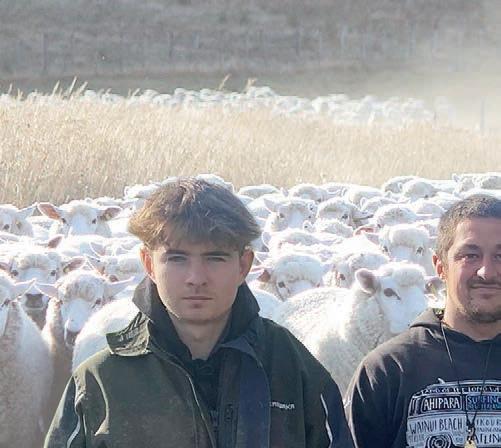


Te Kuiti | August 26 $/kg or $/hd MA traditional cow, Angus, vetted-in-calf, 465-580kg 1170-1410
2-year dairy-beef steer, Hereford-Friesian, 395kg 3.7 2-year dairy-beef steer, 390-475kg 3.29-3.49 2-year traditional heifer, Hereford, 345kg 3.48
Yearling traditional heifer, Angus-Hereford, 225-280kg 3.39-3.42
2-year dairy-beef heifer, 431kg 1440 Aut-born yearling dairy-beef heifer, 271-333kg 870-1120
59 Saleyard wrap
Te Kuiti | August 31 $/kg or $/hd
Prime dairy-beef heifer, 452-467kg 3.21-3.24
Tuakau | August 25 | 450 cattle $/kg or $/hd 2-year dairy-beef steer, plus beef-cross, 350-450kg 3.38-3.47 2-year dairy-beef heifer, Hereford-Friesian, 350-420kg 3.16-3.29
Yearling dairy-beef heifer, Hereford-Friesian, 179-221kg 3.68-3.80 Yearling exotic heifer, Charolais-Friesian, 231kg 3.74 Prime dairy-beef steer, 485-544kg 3.34-3.43
Frankton | August 30 | 588 cattle $/kg or $/hd 2-year dairy-beef steer, 320-366kg 3.61-3.73 2-year dairy-beef heifer, 344-435kg 3.32-3.45
Yearling exotic steer, Charolais-Friesian, 240kg 3.79 Prime exotic steer, Simmental-cross, 623kg 3.76 Rangiuru | August 30 | 328 cattle, 106 sheep $/kg or $/hd
Prime lambs, very heavy 260-272 Prime lambs, heavy 240-259
FARMERS WEEKLY – farmersweekly.co.nz – September 5, 2022
Welcome to the new-look Saleyard wrap section. We asked, and you told us less is more. So here it is – three pages of easy-toread livestock market highlights from saleyards all around the country, giving you the key numbers. When you need to take more than a passing interest and want resources to help plan your livestock trading decisions, our Livestock Reports are for you: LivestockEye, Livestock Insight, and Livestock Outlook. Subscribe now at www.agrihq.co.nz. They’ll pay for themselves.
2th ewe, good 154-169 Prime lambs, good 246-260 MA ewe, RWR, good 180 Prime ewe, good 182-208 Store ewe 130-135 Store wether lambs 172-198 Store male lambs, shorn 153-165 Store ewe lambs 144-154 Matawhero | August 26 | 1678 sheep $/kg or $/hd Store lambs, shorn, good 150-171 Store lambs, woolly, good 130-154 Store male lambs, very heavy 299 Store lambs, woolly, heavy 162-187 Prime lambs 181-250 Prime ewe 155-230 Taranaki | August 31 | 259 cattle $/kg or $/hd
Aut-born weaner bull, 110-120kg 545 Aut-born weaner dairy-beef heifer 510 Prime traditional cow 2.10-2.20 Wellsford | August 29 | 223 cattle $/kg or $/hd
59
Yearling dairy-beef steer, plus beef-cross, 250-350kg 3.30-3.70
2-year traditional steer, 290-420kg 3.20-3.24 2-year dairy-beef steer, Hereford-Friesian, 398kg 3.39 Yearling dairy-beef steer, 275kg 3.52 Yearling beef-cross heifer, Charolais-Hereford, 221kg 740
Yearling dairy-beef steer, top Hereford-Friesian, 188-218kg 4.13-4.26
Pukekohe | August 27 $/kg or $/hd 2-year traditional steer, 379-393kg 1110-1150
Frankton | August 31 | 726 cattle $/kg or $/hd
Prime ewe lambs, very good 240
3-year plus Friesian bull, 600-607kg 3.49-3.51
2-year dairy-beef steer, 447kg 1420
Yearling traditional steer, 147-156kg 600-665
2-year traditional steer, Angus, 342-400kg 1430-1495
2-year dairy-beef steer, 400kg 3.52 Aut-born weaner dairy-beef heifer, 121-156kg 470-500 Prime dairy-beef steer, 503-529kg 3.50-3.63
Prime steer, 495-613kg 3.36-3.54 Prime dairy-beef heifer, 462-520kg 3.31-3.37
Yearling dairy-beef steer, Hereford-Friesian, 254-265kg 4.13-4.21
2-year traditional heifer, 275-313kg 825-965 Aut-born weaner dairy-beef steer, 105-107kg 475-555 Aut-born weaner dairy-beef heifer, 88-102kg 400-540 Prime traditional steer, 529-599kg 3.27-3.37 Prime traditional heifer, 441-498kg 3.32-3.33
2-year beef-cross steer 3.10-3.25 MA beef-cross heifer, 2-year and 3-year 3.10-3.20 Yearling beef-cross steer 3.40 Yearling beef-cross heifer 3.10-3.18
Stortford Lodge | August 29 | 567 sheep $/kg or $/hd
Kaikohe | August 31 | 450 cattle $/kg or $/hd
Yearling dairy-beef steer, Hereford-Friesian, 286-292kg 3.71-3.73
Yearling steer, 305-330kg 3.26-3.36
Markets
2-year traditional steer, Angus, 451kg 3.48
Boner Friesian cow, 476-562kg 2.18-2.37
Yearling heifer, 300-350kg 2.78-3.22 Tuakau | August 29 | 450 sheep $/kg or $/hd Store lambs, medium-good 114-129 Prime ewe, all 88-216 Tuakau | August 31 | 340 cattle $/kg or $/hd Prime steer, 630-700kg 3.64-3.79 Prime steer, 500-630kg 3.31-3.65 Prime bull, 646-735kg 3.57-3.70 Prime heifer, 440-540kg 3.38-3.57 Boner cow, 420-600kg 1.93-2.48
Frankton | August 31 | 726 cattle continued $/kg or $/hd
Aut-born yearling beef-cross heifer, 291-316kg 2.82-3.10
2-year beef-cross heifer, 375-479kg 2.77-2.96
2-year traditional steer, Angus, 397-420kg 3.69-3.72 2-year traditional heifer, 373-500kg 3.46-3.52
Feilding | August 29 | 73 cattle, 2145 sheep $/kg or $/hd
Prime male lambs, very heavy 251-260 Prime lambs, heavy 189-242 Boner Friesian cow, 447-600kg 2.34-2.42
2-year exotic heifer, Charolais, 353kg dairy-beef heifer, 354-397kg steer, heifer, cow, 454-660kg
2-year traditional steer, 448-450kg 3.79-3.81
3.34-3.38
Yearling dairy-beef heifer, Hereford-Friesian, 211-316kg 3.13-3.37
Yearling dairy-beef bull, 249-297kg 880-1005
Yearling beef-cross heifer, 225-257kg 2.98-3.04
Store ewe lambs, good to heavy 178-200 Store ewe lambs, medium 132-175 Dannevirke | August 25 | 600 sheep $/kg or $/hd
2-year dairy-beef heifer, 366-450kg 3.23-3.39
2-year beef-cross steer, 398-491kg 3.18-3.22
2-year dairy-beef heifer, 366-490kg 2.79-3.10
Prime lambs, all 187-214 Store ewe lambs, all 111-174 Feilding | August 26 | 961 cattle, 2944 sheep $/kg or $/hd
Rongotea | August 30 $/kg or $/hd 2-year dairy-beef steer, 375-525kg 3.13-3.88
Yearling dairy-beef heifer, 170-210kg cattle, 1174 sheep $/kg beef-cross steer, 393-395kg
457-502kg 3.52-3.64 Prime
2-year traditional steer, 472-533kg 3.48-3.58
448-467kg 3.30-3.48 Boner Friesian
Prime ewe, very heavy 200-220
Store male lambs, medium to good 172-189
MA Romney ewes & lambs, Terminal-cross lambs, medium-good 132-137 Store ewe lambs, shorn, medium-good 152-174.50 Store male lambs, medium-good 158-175
MA Romney ewes & lambs, big lines, terminal lambs, tails, very good 140-147 Store male lambs, heavy 195-220
Prime ewe, all 124-227
Prime ewe, heavy 190-194 Prime ewe, good to very good 171-181 Stortford Lodge | August 31 | 642 cattle, 7392 sheep $/kg or $/hd
60Stortford Lodge | August 29 | 567 sheep continued $/kg or $/hd
2.22-2.42 Prime lambs 184-306 Prime ewe 140-189 MA ewes & lambs, six shorn ewes and 11 lambs 110 Canterbury Park | August 30 | 139 cattle, 468 sheep $/kg or $/hd Prime beef-cross steer, 540-725kg 3.65-3.76 Prime dairy-beef steer, Hereford-Friesian, 610-700kg 3.67-3.70 Prime beef-cross heifer, 481-655kg 3.50-3.70 Prime dairy-beef heifer, 450-580kg 3.45-3.64 Prime lambs, top price $305 184-280 Prime ewe 100-270 Advertise with us Reach hundreds and thousands of rural New Zealanders every week Call 0800 85 25 80
60 FARMERS WEEKLY – farmersweekly.co.nz – September 5, 2022 Markets
2.10-2.41 Coalgate | August 25 | 326
or $/hd 2-year
Yearling traditional steer, Angus, 206-238kg 4.24
2-year Friesian bull, 465-525kg 3.48-3.51
2-year traditional steer, Angus, 388-425kg 3.90-3.95
3.13-3.20 Prime traditional
2-year beef-cross heifer, South Devon-cross, 290-313kg 1000-1100 Yearling Friesian bull, 248-277kg 3.63-3.77
3.43 2-year

61 Temuka | August 29 | 535 cattle, 2340 sheep $/kg or $/hd Prime traditional steer, 544-740kg 3.52-3.62 Prime beef-cross steer, Charolais-cross, 550-573kg 3.52-3.57 Prime dairy-beef steer, 540-730kg 3.40-3.49 Prime traditional heifer, 470-535kg 3.38-3.57 Prime dairy-beef heifer, Hereford-Friesian, 535-631kg 3.30-3.39 Boner Friesian cow, 525kg 2.17 Boner Friesian cow, 568-670kg 2.24-2.34 Boner other dairy cow, crossbred, 446-488kg 2.08-2.27 Store male lambs, medium to good 150-152 Store mixed-sex lambs, light to medium 143-148 Store ewe lambs, light 100-139 Prime ewe, most 100-178 Prime mixed-sex lambs, very heavy 240-271 Balclutha | August 31 | 395 sheep $/kg or $/hd Prime ewe 70-212 Prime lambs 140-204 Prime adult male, rams 80-100 Store lambs 50-150 Charlton | August 25 | 246 sheep $/kg or $/hd Prime ewe 85-172 Prime lambs 140-248 Store lambs 102-150 Lorneville | August 30 $/kg or $/hd 2-year beef-cross heifer, 402-419kg 1380-1420 Yearling beef-cross steer, 200-287kg 730-1000 Yearling beef-cross heifer, 184-209kg 660-730 Prime traditional steer, 560-580kg 3.34 Prime ewe, medium-good 120-174 Prime lambs, medium-good 150-252 Store lambs, medium-good 100-140 Feeder FranktonCalves|August 30 | 550 cattle $/kg or $/hd Friesian bull, good 170-250 Friesian bull, medium 125-140 Dairy-beef bull, Hereford-Friesian, good 240-270 Dairy-beef bull, medium 170-210 Exotic bull, Simmental-Friesian, good to medium 200-370 Dairy-beef heifer, good to medium 80-200 Reporoa | August 25 | 362 cattle $/kg or $/hd Friesian bull, good 90-105 Friesian bull, small-medium 30-70 Dairy-beef bull, black Hereford-Friesian, all 100-225 Beef-cross bull, good 90-140 Dairy-beef heifer, black Hereford-Friesian, all 30-100 Exotic heifer, exotic-cross, all 40-60 Reporoa | August 29 | 145 cattle $/kg or $/hd Friesian bull, good 75-90 Dairy-beef bull, black Hereford-Friesian, good 130-170 Beef-cross bull, good 75-85 Dairy-beef heifer, black Hereford-Friesian, good 60-80 Beef-cross heifer 30-45 Inglewood | August 29 | 150 cattle $/kg or $/hd Dairy-beef bull, all 115-280 Beef-cross bull, all 90-170 Dairy-beef heifer, all 80-200 Beef-cross heifer, all 80-120 Rongotea | August 30 $/kg or $/hd Friesian bull, all 70-130 Dairy-beef bull, all 125-230 Beef-cross bull, all 90-215 Dairy-beef heifer, all 65-170 Beef-cross heifer, all 75-145 FARMERS WEEKLY – farmersweekly.co.nz – September 5, 2022Markets 61 whatSee todaysold REPORTS EYE LIVESTOCK Results from the saleyards, including per kilo prices for store lambs, delivered straight to your inbox. Subscribe from only $35 per agrihq.co.nz/livestock-reportsmonth
Purchase fertiliser and help your community *Open to PGG Wrightson Ltd account holders only. Excludes Lime and Gypsum. See full terms and conditions at cashforcommunities.co.nz Find out more at cashforcommunities.co.nz Support your local community when purchasing your spring fertiliser. Purchase Ballance Agri-Nutrients fertiliser between 1 September and 30 November 2022 and $1 for every tonne purchased will be donated to your chosen qualifying cause.* 62 FARMERS WEEKLY – farmersweekly.co.nz – September 5, 2022 Markets62 AgriHQ market trends Sheep meat Slaughter price (NZ$/kg CW)Last weekLast year NI Lamb (17kg) 9.459.25 NI Mutton (20kg) 6.106.60 SI Lamb (17kg) 9.409.15 SI Mutton (20kg) 6.106.75 Export markets (NZ$/kg) UK CKT Lamb leg 12.1012.11 Wool (NZ$/kg) Two weeks agoPrior week Coarse xbred ind. 2.622.86 37 micron ewe 2.85 30 micron lamb Beef Slaughter price (NZ$/kg CW)Last weekLast year NI Steer (300kg) 6.706.25 NI Bull (300kg) 6.306.15 NI Cow (200kg) 4.904.60 SI Steer (300kg) 6.406.10 SI Bull (300kg) 6.205.90 SI Cow (200kg) 4.904.90 Export markets (NZ$/kg) US imported 95CL bull 9.759.04 US domestic 90CL cow 9.818.75 Venison Slaughter price (NZ$/kg)Last weekLast year NI stag (60kg) 8.356.30 SI stag (60kg) 8.456.45 Cattle Sheep Deer NZFertiliseraverage (NZ$/t) Last week Last year Urea 1340844 Super 505342 DAP 17941135 Nitrogen 1389Fertiliser Softwood log exports (tonnes) JuneLast year China 1,288,5912,090,535 Rest of world 194,701215,888 ForestrySteer slaughter price ($/kg CW) Lamb slaughter price ($/kg CW) NZ lamb exports May - July (thous. tonnes)NZ beef exports May - July (thous. tonnes) Data provided by 7.16.76.35.95.5 Oct Dec Feb Apr JunAug North Island South Island 10.09.59.08.58.07.5 Oct Dec Feb Apr JunAug North Island South Island 706050403020100 China Japan S. Korea Taiwan US Other Last year This year 50403020100 China EU Mid East UKUS Other Last year This year Stag slaughter price ($/kg CW) 9.08.58.07.57.06.56.0 Oct Dec Feb Apr JunAug North Island South Island


Smarter farming for a better New Zealand® You know your farm. We know our nutrients. And we’re driven to help you achieve your productivity and sustainability goals based on best practice soil science, technology, and innovation. Here’s how we can help you gain ground for spring. rav.link/advantage 0800 100 123 ravensdown.co.nz Grow advantageyour 63 FARMERS WEEKLY – farmersweekly.co.nz – September 5, 2022Markets 63 10.009.509.008.508.007.507.00May-21 Jul-21 Sep-21 Nov-21 Jan-22 Mar-22 May-22 MS$/kg Sept. 2021 Sept. 2022 NZX market trends Company Close YTD HighYTD Low ArborGen Holdings Limited 0.230.270.205 The a2 Milk Company Limited 6.236.454.2 Comvita Limited 3.353.782.98 Delegat Group Limited 11.914.4510 Fonterra Shareholders' Fund (NS) 2.943.782.75 Foley Wines Limited 1.431.571.38 Greenfern Industries Limited 0.1520.250.089 Livestock Improvement Corporation Ltd (NS) 1.351.731.3 Marlborough Wine Estates Group Limited 0.1780.260.155 NZ King Salmon Investments Limited 0.2351.380.187 PGG Wrightson Limited 4.85.763.93 Rua Bioscience Limited 0.30.530.29 Sanford Limited (NS) 4.45.074.03 Scales Corporation Limited 4.735.594.07 Seeka Limited 3.965.363.96 Synlait Milk Limited (NS) 3.483.543.04 T&G Global Limited 2.653.012.6 S&P/NZX Primary Sector Equity Index 129161429311724 S&P/NZX 50 Index 116011315010588 S&P/NZX 10 Index 112431272510291 Close of market Listed Agri shares GrainDairy Dairy Futures (US$/t) Nearby contractLast price* vs 4 weeks ago WMP 35453600 SMP 42004150 AMF 61905800 Butter 60005400 Milk Price 9.319.33 * price as at close of business on Wednesday Data provided by Canterbury Feed Wheat ($/tonne) 5pm, WednesdayMilk Price Futures ($/kg MS) Canterbury Feed Barley ($/tonne) Waikato Palm Kernel ($/tonne)WMP Futures - vs Four Weeks Ago (US$/t) 10.009.509.008.508.007.507.00May-21 Jul-21 Sep-21 Nov-21 Jan-22 Mar-22 May-22 MS$/kg Sept. 2021 Sept. 2022 S&P/NZX 10 INDEX 11243 S&P/FW SECTORPRIMARYEQUITY 12916 S&P/NZX 50 INDEX 11601 7.00 7.50 8.00 8.50 9.00 9.50 10.00 10.50 11.00 Aug Oct Dec Feb Apr Jun Aug Sep-2022 Sep-2023 350 400 450 500 550 600 650 700 Aug-21 Oct-21 Dec-21Feb-22 Apr-22 Jun-22 Aug-22 350 400 450 500 550 600 650 700 Aug-21 Oct-21 Dec-21Feb-22 Apr-22 Jun-22 Aug-22 380037503700365036003550350034503400 Sep Oct Nov Dec Jan Feb Latest price 4 weeks ago 300 350 400 450 500 550 Aug-21 Oct-21 Dec-21Feb-22 Apr-22 Jun-22 Aug-22
THE PROFESSIONAL’S CHOICE
For your local dealer go to: claasharvestcentre.com2466LAN
ur three maps associated with today’s article really tell the story about how our weather has been over the past couple of weeks, basically where it has been wet we have had less sun, that’s a no-brainer. Win ter so far for New Zealand has been wet, the soil moisture deficit map for the past 15 days shows field capacities are high with some areas being oversaturated. Typically the eastern South Island is a little drier this time of year, parts of North Otago into inland South Canterbury are aboutNotablynormal.about Fiordland it has been a touch drier than normal due to rainmaking systems sweeping over New Zealand being placed a little further north. The past 15 days of rain map shows how plenty of rain has fallen for the West Coast, top of the South Island then Northland and down into Taranaki and Kāpiti. Nelsonians don’t need any reminding of how wet it has been, this due to a northerly river of moisture coming down from the tropics between a big high that sat out to our east and low pressure in the Tasman Sea.
KEVIN WHITE OF BRADFIELDS CONTRACTING TALKS ABOUT CLAAS GRASS HARVESTING EQUIPMENT
KEVIN WHITE Bradfields “ FOR US IT’S THE RELIABILITY OF THE CLAAS GEAR. THEY GO OUT IN THE MORNING AND COME BACK IN THE EVENING, JOB DONE. ”
64 O
As we look to the week ahead we start off with a low coming out of the Tasman Sea bringing potentially some heavy rain to the upper North Island. This clears away on Tuesday, meanwhile the South Island has southwesterlies with a few showers in the south and east, dry with sun in the west. A high lurks in the Tasman Sea and this moves in on Wednesday and hangs around till Saturday so calm weather could be on the horizon. A few showers for some though, especially the West Coast and northeastern parts of the North Island (East Cape through to Northland). On Sunday high pressure looks to move away to the east so in come the northerlies with showers possible in the west, drier in the east. 9am 26/8/2022 to 31/8/2022 16/08/2022 to 30/08/2022
9amAnomaly31/08/2022 Observed daily average bright sunshine 9am
RainfallSoil Moisture
Sunshine
A last ahurrahrainyfromwetwinterWeather ruralweather.co.nz Observed rainfall
With up to 50 operators out in the field and as many pieces of equipment during peak harvest; reliability and efficiency are key for Kevin and Kirsten White in the South Waikato. Bradfields covers a relatively vast area from as far south as Waiouru, Kawhia in the east and the Bombays in the north. This big catchment means harvesting a wide range of farm types and some hard land contours under the usual time pressure at peak harvest. For Kevin this means ‘purchasing the market leader for gear.’ This is where the CLAAS equipment and the support he gets from CLAAS Harvest Centre come in.
CLAAS DISCO MOWER CLAAS LINER RAKECLAAS VOLTO TEDDER






1 Promotional offers valid until 30th September 2022. All prices exclude freight unless speci ed. Some products may be delayed due to shipping restrictions. Orders will be taken and supplied when available. RANGEBUTCHERRURALTHE Knives, Butchery Tools & Accessories for the Home Butcher WWW.RURALBUTCHER.COM 0800 843 024 EasySharpe Whetstone Set The EasySharpe Whetsone Set is not your average sharpening set! Our 2000-8000 dual-grit whetstone kit has high-density single whetstones with different coarseness. Complete with leather honing straps and nishing compound. BU166 $ 82 EasySharpe+GST.00 Double Sided Diamond Stone Set This double-sided diamond, knife-sharpening stone from EasySharpe is just what you need to keep your knives in peak working order. With one side with 400-grit for a coarser grind and the other with 1000-grit diamond, for a ner grind. Complete with non-slip rubber base. BU163$ 59 EasySharpe+GST.00 Blade Sharpener Kit The EasySharpe Blade Sharpener Kit enhances your knife sharpening experience. With a G-Clamp tightly clamping on the table and the knife balde held rmly in the clamp. You can then set the angle for sharpening the perfect edge. BU160 $ 82.00+GST


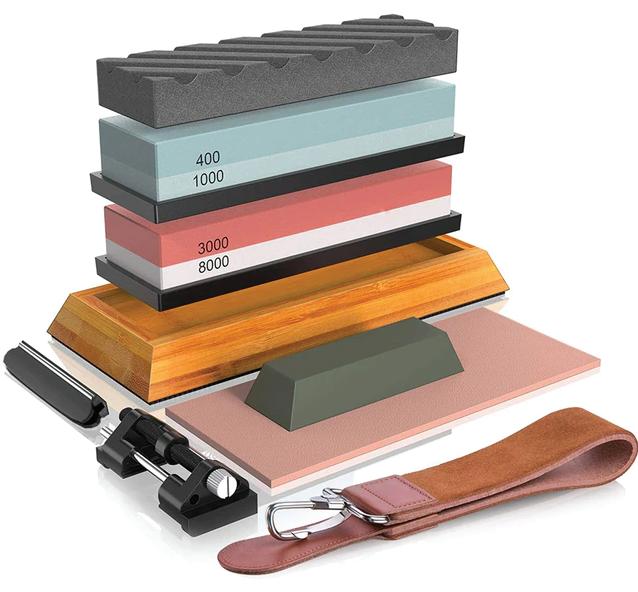
WWW.RURALBUTCHER.COM 5 Farmhand Yard Panels - Bundle of 10 Farmhand Slam Latches Farmhand Cattle YardGatesFarmhand Vetless Cattle Crush Farmhand Vet Crush Farmhand WalkthroughHeadbail Farmhand Headbail Swingbail Stockman Sliding Gate Farmhand Curved Force Tub Farmhand LoadingStockmanRampHeadbail 2 Small Meat Saw Rural Meat Saw $ 1,090 BU91 $ BU93 BU01.00+GST .00$ +GST2,895 •• Throat size 270mm H x 200mm W 1.1kW 210mmmotoralloy pulley wheels Table 500 x 600mm•• • Throat size 320 x 250mm • 3/4HP enclosed motor • 250mm alloy pulleys • Cutting guides Medium Meat Saw Large Meat Saw 2,250.00+GST BU92 $ 3,199 • Throat size 460mm H x 285mm W • 1.5kW motor • 300mm alloy pulley wheels • Table 700 x 550mm • The orginal farmers meatsaw• Throat size 380mm H x 250mm W • 1.5kW motor • 260mm alloy pulley wheels • Table 700 x 550mm Stainless Steel Workbench 1200 L x 600 D $ 379.00+GST Butchers Block Workbench • 900 L x 600 D Corner Bench Unit • 900 x 900 BU81 • BU80 Stainless Steel Sink Bench •1200 L x 600 D BU82BU83$ 559 .00+GST .00+GST $ 459 .00+GST $ 649.00+GST SPEND OVER $1,000 + GST AND GET A FREE 2 PIECE FILLETING KNIFE SET! BU58 8” Cleaver White Handle6” Cleaver Red Handle 8.5” Cleaver Yellow Handle Ox Cleaver Red Handle BU59 BU144 BU145$ 83$ 68$ 51$ Railed35Wall Shelf 160.00+GST BU84 $ Chopping Board • 1200 L x 300 D • 600 L x 400 W 40 D 148 +GST.00 BU95$ Poultry Scissors BU9626 +GST.00$ Bone Dust Scraper BU5612.00+GST$ Butcher Saw • Stainless frame 25”$18” 71.00+GST $ 96.00+GST Butcher Chainmail Glove BU68,69,70$ 153.00+GST Butcher Saw Butcher Saw • Stainless frame• Stainless frame 22” BU50BU51 BU52$ 83.00+GST 0800 843 024 Promotional offers valid until 30th September 2022. All prices exclude freight unless speci ed. Some products may be delayed due to shipping restrictions. Orders will be taken and supplied when available. .00+GST .00+GST .00+GST .00+GST WWW.RURALBUTCHER.COM VALUED AT RRP $60+GST





5 Farmhand Yard Panels - Bundle of 10 Farmhand Slam Latches Farmhand Cattle YardGatesFarmhand Vetless Cattle Crush Farmhand Vet Crush Farmhand WalkthroughHeadbail Farmhand Headbail Swingbail Stockman Sliding Gate Farmhand Curved Force Tub Farmhand Loading RampStockman Headbail 3 Rural Sausage Filler 3L • Make sausages at home $ 249 +GST BU10 Rural Mincer T12 • Make mince from home • Stainless steel body • 750W motor 599.00 BU08+GST Rural Mincer T22 $ 999.00 BU09+GST • Make mince from home • Stainless steel body • 850W motor • Capacity 250kg/h• Capacity 150kg/h Rural Sausage Filler 7L $ 339.00 BU13+GST .00 • Make sausages at home .00$ +GST799 BU94 Rural Meat Slicer • Slice meat to perfection every time • Suitable for home, to semi professional use $ 477 .00+GST BU14 Rural Meat Mixer • Easy mixing handle and pivoting cradle with lid. $ 273 .00+GST BU132 Burger Pattie Press • 130mm diameter Double Burger Pattie Press • 130mm diameter $ 26 .00+GST BU131 Natural Sausage Casings from New Zealand Sheep & Hog Sheep and Hog Casings are the two main types of edible natural casings used for sausage making, the main difference between the two being their size (width). Sheep casings are not as wide as hog casings so a sausage made with a sheep casing will be slim and tender, e.g. a breakfast sausage or hot dog. A sausage made with a hog casing will be a fat and chunky, e.g. an Italian Sausage. 20m Sheep $ 33 .00+GST 40m Sheep $ 51.00+GST 90m Sheep $ 77 .00+GST 90m Hog $ 52 .00+GST BU112 BU113BU114 BU135 Burger Pattie Press Papers BU13321 .00+GST Mutton StockinetteCloth BU138$ 89 +GST • 2.5kg roll .00 Mutton StockinetteCloth BU137$ 30 +GST.00 • 500g roll $ 47.00+GST BU110 Magnetic Knife Holder Hoist N Lock Big Game BU171173 .00+GST T-Meat Grab Hook 10.00 4” hook 11.00+GST 5” hook $ $ +GST BU60/61 Single.00 Swivel Meat Hook 35 14mm x 270mm 27.00+GST 10mm x 235mm BU62/63 +GST 0800 843 024 $ THE RURAL BUTCHER Promotional offers valid until 30th September 2022. All prices exclude freight unless speci ed. Some products may be delayed due to shipping restrictions. Orders will be taken and supplied when available. $ Bacon Hanging Hook • 200mm long BU148$27.00+GST $ $$ SPEND OVER $1,000 + GST AND GET A FREE 2 PIECE FILLETING KNIFE SET! VALUED AT RRP $60+GST





11 pc Butcher Knife Set BU45 • Ergonomic polpropylene antimicrobial handles 8 pc Butcher Knife Set $ 199 +GST.00 BU44 • Ergonomic polpropylene antimicrobial handles 2 pc Filleting Knife Set 6 pc Butchery BBQ Knife Set BU47 • Ergonomic polpropylene antimicrobial handles BU43 6 pc Chef Knife Set 129 +GST.00 • Ergonomic polpropylene antimicrobial handles $ Leather Skinning Knife & Sheath Set • Skinning knife • 6” steel $ 79 .00+GST BUKIT • Ergonomic polpropylene antimicrobial handles $ 60 +GST.00 BU97 • Leather sheath 0800 843 WWW.RURALBUTCHER.COM024EasySharpe Diamond Rod • 300mm • Ergonomic handle • Slip-resistant, durable handle The EasySharpe rod is designed to be used often, it corrects the edge without shaving off much, if any, of the blade’s material. Its diamond coating gives kitchen knives an extremely ne sharpness when honed, quickly restoring their original cutting performance. BU167 $ 27 +GST.00 EasySharpe Foldable Knife Sharpener BU165 $ 10 +GST.00 The EasySharpe Foldable Knife Sharpener is lightweight, compact, convenient and perfect for outdoor activities. • Pocket sized BU164 $ 15 +GST.00 The EasySharpe 3 Stage Sharpener is a must have in every kitchen. No water or oil is required, simply suction to any hard surface and use one of the three sharpening options. •Features:Coarse Diamond plate • Medium Diamond plate • Fine Ceramic *Knife not inluded 129 +GST.00$$ 159 +GST.00 Promotional offers valid until 30th September 2022. All prices exclude freight unless speci ed. Some products may be delayed due to shipping restrictions. Orders will be taken and supplied when available. 4 *Knife not inluded -100mmEasySharpe Diamond Flat Rod The EasySharpe at rod is a quick and easy to use double sided honing tool. BU168$ 9 +GST.00 *Knife not inluded WWW.RURALBUTCHER.COM SPEND OVER $1,000 + GST AND GET A FREE 2 PIECE FILLETING KNIFE SET! VALUED AT RRP $60+GST EasySharpe 3 Stage Sharpener






Sealer Bags - 3 x rolls 280 x 5000mm• Vaccum Sealer BU71 • Dual power mode for use at home, camping or on the boat • AC 240V & DC 12V plug $ 215 .00+GST Cool Chief 24L Portable Fridge BU150 • 24 Litre Capacity Semiconductor Car Fridge • Easy to read LED digital display $ 346.00+GST Grill PortableChiefBBQ BU151$ 256 +GST.00 - 50/packet Sealer Bags 150 x 200mm• BU73 $ 18 .00+GST Sealer Bags - 3 x rolls BU76 200 x 3000mm $ 24 .00 - 50/packet Sealer Bags BU75 280 x 400mm• $ 50 .00+GST Sealer Bags - 50/packet 49 .00 BU77 200 x 300mm• BU74 $ 31 .00+GST Ziplock Air - 50 packet Valve Bags 210 x 220mm• $ 28 +GST.00 BU136 $ Cooking area 460mm x 280mm Premium 304 grade stainless steel construction•• +GST +GST $Butchers ApronPPUPPU36.00+GST Plastic Knife Pouch $ 26.00+GST 370mm L Hold up to 4 knives BU106 Plastic Knife Pouch 520mm L Hold up to 2 knives•• BU107 •• Belt & Steel Holder $ 23 .00+GST Knife Roll Bag 23+GST.00$ Single HangingStainlessHook.00+GST15 8mm x 200mm $ • $ Double28.00+GST Carcass Swivel Hook BU67 $ 47 .00+GST 330mm width hook to hook• Mutton Skid Swivel Hook $ 60 .00+GST BU89 Plastic Knife Pouch 325mm L Hold up to 4 knives•• $ 30.00+GST BU139 Rural Butcher Bata Gumboots Size UK Mens 6-13• $ 52.00+GST BU180-87 $ 16.00+GST BU142 Sleeve Protector 500 x 120mm• BU64 0800 843 024 Butchers ApronNylon$26.00+GST BUCUS THE RURAL BUTCHER Promotional offers valid until 30th September 2022. All prices exclude freight unless speci ed. Some products may be delayed due to shipping restrictions. Orders will be taken and supplied when available. BU108 BU105 BU109/11 SPEND OVER $1,000 + GST AND GET A FREE 2 PIECE FILLETING KNIFE SET! VALUED AT RRP $60+GST





$ •••••• 5,995.00 +GST • Economical crush for weighing and handling • Farmhand walkthrough headbail • 50 x 50 • One piece gates on both sides • Hot dip galvanised • Heavy duty steel oor • Single sliding entry door Farmhand Vetless Crush Optional offside draft handle $495.00 + GST Stockman Vetless Crush $ 9,990.00 +GST Stockmaster Vet Crush • Economical crush for weighing and handling • Farmhand walkthrough headbail • 75 x 50 base frame • Split gates on both sides • Hot dip galvanised • Heavy duty steel oor • Single sliding entry door • Vet access gates • Made in New Zealand Vetless option $8495.00+ GST Optional offside draft handle $495.00+ GST StockBoss Vet Crush • Designed for medium to large farms and bull breeders • StockBoss heavy duty headbail • Hot-dipped galvanised • Extra heavy duty 75 x 50 base frame • Three piece gates both sides • Quiet locking system • Slam latches on both gates • Rubber oor • Includes rear handle for headbail operation • Vet access • Made in New Zealand - Double Sided Squeeze Stockman Dairy Drafter Standard Features: • Stockman HD Headbail • 75 x 50 • Scale Mounting Lugs • Hot Dip Galvanised • One Piece Gate on Both Sides • Quiet Locking System • Slam Latches on Side Gates • Single Rear Door • Heavy Duty Steel Floor • Designed for medium to large farms and herds • Stockman heavy duty headbail • Hot dipped galvanised • Extra heavy duty 75 x 50 base frame • Quiet locking system • Slam latches on both gates • Heavy duty steel oor • Split gates on both sides •VL5S model • Made in New Zealand • Double sided parallel squeeze • Double sided parallel squeeze Draft 3 Activatedwaysmanually from remote control Affordable system with no expensive software Made in New Zealand Compatible with Gallagher & TruTest EID, Installscalesintoany existing yards Stockman Cattle Ramp Stockman Mobile Cattle Ramp Stockman Mobile Cattle Crush • Heavy Duty Cattle Loading Ramp • Inbuilt trailer unit ready for road transport • Hot dipped galvanised frame with catwalk • Light bar and lights • (excludes ORC) • Able to move easily between farms or cattle yards • Unique electric winching mechanism easily lifts and lowers crush into position • All the features of our standard Stockman Cattle Crush • Road ready Tandem axle trailer unit • Toolbox for storage of accessories • (excludes scales and EID, and ORC) • Heavy Duty Cattle Loading Ramp Promotional o ers valid until 30th September 2022. All prices exclude freight unless otherwise stated. Terms & conditions apply. • Optional catwalk 8430246 8430240800


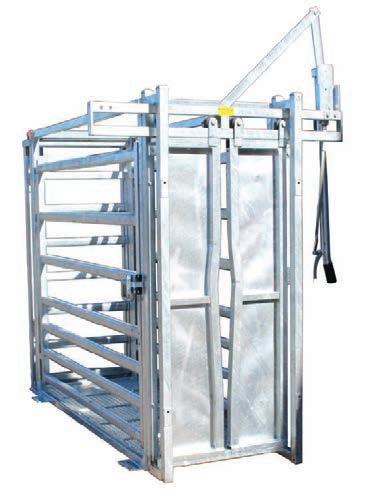


7 Daggers Mate Sheep Handler T ips sheep on their sides for dagging and crutching Adjustable overhead clamp Made in New Zealand T ips sheep on their sides for dagging & crutching • Made in New Zealand • Auto SheepWeighHandler Fast and ef cient weighing, drafting and dagging 3-way and 5-way drafting options Made in New Zealand••• 3-way and 5-way drafting options•• Fully automated weighing • Compatible with Gallagher & TruTest Scales 3 Way Sheep Drafting Module $ 1,795.00+GST • Manual weighing and 3 way drafting • Alloy, lightweight, transportable • Mounts on to any existing loadbars $ Sheep2,495.00+GSTDraftModule V-Sides $ 3,295.00+GST • 3-way draft • 3110mm L x 600mm W (ext) Sheep Draft Module Adjustable $ 4,295.00+GST • 3-way draft • 4500mm L x 600mm W (ext) • Adjustable sided V• Fixed sided V • Fit into any existing sheep yard • Removable fold back entry/exit gates drafting3-way Tips sheep on side for crutching and dagging Adjustable overheadEntryclampshut o gate Auto CatchAutomaticrampclampEntryramp(adjustable) Made in New Zealand Air controlled Hot dip galvanisedRubber lined oor and slides THE HANDLERAUTOMATEDONLYSHEEPAVAILABLETHATGIVESFULLACCESSTOFEET&BELLY W Crate SHEEP FARMING IS EASIER WITH FARMQUIP Crutch and Weigh Combo Sheep Handler SHEEP HANDLING 843024 7 Promotional o ers valid until 30th September 2022. All prices exclude freight unless otherwise stated. Terms & conditions apply. 8430240800


36 Head Loading Ramp 10 Head 46 Head Yard - with curved force tub • Large curved tub with alloy sheeted sides • Heavy duty anti backing gate for operator safety • Headbail & sliding gate in race • Drafting gates • 97 x 42mm heavy duty cattle rail • Optional loading ramp 84 Head Yard - with 5 section race 48 Head 27 Head 9 Head • Large, spacious yard with good animal ow • 97 x 42mm heavy duty cattle rail which minimises animal bruising • Optional cattle crush available • Optional loading ramp POPULAR 130 Head Yard - with cattle free area 40 Head36 Head37 Head15 HeadCatwalk LoadingRamp • Popular Mid-Large scale yard • 4 working pens with curved ow • Circular force pen & gate for operator safety • Cattle free area - allows complete operator safety • Optional catwalk available • Optional cattle crush and loading ramps available DESIGNPOPULARYARD#3 YARD DELIVERED AS A KITSET OR FULL DESIGN & INSTALL SERVICE AVAILABLE CALL 0800 843 024 FOR A QUOTE 8430240800


