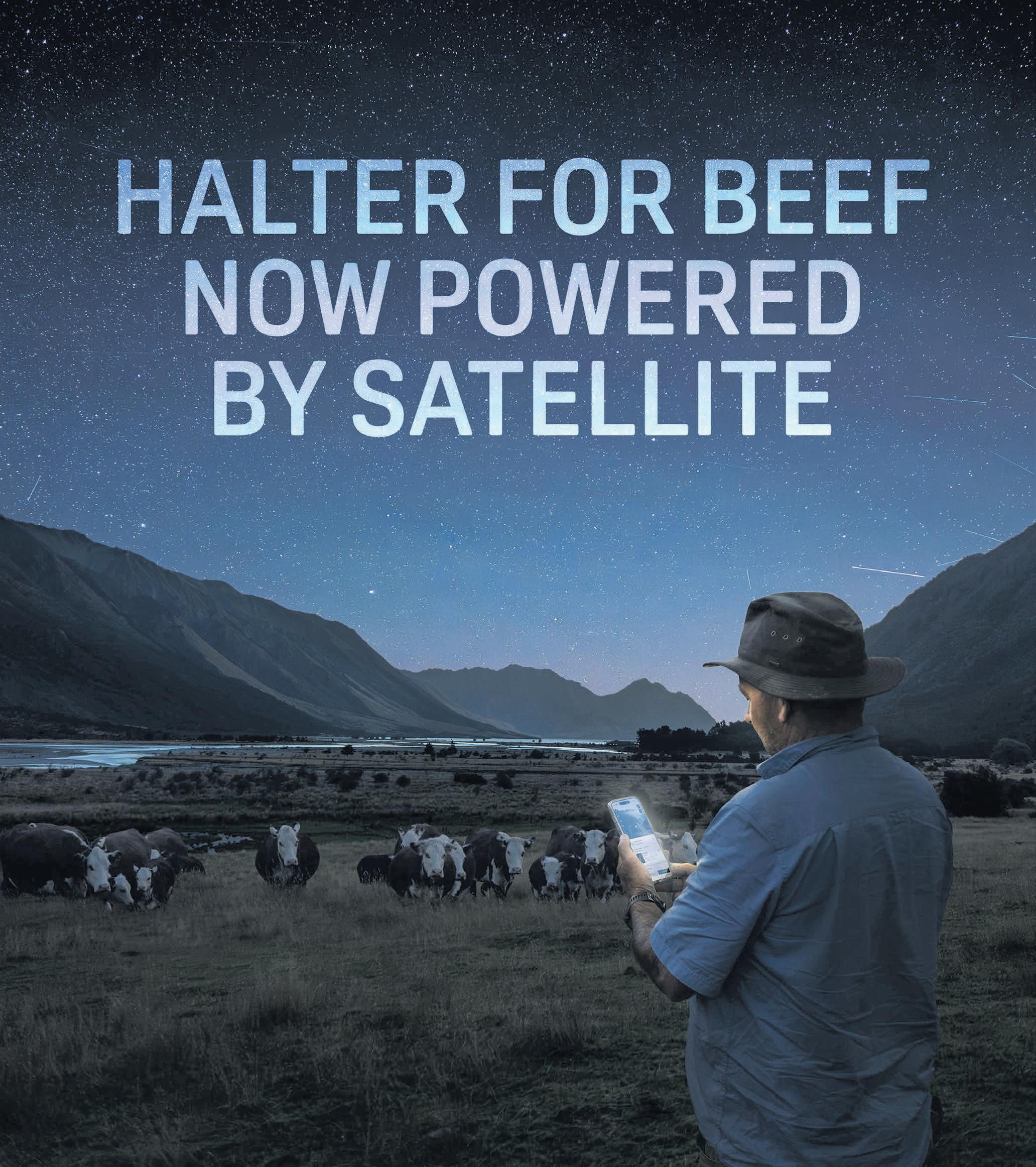
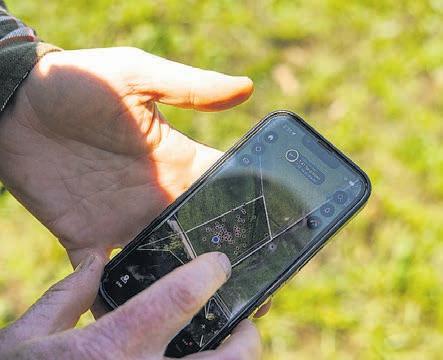
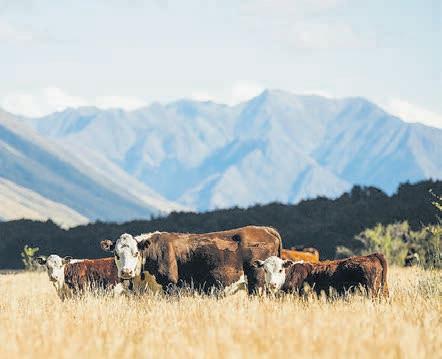
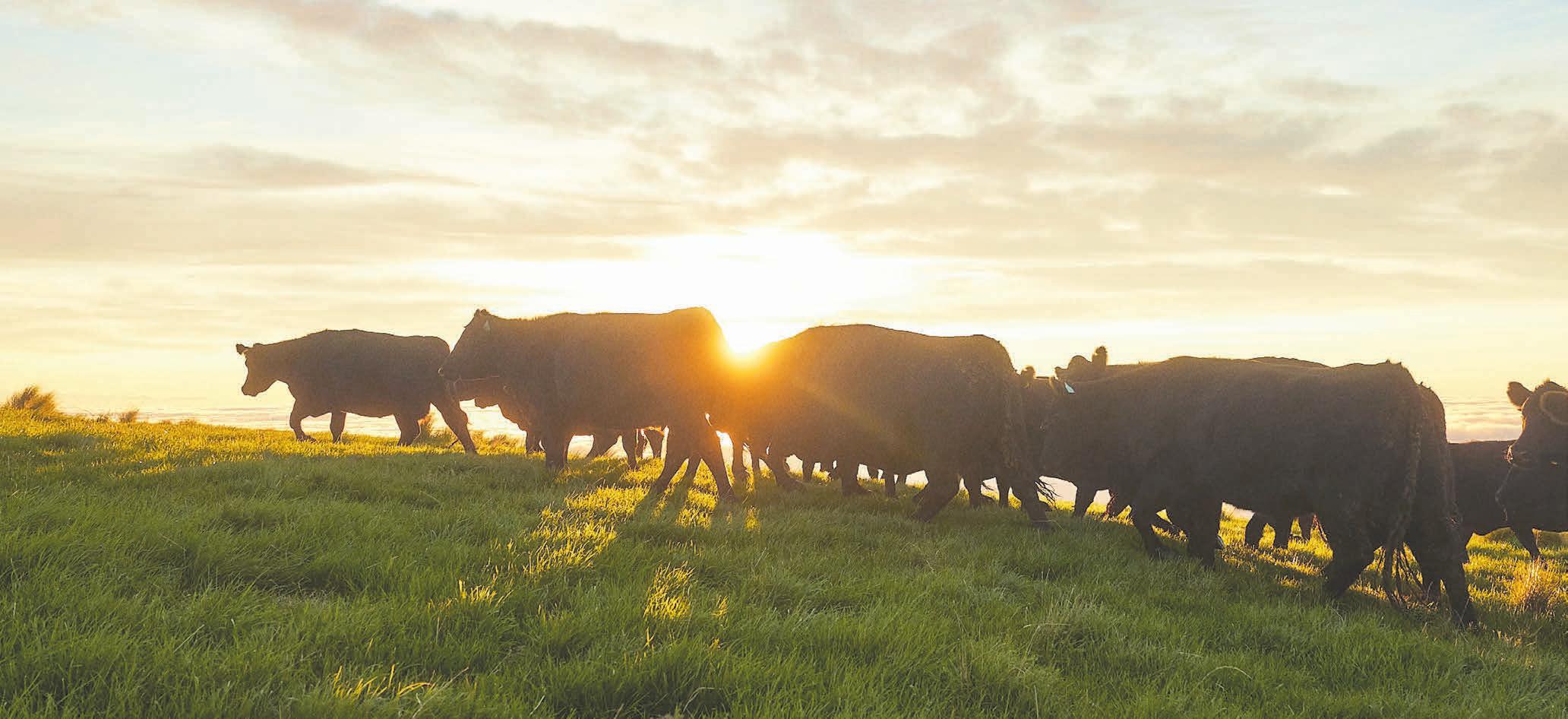
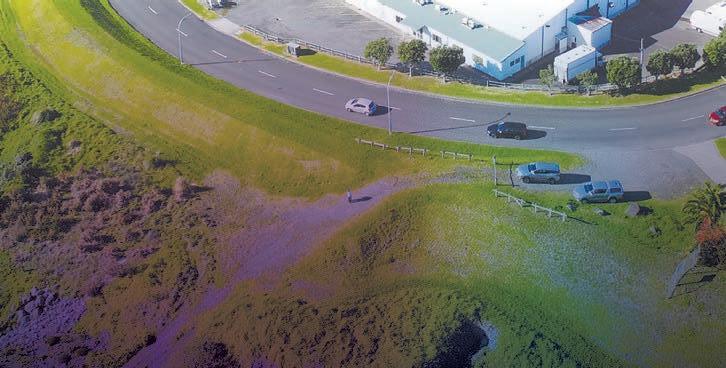
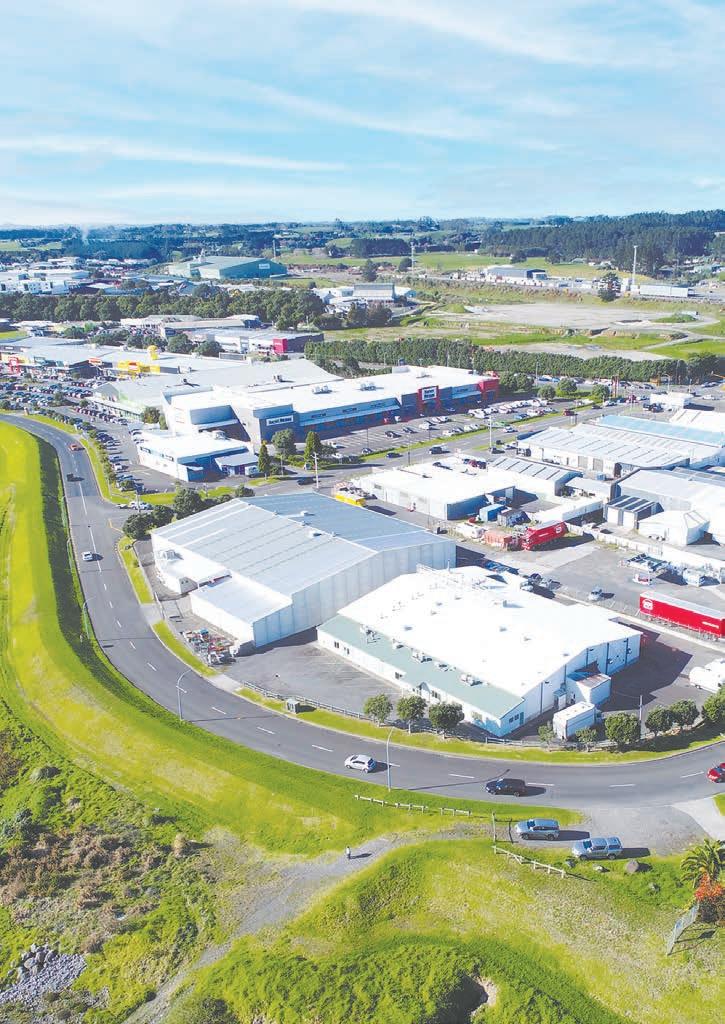
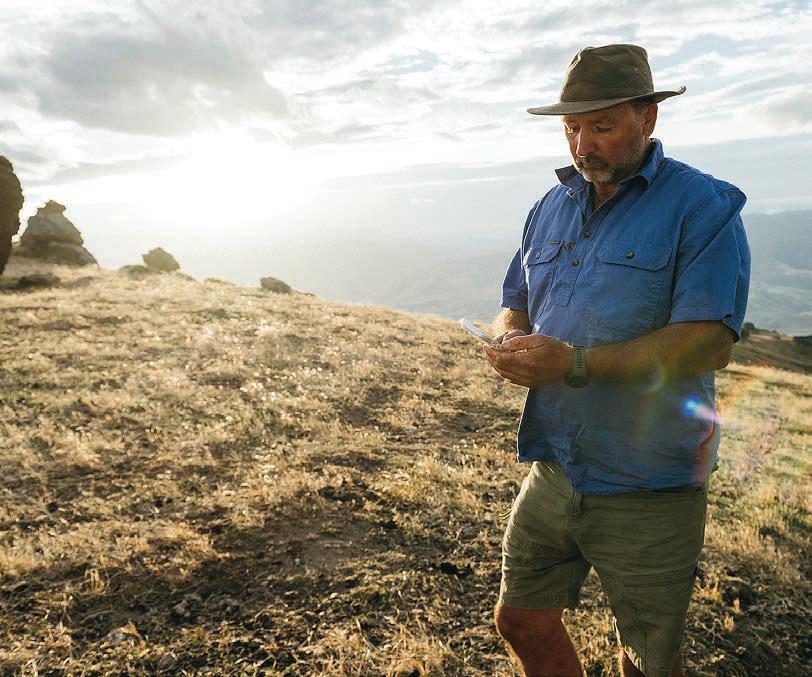
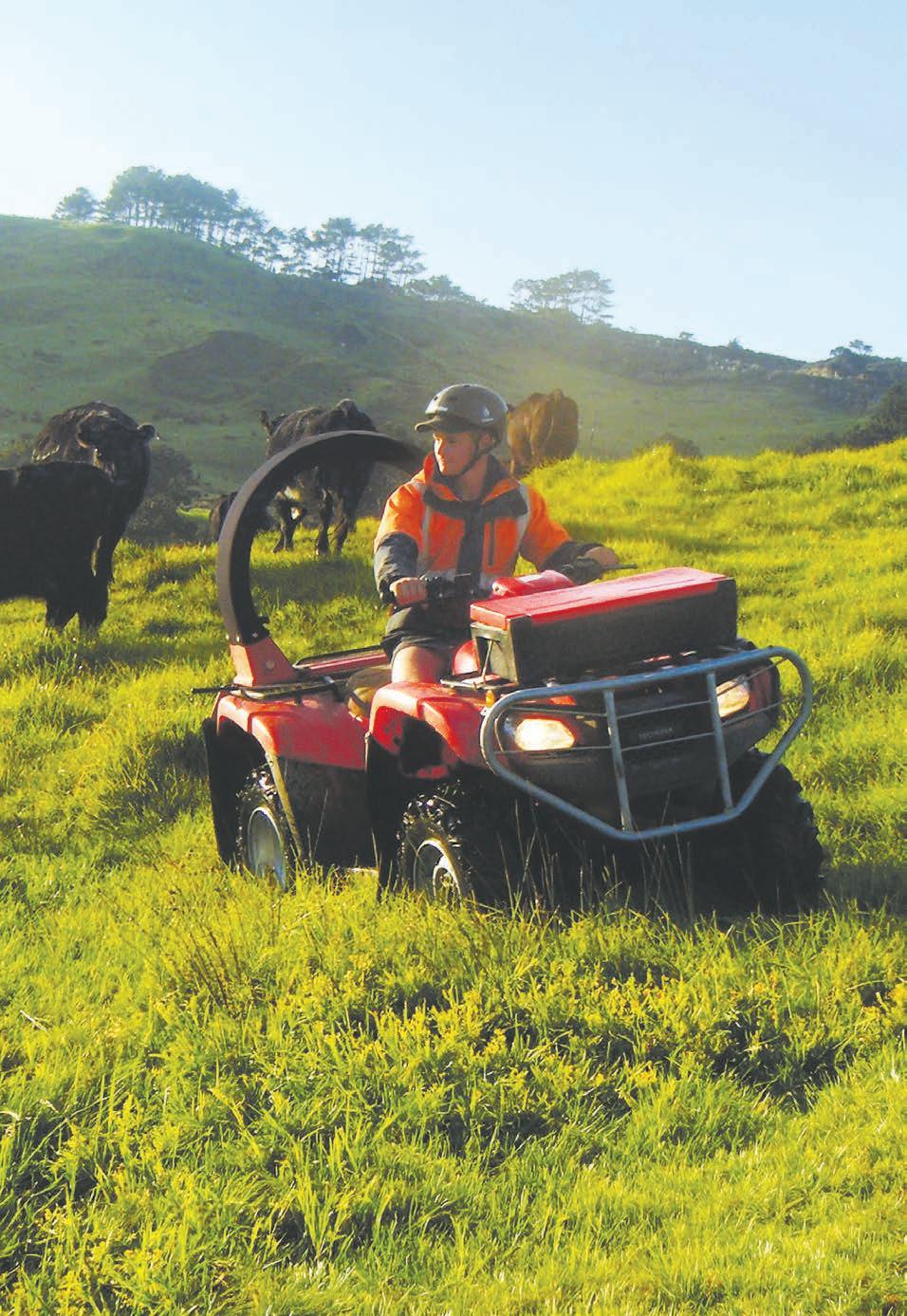
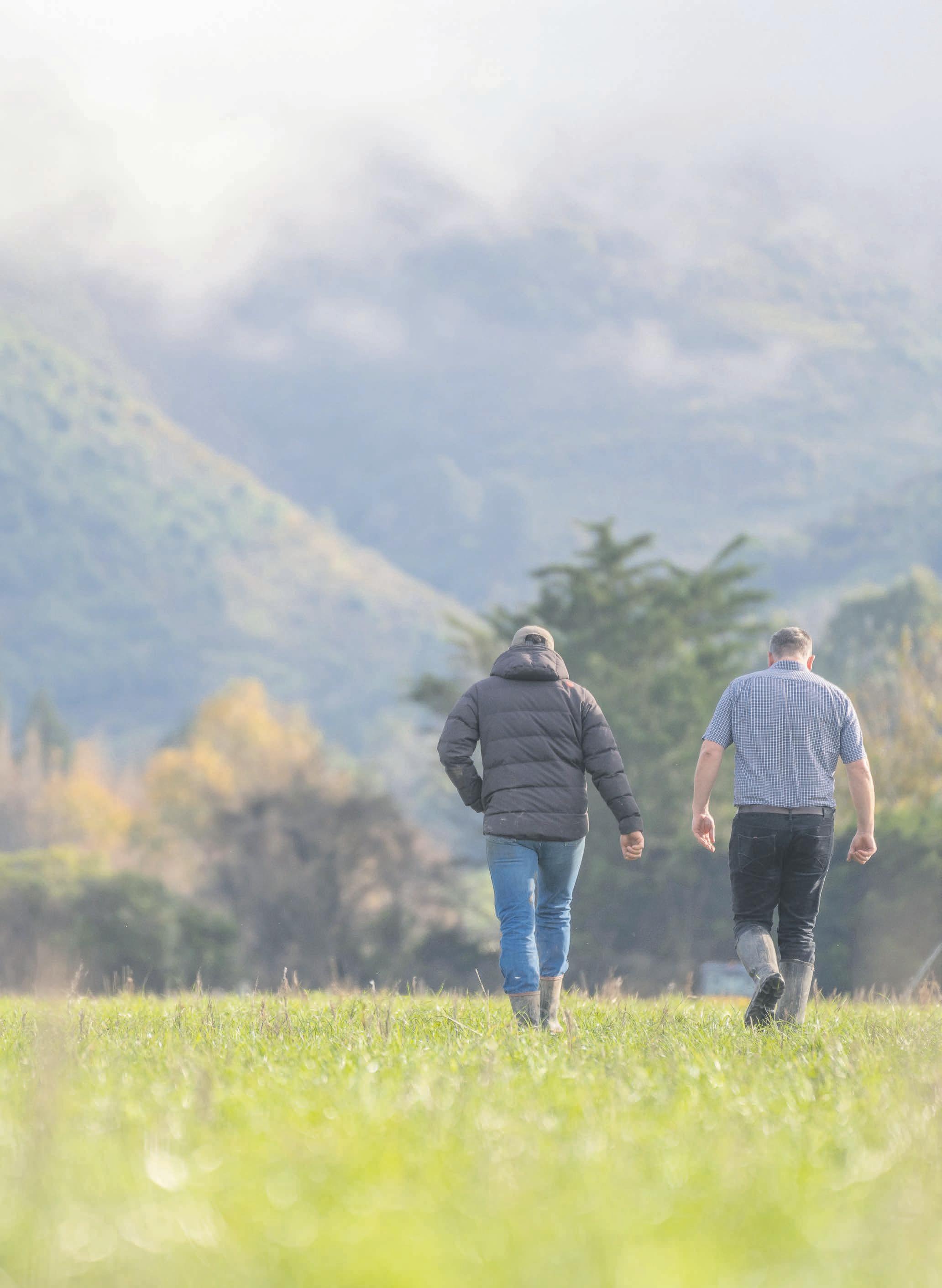
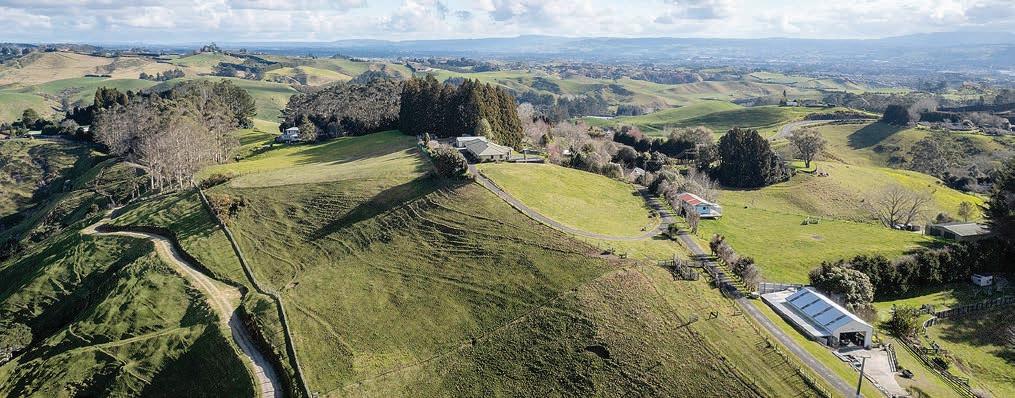
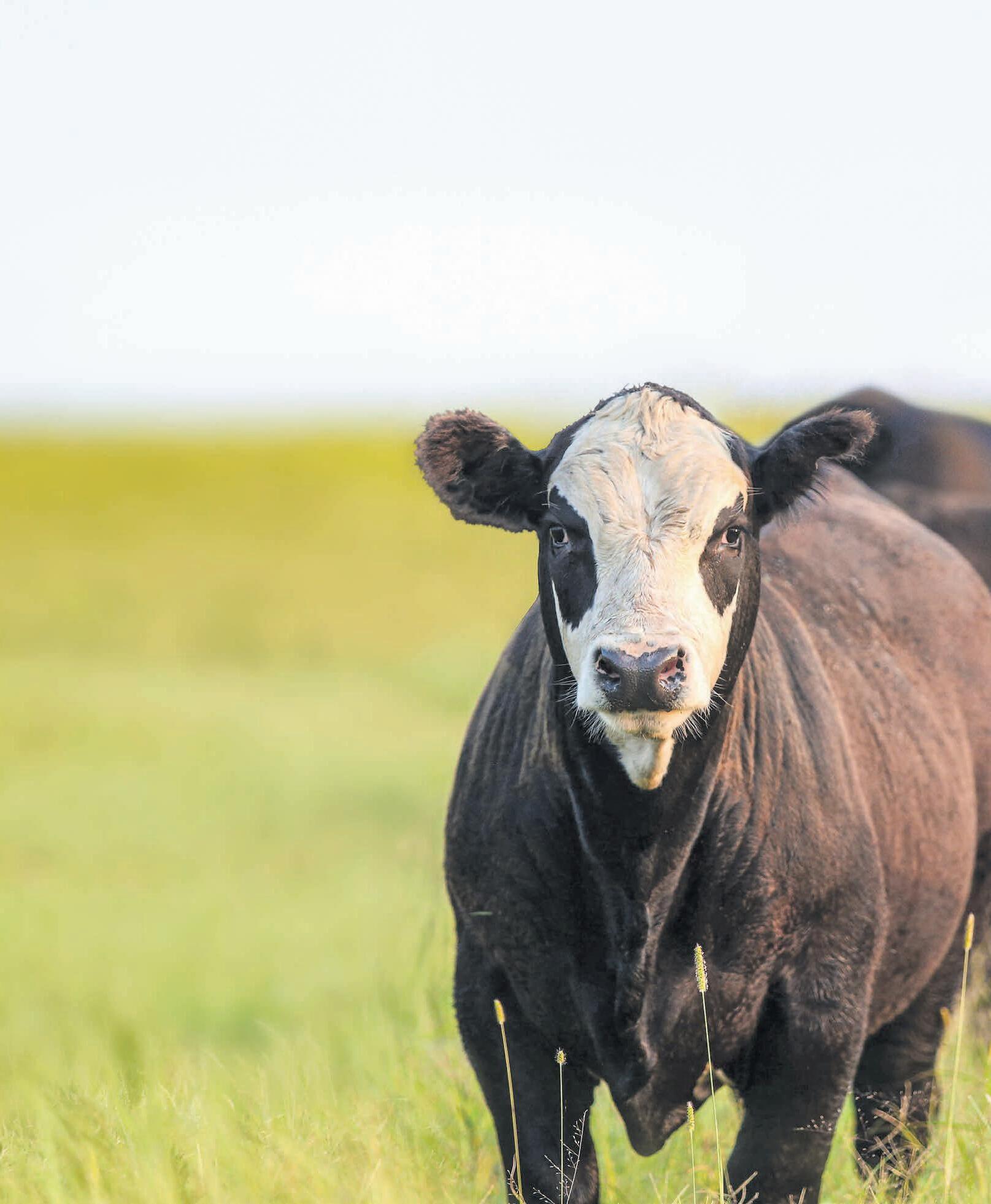
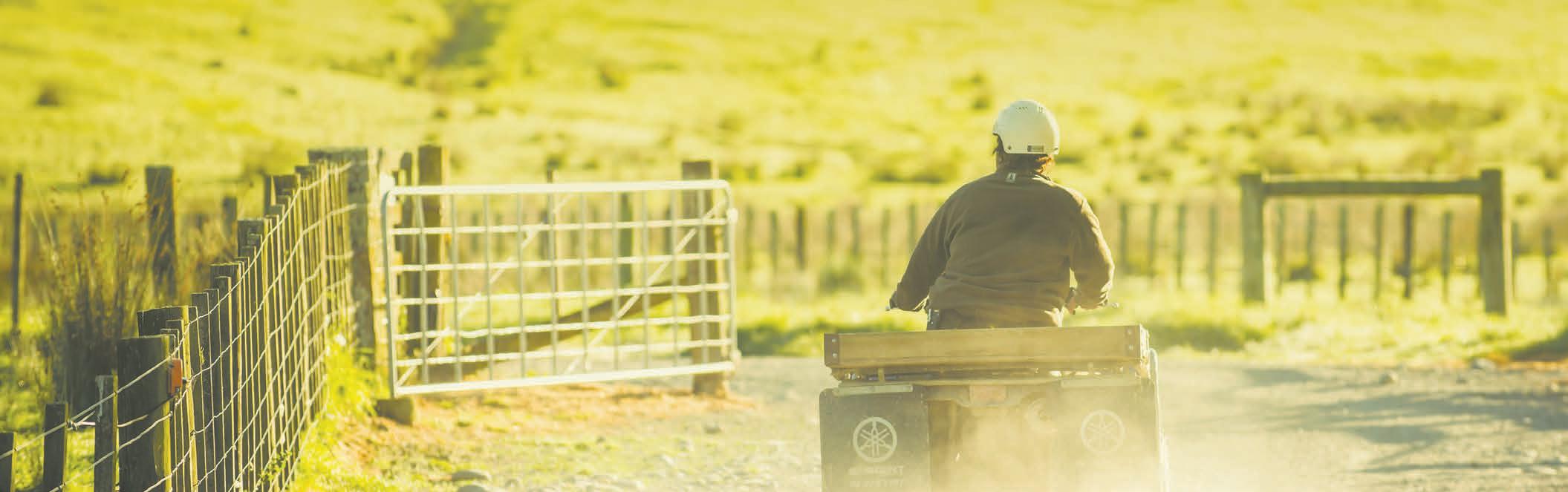
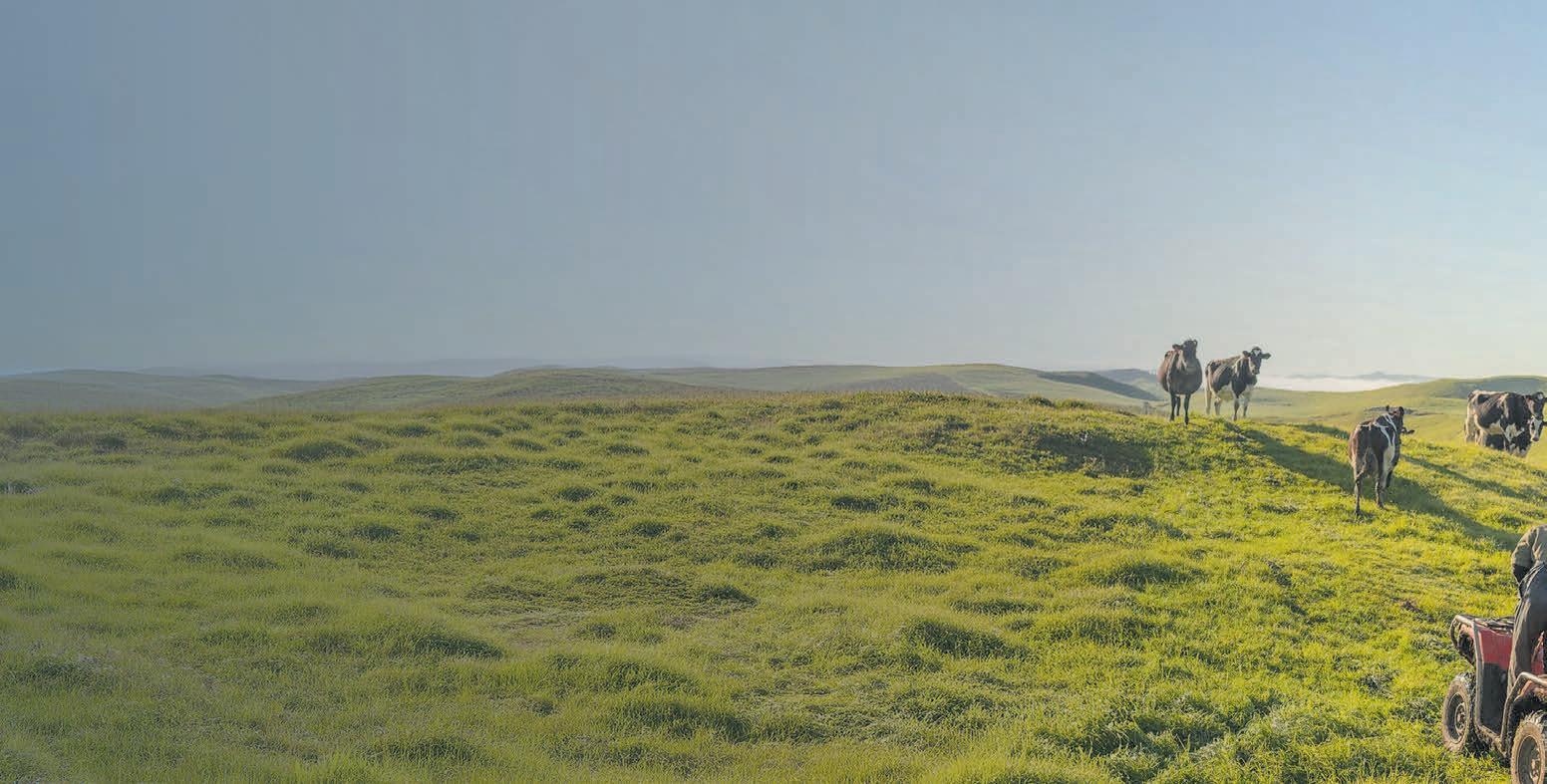
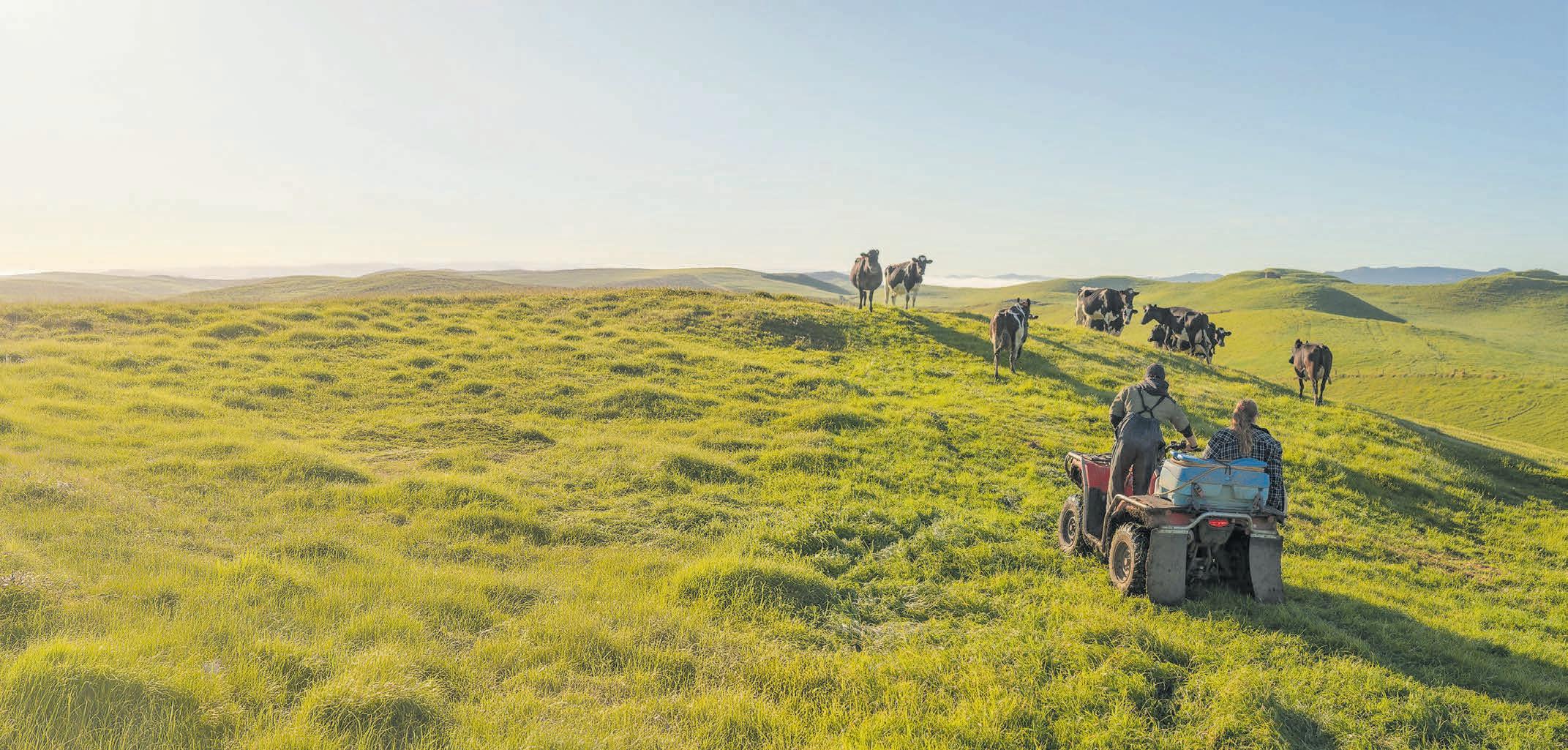
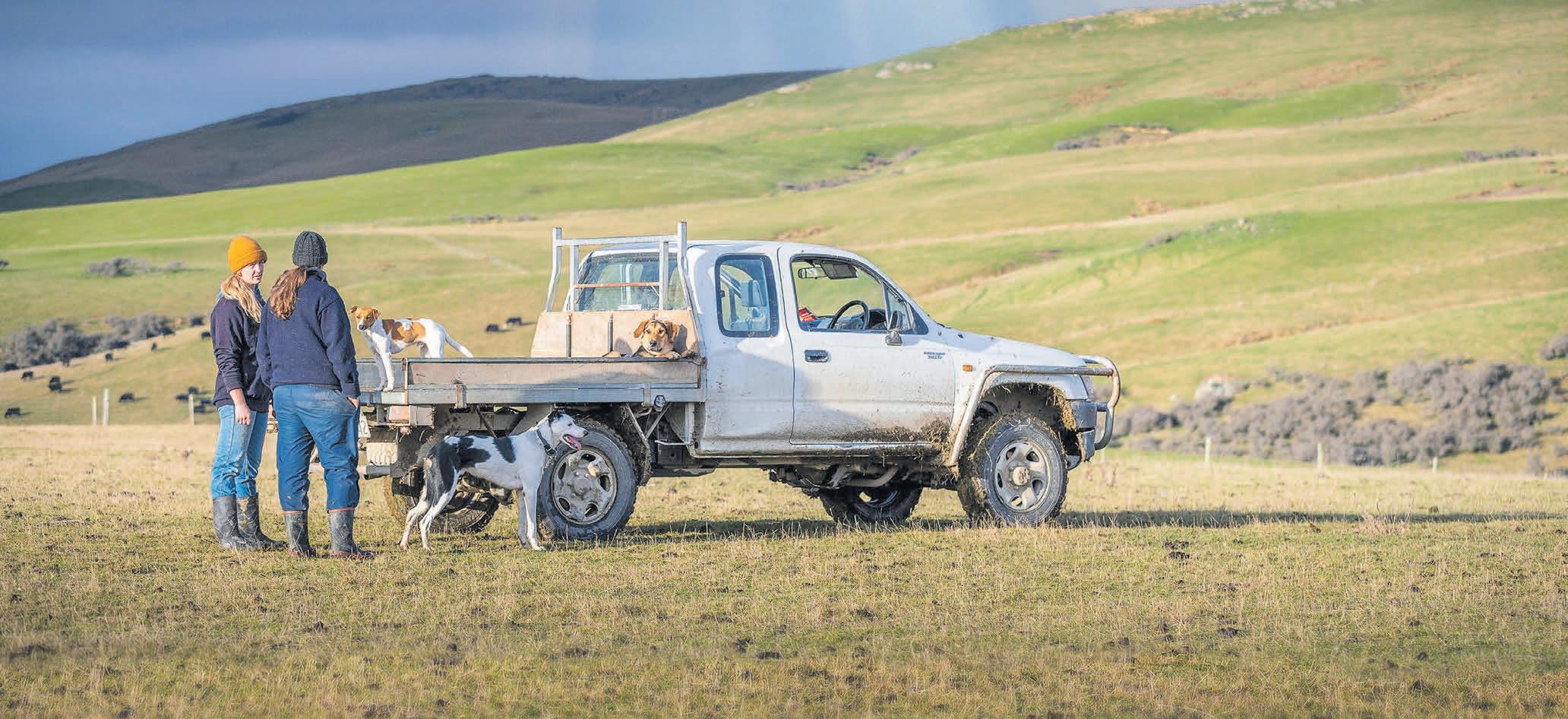
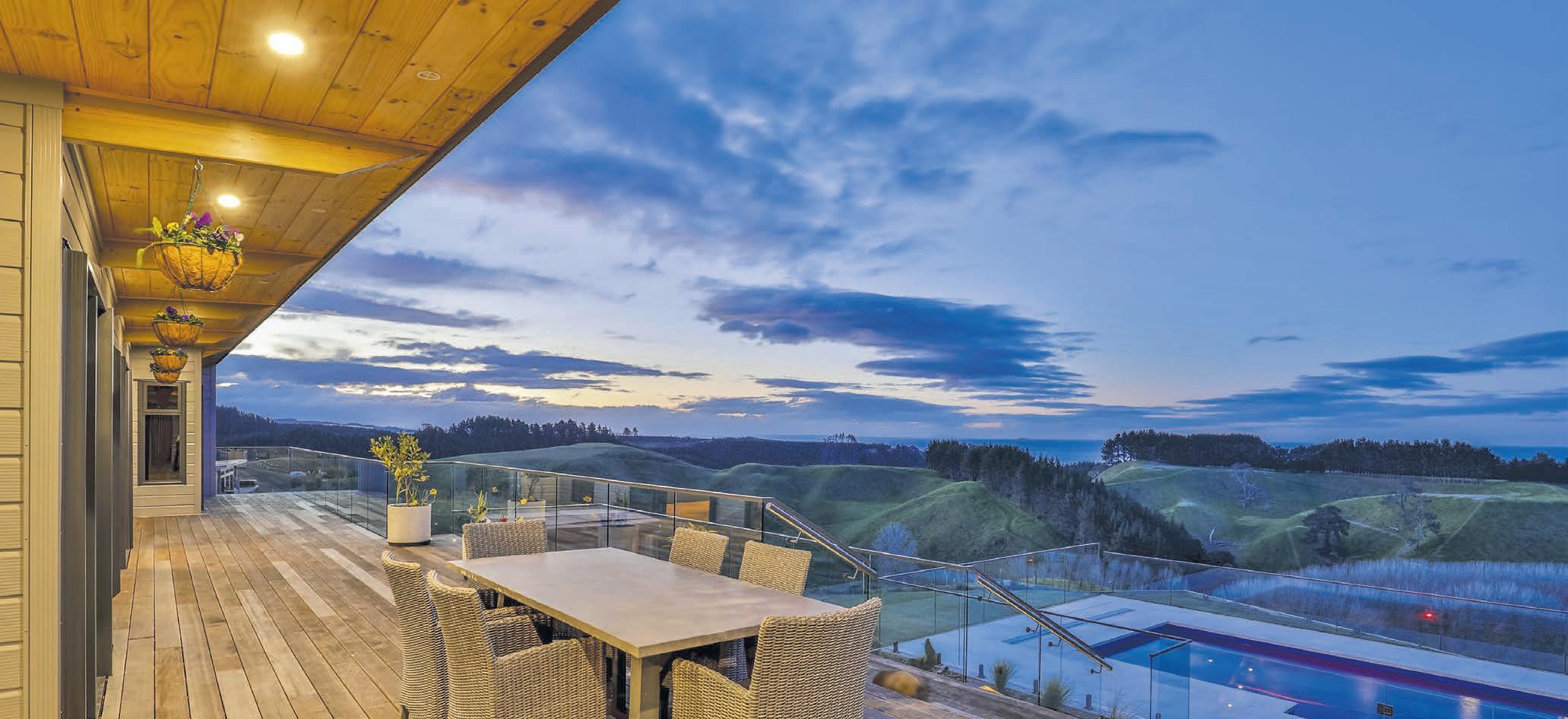
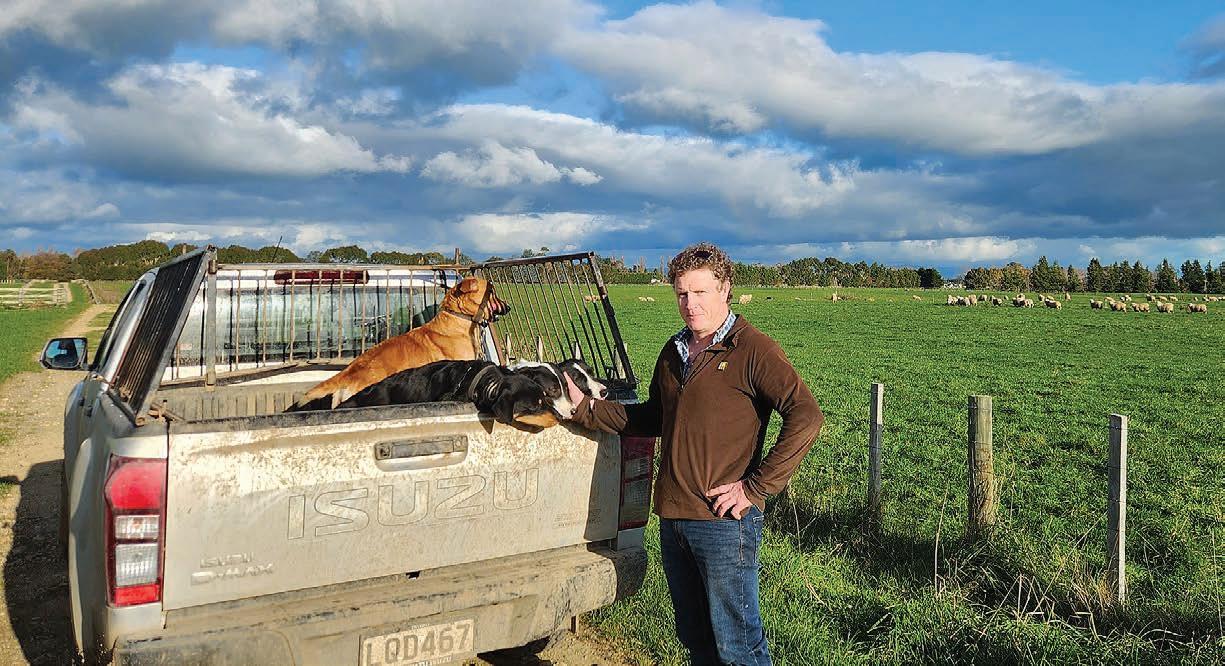
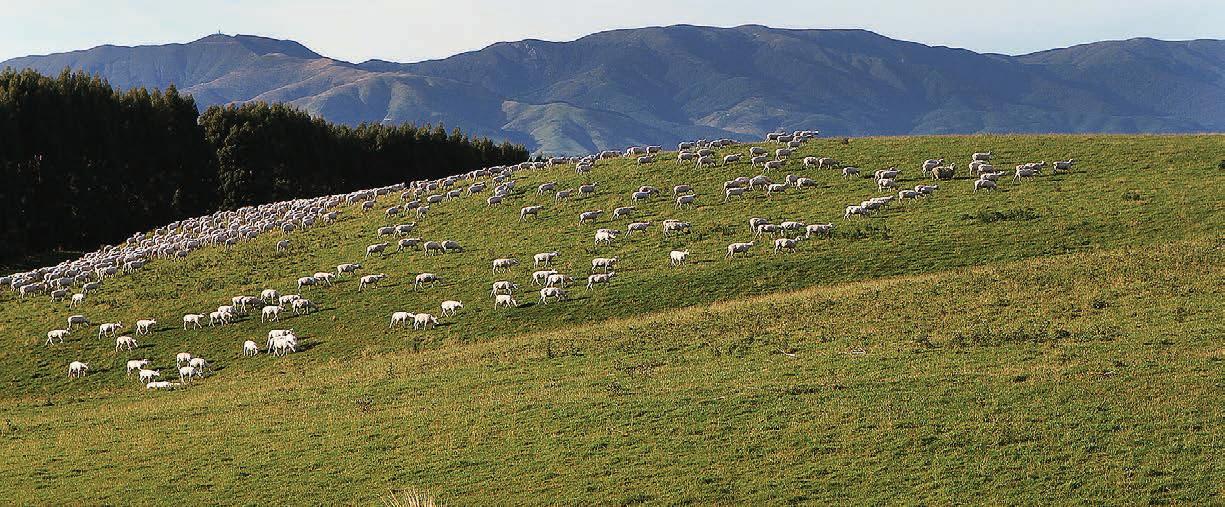
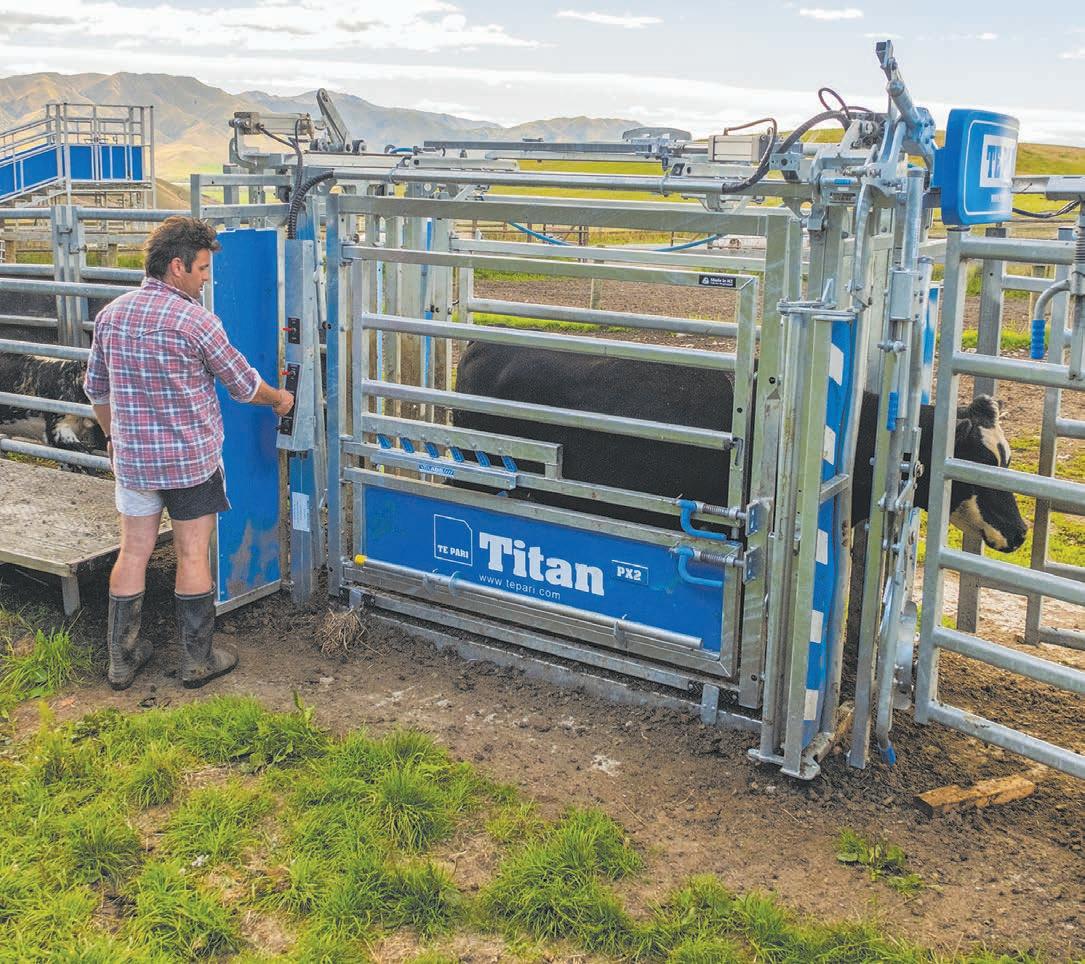
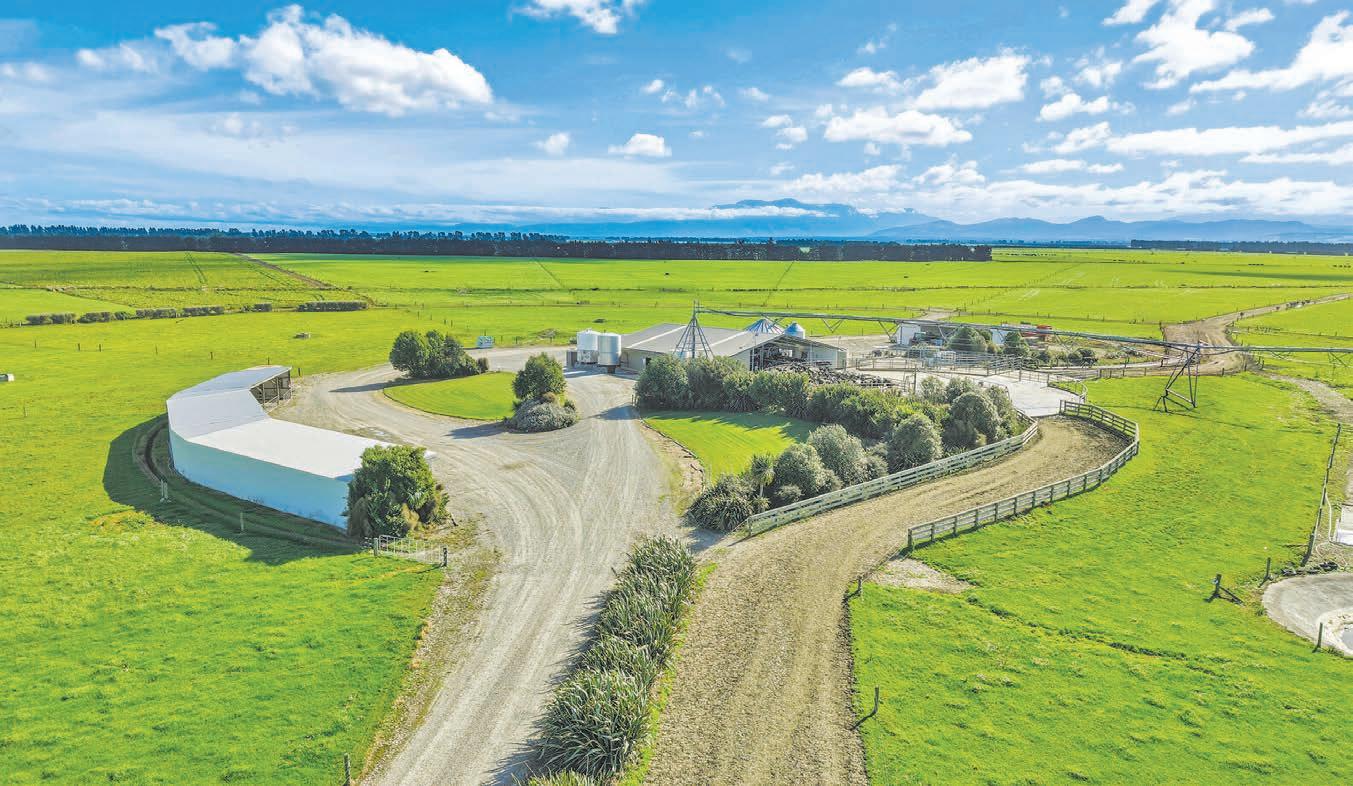
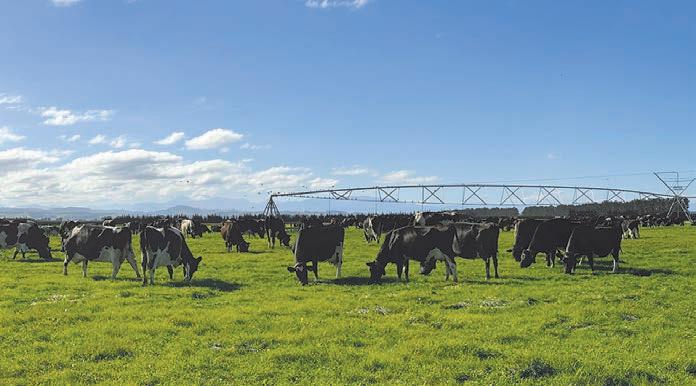
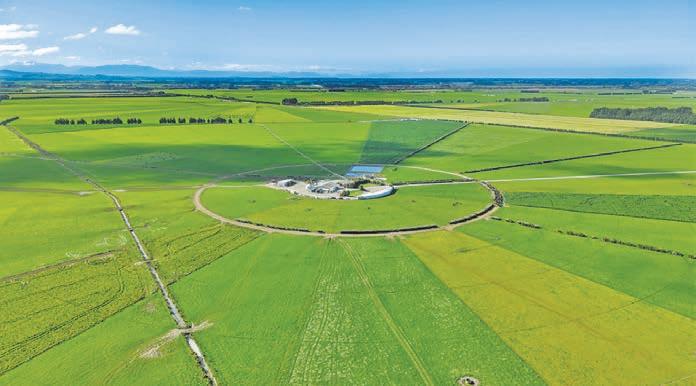
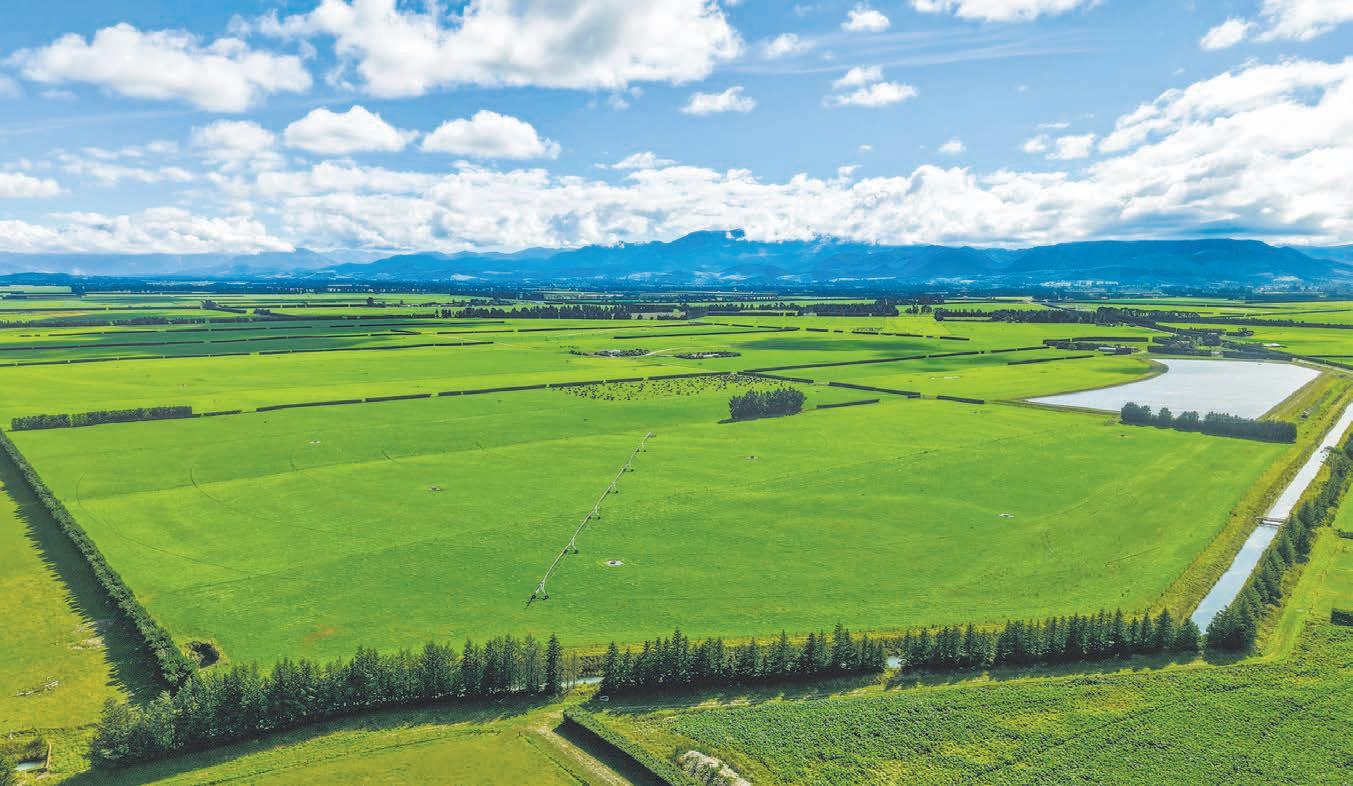
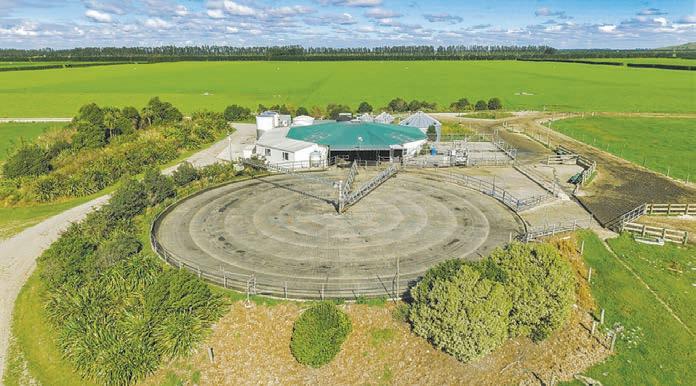
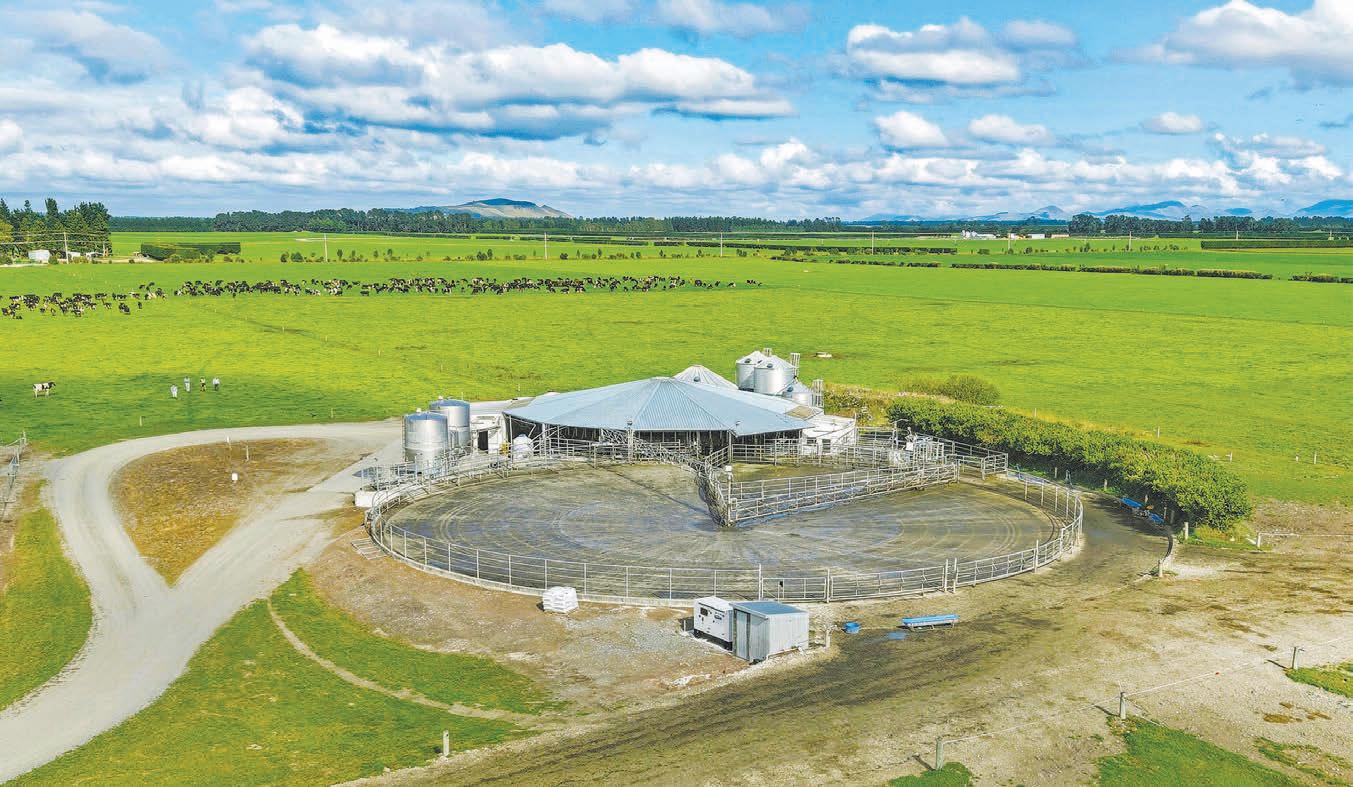
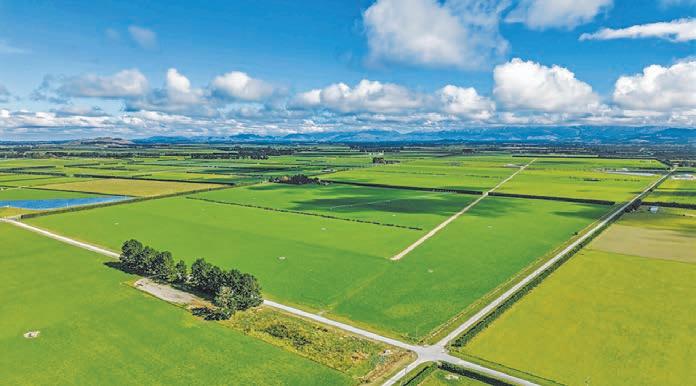
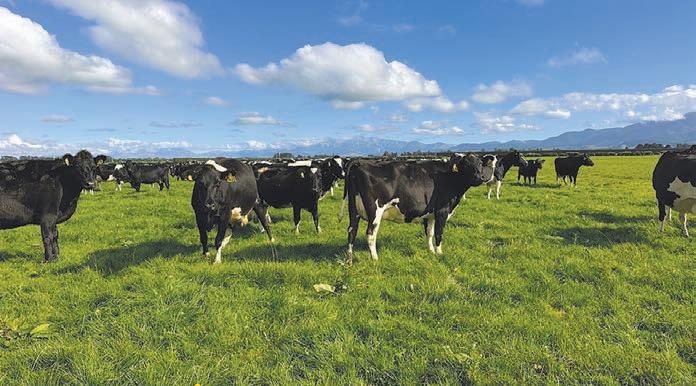
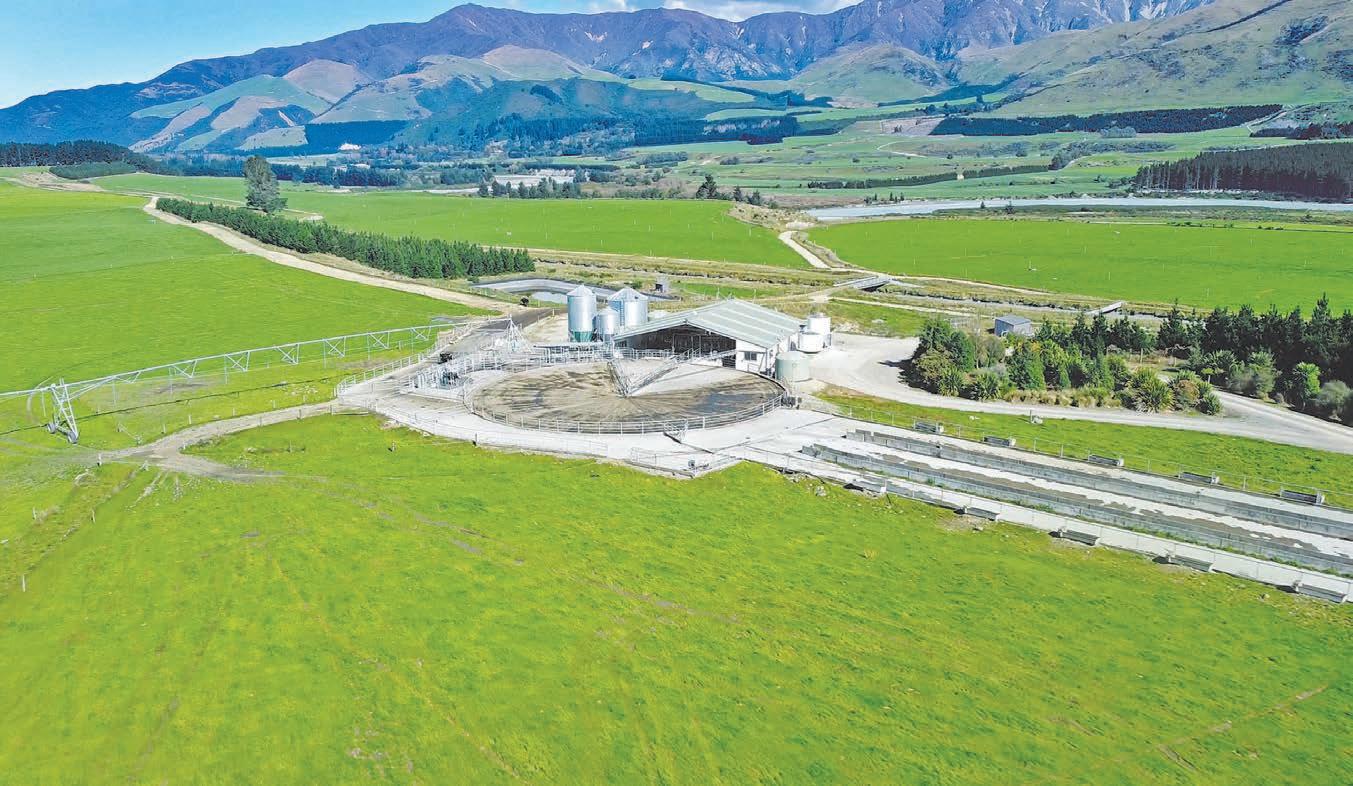
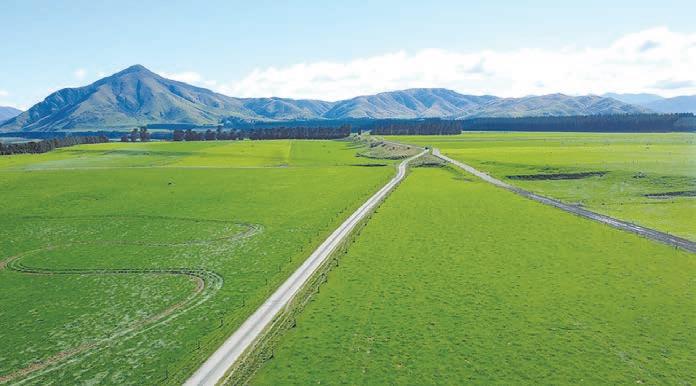
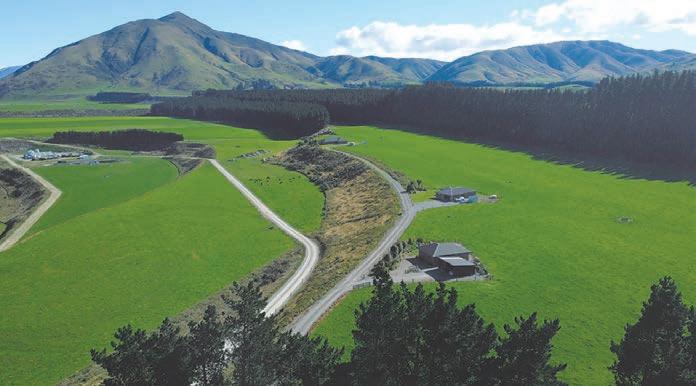
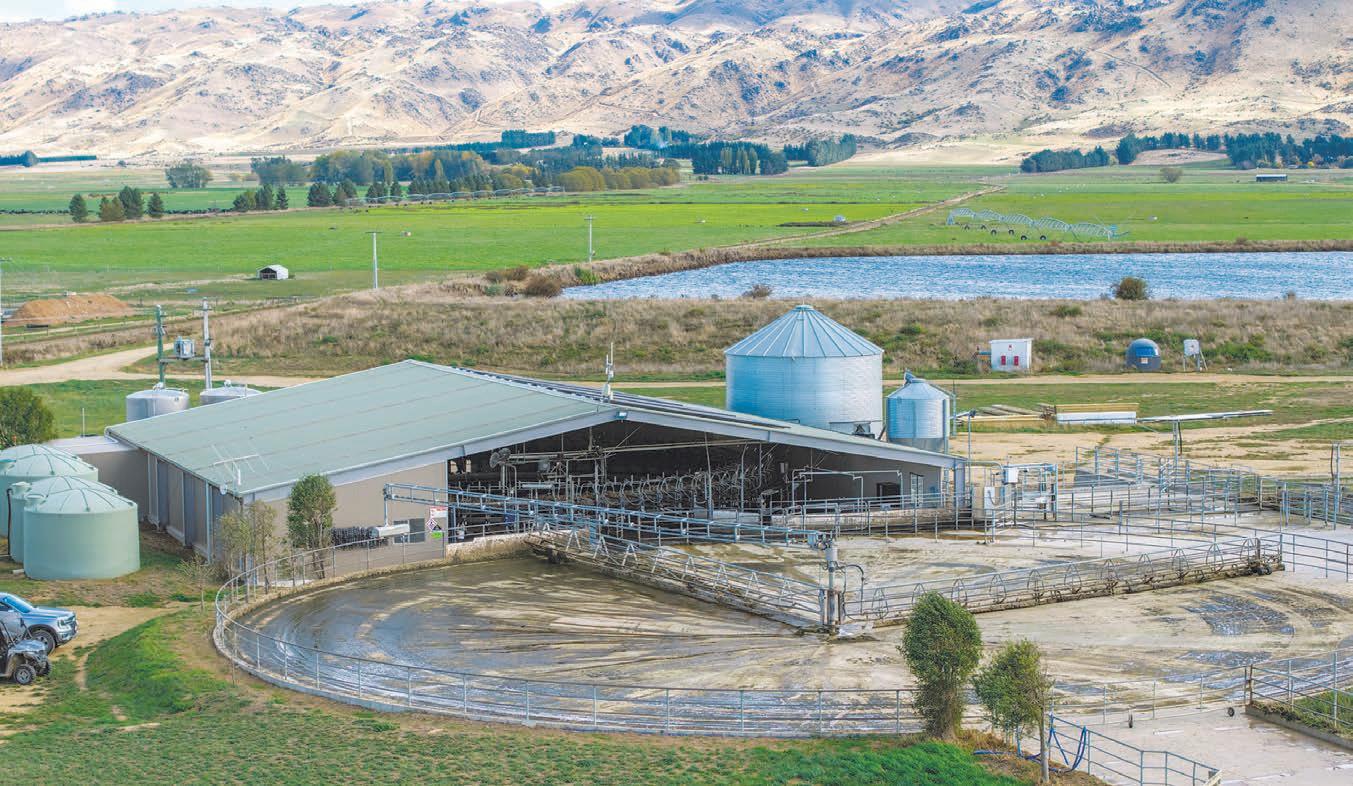
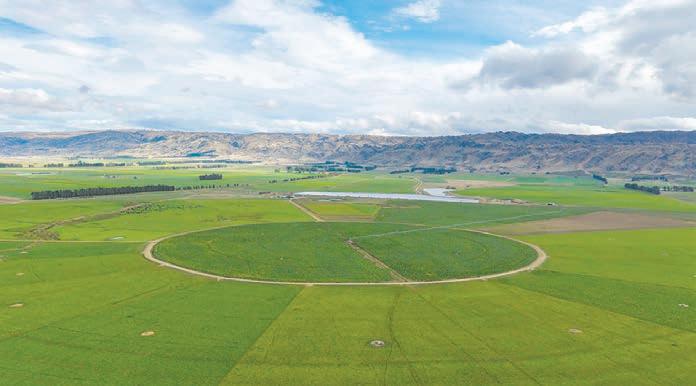
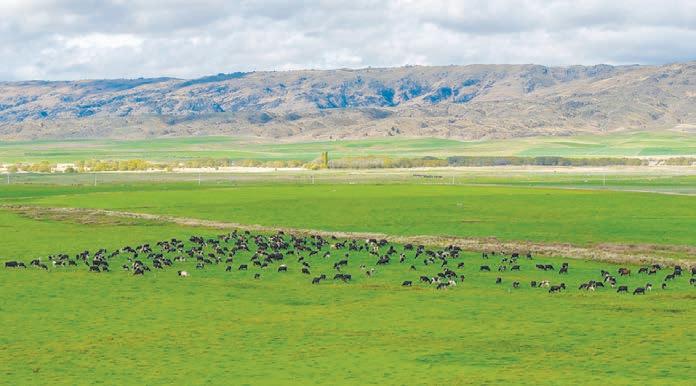
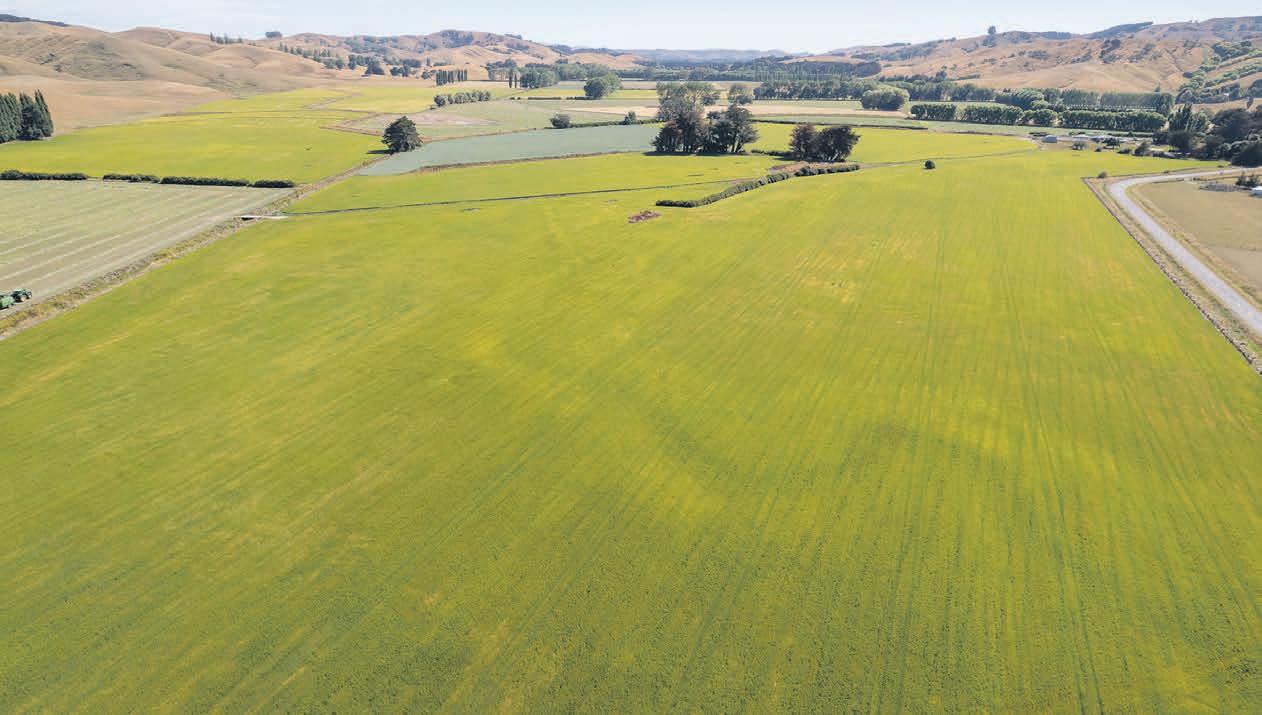
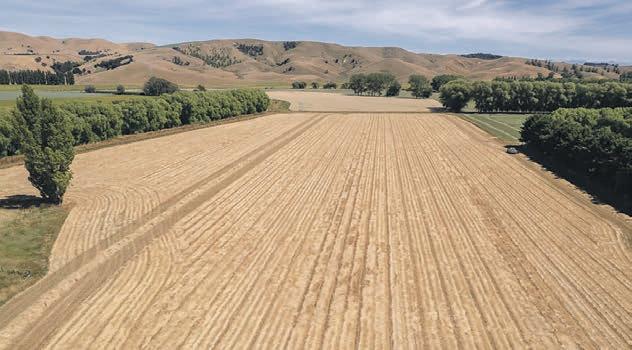
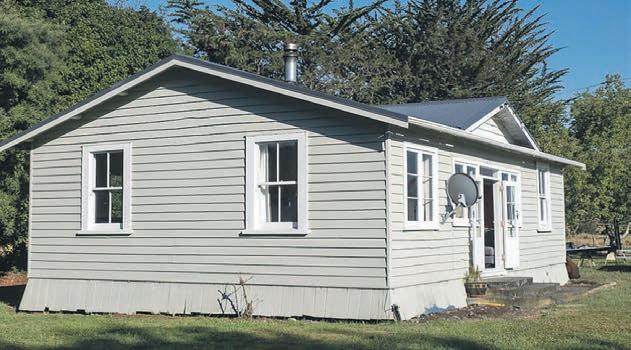
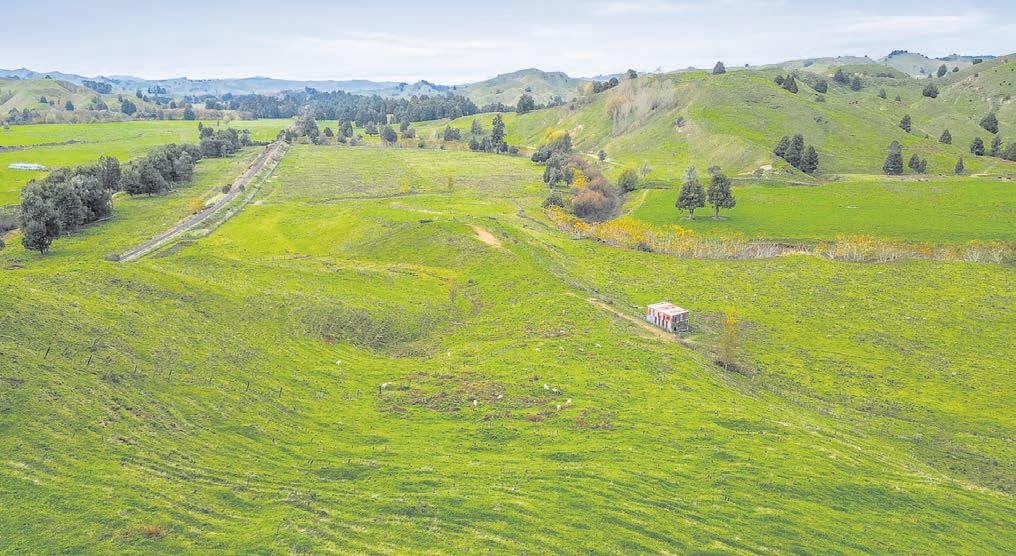
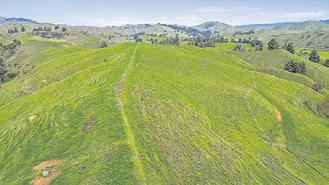
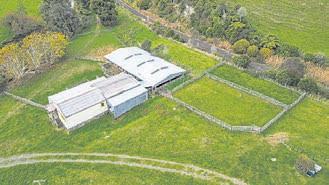
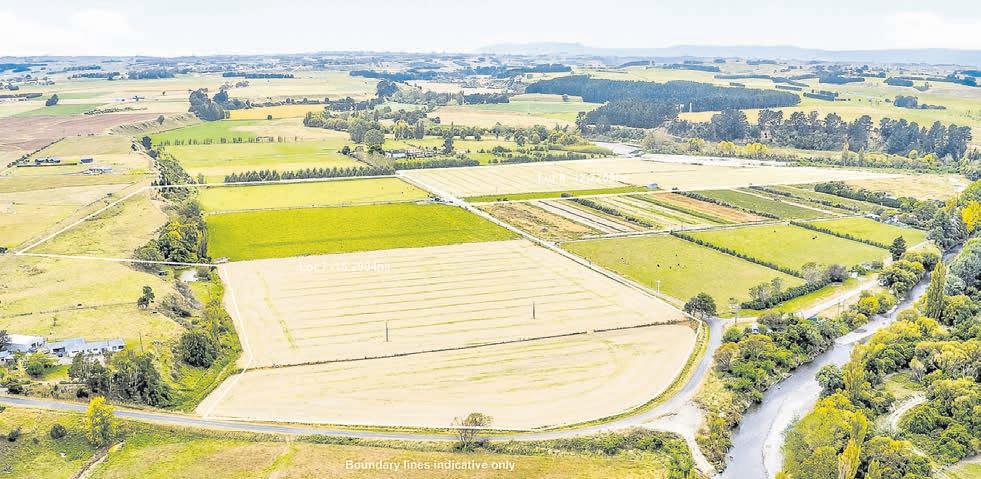
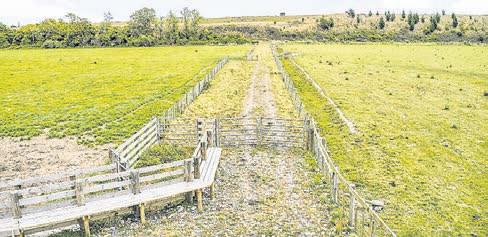
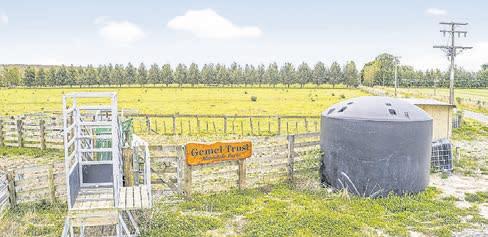
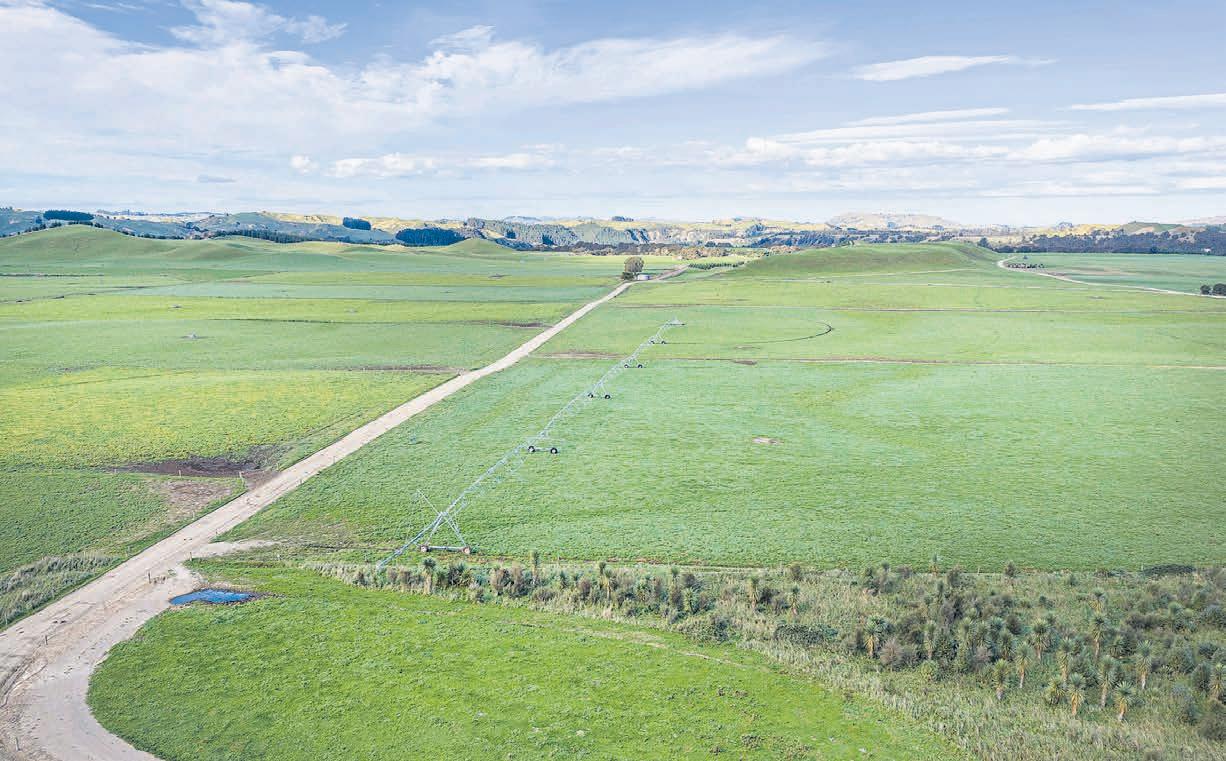
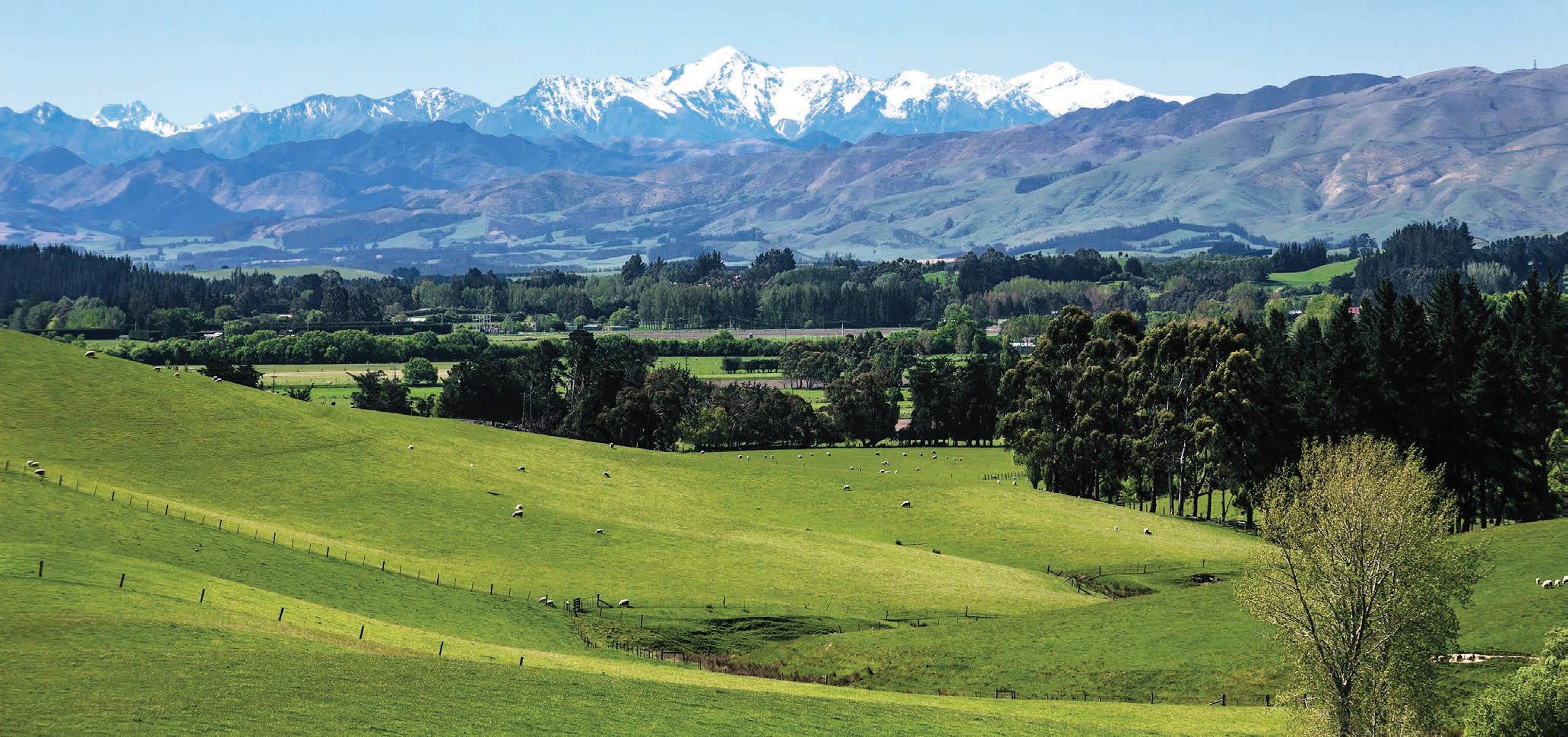
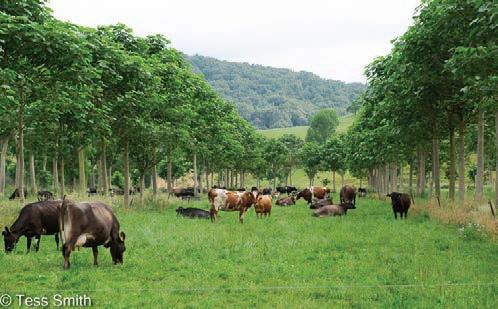
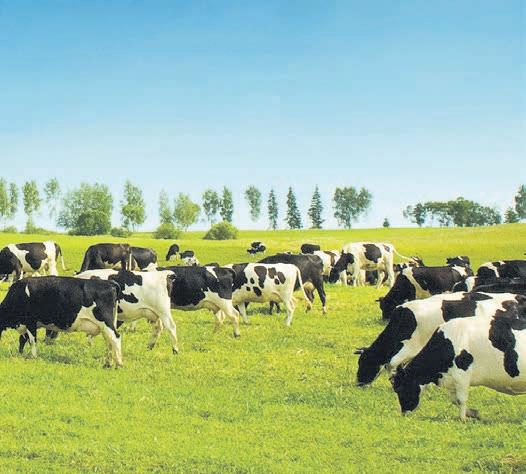
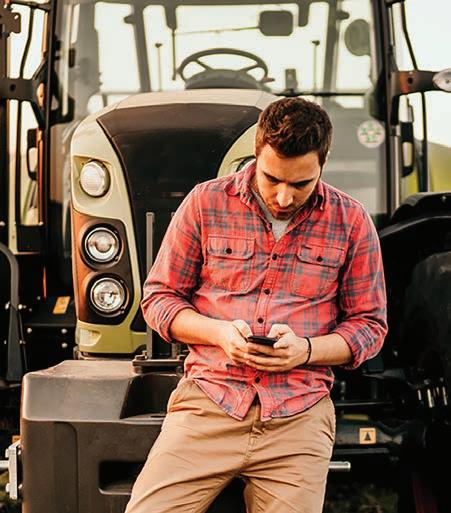
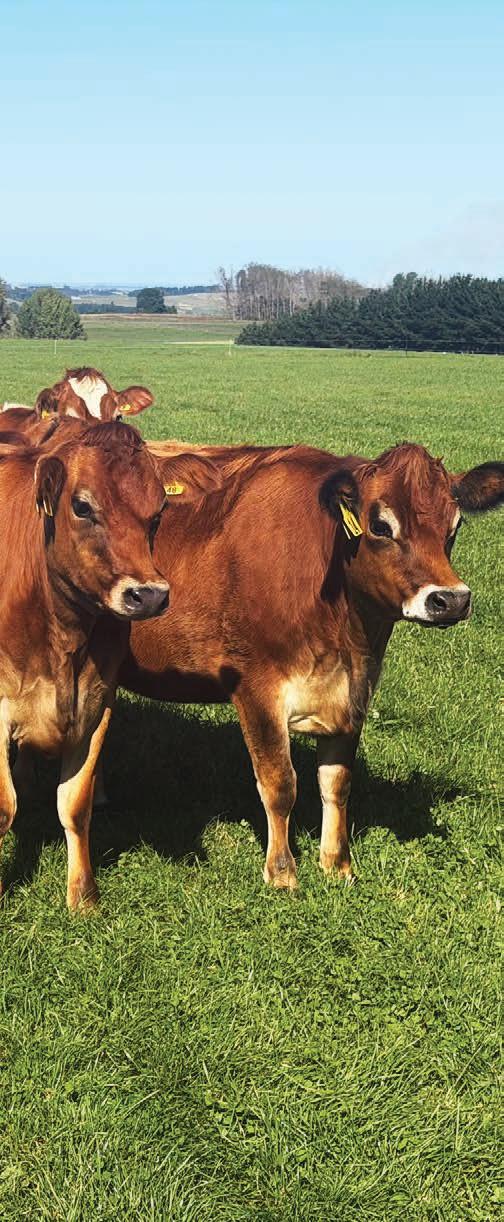
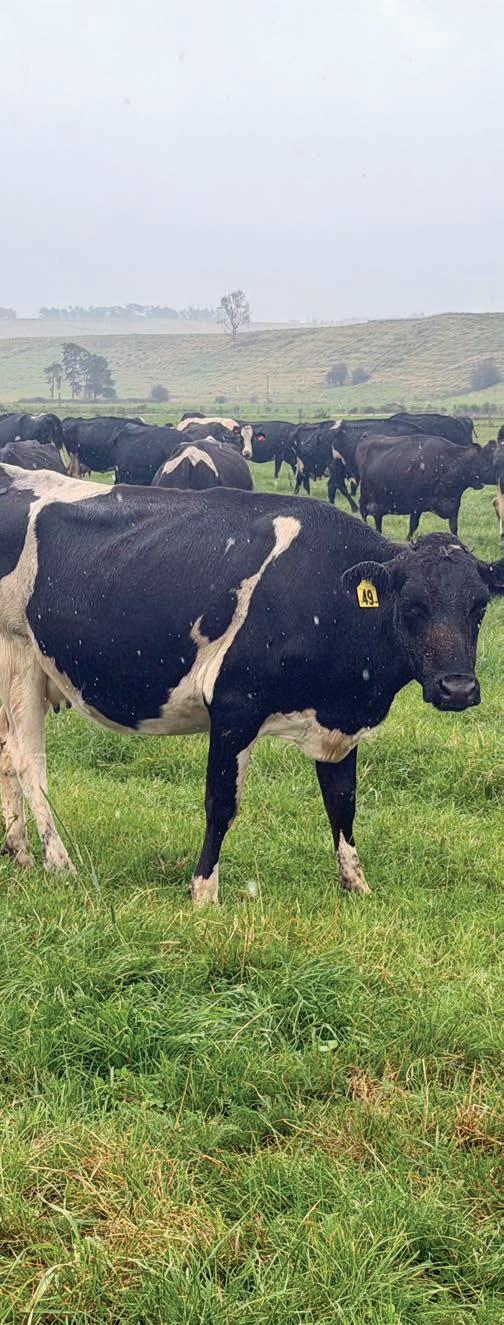
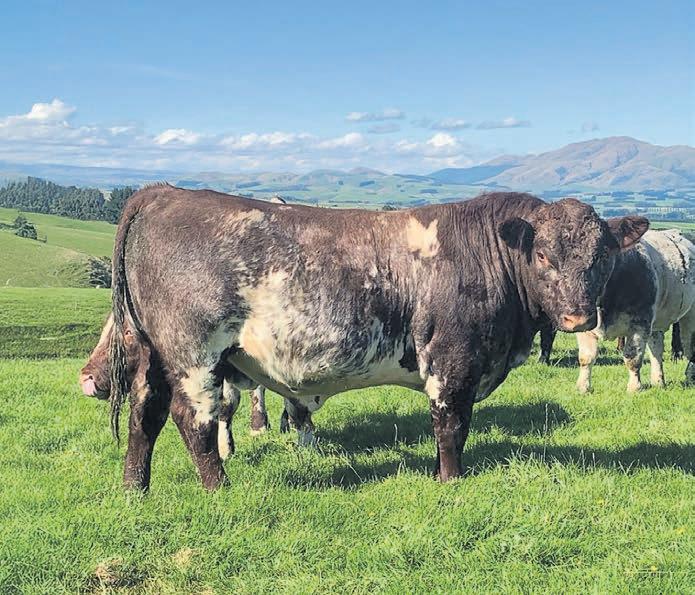
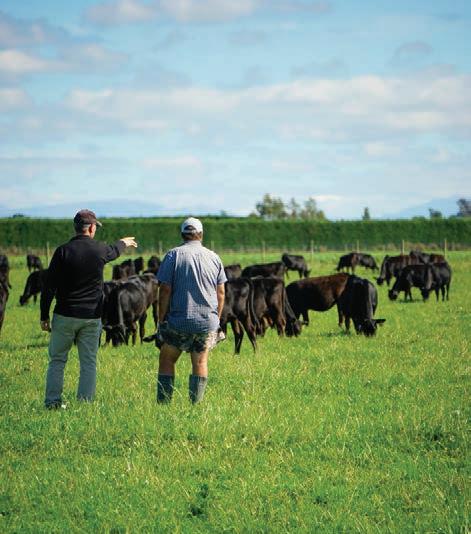
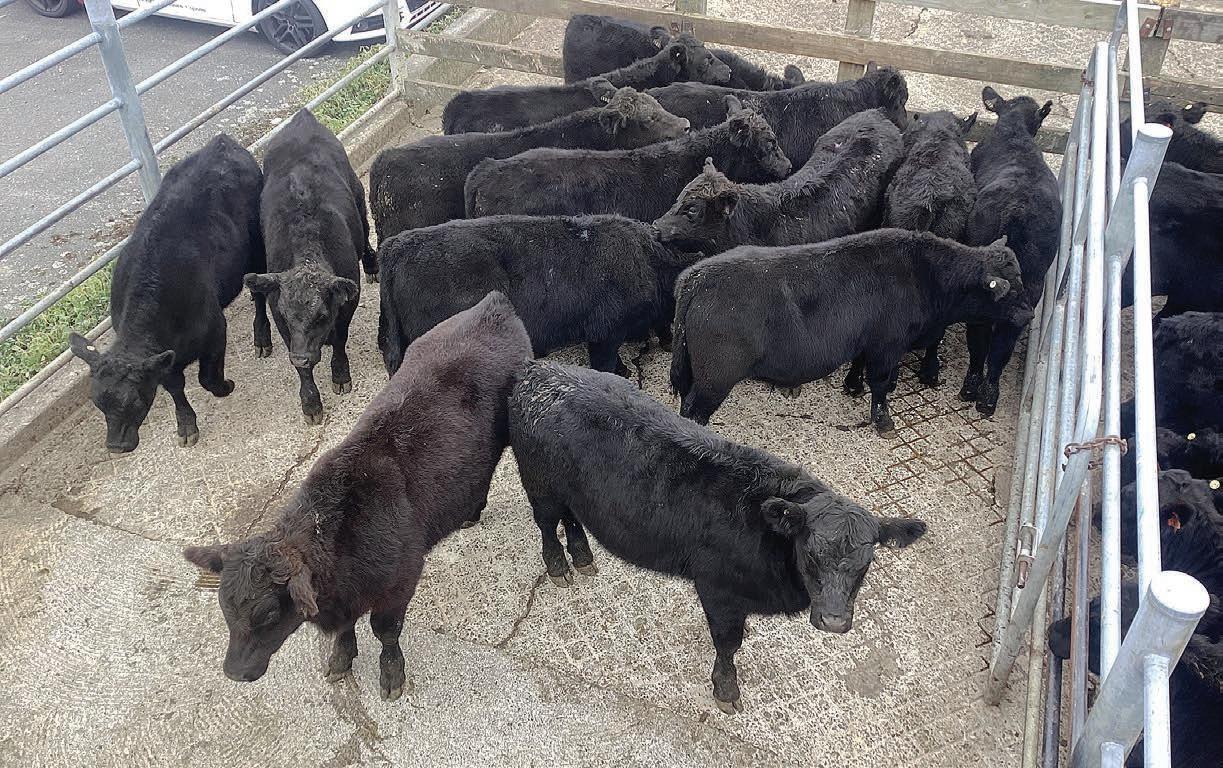
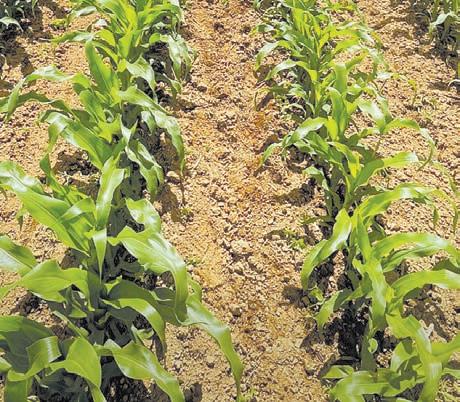
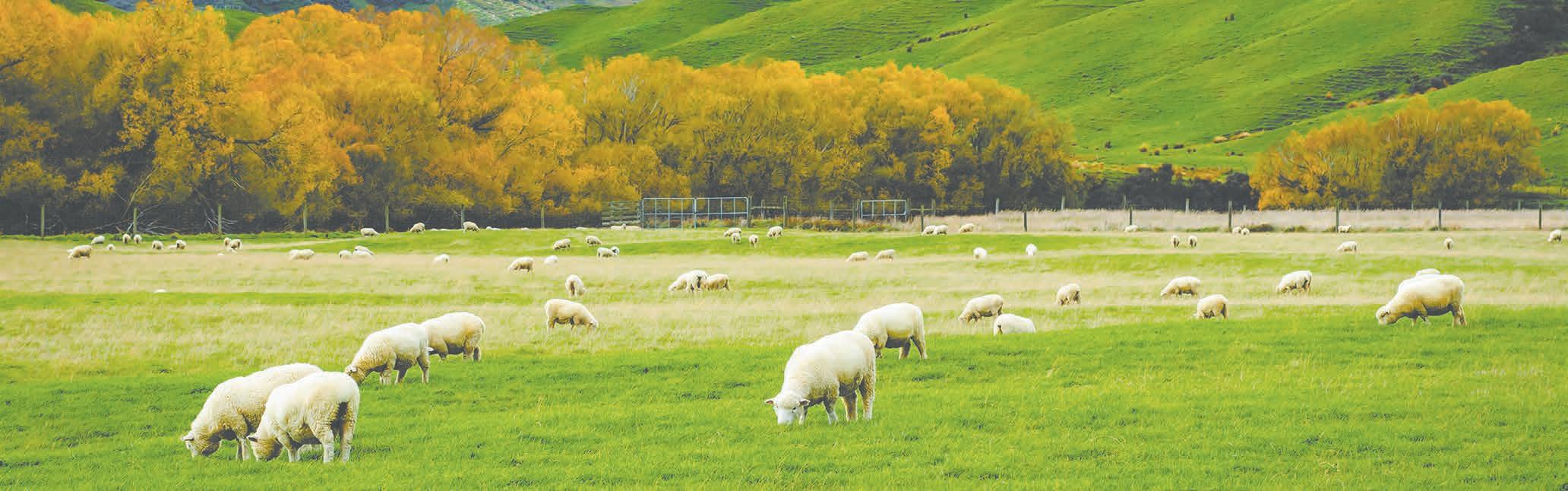
Halter now works anywhere you want to graze - steep hill country, back blocks, and everything in between. No on-farm towers or cell coverage required.
Break feed extensive or hilly terrain
Use virtual fencing and shifting to bring more blocks into your grazing system and make the most of your land.
Get more done with less effort
Set up breaks. Back fence Shift cattle Fence off waterways. All with a few taps on your phone.
Always know where your cattle are 24/7
Real-time oversight of your herd with GPS monitoring and animal behaviour trends
New cost shock for rural post
THE cost of posting a letter will increase by 70c and unaddressed bulk mail by almost 20% from July 1, part of a suite of new charges from NZ Post that rural leaders fear will be disproportionately felt in the regions.
The new rates are revealed in correspondence provided to Farmers Weekly and which raises concerns about the viability of already scaled-back rural mail delivery services.
Williamson said this equates to an annual six-figure increase in distribution costs.
Rural Communities Minister Mark Patterson described the increase as “a fair whack”, but acknowledges the pressure NZ Post is under from declining mail volumes.
NZ Post is under instruction from the state-owned enterprises minister to be financially viable, but Patterson said the government has ring-fenced rural postal agencies from restructuring, which has seen the closure of many urban postal agencies.
“We were conscious of the impact on rural communities from losing those services,” he said.
Rural Women NZ chief executive Sandra Kirby said the organisation was concerned to learn postal costs were increasing, saying the service is a key link for rural communities.
From July 1 the cost of posting a medium-sized letter will increase by 70c to $3.60 and large and oversized letters will increase by 70c as well, to $4.90 and $6.20 respectively.
A 19% increase will apply to bulk unaddressed mail, such as the Farmers Weekly rural newspaper that is sent without charge to New Zealand’s farmers. Publisher Dean
“Rural New Zealand relies on an affordable and regular postal service.
“When the cost of an essential service, like getting things delivered, goes up, rural communities suffer.”
It makes life harder for rural people and businesses already facing longer travel times, reduced access to services, and unreliable
page 3
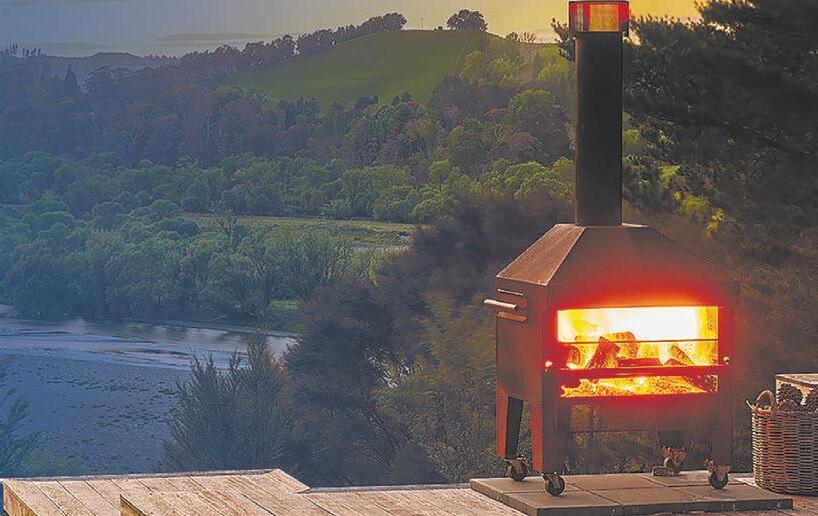
Book a personalised proper ty appraisal for your rural, lifestyle or provincial residential proper ty during May, June or July and you will go in the draw to win one of two HOOGA outdoor fireplaces!
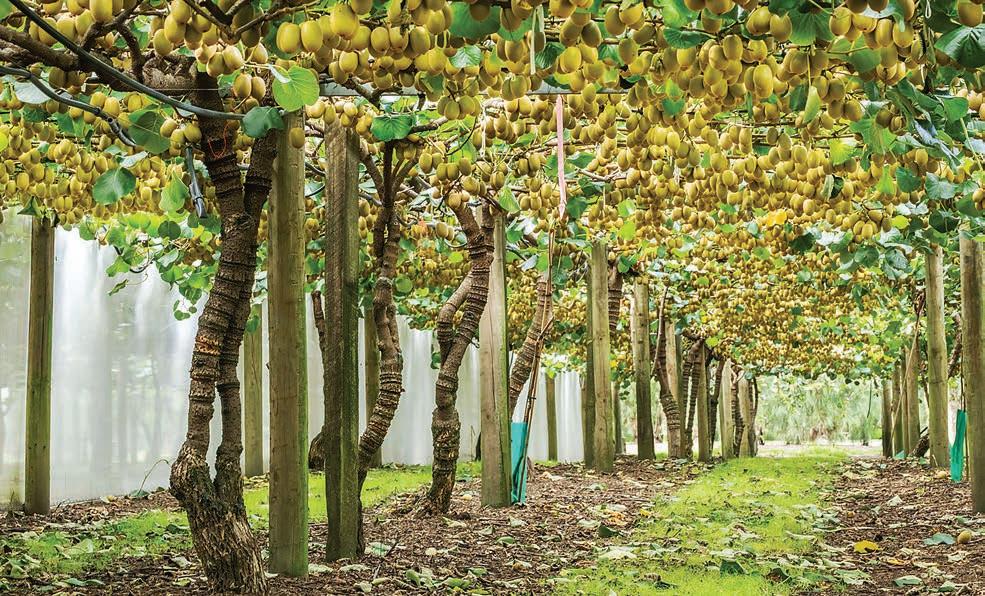
Kiwifruit country raring to grow
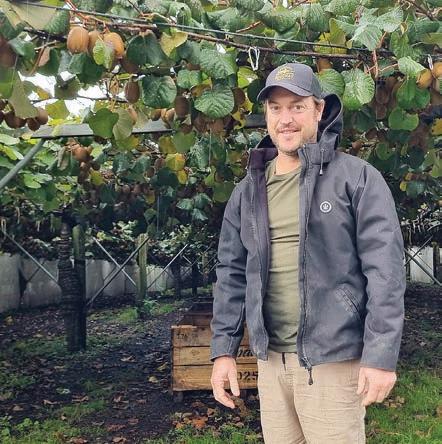
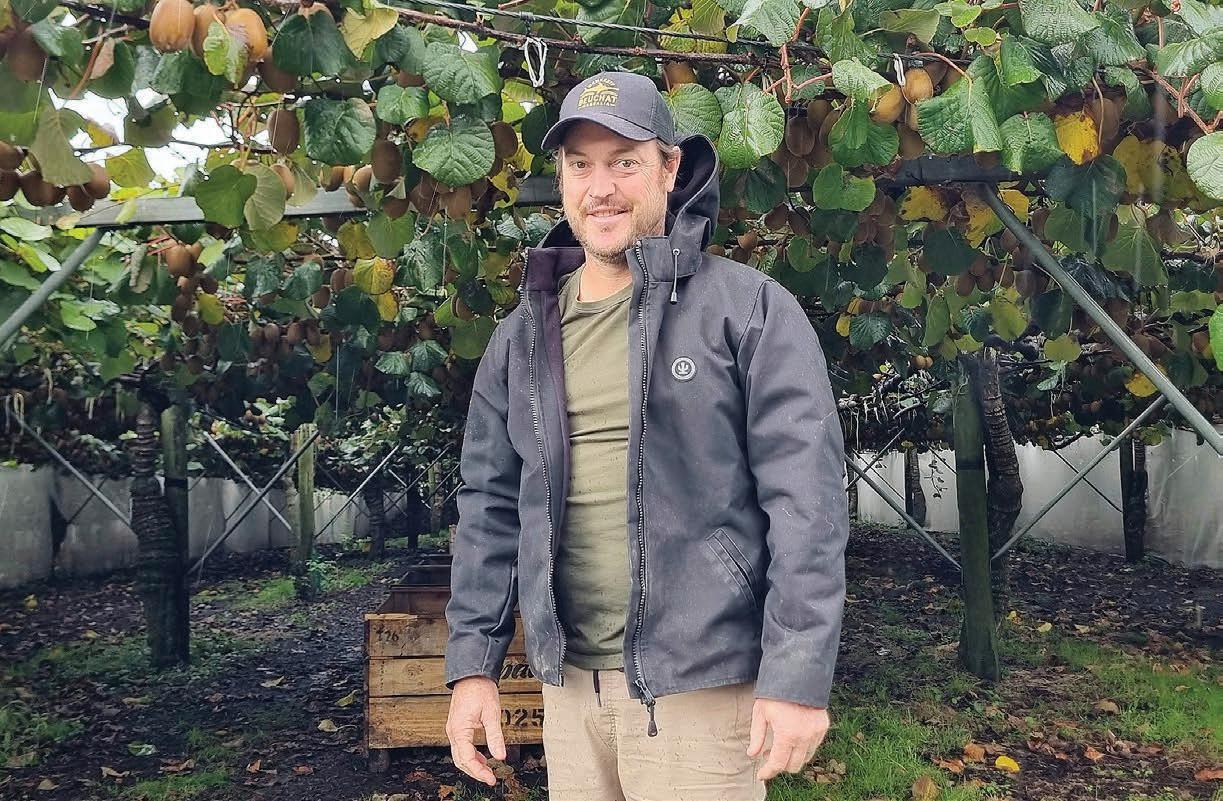
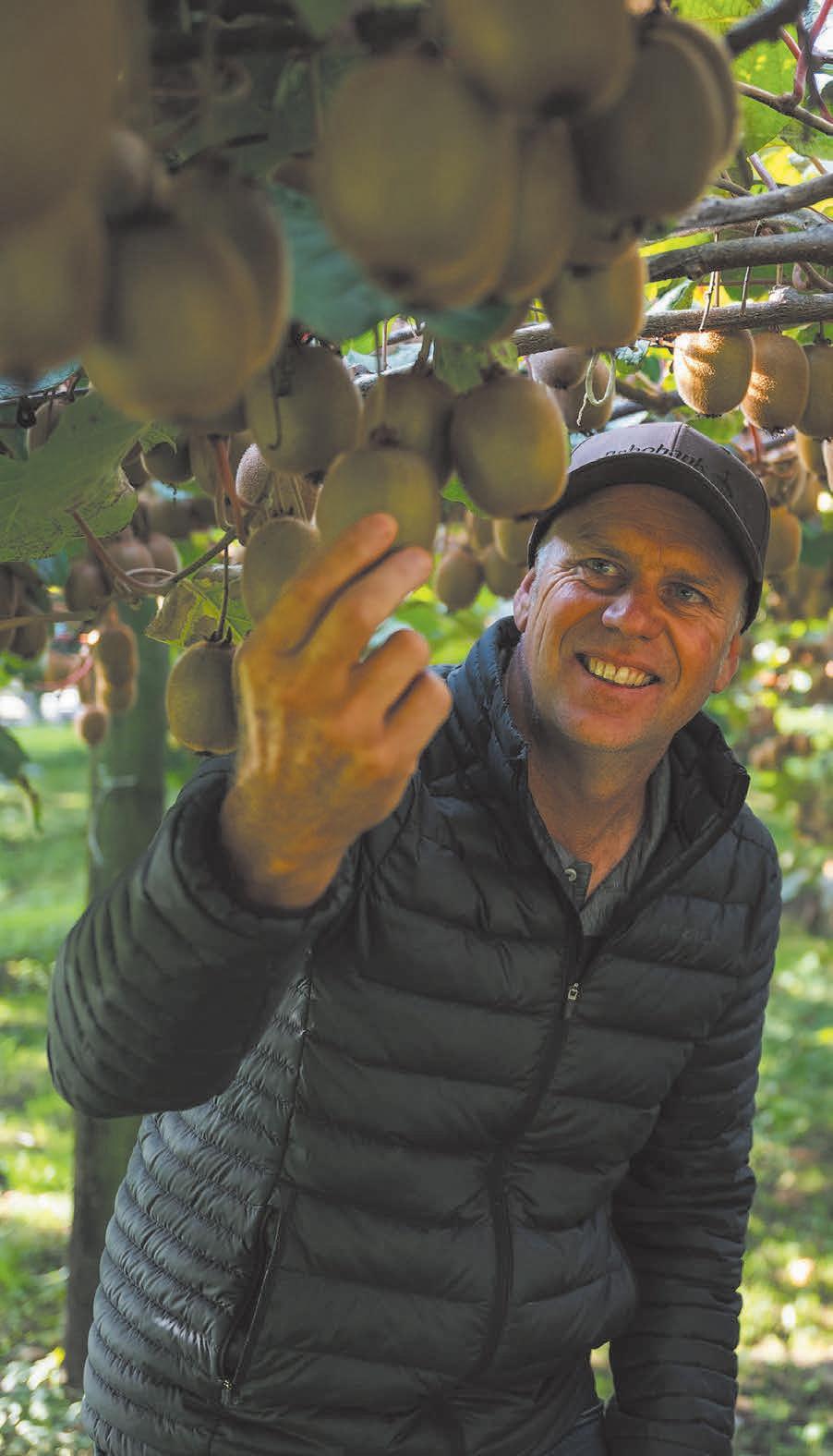
Western Bay of Plenty kiwifruit grower Mark Mayston is confident about Zespri’s predicted growth volumes over the next five years, and says he is witnessing further shifts in land use to kiwifruit in his district.
21
Exporters can expect only modest early gains from India FTA.
3
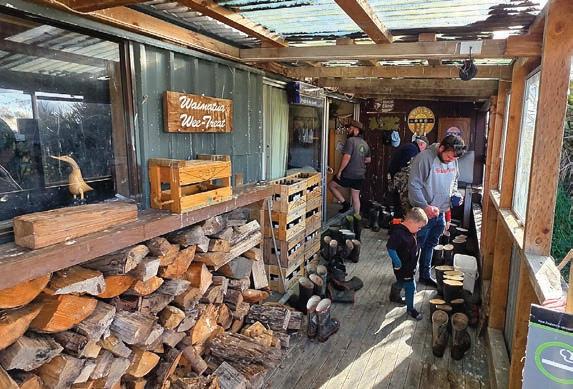
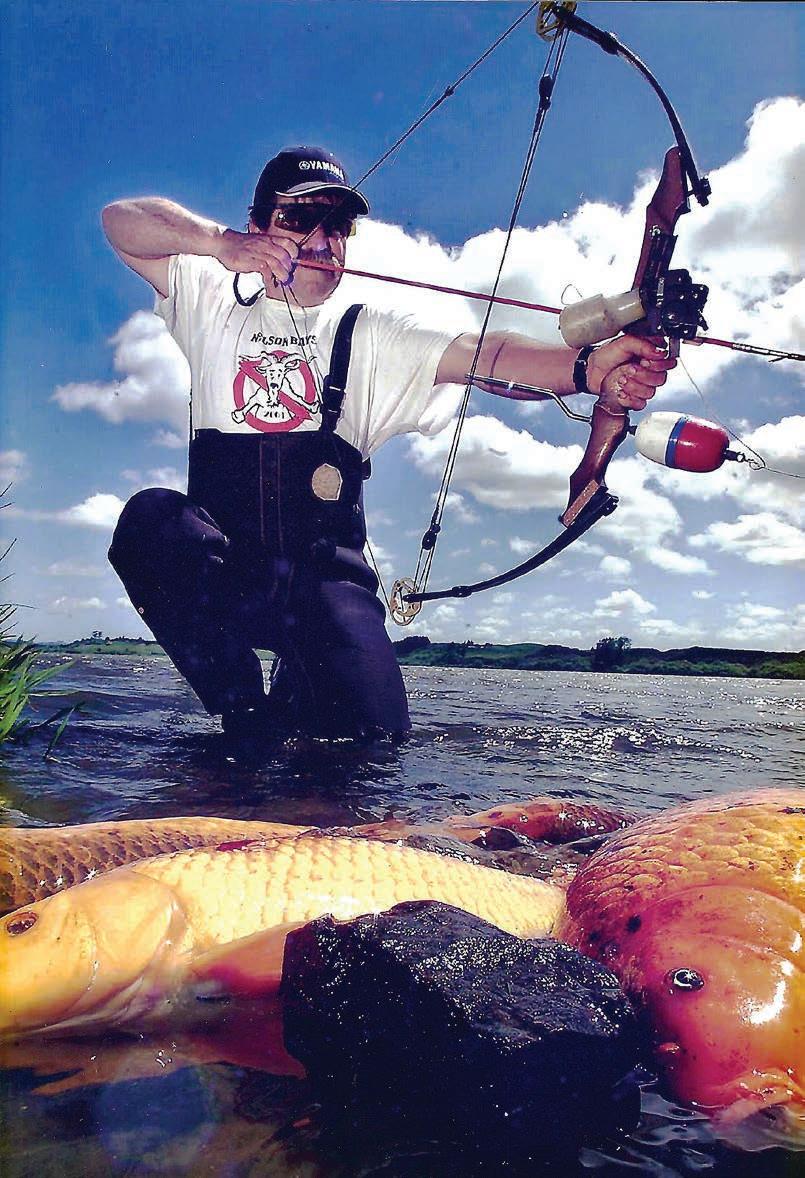
With the duck shooting season underway, hunters take Farmers Weekly reporter Gerhard Uys inside their ever-more elaborate and comfortable hides. NEWS 5
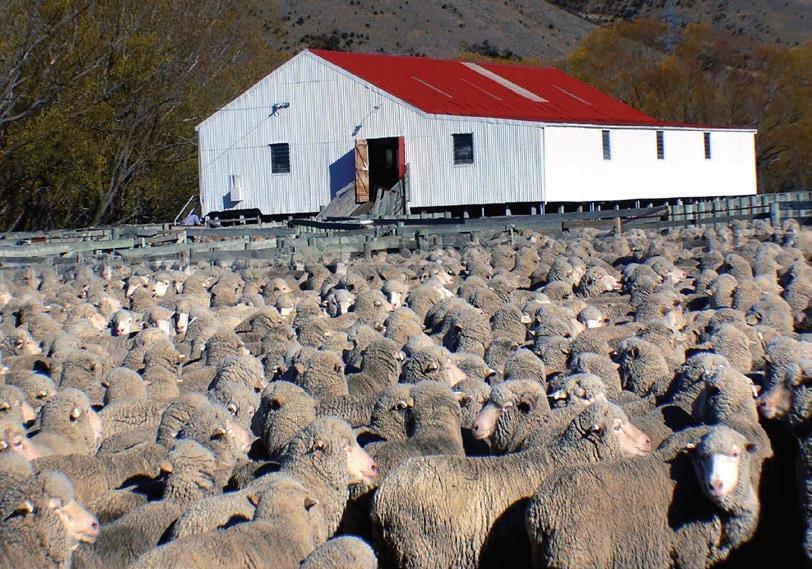
Two-year trial of cameras in woolsheds will be expanded this year. NEWS 4
New Zealand is trying its hardest to go broke, writes Alex Worker.
Andrea Mansfield | 027 602 4925 National Livestock Manager livestock@agrihq.co.nz
Real Estate | 0800 85 25 80 realestate@agrihq.co.nz
Word Only Advertising | 0800 85 25 80 Marketplace wordads@agrihq.co.nz
PUBLISHERS
Dean and Cushla Williamson Phone: 027 323 9407 dean.williamson@agrihq.co.nz cushla.williamson@agrihq.co.nz
Farmers Weekly is Published by AgriHQ PO Box 529, Feilding 4740, New Zealand Phone: 0800 85 25 80 Website: www.farmersweekly.co.nz
ISSN 2463-6002 (Print) ISSN 2463-6010 (Online)
changes
Fonterra has announced interim changes to the leadership of its global ingredients business ahead of Richard Allen stepping into the role of CEO.
Allen, the current co-operative’s president of global ingredients, is replacing Miles Hurrell who resigned from the CEO position after eight years. Allen’s role will be split between Elisa Giusti and Gaby Amade until a permanent structure is confirmed at a later date.
Award for Freeman
Retired Rotorua emergency physician Dr Peter Freeman has been announced as the recipient of the Peter Snow Memorial Award, presented at the 21st World Rural Health Conference.
For more than a decade, Freeman has dedicated himself to strengthening emergency care in rural New Zealand, working alongside a small team to deliver hands-on, locally tailored training to clinicians in some of the country’s most remote communities.
Wallaby watch
A $2 million regional council funding boost aims to accelerate wallaby containment efforts across Canterbury.
The funding from the Canterbury Regional Council will help accelerate wallaby control work, reducing the risk of wallabies spreading into new areas. South Canterbury councillor Nick Ward said the funding builds on previous investment and ensures earlier gains aren’t lost at a critical point in the programme.
Election challenge
Two high-profile men with deep roots in Southland farming are vying to unseat Southland MP Joseph Mooney at this year’s general election.
The National Party MP will face competition from Southland Federated Farmers president Jason Herrick, who is standing for NZ First, and farmer and former regional councillor Peter McDonald, who is standing for Labour.
India FTA gains ‘modest’ at first: MFAT
ENigel Stirling MARKETS Trade
XPORTERS can expect only modest gains from the India free trade agreement in its first few years, according to government modelling.
However, the same analysis says that, without a deal, New Zealand exporters risk being stuck on the sidelines of India’s rise as a global economic powerhouse over the next decade.
“Given the current income and consumption profiles of India, and that increases in trade are off a very low base, the initial gains from the FTA are modest,” the Ministry of Foreign Affairs and Trade said in its National Interest Analysis (NIA) of the India FTA tabled in Parliament last week.
Exports to India are forecast to increase by $340m in 2027, while exports are projected to be $1.271 billion higher by 2050, according to a separate economic analysis carried out by consultancy Motu on behalf of MFAT.
An acceleration in India’s economic growth is behind the
Continued from page 1
digital connectivity. It comes as fuel prices are also high.
“Our rural communities play a vital role in New Zealand’s economy and we can’t keep shouldering the removal of services and increases in costs when there is no other alternative.”
Williamson said that every week the newspaper gets delivered to every rural box holder in the country, providing credible information and connection readers can trust.
He is concerned that higher costs will put pressure on that rural connectivity.
“It is so important every farmer has a safe source of
pickup in exports in these later years.
India’s share of global Gross Domestic Product is expected to leap from 3.4% in 2023 to 8.3% by 2050.
Lower tariffs open the door to exporters to capitalise on this growth.
Tariffs on an existing tradeweighted basis fall from 9.2% in 2026 to 1.9% by 2036. Exports exceeding quota limits will face an average tariff of 4.2%.
Primary industry exports are the biggest gainers, with forestry and wood products up $282m, red meat up $130m and horticultural up $70.3m.
Although most of the gains are due to exports being diverted from lower-paying markets elsewhere, the FTA is also expected to increase exports overall. NZ’s total annual exports of forestry products are expected to be $156m higher and meat exports $22.6m higher by 2036 compared to a scenario where the FTA were not enacted.
Increased export receipts are expected to flow through to increased employment and wages – with the largest gains in the primary sector.
credible information,” he said.
Williamson is not intending to recover those costs through higher advertising rates, saying to do so would drive advertisers to the large offshore-based digital companies who do not pay tax in NZ.
Reducing services is also not an option as it would compromise quality.
“We have pulled a lot of levers in the last few years to keep staff and services and this is another challenge we face,” he said.
In response to falling postal volumes, in June 2024 NZ Post announced an end to Saturday deliveries to rural addresses due to the service not being commercially viable as it was
You’ve improved the farm. Now improve how you live on it .
The work’s done The view’s earned
Now make it usable, year round
Archgola outdoor rooms and outdoor blinds are designed to fit your home and handle New Zealand conditions, so you can sit back, whatever rolls in It works Season after season
Installed by local exper ts, nationwide
Get in touch for a free consultation
FORECAST: Exports to India are forecast to increase by $340 million in 2027, and to be $1.2 billion higher by 2050.
FTAs with big emerging markets may encourage NZ businesses to pivot towards new opportunities in a way that generates higher-than-modelled returns.
Report Ministry of Foreign Affairs and Trade
Real wages for production workers (farm and sales employees) increase by 0.066% by 2036, compared to 0.059% for non-
largely limited to subscription newspapers and parcels.
There were further changes to the Postal Deed of Understanding between the Crown and NZ Post in October.
This sets out minimum levels of service and could enable a further reduction in rural mail delivery from five days a week to a minimum of three and a decline in the number of postal outlets from 880 to 500, and then to 400 over four years.
It includes a safeguard against any rural retail store closures in the first year unless circumstances are beyond NZ Post’s control.
NZ Post was unable to respond to questions by the time of going to press.
production workers (managers and administrators).
“As production workers generally receive lower wages than non-
production workers, these changes will reduce the wage differential for the two labour types,” the Motu analysis says.
MFAT also notes the possibility of larger gains.
“Modelling measures the incremental gains that are directly attributable to provisions of the FTA, and as a result can be conservative and may underestimate the potential for growth in the trade of products with limited existing trade.
“Experience with NZ’s FTA with China ... suggests that FTAs with big emerging markets may encourage NZ businesses to pivot towards new opportunities in a way that generates higher-thanmodelled returns.”
The ministry warned NZ exporters risk being sidelined if the agreement fails to be enacted.
“NZ goods exporters would continue to face high tariffs ... and would be at a significant disadvantage relative to India’s existing and future FTA partners ... NZ would struggle to maintain existing trade, let alone grow trade and market share in India’s fastgrowing market, which is among the largest in the world.”
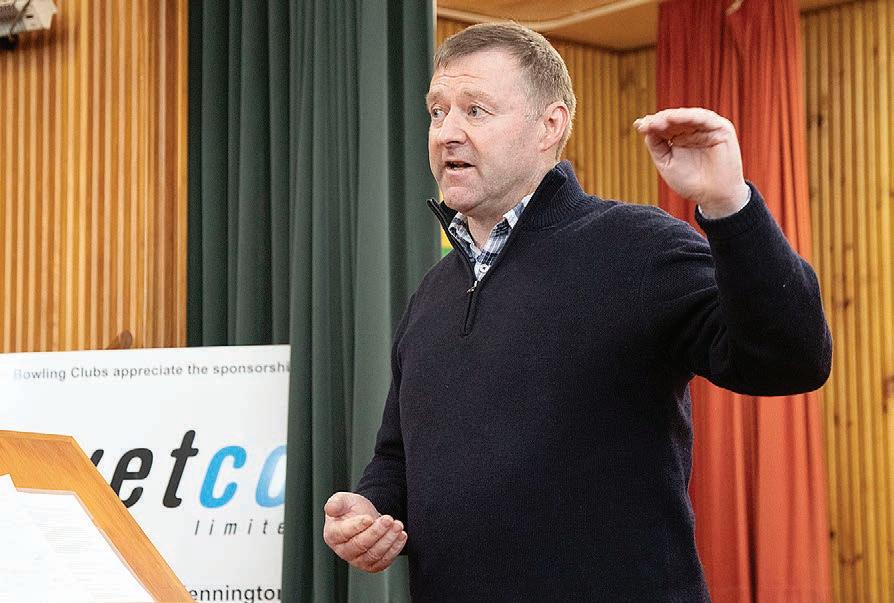
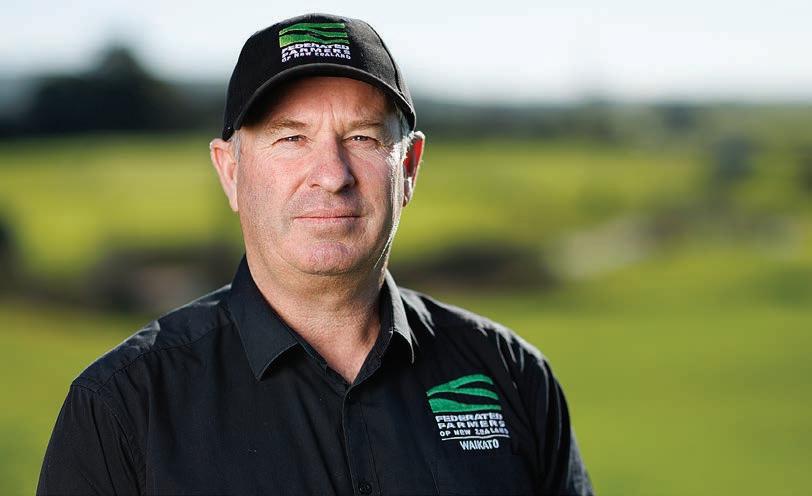
UNFAIR WHACK: Rural Communities Minister Mark Patterson says increased postal charges will impact regional New Zealand.
Video clip: woolshed camera trial widens
Neal Wallace NEWS Animal welfare
ATWO-YEAR trial of cameras monitoring activity in woolsheds will be expanded this year.
The Zentera Wool Company, formerly the NZ Merino Company, initiated the trial on several in its ZQ certified properties following the public release of video footage depicting alleged animal abuse by shearers.
The footage was captured by the animal advocacy group People for the Ethical Treatment of Animals (PETA) and released in December 2024.
Four shearers are facing animal welfare charges as a result of a subsequent investigation by the Ministry for Primary Industries (MPI).
Zentera chief executive Angus Street supported the MPI’s decision to lay charges.
“Animal welfare is at the heart of what we do and the ZQ standard, and we unequivocally condemn the mistreatment of animals,” he said.
Some of the footage was shot in ZQ-certified farms, which
prompted Zentera to respond with the in-shed camera trial along with induction videos for woolhandlers, updated shearing packs, and lowstress stock-handling workshops.
The trial of in-shed cameras was launched in July last year as part of a 24-month pilot programme.
A further six trials are planned for the coming shearing season on ZQ-certified properties in New Zealand and Australia.
“These trials give us insight into what technology works on
farm, and how cameras can support on-farm decision-making and provide a surveillance solution for growers and certification,” said Street.
Growers involved were supportive, he said.
“The use of cameras in shed is one part of a wider strategy to improve and monitor animalhandling practices including trialling animal welfare observers on farm.”
Farms that are ZQ certified
are audited to ensure they meet animal welfare, environmental sustainability, social responsible, fibre quality and traceability standards.
Street said ZQ-certified properties uphold the highest standards of animal welfare, reinforced in a recent review of wool standards by animal advocacy group Four Paws.
Shearing contractors association chief executive Phil Holden said the industry “has zero tolerance” towards animal abuse.
There is too much at stake for the industry not to take animal welfare seriously, but this case shows the primary sector is under close scrutiny, he said.
“We should not shy away and be concerned.
“It is what it is and we must do our best to support the industry, people and our animals,” he said.
The association has overhauled its animal welfare policies, which set out expectations.
The MPI’s director of investigations and compliance support, Gary Orr, said those in charge of animals are responsible for ensuring they are cared for properly.
“In a number of instances what
Opioid use skyrockets in some rural areas
Neal Wallace NEWS Health
THE rate of drug use detected in provincial and rural workplaces has recorded some of the largest increases in the country, new data reveals.
“For rural employers in particular, the data carries a clear message: the risk is rising, and it is changing in character,” said Glenn Dobson, the chief executive of The Drug Detection Agency (TDDA).
The agency has released its
Imperans Report on workplace drug testing for the first quarter of 2026, revealing that when compared with the same period a year earlier, New Zealand’s overall detection rate eased slightly –but the regional picture was a different story.
Dobson said the most striking finding for rural New Zealand was the surge in opioid detections, led by Taranaki, which had a 386.9% year-on-year increase, the largest increase of any substance in any region in the country.
Opioid detection in Taranaki increased from 6.3% of positive
tests in the first quarter of last year to 30.4% in the first three months of this year.
Northland had a 192.3% rise over the same period, from 7.4% to 21.6%.
The increase in detection in these two regions was significantly higher than national opioid detections, which were up 34.5% year on year, from 14.3% in 2025 to 19.2% in 2026.
Dobson said that opioids cause drowsiness, reduced alertness, and impaired cognitive function –serious effects for people working with machinery and livestock, and
putting in long, irregular hours. He warned that workers under the effects of opioids can go unnoticed until an accident occurs.
“Unlike substances that tend to produce obvious signs, they can be harder to spot in the workplace. By the time the problem becomes visible, it may have already been ongoing for some time.”
Nationally the year-on-year detection of amphetamine-type substances declined 25.8% but rose sharply in Gisborne, by 240.1%, Southland, 48%, and Bay of Plenty 27.5%.
we saw on the video footage provided fell short of those expectations.”
Inquiries identified eight individuals for investigation, four of whom have been charged. They are facing 21 charges and will appear in court throughout the country in April and May.
“A warrant to arrest one of the four charged individuals has been issued. We are continuing our inquiries into other related animal welfare matters.”
TRIAL: A trial of cameras in woolsheds is being expanded, says Zentera chief executive Angus Street. Photo: Wikimedia Commons
GROWING PROBLEM: Drug use in rural areas shows some of the highest rates nationwide, says Glenn Dobson, the chief executive of The Drug Detection Agency.
Duck and cover: a good maimai’s never finished
Gerhard Uys PEOPLE Hunting
AMAIMAI is never finished, says stock agent Danny Power from Southland.
Power said his maimai, built on his Pine Bush property, started taking shape in the early days of the covid pandemic and is an ongoing project.
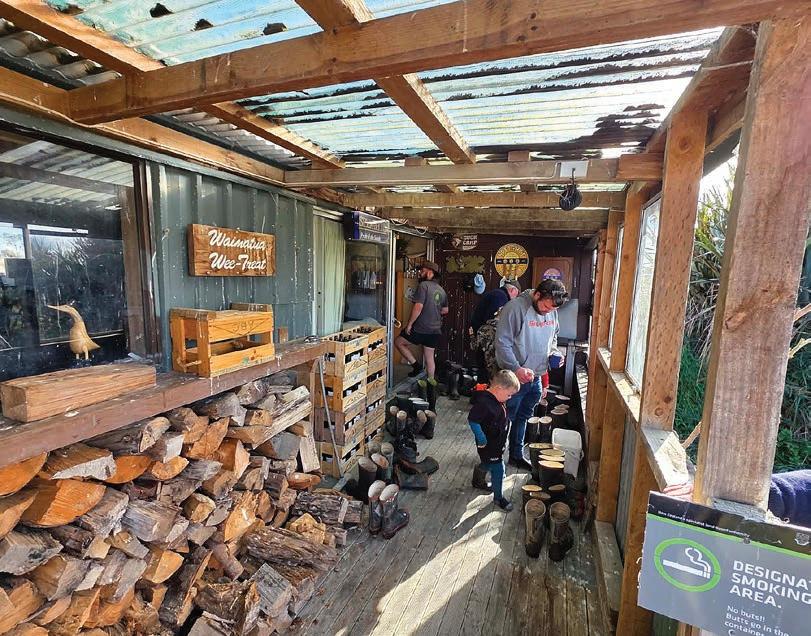
The maimai has a toilet and shower and cooking facilities. Power was introduced to duck shooting by his father when he was eight years old and said a big reason for going all out on his maimai is to keep that family tradition alive.
During duck season his two daughters have friends over from all around the country, and they use the maimai to hang out with mates and get a feed on over a barbecue.
One of his daughters is into shooting, too.
Power moved to Southland from the North Island 12 years ago, and said the South Island is duck mad.
“In Southland there’s no rugby on opening day and most rural schools are closed by lunchtime on the Friday before duck shooting starts. Duck shooting is on par with Christmas.”
Power is president of the Gorge Road Country Club, which recently took a maimai tour across the region.
In Southland there’s no rugby on opening day and most rural schools are closed by lunchtime on the Friday before duck shooting starts. Duck shooting is on par with Christmas.
Danny Power Stock agent
“We do it to inspire young people and anyone who wants to build their own,” he said.
Adding to the luxuries his maimai already boasts, he is building a 3m lean-to extension with a bar leaner next.
Waimumu sheep farmer James
Goodwin said he and a group of like-minded mates who wanted a place to shoot together put up a maimai on his property.
They fire up a pizza oven at the end of the day and make duck pizza.
Goodwin’s father got him into duck shooting “as soon as I could hold a shotgun”.
The maimai was put together with second-hand finds, such as sliding doors and windows, and cost the initial group of four who invested in it around $8000.
Balfour arable farmer Blair Drysdale said he, his son Fletcher and four others have been shooting together for the past 20 years from the same maimai.
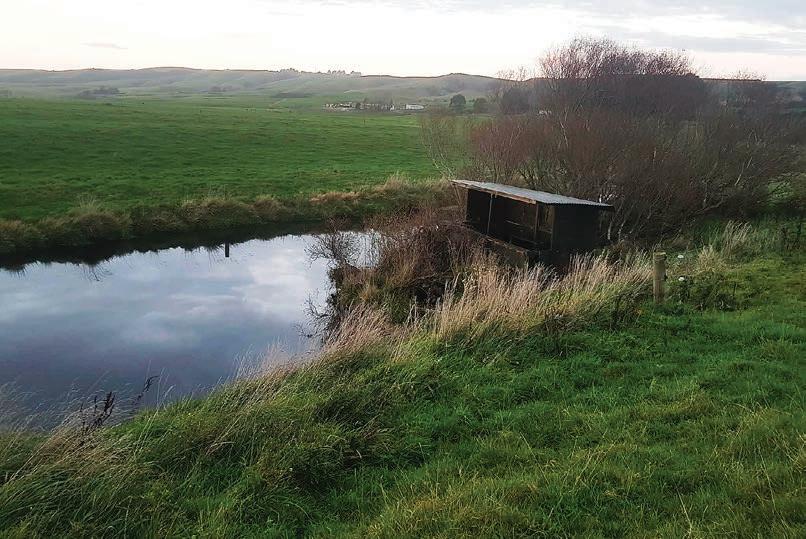
Their maimai used to be an old sport storage shed from Riversdale School that they put on the back of a truck and installed on the pond,
building a shooting galley to make it duck ready.
The maimai is well camouflaged so it blends in with the environment.
Besides constantly making changes to the maimai, he is
planning a second one near a second pond on his property that he will first de-silt to prep it. Duck shooting is not just about shooting, but about good yarns, good tucker and a few beers when the day is done, Drysdale said.
Setback in breeding low-methane cows
Staff reporter TECHNOLOGY Emissions
NEW results from a research programme into breeding low methane emitting cows show that this trait is not being expressed in the lactating daughters after being passed on from bulls.
The results disprove the programme’s hypothesis, which was that these bulls would pass on this trait to their milking daughters.
While the outcome is disappointing, the findings are still valuable, and the job now is to shape the direction for future research, Ag Emissions Centre executive director Naomi Parker said.
“Genetics still can have a
meaningful role in reducing gross methane emissions.
“For beef and sheep, we are still confident in the approach, and we will be feeding the insights from this trial into work underway in these areas.
“For dairy we will consider taking a different approach that will likely focus on measuring lactating cows for methane production to generate DNAbased selection criteria.”
The research programme, which began in 2021, is being undertaken by LIC and the Ag Emissions Centre with support from CRV.
It set out to identify lowemitting bulls. Because a relatively small number of bulls sire the next generation of dairy cows, it was thought it would offer a cost-effective and
innovative way to introduce low methane emissions into the national herd.
Early findings were encouraging, with lower methane emission traits identified in young bulls, and clear evidence these traits were passed on to their growing daughters.
The research did confirm that methane traits in bulls are heritable, and LIC CEO David Chin said this insight is currently being applied within LIC’s dairy beef breeding programmes.
“Alongside sector partners, LIC remains committed to supporting efforts to reduce emissions intensity through breeding more efficient cows.
“The role genetics may play in reducing gross emissions is one of several possible solutions we will continue to explore.”
SHOWER: Stock agent Danny Power from Southland says a maimai is an ongoing project. His boasts a shower and toilet facility.
Hot-button issues leave global warming out in cold
Bryan Gibson NEWS Climate change
LOBAL economic
Gheadwinds will hinder New Zealand’s ability to invest in climate adaptation as the world focuses on the cost of living, economist Cameron Bagrie says.
Bagrie told the New Zealand Agriculture and Climate Change Conference in Wellington that governments are focused on keeping inflation under control.
“Inflation is ruthless, it siphons money out of people’s pockets and it hurts,” he said.
“And it particularly hurts the poor.
“What we’re also seeing around the globe is these huge requirements, structurally, to alter our business models – embrace
sustainability, climate change.”
To do that, Bagrie said, NZ would have to improve its woeful productivity, which has dropped over the past decade.
“New Zealand does not have a cost of living crisis. We have an income crisis. There’s not enough money coming in the door to absorb the likes of our rating increases.”
This tension between near-term economic challenges and more existential issues of productivity and climate change will shape thinking for years to come, he said.
The good news is that NZ has many of the resources that will be at the centre of future growth – water, minerals and renewable energy.
Bagrie also highlighted how NZ society is well-placed to capitalise on these advantages.
“I’ve got my daughter, she’s at Whanganui Collegiate, and she came home a year ago and says, ‘Dad, we need to go buy a farm.’ I said, ‘Why?’ She said, ‘Because all my friends have been driving since they were 10.’
“That’s what you do on a farm. You get out there and you’re ripping around on a motorbike, but you’re actually at the epicentre, you’re learning how to take and manage risk.”
Relearning how to take risks after decades of relying on property investment to build wealth will make or break NZ, Bagrie said.
Climate Change Commission chief executive Jo Hendy acknowledged that tackling climate change is harder in the current economic environment, but argued we are already paying the cost of it now, as are other
food-producing nations.
“When major food producing regions are hit by climate extremes at the same time – droughts, floods – the pressure will show up quickly in global markets, in commodity prices, and in trade flows.”
While adaptation is happening, it was more of a chasing game that
Buck bounces around on pork labelling
Gerhard Uys NEWS
Food and fibre
COUNTRY of origin labelling issues that NZ Pork has been trying to solve since the early 2000s will likely not be addressed by the Ministry for Regulation’s current Product Labelling review.
So says NZ Pork chief executive Brent Kleiss, who said most consumers still don’t know the difference between imported and local pork.
Labelling on processed pork products is unclear, with the front of a package often citing a company’s New Zealand origin, but the back of a package showing the pork could be from one of several countries of origin.
The Ministry for Regulation began a review of regulations
relating to product labelling in 2025.
The review will assess labelling regulations to identify opportunities to streamline it with international standards and remove unnecessary compliance costs.
What we hear is there’s concern around how onerous and difficult it can be for manufacturers to put one single country of origin on a label.
Brent Kleiss NZ Pork
Kleiss said this follows concerns raised with the committee in 2022 and a request by former minister of commerce and
consumer affairs Andrew Bayly in 2024 for MBIE to work with PorkNZ to find a way forward.
“Nothing happened until August 2025, when MBIE realised that the country of origin labelling regulations may be covered in the Ministry for Regulation’s Product Labelling review,” Kleiss said.
Kleiss said the review seems to address only red tape, with country of origin labelling barely mentioned.
Businesses should be able to trace exactly where their pork is from, he said.
“What we hear is there’s concern around how onerous and difficult it can be for manufacturers to put one single country of origin on a label.”
pork is from, both so they can ensure they have quality products and for insurance purposes, in case they receive a bad product.
Hellers did not want to comment on questions from Farmers Weekly about how hard it is to find out the exact country of origin of imported pork, nor what its steps would be if regulations require it to specify country of origin.
JBS Pork in Australia, which owns Premier Beehive, a New Zealand pork brand, did not respond to the same queries.
will get more difficult as warming continues.
“If change is increasingly driven by climate, markets, customers, capital and geopolitics, then the question becomes whether farmers have the tools and the options and the support to respond in ways that make sense for their systems.”
Kleiss said he does not accept that argument and said companies will know where their
A spokesperson for the Ministry for Regulation said recommendations from the review are subject to cabinet decisions, and they cannot release information pertaining to the recommendations prior to it going through the cabinet process.
TOOLBOX: Climate Change Commission chief executive Jo Hendy says giving farmers a range of tools to succeed in a volatile world is vital to maintain our primary industries.
Photo: Bryan Gibson
STAMP: Unclear country of origin labelling means consumers still can’t tell the difference between imported and local pork.
Halter’s latest tech is out of this world
Hand beef
ALTER has launched a world first direct-tosatellite service for its smart collars to enable beef cattle farmed in remote areas to access its virtual fencing technology.
The new technology will provide the tech to beef farms that were previously out of reach due to connectivity limitations, particularly for regions like central Otago, Gisborne and Southland’s high country.
The direct-to-satellite option involves Starlink and One NZ. It also positions Halter for expansion into more remote markets globally, such as South America and parts of Africa.
Internal modelling estimates that direct-to-satellite capability will expand access to Halter for New Zealand beef farms by at least 20%.
Halter also announced a suite of new tools for reproduction, animal behaviour and precision pasture management, expanding what is possible for farming cattle. Until now, the solar-powered,
GPS-enabled collars system depended on Halter’s proprietary LoRa (long-range) radio towers on farms.
With the Starlink connection, the collars can communicate directly to satellites, eliminating the need for ground infrastructure entirely.
In New Zealand, Halter will become the largest provider of non-mobile devices connected to Starlink, with hundreds of thousands of the new collar version to go live upon launch, globally, the company said.
Halter founder and CEO Craig Piggott said connectivity for virtual fencing was the blocker for remote or large cattle operations and direct-to-satellite solves this.
“With One NZ and Starlink, we’ve removed that barrier. Farmers managing animals on remote, rugged terrain can now access the same tools as operations with full cellular coverage. Combined with our new suite of product features, these farms can be even more productive.”
One NZ CEO Jason Paris said they were delighted to be backing the expansion of rural connectivity with One NZ Satellite.
“It’s not every day you’re helping cows connect to satellites in space,
so that New Zealand farmers can access world leading technology that improves stock management. That’s exactly the kind of outsideof-the-box thinking we love to see, and love to get in behind.”
Bevan McKnight, lessee of Northburn Station in the Dunstan Mountains, central Otago, said direct-to-satellite will unlock unconstrained grazing.
The collars have been on his breeding cow herd since February and are used to keep them separate from the Merinos and use feed that they could not have reached previously.
“Virtually fencing our extensive station using Halter will be a game-changer for land utilisation. For the first time, we’ll be able to graze large blocks of land that have never been touched by our cattle, because we had no way of managing them there.”
McKnight runs 200 Angus cattle and 11,000 Merino sheep on 13,000 hectares.
“To do that before this satellite solution would have required 25 towers, so this new practical option makes Halter a no-brainer for us.”
The station also has fragile areas that are environmentally sensitive
and the technology has also enabled him to keep the cattle out of those places, he said.
The collars are not used on the calves, which are being creepfed on his better pasture a short distance away from the cows, which are run in mobs of 40.
He estimates those calves will be 30-40kg heavier at weaning in May.
McKnight said he is also confident the technology could be used among other sheep and beef farm systems.
“We were pretty confident they were going to work, and we have
had nothing go wrong so far.”
It has also made mustering easy because they know exactly where the cows are on the farm, he said.
“The time saving has been unbelievable.”
Halter has also upgraded its software for beef farmers.
The update includes tools on heat detection, feed allocation and pasture quality, pasture mapping and feed demand.
The direct-to-satellite option is available immediately to beef operations in New Zealand and the United States, and is coming soon in Australia.
The average quad bike accident puts a farmer out of action for 82 days. That’s a season gone But the right gear can change the outcome. Right now, you can get up to 20% off proven safety tech including Crush Protection Devices and Safetrax GPS rollover alert systems. Gear that can protect you in a crash, or get help to you faster after one. Limited discounts available. Don’t miss out.
GRAZING SPACE: Central Otago station lessee Bevan McKnight estimates that his station would have needed 25 towers to run the tech before the launch of the direct-to-satellite service.
Gerald Piddock TECHNOLOGY Sheep
Simple idea launches a family business
Samantha Taylor TECHNOLOGY On farm
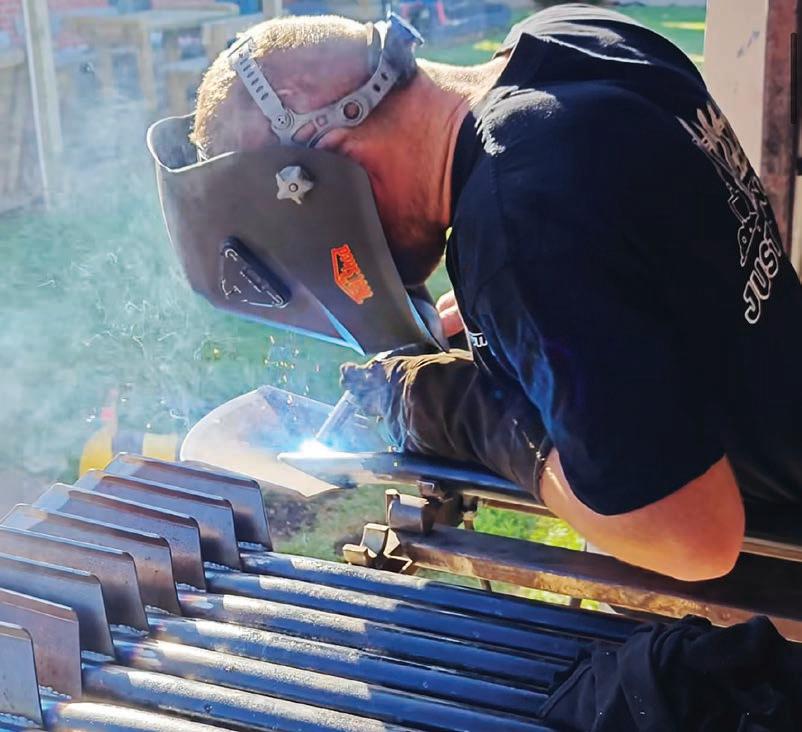
SITTING at home feeling sorry for himself after a dirt bike accident, Sam Kneebone decided it was time to put some of his ideas into action.
He couldn’t walk with a busted pelvis, but he set up a bar stool in the shed and started designing a spade prototype.
He took his idea to an engineer who helped bring it to life, and he and his wife, Chloe, expanded their business, Just Fencing, and
have taken to Facebook to share fencing videos and promote the spade.
Now that business is going so well, Kneebone has left his farming job and is focused on making spades for fencers all over the country.
“I’m getting two or three messages every week from people enjoying my spade,” said Kneebone, who has recently engaged a marketing agency to help grow the brand.
The spade idea came after his own fencing experience, during which he struggled to find a tool that suited his needs.
I’m getting two or three messages every week from people enjoying my spade.
Sam Kneebone Just Fencing
And farmers would often ask him where to buy a good spade.
“I guess that’s what sparked the idea initially,” he said.
PRACTICAL:
Designed with real-world use in mind, the product reflects a focus on practicality and performance.
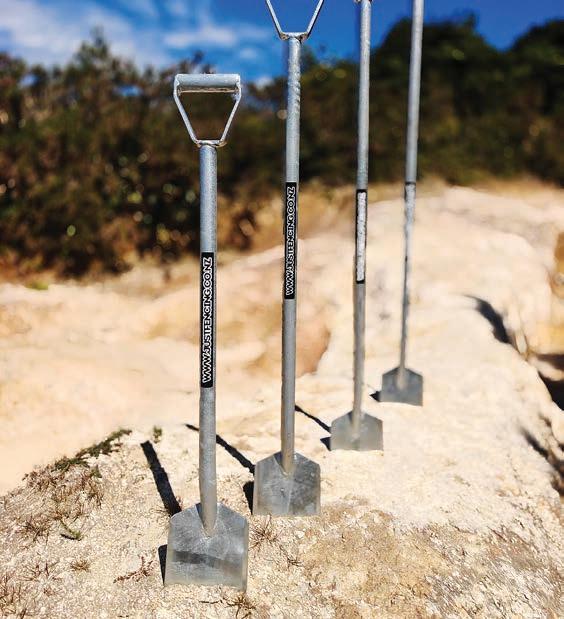
“And what makes my spade different is the head design. It’s more like a shovel with the folded-up sides and deep dish, but it still drives hard and is made from heavy material just like a traditional digging spade.”
Kneebone grew up farming around Matamata, and he thought that’s what he always wanted to do. After school, he headed to the deep south to work in Merino country.
After about five years, he left a job at an awkward time of year and asked a fencing friend, Troy Brooky from King Country Fencing, for some fill-in work till he found another suitable farming role, and then moved back north.
He enjoyed fencing so much, he decided to make a career out of it, fencing for the next decade – initially for others, then out on
his own as Just Fencing, based in Matamata.
About two years ago, with a young family, he thought he’d give farming another go for the lifestyle. But it was a couple of months into the job that he had the dirt bike accident and ended up with a couple of months off to recover.
He’s taken over manufacturing the spades himself in his home
garage and enjoys getting out to talk to farmers and fencers about his unique design.
He also sells RePost recycled fence posts, and the goal is to eventually have his own one-stop fencing shop.
“It’s a huge goal, but for now I’ll just keep up with manufacturing spades, and I’ll keep looking for another gap in the market to help solve.”
GROWTH: Turning a simple idea into a working product has seen steady growth for the small business.
Photo: Supplied
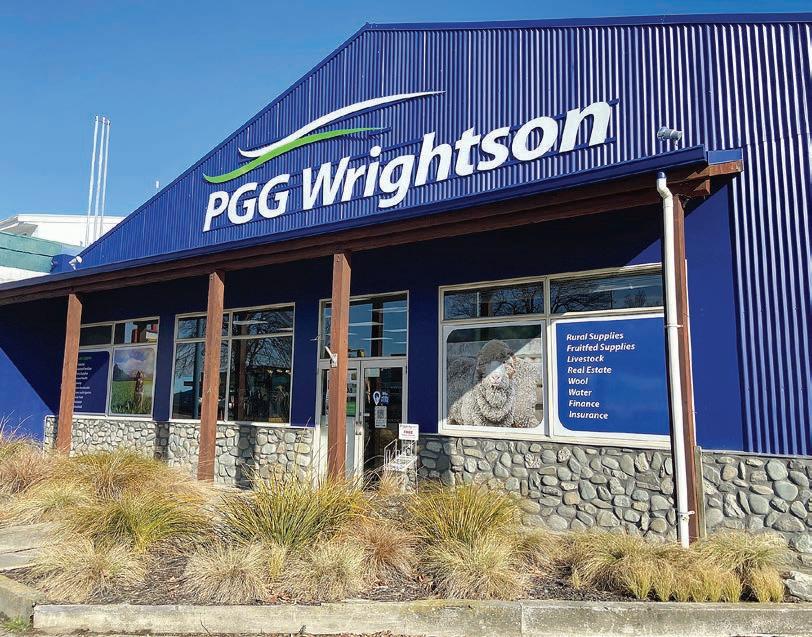
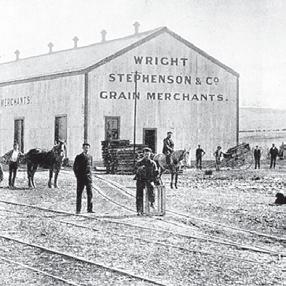
PGG Wrightson traces its river to the source
The leading rural servicing company is marking 175 years of doing business with and for New Zealand’s farmers, writes Hugh Stringleman
AMAP of the mergers and acquisitions in New Zealand rural servicing companies looks like a South Island braided river, traceable to numerous entrepreneurs back in the mountains.
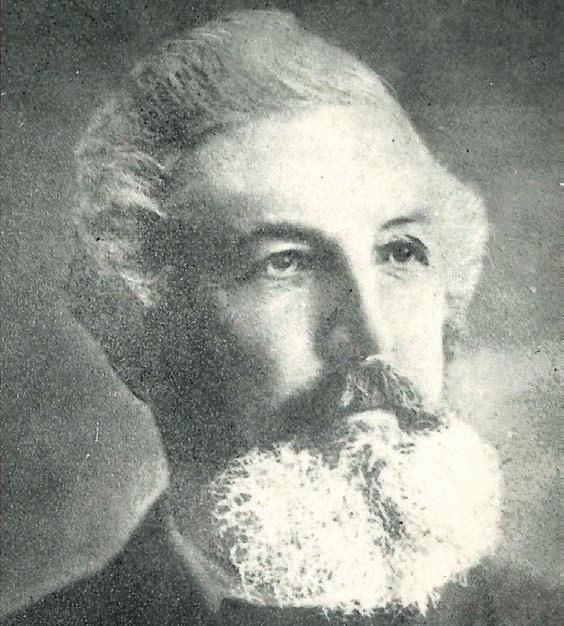
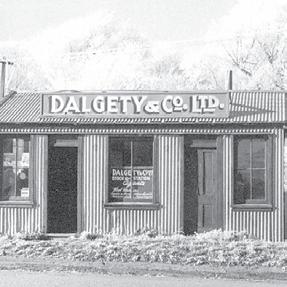
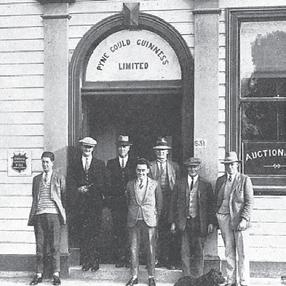
One such pioneer businessman was George Gould of Christchurch, who became the middle letter of PGG Wrightson.
The directors, senior management and cornerstone shareholders, Agria of Singapore and Elders of Australia, could have chosen any number of foundation dates here and across the Tasman.
The 1840s and ’50s were the origin of what was called the stock and station agencies, an Australasian term which has gone out of use.
Aged 26, Gould launched the city’s first general store in May 1851, the year from which the company that carries his surname initial counts its 175th year in business.
He was foreshadowed by Nathaniel Levin, who had opened a general store in Port Nicholson (Wellington) in 1841, aged 21.
In 1964 Levin & Co was taken over by NMA, which was itself swallowed by Wright Stephenson in 1972.
PGG Wrightson has a very informative website on 19th century self-starters like Levin, Frederick Pyne, George Gould, Edwin Guinness, Fredric and John le Cren, Frederick Williams, Nathaniel Kettle, Frederick Dalgety, Newton King, Donald Reid, John Wright, Robert Robertson and John Stephenson.
As the dominant modern survivor, PGG Wrightson has published a timeline of the numerous takeovers of the past 150 years.
The merger that formed and named PGG Wrightson took place
RECOGNITION: PGG Wrightson chief executive Stephen Guerin says the anniversary is about recognising long-serving team members and customer relationships that have shaped the business.
in 2005, when Williams & Kettle was also acquired.
Today’s chief executive, Stephen Guerin, came from Williams & Kettle and he thinks 2005 was probably the final confluence of larger rural servicing companies in NZ, although smaller mergers and acquisitions may still occur.
“Where I go in the country, I bump into someone who has family connection to our legacy companies.
“Founder George Gould’s great-grandson, also George, is a customer and indeed a former chief executive, 2010-2013.
“As we look back, what has not changed are some of the heritage ways we did business on day one, but we are doing it differently.
“We still have retail merchandising, livestock agencies, wool merchants and real estate agencies.
“Our longevity is grounded in personal relationships, resilience, and the ability to innovate and adapt to change.
“Saleyards are being replaced by online sales and auctions and computerisation has been the transformative influence of the past two or three decades.”
Traceability and verification are now key drivers throughout the supply chain for food safety.
When Guerin started his working life there were no computers and every branch had administrative staff members whose roles have been automated. He has been CEO since 2019.
PGG Wrightson employs 1800 people, almost everyone in the front office with customers, rising to 2000 with contractors at peak periods.
The listed company now has a $1 billion annual revenue and is quite dominant in livestock agency work but with plenty of competition elsewhere.
“From customer surveys, we are considered No 1 in the fields in which we operate, and we are quite proud of that.”
Customers engage with an average of more than three PGW businesses, which forms a “stickiness” in loyalty.
Forward 25 years and Guerin thinks technological change is a potential disruptor, although he could not name one at present.
Land use changes away from arable and towards dairying have potential to reorient the PGW business.
“NZ farming has a lot more eyes looking at it, so transparency is vital.
“Saleyards in the centre of town and their environmental
challenges also come to mind.”
Recruitment at universities and schools brings young people who learn on the job in agency and retail divisions, to replace those older agents nearing retirement.
More women are being employed as livestock agents and in science roles.
“We have an academy programme, which has run for 20 years, allowing them to see different types of farming and orchard systems.
“They work with a farmer to solve a problem and present the solution for grading at the end of the year.
“We facilitate this programme and it is run by Primary ITO.”
Agents need to know about the whole farm system, not just their field of livestock or property.
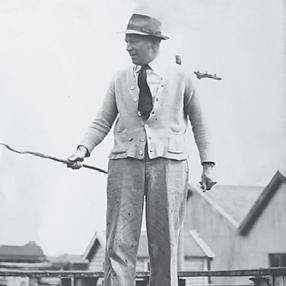
THE BEGINNING: George Gould snr launched Christchurch’s first general store in May 1851, the year from which the company that carries his surname initial counts its 175th year in business. Photo: PG Stevens
Knowledge of the history of the company is covered at staff induction, when the values and principles are taught.
“It is company-specific and is required of all new employees, whether they have worked in the industry or not,” Guerin said.
When observing the 175-year milestone, PGG Wrightson will emphasise its core values for growing future rural leaders.
“The milestone reflects our deep-rooted history of trusted relationships, practical expertise, innovation and a continued commitment to the future of rural communities.
“Our privileged place in rural New Zealand has been earned by learning the land, working alongside farmers and growers, and backing them through good seasons and tough ones.
“As farming and growing have changed dramatically, the company has continued to innovate through science, technology, and research and development, while giving back to local communities.
“This anniversary isn’t about looking back for nostalgia’s sake,” Guerin said.
“It’s about recognising longserving team members and intergenerational customer relationships that have shaped our business.
“It’s also about celebrating our shared history, reaffirming our commitment to invest in the future, and standing alongside our customers through change.”
Cool Sheep research secures $1.2m funding
Staff reporter
TECHNOLOGY
Methane
A GENETICS programme to breed low-methane sheep has received $1.2 million in funding to enable its work to continue.
The joint investment by the Ag Emissions Centre, AgriZeroNZ, Beef + Lamb New Zealand, the Bioeconomy Science Institute Maiangi Taiao and the Ministry for Primary Industries into the Cool Sheep Programme is aimed to boost farmer uptake of lowmethane sheep genetics, one of
the few emissions-reduction tools currently available for farmers.
The programme gives farmers the ability to identify and select low-methane rams for breeding, the same way they select traits such as growth, wool quality and fertility.
The new funding extends the programme for another year, and backs further research to strengthen the accuracy of the breeding value for methane.
It will also explore whether low-methane sheep convert feed more efficiently – a development that, if correct, could entice
more farmers to breed from lowmethane rams.
Breeding for low methane has proven to be a highly effective mitigation tool, Bioeconomy Science Institute senior scientist and leader of the low-methane breeding research programme, Dr Suzanne Rowe, said.
“Since establishing flocks of high- and low-methane-emitting sheep, we’ve measured an average difference of around 18% in methane emissions between the two groups.”
The new research includes a feed efficiency trial with around
100 young female sheep and 200 growing males, with results expected later this year.
“This trial will give us clear evidence of how high- and lowmethane sheep differ in the way they use feed, which will help us understand whether selecting for low methane also boosts efficiency.”
Over the next year, the programme will also measure methane emissions and collect genetic information from 5000 sheep to strengthen the accuracy of the breeding value.
Ag Emissions Centre executive
director Naomi Parker said the investment is a core part of the centre’s ongoing commitment to supporting the development of practical emissions reduction tools.
“This initiative combines research, investment and partnership to help give farmers confidence that they can reduce emissions without compromising productivity.
“Continued testing, breeding and genetic analysis will strengthen the science behind the programme and support farmer uptake.”
STAFFING: PGG Wrightson employs 1800 people, almost every one in the front office with customers, rising to 2000 with contractors at peak periods.
Narrow road to ownership for young farmers
Isabella Beale NEWS Farm ownership
BUYING a first farm in New Zealand is a major milestone, but the difficulty changes depending on buyers’ access to capital, lending conditions, opportunities and personal networks.
Braden and Brigitte Barnes know these challenges all too well. The recent winners of the Fonterra & ASB First Farm Award are among a small group of young farmers who have managed to secure their first farm purchase through a programme created to support entry into ownership.
The award provides access to structured industry support and concessional lending to help bridge the gap between equity and the cost of buying a farm.
Before securing their first farm, the couple said, ownership felt possible, but still uncertain.
“We were looking at farms before the award and trying to make it work, but they all seemed a bit too out of reach,” Braden said.
The funding and network gap to finding the right property remained a barrier. That changed after receiving the award, which they described as a turning point.
“With all the unsuccessful offers, you do get deflated, so having that support gave us a real injection of confidence,” said Brigitte.
“It was a catalyst. It opened doors for us.”
The shift was not just financial but also through increased backing, giving access to networks, advice and opportunities.
“All of a sudden, we had people ringing us asking if we wanted to go in as equity partners. There were so many more options,” Braden said.
Their experience reflects wider pressure across the dairy sector, where traditional sharemilking pathways to ownerships are becoming more difficult.
“The pathway is getting slimmer and slimmer,” said Braden.
Fewer sharemilking opportunities and a reliance on industry connections to get those jobs are adding to the challenge.
“A lot of these opportunities happen under the radar. The more people you know, the better position you’re in,” said Brigitte.
The reliance on networks is also being seen more broadly across the industry.
Sarah How, co-founder of Landify, who spoke at the Ag Innovation Beef & Lamb conference last month, said many ownership opportunities are still formed through informal conversations rather than public listings.
“A lot of these opportunities are still being formed through informal networks, through a mutual banker, an adviser, or just by chance,” said How.
“That reliance on informal connections means a lot of people simply aren’t getting access to opportunities.”
How said high capital requirements and limited access to finance continue to restrict entry for younger farmers.
“Younger farmers face extremely high barriers to entry, especially around capital and access to finance,” she said.
“We’re consistently hearing from young farmers that they’re being priced out of the market.”
As a result, alternative pathways into ownership are gaining traction. These include equity partnerships, lease-to-buy
arrangements and joint ventures, often through platforms designed to connect farmers with investors and landowners.
“There’s a whole generation of young farmers now looking for more flexible pathways into ownership,” she said.
Landify was created as a listing platform to connect those parties, rather than managing deals directly, How said, allowing users to explore different ownership and partnership structures.
However, while these models are opening doors, they aren’t for everyone and introduce added complexity and risk compared to traditional ownership.
CHANGING: Traditional first farm ownership pathways may be changing and evolving with the current economic landscape. Credit: Ollie Craig via Pexels
Writer celebrates ‘unforgiving land’ that made her
Annette Scott PEOPLE Agriculture
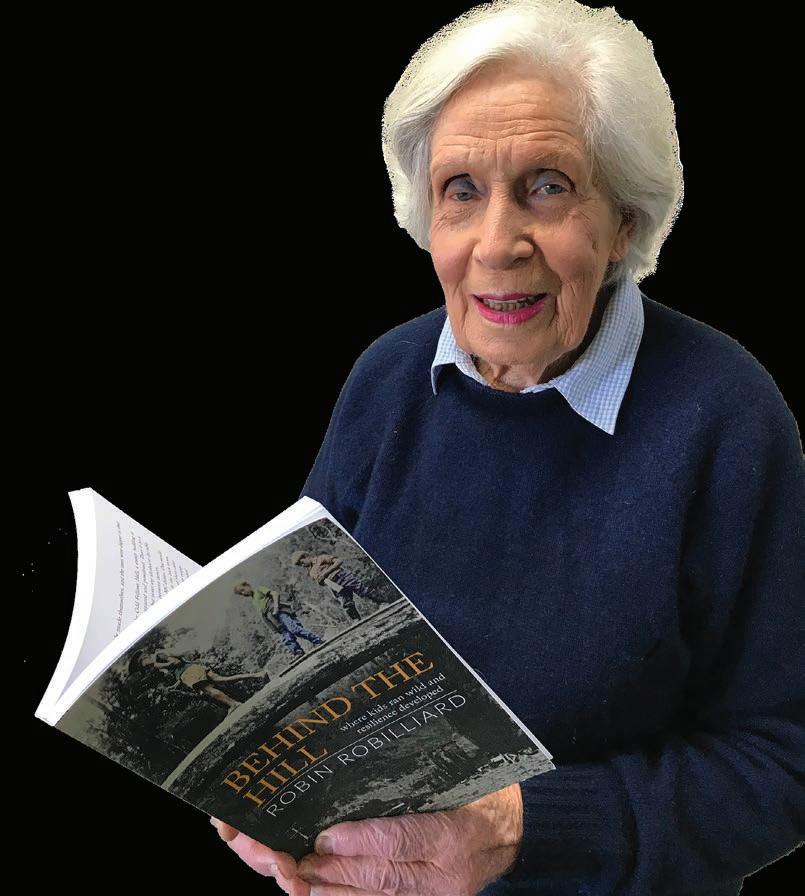
ROBIN Robilliard has forever had a passionate interest in people and how they live, and it has taken her on some “unbelievable adventures”.
Born between the two world wars, now 92 years of age, Robilliard’s life story is that of one very determined woman and an isolated farming life behind Tākaka Hill at the top of the South Island.
Robilliard and her husband Garry longed to buy their own sheep farm, but a lack of money stood in their way.
“My life story is one of survival on scrub and gorse-covered mountainous land in Golden Bay, because we had no money for a better farm. I called it nightmare land.
“But the Tākaka Hill became my Rubicon; so what was I doing there? Well I’d married someone as independent as myself.
“We were not going to work for other people any longer than we had to and so it was in 1957, with £1200 and a six-week-old baby, that we took on what was undoubtedly some of the worst land in the country.”
Aptly named Rocklands, it was 600 mountainous hectares of gorse, scrub and bracken.
“It was all we could afford. It was wonderful for the soul, but dreadful for farming, with a slum dwelling to live in and not a visible fence on the property.
“We learned, after we bought it, that the farm had bankrupted its three previous owners. All had been unable to make a living on the unforgiving land but as Garry began a lifetime of toil on the
land, I simply had no choice but to get on with it as well.”
Having grown up on a sheep farm in Hawke’s Bay, then pursued her nursing career in Christchurch, Robilliard said this was to be “an existence that would either break me or make me”.
“Golden Bay’s first settlers may have named the region for the gold they came to prospect but once gold ran out, they put in the backbreaking work to carve farms from the bush.
My life story is one of survival on scrub and gorse-covered mountainous land because we had no money for a better farm.
Robin Robilliard
Author of Behind the Hill
“The isolation made us dig deep into ourselves.
“I have often asked myself over the past 70 years where I would have preferred to have spent that large part of my life and there were many times when I said
anywhere but here, but I eventually came to realise that this place suits me, it allowed me to be myself, as long as I can escape sometimes.”
And escape she did, at times. Following her passionate interest in people and how they live, she travelled far and wide as an esteemed writer.
“My success with social study books and my ultimate, unbelievable adventures studying ordinary people’s lives in 63 foreign countries had me writing and being published in magazines with huge coverage in newspapers because no one else was doing that in the 1980s and ’90s.
“I did not study journalism. I just became one.”
Above all Robilliard always retreated to the tortuous landscape and seclusion back home to get her writing done, acknowledging that while tough, Rocklands proved the ideal environment for their three children to grow up “unspoilt, with character and guts”.
“No matter where I’d been there was always a sense of lifting when I drove home through the gate to Rocklands.
GROWTH: The tough Rocklands was the ideal environment for Robin Robilliard’s children to grow up ‘unspoilt, with character and guts’.
“Above all I had a husband who was delighted for me to have had these journalistic opportunities, and even though it took me away for a few weeks each year, he encouraged me.”
Hard Country, the book Robilliard published in 2014, tells the story of her life.
“On February 22, 2019, Garry, the husband I’d been married to for 62 years, died.
“The community had lost one of its own and the bonds I had sometimes believed were holding me back were there to support me.”
Garry was possibly the longestserving farmer in Golden Bay; he was still working at the age of 87. Running the farm had consumed him and leukaemia blighted his life.
“Garry was cremated in a coffin crafted by son Tim in paulownia wood from trees Garry had planted. The handles were rough rope, a pallbearer’s answer to binder twine.
“So now my husband had gone and my role as the wife on Rocklands had gone with him.”
Looking into beetles that ferry bad fungi
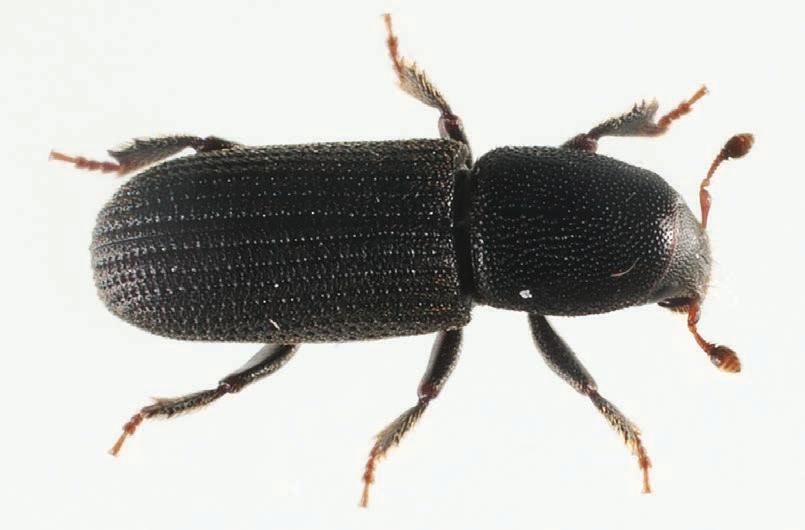
THE Bioeconomy Science Institute, Zespri and Lincoln University researchers are investigating how beetles act as taxis for fungi between trees and cause damage in orchards and forests.
Pathology diagnostics and collections team lead at the Bioeconomy Science Institute, Darryl Herron told Farmers Weekly the idea to trap bark and ambrosia
beetles across New Zealand came up after fungi carried by beetles in Hawaii caused damage to trees there.
There was concern that the fungus could get into New Zealand.
Certain beetles and fungi could damage kiwifruit orchards and have a financial impact on the industry, he said.
A fungus currently loose in Australia could have devastating effects on NZ avocado industry if it arrived here.
Beetle outbreaks are difficult to manage and surveillance is key, Herron said.
New Zealand does not hold an inventory of beetles and associated fungi and having a beeline to measure possible new incursions against would be valuable.
He said the work has revealed a broad range of fungal associates linked to native and introduced beetle species, with species detected with the potential
to disrupt plantation forestry, horticulture and native ecosystems if conditions change or new beetle species arrive.
These programmes include assessing potential risks to native bush, urban environments and botanical collections and monitoring beetle activity in and around orchards, where new associations and increased aggressiveness in the beetlefungal system could pose future threats.
Bark and ambrosia beetles tunnel into trees and interact with fungi in different ways.
“Some fungal species block a tree’s ability to move water and nutrients, weaken natural defences or accelerate disease, particularly when trees are already stressed by drought, age or harvesting activity.
“By identifying these fungal ‘passengers’, we’re building a clearer picture of the microscopic communities being moved across New Zealand and which beetles
While she grieved, Robilliard said she also recognised that she was now free to make choices with her life.
“It was expected I would move away from Golden Bay to where there were theatres, concerts, endless excitement.
“Not yet, I said.”
She was writing a book about other people’s lives in Golden Bay.
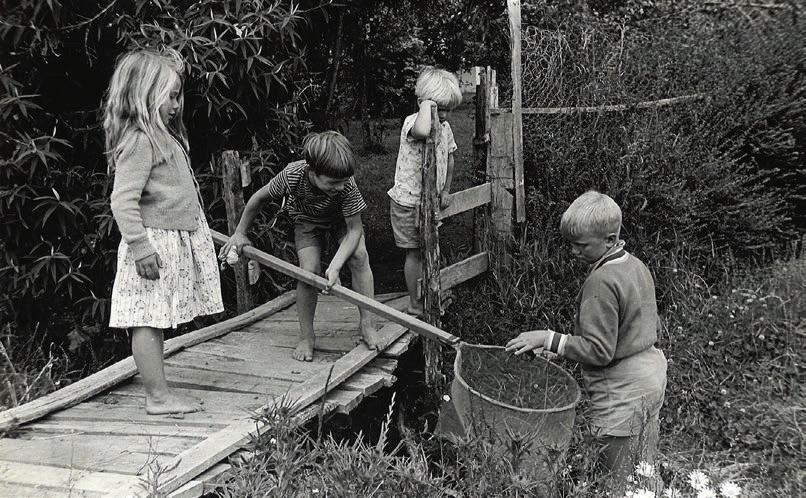
“Then I would decide if I wanted to seek a new life on the other side of the Tākaka Hill” – the notorious landmark that isolates Golden Bay from the rest of New Zealand. That book, Behind the Hill, looks at the lives of people from one end of Golden Bay to the other. It recently launched to a “crammed audience” at the Tākaka library. It records the influential changes of each decade; how with the merging of the alternative lifestylers and the old farming families came hybrid vigour.
MORE:
Behind the Hill can be bought from Copy Press: email: books@copypress. co.nz It’s also available through Fishpond and is now an e-book.
DAMAGE: Pathology diagnostics and collections team lead at the Bioeconomy Science Institute
Darryl Herron says some beetles and fungi could cause massive damage in orchards and native forests.
are more important to focus on from a biosecurity perspective.” Overseas, certain beetle–fungus partnerships have caused extensive forest dieback, he said.
HISTORY: At 92 years of age, Robin Robilliard has launched a book written about the people of the region who were the making of her own life.
Gerhard Uys NEWS Horticulture
TUNNEL: A black pine bark beetle. Bark and ambrosia beetles tunnel into trees and interact with fungi in different ways.
Out the G ate highlights
May 19
May 20
May 21 Sheep Breeders Forum A day dedicated to sheep genetics
Out the Gate flagship day –free for farmers!
B+LNZ Awards Dinner
Science Sessions showcasing farmer focused research and innovation – free for farmers!
Political panel: what the election could mean for farming
Five MPs representing Labour, National, ACT, Greens and New Zealand
First share their perspectives on the future of agriculture
Global and New Zealand market updates
• Simon Quilty, Global AgriTrends Global market update and predictions
• Bonnie Skinner, CEO Sheep Producers Australia Australian sheep performance and insights for NZ producers
• Ray Smith, Director General, Ministry for Primary Industries New Zealand market context
Opportunities for solar generation on farm
• Mike Casey, CEO Rewiring Aoteroa
Food’s future firmly in speaker’s sights
Richard Rennie MARKETS Food and fibre
APRECIPITOUS fall in the world’s population signals an opportunity for countries like New Zealand producing food of quality over quantity, says author and food futurist Jack Bobo.
Bobo is a keynote speaker at this year’s E Tipu conference, and a regular visitor over the past decade to Australasia.
He also wrote the book Why Smart People Make Bad Food Choices.
“Today the story is so often doom and gloom when it comes to food production and how, if we work harder it, it can somehow be ‘less bad’ than it is,” he said.
But he urged the sector to flip its lens around, instead seeing the upside of food production systems delivering more food than ever at lower carbon intensities.
“The problem has been the surge in population growth.
“If we had the population we had back in 1980, there would be no problems with food production today.”
PLENTY: Food opportunities lie in being the high-end, premium supplier to countries where populations are often now declining , says food futurist Jack Bobo.
But changes are afoot, with some countries already experiencing a population peak, coming down the other side and expected to do so
for the next 70 years.
“China, for example, is already starting to slide and is expected to be down by about 600 million by 2100. We will not continue to need more and more food forever.”
He recently addressed Norwegian seafood executives and has a similar message to bring to New Zealand as a high-quality producer of food.
“In a world where we can meet needs, you will not be paid for producing more of it. The need is to produce a better product and get a premium. Far better to get 90% more for producing the best 10%, than paid only 10% for producing 90%.”
The bulk supply growth is coming from China, proving capable of generating more food every year as its tunes up its domestic food security.
Those efforts at food security come in a world where a superefficient supply chain is almost taken for granted.
“Historically, the food system has tried to optimise for efficiency and we have done a good job with that.
“But we are in the process of transitioning from more food to
better food. But it is also shifting because of risk, risk in consumer, climatic, political and supply chains.
“That requires a resilient supply chain, rather than a hyper efficient one.”
It also comes as New Zealanders digest the news that some critical produce processing plants are to close partly because of pressure from cheaper priced imported goods.
That requires a resilient supply chain, rather than a hyper efficient one.
Jack Bobo Food futurist
Bobo said this should raise a red flag for any country contemplating its food security status in a world where “just in time” supply lines are again looking fraught.
Any greater reliance on imported food supplies by sovereign countries could also see carbon taxes in the future on that food.
“Carbon border adjustment charges are seen by the European
Long way to go on cutting food waste
Gerhard
Uys NEWS Food and fibre
A SIGNIFICANT amount of value is still being lost by New Zealand food businesses through waste, according to the recent NZ Business Food Waste Survey.
At a presentation of survey results, interim executive director at Kai Commitment Carmen Doran said that in the three years that Kai Commitment signatories have been measuring food waste there’s been an 85% reduction in food waste to landfill.
About 70 medium and large New Zealand food businesses took part in the survey.
Doran said food waste is often seen as a sustainability issue, but it’s a productivity issue.
“We can reduce food waste, impact cost and margin, operational efficiency, and emissions reporting at the same time.”
The survey showed 86% of businesses believe that they understand the causes and impacts of food waste, but data shows that there are gaps in businesses’ ability to
understand and act on food waste.
While most businesses measure volumes of food waste, few measure the causes, the financial impact, or the environmental impact, Doran said.
Businesses said that government support, clear policy settings, the right skills and collaboration across the supply chain are also needed.
Ian Walsh, managing director at Argon & Co, said the rate of best practice adoption in New Zealand is much slower than in Europe.
Argon & Co is a business
management consulting firm. Walsh said leadership that creates a culture of reducing waste is key.
It’s concerning that food is wasted because the desired quality is not achieved, he said.
Overproduction is seen as the most significant form of waste, creating excess inventory that risks becoming food waste if it cannot be sold within its shelf life.
Overproduction also drives other inefficiencies, adding unnecessary handling, movement and processing at every stage, compounding waste across the system.
Union to discourage carbon intense imports. The idea is you should get credited for exporting and charged for importing.
“A country producing no food has no emissions from it, but you may increase the global emissions footprint by importing that food.”
Bobo accurately predicted the impact of weight loss drugs on the global food trade as users downsize their meals and adjust nutrient ratios in their diets.
While about 10% of Americans have taken the drugs, he expects that will ramp up to 75% once drug costs decrease.
More insurance companies in the United States are calculating the value of having clients take the drug to avoid expensive obesityrelated claims.
Meantime researchers are refining the dosing procedure, with prospects users may only have to inject themselves once a month with the next generation of treatments.
“And as children’s parents take these drugs and adjust their diets, we could see a true generational shift in food habits, and better outcomes for that generation.”
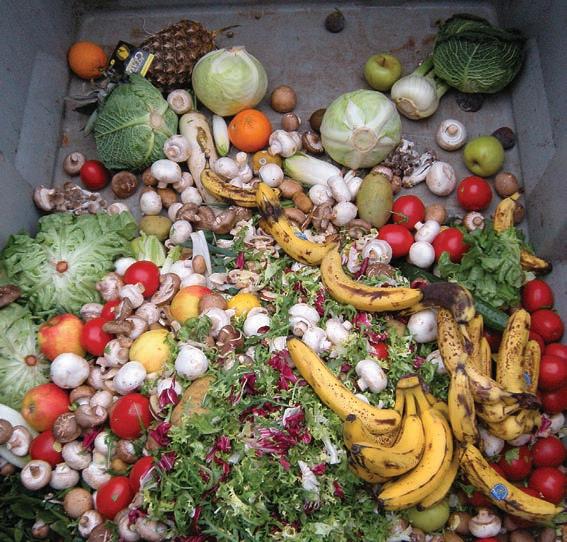
GAPS: The survey showed 86% of businesses believe that they understand the causes and impacts of food waste, but data showed that there are gaps in business’s ability to act on food waste.
The Trader have move d online. Deals
We’ve move d our deals online s o you can s e e our late st offers and what’s in sto ck right now. S can to explore.
Plus you can still get all your rural es sentials at shop.farmlands .co.nz or FarmlandsPRO
From the Editor
Farm like somebody’s watching
FARMING a property up a gravel road in an isolated valley was once a ticket to privacy. But not any longer.
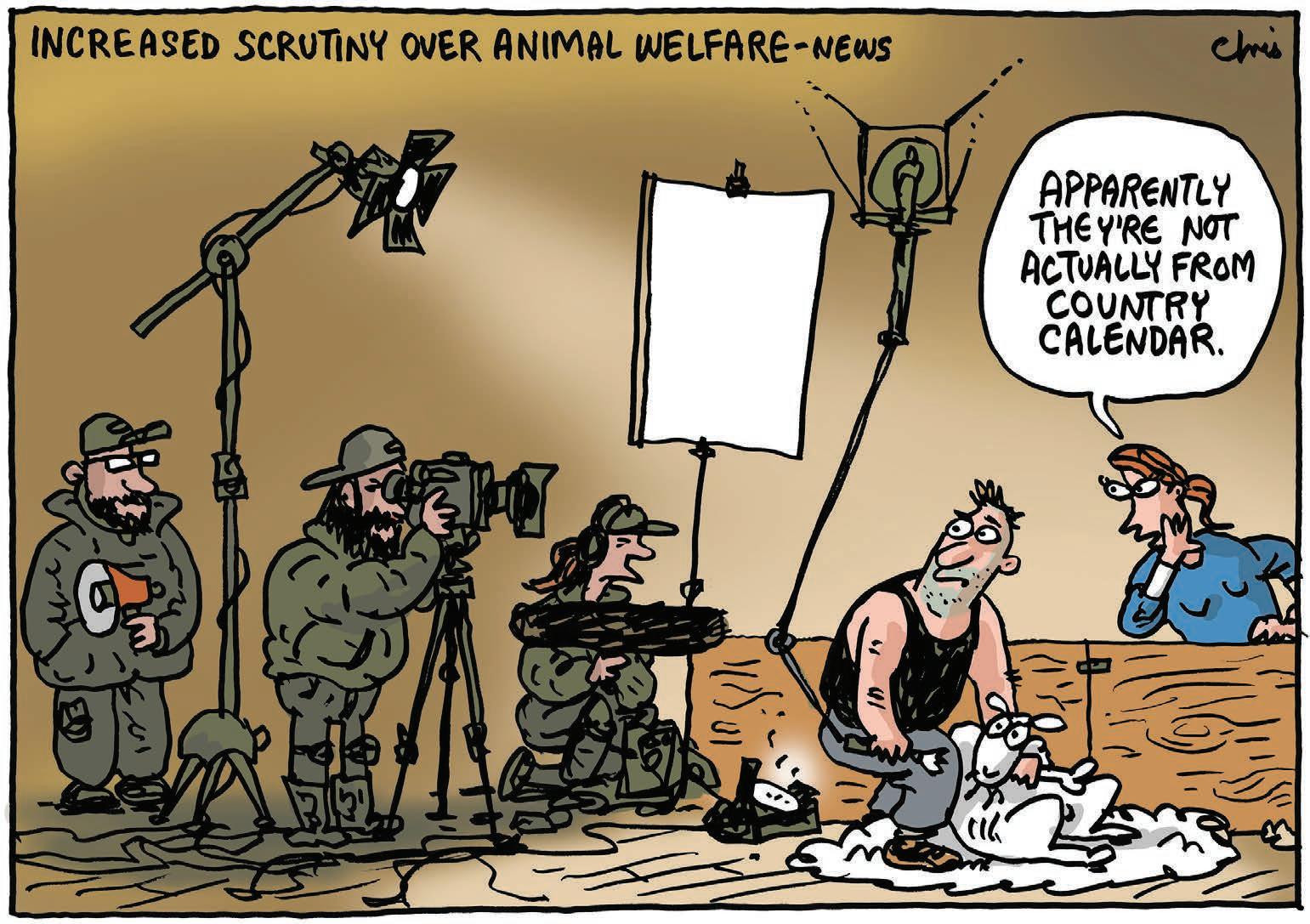
While solitude was never a free licence for unethical or illegal activities, those living remotely were not under the same level of scrutiny as those farming alongside State Highway 1 or on the edge of our major cities. As is evident in campaigns about bobby calves, winter grazing, water quality, land development and, more recently, shearing, the motivation of those wanting to hold farming to account or to simply discredit the sector remains as strong as ever.
Disappointingly, unacceptable practices have been uncovered, but instead of laying complaints for regional council or government officials to investigate, critics have turned first to social media or the news media to court public opinion and advance their wider agenda. It unfairly tarnishes the reputation of the
country’s 22,000 farmers but also provides a timely reminder that the sector is under constant scrutiny.
As fine-wool farmers and shearers discovered 16 months ago, the walls of a woolshed offer no privacy.
For months, a staunch supporter of the animal advocacy group People for the Ethical Treatment of Animals (PETA) worked undercover as a shed hand, secretly filming the alleged animal welfare violations.
The incriminating video was initially released to television over the quiet Christmas news period to maximise sympathy for the anti-animal farming cause before being given to the Ministry for Primary Industries (MPI) to investigate.
The court of public opinion was in session, and the footage was subsequently used outside stores in New York to discourage customers from buying wool products.
The MPI announced last week that, following its investigation, four people will face animal welfare charges.
Similar tactics have been used to highlight unacceptable intensive winter grazing practices and poor handling of bobby calves.
Processing companies, sectors and the government have responded by tightening the conditions for suppliers and general regulations and providing better training.
We should welcome the industry confronting its bad apples, but often incriminating footage lacks context.
There have been cases where a
photograph of large numbers of inquisitive cows congregating to check out a photographer has been portrayed as an example of poor wintering practices.
Similarly, downer cows supported by a front-end loader as part of their recovery, has been used as evidence of animal welfare violations.
The onus is on all farmers to deprive these critics of oxygen by ensuring your farming practices are within accepted parameters.
But the message is clear: farm practices are under scrutiny, and often by unsympathetic groups.
The first farmers know their farms have been scrutinised could be when unsympathetic and out-of-context footage goes viral on social media.
A lack of context and balance is irrelevant to these groups.
Their wider agenda is their primary driver, whether it is opposition to management practices or the farming of livestock, and unfortunately they have been able to find evidence to support their cause.
There will be critics who will never accept livestock farming, which puts the onus on all farmers to deprive these critics of oxygen by ensuring your farming practices are within accepted parameters.
Also be aware someone could be looking over the fence or working in your woolshed.
Should cameras be used to monitor animal welfare in all shearing
LAST WEEK’S POLL RESULT
Almost 75% of those who took the poll say MPI’s On Farm Support service has not contributed positively to their business.
“No doubt they would be of some value during the next M Bovis outbreak, but between now and then they are a complete waste of money,” said one voter.
Another said: “It feels very much like they have been trying to find a place to fit when the need for the team should have been clear before establishment. I’m sure their role in supporting adverse weather events is important but you don’t need a team of 50 people to do this.”
Another added: “In a time of stress the last people I want on my farm are government people that haven’t a clue how farming works. Leave it to the experts like Rural Support.”
Of the 26% who said the service has been beneficial, one said: “The Southland OFS team all have farming backgrounds and can relate to farmers from a grass roots perspective, they are approachable and genuinely care about the farming community. Their talents need to be utilised and less red tape on what services they can provide.”
Last week’s question: Has MPI’s On Farm Support service contributed positively to your business?
Neal Wallace Senior reporter
New Zealand trying its hardest to go broke
Eating the elephant
Alex Worker Worker, an
AGMARDT Leadership Scholar and Rotary ambassador, is chair of Future Food Aotearoa and co-founded Nutrition from Water and LILO Desserts
IHAVE just spent a week back in New Zealand. The overwhelming feeling was not crisis. It was drift.
AAnd drift, left unchecked, is how countries like Argentina and Portugal slowly hollowed out what once made them strong.
We are not there yet. But we are pointed in the wrong direction.
New Zealand built its prosperity on being pragmatic and (relatively) independent. Today, we are increasingly mirroring the geopolitical posture of the United States, without a formal defence pact to justify it. In a multipolar world, perception matters. Across much of Asia and the Global South, the US-led axis is becoming more contested. NZ has always performed best when it is seen as balanced and trustworthy, and we are drifting away from that position, from independent toward aligned. For a small trading nation in the Pacific, that is not a philosophical shift. It is an economic one.
Nowhere is this more visible
than in our relationship with China. China remains our largest trading partner by a wide margin, taking around 20-22% of our exports, close to NZ$18 billion annually, nearly double the size of our next largest markets.
Yet at the very moment Asia is driving global growth, we are creating friction. Slower visa settings, regulatory caution and political signalling are all contributing to a quieter message that Chinese tourists, students and capital are less welcome.
We find ourselves in a strange position where we are neither fully open to the East nor strategically harnessing the West. That is not balance. It is paralysis.
Meanwhile, exports to the US are rising, but from a smaller base.
The deeper problem is structural: the US largely produces what New Zealand produces, competing on commodities rather than complementing them. It is not a natural substitute. New Zealand’s edge has always been its ability to work with both West and East. We are choosing not to.
The deeper concern is what is happening at home. Food and fibre exports still form the backbone of the economy, generating roughly
$57bn in export revenue each year and accounting for about half of all goods exported. Dairy, meat, forestry and horticulture are not legacy sectors. They are the engine room.
And yet we are steadily selling that engine room.
Ownership is shifting. Farms are consolidating or ownership of them is moving offshore. Processors are under pressure to prioritise short-term returns. Companies like Fonterra and Heinz Wattie’s sit in the middle of this tension, balancing farmer exits, capital constraints, and global demand. We are not just exporting products. We are exporting ownership. Once those assets are gone, they do not come back.
The same logic extends to our financial system. The four major banks that dominate New Zealand, ANZ, ASB, BNZ and Westpac, are all Australian owned. Together they control around 85% of lending and close to 90% of deposits.
Most credit creation in New Zealand, and a significant share of the profits that come with it, flows offshore. We operate an economy where the pipes of capital are not truly our own. Even KiwiSaver, the most obvious lever for redirecting domestic savings into productive investment, remains largely pointed elsewhere.
Capital itself is not the issue. NZ
is increasingly attractive as a place of stability in an uncertain world.
Money is coming in, particularly from the US. But it is not being used with intent.
It is flowing into property, passive investments and private credit rather than into scaling productive sectors like advanced food systems, biotechnology or export infrastructure, pricing locals out of the assets their country depends on.
At the same time, Chinese investment has slowed as policy settings have tightened and sentiment has shifted. So we find ourselves in a strange position where we are neither fully open to the East nor strategically harnessing the West.
That is not balance. It is paralysis.
The uncomfortable truth is that NZ no longer has a clear economic story. There is no defined plan to retain ownership of strategic sectors. There is no coordinated effort to channel capital into
growth industries. There is no coherent positioning between competing global powers.
Instead, what you see is quiet exit. A generation of business and governance leaders is selling down, stepping back and moving on, optimising for their own time horizons rather than the next generation’s. What replaces them is not yet clear.
NZ still has extraordinary advantages. Natural resources, a strong global brand, trusted institutions. But those are inputs, not outcomes.
Without direction, discipline and a willingness to act in our own long-term interests, we risk becoming something quite different from what we imagine. A country that produces value but does not own it. An economy that generates wealth but does not retain it. A safe haven that slowly stops building.
That is how decline begins. Not with a crash. With comfort.
World-class processing site is a cut above
Meaty matters
degree of change that has been achieved.
Allan
Meat industry commentator: allan@barberstrategic.co.nz, http://allanbarber.wordpress.com
WILSON Hellaby has achieved a miraculous transformation of its Auckland facility to a worldclass, modern food processing site while continuing to service local and export markets at all times.
I hadn’t visited the site for some years, but I was very familiar with the old plant, with its myriad old buildings housing slaughter floors, boning rooms and a rendering plant.
My return to view the newly refurbished facility recently was a revelation. Parts of the old plant are about to be demolished, but the still-visible contrast between old and new emphasises the
The plant was built in the early 1900s, and the Auckland Council operated it as an abattoir for 90 years. The council then decided a local trade meat processor was no longer core business and sold it to Wilson Foods and the Hellaby family, and Wilson Hellaby was formed.
Over the past 30 years the business has evolved from being virtually just a processor of beef and lamb carcases for supply to local butchers and supermarkets to the point where the local trade is dominated by cuts tailor-made for retail, wholesale and hospitality. In addition, the export business has grown to represent a major part of the company’s throughput.
Until the refurbishments were completed in the second half of 2025, the plant had been consistently kept up to the rigorous standard required to comply with the various inspection regimes. Managing director Fred Hellaby credits his production team with managing the transition, although he says it “felt like parts of the old plant might not make it to the final cut-off”.
Hellaby explained the thought process they had to go through while deciding where, what and how to redevelop a facility that
is an essential provider to the Auckland region, as well as an important employer and exporter. An old abattoir with a rendering plant is not an attractive amenity in a community and no longer has an acceptable environmental footprint. Meanwhile, rendering had been transferred to the Waitoa joint venture with Greenlea.
The workforce has the skills essential for topquality food production, and their jobs also underpin their families’ livelihoods and the local community.
He explained the first prerequisite was to have a clear vision to guide them through the jigsaw puzzle. The vision was to develop a modern food processing factory on the existing site, one that would incorporate best practices in working conditions, process technology, animal welfare and energy creation by using electricity instead of fossil fuels.
Key points supporting the vision were:
• The facility is an important source of essential food for the city.
• The workforce has the skills
essential for top-quality food production, and their jobs also underpin their families’ livelihoods and the local community.
• The company’s export programmes ensure its ability to contribute to the country’s economy.
• The location is at the centre of an ideal livestock catchment area.
• The age of the plant no longer provides an agreeable working environment.
The next step was to find people who could take the vision and develop it into a project with a defined scope and budget. It soon became clear there was no such company in New Zealand that could deliver the various parts of the project.
An internal team looked at the alternatives available from round the world and ultimately decided on the Danish Frontmatec processing system for beef and a New Zealand-manufactured solution for lamb.
Other critical parts of the process were the construction of the factory and services managed by an experienced project manager, as well as IT and data management. All aspects of the design, build and systems installation were achieved with the various contractors
co-operating constructively and positively towards the successful outcome.
An important factor was the decision not to attempt to increase the total throughput because the plant’s existing business already had sufficient scale.
The final result is a facility that is perfectly tailored to the available livestock supply with greater boning capacity to meet the changing configuration of market demand. Farmer suppliers will undoubtedly be pleased to supply the redeveloped processing plant.
Hellaby is enormously cheered by the attitude of the staff, many of whom have worked for the company for a long time but now are visibly happy to be working in a modernised food processing environment.
They are especially proud of their ability to provide the best quality meat equally to overseas and New Zealand customers, categorically dispelling the old myth that export quality meat is better than that produced for the local market.
It is all produced to the same standard in this modern, purposebuilt processing facility.
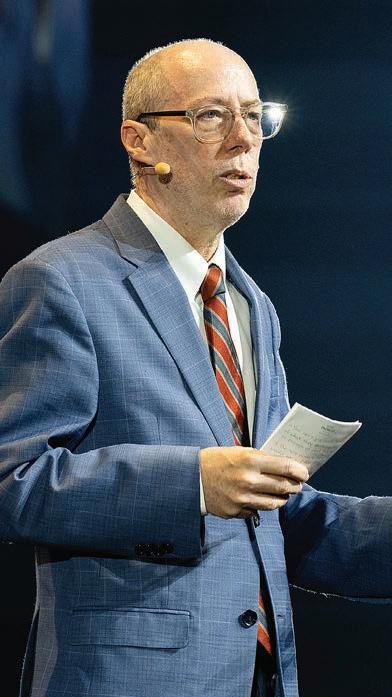
FRICTION: China remains our largest trading partner by a wide margin, says Alex Worker, yet at the very moment Asia is driving global growth, we are creating friction.
Barber
We'll still be here.
Recently, AUT released their annual Trust In News report.
With AI slop and misinformation on the rise, research suggests New Zealanders may be turning back to some mainstream news for reliability and accountability.
The report highlighted: In 2025, New Zealand’s media ownership saw major shifts as news companies sought to increase financial viability. In June, Stuff Group publisher Sinead Boucher sold 50% of Stuff Digital – publisher of the stuff.co.nz news site – to Trade Me, and MediaWorks became fully owned by investment company Quadrant Private Capital. During the year, Canadian businessman Jim Grenon lifted his stake in NZME close to the takeover threshold.
Alongside major ownership changes, local news coverage was shrinking. Many New Zealanders lost trusted local news sources after Stuff and NZME closed 40 community newspapers in regions.
With this in mind, in 2026, New Zealanders’ trust in news in general still improved significantly, with 37% of New Zealanders trusting the news compared to 32% in 2025.
If we were writing the report we’d add: The team at Farmers Weekly carried on delivering a newspaper to every farmer in the country, every week, and updating farmersweekly.co.nz every day.
No layoffs, no structural changes, still owned and run by farming people.
A reliable source of information since 2003.
Please support the strong future of Farmers Weekly by becoming a Voluntary Subscriber.
In return, we’ll keep it real: Real people writing real stories for you – New Zealand farmers producing real food and fibre for the world.
$120 a year, $15 a month, or whatever value you put on this publication.
Dean Williamson. CEO and publisher. 027 323 9407 | dean.williamson@agrihq.co.nz
Support us with a voluntary annual subscription to Farmers Weekly. $120 for 12 months. This is a voluntary subscription for you, a rural letterbox-holder already receiving Farmers Weekly every week, free, and for those who read us online.
Scan the QR code or go to www.farmersweekly.co.nz/donate Email your name, postal address and phone number to: voluntarysub@farmersweekly.co.nz and we’ll send you an invoice. Call us on 0800 85 25 80
Note: A GST receipt will be provided for all voluntary subscriptions.
Sector Focus
Kiwifruit country raring to grow
Richard
Rennie NEWS Horticulture
NEW land to the east, ditched avocado crops in the west, and even a switch-out of grapes down south will play a part in the kiwifruit sector achieving multimillion-tray growth over coming years.
Zespri’s latest five-year strategy lays out the industry’s volume growth plans, budgeting for an additional 20 million trays of fruit by 2030.
This will go hand in hand with its intention to achieve at least a 1.5 increase in growers’ orchardgate returns over the coming 10 years.
Based off Zespri’s outlook, the industry expects to lose about 10 million trays of Green fruit, the equivalent of about 800 hectares, much of which could be replaced by 800ha of licensed SunGold fruit, allocated at 400ha a year.
This would leave about another 1000-1200ha of new orchard ground for both SunGold and new RubyRed planting over the next five years.
Post-harvest processors tasked with competing for that volume remain confident they can handle the anticipated 20 million trays but do see a need for eventual increased investment to cope with continuing growth.
DMS Progrowers CEO Derek Masters said his company is collaborating on a large orchard development on the plains near Paengaroa, land regarded as prime kiwifruit country, being affordable and close to many existing operations.
He sees the western BoP continuing to claim the bulk of
crop growth, in part spurred by poor avocado returns prompting some growers to consider switching from trees to vines.
“There will also, however, be a need for significant increase in capital works for storage and packing facilities. Everyone is talking about that for beyond 2028 in western BoP.”
James Trevelyan of Trevelyan’s Pack and Cool said his company has a model to help avocado orchardists contemplating converting to kiwifruit. It has been picked up by numerous growers.
“The blocks are relatively small, but they are generally quite fertile and well located.”
Looking further afield, he notes the slide in wine consumption is making grape growing less economic in districts like Gisborne, while the apple sector further south in Hawke’s Bay also has its issues. All make kiwifruit an appealing option.
Despite good dairy returns, Trevelyan said, the right offer at the right time of the owner’s life can be all it takes to see a deal done for orchard conversion.
Meantime, in the western BoP he sees roading infrastructure, not land availability, as a key constraint on future growth.
There will also be a need for significant increase in capital works for storage and packing facilities. Everyone is talking about that for beyond 2028 in western BoP.
Derek Masters DMS Progrowers
Transport times to Port of Tauranga are already severely lengthened by major traffic snarlups at peak harvest period.
Brendon Lee, the head of MPac, sees most growth coming out of western BoP beyond Te Puke, and further afield to Te Teko and Ōpōtiki for new orchards with scale.
He confirmed more capital investment will be required.
“MPac is willing to continue to invest very heavily in post-harvest infrastructure as long as Zespri is confident they can continue to grow value for growers.”
EastPack CEO Hamish Simson regards Zespri’s five-year target as relatively conservative. He sees a tension between the volume growers want to grow and what Zespri licensing will allow them.
“It’s a bit of a tug of war between Zespri and growers.
“If growers are good at what they do, and are making the good money they are, they only want to do more of it.”
NZ Kiwifruit Growers CEO Colin Bond said Hawke’s Bay is the
only region to have experienced a decline in kiwifruit area since 2021, dropping 60ha following Cyclone Gabrielle.
“The strongest growth region outside BoP has been the east coast with 260ha of new orchards since 2022.”
Like the post-harvest operators, he pointed to the precariousness
VALUE: As long as Zespri can continue to deliver increased value to growers alongside volume growth, MPac CEO Brendan Lee says, his company will remain committed to capital investment to expand with it.
of that region, given issues over the Waioeka Gorge route.
Masters of DMS agreed that the gorge remains a crunch point when harvesting early fruit from Gisborne.
“Infrastructure for packing in Gisborne could eventually come, but meantime reliance on that route is critical.”
Keen appetite for kiwifruit
Richard Rennie NEWS
Horticulture
WESTERN Bay of Plenty
kiwifruit grower Mark Mayston is confident about Zespri’s predicted growth volumes for his industry over the next five years, and says he is witnessing further shifts in land use to kiwifruit in his district.
Committed to gradual growth within his own 40 hectare operation, he is seeing smaller avocado blocks switch to
kiwifruit plantings after some tough seasons, and significant earthworks projects shaping land for new greenfields orchard sites beyond Te Puke. He said growers’ desire to keep operations centralised is seeing the planting of vines dictated more by land location than quality, as higher quality land like that of the Te Puna area becomes fully planted.
“But it is increasingly clear global demand for kiwifruit is still not being met, so demand for land to plant is likely to continue.”
Skincare founder to speak at awards
JUDGING is underway for the NZI Rural Women Business Awards and Emma Lewisham has just been announced as the keynote speaker for the event. The awards celebrate the very best of female rural entrepreneurs, with the awards presented at a gala dinner being held at Parliament on July 23.
This year businesses from throughout New Zealand submitted 85 entries across eight categories.
Emma Lewisham runs and owns her globally stocked skincare line with close to 300 retailers, and a top-performing brand at MECCA, Liberty London, and leading US retailers. Rural Women New Zealand caught up with Emma ahead of the awards, to hear about her journey and rural roots.
Tell us about your connection to Rural New Zealand?
Rural New Zealand is in my bones. I grew up in the Waikato, my father spending his life in farming, and it was simply the fabric of our family’s life. There is something about growing up in that environment that shapes you in ways you don’t fully appreciate until later. You learn early that the land doesn’t negotiate. You work with it, you respect it, and you understand that what you put in is what you get out.
But what has stayed with me most is the people. Rural New Zealand produces some of the most grounded, genuine, quietly extraordinary people I have ever known. There is a humility to that life, a realness, that I find myself returning to constantly. It informed who I am, and it has quietly shaped the way we build our business – with honesty, with substance, and without pretension. I carry that with me every day.
Why did you start Emma Lewisham?
It started with my own health. I was diagnosed with a condition that prompted me to look closely at what I was putting on my skin, and I was genuinely surprised by what I found in the luxury products I had trusted for years. I went looking for something that was both safe and genuinely effective, and it simply didn’t exist. Either a product was natural but didn’t perform, or it performed but came at a cost I wasn’t willing to accept.
That felt like a problem worth solving. I have always been someone who, when I see something that needs to change, can’t look away from it. So I went back to study, immersed myself in physiology and biochemistry with Harvard, and began building what I wished had already existed: skincare with the efficacy of the best conventional products, formulated the way your skin actually works, without compromise.
Emma Lewisham was born from a deep conviction that women should never have to choose between what is safe and what works.
We are now stocked globally with close to 300 retailers, and a top-performing brand at MECCA, Liberty London, and leading US retailers.
For future NZI Rural Women Business Awards entrants and female rural entrepreneurs, what’s one piece of advice?
Trust yourself more than you think you should. We know what we are doing. We have strong intuition, and the answers are within us far more often than we give ourselves credit for.
Never let anyone make you doubt your abilities or cause you to
Trust yourself more than you think you should. We know what we are doing. We have strong intuition, and the answers are within us far more often than we give ourselves credit for.
Emma Lewisham Entrepreneur
question yourself. I cannot stress this enough – the answers are already there.
How do you juggle it all?
Honestly, I find it genuinely difficult, and all I can do each day is my best. What I’ve learned is that it’s less about managing everything perfectly and more about knowing what truly matters in each moment and showing up for that fully. I have a daughter, Milla, a husband, Andrew, and a
business that is growing fast, and there are absolutely days when something has to give.
What keeps you going? What is your why?
My why has always been the women who use our products. When someone tells me that Emma Lewisham has changed their skin, or that for the first time they feel confident about what they’re putting on their body, that is why I do this.
A belief that business can be a genuine force for good runs through everything we do. We hold the highest B Corp score in luxury skincare globally, and we are the world’s first climate-positive beauty brand. Holding that standard — proving that you don’t have to choose between doing well and doing right — is something I feel a real responsibility to.
What is next for Emma Lewisham?
We are in a really exciting
moment, in the middle of significant expansion into the UK and US markets.
We have seen phenomenal growth in both regions, and I believe deeply in being on the ground personally to build something that lasts, so I am relocating my family to London, which is a big step, and one I’m taking with a lot of intention. What matters to me is that we grow the right way. Our manufacturing and our team remain here in New Zealand, and that is important to us.
The world deserves access to skincare that is both genuinely effective and genuinely responsible, and I feel we are only just beginning to show what that can look like at scale. There is a lot still to build, and I am very excited by that.
MORE:
Join us at the Awards Gala Dinner, visit www.ruralwomennz.nz/rwnz-businessawards to secure your tickets today.
CHANGE: Emma Lewisham was diagnosed with a condition that prompted her to look closely at what she was putting on her skin.
FEDERATED FARMERS
Vol 4 No 17, May 4, 2026
Allies align on high country grazing
Haast farmer Simon Cameron has had a gutful of increasing restrictions on high country farming – but says walking away isn’t an option.
The West Coast farmer, who sits on Federated Farmers’ High Country leadership team, says tighter controls from the Department of Conservation are steadily changing how land farmed for generations is being managed, and not for the better.
“The difference is obvious,” Cameron says.
“The more you restrict grazing and the farmer from looking after it, the worse it gets.
“It’s thanks to farmers that so much of this high country has been kept in pristine condition, but when you remove or restrict that managed grazing, the land goes backwards very quickly.”
He says the regulatory environment around DOC’s grazing concessions is creating uncertainty for farmers operating on conservation land.
“It makes you want to bash your head against a wall. You’re trying to run a business but you’ve got no guarantee you’ll still have access when your concession comes up.
“They make the rules up as they go; there are too many grey areas.
“But there’s no way I’m leaving. This lifestyle needs to be preserved. This land has to be farmed, and I’ll fight for that for the rest of my life – so the kids can, and other families can.
“We owe it to the generations who were here before us.”
Cameron’s experience is backing a new joint push from Federated Farmers and the Wilding Pine Network –which includes community groups, regional councils and forestry interests – calling for managed grazing to be formally recognised as a conservation tool.
The group has written to the Government urging it to better integrate low-impact grazing into management of modified tussock grasslands under DOC’s care.
Federated Farmers meat and wool chair Richard Dawkins says the breadth of support should send a clear signal to the five MPs who received the letter: Tama Potaka, Andrew Hoggard, Mark Patterson, Priyanca Radhakrishnan, and Steve Abel
“Despite our different backgrounds, we share a common goal to protect and enhance the ecological values of high-country landscapes, now and into the future.
“Carefully managed grazing is an essential tool in that.”
The group argues grazing shouldn’t be treated as incompatible with conservation in landscapes already heavily modified over time.
“Grazing is already playing a crucial role in many parts of the high country,” Dawkins says.
“It keeps invasive weeds at bay, supports biodiversity and reduces wildfire risk.”
Cameron says that matches what he sees on the ground, and he points to stations such St James, which was retired from farming nearly 20 years ago.
“We’ve seen there what happens
when livestock are taken away –weeds, pests and fire risks have taken hold. It’s a prime example of a station where low-impact grazing could be reintroduced, allowing small flocks of sheep or a mob of cows to get rank feed down and help bring the biodiversity back.
“That land could be supporting young farming families and producing dollars for the country.”
Modified tussock landscapes are those shaped by historic grazing, vegetation change and introduced species over decades.
Around 800,000 hectares – including St James – were retired from grazing through tenure review and land purchases in the 1990s and early 2000s. Dawkins says many of those areas, now under DOC, are under serious pressure.
“If you take stock out completely, you don’t get an untouched alpine paradise. You often get more weeds, more fuel and less diversity.
“We desperately need stewards on the ground who know the land best.”
The joint proposal calls for DOC to create national guidance for consistent, science-based decisionmaking across grazing concessions.
It also proposes pilot grazing programmes on conservation land that’s deteriorated since grazing was removed.
“The aim is to base decisions on measured outcomes rather than assumptions,” Dawkins says.
Another recommendation is clearer duty-of-care responsibilities for concession holders, recognising the role farmers already play in pest and weed control.
Looking down the
“Farmers aren’t just passive users of this land – they’re out there every day,” Dawkins says.
“We actually want DOC to formalise grazers’ obligations, ensuring pest and weed control responsibilities are part of concession conditions and supported by monitoring.”
The group is also calling for stronger partnerships between DOC, iwi, farmers, hunters and conservation groups, to design grazing solutions that work for unique local conditions, rather than rigid or generic approaches.
For Cameron, the issue comes back to simple management.
“We just want to keep managing it properly,” he says.
“Because when no one’s managing it, that’s when things really start to fall apart.”
DOWNHILL:
Saxton River, with Molesworth Station on the true right and Muller Station on the true left, where young wilding pines are spreading thanks to seed being blown in from the DOC estate.
Farmers keen to hook koi carp solution
When scores of bowhunters travel to the Waikato each spring, their arrows are pointed at a pest in the water – not the bush.
Their target is koi carp, ‘the possums of freshwater’, and their efforts win the praise of farmers like Chris Woolerton.
“Koi are a real scourge in our lakes and rivers, and in the Whangamarino Wetland,” the new Federated Farmers Waikato president says.
“Farmers hate them as much as conservationists do.
“When the bowhunters hold their annual World Koi Carp Classic, and kill thousands of them with their arrows, they’re doing us and the environment a huge favour.”
At the NZ Bowhunters Association’s 35th Classic last year, 62 competitors removed 2597 koi carp weighing 4.7 tonnes – bringing the total shot in the event’s history to more than 100 tonnes.
Koi carp feed like a vacuum cleaner along the bottom of ponds, lakes and rivers.
They suck up insects, fish eggs and juveniles, aquatic plants and other organic matter, and wreck the habitat and food sources for species like whitebait.
“In the process, they stir up a lot of
sediment. One of the problems with that is that when members of the public see the dirty, muddy water, I think a lot of them blame farming.”
Woolerton says when floods cover paddocks, koi carp come with the high water, feast on pasture and slither back as the high water recedes.
In their search for food, carp also tear at riverbanks, accelerating erosion and undermining tracks and roads.
We’re in danger of the problem being consigned to the ‘too hard basket’.
Chris Woolerton Waikato Federated Farmers’ new president
“There are ongoing attempts to get koi carp numbers under control but, like with wilding pines in highcountry areas, it’s difficult, very expensive and it has to be sustained.
“Lack of funding gets in the way and we’re in danger of the problem being consigned to the ‘too hard basket’,” Woolerton says.
“We can’t afford to do that.”
Koi carp are thought to have been imported accidentally in the 1960s as part of a goldfish consignment.
Wild stocks of koi were first found in the Waikato River in 1983, by which time they’d likely established a breeding population and begun to spread naturally, during floods, or intentionally by people.
They’re now widespread in Northland, Auckland and the Waikato River catchment downstream of Lake Arapuni and have been found as far south as Marlborough.
They can grow to 10kg in New Zealand and a female can produce over a million eggs a season.
The focus of Waikato’s Koi Management Programme – driven by the Department of Conservation (DOC) and Waikato Regional Council (WRC), with support from iwi and other partners – is to protect catchments that are still free of the fish.
As well as physical barriers placed in waterways, and trials using drones to spot koi, support is given to events such as the bowhunters’ Koi Carp Classic.
Tess Keough, DOC freshwater ecosystems and threats manager, says the programme supports research into new ways of managing koi carp.
That includes environmental DNA testing to detect koi presence, and studies to better understand koi diets.
The programme has also looked at the possible use of koi herpes virus (CyHv-3) as a control tool, Keough says.
“But a lot of work would need to be done yet to test if the virus works on New Zealand koi, while not harming native or other desirable species.
“And we’d need to do a lot of engagement with different stakeholders, like tangata whenua, if we were to move forward.”
One promising tactic, initiated by WRC in 2012, used traps to catch 35 tonnes of koi at Lake Waikare that were then puréed in a digestor and processed into fertiliser pellets.
Unfortunately, koi traps require a large capital investment, take a long time to gain approvals or consents, and have ongoing maintenance costs.
WRC’s biosecurity marine and freshwater lead Danielle Kruger says the trap project – called ‘carp N neutral’ – was successful as a proof of concept.
However, constraints around operation of gates and passage of fish at the correct time limited its effectiveness.
“There are limited other locations for a trap of its type due to peat soil
in the catchment and the weight of the trap,” Kruger says.
Funding shortfalls saw the programme wound down and the digestor de-commissioned.
Woolerton says the need for real solutions is urgent.
“It’s a bit of an irony that the most successful tool so far has turned out to be one of mankind’s oldest – the bow and arrow,” Woolerton says.
“But that should be a wake-up call for agencies and scientists to really step up and find better solutions before this gets away from us even more.”
FIN-TASTIC SHOTS: Former Waikato farmer Allan Metcalfe has been involved with the NZ Bowhunters’ World Koi Carp Classic since it started 35 years ago. For the last three years Tawera Nikau from marae collective Te Riu o Waikato has taken the bowhunters’ koi catch for processing into fertiliser for their farming and tree planting operations.
HOOVER: Koi carp feed like a vacuum cleaner along the bottom of ponds, lakes and rivers. Photo: DoC
Woolerton’s grassroots vision
Breathing life into rural Waikato won’t start in a boardroom – it’ll start with conversations at the farm gate, over a cuppa, and in packed community halls.
That’s the vision of newly elected Waikato Federated Farmers president Chris Woolerton, who’s determined to reconnect the organisation with its grassroots and bring fresh energy to the region.
“For me, I’m all about people –people and connections,” Woolerton says.
“I like reaching out, having real conversations with farmers, hearing what’s on their minds, and letting them know what we’re doing for them.”
The Taupiri dairy farmer steps into the role with a clear focus on rebuilding engagement, strengthening relationships, and ensuring farmers feel heard, not just represented.
“I think there’s a bit of a disconnect between Federated Farmers Waikato and our members at the moment,” he says.
“People are busy, they’re working hard, and concentrating on their families and farms. So, the challenge is: how do we connect again?”
Woolerton believes the answer lies in getting back to basics –revitalising local branches, creating more opportunities to come together, and offering clear value for
membership.
“We’re going to reinvigorate the branches and run events that give something back,” he says.
“Whether social or educational, we want to bring people together as a community to connect, enjoy themselves, and learn.”
Advocacy remains central, as representing farmers on regulation and policy is core business, he says.
But Woolerton is realistic about how that work is seen on the ground.
“The advocacy will happen – that’s a given – but members don’t always see it. They see the outcomes, not the process. We need to get better at that locally,” he says.
“So I want to touch base more often, communicate at a grassroots level, and make sure our members really understand what our team’s doing on their behalf.”
Just as important is ensuring communication flows both ways.
“Listening is critical,” Woolerton says.
“Otherwise, it’s just my opinion, and while I like my opinion, you need more than that.
“Our strength comes from being able to say, ‘this is what farmers are telling me’. That gives us real weight when we’re advocating with decision-makers.”
That emphasis on relationships extends to local government, where Woolerton brings experience as a
former Waikato district councillor.
“If there’s one thing I learned, it’s that you’ve got to have a seat at the decision-making table,” he says.
Since the last local body elections, Woolerton has helped establish regular meetings between Federated Farmers and Waikato mayors, focused on collaboration.
“We’re meeting with them, asking how we can help, and how we can work together,” he says.
“It’s about making sure farmers are getting value for money and that we’re all pulling in the same direction.”
He knows firsthand the importance
Our strength comes from being able to say, ‘this is what farmers are telling me’. That gives us real weight when we’re advocating with decision-makers.
Chris Woolerton
Waikato Federated Farmers’ new president
of early involvement – and the cost of being left out.
“When councils don’t talk to farmers from the outset, that’s when we end up with expensive and unworkable rules,” he says.
“It’s important we’re proactive, not reactive.”
That view is grounded in decades of farming experience.
Woolerton and his wife Susan run a dairy farm near Taupiri, milking through two sheds with two contract milkers and staff.
Despite governance commitments, he stays closely involved on-farm.
“I still really enjoy working on the farm and staying connected to the land,” he says.
That connection shapes his views on regulation, particularly around the looming Plan Change 1.
“One of the biggest challenges is having people who aren’t on the farm telling farmers how to farm,” he says.
“Farmers know their land and make decisions based on what’s right for their farm.”
He says the sector has already changed significantly in response to
environmental expectations.
“I mean, when Plan Change 1 was first talked about over 15 years ago, we farmed very differently to now,” he says.
“We’ve listened, we’ve adapted, and practices have changed. So, you have to ask – is more regulation always necessary?”
Underlying Woolerton’s priorities is a belief in the future of farming, but only if it remains viable and attractive for the next generation.
He sees Federated Farmers playing a key role in that, not just as an advocacy body but as a connector and community hub.
“We want farmers to come along, be involved, and tell us what they want to see,” he says.
“That’s how we build something strong.”
And while he now leads the Waikato province, Woolerton is quick to shift attention away from himself.
“It’s not about me – it’s about the team,” he says.
“There are a lot of good people doing the hard work behind the scenes.
“I’m just the pretty face,” he jokes.
CONNECTION: People and relationships drive Chris Woolerton’s approach to leadership.
MENDING: Chris Woolerton has a clear focus on rebuilding engagement, strengthening relationships, and ensuring Waikato farmers feel heard, not just represented.
Farmers treated like ‘cash cows’
Councils are leaning too heavily on farmers to balance the books and people are getting fed up with it, Ian Strahan says.
“Rates rises are eating into farm income and, unlike councils, we can’t just raise taxes or hike prices to cover it,” the Federated Farmers ManawatūRangitikei president says.
“Farmers are tightening their belts, cutting expenses and finding smarter ways to survive.
“Councils should be doing the same instead of just resorting to rates hikes and treating farmers like cash cows.”
Rangitikei District Council is proposing an average 6.4% rates increase in the year starting 1 July –by no means the largest rise of the more than 40 council annual plans Federated Farmers is submitting on.
Clutha is planning a 20.5% average jump, Waitaki wants 19% more, and Selwyn District Council 13.3%.
“And remember these are just averages,” Strahan says.
“In our patch, while the average is 6.4%, many farms are facing a 7-8% increase.
“One of our members who runs a 493ha sheep and beef farm within half an hour from Marton is looking at a rates increase of 11.3%.
“If nothing changes, bigger hill country sheep and beef farms will be hit with an average increase of $11,277 on their rates bill.
“This not just tough – it’s unfair.”
Strahan says farmers are being penalised simply for needing more land to do their job.
“In dollar terms, farmers pay more than urban property owners, not because they use more services, but because their land is valued higher.
“For many council services, farmers get less benefit than people in town but they’re still being asked to carry a bigger share of the load.”
Federated Farmers wants to see councils making greater use of uniform annual general charges (UAGCs), which are a fixed amount every ratepayer pays to a council each year – regardless of how big, valuable or productive their property is.
Councils are allowed to collect up to 30% of their rates revenue from UAGCs but few of them are doing that.
“By not doing so, councils are essentially making a deliberate decision to shift a greater part of their cost burden onto farmers and others with higher capital value properties.
“Not only is this under-cutting the principle that those who use services should pay for them, it’s also assuming farmers have greater ability to pick up the extra costs.”
Strahan says it’s a positive that Rangitikei’s proposed rates rise is lower than the 10.75% forecast in its Long-Term Plan but it’s still above inflation, forecast to be 4.1% by July.
“We fully acknowledge the council is facing economic headwinds, like higher fuel costs,” Strahan says.
“But so are farmers and other residents. In these challenging times, councils need to prune back nice-tohaves and stick to core services.”
Federated Farmers recently asked
all councils for details on how much in rates they collected from different kinds of property owners.
Strahan says some wouldn’t reply, and others appeared to put the request to their lawyers for advice.
“Credit to the Rangitikei council for coming back with their figures – but it wasn’t a pretty picture for local farmers.
“There are about 750 farms in the district, and agriculture and forestry pay 40.3% of all general rates collected.
“Even though there are more than 7000 dwellings in the Rangitikei district – which is 10 times the number of farms – those dwellings paid only 51.7% of the general rate last year.
“Other businesses pick up just on 8%.”
When it comes to targeted rates, Rangitikei’s split is 54.6% from agriculture and forestry, 5.9% from businesses, and 38.9% from residential.
“These figures highlight the disproportionate level of council costs, compared to use of council services, that fall on farm and forestry businesses.
Rates rises are eating into farm income and, unlike councils, we can’t just raise taxes or hike prices to cover it.
Ian Strahan Federated Farmers ManawatūRangitikei president
“As well as greater use of UAGCs, the council has the option of using a differential to reduce this unfairness, but chooses not to,” Strahan says. These issues of fairness are pertinent not just to his district, but for councils around New Zealand, he says
“The Government is moving to reform the local government sector and is proposing to abolish regional councils.
“Farmers are also keen to see streamlining of the sector, with more cost-effective delivery of services through amalgamations and more unitary councils,” Strahan says.
“Councils that continue to pursue rates increases beyond inflation are really strengthening the case for council mergers and reform.”
FAIR SHARE: Councils should make greater use of uniform annual charges and rural differentials to spread the rates burden more evenly, says Ian Strahan.
SPREAD: Farmers pay more rates than urban property owners, not because they use more services, but because their land is valued higher, says Ian Strahan.
Aurora Dairies
First Class Dairy Farming Portfolio
Property Brokers is delighted to bring to the market this large-scale dairy farming portfolio consisting of five very well-developed dairy farms primarily in Canterbury with one located at Puketoi, Otago, on the Maniototo Plain.
This is an outstanding opportunity for both owner/operators or investors, seeking to acquire individual scale assets, or a complete portfolio Highly desired locations, first class infrastructure, maintained to a high standard, underpinned by reliable and efficient scheme irrigation water, all farmed to ‘industry best’ code of practice, these properties offer the complete package.
Portfolio summary
Canterbury 803 Ardlui Road, Te Pirita
First Class Dairy + Premier Location
407 ha property in the renowned Te Pirita district, milking 1,150 cows and producing 531,990 kgMS (2024/25 season), supported by a proven system including on-farm wintering
High-quality infrastructure with a 54-bail rotary shed with in-shed feeding, ACR’s, Protrack drafting and modern effluent system, complemented by a full range of farm improvements including a large calf rearing facility.
Reliable irrigation via the Central Plains Water Scheme, delivered through centre pivots and fixed grid supporting strong, consistent pasture growth.
Well-presented accommodation including a four-bedroom brick homestead and four additional modern staff homes. A top-tier dairy unit delivering scale, quality infrastructure and consistent high performance
Properties are available individually or in any combination, inclusive of livestock, plant & machinery and consumables, at valuation.
For more information please contact:
Gareth Cox 021 250 9714 | gareth@pb.co.nz
John Faulks 027 452 5800 | john.faulks@pb.co.nz
Canterbury 263 Domain Road, Oxford
Tender Tender
Significant Scale + Established Performance in Oxford
357ha dairy platform in the tightly held Oxford district, currently peak milking 1,130 cows and forecast to produce approximately 485,000 kgMS (2025/26 season)
Excellent farm infrastructure with a well-positioned 60-bail rotary shed with Waikato milking plant, in-shed feeding, ACRs, Protrack drafting and modern effluent system, complemented by multiple calf sheds, implement storage and workshop facilities.
Reliable water supply via Waimakariri Irrigation Limited (WIL) scheme supported by a 300,000m³ storage pond, applied via centre pivots and fixed grid across highly productive Lismore, Balmoral and Darnley soils. Well-configured farm layout with good subdivision and laneway network, plus accommodation including a Lockwood manager’s home and four additional dwellings.
Excellent opportunity to secure a well improved, large scale dairy unit
Canterbury 357 Woodstock Road, Oxford
Perfect Balance of Infrastructure, Water & Soils
280 ha dairy platform in the well-regarded Oxford district, currently peak milking 890 cows and producing 403,000 kgMS (2025/26).
Well-developed infrastructure with a 70-bail rotary shed with in-shed feeding, Protrack drafting, ACR’s, upgraded milk cooling and modern effluent system, complemented by calf rearing, implement storage and workshop facilities.
Reliable water supply via Waimakariri Irrigation Limited scheme and a groundwater take, supported by a 113,000m³ storage pond, applied through centre pivots and fixed grid across productive Darnley and Mayfield silt loam soils. Practical farm layout with well-presented accommodation, including a three-bedroom managers homestead and three additional staff homes.
A rare opportunity to secure a dairy platform delivering scale, water reliability and proven production.
Tender Non-binding expressions of interest by 12pm, Friday 5th June 2026
View By appointment
Web pb.co.nz/DFR226691
Gareth Cox M 021 250 9714 E gareth@pb.co.nz
Matt Collier M 027 205 6626 E mattc@pb.co.nz
Tender Non-binding expressions of interest by 12pm, Friday 5th June 2026
View By appointment
Web pb.co.nz/DFR226692
Gareth Cox M 021 250 9714 E gareth@pb.co.nz
Matt Collier M 027 205 6626 E mattc@pb.co.nz
Mid Canterbury 108 Klondyke Terrace, Mayfield
Scope, setting & potential
Tender Tender
964.38 ha
Covering approximately 715 ha of dairy platform and a further 56 ha of support land in the sought-after Canterbury district, currently peak milking 2,450 cows and on track to produce 955,000 kgMS in 2025/26
Comprising three modern dairy sheds, the operation includes an 80-bail rotary, a 54-bail rotary, and a 60-bail rotary, all with a high level of automation The farm has a range of supporting infrastructure throughout, including calf rearing facilities, implement storage and workshop space
Reliable water supply via the MHV and BCI schemes supported by on-farm storage ponds and a consented high flow Rangitata River take, applied through centre pivots, fixed grid, and sprinkler systems servicing a diverse range of fertile soils Well laid-out farm with quality accommodation across the 3 dairy units, comprising managers homes and staff dwellings
A genuine turnkey opportunity Cumberland Dairy represents an impressive opportunity for investors or operators looking to expand
Otago 263 Puketoi Runs Road, Puketoi
Large Scale Irrigated Dairy + Support Unit
Tender Tender
Substantial 829 ha dairy and support operation in the Maniototo Basin, milking 1,250 cows and producing 505,525 kgMS (2024/25 season), with all stock wintered on High-quality infrastructure with a 80-bail rotary shed, in-shed feeding, ACRs and Protrack drafting complemented by extensive cattle yards two-pond effluent system large calf rearing facility and a wide range of multi-use sheds
Reliable, low-cost irrigation via the Maniototo Irrigation Company (Westside Company), supported by two storage dams and applied through eight centre pivots across a predominantly irrigated platform Accommodation includes a manager ’ s home three staff dwellings and additional housing supporting scale and operational requirements
A large-scale irrigated dairy and support unit that has the ability and flexibility to operate different systems to suit intending purchasers, rarely available in Otago
Tender Non-binding expressions of interest by 12pm, Friday 5th June 2026
View By appointment
Web pb.co.nz/AR226673
Jason Rickard M 027 245 8495 E jason.rickard@pb.co.nz
Greg Jopson M 027 447 4382 E gregj@pb.co.nz
829.29 ha
Tender Non-binding expressions of interest by 12pm, Friday 5th June 2026
View By appointment
Web pb.co.nz/DNR226660
John Faulks M 027 452 5800 E john.faulks@pb.co.nz
Ray Kean M 027 435 7478 E ray.kean@pb.co.nz
158 Ohura North Road
Scale dairy unit with carbon, hunting and fishing
Located 50km west of Hastings, the sale of Kaweka Dairy Limited provides a fantastic opportunity to acquire scale with potential to continue lifting production beyond the 632,000kgMS peak This diversified, low cost operation boasts a 350ha consent to irrigate cut and carry lucerne stands as well as a 400 cow feed yard and composting barn Consented to milk 1,600 cows with a winter milk contract to supply 1,000kgMS per day A 60 bail rotary is set up for the large Friesian cows, with cup removers, in shed feeding and the latest cell sense technology Other farm improvements include a large calf rearing complex, four large feed silos, four hay barns, supporting implement sheds and multiple accommodation 59ha of mainly Pinus radiata planted sidelings registered in the ETS also provide great cashflow A must view for the discerning dairy investor bayleys co nz/2854499
656.3 ha
Tender Closing 4pm, Wed 3 Jun 2026 15 Havelock Road Havelock North
View by appointment
Tony Rasmussen 027 429 2253 tony rasmussen@bayleys co nz
Chris Heenan 027 599 3527 chris heenan@bayleys co nz
EASTERN
Hawke's Bay 500 Willowford Road, Waiwhare
for stock
•
•
•
•
STOCK MANAGER/ GENERAL FARM POSITION
We’re looking for a reliable, hard-working Stockperson to take the reins of our 340ha drystock farm in Waimiha. If you enjoy working independently and getting stuck into all aspects of farm life, this is the spot for you.
What the job looks like:
You’ll be handling the day-to-day running of the farm — everything from sheep and cattle work to the usual general maintenance like fencing, weed control, feeding out, and crutching. It’s a sole-charge role, so you’ll need to be someone who can manage their own time (with some weekend work in the mix).
What you’ll need:
Rotational grazing and pasture management experience
Stock management (drenching, weighing stock etc)
• A solid background working with sheep and beef
• A good team of working dogs
To be physically fit and a straight shooter when it comes to communication
• Strong organisational skills to keep the place humming
• Crutching and shearing skills
Tractor driving experience
Current and full NZ drivers licence
Two bedroom accommodation can be provided (more suited to a single person or a couple).
Please email a
BULL SALES
BACKED BY GENETICS, BUILT ON TRUST
Wrightson
Friday 15th May 2026
Commencing 1:30pm
260 Ruther ford Road, Albur y,
South Inspec tion from 12 noon:
• 30 2 Yr Simmental Bulls
TB Status – C10
This will be a hybrid sale with Bidr
Signposted from Albur y Township
Contact:
David & Jayne Timperley ( Vendor) 03 685 5785 or 0274 375 881
50 Mixed Age Incalf Angus Cows PTIC to Angus Bull | Due 17/9/26
100 Mixed Age Incalf Angus Cows PTIC to Angus Bull | Due 26/9/26
THURSDAY 14TH MAY 2026 @ 12 NOON
A/C PKS Trust Partnership Pukemara Jerseys
Comprising:
44 Incalf Jersey Heifers BW280 PW238 BW’s up to 440 20 Incalf C/O Jersey Cows BW208 PW209 BW’s up to 322
“NZ Farmers Livetock is pleased to offer this top end capital line of incalf heifers and C/O cows to the market as our vendors are retiring from the dairy industry after 40+ years. We sold their herd and incalf heifers last year and this is the last of their Jerseys going to auction. This is a great opportunity to purchase some very nice heifers and cows with data to match from years of breeding Jerseys.”
Livestock details
RA 100%, G3 & GEv profiled and includes A2A2 cows.
C10 & EBL Free. Lepto vaccinated. All heifers & cows scanned to dates. Incalf to Recorded owner bred Jersey bulls. Calving from 31st July to 11th Sept 2026.
Payment & Trucking
Payment due 14 days from sale day. For clients moving farms delivery can be arranged by 1st June if required.
Viewing available by arrangement. Full catalogue available by email. Contact our Vendors Agent Matt Muggeridge 027 237 8661
Email: matt.muggeridge@nzfll.co.nz
Angus Pure Partner | Farm Assured | Antibiotic Free All station bred & raised | Farm-weighed prior to sale Online bidding available through Bidr HIGH INDEX JERSEY HEIFER & C/O SALE
Our Vendor Murray & Eileen Smyth, Waituna West Email: pkstrust@xtra.co.nz
This sale will be online with
FRSN & FRSN X HERD DISPERSAL SALE THURSDAY 21ST MAY 2026 @ 12 NOON RONGOTEA SALEYARDS
A/C Cammock Dairying Ltd – Hunterville
Comprising:
200 Frsn & Frsn x M/A Cows Herd BW75 PW124 RA% 78
“NZ Farmers Livestock in conjunction with Redshaw Livestock are pleased to offer this quality herd for auction. After 18 years, our vendors have made the difficult decision to exit sharemilking. This well-established herd has proven excellent shiftability, having been successfully farmed from Dannevirke through to the Central North Island, and most recently near Hunterville. Production has remained consistent, averaging 380-400MS, currently under a Level 4-5 System in a more challenging dairying environment where supplement feeding has been required to maintain performance. If you are seeking genuine, hardworking cows that can adapt to a range of conditions and locations, this is an opportunity not to be missed.”
Herd details
G3 profiled for most of the herd. C10 ad EBL Free. Lepto vaccinated. All cows scanned to dates. Calving from 25th July to 26th Sept 2026. Herd will have Blanket Dry Cow & Teat Seal.
Mating details
I/C to PS & Sexed Semen 18/10-21/11
NM to Tuson Hereford Bulls from 21/11-9/12
I/C to SGL Hereford & KiwiX Semen 9/12-20/12
Payment & trucking
Payment due 14 days from sale day. For clients moving farms delivery can be arranged by 1st June if required at purchasers cost. Viewing available by arrangement. Catalogue available early May. Contact our Vendors Agents NZ Farmers Livestock Matt Muggeridge 027 237 8661 Redshaw Livestock Clint Worthington 021 209 2236
This sale will be online with
HOPKINS FARMING GROUP NORTHERN CLEARING SALE
Wednesday 6th May | Viewing 9am, Auction 11:00am 519 Main South Road, RD54 Kimbolton
It is not uncommon for the beef weaner market to have a check at this point in the season.
TFiona Quarrie MARKETS Livestock
HE first beef weaner fairs kicked off at the end of February and by March 3, when Stortford Lodge held its first fair, it was clear that the market was stronger than expected.
The list of fairs held since then is long and while the market remained firm through most of it, there often comes a time when demand drops and returns dip.
The second fair at Stortford Lodge on April 14 offered close to 1800-head of mostly traditional steers. The average figures for this group settled at 245kg, $1745 per head and $7.11/kg. This was $105 back on a similar average weight to the first fair at these yards.
A quick reference to projections made prior to the season shows values are still above expectations.
It is worth noting that the softer market was focused on the medium to heavy weaners while the lighter portion strengthened. This anomaly was caused by per head budgets and more costeffective transport condensing competition at the lighter end. While it would be easy for vendors to feel some disappointment in the softer market, a quick reference to projections made prior to the season shows values are still above expectations.
The Feilding saleyards have hosted five weaner fairs so far this season, excluding single-vendor sales. Sticking with traditional steer results as a guide, the per head average started at $1795 and peaked at $1850 on the third fair, which was a steer and bull only sale.
It was the fourth fair, April 16, when a drop in demand sliced roughly $100 off returns. A 25kg drop in the average weight of traditional steers accounted for another $150 and this put the average at 220kg and $1600. A fortnight later, another $50 came off traditional steer returns at the April 29 steer and bull sale. It is not uncommon for the weaner market to have a check at this point in the season. Across the three years from 2022 to 2024, the Feilding weaner market had small dips towards the end of April. This was short-lived, though, and the final yarding of late-born hill country cattle have consistently lifted the market back to an above average level for the season. The question vendors of this sale will be asking is, will it be the same this year?
A change in supply doesn’t seem to be an impact, as this year’s throughput at Feilding is tracking on par with the previous three years.
Demand has been adjusted, mostly due to dryer conditions towards the end of summer and into autumn. Rain did finally arrive mid-April, but so too did the cold and the pasture is yet to respond.
There is also likely some
hesitation in regard to the cost of winter feed for these weaners. Many stocking policies with young cattle rely upon supplementary feed over winter.
Not only is there likely a shortage of this in some areas, but the cost of feeding it out and the potential of more severe diesel shortages are also considerations. It is quite likely that winter stocking rates will be adjusted on properties which usually rely heavily upon supplementary feeding.
So, while the past four years have seen the weaner fair season end on a strong note at Feilding in mid-May, could the global climate be the spanner in the works this year?
Less reliant on supplementary feed is the beef cow. Given that
weaner returns have been very strong, still above pre-season expectations at this point, it seems logical that the creators of the weaners will also sell well. There were 164-head of vettedin-calf traditional cows offered at Stortford Lodge on Wednesday,
April 29. Bull dates were focused around mid-November with a mix of Angus and Simmental bulls used. These cows averaged 575kg and $2420. This was $140 back on the cows sold at these yards in March, but still a significant $600 per head up on last year.
LATE BUT NOT LAST: The weaner steer and bull sale at Feilding on Wednesday, April 29 suited vendors in some of the later country. These Angus steers from Rangiwahia averaged 244kg and earned $1690. There is one more weaner fair at these yards, on May 14.
Photo: bidr.co.nz
Cattle Sheep Deer
Weekly saleyard results
These weekly saleyard results are collated by the AgriHQ LivestockEye team. Cattle weights and prices are averages and sheep prices are ranges. For more detailed results and analysis subscribe to your selection of LivestockEye reports. Scan the QR code or visit www.agrihq.co.nz/livestock-reports
Lorneville |
Photo: Stu Uren, PGG Wrightson
El Niño expected to arrive by late winter
Philip Duncan NEWS Weather
THE El Niño – Southern Oscillation is currently neutral, but there has been substantial warming in the tropics northeast of New Zealand in recent weeks with the index warming by 0.5degC in the past fortnight, according to Australia’s Bureau of Meteorology.
All global models, including the BoM’s own modelling, forecast the tropical Pacific to continue warming in the coming months, reaching El Niño thresholds at some point this year.
BoM says there is some variation across models in the rate at which El Niño thresholds may be reached, with some suggesting development as early as May, while others show a slower warming with thresholds not being met until July.
Either way, it’s looking highly likely that El Niño will form this winter, with Earth Sciences NZ calling it “formidable”.
But there is also uncertainty in the potential strength of this El
Niño should it develop, with model forecasts ranging from a weak to moderate event to the possibility of a strong event, based on the level of warming in the central tropical Pacific.
A strong El Niño signal doesn’t necessarily mean strong impacts on Australian and New Zealand climates, because the tropical region is only one of many factors that can influence our seasonal weather and climate.
Our current weather pattern, being neutral, means we can still have anything happen from any direction. The big uptick in high pressure lately coming out of Australia and the Tasman Sea is certainly El Niño-like, but remember the Southern Ocean weather pattern is independent of what happens north of Tahiti and so we can always get rainmakers from the south that can form into localised low-pressure rain makers over NZ or the Tasman Sea.
May 1 kicked off with our most powerful anticyclone of 2026 so far (1039 hPa). That high is still centred over New Zealand as we kick off this week, and while it does weaken it may hold on for this week and weekend
too, although some showers/ downpours may be in the mix.
Longer range models, like GFS out of the United States, is suggesting this high pressure might be with us until at least the third week of May.
For most regions, we have a lot of dry weather coming. The wettest region will be the southern half of the West Coast. This
•
•
•
•
•
•
•
•
•
•
•
rainfall outlook alone looks like El Niño, but without all the windy westerlies.
But there may be some low pressure and rainmakers forming in the Tasman Sea by mid-month with large rainfall totals offshore that MIGHT eventually drift our way in the westerly flow.
Australia’s southeast corner (Victoria, for example) has some
DRYER PERIOD: High pressure dominates the NZ area as we go into May with limited rainfall in many regions.
signs of better rainfall coming up too, a sign that the Southern Ocean weather pattern has some energy to it and may reach NZ at some point – but nothing concrete is forecast yet.
We’ll keep you posted in the weeks ahead of any changes, but for now we’re certainly entering a dry period of weather for many regions.