Gr a h a m S i d e y / Br a d Ha z e l d i n e – 0 2 7 5 7 2 7 1 8 9
C A N T E R B U R Y B U Y E R S
C
Gr e g St e v e n s o n – C a n t e r b u r y Re g i o n – 0 2 1 8 2 3 0 8 5
A n d r e w Ta r r a n t – Mi d -S o u t h C a n t e r b u r y – 0 2 1 9 07 9 5 4
A n d r e w St a r k – S o u t h C a n t e r b u r y Re g i o n – 0 2 1 3 4 1 8 5 4
O TA G O B U Y E R S
L u ke Sm a l l – No r t h O t a g o – 0 2
A n d r e w Ke e n – O t a g o – 0 2 7 2 0 8 7 2 5 0 Em m e t t Sp a r r o w – Ce n t r a l O t a g o – 0 2 1 9 0 4 4 3 4
S O U T H L A N D B U Y E R S
Ry a n Sh a w – S o u t h l a n d – 0 2 1 2 7 3 2 07 8
Cr a i g Di c k s o n – S o u t h l a n d – 0 2 76 1 0 0 0 3 7
A r t h u r Sh a w – S o u t h l a n d – 0 2 7 3 0 4 8 7 74
S i m o n Do w l i n g – S o u t h l a n d – 0 2 7 2 0 0 4 5 0 1
L o g a n Do b b i e – S o u t h l a n d – 0 2 1 9 2 6 1 6 5
Fat of the lamb as price hits $12.20
Neal Wallace MARKETS Sheep and beef
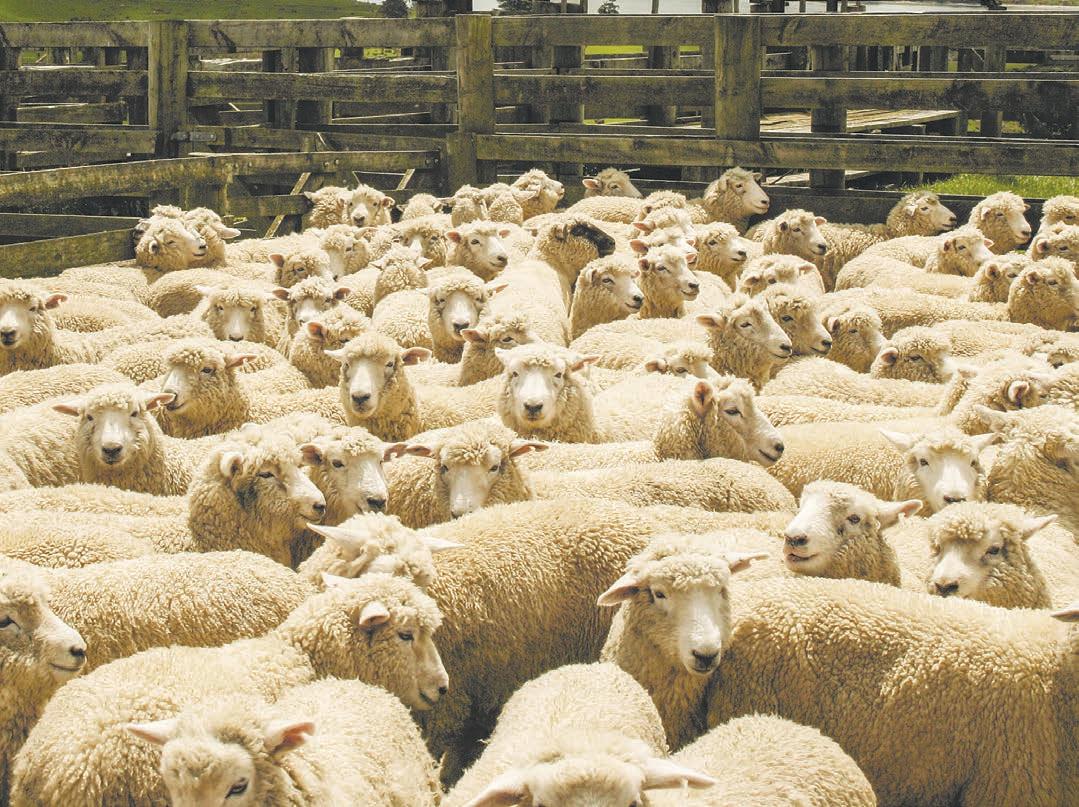
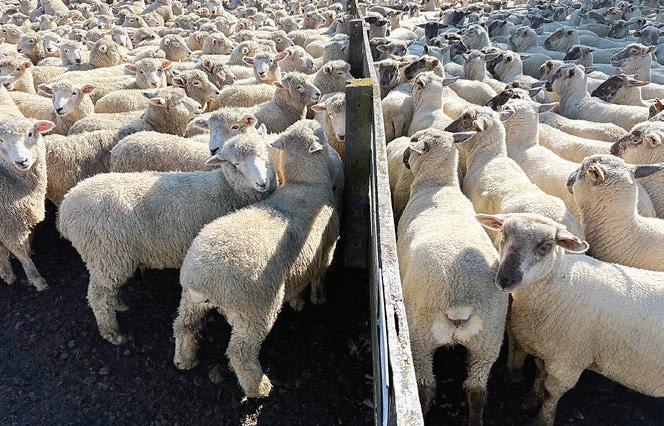
THE unprecedented prices paid for lamb this season have reached new levels with meat company AFFCO offering a $12.20/kg contract for stock supplied in September, up to $2/kg higher than last winter.
Tom Young, AFFCO’s national livestock manager, said the prices can be offered through a combination of strong global demand and benefits from company processing efficiencies.
We want more people running ewes, not less.
Tom Young AFFCO
It has offered $11.20/kg contracts in both islands for lambs supplied from the end of June, rising to $12.20/kg for lambs supplied at the end of September. The contract ends in the North Island at the end of September but continues in the South with prices easing through October.
AgriHQ senior analyst Mel Croad said in September 2025 the AgriHQ indicator price was $10.40/kg in the South Island and $10.30/kg in the North Island, lifting towards $11 in October and November.
Last week the average schedule price was $10.75/kg compared to between $8.80/kg and $9/kg in May last year.
Croad said this winter pricing reflects global market strength and demand in most of New Zealand’s key markets, with recent upside from the United States and China.
“For 18 months global markets have been hungry enough to absorb more production and we’re not facing increases of lamb from other markets.”
Market strength has been accentuated by constrained supply from Australia, the United Kingdom and Europe, a shortfall Croad said could continue well into next year.
Croad said AFFCO’s contract price sets a high bar.
Alliance Group operations director Wayne Shaw said inflationary pressure is creating some volatility in global markets, driving consumers to choose cheaper forms of protein.
Locally the flow of stock for processing has been slow as farmers weighed up strong demand for winter store lambs with abundant feed conditions, but Shaw reminded those retaining stock not to hold onto them to the point where they fall outside market specifications.
Shaw also reminded shareholders that as part of the Dawn
Continued page 3
SECTORFOCUS
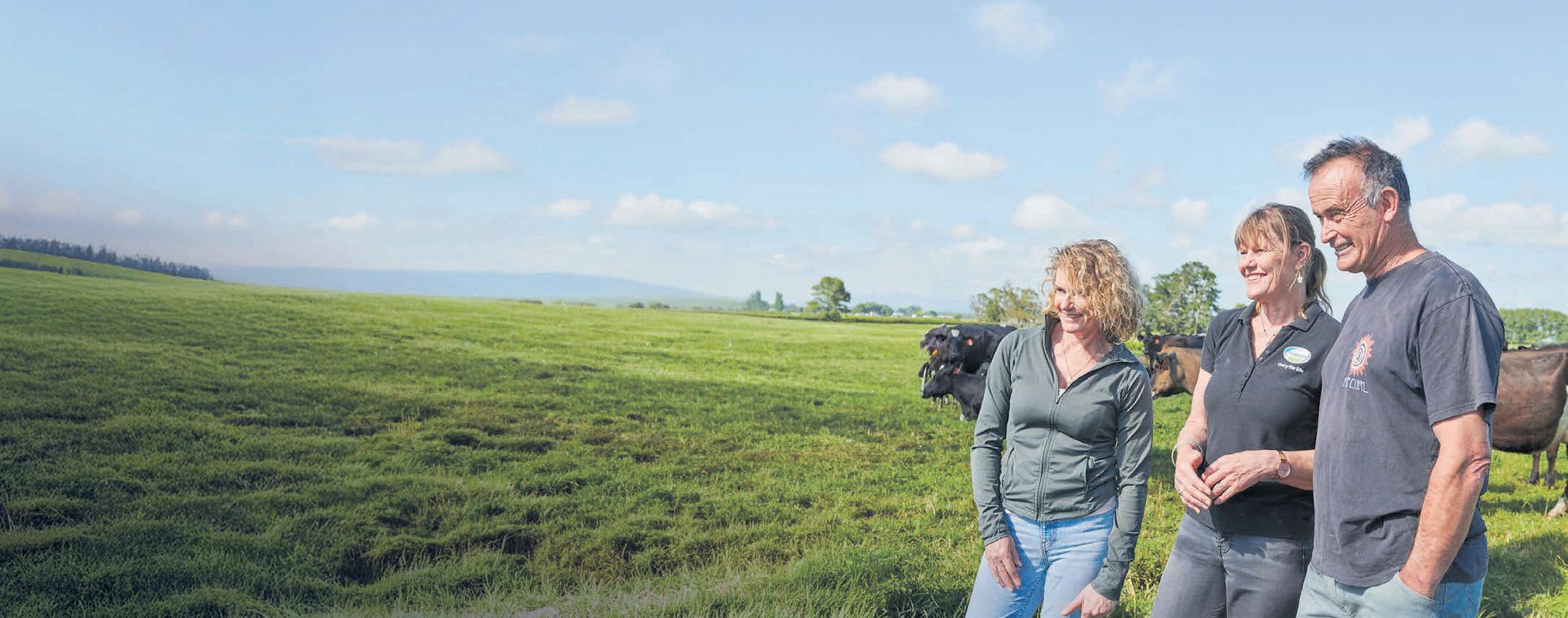
Smart feed management, an empathetic eye for stock and a gentle approach to the land make Chrissy Weeks and Tony Lumsden the ideal stewards for a tough Bay of Plenty hill country farm.
Photo: Richard Rennie ON FARM 16-17
Southland dairy farmers Scott and Stacey Mackereth were named this year’s New Zealand Dairy Industry Awards’ Share Farmers of the Year. They outline their secret to success.
DAIRY 24-34
Photo: Gerhard Uys
Dairy moving to protect its Synlait stake, says Nic Lees. OPINION 23
Real Estate | 0800 85 25 80 realestate@agrihq.co.nz
Word Only Advertising | 0800 85 25 80 Marketplace wordads@agrihq.co.nz
PUBLISHERS
Dean and Cushla Williamson Phone: 027 323 9407 dean.williamson@agrihq.co.nz cushla.williamson@agrihq.co.nz
Farmers Weekly is Published by AgriHQ PO Box 529, Feilding 4740, New Zealand Phone: 0800 85 25 80 Website: www.farmersweekly.co.nz
ISSN 2463-6002 (Print) ISSN 2463-6010 (Online)
SHOCKED: Synlait CEO Richard Wyeth’s shock resignation from the company has baffled its farmer suppliers.
News in brief
Exhibitor sites at Fieldays have been sold out, with more than 1115 exhibitors planning to showcase their products and services at Mystery Creek.
From cutting-edge agritech and advanced farm machinery to artisan food and new-tomarket vehicles, a wide range of products and services will be on show at the four-day event starting on June 10.
Fieldays full Gregan award
Philip Gregan, the retiring chief executive of New Zealand Winegrowers, has received international recognition for his contribution to the global wine industry.
He has been given a Lifetime Achievement Award by the UK-based international publication The Drinks Business in recognition of more than four decades of leadership and influence in the wine sector. The award acknowledges Gregan’s role in helping NZ wine earn a global reputation for being of premium quality, distinctive and sustainable.
Telford upgrade
The Telford farm training campus in south Otago is receiving a $2.4 million upgrade, which includes an additional 40 beds for students.
The Southern Institute of Technology has received the grant from the Tertiary Education Commission for maintenance that was deferred while the sector was under Te Pūkenga governance. Plans for Telford include new prefabricated accommodation for a further 40 students, taking total beds on site from to 144.
Tech tour
Six United Kingdom agritech companies are heading to New Zealand this year as part of the Innovate UK Global Incubator Programme, aiming to build partnerships with local industry, investors and researchers on the future of food and farming.
The visit will be the first time the Global Incubator Programme is delivered in NZ, where Innovate UK is partnering with Sprout Agritech, a NZ agritech start-up accelerator and early stage investor focused on food and farming tech.
Politicians can agree: pines are a pest
THE need to tackle wilding pines was one of the few issues politicians from across the spectrum could agree on during a panel discussion at the Beef + Lamb New Zealand Out the Gate conference last week.
Delegates at the conference in Christchurch heard pitches from ACT’s Andrew Hoggard, National’s Todd McClay, Labour’s Jo Luxton, and Steve Abel from the Green Party.
They covered issues from resource management reform to global trade and freshwater management and the tax system, finding little common ground.
Abel said the Greens would have the most meaningful policy to eradicate wilding pines from the landscape.
“We will deal with wilding pines. We will double the investment in wilding pines and target 2.6 million hectares of land over the course of three years. Otherwise, we’re facing a quarter of our land area turning to wild pines by the middle of the century, which is unconscionable.”
McClay defended his government’s approach, saying throwing more money at the problem may not be the answer.
“Whilst the quantum of money is important, it is also how we use
Continued from page 1
Meats investment, only stock supplied before September 30 counts towards the $20 million farmer distribution available this season.
Jarrod Stewart, Silver Fern Farms chief supply officer, said while some spillover of lambs for processing into winter is anticipated, this is not expected to mean a material increase in
it. We’re very mindful to make sure the way that we approach any government funding, pines or pests or anything else, gets the most bang for buck that you can, but ultimately it is becoming an increasingly important focus for government.”
Hoggard and McClay listed the achievements made in the past couple of years by the coalition government, saying farmers should vote for more of the same – fewer regulations, greater trade access and less of Wellington’s influence in the regions.
For me it’s about making farming fun again for my kids. If they want to go farming, I want them to enjoy it.
Andrew Hoggard ACT Party
“Often you hear the way that we can effect change in the rural sector is to tax them,” McClay said.
“Because that’s what He Waka Eke Noa was going to do, that’s what a methane tax would do, that’s what that fertiliser tax was going to do. Actually, I don’t think you have to do that with farmers. New Zealand farmers are some of most innovative in the world.”
Hoggard said his mission is to reduce the number of regulations
overall winter volumes.
“As a result, we anticipate a competitive procurement environment through winter, with processors focused on securing supply amid tight availability.
“This may drive some short-term pricing tension in procurement, rather than reflecting any underlying lift in market returns, which have remained relatively steady.”
AFFCO’s Tom Young was
restricting farmers, freeing them to do what they do well.
“For me it’s about making farming fun again for my kids. If they want to go farming, I want them to enjoy it, I want them to have fun and I want it to be a good experience for them, not bound down with lots of rules and regulations and stuff that doesn’t work.”
Luxton said the coalition government’s Resource Management Act reform had so far been a lot of noise with little substance. Having scrapped Labour’s reforms before they had a chance to bed in, the sector is still waiting for the change that had been promised, she said.
“When Labour was last in government, we were aware that the RMA took too long, cost too much, and didn’t do what it was intended to do, so we reformed it,” Luxton said.
“And the new government came in and just wiped it off the table without actually having anything ready to go to replace it. So it reverted back to the old RMA, which took too long, cost too much money, and didn’t do what it was intended to do.
“Now we’ve been waiting all this time while they continue to mishmash, and put bits together for the new RMA reforms, which we’re not sure if it’s actually going to be done ... before the election.”
Hoggard and McClay assured
confident there were adequate numbers of lambs still on farms, saying fewer North Island store lambs than usual went to the South Island this season while some buyers who paid high prices for store have retained those lambs to add weight.
He hopes this winters’ contracts will boost confidence in the sheep sector, encourage breeders, and entice people to consider wintering lambs next year.
Every day counts.
"Herd-i's daily lameness scoring allows farmers to monitor cows that are trending and make informed decisions on treatment, recovery, and when she's ready to rejoin the main mob."
Krispin KannanVeterinarian, Farmfirst Veterinar y
the audience that the new RMA reforms would be passed by the election later this year.
Abel said the Greens would release the most transformative energy policy of any party, which would allow farmers to electrify their businesses far more easily, freeing them from some of the challenges the war in Iran has brought.
“We want more people running ewes, not less.”
Croad has not seen the final figures, but said indications are that April export values for lamb were higher than March despite more lamb being exported in April than for any month in the past year.
She said the number of lambs processed has lagged behind last year all season and recently the lamb crop has been revised to
But McClay said while electrification is vital, it was important to do it methodically, in a way that ensures the lights stay on.
MORE: See pages 5, 8
17.5 million – about 500,000 more than 2024-25.
“All the data points to more lambs being available for slaughter between now and spring.”
On average about 1 million lambs, or 5.5%-6% of the season’s kill, was processed in September, but Croad said of wider interest will be prices in October and November when the market opens for new season lambs.
Bryan Gibson POLITICS Election
IMPACT: Steve Abel, from the Green Party, says his party would have the most meaningful policy to eradicate wilding pines from the landscape.
Photo: Otago Regional Council
Council reform threat sends wrong message
Neal Wallace NEWS
Local government
AGOVERNMENT threat that local bodies must amalgamate or have amalgamation forced upon them risks divorcing people from their communities and centralising decision making, says a Southland mayor who has initiated a merger of southern councils.
Southland District Council
mayor Rob Scott said a proposal to amalgamate the four southern councils into two unitary authorities is being investigated by the Local Government Commission – but it has taken two years to reach that point.
However, a government decree giving councils three months to lead their own reform or it will do it for them, is the wrong message, he said.
Scott said reforms need public support and he fears more centralised decision-making would reduce the voice of ratepayers, especially those in rural communities.
One size does not fit all, he said.
“Forcing reform under time pressure will not produce the right outcome,” he said.
His proposal for Southland is for two unitary authorities, one incorporating the Gore and Southland district councils and the other the Invercargill City Council, with the functions of Environment Southland split between the two new authorities.
He said Invercargill city has urban challenges that would not fit rural focused councils.
Earlier this month RMA Reform and Infrastructure Minister Chris Bishop and Local Government Minister Simon Watts announced the government’s Head Start policy, a pathway that gives councils until August 9 to pitch their own reorganisation ideas.
There are currently 78 city and district, regional, and unitary councils across the country.
“Our message to councils is simple: lead your own reform, or we will do it for you. Either way, change is coming,” Bishop said at the time.
Scott said the government reform directive ignored the core
issue facing local authorities – funding.
“I get frustrated that local government is looked at as being broken and needs fixing, but it is the whole system that needs fixing.
“Funding of local government is the core issue.”
Scott said without careful planning he fears ratepayers will be distant from council decisions.
He said his council has 69 elected community board members who provide input into decisions, which helps ensure capital programmes and investment are efficient.
The government is also proposing to replace the 11 regional councils and last December announced the phasing in of a 2% to 4% per year cap on local council rates increases to be fully implemented by 2029.
The Taxpayer’s Union has calculated that since 2022 the average local body rate has increased by 42%.
Local Government New Zealand president Rehette Stoltz said part of the Head Start announcement was an improvement from previous reorganisation proposals.
“The government has outlined a faster way for councils that are ready to merge and provided a timeframe for all councils through to the next local elections in October 2028,” she said. She said some regions will be ready to submit proposals by August 9, but others may not and that fact needs to be respected. Stoltz is concerned at the lack of clarity about the government’s backstop, the process in cases
Local voices crucial in any new setup
Neal Wallace NEWS
Local government
ANY local authority amalgamation proposal must satisfy criteria preserving community input into council decisions, says Local Government Minister Simon Watts.
If a proposal does not provide adequate community input, it will not be approved, he said in an interview.
Watts does not want the speed of reform to be set by the
slowest-moving council but said the current legislation governing amalgamation is excessively bureaucratic, evident in the failure of Hawke’s Bay councils to get approval to change their structure.
Mayors and councillors tell him reform is needed and many are in the process of negotiating a new structure, but the legislation has created uncertainty.
“The status quo legislation available for amalgamation has not delivered a single amalgamation in the last decade.
“It hasn’t worked.”
The government’s new Head Start policy, a fast-track process for councils to proactively design their own structural reforms, would create certainty, he said.
For those councils with an approved proposal, Watts said the government will pass bespoke legislation, formalising the new structure ahead of the 2028 local body elections so the issue does not dominate the hustings.
Watts said Wellington should not dictate which councils
merge and he does not have a figure of an ideal number of local authorities, other than it should be less than the current 78 regional, unitary and district councils.
The goal is to simplify local government and reduce complexity and duplication, thereby reducing the cost to ratepayers.
Asked whether reform of the Resource Management Act and local authority restructuring is overloading councils, he said feedback was that most can manage the workload.
DECREE: Southland District Council mayor Rob Scott says a government decree giving councils three months to lead their own reform or it will do it for them, is the wrong message.
where councils do not use the Head Start pathway and where the government will set a standard approach to local government reorganisation.
“LGNZ will be working with the government to make sure there is strong local influence over what the alternative backstop process looks like.”
She is also pleased regional councillors will serve out their elected term.
Should councils be forced into amalgamation by the government?
NZ beef and lamb exports in poll position
Annette Scott MARKETS Sheep and beef
STRONG demand, high prices and low volume in the market all bode well for New Zealand beef and lamb exports, well into the next two to three years, farmers at the Beef + Lamb New Zealand Out the Gate conference heard.
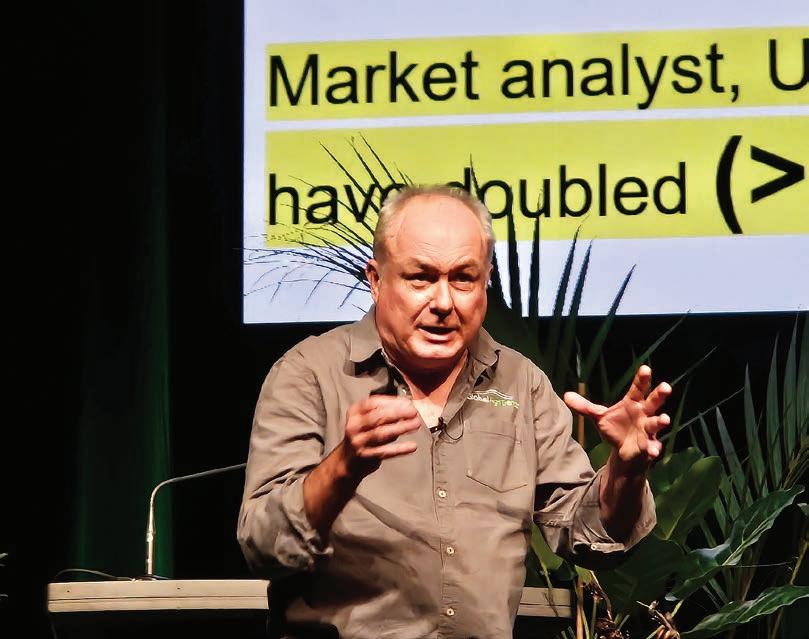
“NZ’s role in backfilling will increase due to a much quicker herd rebuild than the US and Australia. You will be backfilling the back-filler,” Simon Quilty, a meat and livestock analyst at Australia-based Global AgriTrends, told the 750 attendees.
Quilty’s address looked back on last year and ahead to what next year looks like, providing insights into how shifting supply and demand dynamics are shaping pricing and opportunities for NZ beef and lamb.
He emphasised that the United States has a critical need for NZ’s lean beef, with the rising cost of, and demand for, US protein also
It’s
lifting lamb prices, creating further opportunities for NZ farmers.
“So the good news is on the forecast for last year, in terms of lamb I was particularly accurate, but on beef I undersold myself and while the higher pricings were
almost unbelievable to those in the room, you blew them apart and prices went to record highs; it’s always good though to be not quite right and leave something on the table.”
Quilty proceeded to focus
on why he believes prices will continue to rise.
“The clear message to me is that global fundamentals are strong; we’ve got to today driven by strong demand.”
There is nothing I can see on the horizon that is likely to push these prices lower, but I can see every reason they will go higher.
Simon Quilty Global AgriTrends
He spoke of many things driving stronger demand, but the US in particular with intergenerational demand; “young people building muscle mass – protein and meat are a big part; older people trying to retain it, and those trying to lose weight: beef, lamb, pork and chicken are all centre pieces.”
“And lastly the [US] government comes out and promotes the protein intake.
“The stars have aligned, strong
food, Jim, but not as we know it ...
Bryan Gibson TECHNOLOGY
Food and fibre
UNDERSTANDING the ways Gen Z engages with food will be vital for the success of food producers in the future, the E Tipu conference in Christchurch has been told.
Nicola O’Rourke, one of New Zealand’s leading food innovators, told the conference that the things that drive Gen Z’s food choices are vastly different to those of older generations.
“Food is experienced for the first time behind a screen, not in a supermarket aisle,” she said.
“Many of them will never cook from scratch. Three meals a day just doesn’t [exist], it’s microdosing food according to
moods, desires, medicinal needs.”
As this first generation of digital natives ages, food producers may have to tailor not only the products offered, but the stories that accompany them.
“This is a generation that doesn’t believe it needs food in its traditional formats. This is the most important consumer psychology shift of our lifetime, because the brands and products that Gen Z will trust in 2050 will not do so by romanticising food.”
These consumers have not inherited the cultural boundary of separating real food from pharmaceutical intervention.
“They don’t necessarily have a romantic attachment to the land, to the cow, the harvest. Those narratives were built for their
parents or their parents’ parents. What they want to know is ‘What’s in it?’ ‘What does it do?’ ‘Does the science stack up?’”
While older generations are suspicious of cultured meat, precision-fermented dairy and other alternative food types, Gen Z consumers simply don’t see this cultural boundary.
“They’ve grown up in an ultraprocessed world. To them a product is either clean, functional, honest, or it isn’t. Fibre comes from beverages, not apples. Protein comes from snack bars and smoothies, not necessarily meat.”
O’Rourke said the opportunity for New Zealand is massive. We already excel in producing food in a way that would resonate with the consumer of 2050, she said.
“New Zealand’s got an exciting opportunity to build our food experience economy. We’ve got indigenous ingredients with stories that span centuries, landscapes so dramatically beautiful they become part of our meals, and a culture of hospitality rooted in manaakitanga that transforms eating into something genuinely sacred.”
TIK TOK: For Gen Z, food is experienced for the first time on a screen, not in a supermarket aisle, Nicola O’Rourke says.
demand not just in America but globally, and now the next leg of prices moving higher is lack of supply as finally America goes into rebuild, Australia goes into rebuild and potentially Brazil.
“Here in NZ, you have already started a rebuild of some sort; it all points to heifer retention therefore tighter supply and stronger prices.
“Much of the EU and UK has met quota so NZ’s large access into Europe is an important strategic advantage; you have it to yourself for the rest of the year to fill; it signals unfettered access to NZ into China, which safeguards opportunity for NZ by disrupting alternative markets for Australia and Brazil.
“Tighter beef and sheepmeat supplies out of Australia for the next two to three years are also price supportive for NZ.
“So, my take-home message is that there is really nothing I can see on the horizon, a black swan event, that is likely to push these prices lower, but I can see every reason why they will remain where they are and go higher.”
LINING UP: Simon Quilty says ‘the stars have aligned’ for NZ sheep and beef producers.
Payroll is in your hands
Farming isn’t always straightforward, but payday can be. PaySauce is designed to give you peace of mind and make payroll the least of your problems.
Simply visit paysauce.com to get started.
Rural NZ shares its Budget wish list
FARMERS want financial prudence, not handouts, from this year’s Budget, says Federated Farmers meat and wool chair Richard Dawkins.
Meanwhile Rural Women NZ is seeking continued funding of programmes that support isolated rural women, which chief executive Sandra Kirby describes as “lifelines”.
Dawkins wants the government to continue reining in costs to avoid a return to high inflation and interest rates, but said the organisation wants extra funding to control wilding pines, feral pests and weeds and an increased budget for the QE II National Trust.
Additional funding for wilding pine and feral pest control could come from the approximately $230 million a year already collected in International Visitor Levies for conservation and tourism purposes, he said.
The funding gap for these control programmes has been increasing, and Dawkins said the faster wilding conifers spread, the more costly it is to control them.
Another priority is controlling feral animals and weeds. Pest
animals are estimated to cost farmers more than $200m a year in control and lost production.
“Hordes of deer, pigs and possums are coming out of Crown land because DoC is unable to control their numbers,” he said.
He also argues for a lift in base annual funding for the QEII National Trust from $4m, a level that hasn’t changed in a decade, to $10m.
This lack of funding has left the
LIFELINES:
Continued funding of several support programmes from this year’s Budget is vital for rural communities, says Rural Women NZ chief executive Sandra Kirby.
Kirby said the pilot ConnectHER programme has successfully helped women in isolated areas connect with health and support services, and Activator has successfully helped emerging rural entrepreneurs connect with experienced business advisers.
Kirby will also be watching closely the funding allocated to rural health, school buses, and rural education to ensure it reflects the employment and service challenges faced by rural communities.
“In the current year we need to protect some of what we already have because we are down to barebones funding,” she said.
On Kirby’s wish list for new spending are incentives for installing solar power.
trust having to reduce its signing of new covenants with farmers for permanent protection of bush and wetland on farms.
Dawkins said it has been estimated that every $1 of investment by the QEII Trust attracts $6-$7 of co-investment by landowners.
“It’s hands-down the best ‘bang for buck’ investment in protecting special areas of biodiversity available in NZ.”
Local Government NZ (LGNZ) is asking the government to honour a coalition promise to share with council half the GST component on new builds.
“The coalition agreement between National and ACT committed this government to introduce financial incentives for councils, including considering sharing GST on new builds,” said LGNZ president Rehette Stoltz.
Information from LGNZ estimates the Queenstown Lakes District could have almost $56m returned to the region every year under this policy.
In the current year we need to protect some of what we already have because we are down to bare-bones funding.
Sandra Kirby Rural Women NZ
For Selwyn, the figure would be $49m and Tauranga $25.5m.
“It would encourage councils to enable more housing, without existing ratepayers having to cover the infrastructure costs through higher rates,” Stoltz said.
In a recent pre-Budget speech, Prime Minister Christopher Luxon said new spending in the Budget would be $2.1 billion, about $300m below the $2.4bn operating allowance set in the recent Budget Policy Statement.
Despite continued investing in health and education, Luxon said, for a third successive year the government has achieved “significant savings”.
This year’s capital package will be larger than originally planned, at a net $5.7bn due to investment in modernising the defence force, schools, and education.
Luxon said he was committed to reducing debt towards 40% of GDP and returning the books to surplus by 2028/29.
Neal Wallace NEWS Economy
Sheep and beef’s finest honoured at BLNZ Awards
PEOPLE, technologies and innovations were celebrated in the 2026
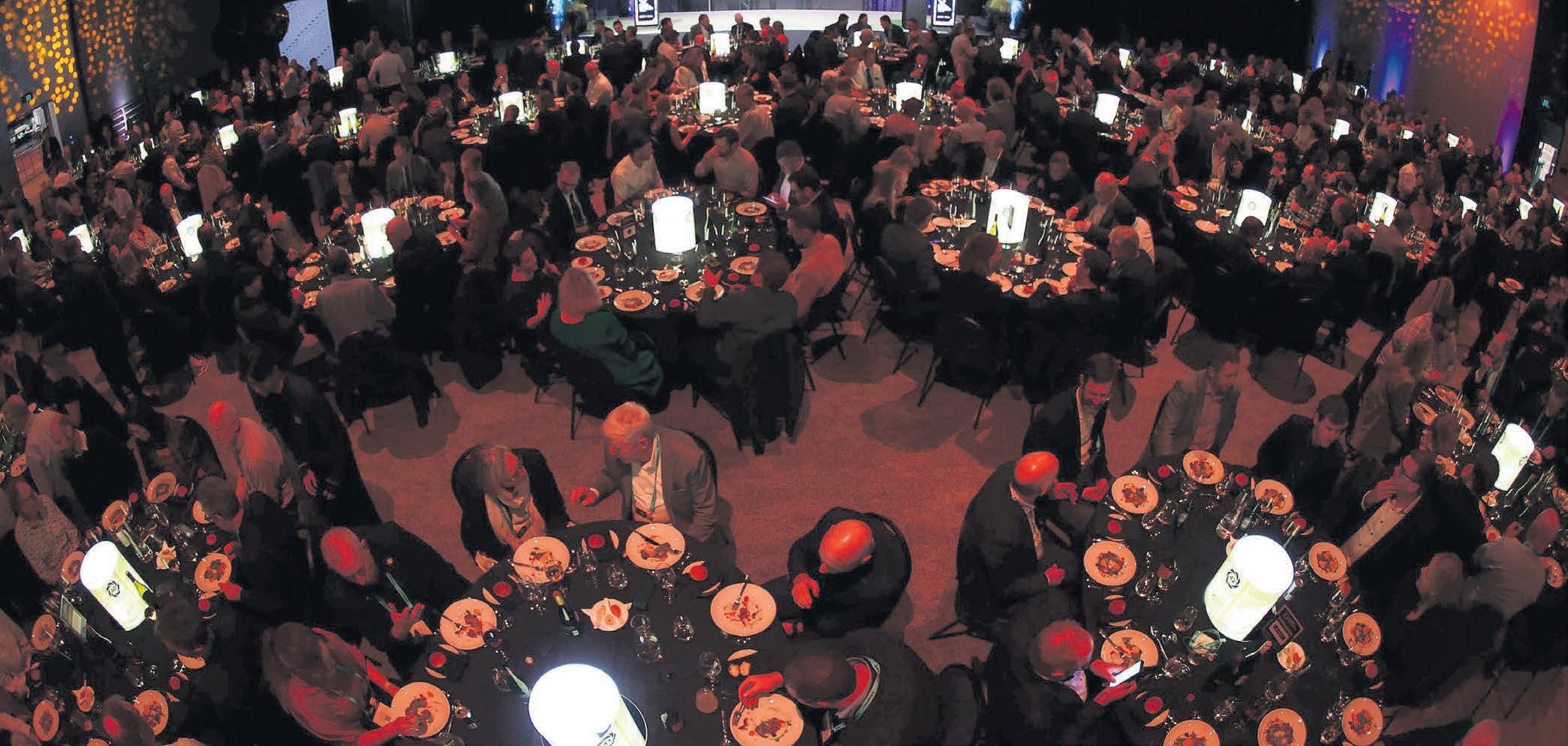
Beef + Lamb New Zealand Awards announced at the gala dinner of the Out the Gate industry event in Christchurch last week.
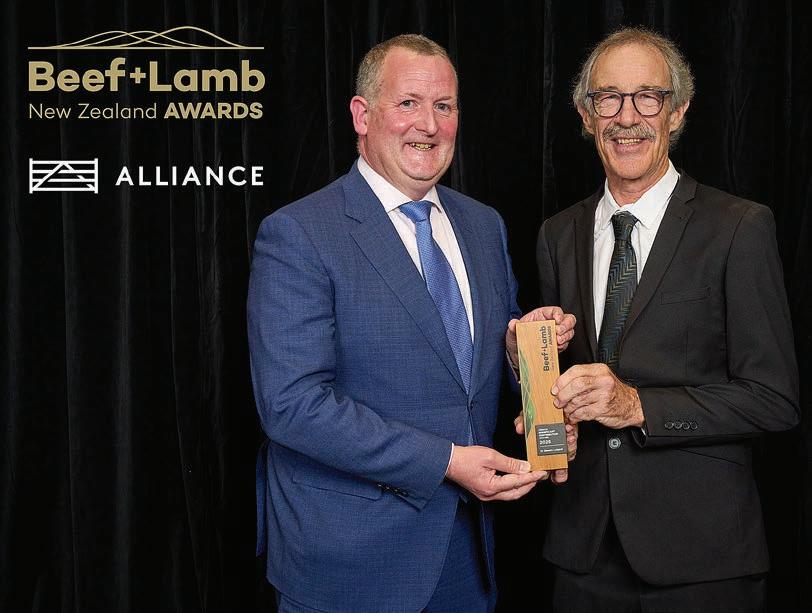
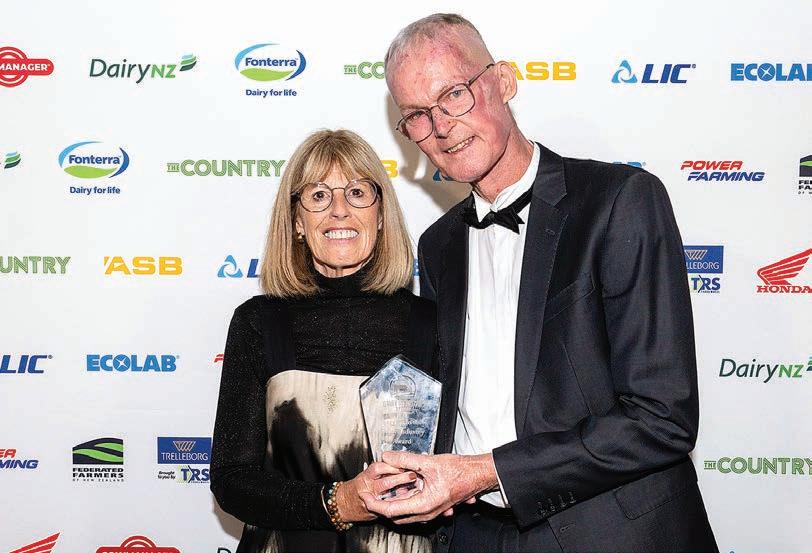
The Alliance Significant Contribution Award went to Dr Stewart Ledgard, whose career spanned the red meat supply chain, from helping farmers make informed decisions about fertiliser applications to protecting market access for NZ’s sheep and beef exports.
The judges said Ledgard’s work had pioneered how NZ measured and managed the environmental footprint of pastoral farming.
“His global leadership in the science of foot printing had ensured a level playing field for pastoral systems.”
Taking out the Bioeconomy Science Institute Emerging Achiever award was Ben Dawson, who purchased his first stud sheep at the age of nine and has been a passionate sheep breeder ever since.
Dawson and his wife Molly lease a 226 hectare sheep and beef farm near Patoka in Hawke’s Bay, and he also manages a 500ha drystock farm. The judges said Dawson had “demonstrated a great range of experience and achievements and is having a positive impact on his rural community through influence and leadership”.
Shepherdess magazine editor Kristy McGregor was the winner of the FMG Rural Champion Award.
Shepherdess has punched above its weight, influencing the way the wider public views the rural sector.
After gaining insight into the isolation many women living rurally experience, McGregor launched Shepherdess in 2020. It has grown to be a social enterprise and multimedia platform dedicated to strengthening connection in rural communities through storytelling, communitybuilding and events, engaging an online community of 42,000 through print, digital media and
social platforms and a readership of around 20,000.
“Shepherdess has punched above its weight, influencing the way the wider public views the rural sector, which supports sector resilience and reputation,” the judges said.
The Ballance Agri-Nutrients Science and Research Award was won by Dr Gale Brightwell and the AgResearch food integrity team that has led world-class applied science ensuring the red meat sector continues to meet and exceed the rising expectations of global markets.
Wellington-based Conscious Valley run by Hamish Best and his partner Caroline Flood took out the PGG Wrightson Market Reader Award with their business marketing beef and lamb to Wellingtonians looking for highquality, low-food-mile red meat.
The judges said Conscious Valley is an outstanding example of an end-to-end value chain supplying the local market and modifying farm systems to meet consumer demand.
The Datamars Livestock Technology Award was won by GenomNZ, delivering DNA analysis services to NZ’s livestock sector for over 30 years.
“GenomNZ as a global leader is continually innovating to keep our sheep and beef industry at the forefront of genetic selection,” the judges said.
The Rabobank People Development Award winner was Lone Star Farms, which invests heavily in developing people, their training and their future across six South Island sheep and beef farms employing 35 people.
“People development is at the heart of the business with personalised development plans, structured learning groups and ongoing leadership coaching for staff at every level.”
The Tairāwhiti Whenua Charitable Trust, which set out to unite Māori landowners, shareholders, governance entities and farmers into a single, coordinated network in the wake of the devastation wrought by Cyclone Gabrielle, took away the Gallagher Innovative Farming Award.
The trust has developed a regionwide Māori-led collective impact model that combines technical mapping, policy design, local wānanga, practical projects and strategic advocacy into one coherent system for sheep and beef country and its communities.
ACHIEVEMENT: Dr Stewart Ledgard, right, whose career spanned the red meat supply chain, received the Alliance significant contribution award at 2026 Beef + Lamb New Zealand Awards. Also pictured is Alliance CEO Niall Browne.
Judges Beef + Lamb New Zealand Awards
Annette Scott NEWS Sheep and beef
East coast Simmental bulls set records
Hugh Stringleman MARKETS Livestock
AUTUMN bull sales have started strongly with good prices made by Simmental studs in both North and South Islands along with sales for South Devons, Shorthorns, Angus and Charolais.
Clearances have been full or close to it and average prices have been $2000 to $4000 above those of last year.
The Knauf family at Wairoa sold Lot 1 of their Simmental bull lineup for a breed record $60,000 to the McFadzean Cattle Company, Wairarapa.
Kerrah N359 is by Kerrah Jaguar J491 out of a Kerrah cow and is described by breeder Jon Knauf an exceptional bull to start the catalogue, with 100 straws retained for herd use.
Clearance of 82 bulls offered was complete and the average was $13,957, compared with the 2025 average of $12,000.
Kerrah held the previous price record for a Simmental bull in New Zealand, being $45,000 made in 2021.
Gold Creek Simmentals, Gisborne, had a top price of $30,000 for Gold Creek Nebraska sold to Simon McRae, Overland Simmentals, Waimate.
Vendor Tom Sanson said the
average for the full clearance of 39 bulls sold was $12,197 and that was the highest achievement so far, for both top price and average.
“We were thrilled with the turnout and support from commercial and stud buyers alike, with strong interest across the entire offering, particularly the Black Simmental bulls.”
Sunnyvale Genetics, Fairlie, also sold Black Simmentals, along with Hereford and Angus. The top price was $15,000 paid for Sunnyvale M2445 by Dean and Wendy Lupton.
The average price was $7400 for a full clearance of 17 bulls.
Glen Anthony Simmentals, Waipukurau, had the 38th sale
for vendors Tony and Glenys Thompson, averaging $11,023 for a full clearance of 22 bulls, compared with $8291 last year.
Top price was $19,500 paid for Glen Anthony Normus, followed by $19,000 for Nautilus.
Bidding for Normus was Ross Waller from Central Livestock on behalf Makahiwi Land at Taumaranui, where manager Marshall Guy has been a Glen Anthony client for three years. Nautilus sold to a new client, Clinton Jowsey from Raglan.
Opawa Downs Simmentals, Fairlie, had consistent top prices at $21,000 for Opawa Nutcracker, along with sales at $20,500 and $20,000 twice.
Nutcracker was bought by Doug Patterson, Okuku, and in total 25 bulls were sold from 29 offered and the average was $11,450.
Penvose Angus, Wedderburn, sold 37 from 38 bulls and averaged $12,200, nearly $4000 up on last year, with a top price of $21,000. It was Lot 4 sold to Nic Love.
Taiaroa Charolais, Ranfurly, sold 23 of 24 bulls with and average price of $9282 and the top price of $18,000 was paid by Eric Stringer, Kyeburn, for Lot 13, Taiaroa Visionary.
Mr Stringer also purchased the highest-price Puketoi Angus bull in Ranfurly, for $17,000 Lot 4, Puketoi 4543.
The clearance was 20 from 22
and the average price $9475.
Glendhu Genetics, Heriot, had a full clearance of 15 Shorthorn bulls averaging $9128 with the top price of $15,500 made twice.
The Glendhu average was more than $2000 ahead of last year.
Coleman Farms and RJC Charolais had a combined sale at Kaikohe, Northland, where the top price was $11,500 for Lot 1, Coleman Farms Vanice, and RJC Vector made $9500.
Delmont Angus, Clinton, sold all 32 bulls with a top price of $18,500.
Twin River Charolais, Southland, sold all eight lots with a top price of $15,000 and two sold at $14,000. The average was $12,250.
Agri-Women’s Development Trust to wind down
Gerhard Uys NEWS Agribusiness
THE Agri-Women’s Development Trust will go into a phased winddown over the next 12 months due to dwindling participation in its programmes.
General manager Julia Jones told Farmers Weekly the group began about 16 years ago when it was identified that many
female partners on farms weren’t seeing themselves as having the confidence or capability to be critical partners in the business.
The AWDT wanted to build that confidence.
Jones said the AWDT and other groups like the Dairy Woman’s Network have done a great job over the years and that women are now more consciously competent in their abilities.
Since its establishment, AWDT has supported thousands of women through programmes including Escalator, Understanding Your Farming Business, Wāhine o te Whenua, It’s All About YOU, and Next Level.
Jones said the programmes will live on through others and the AWDT has been looking for homes for some of the initiatives they started.
AWDT said in a statement that
over the past 18 months increasing economic pressure across rural communities has reduced the ability and willingness of many women and rural businesses to commit time and money to development programmes.
“While AWDT has continued to support access and encourage participation, enrolments have declined.
“This signals a broader shift in priorities and, with limited runway
to fully redesign the delivery model, has contributed to the decision to wind down AWDT over the next 12 months.”
Jones said she is proud of what they achieved over the past 16 years.
As part of this process, AWDT will work with industry partners and sector organisations to explore how elements of its programmes, networks, and intent may continue in other forms.
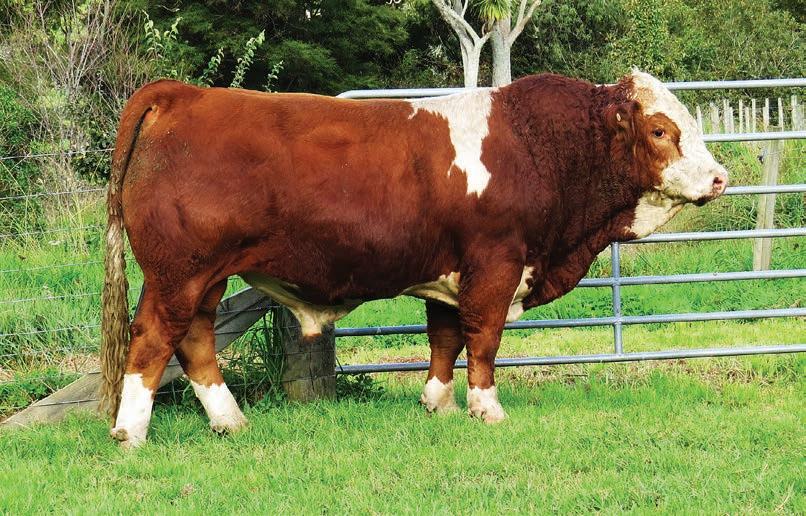
HIGHEST: Gold Creek Nebraska fetched $30,000, a stud record for vendor Tom Sanson at Gisborne.
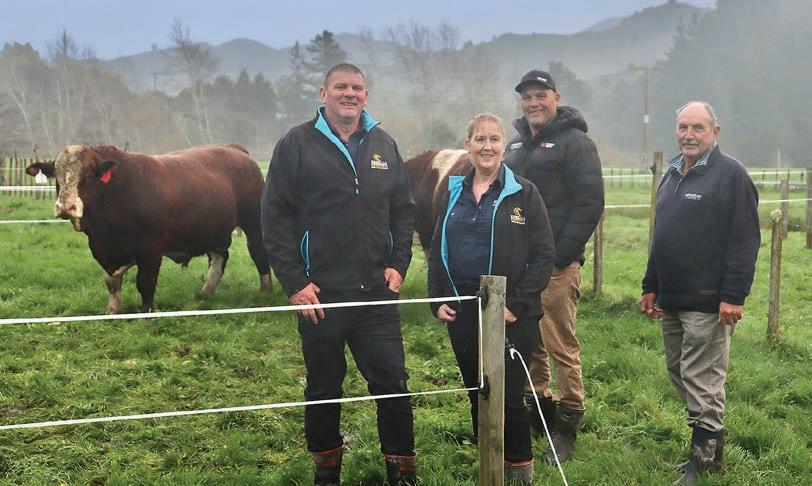
PARADE: Kerrah vendors Jon and Sam Knauf, left, with Johnie and John McFadzean, buyers of the record-priced Simmental bull.
Photo: Lauren Knauf
Mānuka honey trap claims another victim
Richard Rennie NEWS Apiculture
THE grim toll of honey business losses continues to mount with the release of the receivers’ report on the latest victim, Tweeddale Honey company.
Receivers Richard Nacey and Judith Shields of Teneo were appointed on March 9 as receivers, while also being appointed as receivers for the company’s partners, Donald and Conchita Tweeddale.
The report has the company owing $13.3 million largely to secured creditor BNZ, with a further $50,000 owed to staff. A cross-guarantee also has the partners guaranteeing a further $9.9m to the bank.
The Taihape-based company had been operating for over 70
years, maintaining 17,000 hives throughout the central and lower North Island.
The receivership comes hard on the heels of multiple honey company failures in the past 18 months as the industry reeled under plummeting mānuka returns and significant surpluses of honey held in stock.
Signals earlier this year from the market are that the mānuka honey sector is starting to see a lift in values.
Other companies have included Ngai Tahu Holdings’ Oha Honey operation that reported a $23m loss in late 2023. The Three Peaks company had to merge with 100% Pure NZ Honey to form the Mānuka Collective, but had the hive business liquidated.
DoC delays decision on Molesworth Station
Richard Rennie NEWS Land
THE Department of Conservation has pushed out the date to sometime in June for confirming a preferred lessee of Molesworth Station.
This comes after initial expectations the department would be naming its preferred lessee by late May, after seeking expressions of interest earlier this year.
In a written response to Farmers Weekly questions, DoC Marlborough operations manager Stacey Wrenn said the delay
came so DoC could seek out the advice it needed to make a “robust decision”, given the complexity and significance of the site.
“We’re working hard to confirm a preferred operator and give all applicants certainty but need to take the time to get it right,” she said.
Farmers Weekly understands there were five applicants to DoC’s call for expressions of interest in the vast property’s lease, due to end with Pāmu at the end of June.
Ngāi Tahu and a charitable trust effort led by ex-Molesworth manager Jim Ward have been confirmed as two of the five parties to have expressed interest.
Prior to the receivership, Tweeddale experienced several challenges including extreme weather events, increasing impact of varroa mite infestation, and a severely depressed mānuka honey market.
Cash flow pressures mounted beyond the company’s ability to meet its obligations.
The partners had undergone a farm debt mediation process in 2025, but its inability to meet its payments prompted the receivers’ appointment.
The receivers have opted to keep the company operating while marketing it as a going concern and aim to complete the sale by the end of June.
Farmers Weekly understands several parties are considering an interest in the operation. The report lists its assets having a book value of $8.85m, the majority of that being property, plant and equipment.
Signals earlier this year from the market are that the mānuka honey sector is starting to see a lift in values.
In March Bay of Plenty honey processor Logan Bowyer told Farmers Weekly there was now a real risk the sector had dropped too far in volume production, and risked missing out on a lift in global demand.
Low yields in the past year
coincide with a massive slide in hive numbers, down by almost half from their peak of 1 million four years ago.
Meantime retail packs of mānuka in the United States have climbed by 54% in value in the past year. Producers hope to see prices align to $20-$35/kg for “10-plus” grade mānuka, considerably above their loss-leading $13/kg fetched in 2024.
Farmers Weekly has been unable to definitively identify the other three contenders for the lease, with rumours including both North and South Island farming families and an overseas party.
The station’s lease conditions make it a complex operation that combines commercial farming activity within defined
areas alongside environmentally sensitive catchments, while also managing public access via the station’s 60km of private road.
Ward’s “station for the nation” plan garnered a resounding “yes” vote on Farmers Weekly’s final readers’ poll for 2025, with over 90% of respondents supporting it being run by a charitable trust.
Only 9% opposed the idea. One supportive respondent noted Molesworth needs to be managed to preserve its historical, biodiversity and public recreational values, and hopefully make some money along the way. They said that a strong focus on effective weed and pest control is crucial.
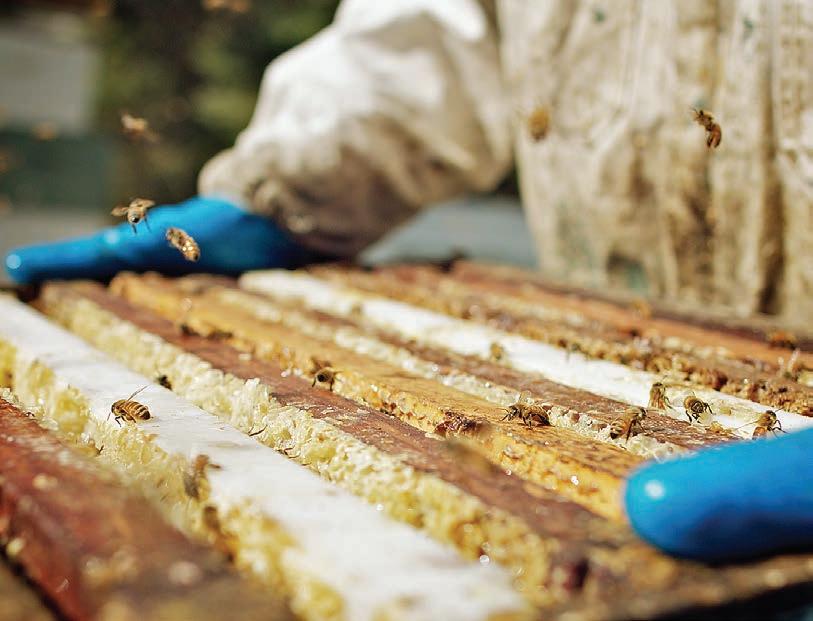
DIRE: The fallout from the slump in mānuka honey prices and a surge in supply continues with the receivership of Tweeddale Honey.
DELAYED: DoC has said it needs more time to get its decision right on the property’s lease.
Photo: Wikimedia Commons
Wairarapa pasta tops food awards
Richard Rennie NEWS Food and fibre
AIRARAPA
Wproducers have featured strongly in this year’s Outstanding NZ Food Producer Awards, with three of the region’s entrants picking up top awards for their pasta, lamb and cream cheese products.
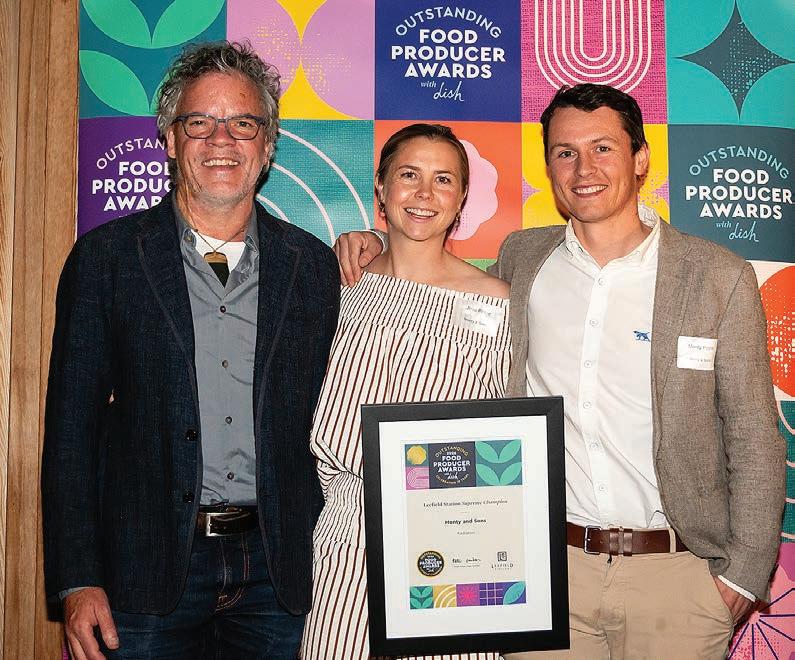
Monty and Sons radiatori pasta, a small, squat pasta said to resemble radiators, took out the Leefield Station Supreme Champion award.
The pasta is made from grain sourced through the Wairarapa Grains Collective, a group of farmers from the region who have managed to grow durum wheat, the stalwart pasta grain, in the region’s hotter, drier climate.
The judges praised the pasta’s nuttiness and easily digested nature that was accompanied by a light “chew” texture.
The business started as a
boutique operation that ramped up this year to supply specialty retailers throughout the country, including Moore Wilson and Farro.
A focus on traditional pasta making using bronze extruders creates a texture well suited to holding sauces and the pasta is air dried for up to a day after extrusion.
Dreamview, owned by the Hill family, was converted from a traditional dairy operation in 2014 to a direct-toconsumer glass bottle milk business.
Founded by Monty and Jess Petrie, the south Wairarapa company stemmed from Monty Petrie’s disillusionment with largescale farming.
Wanting to provide “honest” food for his two sons, he launched the artisan pasta brand with a
focus on regenerative agricultural practices and maintaining soil health.
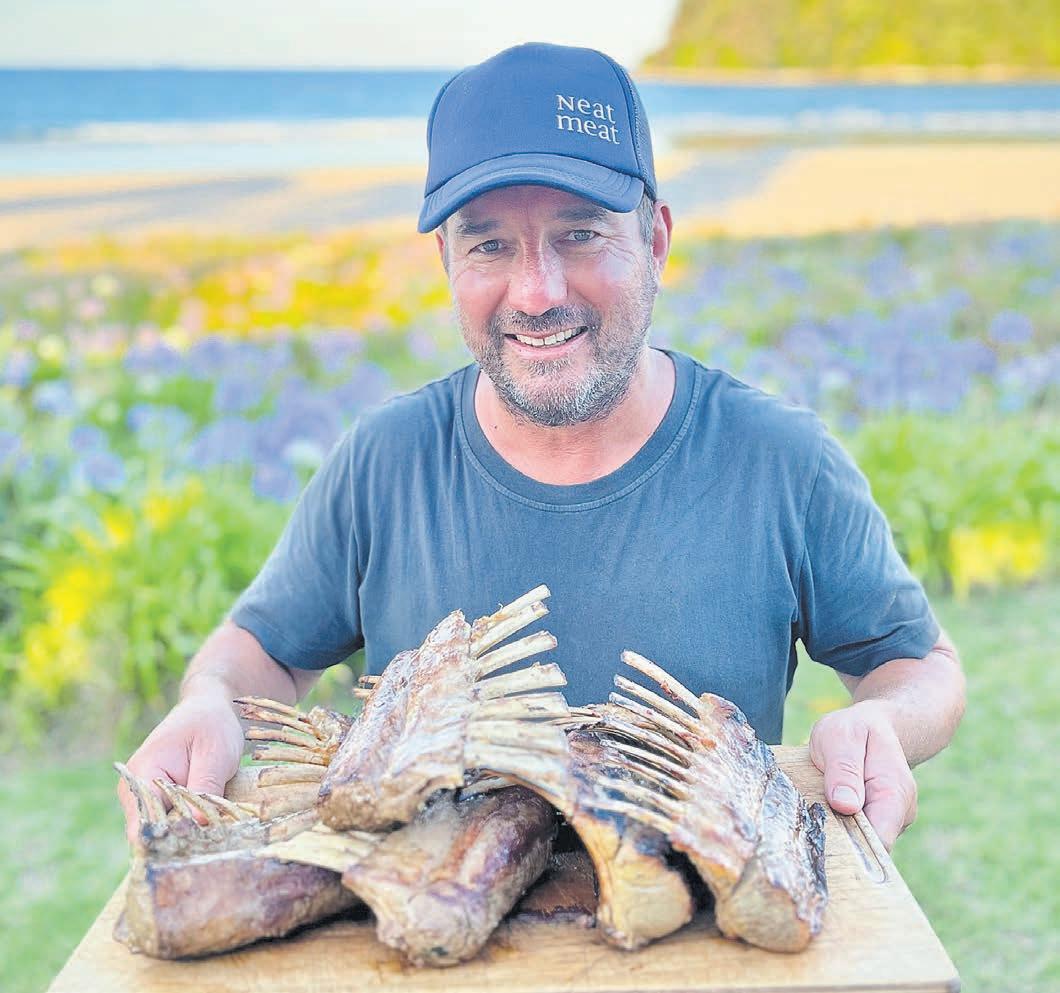
Emersons Paddock Champion was awarded to Conscious Valley lamb shoulder rack, run by Hamish and Caroline Best on their 420 hectare Ohaiu Valley farm, also in Wairarapa.
It is not the first time the family have enjoyed award success, having also received the inaugural “hero” ingredient award last year with their thick-cut loin chops.
Family-owned Fernglen Farm, located east of Ngahape in Wairarapa, claimed the Dish Hero ingredient award for its sheep’s milk labneh, a strained yoghurt with thick consistency, praised by judges for its creamy viscosity and good flavour balance.
Another family-owned dairy producer, Dreamview Creamery of Raglan, won the Dairy Champion Award for its natural probiotic yoghurt with boysenberry compote, noted for its sugar and tartness flavour balance.
Dreamview, owned by the Hill family, was converted from a traditional dairy operation in 2014 to a direct-to-consumer glass bottle milk business.
Taranaki YFC reunion kicks off pre-centenary
PAST Young Farmers and Country Girls members are invited to a 99-year reunion of YFC in Stratford alongside the Young Farmer of the Year Grand Final in Taranaki in early July.
The Grand Final will be a threeday competition based in New Plymouth from July 2 to 4.
The practical day will be held at the Stratford Showgrounds on Friday and the reunion will be an afternoon and evening event at the nearby Stratford War Memorial Hall.
One of the local organisers, Bronwyn Muir, said attendees who will come a long way are encouraged to support the Grand
Final practical along with the reunion, to make the most of their time in Taranaki.
“We are not competing with the Grand Final and encourage people to buy tickets to all events,” she said.
“We want to align as much as possible without clashing.
“Our Friday night dinner and dance will have a few formalities and a cutting of the cake, but most of the day will be socialising.”
Local politicians and YFC life
members will be acknowledged.
Muir herself joined Young Farmers at Flock House and moved around before settling in Stratford where her children were also members of Central Taranaki.
“The centenary of YFC next year will be down in Christchurch but we thought that it is too good an opportunity to celebrate 99 years and bring everyone together in Taranaki.”
The invitation is also extended to former members of Country Girls (1945-1973) before that organisation merged into Young Farmers’ Clubs.
“We know of many people who joined both organisations and benefited hugely later in life from the skills learned, the partners they met and the friendships formed.”
Muir welcomes people to attend who are now much older and were YFC and CG members in the 1950s to the 1980s.
“Both organisations have a great history and massive involvement over the years.”
For example, the late Sir Jim Bolger began in YFC in Taranaki. He went on to Federated Farmers leadership and became prime minister.
Muir encourages people to make plans, buy tickets and arrange their accommodation now, because of what is expected to be high demand.
Sponsorship will cover much of the expenses and organisers have kept the registration price low to leave room for purchasing YF Grand Final tickets on the Saturday night.
A judging panel headed up by renowned chef Peter Gordon assessed the products over two days in March, in total sampling 430 products.
PETRIE DISH: Chef Peter Gordon, left, with champion award winners Monty and Jess Petrie.
Hugh Stringleman NEWS Community
BEGINNINGS: Former prime minister Sir Jim Bolger began his civic life in Young Farmers in Taranaki and King Country.
Photo: Wikimedia Commons
Synlait farmers reeling at CEO’s sudden exit
Gerald Piddock NEWS Dairy
NEWS of Richard Wyeth’s sudden resignation as CEO of Synlait has been met with surprise from those close to the company and within the industry.
Culverden farmer and the chair of Synlait’s farmer leadership team, Adam Williamson, said he knows nothing more than what has been said publicly regarding the reasons behind Wyeth’s resignation.
“[There is] no real reason given and a surprise to everybody. As a farmer supplier it was a complete surprise – it came out of the blue.
“Richard has come on in the last year and had made quite a bit of headway in terms of operationally starting to set a path forward.”
That and the timing of his departure make it surprising and disappointing, he said.
The farmer leadership team Williamson chairs acts as a conduit between Synlait and its farmer supplier base. He said he has been in contact with Synlait chair George Adams and
acting CEO Leon Fung about the leadership change.
He has also touched based with the rest of the team and the reaction from them and other suppliers is also one of surprise.
At a farmer level, nothing has changed. Suppliers are still being paid, and it is business as usual.
But he conceded it has not been a great year for the company and that might make some suppliers nervous, with some asking what is going on.
“Our feedback from the last few days is that it’s not a material change. It’s just another thing that’s happened and it’s not ideal.”
Others spoken to by Farmers Weekly were equally baffled by Wyeth’s departure.
Synlait North Island supplier Michael Woodward said the news “had come out of the blue”. Mid Canterbury farm consultant Jeremy Savage said he had no idea what the reason might be for Wyeth’s departure.
Federated Farmers Mid Canterbury dairy chair Josh Dondertman, whose farm sits within view of Synlait’s factory at Dunsandel, was also in the dark.
Dairy Workers Union national
security Chris Flatt spoke positively of the union’s relationship with Synlait, saying there are no issues with the company.
“We want them to succeed,” he said.
Wyeth’s departure from Synlait is one of a number of resignations from the dairy company’s management and governance teams in the past two months.
Independent director Paul McGilvary resigned from the board on May 11, having served as a director since 2022. Katherine Turner has been appointed as his replacement.
Chief supply chain and technology officer Robert Stowell and chief quality officer Hila Mory announced they were departing the company in April.
Fung was appointed acting CEO from May 14, and Wyeth remains with the company until June 30.
Wyeth is the third CEO to depart from the company since 2019.
Synlait was seen as a company on the rise before covid.
According to its 2019 annual report, the company embarked on a huge capital expenditure that year.
anticipate the impact covid-19 would have on The a2 Milk Company, our key customer, and consequently, our own financial performance.”
That year, it reported a $28.5m loss, its first since listing on NZX in 2013, which Milne called “very disappointing”.
By 2023, as covid restrictions came off, the company was faced with higher interest rates and a changing dynamic in the China market, which has made a big push for domestic product.
SHOCKED: Synlait CEO Richard Wyeth’s shock resignation from the company has baffled its farmersuppliers.
DISAPPOINTED: Richard Wyeth’s departure as CEO surprised and disappointed Adam Williamson.
This was largely down to its expansion into the North Island via its site at Pōkeno, the purchase of Dairyworks and the construction of a lactoferrin plant.
It was all touted as an “investment into the future” designed to diversify its product mix.
Debt lifted from $49m to $99m, net debt jumped from just under $115m to $333.6m and gearing jumped from 20% to 39%. Net debt peaked in 2020 at $527m – the year covid hit.
The pandemic closed both markets and borders, leaving Synlait highly exposed.
Former chair Graham Milne wrote in the company’s 2021 annual report: “While we have invested significantly in our diversification strategy, we did not
It had a dispute with A2 in 2023 when it tried to cancel its supply agreement. Synlait tried to sell Dairyworks but changed its mind in 2024.
Through all of this there was a revolving door of its top executives with CFO Nigel Greenwood leaving in 2020 and then Angela Dixon, his replacement, leaving in 2021 –not long after, CEO Leon Clement departed too.
Dixon was replaced by Rob Stowell, John Penno returned as interim chief executive before Grant Watson took the role until October 2024.
Dairyworks CEO Tim Carter was appointed acting CEO until Wyeth took the role in March last year.
In the boardroom, Penno took over from Graeme Milne in early 2022 and was replaced by Simon Robertson in December of the same year.
Robertson resigned 10 months
later, with Paul McGilvary stepping into the role. George Adams became board chair in May 2024.
In July 2024, its shareholders approved a $130m loan and in September, raised around $218m in new equity. That same year it announced a decision to stop milk processing at its Pōkeno plant after a review of its North Island assets.
In September last year, it announced the sale of the factory and the rest of its North Island assets for $307m to United States healthcare company Abbott, which was completed in April.
Adams called it “a defining moment for Synlait”, saying it would strengthen the company’s financial position and reduce debt. Then came the half-year result in March, which Wyeth called “frustratingly disappointing”. He also said it did not define the company’s future.
The company’s leadership team used the announcement to outline their roadmap for recovery: Stabilise, simplify and scale.
Even before Wyeth’s exit threatened to make the road to recovery even bumpier, Adams had said there was a lot to do to cement Synlait’s recovery.
“Behind our roadmap sits a real determination to ensure the coming 12 to 24 months will be seen as a period where Synlait underpromised and over-delivered.”
Fonterra farmers keen to lock in high prices
Hugh Stringleman MARKETS Dairy
FONTERRA’S farmers have made good use of the dairy company’s price risk management services in three monthly events prior to the start of the 2026-27 season. They have locked in milk prices for 67 million kilograms of milksolids in four types of PRM services – fixed milk price for 2026-27, minimum milk price, milk price range and fixed price for 2027-28. In the original and most popular option the March fixed milk price offer was $9.60/kg after service fee, in April $9.34 and in May
$9.68. Also in May
a portion of farmers’ milk supply.
For the other two services the offers were $8.90 for the minimum price and $9.13 for the 2027-28 fixed price option.
Fonterra’s milk supply director, Lisa Payne, said the PRM tools were developed to help farmers plan with confidence and protect their margins, and the strong uptake seen in May shows farmers value having these.
“The volumes of milk locked in during May’s event doubled to more than 22 million kilograms MS across the four services on offer, from 530 applications, which tells us farmers aren’t just dipping their toes into price risk management – they’re committing meaningful volumes.
“Participation has been seen
Farmers aren’t just dipping their toes into price risk management –they’re committing meaningful volumes.
Lisa Payne Fonterra
across every region and across a variety of farm sizes and ownership structures, highlighting the universal value of price certainty.”
Around 20% of Fonterra farmers use some form of price risk management each season.
Last year, 114 million kgMS was applied for across the four price risk management services.
Tea plantation thriving three decades on
Fiona Terry NEWS Horticulture
NEW Zealand’s only commercial tea plantation, Zealong, says it is seeing great interest in its latest products –powdered teas.
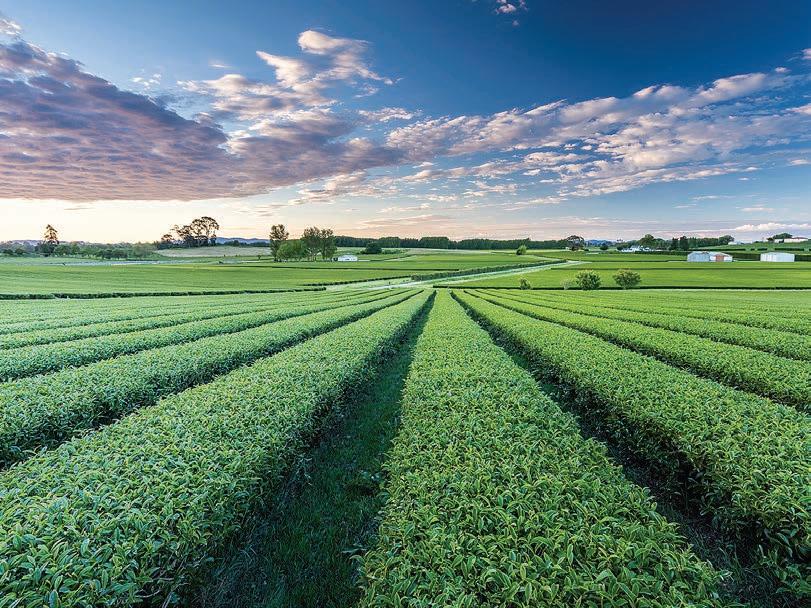
The company, which is celebrating its 30th year, is in Gordonton, near Hamilton, and has 1.2 million tea plants across 25 hectares.
Its loose-leaf products have won awards and sell mostly overseas to high-end outlets, including Harrods in London. The new powdered products are finely ground whole-leaf tea, which instead of being steeped in water and then removed, are consumed entirely.
“All our teas are certified organic premium products and we identified a gap in the market for organic tea powder,” said estate manager Derek Houghton.
Leaves ground in this way are becoming popular with consumers wanting to benefit from the full range of antioxidants and nutrients of the whole leaf, he said.
Zealong’s tea is graded, roasted and packaged on site. Its team of 60 permanent staff, and 40 additional seasonal staff, includes people of over 30 different nationalities, including some from countries more traditionally associated with tea production, like Taiwan and Sri Lanka.
The plantation has thrived since it was started by Vincent Chen, a property developer in Hamilton, who was originally from Taiwan. He noticed how well camellia
plants flourished in the location, and since the tea plant is a type of camellia, he wondered about growing tea there.
It was a risky move for Chen, establishing the plantation on a former dairy farm, and many doubted he’d make a success of it in Aotearoa.
“A lot of tea growing around the world is in the high mountains, where they get cool nights, foggy mornings, and warm days,” said Houghton, who’s also a competitive plough champion and came second in the 2026 New Zealand Championships.
“We get a lot of that here in the Waikato and have good soil, so it seems to thrive in our conditions.”
Zealong’s main harvesting seasons are in spring and summer, with three pickings each year following careful trimming to benefit regenerative growth. Leaves are hand-picked so that only the youngest and most tender are collected for processing, Houghton said.
Partly because of the soil, but also due to the cultivars – mainly Chin Shin but with a small amount of Jin Xuan too – Zealong’s products boast a different flavour to black tea found elsewhere in the world.
“It’s got a sweeter note to it and has won quite a few awards because of that.”
A lot of tea growing around the world is in the high mountains, where they get cool nights, foggy mornings, and warm days.
Derek Houghton Zealong
Processing, rolling and drying all occur on site.
“We do a green tea, oolong, and a black tea, and the difference in the
flavour and colour comes down to the ways we process the leaves. For example for a green tea, the leaves have a heat treatment that stops the breakdown of enzymes, and stops it from oxidizing.”
Perfecting the teas is quite an art.
“The tea masters make tweaks throughout the processing based on the differences in each batch of leaf, to get the best outcome. It’s something that’s very hard to replicate with an automated system.”
Save time and save money with Bionic® Plus - the 100 Day* controlled release combination anthelmintic with minerals capsule for sheep.
Worm control with Bionic® Plus can reduce drench inputs1, aid in control of dags and associated flystrike2, and slow the development of resistance.
Farmers and veterinarians can be confident when they choose Bionic® Plus.
STEEPING HISTORY: The company, which is celebrating its 30th year, is in Gordonton, near Hamilton, and has 1.2 million tea plants across 25 hectares.
ONE-STOP SHOP: Zealong’s tea is graded, roasted and packaged on site.
Market rewards broker for standing his ground
Annette Scott MARKETS Wool
BUYERS are backing Hawke’s Bay-based wool broker Kells Wool as the locally owned business stands its ground against bigger industry players.
Founder and company director Richard Kells has based the business in Hawke’s Bay for the past 40 years and is now the only wool broker selling by auction in Napier.
He remains committed to Napier, despite two of the biggest wool brokers in the country having departed to centralised operations in the South Island.
“It’s what both the buyers and growers want, and their support is providing a mandate to continue delivering a focused service from a Hawke’s Bay base,” Kells said.
“Here for the growers, here for the buyers, and here to stay.”
He takes pride in his familyowned and -operated business as
it shepherds high-quality wool through the sales process and achieves good prices.
“At first I was thinking I’d follow along and move south, it seemed that was where the market would be, but it was the buyers who helped me change my mind.”
Kells’ customers shared his concerns about how expensive operating out of Christchurch would be for both broker and buyer.
At first I
was
thinking I’d follow along and move south, it seemed that was where the market would be, but it was the buyers who helped change my mind.
Richard Kells Wool broker
The cost of freight via the Cook Strait ferry has climbed more than 60% due to fuel prices, and transit times for samples to be shipped from Napier to Christchurch is
three days, if there are no ferry disruptions, ballooning out to two weeks when capacity is tight.
“Whereas we were able to pick up a clip off some trading lambs on a Thursday morning, have it in the Monday catalogue and sell on Tuesday, with out-of-towners able to fly up from Christchurch or drive from Wellington, view the wool in the morning, buy at auction that afternoon and still be home for dinner.”
At their first auction as the sole Hawke’s Bay broker, held recently at the Hawke’s Bay Club, the mood was buoyant, with multiple buyers expressing their gratitude that Kells Wool had stood its ground and remained in the region.
At the May 5 event, Kells’ auctioneer achieved a price increase of 19 cents clean, 2.79%, above the national auction held the week prior in Christchurch.
“Exporters showed their support, and the biggest and best lot achieved the highest clean price of 619 cents.”
Lambswool also sold well, with
longer lots above 75mm attracting the best prices.
“We had a full bench of buyers and some determined bidding, which delivered prices at the top levels of the wool market recovery we’re experiencing this year.
“It gives confidence that a small independent catalogue can achieve the best results in the market.”
Kells Wool isn’t resting on
its laurels though, as the team continues to innovate.
“We are continually evolving, innovating, and always putting the wool growers’ interests first, while still giving the buyers a fair shake.
“We know wool auctions afford the best prices and we believe it’s to the grower’s advantage to have easy access to them. We will maintain regular Napier auctions indefinitely.”
‘Positive’ national wool auction crosses $6/kg line
Annette Scott MARKETS Wool
THE strong wool indicator price blew through the $6 a kilogram mark at the national wool auction in Christchurch last week, with all wool types lifting to new high price levels.
Wools of New Zealand recorded the return of a “positive upward trend” with both prices and demand looking very promising going forward.
“With pre-lamb shearing now starting and early test results showing good colour, we look forward to seeing what prices are achieved.”
PGG Wrightson auction manager
Dave Burridge said the market continues to gather momentum, breaking new ground as “buyers scrambled to secure volumes to meet commitments from a very restricted supply on the open market”.
All levels of wool types continued to lift from the 5100-bale offering that saw 100% clearance.
Very keen interest was also shown for the limited volume of fine wools while the National Strong Wool Indicator lifted 38 cents on the sale.
“Reports from across the industry of a shortfall in supply is going to continue in the short term before
pre-lamb shearing gets underway,” Burridge said.
Good style crossbred fleece lifted 7% with the average price at $6.40/ kg (clean); average style lifted 8% to $6.26/kg and inferior up 7% averaged out at $6.09/kg.
Crossbred second-shear 50-100mm good style was up 5% to $6.05/kg with average style lifting 4% to $5.79/kg, and inferior up 2% at $5.60/kg
Good colour crossbred lambs lifted 8-9% with 29-micron fleece averaging $6.35/kg; 30-micron $6.25/kg and 31-32micron $6.20/kg.
The next national auction is scheduled for May 28, 2026.
GRATITUDE: Richard Kells says the mood was buoyant at the first auction as the sole Hawke’s Bay broker with buyers expressing gratitude that Kells Wool had stood its ground.
Photo: Supplied
RISE: All wool types lifted to new high price levels as buyers scrambled to secure volumes to meet commitments from a very restricted supply on the open market.
Season ends with modest GDT gains
Hugh Stringleman MARKETS Dairy
GLOBAL Dairy Trade prices recorded a modest increase in five of the seven products sold, underpinned by 1.2% lift for whole milk powder.
The overall GDT index rose 0.6% as prices for mozzarella, butter, lactose and skim milk powder increased while those for anhydrous fat and cheddar decreased.
MAINTAIN: The lower value for the NZ dollar throughout most of the past 12 months means dairy companies and market analysts have been able to maintain $9-$10 farmgate milk price forecasts.
Largest NZ supplier drops organic approach
Gerhard Uys NEWS Dairy
A PORTFOLIO of six organic farms sold a year ago by Aquila Capital is no longer being run as organic.
The farms at Edendale, Kaiwera, Otautau, Gore, Dipton and Orawia had been certified organic since 2018 and were collectively the largest supplier of organic milk in New Zealand.
Expressions of interest for the sale of the farms opened in 2024, touted as the sale of one of the southern hemisphere’s largest organic dairy farming businesses.
German management company Aquila Capital owned the six-farm portfolio, which covered 2970 hectares and milked 5162 cows at the season peak.
Five of the six farms had a2accredited herds with a supply contract with Open Country Dairy running through to 2027.
A spokesperson for Open Country confirmed the farms were sold, but as they are now privately owned they could not share details about the owners.
“They are no longer organically farmed,” the spokesperson said. Forecast production for 2024 was just over 2 million kg/MS.
Director for Otago and Southland for rural and agribusiness at Colliers, Ruth Hodges, confirmed that the farms sold a year ago, but said she is legally not allowed to disclose any information about the sale.
Aquila has apparently wrapped up all business in Southland.
Farmer’s Weekly approached a contact at Aquila Capital in Germany about the sale but they did not respond.
Eight of the past 10 GDT events, since the start of 2026, have delivered price index increases.
During those five months the GDT market has risen by 14% and during the whole of the 2026 season beginning in June 2025 the GDT index rose a modest 5%.
The apparent lack of price index volatility did disguise greater movements in fat products and in protein products that were nonetheless not enough to disrupt the market.
The lower value for the NZ dollar throughout most of the past 12 months means dairy companies and market analysts have been
able to maintain $9-$10 farmgate milk price forecasts.
That benign outlook continues into the new dairy season and should be reflected in Fonterra’s first forecast, due out on May 28.
NZX head of dairy insights, Cristina Alvarado, said the latest GDT event had delivered a modest but broadly constructive result.
Buyers from China have returned in force for WMP and butter taking over 50% of both offerings.
Total product volume sold was down 5% on the previous GDT event, in keeping with the seasonal tightening of NZ milk.
“Even with lower volumes and rising logistical costs, bidding participation remained relatively healthy, indicating that buyers continue to actively secure nearterm product requirements.
“Demand fundamentals for proteins continue to provide support, but ongoing geopolitical tensions, elevated freight costs and uncertainty surrounding global consumer affordability are likely to keep markets sensitive through the coming events.”
The next GDT event will be on the night of June 2, right after the King’s Birthday holiday weekend and at the beginning of the 2026-27 NZ dairy season.
OSPRI’s support centre is a busy place around Moving Day. To avoid waiting on the phone try out our website.
There’s so much there to help you update NAIT, including:
• handy checklists and decision trees
• how-to-videos, including recording animal movements
• NAIT user guides. Just visit ospri.co.nz to make your move easier
Top views and gentle care in the east
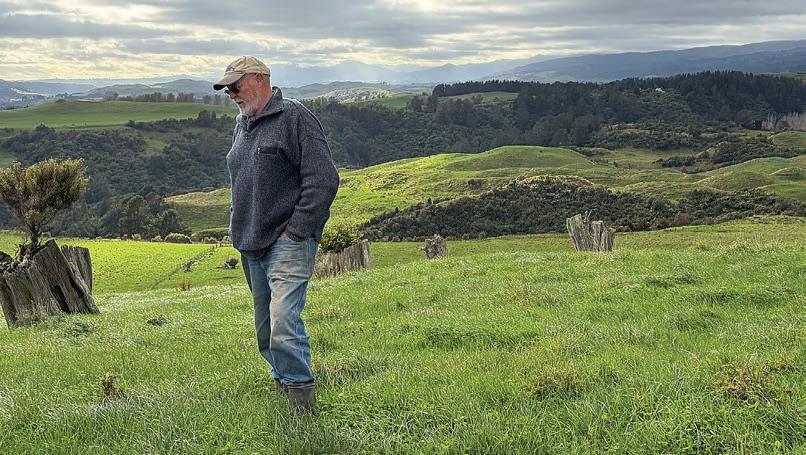
SMART feed management, an empathetic eye for stock, and a gentle approach to the land make Chrissy Weeks the ideal steward for a tough Bay of Plenty hill country farm north of Whakatāne.
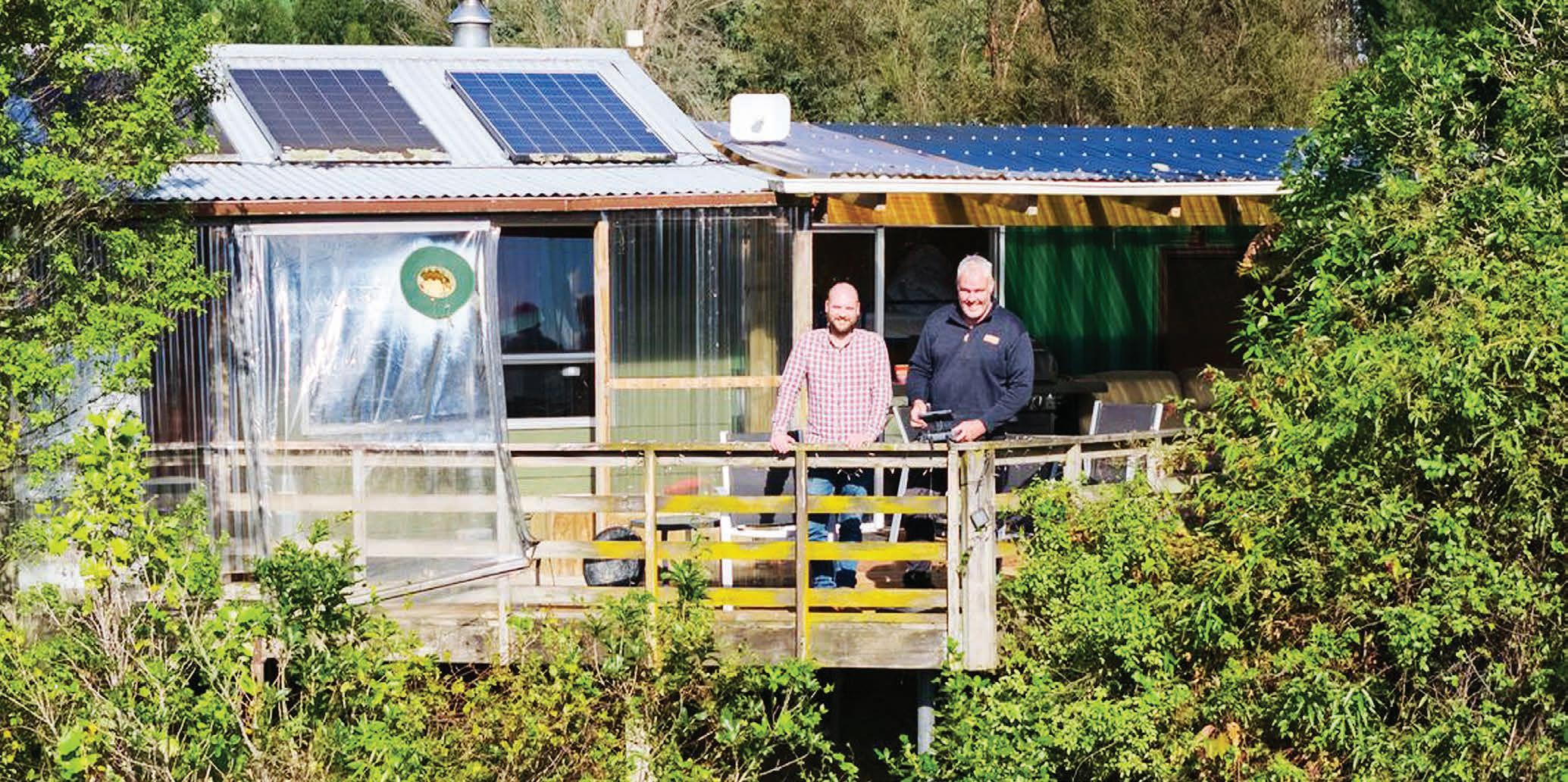
Weeks and her partner Tony Lumsden run the family-owned property that sits with the Pacific Ocean and Whakaari White Island to the east, and with heavily gullied boundaries marking its unusual Y-shaped footprint.
It is part of a wider family operation that includes 55 hectares on Matakana Island in Tauranga harbour, home for Weeks’s stepdad and her mother, integrating as a valuable finishing platform for some of her own young stock.
“We send 60 yearlings there every spring to finish backloading as older steers leave for the works. They do extremely well out there and usually go to the works to average 320kg carcase weight.”
The property Weeks and Lumsden run was bought by the family in 1997.
It was an ex-deer and grazing property comprising seven large paddocks, plenty of weeds, and in dire need of fertiliser.
Today the 107-paddock 315 effective hectare property includes extensive native plantings completed by the couple.
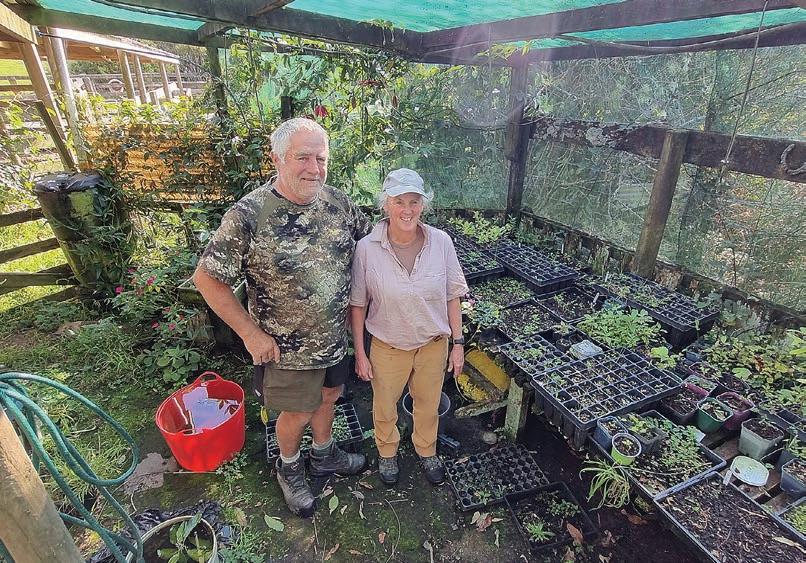
During their annual holiday they will also forage for seeds from around the country to nurture in their on-farm nursery before planting out.
Every year the couple plant 250-300 natives around the farm, while also getting goat numbers whittled down and encouraging local hunters to come and deal to a prolific deer population. Possums and even wallaby also feature on the unwanted list.
Typically, the farm runs 600- to 650-head of stock including 250 breeding cows, 250 weaners, 20 bulls and 100 culls steers and heifers.
Clearly a passionate cattlewoman, Weeks has a good eye for quality and temperament. It is an empathy identified by the Ballance Farm Environment Award judges when the couple won the Beef + Lamb New Zealand livestock farm award this year.
“I like to keep animals together
for the duration of their time here. They have their own mates within their mob, and we try to keep them
together and happy in their mob,” Weeks said.
“We don’t leave them on their
own in the yard, and when buying bulls we will always buy at least two together.”
She makes a point of identifying those with dubious temperament early on and culling them out sooner than later, regardless of what their production potential may be.
“When you are working by yourself a lot of the time, you need to be 100% certain you will be okay in the midst of them.”
She is also a firm believer in “one animal, one trip”, avoiding quitting stock at sale yards where multiple truck loadings are required, stressing animals unduly.
“It is easier on the animals, and you don’t risk losing their condition and health from moving them around the place.”
Their 250-head breeding cow herd originally included the genetics of ex-Hereford stud
Richard Rennie ON FARM Sheep and beef
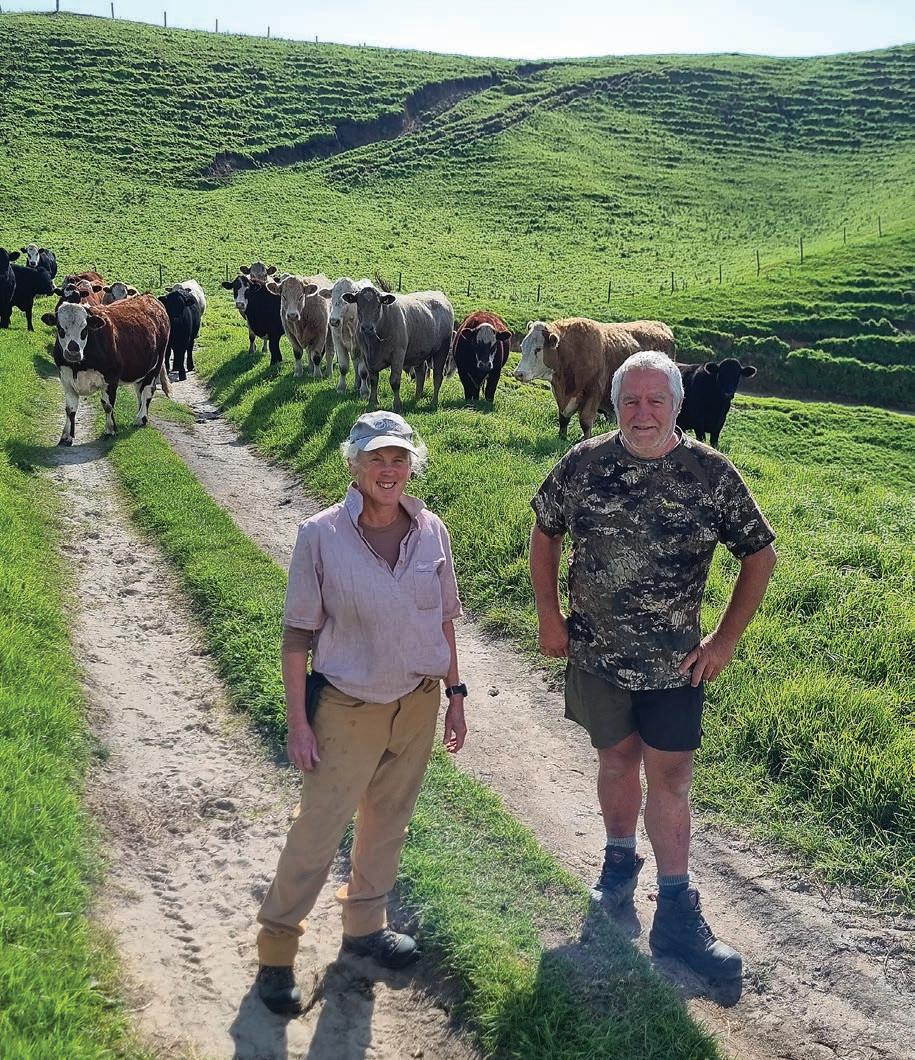
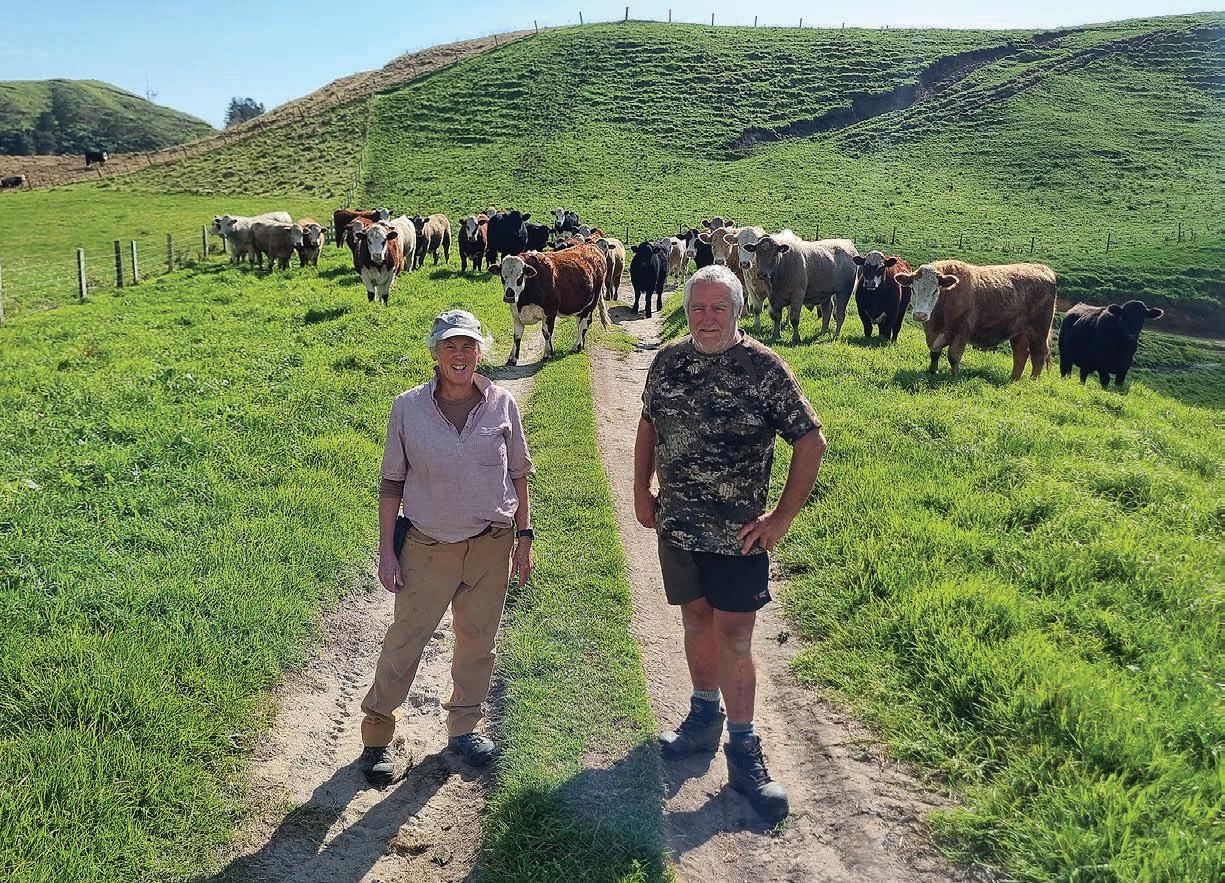
GRASS-FED: Chrissy Weeks and partner Tony Lumsden with their latest mob of steers finishing on plentiful autumn-saved pasture that includes a high component of kikuyu grass.
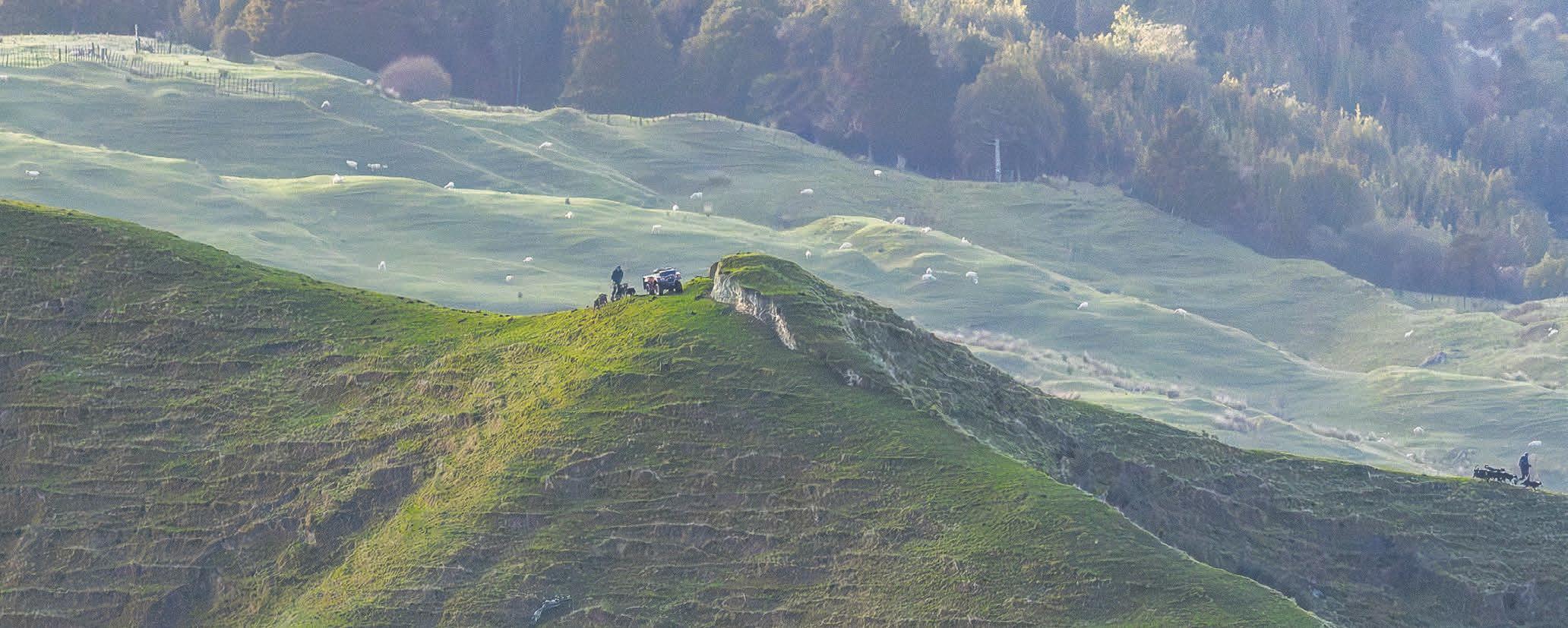
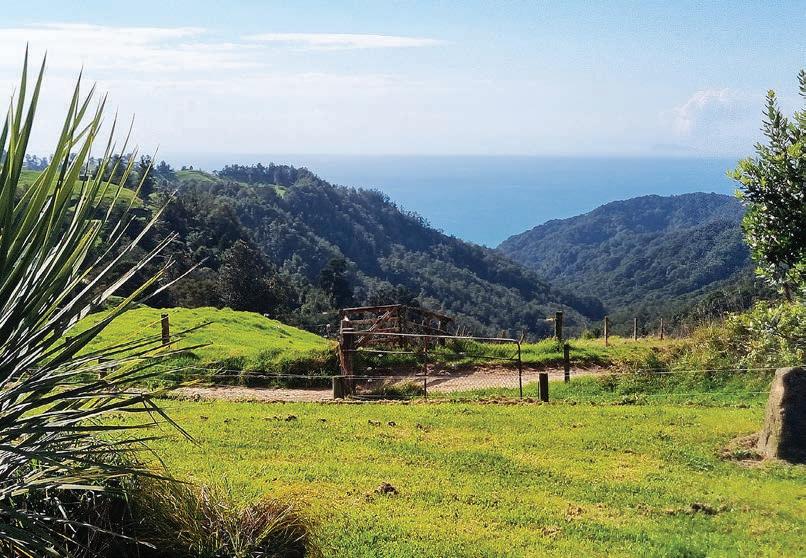
OCEAN VIEW: Sitting at just over 300m above sea level, Chrissy Weeks and Tony Lumsden’s property affords views across the Pacific, with Whakaari White Island in the distance.
SEEDS: Chrissy Weeks and partner Tony Lumsden source native seeds from their travels around NZ and off their own bush block to rear in their farm nursery.
cows within them, but today also includes some Angus, South Devon and Charolais genetics.
Their Hereford breeding bulls are purchased from Peter Davies’ Charwell Hereford stud at nearby Manawahe.
Generally, she tends to cross back and forth between Charolais and Hereford genetics, but this year she has also bought in some South Devon bulls sourced from Kaimoa South Devons, owned by Mark and Di Eagle near Pahiatua.
“We found from our Silver Fern Farm data that we could gain by improving the internal fat and marbling and for the first time bought bulls off that data to help lift it.”
Weeks’s background includes a degree in Ag Science from Massey, and she spent time managing Massey’s No 1 winter milking dairy unit.
She has bought plenty of her dairy experience to bear on the Matata property when it comes to feed management and conservation.
“I am pretty big on always saving ahead with feed. We calve relatively early, in early July, and will conserve feed for the calving period for the cows once they come out of the bush block. We also make sure all other stock is off well before calving.
“We break-feed the calving mob, as you do on a dairy farm, and we also place the first calving heifers in their own mob to keep an eye on them.”
While it sits at 300m above sea level, the farm’s free-draining pumice soil, steep bush boundaries and northeasterly aspect mean it can generate good late autumnwinter growth.
The breeding cows nail the kikuyu in early autumn, while Weeks’s relatively quick, dairy farm-like grazing rotation of about 20 days means the predominant grass performs well after that, staying palatable and appealing to the stock.
I like to keep animals together for the duration of their time here. They have their own mates within their mob, and we try to keep them together and happy.
Chrissy Weeks Bay of Plenty
Once calved, all cows and calves are shed onto saved pasture.
“And I will save feed for the bulls to flush up on before mating, and save grass for weaners to go onto, usually the hay paddocks where the worm burden is lowest.”
Deferred grazing and reseeding from hay, rather than any intensive regrassing programmes, have kept the pastures sustainable and robust over the years.
Drenching is kept to a minimum, usually based off visible signs of
worms and growth checks.
“And the two-year-olds will be drenched before calving and that is pretty much the last drench they will get as a cow.”
Weeks has a high degree of loyalty to her suppliers and the contractors used in the farm business. This includes a warm, longstanding relationship with her processor Silver Fern Farms. The recent appointment of George Hunt as her area’s rep has opened that relationship up even further.
“We are now looking at contracts that include a commitment contract. Supplying X number of stock at a set time works well for them and for us, with an incentive to commit.”
They have earned two Silver Fern Farms Plate to Pasture awards in recent years, recognising their sustainable, low-impact practices.
Looking to the future Weeks and Lumsden are enjoying seeing the property benefit from the earlier years of hard work, even getting to have a few farm “staycations” in the off-grid huts Lumsden has built around the property.
“We are pretty happy doing what we are doing,” says Weeks.
“Maybe in an ideal world we would like to have largely Herefords, but we are enjoying seeing how well the stock are doing, and what we can achieve with our native plantings too.”
• This article was made possible by Silver Fern Farms.
THE FIRST EVER ORAL LICE TREATMENT FOR SHEEP.
PREMIUM: Contract-reared steers fetch a premium from Silver Fern Farms that includes an antibiotic-free margin.
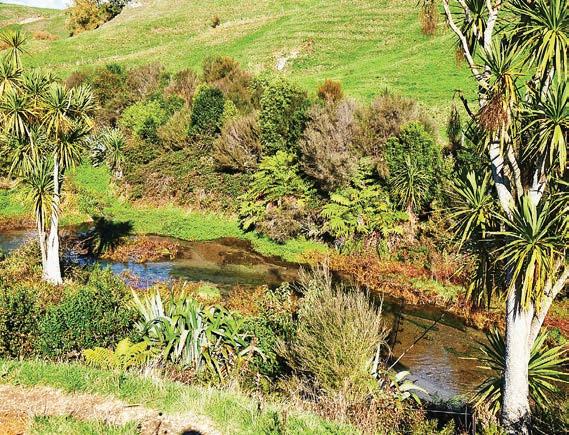
BALANCE: The property is a well-balanced blend of native plantings and medium hill country, bordered by gullies and native bush boundaries, just north of Whakatāne.
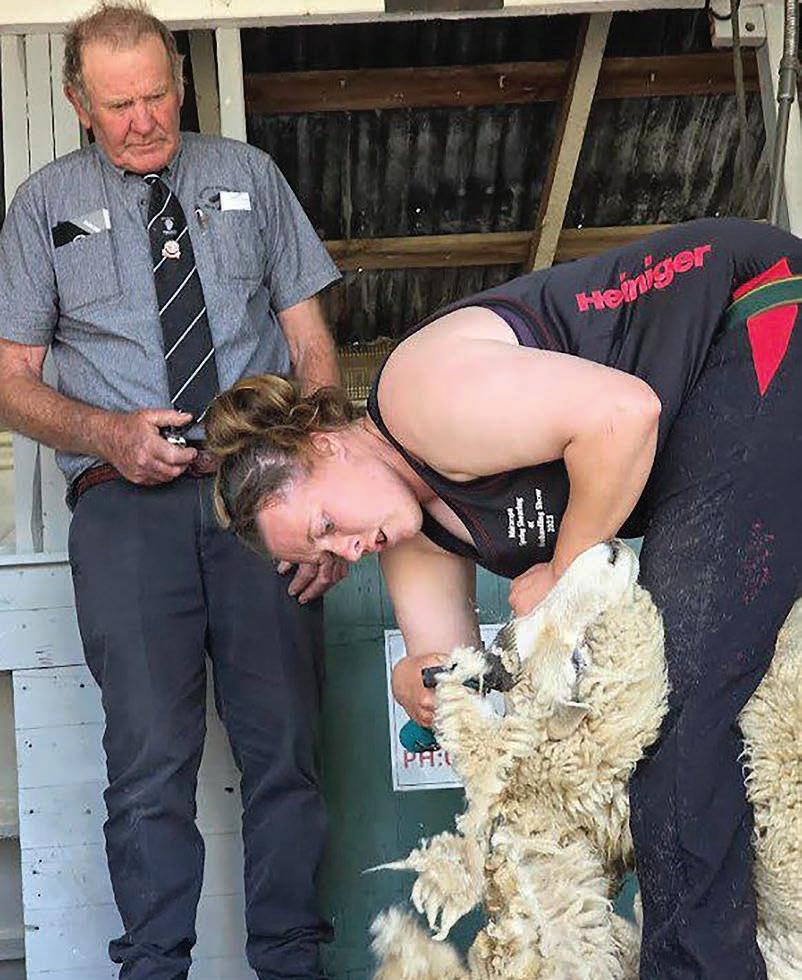
Papatawa mum climbs Open shearing ranks
BALANCING life on the land, motherhood and elite sport, Woodville’s Laura Bradley is quietly making her mark on the maledominated competitive shearing scene.
Shearing, and then competition shearing, became an addiction at a young age. She and her siblings grew up around the woolshed helping their parents and, once she got a taste, she was hooked.
Bradley and her partner Cam Henson, along with son Marshall, 3, are based at Papatawa, where they run an intensive sheep and beef finishing block for Bradley’s father.
Besides farm work, Bradley shears full-time in the summer season. She does some shearing over winter, balanced with her job pregnancy-scanning sheep for Vet Services in Dannevirke.
“I grew up on a farm. Dad was a shearer and mum was a rousie before they took over the home farm and had us kids. It was in the
blood. I grew up sweeping dags and helping crutch lambs, and it just spiralled,” Bradley said. “I don’t know why, but once you start you just want more. You can earn money, travel the world and it’s like having your own personal gym without having to go to the gym.”
Bradley has fast become one to watch as she’s progressed up the grades. She holds the distinction of being the highest ranked shearer nationally in Junior, Intermediate and then Senior shearing grades. Last season she broke Open, the only woman currently at this level, making two finals and being named a finalist in the 2026 New Zealand Rural Sportswoman of the Year.
“It was a real highlight to make the final at Wairarapa A&P in November and shear between Johnny Kirkpatrick and Dave Buick. When I was a teenager, I watched those guys compete and I would never have dreamed of that. It was one of those pinch me moments.”
Both her parents competed on the circuit and Bradley vividly remembers her dad taking her
and her siblings along to the Dannevirke A&P Show to watch family friend and former World Champion, Paul Avery, compete.
“He would pick us up after school to take us to local competitions to watch the Open guys shear. We decided we wanted to have a go. Once again, that’s addictive.”
Once you start you just want more. You can earn money, travel the world and it’s like having your own personal gym without having to go to the gym.
For Bradley, the secret to success is being in the right head space at a show. But most importantly, she has developed good habits at work that flow on to shows.
“You have to shear at work how you would shear at a show. You can’t go from rough and don’t care to clean and fast. You start out in the lower grades and it’s all about quality and getting your pattern
established properly, because speed will come with practice.”
Like many top athletes, Bradley is extremely competitive.
“When I go out there, the crowd is not even there. I’m just shearing my own sheep and not worrying about anyone else.”
She’s also fortunate to have Avery, who she calls her second dad, helping her with her gear.
“I’m pretty sure we have the same type of hand. He helps me and I think that’s been a huge advantage.”
Bradley is aware of the fact she’s in the minority when it comes to her gender, and that she’s a role model for aspiring female shearers, but she simply sees herself as a shearer.
“I just want to be a good shearer and enjoy going out there. If I’m the only woman in the Open grade, that suits me just fine.
“I just go out there and do what I can. It is surreal when people come up to you and say they look up to you. That was never what I intended when I started, but it’s awesome that it’s escalated.
“I like to think I’m approachable, I’m always around for anyone to come up to and ask questions about gear or whatever,” she said.
Breaking Open this season was a big step, but Bradley feels a sense of unfinished business. Her two major goals for the season were making top 30 at Golden Shears and top 24 at Te Kūiti – she was 31st and Goldies and 26th at Te Kūiti.
Those goals may yet to be ticked off, but Laura Bradley is surely inspiring the next generation of shearers as she forges a new path on the competitive shearing circuit.
IN HER ELEMENT: Laura Bradley, watched by judge Sam Saunders, shears in the Open shearing final in the North Island in November.
Photo: Shearing Sports NZ
Rebecca Greaves PEOPLE Skills
FAMILY PHOTO:
From left, Laura Bradley’s parents Helen and Wayne, Laura and her partner Cam Henson with their son, Marshall. Photo: Supplied
Laura Bradley Papatawa
Deer round out Pohangina Valley spread
WESTVIEW Farms in the Pohangina Valley, Manawatū, has expanded into velvet production and increased its deer numbers by more than 150% as part of a long-term strategy to diversify the business and reduce exposure to volatile livestock markets.
The farming operation recently completed its first velvet season, lifting hind numbers from about 250 to 650. The expansion has increased the proportion of deer within the farm’s overall stock units.
As part of the 2026 Deer Industry Conference, attendees visited Westview Farms during a field day focused on practical deer farming operations.
Matthew Carroll, the son of managing directors Shane Carroll and Nicola Shadbolt, oversees the sheep, beef and deer farms.
He said the expansion into velvet was driven by confidence in diversification rather than just short-term returns, despite the difficult periods for the deer sector in recent years.
“People look at you and go, it’s a strange time to enter,” he said.
“Everything has its ups and down.
“At the end of the day, we’re not
property are the result of grass type and surface erosion. The farm borders on bush that is a public hunting zone and so they cannot move deer fencing too close to that area.
The benefit of having your finger in a few pies means that you can average
Matthew
out a positive.
Carroll Westview Farms
farming for 12 months here.”
The business began as a beef, sheep and deer stock farm and has since diversified into forestry and dairy. Carroll said that spreading risk across multiple sectors has helped to cushion swings in prices and livestock returns.
“The benefit of having your finger in a few pies means that
you can average out a positive,” he said.
The expansion into velvet has also happened at a time of a big ownership transition within the business, which has operated as an equity partnership since 1987.
The original partners didn’t invest or withdraw capital from the farm business for 37 years, which allowed the farming operation to grow steadily over time.
However, recent succession changes meant three equal shareholders exited the partnership, which made up about 60% of the business.
Carroll said the process was “like going through a divorce with a really bad lawyer”.
The restructuring introduced new shareholders to the business, including a neighbouring farming family, and enabled the addition of 130 hectares of deer fencing.
It also allowed the farm to reorganise its breeding and velvet production strategies across its properties.
Looking forward, Carroll said the business plans to invest further in technology, infrastructure and genetics as part of the longer term strategy.
Solar panel systems have already been installed across parts of the farm, and hydroelectrics and deer testing are being explored as future options.
“Technology is going to be a big part of it ... It’s a no-brainer
to go down that avenue” he said.
“The solar’s done, so the hydro [hydroelectricity] is the next thing to look at.”
Carroll said that improving efficiency for staff and continuing to simplify farm systems would still remain a key focus, particularly as the business continues to expand.
While reducing debt after the ownership transition is now a priority, Carroll said that they are open to future opportunities if they line up with the long-term wider business strategy.
“We’ve never said no to investing in an opportunity if it presents itself nearby and it makes sense,” he said.
Southland farm plan deadline pushed way out
Gerhard Uys NEWS Water
THE government has given Southland farmers an extension on the May 27 freshwater farm plans deadline, setting a new date of November 2027.
The plan has been in the news as farmers were holding back on submitting plans, while trying to gauge whether the government would make amendments to the Resource Management Act.
In April only 19 out of a
potential 3700 properties submitted plans.
A joint statement by Agriculture Minister Todd McClay, Environment Minister Nicola Grigg, and Associate Environment Minister Andrew Hoggard said the government is extending the timeframe for Southland farmers to submit freshwater farm plans to ensure they can benefit from the updated national system to be adopted later this year.
McClay said regulation currently requires farmers to prepare and submit a farm plan before improvements to the national
freshwater farm plan system are finalised.
“This is now impractical and so
This sensible decision will ensure what Southlanders need to do is aligned with the requirements for farmers in other regions as the new system comes into effect.
Todd McClay Agriculture Minister
we are pushing the date out to give farmers certainty,” he said.
The extension makes sure approximately 2500 Southland farmers remain compliant with the regulations, he said.
“This sensible decision will ensure what Southlanders need to do is aligned with the requirements for farmers in other regions as the new system comes into effect – giving them confidence to continue to produce high-quality food and fibre.”
Hoggard said the government is maintaining momentum on improving farm plan regulations.
Environment Southland chair Jeremy McPhail said the extension gives farmers and growers more time to finalise strong farm plans and make good use of the support available as the updated national settings are finalised.
“Farm plans remain an important part of improving freshwater outcomes, and this extension gives farmers extra time to continue developing plans that are practical, well-informed and tailored to their property and catchment.
“Farm plans are here to stay, and most farm operations in Southland will still need one,” McPhail said.
Isabella Beale NEWS Farm systems
TEAM: Matthew Carroll, left, oversees the sheep, beef and deer farms, while Nicola Shadbolt and Shane Carroll are the managing directors of the operation and equity partnerships.
Photos: Isabella Beale
EROSION: Shane Carroll explains that the rolling mounds on the
Southdown Sheep Society marks milestone
Annette Scott NEWS Sheep and beef
ONE hundred years of the Southdown Sheep Society was celebrated at its grassroots with a centennial dinner at Riccarton House, where the first New Zealand Southdown stud was registered, in 1863, by James Deans.
The milestone celebration saw breeders from across the country gather in Canterbury for the centennial dinner and conference that went on to include three days of field trips visiting Southdown studs across the region.
NZ Southdown Society president Chris Medlicott said a feature of the celebrations was the Elite Southdown Ewe Auction of five ewes, donated by five individual breeders across the country, with all the proceeds going to the society’s promotional fund to support the costs of the centennial celebrations.
The ewes achieved well above expectation at an average price of $2540 each.
Other highlights included long-time breeder Stuart Brannigan being honoured with life membership, and Christine Ramsey was recognised for her 45 years of service as the society’s secretary, her dedication and commitment over such a long period documented as “extraordinary”.
Looking back on the 100 years, breeders reflected times past “when genetics used to be an art form; now it’s a science”.
“The most successful breeders are the ones who have been able to blend those as a total package.”
The NZ Southdown Sheep Society was formed in 1926 after the breed had become strong in its own right. With 490 active flocks recorded at the time, the decision was made to separate from the Sheep Breeders’ Association, where Southdowns had been one of the founding breeds.
The Southdown Sheep Society evolved alongside the fortunes
We must continue to work together to preserve the integrity of our purebred Southdowns and the future viability of NZ’s sheep meat industry.
Chris Medlicott NZ Southdown
Society
of the breed throughout the 20th century. Stud numbers peaked during the late 1950s and early ’60s before entering a period of decline, when the Southdown was unfairly blamed for the excess fat associated with the SouthdownRomney cross, at the time the dominant fat lamb produced for international markets.
At its peak, the breed was setting world-record prices for stud rams at ram fairs and providing excellent livelihoods for some of the country’s finest stockmen.
During the late 1960s and ’70s, breeders and stockmen worked together to develop the type of animal required to meet NZ Meat Board specifications.
This collaboration led to the establishment of a scientific committee, which worked alongside some of the country’s leading university experts.
Their work included obtaining, measuring and shipping container-
loads of Southdown-cross meat to the United Kingdom to gather scientific data and market feedback.
“That work laid the foundations for what later became carcase evaluation at our Royal shows and, ultimately, the performance recording systems, ultrasound technology, and CT scanning we rely on today, tools that allow breeders to compare apples with apples and make measurable genetic progress,” Medlicott said in his centennial address.
“While today is about celebrating the sheep and the breed itself, it is also important to acknowledge the people behind the scenes.
Remarkably, over the course of 100 years, the society has had only three secretaries, a testament to the dedication and continuity of service within our organisation.
“Our society, and the people
within it, continue to evolve. It is hard to imagine what breeders and their studs will look like another 100 years from now. Yet when we look back through our history, some things have never truly changed, despite the sheep themselves evolving over time.
“The Southdown has always been a meat breed, an early maturing sheep producing exceptional quality and flavour.
“As we look ahead, we must continue working together for the good of our breed and its people, combining stockmanship, measurement, technology, and the sharing of knowledge.
“By doing so, we can preserve the integrity of our purebred Southdowns while continuing to achieve sustainable genetic gains that support productivity, efficiency, and the future viability of NZ’s sheep meat industry.”
Perendale breeders visit top flocks on tour
Annette Scott NEWS Sheep and beef
LIFETIMES of breeding and Perendale sheep genetics were shared across several Canterbury stud breeders as they opened their farms to the 2026 annual Perendale tour.
Hosted by the CanterburyNelson ward and based out of Methven, the tour ran over three days, including the Perendale Sheep Society of New Zealand conference, and was joined by more than 75 passionate sheep breeders.
Kicking off the tour the group visited Grasslands Perendales of John and Melissa Jebson at Darfield.
Initially registered in 1997 while farming at Sheffield, the stud was recently downsized with the Jebsons’ move to Darfield and a smaller property.
“We started with the Perendales in the mid-’90s, there’s been some tough times but we have had a lot of fun with the Perendales over many years,” John Jebson said.
Jebson said what he likes most about the breed is their attitude.
“They are independent thinkers; I have always thought of them as a
forgiving breed and year after year you just want to do better.
“We do have a small Southdown Stud as well, so we have two very expensive hobbies in retirement, but the sheep industry is the best it’s been for a long time; we are actually being paid for what we produce, especially in the meat; strong wool has a wee way to go yet and I while I am at retiring age I still see a future for stud breeding in the industry.
“I’ve had a passion for genetics all my life, when you’ve been breeding and selling for a long time it’s hard to let it go and the camaraderie of all the breeders is tremendous, so I’ll carry on while I can.”
Perendale sheep originated in New Zealand as a cross between a Border Cheviot ram over a Romney ewe. The Romney, originating in the fertile Romney Marsh area of southeastern England, were initially the predominant breed of sheep in the hill country of NZ, where they were introduced in 1853.
By the 1930s, the fertility of soils across much of NZ’s hill country had declined precipitously, in large part owing to overgrazing with vegetation in many areas having reverted to weeds and scrub.
Farmers began to experiment with crossing Romneys with hardier hill breeds of sheep, then in 1956, Sir Geoffrey Peren at Massey University systematically explored the crossing of Border Cheviot rams over Romney ewes, developing the Perendale breed. This breed gained rapid popularity in NZ and the Perendale Sheep Society of NZ was established in 1959.
The Perendale enjoyed considerable popularity in NZ and has established a reputation for being
“a sheep for all environments”, as well suited to the fertile plains of NZ as to the hill country.
Day two of the 2026 Perendale tour headed into the Rakaia Gorge region, visiting Peak Hill Station, High Peak, and Snowdon Stations. The third day started out at the highly regarded performancerecorded Rangiatea stud of the Gallagher Family at Mt Somers before touring into the Ashburton high country to call in at Hakatere, Castle Ridge, Mt Potts and Erewhon Stations.
GRASS ROOTS: One hundred years of Southdown sheep was celebrated with a centennial dinner at Riccarton House.
CAKE: Life members John Wynyard and Peter Campbell cut the centennial cake.
HIGH COUNTRY: The tour group assembled at Rangiatea Perendales for the start of day three into the Ashburton high country.
FLOCK: John and Melissa Jebson share their Grasslands Perendale stud flock with the breed society’s 2026 tour.
The people who make up the publication.
For a media organisation to stay relevant today, trust matters most, and creating trusted content requires a wide range of skills and talents working together.
That’s no different at Farmers Weekly.
Thanks to our 1206 voluntary subscribers, we were able to bring Isabella Beale on board last year as our digital journalist, helping to grow the different types of digital content we produce.
And we also rely on a wider network of contractors who play a big role in the content we create.
A great example is videographer Alistair Thom, who produces our On Farm Story series – short videos featuring farmers, growers and producers telling their stories in their own words.
It’s a very different skill set from writing a frontpage story, but it’s those different skills coming together that make this publication what it is.
A voluntary subscription helps support and strengthen that work. $120 a year, $15 a month, or whatever value you put on Farmers Weekly.
Charlie Williamson Community Manager
Support us with a voluntary annual subscription to Farmers Weekly. $120 for 12 months. This is a voluntary subscription for you, a rural letterbox-holder already receiving Farmers Weekly every week, free, and for those who read us online.
Scan the QR code or go to www.farmersweekly.co.nz/donate
Email your name, postal address and phone number to: voluntarysub@farmersweekly.co.nz and we’ll send you an invoice.
Call us on 0800 85 25 80
Note: A GST receipt will be provided for all voluntary subscriptions.
Farmers Weekly’s videographer Alistair Thom demonstrates his drone’s video camera to sales and marketing manager Andy Whitson.
From the Editor
Synlait chews up another top executive
Gerald Piddock Senior reporter
BAFFLEMENT, surprise, disappointment, shock – those are some of the words used to describe Richard Wyeth’s sudden departure as Synlait CEO after just after a year in the job.
“Out of the blue” has also been used more than once by Synlait farmers and those in the wider industry.
Wyeth’s resignation was announced on May 14 and he will stay with the company until June 30.
The fact that he is staying until the end of June suggests there is nothing scandalous. But the lack of a reason given has created a vacuum of information.
His appointment last year was seen as a coup by Synlait. Expectations were high that the man with a reputation in the dairy industry as a Mr Fixit would be able
to match the financial turnaround he had achieved at Westland.
In 2021, Westland lost $80 million. Just a year later the company reported a profit of $40m, an improvement of $120m. In a 2023 Dairy Farmer article, Wyeth said it was a result of favourable market conditions and the strategy adopted by him and his team.
He took a back-to-basics approach at the Hokitika-based company, which ceased producing infant formula and switched to making butter and milk powders. He also made changes to how it dealt with foreign exchange and sales.
Wyeth
But at Synlait he faced a different set of challenges. Synlait’s well-documented financial woes stem from an unfortunately timed North Island and company expansion that left it saddled with a huge amount of debt just as the full impact of the financial turmoil caused by the covid-19 pandemic was unleashed.
It sold its North Island assets and the cash that it generated was used to bring debt down to a more manageable level, signalling a fresh start for the company.
It had a disappointing half-year result in March due to factors largely outside Wyeth’s control, creating a huge amount of frustration and described by him at the time as not defining the company’s future.
He also used the announcement to unveil a new “roadmap to recovery” strategy where there would be a “smaller, stronger and simpler Synlait”, once the North Island sale went through.
The other challenge he faced was structural. Synlait, unlike Westland, has two major shareholding owners. Its majority shareholder and financial backer is Chinese company Bright Dairy with a 39% stake in the company. Its major customer, The a2 Milk company, owns 19.83%.
That creates a unique dynamic, which Lincoln University agribusiness management Dr Nic Lees says made the CEO role especially challenging and could also explain its turnover.
“The company must restore manufacturing reliability, rebuild quality confidence, meet a2’s infant formula supply needs, protect Bright’s investment, reassure farmers and repair profitability — all at once.
“Wyeth may not have been the wrong leader. He may have been in an almost impossible role,” he wrote in a social media post.
This suggests the turnaround job Wyeth faced was beyond even his considerable skill set – as well as setting a huge challenge for his replacement.
The jury is out on whether National has done enough to retain its rural seats in this year’s election.
Just over 53% of those who took the poll expect National to still have plenty of rural support come November 7, but 46.6% of voters are not so sure.
“I sure hope so,” said one voter. “The fact is at the moment NZ in general can’t afford to do the ‘lolly scramble’ that some voters seem to expect to come out of the election process. Money is tight. I think National voters get it.”
Another said: “They’ve undone most of Labour’s expensive and silly rules and brought pride and confidence back to farming. Plus they’ve done a lot of good trade deals.”
Of those that don’t back National, many were critical of the time it has taken to follow through on its election promises for the rural sector.
“The Resource Management Act and consents are still a mess. We have to pay ridiculous fees and deal with poor policy with the hope it will be fixed. I believe the government means to fix it but is nowhere near getting there.”
week’s question:
Strong wool won’t win on story alone
Eating the elephant
NEW Zealand produces some of the best strong wool in the world. It is natural, renewable and biodegradable. It comes from farming systems many overseas consumers say they want more of.
Yet despite all of that, strong wool has struggled for decades to deliver reliable returns to the farmers producing it. That contradiction sat at the heart of my 2025 Nuffield Scholarship research.
Yes, wool prices have lifted recently in some regions, in some cases back to shearing-cost levels. But that is hardly a victory worth celebrating. The real challenge remains unchanged: how do we build a wool sector that captures lasting value, rather than simply waiting for the next commodity cycle to come around?
To explore that question, I travelled through the United States, the United Kingdom and Europe, speaking with growers, processors, brands and supplychain businesses. Different countries. Different markets. The same themes kept surfacing.
The wool businesses achieving stronger returns are not relying on luck or market swings. They are building systems around three things: certification, credible data, and supply chains with purpose. In many overseas markets, certification has shifted from optional to essential.
Brands increasingly want proof.
Proof around animal welfare, environmental standards and traceability. Without recognised certification, many wool suppliers are simply excluded from highervalue opportunities before the conversation even begins.
But certification only matters if the market values it.
The businesses seeing the strongest commercial outcomes are using internationally recognised programmes that align with customer expectations and purchasing requirements. In other words, certification is not about ticking boxes for compliance. It was about unlocking market access.
That shift matters for New Zealand farmers.
There are already examples emerging here. Keraplast, working alongside Wools of New Zealand, has offered abovemarket contracts for certified wool
supplying premium ingredient supply chains. It is an early but important signal that verified wool specifications can translate into stronger farmgate returns.
Another clear shift is the growing importance of farm-level data.
Buyers increasingly want evidence around emissions, environmental performance and traceability. In some markets, if the data does not exist, the wool may not even be considered.
That may frustrate some farmers. But there is also opportunity in it.
Natural fibres like wool already hold advantages over synthetics. The challenge is proving those advantages in ways modern supply chains can measure and market.
New Zealand is well positioned here. Our farming systems already possess many of the attributes global consumers are searching for. But increasingly, markets are demanding evidence, not anecdotes.
The story alone is no longer enough.
The third lesson is about connection.
The businesses creating the best returns are not necessarily the largest operators. But they are deeply aligned across the supply chain.
Growers, processors and brands are working together with clear specifications, longterm relationships and shared commercial goals. Wool is being treated as a specialised product
Buyers want evidence around emissions, environmental performance and traceability. In some markets, if the data does not exist, the wool may not even be considered.
with identity and provenance, not simply another commodity to be traded on volume.
That distinction matters. Once wool becomes differentiated, more value can flow back through the chain.
New Zealand companies such as Norsewear and LOF are already demonstrating what this can look like: combining traceability, design and sourcing stories to build products consumers are willing to pay a premium for.
There is no silver bullet for strong wool. No single innovation or market shift that suddenly fixes profitability across the sector.
But the research did reinforce one thing very clearly: future value is likely to come less from volume and more from proof, positioning and partnerships.
Because global markets are no longer asking whether wool is natural. They are asking: Can you prove it? Can you trace it? And can you supply it consistently?
The farmers and businesses that can answer “yes” to those questions are likely to be the ones capturing the greatest value in the years ahead.
Bright is moving to protect Synlait stake
In my view
FOR much of Synlait’s recent crisis, Bright Dairy has played the role of quiet backer. It has not publicly commented on Synlait’s problems. Farmers, customers, lenders and local shareholders have watched operational issues, management turnover and financial pressure unfold in New Zealand. Bright has mostly stayed behind the scenes, providing life support when needed.
But that support has been substantial.
Bright has put at least $267 million of known equity into Synlait, including $82m from its original 2010 investment and about $185m through the 2024 recapitalisation. It also holds a $130m shareholder loan to Synlait. That brings Bright’s known equity and loan exposure to almost $400m. At recent Synlait share prices, Bright’s 65.25% stake is worth about $165m. That means the market value of its shareholding is roughly $100m below the main known equity it has put in.
Because Bright controls Synlait, Synlait’s losses also flow into Bright Dairy’s accounts. In the first half of 2025, Synlait reduced Bright’s group profit by about $16m. After minority interests, the hit to Bright shareholders was about $10m – nearly one-fifth of Bright Dairy’s reported profit for the period.
The effect was much larger in 2024. Bright’s accounts recognised a Synlait loss of roughly $112m on a calendar-year basis.
After accounting for Bright’s ownership share, Bright’s shareholder profit was reduced by about $70m-75m, equivalent to around 40% of Bright Dairy’s reported profit.
Bright is about to take another hit to its profitability. Synlait has already declared a $80.6m loss. With Bright’s 65% shareholding, this will reduce its profit by $53m.
So Synlait is not just an underperforming investment. It is materially reducing Bright Dairy’s earnings. Synlait is Bright Dairy’s largest overseas operating investment, accounting for a substantial share of its asset base and overseas revenue.
That makes Leon Fung’s appointment as acting chief executive significant.
Fung is not simply an interim executive brought in to steady the company after Richard Wyeth’s
resignation. He is a Brightappointed director moving into the chief executive role. That suggests Bright may be shifting from passive support to more active involvement.
His background also points to what Bright may now want when it comes to Synlait: operational control, not just financial support.
Fung is brings nearly 30 years of experience across dairy production, operations, capital investment and market development, including senior roles with NIG Nutritionals and Danone Oceania.
Synlait is not just an underperforming investment. It is materially reducing Bright Dairy’s earnings.
He also has experience across New Zealand dairy, China-facing dairy markets and infant nutrition. That matters because Synlait’s problem is not just strategic. It is operational. Bright appears to be putting into the role someone closer to its own governance structure – someone who understands dairy manufacturing, nutrition customers, China-linked markets and the practical work of turning assets back into earnings. Bright has already provided
Synlait with financial life support through equity and debt. But that support has not yet produced a consistently profitable business.
Synlait remains complex, capitalintensive and operationally exposed. It has valuable assets, but those assets have not reliably generated returns.
For Bright, the next phase is likely to be more disciplined. It will want clearer control over execution, stronger operational performance, lower complexity and a sharper focus on cash generation. The priority will not be growth. It will be stabilisation.
That means Dunsandel becomes central. Synlait’s profit model depends on reliably converting milk into higher-value products at scale. If Dunsandel underperforms, the rest of the strategy becomes hard to defend. Bright will want evidence that the plant can operate consistently, support key customers and generate acceptable margins.
It also means further simplification is likely. Synlait has been trying to manage too many pressures at once: farmer supply, a2 Milk, infant formula regulation, ingredients, foodservice, Dairyworks, debt reduction, customer confidence and operational repair. The sale of the North Island assets to Abbott already pointed toward a smaller, more focused business. The share-
holder loan gives Bright leverage. Bright can extend, refinance, restructure, or potentially convert that exposure, but any further support is likely to come with tighter expectations. Bright has already acted as rescuer. It now needs to act as owner.
This does not mean Bright is preparing to exit Synlait. A sale now would probably lock in a poor return. But it does suggest Bright is becoming less willing to remain a quiet financial supporter while others manage the turnaround.
The key signal from Fung’s appointment is that Bright may now want to be closer to the operating decisions that determine whether Synlait can recover. For Synlait, that could bring greater clarity and discipline. It could also raise the pressure. Bright has backed Synlait for 15 years. It has supported the company through recapitalisation and debt. It has absorbed the impact of losses in its own accounts.
Now it needs proof that Synlait can stand on its own.
Leon Fung’s appointment suggests Bright is no longer just keeping Synlait alive. It is moving to protect its investment.
Lisa Portas Portas is a 2025 Nuffield Scholar
ADVANTAGE: Natural fibres like wool already hold advantages over synthetics. The challenge is proving those advantages in ways modern supply chains can measure and market.
Nic Lees
Dr Lees is a senior lecturer in agribusiness management at Lincoln University
Sector Focus
Top farmers prioritise people, pasture
Gerhard Uys PEOPLE Dairy
SCOTT and Stacey Mackereth from Southland, the New Zealand Dairy Industry Awards’ Share Farmers of the Year for 2026, say people and pasture are the key focus on their farm operation.
The Mackereths not only held the share farmer trophy high at this year’s Dairy Industry Awards, they also walked away with the Trelleborg Sustainable Pasture Award, DairyNZ People & Culture Award and Federated Farmers Leadership Award.
The two originally hail from the Coromandel Peninsula, with Scott growing up on a sheep and beef farm, and Stacey on a dairy farm.
The couple are contract milking for the Fortuna Group in Edendale, and will winter 1480 cows on 464 hectares effective.
The farm is a System 4 farm and is split into three units, with a manager for each unit. They have six full-time staff, a relief milker and a calf rearer.
People and family are at the centre of everything they do, said Stacey, and the two implemented
IMPROVED: The farm was run down when they took it over two years ago, producing about 460,000kgMS a year, but better pasture management has seen that jump to about 600,000kgMS.
the Te Whare Tapa Whā holistic Māori health model, with a focus on team wellbeing.
Stacey has been working as a full-time counsellor for the past six years and said this has massively influenced her approach to people.
“If any part of your wellbeing isn’t fully functioning or isn’t being cared for, your house falls apart,” she said.
Staff growth is important, with employees given the opportunity to grow their careers so they can find opportunities on farms within the Fortuna Group, or be equipped for growth elsewhere.
The two say staff who want to learn are the type of person they employ.
The pair are known to take staff fishing near Stewart Island, and have paid for flight tickets for staff who have not seen family in the Philippines for a long time.
Alongside leading people and wellbeing initiatives, Stacey plays a key role in financial management, culture strategy, and organisational development across the business.
In future she would like to work in the dairy industry in the mental health space.
Stacey said Scott likes a
challenge, which is a good thing, because the farm was run down when they took it over two years ago, with the Fortuna Group considering whether or not it should be sold.
Drainage was a major issue, and pasture management also, Scott said.
“The farm has not been drained for a long time. It’s taken about six months after we got all the drain tiles flowing for the land to settle down.”
Scott said he could see the potential of the farm, but it was underperforming.
The farm was producing about 460,000kgMS per year when they took over, but better pasture management has seen that jump to about 600,000kgMS, with Scott saying it has another150,000kgMS potential.
The farm grew 9.3 tonnes of grass per hectare when they took over, with an increase to 14T/ha this season.
“We keep it simple. We’re trying to get nine grazings a year and trying to harvest 1600kg of dry matter per hectare every grazing. We make sure we graze it at the three-leaf stage each time.”
Stacey said Scott is specific about how things are run, with a
“We value Fonterra for its stability and global reach. Ownership is important for us to have our say and for our next generation’s security.”
Grant & Catherine Came Fonterra Farmers
staff Whatsapp group for pasture management being the busiest.
They also have other Whatsapp groups, such as events, repair and maintenance, effluent, animal health, rosters, learning and inspiration, housing, health and safety, and calving.
Having different groups means everyone is across all updates on every topic on the farm.
The environment takes centre stage for any Fortuna farm, with founder Dave Dodunski known in the region for being ahead of his time on environmental matters.
On the farm that means many things, such as cows being wintered off farm because soil types on the farm are not ideal.
They are very deliberate with effluent application, and use lowapplication pods, applying about 1ml at a time so all effluent is captured in the root zone.
Scott said there’s no more than 150 minutes of pumping time in any 24- to 72-hour period in any given direction.
They also recycle effluent to wash yards.
They double-plant waterways, a Fortuna-wide policy. Regulation requires 2m setbacks from waterways, but Fortuna has doubled that, typically going 4-5m out from the water.
No nitrogen is spread within 20m of lanes, waterways, or water troughs.
Scott said Fortuna jumps at any business opportunity that meets stringent investment criteria, which gives people like him and Stacey, who have business ideals of their own, scope to try new things and grow.
For instance, they have a share in a business in Otago with Fortuna that runs 2500 cows.
Scott also sits on the Fortuna Group leadership team.
Long term, the couple aim to continue growing within the agribusiness sector through leadership, governance, equity partnerships, and developing highperforming teams.
FOCUS: The 2026 Share Farmers of the Year, Scott and Stacey Mackereth from Southland, say people and pasture are the key focus on their farm operation.
Photos: Gerhard Uys
Repeated floods sow farmer resilience
NORTHLAND dairy farmers Geoff and Jo Crawford have regrassed paddocks in the Hikurangi Swamp flood control and drainage scheme three times in the past year.
Floods in the hotter months rotted the grass in just a few days of inundation before the pumps and floodgates were able to release water away down the Wairua River.
The Crawfords have dairy farms in three pockets of the scheme and more than 30 years of experience in managing what are highly productive soils on flat land.
They accept that regular flooding is part of farming in that location and that occasional floods are preferable to droughts, which have been mercifully absent in recent years.
The historic pattern since the scheme was built in the early 1970s has been one of a flood event a year on average, but increased frequency has brought extra costs and called on farmer resilience.
The Crawfords think ocean temperatures rising by 1.5degC over the past 20 years around Northland’s east coast have supercharged the more frequent ex-tropical storms.
“These can now hit anywhere round the country, at any time in the year,” Geoff said.
“The most-recent flood [in April] didn’t do much damage because we hadn’t fixed everything and re-sown pasture after the previous one.”
Rain events with falls of up to 500mm in the 45,000 hectares of catchment hills north of the scheme drain into the Wairua and top the deliberately designed
spillways in stopbanks designed to share the floodwaters around seven pockets of flat covering 5000ha.
As the main river level drops when the huge volume flows to Northland’s west coast Kaipara Harbour south of Dargaville, pumps and floodgates proceed to empty each pocket.
Most of the 30 dairy and beef farming ratepayers in the scheme have a mix of flood-prone flat and adjacent hills.
Crawford Farms has up to 900 cows split into spring and autumn calving mobs running on 368ha
A flood is like a heart attack, which has to be dealt with immediately, whereas a drought is like cancer.
within the scheme, some 150ha of which is high-risk floodplain.
All calves are retained and raised and the dairy-beef cattle run on family-owned drystock farms nearby.
Well-planned recovery from floods calls on resilience and a mix of herd and paddock management tools like drying off cows, standing off on feed pads, using supplementary feeds, spraying for pasture pests like army worm and black beetle and re-grassing with short-term ryegrass.
The excellent soil structure and an air-seeding drill allow sowing to begin as soon as five days after the floodwaters drain away, possibly two weeks ahead of other farms.
Geoff jokes that repeated cultivation has levelled the paddocks to a golf course standard.
He uses a 155hp John Deere tractor with auto-steering pulling an APV air-seeding drill from 4Ag Limited.
It has 3m-wide coverage and a crumbling roller delivering a fine
CULTIVATION: The tractor and air-seeder combination sows ryegrass into flood-affected paddocks.
seed bed with only one pass at up to 20kph.
Up to 30ha can be sown in one day at a cost of $300/ha all up, using $200/ha worth of short-term hybrid ryegrass seed.
The increased cost of diesel means 300 litres at more than $1000 covers about 60ha.
Recent re-grassing episodes have covered 120-150ha and cost between $30,000 and $50,000 each flood, plus the cost of lost milk production and supplementary feeding.
Geoff said that each flood event in the past 12 months has covered 3000ha of the land in the scheme.
Therefore, a conservative cost to Hikurangi farmers and the local economy is $5 million each flood in lost pasture to be re-sown, lost milk and scheme pumping expenses.
Annual production from the whole scheme area is estimated to be $45m, underpinning the viability of the nearby Fonterra Kauri dairy factory.
The Crawfords have also forward-purchased their nitrogen fertiliser needs and rented some commercial storage.
“I see analogies between the oil crisis and a drought – when you realise you are in trouble it can be too late to do anything,” he said.
“A flood is like a heart attack, which has to be dealt with immediately, whereas a drought is like cancer.
“All the right decisions must be made at the start, but you don’t take them because you think it is going to rain.
“You commit to feeding the animals right up to when you realise you’re in dire straits.
“Then you have to keep going because livestock values have fallen.”
Hybrid ryegrass will take about six weeks to build up to first grazing at 3000kg/ha dry matter that can be eaten down to 1500kg/ ha residual.
After a winter flood the preferred pasture re-establishment mix would include chicory, although Paradise ducks are major pest and must be culled somehow.
Geoff is on the Northland Regional Council and is working on the national government’s intention to amalgamate territorial authorities.
REPETITION: Ground workings for pasture re-establishment have levelled the playing field, Geoff Crawford says.
Hugh Stringleman NEWS Weather
Geoff Crawford Hikurangi Swamp
Protein demand keeps dairy markets firm
Sector perspective
THE dairy industry entered May facing growing uncertainty linked to escalating geopolitical tensions in the Middle East, particularly the economic implications of the conflict involving Iran.
While the direct impact on dairy trade has so far remained limited, the conflict has contributed to greater volatility across commodity and freight markets, influencing buyer behaviour and purchasing patterns globally.
Despite the uncertainty, demand for dairy protein products has remained strong, continuing to support international dairy prices. This ongoing appetite for protein has driven noticeable shifts in product demand and pricing structures throughout the month, particularly in milk powders.
New Zealand milk production has continued to perform strongly. March collections reached record levels and, with April collections also expected to maintain positive year-on-year growth, the
current expectation is for New Zealand’s 2025/26 season to finish approximately 4.1% above last season.
However, the outlook for the coming 2026/27 season is becoming more cautious at farm level. While milk price expectations remain supportive, farmers are beginning to face increasing cost pressures. Palm kernel expeller (PKE) prices have continued strengthening since April, while imported fertiliser prices have also continued moving higher, shifting underlying farm economics heading into the new season.
Globally, milk supply continues to expand across most major exporting regions. Argentina recorded milk production growth of 7.9% year on year (YoY) in March, while Uruguay rose 11.3%, the United States increased 2.3%, Australia lifted 2.8%, and European milk collections were up 4.4% in February. In contrast, China’s milk production declined 5.3% YoY in February.
Although supply growth has been broad based, global production remains largely in line with market expectations, suggesting the dairy market is still relatively balanced overall.
One of the clearest market trends in recent months has been the divergence between dairy fats and proteins. While global supplies of butter and other fat products have become more available, demand for dairy proteins continues to strengthen, supported by growing consumer interest in high-protein products across several markets.
This shift has been clearly reflected in Global Dairy Trade (GDT) auctions and Pulse events during the month. At GDT Event 403, the overall GDT Price Index increased 1.5% after two consecutive declines. Gains were
led by whole milk powder (WMP), which rose 3.0%, and skim milk powder (SMP), up 2.2%. Most other products also recorded gains, while butter and cheddar declined -2.6% and -3.6% respectively. Event 404 broadly followed a similar pattern, with the overall index rising 0.6%, supported by gains in WMP, SMP and butter, while AMF and cheddar softened. WMP increased 1.2%, SMP edged up 0.2%, and butter lifted 2.5%.
Trade data also continues to point towards solid underlying dairy flows globally. New Zealand dairy export volumes increased 16.4% YoY in March, reaching 386,616 metric tonnes. Export values also strengthened, rising 6.7% YoY to US$1.53 billion for the month. For the season-to-date, New Zealand dairy export volumes are now tracking 3.2% above last year, following slight revisions to February figures.
Import demand from China also showed some improvement, with total dairy import volumes rising 3.7% YoY in March. Elsewhere, dairy export volumes increased 12.3% YoY in the US, 35.7% in Argentina, 1.3% in Australia, and 6.9% across Europe.
Looking ahead, market direction will remain closely tied to geopolitical developments and their influence on energy, freight and input costs. Demand fundamentals for dairy products remain relatively stable, but elevated costs and uncertainty are likely to keep buyers cautious and contribute to ongoing price volatility in the near term.
For New Zealand farmers, the 2026/27 season is still shaping up on firmer footing than many competing export regions. If weather conditions remain favourable, milk production is expected to continue at healthy levels. However, farm margins
growth.
could come under greater pressure if input costs continue rising or if global demand softens later in the year.
At the time of writing, the NZX Milk Price forecast for the 2026/27
season is sitting at $9.98/kgMS, reflecting continued confidence in underlying global dairy demand, particularly for protein products, despite an increasingly uncertain global economic backdrop.
LIC makes inroads with Indonesia’s dairy drive
Gerald Piddock MARKETS Genetics
LIC has established its entry into the Indonesian market, secured its first genetics sale and confirmed a distributor in Indonesia.
The agreement comes as Indonesia looks to increase domestic milk production, supported by a governmentbacked programme to provide nutritious meals, including milk, to school children.
Indonesia is the fourth most populous country in the world with more than 287 million people, and a dairy industry on the rise. Milk production exceeded 550 million litres in 2025, with further growth expected in 2026.
The distributorship reflects growing demand to support Indonesia’s dairy industry through improved herd performance, LIC’s general
New Owners – now servicing a larger area
• Responsible stock disposal
• Operating 7 days a week
• All cows will be collected within 24 hours of customers making payment
manager of international Paul Dunbar said.
“Indonesia has clear ambitions for its dairy sector, and LIC genetics provide a proven pathway to help lift productivity.”
Expanding into international markets allows LIC to stay close to emerging global trends while also delivering value back to New Zealand farmers, he said.
“Our focus is on producing the best pasture-based genetics in the world. Where there’s a clear fit, we can deliver value for farmers offshore while continuing to support our farmer shareholders at home.
“While heat tolerance is of interest in Indonesia, the immediate focus is on cows that are fertile, robust and efficient – animals that can turn a highforage diet into milk. There’s also a preference for compact animals, which supports overall efficiency on farm.”
Cristina Alvarado Alvarado is NZX head of Dairy Insights
RECORDS: New Zealand milk production has continued to perform strongly. March collections reached record levels and, with April collections also expected to maintain positive year-on-year
Fonterra one of few to shine in global greenwashing audit
Neal Wallace NEWS Fonterra
FONTERRA is one of only three global dairy and meat companies to support its sustainability claims with scholarly scientific evidence, an international study has found.
The study’s report, Environmental Claims, Climate Promises, and ‘Greenwashing’ by Meat and Dairy Companies, published in PLOS Climate, found 98% of the 1233 environmental claims and commitments from 33 of the world’s largest meat and dairy companies could be categorised as “greenwashing” and lacking scholarly scientific evidence.
It defined greenwashing as claims made with the intention to mislead.
Fonterra was the only New Zealand company included in the study and one of only three worldwide found to use scholarly literature, in its case, to support the development and deploying of a product to reduce methane in cattle.
Charlotte Rutherford, the co-operative’s director of sustainability, said such scrutiny supports good business practice.
“We have a robust internal review process for sustainability statements, supported by data and subject to governance and assurance where appropriate.”
Fonterra reports its greenhouse gas footprint and other environmental metrics using recognised methodologies such as the GHG Protocol, and disclosures align with recognised standards, including the New Zealand Climate Standards, she said.
“We work with credible third parties, including assurance providers and the New Zealand government, to support the development of credible and substantiated sustainability claims and statements.”
Silver Fern Farms, which was not part of the study, promotes many of its products using the environmental and sustainability attributes of supplier production systems.
Kate Beddoe, the company’s chief sustainability and risk officer, said environmental claims supporting food production are heavily scrutinised.
She said SFF ensures its claims are robust, aligned to internationally recognised standards and independently audited. It publishes much of its methodological and certification details.
Report authors Maya Bach and Jennifer Jacquet from the University of Miami in the United States assessed the veracity of 1233 claims made between 2021 and 2024 by 33 of the world’s largest meat and dairy companies about reducing their environmental impact.
It looked at whether claims were supported by scholarly evidence or if they amounted to greenwashing.
The study found just three of the 1233 claims studied were based on scholarly scientific evidence, the authors labelling the rest “misleading greenwashing that relies on vague promises or projections”.
Fonterra was responsible for one of the three.
Of the remaining 1230 claims, 68% addressed greenhouse gas emissions, evidence according to the authors of how climate change has become a primary way to frame sustainability commitments. More than a third made sustainability
claims considered unverifiable, such as projections to “achieve carbon neutrality by 2030” or “enable the restoration of 600 billion litres of water in water-stressed regions by 2030”.
Companies provided their own supporting evidence for 29% of the claims studied.
Seventeen of the 33 companies in the study have made net-zero emission commitments, up from four in 2020, but the authors note those commitments rely on offsetting carbon emissions rather than decarbonising.
“Meat and dairy companies are talking a lot about climate change, which makes sense because animal-based foods lead to more emissions and other environmental impacts than other kinds of foods,” said Jacquet, a professor of Environmental Science and Policy.
“But when so much of what these companies say seem to be empty promises that are not backed up with evidence or investments, it starts to look more like a public relations exercise rather than caring for the planet.”
Teat Conditioner boosts the emollient level in your teat spray with quality skincare ingredients like Aloe Vera and Mānuka honey
To keep your teats soft, healthy and resilient through changing weather, contact your local FIL Area Manager on 0508 434 569.
DATA: Sustainability claims are supported by data, says Fonterra director of sustainability Charlotte Rutherford.
Van der Poels honoured for services to dairy
Gerald Piddock PEOPLE Dairy
JIM van der Poel was recognised for his services to the dairy industry with a special award at the New Zealand Dairy Industry Awards in Rotorua earlier this month
Van der Poel was recognised as a distinguished leader, having made a sustained contribution to the industry over 40 years, NZDIA Trust chair Paulette Johns said in presenting the Services to the Dairy Industry Award.
Van der Poel said the award came as “a bit of a surprise” as he acknowledged the young farmers in the audience of more than 600 at the Energy Events Centre.
“You guys are the future of this fantastic industry, and this is just the first step in your career to
continue this industry on.”
He said he was very appreciative because it is such a significant award.
“You don’t do it for the recognition – you do it because you want to help or make a difference.”
Jim and Sue van der Poel are alumni winners of the Waikato Sharemilker of the Year in 1987 –which was just before the regional programme became national in 1989.
“I’ve been really lucky with the support I’ve had. Of course, the biggest support has come from Sue and my wider family, but also all the business partners and people I’ve worked with. You do these roles and other people fill in for you or support you, so I’ve been really lucky,” he said.
Johns said Van der Poel was instrumental in the merger that formed Fonterra and served as a
director from 2002-2014.
“He contributed to critical decisions that positioned the New Zealand dairy industry for global competitiveness.”
He also brought competence and confidence during a period of deep turbulence within the industry including changing global trade dynamics and trade disruptions.
As DairyNZ chair, he led the organisation through one of the most turbulent and defining periods in New Zealand’s agricultural history.
“The sector faced volatile commodity prices, growing public scrutiny, tightening environmental regulations and urgent calls for reforms in areas such as freshwater quality greenhouse gas emissions and animal welfare.
“Jim’s inclusive, futurefocused leadership helped steer the sector through uncertainty while laying the groundwork
for long term sustainability –socially, environmentally and economically.”
His leadership was also significant during the M bovis outbreak and eradication programme.
Alongside this, he was a farmer and equity partner and used his experience to support others through mentorship and advice across the industry, Johns said.
“Jim’s achievements, impact
and influence has left an enduring legacy of service to New Zealand agriculture.”
Jones also acknowledged that his farming career and relationships were achieved in tandem with wife Sue, “who in her own right is a successful farmer and solid business partner”.
Her support allowed Jim to commit the time that he has put into industry bodies, she said.
Good farm practices proven to lift freshwater
Staff reporter NEWS Dairy
GOOD farming practices reduce nutrient losses and improve freshwater outcomes, new research shows.
Researchers from DairyNZ, the Bioeconomy Science Institute, and Lincoln University have explored two decades of data and research to assess how good farming practice reduces nutrient losses. For one of the papers, researchers analysed information from more than 8000 farms supplying milk to Fonterra.
The paper showed that, on average, nationally 64% of dairy land area implemented good farming practice in 2023. This reduced nitrogen (N) and
phosphorus (P) losses by 20% and 14%, respectively.
Full good farming practice implementation should reduce losses by 37% for N and 26% for P, the paper showed.
DairyNZ senior scientist Dr Katrina Macintosh said the results
LESS LOSS: There’s a clear link between the widespread implementation of good farming practices and lower contaminant losses from land to water.
show a clear link between the widespread implementation of good farming practices and lower contaminant losses from land to water.
“Over the past 20 years dairy farmers have implemented a range of good farming practices,
including better fertiliser use, effluent management, reduced soil cultivation and improved irrigation scheduling.
“Until recently, few studies assessed its impact, and when improvements in water quality might be detected,” she said.
Researchers worked with Fonterra and Open Country Dairy and used data collected from their suppliers via their farm environmental plans to better understand environmental improvements.
Macintosh said one study looked at uptake of good management practices between 2013-2022 and the influence they had on nitrogen N and P losses to water from dairyfarmed land.
The study found that N management and improved irrigation
and cultivation practice contributed to lower N loss trends, while P fertiliser and effluent storage methods were the most influential parameters for reducing P loss.
“The analysis found that while the adoption of good farming practices decreased N and P losses on farm, it did not impact negatively on milk solid production.”
Another study looked at five dairy-dominated catchments ranging from 598 hectares to 2480ha between 2001 and 2020, a period when extension programmes began to be rolled out, and water quality and farm practices were being regularly monitored.
The research found good farming practices reduced phosphorus, E coli and sediment concentrations.
RECOGNITION: At the New Zealand Dairy Awards in Rotorua, Jim and Sue van der Poel were presented with a special award that honoured their services to the dairy industry.
Contract milkers still on hind teat in NZ
Gerald Piddock NEWS Dairy
LITTLE has changed a year on from a damning survey that revealed widespread abuse by farm owners in the dairy industry, a farm consultant says.
Conditions for contract and variable-order sharemilkers have not improved and some of the contracts being presented for the new season have income at levels that are below the minimum wage, The Sharefarming Consultants co-founder and managing director Louise Gibson said.
“If they went to court the farm owners would be liable.”
But most of these contract milkers did not have the money to take legal action, she said. They are also still being pressured into signing contracts from both farm owners and consultants – after the contract milker has sought independent advice on the contract and come
back with questions and proposed changes.
“That’s coming not just from farm owners but from consultants who should know better.”
It is also unfair because they were seeking due diligence –which is considered industry best practice, she said.
If they went to court the farm owners would be liable.
Louise Gibson The Sharefarming
Consultants
Last year’s Contract Milking Experience Survey commissioned by Gibson found that abusive behaviour from a farm owner was reported by 43% of respondents, and 72.7% of respondents reported having had a contract milking experiences that caused a mental and/or financial setback.
Gibson said she is seeing contracts for next season with incorrect contract milking rates
with farm owners and consultants not accounting for business costs including ACC levies, accountancy service fees and input costs such as fuel, power and labour.
Many of the contracts Gibson said she is seeing were drawn up more like employment agreements rather than a contracting agreement and it appears that both parties are unaware of the legal differences between the two.
Gibson maintained changes to the Sharemilking Act are needed to strengthen the rights of contract milkers and wants to see more ownership of this issue by Federated Farmers.
“They are very quick to say that a contract will solve the problem, but it won’t.”
More education is needed among farm owners and consultants, so they are aware of the financial realities that contract milkers face, she said.
Federated Farmers dairy chair Karl Dean said it is hard to assess if progress has been made in improving conditions for contract
milkers and variable order share milkers.
That part of the dairy sector, including herd owners, makes up 50% of dairy farms and numbers 5000.
“We don’t hear about the successful contract milkers or the successful variable order sharemilkers,” Dean said.
“There’s always going to be bad apples, and we definitely need to look for potential solutions for that.”
Contract milking is a businessto-business relationship and it is important that both parties do their homework prior to signing, he said.
“We need people not to be afraid to say no.”
The group’s share farmer and share farmer owners are also looking at potential solutions to address the issues with these agreements, he said.
That includes looking at whether changes are needed to the Sharemilking Act or within the existing framework, or both.
ABUSIVE: The
and managing director
says not much has changed a year on from a survey that highlighted abusive behaviour many contract milkers faced from farm owneremployers.
Support tool for first-time contract milkers launched
SETTING first-time contract milkers up for success from the get-go is the aim of a new pilot programme launching in Mid Canterbury this season.
From the Gate is the brainchild of Rural Coach’s Sarah Barr and health and safety specialist Jane Fowles of EverSafe.
The pair want to arm first-time contract milkers with the tools and support needed to succeed, especially in the people, safety and finance spaces.
In their work, they frequently found that starting out could be both a daunting and exciting experience for first-time contract milkers and that, often, they
Built Tough for the Farm
All-wheel drive for the farm and the hunt. Up to 80km for long days.
Designed in New Zealand for real farm work. Tough, all-terrain bikes with all-wheel drive traction, low maintenance, and the versatility to handle any job
did not have all the information needed.
“This is not only in the compliance space, but also when stepping into a role where they have invested a lot of money and there is a lot at stake,” Barr said.
“The major thing I see is lack of ability to delegate, trying to do everything themselves, and then burnout.”
Fowles said health and safety can often be overlooked – until something goes wrong. “I’m about making safety pragmatic, practical and user-friendly. I have observed people taking the leap of faith in business, but you don’t know what you don’t know. You don’t get a magical email telling you your legal responsibilities.”
Their hope is to connect From the Gate participants with the
resources, events and trusted advisers needed to give them a leg up.
From the Gate, which kicks off this month, is a pilot this season but the pair wish to extend the model to other regions, if successful.
They hope participants in the first cohort will not only connect with and have the support of likeminded people who are in a similar situation, but learn how to actively manage themselves and their people so that everyone succeeds.
“From the Gate is designed to be the glue that brings first-time contract milkers together, a cohort that gives them an introduction to things and events that already exist, that can help make their business better.”
Sharefarming Consultants co-founder
Louise Gibson
Rebecca Greaves NEWS Dairy
TOOLS: A new programme is giving first-time contract milkers the tools and confidence to succeed.
Vet association wants cattle collars regulated
Gerhard Uys TECHNOLOGY Wearables
THE New Zealand Veterinary Association is calling for welfare safeguards and regulatory oversight to ensure virtual fencing is used ethically.
In a recent article by Mirjam Guesgen in the New Zealand Veterinary Association’s (NZVA) VetScript magazine, titled Pushing the Boundaries, Guesgen said the NZVA is developing a position statement on virtual fencing that supports the responsible use of the technology and emphasises the importance of proper implementation.
Guesgen is the former editor of the magazine.
Guesgen quoted Cristin Dwyer, head of veterinary services, large animals at the NZVA, who said that they encourage vets to work closely with their clients as they explore virtual fencing.
The NZVA’s stance is that virtual fencing technology and
deployment that minimises welfare impacts needs to have the following features:
• Have a behaviourally based algorithm that enables associative learning by the animal of the relationship between the non-aversive (audio) and aversive (electric shock) cues.
• Use electric shock cues that are of the minimum impact necessary to be aversive but not harmful or provoking excessive stress responses.
• Enable the rapid identification of animals that either apparently fail to learn or choose to repeatedly push through the virtual fence boundary, so that these animals can be removed.
• Provide cut-offs to prevent animals from receiving excessive shocks within a short period of time and to minimise the risks to animals that display excessive behavioural reactions
• Provide alerts to the operator of any such animal welfare risks for individual animals associated
with the deployment of the technology.
Guesgen told Farmers Weekly from Canada that research on virtual fencing to date has been good.
In her article she references studies that showed chronic stress appears to be low once cows have been trained on the system, and that virtual fencing does not affect the behaviour, cortisol concentrations, feed intake and milk yield of lactating dairy cows, irrespective of the grazing system.
In interviews conducted with the SPCA and the National Animal Welfare Advisory Committee, concerns were raised about freak occurrences such as, for example, if a cow gets stuck behind a gate and a virtual collar keeps shocking it to move it on, and how that would be mitigated, she said.
She pointed out that with Halter, for example, there are failsafes for such a situation, and said failsafes for unusual scenarios need to be investigated more.
There is a lot of proprietary information in the field, so companies cannot share all their data, which could create a problem when trying to regulate or manage animal welfare, she said.
The communications manager at Halter, Ashleigh Gilchrist, said Halter is committed to upholding the highest standards of animal welfare.
“We work constructively with regulators and governments across all our markets to develop codes that ensure the safe and effective use of virtual fencing products by our farmers.”
The NZVA is also asking for minimum standards for animal wearable technologies and further extensive research into the longterm welfare impacts of virtual fencing on cattle, Guesgen said in her article.
FORESIGHT: Farmers and their advisers need to have the same realtime information, says Figured chief executive Dave Dodds.
Figured aims to clear windscreen for decisions
Hugh Stringleman TECHNOLOGY Fonterra
FONTERRA dairy farmers have an excellent opportunity to look forward in planning rather than making decisions with a rear-view mirror, farm financial platform company Figured says.
The capital return and tax-free payout of an average $392,000 a farm provides recipients with alternatives like paying down debt, expanding, investing off-farm or positioning for succession.
“Most will make this decision with last year’s data, limited forward modelling, and no clear view of the road ahead,” Figured chief executive Dave Dodds said.
“Not because the guidance isn’t available. Because the current system only shows where you’ve been.”
The usual financial year, reporting, tax scheduling and face-to-face appointment cycle is conducted through the rearview mirror.
“The financial picture arrives months after the season it describes,” Dodds said.
Figured posed a scenario in which the farmgate milk price falls, pasture growth rates slow down, and the response options include selling some breeding stock or holding onto them and
pushing on to the end of the season.
A call to the farm accountant brings up last year’s numbers and an out-of-date budget.
The farmer makes the decision alone and by the end of the season that decision was long since made.
“Nobody is negligent, both people in that conversation are doing exactly what the system asks them to do.”
What Figured calls its windscreen approach is that both farmers and advisers have the same real-time information. They can discuss scenarios before making decisions and their relationship is a rhythm, not an annual meeting.
Through its accountancy partners Figured has an anonymised database of over 6000 dairy farms in more than 100 benchmarked groups by size, location, ownership, management and feeding system.
Real-time production data from the major dairy processors provides the foundation for discussions and scenarios.
“Regular contact is aligned to when decisions are actually being made, not just when the tax year closes.
“When the adviser is present at the breeding decision, the supplementary feed decision, the culling decision, the relationship changes entirely.”
LOW STRESS: Studies show chronic stress appears to be low once cows have been trained on virtual fencing, and the use of collars does not affect the behaviour or cortisol concentrations.
New research gives cows a fertility boost
Gerhard Uys
TECHNOLOGY
NEW ways of collecting and using data are set to improve fertility genetics for dairy farmers, says DairyNZ.
DairyNZ senior scientist Dr Susanne Meier and a team working under the Resilient Dairy Programme have come up with clearer tools and measures to support more robust, productive herds. Their research is exploring data streams such as pregnancy diagnosis information, reproductive treatments, and new measures from wearables, such as time from calving to first heat. If validated, this information can be incorporated into the national animal evaluation system to improve the fertility Breeding Value (BV).
The focus is on strengthening the underlying system by bringing in better, more timely data, rather than introducing a single new tool on farm.
Meier said fertility has a ripple effect across the whole farming system, influencing calving patterns and days in milk, lower replacement and wastage costs, higher lifetime milk production, and greater flexibility related to mating and on-farm business decisions.
Genetics is one of the tools available to farmers to help improve herd reproductive performance. Every season’s mating decisions shape the future of the herd.
Dr Susanne Meier DairyNZ
“When cows don’t conceive early in the mating period, they calve later the following season, produce less milk early in lactation, and are more likely to be carried over.
“The fertility BV estimates how desirable an animal’s traits are when passed down to offspring.
“Genetics is one of the tools available to farmers to help improve herd reproductive performance. Every season’s mating decisions shape the future of the herd.”
Research has shown that cows with higher fertility BV cycle sooner, conceive more reliably, mature faster, and remain productive in the herd for longer, delivering greater lifetime performance.
To keep pushing progress, DairyNZ recently brought together researchers and industry partners involved in the Resilient Dairy Programme to see where gains can be made faster.
The Resilient Dairy Programme,
a primary growth partnership between DairyNZ and its subsidiary NZ Animal Evaluation, breeding company LIC, and the Ministry for Primary Industries, puts the spotlight on ways to improve animal wellbeing and health diagnostics, genetic innovations and genomic advancements.
Over the past decade, this research has grown, with scientists refining fertility measures and exploring new indicators such as pregnancy diagnosis, and the role of wearable technology, accounting for reproductive treatments and the use of heifer puberty.
Care to visit a 100,000-cow organic dairy farm in China?
Gerhard Uys MARKETS
BUY Pure New Zealand is inviting farmers and organic industry professionals to join a study tour to China.
The tour, which kicks off in June, will visit the Shengmu organic dairy farm, which has more than 100,000 cows.
The farm is a 150km sq certified organic dairy farm on the edge of the Gobi Desert in inner Mongolia. The managing director of Buy
Pure New Zealand, Brendan Hoare, said the farm is at an unimaginable scale.
It has planted a billion trees to halt desert expansion, invested in advanced genetics, created precision feed systems, runs largely on solar energy generation,
has high animal welfare standards and has embraced fully automated dairy management.
He said the Shengmu dairy farm influences the entire region, with organic decisions made on a regional scale.
The farm focuses on waste minimisation, has a biodiversity strategy and focuses on nitrogen reduction.
The tour will also visit the Organic Expo, a food expo in Shanghai, and include meet and greets with organic retailers and Chinese organic certifiers.
ROBUST: DairyNZ senior scientist Dr Susanne Meier and a team working under the Resilient Dairy Programme have come up with clearer tools and measures to support more robust, productive herds.
for progression and succession Informed decision-making
By Jane Muir, Dair yNZ Senior People Specialist
Dair y in New Zealand has a lot going for it . We have a strong sense of purpose, we’re retaining good people in the industr y, and we’re
g pathways for those wanting to grow their careers and businesses .
When thinking about progression, it ’ s impor tant to under stand what you want to achieve, the skill s you already have, and the areas you still want to develop For tunately, there are many ways to learn from other s who have already navigated those decisions, whether as employees, manager s, sharemilker s, contrac t milker s or business owner s
For those who have already had fulfilling career s in dair y and are considering stepping back , having a plan for what comes nex t is equally impor tant Transitioning a farming business of ten happens over several year s
and can involve impor tant conver sations with family, employees and business par tner s Star ting those discussions early can suppor t bet ter business and relationship outcomes
That ’ s what the upcoming People E xpo, delivered in par tner ship with D air y Women’s Net work , is designed to suppor t
Coming to Palmer ston Nor th, Te Awamutu and Invercargill in June and to D unsandel in early July, People E xpo will give dair y farmer s the oppor tunit y
to hear from, and talk with, people who have already made big decisions about their farms, career s and futures
At tendees will be par t of prac tical and honest conver sations about
progression and succession, and leave with greater clarit y and confidence about the nex t steps for themselves and their businesses
You’ll hear from James Laughlin, author of Habits of High Per former s, about defining what success look s like for you and your business, and the belief s, habits and ac tions needed to achieve it
Greg D uncan from D air y Australia will host a panel discussion at each event, where experienced local farmer s will share their stories, the thinking
behind their decisions, and the leader ship required to make them happen The discussion will al so include sharemilker s, contrac t milker s and manager s speaking about why they chose their career pathways and the skill s needed for those roles
The long-term success of our sec tor depends on people being equipped to make informed decisions at the right time People E xpo is designed to provide prac tical insight, real-world experiences and leader ship lessons that can help shape the future of your business or career
You can find out more and register at dair ynz co nz/ p e ople expo
The connection between the rumen and lameness
perspective
Balemi Balemi is founder and managing director of Agvance Nutrition Sector
YOU know how frustrating lameness can be. You’re not only dealing with easing the pain your cows are in, but also dealing with lost performance and how that will impact your business.
It’s common knowledge that hoof health is influenced by tracks, yards, concrete and trimming, but rumen health is often overlooked as a factor. When rumen pH drops too often, the cow’s digestive system comes under pressure, which can affect horn quality, inflammation, and blood flow to the hoof.
White line disease is a common cause. This occurs when the hoof wall separates from the white line of the sole and creates an entry point for dirt, stones, bacteria and manure. This material can cause infection and abscesses, resulting in an animal that’s in pain and
struggles to keep up with the herd. Tracks, yards, concrete, walking distance, cow flow and trimming are all important.
They’re often the first areas farmers look at when lameness increases, and rightly so. But rumen stability plays a bigger role than many farmers realise.
The frequent drops in rumen pH are commonly associated with sub-acute ruminal acidosis, or SARA. During these periods, the rumen environment becomes less stable, which reduces fibre digestion and can cause feed intake to become inconsistent. Changes in rumen microbial activity can also lead to more bacterial toxins being produced. Those toxins are not confined to the rumen. They move through the cow’s system, contributing to inflammation and affecting blood flow.
Hoof tissue depends on a steady supply of nutrients and good circulation to produce strong claw horn. When that process is disrupted, horn quality can suffer.
A softer or weaker horn is less able to cope with the regular pressure from walking, standing and turning.
Over time, this can increase the
risk of cracks, sole ulcers, white line separation and abscesses. This is why a sudden increase in lameness after feed changes should raise questions about rumen health, as well as the physical environment. Rapid pasture growth in the spring, quick diet changes, variable supplement feeding, heat-related intake changes, and periods of inconsistent feeding can all place pressure on the rumen.
If you’re seeing milk fat drop, less rumination, looser manure, or cows showing uneven feed intake, rumen instability is likely part of the problem.
Rumen buffers are useful in high-risk situations because they help reduce the frequency and severity of low pH events. By supporting steadier fermentation, they can help maintain fibre digestion, nutrient supply and a better internal environment for normal horn production.
While it is not a fix for rough tracks, long walking distances, poor cow flow or excessive time on concrete, a rumen buffer is something you can add immediately to your nutrition programme to begin fixing one part of the problem.
It’s common knowledge that hoof health is influenced by tracks, yards, concrete, and trimming, but rumen health is often overlooked as a factor.
The best results come when rumen management sits alongside the basics: regular hoof trimming, good track maintenance, careful yard design, calm handling, enough effective fibre, controlled starch intake, reduced feed sorting and close monitoring during diet changes.
Look at rumen pressure and hoof health together when you see more lame cows after a change in feed, a rise in white line lesions or sole ulcers, falling milk fat, lower
rumination, inconsistent intakes and/or sudden condition loss across a group.
A good lameness plan should combine nutrition, environment and stock handling. Rumen stability is one part of that plan, but it can be an important one, especially in high-producing herds or during periods of diet pressure. Strong hooves start with good management, and good management starts before the cow goes lame.
Tangaroa’s app ready to deliver Telford learning
Staff
SOUTHLAND dairy farmer
Tangaroa Walker has partnered with Telford to deliver further qualifications to New Zealand learners through his Farm 4 Life app.
The upcoming dairy season will be Walker’s first on his own farm,
and will also mark the expansion of his app to deliver NZQA Level 3 qualifications.
The Certificate in Agriculture (Farming Systems) combines two Level 3 credentials: the New Zealand Certificate in Agriculture (Farming Systems) and the New Zealand Certificate in Primary Industry Operational Skills.
Walker said his motivation for
the app is to give young people a realistic view of farming and reduce “culture shock” before they enter the workforce.
“I don’t want people to be shocked when they get on a dairy farm and realise they’ve got to get up early. I want them to be prepared for employment,” he said.
Farm 4 Life combines reallife farming and social media
reach with app-based, video-first qualifications designed for handson learners.
“A lot of the people best suited to farming are practical learners. This style of learning plays to their natural strengths.”
The farming systems programmes place strong emphasis on equipment operation and health and safety, with the first unit also focusing heavily on personal
wellbeing, including sleep, nutrition, mental health and managing isolation.
Telford head of faculty Hamish Small said the partnership demonstrates how to provide flexible learning to the primary industries.
The Certificate in Farming Systems and Equipment aligns with the start of the dairy season, which begins on June 8.
Chris
LINK: A sudden increase in lameness after feed changes should raise questions about rumen health.
Vet tech work helps build a better farmer
Isabella Beale PEOPLE Veterinary
SOUTH Auckland dairy farmer and social media creator Delilah Flavell says her time as a vet technician has sharpened her eye for animal health and given her skills she now applies daily on farm.
Now farming full-time on her own in Ōtaua, Flavell starts her day at 6.30am checking her springer mob before milking 80-90 cows, followed by managing her colostrum mob.
It’s a routine that relies heavily on observation, something she said was sharpened during her time working alongside veterinarians at Franklin Vets.
She said the experience as a vet tech was “so valuable”, helping her take a more proactive approach to stock management.
“You just look at it differently... I find myself using those same skills in my day-to-day farming,” she said.
The role gave her insight into how vets assess and respond to issues, which has helped her identify problems earlier, before they escalate.
“If I did have a calf that didn’t feel like it was doing that well, I can work my way down my list ...
it could be this, could be that,” she said.
While animal health issues on farm have been limited, she said the ability to respond quickly has reduced the need for vet callouts, saving both time and costs.
Much of her learning came from observing vets in practice and hands-on tech work.
“I’m a visual learner. So I would go out with the vets and see how they would approach different situations. That has really stuck with me,” she said.
I think people just connect with the honesty of it. Just see what farm life actually is like.
Delilah Flavell South Auckland
Flavell’s path into farming began well before her time as a vet tech. While she didn’t grow up on a farm, she was drawn to a neighbouring dairy farm in South Auckland, spending hours there as a child.
“Sometimes I’d sneak out ... but Mum always knew where I was –out on the farm somewhere,” she said.
“I could just be over there for hours or walking through the
paddock, finding the friendly cows and petting them. So that’s kind of what got me kind of hooked.”
Her early interest developed into hands-on experience, starting with jobs such as teat spraying and working with calves on weekends, before progressing into milking and general farm work.
She later took on paid roles across multiple farms to build her skill set.
Those early connections also led her to Franklin Vets, where she began volunteering before being offered a vet technician role.
“I enjoyed it because it’s still involved with the farmers and the animals, but not as demanding as full-time farming,” she said.
During that time, Flavell continued relief milking for the neighbour on weekends, but balancing both roles became increasingly difficult. When an opportunity arose to return to dairy full-time, she took it.
“I relief-milked for him for about four, five years. We already had a good relationship. And so it was kind of both on our minds if I would go and start working for him,” she said.
Outside of farming, Flavell has built a large social media presence, with more than 20,000 followers on Instagram, where she shares photos and videos of everyday farm life.
“I’ve always loved taking photos and videos of the cows and calves and the farm scenery. It’s just a way for me to capture the moments and stuff that I enjoy to look back on. One day I just started posting them on Instagram and then it kind of took off quite quickly and I didn’t really expect it. Many people generally enjoy seeing the real everyday side of farming. I think people just connect with the honesty of it. Just see what farm life actually is like.” Her platform has led to brand partnerships, including an ambassador role with Kaiwaka, but farming remains her priority.
Fit for today. Fit for tomorrow.
No two dairy farms in New Zealand are the same. Different housing and reproduction systems, varying herd sizes, and individual management routines all create unique requirements on dairy farms. Yet the goal remains the same: maintaining healthy, productive cows while ensuring long-term profitability. The smaXtec health management system supports New Zealand dairy farmers with precise data and reliable decision-making tools for daily herd management throughout every season of the year and for every farm.
Continuous insights into the health status of the entire herd, including lactating and dry cows, are generated directly from within the cow. The smaXtec bolus measures key health parameters inside the reticulum, including internal body temperature, water intake
and drinking cycles, rumination and activity.
Early Detection Enables Efficient Herd Management
By highly precise and unique data directly from the cow, smaXtec helps New Zealand dairy farmers identify potential issues at an early stage and take targeted action before problems escalate. This helps reduce unnecessary treatments, supports healthier cows and contributes to greater efficiency and long-term farm performance.
Different Farm, Different size, Same Approach
Across New Zealand, dairy farmers are using smaXtec in a wide range of herd sizes to support proactive herd health management and improve daily decision-making. From largescale operations to smaller farms, continuous health insights
and early warnings are helping farmers manage their cows with greater confidence and efficiency.
For Sara Russel from Ashburton, who manages 850 cows, the proactive approach of smaXtec plays an important role in improving daily animal management and supporting better outcomes for both farmers and cows:
“I genuinely love the system, and I have a ridiculously large passion for cows. I like that smaXtec is so focused on proactive preventative animal health. I think it offers a huge benefit to farmers and a huge benefit for the cows, because it’s improving outcomes in our dayto-day animal management.”
The benefits of continuous monitoring and reliable herd insights are equally valuable on smaller farms. Wayne & Sarah Neilson from South Taranaki highlight how smaXtec supports
efficient workflows, everyday management decisions and greater flexibility in daily farm life:
“Twice a day, our staff check the data, identify cows, draft them, perform rapid tests, and is able to follow the decision tree to determine the next steps. One key benefit we’ve found with smaXtec is the ability to leave the farm while the cows are monitored 24/7 remotely. It works all year round amazingly.”
Built for the Needs of New Zeeland Dairy Farmers
By combining early detection with individual customer consultation, smaXtec helps farmers move from reactive to proactive health management, creating the foundation for healthier animals and improved farm profitability. Regardless of farm size, structure or management style, smaXtec is a fit for your farm!
smaXtec
NEXT DOOR: Delilah Flavell’s love for dairy farming started young, with her sneaking off to help on her neighbour’s farm.
Photo: Delilah Flavell
Stamps inspire centennial collaboration
URAL Women New
RZealand have partnered with NZ Post to create a stamp collection that celebrates the organisation’s centennial year.
Two iconic rural women images now feature on a special edition centennial postage stamp.
The just announced Rural Women New Zealand 100 Years stamp collection features the bush nurse and Rural Women rose. This collaboration between Rural Women New Zealand and NZ Post has been years in the making.
Phone calls were quite serious when we were young, so we would send a letter instead.
Jean Hamilton Rural Women New Zealand
In 2017, as Rural Women New Zealand began to look ahead to its centennial, a call went out to all members asking for ideas on how to celebrate. Jean Hamilton had just come home from a local branch meeting when she stumbled upon Plunket Society’s centennial stamp collection.
“I had just come in from the meeting and thought yes! Centennial! That’s what we need, a stamp,” she said.
COLLECTION: The just announced Rural Women New Zealand 100 Years stamp collection features the bush nurse and Rural Women rose.
Jean alongside her late husband, Maurice Hamilton, has been a keen collector of NZ Post stamps for most of her life. But it was when their son was born that they began collecting more seriously, purchasing every issue each year.
“I’ve got 42 years’ worth of NZ stamps hidden away! I’ve probably got most of NZ stamps since the 1980s at least and well before that.”
Jean said stamps and the post have always been a great part of her life.
“It was just a thing back then. You’d collect stamps and then swap them at school.
“You know when I left for university in Dunedin, home wasn’t too far away, but it was a thing you did, that you sent a letter home every week to tell your parents you were ok. Phone calls were quite serious when we were young, so we would send a letter instead,” she said.
When Jean retired from her busy career as a teacher, she moved rurally and retrained as a meat inspector, a job she says was stressless compared to teaching.
With her children leaving home, Jean found herself with more time and a growing sense of isolation, prompting her to seek connection.
While she found community through joining Rural Women New Zealand, she also found comfort in the simple ritual of
receiving and collecting the post.
“Postage was a big thing, especially in the country. You’d look forward to receiving the post because it was something new, a way to connect with the outside world and find out about what’s going on” she said.
Jean is an avid writer and although she doesn’t write letters as much anymore, she still collects NZ Post stamps for the novelty and tradition.
When she first saw the centennial stamp designs, she was delighted to spot the Rural Women rose among them. The flower holds special meaning for her, as she bought one to plant in the large Otama garden she lovingly tends in memory of her late husband.
Rural Women New Zealand National President Heather Sorensen says the new centennial stamps are fantastic.
“We don’t do things by halves here at Rural Women, and we have certainly celebrated our Centennial year in style. From a beautiful rose, a blue colour changing gin, limited edition tea towels and merchandise and now these stamps.
“For the last 10 months members from around the country have gathered for high teas, dinners and celebrations in all regions, each member marking our 100-year journey in a way that was unique to them,” she said.
Imagery featuring the bush nurse and the Rural Women rose have become symbols of the organisation’s centennial.
“The bush nurse is an example of how our forebearers solved the problem of a lack of healthcare in isolated areas, we sent nurses on horseback to where the need was.
The Rural Women Rose, created by Matthew’s Nursery, thanks to our Fordell Mangamahu Branch raised money for the Whanganui
Education Bursary,” said Heather. NZ Post Collectables Programme
Manager Lynette Townsend says commemorating RWNZ’s centennial offered a fantastic opportunity to highlight a nationally significant women’s organisation.
“NZ Post has always been proud to celebrate organisations that support their communities and champion good causes, and
dedicated stamp collectors like Jean are a huge part of why we are able to continue commemorating our culture and history through stamps,” she said.
MORE: Rural Women New Zealand 100 Years stamps are available for pre-order now, and available in-store from the 3 June 2026 - 2 June 2027 from collectables. nzpost.co.nz
COMFORT: Jean Hamilton says she has found comfort in the simple ritual of receiving and collecting the post. Photo: Ann Irving
FEDERATED FARMERS
Vol 4 No 20, May 25, 2026
Reforms could clear agrichemical pipeline
Federated Farmers says proposed changes to New Zealand’s agrichemical approval system are a big step in the right direction, but warns it’ll take more than laws to fix the problem.
The Government has introduced amendment bills to both the Hazardous Substances and New Organisms (HSNO) Act and the Agricultural Compounds and Veterinary Medicines (ACVM) Act. It comes after a review into the approval pathway for agricultural and horticultural products.
Federated Farmers arable chair
David Birkett says the proposed reforms are a significant step forward and reflect many concerns farmers have been raising for years
“These Bills are a real win, no doubt about it,” Birkett says.
“If implemented well, these reforms should help to improve our access to safe and effective new technologies while reducing unnecessary delays and duplication.”
Federated Farmers identified reform of the agrichemical approval system as one of its policy priorities ahead of the 2023 election.
“We’ve long argued that Kiwi farmers and growers are getting left behind by a system that’s become too slow, complicated and disconnected from international best practice.
“It’s been incredibly frustrating that farmers can’t get their hands
on the same tools and technologies available to competitors overseas,” Birkett says.
“Farmers and growers have been crying out for change, so it’s great to finally see movement.”
Federated Farmers was heavily involved in the Ministry for Regulation’s 2024 review process.
The review identified major issues, including duplication between the HSNO and ACVM approval systems, lengthy approval queues, resourcing pressures at the Environmental Protection Authority (EPA), and insufficient use of trusted overseas assessments.
It’s been incredibly frustrating that farmers can’t get their hands on the same tools and technologies available to competitors overseas.
David Birkett Federated Farmers arable chair
“One of the biggest frustrations has been how long approvals take,” Birkett says.
“The current approval pathway can take up to seven years, and that’s just far too slow when farmers are losing access to existing tools and waiting for safer alternatives to come through.”
The issue has become especially
urgent for products used to control grass grub, one of the country’s most damaging agricultural pests.
The phase-out of chlorpyrifos and the earlier decision to ban diazinon from 2028 have heightened concerns about farmers being left without effective replacement products.
“There’s a real risk here that farmers are left with no effective tools to combat grass grub,” he says.
“There are new products in the queue waiting to be approved, but we need the EPA to prioritise them now.”
The proposed reforms aim to streamline approval pathways, reduce duplication between agencies, improve transparency and increase reliance on assessments carried out by trusted overseas regulators.
Environment Minister Nicola Grigg said the reforms would “remove unnecessary barriers and improve efficiency to put New Zealand businesses on an even playing field with their overseas competitors”.
Food Safety Minister Andrew Hoggard said there was “no good reason our primary sector should be waiting on work that has already been done by other reputable agencies outside of New Zealand”.
Birkett says Federated Farmers strongly supports greater recognition of international science and regulatory assessments.
“Environmental impacts on native
flora and fauna need to be assessed here, absolutely,” he says.
“But things like human safety and residue limits are pretty universal, and if they’ve been through rigorous testing overseas, we should be able to use that data.
“If a product’s been approved over in Canada or the UK, for example, then any additional work should focus on New Zealandspecific environmental issues, not duplicating the same science all over again.”
The reforms would also expand the use of lower-risk approval pathways and exemptions for suitable products while allowing Government to set more targeted regulatory timeframes through regulations rather than fixed legislation.
That could help direct the EPA to prioritise strategically important compounds and speed up processing in key areas.
However, Birkett says changing
legislation alone will not solve the problem.
“It’s all well and good to change the laws, but we need the EPA to actually deliver – and we desperately need a culture change within the EPA,” he says.
“There’s currently a culture of going too slow, and we need a culture of speed.
“Success will depend on strong implementation, clear accountability, and a continued focus on sciencebased decision making.”
Birkett says New Zealand has already fallen behind, but we can catch up if the EPA and Government act fast.
“We’re not asking for shortcuts. We’re asking for a fair, science-based, efficient system that recognises the real on-farm impact of delays.”
The two amendment bills are now before select committee, with reports due back to Parliament on September 17.
TOOL GAPS: Grass grub is one example of why faster approval pathways are urgently needed, with farmers at risk of losing access to effective agrichemicals before replacement products are approved.
Rural police prove their worth
Just months after leading a successful campaign to stop police cuts across rural Canterbury, Bex Green had a front-row seat to see that decision vindicated.
Green, president of North Canterbury Federated Farmers, was cycling home to her Culverden dairy farm when she found herself caught up in a full-scale police operation.
“I was out on my bike ride when I noticed something unusual near a bridge – a police car positioned in a way that immediately caught my attention. You could tell something wasn’t quite right,” she says.
“Then suddenly there were police vehicles coming in from different directions. It was like the whole area just switched into emergency mode.
“At one point there were about six police cars moving through very quickly. It was actually quite scary.”
Police were responding to a group of alleged offenders linked to a series of stolen vehicles moving through the South Island at the end of April.
Green says the pursuit eventually led way up into Tekoa Road, just south-west of Culverden.
“The local cop had basically brought in all the cops and followed them up into that remote area.
“Then this little funny-looking car came racing back down the road, got spiked, and crashed into the bush,”
Green says.
“They all got out and ran on foot through the forest.
“I shouldn’t laugh about it, but it’s kind of funny they were wearing white hoodies – about the worst thing you could wear if you’re trying to hide in the bush.”
Green says a dog handler quickly caught two of the alleged offenders, but the driver escaped.
“I heard he made his way all the way back down to the bridge, sort of pretty much where the Balmoral campground is.
“Luckily, the local farmer there saw him, phoned for the local cop –because we’ve all got the local cop’s phone number – and said, ‘This is where he is, you better get here fast’.
“That’s how they managed to catch him so quickly.”
Green says the successful response perfectly illustrates why Federated Farmers fought so hard last year to stop Canterbury Police’s plan to cut rural cops across the district.
The proposed changes to rural policing levels sparked widespread concern across farming communities, forcing
Superintendent Tony Hill to ditch the plan.
At the time, Federated Farmers said reducing rural officer presence would weaken response times and limit effectiveness across large, lowpopulation districts.
“This is exactly what we were talking about,” Green says.
“When things happen out here, you need people who already know
the ground, not cops coming in from towns that are miles away.
“It’s a clear reminder that rural policing works best when it’s local. Knowing the area, the people and having strong communication networks is what delivers real results in situations like this.
UNHAPPY: The proposed changes to rural policing levels sparked widespread concern across farming communities.
“It’s only because our local cop knew all the roads, knew how to corner them up here, and had texted everyone to say, ‘Hey, this is what’s happening, just be wary and let us know if you see them’.”
It’s
a clear reminder that rural policing works best when it’s local.
Bex Green
North Canterbury Federated Farmers president
She says the local officers and residents were able to coordinate easily as the pursuit moved through the area.
“There’s just no way you could do that from a distance without knowing this place.
“These are narrow rural roads, river crossings, blind corners – if you don’t know them, you’d be guessing.”
EYES ON THE GROUND: Bex
Green says local knowledge and strong community relationships were key to the successful rural police response.
She says farmers and rural residents are often the first line of awareness in remote areas where coverage and visibility can be limited.
“It wasn’t just police on their own,” she says. “It was local knowledge, local eyes, and people who know how this country works.
“It’s that close relationship between communities and their police on the ground that really matters in times of emergency.”
The event serves as a real-world example of why Federated Farmers’ strong advocacy on rural issues matters, she says.
“The decision to retain rural police numbers wasn’t just about maintaining services, but about protecting the effectiveness of those services when they’re needed most.
“Federated Farmers has long argued that one-size-fits-all approaches to policing do not work in rural New Zealand.
“Situations like this really validate those concerns and show the value of pushing for solutions that reflect the realities of rural life.
“It’s a great reminder that speaking up can lead to outcomes that directly benefit communities on the ground.”
Call for limits on iwi-council agreements
Federated Farmers is calling for tighter rules around iwicouncil agreements in the Government’s new planning laws, warning they risk undermining the democratic decision-making process.
Under the current Resource Management Act, councils can enter into Mana Whakahono ā Rohe agreements with iwi, which allow for joint decision-making around resource management matters.
Federated Farmers RMA reform spokesperson Mark Hooper says the agreements go right to the heart of who gets a say over planning rules and resource consent decisions.
“We’re all for councils and iwi working together and having good relationships – nobody’s arguing against that.
“But at the end of the day, these decisions about plans and consents should rest with people the public can vote in or vote out.
“Our worry is that some of these agreements are going past
collaboration and handing influence or power to groups that aren’t democratically accountable like councils are.
“Farmers are increasingly concerned that we’re ending up with planning systems where those making the calls aren’t always the people ratepayers can hold accountable at election time.”
Federated Farmers has given clear feedback to the Government on its Natural Environment Bill and Planning Bill, the two draft laws set to replace the RMA.
The bills would allow existing Mana Whakahono ā Rohe agreements created under the RMA to continue into the new system, even though no new agreements could be established under the replacement legislation.
New Mana Whakahono ā Rohe agreements can continue to be established until the RMA is repealed.
That’s where Federated Farmers believes caution is needed, Hooper says.
“Some of these agreements are relatively straightforward and focused on improving communication, but others go much further.
“For example, Northland Regional Council’s agreement with Te Rūnanga o Ngāti Hine provides funding for iwi environmental planning work.
“It also opens the door for iwi representatives to be involved in resource consent decision-making processes.”
reports on top of an already broken system.”
A major concern for Federated Farmers is that some agreements can also bind future councils into arrangements they did not negotiate themselves.
Often, councils cannot simply revoke the agreements on their own.
“That creates a real accountability issue,” Hooper says.
Federated Farmers says any consultation between councils and iwi should largely happen during the development of regional and district plans.
“This stuff shouldn’t be pushed down onto individual consent applicants.
FUTURE: Mark Hooper says a major concern is that some agreements can also bind future councils into arrangements they did not negotiate themselves.
Hooper says farmers are concerned about what that could mean in practice when they need consent for everyday farm development or critical infrastructure.
“A farmer wanting to build a feed pad, a new effluent system, or worker accommodation could end up facing extra layers of cost and bureaucracy.
“Federated Farmers is totally opposed to requirements for blanket cultural impact assessments on basic resource consent applications.
“Farmers already spend huge amounts of time and money trying to get straightforward consents across the line.
“The last thing rural New Zealand needs is another cottage industry of consultants, planners, lawyers, and
“If a future council or community decides an agreement isn’t working properly, they may have very limited ability to change it.
“That’s a big deal when these arrangements can influence planning rules and consent processes affecting entire districts.”
Hooper says there’s also a broader issue around keeping the replacement RMA laws focused on their core purpose.
“The purpose of the Natural Environment Bill should be clear and focused – regulating environmental effects on the natural environment.
“We don’t support unrelated social, cultural, or political matters being pulled into consent processes through side agreements that go beyond the intent of the legislation itself.”
“Farmers applying for a consent shouldn’t suddenly find themselves carrying responsibilities that actually sit with councils or the Crown,” Hooper says.
“If these agreements are going to continue into the new system, the Government needs to show how they’ll improve consent processing –not slow it down further.”
Hooper says Federated Farmers’ submission recommends one of two approaches.
“Ideally, Mana Whakahono ā Rohe agreements created under the RMA should not automatically carry over into the new planning system at all.
“But if the Government does decide to keep them, then we really need clear limits in place.
“Agreements should not be able to override democratic decisionmaking, expand the scope of the legislation, or create extra consent considerations.”
BOTTLENECKS: Federated Farmers says farmers wanting to build farm infrastructure like feed pads or effluent systems could end up facing even more bureaucracy, cost and delay.
Federated Farmers
Cruel irony facing award-winning farmers
Kerry Harmer reckons she might laugh about her situation if it hadn’t already cost $150,000, countless hours fighting bureaucracy, and years of stress for her and husband Paul.
The couple have just won the supreme title at the Canterbury Ballance Farm Environment Awards, recognising decades of environmental stewardship on their high-country property, Castle Ridge Station.
Among the accolades was an Environment Canterbury (ECan) award for water quality.
But at the same time, the family has been locked in a long and costly battle with ECan over consent to continue farming the station.
“It’s so ironic that it would almost be funny if it weren’t so frustrating,” Harmer says.
“On the one hand we’re being recognised for pouring blood, sweat and tears into caring for this land, while on the other being told we’re not doing enough.
“One of the reasons we had a go at entering these awards was because people kept telling us, ‘If you guys are doing all the things you’re doing and they’re hammering you, what chance has the average farmer got?’”
Harmer, who’s just been elected Mid Canterbury Federated Farmers president, says the contradiction perfectly illustrates the frustrations many farmers feel with New Zealand’s consenting system.
Castle Ridge Station sits in the heart of the Ashburton Lakes basin, stretching across nearly 5900 hectares of freehold high-country land.
The farm winters and breeds merinos, Angus cattle, and deer in an environment Harmer describes as both spectacular and unforgiving. Kerry and Paul have spent decades investing in environmental improvements across the property.
They’ve fenced waterways, protected wetlands and shrublands, reduced soil disturbance through
direct drilling, and worked with catchment groups on water quality initiatives.
“We’ve always tried to work with the smallest environmental footprint we could,” Harmer says.
“We want to leave this land in a better state than when we took over it.”
The judges at the Ballance Awards recognised exactly that.
Yet while the awards celebrated
Castle Ridge as an example of good farming, the Harmers were simultaneously staring down a consent process that’s already cost them around $150,000.
If the case proceeds to a hearing, they might be looking at spending another $100,000.
The consent battle centres around rules governing farming in the sensitive Ashburton Lakes zone.
Harmer says the family first obtained consent to farm in 2016 through what was a relatively straightforward process involving a farm environment plan.
“We’ve actually done everything we said we were going to do in that plan, and much more so in some areas,” she says.
But when the consent came up again in 2021, Harmer says the goalposts had shifted dramatically.
“Suddenly the rules had changed,” she says.
“We haven’t increased stock numbers, we haven’t changed our farm system, and we think our
environmental impact has reduced because we’re farming better than we were.”
Instead of a simple renewal, it was a new application that was publicly notified, opening the process up to submissions from anyone.
“We’re a small family business and
we had the world choosing to have an opinion on whether we should even be here or not,” Harmer says.
“It meant anyone out there could chip in with their opinion on how we’re farming, even if they’d never set foot on the place, knew nothing about us as people or what our values are.
“That was really hard emotionally and mentally.”
Harmer says some of the environmental targets being imposed are virtually impossible to achieve.
She points to nitrate targets for the lakes catchment that sit below naturally occurring readings in some nearby water sources.
“Those targets are 0.16 parts per million for nitrate.
“Well, my tap water that comes from a spring way up the hill is 0.2. Most of the water we test off DOC land sits around 0.2.
“How are we supposed to get lower than that?”
She believes politics and ideology have crept in and overridden practical science.
“Common sense and logic sort of went out the window when political agendas got involved – and we’re the collateral damage.”
Harmer says there are signs attitudes within ECan may be shifting.
After Castle Ridge won the Ballance Awards, around 20 ECan staff attended the station’s field day this month.
“For years we’d been asking people to get out of the office and come and see for themselves.
“This time they finally came and I think many were surprised by the scale of environmental work already underway.”
Harmer says she’s spoken up publicly to help others realise they’re not alone.
“You always think you’re beavering away on your own.
“And then suddenly you discover there’s a whole lot of other people in the same boat.”
STEWARDS: About 170 people attended a recent field day at Castle Ridge Station to see how Paul and Kerry Harmer have embedded environmental stewardship into everyday farming.
Photo: MCCC and Angela Cushnie
HEARTLAND: Castle Ridge Station sits in the heart of the Ashburton Lakes basin, stretching across nearly 5900 hectares of freehold high-country land.
Book
Scale dairy unit with carbon, hunting and fishing
Located 50km west of Hastings the sale of Kaweka Dairy Limited provides a fantastic opportunity to acquire scale with potential to continue lifting production beyond the 632,000kgMS peak This diversified, low cost operation boasts a 350ha consent to irrigate, cut and carry lucerne stands, as well as a 400 cow feed yard and composting barn Consented to milk 1,600 cows with a winter milk contract to supply 1,000kgMS per day A 60 bail rotary is set up for the large Friesian cows, with cup removers, in shed feeding and the latest cell sense technology Other farm improvements include a large calf rearing complex four large feed silos four hay barns supporting implement sheds and multiple accommodation 59ha of mainly Pinus radiata planted sidelings registered in the ETS also provide great cashflow A must view for the discerning dairy investor bayleys co nz/2854499
Quality irrigated bareland
A quality bareland opportunity in the renowned Te Pirita dairy farming district, this 45ha (subject to survey) property offers versatility, reliable Central Plains Water irrigation and the ability to establish a quality rural holding in a proven farming location. Situated approximately 60km from Christchurch Airport, the property combines productive farming potential with an attractive rural lifestyle setting.
Operated as part of a dairy platform over recent years combined with a history of wintering dairy cows, the block is well suited to a range of farming uses including dairy support, grazing or finishing.
Hawke's Bay 500 Willowford Road, Waiwhare
Te Pirita Rakaia Terrace Road
400 Mangatahi Road located between Maraekakaho and Kereru provides the best of both worlds
Close to town but in a secluded peaceful location This attractive property is available for purchase with two options to suit a range of interested buyers
286 Ha (STS) Includes 2 bedroom cottage, woolshed, two sets of sheep yards, 2 sets of cattle yards, approximately 42 Ha of recently planted pine trees Or
291 1995 hectares (more or less) includes 286 Ha , main house and adjacent buildings (total farm area)
The current owners have enhanced the functionality to make this an easy property to farm A 3km long central laneway runs from the front yards to the back yards Significant upgrading of roading, fencing, water system and re grassing has been implemented in recent years The addition of woodlots in 2023 and 2024/25 have also provided an alternative income source to livestock farming Current stock policy is a flexible system of finishing prime cattle and lambs. Previously the property has been used as a breeding farm and also spent some years as solely dairy grazing, so has endless options While the owners and family have enjoyed the farm and the recreational opportunities this property provides, it 's time for a new purchaser to enjoy all of it ’s benefits
Deadline sale (unless sold prior) 2pm Thursday 25th June
View By appointment only
Jeremy Sunckell 02747 26551
jsunckell@gmail com www mangatahi co nz
FROM PADDOCK TO PROJECT SITE – YOUR SKILLS TRANSLATE
Hick Bros Civil Construction is looking for experienced agricultural managers/workers ready to take their career in a new direction.
You already have what we need. Running a farm means managing plant and machinery, leading crews, planning around weather, controlling costs, meeting compliance, and getting the job done when things don’t go to plan. That’s civil construction in a nutshell. We build geothermal power stations, bridges, wind farms, marine works, stop banks, roads, subdivisions and major infrastructure across New Zealand. The work is varied, the days are real, and the people who thrive here are the ones who’ve spent years solving problems on their feet.
What you bring:
• Hands-on experience with heavy machinery and maintenance
• Leadership of small teams in demanding conditions
• Budget and resource management
A safety-first mindset built in environments that don’t forgive shortcuts
• The ability to read a job and back yourself
What we offer:
• Structured pathway into site supervision and project management
• Training in civil methodology and H&S systems
Competitive package and genuine career progression
• A team that values practical nous over paper qualifications
If you’ve been running or working on a farm and wondering what’s next, have a yarn with us. We’ve got current opportunities in Hawkes Bay, Taupo and Auckland.
Contact us at hick.jobs@hickbros.co.nz or phone Paul on 021 951 203 www.hickbros.co.nz
Join the team!
Marketplace Partnership Manager
We’re looking for a motivated, organised, customer-focused person to join our growing sales team as Marketplace Partnership Manager.
Based at our Feilding Head Office you’ll love connecting with our current clients, prospecting new ones, and responding to incoming sales enquiries, turning leads into loyal customers.
You’ll be responsible for the very part of the paper you’re reading this ad in – the Farmers Weekly Marketplace – as well as our healthy Real Estate portfolio.
A minimum of three years sales experience is required.
If you love selling over the phone and being part of a vibrant office culture, we’d love to hear from you!
To request a full job description and company application form, please email hr@agrihq.co.nz
Applications close Wednesday 17 June 2026, 6pm.
Better farming conversations
LEASE LAND WANTED
FOR SURPLUS COWS and young stock. Urgently required due to the sale of current lease properties. Please phone Suzie 027 710 9445.
ARABLE LEASE LAND wanted. Mid/Sth Canterbury. Any size considered. Please phone Angus 027 366 0944 or angus@wairunafarm.nz
LIVESTOCK
FOR SALE
Awamutu. Farrelly Calves Limited.
WILTSHIRES-ARVIDSON. Self shearing sheep. No1 for Facial Eczema. David 027 2771 556.
SOUTH DEVON 2 breeding quality, rising 2-year-old bulls for sale. Polled. $750. 786kg. EBV’s available. Rosewood Stud. Palmerston North. Phone 027 230 6686.
WORD ONLY ADVERTISING. Phone 0800 85 25 80.
DOGS WANTED
JACK RUSSELL bitch or similar wanted for companion for a Golden Lab. Prefer a pup or younger dog.
Canterbury area preferred. Phone 03 329 6623. FORESTRY
SALE TALK
AN OLD MAN was a witness in a burglary case in Miami. The defence lawyer asks Sam, “Did you see my client commit this burglary?”
OKAWA BULL SALE
WANTED NATIVE FOREST FOR MILLING, also Macrocarpa, Redwood and Western Cedar, NZ wide. We can arrange permits and plans. Also after milled timber to purchase. NEW ZEALAND NATIVE TIMBER SUPPLIES (WGTN) LTD. 027 688 2954 Richard. GOATS WANTED. All weights. All breeds. Prompt service. Payment on pick up. My on farm prices will not be beaten. Phone David Hutchings 07 895 8845 or 0274 519 249. Feral goats mustered on a 50/50 share basis.
“Yes”, said Sam, “I saw him plainly take the goods.” The lawyer asks Sam again, “Sam, this happened at night. Are you sure you saw my client commit this crime?”
“Yes” says Sam, “I saw him do it.”
GOATS WANTED FERAL GOATS WANTED. Pick-up within 24 hours. Prices based on works schedule. Phone Vicky Le Feuvre 07 893 8916 or 027 363 2932.
Then the lawyer asks Sam, “Sam listen, you are 80 years old and your eye sight might be failing. Just how far can you see at night?” He quickly replied, “I can see the moon, How far is that?”
TREES FOR SALE
LARGE VARIETY of natives for sale for the 2026 planting season. Pick up Wairoa. Phone Jan 027 278 7033.
WANTED TO RENT
OLD FARM HOUSE or cottage anywhere in the North Island. I’m a retired gardener, happy to help in the garden in exchange for reduced rent. Phone or text 027 672 6435.
MANGATARA LIMOUSIN
•
•
•
Offering 23 R2Yr Bulls
All bulls BVD tested clear & vaccinated twice. TB C10. The Sale Complex: 998 Marua Road (11km east of Hikurangi)
Online: Catalogues available
For more information contact: Ian Clements 0274 974 864
Auctioneers: PGG Wrightson Cam Heggie 027 501 8182 Mike Laing 0275 986 736 Carrfields Tim Williamson 09 433 7919 or 0275 117 778
Proudly sponsored by
Beef subject to shifting trade flows
The many moving parts in the global market for beef make for a complicated outlook.
SINCE mid-May global beef markets have seen a tirade of fast-paced decisions ranging from the potential dropping of tariffs in the United States to export bans placed on Brazilian beef, and finally the resumption of beef trade between China and the US.
These global trade changes, both actual and proposed, have created a level of confusion and caution in a very short period.
The flip-flop nature of US President Donald Trump’s idea to remove tariffs on beef threw the US imported beef market into a state of confusion, with some players opting to sit on the sidelines awaiting further developments. This led to further downside for imported beef prices. While a government decision has been delayed, if Trump does decide to proceed with temporarily dropping tariff rate quota duties, the main benefactor will be Brazil, which currently faces a 26.4% tariff into the US. While Brazil looked set to enjoy easier access into the US market,
it was blindsided by the possibility of a ban on its beef imports into the European Union from September. This comes only weeks after the Mercosur-EU free trade agreement provisionally entered into force.
The European Commission has accused Brazil of failing to abide by antibiotic rules and will stand by this decision unless Brazil can demonstrate compliance.
There was plenty of speculation that global beef supplies would be tight in 2026 and for some countries like the US, they certainly are.
Rounding out the week was the surprise announcement of China’s reinstatement of export licences for US beef plants. This development is in stark contrast to 12 months ago, when both countries were barely on speaking terms.
This change will initiate the resumption of US beef exports to China, which have basically flatlined since March last year.
The Chinese market was
extremely lucrative for US beef before those licences expired. This development also enables the US to start using its portion of China’s new 2026 quotas. The US was allocated 164,000 tonnes with a duty rate of 22%. With the looming expectation of both Brazil and Australia exhausting their safeguard quotas into China, these changes are well timed for the US.
There was plenty of speculation that global beef supplies would be tight in 2026 and, for some countries like the US, they certainly are. However, the producing powerhouses of Brazil and Australia have largely ignored their own forecasts and are ploughing large volumes of beef into China and the US. This is partly in response to impending tariff rate hikes, but also due
to much higher than forecast production so far this year.
Shipping beef to export markets has been a high priority for Australian exporters. In the four months to April 30, Australia exported 506,000t of beef. But safeguard tariff measures are set to spoil the party Australia will hit safeguard thresholds in South Korea and China soon, leading to tariffs of 24% and 55% respectively. Australia hit safeguard tariffs into both countries last year, but China’s was only 12% at the time, thus creating a very different trading environment this year.
In the first four months of 2026, Brazil exported 461,000t of beef to China, compared with 386,000t in 2025 and 376,000t in 2024. At this pace, it’s expected Brazil will exhaust its 1.1 million tonne
allocation to China in record time.
If these two countries alone keep up this pace of production, where is that beef going to head? Australia already enjoys zero beef tariffs into the US, and Brazil seems unfazed by its current tariff. The US is hungry for beef to compensate for its own production shortages and strong demand and will therefore keep the door open.
This projected increase in beef shipments to the US is well in excess of what the US absorbed last year and could make it harder for US imported beef prices to rally as hard this year.
AgriHQ’s latest Livestock Outlook forecasts further lifts in farmgate prices in the coming months, but it’s certainly not looking as simple as last year’s run to spring.
WAITING: The flip-flop nature of United States President Donald Trump’s idea to remove tariffs on beef threw the US imported beef market into a state of confusion.
Mel Croad MARKETS Sheep and beef
Cattle Sheep Deer
Weekly saleyard results
These weekly saleyard results are collated by the AgriHQ LivestockEye team. Cattle weights and prices are averages and sheep prices are ranges. For more detailed results and analysis subscribe to your selection of LivestockEye reports. Scan the QR code or visit www.agrihq.co.nz/livestock-reports
Dannevirke | May 14
Feilding | May 15 | 952 cattle, 8060 sheep
R2 traditional steers, 405kg
Weaner dairy-beef steers, 190kg 1275
Weaner dairy-beef heifers, 195kg 1035
2-tooth Romney ewes, RWR, all 230-296
Mixed-age Romney ewes, RWR, all 224-239
Store cryptorchid lambs, all 168-212
Store ewe lambs, shorn, all 144-216
Store ewe lambs, woolly, all
Feilding | May 18 | 303 cattle, 1807 sheep
Prime traditional cows, VIC, 615kg 3.62
Boner Friesian cows, 520kg 2.98
Boner Jersey cows, 390kg
Store ewe lambs, shorn, all
Store mixed-sex lambs, shorn, most
Store mixed-sex lambs, woolly, all
Store finewool ewe lambs, all
Prime ewes, most 140-276
Prime lambs, most 180-275
Temuka | May 14 | 1396 cattle
Temuka | May 18 | 191 cattle, 9639 sheep
Rongotea | May 19 | 143 cattle, 4 sheep $/kg or $/hd
Weaner Friesian bulls, 175kg 870
Boner Friesian cows, 540kg 2.95
Coalgate | May 14 | 602 cattle, 3029 sheep
R2 dairy-beef steers, 450kg 4.59
R2 dairy-beef
Store Halfbred mixed-sex lambs,
Keep an eye on the dry as winter nears
Philip Duncan NEWS Weather
THERE have been a number of strong to powerful high-pressure zones crossing New Zealand over the past several weeks and while this has brought repetitive showers to some regions, and some recent heavy West Coast rain, the majority of regions have had below normal rainfall.
This week also kicks off with high pressure over the country and low pressure (fairly weak) remains to our north in the subtropics.
The recent anticyclones have seen some long dry stretches of weather, while areas like northern Hawke’s Bay, Gisborne, East Cape, Coromandel Peninsula and eastern Northland have had plenty of showers.
In the South Island some wet weather has affected Tasman, Nelson and Marlborough, along with Southland and Otago. The West Coast is the only region that has had heavy rain events.
Over the past couple of weeks regions with the lowest amounts
of rain have been north Otago, Canterbury, Wairarapa, central and southern Hawke’s Bay, Tararua, Manawatū, Whanganui, south Taranaki, parts of Waikato and in the Far North around Kaitaia. Most of Bay of Plenty hasn’t had much rain either.
There is a change slowly coming though. This week high pressure finally shifts off the nation and a large low in the Tasman Sea is expected to form. Rain and showers are then expected to cross parts of NZ coming in from the west and to the north of both main islands, followed by a westerly change going into next week.
Longer range modelling (which can change, but was showing at the time of writing this column) suggests low pressure will kick off the first week of June. Something we are noticing, despite the big uptick in high pressure, is that there are lows between the highs. So even though the highs are slow moving, there’s still a chance for wet weather once they move east of us.
This is the same weather pattern Australia is experiencing in its south-east, bringing bursts of colder air, rain and showers, then
Rainfall Anomaly 9am 04/05/2026 to 9am 19/05/2026
followed by a period of dry highpressure-driven weather.
There’s the expectation of El Niño forming this winter, and that usually sees more high pressure stuck over the Tasman Sea, encouraging more west to southwest winds for NZ – at least, historically that is what has happened. With a warming planet
DRY: The 15 days rainfall to May 19 shows many regions leaning much drier than usual.
Observed Rainfall 9am 04/05/2026 to 9am 19/05/2026
(both sea and air) there are some unknowns about how El Niño will behave in our part of the world but usually we do get drier weather inland, to the north and to the east, while the West Coast gets more rain.
The South Island is perhaps showing some of these signs now with the west wet and the east
becoming drier – although that is also a normal autumn set-up. But it’s still a messy forecast for the North Island. Meaning nothing is yet too alarming about the forecast from a rain perspective.
But the drying-out phase for many will be one to monitor in the weeks ahead as we switch gears from autumn to winter.