War in Iran plays havoc with exports Mongolia
Middle East or scheduled to transit through the region.
BRINGING containers
full of produce back to
New Zealand could be the best option for some exporters unable to get them to their intended destination in the Persian Gulf following the attacks on Iran.
Containers bound for the Gulf are being unloaded in Singapore while exporters negotiate with customers and shipping lines and try to predict where the conflict will go next.
ANZCO’s sales and marketing manager, Rick Walker, said the meat exporter had been in touch with its distributor in Dubai.
“They are pretty confident this is short term and could we please keep sending stuff but our response is our hands are tied because the shipping companies are not shipping there.
“We are not going to be producing anything for that distributor until we have got 100% certainty that we can put it in a container and on a boat and it will get there.”
Emma Parsons, chief executive at Kotahi, one of New Zealand’s largest shipping supply chain entities, said shipping lines have stopped sailing into the Persian Gulf and Kotahi is developing contingency plans and alternative routes for cargo destined for the
“We currently have 4000 TEU [20-foot equivalent unit containers] of cargo in transit on this trade lane,” Parsons said.
Ships pass through the Strait of Hormuz to access Bahrain, Kuwait, Quatar, Saudi Arabia and the United Arab Emirates.
AgriHQ senior analyst Mel Croad said in the last full export season to September 30 2025, New Zealand exported 16,000 tonnes of lamb to Persian Gulf markets, with Saudi Arabia taking about half.
Demand from those markets had strengthened in recent months.
Croad said global demand and prices for sheepmeat are strong, which gives meat companies options such as diverting products to China, which takes similar cuts.
The Gulf States account for 10% of apple exporter Mr Apple’s overall sales. It also holds the licence for kiwifruit marketer Zespri’s sales to the region, which had been due to get into full swing in the next few weeks.
Head of sales and marketing
Ben McLeod said with the Strait of Hormuz shut off to shipping, the exporter had considered unloading containers in Oman and trucking them overland to reach their customers in the Gulf.
But this option had been closed off after Iranian drones began to target Oman’s main ports.
Continued page 3

New Zealand honey industry grapples with shortfall as demand surges.
NEWS 3
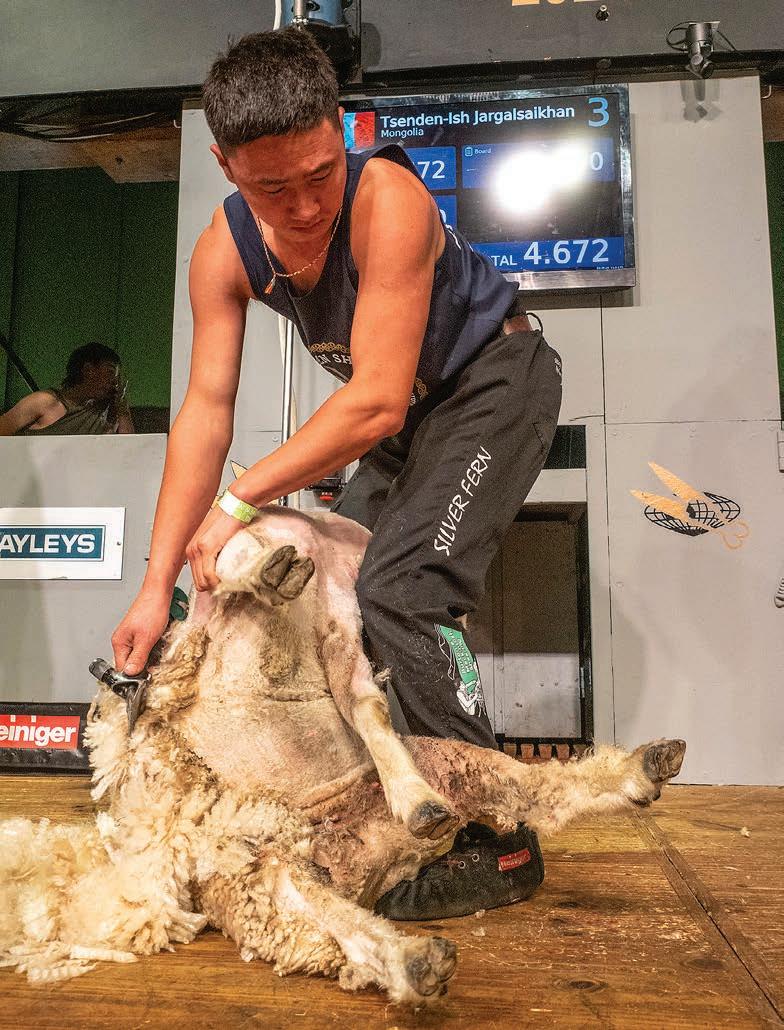
takes first steppes at Shears
Tsenden-Ish Jargalsaikhan, from Sukhbaatar, Mongolia, became the first person from Mongolia to reach a major shearing final, qualifying for the novice final at the 2026 Golden Shears in Masterton last week. Jargalsaikhan finished fifth in the final, and northern hemisphere competitors claimed three early lower-grade titles. A full wrap of the fourday event, which finished on Saturday, will appear in next week’s Farmers Weekly. Photo: Supplied
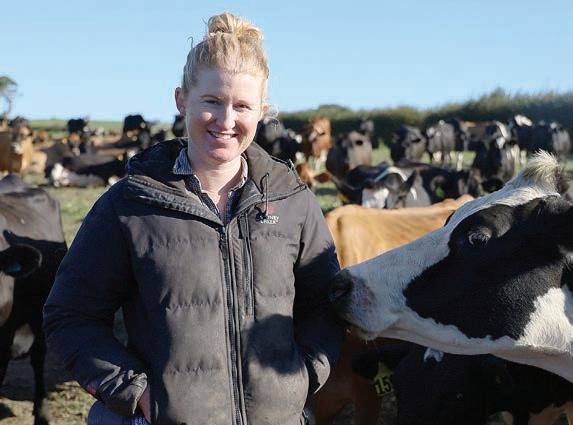
Young farmers over moon on KiwiSaver
Morrinsville sharemilker Danielle Hovmand says the changes to KiwiSaver will allow young farmers to move forward financially and give them further options in achieving farm ownership. Photo: Gerald Piddock
5
Weather leaves Canty farmers scrambling to get crops off paddocks.
NEWS 8
Dr Victoria Hatton imagines a world without access to US markets.
OPINION 23

M AY/J U N E 2 026












Nigel Stirling & Neal Wallace NEWS Transport
EDITORIAL
Bryan Gibson | 06 323 1519
Managing Editor bryan.gibson@agrihq.co.nz
Craig Page | 03 470 2469
Deputy Editor craig.page@agrihq.co.nz
Claire Robertson
Sub-Editor claire.robertson@agrihq.co.nz
Neal Wallace | 03 474 9240 Journalist neal.wallace@agrihq.co.nz
Gerald Piddock | 027 486 8346 Journalist gerald.piddock@agrihq.co.nz
Annette Scott | 021 908 400 Journalist annette.scott@agrihq.co.nz
Hugh Stringleman | 027 474 4003 Journalist stringleman@outlook.co.nz
Richard Rennie | 027 475 4256 Journalist richard.rennie@agrihq.co.nz
Nigel Stirling | 021 136 5570 Journalist nigel.g.stirling@gmail.com
Isabella Beale | 027 299 0596 Multimedia Journalist isabella.beale@agrihq.co.nz
PRODUCTION
Lana Kieselbach | 027 739 4295 production@agrihq.co.nz
ADVERTISING MATERIAL
Supply to: adcopy@agrihq.co.nz
SUBSCRIPTIONS & DELIVERY 0800 85 25 80 subs@agrihq.co.nz
PRINTER
Printed by NZME
Delivered by Reach Media Ltd
SALES CONTACTS
Andy Whitson | 027 626 2269
Sales & Marketing Manager andy.whitson@agrihq.co.nz
Janine Aish | 027 300 5990
Auckland/Northland Partnership Manager janine.aish@agrihq.co.nz
Jody Anderson | 027 474 6094
Waikato/Bay of Plenty Partnership Manager jody.anderson@agrihq.co.nz
Palak Arora | 027 474 6095
Lower North Island Partnership Manager palak.arora@agrihq.co.nz
Andy Whitson | 027 626 2269
South Island Partnership Manager andy.whitson@agrihq.co.nz
Julie Hill | 027 705 7181
Marketplace Partnership Manager classifieds@agrihq.co.nz
Andrea Mansfield | 027 602 4925
National Livestock Manager livestock@agrihq.co.nz
Real Estate | 0800 85 25 80 realestate@agrihq.co.nz
Word Only Advertising | 0800 85 25 80 Marketplace wordads@agrihq.co.nz
PUBLISHERS
Dean and Cushla Williamson Phone: 027 323 9407 dean.williamson@agrihq.co.nz cushla.williamson@agrihq.co.nz
Farmers Weekly is Published by AgriHQ PO Box 529, Feilding 4740, New Zealand Phone: 0800 85 25 80 Website: www.farmersweekly.co.nz
ISSN 2463-6002 (Print) ISSN 2463-6010 (Online)
31-36
37-38
38-39
40-43
44
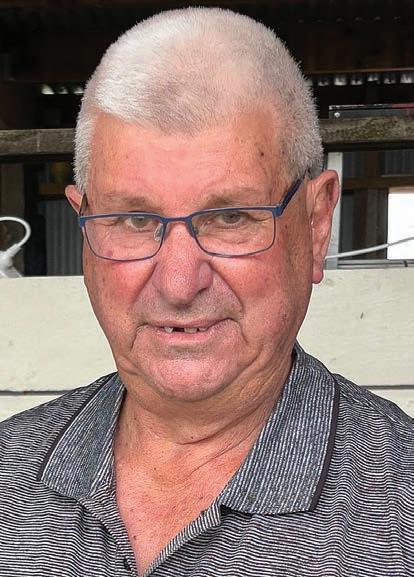
OVERWHELMED: Shearing identity Phil O’Shaughnessy has been honoured by the Northern Wairoa A&P Society in the place where it all started.
News in brief
Mellsop appointed
Jane Mellsop is the new government appointee to the New Zealand Meat Board, replacing Sarah Paterson.
Mellsop is the director of trade, investment and economic security at the Asia Society Policy Institute in Washington, DC, and has held a range of senior roles in trade negotiation, law and public policy. She previously served as a diplomat with the Ministry of Foreign Affairs and Trade.
Startup funding
Cellular horticulture startup Forever Harvest has raised $1.2 million to accelerate development of cultivated fruit and nut ingredients.
The Bioeconomy Science Institute said the investment is led by Sprout Agritech, with support from the BSI and Callaghan Innovation’s Deep Tech Incubator programme. Forever Harvest is based in Christchurch, where its cellular horticulture involves growing specific fruit or nut cells in a lab.
Milk production up
New Zealand milk production increased 2% in January compared to the same period last year thanks to high South Island collections, on-farm productivity gains and continuing momentum late into the season.
For the 12 months to January, New Zealand milk production was up 1.8% on the previous comparable period, according to Fonterra’s Global Dairy Update for February. The co-op’s milk collection for January was169.6 million kg MS, 2.3% above January last season.
Profits rise
NZ Rural Land Company achieved a net profit after tax of $7.9 million in 2025, up 10%, and will pay out 90.5% to shareholders at 4.91c a share.
The adjusted funds from operations (AFFO) were also $7.9m, and grew from 4.94c a share in FY 2024 to 5.43c in FY2025. The recently updated dividend policy is to pay out between 90% and 100% of AFFO, paid quarterly.








Sweeter honey prospect risks turning sour

Richard Rennie NEWS Apiculture
ANOTHER poor harvest season, low inventory levels and fewer hives mean New Zealand’s honey industry is set to grapple with a shortfall of product, just as global market demand surges.
Honey processors are reporting a quick reversal in the sector’s overhang of thousands of tonnes of unsold honey that prevailed for the past five years, with expectations shelf space may be compromised due to product shortfall this year.
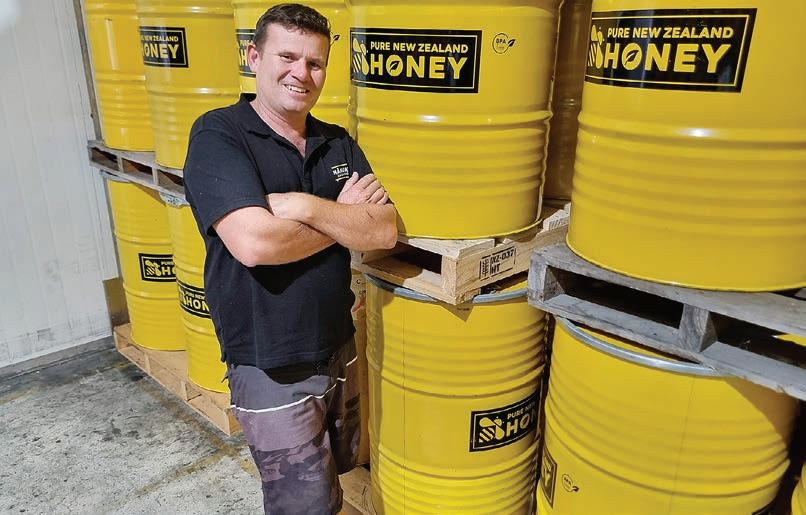
Paengaroa-based honey processor Logan Bowyer of Mānuka Orchard honey processors told Farmers Weekly the sector risks falling below a sustainable supply line, if it is not already there.
He said there is dire need for centralised industry volume records to ensure supply is better managed.
“There is a two-year lag in supply for honey, and two years ago beekeepers needed to have been told exactly what volumes were.
“My take is we need 20,000 to 30,000 tonnes in storage by March-April in a good year.”
Continued from page 1
McLeod said the exporter’s options are now either to redirect containers to customers in Asia or return them to NZ.
“Any diversion is going to be costly because you are selling to another market which is either not wanting this fruit or those sizes,” he said.
Walker said ANZCO’s stranded containers of beef would most likely come back to NZ where there is a ready market domestically.
“There is no point for us keeping it there in the hope we are going to move it into the Middle East. There is no shipping going there
That included 10,000t of honey aging for sale a year out, 10,000t for sale this year, and a further 10,000t in cool storage as a longerterm buffer stock.
“But the reality is we do not really know how much we have. It could be we have only produced 5000t this year.”
“It is not like calves that are born, tagged and counted into a central database.”
Bowyer processes about 1400t a year of honey and said this season marks the fifth consecutive low-
so we will just cut our losses and move it,” he said.
A Meat Industry Association spokesperson said exports to the United Kingdom and Europe are not affected as these are shipped via the Red Sea or around Africa.
“If Hormuz is closed, congestion and delays will primarily impact chilled exports to the Middle East, which were worth $166 million last year,” the spokesperson said.
Joshua Tan, the executive director of Export NZ, said ships are tied up in Persian Gulf ports, which will add to pressure on trade and oil supplies, with 20% of global oil shipped through the Strait of Hormuz.
yielding year for honey production.
“The majority of the harvest above Taupō has struggled this year.”
With only a few weeks left of harvest, yields are expected to be similar or even less than last year’s poor harvest. That was estimated by the Ministry for Primary Industries at 15,500t, one of the lowest volumes for years.
But Bowyer challenged those numbers, saying this year may even be as low as 5000t.
The slide in volume has also
A Fonterra spokesperson said its Middle East staff are safe, but it is too early to determine the impact on trade.
Transporting New Zealand is warning members to brace for possible increases in fuel prices as the conflict increases the price of crude oil.
The Middle East is a significant player in fertiliser trade with about 40% of nitrogen fertilisers coming from the region. NZ’s two largest fertiliser companies, Ravensdown and Ballance Agri-Nutrients, said they have sufficient in store or on the water, but noted that fertiliser has similar economic and geopolitical drivers to oil.

come from hive numbers collapsing from a peak of 1 million four years ago to about 450,000 today.
Losses have been exacerbated by many operators switching to kiwifruit pollination for a better return.
Significantly depressed honey prices have made many operations unprofitable, and hopes are the supply shortfall will at least push prices into profitable territory.
“Beekeepers tell me that realistically they need to be getting $30 a kg for 10-plus mānuka grade honey just to pay the bills, never mind the losses you will have carried for the past few years.”
There is a two-year lag in supply for honey, and two years ago beekeepers needed to have been told exactly what volumes were.
Logan Bowyer Mānuka Orchard
Northland beekeeper Liam Gavin said the long-running narrative has been that plenty of mānuka honey is about, hanging over as inventory from liquidated honey companies.
“But I have spoken to a lot of beekeepers and they are saying
they do not have any stock in the shed now.”
The tension in supply comes as mānuka honey trades to record high volumes, driven strongly by the United States.
Retail packs of mānuka exports to the US climbed 54% in the 2025 year to 2862t, a massive 1000t increase on 2024.
It served to push total export volumes to an annual record of 7000t of mānuka and matched the previous total honey export volume of 12,732t, set in 2020.
Gavin is hoping to see prices re-adjust to a point between $20/ kg and $36/kg of 10-plus mānuka. Prices dropped as low as $13/kg for 10-plus mānuka in 2024.
Jason Prior of Down Under Honey, who is member of the Unique Mānuka Factor Honey Association of New Zealand board, said private retail brands overseas had sucked up bulk drums of mānuka honey in past years but could struggle from here on in to get it at bargain basement prices.
An Apiculture NZ spokesperson said it anticipates honey supplies will be tight for at least 12 months as the market lifts.
“Whether it can be sustained will depend upon the impact of things including tariffs being passed on,” he said.
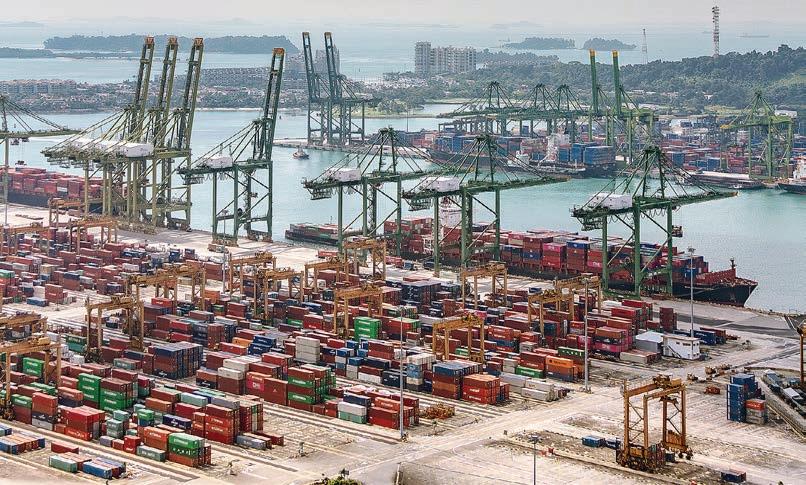
WAITING GAME: Containers bound for the Gulf are being unloaded in Singapore while exporters negotiate with customers and shipping lines.
Photo: Wikimedia Commons
SWEETER: Mānuka Orchard honey processors director Logan Bowyer says honey supplies are heading towards far tighter supply, with his storage facility holding only half what it is capable of as the season’s harvest nears its end.
Photo: Richard Rennie
Wellness trend lays path for China velvet

Annette Scott MARKETS Deer
THE growth opportunity for New Zealand deer velvet in China has been backed by a report suggesting Chinese consumers place higher importance than their global peers on nutritional value and food that supports preventative health outcomes.
PwC’s Voice of the Consumer 2025 – China report makes clear that China’s consumer story is no longer one of simple expansion or contraction. Instead, it is one of reallocation.
While discretionary categories face pressure, spending on health, illness prevention, and personal wellbeing remains resilient, and in many cases, structurally protected, despite broader macroeconomic uncertainty.
At the centre of this shift is a rapidly growing consumer segment characterised by a preventative mindset.
This group invests early to avoid future health costs, prioritising supplements, functional nutrition, and lifestyle interventions over reactive treatment.
Search is on for Rural Woman of the Year
Staff reporter PEOPLE Awards
NOMINATIONS are open for the inaugural Rural Woman of the Year award, sponsored by Farmers Weekly.
The award has been launched by Federated Farmers, Rural Women New Zealand and Brightstar to recognise rural women and celebrate their contribution.
The winner will be announced at the Primary Industries New Zealand (PINZ) awards at the Cordis Hotel in Auckland on June 23.
Rural Women New Zealand interim chair Nicole Oliver said the organisation is excited to have an award that recognises the incredible achievements of rural women across the country.
“It’s important that rural women are recognised on a national and sector-wide stage. This award is about celebrating the impact an exceptional rural woman has,” she said.
“This inaugural award is all the more special as we celebrate our centennial year, 100 years of proudly advocating for women and rural communities.
“We’re incredibly grateful to have the support of [Farmers Weekly publishers] Cushla and Dean Williamson and the AgriHQ team with our new Farmers Weekly partnership, and now with their sponsorship of this award.”
PwC’s data shows this cohort actively avoids ultra-processed foods, exhibits high concern about additives and preservatives, and seeks “clean label” products that are minimally processed and naturally derived.
Status is no longer signalled primarily through conspicuous consumption but through informed choices: what one eats, how it is sourced, and whether it aligns with long-term wellbeing.
Supplement usage is rising, alongside a broader shift toward nutrient-dense, functional formats.
The report highlights a deeply held belief that personal health and planetary health are two sides of the same coin with consumers actively seeking and verifying sustainable packaging, third-party certifications, and transparent environmental claims.
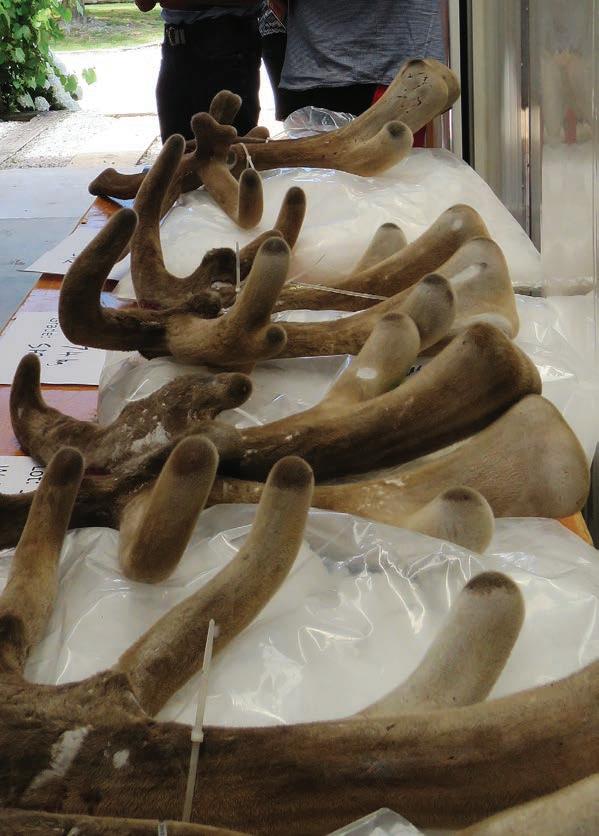
“Against this backdrop, our deer velvet is unusually well positioned,” Deer Industry NZ chief executive Rhys Griffiths said.
“Deer velvet naturally aligns with a preventative health paradigm. It is nutrient-dense, traditionally respected, and increasingly supported by modern science.
“In a market where consumers are rejecting complexity and chemical formulations, velvet’s natural origin is a strategic advantage.
“Our production system strengthens this further, including grass-fed farming, strong animal welfare standards, and robust traceability systems, which speak directly to PwC’s finding that trust, transparency, and provenance are becoming prerequisites rather than differentiators.”
QR code-enabled traceability, certification and sciencebacked claims are now expected by wellness-focused consumers, not merely appreciated.
“Our velvet can meet these expectations not just at a brand level, but equally as important if not more so, at a systems level.
“This creates a clear pathway for NZ velvet, namely partnering with leading Chinese health brands that celebrate Chinese culture, wellness traditions, and modern science, such as Beijing Tong Ren Tang, Dong Er E Jiao, and similar players.”
Griffiths said PwC’s insights point to a compelling conclusion.
“The growth opportunity for deer velvet in China is
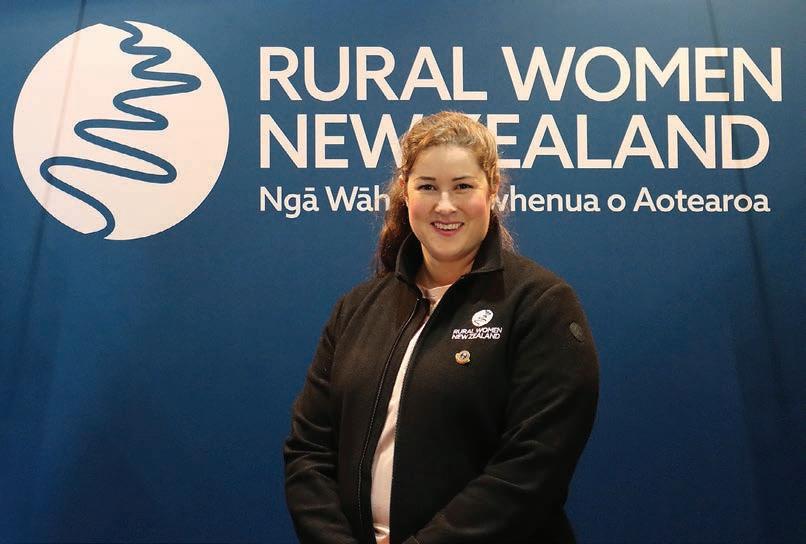
TIMELY: Interim chair Nicole Oliver says the inaugural award is all the more special as Rural Women New Zealand is celebrating its centennial year this year.
If your work has made a difference for our rural communities, the primary sector or New Zealand’s wider success, we want to celebrate you.
Nicole Oliver Rural Women New Zealand
Oliver said the award is not limited to members of Rural Women New Zealand; any woman with a connection to rural communities is encouraged to apply.
“There are more than 400,000 potential nominees out there and we want to make sure there are absolutely no barriers for a worthy recipient of this award stepping forward and entering.
“If your work has made a difference for our rural communities, the primary sector or New Zealand’s wider success, we want to celebrate you.”
Federated Farmers president
not simply volume-led, price-led, or trend-led. It is values-led.”
He said DINZ continues to work strategically to reinforce transparency, invest in science, deepen sustainability credentials, and align with partners in China who
Wayne Langford said rural communities are “absolutely overflowing with talented women doing amazing things across the industry in farming, advocacy, grassroots leadership, and within their community”.
“We want to shine a bright light on the work they’re doing to lead, inspire, connect and strengthen New Zealand’s rural communities and the wider agricultural sector.”
The award launch comes as International Women’s Day is celebrated on Sunday March 8.
Brightstar CEO Paula Cleghorn said the addition of this new award category fits perfectly with the vision and strategy for the wider PINZ Awards.
“Half of rural New Zealand’s population are female, so it’s great to be introducing this new award category that specifically recognises their contribution and achievements.”
Nominations for the Rural Woman of the Year award are open now, with nominations closing on April 1, 2026.
can translate provenance into culturally meaningful value.
“In doing so, NZ deer velvet is not chasing consumer change; instead, it is already ahead of the curve and awaiting its moment in the sun.”
Feds rejects call for animal welfare role

Gerhard Uys NEWS Animal welfare
ABOUT 31,000 people have signed a petition calling for a Commissioner for Animals to improve the welfare of farmed animals in New Zealand, but Federated Farmers says there are already enough checks and balances in place.
As reported by RNZ, the call for an independent commissioner was made by the Commissioner for Animals Alliance of more than 20 organisations that include SAFE and Greenpeace. Such a commissioner would essentially be a watchdog that oversees existing bodies.
The alliance said that the already existing National Animal Welfare Advisory Committee and the National Animal Ethics Advisory Committee advise the government on animal welfare, but their advice is not binding and ministers are not required to act on recommendations.
The alliance also said under the current framework the government ministers responsible for increasing productivity in animal agriculture are also responsible for the welfare of animals being exploited by those systems.
A public survey commissioned for SAFE, through research agency Verian, showed 85% of 1000 respondents were concerned that animal welfare act requirements are not always upheld
The animal health spokesperson for sheep and cattle at Federated Farmers, Richard Dawkins, told Farmers Weekly that New Zealand has a reputation internationally for high animal welfare standards and that it is doing enough to maintain them.
The Ministry for Primary Industries manages and enforces those welfare standards, with input from the National Animal Welfare Advisory Committee and the Ethics Advisory Committee, he said.
He said a very small percentage of issues arise, and all industries have issues.
A new body would mean duplication and another layer of bureaucracy, with no evidence to say it would improve outcomes, Dawkins said.
The MPI and other bodies concerned with animal welfare are not too production-centred, he said.
The MPI is the largest employer of veterinarians in the country and invests a lot in animal welfare, he said.
RNZ reported that the MPI’s director of compliance and response, Glen Burrell, said the ministry looks at about 3000 animal welfare cases each year, has 200 veterinarians at meatworks and its animal welfare workforce has more than 50 inspectors.
It issued 584 infringement notices, for lower level offending, during the 2024/25 financial year.
SUN: New Zealand deer velvet is ahead of the curve and awaiting its moment in the sun, says Deer Industry NZ chief executive Rhys Griffiths.
Young farmers over the moon on KiwiSaver

Gerald Piddock NEWS Finance
THE government’s change to KiwiSaver to allow it to be used to help purchase a first home or farm is a much-needed stepping stone on the way to farm ownership, farmers say.
The technical change to the KiwiSaver Act means farm staff in service tenancies (living on the farm) will soon be able to use KiwiSaver to purchase a house without immediately moving in.
Morrinsville sharemilker
Danielle Hovmand said she was very pleased with the announcement, after challenging the government several times to deliver on the commitment it made in 2023.
“It levels up the playing field for all New Zealanders and it’s great to see that it’s also included that it can be used for a land or farm purchase.”
Other farmers she had spoken to had echoed her sentiments, she said.
The change will allow farmers to move forward financially and at
a later stage put their equity back into the ag sector in a possible farm purchase.
It gives young farmers further options in getting on the farm ownership ladder, she said.
“It’s a real challenge for young people to get into farm ownership and this improves that access to a bit of extra capital.”
Hovmand said she is also pushing for it to include herd purchasing, but the announcement is a great start.
It’s a real challenge for young people to get into farm ownership and this improves that access to a bit of extra capital.
Danielle Hovmand Morrinsville
“At the moment, we’re seeing high cow prices, which is quite limiting for young people to get into herd ownership.”
Mid Canterbury dairy farm manager Jack Taggart said the law change will be a step in the right direction.
“I’m looking at buying a house at the moment and finding that to be a challenge. There’s a significant amount of money sitting in my KiwiSaver and in a few years’ time when I want to go sharemilking or into an equity partnership, that money will be very helpful.”
A farmer under 30 with KiwiSaver is likely to have around $50,000-$60,000 in their KiwiSaver. While that is not enough to purchase a majority share in a farm it is a great option as a first small step, he said.
Hypothetically, Taggart said, he could use it to buy a home and then in the near future either sell that home or borrow against it to purchase a herd.
“Either way, having that access to KiwiSaver definitely gets me on the way to make that happen.”
He also supported the argument of extending the criteria to include herds – but recognised it would be a slippery slope because, in order to be fair, it should include farm machinery for arable farmers or tradeable stock for red meat farmers.
“But being able to own a herd of cows using your KiwiSaver is far more achievable than owning a
Karapeeva quits top job at MIA

Neal Wallace PEOPLE Production
SIRMA Karapeeva, the Meat Industry Association’s chief executive for the past six years, has resigned.
Association chair Nathan Guy said Karapeeva had led the sector through contrasting times, from managing the covid response through to recent periods of what he called unprecedented growth in global returns.
When the covid pandemic struck,
Karapeeva had a crucial role to create an environment in which meat processors could continue to operate their plants while adhering to health restrictions.
“Sirma joined the association in 2015 as trade and economic manager following a career in the public sector and was appointed to the chief executive role in 2020,” said Guy.
“With her background in trade policy and negotiation, Sirma has been a steady pair of hands as we dealt with the unknown outcome of the recent American tariff announcements, the China safeguard investigations and free
This week’s poll question:
Should KiwiSaver rules be relaxed even further to include dairy herd purchasing?
Have your say at farmersweekly.co.nz/poll
part of the farm and the returns on owning a herd of cows are typically much greater than owning a farm.”
He was also pleased the law change was inclusive and aimed at assisting other professions that
trade agreements with Europe and the United Kingdom.”
As chief executive, Karapeeva succeeded in establishing a link between the government and industry, leading to wider industry partnerships.
“This proved especially beneficial as we worked together to address industry challenges and take a more aligned approach across the sector,” said Guy.
Karapeeva will assist with the transition before finishing with the association on March 6.
A recruitment process will start shortly, Guy said.
live rurally, such as doctors and police officers.
Legislation giving effect to the changes will be introduced in Parliament in the middle of the year.

RESIGNED: Sirma Karapeeva, the Meat Industry Association’s chief executive, has resigned.



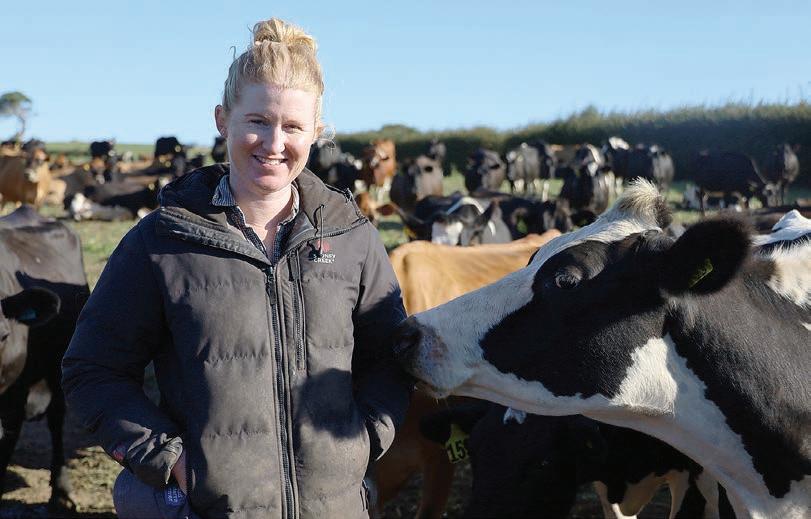
OPTIONS: Morrinsville sharemilker Danielle Hovmand says the changes to KiwiSaver will allow young farmers to move forward financially and give them further options in achieving farm ownership.
Photo: Gerald Piddock



Science job cuts ‘erode sector capacity’
Neal Wallace NEWS Research
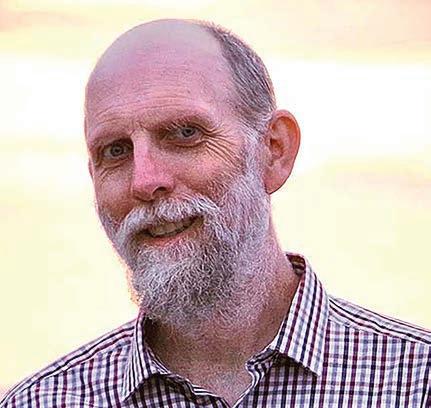
THE latest round of science redundancies further erodes the human capacity of the sector, says an industry leader.
Troy Baisden, co-president of the New Zealand Association of Scientists, said the 86 voluntary redundancies taken by scientists at the Bioeconomy Science Institute (BSI), undermine the capacity of science and its benefit to the country.
“Careers are fundamental to what science is,” he said.
The BSI, formed last year from a merger of AgResearch, Landcare Research, Plant & Food Research
and Scion, is shedding 134 jobs in total, following a call for voluntary redundancies.
That consists of 86 science roles and 48 professional services roles, such as finance and administration.
Baisden said this is happening without an obvious sector strategy setting out how it can contribute to economic growth in the coming years.
“What is our strategy for the next five or 10 years? How are we going to achieve that if we are losing our best people? How do we take advantage of this merger?” he asked.
Plant & Food Research successfully took a long-term approach with its research, as evident in the number of new
fruit varieties it has released, he said.
Merging four Crown Research Institutes created duplicate roles but, Baisden said, these redundancies go beyond striving for efficiency as research capacity has already been pared to the bone.
“We are more likely to lose critical capacity than find efficiency from doubling up.”
Baisden said the funding model for science needs to be fixed so scientists see a future, can establish careers and have confidence.
“People need to understand we’re at risk of losing our status as an advanced economy.”
He also wants politicians to realise when they fund science,
they are funding multiple elements.
He gave the example that there was little point having cutting edge technology if there are not the experienced people to use it.
In announcing the restructuring, a BSI statement said that, of the 134 voluntary redundancies, 64% were from science roles, which overall makes up 71% of its current workforce.
“The remaining 36% were from professional services roles, which proportionally represents 29% of our current workforce.”
It said the voluntary redundancy process was undertaken as part of measures to strengthen the organisation and make it sustainable.
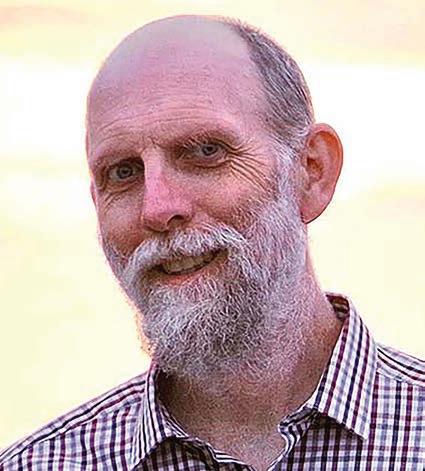
NO STRATEGY: Troy Baisden, the co-president of the NZ Association of Scientists, says the lastest round of job cuts is happening without an obvious sector strategy setting out how it can contribute to economic growth.
Solar rolling out on 32 case-study farms
Gerhard Uys TECHNOLOGY Energy
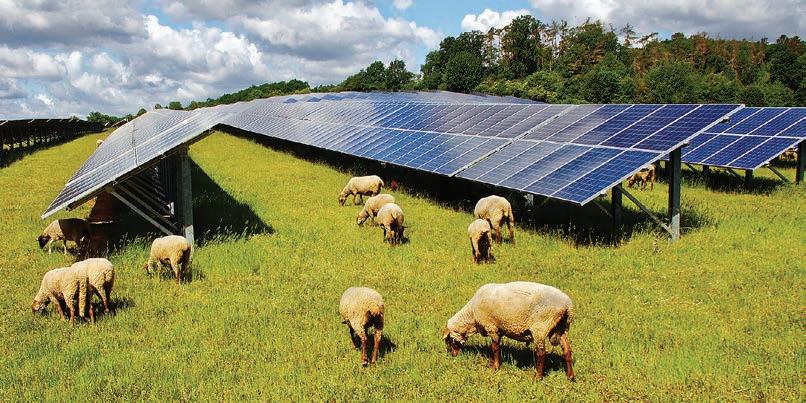
THE first 32 farms chosen under the government’s Solar on Farms initiative will provide case studies for how solar and battery systems perform on different farm types.
The Energy Efficiency and Conservation Authority (EECA) said farmers and growers need certainty of the return on invest-
ment for their specific farm types.
Early modelling suggests if 30% of Kiwi farms installed larger systems they could generate as much as 10% of New Zealand’s current electricity demand.
Ten different farm types are covered by the initiative, including dairy, sheep and beef, poultry, arable, horticulture, plant nurseries and wine.
The farms will receive partial funding, which covers 40% of the cost of an inverter and battery, and
20% for the rest of a solar system. Participating farms will share energy-use data, installation and operating insights, and host onfarm demonstrations.
Data from the demonstration farms will feed into tailored feasibility and case studies, and help identify challenges such as limitations and differences for local and regional consenting. Installations began in January, with all systems expected to be in place by July.

STUDY: Farms in the government’s Solar on Farms initiative will share energy use data, installation and operating insights, and host on-farm demonstrations.
Canty farmers confront harvest frustrations
Annette Scott NEWS Arable
EACH small window of sunshine is like gold for frustrated Canterbury farmers scrambling to get crops off the paddocks, following a summer of dismal harvest weather.
Crop losses because of hailstorms and persistent rain through January and February
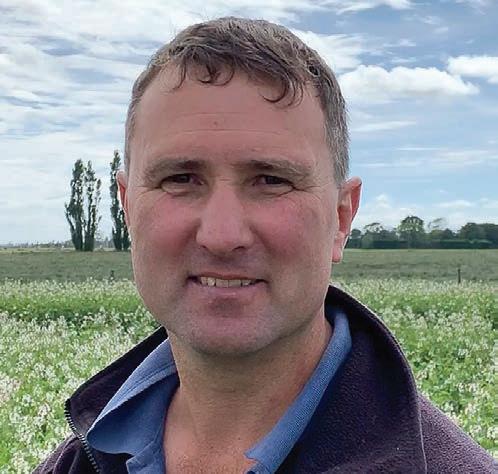
will cost well past $100 million, Federated Farmers arable chair David Birkett said.
“We have just not had the runs of dry days. Yields are down, some crops just won’t get harvested at all, it’s grab what you can when you can. Everyone’s driers are flat tack, the windows of opportunity have been very small all summer,” he said.
Birkett said farmers are considering all options going forward with many looking across their whole farm systems to increase resilience.
Farmers are weighing up finishing lambs against dairy grazing, with a reluctance to take on cropping contracts for next season.
“A lot of people will be looking really hard. There is money in livestock and it’s easy to change to livestock quite quickly.
“It has got to the point where we are seeing disappointing, unsustainable prices for next year coming out and there is farmer resistance to uptake contracts, especially for clover that has been hit hard two years running.
“Now with $20m lost in clover alone this season, seed companies will struggle to fill contracts committed to overseas.
“From a whole farm system view there will be different solutions for each farm. Where some farms better suit lambs, they may take on greater numbers, but more growers are expected to take on dairy grazing.
Last chance to vote in B+LNZ 2026 Annual Meeting processes
Time is running out to have your say on company resolutions – and for Southern South Island voters, the farmer director election – as part of the 2026 Beef + Lamb New Zealand Annual Meeting
Voting closes at 2pm this Thursday, 12 March
Access all Annual Meeting information at www.beeflambnz com/annual-meeting-2026
Any questions?
Call 0800 BEEFLAMB (0800 233 352) or email enquiries@beeflambnz.com

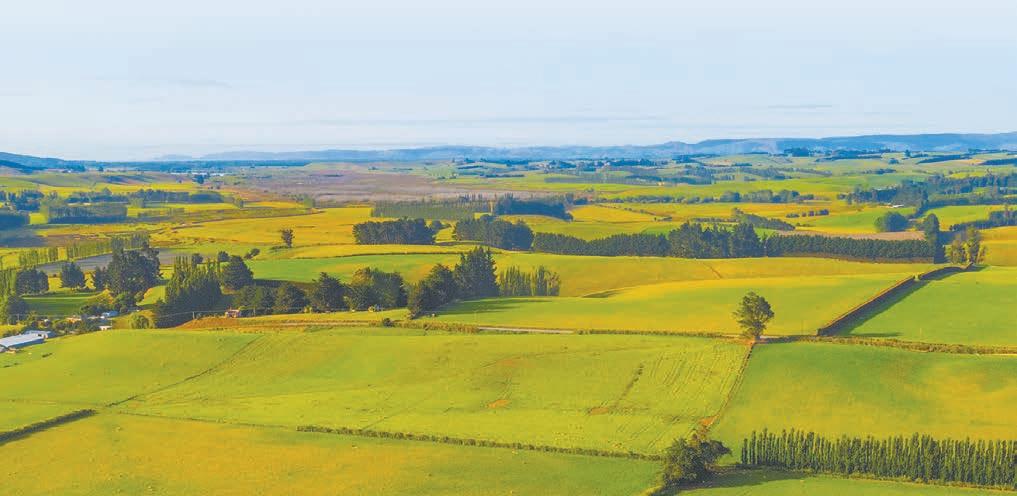
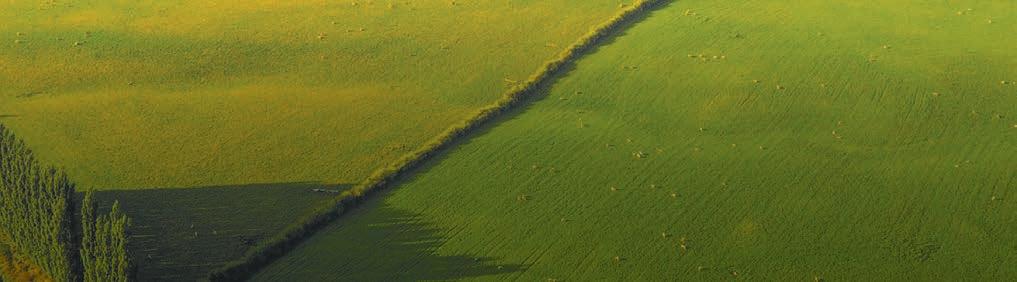
“Where you could buy five lambs to one tonne of grain [value], with store lamb prices way up this season you can only buy three lambs for the same margin. That’s a decrease in profitability, still with the risk of whether [schedule] prices hold up.
“Another option for lambs is for the processors to provide the capital, and the farmer becomes a grazier.”
Mid Canterbury Federated Farmers president David Acland said the significant damage to crops has raised concerns about the availability of feed for winter grazing.
“We’re urging Canterbury’s arable farmers and dairy, sheep and beef farmers to start conversations now about potential winter feed shortages.
“It’s an interesting conundrum, with another knock-on effect being land use and the opportunity to swing from lambs to dairy.
“The market has got a shift in it given the conversion factor with graziers going dairying and more cattle coming into the district Just how many is yet an unknown for this season.
“Talking now allows farmers to plan. Whether that means adjusting stock numbers, sourcing alternative feed to rearranging grazing agreements, it’s better sorted now than scrambling when the feed runs short.”
The government has acknowledged the arable farmers’ rough ride, classifying their
challenges this summer as a medium-scale adverse event.
Associate Minister for Agriculture Nicola Grigg said this unlocks further support for farmers and growers, including tax relief, and enables the Ministry for Social Development (MSD) to consider Rural Assistance Payments and Enhanced Taskforce Green.
“I know how tough this has been and how much pressure people are under,” Grigg said.
“We’re working hard to make sure support is targeted where it’s needed most.”
Events offering technical advice and practical support are being planned for next month across Canterbury with Rural Advisory Groups, Rural Support Trusts, Federated Farmers, Foundation for Arable Research and Beef + Lamb New Zealand coordinating practical assistance, including winter feed management, cashflow, and planning for next season.
“These events will help find out what is needed given time as it will be in spring that the cashflow will start biting,” Birkett said.
Meanwhile the message to farmers needing support, is don’t wait, reach out early.
MORE: Contact the Rural Support Trust on 0800 787 254 for confidential help.
Global tensions don’t dampen dairy demand
Staff
THE Global Dairy Trade index rose 5.7% at the latest auction, on the back of increasing demand for skim milk powder, which was up 9.1% to US$3243/tonne.
The price action occurred despite expanding milk production across major exporting regions, underscoring that headline supply growth is not translating into comfortable powder availability, NZX said in a note.
“Butter and AMF followed a similar pattern. Futures had pointed to a +4.0% move in butter; the final result was stronger at +6.1%, with C2 up +6.9% and clearing US$165/t above derivatives indications.”
Whole milk powder increased 4.5% to US$3863/t, while cheddar rose 4.3% and mozzarella lifted 7.9%, reinforcing continued protein demand.
Regional participation was interesting, NZX analysts said.
“North Asia reduced its share to 32% (from 38%), while Europe (+13%), the Middle East
(+12%) and Africa (+8%) all increased. Africa doubled its participation from 4% in Event 398.
“With ongoing geopolitical tensions affecting Middle Eastern logistics and trade lanes, and in the absence of recent Algerian tenders in the region, it is notable that EMEA participation strengthened rather than retreated.
“Total volume sold fell to 18,861MT (from 22,240MT), intensifying competition within a smaller offer pool.
“New Zealand’s milk production curve is now firmly in seasonal decline, and forward offer volumes through March to May indicate further easing.
“At the same time, growing domestic protein demand in the United States and new cheese capacity not yet operating at full utilisation are absorbing milk locally.
“Event 399 therefore demonstrated that even in a globally expanding production environment, prompt availability –particularly in powders and fats – remains sufficiently tight to drive assertive price responses when buyers step forward.”
RELUCTANT: Farmers are weighing up finishing lambs against dairy grazing with a reluctance to take on cropping contracts for next season, says David Birkett. Photos: File
OPTIONS: David Birkett says an option for cropping farmers and lambs is for processors to provide the capital, and the farmer becomes a grazier.
Cow’s diet affects milk taste, study finds
Gerald Piddock NEWS Dairy
ASTUDY has found that cows are what they eat when it comes to people detecting taste differences in their milk.
The work at Massey University found that consumers can taste differences in milk depending on what cows eat, as well as the stage of lactation at which the milk is produced.
It found that pasture type significantly influences the milk’s flavour, texture and overall sensory experience.
While the effect of lactation stage on milk flavour is well documented, the study accounted for this to ensure any differences detected were due to pasture type and management.
The study was conducted as part of Massey’s Whenua Haumanu programme, in collaboration with Massey’s Food Experience and Sensory Testing (Feast) laboratory.
“What this research shows is what you feed the cows does go into their metabolism and affect the milk they produce,” Feast director Professor Joanne Hort said.
Feast researchers analysed milk from three herds of cows across three stages of lactation from
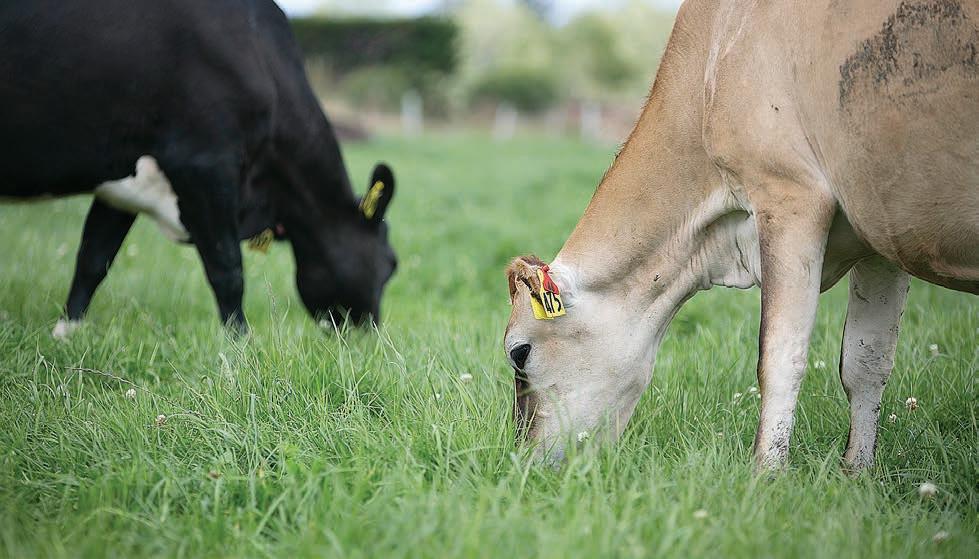
Consumers could reliably tell the difference between milks from different pastures.
November 2023 to March 2024.
Herd A had the cows grazing on standard ryegrass-clover pasture using industry-standard management.
Herd B had the cows fed on diverse pasture under regenerative management and the final herd, Herd C, had cows fed on diverse
pasture under industry-standard management.
Milk samples were collected, spray-dried, stored as powder and later reconstituted into liquid milk for sensory testing in July last year.
Tasters were presented with three samples, two identical and one different, and asked to identify the odd one out.
This approach tests whether consumers can reliably detect differences between products.
Researcher leader Simone Poggesi said the results showed pasture type and management had a strong influence on how milk was experienced.
“Consumers could reliably tell the difference between milks
PASTURE TO PALATE: Massey research found that consumers can taste differences in milk depending on the cow’s diet and lactation stage.
Milk from early lactation in November was associated with stronger flavours, higher sweetness, increased creaminess and a more intense aftertaste, often described as having chalky and earthy notes.
Mid-lactation milk from January was described by participants as thicker and creamier, with notable differences in sweetness and saltiness.
Late-lactation milk from March was described as thinner, less sweet, more sour and salty, with an unpleasant aftertaste. Some samples were described as having tallow-like notes and a stronger overall aroma.
from different pastures. This demonstrates that what cows eat can have a noticeable impact on the sensory properties of milk.”
Milk from Herd A was most often described as mouth-drying, with flavour notes such as “rancid”, “cardboard”, “cow” and “stale”.
Milk from Herd B was described as sweeter and creamier, with flavours associated with oxidised milk and milk powder. Herd C milk was characterised as more sour and salty, with a milky flavour and dry aftertaste.
It also showed the role that the stage of lactation plays in shaping milk flavour and texture, aligning with existing knowledge in dairy science.
While milk from November and January was found to be relatively similar within each pasture type, milk produced in March was clearly different across all pastures.
Hort said the findings demonstrate detectability rather than preference.
“While consumers could notice differences between the milks, this study doesn’t tell us whether those differences would influence liking or purchasing decisions.
“Future research looking at consumer acceptance will help us better understand how pasture feeding and lactation stages interact to shape consumer acceptance.”










































Simone Poggesi Massey University
Why I called farmers onto the cricket pitch
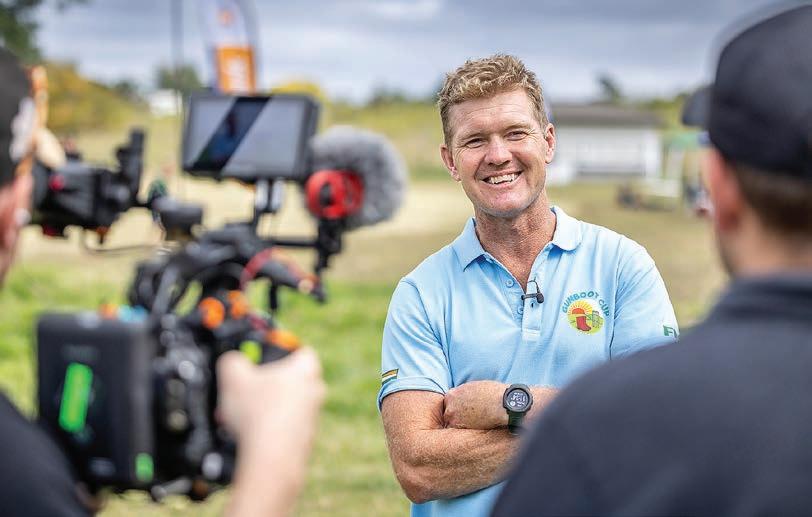
organised the inaugural Gumboot Cup, a cricket tournament for 12 rural Hawke’s Bay teams.
FARMING has a funny way of convincing you that you’ve just got to keep going. One more job. One more fence. One more thing to fix before you stop. And before you know it, stopping isn’t something you do anymore.
That’s part of the reason I helped organise the Gumboot Cup cricket match here in Hawke’s Bay.
On the surface it was just a game of cricket – a few laughs, a bit of banter, getting the families together and some questionable batting technique.
But underneath it was about something far more important: getting farmers off farm, together, and giving ourselves permission to breathe.
The pressure on farmers right now is real. Weather, finances, labour shortages, regulations –they all stack up. Stress becomes part of the daily background noise,
and too often we treat it as “just the way it is”.
I’m a big believer in Farmstrong, which is all about living well to farm well. One of the things that really stuck with me from an ACCfunded study for Farmstrong is that 58% of injured farmers linked their injuries to stress associated with farm work, and a quarter said stress was a major factor. That’s a sobering statistic. When your head’s not in the right place, your body often pays the price.
Last year alone, 20,000 farmers and growers said their wellbeing improved because of Farmstrong. That tells me two things: first, that a lot of us are under pressure; and second, that doing something about it really does make a difference.
I’ve seen that firsthand.
Ten days after Cyclone Gabrielle hit, I remember feeling so tired I was ready to keel over. I’d been

farmstrong.co.nz
running on pure adrenaline, racing around trying to get things sorted. It was hard, physical graft –carrying deer netting, posts, warratahs, whatever needed moving. I was absolutely stuffed. The days blurred together, and everything we worked on seemed to disappear just as fast as we fixed it.
Then one Sunday morning, help arrived – and it changed everything.
A stock agent, a family friend, turned up with a trailerload of fencing gear. He lit the fire again and we got stuck in. There was a bit of fence on our main laneway that had really been getting to me. It felt like a symbol of everything that was wrong. He just said, “Let’s attack that bit.”
It didn’t take much. Just him being there, a bit of motivation, and someone from outside the farm to talk to. He stayed a couple of days, and it was massive for my headspace.
Not long after that, a crew from Manawatū turned up and helped tackle some slips. Then one day, completely out of the blue, a 20 tonne digger appeared at the end of our driveway. It had been organised through a mate. Sitting in the cab was a box of grease and a note that said, “Best of luck with it all Harry.”
Those moments reminded me how powerful connection is.
Farming can be isolating at the best of times. After a disaster, that isolation can feel overwhelming.
That’s what the Gumboot Cup was all about.
It was not about winning or losing. It was about showing up. It was about having a yarn with someone who gets it, because they’re living it too.
It was about laughing at a dropped catch or a wild swing and remembering that you are more than the problems waiting back at the gate.
Taking time off farm isn’t weakness. It’s maintenance –just like greasing a bearing or fixing a race before it blows out
completely. When we ignore stress, it doesn’t just stay in our heads. It shows up in injuries, mistakes, and burnout.
ACC’s support of Farmstrong matters because prevention matters. If getting together for a game of cricket helps even one farmer reset, refocus, or realise they’re not on their own, then it was worth every minute.
The Gumboot Cup reminded us that the farm will still be there when we get back – and we are in a better state to look after it when we have some time out with mates.
is the official media partner of Farmstrong
ACC – farming injuries by the numbers
In 2025 ACC accepted 16,325 work-related agricultural claims at a cost of $109 million to help people recover.
Over the past five years ACC has supported farmers with 1.5 million days of weekly compensation (days off work) at a cost of $209m.
The leading regions in 2025 for work-related agricultural claims were Waikato (2660), Canterbury (2376), Hawke’s Bay (1443), Southland (1414), and Bay of Plenty (1404) ACC announced its continued support of the Farmstrong programme late last year. The renewed investment will see $2.7m invested into the programme over the next two years, as the first phase of a five-year agreement ($6.8m total).
MORE:
For more information: https://farmstrong.co.nz/
Aus honey health buzz can only benefit mānuka: CEO
RESEARCH linking Australian honey with anti-microbial properties is not a risk to mānuka honey, which makes similar claims. So says the CEO of a group representing suppliers and exporters of mānuka.
Five years of research by the University of Sydney concludes the “buffet” of nectar collected by bees from native Australian plants produces honey with more potent anti-microbial abilities than if the nectar was sourced from just one plant. These qualities could lead to new treatments for drug-resistant infections, considered one of the top 10 challenges to global health. Reports of antibiotic resistance among Australian patients rose 25% in 2024.
Both mānuka honey producers and the Australian research make similar health claims, including about the treatment of bacteria. New Zealand mānuka honey
is promoted for its health attributes, the ability to treat wounds, inflammation, a source of antioxidants and assist with digestion.
Tony Wright, chief executive of Unique Mānuka Factor Honey
Association, which represents beekeepers, processors and marketers that supply and export New Zealand mānuka honey, said research supporting such health claims is the first step. Turning that research into
commercial products is a costly and complex challenge, more so in this case, due to the need to standardise its content given bees are sourcing nectar from multiple plants.
Wright said it is easier for mānuka honey as products carrying the UMF brand could be certified as coming only from mānuka.
“The challenge for Australia is where do they go, how do they standardise it?
“The advantage we have is that we get it from one plant, mānuka.
“Achieving standardisation is a real challenge.”
Wright welcomed the fact that a natural product had once again been shown to have health attributes, which will add to the attributes and claim of mānuka honey.
The researchers analysed the antimicrobial activity and chemical composition of 56 honey samples collected from more than 35 apiaries.
The study’s results, published in Microbiology Open, found more than three quarters of samples
had nectar from eucalyptus and in the laboratory it was shown to kill bacteria, even when diluted to 10% or less.
Samples from mixed floral species were also found to have high levels of bioactive compounds which experiments showed bacteria struggled to develop resistance.
Lead researcher Kenya Fernandes said the study showed Australia’s native flora had distinctive nectar.
“When bees can forage on a smorgasbord of native plants, the mix combines to create honey chemically rich in bioactive compounds that are effective against bacteria,” she said.
“Locally produced Australian honey has real potential to compete on the world stage and in our fight against antibiotic resistance.”
Australian researchers are now investigating how honey can be used to treat fungal skin infections in both companion animals and humans, manage chronic urinary tract infections and heal burn wound infections.
CONNECTION: Hawke’s Bay deer farmer Harry Gaddum says there’s power in connection, which is why he organised the inaugural Gumboot Cup.
Photos: FMG
Hawke’s Bay deer farmer Harry Gaddum
Neal Wallace NEWS Apiculture
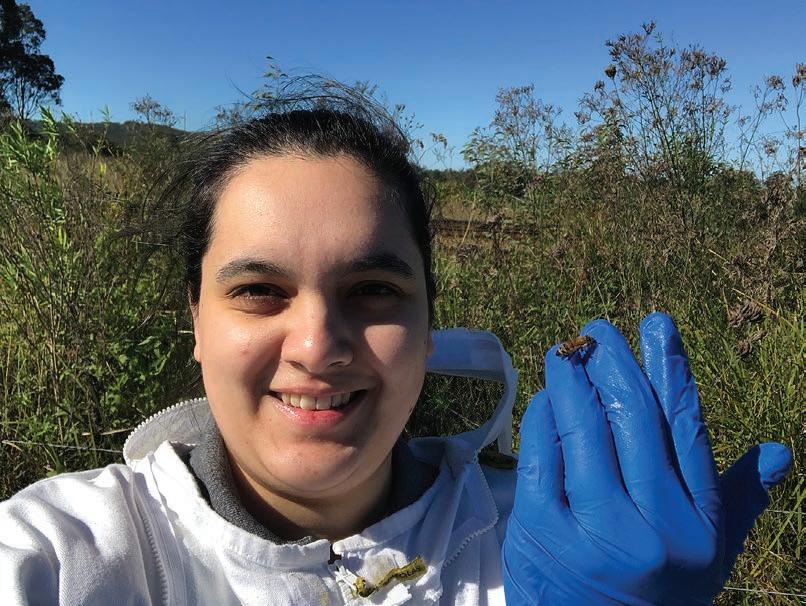
SMORGASBORD: University of Sydney lead researcher Kenya Fernandes says when bees can forage ‘on a smorgasbord of native plants, the mix combines to create honey chemically rich in bioactive compounds’.
OY! Harry Gaddum says there was some questionable batting technique, and a fair bit of banter.
Barn life suits stock and farmers
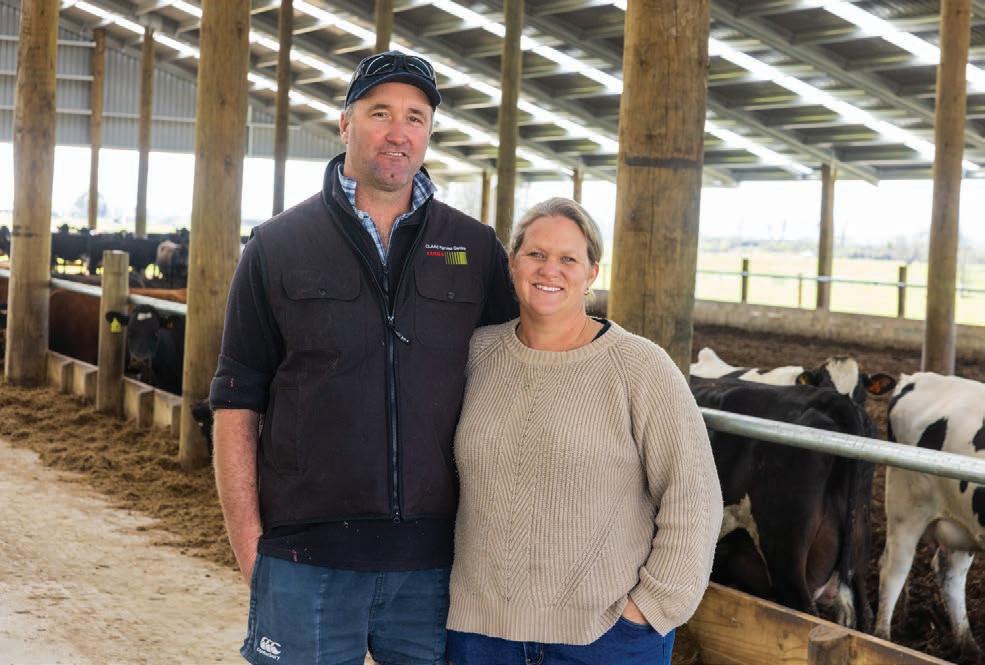
It’s all about lifestyle – for humans and cows – at Rene and Ereine Vos’s Huntly dairy farm, with the addition of an Aztech composting barn.
The barn has given them an extra tool in the toolbox, taking the stress out of winter on their farm, which is prone to getting very wet, and will provide relief from the heat in summer.
Life is easier for staff, cows are warm, dry and content, and feed utilisation is improved. Most importantly, they can save their paddocks ready to head into spring with optimal production.
The couple milk 320 cows twice a day. The farm milking platform is 130 hectares, with the total farm size at 230ha, giving them a self-contained unit to run young stock and rear beef animals.
They rear about 70 heifers as replacements and the beef system comprises of 80 yearlings, 80 R2 and 80 calves, which are taken through to finishing.
Their Artificial Breeding (AB) policy means they breed from the top of their herd, using recorded bulls over their youngstock to breed better animals with good genetics. Ereine explains that their AB is more precise now with the use of sexed semen in the top of the herd, as well as some nominated straws. They tail off using Hereford bulls, which gives them good beef animals to rear and finish.
This hard-working couple, who both grew up in town, were share milking on three farms. “We were busy and we started out doing the beef to use them as topping machines on the farms, rather than running around with the tractor. Now, we still use the same sort of principle.”
With their milking shed being only 24 aside they would prefer to have a smaller number of milking cows, and the beef complements the milking operation nicely.
Having given everything to farming over the last 25 years, it was time to make life a bit easier, and that’s where the Aztech composting barn comes in.
“It’s time for the farm to give us something. This was the goal, to have our own farm, and we want to enjoy the goal,” Rene says.
They did their homework before making the commitment to build a composting barn and the main reason, initially, was to give them more control in winter.
“Our farm gets very wet and we have never been able to feed out. We wanted to have somewhere to stand the cows off and feed them, to take the winter stress away. Winter is supposed to be a quieter time, but we always seemed to be just as busy because the cows were making a mess of the paddocks,” Rene says.
“Making mud was the one thing that was really stressing Rene out in winter. We
wanted to leave the paddocks in good health so we could get good production in spring,” Ereine adds.
They looked into feed pads, but felt a composting barn gave them more options, as they were not keen on standing cows off on concrete for long periods.
With the addition of the composting barn ahead of this winter, they found they were also able to calve everything inside. This eliminated running around looking for calves in the mud and getting the bike stuck in the process.
“All we needed to do was check them and sort them out after breakfast. This made life much easier for staff, the cows were warm, dry and content and we were amazed by how little feed was needed to keep them happy.
“There was no feed wastage. Now we would be feeding 7-8 kilograms of maintenance feed in the barn and that’s it, with a bit of hay and palm kernel or maize. We can focus all of the grass into the milking cows.”
The barn is designed in two halves, allowing them to run two herds in winter, with 160 cows on each side of the barn. As they started calving, springers were housed on one side, milkers on the other.
Rene says it was basically like having two feed pads.
The big benefits here were saving grass and better feed utilisation. The change in diet means they have reduced the amount of money spent feeding the cows in the milking shed. They now spend the same amount of money per cow, but feed double the amount.
“We have better control of our costs and our production has been up around 100kg milk solids (MS) per day steadily for most of the season. We are doing .2 to .3 per cow a day more.”
While it is early days, they have seen gains already, and believe there are further gains to be made in summer when the farm gets dry and cows can come under heat stress, dropping production.
“We can drop 50 MS a day out of production when the heat comes on in December. It will add up quickly,” Ereine says.
“Over summer they will come in during the heat of the day. I think it will make a big difference and I’m excited to see what happens,” Rene says.
“It’s a real animal welfare thing in summer. In winter it’s more about looking after the farm and in summer it’s about the cows, and not over-grazing. If we don’t hammer the grass as hard, we will be growing more grass.”
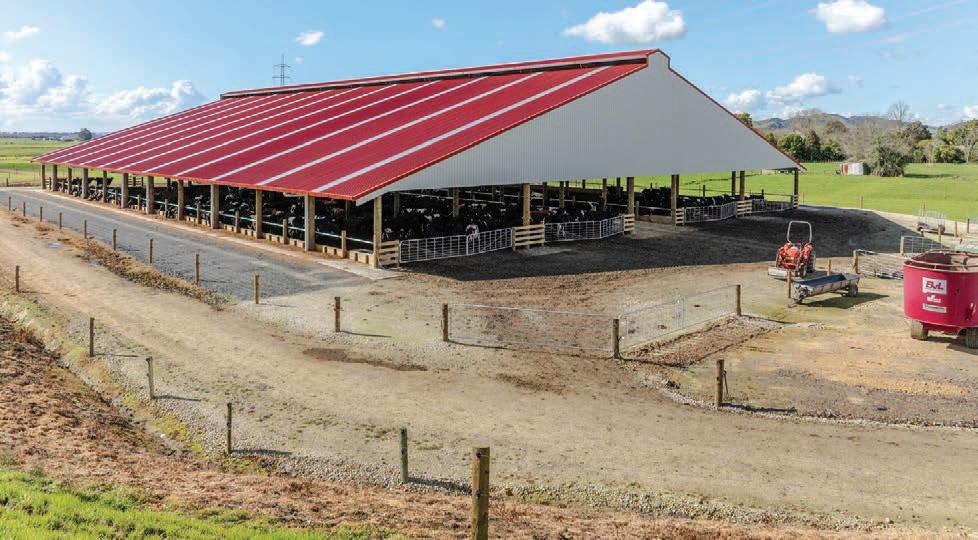
They chose to go with Aztech for their build for a number of reasons. They wanted a permanent structure, which they felt was more aesthetically pleasing. They also liked the idea of the Smart Ridge Vent on the Aztech barn, providing passive ventilation and airflow, while ensuring everything stayed dry inside.
They spent a year and a half researching barns and visiting different structures to understand what worked, and what didn’t, before settling on Aztech.
“We had built with them previously, a six-bay calf shed, which went really smoothly. We were impressed with their professionalism.”
Rene ‘rips’ (tills over) the self-composting bedding, which is a mixture of woodchip and sawdust, daily to aerate it. They are careful to keep the outside edges, where the cows are feeding, clean and hope they can get four to five years out of the compost.
“Hopefully, if we take care of it, it will last. It’s dry as anything and looks really good.” They have been amazed how warm the compost is, when you dig down, indicating the presence of good bacteria. And there is no odour at all.
It’s the little things that add up for the Vos family, all the benefits coming together to make the whole farm system run smoothly and profitably. “It seems to be more enjoyable. At lunchtime the cows just come running to the barn by themselves for a feed before milking. There is no more following a slow herd to the shed.”
The barn means no more sleepless nights for Rene in winter. He can lie in bed listening to the rain on the roof happy in the knowledge the cows are tucked up and his paddocks are not being churned into a bog hole.
“This is the first winter that I haven’t had to be out of the house before 8am to move the cows. That’s been an underestimated bonus, it’s given me a few months of the year where I can take it easy. Being able to listen to the rain at night and it was a good feeling – you can’t put a dollar value on that.
“You have to enjoy what you do. We really built it (the barn) to have more control over the whole farm, and I like being able to fine tune the cows and the farm. Seeing everyone happy and the cows happy, that’s the main thing.”

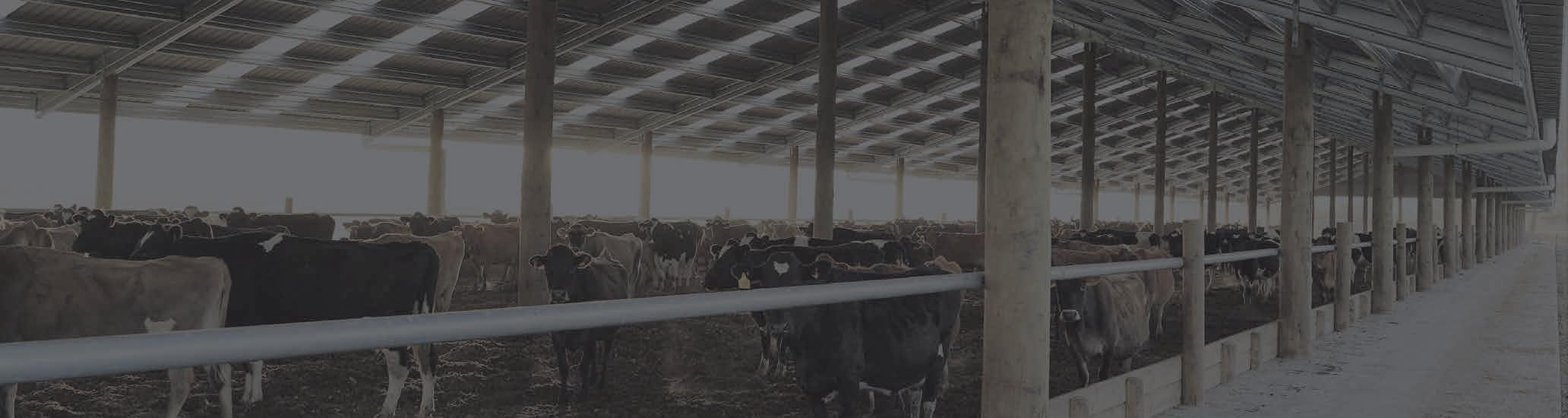
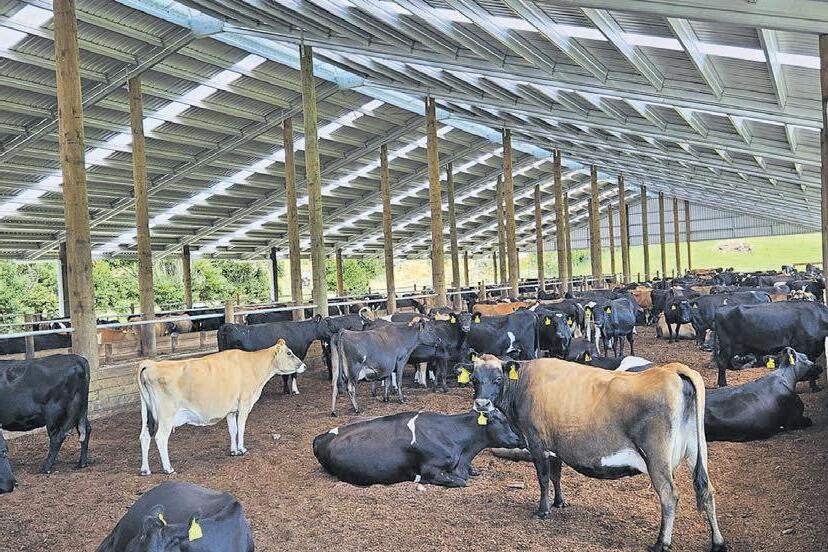
At Vos Farms, Rene and Ereine Vos worked with Aztech to design a composting barn that keeps cows warm, dry and settled while protecting paddocks and lifting overall efficiency.
The Vos Farms Aztech composting barn, 45.5m wide and 66m long built for year-round cow comfort and smarter winter management.
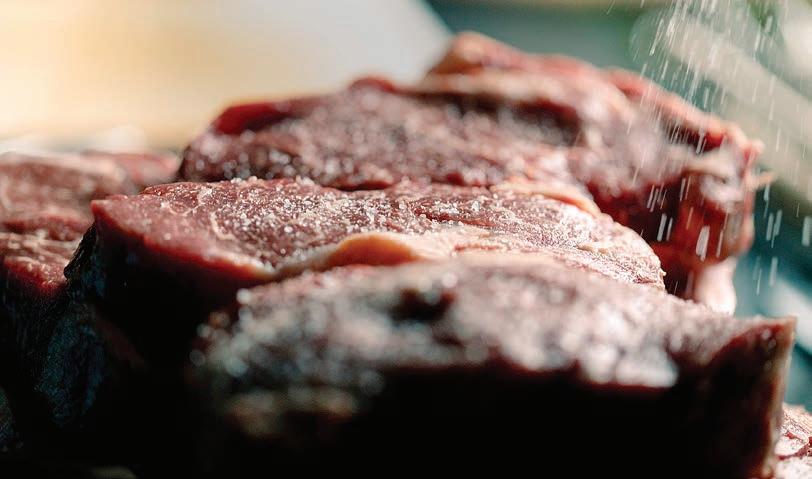
Beef production set for modest turnaround
NEW Zealand beef production is expected to rebound this year, up slightly from 2025, which was the lowest volume since 2017.
Jen Corkran, who authored Rabobank’s Global Beef report for the first quarter of 2026, said strong pricing signals and improved confidence among beef finishers should underpin a modest 3% improvement in the number of cattle slaughtered this year.
Production in 2025 was just under 674,000 tonnes, 6% less than 2024, due to fewer dairyorigin calves being reared in 2023 and lower dairy cow culling as
a strong early season milk price helped keep cow numbers steady.
“This lower beef production dynamic is shifting as an estimated 150,000 additional dairy-beef calves were reared in 2025, expanding the pool of R1 cattle coming through,” she said.
Favourable grass growth this season has allowed farmers to take stock to heavier weights, which was positive for beef productivity but challenging for processors.
Corkran said export prices remain strong with the AgriHQ North Island bull indicator for February reaching an all-time high of $9.65/kg CWT, which, with premiums on top, meant some producers may be getting closer to $10/kg.
In December the average export value for NZ beef reach a record $12.42/kg FOB, reflecting both a
supportive currency, at the time, and broad global demand.
Corkran says global cattle prices remain positive as production falls.
“Even in North America where prices dipped slightly in late 2025, prices have returned to an upward trend in 2026,” she said.
“Cattle prices in key production regions around the world are increasing or remain near record highs as global beef supply starts to tighten.”
An assessment last month of the United States cattle herd shows numbers were the lowest in 75 years and by the middle of this year the bank expects production from major global suppliers to be below the average of the past five years.
A close watch is being kept on China, the world’s largest beef importer, which has implemented
only a modest production lift expected in 2026, and strong US demand, reaching the quota for NZ beef into China looks unlikely.
a three-year import quota system that Corkran warned could reshape global trade flows and increase market volatility.
Earliest ever grape harvest is underway
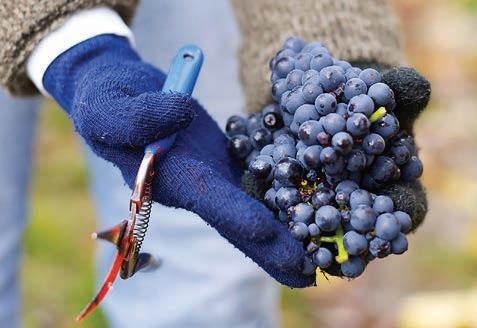
THE 2026 grape harvest has begun and it is the earliest yet.
New Zealand Winegrowers chief executive Philip Gregan said changing weather patterns have pushed the start of harvest forward in recent years, and 2026
is shaping up to be the earliest to date.
Northland began on January 23, followed by Hawke’s Bay, and in more recent weeks, Marlborough and north Canterbury.
Central Otago is looking slightly later this year.
Three extremely large grape harvests of more than 500,000
tonnes in the past four years has created a wine surplus, which Gregan said wineries have been working to reduce. They are well through lowering that surplus, and Gregan said the message from wineries this season is that they will only pick the fruit they need, which could mean some fruit will be left on the vines.
It will also help that this year’s yield is expected to be about average, below 500,000t.
Winemakers are feeling optimistic about the harvest and Gregan said they will continue to craft a product that enhances New Zealand’s reputation for wines that are distinctive, refreshing, sustainable and of premium quality.

New Zealand’s beef quota into China this year was 206,000t, with any exports above this facing a 55% tariff.
Neal Wallace NEWS Production
Neal Wallace NEWS Viticulture
ROOM TO SPARE: Jen Corkran says that, with
FORWARD: The start of this year’s wine harvest is the earliest yet. Photo: NZ Winegrowers
Switch to regen ag pays off on the ground
Gerhard Uys NEWS Regen ag
TWO farming couples who transitioned their farm operations from conventional to regenerative and organic systems say that years later the numbers still stack up for them.
Mark and Laura Koopmans farm sheep and beef near Kaikoura on 1600 hectares of steep country, running quarterbred ewes and a small sheep milk operation of 300 dairy ewes. They follow a regenerative approach.
Rachel and Kenneth Short run two organic dairy farms in coastal Taranaki, also following regenerative principles.
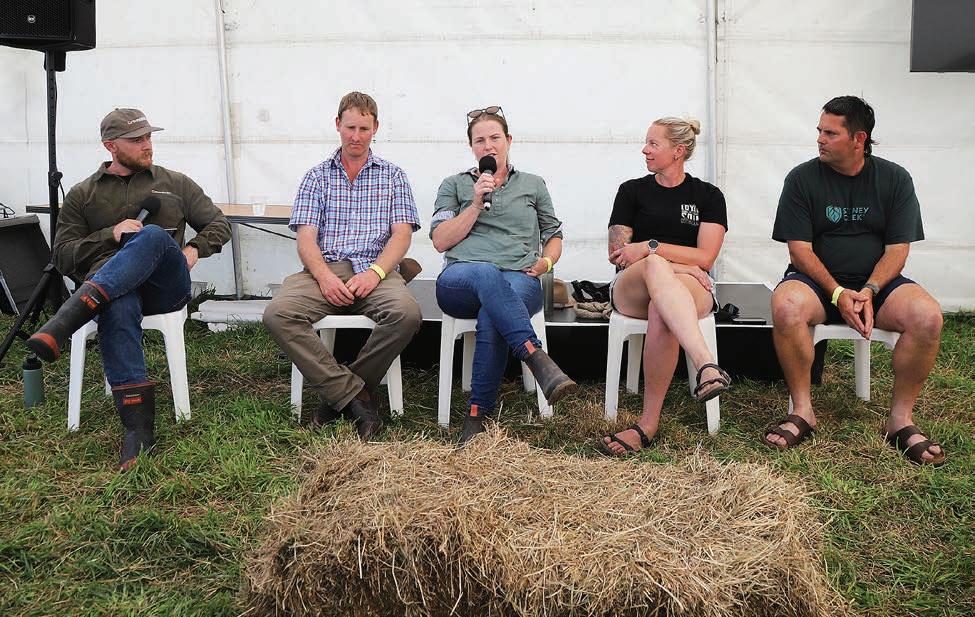
The two couples spoke at the recent Underground Festival in Canterbury.
Laura said they transitioned to a regenerative approach when the numbers in the conventional system, with costly inputs and debt taken on to buy the farm, did not stack up.
Eight years ago they changed systems, virtually overnight, something they would take more slowly if they had to do it again.
Mark said with fewer inputs their bank balance improved significantly.
A transition to a regenerative approach often means an initial dip in production, but the savings they made from lower inputs meant they had a buffer to fall back on, Mark said.
After two years of a regenerative approach their production improved, with better lamb survival and higher wean weights.
Their empty rate on cows is so low that they don’t scan, Mark said.
A major transition was longer grazing rotations and larger mobs of sheep and beef.
Laura said an eye-opener for them was that multiple forage species began appearing in a piece of land that was fenced off and not used.
This was different to the idea that if you don’t put a plant in the ground yourself it won’t be there.
After two years their production improved, with better lamb survival and higher wean weights. Their empty rate on cows is so low that they don’t scan.
She said conventional grazing practices suppressed certain forage species, which began to grow as they increased grazing density.
Mark said not using fertiliser for six years has led to massive savings, with soil tests showing the necessary nutrients to grow grass are still available. He does, however, apply lime when needed.





Rachel and Kenneth said they have been dairy farming since 2005, converting to organic in 2015.
Prior to that they were a selfcontained System 1 farm.
After winning industry prizes they received a lot of advice, such as needing a feed pad, or taking stock off farm.
With a number of organic dairy farmers for neighbours as examples, they ignored the advice, stuck to a low-input system and went the organic route.
Rachel said when they farmed conventionally they looked above ground, at pastures, for how their farm performed, but are now looking more at soil health to see how the farm is performing.
After transitioning, production
did drop on one farm but quickly recovered, Kenneth said.
Animal health issues virtually disappeared after a few years of organic production, Rachel said.
Recent Dairy Base data shows organic systems run a lower stocking rate than conventional systems, per hectare production is lower, but payout is higher than conventional systems.
Gross revenue is the same as conventional, but the cost per hectare for organic producers is lower, with organic being more profitable, Rachel said.
For the Shorts, a premium is not a requirement for the way they farm, and if they didn’t fetch a premium they would still run an ethical low-cost farm system.
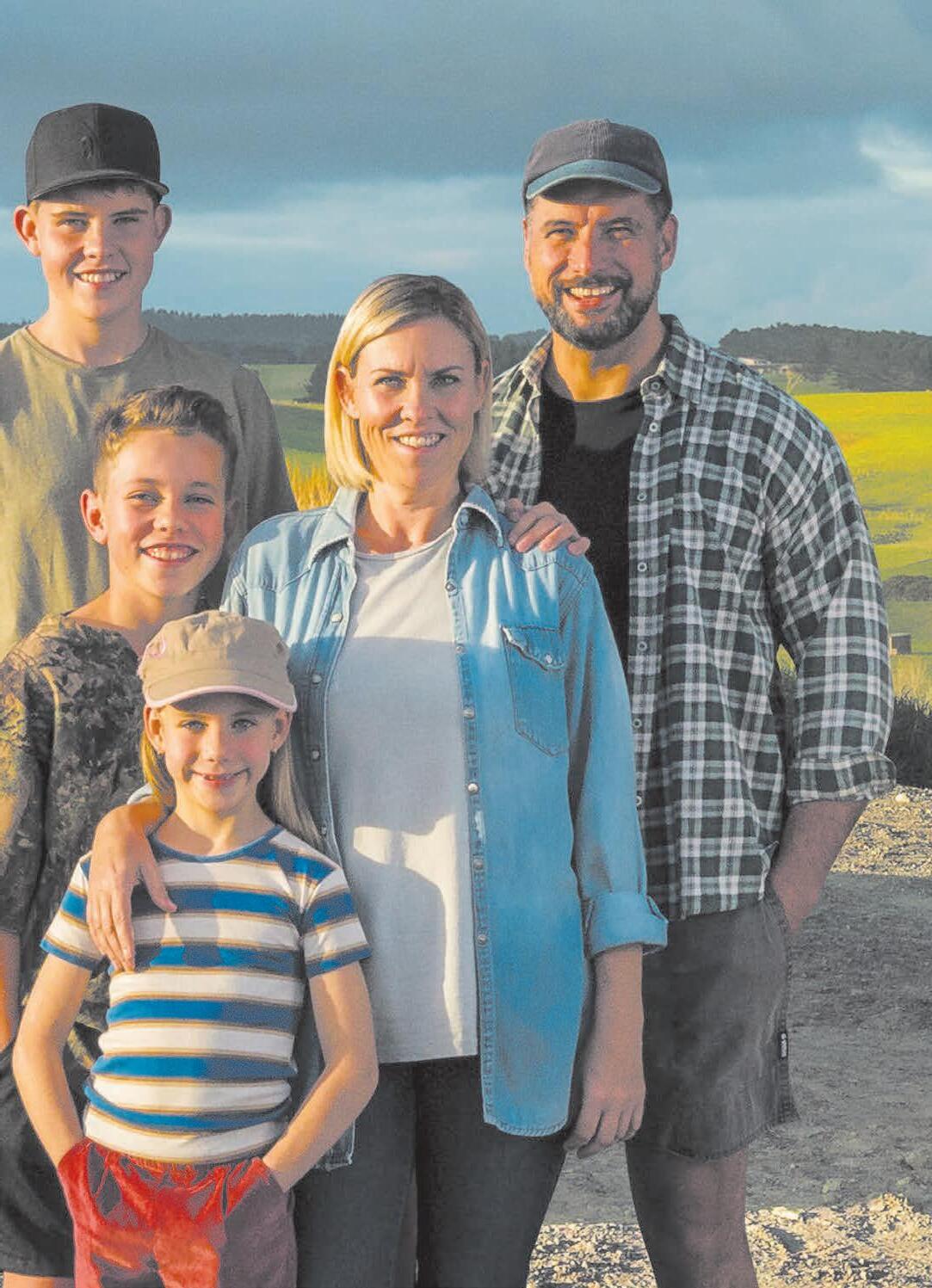

STACKING UP: Panel leader Conan Moynihan with, from left, Mark and Laura Koopmans, who farm sheep and beef near Kaikoura, and Rachel and Kenneth Short, who run two organic dairy farms in Taranaki. Both couples say the numbers stack up in regenerative farming systems.
Photo: Gerhard Uys



Invest in New Zealand Dairy Farms
Dear Investor,
New Zealand has long been recognised as one of the world’s most efficient and resilient Dairy producers Our temperate climate, pasturebased systems and deep expertise in land-based assets have created an agricultural sector that consistently delivers value through global cycles Today, as global demand for high- quality nutrition continues to grow, we believe there is a meaningful opportunity for investors to participate in this sector without needing to get hands- on
Roger Dickie (NZ) is a family- owned business that has been managing land-based assets on behalf of investors for more than 40 years For the past 20 years, we have also specialised in the acquisition and management of Dairy farm investments, acting on behalf of private and institutional investors When you invest with us you are leveraging the expertise and resources of a professional manager with a significant track record of delivering returns for investors


A professionally managed, diversified portfolio of Dairy-farming assets designed to deliver sustainable long-term cash flow and capital growth potential for investors The Fund combines two strengths of our business, our farming capability and our track record in managing real-asset investment vehicles
We are firm believers in investor and manager alignment, and we are proud to be investing in this offer on the same terms as investors
Our strategy is simple and disciplined We seek to acquire quality farmland and farming assets, enhance them through proven operational systems, and manage them with a focus on productivity, environmental stewardship, and resilience Over time, we intend to build a portfolio capable of milking up to 5,000 cows across multiple regions, benefiting from diversification, purchasing power, and a long-term investment horizon
We recognise that Dairy farming, like all primary industries, experiences natural volatility in climate, milk prices, and operating conditions However, we also believe these assets offer enduring value, are underpinned by global demand, and can generate both income and long-term capital growth when managed well Our approach is designed to smooth where possible, diversify where sensible, and always operate with transparency and discipline
If you are looking for a hands-free investment in the Dairy Sector, we welcome investor interest and look forward to building a high- quality investment with like -minded investors who share our long-term aspirations
Warm regards,

Our new investment opportunity, The Dairy Enhancement Fund (Fund), is New Zealand’s first Managed Investment S cheme (MIS) offering investors proportional ownership in Dairy farms
For a copy of the offer document, visit www.rogerdickie.co.nz or email invest@rogerdickie.co.nz or 0800 367 378
The Fund’s founding asset, Moir Farm in Otago, sets a strong base It is a high- quality operation with meaningful scale, demonstrated production, and clear pathways for improvement As the Fund grows, we will continue to apply rigorous due diligence, independent valuation, and active operational management to every farming asset we acquire

Will Dickie Director Roger Dickie (N Z) Ltd
Jeff Dickie Director Roger Dickie (N Z ) Ltd
Dickie
New-look pig trap a hit on farm
Neal Wallace NEWS Pests
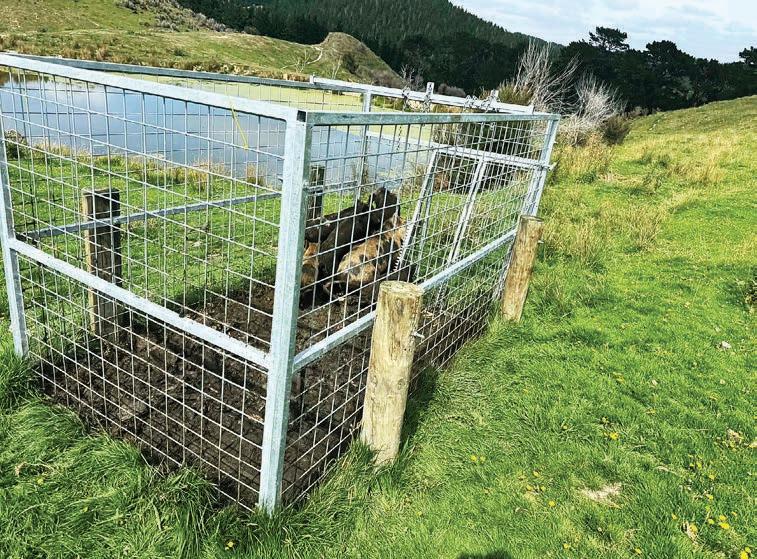
A NEW design of pig trap has captured 38 pigs on a North Island hill country farm in just seven months.
The farmer, who asked not to be named, said pig numbers have exploded since land adjacent to his property was converted to forestry, creating a safe haven for the pests.
The farm acts a buffet for the pigs, with the subsequent damaged pasture creating a winter feed pinch for farm managers.
Since July, 38 of the animals have been caught in three traps.
Designed by Paul Ward, an engineer with GCW Engineering in Hastings, the trap allows multiple pigs to be lured into the cage over a period of time without the trap needing to be regularly reset.
Ward said he had dabbled with a design a few years ago, and when he was approached by a farmer seeking a trap, he resurrected the concept and,
with input from farmers and others, came up with the current design for a galvanised steel trap.
The trap consists of four steel panels bolted together. It is 3m long and 1.6m wide with a door design that allows multiple pigs to access it to get to the bait, before becoming trapped.
“We made three traps initially, put them on a farm and two struck lucky very quickly but the third took a while to take off.”
It then became busy, he said.
The best result is when the traps are regularly checked –which can be done with a trail camera – then cleared and rebaited.
Ward, a keen hunter and angler, has witnessed the explosion of pests in areas they have never been before, which he attributes to the expansion of forestry.
He has built several other traps but as for their future, he is uncertain whether to sell or hire them.
Brendan Carr, who has experience in marketing and sales, is assisting him.
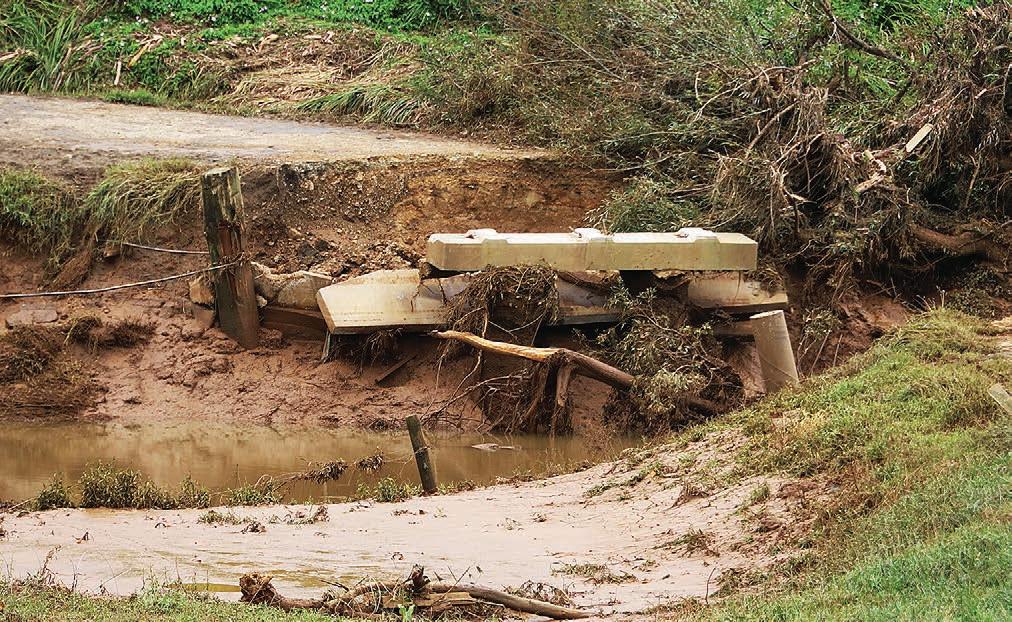
DAMAGE: FMG so far has received 800 claims from weather-related damage to farms across the North Island and Canterbury.
Storm damage claims will top $8m: FMG
RURAL insurer FMG says it has received 800 claims so far from weather-related damage to farms in Manawatū-Whanganui, Waikato, Wellington and Selwyn and Banks Peninsula.
FMG head of claims strategic operations Jacqui McIntosh said there had been considerable damage to rural properties and infrastructure, and the insurer expected this number to rise.
“Based on the number of current claims, we’re expected it to cost over $8 million.
“We’ve had loss adjusters out in affected regions visiting clients and we’re progressing claims to resolve them as fast as we can to help our clients recover from these events.”
McIntosh said the data does not give a full picture of the true impact experienced by farmers and growers because it does not reflect damage to public infrastructure used by communities or damage
to land that is uninsurable.
The cleanup continued in Waikato, where the region’s maize growers were checking their crop for damage and contamination.
Federated Farmers arable chair Donald Stobie said the amount of damage to maize crops varied, some being knocked flat with the speed and volume of water that went through, meaning a complete crop loss.
He recommended farmers that had flooded paddocks to look to see how high the silt rose up into the crop.
“If the silt rose up above the cob, then the crop may not be suitable for maize silage due to the risk of getting all that silt in the stack and causing problems with bacteria and mould and maybe not storing in the silo properly.
“If the crops are for maize grain, then they probably still harvest as normal. But get advice – the maize industry experts do have a fair bit of experience with this since the Gabrielle storm.”
Meantime, the storm damage that occurred in the Bay of Plenty, Gisborne/Tairāwhiti in late
January and the hail storms in Canterbury in December have now been classified by the government as a medium-scale adverse event.
This enables additional support for farmers and growers in the affected regions who continue to face weather-related challenges.
Agriculture minister Todd McClay said the effect of these weather events continue to be felt in those regions.
The announcement unlocked extra support, including tax relief, and it enables the Ministry of Social Development (MSD) to consider rural assistance payments and activate Enhanced Taskforce Green for affected farmers and growers.
Rural Communities minister Mark Patterson is encouraging farmers and growers to seek support if they need it.
“It’s important we help those farmers, growers, and rural communities now facing a lengthy clean-up.
“Farmers and growers needing assistance are encouraged to contact the Rural Support Trust on 0800 787 254.”


Gerald Piddock NEWS Weather
GOTCHA: Pigs caught in a new trap on a North Island farm.
Positive outlook for Kapiro Stn orchards, five years into plan

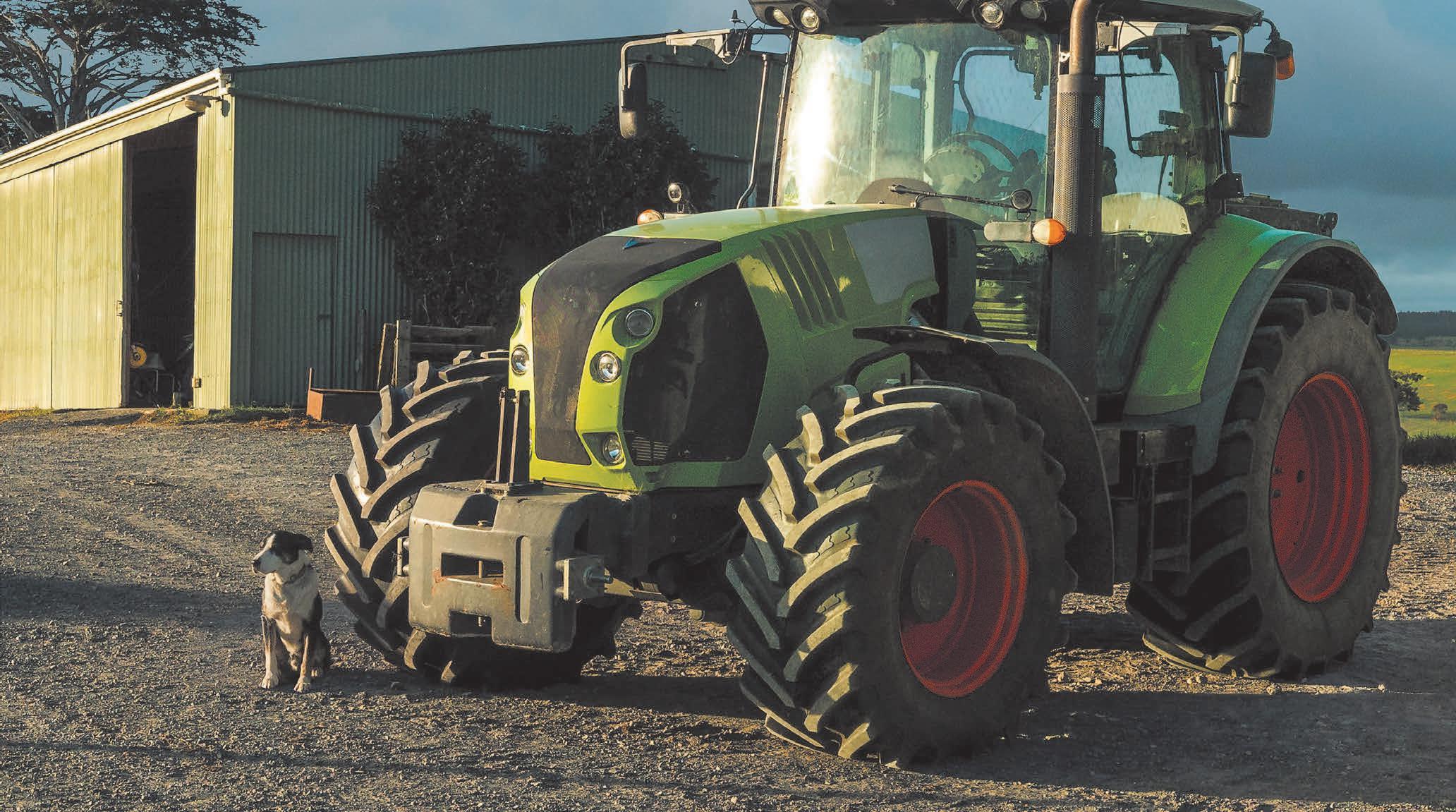
Hugh Stringleman NEWS Horticulture
PĀMU expects to be cashflow positive in its orchard development in Northland on Kapiro Station, Bay of Islands, despite poor prices for avocados at present.
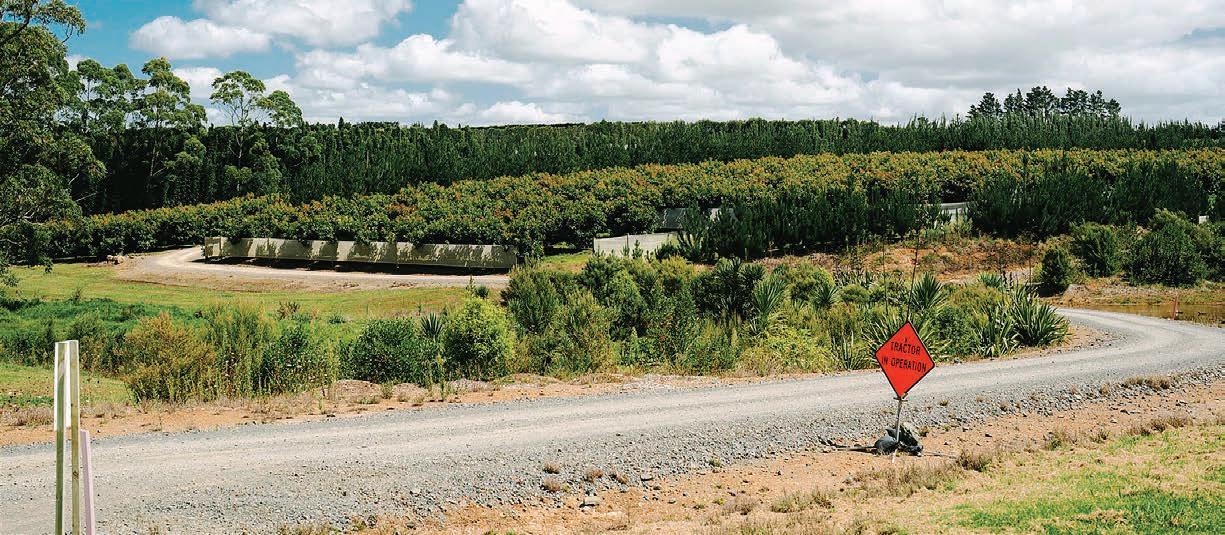
Since the first stage of avocado seedling and shelter planting in 2020, a total of 70 hectares have been developed and the older trees are yielding up to 24 tonnes a hectare. This year is the first commercial harvest of Stage 3, being the biggest stage with 30ha planted in 2022.
A total of 30,000 trees have been planted in three stages on different densities up to 400/ha. They are on mounds of 300mm to 400mm height to aid the roots in drying out after heavy rains.
Near the entrance to the big orchard, some 6ha of tunnel
houses have two varieties of blueberries, Corrina and Ceres, planted in 2024.
Another 6ha are being established this year in varieties that will harvest on the shoulders of the season for domestic consumption and export.
Presentations by Pāmu chief investment officer Andrew Sliper, horticulture business manager Matt Hayward and horticulture operations manager Kim Leemeyer worked through the challenges of large-scale orchard development in the north.
The orchard is allocated over 500 megalitres of water annually from the Kerikeri community irrigation scheme but storage is needed to avoid stoppages and spread the fertigation.
Blueberries require water within critical periods and its absence through outages can have major effects on the seasonal harvest, Hayward said.
Kapiro orchard has numerous
The aim with all of these new technologies is to reduce the cost of production because labour is the biggest cost line.
soil types and avocado plantings follow the best advice and establishment methods.
“The orchard has spread out a long way as we used the best soil types and topography,” he said. Leemeyer said the biggest group of workers for picking and pruning are those on working holidays, attracted to the Bay of Islands and thankful to stay in Kapiro houses originally used by dairy workers.
Pāmu aims to provide an extended working season, up to nine months, to meet the requirements of both avocados and blueberries.
More locals are being encouraged to take up the regular orchard work with a variety of skills and daily tasks.
Blueberries have picking priority from July onwards and that clashes with the avocados, ready from May but with more leeway.
In blueberries, picking and packing absorb about 75% of all costs, with the crop being relatively light on growing costs.
Avocados have a different cost structure, and the tree spacing, pruning and picking can be manipulated for greater yield and efficiency, Sliper said.
“Are we better doing 17t/ ha and making the fruit much
more accessible without the need for hydra-ladders, thereby considerably lowering the cost of production?”
New technology is being trialled, like robotics for mowing, spraying and pest and disease identification, autonomous towing bins and RFID picking bags to monitor the yield of pickers and make it possible to incentivise with piece rates.
The pruning requirements in 12ha of blueberries have been calculated at 2.5 million cuts annually and new AI vision glasses can project the optimum cut marks on a stylised bush for the operator to follow.
“The aim with all of these new technologies is to reduce the cost of production because labour is the biggest cost line,” Hayward said.
Pāmu trims northern sails to meet climate change
Hugh Stringleman NEWS Climate change
PĀMU is confronting climate change impacts on its large east coast Northland farm at Kapiro in the Bay of Islands.
The climate outlook is for a twoor three-fold increase in the frequency of soil moisture droughts by 2050, along with a similarly sized increase in the frequency of extreme rainfall events.
“Heat-related risks in Northland are chronic,” Pāmu head of sustainability Sam Bridgman told up to 100 people attending an open day on Kapiro.
Wind-related risks, especially from the east, are associated with ex-tropical cyclones, bringing compounded wind and flooding hazards.
Vulnerability includes lowproducing hills and gullies with slopes that are susceptible to erosion.
Management has to include water storage and selection for heat tolerance.
Diversification includes orchard development for avocados and blueberries, producing low-emission products with the security of Kerikeri Irrigation water supply.
Pāmu at Kapiro is also breeding resilient, fit-for-purpose sheep that can thrive in the evolving conditions, in a programme called Sheep of the Future.
Lead scientist for Pāmu-
owned Focus Genetics Dr Natalie Pickering told the field day that the breeding objectives in the flock of 3000 include growth, meat yield and reproductive performance while introducing lower methane emissions and greater feed efficiency.
The sheep also need immune competency and internal parasite tolerance.
The foundation of the flock about five years ago was 2000 Romney ewes from the Goudies
Station, Reporoa, retaining their high lambing percentage, high weaning weights, facial eczema tolerance and worm tolerance. Many types of shedding sheep from around the country have been used over the Romney ewes, including Wiltshire, Exlana, Dorper, Damara, MeatMaster and Aussie White.
Pickering said the Dorpers and Damaras had been dropped because their hair coats made them more susceptible to fly strike.







Matt Hayward Pāmu
BREAK EVEN: Pāmu says its 70ha avocado development in the Bay of Islands will be cash flow positive this year, five years after first plantings.
Photo: Jess Burges





Wherever work takes you, from backroads to highways, paddocks to ports, Farmlands keeps New Zealand moving - and fuel keeps you and your business moving With your Farmlands Card, you get access to one of the most extensive fuel networks in the country That includes valued partners like Z, Caltex and Challenge
That means more places to refuel, more ways to save, and one simple card that does it all. Farmlands Card – it’s the card for out here


Full circle as A&P honours O’Shaughnessy

Hugh Stringleman PEOPLE Food and fibre
SHEARING industry
personality Phil O’Shaughnessy has been honoured in Northland, where he spent most of his working life, with awards from the Northern Wairoa A & P Show and the Royal Agricultural Society.
The awards were presented at the 2026 Arapohue Show, 50 years after he began competing at that show.
It is as a shearing judge and show commentator that O’Shaughnessy is best known around New Zealand, including 23 years’ commentary at the Golden Shears in Masterton between 1990 and 2012.
Now in his 80th year, O’Shaughnessy has called the action at six world championships of shearing and wool handling overseas, in the United Kingdom, Ireland, South Africa and Australia.
This year he was invited back to call the Gore Southern Shears in its 60th anniversary, with a trans-
Tasman test match, and he was to be an interested spectator at Masterton the following weekend.
After early life in Te Kuiti, Coromandel and around Te Puke, O’Shaughnessy began full-time farming in the Tangowahine district of Mid-Northland working for the Conn family, less than 20km from Arapohue.
They sent him to a shearing course at Massey College, where he was bitten by the bug.
In the mid-1960s he started shearing in Wairarapa with Graham Clegg, quickly becoming a ganger and then manager.
In 1966 he competed at the Golden Shears and a few shows in Northland, including Arapohue.
During a decade of fulltime shearing he moved to Alexandra for contractor Murray McSkimming, competed at the Fine Wool Shears, and he got started in judging and organising. Commentating came about by surprise – and his gift for making shearers and wool handlers feel special was discovered.
He learned from John McBride at Masterton and teamed with the
late Koro Mullins for 15 years, only missing 1997 Golden Shears when recovering from a heart attack.
Since 2012 O’Shaughnessy has done shows by invitation, both judging and commentating.
Many aspiring commentators have worked alongside O’Shaughnessy over the years.
“I still coach commentating when asked, and it is mostly a matter of what not to say, or what you shouldn’t do. We have to keep up the standard.”
Commentating is demanding, he said, especially flying solo, although most big shows have two or more.
After shearing, O’Shaughnessy lived on a small block near Whangārei and worked in transport and at the Marsden Refinery while serving on the North Island and national Shearing Sports committees.
Many shows in the north benefited from his input, like the Autumn Shears in Whangārei, the Kauri Circle, the Kumeu Show, the Warkworth Show and the Royal Easter Show in Auckland.
“All events are memorable,
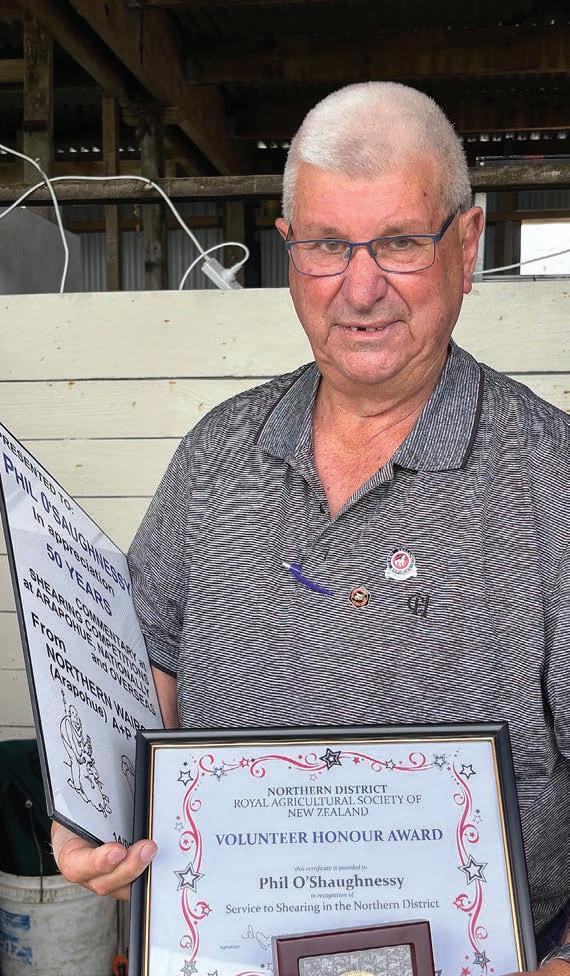
for the people you meet and the enjoyment in competing and judging,” he said.
He recalls warning NZ Shearing Sports that competitions would wither and die because of a lack of sheep in the north.
“They didn’t believe me then,
OVERWHELMED:
Shearing identity Phil O’Shaughnessy has been honoured by the Northern Wairoa A&P Society in the place where it all started.
but now that is happening all over the country.”
Shearing techniques have changed, along with fitness, food and preparation for big shows and record attempts.
“Shearing gets into your veins, and it is very hard to get rid of.”
Repeat buyers underpin Wairere Nudie ram auction
Hugh Stringleman NEWS Livestock
DEMAND was lower this year for Wairere’s fourth annual action of Nudie ram lambs, held in Masterton on February 25 and carried as a hybrid auction on the bidr platform.
Top price was $8800, paid for Lot 39, Wairere Nudie 1523/25, and the average was $3970 for 69 ram lambs sold.
A similar number of rams offered were passed in.
Wairere principal Derek Daniell
said the Nudie ram sale was significantly lower than two auction sales of 2025.
Last year the 92 Nudie ram lambs sold at Masterton averaged $5538, and the 50 Nudie/Wiltshire ram lambs sold at Te Kuiti averaged $2900.
“The pleasing aspect of this year’s auction is that most ram lambs went to repeat buyers, who started buying at the first auction in 2023,” Daniell said.
“The transition from woolly sheep to Nudies has resulted in better lamb survival, faster growth rate, better yields, and much
reduced dagging, and Wairere Nudies have ticked all those boxes.
“As to the drop in numbers sold, there are several probable reasons.
“The high average price last year would have put off some prospective buyers; there have been more bare/shedder rams available this season, and many were sold as two-tooth rams in the spring.”
The wool price has been creeping up, which has probably slowed momentum to shedding sheep, Daniell added.

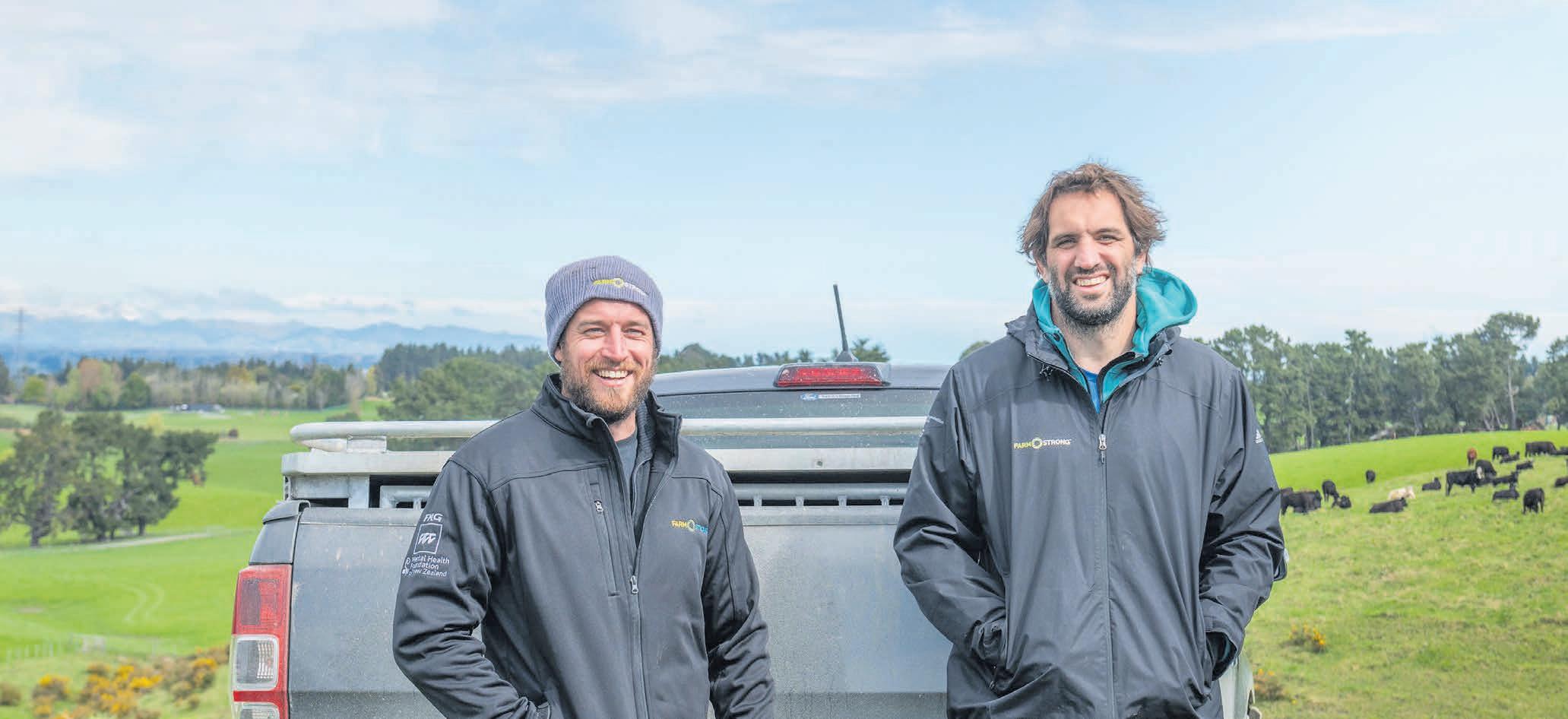


Keeping in shape mentally and physically helps you put the best into the farm so the farm can give the best back to you.



Sam Whitelock Farmstrong Ambassador

HIGHEST: The top priced Wairere Nudie ram, nearest the camera, fetched $8800 in the ring at Masterton. Photo: Andrea Mansfield
Swapping cows for coffee in ‘giant nature park’

Rebecca Greaves ON FARM Tourism
TRADING cows for coffee, Amy Anderson has returned to her family’s farm at the base of Te Apiti, opening Gorge Quarter Store. She has grand plans to create a thriving tourism hub that celebrates all New Zealand has to offer.
The 90 hectare farm, which is bounded by the Manawatū River and surrounded by bush, has become a hive of activity since the new Te Ahu a Turanga Manawatū Tararua Highway opened.
Home to Amy, her husband Mark and their two children, Betsy, 10, and George, 7, Gorge Quarter is a labour of love, and her vision is to create a shared place where everyone is welcome.
Previously dairy farming throughout the lower North Island, the couple tossed up whether to pursue herd-owning sharemilking or return to Amy’s childhood farm and throw their savings into a tourism venture. In the end, the pull of home won out.
“We were working so hard on the farm. I didn’t love it; Mark was getting burned out. We couldn’t
see farm ownership in sight and we knew this was something that could be ours. We came here and Mark said, ‘If you want to give it a go, let’s do it, it feels like home.’”
A draw for nature lovers, walkers, runners and cyclists, the farm is the perfect location to tap into visitors and locals alike, and Amy’s enthusiasm for this special place and deep-rooted connection to the land would be infectious enough to bottle and sell.
I love this land so much, I don’t want it ever to be ruined. I want to share it with everyone in New Zealand.
Amy Anderson Gorge Quarter Store
At first look, Gorge Quarter Store is a humble hut, but on closer inspection it is a thoughtfully repurposed farm shed, home to delicious coffee, sweet treats and carefully chosen local homewares.
A welcoming space, with plenty of open grass areas for kids to tumble and adults to relax, Gorge Quarter opened in September last year and has already hosted
outdoor Pilates, the Ode to Summer market (set to become an annual event) and a popular Sunday run club.
Every detail is intentional and Amy loves to support local and small businesses with a connection to the region and a genuine story to tell. Even the clay used to make the pottery sold at the store came from under the piles when they were built.
The farm takes in all sides of the roundabout at the base of the new highway, on the Ashhurst side, and Amy has consent to develop the 14ha title at the Western Gateway Park side of the road, including consent for further businesses, an amphitheatre and a wedding and event venue.
“My pop bought this farm 60 years ago. This part was the show place for their Perendale sheep stud, Karioi, which was based on the Pahiatua Track. Pop was a real go-getter, not afraid to take a risk,” she said.
The land is also home to a nut grove. Pecans, walnuts, hazelnuts and macadamias all grow in the nut orchard. This was where Amy and Mark were married, and is where the wedding venue will be set.
“It was the coolest playground
for us as kids, we used to camp down here at the river and go sledding behind the motorbike with friends, all the good old Kiwi stuff.”
With a graphic design background and previously running an event and wedding flowers business, Amy has a clever eye for anything visual. She knew there was something about the slice of land, and believed tourism would provide a way to keep the land in the family.
“We got married in the nut grove and everyone loved it. It’s so homely and magical, we thought that we could share it.”
Amy and Mark hope to bring people together by creating a place for generational connection that
Strong wool market catches its breath
STRONG wool prices look to have reached their ceiling, for now, with the market largely levelling off at the South Island wool sale last month following the significant gains recorded recently.
PGG Wrightson South Island auction manager Dave Burridge said buyer demand is still present, but more measured, with traders selecting wool types carefully to meet current requirements.
Most crossbred fleece and lambs’ wool types eased slightly from recent peaks, while crossbred oddments were also softer.
Crossbred wool had been making double-digit gains between sales this season for the first time in
a generation as better pricing was also met with improved clip preparation.
But Burridge said the market is reaching a stage where the best outcome is for it to smooth out before growing again to hold confidence in the pipeline given the price hikes were driven by a global shortage of wool and Chinese buyers coming back in force.
Encouragingly, new investment in the wool business is being made with new plants establishing in China.
The South Island Strong Wool Indicator eased 7 cents on the previous sale with 96% of the offering sold.
Crossbred fleece eased 1%-2% across the board with good style selling at an average $5.69 a
kilogram, average style at $5.55/ kg and poorer fleece $5.42/kg. Crossbred second-shear fleece 50-100mm sold from $5.33/kg to $5.44/kg.
Crossbred lambs’ wool was similarly back with 29-micron selling at an average $5.50/kg, 30-micron $5.42/kg, 31-micron $5.37/kg and 32-micron $5.35/kg. Mid micron halfbred fleece was back 2% at $8.85/kg.
“Feedback from traders and manufacturers suggests that a period of stable pricing at current levels will help build confidence throughout the wool pipeline,” Burridge said.
The sale also marked the final offering of Merino wool for the season, with prices reflecting recent strength in Australian markets with the attendance of
celebrates the simple life and all that is special about New Zealand culture.
“I also believe we have the opportunity to educate people about where food comes from, and connect them back to the land. We’re always looking to collaborate with others and I feel we have an opportunity to show that the countryside and farming is good for people.”
Opening Gorge Quarter was admittedly a risky move and, if it was about money, the couple would have stayed farming.
“We’re playing the long game. Hopefully this will eventually provide passive income for us, and give us a way to keep the family farm. It’s a hobby farm here, 90ha, it’s pretty but what do you do with it?”
Amy’s father could see the potential in the land, and held on to it, planting the tourism seed in his daughter’s mind when she was a teenager.
“This was always home for me. I really understand kaitiaki. I love this land so much, I don’t want it ever to be ruined. I want to share it with everyone in New Zealand. We have to make a living off it, otherwise it’s not viable to keep.”
For Amy, the motivation is simple: it’s about leaving the land as best they can.
“It’s about building community. It’s like a giant nature park here, and I knew we had the property to create something special.”
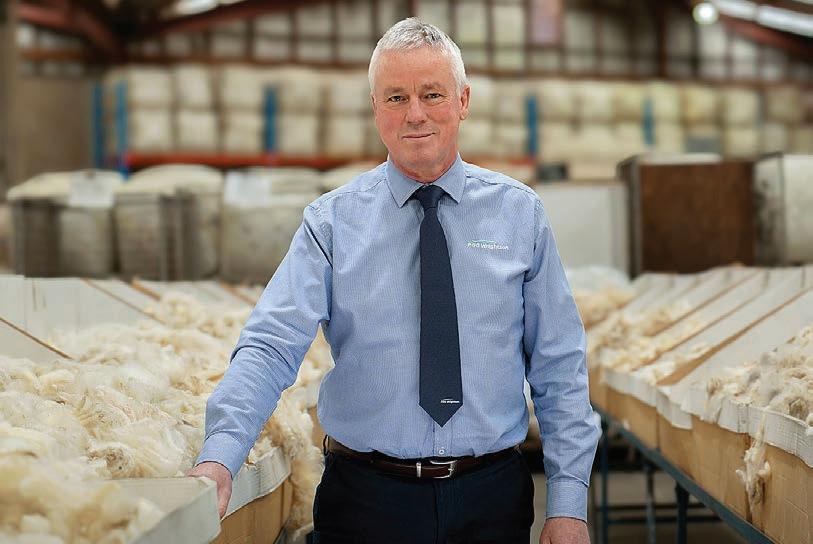
TEAM: Barista Emma Dyer and Gorge Quarter owner Amy Anderson.
Photos: Supplied
Australian exporters another indication of the global Merino wool shortage. Merino wool at 18-micron this time last year was selling at
$16.70/kg clean, recent sales this year have been reaching up near $25/kg.
The next South Island sale will be held on March 12, 2026.
Annette Scott MARKETS Food and fibre
MEASURED: PGG Wrightson South Island auction manager Dave Burridge says wool buyer demand is still present, if more measured.
PLACEMENT: Gorge Quarter is located at the base of the new Manawatū Tararua Highway, on the Ashhurst side.
STOCK: The store stocks a range of hand-picked artisan homewares.
Branch members nurture their own forest
OUTHLAND Rural
SWomen is working to continue a 75-year legacy by managing a forestry block, donated to it in the 1950s, to create wealth for future generations of rural women.
Southland President of the RWNZ Southland Forestry Scheme, sheep and beef farmer Rhonda Symons, said that in the 1950s two Southland brothers, George Hamilton, a farmer, and Adam, a Wallace MP, donated about 120 hectares of forest to the then Women’s Division of Federated Farmers in Southland, now Rural Women Southland.
The brothers were both bachelors, but their mother was a member of the Women’s Division.
The forest is now being managed by the Southland Rural Women Forestry Scheme, advisers and Log Marketing, with the sole goal to use profits from harvesting to give back to the Southland community.
When Farmers Weekly visited the forest recently, Southland Rural Women members and
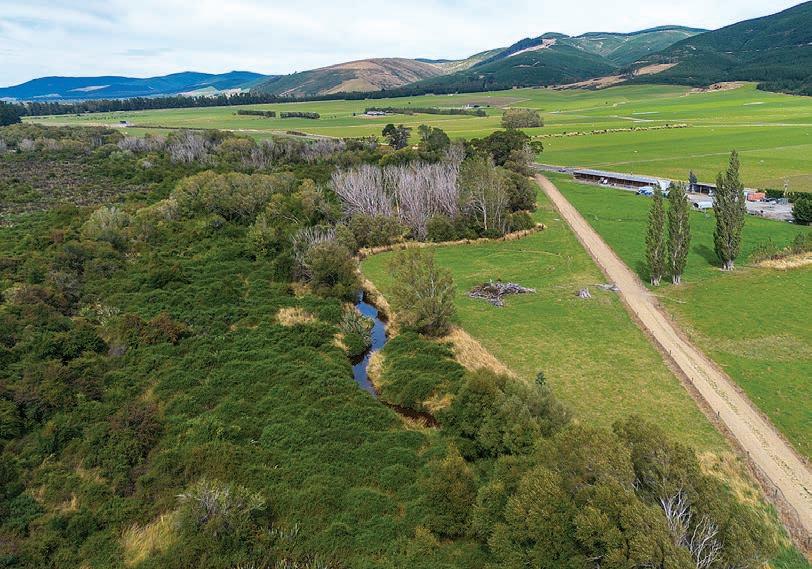
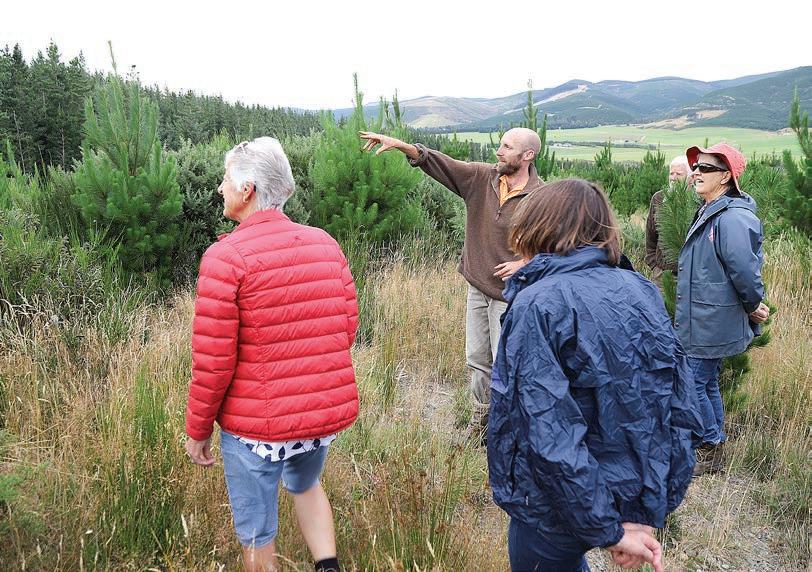
two representatives from Log Marketing drove between blocks and discussed how each block is managed and what the benefits and challenges of each block are.
It’s been a journey to learn about forestry, with members now exposed to the fluctuations in the log import and export market, and conversations around chip prices being normal, Symons said.
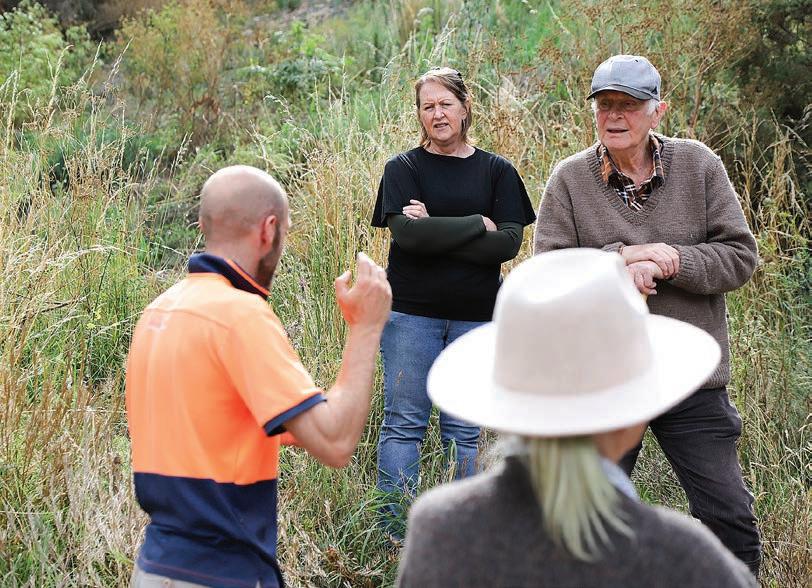
A 12ha wetland that for years was referred to as a swamp is now the passion project of member Ann Irving, who acts as coordinator.
Irving said she got involved in the wetland in 2013 after the branch had won an award for innovation in farm forestry and someone asked them about plans for the wetland.
Since then there has been massive change with active planting and natural seeding from natives as gorse, broom and other invasives have been removed.
The wetland is classified as high value, with some species of, for example flax, only found in abundance there.
About eight years ago the wetland was put into QEII to preserve it for future generations.
The wetland was initially planted by rural women members, and recently the Southland Tramping Club has become involved with trapping and planting.
Members are also developing tracks in the wetland that the community uses.
Symons said owning a forest is unique to Southland Rural Women, with other branches owning
houses, or businesses, but no one having to learn the ins and outs of the forestry industry, or having discussions about the intricacies of tree pruning or tree genetics.
When the project first kicked off, members were nurturing seedlings for the forest in their gardens, but in later years all work has been subcontracted.
When a block is harvested, a
lump sum is put out to Southland branches, but money is first spent on managing the forest.
Branch member Heather Smith said the group has regular discussions about legacy and what role the forest will play to help communities in future, and as the forest has always turned a profit from sales, the hope is that this legacy can continue.

Gerhard Uys NEWS Forestry
PASSION PROJECT: A 12ha wetland that for years was referred to as a swamp is the passion project of member Ann Irving, who now acts as coordinator for planting and other developments. Photos: Gerhard Uys
MANAGE: Ron Sheppard from Log Marketing has been relied on for the past five years to manage the forest. On the far right in the red hat is Ann Irving, who is passionate about the wetland.
FORESTRY: Southland President of the RWNZ Southland Forestry Scheme, Rhonda Symons, middle, listens as Rob Sheppard from Log Marketing talks forestry.
REMEMBERED: The Hamilton brothers who donated the forest to the then Women’s Division of Federated Farmers in Southland, now Rural Women Southland, are honoured in road names between blocks.
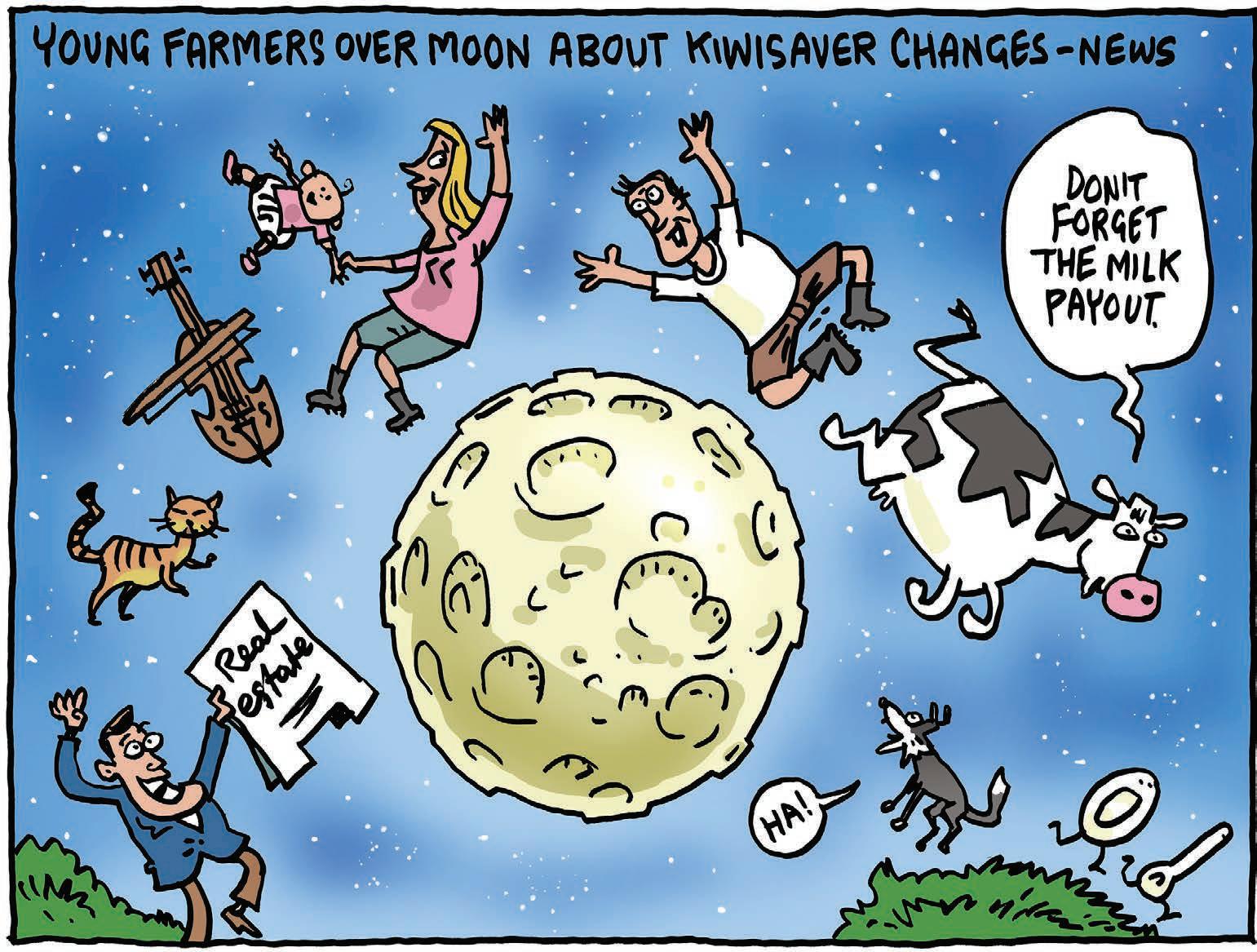
From the Editor
KiwiSaver policy shift a game-changer

Bryan Gibson Managing editor
THE government will amend KiwiSaver rules to allow farm workers and others who have to live where they work to invest in farms or houses.
Until now, farm workers, rural Police and those in the defence force were unable to use their KiwiSaver funds to invest in a first home, as that home had to be the one they lived in.
After the change, people who live where they work will be able to access their KiwiSaver fund to buy a first home, or to buy a first farm through an entity that they are a majority shareholder in.
Rangitīkei MP Suz Redmayne told me that put them at a disadvantage – unable to put their savings to work as others could.
She expects a greater appetite for saving to emerge, as it did when the ability to use
KiwiSaver as a house deposit was granted in 2010.
“It’s been a real incentive for young people to save, because they can see it. When you think that you can actually save some money and buy a house when you’re 30, that makes a lot of sense, whereas thinking about getting that money out when you’re 65 is literally a lifetime away.
“So it’s a real incentive to save for young people.
“You’re more inclined to put 8% or 10% of your earnings into KiwiSaver.
“For a farm worker, where that’s not an option, they’re probably much more likely to just leave it at 3%, or even some that we talk to opt out altogether.”
Federated Farmers had been advocating for the change for some time and Waikato sharemilker chair Danielle Hovmand is celebrating the decision.
“Hopefully, in years to come we’ll see the flow-on effects of more young people being able to purchase their own herds and then achieving farm ownership earlier.
“I think this will have a huge impact on farmers across the country and will continue to help strengthen the agriculture industry for many years to come.”
First, it should entice more young people to save more, knowing they can use it to get ahead when the time comes.
As Redmayne says, the fact that retirement is so far in the future means young
people aren’t as focused on planning for it as those a decade or two older.
Second, with farm ownership increasingly out of the reach of young farmers, a farm management job suddenly becomes more appealing when there’s an option to build equity through investment.
A farm management job suddenly becomes more appealing when there’s an option to build equity through investment.
While this change to KiwiSaver will help some people attain farm ownership, the other option of building personal equity while living and working on farm is now more appealing too.
The Bill that will make the change will have to be carefully written, because the last thing we want is to have our primary vehicle for retirement saving transformed into a property investment tool.
And we need to remember that investing in a farm business is inherently more risky than investing in residential property – any bank will tell you that.
But hopefully this change means we’ll see more of our best and brightest choosing life on the farm, knowing they’ll be able to put their hard-earned dollars to work in time to enjoy the rewards.
Should KiwiSaver rules be relaxed even further to include dairy herd purchasing?
LAST WEEK’S POLL RESULT
The future ownership of Pāmu’s farms has hit a nerve with Farmers Weekly readers.
Of the more than 300 responses to the poll, 56.2% believe the farms should be sold. But many said only on the condition ownership stayed in New Zealand and it enabled young people to buy into farms.
“Yes, if the sale of individual farms is an avenue for locals to acquire said farms. Offer a ballot system and government loans like in previous generations,” said one.
“They have not been profitable for many years. Sure, they might announce a profit this year, but the return on asset over the years has been abysmal. Get some young farmers owning reasonable areas of land with a mortgage around their necks, and they will make it pay.”
Another said: “I would not sell everything at once, but rather slowly offload portfolios; otherwise, the real estate market for farms will tank.”
Of the 43.8% who voted no, the possibility of the farms falling into foreign ownership was the major concern.
“In all likelihood they would disappear into foreign buyers’ portfolios. They [Pāmu] do a good job setting standards in health and safety, on-farm research and training young New Zealanders. They are a little top heavy and the structure still needs tweaking.”
Last week’s question: Do you think Pāmu’s farms would be better off in private ownership?




So you want to privatise Pāmu ...
Meaty matters
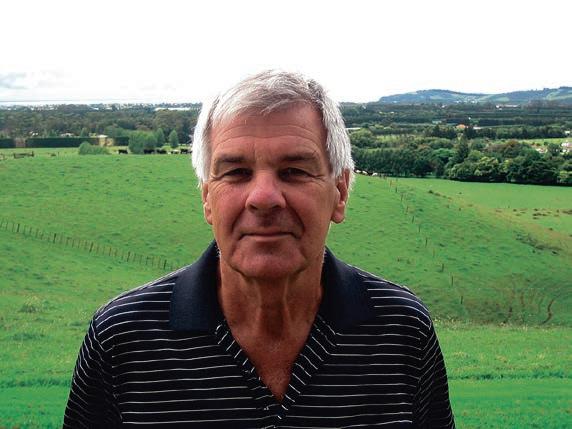
Allan Barber Meat industry commentator: allan@barberstrategic.co.nz, http://allanbarber.wordpress.com
THERE is a lot of pointless media speculation about the sale of state-owned assets, driven entirely by David Seymour, who delights in dropping rocks in the pond to attract attention to ACT’s point of difference. But that’s where it will stop, at least until after the election.
And even then it’s highly unlikely to go any further, as the two most probable election results will see no change to the status quo. Seymour can stir the pot all he likes, but unless ACT can form a two-party coalition with National, he has no hope at all.
Winston Peters will block asset sales till the day he dies or retires, while Labour and the Greens are philosophically opposed to any loss of state control.
The days of Douglas and Prebble have long since passed and, if anything, the sale of large stakes
in state-owned assets at the time – like Air New Zealand, NZ Rail, BNZ and Telecom – gave privatisation a bad name among a high proportion of voters.
There were several problems with the asset sell-down in the late 1980s: they may have been sold too cheaply, new owners made large short-term profits, and subsequent events saw some of them having to be bailed out by the government.
Not a great advertisement for privatisation.
My personal philosophy is that independent governance is generally preferable to state control, but this has largely been achieved by the establishment of state-owned enterprises with separate boards of directors.
The weakness of this structure is the ability of the government to interfere with board appointments and influence strategic direction.
A compelling example of the advantage of selling an asset is Port of Tauranga, which was operated by the Bay of Plenty Harbour Board before ownership was transferred to the Bay of Plenty and Waikato Regional Councils in 1989.
Port of Tauranga Limited was established and is now a highly efficient, publicly listed operation with the country’s largest container port, the MetroHub inland port service and 50% ownership of Northland Port.
Compare Tauranga’s performance over the past 35 years with that of Ports of Auckland, which Auckland Council has persisted in owning outright, and the

advantage of private ownership is clear.
Ownership of a port is not as sensitive as that of a public utility because the effect on voters’ pockets is difficult to calculate.
The retention of majority ownership, as with Air NZ, Mercury, Meridian and Genesis, with a sizeable minority held by outside investors provides the ideal structure to satisfy government objectives while achieving improved performance.
Undoubtedly these partly privatised businesses have returned higher dividends to the state in return for its 51% than would have been the case in full state ownership.
Many members of the voting public appear to assume these commercially run entities are ripping them off – either through unreasonably high power prices or regional airfares.
This ignores the fact a 100% state- or council-owned company in a market with limited competition will almost certainly be less efficient with an uncompetitive cost structure – the port example is compelling proof.
There are very few public
services and utilities that should always remain in state ownership, in the sense that all of them can be contracted out to a third party. But philosophically no government would be willing to abdicate control of key functions like the health system, education, police, immigration and tax.
Encouraging
agricultural innovation and productivity is preferable to selling productive assets.
The national grid is considered an essential government asset, so state-controlled Transpower operates this core function, although in theory this could be contracted out.
This lengthy preamble foreshadows my thoughts about the possibility of selling Landcorp or Pāmu as it prefers to be known. Seymour questions why the government should own a farming enterprise and believes it could be sold off to raise $2 billion.
As CEO Mark Leslie stated in last week’s Farmers Weekly, in “Pāmu ‘living laboratory’ worth
BAD NAME: The sale of large stakes in state-owned assets like Air New Zealand, NZ Rail, BNZ and Telecom gave privatisation a bad name among a high proportion of voters, says Allan Barber.
protecting”, many of the Pāmu farms are subject to Treaty settlements, while the pious hope of getting first-time farmers into farm ownership does not suggest this process would extract maximum value.
Leslie also points out Pāmu’s role in innovation and new practices, as well as operating several share-farming agreements and an apprenticeship scheme. Better informed experts than me can evaluate the value of these innovations and the potential gain or loss to the country from dismantling an operation as complex as Pāmu. It would not be sensible to privatise a business which provides innovation, employment and stewardship of large swathes of the country without a very clear strategy of how to achieve a better outcome with the proceeds. The whole may well contribute more than the parts. Encouraging agricultural innovation and productivity is preferable to selling productive assets.
Successive governments’ track records don’t give much reassurance the money realised will be spent wisely.
What would we be without the United States?
In my view
Dr Victoria Hatton Hatton is the chief executive of FoodHQ
IMAGINE waking up to a world where the United States is no longer an option for New Zealand food and fibre exports. Not just difficult, not just awkward – simply off the table. No beef, no butter, no wine containers heading for US ports. In a sector where the vast bulk of our goods exports are food and fibre, and where the US now sits as one of our top three destinations, that’s not a blip, it’s a body blow. It is also a textbook disruption: sudden, system-wide and well outside the control of any individual farmer or processor. Every global marketplace has one guest who dominates the room. For beef, dairy and wine especially, the US is a critical customer, buying a significant share of what we produce.
When that kind of customer catches a cold or starts throwing trade tariffs around as a tool of “statecraft”, our farmers and processors start sneezing whether they like it or not.
So, what happens if that US door
doesn’t just wobble, but slams shut?
First, we would feel it very directly in farmgate returns across beef, dairy and wine, as product is hurriedly re-routed into already competitive markets like China, Australia, Japan and the wider Asia-Pacific. Prices would come under pressure as we jostle with other exporters doing the same thing.
An abrupt disconnection from the US could push us to accelerate three shifts that are already quietly underway.
Second, our national books would feel the strain. Food and fibre exports underpin a large slice of our GDP, and losing a top-tier partner would leave a noticeable hole that would have to be filled somewhere else. That kind of shock doesn’t just affect farmers, it ripples through contractors, rural services, regional towns and ultimately tax revenue for hospitals and schools.
But shocks also force choices we’ve been putting off. An abrupt disconnection from the US or another major trading partner
could push us to accelerate three shifts that are already quietly underway, and that line up with the premium, proof-driven direction we talked about in January.
It could also push us to grow from a mindset of “just coping” to something more ambitious: deliberate resilience.
The three shifts in our sector are, in many ways, the nuts and bolts of that deliberate resilience:
• More value from closer neighbours: We would likely double down on high-value niches in Asia, Australia and the Pacific, tailoring products and stories much more precisely to regional consumers rather than assuming one size fits a global supermarket shelf.
• Shorter, smarter supply webs: Investment in traceability, data, and “origin plus story” branding would become non-negotiable, as we differentiate in markets where we are not the only premium option. The same proof and provenance that earn premiums also build resilience when markets move, because they make it easier to redirect product quickly, maintain trust, and command attention even in crowded shelves.
• Stronger domestic and regional
demand: We might finally have the uncomfortable but important conversation about how much of our best produce should be available and affordable at home, and how we build resilient domestic processing and distribution alongside export growth.
Deliberate resilience, in other words, is what happens when we treat disruption as a design brief, not a surprise.
This still leaves a harder, more human question: How far are we prepared to shape our livelihoods around a partner whose behaviour we can’t predict? This isn’t about left or right politics; it’s about the reality that US trade policy is now openly used as a lever in wider geopolitical struggles, with agriculture right in the firing line.
If the US is that unpredictable guest New Zealand has three broad options.
We can keep hoping tonight will be one of the good nights. We can quietly spend more time talking to other guests, so that if they storm out, we’re not left standing alone. Or we can decide that part of growing up as a trading nation is learning to stand a bit further away from the biggest mood in the room, and to become a trend setter in how a small food nation
navigates disruption.
Premium plates, backed by proof and story, are not just about better margins; they are our playbook for disruption, products and relationships that are differentiated enough to move when markets move, and trusted enough to be first picked up when the dust settles.
Food and fibre already underpin much of our export story, and they are forecast to keep growing. That gives us both a vulnerability and a power: what we choose to grow, how we choose to sell it, and who we choose to depend on will shape not just farm incomes but New Zealand’s place in the world. If the US gate ever does swing shut, it won’t be the end of our story. It will be a moment of truth about who we are as a food-producing nation: agile or anchored, diversified or dependent, willing to ride out someone else’s hangovers or confident enough to find a steadier table.
MORE:
E Tipu: New Zealand’s Future Food and Fibre Summit. May 21-22nd, Te Pae, Christchurch.

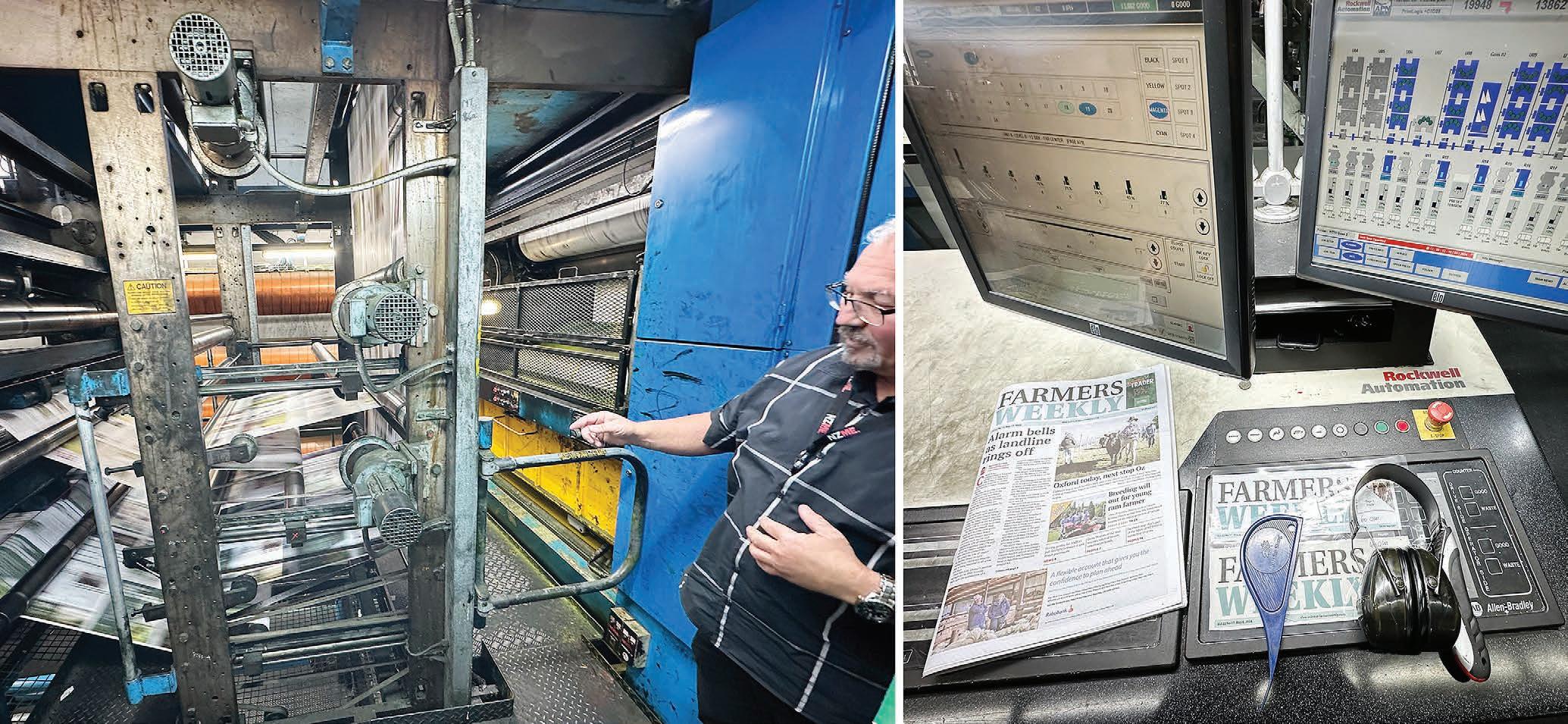
The team at NZME in Auckland print 74,000 copies of Farmers Weekly every week.
What it takes to keep it real.
Farmers Weekly begins each week with ideas being bounced around by our journalists and analysts on Monday morning.
From that meeting those ideas turn into stories.
The partnership managers, production and editorial teams take those stories and package them into the paper you see every week.
That content is then sent to our print partner, NZME, in Auckland, where 74,000 copies are printed.
Those 74,000 copies of Farmers Weekly are then collected by linehaul trucks and delivered to all corners of New Zealand, ready to be collected and delivered to you by your local postie.
This system has been repeated weekly for 23 years. That’s more than 80 million copies since the launch of Farmers Weekly in 2003.
The catch? For most of our readers, the product at the end of that supply chain comes at no cost.
You tell us you value your Farmers Weekly, so starting a voluntary subscription is a practical way to ensure it stays strong, independent and “free”.
$120 a year, $15 a month, or whatever value you put on your Farmers Weekly.
Dean and Charlie Williamson

Support us with a voluntary annual subscription to Farmers Weekly. $120 for 12 months. This is a voluntary subscription for you, a rural letterbox-holder already receiving Farmers Weekly every week, free, and for those who read us online.
Scan the QR code or go to www.farmersweekly.co.nz/donate
Email your name, postal address and phone number to: voluntarysub@farmersweekly.co.nz and we’ll send you an invoice. Call us on 0800 85 25 80
Note: A GST receipt will be provided for all voluntary subscriptions.

Sector Focus

INCREASE: Specialising in organic cannabis growing, and genetic research and breeding, Puro is about to harvest its biggest crop, with plans to increase its production in Kaikoura.
High praise for Puro’s sun-grown cannabis
Annette
NEW Zealand’s largest medicinal cannabis grower and one of the biggest organically certified growers in the world received shining accolades as it showcased its Kekerengu farm to international academics, growers, buyers and prescribers.
Puro has been growing medicinal cannabis since 2018 and has two facilities in Marlborough, one in the Waihopai Valley and the Kekerengu farm on the Kaikoura coast.
Specialising in organic cannabis growing, and genetic research and breeding, Puro is about to harvest its biggest crop, with plans to increase its production in Kaikoura.
The Kekerengu farm, with 65,000 plants on 15 hectares, is expected to produce about 100 tonnes of material to be dried or formulated into oils for medicinal use.
With the aim of building international relationships, Puro opened the gates of its Kekerengu farm to 50 people, almost half of them from abroad.
Puro co-founder and chief development officer Tom Forrest said while cannabis could be grown almost anywhere, Marlborough was chosen because its environment is ideally suited to growing a high-grade product.
He said the Kekerengu farm is special because it has an optimal soil profile, the right aspect, gradient and elevation from sea level, along with protection from the mountains.
“There’s a perfect melting pot of
agronomic traits that work to grow cannabis here.
“In an industry where factory farming is a bit of the norm, we want to show why our plants and our crops and our medicines are grown differently.”
The event also highlighted the unique strategic partnership with Te Rūnanga o Kaikoura working together to develop a contract growing model with the goal to cultivate medicinal cannabis on their own land then sell the crop to Puro for processing.
Keynote speaker Columbia University Professor Colin Nuckolls has dedicated the past 10 years to studying the chemical differences between indoor- and sun-grown cannabis.
He shared his findings, giving reasons that sun-grown cannabis
produces “more of the good stuff” for medical applications.
Cannabis in the United States is tested for a certain number of cannabinoids and terpenes, so on paper the certificate of analysis for different cultivars looks the same.
“Based on that, you can’t tell any difference between them but the effect that a patient or a consumer has when they try one versus the other can be night and day.
So, what that’s telling you is that there’s many, many components in there that are having a big effect.
“It’s probably a fool’s errand to think that you can actually reproduce what nature gave you in soil and sunlight in an indoor environment ...
“The mountains, the cool air, the proximity to the ocean: if I was to pick anywhere to grow cannabis, I’d pick here.”
Torere Macadamias and Riddet team up
TORERE Macadamias and the Riddet Institute have signed a strategic partnership to advance food innovation and support the growth of New Zealand’s macadamia industry.
The partnership aims to unlock value from macadamia nuts while growing the next generation of Māori agribusiness researchers. The collaboration formalises and celebrates four years of shared research and innovation.
Together Torere Macadamias and Riddet aim to help strengthen New Zealand’s macadamia value chain by transforming nuts and by-products into high-value foods and ingredients.
In a collaboration with Pūhoro STEMM Academy, the partners hope to establish enduring career pipelines for rangatahi Māori through food science and mātauranga Māori.
Torere Macadamias is a whānau-led organic macadamia nursery, orchard and nut company based in the eastern Bay of Plenty.
Its founder and general manager, Vanessa Hayes, began exploring the potential value of macadamia husks and shells as sources of bioactive ingredients.
Her interest in the husks was sparked by an observation of animal behaviour.
“For many years the cows from neighbouring properties have been pushing down our fence to get to the macadamia husks.
“We wanted to understand what was attracting the cows, so we met up with experts at the Riddet Institute to see what’s there and how we might extract and use the valuable compounds in new innovations.”
Faruk Ahmed, supervised by Riddet Institute scientist Ali Rashidinejad, commenced a PhD research project to investigate macadamia husks, shells and leaves for bioactive compounds that could be used in functional food products or pharmaceutical supplements.
The results to date have demonstrated that macadamia husks contain major phenolic compounds (a potent source of antioxidants) with considerable potential for future applications.

Hayes said formalising the strategic partnership with the Riddet Institute is a significant milestone, adding to her decades of macadamia research in New Zealand.
“Together, through our research partner network, we can further secure New Zealand’s macadamia industry, deepen academic capability and fuel future discoveries towards
developing unique new products, such as those for health and wellness, cosmetics and pet foods.
“We see this as a critical lever to empower Māori landowners and businesses, supporting the longevity of a sustainable and collaborative business sector through research and innovation in globally relevant food science.”
Director of Medicinal Organic Cannabis Australia Alessandro Sorbello told the gathering that Puro’s range was “amongst the best products” he had seen.
Sam Holt, director at Australia company Cannatrek, said he was keen to help Puro access markets in Europe.
Auckland-based GP Dr Graham Gulbransen runs NZ’s first medical cannabis service and has been prescribing medicinal cannabis for nine years, but until recently he imported product from Australia, Canada and Europe.
“Since 2022, we’ve had the option of organically grown CBD from this site here at Kekerengu and patients will choose NZ grown or organically grown for the fact that it’s sustainable, using sunlight as the energy source rather than lights indoors.”
Kiwifruit pioneer honoured with industry medal
Staff reporter PEOPLE Horticulture
THE kiwifruit industry’s Fresh Carriers Hayward Medal has been awarded to Peter Ombler for his four-decade contribution to the industry.
Established in 2012, the medal honours individuals from across the industry, including growers, post-harvest professionals and researchers.
Kiwifruit Industry Advisory Committee chair and Zespri director Craig Thompson said the judging panel was unanimous in its decision to award Ombler this year’s medal.
Ombler’s association with the kiwifruit industry spans more than 40 years, with his contribution having helped to shape the industry.
“As a grower, consultant and industry leader, Peter has consistently demonstrated innovation, strong leadership and a commitment to sharing knowledge for the benefit of others,” Thompson said.
“He has also long been a strong supporter of innovation and made a significant contribution to the development and implementation of the KiwiGreen Programme in the 1990s.”
Developed in response to export restrictions into Italy, KiwiGreen required close collaboration between growers, scientists and consultants and delivered a fundamental shift in how pests and diseases were managed across the industry within a short timeframe.
Scott NEWS Horticulture
IN THE MIX: Macadamia honey muesli made from nuts sourced from Torere Macadamias, which has formed a strategic partnership with the Riddet Institute.
Photo: Hannah Jairam Photography


The essence of a rural woman – in a bottle
LOVE for community, collaborations and the agri-sector of New Zealand drew Frankie McPhail to distill a custom centennial gin for Rural Women New Zealand.
Southward Distilling opened its Lyall Bay cellar door and standalone distillery in 2024, but, started in the back of a brewery in 2019. The smallbatch distillery is becoming known for its big, bold, and innovative flavors.
“We like to say our world of distilling is like Willy Wonker’s – the crazier the better,” said founder Frankie McPhail.
The idea of a custom gin was born when the board of Rural Women New Zealand visited Southward’s tasting room, taking time out of the job to blend their own bottles.
“Rural Women New Zealand, you guys have all these amazing spaces and lives, but telling that
story and getting it out there is important. I guess in our distillery that’s one thing that is really important to us, telling that story and having it live on.”
Frankie worked closely with RWNZ to identify flavor profiles and colours, selecting a rose floral base in a nod to the Rural Women Rose – created by Matthews Nursery for their centennial year.
Everyone that I’ve come into contact with who has some kind of ag connection has that really gritty graceful nature to them.
The gin is dry and smooth, with notes of lemon citrus, rose florals and butterfly pea extract which causes it to change colour from blue to pale pink. Pink is the signature colour of RWNZ’s centennial celebrations.
“I kind of have a library of

flavors in my head, and so we pull those all together from different tinctures into something that really embodied celebrating the rural women of New Zealand being around for as long as they have been, and what better way to do that than a spirit in a bottle.”
The creation of the gin took place in her Lyall Bay distillery using Kay, Frankie’s copper distilling machine named after her grandmother. Here she infuses the flavors into a neutral spirit in a process that takes over 24 hours before running the still, refining the taste until mature.
Having moved to New Zealand from Canada, Frankie recalls her growing interest in the world of agriculture and her admiration for rural women.
“Everyone that I’ve come into contact with who has some kind of ag connection has that really gritty graceful nature to them, and I guess that’s how you could describe the gin as well.
“If I was describing a rural woman in New Zealand, they’re very grounded and they’re tough as nails – cause you have to be. It’s not all easy out there, they’re very independent, they’re very hardworking,” said Frankie.
Due to high interest during the first release back in September 2025, a re-run of the boutique gin has been issued and is being sold on the Southward website.




Changes a win for rural communities
RURAL Women New Zealand welcomes the recent KiwiSaver reforms and says it will help rural families get onto the property ladder.
On March 1, the Government announced technical changes to the KiwiSaver Act to allow those working in service tenancies to use their KiwiSaver to buy their first home.
Rural Women New Zealand board chair Nicole Oliver said rural communities can only thrive if they continue to attract young, motivated people and hardworking families.
“If you are a farm worker or rural school teacher you are often provided with housing, the changes enable these people to access their KiwiSaver and invest in a property without having to live there.
“It removes a roadblock and is a great example of policy being reworked to better serve the backbone of New Zealand –something we’d like to see more of.
“We would also like to acknowl-
edge our friends across the fence at Federated Farmers for their hard work advocating for these changes,” said Oliver.
The changes also include allowing first farm buyers to use their KiwiSaver balances when they buy a farm through a commercial entity they majority own.
The Bill that allows these changes, the KiwiSaver Amendment Bill, will be introduced to Parliament in the middle of the year.
Rural Women New Zealand works closely with NZ Young Farmers who also welcome the news.
NZ Young Farmers Chief Executive Cheyne Gillooly said it’s positive to see more flexibility that helps young farmers get onto the property ladder.
“At the same time, KiwiSaver should still be viewed as part of a farmer’s long-term wealth plan. Building a successful farming business takes decades, and retirement savings need to grow alongside it,” he said.



ADMIRE: Southward Distilling founder Frankie McPhail says she has an interest in agriculture and an admiration for rural women.
India Grigson
SPECIAL: The custom centennial gin produced for Rural Women New Zealand.
FEDERATED FARMERS
Vol 4 No 9, March 9, 2026

KiwiSaver breakthrough for farmers
Federated Farmers is celebrating a major win for young farmers, with the Government finally allowing them to use their KiwiSaver funds to buy their first home or farm.
“Young Kiwi farmers have been incredibly frustrated that they haven’t been able to access their KiwiSaver to help get a foot on the property ladder,” Federated Farmers dairy chair Karl Dean says.
“This change announced by the Government today – removing those barriers – is a huge step forward for the next generation of farmers.
“We’re immensely proud to have led the charge on this issue, advocating for a change to the KiwiSaver rules for three long years.”
Finance Minister Nicola Willis and Commerce and Consumer Affairs Minister Scott Simpson announced that they will be making a technical change to the KiwiSaver Act.
It means farm staff in service tenancies (living on farm) will soon be able to use KiwiSaver to purchase a house without immediately moving in.
“Until now, you could only use your KiwiSaver to purchase a house you’ll live in,” Dean says.
“That’s unfair because farm staff, along with the likes of rural teachers and rural police, haven’t been able to get on the property ladder, all because they live remotely and in employer-provided accommodation.
“They’ve been denied the same opportunity as their urban counterparts.
“This change means young rural workers can finally access their
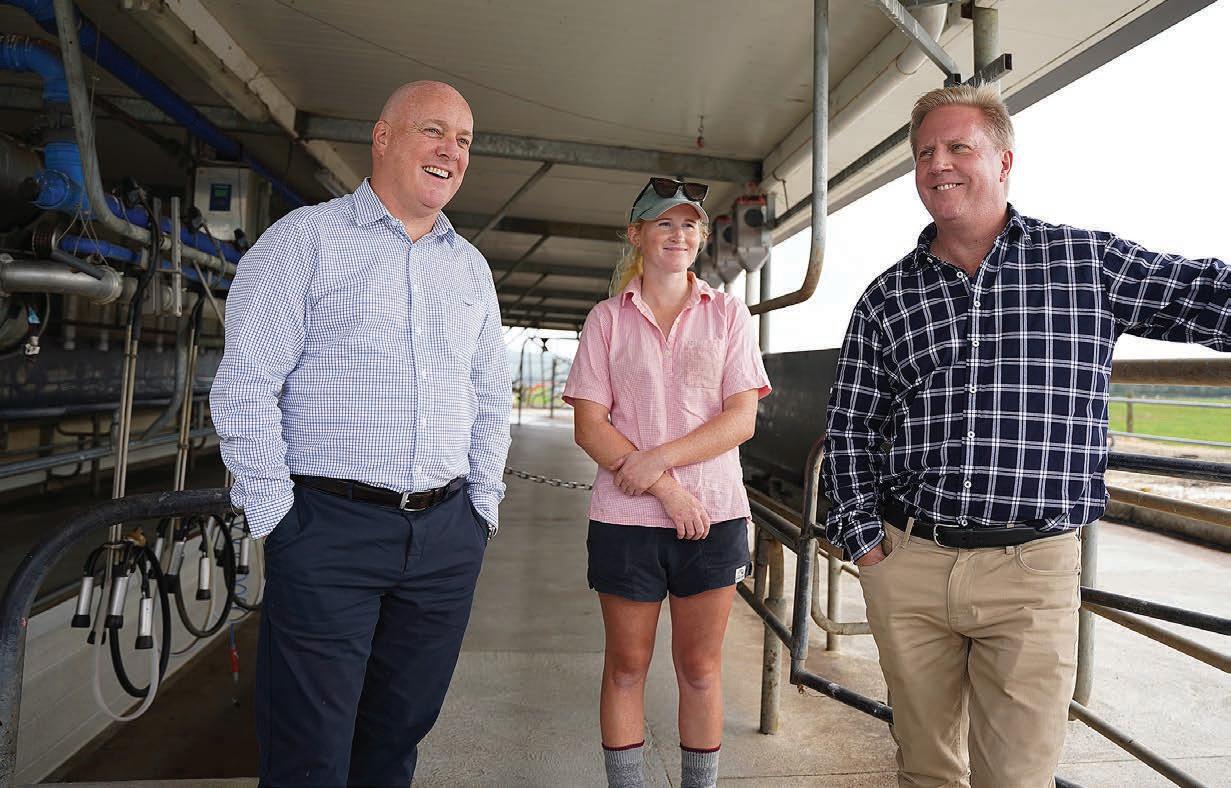
savings to secure financial security and begin building equity, even if they keep living in accommodation provided by their employer.
“It’s a massive result and I know there’ll be many young farmers out there celebrating right now.”
The Government’s changes will also allow first-time farm buyers to use their KiwiSaver balances when buying through a commercial entity they majority own, provided it will be their principal place of residence.
Dean says the impact of this can’t be overstated, highlighting the
challenges young farmers face in buying a farm.
“So many young farmers have worked hard to save a decent deposit but just aren’t able to get the bank’s backing to invest in their first farm.
“Letting those farmers use their KiwiSaver will be an enormous help in pulling together a larger deposit.
“It will put them in a stronger financial position with their initial equity, but they’ll also have less debt – which means they’d be paying less interest too.
“All of that gives our next generation of farmers a better chance of building wealth and putting themselves in a good position come retirement.”
Getting the KiwiSaver rules amended has been a key priority for Federated Farmers, forming part of its 12-point policy agenda for the incoming Government back in 2023.
The National Party committed to making the change, announcing so on the eve of the 2023 election.
“It’s taken them a long time to
deliver on that promise, and we’ve made sure to keep reminding them about it,” Dean says.
“We’re grateful the Government has finally come through for farmers.”
One young farmer celebrating the news is Waikato Federated Farmers sharefarmer chair Danielle Hovmand, who has challenged the Government several times to deliver on its 2023 campaign commitment.
“Talking with young farmers across the country, their most-asked question is: ‘When are we going to be able to use our KiwiSaver to better ourselves now, rather than having to wait until we retire – just because we’re farmers’.
“I’m very pleased to hear the Government are finally changing the rules to make that possible.
“Many young people’s goal is to buy their first home and get on the property ladder, so it’s refreshing to see farmers will be able achieve this too.”
Hovmand says this will open doors for young farmers to use their hardearned savings towards something that can have a huge impact on their financial position.
“Hopefully, in years to come we’ll see the flow-on effects of more young people being able to purchase their own herds and then achieving farm ownership earlier.
“I think this will have a huge impact on farmers across the country and will continue to help strengthen the agriculture industry for many years to come.”
Legislation giving effect to the changes will be introduced to Parliament in the middle of the year.
PROMISE FULFILLED: Waikato sharemilker Danielle Hovmand challenged the National Party in 2023 to change the KiwiSaver rules to help young farmers – and they’ve finally delivered.
Biodiversity chances slipping away
When it comes to ‘bang for buck’ conservation, nothing beats the partnerships farmers form with the QEII National Trust, Brent Mountfort says.
“It works because it’s voluntary, and we have a shared vision to protect the best of our biodiversity,” the Federated Farmers Bay of Plenty president told a conference of the National Party’s environment advisory group, the Bluegreens, this month.
“There’s no bureaucratic bull****.
“Of course there’s rules about what we need to do, and obligations to uphold, but they’re agreed from the outset by both sides.
“We have some environmental groups flying their banners, holding protests and making click-bait comments and not making an iota of difference.
“The covenants farmers seal with QEII is genuine environmental progress and getting stuff done.”
Federated Farmers is spearheading a campaign for government base funding for the trust to be lifted from $4 million a year – a level that hasn’t changed in a decade - to $10 million.
Mountfort is a second-generation sheep and beef farmer at Matatā, north of Whakatāne.
He and his wife Antonia have two areas of native bush under QEII covenant, meaning they are permanently protected, even if they were to sell the farm.
They’re among thousands of farmers and other landowners who together have voluntarily placed nearly 200,000 hectares of bush and wetland under 5382 covenants. That’s an area equivalent in size to the three remaining national parks in the North Island.
In a pitch to the Bluegreens to use their influence in election year policy development to secure a sounder financial footing for the QEII Trust, Mountfort said on-farm covenants worked on multiple fronts.
“We’ve got the DOC estate in New Zealand and that’s awesome. But

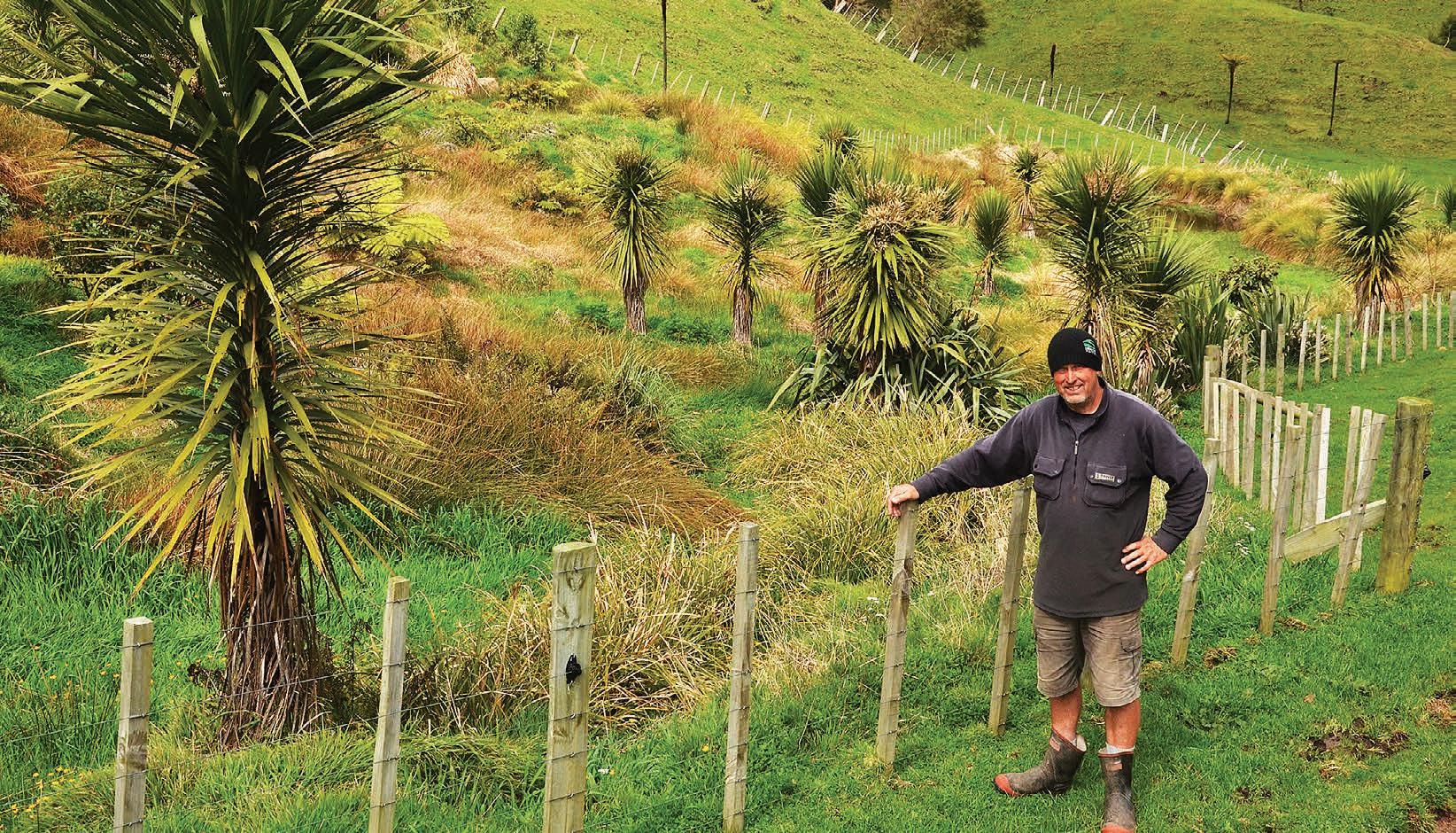
these covenanted areas dotted all over farmland create corridors so that our birds and all the other native species can move around.
“The protected bush and wetlands are part of farmers’ brand as committed stewards and food producers.”
As well as the 29 hectares under covenant, the Mountforts have planted out other gully and marginal areas of land. The obvious progress made means the regional council and community and school are willing to pitch in.
“It also helps with viability of the rest of the farm. You can concentrate your time and resources on the most productive land, with the biodiversity fenced off from stock and protected in the rest.”
Finance Minister Nicola Willis, who was also at the Bluegreens event,
heard from QEII Trust chief executive Dan Coup that the work QEII and farmers do together is excellent value from a public money spending perspective.
A University of Waikato study in 2017 indicated that for every dollar the QEII puts into covenants, the landowner is investing $7.
“QEII puts in half the establishment cost – the fencing, surveying, some legal work. The landowner is doing the other half, unless there happens to be a third party willing to chip in.”
Coup says from then, it’s largely up to the landowner to do the ongoing maintenance and pest control.
It’s a “no-brainer” in terms of the case for Crown investment, he says.
“You get all these great conservation outcomes, and the landowner is doing the lion’s share
of the work and investing.”
QEII warned last year that even with the “lifeline” thrown to it by the Government in the form of an extra $1.5 million a year for the next three years, it would have to cut back on signing up new covenants.
And that’s what’s happening. From a total of 170 covenants settled in 2024/25, the target in the current year is 35.
“We’re extremely grateful to Conservation Minister Tama Potaka for finding that $1.5 million extra revenue stream from the International Visitor Levy.
“But in truth it’s something of a band aid, plugging a gap from the loss of Jobs for Nature money.”
Coup says the trust takes very seriously its ongoing role with existing covenantors – visiting each of them about once every two
years to assess progress, offer advice and for a limited number, via a contestable fund, help with weed and pest control or fence repairs.
While it’s heart-breaking to turn down landowners keen to protect special areas, adding to that ongoing follow-up programme worsens the problem when the trust is running deficit budgets.
“When you find yourself in a hole, the wisest action is to stop digging,” Coup says.
Mountfort says it’s a huge shame scores of landowners are being told that QEII is unable to help them.
“Farmers are willing to put in their share to protect the best of the biodiversity out in the provinces.
“But with QEII missing as that anchor, opportunities are drifting away.”









COMMON GOAL: The QEII trust and thousands of farmers are aligned on biodiversity protection through covenants, minus the “bureaucratic bull****” that can happen with regulatory approaches, Brent Mountfort says.
Profitability at alltime high, but farmers still remain cautious
Strong returns and lower debt-servicing costs mean more farmers than ever are making a profit, according to the latest Federated Farmers Confidence Survey.
Of nearly 650 farmers who responded to the survey in late January and early February, 70% said their farm was currently profitable.
“That’s the highest level since we started our twice-yearly Farm Confidence Survey back in 2009,” Federated Farmers president Wayne Langford says.
“It’s great to see farmers doing well after several tough years of rising costs and uncertainty. When farmers are profitable, that’s good news for the rest of New Zealand.
“That money flows into rural communities and the wider economy, supporting local businesses, creating jobs and strengthening regional New Zealand.”
The mid-season survey shows farmers are feeling the most confident about current economic conditions since 2017, with a net 37% positive score.
“That’s a big turnaround from 2023/24, when farmer confidence was stuck at rock bottom and looked like it was just going to keep falling,” Langford says.
“Improved commodity prices are the key driver, as well as lower lending interest rates.
“At the same time, Federated Farmers has been working incredibly hard to cut some of the red tape that was holding our sector back, and we’ve had a Government that’s listened to our concerns.
“That easing of regulation has really helped breathe new life back into rural New Zealand again.”
The recovery from 2023/24 is now firmly established across
most sectors, with the number of profitable dairy farms stable at 81%, and meat and wool farms improving substantially.
“Arable farm profitability continues to lag at 41%, but that’s a small improvement from our July 2025 survey.
“It’s been an incredibly challenge year and harvest for our arable farmers across the country” Langford says.
Despite favourable current conditions for farmers, the survey shows many are feeling apprehensive about the future, with concerns about cost pressures and market volatility.
Easing of regulation has really helped breathe new life back into rural New Zealand again.
Wayne
Langford President, Federated Farmers of NZ
When asked about their expectations for after-tax profit over the next 12 months, farmers’ optimism has dropped sharply, with more now predicting a fall in profits than an increase.
This marks the first negative profitability outlook since early 2024.
“Dairy farmers were particularly pessimistic,” Langford says.
“With forecast payouts hovering around $8.50-$9.50 per kilogram of milk solids, but rising input costs pushing the break-even margin to $8.50, there’s quite a bit of nervousness there.
“Farmers might be receiving strong milk cheques, but it’s the margin that matters. If costs keep rising, that will quickly eat away at profitability.”
Forward sentiment on economic
conditions slipped to a net positive 4%, down from 6% six months ago.
A particularly worrying result is the finding that more farmers are having difficulty recruiting skilled and motivated staff.
Langford says it’s incredibly frustrating for farmers because, even as nationwide unemployment rises, they struggle to find good staff.
“It’s a message we keep sending to successive governments,” he says.
“The primary industries are the engine room of the economy, but it’s hard to attract willing workers to more remote provincial areas.
“Farmers play a role in training and looking after their staff, but many challenges are beyond their control.
“When rural communications, roads, bridges, and school bus services are under-invested in, younger workers and families stay in the cities – sometimes even if that means relying on a benefit,” Langford says.
When asked in the survey about their greatest concerns, farmers said regulation and compliance costs are still the main worry, but input costs have risen back to second place.
“While inflation has eased across the broader economy, on-farm expenses for essentials such as electricity and feed remain high.
“That’s continuing to put pressure on farmers’ cashflow and profitability.
“Worries about farmgate and commodity prices jumped sharply to third place.”
Asked what the priorities should be for the Government in election year, fiscal policy was number one on farmers’ lists.
“Clearly, farmers are concerned about government spending,
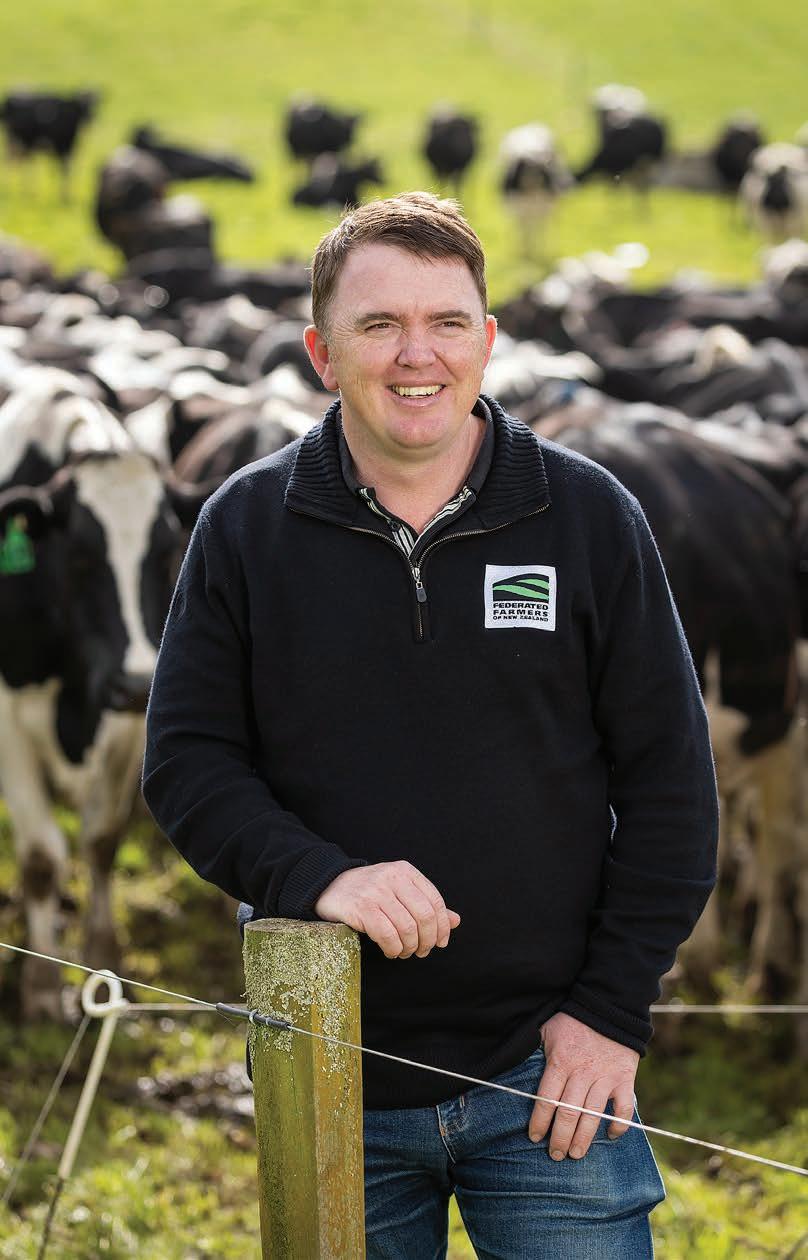
taxation and debt levels,” Langford says.
“They also want the Government to prioritise the economy and business environment.”
Local government reform was fourth on the priority list, up from eighth just a year ago.
“There’s continued dissatisfaction with rates hikes, spending priorities and service delivery in rural areas,” Langford says.
“Hopefully the Government’s proposals for a rates cap, and for reducing the number of councils to eliminate duplication and improve
efficiency, will see these concerns diminish in future.
Langford says the best move the Government could make to turbocharge confidence and investment in agriculture would be to pick up Federated Farmers’ ideas for improvements to the new legislation that will replace the Resource Management Act.
“That bloated Act, and the costly and time-consuming resource consents and hearings it entails, has been a thorn in the side of our productive sector for far too many years.”
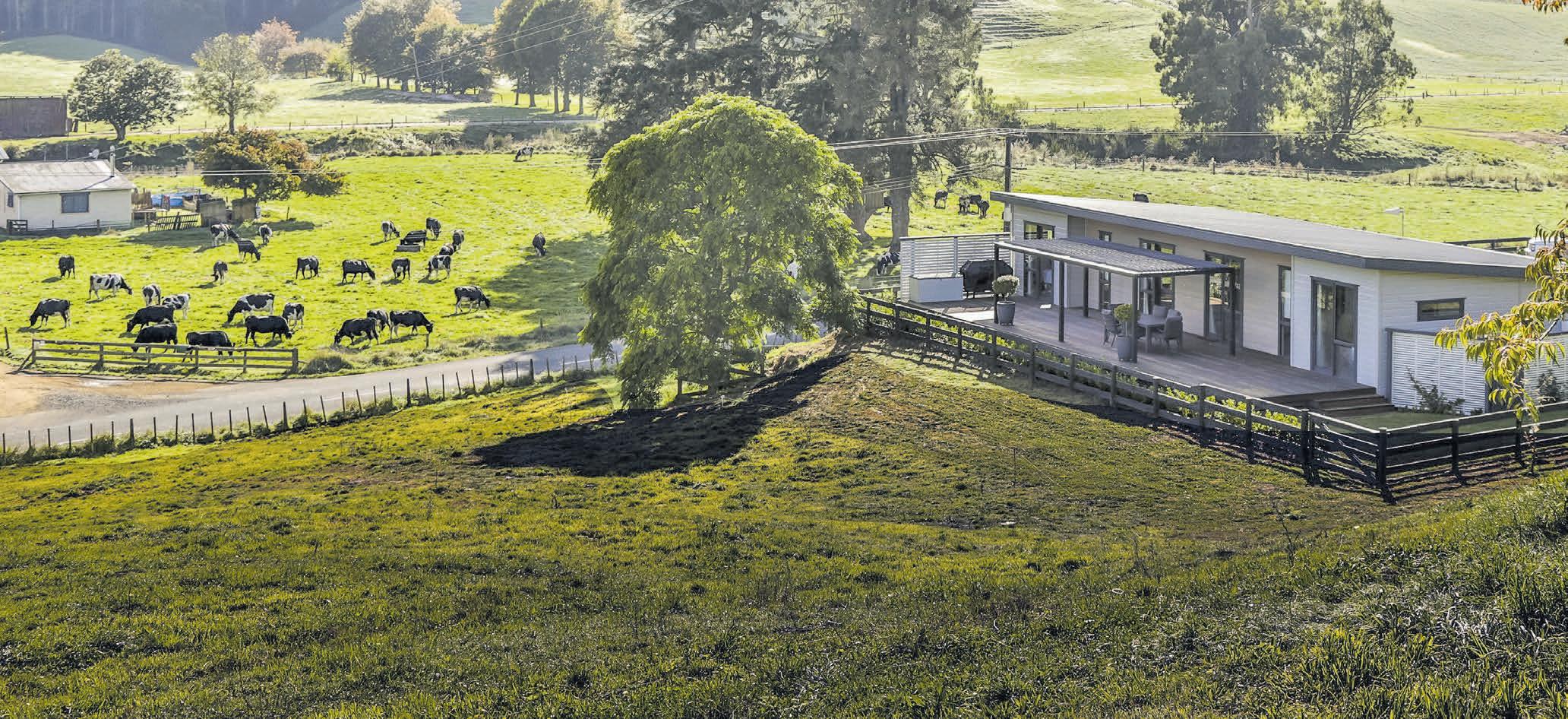
CAUTIOUS OUTLOOK: Concerns about cost pressures and market volatility are tempering farmers’ confidence about the next 12 months, Wayne Langford says.
Forestry policy must deliver accountability
as long as technical conditions are met.
After years of debate about carbon settings and landuse change, attention must now turn to who bears the costs when routine forestry operations cause damage.
Too often, predictable risks like slash, sediment, pests or fire spill over onto neighbours, councils and the public, while the party creating them walks away.
Let me be very clear: most foresters are good operators – a point too often lost in this debate. It’s also important to recognise that no land use is impact-free.
This debate is not about perfection, but about what impacts are acceptable, how predictable they are, and who pays when limits are exceeded.
The core issue is whether our policy framework allocates risk and responsibility properly when routine forestry activity causes significant off-site damage.
Under the National Environmental Standards for Commercial Forestry, most forestry activities can proceed
That’s streamlined approvals, but it’s also limited councils’ ability to respond to cumulative and off-site impacts.
In some cases, consent conditions haven’t required sufficient forethought to manage foreseeable downstream risk.
Too often, compliance with process becomes the shield, even where predictable harvesting practices generate downstream consequences.
Slash and sediment damage remains the number-one issue raised with me by meat and wool members. These impacts aren’t limited to extreme weather events. Severe storms may expose weaknesses, but they don’t create them.
Where skid sites, landings and harvest plans fail to adequately contain debris and runoff, the costs are carried by neighbouring landowners or the public.
Following the rules shouldn’t excuse real damage to fences, pastures or infrastructure.
There have been improvements since Cyclone Gabrielle, including greater scrutiny of slash manage-
ment and enforcement, which is welcome.
But accountability remains blurred. When routine operations create predictable risks, the operator should bear them.
Pest management highlights the same issue.
Wilding conifers remain a longterm problem, yet Regional Pest Management Plans are often reactive rather than preventative.
Beyond wildings, plantation forests can harbour ungulates and other pests that neighbouring sheep and beef farmers actively control as part of normal land stewardship.
When forestry blocks don’t share this responsibility, the costs drift across boundaries.
Stronger prevention duties and clearer expectations for all landowners around ongoing pest management would reduce reinfestation and better protect both private and public investment.
Boundary setbacks and fencing disputes sit at the practical edge of these tensions.
A 10-metre setback under the current standards can be inadequate when trees reach 25 to 30 metres in height, particularly on steep country.


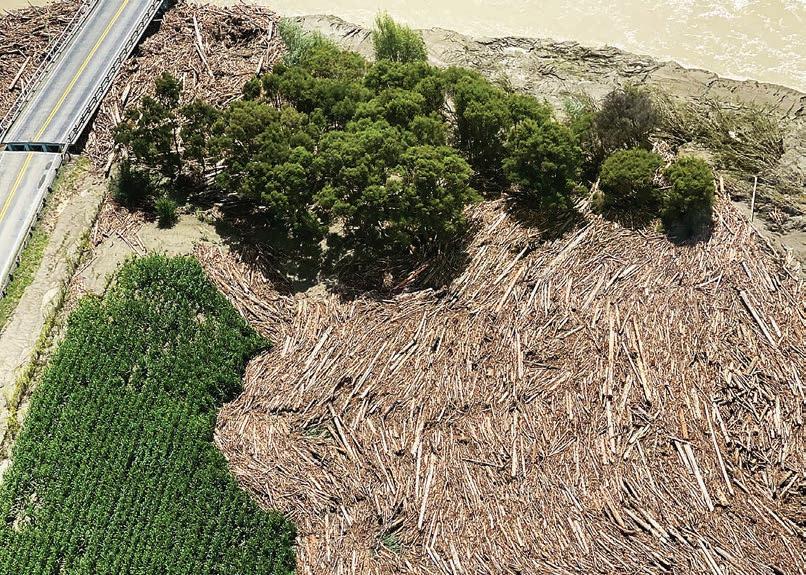
Equally, blanket national setbacks of 30 or 40 metres would unnecessarily sterilise productive land.
What’s needed are flexible rules based on slope and risk, alongside a firm requirement that any damage to fences or infrastructure is repaired promptly at the forestry operator’s expense.
A farmer should never have to leave a boundary unsecured while waiting for a dispute to grind through a process.
Fire resilience is another pressure point at the forestry-farm interface, with the current framework focusing largely on response rather than prevention.
There are no consistent national requirements for dedicated on-site water storage, firebreaks, or buffers.
In practice, neighbouring farmers’ stored water is often used during fire events, but there’s no clear requirement for compensation or replacement.
If stored water is essential for firefighting, it should either be stored on-site or promptly restored or compensated.
Funding settings reinforce the wider issue.
Fire and Emergency New Zealand is funded primarily through an insurance levy that spreads costs broadly, rather than reflecting relative land-use risk.
Forestry land contributes a
relatively small share of rates compared with agricultural land, even though harvest cycles drive significant roading and downstream costs.
When impacts are uneven but costs are pooled, tensions naturally grow.
Too often, predictable risks like slash, sediment, pests or fire spill over onto neighbours, councils and the public, while the party creating them walks away.
Richard Dawkins Federated Farmers meat and wool chair
The current resource management reform offers a chance to reset that balance.
Both livestock farmers and foresters benefit from policy settings that avoid blanket rules, minimise unintended regulatory costs, and protect productive land.
Strong national direction should make operators accountable for offsite impacts while allowing regional flexibility to reflect local risks.
All land use has some impact, but when predictable thresholds are crossed, responsibility must sit squarely with the party creating the risk.

FALLOUT: Slash and sediment are a visible reminder that forestry impacts don’t always stop at the boundary fence.
Richard Dawkins Federated Farmers meat and wool chair
HEATING UP: Fire resilience is another pressure point at the forestry-farm interface, with the current framework focusing largely on response rather than prevention.
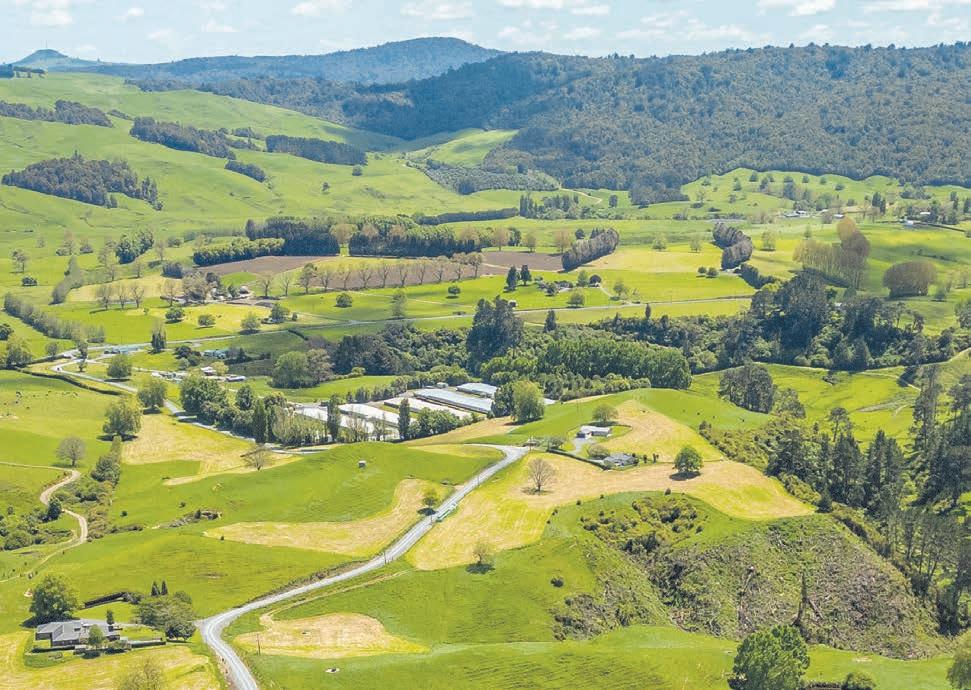

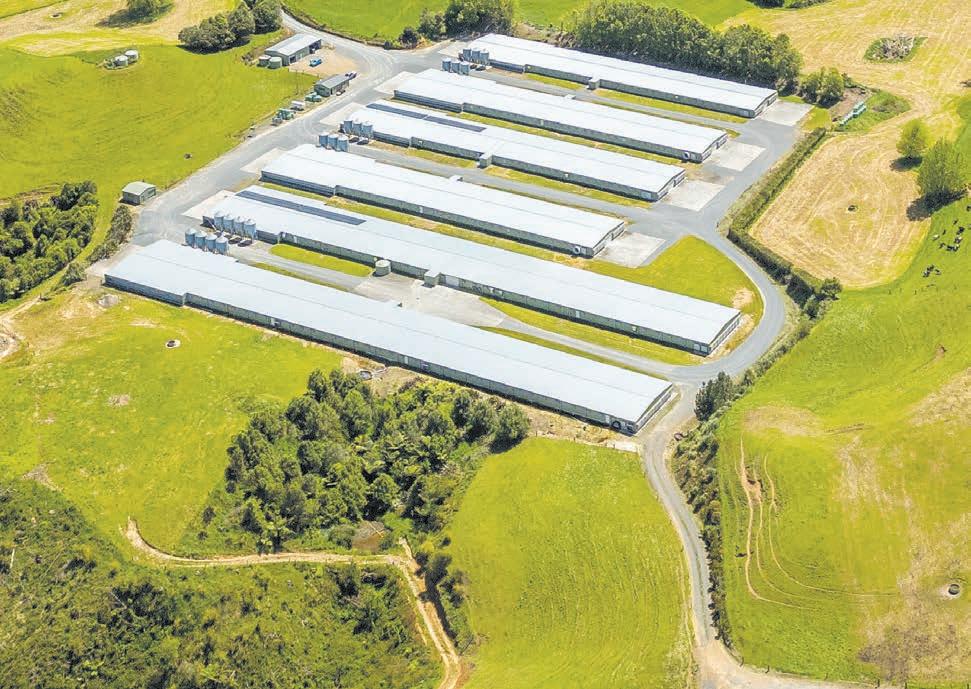
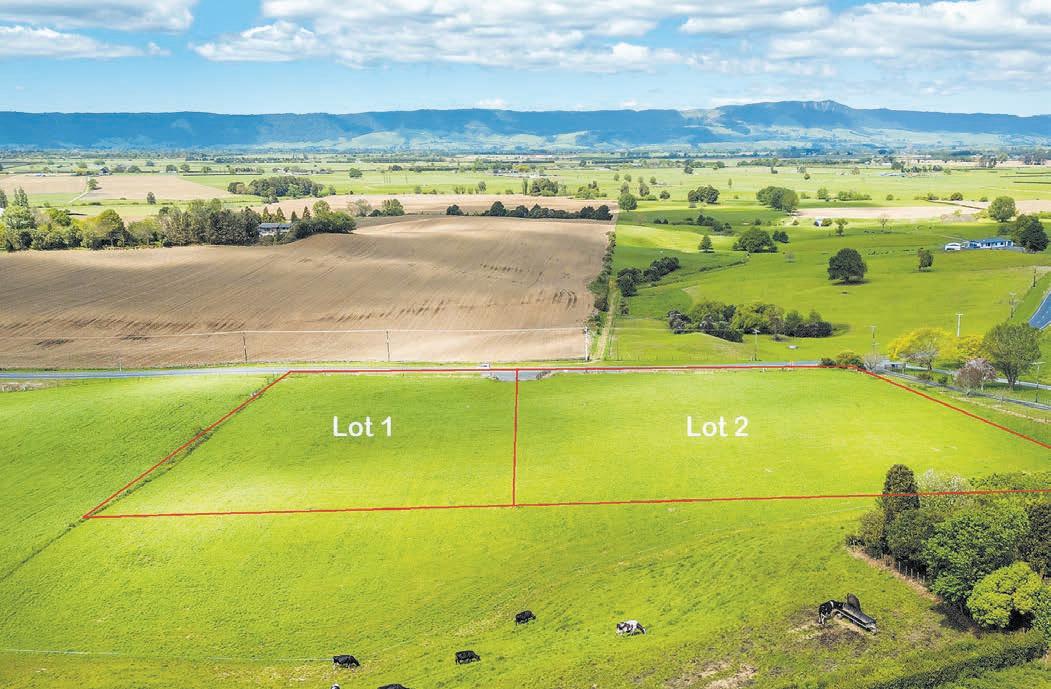
Hig rmin raise er operation positioned bet atamata and Cambridge This efficiently managed, low-labour asset delivers predictable, contract-backed income insulated from seasonal, climatic, and commodity-price volatility The property includes modern broiler infrastructure, excellent support buildings, and three quality homes
A proven large-scale enterprise offering strong cashflow, operational resilience, and long-term value for agri-investment portfolios
Closes Thurs 26 Mar, 4pm th (unless sold prior)
Secure your own slice of countryside paradise with your choice of these two exceptional rural lifestyle sections Offering memorising expansive outlooks with the added convenience of being a stone's throw from matamatas town boundary These properties provide an ideal platform to build your dream home in a sought-after location
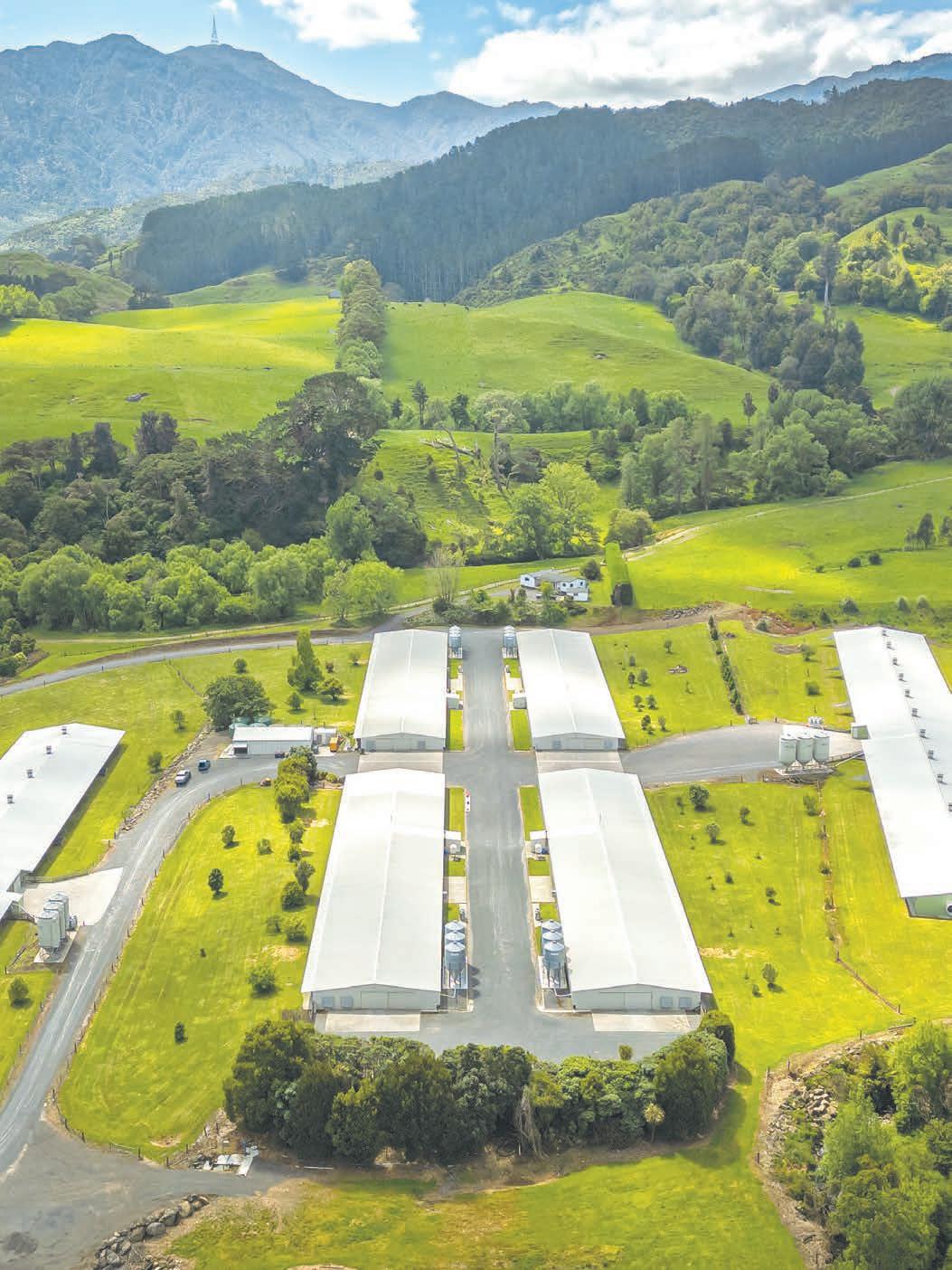
Aroha West
Step into a secure, low-risk agricultural investment delivering stable, long-term returns and lifestyle flexibility Inghams supplies the birds and feed you manage the operation within a fully integrated, high-performance system Enjoy Index-adjusted contracts, predictable overheads, and ethically reared SPCAaccredited chickens Backed by Inghams, this reliable agrib usiness offers peace of mind and future security
Closes Thurs 26 Mar, 4pm th (unless sold prior)
Begovich 027 476 5787
Butterworth 021 348 276
Bareland with balance - 141 ha
Situated in the well-regarded Beaconsfield Valley Road district, this Manawatu property spans approximately 141 ha, comprising around 55 ha of easy contour, mowable flats and 86 ha of medium to steeper hill country. The flats are currently utilised as part of a neighbouring dairy milking platform, reflecting their productive capability. The balance of the property provides reliable grazing country suited to sheep and beef operations Soils are predominantly Kiwitea loam, with areas of Manawatu sandy loam, silt loam and Kopua stony loam, supporting consistent pasture performance. The farm is well subdivided with a mix of conventional post and batten, deer fencing and electric fencing Water is supplied via the Kiwitea scheme (23 units), providing a dependable reticulated supply. Located approximately 15 minutes from Feilding and within easy reach of Palmerston North, the property combines rural scale with convenient access to services and sale yards.

Auction 11.00am, Thu 2nd Apr, 2026, 54 Kimbolton Road, Feilding View By appointment Web pb.co.nz/FR222021


Waituna West 414 Beaconsfield Valley Road
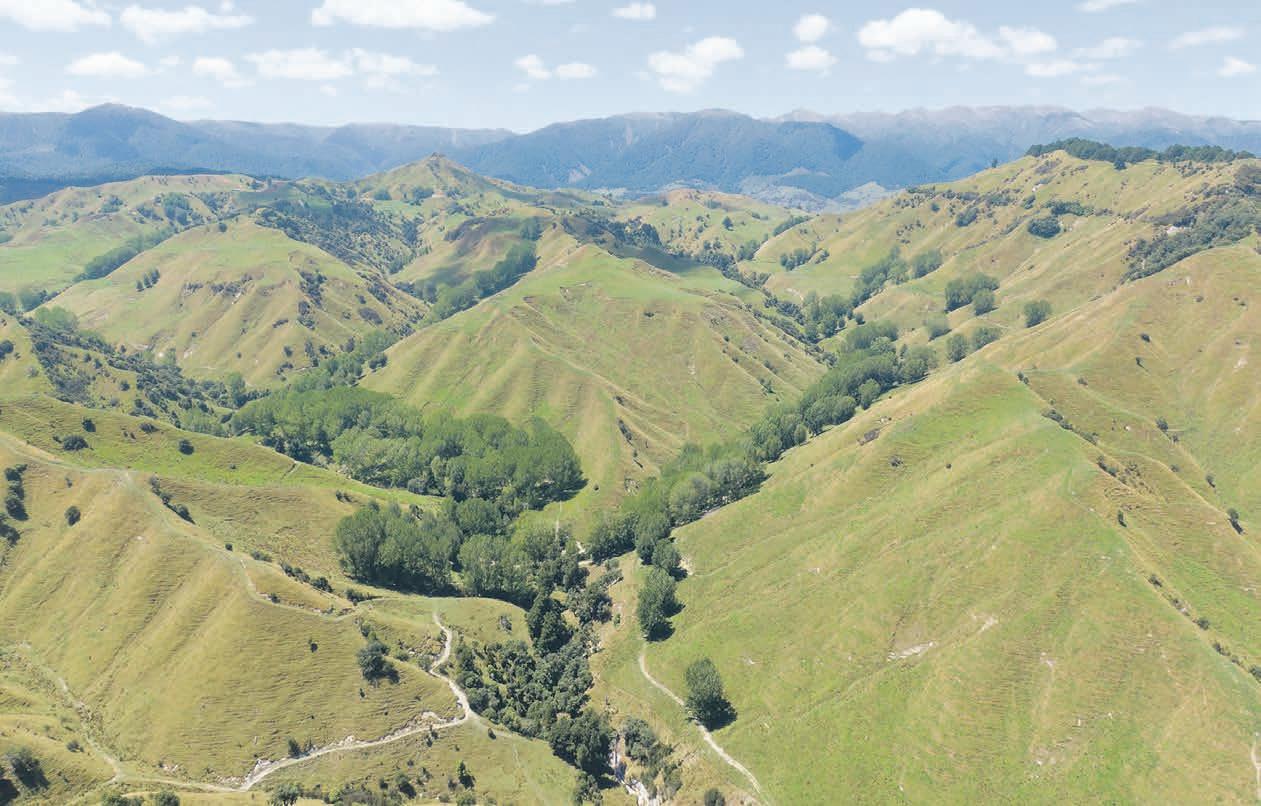
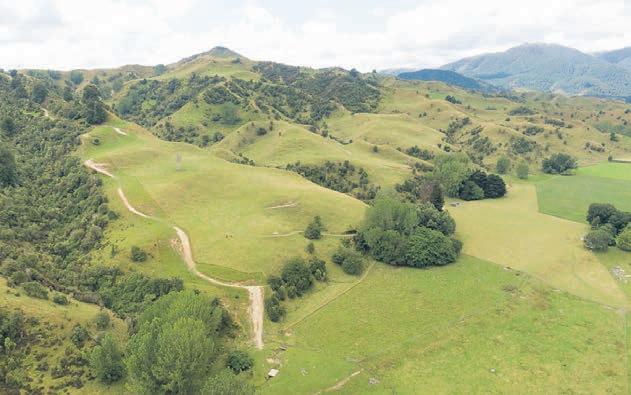
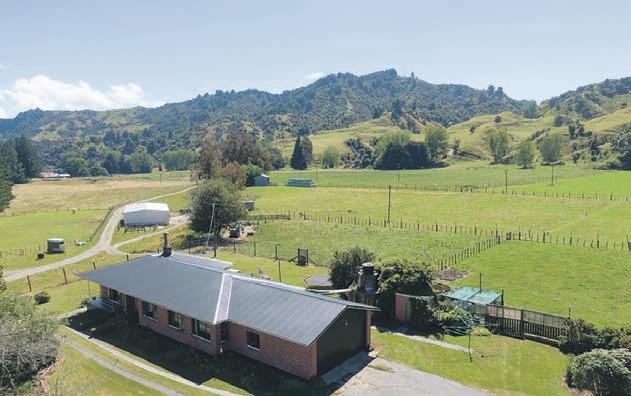
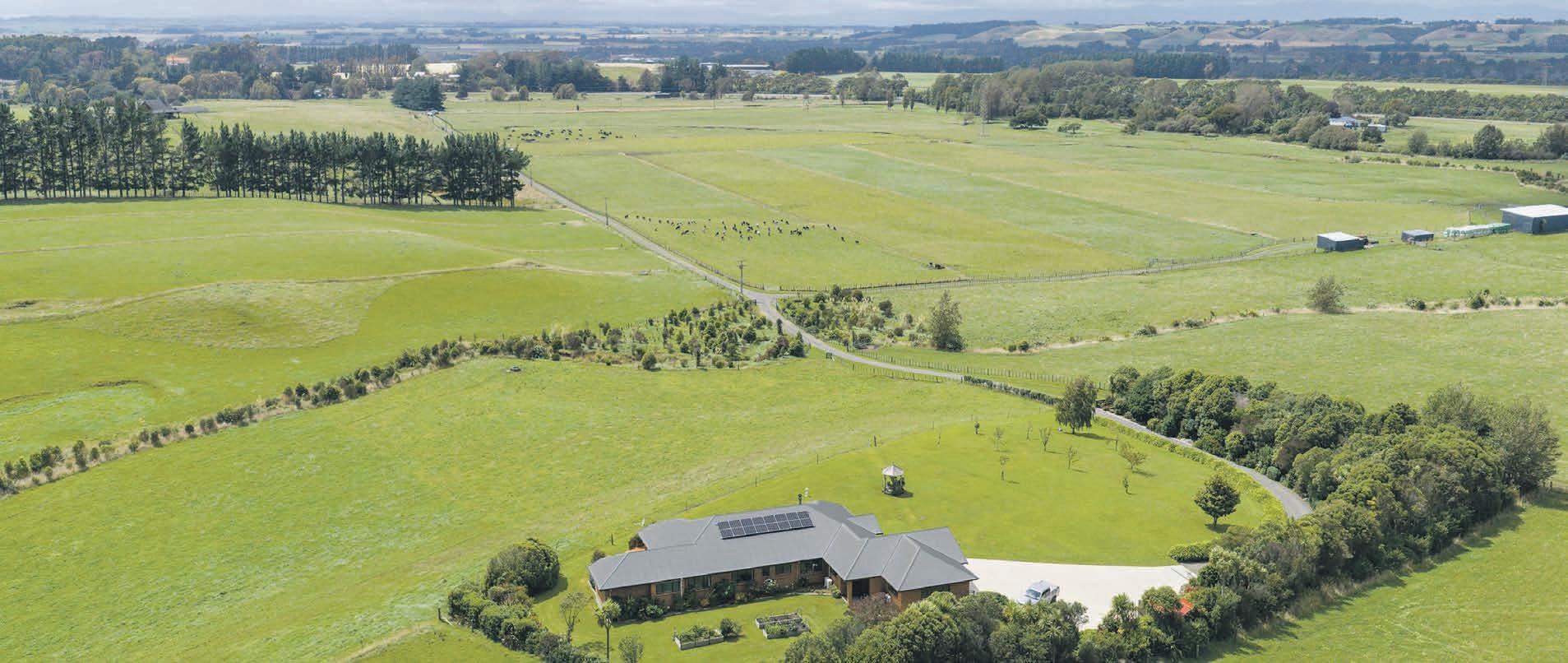
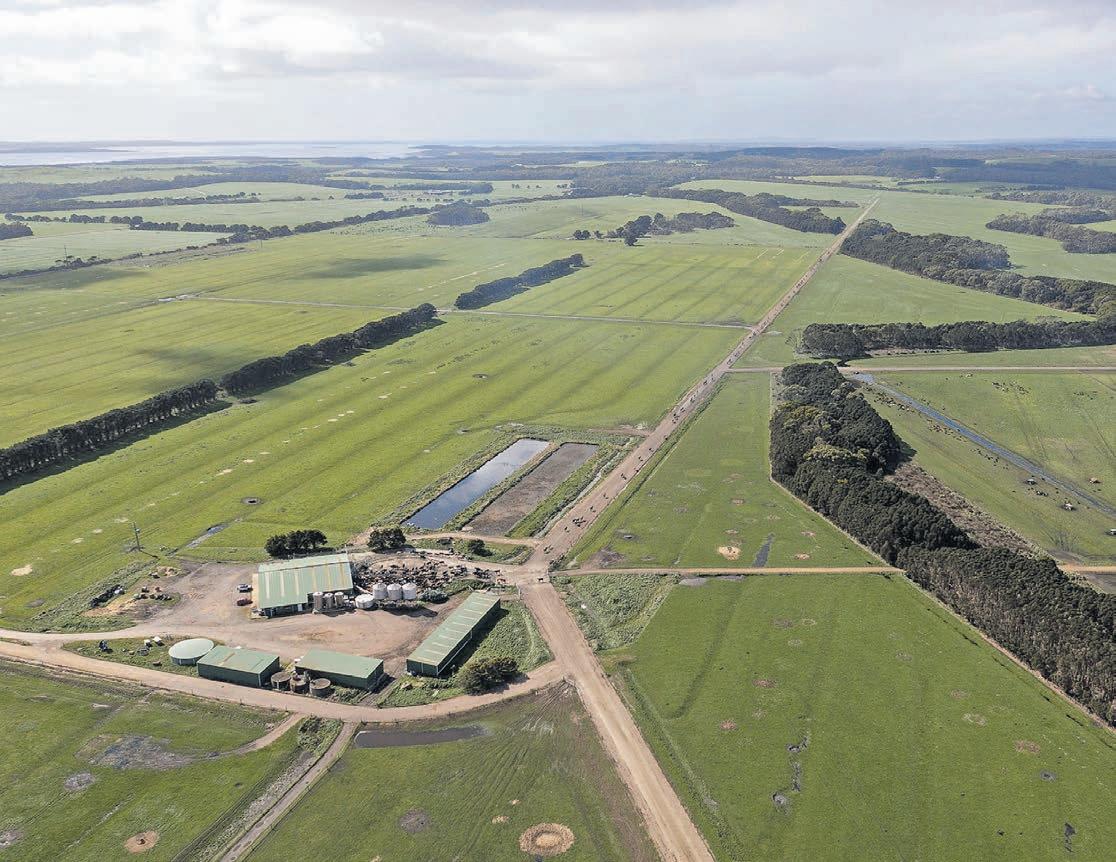

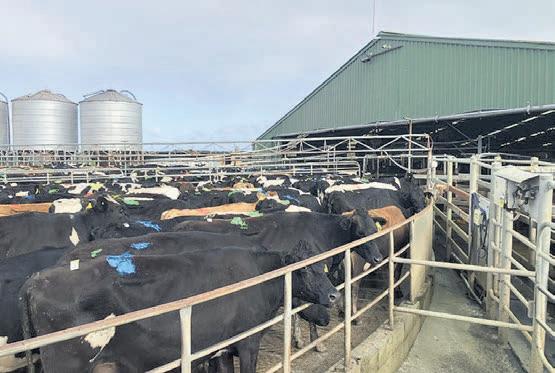
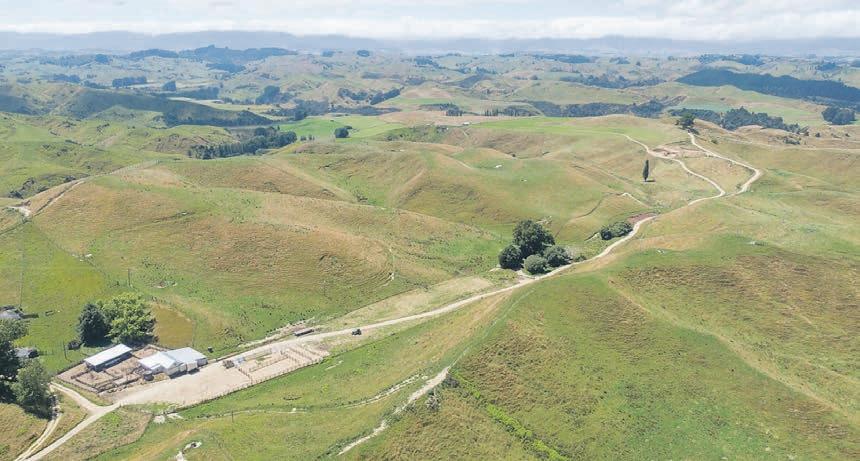
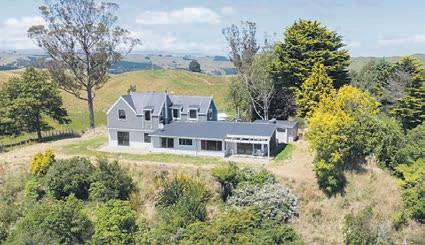
Harcus Dairy - NW Tasmania
Nutrien Harcourts and LAWD are pleased to present for sale Harcus Dairy, a largescale premium dairy operation located in the Circular Head region of north-west Tasmania, one of Australia’s most productive agricultural regions.
Key Investment Highlights
• Originally part of the iconic Van Diemen’s Land Company holdings and converted to dairy in the 1990s, Harcus Dairy continues to serve as a cornerstone of the region’s agricultural production landscape.
• Comprising approximately 901.6 hectares (2,227 acres), the property is currently operated as a highly productive dairy enterprise.
• Currently leased to an A-grade dairy operator (expiring February 2027), generating a passing annual rental income of $1,140,090 (including GST).
• A demonstrated history of large-scale dairy operations, historically milking up to 2,100 cows at a stocking rate of 2.0-2 5* cows per arable hectare.
• Current operations are milking approximately 900 cows and surplus pasture is effectively utilised for dairy support
• The current herd averages 430* kilograms of milk solids (MS) per cow, with a March-April calving system, strategically implemented to optimise winter feed efficiency
• Situated within one of Australia’s key dairy regions and close to major dairy processing facilities including Saputo (Smithton), Fonterra (Wynyard) and Cadbury’s (Burnie).
301 Woolnor th Road, Woolnor th, TA S
Land Size: 901 6 ha
For Sale Contact Agent
Proper ty ID: nutrien harcour t s net/L 36 481607
Tony Maguire M 0417 101 392 tony maguire@nutrien com au Nutrien Harcour t s Tasmania
Danny Thomas M 0439 349 977 danny thomas@lawd com au L AWD - Melbourne
In conjunction with:

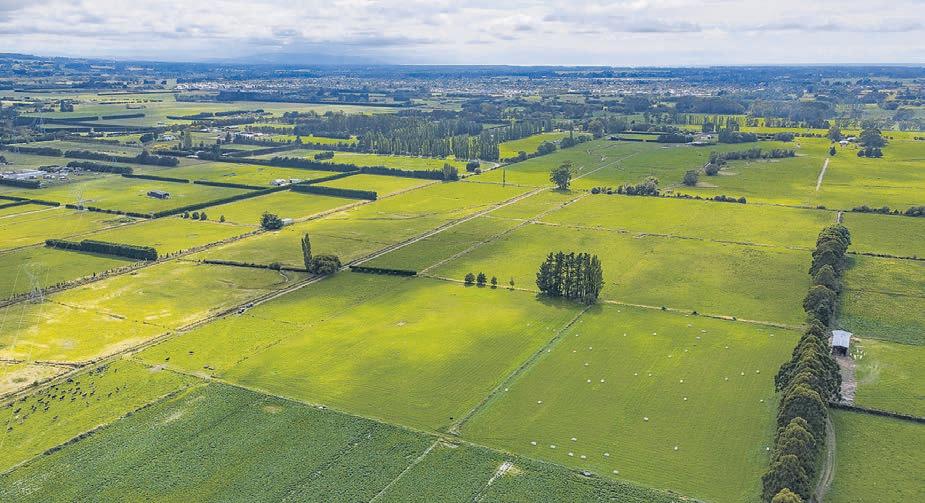
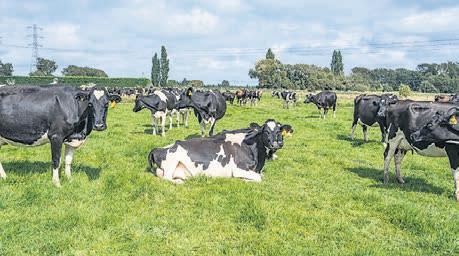
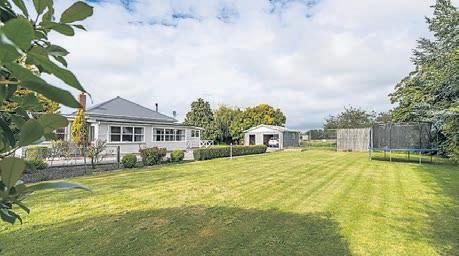
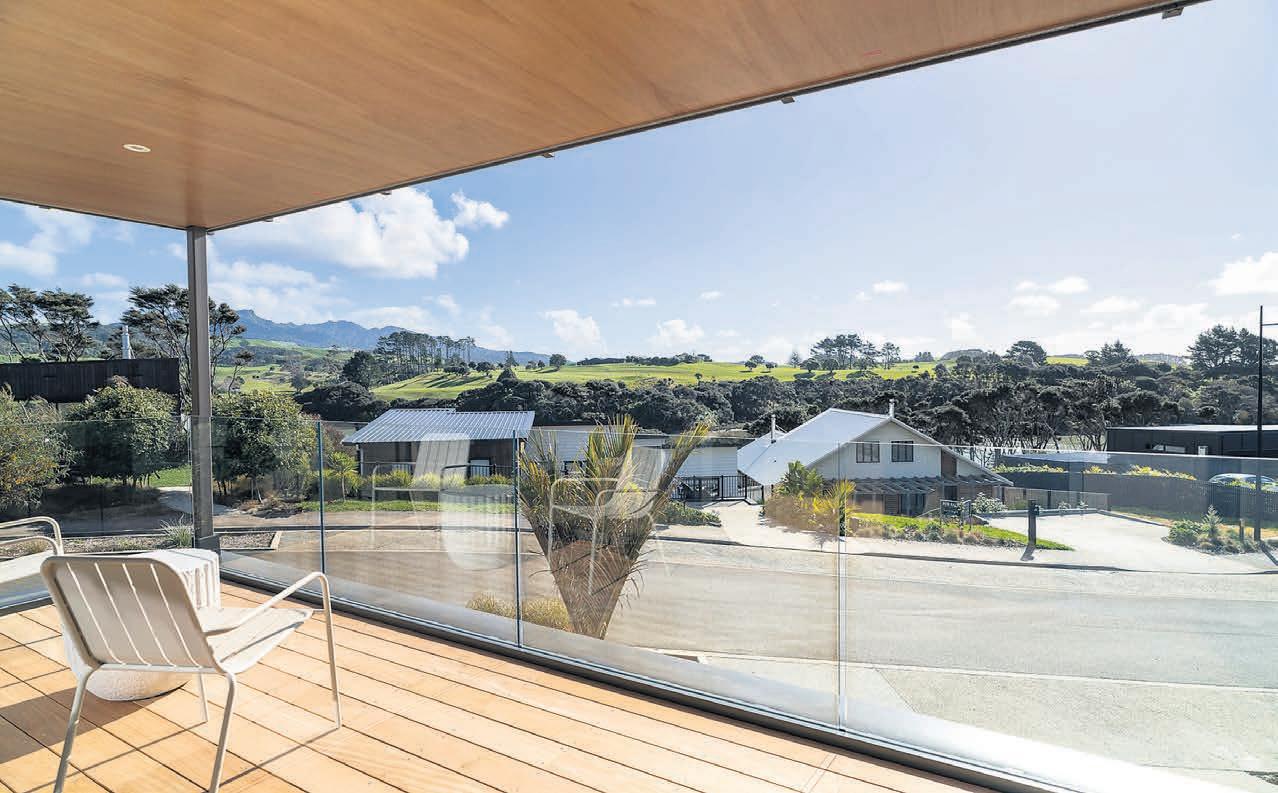
Brand new holiday Bach- no maintenance!


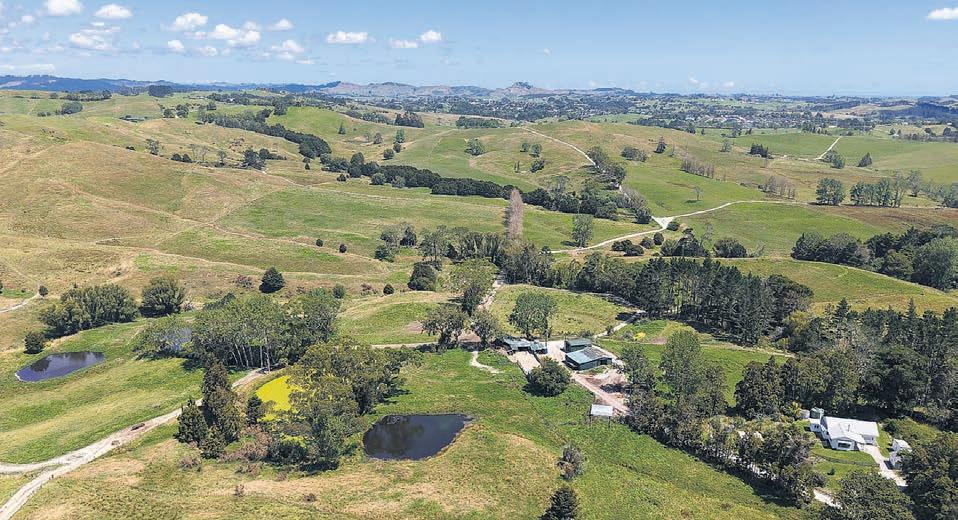
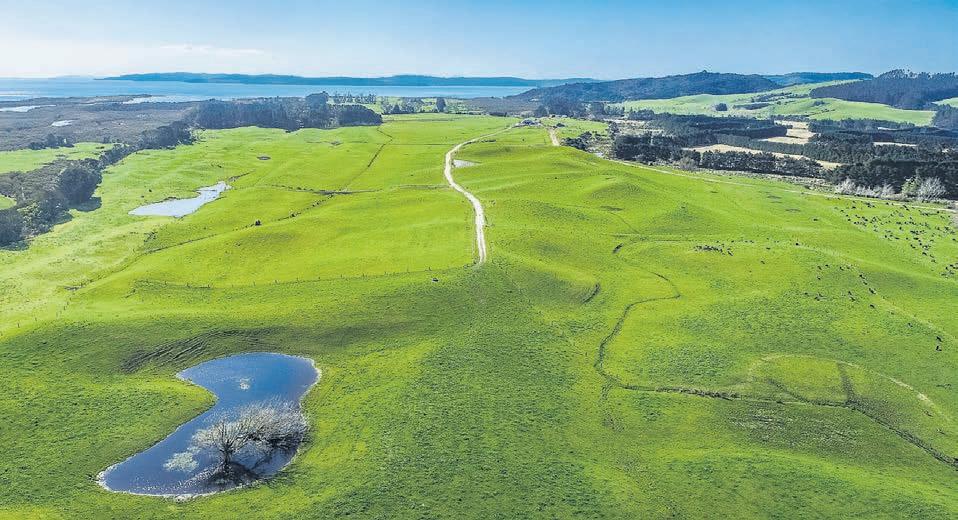
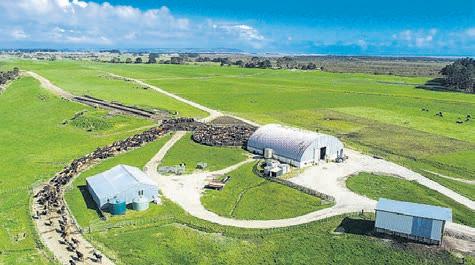
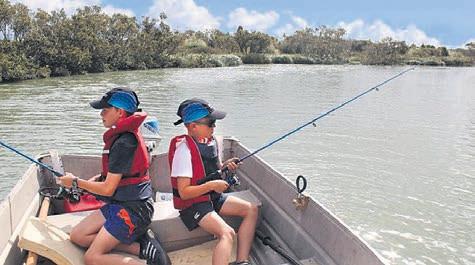








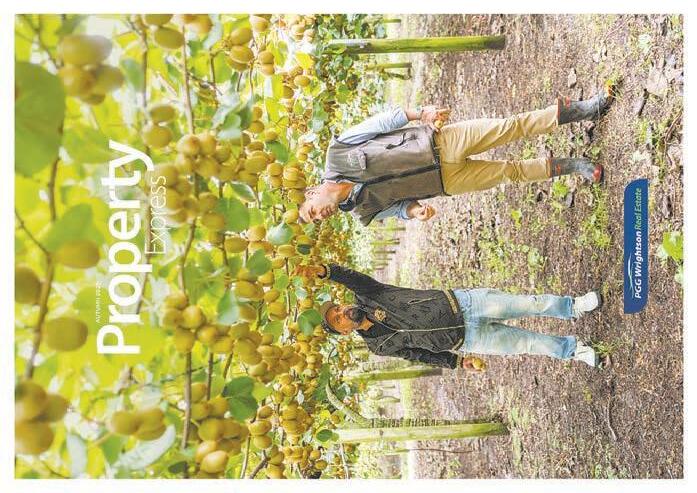



















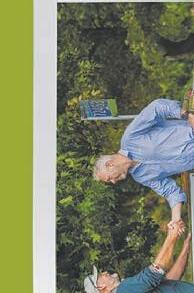













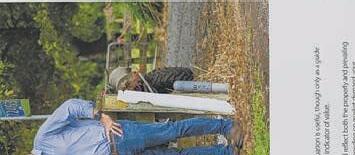

















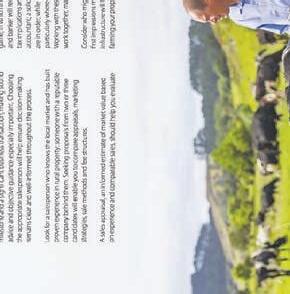


















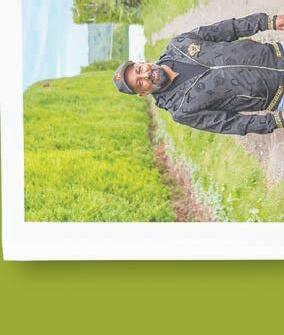
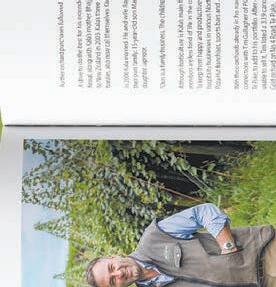










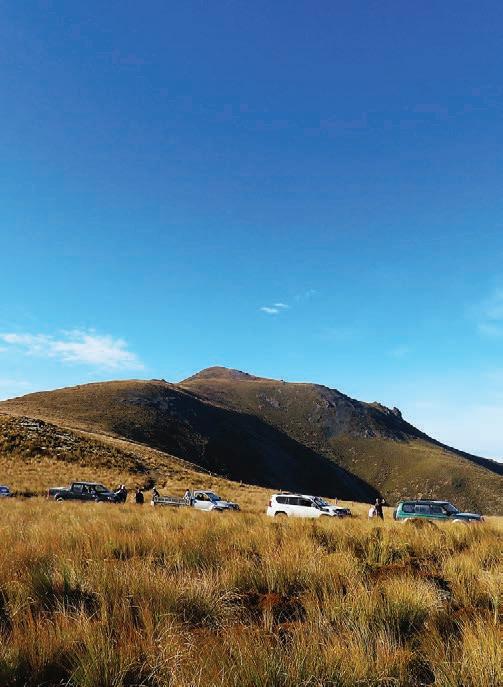

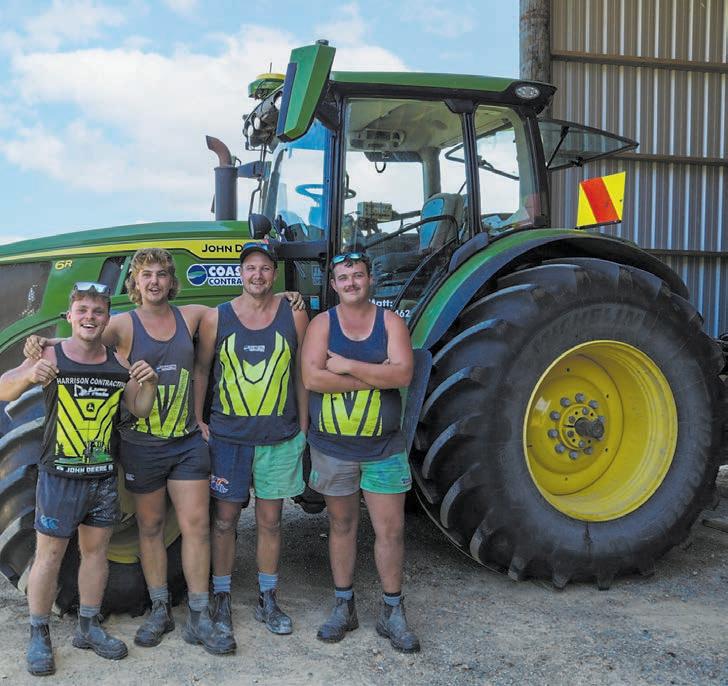







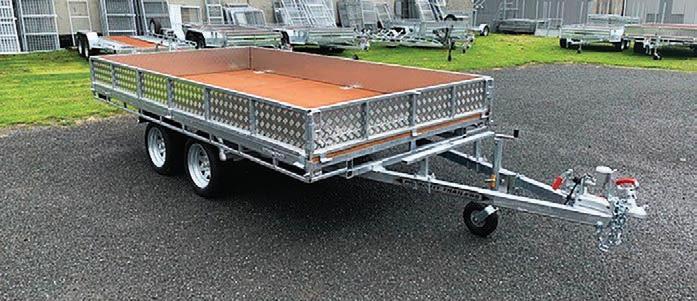

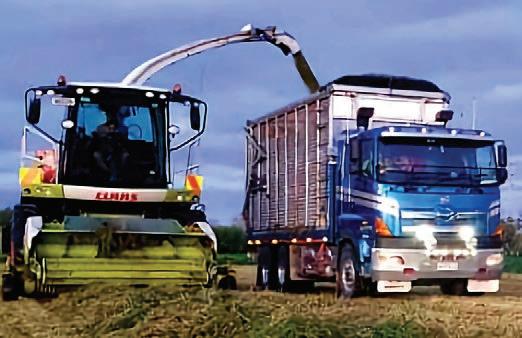




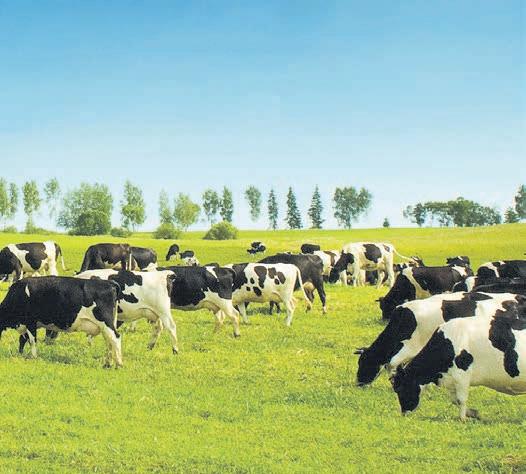










LIVESTOCK FOR SALE
WILTSHIRES-ARVIDSON. Self shearing sheep. No1 for Facial Eczema. David 027 2771 556.



PUMPS
roar. Phone 021 433 186.
NORTHLAND FARMER would like an opportunity to go hunting for deer. Open to any area. Phone or txt 021 283 1600.
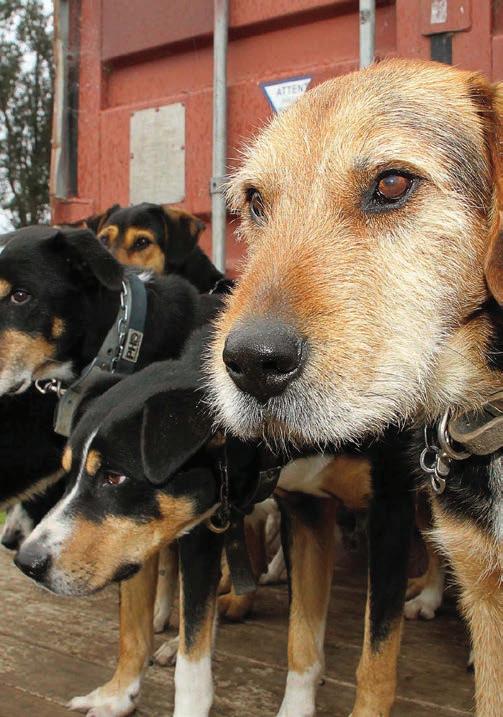
GOATS WANTED
FERAL GOATS WANTED. Pick-up within 24 hours. Prices based on works schedule. Phone Vicky Le Feuvre 07 893 8916 or 027 363 2932.
GOATS WANTED. All weights. All breeds. Prompt service. Payment on pick up. My on farm prices will not be beaten. Phone David Hutchings 07 895 8845 or 0274 519 249. Feral goats mustered on a 50/50 share basis.
GRAZING AVAILABLE
DAIRY HEIFER GRAZING available from 1st May in the Horowhenua district. Enquiries to 021 430 961.
NZ KELP. FRESH, wild ocean harvested giant kelp. The world’s richest source of natural iodine. Dried and milled for use in agriculture and horticulture. Growth promotant / stock health food. As seen on Country Calendar. Orders to: 03 322 6115 or info@nzkelp.co.nz

OHINEWAIRUA STATION

TUESDAY 10TH MARCH, 11AM
3RD ANNUAL SALE, AN EXCELLENT OFFERING OF STOCK INCLUDING APPROXIMATELY: 1221 TAIHAPE-NAPIER ROAD & ONLINE VIA R
8,800 SHORN ROMNEY WETHER LAMBS
A/c Anderton Family Ltd
Date: Wednesday 11th March 2026
PRESSURE WATER
PUMPS, suitable on high headlifts. Low energy usage for single/3-phase motors, waterwheel and turbine drives. Low maintenance costs and easy to service. Enquiries phone 04 526 4415, email sales@hydra-cell.co.nz
RAMS FOR SALE HILL COUNTRY 2-tooth Perendales. Quality sires. Good wool and easy care lambing. $300 - $600. Phone 021 133 7533.
SOUND TERMINAL SIRES
SALE
TALK
WANTED TO BUY WHAT’S SITTING IN your barn? Ford, Ferguson, Hitachi, Komatsu, JD. Be it an excavator, loader or tractor, wherever it is in NZ. Don’t let it rust. We may trade in and return you a brand new bucket for your digger or cash for your pocket. Email admin@loaderparts.co.nz or phone Colin 0274 426 936. BOOK AN AD. For only $3.30 + gst per word you can book a word only ad in Farmers

Suffolk Southdown X and Southdown rams for heavy lambs. Suit ewes or hoggets. $300 - $600. Phone 021 133 7533.
A CROW was sitting on a tree, doing nothing all day. A small rabbit saw the crow, and asked him, “Can I also sit like you and do nothing all day long?” The crow answered: “Sure, why not.” So, the rabbit sat on the ground below the crow, and rested. All of a sudden, a fox appeared, jumped on the rabbit and ate it. Management Lesson - To be sitting and doing nothing, you must be sitting very, very high up.
Classifieds section. Phone 0800 85 25 80 to book in or email wordads@agrihq. co.nz WORD ONLY ADVERTISING. Phone 0800 85 25 80.
SAWN SHED TIMBER including Black Maire, Matai, Totara, Rimu, Mac, Redwood, Western Red Cedar etc. Also buying salvaged native logs. Phone Richard Uren. NZ Native Timber Supplies. Phone 027 688 2954.

SHORN ROMNEY EWE LAMBS
TURIHAUA ANGUS BRED R2 STEERS
TURIHAUA ANGUS BRED R2 HEIFERS
JOIN US FOR REFRESHMENTS AT 10AM & LUNCH FOLLOWING THE CONCLUSION OF THE SALE BID


AUCTIONEER'S NOTES AN EXCITING OPPORTUNITY TO PURCHASE EXCEPTIONALLY WELL BRED STOCK FARMED ON THE RENOWNED OHINEWAIRUA STATION HILL COUNTRY PASTURE AND RECOGNISED FOR THEIR SHIFTING ABILITY
REBATE:


UPCOMING MATAWHERO CAT TLE SALE
Tuesday 17 March | 11am
Grand opportunity to purchase hill country station bred cattle.
Contact: Jamie Hayward 027 434 7586
Follow us online for updates: www AgOnline co nz PGG Wrightson Livestock - East Coast
FEILDING WEANER FAIR
2026 Sale Dates
Feilding Saleyards | 11.30am
Thursday 12 March - Weaners
Wednesday 25 March - Weaners
Wednesday 8 April - Weaner Steers & Bulls
Thursday 9 April - Weaner Heifers
Thursday 16 April - Weaners
Wednesday 29 April - Weaner Steers & Bulls
Thursday 30 April - Weaner Heifers
Thursday 14 May - Weaners
*NB dates subject to change depending on entries
Contact: Maurice Stewart 027 246 9255 Tony Gallen 027 590 1711



STOCK REQUIRED
Shorn Store lambs 30-35kg
Angus steer calves 240 -280kg
Aut, 1YR Fries Bulls 250 -300kg
18Mth Here & Ang Bulls 350 -450kg
18Mth Fries Bulls 360 -450 kg
18 Mth Ang & AX Hfrs 280-380kg
18 Mth Angus Steers 300-420kg
2 5YR Fries/Here steers 500kg + 2YR Beef Bulls 500-600kg
info@dyerlivestock co nz www dyerlivestock co nz Ross Dyer 0274 333 381
For
A Financing

Advertise

NATIONAL HIGH INDEXED ELITE NZ JERSEY GENETICS IN - MILK AUCTION
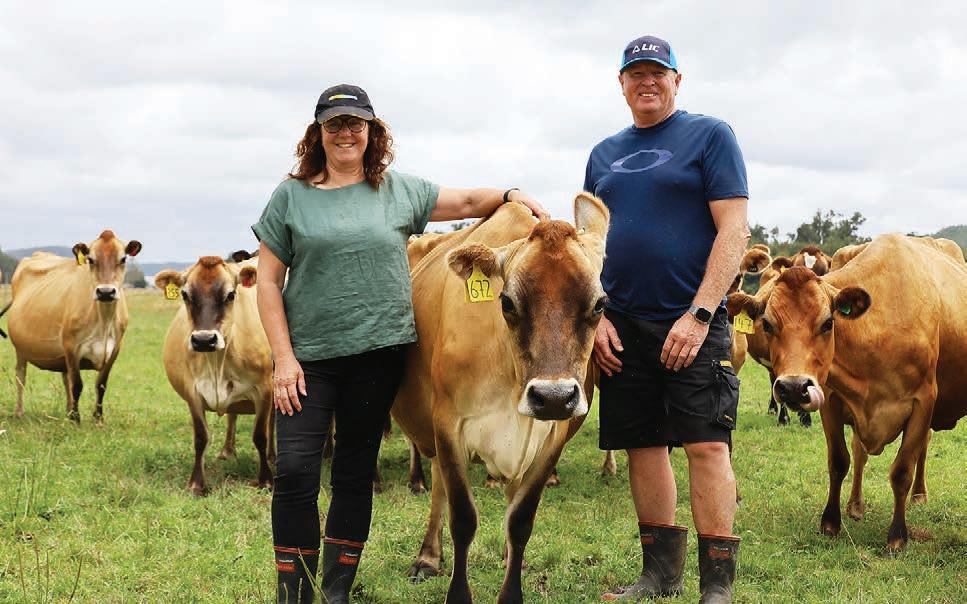
Monday 23rd March – 11.30am 2244 S/H 30 Rotoma. RD 4 Rotorua DN 21713
This herd is currently ranked No 2 Nationally for Indexes and was originally established in 1965 as the Awatui Jersey Stud. Faithfully farmed by the Wright Family for 60yrs. COMPRISING
350 Cows. D.T.C 22nd July. 85% in calf to AI. BW 320 PW 351. 120 R2yr Heifers. D.T.C 12th July. 90% in calf to AI. BW 366 PW 323.
• 100% Recorded G3 Profiled with RKT Participant Code
• 3 Generation Pedigrees available
• 22 Dams are in calf to an LIC Contract
• 12 Dams have been offered a Spring 2026 LIC Contract
• 27 Dams have been offered a Spring 2026 LIC Sexed Semen Viking Genetics Contract
• The Herd has an immaculate Animal Health Record.
• Lepto Vaccinated 4th Feb 2026
• BVD Vaccinated
• BVD Bulk Milk Undetected 10th Nov 2025
FOR SALE
High Quality Autumn Born Yearling Heifers
A/c Butson Dairies Ltd
74 Ambreed Well Grown Friesian Yearling Heifers from top producing herd (approx 600 M/S).
Last of Capital Stock for sale due to sale of property.
Well grown able to be mated for autumn or spring calving.
You will not buy better – $1600 For immediate delivery
PRIVATE SALE
96 CRV Ambreed Friesian In Calf Heifers BW 152 PW 167
Caving from 24/7/26 (Bull Out 10/12/25)
Tight Calving Spread to Jersey Bulls
From Top Producing North Otago Herd
Extremely well grown – $3000
PRIVATE SALE
Hardy Cows
Herd Comprising approx 400 Friesian, Friesian x Cows & Replacements (CRV AMBREED) for immediate or end of season sale.
Due to calve 14/8/26.
Once a day milked through Rotary Shed producing around 350 M/S p.a.
Over 30 years closed herd.. Hardy cows that will shift anywhere. Capital Capital Stock.
Given different feeding the prospect of major production gains. For sale due to vendors health and wishing too pursue other interests.
PRIVATE SALE
320 Friesian Friesian x Carryover Cows Spring Calving to Hereford & Angus Bulls due 25/7/26
BW 145 PW 231 For genuine sale
Can split in reasonable drafts – $2700
• TB C10 Last Test 21st Nov 2025
• Johnes Tested Clear 10th Feb 2026
12% of the sale animals are chocolate coloured. 85% of the Herd are A2A2.
Consistently producing 420kgms on a hard dry farm with young cows milked OAD all season and balance from 1st January. Feb 10th H/T 1.80kgms. Avg. 56 SCC.
Payment: 14 days from sale.
Delivery: By 31st March or 1st June by prior arrangement.
Open
Day for viewing Monday 9th March 12 noon
NZ Farmers Livestock are privileged to bring the Team Wright Herd & R2yr Heifers to the market after 60yrs of passionate Nominated Breeding. This is an exceptionally well bred NZ Genetic Herd with exceptional Dairy Type to match the Indexes.
Jersey Breeders this is a rare opportunity to purchase Jersey Genetics of such a high calibre.
VENDORS: Phil & Sandra Wright
NZFL Agent: Michael Conwell 027 226 1611
Catalogues available online or by contacting your local NZFL Agent. The sale will be livestreamed on MyLivestock. Please ensure your registration on MyLivestock 72hrs prior to sale.
Phil and Sandra Wright have spent 35 years breeding one of New Zealand’s top dairy herds.
Proudly sponsored by
Beef breeders rewarded for perseverance
The weaner fair season has got off to the best possible start with prices reaching new heights.
Suz Bremner MARKETS Sheep and beef
BEEF cattle breeders were rewarded over the past week for persevering with breeding cows, as beef weaner calf prices soared to new heights.
Saleyards around the North Island came alive with the sound of freshly weaned calves calling for their mothers, and the atmosphere in the rostrums was electric as bids flew and records were broken.
All the signs were pointing to a hugely successful 2026 beef weaner fair season, but even those that have been in the industry for a long time could not have predicted quite how far price levels would be pushed.
Prior to the start of the season, AgriHQ used historical data analysis to give an indication of where prices should be. Through this analysis, against a $9.50/kg schedule, steers were predicted to trade around $1660 per head, or $6.65/kg, while heifer predictions were $1250 per head, or $5.75/kg.
As the first calves went under the hammer though, it became very clear that buyers were prepared, and came to the party
with bigger budgets, having made good margins on finished stock and oozing with the confidence created by good grass covers and positive outlooks.
Adding fuel to the fire was the repeat-buyer element. Many buyers will seek out calves from the same vendors each year, taking them on as their own as they know their genetics, how they grow and what they can expect from them. This had a big impact on competition for some lines, and more often than not was the key factor in bidding wars.
While the predicted levels seemed generous, they were swiftly put to bed as traditional and exotic steers kicked the season off by selling over $2000 per head, and average sale prices for all classes were at least $200$300 up on expectations.
Some of the first significant beef weaner fairs were held at Tuakau, Frankton, Rangiuru and Stortford Lodge, totalling close to 6200 mainly traditional and exotic steers, bulls and heifers. The 2026 prices were not only up on expectations, they lifted significantly on 2025 levels.
Across these yards, steer price lifts year on year ranged from $500 per head up to $730 at Stortford Lodge, while heifer
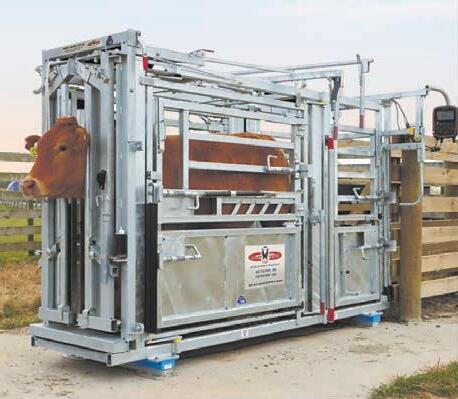
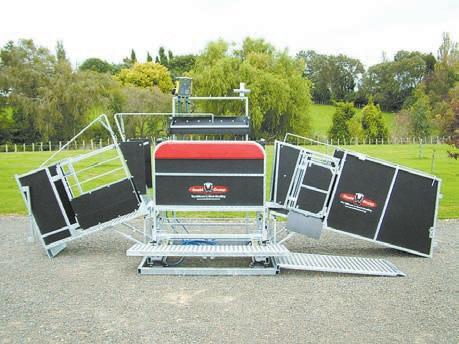

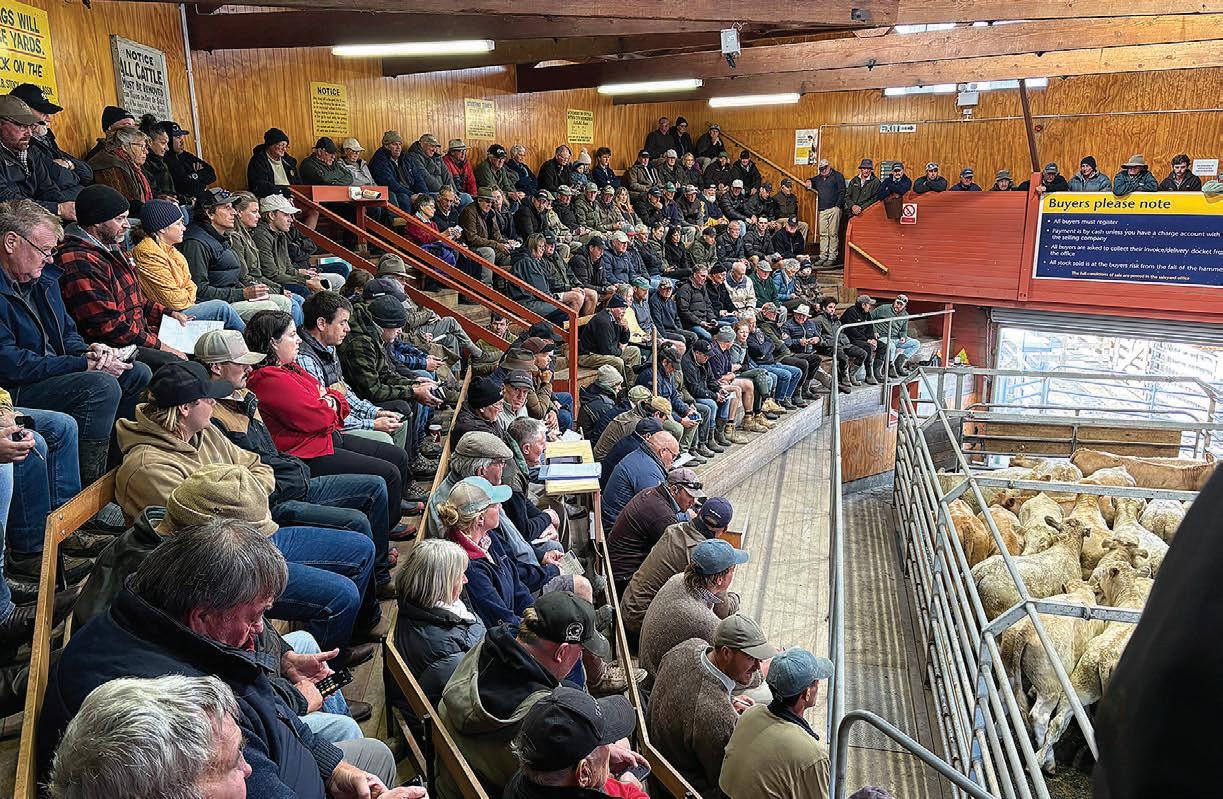
prices climbed at least $365 per head, and up to $690 at Frankton.
While steers had been expected to trade around the $7/kg mark, that level was reserved for weaner heifers, which in general traded in the $6-$7/kg range, while steers pushed out to $7-$8/kg, with a few exceptions to the rule.
Looking at average prices per head across these yards, traditional steers averaged $1725$1850 and exotics $1935-$2045. In the heifer pens, traditional lines averaged $1320-$1480 and exotics $1450-$1605 per head.
Angus steers took the top perhead price spot at three of the four yards, even outpricing the typically heavier exotic lines. At Frankton, Rangiuru and Stortford Lodge, the top Angus steers weighed 312-324kg and reached $2190-$2390, while at Tuakau the top price of $2390 was paid for 354kg exotic steers.
The heavier weighted exotic
$2000
$1600
$1200
Stortford Lodge average weaner prices ($/hd, March) $0 $400 $800
heifers took the top per-head spots for their class at Tuakau, Rangiuru and Stortford Lodge, making $1880, $1850 and $1855 respectively, while a line of 282kg Hereford at Frankton topped the heifer section at $1770.
Data from Stortford Lodge shows that prices for all classes of weaner cattle sold at the March fair have nearly doubled since


2016, but the change in price from 2025 to 2026 has been simply mind-boggling, and it is highly unlikely that we will see such a jump again.
The question now is whether these levels can be sustained as the weaner fair season progresses, though there is no doubt in anyone’s mind that the market has got off to the best possible start.

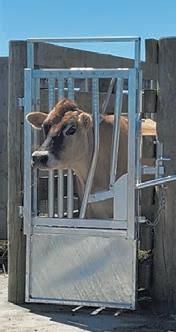
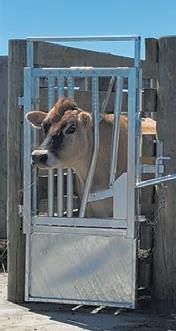


TO THE RAFTERS: A packed rostrum at Stortford Lodge shows how much interest there is in the beef weaner fairs. A huge crowd looked on as Charolais-cross steers from Glencoe, Patoka, sold for $2070.
Cattle Sheep Deer

Weekly saleyard results
These weekly saleyard results are collated by the AgriHQ LivestockEye team. Cattle weights and prices are averages and sheep prices are ranges. For more detailed results and analysis subscribe to your selection of LivestockEye reports. Scan the QR code or visit www.agrihq.co.nz/livestock-reports
Kaikohe |
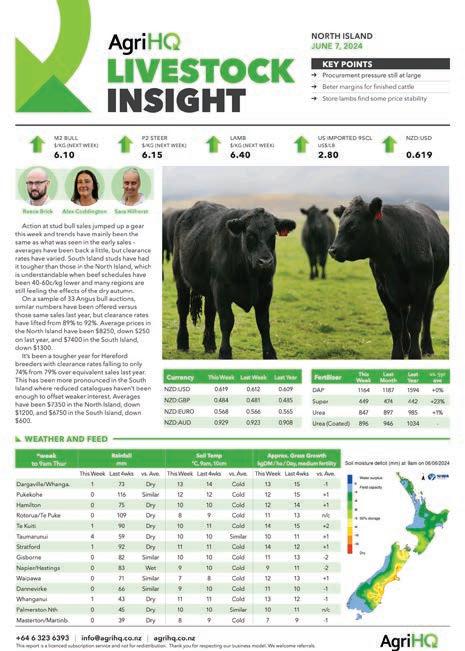





















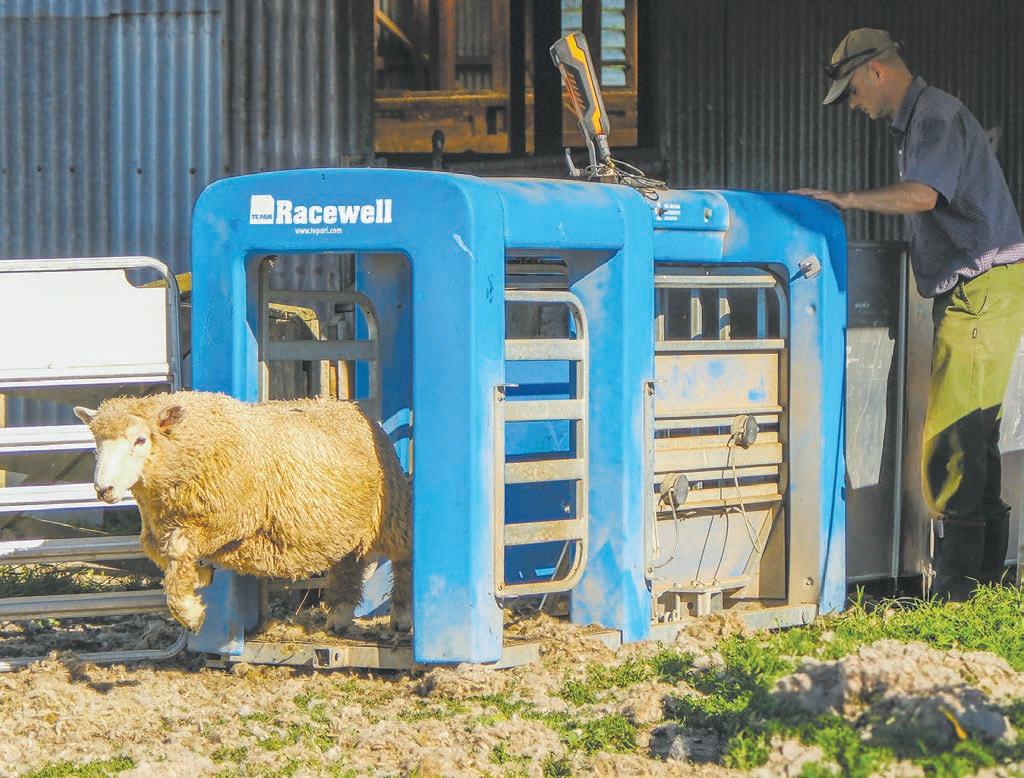


An orderly switch from summer to autumn

Philip Duncan NEWS Weather
IUSED the word “variety” to sum up the weather for summer. Now that autumn – which is typically full of variety – is here, I’m starting off “orderly”.
By that I mean the weather is sticking far more to its lanes. The weather is stacked layer upon layer, starting with storms hugging Antarctica.
The next layer northwards is the belt of windy westerlies of autumn (still mostly south of New Zealand), then the high–pressure belt existing west to east over southern Australia and moving into NZ (why the start of March has been settled, despite the windy cold southerly to kick the first couple of days off). Then, north of NZ, we have the tropical lows, the final layer.
In March those layers usually start to shift more northwards –except the tropical lows, which want to shift southwards.
It’s this process in March that can bring us the humid, wet, stormy tropical low – or a freezing
cold southerly with hail showers –all at the same time.
But for the first time in months, this month has kicked off with high pressure dominating New Zealand’s weather for the most part.
But the fact that you are reading this column that means we’re in the second week of March already – so what happens this week?
High pressure is again crossing NZ bringing large stretches of dry – but in true autumn style we have lows all around us trying to move in.
Depending on precise tracking of these lows, they may bring some rain to the fringes of NZ but as I look at the weather maps going into this weekend –the halfway mark of the month already! – we see another powerful anticyclone moving back towards NZ from southern Australia (1030hPa) – and that may well kick off next Monday’s weather.
Orderly weather doesn’t mean it’s settled – it simply means the pattern the weather is creating large scale over the southern hemisphere looks quite textbook, with rain in the tropics, drier
weather in southern Australia and crossing NZ, and the autumn storms building south of us as winter grows.
In the month of March we lose about 20 minutes of available daylight each and every week –so by the end of this month we’ll have one hour less sunlight than we had back in February. This creates heavier dews – and we’re already seeing a very noticeable spike in facial eczema compared to previous years.
Longer range, at the time of writing this column the weather map for March 21 (the autumn equinox) showed a big high parked just east of NZ with air pressure of 1035 hPa.
Highs like this are great at keeping the weather more orderly over NZ.
Any potential severe weather, or wet weather, over the next few weeks will be whenever there is a break in high pressure over us – because despite the weather mostly sticking to its lanes, in autumn tropical storms are naturally drawn south towards NZ, while winter storms south of us look to expand northwards as winter darkness increases.
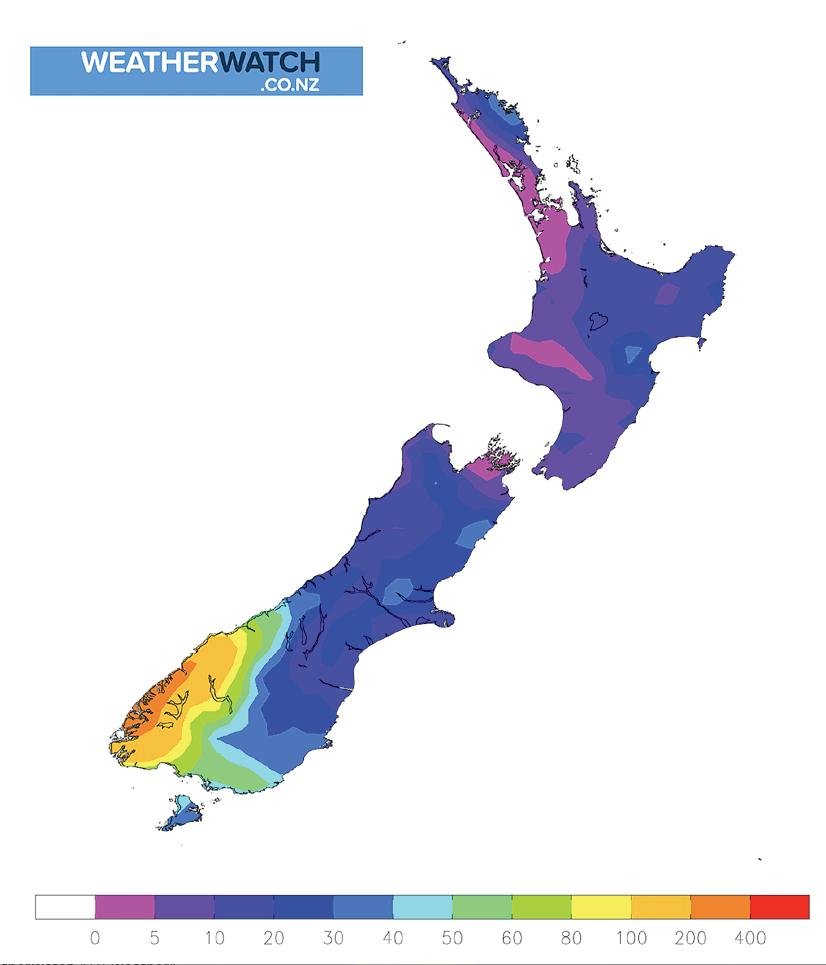
The rainfall accumulation map over seven days, from 7am Sunday March 8 through to 7am Sunday March 15. Image: WeatherWatch
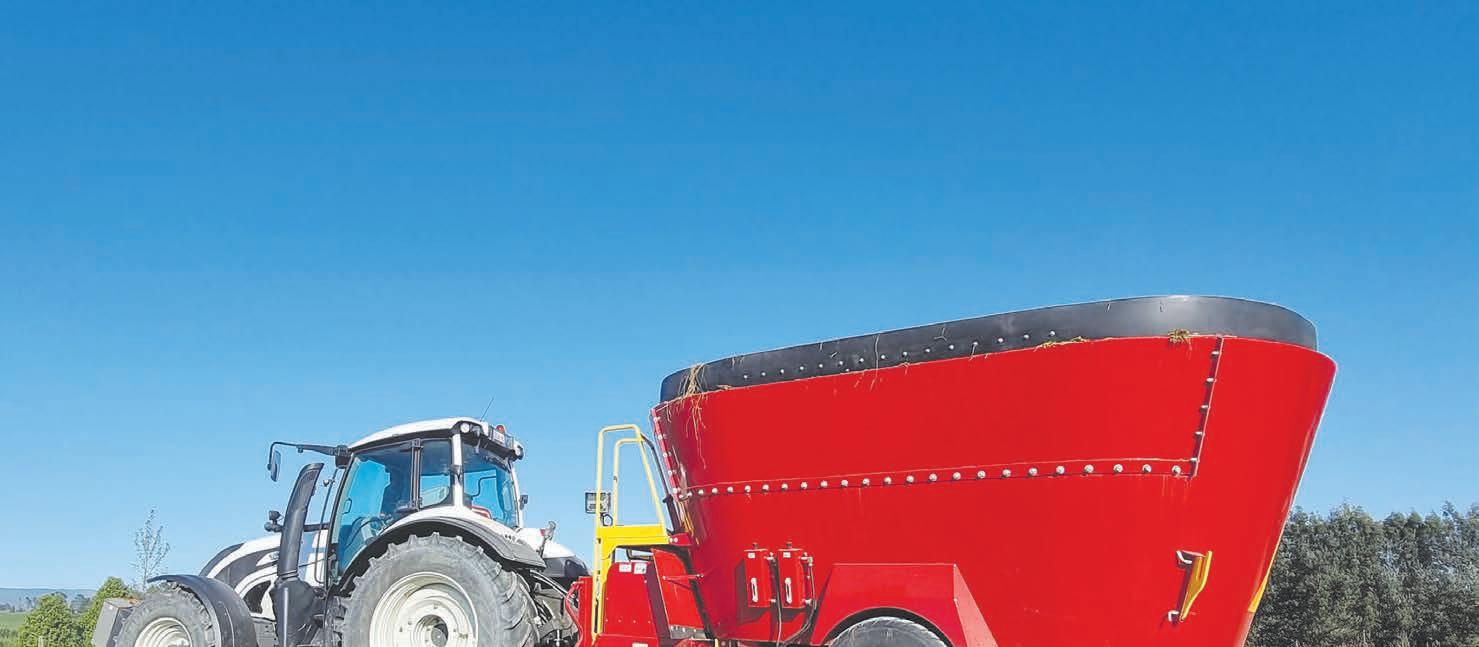







BLUE: