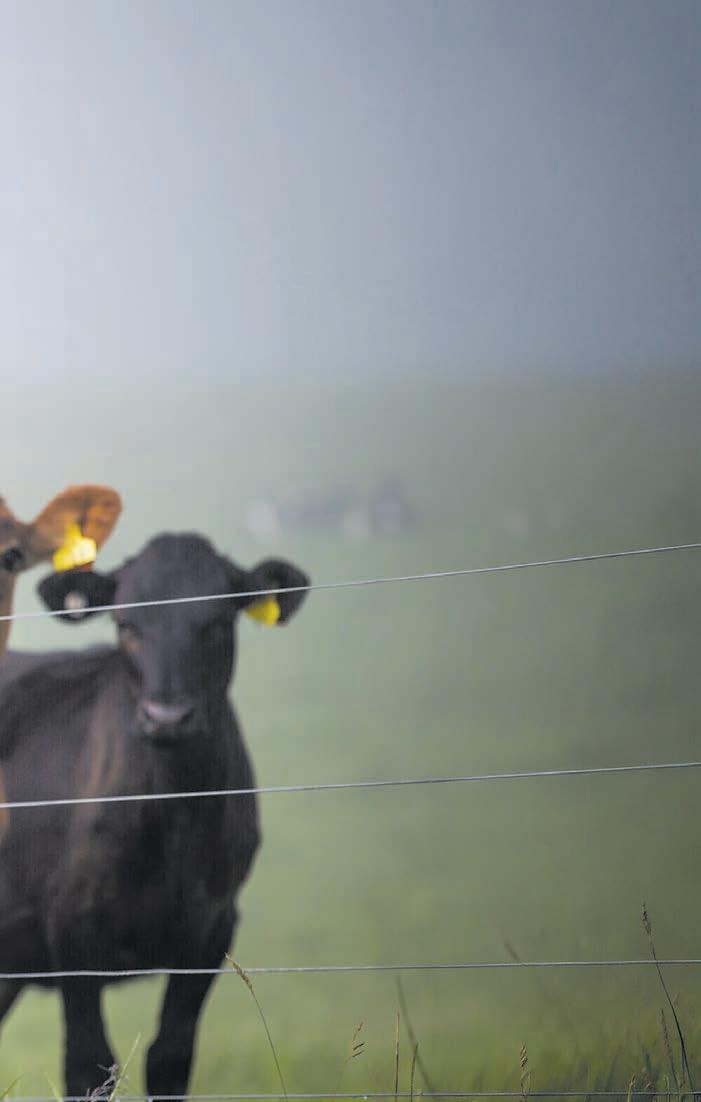
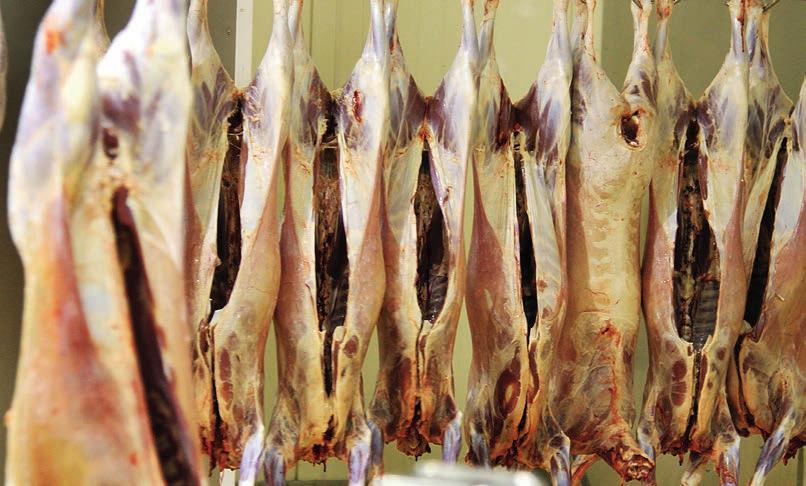
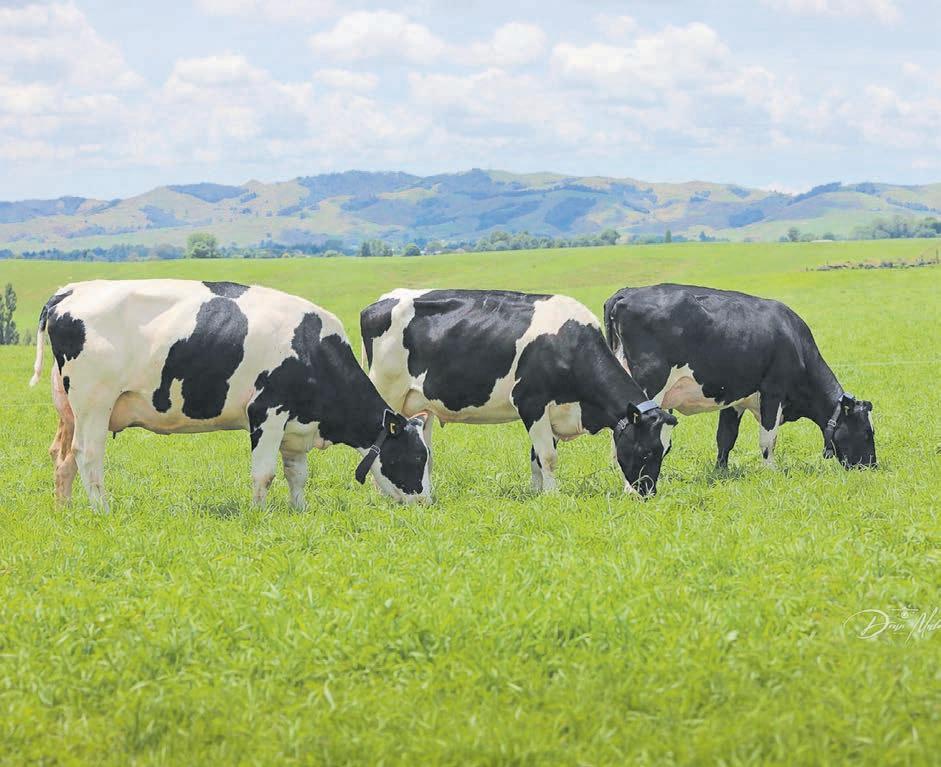
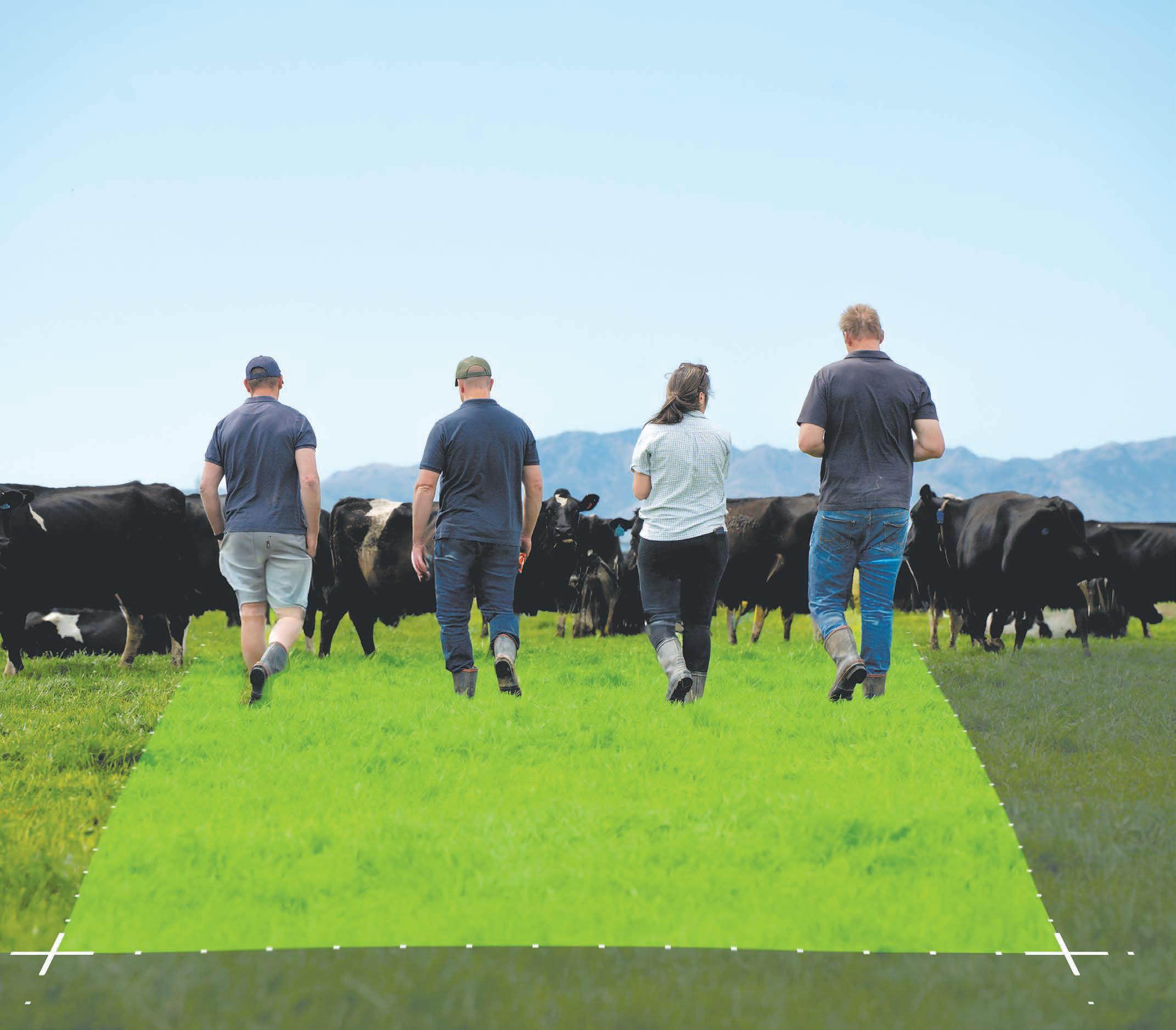
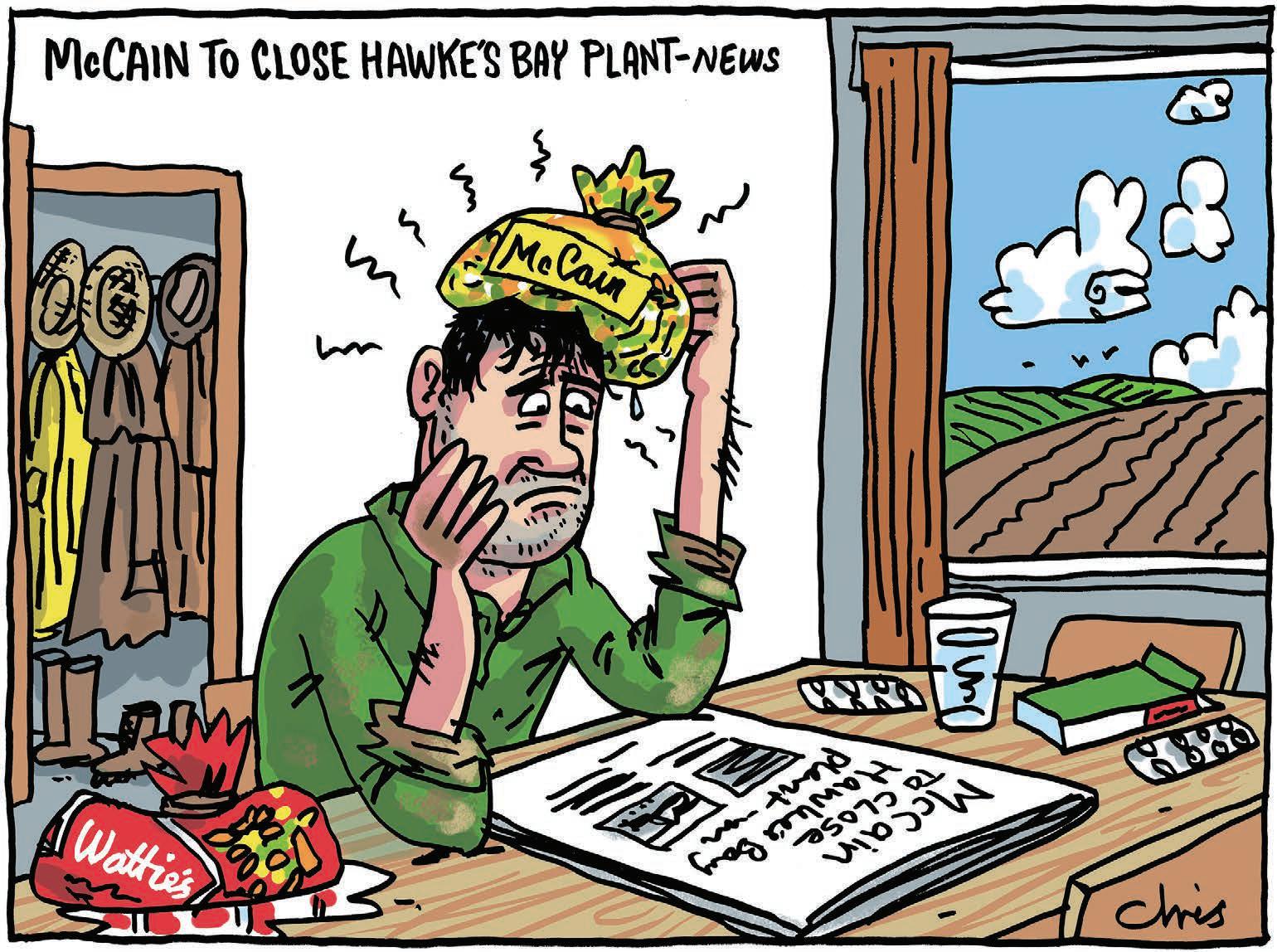
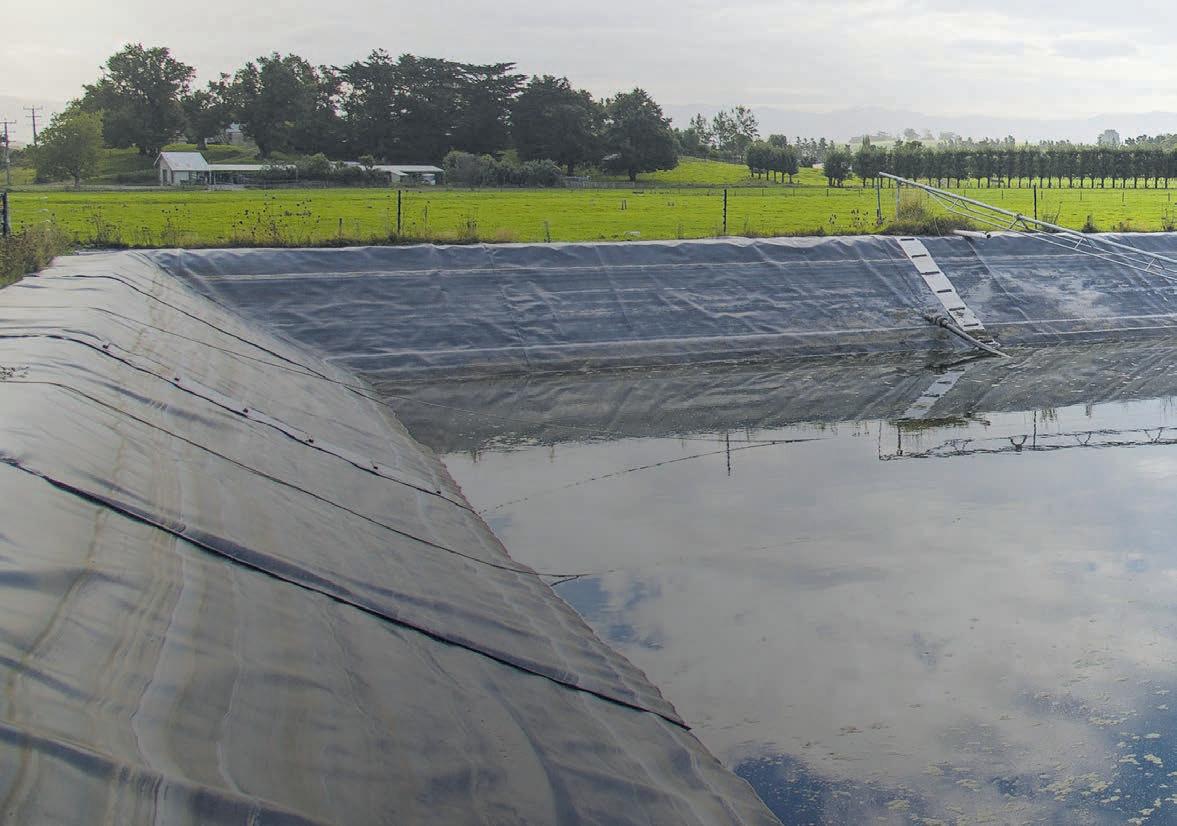
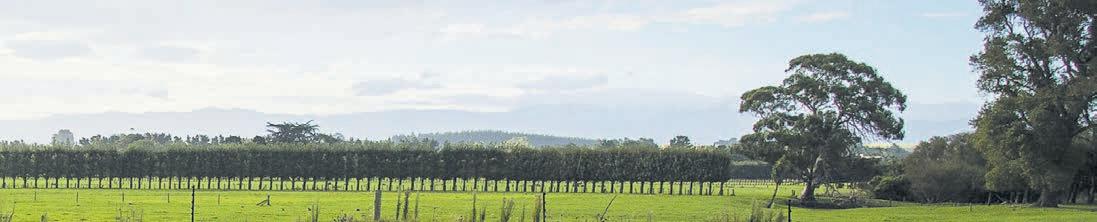
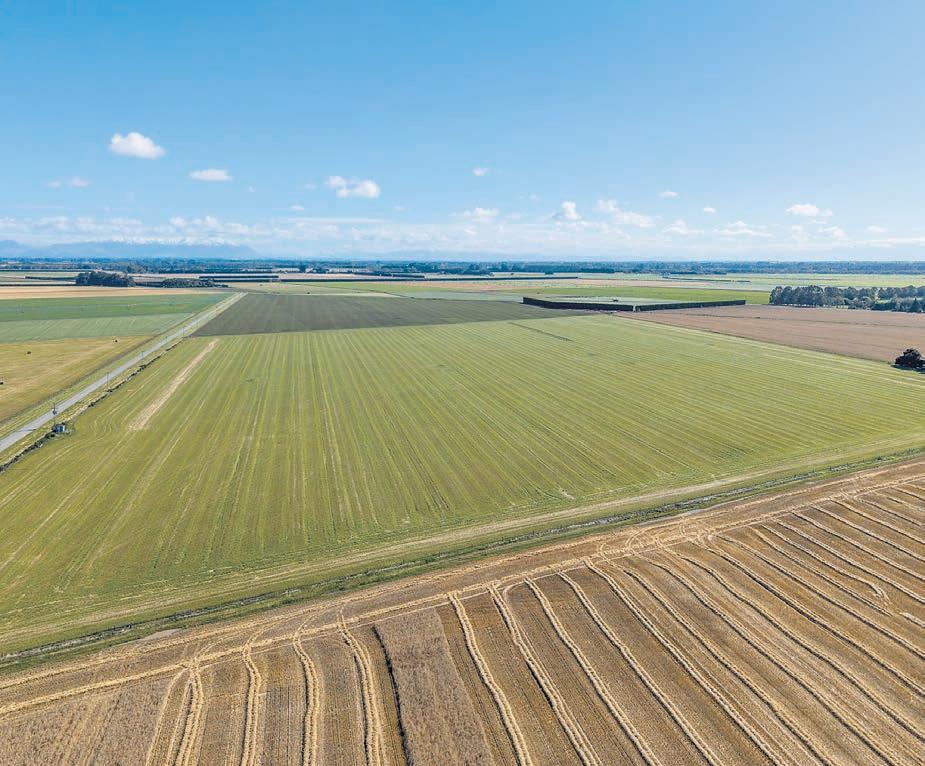
NEWS that a second vegetable processor is closing its New Zealand factory has left about 320 vegetable growers considering what to do with thousands of hectares of unwanted cropping land.
It has also raised questions about the value NZ places on food security and prompted Processed Vegetables NZ chair David Hadfield to question the viability of farming given rising costs and squeezed margins.
McCain announced last week that it is closing its Hastings vegetable processing factory. This was after Heinz Wattie’s earlier in the month announced the closure of manufacturing sites at Auckland and Dunedin and its frozen vegetable processing site in Christchurch.
Hadfield said the combined closures will affect about 220 farmers in Canterbury and 100 in Hawke’s Bay who grew corn, peas, beans and carrots.
Central Hawke’s Bay mayor Will Foley estimates 9000 hectares of crops were grown for McCain in his district alone.
The two multinational companies attributed their decisions to a difficult manufacturing environment, ageing plants, high energy and
The Marr family from Methven have grown peas for Wattie’s for 30 years, and Hamish Marr said not only has the crop been financially worthwhile, but peas fix nitrogen and the crop is planted late and harvested early, which provides a structure for their farm system.
Marr said the closures raise concerns about food security.
“We all want to consume product that is grown and processed in our own country and specifically at times when we have energy problems and conflict around the world.”
Fellow Canterbury grower
Alastair Clemens from Barrhill has been growing carrots for Wattie’s for 20 years.
“I don’t know what we are going to do now, carrots are suited to this ground along the [Rakaia] river.
“Harvest will be May and June and then I will have a few paddocks that I haven’t got anything lined up for.
“At the end of the day we might end up growing food for the dairy industry.”
Central Hawke’s Bay farmer Hugh Ritchie wants greater transparency of the costs incurred and income generated for food from the grower to the retailer.
“We need to understand what the margins being created are.”
page 3
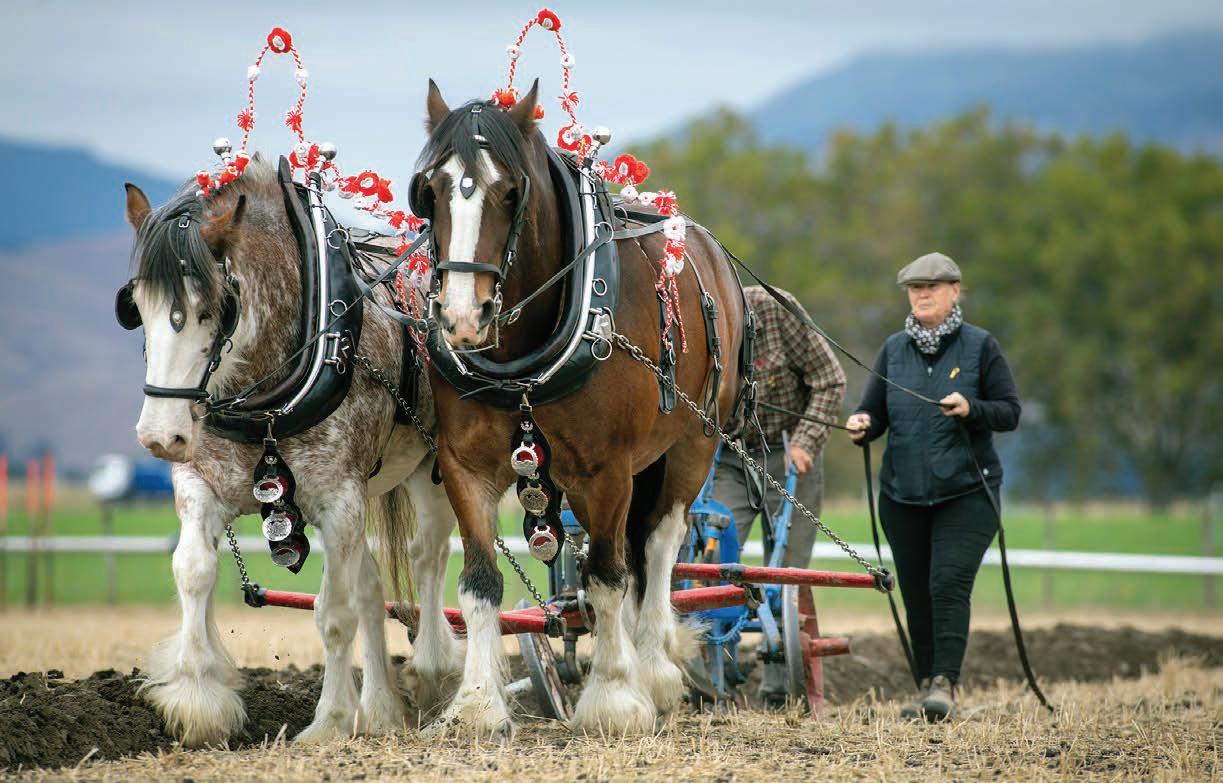
Ploughing champs pull off centennial win
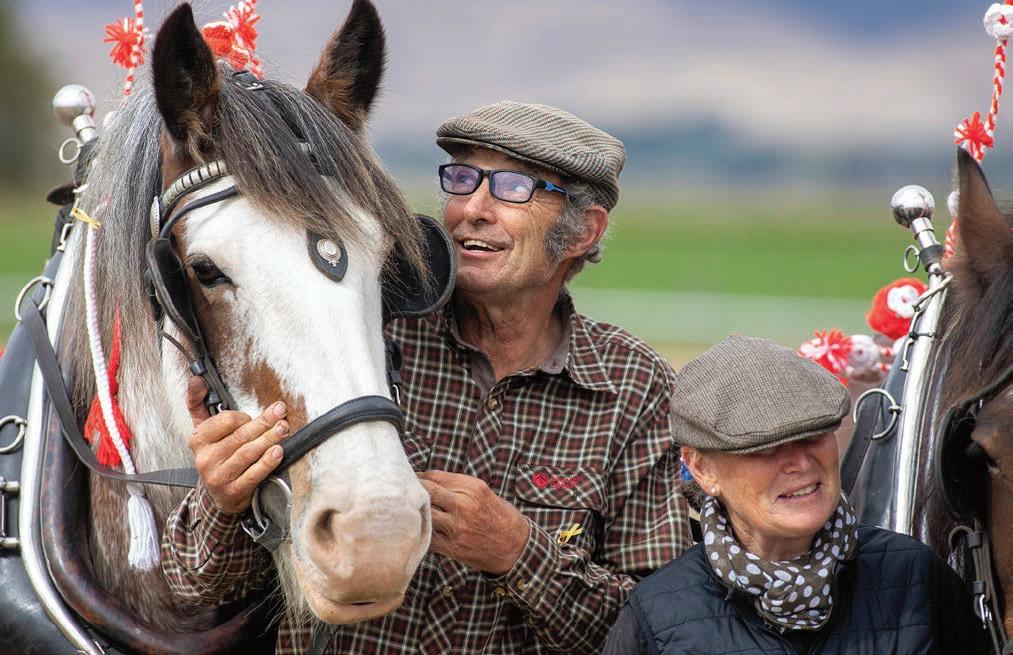
Paule Crawford and John Booth’s pair of Clydesdales were crowd favourites at the Marlborough Ploughing Association’s 100th anniversary competition, held earlier this month.
NEWS 12
Ngāi Tahu in running for right to lease Molesworth Station. NEWS 3
Slowing down to speed up
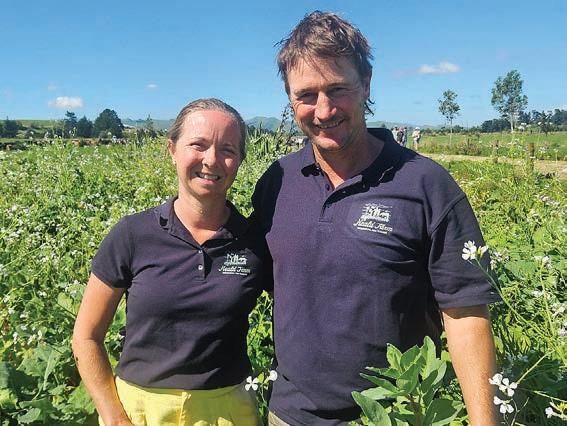
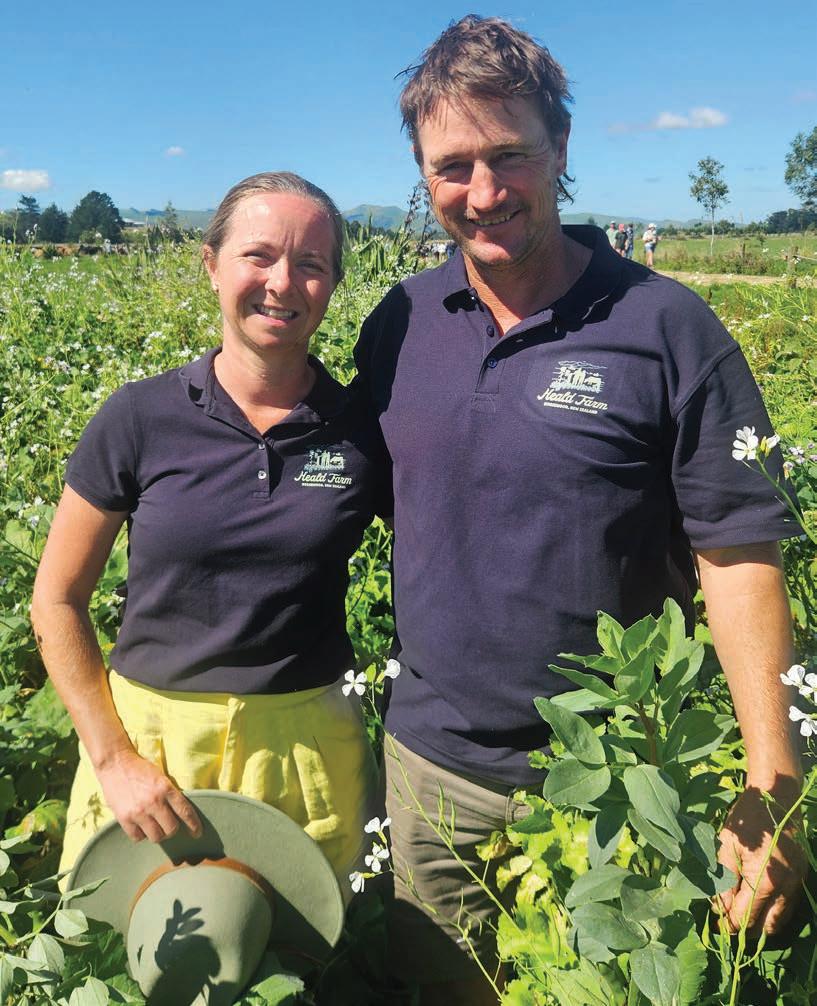
The pursuit of happiness led dairy farmers Russell and Charlotte Heald to overhaul their farm system, turning to once-a-day milking, introducing regenerative practices and becoming organic certified.
DAIRY 17-23
Sheep and beef farm profits predicted to double this year.
10
Farmers have much to thank Hurrell for, writes Hugh Stringleman.
Andrea Mansfield | 027 602 4925 National Livestock Manager livestock@agrihq.co.nz
Real Estate | 0800 85 25 80 realestate@agrihq.co.nz
Word Only Advertising | 0800 85 25 80 Marketplace wordads@agrihq.co.nz
PUBLISHERS
Dean and Cushla Williamson Phone: 027 323 9407 dean.williamson@agrihq.co.nz cushla.williamson@agrihq.co.nz
Farmers Weekly is Published by AgriHQ PO Box 529, Feilding 4740, New Zealand Phone: 0800 85 25 80 Website: www.farmersweekly.co.nz
ISSN 2463-6002 (Print) ISSN 2463-6010 (Online)
News in brief
The big cheese
Whitestone Cheese has taken top honours at the New Zealand Cheese Awards, winning the Champion Commercial Cheese award for its Monte Cristo variety for the second year running.
The entry was lauded by the judges, who said: “Whitestone have done it again with a younger version of their classic Monte Cristo – a delicate, smooth-bodied, clean example that left them salivating.” Whitestone Cheese also secured the trophy for New Zealand Original Cheese.
Food demand up
Food charity Meet the Need is calling for donations as demand for meat and milk outstrips supply.
Meet the Need chair Nick Fisher said demand for protein has reached an all-time high, more than 150 community organisations seeking supplies of protein, which he warns reflects growing food insecurity. While farmer support remains vital, all New Zealanders are urged to support the cause through financial donations.
Fert prices rise
Ballance Agri-Nutrients has lifted its prices as a result of a sharp lift in international fertiliser commodity prices caused by the conflict in the Middle East.
“While we endeavour to give you advance notice of price changes, due to the rapidly changing circumstances we are facing, we have not been able to do that for sulphurbased and Yara-branded products,” the cooperative’s customer general manager, Jason Minkhorst, said.
Safety first
Farmers are being offered discounts on lifesaving quad and side-by-side technology in the latest Safer Farms initiative.
Farmers taking part in Safer Rides can access a 20% discount code for CPDs from Trax Equipment or QuadBar, or 15% off SafeTrax hardware and 5% off software, plus free installation valued at $150.
Ngāi Tahu confirms run at Molesworth
Richard Rennie NEWS Conservation
THE South Island’s largest tribal group, Ngāi Tahu, has confirmed it is in the running to apply for rights to lease Molesworth Station.
Five parties have been confirmed by the Department of Conservation as applying for lease consideration on New Zealand’s largest farm, and Farmers Weekly can confirm two of those applicants.
Alongside Ngāi Tahu is a charitable trust initiative headed up by former Molesworth manager Jim Ward.
Te Rūnanga o Ngāi Tahu CEO Ben Bateman said the tribal group can confirm it has lodged an expression of interest for Rangitahi/Molesworth’s future management.
“In the interests of respecting the process and the four other applicants, we won’t be making further comment at this time,” he said.
The lease document acknowledges DoC is required to abide by principles of the Treaty of Waitangi when considering parties
Continued from page 1
Ōtāne grower Simon White has invested in infrastructure, equipment and machinery to grow vegetables and hopes that can be used growing other crops.
A McCain spokesperson said the decision to close its Hastings vegetable plant by January 31 next year followed a strategic review and move to transition to a different supply model.
Details of that supply model are still to be finalised.
There was no impact on McCain’s potato products or other
applying for the lease and their operation of the property.
This includes acknowledging opportunities for treaty partners to re-connect with ancestral lands.
Ngāi Tahu is recognised as tangata whenua of the Molesworth estate.
Last year the tribal group expressed an interest in the property, with the CEO noting its immense value to iwi.
There is a level of scale there that requires a very experienced ownermanager who understands that country well.
Matt Simpson Federated Farmers
Meantime Ward’s “station for the nation” proposal is claiming strong business and farming support.
The remaining three applicants have not been unidentified.
Existing leaseholder Pāmu had earlier stated a desire to end its lease. Asked if the stateowned farming operation could be reconsidering this decision, a
manufacturing facilities.
Heinz Wattie’s managing director Andrew Donegan told Newstalk ZB that compared to seven years ago, gas prices are three times higher and energy and diesel prices are double.
Hadfield said the common factors in the two closures are high energy and labour costs.
Supermarkets were also prioritising the stocking of homebrand frozen vegetables while growing international competition has left one processor with unsold NZ-grown product.
“We had known for a while that
Pāmu spokesperson reiterated its statement that, as the incumbent, it continues to engage closely with DoC regarding the future of the Molesworth lease.
“We are committed to working constructively through their process,” the spokesperson said.
DoC South Marlborough operations manager Stacey Wrenn said the department is pleased with the response given the scale of the Molesworth reserve property and its specialised type of farming.
Federated Farmers High Country committee co-chair Matt Simpson said whoever wants to take on the lease will need significant capital.
He agreed that would need to be close to $7 million to purchase the required 3000 breeding cows, now worth well over $2000 a head. The property is limited to a maximum of 6500 one-year-old-plus cattle.
“You also need to keep in mind you are not just running a normal farm. There is a level of scale there that requires a very experienced owner-manager who understands that country well.”
He said issues with wilding pines, the need to run the property in accordance with DoC guidelines
space in supermarket freezers is reducing and the cost of running the factories was high,” said Hadfield.
Some growers may pick up new contracts with companies like Talley’s, which has opened a new vegetable processing plant at Ashburton, or grow beans for baked beans produced by Heinz Wattie’s.
Talley’s declined to comment.
Hadfield said Hawke’s Bay growers have fewer options because of limited access to water but could shift to apples, grapes or kiwifruit.
A Foodstuffs spokesperson said
like Molesworth is not for the faint of heart, demanding a high level of skill with its multiple farming and conservation demands.
and manage public access, all added to Molesworth’s complexity.
The station has over $2m of funding from a variety of sources committed to wilding pine control.
The lease is for 30 years and the document clearly outlines limitations on what can and cannot be done within the boundary footprint. The station’s annual lease is approximately $350,000.
Proposals will not be considered for specific activities that include irrigation, deer farming, game safari hunting, cultivation or exotic forestry.
The lease allows for the
the vast majority of their in-house Pams frozen vegetable range is sourced from New Zealand, and in some core categories Wattie’s supplies more than 90% of that range.
A Woolworths spokesperson said it does not typically deal directly with growers, as supply is handled through processors such as Heinz Wattie’s and McCain.
It expects demand for frozen vegetables to remain, but it is too early to determine how that demand will be met.
MORE: See pages 4 & 5
possibility of including sheep within the station’s stock portfolio in the future, although the property has no operating woolshed.
Conservation Minister Tama Potaka said assessment will consider experience, capability and resources alongside how biodiversity and heritage values will be protected, cultural values upheld and public access maintained.
DoC expects to announce a preferred operator at the end of May. That operator will then apply for a concession to operate Molesworth.
This week’s poll question: Have your say at farmersweekly.co.nz/poll Should the government prioritise developing a national food strategy?
WINTER GRAZING AND COMP O STING DEAD STO CK
WORKSHOP
•
•
•
You’ll also hear from local farmers about their experiences
TOUGH COUNTRY: Federated Farmers high country co-chair Matt Simpson says a property
Vege shock: Canterbury
‘It’s pretty damn devastating’
Annette Scott NEWS Horticulture
THE closure of two key vegetable processing plants – Heinz Wattie’s and McCain – has left struggling arable farmers pondering their future.
“This just another blow for Canterbury arable farming operations that depended on these process vegetable crops, including peas, carrots, beans and corn,” Methven arable farmer and former New Zealand Special Agricultural Trade Envoy Hamish Marr said.
The Marr family farm have been growing peas for Wattie’s for 30 years.
“Not only are these vegetables valuable dollar crops, but the likes of peas, being a legume, are a different management tool for other crops. They fix nitrogen,
they provide nitrogen, they’re in late, they’re off early, we don’t have to harvest them and we don’t have to store them.
“All these things make it a very good crop to have and you structure that into your farming operation around what you grow.
“There is long-term relationships involved here, and now with margins squeezed options are difficult to get, and a challenge to form relationships with other companies.
“It’s not going to be easy. Not to have these crops is significant because it really upsets our farming system, in fact for much of what we grow, we grow following peas and to not have peas in the rotation will completely change what we do and ultimately that’s a cost.
“We have developed our system with the NZ consumer in mind and so our food safety legislation and phytosanitary systems are
Photo: Annette Scott
fit for purpose in NZ for what the consumer in NZ requires.
“With the close of McCain and Wattie’s, it’s one step further away from these systems that we have in place in terms of food safety.”
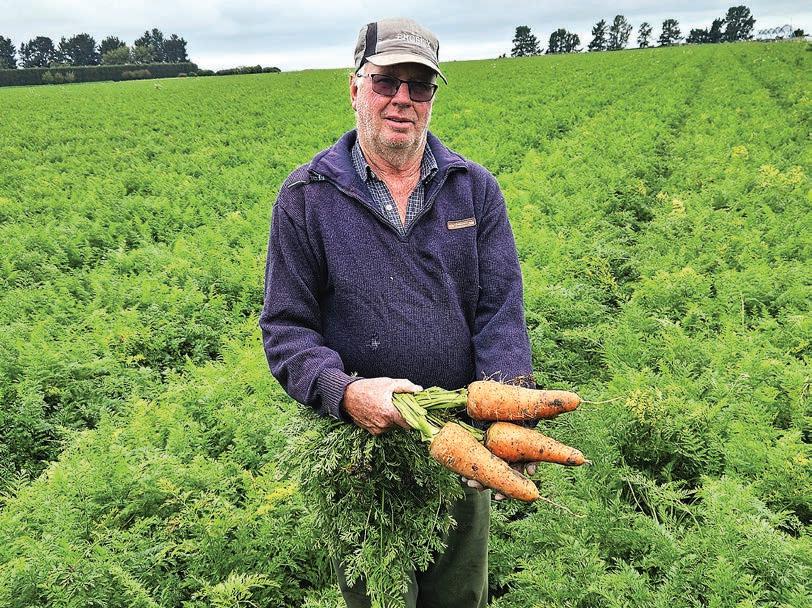
Barrhill cropping farmer Alastair Clemens has been growing Wattie’s carrots for the past 20 years.
“I don’t know what we are going to do now. Carrots are suited to this ground along the [Rakaia] river. Harvest will be May and June and then I will have a
few paddocks that I haven’t got anything lined up for.
“At the end of the day we might end up growing food for the dairy industry.
“Talley’s are still running here [in Ashburton]. That might become an option but we can only guess what other processors might do.”
Marr said it’s not just the farmers who will be affected by the closures.
“It’s the truck drivers, it’s the factory workers, the people who
Processing exits will hit hundreds of growers
Neal Wallace and Gerhard Uys
NEWS Horticulture
NEWS last week that McCain is to close its Hastings vegetable processing plant was not unexpected, says a sector leader.
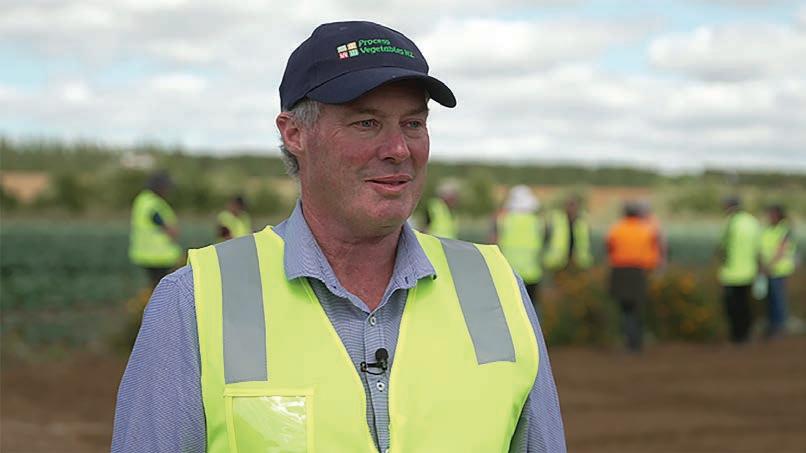
David Hadfield, the chair of Processed Vegetables NZ, said it is symptomatic of margins being squeezed by rising costs and compliance regulations.
Also this month, Heinz Wattie’s announced a major restructure of its New Zealand business, affecting 350 staff and including exiting frozen vegetable
production in Canterbury. Hadfield said the two decisions will impact 220 growers in Canterbury and 100 in Hawke’s Bay.
Central Hawke’s Bay mayor Will Foley said the McCain closure will impact about 9000 hectares of vegetable-growing land in his district.
Hadfield, who farms in Canterbury, said the closures raise questions about the viability of farming in general, given rising costs.
He said processed vegetables suit farm systems by being a rotation crop, naturally fixing nutrients in
It’s not going to be easy. Not to have these crops is significant because it really upsets our farming system.
Hamish Marr Methven
grow the seed, it’s all of a whole supply chain. That’s how our economy works.
“These are the things that keep little communities like Methven, Ashburton, Leeston and Southbridge thriving.
“When you take away the options from farmers it’s ultimately the communities that feel it in the end.”
Marr said it doesn’t speak much to NZ food security.
“We all want to consume product that is grown and processed in our own country, and specifically at times when we have energy problems and conflict around the world, it’s often a government’s concern, so the Wattie’s and the McCain situation will be pretty concerning in terms of food security.
“We grow to rely on [food security]. We’re proud of the product we produce and to be honest, it’s pretty damn devastating when it’s all over.”
the soil and aiding cashflow, which allows growers to buy store lambs to graze harvested croplands.
A lack of water could limit options for Hawke’s Bay farmers who may instead consider apples, grapes or kiwifruit.
Cereals in Canterbury are an option, albeit not as appealing as vegetables.
Vegetable processors pay for the seed at sowing, which is repaid after harvest. The company decides when crops are planted and harvests the crop, with growers paid one month later.
Continued next page
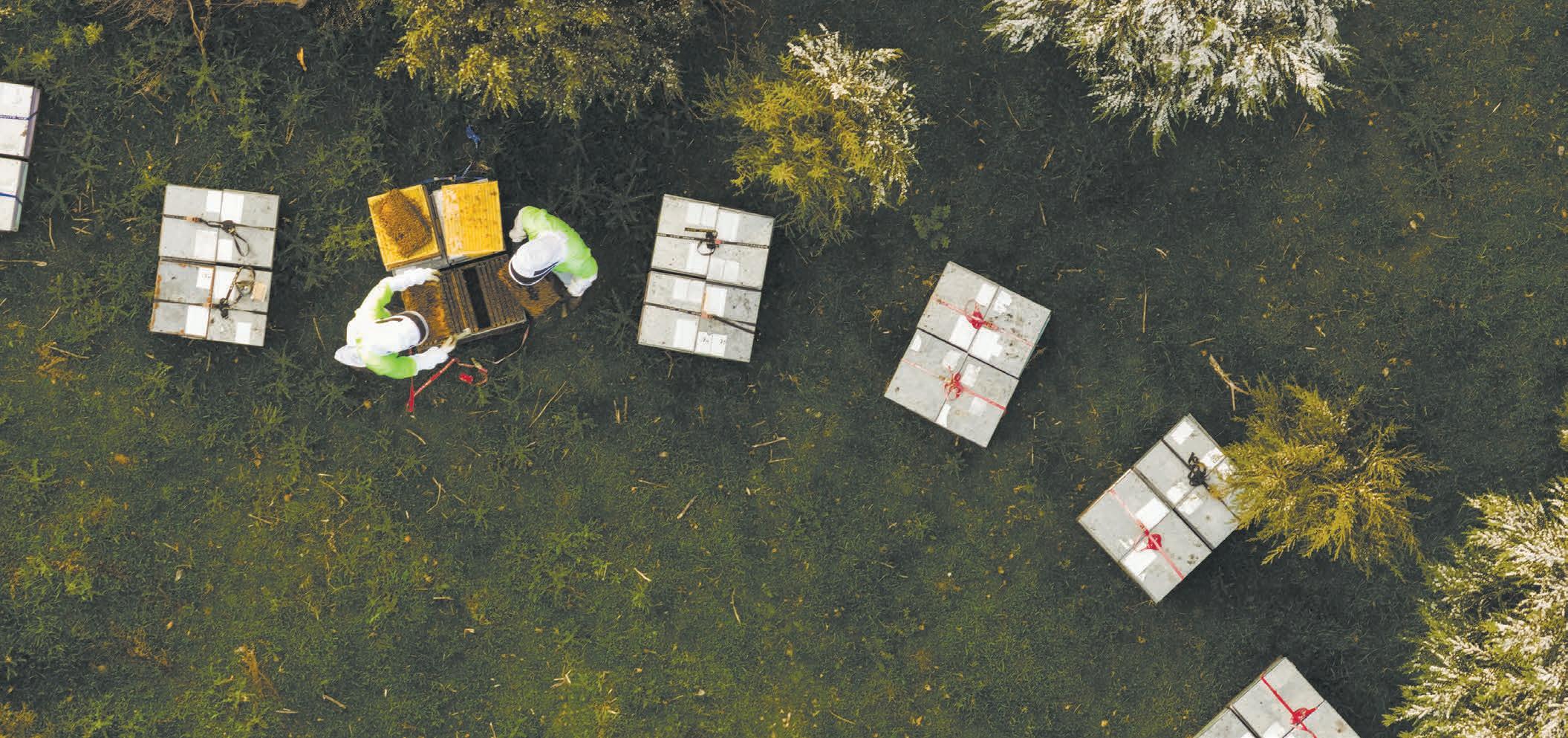
Comvita is partnering with landowners across Taranaki, Whanganui, Wairarapa and the Central Plateau to support sustainable Mānuka honey production
• A proven record of honey qualit y and yield
• Reliable access for seasonal hive placement and management
• Consistent sites suitable for long-term apiar y placement
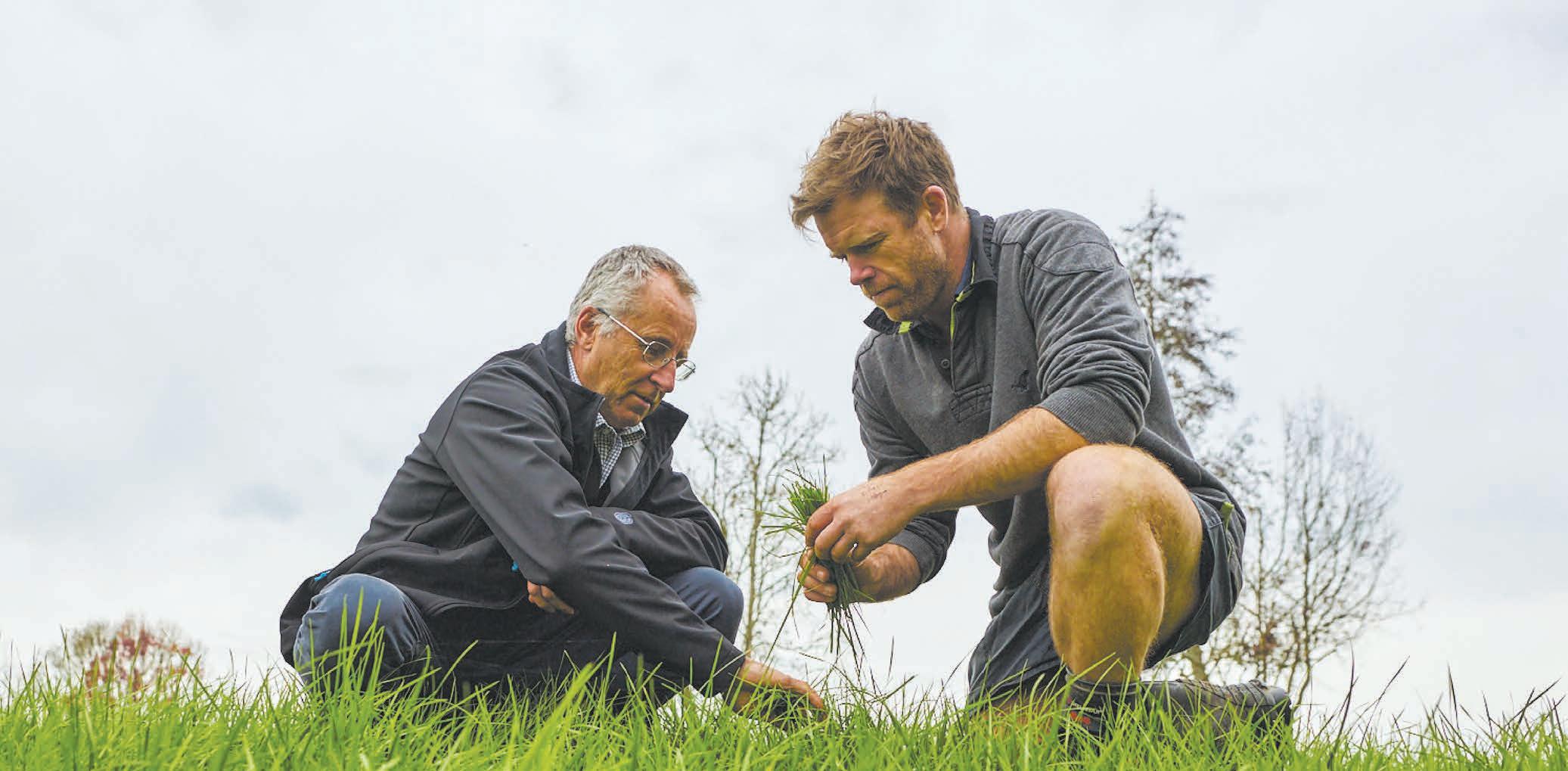
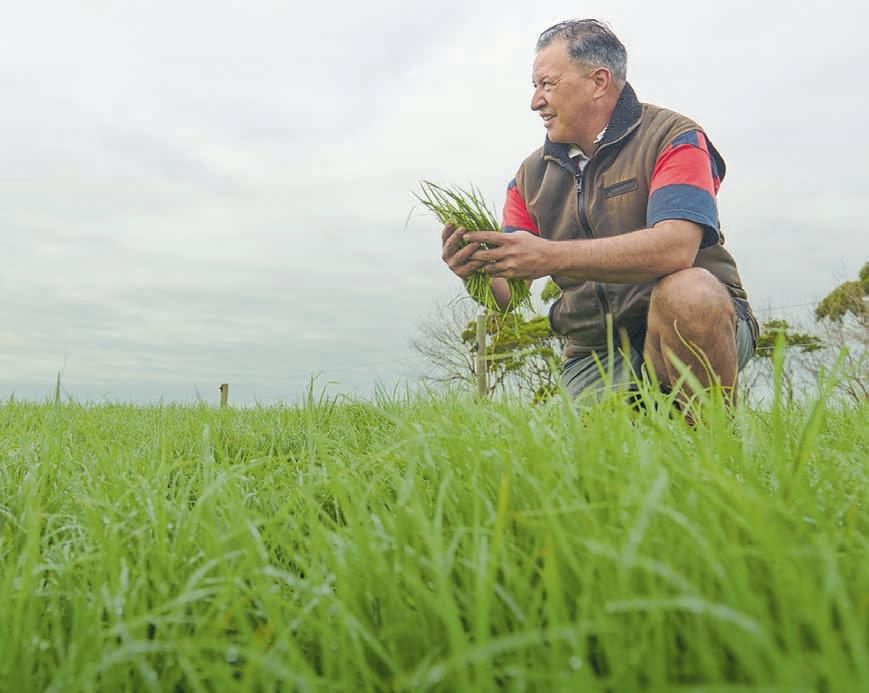
STICKING POINT: Immersed in his last crop of carrots, Barhill cropping farmer Alastair Clemens is uncertain of his next move.
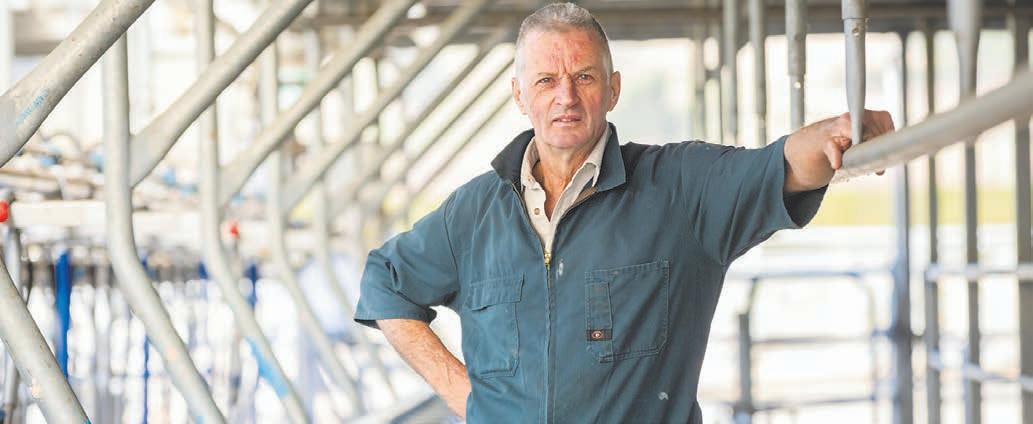
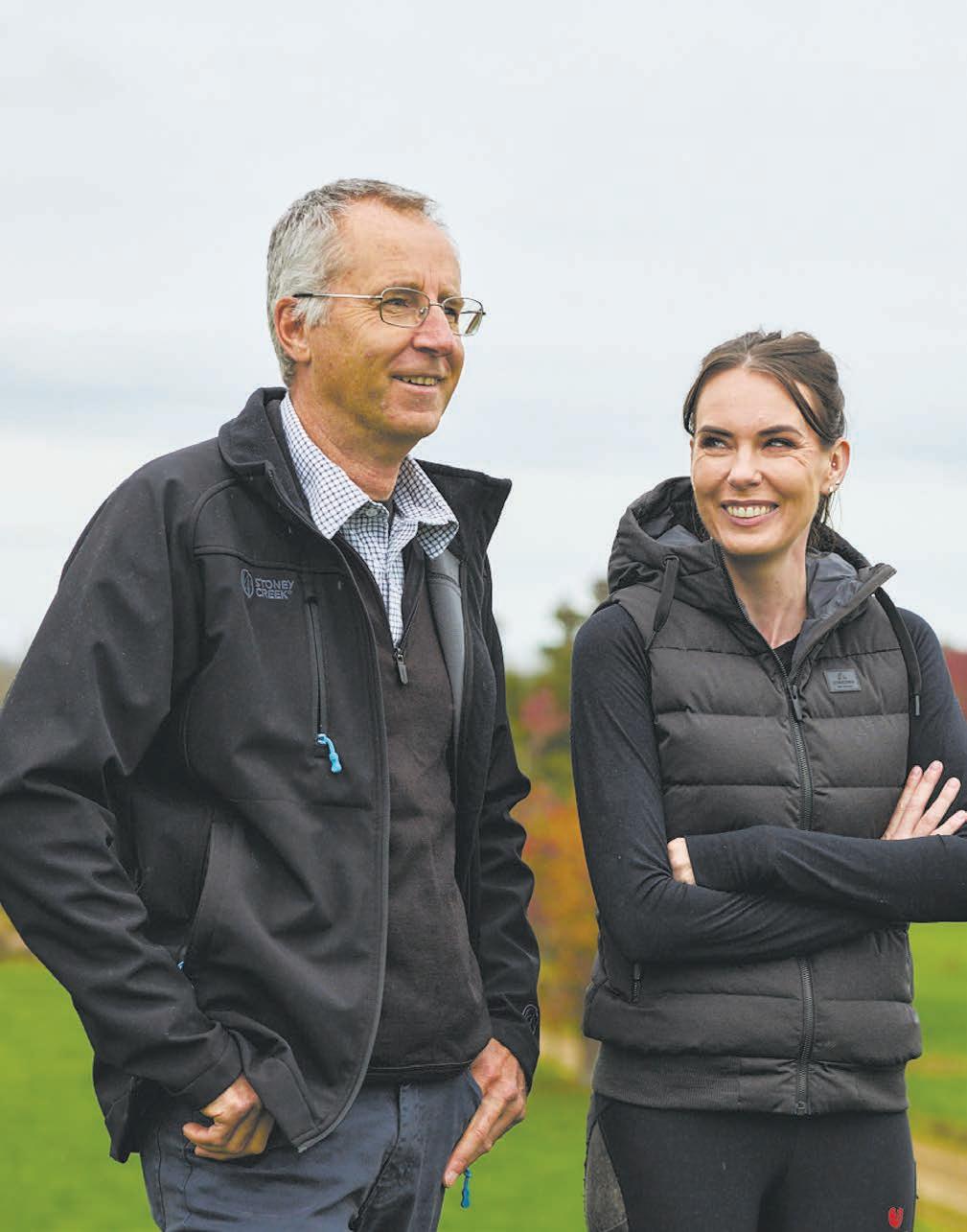
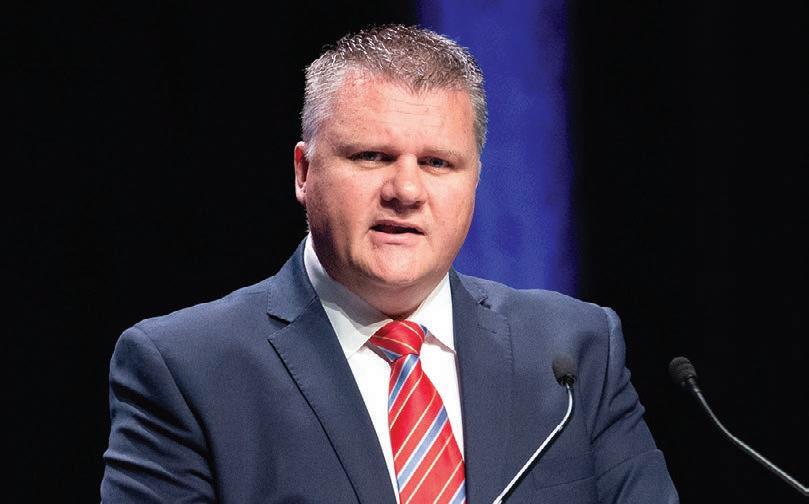
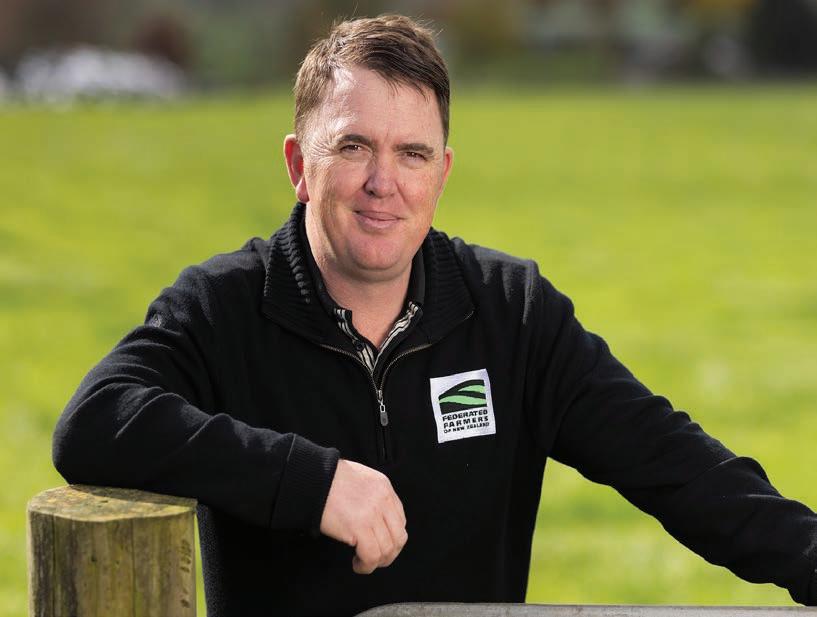
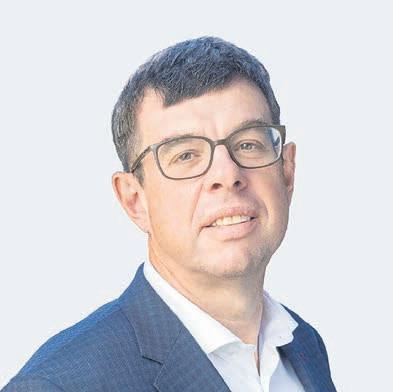
MARGINS: David Hadfield, the chair of Processed Vegetables NZ, says the closure of two frozen vegetable processors is symptomatic of margins being squeezed.
Vege shock: Hawke‘s Bay
‘Why are businesses getting to this point?’
Gerald Piddock NEWS Horticulture
AN HONEST conversation is needed about the economics of the growing industry, after McCain Foods’ decision to exit vegetable processing in Hastings, Central Hawke’s Bay farmer Hugh Ritchie says.
It’s a crisis the sector cannot afford to waste, and growers must force a dialogue to understand McCain’s decision, he said.
“It would be far more effective if we can learn from this and why are businesses getting to this point.
“They’re multinationals with big balance sheets, they know this industry bloody well. If they want to stay in it and still keep marketing their product ... then why can’t we compete?”
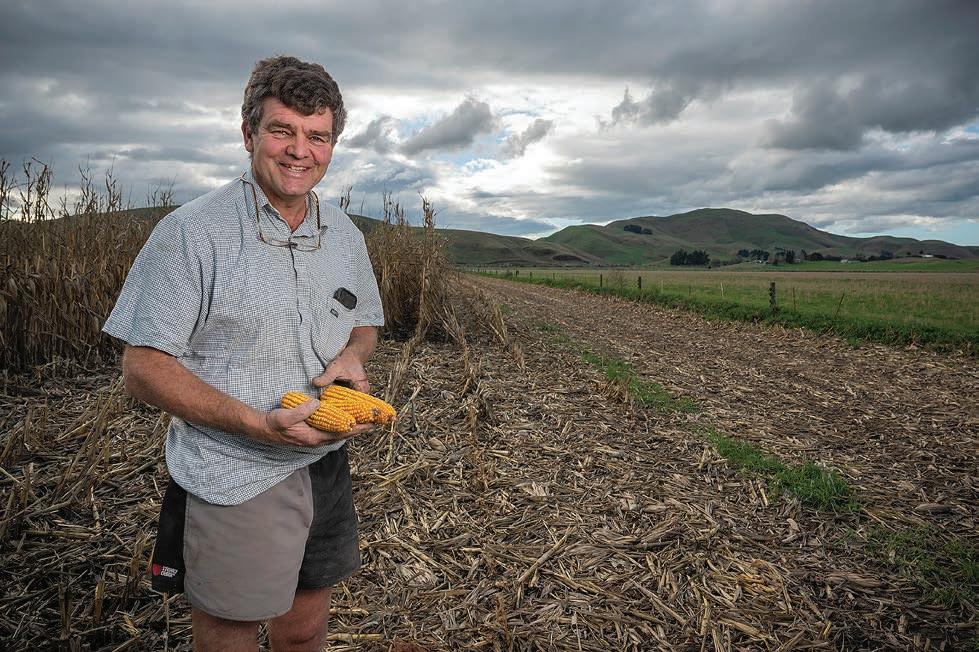
Ritchie grows peas, corn and
Continued from previous page
Hadfield said in contrast, cereal prices have been low and payment can take six to 12 months after harvest.
A Hawke’s Bay transport operator who will be affected by the McCain closure, and who asked not to be identified, said the impact will be felt next year.
McCain’s decision reflects the higher cost of doing business,
carrots among other crops for McCain. All up, half of his cropping area and one-quarter of his business revenue is driven by McCain.
His carrot crop is set to be harvested a week after Easter and it is likely to be the last crop McCain will process from him.
The biggest change he wants see is greater transparency around costs and income across the whole value chain from grower through to retailer.
“We need to understand what the margins being created are,” he said.
“If you talk to any fresh vegetable producer and talk them through anything to do with some of those supply chains, they say the imbalance is crazy.”
Ōtāne grower Simon White said
McCain’s decision will have a huge impact on the farm business he runs with wife Lou, as well as on other growers across Hawke’s Bay
especially with the recent soaring of diesel prices.
The 10 months before the Hastings plant closes gives him time to find extra work.
Mayor Foley said the closure of the Hastings facility will have a massive effect on his district, which was already grappling with the Heinz Wattie’s news.
This year’s harvest is well underway, and Foley said growers
and those involved in associated industries.
Their 1015 hectare (900ha effective) farm finishes bulls and trade lambs as well as growing a wide variety of crops including peas, beans, sweetcorn and squash for the Japanese market.
We need to understand what the margins being created are.
Hugh Ritchie Hawke’s Bay
The Whites finished their summer crop harvest earlier this month and have no more McCain crops in the ground.
While there are other growing options, those vegetable crops played an important role in the farm’s rotation, he said.
are considering their options for next year.
“Everyone has to think of something different to do with their land there. That’s a big 9000ha just for our district.
“It’s a big hole to fill that affects a chain of people – growers, contractors, people that sow the seed, trucks and processors.”
A Foodstuffs spokesperson said Wattie’s is a longstanding manufacturing partner for a
Growers had also invested in a lot of infrastructure, equipment and machinery to produce these crops. For the Whites, that includes water infrastructure.
“There’s been a lot of capital expenditure over the years to get to that, and we can utilise some of that equipment in other crops that we grow, and the water investment isn’t a bad thing because it does give us other options to do things.
“It has a massive impact with what we have done. We were looking at a long-term vision for growing these crops for a long time, it’s why we did the investment and we’re going to have to have a rethink.”
Ongaonga farmer Alastair Setter grows peas for McCain and said the news came as a shock. It will impact the whole region because the pea harvesters and
range of Pams products and its decision creates challenges.
“There are relatively few manufacturers in New Zealand with the capability to produce at the scale, quality and price our customers expect, particularly in commodity lines like frozen peas and beans, where there is strong global competition.
“Customers value New Zealandgrown produce, so we’ll be working hard to explore local options first.”
VIABLE: Greater transparency is needed around the costs and income across the whole produce-growing value chain if growers want to remain viable, Central Hawke’s Bay farmer Hugh Ritchie says.
McCain are a big part of the regional rural economy, he said.
“It’s a big blow for us and for the community. It’s going to be widely felt.
“For us, peas are a very big part of our cropping rotation and not having it is a big deal.
“It really does cut down some of our options.
“It’s a substantial hit to our business and that will be ongoing.”
It will require a rethink in terms of what crops they now put in the ground, he said.
“It seems sad that we can’t produce peas in New Zealand and that we’re going to have to import peas.”
For wider New Zealand, it also raises questions around food security and the value chain and whether consumers are comfortable with imported rather than home-grown food, he said.
It’s a big hole to fill that affects a chain of people – growers, contractors, people that sow the seed, trucks and processors.
Will Foley Central Hawke’s Bay
“ We look to the exper ts to drive a lot
of the technical decisions we make.”
Dan & Gina
Duncan, Dair y Farmers
We asked Dan & Gina:
How do you make it count?
Gina : We don’ t need to know all the technical stuff, that ’s what Mar t y, our Nutrient Specialist is for What we care about is that the plan work s for our farm.
Dan: I trust that the science is there behind it , I just want it to be practical So far, it ’s been bang on
Ballance : Behind ever y recommendation we make is a deep base of science , research, local knowledge and understanding of your unique business and farm’s goals . Make it count with science -backed advice from Ballance . Talk to your Nutrient Specialist today.
Land of milk and money for Fonterra farms
APRIL 14 will go down in New Zealand’s agricultural history for the $3.9 billion in cash Fonterra will pay into the bank accounts of its 8120 milk supply farms.
The average payout will be around $470,000 per farm, made up of $2 a share capital return from the sale of Mainland Group to Lactalis, 24c interim dividend for FY2026 and 16c special Mainland dividend from the divisional earnings until the handover date March 31.
Mainland traded well over the past eight months, driven by commodity prices in Australia and consumer products demand in southeast Asia to deliver 9% return on capital, Fonterra’s chief
financial officer Andrew Murray said. By comparison, ingredients earned 11% return on capital and foodservice 12.6%.
Fonterra’s revenue in the six months to January 31 was up 10% to $13.9bn and the operating profit up 11% to $1.23bn.
Profit after tax was up 3% on the previous corresponding period to $750 million, of which half will be paid to farmer-shareholders in the fully imputed 24c interim dividend.
Fonterra has increased its forecast earnings for the full financial year to a range of 50c to 65c and the interim result was 45c earnings per share.
It has also raised the forecast milk price range to $9.40 to $10/ kg milk solids, with a mid-point of $9.70, up 20c on the previous forecast.
If delivered, that would be the
second-highest seasonal milk price on record, behind only last season’s $10.16.
Dairy farmers are making milk money where they can, especially in the South Island, and Fonterra expects its 2026 season collection to be up 4% on the previous year.
Fonterra chief executive officer Miles Hurrell said he is aware of about 20 dairy farm conversions to be starting the new season on June 1.
He said the changes in the milk price forecast and the earnings reflect the improvement in global dairy commodity prices and Fonterra’s strong underlying margins and cost control, but significant volatility remains, particularly as the conflict in the Middle East continues.
“The conflict is a complex and dynamic situation that is changing daily, but we are confident that we’re on the right track to get product to customers. Our business is designed to manage volatility,” he said.
The Kotahi partnership with Silver Fern Farms and shipping company Mersk is a solid base for export movements and Fonterra is hedged against diesel and energy cost increases, he said.
Back home, more milk has been channelled into cheese, casein and other protein products, around 23% of milk processed, where 19% return on capital is generated from what Hurrell called advanced and specialty products.
The free trade agreement between the United Kingdon and NZ has grown cheese and butter
Our performance shows that we are growing the high-value parts of our business through optimal allocation of milk solids across our product mix.
imports from $2m to $157m in three years.
“Our performance shows that we are growing the high-value parts of our business through optimal allocation of milk solids
across our product mix, which is driving a strong return on capital for shareholders,” Hurrell said.
New manufacturing sites are underway to help meet growing demand for high-value proteins, butters and creams.
Advanced proteins are being produced at Studholme, a butter plant is being built at Clandeboye, a UHT cream plant at Edendale and a new pastry butter sheet line at Edgecumbe.
Fonterra’s supply shares are currently valued at $6.22, up 25% over the past year, while Fonterra Shareholder Fund units are fully priced at $8.25, up 40%.
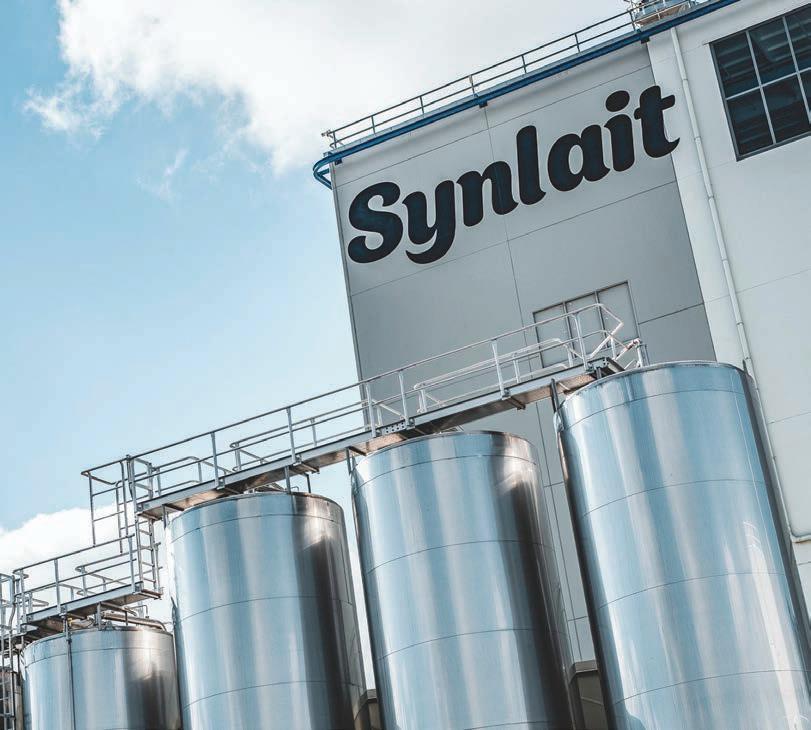
Dismal results behind it, Synlait looks ahead
SYNLAIT’S “frustratingly disappointing” financial result for the six months to January 31 does not define its future, CEO Richard Wyeth says.
The dairy company reported an underlying net loss after tax of $27.3 million for the period.
Its reported net loss after tax was $80.6m, it had an EBITDA loss of $34.7 million and an underlying EBITDA of $4.1 million.
Its net debt increased 88% to $472.1m, revenue increased by 32.3m to $949m and its gross profit decreased by $83.9m to $3.1m.
Wyeth cited three core issues that had impacted Synlait’s performance – the need to adjust the company’s manufacturing plan, lower returns in the ingredients business, and a decision on tax assets.
“Points one and two delivered the dairy processors perfect storm,” he said.
Regarding the tax assets, Synlait was taking a conservative approach in not recognising further deferred tax assets arising from unused tax losses beyond those recorded on July 31 last year, he said. Synlait began the season facing
challenges around inventory shortfalls in its advanced nutrition products.
That led to adjustments to Synlait’s manufacturing plan with a focus on catch-up production and in the process, leading to surplus raw milk across peak production.
This is one of the most frustrating seasons I’ve experienced and even with the benefit of hindsight, there is very little we would have done differently that would have improved this result.
Richard Wyeth Synlait
The selling of that excess milk did not go according to plan, and it had to be converted into whole milk powder at its Dunsandel plant, he said.
“To create the perfect storm, the price of WMP decreased sharply at the end of 2025, which impacted the returns on the ingredient’s portfolio.
“This is one of the most frustrating seasons I’ve experienced and even with the benefit of hindsight, there is
very little we would have done differently that would have improved this result. Suffice to say, ensuring Synlait has better commercial optionality is a core focus of the future.”
Looking back, he said the key lesson was that focusing on operational stability is key if it is
going to be an advanced nutrition business. Those products normally sell for 10 times the price of a dairy commodity product such as whole milk powder.
The only news worth celebrating in the result was the milk price, he said.
Synlait’s base milk price will
soon lift from $9.50 to $9.70/kg MS to match Fonterra’s. When the additional premium payments are added, it will take the total forecast to $10.10/kg MS.
Wyeth used the result to unveil a new roadmap to recovery.
It started with the impending sale of the of its North Island assets that “will deliver a smaller, stronger and simpler Synlait”, he said.
The roadmap has three interconnected goals: to stabilise, simplify and scale.
In practice, that means stabilising advanced nutrition product volumes and returning to a more normalised business model in producing both commodities and advanced nutritional products.
After stabilising that operational platform, in some areas Synlait may scale it up. Wyeth pointed to UHT cream an example of this.
The company produces 13 million litres of the a year. There is no reason that could not be doubled with little capital cost.
“It’s getting to a stable business model where we are being proactive about what we make and who we make it for verses being reactive and having little optionality.”
The roadmap is not a 12-month fix and could take as long as two to three years, he said.
Hugh Stringleman NEWS Fonterra
Gerald Piddock NEWS Dairy
Miles Hurrell Fonterra
ROADMAP: Synlait CEO Richard Wyeth says he is hoping the company’s roadmap to recovery will turn around its financial performance after a disappointing result.
EXITING: Fonterra chief executive officer Miles Hurrell has delivered a payout bonanza to his 8120 milk supply farms along with his resignation after eight years in the top job.
DEMAND: Mainland traded well over the past eight months, driven by commodity prices in Australia and consumer products demand in southeast Asia, says Fonterra’s chief financial officer Andrew Murray.
Prod uction comes from prevention .
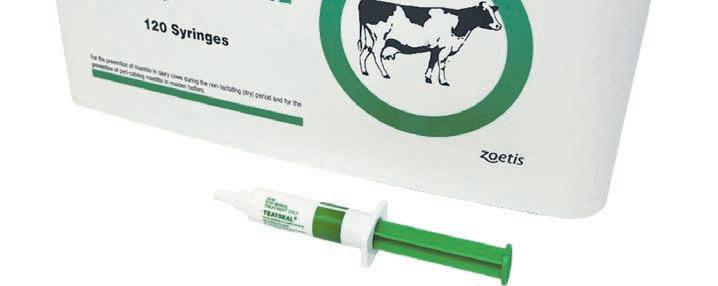
Set your season up for success with Teatseal ® - New Zealand ’s #1 m astitis protec tion
Teat seal is N ew Zealand ’s most proven , trusted and recommended internal teat sealant, designed to protec t cows throughout the entire dr y period The result is fewer mastitis issues around calving and early lac tation , lower treatment cost s , and more milk in the vat
S afeg u a rd you r herd wit h Teat seal . Talk to you r vet a bou t u sing Teat seal t his season
Funding opens new pastures to Halter
including Blackbird, DCVC, Bond, Bessemer, NewView, Ubiquity, Promus and Icehouse Ventures.
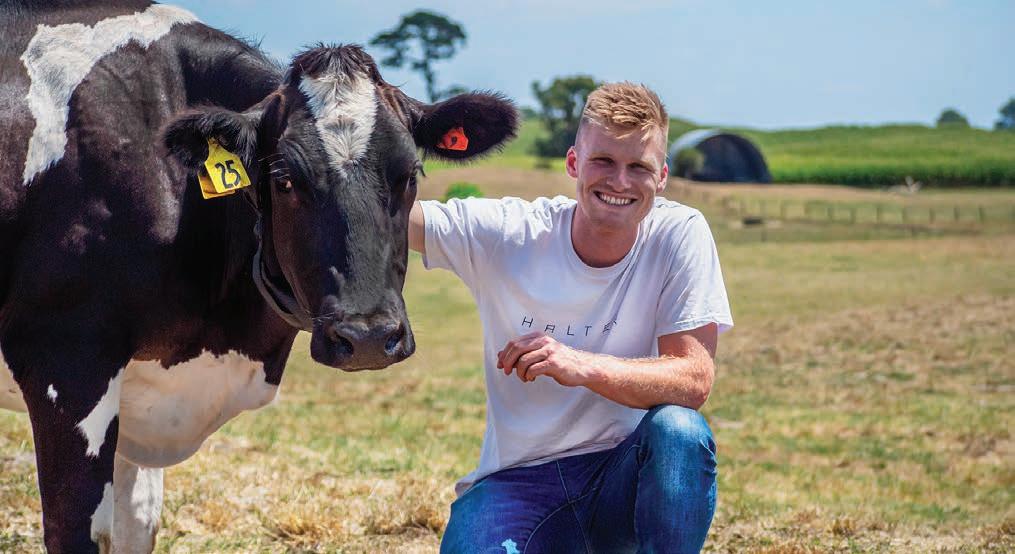
HALTER has announced expansion plans into the United Kingdom, Ireland and South America after a major fundraising round where it secured $377 million.
The agritech company raised the late-stage Series E funding, which saw its valuation climb from $1.65 billion to $3.43bn (US$2bn).
Our farmers need tools that work, and the fact that they’re using Halter tells us our technology has earned their trust.
Craig Piggott Halter
The capital raise is one of the largest ever in agritech globally, Halter said, and reflects accelerating demand for virtual fencing technology.
The round was led by United States-based Founders Fund, with participation from cornerstone investors
Founders Fund is a prominent US-based venture capital firm that includes Peter Thiel as a partner. It focuses on sectors with potential for significant technological breakthroughs, including AI, aerospace, and biotechnology.
Halter said the new capital will help the company support its New Zealand farmers, accelerate its commercial expansion across the US, and fund the roll-out of a range of new products in coming months.
Investment will continue across product development, including animal health monitoring and pasture management, shaped by how customers are using the system in the field.
The focus remains on supporting farmers building their operations with Halter.
Halter is hiring for 220-plus roles across New Zealand, Australia, and the US in coming weeks to help drive its expansion.
Halter CEO and founder Craig Piggott said technology can fundamentally change what
it means to run a farm.
“Our farmers need tools that work, and the fact that they’re using Halter tells us our technology has earned their trust. This raise lets us bring it to far more of them – and faster.”
Piggott said farmers in the UK and Ireland have long been interested in Halter and he is excited to be able to bring the technology to one of the world’s most important agricultural markets.
“The UK and Ireland are very similar to New Zealand in terms of landscape and climate – we know we can have an impact there,” Piggott said.
Halter’s GPS-enabled collars use audio cues and gentle vibrations to contain and herd cattle within virtual boundaries, allowing farmers to move herds from a smartphone.
Founders Fund partner Amin Mirzadegan said agriculture is a multitrilliondollar industry that feeds the world, yet remains one of the least digitised sectors on earth.
“Halter is changing that by bringing software, sensors, and AI directly into livestock operations in a way that farmers actually adopt.”
Risk of fuel theft rises
Gerhard Uys NEWS Crime
RISING fuel prices are likely to increase the risk of fuel theft.
The communications manager at Fern Energy, Andrew Trevelyan, said the company has heard of only a few instances of fuel theft, but said there is increased demand, whether real or artificial, and fuel is now worth more than it was
a few weeks ago. He said securing tanks by locking them is the first precaution.
Fern Energy is moving fuel around the country to make sure there is enough supply during times of high demand, he said.
The vice-president of Southland Federated Farmers, Kass Rauber, told Farmers Weekly many farmers carry bulk fuel, making them more vulnerable to theft.
He said a padlock on a fuel
tank could discourage theft and prompt thieves to move on.
If a farmer has multiple staff using fuel, the security around it may vary.
He suggests simple measures such as keeping fuel out of sight.
A fuel monitoring system that alerts someone when fuel is used is an effective but extreme measure.
Fuel has always been taken from farm equipment and always will be, he said.
Staff reporter TECHNOLOGY Livestock
PASTURE TO PAMPAS: Halter CEO and founder Craig Piggott says the UK and Ireland have shown interest in Halter and the company will now expand into these countries along with South America after it secured $377m in funding.
Farm dream comes true for Tangaroa Walker
month for just under $5 million.
The purchase includes a herd of 310 mixed cows producing about 112,000kg of milksolids.
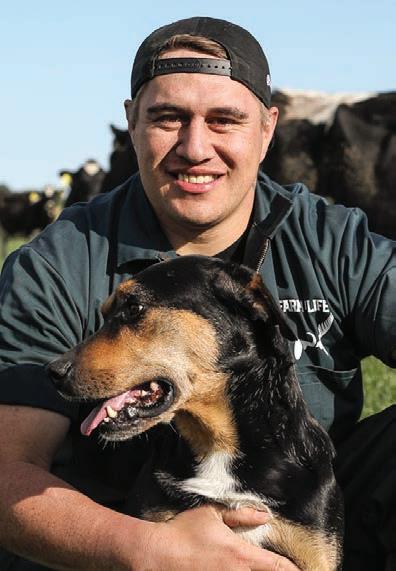
AFTER several attempts and strong backing from the community, Southland dairy farmer Tangaroa Walker has secured his first farm.
Walker settled on a 130 hectare property near Gore earlier this
The purchase followed a challenging process. Walker initially sought to raise $4m through equity partnerships within a two-week window late last year to secure his preferred property, but the deal fell through when another buyer went unconditional.
The author and social media personality made offers on three further farms before successfully securing his fourth option, ultimately raising $4.3m to complete the purchase.
The acquisition was funded through a mix of equity partnerships, bank lending and Walker’s own capital. Two equity partners, comprising two couples, invested in the farm, with returns linked to milksolids production.
Walker said he had been in discussions with four different banks over the past few months, before being granted lending approval.
“It has been quite a journey with them, but we were fortunate enough to get the green light,” he said.
Interest from potential investors was strong, with between 100 and
200 inquiries coming through his Farm4Life platform, alongside broader media attention.
Walker ultimately opted for a simpler ownership structure, selecting a smaller group of equity partners with larger stakes.
“We’ve got the same shared vision, same shared values, and [they are] very, very supportive of myself and my family and where we’re wanting to hit,” he said.
While the farm wasn’t his initial preference, it turned out to be the right fit, he said.
“It has ended up being the right farm for us at this time.”
The handover date for the property is scheduled for June, and Walker said he is “counting down the days already”.
After some time as a contract milker, he said his “family needs some security. We need a farm that I want to sink my teeth into and really give it my all.”
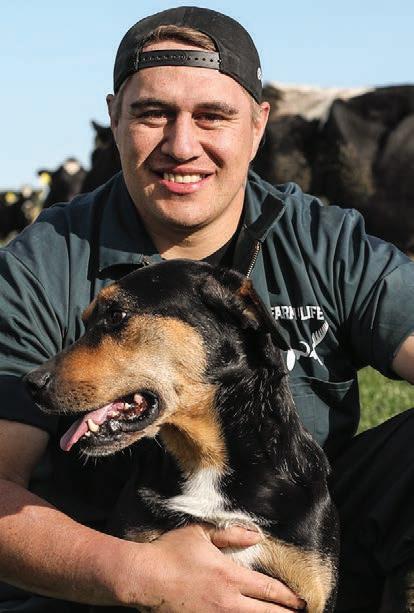
Alongside farming, Walker runs Farm4Life, an online video-based training platform focused on New Zealand dairy farming. The business has recently partnered with Telford and the Southern Institute of Technology to deliver NZQA Level 3 qualifications through the app, set to launch in early June.
MOVING DAY: The Walker family are set to move in during the first week in June. Image: Supplied
Walker said the programme is designed to allow students to complete their training while working on a farm, combining online learning with practical, onfarm assessment.
“I want Farm4Life to be the chosen education platform for all farmers in New Zealand, because it’s by a farmer, for a farmer. You know, I’m living farming every day
on farm. So that’s the Farm4Life vision.”
Looking forward, Walker would like to leverage his recent farm purchase and own another property in a few years’ time.
“The vision for the future in terms of the farm would be to have two farms in three years’ time. And for myself, I want to be big, strong, married, and have another baby.”
Isabella Beale PEOPLE Community
HOME: Farmer, author and social media personality Tangaroa Walker has bought a farm near Gore after years of contract-milking.
Photo: James Jubb
Cold storage the next domino to teeter
TNigel Stirling NEWS Exports
HE government is urgently assessing the country’s cold storage capacity as exporters begin planning for container shortages should war in the Middle East drag on.
Exporters say the volume of refrigerated containers coming into the country is sufficient to meet their needs for now but that could change quickly if shipping disruptions continue.
Meat exporters ANZCO and Silver Fern Farms are investigating third-party storage options as they plan for a “worst-case scenario” of ongoing shipping disruptions.
“We are trying to be a bit proactive preparing for a situation where we may be required to hold additional inventory here in New Zealand because we do not have the containers we need to keep moving our normal volumes out the door,” ANZCO’s general manager of sales and marketing, Rick Walker, said.
In a recent shareholder letter
Alliance Group said the conflict is causing logjams at global ports and ships are sailing without full loads to meet timetables.
“When that happens, empty refrigerated containers are often the first to be left behind, which can reduce the supply of containers available here in NZ,” the exporter said.
Tight fuel supplies are also leading to reduced services to New Zealand via Singapore and Malaysia, putting further pressure on container supplies.
Walker said ANZCO currently has “visibility” over the number of containers bound for NZ ports just two weeks ahead of their delivery.
“That is the window we are working in right now and the question is what happens two weeks after that, four weeks from now?
“It is something we are working very closely with our shipping partners to understand their position and their challenges and the potential impacts on our business.”
AgriHQ senior analyst Mel Croad said “very low” February livestock slaughter volumes combined with
OPTIONS: Meat exporters ANZCO and Silver Fern Farms are investigating third-party storage options as they plan for a ‘worst-case scenario’ of ongoing shipping disruptions.
continued strong demand from overseas buyers meant chillers around the country – belonging to both exporters and independent cold storage operators – are unlikely to be anywhere near full right now, though she said this could change quickly.
“If concerns are growing about container availability, then that storage could be snapped up.”
The NZ Cold Storage Association’s Kim Mundell said the
owners of cold storage facilities have been assisting the Ministry of Primary Industries for the “past few weeks” to model the country’s cold storage capacity.
She understands the Ministry for Primary Industries is working on contingency plans should the war be “protracted” and storage became a “problem later on”. There are no current issues with cold storage capacity, she said.
Mundell said officials are
Half-century surge for sheep and beef profits
THE average sheep and beef farm is forecast to make a profit before tax this year almost double that of 2024-25 – and the highest in 50 years.
The Mid-Season Update by Beef + Lamb New Zealand’s Economic Service is forecasting an average profit before tax for 2025-26 of $287,600 per farm, noting it is a sharp shift in fortunes after the sector weathered two difficult seasons. It calculates that real farm profit before tax – and taking inflation into account – will be
about 80% above the decade average.
The report analyses farm income at the midpoint of the October 1 to September 30 processing season
In 2024-25 the comparable average farm profit was $146,515, and $19,048 in 2023-24.
The report warns that the forecast is being tested by higher fuel and fertiliser costs and supply chain disruption from the conflict in the Middle East.
However, BLNZ chair Kate Acland said despite these factors, global market fundamentals for red meat are expected to continue strong.
“There are some things on the
horizon, but baseline fundamentals are still very strong.”
Acland described the forecast as “incredibly positive” for farmers, regional NZ and the NZ economy, following difficult seasons from 2022 to 2024 when farm input prices increased 19% and farmgate prices were relatively low.
The optimistic outlook reflects strong farmgate prices for lamb, sheepmeat and beef and a weaker NZ dollar.
The average lamb price is forecast to reach $10.28/kgCW (carcase weight), adult sheep $5.55/kgCW, and all-cattle $7.59/ kgCW, with wool prices showing continued recovery from their
If concerns are growing about container availability, then that storage could be snapped up.
Mel Croad AgriHQ
trying to understand how much storage would be available should containers have to be unloaded because ships are unable to leave NZ because of an escalation in the conflict.
Mundell said the association has “not yet” been asked to consider the impacts of a shortage of containers coming into the country.
The director of one major meat company told Farmers Weekly it is not just storage costs that exporters would have to manage if they were unable to get meat on the water because of a container shortage.
With payments from customers delayed it could also put considerable strain on exporter balance sheets.
multi-year lows.
The report shows NZ’s traditional red meat markets, the United States, European and United Kingdom, remain our best paying due to constrained domestic production.
China’s economy is still subdued, and is a market where NZ beef faces stiff competition. Farm expenditure is expected to increase, primarily for fertiliser and repairs and maintenance, but this will be offset by falling interest expenditure.
Farmers are forecast to generate $8.5 billion in on-farm income this season, spending $16 million daily on goods and services in local communities.
Neal Wallace NEWS Sheep and beef
FIVE DECADES: The average sheep and beef farm profit for 2025-26 is forecast to be the highest in 50 years, says BLNZ chair Kate Acland.
Ploughing champs pull off centennial win
IT’S 100 years since the Marlborough Ploughing Association held its first competition, on the outskirts of Blenheim.
The 20 entrants at this year’s centennial event, held on March 21, travelled from as far afield as Balclutha and Waikato, with four from Canterbury, including a team of Clydesdales.
Derek Houghton, a farm manager who travelled from Hamilton with his sponsored Massey Ferguson 5710, took the title in the Silver Qualifying category. As a result he goes through to the 2027 New Zealand Championships. After the Marlborough show he was due to head south for more competitions, including the 2026 New Zealand Championships, which are being held in Methven next month.
The friendly rivalry that’s been a dominant feature since Marlborough’s first event in 1926 comes with a high level of attention to detail from those participating.
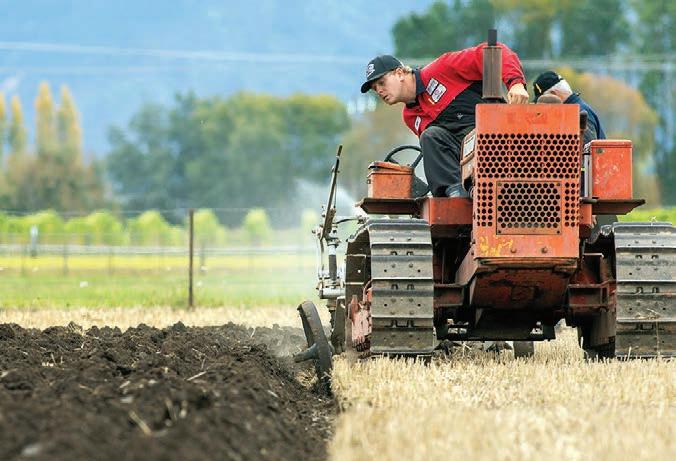
Frequent stops mid-furrow were made by competitors to check the precision of depth, width, lineality and uniformity.
“It was really special to pull off
the win, particularly with it being the centennial,” Derek said.
“It was my first time competing with the new tractor and I’ve spent a lot of time setting it up for competitions.”
Derek grew up on a dairy farm northeast of Hamilton and gained extensive experience as an agricultural contractor over the years. Through his ploughing journey he’s also benefited from wisdom in techniques from his father Paul, who he will compete against at the national event in Methven.
Also successful at this year’s Marlborough competition was hydraulics engineer Richard Cooke, who drove a Massey Ferguson 35X and won the Vintage Qualifying category, which means he also goes on to represent Marlborough in the 2027 New Zealand Championships. His son Ben was the youngest participant in the centenary event – the 21-year-old diesel mechanic first having taken part aged just 15, winning a number of trophies in that debut year. This year Ben drove an Allis-Chalmers HD3 crawler.
The oldest contestant at the centennial event was 86-yearold Graham Gifford, who first participated in Blenheim’s competition seven decades ago and is a four-time New Zealand
representative to the world championships.
The match kicked off with a re-dedication of the 100-year-old trophies and a respectful silence for Jenny Wolley, a member of the local association who’d recently passed away, and the late Ian Jordan, in whose honour the match was dedicated, and on whose family farm the Blenheim event was taking place.
Ian’s granddaughter Paula Jordan – who competed in the nationals in 2022 – participated this year on her home farm with a 1951 Farmall McCormick Super C that
her other grandfather had used in past competitions. He was a world championships participant, as has been Paula’s father Roger.
Paula, who’ll next month compete at the 2026 National Champs in Methven, manages the grapes on the mixed farm where this year’s Marlborough centenary match was held. She takes precision so seriously she carefully polished the boards before the start of the four-hour competition.
“When it comes to ploughing, if you cut a corner, you wear it later,” she said. “I think when you see the end result on farm – the crop – you
realise how important it is to get the basics right.”
The results were:
Horse plough: John Booth and Paule Crawford 1.
Farmer class: John Butt 1, Alan Jones 2, Nick James 3.
Vintage open: Bruce Graham 1, Graham Gifford 2, James Burnby 3.
Silver Qualifying winner: Derek Houghton.
Vintage Qualifying: Richard Cooke 1, Paula Jordan 2, Henry Cosgrove-Davies 3.
Contemporary: Josh Rushton 1, Keith Marychurch 2, Robyn Holmes 3.
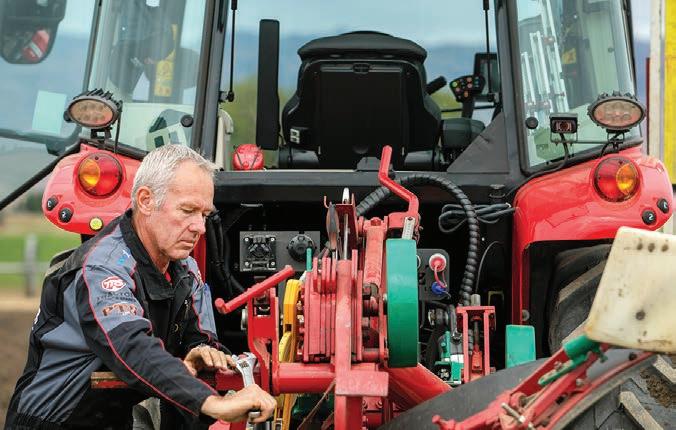
TINKERING: Some fine tuning helped Derek Houghton win the Silver Qualifying category, taking him to next year’s national championships.
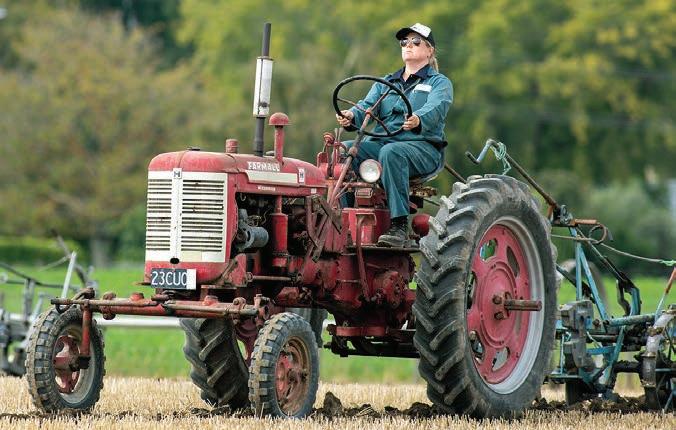
HISTORY: Paula Jordan drives her 1951 Farmall McCormick Super C, which her grandfather had used in past competitions.
CLOSE EYE: Twenty-one-year-old Ben Cooke drove a crawler tractor in the Farmer class.
HORSE POWER: John Booth and Paule Crawford’s pair of Clydesdales were crowd favourites at the Marlborough Ploughing Association’s 100th anniversary competition.
Photos: Tim Cuff
Fiona Terry PEOPLE Skills
Setting up for the transition period
Karen Fras er Farmlands Te chnical Sp e cialist
O ver-fe d dry cows often caus e the most is sues, with p o or insulin s ensitivity increasing the risk of ketosis, retaine d membranes, and displace d ab omasum Ke eping cows in balance d condition is one of the b est forms of herd health insurance
Dry- off done right
cyc l i n
t a r t t h e wo r k n ow. H e re’s w h at re a l l y m at te r s at t h i s s t a g e of t h e g a m e :
B o d y c o n d i t i o n , t h e m o s t p owe r f u l t o o l yo u h ave
Among all the de cisions farmers make from now until calving, b o dy condition s coring (B C S) is arguably the one that pays the big gest dividends The tricky par t? It’s not s omething you can fix at the last minute. It takes ab out 80 –9 0 days for a cow to gain one B C S, even on go o d gras s and supplements.
This is why mid-late lactation B C S is non-negotiable
When cows are s core d now, you have time to react
You can identify the light mob (thos e under <B C S 4 5) and give them preferential fe e ding while they’re still milking Waiting until dry- off usually means you ’ re to o late to make meaningful gains
This matters b e caus e cows calving b elow target B C S are much more likely to slip into a de ep er negative energ y balance. This increas es the risk of ketosis, fatty liver, and delaye d returns to cycling, with over- conditione d cows carrying the greatest risk, par ticularly in s eas ons where more cows are ab ove target B C S
O ver- conditione d cows (thos e drifting ab ove >B C S 5 5) are more prone to milk fever, calving difficulties, and metab olic instability Hitting the swe et sp ot is everything
Fe e ding with purp os e
Once you have mobs s et up by condition, fe e ding b e comes strategic rather than reactive. Thin cows ne e d energ y- dens e fe e d now, not later Whether that’s b etter pasture, maize silage, or a supplement mix in an energ y dens e p elletis e d option The aim is to rebuild res erves while there’s still time.
Cows already on target ne e d consistency Don’t let them slip as pasture quality drops and manage over- conditione d cows carefully by fe e ding for maintenance, not gain
The dry p erio d is where the udder cleans hous e and gets ready for the next lactation. That pro ces s takes six we eks at an abs olute minimum, eight is ideal G etting dry- off dates corre ct dep ends on one key ingre dient: having accurate due - to - calve information Without that, even the b est fe e ding plan b e comes gues swork
Dry cow therapy (D CT) is another cr ucial pie ce of the puzzle Following your vet’s advice not only ensures the right treatment but als o the right approach. Teat s ealants are invaluable, but only when they are applie d with meticulous hygiene Contamination during D CT can create the very mastitis is sues we are trying to prevent
The first we ek after dry- off is when most mastitis cas es app ear, s o daily che cks are wor th the effor t It is the simple things – swelling, heat, firmnes s – that are easy to sp ot and easier still to treat early.
Heifers des erve par ticular care here. The mammary gland you have sp ent two years building can b e compromis e d in one moment of p o or hygiene. They carry that damage for life. G entle handling, clean facilities, and patient te chnique during teat s ealing make a world of difference
S etting the stage for spring
Dry- off is the p erfe ct window to addres s parasite burdens, winter lice for cows and up date all vaccinations Using fae cal eg g counts b efore drenching is go o d practice for the younger sto ck, s aving unne ces s ary treatments and ensuring you only intervene when the results call for it
Vaccination timing matters to o L epto, s almonella, clostridia and rotavir us prote ction now helps cows build the antib o dies ne e de d to pas s strong immunity on to their calves through colostr um Salmonella vaccine remains a smar t insurance p olicy in New Z ealand given our environment of high bird pres sure, water movement and wildlife make it an ongoing risk
Mineral planning als o star ts here. Working with your vet and doing liver biopsies on heifers and cows gives the most accuracy to imp or tant trace mineral status of the herd
The help of your nutrition sp e cialist to balance diets and cover any deficiencies ensures cows hit calving ready Metab olic resilience do es not happ en by accident
It is built through thoughtful mineral balance well b efore calving
Lameness and ke eping cows comfor table
L ate lactation is a s ensible time to deal with lamenes s Trimming fe et, treating lesions and preventing deterioration helps cows maintain condition and re duces stres s heading into winter
Dry cow paddo cks des erve just as much thought as the dry cows thems elves Water reliability, shelter and track quality all influences stres s load Stres s is a leading contributor to metab olic problems
B uild your team’s confidence
The p e ople on your farm are a major par t of transition succes s Now is the time to fine - tune SOPs (standard op erating pro ce dures) S et clear pro ces s es for dry- off, B C S, springer fe e ding, calving as sistance, and colostr um management
Upskilling the team pays off quickly Whether it is attending a calf rearing s eminar or practising newb orn calf care, thes e small investments build confidence, and confident teams make b etter de cisions under pres sure
Having minerals, springer fe e d, gear and supplies delivere d well b efore calving b egins takes the stres s out of your planne d star t to calving
We got you
Everything you do from mid to late lactation is ab out prote cting next s eas on ’ s p erformance.
As you head toward dry- off, it’s a go o d time to catch up with your lo cal Farmlands Te chnical Field Sp e cialist (TFS) They can supp or t you with on-farm advice, pro ducts and practical s olutions to help you prepare for the s eas on ahead and conne ct you with the right exp er tis e when you ne e d it.
When it comes to nutrition, the future p erformance of your farm is built through the de cisions you make now From b o dy condition through to transition fe e ding, your Farmlands TFS can conne ct you with a S ealesWinslow Nutrition Sp e cialist to build a nutrition plan that matches your system and s ets cows up to p erform next s eas on
From the Editor
When it comes to food, time to think again
Bryan
Gibson Managing editor
ANGELA Clifford of Eat NZ has made a passionate and logical argument for a change in how we think about food, and it’s one we should listen to.
Despite being massive producers of high-quality food, we face supermarket shelves increasingly dominated by imported stuff.
Clifford frames the challenge as an unintended consequence of the free market.
The farmers and growers who once produced the vegetables, seafood and other staples we eat have become victims of the global food system.
Multinationals can’t justify sourcing peas from Hawke’s Bay when it is cheaper to buy them offshore.
The decisions of Heinz Wattie’s and McCain Foods to stop processing vegetables
LAST WEEK’S POLL RESULT
in New Zealand reflect this challenge. They are decisions that have our supermarkets scrambling as well.
While there’s a perception that supermarket home brands are cheaper because they’re lower quality, or imported, a spokesperson for Foodstuffs told me this is misplaced.
He said the Pams brand uses local produce, for the most part, and the Heinz Wattie’s decision was made because NZ’s cost of production cannot compete with other producers on the global market.
Foodstuffs is now searching for new local suppliers for its home brands.
As Central Hawke’s Bay mayor Will Foley says, there are numerous growers who will be hurting right now, many of them facing the prospect of having no processor for the peas, corn and other vegetables they produce.
Foley says the restructures and plant closures will have a massive impact on the district.
Now, our food production systems are very efficient across almost every sector but we can’t, and shouldn’t, join a race to the bottom on cost of production.
We pay people fair wages and regulate so consumers can trust the provenance and safety of our food and that is something to celebrate, not negotiate.
Another thing to consider is that in a world where the free and fair movement of
Keep it Kiwi. That’s the view of almost 68% of those who took last week’s poll, saying they are not comfortable buying cheaper imported butter ahead of locally made.
Many voters raised issues about the food miles involved in getting products to New Zealand, and the welfare standards of the animals producing the product.
“What are the guarantees it meets the same standards as our own butter? What are the animals fed/ how is that food produced/ who regulates the producing to meet standards in USA?” said one.
Another said: “I’d be happy if the government offered tax breaks to farmers/ producers who could supply NZ and our domestic network with their products.”
Of the 32.1% of voters who are happy to buy imported butter, many said the reluctance of New Zealand dairy companies to support local consumers had left them with no option but to purchase cheaper imported products.
“For a product that we produce in abundance in NZ and, if sold here, does not attract high costs of transport and marketing, it should be accessible to every household in NZ, not only those lucky enough to afford luxuries.”
goods is becoming more and more fraught, is reducing the production of the food NZ families rely on to nourish them every day a good thing for Aotearoa?
If our primary industries are going to be profitable and resilient in the coming years, the whole of NZ must support them.
But that requires food producers to show support back – and that support is nutritious and affordable food to feed our nation.
A national food strategy would give us a roadmap for nurturing both healthy Kiwis and healthy export returns.
Surely we can aspire to more than one thing at a time, when we’re thinking about how our food production sector should be managed?
We excel at producing and exporting dairy, meat and fruit to the world.
But we can also make sure everyone in New Zealand can enjoy fresh, nutritious, locally grown food.
Right now we don’t have that ambition.
A national food strategy would give us a roadmap for nurturing both healthy Kiwis and healthy export returns.
Chart Title
Right now it seems like we’re sacrificing one on the altar of the other.
Last week’s question: Are you comfortable with Kiwis buying imported butter because it is cheaper than NZ made?
Letters of the
week
More to this story
Stu Kneebone
Cambridge
I CAN’T help but note that several consecutive issues of recent Farmers Weekly papers (and a few other publications, I might add) have run articles regarding Federated Farmers criticism of, and I quote from the March 23 Farmers Weekly “new rules in Gore that require farmers to consider Ngāi Tahu cultural values when applying for resource consents”.
Can I respectfully point out that I’m finding this issue really one-sided in terms of how it is being reported, and nowhere in any of the rural publications that come into my mailbox can I find another perspective or response from Ngāi Tahu or the district council.
I would really like to know if the comments and claims made by Federated Farmers are an informed interpretation of the new rules, or if there is another perspective with regards to how the new Gore District Council rules should be read and interpreted, and what impact they will likely have on various farming activities.
GE-free the way to be
Claire Bleakley
President GE Free NZ
THE article “Turbulence ahead if EU ushers in GE Regs” (March 16) is scaremongering and proposes that we should sacrifice safety of nature for conformity and convenience. This is a tactic to further influence the passing of the flawed, poorly drafted Gene Technology Bill.
Our major international markets seek GEfree natural foods that can be guaranteed safe. The existing Hazardous Substance and New Organisms Act (HSNO) does not have a ban on field trials or release of genetically engineered organisms, as the 22 unproductive field trials have shown. The HSNO Act requires environmental and health research data on genetically engineered organisms to protect New Zealand from the risks to animals and organic regenerative and non-GE farmers.
There is no “disharmony” with our markets. As a GE-free nation we will be able to sell into every market and maintain a premium for our produce. Why should suddenly our markets reject our highquality, grass-fed, non-GE produce when the global non-GMO food market size is projected to grow from US $895.36 billion in 2025 to US$991.17bn in 2026 and to US$2624.56bn by 2034? We thank the government parties who support our GEfree nation.
Should the government prioritise developing a national food strategy?
This week’s poll question (see page 1): Have your
Fight for the food system you deserve
In my view
Angela Clifford Clifford is CEO of Eat New Zealand
ZEMBLANITY. It’s a word that describes an unfortunate series of consequences, and one that could be applied to food in New Zealand recently.
Just as the looming spectre of fuel shortages and international supply chain shocks became more real, Heinz Wattie’s announced it is ceasing production and manufacturing of processing vegetables in Auckland, Canterbury, Hawke’s Bay and Dunedin – the vegetables, including peas, that end up in frozen mixes in our supermarket freezers, staples for families worried about the cost and potential wastage of fresh produce.
The move directly affects 220 farmers and the seed suppliers who serve them, as well as 350 manufacturing jobs.
The nail in the coffin appears to have been the sourcing of supermarket homebrand lines from overseas – a similar move to 2021’s shift on frozen fish. It reflects a broader trend: a 57% increase in imported cheese since 2019, and 33% more meat imported since 2020, this despite New Zealand being a global supplier of both.
We’re exporting high-quality protein while importing more and more of the food New Zealanders eat, from elsewhere.
Other contributions to this zemblanic period include the release of NZ Food Network’s Hunger Monitor, which shows one in three households in Aotearoa now face food insecurity, which is an extraordinary figure.
That’s right: as we’ve supposedly been decreasing the cost of food by importing it, food insecurity has risen dramatically. And as bitter icing on the cake, Foodstuffs announced it is now importing butter from the United States; it is cheaper than New Zealand-grown brands.
The end game appears to be an Aotearoa that produces a lot of just a few foods – none of which is for us to eat.
To call it a game implies someone set the rules, but in reality it’s the undesigned outcome of a free-market, globalised system in which food exists not to feed people, but to generate profit.
There is no strategic vision, no guiding set of principles collectively agreed upon, that got us here. We sign free trade agreements that appear unable to protect us as food citizens. So what happens when we can no longer eat our own food?
It’s impossible to write that without acknowledging the effect colonisation had on Māori food ways – including the loss of access to kai from waterways, land and ocean.
In a recent webinar presented by Kore Hiakai, hauora (health) was described as a taonga – something to be treasured and highly prized. It’s difficult to see the connection
between that and the food we now have access to.
We import more than 70% of our milling wheat, yet produce some of the highest quality in the world. Those frozen peas, grass-fed meat and dairy are globally renowned –sought after by the very countries sending us their food in return.
Our chefs talk about the remarkable flavour of our ingredients, and that’s not merely subjective. Our taste receptors are literally a health-detection system – the same phytochemicals that give fresh food its flavour are the compounds associated with preventing chronic disease. Foodrelated illness costs New Zealand between $7 billion and $9bn in healthcare annually. Diabetes alone costs over $2bn, and is forecast to reach $3.5bn within 20 years.
The foods consistently recommended to prevent and manage diabetes – whole vegetables, whole grains, fermented dairy, fresh fish – are precisely the foods where flavour and phytochemical content are most degraded by industrial production and long-distance transport.
A diet built around genuinely fresh, locally grown whole foods is not just culturally desirable, it keeps us well and takes pressure off a struggling healthcare system.
When we only produce a few ingredients in large monocultural, commodified systems where there is no margin for environmental consideration, we reduce biodiversity and create imbalances such as soil degradation and the
nitrification of our waterways.
And what of our farmers?
With 87% of New Zealanders living in urban areas and only around 7% of the workforce in agriculture, the democratic arithmetic is stark. Research shows that as urbanisation increases, agricultural issues are progressively deprioritised in policy.
If farmers aren’t producing the food people eat, what connection – or political support – are they likely to have? “No (NZ) farmers, no food” is not a wearable cap in Aotearoa.
So what’s the solution?
Stay outraged.
As our own food disappears from our shelves it’s often framed as our fault, because we’re not spending money to buy it. Never forget that these shelves earned their owners hundreds of millions of dollars in profits, higher than almost all global equivalents.
Question where your food
comes from constantly. Share on Facebook groups, other online platforms and with your friends what you find. Express how you don’t think it’s good enough. Loudly. Never be beaten down to accept that this is “our lot” or the “new normal”. Fight.
Every dairy farmer should be protesting loudly in the chiller section of their local supermarket. If you can afford the (often small) increase in cost, and buy NZ-grown food, understand that this purchasing decision has huge downstream affects. It saves jobs, livelihoods and builds a world of abundance that we all benefit from. It also helps us purposefully design a food system that can both export for economic advantage and nourish our own people.
Do not go silently into the imported butter night. Speak up, in this election year, to make sure our politicians know that we will vote for kai.
Fonterra farmers have much to thank Hurrell for
ANALYSIS Dairy
MILES Hurrell was Fonterra chief executive for eight years, during which payouts to farmers effectively doubled, from $6/kg milksolids to $12/kg.
The co-operative has forecast the FY2026 payout to be a $9.70/ kg milk price, 50c-55c/share dividend, 16c special Mainland earnings dividend and $2/share capital return from the sale of Mainland to Lactalis.
The enormous single serving of Mainland cream comes on top of a consistent reform-and-recovery pathway under Hurrell’s steady hand.
He was appointed in September 2018 amid two financial years when the co-operative suffered large and unprecedented losses.
In FY2018 it made a net loss after tax of $196 million, nearly $1 billion worse than the $781m profit in FY2017.
Some 40% of that yawning gap was due to lower operating earnings and the remainder was the cost of the settlement with Danone and a substantial writedown of its Beingmate investment in China.
Further writedowns pushed the FY2019 loss to $605m and the share price hit rock bottom.
Economist Cameron Bagrie said at the time that Fonterra’s decade-long business performance in China had resulted in wealth destruction instead of creation for its shareholders and the New Zealand economy.
Craigs Investment Partners head of research Mark Lister said Fonterra’s performance in terms of earnings growth, dividend growth, share price growth was no shining light among performers in the past decade.
The now late Theo Spierings
resigned after seven years in the chair and Hurrell was promoted internally from his position as head of Farm Source.
Lister said Spierings had to contend with droughts, huge commodity price volatility, the unsuccessful investment in China, and the food safety recall issue that led to the $183m settlement with Danone.
The Federated Farmers vicechair at the time, Fonterra supplier Andrew Hoggard – now an ACT Party minister – said the changeover was not an example of how a smooth transition was supposed to be.
“Miles is a bloody good bloke and will do a good job of reconciling the co-op to its farmers,” Hoggard said at the time.
In FY2018 revenue was $20.4bn and farmers received half of that, $10.2bn, based on a $6.69/kg milk price plus 10c/share dividend. They were still recovering from the financial shocks of 2013 and 2014 when milk prices had fallen to $4.
Spierings was paid $8m in his final year, including a performance bonus of $2.85m when the Fonterra stake in Beingmate was written down by $405m.
After Hurrell’s eight years at the top, Fonterra’s revenue in FY2026 will be a consecutive year repeat of around $26bn, plus $4.2bn from the Mainland sale, and farmers will receive more than $19bn all up.
The one-off Mainland sale is a crowning achievement of a complete turnaround for New Zealand’s largest company and the spending of farmers in the rural economy will make the CPI positive for two years, 2025 and 2026.
Having eclipsed anything his predecessors achieved, Hurrell will hand over to a successor who needs to replace the Mainland annual revenue of $5bn and its earnings contribution of $200m.
In its pitch to shareholders last
October for divestment approval, the company vowed that earnings would be back to FY2025 levels within three years, offsetting the earnings impact of divestment.
The return on capital target is 10-12% and the dividend policy is 60-80% of annual earnings, both of which will be achieved in FY2026.
“These targets are subject to a number of risks and assumptions and no assurance is given as to any level of earnings, dividends or returns,” Fonterra chair Peter McBride said.
In FY2018 foodservice accounted for 11% of sales volume, and consumer goods a similar proportion. In the first half of FY2026 foodservice accounted for 18% of sales volume, excluding the consumer division.
Hurrell also introduced new terminology for higher-value protein products such as casein and cheese, called advanced and specialty products, that used 23% of milk processed and made19% return on capital.
What is now the world’s largest business-to-business dairy exporter has a solid platform from which Hurrell’s successor can launch.
Hugh Stringleman
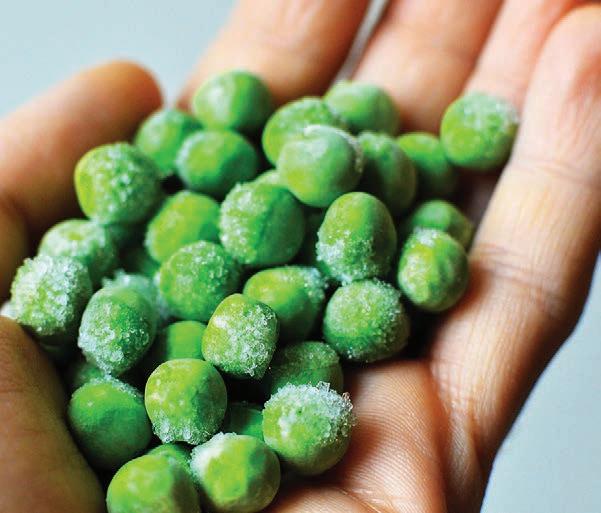
END OF THE LINE: Heinz Wattie’s announced it is ceasing production and manufacturing of processing vegetables, including peas, that end up in frozen mixes in supermarket freezers.
Photo: Pexels
OUTSTANDING: Miles Hurrell has called time on eight years as chief executive of Fonterra and 25 years working for the co-operative.
There is no resistance to good old-fashioned ingenuit y
Here’s how Rob O’Sullivan is t ackling drench resist ance
Drench resistance has been growing and causing huge concern, especially because the things Kiwi farmers have always relied on are no longer working as well as they used to
It’s frustrating, but thank fully, it’s not the whole stor y
That’s because more and more Kiwi farmers are fighting back with new approaches mixed with a dose of good old Kiwi know-how and adaptabilit y
So, to help spread the word, we’ve reached out to those farmers who are dealing with resistance so effectively and asked them to share their stories, because what’s working for them could work for other farmers too
Meet Rob O’Sullivan
If there’s one thing Rob has learned as a sheep and beef station manager, it’s that nothing stays the same for long, whether it’s seasons or prices and now, drench resistance
“About two seasons ago, I think it was, all of a sudden, lambs just went off and, you know, you drench them and they just kept going back wards on me, especially at tail end. You can just tell something’s not quite right there, we did a drench test on them, then it was 10 days af ter wards and they went triple resistance So that was basically how it got brought to my at tention Which wasn’t a nice thing ”
But Rob’s willingness to adapt meant looking for new approaches to the problem and fronting up with bold decision making
“Ever yone’s dropped their sheep numbers back and gone up in cat tle numbers ”
Rob did likewise
“ We’re probably only about 40% sheep now, 60% cattle where we used to be 70/30.”
And he’s happy to say it’s working
“That sor t of just changes your management I guess farming is all about pivoting as I’m learning ”
But dealing with resistance needs more than just one tool, it needs a the whole toolbox – including ongoing testing
“Ever y drench we test ever y thing and monitor ever y thing and going for ward into lambing monitoring ewes and doing a lot of faecal egg counts That’s the big one for us, keeping an eye on things because in the past where you just treat them ever y 28 days or whatever, sometimes they don’t need to be drenched ever y 28 days and you’re just adding fuel to the fire really by pouring it down their throat But now we’re monitoring a lot more and just using that advice we get from the vets and all that comes back with it ”
And while Zolvix Plus is one impor tant tool, it’s become a key par t of fixing the overall problem
“The impact of Zolvix Plus has been huge You know, you give a lamb a drench that, it just turns them out straight away Where you have a triple and it isn’t working and you give it a drench with Zolvix Plus, it just about skips out of the yard ”
Of course timing mat ters a lot too
“In previous years we really tried to just use Zolvix Plus as sor t of as an exit drench coming out of the autumn ”
But as resistance increased, Rob’s adjusted his strategy to meet the challenge
“This year was the first year I’ve done it, but I actually drenched Zolvix Plus at weaning just to clean ever y thing out, and now gone back into a triple ”
As usual, there’s always a bit of juggling
“The vets do say, ideal is to store a lot of lambs, but on the same token, it’s a hard one when the bank manager’s breathing down the farmer’s neck ”
Naturally, price always has to be considered, but Rob knows that cheap is definitely not always best
“It’s more expensive when you use a product that doesn’t work full stop You know that’s end of stor y It doesn’t mat ter how expensive it is If it works, it’s wor th a day Whereas, a triple that doesn’t work is ver y expensive There’s a lot of unseen costs when you do that I mean production loss ”
It comes down to how resistance can be controlled through smar ter management that means constantly making lit tle adjustments here and there
“There’s a way through it You just got to change your mind-set a bit and the way you do things, but, you know, it is manageable and it’s definitely not doom and gloom You’ve just got to change as you change your system a bit and get advice
Talk to the vets is a big one ”
For Rob, that’s the key
“Ever yone’s talking about resistance You go to dog trials and that’s what they talk about There’s been plent y of workshops, plent y of advice, and a lot more openness between farmers ”
Resistance isn’t the end of farming, just the end of the old ‘one size fits all’ solution
“You can’t just carr y on ignoring it and doing things the same because it won’t work at all. It’ll get worse and we don’t want that We want to be able to farm for many generations to come ”
To get the full story on how more and more farmers are overcoming parasite resistance, visit ‘Stories from the front line’ at farmanimal elanco com/nz /stories-from-the-front-line or scan the QR code
Brought to you by Zol v i x Pl u s and E l a nc o Proud to back Kiwi farmers on the front line against parasite resistance
Sector Focus Dairy
Taking opportunities as they come
Samantha Taylor PEOPLE Dairy
TEN years ago, stepping off the plane in New Zealand, Lynne Ramsay quietly wondered if she’d made a mistake. She had followed her now-husband Gregor, who had spent time here on his OE before returning to Scotland, with no clear plan and plenty of unknowns ahead.
Today, those doubts feel a long way off. The couple have recently signed the papers on their first dairy farm, 10 minutes north of Gore – proof of how far they’ve come.
They arrived without a set plan, but by taking opportunities as they came, Lynne and Gregor have worked their way into farm ownership.
“We didn’t think [buying a farm]
was possible,” Lynne said. “But we saw this one advertised and went to have a look.
“Then we spoke to the bank and our accountant to see if it really was doable, and it was.”
They’ll be taking all their Jersey cows from their herd and selling the Friesians as they downsize from their current herd-owning sharemilking role with 320 cows to the new farm of 200 cows.
It’s an area they haven’t lived in before, so it will be a big change for them and their children, but they still have a number of friends in Southland, where they originally landed when they immigrated.
They both studied agriculture at university in Scotland, and Gregor started as a farm manager on a farm in Tuatapere, Southland, when they first arrived in NZ.
Lynne had a working holiday visa and picked up casual work on Gregor’s farm and at neighbours’,
After 18 months, Gregor landed an area manager role with Fonterra in Balclutha, so Lynne took over managing the farm for the rest of the season when he moved.
“The farm owner was worried, but we ended up having a gradefree season with the lowest somatic cell count he had had in the eight years he’d owned the farm, so he was happy in the end,” Lynne said.
She then moved up to Balclutha with Gregor, but got itchy feet and jumped on a plane to travel around the United States, Scotland and Australia. She arrived back in NZ in time for calf rearing, then got into a meat inspector role at the local meatworks.
It was around then that they secured residency, as they knew they didn’t want to leave NZ. And having Monday-to-Friday jobs gave them plenty of time to explore, so they would disappear on a Friday after work and return Sunday evening, ready for the work week.
“It was a great time for flexibility, we even got into running half-marathons, things we wouldn’t dream of now, we’re too exhausted,” Lynne said.
Approaching the 2019-20 season, Gregor was offered a sharemilking opportunity, so he and Lynne approached the bank and made a plan. It was 140 cows in Henley, next to Dunedin airport, so they lived on the farm but remained in their full-time roles to help the dollars stack up initially.
“Gregor would milk in the morning before he went to work, and I would finish at the meatworks at 3:45pm, travel home and do the afternoon milking.
Everything else we did around our full-time jobs.”
Towards the end of the season, when the pandemic hit, Lynne had their first child, George, and they both left their jobs to focus on the farm and family. It was a great transition.
In 2023, they moved to Riverton to the larger sharemilking role, with 320 cows, where they have been until the new farm purchase, and they’re looking forward to their next move.
They now have three sons, George, Hamish and Fraser, and the plan is to focus on more balance going forward.
“Owning the farm, and being that bit smaller, the shed and the herd, it should be easier to manage the workload between the two of us.
“Plus, we’ll be closer to town,
SKILLS: Lynne Ramsay has worn many hats over the past decade, from calf rearer and relief milker to meat inspector and farm manager, with each step building the skills that helped the couple achieve farm ownership.
so the boys will be able to start playing sports.”
Lynne is involved in her local toy library and playcentre, and she’s studying Level 4 childcare at the moment to be able to run a playcentre in the future.
Gregor started a YouTube channel last year, which got put on the back burner during calving, weather challenges and then the busy farm-buying period, but they’re hoping to kick that back off soon too.
“It’s pretty cool to be able to share our daily life with our friends and family back home.”
They arrived without a set plan, but a willingness to take opportunities as they came has shaped their path. A mix of study, seasonal work and stepping into responsibility early laid the groundwork for what would follow.
JOURNEY: With three young boys and local connections, Lynne and Gregor Ramsay are balancing farm life with family and community involvement – a key part of their journey in New Zealand.
Photos: Supplied
Bobby calf effort a win for sectors: McClay
Gerald Piddock NEWS Dairy beef
THE new Dairy Beef Opportunities programme is a great dairy-red meat industry collaboration that will be a winwin on multiple fronts, Agriculture Minister Todd McClay says. It will also enhance New Zealand’s animal welfare reputation, he said at the launch of the DBO at Adrian and Pauline Ball’s dairy and beef farm near Tirau in Waikato.
“That’s a very big reason why the government’s putting almost $10.5 million into it,” McClay said.
The DBO is a joint initiative between DairyNZ, Beef + Lamb New Zealand, the Meat Industry Association, and members of the Dairy Companies Association of New Zealand, with support from the Ministry for Primary Industries via the Primary Sector
Growth Fund. The total cost of the programme is $20.9m
It is designed to unlock the value of non-replacement, or bobby, dairy calves by developing innovative approaches that suit the country’s farming system.
The programme focuses on three areas: improving efficiency through genetics and systems; smarter breeding and lactation strategies; and new pathways and value chains.
It will benefit both the primary sector and the wider economy, enabling farmers to get better value out of those animals, McClay said.
“I also think we will find interest from around the world from others at what we have done with our pasture-based system.
“This is a really good way of saying we can produce more through innovation and evidence but at the same time also be aware of our obligations around animal welfare and the environment. It’s a win-win for the sector.”
DBO Governance Group chair Simon Limmer said until now, non-replacement dairy calves had been a lost opportunity and a reputational challenge for the primary sector.
The programme addresses the 1.8 million bobby calves produced each year, with the economic benefits estimated to be worth $1.25 billion to the economy annually by 2050.
“The challenge here is pulling two quite disparate industries together: the dairy industry and the beef industry and making them connected.”
The programme presented both economic opportunities and opportunities for the two industries to work closer together at a processor level.
It will include work around the value chain, market development and genetics, Limmer said.
DairyNZ science partnerships and impact adviser Jenny Jago said the difference between this programme and similar industry-
related dairy-beef programmes is this one is being done at a much greater scale.
It also built on much of what those programmes had found.
“We’re trying to unlock all of the pieces in the whole system that are currently holding back scaling.”
They are also aware there is a finite amount of land available to raise these animals and the
programme will include working on ways to finish the cattle as efficiently as possible, Jago said.
The programme also starts with genetics and focusing on animals with high growth potential and providing enough information for farmers and rearers to make informed decisions around enabling genetic gain.
“It does start with dairy farmers and the choice they make.”
New intake begins dairy programme
Annette Scott NEWS Dairy
A PROGRAMME established to build the next generation of dairy farmers is underway with its fifth intake of graduates.
Established in Ashburton and running annually for the past four years, the Grassroots Dairy Management graduate programme is designed to give New Zealand graduates the practical experience, networks and industry knowledge needed to build successful careers and contribute to the long-term strength of the sector.
The latest programme began with an overnight induction camp
at Peel Forest where participants took part in a range of teambuilding activities including a high ropes course, fitness challenges and programme orientation.
Supported by gold sponsor Rabobank and partner DairyNZ, the Canterbury-based programme is delivered by a committee of eight volunteer farmers who were recently recognised at the ANZ Business of the Year Awards with the Excellence in Agriculture small business award.
Programme committee chair Kim Grayling said the programme’s key goal is helping to build the next generation of dairy leaders.
“As the dairy sector continues to grow, preparing capable young
people for dairy management and farm ownership is increasingly important.”
Grayling said a unique strength of the programme continues to be the lasting relationships and professional networks formed between graduates, employers and presenters within NZ and abroad.
The group recently hosted visiting Australian farmers from the Bega Group for dinner in Ashburton as part of their NZ tour. Recruitment will soon begin for university graduates to join the 2028 programme with successful applicants supported into on-farm employment with local farmers committed to developing the next generation of industry leaders.
The Resilient Pastures programme is a seven-year initiative led by DairyNZ with MPI and Beef + Lamb New Zealand, focused on improving pasture performance and persistence on dairy, sheep and beef farms in the upper North Island
LAUNCH: Dairy and meat industry leaders attended the launch of the Dairy Beef Opportunities programme at Adrian and Pauline Ball’s dairy and beef farm near Tirau in Waikato. From left, DairyNZ chair Tracy Brown, MIA chair Nathan Guy, Agriculture Minister Todd McClay, BLNZ CEO Alan Thomson and DCANZ chair Guy Roper.
NEW FACES: Kicking off the fifth year of the programme are, from left rear, Grassroots Dairy Management participants George Pearce, Tom Lourie, Nick O’Connor and William Talbot; and, from front left, Anna Gregan, Maddie Arnold and Maria Perriam. Photo: Supplied
Ngāi Tahu regen ag project opens doors
Annette Scott NEWS Regen agriculture
PRACTICAL insights into farm operations were shared at the first open day on Ngāi Tahu Farming’s Canterbury-based regenerative dairying project aimed at reshaping the future of dairy farming in New Zealand.
Attendees were updated in a series of in-field workshops by the Ngāi Tahu Farming (NTF) management team and project research leaders on the practical workings and early results of the project.
NTF is in its third year of an eight-year partnership programme with the Ministry for Primary Industries aimed at developing a future-proof dairy system that incorporates agriculture practices and mātauranga Māori. It compares side-by-side farming on neighbouring conventional dairy farm Hamua against the Te Whenua Hou Te Whitiora (“the new land, the new horizon”) regenerative farming project on Pahi.
The project is funded to the tune of $8 million through the MPI’s Sustainable Food and Fibre
Futures (SFFF) fund, with Ngāi Tahu also contributing $3m.
NTF supports the programme by enabling full access for science teams providing data, infrastructure, project management and operational collaboration.
The open day included practical insights into farm operations, regenerative practices being trialled and applied, updates on the farm’s physical and financial performance and preliminary research findings to date on soil health, nitrate loss and greenhouse gas emissions.
“This is a unique opportunity to understand the learnings and challenges of the farming system to date and see how it may shape the future of dairy farming in NZ,”
NTF business development and project manager Brett Walter said.
“The regenerative farming trial is exploring how to improve the health and wellbeing of our whenua, kaimahi [staff] and animals by planting more diverse pasture species and grazing less intensively to leave behind more of the living plant material after grazing to build better soil.”
Targeted outcomes of the trial include halving the nitrate load and concentration from the root zone, reducing irrigation use
by 20% per hectare, reducing greenhouse gas emissions by 20% compared to conventional dairy, reclaiming productivity levels while improving animal health and wellbeing, and setting the foundation for regenerative dairy farming systems producing highvalue milk products.
The trial began in 2022 with the first full operational season in 2023-2024 and runs for seven operational years until June 2030.
The programme evaluates each farm system’s performance across eight integrated work streams taking in farm production and financial performance benchmarking; soil health and soil carbon sequestration measured across 60 sites; water quality and water use efficiency measured through in-ground lysimeters; measured greenhouse gas emissions; animal health and welfare plus milk and meat sampling; staff wellbeing; and market opportunities that may emerge from regenerative farming practices.
“At two and half years in we haven’t got all the answers, refinement is ongoing. A big part of the project is the science of both farms.”
Early farm operational observations show that the
regenerative farm has a different mindset to the conventional farm system, taking a while to adjust to what is perceived as normal or ideal targets in a regenerative farm system.
Milk solid production has dropped with the lower stocking rate on Pahi.
“This is a big driver of profit, but the farm system was unsustainable with the amount of imported feed in the first season.”
Fertiliser and nitrogen costs per kgMS are higher for Pahi due to the lower milk solids production but were slightly higher than
Hamua per hectare due to organic nitrogen and fertilisers, one of the guiding principles of the programme.
“There is anticipation that in future the stocking rate may lift on Pahi realigning some of the early financial and physical metrics.
“We are looking for the regen system that works for us, we are literally growing this farm into a regen with the focus on what works as a model, not necessarily working for all.
“There’s a lot of aspirational goals towards outcomes that will evolve as time goes on. We are committed to find a system with a lower environmental footprint to find what outcomes we can achieve to find a better way to do our dairy farming and market opportunities arising from that.”
NTF general manager Matthew Keen described the programme as “really exciting”.
“We are not hitting our straps yet but committed to establishing profitability and exploring how regen can fit into other farming systems.
“We are on a journey and learning a lot; it’s a move forward from an industry perspective.
“Opening up to a public event is not normal for us so we hope to get some learnings from the day.”
KEY: Soil health is key to pasture and animal health performance in the Pahi regenerative farming project.
INFORMED: The open day included practical insights into farm operations, regenerative practices being trialled and applied, and updates on the farm’s physical and financial performance. Photos: Annette Scott
SOIL: DairyNZ principal scientist Ina Pinxterhuis presents an update on soil and animal health at Pahi during the open day.
Plan for your farm’s future, and your own
Farming in New Zealand has always operated within a complex and challenging environment. From unpredictable weather to fluctuating market prices, farmers face a unique set of challenges daily. Still, hard work and dedication are second nature to farmers. But while you’re focused on nurturing your land and livestock, building and maintaining your financial resilience is just as important, especially if you’re planning for retirement (whatever that might look like!).
We spoke with some of the team at Milford - Philip Morgan Rees, General Manager Wealth Management and Advice; Christchurch-based Financial Adviser Reece Macdonald; and Cambridge-based Financial Adviser Simon Corbett to discuss how farmers can develop financial resilience, plan for retirement and build a sustainable future for their farm and family.
Planning for life beyond the farm gate
The farming lifestyle is physically demanding, with outcomes that can be hard to predict. Farmers, though, are natural planners. Whether it’s rotating stock, preparing for seasonal changes, or managing livestock needs, planning is part of the job.
“Farmers are great planners on the job, but it’s also important to plan for life after farming,” says Morgan Rees. “You need to think about how to manage those years when you’re no longer in the thick of it.”
Starting early is crucial. “Having a financial plan can help you to protect both your family and your future.” Just like farming, investment is a long-term game, and the earlier you start preparing—whether through retirement funds or building a financial safety net—the better off you’ll be when the time comes to enjoy the fruits of your labour.
“A good adviser will be able to help you answer the question ‘will I have enough in retirement’.”
Diversification:
Spreading the risk
All farmers know that in tough markets, it’s a good idea to diversify your revenue stream. Having all your eggs in one basket can leave you vulnerable.
“Diversification is crucial,” says Macdonald. “It can help spread the risk and provides flexibility when times are tough.” From agritourism to value-added farm products, finding alternative revenue streams is one option. But Macdonald also encourages off-farm investments, to ensure asset mix is varied.
He observes that farmers are typically excellent investors.
“They realise that seasons vary and that no two years are the same, just like with investing. Farmers understand there are ups and downs but they also have the big picture in mind. Something like an investment fund can help set you up for the future or support you through harder times. It can be a great diversifier.”
Macdonald says the investment doesn’t have to be large. “Small investments are likely to grow and once your fund is started, it can be on-call as a back-up plan if normal rescue capital isn’t available.”
“Think of financial planning as another layer of protection,” Morgan Rees says. “Just like preparing for a storm, financial planning can help you get through unexpected events.”
A good adviser can help create a diversified investment plan that fits your needs. Building financial resilience is just another part of farm management, and it’s worth adding to the team.
Corbett notes that regular check-ins against this investment plan is a crucial step to ensuring you know your plan is on track. These check-ins will help ensure volatility is managed and risk is accounted for throughout the investment journey.
timelines and risk profiles, meaning advisers can create an investment strategy that works for your situation while you keep your focus on the farm.
Corbett says, “We might not have all the day-to-day farming answers but we can certainly help Kiwi farmers establish a plan for their future.”
Farmers have never been afraid of a bit of hard graft. You’ve put in the hours, made the tough calls, and kept your farm running through thick and thin. Now it’s time to make sure all that effort pays off, both for you and the generations to follow. After all, you’ve earned it.
Think of us as part of the team A vital part of farm management is getting the right people around you. Farmers rely on trusted advisers like stock agents, suppliers, accountants, and lawyers, so adding a financial adviser to the trusted circle makes sense.
Don’t wait, start now For many farmers, getting started with financial planning is the hardest part. After all, when you’re knee-deep in lambing season or grappling with market fluctuations, retirement planning can feel like a luxury. But the earlier you start, the more options you and your family will have down the track.
“Even small, regular investments can grow significantly over time due to the power of compounding returns,” says Corbett. Milford offers various funds tailored to different
If you’d like to discuss financial planning for your situation call your local Milford branch for a coffee and a chat on 0800 662 345. We’ve got locations throughout NZ.
Markets hold firm as trade flows reshaped
the indirect effects of higher shipping costs are increasingly evident.
THE ongoing geopolitical conflict in the Middle East has been a defining feature of the dairy market through March, particularly via its impact on energy markets and global logistics.
Disruptions and risks associated with shipments transiting the Strait of Hormuz, alongside rising oil prices, have lifted freight and insurance costs.
While New Zealand exports remain largely insulated due to their geographic positioning into Asia and Pacific-facing markets,
This was reflected in the geographic distribution of purchasing activity at recent Global Dairy Trade (GDT) events, where at Event 400 the largest increases in buying were observed from southeast Asia, the Middle East, and Central and South America.
Milk production continues to expand across key exporting regions.
In New Zealand, February collections reached a record for the month, with 183.8 million kg of milksolids, up 7.4% year on year (YoY) and 7.6% above the fiveyear average. On a tonnage basis, volumes rose 6.0% to 1.98 million tonnes, lifting season-to-date growth to 2.7%. Current forecasts indicate continued momentum, with March milksolids projected to rise by 5.4% and April by 4.7%.
Similarly, the United States reported February milk production growth of 2.9% YoY, supported by ongoing herd expansion. Cow numbers reached 9.62 million head, the highest level in over 30 years, reflecting strong producer margins and incentives to retain animals.
Argentina also recorded robust growth, of 10.6% YoY. Despite this broad-based expansion, milk flows
in some regions, particularly the US, have come in slightly below expectations, suggesting that supply growth, while firm, is not overwhelming the market.
Demand dynamics remain supportive, particularly for key commodity groups. This has been most evident in milk powders, especially skim milk powder (SMP), and in fats, where tightening availability in certain regions has driven price strength.
In the United States, non-fat dry milk markets have rallied sharply amid constrained spot availability, with prices reaching levels last seen in 2022. At the same time, global demand for protein remains firm, supported by evolving consumer preferences towards higher protein intake.
This demand strength has been reflected in GDT outcomes during March. Event 399 delivered a strong result, with the index rising 5.7%, led by SMP (+9.1%), butter (+6.1%), mozzarella (+7.9%) and anhydrous milk fat (AMF, +5.7%).
Event 400 was more subdued, with the index effectively flat (+0.1%), although divergence across products persisted. SMP continued to strengthen (+5.2%) alongside AMF (+6.4%), while whole milk powder (WMP) declined (-4.0%), highlighting ongoing product-specific dynamics.
AgriZeroNZ buys into Aussie GHG mitigation co
Staff reporter TECHNOLOGY Emissions
AGRIZERONZ is to invest
$5.1 million into Australian methane mitigation company Rumin8 to help support its approval process into the New Zealand market.
Rumin8 is developing products using a compound that reduces methane emissions in livestock.
Trials with beef cattle showed an average 82% methane reduction after consuming Rumin8’s feed additive, as well as indications of up to 5% productivity gains, the company said.
Rumin8 is aiming to develop a range of products including a feed additive, water additive, mineral supplement and slowrelease capsule.
Investing in Rumin8 aims to give New Zealand farmers access to a range of emissions reduction tools, AgriZeroNZ CEO Wayne McNee said.
“New Zealand’s a relatively small market on a global scale, so our investment is critical to push New Zealand pastoral farming systems up the priority list and support
RANGE: AgriZeroNZ CEO Wayne McNee says the $5.1 million investment in Rumin8 will help give New Zealand farmers a wide range of emissions reduction tools.
companies to bring their world-leading innovations here.
“Most of our major export customers have set ambitious emissions reduction targets which cover their entire value chain, including the New Zealand farms which produce the milk and meat they buy.
“Being able to show credible progress matters to maintain our market access and reputation as a worldleading producer.”
Rumin8’s goal of developing products for grass-fed animals and its progress to date make the company a welcome addition to AgriZeroNZ’s portfolio, he said.
Rumin8 co-founder and CEO David Messina said AgriZeroNZ’s investment has brought its focus on New Zealand forward several years.
“We’re now planning animal trials in New Zealand this year to support our application for regulatory approval. These trials will test the safety of the feed additive as well as its effectiveness in local conditions.”
Approval for Rumin8’s initial product will help facilitate registration of other related products which are more suited to grass-fed systems.
“As we’re using the same active ingredient, we’re able to leverage our first regulatory application to support others in our development pipeline,” Messina said.
He said they are optimistic about the results after carrying out more than 45 animal trials across Australia, Brazil and the United States.
“Safety is a non-negotiable for us. We carefully control the doses we give to animals and from our trials we’ve seen no negative impacts on an animal’s health and safety and no residues in meat.”
Despite firmer commodity prices through early 2026, trade data suggests that value realisation has not yet fully caught up, particularly for New Zealand exports. February export volumes increased modestly by 0.8% YoY to 342,677 tonnes, but total export value declined by -2.8%, reflecting weaker pricing earlier in the year. Year-to-date (YTD) export volumes remain down -2.1%.
While New Zealand exports remain largely insulated due to their geographic positioning into Asia and Pacific-facing markets, the indirect effects of higher shipping costs are increasingly evident.
At a product level, performance has been mixed. WMP exports increased 10% YoY, driven by stronger shipments to China and Central America, while SMP exports declined sharply (-18% YoY). Fat products showed stronger momentum, with AMF exports up 16% and butter up 2% YoY. Protein markets were more variable, with cheese exports broadly flat and milk protein concentrate volumes rising significantly off a low base.
Across other major regions, trade trends remain uneven. China’s dairy imports continue to contract, with volumes down -13.7% YoY in February, reflecting ongoing demand weakness. In contrast, US exports remain strong, with January volumes up 10.7% YoY.
Argentina has also lifted export volumes (+3.3%), while Australia has seen declines in both volume and value (-10.3% and -11.9% respectively). European exports have recorded moderate growth in January, with volumes up 3.6% and values up 7.0%.
Looking ahead, the persistence of geopolitical tensions and elevated energy prices introduces ongoing uncertainty. Higher freight and insurance costs are likely to continue influencing trade flows and purchasing decisions.
However, demand has so far remained resilient, supporting price stability. This is reflected in Fonterra lifting its forecast farmgate milk price midpoint to $9.70 per kgMS, with a revised range of $9.40 to $10.00 per kgMS. Overall, while supply growth remains firm, the combination of resilient demand and external cost pressures is shaping a market that remains balanced, but increasingly sensitive to global macroeconomic and geopolitical developments.
Cristina Alvarado
Alvarado is NZX head of Dairy Insights
‘We had to slow down to speed up’
Rebecca Greaves PEOPLE Dairy
THE pursuit of happiness led dairy farmers Russell and Charlotte Heald to overhaul their farm system, turning to once-a-day milking, introducing regenerative practices, becoming certified organic, and never looking back. The couple hosted a sold-out field day at their Norsewood dairy farm in Tararua recently, sharing their story, and how they achieved the work-life balance they were looking for, while creating a sustainable and healthy business with a strong emphasis on team. Russell and Charlotte both grew up on farms, and Charlotte trained as a nurse. She now runs a successful business as a holistic health coach.
Their dairying journey started in 2013 as variable order and then herd-owning sharemilkers.
They had an opportunity to run their current farm, Dunkeld, when Charlotte’s family trust purchased it. They farmed in partnership until they were able to buy out shares and purchase the land outright.
Dunkeld is 170 hectares effective and there is a second runoff block, Fenwick, which is 108ha effective. They milk 330 Jersey Friesian cross cows, once-a-day milking and spring calving.
They became certified organic in November 2021 but have been farming according to regenerative principles since 2016, running a System 1 operation, which means everything is 100% homegrown.
All stock is grazed on the farm and all hay, baleage and silage is made between the dairy farm and the runoff.
The Healds were recognised for their efforts in 2024, winning the Organic Regenerative Farmer of the Year at the OrganicNZ Awards, and they are big on sharing what
they have learned with others.
But they didn’t start out on this path. When they moved to Dunkeld, they followed a “conventional” model of farming, milking 460 cows with inputs like palm kernel and maize silage, pushing the system to its limits.
Highly leveraged, it didn’t take long for cracks to appear, especially in the face of a $3.90 payout in the 2015/16 season.
“We were early on in our farming journey; we had a lot of debt. Something needed to change, we were done, ready to get out. It wasn’t enjoyable anymore,” Russell said.
“Farming is enjoyable and it is a lifestyle, but we have to create that. We have to make those choices and make those changes.”
And make changes they did. In 2016 they moved to once-a-day milking and started to regain work life balance.
ORGANIC: Cows graze diverse pastures at Dunkeld as part of the farm’s regenerative and organic system.
“The key for me was being there when the kids woke up and all sitting around the table to eat breakfast, that was huge. It wasn’t until it happened that I realised how important it was.”
They were introduced to Greg Barclay from Soil Connections, which ignited a drive to understand more about their soils, and what was happening below the ground.
“We were looking to create some resilience in the business. We had way too much debt to opt out, we had to farm our way out of it.”
It wasn’t all plain sailing, change didn’t come overnight and Russell spoke repeatedly about “earning the right” to farm as they are currently. Changes to grazing management practices were crucial, and introducing a diversity of species to pastures.
Russell said it was a mindset shift to move away from synthetic and chemical inputs. Weeds tend to go hand in hand with organic farming, and things like drying off cows cannot be done using teat
seal or dry cow therapy. The use of deferred and delayed grazing are key tools in the toolbelt.
“Having patience and letting time heal the land has been a big part of our journey.”
The Healds started to build a trusted team around them, hired a business coach and leant on professionals, like their accountant. Their farm team, including their three children, Isabelle, William and Henry, are like a big family. They pride themselves on flexibility, communication and a good team environment.
One of the biggest challenges was finding information about
regenerative agriculture and organics, as very few people were doing it.
“Hence why it’s important to us to give back and create an opportunity for people to come and see it for themselves. This is starting to be normalised now.” Russell’s goal was to be out of the cowshed by the age of 40. Tick. Now, he gets a kick out of learning and sharing that knowledge with others.
“I would say, get curious, ask questions. For me, one of the biggest learnings was to slow down and actually observe what is happening in the paddocks. I had to slow down to speed up.”
FIELD DAY: Charlotte and Russell Heald hosted a field day on their Norsewood dairy farm, which is certified organic and run according to regenerative principles.
Photos: Rebecca Greaves
Future proofing your effluent system
Here in New Zealand, farmers are generally proactive in adopting responsible dair y practices, managing nutrients, protecting critical source areas, maintaining healthy soils, using water efficiently, minimising waste, managing hazardous substances, and reducing greenhouse gas emissions.
Effluent system design and operation is a core component of responsible dair y farming
When well-managed, effluent becomes a valuable resource – providing a natural, low- cost fer tiliser that suppor ts produc tion while minimising environmental impac ts Poorly managed systems, however, can cause significant environmental harm, including damage to water ways and contamination of groundwater, as well as significant financial penalties and reputational damage
Thought ful system design therefore plays a vital role in maintaining social licence, suppor ting climate resilience, and ensuring dair y farms operate sustainably into the future Good planning, design,
installation, and maintenance are key
Fit
for purpose
Effluent systems do not come in a one -size -fits- all model They must be tailored to each farm O ver the past decade, farmer s have been presented with a wide range of system designs, including different methods of irrigation, ways to manage solids and storage options such as bladder s, ponds and tank s
System failure can occur for multiple reasons Farmer s can reduce this risk by investing in a qualit y effluent system
A “high- risk ” system, which is poorly managed, poorly construc ted or not matched to farm conditions, increases the likelihood of system failure When a system fail s, regional council s consider whether the farmer took reasonable steps to manage the risk s, making good design and installation essential
High-risk examples include minimal storage, bladder s purchased to store effluent labelled “water storage only,” or irrigator s without proper fail-safes for when a nozzle or coupling fail s Under changes to the resource management
By Shaun Hazelton, Senior Regional Policy Advisor
system, the penalties for noncompliance have substantially increased, and farmer s need to ensure that all steps have been taken to manage the risk s associated with effluent
A well- designed system provides the right equipment and processes to manage onfarm risk s, turning a liabilit y into a valuable economic benefit
Seek an accredited designer
Changing, upgrading, and re -purposing farm effluent systems is now common prac tice Choosing the right system from the outset can save you thousands of dollar s –both upfront and over the long term
It pays to get professional advice to selec t a system that is suited to your farm’s needs, landscape, climate, soil t ypes, and farm system, including how you want to manage your system in the long term
D air yNZ recommends using a Farm D air y Effluent (FDE) accredited effluent system advisor when under taking any infrastruc ture upgrades or new designs
The FDE accreditation programme, run by IrrigationNZ, provides independent, consistent, best-prac tice guidance
Accredited advisor s carr y the Green Tick logo, indicating they have demonstrated the capabilit y to deliver evidence -based solutions that meet industr y standards
Need a WOF?
For those looking for a review of their current system and processes, or for farmer s moving onto a new proper t y or considering a farm purchase, D air yNZ’s D air y Effluent ‘ Warrant of Fitness’ provides an independent assessment of your curre nt per formance and identifies oppor tunities for improvement It ’ s a voluntar y programme carried out by a trained and cer tified independent professional and t ypically takes three to four hour s
More information on effluent management can be found at dair ynz co nz/ef fluentmanagement
Choose confidence. Look for the green tick.
The Dair y Effluent System Accreditation Programme identifies companies that meet industr y good practice, comply with regulations, and follow the recognised effluent code of practice.
Trusted by DairyNZ, dairy companies, and regional councils
Funding boost for wellbeing workshops
Rural Women New Zealand welcomes the recent Rural Wellbeing Fund announcement and caught up with two women whose mission is supporting the mental health and wellbeing of rural communities.
Deanne Parkes
AT Central District
Field Days Agriculture
Minister Todd McClay announced almost $4 million in funds for a range of rural wellbeing initiatives.
Rural Women member and recent Activator participant, Deanne Parkes, is one of those recipients.
She received $15,000 to support women in rural communities across the country. The funding will be used to run a series of workshops called Inside Out.
With over 20 years’ experience teaching and facilitating in the health and wellbeing space, Deanne said the workshops are something she has wanted to do for a long time.
“Through my work and personal experience, I have noticed a real gap in support for rural women in the mental health and wellbeing space. If you support rural women the ripple effect is huge. You are actually helping, not only them and their wellbeing, but also their partners, children and the wider community.
“The workshops are called Inside Out, because it focuses on starting with what’s going on inside. It’s so common for women to wear a mask.
“On the inside you might be feeling stressed, overwhelmed or anxious, but on the outside appear perfectly fine - you’ve got
your ‘everything is fine’ mask on.
“I want women to know, that you can get your joy and spark back through learning everyday tools,”
she said.
The workshops will be free for attendees and held in five different rural communities around the country including Amberley, Dannevirke and Waipukurau.
“They are open to all rural women and can help someone who wants tools to navigate a difficult conversation, or things that used to feel manageable which are now causing you stress & sleepless nights. Something is not quite right and you can’t quite put your finger on what it is, or who to get help from when you continue to wake up feeling like someone is sitting on your chest in the morning from the current stresses,” she said.
Deanne also recently participated in Rural Women New Zealand’s Activator programme. Activator is designed for rural entrepreneurs and connects them with a panel of experienced business advisors for advice, support, mentoring and
connections. It is like a friendly Dragon’s Den and held at different locations across the country.
The programme had been on Deanne’s radar for a while, and a call from Rural Women New Zealand prompted her to apply.
“When Rural Women reached out and told me the barriers such as cost and travel were covered, I decided to jump in boots and all. I guess that’s something anyone thinking of applying should know, the financial costs are covered including your travel and accommodation, which makes it achievable.
“It was really really cool and incredibly valuable, to have a panel of experts focus on you, what you are trying to achieve and support you with your goals,” said Deanne.
Kathryn Wright
Kathryn Wright joined Rural Women New Zealand’s latest Sharing Shed webinar series to talk about the importance of connection and provided practical, everyday tips on how rural people
can maintain their wellbeing.
She has worked in rural mental health in New Zealand for over 12 years. She is a NZAC registered counsellor operating in Te Anau, Southland, and is currently completing a PhD on rural mental health, community connection, and the social effects of land use change.
Her previous research has involved mental health barriers in rural communities.
“Barriers, one is time, distance and money preventing people from accessing care. We are constantly fighting to retain social and health services in all rural areas.
“The second is knowledge, not knowing where to start looking for help or knowing at what point help should be sought.
“Finally, shame and stigma are a huge barrier when help seeking for rural people who want to be seen as capable,” she said.
She has just been awarded the NZ Rural Game’s inaugural Contribution to Rural Mental Health award, for her counselling services and research.
During the webinar she talked
about how important connection is.
“Loneliness drives poor social statistics. We can access connection through overcoming vulnerability, learning how to resolve conflict, and building resilience through community,” she said.
Kathryn’s advice for anyone who is overwhelmed at the moment is to focus on different balls on your plate.
“Firstly, if you are feeling overwhelmed, you are not alone – this is a human condition and others struggle with you.
“Think about which tasks on your plate currently are ‘rubber balls’ that you can let bounce away to pick up later, or maybe for someone else to pick up. Then what the ‘glass balls’ are, things that are deeply important and meaningful for you and can’t be let to bounce away.
“Strip it back to basics, rest your body, eat as well as you can, drink water, gentle movement – walking will also soothe your threat system, and prioritise sleep. These are basic needs,” she said.
SUPPORT: Deanne Parkes received $15,000 to support women in rural communities across the country.
EXPERIENCE: Kathryn Wright has worked in rural mental health in New Zealand for over 12 years.
FEDERATED FARMERS
Vol 3 No 12, March 30, 2026
Councils quiet on who pays the rates
Federated Farmers is questioning why information as basic as who pays the rates bill is proving so difficult to get out of local councils.
The organisation has written to councils across the country asking for a simple breakdown of where their rates revenue comes from –with mixed results.
Federated Farmers local government spokesperson Sandra Faulkner says the request was deliberately straightforward.
“We recently sent a letter to councils asking for their rate revenue from the different property-use sectors,” Faulkner says.
“We kept the request simple and neat, exactly as the official information rules for local government suggest.
“Our goal is to establish what the cost of local government rates nationally is for different sectors, so we can see who’s paying what. It is not about making comparisons between councils.”
The data Federated Farmers has asked for centres on what’s known as the ‘first character’ property categories used in rating valuation rules. These are standardised groupings that councils use to classify land, including Lifestyle, Residential, Commercial, Industrial, Utilities, Arable, Dairying, Forestry, Horticulture, Mining, Pastoral, Specialist, and Other.
“It’s not like we’re asking councils to create anything new,” Faulkner says.
“This is information they must
You can’t have a serious conversation about the future of local government funding if you don’t actually know where the money is coming from.
Sandra Faulkner Federated Farmers local government spokesperson
already hold, because it underpins their rating valuation roll, which is itself a public document.”
Despite that, responses have been inconsistent.
“We know this is a reasonable request because a number of councils have responded constructively and provided us with the information,” Faulkner says.
“But others have been far less forthcoming. Some appear to be avoiding our request altogether, and in a few cases it feels like their lawyers are running cover.”
In some instances, councils have provided data that doesn’t align with the requested categories.
“A few councils have come back with their own categories that don’t match the rating valuation rules at all, which is pretty bizarre,” Faulkner says.
“They’re very good at obfuscation
on these sorts of things, but it doesn’t help anyone understand the real picture.”
Federated Farmers says the lack of clear, consistent data is a major barrier to informed debate, particularly at a time when local government is under increasing scrutiny.
“How can it be this difficult?” Faulkner says.
“We need this data for our work both locally and nationally on the cost of rates.
“Up to now, we’ve had to rely on ‘micro’ analysis – looking at benchmark examples of individual farms, based on what councils provide or what our members tell us.
“That’s useful, but it only gives you snapshots. We want to go ‘macro’ and build a national picture.”
That broader view is becoming increasingly important as discussions ramp up around the future of local government, including potential restructuring and proposed rates caps.
Federated Farmers has put forward its own proposal for how local government should be structured.
“You can’t have a serious conversation about the future of local government funding if you don’t actually know where the money is coming from,” Faulkner says.
She says the organisation is also questioning why central government doesn’t already hold this information.
“Government has big proposals in play to change the local government
sector, yet the Department of Internal Affairs doesn’t hold this data,” Faulkner says.
“How can that be? It’s basic information about how councils fund themselves.”
Federated Farmers believes the solution is straightforward: make the data public as a matter of course.
“Each council should simply publish this breakdown alongside their long-term plans,” Faulkner says.
“Ratepayers are often buried in detail about how councils intend to spend money, but there’s very little clear information about where that money is actually coming from.
“That doesn’t seem right or fair at all.”
Providing a standardised breakdown of rates revenue would not only improve transparency but also help build trust, she says.
“This isn’t about pointing fingers – it’s about giving communities a clear, honest view of how the system works.
“For farmers in particular, rates are a significant and growing cost, and they deserve to know how their contribution compares to other sectors.”
Until that happens, Federated Farmers says it will keep pushing councils for answers.
“We’re simply asking for clear, consistent information that should already be readily available – and that’s a fair expectation from any ratepayer.”
OBFUSCATION: Federated Farmers is calling out councils for failing the transparency test on rates.
Focus on critical risk a step in the right direction
Law changes that sharpen attention on critical safety risks will help farmers improve the sector’s poor record on workplace injuries, David Birkett says.
“Current rules try to cover every single risk possible, but they just aren’t working,” says the Federated Farmers health and safety spokesperson.
“Smaller, family farms in particular are daunted by the amount of paperwork and overly strict, complex requirements.
“When you’re unsure what to prioritise or where to start, it’s easy to push health and safety aside in the daily grind of farm work.
CHANGES: David Birkett says some sections of the Health and Safety at Work Amendment Bill need to be re-drafted and guidance must be provided to help farmers implement any changes.
“There’s a disproportionate number of serious injuries and deaths in our sector – and it’s vital we turn that around,” Birkett says.
Public consultation has now closed on the Health and Safety at Work Amendment Bill, and Federated Farmers has lodged a submission on behalf of its members.
“We support the aims of the bill – to reduce workplace deaths and injuries, and compliance costs, by focusing on critical risks and reducing confusion,” Birkett says.
“However, some sections need to be re-drafted and guidance must be provided to help farmers implement any changes.”
A key concern for farmers is that the current law doesn’t take business size into account, Birkett says.
“A three-person farm is treated the same as a large corporate farm, even though bigger farms have the staff and resources to handle the compliance .
“Fear of getting it wrong often stops farmers from engaging with health and safety in any meaningful way, simply because they’re unsure where to start.”
He welcomes the bill’s proposal of a carve-out for small PCBUs (persons conducting a business or undertaking), requiring them to focus on hazards likely to result in death, notifiable injury or illness.
“We support a simpler compliance framework for small PCBUs, but there’s a risk of confusion over what counts as ‘likely’ to cause serious harm.
“It’s crucial that the bill makes it clear that managing critical risks is still expected to meet the same high standard as it is now.
When you’re unsure what to prioritise or where to start, it’s easy to push health and safety aside in the daily grind of farm work.
David Birkett
Federated Farmers health and safety spokesperson
“As for less critical safety risks, ACC risk ratings and levies, along with the disruption to production when a worker’s sidelined by a sprain or strain, remain strong incentives for on smaller farms to keep talking to staff about health and safety.”
Federated Farmers says the bill needs to be clearer on who shoulders responsibility when multiple PCBUs are on the farm, like when there are contractors doing shearing or harvesting.
“We’ve also made it clear there should be no carve-out for small PCBUs upstream of farms.
“Those are all the businesses farmers depend on to provide safe, fit-for-purpose plant and machinery like tractors, quad bikes, pumps and chemical products,” Birkett says.
“If upstream PCBUs only managed critical risks, they could miss hazards that still cause common injuries, like crushes or strains.
“That’s why we’ve recommended the bill be amended so upstream PCBUs remain fully responsible for safety.”
There are high hopes the new legislation will clarify health and safety obligations around recreational activities on farms,
including hunting and tramping.
The current law says PCBU duties in farming businesses only relate to farm buildings, surrounding areas, and parts of the farm where work is happening.
“That means recreational use can happen on farm areas where no work is occurring, with no duty owed by the PCBU,” Birkett says.
“But there’s always been confusion and anxiety about whether the whole of the farm can be considered a ‘workplace’, so many farmers close the gate to recreational users.”
The bill proposes an exemption for open spaces within a workplace, but Birkett says ‘open space’ isn’t defined and saying it’s ‘within’ a workplace could create more confusion.
“We want a clear definition and examples showing what counts as open space – like vehicle tracks for walking or biking, or ponds for duck hunting – so everyone knows where the rules apply.”
At the same time as announcing a review of legislation a year ago, the Government said it would strengthen Approved Codes of Practice (ACOP), with sector-specific safety guidelines.
These would give PCBU’s legal certainty and ‘safe harbours’ if they followed the code.
Federated Farmers has been working with WorkSafe on initial codes for farm machinery, and farm PCBUs’ roles and responsibilities.
“We think a clear, authoritative ACOP produced in consultation with industry would significantly reduce compliance confusion,” Birkett says.
“However, ACOPs must be technically accurate, practically grounded, and regularly reviewed to stay fit for purpose.
“With improved ACOPs and the bill changes we’ve advocated for, we’re on track for a simpler, practical health and safety culture that will reduce harm on our farms.”
CLEARER STEER: A focus on critical health and safety risks, rather than trying to cater for every risk possible, will help drive reductions in serious injuries and deaths on farm, David Birkett says.
Photo: Safer Farms
$4 million helps rural wellbeing groups ride higher
Few people are better placed to notice when a farmer is struggling than a rural professional out on the country roads every day.
The trusted relationship farmers have with their stock agent, vet, agronomist or bank manager sits at the heart of a new initiative from the Whatever with Wiggy Charitable Trust, which has just won big support from the Rural Wellbeing Fund.
“The idea is common sense really,”
Craig ‘Wiggy’ Wiggins says.
“We want to train rural people to look after other rural people.
“You might have an agricultural product sales rep up the Rakaia
Gorge who notices some changes on a farm he visits regularly.
“He might say to the farmer, ‘Hey mate, you’re not trucking too well.
How about I get you some help’?”
Wiggy’s trust will receive a total of $740,000 over the next four years, the largest grant from a pool of nearly $4 million given to 18 grassroots community groups.
The Trust, which is also behind the highly regarded ‘Lean on a gate, talk to a mate’ programme, will offer rural professionals training on what to look for, how to offer help, and the appropriate avenues to access that help.
“This is getting intervention away from the bottom of the cliff to
inside the farmgate,” Wiggins says.
“You can imagine the kind of rapport a trusted stock agent already has with his or her clients.
“Instead of it being someone the farmer doesn’t know, we’ve got people already out there who are able to lean into the conversations already happening.”
Rural professionals and companies keen to take up the opportunity need to match the training cost, a formula that also works with Mates in Construction.
Other funding is going to the likes of Young Farmers, Farmstrong, Shearing Contractors’ Live Well, Shear Well, and Mates of Tairāwhiti Charitable Trust.
Instead of spending countless hours chasing sponsorship just to keep the lights on, the grants free up those who run these groups to get on with the work that makes a difference.
Wayne
Langford
Federated Farmers president
Federated Farmers president Wayne Langford, who’s been on a mission to up New Zealand’s game on rural mental health, says the grants are a game-changer.
“This funding will do so much good for rural New Zealand and help a lot of people who need it,” Langford says.
“There are some amazing organisations out there doing great work in our communities, but there
TARGETED: Wayne Langford says organisations like Whatever with Wiggy focus on upskilling the people farmers interact with the most, rather than people the farmer doesn’t know.
have been real issues with central coordination and longer-term certainty of funding.”
It’s no secret mental health is a major issue for farmers and rural communities, with many factors contributing to that, he says.
“Living in more remote communities, limited digital connectivity, reduced access to mental health services and healthcare, and the day-to-day stresses and pressures of farming all play a role.”
Langford gives full credit to the Government – Ministers Todd McClay and Matt Doocey in particular – for establishing the fund and stepping up to work with credible grassroots organisations, rather than trying to reinvent the wheel or run something out of Wellington.
“Instead of spending countless hours chasing sponsorship just to keep the lights on, the grants free up those who run these groups – most of them volunteers – to get on with the work that makes a difference to improving mental health.”
That’s a point picked up by Stephen Thompson, founder and chairman of Surfing for Farmers, a group awarded $160,000 from the Rural Wellbeing Fund.
“That’s $40,000 more a year for the next four years we didn’t have
yesterday – and that’ll go a long way.
“We’ve only got one full-time employee, and as well as giving us the ability to invest in more surfboards and other infrastructure, this gives us breathing space and extra ability to put time into the relationships with our sponsors and other funders.
“Essentially, it helps us keep on that upward spiral.”
Surfing for Farmers started eight years ago to get farmers off the land and into the ocean, to help them destress, have a laugh, and join a new social circle.
It’s now run by volunteers one evening a week, from November to March, at 25 beaches nationwide.
More than 700 farmers, family and farm team members now take part each year.
Thompson says the idea of using recreation to expose farmers to wellbeing habits and new friends is on the rise.
“Maybe it was us who sowed the seed.
“There’s the Rural Riders and other biking groups, there’s groups doing fitness classes in country halls, an RST group gets farmers out on the skifield, and others are doing fly-fishing.
“It’s all good for mental health and farmer wellbeing – and that’s what counts.”
Fresh eyes on Kiwi farming
From South Africa to the Waikato, Carla de Wet shares her story of settling nto New Zealand farming and building her career in dairy.
TURF TO SURF: Waikato dairy farmer Matt Bell rides a wave at a Surfing for Farmers event in Raglan. The group, which has won a Rural Wellbeing Fund grant, gets farmers off the land and into the ocean, to help them destress.
Photo: Thomas Dela Rue
Farmers push back on ECan biodiversity strategy
Anew biodiversity plan for Canterbury piles the cost and responsibility of conservation onto farmers while tightening the rules on how they farm, Federated Farmers says.
Environment Canterbury (ECan) has asked Federated Farmers to endorse its new Waitaha Canterbury Biodiversity Strategy, which sets a vision and goals for how biodiversity is managed in the region.
But Greg Anderson, president of South Canterbury Federated Farmers, says there’s no way he or other Feds leaders would support the strategy as it’s currently written.
“We willingly took part in workshops to help develop this, but what’s been written doesn’t at all reflect the views and concerns of Canterbury farmers.
“This strategy relies on our farmers to provide the land, the labour and funding for public-good conservation.
“At the same time, it risks imposing greater restrictions on their right to farm as plans are reviewed over time.
“To put it bluntly, farmers do all the work while also being hit with more red tape.”
Federated Farmers has stated its views in a letter to ECan chair Dr Deon Swiggs and deputy chair Iaean Cranwell.
Anderson says a high-level strategy like this may sound vague and of little concern, but that’s not the case.
“The risk we face is that the strategy’s goals will get embedded or translated into other plans, like the pest management
plan, which bring the rules and enforcement.
“Add in what’s coming through resource management reform, and the picture only gets tougher.
“We could start to see much more stringent rules coming through, presenting a potentially unworkable regulatory and financial burden for the rural sector.”
One of Anderson’s biggest concerns is that the biodiversity strategy explicitly targets everyday agricultural practices, like mechanical cultivation, irrigation, pasture development and riparian clearance, as the main drivers of habitat loss in the region.
They’ve framed agriculture as an inherent threat, which really lays the groundwork for severe restrictions on existing landuse rights.
Anderson
Canterbury Federated Farmers president
“They’ve framed agriculture as an inherent threat, which really lays the groundwork for severe restrictions on existing land-use rights.”
Federated Farmers is also alarmed by wording that directs the council to develop vague ‘landscape corridors’ – an interconnected network of protected areas and indigenous biodiversity at a landscape scale.
“It’s unclear what that actually
means in practice. Are they talking about productive land? How would it work? Many mobile species don’t need fixed corridors anyway,” Anderson says.
“Under the incoming Natural Environment Bill, this kind of broad mapping could place private farmland under strict environmental rules.
“It means everyday farm work could trigger resource consents, costly ecological reports, and impossible offsetting requirements.
“It’s heavy-handed, excessive and quite lazy from the council,” Anderson says.
Another concern with the strategy is that it puts an unfair burden on farmers to manage pests.
“Farmers up and down the country, including here in Canterbury, are doing incredible work trying to keep pests under control,” Anderson says,
“The biodiversity strategy talks about ‘shared responsibility’ and ‘collective care’, but the reality is farmers will end up carrying a disproportionate financial burden for landscape-scale pest elimination.”
Taranaki dairy farmer
For example, under the current rules, farmers are the ones paying targeted rates for pests like rabbits, gorse, broom and Chilean needle grass.
They also have to cover the full cost of mandatory pest control on their own land.
“Even when public money is used to clear wilding pines initially, the ongoing responsibility and cost are dumped entirely on the farmer,” Anderson says.
“That’s not shared responsibility – it’s shifting a public problem onto private businesses.”
Anderson says ECan talks a big game about incentives and voluntary stewardship, but most of its budget is still going into enforcement rather than helping farmers do the right thing.
Funding for grants and local support is shrinking, while costs for compliance, consents and monitoring are rising, meaning farmers are being asked to pay more, not less, he says.
Federated Farmers has also criticised ECan for effectively setting a baseline penalty for farmers who’ve
been early adopters.
“There’s been a massive increase in voluntary conservation by landowners, like the doubling of QEII covenants in Canterbury to 454,” Anderson says.
“But the new rules completely ignore that work and, instead, reset the baseline from mid-2026.
“So, instead of rewarding early effort, they’re potentially turning those voluntarily protected areas into minimum requirements.
“The farmers who’ve done the work should get credits or incentives for being early adopters.”
Anderson says unless ECan takes those factors into account and redrafts the biodiversity strategy, farmers simply won’t support it.
“I’d have thought the council would want farmers on board with this, given how big a role we play in protecting the environment.
“We’d welcome the chance to meet with council to discuss amendments that address our concerns, and find a workable path forward for both our environment and our rural communities.”
Greg
South
TRY AGAIN: Greg Anderson is urging Environment Canterbury to rethink its draft biodiversity strategy.
2109 Okau Road
Large scale investment & lifestyle
Are you searching for your next significant investment? If so, bring your vision and explore what is on offer here
Located in North Taranaki, this expansive 1,082 ha property presents scale, diversity, and genuine multiple income streams. The land is predominantly made up of approximately 300 ha of Manuka, 680 ha of established native bush, complemented by 32 ha of deer fenced land and 44 ha of grazing Improvements include Kotare Cottage - a modern four bedroom dwelling - and Kotare Lodge, offering bunk-style accommodation for up to 20 guests. A covered outdoor social hub with wood fired hot tub enhances the experience, while on-site hydro and solar generation (with generator backup) provide self sufficient power - an exceptional platform for adventure tourism. Income is generated from Manuka honey production, deer and beef farming, carbon credits, and hunting, including fallow and red deer with potential for trophy stag operations. 4 1 1
Greg O'Byrne M 027 598 3000 E greg.obyrne@pb.co.nz
TAUMARUNUI, WAIKATO 1221 Waitewhena Road
Substantial Sheep & Beef Farming Opportunity
Established in 1904 with the purchase of the first title, this large scale farm has been held continuously by the Mackenzie family and now totals 2,446 hectares, of which approximately 1,164 hectares is effective grazing pasture. The balance is indigenous forest. The property has been leased and farmed to a high standard since 2002. Contour ranges from flat and easy to medium and steeper hill country and is well subdivided into 58 paddocks with good motorbike access throughout. Unseen from the road is very fertile terrace plateau country.
The current lessee fattens all lambs, apart from approximately 100 smaller lambs. There is a long and consistent fertiliser history. Waitewhena Road runs through the length of the farm.
Improvements include three dwellings and exceptional livestock handling facilities, comprising a four stand woolshed, large covered yards, extensive sheep yards, five satellite sheep yards, and near new cattle yards. Water supply is predominantly natural, with opportunity to develop elevated springs all situated in a consistent rainfall area. This well scaled property offers the ability to run large numbers of ewes and cattle, with flexibility to finish stock on farm or use as a source of store stock for finishing elsewhere.
Peter Wylie
TENDER Plus GST (if any) (Unless Sold Prior) Closes 2.00pm, Friday 1 May 2026 VIEW 10.00-12.00pm Tuesday 31 March, 7 & 14 April E pwylie@pggwrightson.co.nz
A/C White Gold Dairy Farms Ltd. Tuesday 14th April 12-noon
366 Yankee Rd, RD3 Rotorua – DN 78867 COMPRISING
105 x Incalf In-milk Cows
D.T.C 29th July to Friesian & Brown Swiss
• 6 x MT In-milk Cows
• 28 x R2yr In-calf Heifers
D.T.C 29th July to Jersey
3 x MT R2yr Heifers
27 x R1yr Heifers
TB C10 as at 16.3.2026. Lepto vaccinated. BVD undetected.
Herd consistently produces 380-400kgms farmed on System 3 being milked OAD. R2yr Heifers are very well grown and have great temperament.
R1yr Heifers are Sired predominately by Friesian being a great first cross.
This is a top quality Brown Swiss Herd and replacements with great temperament which has been bred to Samen & Semex Swiss Genetics for 21 years. 50% of the Herd are registered with the Brown Swiss Association. A rare opportunity for the passionate Brown Swiss Breeder to secure some excellent Capital Stock. The cows will be sold as in-milk with immediate delivery or 1st June by prior arrangement. OPEN DAY for viewing Tuesday 31st March.
Catalogues available online or by contacting your local NZFL Agent. The sale will be livestreamed on MyLivestock.
Please ensure your registration on MyLivestock 72hrs prior to the sale or call us on 0800 MyLiveStock (0800 695 483) for help with registration.
ELITE XBRED HERD, YOUNG STOCK AND MACHINERY DISPERSAL
A/c Wainaki Trust (Chris and Helen Brown)
Date: Friday 10th April 2026
Address: 325 Taukoro Road, Morrinsville
Start Time: Machinery & Sundries 10:00am, Cows 11:00am will be available for online bidding (stock only)
COMPRISING:
A complete herd of 250 x XBred/Jersey In-Milk Cows (DTC 16 July)
BW211, PW251, BWs up to 563 PWs up to 864 17 x owner bred Carryover cows BW 247 PW 331
8 x In-Milk empty cows BW 191 PW 228
63 x CRL In-Calf Heifers BW 262 PW 249 DTC 10th July to Jrsy bulls
65 x R1 Yr Heifers BW 290 PW 274 (to be sold in 3 computer split groups)
DETAILS:
A genuine XBred/Jersey herd and young stock developed over 20+ years by Chris & Helen Brown under a proven breeding and management programme, milked OAD this season due to winter/ spring conditions, a low empty rate, sound udders; previously milked TAD. Rotary shed milked, with a strong age profile including 145 rising 2-3yr olds and 222 cows aged 5yrs and under. TB C10 and BVD negative. 2025-born heifer weights available pre-auction.
MACHINERY: A full list will be published here on 6th April, available now on-line.
PAYMENT TERMS: 14 days for stock, machinery and sundries for approved Carrfields account holders. Sale day payment required for non-account holders (EFTPOS available).
DELIVERY: No delivery sale day. Deliveries from Sat 11th April. R1 heifers from 1st May or earlier by arrangement. 1 June deliveries available by prior arrangement.
CARRFIELDS LIVESTOCK AGENTS: Jack Kiernan 027 823 2373 Stewart Cruickshank 027 270 5288
North & South Interisland Livestock Transport Competitive pricing
Experienced livestock
Tuesday 7th April, 11.30am
A/C Norm Atkins
On Farm - 187 Church Road, Makotuku, Dannevirke (Hybrid BIDR Sale)
Comprising:
• 34 Incalf Jersey Heifers
• 7 Incalf Ayrshire Heifers
3 Incalf Kiwi X Heifers
14 Incalf Friesian Heifers
Norm yet again presents another top quality catalogue Heifers that are well bred and show good dairy conformation Dams that have been farmed for production on a challenging dairy platform, for many generations
There is something for everyone, whatever your breed preference If you love stylish, capacious, well uddered efficient cows with a bonus that many are polled then this is a sale not to missed Online bidding available via BIDR
Catalogues available online
Contact:
Cameron Smith 027 466 9963
Andrew Reyland 027 223 7092
Bill Moore 027 825 7505
PGG Wrightson Livestock – Dannevirke
Feilding Saleyards
Wednesday 8th April, 11.30am
Weaner Steers & Bulls
Comprising:
• 850 Traditional Steers
• 350 Exotic Steers
100 Bulls
Thursday 9th April, 11.30am
Weaner Heifers
Comprising:
300 Traditional Heifers
• 280 Exotic Heifers
Annual Lines:
Arranmore, Bushfurlong Ltd, G&J Crafar P/ Ship, Fedamast, Gilly Farms, L Har tstone, DK Lockwood, TG Lowr y, H&H McDougall, D&C
McKenzie, Masters Farming, Richard Murray P/
Ship, Norbur y Farms, Por t Farming, Rangitoto
Farm P/Ship, S&K Rainey, Riini Trust, Rorokoko, GR Shannon, MC & AM Smith, Tarata (RD Silk), SR Voelkerling, M Will
• 250 Friesian/Friesian X Incalf Heifers Incalf cows have been evenly split over both days Comprising:
• 600 Friesian/Friesian X Inmilk Incalf Cows, BW 104, PW 123, RA 99%
• 250 Friesian/Friesian X Incalf Heifers, BW 164, PW 140
• 40 Friesian/Friesian X Young Empty Cows, BW 128 PW 138
After 50 years of dair y farming Gerard and Denise have sold their home farm, as a result they are offering their entire dair y herd and Incalf heifers for dispersal 3 letter herd code BW s up to 328 PW ’s up to 687 At the 8/02/2026 Herd Test, cows were producing 2 03 M/S per cow and year to date 480 M/S per cow, with an average SCC of 98,000 Last season’s production was 575 M/S per cow and 2100 M/S HA farmed under system 5 Milked twice a day Cows are due to calve from 22nd July to 30th September, Incalf to Friesian Nominated LIC Bulls for 5 weeks, then AB to Charolais, tailed with Hereford Bulls Bulls removed 20th December
The herd and young stock have been sold, and this selection of females are Craig s pick from within herd
All animals are G3 and A2/A2 profiled with most of the In Calf animals carrying valuable AI calves
OPEN DAY – Saturday 11th April 11:00am
On Farm – 314 Kaka Point Road, Balclutha Catalogues available online
Contact
Mark Cuttance 027 442 4742
Andrew Reyland 027 223 7092
PGG Wrightson Livestock - Waikato
2ND ANNUAL ELITE HEIFER & COW SALE
Wednesday 8th April, 7:00pm & Thursday 9th April, 7:00pm
A/C Four Peaks Dair y Ltd
2 Day, 100% Online BIDR Auc tion
Comprising:
• 229 High indexed Friesian, Friesian X, Kiwi X, Jersey & Jersey X In Calf Heifers (150 are home bred, Ave BW 338, PW 361)
BW ’s to 474, PW ’s to 474
• 43 Friesian & Friesian X Incalf Cows BW ’s to 414, PW ’s to 677
• 29 Heifers offered contracts to CR V or LIC, with a high hold rate to AI.
• 43 Carr yover cows some carr ying embr yos from contract heifers Approx 10 have 2026 contract interest
All these animals are Incalf to AI or DNA profiled bulls
Stop the Press
Possibly the largest selection of high index heifers on offer anywhere this autumn. Unique oppor tunity to purchase heifers that have been farmed in a large herd environment, the ver y best 2024 heifers from a 1100 cow herd They exhibit all the qualities you’d expect, udder conformation, capacity, fer tility, with great feet and legs
This offers a genuine oppor tunity to secure well bred, high producing cows with a strong histor y behind them The Incalf heifers on offer are exceptionally well grown & bred and will produce to their full potential
Deliver y – No deliver y on sale days, Immediate days after auction Extended deliver y available on request for buyers without access to farms until 1st June
Online bidding available via BIDR. Please visit www bidr co nz to register
Presented in excellent health and condition with great temperament A considerable propor tion of the heifers are genomically tested, and are sold on their genomic BW ’s Feedback from last year ’s sale animals was ver y positive
If you after top indexed heifers, or perhaps a future star per former, look no fur ther Available in singles, matched pairs and trio’s
Catalogues available, please visit w w w agonline.co.nz/upcomingsales
OPEN DAY – Thursday 2nd April 11:00am On Farm – 243 Tait Road Woodbur y Geraldine
Contact:
Andrew Reyland 027 223 7092
Bill Moore 027 825 7505 Bernie Cox 027 477 0551
PGG Wrightson Livestock - Waikato
A/C Sue Brothers, Ohakune
Feilding Saleyards
Comprising of Approx: 420 Hfd/AngX Wnr Strs TBD
• 420 Hfd/AngX
Contact:
Visit us: feildingsaleyards.co.nz
Key: Dair y Cattle Sheep O ther
Markets
Proudly sponsored by
Slight adjustment to lamb outlook
The broader picture still shows upside through to late winter – but from a lower starting point than a month ago.
Mel Croad MARKETS Livestock
FARMGATE lamb prices have fallen by 35c/kg since mid to late February as processors worked to regain some margin control by reeling in procurement.
At the same time, they were also contending with weakening in the European Union market. This is in stark contrast to this time last year, when export prices were maintaining upward momentum.
This pricing pressure is best reflected in February average export values, which landed at $15.37/kg – a drop of 43c/kg on January’s record level but still the third-highest value ever achieved. Average export values last February were $13.50/kg, therefore even though there has been a dip in export returns, it’s still not close to where the market was 12 months ago.
The onset of pricing downside at the farm gate has resulted in a surge of lambs into processing plants. But there is also a seasonal element too, with mid-autumn a favoured offload period.
Despite this, the national lamb slaughter remains 430,000 head behind last season, increasing the likelihood of more lambs to process through winter than in 2025.
Geopolitical volatility, shipping
disruptions and potential demand pressures need to be considered in the short-term outlook for lamb. While the war in the Middle East has yet to have any impact on export prices for NZ lamb, it effectively adds another layer of complexity to the broader global market. If export markets show further softness or it widens to capture more markets, then export returns will edge lower and this could keep some pressure on farmgate prices through autumn.
AgriHQ’s pricing forecasts to the end of winter have been adjusted to reflect this current softening in prices. The broader picture still shows upside through to late winter but from a lower starting point than a month ago.
The start to 2026 hasn’t been ideal for meat processors from a supply point of view. Widespread rain in January combined with
warm conditions fuelled grass growth and freshened up crops. This negated the need to offload lambs, despite prices lifting back towards $11/kg. This trend continued into February, with the addition of an overheated store market. This led to a significantly tighter supply of lambs to processing plants.
Slaughter data shows that, in the four weeks to February 28, the North Island lamb slaughter totalled 668,000 head, a record low for those weeks going back to when data began in the late 1980s. This compares with 950,000 head through February 2025 and a five-year average for this period of 850,000 head. This led to soaring procurement pressure as processors looked to maintain plant throughput albeit at reduced capacity.
The race to secure finished
lambs, especially in the North Island, saw procurement track at 69% of farmgate prices in January, lifting to 71% in February. This compares with the five-year average of 63% in February. This means processors were handing over a much larger chunk of the returns than normal to farmers.
Geopolitical volatility, shipping disruptions and potential demand pressures need to be considered in the short-term outlook for lamb.
The only outcome for this scenario is reduced processor margins. This was certainly the case when comparing margins to February 2025.
Speculation that farmgate prices
SURGE: The onset of pricing downside at the farm gate has resulted in a surge of lambs into processing plants,
were going to outpace last year’s record returns to early spring led to store lamb prices in February soaring to well above normal, relative to schedule.
As sellers looked to capitalise on this strong buyer demand, there was a noticeable surge in the volume of lambs selling store. AgriHQ data shows store lamb numbers at Matawhero, Stortford Lodge and Feilding combined lifted to 72,000 head in February. This compares with 37,000 head in 2025 and 35,000 head in 2024. These additional lambs don’t fully cover the deficit heading into processing plants but provide a clear directional change in onfarm decisions last month. The overheated nature of the store market through February is a key reason store values have fallen by a greater degree than slaughter prices over the past few weeks.
says Mel Croad.
Cattle Sheep Deer
Weekly saleyard results
These weekly saleyard results are collated by the AgriHQ LivestockEye team. Cattle weights and prices are averages and sheep prices are ranges. For more detailed results and analysis subscribe to your selection of LivestockEye reports. Scan the QR code or visit www.agrihq.co.nz/livestock-reports
1.5-year dairy-beef heifers, 375kg
Weaner dairy-beef heifers, 250kg
dairy-beef cows, 480kg
Prime dairy-beef steers, 585kg
dairy-beef
Te Kuiti | March 20 | 640 cattle
Matawhero | March 20 | 1855 sheep
Store male lambs, all
Store ewe lambs, all
Taranaki | March 25 | 341 cattle
160kg
Temuka | March 23 | 865 cattle, 8626 sheep
Lorneville | March 24
April weather can bring sudden surprises
APRIL’S first week should become more settled as high pressure builds back over the country, following last week’s subtropical storm and further wet weather this past weekend.
This week dries out for many regions and we may see facial eczema continue to spike under these conditions. Despite a cooler airflow for some kicking off this week, there isn’t anything too big and polar heading our way just yet. I think it’s safe to say we’ve had a fairly steady weather pattern so far this autumn, with the recent storm the first one in months for some regions.
With Easter on the way this weekend it’s probably safe to say that high pressure may break apart, not only because the weather modelling is suggesting there might be some lower pressure coming in by Easter Sunday, but also because it seems in New Zealand that both our Easter and Labour long weekends often have one half sunny, the other half unsettled!
April can be a funny weather month. It’s my birthday month, so I have strong memories going back to childhood of the weather – sometimes some hot afternoons, followed by long dark nights and cool mornings and heavy dew. We can have a second summer in April, or we can get cracking into winter storms early with southern snow and northern frosts.
Despite a cooler airflow for some kicking off this week, there isn’t anything too big and polar heading our way just yet.
Tropical cyclones still form in April – the season doesn’t end until April 30 – but the nights being longer than the days also means storms over the Southern Ocean can become more polar and powerful.
Tropical or subtropical lows mixing with a cold southerly is never a good recipe – we’ve already seen that this year with that damaging east coast low back in summer. The thing about that sort of set-up (tropical low vs polar southerly) is that they can form suddenly, sometimes only giving a
few days notice (if that) of becoming serious.
When I look at April’s weather maps, for the first half of the month I see some large highs coming out of Australia still – so more dry, settled, days in the forecast. But the tropics is definitely peaking with energy right now.
We’ve seen that recently with the incredible journey Tropical Cyclone Narelle took in Australia, a path that was close to 8000km long from where it started near the Solomon Islands, before tracking westwards over the Coral Sea, over northern Queensland, past Darwin, then down the entire western coastline of Western Australia. A huge journey and the storm also reached Category 5 (highest on the scale) when it was first north-west of NZ.
The long-range maps suggest tropical lows may still form in this part of the world, northeast of Queensland and near Vanuatu going into April – and while most tropical lows don’t hit NZ, the ones that form in this part of the world have a better chance of doing that.
April may not be as orderly as March was, but there is no sudden dramatic end to our current weather pattern in the next fortnight either.
Mean Temperature Anomaly 9am 10/03/2026 to 9am 25/03/2026
EXPANSION: The temperature anomaly map over the past couple of weeks shows warmer weather has expanded – except for central/eastern New Zealand, which was cooler than normal.
HOMEKILL SERVICES
Complete on-farm homekill processing for beef, sheep and pigs
Servicing Southland and Otago for 20+ years
Vacuum packed steaks and gourmet small goods
Full size truck and smaller trailer unit available
Originally a homekill abattoir, The Grocer Lorneville now has a fully accredited micro abattoir processing sheep, beef, pigs and goats
It opens the door for independent farmers considered too small to get stock through the big meat works and offers farmers a legal avenue for the sale of stock processed at a registered butchery - whether that’s at one of The Grocer’s three butcheries or one closer to home
invercargill
Philip Duncan NEWS Weather
Image: Earth Sciences NZ
Te Ara TikaThe Way Forward
Darrin Bull, Chief Strategy and Enablement
FMG’s purpose is to deliver a better deal for rural New Zealand Aotearoa This purpose has guided FMG for more than 120 years, shaping how we support our clients and Members, how we operate as a mutual and how we make decisions for the long term It speaks to why we exist and continues to anchor our values, our approach, and our strategy
In 2025 , FMG launched its strategy Te Ara Tika – The Way Forward. Te Ara Tika sets out how FMG will deliver on its purpose over the medium to long term. As we’re owned by our Members, we want to be clear about where we’re focusing our efforts This builds on FMG’s strong heritage and deep connections with farming and growing, while reinforcing the importance of staying closely connected to our clients and Members.
Te Ara Tika is brought to life through five key pillars
• Engaging and empowering our people is about building a vibrant , inclusive, and high-performing culture where everyone belongs, feels engaged, and is supported to do their best work This enables our people to focus on delivering exceptional experiences for clients and Members Central to this focus is an understanding of what the future of work means for FMG as a mutual and for the people who work here
• Accelerating our digital and data capabilities is focused on improving how clients and Members interact with FMG This includes the ongoing development of digital platforms such as FMG Connect , designed to make it easier for clients to engage with us. A key priority is continuing to enhance the claims experience, particularly at the moments when clients need to make a claim and then manage it
• Driving sustainable growth is centred on fostering long-term relationships with clients and Members. For FMG, this means getting closer to farmers and growers, strengthening relationships over time, and providing value through advice and insurance solutions that support their businesses and livelihoods
• Excelling at insurance focuses on strengthening FMG’s core insurance offerings and ensuring they remain fit
for purpose. Over the coming years, clients and Members can expect to see changes to FMG’s propositions as we continue to evolve our solutions to better meet the needs of farmers and growers.
• Maintaining our regulatory and social licences to operate is about ensuring FMG remains a sustainable and resilient mutual This includes meeting our obligations as an insurer and responding thoughtfully and responsibly to challenges such as climate change, so we can continue to support rural New Zealand Aotearoa into the future.
FMG takes its purpose seriously It drives our strategy, our ambition, and who we are as an organisation While the pace and nature of change can be challenging, Te Ara Tika is designed to be agile, to evolve over time, and to support FMG in growing alongside rural New Zealand Aotearoa for at least the next 120 years.
MELANOMA ROADIE Wrap up of the summer.
A note from Adam Heath
Protecting you from scams
CHIEF EXECUTIVE, FMG
Kia ora koutou katoa
I want to acknowledge that for many farmers and growers the summer period is one of the busiest stretches of the year Thank you for the commitment you continue to show to your land, stock and local communities over this demanding time.
The start of 2026 has brought significant challenges for many parts of the country, coming quickly on the heels of the severe weather that caused widespread disruption across the South Island in mid to late 2025
On each occasion, FMG reached out to our impacted clients and Members in the affected regions, checking in, sharing safety advice and directing people to practical preparation and recovery resources. Our assessors were mobilised quickly, and our local teams have been working alongside clients and Members as the clean up continues. These events once again highlight the importance of preparedness, community connection, and having the right support on your side when the unexpected happens. They also reinforce FMG’s focus as a Mutual to be here for rural New Zealand Aotearoa, honouring the promises we’ve made at claims time and providing quality advice, care and support d uring and after those moments that really matter.
Despite such challenges, there are plenty of reasons for optimism
The latest Situation and Outlook for Primary Ind ustries report forecasts food and fibre exports to reach a record $62 billion by June - a reflection of the ongoing strength and global reputation of our country ’ s primary sector
At FMG, we remain focused on supporting your resilience through quality advice, cover that reflects rural realities, and a nationwide team committed to being there when you need us.
Thank you again for your ongoing trust and support in the Mutual We look forward to continuing to stand alongside you throughout the year ahead.
Ngā mihi, Adam
Scams are becoming more sophisticated, and unfortunately rural communities are not immune. At FMG, protecting our clients is a priority, not just through insurance cover, but through the ways we communicate with you.
We’ll never ask you to provide credit card details, banking passwords, or sensitive personal information by email. If something doesn’t feel right , trust your instincts
We understand many people are cautious about clicking links in emails. If we send you an email or letter requesting information, we will also always have details on our website about it Often, we suggest you enter a page on fmg co.nz directly into your browser as a way to learn more about the request and verify its validity
Because it’s a protected environment , it red uces the risk of fraudsters impersonating FMG We’re adding an additional layer of protection to FMG Connect soon too, by introd ucing multifactor authentication (MFA)
COULD THIS BE YOU?
If you are interested head to our website for more information
If we need information related to your insurance or if we need your bank account details, for instance to provide a refund or claim top up we’ll set up a secure web form for you to use. We also encourage clients to use FMG Connect , our secure online portal FMG Connect allows you to view policy details, make updates, submit claims, and communicate with us safely in one place.
Jackie’s journey as FMG’s Associate Director
At FMG, supporting the next generation of rural leaders is a key part of how we give back to the communities that support us. One of the ways we do this is through the Associate Director role on the FMG Board of Directors, a unique development opportunity that gives an emerging agri professional hands on governance experience and insight into how a mutual organisation operates
With her term coming to an end, current Associate Director Jackie Dalziel reflects on the experience and why she encourages others to apply
Jackie’s governance journey began four years ago as the first female Director at the Lower Waitaki Irrigation Company
Wanting to broaden her governance capability, she applied for FMG’s Associate Director role. A decision she says has been invaluable.
“ The Board have really welcomed me and pushed me to grow,” says Jackie. “ This role isn’t just about attending meetings, it’s about constantly improving your knowledge, your network , your skills ” Jackie also appreciates how strongly FMG’s mutual values guide decision making
“ The Mutual values are at the core of every decision. It means the right people are around the table and as Members, we get a say in who those people are.”
She encourages anyone considering a governance pathway to be bold.
“ We have an amazing primary sector, and good governance protects that If you’re interested in developing further, this role is definitely worth applying for ”
If you ever receive a message claiming to be from FMG and you’re unsure about its authenticity, please contact us directly on 0800 366 466 Our team is here to help Scammers often create urgency or pressure you to act quickly We won’t do that . If we need to discuss something important , we’ll be happy to confirm it through trusted channels.
By staying alert and using secure tools like FMG Connect , we can work together to protect you and your information.
Plan B for Power
Preventing outages and protecting people, animals and operations
“
We thought we were prepared, until the outage lasted longer than a day. Water was the first thing that caught us
out . ”
Extended power outages can disrupt far more than the lights in the house. For rural communities, electricity underpins water supply, milking and irrigation systems, refrigeration, communications and fuel access. When the power goes out unexpectedly, the impacts can cascade quickly across animal welfare, food s afety and business operations
A good Plan B for Power starts before the lights go out - this advice reflects what we see and hear from our clients, and what we’ve learned from responding to both isolated and widespread power outages.
PREVENT
Check your surroundings
Many rural power outages start on-farm. Treat all electricity infrastructure as live and dangerous at all times.
The 4 metre rule
Always keep people, machinery and loads at least 4 metres away from overhead power lines. Electricity can arc ( jump) through the air, you don’t need to touch a line to be injured.
Common risk activities
Raising augers, loaders or tip-trucks
Shifting irrigators or spray booms
Moving high or wide loads
Working near poles or guy wires
• Fencing or digging without checking for cables Look up. Look out . Slow down.
Before lifting, tipping or shifting equipment , stop and check what’s overhead, especially in unfamiliar paddocks or yards.
Trees and lines don’t mix
• Avoid planting trees under or close to power lines
Regularly check for sagging lines or unstable trees
• Trim vegetation before it becomes a problem (using approved contractors where required)
“We’d done the job dozens of times before. It was only afterwards we realised how close we’d come to taking the whole line out or worse.”
If something goes wrong with power lines
PREPARE
Your 12–48 hour plan
When power goes off unexpectedly, the effects can snowball Preparation doesn’t have to be complicated it just needs to be thought through.
Start with one question: What absolutely needs power to keep people, animals and food safe?
For most rural properties this includes:
• Water supply and pumps
Dairy shed or milking systems
Refrigeration and food storage
Electric fencing
Livestock monitoring or alarms
Communications, internet and medical devices
Plan your backup
• Decide whether a generator, solar system, or shared backup with neighbours is right for your property
• Understand the load requirements of critical equipment before choosing a generator
• Make sure backup systems can be used safely and are well maintained
Outage-ready basics
Sign up for outage notifications from your local electricity network
Keep essential phone numbers saved and written down
Keep phones and battery packs charged
Store torches and spare batteries in known locations
Keep drinking water and food that doesn’t rely on refrigeration or cooking
Technology can help but it also relies on power and connectivity Always have non-digital backups.
RESPOND
When the power goes off and when it comes back
During an outage
Prioritise animal welfare first , especially water supply
• Conserve battery life by limiting device use
Use manual systems where possible (temporary fencing, gravity-fed water)
Check in with neighbours if outages are prolonged
When power is restored
Be aware that power surges can occur when electricity returns
Use surge protection for sensitive electronics where possible
Restart systems grad ually
Check equipment carefully before running under full load
If a power line is down or damaged
Treat it as live
• Keep people and animals at least 10 metres away
Contact your electricity network provider immediately
• Call 111 if there is immediate danger
down and keeping people well clear.”
“ The saf call we made was slowing ht we
If a line contacts a vehicle or machine
Stay inside unless there is immediate danger (such as fire)
• If you must exit :
Jump well clear with both feet together
Do not touch the vehicle and ground at the same time
Move away keeping feet together until well clear
Keep others away from the area
FMG Spot Check Roadie
A s summer winds down, the FMG Spot Check Roadie has wrapped up another busy season helping rural New Zealanders stay on top of their skin health.
In the past year the Roadie visited 44 rural locations and completed 1, 546 free skin checks. Of those checked, 321 people were found with suspicious lesions including 87 suspected melanomas. That’s around one in five people needing follow up, a strong reminder that melanoma risk doesn’t disappear when the temperatures drop
With two dedicated vans now covering both islands, the Roadie has been able to reach more communities than ever before.
For many, the check has been life changing One visitor told us:
“I wasn’t worried about the spot at all but thank goodness I got it checked
Choose your hard
Deanne Parkes on staying Farmstrong
Taupō farmer, coach and wellbeing facilitator Deanne Parkes is one of Farmstrong’s champions, and she’s passionate about helping farmers look after the people who keep farms running “Farming’s in the blood,” she says. “But it’s not just about running the farm. It’s about looking after the people on farm too ”
After years of working alongside farmers, Deanne says one theme shows up again and again: most farmers are brilliant at caring for their stock , land and equipment , but far less intentional about caring for themselves. It’s why she encourages people to start small and start with awareness “Notice your energy and your mood each day If they ’re down, do one practical thing to lift them. Awareness doesn’t have to be fancy - it’s just being honest about how you’re doing and making a plan forward.”
Sleep and fatigue are also big factors.
Deanne says many farmers underestimate how much being constantly “ on ” wears them down. “Even on holiday you’re thinking about the weather or a water leak It’s like having a phone tab open in your mind all the time.”
Her advice? Treat wellbeing like any other farm system - something that needs planning, maintenance and regular checks. “Pick one thing and tweak it . Go to bed half an hour earlier, take notice of three good things each day, call a friend, or strengthen an area that always flares up d uring peak season. Small changes really add up ”
She also loves the Farmstrong idea of “choosing your hard.” “Looking after your wellness can feel hard. But not looking after it is hard too Which one sets you up and your farm, your team, your family for the long run?”
As Farmstrong reminds us, farmers are the most important asset on the farm Making small, regular investments in wellbeing means having more to draw on d uring challenging times.
To find out what works for you, head to farmstrong.co.nz
2025 Honours
FMG is proud to continue its commitment to building strong and prosperous rural communities. In 2025 , we were honoured with several awards that reflect the trust of our clients and the dedication of FMG’s One Team.
For the second year running, FMG was named NZ Cooperative/Mutual of the Year at the 2025 Cooperative Business NZ Awards, where we also received the End uring Service Award recognising 120 years of supporting rural New Zealand Aotearoa.
We were also delighted to receive the Roy Morgan Customer Satisfaction
Award and to again be voted Consumer NZ People’s Choice for car, house, and contents insurance for a ninth consecutive year This consistent recognition highlights the skill and commitment of our team.
Adding to these achievements, FMG was a finalist for General Insurer of the Year at the ANZIIF Ind ustry Awards, further underscoring our strong position in the sector
Together these honours reaffirm the trust our clients place in us and our ongoing commitment to making a meaningful difference for rural communities across New Zealand Aotearoa
PEOPLE HAD SUSPICIOUS LESIONS IDENTIFIED & REFERRED
A five minute check really can save a lifeyours included.
For more information go to melanoma.org.nz
FMG employees at the awards night ( left to right): Mike Cameron, Pete Frizzell, Board Chair Sarah von Dadelszen and Karwa Dyer