Farm sales eye slice of Fonterra pie

INTEREST buying dairy and dairy support farms is growing ahead of Fonterra shareholders receiving their share of $3.2 billion from the co-operative’s sale of Mainland Group.
The proceeds from Fonterra’s $4.22bn divestment of Mainland Group to French dairy giant Lactalis is considered one of the largest single cash injections into the economy to date, with banks advising shareholders to take their time and consider how they spend it.
Shareholders last month voted 98.6% in favour of Fonterra returning $3.2bn in a capital distribution. On a milksolids-supplied basis, that represented a 75% turnout. In addition to the distribution to shareholders, Fonterra intends investing up to $1bn on capital expenditure.
The $2/share payout will be worth between $350,000 and $400,000 to an average shareholder and will arrive in bank accounts sometime after March.
“For a lot of farmers this will be the largest single cheque to arrive in their accounts in their career, and they can’t spend it twice,” said ASB rural manager Aiden Gent.
Real Estate Institute of NZ rural spokesperson Shane O’Brien said there is heightened interest
from dairy farmers looking for properties.
“I think it [spending the capital distribution] will go a number of ways but we are already seeing a number of dairy farmers actively looking for dairy farms or dairy support.”
O’Brien said while the capital payout is a factor, so is sector confidence.
“What is going on is the real confidence from good surpluses and reinvesting back into an industry they know well.”
Banking leaders said farmers intend paying down debt, investing in their business, advancing succession planning or leveraging the funds for new land purchases.
Dairy debt has steadily fallen since peaking at $41.6bn in July 2018 out of total agricultural debt of $61.8bn. As of last December, dairy owed $36.4bn from total sector debt of $62.3bn.
Westpac’s head of agribusiness, Richard Anderson, said together with Fonterra’s capital investment plans, potentially $4.2bn could be injected into the economy.
He said machinery exhibitors at the recent Southern Field Days told him significant orders were placed.
ASB’s Gent urged farmers not to rush decisions, to seek professional advice and consider how to use the sizeable cash injection to grow intergenerational wealth.
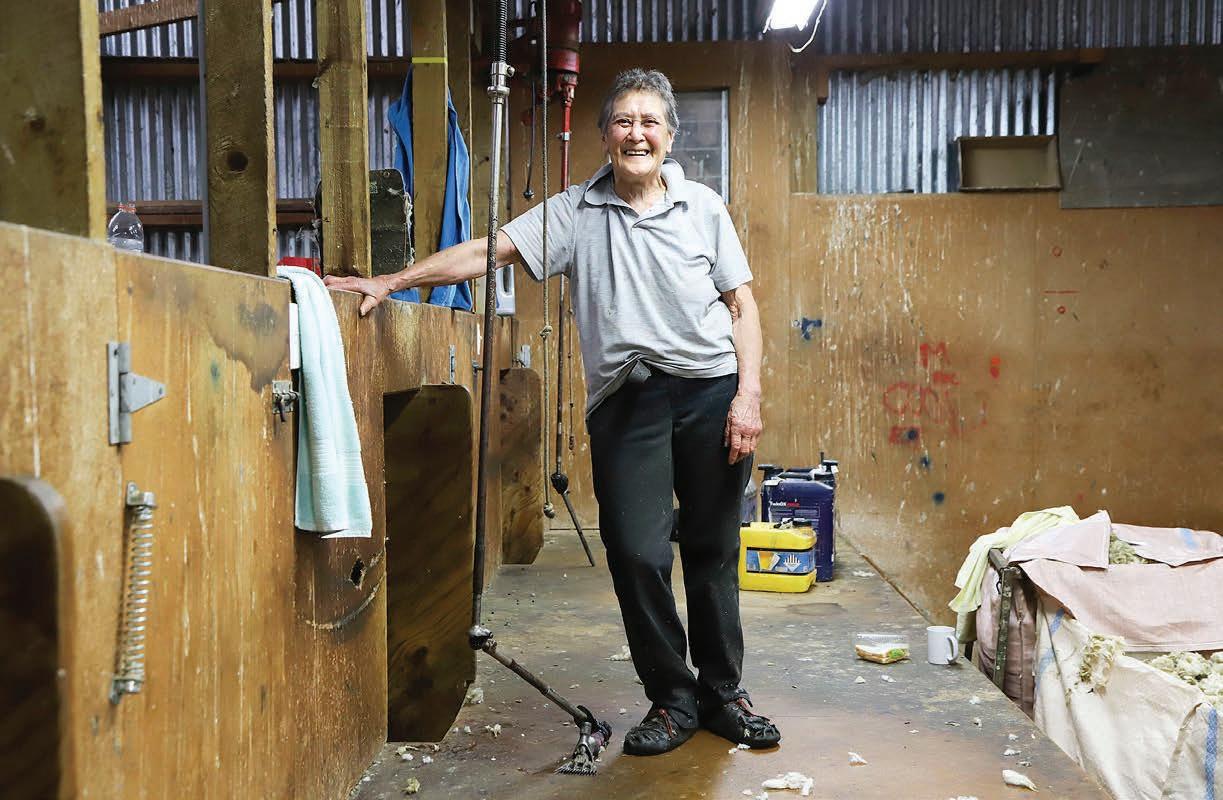
Shearing at 73 and still loving it
When it comes to shearing, Charmaine Barrett likes nothing more than to put in a good day’s work, even though she is well into her eighth decade.
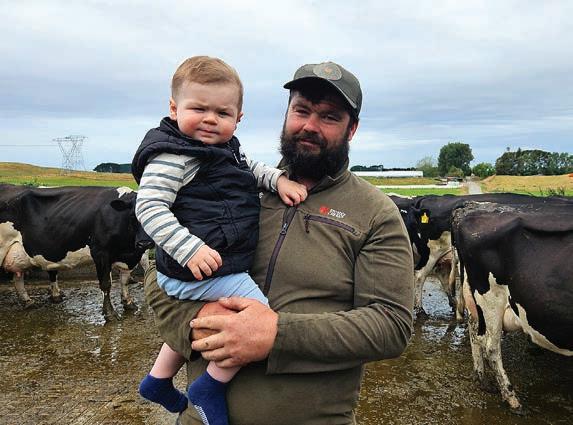
Back to the future for contract-milker
It’s been a full-circle moment for Horowhenua dairy farmer Jaycob Brunton, who now contract-milks the farm where he first started relief milking while still at school 17 years ago.
DAIRY 16-23
Many Kiwi farmers underprepared for potential cyber threats.
OPINION 15
Photo: Gerhard Uys
Neal Wallace NEWS Fonterra
Get in touch
EDITORIAL
Bryan Gibson | 06 323 1519
Managing Editor bryan.gibson@agrihq.co.nz
Craig Page | 03 470 2469 Deputy Editor craig.page@agrihq.co.nz
Claire Robertson
Sub-Editor claire.robertson@agrihq.co.nz
Neal Wallace | 03 474 9240 Journalist neal.wallace@agrihq.co.nz
Gerald Piddock | 027 486 8346 Journalist gerald.piddock@agrihq.co.nz
Annette Scott | 021 908 400 Journalist annette.scott@agrihq.co.nz
Hugh Stringleman | 027 474 4003 Journalist stringleman@outlook.co.nz
Richard Rennie | 027 475 4256 Journalist richard.rennie@agrihq.co.nz
Nigel Stirling | 021 136 5570 Journalist nigel.g.stirling@gmail.com
Isabella Beale | 027 299 0596 Multimedia Journalist isabella.beale@agrihq.co.nz
PRODUCTION
Lana Kieselbach | 027 739 4295 production@agrihq.co.nz
ADVERTISING MATERIAL
Supply to: adcopy@agrihq.co.nz
SUBSCRIPTIONS & DELIVERY 0800 85 25 80 subs@agrihq.co.nz
PRINTER
Printed by NZME
Delivered by Reach Media Ltd

Advertise
SALES CONTACTS
Andy Whitson | 027 626 2269
Sales & Marketing Manager andy.whitson@agrihq.co.nz
Janine Aish | 027 300 5990
Auckland/Northland Partnership Manager janine.aish@agrihq.co.nz
Jody Anderson | 027 474 6094
Waikato/Bay of Plenty Partnership Manager jody.anderson@agrihq.co.nz
Palak Arora | 027 474 6095
Lower North Island Partnership Manager palak.arora@agrihq.co.nz
Andy Whitson | 027 626 2269 South Island Partnership Manager andy.whitson@agrihq.co.nz
Julie Hill | 027 705 7181
Marketplace Partnership Manager classifieds@agrihq.co.nz
Andrea Mansfield | 027 602 4925 National Livestock Manager livestock@agrihq.co.nz
Real Estate | 0800 85 25 80 realestate@agrihq.co.nz
Word Only Advertising | 0800 85 25 80 Marketplace wordads@agrihq.co.nz
PUBLISHERS
Dean and Cushla Williamson Phone: 027 323 9407 dean.williamson@agrihq.co.nz cushla.williamson@agrihq.co.nz
Farmers Weekly is Published by AgriHQ PO Box 529, Feilding 4740, New Zealand Phone: 0800 85 25 80 Website: www.farmersweekly.co.nz
ISSN 2463-6002 (Print) ISSN 2463-6010 (Online)
. 26-29
30-36
37-38
38-39
40-43
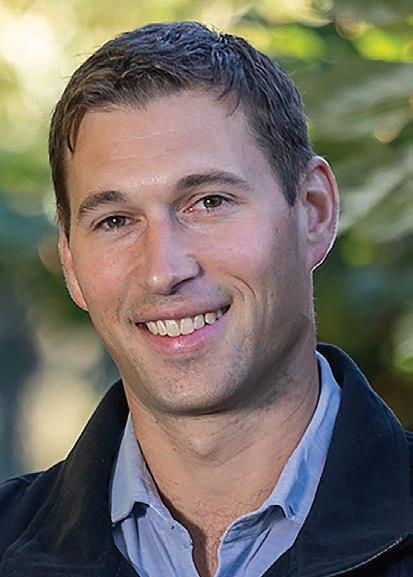
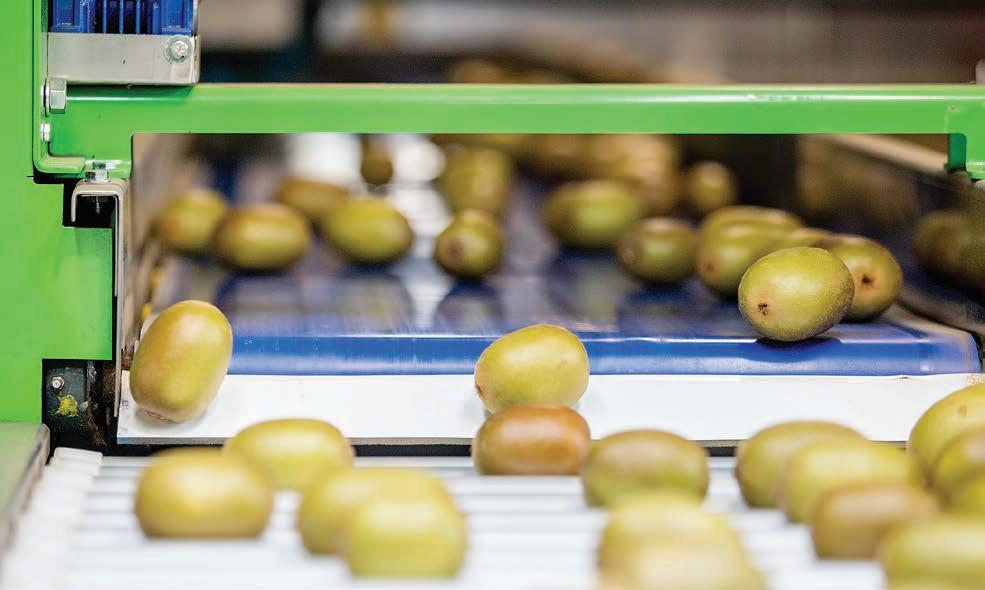
ICONIC: Zespri CEO Jason Te Brake sees Zespri fulfilling its strategy of becoming the world’s healthiest fruit brand by 2035, and also becoming one of the most recognised brands, alongside the likes of Nike.
News in brief Award for Browne
Niall Browne, the Ireland-based chief executive of both Alliance Group and its majority owner Dawn Meats, has been named the Irish Times Business Person of the Year. The purchase last year of a 65% stake in Alliance was cited by the Irish Times as a reason for the award, which also recognised the transformation of the company in nearly 20 years under Browne’s leadership. He has been chief executive of Dawn Meats since 2007.
Fly
controls lifted
The government has lifted controls on the movement of fruit and vegetables in Mt Roskill, Auckland, after no further evidence of Queensland fruit fly was found in the area.
The decision to end the operation follows six weeks of intensive fruit fly trapping and the inspection of more than 230kg of fruit.
Ahuwhenua finalists
The 2026 finalists for the Ahuwhenua Trophy Excellence in Māori Horticulture award have been unveiled.
The three finalists are Mātai Pacific Iwi Collective – Te Puke; Otama Marere Trust – Paengaroa; and Ngāti Hine Forestry Trust – Kerikeri.
All finalists will host a public field day during March or April at their respective premises to demonstrate growing operations. The overall winner will be announced on June 5.
Dam funding
The government is lending $2 million to fund pre-construction work on a replacement irrigation dam in central Otago. Associate Regional Development Minister Mark Patterson said the loan will come from the Regional Infrastructure Fund and pay for an assessment of options for the proposed replacement of 90-year-old Falls Dam in the headwaters of central Otago’s Manuherikia catchment. The proposal is for the new dam to be 43m high, increasing water storage by approximately three times.
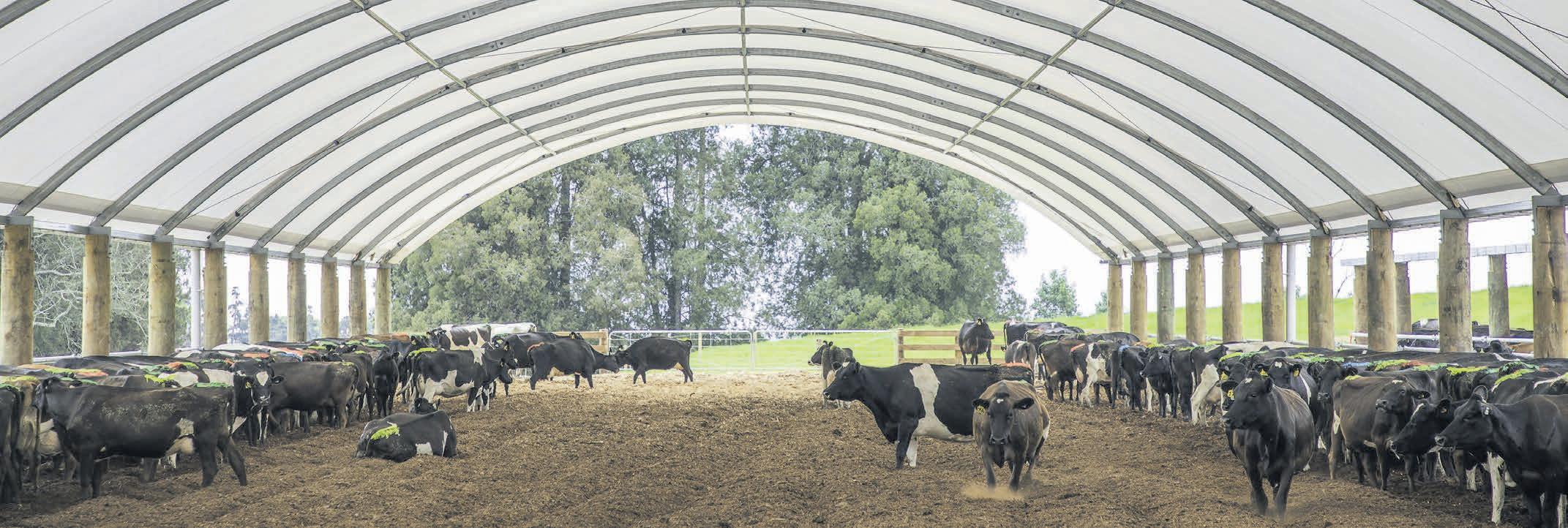


US ruckus ramps up lamb tariff threat

Nigel Stirling MARKETS Production
MEAT industry leaders are warning the threat of higher tariffs on New Zealand lamb exports has risen a notch after United States President Donald Trump vowed to begin investigations into global trading partners.
Trump’s global tariff assault was briefly knocked off course a week ago when the US Supreme Court ruled that the International Emergency Economic Powers Act should not have been used by the president to justify April’s Liberation Day tariffs.
But Trump quickly ramped things back up with a temporary 10% tariff on most of the US’s trading partners. A threat just hours later to hike the tariff to 15% had not been formally followed through as Farmers Weekly went to press.
Meat Industry Association chair Nathan Guy said the latest round of tariffs continues an exemption granted by the Trump administration on selected food imports last November.
Continued from page 1
“Don’t think that it’s burning a hole in your pocket.”
Clients are also considering investing off farm, in managed funds or a different asset class such as the kiwifruit sector, but Gent said farmers should also have some fun, whether that is buying a holiday home or taking an overseas trip.
A BNZ spokesperson said dairy farmers have been repaying debt, reinvesting into their business, and increasing their cash reserves.
Rabobank country banking manager Bruce Weir expects significant investment to
That meant NZ beef exports will continue to face a tariff of less than 1% under long-standing quota arrangements with the US. While lamb has not been exempted, the new global tariff rate means NZ exports will face tariffs of 10% rather than the 15% they had been copping since Trump adjusted his Liberation Day tariff rates in August.
It is a bit more pronounced now that it looks like they have the ability to go in and start investigations on a whim.
Nathan Guy Meat Industry Association
More worryingly, however, Trump said he would direct his officials to begin investigations into unfair trading practices by the US’s trading partners as the clock ticks down on the 150 days his new tariffs are legally allowed to continue for without Congressional approval.
The American Sheep Industry Association (ASI) in October formally requested just such
improve farm efficiency through technology, infrastructure, new plant and machinery and, for some, additional land or runoff to support succession.
Weir also expects some personal spending into holiday homes, boats, vehicles and travel.
“The common theme we are hearing is that farmers are looking for a return, whether that’s balance sheet strength, on-farm performance, long-term growth, or quality of life.”
Steve Hayidakis, ANZ’s manager for business and agri, said this is not a one-size-fits-all situation.
“Some might invest in
an investigation into a surge in Australian and NZ lamb imports.
The ASI claimed imports were undercutting local production and “threatening the long-term viability of the domestic industry” and suggested a “minimum” 21% tariff to peg them back.
The request has so far failed to get a response from US trade officials and a letter recently circulated to members of Congress to pressure the administration to begin an investigation received only a handful of signatures.
But with Trump now on the hunt for investigation targets to justify his continued use of tariffs, Guy said, the threat to NZ sheep exports has just been elevated.
“It has been simmering away but it is a bit more pronounced now that it looks like they have the ability to go in and start investigations on a whim,” Guy said.
Meat exporter ANZCO’s general manager of sales and marketing, Rick Walker, agreed the threat level is higher now but said it could take some time to play out.
“If the administration wants to get into a different way of skinning the cat through investigations that
productivity or sustainability, others may look to reduce debt, and some may choose to hold a cash buffer for seasonal or alternative needs.”
The bank warned of the potential for scams and fraud as criminals may view this as an opportunity to target the sector.
Fonterra expects the transaction to be completed by the end of March but it then requires court approval to enable the return of capital to shareholders and unit holders.
Once that is in hand, Fonterra will confirm the date for the capital return.
MORE: See page 4
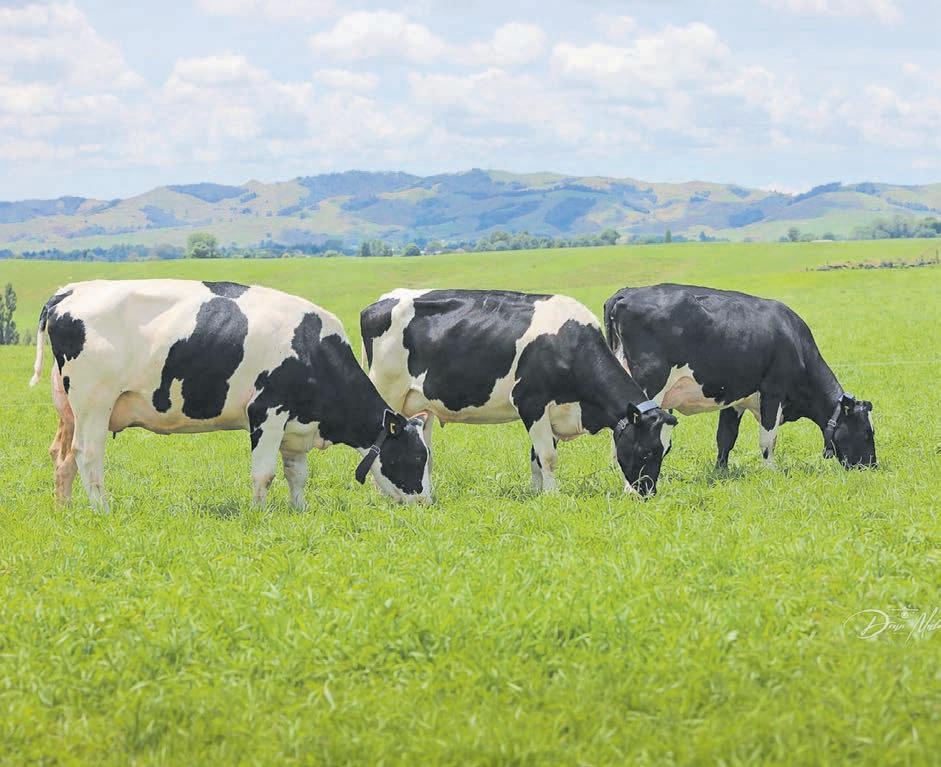

is going to be an awful lot of work that is going to have to be done across a lot of sectors and not just sheep,” he said.
Guy said the industry continues
to believe there is no case for higher tariffs on NZ lamb.
“We do not believe that we are a threat at all because of our counter-seasonality,” he said.
Ag education champion wins top varsity prize

Gerald Piddock PEOPLE Awards
AGRIBUSINESS in Schools curriculum director Kerry Allen has been awarded the Bledisloe Medal in recognition of her 30-year career developing agri-education in secondary schools.
Her work has encouraged many young people to pursue academic and vocational pathways in agriculture and horticulture through education and training.
Allen said it is surprising and humbling to receive Te Whare Wānaka o Aoraki Lincoln University’s oldest-established medal.
“I was very humbled and honoured to be nominated, let alone receive it.”
Allen said she works with a great group of people who all share the same passion, including those in the Agriculture and Horticulture Teachers Association and the wider industry.
Those people inspire her to be the best that she can, Allen said.
Allen graduated from Lincoln University in 1995 with a Bachelor of Parks, Recreation and Tourism Management.
To support her goal of establishing agribusiness and expanding agricultural and horticultural science programmes in secondary schools, Allen set up advisory groups to advance primary industries in education through Agribusiness in Schools and Sow the Seed.
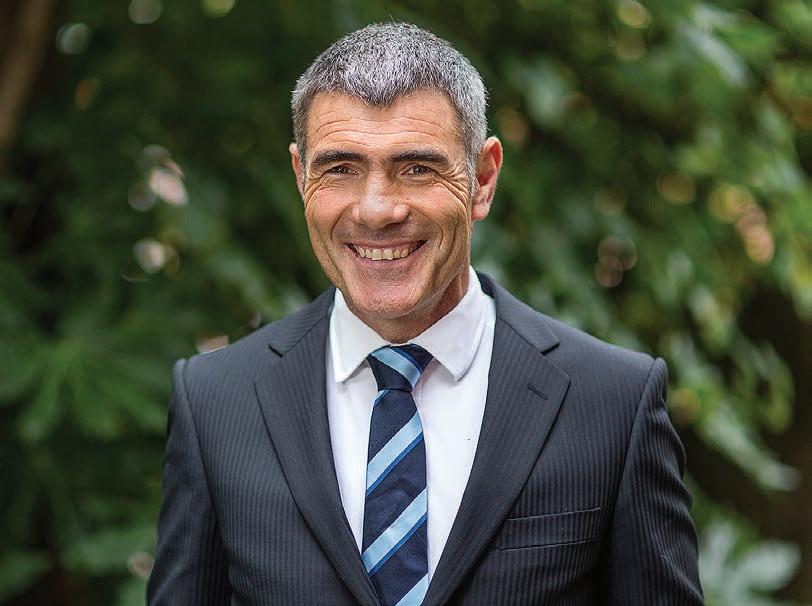
NO CASE: Meat Industry Association chair Nathan Guy says the industry continues to believe there is no case for higher tariffs on NZ lamb.
Now’s a good time to buy a first farm

Annette Scott NEWS Real estate
CONFIDENCE is flowing into the rural property market, with dairy, sheep and beef, and kiwifruit all showing renewed strength after several tough years.
PGG Wrightson general manager for real estate Peter Newbold said PGW Real Estate delivered a pleasing first-half performance, supported by continued confidence and improving profitability in the rural sector.
“Rural sales remained the primary driver of growth, with dairy properties performing particularly well in the lower South Island, and the kiwifruit sector showing its greatest momentum in years.
“For dairy there’s more demand out there than what we can supply. I think what people are doing, they’re looking out, and they’re seeing an industry which has a bright outlook if you look over the next two or three years.”
As for sheep and beef farmers, they have weathered several difficult years but are now benefiting from record red meat returns and improving sentiment.
However, Newbold said, the sector is still navigating the influence of carbon farming on land prices.
“Forestry was underpinning
the values of sheep and beef properties, and so what’s happening now is that there’s a number of farmers out there who are struggling to get the actual value of their property, but once factoring in current stock values, the overall proposition was stronger than many realised.”
Kiwifruit orchard prices are rising, supported by strong Zespri returns.
“It’s been a long time coming, but we’re now just starting to see orchards come on the market.
For dairy there’s more demand out there than what we can supply.
Peter Newbold PGW Real Estate
“I wouldn’t say it’s a boom but across all sectors more a nice gradual lift and feel coming off some pretty rough years.
“The outlook over the next few years is healthy and I don’t think we’ve seen it where sheep and beef, dairy and kiwifruit are in such good space.”
Bayleys Canterbury rural agent Ben Turner said the long-term outlook has people making good decisions.
“The next five years is looking exceptionally good.
“The normal is usually one year, so while the whole country is
presently a grass market with cash flowing well, especially in dairy, and sheep and beef good and solid, the forecasts across all sectors are positive and the gut feel is the present confidence will hold steady.”
Property Brokers general manager rural Conrad Wilkshire said now is the best opportunity to buy your first farm.
“Matching the supply of rural listings with market demand is something we pay close attention too, tracking sales month on month, year on year; in a nutshell we want to know how good is good.”
Wilkshire said there are three key market indicators that suggest buying a first farm this year makes good commercial sense.
These include the supply of farms coming to the market in line with long-run expectations; bank appetite to support first farm purchase scenarios is currently on a much firmer footing; and buying a dairy farm now, particularly outside the dress-circle locations, has not looked more affordable in a very long time.
“Sheep and beef farms are equally good shopping given that the alternative land-use premium is no longer pushing values beyond what is affordable. The biggest near-term constraint is the livestock value further compounded by a very strong summer grass market.”
There’s danger in a downed tree, WorkSafe warns
Gerald Piddock NEWS Safety
AS THE clean-up gets underway in the central North Island, WorkSafe is warning farmers clearing fallen trees to take a moment and assess the damage before proceeding.
It could save a life, WorkSafe inspector Emma Boyd said.
If people are unsure how to tackle the job, the best thing to do is isolate the area from staff and stock using temporary fencing.
“If you aren’t confident to do this yourself – and this isn’t dayto-day work – it’s not a bad thing to put you hand up and say I’m not confident with this type of cleanup and get a specialist in to talk it through.”
If contractors do come onto the farm to clear trees, it is important to have those conversations to make sure they have the training and qualifications to do the job safely, Boyd said.
“You can have good intentions, but if you don’t have the matching skills to go with that, it can drive dangerous behaviour.”
Last year in Southland, some farmers resorted to using nonspecialist equipment to dispose of trees after the region was hit by windstorms in October.
While this is tempting, specialised machinery is used for trees
because of their unpredictable nature, she said.
“It’s the same with chainsaws: if you’re going to be using a chainsaw to dispose of a tree, it’s so important to know where to cut that tree and how it’s going to move once you do make cuts.”
That means being prepared with emergency and contingency plans as well as escape routes, Boyd said.
The conversations Southland farmers had with their contractors and neighbours prevented a lot of injuries.
“Trees do not just fall on your land. They might fall on council property or neighbour’s property and it’s so important not to be afraid to approach the other person that might be affected.
“Keep those conversations going.
“And don’t try and do it all yourself. There’s a lot of good,
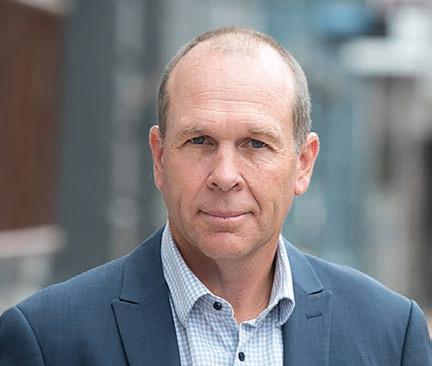
Pāmu ‘living laboratory’ worth protecting

Bryan Gibson NEWS Agriculture
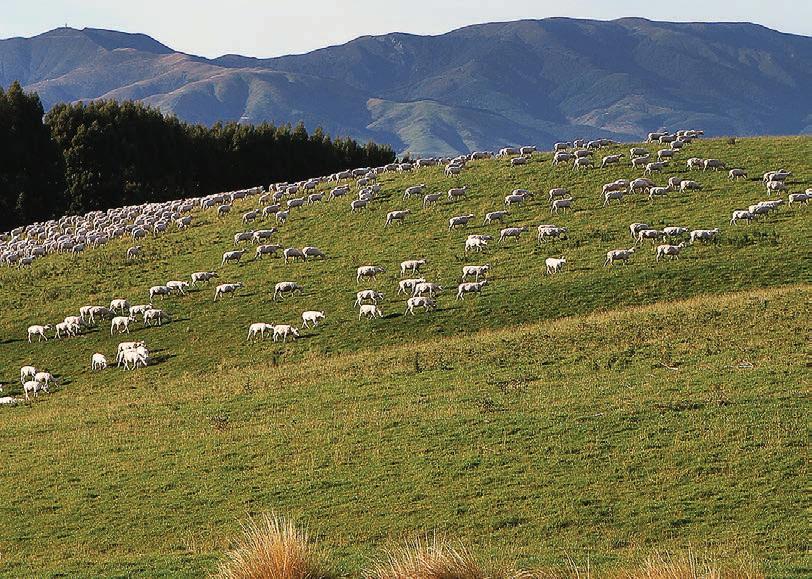
PĀMU chief executive Mark Leslie says talk of selling off its farms can be tough on staff, but is just a reality of life as a state-owned farmer.
The ACT party has led calls to sell off government assets, including the Pāmu farming portfolio.
In October, finance spokesperson Todd Stephenson applauded the government’s decision to sell down its stake in Chorus, and hoped it would be just the beginning.
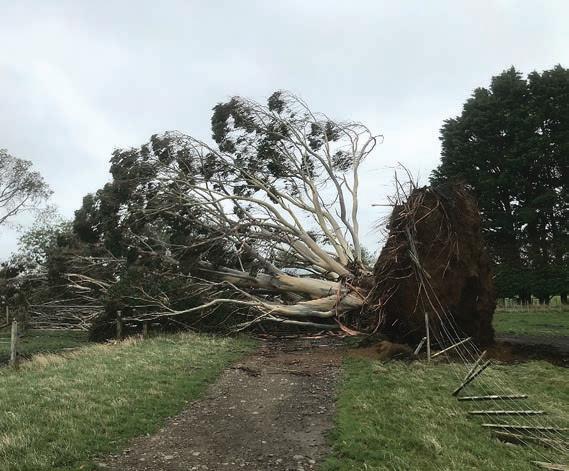
PAUSE: WorkSafe is urging farmers to take a moment and do a proper assessment before disposing of fallen trees after the recent storms that hit the central North Island.
Photo: Will Morrison
skilled people that can help.”
The safety risk for farmers does not end when the storm finishes. When there are trees that are uprooted, that tree and the ground around it remain unstable for months and even years, she said.
“It might look normal but it’s definitely not and it’s really important to farmers not to let that familiarity creep back in.”
Those trees could often be loaded with a lot of hidden force that could potentially cause injury or death.
“When you have a tree that’s unearthed, it’s under a lot of tension and if it’s been blown completely down then its branches are all under compression and that makes it incredibly unpredictable.”
Dealing with these trees requires a lot of skill and experience, Boyd said.
“If it makes sense to free up capital from Chorus, then it makes sense to apply the same logic to $14 billion in energy company shares, a $2bn farming portfolio, NZ Post and Quotable Value,” he said.
Leslie told the Farmers Weekly Podcast that staff take these comments to heart.
“The element I always keep reinforcing with them is to focus on the controllables. What can they control? Part of that is running farms really, really well. And there’ll be opportunities that come as part of that.”
Leslie said he also strives to ensure there is a balanced conversation about the issue.
Pāmu sees itself as a sort of living laboratory that prides itself on proving the value of innovations and new practices.
“What would be lost if New Zealand didn’t have a Pāmu doing some of those things?”
Then there are the practicalities of actually selling farms, many of which are subject to Treaty settlements, or are lawfully obliged to give iwi first right of refusal if sold.
One argument made for selling the farms is that it would provide more people with the chance to achieve farm ownership.
But Leslie warned that the scale and type of many Pāmu farms make them unsuited to first farm buyers.
That said, Pāmu has begun sharefarming agreements on a number of farms and takes on apprentices each year.
This week’s poll question:
Do you think Pāmu’s farms would be better off in private ownership?
DECISIONS: Bayleys Canterbury rural agent Ben Turner says the longterm outlook has people making good decisions.
VALUE ADD: Pāmu chief executive Mark Leslie says any discussion about asset sales should be balanced, with what may be lost just as important as any monetary gains a sale might bring.
Shearing at 73 and still loving it

Gerhard Uys PEOPLE Skills
CHARMAINE Barrett woke at 1:15am to deliver newspapers in Gore.
At around 3am she finished deliveries and then went back to bed, but was up again soon because 150 lambs were waiting to be shorn at local farmer Andrew Morrison’s woolshed.
Barrett, who is 73 years old, started shearing when she was 22. Her dad had shearing contracts but struggled with asthma, so she jumped in to give him a rest in the mornings, and he’d take over after the morning run.
Barrett left home when she was 15 and got a job in a sewing factory in Wellington. When that closed down she assembled cars for Ford.
When the Ford factory moved to Auckland in the 1970s she went back home to Gore and started a shearing run, first with her uncle and then with her father.
She has been doing that ever since.
Barrett now only shears on a few farms, but said back then it was a year-round, full-time job.
“In the ’70s and ’80’ shearers’ quarters used to be like mini villages,” she said.
She used to shear ewes, but now that she’s older she prefers lambs.
A good shearer has to be dedicated, and has to listen to those that teach them.
Shearing is hard to begin with, with the body having to adjust to the exercise.
But, for her that’s fine because
“I’m an active relaxer”.
Barrett has taught a few young shearers. She said she likes to
watch young shearers grow, seeing them get better, and then making good money from it.
Her grandson, Tamihana Barrett, was one shearer she took under her wing and he is now so good that he takes part in shearing competitions.
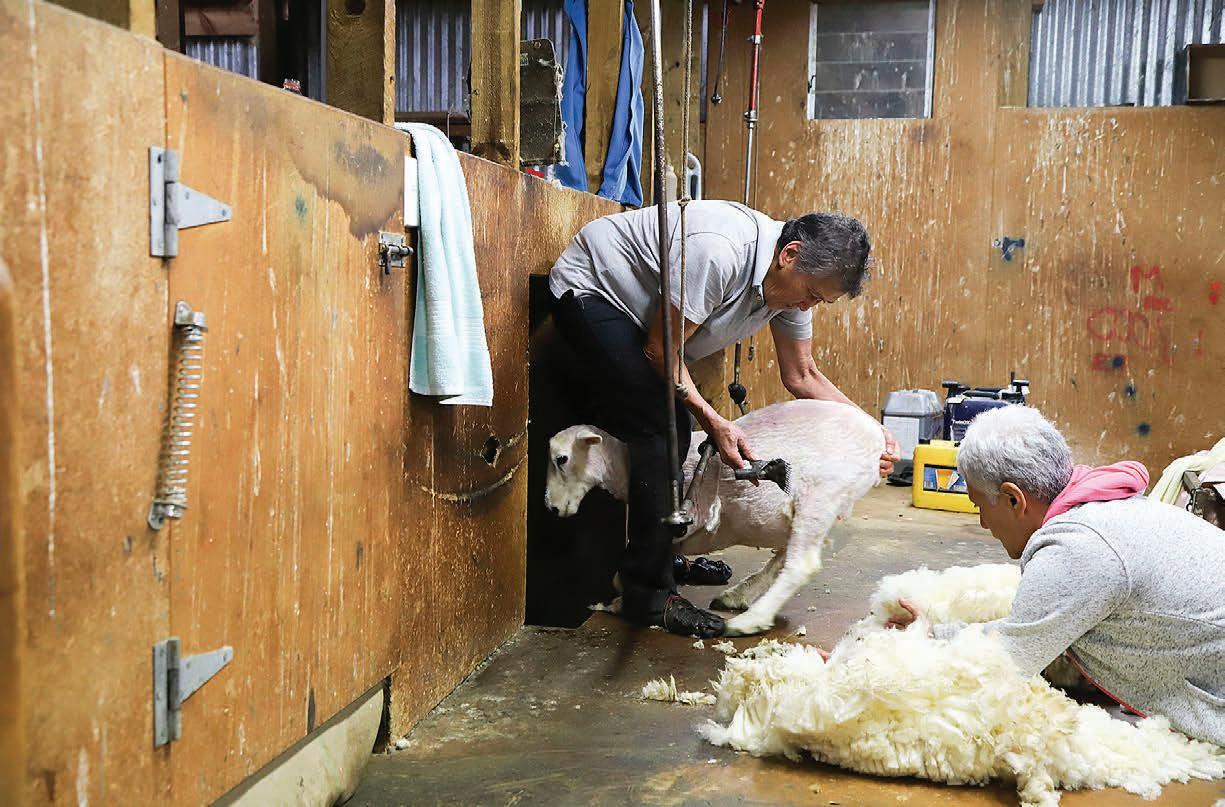
Her friend Portia Whaanga was doing wool handling the day
Farmers Weekly visited. She has been doing that for 30 years. Barrett has shorn 309 ewes in a nine-hour day. Her lamb count in a day sits at 475 and she did that just to prove to herself she can.
Female shearers weren’t common when she was young, and she knew only three others. She used to cop some flack from both
male shearers and farmers. But she simply kept doing the job well and proved them wrong.
Things have now changed for female shearers.
“Women just want to do it now.
“It’s physical. It’s good to do a hard day’s work. And the money’s pretty good. I love shearing. The people kept me in it.”
Meatworks having to struggle to get stock onto lines
ANOTHER late meat processing season looks imminent as companies struggle to compete with abundant grass and a turbocharged store stock market. Some heat was taken out of the prime market last week when some companies dropped published lamb and beef schedules by 10c/kg, the first decline since before Christmas.
AgriHQ senior analyst Mel Croad said this was despite not having sufficient stock for processing.
Those processors were reacting to current farmgate prices they consider unsustainable.
She said soaring farmer confidence and demand continue to underpin elevated store lamb prices.
The average prime lamb price is currently just under $11/kg, a level not previously seen at this stage of the season.
Croad said the drop in the lamb schedule price reflected the filling of Easter chilled orders and the switch to frozen shipments, which has led to some market softening, especially in Europe.
“They are coming off very high
levels, so it is not too dramatic.”
Other markets are holding well. Her latest forecast is for an easing in farmgate prices in the coming weeks, albeit off an elevated starting point, but for prices to lift again heading into winter.
Croad said last week’s Stortford Lodge sale illustrates the degree of farmer confidence.
An average price of $195.80 was paid for 9500 store lambs with an average liveweight of 33.33kg.
At the same sale a year ago, when conditions were drier, 2400 lambs were sold for a sale average
of $118.80, with an average live weight of 32.60kg.
Soaring farmer confidence and demand continue to underpin elevated store lamb prices.
Mel Croad AgriHQ
The schedule that week was $8.20/kg.
Croad said greater numbers of store lamb are being offered than usual, but with tight margins,
buyers are having to take them to heavier weights.
All parts of NZ have abundant feed and farmers have been looking for stock to eat it, which has been challenging for processors. In response, processors have been working short weeks while the lower schedule should remove some competitive tension.
Last year’s processing season was late and Croad said that is likely to be repeated.
For the current season up to January 31, 6.24 million lambs were processed, 1.4% ahead of the same time last year when 6.15 million had been slaughtered.

ACTIVE: Charmaine Barrett is 73 years old and still shears 150 lambs a day. Here she works alongside her friend Portia Whaanga on wool-handling duty.
Photo: Gerhard Uys
Neal Wallace NEWS Production
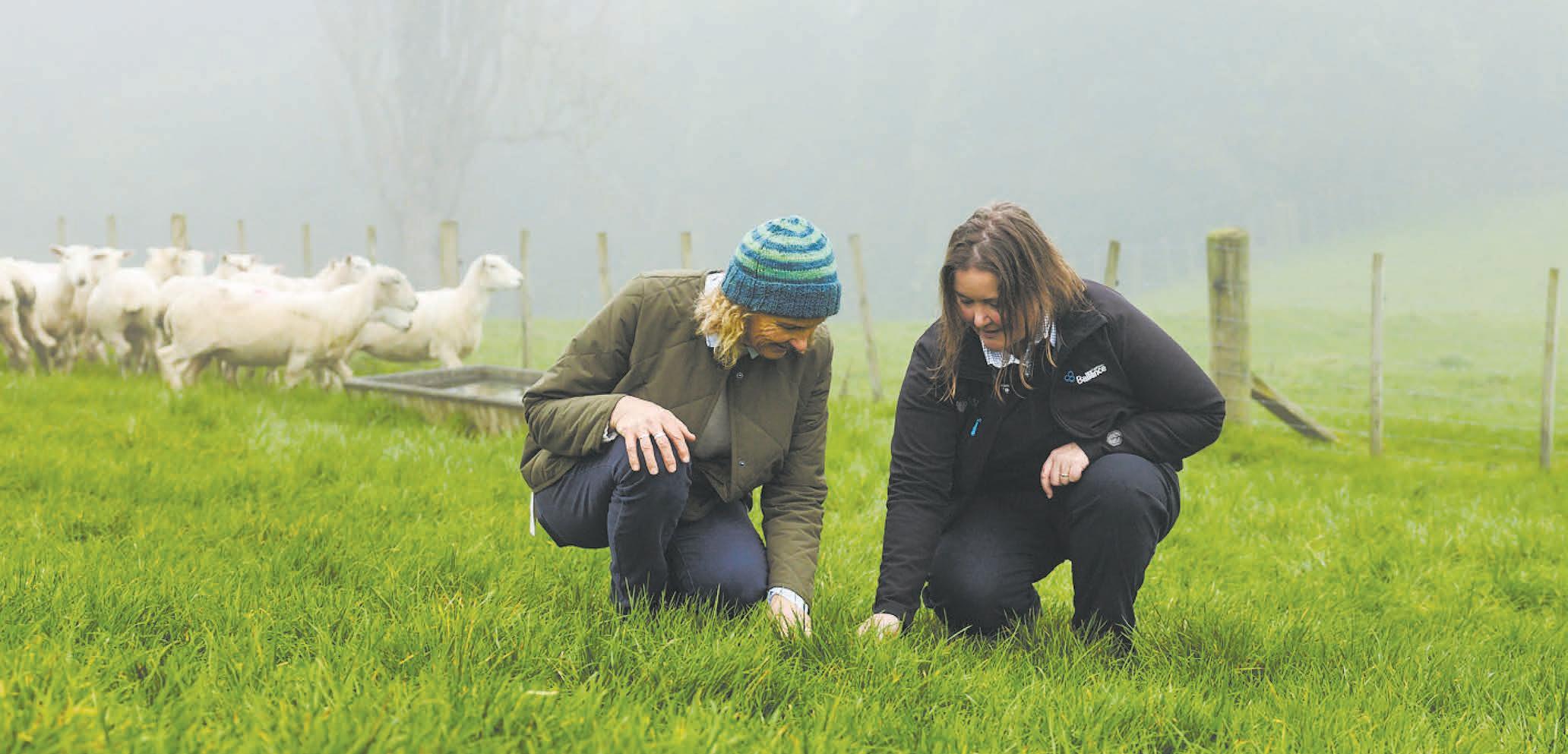
Chris & Louise K ay, Sheep & Beef Farmers “ We work with Kim to make the right calls early in the season.”
Chris
Ballance
Make it count by getting ahead this season. Have a chat with your Nutrient Specialist today.
Calls for more action, less talk on N issue
Gerhard Uys NEWS Pollution
ITRATE contamina-
Ntion of groundwater in Southland is widespread, reflecting the combined effects of intensive land use and the underlying vulnerability of many of the region’s groundwater systems, a report by Environment Southland says.
The report, issued in late January, has, according to some media reports, been kept under wraps.
It says current nitrate concentrations in Southland groundwater can reflect both recent and historical nitrogen inputs due to variable groundwater lag times.
However, shallow groundwater in Southland is generally young, with an estimated 95% of all nitrate leached mixing with groundwater within five years.
“This strongly suggests that in most locations shallow groundwater nitrate concentrations reflect the impacts of recent land use,” the report says.
Many monitoring sites showed upward trends to be “likely” or “very likely” across 10-, 15- and 20-year periods.
Many monitoring sites showed mean nitrate-nitrogen concentrations exceeding 3.5 mg/L, with
multiple hot spot areas exhibiting concentrations high enough to exceed maximum allowable levels in drinking water of 11.3 mg/L.
The report says nitrate concentrations in drinking water above maximum allowable levels pose an immediate risk for infants, with emerging evidence suggesting other possible health risks, such as colorectal cancer and pre-term births, at concentrations below these levels.
The report points a finger at dairy and intensification of land use, such as winter grazing, as culprits.
Clint Rissmann, from Land and Water Science in Invercargill, has been working with farmers in Southland to understand their catchment geography and potential for nitrate losses, and how to mitigate losses.
He told Farmers Weekly he is not surprised by the report findings and that there also needs to be reduction in sediment, E coli and phosphorus.
But, he said, we don’t need more reports.
“The challenge is how do you resource communities to meet these reductions and put money into the communities it [nitrates] is coming from.”
He said rates are spent on regulation, consents and compliance, but “it’s clear that they’re not
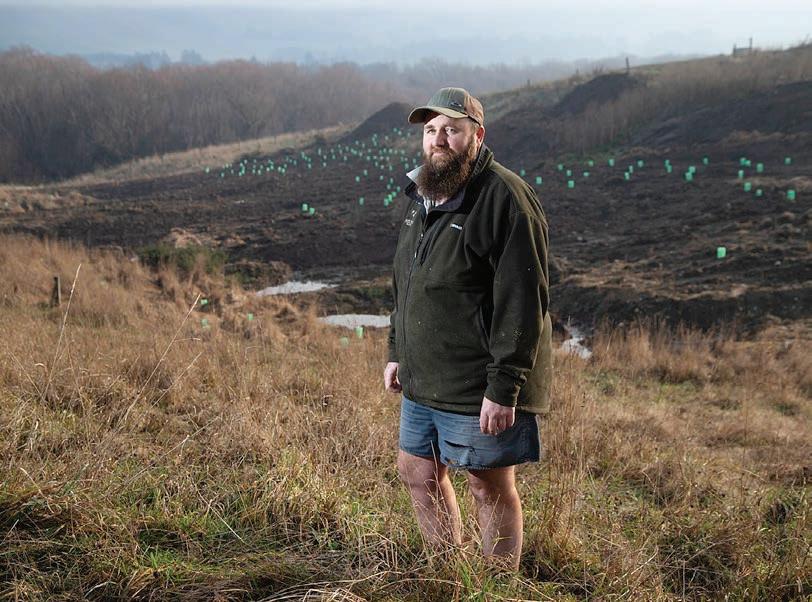
The challenge is how do you resource communities to meet these reductions.
actually achieving the reductions that would underpin a more resilient rural community”.
In Canterbury, for example, an irrigation company has told Environment Canterbury that it
will go ahead and mitigate losses in the communities it serves and has secured funding from rates to do so.
“It takes exorbitant amounts of money to get water plans and regulations passed, with no results.”
He said a lot of rates come from a rural base that operates under legal permits, and that money needs to be spent on measures that mitigate nitrate losses and create resilient communities.
“Imagine what would happen [if] instead of all these arguments and
legal stuff and all this rubbish, that money, the $60 million for the last water and land plan, had actually gone into doing stuff.”
Balfour dairy farmer Brendon Stevens takes some exception to the report pointing the finger almost solely at dairy, with the area having a diverse group of farms.
The geology and soil type in specifically the Balfour catchment is known for leaching and has historically been a hot spot area, Stevens said.
Elevated nitrate levels in the catchment were already recorded in 2001, pre diary days.
Stevens built a woodchip bioreactor on his farm after the Balfour Catchment Group received funding from the previous government.
He said data at the end of six months showed inflow of nitratenitrogen into the bioreactor, which was built at the end of a tile drain, was 11mg/L, but the outflow was 2.74mg/L.
Such reactors have the potential to remove up to 90% of nitrates, he said.
He said the catchment group has run tests over the past 18 months to find a baseline for the area and is now testing to discover which mitigations, such as wetlands or bioreactors, work best for mitigation.


















REDUCTION: Balfour dairy farmer Brendon Stevens built a bioreactor that has significantly reduced leaching.
Clint Rissman Land and Water Science
Zespri strategy targets iconic brand status

Richard Rennie MARKETS Horticulture
ZESPRI’s vision to be the world’s healthiest fruit brand, recognised alongside iconic labels like Nike, was unveiled to 600 industry players at its big-budget Momentum conference in Tauranga last week.
With six years having passed since the previous conference, the occasion marked an opportunity for CEO of two years Jason Te Brake to lay out his vision for the company over the coming decade.
The last strategic goal was set in 2020. That was more tightly defined, being to hit $4.5 billion in sales revenue by 2025. That goal was achieved a year earlier than planned, with total global sales now $6bn.
But Te Brake told the audience that reaching 115 million households worldwide, and being recognised as the top fruit brand in its top 15 markets is no guarantee of ongoing success for the next decade.
“We face greater complexity and competitive threats than we saw in the last 10 years. Our ability to adapt will define whether we will lead or get left behind.”
Some of those complexities
Consumers are willing to reward brands that put society first, that have a positive impact upon the world and upon them.
Jason Te Brake
Zespri
came from consumers who had constantly changing expectations around health and nutrition, where more food was available to them but it was often less natural and had lower nutritional content.
B+LNZ
2026
The economic environment had also only got more challenging since covid, with cost pressures right throughout the supply chain coming alongside against a more volatile geopolitical landscape.
This all played out in a climate that is only making growing quality fruit more challenging, and regularly threatens supply chain security.
Three key pillars lie behind the “healthiest fruit brand” goal, which Te Brake described as a “holistic and purposeful” vision.
The first is to drive up consumer
Southern South Island Director election and company resolutions – vote now
Everyone on Beef + Lamb New Zealand’s electoral roll should have received information in the post about voting as part of the 2026 Annual Meeting processes
Access all Annual Meeting information –including candidate profiles for the Southern South Island Director election at –www beeflambnz com/annual-meeting-2026
Haven’t received voting information yet? Call 0800 BEEFLAMB (0800 233 352) or email enquiries@beeflambnz.com


ICONIC: Zespri CEO
Jason Te Brake sees Zespri fulfilling its strategy of becoming the world’s healthiest fruit brand by 2035, and also becoming one of the most recognised brands, alongside the likes of Nike.
demand for the brand, building on an increasing desire to seek out food brands delivering natural nutrition.
“Consumers are willing to reward brands that put society first, that have a positive impact upon the world and upon them. We know they are willing to pay a premium for these brands.”
Brand visibility in key channels and providing optimum product quality and packaging all played a role.
The company’s animated kiwifruit characters the Kiwi Brothers and their newly minted sister Ruby Red are increasingly featuring
in promotions well beyond the Japanese anime market they were created for.
Te Brake said if the strategic goal is captured, Zespri could put itself alongside other brands that capture specific consumer aspirations, like Nike.
A more responsive and yearround global supply chain will also be part of the strategy. This is more vital than ever as the need to keep fruit on the shelf all year round moves from an aspiration a decade ago, to an expectation today.
Thirdly, the strategy requires creating a product portfolio of the future, matching consumer demands to fruit that meet those demands, also delivering stronger grower demands and providing greater resilience.
At a grower level Te Brake said Zespri will be aiming to increase orchard gate returns by at least 1.5 times, possibly up to doubling them.
Other metrics for the strategy’s success will include brand premium tracking, lifting the “brand premium” score from 110 in 40% of Zespri’s markets to 110-plus in 100% of its markets.
For Zespri as an employer it will baseline its current “employer of choice” metric, using established measures.
Ultra-processed food: parties on same page
Gerhard Uys POLITICS Food and fibre
THE Greens, Labour and ACT appear to be singing from the same sheet when it comes to ultra-processed food.
Speaking on a panel at the recent Underground Festival, Associate Minister of Agriculture and ACT MP Andrew Hoggard, former minister of agriculture Damien O’Connor, and Green Party spokesperson for agriculture Steve Abel, were asked what their vision is for the future of nature-driven, low-impact farming in New Zealand.
An offhand comment by Hoggard sparked a debate around ultra-processed food.
Hoggard said he doesn’t want to be telling people what they can or can’t eat, but said, a “simple rule I’ve been on for the last few months, which has helped reduce the belt notches, is don’t eat anything in a package”.
He linked ultra-processed foods to high calorie density but poor nutritional balance, saying, “often in the ultra-processed categories, you’re getting a lot of calories dumped into it, possibly not the right balances”.
Hoggard said there may be changes to health star ratings, with Australia reviewing theirs and New Zealand possibly following suit.
Abel referenced the idea of “let food be thy medicine”.
He said within commercialised food production people have forgotten the original purpose of producing food, with the first being that “we produce nutrition and in a way that cares for the environment and feeds people”.
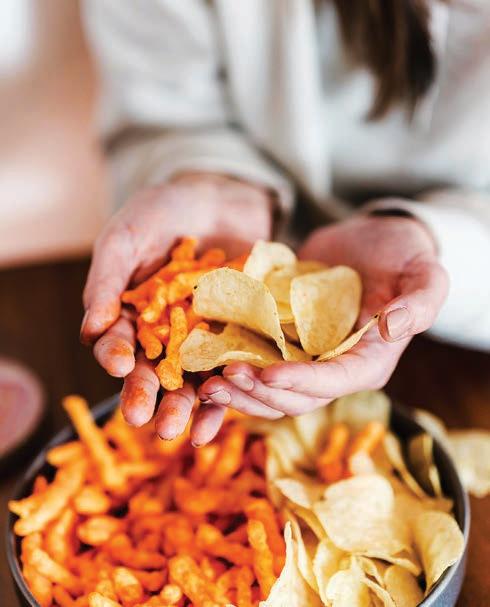
LINKS: Associate Minister of Agriculture
Andrew Hoggard linked ultra‑processed foods to high calorie density but poor nutritional balance.
O’Connor referenced an article he read that stated we have to connect our food systems to health.
“Our future as a protein and fibre producing nation should be directly connected [to that],” he said.
He mentioned Fonterra focusing on ingredients for medical purposes.
A member of the audience, psychiatrist Dr Ivan Lin, said a report published by the Ministry of Health in 2024, Rebalancing our Food System, highlighted cracks in both our food and health systems.
Lin is hosting an event in Queenstown this month where doctors and farmers will get together to talk about how healthy food is linked to physical and psychological health.
Photo: Pexels
Sector fortunes
add lustre to PGW results

Hugh Stringleman MARKETS Agribusiness
VERY strong red meat markets and good dairy product prices have flowed into demand for livestock services, pasture renewal, agronomy and animal health, PGG Wrightson says.
The country’s leading listed rural servicing company grew revenue 9% to $620 million and net profit after tax by 8% to $17.3m in the half-year financial results to December 31.
PGW declared an interim dividend of 4.5c a share fully imputed, compared with 2.5c in the previous corresponding period. It has also reaffirmed the FY2026 full-year guidance of $64m earnings before interest, tax, depreciation and amortization. If delivered that would be 14% increase on FY2025.
PGW chair John Nichol said the interim results reflect pleasing operating execution and a
generally supportive market environment across the export sector for primary producers.
The retail and water group contributed the biggest share of revenue, up 8% to $528m, while the balance of revenue came from agency business in livestock, wool and real estate.
“The livestock business delivered an exceptional first half performance, underpinned by strong livestock prices and throughput,” chief executive Stephen Guerin said.
“Cattle continued to be in high demand and sheep prices were significantly higher than last year. Confidence in the dairy sector improved on the back of strong milk prices.
“Fruitfed Supplies delivered steady growth and market share remaining strong.
“Encouragingly, the kiwifruit and apple sectors continued to show confidence, with ongoing orchard investment, new plantings, and varietal development.
“However, the broader horticul-

tural environment was mixed, with headwinds in parts of the viticulture and vegetable sectors.”
Nichol said overall conditions across agriculture remain favourable, with most parts of the sector performing well, supported by firm global demand and strong commodity pricing.
Forecasting of full-year earnings, the net profit share and the final dividend comes with more
confidence currently because of the high commodity prices and good farmgate returns, Guerin said.
“The seasonality of our business is that strong retail earnings are in the first half of the financial year, followed by consolidation in the second half through agency business in real estate and livestock.
“Reported revenue is expected
SUPPORT: PGW chair John Nichol says the interim results reflect pleasing operating execution and a generally supportive market environment across the export sector.
to go over $1 billion for the whole year, although we handle more than that, through agency transactions of fertiliser and livestock.
“The increase in debt from $64m to $170m at December 31 comes from higher working capital seasonal requirements as sheep and cattle values are much higher, plus the $20m we paid for the Nexan Group.”
Strong results across board for Scales Corp
to shareholders was $61.8m. Underlying earnings per share were 43.3 cents.
AN “OUTSTANDING year” for the Scales Corporation saw it report underlying net profit of $77.6 million for 2025, up 45% from the previous year’s financial performance.
The agribusiness company’s EBITDA lifted 50% to $137.6m and its revenue was up 54% to $899.9m. Its underlying net profit after tax attributable
Scales paid dividends of 15 cents per share in 2025, made in two instalments. The first of these was 12.5 cents per share, paid on January 23. A second instalment will be reviewed and advised on in early May.
Scales Corporation chair Mike Petersen said its teams had delivered a superb performance at a time when international markets faced unprecedented change.
Scales’ three operating divisions – global proteins, horticulture and logistics – all performed strongly.
Its underlying EBITDA for global proteins was up 33% to $73.9m.
Scales Corporation managing director Andy Borland said the division delivered increases in both pet food ingredients and edible proteins sales volumes.
Scales’ horticulture division produced an underlying EBITDA of $65.2m, up 73%, which Borland called “an outstanding result”.
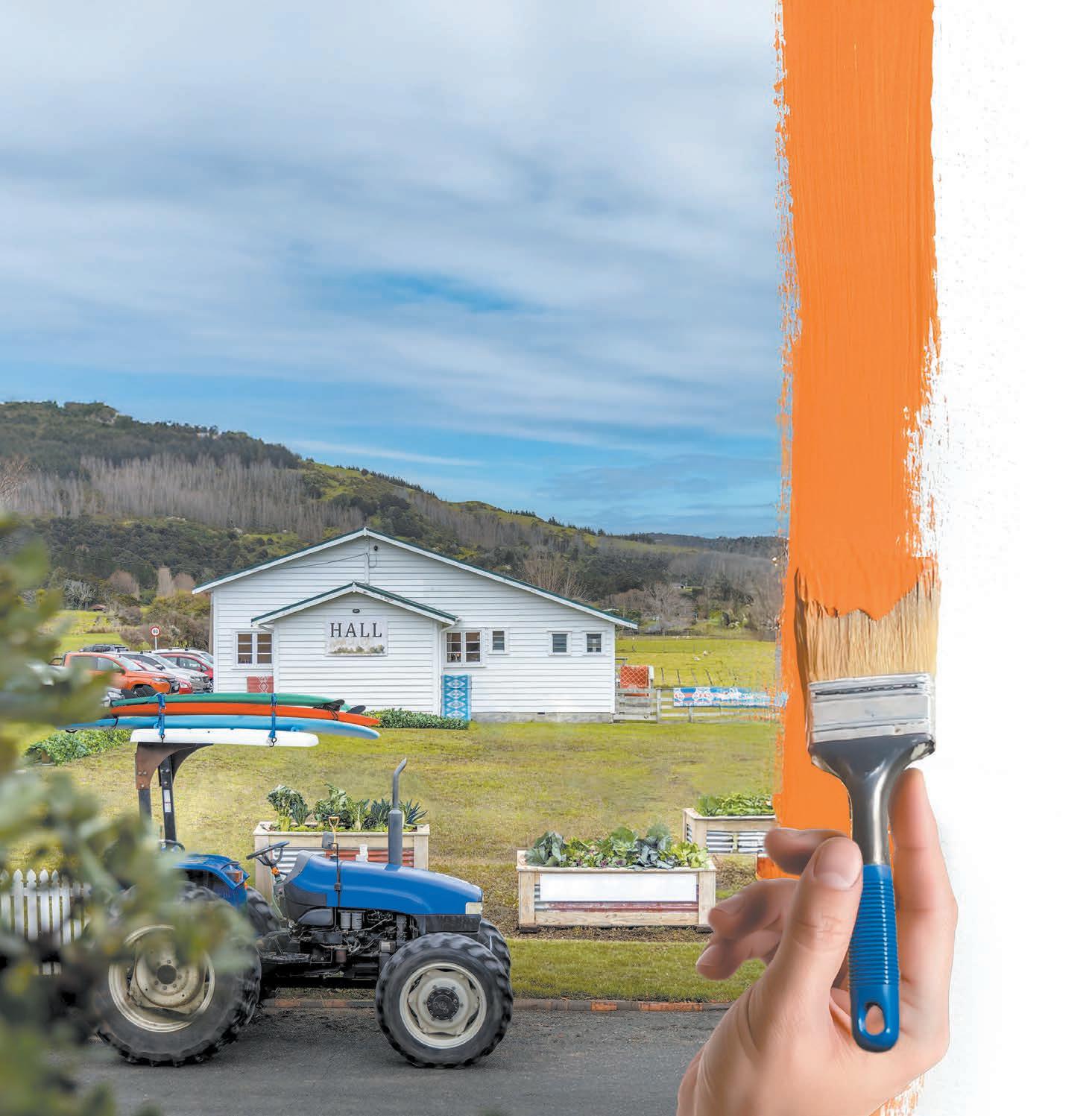
Need funds to upgrade your rural hall, clubrooms, school or marae?
Celebrate the tenth edition of R abobank Good Deeds with us We’re giving $10,000 to ten rural community hubs, plus one luck y winner will receive a bonus day of labour from the teams at Rabobank and The Countr y Enter today and bring your community project to life
Enter at rabobank.co.nz/good- deeds before 31 March 2026. T&Cs apply.


Rabobank New Zealand Limited
On-farm AI: new tech must share the risk
Richard Rennie TECHNOLOGY Farm systems
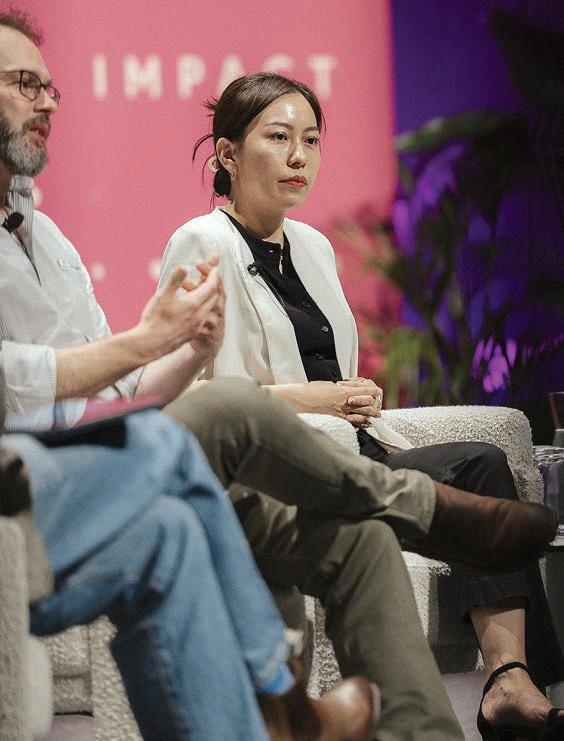
THE ability of artificial intelligence to boost agriculture’s productivity is being widely hailed, but there has been little consideration about who will bear the risk for using it should the technology fail, says a leading Australian academic.
Dr Sophia Duan, associate dean of research and industry at Melbourne’s La Trobe University, raised the challenge during a panel discussion on AI’s role in farming at the evokeAg conference in Melbourne last month.
In a recent article in The Conversation, she dispels fears it will necessarily be farm jobs that are the victims of AI’s advance
in the complex, dynamic farm business environment.
“Because of this complexity, AI is rarely used to replace people outright. Instead it automates specific tasks.”
At present the tech is mainly being used to support decisionmaking in complex environments, including things like determining crop stress from drought and predicting irrigation needs, tracking livestock behaviour, or identifying disease risks.
But to date evidence shows the productivity delivery of AI is highly variable and can be limited by lack of connectivity.
In the United States about 25% of farms were using advanced technology in 2019, with the likes of automated steering and guidance most common.
OECD estimates are that job loss
risk due to AI exposure is primarily at a task level with about 38% of employment classed as at “high risk” for full automation.
“But when AI becomes part of everyday farm decision-making, who carries the risk should it fail?” Duan asked.
She cited examples such as mistimed irrigation application, or a missed disease development that leaves the human farmer bearing the financial cost.
She emphasised that for AI to achieve its very real productivity gains through more acceptance and uptake by farmers, it needs to be backed by shared accountability and assurance.
Stefan Hajowicz, who wrote Australia’s national road map for AI development, said 2026 is the year in which it is becoming clear that cognitive AI – that
which simulates human thought processes – has advanced more rapidly than expected.
“We ruled this out as sci-fi hype, but the fact is now we have to put it back on the agenda and figure out how to work with it.”
RESPONSIBILITY: Sophia Duan of La Trobe University says unless farmers feel the risk of AI is shared with the platform being used, farmers will feel they bear an undue cost in event of AI’s
or error.
He said this contrasts with robotics, where automation is proving harder to achieve in many cases, particularly in field robotics.
Automated tractor co goes trans-Tasman
Richard Rennie TECHNOLOGY Horticulture
THE move across the ditch to expand its robotic tractor business is providing market and manufacturing opportunities for Kiwi company Agovor to leverage off its latest capital raise.
Company co-founder Richard Beaumont was one of several New Zealand start-up agritech companies exhibiting at this year’s evokeAg conference in Melbourne. Others included bolus methane inhibitor Ruminant BioTech, next-generation collagen producer Ovitage, and Solarferm, producing sugars and organic acids from carbon dioxide.
Beaumont’s company is producing fully electric automated tractors for orchard applications
that presently include spraying and mowing along row-grown berries and fruits.
“The move over here to base production in Sydney comes in part because Australia’s horticultural sector is 10 times NZ’s and has been experiencing extremely strong growth in recent years across many different crop types,” he said.
Australia has a national goal of hitting AU$100 billion in agricultural earnings a year by 2030, a figure virtually achieved last year when it hit AU$99.5bn.
Horticulture’s value within that is now estimated to be about AU$18bn, having tripled in only the last decade.
Agovor recently announced an over-subscribed capitalraising exercise that generated AU$3 million in funds from
three different parties to enable the company to develop other attachments for its e-Tractor’s use in orchards.
The move over here to base production in Sydney comes in part because Australia’s horticultural sector is 10 times NZ’s.
Richard Beaumont Agovor
Beaumont said Australia’s growth and the sheer breadth of the country’s potential provides a good means to diversify reliance upon any one crop or region for the tractor’s applications.
“Any sector has its ups and downs, but this means we are now
across a few. We are agnostic when it comes to crop type, and we can be used in virtually any row crop including berries, cherries, apples and grapes.”
The 120kg machines offer growers a solution for minimising spray application and keeping grass between vines and plantings low.
It was born out of Beaumont’s own frustration at trying to manage as a groundsman with minimal staff available during covid.
While the common vision for an automated tractor may often be on a bigger scale, he said Agovor’s machines provide a less intimidating entry to automated machinery, with many familiar touchpoints that also keep them accessible to growers.
“You still have a need to clean the mower blades out, or to refill the spray tank and so on, and
we find growers generally want to keep some contact with their equipment, it’s partly why they do what they do. From a safety point of view, a smaller automated machine also holds a lot of appeal.”
Early adopters of the tractor are claiming savings of about $30,000 a year, lower spray treatment use, a 90% reduction in water use, and significantly less soil compaction.
Beaumont said the company has found the transition to Sydney an easy stretch, while the Australian market also offers some opportunities in crops it had not considered, including sugar cane and rice.
“Between them, NZ and Australia mean we have a very good platform to base ourselves from before going any further.”





















































• Rennie’s visit to Melbourne was partly funded through Food HQ.






Sector pushes for changes to RMA successor
Gerald Piddock NEWS Environment
PRIMARY industry sector groups are calling for significant changes to the government’s Resource Management Act replacement legislation, saying its present form misses the mark.
Beef + Lamb New Zealand, DairyNZ, HortNZ, NZPork and Federated Farmers all back the Planning Bill and Natural Environment Bill’s intent, but their submissions on the legislation say that its wording misses the mark.
The government released the two Bills in December and submissions on them closed on February 13.
BLNZ chair Kate Acland said there are several critical areas in the legislation where its wording does not match the intent.
That language could see farmers needing more consents and more onerous requirements on permitted activities.
There could also be significant economic impacts from the lack of appropriate guardrails on the
exercise of ministerial and council powers, Acland said.
“There are significant issues with the role of, and amount of detail required for, Freshwater Farm Plans, and farmers would also need a consent or permit as well as a Freshwater Farm Plan in many cases.
“We also do not support the introduction of marketbased allocation or levies for resource use and are concerned that the same farming activity will now fall between two Acts and make the process for farmers more complicated and costly.”
There are significant issues with the role of, and amount of detail required for, Freshwater Farm Plans.
Kate Acland BLNZ
This point was also raised by Federated Farmers, which interpreted it as opening the door for a possible water tax.
While RMA Reform Minister Chris Bishop ruled that out,
Federated Farmers board member
Mark Hooper said:“This begs the question, if the government have no plans to tax water, why does their RMA replacement give ministers sweeping powers to tax water as a tool for managing demand?”
HortNZ chief executive Kate Scott said in practice, marketbased allocation could mean auctions or tenders where water, or the ability to discharge nutrients, goes to the highest bidder.
“A levy would effectively be a tax on water or on farming activity. That is not the right approach for food production.”
DairyNZ chair Tracy Brown said it is encouraging to see the government taking on the views of the sector and already ruling out any sort of water tax.
Brown had concerns about how environmental limits will be set and the potential for farm plans having duplicated consent requirements.
“These plans should be the main tool for managing waterway risks on farm to avoid duplication and be better tailored to farms individual needs.”
NZPork CEO Brent Kleiss said
the government’s legislation to replace the RMA.
reverse sensitivity is a key focus for pork producers to ensure new developments like housing or businesses do not interfere with established farms.
“Farming comes with realities that are part of everyday life on the land.
“Planning rules should recognise that and make it clear that farmers can carry on their work without unnecessary obstacles.”
Scott is also concerned about how the Bill treats growers in overallocated catchments and the risk of increasing cost and
compliance for activities that are currently permitted.
“The Bill could lead to many more requirements and high compliance costs for everyday farming activities.
“If a grower already has a Freshwater Farm Plan, particularly through an audited and certified industry assurance programme like NZGAP, that should be recognised as meeting permitted activity requirements. We should not be layering new compliance obligations on top of existing good practice.”
Comvita celebrates return to profit in half-year result
Gerald
Piddock NEWS Apiculture
COMVITA’S half-year result shows the company making positive steps in its financial turnaround with a return to profitability, a positive operating cash flow and improved operating performance. Its result for the six months ended December 31 had revenue up 18.3% to $118 million, EBIT up 10.7m to $10m, debt reduced by $32.9m to $48.7m, operating expenses down 13.6m to $49.7m and its inventory reduced by $52.5m to $68.3m.
Comvita chair Bridget Coates
said it reflects clear progress in stabilising the business while recognising the work still ahead.
“We delivered against our first-half priorities, returning to profitability, generating positive operating cash flow, and continuing to reduce inventory and net debt.
“Operational discipline is strengthening, leadership capability is being rebuilt, and the company is executing with consistency. These are important foundations, but the turnaround is not yet complete.”
Meaningful progress has been made over the past six months and Comvita is moving in the right
direction again, Coates said.
“In saying this, we remain mindful of the work still ahead to fully restore our financial strength and to deliver a sustainable longterm performance.”
The increase in revenue for the mānuka honey exporter was driven by strong volume and sell-through in the United States club-retail wholesale channel, improving overhead recoveries and supporting profitability.
This offset sales challenges in the US club-retail digital channel and the Australia-New Zealand market, with other markets broadly stable overall.
The reduction in operating
expenses reflected continued cost discipline and benefits from costout initiatives last year.
Comvita CEO Karl Gradon said the company is operating with greater discipline and execution clarity.
“We are maintaining a rigorous focus on operating fundamentals – cost control, inventory management and disciplined capital allocation.”
At the same time, Comvita is strengthening the drivers of longterm value – brand and innovation differentiation, digital and directto-consumer capability, and major retail and strategic partnerships, he said.


“The result of this work is evident in our first-half performance.”
The company was on track to deliver against its financial targets and Comvita’s debt and inventory levels are continuing to fall, he said.
Coates said recapitalisation remains the board’s highest priority after Comvita shareholders rejected a $56m takeover bid by Florenz in November last year.
The process is progressing to plan, with the board confirming credible expressions of interest from both existing and prospective investors to support and potentially underwrite the capital raise.













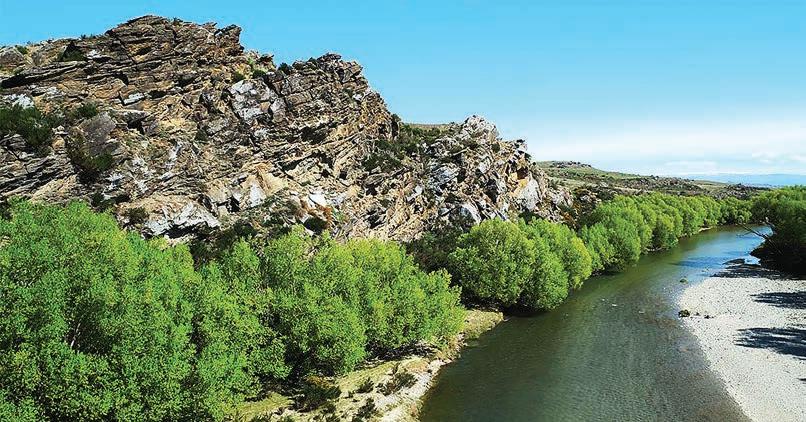
WATER: The possibility of a tax on water is a key concern for farming sector groups in their submissions on
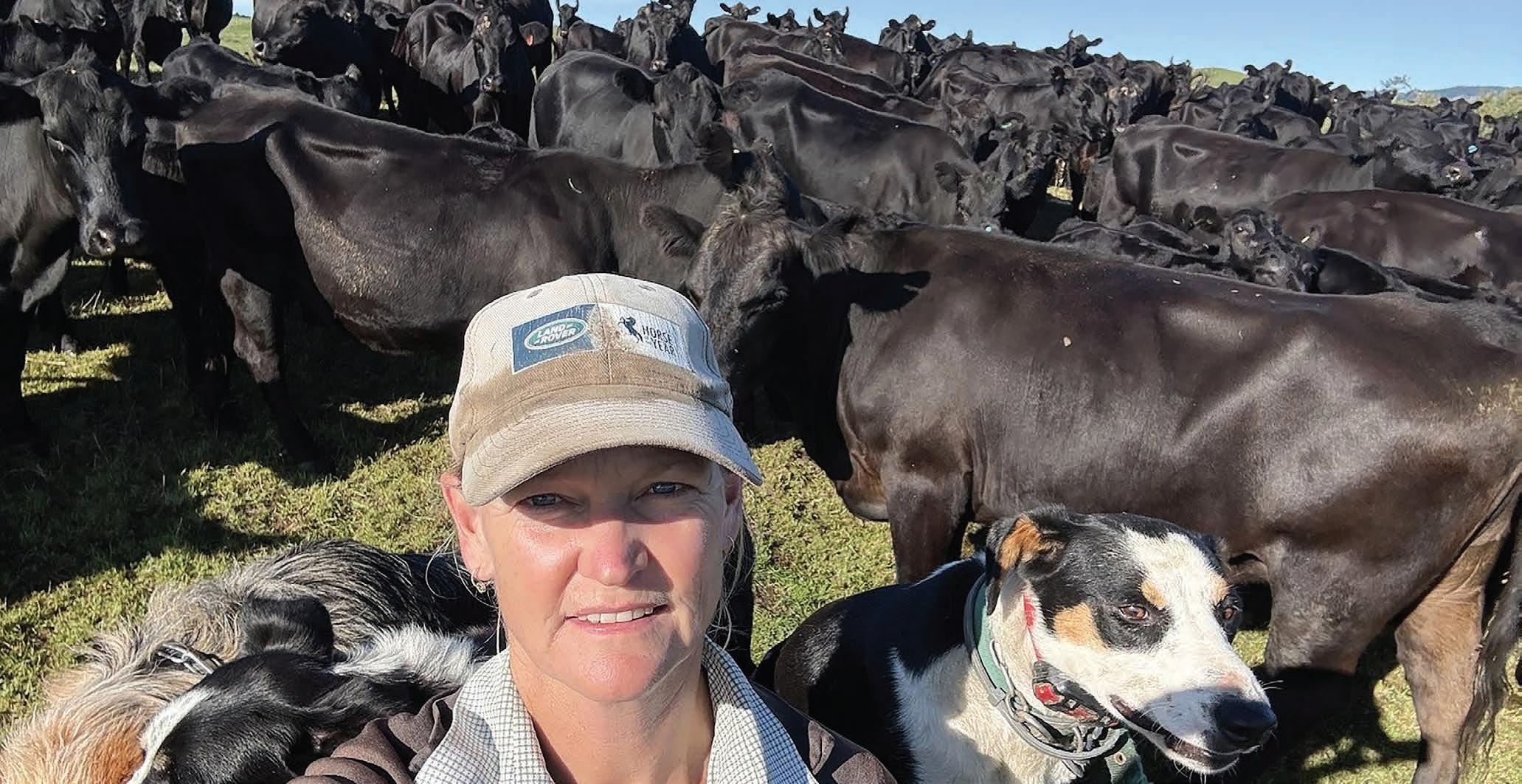
AgriHQ analyst and Farmers Weekly contributor Suz Bremner out
Keeping it real.
One of the unique things about Farmers Weekly is its many contributors, scattered across every corner of the country.
They’re everyday people, most of them involved in farming businesses of their own.
Take AgriHQ analyst Suz Bremner, for example. When she’s not analysing and interpreting livestock markets, you’ll likely find her on her family’s Hawke’s Bay sheep and beef farm.
It’s these people who come together each week
to help bring you this paper, and all the news and analysis that comes with it.
Real people, with a real connection to the industry. And they’re the reason your support matters. A voluntary subscription to Farmers Weekly directly supports the work of our editorial team.
For $120 a year, or $15 a month, you’re helping ensure this team can continue their work long into the future.
Dean and Charlie Williamson




From the Editor
Taming Trump’s tariff tantrum

Craig Page Deputy editor
ONCE again the world is waiting to see if United States President Donald Trump’s bark is worse than his bite.
Trump’s latest tariff tirade, on the back of the US Supreme Court ruling that he was wrong in implementing his Liberation Day tariffs last year, has left many countries unsure where they now stand when it comes to trading with the US.
“Confusion” and “chaos” are words being bandied around, and not for the first time.
Trump raved about his Liberation Day tariffs in April last year, describing the date of their implementation “one of the most important days, in my opinion, in American history”.
But the US Supreme Court recently ruled that Trump had overstepped his authority in using the International Emergency Economic Powers Act (IEEPA) to justify his global tariff attack.
LAST WEEK’S POLL RESULT
While IEEPA gave Trump the authority to “regulate commerce” with international trading partners to address an economic emergency, it did not allow tariffs to be used.
The decision raised questions about whether tariffs already paid by countries should be refunded. Some reports suggest US Customs has received over $130 billion since the tariffs were introduced.
Rather than taking defeat on the chin, Trump responded in traditional fashion by imposing a 10% across-the-board tariff, using a section of the Trade Act, before later announcing he would be hiking tariffs to 15%.
Following the court’s 6-3 decision, he lambasted the six judges who ruled against him, saying they should be “absolutely ashamed”, and lacked the courage to “do the right thing”.
For an outside observer, it is compulsory viewing when Trump doesn’t get his own way.
Countries around the world are now evaluating what tariffs and trade deals would stand following the court decision, with some putting off ratifying their earlier deals until they have more clarity.
That has also enraged Trump, who responded on social media by threatening countries that don’t play ball with even higher tariffs.
More than 57% of those who took the poll are happy to move away from traditional paper animal status declaration forms, in favour of an electronic version.
Last week Farmers Weekly reported the Ministry for Primary Industries wants rapid traceability for the movement of sheep and pigs in the event of an animal disease outbreak and has started consulting on three options to track their movement.
“Having worked on the M bovis response with MPI, the need for a more traceable, auditable, and robust tracking system was made abundantly clear,” said one voter. “The fact that this is even up for debate, after all of that, is bewildering.”
Of the 42.9% who voted no, several said their location meant connectivity was poor, which would be a hindrance to the change.
“I don’t have coverage to do this. And could be hours, if not the next day until you are [able to enter data].”
Another said: “I’m an older farmer; technology and I don’t agree. I grew up with pen and paper. Everyone wants you to go digital. I disagree.”
“Any Country that wants to ‘play games’ with the ridiculous supreme court decision, especially those that have ‘Ripped Off’ the U.S.A. for years, and even decades, will be met with a much higher Tariff, and worse, than that which they just recently agreed to,” he wrote on Truth Social. “Buyer beware.”
For its part, New Zealand has worked diligently since the tariffs were imposed, deciding how best to ensure trade can continue with the US, while maximising profit for our exporters.
Avoiding raising your head above the parapet is a safe option when it comes to dealing with the volatile president.
In reality, any prospect of a tariff refund for exporters is likely to be years away. Trump has threatened to challenge the decision in any way he can, and, given the glacial pace at which the court system works, that will take time.
As Fonterra’s general manager of trade strategy, Justine Arroll, pointed out to Farmers Weekly, the Supreme Court decision did not specifically address the issue of refunds.
“The process for refunds for importers, if any, remains unclear and may need to be resolved through administrative or legal processes.”
Meantime, we wait and watch with interest.
Last week’s question: Is it time to move from paper-based ASDs to electronic forms for sheep and pig movements?
Letters of the week
Time is running out
Andrew Luddington Canterbury
IT’S Tuesday, February 17, and here we are experiencing a one in 100-year weather event.
Given that definition, very few of us, if any, should remember the previous one. Sadly, we do. It was in the Tasman and Nelson area in July 2025. Prior to that was Auckland with Cyclone Gabrielle on February 23. Nelson suffered another event in August 2022, and the Canterbury Plains flooded in May 2021.
That is five events in less than six years. Seeing as these events are now happening almost every year, the term “one in 100-year weather event” is history.
There are still some who cling to the hope that it is not humans responsible for the damage, but that debate was over years ago. The argument of the moment is, have we exceeded the 1.5degC limit? And the answer is: “Probably.”
So what are we doing about it? Are we following the northern European countries such as Sweden, Norway, Iceland and Denmark, who will almost certainly make or exceed their respective Paris agreement commitments without wrecking their economies? No.
Instead we have a forestry industry that won’t take responsibility on subsequent and inevitable slash damage. We have Resources Minister Shane Jones, who knows full well that open-cast mining one kilo of gold will produce 27,000kg of carbon dioxide equivalent. A man who thinks his opinion is so much more important than anyone else’s. We have a bunch of house-flipping capitalists who think paying a tax on a capital gain is worse than selling your soul to Satan.
We had a bunch of howling farmers performing their now infamous Howl of Protest in city centres, only to find that soon after many of them found themselves in the Canterbury flood event in 2021 (when they started howling for help).
Continued next page
We have more irrigation permits, which will inevitably bring more dairy. We have your columnist Alan Emerson telling us that water that is allowed to go out to sea is a “criminal waste”. Best letter WINS a quality
Send your letter to the Editor at Farmers Weekly P.0. Box 529, Feilding or email us at farmers.weekly@agrihq.co.nz

This week’s poll question (see page 4):
Do you think Pāmu’s farms would be better off in private ownership?
your say
What farming AI should be
In my view

ARTIFICIAL intelligence is becoming part of everyday business decision-making, and farming is no exception. In farm financial management, however, the role of AI should never be to replace judgement.
Farming is a financial business built on uncertainty. Cashflow fluctuates, seasons vary, costs shift, and decisions are often made with imperfect information. Financial choices carry real consequences for farm businesses, families and longterm sustainability.
The challenge farmers face is not a lack of data. Most already have reports, budgets, forecasts, and historical records. The real challenge is understanding what those numbers are saying at the moment decisions need to be made, without adding more mental load.
This is where financial decision support matters.
AI should help turn farm financial data into clarity. It should highlight meaningful changes, emerging trends, and potential risks that deserve attention.
Its role is to act as a sensecheck, helping farmers and advisers pressure-test assumptions and think things through before acting. It should support understanding, not deliver answers without context. For this support to be genuinely useful, it must fit naturally into existing financial workflows. Insights should sit alongside the reports and records farmers and advisers already rely on,
Continued from previous page
A while ago a senior ag bank manager described us as “laggards with siloed thinking”.
I think the line a little harsh but mostly deserved.
Around the world we are seeing much worse events than those that have been happening here. Currently seven states in the United States are all fighting each other over water allocation from the Colorado River that is incapable of meeting demand.
not in separate dashboards or disconnected tools.
When insights require extra steps or new habits, they quickly become another task. The best decision support works quietly in the background and helps people move forward with confidence.
This clarity is just as important for trusted financial advisers, including accountants, rural bankers and consultants. These professionals help translate farm data into strategies, risk assessments, and long-term plans. When farmers and advisers can see and understand the same insights, conversations become more productive, proactive and focused on the future.
AI can strengthen the partnership between farmers and their advisers by surfacing important signals early. Changes in cashflow, shifts in spending patterns, or emerging pressure points can be identified sooner, allowing advice to happen before issues compound. In this way, AI does not replace advice. It strengthens the foundation it is built on.
Control and trust are essential in farm financial management. Farmers need to understand why an insight is being shown and what data it is based on. Advisers need the same transparency so they can confidently stand behind the guidance they provide. Explainable, data-driven insights build trust and support better decisions on both sides.
The future of farming AI in financial management should be human-led. Technology should reduce uncertainty, improve understanding, and strengthen financial judgement without taking responsibility away from the people who know the farm best.
Progress comes from giving farmers and their advisers clearer information and better support to make confident decisions, together.
That is what farming AI should be.

Laying in wait: farm cyber crime on rise In my view

Duncan Morrison Morrison is cyber practice leader at Aon
New Zealand
CYBER attacks make headlines when they take down global corporations or lock up major systems. But what you don’t often see in the news are the cyber crimes doing real damage in New Zealand – the small, everyday scams hitting farmers and rural SMEs.
Like most small businesses, many farmers in New Zealand are significantly underprepared for the threats they face.
targeted scams exploiting everyday tools like email and online banking.
Last year, MBIE reported that New Zealand businesses and individuals lost around $256 million to cyber crime, with authorised payment scams – where victims are tricked into paying criminals –responsible for the largest share. These incidents rarely reach the news, but for an SME, they can be financially devastating.
Here’s a real scenario I’m seeing more often: A farmer buys a $40,000 piece of equipment. Somewhere along the way –through either the farmer’s email or the supplier’s – criminals get access. They sit quietly in the inbox, watching the back-andforth. Then, right before payment is made, they jump in with a “new” invoice or updated bank details that look completely legitimate.
farmersweekly.co.nz/podcasts
As a result the river is heading headlong into a Deadpool state.
Forty million people depend on that river for domestic water power and irrigation. If they can’t sort it out, lawsuits are likely to turn to guns.
The oceans are heating and we are dumping 11 million tonnes of plastic into them every year.
I am reminded of a line by Pink Floyd that goes: “Balanced on the biggest wave, you race towards an early grave.”
Unless we turn ourselves around, we have not got long.
Aon’s Global Risk Management Survey consistently ranks cyber attacks and data breaches among the top global risks for businesses. Despite high awareness, only a small proportion of organisations have quantified their cyber exposure, contributing to underinsurance and increased vulnerability.
When it comes to SMEs, which make up 97% of businesses in New Zealand, only 7% feel prepared to respond to a cyber event and roughly 12% carry cyber insurance.
For the primary sector, where digital tools underpin traceability, compliance, financial management and animal health records, this is a huge risk.
However, most cyber losses in rural New Zealand aren’t coming from sophisticated ransomware attacks. They come from simple,
The farmer pays the invoice, thinking nothing of it. The money goes straight into the attacker’s account and is gone within minutes. The supplier never receives the payment, and the farmer is left facing the worst outcome: a loss of thousands and nothing to show for it.
Most cyber losses in rural New Zealand ... come from scams exploiting everyday tools like email and online banking.
No ransomware. No frozen screens. No obvious red flags. Just a simple email trick that results in a massive and unexpected loss.
Once you add the cost of IT forensics, legal advice and restoring lost data, even a basic business email compromise can run upwards of $30k.
The impact goes beyond a loss of funds and the time it takes for finances to bounce back.
Rebuilding lost or corrupted critical data, such as financial
PAYMENT: Authorised payment scams –where victims are tricked into paying criminals – are responsible for the largest share of cyber crime losses
records, herd management and crop data or other farm-critical information, is often unavoidable. Recreating years of records is slow, costly and stressful.
As most farmers don’t have an internal cyber specialist, many cyber insurers – including Aon’s partners – provide immediate access to specialist responders who triage, contain and help victims recover from cyber events. For SMEs and farmers, this support can be the difference between a short disruption and a prolonged crisis.
The good news is that farmers can reduce their risk through a handful of simple habits:
• Enable multifactor authentication across all key systems, especially email.
• Use call-backs or dual authorisation for any new or changed supplier bank details.
• Maintain secure, regularly tested backups stored separately from the main devices.
• Treat “urgent” payment requests with caution.
• Use mailbox filtering and rules to detect anomalies.
• Create a simple ‘if X, do Y’ response playbook.
These are basic business protections that help to stop the majority of everyday cyber attacks.
New Zealand’s primary sector now relies on digital systems just as much as it does on the weather and market conditions. If we want to safeguard the backbone of our economy, we must be just as vigilant against the quiet, everyday cyber scams as we are against the high-profile attacks that make the news.
In today’s world, protecting our farms from these hidden threats is as essential as preparing for a storm – because sometimes it’s the risks we don’t see coming that can do the most damage.

Blair Rooney Rooney is head of growth at Farm Focus
in New Zealand.
Photo: Pexels
Sector Focus
Full circle as young family settles into dairying

IT’S been a full circle moment for Horowhenua dairy farmer Jaycob Brunton, who now contract-milks the farm where he first started relief milking while still at school, 17 years ago.
The shift came during the pandemic, when his career as a hunting guide was suddenly halted, and he sought a new direction. He’s enjoying the opportunity and building a life with his wife, Jenae Millen, and son Lucas.
“There’s always something going on. But we’re in a good spot and working hard to chomp down debt,” Brunton said.
As a youngster he secured a dairy relief milking role and school-holiday work through a family contact and found he really
enjoyed farming. He left school at the end of Year 12 to go dairying full time, and he also learnt to shear sheep.
He was shearing on weekends and turned it into a full-time career when he was 18. It became a circuit of local shearing in the spring-summer period before moving to Italy at the end of April for a few months of shearing, then to Australia in August.
He was shearing for 10 months of the year and either hunting or holidaying for the rest.
But after nine years of shearing, Brunton wanted a change, and that’s when he got into hunt guiding, between a couple of roles in Wairarapa and Canada.
Lockdown shut that concept down, and with no real fixed abode, he moved into a house on the dairy farm he’d started on, near Waitarere Beach, owned by Peter Bartholomew.
While he was there, Brunton was
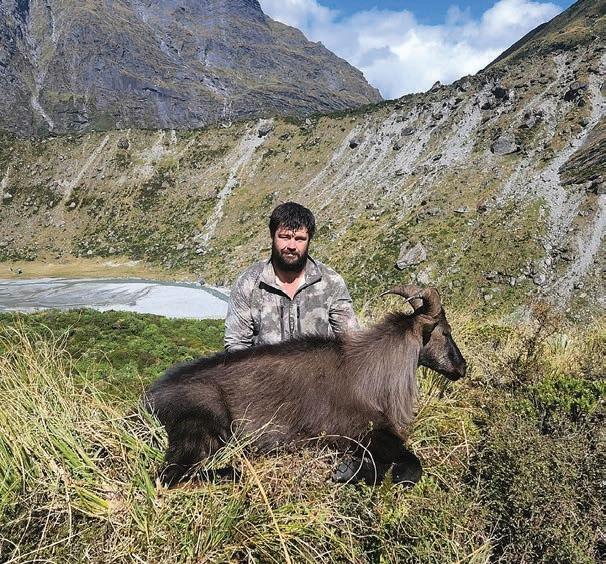
Jaycob Brunton still makes time for the outdoors, heading out hunting when the farm allows.
tempted back to dairying, starting with helping out, then managing, and eventually moving into contract milking.
Around the same time he met Millen, who was teaching agricultural science at Taihape Area School. She grew up dairy farming in the South Island until her family relocated to Pukekohe.
Millen studied Agricultural Science at Massey University and worked at AgResearch before returning to university to complete her postgraduate teaching qualification.
“I had a vision of teaching ag to students,” Millen said.
“And I’ve worked in smaller schools that haven’t had agriculture available but wanted to make it available.”
After moving to Waitarere Beach with Brunton, she took up a science teaching role at Queen Elizabeth College in Palmerston North.
She’s recently been on maternity leave after the birth of Lucas, but before that she set up a junior rural studies programme, taking students to the New Zealand Rural Games and organising visits to Massey University.
“The programme was giving students exposure to agriculture and teaching them about pathways that are out there.”
An influx of junior students when Millen returns to teaching this year means she will be focused on her usual science teaching role and won’t have the capacity for the programme, but she hopes it’ll return soon.
The farm has largely been Brunton’s domain since Lucas was born. It’s 155 hectares with some neighbouring lease land running a System 5.
They’re split calving 420 cows and have a solid team of three fulltime and two part-time to navigate the demands of being a high-input farm.
The owner also has three support blocks around Levin and a sheep and beef property out the back
of Shannon. One team member spends every second day moving between support blocks to manage them.
“We’re in a handy spot,” Brunton said.
“It’s reasonably easy to get good staff. We’re 10km from Levin, 5km from the beach.”
Brunton and Millen purchased their own property across the road from the dairy farm, providing a base to build family life while staying close to work. The nearby beach means plenty of family fishing opportunities, and Brunton still gets out hunting regularly.
The couple are also involved with the Foxton Squash Club and they try to get away on weekends during the busy squash season to play with friends.
Brunton has also remained involved in shearing, serving on the shearing committee for the Levin AP&I show, which takes place mid-January.
Looking ahead, the couple are focused on reducing debt while continuing to enjoy their family and community.






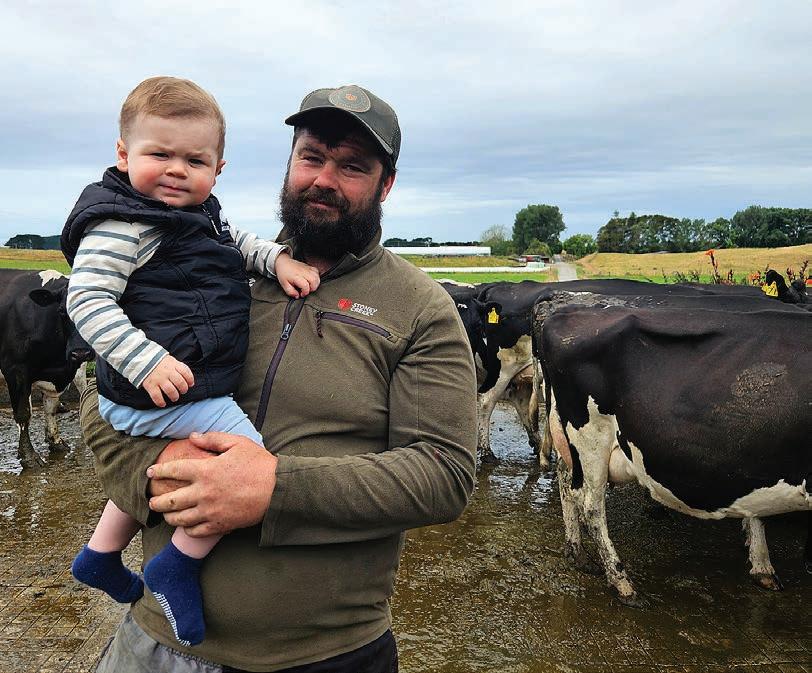
BALANCING: Jaycob Brunton with his son Lucas on the farm where his own dairying journey first began.
Photos: Supplied
HUNTING:
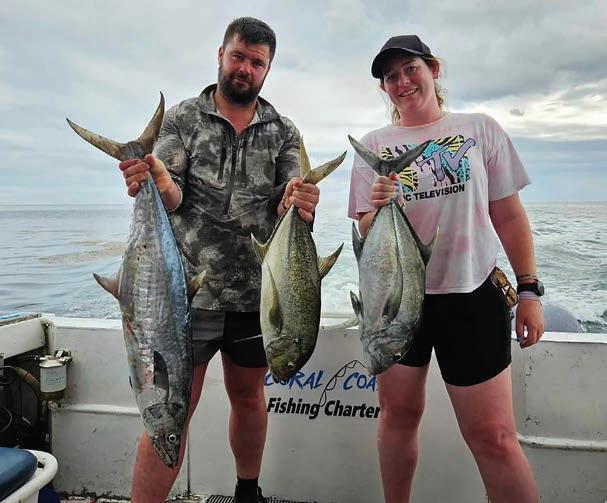
FISHING: Jaycob Brunton and Jenae Millen make the most of living close to the coast, fitting in a spot of fishing alongside the busy rhythms of farm and family life.
Samantha Taylor PEOPLE Dairy
Dairy markets rebound on stronger demand
Sector perspective

FEBRUARY delivered renewed upside across global dairy markets, with demand strengthening sufficiently to absorb expanding supply.
Although milk production increased across all key exporting regions, buying interest through the month proved robust enough to support higher prices.
This tightening balance was reflected in firmer international benchmarks and prompted Fonterra to lift the midpoint of its 2025/26 Farmgate Milk Price
forecast from $9.00/kgMS to $9.50/ kgMS.
In New Zealand, January milk production data confirmed a solid seasonal performance. Milksolids collections reached 217,950,000/ kgMS, up 2.9% year on year (YoY) and setting a new record for the month.
Season-to-date production is now tracking 3.1% above last season, exceeding the dairy team’s midpoint expectation of a 2.0% lift. On a liquid milk basis, January volumes totalled 2,432,000 tonnes, up 2.0% YoY, with season-to-date tonnage 2.3% ahead of last year. The data confirms that supply growth remains evident, albeit measured rather than excessive.
Other major producing regions have also reported expansion.
The United States recorded 3.2% YoY growth in January; Argentina posted a strong 9.7% YoY increase, Uruguay 7.5%, and Australia lifted 1.5% over the same period. December data showed China up 1.1% YoY.
The European Union reported a 5.0% YoY increase in November milk collections, with notable gains in Germany (+7.5%), France (+6.3%) and the Netherlands (+7.3%). Collectively, these figures point to synchronised production growth across the principal exporting regions.
Despite this supply expansion,
demand momentum re-emerged clearly through the month, particularly via the Global Dairy Trade platform. Event 397 recorded a 6.7% lift in the GDT Price Index, driven by a 10.6% increase in skim milk powder (SMP) and an 8.8% rise in butter, with all products posting gains.
Event 398 followed with a further 3.5% increase. Powders again led the move, with SMP up 3.0% and whole milk powder (WMP) up 2.5%, while butter surged 10.7%. All other products increased except cheddar.
The final Pulse auction of the month delivered mixed but generally constructive signals. WMP was unchanged compared with Event 398 but 1.4% higher than the previous Pulse. SMP increased against both the prior main event (+2.3%) and the previous Pulse (+2.0%). Anhydrous milk fat (AMF) eased slightly relative to Event 398 but rose 4.9% compared with the previous Pulse. Butter strengthened against both benchmarks, up 3.0% versus Event 398 and 7.3% versus Pulse 99. Overall, auction outcomes indicate that demand has been sufficient to lift price levels despite ample global supply.
New Zealand’s January trade data, however, still reflected the softer purchasing environment seen through October, November and early December.
Fonterra lifts forecast on healthy milk price
Gerald Piddock NEWS Fonterra
RECENT improvements to global dairy prices have prompted Fonterra to lift its milk price forecast by 50 cents to a midpoint of $9.50/kg MS.
It also narrowed its forecast range from $8.50-$9.50/kg MS to $9.20-$9.80/kg MS.
The co-operative has been able to make these changes based on recent improvements in global commodity prices combined with Fonterra’s wellcontracted sales book, CEO Miles Hurrell said.
“As we have seen, global dairy prices have been volatile across the season. Following the declines at the end of 2025, prices have lifted in the last four Global Dairy Trade events.”
Global milk production remains above seasonal norms, meaning the risk of further volatility in pricing remains, and Fonterra will take a balanced approach to its milk price forecasting, he said.
The new midpoint means a lift in Fonterra’s advance payment rate by 30 cents to $7.80/kg MS for February through to May.
It comes after Fonterra shareholders backed the co-operative’s proposal for returning capital following the sale of its global consumer business to Lactalis, with 98.85% of Fonterra shareholders supporting the process of paying shareholders $3.2 billion or $2 for every supply share and unit in the Fonterra Shareholders’ Fund.
The co-operative said it intends to pay out 100% of underlying earnings
generated by Mainland Group during the 2026 financial year while still under Fonterra ownership.
The earnings will be distributed through a special Mainland dividend payment to shareholders and unit holders after completion of the sale to Lactalis.
“We are currently finalising our interim accounts and can indicate that we expect the special Mainland dividend to be in the range of 14-18 cents per share, which reflects the operating performance of the Mainland business during the first half of this year driven by ongoing cost management and favourable input commodity prices.
“This remains subject to the settlement date of the transaction and the finalisation of our financial statements and audit process,” Hurrell said.
Fonterra’s forecast earnings guidance from continuing operations for the 2026 financial year remains unchanged at 45-65 cents per share. It is intended that Fonterra’s dividend policy will be applied to these continuing earnings.
Fonterra expects the transaction to be complete in the first quarter of the 2026 calendar year, subject to separation of the businesses from Fonterra and remaining regulatory approvals being received.
Meantime, Fonterra’s organic milk price forecast has hit a record high with the cooperative lifting it by 25 cents to $13.35/ kg MS.
The forecast range was also narrowed, to $13.05-$13.65/kg MS.
Fonterra’s general manager of organics, Andrew Henderson, said the increase reflects sustained demand for organic, grass-fed dairy products globally.
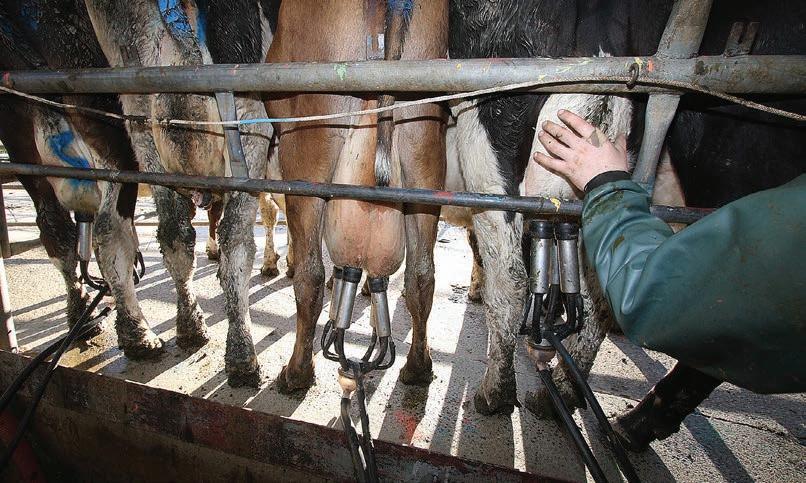
Total dairy export volumes declined -3.3% YoY to 360,225 metric tonnes, while export values were also down -3.3% YoY as lower Q4 prices converged with yearearlier levels.
WMP exports fell -5% YoY. Shipments to Central America increased 128%, but volumes to Asia excluding China declined -5% and exports to North Africa fell -71%. Shipments to China rose 2% YoY. SMP exports were down -11% year-to-date, with volumes to China decreasing -26%, partially offset by a 2% rise to Asia excluding China and a 7% increase to the Middle East. Elsewhere, trade performance was mixed. China’s total dairy
imports declined -3.4% YoY in December. US total dairy exports increased 14.3% YoY in December, Argentina’s dairy exports surged 36.3% YoY in January, Australian exports fell -15.0% YoY in December, and EU-27 exports rose 15.0% YoY in December.
While January trade data continues to reflect earlier demand weakness, February auction results suggest that buying interest has returned.
If current pricing momentum is sustained, export volumes and values for February and March should begin to show evidence of recovery, aligning more closely with the firmer tone now evident across global dairy markets.
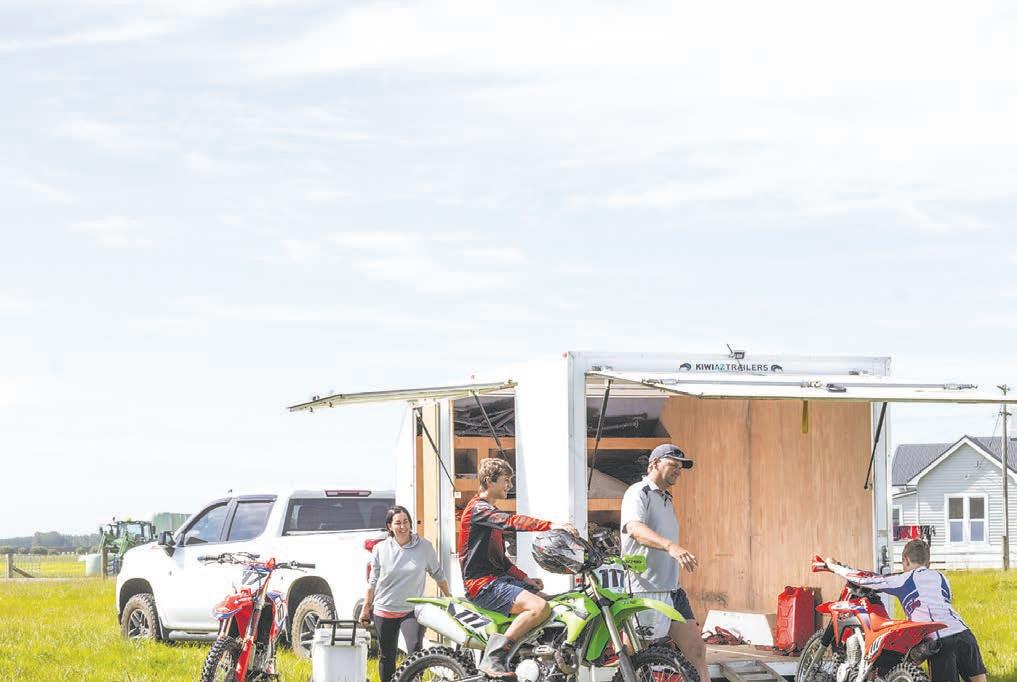

Cristina Alvarado
Alvarado is NZX head of Dairy Insights
SOLID: In New Zealand, January milk production data confirmed a solid seasonal performance.
Getting warmer on ways to help keep cows cool
Staff reporter
DAIRYNZ is in the final stages of research that aims to help farmers better mitigate the impacts of heat stress on herds in high-risk regions of the country.
The research, at Scott Farm in Waikato, tests common mitigation measures and assesses their return on investment.
Heat stress is an increasing challenge for pasture-based dairy systems, particularly in regions experiencing more frequent hot, radiant and still conditions, DairyNZ senior science manager Kirsty Verhoek said.
“Through previous research and farmer engagement, we have heard clearly that farmers want practical, evidence-based solutions to help
protect cow welfare, maintain milk production, and support long-term farm resilience.
“However, many heat stress mitigation measures require investment and farmers have told us they need confidence that tools will work under New Zealand’s grazing conditions and deliver value on farm.”
The research at Scott Farm involves five mobs of cows that have been fitted with rumen temperature boluses, pedometers and wearable technology, all providing real-time data, to test the impact of various mitigation measures.
One mob is milked once a day through summer to avoid the afternoon walk to the milking shed. A second mob spends its daytime in a shaded area.
The third mob goes under misters in the yard, which cool
the environment around the cows while waiting for milking, and the fourth mob goes under a sprinkler while waiting in the milking yard; droplets saturate the coat to provide evaporative cooling.
The fifth mob acts as a control with no mitigations.
A group of Waikato farmers recently got to see the trial in action during a workshop at Scott Farm.
Many of the farmers who attended have been actively involved in DairyNZ’s heat stress research to date and were able to share feedback on the practicality and fit of different mitigations on farm.
DairyNZ scientist Charlotte Reed said the workshop also provided an opportunity for farmers to see how their input has directly helped shape the research questions, trial design, and future direction of
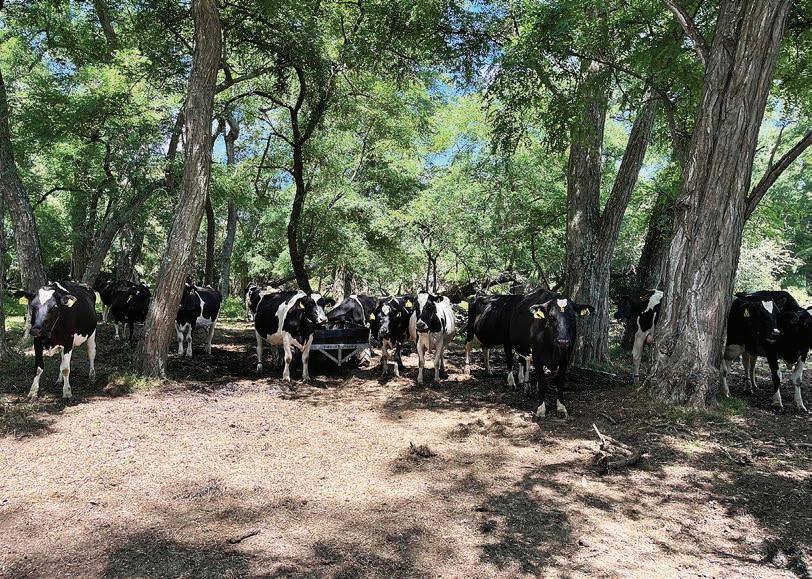
the programme, while getting an update on current progress.
“Our goal with testing this range of options is not to say, ‘This is what you should put in place’, but to provide information around a range of different strategies – a toolbox of options.
“A goal of the project is to better define how cows respond to heat load. With the volatile
weather experienced this summer, we’ve ended up with a comprehensive dataset that spans from cooler, wet days all the way to hot sunny days, which is very valuable.”
The research finishes its data collection for the trial on March 2. It will be analysed and published in November. It will also be written up as a scientific paper.
Crypto vaccine approved for New Zealand use
Staff reporter TECHNOLOGY
Animal welfare
A WORLD-FIRST vaccine that will reduce the impacts of a common and costly parasitic infection in newborn calves has been approved for use in New Zealand.
Bovilis Cryptium was developed by MSD Animal Health to help protect newborn calves from Cryptosporidium parvum, an infectious zoonotic parasite that causes cryptosporidiosis, one of the most significant gastrointestinal diseases affecting neonatal calves.
C parvum infection is more commonly referred to as crypto, and is a leading contributor to calves developing scours.
Bovilis Cryptium offers veterinarians and farmers their
first vaccine option for dealing with crypto in calves from birth, when they are most vulnerable.
When pregnant heifers and cows are vaccinated, they raise antibodies in their colostrum and pass on passive immunity against crypto infection to their newborn calves.
The new vaccine is also expected to reduce the risk of farm staff contracting cryptosporidiosis because the infection is less prevalent in calf-rearing sheds.
Recent Institute of Environmental Science and Research data released for the 3.5 years to July 2023 reported that human cases of cryptosporidiosis are consistently higher in September and October in New Zealand, coinciding with peak calfrearing season.
“It is a complex disease that, up
to now, has left a farm’s newborn calves, and the broader human and animal population, vulnerable and unprotected,” said MSD Animal Health New Zealand general manager Pauline Calvert.
“C parvum is a relentlessly challenging pathogen for dairy and beef farmers in New Zealand and worldwide. It is highly contagious and fast-spreading, and its contamination can be unavoidable
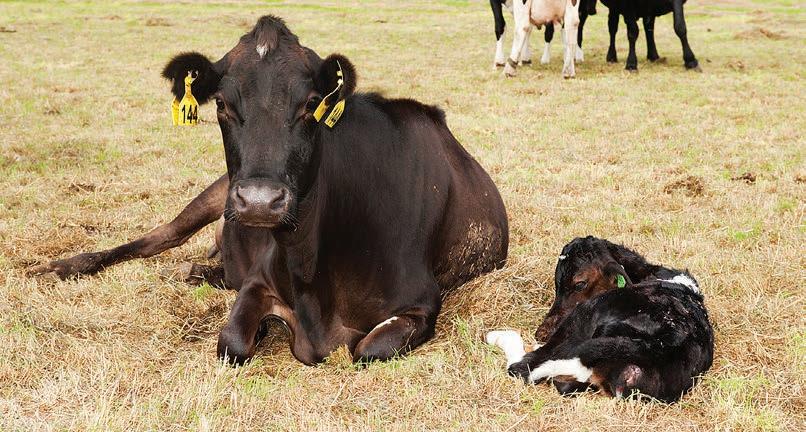
in environments where cattle live.”
A survey of 97 farms across the country found C parvum on 51% of farms where calves were sampled between 1-21 days of age.
Calvert said Bovilis Cryptium enhances the resistance of newborn calves to cryptosporidiosis infection, reducing the negative effects on herd health and daily farm operations. Having fewer calves requiring extra care will help to reduce labour requirements on farm.
The efficacy of Bovilis Cryptium was established in various field studies which showed it produces a strong immune response against C parvum in newborn calves fed with colostrum and transition milk from vaccinated pregnant heifers or cows, and significantly reduced clinical signs of crypto.
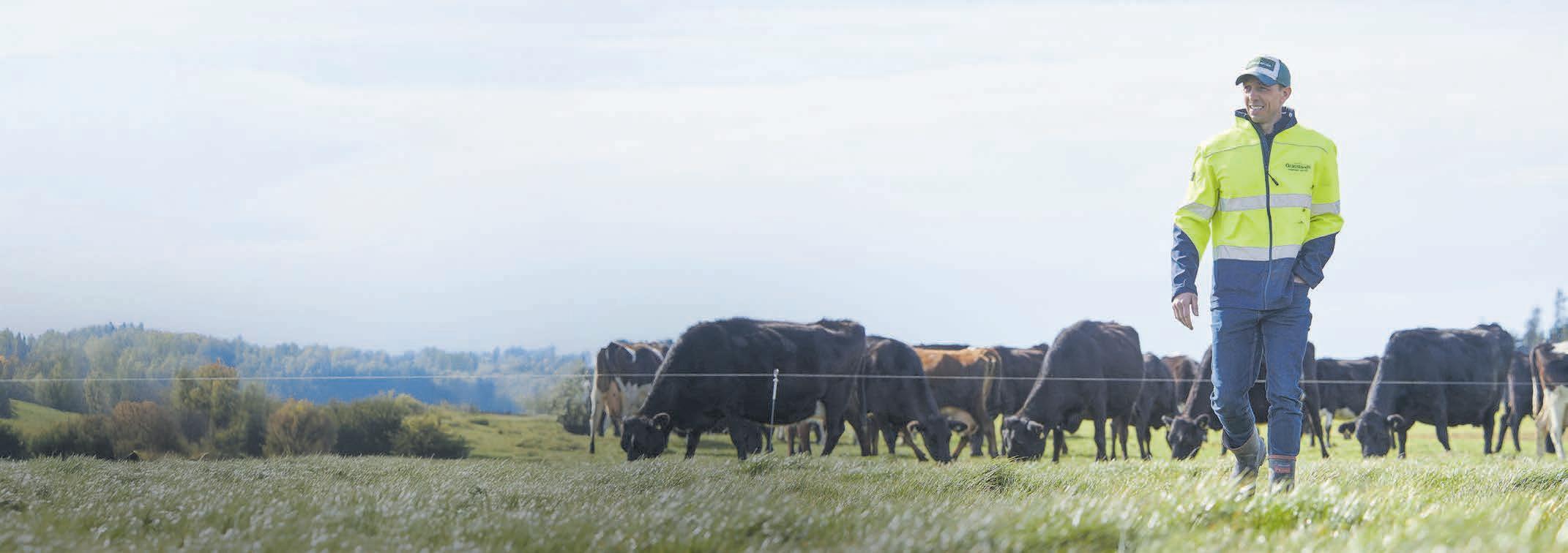
RAYS: The DairyNZ research into mitigating heat stress includes keeping a mob of cows in shade during the day.
OPTIONS: Bovilis Cryptium offers veterinarians and farmers their first vaccine option for dealing with crypto in calves from birth, when they are most vulnerable.
Farmers urged to check farm refrigerants
Staff reporter
NEW Zealand dairy farmers are being encouraged to take a closer look at the refrigerants running inside their on-farm systems, as international and domestic pressure continues to build on high global warming potential 400-series refrigerants. On dairy farms, refrigerants play a critical role in everyday operations. They are essential in milk cooling systems that protect milk quality and are also increasingly being used in heat pump technologies that provide hot water for plant, silo and equipment wash-downs.
According to refrigeration engineer and Eco2Energy founder Nick Papa, most existing dairy refrigeration systems were installed when 400-series refrigerants were the industry standard.
global warming potential (GWP) hydrofluorocarbons, and the remaining 10% made up of lower GWP refrigerants, particularly for milk cooling,” said Papa.
“That’s what the industry has relied on for years, but the landscape is changing.”
New Zealand is committed to an international phase-down of high GWP refrigerants under the Kigali Amendment to the Montreal Protocol. This international agreement requires participating countries, including New Zealand, to gradually reduce the production and use of hydrofluorocarbons –the category of gases that includes many commonly used 400-series refrigerants.
Papa said the key issue for farmers is not an overnight ban, but long-term certainty.
“Currently, around 70% of dairy farm refrigeration systems are running on 400-series refrigerants, with a further 20% using high
“The biggest risk for farmers is investing in equipment that becomes harder or more expensive to service over time as refrigerant availability tightens and costs increase.”
More sustainable glove now on hand for veterinarians
Staff reporter
A NEW glove offers a more sustainable alternative to single-use disposable gloves made of plastic.
Called the ReGLOVE, it is a 100%-recycled-plastic shoulderlength examination glove of the type common in veterinary work and on-farm tasks like calving assistance and DIY artificial insemination.
The ReGLOVE was developed by practising large animal veterinarian Jennifer Stone.
“I really believed that as an industry, we must find ways to do better,” she said. It maintains performance
standards tested in vet field conditions: durability for extended use, sensitivity for palpating structures, and reliability comparable to traditional gloves.
“Testing in the field was essential including by the toughest critic –me,” Stone said.
Veterinarians have long sought sustainable alternatives to virgin plastic disposables, which generate the majority of waste during procedures.
Past options – like biodegradable or compostable gloves, or onsite washing programmes – often underperformed in strength, safety, or practicality.
Stone works with large animals including dairy cattle and noted the disconnect.
This is particularly relevant when farmers are upgrading or replacing infrastructure that is expected to last 15 to 20 years or more.
Around 70% of dairy farm refrigeration systems are running on 400-series refrigerants.
Nick Papa Eco2Energy
“Milk cooling and hot water systems aren’t short-term investments,” said Papa. “They’re core pieces of farm infrastructure, so refrigerant choice is becoming part of future-proofing an operation.”
As farmers think more strategically about long-term certainty, some are beginning to explore alternatives to high-GWP refrigerants. One option gaining increasing attention is carbon dioxide (CO2), also known in the
“Vets routinely guide farmers on sustainable practices, from resource efficiency to environmental management.
“Yet our daily use of virgin plastic single-use gloves – for calvings, exams, AI, and more – contributed to landfill waste without good alternatives.”
Feedback from vet clinics, pharmaceutical suppliers, and breeding companies has been tremendous, with the New Zealand Veterinary Association supporting and highlighting it on their website and in their publications, Stone said.
Launched last year, the ReGLOVE is now available nationwide through distributors SVS Veterinary Supplies and Fortis. Farm store availability is coming soon, Stone said.
refrigeration industry as R744.
He said CO2 is a versatile refrigerant that can be used in different ways on farm, depending on how a system is designed. At Eco2Energy, CO2 is used specifically in heat pump technology to produce hightemperature hot water for dairy shed cleaning and hygiene.
“Modern CO2 heat pump systems are very efficient at recovering and upgrading heat,” he said.
“That means farmers can produce consistent, hightemperature hot water using significantly less electricity. The flow-on benefits can include lower power bills, reduced emissions associated with water heating, and more reliable wash performance.”
He said he encourages dairy farmers to plan proactively.
“Understanding how refrigerants are used on farm, and where things are heading, helps avoid surprises and supports confident long-term decision-making.”
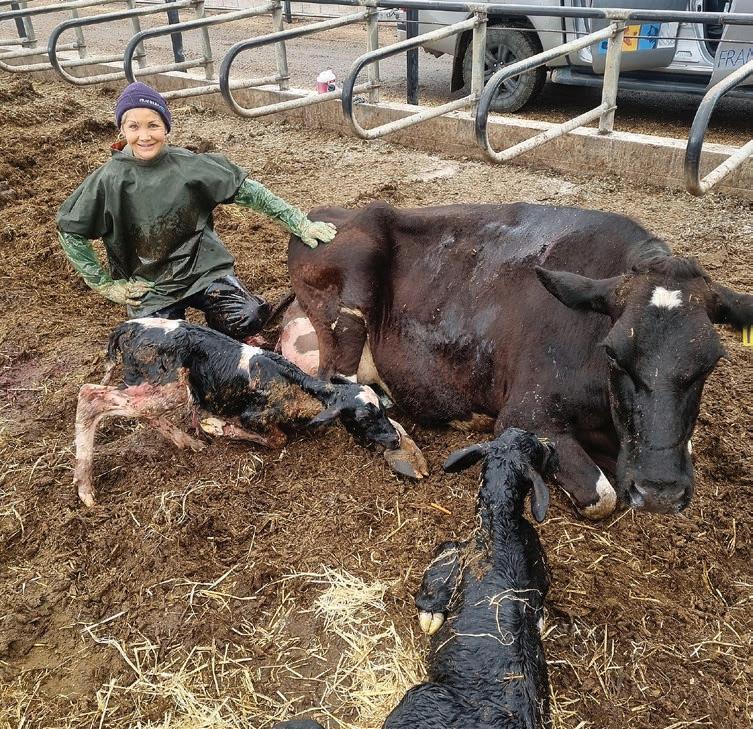
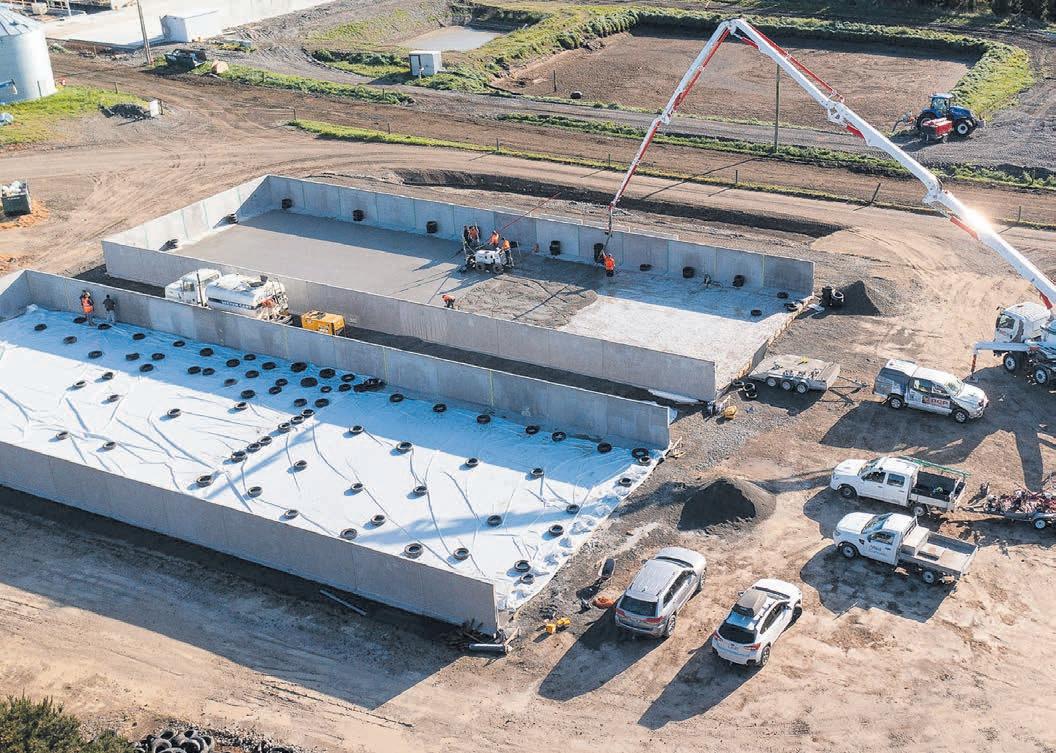
OLD SCHOOL: Eco2Energy founder
Nick Papa says most existing dairy refrigeration systems were installed when 400-series refrigerants were the industry standard.
RECYCLED: Practising large animal veterinarian Jennifer Stone developed ReGLOVE, a100% recycled plastic shoulder-length examination glove.
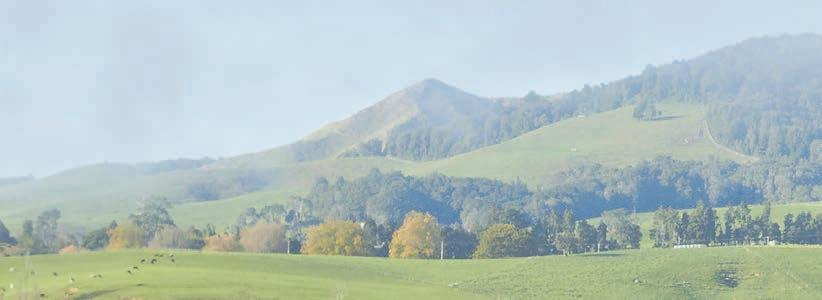
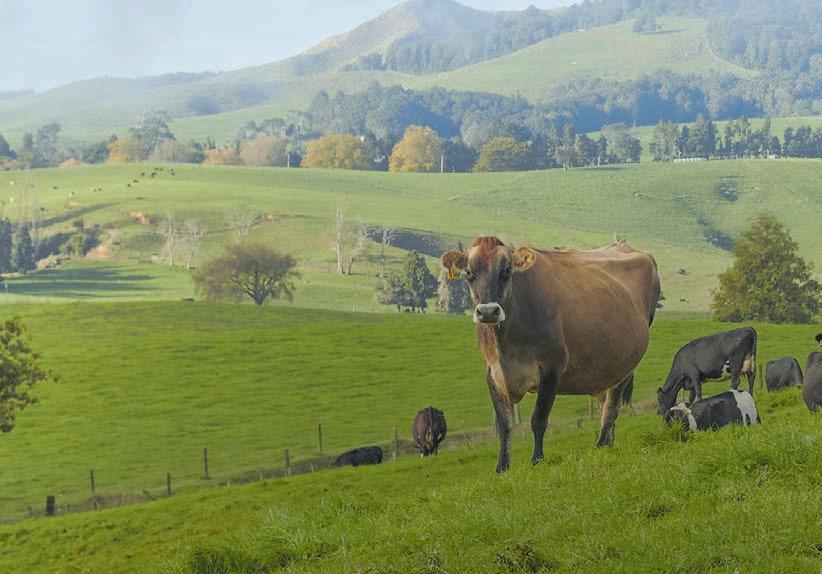
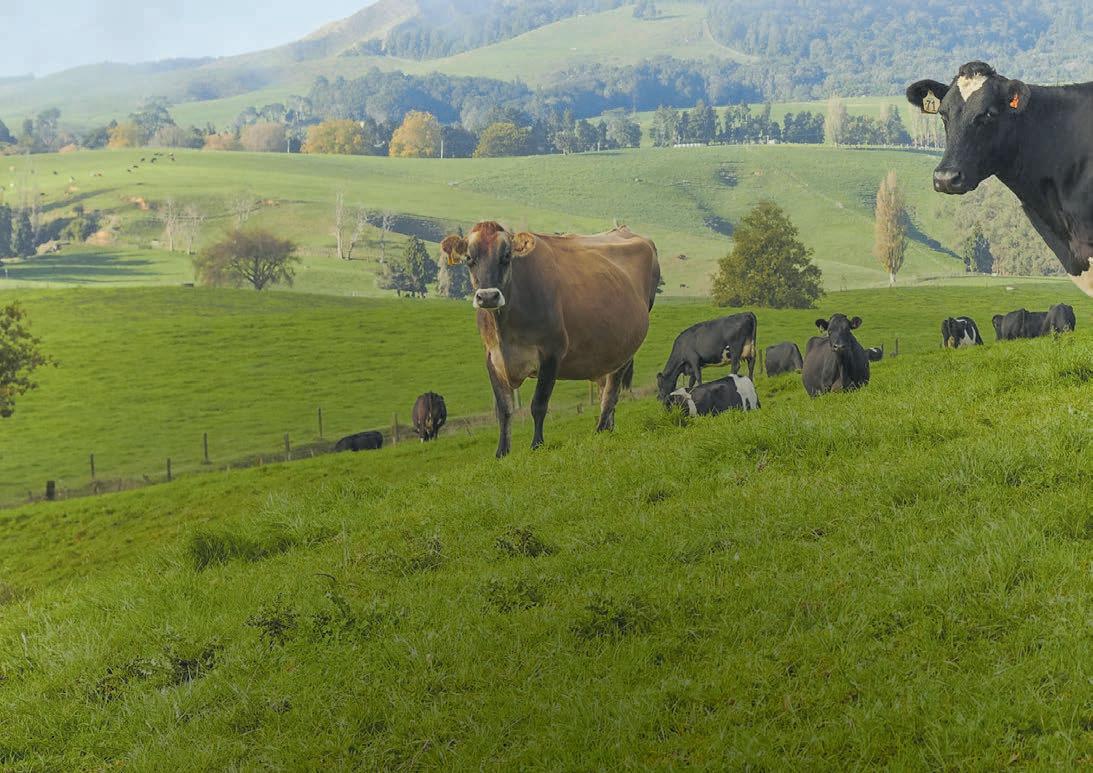
Research and expertise crucial to delivering a positive future for dair y
New Zealand is a small nation, yet we achieve might y results on the international stage. The dair y sector is a prime example Employing just 1.8% of New Zealand’s workforce, dair y contributes nearly a third of the countr y ’s total exports and remains our largest export earner.
This success is built on collec tive investment
Just as milk is collec ted and pooled from several farms in an area, farmer s al so collec tively invest in the sec tor via the Milk solids lev y Working together allows farmer s and the sec tor greater access to government and international co -funding, sec tor par tner ships, and innovation that would be difficult for individual farmer s to achieve alone
D air yNZ is focused on ensuring the lev y is our farmer s ’ best investment We take a transparent approach investing in science, research, advocac y and farm ex tension for our farmer s Ever y investment is determined on its abilit y to drive produc tivit y, strengthen
farm systems, and compete on sustainabilit y
It pays off An independent repor t found D air yNZ’s lev yfunded work delivered a seven-fold return, generating an estimated $2 9 8 billion in value from $341 million of lev y revenue
Research into action
D air yNZ continues to invest in independent science and robust research and development that addresses on-farm challenges and emerging oppor tunities, with a clear focus on delivering prac tical, implementable knowledge for farmer s More than 10 0 0 farmer s direc tly contribute to research projec ts, and strategic par tner ships ensure findings can be delivered at scale across the countr y
Recent results show promising value The Emissions and Profitabilit y projec t, using data from around 80 0 0 farms, identified that the key to high profit and low emission intensit y is using low footprint feed to achieve good, but not exceptional, milk produc tion per kilogram
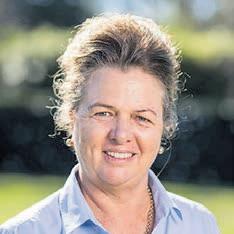
By Tracy Brown, Dair yNZ Chair
liveweight Crucially, the pr o confirmed all farms have realistic oppor tunities to reduce emissions intensit y without compromising profitabilit y A second phase will look at deepening the sec tor’s under standing of the driver s bet ween profit, produc tion, and environmental footprint
jec t shows this system has promise,
both for profitabilit y and for reducing pressures such as labour shor tages and nonreplacement calves The trial now includes Jer sey herds and a commercial-scale pilot farm
Full detail s of our research can be found on dair ynz .co.nz/re se arch
Our Plantain Programme al so continues to demonstrate its value Multiple year s of farmlet trial s show that modest level s of plantain in pastures can significantly reduce nitrogen leaching Preliminar y findings from Lincoln Univer sit y and Massey Univer sit y both showed an average 26% reduc tion in nitrate leaching when plantain made up 17–25% of pasture composition This programme provides farmer s with prac tical, science -backed proof that low- cost options can achieve significant reduc tions in N leaching and meet environmental goal s, without impac ting the farm system
Another major focus is ex tended lac tation systems At D air yNZ’s Scot t Farm, researcher s are testing a 24 -month calving inter val compared with the usual 12-month c ycle Early modelling
Building on this momentum
Kiwi dair y farmer s can help continue driving progress by voting in the Milk solids Lev y vote This is an oppor tunit y to come together, confirm another six year s of the lev y, and ensure D air yNZ continues to deliver value
For generations, your shared investment has enabled a strong, unified sec tor voice, greater government suppor t, and prac tical, future -focused polic y outcomes
And there’s more to get done I encourage those eligible to vote to reach out to any of your farmer- elec ted direc tor s to discuss our work and lev y vote
Let ’ s keep ahead Let ’ s vote –together






Farmers saddle up and turn to fitness
Winton dairy farmer Bart Luijten shares how cycling helps him keep fit and stay well on farm.
BART Luijten milks 450 cows and loves his farming and working outdoors. He’s been running his operation since 2004 and works with another staff member to milk twice a day.
“I enjoy managing my own business and the variety of work you do as a farmer. It’s a multi-skilled job. It’s really busy probably from July till Christmas time, and after that in summer it slows down a little bit.”
Which brings us to the reason we’re chatting – Bart’s entered a series of cycle races in Otago called Gravel in Paradise. He’s in the Ridestrong category for farmers and growers.
Bart’s always been a keen cyclist. He’s Dutch and grew up in a strong cycling culture. This is his third season competing in Gravel in Paradise. He’s also involved in a nationwide initiative called Rural Riders, which is the cycling equivalent of Surfing for Farmers.
“Rural Riders was developed for farmers who were living in the middle of New Zealand. We couldn’t get to the coast to go and surf, so we ride our bikes. So it’s basically the land version of surfing to farmers.
If you’re having a tough season just getting out on the bike for a couple of hours can make all the difference.
“Every Wednesday we try and get a group of farmers to go and do a bike ride.”
Bart sees Gravel in Paradise as a great way to achieve a healthy work-life balance.
“I think it’s good to have interests outside of farming; that’s probably the main reason I enter. It clears your head, because you have something else to think about than just the farm all the time. You also get to do some pretty cool rides and go to great places which is all part of it.”
He finds cycling’s also an effective stress buster.
“If you’re having a tough season just getting out on the bike for a couple of hours can make all the difference. You’re giving your brain a bit of a rest from the farm. You also get to meet people outside of farming and I think that’s a great benefit too. Even if you’re just riding with other farmers, you soon realise that if you’re in a tough spot during the season, other farmers are usually experiencing the same thing. You’re not just in it by yourself.”
He says cycling is a very achievable physical activity for people who aren’t necessarily into sport.
“I’m Dutch, so I’ve grown up with bikes my whole life, but I’m not great at other sports, so I feel biking is a really ideal, low-entry sport. As long as you can pedal and stay upright you can do everything at your own pace.
“You can just go out by yourself or you can find other groups to ride with and enjoy other people’s company. It passes the test of something physical that you can do even if you’re not an athlete. You can improve your fitness pretty quickly too if you just stick to riding.”
Bart says he racks up around 6000km a year on the bike.
“At calving time in August I might ride once a week but when I get into it over summer it might be six or seven hours a week.”
farmstrong.co.nz
These days he factors his cycling into the way he runs his business.
“I’m just looking outside now and thinking, ‘Oh, it’s nice today, there’s no wind, I’ve got someone else milking in the afternoon so I might just hop on my bike.’ You’ve got to realise that some of the farm jobs can wait for another day and tell yourself ‘I’ll get to them tomorrow,’ you know? I don’t find that hard, but I realise that other people might.”
He says the races aren’t a huge commitment. “You just turn up on the day and then it’s two and a half hours of your time. We’ll make a day of it with a group of friends and catch up and have a drink afterwards.”
Bart says last season was pretty challenging weather wise, which made him appreciate leaping on the bike even more.
“It makes it harder to go out but once the weather cleared up and I could get out more, you just start to feel better.”
A few years back Bart joined a group of people doing a cycle tour of the country in support of Farmstrong.
“That was an incentive for me to train so I could join that leg of the tour with them. That was the start of my biking, really.”
He’s been a committed cyclist and Farmstrong supporter ever since.
“I think there’s definitely a mental aspect to farming and there’s always room for improvement there. People are talking about these issues now which is important.”
“Everyone makes decisions in their own way, but sometimes if you feel like you’re getting stuck, it’s great to chat with mates and make a plan so you can keep moving forward. That hands you back a sense of control.”
Looking back at his farming career, Bart ponders what advice he’d offer someone starting out.
“This is an industry that still really rewards hard work but having work-life balance is important too. It’s not about having lots of time off, it’s about quality time off. There are certain times of the year where I don’t take any time off, but there has to be some time available during a season when you can do other things or take a couple of days off. If there’s not, I don’t think you’re structuring your business in the right way. You can keep working, but it just makes the job a lot harder.”
Bart’s best tip for handling challenging times is to find something positive in the day.
“Sometimes it’s as simple as turning off the quad bike on a fine day, taking in your surroundings and thinking ‘Oh, this is good’. You’ve got to appreciate those moments as well. You can’t just be head down the whole time. Sometimes you’ve got to step back a bit, take in the big picture and realise everything’s still looking good on farm.”
Gravel in Paradise
The 2026 Gravel in Paradise race schedule in Otago is: Feb 22 Alexandra, March 22 Palmerston, April 19 Omakau, May 9 Enfield. Head to the Gravel in Paradise website to enter the Ride Strong category and be in to win a $1200 Farmstrong travel voucher for a weekend away.
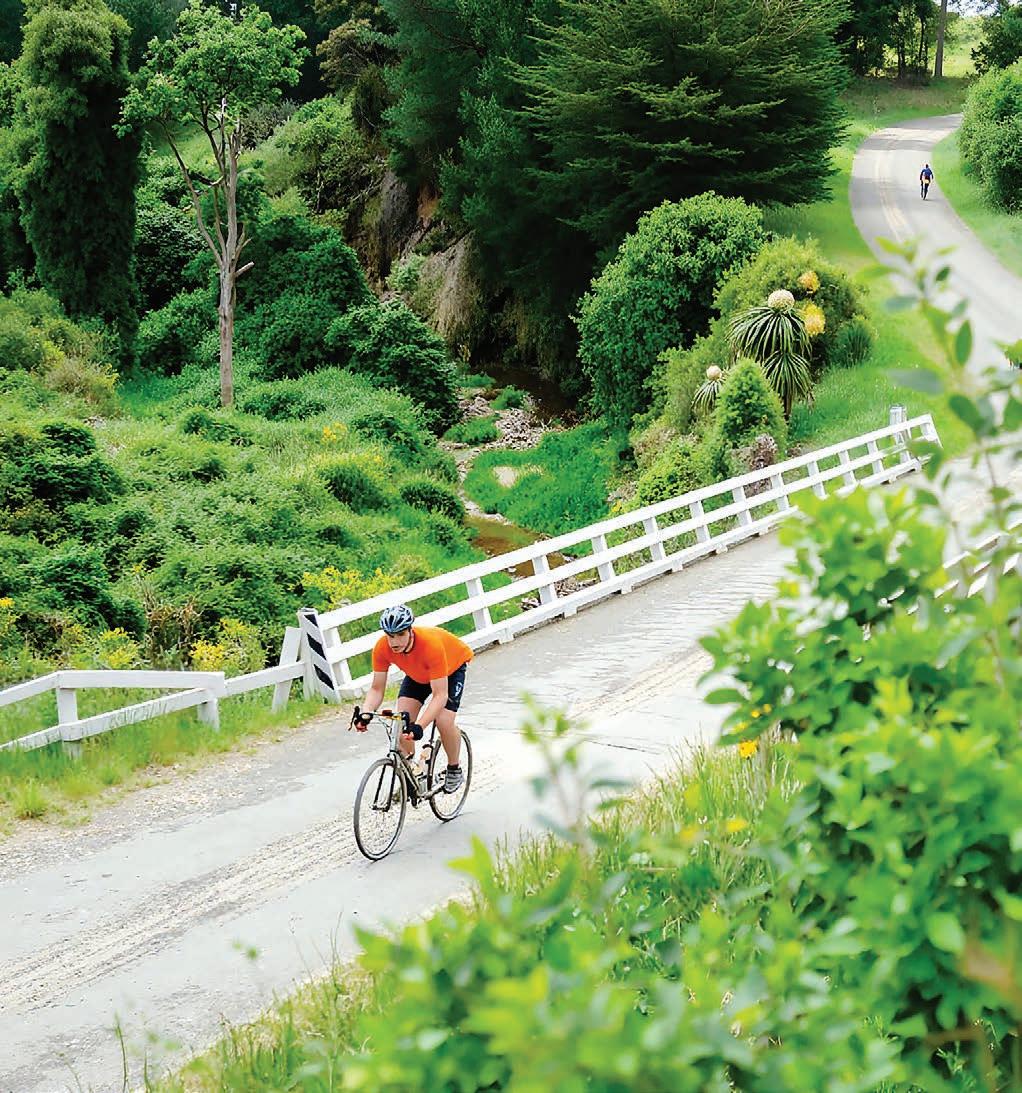
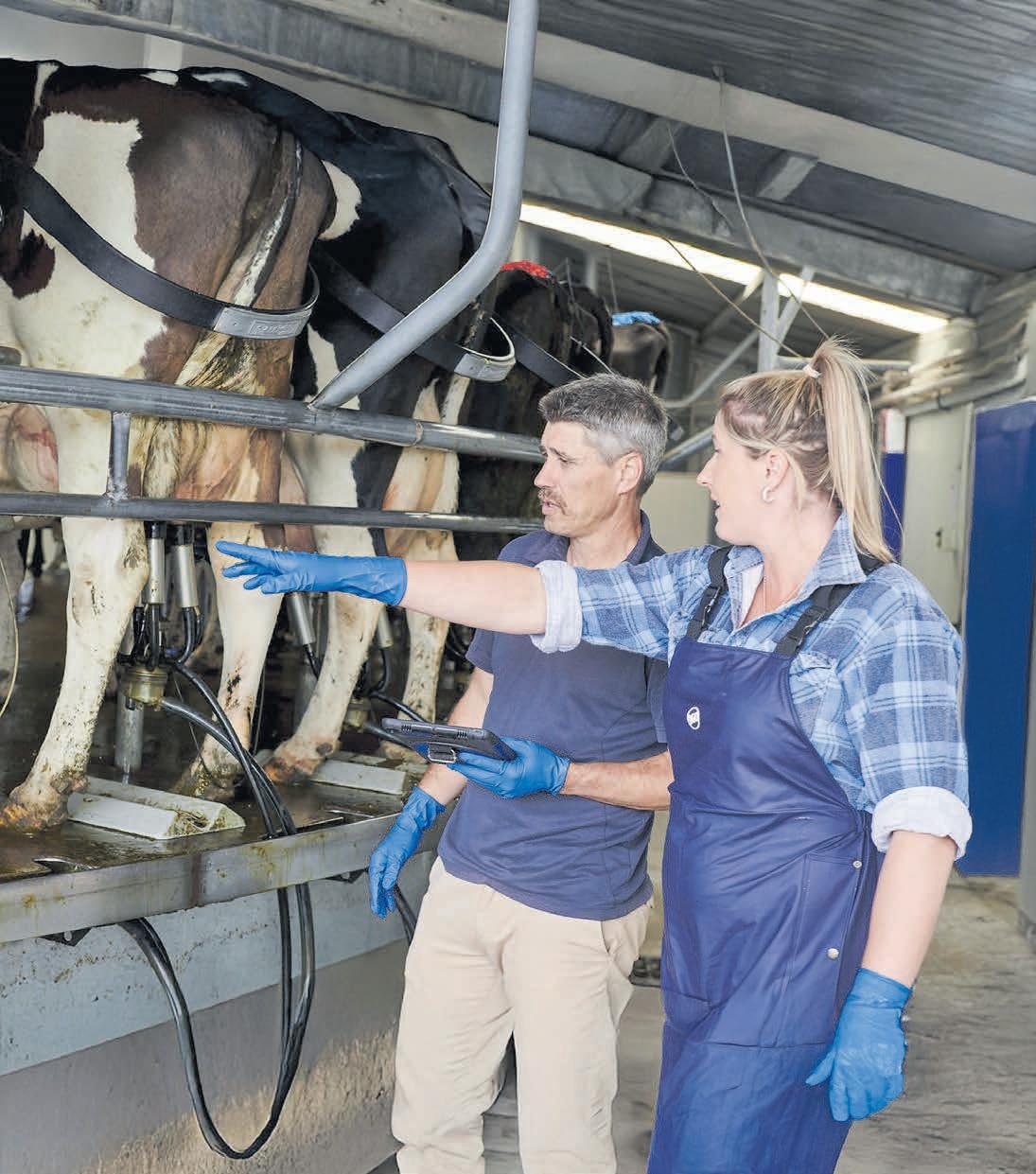
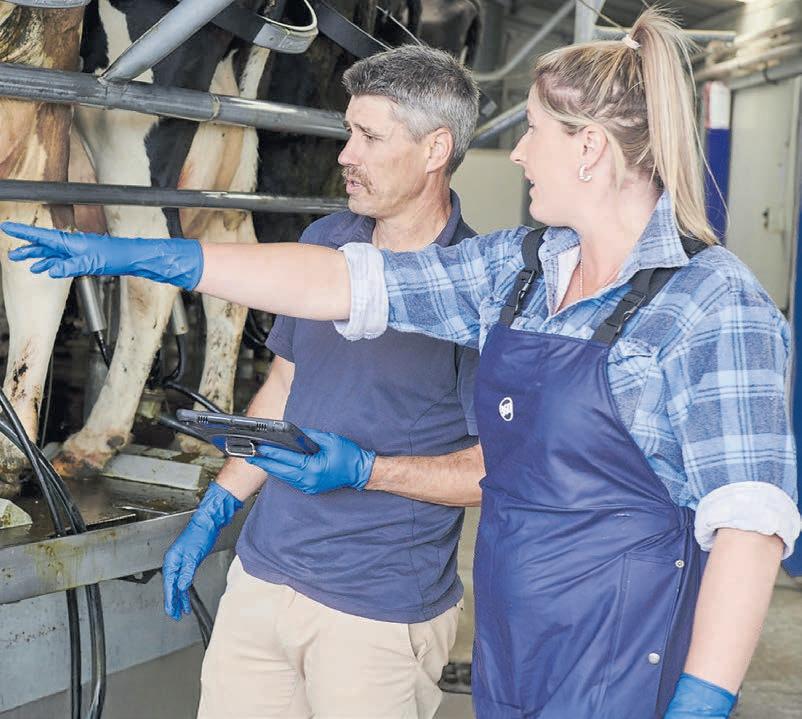
RIDING ON: Bart Luijten entered a series of cycle races in Otago called Gravel in Paradise. He’s in the Ridestrong category for farmers and growers.
How trace minerals are affecting your dry cows
In
my view
Chris Balemi Balemi is founder and managing director of Agvance Nutrition
TRACE minerals matter in the dry period. If levels are not balanced through wintering and late pregnancy, you can’t fix it in the week before calving. The signs are often subtle and don’t point to one clear cause. You might see herds slower to finish paddocks, decreased appetite, cows not holding or regaining condition, lighter calves at birth, or more health issues than normal.
Why it can be hard to determine
Trace mineral shortfalls often look like energy or protein gaps, parasites, or infection. Poor energy, slower growth and lower immunity can come from many places. Those signs are still useful, but they are not a diagnosis.
If you suspect a trace mineral issue, testing with your vet is the most reliable and cost-effective starting point.
A test-and-plan approach helps you to better target expenditure and reduces the risk of toxicity from over-supplementation.
The big five for NZ dry cows
• Cobalt:
Rumen microbes synthesise cobalt into vitamin B12. In turn, vitamin B12 supports energy use, appetite and fetal growth during the dry period.
Deficiency signs include ill thrift, slow condition recovery, dull coat, and slower-growing calves. Risk can be higher on hill country, peat soils, and blocks with a low fertiliser history. Your vet can run both blood serum and liver B12 tests.
• Copper:
Copper supports immunity, coat condition, wound healing and fertility. Early signs can be rough coats, increased mastitis, and infertility. Low copper can be linked to soils or feeds high in molybdenum, sulphur or iron. Liver copper is the best test. Some feeds, such as PKE, can add copper, so testing can be important to quantify supplementation requirements.
• Iodine:
Iodine supports thyroid function and fetal development. If cows are short through late pregnancy, calves can be weaker at birth and slower to suckle. Risk can rise during the dry period if cows are on low-iodine soils and where diets contain goitrogens. Testing includes plasma inorganic iodine and/or serum T4.
• Selenium:
Selenium supports antioxidant function, muscle function and immune response. If status is low during the dry period, you can see more calf muscle issues at birth, higher perinatal losses, and slower recovery from infections. Risk is higher in low-selenium areas, including parts of the South Island and some low-rainfall zones in the North Island.
Test using whole blood or serum selenium. Selenium toxicity is serious, so test before changing supplementation. Inorganic selenium, which is the form most commonly supplemented in NZ, primarily circulates at the blood level only and tends to transit the body quite quickly.
Organic forms of Se, which are derived naturally from the diet or supplemented specifically in that form, will store and remain active at the cell level. This form is much more effective.
• Zinc:
Zinc supports skin and hoof
integrity, immune response and wound healing, plus teat and skin health. Watch for skin or udder lesions, slow healing wounds, hoof issues, and reduced appetite or growth.
Risk can be higher on leached, acidic soils, in some intensive systems, or where pasture zinc is low. Zinc can be tested in the blood.
Brassica wintering and iodine risk
Brassicas are a common winter feed, but some contain goitrogenic compounds that can interfere with both iodine and selenium uptake. This can negatively affect thyroid hormone production, immunity and liver function.
If brassicas make up a large part of the winter diet, consider herdlevel testing well before calving.
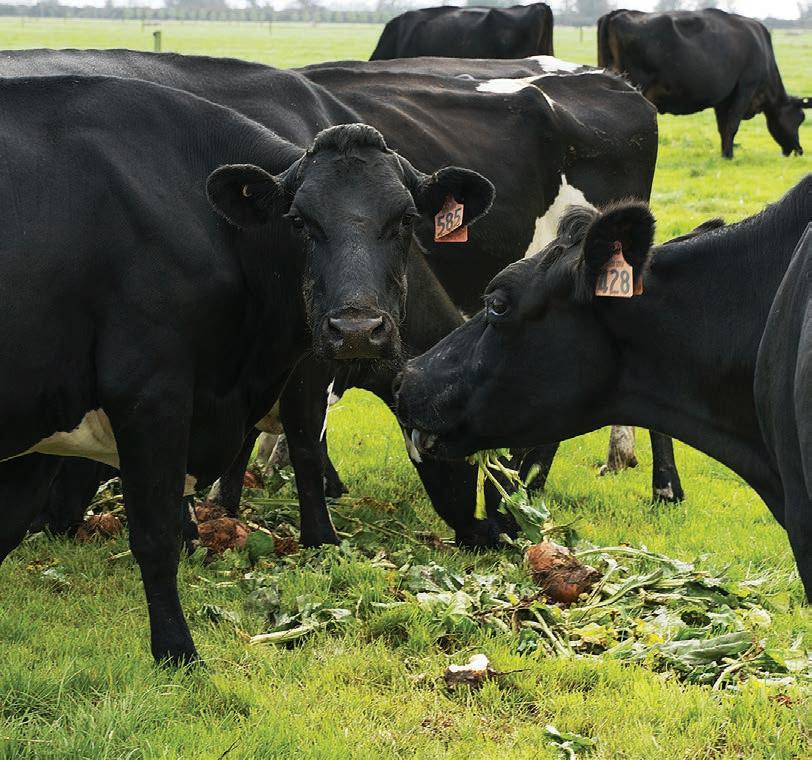
Get a dry period plan
Pinpoint the risk periods early in the dry season, test and interpret results with your vet, use a
supplementation method you can apply consistently, then retest and track cow and calf outcomes at calving.
Leadership looms large at SIDE
Staff reporter NEWS Events
THE South Island Dairy Event, or SIDE, returns to Lincoln University on April 13-15, bringing a focus on the future of dairy farming and the people shaping it.
This year’s theme is Empowering Tomorrow’s Leaders to Turn Knowledge into Value. Over three days, attendees will take part in 10 interactive workshops designed to spark conversation, challenge thinking and drive innovation.
The programme includes a field trip to an apple orchard and a new dairy conversion, alongside keynote speaker sessions.
Those sessions include the Legends and Leaders of Dairy,
with Colin Glass, Leonie Guiney and Will Grayling.
All at different stages of their wealth journey, they will share what’s worked, what’s changed, and what still holds true, while challenging the idea that “it was easier back then”.
It is very much an event for our future generation and future leaders, organised by our future leaders.
Glenn Jones
SIDE Governance Group
Event committee chair Tom Chapman said the power of SIDE lies in its authenticity.
“Farmers speaking directly to farmers in our interactive
workshops creates a dynamic where theory translates into practice right before your eyes.”
This year’s event further highlights SIDE’s focus on developing leadership within the dairy sector. It was organised entirely by a committee of industry leaders who are actively progressing through roles such as equity partnerships, contract milking and farm management, bringing real-world experience and fresh perspective to the programme.
SIDE Governance Group chair Glenn Jones said it is going to be a conference that will really appeal to their colleagues or others in a similar position.
“It is very much an event for our future generation and future leaders, organised by our future leaders.”
GAPS: Trace mineral shortfalls often look like energy or protein gaps, parasites, or infection.
Photo: Supplied
Ayrshire breed shines at NZ Dairy Event
THE Gilbert family are reflecting on a stellar New Zealand Dairy Event in Feilding after their entries took out several of the show’s top awards.
Those included the Supreme All Breeds Exhibit, the Supreme All Breeds Intermediate Champion, the Grand Champion Holstein, Reserve Champion Holstein, Intermediate Champion Holstein, and the Junior Champion in the Combined Breeds.
The Gilberts’ entries were shared between Hamilton-based Luke, who runs Showcase Boarding –a business that prepares cattle for showing – and his brothers Michael and Nick, both of whom farm in Ashburton.
Both the Supreme All Breeds Exhibit and Intermediate winners were Ayrshire. The Exhibit winner, Kiteroa Cream Bubbette, is owned by Ōhaupō farmers Zane and Marie Kite and had been boarding with Luke before the event.
The Supreme All Breeds Intermediate, Glenalla Reynolds Dawn, is owned and bred by the Gilberts, who also exhibited, bred and owned the Grand and Intermediate Champion Holsteins and prepared the Reserve
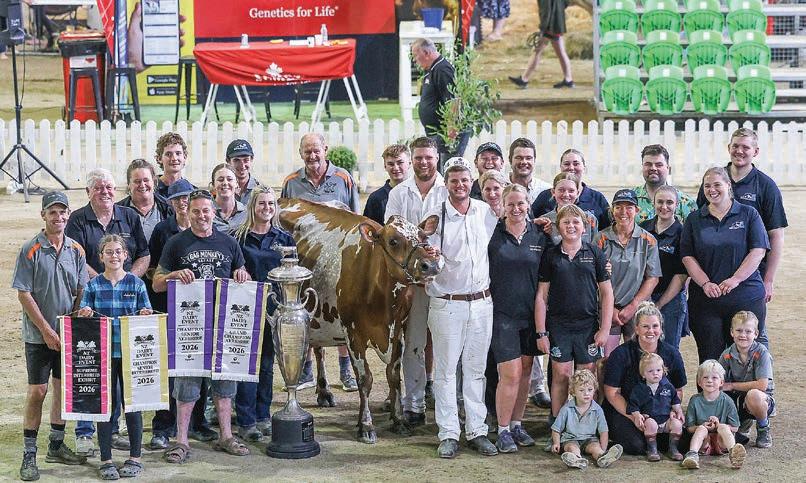
BANNERS: Supreme Champion Exhibit of the show Kiteroa Cream Bubbette with her banners and the team that made it happen.
Champion Holstein with her owners, Charbelle Holsteins.
Zane Kite said getting Luke to prepare Bubbette professionally made sense. The same cow was also the 2021 NZ Dairy Event’s Intermediate Champion Ayrshire.
It was a “wicked Ayrshire” show, and while Kite said he was thrilled on the day it is now business as usual for their champion.
“I was blown away at the time and of course it’s a massive buzz, but now it’s back to reality I guess.
“I will say though that the achievement will live on for a fair while, and we’ll acknowledge it, accept it, and be really proud of it.”
Michael Gilbert said the event
Photos: Sheila Sundborg
was a success on more than one level.
“The thing we were the most happy with is that of the 43 animals we prepared, we bought everything out as good as we possibly could, particularly the milkers.
“To get 21 milkers out in one day was something we’d never done before, and it’s pretty hard to get that right.
“Not to mention that we were obviously looking after other people’s animals, so there’s always that added pressure too. We tied in with Charbelle Holsteins for the week and we couldn’t have done it without their help.”
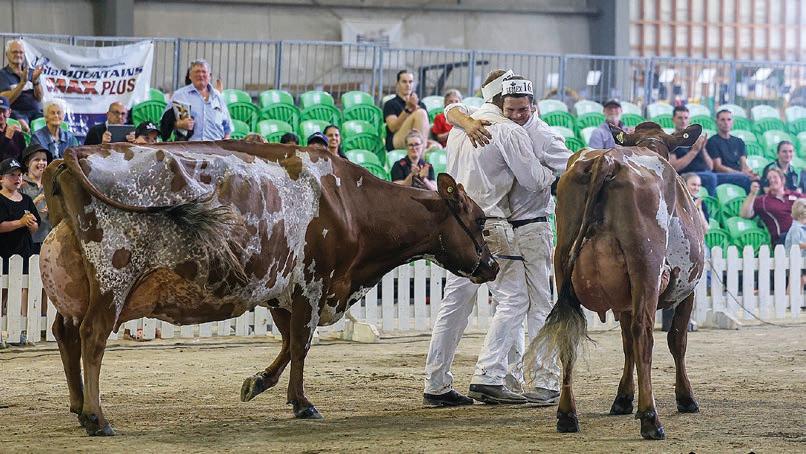
AYRSHIRES: Luke, left, and Michael Gilbert celebrate winning the Supreme All Breeds Exhibit and Supreme All Breeds Intermediate Champion, both Ayrshires, owned by exhibitors Kiteroa Ayrshires and the Gilbert family respectively.
Other winners at the event included Pat and Shelley Schnuriger, who had never won a broad ribbon at the NZ Dairy Event until this year, winning the Senior Heifer Calf category.
Ferdon Genetics’ Warren and Michelle Ferguson could not have had a better lead-in to their upcoming sale on April 22 after Ferdon was the prefix on all three of the Senior Jersey Champions.
Warren was also the 2026 recipient of the NZ Dairy Event Outstanding Achievement and Service Award, which he said had to also include Michelle and his family.
“There’s no ‘I’ in Warren,” he said.
The Combined Breeds categories were judged by expatriate New Zealander Brent Crothers, who now lives in the United Kingdom. Brown Swiss entries had a strong show in this category, taking out the Grand and Junior Champion awards.
In the youth section, the Supreme Champion was Bullseye Leigh, who was exhibited by Lucy O’Reilly from Tirau.
Entries exhibitor numbers were up by close to 10% overall. That included 10 more exhibitors and a total of 403 animals that were entered.
Every health issue in your herd has a cost
Treatments, antibiotics, lost milk, extra labour and involuntary culls all chip away at your bottom line. Often quietly. Often without you noticing. But over a season, those losses add up fast.
The difference is acting early. With smaXtec, you get reliable health data from inside the cow, straight into your pocket – including internal body temperature, water intake and drinking cycles, rumination and activity – so you can detect health issues at the very first immune response, long before clinical signs appear. That gives you time to act, keep cows healthy,
protect production and avoid unnecessary losses.
Proactive health management that pays off
Hayden Slack from Waiuku, Auckland, saw the impact straight away on his 305-cow farm: “We only had one down cow all calving. Before smaXtec we used to have around 10 to 15. The internal temperature alerts picked up milk fever early so we could act straight away. No wasting half an hour minimum on each down cow, no cows lost, no loss of production. I reckon it saved us around $7.5k … and a lot of stress.”
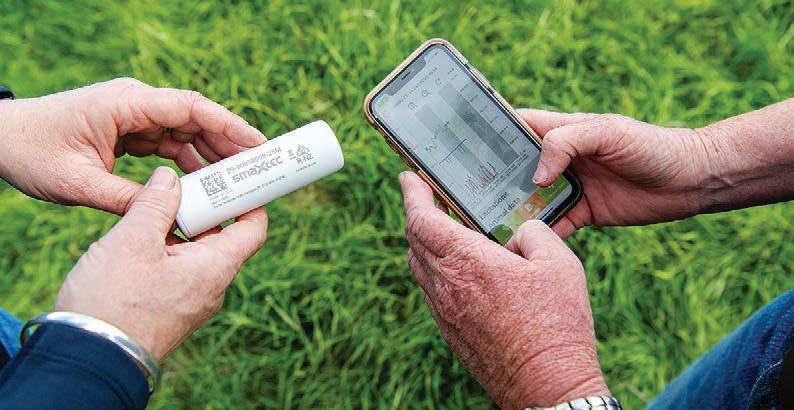
Fewer down cows, less labour, no production losses – and real savings where it counts.
On a larger scale, Sara Russel from Ashburton, milking 750 cows, saw the benefits across her entire operation: “The smaXtec system has saved us around $36,000 in direct antibiotic costs and $6500 in scratchies which we didn’t have to buy for heat detection this season.”
Better
health. Better margins
Beyond the obvious savings, smaXtec helps keep your season on track: fewer treatments, no milk losses from withholding, cows reaching peak production without health setbacks and reproduction staying on schedule. These benefits don’t always show up on a single invoice – but they show clearly in the milk tank at the end of the day.
Back smaXtec and make herd health work for your bottom line.
Give us a call on 029 129 7047 or visit www.smaxtec.com/en/ new-zealand/
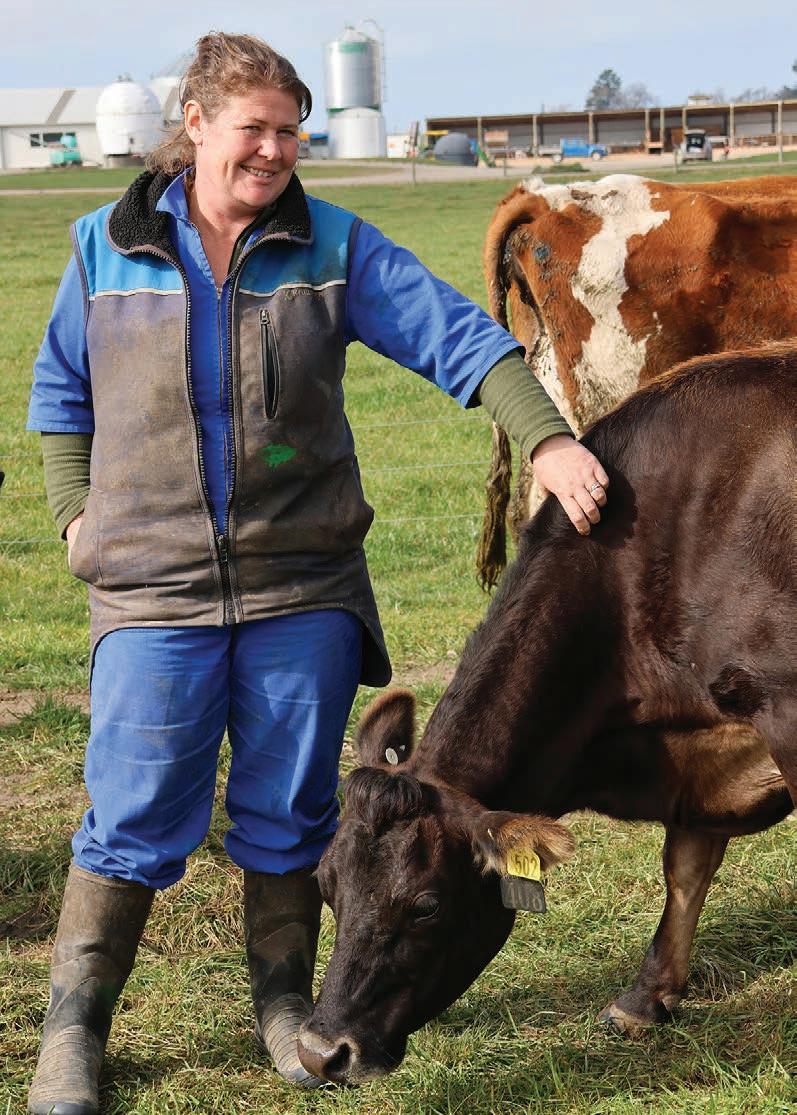
Sara Russel, from Ashburton, says the smaXtec system has saved her around $36,000 in direct antibiotic costs.
With smaXtec, you get reliable health data from inside the cow, straight into your pocket.



Backbone of rural NZ deserves fair pay
WHEN the Equal Pay Amendment Act was passed under urgency in 2025, Rural Women New Zealand warned it would hurt rural communities.
With the launch of the People’s Select Committee on Pay Equity report, rural women are still waiting for the Government to listen.
The People’s Select Committee was formed in May 2025 by 10 former women MPs from across the political spectrum, in response to the legislation passing without public consultation.
Over 1500 submissions were received, overwhelmingly opposing the reforms. Its findings are clear: pay equity is not abstract or optional. It directly affects the wellbeing, survival and sustainability of workers, their families, and the essential services their communities rely on.
Pay equity means women are paid the same as men for different work which has the same or similar level of skill, responsibility, effort, and working conditions.
For rural New Zealand, this is not a policy debate. It is a question of whether their communities are sustainable in the long term.
“Pay equity is not just about an individual’s pay packet, it’s about whether families can afford to put down roots in rural communities,” says Sandra Kirby, Chief Executive of Rural Women New Zealand.
“When women in health, education and community services are not paid enough to support their families, rural communities lose them, and everyone suffers.”
The Act scrapped 33 active pay equity claims and introduced tougher eligibility thresholds, including a requirement that
workforces be at least 70% female over 10 consecutive years to bring a claim. For rural New Zealand, that threshold is unworkable.
“A small rural health clinic or ECE centre might meet the 70% threshold most years, but not every year, and that could rule them out entirely,” says Kirby.
“That is not a fair or workable system.”
When RWNZ surveyed its members ahead of its 2025 submission, 73% were concerned about the Government’s changes, and 75% feared these changes would affect the sustainability of rural healthcare and education.
One in three knew a woman in their life who may be directly impacted. These are not statistics about distant policy consequences. They are about the women keeping towns and services going across rural New Zealand.
“We know from our members that rural communities were already struggling to attract and retain staff before these reforms.
Pay inequity was one of many factors driving that, and the Equal Pay Amendment Act only makes it harder.”
Lynne Pillay, member of the People’s Select Committee on Pay Equity acknowledged Rural Women New Zealand’s submission at the report launch and the impact the change had on rural communities.
Pillay shared committee members “heard a pay equity claim for over 120 rural midwives, already assessed as fully comparable, was wiped out overnight”.
“With recent extreme weather events, we’ve seen how much rural communities rely on people just turning up for each other; and that’s why the rural submissions were devastating.”
The sectors most affectedhealth, education and community

RESPONDING: The People’s Select Committee was formed in May 2025 by 10 former women MPs from across the political spectrum, in response to the legislation passing without public consultation.

Women’s lives do not follow a linear pattern. Rural women take career breaks for children, for the farm, for their communities, and then come back.
Sandra Kirby Rural Women New Zealand
services - are overwhelmingly staffed by women and are the lifeblood of rural towns.
In many rural communities, the local nurse, the early childhood teacher, the social worker are not just service providers. They are neighbours, volunteers, the people who show up when things get hard. When those roles become impossible to fill, it is not just a workforce problem. It is a community one.
The women who hold these roles have often built their careers around far more than a job description, feeding into long term
gender pay gaps. A rural woman might step back from paid work to raise children or support a partner through a busy season on the farm, then return years later with a depth of experience that no CV captures.
Pay and progression structures were not built with that kind of career in mind, and rural women have paid the price for it long before this legislation came along.
“Women’s lives do not follow a linear pattern. Rural women take career breaks for children, for the farm, for their communities, and then come back. We have to recognise that lived experience as the real workplace experience it is, not penalise them for it,” says Kirby.
That contribution extends well beyond paid work.
“We know that rural women are overrepresented in both the volunteer and paid workforces of their communities. They power our health services, our schools, our not-for-profits.
“The question we have to ask is how much do we actually value
that contribution, and are we prepared to back it with fair pay.”
The economic case is one rural employers understand well. Recruitment and retention are a significant cost for rural businesses and organisations. When roles go unfilled or staff move on, the whole community absorbs that cost. Fair pay changes the equation.
“The evidence is clear that improved recruitment and retention makes pay equity a positive return on investment. This is not a cost, but an investment in rural communities.”
RWNZ is calling on the Government to reinstate the 33 discontinued claims, lower the female-dominance threshold, and ensure smaller rural employers are supported to participate in the pay equity process.
“This is not a new fight. Rural Women New Zealand has been advocating for rural women for over 100 years, and ensuring fair pay for the women who power our rural communities is as important today as it has ever been.”
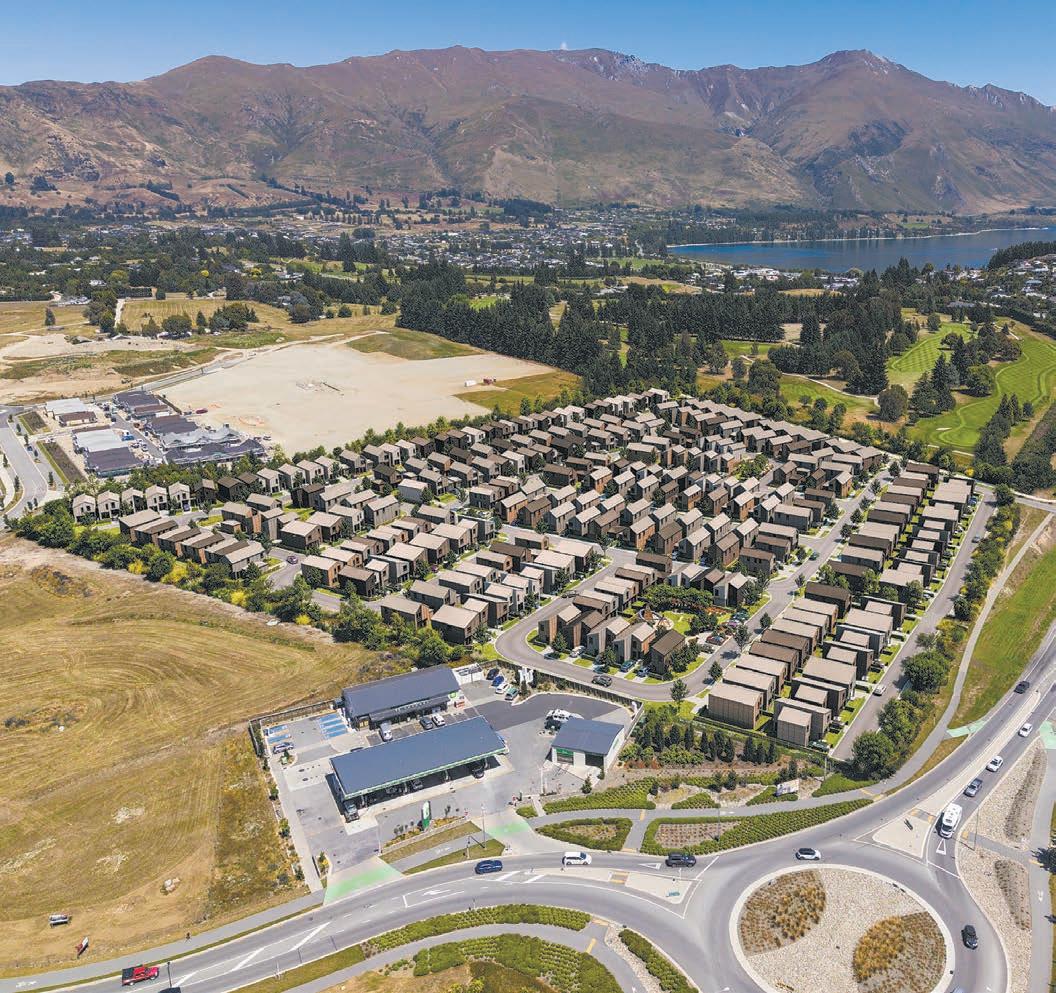


Anna-Grace Somerfield
PGG Wrightson supports RWNZ in centennial year
RURAL Women New Zealand has received $40,000 from PGG Wrightson’s Growing the Country programme to continue supporting rural women and communities.
Growing the Country supports the resilience, sustainability and wellbeing of rural communities by providing financial support.
Over summer the cooperative partnered with its fencing and water suppliers, and with every $100 spent $1 was donated to Rural Women New Zealand.
I joined Rural Women because I was looking for connection . . . I wanted to be around women who understood what it is like for us.
“Women are the backbone and heart of New Zealand’s rural communities—from family life, supporting local schools and clubs, running businesses, and volunteering their time wherever it’s needed most,” says PGG Wrightson
Chief Executive Stephen Guerin.
“Their contribution is invaluable and there is one organisation dedicated to supporting these women.
“Members of Rural Women New Zealand are our customers, our team members, our family, and our friends.
“As a people business, it is important to PGG Wrightson to support the people and the organisations making our lives better and what better decision than an organisation that has been doing just that for 100 years. PGW extends heartfelt thanks to its suppliers — Cyclone, Hynds Pipes, PermaPine, Waters & Farr and RX Plastics — and its customers who helped make this donation possible.”
Rural Women New Zealand is currently celebrating its centennial year, and has provided 100 years of support, connection and advocacy for rural women and communities.
“Our members are in rural communities across the country; we are inter-generational, community champions, entrepreneurs, businesswomen, mothers, grandmother’s and daughters,” says Rural Women Chief Executive Sandra Kirby.

Entries to the NZI Rural Women Business Awards are currently open, and Rural Women New Zealand is encouraging people to apply, visit ruralwomennz.nz for more.
Meet the women of Rural Women New Zealand
Emma Burke
For one woman of the land, Emma Burke, belonging is more than a postcode.
“I was born and bred on the land, from the back blocks of Wairoa,” says Emma.
She and her husband have spent their lives in Gisborne, Southland, Hawkes Bay, and now have settled in Canterbury nearly two years ago.
Though loving Springfield, Emma was finding it hard to meet new people, until she read about the local coffee group.
“I met Michelle Martin. She was wearing dog whistle earrings and knew she had to be a farmer. We clicked immediately. Then she told me about Rural Women and said I should come along. I have never looked back.
“I joined Rural Women because I was looking for connection. I









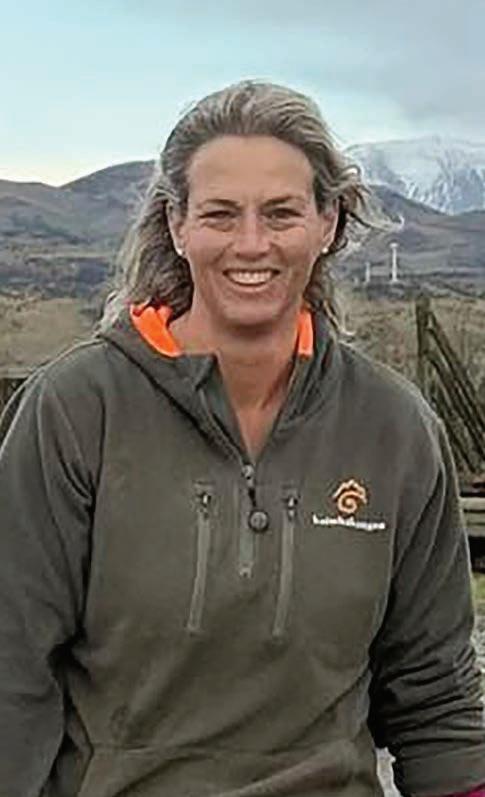
AT HOME: Emma Burke says belonging is more than a postcode.
did not just want another club; I wanted to be around women who understood what it is like for us,” says Emma.
Nicola Rae
Raised on a sheep and beef farm in South Otago, member Nicola Rae has exchanged farm living for living on a lifestyle block. She and her husband Andrew run Weka Landscaping and garden shop in Central Otago.
Volunteering is a central theme of Nicola’s life, from the Alexandra Parents Centre to Victim Support, but her connection with RWNZ did not start as a volunteer role.




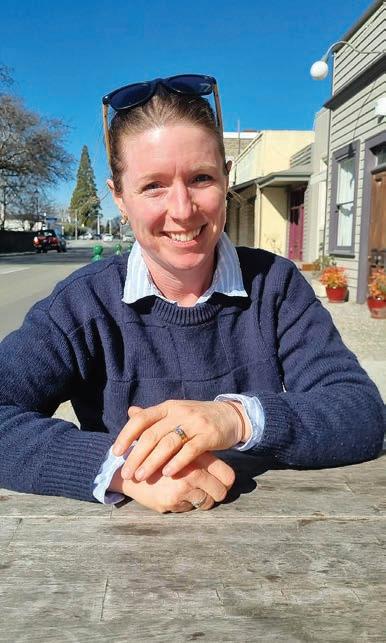
“Around three years ago, I saw their Activator programme advertised in the local paper. It was kind of a Dragon’s Den scenario, and I applied. The experience was awesome; I got to take an idea and make it tangible.”
Nicola also started a dinner group to continue fostering connections locally.
“It is a supportive, inclusive environment. Not everyone is from a farming background. Some are new, living on two hectares, but after city-life that can seem huge. They are looking for a slower pace, but maintain valuable, human-tohuman connections.”







THEME: Volunteering is a central theme of Nicola Rae’s life.
Emma Burke Rural Women New Zealand
Federated Farmers can see potential in a farm plan system, but only if it genuinely replaces existing rules rather than piling new ones on top, Colin Hurst says.
The Government is currently asking for feedback on its draft legislation to replace the Resource Management Act, which includes proposals on farm plans.
“We’ve been looking closely at the wording and it’s fair to say we have some concerns,” says Hurst, Federated Farmers vice president.
“Farm plans should be a practical tool that help farmers improve freshwater outcomes in ways that make sense on their own farms – not add another layer of costly regulation.
“But the current proposals in the Natural Environment Bill don’t deliver that.”
Federated Farmers has made it clear it could support a national farm plan system, but only if it meets four clear bottom lines.
“First and foremost, farm plans
must replace regulation, not add to it,” Hurst says.
“Farm plans need to be the primary compliance tool for farmers – replacing overlapping rules, duplicated requirements and expensive resource consents.”
Under the Natural Environment Bill, all commercial dairy farms and all other farms over 50 hectares would be required to have a farm plan covering the whole farm.
However, Hurst says those same farms could still be required to hold resource permits or meet permitted activity standards, including registering activities.
“That framework doesn’t simplify anything,” he says.
“All it does is create a regulatory system that’s even more onerous than what farmers face now, where they either operate within permitted standards or get a resource consent.”
Hurst wants to see changes so that a standard farm plan is enough to show a farmer has met their regulatory requirements.
“A certified farm plan should be
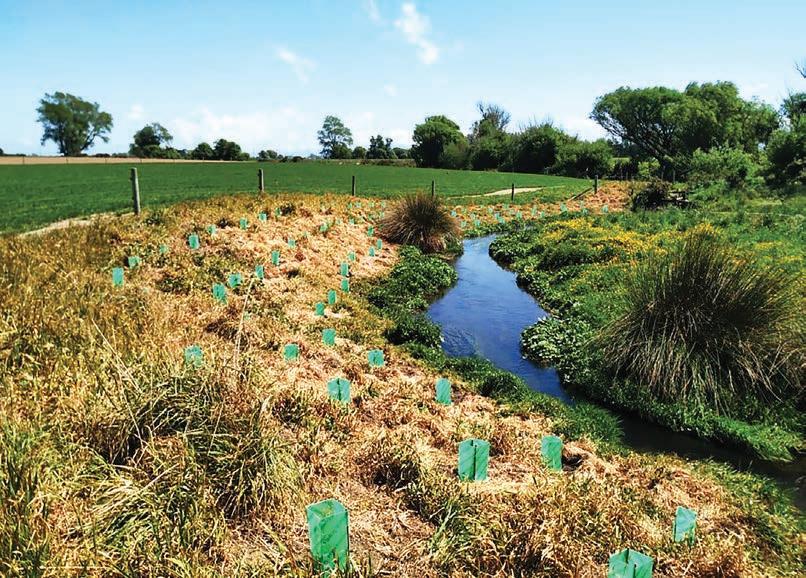
the equivalent of holding a resource permit or consent.”
Federated Farmers’ second bottom line is that farm plans must be proportionate, practical and scaled to risk.
“Low-impact farms should be able to complete a simple plan themselves,” Hurst says.
“We agree that higher-risk farms may need more detailed plans, but there’s absolutely no point putting low-impact farms through the wringer.”
The third bottom line is that, while farm plans should be auditable, not every farm plan should be audited.
“Many farming activities are currently low-risk and don’t require consents or ongoing oversight,” Hurst says.
“Requiring those activities to have a farm plan and then auditing that plan creates red tape for no environmental gain. It’s a complete waste of time and money.”
Hurst says certification may make sense for higher-risk activities if it replaces the need for a consent, but routine auditing of every farm sends the wrong message.
“Audit-everyone systems don’t create a high-trust environment,” he says.
“They simply create a box-ticking culture and get farmers offside, rather than driving better outcomes.”
Federated Farmers is instead advocating for a model similar to the tax system.
“Everyone is expected to do the right thing, but only some are audited – either randomly or where non-compliance is suspected,” Hurst says.
“That’s a fair, practical approach that farmers can understand.”
The fourth bottom line is that existing farm plans must be recognised, Hurst says.
“Many farmers already have plans in place, developed through industry

programmes or local catchment groups.
“Farmers have put real time, thought and money into these plans because they care about water quality.
“They shouldn’t be punished for being proactive or early adopters.”
Federated Farmers wants existing plans that meet minimum standards to be recognised as equivalent to new farm plan requirements.
“Forcing farmers to start again from scratch would be a completely unjustifiable waste of time and money,” Hurst says.
He says Federated Farmers is still waiting to see the detailed regulations that will define what farm plans must include, but expectations are clear.
“Requirements must be tailored to risk, based on the activities on the farm and the catchment it sits in,” he says.
“A light-touch approach is all that’s needed for many farms.”
At the same time, Hurst says farm plans should become a genuine one-stop shop for environmental regulation.
“For higher-risk farms, a more detailed plan – potentially with certification – should replace the need for permits and consents,” he says.
“That’s how farm plans can actually work.”
Federated Farmers will continue to scrutinise the proposed system closely.
“We fully support better environmental outcomes,” Hurst says.
“But farm plans must simplify compliance, reduce red tape and recognise the good work farmers are already doing – not make life harder for no good reason.”

LINES DRAWN: Federated Farmers says it could support a national farm plan system, but only if it meets four clear bottom lines.
RMA reform at a crossroads for farmers
Adark cloud is shading Matt and Tory Simpson’s optimism that a new dawn for land use regulation is around the corner.
Like thousands of other farmers, the owners of Ranui Station in Canterbury were delighted to hear pledges from the Government that resource management reform would reduce red tape, and balance environmental protection with property rights.
“It’s hugely disappointing to find the reality falls short of the rhetoric,” says Matt, who’s co-chair of Federated Farmers High Country.
“The two new bills are riddled with flaws and the select committee now has a mammoth task ahead to get things back on track.”
For the Simpsons, and many other landowners and businesses, it’s far more than just a desire for less paperwork, bureaucracy, hearings and expensive resource consents.
“Livelihoods are at stake,” Matt says.
“We look after nature and want to develop this place so it’s in good shape and a going concern for the next generation.
“We have high hopes the new resource management laws will help us combat the Outstanding Natural
Landscape overlay restrictions on more than half the station, and other clamps on our ability to diversify income streams,” he says.
Last December the Government released two new bills – the Planning Bill and the Natural Environment Bill – to replace the Resource Management Act (RMA).
Federated Farmers has lodged a comprehensive submission on the bills, re-stating strong support for overhaul of the RMA.
“We absolutely back the goals and principles agreed by Cabinet,” Feds RMA Reform spokesperson Mark Hooper says.
“Those include enabling primary sector growth, narrowing the scope of effects of the RMA, and greater use of national standards while
Unfortunately, somewhere in between the ambitions of Government MPs and drafting of the legislation, something has fallen over.
Mark Hooper
Federated Farmers RMA reform spokesperson
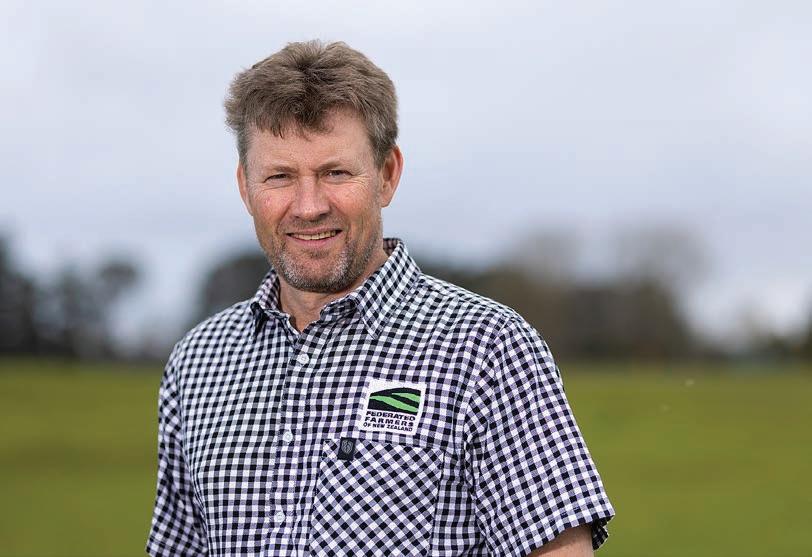
DISCONNECT: Federated Farmers RMA spokesperson Mark Hooper says somewhere in between the ambitions of Government MPs and drafting of the legislation, something has fallen over.
reducing the need for resource consents.
“If you want that in less jargony terms – that means faster, better, more efficient processes and knocking on the head the trend of endless hearings, appeals and uncertainty.
“Unfortunately, somewhere in between the ambitions of Government MPs and drafting of the legislation, something has fallen over.”
A major concern is that, as currently written, instead of a farm plan replacing the need for a resource consent, a farm may need both.
“We see a risk of farmers facing more red tape under the Natural Environment Act than they presently do under the RMA,” Hooper says.
There are too many ambiguous, principle-based clauses in the two bills, which is likely to see continued expensive, time-consuming and litigious decision making, he says.
The environment bill fails to clearly rule greenhouse gas issues out of scope – despite these already being dealt with in other Acts – and the lack of a clear scope section and definition of effect also leaves the door open to intangible, hard-tomeasure concepts such as the ‘mauri’ of water.
“Too much power is left in the hands of the Minister, under any future government, to impact the economy under National Policy Direction.
“And there’s still too much uncertainty over how farmers will access compensation for overlays and other restrictions on their property.
“We pushed hard for a riskbased approach to auditing and certification of farm plans but that’s also missing,” Hooper says.
Federated Farmers’ other concerns include the carry-over of aspects of outdated Water Conservation Orders from the RMA, lack of protection for stock drinking water, and inability to insure against inadvertent breaches of regulation.
Hooper says time pressure may be a reason for “too much drag and
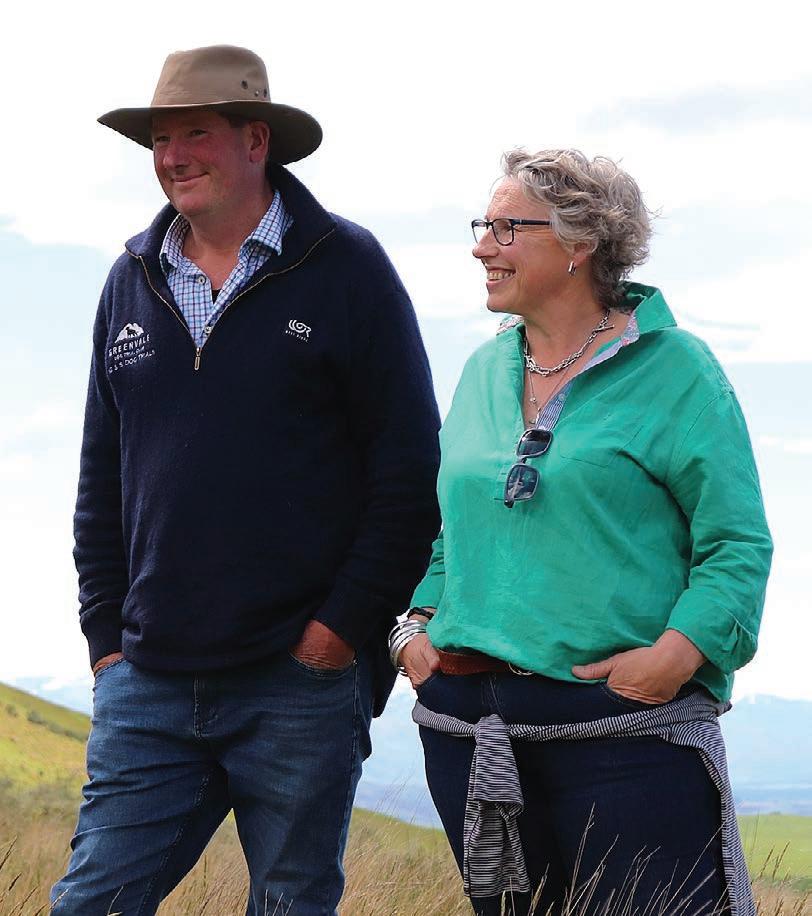
SHORT-CHANGED: Matt and Tory Simpson are disappointed that replacement RMA legislation, as currently drafted, won’t spell the end of their fight against restrictive overlays and other rules under-cutting the economics of their high country station.
drop” of content from the RMA into the draft new legislation.
“The Government and officials worked hard last year to make a series of amendments to the existing RMA.
“These were important fixes that enabled farmers to get on with production.
“That took focus away from the two new bills, and perhaps in the back of their minds was the fact there would be a five-month long select committee process and chances to weed out flaws.”
But Hooper believes the select committee has a challenging task.
“Federated Farmers has already voiced its unwavering opposition to clauses in the Natural Environment Bill which enable the Minister to auction, tender, or levy water.
“Getting rid of these potential water taxes is probably quite easily handled with changes of wording.
“But for other parts, the bill is drafted holistically and it’s more like a spider’s web, with layer upon layer of clauses that are interactive with other clauses.
“It’s going to take a lot of effort to untangle it.”
Hooper says it’s vital the select committee works diligently, and that its members who represent the coalition Government stick up for the original goals of RMA reform: simplicity, efficiency, less cost and litigation.
“Quite frankly, they’re principles and goals that an elected representative of any political persuasion should defend.”
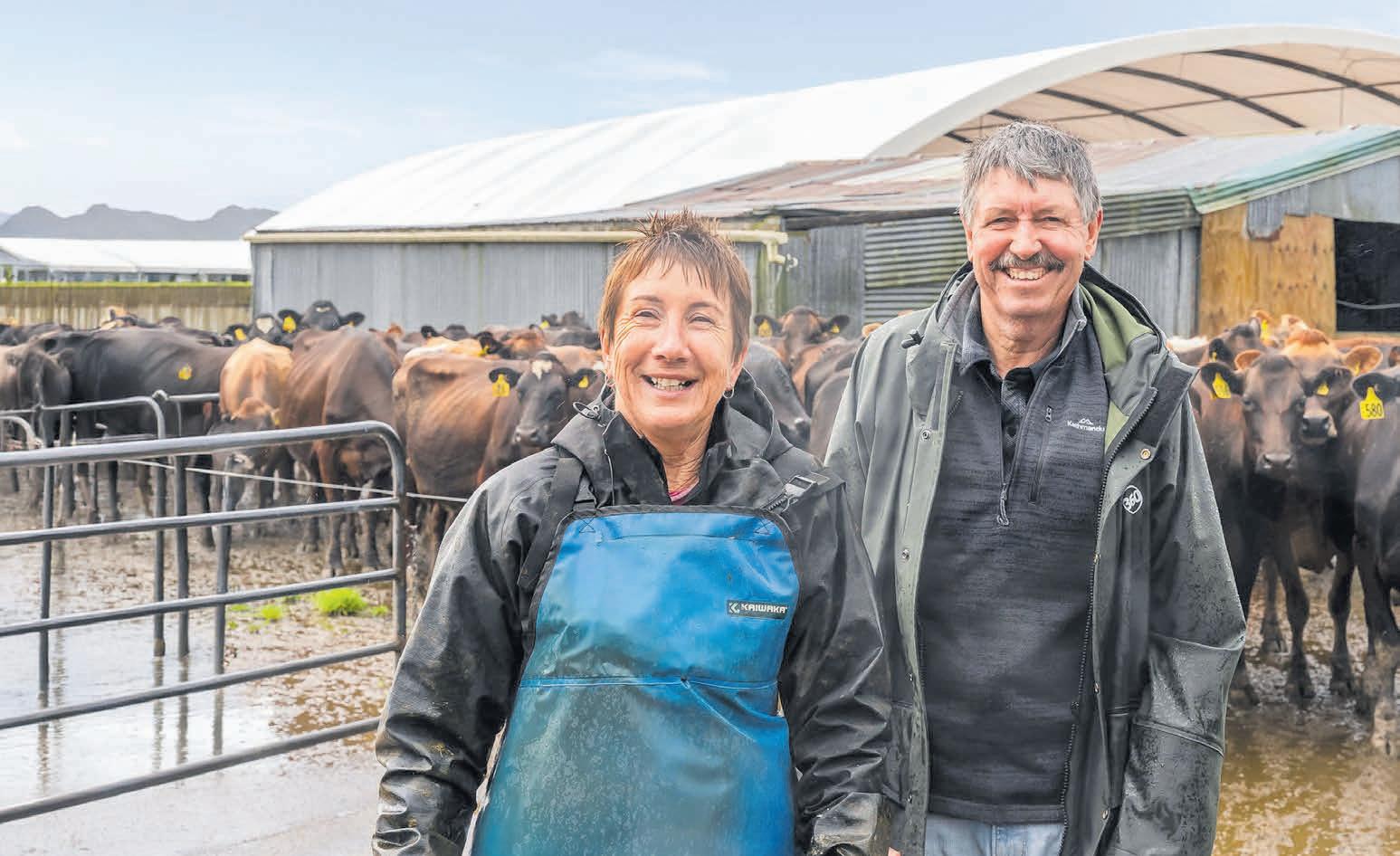

Birkett helps steer a better arable future
David Birkett’s love of rally driving has often taken a back seat to leadership roles in agriculture, but he doesn’t regret the time he’s spent helping steer a smoother path for farmers.
“Kiwi farmers have a deserved reputation for being some of the best in the world, but there’s any number of challenges ahead,” the Federated Farmers arable chair says.
“There are gains to be made from stripping out costs and regulation, and taking our environmental stewardship even further.
“I’ve always thought we’ll all get there faster when farmers unite behind industry good players like Feds, FAR (Foundation for Arable Research) and catchment groups.”
Birkett farms at Leeston, about half an hour south of Christchurch.
“I’m the third generation on this
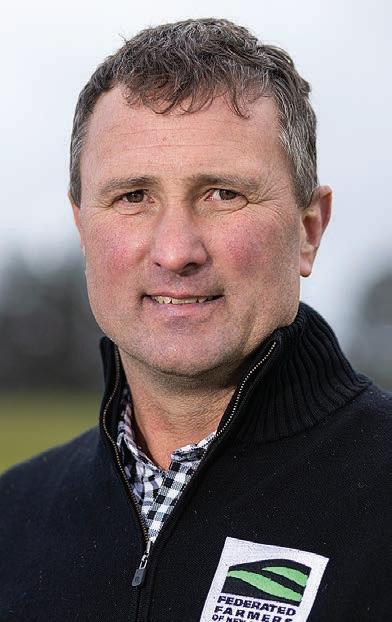
place, so that’s 90 years or so.
“But we’re related by marriage back to the original settlers who broke in the land from what originally was a swamp.”
He boarded at St Andrew’s College, then did some training as a mechanic and baled hay for contracting companies.
Those workshop skills have come in handy maintaining arable machinery – and with his rally driving over the last 30 years.
He’s competed with teams in overseas events and has two South Island B Class championship titles to his name.
“It’s the speed that attracts me most, but I also enjoy building and maintaining the cars.”
His Toyota Levin hasn’t seen as much action as he’d like of late because of Feds and farming duties but he’s hoping for more time behind the wheel this year.
Birkett was in his early twenties when a council application to put wastewater on land near the family farm, which already had groundwater issues, propelled him into researching hydrology.
“I also learned quite a lot about the Resource Management Act, and sat in hearings.
“It helped shape the direction of where I was going.
“Governance, science and data were the three big things that came out of that for me.”
Birkett has been involved in the Federated Farmers Herbage Seed Sub-section since the early 2000s.
The family farm has done quite a bit of seed and crop trial work with FAR – and still does.
“I got shoulder-tapped to come on the FAR board and a year later I become chair, a role that lasted eight years.”
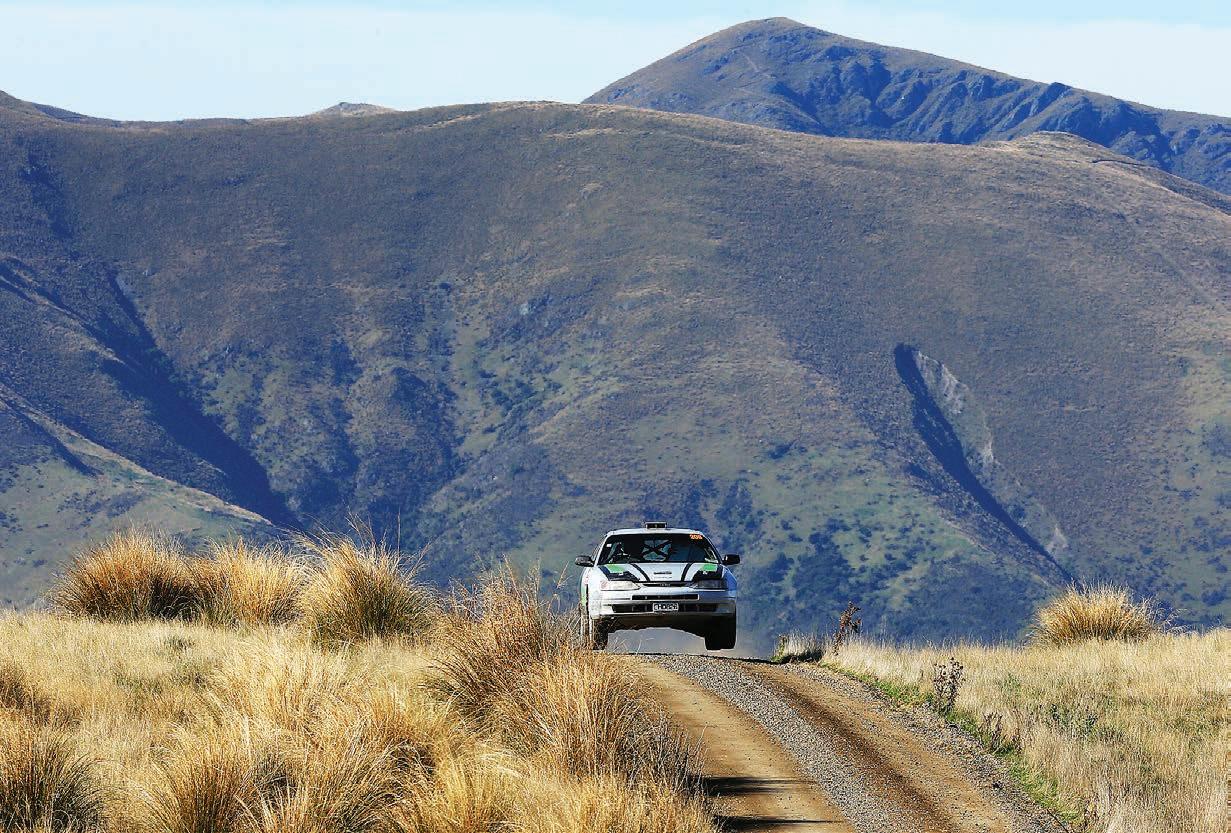
Birkett, and his father before him, have taken great interest in soil health. They were early converts to reduced tillage, direct drilling, cover crops and integration of livestock.
“When the name ‘regenerative’ came along, we found what we were doing was pretty much regenerative anyway,” he says.
He helped start a local group, Quorum Sense, to share knowledge on conservation growing techniques. It gained substantial funding from MPI and went national, and Birkett only stepped down from its board four years ago.
He’s still with the Ellesmere Sustainable Agriculture catchment group he helped found more than 20 years ago.
The group has spearheaded a multitude of restoration and planting projects across farms and public land.
Birkett is pleased with growing recognition that catchment groups are a great format for training and getting information to farmers, as well as harnessing community support.
“Quite often when farmers do this
Taranaki dairy farmer
Federated Farmers sharefarmer chair

stuff alone on their farm, they never get the chance to tell people about it.
“When you do it collectively, and schools and community groups are invited to pitch in, the word spreads on the progress that’s made.”
We’ll find a way through the current tough times – the arable sector is too important for our pastoral farming and for export receipts not to.
David Birkett
Federated Farmers arable chair
Birkett doesn’t have a lot of time for the small minority of farmers who sidestep stewardship.
“It’s the 90/10 rule, isn’t it?
“Same as in any sector – the 10% drag the 90% down. In fact, in farming I think it’s more like 2-3% who are laggards.
“The trouble is we get regulation and consent processes designed to catch that 2% tail that we’re all lumped with.”
Birkett, the 2022 Arable Farmer of the Year, is currently growing nine crops but at times has as many as 13 on rotation.
With trading lambs integrated into the system, the model offers resilience.
“After poor weather and horrible harvests in the last two years, we’re seeing more arable farmers integrate livestock and even convert fully to animals.
“We’ll get to a point where the amount of arable land is too scarce, and growers won’t take up contracts for cereals and seeds for export for the prices being offered.”
A global price correction is overdue, he says.
“We’re struggling, and most overseas growers are living on subsidies.
“The big, global companies need to acknowledge the issue and make the correction. Until they do, they’re going to continue to lose arable growers.
“We’ll find a way through the current tough times – the arable sector is too important for our pastoral farming and for export receipts not to.”
GEARED UP: David Birkett is hoping to find more time to get out in his Toyota Levin on rally back roads this year but driving positive change for farmers and rural communities in an election year is also top of mind.
GENERATIONS: David Birkett is the third generation of his family to farm at Leeston, about half an hour south of Christchurch.
Emergency bill a ‘breakthrough’
When a major mudslide trapped about 20 vehicles on a rural Taihape road during the recent storm, it was local farmers who stepped in with front-end loaders to clear the way.
That kind of hands-on expertise is exactly why Sandra Faulkner is welcoming new legislation requiring rural representation on emergency management groups.
“This is long-overdue and it formalises what we all know is common sense.
“Rural residents and businesses have particular needs and challenges when floods, earthquakes and other emergencies strike,” says Faulkner, Federated Farmers adverse events spokesperson.
“But farmers also have knowledge and resources to help the wider district in response and recovery –tractors, front end loaders, chainsaws – and the ability to use that sort of equipment.
“Rural people have always stood up for others when the chips are down, like we’ve just seen in Taihape.”
Speaking to a select committee this month, Faulkner told Members of Parliament that Federated Farmers supports the Emergency Management Bill (No 2).
She says it’s a “breakthrough” that the bill will explicitly require New Zealand’s 16 regional Civil Defence Emergency Management (CDEM) groups to include at least one member with knowledge, experience or expertise in the interests and needs of rural communities.
“We’ve been pushing hard for this crucial change.
“Some regions saw the light long ago and have been harnessing that rural lens in emergency planning and response for everyone’s benefit.
“But in other places it’s been ad hoc and uncoordinated, leaving some isolated farms and communities to fend for themselves in emergencies for far too long.” Decisions on road closures,
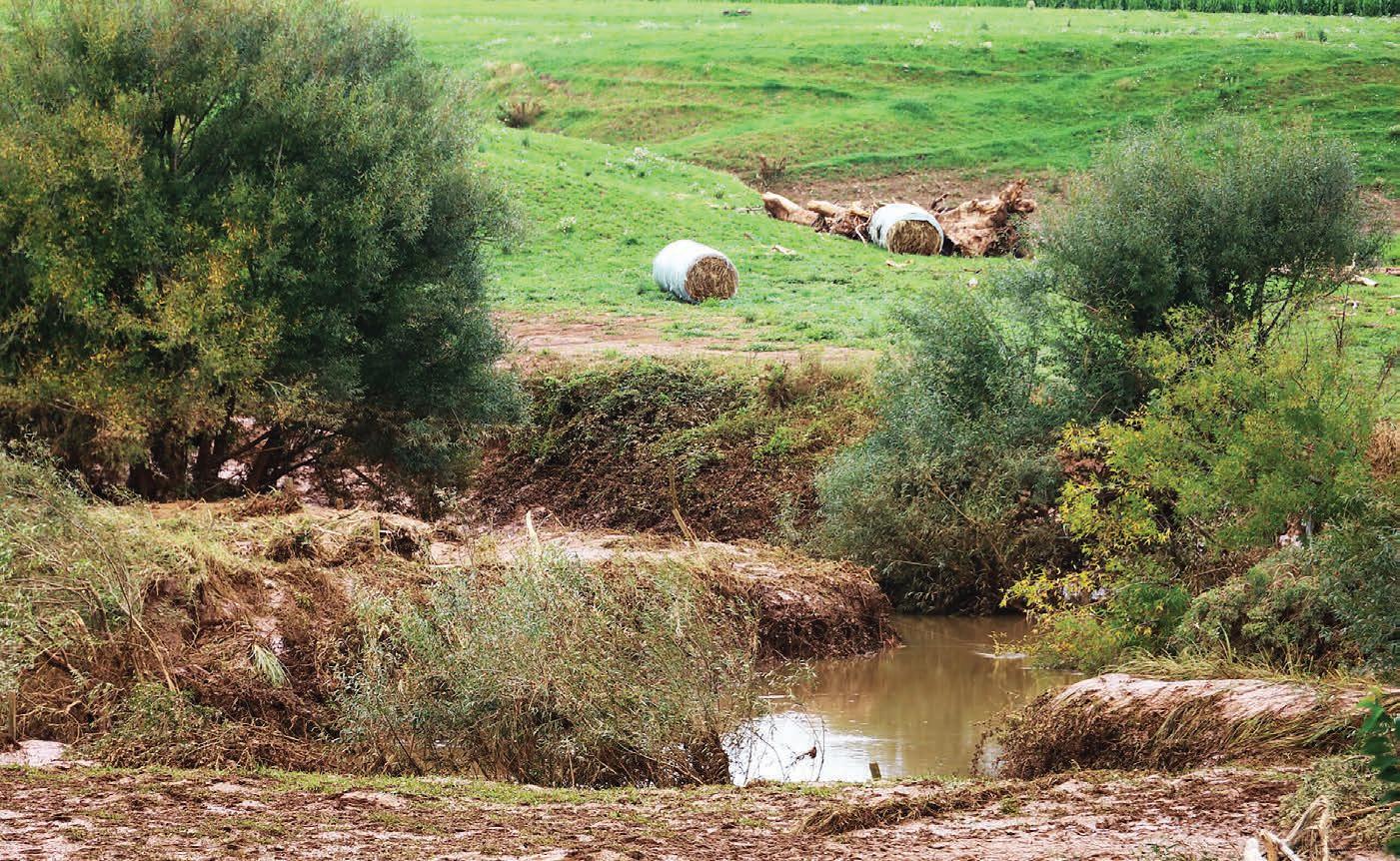
access, resource prioritisation, and communication are often made without understanding exactly who is isolated, what critical rural activities are occurring, and the risks to animals and livelihoods.
“That lack of formal or mandated rural representation has repeatedly led to inconsistent and, at times, harmful outcomes,” Faulkner told the select committee.
Whenever there’s serious weather or another adverse event, the local Federated Farmers provincial president is often on “hot dial” for the local council and emergency management centre.
“We’re very experienced in providing that rural expertise when the proverbial hits the fan.
“That’s why rural communities need to be represented from the start, providing that knowledge of how many people live down a long country road, what equipment they have, and any alternative access points.”
This is important not just for the
We’re very experienced in providing that rural expertise when the proverbial hits the fan.
Sandra Faulkner
Federated Farmers Adverse Events spokesperson
response, but also the planning and recovery phases, she says. Faulkner personally experienced the frustration of sub-optimal coordination in Tairāwhiti when Cyclone Gabrielle hit.
“There was no electricity and no communication in the early days.
“It came down to who we knew were out in rural areas, be it forestry, farming, horticulture or lifestyle blocks. We worked on understanding what they had on hand, and what they would possibly need.
“But we had to load up that backof-the-envelope data onto a flash
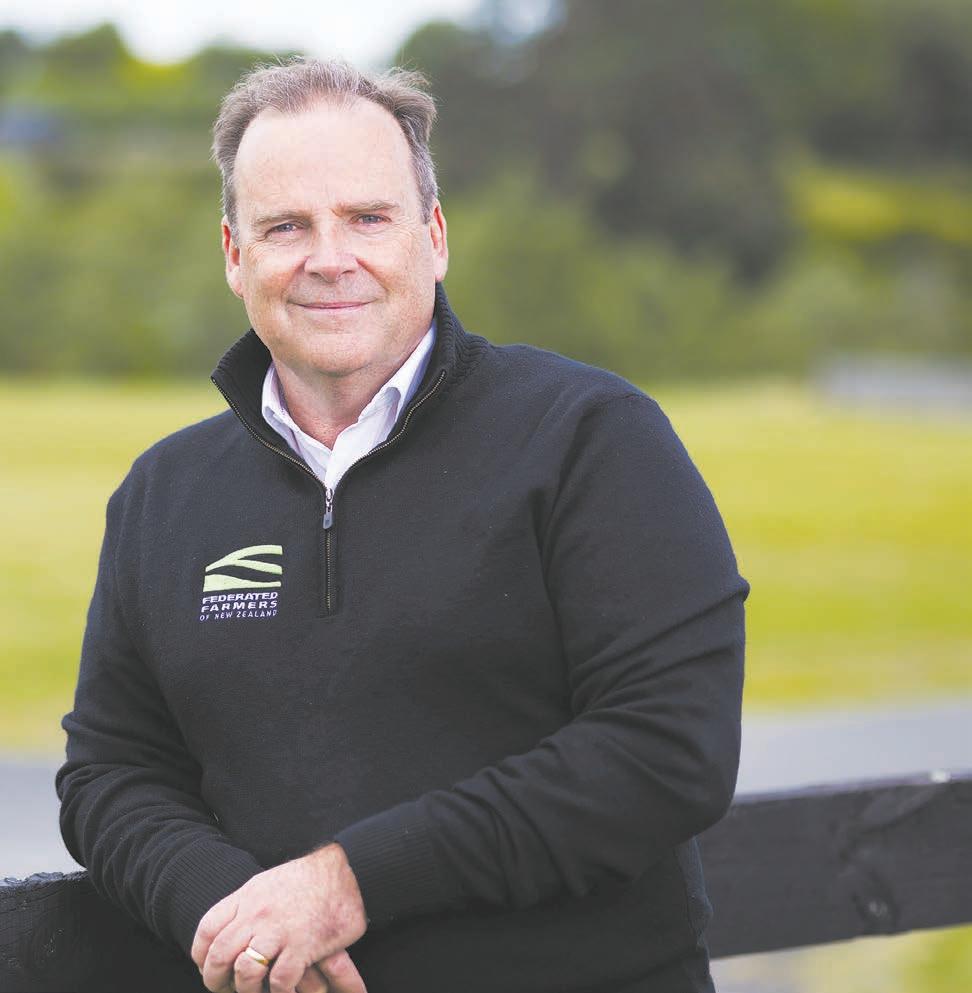


drive, walk out of the room where we were working, down several halls, into the Civil Defence space and plug it into the side of a laptop for them to use.
“Every time we had an update, we had to go through that process again, many times a day. It was ridiculous.”
Faulkner says rural representation should be plugged into the Coordinated Incident Management System (CIMS) from the outset.
“New Zealand has a very strong CIMS model developed ‘in the fires’ and this is not a request to break the model in any shape or form.
“This is an opportunity to feed into it in the most efficient fashion.”
Another win for rural advocacy is that the bill includes clauses on animals, requiring emergency management committees to spell out how their needs will be managed in an emergency.
“Farmers will take risks to protect their livestock, and so will families
ADVERSE
ADVANTAGE:
Changes to emergency management legislation that will better harness rural expertise, and make specific provision for livestock and other animals, is a big step forward, Sandra Faulkner says.
with their pets,” Faulkner says.
“Recognising this reality enhances human safety – both of owners, and people who help with rescues.
“Clear statutory provisions relating to animals, supported by appropriate authority and co-ordination, reduces uncertainty for responders and improves decision-making during emergencies.”
The select committee is also looking at a framework to reimburse legitimate costs for those who pitch in during an adverse event, which Faulkner supports.
“You still need accountability; there’s no place for writing out blank cheques.
“But when someone pitches in for the wider community good, particularly when they’re spending time away from their own family or business at a stressful time, their material costs should be met.”
The select committee will prepare a report on the bill, including any recommended changes, by 9 June this year.

Photo: Gerald Piddock
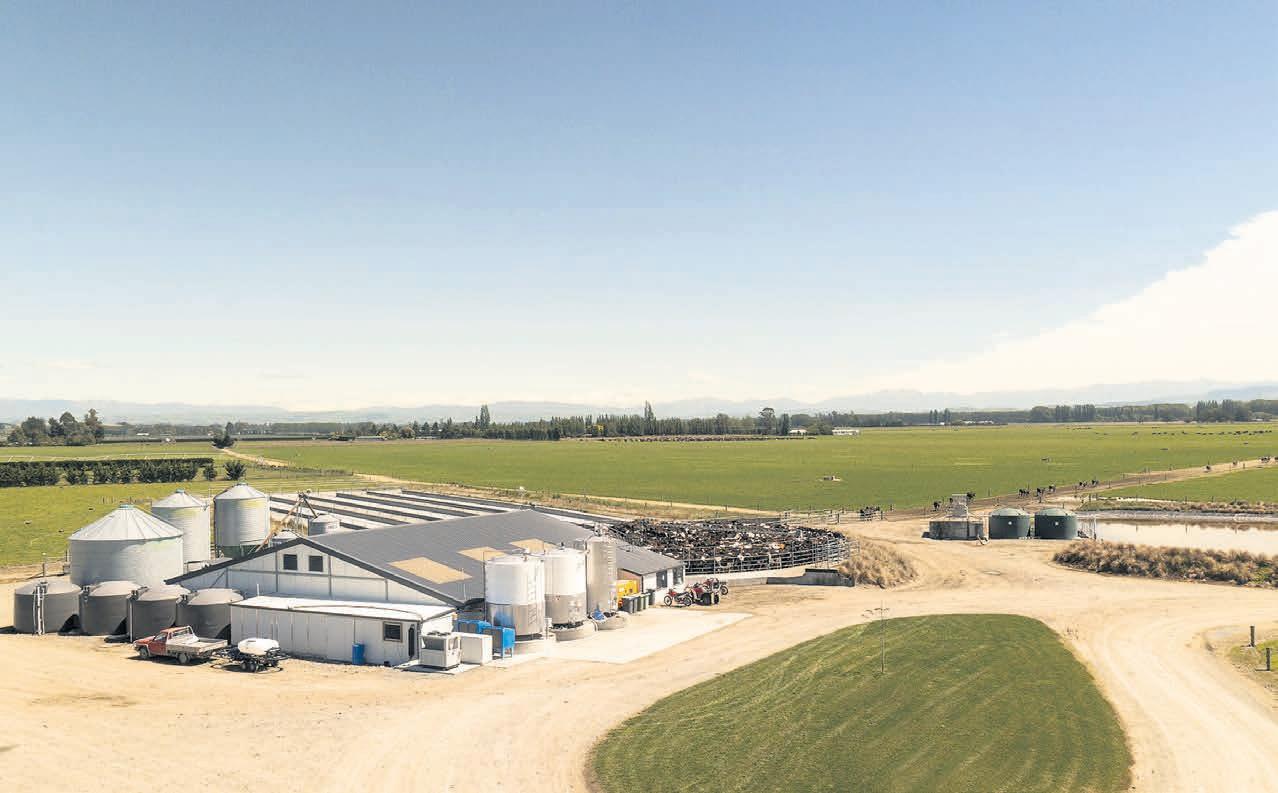
Timaru 47 Wilson Road
Riverton Farm
Scale, location, quality soils and attached support land ensure this well-established dairy farm is positioned for a solid future Productive advantage is driven by soil types and low altitude and combined with multiple titles provides future upside for purchasers Following an upcoming subdivision, the operation totals 526ha (more or less), comprising the Dairy farm 392ha (subject to survey), Scotts block 42ha (more or less), and Arowhenua block 92ha (more or less) Consented for 1,400 cows and operating under an A-grade audit, Riverton Farm includes a thoughtfully positioned 60-bail rotary shed, plus a 600-cow yard and feed pad Supported by calf sheds, effluent system, irrigation storage and extensive shedding Modern housing provides quality living for staff Purchasing options are available individually or as a whole bayleys co nz/5529139
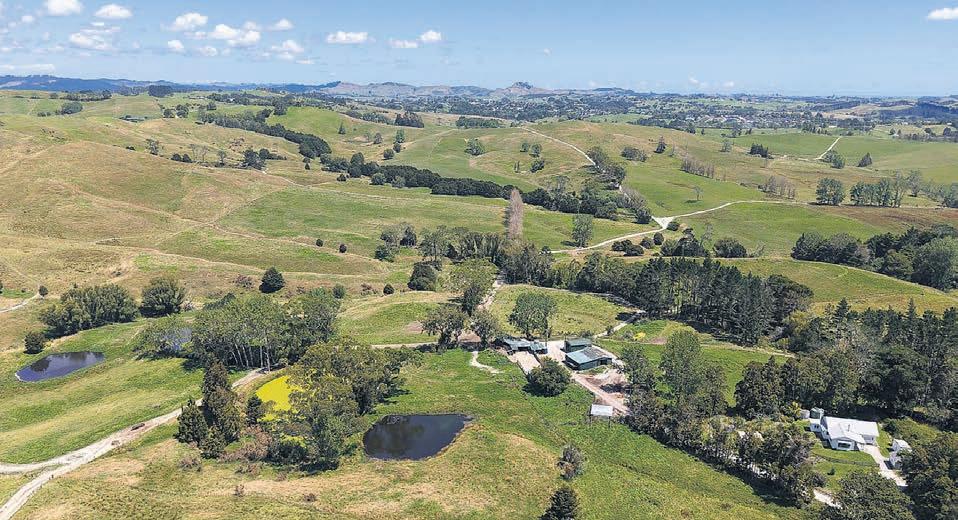
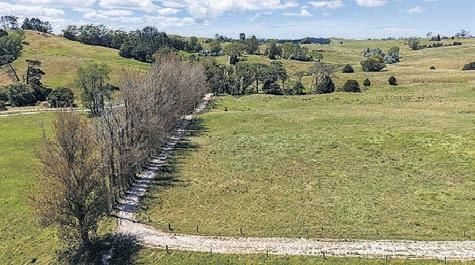
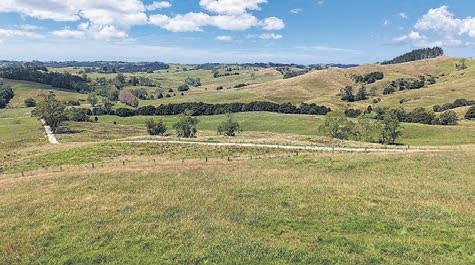
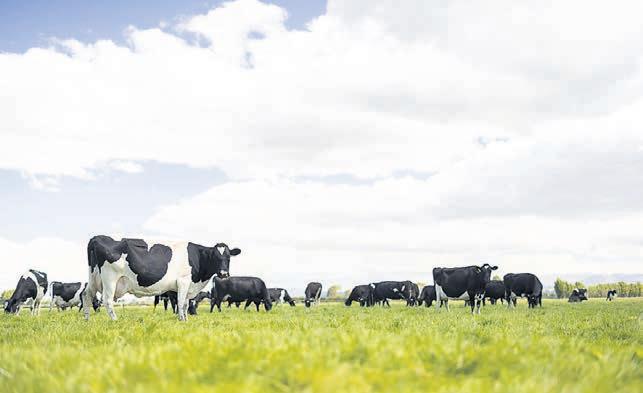
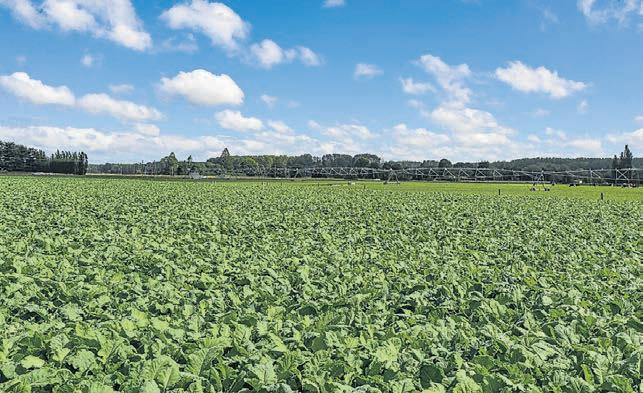
co nz
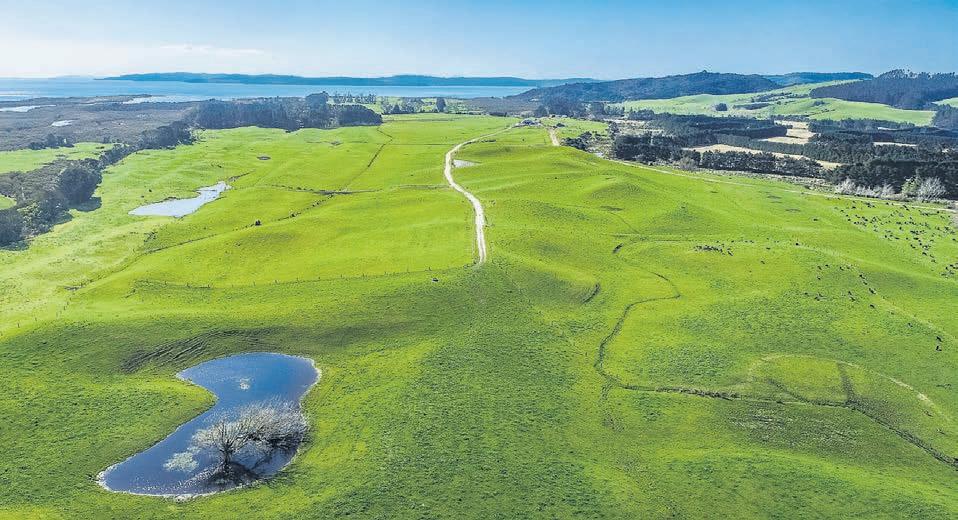
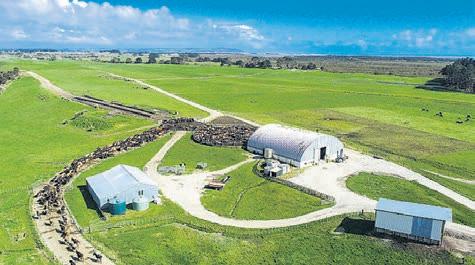
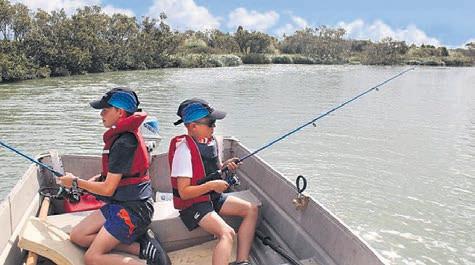
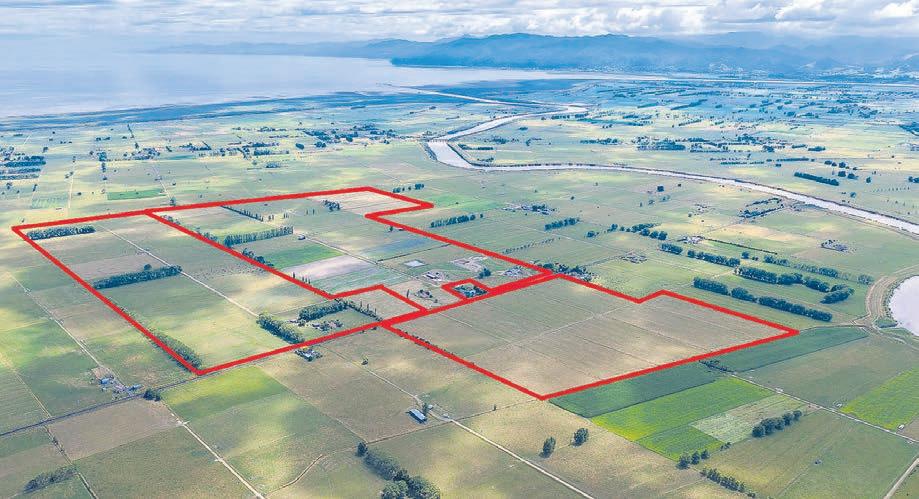
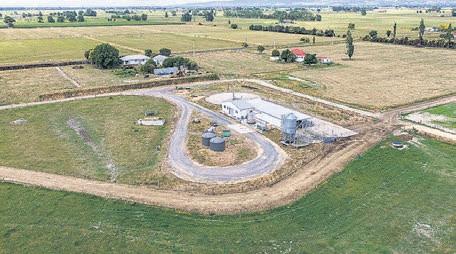
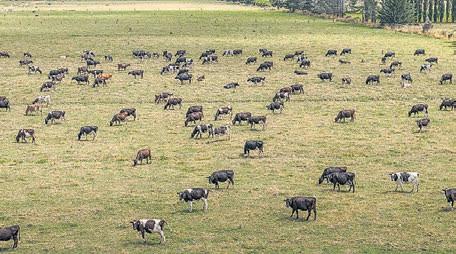
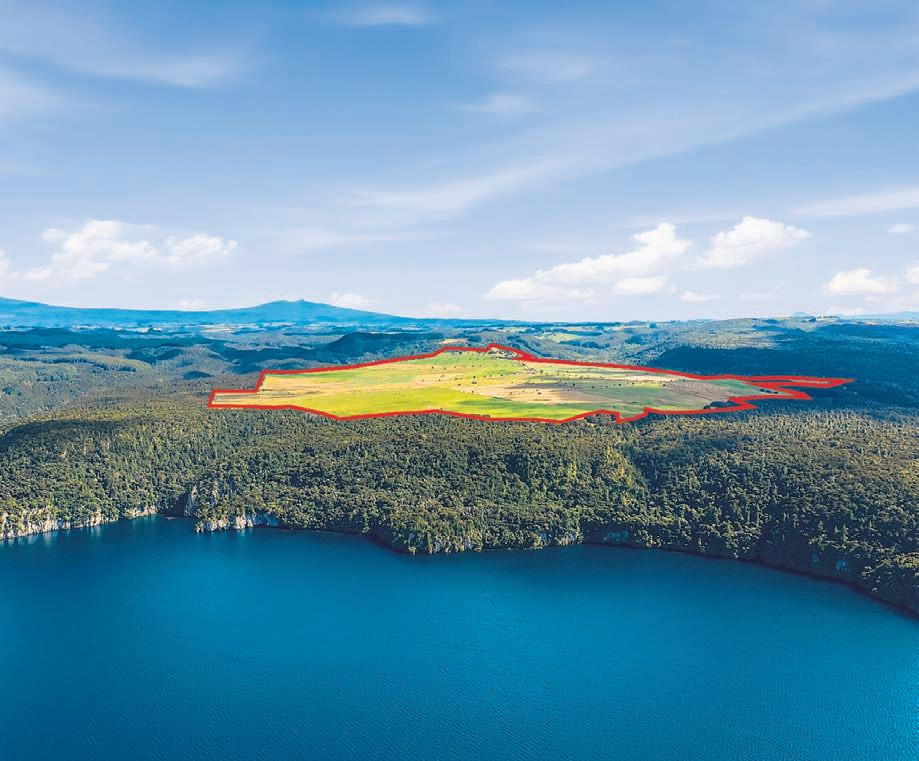
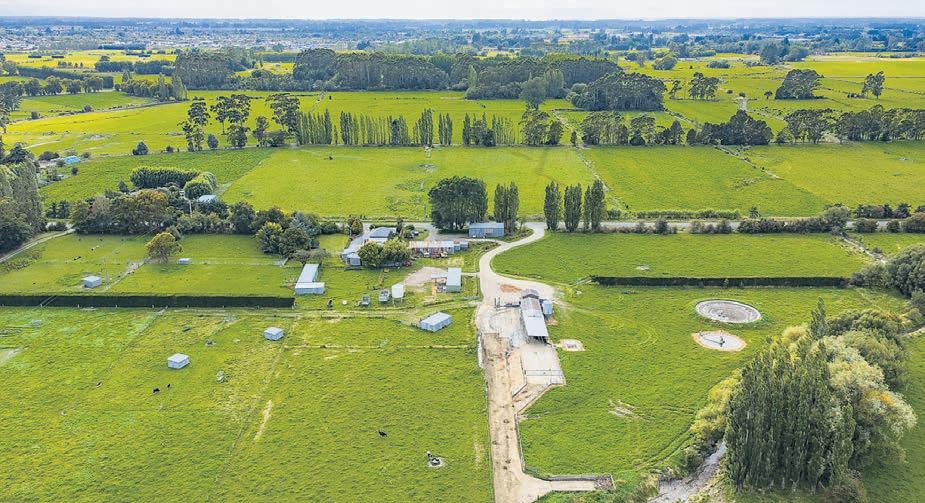
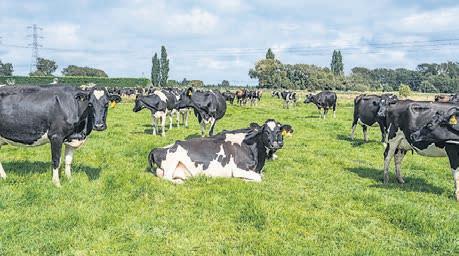
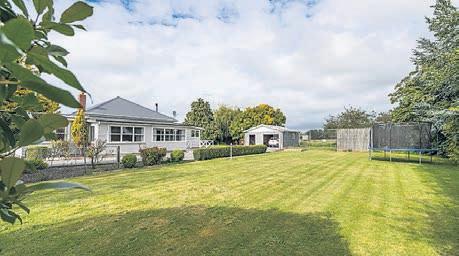
Marotiri 550 Puketapu Road
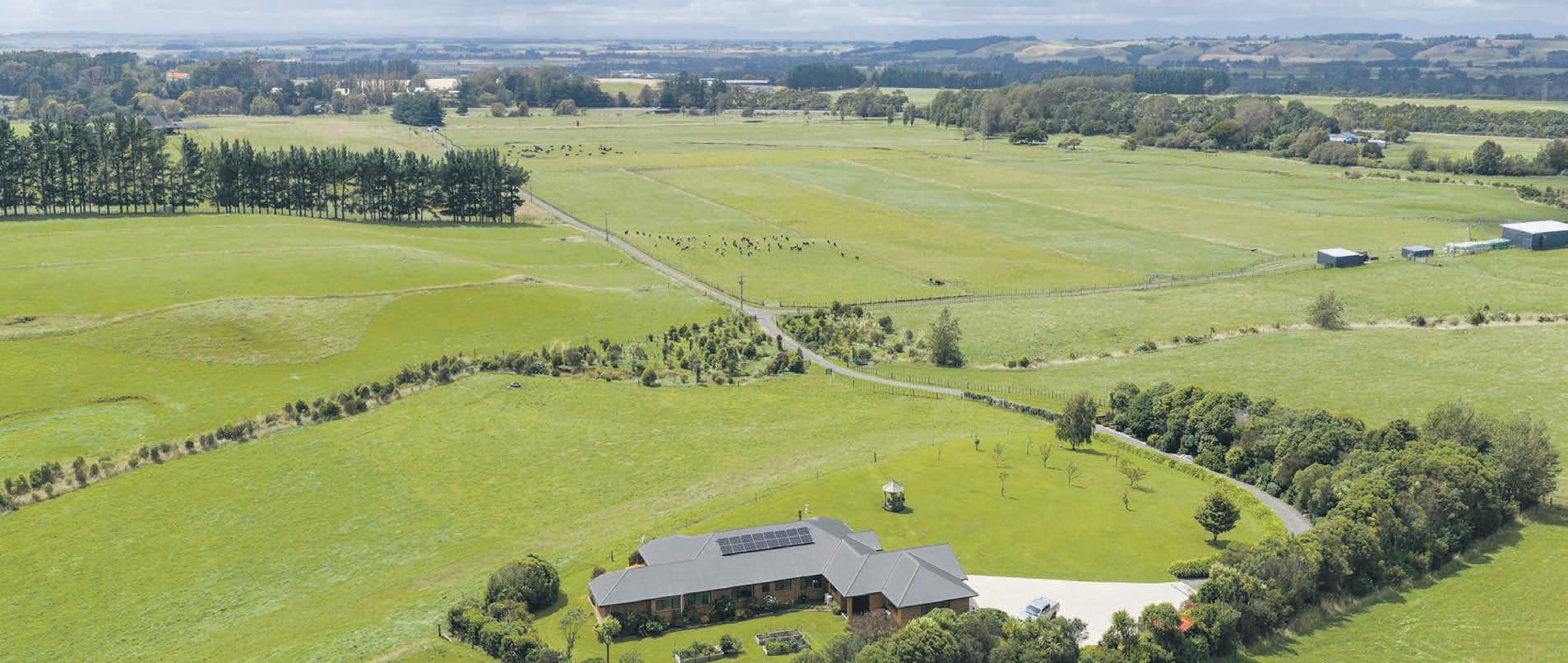
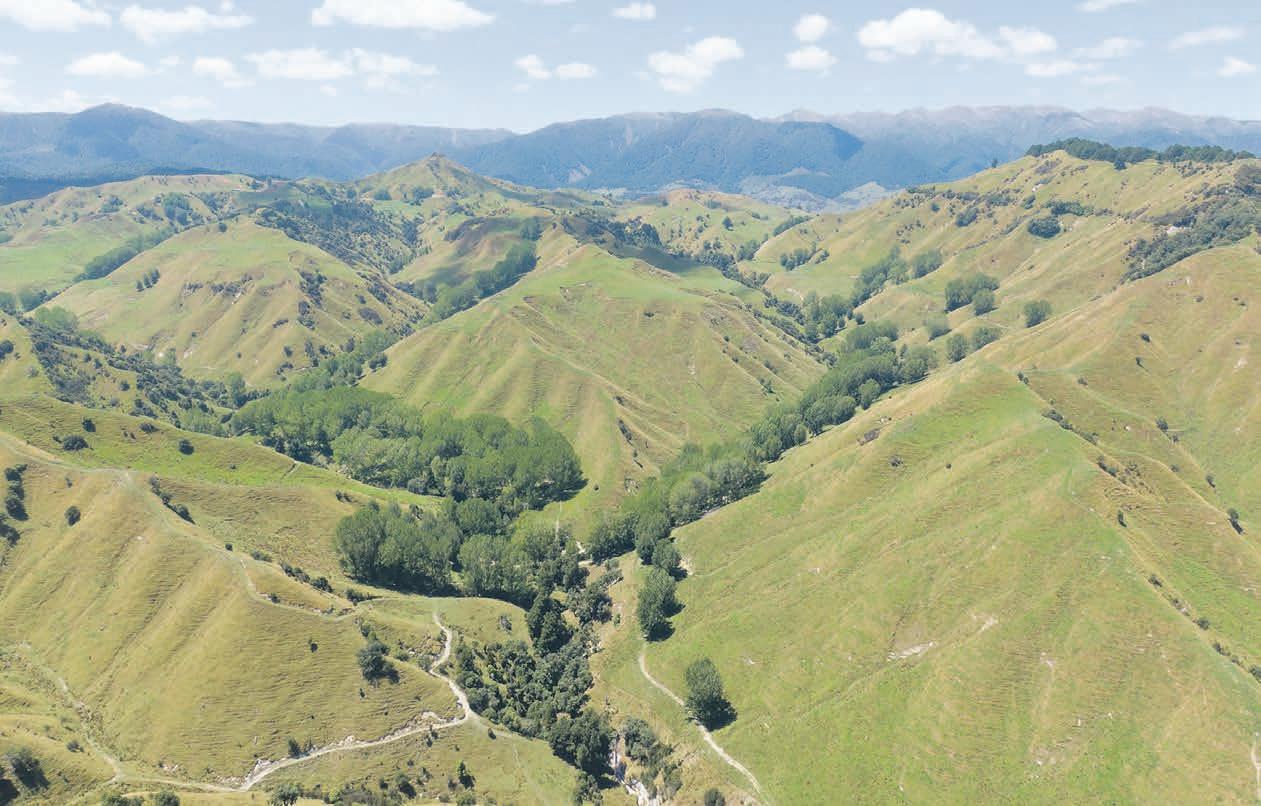
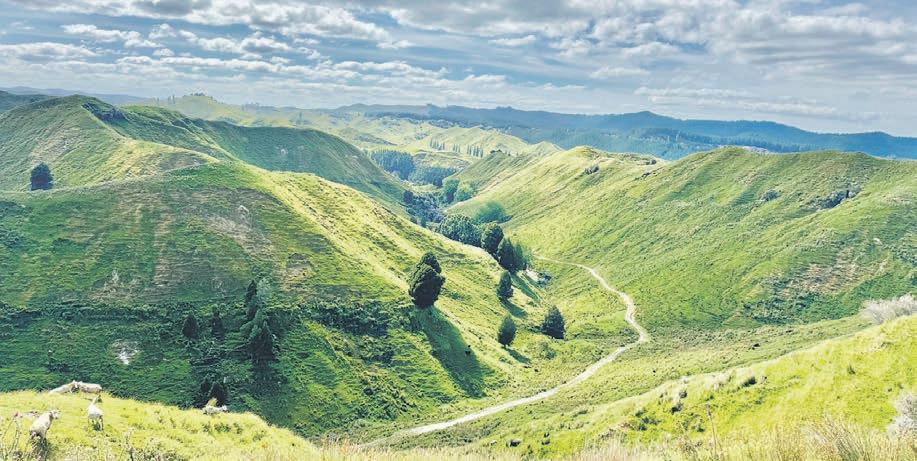
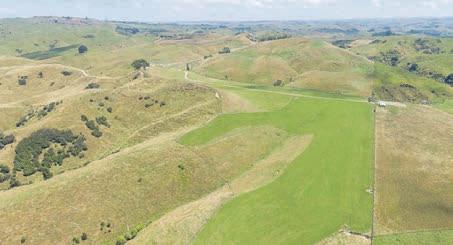
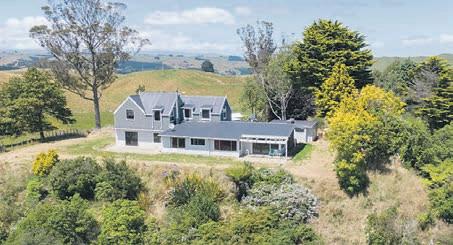

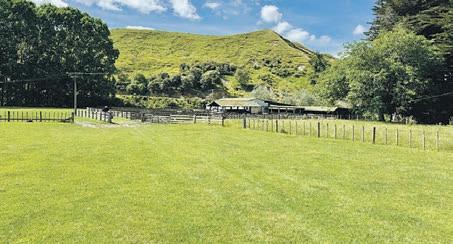
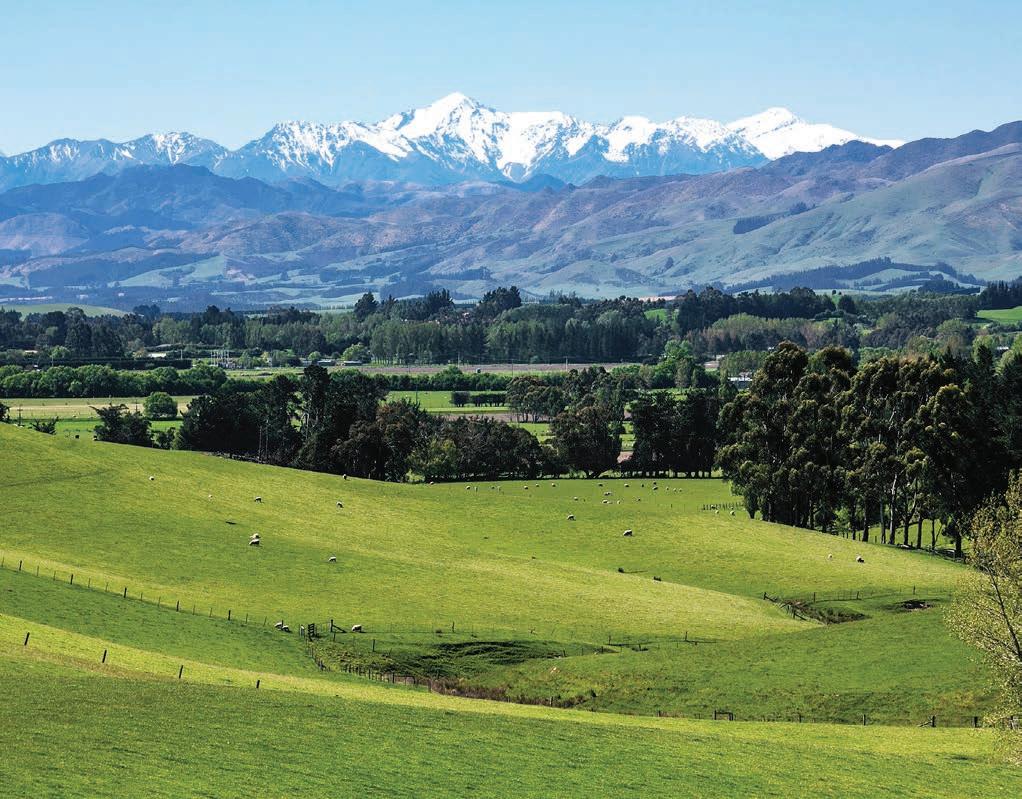

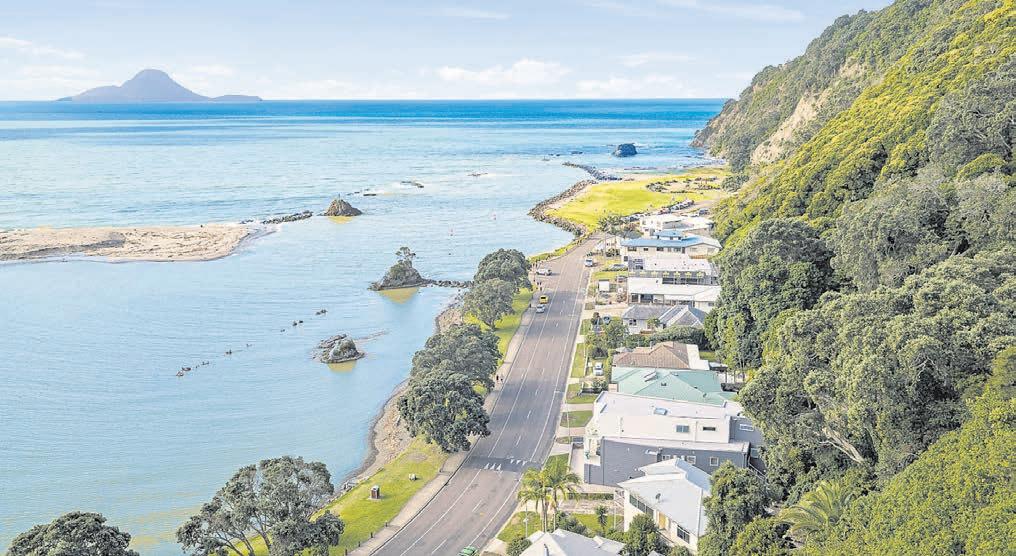




Whakatane, Bay of Plenty 13 Muriwai Drive


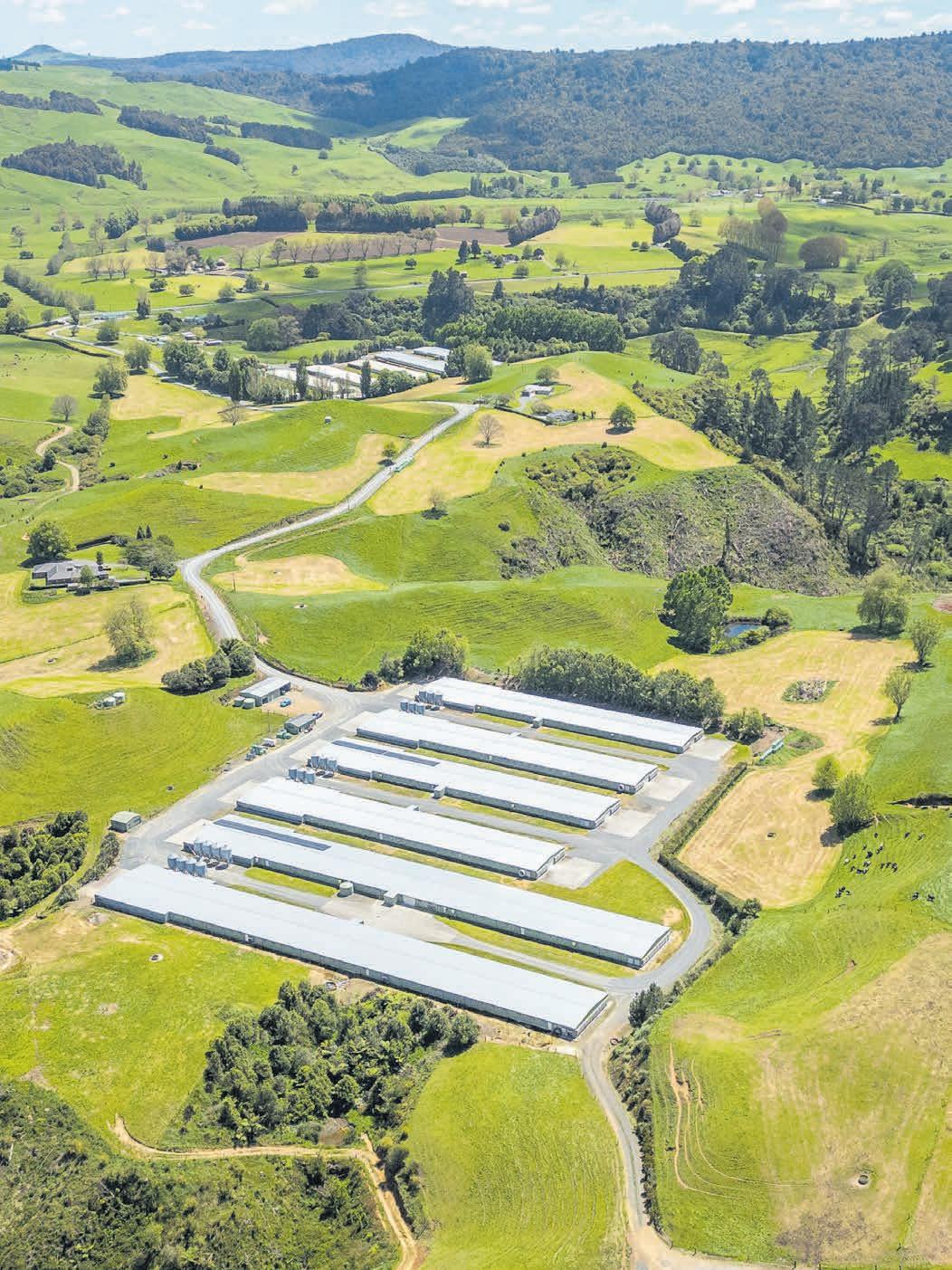
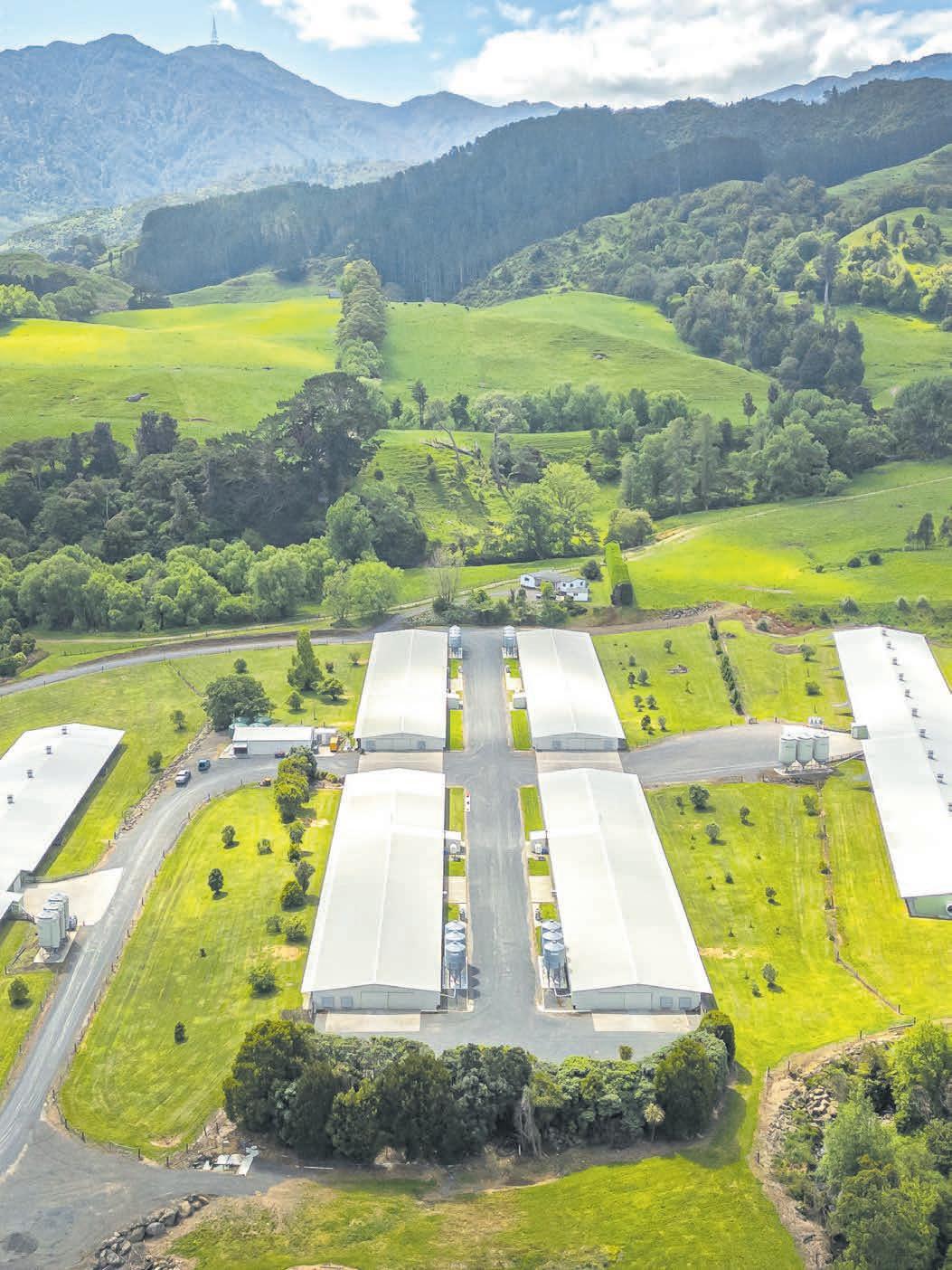
h-perfo g barn- d broil ween M m m
Hig rmin raise er operation positioned bet atamata and Cambridge This efficiently managed, low-labour asset delivers predictable, contract-backed income insulated from seasonal, climatic, and commodity-price volatility The property includes modern broiler infrastructure, excellent support buildings, and three quality homes
A proven large-scale enterprise offering strong cashflow, operational resilience, and long-term value for agri-investment portfolios
Closes Thurs 26 Mar, 4pm th (unless sold prior)
Step into a secure, low-risk agricultural investment delivering stable, long-term returns and lifestyle flexibility Inghams supplies the birds and feed you manage the operation within a fully integrated, high-performance system Enjoy Index-adjusted contracts, predictable overheads, and ethically reared SPCAaccredited chickens Backed by Inghams, this reliable agribu siness offers peace of mind and future security
Thurs 26 Mar, 4pm th (unless sold prior)
TENDER
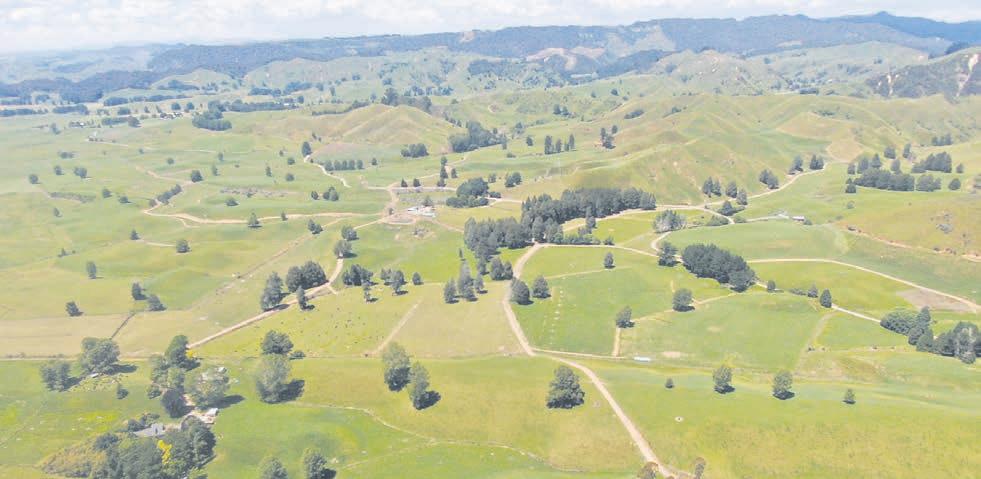
ARIA, KING COUNTRY 967 Ohura Road
Affordable Dairy Opportunity
217.12 hectares (more or less) dairy unit, 10km east of Aria and 20km southeast of Piopio. 157 hectares flat dairy platform, 57 hectares rolling support. Quality Kairanga silt and clay loam soils - high natural fertility. Infrastructure: 26 ASHB shed, two calf sheds, hay shed, workshop, garage and two dwellings. Approx 65 paddocks, strong internal fencing, reliable reticulated stock water. Certified effluent system irrigating 43 hectares. Production (153 hectare platform): 2023/24 – 135,312kg MS (470 cows), 2024/25 – 136,253kg MS (434 cows). Approx 100 R1s have been wintered
pggwre.co.nz/TEK43063


TENDER
Plus GST (if any) Will not be sold prior
Closes 3.00pm, Wednesday 8 April
VIEW 10.00-12.00pm Thursday 12, 19 & 26 March
Peter Wylie
M 027 473 5855
E pwylie@pggwrightson.co.nz
Tony Foreman
M 027 654 7434
E tony.foreman@pggwrightson.co.nz













TENDER
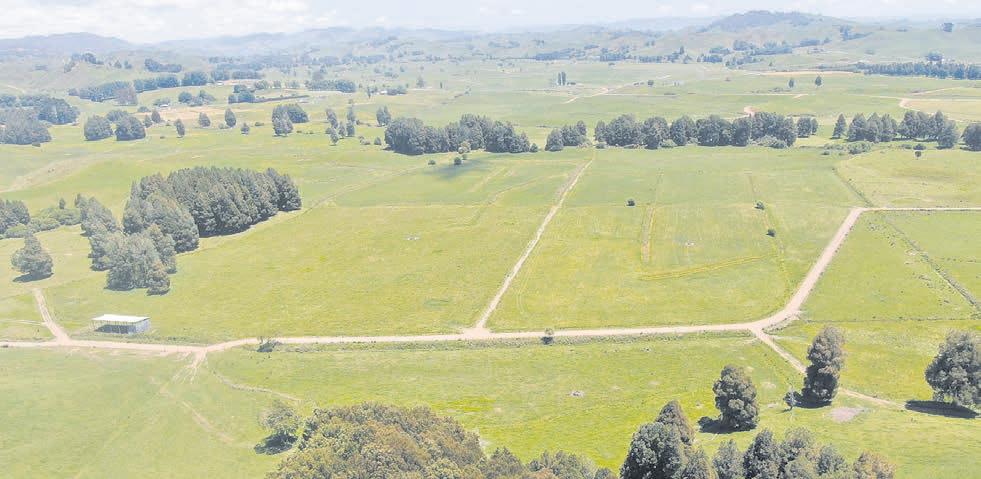
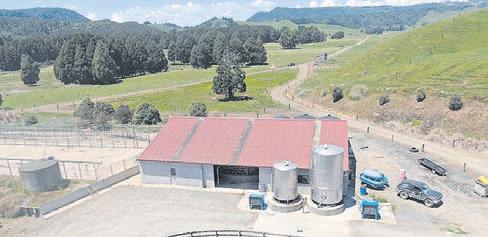
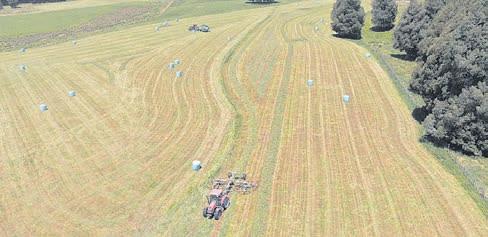
ARIA, KING COUNTRY 24 Pukeuha Road
347ha King Country Dairy Unit
Located 6km east of Aria and 16km south east of Piopio, this well contoured 324ha effective dairy farm features 140ha flats, 184ha medium rolling, pockets of steeper land, and 23ha native bush. Fertile Kairanga soils, 1,500–1,650mm rainfall, pH around 5.8, Olsen P averaging 44. Currently milking 930 cows, the farm delivered 233,000kg MS 2023/24 and 246,000kg MS 2024/25 season. Infrastructure includes a 54 bail rotary, 90 day effluent storage irrigating 40ha, quality laneways, water systems, and approx. 100 paddocks. Five titles with four dwellings.
pggwre.co.nz/TEK43064
TENDER
Plus GST (if any)
Will not be sold prior
Closes 3.00pm, Wednesday 8 April
VIEW 10.00-12.00pm
Thursday 12 19 & 26 March
Peter Wylie
M 027 473 5855
E pwylie@pggwrightson.co.nz
Tony Foreman
M 027 654 7434
E tony.foreman@pggwrightson.co.nz
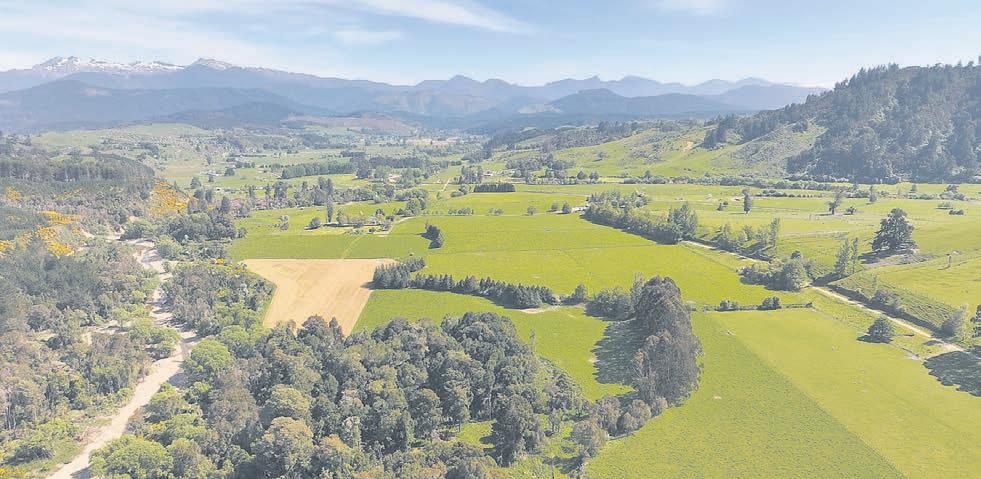
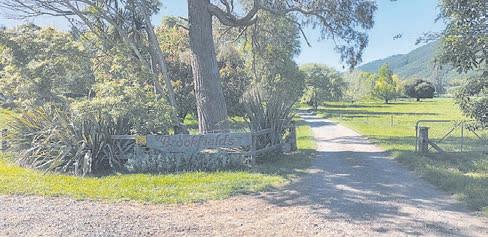
TASMAN 200 Upper Stanley Brook
Exceptional 400 Hectare Finishing Property
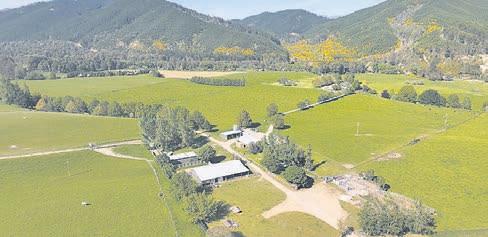
3 1 2
DEADLINE PRIVATE TREATY
Rarely available in Tasman, Brookfields offers 200ha (494 acres) of productive river terraces and easy hill pasture, plus 100ha of steeper grazing. Farmed with strong environmental principles, it includes a 27ha QEII covenant and is run as a high-value deer and beef unit suited to finishing, velvet or dairy grazing Quality fencing, strong soils and excellent pasture feature throughout. Improvements include a threebedroom homestead, a second cottage, a deer shed, near-new cattle yards, sheep yards and multiple wellkept sheds that support efficient year-round farming.
Plus GST (if any) Will not be sold prior Closes 12.00pm, Thursday 2 April
VIEW By Appointment Only
Joe Blakiston
M 027 434 4069
E jblakiston@pggwrightson.co.nz
Doug Smith
M 027 543 2280
E douglasjcsmith@pggwrightson.co.nz



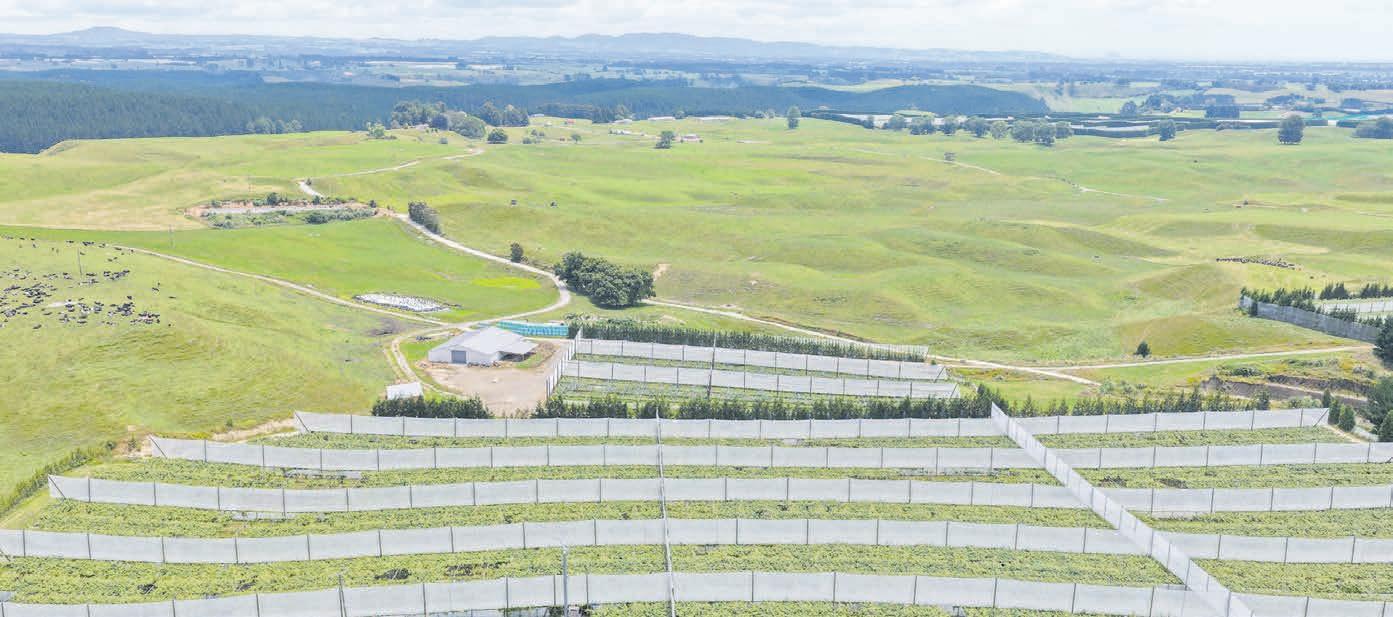
• 177 Johnson Road, Pukehina - 27 kms east of Te Puke
• 358 6 hectares - 2 �tles - predominantly easy rolling contour - steeper at rear
• ash & sandy loam soils over pumice; v g water supply from river plus bores
• 676 cows calved; produced 330,164 kgs milk solids during 2024/2025 season
• 60 bail rotary; in-shed feed system; v g effluent system; mul�ple large buildings
Ph Brian Peacocke 021 373 113

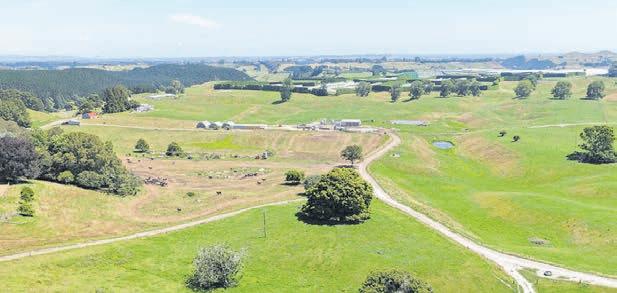
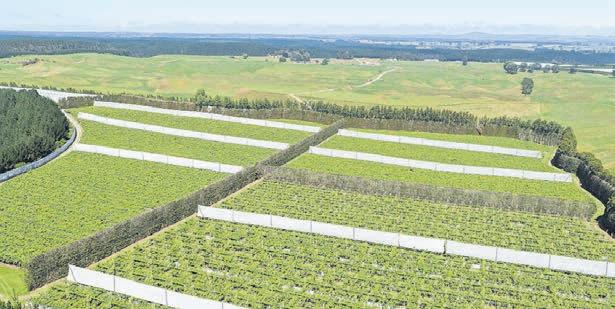
• 20 17 ha Sungold kiwifruit orchard
• gentle contour; extensive shelter from shade-cloth plus hedging.
• fully irrigated; quality system with v g. water supply; large orchard shed
• 3 dwellings plus office / general purpose buildings
• great loca�on; handy to towns, schools, beaches, golf courses & other ameni�es
/ Realestate.co.nz - search # R1446 Tenders Close: Wed, 11 March 2026 - 4
PRL Enterprises Ltd t/a PRL Rural 021 373 113
143 Woodville Aohanga Road, Makuri, RD5, Pahiatua 4985
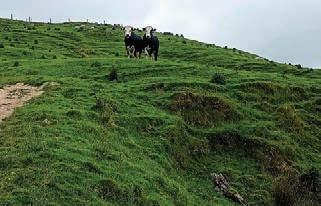
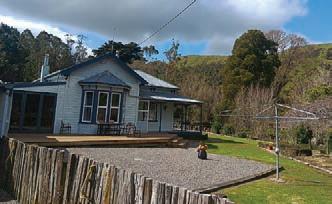
“AORANGI” PUNCHING HILL COUNTRY PRIVATE SALE
• Walk in and farm opportunity
• 734ha/640ha effective
• Well-presented and well-developed clean hill country just 25 minutes east of Pahiatua in the sought after summer safe Makuri district
• Award winning farm
• Wintering 5500su
• Over 30 kms of new 8 wire fencing in the last 12 years
• Comfortable 4-bedroom home set in well-tended grounds
• 4 Stand woolshed / 1400-Night pen
• Option to buy 514ha STS and lease/ lease to buy the remaining 220ha STS by negotiation Trade Me Reference: 5573456205 734ha/640ha effective – Sheep and Beef Price $5,800,000 + GST if any Mathew Prior 027 844 1766 | E: mazandmatt@yahoo.com Marilyn Prior 027 876 9179 | E: mazandmatt@yahoo.com
bjp@prl308.co.nz
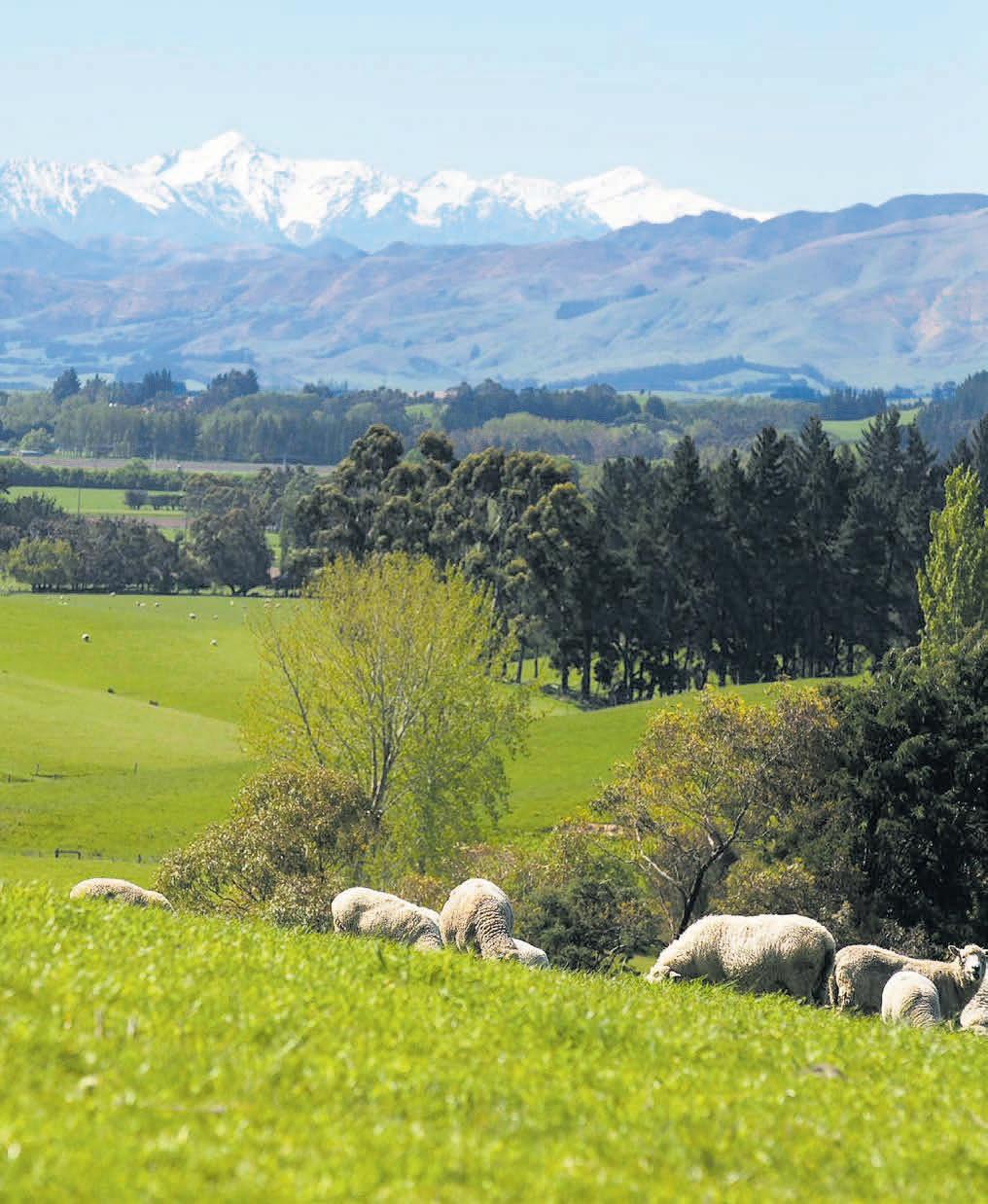
Reach hundreds and thousands of rural New Zealanders every week Call 0800 85 25 80 realestate@agrihq.co.nz


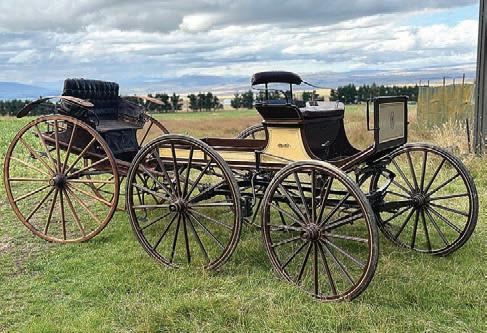

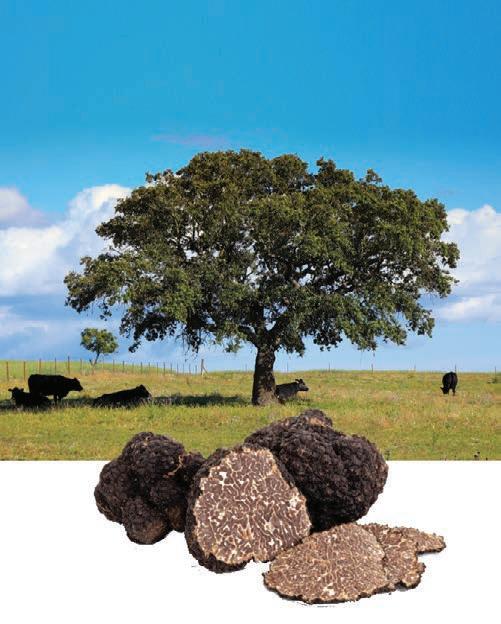













FARM MANAGER – Ruapehu Region
An opportunity for an experienced Farm Manager to lead stock operations across a 990-hectare intensively managed sheep, beef and dairy support farm, run as four blocks on the outskirts of Ohakune
Following 11 years of effective management, due to retirement, this well-established operation requires new leadership
Collectively, the property winters approx 11,500 SU and includes 6,400 Romney breeding ewes (all progeny finished), cattle finishing, dairy support grazing and winter cropping
The role involves day-to-day farm operations, achieving stock and production targets, coordinating livestock movements and service providers, and managing staff and contractors, with a strong focus on animal health and welfare
The ideal candidate will have proven sheep and cattle management experience, strong organisation and communication skills, accurate record keeping, four working dogs, and the ability to carry out minor repairs and maintenance
A comfortable three-bedroom home is provided, centrally located 10 minutes from Ohakune, with partner employment opportunities available Remuneration will reflect experience
To view the full advert and to apply visit https://agfi sjobs co/ or contact Kat
rstcareers q jumper e on 027 423 5521
n
NZ residency or a valid work visa is required
Made in Germany
• Most popular model: DK-AL 3218/35
• Unsurpassed quality and specification
• Electro-hydraulic, 6,000kg rated ram
• Side and rear tipping
• 3,500kg GVM (2,500kg payload)
• 3.25m x 1.8m deck
• Removeable 350mm aluminium sidewalls
• Other trailer types and sizes available to order
• Germany’s #1 horse float & trailer brand
• Exclusive NZ distributor for 15+ years $17,995+GST

www.boeckmann.co.nz robert@boeckmann.co.nz 021 02255648


PERSONAL
COUNTRY LADY - Carolyn. Genuine and sincere. Carolyn is an active attractive lady with a love for rural living. Raised on the land she values the simple pleasures that country life brings and enjoys staying active. Her interests include gardening, cooking, travel and spending time outdoors. Carolyn is hoping to meet a genuine man who shares her values. Please call 0800 446 332 quote code 66C
GRAZING AVAILABLE
DAIRY HEIFER GRAZING available from 1st May in the Horowhenua district. Enquiries to 021 430 961.
LIVESTOCK FOR SALE
WILTSHIRES-ARVIDSON. Self shearing sheep. No1 for Facial Eczema. David 027 2771 556.
RAMS FOR SALE
SOUND TERMINAL SIRES Suffolk Southdown X and Southdown rams for heavy lambs. Suit ewes or hoggets. $300 - $600. Phone 021 133 7533.
HILL COUNTRY 2-tooth Perendales. Quality sires. Good wool and easy care lambing. $300 - $600. Phone 021 133 7533.
SALE TALK
THE OWNER of a pharmacy walks in to find a guy leaning heavily against the wall. The pharmacist nods towards him and asks the assistant, “What’s wrong with that guy?” The assistant says, “Well, he came in here this morning to get something for his cough. I couldn’t find the cough medicine, so I gave him a bottle of laxatives.”
The pharmacist says, “You idiot! You can’t treat a cough with laxatives!” The assistant looked at the owner and back at the guy against the wall and said: “Really? Well he has stopped coughing.”
NATIONAL HIGH INDEXED ELITE NZ JERSEY GENETICS IN - MILK AUCTION
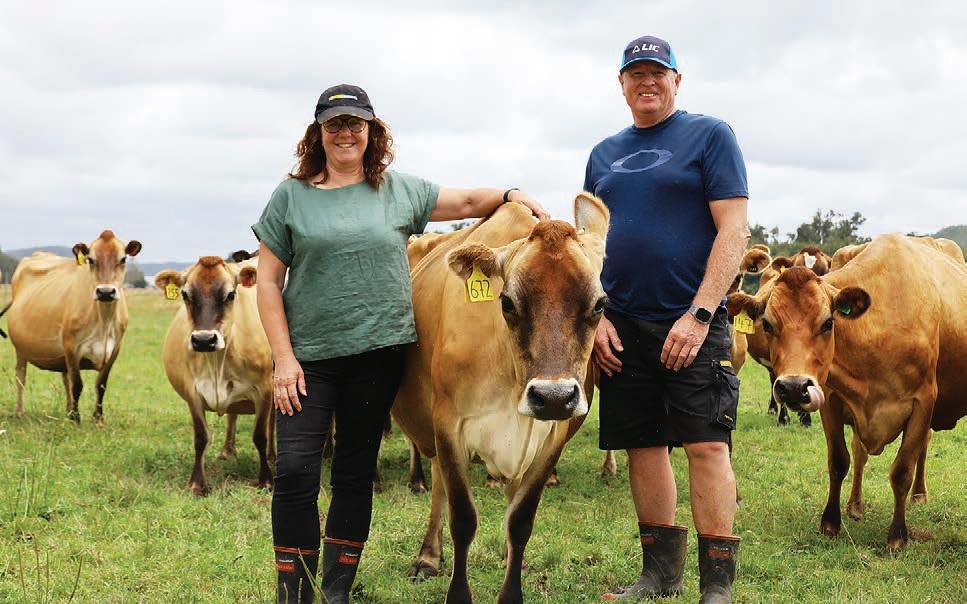
Monday 23rd March – 11.30am
2244 S/H 30 Rotoma. RD 4 Rotorua DN 21713
This herd is currently ranked No 2 Nationally for Indexes and was originally established in 1965 as the Awatui Jersey Stud. Faithfully farmed by the Wright Family for 60yrs. COMPRISING
350 Cows. D.T.C 22nd July. 85% in calf to AI. BW 320 PW 351. 120 R2yr Heifers. D.T.C 12th July. 90% in calf to AI. BW 366 PW 323.
• 100% Recorded G3 Profiled with RKT Participant Code
• 3 Generation Pedigrees available
• 22 Dams are in calf to an LIC Contract
• 12 Dams have been offered a Spring 2026 LIC Contract
• 27 Dams have been offered a Spring 2026 LIC Sexed Semen Viking Genetics Contract
• The Herd has an immaculate Animal Health Record.
• Lepto Vaccinated 4th Feb 2026
• BVD Vaccinated
• BVD Bulk Milk Undetected 10th Nov 2025
• TB C10 Last Test 21st Nov 2025
• Johnes Tested Clear 10th Feb 2026
12% of the sale animals are chocolate coloured. 85% of the Herd are A2A2.
Consistently producing 420kgms on a hard dry farm with young cows milked OAD all season and balance from 1st January. Feb 10th H/T 1.80kgms. Avg. 56 SCC.
Payment: 14 days from sale.
Delivery: By 31st March or 1st June by prior arrangement.
Call 0800 85 25 80 wordads@agrihq.co.nz
Open Day for viewing Monday 9th March 12 noon
NZ Farmers Livestock are privileged to bring the Team Wright Herd & R2yr Heifers to the market after 60yrs of passionate Nominated Breeding. This is an exceptionally well bred NZ Genetic Herd with exceptional Dairy Type to match the Indexes.
Jersey Breeders this is a rare opportunity to purchase Jersey Genetics of such a high calibre.

VENDORS: Phil & Sandra Wright
NZFL Agent: Michael Conwell 027 226 1611
Catalogues available online or by contacting your local NZFL Agent. The sale will be livestreamed on MyLivestock. Please ensure your registration on MyLivestock 72hrs prior to sale.
Phil and Sandra Wright have spent 35 years breeding one of New Zealand’s top dairy herds.






On Farm Lamb Sale
Okare Station, 226A Okare Road, Wairoa Thursday 5th March – Commencing 11am
• 6500 Romney Crypto Lambs
• 1500 Romney Ewe Lambs
• 4000 B/F M/S Lambs
• 500 x 5yr ewes
Freshly shorn, homebred Romney Lambs. 30 – 45kg weight range. Lambs will be sexed and drafted to suit all intending purchasers. GAP accredited.
1.5% rebate to purchasing agents.
Light lunch and refreshments available. Allow 1 hour from Wairoa. Further enquiries Daryl Fergus 027 209 2787

Tuesday 10 March, 11.30am
Comprising approx: 1200 Weaner Steers
• 280 Weaner Bulls
470 Weaner Heifers
McFadzean Cattle Co
180 Meat Maker weaner bulls
Top cattle renowned for:
• Good nature Muscle conformation
• Growth rates Backed by repeat buyers who vouch for their ability to yield 60%
Onetai Pastoral
•
•
•
•
•
• Waikaramu
For further enquiries: Andrew McKay 027 419 7366








Goodbye to a stormy summer

AFiona Quarrie MARKETS Livestock
S WE venture outdoors in the mornings, the cool air and heavy dew are there to greet us as reminders of the beginning of autumn.
It has been a tumultuous summer, and most regions have experienced adverse weather conditions, but the rainfall has also supported good pasture growth. This, along with promising schedules, has created a strong store market for both cattle and lambs post-Christmas and it has been hard to keep track of how high returns have climbed at times. So, where are we now?
Taranaki, Tuakau and Wellsford all recorded a 10c/kg or more gain for 1.5-year dairy-beef steers in recent sales. For Wellsford, the average figures for this class settled at $5.65/kg for 380kg on Monday, February 23. This put the 422-464kg range at $5.42/ kg to $5.57/kg, and strong
competition for Hereford-Friesian just shy of 400kg pushed buyers to $5.71-$5.79/kg.
The last store cattle sale for February at Feilding was hampered by lower throughput and buyer turnout due to the damage caused by the lowpressure system. A very strong result for 1.5-year dairy-beef steers and heifers at the previous sale only amplified the downside of 25c/kg for steers and more on heifers.
This put dairy-beef steers at $5.30/kg for 435kg and $4.98/ kg for heifers, which averaged 330kg. These stock classes had been making steady increases over the past six weeks, starting from $5.00/kg for steers and $4.60/kg for heifers.
It remains to be seen whether this was just a blip and if the market will be back to normal at the next sale.
Traditional cattle have been limited at some yards and the results of an annual consignment of 2.5-year steers from Morunga Station, Matawai, should be
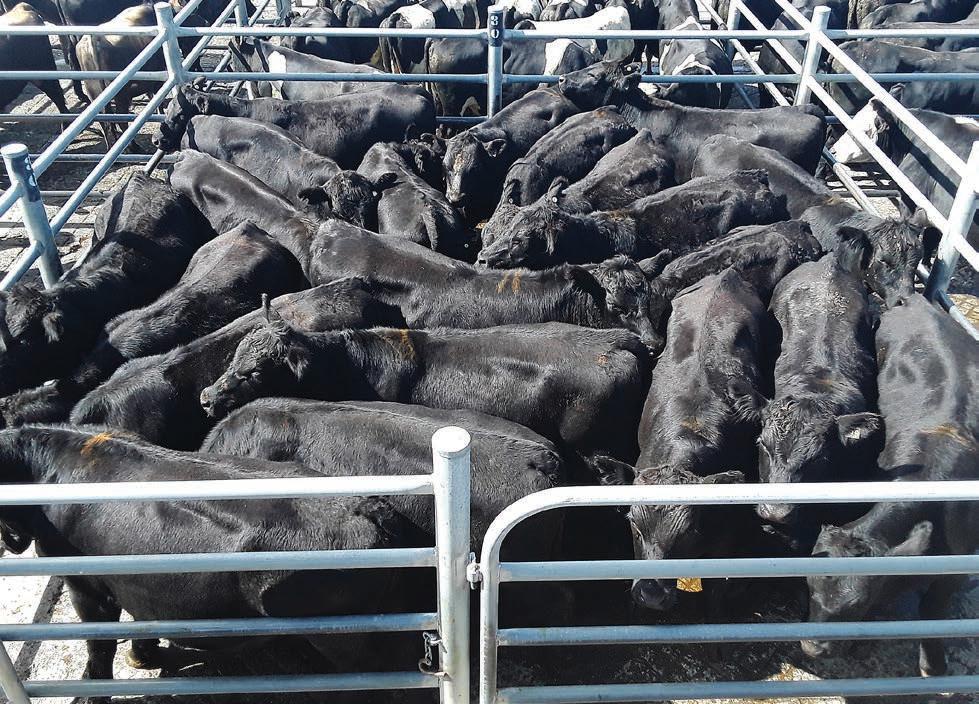
considered outliers. They caused a stir at Matawhero earlier in the month where the average return for 2.5-year traditional steers was $6.09/kg at 500kg.
The same breeding but a year younger produced $6.11/kg at 405kg.
Over at Feilding, this figure has been more of a ceiling than an average on the few lines of 1.5-year traditional steers over the last two weeks. Stortford Lodge did manage a medium yarding on February 25 as vendors aimed to capitalise on demand. The 2.5-year contingent of traditional steers and heifers frequently traded in the vicinity of $5.30/ kg and the lighter 1.5-year traditional steers, 240-340kg, fetched $6.97-$7.02/kg.
While there were a few apprehensive moments early in summer, the South Island has generally received plenty of rainfall. Arable growers have been

pulling their hair out but those in the livestock industry ended up with the preferable problem of too much feed.
There were steady increases in returns, driven by demand, for some weeks and the strong market has maintained its level more recently. The most recent store cattle sale at Canterbury Park put 1.5-year dairy-beef steers in a $5.20-$5.40/kg range and the better heifers traded in the 10c/kg below this.
Temuka had some larger numbers of steers, and local buyers were pushed along by others from further afield via bidr.
The average for 1.5-year dairybeef steers settled at $5.50/kg and most traded within 10c/kg either side of this.
If you had told store lamb producers two years ago that the average price at the yards would be knocking on $200, they wouldn’t have believed you.
3 way or 5 way options
Trailer options

TARGETED PURCHASES:
There were some adjustments to the store cattle market at Feilding on Friday, February 20 as potential buyers focused on storm clean-up. Quality lines held, though, and these 1.5year Angus steers collected $6.09/kg at 430kg.
That was the reality at several yards in the past weeks.
Feilding averaged $193 on February 20, and Stortford Lodge had reached $199 as an average just two days prior. Both sales had average weights a bit over 30kg. This did settle slightly at Stortford Lodge the following week with slightly heavier lambs and a $196 average.
Usually a notch below the North Island, Temuka produced almost replica figures to Stortford on February 16, but also settled the following week. Likewise, the average per kilogram return at Canterbury Park has been north of $6/kg for the last two weeks. This was driven by lighter weights and per-head budgets being applied.
As autumn progresses and throughput ramps up with weaner fairs, calf sales and offloading of store lambs pre-tup, it will be interesting to see how markets hold up.




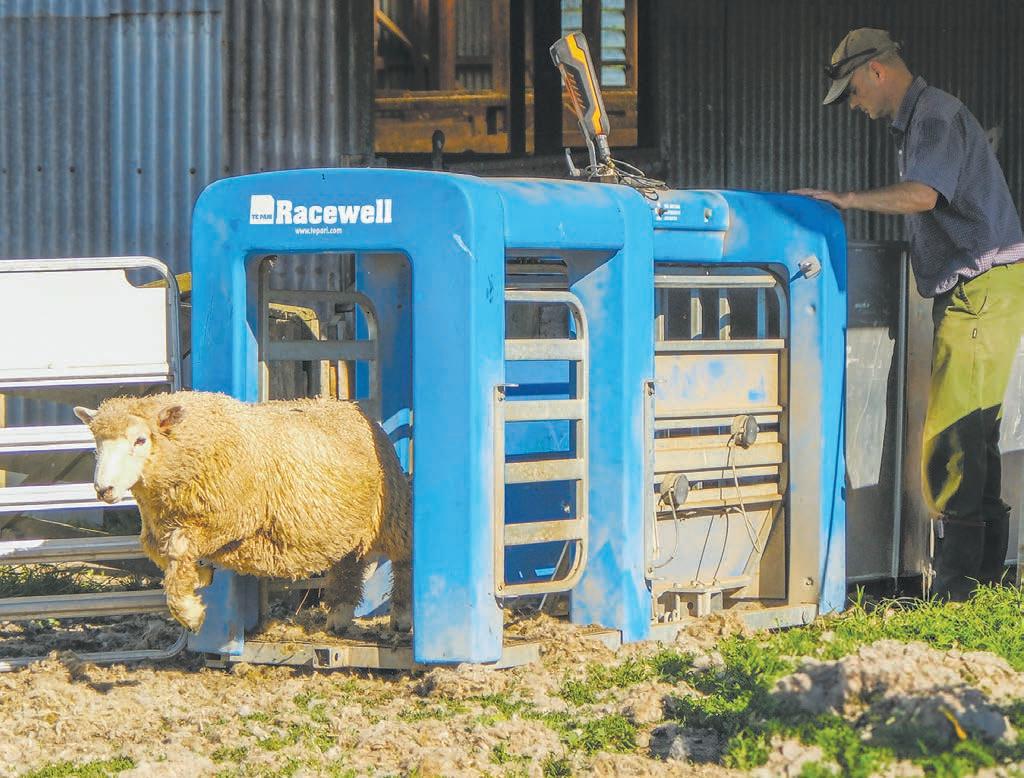


Cattle Sheep Deer

Weekly saleyard results
Stortford Lodge | February 25 | 475 cattle, 11,324 sheep
2.5-year traditional heifers, 485kg 5.38
1.5-year traditional steers, 375kg 6.42
1.5-year traditional heifers, 390kg 5.67
1.5-year dairy-beef heifers, 405kg 5.34
2-tooth Romney ewes, most 280-336
4-tooth Romney ewes, all 275-310
5-year Romney ewes, all 228-232
Mixed-age Romney ewes, all 165-296
Store cryptorchid, ram lambs, all 184-218
Store wether lambs, all 172-210.50
Store ewe lambs, all 174-214
Store mixed-sex lambs, all 151-208
Dannevirke | February 19
Prime ram lambs, all
Prime mixed-sex lambs, most
Rongotea | February 24 | 208 cattle, 39 sheep
1.5-year dairy-beef steers, 295kg
Weaner Friesian bulls, 140kg
Weaner dairy-beef heifers, 140kg
Masterton | February 24 | 969 cattle
2.5-year traditional steers, 590kg
1.5-year traditional steers, 415kg
1.5-year traditional heifers, 375kg
Coalgate | February 19 | 159 cattle, 1656 sheep
Store mixed-sex lambs, all
Store shedding mixed-sex lambs,
dairy-beef steers, 160kg
Weaner dairy-beef heifers, 160kg
Store cryptorchid lambs, shorn, all 176-231 Store cryptorchid lambs, woolly, all 181-222 Store ewe lambs, shorn, all 160-205
Feilding | February 23 | 303 cattle, 4362
Temuka | February 19 | 880 cattle
Boner Friesian cows, 540kg 3.77
Prime ewes, most
Prime 2-tooth ewes, all
Prime male lambs, all
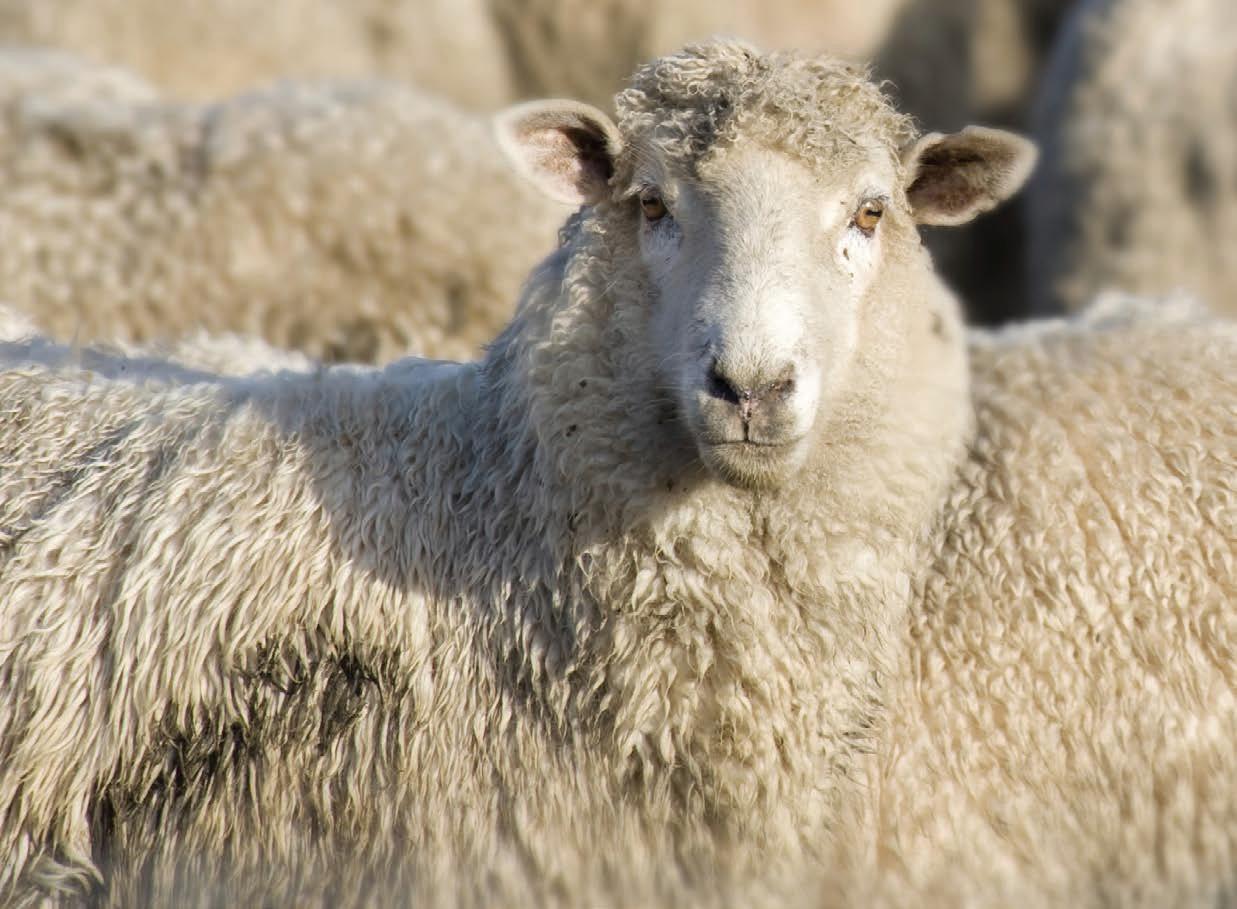

March starts, and the high pressure is on

Philip Duncan NEWS Weather
MARCH is kicking off with a briefly “wintry” change in some places, thanks to a large high pressure zone west of New Zealand dredging up a southerly.
The rugby ball-shaped high is shaped north-to-south (like a rugby ball standing on the ground waiting to be kicked), and when they have this shape they dredge up our coldest southerlies.
At the same time, northeast of NZ a tropical depression is drifting offshore.
Despite now being in the peak of the tropical cyclone season (March), New Zealand may well see an uptick in high pressure. One of the most powerful highs so far this year is expected to move across NZ and out to our east over the next week or so.
This means for many NZ regions it may dry out further before getting wetter. It’s a pattern many of us are used to – March can often feel like summer, but without the fierce heat. Arguably, March is more
summer-like than December can be, and the astronomical date for the end of summer is at the equinox, which this year is on Saturday March 21.
The polar southerly kicking off this week is short lived – gone by Tuesday and warmth returning midweek for those who lost it.
In fact, by Thursday subtropical air and nor’westers may well bring some pleasant, dry, days (although a little windy in some exposed places later in the week as those nor’westers crank up a bit more).
Long-range models are picking high pressure to kick off our weather next week, and this may grow into quite a large anticyclone, dominating our skies right through next week (obviously at the time of writing this I’m looking at the longer range modelling, which can change, but is showing an enormous high pressure zone 5000km across).
We’ll see if that pans out. I’m always a bit nervous locking in weather for NZ that is more than seven days away, but long-term forecasting of high pressure is usually a little more straightforward than long-term forecasting of low
pressure, which is notoriously changeable.
Soil moisture
From a soil moisture point of view, most of NZ is wetter than it was this time a year ago, when much of the country was dry or well below normal moisture storage.
Despite a number of parts of NZ not needing rain urgently, we are seeing regions drying out – and the upcoming forecast will add to that.
The Far North, western Northland, Auckland, Hauraki Plains, Hawke’s Bay (around Napier to Hastings), Manawatū, Horowhenua, Nelson, Marlborough, large parts of Canterbury (except Christchurch and Banks Peninsula), central Otago and Southland all have soil moisture deficits at the moment.
Facial eczema
The weather lately has seen a spike in facial eczema, with spore counts above previous years at this point in the season. With drier weather, longer nights and heavier dews, we may well see further spikes. For those who love mushroom picking out on the farm, it could be a good season ahead though!
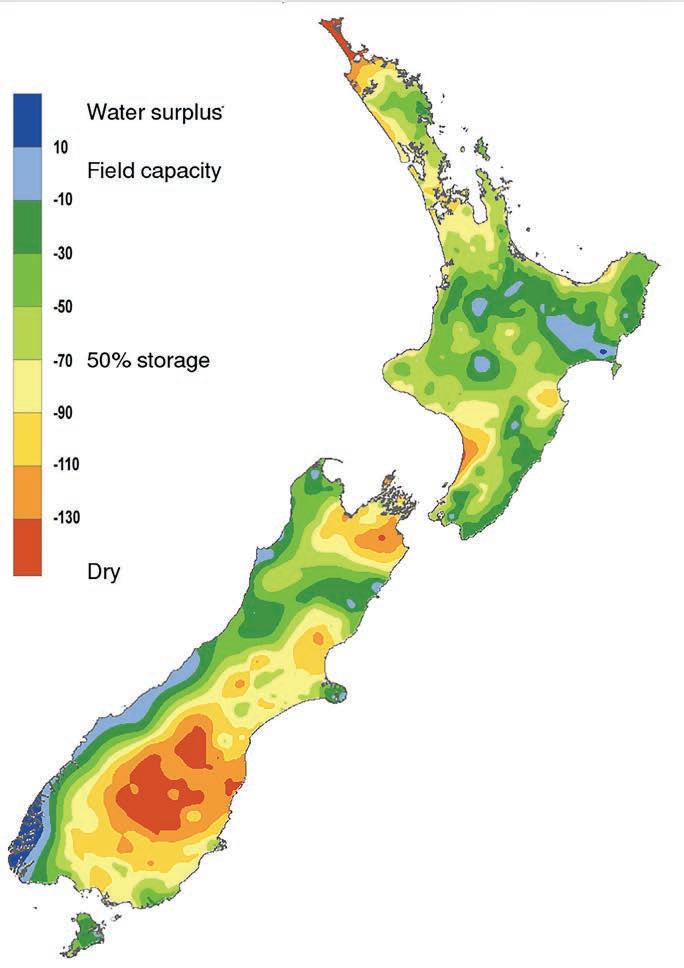
Deficit at 9am on 24/02/2026
DRYING OUT: This image of the Soil Moisture Deficit towards the end of February shows a number of dry regions. Image: Earth Sciences NZ