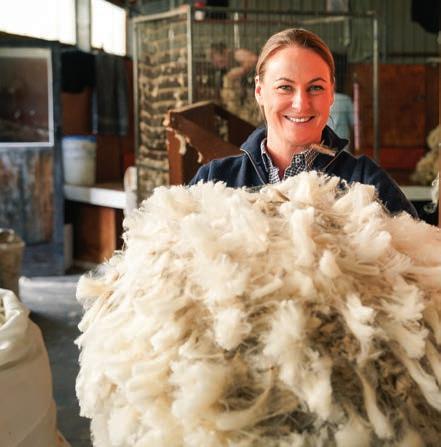


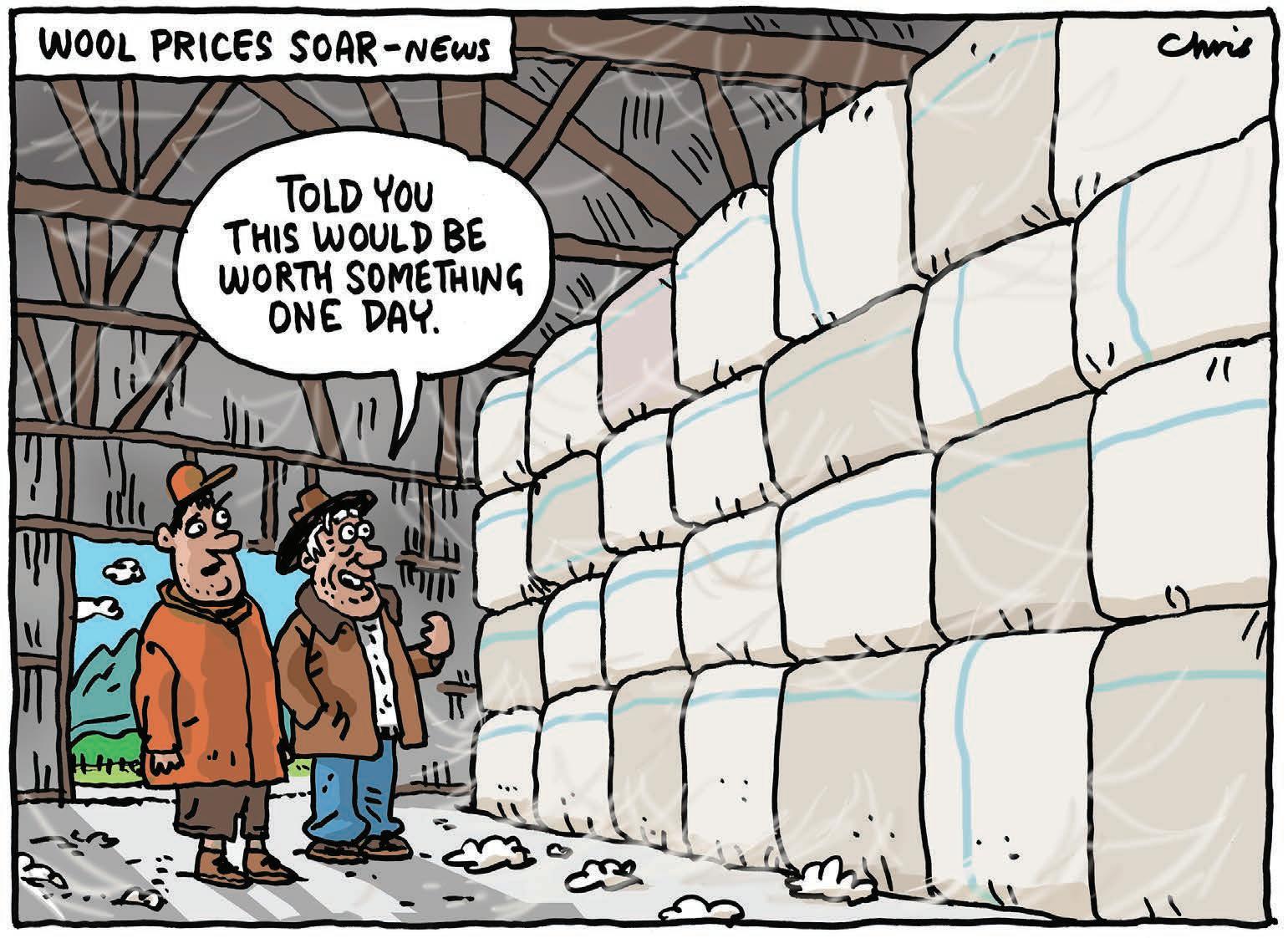
PRICES for strong wool
could settle at current levels, having risen $1/kg in just three months, say industry leaders.
They said price consolidation is needed to avoid overheating the market, and they are seeing some buyer resistance to the speed of the price increase, with some users reducing the amount of wool used in products or substituting it for other fibres.
The FUSCA strong wool indicator hit 631c/kg last week, an increase of nearly $1/kg from February and nearly $2.70/kg higher than May last year.
The pressure is on everyone to get fibre.
The last time the indicator was over 500c before this year was June 2016, when it was 507c/kg.
“I think wool prices have reached a new level,” said WoolWorks chief executive Rosstan Mazey.
“I am hopeful we have a period of stability because we are asking a lot of the supply chain to absorb these price increases over a relatively short time.”
He acknowledges demand is high.
“The pressure is on everyone to get fibre,” he said.
Keith Ovens, the commercial manager with the Zentera Wool Company, said while the price recovery is welcomed and needed, the higher values have led some buyers to use less wool, including one that has removed all wool from its new season collection.
“They can’t keep increasing prices at retail because they will not sell, so there will be a point where there will be a bit of balancing or a breather.”
He expects prices to consolidate at about current levels.
The improved prices were driven by a global shortage of wool, low sheep numbers, depleted stocks held by manufacturers, a favourable exchange rate and rising oil prices making synthetic fibres less competitive.
“There’s no wool and everybody is having to buy in the short term,” he said.
Ovens said the price rally has been reflected in new season contract prices for crossbred pre lamb shorn wool of $6.50/kg to above $7/kg.
Fine wool values have also rallied in recent months, driven by the same factors.
The Australian sheep flock is expected to fall to 67.1 million this year due to dry weather and
Continued page 3
Hawke’s Bay water storage facilities more vital than ever.
NEWS 3
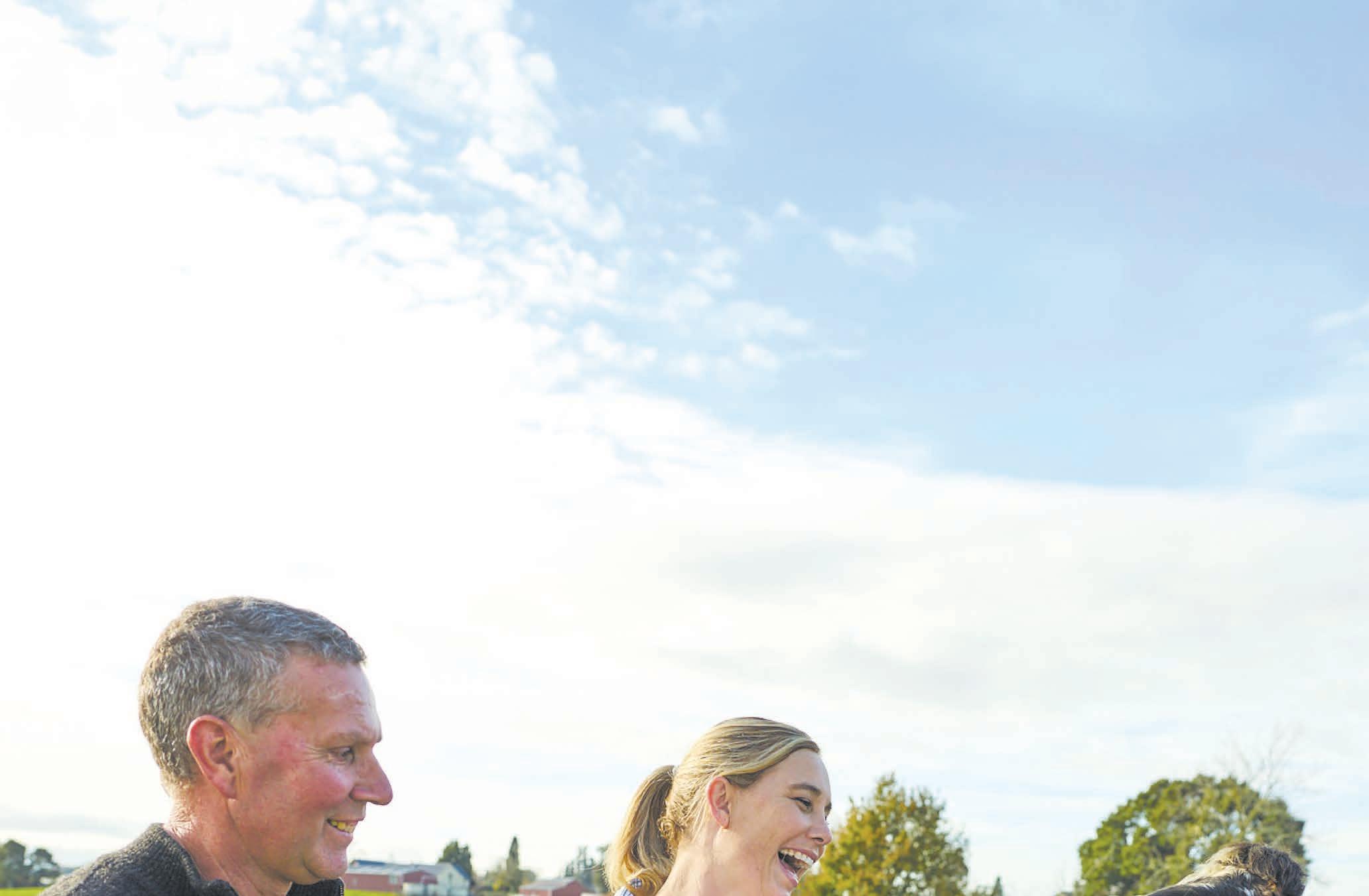
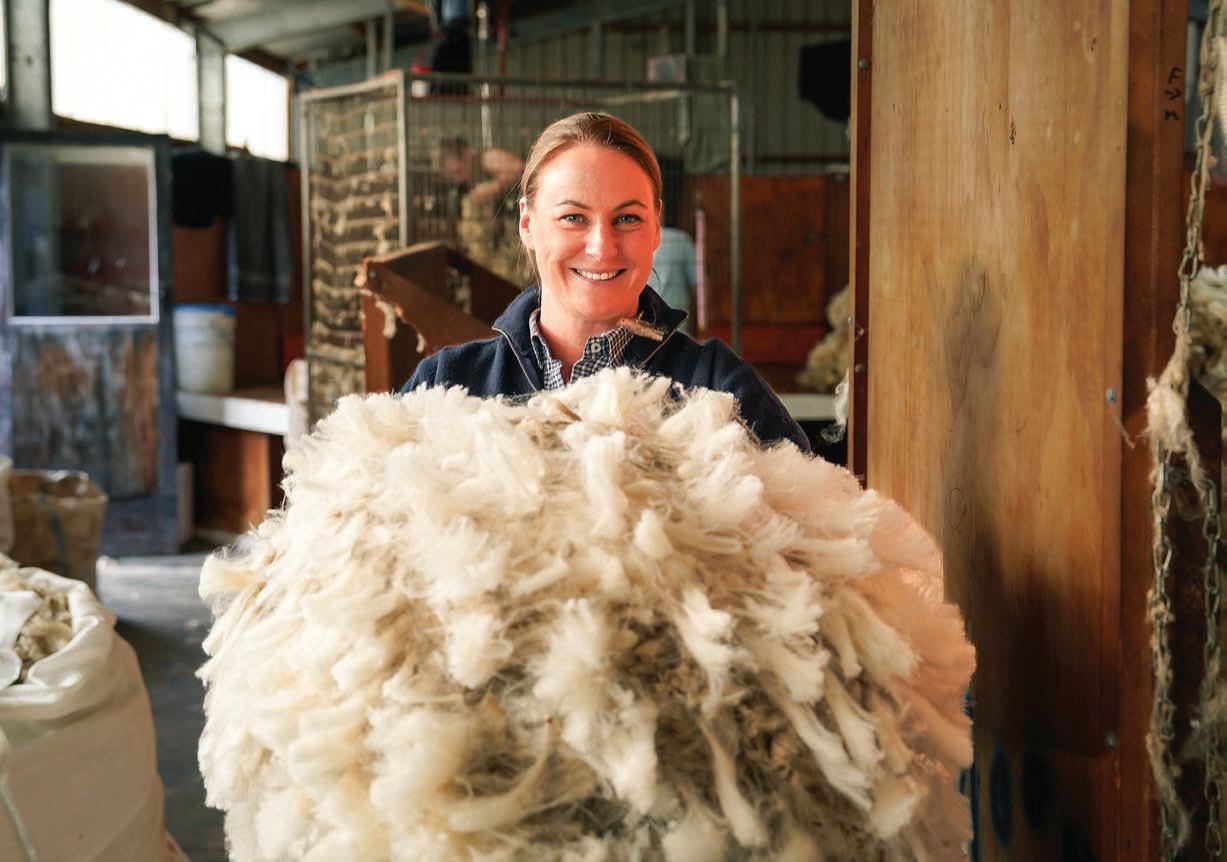
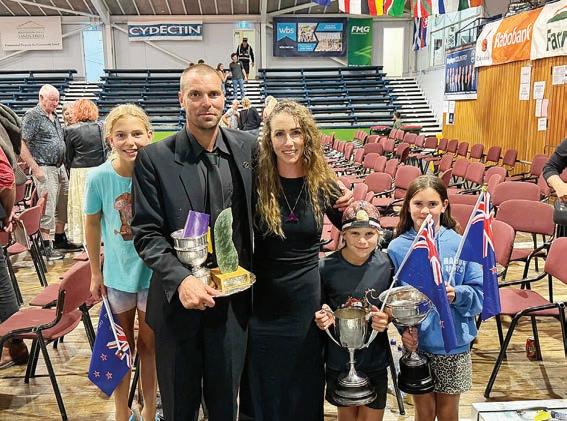
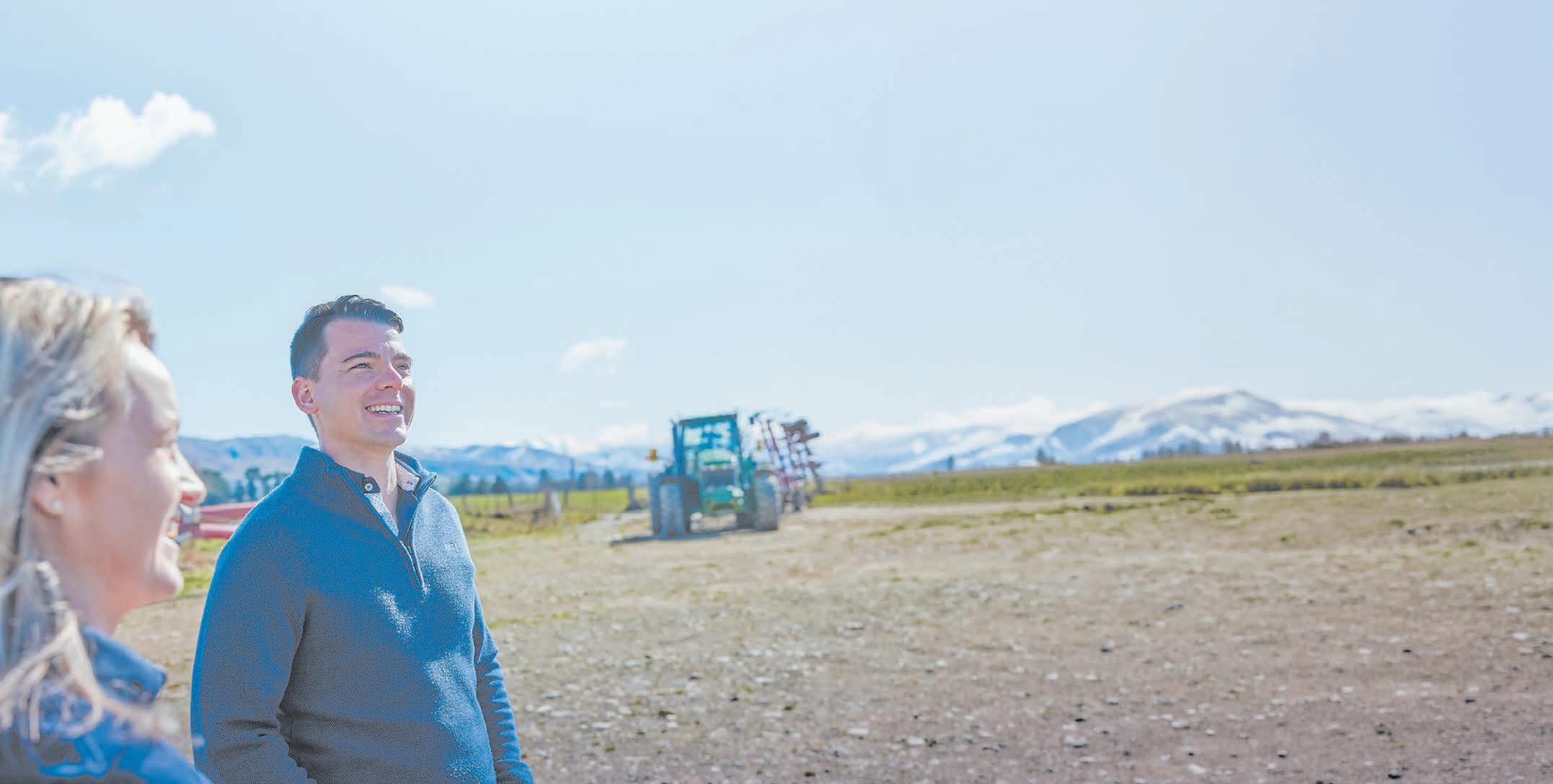
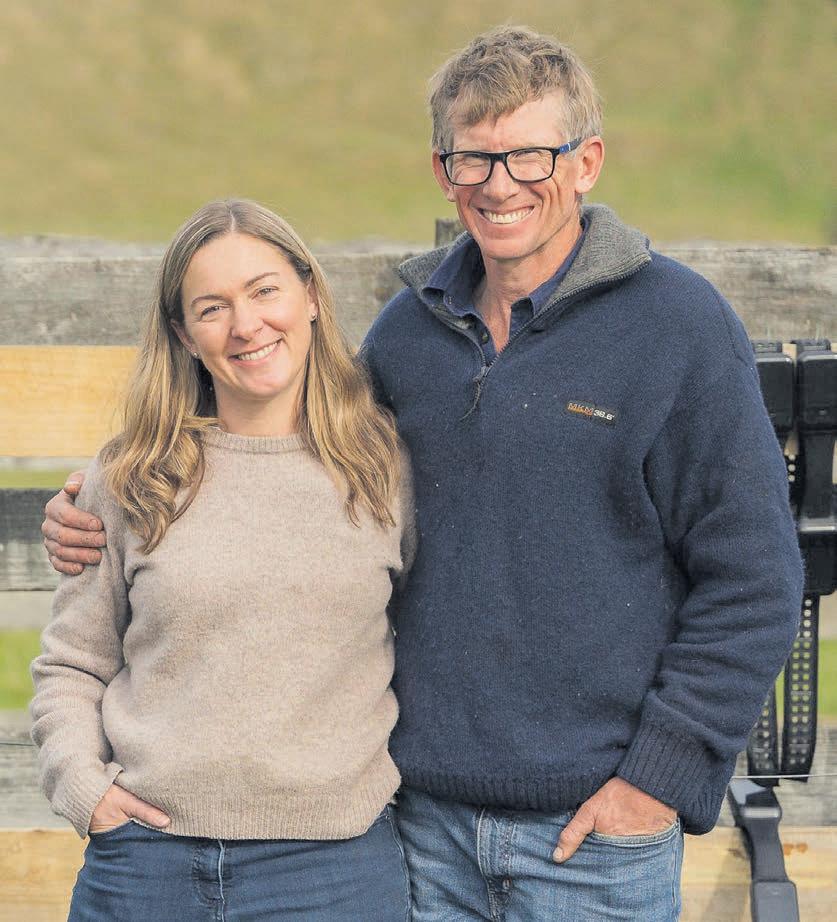
World Champion shearer Rowland Smith is now focused on family life and farming in Hawke’s Bay with wife Ingrid and their three children, Callie, Lincoln and Sia.
Another US tariff uptick may be coming for dairy and lamb.
NEWS 5
Ordinary people can do extraordinary things, says Rebecca Hyde.
OPINION 21









Bryan Gibson | 06 323 1519
Managing Editor bryan.gibson@agrihq.co.nz
Craig Page | 03 470 2469
Deputy Editor craig.page@agrihq.co.nz
Claire Robertson
Sub-Editor claire.robertson@agrihq.co.nz
Neal Wallace | 03 474 9240
Journalist neal.wallace@agrihq.co.nz
Gerald Piddock | 027 486 8346 Journalist gerald.piddock@agrihq.co.nz
Annette Scott | 021 908 400 Journalist annette.scott@agrihq.co.nz
Hugh Stringleman | 027 474 4003 Journalist stringleman@outlook.co.nz
Richard Rennie | 027 475 4256 Journalist richard.rennie@agrihq.co.nz
Gerhard Uys | 027 239 4388 Journalist gerhard.uys@agrihq.co.nz
Nigel Stirling | 021 136 5570
Journalist nigel.g.stirling@gmail.com
Isabella Beale | 027 299 0596
Multimedia Journalist isabella.beale@agrihq.co.nz
PRODUCTION
Lana Kieselbach | 027 739 4295 production@agrihq.co.nz
ADVERTISING MATERIAL
Supply to: adcopy@agrihq.co.nz
SUBSCRIPTIONS & DELIVERY 0800 85 25 80 subs@agrihq.co.nz
PRINTER
Printed by NZME
Delivered by Reach Media Ltd
Andy Whitson | 027 626 2269
Sales & Marketing Manager andy.whitson@agrihq.co.nz
Janine Aish | 027 300 5990
Auckland/Northland Partnership Manager janine.aish@agrihq.co.nz
Jody Anderson | 027 474 6094
Waikato/Bay of Plenty Partnership Manager jody.anderson@agrihq.co.nz
Palak Arora | 027 474 6095
Lower North Island Partnership Manager palak.arora@agrihq.co.nz
Andy Whitson | 027 626 2269
South Island Partnership Manager andy.whitson@agrihq.co.nz
Julie Hill | 027 705 7181
Marketplace Partnership Manager classifieds@agrihq.co.nz
Andrea Mansfield | 027 602 4925 National Livestock Manager livestock@agrihq.co.nz
Real Estate | 0800 85 25 80 realestate@agrihq.co.nz
Word Only Advertising | 0800 85 25 80 Marketplace wordads@agrihq.co.nz
Dean and Cushla Williamson Phone: 027 323 9407 dean.williamson@agrihq.co.nz cushla.williamson@agrihq.co.nz
Farmers Weekly is Published by AgriHQ PO Box 529, Feilding 4740, New Zealand Phone: 0800 85 25 80 Website: www.farmersweekly.co.nz
ISSN 2463-6002 (Print) ISSN 2463-6010 (Online)
The Global Dairy Trade auction platform began the new season for New Zealand dairying quietly and with mixed results in the eight commodities sold.
The overall GDT index fell by 0.6% in the June 2 sale, dragged down by whole milk powder at minus 2.2% and skim milk powder, minus 3%. NZX dairy analyst Lewis Hoggard said the overall tone of the GDT event was set by China’s reduced participation, the region’s share of purchases dropping from 39% last time to 22% this time.
Scales Corporation has declared an increased final dividend of 12.5c a share, 50% imputed, for its 2025 financial year ended December 31. The full dividend for FY25 was 25c compared with 15c in FY24. The dividend is 59% of underlying net profit attributable to shareholders, which was $77 million, up 45%.
Gallagher has appointed Australian agribusiness executive Rob Clayton chief executive of its global animal management division.
Clayton joins the Hamilton-based technology company after a 25-year career with global agricultural services firm Nutrien, where he held senior leadership roles in Australia and the United States. Raised on a mixed sheep, cattle and wheat farm in New South Wales, he brings both farming and international agribusiness experience to the role.
Milk production during April in New Zealand, Australia and the United States and during March in the European Union varied between 3.5% and 7% above the same months in 2025. Fonterra collected 7.3% more milk nationally in April than it did a year earlier and the season-to-date figure is up 4%, over 11 months of the 2026 season. The North Island was up 10.7% in April and the South Island is 4.9% ahead for the season, according to the Global Dairy Update for April.


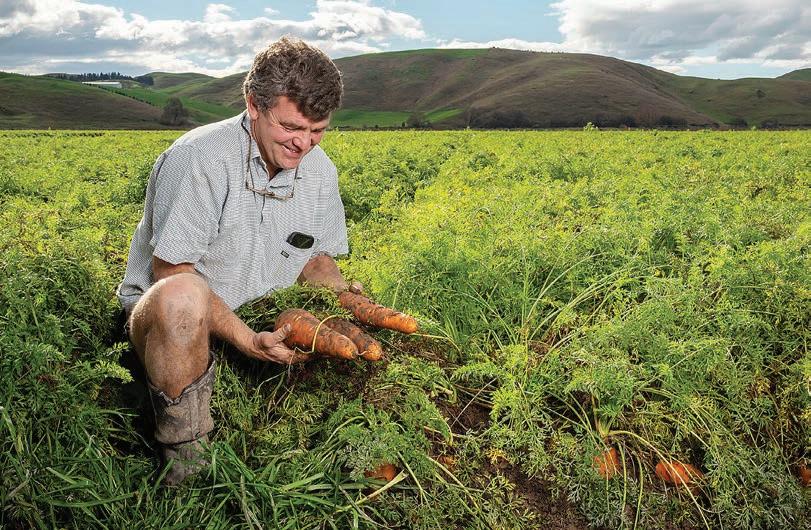
DESPITE the imminent loss of vegetable processor McCain from Hawke’s Bay, sector leaders maintain the case for the region’s proposed water storage facilities remains stronger than ever.
In March McCain announced plans to retreat from vegetable processing in January 2027, prompting farmers in the region to reconsider cropping options and farm viability in its wake.
The announcement from the Canadian multinational comes as the region also considers two key water storage options that are reliant upon an intensive, horticulturally focused primary sector to support their success.
The Heretaunga Plains project near Whanawhana was announced a year ago to store 27 million cubic metres of water for Napier and Hastings and to offer water security to growers in the plains area.
Continued from page 1
management changes following the end of live sheep shipments.
Two years ago, the flock numbered 71.3 million and produced 320 million kg of wool. This year the clip will be about 255m/kg.
Ovens said 18 months ago
Merino second shear was making less than $10/kg. Two weeks ago, it sold for $20/kg.
Some fine wool growers are locking in contracts for poorer quality wool at $30/kg for the coming season, but opting to sell their best wool at auction, banking on a rising market.
Meantime the Tukituki Water Security project is also undergoing detailed feasibility studies for a 95 million cubic storage scheme.
Central Hawke’s Bay farmer Hugh Ritchie said he did not think the exit of vegetable processing and associated crops necessarily undermines the viability of the water storage projects.
This is not the answer, growing lowmargin vegetables for big multinational corporations.
Mike Peterson
Tukituki Water Security
“We need to look further. If Canterbury is going to continue to get into more dairying, the white clover and small seed production must go somewhere, and this would get people looking at other opportunities.”
Mike Peterson, chair of the Tukituki project, pointed to the high-volume, low-margin business of vegetable growing
Mazey said at last week’s WoolWorks online sale, crossbred prices rose a further 5c to 10c/kg with one line of 31.5 micron lamb’s wool making $7.10/kg.
“It’s continuing to build, it’s still on an incline.”
Indian buyers were especially active, which could reflect the free trade agreement and a visit last week by wool sector representatives.
PGG Wrightson wool manager
Rachel Shearer said it feels like the world has found wool.
In addition to the global shortage, Shearer said demand is being driven by life-cycle

E v e r y d a y
c o u n t s .
"Daily
and processing as one whose time has passed after becoming uneconomic for all parties.
“The soils are here and the climate is here and the suitability for higher-value horticultural crops, livestock finishing and specialist crops is clearly established,” he said.
“This is not the answer, growing low-margin vegetables for big multinational corporations.”
He pointed to potential investors in crops including kiwifruit orchardists who are keen to put money into the region, but are held back by a lack of available water.
“We have had these next-tier crops [vegetables] with lower margins, and they are a clear demonstration of why we need more water, to move to those higher-tier crops.”
He did not believe the removal of vegetable growing in the Bay would free up sufficient water supply to nullify the need for new water projects.
“The growers and workers affected by these closures did not cause the structural shifts bearing
legislation in Europe aimed at reducing the impact of cheap fashion, and by people shunning synthetic fibres.
This shift, she said, should benefit a natural and sustainable product such as wool.
Shearer said wool is not being passed in at auction and bales that have been in storage for a number of years have been sold.
“Buyers were meeting the market.”
The better prepared the clip, the higher the prices, and farmers are being urged to reduce vegetable matter and maintain high in-shed classing standards.
down on Hawke’s Bay. They deserve more than sympathy and a trip to Wellington,” he said.
Meantime a grower group has been given $50,000 to mount a feasibility study to consider a farmer-led purchase of the McCain Foods vegetable processing site in Hastings.
Ritchie said he is confident a “green light/red light” decision on putting a bid on the operation would be made within weeks.
“And if it is a ‘no’ then it is time to launch a national conversation for NZ agri to address about what needs to change here in our food supply chain.
“It is the same with citrus fruit,
or milling grade wheat – there simply is not enough money there for growers.”
Ritchie said a possible farmerowned co-operative had been the “media darling” of options, but it is very easy to underestimate the massive capital input required for such operations.
“And it is not like farmers have great balance sheets and the cash to do that.” He estimated the annual working capital demands of such an operation may be as high as $100 million.
“You may hope that another large company with synergies in this area could make vegetables a companion product.”
Should sheep farmers put more emphasis back on wool now that prices are rising?
Shearer and Mazey said there is anecdotal evidence that some farmers are reconsidering using
body condition scoring lets you monitor cows that lose more than one condition score in the first 28 days post-calving so you can act before she becomes a non-cycler at the planned start of mating "
Krispin KannanVeterinarian, Farmfirst Veterinar y
adopting genetics to improve wool production.
Richard Rennie NEWS Environment
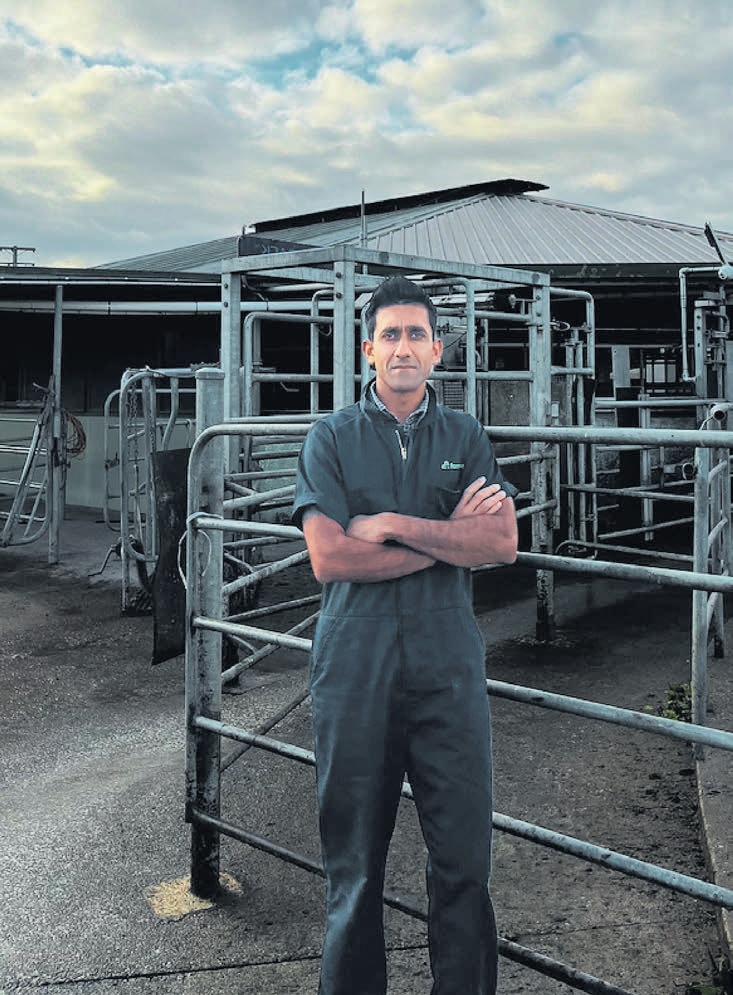
AS CATCHMENT groups around the country start to run on financial fumes, the body representing the groups nationally is seeking clarity on what, if any, extra funds may be held in this year’s Budget.
Back in March the Catchment Communities Aotearoa (CCA) umbrella group finally secured the $12 million it had sought to keep groups functioning as money started to run out from the Jobs for Nature funding many had relied on.
Then in this year’s Budget, Agriculture Minister Todd McClay announced there would be $40.5m over four years to back the efforts of farmer-led catchment groups to improve land management practices.
However, this sits short of the additional $12m a year the CCA
had sought to enable groups to continue to build on their work for projects like baseline catchment research and measurement.
Group chair Ben Ensor said the group is still seeking clarity on the exact amount, but he is relatively certain it is the $37.5m groups were promised last year, plus an additional top-up to take it to $40.5 million. At just over $10m a year, it falls short of the $12m hoped for.
It is pretty skinny, and continuing will be tough for many groups.
Ben Ensor Catchment Communities Aotearoa
“I am pretty sure there is no additional funding that came in there in the Budget; this is the amount we see going forward. “It is pretty skinny, and continuing will be tough for many groups.”
Most groups’ funding lasts to June 30 at the latest and they are now waiting confirmation of new contracts from July 1.
A spokesperson for Associate Minister for Agriculture Mike Butterick confirmed $40.5m was committed over four years to back the groups.
They said the Ministry for Primary Industries has $13.5m to support catchment groups in the 2026-27 financial year, which includes a funding boost of $4.5m for that period.
They confirmed MPI officials will be contacting group leaders shortly regarding funds supply.
Rangitīkei farmer and CCA board member Roger Dalrymple is certain there is no additional Budget windfall, and said even what is due to come does not always pass through catchment group hands.
“Often the funding will go via regional councils and MPI’s On Farm Support, but it’s tagged as ‘catchment group funding’.
“Many groups are already running on fumes,” he said.
His own group, the Rangitīkei Rivers Catchment group, has been running since 2017. He said it is extremely concerning for groups employing people full-time who need to know they can continue to do so.
“It is now June 2 and we are meant to have funding by the end of June.
“I feel we have gone backwards
since groups started, from what used to be three-year contract certainty to yearly, and now here we are down to 28 days.”
Ensor confirmed some catchment groups around the country are amalgamating to cut down on costs and he expects there may be more to come.
“Provided groups can maintain some autonomy under that umbrella, it is a good model.”

Hugh Stringleman NEWS Finance
HEARTLAND Bank and TSB propose merging to create a regional bank of scale with product diversification and improved financial efficiency and resilience.
TSB Heartland, as it is to be known, will maintain the existing nationwide presence with Taranaki as a key operational hub with a local branch network.
The conditional merger implementation agreement (MIA) points to a material 171% increase in Heartland’s asset base for the $620 million consideration to Toi
Foundation to acquire all TSB shares on issue, “TSB Heartland Bank will be a full-service capable bank differentiated by its specialist product offerings, with a lower
risk-weighted product portfolio,” the MIA announcement by Heartland chief executive Andrew Dixson said.

The proposed merger is targeting completion in December 2026, subject to satisfaction of a number of conditions in the MIA, including community consultation by Toi Foundation with Taranaki residents, Heartland shareholder approval and any necessary New Zealand and Australian regulatory approvals.
The new asset base of $15 billion will rank TSB Heartland seventh in New Zealand about $2bn behind Rabobank but a considerable distance behind Kiwibank at fifth on $43bn.
Half of its business is home loans, followed by 13% motor finance, 11% reverse mortgages, 9% commercial property and 6%






rural loans, including a specialised livestock finance product.
TSB has 12 branches nationwide, seven of them in Taranaki, and Heartland has eight branches.
Toi Foundation will have 17.5% of Heartland’s shareholding alongside existing retail investors with 52.5% and existing institutional investors with 22.7%.
Heartland Group Holdings is listed on the NZX with 945m issued shares and a market capitalisation on $1.2bn, forecast to rise to $1.7bn. Shares are currently trading at $1.28 and have jumped 14c since the merger announcement.








BNigel Stirling MARKETS Trade
EEF and kiwifruit exports to the United States have dodged US President Donald Trump’s latest global tariff hikes.
However, dairy and lamb exports to the US look likely to be hit with an increase in tariffs from 10% to 12.5% later this year.
Lamb exporters are also still anticipating a separate investigation into NZ and Australian lamb imports by the administration.
On Wednesday last week Trump’s Trade Representative, Jamieson Greer, announced the results of his investigation under Section 301 of the US Trade Act into the labour laws of 60 countries, including NZ.

Following on from February’s US Supreme Court ruling that Trump’s Liberation Day tariffs were illegal, the investigation aimed to establish whether an unfair advantage was being gained over US companies either in export markets or in the US itself.
The announcement drafted the 60 countries into two groups.
Those with laws the US deemed
INCREASE: Dairy and lamb exports to the US look likely to be hit with an increase in tariffs from 10% to 12.5% later this year following US President Donald Trump’s latest announcement.
Photo: Wikimedia Commons
sufficient for the policing of the use of forced labour by those countries’ companies, but who had failed to enforce their laws rigorously enough, would face a 10% tariff.
And those the US deemed not to have sufficient legal protections
against labour exploitation face a 12.5% tariff.
These would replace the 10% tariffs imposed under Section 122 of the Trade Act following the Supreme Court ruling.
These tariffs are due to expire in late July.
Felicity Roxburgh, executive director of the International Business Forum, which represents exporting heavyweights such as Fonterra, Silver Fern Farms, and kiwifruit marketer Zespri, said NZ’s inclusion in the latter group is unjustified.
“We consider this as another way to impose a global tariff and we reject the assessment that we have a significant problem with forced labour in our supply chain. Our exporters try hard to reduce the risk of forced labour,” she said.
Beef + Lamb NZ chair Kate Acland said the announcement continued exemptions for beef and
kiwifruit announced in November last year.
She noted the tariffs are still subject to consultation in early July before final confirmation by the administration.
Most Favoured Nation tariffs of less than 1% will continue to apply to New Zealand’s beef exports to the US.
“We are really pleased that the proposal is that beef will continue to be excluded from these proposals and that the current proposal is a 12.5% tariff so that further impact on lamb will be minimal,” Acland said.
Dairy Companies Association of NZ executive director Kimberly Crewther noted Canada and Mexico have been exempted from the latest tariffs.
This means NZ dairy exporters will continue to be at a tariff disadvantage to subsidised Canadian competitors in the lucrative US protein market.

THE closure of methane mitigation developer CH4 Global seaweed-growing plant in Bluff is a lost opportunity for New Zealand.
So says chair of the New Zealand Seaweed Association and a former employee of Ch4 Global, Michael Lakeman.
A spokesperson for CH4 Global told Farmers Weekly it stopped growing asparagopsis seaweed at its Bluff plant earlier this year.
“Given the New Zealand government has not changed its stance on classifying asparagopsis-based feeds as a veterinary medicine, when it’s a natural seaweed feed, we were unable to sell it to farmers and we were exporting it all to Australia. All production now takes place in
Australia,” the spokesperson said.
Three years ago Agricultural Compounds & Veterinary Medicines regulations were introduced that blocked methane inhibitors from being used by farmers, requiring them to meet standards of veterinary medicines.
Lakeman said given that a disproportionate amount of the country’s greenhouse gas emissions come from livestock, and that it therefore has disproportionate exposure to the risks of markets and consumers moving away from what is deemed to be unsustainable protein production, the closure is a missed opportunity.
“The government should have recognised the risk of not enabling these kinds of tools. They were very focused on the risks these tools potentially pose to animal health, but ignored the risks of doing nothing about our
environmental [risks],” Lakeman said.
The decisions speak to a level of complacency and short-termism in both the primary sector and the government, and show regulation can distort markets, he said.
Minister for Biosecurity and Food Safety Andrew Hoggard said CH4 Global did not apply with New Zealand Food Safety to register its product for local use.
“My officials have met with CH4 Global on several occasions and remain ready to review any application and supporting evidence if we receive it.”
He said he welcomes innovative ways to curb methane emissions, but New Zealand’s pasturebased farming system needs tailored solutions and some new technologies are better suited to overseas farm systems, such as feedlots.
“Any new inhibitor product made

available in New Zealand must be supported by good evidence that it is safe and effective in the New Zealand farming environment – and that it doesn’t lead to any trade issues when the food commodity is exported,” Hoggard said.
“To manage these risks, all in-


scope inhibitors, like the seaweed product from CH4 Global, must be registered under the Agricultural Compounds & Veterinary Medicines Act when they make inhibitor claims.”
Hoggard said Australia is currently consulting on regulating inhibitors.







Gerald Piddock NEWS Dairy
NEW DairyNZ data shows that increasing price pressures could sour the record returns enjoyed by the country’s dairy farmers over the past two seasons.
DairyNZ has released its annual survey of New Zealand dairy farmers for the 2024-25 season and the quarterly update of its EconTracker, providing analyses for the 2025-26 and 2026-27 seasons.
DairyNZ head of economics
Mark Storey said the survey and the EconTracker update show that farmers have come off two really good seasons revenue-wise and the forecast is for this to continue.
However, there is a very real risk that operating profit is going to be significantly eroded this season. The situation in the Strait of Hormuz is no longer a distant watchpoint, it is at the farm gate.
“Four months in, the disruption is feeding through fuel, fertiliser, feed prices, and freight prices (the 4Fs) that farmers are seeing right now.”
The latest EconTracker update had three scenarios to test how different shock durations and normalisation paths may affect farm budgets: a faster recovery
(Strait of Hormuz reopens in July), an expected recovery (reopens in August) and prolonged disruption (reopens in September).
Under the expected mid-range scenario, for the new season, the breakeven milk price (BEMP) rises $0.36 to $8.79/kg MS, with fertiliser, feed, fuel and interest doing most of the lifting, while farm working expenses rise to $6.19/kg MS and operating profit falls to $3.88/kg MS.
“Spring will be the pressure point for farmers. Fertiliser, fuel and supplementary feed decisions all land in the same August to November window, and that is where the cost shock will bite hardest.
“The longer the [geopolitical] disruption persists, the more of today’s elevated cost base becomes the new normal, where BEMP stays near $9/kg MS into 2027–28 under our prolonged disruption scenario.”
With Fonterra’s recent $9.75/ kg MS midpoint opening forecast for the new season, there is not a lot of breathing room in that worst-case scenario – however he cautioned those are scenarios, not predictions, and there is a wide range of uncertainty about what might happen.
The scenarios do not factor in the costs of the anticipated El Niño weather event expected to hit
Spring will be the pressure point for farmers. Fertiliser, fuel and supplementary feed decisions all land in the same August to November window.
Mark Storey DairyNZ
New Zealand over the next three months and its impact on spring planning.
That will be in the next EconTracker update, he said.
“That will also be the critical time for setting up for summer and what might be an El Niño summer with a feed deficit.”
One the positive side, the good prices over the past two seasons mean farmers have a reasonable buffer to take any financial hit.
The 2025-26 season finished on a series of records with milksolid production set to reach around a record 2.02 billion kg MS, the first time New Zealand has passed the 2 billion mark, and about 4.5% above last season’s 1.94 billion.
“Many farms enter winter with their strongest balance sheet in recent years with strong
SCENARIO: DairyNZ’s latest EconTracker data shows that under a worst-case scenario, if the conflict in the Strait of Hormuz persists into September it could push the breakeven milk price for dairy farmers to $9/kg MS.
production and solid payout.”
Farmers’ budgets for the new season will be critical, as will thinking about a fertiliser strategy for spring and planning for both best- and worst-case scenarios, he said.
DairyNZ chair Tracy Brown said while the sector is in a relatively good position, regional feedback suggests farmers are planning for elevated costs to persist beyond this season.
“We recommend stress-testing budgets, being selective with fertiliser use, building flexibility into spring and summer feed strategies and maintaining a cash buffer where possible.”



























SMALL woodlot owners and farm foresters are welcoming the arrival of a high tech tool providing better insights into exactly what trees are growing where around the country.
The technology comes as foresters and processors seek alternatives to pine plantings to deliver higher value returns, while still needing critical mass among districts’ smaller holdings to justify growing those alternative species.
Ministry of Forestry/Te Uru Rakau (TUR) signed a contract earlier this year for a consortium to produce a spatial database mapping all commercial forest down to one hectare, by species and age.
The use of machine learning
and LiDAR tech is incorporated to recognise non-P.radiata species and to also estimate tree height and age.
Graham West, Rotorua farm forester and past president of the Farm Forestry Association, said the satellite-based machine learning technology will far surpass previous efforts to measure tree crop type and exact area.
“For larger (over 40ha) woodlots generally the national survey data is provided by those large companies that have that data on planting and area well at hand.
“However small growers largely do not participate in the survey or send in data, so we do not have an accurate picture on what they are growing, or exact area,” he said.
Last year’s national exotic forest survey highlighted how significant small woodlot owners are in NZ’s forest landscape.
Of the 1.8 million hectares in exotic forest, almost quarter of a
million hectares is estimated to be held in sub 40ha woodlot titles.
This is the second largest area after the 10,000ha-plus estates that claim 1.1 million hectares nationally.
This will allow you to consider what species to plant based on same species planted in your district.
Graham West Farm forester
Central North Island has the largest area in small woodlots, accounting for 58,000ha.
West has worked to develop the Treefarmer forestry support programme from forest grower
levy funds for use by all smaller scale foresters.
“Part of the work is to incorporate data from the new system into Treefarmer, and the early development version has built Hawke’s Bay into it.”
West said for smaller woodlot owners who may wish to plant an alternative to pine trees, having more information about what plantations there are in their district is invaluable.
“This will allow you to consider what species to plant based on what others have planted in your district.”
Getting an economic critical mass of similar species in a district would significantly leverage the higher values some species can generate.
Also being able to use the tech to identify tree age would mean
at harvest time felling costs could be shared by woodlot owners in a district.
Motueka farm forester Roger May told Farmers Weekly such a tool was critical if NZ forestry was to move beyond its lower value raw pine timber exports.
“We had $2.8 billion of forestry imports last year.
“That is almost 50% of our forestry exports, and $150 million of those imports included special purpose timber.
“Having a system like this enabling us to better understand where our higher value timbers are being grown is critical to help boost that sector in area planted, and efficiency.”
West said foresters can gain an insight to the tech at the Mystery Creek Fieldays Forestry site this year.
ANigel Stirling MARKETS Trade
USTRALIA unsuccessfully pleaded with New Zealand for its unused Chinese beef quota before it changed tack and lobbied Beijing directly for it to be forcibly handed over.
Both Australia and Brazil are expected to run out of quota in the coming weeks after China imposed quota limits on its six largest suppliers at the beginning of this year.
Australian media last month reported Australia and Brazil had lobbied at a recent APEC trade ministers meeting in China for other countries’ unused quota
to be reallocated to their own exporters.
Chinese import statistics indicated that Argentina, Uruguay and NZ would “not go close” to using their 2026 quotas, one publication said.
If [China] was worried they could have just given them more quota to start with.
Industry insider
NZ’s quota for 2026 calendar year was set at 206,000 tonnes, rising to 210,000 tonnes in 2027, and 214,000 tonnes in 2028.
Beef exported to China outside of quota limits incurs a 55% tariff.
Farmers Weekly understands Australian trade officials had already “explored” with their NZ counterparts the idea of NZ voluntarily handing over its unused quota.
The request was passed on to Trade Minister Todd McClay who turned the Australians down.
Beef + Lamb NZ chair Kate Acland last week said it was not certain NZ would have quota left over at the end of the year and she expected the industry would oppose any moves to reallocate it to foreign rivals.
It is understood the matter was not raised with McClay in his meetings with the Chinese government following his attendance at the APEC trade ministers’ meetings.
This was being taken as a positive sign that Australia and Brazil’s lobbying of the Chinese to reallocate any unused quota have so far been unsuccessful.
“If [China] was worried they
could have just given them more quota to start with,” an insider said.
“And if [China] were looking at doing that they would have talked to us first.”
THE Overseas Investment Office has granted a consent for United States businessman Sjerp William Ysselstein to buy 288 hectares of farmland in Marlborough’s Kenepuru Sounds to construct a feedlot.
The just-released decision by the OIO said the applicant
intends to convert the land at 69 Titirangi Road into an intensive feedlot farming system utilising barn systems for feeding and housing cattle.
It cited economic benefits in the form of increased production and export receipts, creation of employment and additional capital expenditure as the key benefits from the investment.
Consent was granted as the applicant met the investor test
criterion and the investment is likely to benefit New Zealand.
A Marlborough District Council spokesperson said the council had received no resource consents related to this property.
The land’s vendors, RW Hopkinson and EJ HopkinsonYoung Partnership, currently use land to breed and finish sheep and cattle. It was purchased for $4.245 million.
Ysselstein is a trustee for The
Marlborough Family Estate Trust.
According to LinkedIn, Sjerp (Shep) Ysselstein has worked in the cattle and dairy processing industry since he graduated from Dordt College in Sioux Center, Iowa.
He currently lives in Rock Valley, Iowa with his wife where he founded Green Meadows Foods, the largest dairy farm in the Midwest at the time.
He has since expanded his
business into Southern California, New Mexico, and Arizona where he runs cattle raising ranches with his son.
In 2017, one of Ysselstein’s farms, Meadowvale Dairy LLC reached a settlement with the US federal government where it was fined US$160,000 for violations of the Clean Water Act after it illegally discharged pollutants into Iowa streams, according to the US Environmental Protection Agency.

Gerald Piddock PEOPLE Honours
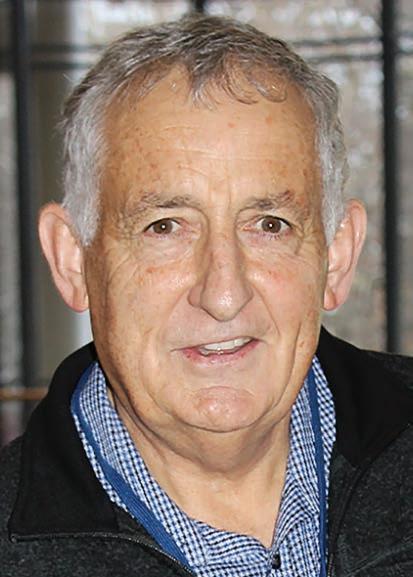
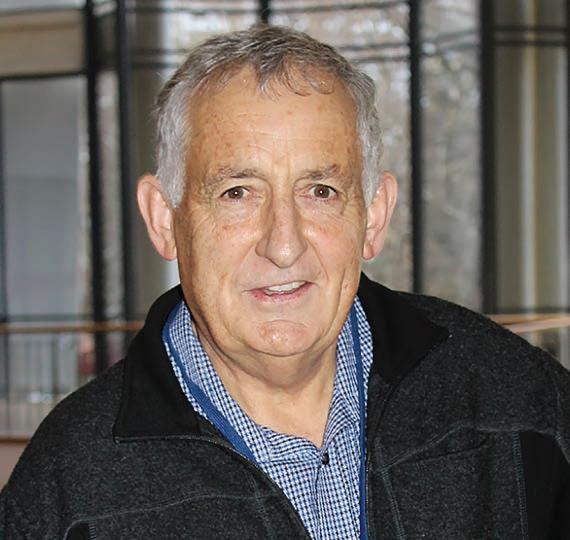
R KEITH Woodford
Dadmits to feeling “a little bit overwhelmed” when he was told he would be made an Officer of the New Zealand Order of Merit for services to agriculture and agribusiness in the King’s Birthday Honours.
“I think you feel like an imposter when you first hear about it,” the retired academic said. He also felt honoured by the response from the people who congratulated him once the recognition was made public.
He was pleased to stand next to others in the primary sector who had been recognised over the years in the New Year’s or King’s Birthday honours lists, including Andy Macfarlane, Rob Davison and Keith Cameron.
“I’m very proud to be standing along side them as a fellow Officer.”
Woodford said he has always found agriculture an exciting field
to be in because of the ongoing change and issues the sector has had to deal with.
“My work has been a hobby as well as a profession.”
In his younger years, Woodford said, he was an avid explorer, travelling to the Andes, Himalayas and Antarctica.
“I like to travel the roads less travelled, and I like to look at all of the issues ... out there. What that means is that sometimes you get a bit of negativity because you’re
SERVICES: Dr Keith Woodford was made an Officer of the New Zealand Order of Merit for services to agriculture and agribusiness in the King’s Birthday Honours.
talking about change and change is always uncomfortable – but I’ve never been bored for a minute.”
Woodford’s citation said he had made major contributions to agrifood systems and agribusiness, within New Zealand and internationally.
He holds an honorary position as Professor of Agrifood Systems at Lincoln University and consults through his company Agrifood Systems Limited. From 2000 to 2015, he was Professor of Farm
Management and Agribusiness at Lincoln University.
He has undertaken professional assignments in more than 20 countries for multiple organisations, working at the interface between farm management, rural development and agribusiness.
In New Zealand, he worked closely with farmers caught in the Mycoplasma bovis epidemic. He co-led the China components of the Food and Agribusiness Market Experience programme (FAME).
He is known for his scientific work and authorships relating to A1 beta-casein and A2 milk.
His book Devil in the Milk: Health and Politics of A1 and A2 Milk was first published in New Zealand and Australia in 2007, with subsequent editions published in the United States in 2009, New Zealand in 2010, and a Russian-language version in 2018.
He has successfully mentored 13 PhD candidates as their principal supervisor and similarly for more than 20 master’s thesis candidates.
Woodford has authored 68
My work has been a hobby as well as a profession.
Dr Keith Woodford ONZM Lincoln University
refereed papers together with more than 400 farmer- and industry-focused articles in both the print media and online.
The primary sector is currently in a very good space in multiple fronts with farmer returns up across the board, he said.
“What we have to make sure is that we don’t get caught up in the bubble because at some stage the bubble will burst.”
Looking ahead, one of the issues he is watching is the changing demography of New Zealand’s key export markets.
Nine of our 10 biggest markets have population declines and low birth rates which means huge changes in the next 20 years.
“Agriculture and agribusiness is still going to be a really exciting field to be in.”
Staff reporter PEOPLE Honours
THE man behind the multinational Power Farming Group and two internationally recognised plant researchers were appointed Officers of the New Zealand Order of Merit in the latest King’s Birthday Honours.
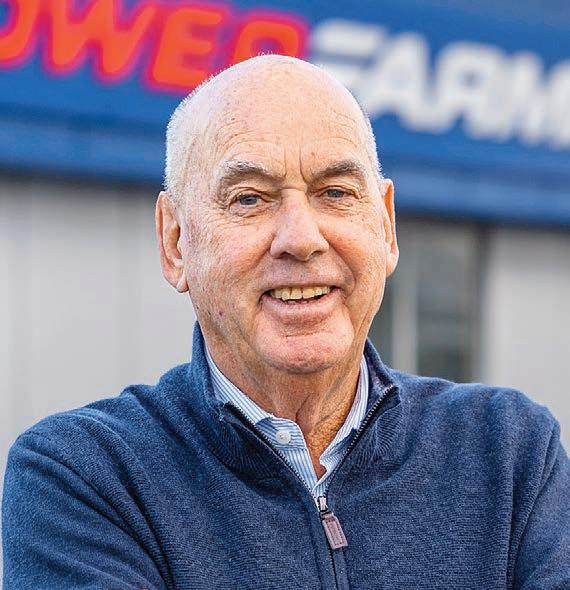
Waikato-based agribusiness leader Geoff Maber was recognised for a lifetime of service to agribusiness, the rural sector and the wider community.
Maber is best known for transforming the small family Morrinsville machinery business, Maber Motors, into what is now Power Farming Group – one of New Zealand’s largest privately owned agricultural equipment and machinery companies.
From joining Maber Motors soon after leaving school in the 1960s, Maber helped steer the company through decades of growth, innovation and expansion.
The big turning point came in the 1970s, when Maber recognised that farm mechanisation in New Zealand was changing rapidly and that importing and distributing agricultural machinery brands at scale could become far bigger than a local dealership business.
Today, Power Farming has grown into a major multinational operation across New Zealand, Australia and the United States.
Maber said one of the things he is most proud of is the people behind the business and the partnerships that have driven Power Farming’s success.
“Our business has always been about people, partnerships and backing local communities. We’ve built a model that empowers
local people to invest in the business, grow alongside us and genuinely share in the success. If our joint venture partners are not succeeding, then we are not succeeding either.”
Our business has always been about people, partnerships and backing local communities.
Geoff
Maber Power Farming Group
Dr Ron Beatson received an ONZM for his involvement in the research, development and breeding of hops in New Zealand. Beatson, based in Motueka, has worked as a Plant and Food Research scientist for more than 50 years, producing more than 50 academic journal articles, books, and plant patents. He has led the breeding and genetics of hops in New Zealand for 38 years and is responsible for release of 17 specialty New Zealand hops cultivars, which are in
PEOPLE: Geoff Maber says one of the things he is most proud of is the people behind Power Farming Group.
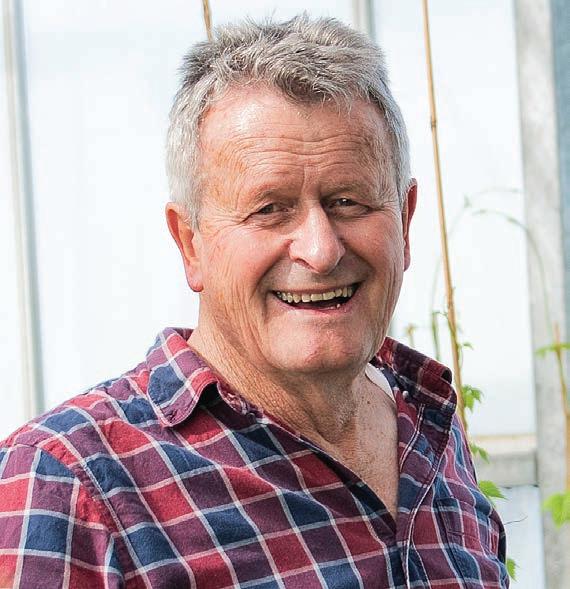
high demand nationally and internationally. He was also part of the team awarded the Prime Minister’s Science Prize for their response to the Psa kiwifruit vine canker.
Russell Lowe was recognised with an ONZM for services to horticulture and the kiwifruit industry.
Lowe, from Te Puke, spent more than 51 years working with the Department of Scientific Industrial Research and Crown Research Institutes, where he pioneered significant innovations in the kiwifruit industry.
Lowe was integral to the selection of the Hort16A vine and its polleniser cultivars, which would create the first Zespri Gold kiwifruit. Zespri Gold was launched in overseas markets in 2000 and saw more than $3 billion in export earnings during its lifetime, establishing New Zealand as a world-leader in the kiwifruit industry.
He led the creation of the Zesy002 cultivar, known as Zespri SunGold, after commercial crops
of Hort16A were wiped out by a bacterial canker in 2010. He also led the development of Zes008, which was approved for commercial release in 2019 as the Zespri RubyRed. More than two out of every three kiwifruit exported from New Zealand come from Lowe’s cultivars.
Dr Katrina Roberts, the 2024 Fonterra Dairy Woman of the Year award winner, was appointed a Member of the New Zealand Order of Merit (MNZM) for services to the dairy industry and the community.
Roberts has provided farm consultancy and veterinary services for more than 20 years and contributed to the development of successful dairy management programmes.
She has contributed significantly to the dairy industry through the co-development and implementation of heifer teat sealing, which formed part of her master’s research. Her work has reduced heifer mastitis in herds across the country and reduced the need for antibiotic treatment by
HISTORY: Ron Beatson has worked as a Plant and Food Research scientist for more than 50 years.
more than 50,000 cases a year.
Ted Ford, from Richmond, received the King’s Service Medal (KSM) for services to Fire and Emergency New Zealand and the dairy industry
Ford has served the Appleby community over 36 years as a volunteer firefighter and is a prominent member of the Jersey farming industry. He has had a long involvement with the Nelson Agricultural and Pastoral Association, becoming vicepresident in 2018, and president from 2019 to 2021.
Mental health advocate Lindsay Wright received a KSM for services to rural communities and mental health.
Wright, from Gore, established and led mental health initiatives for rural people, helping break down the stigma of mental health in farming communities and highlighting the importance of open conversations.
He was a founding member of the Southland Rural Support Trust, where he served for 18 years in many governance roles.
G et planning your calf and dairy fe e d re quirements s o you s e cure the b est pricing come June.
Order in store or talk to your rep.
THE future of food is in products offering healthiness and wellbeing, and that trend is not just being driven by older generations, according to foot futurist Tony Hunter.
The Australian says New Zealand, Australia and the US on average have a 12 to 12.5 year period between when their health deteriorates and death.
In Asia it is 10 to 10.5 years.
Hunter says younger generations were aware of that gap and were adopting diets and lifestyles to ensure they were healthier in later years.
Hunter was one of the 90,000 people to attend Thaifex last week, the largest food and beverage fair in Southeast Asia with 3500 exhibitors being held over five days in Bangkok, Thailand.
Research by insights company Innova, launched at the fair, identified 10 future food and beverage trends where health and wellbeing was the common theme. Asian trends identified included
49% of consumers saying they were snacking more often and three in five intentionally eating more protein.
Underpinning those trends was a continuation of the growth in protein, personalised diet for individual health, plant based products carving out their own niche markets, affordability and sustainability.
“Basically, all of these major trends are global,” he says.
New Zealand has traded on a clean and green, pasture based provenance, but Hunter says that space could become crowded as other countries get market traction and promote those same attributes.
NEW
“At the moment it’s something of a moat but you should not rely on it.”
Access to high levels of B12 in meat has underpinned its continued dietary importance but at Thaifex vegan and vegetarian products were available with high levels of the crucial vitamin.
Organic products were becoming normalised, which was seeing this attribute lose its exclusivity and appeal as consumers started looking for other reasons to purchase these foods.
Hunter says food production was at a crossroads and needs to determine how we will feed a population of 11 billion by 2050.
While 9.7 billion would be


humans, there would be 1.3 billion cats and dogs, and he says these were increasingly being treated as part of the family.
Owners seeking pet food equal in quality to human food opened new opportunities for food producers.
The challenge for manufacturers was to produce food with a minimal environmental footprint to fill the gap between what can be naturally and sustainably produced, and food demand from 9.7 billion humans and 1.3 billion pets.
That means using minimal arable land and water of which there were plenty of examples at Thaifex: Hazelnut milk chocolate drink, protein and beetroot
crackers, edible cups for hot liquids, seaweed based drink with fortified B12, lupin milk, a steam frying system, an alcohol free drink with terpenes.
Terpenes are chemical compounds found in the essential oils of most plants, including flowers, fruits, and herbs that give the drinker the social buzz of alcohol but with consuming alcohol.
A new company Solar Food has mastered growing plants with air rather than water removing the need for water and land.
• Wallace’s visit to Thailand has been made possible by support from Sprout and AGMARDT.














THERE is a reason Thailand is known as the kitchen of the world.
Sitting just above the equator, the country has the perfect tropical recipe of heat, humidity and rainfall combined with rich fertile soils to produce an abundance of food.
Thailand has a population of 69 million people living in a country about twice the size of New Zealand.
For rice, chicken, cassava, canned tuna, shrimp and sugar, it is either the world’s first, second or third largest exporter.
Tuna that does not meet Japan’s specifications for internal consumption is sent to Thailand to be canned.
A presentation by Dr Ram Bhujel, a director at the Asian Institute of Technology in Bangkok, reveals Thais consume 36.5kg of fish/capita/year (New Zealand 26.5kg), meat 28kg/capita/year, NZ 55.5kg, and milk 18 litres/capita/year, NZ 89 litres.
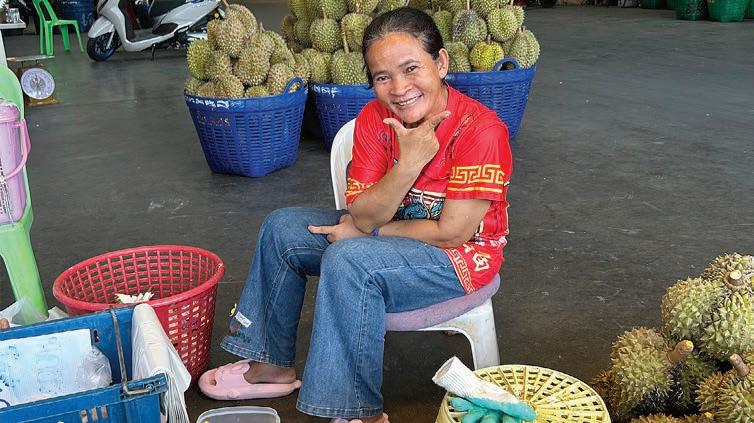
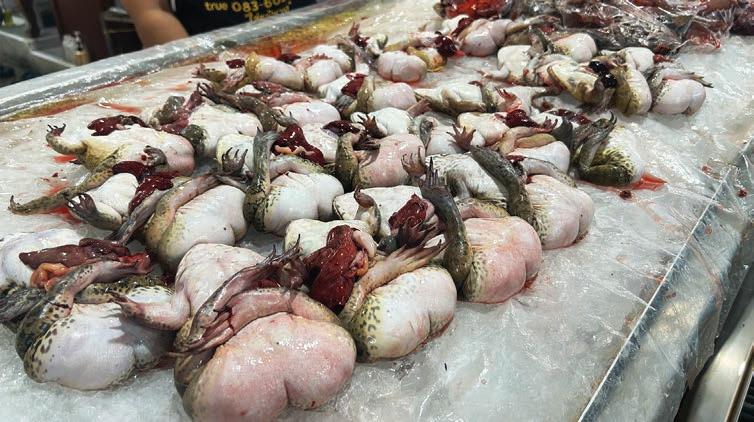
Much of Thailand’s internal food supply chain is based on markets or selling to local customers, retailers, or restaurants either through roadside stalls or as one of the 3500 stall holders at the markets such as Talaad, Thailand’s largest, in Bangkok.
The Thai government has invested heavily in research and development to drive the economy and also to improve the quality and quantity of its food production through entities such as the National Science and Technology Centre (NSTC).
The 3000 people employed there have agricultural research priorities such as plant biotech, animal health, aquaculture, food, and feed bioprocess, biorefinery diagnostics and medical science.
The Talaad Thai market, founded in 1997, operates 24 hours a day with individual pavilions devoted to fruit, flowers, vegetables and herbs, seafood, meat – beef, pork, and chicken.
Each day about 15,000 tonnes of produce is sold to Bangkok retailers, restaurants and the general public.
Many of the businesses are intergenerational.
At the other end of the spectrum some of the greatest minds are addressing food production challenges.
Scientists and researchers at the NSTC have in recent years developed four new rice varieties that have shorter harvest cycles, greater drought resistance and higher yield. Other research fields include biological controls for fruit fly, energy efficiency, genomic innovation, breeding, plant-microbe interaction, and cultivation management.
Much of their work involves controlling insect pests and disease control for fruit and vegetables, but it also has 30 people working in animal health, including searching for vaccines for porcine, bovine and poultry and also finding uses for waste products.
A large part of its work is through collaboration with universities and businesses around the world, although none are from New Zealand yet, a fact Dr Sittichoke Wanlapatit, the deputy executive director of BIOTEC, said he hopes will change.
Gene editing of organisms, as opposed to genetic modification by introducing a new gene, is allowed in Thailand and is being used by the NSTC.
• Wallace’s visit to Thailand has been made possible by support from Sprout and AGMARDT.








Rebecca Greaves PEOPLE Skills
THE country’s best working dogs went head to head last month to decide the North Island and New Zealand Sheep Dog Trial Championships at Te Aute, Hawke’s Bay, with 500 dogs and 300 competitors putting their best paw forward in glorious sunshine at the Hawke’s Bay Centre. Championships are contested
POINTS: Rocky Hawkins says qualifying for the national championships is an achievement in itself, with handlers spending months travelling the country in pursuit of points.
in four events, two for heading dogs and two for huntaways. Alan Stewart (Omakau Earnscleugh) and Ice took out the Long Head, Ben Millar (Glenroy) and King were victorious in the Short Head and Yard, and Dan Jury (Taumarunui) and Tex won the Zig Zag Hunt. Whangamōmona’s Rachel Law wrote her name in the history books by becoming just the third woman in the 116-year history of the New Zealand Championships to lift a title. She and Nala took out the Straight Hunt.
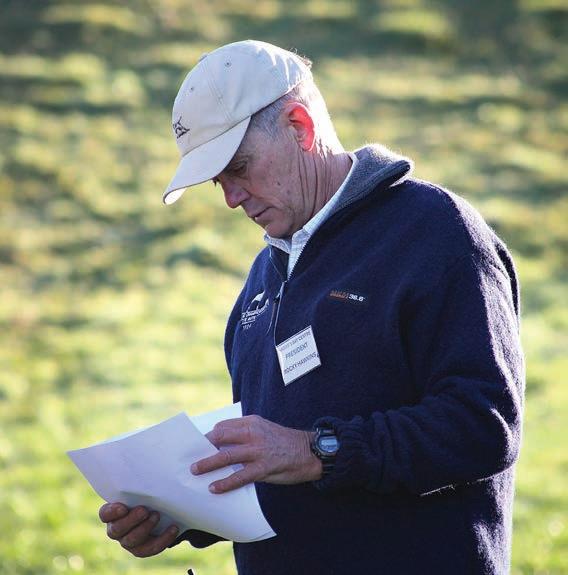
Hawke’s Bay president Rocky Hawkins explained that winners are awarded a prestigious green tie.
“There are two runs. Highest points in the first round won the North Island title, then the top seven run off and an aggregate total of the two runs determines the New Zealand champion.”
To enter the championships, combinations need to gain six qualifying points by competing at club trials around New Zealand throughout the season.
“To qualify is a big achievement. A lot of people travel a lot of miles and don’t qualify their dog.”
Hawkins has devoted 48 years of his life to dog trialling, since leaving school and going shepherding.
“It has shrunk, with changing land use and women working in town more, but the local trial is still a hardy annual that people look forward to,” he said.
“It’s a sport, it’s a competition and it’s a real thrill to rear and train a pup, put it in competition and see it do well. Everyone likes to win, but it’s the camaraderie that sticks with you. I’ve been all around New Zealand to places I would never have gone, and
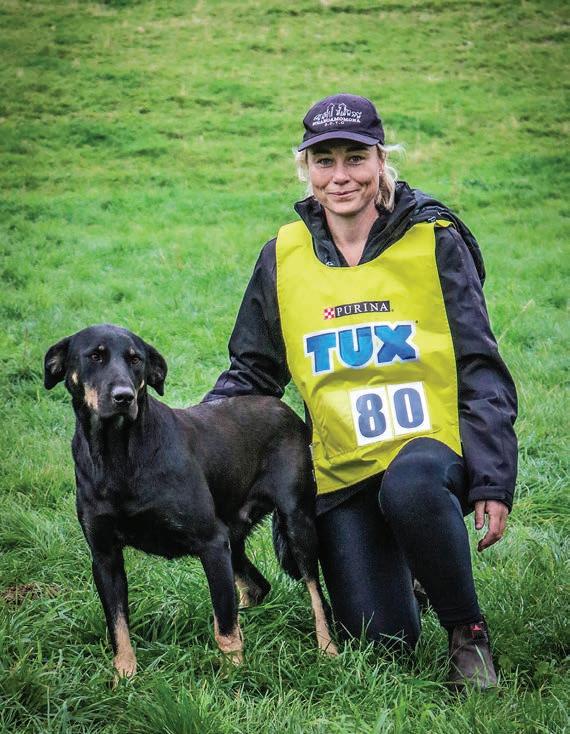
It’s a real thrill to rear and train a pup, put it in competition and see it do well.
Rocky Hawkins Hawke’s Bay
met people I would never have met otherwise, if I hadn’t been involved in dog trials.”
Hawkins said the beauty of dog trials is that male or female, young and old – junior shepherd and boss – compete on a level playing field.
“Any dog can have its day.”
The rise of women, and how good they are, is something that has changed since he first started out.
“Rachel, for example, she’s had a lot of success, but this is her first big one. Most women have a real affinity with animals and the animals seem to relate to them. Dogs feel pressure through their handler. These girls are good –they are as good as anybody.”
Reflecting on a great week of competition, Hawkins said it’s a funny feeling watching everyone drive off after such a long buildup, knowing it’s all over.
“But on with the next one next year.”


Stalosan F is your best choice for creating a safe and healthy environment in the calf shed. For more information on how to use Stalosan F, whether you can mix it with other products, and best practice for maximum
visit our website













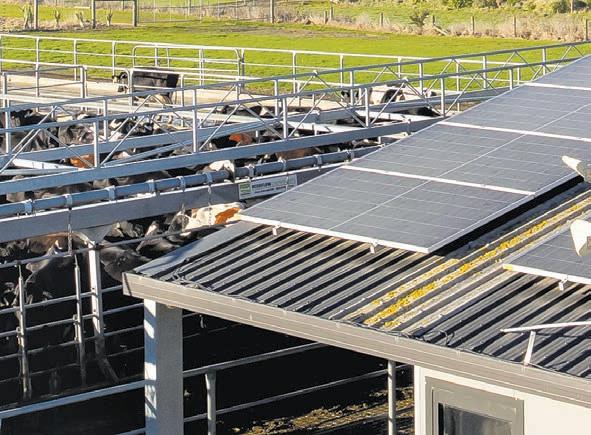
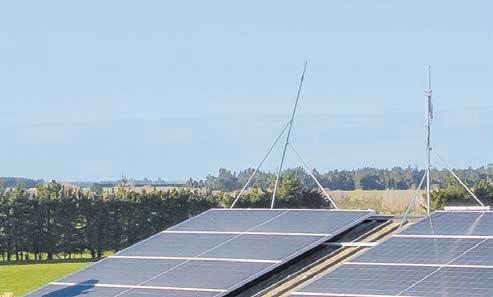
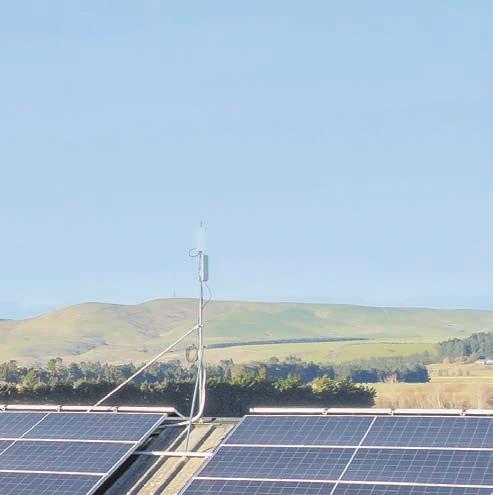
Farmers and growers throughout the countr y are installing solar to help cut costs and build resilience.
You can get independent, tailored advice backed by real insights from different farm types around New Zealand - helping you make confident decisions about solar on your farm.


We can help with planning systems and navigating quotes, through to getting the most out of solar and batteries.

Find us at Fieldays or call 0800 300 643 and see how solar could make sense for your farm.
















THE primary sector will have to settle for better wilding pine control, cheap gas conversion loans for processors, and more robust rural routes as the sum total of benefits coming from this year’s Budget
Finance Minister Nicola Willis described her Budget as one filled with responsible choices in a world that has thrown a curveball in the form of the Iran war.
She noted NZ had entered the year in a fragile state, running an interest bill of $9 billion a year and debt double what it was seven years ago.
Meantime with an aging population, the country’s superannuation bill is set to soar to be $30 billion by 2030, up $1.8 billion this year alone.
A key surprise in the Budget was that despite the volatile global conditions and soaring fuel prices government anticipates it will
deliver a surplus in 2029, a year earlier than originally expected and totaling about $2 billion or .5% of GDP.
Overall capital investment holds the greatest, if limited, benefits for provincial and rural NZ. The spend has $7 billion allocated to include resilient roading projects, new courthouses and police stations in Whanganui, Rotorua and Greymouth.
It also covers the next stage of the Waikato expressway and enabling works for the redevelopment of Palmerston North, Tauranga and Hawke’s Bay regional hospitals.
For communities like Gisborne grappling with the regular closures of the Waioweka gorge, the $400 million allocated to deal with stabilsing, protecting and draining known weak spots on vital state highway regional routes will be particularly welcome.
Federated Farmers infrastructure spokesman Mark Hooper said the extra funds were pleasing in a tight Budget and cited Waioweka Gorge and state highway 60 Takaka Hill

Building in better resilience ahead of the next flood or storm makes sense.
route as two particularly likely to benefit.
“This is in line with the truism that ‘a stitch in time, saves nine’. Building in better resilience ahead of the next flood or storm makes sense.
“We can’t continue to see communities like the East Coast or Golden Bay cut off every time a major rain event occurs.”
However, he also maintained that if such routes remain
vulnerable, funding of alternatives is needed.
Announced prior to the official Budget session, the additional $79 million for wilding pine control has also already been welcomed by the rural sector. The spend will be over the next three years, taking total spend over that time to $109 million.
The spending is a win for NZ Inc. rather than the primary sector alone, given pine spread endangers significant hydro electric catchments in lakes areas by absorbing rainwater otherwise flowing into the lakes.
Priority areas of longstanding concern have been identified for particular attention including Molesworth Station, Wakatipu, Mackenzie Country.
RESPONSIBLE: Finance Minister Nicola Willis described her Budget as one filled with responsible choices in a world that has thrown a curveball in the form of the Iran war.
For the first time Branch Leatham in Marlborough, a longstanding source of wilding pine infestation is also targeted. While not only aimed at the primary sector, the cheaper loans to help business switch and reduce gas dependence will also hold some benefits for primary sector processors.
The loans were welcomed by BusinessNZ director Catherine Beard who described NZ’s gas supply as “falling off a cliff.”
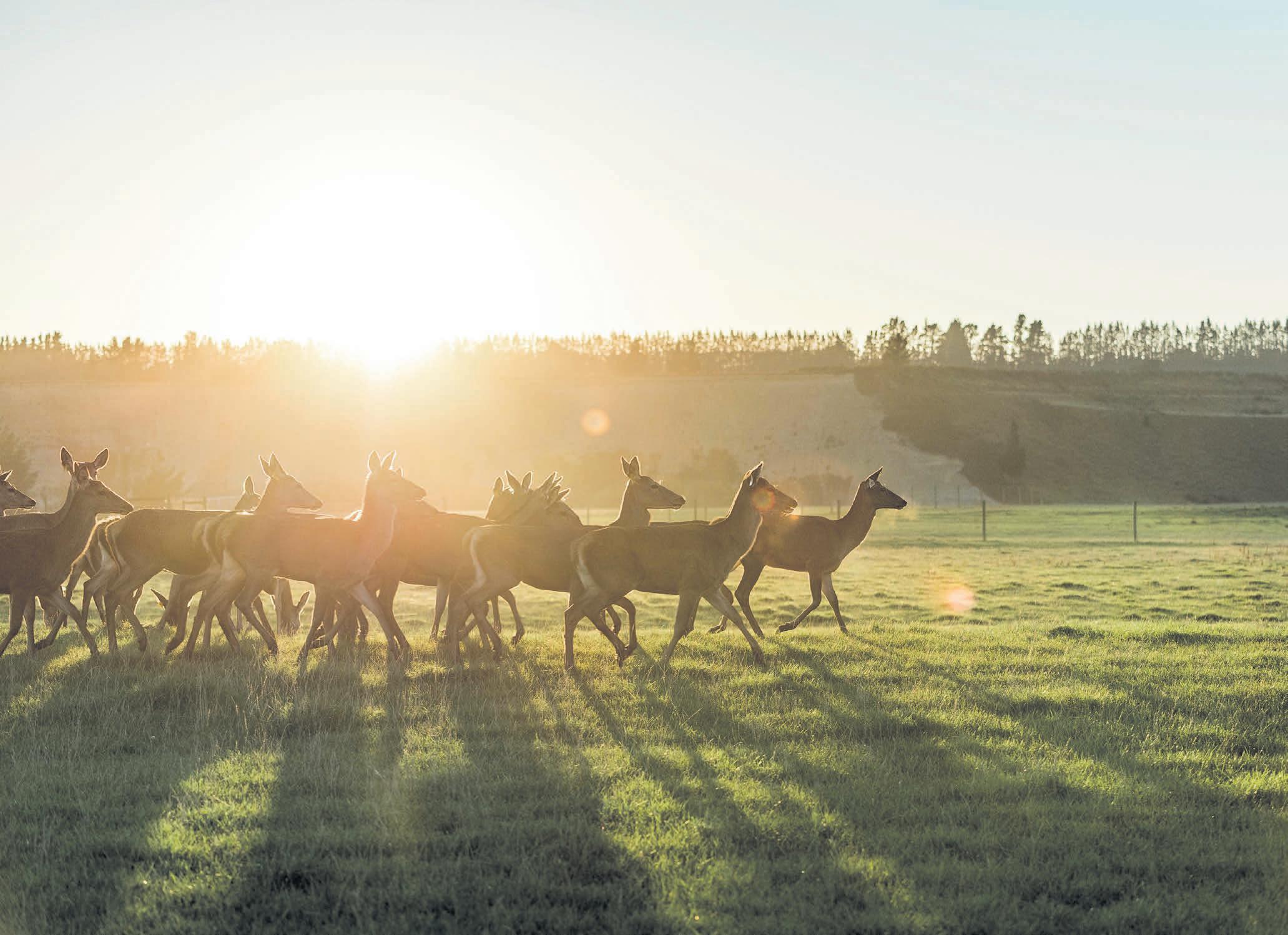
For the primary sector greater gains may lie in the intense round of legislative reform pushing through Parliament at present, including speeding up agri-chem approvals, RMA reform, easing of emissions settings, and reduced freshwater compliance burdens.
Livestock
VERY keen demand for traditional breed bulls has produced autumn sale averages from $3000 to $6000 ahead of last year, along with complete clearances.
The rising tide of prices has lifted all Hereford and Angus studs and persisted right through the offerings, not just for the standout top prices.
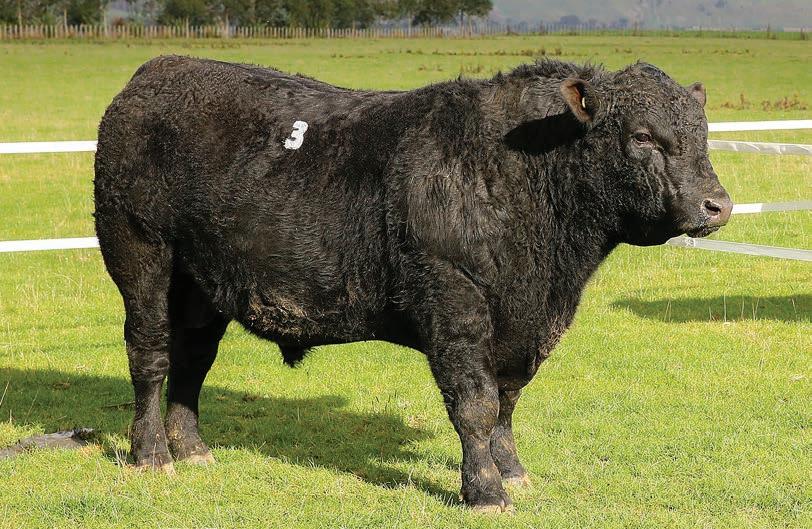
Merchiston Angus, Rata, has the
top price for the season so far with Meatpak V130 sold for $70,000 to Tangihau Angus and Tawa Hills combined. The sire was KayJay Meatpack R410, and the dam was Merchiston Jodie M97.
The Rowe family had a full clearance of 31 bulls with an average of $17,967.
Lot 3 was the only bull made available for stud transfer.
Richard Rowe wanted commercial buyers to have their choice of bulls across the offering. Semen will also be retained from this bull for use at Merchiston.
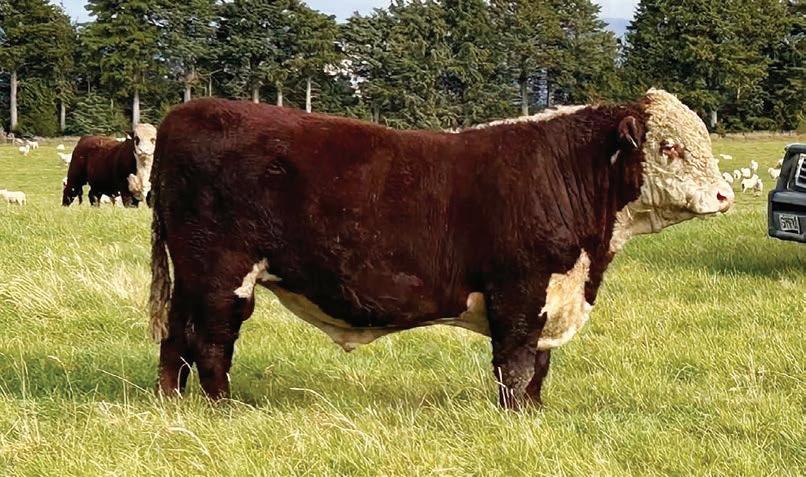
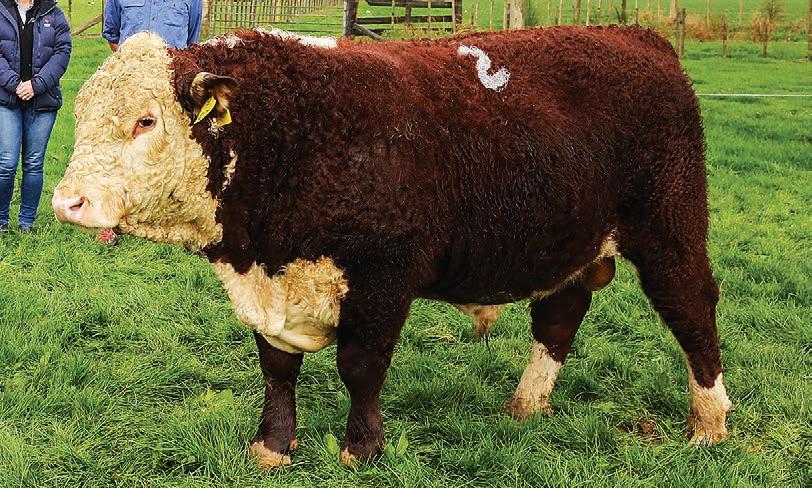
Okawa Poll Herefords, Ashburton, made what was at that time a season-leading top price of $64,000 for Lot 2 Okawa Lewis 240061.
He was bought by Gavin and Tracy Herrick, Arabica Herefords, Waikato.
Okawa sold all 49 offered with an average of $11,643 and another transfer at $32,000 to Grassmere Poll Hereford, Benmore.
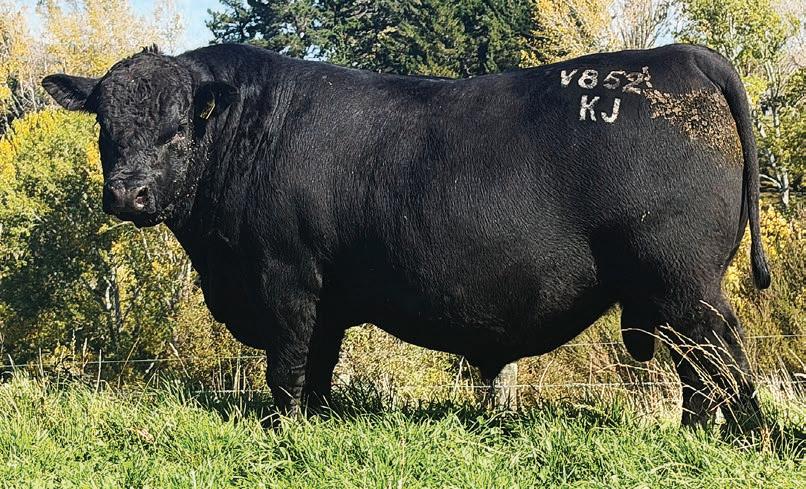
KayJay Angus, Masterton, achieved an outstanding $21,957 average price across all 47 bulls sold, bettering its own record average set last year by $5000.
The top prices were $52,000 paid for KayJay Mountain Man V852, purchased by Dandaleith Angus, Dannevirke, and $51,000 paid for Mountain Man V812, bought by Meadowslea Angus, Fairlie.
Ratanui Angus and Glengyle Angus combined to pay $40,000 for KayJay Meatpack V841 and Turihaua Angus bought KayJay Mountain Man V857 for $20,000.
Shian Angus, Taumarunui, sold 43 of 46 bulls with an average price of $13,977. The top was $32,000 paid for lot 2 by Alpine Angus, followed by $20,000 from Taranui and $18,000 from Cricklewood.
Otapawa Herefords, Tiraumea, had a full clearance of 50 bulls with a $15,250 average price, compared with $10,600 last year.
Top price for the Robbie family was $30,000 for Otapawa Cobb 4171, bought by Oatley Hill Herefords, Wendon, Southland.
Lot 9, Otapawa Icemoon 4163 sold for $22,000 to Kairuru Polled Herefords with semen retained by Otapawa.
Kairuru Poll Herefords, Reporoa, sold 22 of 29 two-year-olds with an average of $11,630 and a top price of $21,000 for lot 6, Kairuru Vancouver 444 bought by Mokairau Reeves Herefords, Gisborne.
Ngakouka Herefords, Dannevirke, had a full clearance of 20 averaging $10,000 with a top
price of $20,000 and a transfer to Circle-D Ranch for $16,000. Glenbrae Herefords, Porangahau, sold all 25 bulls for an average $13,290. The top price of $30,000 was for lot 11, Glenbrae Worthy 24119, sold to Maungahina Stud, Masterton.
Monymusk Poll Herefords, Te Anau, sold 27 from 28 averaging $8000. The top price of $12,000 was made twice.
Tapiri Angus, Masterton sold all 22 bulls with an average of $13,840 and a top price of $22,000 for lot 1.
Kowai Angus, Wendon Valley, sold 14 from 20 with an average of $6750 and a top of $9000.
Dandaloo Angus, Masterton, sold all 33 lots, averaged an excellent $14,900 and made $26,000 with lot 5, Dandaloo Sky 4053.
Hingaia Angus, Te Awamutu, had a full clearance of 30 bulls, averaged $12,900 and a top price of $18,000 for lot 4, Hingaia 24510. Black Ridge Angus, Taumarunui, sold 31 of 38 bulls averaging $10,758, with a top price of $21,000 paid by a commercial farmer.
Puke Nui Angus, Taumarunui, sold all 32 bulls averaging $17,267 with a top price of $26,000 paid for Puke Nui V238.
Storth Oaks Angus, Otorohanga, sold 66 from 68 with an average of $13,068. Top price was $21,500 for Lot 23 and three bulls sold for $21,000, one bought by Stokman Angus, Rotorua.



You’re always quick to lend a hand. This month, just raise one.
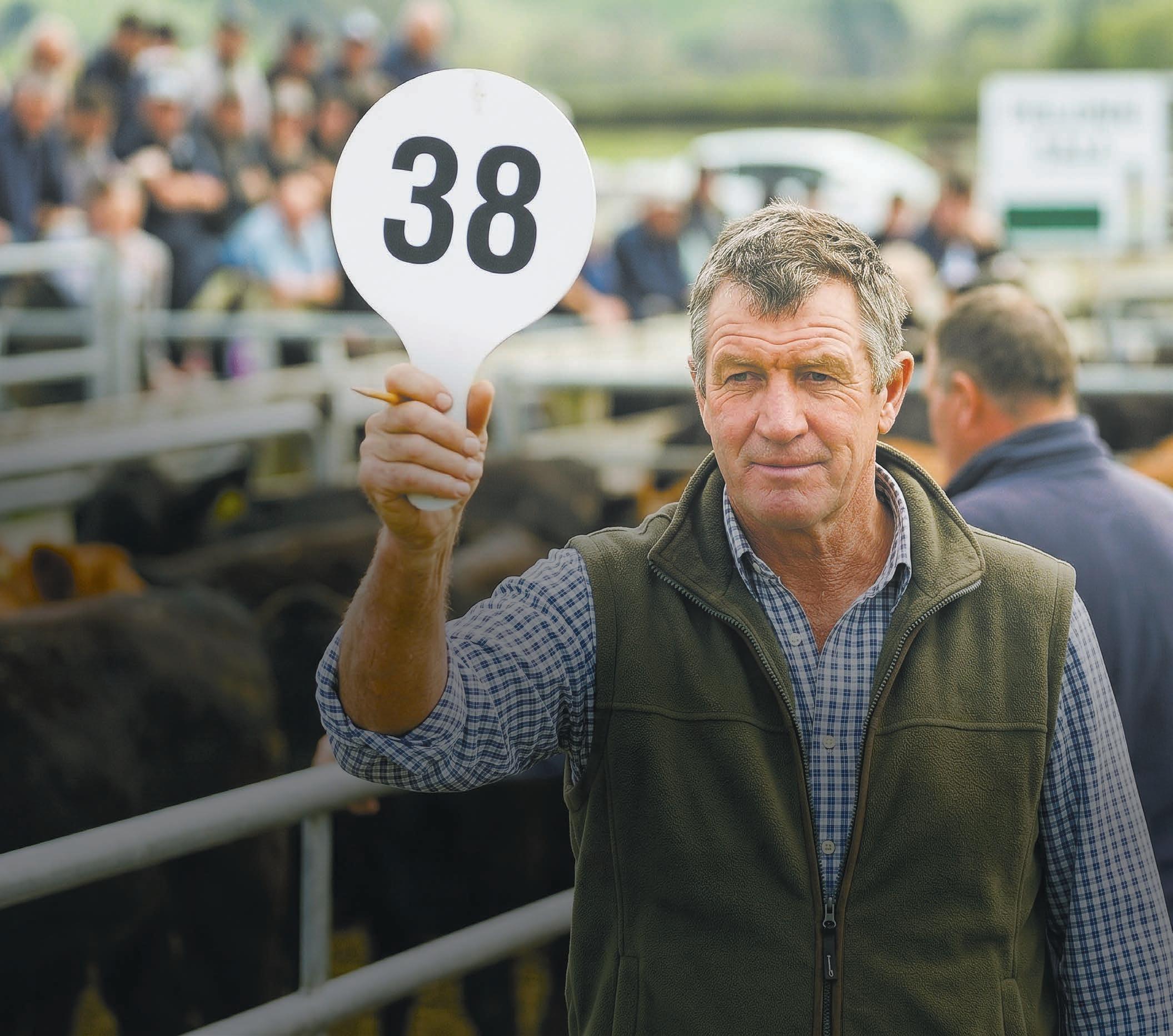

So get
and turn
Rural people can be a bit slow to ask for a hand, but they’re never slow in offering one
So this month, there’s a little added incentive to put your hand up
Rural Industry Leaders is hosting an online auction in an effort to raise funds for the Rural Support Trust – with serious deals on water troughs, grass seed, fence posts, a motorbike, generator, cattle stop, and much more
Gerhard Uys Senior reporter
THE current momentum in New Zealand’s organic sector has to be capitalised on.
The sector recently made announcements that show it is focused on a future where organics is taken seriously by the industry, banks, the government and future farmers.
Fonterra announced it has enough buyin from farmers in Southland and Otago to justify the conversion of its Stirling plant to organic.
This shows not only that demand for organic milk products is growing but that low-input dairy systems make economic sense, and with a 2025/26 forecast Organic Milk Price range now $13.90-$14.10 per kgMS to boot, these systems can pay the bills.
For the first time the government has appointed a dedicated ministerial role for the sector, with Mike Butterick as the new
associate minister of agriculture – organics.
The organic sector, which generates $1.2 billion annually, with $606.7 million in export earnings, might finally be noticed by politicians, the economy and wider farm sector.
With the sector growing at approximately twice the rate of wider food and fibre export revenue, it is about time.
Crucially, BNZ recently said the business case for converting to organic farming in the South Island makes sense.
Most notable, though, might be the recent formation of Young Organics Aotearoa.
The industry group for under-40-year-old organic producers has only just launched, but it already has 70 members signed up, with more to come.
All farming has a succession challenge, but the founding of this group shows there is a drive to take the sector into the future.
at
With the current momentum there are certain key areas that the greater industry can focus on.
There is currently no organic lamb schedule. It is a shame we don’t learn from our neighbours. Australia currently grows
approximately 110,000 organic lambs every year, and has over 53 million hectares of certified organic farmland, with 3000 organic certified businesses for support.
Overseas, low-input systems are being pushed.
Lead author of the 17th annual KPMG Agribusiness Agenda, Ian Proudfoot, recently told Farmers Weekly that systems with environmental credentials, such as regenerative agriculture, are sector and governmental priorities in Europe.
But hearts and minds need to change.
Comments on Organics Aotearoa New Zealand’s Facebook page show organic producers are suspicious of Butterick’s appointment, saying he won’t take the industry seriously.
Though Butterick acknowledges the sector’s export contribution, he is quick to point out that half of the organic producers are small operators, turning over only about $30,000 per year, and that organic producers produce less than their conventional counterparts.
Asked how the sector will grow, he said this would happen “organically”, with no clear indication the government will be a champion for the sector.
But the message from organic producers is clear.
They believe in what they do, they are finding production and community support from each other and, like all farmers, if you put a challenge in front of them, they will find a way to solve it.
This week’s poll question (see
Have your say at farmersweekly.co.nz/poll Should sheep farmers put more emphasis back on wool now that prices are rising?
It’s official: it has been a pretty good year for farmers.
In our latest poll we asked voters to rate the previous 12 months in farming as either great, good, average or poor.
Almost 60% of those who took part rated the year great, while a further 37% said it was good.
“Good rain, feed and prices for stock. Fertiliser, diesel costs and El Niño present challenges ahead,” said one voter.
“Price increases across the board for all goods sold. Can’t get much better than that? Or can it?” said another.
Of those who ranked the year good, some said the only downside had been the battering from weather events.
“The dairy sector is the main driver for the rural economy. If they’re doing good so is the majority of the farming sector. Sheep and beef seem to be on a roll as well with wool taking rise as well. I feel for the arable guys who’ve have had two hard years price and weather wise.”
Only 3.7% of voters said the year had been average – and no one described it as poor.
Last week’s question: What grade would you give the farming year, and why?



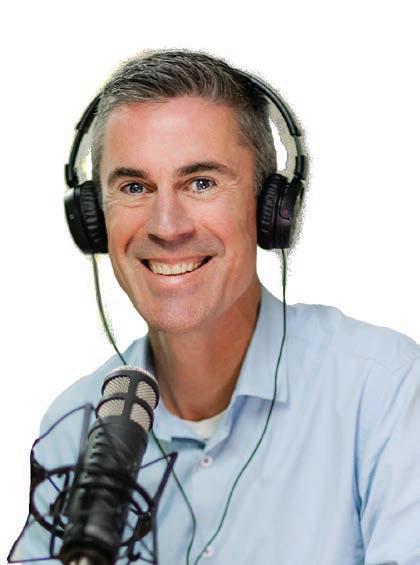
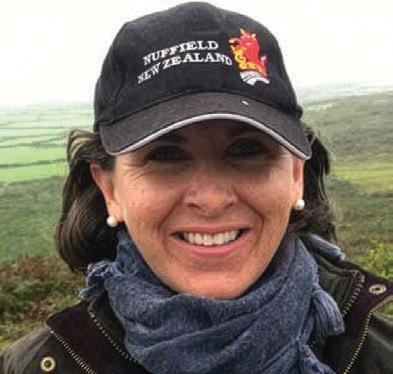
Rebecca Hyde
Hyde is a 2017 Nuffield Scholar and 2021 Kellogg Scholar. She farms in North Canterbury with her family and is involved in governance, including as a trustee for the New Zealand Rural Leadership Trust
MORNINGS in our house are similar to many on a farm – a contractor has texted, the toddler has found some scissors and is trying to cut her fringe (again), my husband is already halfway through a sentence about his days jobs, and I’m mentally juggling kids’ breakfast, and getting the next load of washing on.
And somewhere in the middle of it all, a little voice asks, “Mum, what are we doing today?”
With two children under five, they are my work colleagues.
Taking children to work on farm isn’t always easy. To get out the door there is a mental checklist on food, clothes, extra clothes and
a negotiation on what toys are coming.
In fact, there are days it feels wildly inconvenient. Everything takes longer. You move slower. You are constantly assessing risk. You answer questions all day long. The Spotify playlist is riddled with Frozen and Cocomelon and there is also nothing quite like trying to draft sheep while negotiating high-level diplomacy over whose turn it is to draw with the chalk raddle.
But despite the juggle, I wouldn’t swap it.
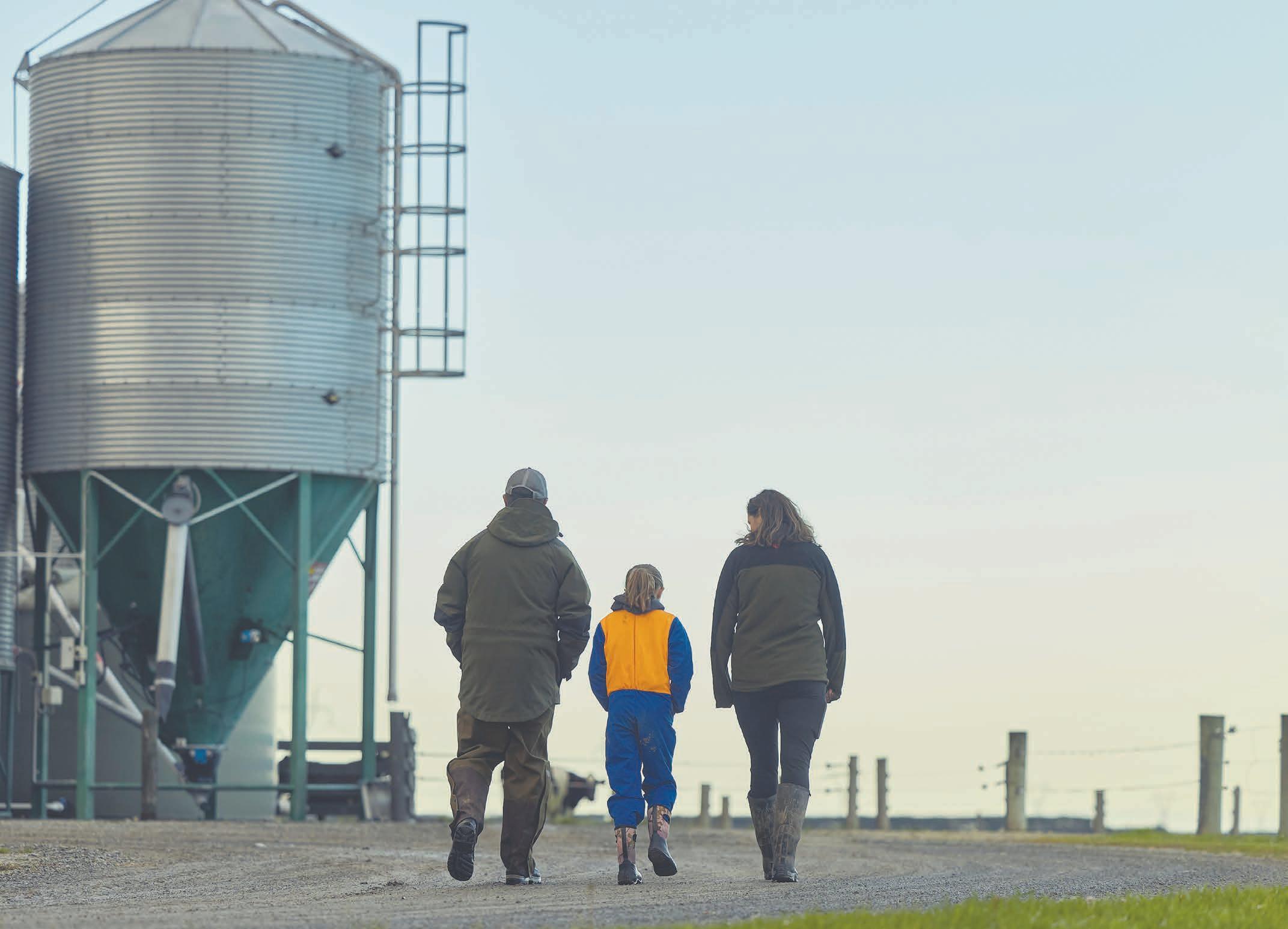
There is something incredibly grounding about your children knowing what you actually do. Not just hearing about it, but seeing it. Watching the early mornings, the problem-solving, the stock work, the weather decisions, the pressure and the pride. They see effort. They see teamwork. They see commitment.
And in return, we get to watch them learn in real time.
Farm kids learn differently because they are immersed in real life from the beginning. They learn patience sitting in the truck. They learn empathy bottlefeeding lambs. They learn free play by playing hide and go seek on the side of the hill. They learn communication standing around a set of yards listening to adults talk through a problem.
Most importantly, they learn they are part of something bigger than themselves.
Of course, none of that removes the responsibility that comes with having children on farm. Safety has to come first. Always. Farms
realised. I doubt if many farmers or foresters had either.
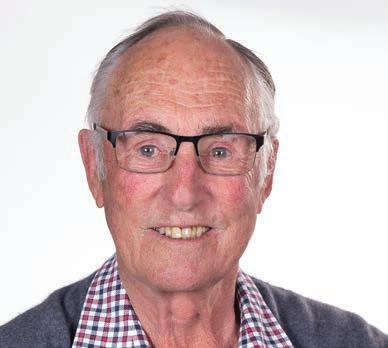
IRECENTLY wrote a Farmers Weekly article about the New Zealand Emissions Trading Scheme, the ETS. I had considerable feedback. Far more than usual.
I received an email from Phil Brodie, a farmer from Piopio who’d previously been a rural banker. He introduced me to many issues concerning the ETS that I hadn’t
remain one of the most dangerous workplaces in New Zealand, and children don’t understand risk simply because they’re growing up around it. That means constant vigilance. Setting boundaries. Slowing down when you need to. I do think there’s huge value in appropriately involving children in farm life.
Because if we want the next generation to value farming, food production, animals and rural communities, then they need connection to it. They need memories attached to it.
Becoming a farming mum was a huge identity shift. Before children and full-time farm life, I had a professional career with structure and clear goals. Suddenly, I was balancing motherhood, farming and life on the farm while trying not to lose the person I was before it all changed.
No one really talks about how hard that transition can feel. You can love your children and farm life deeply, while still missing parts of your old self, feeling isolated at times. You can be capable and confident in leadership roles yet still question whether you are getting any of it right when your child is melting down in the sheep yards because their muesli bar snapped in half.
I’ve become increasingly convinced that the most important leadership role any of us will ever hold is being a parent. Long before our children hear our advice, they watch how we behave. They see how we treat people, how we handle stress, whether we pitch in, whether we stay curious, whether
All that has huge implications as Phil Brodie outlined.
For a start, land within the ETS is registered on the title of a property. When forest land is involved with the ETS a legal notice known as a Climate Change Response Act is registered against the Certificate of Title. It’s there for all to see.
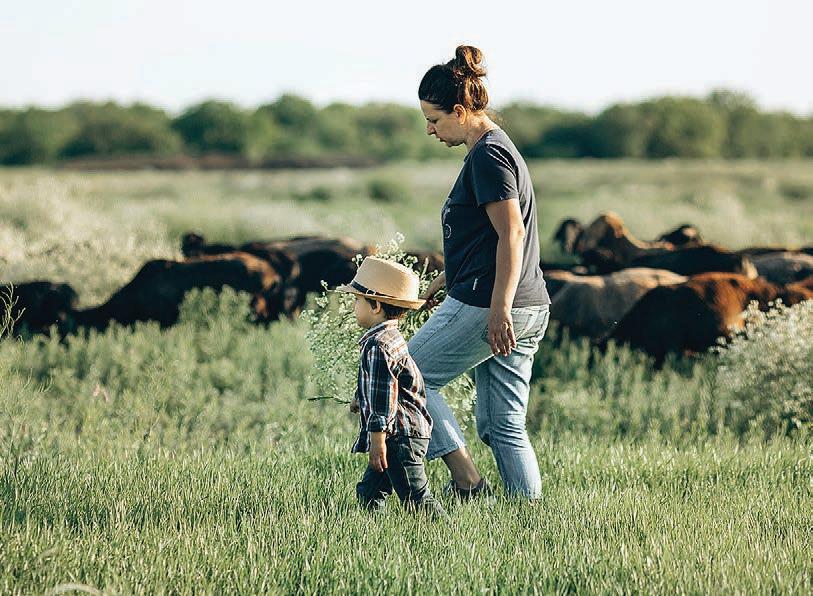
They see effort. They see teamwork. They see commitment. When they replicate the sounds you make in the sheep yards and the way to talk to the dogs, you know they are paying attention.
we get involved. Their wee minds are taking it all in. Get involved. Put your hand up. Stack the chairs. Join the group. Ask the question. Learn the skill. Too often, particularly as women, we hold ourselves back because we think we are not capable enough. Farming teaches you that capability often comes from simply giving it a go. Rural women have been blazing trails for years. We need to continue to put ourselves into roles, at any level of leadership, to create space for the next women to step into.
for harvest and become liable for 16 years of credits.
The other option is with a permanent forest that is purchased at, for example, 35 years. The purchaser is not only liable for those credits already claimed which would be the vast majority of credits but for maintaining the forest ad nauseum.
A huge learning from my Nuffield Scholarship journey was seeing ordinary people do extraordinary things. Not superheroes. Just normal people prepared to have a crack, stay open-minded and keep learning. I want my children to grow up believing that too. That where you come from doesn’t limit where you can go.
As we navigate the constant juggle of farming and raising children, perhaps the real answer to the question of who’s running the farm is simple: the kids are. Some days it certainly feels that way. And maybe that’s not such a bad thing. In the chaos, the noise, and the muddy boots racing through the yard, they remind us why we choose this life in the first place — building not just a farm, but a future, together.

to maintain a forest without achieving any income.
There’s another wild card in the pack. That is the NZ government has signed up to be carbon neutral by 2050 and that is in just 24 years’ time.
He told me that the impression he had was that everyone considered the revenue gained from the sale of carbon credits as just another form of income “to be spent as desired with no thought for the future”.
By contrast he saw the revenue as a sort of suspensory loan. If for any reason you lost credits you had a contingent liability to pay them back.
I did some research.
As you’d be aware if you are planning to harvest a forest you can claim units in the ETS for 16 years. Then after the subsequent harvest you must plant pine trees but you are no longer eligible for credits. If you don’t you are required to pay those credits back. Odds on the price will be greater at the payback time than when you sold the original parcel.
If you establish a permanent forest you can claim carbon credits for 50 years. After that the forest must remain as it is. You must maintain the forest, pay the rates and the fire insurance but you receive no income.
You can check the property’s title through Land Information New Zealand to identify the ETS existing notices, forestry rights or leases.
There’s another wild card in the pack. That is the NZ government has signed up to be carbon neutral by 2050 and that is in just 24 years’ time.
That means if you buy land that has an ETS notice on it you automatically inherit the ETS participation and any associated carbon liabilities.
Those liabilities would or should have a major effect on the price of the property.
I would suggest that there aren’t a lot of lawyers or bankers who are on top of the issue.
One problem is that pine trees absorb a lot more carbon in their younger growing period than later in life.
A person can purchase a forest
That would be expensive and the liability is there forever.
That would indicate to me that purchasing any farm with a permanent forest on it would require considerable research and analysis. The liability of that purchase could be considerable.
The other problem would involve leasing land. For example a carbon forester could come and offer a farmer a 25 year lease for establishing a forest. The forester would agree to pay for the forest establishment and even possibly fencing and pest control. The credits would be split.
The farmer could be forgiven for thinking the deal was an excellent way of paying for his or her retirement not realising the massive liability that forest could produce.
Say at 30 years the forest catches fire or blows over, that farmer needs to either pay back the 30 years of carbon credits or replant.
If they decide to replant the farmer must wait for 30 years before they can claim any credits.
Thirty years is a long time
If we do become carbon neutral then logic would suggest that any credits in the ETS would be worthless. Why would you need carbon credits if the country was at carbon zero?
Conversely, we are told that the price of carbon needs to be $150 a tonne if we are realistically going to expect companies to change their habits and actually reduce their GHG footprint.
The current price is around $50 a tonne.
I recently received an email from a forestry company urging me to “turn under performing land into income”.
It went on to say there was “no cash investment” and that there would be “50/50 shared returns”.
I was assured that returns of more than $1000 a hectare a year may be possible.
Unsurprisingly, nothing was mentioned about the contingent liability those credits could create.
As Phil Brodie told me. “I see the potential for a lot of tears”. So do I.

By now each of our voluntary subscribers will have received their signature Farmers Weekly enamel mug.
We’ll then be sending a new one with every new and renewed voluntary subscription.
This is one way we’re saying thank you for supporting this publication and ensuring rural journalism lands in every farmer’s mailbox, every week.
Because through the good times and the bad, all 1208 are the backbone of this publication.
And if you’re not a voluntary subscriber and you’re attending Fieldays this week, we’ll be at site D70 in the advocacy hub. There you can set up your own voluntary subscription and receive your Farmers Weekly enamel mug.
If you’ve already received your mug, we’d love for you to send in your ‘mugshots’ – a photo of you using yours.
This could be out on the farm, in the office, on a family holiday, or wherever you stop for a cuppa.
Send these in to dean.williamson@agrihq.co.nz, or text to 027 323 9407.

Support us with a voluntary annual subscription to Farmers Weekly. $120 for 12 months. This is a voluntary subscription for you, a rural letterbox-holder already receiving Farmers Weekly every week, free, and for those who read us online.
Scan the QR code or go to www.farmersweekly.co.nz/donate
Email your name, postal address and phone number to: voluntarysub@farmersweekly.co.nz and we’ll send you an invoice.
Call us on 0800 85 25 80
Note: A GST receipt will be provided for all voluntary subscriptions.



Rebecca Greaves PEOPLE Community
ROWLAND Smith never wanted to be a shearer, yet he has just called time on a glittering competition career, bookended by two World Championship shearing titles.
Smith won the World Championship title for a second time at the Golden Shears in March, a feat made all the more impressive by the fact he has not shorn full-time for five years.
These days, you’d be more likely to find him in his happy place, at the wheel of a tractor, than on the end of a handpiece.
He and wife Ingrid live at Maraekakaho, Hawke’s Bay, with their three children. They run a busy lamb and beef finishing operation comprising nearly 810 hectares across three lease blocks, and a contracting business. Days are full and finding time to train for the World Champs was a challenge, but Smith has never been one to shy away from hard work.
Growing up in the Far North settlement of Ruawai, Smith and his two elder brothers were in the shearing shed from a young age. By the time he was six, Smith was putting in a full day’s paid work as a rousy on his father’s shearing run.
“We all worked on the run from a young age, wool handling,
pressing, and we all had a stand by 13 or 14. Dad was a hard worker, he did not suffer fools, there was definitely no staying home and watching TV.
“I didn’t want to be a shearer, couldn’t think of anything worse. I always wanted to drive machinery or farm. I loved farming, the idea of crops and grass. I owned my own gear by 17 and went broke on the back of the terrible dairy payout in 2008 by 19. That was a hell of a wake-up call for a young
I was shearing fulltime and probably in the best form of my life. When I missed out on the team it was a real blow.
Rowland Smith Maraekakaho
person, and that’s what made me go shearing.”
Smith travelled the world, shearing in the United States, Europe and the United Kingdom, and that was it for him, he was hooked.
“I loved the freedom and the travel. At a young age, who wouldn’t enjoy it?”
His competitive nature and a drive to be the best he could be meant Smith had already won the Senior title at the Golden Shears and broken open ranks in his teens. But it was breaking the twostand eight-hour world record on ewes with his brother Doug that
really gave him the confidence to take his competition shearing ambitions to the next level.
He won his first Golden Shears open title in 2013, backing it up with the World Championship title in Ireland the following year. He went on to win the Golden Shears eight times, the New Zealand Shears at Te Kūiti eight times and every major title on offer in New Zealand, becoming a Master shearer.
But in the back of his mind, he wanted a second World Champs title. Not making the New Zealand team to defend his title in 2017 was a massive disappointment.
“That was the start of something, that doing it again and backing it up that really cements it. Winning something once, it’s not enough for me,” he said.
“At the time, shearing was everything to me. I was shearing full-time and probably in the best form of my life.
“When I missed out on the team it was a real blow.”
It took him 12 years; he was second at the World Champs in France by the slimmest of margins and Scotland in 2023 “didn’t go my way at all. I came away and thought, ‘I can’t go out like that, that’s not the way to end my career’.”
There was always a feeling of unfinished business and, in March this year, he finally got his second title. He said it was a relief, and a feeling of satisfaction to go out on a high.
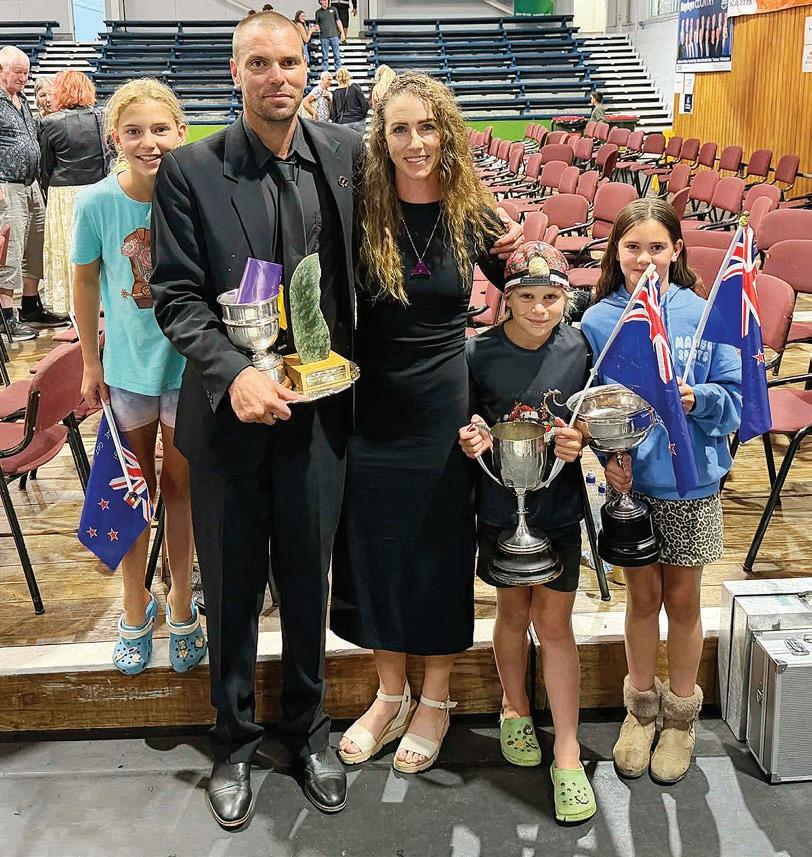
Now, he’s focused on his family and farming, with a dream to one day own their own farm.
Smith said he may have closed the door on the competitive shearing chapter of his life, but his involvement in the industry will continue.
The couple find ways to give back, helping to run training days and secondary school competitions at their local Hawke’s Bay A&P Show and the Rural Games.
He speaks at schools in the hope he can inspire young people to see agriculture as a serious career and recently got on board with Farmstrong as the face of
their new Live Well Shear Well wellbeing programme to support the shearing community.
“I’m pretty stoked to have had a career like I have had and fortunate to have reached my goals, how good is that? To be able to achieve all the things I set out to do as a young person, I’m happy.
“If I can pass that knowledge on and promote the industry now, that’s the next step.”
And his advice to aspiring young shearers? Learning is the hardest part.
“Know it will get better, and more enjoyable. Keep getting that next sheep and don’t give up.”

AT THE heart of New Zealand’s heritage are the stories of the early pioneers who cultivated and transformed the country’s land into the rich agricultural industry that exists today.
Many of their descendants continue to produce crops and livestock on the land with the same passion, hard work and perseverance shown in the early days.
The New Zealand Century Farm and Station Awards have reached a milestone 20th year, with 699 families now having marked that legacy.
The awards, hosted in their hometown of Lawrence, Otago, in May, honoured a further 36 families from across the country, with 12 of these celebrating their sesqui-centennial.
Awards chair Edward Fitzgerald has been involved in the awards programme for 10 years.
“It is a real honour to acknowledge the families’ hard
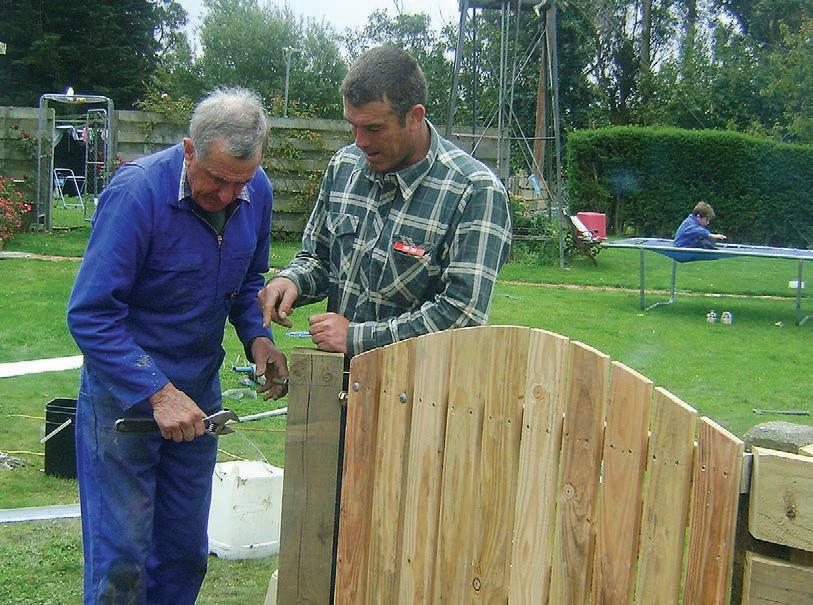
work and perseverance,“ he said.
“This year we had families from 1839 until 1925 represented. All these families have shown such amazing tenacity and can-do attitude to still be there doing what they love.
“Many of our pioneering families contributed greatly to their
regions, towns and communities, often reshaping at a significant level.
“Farming, whether agricultural, viticultural or horticultural, has been the backbone and prosperity of our country and continues to be so today.
“Through wars, depressions,
pandemics, droughts and floods, financial crisis, government policies and now the digital era these families have survived and built an amazing legacy.
“They have stories worth telling, not just from a farming perspective but a cultural and social perspective as well – the face of rural NZ and its resilience, ingenuity, community and an abiding love for the land they call home.
“NZ is richer for them at both a community level and nationally in what they contribute to our economy.”
The programme’s purpose is to capture and preserve this family history which might otherwise be lost through the generations.
Families submit narratives of their farm history, together with copies of related photographs and supporting documents which are then archived at the Alexander Turnbull Library in Wellington, ensuring all records are kept in perpetuity.
Families in the 20th celebration awards were presented their Award
They have stories worth telling, not just from a farming perspective but a cultural and social perspective as well.
Edward Fitzgerald
New Zealand Century Farm and Station Awards
Plaque by James Meager, Minister for the South Island. Also present were Mark Patterson, Minister of Rural Communities; mayor Jock Martin; Taieri MP Ingrid Leary; and MP Damien O’Connor; and, with his family collecting their Century award, Miles Anderson MP.
Applications are now open for the 2026 year. Families that have owned or had tenure and farmed their land since 1926 or earlier are encouraged to apply.
MORE:
The deadline for this year’s applications is November 30, 2026. For an application form and further information go to: https://www.centuryfarms.nz
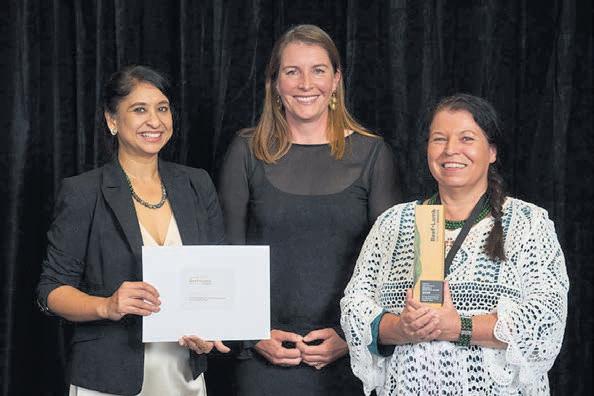
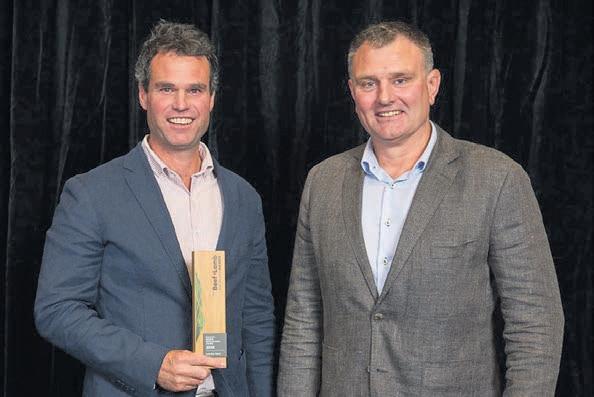
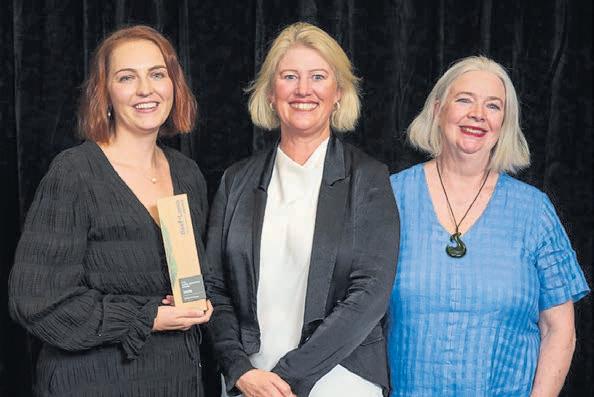
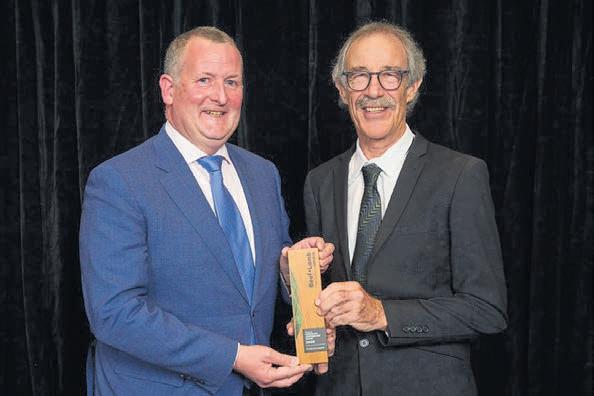

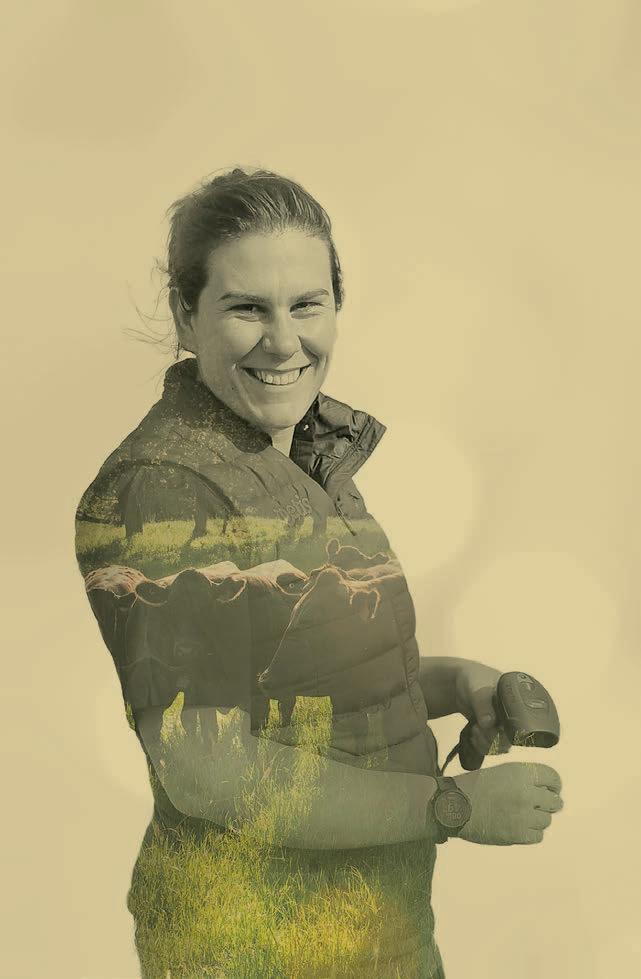







Gerald Piddock NEWS
Sheep and beef
PĀMU and Focus Genetics have their sights set on further genetic gains in their sheep breeding programme at Waikite Farm, ultimately aiming for its terminal and maternal breeds to be in the top percentile across the country. The Pāmu-owned 992 effective
We’re on the right track for all of those things, like methane [and] FEC, and the progress we are making is massive but we can’t speed it up.
Peter Strawbridge Waikite Farm
hectare farm south of Rotorua breeds three kinds of sheep: the Highlander, FocusPrime and Texel.
It also has a flock of commercial ewes that supply store lambs to other Pāmu finishing farms, with the lambs killed at 20kg carcase weight.
The farm is a key genetics engine room for Pāmu’s sheep and dairy beef genetics programmes and recently held an open day where its staff showed farmers the progress it has made.
Its main terminal breed, FocusPrime, consistently sits in the top 5% for terminal worth and has an average lamb weaning weight of 36.5kg.
It also has a Texel flock, which it is exiting. It has the same breeding trait selection as FocusPrime and its lambs wean at 34.5kg.
Its maternal breed is the Highlander, which weans at 33.5kg and is bred for milking ability,
ewe efficiency and facial eczema tolerance.
Its commercial ewes supply store lambs to other Pāmu finishing farms with its lambs killing out at 20kg CW.
Farm manager Peter Strawbridge said the FocusPrime breeding programme has made massive progress over the past five years.
“The weaning weight is going up and up and it’s neat because our ewe lambs at weaning are 40kg, so they are up to mating weight at weaning.”
The farm sells around 354 FocusPrime rams externally and 254 internally among other Pāmu farms. The rams sold internally are all in their top 2% and those sold externally are in the top 5%.
Its Highlander flock is bred for fertility, survivability, being dag and breech free, facial eczema tolerance and management ease.
It has an NZ Maternal Worth of
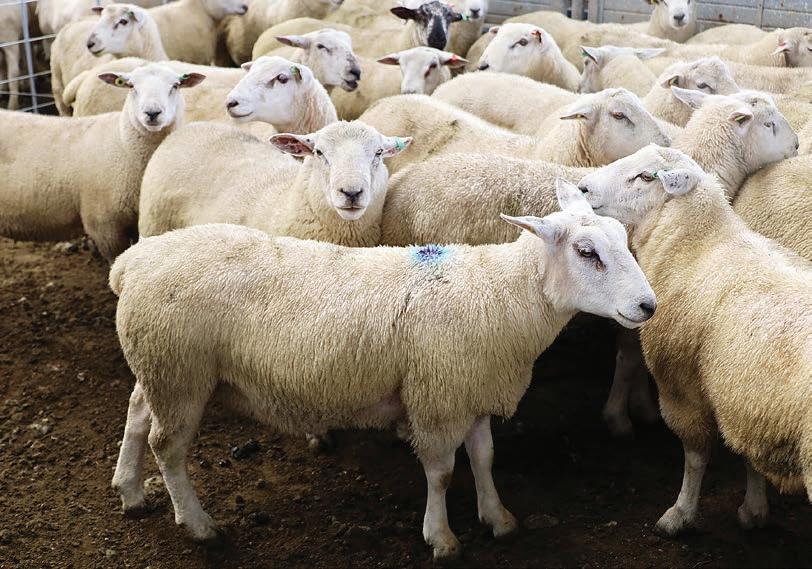
PRIME: Waikite Farm sells around 354 FocusPrime rams externally and 254 internally among other Pāmu farms.
4051c/ewe/year, nearly double the industry average of 2180
“It shows the genetic horsepower we have got,” Strawbridge said. The stud is consistently ranked in the top 25% of the industry for NZ Maternal Worth on the Beef + Lamb NZ nProve database.
He hopes that percentage will lift if they can improve the weaning weight and facial eczema tolerance, and they are using
outside sires to achieve that.
“Genetics take time. It’s not something you can do overnight and the progress we are making takes five years for all those genetics traits to come through and do what you want.
“We’re on the right track for all of those things like methane [and] FEC, and the progress we are making is massive but we can’t speed it up.”
Gerald Piddock NEWS
Sheep and beef
THE first Synergizer calves have been born at Pāmu-owned Waikite Farm ahead of the new dairy-beef breed’s commercial launch in 2027.
The heifer calves are being grown at the farm south of Rotorua, while the bulls are being monitored by LIC at its methane research barn. They were weaned at 264kg at 150 days.
The breed has been developed by LIC in partnership with Pāmu on the 992 hectare effective sheep and beef farm with staff from both companies updating farmers on progress at a recent open day held on the farm.
The farm is a key genetics engine
room for Pāmu’s sheep and dairy beef genetics programmes.
The Synergizer breed is a Charolais crossed with a Stabilizer composite breed and is designed to be mated with dairy cows calving a farmer’s non-replacement calves, LIC research leader Ric Sherlock said.
Charolais was chosen because of its growth rates and the resulting calf is easy to spot because of its distinct colour, he said.
“The key thing from a dairy farmers’ point of view is that when you see that calf hit the ground that it’s actually a nonreplacement calf and it’s not one of the replacements.”
He is aiming to build a 350-cow closed Synergizer herd on the farm to provide the scale to make good genetic progress for the new breed.
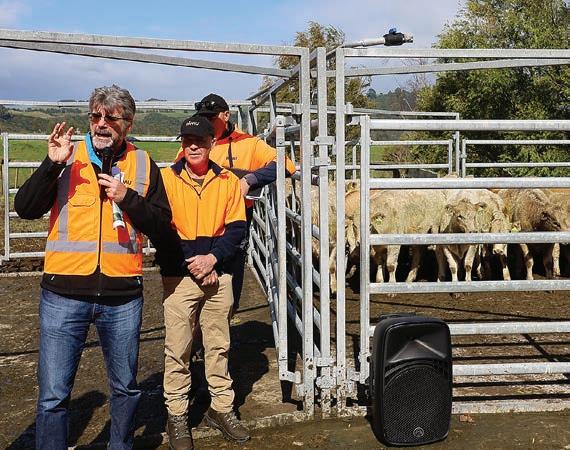
The programme’s first progeny are eight months of age and will be processed before their second winter so the breed’s meat quality attributes can be assessed.
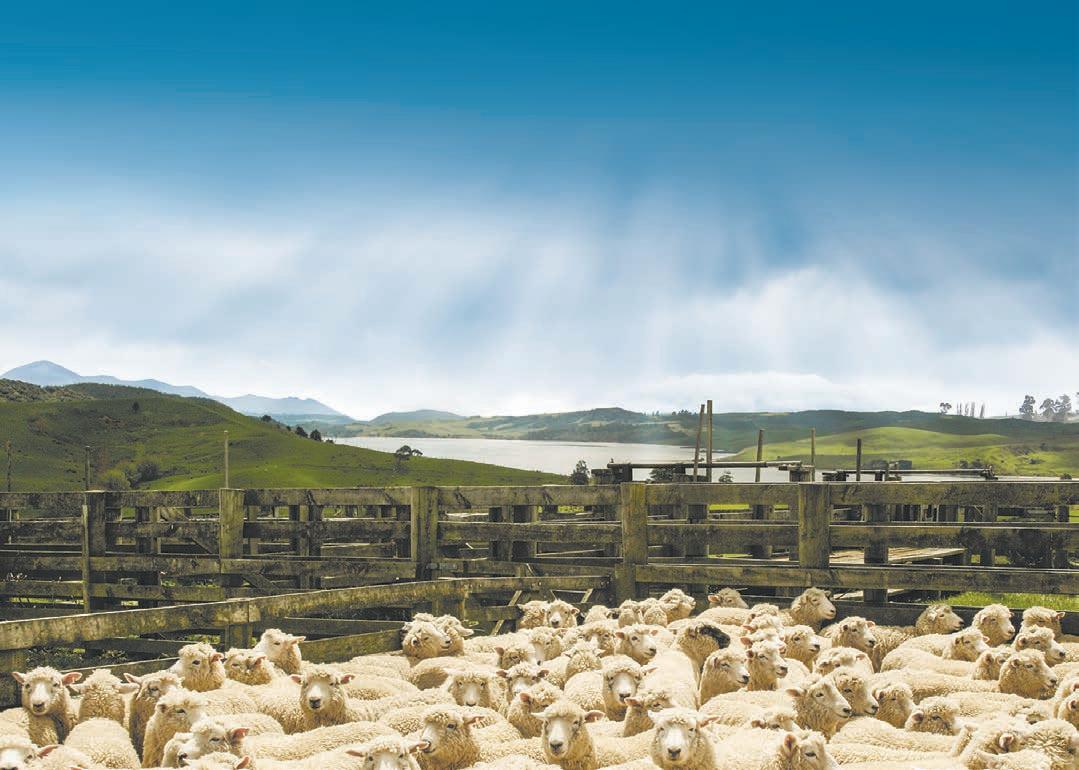
LIC’s head of genetics, Izzy Willison, said they developed
NEW BREED: LIC research leader Ric Sherlock and Waikite Farm manager Peter Strawbridge, right, speak to farmers at the farm’s open day. In the pen are Stabilizer heifer calves that are part of Pāmu’s beef herd.
the breed so farmers would have confidence that they have a product that adds value all the way along the value chain.
“We are starting to see a real opportunity with dairy farmers starting to selectively breed their cows.
“They are putting their bottom BW cows to a beef product.”
LIC sees that growing at around 20%. The dairy genetics company wants it released on the commercial market as a “proven” product.
Around 2000 straws will be used this spring on Pāmu dairy farms and the data collected from that animal’s life cycle will help shape the final product ahead of its commercial launch in 2027 as a liquid product.
Silver Fern Farms recently inspected the Synergizer bulls and was impressed with the potential of the breed’s feed-conversion efficiency and growth rates, she said.
“They have customers now who are really rewarding that dairybeef offering.”

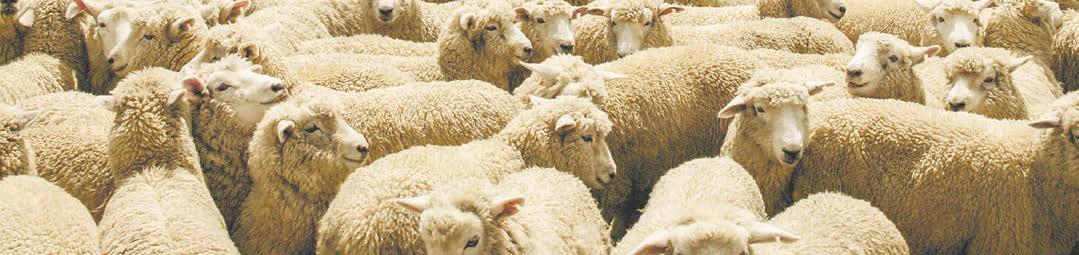


Neal Wallace NEWS Livestock
FARMERS are welcoming regulatory changes that could potentially allow more grazing of livestock on conservation land.
The government has introduced a Bill that proposes changes to the Conservation Act including removing the requirement of publicly notifying applications for grazing licences.
Currently applications for grazing licences must be publicly notified if they are longer than 10 years.
A statement from Conservation Minister Tama Potaka said the Bill replaces two general policies with a single National Conservation Policy Statement (NCPS) which will also streamline decisionmaking, including for grazing.
Jim Ward, the co-chair of the Federated Farmers high country committee, said while welcoming the proposed law change, farmers and those opposed to grazing on conservation land need to understand each other’s position.
“I am confident, if we sit down with non-governmental organisations and hear their
concerns and then talk through the areas where it can work well.”
Ward said a more permissive policy would not lead to open slather grazing of conservation land but, used strategically, it could control weeds and generate income for reinvestment back into conservation.
Ward singled out the former St James Station in North Canterbury as a property where grazing could assist with weed control.
Weeds are now rampant on the 78,000 hectare property. It was bought in 2008, had its livestock removed and management was handed to the Department of Conservation (DoC).
“It’s a shambles, it’s full of weeds,” he said.
Similarly, two groups of Maniototo farming families have had more than a century of summer grazing on public conservation land in central Otago’s Oteake Conservation Park end in recent years.
The concessions for the Soldier’s and Mt Ida syndicates, dating back to 1920 and 1897 respectively, were stopped by the DoC because livestock grazing was considered incompatible with conservation.
Ward said areas open to grazing concessions would be strategic,
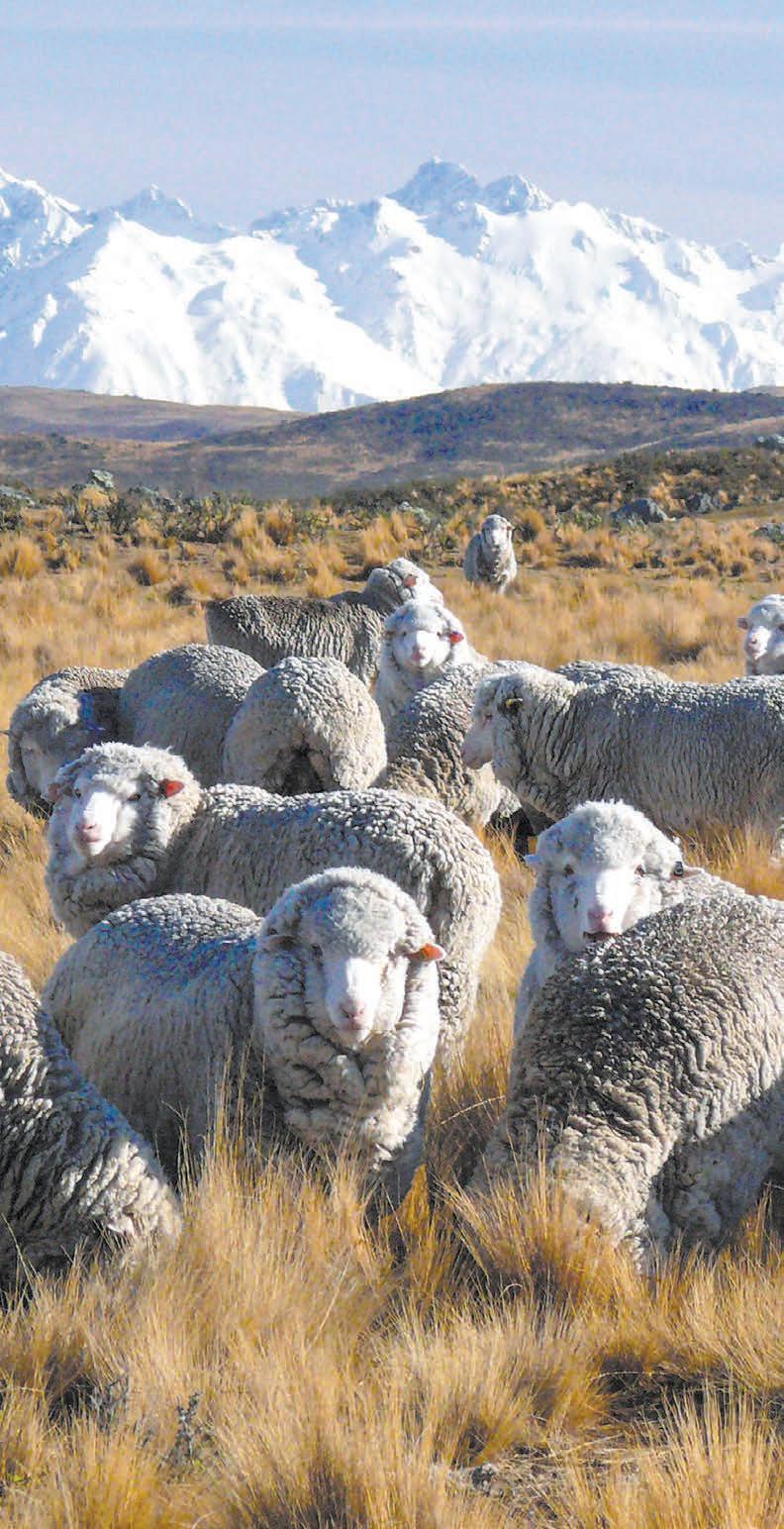
noting Merino sheep nip the top off young trees, which could be used to control the spread of wilding pines.
“It’s not going to be every inch of the high country,” he said.
It’s
not going to be every inch of the high country.
Jim Ward Federated Farmers
Potaka said as of last month, there were 467 active grazing concessions, mainly for sheep and cattle, on public conservation land covering nearly 350,000ha.
He said the Bill is the most significant reform of conservation legislation in nearly 40 years and would modernise how conservation land was managed, support economic growth, and improve environmental outcomes.
The processing of concessions would be faster and easier by removing unnecessary rules and allowing for exempt and preapproved activities.
Up to 40% of applications will no longer require individual processing, he said.
Conservation group Forest and
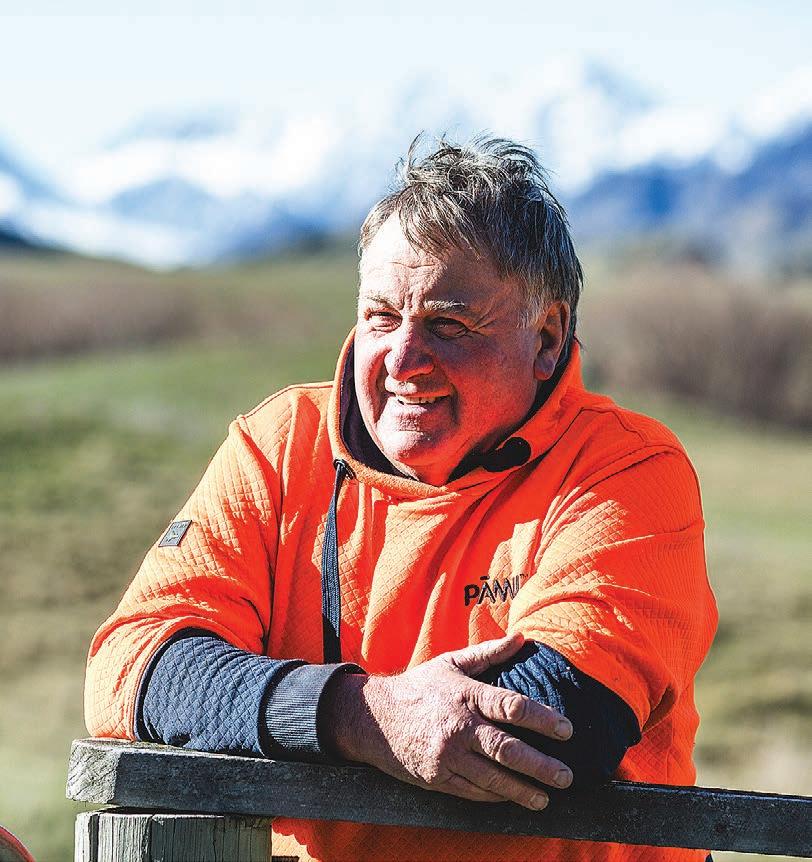
Bird said the Bill would damage public conservation land.
“These reforms are about making it easier to sell off, privatise, and destroy public conservation land, bargaining it away behind closed doors without public scrutiny,” said Chelsea McGaw, a spokesperson for the group.
The Environmental Defence Society’s chief operating officer,
Shay Schlaepfer, said the Bill represents a significant departure from the current conservation framework, which gives primacy to conservation values.
“This Bill introduces broad and undefined economic directives without clear environmental limits or safeguards.”
The Bill has been referred to the Environment Select Committee.

We’ve move d our deals online s o you can s e e our late st offers and what’s in sto ck right now. S can to explore.
Plus you can still get all your rural es sentials at shop.farmlands .co.nz or FarmlandsPRO


WHEN Alissa Wilson moved to an olive farm in North Canterbury she’d purchased with her husband Tim, one of the first things she did was join Rural Women New Zealand.
“I’m two years into living rurally, and it was a big thing for me to connect with other rural women because I find it’s quite isolating – and I’m not even that far out of Amberley – but I wanted to meet some like-minded people.”
With a background in business, marketing and PR, she came to recognise too that the organisation’s network could be a valuable way to help progress an e-commerce idea she was developing.
Having lost count of the number of times her son had come home from pre-school with the wrong gumboots, she’d set about solving the problem of identifying his pair among the sea of Red Bands at pick up time.
It took some determination to bring her idea to fruition but in July last year the mum of two launched Gumbitz as a solutiondurable, waterproof and reusable rubber stickers to personalise boots.
Finding the right manufacturer had been a challenging first hurdle.
“I wanted an industrial strength double sided adhesive tape that’s die-cut so that it goes all the way up to the edges of each sticker, and that could withstand puddles, playgrounds and paddocks. Finding a manufacturer willing to do what I needed took a while.”
Having successfully found a supplier, she launched with 10 styles of her own design, including pairs of rainbows, butterflies, tractors, and race cars.




She then heard about Rural Women New Zealand’s activator programme, for start-ups and entrepreneurs, after seeing it advertised on Facebook.
“It seemed like a great initiative,” says Wilson, who works part-time in Business Development at Enterprise North Canterbury, and after a degree in PR and Marketing from AUT, went on to study viticulture, followed by business.
She applied to take part and was delighted to be accepted.
“Being just several months into the new business, I had been floundering a bit and thought the programme could help give me a bit more of a direction. Having the chance to get my idea across a number of business experts was an opportunity I didn’t want to miss.
“I knew so many other people across the region the course would appeal to as well and, given my role at Enterprise North Canterbury, I pitched to the CEO there that we could provide the venue and other participants for the programme to run locally.
Rural Women were so behind that idea, which really impressed me – they so genuinely want to do good for as many rural women as possible.
“We put it out to our network and ended up with so many people wanting to join there were two days instead of just one.”
During the day the entrepreneurs pitched their business to six panellists, and discussed challenges they were facing.
“It wasn’t harsh like a Shark Tank, but I was quite nervous going in. Sometimes you have to push yourself out of your comfort zone though. You could just keep yourself in a little echo chamber, or you could put yourself out there and hear the feedback and grow.
“I talked to them about where I
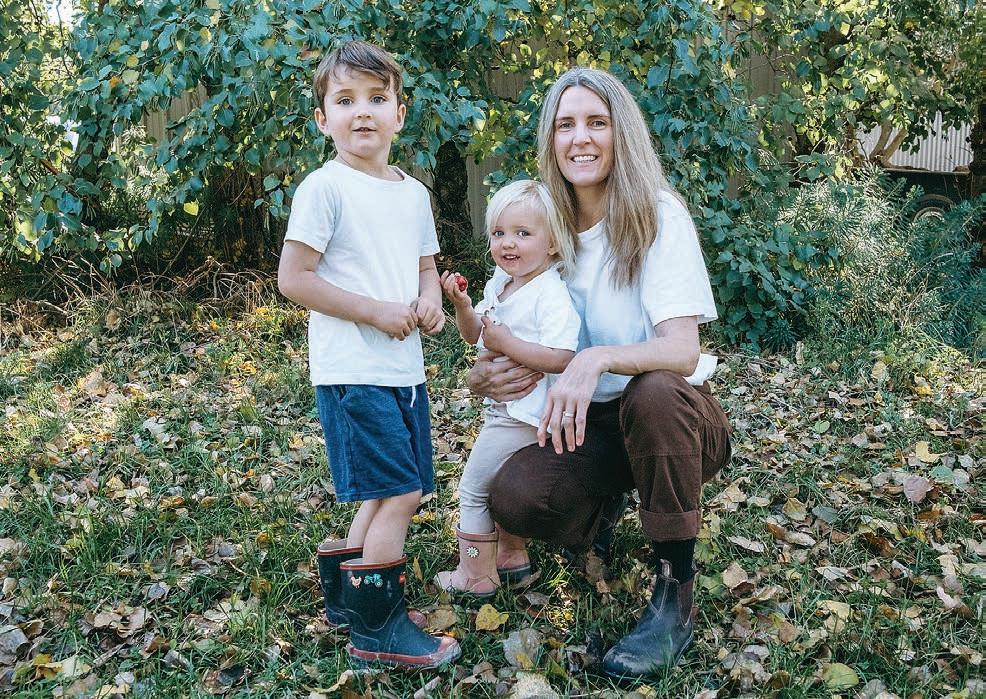

was at and my biggest challenges, and they identified what aspects for me would be helpful to address.”
She found the process incredibly motivational.
“As a one woman show, what it really helped me with was validation, and a direction for the business going forward. It was so helpful to hear them say that what I’d started was something really great and that I should be proud of what I’d achieved.
“They also connected me with Business Mentors New Zealand for other on-going support, which I’d never thought about doing.”
Up until this point, the majority of Wilson’s customers had
been rural mums, but one of the suggestions was to double down on Business-to-Business opportunities. She’d already successfully collaborated with Lincoln University, Air Rescue, and the RSA, for exclusive designs for them, so agreed that approach would work well, especially since it didn’t mean holding lots of stock.
“It’s been really great that Gumbitz has been able to help provide a vehicle for fundraising, which I’ve become really passionate about. If this little sticker can do good for my family, other families, and also do good for an organisation, then that’s a win-win situation.”
Gumbitz have also become popular for use on lunchboxes, waterbottles and school bags to help avoid mix ups with those too.
Other valuable advice from the experts on the Activator Programme included how to avoid burnout, since Wilson’s juggling Gumbitz with her part-time role at Enterprise North Canterbury,
plus the olive oil business. The session will be followed up with three zoom meetings, to which all participants are invited, something Wilson appreciates as she says it will help in terms of keeping her on track, and with accountability.
“It’s perfect because now I feel in a way like I’ve got a little team I’m continuing to work with,” she says.
“This is so valuable for people living rurally, who have ideas and want to create an additional income stream from e-commerce. It’s awesome to see more rural women stepping into that space, supported by this programme. It’s one of the things I love about Rural Women New Zealand, in that it’s always about connecting us.”
MORE: Rural Women New Zealand has been advocating for, connecting and supporting rural women and communities across the country for 100 years. Visit ruralwomennz.nz and become a member today.





Vol 4 No 22, June 8, 2026

Federated Farmers has launched a five-point plan for the next government, setting out what it says should be a major focus for political parties heading into the November election.
President Wayne Langford says the organisation’s election platform, Backing Kiwi Farmers, reflects a major shift in mood across rural New Zealand compared to three years ago.
“When Federated Farmers released its list of election priorities in 2023, it was set against a backdrop of record-low farmer confidence, high costs and unworkable regulation,” Langford says.
“Our big focus back then – and for the past few years – has been on cutting silly red tape and getting some confidence back into our rural communities.
“Farmers were frustrated, exhausted, and it felt like we were constantly battling rules that didn’t make practical sense on the ground.
“Now the landscape has largely changed. Costs are still high, and some regulation is still a niggle, but rural communities are feeling a lot more positive about the future.
“That’s why we’ve shifted focus, launching election priorities designed to continue that momentum and unlock the full potential of rural New Zealand.”
Langford says Backing Kiwi Farmers is intended to be a practical blueprint for whichever parties form the next government.
“This isn’t just another wish list or a collection of vague ideas. It’s a clear, practical roadmap built by farmers
to double farm productivity, cut costs, and improve environmental outcomes.
“We’ve launched it this week to coincide with National Fieldays, the sector’s biggest event of the year, when all eyes are on farming and its contribution to the country.
“This document is all about making sure farmers have the right rules and government backing to improve profitability and grow the economy.”
The five-point plan focuses on cutting the cost of farming, enabling technology and infrastructure, empowering community conservation, supporting young farmers and fixing local government.
Langford says each of those high-level themes has some highly specific requests for whoever forms the next government.
“We’ve made our asks extremely clear, so there’s no grey area around what farmers are actually looking for this election,” he says.
“For example, we’ve asked for resource consents to be replaced by farm plans, an end to permanent carbon forestry, and for no new taxes to be introduced for farmers.
“We’ve also laid out practical steps to cut the cost of farming, accelerate solar uptake on farms, and double the funding for QEII Trust.
“There’s a real breadth to this election platform and the issues we’re wanting to discuss, but absolutely no room for confusion about what we’re asking for.”
Langford says the plan recognises that improving productivity and environmental performance are not competing goals.
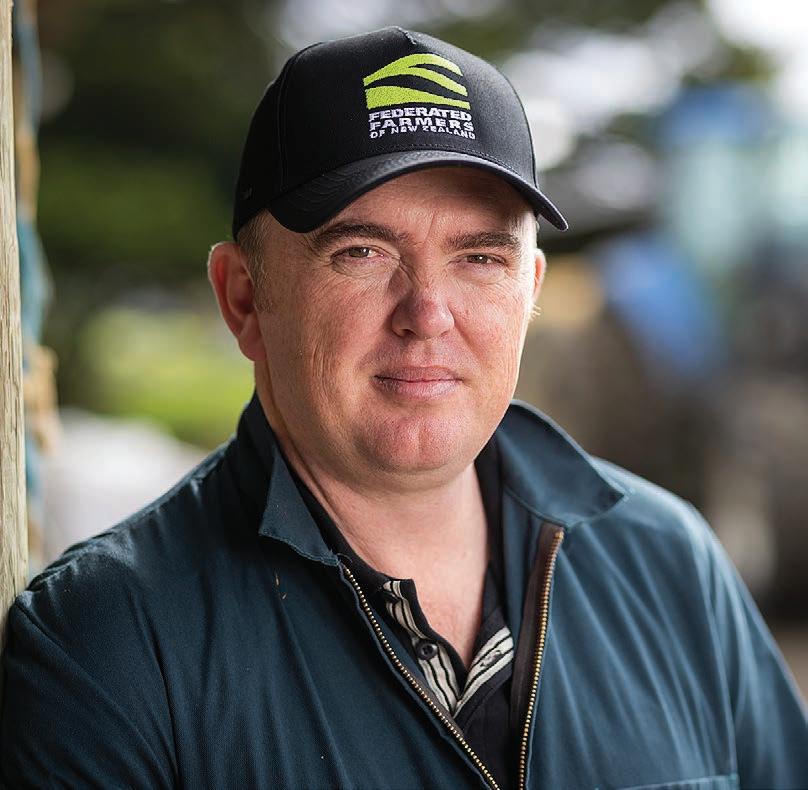
“Too often there’s this assumption that farming profitability and environmental progress are somehow at odds with each other, but that’s simply not true,” he says.
“Farmers live and work on these landscapes every day. We have a direct interest in protecting our soil, water, biodiversity and the long-term sustainability of our farms.
“It is possible to cut unnecessary costs and deliver real environmental gains at the same time – but it can’t be done from the top down through
endless bureaucracy.”
Instead, Langford says progress comes from trusting farmers and enabling innovation and collaboration at a local level.
“It must be driven from the grassroots through innovation, local knowledge, good management, and recognising that farmers are the stewards of these landscapes,” he says.
“New Zealand farmers are already among the most efficient and environmentally responsible food
Give us the tools, get out of the way, and we will deliver a stronger, more productive New Zealand for future generations.
Wayne Langford
Federated Farmers national president
producers in the world.
“Imagine what we could achieve if we had regulation that genuinely enabled progress instead of slowing it down.”
Langford says a stronger farming sector benefits the entire country, not just rural communities.
“Farming contributes tens of billions of dollars to our economy, supports regional towns and businesses, and feeds millions of people here in New Zealand and around the world,” he says.
“When farming does well, provincial New Zealand does well, local businesses do well, export earnings increase, and jobs are created.”
Federated Farmers wants political parties to engage with the proposals over the coming months.
“This election platform is ultimately about backing the people who produce the food, fibre and products that keep this country moving,” Langford says.
“Farmers are problem-solvers by nature. Give us the tools, get out of the way, and we will deliver a stronger, more productive New Zealand for future generations.”
Federated Farmers is pushing for simple changes that would make it easier, cheaper and more rewarding for farmers to invest in solar energy.
Mark Hooper, the organisation’s energy spokesperson, says on-farm solar represents a huge opportunity, but outdated rules are holding thousands of farmers back from making the move.
“Solar is no longer some niche environmental project or nice-tohave,” Hooper says.
“The economics stack up, and farmers are recognising the opportunity to generate their own power, reduce their reliance on the grid, and build greater resilience into their businesses.
“What’s frustrating is that the regulatory system hasn’t kept pace with the technology.
“Farmers who want to invest are often running into unnecessary hurdles, inconsistent rules, and poor returns when they try to sell electricity back into the grid.”
Federated Farmers is making onfarm solar a key election priority this year, calling on the next Government to remove roadblocks slowing progress.
One priority is the development of a national standard for small- and medium-scale solar installations.
Currently, consenting requirements can vary dramatically between councils, creating uncertainty and additional costs for farmers.
That inconsistency is something solar advocate Mike Casey, chief executive of Rewiring Aotearoa, says he sees regularly.
“I can install solar in Central Otago without a resource consent, but 10 kilometres down the road, across a council boundary, another farmer might have to spend tens of
thousands of dollars getting consent for a smaller system,” Casey says.
“The laws of physics don’t change from region to region, so why are the rules so different?
“We should have standardised rules that allow people to do this stuff really quickly.”
Casey says making appropriately sized on-farm solar developments a permitted activity would dramatically reduce costs and speed up adoption.
Farmers are ready to play a bigger role in the country’s energy future, but we need regulation that encourages investment rather than getting in the way.
Mark Hooper Federated Farmers energy spokesperson
“If we get that over the line, we’re going to make New Zealand one of the most efficient places in the world to install solar, which is a great outcome because we need so much more electricity generation.”
Hooper agrees.
“A national standard would reduce unnecessary consenting costs and provide certainty for farmers wanting to invest.
“It would help remove one of the biggest barriers we’re hearing about from members.”
Federated Farmers is also advocating for changes to electricity market rules to create a fairer playing field for on-farm solar owners.
Many farmers who generate surplus electricity currently receive only a fraction of the price retailers later charge other customers for that same power.
“The reality is farmers are often getting a raw deal,” Hooper says.
“We want to see multiple trading relationships and peer-to-peer

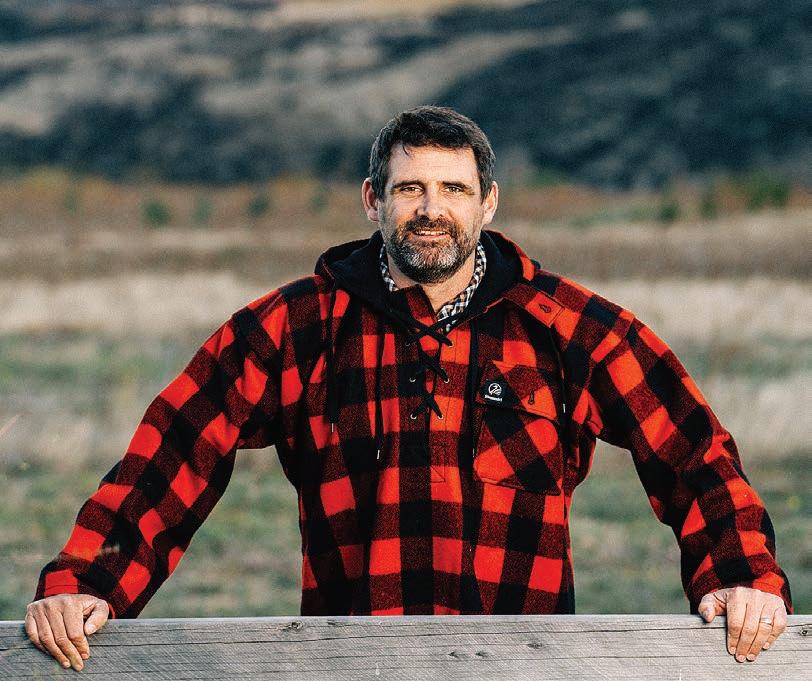
trading enabled so farmers can sell electricity to the highest bidder or directly to other customers, rather than being locked into a single arrangement with their electricity retailer.”
Casey says those reforms would significantly improve the economics of solar investment.
“At the moment, a farmer might export power on one grid connection for 10 cents per kilowatt hour and buy it back on another connection for 30 cents per kilowatt hour,” he says.
“Most farms have multiple grid connections. That’s such an easy regulatory change to sort, yet nobody’s doing it.”
He also wants farmers to have greater freedom over who they sell electricity to.
“A farmer should be able to choose to sell power to the school down the road, their neighbour, or potentially even directly to a processor. At the moment you’re not allowed to do that.”
Casey says New Zealand’s electricity market still contains outdated regulations that discourage participation and reduce returns for those investing in generation.
“Free access to the market is the
number-one thing we need. There’s way too much old regulation in this space stopping people from doing things.”
Beyond the financial benefits, Casey says solar can provide valuable resilience during emergencies. He points to Southland dairy farmers who were able to keep operating through last year’s major power disruptions because they had solar and battery systems installed.
“The way I describe solar and battery systems is they pay for themselves in the good times and protect you in the bad times,” he says.
“As weather events become more frequent, resilience becomes incredibly important.
“But there’s also resilience from protecting yourself against rising energy costs. Producing your own energy is a smart business decision.”
Hooper says solar’s potential extends beyond individual farms.
“On-farm solar could effectively become New Zealand’s largest and most sustainable power plant.
“Farmers are ready to play a bigger role in the country’s energy future, but we need regulation that encourages investment rather than getting in the way.”

When Kiwis talk about the cost of living, one issue comes up time and time again: the sky-high price of food.
Inflation may have eased from its peak, but food prices are still a a major concern, causing pain for families at the supermarket checkout every week.
Recent polling commissioned by Federated Farmers found Kiwis think keeping food prices affordable should be the Government’s top priority when it comes to farming.
The good news is we have a way to achieve that – and it’s not difficult.
Federated Farmers believes one of the most effective ways the next Government can reduce costs across the food production chain is by cutting unnecessary red tape.
Our farmers produce some of the highest-quality food in the world, but too often they find themselves buried under layers of regulation that add cost and make it harder to grow the food our communities need.
That’s why we’re calling for 10 new national permitted activity standards for farming.
These standards would establish simple, consistent rules for common farming activities, removing the need for expensive, time-consuming consent processes in many situations.
It’s no secret the current system has become a major barrier to productivity.
Farmers spend far too much time and money trying to navigate resource management processes for routine, low-risk activities.
We’ve created a crazy system where getting permission to do sensible things on your own property can take months or even years, and cost tens of thousands of dollars.
And that cost doesn’t disappear –it flows through the supply chain all the way to our supermarket shelves.
What’s completely baffling is that the rules can vary significantly between councils.
An activity that’s straightforward in one district can require a costly consent process in another.
That means we have farmers
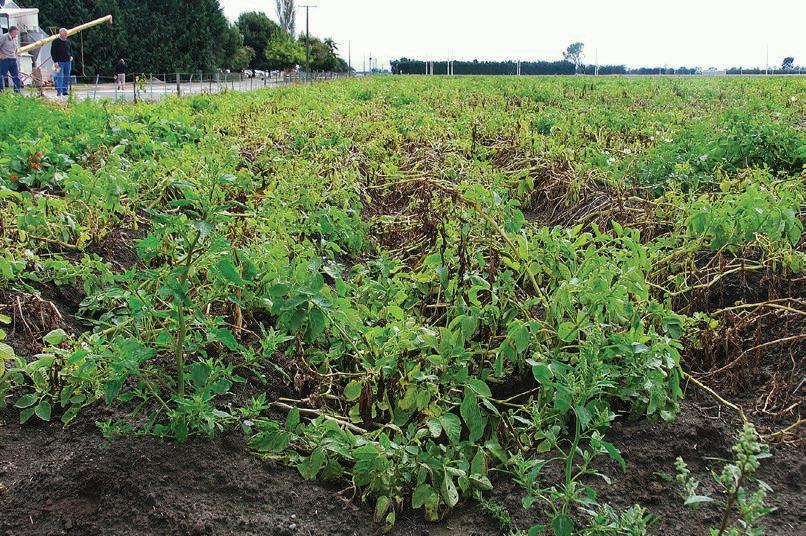
operating across multiple regions who often face a patchwork of different requirements depending on the council in charge.
Federated Farmers says national standards would provide muchneeded consistency and certainty while keeping environmental safeguards in place.
The proposed standards cover 10 areas fundamental to modern farming:
Farm plans
• Vegetable growing
• On-farm water storage
Gravel extraction
• Drain maintenance
• Effluent management
Fertiliser application
• Farm quarries
• Wetland restoration
• Small and medium-scale solar
Many of these activities ask farmers to jump through hoops despite delivering clear benefits for food production, the environmental, and farm resilience.
Take vegetable growing, for example.
Growers often face major hurdles when they’re rotating crops or changing land use, despite those activities being critical to maintaining food supply.
Likewise, farmers wanting to build water storage infrastructure can spend years battling bureaucracy before they can even get a shovel in the ground.
Our Kiwi farmers are among the most innovative and environmentally conscious in the world.
What they need is a regulatory framework that enables good decisions rather than creating roadblocks at every turn.
The proposed standards would also help encourage environmental improvements.
Activities like wetland restoration and improved effluent management currently get bogged down in compliance requirements,



What this country needs is a more efficient farming sector to help keep food affordable.
discouraging farmers from making positive changes.
Clear permitted activity pathways would make it easier to get this stuff done while keeping appropriate boundaries in place.
Another area of growing importance is renewable energy.
We hear from more and more farmers who say they’re keen to invest in on-farm solar to reduce electricity costs and improve their resilience but, once again, red tape is slowing them down – or putting them off completely.
A national permitted activity standard for small- and medium-
scale solar would make it easier for farmers to adopt new technology that lowers operating costs and reduces pressure on the electricity network.
At the end of the day, what this country needs is a more efficient farming sector to help keep food affordable.
Farmers want to spend their time producing food, not filling out endless paperwork.
If politicians are serious about tackling the cost of living for all Kiwis, they need to look closely at the rules driving up costs throughout the food production system.
Our challenge to the next Government is to deliver these 10 national permitted activity standards within its first year in office.
New Zealand has the land, climate, expertise and innovation to remain one of the world’s leading food producers.
What we need now is a regulatory system that supports that success rather than standing in its way.


Drought-prone regions will struggle to reach their economic potential unless Governments clear the path for water storage projects, Federated Farmers says.
As part of its election platform, the organisation is calling for the next Government to provide seed funding for a series of new water storage projects.
It also seeks a national standard for on-farm water storage and resource management reforms that better enable community water storage and managed aquifer recharge.
“The Ruataniwha and Wakamoekau dams would have been game-changers for the Hawke’s Bay and Wairarapa but they were derailed by cripplingly expensive consenting processes,” Federated Farmers RMA reform spokesperson Mark Hooper says.
“No investor wants to put up funding for water storage schemes when the pathway to construction is so long and uncertain.
“We need the next government to change the rules to better enable community water storage and aquifer recharge, including through fast-track approvals.”
Hooper says it’s not just large-scale projects getting drowned in red tape.
Last year the Government consulted on a national permitted activity standard that would make it easier for farmers to build their own on-farm water storage.
“If we want to boost productivity and our exports, it needs to happen – but we’re still waiting.
“Seed funding to get new water projects flowing should be a nobrainer as policy for any political party,” Hooper says.
Seed funding would support feasibility studies, business cases, consent applications and other pre-construction work seen as risky under the current resource management framework.
It could be a grant, or a loan repaid once the water is flowing.
For example, the Ruataniwha
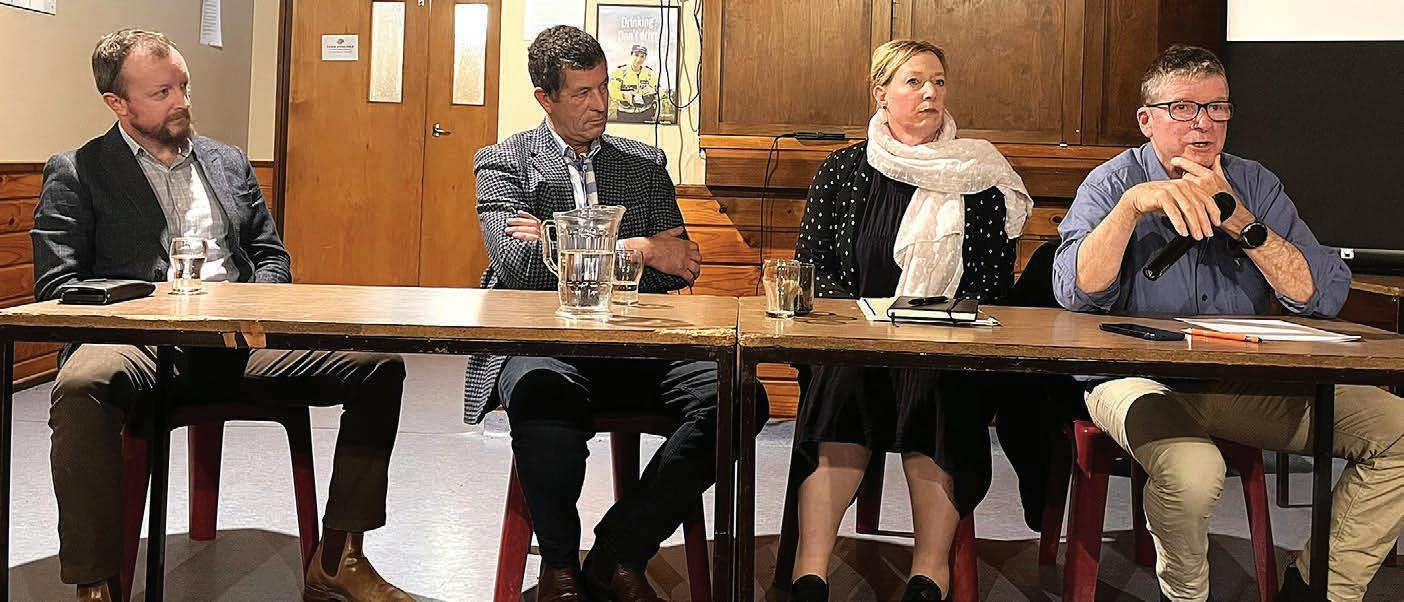
dam, rebranded the Tukituki Water Security Project, has secured an $18 million Government loan for feasibility and pre-construction work, under a new fast-track application.
A Federated Farmers-commissioned poll of 1000 Kiwis last month found 52% favoured the Government enabling more water storage for irrigation of farmland, while only 21% were opposed.
Federated Farmers Wairarapa president Robert Hickson held a meeting last month to talk about water security in the region, an issue that’s been batted around for decades, with report after report shelved and gathering dust.
“Reliability of water is becoming more and more critical under climate change – not just for agriculture but for other businesses and for our towns,” Hickson said.
“We’re going to have more severe water shortages.
“Our population is expected to increase to 65,000 by 2050, so there’s going to be more demand for water and for jobs.
“We have to start planning for this now, rather than have a fire truck approach when this really starts to bite.”
Speaking at the meeting, Labour’s Kieran McAnulty said trading
cheap political shots over water storage projects – and other vital infrastructure – needs to stop.
“People are sick of things being started and then paused, revived again and then stopped.
“We’re missing out as a country as a result.”
McAnulty said politics need to be taken out of identifying and funding a long-term pipeline of infrastructure projects, which is why the last Labour Government established the Infrastructure Commission.
“We’ve fully supported what the coalition Government has done,
requiring the Commission to come up with a 30-year plan.
“We’re more likely to get crossparty agreement on what needs to happen if it’s coming through an independent process like the Infrastructure Commission.”
Water resilience expert Jennie Marks said recent modelling showed the Wakamoekau dam and storage had the potential to lift Wairarapa’s GDP from $4 billion now to $5.49 billion by 2050.
This would come mainly from horticultural expansion, higher-value arable production and economic
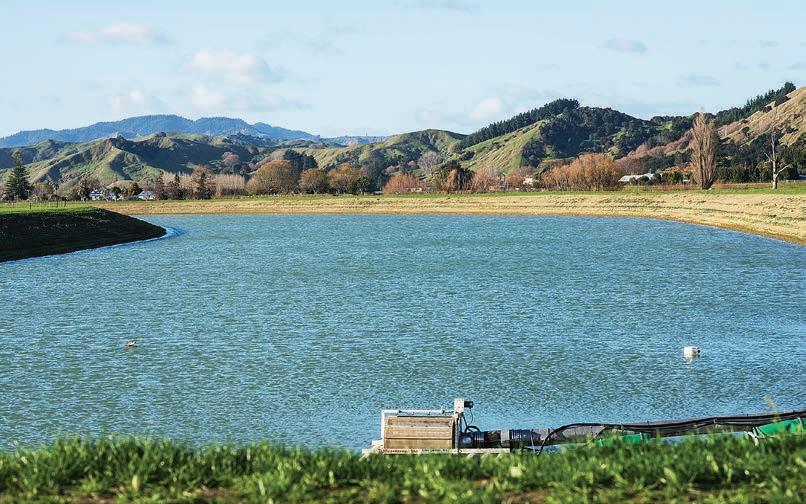
VOICE: A Federated Farmers-commissioned poll of 1000 Kiwis last month found 52% favoured the Government enabling more water storage for irrigation of farmland, while only 21% were opposed.
All speakers at a Federated Farmers water panel discussion – from left, MPs Kieran McAnulty and Mike Butterick, resilience expert Jennie Marks, and Wairarapa Feds president Robert Hickson – agreed New Zealand needs to get cracking on improving water storage and security.
diversification opportunities.
Other benefits could come from using that storage capacity to hold back floods, and for electricity generation.
Marks said the hydropower potential of the Opua dam in Canterbury was bolted on as an after-thought by those trying to get the scheme off the ground.
“Now it generates most of the income of the dam.”
Associate Agriculture Minister Mike Butterick said he’d asked MPI to gather all available data on water storage proposals, so a coherent, prioritised pipeline of work can be developed.
“That pipeline is crucial. Bespoke, one-off projects aren’t cheap. You have to tool up, and if there’s nowhere to go on to from there, you price accordingly.”
Butterick said there’s no shortage of private capital for public-private partnerships on water storage projects, if investors are confident that schemes won’t get bogged down in planning battles.
“We have plenty of water. We need to capture it, and use it when and where it’s most needed.
“I think it’s our super-weapon as a country and we’re making progress on conversations to make it happen.”
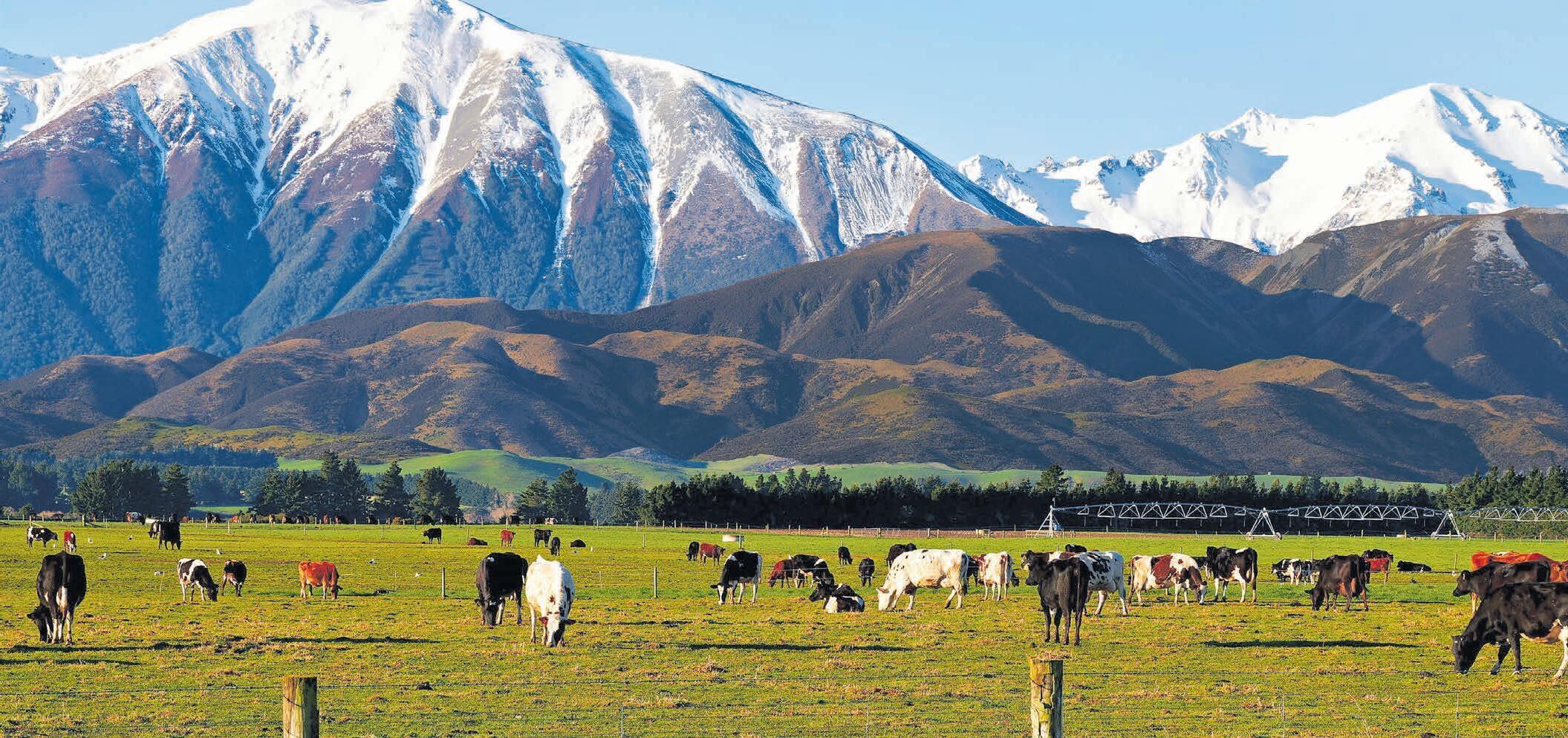


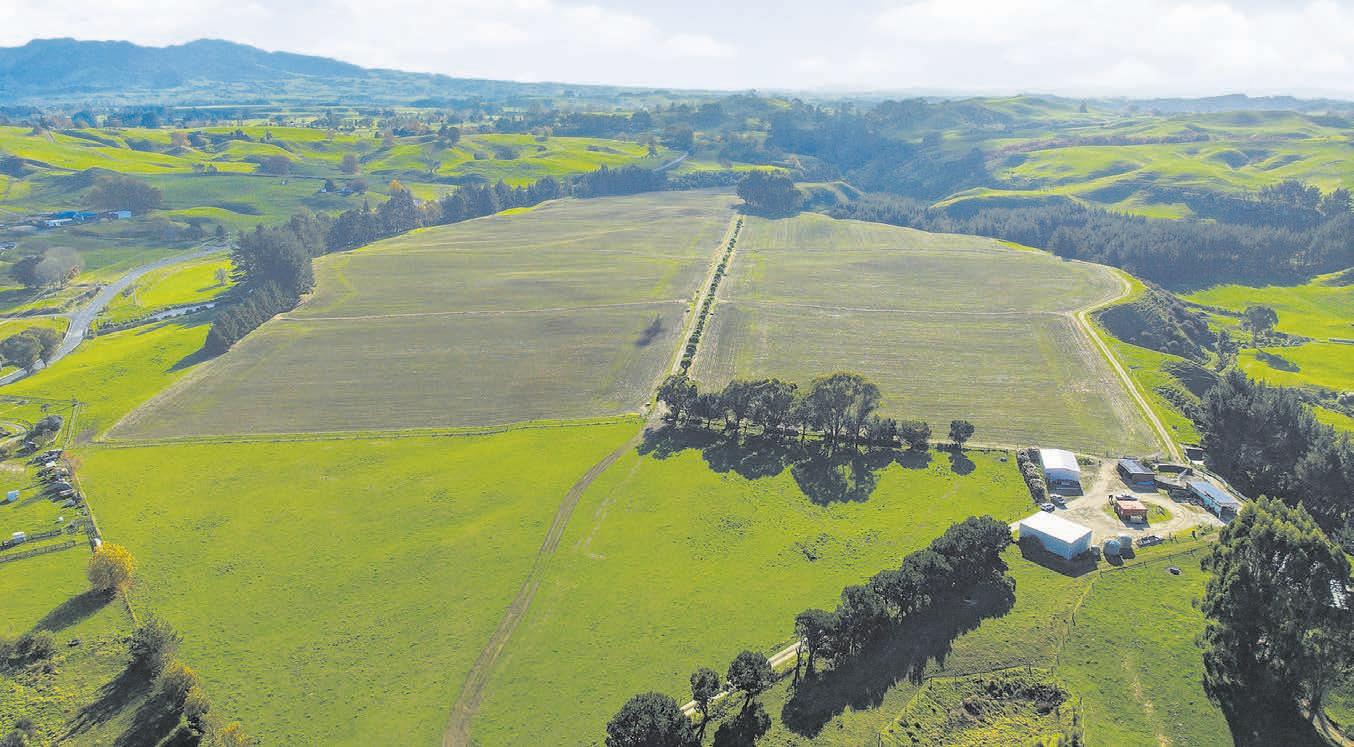
Space to farm, build and grow
Set on 78.25 ha (MOL), this rural property offers opportunity, scale and the foundations for a productive farming operation. With approximately 35 ha of effective land suitable for growing maize, 468 Mountain View Lane presents options for those looking to expand, invest or secure a strong grazing and cropping block. The property is well equipped with practical farming infrastructure including cattle yards and vet race, making day-to-day operations easy and efficient. Calf rearing has also been well catered for, with both a four bay and two bay calf shed already in place. One of the standout features of this property is the fresh water springs, providing a reliable natural water source and adding to the appeal of the land. With plenty of potential house sites across the property, there is opportunity here to add value should you wish (subject to council approval).
BakerAg Land & Leasing Ltd seek expressions of interest for the licence of Mokai Station.
The property comprises a total of circa 1844ha of flat, undulating and medium hill country rising to elevated Tussock. The farm is situated 30km east of Taihape.
The property has a homestead, woolshed, shearers quarters and a range of farm buildings and other facilities.
The property has most recently been run as a sheep and beef breeding and semi finishing unit. The property is offered for licence commencing July 2026. Inspection will take place in June 2026.
The deadline for expressions of interest is 4pm on Friday 10 July 2026.
For further information regarding the lease opportunity including property description, draft licence document and inspection instructions please contact Fergus Rutherford at BakerAg Land & Leasing Ltd. on 0274 836 293 or fergus@bakerag.co.nz

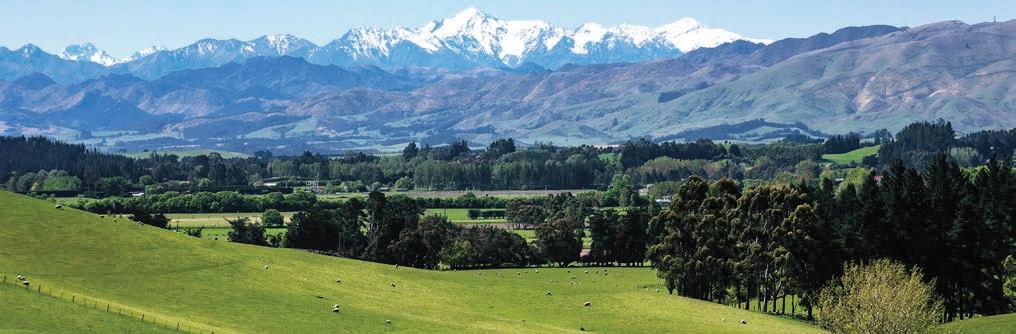
Your agent may suggest you advertise in their
We suggest you remind them that this is the publication you, and every other farmer you know, reads.

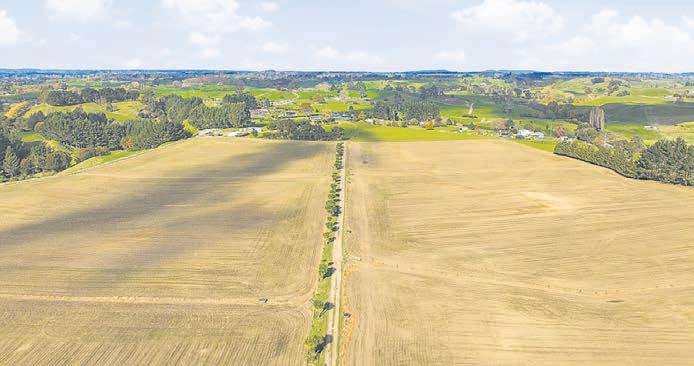
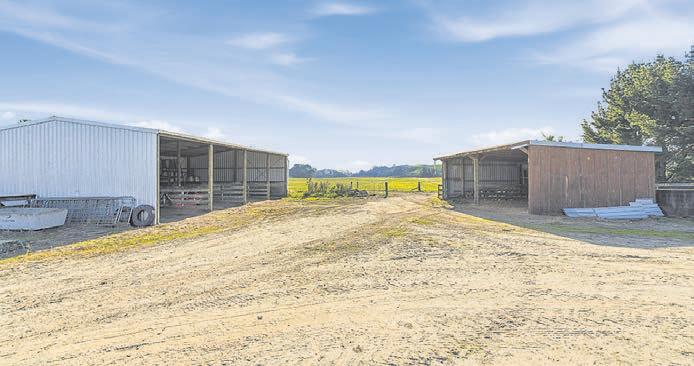
Tender closes 4.00pm, Thu 2nd Jul, 2026, Property Brokers, 81 Tirau Street, Putaruru
View By appointment
Web pb.co.nz/PTR229446


Scott Mathis M 027 298 3318 E scott.mathis@pb.co.nz
Ian Morgan M 027 492 5878 E ian.morgan@pb.co.nz
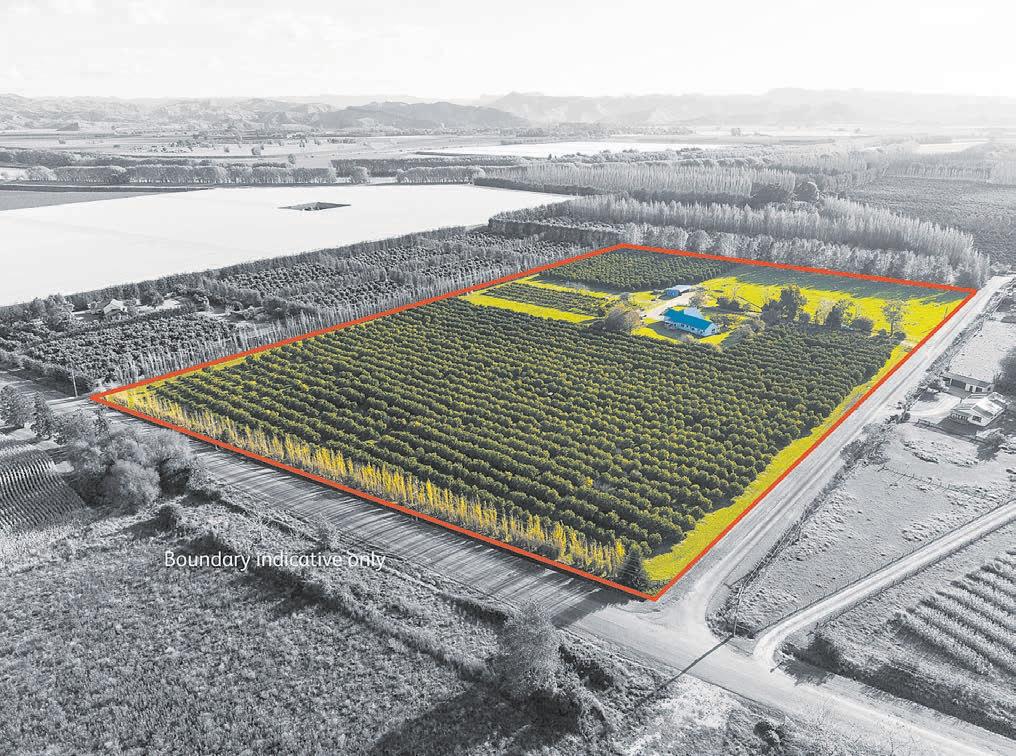



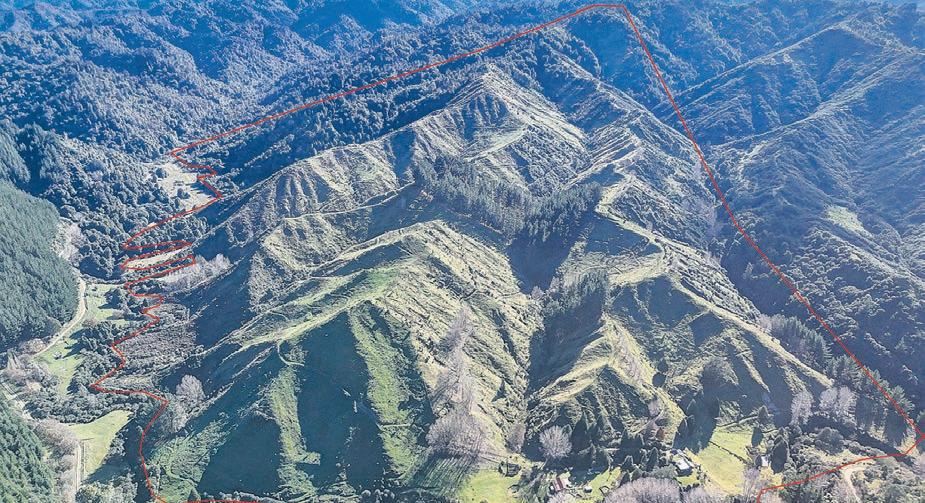
Freehold, going concern – 19 Aylmer Street, Ross, Westland, West Coast
An outstanding opportunity to acquire a well-established, multi-income tourism business in the historic West Coast township of Ross. Owners wish to retire after 40 years. The hotel operation comprises a popular bar and restaurant servicing locals and visitors, complemented by a spacious outdoor garden bar area well-suited to live entertainment, functions and casual dining. The property also operates as a registered campground, providing an additional revenue stream. Accommodation within the hotel complex includes six ensuite guest rooms, six cabins, an ablution block, and a semi-detached owner/manager’s flat.
Adjacent to the hotel, the motel offers six well-presented, recently upgraded units with capacity to accommodate up to 17 guests, along with a modern three-bedroom residence (circa 17 years old).
The business has demonstrated strong recent performance, with a 20% increase in turnover in the last financial year. Further growth is anticipated with the reconnection of the West Coast Wilderness Cycle Trail to Ross.
Asking Price: $2,150,000 + GST (if any) For further information please see our trade me listing, #5879168951 Call Mark 027 806 1651

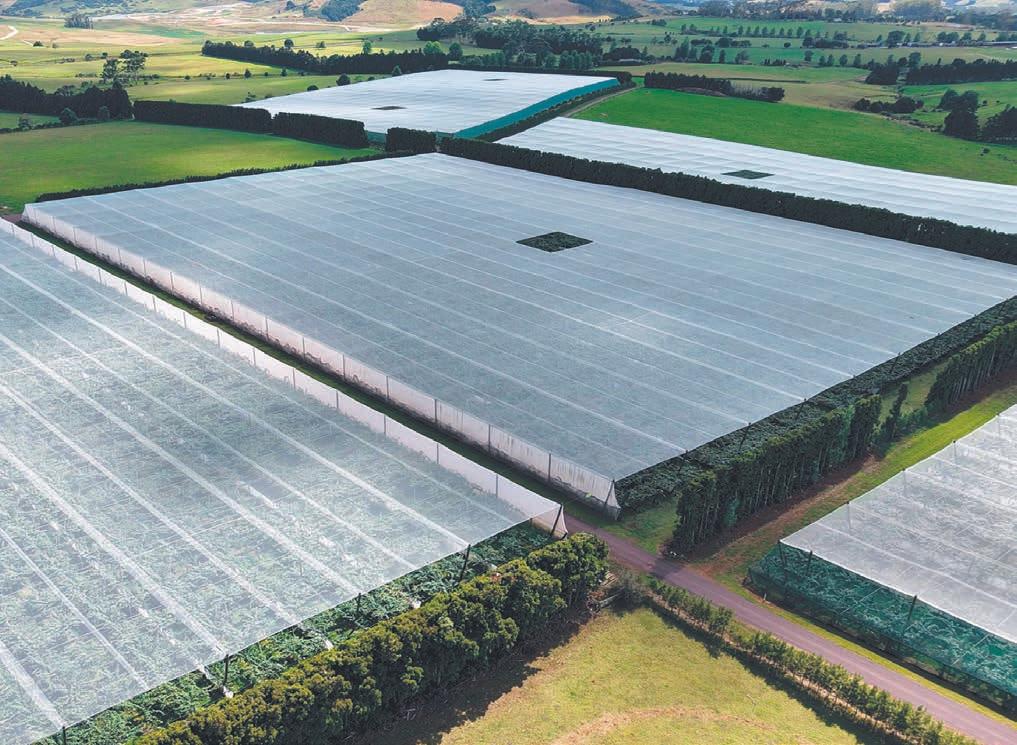
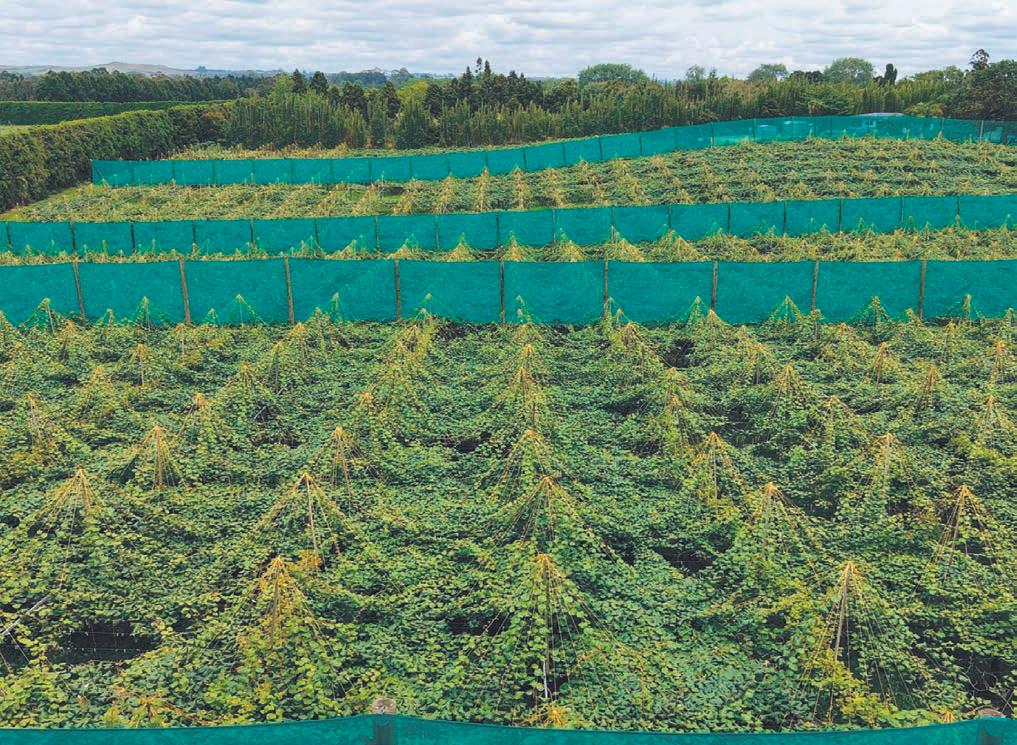
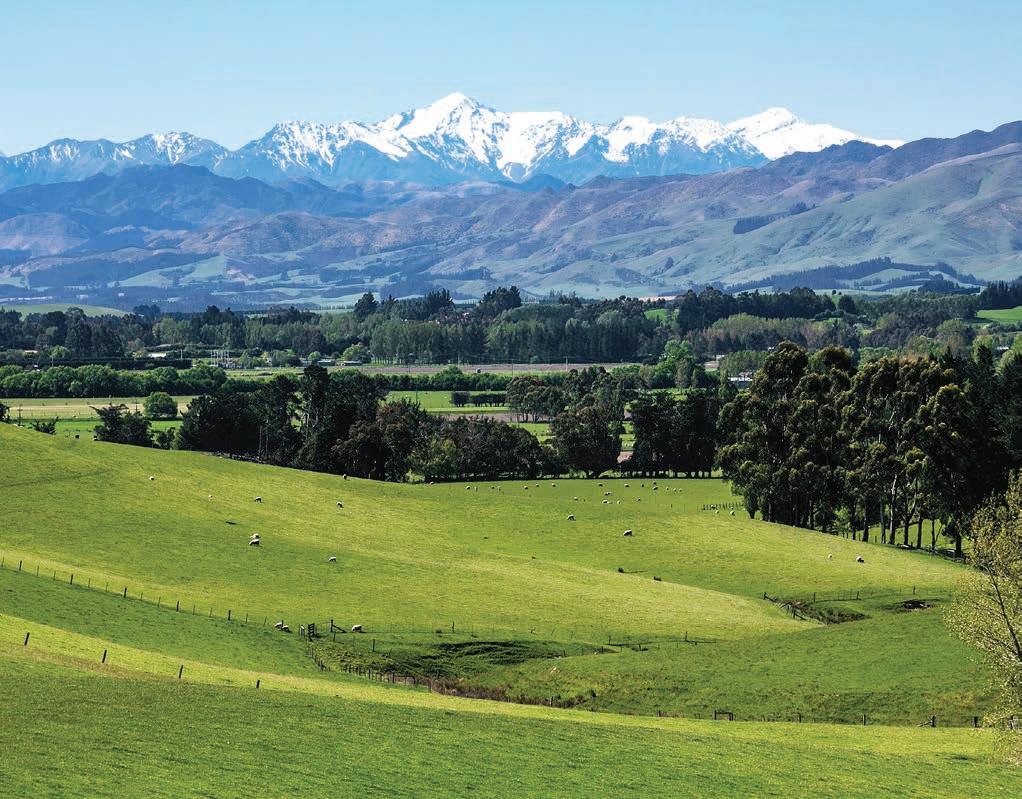
Your

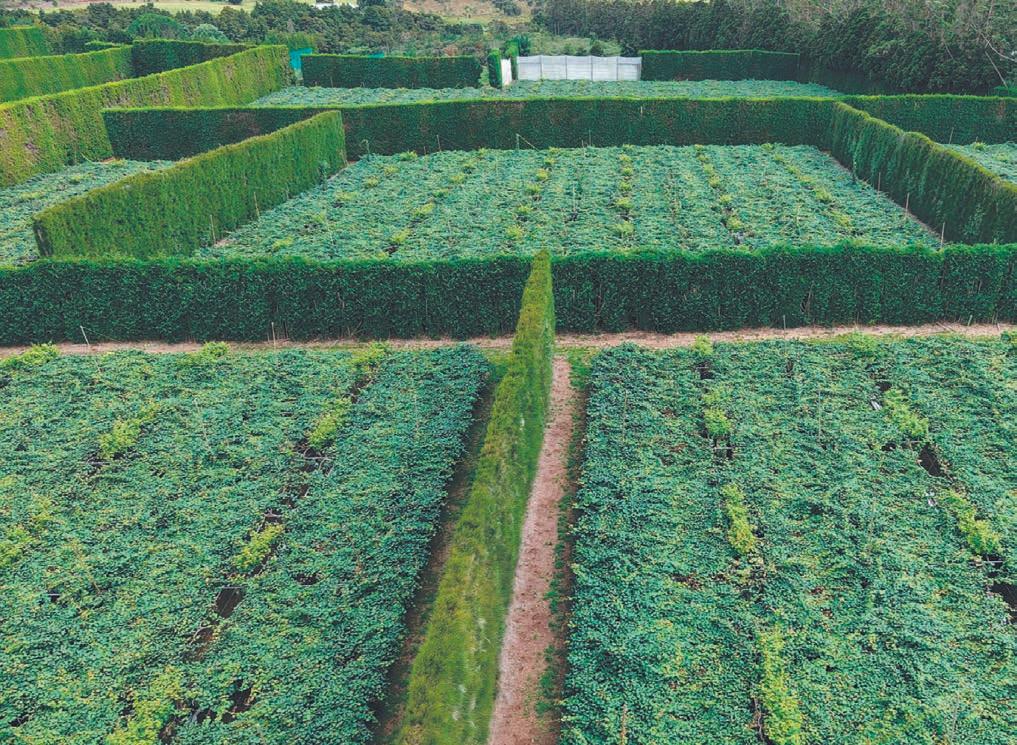


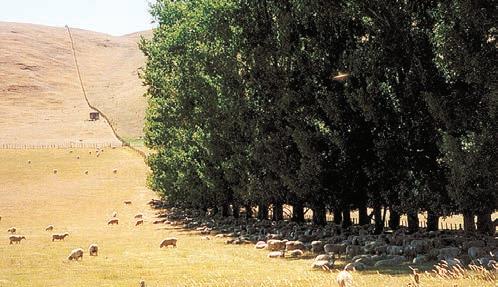








We’re looking for a motivated, organised, customer-focused person to join our growing sales team as Farmers Weekly Marketplace Partnership Manager.
Based at our Feilding Head Office you’ll love connecting with our current clients, prospecting new ones, and responding to incoming sales enquiries, turning leads into loyal customers.
You’ll be responsible for the very part of the paper you’re reading this ad in – the Farmers Weekly Marketplace – as well as our healthy Real Estate portfolio.
A minimum of three years sales experience is required.
If you love selling over the phone and being part of a vibrant office culture, we’d love to hear from you!
To request a full job description and company application form, please email hr@agrihq.co.nz
Applications close Wednesday 17 June 2026, 6pm.
















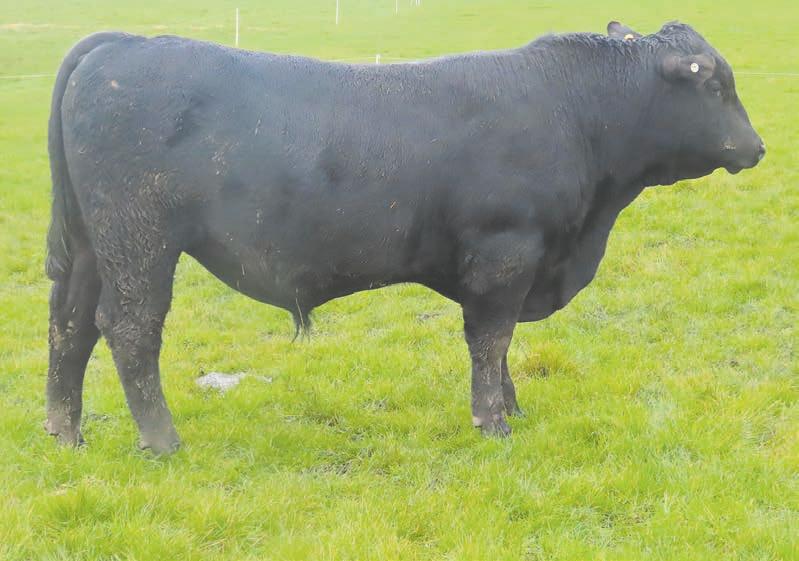

Proudly sponsored by
Cattle farmers shouldn’t bank on local cattle shortages driving procurement competition for too much longer.

RED meat markets have had one consistent theme in recent years – shortages. Other than in Australia and Brazil, there just haven’t been the cattle around like there used to be, while sheep numbers through Australasia, Europe and North America are at historic lows with little indication of turning around in the short term.
However, New Zealand cattle farmers shouldn’t bank on local cattle shortages driving procurement competition between processors for too much longer.
Cattle markets have always been cyclical in nature, and we have been well and truly at the bottom of the supply cycle. Dairy calf rearing fell off a cliff earlier this decade following back-to-back years of weak returns for 100kg calves in spring, which had knockon effects on the cattle kill two to three years later.
Not to mention, forestry conversions took out a lot of beef cow breeding country around the same time, especially in the North Island. And, this season, finding cull dairy cows to process has been much tougher as easy farming conditions, a skyhigh milk price, and excellent pregnancy testing results have encouraged cow retention. Some retained cows are destined for fresh dairy conversions in Canterbury, too.
But the tables are turning. Calf-rearing lifted in 2024 before doing a full-scale surge last year. Forestry conversions have slowed, while breeding farms have often increased cow numbers at the expense of ewes.
And dairy cow stocking rates must be nearing saturation point, considering the North Island cow kill has been the lowest in 14 years, despite base dairy herd numbers in this part of the country dropping by not even 7% since the start of the decade, according to DairyNZ.
One tell-tale area of this potential turnaround in supply is in the store market. Through autumn, the number of R2 to R3 store cattle sold through the seven key North Island yards where AgriHQ collects data rose by 16% or 3900 head, on last year to 28,600 head. For the South Island yards, this was a 27% or 3200 head lift to 14,900 head.
Some of this could be chalked up to different selling patterns considering the wet summer/early autumn, and possibly more people selling through the yards due to the strong market.
Whatever the reason, such large numbers haven’t been in the yards through autumn since 2018, a year before we started to see the cattle kill spike. If this is a sign of what’s to come, then it’s likely processors won’t be battling for steers, heifers, and bulls as fiercely from spring onwards, especially once we move deep into next year.
There’s already evidence of more bulls entering the slaughter supply chain. The yards aren’t a
massive outlet for this class of cattle, but finding quotes on R2 bulls in recent months has been much easier than in recent years. This extra supply contributed to store prices dropping through March and April. Given the strength of schedules, it’s been more viable for some bull farmers to send bulls 500kgLW or a little over to the processors, rather than trying to sell store.
This has been one reason for the bull kill for March to early May reaching the second-highest number in 14 years, backed up by a 6kg drop in average carcase weights from March to April. Though this did follow a slow spring/summer kill.
Likewise, the weak market for forward-store R2 heifers in the North Island has meant more of these have been sold to local trade processors this month.
Cows are a bit more of an unknown. There’s no doubt that this past season has been an anomaly with how few cows have hit the processors, down 62,000
Dairy cow stocking rates must be nearing saturation point, considering the North Island cow kill has been the lowest in 14 years.
(-11%) on last year as of early May and below 16 of the past 17 years, so the only way is up. How quickly it jumps and when it becomes noticeable are the big questions. Usually, a low national cow kill one season is followed by a bounce the year after, but last season’s kill was already down
before this year’s slowdown. In theory, the spring is loaded for a jump in slaughter rates in the months following this season’s calving, but it’s also known that some of these have been soaked up for either dairy conversions in Canterbury, or by grazers who are set to supply through winter.



These weekly saleyard results are collated by the AgriHQ LivestockEye team. Cattle weights and prices are averages and sheep prices are ranges. For more detailed results and analysis subscribe to your selection of LivestockEye reports. Scan the QR code or visit www.agrihq.co.nz/livestock-reports
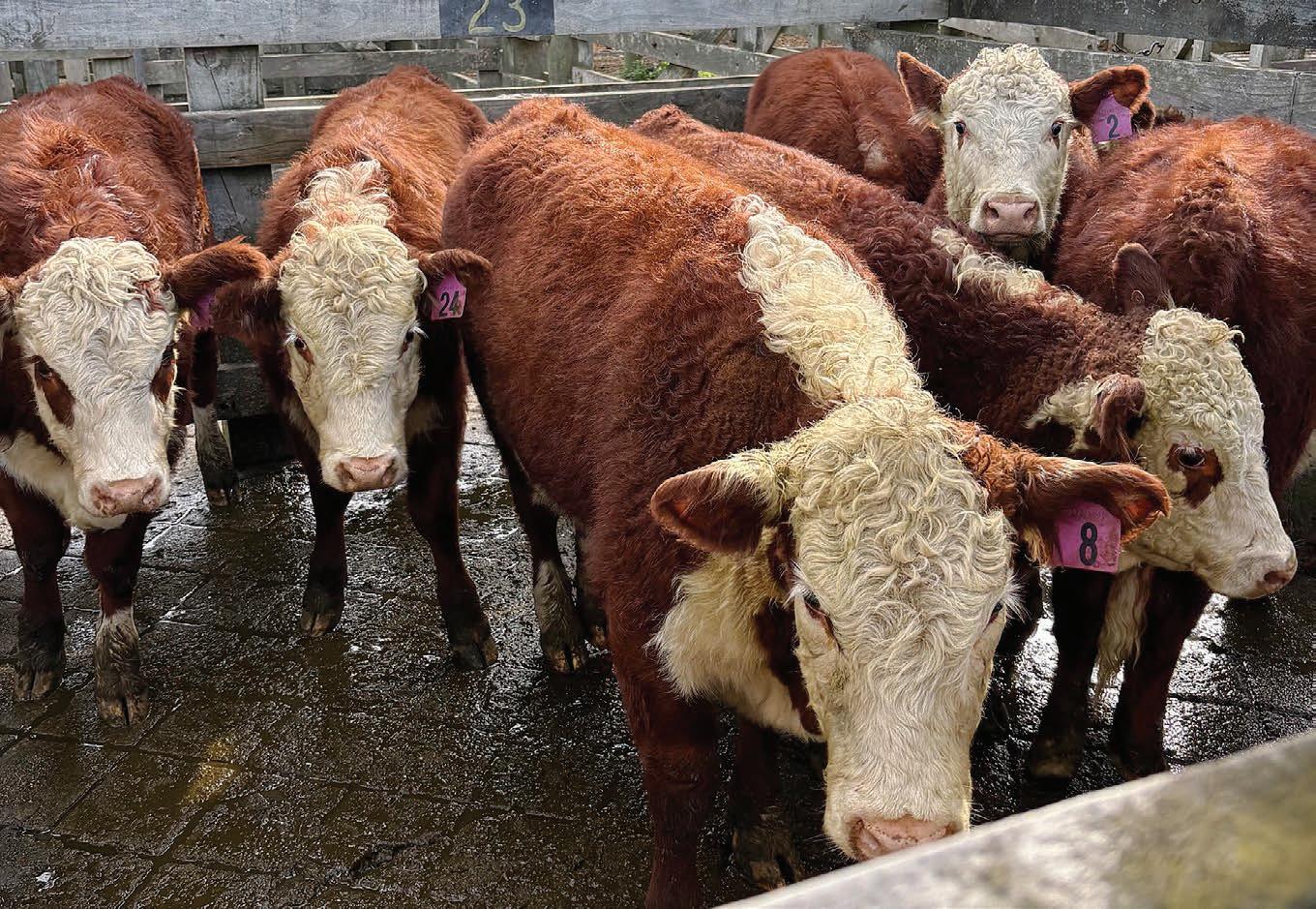



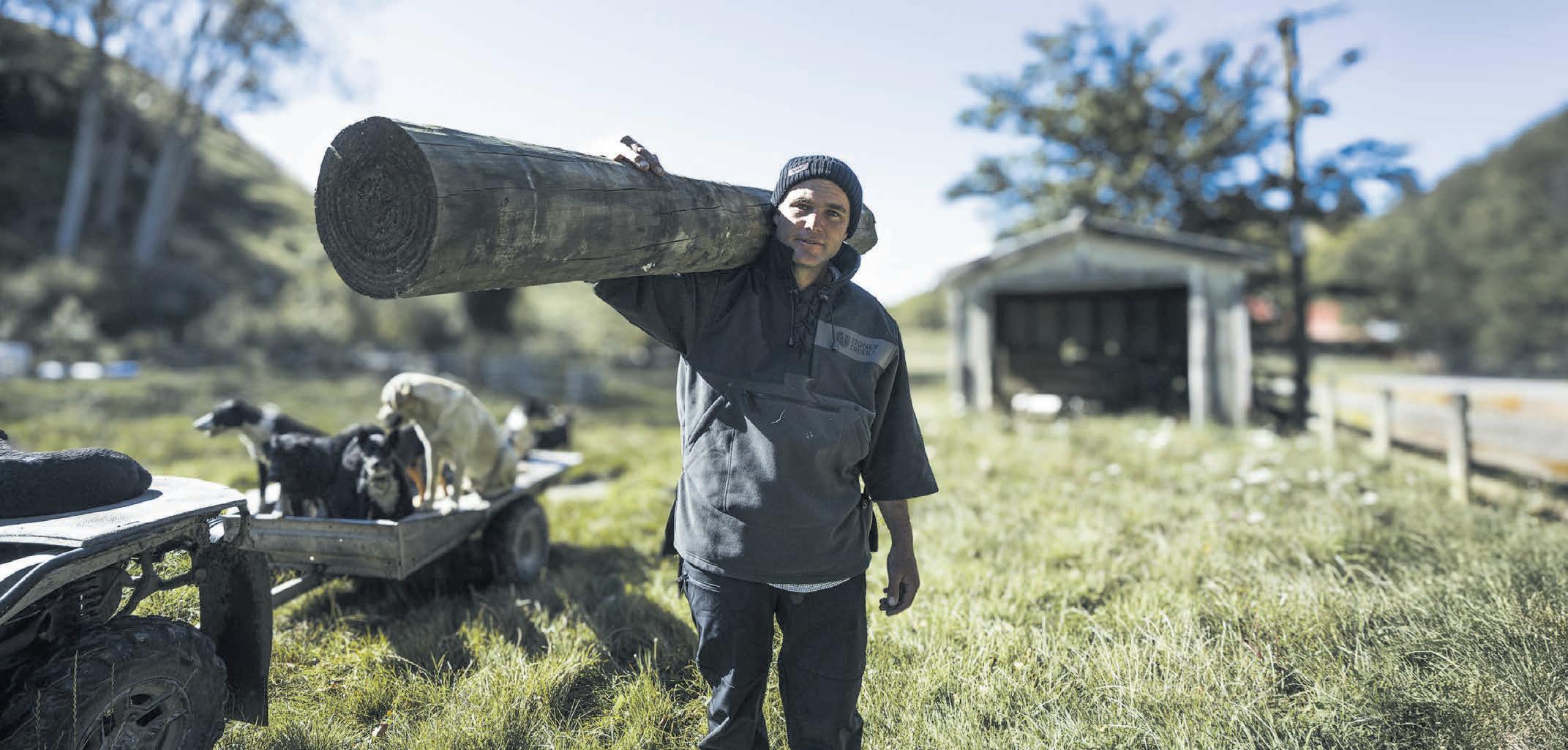










Store mixed-sex lambs, shorn, most 188-206
Store mixed-sex lambs, woolly, most 181-187
Store Halfbred mixed-sex lambs, all 170-200 Prime ewes, most 110-290
lambs, most

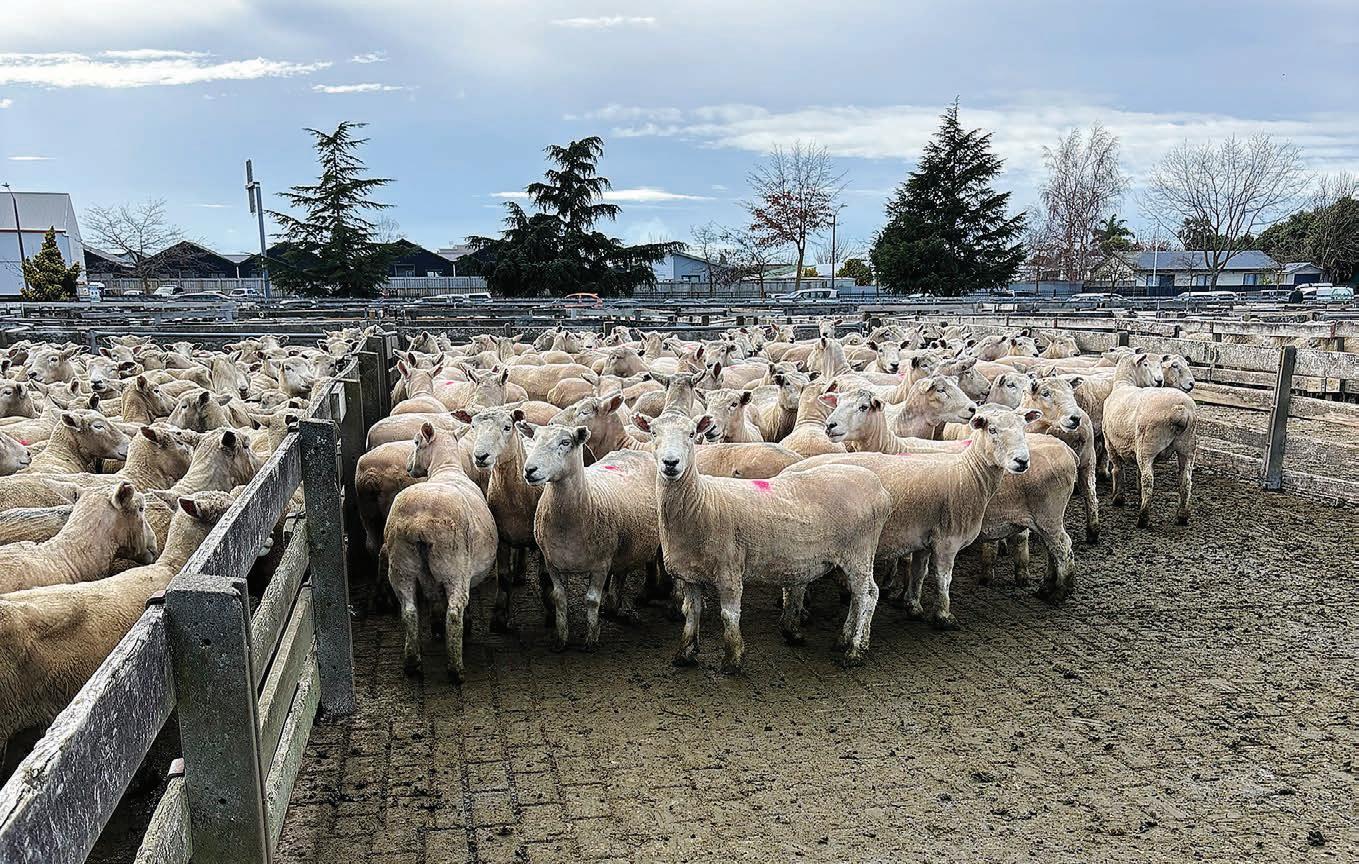
NEXT CROP: Positivity in the sheep industry led to strong returns for
Wednesday, June 3. These 4- to 5-year Romney
for $288.
Store
| May 28 | 1265 cattle











IN THE tropical Pacific, north of Tahiti, El Niño is getting closer to being announced as sea temperatures continue to rise and the atmosphere corresponds to it in that part of the world.
Back here in New Zealand and around Australia, the neutral pattern officially remains, but we may now be seeing the early signs of an El Niño pattern.
There has certainly been a big uptick in high pressure exiting Australia. May was a remarkably dry and quiet month in many regions, with soil moisture levels below normal for this time of the year. Recent heavy rain events have definitely made up for some of the dry May weather.
But the areas that remain drier than usual also match what typically happens when El Niño forms – the east dries out, while the west gets wetter.
Canterbury and Otago are the driest at the moment, with Manawatū next. At the time I wrote this column and before you read this there will have been another burst of wet weather coming into NZ, but again, that wet weather leaned to the west.
This placement encourages colder airflows from south of NZ to move up and over us.
Long-range rainfall maps show this pattern continuing into June with further large high-pressure zones and rainfall generally lower in the eastern sides of both main islands.
We’re not finished with the mountains of high pressure either. May was defined by significant high-pressure zones in the NZ area, bringing us lighter winds and drier skies than we’d normally expect during late autumn. While we did get frosts, many regions
also experienced warmer than usual weather, especially later in the month and into June’s first week as subtropical northerlies dominated.
This week starts colder, with high pressure leaving New South Wales and moving into New Zealand. This placement encourages colder airflows from south of NZ to move up and over us.
This high-pressure zone is quite powerful, at almost 1040 hPa and likely to linger for the rest of the week. This is great news for Fieldays with a dry forecast currently in place – but watch for fog, which is certainly possible later in the week.
This weekend, high pressure is likely to move over the North Island and track a little further eastwards – allowing for mild subtropical winds to return to some regions further south.
During El Niño, New Zealand typically gets a lot of high pressure from the Tasman Sea area – and we’re seeing that happening again this month, as we did last month.
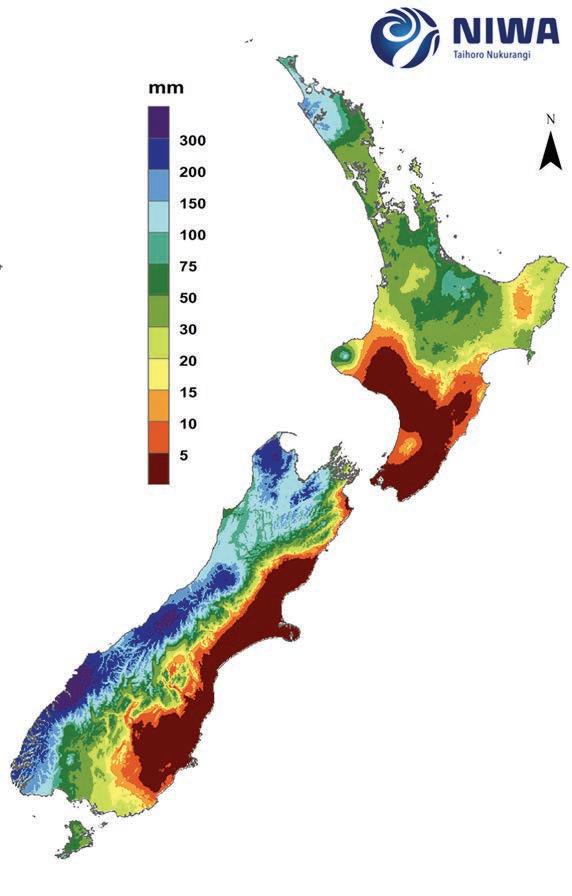
Observed Rainfall 9am 18/05/2026 to 9am 02/06/2026
•

But El Niño isn’t the only thing driving our weather. The Southern Ocean and the subtropics can produce surprise rainmakers for us. We also have a marine heatwave occurring in a number of coastal parts of the country; this means any low-pressure or rain bands that move into NZ can have a greater chance of producing heavier rain.

Until we shake these strong high-pressure zones, the best advice I can give is to manage water carefully – especially inland and eastern areas.