Global push to lock in NZ red meat

Neal Wallace MARKETS Processors
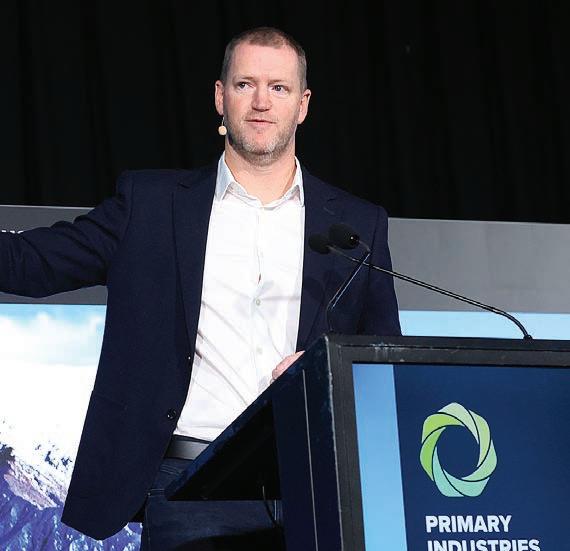
GLOBAL food retailers are knocking on the doors of New Zealand exporters, seeking to secure long-term supplies of red meat as they face falling production and geopolitical disruption.
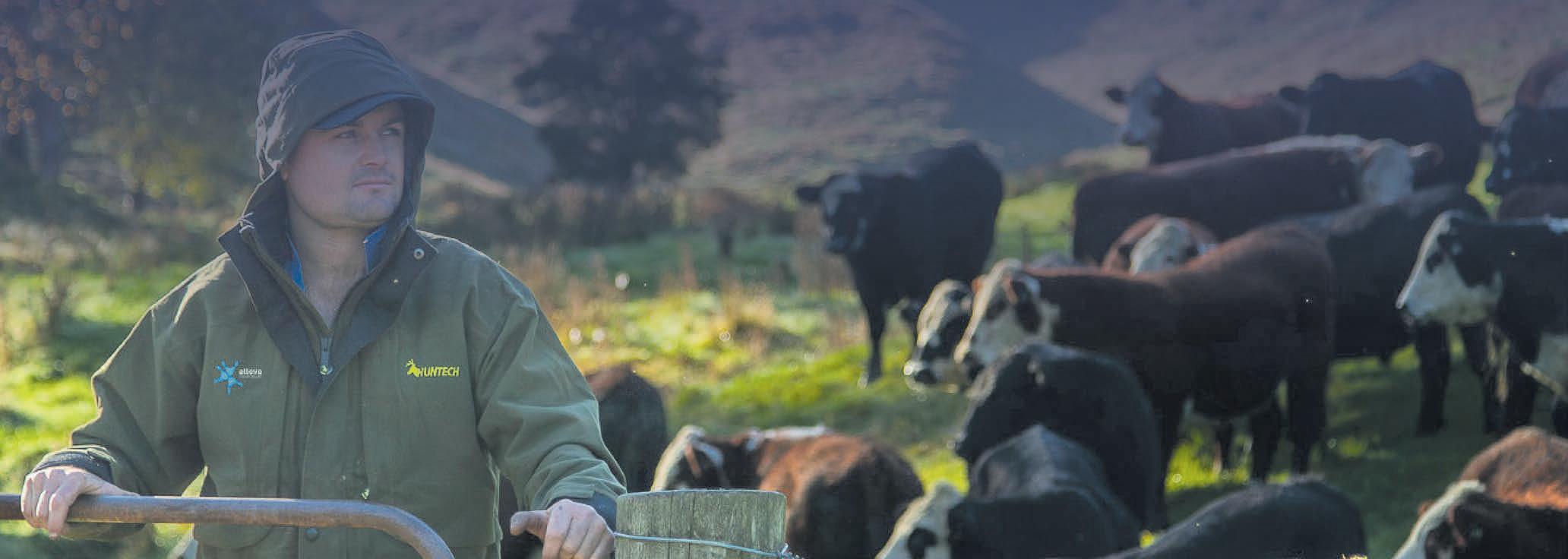
Silver Fern Farms chief executive Dan Boulton told last week’s Primary Industry NZ conference that in the past three months he has met with senior management from multiple global retailers wanting to shore up access to grass-fed beef, lamb and venison.
What we are seeing today is a structural shift in supply and demand dynamics that will remain in our favour for some time.
One of those meetings was with senior management from a United States retailer with 2500 stores.
“The key point is that we are at a point in time where supply certainty and resilience within the protein category is so important for these retail banners.” They cannot grow without resilient supply partners, he said.

“That we are having the chief executives and executives of these brands connecting with companies like ours, this shows there is a shift happening and the value they are putting on resilient protein supply.”
Demand for grass-fed beef in the US this past year was up 29% yearon-year, lamb was up 6% in the US and 16% in Canada while venison was the fastest-growing protein in US retail, with sales growing 48% year on year.
A business-as-usual approach by the NZ red meat sector would not fully capture these opportunities, said Boulton.
“High value customers are no longer buying on price, quality, and volume alone.
“They are demanding more from partners,” said Boulton
NZ needs to shift from a transactional model, which primarily competes on price, to partnerships – which means meeting requirements for transparency, provenance, consistency and compliance.
Boulton said Uruguay, Argentina and Brazil are all investing in production systems to satisfy these customers, promoting their attributes backed by data.
Current global uncertainty has also prompted a rethink of the wider food supply system.
Boulton recently met with global food companies, investors
Continued page 3
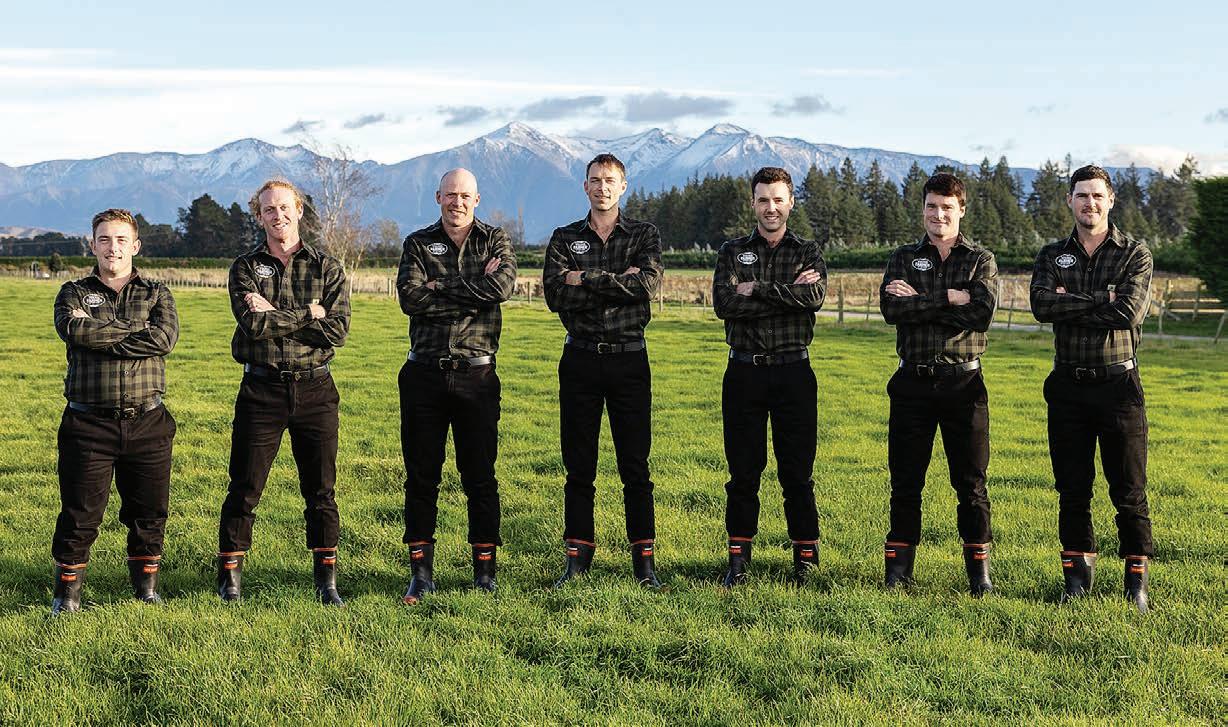
Finding New Zealand’s best young farmer
New Zealand’s champion young farmers are preparing to do battle in New Plymouth in the FMG Young Farmer of the Year Grand Final. Held over three days from July 2, the competition will pit seven regional finalists against one another, the winner claiming the coveted national title.
YOUNG FARMER OF THE YEAR 20-25
Exporters face rise in shipping costs as war still felt.
NEWS 3
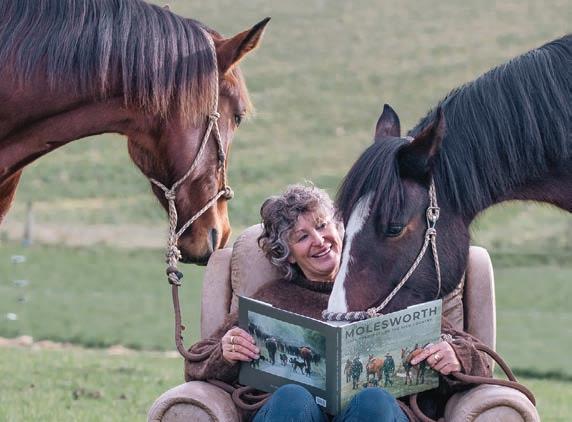
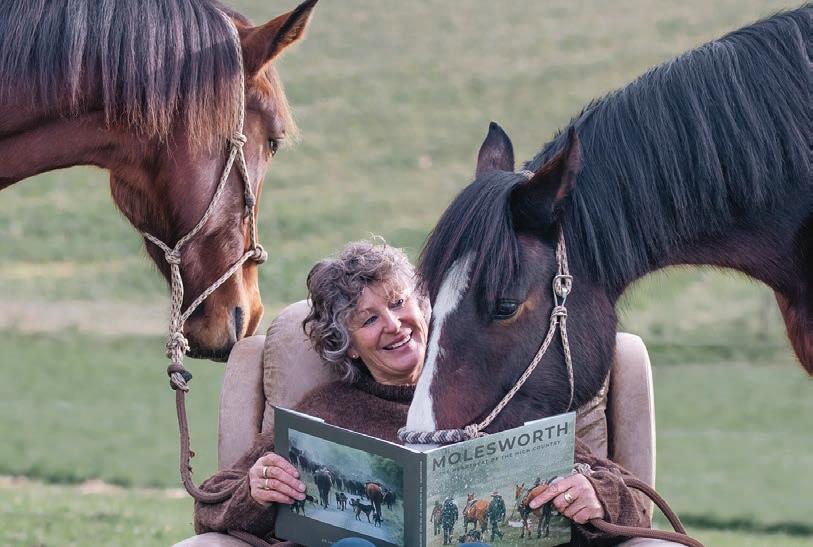
Photographer Vicky Simpson with her beloved horses Georgie Girl and Cruise, who have taken a back seat while she created her book Molesworth, the Heartbeat of the High Country.
NEWS 10
Overseas syndicate influence sees bull prices soar.
NEWS 13
Last of the beef plants locked up with Greenlea deal.
OPINION 17
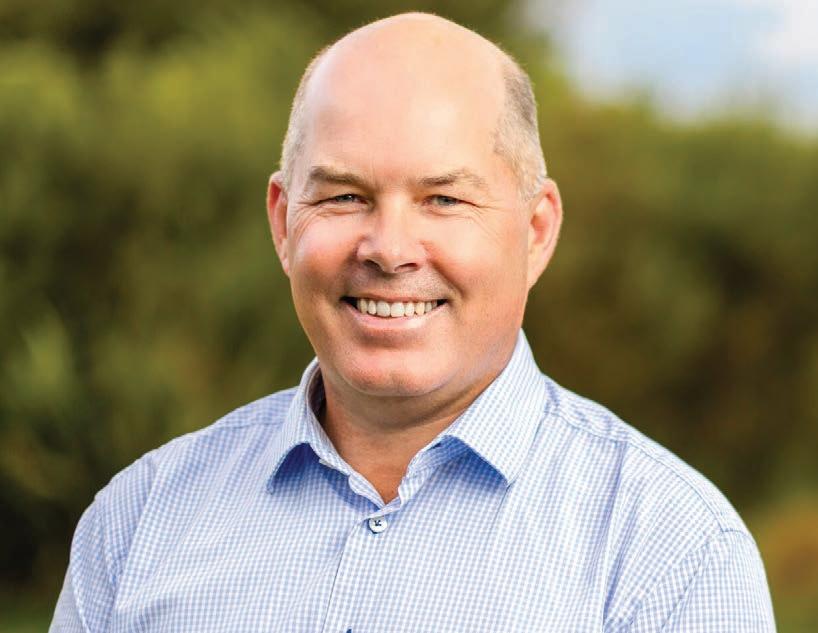
Dan Boulton Silver Fern Farms
Get in touch
EDITORIAL
Bryan Gibson | 06 323 1519
Managing Editor bryan.gibson@agrihq.co.nz
Craig Page | 03 470 2469
Deputy Editor craig.page@agrihq.co.nz
Claire Robertson
Sub-Editor claire.robertson@agrihq.co.nz
Neal Wallace | 03 474 9240
Journalist
neal.wallace@agrihq.co.nz
Gerald Piddock | 027 486 8346
Journalist gerald.piddock@agrihq.co.nz
Annette Scott | 021 908 400 Journalist annette.scott@agrihq.co.nz
Hugh Stringleman | 027 474 4003 Journalist stringleman@outlook.co.nz
Richard Rennie | 027 475 4256 Journalist richard.rennie@agrihq.co.nz
Gerhard Uys | 027 239 4388 Journalist gerhard.uys@agrihq.co.nz
Nigel Stirling | 021 136 5570 Journalist nigel.g.stirling@gmail.com
Isabella Beale | 027 299 0596
Multimedia Journalist isabella.beale@agrihq.co.nz
PRODUCTION
Lana Kieselbach | 027 739 4295 production@agrihq.co.nz
ADVERTISING MATERIAL
Supply to: adcopy@agrihq.co.nz
SUBSCRIPTIONS & DELIVERY 0800 85 25 80 subs@agrihq.co.nz
PRINTER
Printed by NZME Delivered by Reach Media Ltd
Advertise
SALES CONTACTS
Andy Whitson | 027 626 2269
Sales & Marketing Manager andy.whitson@agrihq.co.nz
Janine Aish | 027 300 5990
Auckland/Northland Partnership Manager janine.aish@agrihq.co.nz
Jody Anderson | 027 474 6094
Waikato/Bay of Plenty Partnership Manager jody.anderson@agrihq.co.nz
Palak Arora | 027 474 6095
Lower North Island Partnership Manager palak.arora@agrihq.co.nz
Andy Whitson | 027 626 2269
South Island Partnership Manager andy.whitson@agrihq.co.nz
Julie Hill | 027 705 7181
Marketplace Partnership Manager classifieds@agrihq.co.nz
Andrea Mansfield | 027 602 4925 National Livestock Manager livestock@agrihq.co.nz
Real Estate | 0800 85 25 80 realestate@agrihq.co.nz
Word Only Advertising | 0800 85 25 80 Marketplace wordads@agrihq.co.nz
PUBLISHERS
Dean and Cushla Williamson Phone: 027 323 9407 dean.williamson@agrihq.co.nz cushla.williamson@agrihq.co.nz
Farmers Weekly is Published by AgriHQ PO Box 529, Feilding 4740, New Zealand Phone: 0800 85 25 80 Website: www.farmersweekly.co.nz
ISSN 2463-6002 (Print) ISSN 2463-6010 (Online)



Content
News in brief
Milk record
1-15
16-18
19
Farmer of the Year
20-25
26
31-33
34-35
35
36-39
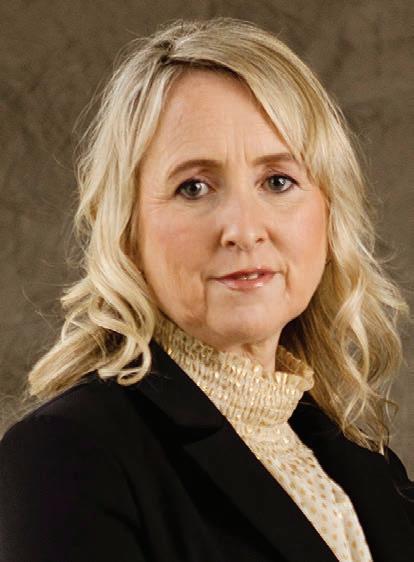
BELONGING: Kathryn Wright has focused her research on the human side of rural transition, asking what it feels like to stay, belong and hold a community together.

NZX data shows the 2025-2026 season was a record year for milk production in New Zealand.
The full season result saw 2,026,728,000kg MS collected off farms, a lift of 4.5% on last season, and up 4.1% on the previous record, set in the 2020-2021 season. A record was also set for May collections with 108,730,000kg MS, a year-on-year increase of 5% taken off farms.
FENZ review backed
The Insurance Council of New Zealand has welcomed the government’s decision to review how Fire and Emergency New Zealand is funded. ICNZ chief executive Kris Faafoi said the review is a timely and positive step towards ensuring the long-term sustainability of a critical public service.
“The current model relies on a levy applied to insurance premiums. While this has been in place for many years, insurers have long questioned whether it remains the most appropriate way to fund such a core public service.”
Forest revenue
BNZ and Pāmu have developed a new way for landowners to earn revenue from existing native forests.
Currently, native forests planted before January 1 1990 are not eligible to participate in the Emissions Trading Scheme, Pāmu said. But under a new model, landowners with native forests can lease their forested land to a leaseholder who wants to bring a means of carbon removal into their operations, while investing in biodiversity enhancement.
Kiwifruit down
Seeka’s kiwifruit harvests across New


War delivers new blow to shipping costs

EXPORTERS are again facing rising shipping costs as reverberations from war in the Middle East continue to make themselves felt.
A 30% spike in spot freight rates on a key trade route earlier last week delivered a fresh blow to exporters who just days earlier had been celebrating sharp declines in oil prices on the back of a possible Iran-United States peace deal and the re-opening of the Strait of Hormuz.
“Because of all the problems with the Gulf on the east-west trade between China and Europe, the market from a freight rate point of view has exploded,” Council of Cargo Owners chair Brent Falvey said.
“We have seen just this week US$2400 put on freight rates to get containers to Europe from China.”
Falvey said while fuel charges are coming down they remain
Continued page 1
and industry leaders to discuss how to make an increasingly constrained global food system more sustainable, resilient,
above pre-conflict levels and because they are adjusted quarterly the full impact will take some time to be felt.
“A lot of us have our freight rates locked in but it is the bunker adjustment and additional fuel charges that are really hurting.”
A shortage of available vessels appears to be behind the latest surge in spot rates, Falvey said.
Ships continue to be unable to use the most direct route to Europe via the Suez Canal due to the threat of attacks from Iranbacked Houthis in the Red Sea.
To avoid these attacks, ships reroute around the Cape of Good Hope, which adds six weeks’ sailing time.
While this is not a new problem, Falvey said it has had the “cumulative effect” of taking ships out of service for longer periods and has worsened the shortage of vessels globally.
The reopening of the Strait of Hormuz is also unlikely to do much to alleviate the problem in the short term.
As many as 2500 ships have been
and commercially viable, “and not just well intended, where the farmer carries all the risk”.
“They know they have a role to play,” he said of global food companies and investors.
Built for the people who are up before the sun.
The best par t of the day is yours to enjoy
Warm, sheltered, and right where you are
Archgola outdoor rooms and outdoor blinds are designed to fit your home and handle New Zealand conditions, so you can sit back, whatever rolls in
It works Season after season
Installed by local exper ts, nationwide Get in touch for a free consultation

stranded in the Persian Gulf since the beginning of the conflict in February, and a mere 30-50 a day had exited through the contested waterway since it was reopened earlier this month.
The ships still in the Gulf are
They need greater supply chain resilience, certainty, especially with protein, and to ensure farmers keep farming.
“They acknowledge today that the transition risk is sitting squarely with the farmer or producer,” said Boulton.
They also acknowledge the need for new commercial models that more equitably share the risk and rewards, and provide clearer pricing signals.
Those same geopolitical and food security pressures could continue to underpin elevated meat prices for some time yet.
“There is one question I know is on plenty of farmers’ minds: How long will this last? When will the bubble burst?
“The answer to that is that this may not be a short-term bubble.
“I personally believe that what we are seeing today is a struc-
thought to account for 10% of the global fleet.
“Once the Suez opens, however, there will be too many ships and you could see a significant downward move in freight rates,” Falvey said.
tural shift in supply and demand dynamics that will remain in our favour for some time.”
He hopes this will encourage the sector to shift to a growth mindset.
“And by growth mindset I mean three things: investing in productivity, backing data over assumption, and building long-term, deep partnerships that are in front of us right now.”
The conference tone was upbeat but tempered by the underlying message that 30 years of relatively benign economic conditions are over and the current steady procession of challenges is the new norm.
Rabobank chief executive Todd Charteris said in a panel discussion on responding to those challenges that another emerging disruption will be the 17,000 farmers who turn 65 in the next decade.
Hamish Gow, the Sir Graeme
How long that scenario will take to unfold is uncertain.
There have been no indications Iran would act to restrain attacks on shipping by the Houthis as part of its peace deal with the United States.
In the meantime exporters here can expect to see some of last week’s surge flowing through to spot rates for freight to NZ’s main export markets on the west coast of the US and to China.
“It won’t be the 30% we have just seen for China to Europe but it could be 10%,” Falvey said.
Because meat and dairy production are at seasonal lows, the immediate costs to those exporters from high spot rates are likely to be limited.
However, now is also the time of the year that many exporters negotiate freight rates for the coming season and high spot rates now could end up being locked in for next season’s production.
In the case of one major meat exporter, Farmers Weekly understands freight accounts for about 4% of its cost of goods sold.
Harrison professorial chair in global value chains at Lincoln University, said solutions are no longer limited to “bodies on the ground”, but include using technology.
Dr Zahra Champion, the executive director of BioTech New Zealand, told the panel NZ is 30 years behind the rest of the world in its approach to technology such as genetic engineering (GE), despite the way it is used today being vastly different to the initial public debate on its use.
Gow concurred, saying a riskbased approach similar to food safety is appropriate.
Current rules mean a GE apple could be grown in a secure, contained glasshouse in NZ but would have to be shipped to the US before it could be tasted.
Nigel Stirling NEWS Trade
SHIPPING NEWS: A shortage of available vessels appears to be behind the latest surge in spot rates, said Brent Falvey of the Council of Cargo Owners.
COME KNOCKING: Global retailers are seeking long-term supply relationships with NZ red meat exporters as they confront falling production and geopolitical uncertainty.
Hurst elected to lead Federated Farmers
SOUTH Canterbury farmer
Colin Hurst has been elected national president of Federated Farmers.
Gisborne farmer Sandra Faulkner has been voted in as vice-president.
Hurst, a mixed arable and dairy farmer in the Waimate area, said he’s honoured to take the reins of New Zealand’s leading rural advocacy organisation.
“It’s a huge privilege to be entrusted with this role by my fellow farmers.
“Farmers are facing no shortage of challenges, but they’re also full of determination and optimism for the future.
“My job as president is to make sure their voices are heard loud and clear wherever decisions are being made – and that’s exactly what I intend to do.”
years. He has also been the organisation’s spokesperson for freshwater, biodiversity, and fire and emergency issues.
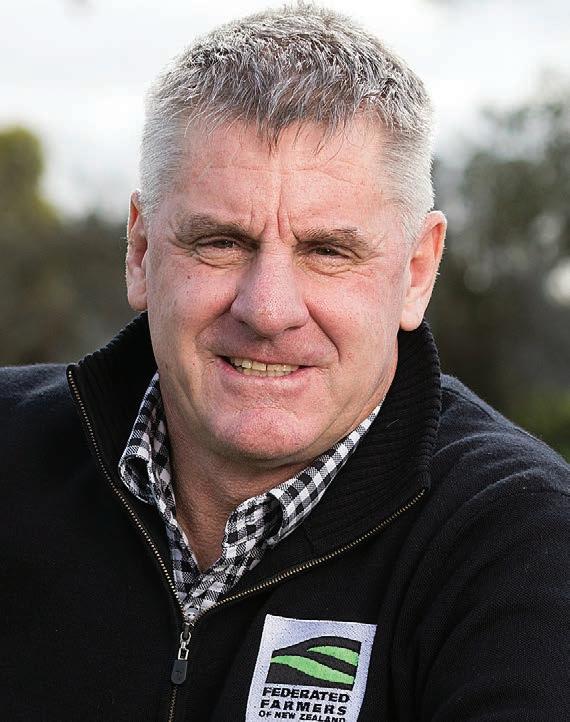
HONOUR: Colin Hurst, a mixed arable and dairy farmer in the Waimate area, says he’s honoured to take the reins of New Zealand’s leading rural advocacy organisation.
Hurst said his focus will be on continuing to ensure farmers’ voices are heard clearly in national decision-making.
Hurst has nearly 40 years as a hands-on arable and livestock farmer, and extensive experience within Federated Farmers at both a regional and national level.
He was the 2019 Arable Farmer of the Year, is a former director for the Foundation for Arable Research, and has dedicated countless hours as a volunteer to the South Canterbury Rural Support Trust and United Wheatgrowers.
New vice-president Faulkner farms with husband Rob at Wairakaia, near Gisborne, where they run a diverse operation including sheep, beef, cropping, citrus, farm forestry and contracting.
Langford for his leadership, energy, and unwavering commitment to farmers during his time as president.
She has been on the Federated Farmers national board for four years, with the local government, adverse events, health and rural communities portfolios.
Farmers are facing no shortage of challenges, but they’re also full of determination and optimism for the future.
Colin Hurst Federated Farmers
the Campaign for Wool, along with holding other charitable directorships.
“I’m honoured and really excited to hold this role,” Faulkner said.
“There’s so much work still to do, particularly in this period of legislative reform.”
Meanwhile, Southland’s Chris Dillon joins the board as arable chair, taking over from David Birkett. South Canterbury’s Greg Anderson has been voted in as an at-large board member, and Mark Hooper has held his spot as the other at-large member.
Hurst steps into the role after serving as Federated Farmers’ vice-president for the past three
Richard Dawkins (meat and wool chair) and Karl Dean (dairy chair) have retained their positions. Staff reporter
Hurst acknowledged the work of his predecessor Wayne Langford. “I want to pay tribute to Wayne
“He’s been a phenomenal leader who has really transformed and modernised the organisation.”
She also serves on the National Animal Welfare Advisory Committee and is a trustee for
Langford gracious as long shot misses

Rennie NEWS Federated Farmers
FEDERATED Farmers president
Wayne Langford has graciously accepted his defeated effort to extend his presidency for another term, confident that as a “relatively young guy”, there remain plenty of other challenges ahead for him.
Langford had tried to get a motion passed to enable the standard three-year term to be extended, but did not succeed.
“It is extremely rare and has not happened since Federated Farmers formed itself as a national body,” he told Farmers Weekly after the Feds vote.
He said with this being an election year for New Zealand and
with the Feds having released its list of election priorities, he had been keen to stay on and see those priorities over the line with the next government.
“We have also had a new CEO start, and I wanted to ensure some stability there for that transition.”
As he leaves, Langford said he felt the Feds now has a more solid strategy and foundation that will put it in good stead for coming years.
Three years ago, the farmer body was under siege from the upstart anti-Paris Accord, anti-climatechange ginger group Groundswell, which threatened to slice off significant portions of Feds’ farmer supporters.
“Compared to three years ago, we are 100% more united.
“We had to have a really good look at ourselves. Frankly we needed to have more of a backbone.”
He oversaw the Feds’ shift from a policy-focused body back to its advocacy origins, while also engaging more with media.
His own social media experience saw Langford frequently in the spotlight as he charted his mental health journey after a particularly tough time back in 2018.
He acknowledged he had not been shy about wearing his heart on his sleeve about the challenges faced. Only last week he was thanked by a young farmer for helping mental health issues be discussed more openly, he said.
His YOLO project included doing something different every day
that did not involve farming, as a reminder of life’s value.
“Of all the things I did, I would say going skydiving on Day 400 was probably the most outrageous, and the other was getting a tattoo. I don’t think I will be doing either again.”
He said he was particularly proud of how the relationship between the government and Feds had moved with respect to farmers’ efforts on the environment.
He said farmers had moved from being told what they had to do, to showing what has been done to improve environmental management. This often involves catchment group engagement.
“We have gone from an adversarial position to working in a more trusted space.”
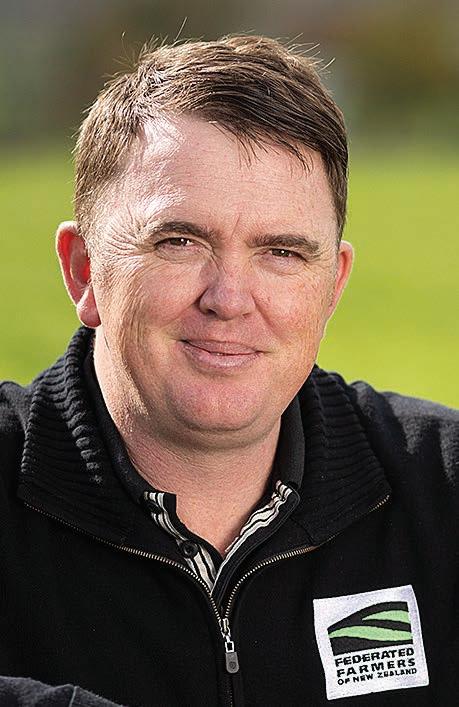
CHANGE: Wayne Langford oversaw the Feds’ shift from a policy-focused body back to its advocacy origins, while also engaging more with media.

Richard
Africa comes into view for trade talks
ANeal Wallace MARKETS Trade
FRICA is beckoning as a potential source of future trade agreements.
Speaking in an interview at the Primary Industries Summit in Auckland, Trade Minister Todd McClay said negotiating a trade access agreement with African nations is a long-term project, but New Zealand exporters do business there already. The continent’s people are getting wealthier, and they want high-quality food.
“Think of southeast Asia two decades ago or China three decades ago,” he said.
There was much discussion on the India free trade deal at the conference, with McClay describing it as a once-ina-generation agreement that opened an export market of 700 million people who want safe, nutritious, tasty food.
He said he had spoken to a leather processor who will now not pay a tariff on NZ leather and expects to export US$10 billion in high-end finished leather products in the next 10 years.
McClay said he also met an Indian carpet maker who previously blended NZ and Indian wool in his carpets to reduce the cost. Following the signing of the FTA, he told McClay, he will use only NZ wool.
“He will use more wool in his carpets than all NZ wool carpet manufacturers put together,” said McClay.
Think of southeast Asia two decades ago or China three decades ago.
Todd McClay Trade Minister
Earlier Vangelis Vitalis, the deputy secretary, trade and economic with the Ministry of Foreign Affairs and Trade, said the India FTA was negotiated at a time of increased trade restrictions but also as other countries were seeking bilateral trade agreements.
Before covid, NZ was exposed to 28 export restriction regulations a year. This year it faces 228.
When NZ was finalising its FTA, negotiators from the United States, European Union and Australia were queued waiting to meet their Indian counterparts.
He said NZ did not have much to offer in return for market access and agreed to provide 1667 skilled Indian workers a year with temporary work visas.
Vitalis said when that offer was put to the lead Indian trade negotiator, she replied “Do you know how many people there are India?”
Offers by Zespri and Apple and Pears NZ to help establish centres of excellence to educate local growers sealed the deal.
Vitalis said in return the NZ entities will get out-of-season fruit production and expose Indian consumers to NZ fruit varieties.
Before Australia signed its FTA with India – ahead of NZ – Kiwi exporters had 85% of the sheepmeat market. That fell to 9% after the deal with Australia due to its tariff-free access.
Vitalis said the FTA was favourable for mānuka honey, wine, kiwifruit and horticulture.
“It’s a colossal market, larger than the EU or the ASEAN countries.”
Dairy access proved a sticking point, and
Vitalis said officials will continue to work on it. There was also provision for NZ to improve its FTA provisions should other countries secure more favourable terms, and that includes for dairy.
Earlier McClay told the conference that NZ was on track to meet its target of doubling the value of primary sector exports by 2034.
Citing the sector’s performance in the 12 months to June 30, in which annual exports grew 6% to $64.3bn, McClay said by 2030 sector exports will exceed $70bn.
Choose the world’s longest-lasting collars.





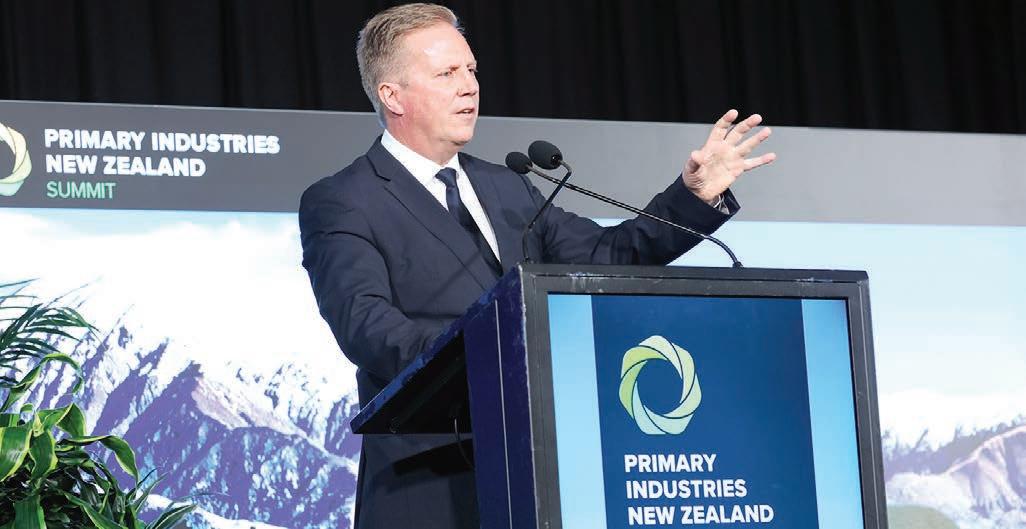
MARKET: Trade Minister Todd McClay says the India free trade agreement opens up an export market of 700 million middle-class Indians.
100% NZ Owned. Increasingly rare.
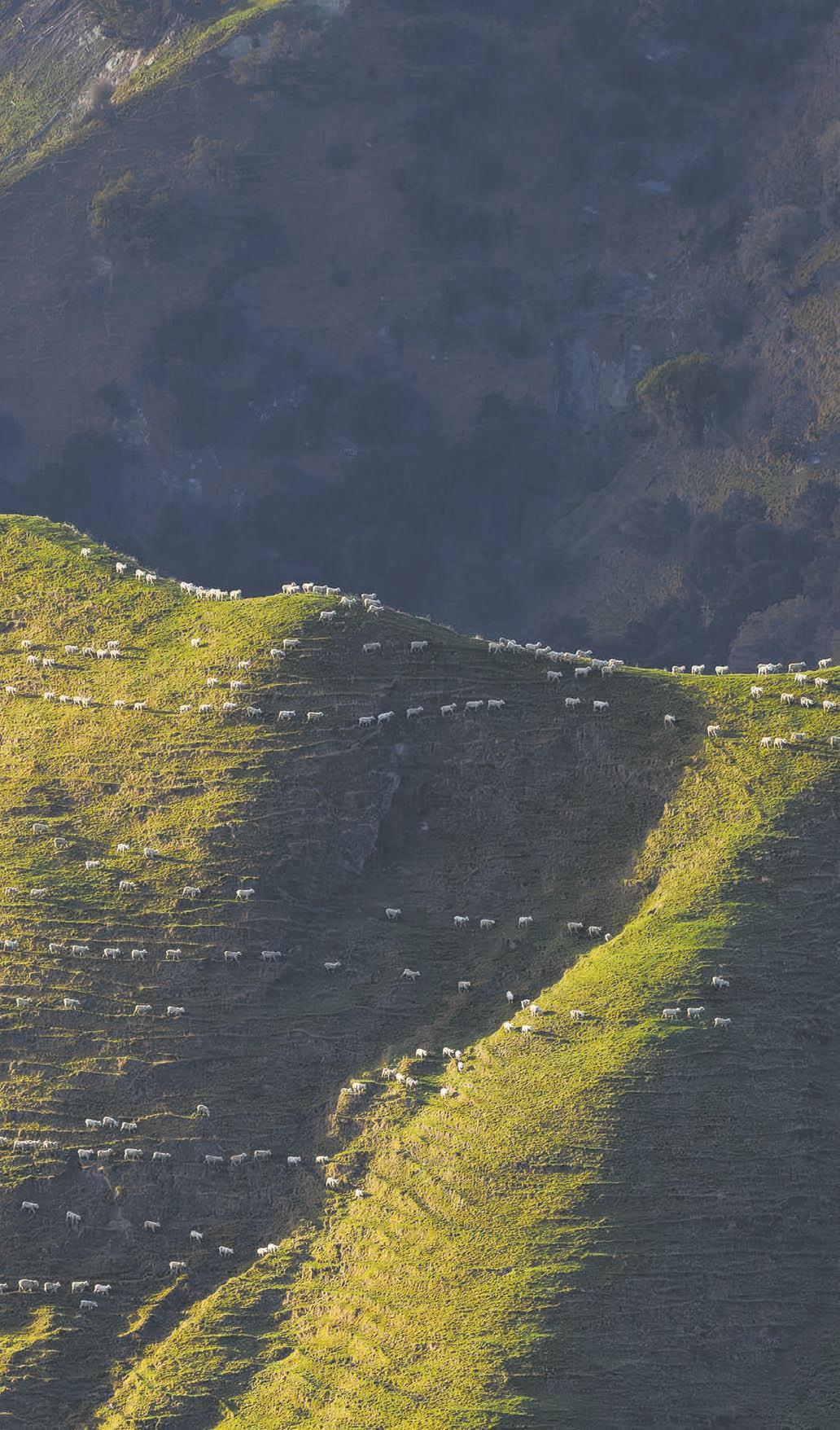
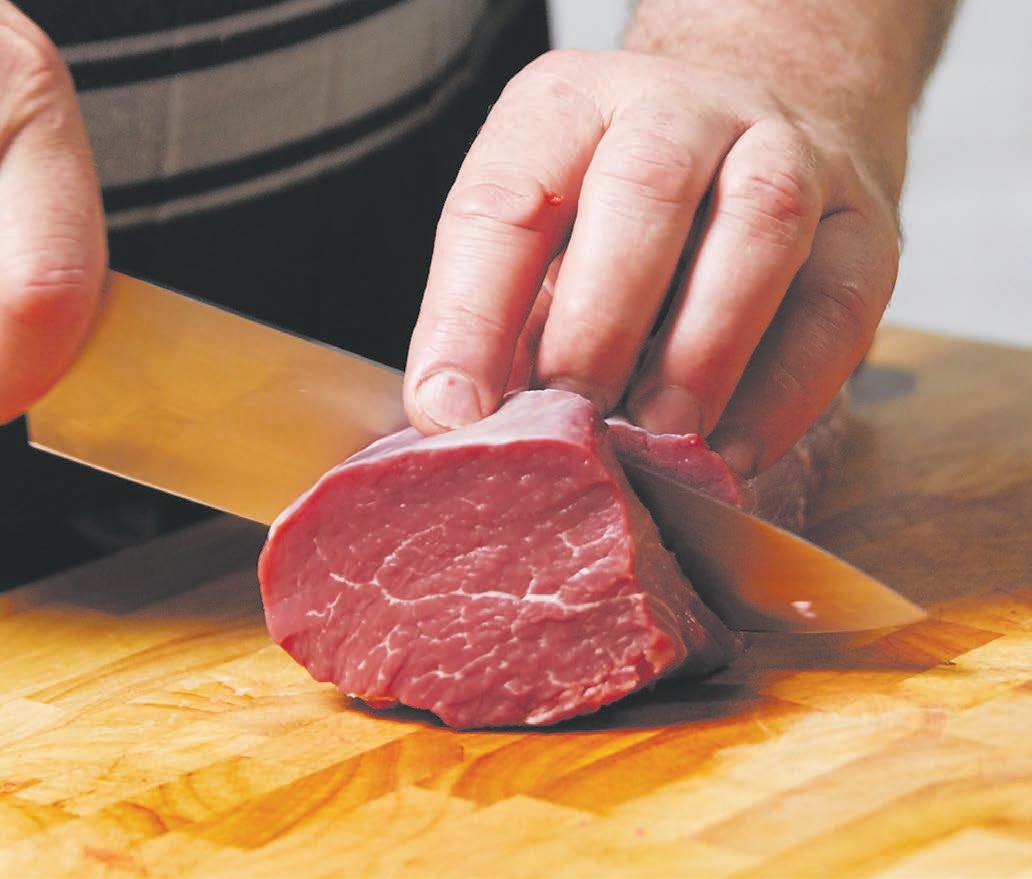
As more New Zealand meat processors move into overseas ownership, AFFCO remains proudly 100% New Zealand owned and operated.
That means our focus stays firmly on Kiwi farmers. Through continued investment in our people, plants and operations, we ’ re building a stronger business and a stronger future for New Zealand’s red meat industry.


Fonterra still co-op to the core: Bolger
Neal Wallace NEWS Agribusiness
FONTERRA may have sold its consumer divisions, but it is still a $24 billion business employing 12,000 people and exporting to more than 100 markets.
Matt Bolger, Fonterra’s managing director of co-operative affairs, told the Primary Industry NZ conference that the recent sale reinforced its co-operative principles, but its business will centre on supplying ingredients and foodservice markets. He said emerging global volatility and wildly fluctuating category returns were the reason for the divestment.
However, its co-op principals
remain, ensuring strong shareholder returns, a stable balance sheet and being an enduring co-operative.
Its new strategy is “to deepen our position as a world-leading provider of sophisticated dairy ingredients to grow both the farmgate milk price and earnings”. It will invest in ingredients and foodservice sustainability and innovation.
Fonterra has retained its NZMP and Anchor Food Professionals brands, which together have customers in more than 150 countries.
The plan is to expand food service in China, where it is especially strong, and beyond.
Development of new products at its research centre is continuing but it is also looking to strengthen
its sustainability credentials.
As a co-operative, Bolger said, it thinks intergenerationally, so will continue to help farmers drive onfarm productivity and profitability.
Bolger said the world is still volatile and Fonterra believes operating at scale, being flexible and using its know-how will put the co-operative in a strong position.
Another session at PINZ, on the future of co-operatives in NZ, highlighted the importance of coops maintaining a strong balance sheet and serving members to compensate for the challenge of raising capital.
Simon Tucker, Fonterra’s group director of global external affairs, said a key for the dairy co-op is ensuring members understand and support the
strategy, the subsequent risks and opportunities.
During Fonterra’s divestment, Tucker said, it was crucial Fonterra
PRINCIPLES: Fonterra is retaining its co-operative principles following its business divestment, Matt Bolger, Fonterra’s managing director of co-operative affairs, told the PINZ conference.
made it clear to members where it believed long-term value would come from and where it should invest capital.
Productivity ‘mission critical’ in volatile world

GEOPOLITICAL turmoil is here to stay, but so is enduring demand for New Zealand’s food exports, says Landfall Strategy Group’s senior adviser on geopolitics and economic policy, Dr David Skilling. Skilling told the Primary Industries New Zealand Summit in
Auckland that while many people expected things to settle down when a new administration was in place in the United States, that was not the case.
“This is not just a function of the Trump administration or just a bad few years,” Skilling told the Farmers Weekly Podcast following his address.
“This is signalling that we’re moving into a new world.”
Geopolitics is often viewed through the military lens, but increasingly it is being shaped by economics, trade, technology and capital.
“It’s not simply that we’re seeing more geopolitical shocks. We’re also seeing these things have a significant economic and commercial impact as well.”
Short-term shocks such as the spike in fuel and fertiliser prices
will ease a little, but not return to earlier levels.
The cost of capital will be another massive challenge, Skilling said.
“A lot of what’s happening is countries are investing more in military, in industrial policy, in energy transition, on a whole range of things.”
“So every input from physical to financial, the cost structures are increasing.
“And the implication, if you don’t want your margin squeezed, is you’ve got to find a way of moving into higher value-added categories.”
Competition for this capital will make it more expensive.
To achieve that, New Zealand would have to overcome its historically stagnant productivity statistics.
Bryan Gibson NEWS Trade
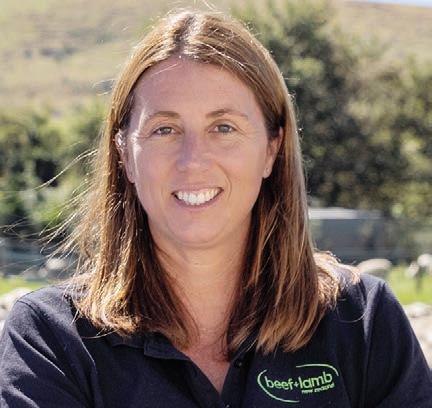
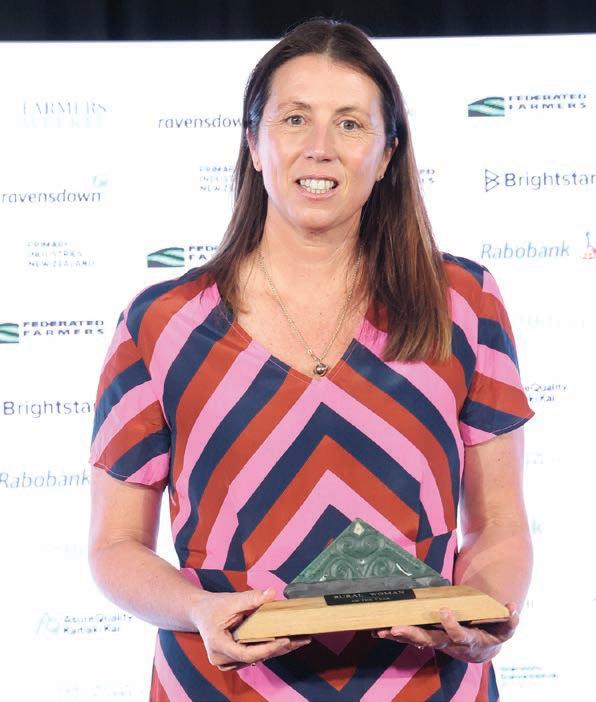
Kate Acland is Rural Woman of the Year
BEEF + Lamb New Zealand
chair Kate Acland was among the standout winners at this year’s Primary Industries New Zealand Awards, recognised with the inaugural Rural Woman of the Year Award.
The award is sponsored by Farmers Weekly.
Hundreds of people gathered in Auckland last Tuesday to celebrate the people, businesses and organisations helping drive New Zealand’s food and fibre industries.
Judges said Acland had shown “inspirational leadership” in changing the culture and effectiveness of Beef + Lamb NZ.
“Under Kate’s leadership, we have seen a significant change in the sentiment of Beef + Lamb’s levy-payers.
“Someone needed to do it and Kate felt that she had the strength to take on the challenge and reset the organisation.”
Speaking to Farmers Weekly, Acland said she was “humbled and grateful” to receive the award. In her acceptance speech, she acknowledged fellow finalists Sandra Faulkner and Sarah Donaldson for their contributions to the sector, and paid tribute
to the women who came before them and helped pave the way for today’s generation of leadership in New Zealand’s food and fibre industries.
The awards also recognised some of the primary sector’s most influential leaders and longserving contributors.
A standing ovation greeted dairy industry leader Jim van der Poel as he received the Outstanding Contribution to Primary Industries Award.
Judges described Van der Poel as “an absolute titan” of the New Zealand dairy industry.
“When you talk about New Zealand’s primary industries, there are very few names that carry more weight than that of Jim van der Poel,” the judges said.
“Jim has made a significant, sustained and truly outstanding contribution spanning more than four decades of loyal service.”
Van der Poel’s career has spanned farming, business and industry governance. He played a key role in the merger that formed Fonterra, and chaired DairyNZ from 2017 to 2024, helping guide the sector through fluctuating milk prices, increased environmental regulation and the Mycoplasma bovis biosecurity response.
Another long-serving rural leader, Neil Bateup, received the Champion Award for his decades
of support for farmers and rural communities.
Bateup helped establish the Waikato Hauraki Coromandel Rural Support Trust in 2004 and chaired the New Zealand Rural Support Trust from 2017 to 2024 after helping build the national network.
Judges described him as “quiet, humble but tenacious” and a visionary for rural wellbeing.
Agricultural Communicator of the Year went to Jamie Mackay, founder and host of rural radio programme The Country, which has been on air for more than 30 years.
RNZ reporter Alexa Cook won the Excellence in Agricultural Journalism Rongo Award for her series examining pine expansion in Hawke’s Bay.
Young Waikato dairy farmer Danielle Hovmand received the Emerging Leader Award for her leadership through Young Farmers and Federated Farmers.
“Her advocacy, community involvement, ability to connect with and uplift others demonstrate a level of maturity and influence well beyond her years, making her a standout emerging leader,” the judges said.
The Team & Collaboration Award was presented to Sow the Seed, the Horticulture and Agriculture Teachers Association’s
advisory team, for its successful campaign to retain agribusiness and agricultural and horticultural science in the senior school curriculum.
Prism Earth won the Technology & Innovation Award for a system designed to help New Zealand exporters comply with the European Union’s deforestation regulations, helping maintain access to a market worth an estimated $200 million.
The Food, Beverage and Fibre Producer Award went to T&G
LEADER: Kate Acland has won the inaugural Rural Woman of the Year Award. Judges said Acland had shown ‘inspirational leadership’ in changing the culture and effectiveness of BLNZ.
Global for its apples business, with judges highlighting the performance of its Envy apple brand and the returns being achieved by growers.
Parininihi ki Waitotara received the Guardianship & Conservation Award (Kaitiakitanga Award).
Judges said the Māori agribusiness had embedded kaitiakitanga throughout its operations over three decades, with a focus on environmental stewardship, animal welfare and community outcomes.





Vigilance over bird flu sharpens on Aussie news

Gerald Piddock NEWS Biosecurity
THE New Zealand poultry industry is keeping a watchful eye across the Tasman after two cases of the H5N1 strain of bird flu was recently found in wild seabirds in Western Australia for the first time.
Fiona MacMillan, executive director of the Poultry Industry Association of New Zealand (PIANZ) and Egg Producers Federation of New Zealand (EPF), said they are monitoring the situation in Australia carefully.
The industry had been anticipating an incursion into Australasia for a while, she said.
“I’ve been in this role for seven months and the whole time I have been here, it’s been the focus,” she said.
Farmers and producers both big and small across the industry have been thinking about what they can do to reduce the risk of bird flu and working towards a preventative and response plan if it does arrive, MacMillan said.
“The news gives a fresh impetus
to that thinking but it is no surprise.”
Given the unpredictability of a disease spread by wild birds, all poultry producers can do is be prepared and use the resources that PIANZ and the EPF have developed.
“Do everything you can now to get ready and the extent of that depends on the size of the business. Every business is different and every farm is different and they will all have slightly different needs.”
Because of that, a range of documents have been made available to help them individually tailor a biosecurity plan, MacMillian said.
“It’s a case of do your best and your best is probably going to involve different things for different people.”
In December 2024, the Ministry for Primary Industries put movement controls on Mainland Poultry’s farm at Hillgrove in Otago after testing found the H7N6 bird flu strain.
MacMillian said Mainland Poultry’s CEO, John McKay, has shared that experience with the rest of the industry, with the key message being to prepare early.
“Use peacetime to get ready for the event to arrive because you never know when it’s going to happen.”
He also emphasised the mental health effects of any outbreak – and warned producers not to underestimate its impact, she said.
In Australia the discovery of H5N1 has triggered a national response with the Australian Centre for Disease Control saying it will continue to work closely with other government agencies to assess the risk to human health.
It is the same strain of bird flu that has caused millions of deaths globally and was detected in United States dairy cattle in 2024.
Biosecurity Minister Andrew Hoggard said they are watching the situation closely and remain in close contact with Australian authorities.
“While we can’t prevent wild birds bringing this virus here, we can work together to limit its impact. If H5N1 bird flu arrives, it is likely to spread in our wild bird population and will not be able to be eradicated, so it’s important for farmers and backyard bird owners to have good biosecurity practices in place.”
University of Otago virologist,
Professor Jemma Geoghegan, said the greatest concern for New Zealand is likely to be wildlife.
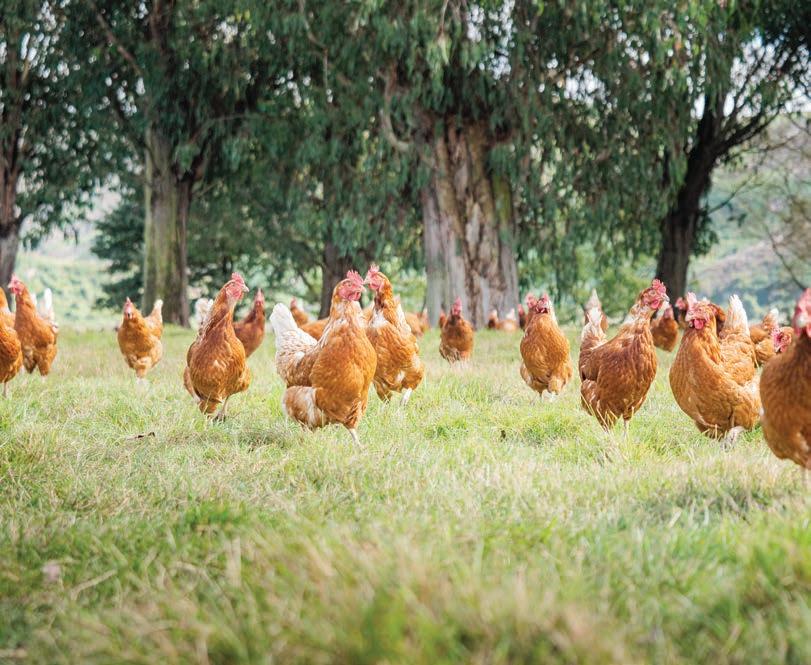
VIGILANT: The New Zealand poultry industry is watching carefully to see if the H5N1 bird flu spreads to Aotearoa. This week’s poll question:
“Internationally, H5N1 has caused major mortality events in wild birds and marine mammals, and many of our native seabirds and other threatened species could be vulnerable if the virus were introduced.
“At the same time, Australia’s experience provides an opportunity for New Zealand to learn and prepare. Strong surveillance of wild birds and rapid detection systems will be critical for understanding and responding to any future incursions.”



Is New Zealand doing enough to prepare for bird flu?
Have your say at farmersweekly.co.nz/poll



Molesworth Station book a labour of love

Annette Scott NEWS Conservation
MOLESWORTH, the Heartbeat of the High Country, a book hot off the press and sold out in 10 days, shares stories and photographs that capture the beauty and grit of Molesworth Station.
Photographer Vicky Simpson, reflecting on why she created the publication, said: “This is life in the high country from the perspective of members of the Molesworth team.
“We so often hear from the CEO, manager, or owner of a company, but how often do we really hear the stories from those immersed in the daily grind of the great outdoors?”
Simpson grew up on South Island high country stations and spent her early adult years shepherding in New Zealand and Australia, drawn to the open land, the cattle, the dogs, horses, and the life that comes with it.
She first stayed on Molesworth Station in 2004. Two years later she was invited to join the young cattle muster.
“Little did I know how this would go on to shape not only my photography career, but also my
personal journey with Molesworth.
“That week on horseback sparked a lifelong friendship with then managers Jim and Tracey Ward, and a deep connection to the Molesworth, and that continues to inspire my life and outlook today.”
Simpson’s photographic journey with ER Imaging Photography spans 18 years.
She sums it up as “life through my lens”.
“My style is quite varied, as has been my own life’s journey, but agriculture, animals, and nature
have played a very big part in my photography world and being outdoors is just 100% me.
“To wander around outdoors with my camera is the happiest place I can be, and the ability to then share that with others, is truly rewarding.
“I discovered photography is a wonderful way to be able to give to others, it’s a way of giving back to the many people who helped me.”
She has used her photography to create calendars that raised more than $200,000 for Children’s Cancer Research.
The Molesworth book is dedicated to raising funds for Brain Tumour Support NZ. Both organisations are dear to her heart.
“Life threw my family a few curveballs. My eldest daughter was diagnosed with a heart condition, so she underwent open-heart surgery at the age of eight. Her little sister, by this stage, was nearly a year into her treatment for an ependymoma brain tumour, diagnosed as a two-year-old. Then my second-eldest was diagnosed with a spinal tumor.
“Considering the journey endured, I am a very proud mother of four beautiful grown-up daughters that I am privileged to have in my life.
“I promised my best friend, who died from breast cancer, that I would make a difference.
“Through taking some wrong turns and making some poor choices along the way in my life, it has taken me longer than I had hoped, but maybe that is a good thing as it has given me time to create something more meaningful and include all the other people I have been so lucky to have met along the way.
“One of the ladies who purchased a book grew up on Molesworth in the 50s. We discovered we both loved the same willow tree.”
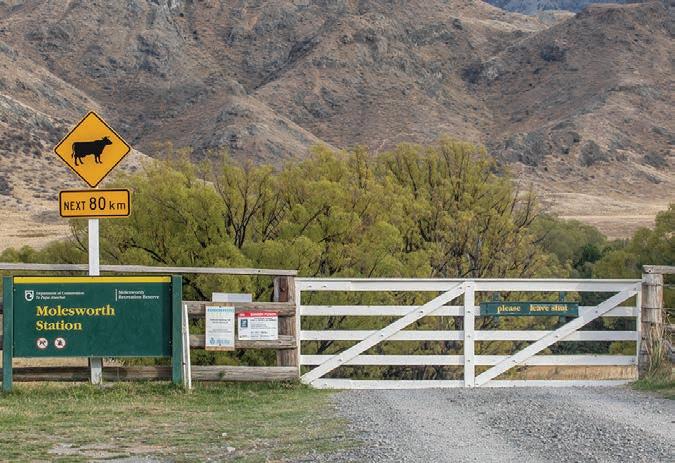
All 500 copies of the book have sold.
“I never thought it would go off like this.”
Simpson volunteered her time and effort to the project and said it has been “a big team effort, lots of people have helped and supported along the way”.
The production cost $65 per book, which sold at $95. The $30 profit is being donated to the Brain Tumour Support Trust NZ for KIDZ.
The money is being used for a new resource to be developed and used by families at the time of diagnosis of their child having a brain tumour.
Simpson is now looking to slow her pace in life.
“After undergoing both a foot and back reconstruction that has not gone well for me, I’m in the process of changing focus slightly.
“My horses are my future now. They have been a bit neglected of late, but I do see myself still clicking, giving, loving and above all, enjoying.”
Simpson is aiming to publish a reprint of the Molesworth book in September.
People wanting to join the wait list can email: vickysimpson 1992@gmail.com advising their postal address and phone number.
WORTH A READ: Vicky Simpson with her beloved horses Georgie Girl and Cruise, who have taken a back seat while she created the Molesworth book.
Photos: Supplied
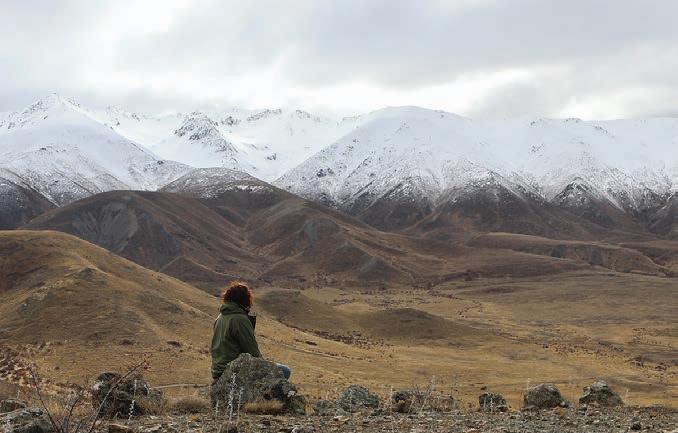
SHADOWS: Molesworth is where you live in the shadow of the giants constantly reminding you of your place in the world, says Vicky Simpson.
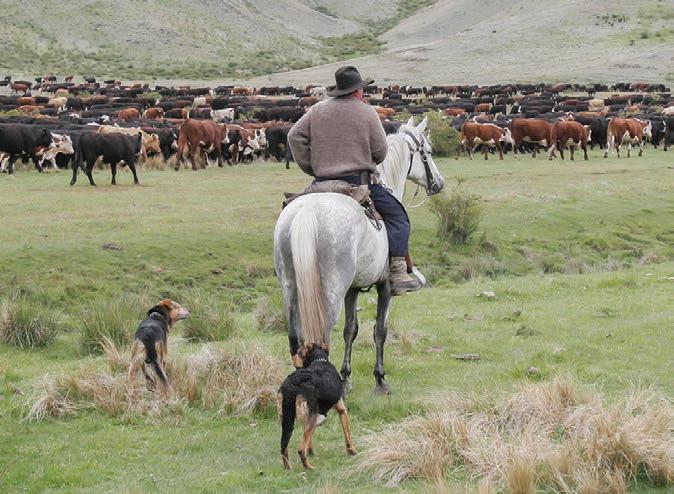
MUSTERING: Former Molesworth manager Jim Ward takes part in a young cattle muster at the station.
REFLECTION: Vicky Simpson reflects on her time at Molesworth. ‘In 100 years from now, we as the humans here today will be gone and you, the Molesworth, will still be reminding everyone that nobody really owns you.’
Syndicate nods on top bulls enrich market

Gerhard Uys MARKETS Livestock
SYNDICATES buying top bulls with overseas partners have meant record bull prices keep being smashed every week.
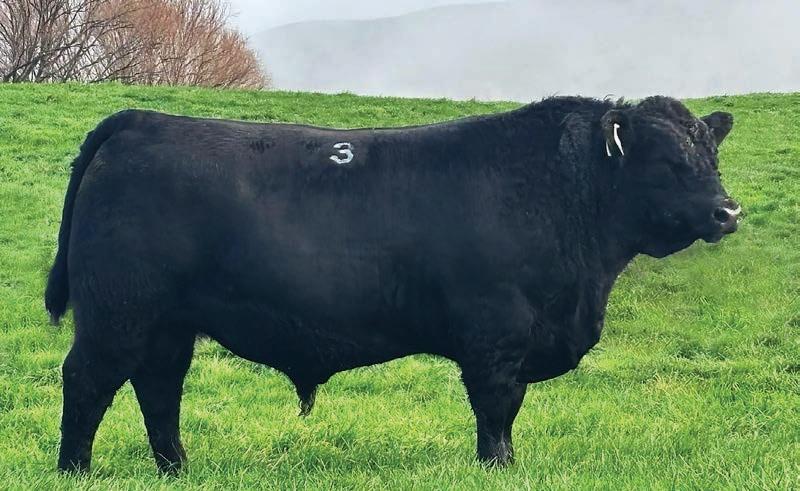
This week an Angus New Zealand record price was achieved when Kaharau Angus sold Lot 3 24V314 for a whopping $220,000.
The bull was purchased by Rolling Rock Angus, Te Akau, and Earnscleugh High Country Genetics, Alexandra, alongside a semen-sharing partnership with Ardrossan Angus from Australia.
Kaharau Angus owner Penny Hoogerbrug said the syndicate that bought the bull will breed from him, with the bull remaining in New Zealand, but with the possibility of him being used further afield than just New Zealand and Australia.
Good bulls come from good breeding, with Hoogerbrug pointing out the bull’s mother is
an elite donor cow, with the value of the mother’s progeny sold in the sale hitting $630,000.
Kaharau Angus Farm manager Nick Carr said Kaharau Angus sold 74/74 with an average of $26,122.
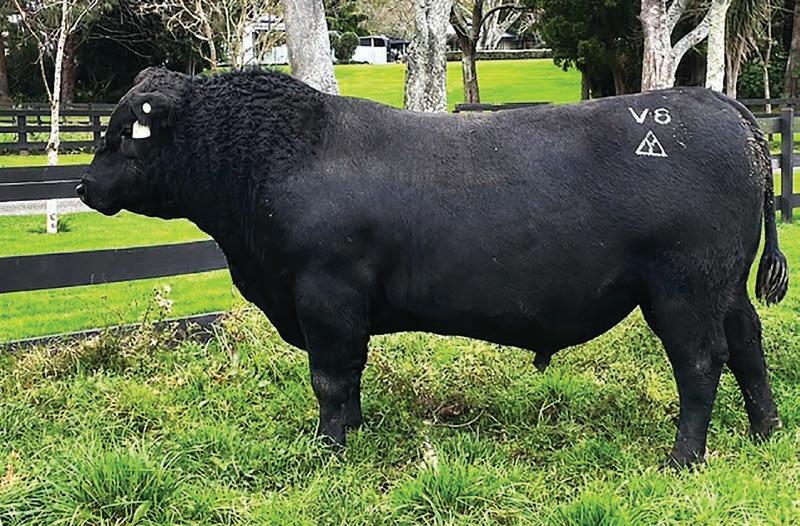
In another syndicate-overseas partnership, Turiroa Angus sold Lot 1 24V008 for $122,000 to KayJay Angus and Australian Mordallup Angus.
Stud operator Andrew Powdrell, who runs the stud with wife Tracey, said Mordallup Angus will have the Australian semen rights to the bull.
Sales prices overall were good.
Meadowslea Angus, Fairlie, had an overall average of $12,316 with Lot 14 topping the sale at $28,000 sold to The Wolds Angus. Meadowslea sold 68/72 on the day with remaining bulls available on a buy-now basis.
There were a total of seven stud bulls sold with other transfers being Lot 9 to Merchiston Angus at $20,000, Lot 12 to Turiroa Angus for $20,000, Lot 11 to Okaka Angus for $19,000, Lot 18 to Pikoburn Angus for $17,000, Lot 31 to
Riverlands J Angus for $17,000, and lot 73 to Glen R Angus for $16,000. Lot 32 was sold to Hawkdun Pastoral for $27,000.
Te Mania Angus, Conway Flat, sold 102/104, averaging $17,700 with a top price of $29,000.
Stern Angus, Sterndale, cleared 100/100 with an average price of $17,300 and a top price of $44,000 to Pine Park for Lot 3.
Cricklewood Angus, Nūhaka, sold 14/14, with an average price of $24,357 and top price of $55,000 for Lot 2 Cricklewood V101 to Stern Angus, Totara Valley, Canterbury.
Cricklewood Angus held the top average price for Angus until the Kaharau Angus sale.
Ratanui Angus, Wairoa, sold 45/46 with an average price of $15,136 and top price of $30,000.
Turihaua Angus sold 74/74 with an average price of $16,514 and top price of $68,000 for Lot 4 to Shian Angus.
Tawa Hills Angus, Gisborne, cleared 10/18, averaged $8,300 and had a top of $14,000 for Lot 3 V55.
Govt signals it may hit pause on Waikato PC1
proposed Waikato Regional Plan Change 1 (PC1) could have on the future of farming in the region.
THE government has signalled it may step in to delay new rules determining what environmental limits Waikato farmers must operate under.
Speaking at the Primary Industries New Zealand Summit in Auckland, Prime Minister Christopher Luxon, New Zealand
First deputy leader Shane Jones and Minister of Agriculture Todd McClay all expressed their concerns at the impact that the
Jones said he feared for the future of farmers if PC1 is implemented.
“The level of burden that these new potential rules and regulations place upon landowners, veggie growers, and farmers, I think they are unbearable.”
PC1 would bring in rules to manage nutrient discharges with the goal of improving the Waikato and Waipā rivers.
It was first notified in 2016 and was appealed to the Environment
Court with its decision released on June 8.
The court directed the Waikato Regional Council to make 20 changes to PC1, giving it until July 21 to do so.
“Once the court confirms the amendments meet its intent, the plan will be finalised.”
Jones’s comments echoed those of McClay, who said it does not make sense to have a new national planning system adopted by Parliament before the election but for Waikato to have rules developed under the old system.
“We will instruct officials to provide advice on options to better
align rulemaking in the Waikato with the replaced RMA.”
McClay said his approach to PC1 is consistent with other councils and that he did not act earlier because it was before the Environment Court.
He said he had met with RMA Reform Minister Chris Bishop recently to express concerns PC1 would be overtaken by the new legislation.
McClay said delaying implementation will give the government time to look at its options. This was confirmed by Luxon.
Waikato Regional Council Waikato CEO Chris McLay said in
The level of burden that these new potential rules and regulations place upon landowners, veggie growers, and farmers, I think they are unbearable.
Shane Jones New Zealand First
a statement that PC1 remains a matter before the Environment Court, and council staff are focused on meeting the July deadline.

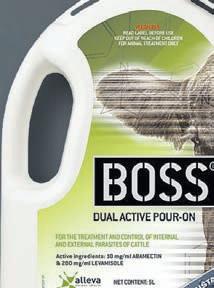
Rain resistant for peace of mind when treating in variable conditions
Formulated using Alleva’s DMI-Sorb® formulation system to prevent run-off as well as enhance active-ingredient delivery and absorption

















NEW RECORD: A new Angus New Zealand record price was achieved when Kaharau Angus sold Lot 3 24V314 for $220,000.
HIGH PRICES: Turiroa Angus also sold Lot 1 24V008 for $122,000 to KayJay Angus and Australian Mordallup Angus.
Gerald Piddock and Neal Wallace NEWS Regulation
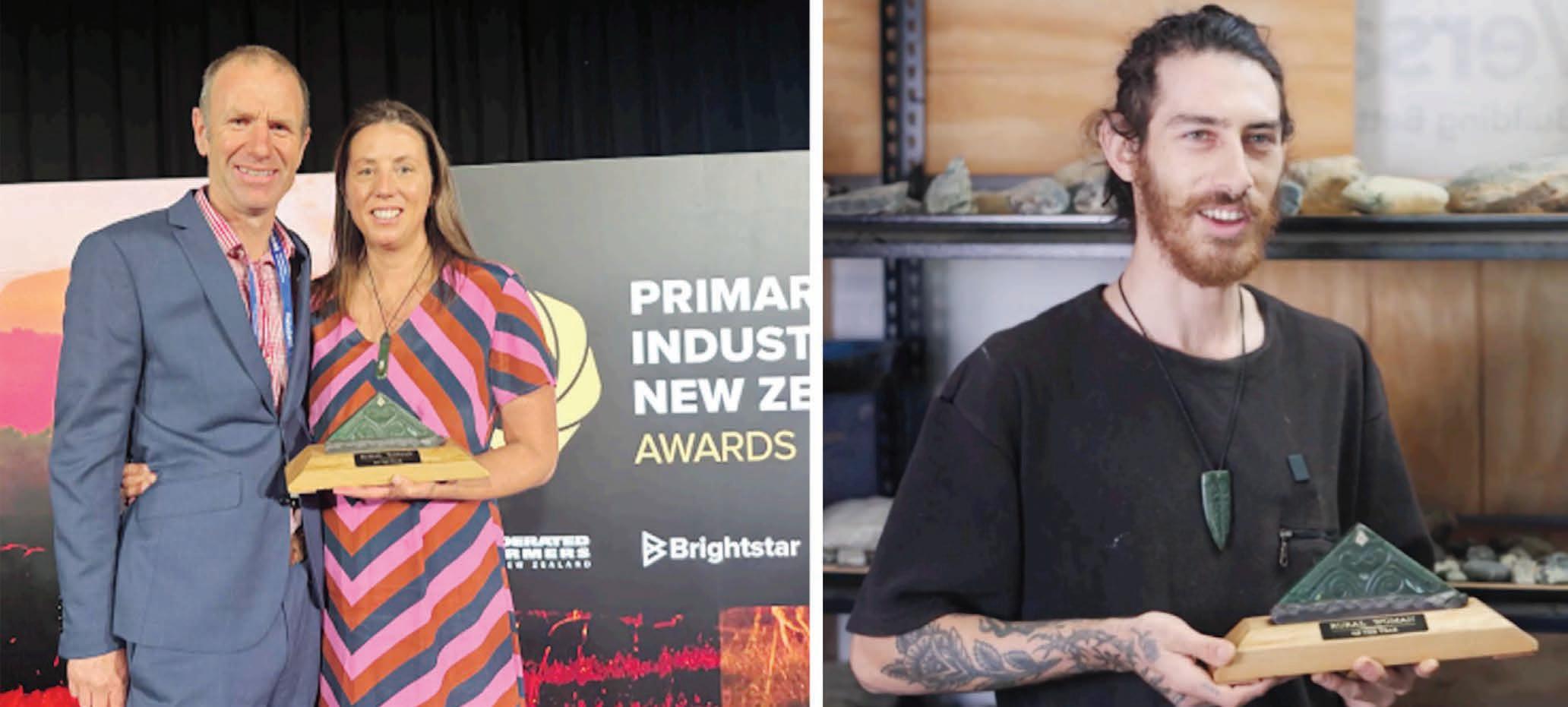
The inaugural winner of the Rural Woman of the Year Award, Kate Acland, with husband David, and the creator of
Tātai Whāinga goes to its first home
Last week at the Primary Industries New Zealand Summit and Awards, a wide array of people were recognised for the positive impact they’ve had on our primary sector.
There were also some new categories, including the inaugural Rural Woman of the Year Award, which was won by Beef + Lamb NZ chair and Canterbury farmer Kate Acland.
Kate’s contributions to the sector have been on display not only through her amazing work with Beef + Lamb NZ, but also with juggling her successful farming and growing ventures alongside husband David.
Farmers Weekly had the privilege of sponsoring this award, as well as commissioning the work of Manawatū artist Hemi Mellers to create Tātai Whāinga (Purposeful Pursuits) – the trophy pictured above.
Hemi used jade sourced from the rivers of Nelson and various other materials from the Lower North Island.
Every groove, pattern and material tells a unique story, reflecting the strength and resilience of rural women, who are often at the heart of bringing communities together.
Initiatives like this wouldn’t be possible without the continued support of the 1222 voluntary subscribers who back our team of independent journalists and analysts.
Start a voluntary subscription with Farmers Weekly, everyone benefits.
Charlie Williamson Community Manager
Support us with a voluntary annual subscription to Farmers Weekly. $120 for 12 months. This is a voluntary subscription for you, a rural letterbox-holder already receiving Farmers Weekly every week, free, and for those who read us online.
Scan the QR code or go to www.farmersweekly.co.nz/donate
Email your name, postal address and phone number to: voluntarysub@farmersweekly.co.nz and we’ll send you an invoice.
Call us on 0800 85 25 80
Note: A GST receipt will be provided for all voluntary subscriptions.



Tātai Whāinga, Hemi Mellers.
The last generation: when family farm succession doesn’t play out

Olivia Caldwell PEOPLE Succession
ALLAN and Noeline Smith spent 61 years building up their Southland farm, continuing a family legacy that stretched back 151 years and four generations.
Yet, after searching among their children, grandchildren and wider family for a successor, the couple ultimately accepted that the Smith family’s connection to the land would end with them.
Their own journey on the farm began in 1965 when Allan’s aunt and uncle offered them the original 81 hectare Pukerau property, west of Gore, as they prepared to retire from farming. But taking over was not straightforward. Because Noeline was unmarried and only 20 years old, she could not legally own land, meaning the young couple had to lease the property for six months until her 21st birthday before they could take ownership together.
“I am astounded when I look back and think I have lived in a time when women, unless they had inherited a property, could not have their name on land title until they were 21,” Noeline said.
Over the six ensuing decades the couple expanded their holding to 384ha, farming the land, breeding their successful Bracken Hill Romney stud and later finishing dairy cows.
They took great pride in carrying on the family legacy, but ultimately sold the farm when no family successor emerged.
“After such a long time in the family name, there was no one in the family who wanted to take over the farm,” Noeline said.
The couple have three children, all with successful careers, in technology, pharmaceuticals and history – two of them based overseas, including their only son.
“Our children have all done better than we have, so we are very proud of them,” Allan said.
“The two girls were our farmers. Either girl could have ended up taking over the farm but they ended up getting careers in other fields and then they go to the city and they met husbands who are city folk and it’s not really suited to farming,” said Noeline.
Before selling, they looked to cousins and grandchildren to carry on the legacy, but ultimately accepted that 151 years of Smith family ownership would come to an end.
“We had high hopes for one grandchild, one who showed
natural aptitude for farming, he worked so well and we thought he was maybe the best option in the immediate family but he told us he won’t be going farming,” Noeline said.
“No one came out of the woodwork in the wider family either.”
While they felt disappointed at the time, they realise they achieved a lot in the 61 years as a partnership.
The couple recall modern farming unfolding over those six decades.
“It was such a different time. We have seen it go from a lot of manual work where everything relied on a lot of manpower to now where there is not a lot that isn’t done by machine,” she said.
When the Bracken Hill stud was established, sheep were selected purely on visual appraisal. Over time, that evolved to include performance recording, weightgain data, scanning and eyemuscle measurements.
“We were at the forefront of changing the shape of sheep farming and I think that was something I felt really proud of,”
Allan said.
When they first began farming, they aimed to raise a 12kg lamb. By the end of it they were hitting 20kg – and a lot faster.
“We were very lucky because
Either girl could have ended up taking over the farm but they ended up getting careers in other fields.
Noeline Smith Wānaka
it always treated us very well.
The grass and the stock did considerably well,” he said.
As the couple got older, they
started to use the land for dairy support, receiving calves once they had been weaned In their early eighties and retired in Wānaka, the couple are proud of their partnership.
“I was out on the farm almost every day, it worked some of the time. We are still together,” she said.
“We worked together, we had the odd disagreement but we both wanted to progress and went along similar lines, so together we made a pretty good partnership I think.”
Rural women carrying the load, researcher says

Rebecca Greaves NEWS Mental health
WOMEN shoulder most of the voluntary and unpaid work keeping rural communities going, and they’re stretched to breaking capacity, negatively impacting on wellbeing.
That’s one preliminary finding from rural mental health professional and researcher
Kathryn Wright’s three-year PhD research examining how rural people maintain wellbeing, identity and social connections during periods of population shift and land use change.
Wright, who lives on a deer and beef farm in Te Anau, focused her research on the human side of rural transition, asking what it feels like to stay, belong and hold a community together, even when the landscape demographics are changing.
Her research was based in the South Island but Wright said it was designed to resonate nationwide.
“I think it (the idea) came from my Master’s research, which concentrated on mental health in young, rural men, the importance of connection and being concerned about what I discovered and heard in everyday conversations and in the media about land use change, namely forestry conversion.”
In her research, Wright also looked at dairy conversions, urban
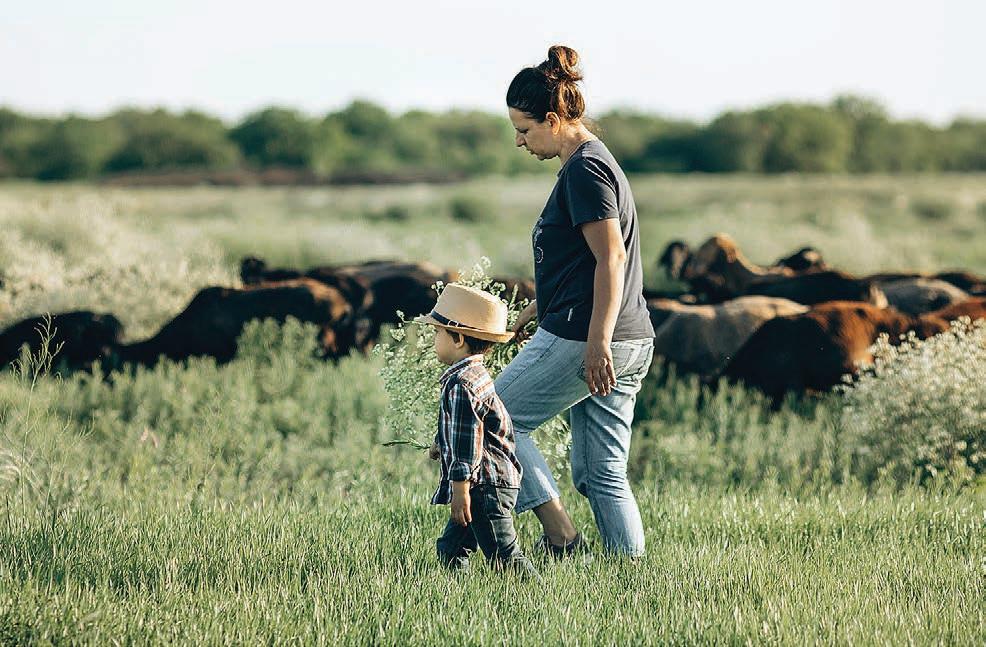
Rural wellbeing depends on this often unpaid work carried largely by women.
Kathryn
Wright
Researcher
sprawl and even solar farming. But forestry was by far the worst offender, she said.
Preliminary findings included the value of social connection.
“Being in a club or group is one of the strongest buffers you can get against stress, isolation and uncertainty.”
Following on from that, Wright’s research discovered that voluntary labour is carrying rural life and communities. The all-important clubs and groups, even emergency services, are being sustained by women, and the majority of the work is voluntary.
“Rural wellbeing depends on this often unpaid work carried largely by women.
“It’s increasingly being stretched because the organisations that might support these groups are slowly disappearing out of rural communities due to things like lack of funding or policy change.”
Wright discovered that most of the people she spoke to were
BELONGING:
Kathryn Wright has focused her research on the human side of rural transition, asking what it feels like to stay, belong and hold a community together.
“When we see population shifts and loss of infrastructure it affects wellbeing through connection,” she said.
“A really important message is if we want rural communities to thrive, we have to recognise and support this core economy, the voluntary workforce, because it holds us together, and it’s largely women.”
Other preliminary findings included the fact that rural wellbeing is relational, meaning relationships and interactions are critical.
“It’s everything from those intergenerational family ties to the small daily interactions with the person who serves you at the local store.”
not putting their hand up for one organisation.
“It’s four, five, even six. It’s never just one.”
She said that voluntary work also has benefits, giving people a sense of meaning and purpose.
“But it’s that balance between giving what you can and burning yourself out and not saying no to things. There’s a fine line.”
Many of the people in rural communities are stretched to breaking point, she said, which directly affects mental health.
Correspondingly, the infrastructure that supports many rural groups and fosters social connection – the pubs, clubs and halls – is under threat.
The fourth big finding centred on forestry and the fact that land use change affects identity.
“Forestry conversions do reshape the economy and environment but also totally disrupt people’s sense of place, continuity and their futures.”
From here, Wright’s research will be peer reviewed and several academic papers will be published from the findings.
“I would like to see voluntary labour recognised and supported more in the communities, even just acknowledged. We need to invest in social and health services to support this volunteer workforce in rural areas because we’re already running on the smell of an oily rag.”
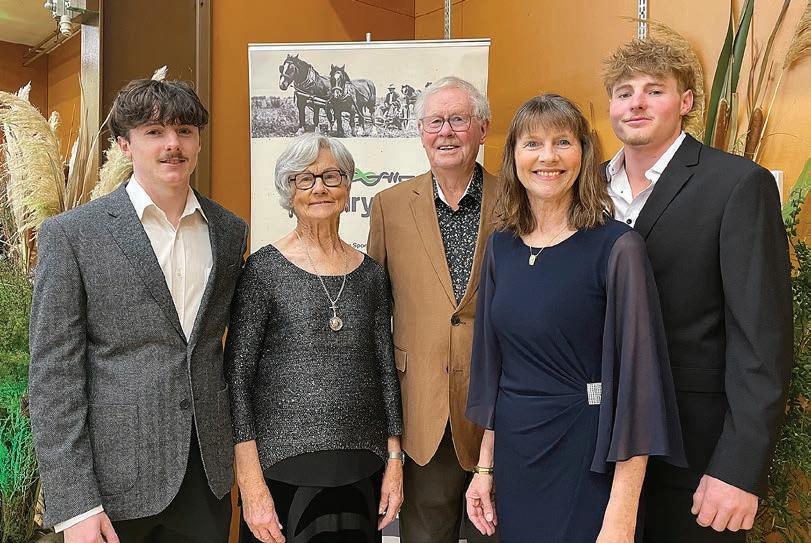
SOLD: Allan and Noeline Smith with daughter Kerrie Knox and grandsons Daniel, left, and Carl. After exploring succession within the family, the couple ultimately sold the farm when no successor emerged.
Photos: Supplied
From the Editor
Preparing for bird flu

Craig Page Deputy editor
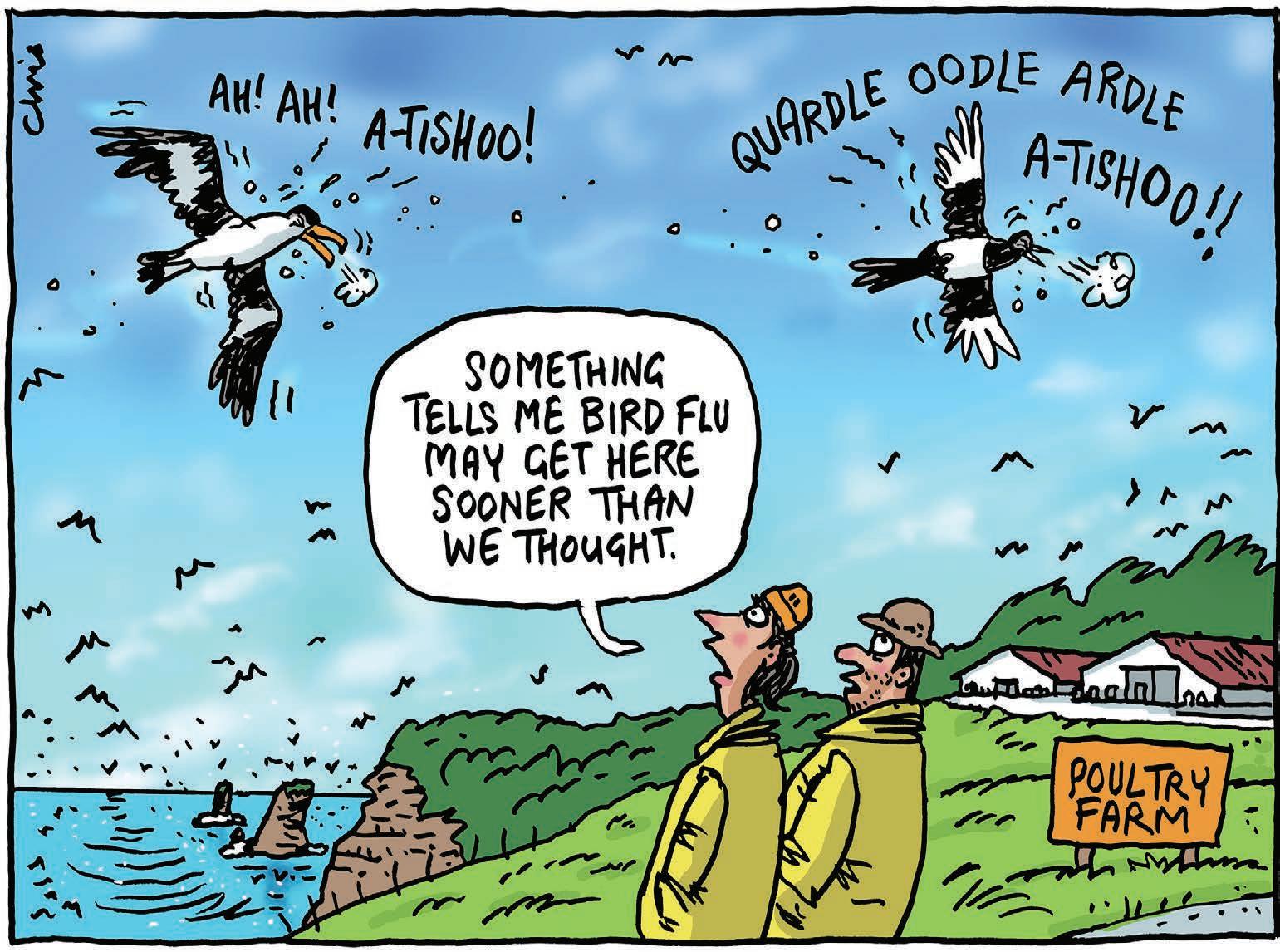
IT is an anxious time for those in the poultry industry.
In late 2024 New Zealand had its first brush with bird flu. Now, with Australia confirming cases in Western Australia, questions are being asked about how well prepared this country is for the wildlife strain of the flu to arrive on our shores.
In December 2024 about 200,000 chickens at Mainland Poultry’s Hillgrove Farm near Dunedin were destroyed after the country’s first case of highly pathogenic bird flu was discovered. At the time the Poultry Industry Association described the discovery of H7N6 avian influenza as the industry’s equivalent of a foot and mouth outbreak.
Fortunately the strain was not the wildlife-adapted H5N1, and it could be contained within the site.
But confirmation the H5N1 2.3.4.4b strain
of avian influenza is in Western Australia, and found in migratory seabirds, changes everything. This is the strain that has caused large numbers of deaths in wild birds, poultry and some mammals overseas.
The discovery has New Zealanders asking what happens if, or when, that strain arrives on our shores. The poultry industry will be on high alert, but the threat goes further, with New Zealand’s many native birds also at risk.
Experts say there is little we can do to stop migratory birds bringing the disease to New Zealand. The answer lies in how we react once it does land.
While we can’t prevent wild birds bringing this virus here, we can work together to limit its impact.
Andrew Hoggard
Biosecurity Minister
Biosecurity Minister Andrew Hoggard has been quick to assure us that the country is well prepared to respond.
The Ministry for Primary Industries, the Department of Conservation, the Ministry of Health, and Health New Zealand have been working together with industry representatives and local councils to
get ready. Hoggard says New Zealand’s geographical isolation has given the country some breathing space and time to prepare.
“We are watching the situation closely and remain in close contact with Australian authorities. It is a timely reminder that it takes all of us to be prepared for the arrival of a virus we can’t control the spread of,” said Hoggard.
“While we can’t prevent wild birds bringing this virus here, we can work together to limit its impact. If H5N1 bird flu arrives, it is likely to spread in our wild bird population and will not be able to be eradicated, so it’s important for farmers and backyard bird owners to have good biosecurity practices in place.”
People are being encouraged to look for signs of illness in their birds, contact a vet if concerned and prevent contact between domestic and wild birds.
The Australian case is another wake-up call for New Zealand, and highlights just how susceptible this country is to the arrival of such diseases.
It is almost nine years since Mycoplasma bovis was first discovered in New Zealand, at a property in south Canterbury. It has taken a massive amount of work and more than $800 million to get where we are now, with no active cases (though it will be some years before New Zealand gets the all-clear).
The planning for bird flu has well and truly started. Let’s hope it is not needed.
This week’s poll question (see page 9):



LAST WEEK’S POLL RESULT
Have your say at farmersweekly.co.nz/poll Is New Zealand doing enough to prepare for bird flu?
Almost 60% of those who took the poll think the Department of Conservation should be moving faster to find a new leaseholder for Molesworth Station.
“This is typical of a government department. If this was in the private sector it would have been sorted,” said one voter.
Another said: “Stop faffing around like they always do with concessions. Make this iconic place a station for the nation and get it humming again with a leaseholder that gets the place, its heritage and farming.”
Others were wary of potential political influence over any new lease.
“This decision should not be politically influenced, it seems to me DoC is waiting to see who wins the election before they make a decision.”
Of the 41% who believed there is no rush to find a leaseholder, many said it is vital the right leaseholder is found.
“It will take as long as it takes to get the right leaseholder, and it better not be overseas people or companies. Keep it under New Zealand control,” said one voter.
“There is a lot at stake and whoever is selected to take on the next lease needs to be vetted thoroughly. This needs to be done thoughtfully as a lot can happen over the next 30 years,” said another.
Last week’s question: Should the Department of Conservation be moving faster to find a new leaseholder for Molesworth Station?
Greenlea: last of the beef plants locked up
Meaty matters
Meat industry commentator: allan@barberstrategic.co.nz, http://allanbarber.wordpress.com
JUST when I thought we had reached the time of year when on-farm and processing activity takes a bit of a breather before the new season’s calves and lambs start to arrive, news has come through about an agreement for Japanese-owned ANZCO Foods to buy the privately owned, Hamilton-based Greenlea Group for $800 million.
The acquisition will be subject to Commerce Commission and Overseas Investment Office approval. Assuming the deal is completed, ANZCO will acquire 100% of Greenlea’s shares but will leave it to operate as a standalone entity while investigating future opportunities for the growth of the combined business. This will provide certainty and continuity for Greenlea’s staff, suppliers and customers.
This transaction will provide further rationalisation of ownership of the meat processing and exporting sector, although the two companies have relatively
little overlap. Greenlea is solely a cattle processor with plants in Waikato, whereas ANZCO’s beef plants are in the lower North and South Islands.
The deal significantly strengthens ANZCO’s cattle footprint and complements its sizeable ovine business. At a time of declining livestock numbers, this appears to be very smart strategically, although the purchase price seems eyewateringly high, as much as twice as much as some industry players expected. The likelihood is Itoham has paid a substantial premium to buy the last available high-volume beef processor in New Zealand.
The plain fact is virtually all beef processing will now be locked up in stable ownership, predominantly overseas owned or controlled. AFFCO, Wilson Hellaby, Taylor Preston and Universal Beef Packers are the only remaining New Zealand-owned companies, and none is believed to be for sale.
ANZCO’s owner, Itoham Yonyeku Holdings, is a very large and highly profitable integrated food business with the stated ambition of accelerating growth in overseas operations with a focus on animal protein.
Itoham aims to expand its global supply chain centred on the meat business, of which ANZCO is an important component.
It remains to be seen how ANZCO eventually decides to bring Greenlea under more direct operational control to pursue greater efficiencies. Greenlea is more profitable on lower turnover than its new owner, which suggests longer term separation may be more beneficial than any attempt at rationalisation.
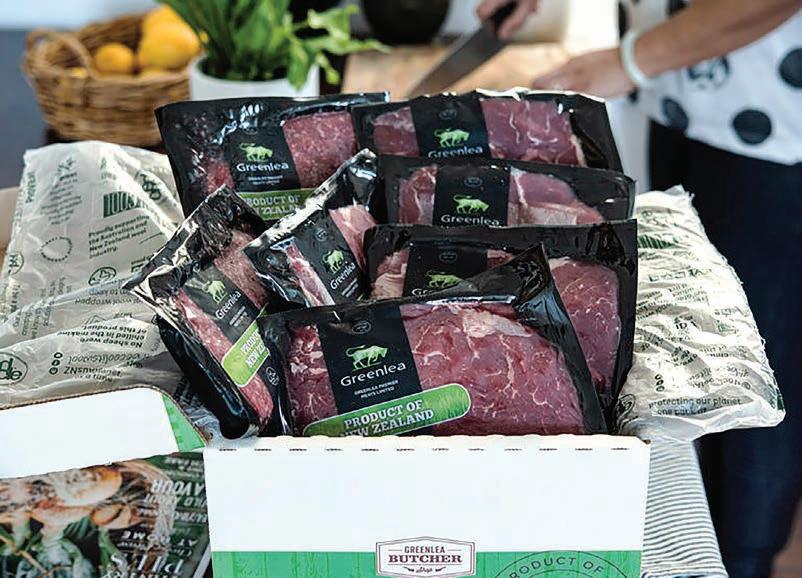
Quite possibly ANZCO is surprised by the extent of Greenlea’s profitability, hence the high price Itoham is prepared to pay. Although ANZCO’s profits have improved in recent years it is certain Greenlea has made substantially more, reflecting the highly profitable performance of the privately owned companies.
The co-operatives particularly have suffered from the need to reward their suppliers in direct contrast to private companies that reinvest profits in improving business efficiencies.
The co-operative model just doesn’t work in the meat industry which is why Silver Fern Farms had to sell half the company and overall control to Bright Foods, and Alliance had to sell 65% to Irish meat company Dawn Meats.
The meat companies that perform well are those that keep tight control of overheads, notably staff numbers, reinvest in their operations instead of paying
dividends, and keep things simple. Years of studying the industry have convinced me expensive brand-building campaigns and large marketing departments do not pay for themselves. I will have to eat my words if SFF and Alliance start producing annual profits above $100m. Following the acquisition, ANZCO must also be targeting a profit well in excess of this.
The current season will prove to be the best for a long time for sheep and beef farmers and possibly for meat processors and exporters as well. Global industry dynamics suggest next season will be quite a bit harder, which places pressure on all industry participants to control expenditure.
Consumers in overseas markets are already baulking at the high prices for beef and sheepmeat, which means there may have to be a readjustment of price expectations in the next few
months. The United States beef market, which has seemingly been willing to keep on paying more, has slowed perceptibly, while competition from Brazil and Australia is affecting New Zealand sales.
Australia’s position is complicated by hitting its annual quota into China before the end of June, so it must find alternative destinations for its product or pay a tariff of 55%.
The success of Fieldays this year, having enjoyed great weather and a near-record attendance underlines the success of New Zealand agriculture over the past 12 months. It is ironical to compare the huge advances in technology that continue to occur in our agricultural sector, resulting in ever greater on-farm productivity, with the apparent lack of productivity in the economy in general.
We are constantly told we invest too little in R&D, which is why productivity is so low, and yet the agricultural sector consistently produces more from less every year. Sheep, beef and milk production all increase consistently despite declining or static flock and herd size because of greater productivity.
This past year has seen Dawn Meats invest $270m in Alliance and Itoham prepared to spend $800m for Greenlea, which suggests international companies see greater value in New Zealand assets than local investors can see.
We should be grateful for New Zealand owners, like Talleys and Wilson Hellaby, who are prepared to put their money into preserving at least a proportion of homegrown assets.
Raw deal: are dairy farmers just commodity suppliers?
In my view
OLAM Food Ingredients’ second dryer at Tokoroa could be seen as another vote of confidence in New Zealand dairy. Yes, but it also exposes a deeper tension.
It is a reminder that some of the most valuable parts of NZ dairy are increasingly being owned, branded and controlled offshore.
Fonterra’s retreat from branded consumer dairy makes that shift harder to ignore. The co-operative has chosen to focus on ingredients and foodservice, while more of NZ’s consumer dairy brands are being taken over by foreign owners.
The new Tokoroa dryer is aimed at milk protein concentrate, a higher-value ingredient used in sports nutrition, beverages and medical nutrition. This is not just another whole milk powder story. It is part of a much bigger
shift from commodity dairy to specialised nutrition.
That is where the money is moving, and the money is not mainly local.
Olam is Singapore-based. Abbott is based in the United States. Yili and Bright Dairy are Chinese.
Danone and Lactalis are French.
Goodman Fielder is owned by Singapore-based Wilmar International. Froneri, which owns Tip Top, is a global ice-cream company. Together, they show how much of NZ’s dairy value chain now sits in foreign hands.
Yili owns Westland Milk Products and Oceania Dairy, giving it a major South Canterbury processing base and an established West Coast dairy business with long-standing farmer supply relationships.
Bright Dairy is the majority shareholder in Synlait, a company built around the promise that NZ could move beyond commodity powder into infant formula and advanced nutrition.
Abbott’s purchase of Synlait’s North Island assets makes the same point from another angle. Abbott is not a traditional dairy processor. It is a global healthcare
and nutrition company interested in Pōkeno and Auckland because they offer trusted manufacturing, regulatory approvals, food safety systems, and the ability to produce premium nutrition products.
Danone’s Nutricia operations also connect NZ milk and the country’s food reputation to global infant formula brands.
Lactalis’s purchase of Fonterra’s Mainland Group moved familiar names such as Anchor, Mainland and Anlene into the hands of the world’s largest dairy company.
Goodman Fielder controls Meadow Fresh, Puhoi Valley and Tararua, while Froneri owns Tip Top. Foreign ownership is not just about export plants and milk powder. It now extends into the domestic dairy brands New Zealanders buy every week. This is the part of the story farmers should care about. NZ still produces the milk. Farmers bear the costs of land, animals, labour, compliance, weather, emissions and waterquality expectations. Rural communities provide the workforce and infrastructure. The national reputation helps sell the product.
But more of the margin is being chased downstream, beyond the farmgate, in proteins, infant nutrition, medical nutrition, brands, formulations, customer contracts and market access.
Olam’s Tokoroa expansion fits this pattern. It gives south Waikato farmers another milk buyer, which is positive. More competition for milk is usually good for suppliers.
The plant brings investment and jobs to the region. If Waikato milk can be turned into higher-value protein ingredients, that should be good news.
But the harder question is whether farmers will capture much of that extra value.
Foreign investment can bring capital, technology, jobs, export access and competition in the milk market. It can rescue struggling assets and open doors that local companies cannot open on their own.
But foreign investment also changes where power sits.
The company that owns the brand, the formulation, the customer contract and the route to market usually captures the most attractive margin.
The farmer supplies the essential
raw material, but may still be paid largely as a commodity supplier.
NZ dairy is not being hollowed out. It is still one of the world’s strongest dairy sectors. But it is being reshaped. The farm remains local. The processing is increasingly international. The brands are increasingly foreign-owned.
The customer relationships are increasingly offshore.
The future of NZ dairy is being built around specialised nutrition, high-value proteins and global branded channels. The question is whether NZ farmers will be genuine beneficiaries of that future, or simply the milk suppliers behind someone else’s brand. If NZ milk is valuable enough for Olam, Abbott, Yili, Bright Dairy, Danone, Lactalis, Goodman Fielder and Froneri to invest in, farmers are entitled to ask a deeper question.
Can we create more value for NZ dairy, or are we just providing raw material for global companies to take that value elsewhere?

Allan Barber
PLANTS: Greenlea is solely a cattle processor with plants in Waikato, whereas ANZCO’s beef plants are in the lower North and South Islands.
Nic Lees
Dr Lees is a senior lecturer in agribusiness management at Lincoln University
Synlait’s challenging and confusing future
The braided trail
Keith Woodford MD at AgriFood Systems
kbwoodford@gmail.com
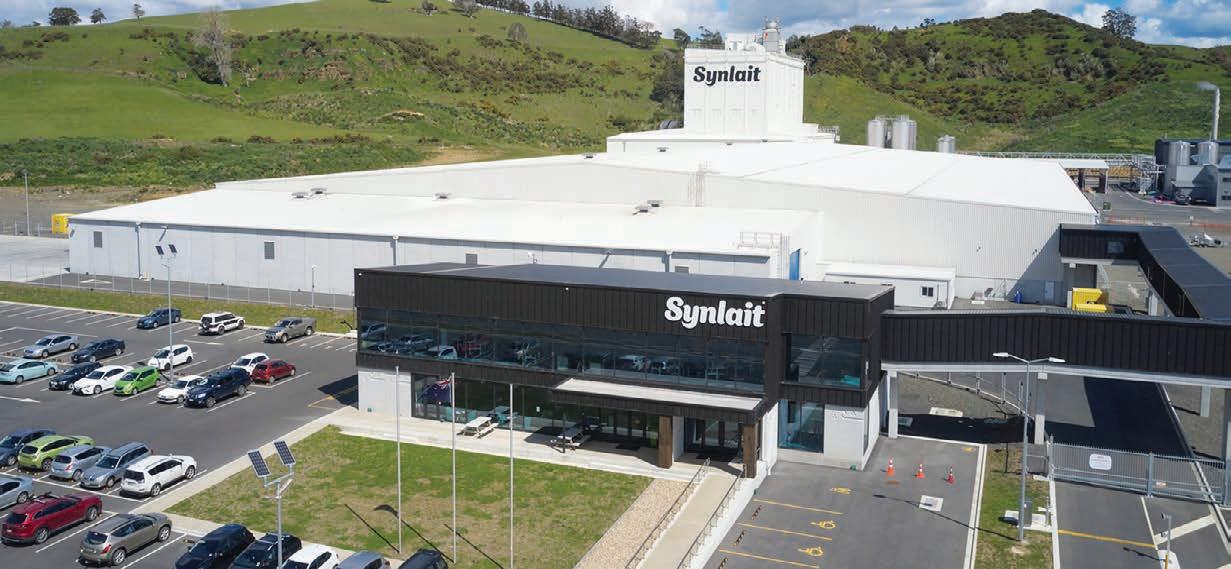
SYNLAIT is in critical financial trouble, dealing with the consequences of past strategic and operational disasters.
It is New Zealand’s joint third largest dairy company, sharing that position with Yili, the owner of Westland and Oceania. But Synlait, in stark contrast to Yili and other New Zealand dairy companies, is in lots of trouble.
It has recently been in major contraction mode, selling its North Island assets but still being financially insecure. Go back some seven years, and Synlait’s shares were consistently selling above $9 and peaked at over $12. The most recent market sales on the NZX were 42 cents. Ouch!
Synlait’s investors, primarily Bright Dairy and The a2 Milk Company, but also Mum and Dad investors, have lost more than 95% of their shareholding value. It is remarkable that a significant player in New Zealand’s largest industry – a highly profitable industry – can be in such a situation.
Things have been going wrong at Synlait since at least 2020. It was around then, or soon thereafter, that its fundamental relationship with The a2 Milk Company started to sour.
However, the first big strategic mistake was made two years
earlier when Dunsandel-based Synlait decided to expand into the North Island and purchased land for a new factory at Pōkeno, south of Auckland.
At that time the Synlait philosophy was all about growth.
The key focus was infant formula but there was a perceived constraint of geographical concentration and earthquake risk. The answer was to go north.
The northwards move, funded by debt, was always in itself a big risk.
But Synlait oozed confidence.
The North Island Pōkeno factory opened in 2019, but never had enough suppliers of milk.
When Synlait began its commercial operations way back in 2008, it was easy to sign up dairy farmers to supply milk. Those were the days when Fonterra was much less efficient than it is now. Also, there were lots of dairy conversions occurring, and not having to take on further debt to buy Fonterra shares was very appealing to farmers.
In that environment, Synlait beat the Fonterra payout in each of the first five years from 2008 to 2012 and had a queue of prospective farmer suppliers. As a consequence of those experiences, 10 years later Synlait underestimated the challenges of having to compete for farmers with a newly efficient Fonterra plus Open Country.
The problems associated with underutilisation at Pōkeno could be ignored initially in 2019 as firstyear minor growth issues. That was until covid arrived at the start of 2020.
Covid was a disaster for both Synlait and its most important customer, The a2 Milk Company.
To understand Synlait’s current predicament, it is necessary to understand something about The a2 Milk Company, or ATM.
Prior to covid, the A2 infant formula business was conducted by Synlait producing the A2 infant formula product (that is, a product free of A1 beta-casein), but with ATM being the brand owner and marketer. It was a gold mine, generating great growth and cash
for both companies.
By 2018, the A2 infant formula marketing strategy was largely based on English-label infant formula taken to China, via Australia, by Chinese traders called daigou living predominantly in Australia. Chartered planes from Australia to China were loaded to the roof with pallets of infant formula, owned by daigou and labelled for their trader-mates across China.
Here I make the disclosure that it was me who first introduced the Synlait and ATM CEOs to each other, way back in January 2011 at a meeting in Dunsandel. The meeting was set up to explore the idea that the two companies could mutually benefit by working together. A partnership followed from there. But by the time the daigou trade started I was just an interested observer.
Covid challenges were made worse because, given the nature of the daigou trade, neither ATM nor Synlait had sight of any available inventories in China. Without that visibility, supply chain management was impossible.
It was an enormous shock when on May 13 this year it was announced that Richard Wyeth was leaving Synlait.
Since then, ATM has essentially restructured itself, focused primarily on a mix of Chineselabel and English-label infant formula, with slightly different formulations, and China being the key destination for both brands. ATM has this year shifted production of the English-label product to its own modern and recently purchased factory, also at Pōkeno. This ATM factory was originally built by Yashili back in 2015. It has existing capacity to produce more than 50,000 tonnes of infant formula per year and this could probably be expanded.
The Chinese-label product still comes from Synlait but
only because Synlait holds the necessary production licence from China. The chances of ATM eventually obtaining equivalent production rights at Pōkeno from the Chinese government are considerable.
This all means that Synlait has to figure out whether it has a long-term future in infant formula. Without ATM, it has no current infant formula brands. Producing infant formula without being tied to market brands is simply not a goer.
If Synlait does want to continue producing infant formula, it not only needs to deal with the issue of brands, but it has to decide what is its differentiating characteristic. Should this infant formula rely on A2 milk, of which Synlait has significant quantities?
Over the last 10 years I have introduced to Synlait multiple European dairy marketers looking for A2 infant formula, either as powder or consumer packed, but Synlait’s contracts with ATM were exclusive.
If these were the only challenges that Synlait faced, the path forward would be a lot simpler. Alas, Synlait has had quality problems, linked to inadequate plant hygiene.
Synlait has not been explicit as to the precise nature of the problems, but it seems that considerable infant-formula base powder had to be destroyed. It did not lead to publicity at the time because the affected product never left the factory and hence never got near the market.
However, this still led to big losses and also created a need for the No1 dryer to be diverted to infant formula production to make up for the lost inventory.
The production of this particular dryer when used for infant formula is only of the order of 25% of its production when drying commodity milk. Hence, there was a major backlog for drying of commodity milk, with considerable milk having to be destroyed at the peak of the 2025 production season, and with other companies not wanting the milk.
That was not the end of the calamities. Synlait has committed to its farmer suppliers that not only will it pay farmers the Fonterra base price for their milk, but there are various add-
ons. These add-ons total, as I understand it, an average of 40c per kg milksolids, primarily as an incentive to stay with Synlait but also specific quality premiums. That will hurt.
In early 2025, Synlait appointed Richard Wyeth as its new CEO. Some of us heaved a sigh of relief. We could not think of a better man to take the reins of Synlait, following a period of leadership churn.
Hence, it was an enormous shock when on May 13 this year it was announced that Wyeth was leaving Synlait. Everyone in the industry is wondering why he decided to leave after just one year.
My own take is that perhaps the challenge of Synlait was simply too much for Wyeth’s personal wellbeing. Perhaps there was less than total alignment between Wyeth and majority shareholder Bright about the path ahead. To use Wyeth’s own words from a few weeks earlier, Synlait had limited “optionality”.
As I write this in late June, Synlait has given no guidance on its expected loss as at July 31, the end of its trading year. We know that Synlait made an after-tax loss in excess of $80 million for the half year ended in January 2026. It seems likely that losses have continued in the second half of the year, but at lower levels.
My own take is that Synlait is desperately in need of new equity. The apparently obvious candidate to supply this would be Bright Dairy, but that is probably being over simplistic.
Bright has itself announced to the Shanghai Stock Exchange that it is making a loss this year, for the first time in 15 years, because of the losses it is carrying from Synlait.
Bright has already come to the aid of Synlait once, in late 2024, with substantial equity plus a major shareholder loan, which stands below bank debt in terms of security. My understanding is that Bright was not totally happy about doing this, with discussions being held between Shanghai-based Bright and Beijing authorities before making a decision. It was about politics and national standing, not just economics. Alas, things at Synlait have only got worse, greatly worse, since then.
IN AND OUT: In early 2025, Synlait appointed Richard Wyeth as its new CEO. On May 13 this year it was announced that Wyeth was leaving the company.
EXPANSION: The first big strategic mistake was when Dunsandel-based Synlait decided to expand into the North Island and purchased land for a new factory at Pōkeno, Keith Woodford says.
Sector Focus
Growers alarmed at fruit import safeguards
Gerald Piddock NEWS Horticulture
NEW Zealand’s blueberry growers are warning that a proposal for new rules for imported fresh berries could leave local crops vulnerable to pests and diseases.
Currently, only frozen blueberries are allowed into New Zealand. The new imported health standards (IHS) drafted by the Ministry for Primary Industries could allow fresh berries to enter the country from Chile, Mexico, Morocco, Peru and the United States.
The MPI released a consultation document on the IHS earlier this year after those countries asked to export blueberries to New Zealand.
Blueberries New Zealand chair Trudy O’Halloran said the standards being proposed on the imported blueberries are very weak.
“What they have got in there is not enough to protect New Zealand from pests and diseases coming into the country.”
The blueberry sector is a burgeoning industry with growers planning to invest around $85 million in the next five years, and the new IHS could impact this.
If left as they are, the new standards could also allow in biosecurity threats that affect other plant and crop species making it a threat across the whole horticulture industry, O’Halloran said.
Oakberry Farms exports around 400 tonnes a year from its packhouse in Newstead, on the outskirts of Hamilton. This is about one-third of total blueberry exports from New Zealand.
Managing director Dan Peach “shudders to think” of the impact an imported disease or pest would have on his business.
He said he has just gone through the process of gaining market access into China and South Korea.
He expects a similar standard of on-farm and packing conditions will be required of importers.
Biosecurity New Zealand director of biosecurity import and export standards Lisa Winthrop said they were “extremely thorough” in assessing pest and disease risks
and set a high level of pest and disease protection for imported produce.
“The risk assessment underpinning the draft blueberry IHS has been comprehensive and consistent with international best practice.
“Pests associated with the blueberry pathway have been systematically identified and assessed, and robust phytosanitary measures have been specified to manage identified risks.”
New Zealand’s freedom from pests such as fruit flies is a core consideration informing a cautious approach to fresh produce imports, she said.
The proposed IHS includes stringent measures to manage these risks, consistent with those applied successfully across other fresh fruit import pathways.
Peach and O’Halloran said they are not opposed to trade, but they want the imported blueberries to be subject to the same standards and rules as they are.
“The biosecurity side of it is the key issue that we have got and that we think needs to be considerably strengthened,” Peach said.
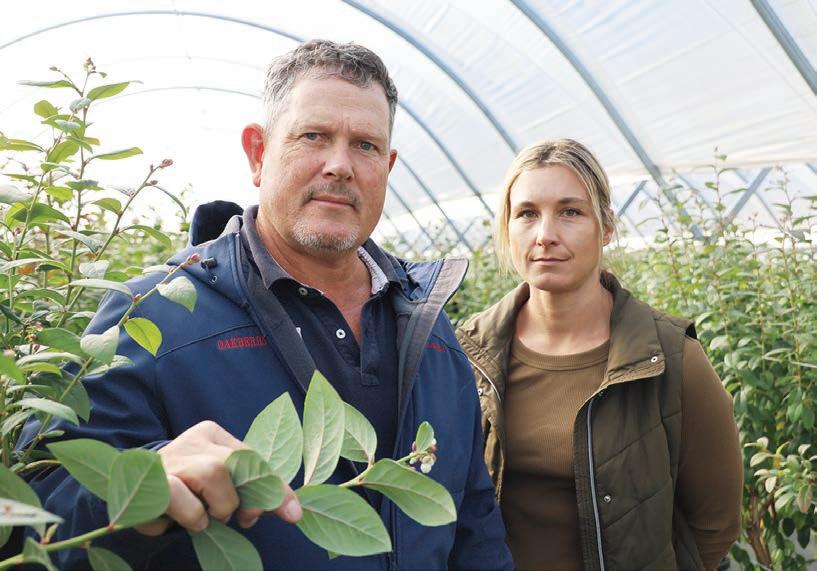
STANDARDS: Blueberries New Zealand chair Trudy O’Halloran and Waikato blueberry grower-exporter Dan Peach say the MPI’s new import health standards for imported fresh berries are not strong enough to stop pests and diseases coming into the country.
Peach and O’Halloran are also frustrated with the response from MPI officials – who appeared to be more focused on the outcome of getting it done than listening to the industry’s concerns.
O’Halloran was also unhappy with the consultation process where the MPI added further information to the original
document two weeks out from the closure date.
Winthrop said they had engaged extensively with the blueberry industry and other stakeholders for many years throughout the development of the IHS.
Consultation on the IHS opened on March 31 and was extended twice, going for 10 weeks, she said.
Regional rep focused on supporting growers
Staff reporter NEWS
HAVING grown up in the horticulture sector, Arjune Dahya is passionate about supporting growers, and that is the focus of his role as Horticulture New Zealand’s senior regional and extension representative for Northland, Auckland and Waikato.
The organisation is rolling out a regional representative network aimed at giving growers a strong voice and a more direct link to
advocacy and practical support.
The goal is to create a growerfocused regional connection that reflects the different realities facing growers around the country.
“My main focus is engaging with growers to enable support and greater connection with our industry,” said Dahya.
“I regularly go on farm or orchard to engage with growers, and they can contact me at any time for support with issues, questions, or information they require.
“I see my role as both operational and strategic – providing
individual grower support while identifying regional opportunities, risks and emerging issues.”
Following a spell managing a commercial vegetable growing operation in Pukekohe, where he also served on the executive committee of the local vegetable growers’ association, Dahya joined HortNZ three and a half years ago as a regional extension officer for the Growing Change project.
With that project completed, he is enjoying his new challenge, working out of Whangārei and
servicing the Auckland, Waikato and Northland regions.
“Growers are responding positively to our presence in the regions. In Northland in particular, we experience significant adverse weather events, so a key priority is coordinating responses with local Civil Defence, the Ministry for Primary Industries, the Rural Support Trust and other agencies.
The focus is on ensuring growers receive timely support while maintaining strong two-way communication and having an
industry representative available to share insights and information.”
Regional representatives are also closely involved with supporting the goals of the Aotearoa Horticulture Action Plan (AHAP).
“The AHAP is a strategic framework led by HortNZ. It has five pillars that focus on supporting the industry to double the farmgate value of horticulture production by 2035.
“Our role as regional representatives is to connect that national vison and strategy with our growers.”



Looking for New Zealand’s best young farmer
WITH the nation’s top young farmers set to converge for this year’s FMG Young Farmer of the Year Grand Final, anticipation is building for what promises to be one of the toughest and most dynamic competitions yet.
Behind the scenes, Grand Final convenors Sarah Avery and Emma Northcott have poured months of planning into crafting a contest designed to push every finalist to their limits.
It’s essentially a nationwide search for the ultimate farming allrounder.
Emma Northcott Grand Final Convenor
Their goal is simple: ensure each competitor walks away knowing they’ve been tested on the full breadth of modern farming, and that the eventual winner has truly earned the title.
For the first time ever, Taranaki will host the three-day competition, which will see seven Grand Finalists go head-to-head to secure the title of New Zealand’s top young farmer. Sixty three Primary school-aged AgriKidsNZ competitors and 14 FMG Junior Young Farmer of the Year high
school teams will also battle for national honours.
Hosted by New Zealand Young Farmers, the event is a highlight on the rural calendar, showcasing the breadth of talent, innovation and opportunity within New Zealand’s food and fibre sector.
“It’s essentially a nationwide search for the ultimate farming all-rounder,” Northcott said.
The Grand Finalist who takes out the title of FMG Young Farmer of the Year will need to prove they have what it takes to be New Zealand’s best. That means applying technical skills, problemsolving and practical know-how across a range of farming-related challenges.
Points are accumulated across a gruelling series of practical and theoretical challenges, including modules involving big machinery, construction, livestock and more.
“This competition itself is a real pressure cooker, so the ability to perform under pressure is absolutely essential,” said Northcott, adding that organisers are focused on creating an event that reflects both the diversity of Taranaki agriculture and the strong community spirit behind Young Farmers.
“One of the things that makes this region special is that you don’t have to travel far to see something completely different – from dairy farming through to sheep and beef, there’s a real mix here.”
Make sure you back your local young farming champions. You can vote for your favourite region in the FMG Region Off. The region with the highest number of votes will win $5000 to go towards their chosen charity
Scan the QR code or visit fmg.co.nz/campaigns/regionoff

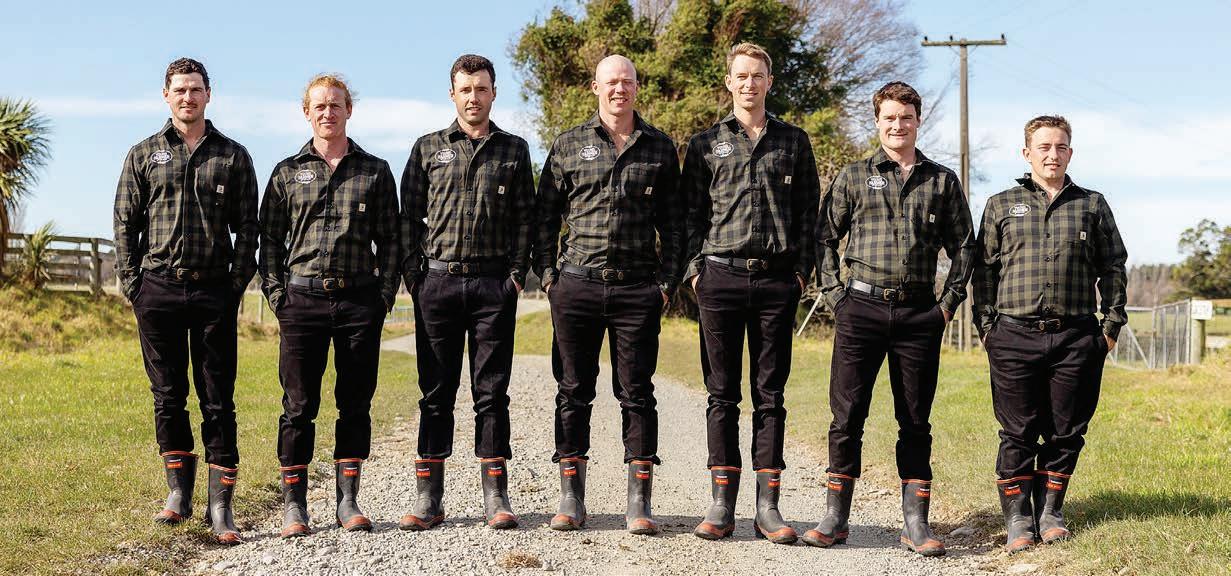
From netball court to national stage
THE future of farming is in good hands, as 14 FMG Junior Young Farmer of the Year teams prepare to battle it out at one of New Zealand’s biggest agricultural events.
The Grand Final in New Plymouth will see top secondary school teams from across the country take on a range of challenges, testing practical skills, farming knowledge and their ability to perform under pressure.
Among the finalists are Blue Mountain College students Lara Heiss, 16, and Emily Reid, 17, who took out the top spot in the Otago Southland Regional Final in February.
For the Tapanui-based duo, their partnership has been years in the making. Side by side since primary school, they now play
Sister act as trio gear up for AgriKidsNZ
FOR the Neumann sisters, preparing for the AgriKidsNZ Grand Final has been a team effort in more ways than one.
Ten-year-old twins Anita and Lilla have teamed up with their younger sister Margaret, 8, to compete as Half the Kids – a name that reflects life in a busy household of six children, including two sets of twins.
“I’m the oldest, but Lilla and I are twins. I’m two minutes older,” said Anita.
The sisters are heading to New Plymouth as part of 21 AgriKids teams, made up of 63 primary school students set to compete in the national final, after earning their place through this year’s regional competitions.
It’s a step up from last year, when Anita and Lilla competed for the first time and placed 10th overall.
Growing up on a sheep, beef and dairy farm in Taipuha, the girls are used to pitching in.
There are chores after school –feeding the chickens, doing the dishes and looking after the dogs.
Helping their older siblings with jobs around the farm means they’re rarely short of something to do.
That same practical mindset is shaping how they’re preparing for the competition. The sisters divide topics among them – from livestock and plants to machinery and pests – before testing each other and sharing what they’ve learned.
“We each take something different, then teach the others,” said Lilla.
They’ve also had guidance close to home from their dad, Gavin Neumann – a two-time New Zealand Young Farmer Grand Finalist who runs an agricultural contracting business – helping them sharpen their hands-on skills.
“He quizzes us and shows us things we might need to know, like
parts of a tractor or two-wheeler bikes,” Anita said.
Support from across the family has played a big role too. While Mum, Naomi, is tied up with the other kids’ commitments, their Nana Diane has stepped in as supervisor for the Grand Final.
Heading into the event, the sisters said they’re feeling a mix of nerves and excitement.
New Zealand Young Farmers chief executive Cheyne Gillooly said it’s encouraging to see young competitors already building strong knowledge and confidence in the sector.
“These contestants represent the future of the industry, and it’s great to see that passion coming through at such a young age. The depth of knowledge they’re already demonstrating is remarkable,” he said.
The 2026 AgriKidsNZ champions will be crowned at the Grand Final in New Plymouth on Friday July 3.
together in the senior A netball team and even share a farming connection, with Lara’s family purchasing Emily’s family dairy farm.
“Lara plays goal keep and I play goal defence. We’ve learned how to work together in the defence circle,” Emily said.
The teamwork played out in this year’s regional competition where they each played to their strengths.
While Emily shines in practical tasks like fencing, Lara excels in knowledge and quick recall. Together, it’s a balance that’s already taken them to the national stage – and one they hope will carry them all the way.
“We play to each other’s strengths. Lara likes to identify the problem and get going with it, whereas I like to take a minute
and think it through,” said Emily.
Supported by teacher and long-time competition coach Kirsten McIntyre (known to the students as Miss Mac), the pair are squeezing in as much study and prep as they can.
Backing the pair is a close-knit west Otago community, with local sponsors and supporters stepping in to help cover everything from travel to uniforms.
“We’re really lucky – so many people have got behind us,” Emily said.
“It feels like we’re representing more than just ourselves,” Lara added.
There are big boots to fill, with Blue Mountain College boasting a proud FMG Young Farmer of the Year history, including three consecutive FMG Junior titles from 2019 to 2021.
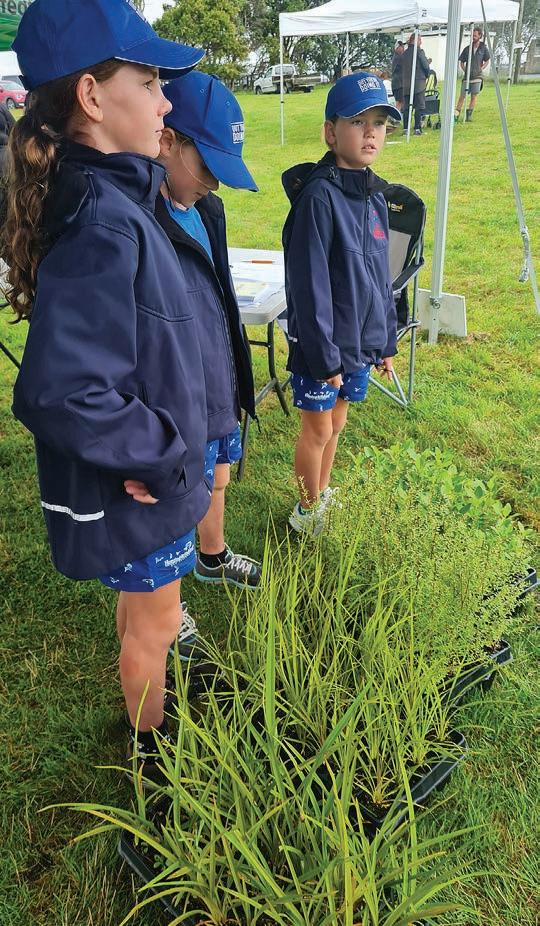
EFFORT: Lilla, Anita and Margaret Neumann have grown up on a sheep, beef and dairy farm in Taipuha and are used to pitching in.
BEST FOOT FOWARD: The FMG Young Farmer of the Year finalists are ready to put the talking aside. Pictured from left are: Justin Ruygrok (Northern), Bryce Win (Tasman), David Reesby (Taranaki-Manawatū), Edwin Laver (East Coast), Cam Clayton (Waikato/Bay of Plenty), Thomas Slee (Otago/Southland) and Jack Taggart (Aorangi).
Many hats, but an eye on one crown
AT 29, Ed Laver wears plenty of hats: farmer, adventure racer, chair of the Puketoi Young Farmers Club and, soon, first-time dad.
Raised on a deer farm in Weber in southern Hawke’s Bay, Ed’s future in farming was almost a given. Much of his childhood was spent outdoors, following his dad around the farm.
“I absolutely loved learning from Dad. I think it was always pretty obvious that I was going to be the farmer in the family.”
Straight out of school, Ed headed to Smedley Station for a two-year cadetship to build his knowledge in sheep and beef.
“I hadn’t really had much to do with sheep growing up, so I wanted to get that hands-on experience,” he says.
From there, he went on to study agriculture at Lincoln University. Plans to work as a hunting guide in Canada after graduating were put on hold by covid-19, so Ed returned to the Hawke’s Bay region, picking up work where he could, fencing and shepherding on the Māhia Peninsula, before eventually coming full circle.
Two years ago, he moved back home to farm alongside his father across three blocks, running
sheep, beef and, of course, deer.
“Deer is in the blood. No matter what we do, I think there’ll always be deer involved in some way.”
For Ed and his partner Millie Morgan, joining Puketoi Young Farmers Club started as a social move – a way to meet people and keep the local club going. But it quickly became something more.
In the space of a year, Ed was appointed chair of the club and, having recently taken out the East Coast FMG Young Farmer of the Year regional title, he’s added another string to his bow.
“I didn’t really know what I was signing up for, to be honest. But one thing led to another.”
Securing the win qualified Ed for the upcoming Grand Final, which he’s approaching with cautious optimism.
“Some of the guys are pretty sharp and have more experience at the competition than I do, but I’ve just got to give it a good nudge and see what happens.”
Ed says he’s realistic about the challenge ahead, especially in areas like quizzes, business and communication, which he’s been working on alongside the day job.
Preparation has meant fitting study around farm work, leaning on mentors, and putting time into his innovation project.
He also knows the competition will be tough, with several finalists returning for their second or third attempt.
One of those competitors is Southland Young Farmer Tom Slee, someone Ed knows well.
The two first crossed paths at Lincoln University but became closer through multi-day adventure racing events like GodZone.
“We’ve spent a fair bit of time pushing each other in those races,” Ed says.
“I know he’s a sharp operator, so it’ll be interesting going up against him.”
Despite everything going on –the farm, the club and a baby on the way – Ed is taking it all in his stride.
“It’s a busy time, but it’s a good time,” he says.
“It’s the time of our lives that we’re never going to get back, so we’re just getting into it.”
Ed Laver
Region: East Coast
Occupation: Deer, sheep and beef farmer Age: 29
Club: Puketoi
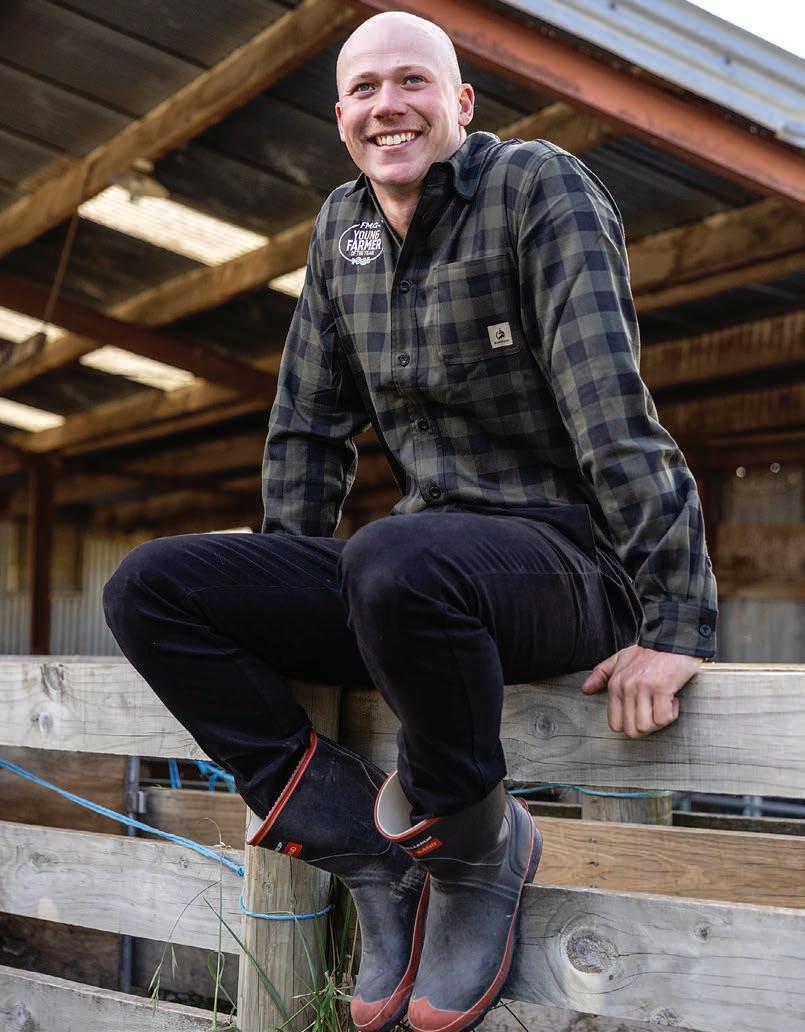

FAMILY FARMING: Two years ago, Ed Laver moved back home to farm alongside his father across three blocks, running sheep, beef and, of course, deer.
Cowboy saddles up to ride one last time
PRACTICAL, methodical and calm, Waikato young farmer Cam Clayton is a natural when it comes to problem-solving.
“Most days on the farm I have to think on my feet. Not every day goes according to plan, and that’s just the nature of farming.”
That proved true recently when a mob of synchronised autumn-calving cows had just been artificially inseminated and the paddock water suddenly cut out, no flow, no tank fill, no quick fix. Cam did what he does best: worked his way back to the source, troubleshooting step by step until he found the issue.
“Not unlike a practical day in the competition,” he laughs.
Raised on a dairy farm in the Waikato alongside four siblings, Cam always knew farming was the path for him. After school, he headed south to chase a shepherding career, spending nearly a decade working his way up into management roles across the South Island.
In the middle of it all, he spent six months cowboying in Canada
– mustering cattle on horseback in bear and wolf country.
“It was pretty much like the TV Yellowstone, but real life,” he grins.
Covid-19 brought him back home, where he started Pukerau Herefords, a Hereford stud business. Today, Cam leases more than 400 hectares, running around 300 dairy grazers and 450 breeding ewes. He and his fiancée Emma Robinson, a commercial account manager in Hamilton, are steadily growing the operation, with a long-term goal of farm ownership.
“It’s every man’s dream to own their own bit of dirt with a house on it, so hopefully one day.”
This is Cam’s final shot at FMG Young Farmer of the Year before ageing out of Young Farmers, and he’s treating it as such.
After missing out last year, he’s come back more focused, putting in hours of study, sharpening his knowledge, and leaning on a strong support network, which includes current champions through to those who’ve done it decades before him.
He’s spent the past year training
alongside last year’s FMG Young Farmer of the Year Hugh Jackson, whose support he describes as “steadfast”, pushing him through regular quiz sessions and prep.
Cam is also quick to acknowledge the role sponsors play in making the competition possible.
“A huge thank-you to the sponsors, because the competition truly wouldn’t be able to run without them.”
At a recent Waikato community event, he picked up advice from a former winner dating back to 1979, a reminder that’s shaping his approach to the Grand Final: pace yourself.
Off farm, Cam keeps balance where he can, playing hockey, getting out for runs, and tackling a Great Walk with Emma each Easter. Wedding planning has been pushed out.
“That’s on hold for now,” he laughs.
Looking ahead, Cam sees both opportunity and change in the sector, from strong commodity prices to increasing use of technology and automation.
“At the end of the day, people
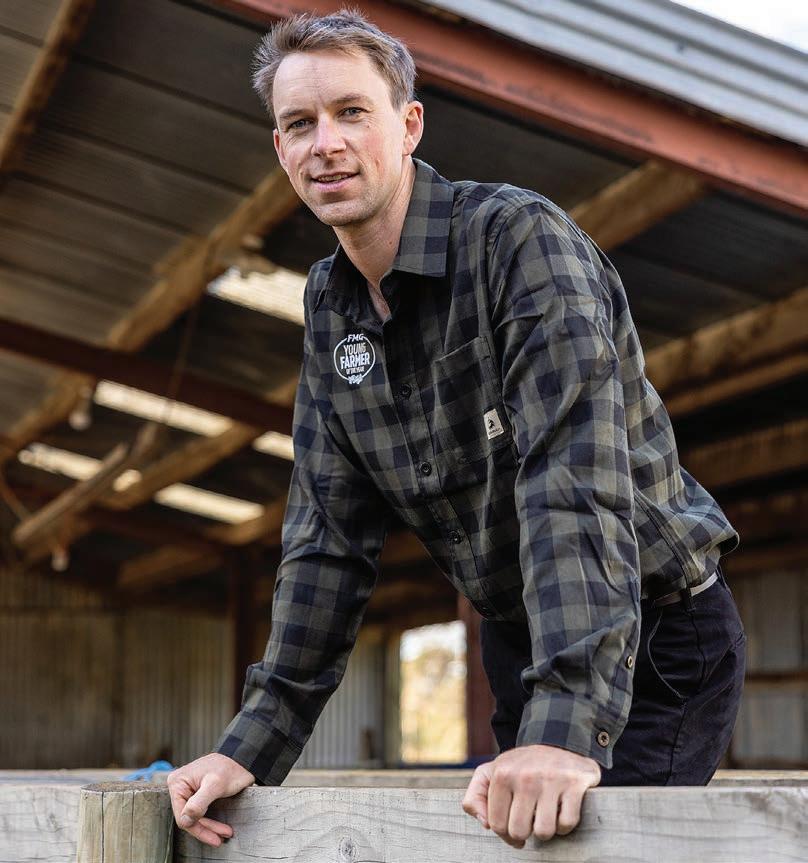
still need to eat steak,” he says.
For now, though, the focus is firmly on the Grand Final: intense competition, one final shot at the title, and “no stone left unturned”. And if the water stops running again?
Cam’s already proven he knows exactly where to start.
Picking up the pace in life and on the trail
THIS year has already been a big one for 29-year-old Bryce Win.
In the space of a few weeks, he won his first FMG Young Farmer of the Year regional final, got married to Briar on the family
farm, then shifted his focus to the Grand Final – all while training for his first 50km trail run.
“It’s been pretty full on,” he laughs.
Bryce is a sixth-generation farmer from the Tasman region,
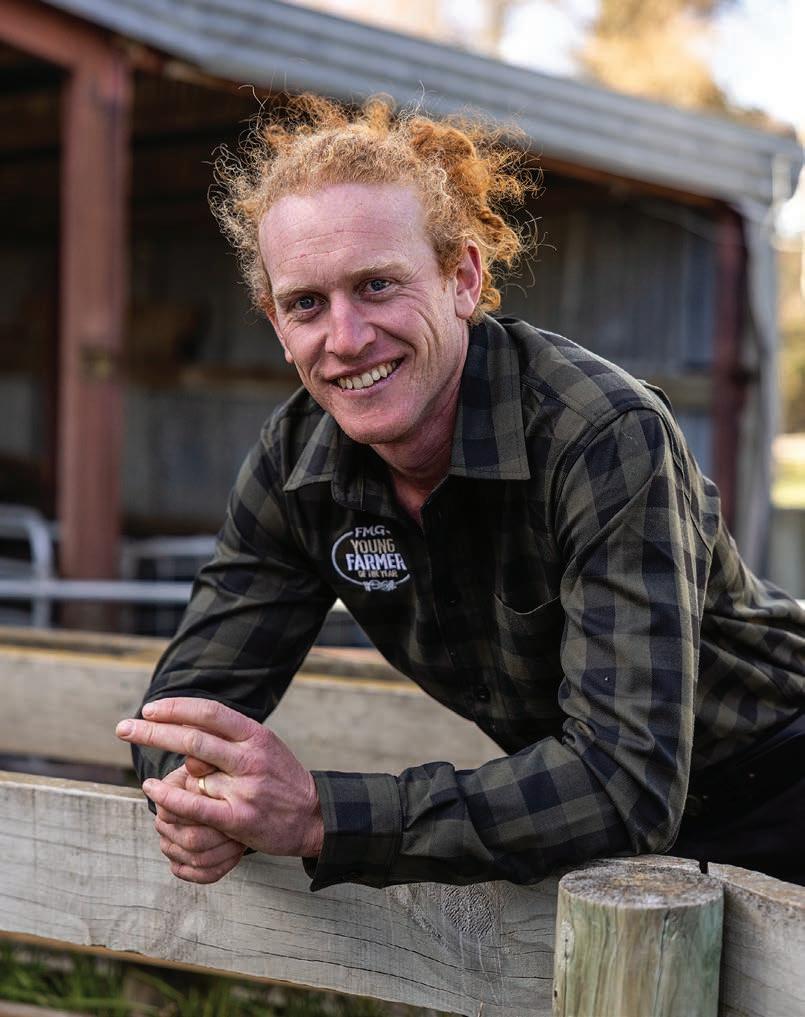
working on the same sheep and beef farm he grew up on. It’s a place he speaks about fondly, a childhood spent outdoors, building huts, helping his dad feed out, and making the most of the changing seasons.
“I remember one winter we grabbed a car bonnet and went sliding down the frosty hills – it was great fun,” he says.
After leaving school, Bryce spent time working on oyster farms before heading to Lincoln University. But it wasn’t long before home called him back.
“Dad always said he wanted about 10 years after I left school before he stepped back,” Bryce says.
Eight years on from returning home, and now in partnership with his father for the past three years, that transition is well underway, although his dad’s retirement, he says, will likely be more gradual than a hard stop.
Returning to the farm also gave Bryce a new perspective on the job.
“You think anyone can do it, but there’s actually a lot of decisionmaking, a lot more than you realise until you’re in it.”
Bryce Win
Region: Tasman
Today, his days are busy and varied. From winter shearing to pre-lamb work, fencing and feeding out, the farm keeps him moving year-round. Lately, he’s been fitting in Grand Final prep wherever he can, often at the end of long days or when the weather keeps him indoors.
You think anyone can do it, but there’s actually a lot of decision-making, a lot more than you realise until you’re in it.
Bryce Win Tasman
“If everything’s done, I might sneak away for a couple of hours and get some work in. You just try to chip away at it when you can.”
Preparation has extended well beyond the farm gate. Bryce has been working with advisers, revisiting areas outside his dayto-day experience, and leaning on the support of his wider Young Farmers network – including former competitors helping sharpen his practical skills.
Bryce joined Tasman Valley Young Farmers when the club was first established following covid-19. Since then, he’s taken on roles including treasurer and vice-chair, and says the club has become a major part of his life.
“It’s just a really good group of people. It gets you off the farm,
gives you something to look forward to, and you make some great connections.”
That’s why Bryce is quick to encourage others to get involved.
“The competition itself is so fun, definitely worth coming along and giving it a go.”
That community will be out in full force at the Grand Final, with a strong support crew of family, friends and club members making the trip north.
His approach is simple.
“I just want to give it everything. I don’t want to come home thinking I could’ve tried harder. I’ve probably only got one shot at this, so I want to make the most of it.”
Off the farm, Bryce’s competitive streak has found a new outlet. Having stepped away from rugby this season, he’s taken up trail running – encouraged by his wife, who’s an avid adventure racer. What started as a half-marathon has quickly escalated to a 50km ultramarathon.
“It escalated pretty quickly,” he laughs.
Looking ahead, Bryce’s focus is grounded in the same values that brought him back to the farm in the first place.
“I’d like to get to a point where things are stable, build something here, start a family, and be able to give them the kind of life I had growing up.”
For now, though, it’s one step at a time, or, in Bryce’s case, 50km at a time.
FOCUSED: This is Cam Clayton’s final shot at FMG Young Farmer of the Year before ageing out of Young Farmers, and he’s treating it as such.
Cam Clayton Region: Waikato/Bay of Plenty
Occupation: Mixed farming operation
Age: 29
Club: Morrinsville Ngarua
COMPETITIVE: Bryce Win’s competitive streak has found a new outlet. Having stepped away from rugby this season, he’s taken up trail running.

More than one set of footsteps to follow in
FOR Southland farmer Tom Slee, qualifying for the FMG Young Farmer of the Year Grand Final comes with a unique legacy.
His father, Richard Slee, won the title in 1999, and his uncle, Simon Hopcroft, followed in his footsteps with a victory in 2004 – making Tom’s shot at the title part of a much longer family story.
According to Tom, there’s one thing behind both of those wins –his mum Trudy.
“Mum’s probably the most competitive of the family. She’s got the flashcards organised.”
Raised on his family’s sheep and beef farm in Blackmount, just outside Tuatapere, Tom spent his childhood doing what most rural kids do, pitching in where he could.
“Growing up, it was just what it was, weekends and holidays you were out on the farm helping. That was just part of it.”
After finishing school at Southland Boys’ High, he spent a gap year shepherding on a high country station near Queenstown before heading to Lincoln University, where he completed a Bachelor of Commerce (Agriculture). A stint with BNZ’s graduate programme followed, but it didn’t take long
before farming called him back.
“I gave something else a crack for a bit, but I pretty quickly realised I wanted to be back on the farm.”
Tom returned home and made the shift into dairy, working under
an experienced contract milker on the family farm. Within a year, he’d stepped into the role himself. Now 29, he’s just marked his first year as a contract milker, leading a team and building his own business – and he is quietly
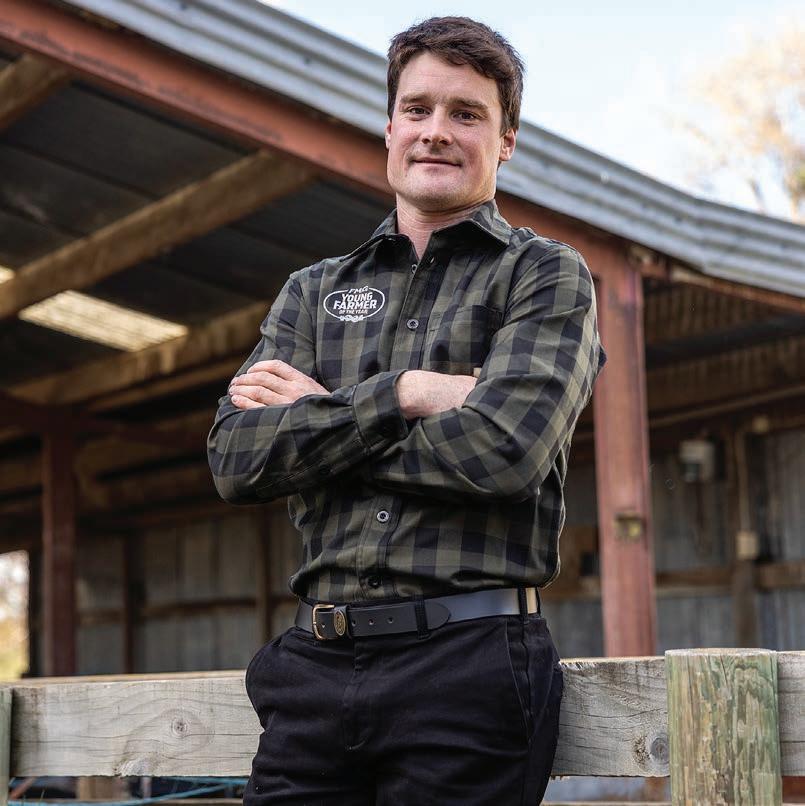
confident about where he’s at.
“I’m really happy doing what I’m doing. My focus is just to keep growing sustainably, with the people around me – and making sure there’s time for life off farm too.”
That off-farm time is anything but quiet. In recent years, Tom has competed in gruelling multiday adventure races, including GODZone – events that test navigation, endurance and teamwork over five to seven days in remote terrain.
Those races have also seen him line up alongside fellow Grand Finalist Ed Laver from Hawke’s Bay, giving the pair a unique connection heading into the Grand Final.
“We’ve done a few of those together, so I’ve seen what he’s like out there – he’s a great teammate,” says Tom.
“It’ll be interesting going up against him ... I’d probably rather not, to be honest.”
Asked about his regional win, Tom thinks his varied past and jack-of-all-trades approach gave him an edge.
“I don’t think I was particularly strong in anything, it was more about being consistent across everything and not having
Tom Slee
Region: Otago Southland
Occupation: Dairy farmer
Age: 29
Club: Nightcaps
anything that really tripped me up.”
Preparation for the Grand Final has followed that same approach – a mix of brushing up on practical skills, revising theory, and leaning on past competitors and family members for advice.
“There’s so much out there you could study. Even coming from sheep, beef and dairy, you realise how much more there is across the whole sector.”
For Tom, Young Farmers is about more than just competition.
“It brings like-minded people together, which is especially important in rural areas. It’s a good way to meet people and build that community.”
With strong roots, quiet confidence, and a bit of healthy family pressure behind him, Tom heads into the Grand Final focused on doing what he’s always done best – keeping things steady (and listening to his mum).
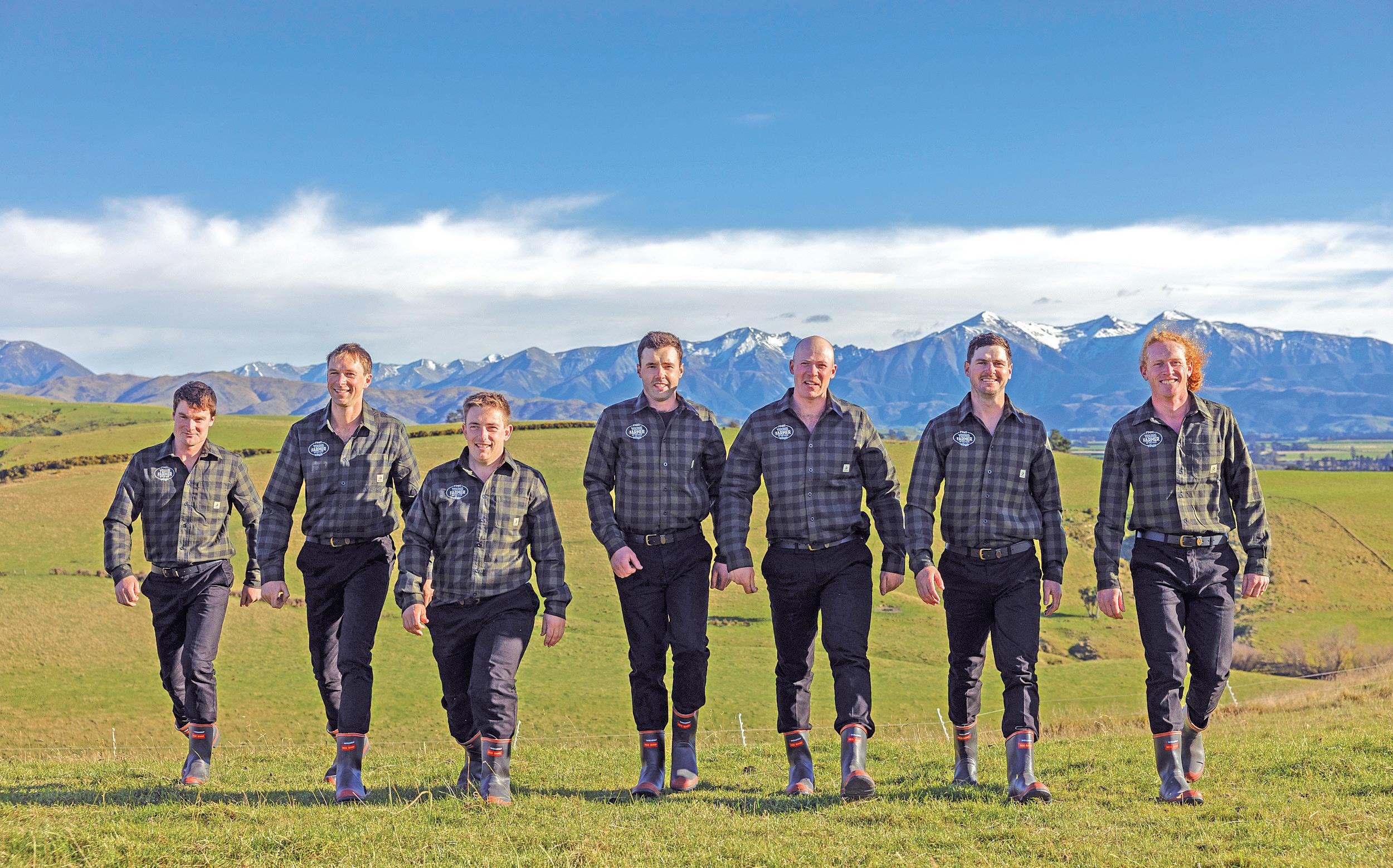
HANDS ON: Tom Slee spent his childhood doing what most rural kids do, pitching in where he could.
View from backstage provides useful prep
IF YOU ask David Reesby whether he always planned to be a farmer, the answer comes pretty quickly.
“Yeah. I’m pretty sure I always wanted to work on the farm,” he says, matter-of-factly.
Now working on the farm where he was raised near Glen Oroua, 25-year-old Dave starts most mornings at 4.30am, a start time he insists isn’t as bad as you’d think.
“There’s plenty of people up earlier,” he shrugs.
His days are typical of dairy farming life – milking, shifting stock, feeding, planning the next job – and it’s the variety that keeps him hooked.
“There’s always something new every day, or a new challenge that needs sorting.”
He works alongside his parents Gareth and Sandra, with a small team around them, and lives separately on farm with his fiancée, Sarah Lockhart. The pair are due to marry early next year, although Dave admits wedding planning has taken a back seat.
“I’ve probably done about zero of it. Just trying to get Grand Final out of the way first.”
It’s not his first crack at it, either.
Dave made his Grand Final debut in 2022 as a 21-year-old, fresh off a surprise regional win and still finding his feet in the competition.
“I was still learning what it was all about, and I probably wasn’t as prepped as I could have been,” he admits.
In the years since, Dave has stepped back from competing –but not from Young Farmers. He’s spent time helping run district and regional contests, giving him a view of the competition from the other side.
That experience hasn’t taken away the unpredictability of the contest. If anything, it’s reinforced it.
“Every year is different. You never really know what you’re going to get. But that’s part of what makes it exciting –everyone’s on the same playing field on the day.”
Now back in the competition, Dave returns with four more years of farming experience under his belt – and a clearer understanding of where he can improve.
“I’ve taken the time to fill a few knowledge gaps and learn a bit more about myself. I think I’m ready to give it a really good crack,” he says.
David Reesby
Region: Taranaki Manawatū
Occupation: Dairy farmer
Age: 25
Club: Marton
Dave doesn’t talk himself up much, but does describe himself as an ‘all-rounder’ heading into the Grand Final.
“I think having a bit of knowledge across everything is pretty key, it definitely helped me at the regional final.”
Preparation for the Grand Final has meant balancing full-time farm work with study, quizzes and practice where possible, while also stepping outside his comfort zone.
But he’s well supported. A member of Marton Young Farmers since 2019, his 40-plus-strong club has rallied around him as he prepares for the finals, with members coming from a range of roles across the industry.
“They’ve gotten around me and given me a hand where I’ve needed it,” he says.
“The club has a good mix of people, everyone’s got different skills and different jobs, and you
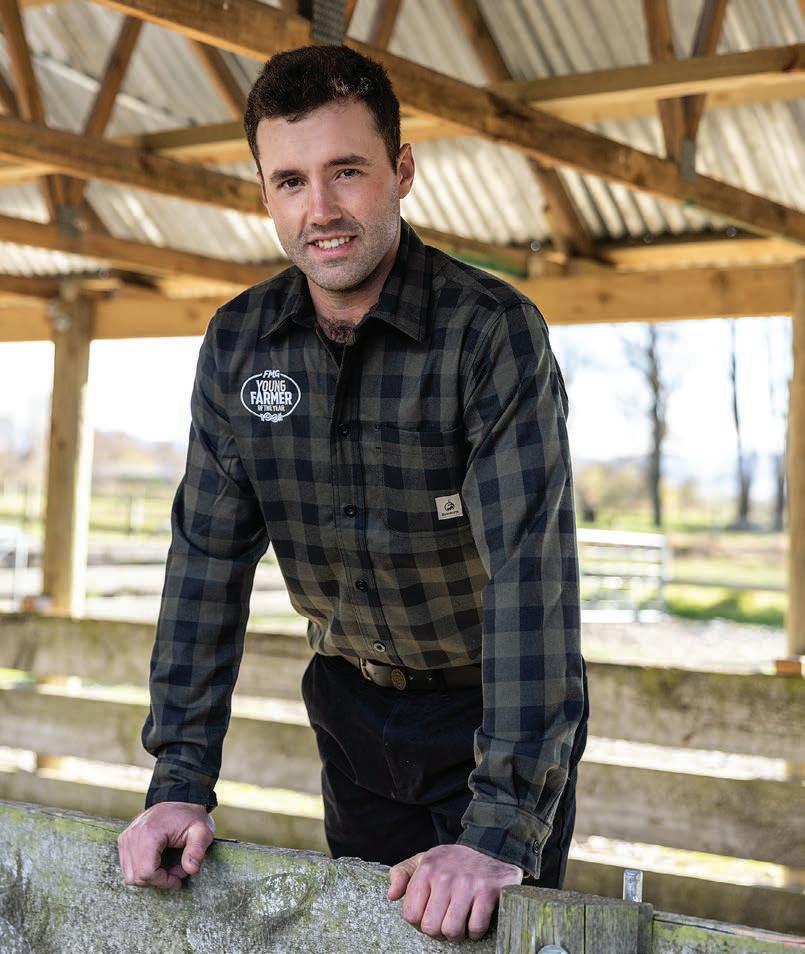
learn off each other.”
That wider perspective is something he values and wants young people to know too.
“There’s a job for everyone in farming. It’s not all milking cows or driving tractors.”
Asked how he feels going into the Grand Final, he says
he’s keeping a cool head, but competing close to home adds another layer of motivation.
“It’s pretty special having it in our region, and it’d be good to do the region proud.
“It’d mean a lot to win, but same as everyone else, I just want to go out there and do my best.”
A job that teaches you to think on your feet
FOR 27-year-old Mid Canterbury dairy farmer Jack Taggart, life is anything but quiet right now.
In the lead-up to the FMG Young Farmer of the Year Grand Final, Jack is not only preparing for the competition, he’s also gearing up
for a new contract milking role in Valetta, coaching squash at the local club and doing his day job.
“It’s a bit chaotic at the moment.
I’m setting up as a contract milker, organising all the staff and gear, starting a new job, and still getting ready for the competition. But I enjoy being busy. It usually brings
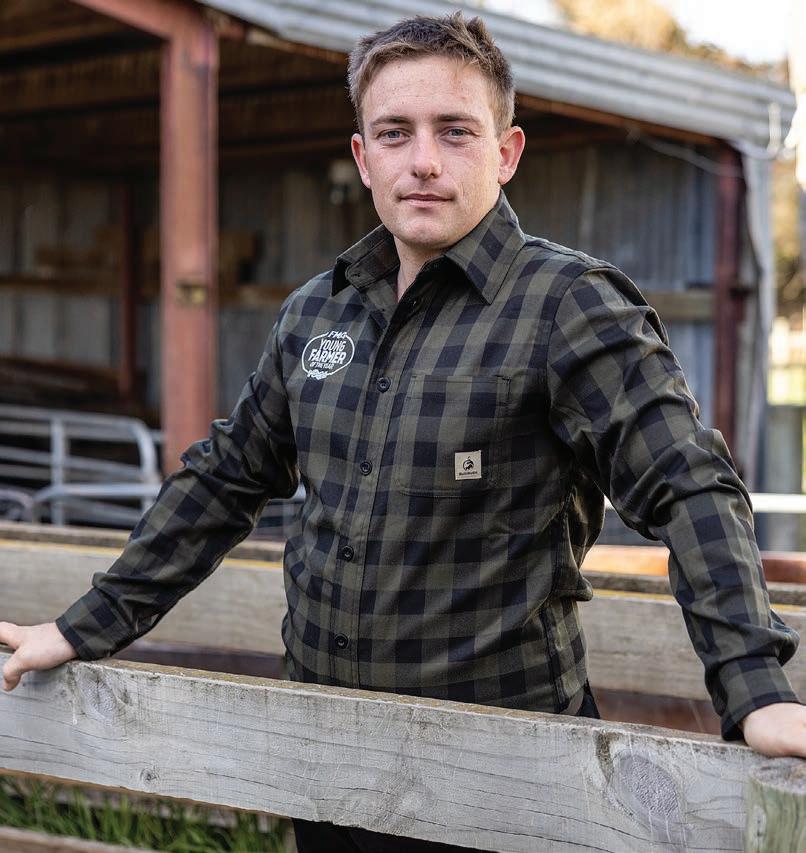
out the best in me ... most days.”
Born and bred in Canterbury, Jack has spent his life immersed in farming – even in the classroom.
“In every class at high school, I was supposed to be working but I was usually playing a farming simulator game on my laptop. I just didn’t really want to be there. And with the support of my teachers, we looked at some different options.”
He went on to get diplomas in agriculture and farm management at Lincoln University and a Bachelor of Commerce (Agriculture), building a broad skill set that now underpins his career.
“I’ve always loved being outdoors and working with my hands. Farm work just clicked for me early on.”
Since finishing study, Jack has worked across a range of roles, from irrigation technology and agronomy modelling to hands-on farm management – experience he credits with shaping the way he approaches both farming and the FMG Young Farmer of the Year contest.
Now based in Hinds managing a dairy farm, Jack has loved his time as part of the community, particularly given the family connection.
“It’s kind of full circle. My grandfather was a big part of the Hinds community, and I’ve ended up here a few years after him.”
The experience has shaped the way he approaches things, both on farm and in competition. That showed at this year’s regional final, where Jack took out his first win after five previous attempts. For him, one surprising moment in particular stands out.
“I actually forgot my gloves for one of the head-to-head builds, so I had a minute where I couldn’t start, and instead of rushing, I just stood there and worked through exactly how I was going to approach it.”
When his gloves finally arrived, Jack already had a clear plan and was able to complete the head-tohead with time to spare – adding some flair to his build.
I’ve got a mate helping me with theory work most weeks, and I’ve swapped scrolling on social media for Quizlet quizzes.
Jack Taggart Aorangi
“I ended up using the extra time to add features – I had a birdhouse with a decorative tree and a path out the front.”
It was a stark contrast to previous years, when pressure got the better of him.
“A few years ago, something
Jack Taggart Region: Aorangi
Occupation: Dairy farmer Age: 27
Club: Hinds
went wrong early and I couldn’t move past it – it threw me for the whole day.
“This time, I just slowed things down and reset.”
With the 2027 Grand Final set to be held in Christchurch, Jack’s focus this year is to “stay relevant and in touch with the contest” ahead of a hometown final.
That’s not to say he isn’t taking this opportunity seriously. He is stepping up his preparation, balancing practical training, study and long days on-farm with support from friends and the wider Young Farmers network.
“I’ve got a mate helping me with theory work most weeks, and I’ve swapped scrolling on social media for Quizlet quizzes,” he says.
If he were to take out the title, it would be more than just a personal milestone.
“It would be pretty surreal to win, the whole experience, the people, the opportunities that come with it. At this stage of my career, that exposure and those connections could be really valuable.”
VARIETY: Jack Taggart has worked across a range of roles, from irrigation technology and agronomy modelling to hands-on farm management.
SKILL SET: David Reesby doesn’t talk himself up much, but does describe himself as an ‘all-rounder’ heading into the Grand Final.
Cool and calm for another crack at the final
FOR sharemilker Justin Ruygrok, stepping back onto the Grand Final stage may feel a little like déjà vu.
After making his debut last season, the 29-year-old is returning for a second crack at the FMG Young Farmer of the Year title. This time, he’s bringing both experience and a calmer mindset –two things he hopes will make all the difference.
“It helps knowing how the competition works this time. Last year, it was easy to get overwhelmed. This year I’m trying to stay a bit more cool and calm,” he says.
Justin grew up farming in Aka Aka, not far from where he now works. He has spent the past nine years building his career on the same property. As a sharemilker, he owns the cows and machinery, working in partnership with the farm-owner to run the operation and share the returns.
“It’s a good pathway, you can build something without needing all the capital upfront, and that’s been the goal, to eventually own the farm.”
Now milking around 170 cows at peak, Justin is working steadily towards that goal while balancing the demands of the farm with
preparation for the Grand Final.
Unlike some of his competitors, his preparation has been fairly simple.
“Mostly just farming, to be honest,” he laughs.
“There’s only so much prep work you can do when you’ve got a dairy farm to run at the same time.”
That said, last year’s experience has given him a clearer understanding of where to focus.
“I know my weak points this time, things like the HR challenge or some of the technical stuff.
So I’m just trying to brush up on those and not let them throw me.”
While dairy is his day-to-day, the other aspects of the competition push him well beyond his comfort zone.
“There’s so much you have to know. Even coming from sheep, beef and dairy, you realise how much diversity there is across the whole industry.”
It’s that challenge, along with the people, that has kept Justin coming back.
Initially joining Young Farmers in 2020 to meet new people, he’s since become part of a tightknit network. Last year, his club rallied behind him with a major fundraising effort, raising money not just to support the trip south
Justin Ruygrok
Region: Northern
Occupation: Dairy farmer
Age: 29
Club: Franklin
for the 2025 Grand Final, but also to make a $20,000 donation to the Blood and Leukaemia Foundation.
“Young Farmers is a great community, where you get to meet people you wouldn’t normally cross paths with, and there’s always someone willing to lend a hand.”
That support extends close to home, too. His partner Monique Shuker, a school teacher, has been a constant presence. She took on the role of caddy during last year’s final while adding her own unique flair.
“She was helping carry all my gear around and keeping me organised, and she even turned up in a cow onesie. That made her pretty easy to spot in the crowd.”
Longer term, Justin is focused on continuing to grow his business and, ultimately, secure ownership of the farm he currently runs.
And if this year’s Grand Final goes his way?

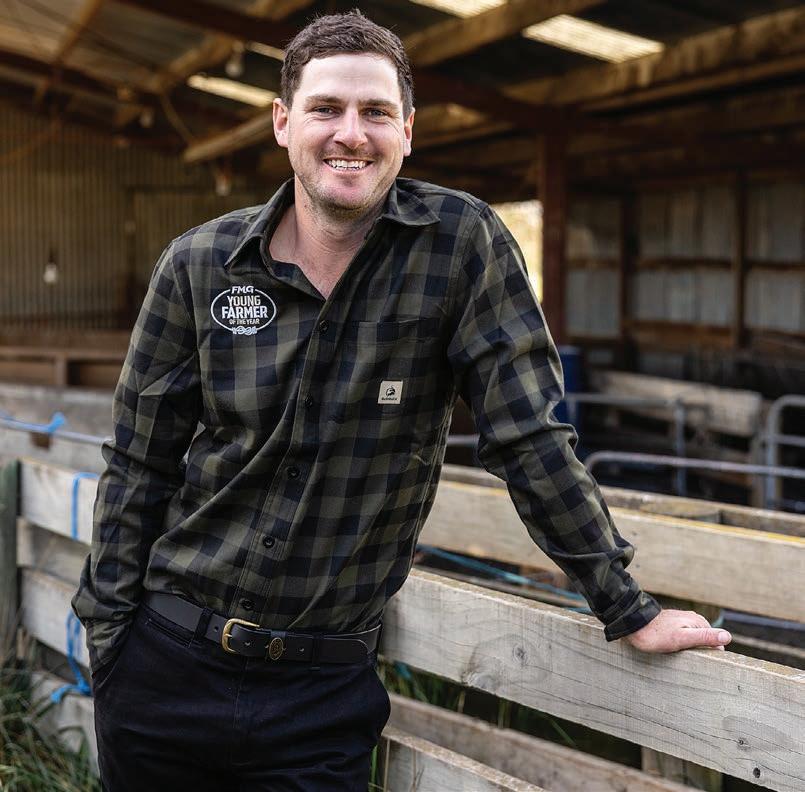
“It’d be pretty special, just knowing all the hard work paid off. But more than that, it’s the opportunities and the people you meet along the way.” When he does get time off,
you’ll likely find him on the water, chasing marlin and tuna off the West Coast with his brother, a reminder that even with a busy farming life, there’s always time to switch off.
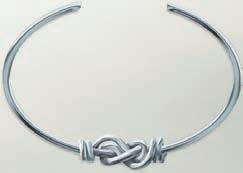


GOALS: Longer term, Justin Ruygrok is focused on continuing to grow his business and ultimately secure ownership of the farm he currently runs.



Recognition for conservation efforts
SINCE moving to Glenorchy with her late husband, Dr Leslie Van Gelder has dedicated her career to conservation and the environment. She has just been made an Officer of the New Zealand Order of Merit for services to conservation and dark sky sanctuaries.
Van Gelder grew up in New York and has lived in New Zealand since 2008, she is the co-founder and co-chair of the Southern Lakes Sanctuary, chairs the Queenstown Lakes District Climate Reference Group and is a valued member of the Glenorchy Branch of Rural Women New Zealand.
“I’ve gone from New York to Glenorchy. I tell my family back home I’m a card-carrying rural woman and proud of it,” she said. She was a key part of Glenorchy being made a Dark Sky Sanctuary, an idea sparked at a Rural Women New Zealand conference.
“One of the groups of women presenting at the conference were involved in the Great Barrier Island Dark Sky Sanctuary, and I was just blown away. I came home and I couldn’t get the idea out of my head,” she said.
So, she organised a meeting in the local hall and momentum started to build.
“We had 14 people regularly turning up to meetings, and for a community of only 400 that’s a pretty good effort. We had people going out in the middle of the night to collect measurements of the darkness, different people went and took the photos for us, and we did heaps of fundraising all the way through.”
In 2025 Glenorchy was made a Dark Sky Sanctuary, something she wants to see more of across the country.
“Eighty five percent of the world’s population can’t see the
stars at all anymore. We feel so fortunate that we get to see the beauty of our skies, and we all need that in our lives, probably more than we ever did.
“Then there’s the knowledge attached to the stars. Our local Kaumatua has shared a lot of stories of how the stars are connected to this place, which has been an amazing doorway for us and a bridge for a community that doesn’t have a large Māori population.
“Then you have the biodiversity component. For species that are nocturnal or semi-nocturnal, giving them a good habitat is super important,” she said.
We feel so fortunate that we get to see the beauty of our skies, and we all need that in our lives, probably more than we ever did.
Leslie Van Gelder NZOM
Van Gelder is also part of the team restoring the Rees Valley wild Takahē population, now the largest wild population outside of Fiordland and seen as a huge conservation success.
Something she wants local farmers to get more credit for.
“One of the reasons we had the habitat for the Takahē was because the farmers of that valley have maintained it so well. The way they have farmed has been so conducive to good things happening.
“If there’s one thing to highlight, our farmers here in the High Country are the conservation leaders,” she said.
Her involvement with Rural Women New Zealand began a year
after she moved to Glenorchy, and was grieving the loss of her husband.
“All these amazing things have happened since, but when I joined, I was just sort of coming out of my grief, kind of the worst social version of myself.
“The community was amazing to me, people would invite me to dinner or for a glass of wine. That’s the beauty of a small community, people pay attention. There were quite a few people who were widows who had been widowed young like me, one of the local farming women, she’d lost her husband young and she just helped make it normal.
“I have no rural skills, and I can’t sew, or knit or anything, so when we do things like making pillows for breast cancer survivors, I am the official wine pourer. Or when we have an event I do the public speaking,” she said.
In 2012 she travelled to Parliament with a group of local members to oppose the Routeburn Tunnel.
“Three of us came to Wellington to present a petition on the steps of Parliament, the Rural Women office team met us beforehand and we felt fully supported.”
“Rural Women are the most capable women on the planet, any disaster that takes place, this group of women will solve it, intelligently and calmly, and there probably also will be a cup of tea. I call women like that Swiss Army Knives, because they have all the skills. Do you need them to be the knife part? Or the corkscrew? Whatever you need, they just get on with it,” she said.
Van Gelder will be travelling to Wellington at the end of the month to celebrate the organisation’s centennial at Government House, and then again in September for her
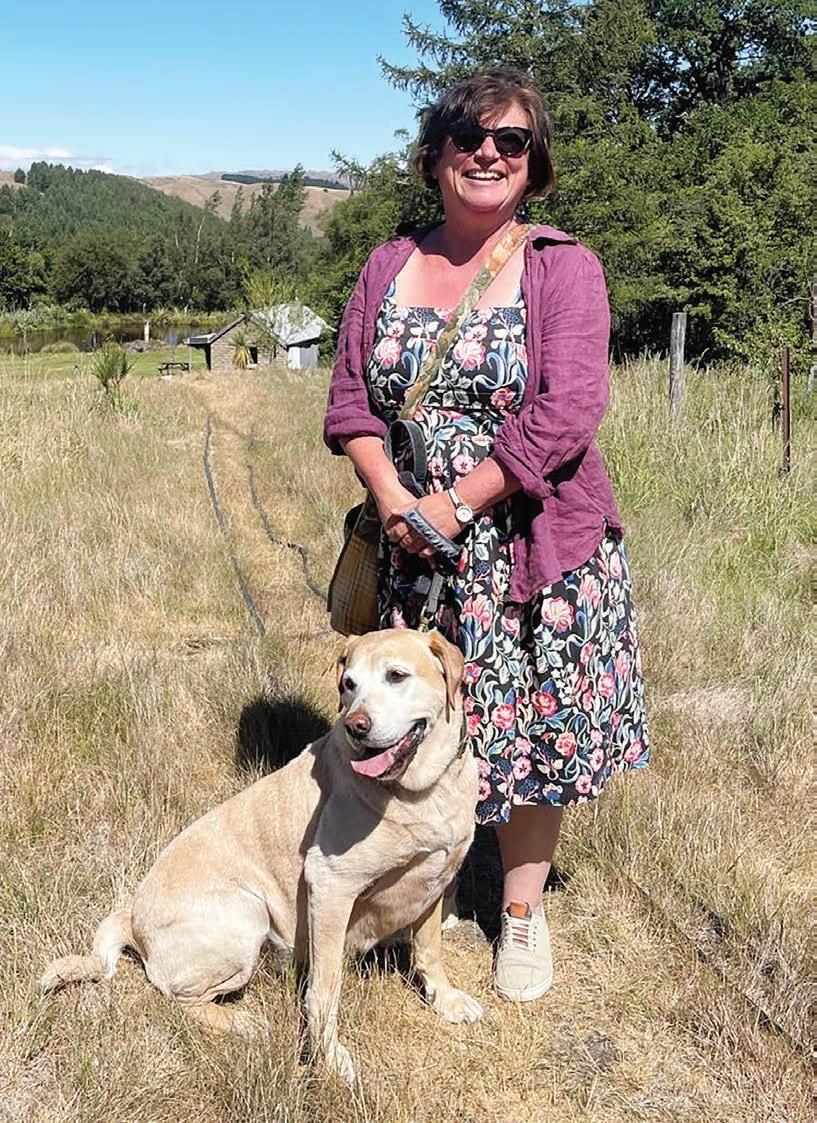
investiture ceremony, an honour she still struggles to put into words.
“I’m an immigrant to New Zealand. And, you know, I do these things because I love doing them.
To get a recognition like this is just amazing to me, because I think there are so many people who are so much more deserving.
“I’m still stumbling over my words because I still don’t know
how to talk about it,” she said. Rural Women New Zealand Chief Executive Sandra Kirby said the organisation is extremely proud to have Leslie as a member.
“She is the definition of rural at heart, and an outstanding woman. A key member of the local community, gets stuck in where it counts and her work has protected the environment for generations to come,” she said.
HONOURED: Glenorchy resident Leslie Van Gelder has been made an Officer of the New Zealand Order of Merit for services to conservation and dark sky sanctuaries.
FEDERATED FARMERS

PC1 threatens Waikato farming future
Federated Farmers is calling on the Government to urgently press pause on a controversial Waikato plan change until the dust has settled on major national policy reforms.
“This will be the most significant rule change ever seen by farmers in the Waikato and Waipā catchments,” says Waikato Federated Farmers president Chris Woolerton.
“There are huge restrictions and compliance requirements being placed on Waikato farmers that will totally change the nature of farming in the region.
“Plan Change 1 will add cost, complexity and duplication, with thousands of farmers needing both a resource consent and a gold-plated farm plan just to keep farming.”
These new farming rules are completely at odds with the Government’s direction of travel and vision for the country.
Chris Woolerton Waikato Federated Farmers president
Woolerton, a Taupiri dairy farmer, wants to see the plan change paused until there’s clarity on resource management, local government and farm plan reforms.
“These new farming rules are completely at odds with the Government’s direction of travel and vision for the country,” he says.
“On one hand we have a
Government saying it wants to cut the cost and complexity from farming by overhauling local government and the RMA.
“But on the other hand we’ve got a binding court decision pushing in the opposite direction, bringing in very prescriptive farming rules with huge compliance requirements.”
The process to develop PC1 began in 2012 and has been tied up in endless submissions, hearings, and appeals ever since.
The Environment Court finally released its decision on 8 June, giving Waikato Regional Council until 21 July to make 20 specific changes before the plan will be finalised.
Woolerton says a big part of the issue is the length of time taken by the Environment Court to make a final decision.
“These rules took so long to work their way through the court system that by the time they landed they were already out of date and out of step with central government.
“This process has taken more than 14 years and, in that time, we’ve seen significant changes in farmers’ environmental practices. Farmers have moved quicker than the RMA process has.”
He says the decision has landed smack bang in the middle of reforms of the resource management system, local government and freshwater rules.
“That’ll create massive confusion for farmers, certifiers and the council alike, while trying to comply with what feel like ever-changing rules.
“That’s why we’re calling for central
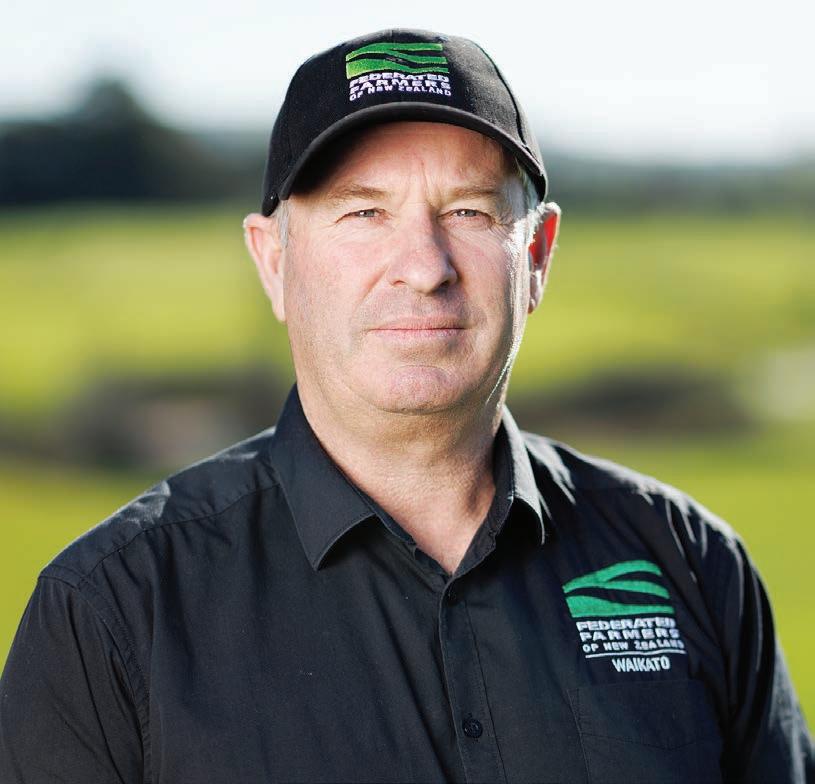
government to step in and put these rules on ice until the new system is clarified.
“Why roll out new farming rules that are about to be replaced? When the RMA goes, PC1 will go with it.”
Once in force, Plan Change 1 will introduce sweeping new rules for agricultural land use, affecting more than 4500 farms across the Waikato and Waipā River catchments.
For example, restrictive rules will make it extremely difficult for farmers to change land use or even
switch between different farming systems.
This would hit many Waikato farmers who converted their dairy farms to dairy goats in the 2010s, leaving them unable to return to milking cows.
More than 400 farmers in the Whangamarino Wetland Catchment will also have to obtain a restricted discretionary resource consent simply to continue their existing farming activities.
Those farmers will have no
certainty they can keep farming, and those who do secure consent could be subjected to significant restrictions on how they operate.
King Country sheep and beef farmer Reon Verry, who serves as Waikato Federated Farmers meat and wool chair, is also concerned about what PC1 might mean for local farmers.
Verry is a strong supporter of environmental protection, having completed substantial fencing and planting projects on his farm and helped establish a local catchment group.
“The environment is something I really care about, but these rules will simply see a whole lot of money wasted on compliance costs rather than on-farm action,” Verry says.
“With all the Government’s reforms currently underway, it makes total sense to press pause on implementing these new rules until everyone has more clarity.
“Pausing the new rules doesn’t mean pressing pause on environmental improvements. Farmers are still going to keep getting on with the good work we’re already doing.
“Like most farmers, I’ve still got my farm environment plan to get on with, the native trees are ordered, and the fencers are booked in.”
Verry says Ministers are currently working their way through what the new national system will look like, and we need to be careful to avoid duplication or confusion.
“Common sense would suggest we slow down and wait for the new system to land.”
SLOW DOWN: Chris Woolerton, a Taupiri dairy farmer, wants to see the plan change paused until there’s clarity on resource management, local government and farm plan reforms.
Water projects vital to Hawke’s Bay
Clashing heads over which of two community water storage projects is best for the Hawke’s Bay is counterproductive and short-term thinking, the province’s Federated Farmers president Anthea Yule says.
“With the changing climate making water supply security even more pressing, the Hawke’s Bay needs to think in generations – 50100 year time slots – not election cycles.
“It’s a big region, with huge growth potential, and if the investment cases stack up, we should drive for both projects.
“They could be built in sequence, with the workforce and expertise built up moving from one to the next.”
New Zealand has 12 times the world average of fresh water per head of population.
Associate Agriculture Minister Mike Butterick has called water New
Zealand’s “superpower” – an enabler of growth and jobs.
“I agree with him,” Yule says.
“Our kryptonite is all the red tape that ties up both big and small water capture and storage projects, delaying progress and spooking investors.”
In its election platform released at Fieldays, Federated Farmers said smoothing the path for community water storage and aquifer recharge should be a priority for the next government.
Uncertain resource consenting processes mean it’s often hard to secure private sector investors to fund projects in the beginning.
Government seed funding and fast-track approval can get schemes across the line, and then they’re selffunded by water users.
Federated Farmers is also seeking a national permitted activity standard that would make it easier for farmers to build their own
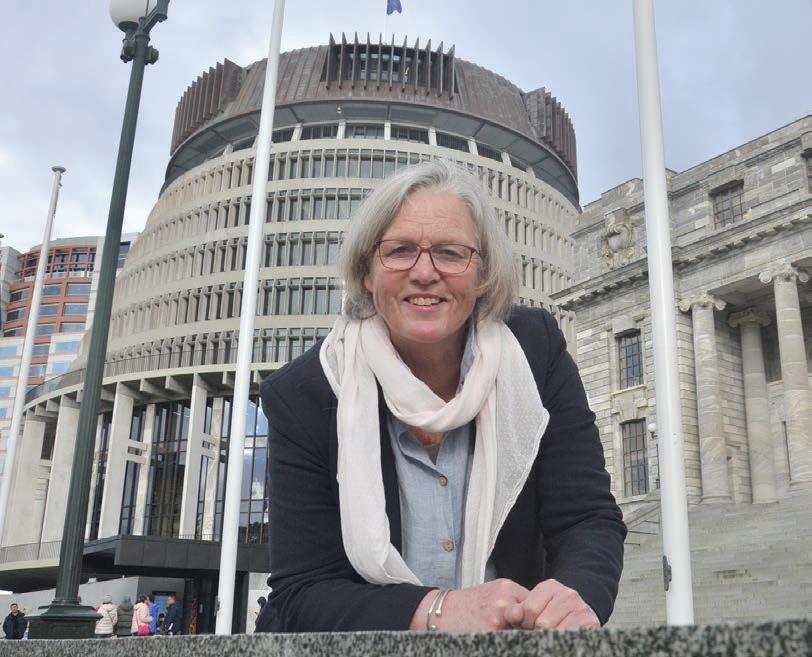
Our kryptonite is all the red tape that ties up both big and small water capture and storage projects, delaying progress and spooking investors.
Anthea Yule
Federated Farmers Hawke’s Bay president
on-farm water storage to increase productivity.
The two large-scale water storage project proposals in the Hawke’s Bay are the Tukituki Water Security Project, in Central Hawke’s Bay, and the Heretaunga Water Storage Project, in the Hastings District.
“We live in a region that alternates between floods and droughts, and large projects like these can work for both issues,” Yule says.
“The challenge isn’t whether we have water, it’s whether we can hold enough of it for when we need it.”
The Tukituki project, on the headquarters of the Makaroro River, is the revised successor to the Ruataniwha scheme, scuttled in 2017 by a Court ruling against a land swap involving 22ha of conservation land.
The revised scheme proposes storing 104 million cubic metres of water behind New Zealand’s biggest dam since the Clyde Dam.
It would provide irrigation across up to 30,000 hectares, enabling higher value horticulture, livestock and seed production.
NZ Institute of Economic Research modelling shows that when fully operational, it would increase annual regional GDP by $693 million a year.
“Central Hawke’s Bay needs that water security, especially in shoulder seasons, to really crank up Waipukurau and all that fertile land down there,” Yule says.
At 27 million m3 of stored water, the Heretaunga project is smaller but no less vital.
“It will harvest peak winter freshwater flows to replenish the Heretaunga aquifer and offset environmental impacts from summer groundwater extraction.
“It’s not just for expanding agriculture. It secures town supplies for Napier and Hastings while protecting lowland streams.
“Storage projects also reduces pressure on natural waterbodies during summer, as users draw from stored sources.”
Yule says as well as water storage, the Hawke’s Bay well illustrates the need for other calls on the next government in the Feds’ election platform – including flexibility of land use, unleashing the potential of solar energy and cutting resource consent red tape.
“The planned closure of the McCains vegetable processing plant in Hastings early next year, in part because of high energy costs, will hit farmers across 9000 hectares in Central Hawke’s Bay alone.
“Vineyards are also under pressure, with something like 20% of them up for sale.
“Those farmers and growers deserve flexibility to switch to livestock or other farming systems but they will run into nitrogen limit and livestock drinking water restrictions under TANK Plan Change 9.”
The deadline for Hawke’s Bay Regional Council to decide how it will act on the Environment Court’s rulings on PC9 has been extended until 15 July.
“They can fully or partially implement the rulings but Federated Farmers is again urging the council to kick the TANK Plan to touch.
“There’s already too much pressure and uncertainty on the local primary sector, vital to the Hawke’s Bay economy.
“The imminent overhaul of resource management legislation will likely make aspects of Plan Change 9 redundant anyway.”
Regulation and seasonal water shortage are eroding options for farmers, Yule says.
“It’s like death by 1000 cuts.
“Everyone is expecting the primary sector to continue underpinning the Hawke’s Bay’s economic vitality but our ability to do that is being whittled away bit by bit.”

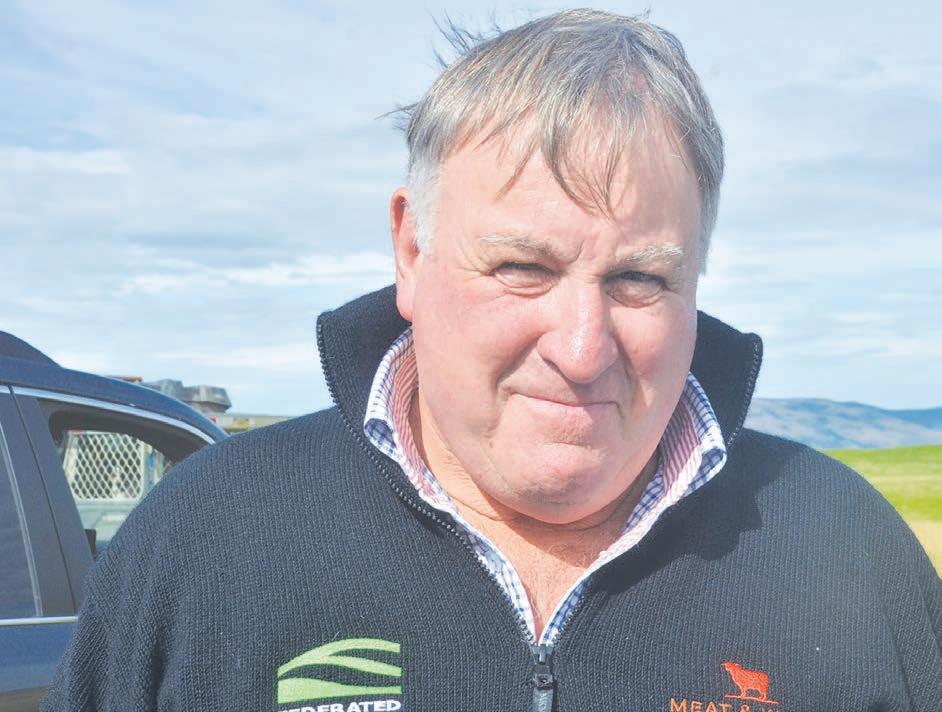





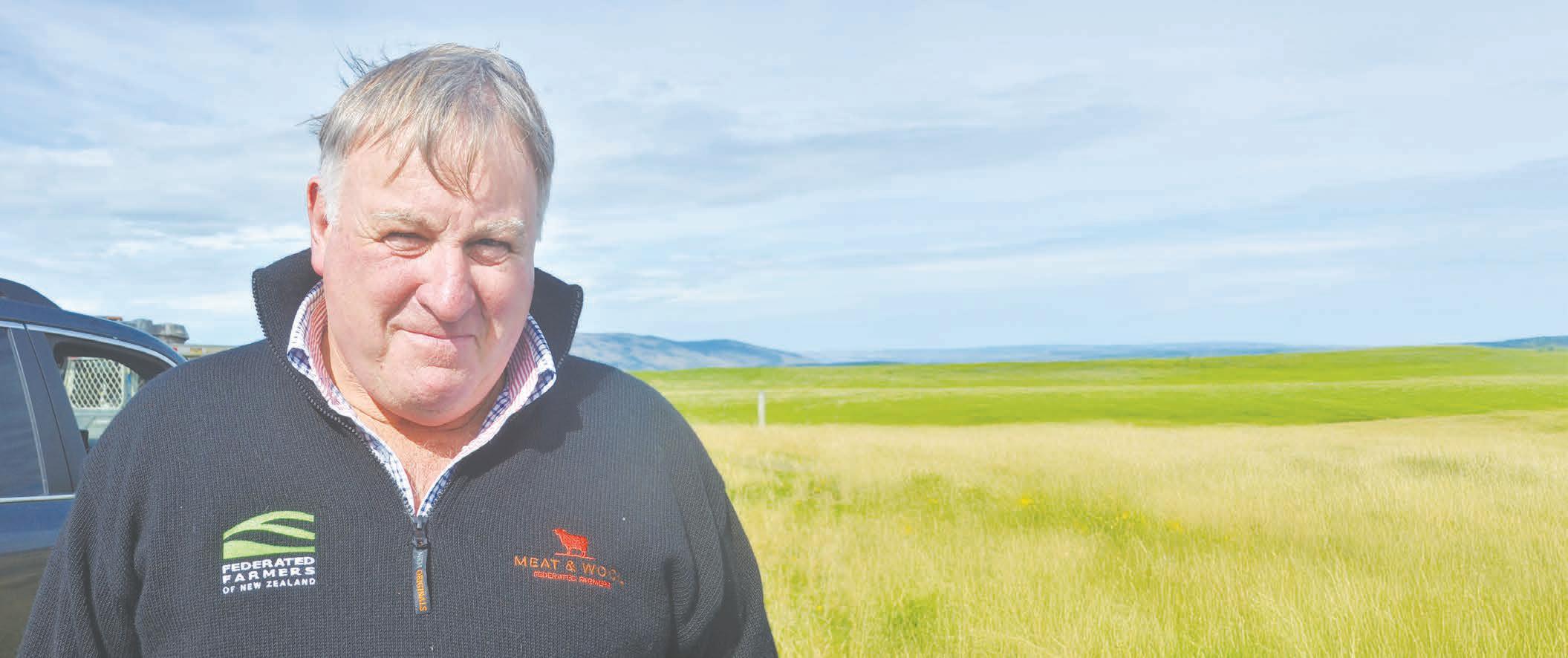

ADVANTAGE: Associate Agriculture Minister Mike Butterick has called water New Zealand’s “superpower” – an enabler of growth and jobs.
POLICY PRIORITIES: Accelerating progress on water storage projects and ensuring farmers have land use flexibility should be priorities for who’s in charge in the Beehive after November, Anthea Yule says.
Industry award winners announced
Apioneer of rural radio, a titan of the dairy industry, and some of New Zealand’s most influential leaders are among the winners of this year’s Primary Industries Awards.
More than 500 people gathered in Auckland on 23 June to celebrate the best and brightest across New Zealand’s primary sector.
The annual Primary Industries New Zealand Awards recognise the people, businesses and organisations helping drive the country’s food and fibre industries forward.
There was a standing ovation when Jim van der Poel was recognised for his incredible service to the dairy sector, receiving the Outstanding Contribution to Primary Industries Award.
Judges described van der Poel as “an absolute titan” of the New Zealand dairy industry.
“When you talk about New Zealand’s primary industries, there are very few names that carry more weight than that of Jim van der Poel.
“Jim has made a significant, sustained and truly outstanding
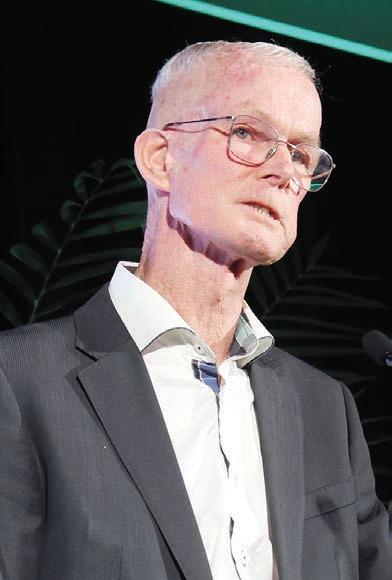
OUTSTANDING:
contribution spanning more than four decades of loyal service.”
Van der Poel’s distinguished career has spanned farming, business, and industry governance.
“Jim was at the helm as the dairy industry navigated the highs and lows of the milk price, an upswing in environmental regulation, and the Mycoplasma bovis biosecurity incursion,” judges said.
“Throughout all these challenges, Jim carried himself with absolute integrity, dedication and empathy.”
Another stalwart of rural New Zealand, Neil Bateup, was announced winner of the Champion Award, recognising his decades spent supporting farmers and rural families through challenging times.
Bateup helped establish the Waikato Hauraki Coromandel Rural Support Trust in 2004, then served as chair of the New Zealand Rural Support Trust from 2017 to 2024 after playing a key role in establishing the national network.
Judges said Bateup was “quiet, humble but tenacious” and had been a visionary for the wellbeing of the rural community.
Legendary rural commentator and radio host Jamie Mackay was crowned Agricultural Communicator of the Year.
Mackay is the founder and host of flagship rural radio show The Country, now more than 30 years old.
Judges said Mackay was a pioneer of rural radio who’d achieved national reach.
Another well-known radio personality, Alexa Cook, won the Excellence in Agricultural Journalism Rongo Award for her series on Hawke’s Bay pine expansion.
Judges said she’d written an “outstanding feature that brought new perspective to the issue of carbon forestry and land use change impacts”.
They praised the RNZ reporter for taking a thoughtful approach to ensure both sides were told, and for bringing this story to the wider
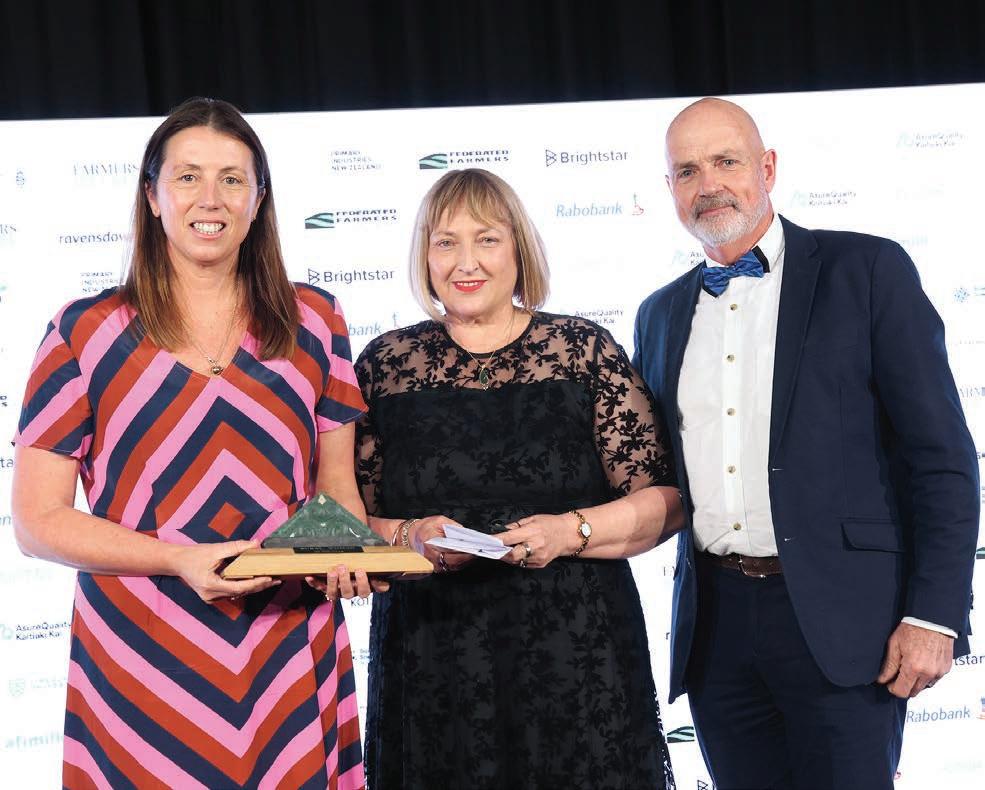
attention of the general public.
The Rural Woman of the Year Award – a new category – was presented to Kate Acland, chair of Beef + Lamb New Zealand.
Judges said Acland had shown “inspirational leadership” in changing both the culture and effectiveness of Beef + Lamb.
“Under Kate’s leadership, we have seen a significant change in the sentiment of Beef + Lamb’s levy-payers.
“Someone needed to do it and Kate felt that she had the strength to take on the challenge and reset the organisation.”
Young Waikato dairy farmer Danielle Hovmand claimed the Emerging Leader Award for her “selfless leadership qualities” in roles with Young Farmers and Federated Farmers.
“Her advocacy, community involvement, ability to connect with and uplift others demonstrate a level of maturity and influence well beyond her years, making her a standout emerging leader,” judges said.
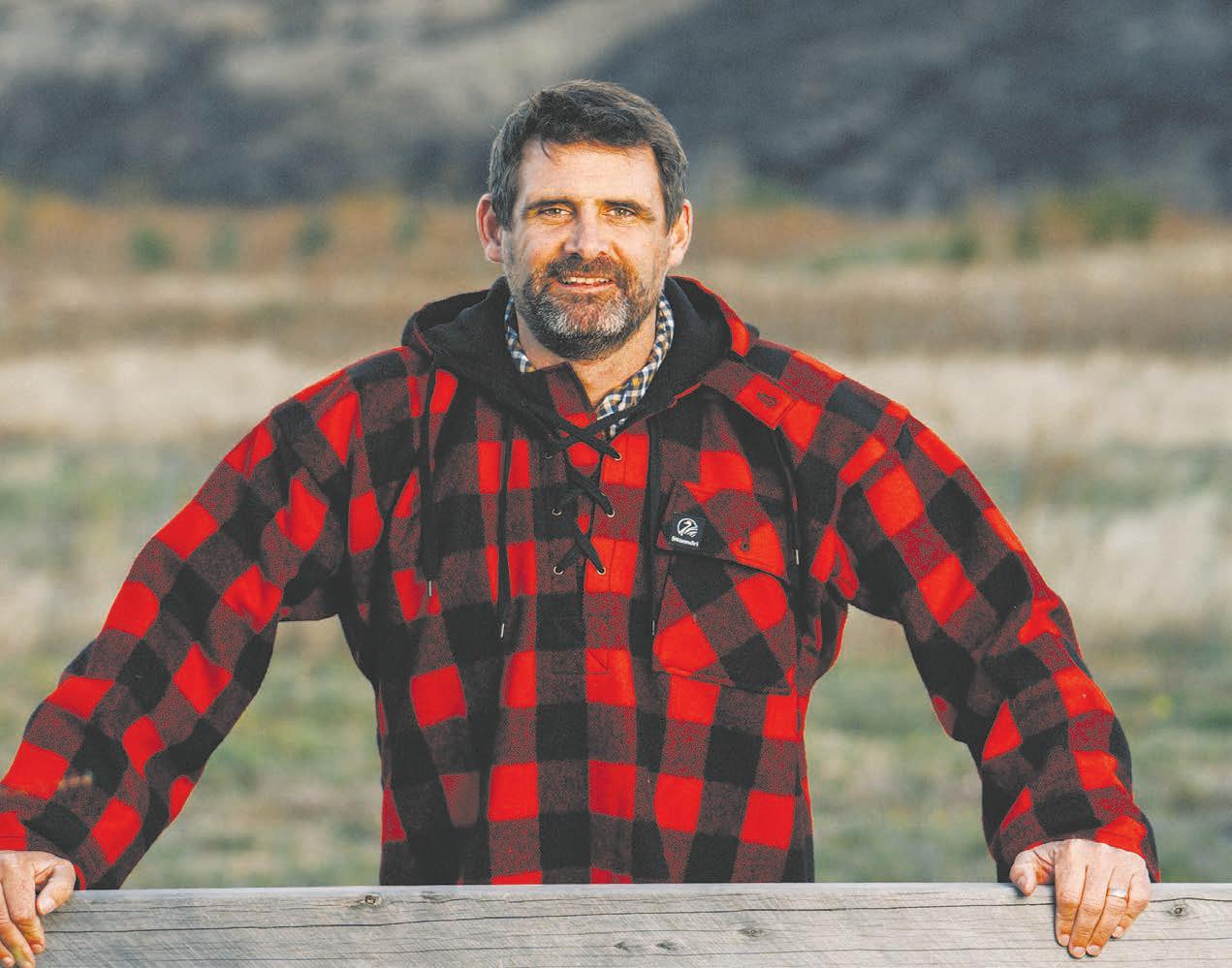


EXCELLENCE: Beef + Lamb NZ chair Kate Acland won the inaugural Rural Woman of the Year Award, presented to her by Cushla and Dean Williamson owners of Farmers Weekly.
The Team & Collaboration Award went to Sow the Seed, the Horticulture and Agriculture Teachers Association’s advisory team. When the Government proposed removing agribusiness and agricultural and horticultural science from the senior curriculum last year, Sow the Seed successfully fought to keep the subjects.
Throughout all these challenges, Jim carried himself with absolute integrity, dedication and empathy.
Judges PINZ Awards
Prism Earth took home the Technology & Innovation Award for developing a system that helps New Zealand’s primary sector comply with the European Union’s strict deforestation regulations, ensuring ongoing access to a $200 million export market.
Judges said the solution “positions New Zealand as one of the only countries ready to meet the EU’s strict regulations while futureproofing our sector’s environmental credentials”.
The Food, Beverage and Fibre Producer Award, which recognises an outstanding product from New Zealand’s primary sector, was won by T&G Global for its apples business. Judges pointed to T&G’s premium ENVY brand, which has delivered strong returns per hectare for growers, with leading performers achieving over $115,000 per ha, rivalling kiwifruit returns.
Parininihi ki Waitotara (PKW) was named winner of the Guardianship & Conservation Award (Kaitiakitanga Award), celebrating an outstanding conservation project or initiative within New Zealand’s primary industries.
Judges said the Māori agribusiness had ingrained kaitiakitanga into its business over 30 years, ensuring environment, people and animals were all covered with actions and metrics to improve performance.

There was a standing ovation when Jim van der Poel was recognised for his incredible service to the dairy sector, receiving the Outstanding Contribution to Primary Industries Award.
Nitrogen hurdle on road to consent
Apathway to consent is finally clear for a group of Horizons dairy farmers – but it’s a steep and challenging one that may be beyond some of them.
“It’s positive that the ridiculously long-winded and expensive Plan Change 2 planning processes are finally drawing to a close,” Federated Farmers Manawatū-Rangitīkei president Ian Strahan says.
“But that’s about the only plus from this sorry saga.”
Decisions released by the Environment Court earlier this month end the consenting limbo that 167 dairy farmers in Whanganui, Manawatū-Rangitīkei and Taraura have been stuck in for a decade.
“But they now face the task of trying to reduce nitrogen (N) leaching down to levels that for some threaten the economic viability of their farms.”
There’s a 12-month deadline for the farmers involved to put together a consent application that convinces Horizons regional council they can achieve significant N reductions.
“If you’re a really prepared farmer, fluent in what your nitrogen outputs are, and with a really firm handle on its management, that deadline should work.
“But for others it will add a lot of
CHALLENGES:
Ian Strahan says farmers in sensitive catchments are already farming in more challenging country.
strain. They’ll be chasing a limited number of consultants and it could mean a rush of applications before the cut-off,” Strahan says.
“In the back of everyone’s minds will be the fact the Government is overhauling the RMA.
“We’ll be getting new national direction on freshwater quality that could well override Plan Change 2. What a lot of pain for no gain.
“This never-ending churn of changing regulation is frustrating for farmers when they’re already making good progress on nutrient discharge reductions.”
Horizons had prepared their regional One Plan based on nitrogen (N) loss levels estimated by the nutrient modelling tool Overseer.
A 2015 Overseer software update left 167 dairy farms in sensitive catchments without a pathway to consent.
The updated software estimated N losses had risen by as much as 60% in some cases, even with no change in on-farm practice.
The farmers, through no fault of their own, could no longer comply with local rules.
Fish & Game and the Environmental Defence Society in 2017 applied to the Environment Court to make the council enforce the One Plan.
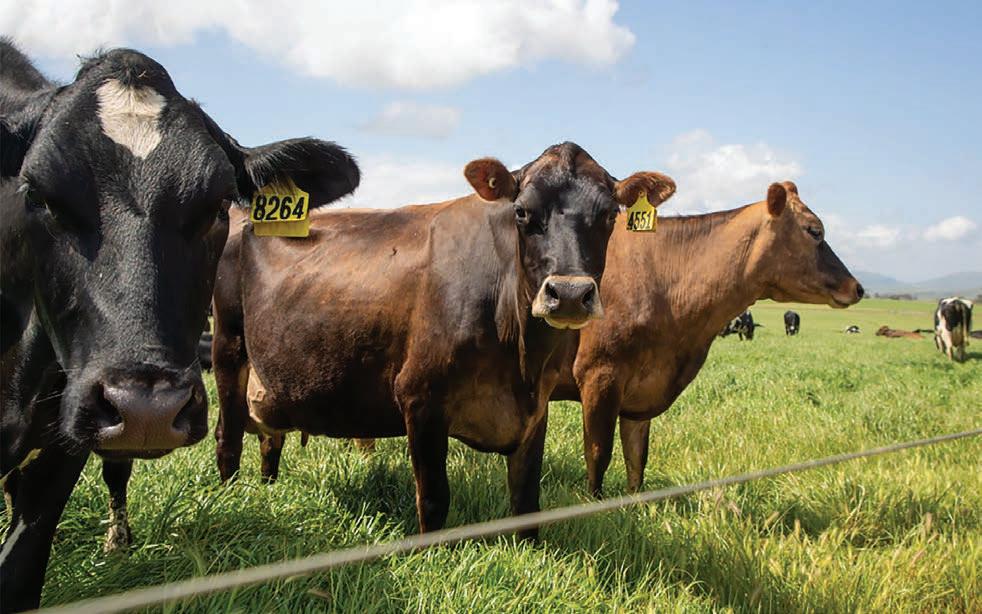
In response, Horizons proposed Plan Change 2 (PC2) to provide a workable consenting pathway for the affected farmers.
Fish & Game and iwi groups again appealed. Federated Farmers joined the proceedings to support the council’s endeavours to enable the farms to gain consent as a controlled activity.
In an interim ruling released late last year, the Environment Court ruled a Specified Reduction Pathway (SRP) would apply.
Dairy farmers in sensitive catch-
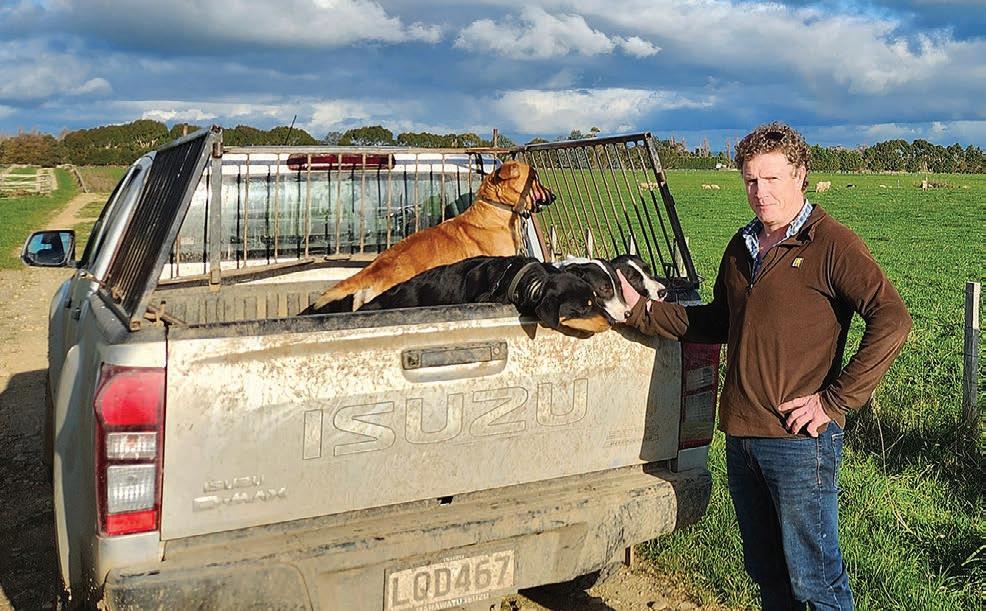
ments would have to reduce N leaching by 20% from a 2012 baseline – or to the 75th percentile of the catchment they’re in – within two years of PC2 becoming operative.
“It was a win for us but it’s a great shame the Court didn’t chose the alternative risk-based approach option,” Strahan says.
“The SRP also requires use of Overseer, widely acknowledged as not accurate enough for use for regulatory purposes, including by the Parliamentary Commissioner for the Environment.”
On 10 June, the Environment Court confirmed its interim rulings would stand.
Horizons says it will amend PC2 to account for the Court’s requirements.
Affected farmers in sensitive catchments in places such as upper Kumeti, Tamaki-Hopelands, and coastal Rangitikei are already farming in more challenging country, Strahan says.
“It depends on the particular characteristics of the land they’re farming but it could mean having to reduce cow numbers, or going to once a day milking so their stock aren’t lactating so hard.
“Applying less fertilizer might be another option. Those sorts of actions can come at a real cost to the viability of their operation.
PATHWAY DEADLINE:
Dairy farmers in sensitive catchments have 12 months to get together a consent application that convinces Horizons regional council they can make significant nitrogen leaching reductions.
We’ll be getting new national direction on freshwater quality that could well override Plan Change 2. What a lot of pain for no gain.
Ian Strahan Federated Farmers ManawatūRangitīkei president
“Only time will tell how realistic it is for them to firstly persuade the council they have a realistic plan for these very significant N reductions, and then before two years are up to actually achieve them.”
While reforms coming down the line hold promise for a drastic reduction in the need for resource consents in favour of practical and workable farm environment plans, they’re not in place yet.
“Our advice to the 167 farmers trapped in this bureaucratic bog is to press on with the consenting pathway the amended PC2 opens up.
“Gains made in your continuing journey to lighten your environmental footprint will still serve you well under the more sensible farm plan regime on the horizon.”

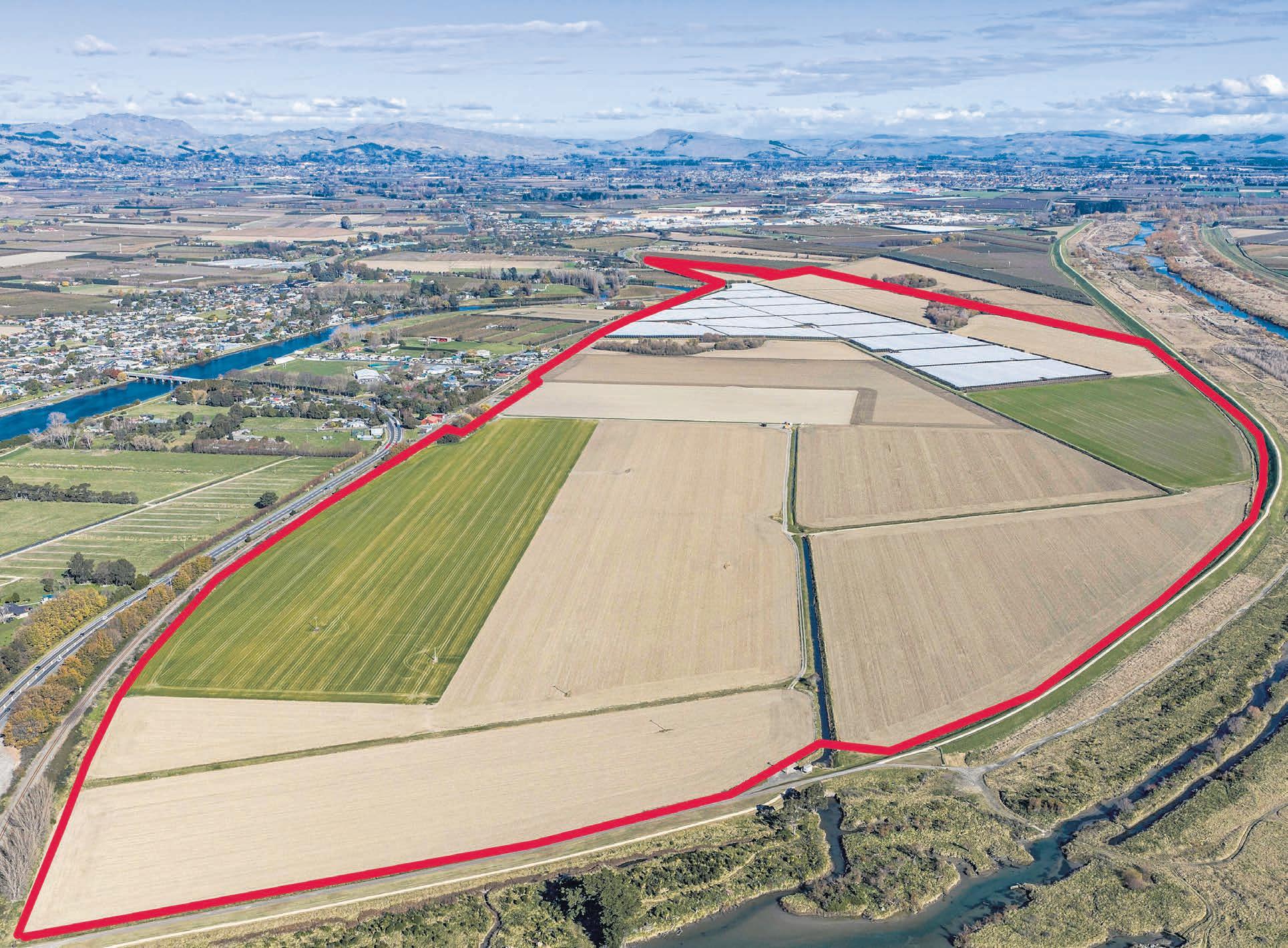
Boundary lines are indicative only
Clive 34 and 148 Farndon Road and 272 State Highway 51
Large premium horticulture investment opportunity
First time to the market this exceptional 176ha property represents one of the largest contiguous holdings of premium Hawke's Bay horticultural land offered in recent years Featuring tile drainage and valuable irrigation consents, this prime Heretaunga Plains holding represents a rare opportunity for serious horticultural investors and growers seeking scale, versatility, and long term potential Strategically located in Clive, the property offers convenient access to key post-harvest facilities in Whakatu, Hastings, Napier and Port, enhancing operational efficiency and market connectivity Comprising six individual titles, the holding provides flexibility for purchasers and supports a wide range of horticultural development opportunities Suitable crops include apples, kiwifruit, and other specialist crops Available as a whole or in individual titles, offering a range of options bayleys co nz/2854577
Tender
4pm, Fri 31 Jul 2026
Havelock Road, Havelock North
by appointment
Rasmussen 027 429 2253
rasmussen@bayleys co nz
Macpherson 021 488 018
macpherson@bayleys co nz
SPECIALIST BEEF FINISHING AND CROPPING FARMLAND
A unique opportunity for a wholesale investor to invest in a proven Beef Finishing operation and quality land asset alongside skilled individuals, with a clear proposition for further operational growth and on-farm development.
Investment sought of up to $4m with 15-35% shareholding available depending on the level of investment achieved.
The investment is underpinned by a flat, high-quality irrigated landholding of over 200 hectares located 992 Wards Road, Kirwee, strategically integrated by growing feed crops to support the beef finishing operation utilising established barn infrastructure.
The vendor invites expressions of interest from parties to acquire this interest in the farmland and trading operation.
For further information on this opportunity, please contact: Ray Fraser

Phone:
Email:
The Vendor is offering the property to the open market via public advertising. Ray Fraser of NZAB is acting in an advisory capacity only and is not a licensed real estate agent.


Sefton 907
Te Kuiti 279 Taumatatotara Road
Big country, big scale, big opportunity
279 Taumatatotara West Road is a substantial 574 ha (more or less) west coast farming property across two titles, offering approx. 480 ha of effective grazing Predominantly medium to steeper hill country, it features rolling valley floors and upper terraces suited to sheep and beef breeding and finishing. Well-developed infrastructure includes around 48 paddocks, extensive tracking and laneways with nearly 4 km of main tracks providing 4WD access throughout, and three reliable water supply systems servicing the farm. Improvements include a four-stand raised board woolshed, sheep and cattle yards, docking yards, implement sheds and hay storage. Accommodation comprises a modernised four-bedroom main home with office/sleepout, double garage and additional shedding, plus a tenanted three-bedroom second dwelling offering extra income or staff accommodation. The property also features native bush, wetlands and approx. 10 ha of pine plantings.
Maungati 744 Motukaika Road
744 Motukaika Road, Maungati
A proven, high-performing farming operation, this property is expertly set up for beef finishing and dairy support with a strong focus on maximising kilograms of meat produced per hectare Backed by an excellent fertiliser history, the farm features well-maintained all-weather laneways, extensive regrassing and subdivision into approximately 2.5ha paddocks for efficient grazing and stock management. Water security is a key strength, with two solar-powered water schemes complementing the local supply. Improvements include a spacious five-bedroom homestead, tidy three-bedroom cottage, three sets of cattle yards with loadout facilities and a range of supporting sheds, creating a productive and highly functional farming unit.
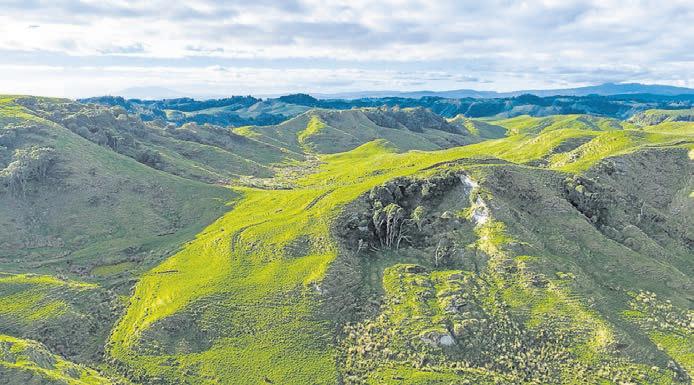
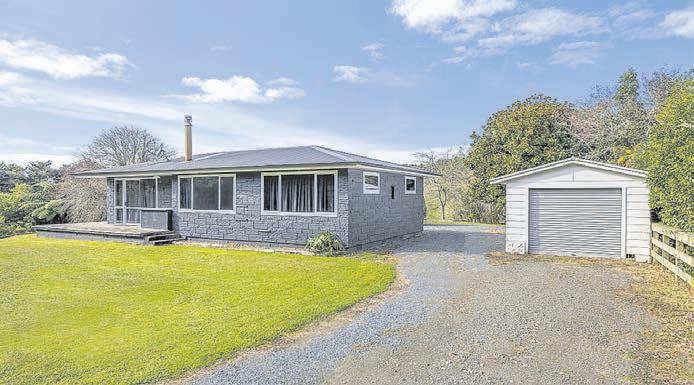
574.44ha
Tender closes 2.00pm, Wed 22nd Jul, 2026 (unless sold prior),
Property Brokers, 141 George Street, Te Awamutu
View By appointment
Web pb.co.nz/RGR225623

James Lambie M 027 852 1830 E james.lambie@pb.co.nz
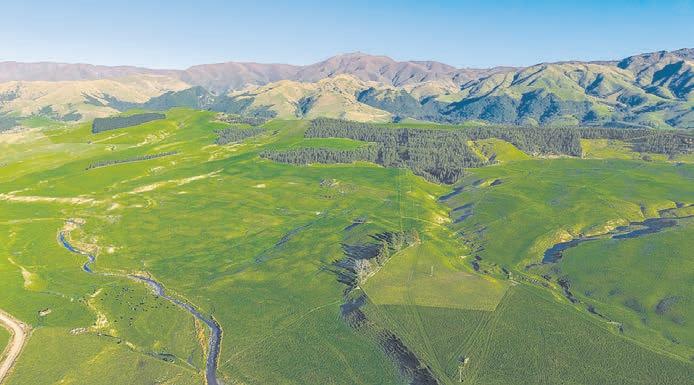
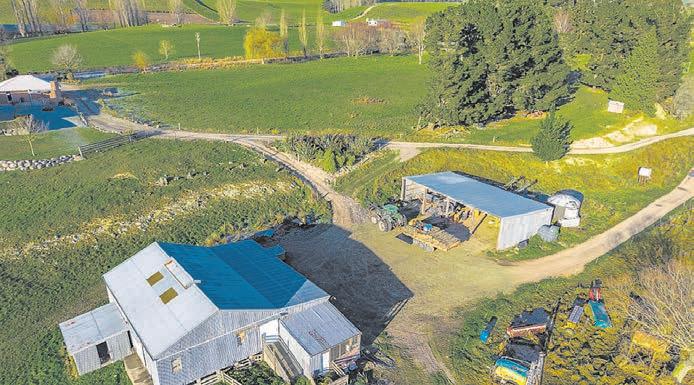
8 3 3
Deadline Sale closes Friday 7th August, 2026 at 1.00pm, (unless sold prior)
View By appointment
Web pb.co.nz/TMR230362

Michael Richardson M 027 228 7027 E michael@pb.co.nz


Notice of Election 2026 Board of Directors
Ravensdown

Nominations
For
helpline 0800 666 038 or email vote@electionz com or download from www electionz com/ravensdown2026resource
Anthony Morton Returning Officer - Ravensdown Limited PO Box 3138 Christchurch 8140





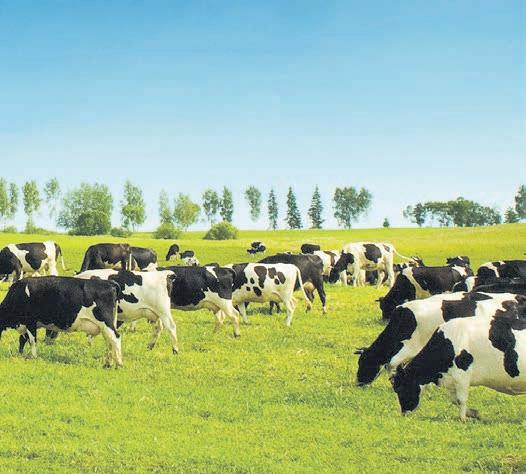















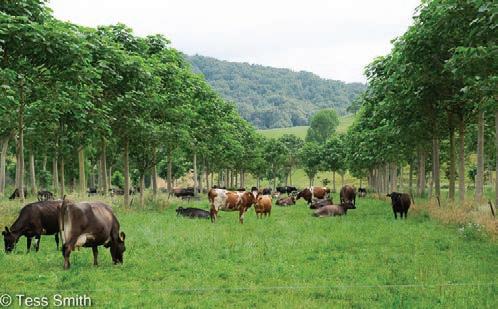
shade for stock
Paulownia Elongata,
Sizes
Qualify for ETS. Leafy shade from year 1.
We Deliver – T&C’s apply
Contact Graham 027 621 4091
Email miraka1@outlook.com paulownianz.co.nz
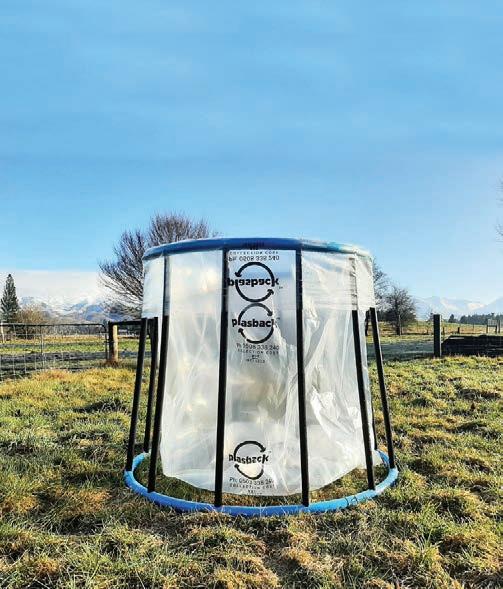
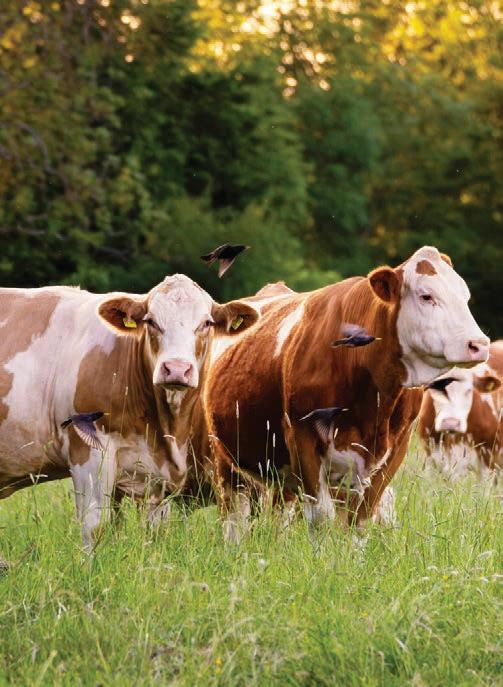



GOATS WANTED
FERAL GOATS WANTED. Pick-up within 24 hours. Prices based on works schedule. Phone Vicky Le Feuvre 07 893 8916 or 027 363 2932.
LIVESTOCK FOR SALE
WILTSHIRES-ARVIDSON. Self shearing sheep. No1 for Facial Eczema. David 027 2771 556.
HIGH PRESSURE WATER PUMPS, suitable on high headlifts. Low energy usage for single/3-phase motors, waterwheel and turbine drives. Low maintenance costs and easy to service. Enquiries ph 04 526 4415, email sales@hydra-cell.co.nz PUMPS
SALE TALK
A DRUNKEN MAN staggered into a Catholic church, sat down in the Confessional and said nothing. The priest waited, and waited. The priest coughed to attract the drunk man’s attention, but still the man said nothing. The priest then knocked on the wall three times in a final attempt to get the man to speak. Finally the drunk man replied, “No use knocking mate. There’s no paper here either.
SLINK COLLECTIONS
NZAGRI SLINK SKINS collection invites all collectors to join us to collect slink lambs and calves for 2026 season. Starting 15/07 to 15/11. Rate: Lambs $1.80, calves $7.50. Please email eddiezhi@gmail.com or phone 027 464 8866.
TREES FOR FARMS
ADDITIONAL INCOME. Stock shelter, erosion control, truffle income, animal fodder, Fireproof Cork, Low Tannin Acorns Cork & Holm Oak & natives. Tree protectors for cattle and deer. W: Truffles .nz 021garden.co.nz Litherland truffles. 021 327 637.
TREES FOR SALE
LARGE VARIETY of natives for sale for the 2026 planting season. Pick up Wairoa. Phone Jan 027 278 7033.
R1YR Friesian
<
R2YR Bulls 370-420kg
R2YR Exotic x Heifers 400-460kg
R2/3YR Beef Bulls >520kg
Dairy beef x R2YR Hfrs & Steers (cheaper end types) 30 MA Fries/Here Cows VIC Chara info@dyerlivestock

Advertise with us
Reach every farmer in New Zealand every week
Call Julie 027 705 7181
goats mustered on a 50/50 share basis.
NZ KELP. FRESH, wild ocean harvested giant kelp. The world’s richest source of natural iodine. Dried and milled for use in agriculture and horticulture. Growth promotant / stock health food. As seen on Country Calendar. Orders to: 03 322 6115 or info@nzkelp.co.nz
SAWN SHED TIMBER including Black Maire, Matai, Totara, Rimu, Mac, Redwood, Western Red Cedar etc. Also buying salvaged native logs. Phone Richard Uren. NZ Native Timber Supplies. Phone 027 688 2954. WANTED TO BUY
WHAT’S SITTING IN your barn? Ford, Ferguson, Hitachi, Komatsu, JD. Be it an excavator, loader or tractor, wherever it is in NZ. Don’t let it rust. We may trade in and return you a brand new bucket for your digger or cash for your pocket. Email admin@loaderparts.co.nz or phone Colin 0274 426 936.
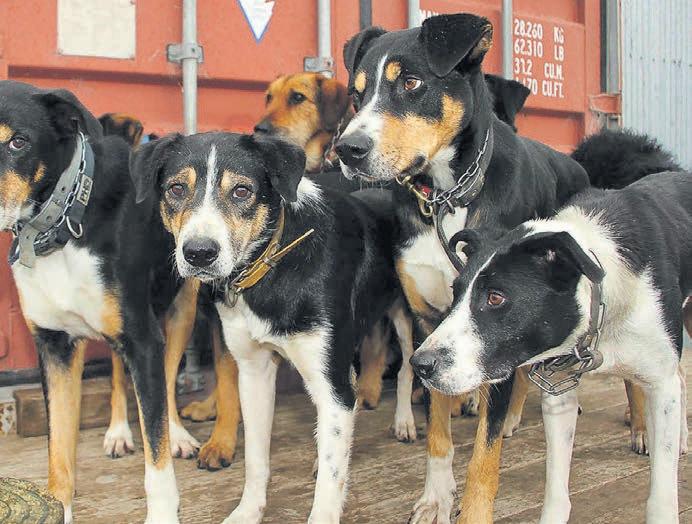
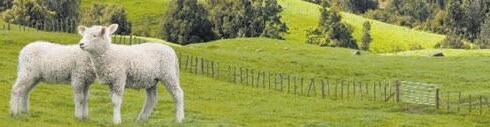




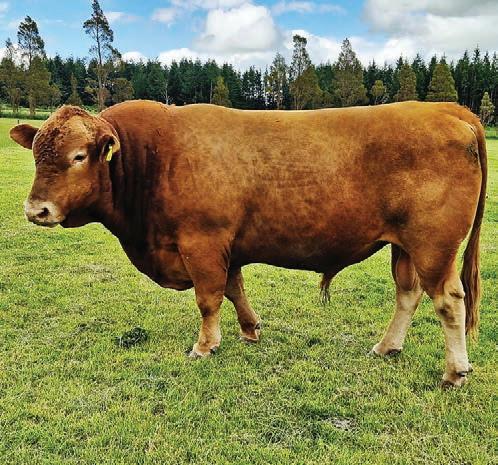
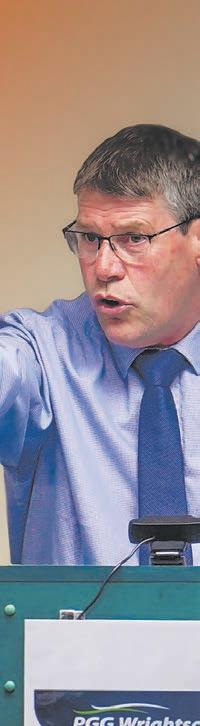

Experience the transparency of New Zealand’s wool auction system. Tune in live and see the market in action at bidr.co.nz


Markets
No normal is the new normal for red meat
International business increasingly finds itself operating within an environment of geopolitical tension.

Alex Coddington MARKETS Trade
WHAT could have been described as choppy trade conditions this time last year are now being increasingly shaped by a tsunami of policy decisions from the world’s largest trading nations.
The new normal for international business is operating within an environment of geopolitical tension. The international beef trade sits at the centre of this shift, as competing priorities around food security and protectionism become increasingly embedded in global politics.
A global wave of land-use change has left many nations increasingly reliant on imports to maintain food security. As confidence in the stability of global trade weakens, protecting domestic food supply has become a central policy driver.
New Zealand’s beef exports stand to benefit from this trend,
but not without increased risk.
Political sentiment continues to favour protectionist policies, where trade relationships are becoming less focused on commodity value and more on selective market access based on trust, partnerships, diplomatic relationships, and production systems with integrity.
Governments are now balancing a complex mix of food security, biosecurity risks, reducing agricultural land area, and consumer affordability. For major importing economies such as the United States and the European Union, much of the political decision-making surrounding the beef trade centres on the tension between protecting domestic production and keeping meat prices affordable for consumers. On one hand, national leaders are pursuing tighter biosecurity measures and stronger protections for domestic industries. This is evident in China’s use of volume safeguard triggers, the US’s restrictions on live cattle imports from Mexico due to the New World screwworm outbreak, and
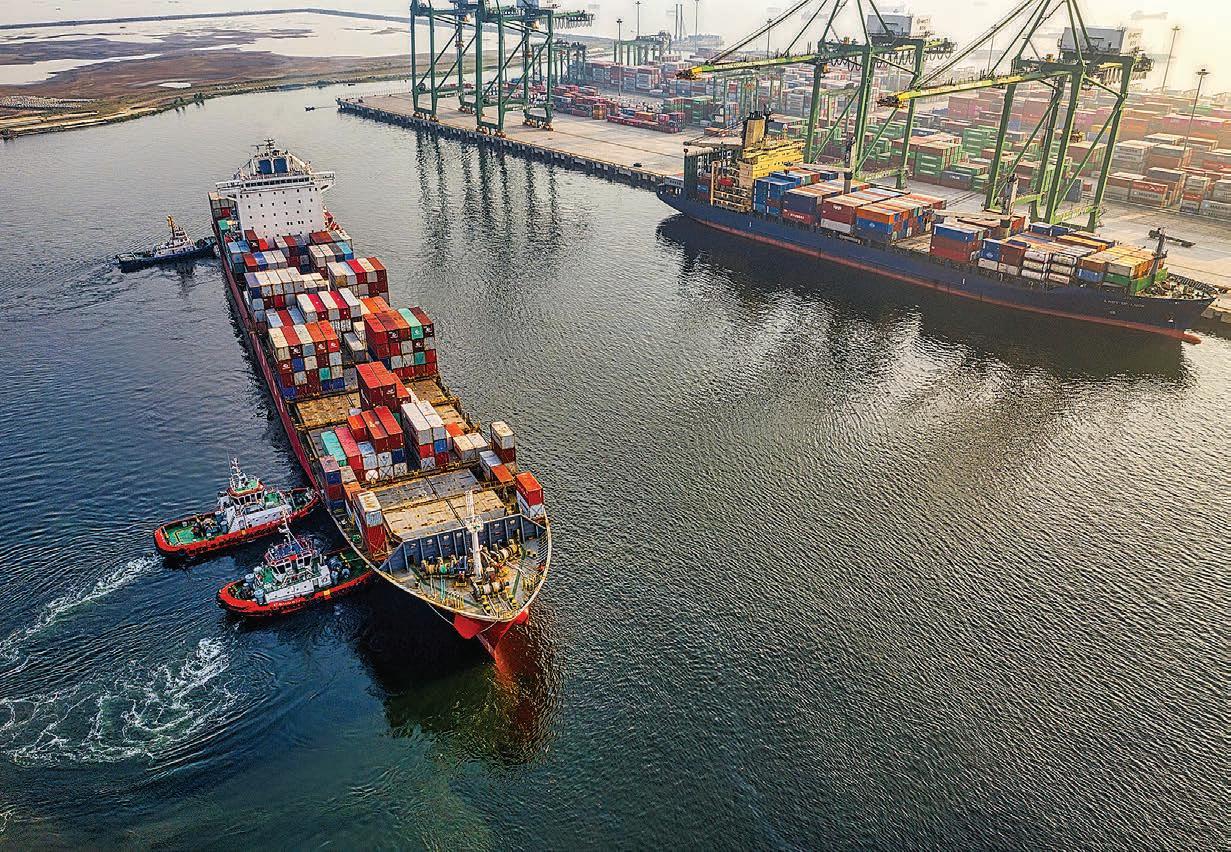
NZ will not be immune to the shocks created by these underlying tectonic changes, but our strong reputation ... places us in a favourable position to capitalise on the opportunities they create.
Europe’s ban on certain Brazilian exports linked to vaccination practices. While these measures help shield domestic producers from market disruption, they also contribute to higher beef prices.
At the same time, importing nations have sought to improve supply and ease consumer costs.
The result is a global market being pulled in two directions: one focused on protecting
domestic production and supporting producer returns, and the other on expanding trade flows to secure affordable supply for consumers.
We have seen the US open its doors wider to Argentine beef while imposing tariffs on other trading partners. China has effectively closed the door to any more beef from Australia and may soon do the same with Brazil but has reinstated export licences for multiple US beef exporters.
New Zealand is well placed to benefit amid this global uncertainty. More than ever, trust in a nation’s trading practices, confidence in its production systems, and long-standing geopolitical relationships are becoming the foundations of market access and successful trade.
As Eastern and Western powers
continue to form alliances and find new ways to exclude one another, New Zealand’s strong relationships with the US, China, Europe, and the United Kingdom position us well to maximise returns across multiple markets. This flexibility allows us to direct product toward the highest-value destinations rather than being forced to funnel volumes into the limited markets where access is available.
The key takeaway from the noise is that geopolitical instability is the new normal. The structural foundations of global trade are shifting. While New Zealand will not be immune to the shocks created by these underlying tectonic changes, our strong reputation and trusted trading relationships place us in a favourable position to capitalise on the opportunities they create.
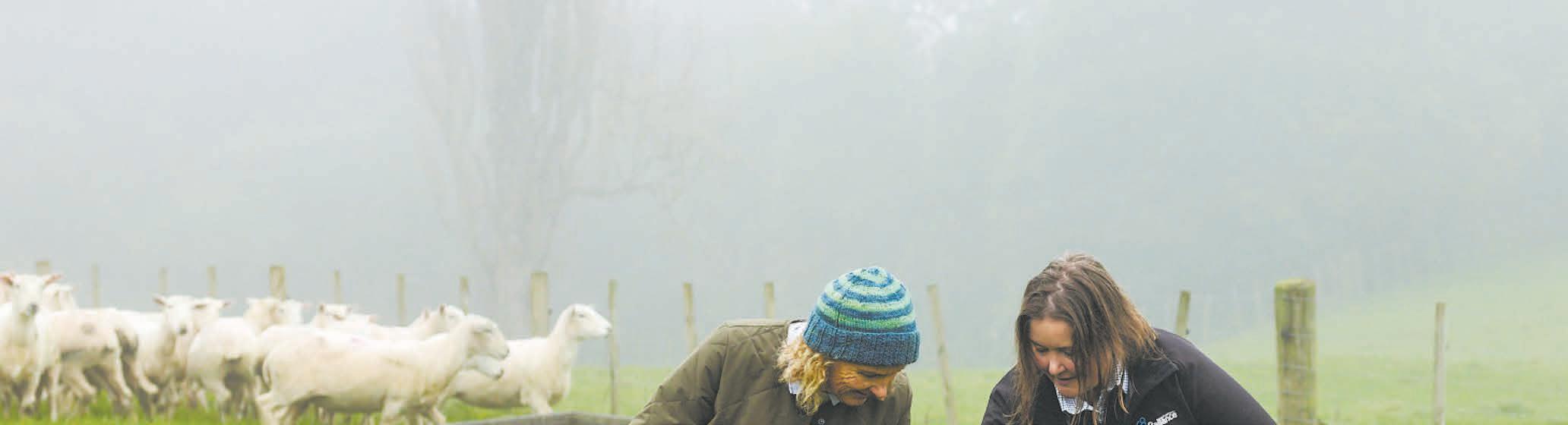
We work with Kim to make
the season.”


IMPORT: A global wave of land-use change has left many nations increasingly reliant on imports to maintain food security.
Photo: Pexels
Cattle Sheep Deer
Weekly saleyard results
These weekly saleyard results are collated by the AgriHQ LivestockEye team. Cattle weights and prices are averages and sheep prices are ranges. For more detailed results and analysis subscribe to your selection of LivestockEye reports. Scan the QR code or visit www.agrihq.co.nz/livestock-reports
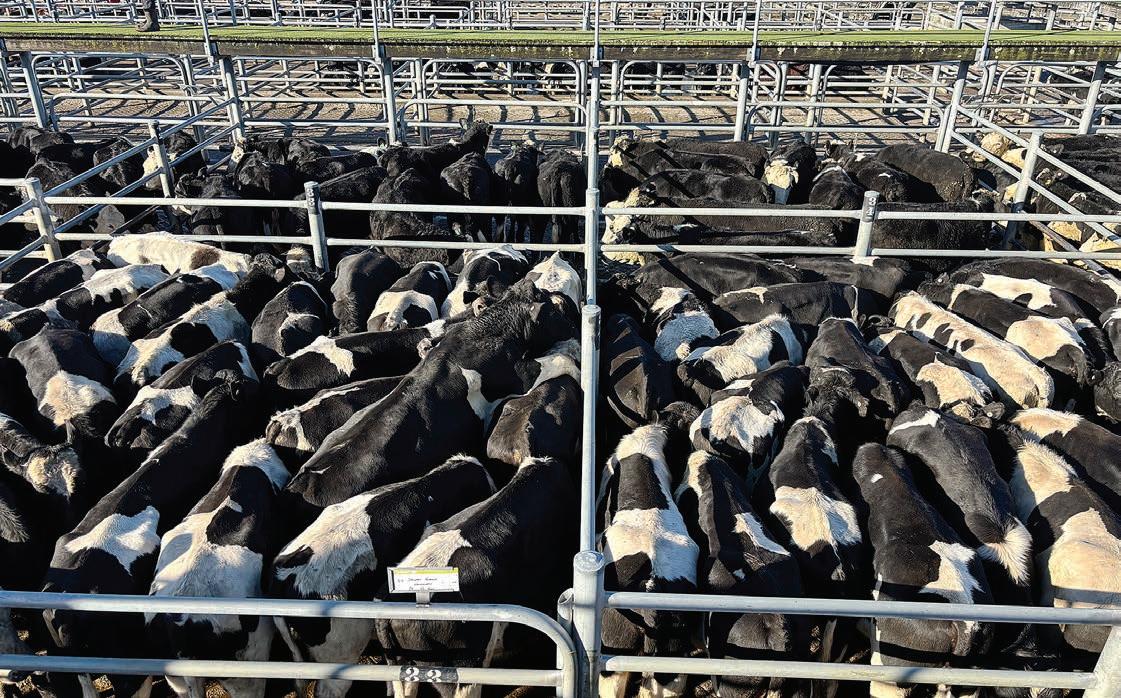







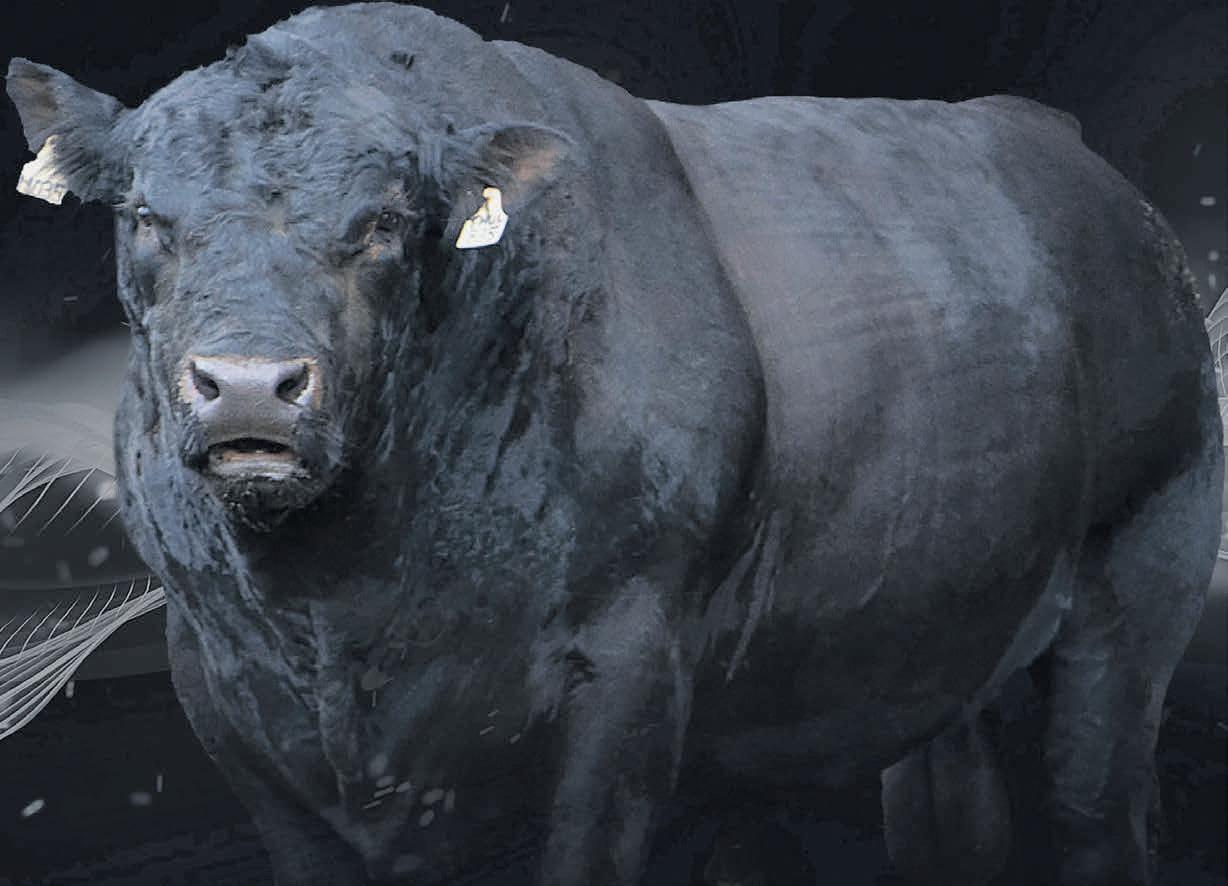

BULL BUYERS
Taranaki | June 24 | 319 cattle $/kg or $/hd
R2 dairy-beef steers, 505kg 5.17
R2 dairy-beef heifers, 380kg 4.85
R1 dairy-beef steers, 190kg 1320
Stortford Lodge | June 22 | 869 sheep
$/kg or $/hd
Prime ewes, most 149-236
Prime 2-tooth ewes, all 184-227
Prime male lambs, all 222-235
Stortford Lodge | June 24 | 455 cattle, 4543 sheep $/kg or $/hd
Mixed-age traditional cows, VIC, 535kg 4.23
R2 Friesian bulls, 410kg 5.38
R2 exotic-beef bulls, 405kg 5.88
R2 traditional heifers, 350kg 5.20
R1 traditional steers, 175kg 1065
R1 traditional heifers, 195kg 1145
Mixed-age Romney ewes, SIL, all 280-311
Store cryptorchid lambs, all 215-221
Store ram lambs, all 225-236
Store ewe lambs, all 176-288
Store mixed-sex lambs, all 195-231
Dannevirke | June 18
Feilding | June 19 | 903
R2 traditional steers, 475kg 5.44
R2 Friesian bulls, 460kg 5.37
R2 dairy-beef heifers, 435kg 5.10
Aut-born yearling dairy-beef heifers, 305kg 5.23
R1 Friesian bulls, 215kg 1110
R1 traditional heifers, 285kg 1545
R1 dairy-beef heifers, 200kg 1145
4-6-tooth crossbred ewes, SIL, all 212-248
Mixed-age ewes, SIL, all 245-312
Store cryptorchid lambs, shorn, all 219-253
Store cryptorchid lambs, woolly, all 200-265
Store ewe lambs, shorn, all 187-226
Store ewe lambs, woolly, most 179-240
Feilding | June 22 | 312 cattle, 2946 sheep
Prime traditional cows, 545kg
Prime dairy-beef cows, 515kg
Prime traditional heifers, 495kg
Boner Friesian cows, 495kg
Prime ewes, all 140-264
Prime cryptorchid lambs, all
Prime male lambs, all
Prime mixed-sex lambs, most
Rongotea | June 23 | 131 cattle
R1 dairy-beef heifers, 150kg 905
Aut-born weaner Friesian bulls, 115kg 965
Coalgate | June 18 | 198 cattle, 2859 sheep
dairy-beef steers, 380kg
Prime traditional steers, 580kg
Prime dairy-beef steers, 545kg
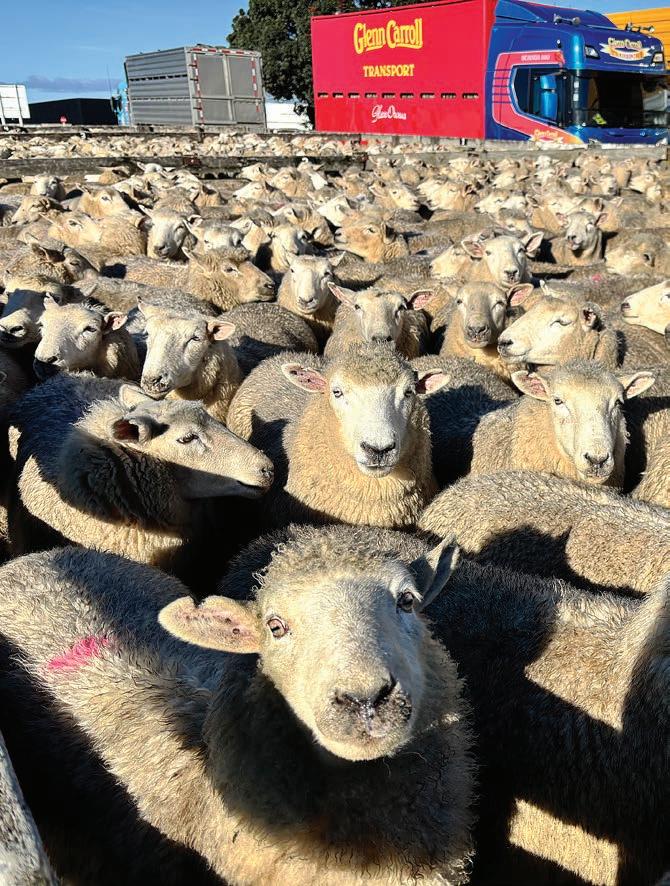
Canterbury Park | June 23 | 244 cattle, 2046 sheep
dairy-beef heifers,
Store ewe lambs, all
Temuka | June 22 | 289 cattle, 5876 sheep

Lie of land and skies at year’s midpoint

WITH El Niño now here, it’s time see how things are shaping up climate and weatherwise around New Zealand.
Soil Moisture Deficit
There has been plenty of good rain falling around the nation over June, making up for a very dry late April and May in a number of places.
The shift in high pressure zones has allowed a few lows through and the slow movement of the highs also means a slow journey for the lows, bringing in rain.
Parts of Canterbury and Otago are in a soil moisture deficit, but the rest of NZ is not. There may also be a few pockets of dry still remaining around Hawke’s Bay, although better rainfall has been recorded there compared with this time last year.
June rainfall
In the South Island, the West Coast has been the wettest part
of NZ over June with over 300mm, and there has been some spillover into the east for Otago and Canterbury.
In the North Island wet weather has been scattered across all the regions with many places getting near, or more than, usual June rainfall.
At the time of writing, Hawke’s Bay still showed some dry pockets, but it depends on who you talk to and where they live – as the eastern North Island has had rain and showers, but due to the mountains and ranges not everyone has had equal servings.
Eastern Northland and the Auckland region (and Thames Valley in Waikato) were running below average up until last week –but that northern low has helped push many regions up to normal or above normal June rainfall.
Who had the most/least sunshine compared to normal?
Sunniest regions (for this time of year) were Auckland, Bay of Plenty, Coromandel Peninsula, south Waikato and the central North Island.
In the South Island, Christchurch/Banks Peninsula
and south Canterbury, Otago, Southland and a small area on the West Coast between Greymouth and Westport have had more sunshine hours than usual.
But many regions had a fair amount of bright sunshine, with only a few places noticeably below normal – the cloudiest areas were: Taranaki, Manawatū, Horowhenua, Wairarapa and an area from Mahia Peninsula to Gisborne. In the South Island it was much of the West Coast, north Canterbury, parts of Tasman district, coastal Marlborough and Stewart Island.
Over the past seven days we’ve seen more cloud roll into NZ thanks to the slow-moving North Island low and the wintry southerly that came behind it.
Temperatures in June
Apart from the polar change many felt late last week, the South Island has been leaning much warmer than usual over June.
Almost all of the South Island has been over 2degC above normal and in the lower half of the North Island it was Whanganui, Hawke’s Bay, Tararua, inland Wairarapa, Horowhenua and Wellington that were more than 2degC above
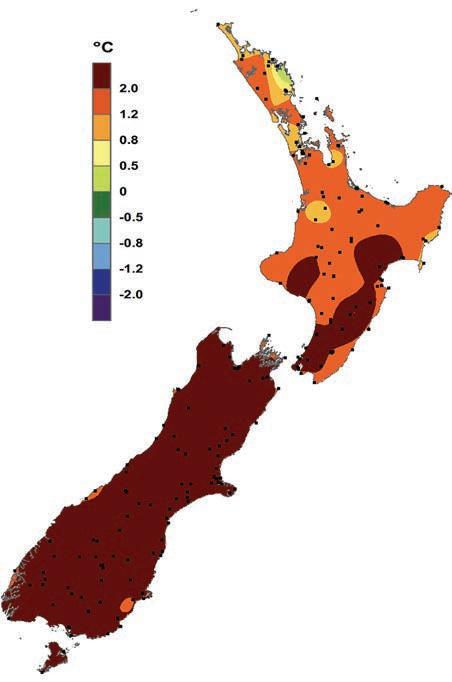
LEANING: The mean temperature anomaly map for June shows most of New Zealand leaned warmer than usual –although it does not include the polar snap late last week.

June’s usual average.
The top half of the North Island was also above average, but not by as much (0.5 to 1.9 degrees). Only the Bay of Islands area was close to normal.
While it’s been frosty this winter at times, the frosts haven’t been as heavy or widespread as in previous years – with some warm nor’wester and subtropical
northerlies in the mix too. Obviously the cold change last week will be resetting some of these figures.
What is coming up in July?
Variety. A mix of highs, lows, southerlies and northerlies. We’re not stuck in one consistent set-up yet – a good thing, with El Niño now here.
G et insights you never knew you needed with Tru-Test Active Tag wearables.
Accurate heat detection, including silent heats
Automated reports and real- time group insights for transition, reproduction, rumination and more
Essential health alerts
No subscriptions and no data fees, payment terms available
Collar or Ear Tag options





Philip Duncan NEWS Weather
Image: Earth Sciences NZ