Glimmer of hope for trade route

SHIPPING lines have reacted quickly to the announcement of a Middle East peace deal with cuts to hefty fuel surcharges – but direct services to the region could still be months away.
The United States and Iran were expected to formally bring the conflict to an end over the weekend, with the reopening of the Strait of Hormuz being a key feature of the deal.
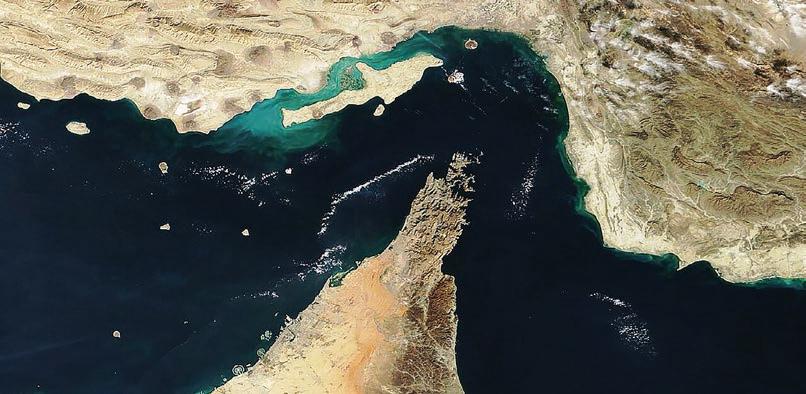
A fifth of global oil production passes through the narrow waterway, which is also the most direct route to New Zealand’s sixth-largest export market, in the Persian Gulf.
You could be talking several months before things are back to normal.
Logistics company Kotahi negotiates freight rates for significant exporters to the region, including Fonterra and Silver Fern Farms.
Its chief executive, Emma Parsons, said shipping lines had added as much as $8000 to the cost of carrying a container to the region in the early stages of the
Nigel Stirling MARKETS Trade Continued page 3
conflict as fuel and insurance costs spiked.
“Some containers leaving NZ wouldn’t be worth that much which made [that trade] completely prohibitive,” Parsons said. Fuel surcharges are now coming down in line with falling oil prices which dipped below US$80 a barrel last week, she said.
Data published by the Ministry of Foreign Affairs and Trade shows dairy exports to the Gulf states fell 30% in March and April while meat was down 59% and horticultural exports down 79% compared to the same months a year ago.
With access to the Persian Gulf cut off after the closure of the Strait of Hormuz in February, shipping lines had to unload containers at Omani ports on the southern side of the Arabian Peninsula.
From there containers were trucked overland to the United Arab Emirates, Qatar and Bahrain.
For exports to Saudi Arabia, cargoes had to make a six-week detour around the Cape of Good Hope.
Parsons said it would take time for ships still plying this longer route to become available again for direct services to the Persian Gulf.
Shipping lines will also want to be sure their vessels are safe from mines and other threats before reentering the Gulf.
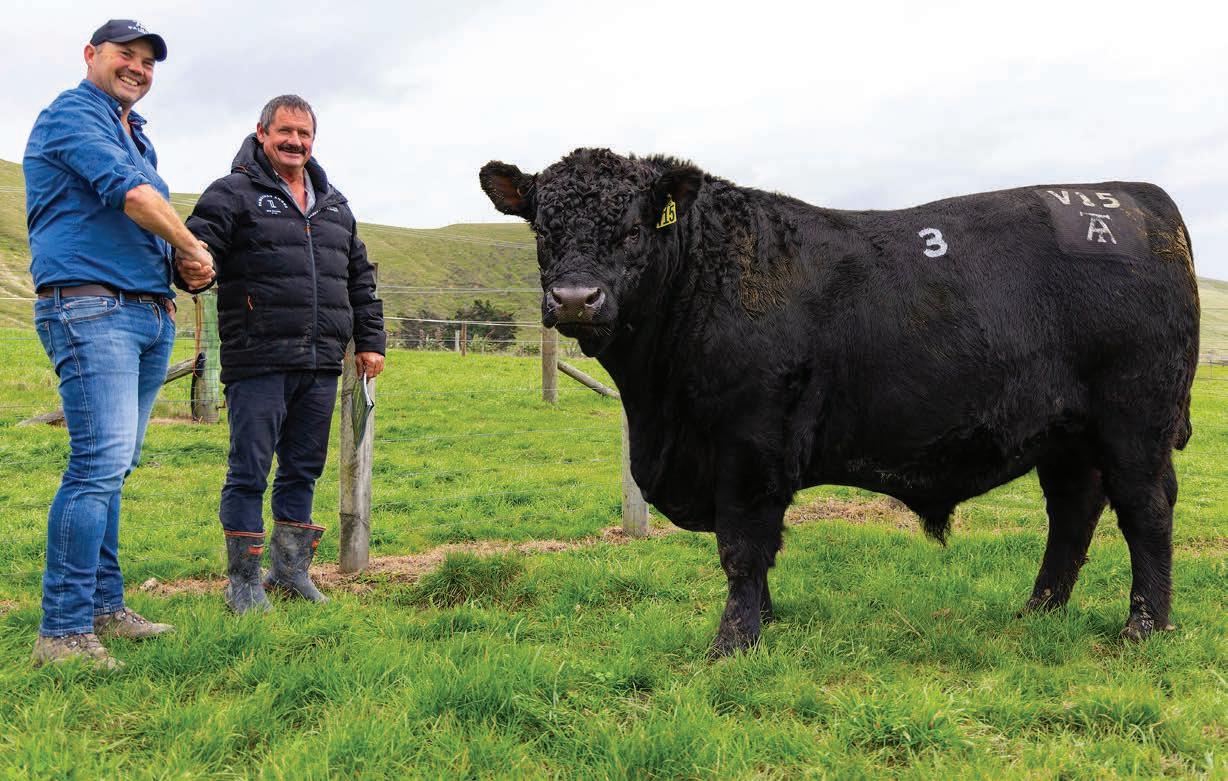
A whole lotta bull
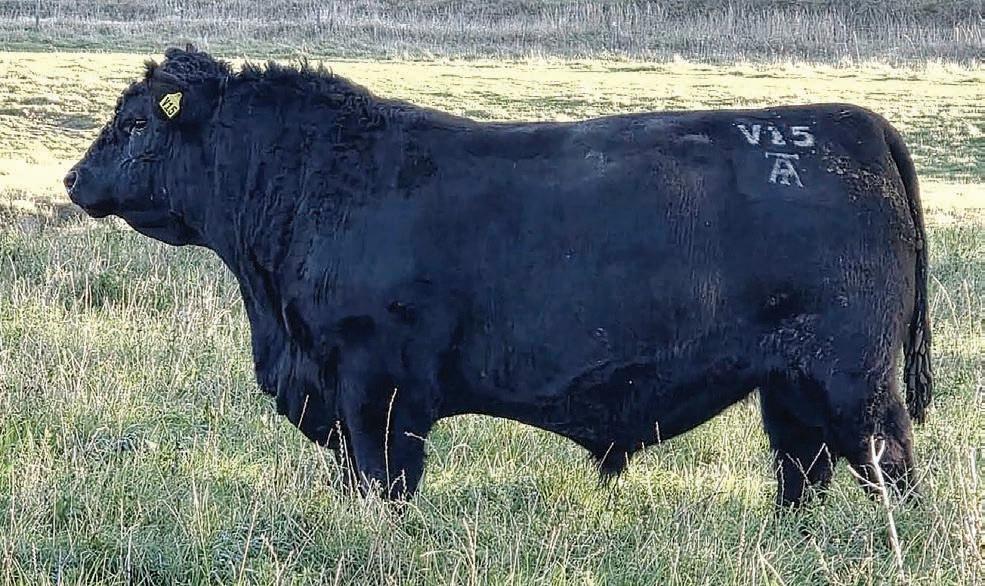
Taimate Angus owner Paul Hickman congratulates buyer Dean McHardy, of Tangihau Angus, following the sale of Taimate Angus V15 Lot 3 at auction in Ward last week. The bull, described as being ‘close to the perfect all-round bull’, fetched a record Angus bull price of $168,000.
SECTORFOCUS
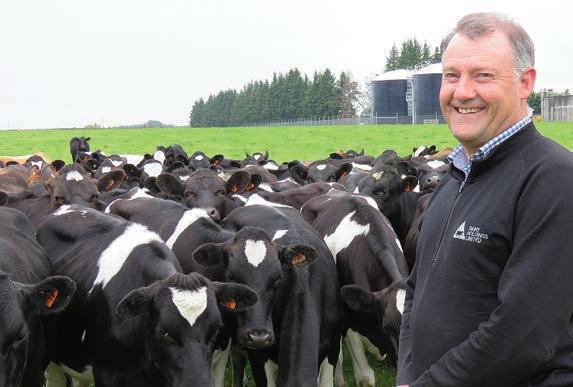
Former Dairy Holdings chief executive Colin Glass is looking forward to swapping corporate life for the family dairy farm near Methven.
20-25
Catchment group benefits are not just for land and water.
19




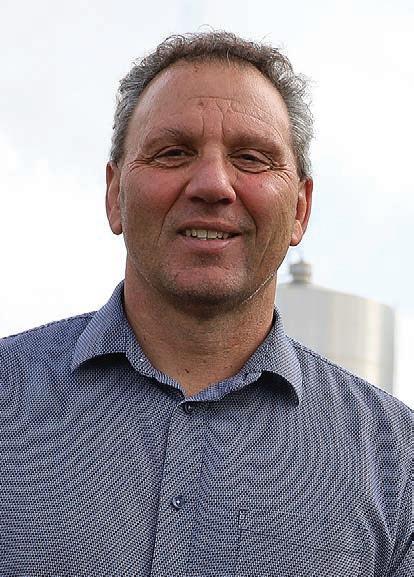
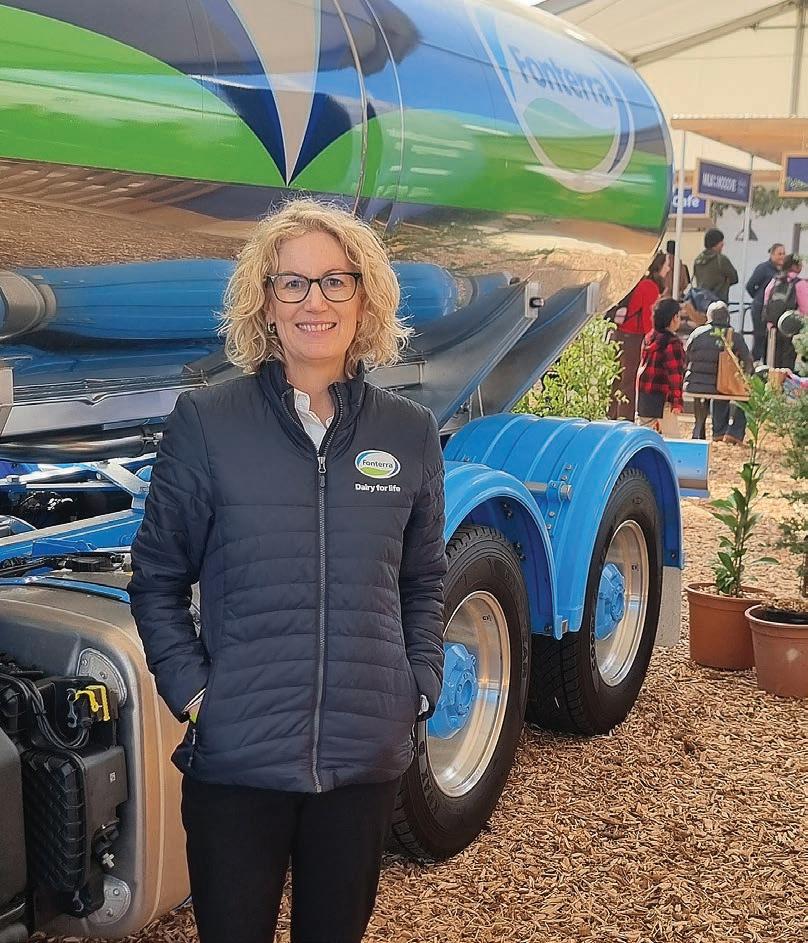
Emma Parsons Kotahi
EDITORIAL
Bryan Gibson | 06 323 1519
Managing Editor bryan.gibson@agrihq.co.nz
Craig Page | 03 470 2469
Deputy Editor craig.page@agrihq.co.nz
Claire Robertson
Sub-Editor claire.robertson@agrihq.co.nz
Neal Wallace | 03 474 9240
Journalist neal.wallace@agrihq.co.nz
Gerald Piddock | 027 486 8346 Journalist gerald.piddock@agrihq.co.nz
Annette Scott | 021 908 400 Journalist annette.scott@agrihq.co.nz
Hugh Stringleman | 027 474 4003 Journalist stringleman@outlook.co.nz
Richard Rennie | 027 475 4256 Journalist richard.rennie@agrihq.co.nz
Gerhard Uys | 027 239 4388 Journalist gerhard.uys@agrihq.co.nz
Nigel Stirling | 021 136 5570
Journalist nigel.g.stirling@gmail.com
Isabella Beale | 027 299 0596
Multimedia Journalist isabella.beale@agrihq.co.nz
PRODUCTION
Lana Kieselbach | 027 739 4295 production@agrihq.co.nz
ADVERTISING MATERIAL
Supply to: adcopy@agrihq.co.nz
SUBSCRIPTIONS & DELIVERY 0800 85 25 80 subs@agrihq.co.nz
PRINTER
Printed by NZME
Delivered by Reach Media Ltd
SALES CONTACTS
Andy Whitson | 027 626 2269
Sales & Marketing Manager andy.whitson@agrihq.co.nz
Janine Aish | 027 300 5990
Auckland/Northland Partnership Manager janine.aish@agrihq.co.nz
Jody Anderson | 027 474 6094
Waikato/Bay of Plenty Partnership Manager jody.anderson@agrihq.co.nz
Palak Arora | 027 474 6095
Lower North Island Partnership Manager palak.arora@agrihq.co.nz
Andy Whitson | 027 626 2269
South Island Partnership Manager andy.whitson@agrihq.co.nz
Julie Hill | 027 705 7181
Marketplace Partnership Manager classifieds@agrihq.co.nz
Andrea Mansfield | 027 602 4925 National Livestock Manager livestock@agrihq.co.nz
Real Estate | 0800 85 25 80 realestate@agrihq.co.nz
Word Only Advertising | 0800 85 25 80 Marketplace wordads@agrihq.co.nz
PUBLISHERS
Dean and Cushla Williamson Phone: 027 323 9407 dean.williamson@agrihq.co.nz cushla.williamson@agrihq.co.nz
Farmers Weekly is Published by AgriHQ PO Box 529, Feilding 4740, New Zealand Phone: 0800 85 25 80 Website: www.farmersweekly.co.nz
ISSN 2463-6002 (Print) ISSN 2463-6010 (Online)

News in brief GDT down
Dairy prices fell across almost all categories in the latest GDT auction, with the price index down 2.8%.
Whole milk powder fell 3.1%, skim milk powder was back 3.6%, butter was down 2.4%, AMF slipped 1%, cheddar dropped 3.4% and mozzarella had the biggest fall, down 5%. NZX head of dairy insights Cristina Alvarado said the result was largely in line with market expectations
OSPRI changes
OSPRI is changing the way it conducts Tb testing in surveillance areas.
To improve the cost-effectiveness of the TB Free programme, and to reduce the time, cost, and paperwork for farmers, the way herds are selected for testing in the surveillance areas is being changed. Criteria for testing will include whether the frequency of animals moving on and off farm is higher than usual, whether the animals have come from higher-risk areas and whether the NAIT records for the farm are accurate.
Scholarships offered
Three new scholarships intended to put young farmers on the road to primary sector leadership have been announced by the government. Agriculture and Forestry Minister Todd McClay said they will support young farmers to grow in confidence and gain experience to become farm leaders of the future. There will be three scholarships every year and recipients will receive $10,000 to go towards domestic or international study.
Winner pending
The supreme winner of the Ballance Farm Environment Awards will be announced on July 2 at the Te Pae Convention Centre in Christchurch.
The National Sustainability Showcase will highlight the achievements of the 11 regional supreme winners, culminating in the presentation of the Gordon Stephenson Trophy. The winner will also become the 2026 National Ambassador for Sustainable Farming and Growing.


Kiwifruit celebrates successful season

Richard Rennie NEWS Horticulture
TECHNOLOGY, talent and teamwork all contributed to a successful kiwifruit harvest as packhouse operators look forward to a welcome break after processing a near-record crop.
With final numbers still to be confirmed, estimates are this year’s kiwifruit harvest will be at, or possibly just above, last year’s record 220 million trays.
DMS Progrowers CEO Derek Masters told Farmers Weekly the post-harvest operator processed and packed 21 million trays this year, a record for the company.
“There have been a lot of high fives and congratulations going around this week.”
DMS Progrowers and MPac are two post-harvest operators that have broken their own processing records this year.
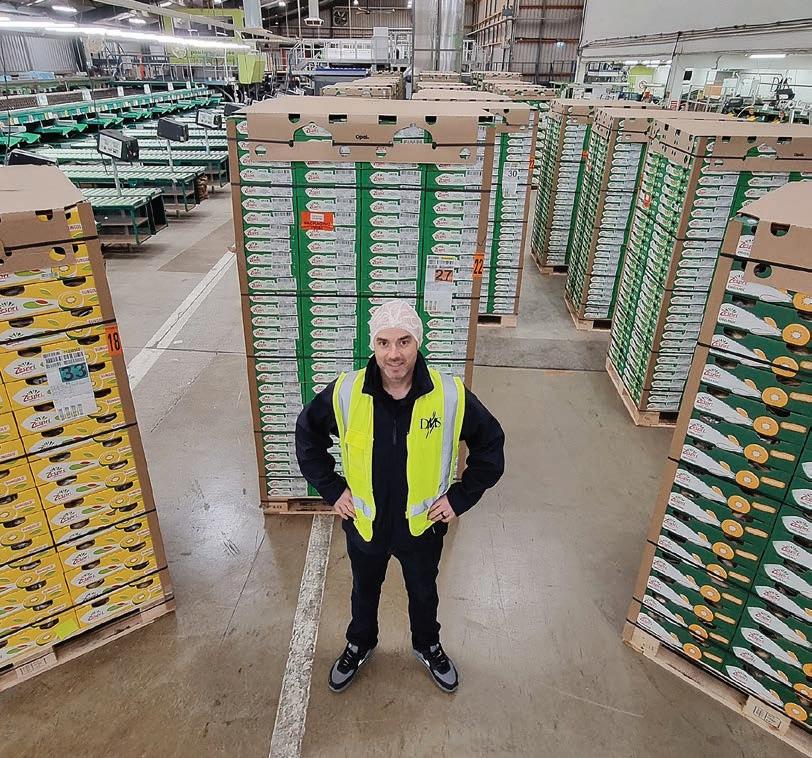
DMS Progrowers Te Puna packhouse manager Haydan Balian said his company has benefited from a high standard of staff on hand this year, helping ensure good packout rates for Class 1 fruit.
This has also been aided by DMS, like several post-harvest operators, adopting more technology in recent years to manage packhouse fruit flow and quality monitoring.
Continued from page 1
“You could be talking several months before things are back to normal,” Parsons said.
The Gulf States usually account for 7%-10% of apple exporter Mr Apple’s global sales but that share will be lower this year. Its head of sales and marketing, Ben McLeod, said some sales bound for the Gulf had been diverted to China at the start of the conflict.
He said Iranian drone strikes on Omani ports drove it to look
The sector has, however, recorded a drop in Green kiwifruit volume of about 10% on last year, and less fruit reached supermarket shelves early this year.
Masters said the widespread nature of the decline indicated Mother Nature had had a role, rather than individual orchard management.
for alternative routes, including through the Panama Canal.
More recently it had been trucking containers from the UAE port of Khor Fakkan on the eastern side of the Strait of Hormuz. Costs had been shared with customers.
“It is a slight increase in cost but is certainly a lot better than going via the Panama Canal and twice around the moon,” McLeod said.
He said he had no idea when direct services into the Gulf would resume.
“Our customers want the more direct option but who knows if
Discover my story and seven others at iamadoctor nz amadoctor
“It had a lot to do with the timing of pollination. Fortunately, we were not down by the 10% thanks to a good pollination process delivering a better result than that.”
The expected $9-$11 per tray return on Green has also helped offset disappointment on crop yields.
that is going to be next week or next year?”
Meat exporter ANZCO’s general manager for sales and marketing, Rick Walker, said there are also questions about what lingering impact the conflict might have on demand for NZ’s primary products.
Energy infrastructure has been damaged and could take some time to bring fully back online.
“It is not just oil revenues, but consumption in places like Dubai has been suffering because no one is going there on holiday,” Walker said.
Enter the Neonatal ICU with Dr Nina Luo, where the tiniest lives need clear heads, steady hands, and deep humanity.
Nina’s f ilm is a glimpse into just some of what our Kiwi Resident Doctors carry every day: hard, human & vital work
Each free-to-watch story is about the length of a cup of tea


“We have some Green growers out there pretty happy about that sort of payment.”
With Zespri remaining committed to more SunGold and RubyRed licence releases, Masters said his company remains committed to expanding its capacity.
“We have more robots going in our Te Puke site and are building another 16 controlled atmosphere storage rooms, taking us to 42 CA rooms.
James Trevelyan, director of Trevelyan’s, said about 8000 bins of SunGold remain in storage to be packed.
His company’s investment in automation in recent years brought labour needs down by 10-15%. He also attributed a large part of the season’s success to a stalwart band of locals who return every year to work.
Quality-wise, he noted Green fruit had experienced higher levels of softness, a result of weather conditions that had also meant some stop-start harvesting earlier on.
MPac has been recognised as a tech-intensive operator delivering competitive packing prices to growers. This year’s harvest saw its growth continue, processing 4 million trays more than last year, to total 36 million.
Managing director Brendan Lee said the company has committed to new facilities near Te Puke to
be commissioned in 2028, and he remains very confident it can continue to attract new orchards and established growers on board.
“The industry is in a good place, returns are strong to growers, and the markets are doing well. As Kiwis I think we need to celebrate the industry’s success.”
There have been a lot of high fives and congratulations going around this week.
Derek Masters DMS Progrowers
New Zealand Kiwifruit Growers Incorporated CEO Colin Bond said early indications are good fruit quality is being carried through to the markets. He noted while the industry had worked collaboratively to address recent issues, it is not yet certain those challenges have been fully resolved.
But in a world of vulnerable supply chains and trade barriers, he said, the collaborative approach is “best in class”.
He said other good news came at the end of season, including the FTA with India to remove tariffs and the announcement of enhanced plant variety right protection.

Dr Nina Luo NICU
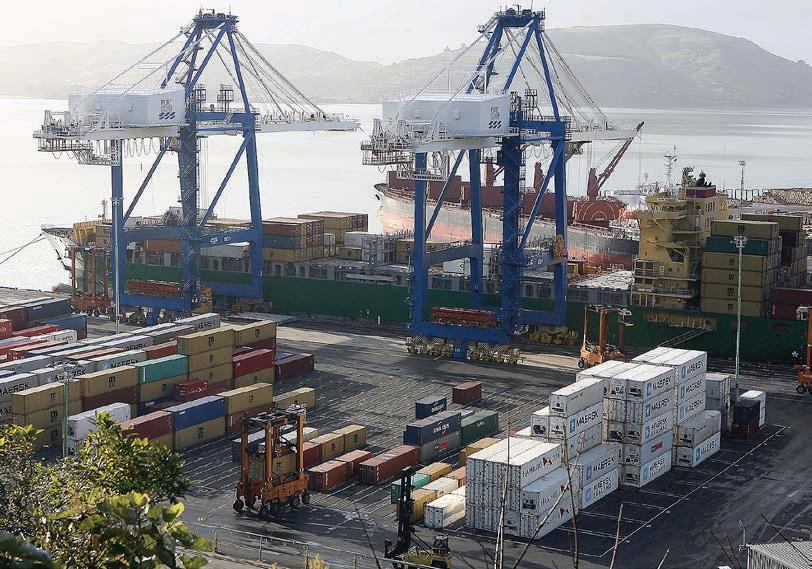
KEY ROUTE: A fifth of global oil production passes through the narrow Strait of Hormuz, which is also the most direct route to NZ’s sixth-largest export market, in the Persian Gulf.
Photo: Wikimedia Commons
PACKHOUSE RULES: DMS Progrowers packhouse manager Haydan Balian says his company has processed a record fruit volume this season, and is looking to continue to grow volumes in coming years off the back of new orchards and grower gains. Photo: Richard Rennie
Pāmu’s Molesworth lease pushed out to April
Richard Rennie NEWS Conservation
S MOLESWORTH
AStation’s lease date at the end of June draws near, Pāmu has confirmed the state-owned farmer will be extending it until April next year.
The Department of Conservation (DoC), the station’s owner, sought expressions of interest for the station’s lease earlier this year, and five parties applied.
They include Ngāi Tahu and a charitable trust initiative headed up by former Molesworth manager Jim Ward.
Weaning time is an ideal time to take over. You would be nervous about taking over in spring when you need to value all the livestock on hand.
Jim Ward Former Molesworth manager
The remaining three parties have not been identified at this point.
The DoC’s South Marlborough operations manager, Stacey Wrenn, told Farmers Weekly the selection of a new leaseholder is progressing well, but DoC wanted to take the time to make a robust decision and get it right, given the station’s complexity and significance.
In a statement to Farmers Weekly, a Pāmu spokesperson said the extension provides time to complete DoC’s tender process.
It aligns with the seasonal farming calendar at Molesworth, enabling an autumn transition and certainty for permanent and seasonal staff.
“This expansion represents a minimum timeframe and Pāmu will continue to work with the
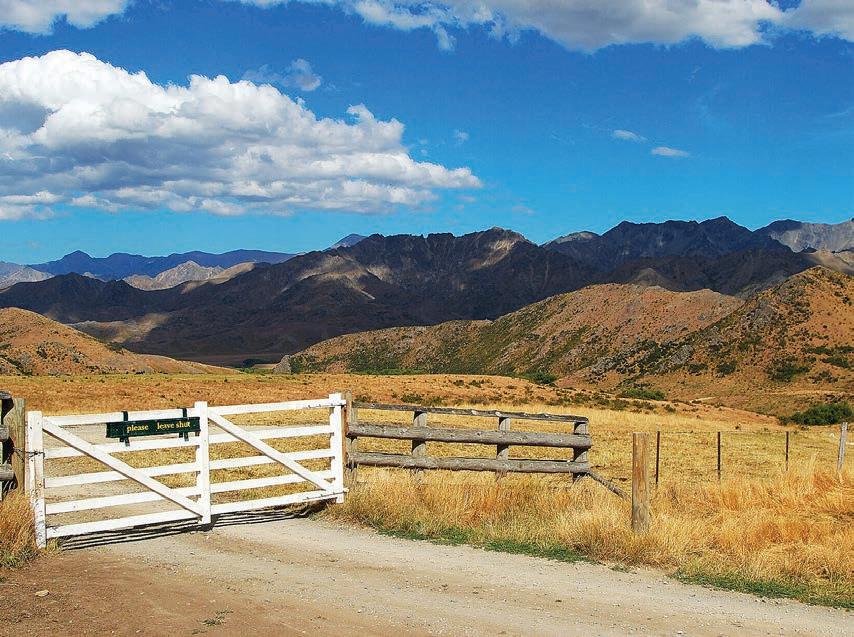
DELAYED: DoC and Pāmu have agreed to extend the station’s takeover date until April next year, choosing a date that aligns with the seasonal farming calendar.
department to agree on the details of the extension arrangements,” the spokesperson said.
Pāmu has agreed to continue to work with DoC on extension arrangements over coming weeks.
Ward told Farmers Weekly that, as the June date loomed with no decision made, extending the lease until autumn weaning made sense.
“Weaning time in autumn is an ideal time to take over.
“You would be nervous about
taking over in spring when you need to value all the livestock on hand.
“You would be fighting high river levels, and it is quite likely you would miss some stock that are on the other side of those rivers.”
He said the shift in date makes no difference to his group’s bid.
“As long as a decision is made sooner than later, we have people we have shoulder-tapped for roles in our proposal who will need to know.”
This week’s poll question:
Should the Department of Conservation be moving faster to find a new leaseholder for Molesworth Station?
Have your say at farmersweekly.co.nz/poll
Quota race gluts China’s red meat stores
Nigel Stirling MARKETS Processing
A RACE to fill quota has left Chinese beef inventories bulging and potentially limited the upside for New Zealand exporters seeking to take advantage of Australia’s maxing out its entitlement for the year.
China imposed quota limits on its six largest suppliers at the beginning of this year.
Australian media reported this week that the country has become the first to fill its allocation and will face a 55% tariff on its beef exports to China until the end of the year.
Beef exporting powerhouse Brazil is expected to follow hard on the heels of Australia in filling its own annual quota of 1.106 million tonnes.
Greenlea Premier Meats chief executive Tony Egan said the race to fill quotas meant Chinese beef inventories were at higher levels than normal.
“A lot of product was shipped in anticipation of the safeguards being triggered,” Egan said.
“That will have a distorting effect in the short term and it will take some time to work
through those inventories. “But at some point it is going to hopefully lead to more demand.”
ANZCO’s general manager for sales and marketing, Rick Walker, said opportunities for NZ chilled beef exports could be more limited as Australian rivals seek to maintain their presence in the higher-value part of the market.
“There has been some talk of Australian exporters covering half [the tariff] and the importer covering half to make sure product stays present.
“You do not want to lose that presence and have to start again on chilled.” Walker did not expect much disruption from lower-value Australian beef being diverted to other markets.
“The fact is that we sell a lot of commodity products into China because it is the type of product that you get very little for elsewhere in the world,” he said.
“Huge amounts of bones and offal go into China and if we weren’t sending that to China we would be rendering it.”
Whatever opportunities there are for NZ exporters, they are unlikely to be limited by quotas.
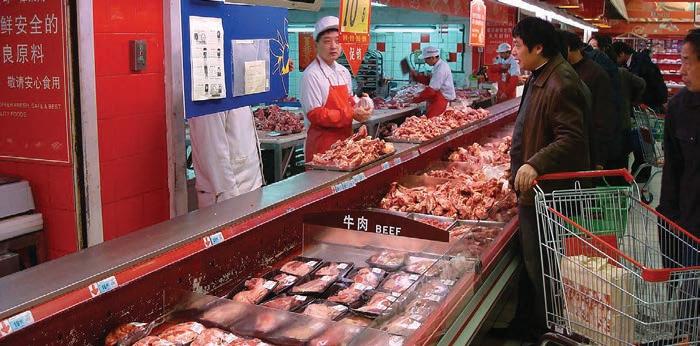

Photo: Wikimedia Commons
HIGH: Greenlea Premier Meats chief executive Tony Egan says the race to fill quotas meant Chinese beef inventories are at higher levels than normal.
Field of champions for the inaugural Rural Woman of the Year Award
The winner of the inaugural Rural Woman of the Year Award, sponsored by Farmers Weekly, will be unveiled at the 2026 Primary Industries New Zealand Awards this week. Rebecca Greaves caught up with the three finalists.
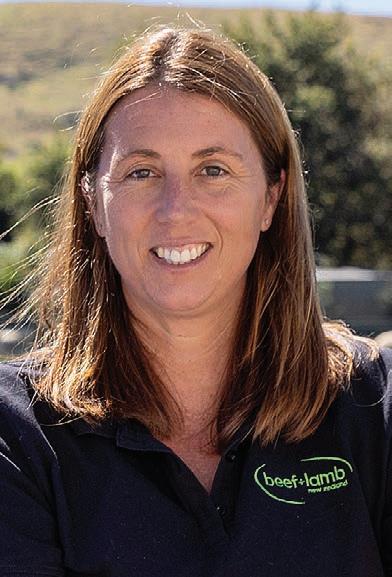
Leading from the front – Kate Acland
FARMER leadership roles don’t come much more high profile than being chair of industry body Beef + Lamb New Zealand, but for Kate Acland, there’s one thing that stands out for making the job worthwhile.
“It’s the people, not just the farmers that I get to work with, but right through the supply chain from the policy makers to the scientists, amazing people who are driven by a single purpose: a better future for Kiwi farmers,” she said.
With a background in the wine industry – she is the founder and owner of Sugar Loaf Wines – Acland came into agriculture through marriage and owns Mt Somers Station with husband David. The couple have brought up their three children there and run a diverse operation.
They purchased the Mt Somers store in the local village several years ago to ensure its longevity.
“I have a strong view that every community needs a pub, a shop and a school, ideally.
“It was sort of dying and we didn’t want to lose the shop, so we bought it. We employ a lot
of staff on our farm. We want good staff and part of attracting good staff is having a strong community.”
As a finalist in the inaugural Rural Woman of the Year Award, Acland said rural women are critical to the sector, the glue that holds rural communities together,
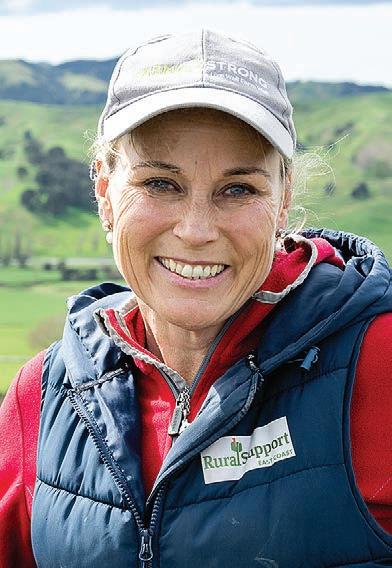
A light on rural wellbeing
– Sarah Donaldson
DEEPLY embedded in the rural communities she serves, Sarah Donaldson walks alongside rural people in some of life’s hardest moments, providing guidance, practical solutions and ongoing care long after a crisis has passed.
Based in Wairarapa, Donaldson brings her experience as a clinical psychologist and a passion for rural communities to her roles as co-ordinator for the Wairarapa Rural Support Trust (RST) and helping to create, deliver and champion content for Farmstrong. She is setting the standard for how rural wellbeing is delivered in New Zealand and said discovering she was a finalist in the Rural Woman of the Year Award was incredibly humbling. While she’s not in it for the accolades, it does provide an opportunity to shine a light on rural wellbeing at grassroots level.
More comfortable in her gumboots and mucking in on farm, or sharing a chat in a woolshed, Donaldson has been a trusted and tireless advocate for the wellbeing of farmers for more than 13 years. “I’m most comfortable out there in the community. If I need to advocate, I will, but the most change you can create is at grassroots and create ripples
from the ground up,” she said.
“I feel like we [RST] have become embedded in the community, and that’s all about connections – to be seen as one of the community, not an external agency. I’m incredibly proud of our team and their efforts. Our work after Cyclone Gabrielle was a big part of that.
“You see the challenges with friends, family, or community and realise that there’s this need. There’s a disconnect between clinical services and farm life.
For me, the two are interwoven. If I can help meet the need and advocate for people to get the support they need, in a timely way, and break down barriers, that’s important to me.”
She’s driven by a desire for everyone to come home each day, connected to others and staying well, and said preventative wellbeing is key to this.
“What can we do as a community to protect and enhance our overall community wellbeing? It’s about building connections, sharing what works and keeping our communities thriving together.”
Nationally, Donaldson has been involved with Farmstrong since its inception as a content provider, consultant and champion. Her job is to convert psychological know-how into farming terms and
but often fly under the radar.
“I feel very honoured to be recognised as there are a lot of amazing women in the sector,” she said.
“I think the role of women has been so cemented in our farming businesses and I believe the men recognise and appreciate the women – you go through the highs and lows together.”
While women have always been a strong presence at grassroots and community level, Acland said women have risen through the ranks in agriculture organisations in more recent times.
“I think people are ready for it. There’s not a boardroom I have walked into where I haven’t been welcomed with open arms.”
For Acland, farmer advocacy is not just about pushing back against unworkable regulation, it’s about telling the great stories of what farmers do and ensuring all New Zealanders understand how critical agriculture is to the country.
It’s also important to her that any position taken by BLNZ is backed by evidence and science.
“Recently, we got 500 farmers
relatable concepts for farmers. She’s helped develop many Farmstrong resources, such as Under the Pump, covering topics from stress and burnout to sleep and managing adversity, and has fronted much of the video and podcast content farmers see and hear today.
Donaldson said massive strides have been made in breaking down the barriers to conversations and accessing wellbeing and mental health support, removing the stigma and creating space where people feel comfortable seeking help for themselves or those who need it – but it’s a constant work in progress, she said.
to the Out the Gate conference.
To get 500 farmers take a day off the farm to come to a conference is phenomenal. Time is precious and it’s so good for us to push our thoughts out beyond the farm gate. For me, that’s the sort of stuff I get a real buzz from.”
Acland said the biggest challenge for the industry right now is to keep pushing forward while times are good.
“Right now, the future feels bright, the opportunity is to grasp that, invest and double down. The opportunity is the mindset.”
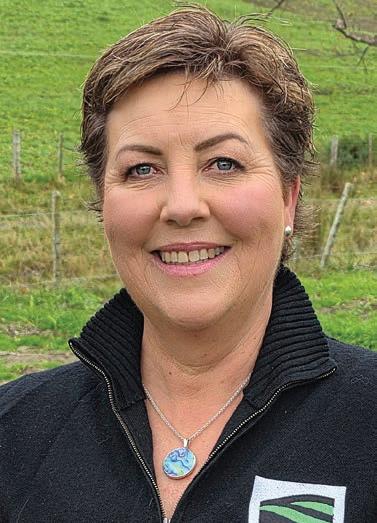
Service at heart – Sandra Faulkner
COMMUNITY service is in Sandra Faulkner’s DNA, and she’s often found herself the first line of response when adversity strikes rural communities.
Faulkner and husband Rob farm at Wairakaia, near Gisborne, where they run a diverse operation including sheep, beef, cropping, citrus, farm forestry and contracting.
She is a Federated Farmers national board member with the local government, adverse events and rural communities portfolios. She also serves on the National Animal Welfare Advisory committee and is a trustee for the Campaign for Wool, along with holding other charitable directorships.
Faulkner said she was overwhelmed, but deeply appreciative, to be named as a finalist in the inaugural Rural Woman of the Year Award.
“It’s genetic. My family have always been in service roles, from industry groups right down to supporting the local school or church. I’ve never known a time we were not involved in community support.”
She grew up in an isolated area of Hawke’s Bay, three hours up a shingle road. One of her favourite photos is of her grandmother astride a horse, leading another slung with a deer carcase, and the butt of her rifle resting on her thigh.
“She never learned to drive, yet service was at the heart of her. She had a quiet and unassuming way.”
Faulkner and her brother were encouraged by their parents to think deeply and travel, from a young age.
“For me, that has resulted in two things I live by. The first is to enable farmers to be heard. The second is to always see the world through the eyes of others, because it can only enhance your own view.”
These pillars were strengthened during her Nuffield scholarship, which explored the natural fibre supply chain, driven by her interest in wool.
Reflecting on some particularly torrid weather events experienced in her home region of Tairāwhiti, Faulkner said it is all about conversations and connections, each one a stitch in a fabric, a tapestry that grows stronger over time.
“What drives me in those situations is a vision I carry in my mind. It’s a combination of many farmers, many conversations, mostly men – when the proverbial hits the fan and he extends those strong, calloused hands across the table, looks me in the eye and says ‘I don’t know where to start’. It humbles me every single time and I will take their fight wherever it needs to go.”
The key, in adverse events, is to share the message with those who need to hear it: “We know you are there, we are coming with help, and look at one small job each day.
“It’s knowing you are seen and heard and you’re not in it alone.”
A particular highlight for Faulkner has been advocating for legislative change that means rural communities will have a mandated place in the Emergency Management Bill, which is currently under reform.
“We fought incredibly hard to ensure rural communities are at the table for planning, response and recovery during adverse events.”
DIVERSE: Kate Acland and husband David own Mt Somers Station, where they have brought up their three children and run a diverse operation.
HOME: Sandra Faulkner grew up in an isolated area of Hawke’s Bay, three hours up a shingle road.
EXPERIENCE: Sarah Donaldson brings her experience as a clinical psychologist and a passion for rural communities to her roles.







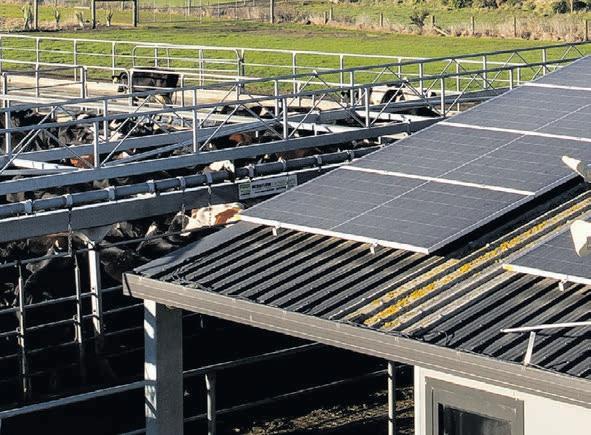
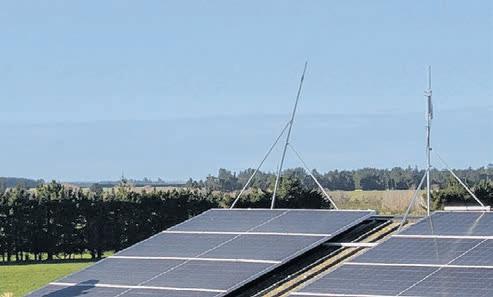
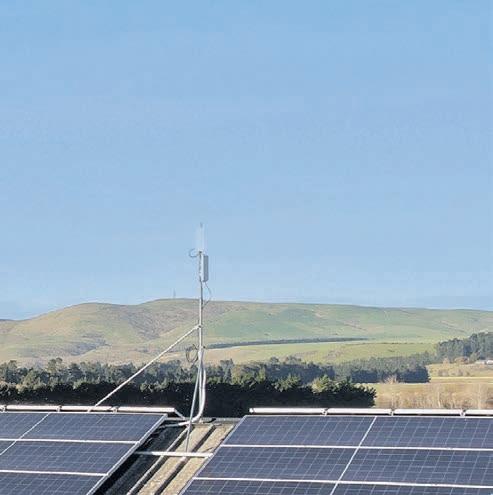
Thinking ab out solar for your farm?



Farmers and growers throughout the countr y are installing solar to help cut costs and build resilience.
You can get independent, tailored advice backed by real insights from different farm types around New Zealand - helping you make confident decisions about solar on your farm.


We can help with planning systems and navigating quotes, through to getting the most out of solar and batteries.

Visit eeca.govt.nz/solar- on-farms or call 0800 300 643 and see how solar could make sense for your farm.








New Gallagher animal tech boss takes reins
Richard Rennie TECHNOLOGY Livestock
INNOVATION, home-based manufacturing and a deep commitment to R&D all helped draw Gallagher’s Animal Management CEO to his new role.
Kicking off his new job in the same week as Fieldays, Australian Rob Clayton told Farmers Weekly the more he learned about Gallagher, the greater the appeal of the animal management position was.
“There is the commitment there to spend at least 10% of revenue a year on research and development, and yet it is still a privately owned family company.
“That is quite a remarkable achievement.”
Gallagher is generating $600 million a year in revenue now and is well on track to become a $1 billion company in coming years.
“And you have a company that continues to produce most of its products right here in Hamilton.
“Sir William Gallagher’s decision to differentiate and stay here in NZ to manufacture when most
were running to China to produce product, is almost unique.
“This is not a case of assembling parts made elsewhere. It includes everything, right down to plastics being made here.”
The company’s eShepherd wearable collar system has attracted significant interest from farmers in New Zealand, Australia, the United States and South America.
It’s not enough to be a ‘cool’ product. Data does not mean anything unless you can make a decision and a dollar off it.
Rob Clayton Gallagher Animal Management
“That tech has been perfected in the last couple of years, and here at Mystery Creek we have had farmers come in to tell us how they can stock their farm so much better with it.”
Clayton said a key part of the company’s growth from here on in is “joining the data dots”, helping farmers integrate the multiple and diverging data sources their farm
businesses are now capable of gathering.
“We are not looking to be the farm management software of choice but want to ensure our devices can connect to whatever the software it is you are using.”
He noted farmers are increasingly conscious of their data’s value, and their desire to control where it ends up is also growing.
“That data continues to be your data. It’s something more farmers are asking us about.”
Future developments for the wearable tech are likely to include integrated dry matter assessment, and more individual animal data collection.
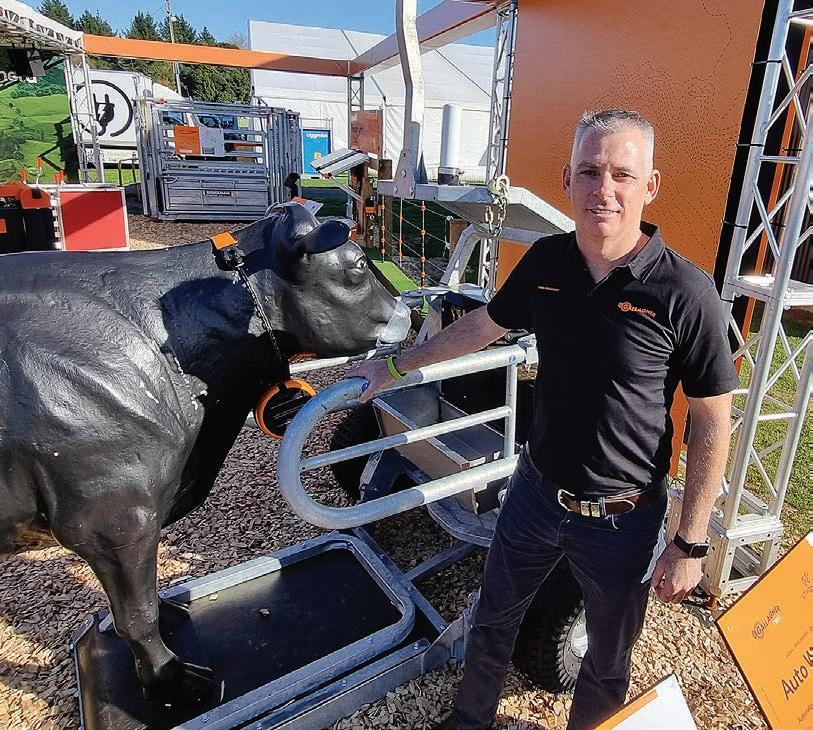
Clayton pointed to the recently launched Auto Weigher, launched with Strongbo. It enables livestock to be partly weighed in the field. An algorithm then aligns that to the animal’s full weight, which is based off the times they are yarded and completely weighed. The system saves the need for regular in-yard handling and provides anytime weight assessment while they are in the field.
“It’s not enough to be a ‘cool’ product. Gallagher has always thought about the ‘so what?’ view
KEEPING FARMERS FARMING.
farmers will take. Data does not mean anything unless you can make a decision and a dollar off it.”
Clayton is particularly excited by the growing interest and use of wearables by drystock farmers, driven by a desire to get more off hard-to-manage hill country and promising beef returns.
“They have long been thought of as a dairy farm product, but are now enjoying great success, and that includes in Australia and the US.”
He does not see wearables
eclipsing the electric fence heritage tech that made Gallagher what it is.
“It is often not a case of one or the other. They both have different usage situations. Wearables are effective for grazing, but you still need electric fences for things like keeping out feral pests, for example.”
He said it is a “watch this space” at Gallagher for sheep-based wearables.
“It is not something to rule out as battery technology improves.”







pre-approved to go ahead with certain repairs of up to $15,000 without waiting for quotes. So if your tractor’s taken out by a Macrocarpa branch or a hay bale, there’ll be fewer admin delays in getting it repaired. Which means less waiting and more f i g A k und about us, or give us a call on 0800 366 466. arm n s aro We’re here for the good of

WEIGHING IN: Newly appointed Gallagher Animal Management CEO Rob Clayton says farmers soon see through tech that only offers a solution to a problem they may not have.
Biopesticide opens new front against varroa

Gerald Piddock TECHNOLOGY Apiculture
RESEARCH from Victoria University shows using gene silencing as a biopesticide can effectively control Varroa destructor in bees.
Rather than killing adult varroa mites directly, the new technology interferes with their ability to reproduce, effectively leaving them sterile.
It is so highly targeted that it could be the “holy grail” of pest control, because it reduces pest numbers while minimally impacting bees, humans and the wider environment, Victoria University of Wellington’s School of Biological Sciences’ lead researcher Professor Phil Lester said.
Research into gene silencing has gone on for over a decade, after it was discovered by a group of Israeli scientists who used the technology to make the varroa mite sterile within a laboratory setting.
That research formed the basis of the work by Lester, who linked up with United States-based
GreenLight Biosciences, which was also working in this area.
GreenLight Biosciences developed the biopesticide Norroa in conjunction with Lester and his team. It is now commercially available overseas.
Gene silencing uses a body’s natural processes to temporarily block a specific gene’s message that would otherwise trigger an unwanted effect.
In the case of Norroa, it uses doublestranded RNA (dsRNA) to disrupt a key biological process in the pest, causing it to become sterile.
This dsRNA is contained in a pouch of sugar water that is placed in the hive by the beekeeper.
The pouch has perforations that the bees can access to feed off, distributing the mixture around the hive, including to the cells of bee larvae.
“That’s where we want it because the varroa are exposed to it within those cells. They have a life stage where they crawl into that cell and hide in the food.”
It is here that varroa is exposed to the dsRNA and becomes temporarily sterile.
“Unfortunately, it’s not a permanent effect and the mites are
only sterile when exposed to the double-stranded RNA,” Lester said.
It is safe for bees, including their survival, development, foraging behaviour and honey production.
In New Zealand, field studies found that its use kept mite numbers low over time. It worked best as a preventative or maintenance tool, rather than as a rapid “knockdown” treatment when mite populations are already very high.
A beekeeper would typically use two doses of Norroa three weeks apart in spring, halting two reproductive cycles of the mite. It can also be used as a replacement for the insecticide strips that are currently used by beekeepers.
Beekeepers are open to using the technology, Lester said.
“There wouldn’t need to be any law change in NZ to allow the use of Norroa here. It would need to be registered through the EPA under the HSNO Act and under the Agricultural Compounds and Veterinary Medicines Act with MPI.”
This process could take two to three years. It has already been registered in the US and Europe.
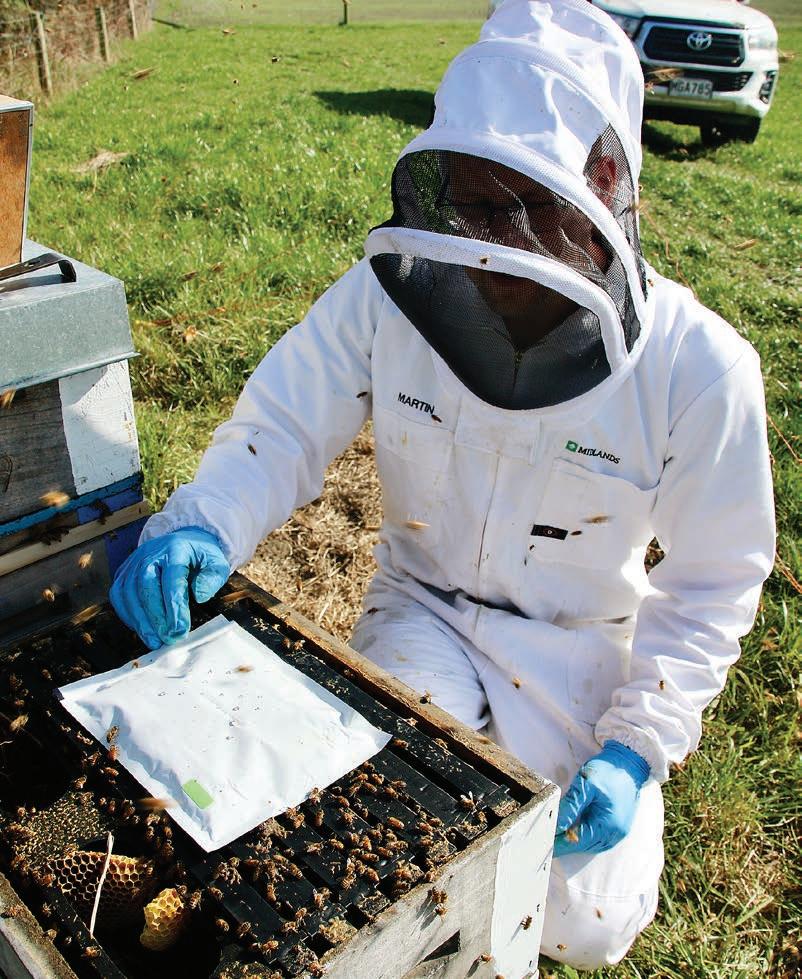
GENES: Norroa, a new biopesticide that uses gene-silencing technology to sterilise varroa mites, has been developed at Victoria University in conjunction with US-based GreenLight Biosciences.
The technology also has potential to be used to control other pests. In the US it is used as a control for Colorado potato beetle as well as for varroa.
The technology’s potential for multiple use is what excited Lester most. It offers a targeted approach and is biodegradable.
“There’s opportunities here for replacing a lot of the nasty synthetic chemicals that we use. I think this is a really exciting technology.”





Banks shower SFF with favourable terms
SNigel Stirling NEWS Production
ILVER Fern Farms says a longer-than-usual extension of its banking facility is a vote of confidence in the company and the wider meat industry.
The new, $520 million banking facility is good for two years and runs out in 2028.
It replaces the company’s existing $449m credit line, which expired in April and had been in place for only a year.
The syndicate involved is led by the ANZ and is rounded out by Rabobank, BNZ, Bank of China and ASB.
The bulk of the money will be used for working capital expenses including livestock purchases.
SFF chief financial officer Ben Rodgers told Farmers Weekly the longer two-year term was a vote of confidence not just in the
company but in the industry as a whole.
“My experience with the banks has been positive,” Rodgers said.
“Red meat the last couple of years has probably been one of the biggest growing exports and I think they want to be seen to be supporting us.”
Rodgers, who began at SFF in December after stints at NZXlisted King Salmon and Z Energy, said the company will be charged a slightly higher interest margin to reflect the longer duration of the facility.
This will be paid over and above prevailing money market rates. Otherwise the terms are no more onerous.
Rodgers said the increase in the size of the facility is due to higher livestock prices.
Extra procurement firepower will come from a boost to retained earnings provided by a $70m turnaround in pre-tax profits announced earlier this year.
“No dividend was paid out so that is money that can be used to fund working capital,” Rodgers said.
The director of Lincoln University’s Agribusiness and Food Marketing Programme, Nic Lees, said rising export prices are providing an increasing tailwind for the financial performance of meat companies.
“Because there is always a lag between what they pay the farmers and what they receive in the market the ideal situation for them is a rising market,” he said.
Lees said these tailwinds are now being picked up on by the banking industry, which as recently as last year forced rival company Alliance Group into selling a majority shareholding to Irish company Dawn Meats so it could pay off $200m in bank debt.
“You have had a couple of years where none of the meat companies were particularly profitable but you would hope things are
improving and that they are starting to get into a cycle where things are a bit better,” he said.
Rodgers said SFF will be required to pay back in full the working capital component of the facility at the end of each livestock season before it can draw on it again for the following season.
“If in a hypothetical scenario we didn’t clean down, there would be discussions with our syndicate,” he said.
Red meat the last couple of years has probably been one of the biggest growing exports and I think they want to be seen to be supporting us.
Ben Rodgers SFF
Catchment groups chosen for deer control pilot

Gerhard Uys NEWS Pests
THREE catchment groups will be part of a pilot study to measure the impact of deer on farms and to test management options.
The government has allocated $750,000 to back catchment groups in Rangitīkei, Wairarapa and North Canterbury to support farmers and growers to collaborate on ways to measure and reduce wild deer numbers, Biosecurity Minister Andrew Hoggard said.
The catchment groups involved in the pilot projects are Hurunui District Landcare
Group, Wairarapa Catchment Collective and the Rangitīkei River Catchment Collective.
Ian Knowles, chair of the Hurunui District Landcare Group, said community buy-in and agreement on objectives are key to managing deer.
“Neighbours need to talk, [then] you have better outcomes for communities” he said.
Knowles said the Hurunui group has more than 300 members, and received enough funding to support three subgroups.
The landcare group has already completed surveys among its members, looking into options such management
or the possibility of improving genetics for managed hunting, he said.
He said the group has a wide geographical spread, including rolling coastal farms and land in the Southern Alps.
The greater group will now meet with subgroups to help form objectives, and support them with funding, contact networks and to run meetings.
He said they hope to have a plan in place within a year and to have decided what techniques the groups want to use to meet their objectives, such as helicopters, genetic testing or hunting.
Hoggard said the pilot projects will test ways to
measure deer populations and assess their impact on productive farmland, such as grazing on pasture, forestry, crops and native vegetation.
The information collected during the projects, which run until August 2027, will help inform future investment decisions, he said.
“The pilots will help evaluate the effectiveness and cost of different control techniques and provide practical input into the development of coordinated management plans.”
Hunting and Fishing Minister James Meager said wider community interests, including hunters and regional councils, will also be involved.
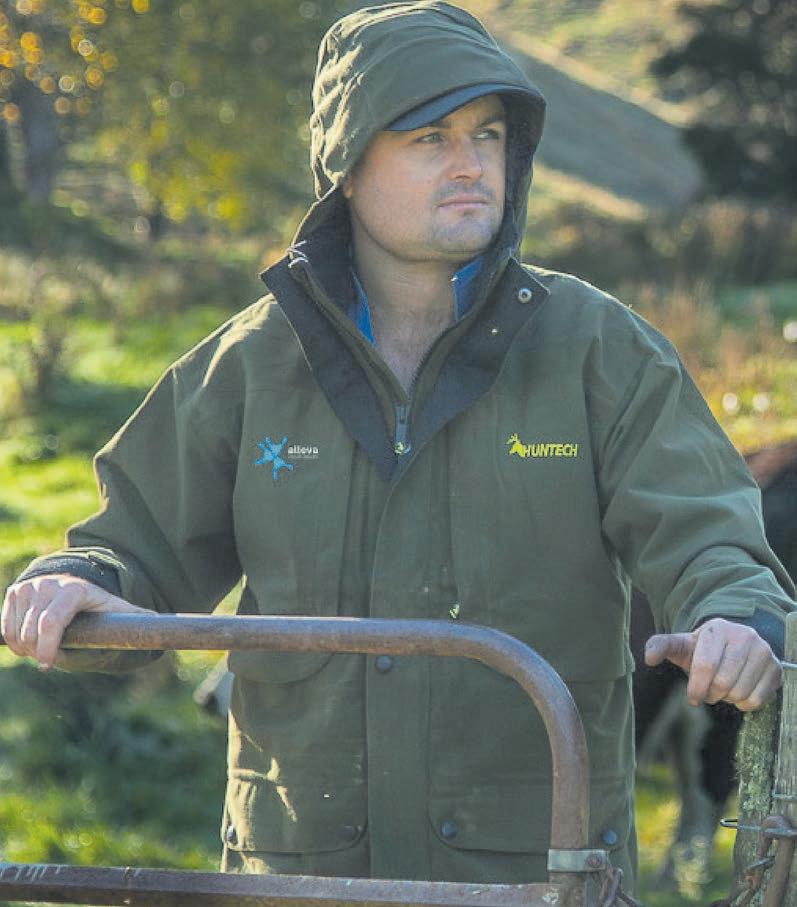

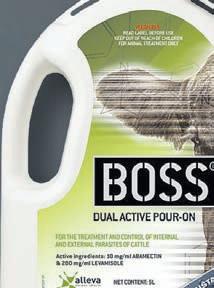
Rain resistant for peace of mind when treating in variable conditions Formulated using Alleva’s DMI-Sorb® formulation system to prevent run-off as well as enhance active-ingredient delivery and absorption

















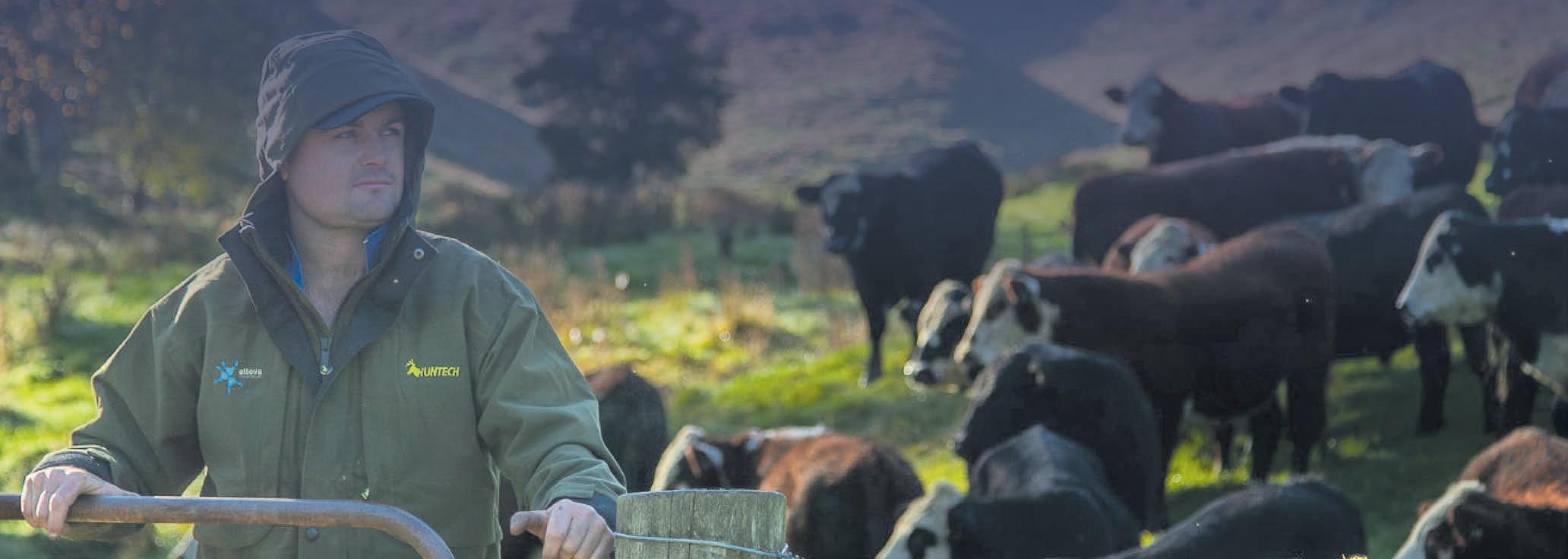
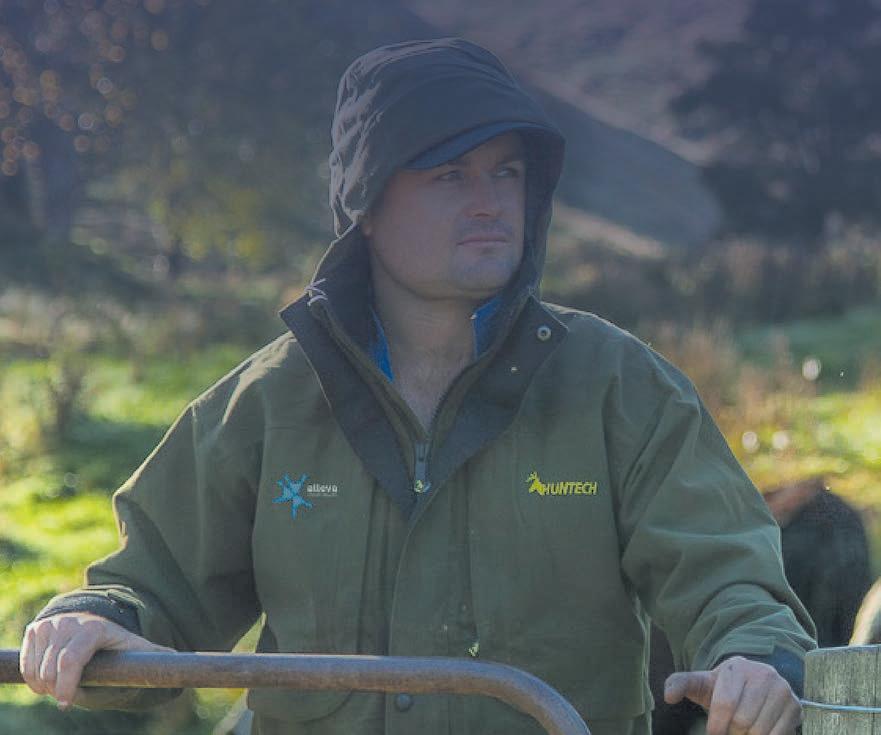
VITAL: Chair of the Hurunui District Landcare Group Ian Knowles says community buy-in and agreement on objectives are key to managing deer.
More value still to be found in strong wool

STRONG wool farmers are enjoying a welcome upswing in prices, but there’s more value still left on the table, says Wool Impact senior executive Ross McIsaac.
Sentiment among farmers at the Fieldays was high, he said, helped by the strong wool price, which has almost doubled in the past 12 months.
Wool Impact was established in 2022 to increase demand and value for wool, and to work with other sector organisations to build a sustainable model for strong wool.
Wool Impact is also part of the Wool Alliance, a formal partnership with the Campaign for Wool, Wool Research Organisation of New Zealand and Beef + Lamb New Zealand (BLNZ). The alliance is tasked with identifying the collective work needed to build and grow demand and value for wool, then building a case for industry and growers to support it.
“We’re trying to bring it all together with the aim of having one central wool organisation
to co-ordinate this work. We are working closely with industry and we don’t want to duplicate work that’s already being done by the likes of Federated Farmers and BLNZ,” McIsaac said.
McIsaac is keenly aware that the perception is that wool has been fragmented, with the number of different groups creating confusion for growers, and that many farmers have grown disillusioned, especially as the strong wool price has languished.
It’s been a tough 20-odd years for strong wool farmers. The last six months, in particular, have seen a significant lift in wool prices that is long overdue.
He said any new central organisation would have to be lean, transparent and accountable – and “no bigger than it needs to be”.
“It’s been a tough 20-odd years for strong wool farmers. The last six months, in particular, have
seen a significant lift in wool prices that is long overdue. We have seen a reduction in supply domestically and internationally with decreased sheep numbers in New Zealand, Australia and the UK, but there is a lot of good work happening on the demand side as well that is contributing to the price increases,” McIsaac said.
Relying on reduced supply alone will not create a sustainable industry long-term, and he said customers are increasingly seeking out products that align with what wool has to offer, which bodes well for the fibre.
“We need products on the shelf for them to buy. It’s about increasing the range of products for wool to go into.”
A benefit of strong wool is its ability to go into a diverse range of products, from clothing to tennis ball felt, but the core market remains flooring, bedding and furniture.
“We need tension in the market to drive prices up. For that to be sustained, we need to create more demand, rather than reduced supply being the driver.”
This is what the Wool Alliance is focused on, and last year it put forward a scope of work it believes
is needed long term, to secure the future of strong wool.
This work considered all aspects of the industry across the supply and value chains and what is required to support companies to do more with wool.
“What we have heard is that it has been really hard to use wool. If you are an architect, a designer or a brand, for example, if you want to use wool, it has not been easy. We need to make it easier for people to do more with wool.”
A key piece of the puzzle is evidence on how the wool is
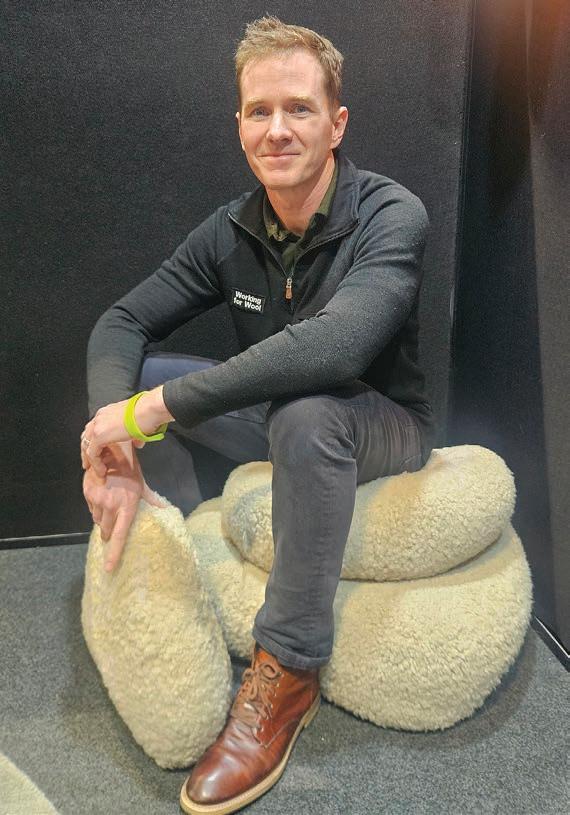
MOMENTUM:
Ross
says analysis shows there is more value yet to be gained from strong wool, and momentum is growing through increasing the diversity of wool users and uses.
produced, harvested and taken to market, so those using wool can tell that story credibly.
“For example, there are flooring and acoustics products that need environmental product declarations, and that requires data. If you are selling a product, you need confidence that the product will perform, but also that it has been produced well.”
McIsaac is enthusiastic about new and emerging applications for strong wool that have the potential to deliver both high value, and high volume.

Rebecca Greaves MARKETS Wool
McIsaac
Ross McIsaac Wool Impact
Breed records, positive market buoy bull sales
Gerhard Uys MARKETS Livestock
POSITIVITY in the market, continued high beef prices and breeders who stuck to their guns with genetic decisions drove good sales and top prices last week.
A new Angus record bull price was set when Lot 3 from the Taimate Angus sale, from Ward, sold for $168,000 to Tangihau Angus.
Taimate Angus owner Paul Hickman, who owns the stud with wife Nadine, sold 100/100, and set a new national average high of $23,750.
Hickman told Farmers Weekly
Taimate Angus V15 Lot 3 was
described at the sale as being “as close to the perfect all-round bull as you’re going to get”.
He said the bull’s breed data and his phenotype are extremely good.
“It’s a very good bull for breeding offspring and selling individuals that look just like him.”
Hickman said across the Angus breed, all sales are a big step up on last year, a consequence of the outlook for beef.
General manager and stud master at Tangihau Angus, Dean McHardy, said Taimate Angus V15 Lot 3 was a particularly good bull, with a good head and some of the best breeding values he had seen.
Tangihau Angus set the previous record for the highest priced bull in New Zealand across all breeds, selling Lot 16 to Oregon Angus for
$161,000 in 2025.
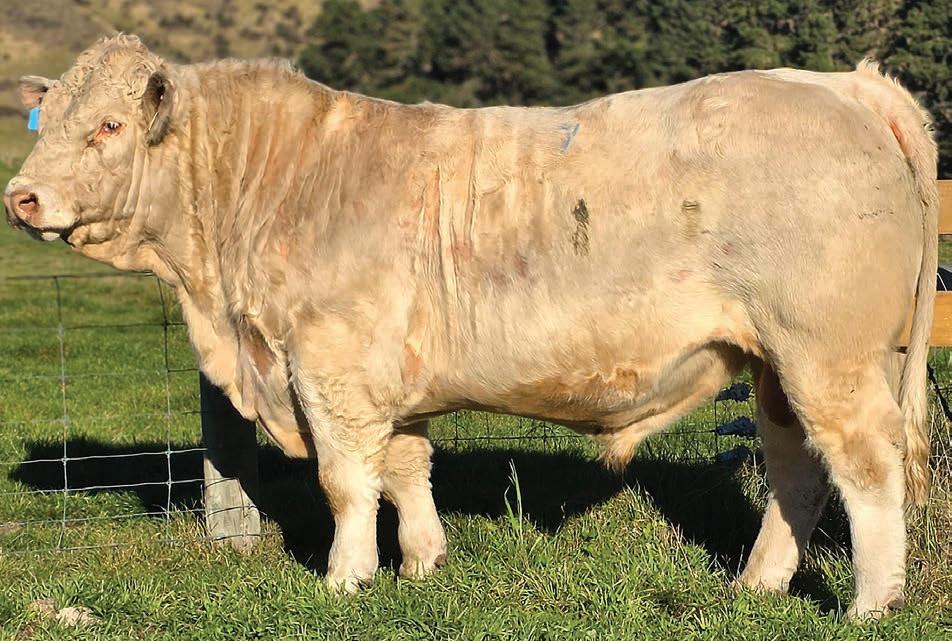
Hemingford Charolais, Culverden, set a record for the breed, with the highest number of Charolais bulls ever sold at an onfarm auction in New Zealand, and a record average price of $18,871, achieved with 80% of the bulls sold to repeat clients.
Hemingford cleared 72/72, with the top price of $55,000 for Lot 7 Hemingford Valentino to
Rimu Charolais and Silverstream Charolais.
Sam Holland, who owns Hemingford with wife Viki, said cross breeding has come back into favour, with people wanting to use hybrid vigour and realising they need a terminal sire.
Charolais bull sales have been very strong nationally with more people recognising the profit driving attributes the breed delivers.
RECORD: A national record price was set when Taimate Angus V15 Lot 3 sold for $168,000.
He said younger farmers are measuring more to get breeding values accurate, realising that is what makes them money.
Burtergill South Devon, West Melton, cleared 15/15, with an average price of $9226 and a top price of $19,000.
Brackenfield Angus, Blenheim, sold 17/20 with an average price of $9000 and a top price of $15,500.
Blacknight Angus, Rai Valley, sold 16/18, with an average price of $10,093 and top price of $15,500.
Kakahu Angus, Geraldine, sold 55/55, with an average of $13,407 and top price of $27,000.
Matariki Hereford, Kaikoura,
RECORD: Hemingford Charolais set a breed record with the highest number of Charolais bulls sold at an on-farm auction in New Zealand. A record average price of $18,871 was also set.
It’s a very good bull for breeding offspring and selling individuals that look just like him.
Paul Hickman Taimate Angus
sold 70/70, with an average price of $19,014 and a top price of $48,000 to Locharburn Hereford Stud.
Woodbank Angus, Kaikoura, sold 70/70, with an average price of $19,442 and a top price of $38,000.
Kaiwara Angus, Culverden, sold 24/27 with an average price of $10,500 and a top price of $20,000.
Snake Gully Limousins, Maungakaramea, sold 17/18, with an average price of $6547 and top price of $14,000.
Red Oak Angus, Weka Pass, Amberley, cleared 32/32 with an average price of $15,666 and a top price of $28,000.
Leefield Station Angus, Blenheim, cleared 17/17 with an average price of $8823 and top price of $12,000.
Northland sugar cane could fuel ethanol option
Richard Rennie TECHNOLOGY Crops
SUGAR cane is in Brazilians’ sights as a potential ethanol feed stock to grow in Northland to kickstart a biofuels plant in the region.
In April Farmers Weekly reported on plans in play by Brazilian ethanol corn producers and the NZ Brazil Business Chamber to establish an ethanol refining business based on maize feed stock.
Calculations showed that a small to average-sized plant would require at least 150,000 tonnes a year of grain maize feedstock. That was almost 75% of NZ’s total production, of which only 8% comes out of Northland.
But at Fieldays the chamber’s CEO, Marcelo Menoita, told Farmers Weekly that sugar cane could provide another feedstock opportunity.
In Brazil maize grain accounts for 22% of its ethanol production and is likely to increase to 30% this season.
With a higher dry matter content, maize provides about five times more ethanol per tonne
than sugar cane. But sugar cane can also grow at yields of at least 50t a hectare, compared to NZ’s maize grain average of 11t/ha.
“As a crop, sugar cane can produce ethanol and sugar and at the end of the process there is fiber suitable for use as a biofuel,” said Menoita.
He said Brazil’s expertise in producing biofuels could adapt plants to suit NZ-sourced crop easily.
“It lasts five to six years as a crop, and is harvested every year, maybe longer for Northland,” he said.
Marsden Point, with its exrefinery site, is a logical pathway for sending fuel down.
That would initially be vehicle fuel, but hopes are to eventually move to sustainable aviation fuel, a rapidly growing part of the fuel market.
Regardless of crop type, estimates are a modern ethanol plant would require at least 20,000ha of crop-growing area
Hugh Rose, the former chair of Tropical Fruit Growers of NZ, said Northland is very capable of supporting sugar cane production.
“I think it is a very realistic
option. As a crop it may take longer to mature than in, say, Queensland, possibly six months
It lasts five to six years as a crop, and is harvested every year, maybe longer for Northland.
Marcelo Menoita
NZ Brazil Business Chamber
longer, which may mean it’s first harvested at 18 months rather than one year.”
He said the beauty of sugar cane is that there is no waste from its processing, and it delivers a high yield per hectare.
“You just have to ensure you control all the weeds early on, lay out your cane, and it establishes pretty easily as a crop from there.”
However, as with maize-toethanol plants, sugar cane volume

may prove a challenge to the Brazilian plans.
Brazilian sugar cane tends to average 75-85t/ha but NZ is likely to face lower per-hectare yields due to cooler temperatures, requiring greater area to establish an economic critical mass.
A modest processing plant would require about 20,000-25,000ha in crop at least, although Menoita said plants can typically handle both maize and sugar cane as feedstock inputs.
Brazilian ethanol producers are also increasingly favouring corn as feedstock because it produces a high value distillers’ grain for feedstock. NZ is Brazil’s fourth largest user of its distiller’s grain for feedstock.
Corn also isolates ethanol producers from sugar commodity price movements.
Rose said Northland is increasingly building a reputation as a centre for quality tropical crop production, with bananas being the “poster fruit”.
“And we have a lot of Māori land up here that could be used. It’s just a case of getting the right people involved and making it happen.”
SWEET DEAL: Marcelo Menoita, president of the NZ Brazil Business Chamber, and Cyro Denna jnr, vice-president of the Agricultural Federation of São Paulo, say sugar cane has a place in Northland to supply ethanol production. Photo: Pexels
Fonterra diversifies to spread energy risk
Richard Rennie TECHNOLOGY Fonterra
ASTRATEGY to diversify fuel sources for energyhungry milk processing plants is starting to play out nationally across Fonterra’s processing factories.
Last month Fonterra commissioned its first electrode boiler at its Edendale, Southland, factory, with further plans to push on removing coal as a main energy source.
Speaking to Farmers Weekly, Fonterra’s chief operating officer, Anna Palairet, said the company’s aim is to combine varying sources of alternative biofuel and energy.
Whatever source is chosen needs to be sustainable and offer surety of supply for plants where energy interruption is not an option during processing.
“We are now out of coal completely in the North Island and Edendale’s switch to two electrode boilers marks a further $70 million spend,” Palairet said.
She said Fonterra will be entirely out of coal production by 2037, in line with the government’s 2037 target.
The boilers at Edendale are providing energy to generate power and steam for the new UHT plant being built there.
Coal is now well in the co-op’s rear view as a fuel source in the North Island, with the Waitoa plant being the last conversion two years ago. Six sites remain in the South Island.
The Clandeboye milk plant is to be converted to wood pellets and remains the co-op’s largest decarbonisation project. It will consume 93,000 tonnes of pellets a year and is set to underpin a strong wood-based biofuel sector in the South Island.
Internationally, demand is proving very strong for alternative energy sources right now.
Anna Palairet Fonterra
“We feel very confident there is plenty of wood biomass available to sustain supply in the North Island, and this will aid with moves to achieve a good supply chain in the South.”
At present some pellets are being imported until NZ supplies can ramp up and deliver the entire critical mass required.
“Internationally, demand is proving very strong for alternative energy sources right now.”
Currently those pellets being imported are from a sustainably
certified source in Vietnam.
The tightening of New Zealand’s natural gas supply has also prompted Fonterra to bring capital expenditure on gas-fired assets forward, with plants including Edgecumbe, Bay of Plenty and Whareroa in Taranaki moving from gas to electro boilers.
In total the co-operative has 64 assets supplied by gas in NZ and its total capex budget to exit both gas and coal is $770m.
With its fleet of almost 500 tankers making it one of the three largest operators in NZ, Fonterra also keeps a keen eye on diesel fuel prices.
“Fortunately, the price increases have come at the end of the season, and we also hedge 75% of our fuel, making fuel cost rises staggered.
“However, we are also seeing the ripple effect beyond just fuel, impacting the likes of resins used for packaging, for example.”
Palairet is also chair of Kotahi, the major logistics company and Fonterra-Silver Fern Farms joint venture.
The conflict in the Middle East has prompted global shipping costs to surge, prompting some lines to consolidate or reduce routes.
But she said the fact Kotahi is Maersk shipping’s third-largest global client has done much to
ensure NZ’s shipping schedule has been maintained through the crisis.
“This has proven reassuring for
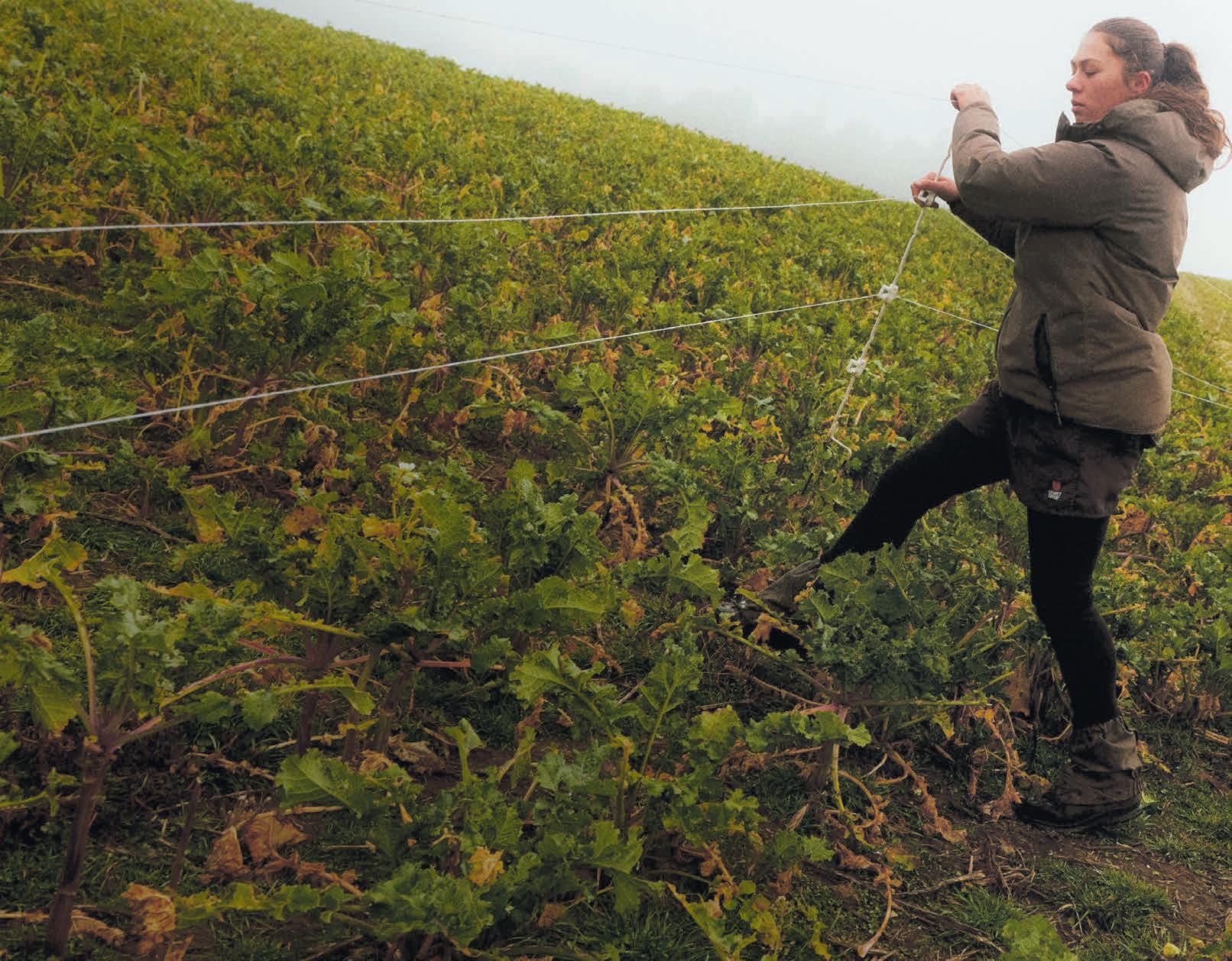
all NZ exporters. There has proven to be flexibility on both sides and that critical mass has ensured services have been maintained.”
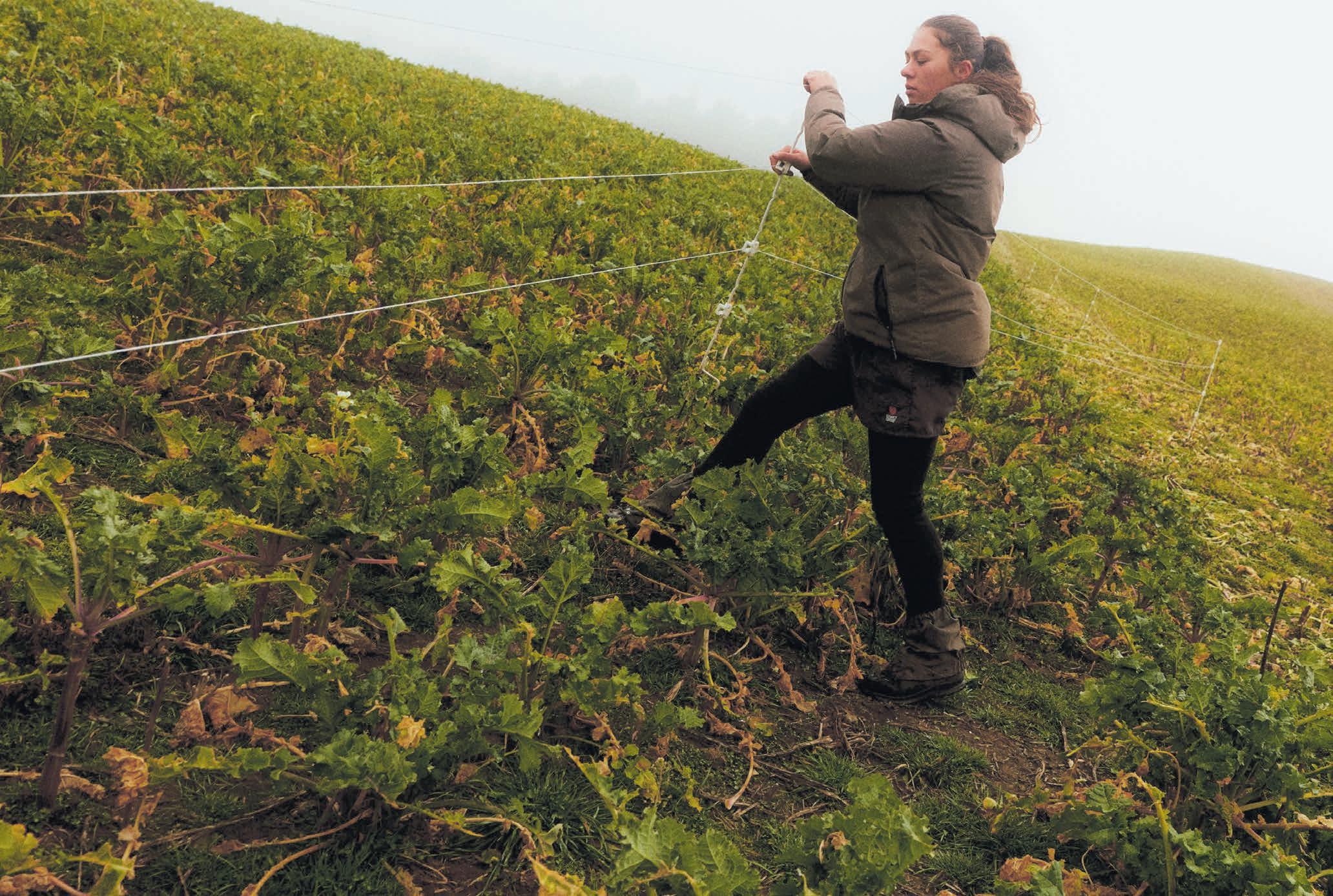
FUEL: Fonterra’s chief operating officer, Anna Palairet, says the company is seeking alternative fuel sources across a spectrum of options, including wood fuel and electricity.
Goat milk co-op gets back on track
Gerald Piddock NEWS Dairy
THE Dairy Goat Co-operative’s recovery is on track with the Hamilton-based dairy exporter achieving financial stability and lifting the milk price it pays to its farmer shareholders.
All of its debt is repaid and for the new financial year it is back to collecting 100% of its farmers’ milk, CEO Alastair Hulbert said.
“For the first time in four years we are back to 100% milk supply.”
He said this shows its new strategy, launched last May and aimed at reversing the company’s fortunes by 2030, is working. That strategy has the goal of growing its infant formula category and raising $40 million in capital from new investors –which is ongoing.
At the peak of the covid-19 pandemic, the Dairy Goat Co-operative (DGC) lost access to main infant formula market in China but was still collecting and converting goat milk into powder, which built up its inventories.
For the first time in four years we are back to 100% milk supply.
Alastair Hulbert Dairy Goat Co-operative
At its peak, the co-op had around 23 months’ worth of powder.
The farmers were paid for this milk, meaning DGC had the corresponding debt on its balance sheet.
DGC to reduced its supply by 20%, meaning many farmers had to look to other income streams, such as calf rearing.
Those milk powder reserves have been sold into China and that market is extremely buoyant, Hulbert said.
“I feel like that demand is turning into solid, long-term demand because the qualities of our New Zealand milk powder are being recognised in China and it’s going into adult products, pet food products, sports nutrition as well as infant formula.
“We have developed uses for goat WMP in China that weren’t there before.”
The co-op was still working through getting its SAMR registration back after it was lost in 2022-2023.
This is required to export infant formula to China, and the capital raise will help fund that process.
The challenge for its farmer-shareholders is to produce more milking goats to increase their milk volume after many had reduced their numbers.
“We need more milk. We have excess demand over supply now and it’s driving our farmers’ confidence to produce more milk.”
There is also strong demand for milking does, which has gone up in price compared to two years ago.
For the new season, the co-operative is guaranteeing its farmers $15/kg MS, up from $11/kg MS in 2024.
“Our estimate for the current season is $13.50-$15.50/kg MS,” Hulbert said. With on-farm costs such as diesel on the rise as well as debt servicing, that price is above an average breakeven price for its farmers.
Part of its strategy is to have a $16/kg MS
price by 2029 and the co-operative is on target to meet that, he said.
He acknowledged that many farmer shareholders are still in a financially tough spot and one farm last month went into receivership.
“But there is a degree of optimism that wasn’t there two years ago, and I think farmers can see a pathway forward and we have farmers buying shares and a couple who are expanding their operation.”
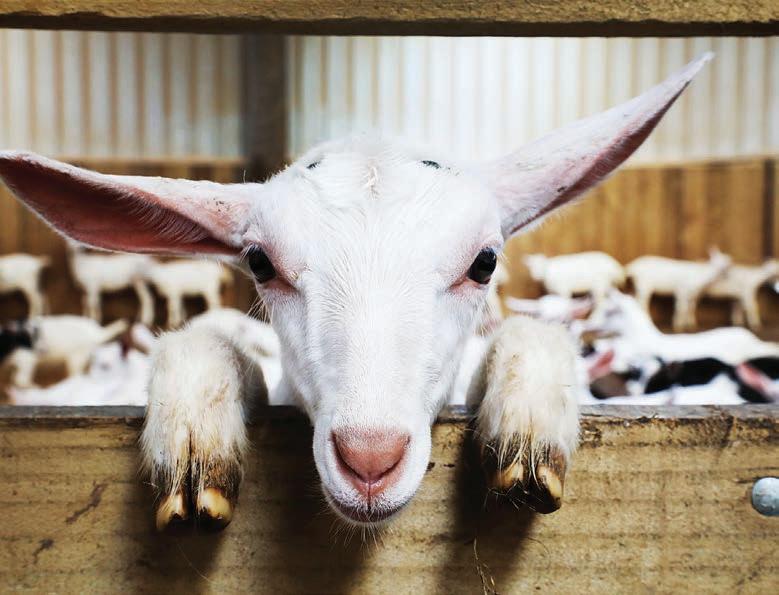
WORKING: Dairy Goat Co-operative
CEO Alastair Hulbert says the co-operative’s economic recovery shows that the new strategy it launched last May is working.
Healthy ewes set up stronger lam bs.
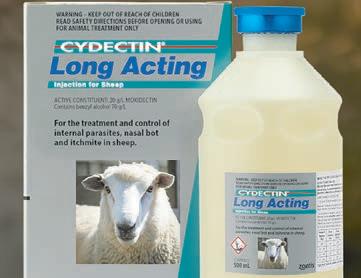
Cydec ti n® Long Ac ti ng I n jec tion provides ex ten ded worm protec tion to h el p m a i nta i n ewe con d ition th roug h l a m bi ng .
When planning your pre -lamb programme, suppor ting ewe condition , par ticularly in light ewe s is critical to set ting lambs up well from the star t Cydec tin® Long Ac ting Injec tion helps protec t against worms through late pregnanc y and lac tation when nutritional demand is at it s highe st
Shown to increase ewe and lamb weight s at weaning¹, Cydec tin® Long Ac ting Injec tion is a trusted pre -lamb solution for farmers wanting reliable, long lasting worm protec tion through the lambing period
Con sider you r p re - la m b need s tod ay.

Reunion kindles 51 years of Fieldays memories

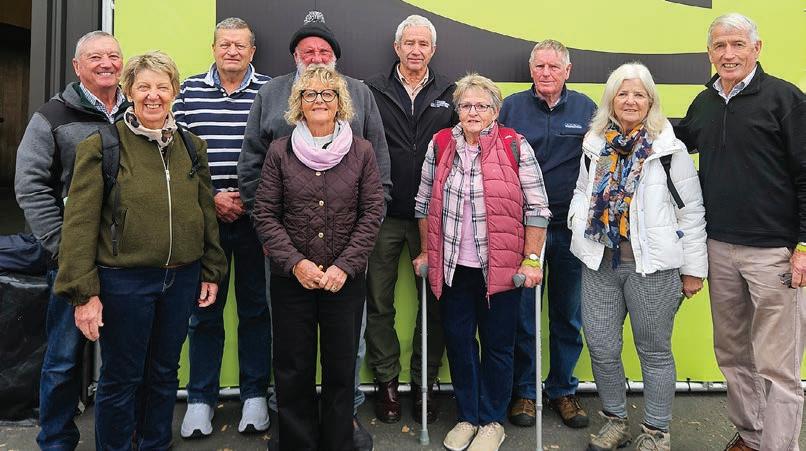
IN 1975 a group of 10 freshfaced young men from the Renwick Young Farmers Club in Marlborough made the trek to National Fieldays at Mystery Creek. Fifty-one years later, six of the original group were back. With a few hip replacements among them, and a fair bit less beer consumed, the group are still steadfast friends. They reflected on how the Fieldays has
evolved since their first visit.
Chris Dawkins, Bruce Martin, Blue Blick, Francis Maher, Ross Broadbridge, Phillip Neal enjoyed soaking in the atmosphere at Mystery Creek, which featured noticeably less mud than their first trip, when the gumboot stand did a roaring trade.
“There’s a lot less mud and it’s not so primitive. It was the fifth Fieldays and it was a lot more raw and rural back then. It was an extremely wet week and the All Blacks Scotland test, now known as the water polo test, was played that weekend. The All Blacks won
24-0,” Dawkins recalled.
There was no tar seal in 1975 and just one gravel track to get down the hill and into the venue.
“The mud was up to your knees, luckily we were young and robust.” Dawkins was president of the Renwick club at the time and for the group, who had all grown up together, the Fieldays trip was party time.
The weather made getting home difficult, and they had to fly from Hamilton to Auckland, then on to Palmerston North and finally back to Blenheim.
Even now, most of the group live within 15km of one another, and many met their wives through Young Farmers. The organisation holds a special place in their hearts. Maher went on to become national president of Young Farmers.
They observe with sadness that there are currently no Young Farmers clubs in the Marlborough region, as far as they know. For Broadbridge, whose career was as a rural truckie, Young Farmers was a good fit. The club was the hub of social events, with an emphasis on farm skills and things like stock judging or fundraisers picking up hay.
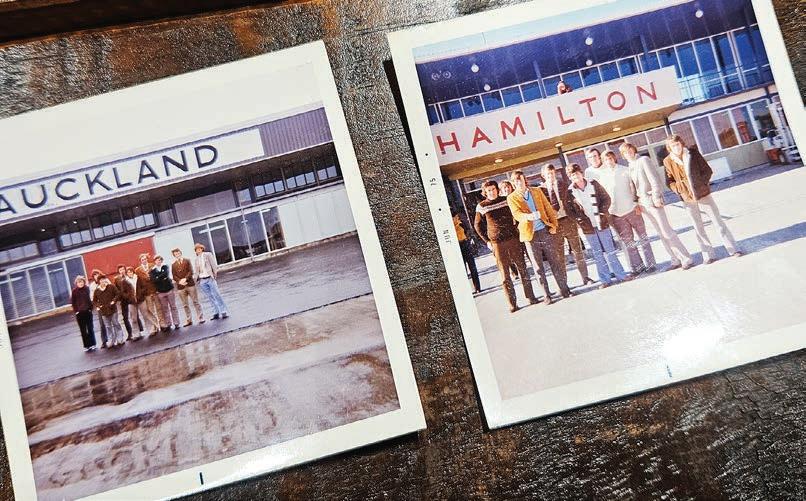
“Young Farmers was an important part of our upbringing. We learned a lot of skills and it stood us in good stead to be where we are today,” Dawkins said.
They say the Fieldays is now far bigger, and run with military precision. They noticed an emphasis on new technology and health and wellbeing, something that wasn’t present 51 years ago.
Maher recalled being wowed by a Mercedes-Benz tractor in 1975.
“It was so unique, high tech, it had the hydraulics and noise-proof cab. It was probably 10 years ahead of anything we had here in New Zealand and about three times the price of a Massey Ferguson.”
In 2026 they noticed the variety at Fieldays, and number of tractor brands present. They also appreciated the organisation and ease of getting around.
“We’ve all had hip replacements now and we’ve been looked after so well. You can get a bus up and down the hill and everyone is so helpful. They even have the quad bikes with health facilities,” Blick said.
He believes the resilience of people in the primary sector remains unchanged.
“Fifty years ago, we thought we were tough, but it’s made us better people, and we have instilled those values in our children. Viticulture in Marlborough is having a hard time at the moment, but we’ve been hit before and you stand back up and go again.
“We have passed that on to the next generation. There are no free lunches.”
Will they be back? Absolutely, but perhaps they won’t leave it so long next time.
ON THE ROAD: The original group ready for their flights to get home from Fieldays.
Rebecca Greaves PEOPLE Fieldays
THEN AND NOW: In 1975, 10 members of the Renwick Young Farmers club attended Fieldays, 51 years later they returned for a reunion, with their wives.
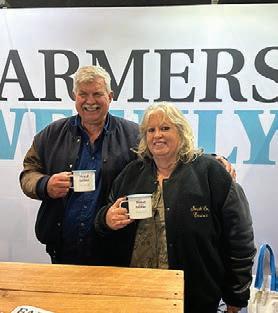
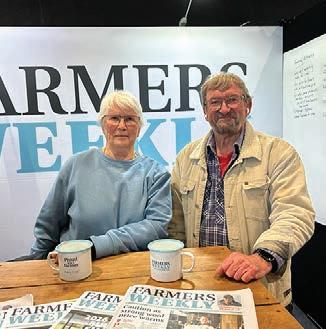
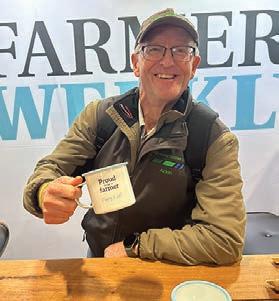
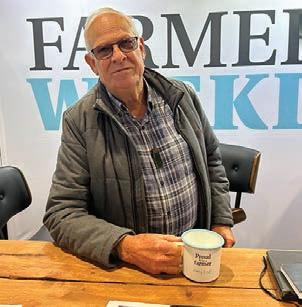
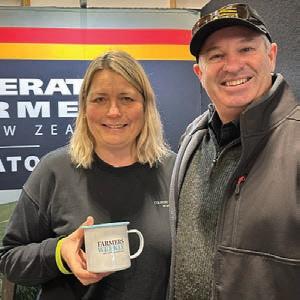
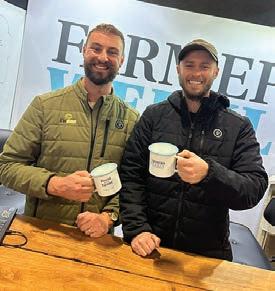
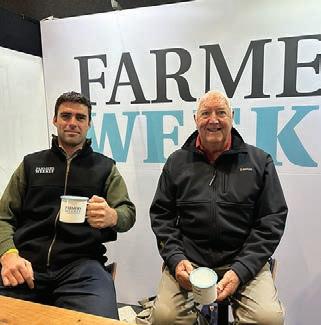
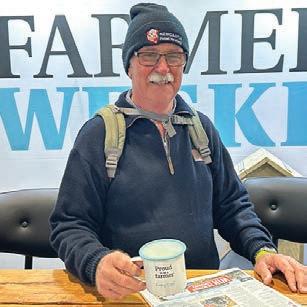
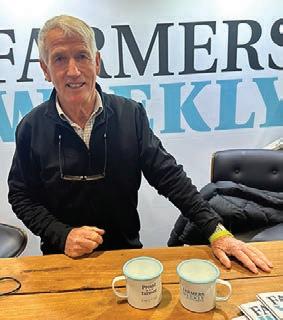
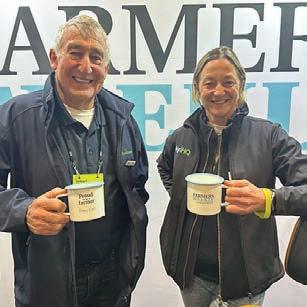
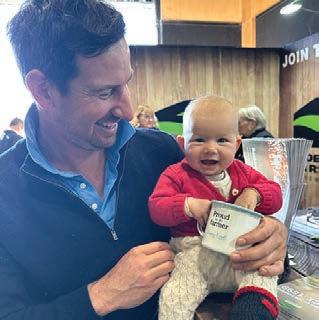
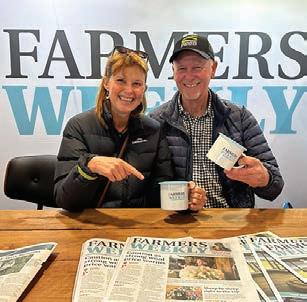
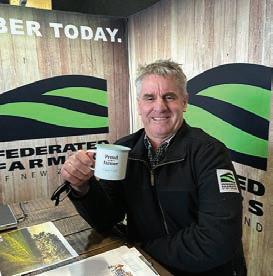
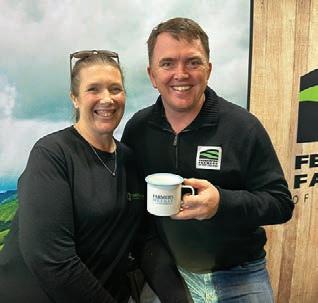
A great week at Fieldays.
It was great to meet so many of our voluntary subscribers at Fieldays, and welcome the new ones.
Thank you to each of you for taking the time to come and chat with the team. Hearing your stories and why you support this publication reminds us why we love what we do.
You and every one of our voluntary subscribers ensure we can:
• Continue to produce trusted agricultural journalism.
• Negotiate cost increases (e.g. NZ Post recently increased postage +19%).
• Keep advertising costs affordable.
• Continue industry support (Federated Farmers, Rural Women NZ, Rural Support Trust and many more).
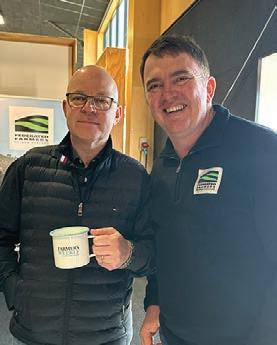
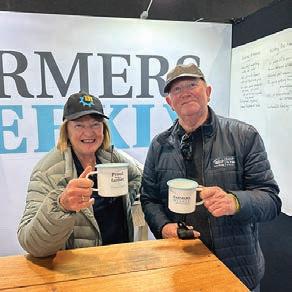
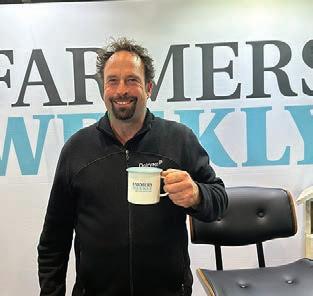
• Provide employment opportunities for cadet journalists and analysts.
• Support students – in schools with Ag in Ed, and in universities with our Student Ambassadors.
Also by popular demand, this week we’ve brought back our fundraising thermometer – and 8000 voluntary subscribers is still our goal.
Join now and we’ll send you a classic Farmers Weekly enamel mug.
Let’s all keep Farmers Weekly strong together.
Charlie Williamson Community Manager
P.S. If you were wondering what happened with Brett, he did stop by the Farmers Weekly stand at Fieldays with his mug. He left with two, and has since gifted them to friends.
BECOME A VOLUNTARY SUBSCRIBER
Support us with a voluntary annual subscription to Farmers Weekly. $120 for 12 months. This is a voluntary subscription for you, a rural letterbox-holder already receiving Farmers Weekly every week, free, and for those who read us online.
Scan the QR code or go to www.farmersweekly.co.nz/donate
Email your name, postal address and phone number to: voluntarysub@farmersweekly.co.nz and we’ll send you an invoice. Call us on 0800 85 25 80
Note: A GST receipt will be provided for all voluntary subscriptions.



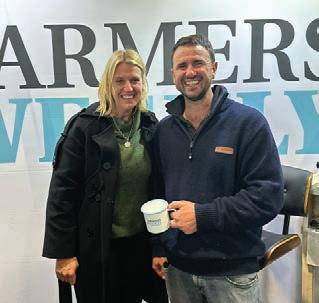
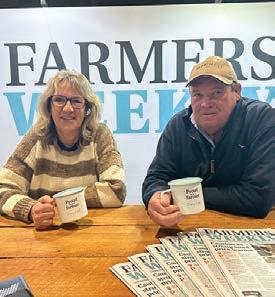
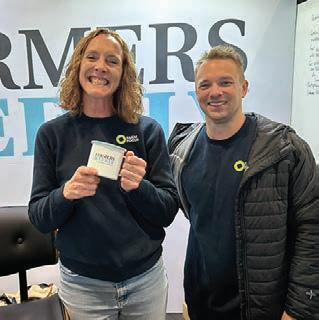
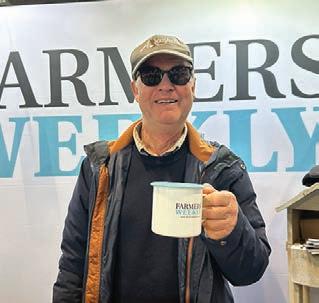
Some of the Farmers Weekly voluntary subscribers who visited us for a chat at Fieldays.
Tomorrow ’s per formance star t s in the cal f shed
Ever y farmer understands the impor tance of get ting calves through to weaning healthy and growing. But increasingly, research is showing that calf rearing isn’ t just about sur viving the first few months of life, it ’s about set ting animals up to per form for years to come.
The grow th achieved in the calf shed has a direct influence on future productivit y, making early nutrition one of the most valuable investments on farm
While milk plays a critical role in the first weeks of life the development of a healthy, functional rumen is what ultimately determines how well a calf transitions into a productive pasture-based animal That process star ts much earlier than many people realise Grow th today drives per formance tomorrow
The relationship bet ween early grow th and future per formance is well established
Calves that achieve stronger grow th rates before weaning are more likely to reach liveweight targets , enter the herd earlier and per form bet ter throughout their productive lives Conversely, grow th checks during the calf-rearing phase are difficult and expensive to recover from Ever y kilogram of grow th achieved efficiently during the pre-weaning period delivers value The challenge is ensuring calves receive the nutrition needed to maintain consistent grow th while developing the digestive system required for life af ter milk
That is where hard feed plays a critical role
Understanding the developing rumen
For the first few weeks of life, milk bypasses the rumen and is digested in the abomasum During this period ver y lit tle energ y comes from rumen fermentation
However, from around one to three weeks of a ge, microbial colonisation begins As calves consume meal and small amounts of fora ge, fermentation star ts to occur and volatile fat t y acids are produced
These fat t y acids that are produced stimulate the grow th and development of rumen papillae – the structures responsible for absorbing nutrients from the rumen
A calf with access from early on to a high-qualit y calf feed , can have a well-developed rumen by six weeks of a ge that can significantly contribute to its energ y requirements By eight weeks , rumen function is well advanced and approaching that of an adult animal Continued consistent intake of hard feed beyond eight weeks is critical to maintain and fur ther develop rumen function
The key driver behind this development is not a ge alone It is feed intake
Calves need access to highly digestible, nutrient-dense feeds that encoura ge early consumption and suppor t rumen development
Meal is more than a weaning tool
Many farmers think of calf meal primarily as something used to help calves transition off milk
In realit y, meal is a developmental tool
The starches and digestible carbohydrates found in calf meal provide the fuel needed for rumen microbes to establish and multiply As these microbes ferment feed they create the conditions necessar y for rumen grow th and function
Without adequate meal intake rumen development slows This can lead to poor utilisation of pasture af ter weaning reduced dr y mat ter intake and the familiar “weaning grow th check ” that many farmers work hard to avoid
Meal should therefore be viewed as a critical component of the nutrition programme from an early a ge rather than simply a supplement during weaning
Q ualit y mat ters
Not all calf feeds are created equal
While feed labels provide some information understanding what sits behind the numbers is equally impor tant
A qualit y calf meal should deliver high levels of digestible energ y qualit y protein and sufficient starch to suppor t rumen development Protein sources such as soybean meal and canola meal are highly digestible and suppor t muscle grow th and development
Equally impor tant is avoiding excessive levels of lowqualit y filler ingredients
High levels of indigestible fibre can dilute energ y densit y and reduce overall feed qualit y While fibre has a role in the diet excessive neutral detergent fibre (NDF) in concentrate feeds can limit the nutritional value available to the young calf
The objective is simple: ma ximise the amount of useful nutrition delivered in ever y mouthful
Palatabilit y also mat ters Calves are more likely to consume feeds they find at tractive, helping establish intakes earlier and suppor ting consistent grow th Set ting calves up to eat
Even the best feed will not deliver results if calves cannot access it
Calf shed design and feeding mana gement play a significant role in determining feed intake and grow th per formance
Providing sufficient feeding space allows all calves access to meal without excessive competition Shyer
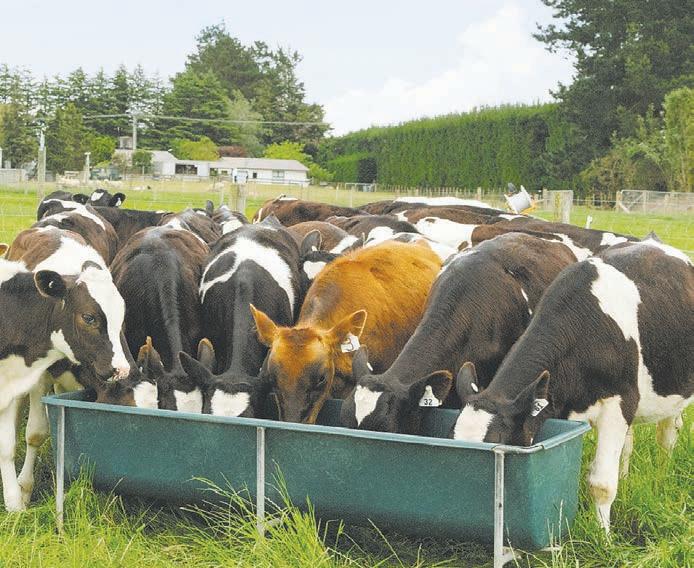
animals can of ten be pushed away from feed sources by more dominant calves leading to inconsistent grow th rates within groups
Fresh water is equally impor tant Water intake suppor ts rumen fermentation and should always be available As a guide, calves may consume around five litres of water for ever y kilogram of dr y mat ter eaten
Simple practices such as clean feeding areas providing adequate trough space and ensuring meal remains fresh can influence intake and per formance
Managing the transition to pasture
One of the big gest nutritional challenges occurs af ter weaning
Pasture-based systems require calves to make a rapid transition from milk and concentrate feeds to fora gebased diets
However, fora ge digestion demands a well-developed rumen and a robust microbial population
When calves are transitioned too quickly, feed intake can decline energ y supply falls and grow th rates suffer
Continuing to provide meal and small amounts of qualit y fora ge for several weeks af ter weaning helps suppor t rumen development while maintaining energ y intake
This reduces the risk of grow th checks and allows calves to adapt more successfully to pasture-based feeding systems
A long-term investment
The economics of calf nutrition are of ten viewed through the lens of feed cost
However focusing on cost per tonne can overlook the much larger financial impact of grow th per formance
When farmers invest in qualit y nutrition , effective feeding systems and strong rumen development , they are investing in future production
Tomorrow’s per formance star ts long before first calving It star ts with ever y feed , ever y grow th target and ever y mana gement decision made in the calf shed
For more in-depth calf nutrition advice, head along to the Dair y Women’s Net work Calf Rearing E xpo
SealesWinslow are a key speaker and will provide practical , hands-on advice Register at dwn co nz / calf-rearing-expo-2026/
Voices of farmer advocacy raised together
Rebecca Greaves NEWS Fieldays
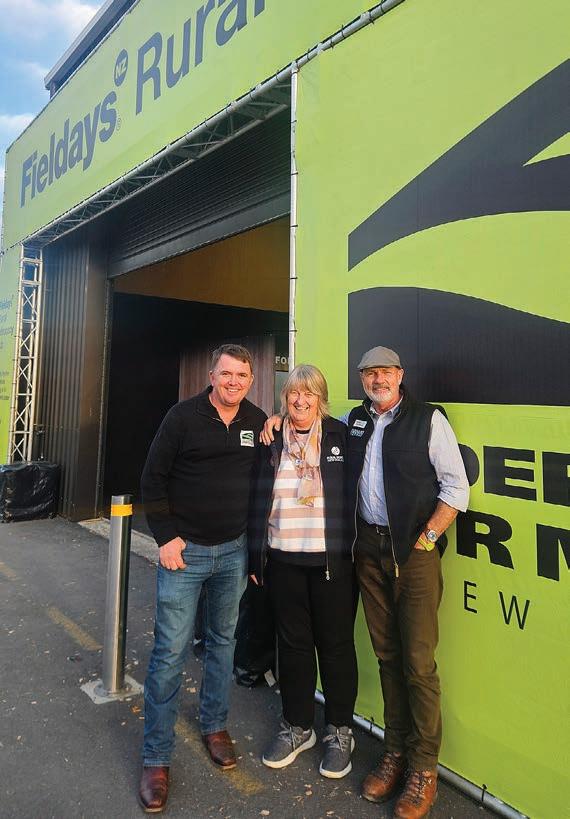
FINDING common ground to give farmers a voice on the issues that really matter was at the heart of the Advocacy Hub at Fieldays. The hub brought together industry bodies that included Federated Farmers, Rural Women New Zealand, Rewiring Aotearoa, DairyNZ, Farmers Weekly, Wool Impact and the Wilding Pine Network. In this election year, it also hosted speakers from major political parties throughout the week.
While advocacy might not always be visible to farmers on the ground, the huge amount of work that goes on behind the scenes as the country faces some of the most significant legislative reform in years cannot be understated, hub members agreed.
“It’s about providing voices, bringing the voices of our communities to the decision-making process,” said Federated Farmers national board member Sandra Faulkner.
“For me, [the hub] is absolutely
essential to provide space for conversations. If we are able to speak plainly with each other and seek common ground, then we can also work on our differences,” she said.
“There is a huge legislative reform in the form of freshwater, local government, the Resource Management Act, a big chunky piece of framework in which we farm. We are helping farmers and their families to be heard when it comes to generational legislative reform. These are the guidelines our children will farm with.”
I have respect for farmers who invest time into helping politicians and other decision makers off farm to make decisions on behalf of farmers.
Dean Williamson Farmers Weekly
Farmers Weekly publisher Dean Williamson said the media organisation chose to be in the hub as a show of support for farmer advocacy, reflected in its partnerships with Federated
Farmers and Rural Women New Zealand, and highlighting the value of good communication.
He said farmers want agency, to be at the table when decisions are being made, rather than being dictated to. That doesn’t happen when advocacy groups are splintered.
“Advocacy is about farmers who have the backs of their fellow farmers, and I have respect for farmers who invest time into helping politicians and other decision makers off farm to make decisions on behalf of farmers,” Williamson said.
“Too often we have seen division, and division in advocacy. I don’t think that serves anyone.
“In the hub we are among people who keep themselves well informed and they care, and that’s a bloody good fit for us. The concept of having the different farm advocacy groups together –that the more they find common ground, the quicker the right decisions can be turned into policy – can be turned into regulation that suits farmers.”
Wool Impact sector executive Ross McIsaac said the decision to be in the hub was about visibility
and engagement with similar groups and shared experiences.
“We are trying to engage and refine what we do, figure out what works and what doesn’t. We are mindful there are other
organisations that represent sheep farmers, like Federated Farmers and Beef + Lamb New Zealand. It’s good to speak with other people in this space. It’s always better together.”
Lateral thinkers get their due in Innovation Awards

Isabella Beale TECHNOLOGY Awards
NEW Zealand’s latest innovations in the primary sector were recognised at the 2026 Fieldays Innovation Awards, with a range of solutions from AI livestock monitoring to biodegradable plant pots.
The awards celebrate emerging technologies and ideas that improve productivity, sustainability and efficiency across the food and fibre sector.
Entrants could compete across four categories: Early Stage, Growth & Scale, Young Innovator
of the Year and Prototype.
The Young Innovator of the Year Award went to Wellington-based Enivo, founded by 20-year-old Elisa Harley, for its biodegradable plant pots made from New Zealand forestry and primary industry waste, created to combat plastic waste.
In the Prototype category, Cambridge company Scanabull was awarded the win for its Scanabull WeighApp, which uses 3D LiDAR technology and artificial intelligence to estimate cattle liveweights through a smartphone camera scan.
Judges described the technology as highly relevant and scalable,
highlighting improvements in accuracy and user experience.
The Growth & Scale Award went to Waihi Beach company Truss House for its Truss House
Being included in this community is huge for us. At the end of the day the people who are servicing the sector need places to live and they need home bread.
Kim Aitken Trussed Systems
Portal Frame, a timber framing system. Category head judge Katherine Sandford said that they highlighted the company’s strong intellectual property position, with patents secured in multiple countries, along with established commercial partnerships.
The category winner for the Early Stage Award was Hamilton-based company elert, whose wearable elert EQ device monitors equine health, powered by lightweight solar technology. Judges described it as a compelling, real-world solution.
“We’re extremely humbled and proud to receive our award last night in the Early Stage
category. It’s something that we’re passionate about,” Joshua Phillips, CEO and Founder at elert told Farmers Weekly.
Steve Chappell, New Zealand National Fieldays Society programme manager, said this year’s finalists demonstrated the strength of innovation coming out of the country’s primary industries.
“Many of the challenges facing our primary industries are global. It is encouraging to see New Zealand innovators developing solutions that not only address local needs but also have relevance and impact on the world stage.”


ideas that grow is a Rural Leaders Podcast in association with


In this podcast Murray King (2003 Nuffield Scholar) on an Idaho desert ‘Aha!’ moment and a life shaped by Nuffield. Search: Ideas that Grow
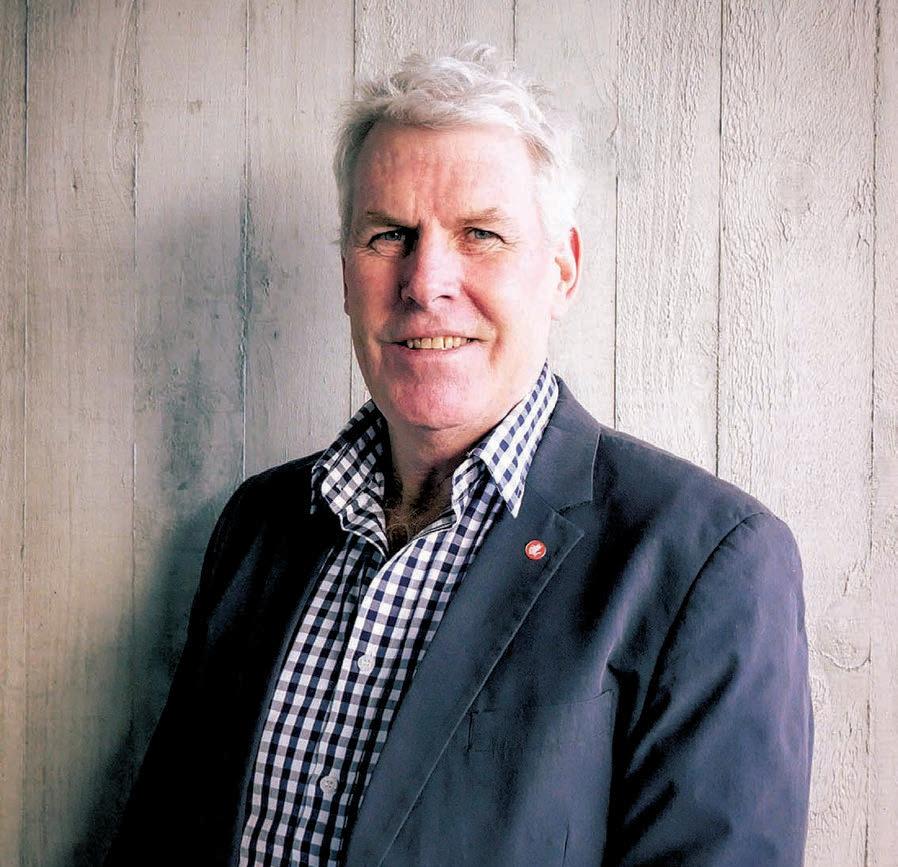
ADVOCATES: Federated Farmers president Wayne Langford, Rural Women New Zealand chief executive Sandra Kirby and Farmers Weekly publisher Dean Williamson at the Advocacy Hub.
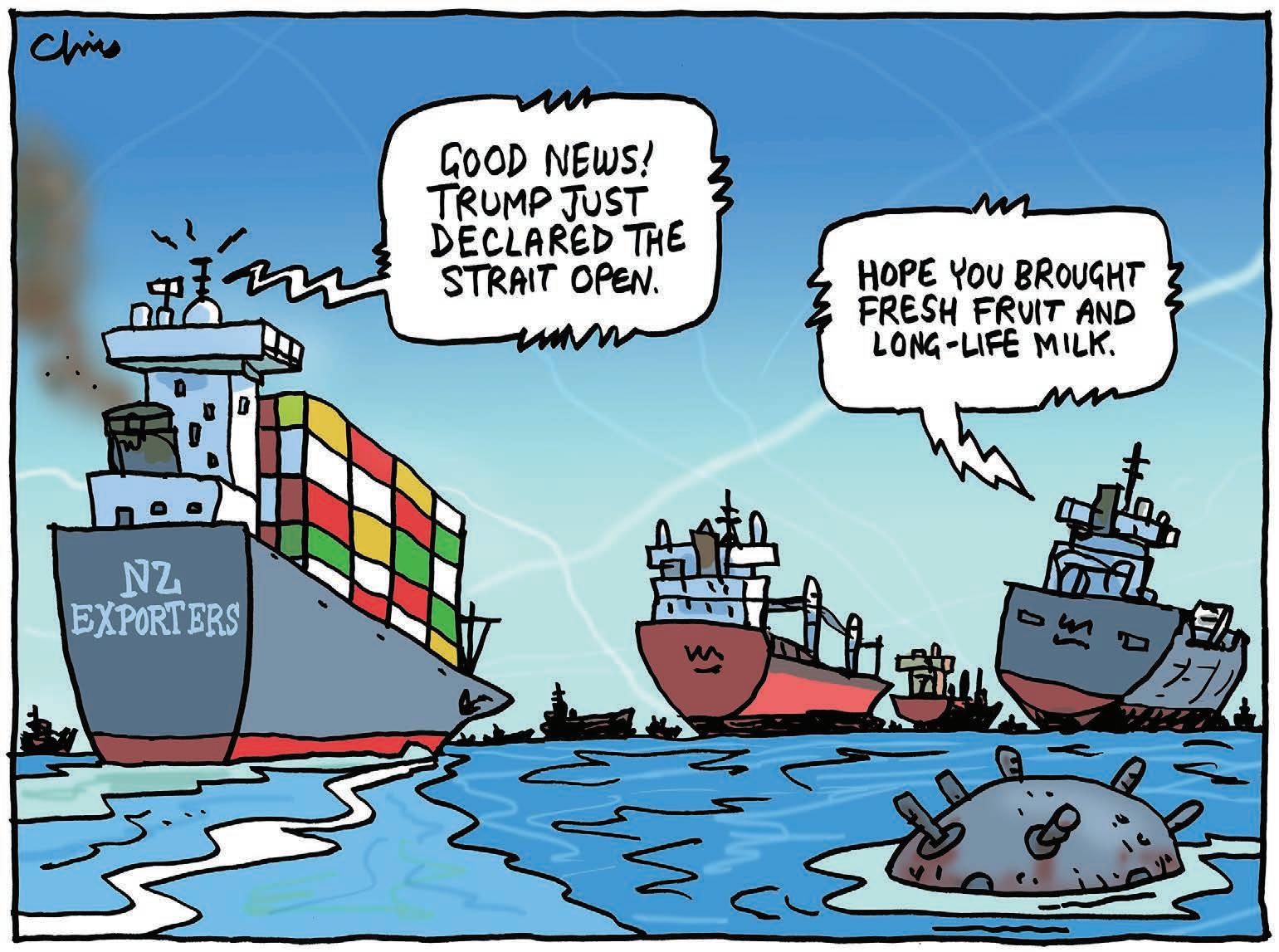
From the Editor
Clear skies and broad horizons

Bryan Gibson Managing editor
THE fog has well and truly lifted from farming, if National Fieldays is anything to go by.
The sun was out to match the bright outlook that most visitors were experiencing at Mystery Creek.
The record farmgate returns are a major factor, of course, but a relaxation in regulation was also putting a spring in the step of the sector.
Perhaps another contributor to the optimistic vibe was a general feeling of resilience and importance.
During the pandemic, farming’s ability to not only function but to thrive gave rural communities a real sense of pride.
The global upheaval we’ve been experiencing recently no doubt sent a shiver down many spines, but farmers and growers have once again proven they can navigate stormy seas.
Outside of the farm gate there has
been some great work being done to piece together the fabric of global co-operation that sustains our export sector.
Many nations are turning inwards and embracing nationalism but New Zealand simply doesn’t have that option.
As exporters we rely on the free and fair trade of goods and services between countries.
Our population is far too small to fill our order book and we know it.
That internationalism and our focus on partnerships was on show at Fieldays too.
When Prime Minister Christopher Luxon spoke at the Advocacy Hub, the two elbows on the Farmers Weekly bar leaner belonged to the High Commissioners of India and the Netherlands.
our skins and pelts was a little on the nose.
But the sectors set to benefit immediately from the deal told Farmers Weekly that with the right approach, the opportunities are huge.
Importantly, realising the value of the opportunity will not come down to selling larger volumes there, but from strengthening partnerships.
Our apple industry will enjoy a 25% reduction in tariffs, while kiwifruit tariffs drop to zero for export volumes within a quota amount, and quantities above that have their tariff cut from 35% to 16.5%.
Industry leaders said those gains were cemented by past co-operation with Indian growers on orchard systems and growing strategies.
For India, access to its massive consumer base is only allowed with a promise to work with food producers there to raise productivity and profitability.
Our horticulture sector has been doing just that for a while.
Should the Department of Conservation be moving faster to find a new leaseholder for Molesworth
LAST WEEK’S POLL RESULT
More than 70% of those who took the poll say they are readying themselves for an upcoming El Niño event.
“The likelihood of what’s being called a super El Niño continues to grow according to climate scientists in the northern hemisphere. So it would be unwise not to prepare in case it arrives here. The nature and extent of preparation depends on where you are located in the country,” said one voter.
Another said they will “keep more feed on hand and keep watching the weather forecast” while one person said they would be installing a 25,000 litre water tank specifically for stock water.
Some voters were taking a wait and see approach: “We will be watching the indicators over the spring but we had a warning of El Niño about three years ago and it rained all summer.”
Of the 28.6% who said they would not be preparing, some said it was important to have flexibility within the farming system throughout the year: “I feel we need more certainty around the impacts of this El Niño event. Flicking the switch too early could be a regretted decision. Having flexibility in your system helps make decisions easier and more quickly if needed.”


Speaking of India, more than one punter pointed out that the government might have been trying a little too hard to sell the virtues of the newly signed free trade agreement.
With dairy farmers still smarting at how little the deal moved the dial for them, hearing politicians tout the rosy future for
For our wider food and fibre sector, having the FTA is just the first step in what will hopefully be a long and valuable partnership, not just a transaction.
Of course, we all hope siteholders at Mystery Creek enjoyed banking many transactions over the four days.
With attendance high and confidence growing, it would be surprising if that was not the case.

The best investment you’re not making – yet
In my view
Richard Kyte Kyte is general manager at Thriving Southland
THERE is a running joke in farming communities that the job description reads simply: everything, always, regardless of weather. The reality is no joke. Between the animals that don’t care what day it is, the crops that won’t wait for a forecast, and the thousand small decisions that cascade into the next thousand small decisions, it is genuinely remarkable that farmers ever leave the property at all.
And yet they do. Look around any rural community and you will find farmers on school boards, coaching junior rugby on a Saturday morning, turning out for the volunteer fire brigade at 2am, or running the local A&P show committee. It isn’t obligation that gets them there. It’s something more instinctive – an understanding, often passed down across generations, that strong communities are not a luxury. They are infrastructure. What farmers are less naturally inclined to do, I’ve often noticed, is prioritise themselves in that equation. Giving to others is where they find the greatest value. Their own wellbeing often comes last on the list, if it makes the list at all.
Which brings me to catchment groups – and to you, if you’re not already part of one.
I’ll be honest. If you’re not currently involved in a catchment group, the odds are it’s not on the radar, or it feels like one more thing in a season that already has too many things in it, or it simply doesn’t feel relevant to where you are right now.
I’m asking for two more minutes of your time to convince you otherwise.
I am a believer in research. Not because it always delivers comfortable answers, but because good decisions need a foundation.
If you are going to commit your time, your energy, and your resources to something, you need reasonable confidence that the return will be worth it. That’s not cynicism – that’s sound farming thinking applied to your own life.
Catchment groups are, at their core, communities of people who have already done that calculation. They have looked at the cost and weighed it against the return. And they keep showing up.
The work itself is grounded in science. Catchment groups bring together farmers and communities to identify challenges, share knowledge, and develop practical, evidence-based approaches to reducing the environmental footprint of their operations –without sacrificing the profitability that keeps those operations viable.
Water quality, biodiversity, land
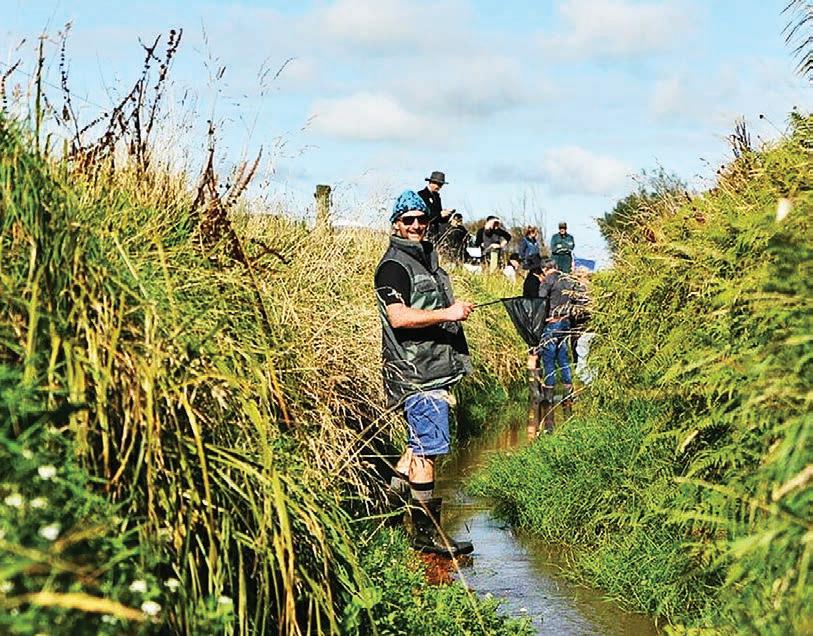
The practical value is real. But it is not the whole story.
I am a believer in research. Not because it always delivers comfortable answers, but because good decisions need a foundation.
health: these are opportunities greater than any single farm, and ones that no regulator will solve on your behalf. They require the kind of collective, localised intelligence that only people who actually work the land can provide.
Recent collaborative research spanning Germany, Australia, and the United States has examined what happens to people when they engage with catchment-style groups – when they get involved in the science, the monitoring, the opportunity realisation and the problem-solving, from shared stewardship of water and land. The findings are striking, and they have nothing to do with nitrogen levels or riparian planting schedules.
Participation is associated with
measurably improved mental health. With a stronger sense of purpose. With greater feelings of contribution and control over one’s circumstances. With ongoing learning, the development of mastery, and broader cognitive wellbeing.
In other words: catchment groups are good for the land, good for the community, and – this is the part I want you to sit with for a moment – good for you.
Farming has always demanded a particular kind of resilience. The pressure to be self-sufficient – in every sense – runs deep. Asking for help, or admitting that you are struggling, can feel like a foreign language.
A catchment group does not ask you to do any of that. It asks you to show up, to bring what you know, and to be part of something larger than your own fence line. The wellbeing benefits are not a programme or a helpline. They are a byproduct of connection, purpose, and the quiet satisfaction of working on a solution that matters.
If you cannot find a compelling reason to join a catchment group for the science, or for the community, or for the environment your children and grandchildren will enjoy – then do it for yourself.
For a farming community that has always given more than it has taken, it might just be the most overdue investment going.
Ag foundations will stand up to battering
In my view
IDON’T know about you, but it feels like 2026 has been going for much longer than five months.
From the ongoing impacts of the conflict in the Middle East through to numerous weather events and the fact that we’re in an election year, so much has happened already and uncertainty has been a key theme.
It’s the kind of backdrop that can make everything feel a bit heavier than usual – for households, for businesses, and certainly for farmers and growers.
But when I step back and look at what’s actually happening across New Zealand’s agribusiness sector, I find myself feeling optimistic.
Yes, there are challenges. But there are also some genuinely solid foundations, along with a quiet confidence coming through in our conversations with customers.
Take recent developments in the sector. Strong commodity prices have continued to underpin dairy, red meat, kiwifruit and apples. Many dairy farmers have also had a timely boost from the Fonterra capital return and milk price increase, meaning they’ve got more flexibility in responding
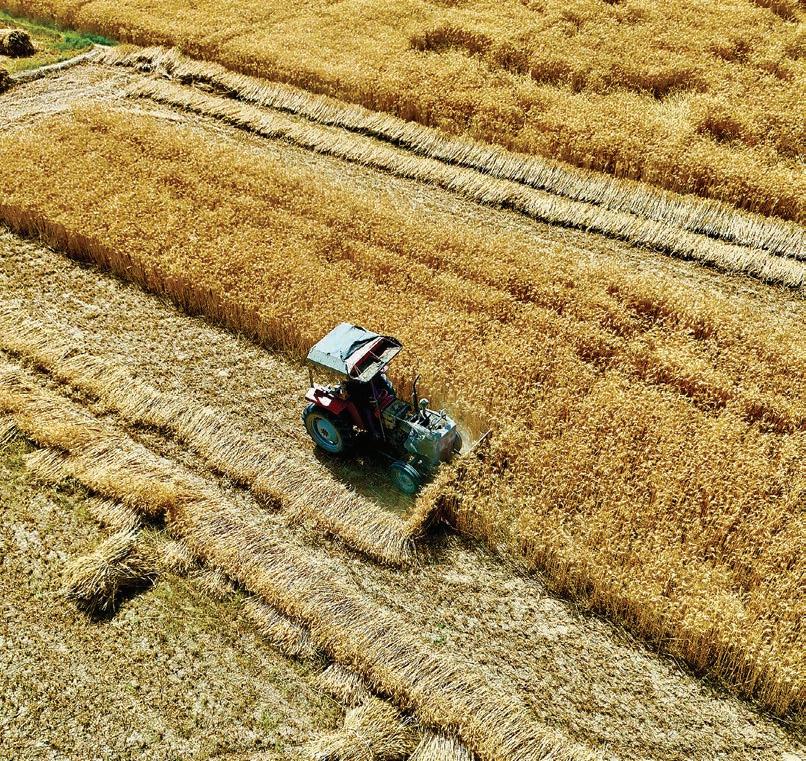
There are some headwinds, but what stands out to me is how the sector is dealing with them.
to the current environment. That said, things aren’t rosy across the board. Arable, vegetable and grape growers are finding it
tougher to ride out higher fuel and fertiliser costs, and softer end markets aren’t helping.
Added to that, it’s a tricky time for customers who are making planting and harvesting decisions, especially looking ahead to spring, when fertiliser requirements will be higher.
We’re also hearing about more practical pressures, including shortages of plastic for piping,
irrigation, new milking sheds and effluent tank liners – reminders that global supply constraints caused by the Middle East conflict still have a very real local impact.
So yes, there are some headwinds. But what stands out to me is how the sector is dealing with them.
Across our agribusiness portfolio at Westpac, customers are generally coming at these challenges from a position of relative strength.
For our customers, overdraft usage is sitting at around a threeyear low, and for New Zealand, overall agricultural debt is below comparative figures for 2023 and 2024 (and only marginally above 2025 levels). This tells us many farmers and growers still have balance sheets and working capital capacity.
Capacity gives people the space to make deliberate, considered decisions – whether that’s reducing debt, reinvesting in the farm, or simply building a buffer for what might come next. It’s cautious, but it’s also quietly confident.
Agribusiness is more than holding its ground – and in many ways, helping anchor the wider economy.
The regional picture reinforces this. While our economists recently revised their 2026 GDP growth forecast for NZ from 3.3% to 1.5% as a result of the Middle
East conflict, they have noted that the South Island economy has been significantly more resilient, with positive employment growth figures thanks in part to stronger links to agriculture, in particular in Southland, Otago and Canterbury. What I’m hearing from customers is a grounded confidence. It’s not driven by hype or short-term thinking, but by strong commodity returns, prudent financial management and a deep understanding of how to navigate uncertainty.
NZ farmers and growers are used to riding out economic cycles. They know how to adapt, when to pull back and when to lean in. That’s why events like Fieldays matter so much. Fieldays is about showcasing innovation and excellence, but above all it’s about connection. It’s a chance to share insights, swap ideas and sensecheck what’s actually happening on the ground.
After the past few months out talking to customers, my overwhelming takeaway is this: while the backdrop might feel tough, the fundamentals of NZ agribusiness are still strong. For me, that’s what stands out amid the noise – and it’s why I remain genuinely optimistic about where the sector is headed.

RETURNS: Catchment groups are, at their core, communities of people who have already looked at the cost and weighed it against the return. And they keep showing up.
Photo: Thriving Southland
Richard Anderson
Anderson is head of agribusiness at Westpac New Zealand
LOOKING UP: Despite global uncertainty and ongoing supply chain pressures, Richard Anderson is optimistic about the outlook for New Zealand farmers and growers. Photo: Pexels
Sector Focus
Colin Glass circles back to the farm

Annette Scott PEOPLE Dairy
THE end of an era for Dairy Holdings was marked at the end of last month when inaugural chief executive Colin Glass left his corporate seat to return to the family dairy farm.
But, to read the citations from his farewell celebration, “Colin Glass will never leave here”.
“Colin leaves behind a legacy, a legacy of leadership that has positively influenced not only Dairy Holdings but also the wider New Zealand dairy industry,” was the recurring theme in parting speeches.
Always with relentless positivity, razor-like focus and thoughtful questions that got to the heart of the issue, Glass made an outstanding contribution during a period of significant change and heightened regulation in the dairy sector.
He grew up on the family farm near Methven, doing his secondary schooling in Christchurch before going onto Lincoln University where he graduated with a Commerce Degree in farm management and a post-graduate Diploma in accountancy and corporate finance, qualifying as a chartered accountant.
He has been involved in the NZ dairy industry ever since, with a stint also in the Australian dairy industry from 1997 to 2008.
At the age of 26, he took up the role of chief financial officer
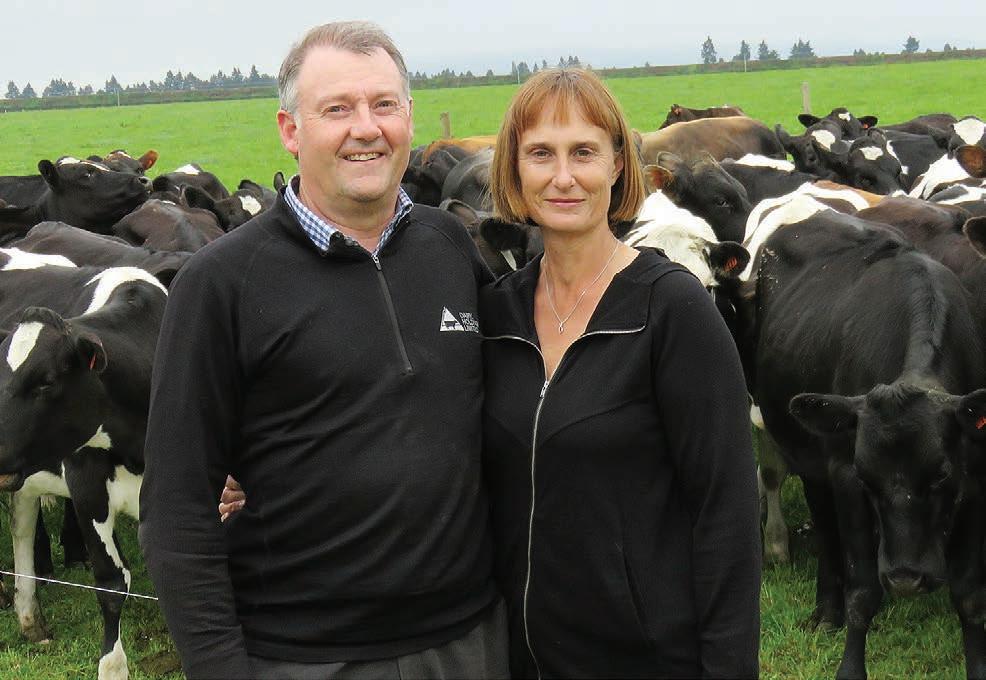
for the Dunedin-based corporate dairy farmer Tasman Agriculture (TasAg).
“It was my dream job and I was on a steep learning curve,” he recalled.
Immediately following the sell-down of TasAg’s NZ farms and the purchase of the major shareholding by Dairy Holdings Ltd (DHL) in 2001, Glass was appointed general manager and subsequently chief executive.
That was 25 years ago.
But, said Glass, “I didn’t want the celebration to be where I had the privilege of hearing my own eulogy”.
“The Dairy Holdings story celebrates a remarkable era for South Island dairying and the rise of NZ’s leading, enduring and profitable
I didn’t want the celebration to be where I had the privilege of hearing my own eulogy.
Colin Glass Dairy Holdings
corporate dairy business, built on strong values of hard work, a focus on pasture and perhaps a careful approach to spending.
“Our systems based around our people, our process and our pasture are at the heart of Dairy Holdings.”
Glass said the journey has had some great times, and its share of challenges.
NZ dairy herds set a new six-week in-calf record
NEW Zealand dairy farmers’ herds had another strong reproductive performance for the 2025-2026 season, with a six-week in-calf rate that lifted to a new record of 70.4%.
This is up from 70.2% in the previous season, while the notin-calf rate (NICR) remained relatively stable at 14.7%.
The results are based on data from 4776 herds and more than 2.6 million cows across the country.
LIC chief executive David Chin said it was a fantastic result and the third year in a row when there had been a consistent improvement in mating performance.
There is no single factor that can be highlighted for the result. Instead, it was a mix of ongoing good attention by farmers, he said.
The industry’s top-performing 25% of herds achieved a six-week in-calf rate of 78.2% and a NICR of 11.1%.
Those farmers are “knocking it out of the park” and should be what the rest of the industry aspires to, he said.
“Those top-performing herds are getting more cows submitted, achieving higher conception rates and ending the season with fewer empty cows.
“The difference isn’t one thing done exceptionally well – it’s consistently getting the basics right, from nutrition and cow recovery through to heat detection and mating management,” Chin said.
The difference isn’t one thing done exceptionally well – it’s consistently getting the basics right.
David Chin LIC
Cows also dried off in good condition going into last winter and then encountered good spring conditions, he said.
Regionally, the south of the country stood out with gains in Otago, South Canterbury and Canterbury, where six-week in-calf rates lifted by between 1.4% and 2.5%.
Otago saw the biggest gain, increasing from 68.9% to 71.4%, while South Canterbury lifted from 70.6% to 72.6%, and Canterbury increased from 70.5% to 71.9%.
However, there were softer results in the North Island. Waikato shifted from 71.2% to 69.6% and Northland from 71.0% to 69.2%.
Waikato Federated Farmers dairy chair Matthew Zonderop said farmers across the region had higher than average empty rates – up from 12% to 16%, and lower than average six-week in-calf rates.
There was no definitive reason for this and it took everyone by surprise, given how good on-farm conditions were at the time.
“They are pointing to a warmer than normal November, which saw cows stop cycling.
Paula [his wife] and the girls [daughters Hannah and Olivia] have a few projects lined for me. I’ll be the boy for a while.”
He has confidence in the future of the NZ dairy industry, though Glass believes the growth period of the early 2000s will never be exceeded.
“You look back at the first 10 years of DHL, that was a period of growth for the industry that I don’t believe we’ll ever see the likes of again.
“Canterbury and Southland each having about 100 conversions a year – it’ll never, it just can’t, get to that stage again.
“We don’t have the capability of shed builders, and people that have the experience and know how to be able to do anything of that scale again.
“But every time the DHL team has been challenged, the business has grown. Whether it be health and safety, irrigation water consents, due diligence processes, or just court cases, our supporters and business partners have always stood by us.”
The DHL portfolio takes in 90 farms – 70 dairy farms and 20 support farmers, employing 420 people, with 70,000 cows producing 23 million kg milk solids.
“I’m proud of my team. My hope is that they can build on what has been achieved and make it even better. I’ve no doubt they will.”
Meantime Glass has successfully glossed up his own CV, enough to a job back on the family dairy farm near Methven.
“I’m looking forward to that,
“I think the future of farming per se is as good as it’s ever been. It’ll be different and that in itself makes it exciting.
“We’ve done the corporate farming, basically setting that up from scratch for that first 25 years and now we’re keen to see what we can do for our own family; that it is exciting.”
Not ruling out an industry directorship down the track, Glass said “there’s a couple of governance roles coming up later in the year”.
Fonterra?
“You never say never. Meantime, I’m just looking forward to a bit of clear runway, I will be doubling down on our farm.
“I’ve always loved farming. It’s what I want to do now.”
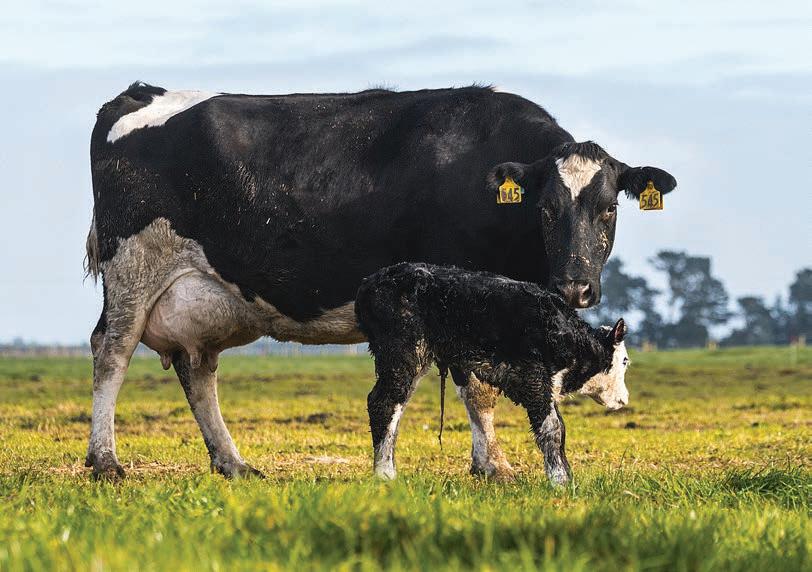
“Because there was so much grass and feed available, they were putting it into milk and didn’t feel the need to reproduce and keep their progeny moving.”
While the data is by no means a disaster, it was unexpected, he said.
CRV sales and operations manager for New Zealand Mitchell Koot said anecdotal data showed that North Island empty rates were up 3-5% while the South Island’s rates were similar to last
year, ranging from 7% to 17%.
Southland rates were also on a par at below 10%.
One trend he had noticed was that farmers are extending their AB because of the increasing popularity of using collar technology with around 30% of their customers having a mating longer than six weeks.
“That continues to grow this year with our techs (AB technicians) getting more requests for extended AB.”
Gerald Piddock NEWS Dairy
STRONG: New data highlighting mating results for the 2025-2026 season from LIC showed another period of strong reproductive performance for the dairy industry.
GLASSES OF MILK: Colin Glass, with his wife Paula, is looking forward to life back home on the farm.
Photo: Annette Scott
Open Country wants milk price clarity
OPEN Country Dairy will be pushing for greater transparency around how the milk price is calculated when it files its submission on the MPI’s review of the Dairy Industry Restructuring Act.
This is to ensure that companies maintain an equal footing, Open Country Dairy chair Laurie Margrain said at Fieldays.
In May, the Ministry for Primary Industries announced it would be undertaking its statutory review of the Dairy Industry Restructuring Act (DIRA).
It will examine whether DIRA’s current competition provisions, which regulate Fonterra, are still necessary, fit-for-purpose, and achieve net benefits for the dairy sector.
Fonterra’s market share has fallen to 78% of the country’s milk production, but it is still the dominant player, he said.
“If you take any other industry you can think of, 78% is regarded as domination. If you want competition – and we need competition – you have to have an environment that allows that to happen.”
And that means more transparency and ensuring that the aspects of DIRA that allow for competition are maintained, he said.
If you want competition – and we need competition – you have to have an environment that allows that to happen.
While he acknowledged the milk price formula is publicly available and is reviewed by the Commerce Commission, Margrain said it has yet to achieve the level of competition that the market requires.
“Seventy-eight percent – that’s still domination and any watering down of those provisions would stop competition.”
That greater level of competition would also keep the milk price high because the dairy companies sell their product at global prices.
Regarding the market, he said the industry has recently been in the most sustained, buoyant period in the 21 years he had chaired Open Country.
Global markets have been remarkably resilient, with strong demand across the board. Cull cow and meat prices are also very good. It is hard to get the market to commit to higher prices, which suggests a price ceiling has been reached.
Global dairy supply has lifted and that could see the market ease slightly – but not radically fall in a way that was seen in the past with market volatility.
Open Country farmers have paid off a lot of debt and banks are making a lot of financing available. He hoped farmers have heeded the lessons of the past where some overloaded themselves with debt.
Fuel and fertiliser prices are the main concerns heading into spring, he said.
“That’s the single biggest issue when you talk to farmers.”
Open Country is a major exporter of product to the Middle East and so far, it has found ways of getting its product to the market, albeit at extra cost.
Back at home, Open Country recently opened a new butter factory in
and
in the past 12 months acquired Miraka and Mataura Valley Milk.
Those two companies have been turned around and are both profitable.
It’s also added to its supply base in a highly competitive milk market, he said.
On the new factory, he said they are committed to making more butter and getting more value out of that product.
“We can feed half of 1% of the world population in New Zealand. It’s important that we feed that half of a percent that appreciate quality and value.”
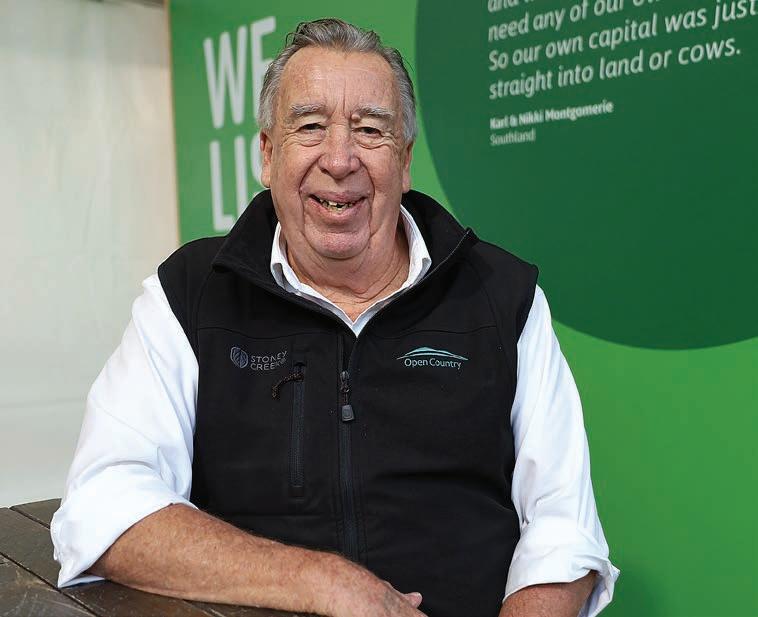
SUBMISSION: Open Country Dairy chair Laurie Margrain says in its submission on the MPI’s review of the DIRA that the company will push for greater transparency around how the milk price is formulated.

a
Active Teat Conditioner boosts the emollient level in your teat spray with quality skincare ingredients like Aloe Vera and Mānuka honey.
To keep your teats soft, healthy and resilient through changing weather, contact your local FIL Area Manager on 0508 434 569













Waikato
Gerald Piddock NEWS Dairy
Laurie Margrain Open Country

Breed your best herd. Time after time.
Premier Sires® teams are built on strict thresholds across every key trait. Not on averages. Every bull earns its place, so you can breed with confidence.
Numbers underpin regen farming success
Gerald Piddock NEWS Dairy
DO YOUR numbers and go into it with your eyes open.
That’s the advice of Australian dairy farmers Lauren and Simon Finger, who switched to a more regenerative style of farming after years of using a nitrogen system.
The Fingers were in New Zealand to attend the Resilient Dairy Conference at the Don Rowlands Centre at Lake Karapiro.
They spoke on a farmer panel that looked at the financial performance of regenerative and organic farmers and also included Manawatū farmer Sam Hogg and Te Awamutu farmer Fraser Higham.
Lauren said they decided to change their system in 2020 because they were looking for the next horizon in productivity.
“We were seeing that we were putting more on and were getting less back out.
“We started looking at the soil as the resource that we weren’t using.”
The Fingers have 550-600

cows on their 216 hectare farm in Victoria, which they bought in 2017.
They did not reduce cow numbers, relying on imported feed to make up the deficit.
She described the reaction of the pasture when it was deprived of that urea as being “like a junkie that had been taken off the juice”.
It wasn’t just the grass that had to come off the juice, it was the farmer as well.
Lauren Finger Victoria, Australia
The change was a mindset shift for the farmer too, she said.
“It wasn’t just the grass that had to come off the juice, it was the farmer as well.”
She recalls watching Simon get “tetchy” because in the past they would call their fertiliser company after grazing to put more on.
It also meant they no longer had a linear growth pattern with their pasture and that growth gap at the time made them nervous.
Simon said they wanted to put more resilience into their business
to absorb shocks such as drought. They are also now producing more pasture per hectare than they were three years ago.
“I expect in three years’ time it will be better again.”
Their soil improvement has also been rapid, with the pastures being able to absorb a lot more effluent when it is sprayed on the paddocks, he said.
Manawatū organic dairy farmer Sam Hogg said the case for organics is as simple as looking at fertiliser costs this season.
His advice for farmers looking at making the switch was for them to seek the advice of an experienced organic farmer who lives close to them.
“Find a good farmer in this space and offer them $1000 to come to the farm for the day and go through their books.”
Hogg’s farm converted to dairy in 2009 and got hit hard when the milk price crashed in 2014. For the past several years it has run as an organic farm, which has helped financially stabilise the business.
His working costs sit at around $7/kg MS. Organics and the premium offered by Fonterra offered a pathway to a solution and allowed them to pay off a
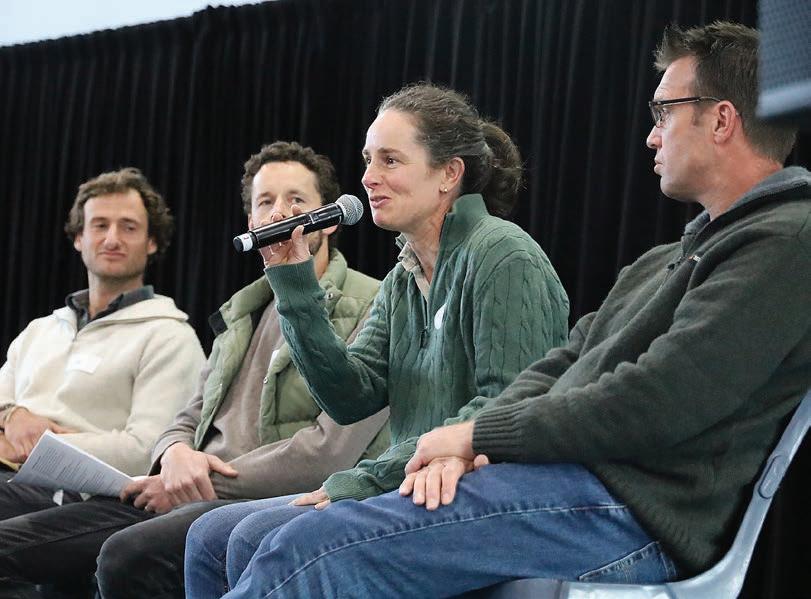
substantial portion of debt, he said.
Te Awamutu farmer Fraser Higham has two farms – one conventional and a 210cow organic – and is nearing completion of his second year of full certification.
The farm working expenses on the conventional 400-cow farm are just under $7/kg MS and are around $8/kg MS on the organic farm. That is driven largely by feed costs.
However, the organic farm is still more profitable thanks to the premium received, he said.
“It’s over $1000 a hectare more net profit between the two systems.”
Fonterra welcomes SI dairy farm conversions

FONTERRA has more than 20 new dairy farm conversions joining the co-operative for the 2026-27 season, mainly in Canterbury, and has been contacted by several others who are interested in supplying in future seasons.
Stabilised higher farmgate milk prices have created the incentive for new suppliers through farm conversions and the breeding of more productive and efficient cows.
Built Tough for the Farm
Last season Fonterra gained more milk from competitors than it lost, and its total 2025-26 collection was up 4%, following a 2.5% increase the season before. Its market share stands at 77.8% with an update to come with the FY26 annual results in September.
“The certainty that comes with Fonterra collecting milk and paying a maximum FGMP has led to greater investment and optimisation of on-farm assets by farmers, improving productivity,” the co-operative said.
Marking the start of the new season on June 1, chief operating officer Anna Palairet said her
All-wheel drive for the farm and the hunt. Up to 80km for long days.
Designed in New Zealand for real farm work. Tough, all-terrain bikes with all-wheel drive traction, low maintenance, and the versatility to handle any job
team is looking forward to another busy season of safely getting the most out of every drop of milk.
“We are operating in an incredibly dynamic world, and the flexibility of our asset base and the strength of our supply chain means we are well set up for another good season as we continue to boost productivity and invest in capabilities, infrastructure and growth.”
Fonterra’s winter shutdown will include work on the new butter line expansion at Clandeboye and the UHT cream plant at Edendale.
Winter will also see continued
construction of the Whareroa coolstore and progress on decarbonisation projects at Whareroa and Edgecumbe.
The scale of work at some sites is significant. For example, at Clandeboye alone, around 500 tonnes of scaffolding have been installed to support both project delivery and essential maintenance activity.
South Island work is focused on improving resilience and capacity, on lifting the rate of throughput in evaporators and driers, and through mozzarella plants at Clandeboye and making ultra filtration upgrades at Edendale.
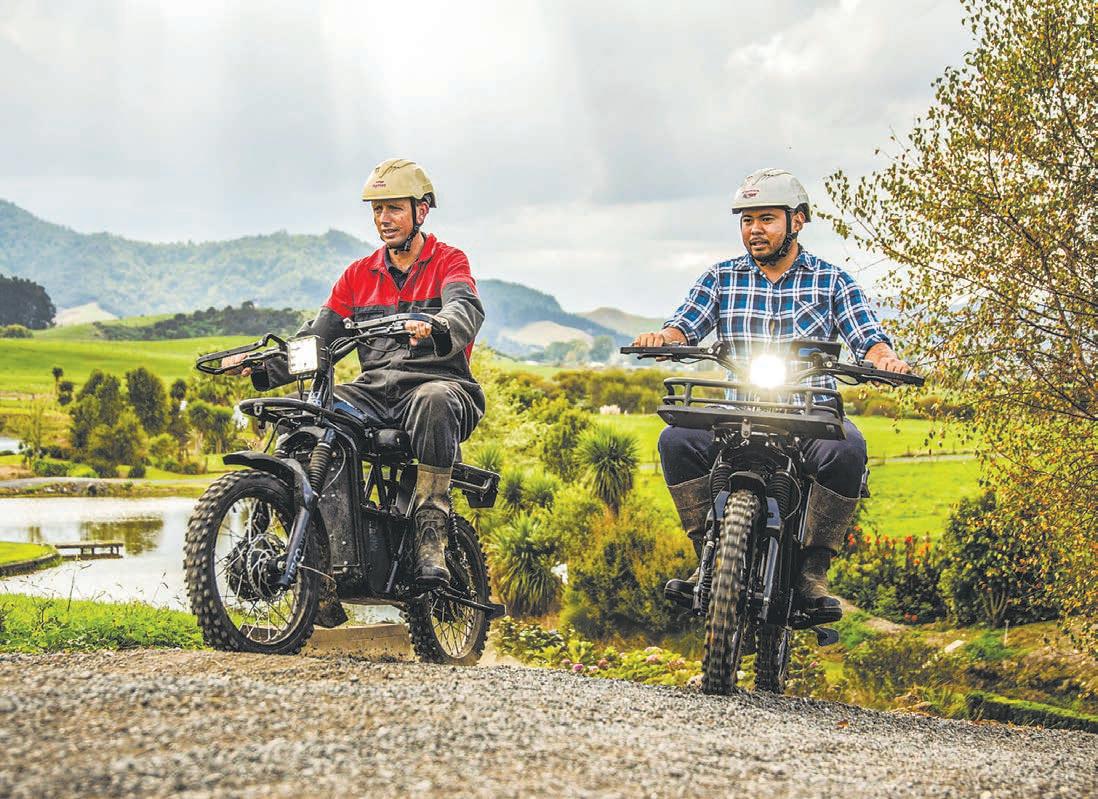
PANEL: Victorian dairy farmer Lauren Finger spoke at a panel discussion at the Resilient Dairy Conference at the Don Rowlands Centre at Lake Karapiro. From left are Manawatū farmer Sam Hogg, Te Awamutu farmer Fraser Higham and Lauren and Simon Finger.
Hugh Stringleman NEWS Fonterra
BUSY: Fonterra chief operating officer
Anna Palairet says her team is looking forward to another busy season of safely getting the most out of every drop of milk.






new resources for farmers Calves first:

Across the countr y, farms are preparing for a busy calving season ahead.

While calving can be
a demanding time for cows, calves and staff alike, good preparation and planning can significantly reduce pressure when things ramp up – helping to keep people and animals safe, healthy, and on track .
Caring for calves
Your calves are the future of your herd, so it pays to give them ex tra at tention to set them up for a produc tive life on farm, says D air yNZ senior animal care specialist Penny Timmer-Arends
“Successful calf rearing star ts as soon as the calf is born New Zealand farmer s are well placed to lead calf wellbeing we have fewer respirator y diseases than other countries, and our group housing systems
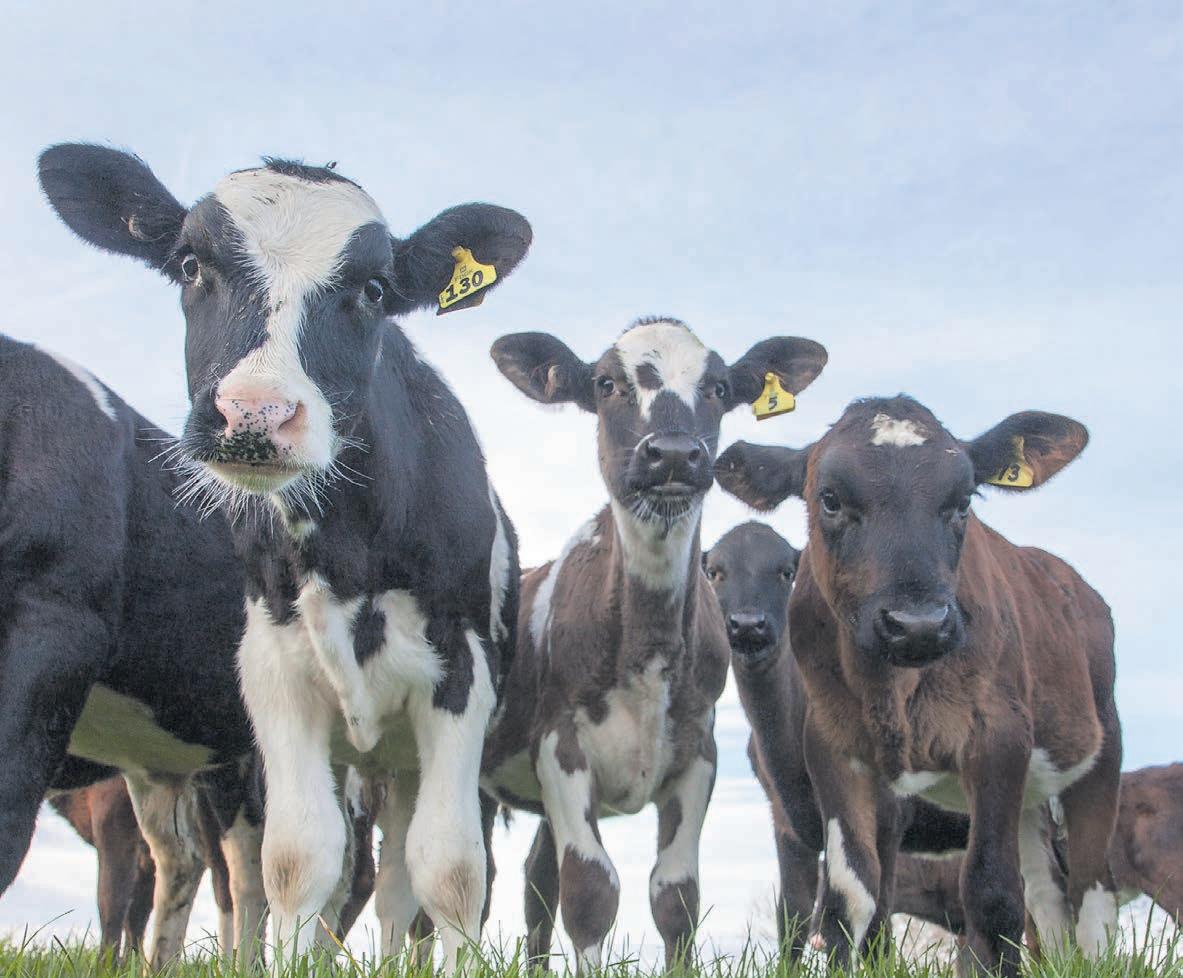
provide ample space for ca to play and interac t Ensuri they are fed gold colostrum the fir st 24 hour s is essentia their health and development In the fir st week s of life, calves
rely entirely on milk for maintenance, grow th, immune func tion, and ac tivit y Feeding calves 20% or more of their bir thweight in milk suppor ts higher daily grow th,” she says
“For a crossbred calf averaging 32 kg at bir th, this is about 6 4L per day D air yNZ data shows around 25% of farmer s feed less than this and could adjust their systems for bet ter calf wellbeing and grow th, while over a quar ter of farmer s feed 8L or more, suppor ting high grow th rates ”
Updated D air yNZ calf rearing resources are being rolled out this w inter, reflec ting the latest research and offering independent guidance on housing, health, colostrum, feeding and weaning – making it easier to put science into prac tice to give your calves the best star t possible Available on our website is a comprehensive reference guide covering the foundations of calf rearing
Resources for hands- on staff will be available in late June, including how to use a Brix refrac tometer to check calves are get ting high qualit y colostrum for the best star t to life
Book a CalvingSmar t workshop
Calving successfully takes a team approach, says Penny
“It ’ s impor tant to get together as a team and plan ever yone ’ s roles, the training required, when to ask for help, equipment needed, staff roster s (including scheduled time off for each staff member to rest and recharge), an d establishing a regular time to catch up as a team (such as a five -minute stand up each morning) Ensuring you have ever y thing you need prior to calving will help reduce stress, keep your team on track from the get- go, and create bet ter
outcomes for your team and animal s, ” she says
D air yNZ and D air y Training Ltd are holding several CalvingSmar t work shops throughout the countr y in June and July These free 2.5-hour work shops provide prac tical training for new and existing staff on the signs and stages of labour, how to calve a cow, and the immediate care needed af ter calving Book at dair y training .co.nz/cour se s/ calvingsmar t
For more tips, or to order the new resources, check out dair ynz .co.nz/calve s or contac t your local D air yNZ regional team member



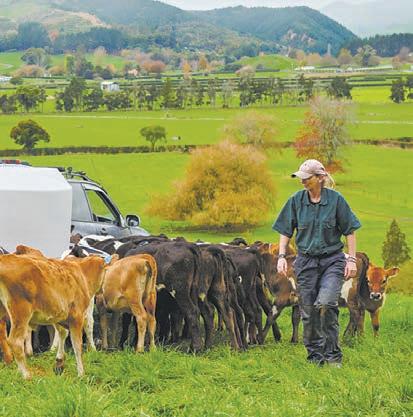
Updated calf rearing resources are now available from Dair yNZ:


Practical, science-backed advice you can use on farm


Covers colostrum, feeding, health and weaning
Download the guide and put proven calf rearing practices to work on your farm
Strong production meets softer markets
Sector perspective

JUNE has been another active month for the dairy sector, with strong production growth, shifting market dynamics and continued uncertainty around global costs shaping the outlook for farmers and processors.
While confidence across the primary sector remains positive following a strong year for farmgate returns, increasing milk supplies both in New Zealand and internationally are beginning to place pressure on dairy commodity prices.
That positive sentiment was evident at Fieldays, where farmers, processors and industry representatives gathered against a backdrop of improved profitability and stronger confidence across much of the rural sector. During the event, the Ministry for Primary Industries released its latest Situation and Outlook for Primary Industries (SOPI) report, highlighting the continued strength of New Zealand’s dairy industry.
The MPI forecasts food and fibre sector revenue to reach $64.3 billion in the year ending June 30 2026. Dairy is expected to
contribute a record $28.6bn, up 5% on the previous year. China remains New Zealand’s largest dairy export market, accounting for 36% of export revenue. The MPI currently forecasts a final milk price of $9.85/kgMS for the 2025/26 season, while Fonterra’s midpoint forecast remains at $9.70/kgMS.
Production continues to be one of the key features of the current market environment. April milk collections reached in New Zealand a record 160.5 million kgMS, up 6.9% year on year (YoY) and 4.2% above the previous April record set in 2023. Season-to-date milk solids production is running 4.4% ahead of last season, while milk collections measured in tonnes are up 3.5%.
Although final figures were still being compiled at the time of writing, early indications suggest May production also remained ahead of year-earlier levels. If confirmed, the 2025/26 season would establish a new production record and provide a strong platform heading into the new season.
Importantly, production growth is not limited to New Zealand. Milk output has expanded across most major exporting regions. April production increased by 2.7% in the United States, 4.1% in Australia, 9.7% in Uruguay and 0.5% in Argentina, while European production was up 4.2% in March. China remains the exception, with milk production declining 6.0% year on year in April as the sector continues to adjust to weaker domestic conditions.
The growth in global milk supply is now feeding through into commodity markets. Demand remains present, but it has not expanded quickly enough to fully absorb the additional milk being produced. Uncertainty around global trade flows, energy costs and geopolitical developments has also encouraged a more cautious approach from buyers.
Global Dairy Trade events reflected this softer tone. Event 405 recorded a 0.6% decline in the overall price index, largely driven by weaker powder prices. Skim milk powder fell 3.0% and whole milk powder declined 2.2%, while stronger performances from milk fats helped limit the overall decline, with anhydrous milk fat (AMF) rising 5.3% and butter increasing 1.2%.
Event 406 brought further downward pressure, with the overall GDT Price Index falling 2.8%. Most products recorded losses, including WMP (-3.1%), SMP (-3.6%), butter (-2.4%), AMF (-1.0%), cheddar (-3.4%) and mozzarella (-5.0%). Lactose was the only product to record an increase, rising 4.2%. The result suggests buyers remain cautious despite generally supportive demand indicators.
Trade flows continue to provide some support to the market, although increasing product availability is creating greater competition among exporters.
New Zealand dairy export volumes rose 12.5% YoY in April, led by a 29% increase in WMP shipments.
Demand from both China and North Africa remained particularly strong. Chinese WMP imports increased 63% YoY during the month, while total dairy imports rose 11.4%, reinforcing signs that import demand has improved from the subdued levels seen over the past two years.
Elsewhere, US dairy exports increased 8.6% YoY in March and Argentina’s exports rose 35.7%, while export volumes from Australia and the European Union declined. These contrasting outcomes highlight the importance of competitiveness, product mix and market access in determining export success.
Looking ahead, the market remains relatively balanced but increasingly sensitive to changes in either supply or demand. Strong production growth has improved
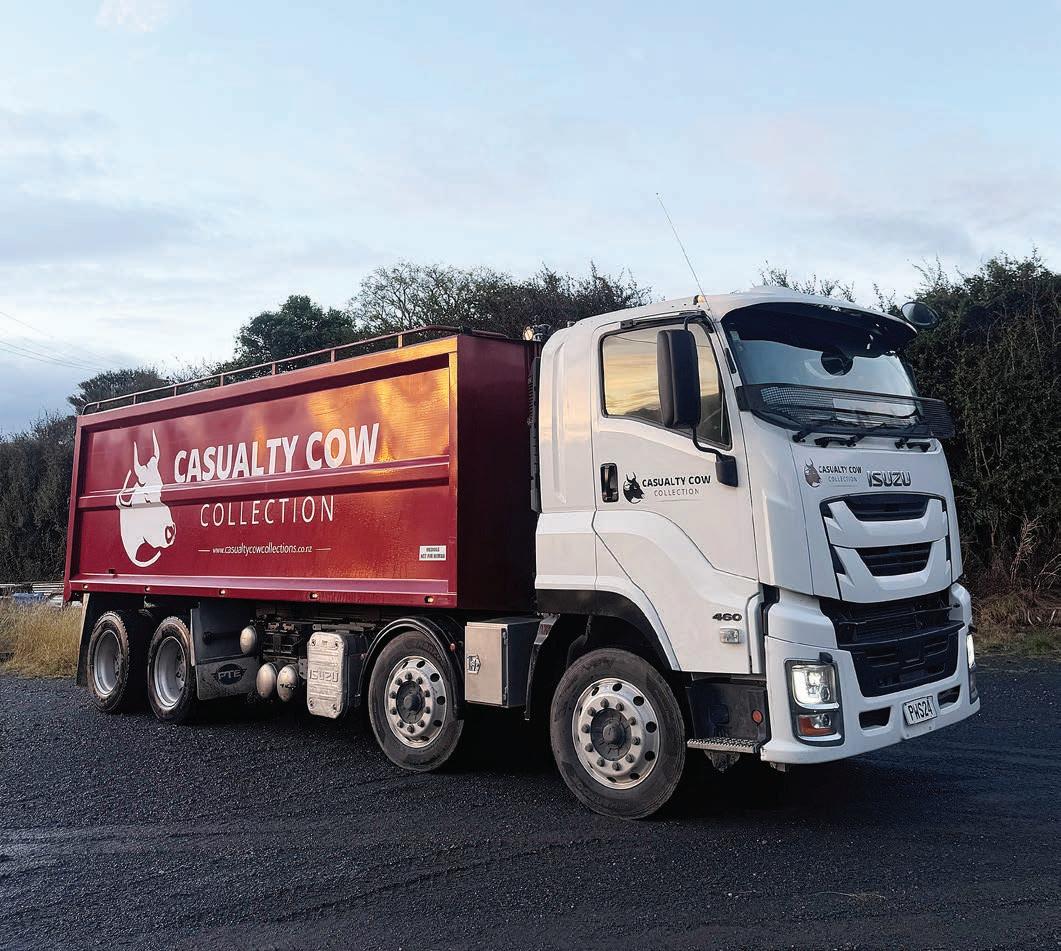
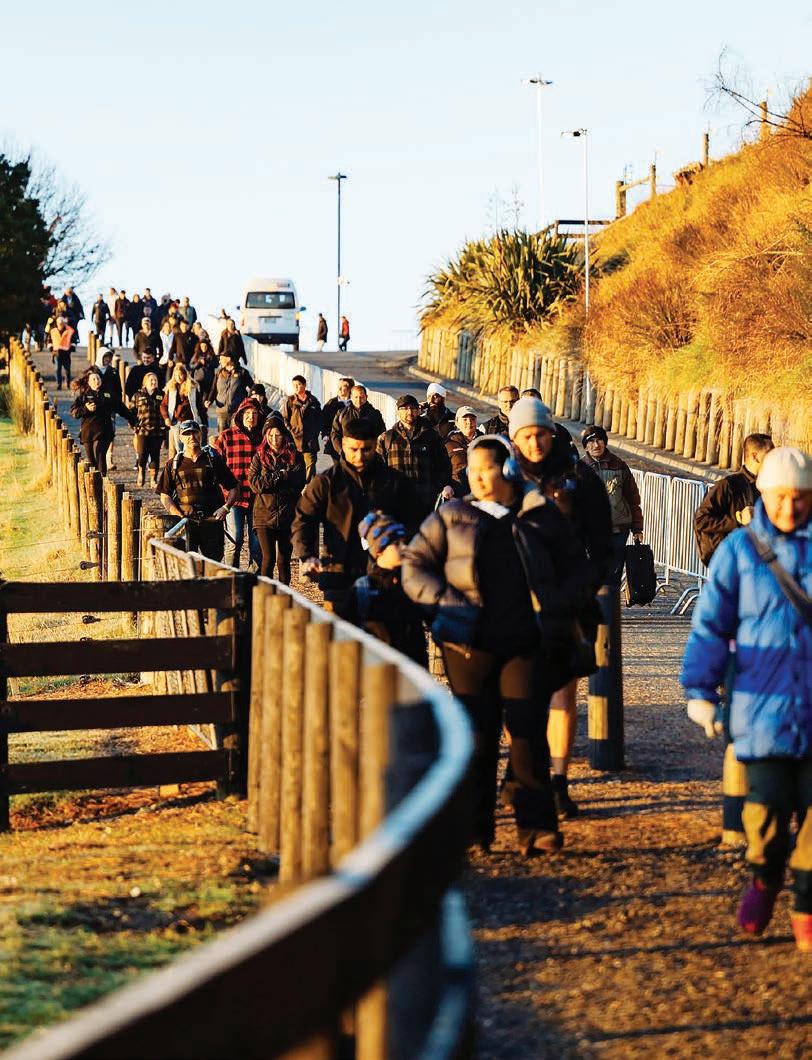
Importantly, production growth is not limited to NZ. Milk output has expanded across most major exporting regions.
product availability and is likely to continue weighing on commodity prices in the short term unless demand strengthens further.
At the same time, farmers continue to face elevated input costs, particularly for fertiliser, fuel and supplementary feed.
The new season has begun positively across much of New Zealand, supported by favourable
Owners – now servicing a larger area • Responsible stock disposal • Operating 7 days a week • All cows will be collected within 24 hours of customers making payment
conditions and encouraging production momentum. While recent GDT results highlight growing pressure on commodity prices, the overall milk price outlook remains attractive by historical standards. The challenge for the market over the coming months will be whether improving global demand can keep pace with expanding milk supplies.
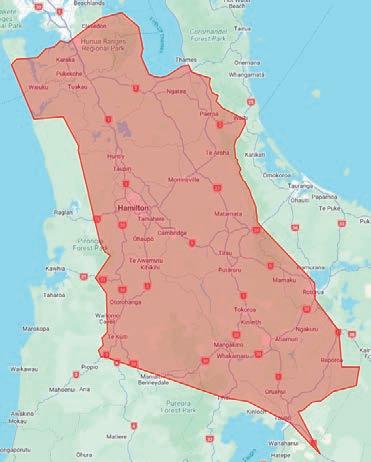

Cristina Alvarado Alvarado is NZX head of Dairy Insights
VISIBLE: The positive sentiment was evident at Fieldays where farmers, processors and industry representatives gathered against a backdrop of improved profitability and stronger confidence across much of the rural sector.



Water, good soil and a dollop of TLC
ALICE Swney and her husband Dave have an additional challenge in preparing for calving this year, hastily installing a new fence to protect 30,000 extra youngsters they’ve introduced to a portion of their calf-rearing paddock.
The babies in question don’t require milk, but instead water, good soil and a dollop of TLC - since they’re native plant seedlings, carefully nurtured as part of the enterprise Swney runs from land alongside their farmhouse.
The overspill into the paddock this year marks a doubling of the size of her company, The Native Dairy Farmer, which grows native plants and was initially started to help others achieve successful restoration works.
Swney’s business began in lockdown when, with help from Dave, she converted an unused grass tennis court into a native tree nursery. As a former catchment management officer at Waikato Regional Council she’d helped farmers with successful environmental restoration planting projects and saw an opportunity to get involved much earlier in the process.
“As part of my job there I’d been helping with planting plans and sourcing plants and contractors,” says the mum of two, who grew up on a sheep and beef farm but moved to the Te Awamutu dairy farm in 2020.
“At the same time a lot of our friends were asking for advice about plants and plans. Dave and I were both really keen to start a family but, including my commute to work, I’d be away from home from six in the morning until six in the evening. I loved my job but

knew it wouldn’t really be practical with a young family, so decided to try growing natives. That way I could still have a finger in the pie but be at home with the kids.”
With a Master’s in hydrology, irrigation was high on the priority list and she managed to source a second-hand system from a nursery closing down. Then with guidance from friends and family who’d already proved their green fingered prowess for growing natives, the couple potted up 22,000 seedlings, sourced as plugs.
I loved my job but knew it wouldn’t really be practical with a young family, so decided to try growing natives.
Alice
Swney The Native Dairy Farmer
Alongside the launch of The Native Dairy Farmer, Swney also began a social media campaign to help highlight the work of so many farmers undertaking plantings that were not being recognised by the public.
“I’d been working with farmers achieving amazing things –converting hectares into natives, stabilising erosion-prone areas, and changing stock class to match their land use – but still they were getting criticised for not doing enough. I wanted to highlight the incredible work going on.”
Initially Swney grew seedlings in plastic pots but four years ago transitioned to the Ellepot system, a degradable paper alternative.
“It was a no-brainer, not just for plant health but the fact you’re eliminating plastic waste. They’re designed especially so the plant doesn’t become rootbound and also there is no transplant shock.”
Through her business, Swney still also provides support and plans for those looking to plant natives, and now also grows many of the plants from seed. Her range has also expanded to trees in woollen plant pots for those gifting, but she was keen to progress her business further, so applied to take part in the Rural Women New Zealand Activator Programme.
“I went with the aim of improving how I operate as a business woman because I’ve been a little bit terrible from that sense,” she admits.
“I like to spend my time outside, so would put off all the paperwork jobs to go and play with the plants. As a result I’d often be doing my invoices and emails at night.
“I also wanted to get some help with marketing and learn more about how to get the product out there.”
She found the process affirming, which gave her more confidence to drive forward.
“It could be easy to think that even if you’ve come up with an idea you love, other people don’t see it the same way, so I was nervous to hear what the experts on the programme thought.
“They were amazingly positive and really supportive and also helped in making a plan of how I could improve my marketing. They really made me think outside the box as to where the product could go and who to approach.”
Since the course, Swney has been more confident in promoting her products, and more tactical in who she approaches for new business. She’s since secured a number of contracts for pre-orders for next season too.
“That gave us that confidence to expand a bit further, hence the use of the calving paddock now.”
Ongoing support following the
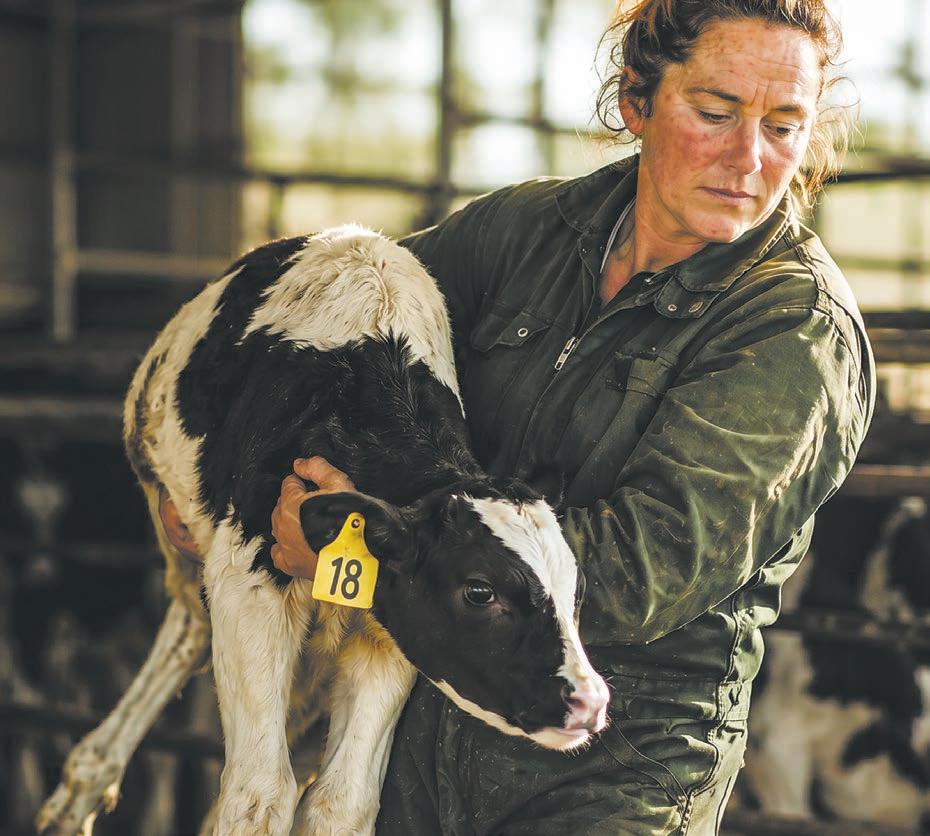
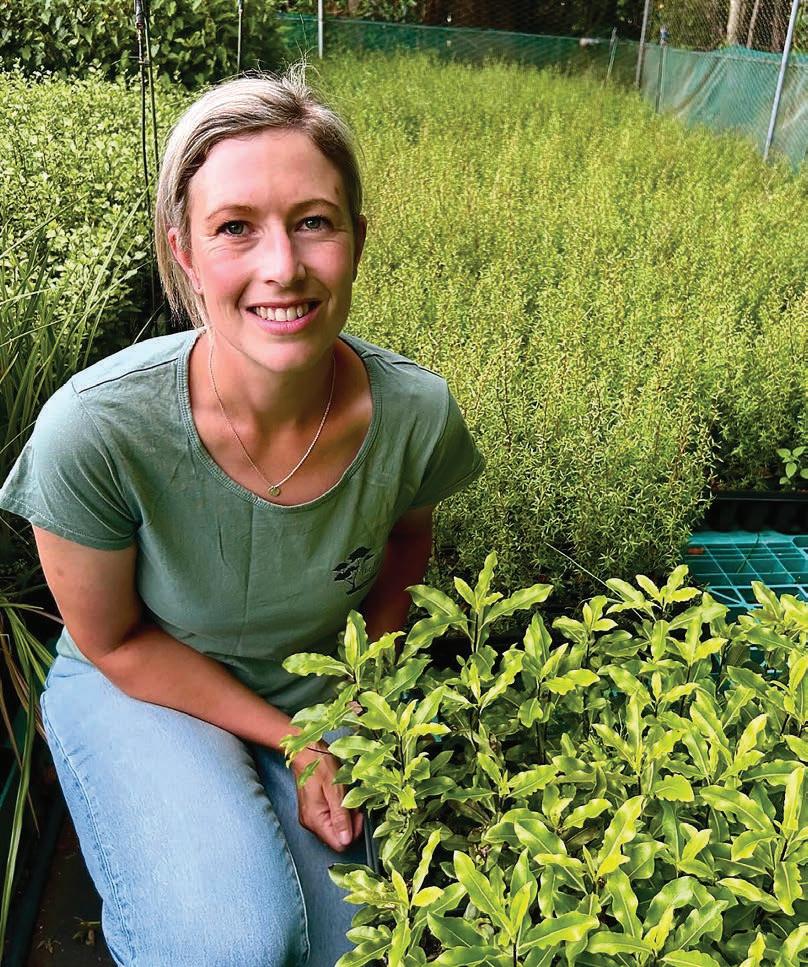
Activator Programme has been invaluable she says.
“The group of us on the course have stayed in touch, and that’s been really great because those ladies keep me accountable, checking in to see what I’ve planned admin-wise and how I’m going with an organisation list.”
It can be tricky juggling farm life with the nursery and parenting, but from the word go the boys, Walter and Rex - now aged three and two - have been part of the business.
“The brilliant thing about the nursery is even though there’s
always stuff to do, 99% of the time nothing is critical at exactly that moment, so it gives flexibility.
“And when people come to pick up plants they often end up with two little helpers keen to help load into vehicles. I joke that if the plants are toddler proof, they will survive on farm.”
MORE: Rural Women New Zealand has been advocating for, connecting and supporting rural women and communities across the country for 100 years. Visit ruralwomennz.nz and become a member today.
Fiona Terry
CONVERSION: Alice Swney’s business began in lockdown when, with help from husband Dave, she converted an unused grass tennis court into a native tree nursery.
FEDERATED FARMERS

Rural vote in focus at Fieldays hub
From questioning party leaders to hearing major policy announcements, farmers at Fieldays packed into the Rural Advocacy Hub to tackle some of the biggest issues facing rural New Zealand.
Now in its third year, the hub has cemented its place as the home of rural political debate at Fieldays, drawing politicians, industry leaders, advocacy groups, and hundreds of farmers keen to have their say.
Federated Farmers president Wayne Langford says the hub’s success shows farmers want to be involved in the decisions shaping the future of their businesses and communities.
“Farmers need to be actively involved in political conversations because the decisions made in Wellington have a direct impact on what happens on farm,” Langford says.
“In other words, if we’re not at the table, we’ll end up on the menu.
“The hub delivered exactly what we wanted – a place where farmers could have those direct conversations with politicians and decision-makers, ask tough questions and talk about the issues that really matter.”
The Rural Advocacy Hub is a collaboration between Federated Farmers and Fieldays, bringing together a range of rural organisations under one roof to amplify rural voices and advocate for farming communities.
This year the hub featured advocacy organisations including Federated Farmers, Rural Women New Zealand, Farmers Weekly,
DairyNZ, Rewiring Aotearoa, Wool Impact and the Wilding Pine Network.
Throughout the week, politicians from National, Labour, ACT, New Zealand First and the Green Party took to the stage or stopped in for informal discussions with farmers.
Among those appearing were Prime Minister Christopher Luxon, Opposition leader Chris Hipkins, Deputy Prime Minister Winston Peters, Shane Jones, Todd McClay, Andrew Hoggard, Mark Patterson, Matt Doocey, Chloe Swarbrick, Jo Luxton, Steve Abel and Scott Willis.
“It was great to see politicians from right across Parliament fronting up and taking questions from farmers,”
Langford says.
“That’s exactly what the hub is there for. It’s not about carefully scripted speeches – it’s about real conversations between the people making decisions and the people affected by those decisions.
“I think the fact that we had so many senior politicians through shows how important the rural vote is this year.”
The hub also became a platform for a number of significant policy announcements.
Among the announcements made during the week were new investment to provide greater landuse flexibility, extra funding for rural adverse event preparedness, and greater certainty for rural catchment groups.
Political parties also used the event to outline policies relevant to the farming sector.
ACT announced proposals relating
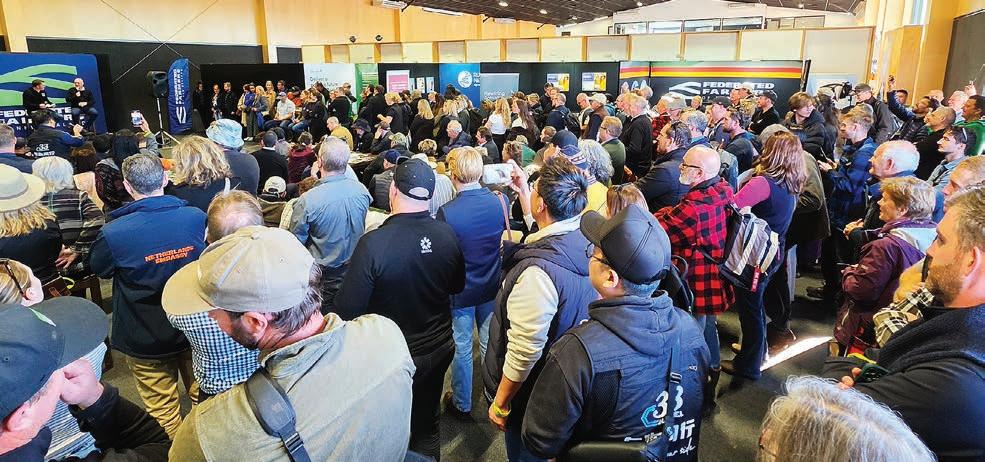
Our role is to make sure farmers’ voices are heard, and the Rural Advocacy Hub has become one of the most effective ways of making that happen.
Wayne Langford Federated Farmers national president
to rural crime, agricultural emissions, immigration settings for farm workers and the use of targeted grazing to tackle pests and fire risk on Department of Conservation land.
Langford says it was encouraging to see politicians using the hub to launch and discuss policies.
“When we first set up the Rural Advocacy Hub, the idea was to create a place where the big conversations about farming could happen in one spot.
“Three years on, we’re seeing those conversations influence policy and the debate around the future of farming. That’s really satisfying.”
Langford says the need for strong advocacy has never been greater, with major reforms underway across freshwater, resource management and local government.
“There are some huge decisions being made right now that will affect farming for decades to come.
“Our job is to make sure farmers and rural communities have a voice in those discussions.
“The framework being designed today is what the next generation will farm under, so it’s important we get it right.”
He says one of the biggest strengths of the hub is its ability to bring together people with different views and create constructive discussion.
“Not everyone is going to agree on every issue, and that’s fine.
“What matters is creating opportunities for people to sit down,
have an honest conversation, and find common ground where they can.”
Langford says the success of the hub reinforces Federated Farmers’ role as a strong, independent voice for farmers.
“We’re not here to be popular with politicians; we’re here to get results for our members that are going to make a real difference for their family, farm and community.”
As attention turns toward the November election, Langford says Federated Farmers will continue engaging constructively with all political parties.
“No matter who’s sitting in the Beehive after the final votes are counted, our members are clear: they want fairer rules and less red tape adding cost and uncertainty to farming.
“Our role is to make sure farmers’ voices are heard, and the Rural Advocacy Hub has become one of the most effective ways of making that happen.”
FULL HOUSE: Farmers filled Federated Farmers’ Rural Advocacy Hub for a chance to hear directly from the Prime Minister and other leaders ahead of next year’s election.
Paying more, getting less from FENZ
Federated Farmers is calling for a review of Fire and Emergency New Zealand, with rising levy costs and declining rural services raising serious questions about its performance.
It’s been nearly a decade since 40 urban and rural firefighting organisations were merged to form FENZ in a move to improve efficiencies.
But farmers are increasingly asking whether those promised gains have materialised.
“When FENZ was formed in 2017, we were told bringing urban and rural fire services together would create a better-resourced organisation,” Federated Farmers vice president Colin Hurst says.
“Many people think that hasn’t happened. We’re hearing consistent complaints about rundown fire trucks, equipment and stations in rural areas.
“We’re also hearing about a watering down of specialist rural fire expertise because of poor retention and development.
“It’s coming up to the tenth anniversary of what was a massive change for our emergency services.
“It’s both good practice, and an opportune time, to check what’s working and what isn’t.”
The NZ Forest Owners Association (NZFOA) has similar concerns and has joined Federated Farmers in writing to relevant Ministers.
Both organisations want an independent review, not one conducted in-house by Fire and Emergency.
Feds and NZFOA say the inquiry should examine whether promised improvements have been delivered, particularly for rural communities and landowners.
They also want a probe into whether the current insurancebased levy model is still fair and sustainable, and whether rural levy payers are getting a level of service that reflects the costs they pay.
Other concerns are FENZ’s performance measures, specialist
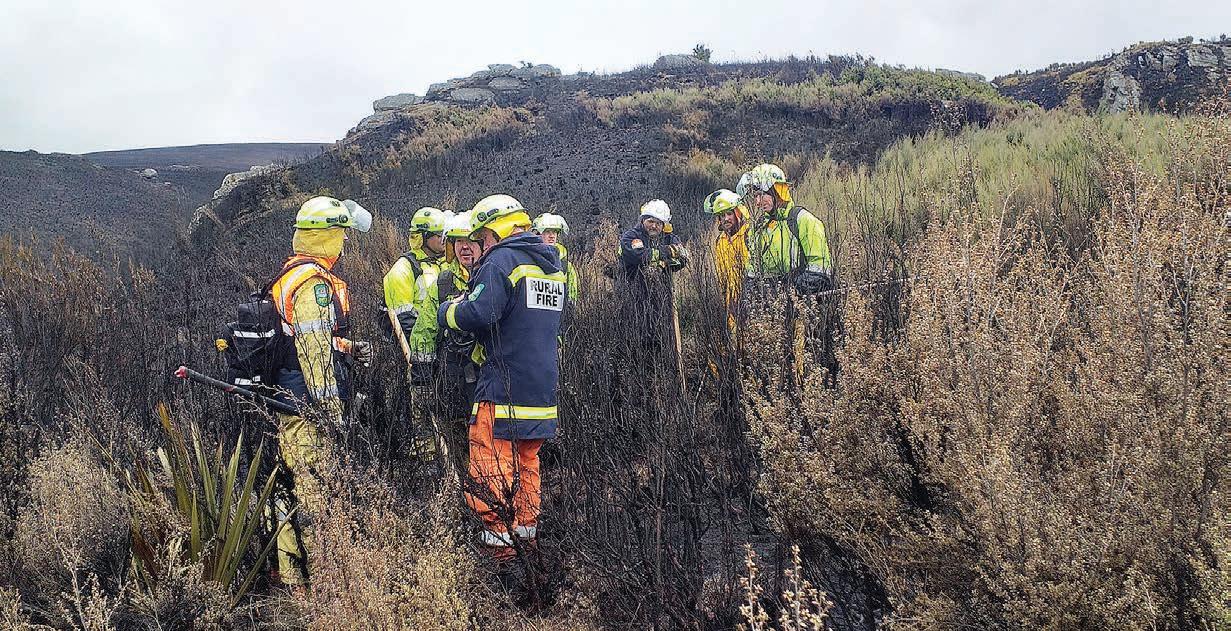
rural firefighting expertise, and growing role in medical-first response and wider emergency response.
“I want to say right up front our concerns are not with the professionalism or dedication of frontline personnel and volunteers,” Hurst says.
“They do an outstanding job under increasingly complex demands, with volatile weather adding to their workload.”
Hurst says rural areas rely heavily on the 11,800 volunteer firefighters that make up 85% of FENZ’s firefighting resource.
“We owe it to them, as well as to farmers and other levy payers, to make sure the FENZ operation and model is the best it can be,” Hurst says.
FENZ costs jumped from $389 million to $738 million in the five years after 2017.
This year they’re expected to be $788 million, and $820 million by 2028/29.
“We’re really concerned that costs seem to be climbing, particularly in management and administration, but there’s very little evidence rural communities are seeing better
services as a result,” Hurst says.
“In fact, what we’re hearing is that decision-making has become more centralised and urban-focused, while specialist rural knowledge and expertise is being lost.
“There’s also concern that prevention and mitigation, particularly around vegetation and landscape fires, isn’t getting the attention it needs.”
FENZ is almost entirely funded by its levy, collected by insurance
companies on the Government’s behalf.
The service sought a 5.2% increase from 1 July this year but Internal Affairs Minister Brooke van Velden knocked that back to 2.2%.
Even so, many farmers will still face significantly higher costs.
Vehicle insurance levies are more than doubling, third-party vehicle policies will be charged for the first time, and exemptions for assets such as livestock, crops and forests have
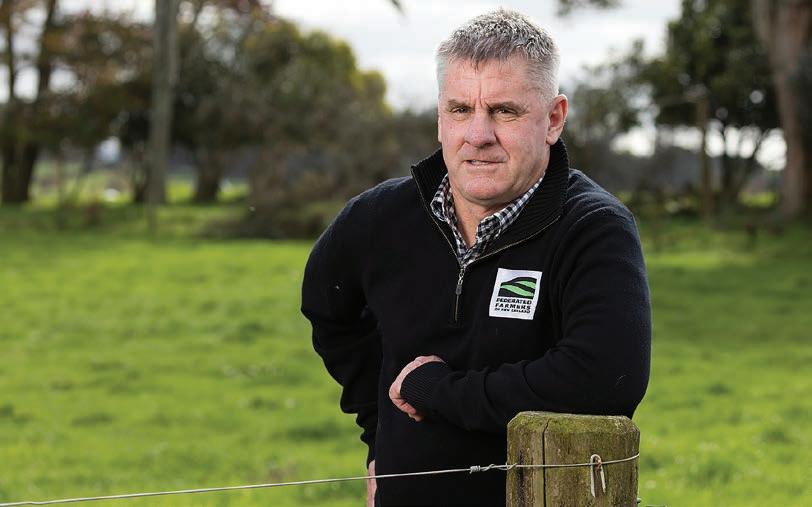
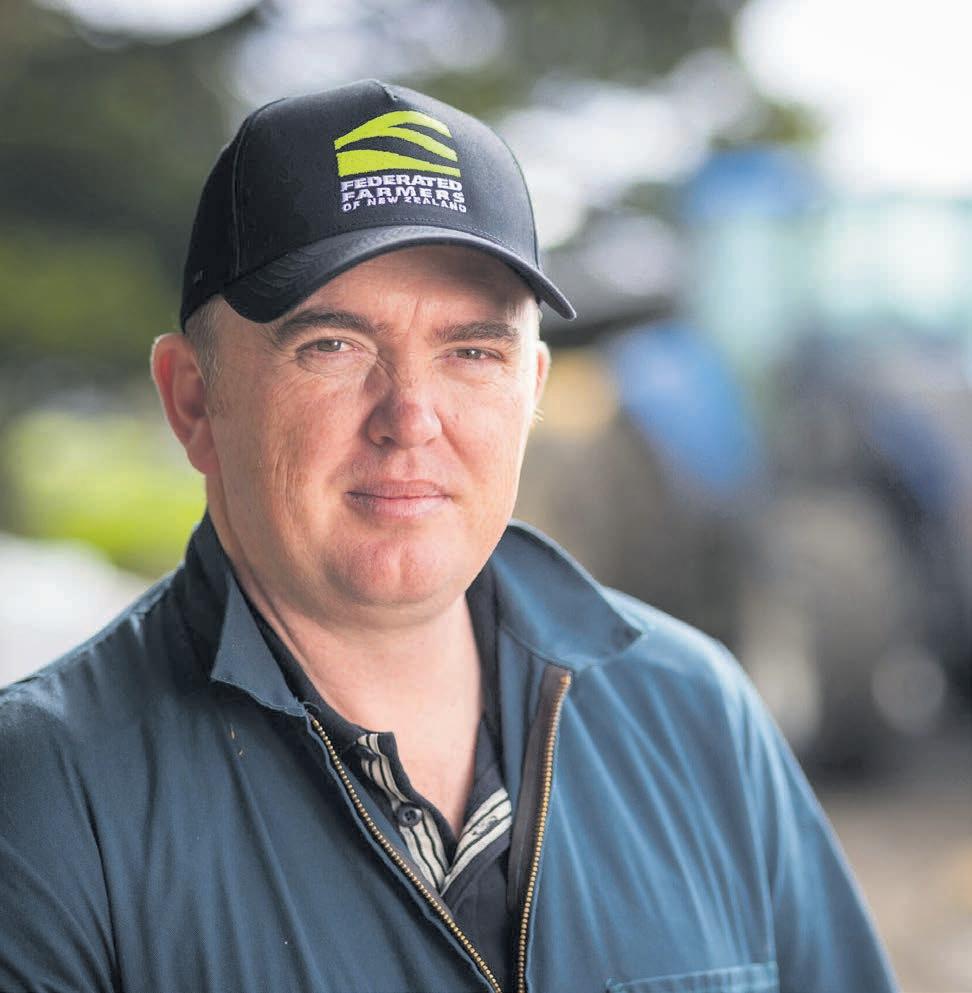


It’s coming up to the tenth anniversary of what was a massive change for our emergency services. It’s an opportune time to check what’s working and what isn’t.
Colin Hurst Federated Farmers vice president
been removed.
While there is a cap on residential property levies, there’s no equivalent protection for farm buildings and other commercial assets, meaning large-scale farming operations with a lot of equipment are facing substantial increases.
“Insurance bills for farms are already a huge expense,” Hurst says.
“Adding levies to assets that were previously exempt could well push for farmers to save money by underinsuring, or even dropping asset classes from policies altogether.”
Some don’t insure, including the Crown or large companies, because they have the resources to self-insure.
But that means an even bigger burden falls on those who do pay for insurance.
The Insurance Council recently suggested the Government should directly fund FENZ, like it does with the police.
That would free up $800 million paid in existing levies to be redirected into climate resilience and risk reduction.
Hurst says Federated Farmers wants to see the outcomes promised when FENZ was created.
“We also need some assurance that farmers and rural business levypayers aren’t subsidising the largely urban residential sector.
“Farmers are willing to pay their fair share, but we expect a system that’s transparent, efficient and delivers for rural New Zealand.
“At the moment, that’s not what we’re seeing.”

HOT TOPIC: Colin Hurst says we owe it to New Zealand’s 11,800 volunteer firefighters – and professional brigades – to make sure the Fire and Emergency operational model is the best it can be.
BACKWARDS: Federated Farmers is hearing consistent complaints about rundown fire trucks, equipment and stations in rural areas, Colin Hurst says.
Federated Farmers
Red tapes puts NZ conservation at risk
Federated Farmers says the Department of Conservation’s grazing licence system has become so restrictive that it’s preventing farmers from delivering positive environmental outcomes.
South Westland farmer and Federated Farmers Meat & Wool vice chair Simon Cameron says the system has been heading in the wrong direction since DOC was established in 1987.
“They’ve made it more and more challenging for farmers to operate on the conservation estate, tightening up the rules and randomly declining licence renewals,” he said on the Federated Farmers Podcast.
“It’s been a continual glide path from the start – they’ve just continued to ramp it up.
“The constant restrictive nature and the ‘farming is bad’ rhetoric is really challenging.”
Across the high country and conservation estate, managed grazing has long played a role in controlling weeds, suppressing wilding pines and reducing fire risk.
Many farmers operate on this land under DOC grazing licences, typically for terms of 10 years or less, but licence holders say the current system discourages investment and practical land management.
North Otago Federated Farmers Meat & Wool chair James Hurst has experienced those problems firsthand.
Sixteen years ago, Hurst and his grandfather took on an 85-hectare DOC block beside the Waitaki River that was overrun with gorse and willows.
“We cleared all that gorse and willows, fenced it, put 32 hectares into border dyke irrigation, fenced off waterways and planted natives around all that – all at our own cost,” Hurst says.
The family spent $48,000 alone on a boundary fence designed to keep out deer and pigs.
However, despite their investment, they’ve now lost access to most of the land and are removing infrastructure, including internal fences and water troughs.
“We’re now watching the land go to waste,” Hurst says.
The stuff we haven’t grazed in the last year is now waist-high grass that hasn’t been chewed off. If anyone drops a match out there, it’s just going to go.
James Hurst
North Otago Federated Farmers Meat & Wool chair
“The stuff that we haven’t grazed in the last year is now waist-high grass that hasn’t been chewed off. If anyone drops a match out there, it’s just going to go.”
For Cameron, it demonstrates the wider risks of removing grazing from the conservation estate.
He points to areas such as St James, where DOC’s passive
management system has seen the retired land become overrun with wilding pines, broom and gorse.
“New Zealand hasn’t seen a proper wildfire yet, and when we do, it’s going to be devastating to watch.
“We just don’t have the infrastructure here to deal with one.”
Federated Farmers believes managed grazing should be formally recognised as a valuable conservation tool.
Sheep can suppress young wilding pines before they become established, while farmers working the land are often the first to spot emerging weed and pest problems.
Cameron says active management can often prevent issues before they require costly intervention.
“You can throw billions of dollars at these things and never really win the battle.
“Or we could bring back a few Merinos and a few Herefords and graze it and the country would be better off.”
Hurst says a stronger partnership between farmers and DOC would allow land to be maintained without adding further costs for taxpayers.
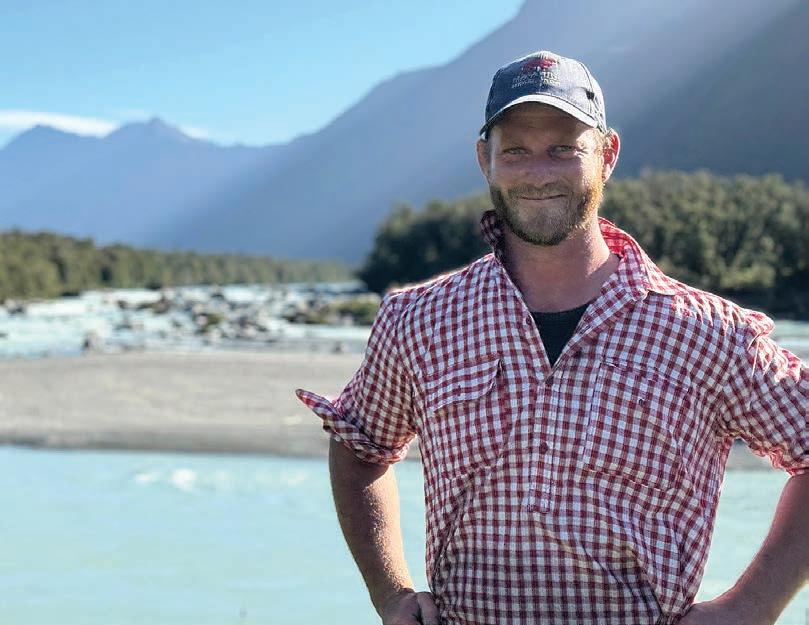
“None of this land is going to make heaps of money, but if it can generate enough to look after it – to pay for weed spray and pest management – then that’s a good result.”
Cameron says three changes are needed to fix the current system.
The first is removing public notification requirements for grazing licences, which can allow people with no connection to an area to influence local land management decisions.
Second, farmers need longer
licence terms to justify investing in fencing, pest control and environmental improvements.
Third, applications need to be assessed on their own merits.
“There’s been a lot of scenarios where you submit an application with a respected ecologist’s report, and they won’t assess it on that.
“They get their own ecologist to do a report and assess it on that.”
Cameron says the ultimate solution would be moving grazeable conservation land under Land Information New Zealand’s pastoral lease system.
LOCKED OUT:
James Hurst says work his family carried out beside the Waitaki River was all for nothing after access was removed.
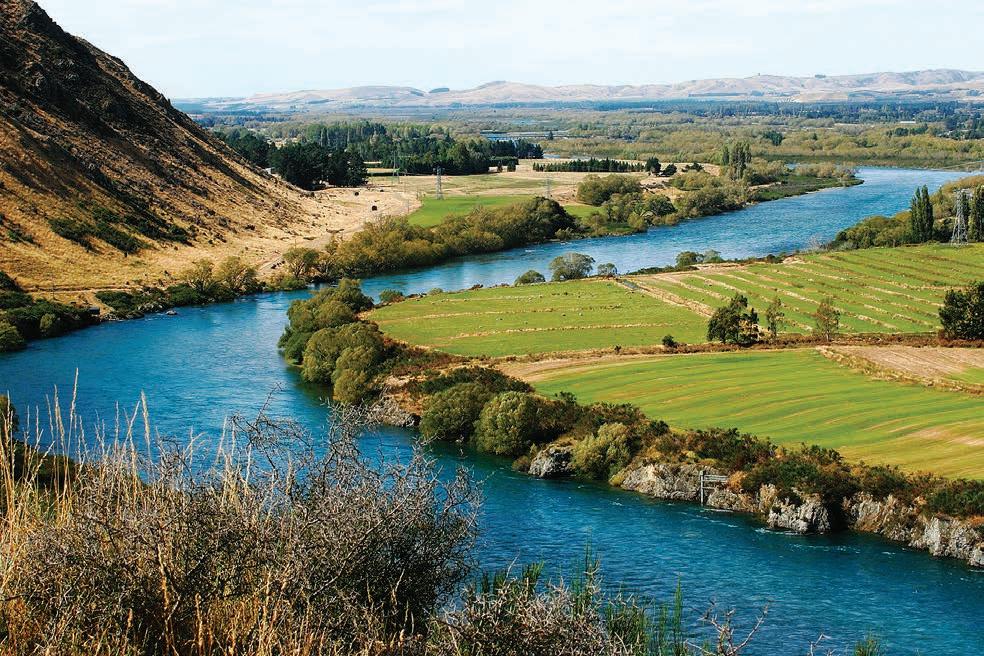
“That would be the golden ticket.
“The Department of Conservation should be looking after conservation land. They shouldn’t be administering land that should be grazed.”
With the Government’s Conservation Act Amendment Bill offering a chance to modernise a system that’s had no major overhaul since DOC was formed, Cameron says the goal isn’t to give farmers free rein.
“All we’re asking for is a practical partnership where farmers are recognised as professional stewards of the land.
“If you don’t look after the land, it doesn’t look after you. It’s a lose-lose. In order for you to benefit from it, the land has to benefit.”
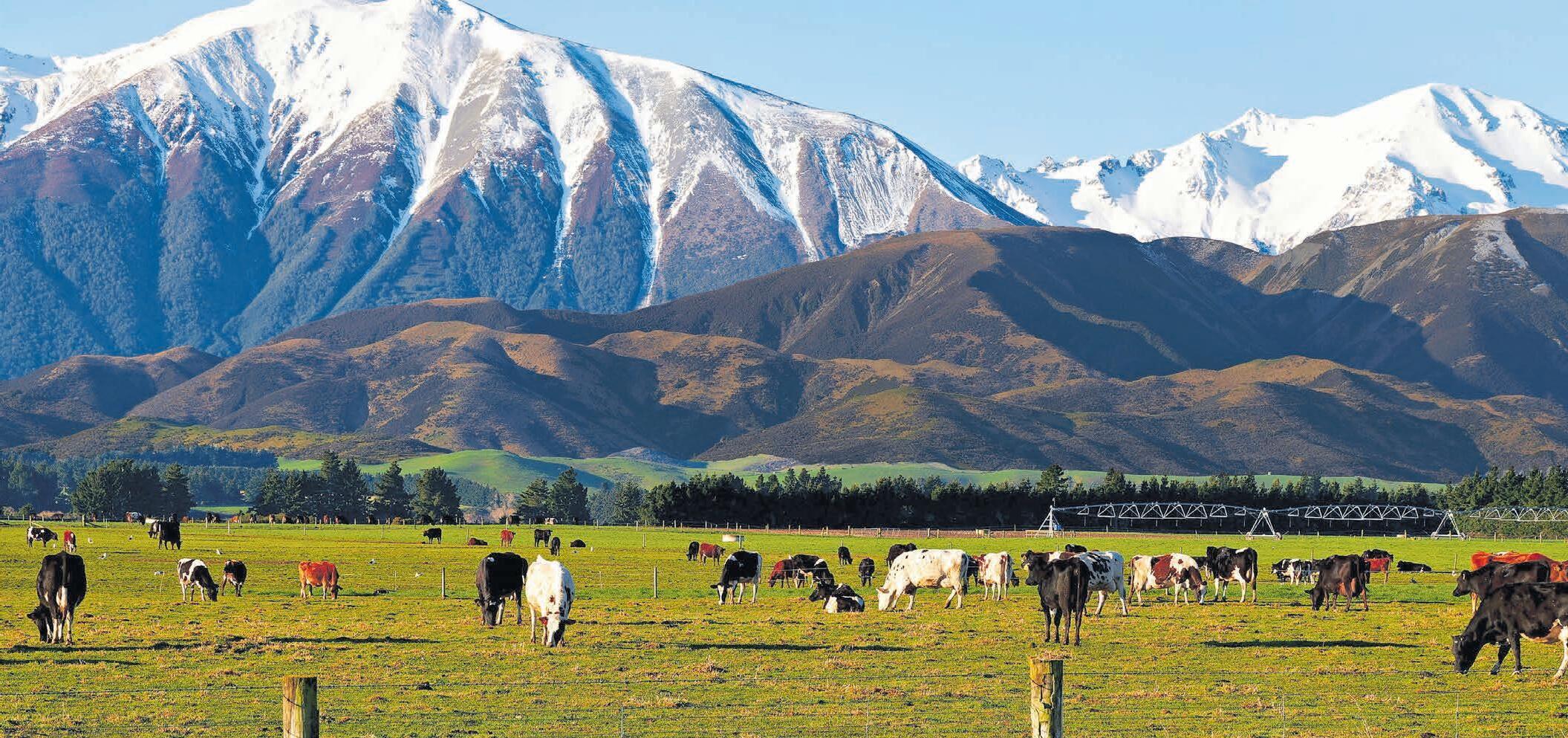


COMMON SENSE: Simon Cameron says grazeable conservation land should be managed under LINZ, allowing DOC to focus on areas requiring full conservation management.
Gisborne must speak louder for regional deal
Gisborne is not facing local government reform ructions but is going to have to speak louder to central Government to get a better regional deal, Charlie Reynolds says.
“The Government’s failure to come to the table on forestry slash management and retiring the worst of our erosion-prone land is a glaring example of Wellington’s ‘out of sight, out of mind’ approach to Tairāwhiti,” the Federated Farmers GisborneWairoa president says.
“Just as bad is their ‘patch it up and fingers crossed it will hold together’ attitude to our state highways.
“We’re going to have to fight harder for our share of central government attention and funding to help secure our future prosperity.”
The coalition Government’s is moving to abolish New Zealand’s 11 regional councils from 2028, and is
pushing for bigger unitary councils – ones that perform the functions of both regional and city/district councils.
Gisborne is already served by a unitary council, as is Auckland and four other districts.
“We may consider ourselves immune from some of the heated amalgamation debates being generated in other parts of New Zealand by this seismic jolt to local government.
“But the Government says one of the reasons it wants fewer, larger councils is that it makes it easier to negotiate regional and city deals when a larger area is united on what it needs, rather than squabbling over district priorities,” Reynolds says.
“Gisborne, on its own, may find it even harder to get the Government’s ear when councils in places such as Waikato, Canterbury, Northland and Southland combine.”
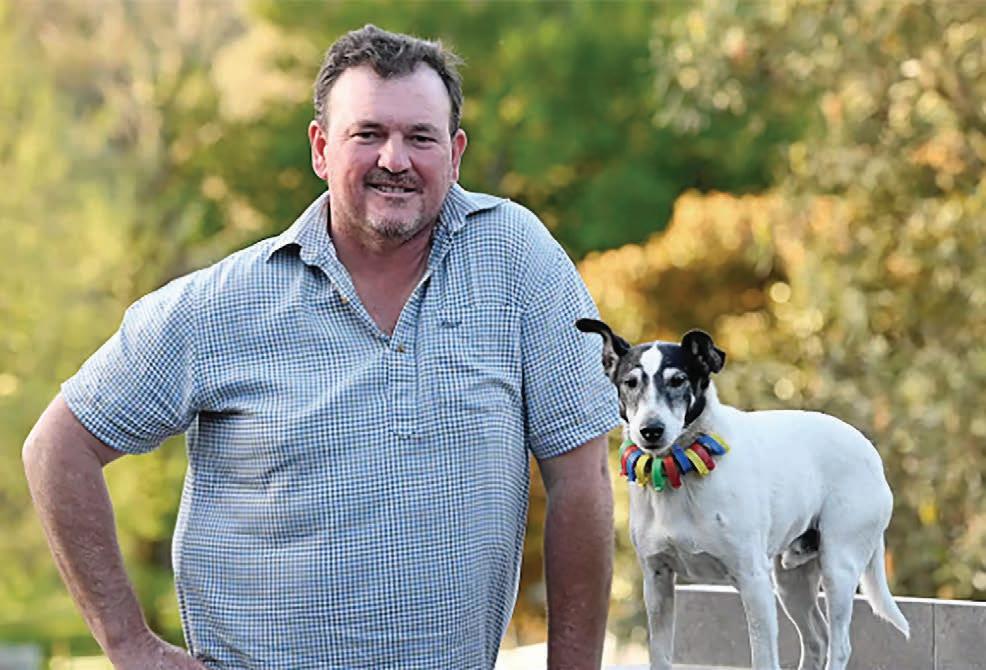
In terms of proximity, Wairoa is more aligned to Gisborne than to Hawke’s Bay, but it seems unlikely Wairoa residents would seek to throw in their lot with Gisborne District Council.
“That would be like a pretty broke district want to be part of one that is just as financially stretched.
“At least the Hawke’s Bay region appears able to deliver on roading standards.”
Reynolds says on a recent trip to Whanganui he was struck by the relative economic buoyancy of that district compared to Gisborne/ Tairāwhiti.
“We’re both destination districts.
You have to make a deliberate turn off main routes of travel to get to us –more so us than them.
“Primary industries underpin both our local economies and Gisborne even has a slightly bigger population.
“But Whanganui has more supermarkets and other city businesses, and their roading networks are so much better.”
Reynolds says he detoured to look at Marton, where he’d gone to prep school as a lad.
“I got off the state highway onto council-funded roads and, my god, those roads are better than our SH2. They’re country roads and they’ve got passing lanes.
Reynolds says he’s equally stumped on where Gisborne can go on forestry and land use issues.
Foresters continue to claim Gisborne District Council’s tougher resource consent conditions on road engineering and clear-fell harvesting are regulatory over-reach.
“Farmers with forestry blocks are getting caught up in that too, and it impacts succession planning because revenue from timber has in the past been an important way to fund that process of passing the land on to the next generation.
“But at least farmers have options to plant poplars to stabilise slopes and we can graze the land.”
HALF DONE: While slips have been cleared and roads reopened, there’s no talk about how Tairāwhiti might future-proof its roads in the longer term, Charlie Reynolds says.
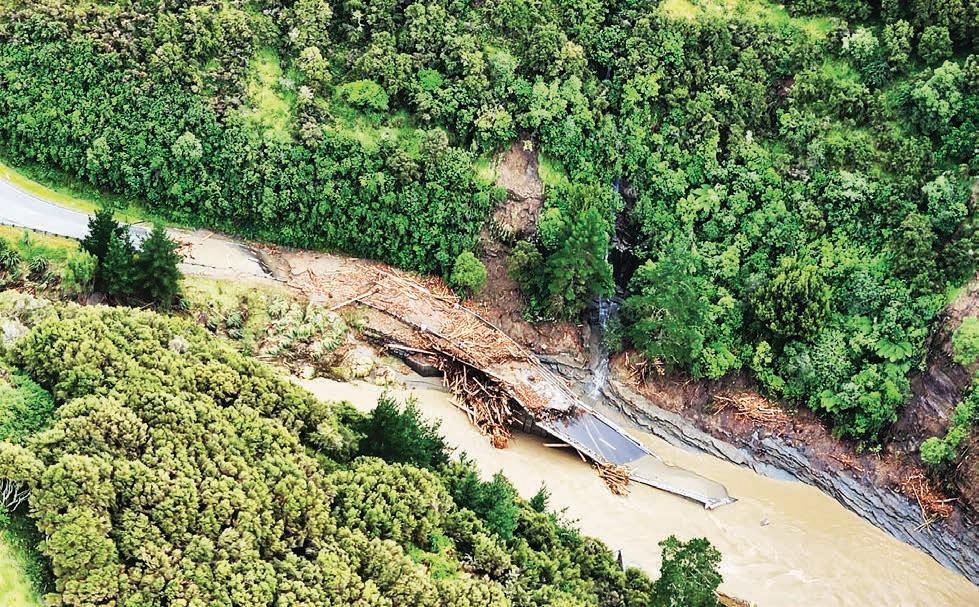

“Even on SH3 from Whanganui to Palmerston North, there were passing lanes every five kilometres or so.
“I know I may not be comparing apples with apples but it really does feel like our roading projects are left in the slow lane.
“There hasn’t been any move to get input from us as stakeholders in the Waioeka Gorge.
“NZTA has cleared the slips, and it’s very welcome news the gorge is getting a share of $400 million earmarked to tackle drainage, slope stabilisation and rockfall protection at known weak spots on key provincial roads.
“But there’s no talk about how we might future-proof that route in the longer term.”
Federated Farmers and Gisborne council applied to the Government for $359 million to help with retirement of 100,000 ha of the most erosion-prone land back into native bush.
“They told us we were being unrealistic, and now it’s a stalemate.
“Farmers and foresters are willing to do their part but the Government also needs to front.
“They’re part of what got us here. They and everyone else treated East Coast land as being best for pines and little else, and then drove that further with the ETS.
“It’s clear to me that if Tairāwhiti is to get a better deal over it’s future, we’re going to have to stand up and push harder with whoever is in government.”
LOUDER BARK: Charlie Reynolds, with his farm dog and good mate of 15 years Sid, says it’s too easy for Wellington to ignore far-flung provinces like the East Cape.
Photo: Gisborne Herald
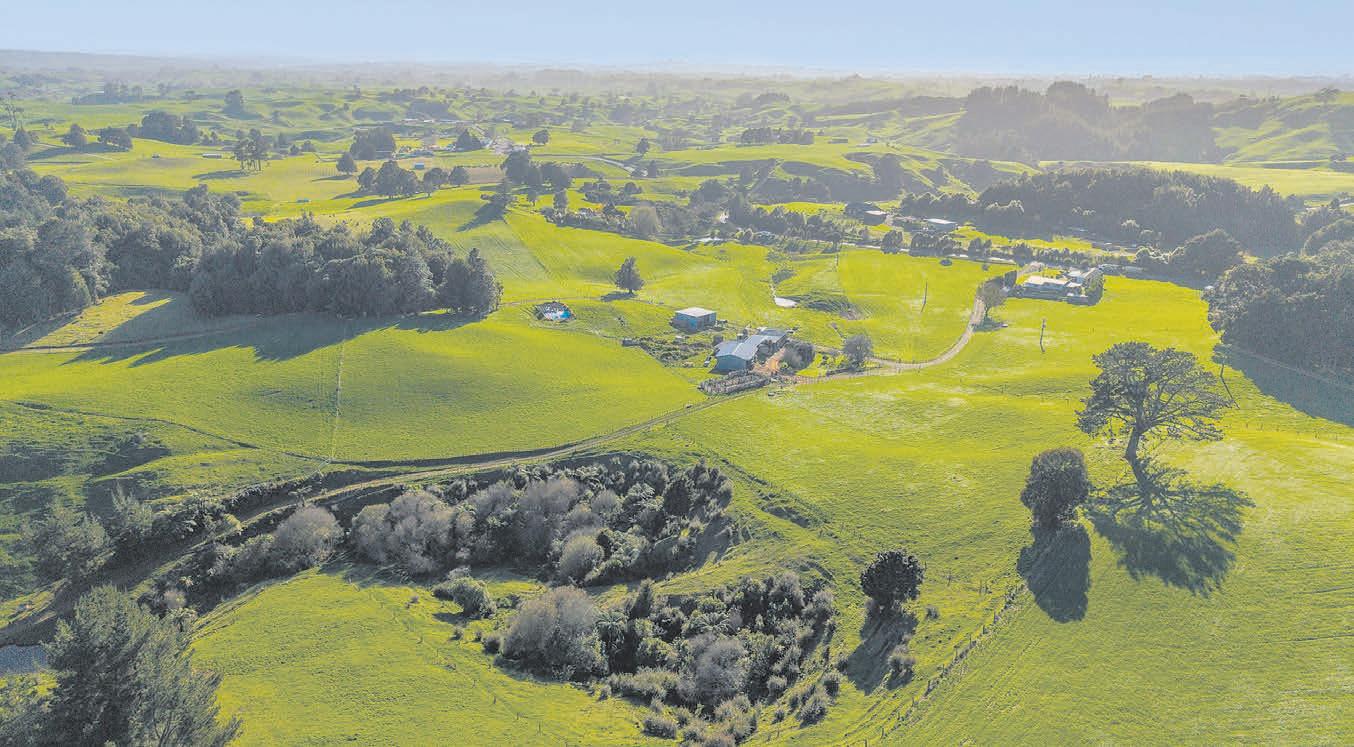
Versatile support block with dual dwellings
Our vendors have made plans for their next move and are ready to see this property sold. Spanning 54.87ha (MOL) of land, this property presents an outstanding opportunity for those seeking a dairy support block, dry stock unit or investment in great South Waikato rural land Well set up for ease of management, the property features a great central race system which loops around the farm and back to the cattle yards. Whether you're looking to expand an existing operation or secure a standalone farming property, there is plenty on offer here. Infrastructure is well catered for with a three-bay implement shed and haybarn, old cowshed which is now used for calf rearing facilities and easy to manage cattle yards, and an inground silage bunker making day-to-day farm management easy. With the properties water being serviced by a bore The main dwelling is a spacious five-bedroom, two-bathroom home, providing ample room for families or farm staff.
RIVERVIEW FARM
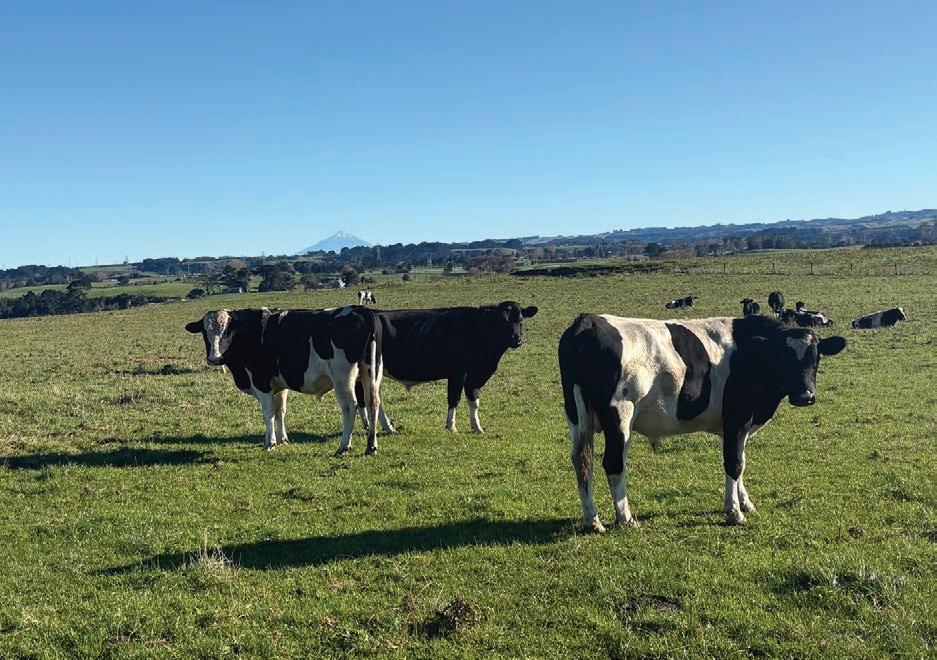
A very versatile farm, livestock, cropping with Alluvial & Egmont Ash soils. Formerly a dairy farm, currently run as bull fattening unit, maize, carbon farm. Excellent livestock water from bore and spring source. Buildings include a 4 bedroom homestead, implement / haysheds / cattle yards. Settlement date is flexible.
For more photos and information visit: Trade Me, Property ID JTN369
Price: $5,000.000 + GST
View: By appointment with owner
Phone: Paul 06 346 5004
Email: paulpedersen1938@gmail.com
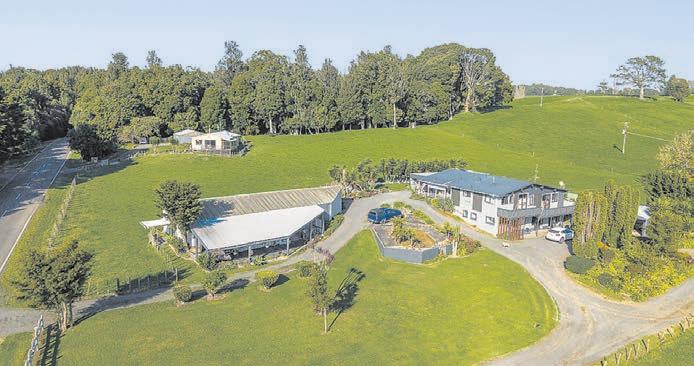
8 3 2 3
Tender closes 4.00pm, Thu 9th Jul, 2026 (unless sold prior), Property Brokers, 81 Tirau Street, Putaruru
View Tue 23 Jun 12.00 - 1.30pm Tue 30 Jun 12.00 - 1.30pm
Web pb.co.nz/PTR230075


Scott Mathis M 027 298 3318 E scott.mathis@pb.co.nz
Ian Morgan M 027 492 5878 E ian.morgan@pb.co.nz
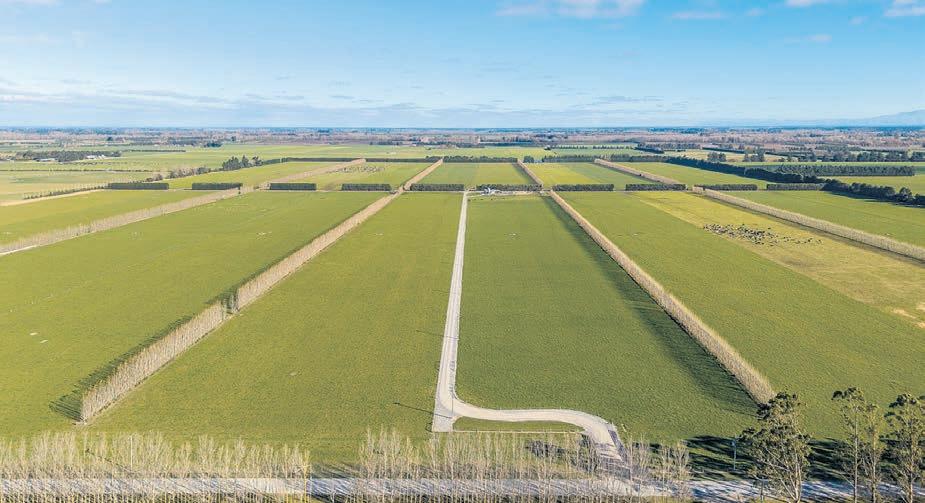
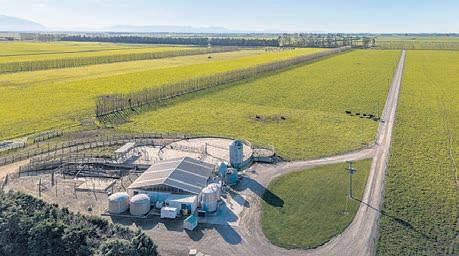
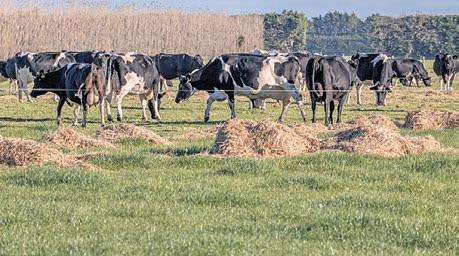
Waotu 46 Waotu South Road
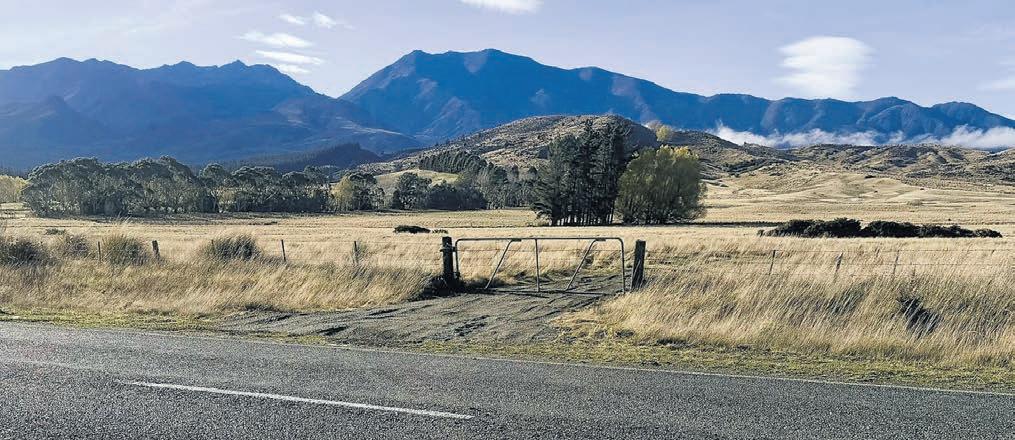
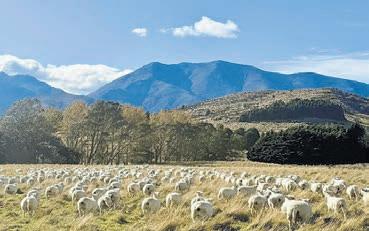
For sale - 138.5 hectares of the world-renowned Mangapiri Downs Organic Stud Farm, Tuatapere, Western Southland. Transitions from flat, fertile land to sheltered rolling hills. BioGro certified; skip the 3-year organic transition period. 11 paddocks, established central laneway, excellent sheep/cattle fencing, and reliable natural spring water throughout. Enquire now
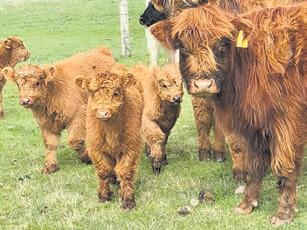
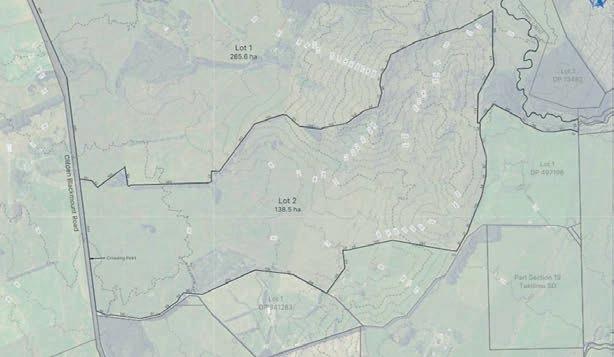
Email David Bradford today for a property brochure.
david@bradfordrealestatenz.net
Mobile: 027 221 8173 | : Walker & Co Real Estate Ltd (Licensed under REA Act 2008)
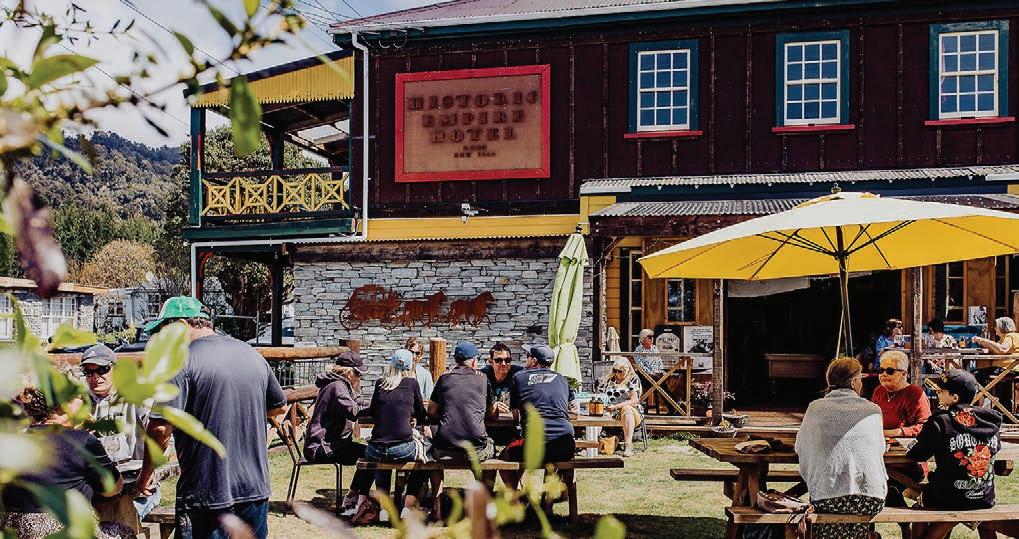
Historic Hotel & Motel For Sale
Freehold, going concern – 19 Aylmer Street, Ross, Westland, West Coast
An outstanding opportunity to acquire a well-established, multi-income tourism business in the historic West Coast township of Ross. Owners wish to retire after 40 years.
The hotel operation comprises a popular bar and restaurant servicing locals and visitors, complemented by a spacious outdoor garden bar area well-suited to live entertainment, functions and casual dining. The property also operates as a registered campground, providing an additional revenue stream. Accommodation within the hotel complex includes six ensuite guest rooms, six cabins, an ablution block, and a semi-detached owner/manager’s flat.
Adjacent to the hotel, the motel offers six well-presented, recently upgraded units with capacity to accommodate up to 17 guests, along with a modern three-bedroom residence (circa 17 years old).
The business has demonstrated strong recent performance, with a 20% increase in turnover in the last financial year. Further growth is anticipated with the reconnection of the West Coast Wilderness Cycle Trail to Ross.
Asking Price: $2,150,000 + GST (if any)
For further information please see our trade me listing, #5879168951 Call Mark 027 806 1651

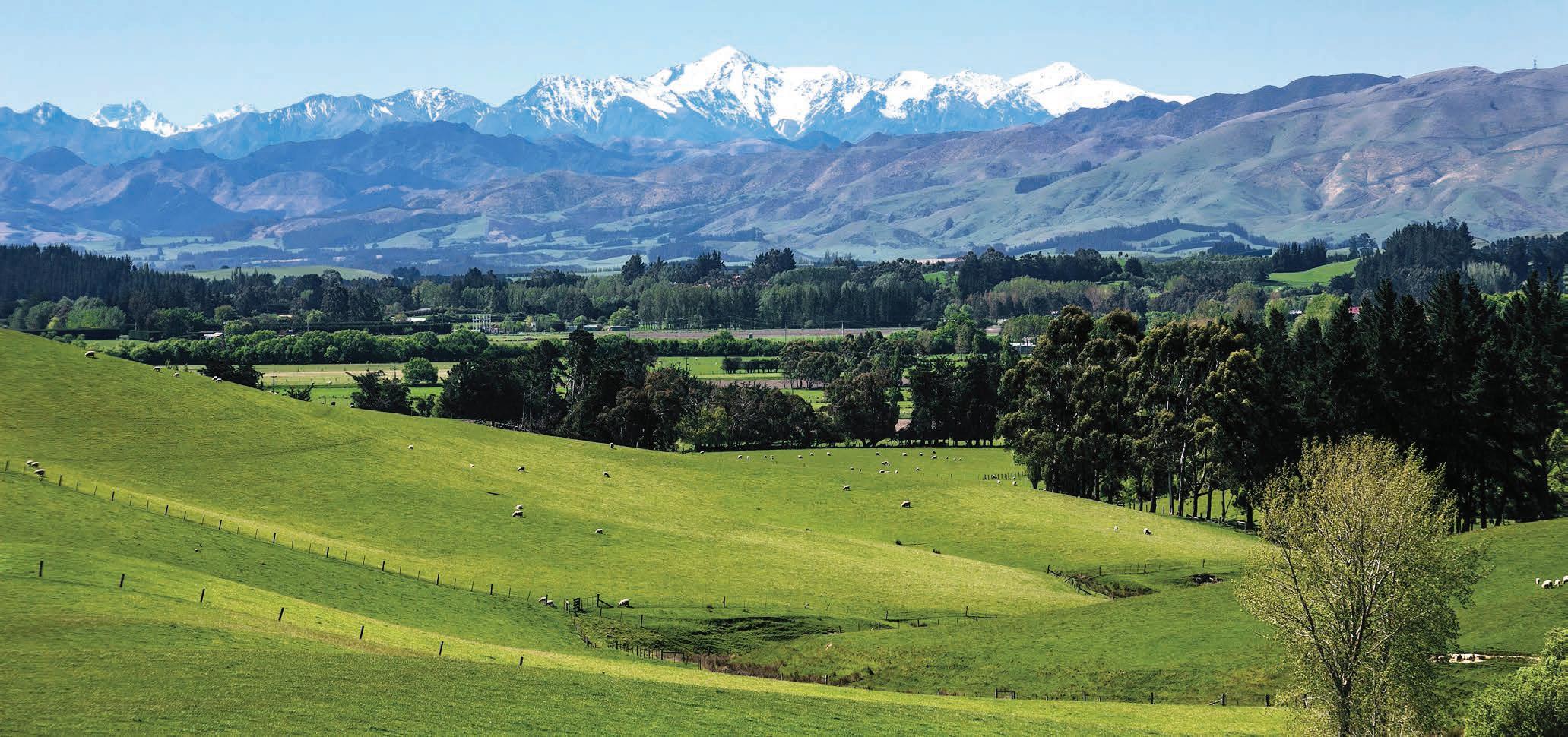






4X4 TAGALONG TOURS
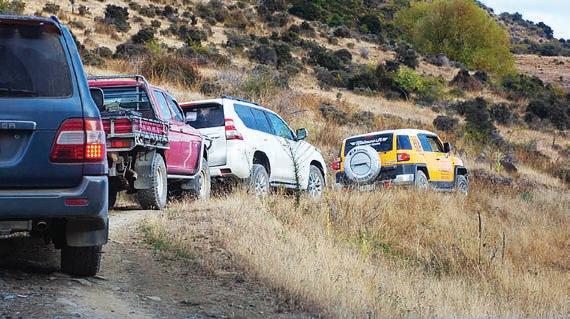
Bring your own 4X4 on a guided tour to discover more of the South Island.

Chief Executive
• Lead the evolution of a trusted national rural media and data brand
• Drive audience growth, digital engagement and commercial performance across a unique platform
• Based in Manawatū, at the heart of NZ’s agricultural sector with strong lifestyle appeal
Lead the voice of rural New Zealand. Build what comes next.
AgriHQ is one of New Zealand’s leading providers of agricultural market intelligence, data and rural media, with more than 20 years of heritage and a deeply trusted position across the primary sector. The business is now entering a pivotal phase, transitioning from founderled management to a governance-led structure, with clear ambitions to accelerate growth and expand its influence.
Tour 1: Molesworth, St James, Rainbow and other stations. Meet other farmers, great accommodation Dates: Feb 10-13, Feb 26-March 1, March 11-14, March 22-25, April 5-8
Tour 2: Central Otago historic trails, local guides to unique places. Meet other farmers, great accommodation Dates: March 4-8, March 16-20 Molesworth Cycle Tours for group bookings by arrangement

ASSOCIATE DIRECTOR – 2 YEAR TERM
• Contribute at a governance and leadership level
• Gain strategic experience in New Zealand’s red meat sector
• Play a meaningful role within a small, high-impact team
About Ovis Management Ltd (OML):
Ovis Management Ltd (OML) is a non-profit organisation dedicated to reducing the risk of sheep measles (Cysticerus ovis) for New Zealand farmers. We work in partnership with farmers, meat processors and dog owners to raise awareness and promote effective control practices. OML is a fully owned subsidiary of the Meat Industry Association (MIA). Our team is small but highly effective, comprising of four Directors (two farmers and two industry representatives), an Associate Director and a Project Manager. The opportunity:
We are seeking an Associate Director to join OML for a two-year term, commencing September 2026. This role is designed for an emerging or future leader who is eager to build experience in governance, leadership and strategy within the red meat sector. It offers a unique opportunity to contribute at Board level while developing capability and insight into industry leadership.
About you:
To be successful in this role, you will:
• Be actively involved in the red meat sector (on-farm or across the value chain)
• Demonstrate a strong commitment to the advancement of New Zealand’s agriculture economy
• Be a credible and respected leader – or an emerging leader – with growth potential
• Bring integrity, sound judgment and a collaborative approach
• Think strategically, with an openness to innovation and continuous improvement You will also:
• Have a genuine enthusiasm for the red meat indsutry
• Be motivated to grow your leadership capability and sector influence
• Be an independent thinker, willing to both challenge and be challenged
• Communicate effectively, respectfully and persuasively
• Act as a role model, reflecting the organisation’s values and standards
Commitment:
The commitment needed will be two days a year on average. It is intended that the Associate Director will attend the Red Meat Sector Conference as well as any other conferences or meetings that may arise, within reason. This is an unpaid position, with all reasonable expenses covered.
To apply: Please email your CV and a cover letter to Project Manager Michelle Simpson at michelle.simpson@mia.co.nz
For further information on this opportunity, please email Chairman Andrew Morrison at beak.lisa@gmail.com or call 027 664 4620. Visit www.sheepmeasles.co.nz to find out more. Applications close 12th July 2026.
We are seeking an outstanding Chief Executive to lead this next chapter. This is a rare opportunity to take the helm of a respected national brand at the intersection of marketing, communications, media and data by strengthening its voice, expanding its reach and unlocking new commercial growth.
AgriHQ sits at the centre of New Zealand’s rural ecosystem, engaging farmers, processors, corporates and government through its data, insights and media platforms, including Farmers Weekly. The opportunity is to elevate its marketing and communications capability by deepening audience engagement, enhancing digital channels, and leveraging trusted content and data to grow subscriptions, partnerships and influence.
You will lead the shift toward a more integrated, data-driven and digitally enabled business, while safeguarding the independence, credibility and authenticity that underpin the brand.
This role offers significant sector exposure and influence, with access to key stakeholders across the agricultural landscape. Success will come from combining strategic leadership with commercial delivery by diversifying revenue, building partnerships and strengthening customer engagement.
Equally, you will lead a passionate and highly connected team, building on a strong, values-driven culture while guiding the organisation toward a more scalable, enterprise-ready model
Based in Feilding, Manawatū, the role places you in the heart of New Zealand’s agricultural community, close to customers, industry participants and the organisation’s operational base. It offers a compelling lifestyle choice alongside a nationally significant leadership opportunity.
This is more than a Chief Executive role. This is a chance to shape the future of a trusted industry platform. With a strong foundation, loyal customer base and clear growth pathways through digital products, data services and marketing innovation, AgriHQ is well positioned for its next phase.
Applications close 22nd June 2026.
Apply now
Please email your CV to tony@swr.nz or tim@swr.nz quoting reference no. 4038288. For further information in strictest confidence, please contact Tony Walsh on 029 271 1101 or Tim Rosenberg on 029 273 2264.
You must be a New Zealand citizen or have full visa status to currently work in New Zealand.


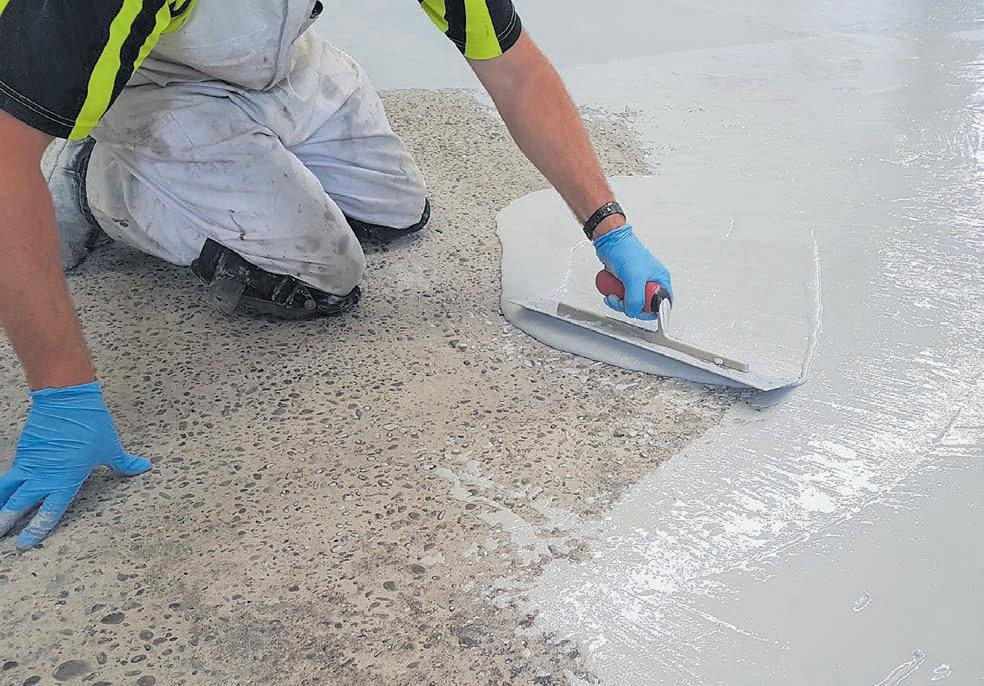



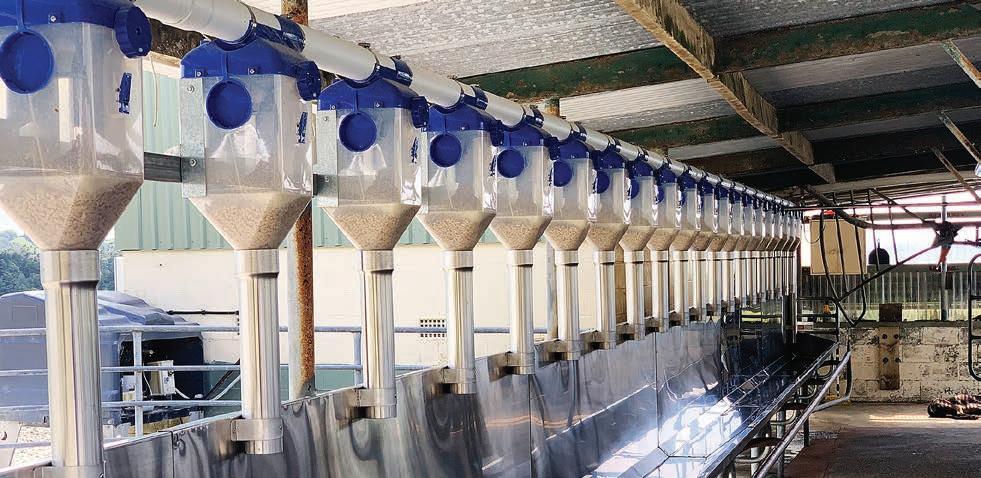

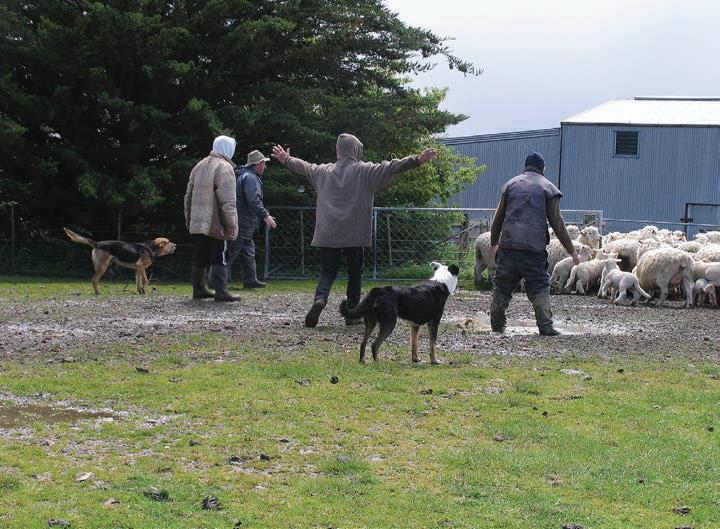
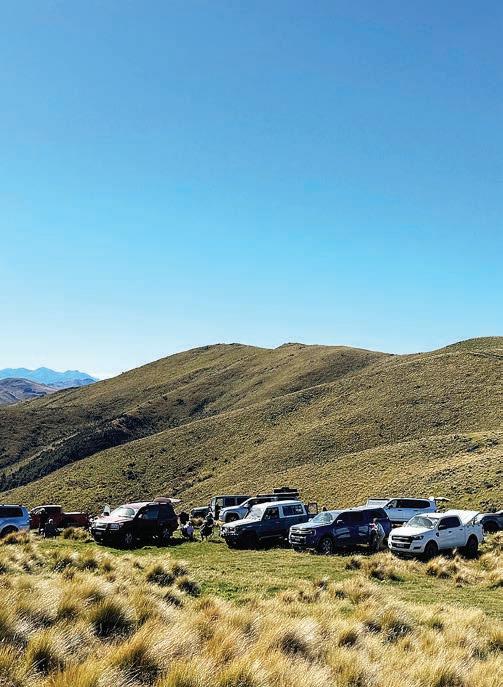




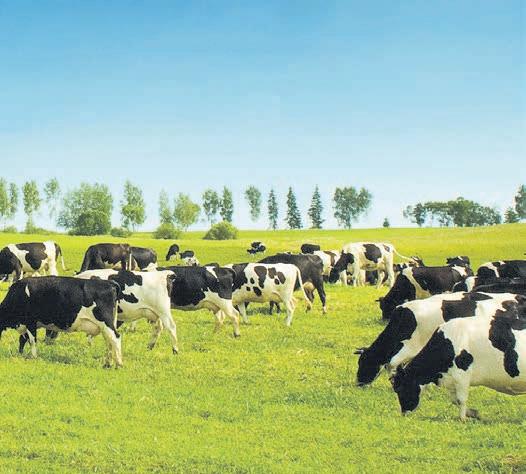










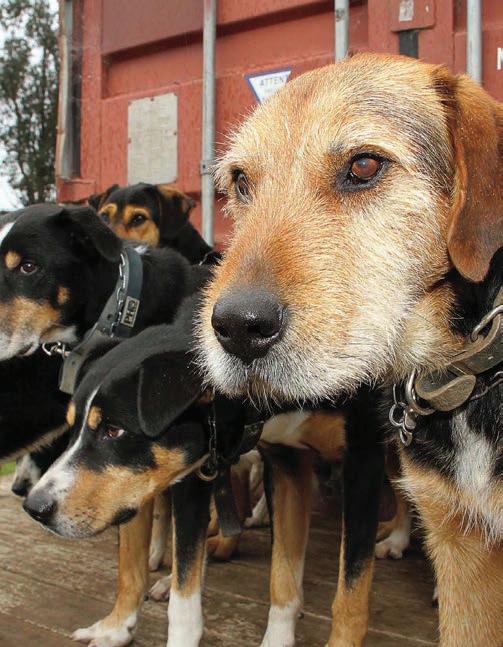
R1YR
R2/3YR




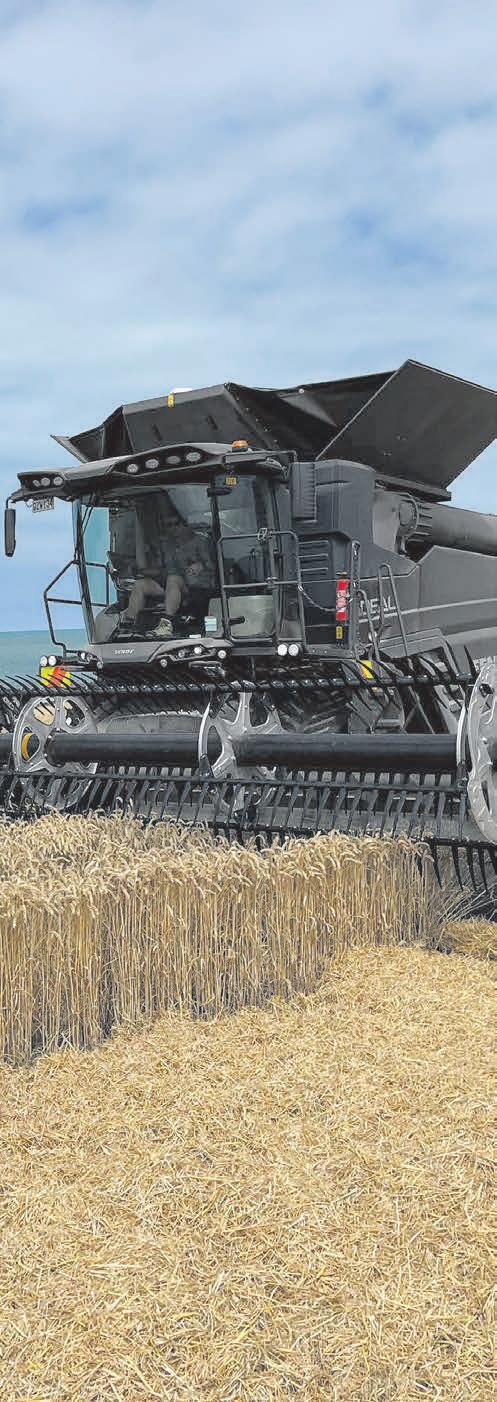


BULL SALES SHOWCASE



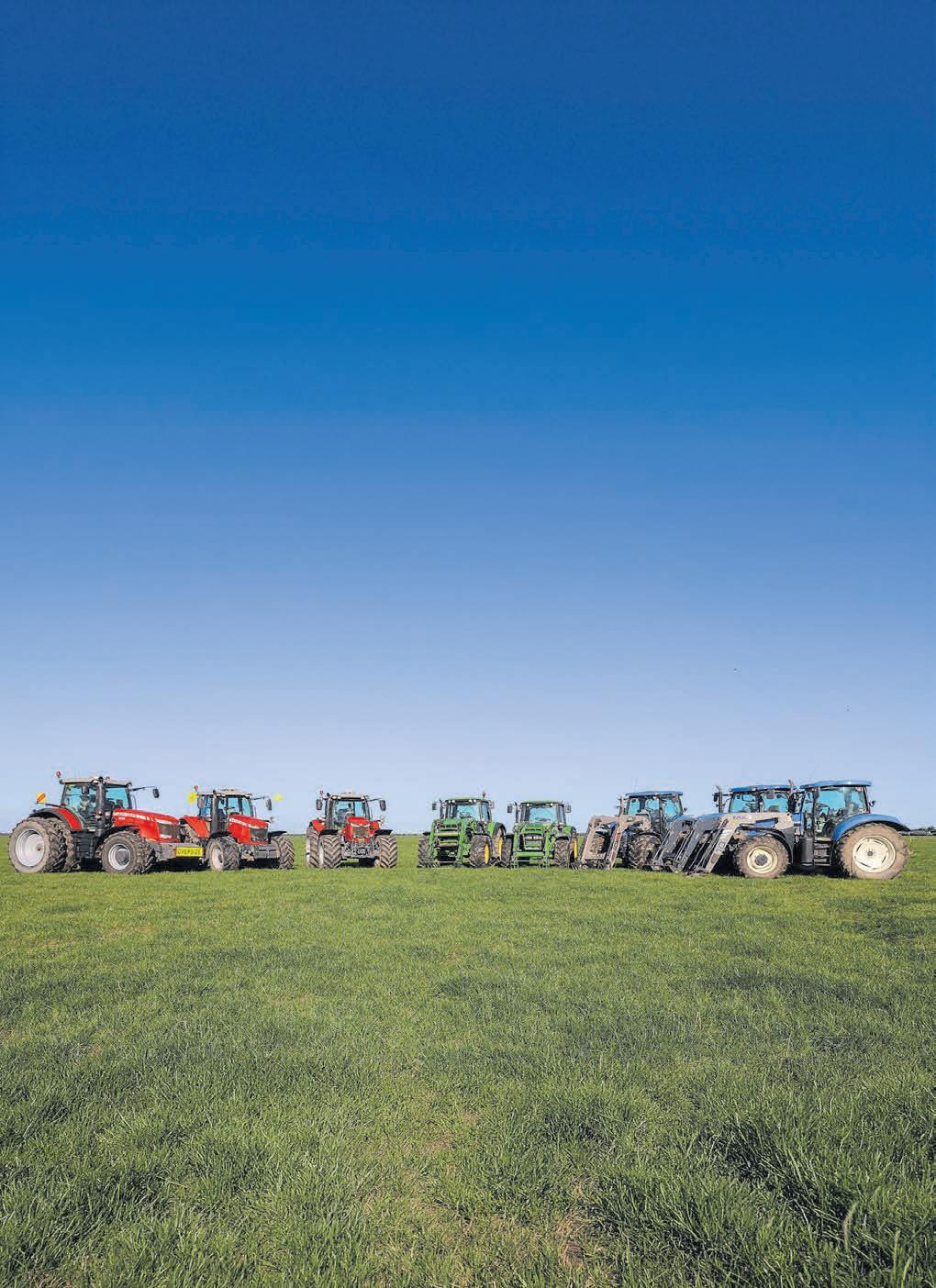




Proudly sponsored by
Scramble for lambs as season winds down
Returns for store lambs at saleyards have surpassed record levels set earlier in the year.
Suz Bremner MARKETS Livestock
BUYERS are scrambling to secure the last of the old season lambs, and again the buzz words “record pricing” have found their way back into market summaries. But the reality is that the season is drawing to a close and supply is dropping yet demand and outlooks have never been better.
Recent returns for store lambs at saleyards have surpassed record levels set earlier in the year, and it has not been uncommon for medium- to longer-term lambs to sell in the $180-$230 range, which has pushed per-kilogram prices frequently over $6/kg, but also into $7/kg territory.
In the past week, the South Island market kept strengthening, as late planting of crops and grasses meant that buyers are later to the market and finding they are competing over a much smaller pool of lambs. Lambs are, in some cases, being shipped south across the strait to whet the appetite to some degree, but budgets are being stretched to their limits.
Temuka sold just over 5000 lambs on Monday, June 15, and averaged 35kg and $223, $6.40/
kg, with clear lifts in the market for mixed-sex lambs shown. Lines that were 23-28kg averaged close to $7.30/kg, including Halfbred wether lambs. A much smaller yarding of 1000 lambs at Canterbury Park pushed even further into record territory, averaging 33kg and $226, $6.79/ kg. In the North Island, the lift in the market started at Stortford Lodge on Wednesday, June 10, where 4800 lambs averaged 36kg and $218, $6.02/kg.
A much larger yarding at Feilding on the following Friday still managed to push into $6/kg average territory with 13,200-head averaging 35kg and $217, $6.12/kg, while the latest Stortford Lodge market settled just below $6/kg for a 37kg average.
As a percent of schedule, historical values for heavy store lambs this late in the season would be at 46-47%, but North Island prices (for 25-42kg lambs) in the past week have pushed to 52-54.7%, and South Island even further to 53-57.8%.
That inflation exceeds the highest level seen (in January this year) and has been led by confidence in $12/kg plus schedules, limited volume and continued grass growth into the winter months.
Demand is unlikely to waver
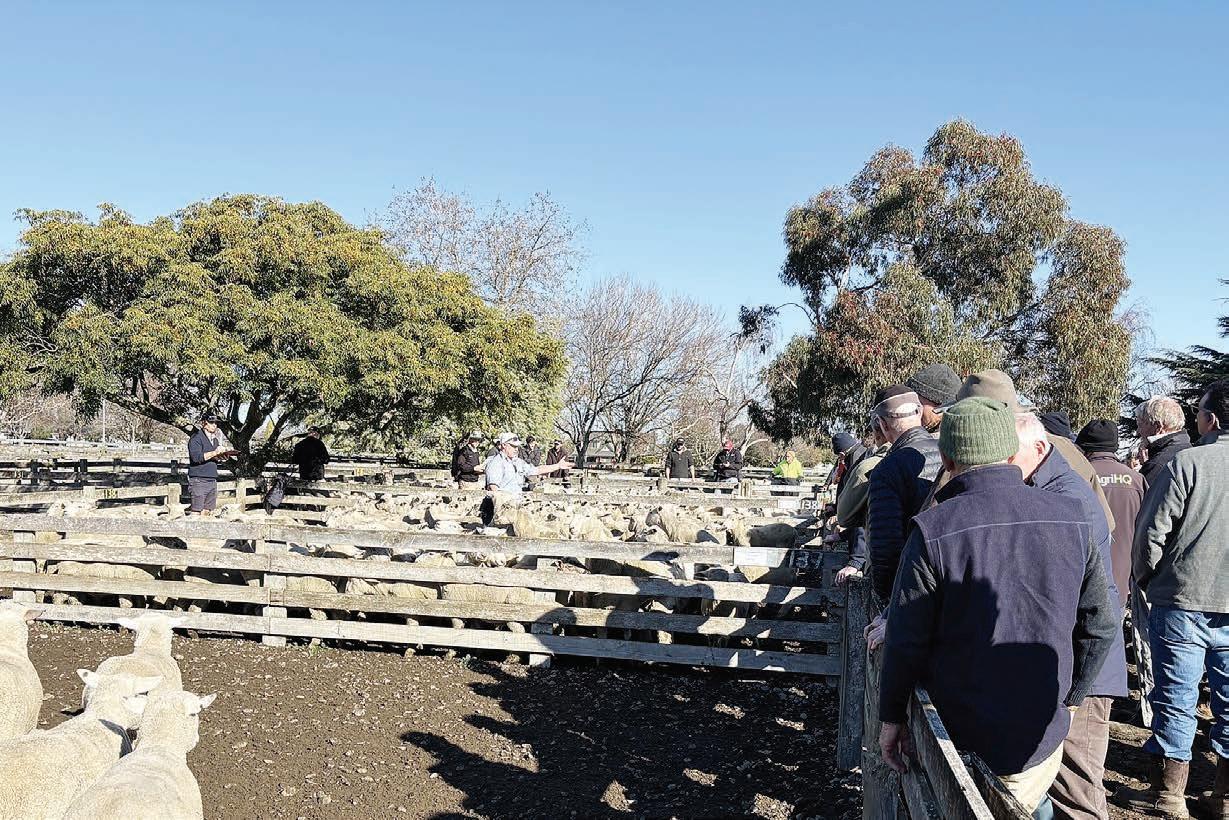
The start of the next crop of lambs won’t come soon enough for buyers either, with early lambing farmers currently setstocking and prepping for the first lambs to hit the ground.
much as the season heads towards its natural end. However, supply will, despite some lambs being recycled back through the yards as extra farmers look to take advantage of the strong market.
It is likely prices will continue to climb as buyers compete to secure what they can before the looming gap between old and new season lambs, which will squeeze the margins made on finishing.
It would, however, be too much

to ask for a perfect run to the end of the season. Just like the sharp rise in fuel prices impacted what would have been an astronomical weaner fair season, the building El Niño weather pattern may restrict some demand heading to the end of the lamb trading season, though that seems unlikely this late in the game.
The start of the next crop of
lambs won’t come soon enough for buyers either, with early lambing farmers currently setstocking and prepping for the first lambs to hit the ground.
If El Niño doesn’t hit regions too hard, it will be a season that will be approached with plenty of anticipation, following the resounding success of the 20252026 season.

KEEN CROWD: Scott Heasley from Redshaw Livestock sells a line of shorn male lambs from Kokopuru Station, Tutira, to a keen crowd of mainly local buyers. The line was the top cut from a consignment of 960-head and sold for $246.
Store male lamb average $/kg Feilding & Stortford Lodge
Cattle Sheep Deer

Weekly saleyard results
These weekly saleyard results are collated by the AgriHQ LivestockEye team. Cattle weights and prices are averages and sheep prices are ranges. For more detailed results and analysis subscribe to your selection of LivestockEye reports. Scan the QR code or visit www.agrihq.co.nz/livestock-reports
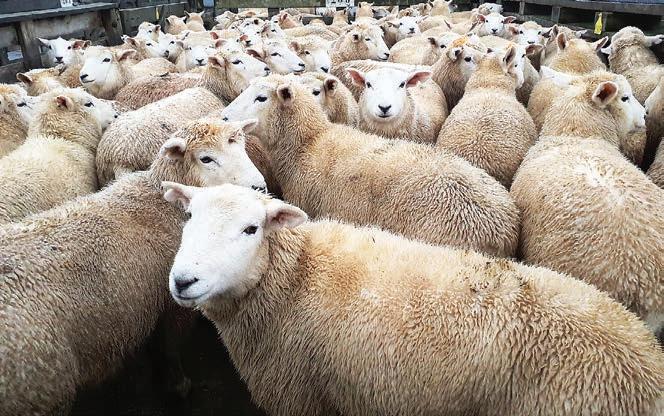


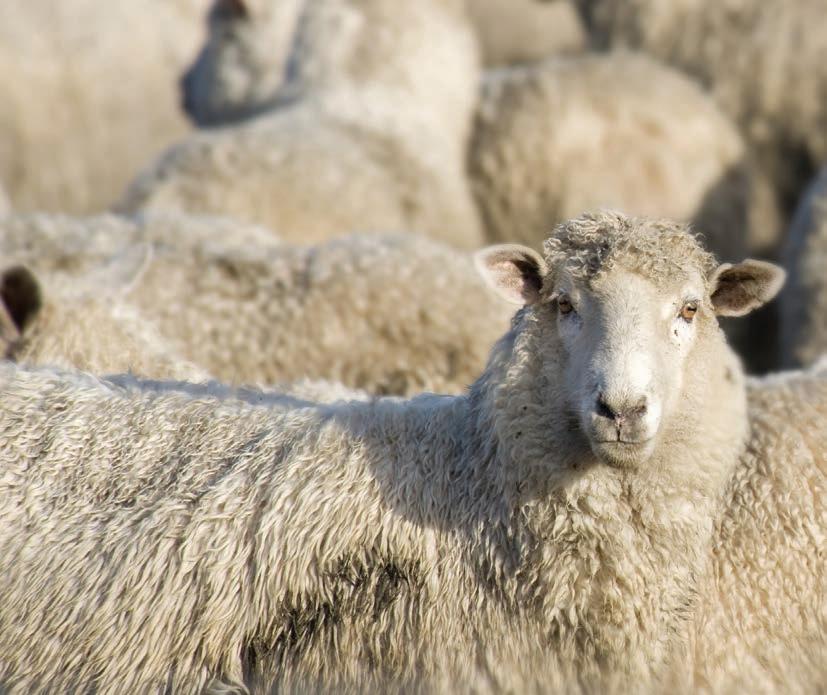

THE SHIP CAME IN: Another boatload of lambs from the Chatham Islands were yarded at Temuka on Monday, June 15. This pen of Romney-cross mixed-sex lambs sold on a lifting market at $242.
Feilding | June 15 | 332 cattle, 2506


lambs, most 181-311
Rongotea | June 16 | 92 cattle, 7 sheep
Boner Friesian cows, 515kg 3.29
R1 dairy-beef heifers, 195kg 975
Coalgate | June 11 | 199 cattle, 2311 sheep
Prime dairy-beef steers, 565kg
Prime traditional heifers, 515kg
Prime dairy-beef heifers, 525kg
Store male lambs, all 160-202
Store ewe lambs, all
Store mixed-sex lambs, all
Prime ewes, most
Prime lambs, most
Canterbury Park | June 16 | 103 cattle, 2402 sheep
Prime dairy-beef
Mixed-age Romney ewes, SIL, all
Store mixed-sex lambs, most
Store Corriedale
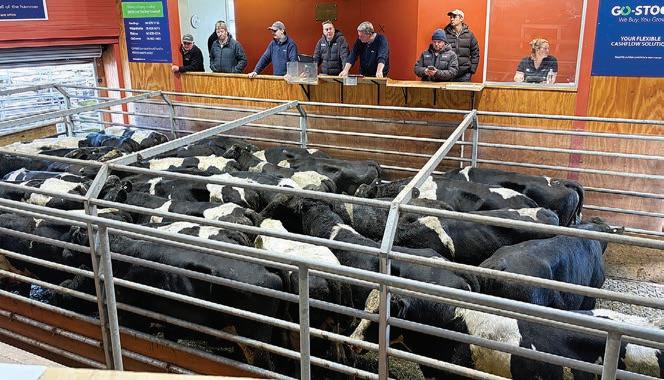
All you ever wanted to know about El Niño

Philip Duncan NEWS Weather
HAT is El Niño?
WEl Niño is a naturally occurring climate phenomenon, a warming of ocean surface temperatures in the central and eastern Pacific measured at the equator. It shifts global weather patterns and can drive extreme weather events.
How does it work?
During El Niño, the trade winds (an easterly airflow) weakens or reverses near the equator, and over months this pushes warm water on the surface north of Fiji eastwards towards South America. This big shift changes atmospheric
El Niño is a naturally occurring climate phenomenon, a warming of ocean surface temperatures in the central and eastern Pacific measured at the equator.
pressure and moves rainfall across the globe.
Where is it measured?
The main monitoring area is called “Niño 3.4 region” in the central tropical Pacific Ocean. This is north of Tahiti.
Why is it being called a Super El Niño?
This comes from a Pacific-wide measurement. Global modelling is pointing towards a strong to very strong event, based on the extent of warming in the central tropical Pacific. Australia’s Bureau of Meteorology says that “around half of the models indicate this event could peak at levels among the highest observed since 1950”.
What does a Super El Niño mean for NZ – will it be our worst ever?
A strong El Niño signal in the Niño 3.4 region does not necessarily mean strong impacts on our climate – but it highly encourages them:
• El Niño is measured quite a long way from NZ, so we’re a bit on the edges of it.
the equator and Antarctica, means El Niño is one factor that can influence our seasonal weather and climate. The Southern Ocean can send us storms, and our relatively small size compared to air pressure systems means locally we can have one low pressure zone that “bucks the trend” and provides rain relief.
• The world is warming – both sea and atmosphere are warmer globally and that may produce unknowns. Global sea surface temperatures have been very warm, with May 2026 the warmest May on record (since 1900).
What does El Niño mean for the NZ area?
PACIFIC: El Niño is measured northeast of Fiji and New Zealand (Niño3.4).
How might it affect NZ’s weather?
Will it mean drought?
Historically we’ve seen more high-pressure zones over the Tasman Sea and north of NZ. This placement does a couple of things. It can limit rain-making lows that form locally in the Tasman Sea, and it can block tropical and subtropical lows from reaching us. This placement of highs can then encourage more westerlies in NZ which, as we know in autumn and spring, can dry out inland, eastern and northern regions of both main islands.
Very generally – the West Coast may be wetter, western NZ may be cloudier, and inland and eastern areas may dry out more and be hotter in spring/ summer.
How can I monitor any effect on NZ?
Use the New Zealand Drought Monitor (simply google that) and keep up to date with Farmers Weekly – its nationwide rural reporting will help you understand any potential significant changes happening around the country in the months ahead.
When I’m asked this I say “Water and feed conservation and backup plans in these areas can help. But because of NZ’s location on Earth, anything can happen –we can’t guarantee drier than usual weather, but what we know historically is that it can certainly increase our westerly flow and that can dry things out. It will all come down to the placement of the highs (anticyclones) in the months ahead.
How long will it last? It is likely to remain for the rest of 2026 and into the first quarter of 2027.

• Our location, halfway between








Shared insights, stronger herds.






















































That’s the value of a co-operative






When farmers support farmers, we all move forward Shared data, shared knowledge and generations of experience
















































































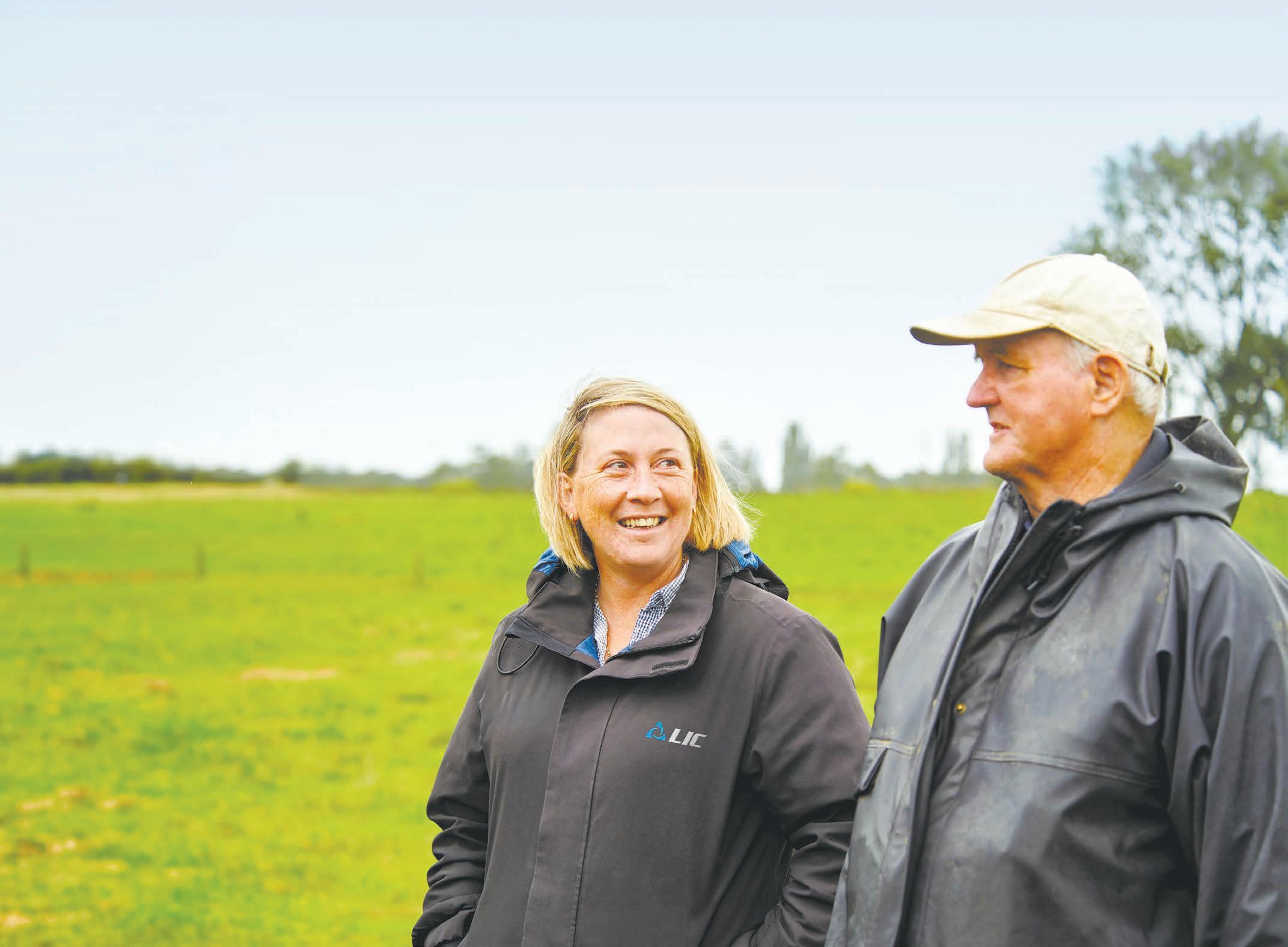


Image: BoM