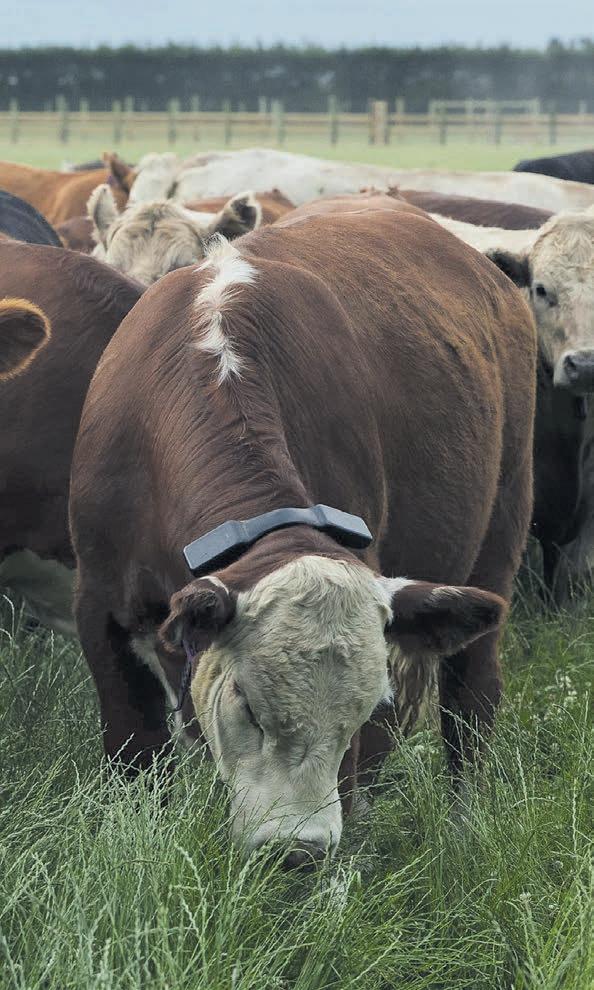
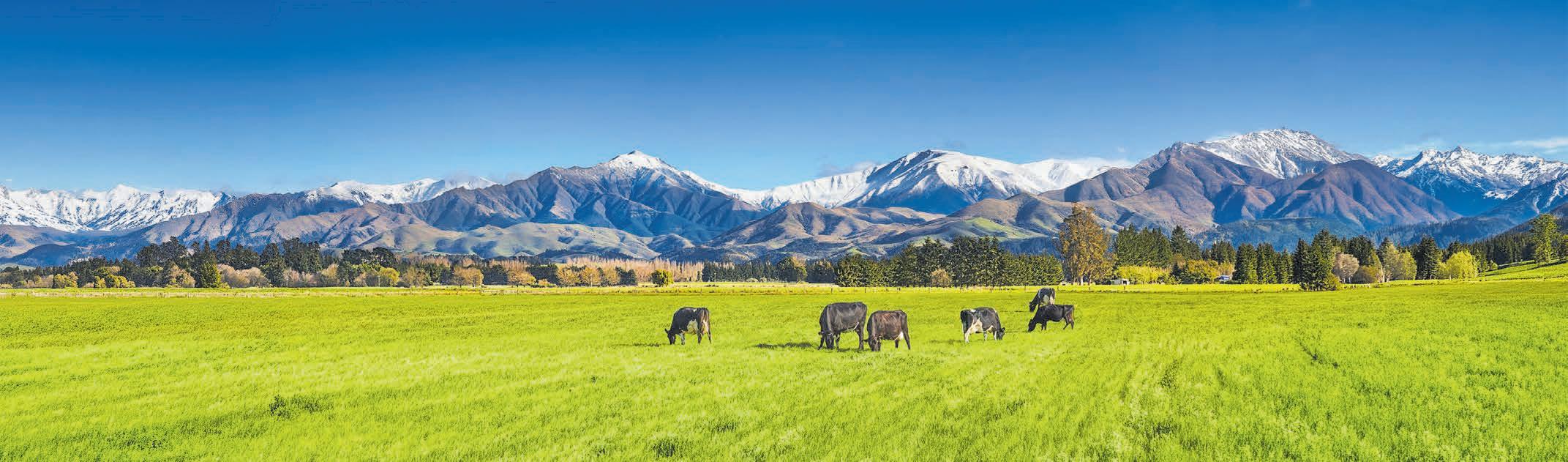
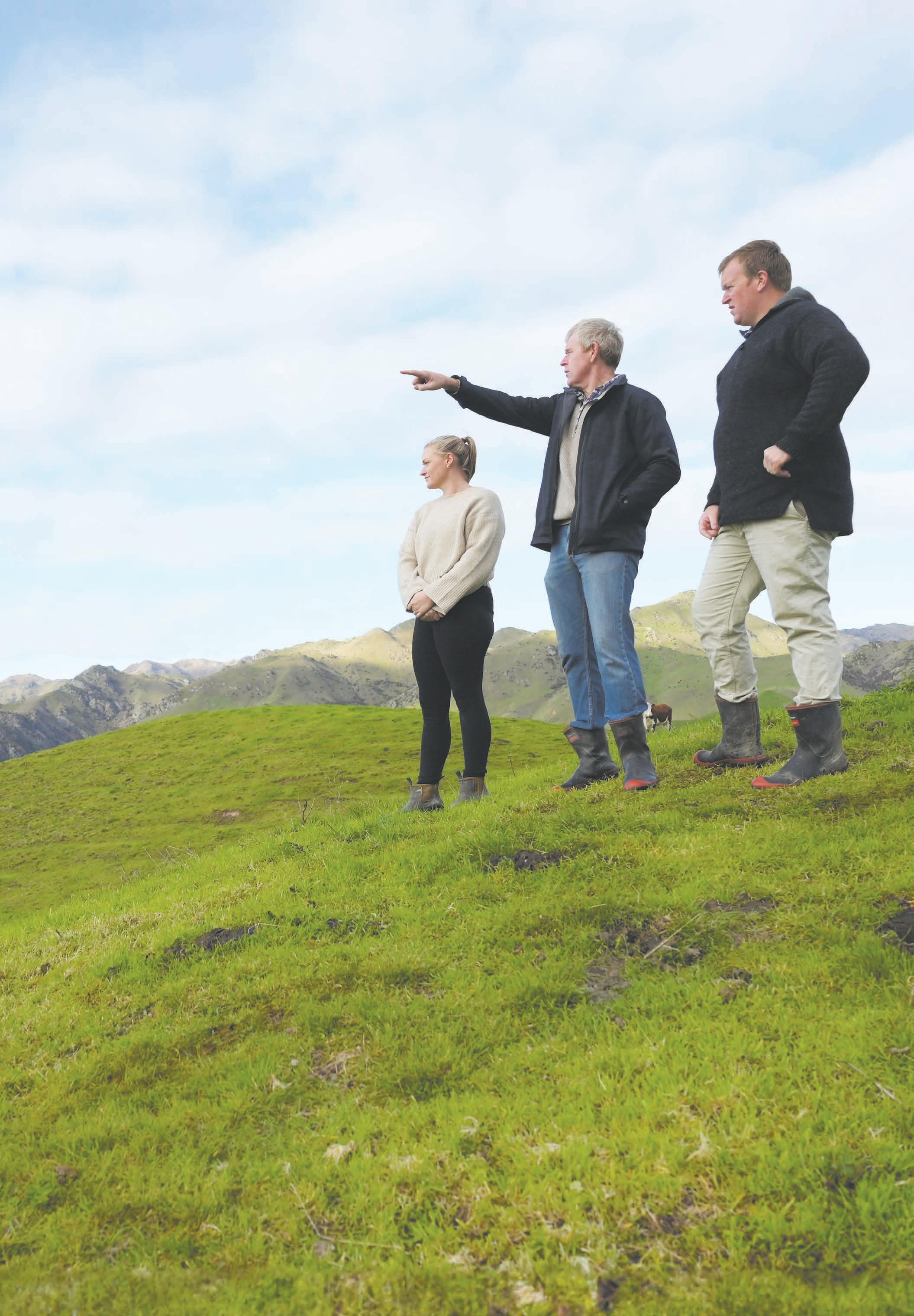
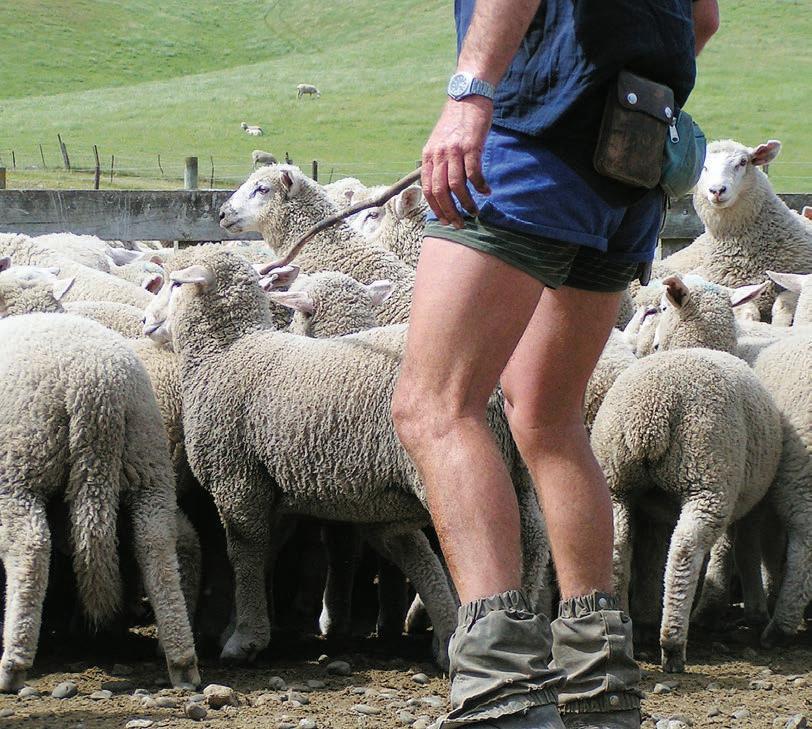
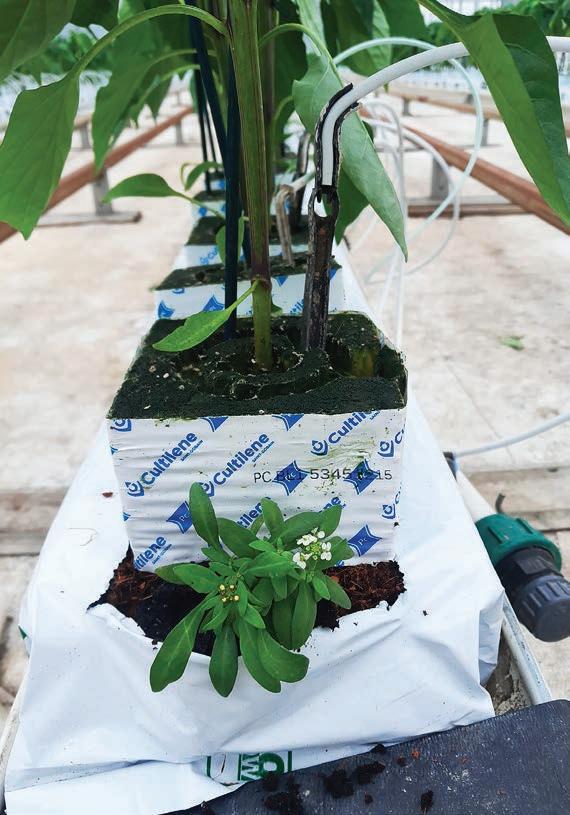
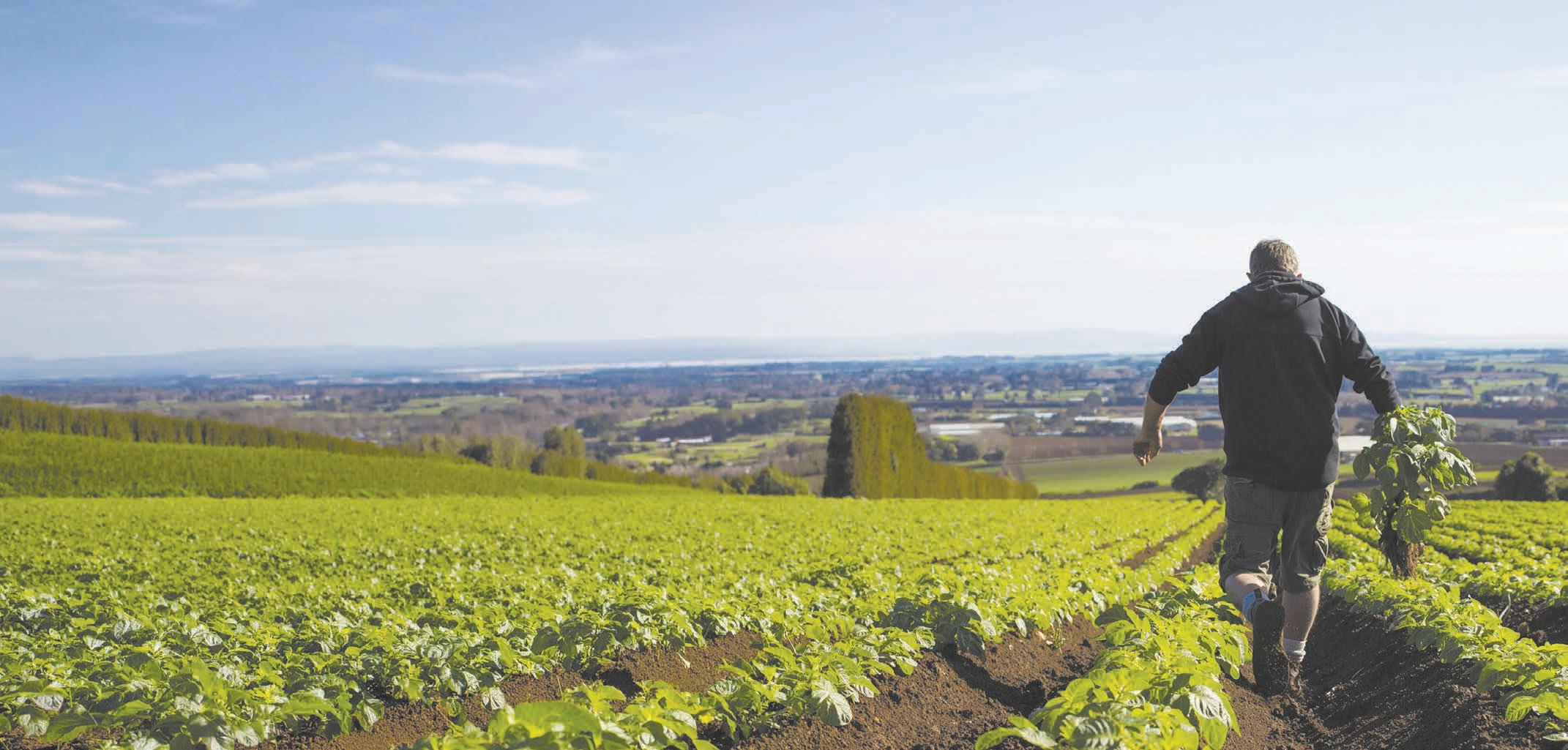
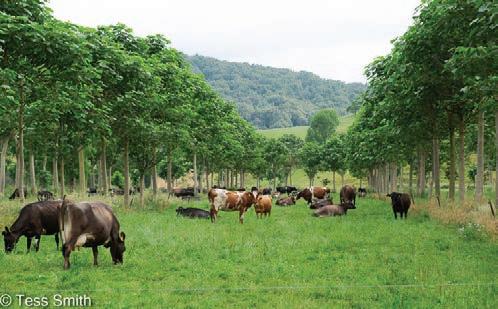
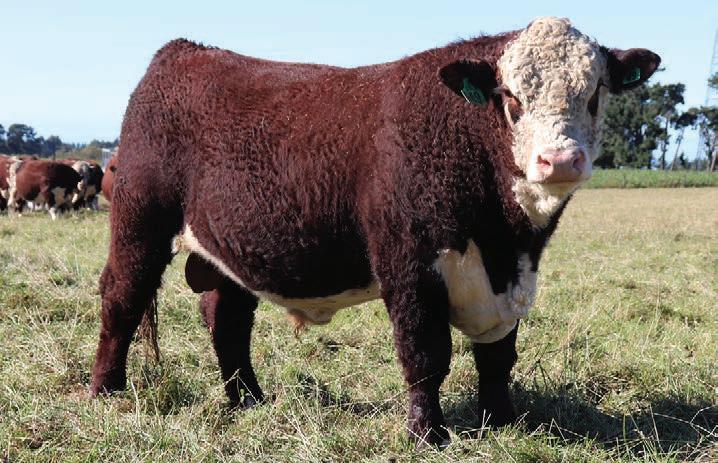
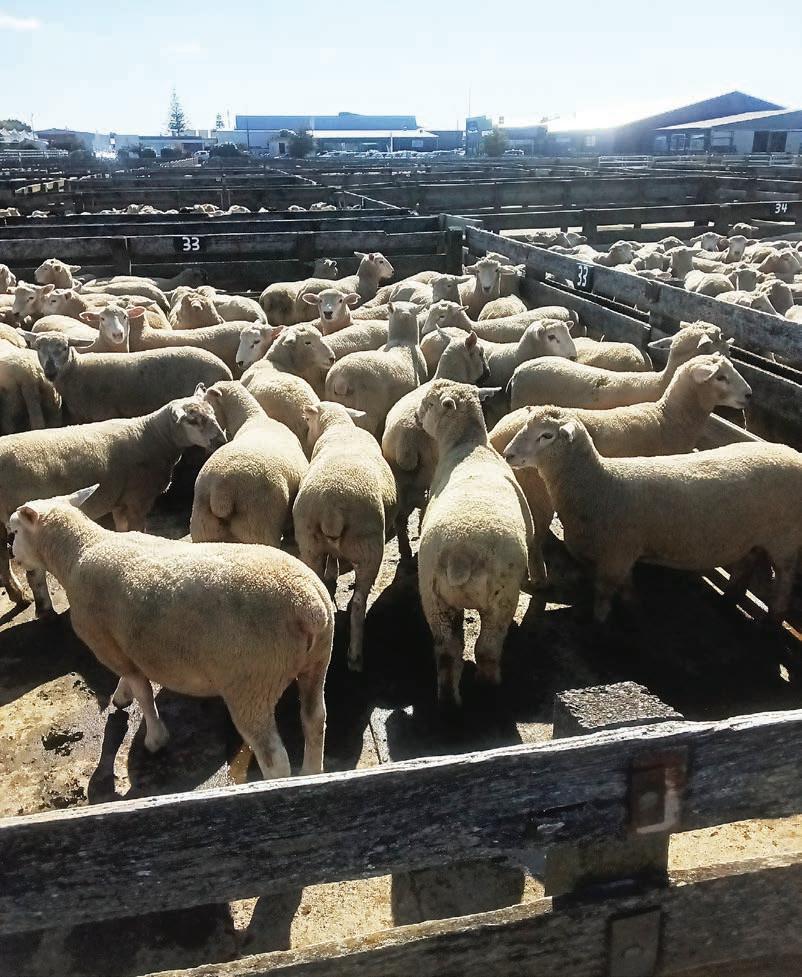
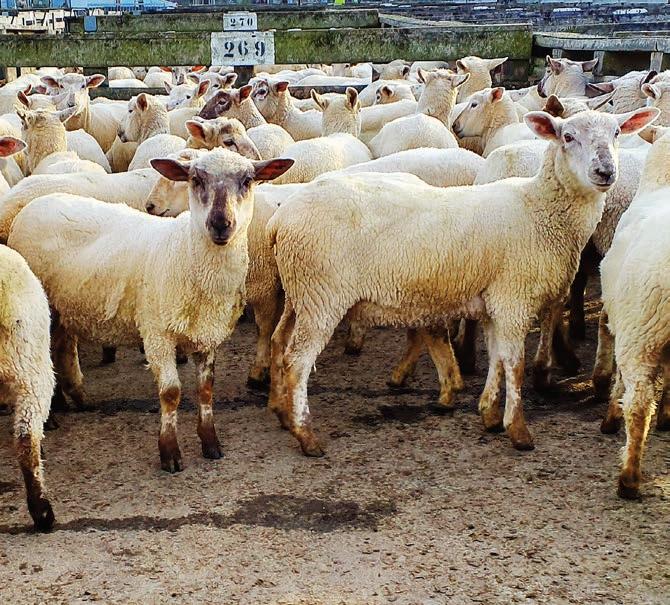
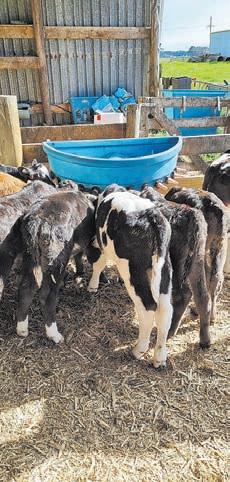
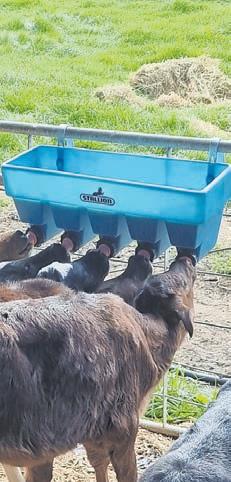
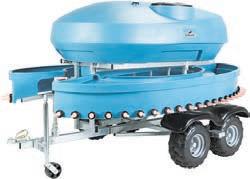
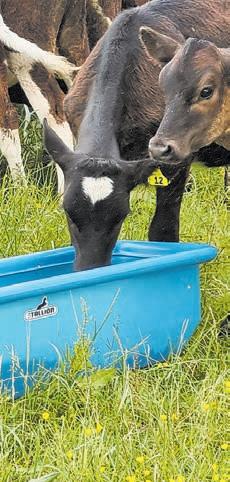
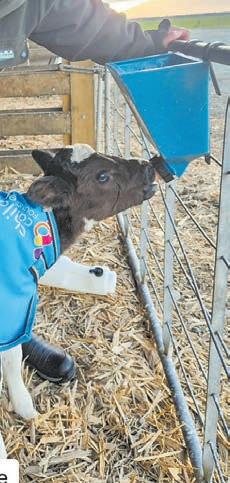
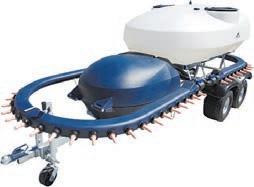
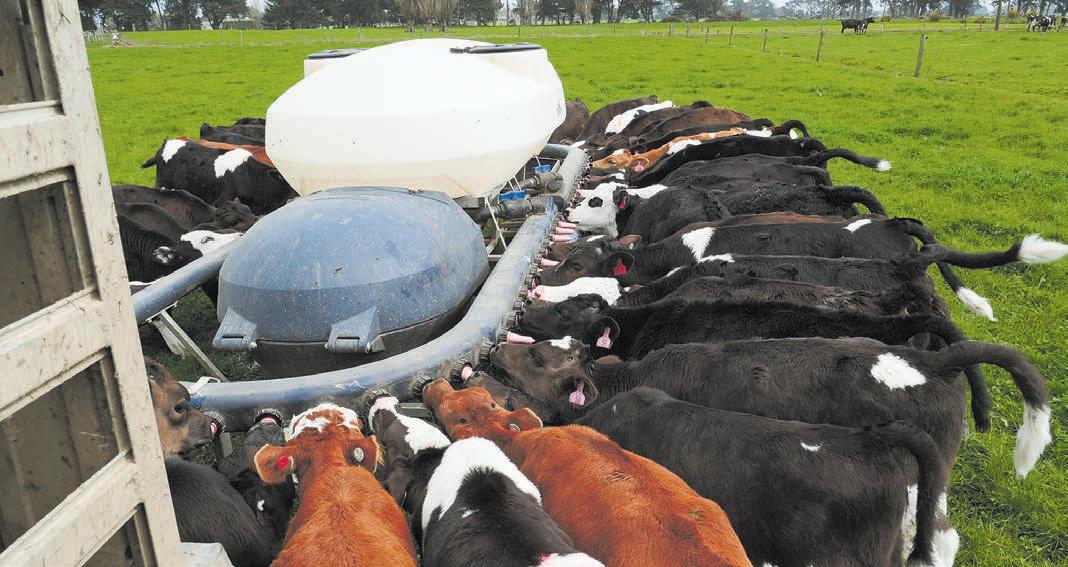
Reckon there’s more productivity to unlock on your farm? We want to
With Halter you can:
Virtually fence and shift mobs from wherever you are
Maximise pasture utilisation
Monitor animal behaviour and health trends
Tell us what you’d do with Halter, and we will select 6 farmers throughout New Zealand to win, whether you are already with Halter, or not
Dairy golden streak set to continue
Gerald Piddock NEWS Fonterra
THE dairy industry’s golden year of high prices looks set to continue for a third season after Fonterra announced a $9.75/kg MS midpoint forecast milk price for the new 2026-2027 season.
The forecast has a wide $8$11/kg MS range, indicative of the market and geopolitical uncertainty that is being fuelled by the conflict in the Middle East.
The current season’s forecast is unchanged at $9.70/kg MS with the range narrowing to $9.60$9.80/kg MS.
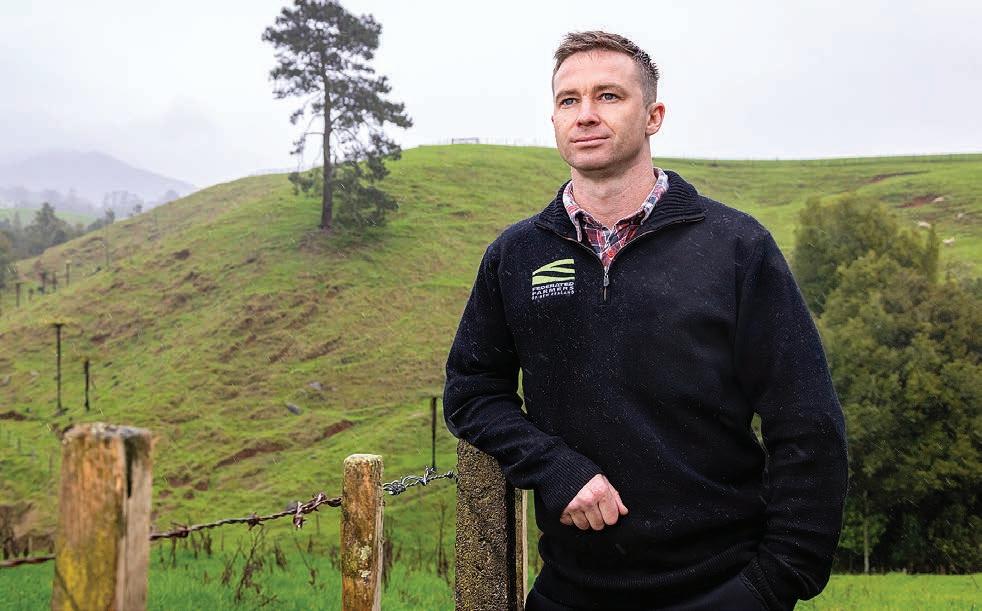
These past 12 months have probably been the most profitable for a dairy farmer in my 20 years of farming.
Karl Dean Federated Farmers
It is the third consecutive season to have a high opening milk price forecast.
Federated Farmers dairy chair
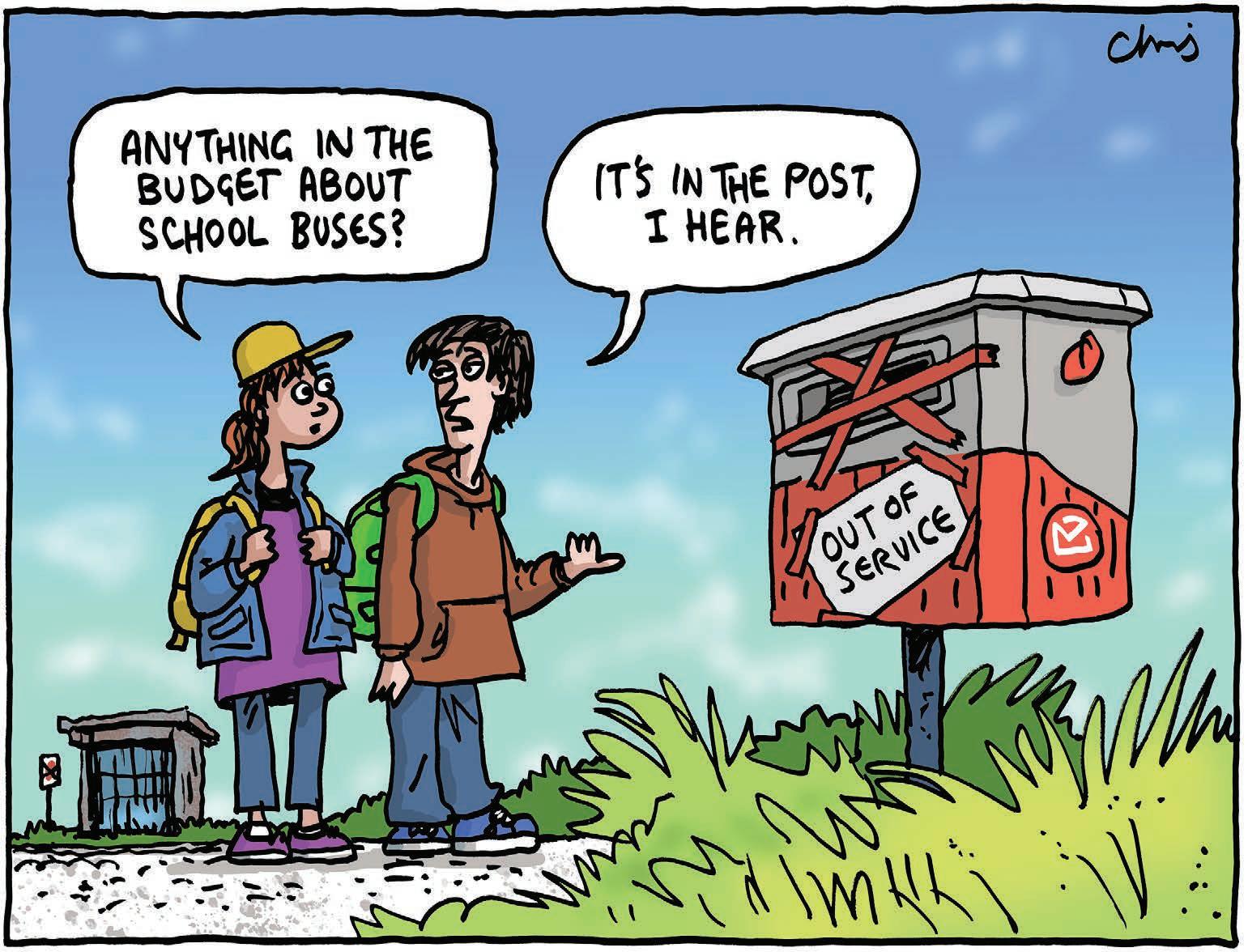
Karl Dean said it appears that $9/ kg MS is the new normal for dairy farmers
“A decade ago, we used to say, $6/kg MS was your average –
budget on $6/kg MS. Are we now at the point where we budget on $9/ kg MS?”
Even if the payout falls to $8.50/ kg MS, the average would still be $9/kg MS, he said.
However, creeping input costs including fuel, fertiliser and feed have the potential to take the gloss off this forecast.
“We are going to need to see over $10/kg MS to get the profitability we have had over this past 12 months.
“These past 12 months have probably been the most profitable for a dairy farmer in my 20 years of farming. We have not [before] seen a $9.70/kg MS, low interest rates, fuel and fertiliser prices, which have come down for the majority of the season and the majority of farmers have had record production because of the autumn.
“We don’t normally get that golden year, which is what I would classify the last 12 months as. It’s been a golden year – production up and price up.”
It bucked the trend of prices falling during high production years, he said.
“That could come next year.”
The majority of farmers’ balance sheets should be looking very good and should provide a buffer if input prices do climb further, he said.
DairyNZ head of economics
Mark Storey said while farmer
Continued page 3
Designer lights wool’s path to value
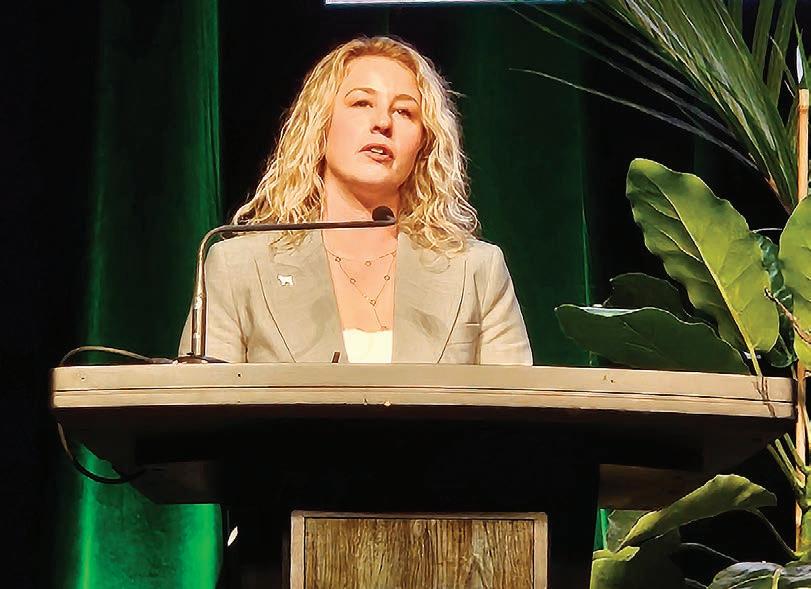
Sophie Poelman, founder of Lof design studio, has spent the past six years building the business, which designs and produces acoustic-dampening light shades with coarse wool as their core material. Poelman addressed delegates at this year’s E Tipu conference. See www.farmersweekly.co.nz for her story.
NEWS 8-9
Cropping farmers face tough calls as summer harvest finishes.
NEWS 3
Govt to tackle farm plastic
Councils are relying on the government’s incoming national scheme to address farm plastic recycling rather than creating local rules.
Change is coming but are NZ’s ag leaders prepared for it?
NEWS 5
The world and lamb prices have gone mad, says Allan Barber.
Real Estate | 0800 85 25 80 realestate@agrihq.co.nz
Word Only Advertising | 0800 85 25 80 Marketplace wordads@agrihq.co.nz
PUBLISHERS
Dean and Cushla Williamson Phone: 027 323 9407 dean.williamson@agrihq.co.nz cushla.williamson@agrihq.co.nz
Farmers Weekly is Published by AgriHQ PO Box 529, Feilding 4740, New Zealand Phone: 0800 85 25 80 Website: www.farmersweekly.co.nz
ISSN 2463-6002 (Print) ISSN 2463-6010 (Online)
Contents
News in brief
Salmon profit
New Zealand King Salmon has reported net profit of $13.8 million in the six months to March 31, compared with a loss of $20.8m in the previous corresponding period.
22
23
28-29
Revenue was up 5% to $100m. Chief executive Carl Carrington said the improved summer fish performance can be attributed to a range of factors, including the implementation of the new summer diet, increased grading of stock and a focus on operational execution.
Joint venture
Beef + Lamb New Zealand Inc and Meat & Livestock Australia have formalised a partnership to work jointly on nutrition science, industry credibility and red meat advocacy.
BLNZ dietitian Julia Sekula and MLA dietitian Monique Cashion have worked together informally over the last few years, and their partnership is now taking a more formal shape through a series of joint nutrition initiatives spanning both New Zealand and Australia
Student support
Telford and global food and beverage company Danone are partnering through three new scholarships.
Danone will be providing the annual scholarships to Telford students, starting this year. Southern Institute of Technology said the academic, practical and hardship scholarships will give financial support and industry connection opportunities for students.
Applications open
Applications for Silver Fern Farms Cooperative’s next board-appointed farmer director are open.
Co-operative chair Anna Nelson said the new role opens up a directorship opportunity on the co-operative board, which assists in ensuring a sound succession plan for its governors. Applications close at noon on Friday, June 12.
Tough calls as growers bring harvest home
Annette Scott NEWS Arable
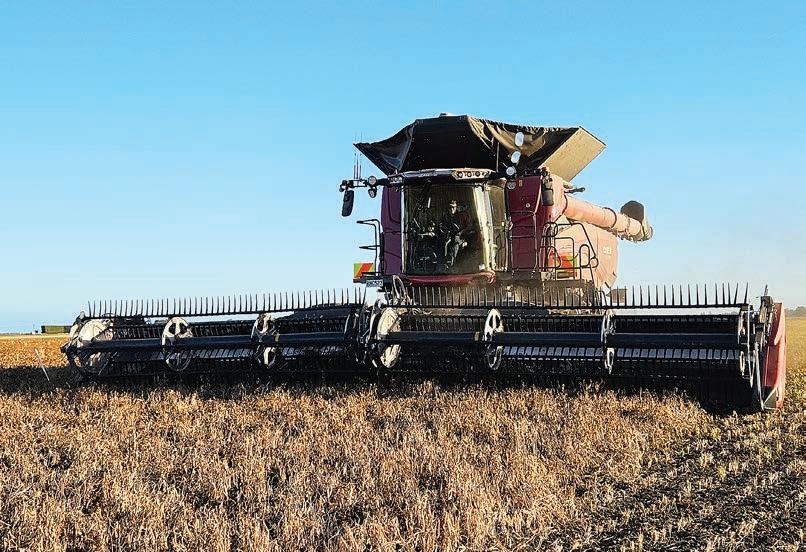
THE last of the summer harvest is finally off the paddock with cropping farmers now facing some tough calls ahead.
One of New Zealand’s arable stalwarts, Mid Canterbury farmer Eric Watson, said there’s no denying “it’s been the toughest year I ever been through”.
Watson finally put the harvester in the shed after getting his haricot beans, the last crop for the season, off the paddock just in time for winter.
“It’s unseen, but it’s the way the season has been, a struggle from start to finish, a shocker pretty much sums it up from the wet autumn and winter, getting crops planted, right through the harvest in a summer we really didn’t get.”
Compounding the weather challenges has been pricing.
“Margins for everything have been tight and certainly not keeping up with the increasing risks facing growers.”
Watson is adapting to the changing economic and ecological environments as he makes farm
Continued from page 1
system changes to meet depressed markets, but he would like to see changes in contract agreements.
“There’s companies clipping the tickets about four times; farmers should still have the ability to market at the other end and get the best possible price, not just have to accept what the firms want. We pay enough for the seed, we should have the chance to get the best deal at the end of the day.”
Things can change pretty quickly; cropping could be only one season away from coming right.
David Birkett Federated Farmers
Forever the optimist in his more than 40 years cropping, Watson plans to beaver on.
“It’s tough out there, but arable is me, I’m not about to give up, I just can’t afford to grow the specialist non-profitable crops so it’s change the rotation and back to the traditional crops for this next season; not the best option but it’s got to be profitable.
“I still have confidence that I can
incomes would stay strong if the forecast held and played out above $9/ kg MS, the bigger issue will be those higher input prices, which will impact profitability this season.
The longer the disruption caused by the conflict in the Middle East, the greater the likelihood of that impact.
“Spring’s going to be the main pressure point because we expect to see higher fertiliser prices as new stock comes into the country. Feed
“They’re not changing, not pricing up and the net result is an arable industry facing decline with a number of arable farmers exiting the industry.
“In actual reality livestock is the bigger component for us; cropping is being supported by the livestock industry. Change needs to happen.”
Change could come sooner rather than later as Federated Farmers’ national arable chair David Birkett, while acknowledging the present state of the industry comes down to survivability for many farmers and what land-use options remain financially viable, said a changing global scene could bode well for Kiwi croppers.
“Yes, more direct support is needed before more farmers leave the sector.
“There is still viability from what is put in front of us in a changing international scene with the world conference in Portugal showing better pricing for herbage seed, so
costs will also rise, as will planting, harvesting and freight.”
He expects DairyNZ’s econ tracker break-even forecast of $8.36/kg MS for the current season to be significantly higher when it is updated on June 3.
However, with strong milk production and balance sheets looking healthy for most farmers, the industry still has plenty to be optimistic about, he said.
“They do have a good buffer and what do farmers do? They need to keep tweaking those budgets, talking to those advisers, think about their
Built for the people who are up before the sun.
The best par t of the day is yours to enjoy.
Warm, sheltered, and right where you are
Archgola outdoor rooms and outdoor blinds are designed to fit your home and handle New Zealand conditions, so you can sit back, whatever rolls in It works Season after season
Installed by local exper ts nationwide Get in touch for a free consultation
yes, the market is starting to come right.”
There’s also a global weather watch.
“America, South America, Australia, are dry so with harvest in these places getting underway, if there’s poor harvests, as forecast likely, we could see some movement in cereal grains.
“Things can change pretty quickly and as we have seen with sheep and beef, I think the same thing could happen; cropping could be only one season away from coming right.
“Realistically there will be no great change between now and spring but farmers are looking ahead and while planting the likes of Nui grass, giving themselves the
feed and fertiliser strategy.
“There’s lots of things that are outside their control, but they have to have some flexibility built into their financial strategy this year.”
Fonterra CEO Richard Allen said he expects milk collections to remain high, in line with this season.
“Our in-market sales teams are anticipating solid demand from across the regions despite potential volatility, and this is reflected in our opening forecast range.”
MORE: See page 5
option of harvesting for seed or grazing.
“The big decisions will come in spring.”
Birkett said industry is currently focused on supporting domestic production and using NZ-grown products where possible.
There’s a view the government could do more to promote and prioritise local produce without undermining free trade agreements.
There’s also concern Canterbury could become too heavily reliant on dairy if conversions continue at the current pace. If too much land is converted, it could place pressure on winter grazing and reduce the resilience of the wider agricultural sector.
What grade would you give the farming year, and why? Mark your season: great, good, average, poor.
This week’s poll question: Have your say at farmersweekly.co.nz/poll
NO MARGIN: ‘A shocker’ sums up the past year for cropping farmer Eric Watson as he gets the last of the harvest done just in time for winter, with confidence that cropping will make money again, one day.
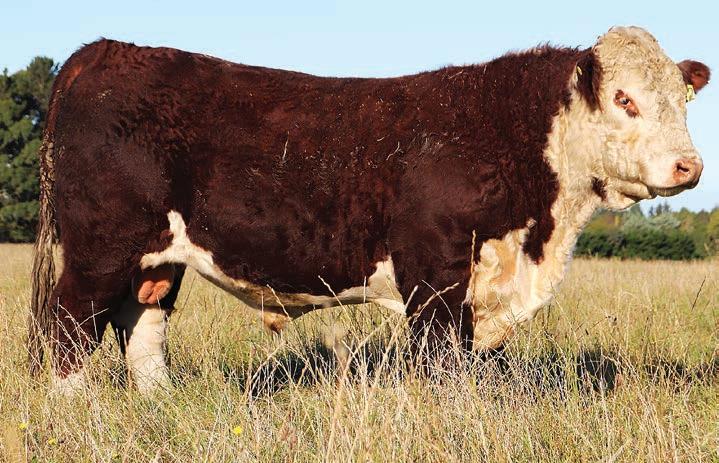
Herefords set high prices singly and together
Livestock
HEREFORDS have been in the limelight for bull prices in the second week of the autumn selling season for two-year-olds, in both high individual prices and average prices.
Limehills Polled Hereford Stud, Roxburgh, sold Lot 14 to Riverlee Herefords, in Rangiwahia, for $50,000, the second top price season-to-date.
Hereford NZ past-president Gray Pannett had a clearance of 51 from 53 and an average price of $14,300, about $4000 ahead of last year.
There were eight stud transfers for Limehills in total, including the highest priced bull. Among them were $40,000 paid by Craigmore, $32,000 by Glenbrae, $25,000 by Otamatea, $23,000 by Twinstar, and $20,000 each by Locharburn and Mahuta.
Koanui Polled Herefords at Havelock North had a complete
clearance of 63 bulls, averaging $15,317, some $3600 ahead of last year.
The top price was $30,000, paid by Otamatea Herefords, Waiuku, for Koanui Skywalker 240248 and other transfers went to Matapouri Polled Herefords, Hikurangi, at $21,000, to Dunmanway Herefords, Hamilton, for $20,000 and to Kaipara Herefords, Te Kopuru, for $17,000.
Waitangi Angus, Bay of Islands, sold 51 out of 53 with a top price of $21,000 for Lot 3, Waitangi V326, paid by Monarae Station, Wairoa. The average price for the sale was $9490.
Stoneburn Hereford and Angus bull sale at Palmerston saw a full clearance of 19 Herefords and 22 Angus, with average prices of $10,971 and $11,200 respectively.
The top price of $19,000 was paid for the Hereford Stoneburn Vortex 240047 by James McKerchar, Merrylea Herefords and top in the Angus line-up was $16,000, paid by Mick O’Connell, McRaes Flat.
On the West Coast at Fox Glacier Flagstaff Hereford sold all 18 bulls, averaging $9694, with a top of $19,000 paid for Flagstaff Quilty V39 by Birchfield Estates, Haupiri. At the same sale Bannockburn Angus sold 10 of 11 and had a top price of $13,000.
Flagstaff vendor Tom Condon said Birchfield is a regular buyer and this year got what is thought to be a record price for calves in April at the Ross saleyards of $2540 a head.
Foulden Hill Hereford, Middlemarch, sold 13 from 16 and averaged $7115 with a top of $12,000.
Riverlee Hereford and Angus in Rangiwahia sold 16 of 21 Herefords, averaging $8594 and a top price of $17,000 for Riverlee Belter 4185 paid by a commercial buyer. It also sold 14 Angus with a top of $13,000 for Riverlee Willy 4118.
Te Taumata Poll Hereford, Masterton, sold all 19 with an average of $13,500 and a top of $26,000 twice.
Rock-End Hereford, Mahoenui, sold 29 out of 33 and averaged $10,017 with a top of $21,000 paid by Twinstar Herefords.
Tarangower Angus, also at Mahoenui, sold 37 of 38 in its 80th sale with a top price of $28,000.
Beresford Simmentals, Owaka, sold all 15 bulls averaging $14,400 with a top of $22,000 paid by Lowridge.
Leafland Simmentals, Mosgiel, sold 14 of 30 averaging $8642 with a top of $15,000 paid twice, one of them by Gold Creek Simmentals, Gisborne.
Hill Valley Simmentals, Roxburgh, sold 15 of 10 with an average of $9400 and a top price of $17,000 paid for HV Night Watchman.
Glenwood Angus, Lawrence,
sold 12 from 12 with an average of $14,000 and a top of $18,000.
At the same sale Loch Lomond South Devons sold 2 from 5, averaging $11,750 with a top of $15,500.
Colvend Angus and Shorthorn, Ongaruei, sold all 19 Angus bulls with a top price of $20,000 made twice, one buyer being Ratanui Angus.
Birchfield is a regular buyer and this year got what is thought to be a record price for calves in April at the Ross saleyards of $2540 a head.
Tom Condon Flagstaff Hereford
The Angus average was $12,450 and the shorthorn average was $6788 for seven sold, with a top of $9000 twice.
Morton Shorthorns, Katikati, sold 10 of 11 with an average $8300 and a top price of $12,500 paid for Lot 1, Orena Shamus.
At the same sale Browns Shorthorns sold its five bulls with an average of $7260 and a top of $10,000.
Longview Beef Shorthorns, Kerikeri, had a full clearance of 20
and an average of $9125 with a top of $14,000.
Kia Toa Charolais, Te Kuiti, sold 28 of 29 offered, averaged $10,660 and had a top price of $20,000 paid by a commercial farmer.
Rimu Charolais, Taumarunui, had a full clearance of 24 with an average price of $11,958 and a top price of $21,000.
Rauriki Charolais, Dannevirke, had a full clearance of 22, averaging $11,215, with a top of $17,000 paid by Allan Hassell, Wairoa. Potawa Simmentals, Piopio, sold 20 of 21 offered with an average of $10,450 and a top of $15,500 paid by Blackridge Simmentals for Potawa Vagabond V56.
Fernvale Genetics, Tapanui, sold 11 of 12 Angus bulls averaging $7136 with a top of $9000. Peters Genetics, Beaumont, sold 18 of 24 with an average of $10,300 and the top price was $19,000 paid for Lot 3, Peters 24104.
Raupuha Shorthorns, Mahoenui, sold 5 of 11 with an average of $8000 and a top of $11,500 for Raupuha Heritage 24038. In the Hauroko Valley Combined sale at Tuatapere, Pikoburn Angus sold 17 out of 17 with a top price of $21,000. Pourakino Downs Herefords sold 14 from 16 with a top price of $21,000 and Waiau Herefords sold 13 of 15 with a top of $9500.
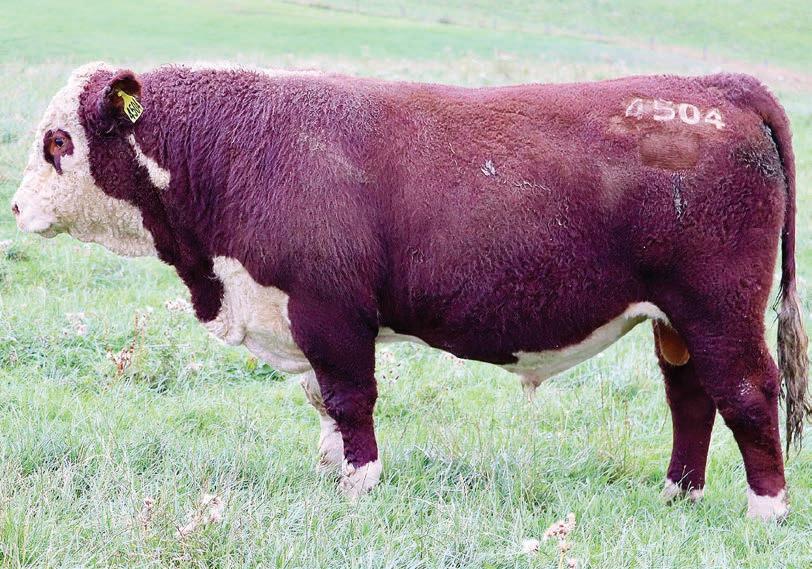
SUPERB: Gray and Robyn Pannett, Limehills Polled Hereford Stud at Roxburgh, sold Limehills 240504 for $50,000.
Hugh Stringleman MARKETS
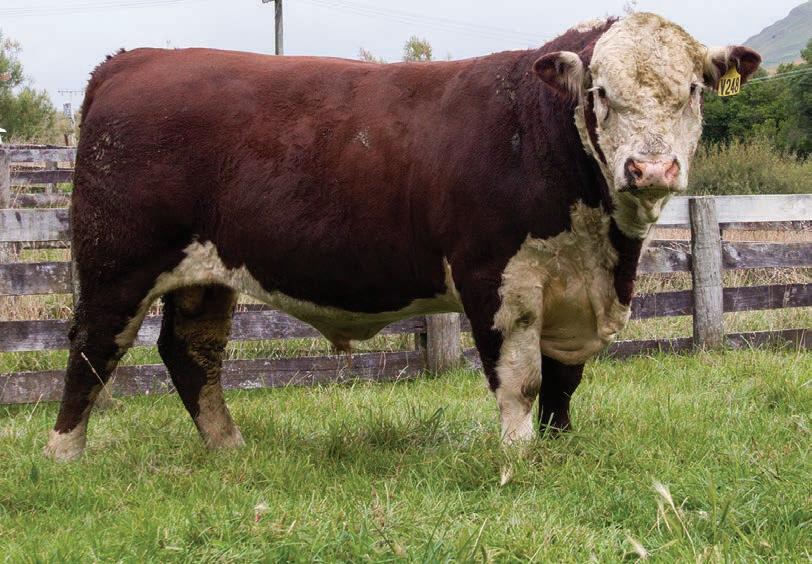
NORTHERNER: Koanui V248 is headed for south Auckland from Hawke’s Bay at a transfer price of $30,000.
Change is coming: Agribusiness Agenda
Gerhard Uys NEWS Agribusiness
CHANGE is inevitable, according to agri leaders surveyed for the 17th annual KPMG Agribusiness Agenda.
The question posed to 136 agri-industry leaders in the 2026 agenda was whether in a changing global food system they were for the status quo or for change.
Most leaders were for change or felt that change was inevitable, and even those who favoured “status quo” said today’s reality involves constant adaptation to tech and a drive to create market opportunities.
Lead agenda author Ian Proudfoot told Farmers Weekly that status change means not just linear change in areas New Zealand is already working in, but also change into adjacencies, “stepping into new areas that come from products we already produce, for instance, stepping into bioeconomy solutions that sit alongside and utilise the co-products that come out of existing production”.
For the 16th consecutive year, world-class biosecurity is the top priority.
“Contributors recognise the range of potential incursion threats we face is increasing, as global connectivity grows and the climate changes,” the agenda said.
The second-ranked priority was to sign high-quality trade agreements, retaining its place in the top three priorities for the eighth consecutive year.
“In a volatile global environment, it is no surprise that industry leaders continue
CHALLENGE: KPMG’s head of agribusiness and lead author of KPMG’s Agribusiness Agenda Ian Proudfoot says change is inevitable but ag leaders are willing to take on the challenge.
to seek maximum market access, enabling them to pivot when the unexpected happens.”
Infrastructure and resilient systems are a major priority with three new priorities entering the top 10 this year. Proudfoot said a consistent message from ag leaders this year is that we need to step up our investment and our development of core infrastructure.
Leaders indicated that they can’t
wait for the government to act, but have to start work and approach the government with solutions of how it can enable change, he said.
Building water storage to manage resources jumped in priority from fifth to third, with leaders recognising water security is a critical constraint on the sector’s future resilience. Several highlighted the current political environment may present a rare opportunity to progress water storage schemes.
Contributors also highlighted the need to treat water infrastructure as a strategic capability underpinning productivity, social licence and diversification.
“Two years ago, nobody was talking about water. This year, it was noted that there are 16 water projects in various stages of development across the country, something that would have been unthinkable just a few years ago.”
The highest new entry was “invest in resilient rural infrastructure”, ranking fourth this year, a jump from 12th position last year, highlighting the importance in operational efficiency and the ability to attract the best talent to the sector.
In this year’s agenda the nature and environment theme had the
highest average priority score, increasing 8.1% on last year. Long-term responses to environmental risk are seen as a key priority.
Contributors also highlighted that customers in premium markets expect products to demonstrate strong environmental credentials.
Proudfoot said two things stood out: that leaders do not believe gene editing rules will be cemented before the election, despite the enabling legislation being on its way to a second reading. And agri-leaders barely mentioned regenerative farming despite international indications that regenerative systems are a priority and create business resilience.
Higher than usual priority scores suggest the majority of the sector’s leaders believe there is much to be done and the window for action is getting shorter as climate, technology, geopolitical, and consumer changes all start to change the world New Zealand trades with.
Leaders were less critical about regulations than in previous years, and pointed out that effective regulation is most likely to emerge through collaboration.
Third-quarter numbers fall favourably for Fonterra
FONTERRA’S year-to-date operating profitability for nine months of trading rose $103 million to $1.8 billion as the contribution from the foodservice division rose dramatically.
FY2026 profit after tax for the nine months to end-April was $1.076bn, down $6m, as the improved operating profit was offset by higher costs in the Mainland Group divestment.
Discontinued operations of $283m include the Mainland Group and the costs of the divestment.
The underlying operating profit from the large ingredients division fell 18%, down $208m to $965m.
In a strong contrast, the foodservice division increased operating profit by 143%, up $304m to $516m.
In-market margins from higher prices, growing volumes and the product mix of milk fats versus protein favoured food
service, Fonterra said. Underlying profit after tax was up $70m to $946m, equivalent to 57c a share.
Underlying performance is continuing operations as if the Mainland transaction had occurred for the full period.
The underlying earnings guidance for a full financial year has been improved to 60-70c a share from 50-65c, because of the confidence from high contract levels and Fonterra’s ability to navigate ongoing supply chain disruption.
Chief executive Richard Allen, in his first results commentary, said the co-operative had delivered another strong result with the highest third-quarter shipping volumes in a decade.
Fonterra has strong foundations and a clear strategy to deliver value from ingredients and food service, he said.
“However, we acknowledge the uncertainty caused by the ongoing conflict in the Middle East.
“Like our farmers, and others around the world, we are
experiencing cost inflation and shipping disruptions.
“We are confident that our deep relationships with customers and logistics partners will continue to help us navigate these challenges.
“As we look ahead to next season, we expect milk collections to remain high, in line with this season.
“Our in-market sales teams are anticipating solid demand from across the regions despite potential volatility, and this is reflected in our opening forecast range of $8 to $11/kg milksolids.”
Hugh Stringleman NEWS Fonterra
A future vision for your farm and family
What does intergenerational success look like for your agribusiness?
“The thought of my children carrying on what I started …or using the capital out of these farms, generations further down - is very satisfying. A really important part for us with the succession planning was having people around us - not only someone who knows the finances but someone the family can trust. ”
Bruce Webb, Grantham Hill Farm, Marlborough
From vision to long-term viability - the Webb family have found success in diversification and transitioning ownership of their farm portfolio to the next generation.
Meat sector visits DC to lobby the lobbyists
Nigel Stirling MARKETS Trade
MEAT industry leaders have been in the United States to discuss possible collaborations with the American sheep lobby at the forefront of calls for higher tariffs on Australian and New Zealand lamb imports.
Beef + Lamb NZ chair Kate Acland and her Meat Industry Association counterpart Nathan Guy travelled to the Denver headquarters of the American Sheep Industry Association (ASI) to meet its new executive director and his leadership team last month.
In October last year the ASI requested the US Trade Representative begin an investigation into Australian and NZ lamb imports.
“The meeting was about taking the opportunity with the new leadership team in place to build a relationship because we have not had much of a relationship with the ASI,” Acland said.
“We have got really strong relationships with a lot of industry organisations across the world and we know that these things crop up from time to time and it is always easier to deal with them when you are friends rather than complete strangers.”
Acland said BLNZ’s work on parasitic drench resistance was of interest to ASI’s leadership and the possibility of a speaker
from NZ attending its next annual conference to speak on the topic was discussed. Working together to promote a World Lamb Day was also talked about.
ASI has previously called for a 21% tariff on Australian and NZ lamb imports – up from 10% currently – just for American producers to maintain their current share of the US market, which dropped nine percentage points between 2020 and 2023 as imports surged. Australia and NZ account for 99% of US lamb imports.
The Denver meeting was a chance to make the case against higher tariffs.
“We reinforced the position that there is not enough sheepmeat in America to satisfy consumption
and we are really concerned if restrictions are put on imports that you will see a decline across the board in sheep meat consumption and it will actually harm their producers,” Acland said.
Acland said the arguments were “politely received” by its new executive director but there were no indications that ASI was ready to back down.
SIGNAL: Nathan Guy says the attendance of a large number of US importers at an event celebrating 100 years of NZ lamb exports was a vote of confidence in NZ lamb which he hoped would be picked up on by members of the Trump administration.
“It was well received but he is just one person in their organisation.”
Acland said she had been able to have an informal meeting with a US Trade Representative staff member in Washington DC and asked about the ASI’s request.
“They did say it was being actively considered,” she said. There was no indication of when an announcement might be made.
Australia, Brazil warned to back off NZ’s beef budget
Nigel
Stirling MARKETS Sheep and beef
MEAT industry leaders are unimpressed with reports that Australia and Brazil have been lobbying for a share of New Zealand’s China beef quota.
At the start of this year China imposed quota restrictions on its six largest beef suppliers after a year-long investigation into the impact imports were having on local producers.
Australia and Brazil were among those to receive allocations below their 2024 exports to China.
Australia has already used 80% of its 205,000-tonne quota for 2026 and is expected to fill the rest of its allocation in the next few weeks.
Brazil is understood to be not far behind in exhausting its own 1.106 million tonne quota.
Beef shipped outside of the quota will incur a 55% tariff.
Australian media are now reporting that Australia and Brazil’s trade ministers were in China last week pushing for increases in their allocations.
Chinese government statistics indicated Argentina, Uruguay and New Zealand would “not go close” to using their 2026 allocation,
one publication said. Australia and Brazil were reported to be pushing for unused quota from these countries to be reallocated to them.
Beef + Lamb NZ chair Kate Acland said she expects the red meat sector would oppose any reallocation of unused quota.
Save time and save money with Bionic® Plus - the 100 Day* controlled release combination anthelmintic with minerals capsule for sheep.
Worm control with Bionic® Plus can reduce drench inputs1, aid in control of dags and associated flystrike2, and slow the development of resistance.
Farmers and veterinarians can be confident when they choose Bionic® Plus.
Tech knits NZ wool into market’s top end
Neal Wallace NEWS Food and fibre
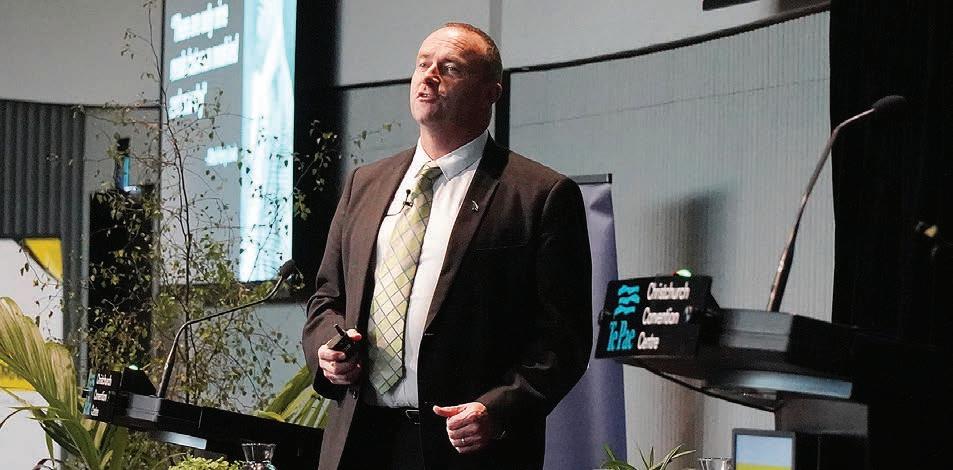
NEW technology has made New Zealand manufacturing of highend wool garments viable once again, says Norsewear managing director Tim Deane.
He told the E Tipu conference in Christchurch that new knitting technology has combined with a shift in consumer demand for products that are authentic, of high quality, value for money, long lasting and locally made.
“New Zealand is in the box seat,” he said.
However, to use that opportunity requires a mindset change to target the manufacture of highend branded apparel products. Advisers were less than confident when he consulted them about his plans to buy Norsewear.
Where they saw risk, Deane said, he saw potential to manufacture premium branded apparel that meets consumer expectations.
He said there was similar reticence from advisers when the pioneering founders of the Cloudy Bay wine brand were considering planting sauvignon blanc grapes in Marlborough in the 1980s.
They largely ignored those warnings and created one of NZ’s first internationally recognised brands.
Most NZ apparel manufacturing left NZ in the 1980s and ’90s due to high labour costs, but in recent years that equation has changed due to growing demand for high-end, branded, natural and sustainable products.
Labour costs are a smaller proportion of the costs than they use to be, so if we can get everything else right, then we can compete.
Deane Norsewear
New computerised 3D knitting machines can produce a jersey with the only human intervention being the sewing in of the zip.
“Labour costs are a smaller proportion of the costs than they use to be, so if we can get everything else right, then we can compete,” said Deane.
That means capturing a greater share of the margins, and requires targeting high-end apparel.
He gave what he called a simplistic example of why he was targeting the top end of the market.
A kilogram of wool valued at $1 clean equivalent when exported would be worth $1.50/kg when made into tops, $3/kg when converted to fine worsted spun yarn and $7.50/kg when made into a garment.
That garment would be imported for $18.50/kg, and the consumer will ultimately pay $37/kg plus GST for a product.
“All the margin is made by the brand and that inevitably ends up overseas because 80% of woollen apparel sold in NZ is imported,” said Deane.
Much of NZ’s wool is blended with lower-quality and cheaper fibre to lower the overall cost, which he said compromises the attributes of NZ wool, its whiteness, strength, and low vegetable matter.
NZ also has an enviable story and in Norsewear’s case a 60-year heritage dating back to Sir Edmund Hillary wearing its products during his mountaineering exploits.
Deane said the wool sector needs to collaborate more to use its opportunities, drawing comparisons with Scandinavian
BOOST: New and improved pasture species are needed to boost production, says Dr John Roche, the prime minister’s chief science adviser.
Different food production future beckons: Roche
PROCRASTINATION is no longer an option for New Zealand’s primary sector.
A new generation of consumer is emerging with different dining habits and expectations, and they want their food in different formats, the 240 people attending the E Tipu conference were told.
Dr John Roche, the prime minister’s chief science adviser, said while he is optimistic about the sector’s future, that future will be quite different to today.
He cited three challenges for food producers: how to feed a projected world population of between 9.5 and 11 billion by 2050 with less land; climate change; and satisfying consumer expectations.
“Every day there are challenges, it is about how we turn those to our advantage,” he said.
To feed the projected 2050 world population, between now and then global food production will need to increase by more than has been produced in the past 2000 years.
Protein rather than calories will dominate diets, with the elderly seeking wellness and health and younger people to enhance their active lifestyle.
Demand will come from Africa, India and southeast Asia, areas where people still do not consume adequate levels of protein, he said.
The way people eat is changing and their understanding of how that food is produced will lessen, issues Roche said do not get the attention they deserve.
From 1970 to 1999 the drive was for convenient food, readymade meals, take aways and heavily processed food, which was found to be damaging to people’s health.
That era is over, said Roche, and the shift now is towards food that
VIABLE: Manufacturing technology means NZ apparel manufacturing is viable for high-end products, says Norsewear managing director Tim Deane.
clothing companies working with governments to promote their outdoor clothing as the world’s best.
He gave an example closer to home of 12 NZ winemakers collaborating for mutual benefit.
He collaborates with PGG
Ride
offers health and wellbeing but is also convenient.
He cited another challenge – NZ’s pasture productivity plateauing due to an over-reliance on ryegrass and white clover.
He said dry matter production on Waikato dairy farms has increased 4.5% in the past 30 years but milk production lifted only 1%.
A substantial change is needed to lift production and that will come from new technology, potentially including genetic modification.
NZ’s competitors are benefiting from using genetically modified corn, lucerne, soy and canola. Genetic technology is moving rapidly, and significant production gains are possible, but NZ regulations need to change to enable these hypotheses to be tested.
“I don’t believe we open the gate and let genetically modified organisms run free across the country.”
Wrightson to source wool for Norsewear direct from growers, for which they receive $18.50 clean for the 23-micron spec and $10 clean for the 27-28 micron spec.
“There is no auction, no middlemen, no blending, it is fully traceable and of excellent quality.”
waves of change, don’t resist them
Bryan Gibson NEWS Food and fibre
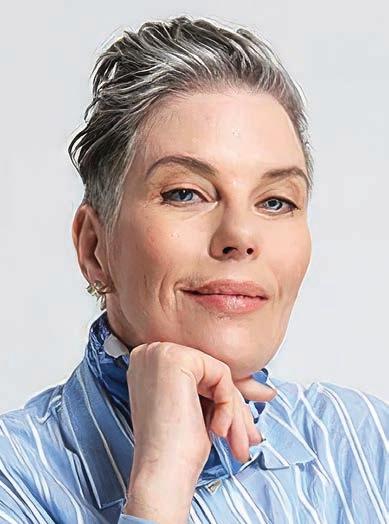
FASHION icon Karen Walker has urged the food and fibre sector to ride the waves of change, rather than try to withstand them.
Walker was a keynote speaker at E Tipu, the NZ Future Food and Fibre Summit in Christchurch.
She told the summit that her success could be put down to a focus on two things – change and culture.
Having started her business in 1988, Walker said, she was surrounded by businesses caught up in the wave of change fuelled by the economic reforms of the fourth Labour government.
“Starting my business at a time when established businesses
were having to do a hard reset or fail, meant that the concept of changing before you’re forced to change was baked into the cake for me from the start,” she said.
“I saw the heartbreak around me as decades-old, generationsold companies fell over. And I learned that change is something to step into willingly, even when it’s hard.”
Those waves have continued to arrive, whether it be the digital transformation of retail, social media, or the pandemic.
“I see my job as a business owner, and the custodian of a brand, is to question the status quo, to challenge myself before the market does it for me, to walk into change willingly, and to know that change happens whether I want it to or not.”
But Walker said the one constant in her career is the importance of culture.
“It’s product, it’s voice, it’s a way of storytelling. It’s the way [a business] treats its customers and its team. And authentic culture takes a long time to create.”
Walker keeps a piece of coral on her desk at home, and said it is a great way to conceptualise team culture, especially how fragile it is.
Like coral, culture is the result of millions of small things that add up over time, but are easy to destroy.
“Every small thing you do, task you complete, every lesson you learn is making a difference. Adding to the coral if you get it right, snapping bits off if you get it wrong.”
Tim
RIDE THE WAVE: Fashion designer Karen Walker says the keys to her business success are focusing on change and culture.
Neal Wallace NEWS Agriculture
Fortune favours bolder boards on innovation
Richard Rennie NEWS Agri-business
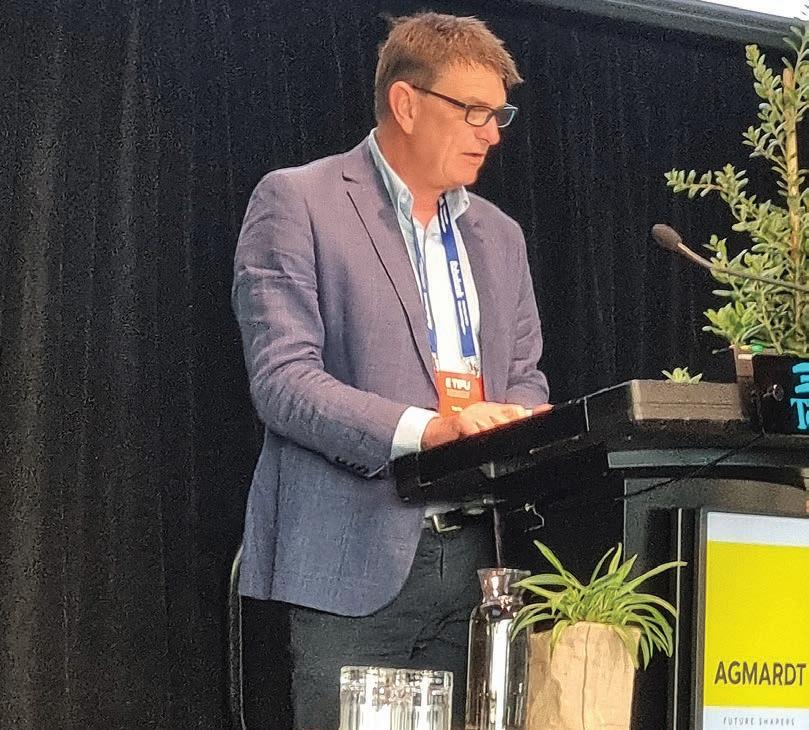
WHEN it comes to agri-businesses taking risks, fortune favours the brave who allocate and protect funds for pure, unproven innovation, says Fonterra farmerdirector Alison Watters.
Watters addressed delegates at this year’s E Tipu conference in Christchurch on the need for boards to clearly differentiate, and ring-fence, funds for innovation and avoid the tendency to obsess on the downside of innovation failure.
“Those boards that self-censure on innovation will see their company decline over time.”
One of the key questions boards have to ask themselves is what percentage of their innovation portfolio they are prepared to lose entirely.
“If the answer is ‘zero’ you don’t have an innovation portfolio, you have a project list.”
In setting the pace of innovation for a company, she pointed to
three “speeds” of innovation to consider.
The majority, about 70% of the innovation spend, is on relatively straightforward “optimisation” innovation spend. This is for production improvements and processes, easily measured through efficiency metrics.
About 20% is a spend on “extend” innovation.
The board has to protect that 10% from the quarterly P and L discussion, and it takes a lot of courage.
Alison Watters Fonterra
In the case of Fonterra this would include development on functional ingredients, new applications for products, and label reformulations.
The final 10% of innovation spend is a small but vital “explore” play on the “bold bets”, the bluesky-type work that in the dairy sector could include novel protein,
bioactives, digital services and solutions to the sector’s “wicked problems”.
“The board has to protect that 10% from the quarterly P and L discussion, and it takes a lot of courage. If it sits next to a factory capital expense request, it will always lose.”
She said during her time at Fonterra the co-op had fallen closely into these ratios, at about 50:30:20.
She pointed to companies like Danish Novonesis, a dairy and food biosolutions company that spends 11% of its revenue on innovation, backed by a 2000-strong team, and nutrient solutions company DSMFirmenich spending 8%.
Top ingredients players typically invest more into R&D than the consumer brands they supply.
“Most companies when they audit find they are in the ‘optimise’ mode of innovation spend.”
An integral part of Fonterra’s innovation strategy that is proving its worth are the co-op’s six regional development centres that work closely on a B2B basis with client companies, helping formulate ingredient solutions.
Breakthrough innovation spend includes working in partnerships with international research groups on industry challenges.
This also include the AgriZero initiative, a world first publicprivate venture to reduce animal
PROTECT: Fonterra farmer-director
Alison Watters says boards need courage to protect a company’s intention to innovate at the very edges of technology and development.
greenhouse gas emissions. Watters celebrated the fact NZ’s total R&D investment as a nation has increased by 21% since 2022, but lamented that it still sits at only just over half the OECD average of 2.6% of GDP.
Nick Beeby appointed MIA chief executive
THE Meat Industry Association has appointed Nick Beeby chief executive.
MIA independent chair Nathan Guy said Beeby brings significant sector expertise and leadership to the role.
“His existing chief executive experience in the red meat sector makes this appointment a positive step up.
“The role attracted strong interest, with a high-calibre field of applicants. Nick stood out
Every
day counts.
for his experience in strategy, market development, quota administration and industry assurance.
“He understands the challenges and opportunities facing processors and exporters and will provide clear leadership for the association and its members.”
Beeby is currently chief executive of the New Zealand Meat Board, a role he was appointed to in January 2025. He previously served as general
manager, market development at Beef + Lamb New Zealand. He is also a past chair of New Zealand Farm Assurance
Nick’s knowledge of the sector will be valuable as MIA continues its work on behalf of members.
Nathan Guy Meat Industry Association
Incorporated, which oversees the New Zealand Farm Assurance programmes.
Guy said the meat industry remains an important contributor to New Zealand’s economy and regional communities.
“Nick’s knowledge of the sector will be valuable as MIA continues its work on behalf of members.”
Beeby will join MIA on July 1, allowing for an orderly transition from his current responsibilities at the New Zealand Meat Board.
“The impact of condition loss on cycling rates and days to first heat is critical to watch with the alerts and thresholds you can set, Herd-i brings that data front of mind for farmers every single day of the week."
Krispin
Kannan
-
Veterinarian, Farmfirst Veterinar y
EXPERIENCE: Nick Beeby is currently chief executive of the New Zealand Meat Board and previously served as general manager, market development at Beef + Lamb New Zealand.
Zespri growers pluck record results
Staff reporter NEWS Horticulture
CONTINUED global demand for high-quality kiwifruit has led to a record 2025-2026 financial result for Zespri.
The kiwifruit marketer’s global fruit sales revenue reached a record $5.9 billion from sales of a record 248.1 million trays, up from $5bn and 220.9 million trays the previous year.
This has supported direct returns to the New Zealand industry reaching a record $3.56bn for the 2025 season, with total fruit and service payments spread across Bay of Plenty, Northland, the east coast, Nelson and Waikato. This is up from $3.04bn in 2024.
We’re looking forward to sharing our fruit with even more consumers in the year ahead.
Jason
Te Brake Zespri
Per-hectare returns reached record levels across all categories, with average final pertray returns exceeding Zespri’s February forecast following a positive finish to sales programmes.
Zespri’s net profit after tax was $280.1million, up from $155.2m in 20242025, and reflecting larger fruit volumes and increased revenue from licence release.
Excluding licence revenue, Zespri recorded its highest ever profit of $123.8m, up from $79.8m, driven by increased supply, market performance and a focus on operating efficiencies.
The expected total net dividend is $1.39 per share.
Zespri CEO Jason Te Brake said the results are something the industry can be proud of after delivering a record crop in a much more challenging and complex environment.
“Record per-hectare returns and our improved per tray returns reflect improved yields and our ability to secure strong value for growers, shareholders and our communities through the strength of our brand and supply chain.
“While we experienced pressure in certain markets, this was offset by our strong performance in key regions such as Europe and North America.”
Zespri’s non-New Zealand supply also performed well, achieving sales of $875.9m from 32.3 million trays, compared with $652.4m and 26.5 million trays in 2024-2025.
The government’s recent announcement about proposed stronger PVR protections will also support the industry’s momentum, he said.
“The proposals include extending the PVR ownership period and reinstating provisional protection for new varieties, with this helping protect the premium our licensed varieties demand in market, securing strong value for longer.
“This will enable our continued investment in creating the product portfolio of the future, which is a key driver of our 2035 strategy.”
Looking ahead to the current 20262027 season, the industry is making good progress in completing this season’s harvest, with sales off to a strong start across our key markets, he said.
“While the global environment remains complex, demand is positive and we’re seeing strong sales in Europe and North America, with Japan also performing well, and we’re looking forward to sharing our fruit with even more consumers in the year ahead.”
Fonterra signs global regenerative ag DOI
Gerhard Uys NEWS Regen ag
FONTERRA and other global food industry heavyweights have signed a declaration of intent to advance regenerative agriculture.
The declaration of intent was put forth by the Sustainable Agriculture Initiative Platform (SAI Platform) under its Regenerating Together Programme, which aims to advance regenerative ag globally.
The SAI Platform is a global, non-profit organisation advocating for the food and drink industry’s transition to sustainable and regenerative agriculture. It has more than 190 members spanning the value chain, from farmers to retailers.
Other signatories include Unilever, Mondelez, Asahi, Danone, McCain and Lely. Fonterra director of sustainability Charlotte Rutherford said the co-op has been involved with the SAI Platform since 2024.
Rutherford said signing this declaration shows Fonterra’s support for the framework but does not require anything extra of farmer owners.
She said there is no universal definition of regenerative agriculture but Fonterra aligns with the SAI Platform Regenerating
Together framework, which takes a wholeof-system approach focused on improving ecosystem outcomes over time.
Fonterra has combined on-farm practices, data and continuous improvement to demonstrate progress across focus areas; soil, water, biodiversity and animals.
Farmers will not have to change the way they produce milk, she said.
“Many regenerative practices are already inherent in New Zealand’s pasture-based farming system. Our approach is about building on what farmers already do, rather than requiring a fundamental shift.
“Over time, there will continue to be opportunities for improvement, but this is an evolution rather than a step change.
“By anchoring this approach to the SAI Platform it ensures consistency with global partners and customers.
“This is about continuing to track and improve what is already happening on farm.”
Fonterra will use existing tools such as Farm Environment Plans, on-farm data collection, and advisory support.
“With more than a decade of farm data, we can track performance over time, provide insights to farmers, and demonstrate progress to customers. No new standalone system is required,” Rutherford said.
Fuel tanks have been topped up, at top dollar
Bryan Gibson NEWS Energy
I‘T’S fine, we’ve got it.”
That was Ministry for Primary Industries director-general Ray Smith’s message for delegates at the Out the Gate conference in Christchurch.
Smith has been seconded to lead the government’s fuel response, and he said that while fuel and fertiliser will be expensive, supplies should not run out. And, if restrictions have to be
imposed, food producers will be looked upon more favourably than other sectors of the economy.
“If you’re in food ... we recognise that it’s a biological system. You can’t just turn it off, [because] you run into difficulty, or you affect the next season. It’s not a system that you can stop easily. And the
It’s not a system that you can stop easily.
Ray Smith Ministry for Primary Industries
world depends on it, as we do here in New Zealand. That’s been prioritised.”
Fertiliser will remain pricey for some time, as will plastic products made from petrochemicals.
Smith said the war in Iran has compelled oil refiners to diversify their sources of crude oil, and even if the conflict ends they will retain that diversity, which would push up prices.
On a positive note, Smith said the fuel crisis is having a big impact on the United States’ cattle herd, which is good news for farmers in New Zealand.
INVEST and forget. That was the advice for farmers considering off-farm investment at the Out the Gate conference.
Speaking during a breakout session, Craigs Investment Partners’ Phil Kinney and Michelle Perkins highlighted the importance of diversification, liquidity and long-term investing.
Kinney, an investment adviser, said while the farm is often a farmer’s strongest asset, it is also tied to a single sector, geography and an economic cycle.
He said investing beyond the farm gate can help create greater flexibility, resilience and future options.
“We’re talking about something that’s becoming a big part of the conversation for farming families, and it’s how to grow wealth outside the farm gate,” he said.
Perkins, director of wealth
research at Craigs Investment Partners, said many farmers still have most of their wealth concentrated in a small number of farms within the same industry and location.
Investing off farm helps diversify risk by creating income streams less exposed to factors
such as weather, regulation, commodity prices and disease, she said.
Another benefit is liquidity. Unlike land, which can take time to sell, shares can typically be converted into cash within a few days if needed.
Perkins said global markets are
currently experiencing significant disruption and uncertainty, much of it driven by geopolitical tensions involving the United States.
“We are seeing a lot of disruption or noise, and a lot of that is coming from the US ... and this is creating a lot of uncertainty.”
Diversified investment portfolios can also support succession planning by creating wealth outside the farm business.
“Having an investment portfolio off farm helps support more equitable succession outcomes ... without requiring the sale of land or placing an excessive debt burden on the farm successor,” said Perkins.
Beyond diversification and succession planning, off-farm investing can also help protect against inflation and harness the benefits of compounding returns.
Growth assets such as shares tend to deliver earnings growth over time, helping preserve purchasing power better than
Having an investment portfolio off farm helps support more equitable succession outcomes.
term deposits, which historically have struggled to outperform inflation after tax.
Perkins said building wealth off farm does not require a large upfront investment.
“The earlier you start, the longer you allow compounding to work its magic,” she said.
She said one of the key messages for aspiring investors is to “get invested, and stay invested despite the noise that you might be hearing in the news”.
Kinney added that investing starts with taking the first step, no matter how small.
“Start small, get comfortable with it, and ensure it fits in with your farming objectives,” he said.
DON’T PANIC: Ministry for Primary Industries director-general Ray Smith says it is unlikely we will see fuel restrictions, but high prices will be here for quite a while.
Carmelita Mentor-Fredericks MARKETS Investment
OPTIONS: Farmers at the Out the Gate conference heard how off-farm investing can support diversification, liquidity and succession planning.
Michelle Perkins Craigs Investment Partners
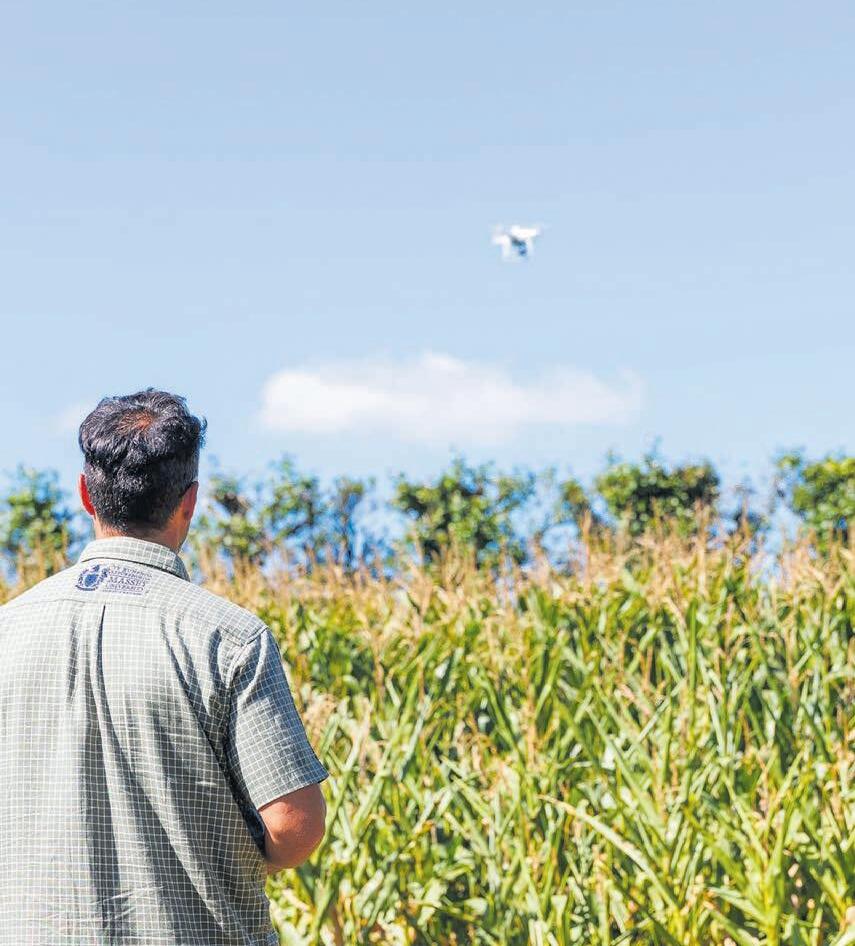
MPI at Fieldays: From the Farm to the Future
Innovation, science and tools to boost productivity and resilience will be at the heart of the Ministry for Primary Industries’ presence at Fieldays this year.
MPI staff, including Director-General Ray Smith, will be on site to meet farmers, growers and the general public, to share information and raise awareness about our work in agriculture, biosecurity, forestry, food safety, primary industries careers, and helping the sector reach global markets.
MPI’s Fieldays presence will reflect a sector working collectively toward a productive, innovative and sustainable future - grounded on the farm and focused on seizing opportunities and tackling challenges.
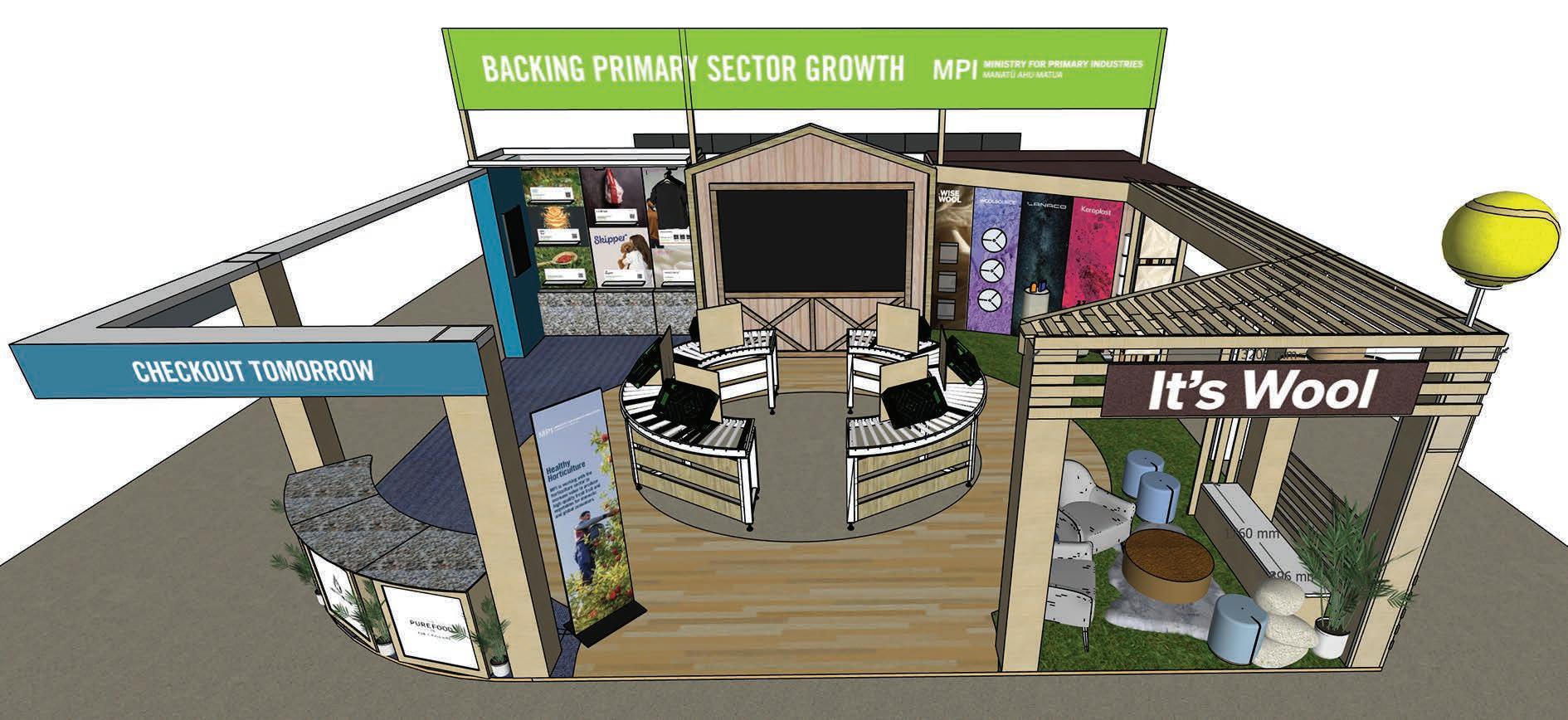
MPI MAIN SITE
The main MPI site will focus on our mission to grow the value of New Zealand’s food and fibre sector, under the theme ‘From the Farm to the Future’. MPI will demonstrate the support offered to sectors to achieve growth while simultaneously ensuring that New Zealand’s products are trusted domestically and globally.
The site will have three focus areashorticulture, wool, and innovative products. Central to the site will be an interactive showcase describing how New Zealand’s high-quality fresh produce sector is driven by premium, safe, and sustainable fruit and vegetable production.
We will demonstrate how MPI is working with the sector to increase value further through tech innovation and improvements to production processes, to benefit domestic and global consumers.
At least eight projects will have products on display, some with sampling. The products –their development part-funded by the Ministry for Primary Industries – include full-cream sheep milk powder, protein products, a plantbased coffee alternative, meat, and pet food.
A wool section will feature pigment powder, toys, carpets, insulation, furniture and nextgeneration wool applications.
WHERE: Main Agriculture Pavilion, site PD44.
SCIENCE FOR FARMERS SITE
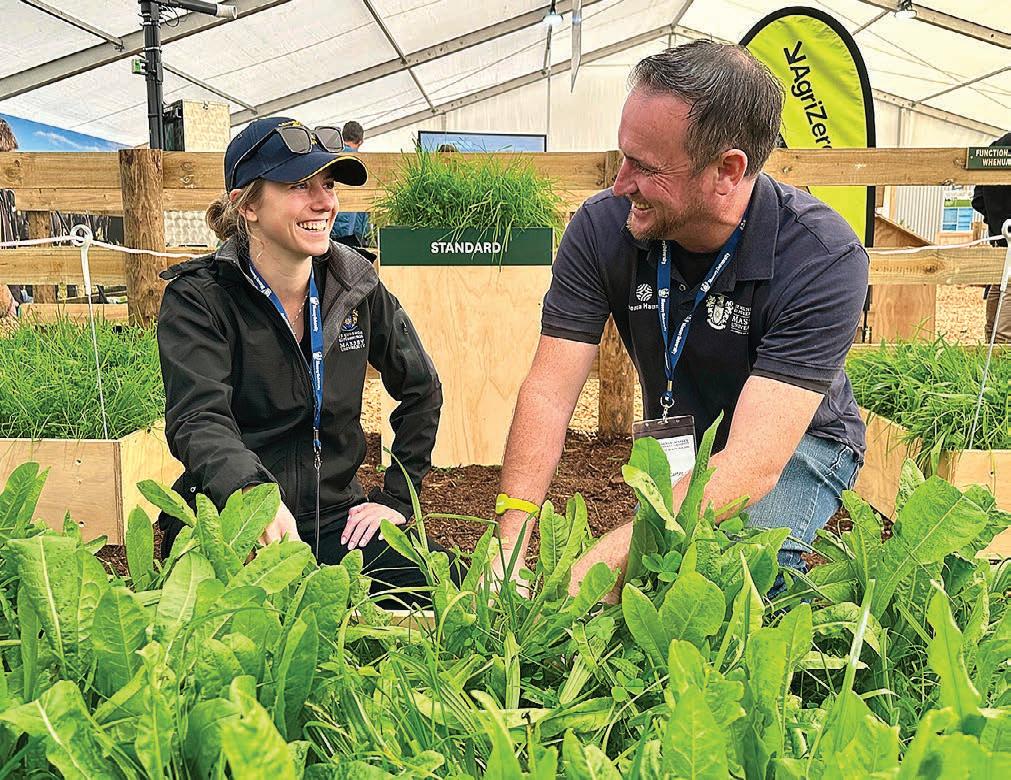
This year’s Science for Farmers site will focus on practical tools, technology and farm systems that support farmers and growers to reduce greenhouse gas emissions while maintaining or improving profitability and business resilience.
Four interactive sections will cover future genetics, climate resilient pastures, data driven farm management, water and nutrient management, and the future of agricultural extension.
Section one will focus on genetic technologies to improve on-farm efficiency while also boosting future research, investment and innovation - led by AgriZeroNZ, DairyNZ, Pāmu, Ag Emissions Centre, LIC and the New Zealand Institute for Bioeconomy Science.
• Section two will focus on management for future climate and diverse pastures – led by DairyNZ, Pāmu, Massey University, LIC and the New Zealand Institute for Bioeconomy Science.
Section three focuses on practical tools available to improve on-farm performance
through data, decision and the future of agricultural extension - led by On Farm Support, Pāmu and DairyNZ.
• Section four focuses on mitigations for water, reducing contaminant loads and management of nutrient flows, while also showcasing environmental performance improvements, including the implementation of wetlands, and riparian zones – led by Massey University, DairyNZ and On Farm Support.
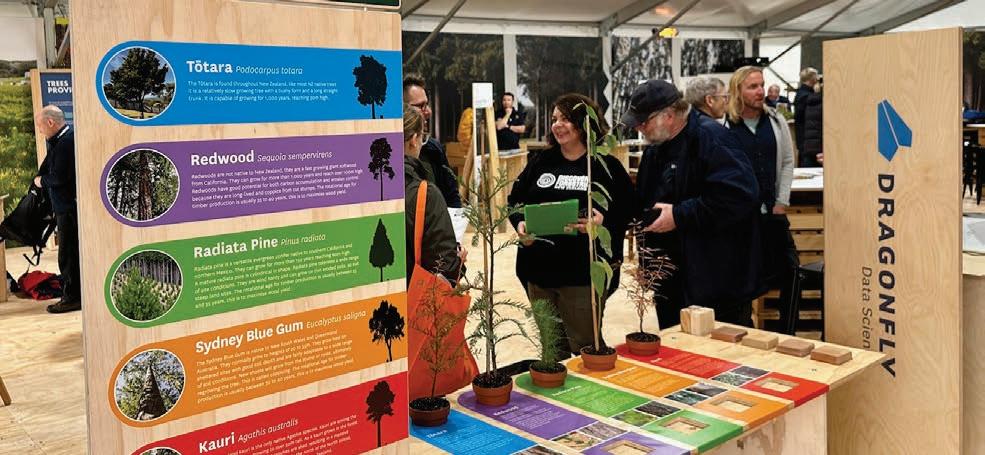
Forestry hub to showcase value of trees and timber
Marking its fifth time at Fieldays, the Forestry Hub brings together Te Uru Rākau – New Zealand Forest Service and organisations from across the forestry supply chain to showcase the important and innovative work being done in the forestry and wood processing sector. The hub will demonstrate the benefits of building with timber, highlight the sector’s benefits to New Zealand’s people, products,
economy and environment, and tell the story ‘from seedling to harvest’ through interactive displays and activities hosted by sector representatives.
It will also feature talks, panel discussions and presentations, as well as the 2026 Growing Native Forest Champions awards ceremony that celebrates leadership and innovation within the native forestry sector. WHERE: G80
These innovations are designed to help farmers and growers boost profitability and business resilience, as well as environmental stewardship.
The Science for Farmers site will also host a series of free presentations from industry experts, aiming to bridge the gap between cutting-edge scientific research and practical on-farm applications.
WHERE: Site E38, on the corner of E Street and M Road.
EXPORTER HELP HUB
This year, New Zealand Trade and Enterprise (NZTE) will join forces with MPI’s Exporter Help team to provide practical advice and support to small- and medium-sized food and fibre businesses looking to export their products.
WHERE: Main Agriculture Pavillon, site PC47
CAREERS AND EDUCATION HUB
The Fieldays Careers Hub connects people throughout New Zealand with rewarding jobs, training and careers in our food and fibre sector, and gives people considering working in the sector a taste of the range of roles available.
Our presence in the hub will focus on frontline roles at MPI, such as veterinarians, scientists, quarantine officers and fisheries officers.
WHERE: Site E30.
The main MPI site will focus on our mission to grow the value of New Zealand’s food and fibre sector, under the theme ‘From the Farm to the Future’.
The forestry hub will showcase innovation in the forestry and wood processing sector.
This year’s Science for Farmers site will focus on practical tools, technology and farm systems that support farmers and growers.
Looking for sheep and beef’s next growth spurt
Annette Scott NEWS Sheep and beef
IT’S an exciting time to be a sheep and beef farmer, industry leader Kate Acland told the 750 attendees at the Out the Gate conference, but she cautioned them to keep a finger on the pulse.
“We also need to make sure that we’re thinking about what comes next.
“Where will the next fundamental productivity shift come from, and how do we ensure that we’re investing today for a better future tomorrow?”
She said Beef + Lamb New Zealand, which Acland chairs, “has a vision for our sector’s growth, one that looks around how we will grow sheep and beef in this country”.
It is “a vision where we’re using science and technology to grow and harvest more grass from our hill country, while we’re using genomics and genetics to tackle our challenges and fasttrack our efficiency gains, and data and insights with the help of artificial intelligence to put world leading decision-making
tools in the hands of farmers.
“A vision where the best and brightest young people are excited about the opportunities that agriculture provides.”
The fundamentals line up with the industry well placed to seize opportunities through its grassbased natural systems.
Acland said BLNZ will soon be releasing an independent report on the economic and social contribution of the red meat sector and “it will reinforce the significant impact it has on the NZ economy”.
The best days are ahead of us as a sheep industry, but we have to go and get them.
Bonnie Skinner Sheep Producers
Australia
“Without giving everything away now, I will tell you this: pastoral farming is the lifeblood of our economy. When our sector does well, the rest of the NZ economy does well.”
Farmers are major employers and spenders.
“In the 2025-2026 season our economic service estimates that
sheep and beef farmers generated $8 billion of value on farm, up nearly $2bn on the previousyear.
“We know that sheep and beef farmers spend about 90% of what they earn in their local communities, that’s an average $16 million a day on goods and services, mostly in regional economies, which flows through wider NZ.
“It feels like the stars have aligned and the opportunities are there, but it’s our job to take them.
“I’m really challenging you and encouraging you to think about, what are we doing next?
In a perspective from across the Tasman, Sheep Producers Australia chief executive Bonnie Skinner welcomed the potential for NZ and Australia “to learn from each other and grow the sheepmeat sector globally”.
“We are an industry that bends, but doesn’t break, we face pressure from every direction, but every time we are subject to pressure we emerge stronger.”
Skinner questioned, “What are the enablers? What are the constraints?”
“Pressure, rethink, reshape, re-emerge; we are the enablers adapting to what the world wants,
always trying to understand about what the next increment of challenge will be or where it will come from – drought, losing acreage to cropping, smaller flocks, heavier carcases.”
Beyond competition there are shared challenges between NZ and Australia.
“Yes, we compete – on quality, genetics, market share; that competition makes both of us better.”
But Skinner said on the big structural questions, there is more to be gained from standing together, citing sustainability and environmental credentialling, biosecurity, consumer trust in sheepmeat as a category, and geopolitical headwinds.
“The future belongs to producers who are aware of their numbers, costs, their performance, what the markets and customers need; adaptive and willing to change because the evidence says it’s time; agile to move, learn and adapt quickly in changing conditions.
“We are competitors and we are allies; ultimately, we all want the same things.
“We want profitable farms, healthy animals, sustainable landscapes and products that the world’s consumers continue to choose, trust and value in a nutshell.
“The best days are ahead of us as a sheep industry, but we have to go and get them.”
Sheep genetics seal top national science award
Gerhard Uys TECHNOLOGY Genetics
GENOMNZ has been crowned Supreme Winner of the Science New Zealand Awards.
GenomNZ is a specialised commercial genotyping service and subsidiary of the Bioeconomy Science Institute. The company also walked away as winner of the Success in Innovation / Commercialisation category.
New Zealand’s national sheep flock is roughly half what it was in 1990, but the country still produces similar volumes of lamb.
Decades of genetic improvement programmes by GenomNZ mean production per ewe has increased 114% since 1990.
This year’s Science New Zealand Awards honoured 25 finalists across five award categories.
The other winners were;
• The Invasive Pneumococcal
New Zealand’s national sheep flock is roughly half what it was in 1990, but the country still produces similar volumes of lamb.
Disease Team from PHF Science won the Collaboration for Impact award, for work on invasive pneumococcal disease in under-
fives, and contributions to a national immunisation schedule that cut childhood infections by more than half.
• The Individual / Lifetime Achievement Award went to Diana Kappatos from PHF Science for 50 years in forensic toxicology and work on a national drug surveillance infrastructure.
• Dr Georgia Grant, from Earth Sciences New Zealand, walked away with the Early Career Researcher category for her
work to understand sea level change.
• The Maiangi Taiao partnership with the Ngāti Kuri Trust Board took top spot in the Te Tohu Tūhura, Charter a Course for Impact through Partnering with Māori category. The Bioeconomy Science Institute Maiangi Taiao and the Ngāti Kuri Trust Board have maintained a 50-year partnership that has brought kaikōmako, one of the world’s rarest trees, back from the brink.
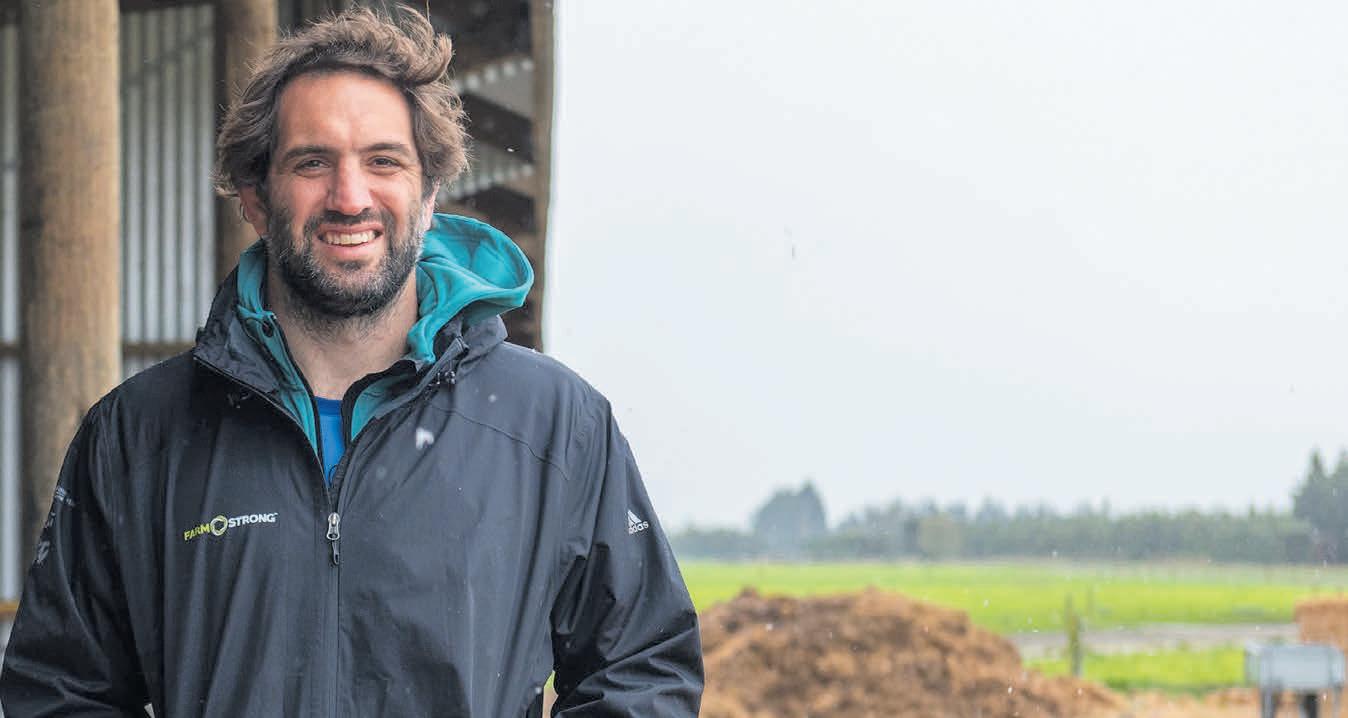
Sam Whitelock Farmstrong Ambassador
UNITED: Bonnie Skinner says on the big structural questions, there is more to be gained from standing together.
DCANZ flags devil in India dairy detail
TNigel Stirling MARKETS Dairy
HE dairy industry has highlighted gaps in a side agreement designed to provide New Zealand negotiators with another shot at improving disappointing market access outcomes for the sector from the India free trade agreement.
The side agreement allows tariff negotiations on certain dairy products to be resumed should India reduce tariffs on these products in future trade agreements with dairy producing countries that are “comparable” to NZ.
However, negotiations cannot be reopened for major product categories including infant formula, casein and highvalue whey products, according to submissions by the Dairy Companies Association of NZ (DCANZ) to the Parliamentary
select committee scrutinising the FTA.
DCANZ noted these are all products India has either scrapped or significantly reduced tariffs on in recent trade agreements with Australia and the United Kingdom.
“It will not offer a mechanism for NZ to negotiate to remain on a level playing field with other trade partners for products India has already shown a willingness to liberalise for other exporters,” its submission said.
Furthermore a renegotiation on dairy tariffs with NZ can only be triggered where India concludes a full trade agreement with another dairy producing country as recognised under World Trade Organisation rules.
“We note that current bilateral trade agreements being pursued by many WTO members, most notably the United States, often cover far more limited sectoral interests,” DCANZ said.
“We therefore believe this side letter will also exclude
reciprocal trade or managed trade agreements which have become preferred by the US and other major economies recently.”
DCANZ also notes uncertainty
Grass-sourced cream an expo highlight
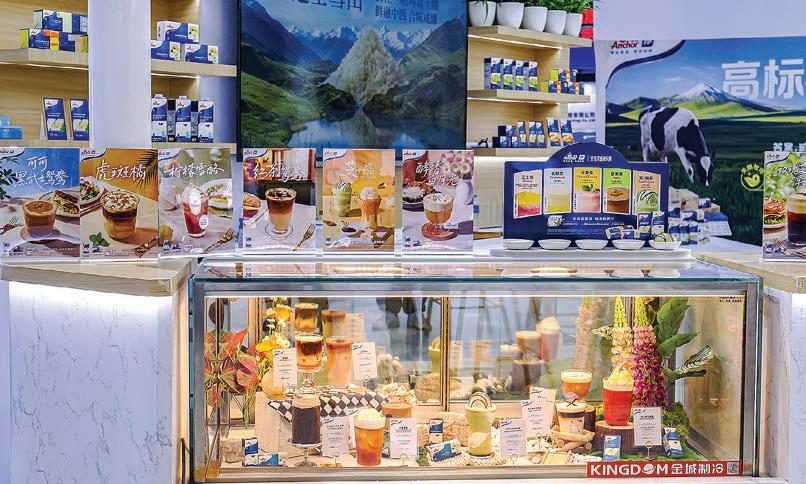
BAKERY China, the largest bakery and patisserie expo in the world, is the stage for Fonterra’s launch of the first officially certified Fernmark “grass-fed” dairy product, a high-quality bakery cream.
The co-operative’s growing food service presence in China persuaded it to retain the Anchor brand in the co-op’s business portfolio, while selling it off in all other markets.
Fonterra’s global food service president Teh-han Chow said the cream has been developed to specifically meet the needs of professional bakers to deliver a light, smooth texture with consistent performance in mixing
and baking procedures.
Applications include using it for cake fillings, soft bakery products and supporting whipping, piping and detailed decoration, an increasingly in-demand requirement in China’s highly competitive bakery sector.
Last November a formal ceremony including Chinese officials, Fonterra executives and officials from the Ministry for Primary Industries signed off the “grass-fed” certification.
The Chinese government recognised grass-fed dairy products as those sourced from cows that on average have at least 90% of their diet from grass-fed feed types and graze outdoors for at least 340 days a year.
The Chinese pastry and bakery market has experienced significant growth in the past three years. The
market was worth NZ$130 billion in 2023 and has experienced a compound annual growth rate of about 6% a year.
A key aspect of the market has been the adaptation of Western pastry types to flavours with strong appeal to Chinese tastes. Unique flavour profiles can include the likes of pineapple buns, moon cakes, egg tarts and taro pastries, all requiring a high-quality cream for mixes and fillings.
Chow said trusted origin and consistent performance help customers create higher quality products that meet rapidly changing consumer expectations in China.
“This demand comes alongside broader growth in cream consumption across the region.
“Demand for cream in China has accelerated, with
over how much NZ dairy exporters will benefit from the scrapping of tariffs on ingredients destined for re-export by Indian food processors.
“India has an existing import for re-export scheme which is understood to be largely unworkable due to regulatory complexities.
“If the fast-track mechanism under the FTA is to be successful it will be critical for NZ to negotiate provisions that are straightforward and sufficiently flexible to genuinely allow trade to flow.”
DCANZ said the trade agreement with India reduces tariffs on three product categories accounting for just 3.8% of NZ’s current global dairy trade.
However, despite its disappointment with the deal, DCANZ said “on balance” it supports its ratification by Parliament.
“We recognise the benefit of the agreement to other sectors and consider there to be no gain for dairy from not ratifying.”
DCANZ said shortcomings in the dairy side agreement mean the government should also focus on future annual and biennial reviews to achieve more for the sector.
usage expanding well beyond traditional birthday cakes. Cream is now used across a much wider range of occasions, including beverages, dining and bakery. “
Fonterra’s six regional development centres spread
across China play an integral role in helping build applications for products including the cream and butter. Dairy cream usage in China’s bakery sector has grown from about 10% in 2013 to 40% today.
TRIGGERING: A renegotiation on dairy tariffs with NZ can only be triggered when India concludes a full trade agreement with another dairy-producing country as recognised under World Trade Organisation rules.
Richard Rennie MARKETS Dairy
AT YOUR SERVICE: Anchor cream products are a key part of this year’s Fonterra feature at the world’s largest bakery expo, Bakery China, in Shanghai.
Councils look to govt to tackle farm plastic
Gerhard Uys NEWS Environment
COUNCILS are relying on the incoming national scheme to tackle farm plastic recycling rather than creating local rules, despite some industry voices arguing that bylaws are the way to go.
In December last year the government announced it would implement a national rural recycling scheme for farm plastics, after approving draft regulations for the scheme.
That scheme establishes a national product stewardship framework, with recycling services delivered through an industry‑led system.
The commercial manager at plastic recycler Plasback, Neal Shaw, said progress on farm plastic recovery will struggle without some kind of mandate to compel the right behaviour.
Shaw has been saying for some time that voluntary recycling is not cutting it, with issues continually cropping up, such as farm plastics washed down waterways, or Alliance Group, for example, asking farmers to pick up
baleage wrap because cows eat it and it clogs processing machines.
Council bylaws could be a path to mandated recycling, he said.
He also hopes a national scheme will mandate recycling.
But councils across the country are saying the government scheme will hopefully solve farm plastic recycling, with no plans to mandate recycling on the cards for any council Farmers Weekly spoke to.
West Coast Regional Council said it was not sure how much strength a bylaw would have and that “this is outside our lane”.
“RMA Plan Rules can’t mandate recycling but can prohibit methods of disposal.”
Northland Regional Council senior communications adviser
Trish Hayward said council’s Regional Plan does not include specific rules requiring farmers to recycle plastics.
Instead, it focuses on managing the environmental effects of disposal.
Hayward said regional councils do not typically make bylaws in this area.
“Territorial authorities manage general solid waste services
and can make bylaws under the legislation they administer, but farm plastics are largely handled through industry‑led recycling schemes, rather than local bylaws,” she said.
Otago Regional Council manager of compliance Simon Wilson said there are no rules requiring farm plastics or other materials to be recycled in Otago, though recycling is considered good practice and encouraged.
Jack Grinsted, senior science adviser for contaminated land and waste at Environment Canterbury, was the only one to say bylaws could help regulate farm plastics, but said in his opinion, national regulations, such as the incoming Rural Recycling Scheme, will be more effective to implement than a local bylaw.
The best solution can be at the point of purchase, and not bringing plastics onto a farm at all, he said.
Responses from councils also show there aren’t nationally consistent rules around burning or burying, with some allowing no burning, others some burning, depending on circumstances. Burial also gets the go ahead or not, depending on region.
Peter Gordon joins Eat New Zealand executive team
Staff reporter NEWS
Food and fibre
ACCLAIMED chef Peter Gordon ONZM has joined the executive team of Eat New Zealand.
Gordon said his values are closely aligned to those of Eat New Zealand.
New Zealand owes its citizens “food security, the health of our soils and waterways, and the growing concern of food poverty”.
“We should be the land of plenty, forever. But that’s not where we find ourselves. I look forward to digging deep with the team at Eat New Zealand and making positive change,” Gordon said.
Eat New Zealand is a not for profit food culture organisation championing New Zealand food, existing to celebrate the farmers, fishers, producers and communi ties who nourish New Zealand.
CEO Angela Clifford said Gordon has helped define the way the world understands New Zealand food, and he brings more than four decades of experience as a chef, restaurateur and food advocate to the role.
“Since returning home to Aotearoa, he has deepened his connection to the local food system through Homeland, his food embassy, celebrating the produce and culture of New Zealand and the Pacific.”
NO PLANS: Councils across the country have no plans to mandate recycling, hoping a national scheme will provide the solution.
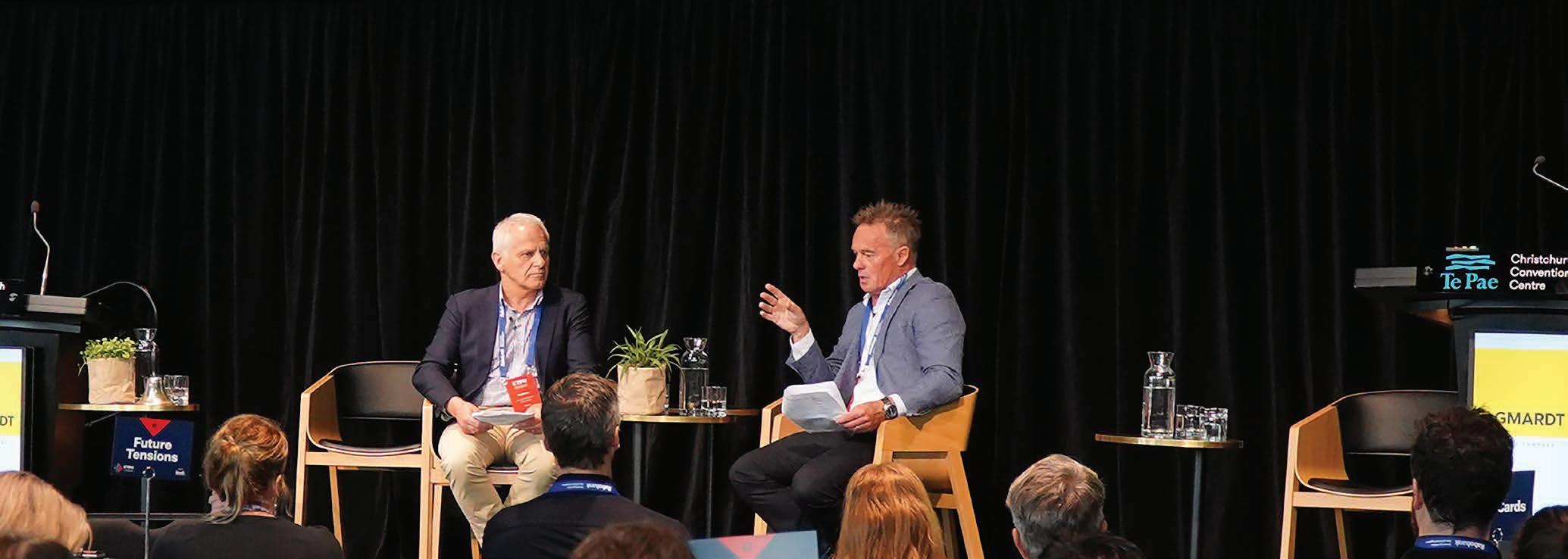
Senior reporters Neal Wallace and Richard Rennie speaking at the 2025 E Tipu: Future of Food and Fibre conference in Christchurch.
Keeping it real in Christchurch .
In 2024 and 2025, with support from the sector, senior reporters Richard Rennie and Neal Wallace visited key export markets across Asia, Europe and the United States to better understand what matters to consumers of New Zealand’s primary products. They found market sentiment had shifted significantly. While sustainability still mattered, geopolitical tensions and growing demand for protein and whole foods had moved food security and health to the forefront.
These findings were shared with primary industry leaders at E Tipu: Future of Food and Fibre conference in Christchurch, where they presented
in true Neal and Richard fashion – with a good yarn.
Now, thanks to Sprout and AGMARDT, Neal is in Thailand meeting with key players there to understand the significance of that market for our food producers going forward.
It’s people like Richard and Neal who are behind the content in this publication. If you think that’s worth supporting, consider a voluntary subscription.
$120 a year, $15 a month, or whatever value you place on this service.
Charlie
Williamson Community Manager
Support us with a voluntary annual subscription to Farmers Weekly. $120 for 12 months. This is a voluntary subscription for you, a rural letterbox-holder already receiving Farmers Weekly every week, free, and for those who read us online.
Scan the QR code or go to www.farmersweekly.co.nz/donate
Email your name, postal address and phone number to: voluntarysub@farmersweekly.co.nz and we’ll send you an invoice. Call us on 0800 85 25 80
Note: A GST receipt will be provided for all voluntary subscriptions.
From the Editor
Farming on the front foot
Bryan Gibson Managing editor
ISPENT a week in Christchurch recently at two conferences, Beef + Lamb NZ’s Out the Gate and E Tipu: The NZ Future Food and Fibre Summit.
Both featured fantastic speakers and were well attended, but it was the air of optimism that really stood out.
Sheep and beef farmers have every right to crack a smile, with farmgate returns at record highs.
Australian analyst Simon Quilty painted a rosy picture of the year or two ahead, predicting farmgate returns for both beef and lamb would remain elevated.
It was fantastic to hear, because previous seasons have been tough on drystock farmers, and the continuing creep of trees and milk tankers has left their futures uncertain.
But things have changed, and it is not just down to money.
Events like Cyclone Gabrielle have made us all think about what our high country should look like, and what we can do to protect it and everyone downstream.
The best option on the table turns out to be high country farming, with an emphasis on targeted native planting and good catchment management.
Many farmers made this decision years ago, of course, but the regulators finally appear to be helping, rather than hindering their progress.
We were left with a feeling that NZ food and fibre was not only profitable, it was fashionable.
Another good sign in Christchurch last week was how technology and innovation was framed.
In the past it was often labelled a threat, or a disruption.
Now, it’s an opportunity.
Technology seems to have moved from being an add-on which many fail to integrate successfully into a solution that’s fully integrated into farming systems.
More importantly, we appear to have made progress on the big challenge of interoperability, meaning that data duplication is becoming less of an issue.
But technology wasn’t the only innovation highlighted in Christchurch.
E Tipu celebrated the creative aspect of innovation, with several speakers outlining how they’d transformed our food and fibre into really special products.
Lof founder Sophie Poelman, for example, has spent six years building a business that designs and produces acoustic-dampening light shades with coarse wool.
Fashion designer Karen Walker shared her story, which has seen her transform from a teenage punk in the 1980s into Aotearoa’s leading style icon.
Norsewear’s Tim Deane explained how he is changing the company’s supply chain to extract as much value as possible for growers.
Our food and fibre sector is perhaps guilty of sidelining these creative minds from our conversations.
That’s changing now, though, and Jacinta FitzGerald of Fashion and Textiles NZ proposed a strategy to accelerate that change further.
She’s leading a project funded by The Common Ground, which is building a number of collaborative strategies to tackle farming’s big challenges.
At week’s end, we were left with a feeling that NZ food and fibre was not only profitable, it was fashionable.
Farming is firmly on the front foot again, as it should be.
This week’s poll question (see page 1):
What grade would you give the farming year, and why? Mark your season: great, good, average, poor.
Have your say at farmersweekly.co.nz/poll
LAST WEEK’S POLL RESULT
More than half of those who took last week’s poll believe the government should butt out of council amalgamation.
“This is a terrible loss of democracy and places higher rates on rural communities. The bigger councils will soak up the smaller regions,” said one voter.
“Three months is too short a time line,” said another. “Rushed changes will lead to poor decisions and outcomes. Council assets are owned by the rate-paying community members, due diligence needs more time.”
Another said the government needs to be clearer on what it wants to achieve by forced mergers.
“Larger councils may just multiply the same systemic issues and solve nothing.”
Of the 43.4% who believe the government should intervene in council changes, many pointed out an increased number of councils leads to more expense, higher rates and inefficiencies.
“Councils are so inefficient in many ways as they operate presently. Fewer councils are a must,” said one.
“Farmers need rates to be reduced, amalgamation and efficiency should help achieve this.”
Last week’s question: Should councils be forced into amalgamation by the government?
The world and the lamb price have gone mad
Meaty matters
Allan Barber Meat industry commentator: allan@barberstrategic.co.nz, http://allanbarber.wordpress.com
THE present geopolitical situation reminds me of a film I saw nearly 60 years ago called King of Hearts. It was an anti-war comedy drama set in World War 1 in a small town in northern France that the Germans booby-trap to blow up. All the residents leave except for the occupants of the local insane asylum, who are free to roam the town in festive clothing unaware of the imminent threat. An English private is given the task of finding the bomb, which he eventually does by accident and in the nick of time.
Everybody returns to the town, the asylum’s occupants go back into the asylum, and the private chooses to desert and admit himself to the asylum stark naked with nothing but his pigeons in
a cage. The obvious question is who really is mad – the people in the asylum or the politicians and generals waging war?
At least WW1 ended with a winner and a loser for a few years, but it is hard to see how the wars in Ukraine and Iran can possibly reach a conclusive outcome.
United States President Donald Trump is searching for a way out of the complete mess he started with Israel’s encouragement, while Russia’s President Vladimir Putin is in much the same situation, with neither willing to lose face.
In the meantime, the rest of the world must adjust to higher fuel prices, rising input costs, and trade disruption with no certainty about when or even if these will return to normal.
I never thought I would see the day lamb prices reached such heights with sales to all our major markets booming.
I understand Ayatollah Ali Khamenei had declared a fatwa against nuclear weapons and opposed any blockage of the Strait of Hormuz. Removing him has directly resulted in his replacement by hardliners who have discovered how easy it is to hold world oil supplies to ransom and know Iran’s ability to endure pain is greater than the US’s. At the same time our agricultural
trade position seems to exist in a parallel universe with red meat and dairy prices continuing to rise as traditional competitors struggle to meet demand for protein.
I never thought I would see the day lamb prices reached such heights with sales to all our major markets booming. AFFCO’s winter contract price of $12.20 per kilo is equivalent to nearly $250 for a 20kg lamb, an unprecedented figure that will put a smile on the face of any farmer able to supply.
Even if the volume of lambs at this price is relatively small, every supplier should receive a minimum of $220 per head from all processors. It also sets a benchmark for new season lambs leading up to Christmas.
April continued the trend with red meat exports hitting $1.3 billion or 15% of total exports for the month. Beef exports to the US were 54% higher, while lamb sales to China, the United Kingdom, the European Union and the US all increased, despite talk of tariffs being imposed at the behest of American sheep farmers who think they can satisfy demand without imports.
The red meat sector is in a sweet spot because of cyclical downturns in the US cattle herd and the Australian sheep population.
The big question amid all the global uncertainty is just how long demand will continue at these elevated levels.
Share markets appear impervious to risk with prices buoyed by
the AI boom, but at the same time bond yields are rising to uncomfortable levels.
Recent commentary by the Telegraph’s international business editor Ambrose Evans Pritchard suggests high government debt is more damaging than the current oil price and will cause a sudden fall in share markets sooner rather than later.
He also argues the apparent stability in the oil price will not last much longer as the shortage really bites, unless Trump miraculously finds a way out of the Iranian impasse. At the time of writing he claims an agreement is near, but refuses to give way on any of the US demands.
New Zealand cannot possibly remain immune to global developments even if our total
debt-to-GDP ratio is still lower than that of many other countries. Any downturn in the global economy will make itself felt in lower demand for our exports, while the higher oil price must inevitably fuel inflation. This combination will reduce domestic activity and result in higher unemployment.
Whichever government assumes power in November will be faced with an extremely unpalatable set of policy decisions, none of which will keep many sections of the electorate happy. One thing is certain – there won’t be any spare cash to throw around.
My question is whether we have any option but to carry on pretending life is normal, while the madmen continue to wage wars they cannot win.
Earning NZ strong wool’s place in India
In my view
NEW Zealand and India have proud cricketing histories across all three forms of the game. So, if strong wool’s recovery is a test match rather than a T20, success will come from staying at the crease, building patiently and letting the scoreboard tell the story over time.
And we’re on track to build a big score.
India has become increasingly important to our strong wool sector and, at 20 million kilograms, is now second only to China for New Zealand wool exports.
That counts not only for volume, but because India is a major manufacturing hub for carpets, rugs, home textiles and wool processing, with the scale and reach to influence demand in the markets that count.
India is not simply a wool buyer, but a partner in turning fibre into higher-value products and building enduring demand.
Wools of New Zealand has
the European bedding market, where customers have specific technical expectations.
This is not about saving money, but about meeting the expectations of the markets we are targeting and helping attract European brands to NZ wool.
India is a fragmented market, and wool buyers are not always closely connected to the international customers who shape demand.
That is why our strategy must centre on branded fibre valued by Western retail brands, with Wools of NZ working back from those brands to wool buyers to build partnerships capable of delivering long-term value for wool growers.
been building these relationships steadily over time. We know India because we are on the ground there every day. We are working with long-established partners such as Grentex and newer ones such as AKS.
With Indian partners, we are also developing wool-scouring capabilities that are not currently available to us in NZ.
This additional scouring process will make NZ wool acceptable for
AKS offers a good example. They do not buy raw wool directly, and many in NZ would never have heard of them, but they specify our wool for customers producing high-end carpets for North America and Europe. They buy yarn from spinners who in turn buy the wool, and they have specifically asked for our brand as they develop Wools of NZ branded carpets.
There is another reason this is relevant: Wools of NZ is owned by farmers, which gives us a stronger
incentive to focus on long-term grower returns and on capturing more of the value created further down the chain.
That is significant at a time when buyers want to know where fibre comes from, how it is produced and who stands behind it.
The ambition should be that one day, New Zealand wool is recognised in India with something approaching the familiarity of names such as Sachin Tendulkar or MS Dhoni –not because of hype, but because the brand has earned its place.
Wools of NZ’s certification programme, with independently audited standards covering animal welfare, land management and social responsibility, gives buyers confidence in the provenance of what they are buying.
There are encouraging signs for the strong wool sector with strong wool prices at levels not seen for a decade.
Wools of NZ is now a profitable business, having virtually com-
pleted three years of consistent performance.
This is being driven from the Wools of NZ strategy in the development of our branded consumer business and the development of our export business on behalf of farmers who wish to take control of their future profitability.
It’s important that as a farmerowned company, we set up trading structures that give farmers the ability to have a level of control over their future earnings – their company wins and they win.
If strong wool is to recover, it will be through steady work: making better products, building lasting relationships and creating demand in markets that continue to value natural fibre.
The ambition should be that one day, NZ wool is recognised in India with something approaching the familiarity of names such as Sachin Tendulkar or MS Dhoni –not because of hype, but because the brand has earned its place. That will take patience, trusted relationships and the discipline to stay the course, but it is how enduring markets are built.
NEW GROUND: AFFCO’s winter contract price of $12.20 per kilo is equivalent to nearly $250 for a 20kg lamb, an unprecedented figure that will put a smile on the face of any farmer able to supply.
John McWhirter
McWhirter is chief executive of Wools of New Zealand
GROWING: India has become increasingly important to New Zealand’s strong wool sector, John McWhirter says.
Sector Focus
Creating a refuge for ‘good’ insect predators
Gerhard Uys TECHNOLOGY Biologicals
NEW Zealand Gourmet is creating plant refuges for beneficial predator insects in its glass houses in the hopes that this will keep them around for longer and reduce the need for agri-chemical use.
Peter Schreuder, a grower at Gourmet Waiuku Ltd, which is a grower for New Zealand Gourmet, said they were introduced to the concept of alyssum banker plants through A Lighter Touch, the industry drive to reduce long-term reliance on agri-chemicals.
Banker plants sit outside crops and act as habitat for beneficial predator insects that feed on pests.
“The function of alyssum is to provide an additional source of
pollen and nectar for the natural predators to feed on. Flowers on a capsicum plant can abort if the fruit load exceeds the available sunlight.
“Predators may not survive when this happens; hence, we are introducing banker plants.”
Schreuder said they have always used biologicals in the glasshouse as part of standard integrated pest management.
“Last season was a disaster regarding pest pressure, especially from thrips.
“This season we want to avoid this so we are increasing the number of biologicals we previously used. Double the dosage at the start of the crop and increase the number of different predators from two to four.”
He said it is too early to talk of results.
New Zealand Vegetable Council research and development
manager Daniel Sutton said most vegetable crops are monocrops and therefore do not provide a lot of habitat for predator insects.
The project aims to create biodiversity of plants to increase the diversity of insects and arthropods around the system by giving them shelter, nectar and additional food sources.
“The original project was angled to field crops, such as lettuce and brassica, and have been trialled and proven there. The principles behind it are transferable to glasshouse crops.”
Glasshouses typically release beneficial insects.
“The project looks at whether you can increase their activity and length of time in the crop by introducing other food sources through banker plants.”
Results in field crops have shown growers can maintain the same degree of pest control and deliver
the same commercially acceptable crop by using biodiversity and insects versus conventional programs that use numerous synthetic insecticides.
The project is also looking
to plant habitat outside of the glasshouses, in the hopes that predators will thrive there and predate on pest insects before they have the chance to enter glasshouses.
HortNZ beds down regional representative network
Staff reporter NEWS Horticulture
HORTICULTURE New Zealand is rolling out a new regional representative network aimed at giving growers a strong voice and a more direct link to advocacy and practical support.
HortNZ chief executive Kate Scott said the goal is to create a grower-focused regional connection that reflects the different realities facing growers around the country.
“Dedicated local contacts who understand local conditions, the challenges and opportunities will help ensure growers’ views are consistently heard,” Scott said.
“The representatives will also gather on-the-ground intelligence and feed this back to HortNZ to keep advocacy work relevant and evidence based.
“This includes identifying emerging issues early and feeding regional insight back into HortNZ.”
The representatives will also strengthen practical support by
linking growers with workshops, events, networks and capabilitybuilding opportunities, while helping them navigate issues as they arise, she said.
“A strong local presence will be especially valuable during severe weather events, when trusted relationships and regional knowledge can speed up support and information sharing.”
Regional representatives will carry out regular grower visits, support forums, maintain event calendars and liaise with wider industry stakeholders.
They will also help communicate HortNZ and the Aotearoa Horticulture Action Plan priorities, gather feedback on submissions and link growers with product groups and HortNZ’s policy, assurance and engagement teams.
The regional representative roles were initially part of a pilot, but are now being rolled out permanently, with further roles potentially being added over time, she said.
The five roles cover Gisborne (Tessa Rodden); Central
Otago and Southland (Chelsea Donnelly); Canterbury (David Hickman); Lower North and Upper South Islands (Matt Thorn); and Northland, Auckland and Waikato (Arjune Dahya). Scott encouraged growers to contact their regional representative for support and to stay connected with developments in the industry.
MORE:
More information on the regional representatives is available through the HortNZ website www.hortnz.co.nz
HAVEN: An alyssum banker plant at the side of a crop acts as refuge for good bugs.
Breaking the silence on mental health
RURAL Women New Zealand wants to see a Mental Health and Wellbeing Strategy that works for rural communities.
They recently submitted on the Draft Mental Health and Wellbeing Strategy 2026-2036. The draft sets out how New Zealand will build a system that promotes mental health and wellbeing for everyone, and provide mental health and addiction support and services that meet people’s needs.
The organisation welcomes the strategy’s direction, but welcoming a strategy and seeing it work for rural communities are two different things.
The submission was an opportunity to bring the lived reality of rural life to the Ministry of Health’s attention, because the services that exist down the road from a city clinic look very different from what is available to someone an hour out of town.
Rural Women New Zealand member and mental health advocate Deanne Parkes has been running a series of workshops called Inside Out for rural women, focused on mental health and wellbeing.
Women across the country have been sharing similar experiences with isolation.
“People just felt that they were the only one, you know, kind of suffering in silence,” said Deanne.
“With mental health it’ll kind of come on and then you get brave enough to ring up and book an appointment with your doctor. But it can be weeks before you see them and then you normally feel better again once you actually have that appointment,” Deanne says.
That delay is not just frustrating. The window when someone is
For some people they move to rural areas and they can’t get into a local doctor, so they’ve got to keep their doctor hours away.
Deanne Parkes Mental health advocate
ready to ask for help can close quickly, and for rural women juggling farms, children, and households with little backup, finding the courage to reach out again is not always easy.
“A lot of rural women, they don’t have access to daycare because daycare could be a half an hour drive or there’s not that access to care.
“For some people they move to rural areas and they can’t get
LINKED: Rural Women New Zealand board member Bronwyn Main, who convenes Rural Women New Zealand’s Health Policy Action Advisory Group, said a community’s ability to function, stay connected, and thrive is linked to mental health.
into a local doctor, so they’ve got to keep their doctor hours away,” Deanne says.
According to Hauora Taiwhenua Rural Health Network’s Rural Health Snapshot, people living in large cities are about 1.6 times more likely to have accessed a mental health professional in the last year than those in rural areas. Telehealth appointments provide access from a distance but are not a solution on their own.
“I know that there is over the phone consults and things like that but when you’re at a low mental health point it is really hard to communicate that to someone in a virtual setting,” said Deanne.
Some of that silence is shaped by stigma, the fear of being judged for struggling.
In a small, close-knit community, anonymity is hard to come by. People worry about who might see
them at the health centre, or what their neighbours might think.
For those who are well known locally, the stakes can feel even higher.
“It can be really hard for people to reach out because they don’t want anyone to know what is going on,” said Deanne.
There is also a quieter barrier that Deanne sees frequently in her work.
“I think that’s another big aspect for rural people and access is that they think that there’s always somebody else who’s worse off, you know, they’re always kind of putting themselves at the bottom of the priority list.”
While rural life can make getting help harder, it also brings supports that that be hard to find in big cities.
Board member Bronwyn Main, who convenes Rural Women New Zealand’s Health Policy Action Advisory Group, said a community’s ability to function, stay connected, and thrive is linked to mental health.
“Rural communities rally together. If something’s happened, the first thing you do, you say, listen, I can do tomorrow’s milking,” said Bronwyn.
Strong community networks, trusted relationships, and support that is relevant to rural realities make it easier for someone to take the steps to ask for help and stay well.
“You’ve got to be relatable. You don’t talk down to them. You talk to and with people.
“It’s taking the stigma out of it and making people and communities more accessible and relatable... It’s building the language to suit the individual circumstances, to suit the community. What might work in Te Kuiti, mightn’t work somewhere else,” said Bronwyn.
Deanne has seen this through Inside Out, with multiple participants going on to reach out to professional support networks after attending.
For rural women who have been struggling, Deanne has a message.
“If there’s something that keeps kind of niggling away at you, that life could be better than what it is, you know reach out and ask for support.
“There’s so many women out there that are feeling the same as you and there are so many women that are making steps forward to change that so it will be okay, you’ve just got to reach out.”
MORE:
Rural Women New Zealand has been advocating for, connecting and supporting rural women and communities across the country for 100 years. Visit ruralwomennz.nz and become a member today.
Where to get help
Rural Support Trust Helpline: 0800 787 254
Need to talk?
Free call or text 1737 any time for support from a trained counsellor.
Lifeline 0800 543 354 (0800 LIFELINE).
Youthline
0800 376 633, free text 234 or email talk@youthline.co.nz or online chat Samaritans 0800 726 666.
Suicide Crisis Helpline 0508 828 865 (24/7). This is a service for people who may be thinking about suicide, or those who are concerned about family or friends.
Depression Helpline 0800 111 757 (24/7) or text 4202
Anna-Grace Somerfield
FEDERATED FARMERS
Vol 4 No 21, June 1, 2026
Conservation reforms spark hope
Federated Farmers says the Government’s proposed overhaul of conservation laws could deliver long-overdue improvements for farmers, but there are also some significant risks.
The Government introduced the Conservation Amendment Bill earlier this month, describing it as the biggest reform of conservation legislation in nearly 40 years.
The Bill aims to modernise the system for managing conservation land, speed up decision-making, reduce red tape, and support economic growth alongside environmental protection.
Federated Farmers conservation spokesperson Richard Dawkins says there are several parts of the Bill that farmers operating on public conservation land will welcome.
“For a long time, farmers have been frustrated by slow concession processes, uncertainty around renewals, and layers of bureaucracy that make it difficult to plan ahead,” Dawkins says.
“There are definitely some positive changes in here that could improve operational certainty and make grazing concessions more practical and workable.”
Among the proposed changes
Federated Farmers supports are reduced public notification requirements for grazing licences, statutory processing timeframes, and longer concession terms.
The Bill would also allow greater flexibility around concession transfers and succession arrangements, while strengthening recognition of economic activity and
GRAZING GAINS: Responsible grazing is already helping control weeds and maintain landscapes across some of New Zealand’s most treasured places, and farmers want it formally recognised as a conservation tool.
development on conservation land.
Dawkins says those reforms could reduce delays, support long-term investment, and strengthen the recognition of grazing’s benefits.
“In many parts of the country, responsible grazing is already helping manage fire risk, control weeds, and maintain landscapes.
“Farmers want to see that contribution properly acknowledged, and for the Government to formally recognise managed grazing as an essential conservation tool.”
The Bill also shifts the system toward a more discretionary and policy-driven framework.
As a result, future grazing outcomes are likely to depend less on historic land use and precedent,
and increasingly on how grazing aligns with wider conservation, tourism, recreation, and land management objectives.
However, Federated Farmers says the reforms also create new risks that could have major implications for the future of grazing on public conservation land.
One of the biggest concerns is the shift toward a more centralised and policy-driven system, with greater influence from future national planning documents and ministerial decisions.
“The Bill gives more weight to future national policy settings, and that creates uncertainty,” Dawkins says.
“What grazing looks like in practice five or 10 years from now
could depend heavily on who’s in Government at the time and how future planning documents are written.
“Those grey areas make farmers feel very nervous, as it’s hard to invest with confidence if we’re not sure whether the goalposts might shift under new leadership.”
The proposed National Conservation Policy Statement –intended to replace overlapping plans and provide national direction – is likely to become a major focus for Federated Farmers.
Dawkins says it will be critical for farmers to have strong input into how those future policies are developed.
“We’ll be pushing hard to ensure grazing remains recognised as a legitimate and valuable land management activity within the conservation system.”
Federated Farmers is also wary about the potential for more standardised concession conditions that fail to account for local circumstances.
“One-size-fits-all rules don’t often work well in farming or conservation,” Dawkins says.
“New Zealand’s landscapes are incredibly diverse, and management approaches need enough flexibility to reflect that.”
Feds is also concerned about expanded Department of Conservation cost recovery powers, which could increase fees, compliance costs, and financial pressure on concession holders.
“There’s a real risk farmers end up facing higher costs and more
administrative burden if this isn’t implemented carefully,” Dawkins says.
Federated Farmers says another issue will be ensuring grazing interests are not squeezed out by competing commercial or tourism activities on conservation land.
The Government says the reforms are designed to boost regional economies, improve visitor experiences, and support more investment into tracks, huts, biodiversity and visitor infrastructure.
International visitor access charges could also be introduced at a small number of conservation sites, with revenue reinvested back into conservation projects and infrastructure.
Dawkins says the details of implementation will be crucial.
“The real test will be how DOC applies these rules in practice, what future area plans look like, and whether there’s genuine recognition of the role farming can play alongside conservation objectives.”
Federated Farmers expects to engage closely through the select committee process and future policy development.
“We see opportunities in this Bill, but also some serious risks,” Dawkins says.
“Our focus will be making sure the final legislation delivers practical outcomes, protects site-specific flexibility, and avoids unnecessary compliance costs.
“We’ll also be pushing hard to ensure grazing remains a recognised and supported land management activity within future area plans.”
Federated Farmers
Councils explained –and why change is on the horizon
There’s a lot of talk right now about whether local government is working well in New Zealand and whether it needs an overhaul.
We’ve put together this Q&A to help explain it all in simple language.
What is local government?
Local government is the system of councils responsible for running and regulating local communities and regions across New Zealand. Councils provide essential services and infrastructure, like roads, water and rubbish collection, and they make decisions that affect how land is used and communities grow.
How is it structured here?
New Zealand has two main types of councils: regional councils, and city or district councils (also called territorial authorities).
Right now we have 78 councils around the country:
• 11 regional councils
• 61 territorial authorities – either city councils or district councils
• Six unitary councils, which do
both regional and territorial roles (Auckland, Gisborne, Marlborough, Nelson, Tasman and Chatham Islands).
Apart from big changes to Auckland Council, this structure hasn’t really changed since 1989.
What do regional councils do?
Regional councils oversee issues that affect entire regions, especially environmental management. Their responsibilities include freshwater rules, land use controls, pest and weed management, public transport and flood protection.
For many farmers, regional councils are the most influential regulator affecting day‑to‑day farm operations.
What about city and district councils?
They’re responsible for local services and infrastructure.
That includes drinking water, wastewater and stormwater, rubbish collection, building consents, parks, libraries and other community facilities.
For farmers, one of their most important responsibilities is maintaining local roads and bridges – but not state highways.
Why is the current system not working for farmers?
Many farmers are dealing with overlapping rules, rising compliance costs, and slow consenting processes. In some cases, different councils can regulate the same activity in different ways, adding complexity and frustration.
Rates have also risen sharply. Because farm rates are largely based on land or capital value, and many farmers own a lot of land, their council bills can be huge. Farmers feel they’re propping up council services in urban areas that they rarely use.
Why does the Government want to scrap regional councils and have more unitary councils?
The Government believes regional councils add complexity, cost and duplication. There’s also concern they can end up dominated by urban councillors, who may not understand rural issues or how farms work.
By bringing regional council functions into larger unitary councils, the aim is to simplify planning and consenting, reduce duplication, and make accountability clearer for ratepayers.
Fans of unitary councils argue they could better align environmental rules with economic realities and local conditions.
The Government says fewer, larger councils would also make it easier to manage major water infrastructure upgrades, coordinate regional planning and negotiate long term development deals.
What does Federated Farmers think?
We agree there is far too much duplication and cost, and that bigger councils could offer savings from economies of scale.
We favour unitary councils, but only if provincial governance is kept separate from governance of larger urban areas (around 50,000+ population). Provincial and urban communities have very different needs and priorities, so it’s crucial that provincial voices aren’t drowned out.
There could be shared service agreements for functions that cross council boundaries (such as flood control and emergency management), and environmental monitoring and consent enforcement could be done by an independent body or state agency.
So, what happens next?
The Government has given councils until 9 August, 2026 to work together and come up with a better form of local government in each region.
Two or more territorial authorities can propose new unitary councils, as long as they represent either a majority of affected councils or a majority of the population. Cabinet will then assess each proposal against five tests. Does the proposed structure: simplify governance?
achieve economies of scale? maintain a strong local voice? strike a fair urban–rural balance? support the new RMA reform planning system?
The Government says regional councils will be gone by 2028, and councils that haven’t come up with a workable plan for reform in time will have it imposed on them.
What benefits could council mergers deliver?
Many people believe fewer, larger councils could save money through less duplication, improve coordination of regionwide services like transport and flood protection, and make it easier to attract and retain skilled staff.
Are there any downsides?
Some people worry fewer, larger councils could weaken local representation and accountability, create expensive transition costs (e.g., IT systems, staff restructuring), and fail to deliver the promised savings, with some studies suggesting bigger councils do not always mean lower rates or greater efficiency.
MORE:
If you’d like to know more about what Federated Farmers thinks would work, go to https://www.fedfarm.org.nz/Web/ Policy/Policy-Paper/2026/Proposal-forLocal-Government-Reorganisation.aspx
SMARTER GOVERNANCE: By bringing regional council functions into larger unitary councils, the aim is to simplify planning and consenting, reduce duplication, and make accountability clearer for ratepayers.
FIX IT: Regional councils manage flood protection, as well as resource management and public transport.
Young Taranaki leaders thrown into council merger hot seats
Two young farmers elected to take the reins at Federated Farmers Taranaki have a tough mission and tight time frame to ensure rural interests aren’t sidelined in local government reform.
Toko sheep and beef farmer Nick Brown was elected president at the province’s AGM this month and national sharefarmer chair Sam Ebbett is the new vice president.
“Council amalgamation is the hot topic, and Sam and I will be busy getting our heads around the options and potential consequences,” Brown says.
“The last time local government went through large-scale upheaval was 1989.
“I was barely out of nappies then and Sam wasn’t even born.
Given farming is the backbone of Taranaki’s economy and councils play a massive role in land use rules and roading and other infrastructure, the region has to get this right.”
Nick Brown President, Federated Farmers Taranaki
“There’s a lot at stake. Given farming is the backbone of Taranaki’s economy and councils play a massive role in land use rules and roading and other infrastructure, the region has to get this right.”
Ebbett says with the government abolishing New Zealand’s 11 regional councils by 2028, and the province’s three district councils all having their defenders, reform could be tricky.
“There’s the potential for restructuring here to get fairly messy.”
As in other parts of New Zealand, residents in rural areas and
provincial towns are very wary of ‘super councils’ covering an entire region, with a population-dense city dominating.
“One option is that New Plymouth becomes an urban unitary council, and the rest of the region forms another council,” Ebbett says.
“But the idea of a north-south split has also been floated, with Stratford and places south in one unitary council, and the rest of Taranaki, including New Plymouth, forming another.
“There’s a lot of pros and cons to weigh up.”
Brown says one of his concerns is how the current responsibilities of Taranaki Regional Council (TRC) –including flood control, water permits, and environmental sustainability work – will be handled when it’s gone.
Taranaki Feds, led by former president Leedom Gibbs, successfully fought off a bid to end a 20-year tradition of Federated Farmers having an appointed representative on a key TRC committee.
Brown has been that representative over the last six months.
“TRC has a good track record supporting farmers on water quality, riparian planting and wetland protection,” he says.
“They don’t just impose a whole lot of regulation and expect farmers to get on with it without any input from them.
“A partnership approach is the way it should work and I think there’s plenty of other regions that would be envious of the generally very good relationship farmers here have with our regional council.”
Brown, a fifth-generation farmer, runs 2600 ewes, 700 replacement hoggets, 600 r1/r2 bulls and steers, and about 450 dairy heifers on 800 leased hectares with his wife Sophie, about 15 minutes east of Stratford.
The couple won TRC’s Environmen-
tal Leadership in Farming Award last year, and Brown and siblings Will and Sam are past Ballance Farm Environment Award winners.
“The practical help we get from our regional council land management officer is the sort of thing farmers want preserved in any council shakeup,” he says.
With 90% of Taranaki’s farmers being in dairy, the last time a sheep and beef farmer was Taranaki president goes back to Bryan Hocken’s reign from 2006-08.
“So, it’ll be a slightly different flavour,” Brown says.
“I guess it’s a wee reminder to all those sheep and beef farmers out in the eastern hills that the Taranaki Feds team is there for them too.”
Brown says one of the goals he
and Ebbett have set themselves is lifting the bar on engagement with farmers, and showing them all that Federated Farmers achieves for them.
“I think some of those keyboard warriors on Facebook get too much sway.
“For us it’s about bringing more farmers into the Federated Farmers fold so when we meet with other Feds leaders around the country, or with government and councils, we’re truly representing what Taranaki farmers want to see.” Ebbett, with his wife Liana and three children, contract milks 630 Jersey cows near Inglewood.
As Federated Farmers national sharemilker chair, he’s set himself a number of goals, including getting
politicians to understand why the Sharemilking Act needs a revamp.
“We need contract milkers covered. That’s a massive opportunity for us, and a huge risk if we can’t get that review.
“Feds offers the best agreements in the industry, but without that legislative back-up, it’s hard work.
“The Sharemilking Act isn’t a particularly sexy topic for politicians, but in this election year we need to get it firmly on their radar.”
The two leaders say there’s plenty to keep themselves busy.
“There’s no shortage of challenges, but Taranaki Feds has a good team,” says Brown.
“We’re open to farmers’ feedback on what our priorities should be, so please get in touch with us.”
Stock, fences, feed, paperwork, staff. Maintaining your home and staff accommodation shouldn’t be another job. Built for tough conditions and busy lives, Lockwood homes are naturally durable, quiet, warm and low-maintenance.
RESTRUCTURE RIDDLE: The new leaders at Federated Farmers Taranaki – Sam Ebbett, left, and Nick Brown –say there’s a lot at stake with local government reform and they’re keen to hear the views of the province’s farmers.
Breakthrough in wilding pine battle
After years of pushing for more funding to tackle wilding pines,
Federated Farmers says the Government’s funding Government announcement is a major breakthrough.
The Government has committed an extra $79 million for wilding pine control over the next three years, taking the total commitment to $109 million, targeting some of the country’s worst-affected areas.
Federated Farmers weed and pest spokesperson Richard Dawkins says the investment is a huge win – not just for farmers, but for all New Zealanders.
“Wilding pines are an ecological disaster threatening farms, exports, biodiversity, tourism, and water resources across New Zealand.
“Most Kiwis don’t see the problem day to day, but these invasive trees are spreading across some of our most iconic landscapes at an alarming rate.
“The time to ramp up control efforts is now, and this funding boost will make a real difference. The Government deserves enormous credit for stepping up and backing meaningful action.”
Dawkins welcomed the focus on major seed source areas in Wānaka and Marlborough, along with priority
regions including Queenstown, Wakatipu, Mackenzie, Molesworth, and the North Island’s Central Plateau.
“For the first time, we’re seeing a serious effort to tackle some of the country’s worst seed source areas, including Branch Leatham in Marlborough, which has long fuelled the wider South Marlborough infestation,” he says.
Most Kiwis don’t see the problem day to day, but these invasive trees are spreading across some of our most iconic landscapes at an alarming rate.
Richard Dawkins
Federated Farmers weed and pest spokesperson
“That area was originally aerially seeded with conifer pines by the Crown for soil conservation purposes, with a commitment to address any unintended consequences.
“While some funding has been allocated over the years, it’s been piecemeal and nowhere near enough to get on top of the problem properly.
“This new investment is a significant step forward, and everyone
involved deserves real credit.”
Federated Farmers president Wayne Langford says the key now will be combining this new funding with action from landowners and land managers.
“The Government has really stepped up and done its part to control wilding pines.
“We already have many farmers doing a lot of work out there, but now we need other landowners, councils, and the private sector to do the same so we can maximise the impact of this funding.
“If we can throw a big wave of control work at these pests, we’ve got a real chance to start turning the tide.”
Federated Farmers has long warned that the wilding pine eradication programme was severely underfunded.
Unlike managed plantation forests, wilding pine infestations rarely provide any productive value.
They intensify wildfire risk, smother native vegetation, and reduce groundwater supplies.
Even a handful of trees can spread seed vast distances on the wind.
ON THE MARCH:
More than two million hectares of New Zealand is already affected by wilding pine infestations, and that footprint will continue to grow without urgent action.
MASSIVE:
Federated Farmers weed and pest spokesperson
Richard Dawkins says the Government has really stepped up and done its part to control wilding pines.
Dawkins says Federated Farmers identified the issue as an urgent priority more than a year ago, and he’s encouraged to see that advocacy helping drive meaningful action.
“That said, we still believe around $50 million a year is needed for the next decade to halt the spread of these invasive trees across productive farmland and DOC land.
“While this funding is a massive step forward, wilding pines are an intergenerational challenge and there’s no quick fix.
“The focus now needs to be on securing stable, long-term, bipartisan support, so communities can have confidence this work will
continue well beyond the next few years.
“We also need to look at how large areas of land are managed day to day, including greater use of active management tools such as managed grazing where appropriate, to reduce future spread and risk.”
Langford says many others have also played an important role in highlighting the threat posed by wilding pines.
“We’d also like to acknowledge the communities, landowners, volunteer groups, and councils who have worked tirelessly to keep this issue front and centre for many years.”
In his announcement, Biosecurity Minister Andrew Hoggard said more than two million hectares of New Zealand are affected by wilding infestations, with untreated areas expanding by an estimated 5% a year.
On top of the funding boost, the Ministry for Primary Industries will begin developing a National Pest Management Plan for on-going control of wilding conifers, he said.
“This will further strengthen national coordination of wildings management, ensuring efficient and effective control work and establishing nationally consistent rules to prevent their further spread,” Hoggard says.
Kerry Harmer shares what it’s like to be awarded for environmental stewardship while still dragged through a $150,000 consent fight with the council.
Porangahau 3503 Porangahau Road
Oakbourne No.2 block
Located 35kms south-east of Waipukurau is this 440ha (STS) breeding and finishing property of predominantly flat to easy, rolling contour, held in five Titles The strong rural community and township of Porangahau is within a 10minute drive and the beach settlement is just a few minutes further on The area is well known for producing and finishing excellent, early stock with generally mild winters allowing good growth through that period too A Romney ewe flock and Angus cow herd are farmed, along with replacements and all progeny is finished on farm This property benefits from multiple natural water sources and excellent reticulated systems of troughs throughout the farm While the main road is often utilised as a lane, there is also a system of laneways and satellite yards which assist in stock movement and management bayleys co nz/2854539
440 ha
Tender (unless sold prior)
Closing 4pm, Thu 25 Jun 2026
15 Havelock Road, Havelock North
View by appointment
Tim Wynne-Lewis 027 488 9719
tim wynne-lewis@bayleys co nz EASTERN
Gisborne 19 Kemp Road
Lifestyle, orchard and location
• 6.10 ha (more or less)
• Multiple living areas
• Established citrus orchard
• Extensive decking and lawns
• Gisborne CBD 9 kms.
This beautifully established lifestyle property delivers the space, privacy and versatility so many are searching for and has been enjoyed by same owners for over 25 years. Set amongst established grounds and citrus plantings, the home has been thoughtfully designed for family living and entertaining. 4 2 2
Auction 12.00pm, Thu 18th Jun, 2026, (unless sold prior), Property Brokers, 66 Reads Quay, Gisborne View By appointment Web pb.co.nz/GIL226572
Tom Lane M 027 866 5263 E toml@pb.co.nz
FARM LICENCE OPPORTUNITY
MOKAI STATION – 1142C Mokai Rd, Taihape
BakerAg Land & Leasing Ltd seek expressions of interest for the licence of Mokai Station.
The property comprises a total of circa 1844ha of flat, undulating and medium hill country rising to elevated Tussock. The farm is situated 30km east of Taihape.
The property has a homestead, woolshed, shearers quarters and a range of farm buildings and other facilities.
The property has most recently been run as a sheep and beef breeding and semi finishing unit. The property is offered for licence commencing July 2026. Inspection will take place in June 2026.
The deadline for expressions of interest is 4pm on Friday 10 July 2026.
For further information regarding the lease opportunity including property description, draft licence document and inspection instructions please contact Fergus Rutherford at BakerAg Land & Leasing Ltd. on 0274 836 293 or fergus@bakerag.co.nz
Your agent may suggest you advertise in their
We suggest you remind them that this is the publication you, and every
161ha with approx – 86ha flat in two
A very versatile farm, livestock, cropping with Alluvial & Egmont Ash soils.
Formerly a dairy farm, currently run as bull fattening unit, maize, carbon farm.
Excellent livestock water from bore and spring source.
Buildings include a 4 bedroom homestead, implement / haysheds / cattle yards.
Settlement date is flexible.
For more photos and information visit: Trade Me, Property ID JTN369
Price: $5,000.000 + GST
View: By appointment with owner
Phone: Paul 06 346 5004
Email: paulpedersen1938@gmail.com
(since 1970)
Buyers and importers of Heavy Machinery for Farmers, Earthmoving, Civil and Quarrying Since 1970
We specialise in buying to order for our clients. Arriving soon into Auckland
Komatsu D65PXi-18
22 tonne long track frame low ground pressure, 800mm shoes with Straight Tilt Blade and Intelligent machine control. 2008 hours. For sale $300k+gst
Call Netta 027 466 6874 or Ross 027 445 2070
netta@crusherdealer.com ross@crusherdealer.com
n Ideal for shearing sheep, alpacas, goats and cow tails
n Variable speed from 2600-3500rpm
n Latest brushless motor technology means minimal heat build up
n 1400gms means 100-200gms lighter than standard handpiece
n At 2800rpm the 12v lithium battery will crutch 300-400 sheep or trim up to 400-500 cows tails
n
Marketplace Partnership Manager
We’re looking for a motivated, organised, customer-focused person to join our growing sales team as Farmers Weekly Marketplace Partnership Manager.
Based at our Feilding Head Office you’ll love connecting with our current clients, prospecting new ones, and responding to incoming sales enquiries, turning leads into loyal customers.
You’ll be responsible for the very part of the paper you’re reading this ad in – the Farmers Weekly Marketplace – as well as our healthy Real Estate portfolio.
A minimum of three years sales experience is required.
If you love selling over the phone and being part of a vibrant office culture, we’d love to hear from you!
To request a full job description and company application form, please email hr@agrihq.co.nz
Applications close Wednesday 17 June 2026, 6pm.
NEIL DONALDSON SCULPTURES
Enhance your garden or property with timeless Coreten steel sculptures.
Designed to complement both modern and traditional landscapes, each piece develops a rich, natural patina that beautifully blends with its surroundings.
Durable, striking, and uniquely crafted to create a lasting impression.
My sculptures are displayed at Moko Art at Hot water Beach, Coromandel, Kaipara coast sculpture gardens, Orewa Estuary Art centre and Browns Bay.
WILTSHIRES-ARVIDSON. Self shearing sheep. No1 for Facial Eczema. David 027 2771 556.
WANTED TO BUY
WHAT’S SITTING IN your barn? Ford, Ferguson, Hitachi, Komatsu, JD. Be it an excavator, loader or tractor, wherever it is in NZ. Don’t let it rust. We may trade in and return you a brand new bucket for your digger or cash for your pocket. Email admin@loaderparts.co.nz or phone Colin 0274 426 936.
DOGS FOR SALE HUNTAWAY PUPS. Born 1st March. 5 bitches. Vaccinated and wormed. Parents good yard dogs. Invercargill area. Phone 027 273 1492.
LYNETTE IS AN attractive, warm, active and healthy lady with a positive outlook. Raised in the country she enjoys travel, swimming, nature, gardening, cooking and spending time outdoors. She is seeking companionship founded on honesty, trust and mutual respect. Please call 0800 446 332 and quote 70
HIGH PRESSURE WATER PUMPS, suitable on high headlifts. Low energy usage for single/3-phase motors, waterwheel and turbine drives. Low maintenance costs and easy to service. Enquiries phone 04 526 4415, email sales@hydra-cell.co.nz
GOATS WANTED
FERAL GOATS WANTED. Pick-up within 24 hours. Prices based on works schedule. Phone Vicky Le Feuvre 07 893 8916 or 027 363 2932.
DOGS WANTED WANTED RELIABLE middle aged Huntaway bitch to work with an active 70 year old shepherd. Phone 0274 382 551. GOATS WANTED. All weights. All breeds. Prompt service. Payment on pick up. My on farm prices will not be beaten. Phone David Hutchings 07 895 8845 or 0274 519 249. Feral goats mustered on a 50/50 share basis.
HORTICULTURE
NZ KELP. FRESH, wild ocean harvested giant kelp. The world’s richest source of natural iodine. Dried and milled for use in agriculture and horticulture. Growth promotant / stock health food. As seen on Country Calendar. Orders to: 03 322 6115 or info@nzkelp.co.nz
LEASE LAND WANTED
ARABLE LEASE LAND wanted. Mid/Sth Canterbury. Any size considered. Please phone Angus 027 366 0944 or angus@wairunafarm.nz
BOOK AN AD. For only $3.30 + gst per word you can book a word only ad in Farmers Weekly Classifieds section. Phone 0800 85 25 80 to book in or email wordads@agrihq. co.nz Call 0800 85 25 80
SALE TALK
A TEXAN FARMER goes to Australia for a vacation. There he meets an Aussie farmer and gets talking. The Aussie shows off his big wheat field and the Texan says, “Oh! We have wheat fields that are twice as large”. Then they walk around the ranch a little and the Aussie shows off his herd of cattle. The Texan immediately says, “We have longhorns that are at least twice as large as your cows”. The conversation has, meanwhile, almost died when the Texan sees a herd of kangaroos hopping through the field. He asks, “And what are those”? The Aussie asks with an incredulous look, “Don’t you have any grasshoppers in Texas”?
TREES FOR SALE
LARGE VARIETY of natives for sale for the 2026 planting season. Pick up Wairoa. Phone Jan 027 278 7033.
SAWN SHED TIMBER including Black Maire, Matai, Totara, Rimu, Mac, Redwood, Western Red Cedar etc. Also buying salvaged native logs. Phone Richard Uren. NZ Native Timber Supplies. Phone 027 688 2954. WANTED TO BUY
WANTED TO RENT
OLD FARM HOUSE or cottage anywhere in the North Island. I’m a retired gardener, happy to help in the garden in exchange for reduced rent. Phone or text 027 672 6435.
SPRING BULL SALES SHOWCASE
•
To
nz
You work hard to get the stock right. We help you get the timing right.
AgriHQ livestock reports turn market data into trusted insight.
See the signals early at agrihq.co.nz
Subscribe from $35/month* agrihq.co.nz/livestock-reports
LIVESTOCK REPORTS
MANGATARA LIMOUSIN
12 MIDDAY AUCTION
– viewing from 10.30am 111 Rakaiatai Road, Dannevirke
All Polled, Apricot and Black Monday 8th June 2026
• Want to earn a minimum $0.50
above schedule on 1st cross? Premium doubled for 2nd cross.
• Use our bulls and we will buy back the progeny @ 270-320kg CWT, to supply our butchery.
• Weaners also wanted – we have the farmers to finish them.
We are NZ’s largest registered Limousin herd 250+ cows.
Mangatara genetics – always well sought after at sales.
Lyn van der Velden
All bulls BVD tested
twice.
&
C10. The Sale Complex: 998 Marua Road (11km east of Hikurangi)
Online: Catalogues available
For more information contact: Ian Clements 0274 974 864
Despite prices softening, New Zealand continues to return a premium in markets it shares with Australia.
Alex Coddington MARKETS Red meat
NO MATTER how different the New Zealand and Australian red meat sectors become, keeping a close eye on changes in Australia is one of our best bets to avoid risk and capitalise on opportunities presented to us in the market. For beef, Australia is one of the world’s largest exporters, second only to Brazil. These two powerhouses send enormous volumes into many of our shared markets. That means demand and pricing for New Zealand beef will often be affected by changes to Australian supply and its trade routes.
Sheepmeat exports, on the other hand, are dominated by our combined output. At times, that means higher volumes of Australian sheepmeat underselling the market and presenting a downside risk. However, more recently it has
been our combined shortages and diverging markets that have affirmed confidence.
Farmgate mutton prices lifted sharply last week, which comes as little surprise given average export values jumped nearly $1/ kg in a single month to reach $10.30/kg. That rise coincided with Australia recording its lowest monthly mutton export volumes since July 2022.
Australian lamb slaughter this month sat consistently around 340,000- to 350,000-head per week, dramatically lower than the highs of last season, but still above long-term average output. There is a lot of doubt that Australian flock numbers will ever recover to previous highs, which points to a continued trend of tight supply and high prices at these current levels of demand.
New Zealand’s recent weekly lamb processing volumes of 460,000- to 550,000-head are another factor positioning us to capture intensified global demand. Our preferential access into premium European Union and
Proudly sponsored by
DEMAND: New Zealand’s recent weekly lamb processing volumes of 460,000- to 550,000-head are another factor positioning us to capture intensified global demand.
United Kingdom markets, both with growing Muslim populations, is driving stronger demand for New Zealand sheepmeat and has supported exceptionally high export values compared to Australia, an average 10% premium in USD terms across last season, compared to the usual 5-6% premium across a season against Australian product. On the beef side, May was another month of exceptionally strong production from Australia. Unlike in previous high production years driven by drought pressure liquidation, this has been the product of a mature cattle herd. Australia’s growing shift towards grain-fed systems
is weakening the historical relationship between drought and slaughter volumes, while feedlot capacity also appears far from full, giving Australia room to maintain high levels of output at current price points.
Australia exported just under 141,000 tonnes of beef last month, 11% above last year and 60% higher than the five-year average. While New Zealand focuses on growing volumes and value into the United States, UK and EU, Australia has been sending as much product as possible into the US and channeling excess volumes into Asia, particularly China and now South Korea, which has overtaken Japan as Australia’s
Farmgate mutton prices lifted sharply this week, which comes as little surprise given average export values jumped nearly $1/kg in a single month to reach $10.30/kg.
third-largest beef market. At this rate, Australia is likely to trigger safeguard quotas into both China and South Korea by June.
The greatest risk from this scenario would come from excess Australian product running out of places to go and being dumped into our shared markets.
At the current pace, there is still a likelihood that Australia and Brazil will burn through their cattle numbers quickly. Meat & Livestock Australia is forecasting slaughter to rise to 9.4 millionhead, but the current year-todate kill is still ahead of last year, sitting closer to 30% of the total forecast, compared to just 27% at this point last year.
Nevertheless, US imported beef prices have already started to soften under heavy imported supply.
Despite confidence in US consumer demand, driven by unrecoverable domestic supply limitations, imported beef prices have softened because output from Australia and South America into this market has also never been higher.
Despite prices softening, New Zealand continues to return a premium in our shared markets, particularly the US. Globally, we are gaining respect from customers for our anti-dumping tendencies and the overall quality of the product we produce in a world increasingly choosing clean, grass-fed protein, which remains the key encouraging sign for long-term confidence in farmgate pricing.
Cattle Sheep Deer
Weekly saleyard results
These weekly saleyard results are collated by the AgriHQ LivestockEye team. Cattle weights and prices are averages and sheep prices are ranges. For more detailed results and analysis subscribe to your selection of LivestockEye reports. Scan the QR code or visit www.agrihq.co.nz/livestock-reports
Boner Friesian cows, VIC, 615kg
Boner Friesian cows, 490kg
Boner crossbred cows, 465kg
|
Rangiuru
IN DEMAND: Blackface lambs earned a premium at Temuka on Monday, May 25. These mixed-sex lambs from Geraldine collected $203.
Stortford Lodge | May 27 | 316 cattle, 7609 sheep
R2 traditional steers, 425kg 4.99
R2 traditional heifers, 415kg 4.64
R2 dairy-beef heifers, 440kg 4.66
Store Romney cryptorchid lambs, all 200-252
Store male lambs, all 194-208
Store ewe lambs, all 159-216.50
Dannevirke | May 21
Store cryptorchid lambs, all 129-188
Prime lambs, all 171-265
Feilding | May 21 | 542 cattle
or $/hd
Mixed-age traditional cows, VIC, 580kg 3.86
R2 traditional heifers, VIC, 455kg 5.85
Feilding | May 22 | 893 cattle, 9684 sheep
R3
Weaner dairy-beef steers, 205kg 1245
Coalgate | May 21 | 277 cattle, 4444 sheep $/kg or $/hd
Weaner dairy-beef heifers, 200kg
Prime dairy-beef steers, 520kg
Prime dairy-beef heifers, 495kg
Boner Friesian cows, 580kg
Boner Friesian heifers, 465kg
Store wether lambs, most
Store ewe lambs, all
Store mixed-sex lambs, most
Prime ewes, most
Prime lambs, most 188-273
Canterbury Park | May 26 | 570 cattle, 3366 sheep $/kg or
R2 traditional steers, 430kg
R2 dairy-beef heifers, 420kg
Weaner traditional steers, 210kg
Weaner dairy-beef heifers, 205kg
Prime traditional steers, 535kg
Prime dairy-beef steers, 580kg
Prime traditional heifers, 455kg
Prime dairy-beef heifers, 465kg
Mixed-age Halfbred ewes, RWR, all
Store ewe lambs, all
Store mixed-sex lambs, most
Prime ewes, most
Prime lambs, most
Temuka | May 25 | 1031 cattle, 4067 sheep
Feilding | May 25 | 1543 cattle, 439 sheep
or $/hd
Boner Friesian cows, VIC, 530kg 3.24
Boner Jersey cows, VIC, 445kg 3.06
Boner Friesian cows, 540kg 3.03
Boner crossbred cows, 455kg 2.89
Prime ewes, all 144-228
Prime cryptorchid lambs, all
Prime male lambs, all
Prime mixed-sex lambs, all 150-291
Rongotea | May 26 | 181 cattle
Weaner dairy-beef heifers, 200kg 905
Boner Friesian cows, 500kg 2.96
Prime dairy-beef steers, 570kg
Boner Friesian cows, 515kg
Store mixed-sex lambs, most 165-195
Store Halfbred mixed-sex lambs, most
WHAT A START: These Poll Dorset-cross ewe lambs were the first to go under the hammer at Canterbury Park on Tuesday, May 26. They returned $198 on a firm market.
Photo: Stu Uren, PGG Wrightson
Winter kicks off with low pressure zones
Philip Duncan NEWS Weather
THE second half of autumn was very dry in a number of regions, with belownormal rainfall leading to soil moisture deficits creeping up across large parts of New Zealand. On the soil moisture anomaly map, parts of Waikato, Bay of Plenty and Manawatū, and all of Taranaki, Whanganui, East Cape and Gisborne have been drier than usual.
In the South Island it’s mostly Canterbury and Otago, with Canterbury much drier than usual. The only areas to lean wetter than usual were eastern areas, caught up in southeast to easterly winds which brought repetitive showers to places like eastern Northland, northern Hawke’s Bay, Tararua (coastal), and coastal Wairarapa. Eastern parts of Marlborough are also leaning wetter than usual on the soil moisture anomaly map.
But the regions truly in a soil moisture deficit are Canterbury and Otago.
This week marks the start of winter on the meteorological calendar and it kicks off with our first low pressure
zone in quite some time – although rainfall looks broken up. A large high pressure zone northeast of the Chatham Islands has been feeding subtropical northerlies over parts of NZ for the long weekend, and this week those northerlies clear most places by Tuesday June 2, followed by low pressure and potentially another round of subtropical winds from the northwest.
The weather pattern is messy and still neutral, but El Niño is expected to be announced in the coming weeks.
After so many weeks of high pressure it is quite a change to have low pressure dominating the first week of June and rain, showers and some thunderstorms in the mix too, bringing rain relief to some dry areas.
Longer-range modelling suggests another high pressure zone will come in during the second week or mid month, but the maps are a bit messy and a little harder than usual to look out long range with certainty. Over the next couple of
weeks rainfall looks broken up but the northern half and western sides of both main islands look to be the most likely contenders for rain, with some North Island region expecting over 100mm. The West Coast and Tasman regions may have over 200 to 300mm. The driest region will be Central Otago with potentially less than 5mm in some areas.
The weather pattern is messy and still neutral, but El Niño is expected to be announced in the coming weeks. One thing to look for may be more high pressure in the Tasman Sea area, which can limit how many lows, or rainmakers, can form over the Tasman Sea. There have been some signs of that in the past month, and again we see some more high pressure returning in the next week or two.
Australia’s southeast has also had some much needed rain in the past few weeks, and high pressure has shifted to being south of Australia to well inland, even as far north as Queensland. When the highs head that far north it encourages more westerlies in southern Australia, but for now NZ hasn’t had too many windy westerlies thanks to more high pressure.
Shared insights, stronger herds.
Rainfall accumulation over seven days starting from 6am Sunday, May 31 through to 6am Sunday, June 7, shows rain mostly for northern and western sides of both main islands. Image: WeatherWatch.co.nz
That’s the value of a co-operative.
When farmers support farmers, we all move forward Shared data, shared knowledge and generations of experience.