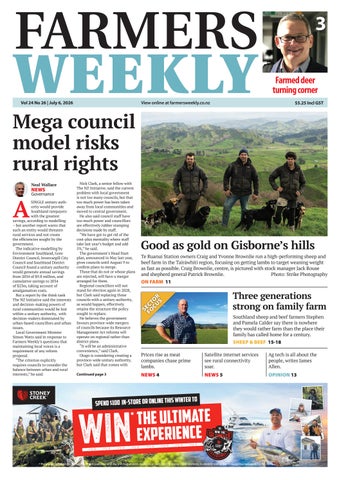

Mega council model risks rural rights

ASINGLE unitary authority would provide Southland ratepayers with the greatest savings, according to modelling – but another report warns that such an entity would threaten rural services and not create the efficiencies sought by the government.
The indicative modelling by Environment Southland, Gore District Council, Invercargill City Council and Southland District Council found a unitary authority would generate annual savings from 2034 of $9.8 million, and cumulative savings to 2034 of $23m, taking account of amalgamation costs.
But a report by the think tank
The NZ Initiative said the interests and decision-making powers of rural communities would be lost within a unitary authority, with decision-makers dominated by urban-based councillors and urban issues.
Local Government Minister Simon Watts said in response to Farmers Weekly’s questions that maintaining local voices is a requirement of any reform proposal.
“The criterion explicitly requires councils to consider the balance between urban and rural interests,” he said.
Nick Clark, a senior fellow with The NZ Initiative, said the current problem with local government is not too many councils, but that too much power has been taken away from local communities and moved to central government.
He also said council staff have too much power and councillors are effectively rubber stamping decisions made by staff.
“We have got to get rid of the cost-plus mentality where staff take last year’s budget and add 5%,” he said.
The government’s Head Start plan, announced in May last year, gives councils until August 9 to confirm plans to merge.
Those that do not or whose plans are rejected, will have a merger arranged for them.
Regional councillors will not stand for election again in 2028, but Clark said replacing those councils with a unitary authority, as would happen, effectively retains the structure the policy sought to replace.
He believes the government favours province-wide mergers of councils because its Resource Management Act reforms will operate on regional rather than district plans.
“It will be an administrative convenience,” said Clark.
Otago is considering creating a province-wide unitary authority, but Clark said that comes with
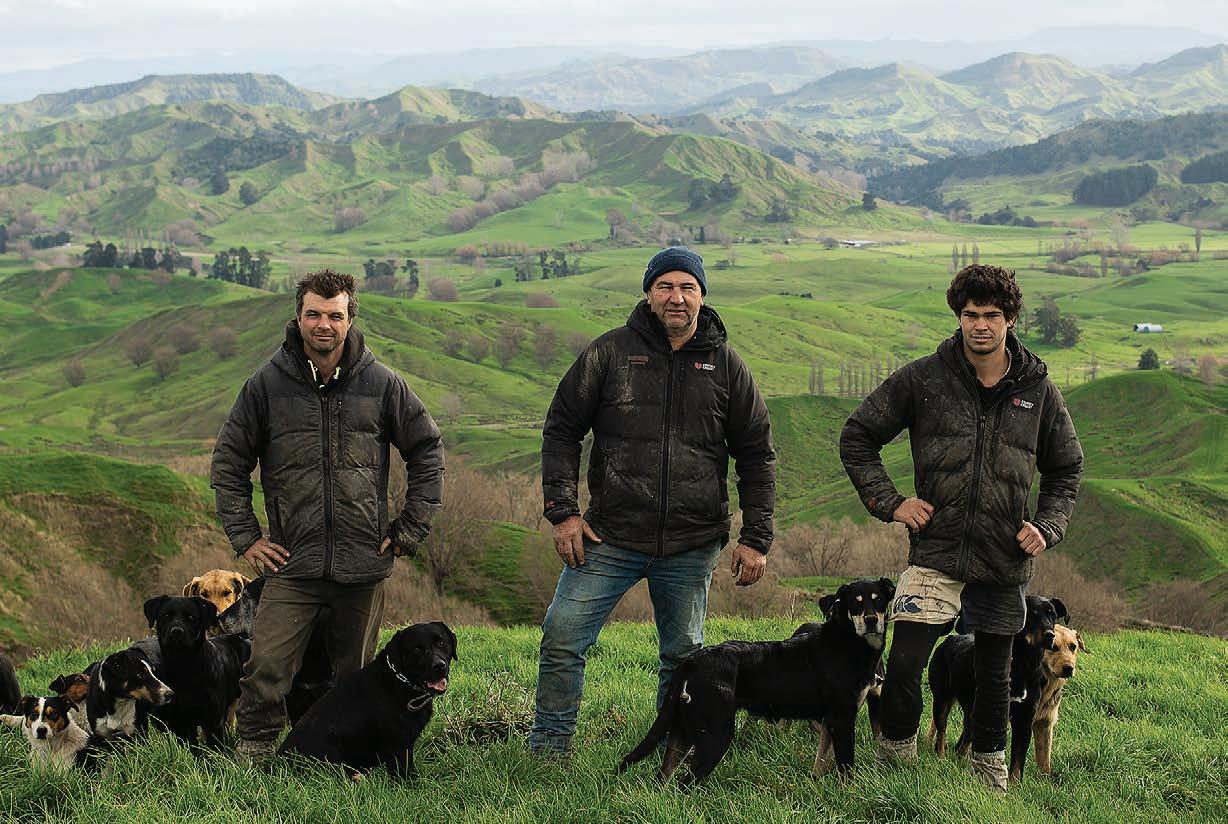
Good as gold on Gisborne’s hills
Te Ruanui Station owners Craig and Yvonne Brownlie run a high-performing sheep and beef farm in the Tairāwhiti region, focusing on getting lambs to target weaning weight as fast as possible. Craig Brownlie, centre, is pictured with stock manager Jack Rouse and shepherd general Patrick Brownlie.
Strike Photography ON FARM 11
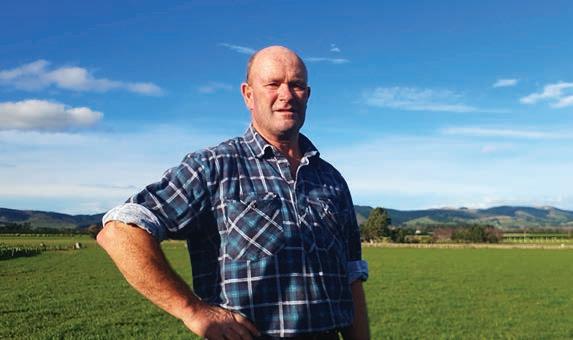
Three generations strong on family farm
Southland sheep and beef farmers Stephen and Pamela Calder say there is nowhere they would rather farm than the place their family has called home for a century.
SHEEP & BEEF 15-18







Photo:
EDITORIAL
Bryan Gibson | 06 323 1519
Managing Editor bryan.gibson@agrihq.co.nz
Craig Page | 03 470 2469
Deputy Editor craig.page@agrihq.co.nz
Claire Robertson
Sub-Editor claire.robertson@agrihq.co.nz
Neal Wallace | 03 474 9240
Journalist neal.wallace@agrihq.co.nz
Gerald Piddock | 027 486 8346 Journalist gerald.piddock@agrihq.co.nz
Annette Scott | 021 908 400 Journalist annette.scott@agrihq.co.nz
Hugh Stringleman | 027 474 4003 Journalist stringleman@outlook.co.nz
Richard Rennie | 027 475 4256 Journalist richard.rennie@agrihq.co.nz
Gerhard Uys | 027 239 4388 Journalist gerhard.uys@agrihq.co.nz
Nigel Stirling | 021 136 5570 Journalist nigel.g.stirling@gmail.com
Isabella Beale | 027 299 0596
Multimedia Journalist isabella.beale@agrihq.co.nz
PRODUCTION
Lana Kieselbach | 027 739 4295 production@agrihq.co.nz
ADVERTISING MATERIAL
Supply to: adcopy@agrihq.co.nz
SUBSCRIPTIONS & DELIVERY 0800 85 25 80 subs@agrihq.co.nz
PRINTER
Printed by NZME Delivered by Reach Media Ltd
SALES CONTACTS
Andy Whitson | 027 626 2269
Sales & Marketing Manager andy.whitson@agrihq.co.nz
Janine Aish | 027 300 5990
Auckland/Northland Partnership Manager janine.aish@agrihq.co.nz
Jody Anderson | 027 474 6094
Waikato/Bay of Plenty Partnership Manager jody.anderson@agrihq.co.nz
Palak Arora | 027 474 6095
Lower North Island Partnership Manager palak.arora@agrihq.co.nz
Andy Whitson | 027 626 2269
South Island Partnership Manager andy.whitson@agrihq.co.nz
Julie Hill | 027 705 7181
Marketplace Partnership Manager classifieds@agrihq.co.nz
Andrea Mansfield | 027 602 4925 National Livestock Manager livestock@agrihq.co.nz
Real Estate | 0800 85 25 80 realestate@agrihq.co.nz
Word Only Advertising | 0800 85 25 80 Marketplace wordads@agrihq.co.nz
PUBLISHERS
Dean and Cushla Williamson Phone: 027 323 9407 dean.williamson@agrihq.co.nz cushla.williamson@agrihq.co.nz
Farmers Weekly is Published by AgriHQ PO Box 529, Feilding 4740, New Zealand Phone: 0800 85 25 80 Website: www.farmersweekly.co.nz
ISSN 2463-6002 (Print) ISSN 2463-6010 (Online)
News in brief
New Zealand red meat exports reached $1.6 billion in May – a second consecutive monthly record that was 44% more than the same month last year.
It also exceeded the previous monthly record of $1.4bn set in April, according to the Meat Industry Association. The May data shows that sheepmeat exports were valued at $590.4 million, almost $17m above April’s record. Beef exports were worth $771m, up $163m from April.
Meat exports strong Synlait finance
Synlait has finalised a new bank financing arrangement totalling $320 million following discussions with new and existing lenders. In an announcement on NZX, the company said its new bank funding syndicate will be made up of ANZ Bank, China Construction Bank, Bank of China, Shanghai Rural Commercial Bank, HSBC, China Merchants Bank, Bank of Communications, Industrial Commercial Bank of China and Bank of Beijing.
Pig farm sold
Patoa Farms Limited, New Zealand’s largest pig farm, has been bought by a consortium. The consortium is led by David Lawton, Patoa’s longtime veterinarian, animal health and productivity consultant, and Nick Harris, managing director of Harris Farms Limited. Lawton said it is positive for the industry that the 900 hectare – about 5000-sow – farm in north Canterbury will be staying in local hands. The new owners intend to keep it operating as a pig farm.
Clearance given
Floorscape has been granted clearance by the Commerce Commission to acquire all of Bremworth’s shares, moving the flooring company a step further in its purchase of the NZX-listed company.
Floorscape is a subsidiary of Mohawk Industries, which also owns carpet manufacturer Godfrey Hirst NZ and will carry out the acquisition via the scheme of arrangement announced last year. The commission initially raised concerns about the acquisition, but is now satisfied it is unlikely to lessen competition in the soft flooring market.


Uptick in mated hinds lifts deer hopes
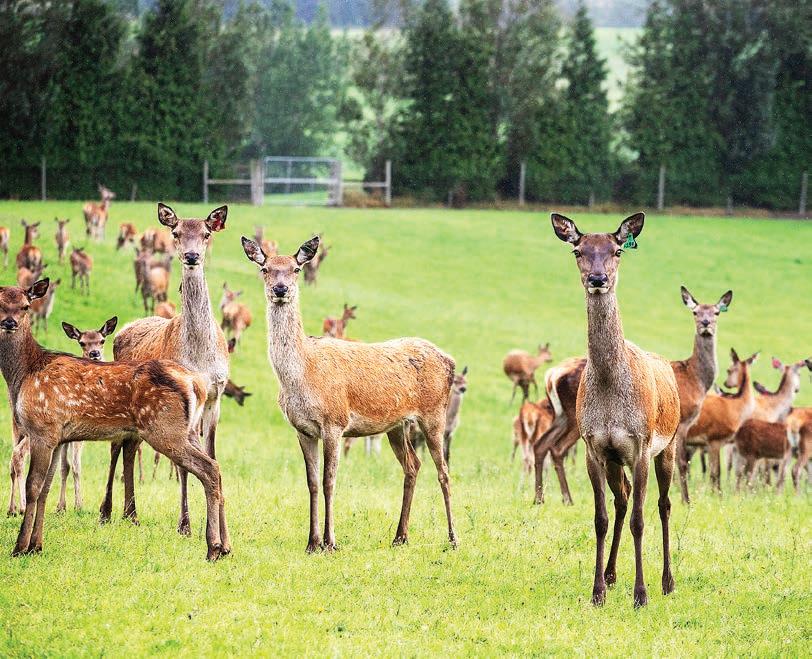
ADECADE of declining numbers of farmed deer may have been arrested with signs it is rebuilding along with a recovery in venison prices.
The number of farmed deer fell from 900,000 in 2015 to 709,000 in 2024 but Deer Industry NZ chief executive Rhys Griffiths said research shows the number of hinds mated this year is likely to be 3% higher.
The number of hinds mated fell over that same period from 430,500 to 290,000.
“We have arrested the decline and arguably turned the corner,” he said.
Venison was heavily exposed to the restaurant sector, which collapsed during covid and with it farmgate prices.
They fell to $6/kg in 2021, but AgriHQ reports current prices are $11/kg.
Deer Farmers Association chair Evan Potter said since covid the industry has successfully pivoted and changed venison markets, especially North American retail.
Continued from page 1
a risk that Dunedin, the largest population centre, and the rapidly expanding central Otago district, will dominate less-populated areas.
If bigger is better, Clark said, Auckland City would be the country’s best-performing council, but he describes its performance on multiple measures as “middle of the pack”.
Clark said the first principle for reform is to consider the function of government and the interests of communities and not embark on what he called a “knee-jerk reaction”.
He said farmed deer numbers appear to have stabilised and farmers are generally positive about the state of the industry.
Silver Fern Farms chief executive Dan Boulton told the Primary Industries NZ conference that United States retail sales of venison last year grew 48% year on year, and it is being stocked in more stores.
Griffiths said venison prices have stabilised, but velvet prices are being impacted by supply chain issues.
While not setting a target for the ideal number of deer farmed, Griffiths said any herd expansion must not compromise value and farmgate returns.
“If we do expand and we want to continue to deliver value back to the farm gate, then processing another 30%, from 240,000 a year to 340,000, is not out of sync.”
Deer farmers are becoming more productive.
Despite falling deer numbers, from 2015 to 2024 the export tonnage of venison increased from 14,869 tonnes, worth $174 million, to 15,544 tonnes worth $205m.
In 2015, 430,500 breeding hinds
“The key thing is to get the functions right.”
Ensuring rural community interests are considered will require that a second tier of governance such as local boards, which are independent, have a budget and the ability to set limited local bylaws.
The four Southland councils modelled four amalgamation options to compare the costs and savings for the region’s ratepayers.
“It is not designed to advocate for, nor predict, a preferred governance model,” said Environment Southland chair Jeremy McPhail.
It found having all councils
produced 352,568 fawns. Nine years later 290,000 hinds produced 247,000 fawns.
Velvet exports have increased from $39m to $104m.
Griffiths said the volume of velvet expected to be exported in the coming year will fall from 1200 tonnes to 1000 tonnes.
He said the sector has a goal
merge into one organisation would provide the greatest opportunity to consolidate corporate overheads and reduce duplication.
The modelling also looked at creating two unitary authorities, one urban and one rural, and two unitary councils alongside a regional business unit, which would deliver regional functions such as flood protection, catchment management, and biosecurity.
They were offered fewer financial benefits than a single entity.
A fourth option – establishing one unitary authority with a regional business unit – had
of doubling the value of all deer exports from about $332m in 2024 to $660m by 2035.
That would come from improved market access but also from scientific initiatives differentiating venison from other red meats, which will also enhance its position as a niche product.
Jarrod Stewart, Silver Fern
comparable benefits to a single unitary authority.
It was assessed as providing annual savings from 2034 of $9m, and cumulative savings to 2034 of $19.3m but would incur additional establishment costs creating and servicing the regional business unit.
The model’s primary assumptions were based on operating and capital costs not revenue or assets, and excluded interest and depreciation. These would not materially change as a result of council structure.
McPhail said the biggest pressure on rates is not operating costs, but infrastructure
Farms’ chief supply officer, said demand for venison is not a constraint.
“We are confident the market can absorb more venison, and over time that presents a real opportunity for the sector.”
We have arrested the decline and arguably turned the corner.
Rhys Griffiths Deer Industry NZ
Stewart said there is renewed confidence in the sector and with the right market signals and a focus on value, there is potential for consumer demand to lead to more growth.
Since covid, SFF has deliberately diversified beyond the traditional European base into the US and China.
“The US in particular is becoming an increasingly important market as consumers look for high-quality, natural proteins with strong sustainability credentials.”
In 2025 43% of venison exports went to the US, 34% to Asian countries and 23% to Europe.
investment and asset renewal. Savings from amalgamation would be modest and realised over the long term, but transition costs, such as aligning systems and workforce, would be significant and immediate.
Watts said the current local government system is too complex, too costly, and too hard to navigate. Reforms must not to be overly prescriptive about a replacement structure, but it must be deliverable, support the new planning system, simplify local governance, achieve economies of scale, and maintain local voices.

MORE MATED: There was a small increase in the number of hinds mated last year, says Deer Industry NZ chief executive Rhys Griffiths.
Neal Wallace NEWS Deer
Considered stewardship nets top trophy
SOUTHLAND deer farmers and dairy grazers Michelle and Tony Roberts are this year’s winners of the Gordon Stephenson Trophy, which rewards sustainable land management by farmers and growers.
They were selected from 11 Ballance Farm Environment Award Regional Supreme Winners at a national sustainability showcase in Christchurch on Thursday night, hosted by the New Zealand Farm Environment Trust.
For the next year the Robertses will be the national ambassadors for sustainable farming and growing.
The couple farm Top Deck Trading, a 269 hectare property at Merino Downs near Gore, where they specialise in deer, producing velvet and trophy bucks alongside intensive dairy heifer grazing.
They moved to Southland and a sharemilking role from the North Island in the mid-1990s, with the
goal of creating opportunities for their family.
Today they farm 667 Red and 635 Fallow deer and 220 rising oneyear-old dairy heifers.
They have installed biodiversity corridors, retired wetlands and marginal areas, improved water quality and enhanced biodiversity.
They chased a dream, worked their way from sharemilking into farm ownership and then built the business they have today.
They were among the first to trial Nedap Smart Tags on deer, using the dairy technology to monitor rumination activity and heat detection to assist a deer embryo transfer programme.
Head judge Karen Williams said the couple embody everything the national ambassador role represents.
“They chased a dream, worked their way from sharemilking into farm ownership and then built the business they have today.
“Their story gives hope to others that this pathway is still possible.”
The couple’s greatest strength is the way they complement one another.
“Tony is always looking around corners. He’s prepared to challenge conventional thinking, embrace new technology and ask, ‘Why not?’”
Williams said Michelle is exceptional at turning a great idea into a sustainable reality, maintaining a simple rule that new ideas sit for three days before any decisions are made.
“Together they create a really balanced partnership.”
Michelle is a sector leader in her own right, including serving on Southland’s Regional Forum to help guide freshwater management.
Williams said the couple’s gates are always open to visitors, including students and community groups.
Daughter Kate Roberts and her
partner Mark Lieshout are now part of the business in a long-term succession plan.
As the 2026 national ambassadors for sustainable farming and growing, the Robertses will for the
coming year represent the New Zealand Farm Environment Trust, telling their story and encouraging others to embark on continuous improvement and environmental stewardship.
Prices continue to rise as market chases prime lambs
THE AgriHQ prime lamb indicator price is closing in on AFFCO’s record-setting winter lamb contracts, which peak at $12.20/ kg, as meat companies use procurement premiums to attract stock.
AgriHQ senior analyst Mel Croad said last week’s lamb indicator price of $11.45/kg in the South Island and $11.55/kg in the north was getting close to AFFCO’s winter contract for lambs supplied from June 28 to October 31, which peaks in September at $12.20/kg. Current prices are almost $2/kg higher than this time last year.
Croad said when winter lamb contracts were announced in May, the flow of stock to meatworks tightened through June, prompting meat companies to offer procurement incentives.
While market demand has underpinned high prices for much of the past year, farmgate prices have risen faster over winter than expected due to company incentives.
“The recent upside at the farmgate has been domestically driven due to the lack of supply, not because export markets are demanding more,” she said.
Those incentives have seen the schedule for sheep and cattle lift by up to 10c/kg a week, with some spot deals for lambs hitting $12/kg
and for mutton over $8/kg.
Beef prices have also held up despite the key United States market being under intense supply pressure with beef from Australia and Brazil.
New Zealand beef exports to the US are high after a large bull
The recent upside at the farmgate has been domestically driven due to the lack of supply, not because export markets are demanding more.
Mel Croad AgriHQ
and cull cow kill in May, while Australia has filled its beef quota to China so is diverting product to the US to avoid a 55% tariff.
Large volumes of Brazilian beef have also been entering the US and could increase further when it fills its quota to China in the next four to five weeks.
“Everybody is targeting the US. The question is, how is it going to develop given those volumes?”
Meanwhile, processors are chasing cull dry ewes with this week’s AgriHQ indicator mutton price in the South Island $7.60/kg and $7.45/kg in the North Island, although there have been sales at $8/kg and above.
Last year the indicator was $4.75/kg.
Demand from export markets for mutton has grown in the past two months, Croad said.
Prices and demand for lamb from China have improved, but Croad described Europe as “flat to stable”.
“Europe has not shown any upside since March and there are signs of some pricing fatigue.”
Seasonally lower volumes of export lamb over the next few months could give that market a breather, she said.
Scanned-in-lamb ewes continue to sell in North Island saleyards last week. They met with strong demand, with AgriHQ reporting prices from $230 to $330/head. Paddock sale prices are roughly in line with those levels as well.
Neal Wallace PEOPLE Environment
Neal Wallace MARKETS Sheep and beef
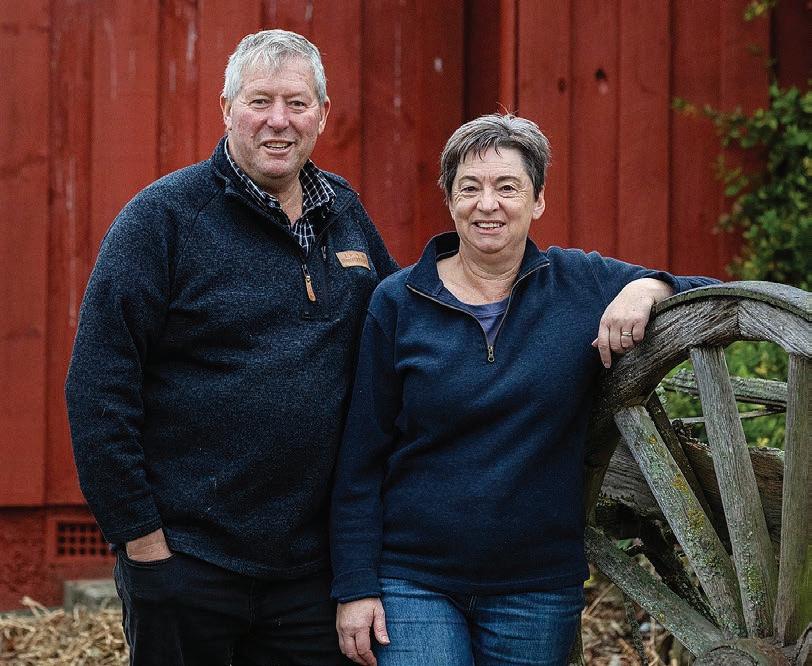
WINNERS: Southland deer farmers and dairy grazers Michelle and Tony Roberts are this year’s winners of the Gordon Stephenson Trophy for sustainable farming.
Photo Alan Gibson
Karen Williams NZ Farm Environment Trust
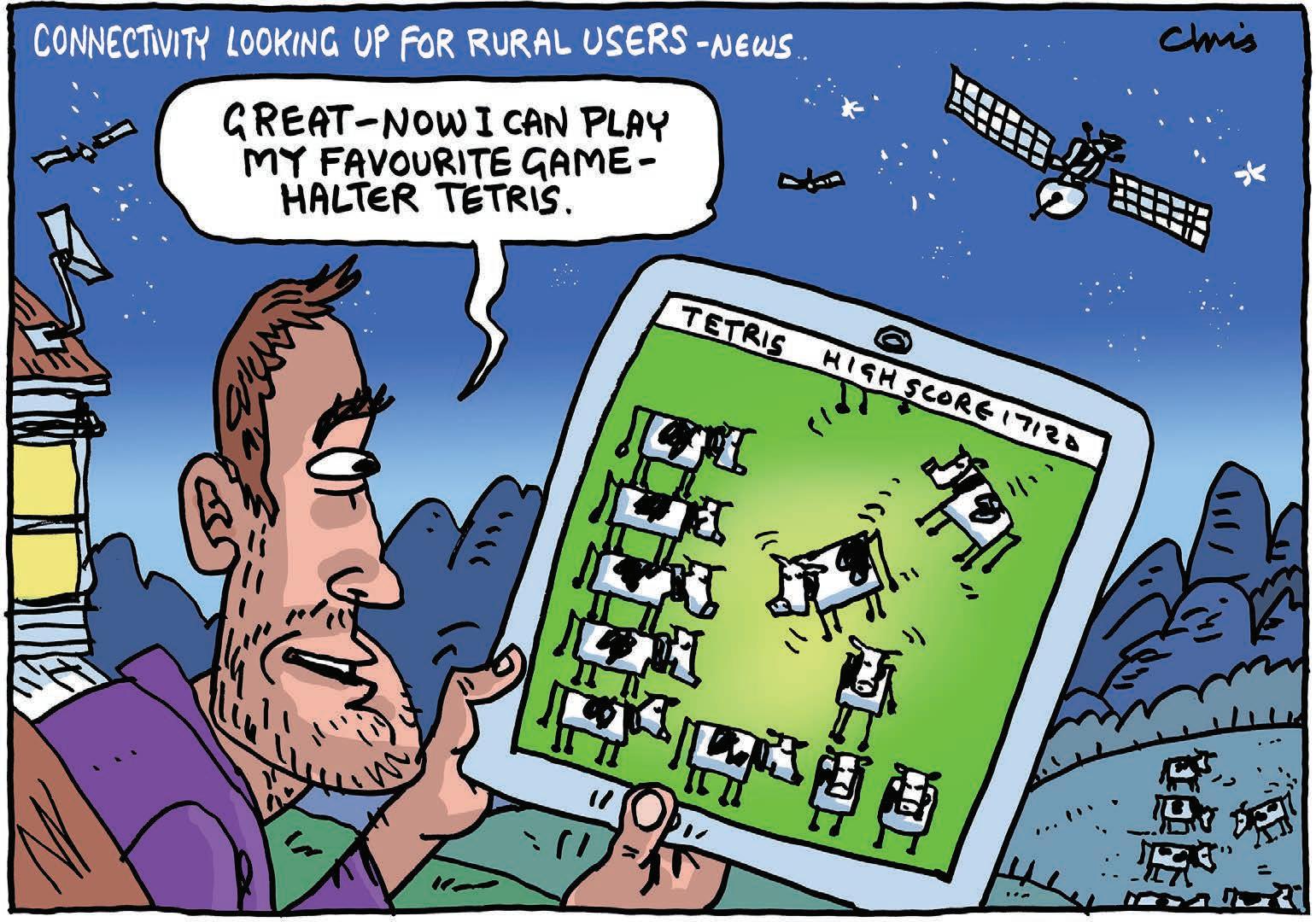
Connectivity looking up for rural users

Richard Rennie TECHNOLOGY Communications
THE latest Commerce Commission report on New Zealand’s internet use says rural NZ has taken to satellite internet services with a vengeance in the past year.
The annual telecommunications monitoring report highlights the fact that, while the urban landscape for internet connectivity is now relatively stable and mature, in rural areas a hybrid mix of technology types is coming into play –delivering rural users internet speeds often rivalling those of their urban cousins.
Telecommunications Commissioner Tristan Gilbertson said the evolution of new tech, including low Earth orbit (LEO) satellites, is the most significant development in this year’s report.
“Over the past decade fibre has transformed connectivity in urban NZ. We are now seeing satellite technologies reshaping rural connectivity in much the same way,” he said.
Rural NZ’s appetite for satellite connectivity is reflected in the country having the highest per capita rate of satellite broadband uptake in the OECD.
Rural users have leapt at the opportunity to adopt tech capable of delivering speeds up to four times faster than its next fastest rural alternative.
Space X’s Starlink LEO service now accounts for 27% of rural broadband connections and is becoming the country’s largest broadband provider.
The move from old copper lines has hastened the adoption of links from the sky. But Starlink’s dominance has also come with calls from tech providers to open more radio spectrum to reduce the dominance of the service provider.
Amazon is due to launch its own satellite system in coming months, initially over Australia, and industry players see this bringing much-needed competition to Space X’s dominance.
Rocket Lab has also recently acquired satellite company Iridium to take on Space X’s Starlink service.
Gilbertson likened the uptake of satellite tech in rural communities to the transformation fibre has brought about on urban connectivity.
The report also highlights how a mix of other tech, including fixed wireless access (FWA) and direct to cell (D2C) satellite services, are also now active.
The report’s authors note that while consumer choice for rural users has increased, so too has the complexity of making that choice, with comparisons needed on coverage, costs, performance and reliability.
After years of building new cell towers and fibre rollout, much of the large-scale infrastructure work is also coming to an end, with investment declining by 9% in the year.
However, the rapid ascent of LEO tech means rural areas are now less dependent upon land-based infrastructure turning up before adoption is possible.
Gilbertson said more satellite providers are expected to enter the market, while D2C satellite services are extending mobile coverage.

This week’s poll question:
Are you happy with the quality of internet coverage in your region?
SPACED: More rural New Zealanders are looking overhead for higher-speed internet in areas where land-based networks don’t reach, the latest monitoring report has found.
Out here, there’s no off switch The day starts well before the sun rises, and work carries on long after it goes down And you wouldn’t have it any other way. Because progress doesn’t wait. Ideas don’t stay still And tomorrow doesn’t come with an instruction manual We get it Because we ’ re rural, too
Farmlands is 100% owned by farmers and growers –always has been So no matter what’s keeping you up, what’s sending you down to the paddock, whatever plan you have for your business, we’ll be right there with you, because rural never rests.
Wild weather prompts fears for future

Rebecca Greaves NEWS Weather
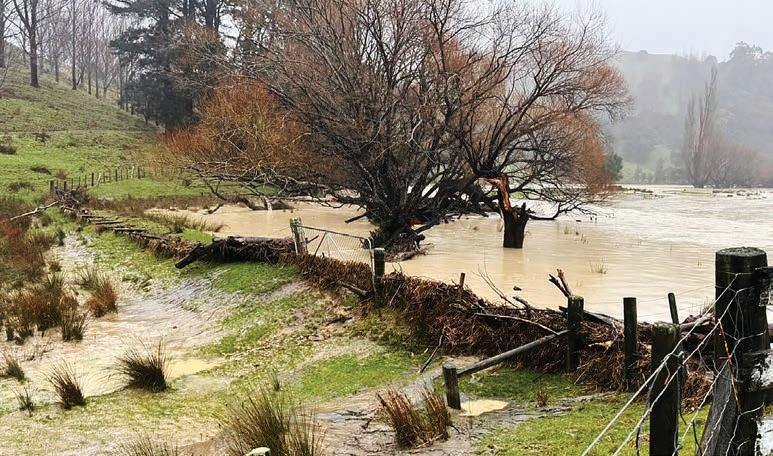
RURAL residents in small, isolated communities cut off by the extreme weather after part of the Tūranganui River bridge washed out for the second time this year are wondering what the future holds for the coastal Cape Palliser road.
Alex Morrissey and her family were stranded on the other side of the bridge for the second time this year. She said fences only just reerected following February’s flood have been wiped out again, land slips are impeding access on farm and farmers are faced with stock being struck on one side of the river, while they are on the other. She and her husband, who farm at Whangāimoana, have three children aged five and under and
Matt Sims says the force of the river was quite incredible to witness, with fence posts being popped out of the ground and laid flat.
no clean house water. Their water pipes were taken out by last week’s flooding and Morrissey said the water source has obviously become contaminated.
“My husband replaced the pipes yesterday and I just turned on the tap and it’s basically flood water, it’s brown with sediment and dirt.”
Morrissey said there needs to be a long-term solution.
“They keep saying we are a small, isolated rural area, but what is the end game? This road is so vulnerable. If we want people to keep living and operating businesses in this region we need a proper solution.”
Farmers around south Wairarapa also face a lengthy clean-up after the flooding wreaked havoc on the district, with more than 400ml falling over three days in parts of the region.
Matt Sims lives in Martinborough but commutes daily to his family’s
hill country sheep and beef farm in Tuturumuri, between Martinborough and Tora. He found himself stuck at the farm on Friday when the roads became impassable.
“It was hectic. Being farmers, you keep an eye on the weather. We were scanning Wednesday and Thursday [June 23, 24] so we were busy doing that. When we looked at the weather on Thursday morning, Dad and I thought there was something brewing. It’s that classic southerly weather bomb that stalled right on top of us,” he said.
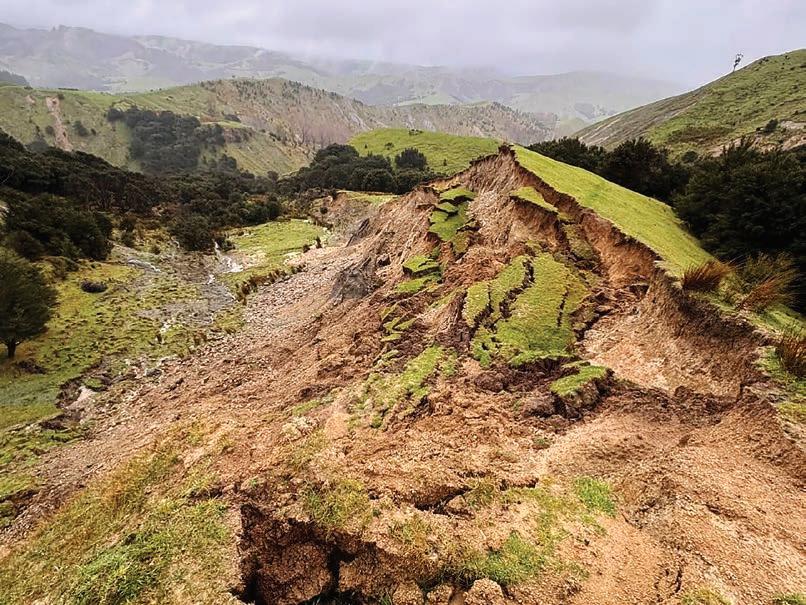
“It’s pretty bad, quite a lot of slips. The back country is argillite and that’s held on quite well but the low-lying small hills have taken the brunt. There are just consistent slips all in a row that stock will get stuck in, no doubt, so we’ll have to have eyes in the back of our head watching everything.”
Bull sales still strong with season end in sight

Gerhard Uys MARKETS
WITH bull sales nearing their end for the season, prices have continued to be strong.
Orere Angus, Gisborne, cleared 25/25 with an average price of $14,880 and a top price of $38,000 for Lot 1 to Merchiston Angus Manawatū.
Kenhardt Angus, Nuhaka North, cleared 54/54 with an average price of $16,203 and a top price of $65,000 for Lot 3, to Sudeley Angus and Red Oak Angus.
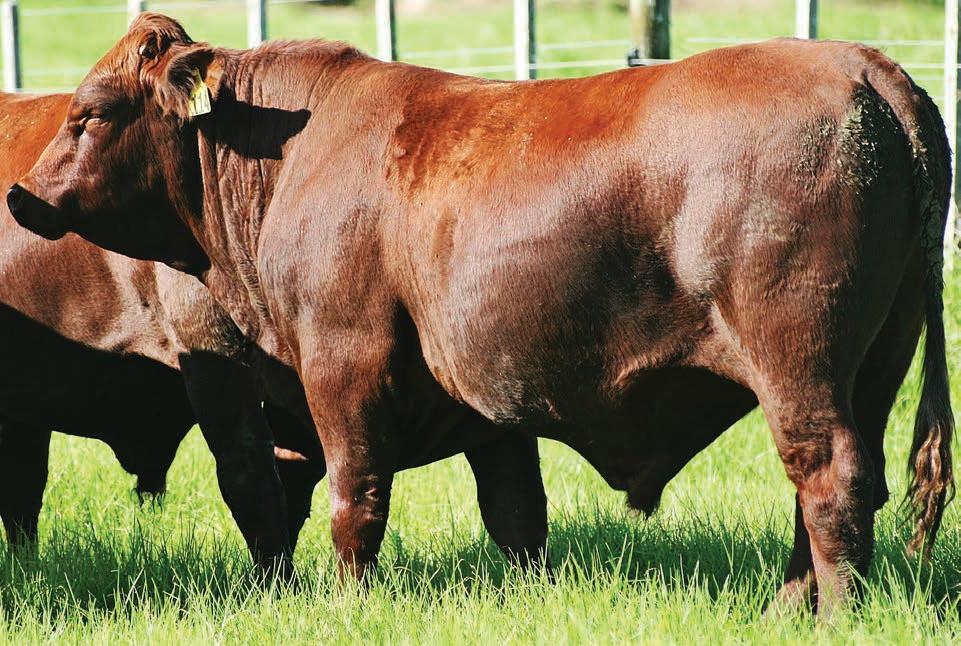
Glenrossie Beef Shorthorn and Santa Gertrudis Stud, Whangārei Heads, sold 12/16 of their Shorthorns with an average price of $7208, and fetched a top price of $10,000 for three of their bulls – Lot 1, Lot 2 and Lot 7.
Glenrossie cleared 3/5 Santa Gertrudis, with an average price of $6800 and a top price of $10,200 for Lot 18.
Seven Hills Angus, Eketahuna, sold 32/41 with an average price of $11,140 and a top price of $20,000 to a commercial buyer. A full season review will be published on July 13
flat. He reckons it was on par with the 2004 flood, if not worse.
Much of their roadside fencing has been flattened and Sims said the force of the river was quite incredible to witness, with fence posts being popped out of the ground and laid
“She’s a bit of a mess, but we are pretty used to it. We’ve had three floods this year. There was a gnarly southerly with wind back in February and a lot of debris came down, I think a lot of that’s been brought down the river with this flood. All our floodgate infrastructure is gone.”
“I think we got bloody lucky to be honest. It was realising something was coming and trusting that gut feeling. It’s carnage out there. It would have been nice to have a jet boat, though.”
Sims said the floods have highlighted the important role poplar trees play in stabilising land.
“Poplars just save hill country. When you look around, it certainly works.”
Sims said it was fortunate he decided to move 200 hoggets, which were in a flat paddock that the river runs through, on Thursday. He believes they have probably lost some ewes that were in a low-lying paddock.
Livestock
TOP PRICE: Glenrossie Beef Shorthorn and Santa Gertrudis Stud, Whangārei Heads, sold Santa Gertrudis Lot 18 for the top price of $10,200.
SLIDING: Matt Sims says the low-lying small hills on their farm have been hit by extensive slipping. Photos: Supplied
POWER:
EU genetics shift lights fire under NZ lawmakers
Richard
Rennie MARKETS Genetics
SCIENTISTS and commercial plant breeders say the future of New Zealand’s valuable vegetable seed trade with the European Union is under threat after the EU announced changes to genetic technology regulations.
The EU parliament has just voted to allow the use of genetically edited plant material in a move coming sooner than pundits expected. The rules will come into effect within two years.
NZ plays a valuable role in the EU’s vegetable seed production cycle, with European seed companies contracting NZ growers to multiply vegetable seed volume counter-seasonally.
Over 40% of NZ’s $330 million seed export industry’s revenue in 2025 was from exported vegetable seeds. The EU accounted for almost two-thirds of this, well ahead of the next largest market, Asia, at 23%.
“We understand EU breeders will be very excited about the change because their breeding programmes will speed up
significantly and the opportunities for developing traits beneficial to consumers opens up,” said Dr Sarah Clark, CEO of Seed and Grains NZ Clark said there is now a real chance – if NZ’s gene regulation rules are not in harmony with the EU’s, and if EU companies wish to grow NGT-1 (new genomic technique) modified plants – that NZ could be shut out of the EU market.
This move absolutely puts us further behind. The FTA with the EU will be no use if our laws prevent them sending seeds to us.
Dr Revel Drummond Bioeconomy Science Institute
NGT-1 is the lowest level of modification on the EU’s proposed tiered system, where naturally occurring mutations can be made using genetic techniques.
Bioeconomy Science Institute molecular scientist Dr Revel Drummond also flagged the regulations’ implications for New Zealand’s vegetable seed trade.
He pointed to NZ’s vulnerability if it continues its tight regulations, possibly leading EU companies to look to areas like South America as an alternate growing hub.
The Mercosur trade bloc comprising Argentina, Brazil, Paraguay, Uruguay and Bolivia has reached collective agreement on genetic technology ensuring coordinated approval of the tech’s use across the region.
“This move [by the EU] absolutely puts us further behind. The FTA with the EU will be no use if our laws prevent them sending seeds to us.”
Colin Eady, science manager at seed company Barenbrug, said his company’s quickest gains from the EU change would come in the field of forage quality improvement.
But, he said, it could be possible other growing regions may have to be considered if NZ cannot adopt regulations similar to the EU.
Clark said another issue is how EU changes impact NZ breeders. NZ-owned breeding companies investing heavily in breeding programmes for varieties to sell internationally will find it more difficult to compete with EU companies that have had the NGT1 barrier removed.
The breeding pipeline for NGT-1 gene-edited plants is typically two to six years, compared to eight to 10 for conventional breeding.
Dr John Caradus, chief technology officer for AgResearchowned Grasslanz Technology, told Farmers Weekly any inability for NZ to grow and supply seed to Europe would be a serious concern for an already fragile arable sector.
“NZ absolutely needs to ensure its gene technology regulations are at the very least aligned with those being installed in Europe and UK.”
A rewrite of the Genetic
Dr Sarah Clark, CEO for Seed and Grain NZ, says changes to EU GE regulations mean NZ seed companies risk losing significant competitive edge to the new GE technologies European competitors will employ.


Technology Bill in NZ is currently being drafted and is due for release shortly.
Labour leader Chris Hipkins said at the Primary Industries of NZ Summit that he is open to working with the coalition government to establish a bipartisan position on the Gene Technology Bill. Clark said it is important the government understands the impact of the EU rule change.
“If that can happen during a consultation of the revised Bill and secondary legislation before the election, we would support that approach.”






















MISSING:



Your par tner for all seasons
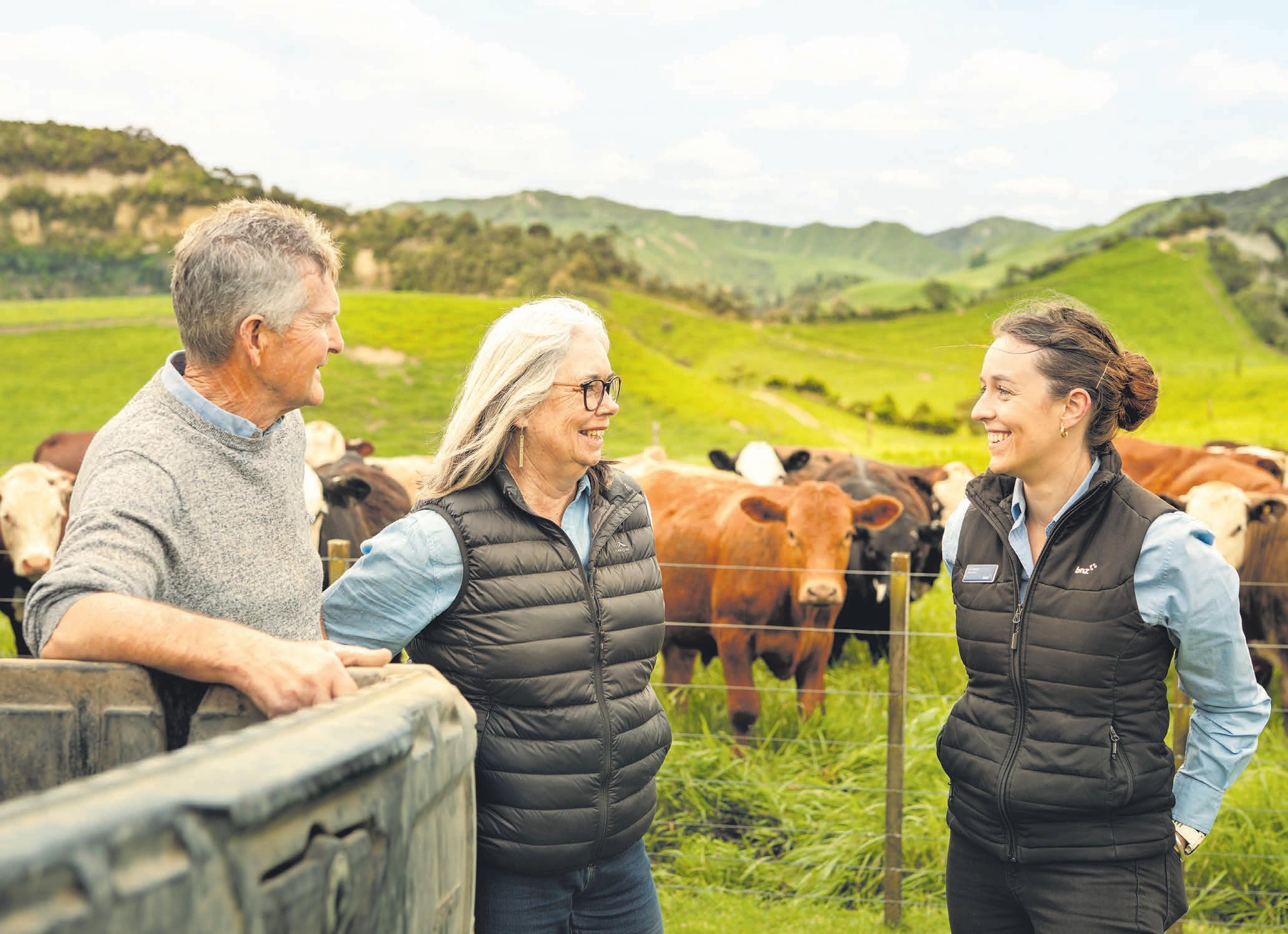
A dependable banking partner makes all the difference when conditions change. Agribusiness Partners, like Grace in Taranaki, bring deep sector knowledge, specialist support, and empowered decision making to help customers move forward with confidence. With more than 100 Agribusiness bankers across New Zealand, your Partner for all seasons is always within reach.
Milk solids up with the best on record

Gerald Piddock NEWS Fonterra
FONTERRA collected 1.5708 billion kilograms of milk solids from its farms last season – a 4.1% increase on 2024-2025 and the highest in a decade.
The total collection was the third highest on record, with only the 2013-2014 and 2014-2015 collections being higher, Fonterra farm source group director Anne Douglas said.
“The biggest contributing factor was the favourable weather conditions across most of the country, which helped with pasture growth,” Douglas said.
“We’re also continuing to see productivity gains made by farmers through things like
breeding improvements and maintaining high animal welfare standards.”
In 2013-2014, the co-op collected 1.584 billion kg MS and in 2014-2015, it collected 1.614 billion kg MS.
The co-op’s Global Dairy Update for May reported that milk production was up 4.5% for the 12 months to May. For that month, production increased by 5% compared to the same month the year prior.
In the North Island, it collected 885.9 million kg MS, 3.5% above the previous season, and in the South Island, collections were finalised at 684.9 million kg MS, 4.8% above the season before.
Milk collections for the month of May were up 5.8% for a record 81.5 million kg MS. In the North Island, 39.3 million kg MS were collected,
up 7.7% and in the South Island, 42.2 million kg MS were taken – a 4.1% jump compared to May last season.
The higher milk solids produced last season is a good news story for farmers as well as the wider economy, particularly considering almost 50 cents of every dollar that a farmer earns is spent in their local communities, Douglas said.
Elsewhere, Australia milk production increased 6.1% in April compared to the same period the year prior but was largely flat for the 12 months to April, down 0.2% on the previous comparable period.
European Union milk production was 4.2% higher in April and up 4.3% for the 12 months to April. In the United States, milk production increased 4.1% in May
and increased 4.7% for the 12 months to May on the previous comparable period.
New Zealand dairy exports leaped 16.3%, or 49,477 tonnes in May compared to the same period the year prior. Higher exports of WMP, SMP and butter drove the increase, with WMP up 43%, or 43,150t.
Fluid milk products declined 14.8%, or 6626t. Exports for the 12 months to May were up 2.3%, or 82,250t on the prior comparable period.
The increase was mainly due to higher export volumes of WMP and supported by butter, milk protein concentrate and milk protein isolate.
Creditors let down as Waimarie Meats winds up
FARMERS and transport operators owed thousands by a failed Whanganui meat company may have reached the end of the road to recover funds totalling over $1 million.
Waimarie Meats went bust two years ago and was placed into liquidation owing almost $1.7m, including $1.3m to unsecured creditors.
Among those unsecured creditors were multiple transport operators across the lower North Island and farmers supplying stock.
Two years on, the final report from official liquidators, the NZ Insolvency and Trustee Service, shows little hope for out-ofpocket creditors. It reports zero
recoveries and zero assets capable of repaying them.
Akitio farmer Dan Ramsden’s
family were among some of the hardest hit farm suppliers to Waimarie, reporting almost $200,000 of stock sold that they never received payment for.
He told Farmers Weekly the news of no final repayment is another chapter in what has been a tough time for the family.
Nigel Castles, owner of Dannevirke Carriers, was originally owed between $6000-$10,000 by Waimarie.
He said he felt fortunate to have only been owed what he was.
Farm business trustee Andrew Field was one of the plaintiffs who initiated Waimarie’s liquidation. His trustee farm was owed $100,000 by Waimarie for stock sold.
He was particularly critical of the structure Waimarie was operating under.
Waimarie Meats GP Limited was
placed into liquidation, but it was a general partner with another identity, Waimarie Meats Limited Partnership (LP).
The GP company did not own the assets of the LP company.
The meat company operation was conducted through the LP partnership, not Waimarie Meats GP Limited. The LP partnership was also liquidated.
Russell Fildes, national manager for the office of the official assignee, confirmed with Farmers Weekly that Waimarie Meats GP did not hold any realisable assets from which a distribution could be made to creditors.
In relation to the limited partnership (Waimarie Meats Partnership LP), Kiwibank held security over its assets, and this entitled it to the proceeds of those assets.
The two partners of Waimarie
GP are Murray Ludlow Owles of Northland and Bryan Terry Lester of New Plymouth.
“These two individuals hid behind another company and didn’t have the finances to make payment for stock, and therefore should have been personally liable,” said Field.
Lester told Farmers Weekly he had not yet seen the liquidator’s final report. He confirmed the Whanganui processing plant had not been sold.
“That was owned by a trust and the partnership leased it off that trust, and it owes the trust a couple of million dollars,” he said. He said he knew what went wrong with Waimarie but was unable to discuss the reasons further.
Farmers Weekly has been unable to contact Owles, the other shareholder and director.








Richard Rennie NEWS Processing
FINISHED: The final stages of the Waimarie Meats liquidation offer little hope for unsecured creditors still owed thousands by the failed processing company.
Good as gold on Gisborne’s steep hills
TE RUANUI Station
owners Craig and Yvonne Brownlie run a high-performing sheep and beef farm in the Tairāwhiti region focusing on getting their lambs to their 35kg target weaning weight as fast as possible.
It’s a key driver for their whole business on the 1600 hectare hill country station.
“That’s my No 1 thing. Even my cattle policies are geared towards driving sheep weaning weights –that’s what drives our business,” Craig said.
Having two 35kg lambs weaning off their ewe is gold for the Brownlies. It sets up the lambs to leave the farm at their target weight.
“We try and get at least 60% of the terminal lambs off their mothers at 100 days,” he said.
Even going into winter now, we’re getting rain and we have heaps of grass and I’ve said to our staff that I want to get everything right so we give ourselves a maximum chance of having good lambs at weaning.”
If the lambs are in poor condition heading into a dry period, it will put them on the back foot.
“You’ll take a bath. They won’t be worth anything and they have to be able to get on the truck to the works.”
If the weather does turn this season, Craig may look to reduce cattle numbers or sell their lambs as store in a worst-case scenario.
Their operation is divided over three properties that combined are 1405ha effective. Two are 650ha and the third block is 300ha, with 195ha being native bush.
Two of the blocks are less than five minutes away from each other while the third is a 30 minute drive.
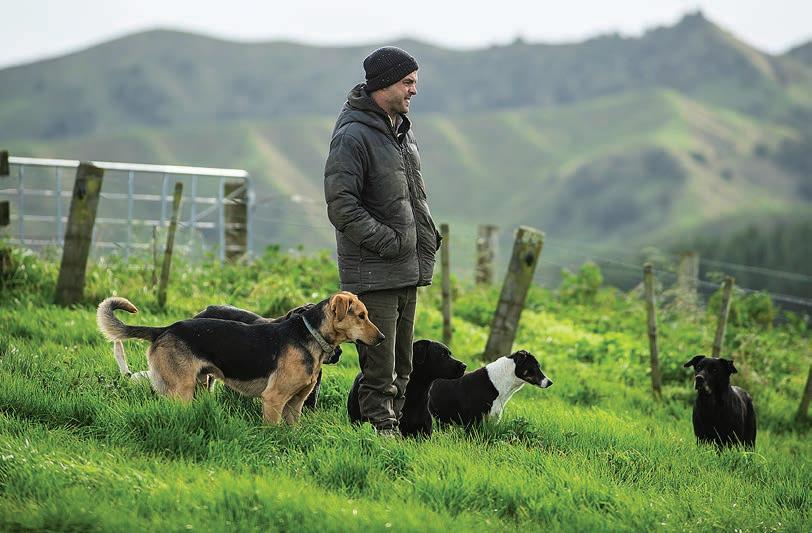
“In Gisborne, the best opportunity to kill lambs is off the mothers. We have a good enough soil and good enough growing season to nail it pre-Christmas if we can and that lowers the high lamb numbers burden on the farm.
“We’re trying to clear the decks of lambs, but we don’t want to sell anything as store.”
Hitting that target means they will be killing over half their lambs. It opens up the rest of the farm for the cattle.
This will be key, with meteorologists forecasting an El Niño this coming spring and summer.
“It does change your thinking.
The three blocks get around 1200-1500mm of rain a year, making it summer safe. It has 30% easier hill country, the rest in steeper areas and a very small area of flatter land. It ranges from 200 metres to 600m above sea level.
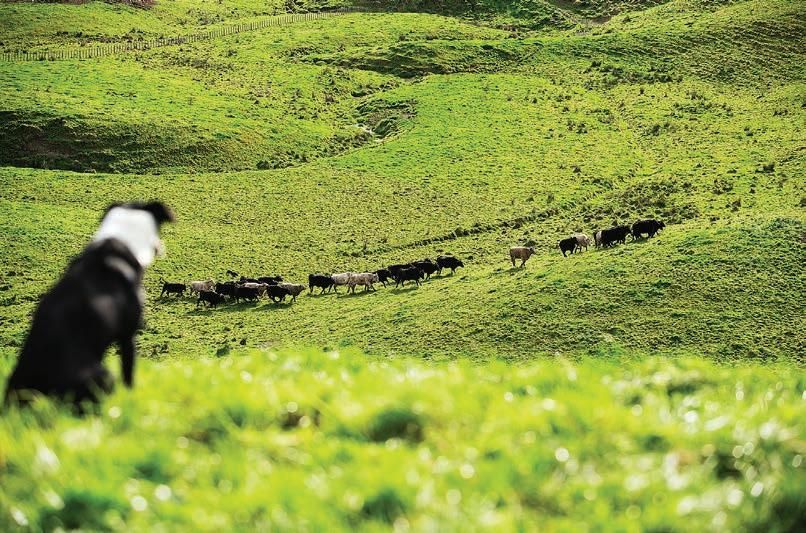
The three blocks are integrated, with one used predominantly for sheep and cattle finishing. The second is used for sheep and cattle breeding and the third for lamb finishing.
It is a breeding and finishing operation running 14,000 stock units. These include 7200 sheep comprising of 6000 Romney ewes, ewe hoggets and Poll Dorset stud ewes with all lambs from the
commercial flock finished.
It runs 1300 Hereford and Angus cattle that comprise of 500 breeding cows and the balance being their progeny, which are finished.
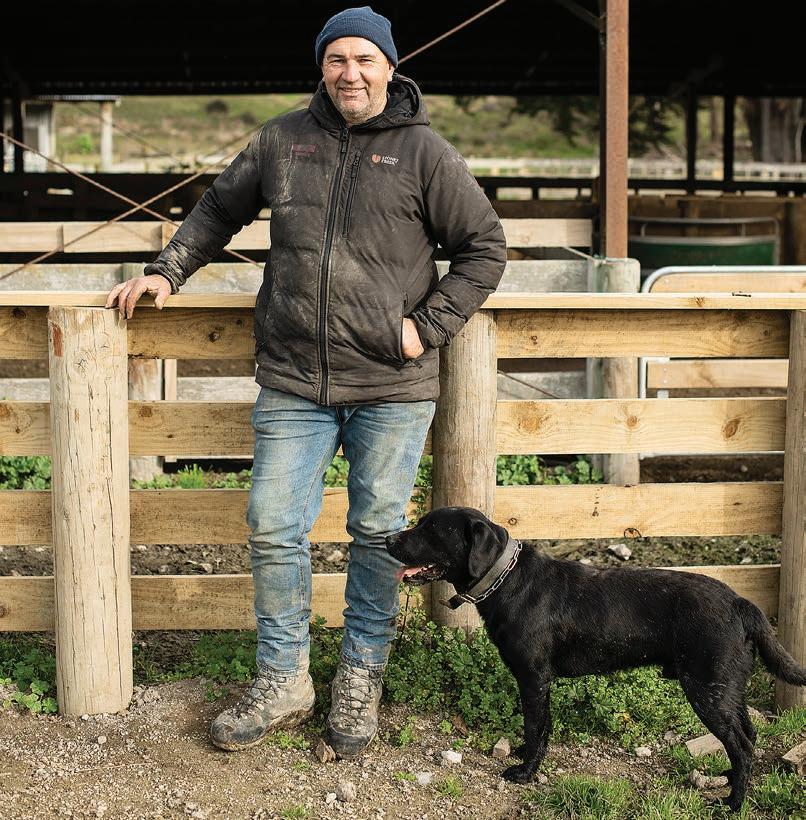
The Brownlies have two staff – stock manager Jack Rouse and shepherd general Patrick Brownlie. Yvonne said they are lucky to have two highly motivated, hard workers with a can-do attitude.
The Brownlies sell around 200 Poll Dorset two-tooth rams every year under their stud’s name Te Ruanui Poll Dorsets.
Two-thirds of their Romney terminal ewes are mated to these rams, and they buy in more Romney ewes if they need to top up their numbers.
The early lambing ewes in the commercial ewe flock are mated on February 20, and the rest are mated early April, including the stud ewes. Their hoggets are also mated, going to the ram on May 1.
Scanning takes place in May and June ahead of lambing, which starts in July.
The average scanning percentages across both flocks is 180%. They do not scan the commercial ewes for triplets, but they do for their stud ewes.
They run the single-, twin- and triplet-bearing ewes together and the two-tooth ewes and the older ewes together as well.
Post Christmas through to May they try to finish off the rest of their lambs, with around 1000 a month leaving the farm.
The stud stock has a heavy focus on meat yields and relies on DNA and EMA testing to predict carcase yields and to help guide breeding decisions around structural soundness and growth rates.
“Type is really important to us. I’m not just going to go straight off numbers. We have to be happy to look at them as well – they need to be able to go the distance,” Craig said.
“The real importance is sheep that can perform and can be killed at 100 days and that’s the main goal with the stud.
“It’s something that our clients all need and it’s something we try really hard to achieve.”
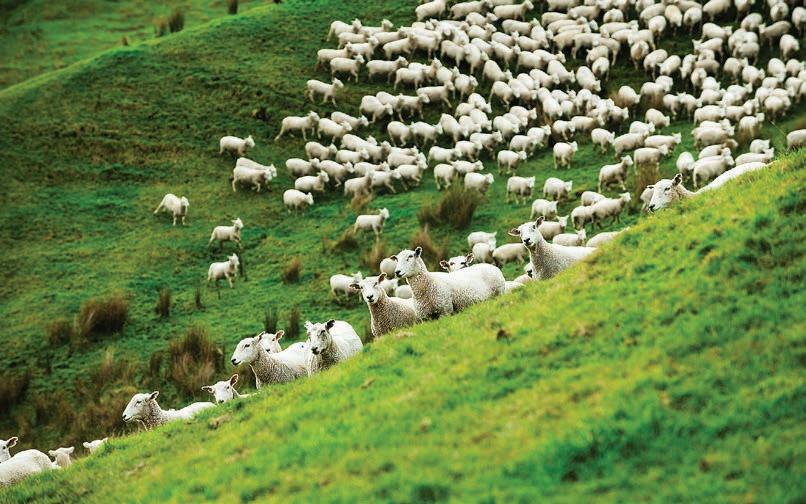
They chose the Romney breed for their commercial flock because of its strength and ability to handle steep hill country.
“They move well, they’re not as sluggish as some breeds and they
are eczema tolerant,” he said.
For the stud, Poll Dorsets are used because the resulting crossbred lamb combines the hardiness of the Romney and the Poll Dorset’s growth rates.
It also crosses well with farmers who use other breeds such as Coopworth.
Even my cattle policies are geared towards driving sheep weaning weights – that’s what drives our business.
The ewes and stud lambs are also DNA tested and monitored for growth rates. Their annual ram auction is around December 10, when about 150 rams are sold with all of the genetic information available to the purchaser.
They cull their ewes on structural weakness and if they fail to get in lamb as a hogget.
Their breeding cows are mated in late December and calve in October. The calves are weaned in April and wintered on a swede crop during their first year.
This year they will have around
300 weaner calves on that crop and 150 on grass. Cull heifers are culled in May at 20 months and the first line of steers are sent to SFF starting July 1.
The rest of the steers and heifers are gone in spring to February as two-year-olds, with target weights of 260kg for the heifers and 590600kg for the steers.
The steers are finished in mobs of 50 on smaller grazing paddocks in a system similar to cell grazing. The Brownlies are watching with interest to see how virtual fencing technologies such as Halter might be incorporated into this system.
“Some of our neighbours have got it now and some of our paddocks are quite big and it might be suitable for our cattle to improve our grazing,” Craig said. They are long-term suppliers to Silver Fern Farms for both of their lambs and cattle. Craig said they are “100% committed” to the company.
“They are leading the way with their NZFAP Plus programme –and we have worked with them on all of that and we have NZFAP gold status.
“We like where they are going. They are trying to keep farming sustainable, positive and alive,” Yvonne said.
Having that gold status gives them a premium on their supplier contract.
Like most farmers, they find rising input costs are their biggest challenge. They also farm in an isolated region and is hard to get resources such as fertiliser and that does elevate costs.
But it’s a great farming district with a warm climate and produces a lot of grass despite its rough exterior, he said.
“The good thing about it is the people here and we have a really good farming district, better than a lot of people give it credit for.
“We’re bloody lucky being here.”
This article was made possible by Silver Fern Farms.
Gerald Piddock NEWS Sheep and beef
SPREAD OUT: Craig and Yvonne Brownlie’s operation is divided over three properties that combined are 1405ha effective.
Photos: Strike Photography
MANAGER: Te Ruanui Station stock manager Jack Rouse is one of two staff helping the Brownlies run the hill country station.
FINISHING: The Brownlies’ steers are finished in mobs of 50 on smaller grazing paddocks in a system similar to cell grazing.
ADAPTING: The Brownlies chose the Romney breed for their commercial flock because of its strength and ability to handle steep Gisborne hill country.
Craig Brownlie Te Ruanui Station
From the Editor
Regen needs a rebrand
Gerhard Uys Senior reporter
REGENERATIVE agriculture in New Zealand needs a rebrand if its practices are to be taken seriously by the industry.
Multiple sources have pointed out that when the word regenerative is mentioned, many farmers stop listening, or reading, because they feel the regenerative crowd is telling them that the way they farm is destructive.
It’s understandable: you’ve done your damnedest to be as efficient as you can and then someone says there’s an alternative way with better outcomes.
The challenge for the regen crowd is to get across their message that soil health should be our No 1 priority.
Another reason that talk about the validity of regenerative principles is dismissed is the view that we are already farming regeneratively.
It is not helpful for agri thought leaders to promote this idea. All that does is maintain the status quo.
The opinion that we are already farming regeneratively is based on accepting the United States’ definition and principles around regenerative farming that say you need animals on the land, and you have to reduce bare soil and reduce tillage.
New Zealand apparently fits the bill.
But the US adopted those principles for one reason – in its context, that promotes soil health. US soils evolved with hooved animals, with a symbiotic relationship developing over millennia.
The other principles are a direct reaction to farming practices that were bad for soils.
Our question should be, What does optimum soil health look like for New Zealand?
If regen practices hold some of the keys to better soils, how should the approach to messaging change?
At regenerative field days it seems to be mostly farmers who already consider themselves regenerative who attend.
Others tend to stay away.
Attendees at these days hear how regenerative farmers are laser-focused on creating soil health. Criticism about wider industry practices is not aired.
If soil health creates resilience, and regen practices do hold some of the keys to better soils, how should the approach to messaging change?
The arable initiative A Lighter Touch is a good example of changing minds and practices.
Though not per se regenerative, it promotes good practice with continuous improvement in mind and a focus on reducing chemical inputs.
The arable industry has spent time communicating it, and has done so well. The approach is trickling into use, something that was not the case 10 years ago.
Perhaps reporting on regen should change tack?
Articles on research findings from regenerative trials often start out by highlighting that a certain regen practice had a specific positive result. Does that regen angle scare off readers?
Take a recent article on one of NZ’s largest pasture trials, comparing standard and diverse pastures under conventional and regenerative management.
The trial showed strengths and weaknesses of both types of swards and both management types, which was the angle taken in the article.
If its headline had been “Regen pasture shows its strengths”, would it have lost readers?
The concept of soil armouring is taking hold among both those seen as conventionally minded and the regen crowd.
Perhaps this is the route we have to take, change the wording and the communication style, and then we can all head in the same direction, which is towards healthier soils.
LAST WEEK’S POLL RESULT
MORE than half of those who took the poll are satisfied with New Zealand’s preparation for bird flu.
Last week Farmers Weekly reported that New Zealand’s poultry industry is keeping a watchful eye across the Tasman after cases of the H5N1 strain of bird flu was found in wild seabirds in Western Australia for the first time.
“Birds fly, meaning there is very little we can do to prepare,” said one voter.
“Apart from nets over the free range chicken runs and cross our fingers.”
Another said: “Bird flu has been around for millions of years. If bird flu is detected in a local population it makes sense to isolate it and let it weed out the weaker birds naturally. This will result in less deaths than culling the entire population and the survivors will develop a natural immunity which they will pass onto their offspring. Losing 70% of a given population is better than losing 100% through culling.”
Of the 47.8% who did not think the country was doing enough, one voter felt public information was not readily accessible.
“The other day when I looked for information it was not even on the main page of MPI’s website. You had to search it up.”



Agricultural tech is all about the people
Eating the elephant
James
AS EVIDENCED at the recent Fieldays, there is no shortage of excitement surrounding agricultural technology. From phones that predict livestock weights to satellite pasture monitoring and livestock management powered by artificial intelligence, the tools available to New Zealand farmers have never been more sophisticated, or more promising.
Ag tech offers the genuine possibility of doing more with less: more output, less labour, fewer inputs, and a smaller environmental footprint. For a sector facing relentless cost-price pressure, that promise matters enormously. Not to mention that ag tech has the potential to significantly boost our export revenue as a category of its own.
But here is the thing that often gets lost in the hype: Ag tech is only ever as good as the
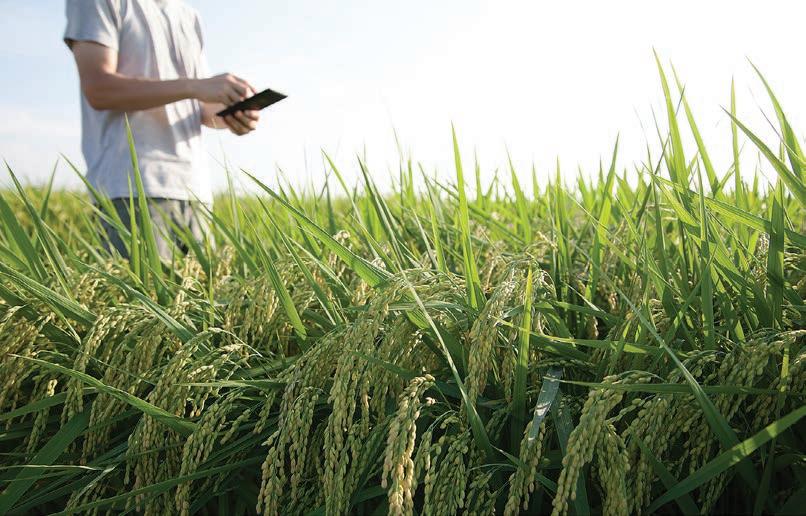
TRAINING: The investment case for ag tech has to include investment in people, says James Allen. That means training, not just in how to operate a tech platform, but in how to interpret data and integrate it into real farm decision-making.
people who use it. A high-tech wearable on a beef farm could be transformative. The same system, poorly understood or inconsistently applied, becomes an expensive ornament – cost without benefit.
Technology does not manage farms, people do. The data it generates is only valuable if someone knows what questions to ask of it and has the confidence and capability to act on the answers.
Good technology will enhance the skills of a good farm manager. However, it may be less effective at turning a poor manager into a good one.
This matters especially now. Input costs, particularly fertiliser, feed costs and fuel, have climbed. While products prices are generally high at present, margins will come under greater pressure for the season ahead. The traditional response to this squeeze has been to scale up, but
Primary colours on display at PINZ Summit
Alternative view
Alan Emerson
Semi-retired Wairarapa farmer and businessman: dath.emerson@gmail.com
THE recent Primary Industries of New Zealand Summit in Auckland was great. It’s a must for rural professionals.
The then-Federated Farmers president, Wayne Langford, opened the conference with the message that Wellington needs to be kept out of farming, and I agree. Minister of Primary Industries Todd McClay said that while improving environmental outcomes is a must, it could be done responsibly and without unreasonable cost.
He predictably talked at some length about the Indian Free Trade Agreement but, while I supported the FTA, I don’t see it in quite the glowing terms that the minister does.
His statement that he would see Chris Bishop to stop PC1 going ahead drew applause. PC1 is the Waikato Regional Councils environment plan that is passionately opposed by both Feds and Beef + Lamb NZ.
I agree with both organisations that the plan is unworkable, impractical and expensive.
Dr David Skilling is the director of the Landfall Strategy Group and an expert in international affairs.
He summarised the current world geopolitical situation.
He explained that NZ is exposed to supply chain disruptions, market access and global conflicts.
On the positive side New Zealand is seen as a “trustworthy partner”.
His commentary on China was interesting. It is shifting its trade focus to friendly countries and that includes those in BRICS and ASEAN.
He believed our way forward was by increasing the investment in our primary sector, diversifying our markets, managing the supply chain risks and focusing on outward direct investment.
Economically he felt that most advanced economies are accumulating debt.
Politically the conference was entertaining.
The first political speaker was New Zealand First deputy leader Shane Jones.
He explained the role of government in water storage and how he is committed to infrastructure
there are physical and financial limits to that approach. Another pathway forward is efficiency: producing the same or more output from fewer inputs and doing it with greater precision.
This is exactly where ag tech, used well, has a genuine role to play. Precision nutrient management reduces fertiliser spend without sacrificing production. Variable-rate irrigation conserves water and energy.
Animal wearable technology has the potential to improve animal health outcomes and pasture utilisation. Each of these tools represents a real opportunity to offset cost increases by improving efficiency.
The investment case for ag tech has to include investment in people. That means training, not just in how to operate a tech platform, but in how to interpret data and integrate it into real farm decision-making.
It means advisers who are genuinely fluent in the technology they recommend, and who can help farmers separate tools that add genuine value from those that simply add cost and complexity.
It means farm owners and managers who are willing to move through the initial discomfort of
adopting a new system, knowing the payoff comes once the technology becomes part of the routine.
It means including the whole farm team in the upskilling required to make the most of the technology. The bimodal reality of ag tech adoption in New Zealand – where highly sophisticated operations coexist with farms barely scratching the surface of available tools – reflects this people gap as much as it reflects any technology or connectivity gap.
New Zealand’s primary sector cannot afford to leave the efficiency gains of ag tech on the table. The margin pressure is too real and the window for productivity improvement too important.
But the path there runs through people first. Invest in the human side of a tech – the understanding, the skills, the confidence to act –and the technology will deliver. Skip that step, and even the best platform in the world will underperform. The tools are ready. The question is whether we are.

resilience. He reiterated his opposition to PC1.
“The DNA of our party is in the rural hinterland, our future is in the wellbeing of the rural hinterland,” he told us.
He went on to explain that we needed to use resources to revitalise rural NZ and that his party would campaign on affordable electricity.
Labour leader Chris Hipkins started by thanking farmers and Federated Farmers for their hospitality and honest input.
He said that “farmers are not only producing some of the world’s best food and fibre, but they are restoring waterways, protecting our biodiversity, investing in new technology, creating jobs in our rural communities and constantly adapting to meet new challenges”.
He said that Labour supports this work and backs innovation.
“The reality is that there are far more areas where Labour and the farming sector agree than disagree.”
He spoke about improving trade and market access, strengthening biosecurity, simplifying compliance and ensuring reliable and affordable energy and water.
Prime Minister Christopher Luxton discussed the sector with Langford.
He told us there is nothing more important than the primary sector, we are the best and most efficient farmers in the world and the future is all about growth.
“We need to put our foot on the
accelerator and go for it.”
Summarising the marketplace, he told us that two-thirds of future growth will be in the Indo Pacific Region, that India is moving from a low-income to a middle-income country and that there is good growth in China and that the United States tariffs were “insane”.
He also discussed innovation and new technology.
It was a superb conference and a must-have for anyone committed to the industry.
It highlighted three issues that must be addressed before we can really move forward.
Innovation was a word often repeated.
Fonterra’s Matt Bolger said that you invest a dollar today to encourage a return in the future. In Bolger’s case it was a 10-year timeframe.
It was a point reiterated by Professor Jacqueline Rowarth. Rowarth told us about the Hamel failure rate. It meant “we need to fund a range of research activities because we can’t identify which ones will work. Picking winners is very difficult and AI isn’t going to cut it”.
To innovate we need research
and we’ve drastically cut research funding and lost several hundred scientists, many going overseas.
Research is an investment that encourages innovation.
The government spends considerable amounts each year subsidising the movie industry. So far its handed out over $9 billion to the movie moguls.
We spend a fraction of that on dedicated funding for primary industry research.
That tells me we won’t have an innovative primary sector in the future. That we prefer the glitz of today to tomorrow’s prosperity.
That’s all exacerbated by our failure to allow GE into NZ despite it being an election promise by National.
Finally, what everyone seems to have forgotten is the massive amount of good farmland that’s forever lost to pine trees for carbon credits.
Farmers can innovate, we do it well, but we need support in both research funding, GE and a level playing field.
Allen Allen is the CEO of AgFirst, and a 2023 Nuffield Scholar
LOST: Alan Emerson says to innovate we need research and we’ve drastically cut research funding and lost several hundred scientists, many going overseas.
Photo: Pexels
Jacqueline Rowar th Direc tor






































































Sector Focus Sheep & Beef
Conversations that create connections
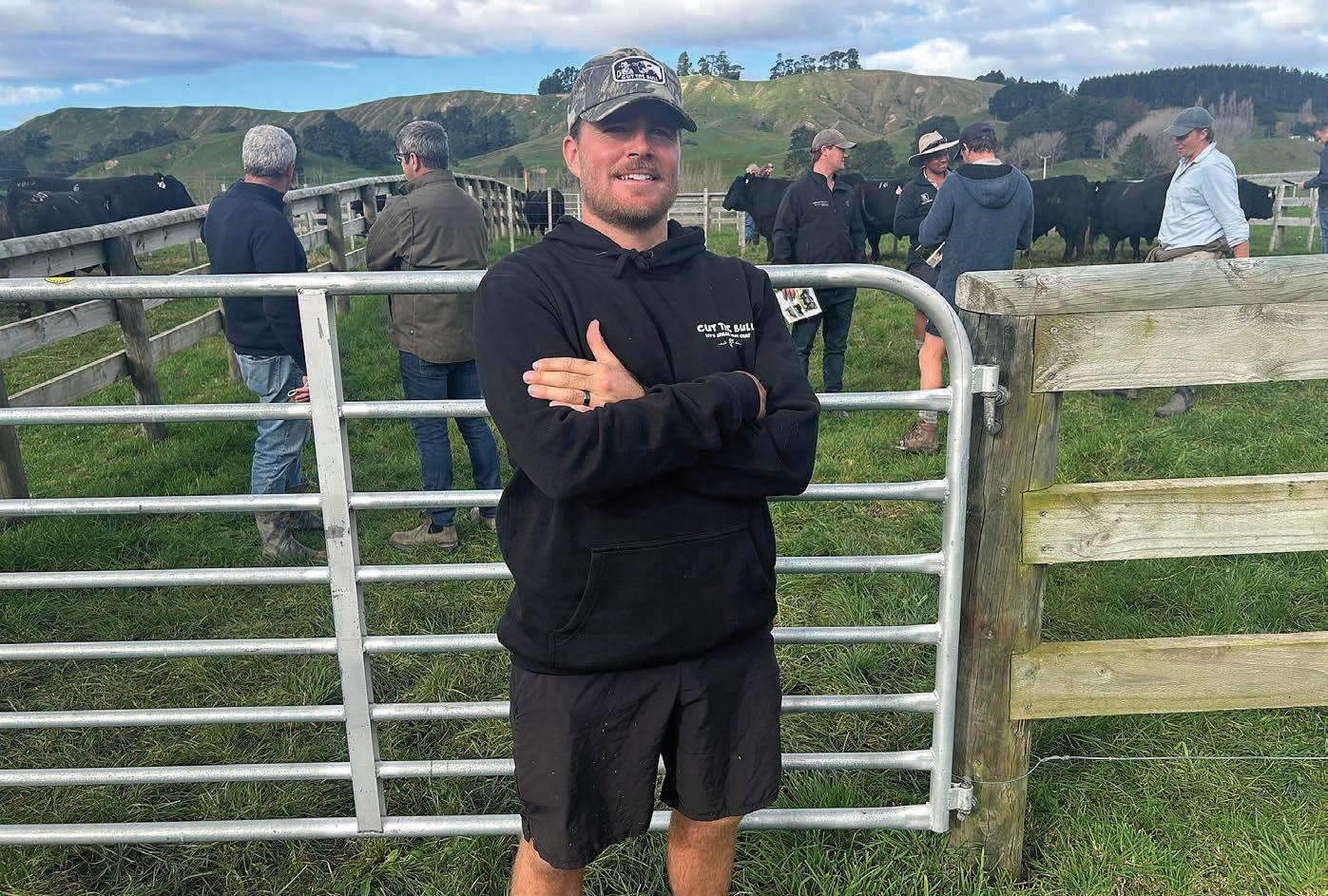
Farmstrong is getting behind this year’s Cut the Bull campaign to reach a new generation of farmers and growers. Leading the charge is Jack Jensen of Spark That Chat.
SPARK That Chat is a New Zealand-based mental health charity focused on encouraging open conversations and supporting wellbeing, particularly among young people. This year it’s teaming up with Farmstrong to scale up its Cut the Bull mental health promotion campaign.
Jensen said the concept behind the campaign is simple: “Doing whatever we can to spark as many chats and normalising the conversation around, hey, if you’re not feeling all good, just reach on out.”
The eight-week campaign kicked off at Kokopuru Station’s Hallmark Angus bull sale and continued at Fieldays. Farmstrong caught up with Jensen for a chat en route.
Tell us about your farming background
I’m born and bred off a sheep and beef farm from down Middle Road in Hawke’s Bay. I’m fourth generation in the farming space.
What do you enjoy about farm life?
I’ve always loved it and the older I’ve got, I appreciate it even more. For me nowadays, working away in the media and social media world, it’s a place where I can go and turn my phone off and just go and drench bulls with Dad or crutch sheep or fix a fence.
It’s just such a grounding thing for me and it makes me appreciate we have a slice of paradise in Hawke’s Bay.
Now I’ve got a son of my own who’s mucking in with us too. I’m very proud to be from rural New Zealand.
Farming’s not always plain sailing though is it? It can be a demanding and isolating job at times
Totally. That’s why the Cut the Bull campaign is so important. I’m there to lend an ear and have a good yarn with people. It’s what rural people do.
I think all farmers, no matter what generation, are good at leaning over that fence and going, ‘Hey mate, need a hand to fix this track or crutch sheep or whatnot?’ It shouldn’t be any different with our mental health. Understanding that everyone’s always got a shitload on and it’s okay to speak up and say, ‘Hey bro, I need a yarn.’ Or ‘Mate, you’re not looking too flash, what’s up?’
What’s the benefit of doing that?
My experience is that those conversations create friendships that you would never have tapped into unless you chose to lean across that post to spark that chat and find out what’s going on.
I’m there to lend an ear and have a good yarn with people. It’s what rural people do.
Why did you start Spark That Chat?
I got into the mental health space through the personal experience of losing three mates in three years to suicide. Losing my friends made me realise we’ve got a big issue here and it’s important to start normalising conversations about mental wellbeing and getting people to drop the mask and share their challenges, rather than bottling them up.
So, I decided to jump in and do something on the back of my brand MSFTS, a multimedia company that specialises in content production, extreme sports, events and clothing. One of our favourite sayings is ‘Fuel your stoke’ – getting out amongst it and really spreading the froth and celebrating life. People find those ideas very relatable.
What are you hoping to achieve by turning up at the bull sale?
What we’re doing today is connecting with people in a way that’s completely real and authentic. Capturing those moments of connection on
camera and having these open conversations when the time feels right about what’s going on in people’s lives and what they’re doing to get through the ups and downs and keep well. Nine times out of 10 you’ll find something everyone can relate to whether you’re going through a tough time now or have been in the past. Sharing those stories is what brings people together and makes them feel supported.
Farmstrong is powering up your campaign this year. One of our messages is that just like you can go to a gym and get physically fitter, you can learn skills to make you mentally stronger. What’s your take on that?
I think the two go hand in hand. When I’m physically training for my sports I’m also mentally training. Keeping active is my anchor point.
No matter how the day is going or what’s going on in my life, I can come back and be fully present and in the moment. That’s what I love about extreme sports – they empower your mind and enable it to do tough things, like jump out of a plane.
It’s the same with Spark That Chat – it empowers people to have these uncomfortable conversations. Our mind is the most incredibly powerful thing so it’s about showing it the respect and time to work on it, just like we work on our muscles. That’s what’s going to keep us in a good headspace and spread the froth!
Agriculture’s our No 1 industry. How can we help the new generation of farmers prepare for the demands of the job?
First, I just want to say like we’re super proud to be working
alongside Farmstrong and to be fuelled by you guys, because that helps us to scale what we’re doing. I think the ripple effect of the social media we’re doing is massive.
Last year’s campaign reached over 650,000 people and this year we’ve already reached 1.6 million with more to come. So it’s a very effective way of connecting with future generation farmers and farm cadets, young farmers and people just getting started in the industry.
How are they responding to your message?
They are so there for it, they’re so keen for this information and they’ve been brought up in this social media world and they’re crying out for this type of connection.
What do you find works best for this new generation?
It’s about boiling down a very complex topic into a few key touch points they can actually go and do – for example, tapping into daily physical activity, sparking that chat and connecting with people or learning to slow down and recharge mentally, because as you know on farm there’s always another 50 jobs waiting to be done and everyone wants things done yesterday.
What’s your advice for anyone feeling tapped out?
I’m not always the best at it myself, but I’m learning you’ll got to be able to stop and have some form of release and just switch off from work. Hang out with the people who really matter in your life and fuel your soul with the good stuff that keeps you well. That’s what live well, farm well means to me.
NO BULL:
How does this work in practice?
Understanding that every single day there’s going to be good things in your life, but it’s up to you to tap into the simple things that can help you day by day, instead of getting snowballed under all the shit that constantly happens. The negative stuff will still happen – whether it’s the trucks not running on time or bad weather on steroids – so it’s about breaking that cycle of negativity by jumping in there and taking action so you can mentally take the power back. When you’re working rurally, I think it’s important to take charge of your life and do the stuff that fuels your stoke no matter how busy life gets.
What about the big picture? What’s required to strengthen the mental health of our rural communities?
I think we’re all pieces of the same puzzle, so it’s about working together as much as possible, so people don’t fall through the cracks.
That’s why it’s great to work alongside Farmstrong. It’s also about getting out there, like at today’s bull sale. Creating a space where people feel heard and seen by us doing what we do. We’re very much that connection point that people can trust and we can direct people to the Farmstrong tools and resources they can use to boost their wellbeing.
If you could sum up your work in a sentence what would you say?
Good conversations with good people can be life changing, so let’s fire them up and get amongst it.
farmstrong.co.nz
Jack Jensen at Kokopuru Station for the Hallmark Angus bull sale. Farmstrong is getting behind this year’s Cut the Bull campaign.
Jack Jensen Cut the Bull
Sheep & Beef
Devold blazes trail with four-year contracts

Annette Scott MARKETS Wool
MERINO clothing maker Devold New Zealand has released four-year contracts in a pricing process that is unprecedented for the wool industry.
Devold NZ general manager Craig Smith said the forward contract price for the 2027-2030 supply period has been negotiated
with full supply chain input to ensure pricing is done in a fair and equitable way for all parties.
“The pathway behind this contract is a completely new process for the wool industry, with the aim of being open and transparent with growers, to bring them into the supply chain in an open dialogue process.”
Smith said Devold operates as a genuine vertical supply chain where every role and every opinion matters, from the teams harvesting the wool to the growers producing the fibre and the on-farm teams supporting those growers, through to the brand delivering the finished product to market.
“Rather than setting prices internally we brought together a grower working group to discuss what was needed to make the next contract work for both growers and the brand.”
This included representatives from the four regions Devold buys wool from, with the working group focused on creating a practical plan for the next contract period, including what worked well, what did not, and where changes were needed.
“Pricing and volume were central to the discussions, particularly given the need to maintain the exceptional quality standards of wool meeting Devold’s high specifications,” Smith said.
“We nutted out a price around on-farm costs and returns on investment. It was an eye-opener to me. Clearly growers were growing for the passion of it.”
The grower working group feedback was taken directly to Devold headquarters in Norway, where the proposed pricing structure was reviewed and negotiated at the brand level.
“This ensured the final contract prices were not only shaped by grower input but also tested against what was commercially workable for Devold as a brand and long-term supply chain partner.”
By involving growers directly in the contract pricing process, Devold NZ has given its growers a genuine voice in the contract and in the value placed on their wool, Smith said.
The result is a pricing agreement that reflects the realities faced by growers, the value of the wool being produced, and the need for the contract to remain sustainable for all parties involved.
“The whole process has made our relationship stronger, it’s a win-win for everyone and Devold recognises that long-term success depends on relationships,
communication and collaboration, with every part of that chain being heard, valued and sustainable.
“I am very proud to release these four-year contracts at $30 a kilogram clean for our 18.5-micron wool from 2027.
“We appreciate the wool market is hot at the moment, but the one thing now is our growers, whatever the spot market ups and downs, have price reliance.”
Devold is also in the market.
“We strive to buy the best so we pay for that and we are looking for more wool from growers who can meet the criteria for our wool.”

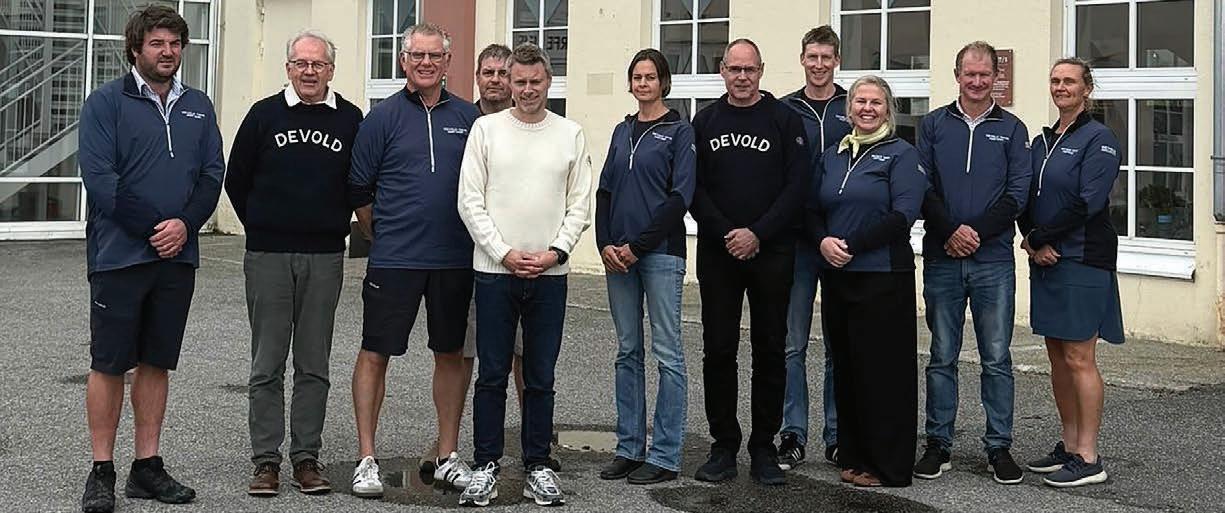
CHAIN: Growers and Devold executives meet in Norway: George Murray (Maryburn Station), Aiko Bode (Fenix Group), Craig Smith (Devold NZ), Sam Ballagh (The Glen Partnership), Oystein Vikingsen Fauske (Devold), Courtenay Ballagh (The Glen Partnership), Tor Jonsson (Devold), Chris and Emily Nicholson (Barcaldine) and Jeremy and Hayley Pitts (Mount Gladstone).
Photo: Supplied
VALUE: Devold NZ general manager Craig Smith says involving growers directly in the pricing process has given them a genuine voice in the value placed on their wool.
Three generations strong on this family farm

SOUTHLAND sheep and
beef farmers Stephen and Pamela Calder say there is nowhere they would rather farm than the province their family has called home for a century.
The Calder farm has been in the family name for 100 years, beginning with Stephen’s grandfather, Arthur Calder, who farmed the original 69 hectare block through the Depression.
When Arthur was offered support through the government mortgage relief fund in the 1930s, he declined. Instead, he sold 28ha of the farm so he could continue to meet interest payments.
What began as a 69ha property is now a 405ha sheep and beef operation run by Stephen, the third generation on the land, and his wife Pamela.
Stephen said reaching the 100-year milestone last year was a proud moment for the family.
“It is special. Those forebears had done a hell of a lot of work breaking the country in. It was hard labour.”
He said both his grandfather Arthur and father George transformed the property from wet, unproductive land into a
highly productive farm. Arthur also established a Southdown stud.
George took over in 1979 and expanded the farm by buying a neighbouring block, increasing the total area to 186ha.
Stephen bought 61ha from his father in the 1980s, becoming the third generation to farm the property. By 1989, the farm had grown close to its current 405ha.
For the past seven years, Stephen and Pamela have operated it as a trading farm.
The idea was to slow down, although Stephen admits that has not quite happened.
“I am getting older and slower. This means you can do it easier if you want, but we have increased the size of the land, so I am doing it all the wrong way around.”
As a trading farm, the Calders rely heavily on market timing. They buy in lambs and calves, fatten them, then sell them on or send them to the works.
In a typical year, they turn over about 10,000 lambs and run about 6000 stock units on the farm at any one time.
Stephen said farming is finally in a stronger position, but any improvement had been overdue.
“Even though it is a good time to be farming at the moment, we are well overdue for it.
“The increase in prices is going to be hitting in the spring. Are we
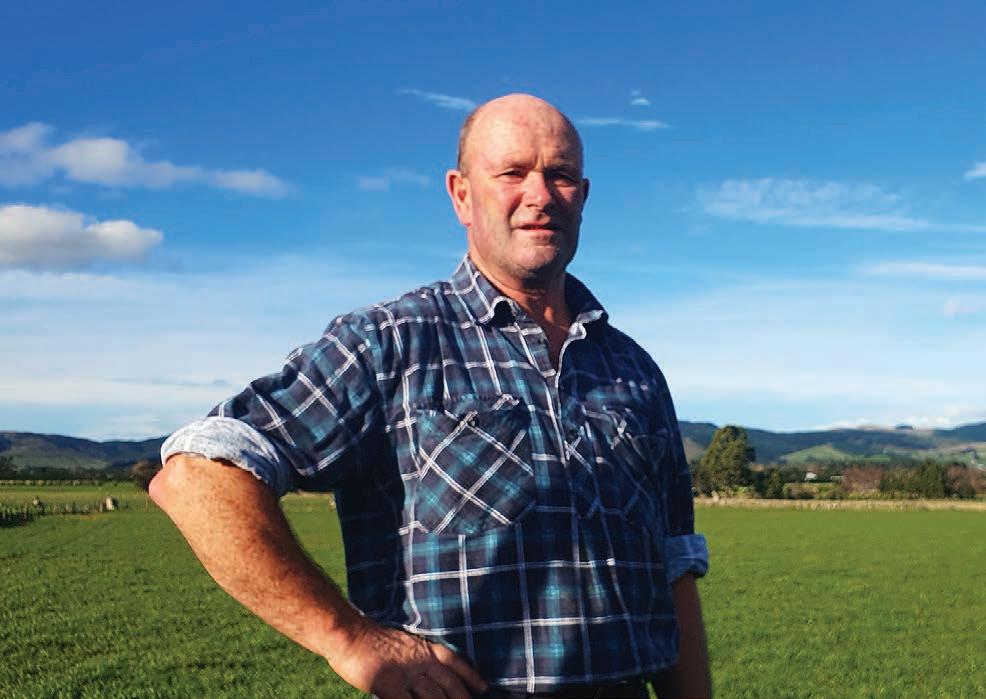
Those forebears had done a hell of a lot of work breaking the country in. It was hard labour.
Stephen Calder Southland
going to be a lot better off? Maybe not.”
The farm has also been the place where Stephen and Pamela raised their three children. Stephen said
he would be pleased if one of them became the fourth generation to farm the land, but there is no pressure.
“They have got to follow their dreams. They are in no way obliged to come back to farming. They have got to be happy.”
For 12 years, Stephen balanced farming with fulltime truck driving after starting his own company, Glenwood Cartage.
“I had a midlife crisis. Nothing wrong with it, you’re a paid tourist.
“I had an itch, and I just had to
GENERATIONS:
do it. We had always done our own carting on the farm, we always had a truck, so I wanted to branch out.”
From 2004 to 2016, he was often away for a week at a time while Pamela ran the farm.
“I had a very capable wife. Later she did a lot of stock work, she did a lot of the stock shifts with kids in hand, as farmers do.”
Having travelled much of the country as a truck driver, Stephen said his view of Southland as a farming region had only strengthened.
Olivia Caldwell ON FARM Sheep and beef
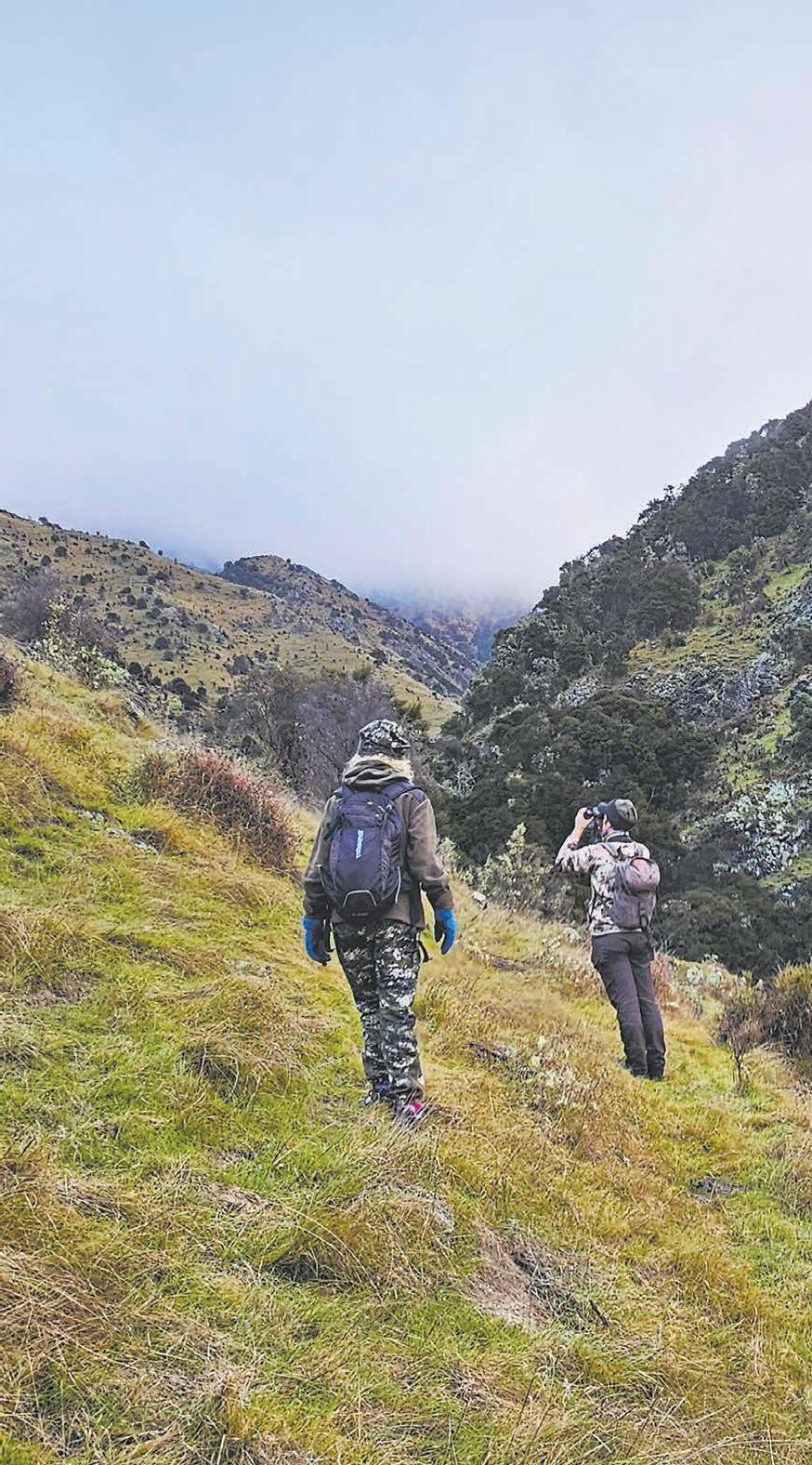
Stephen Calder is the third generation to farm the family’s Southland property.
Photo: Supplied


Kai invites everyone to join the table

In a world that often feels fast-paced and demanding, Matariki offers permission to pause and reflect, but it’s also a gateway to connect, writes India Grigson (Ngāi Tai). In my whānau, Matariki has always centred around kai. We travel from across the motu to one whare, each bringing food which we then spend hours in the kitchen preparing. We sometimes cook the favourite foods of those who have passed to feel closer to them. It is a labour of love, but the feeling of sharing that kai with your loved ones makes it a treasure to do so. For this reason, I chose to kōrero with RWNZ member and award-winning Māori chef Haylee-Chanel Simeon (Ngāi Tahu, Ngāti Kauwhata, and Ngāti Raukawa), about the role kai plays in connecting people and how it may be used as a building block to better understand Matariki.
W‘E live in a very fast-paced world, but Matariki allows us the time to sit down, to take a break, and reflect with those we care about most.” says HayleeChanel Simeon.
Known to many as Hayz, HayleeChanel Simeon is the owner and operator of Hayz at the Anchorage, an award-winning restaurant and bar located in Bluff.
Known for her kaupapa driven approach to kai, Hayz draws inspirations from the surrounding whenua and moana to celebrate the unique flavours of Murihiku (South Island).
“My culinary philosophies are grounded in manaakitanga, kaitiakitanga, and the sharing of mātauranga Māori through my kai,” she says.
Born and bred in Bluff, Hayz’s life has been immersed in te ao Māori. She has inherited traditional mahinga kai practices from her whānau, passed down through generations.
“We’re hunters, gatherers, fishers, of our resources, but as Kaitiaki, we’re also protectors of our natural resources. All of our resources are a taonga.”
Each dish she serves has a story.
“I believe that every kai has its own whakapapa. I tell those stories to our diners and the cultural significance behind each ingredient, because it’s not about eating for the sake of eating. It’s the hands that it took to harvest, to fish, to cook it, before it gets to the plate that sits in front of you.”


In sharing those stories, she is reconnecting people not only with food, but with where it comes from and what it represents.
‘I guess it’s more of a reconnection with people and the kai that they’re eating, which I found over time has sort of been lacking.”
As we kōrero, it becomes clearer that this sense of disconnection extends beyond the plate.
“I do find that, you know, society has sort of disengaged or been detached from a lot of Māori culture and practices over the years” she says. “Yes, it’s great that we’ve come this far that Matariki is recognised as a national holiday . . . but that can be so much bigger.”
However, Hayz and I both see kai as a unifying force.
“Kai connects people from all walks of life. Kai is the centrepiece of our biggest celebrations. It is a way that we show that we care (maanaki) and we love,” she says. Through kai, we can embrace the values of Matariki.
“Matariki is when we all take a moment and we reflect on the year that’s passed. It’s also about sharing memories of those who mean the most to us and are no longer here but still here in spirit.”
It is a Māori belief that those who have passed can have their spirits ascend into the heavens to become stars. Kai again plays a central role in honouring those who have passed as the steam from a hangi is lifted up to the sky as an offering from us as people to the natural realm above.
Hayz shares that Matariki is
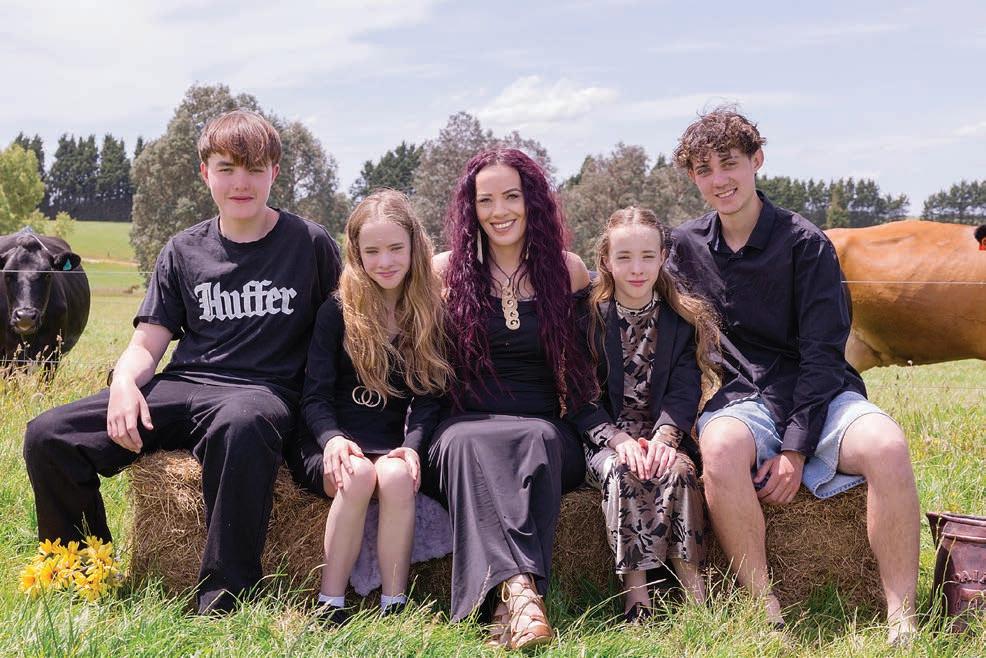
Matariki is when we all take a moment and we reflect on the year that’s passed. It’s also about sharing memories of those who mean the most to us and are no longer here but still here in spirit.
Haylee-Chanel Simeon Award winning chef
celebrated in Bluff through several community-led celebrations including Māori food carts, kapa haka performances, weaving, storytelling and more.
Hayz herself has played a role in shaping this. Alongside others, she helps organise a Matariki event at
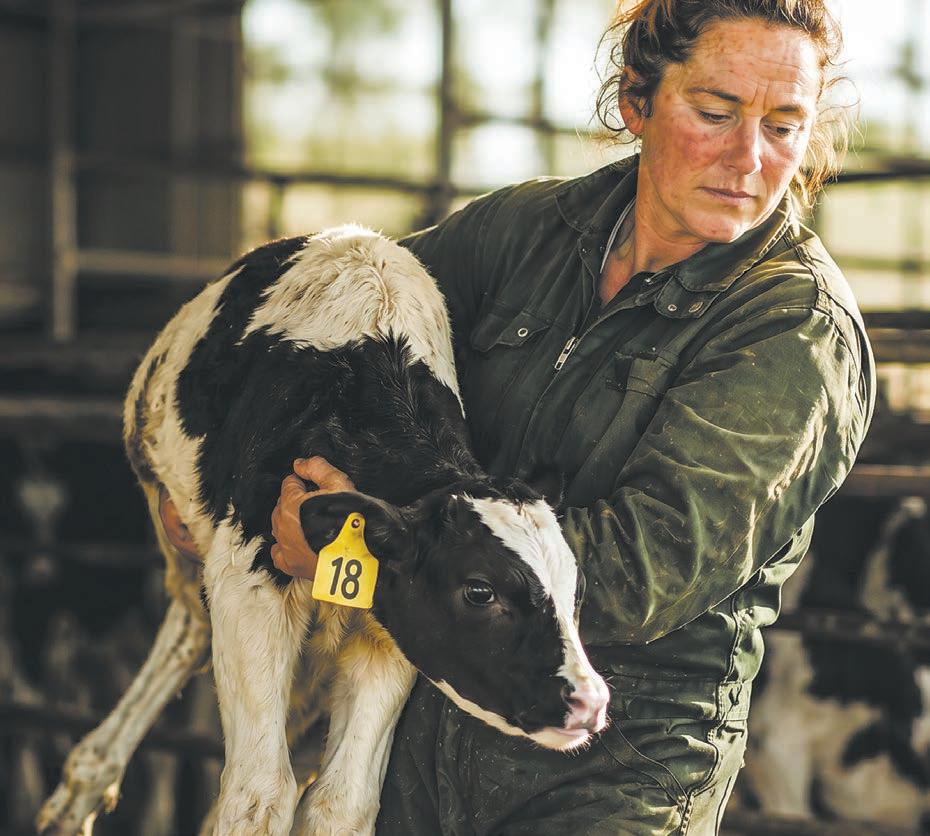
Te Rau Aroha Marae, combining kai, storytelling, and waiata.
While she acknowledges the disconnect, Hayz is encouraged by the growth she has seen.
“Matariki is a way that we come together as equals, and it gives us the opportunity to share the importance of our culture and mātauranga on a larger scale.”
Hayz is particularly hopeful for the next generation who are embracing Matariki in schools and daycares.
“I absolutely love seeing that we are showering our Tamariki with the meaning of Matariki now, because they will carry on that as they get older and for the generations that come after them.”
As our conversation draws to a close, Hayz returns to where we began, with reflection.
“If there’s one thing I hope people take away, it’s to take the time. Take the time to reflect, to appreciate what you have, and to acknowledge those who have paved the way for us.”
Matariki, she reminds us, is not just about looking back, but also looking forward. “It’s about thinking about the generations that are coming after us.”
In sharing kai, in coming together, and in allowing ourselves to slow down, there is space to do so.
MORE: Rural Women New Zealand has been advocating for, connecting and supporting rural women and communities across the country for 100 years. Visit ruralwomennz.nz and become a member today.
FAMILY BOND: Haylee-Chanel (Hayz) Simeon, pictured with children Aj (from left), Lily, Manaia and Izaya.
FEDERATED FARMERS

Feds elects new national president
Federated Farmers has voted in South Canterbury farmer Colin Hurst as the organisation’s new national president.
Gisborne farmer Sandra Faulkner has been voted in as vice president. Both were elected at the organisation’s annual general meeting in Auckland on June 25.
Hurst, a mixed arable and dairy farmer in the Waimate area, says he’s deeply honoured to take the reins of New Zealand’s leading rural advocacy organisation.
“It’s a huge privilege to be entrusted with this role by my fellow farmers.
“Federated Farmers has such a proud 127-year history of standing up for rural New Zealand, and I’m committed to building on that legacy.
“Farmers are facing no shortage of challenges, but they’re also full of determination and optimism for the future.
“My job as president is to make sure their voices are heard loud and clear wherever decisions are being made - and that’s exactly what I intend to do.”
Hurst steps into the role after serving as Federated Farmers’ vice president for the last three years.
He has also been the organisation’s spokesperson for freshwater, biodiversity, and fire and emergency issues.
Hurst was quick to acknowledge the work of his predecessor Wayne Langford.
“I want to pay tribute to Wayne Langford for his leadership,
It’s a huge privilege to be entrusted with this role by my fellow farmers.
Colin Hurst New president of Federated Farmers
energy, and unwavering commitment to farmers during his time as president.
“We’ve had six years on the board together and I love the guy. He’s been a phenomenal leader who has really transformed and modernised the organisation.
“Wayne has been such a strong and passionate advocate. I wish him all the best for whatever comes next.
I have no doubt he will have a huge future,” Hurst says.
He says his focus will be on
continuing to ensure farmers’ voices are heard clearly in national decision-making.
“Farmers are operating in an incredibly complex environment right now, from compliance pressures through to economic uncertainty.
“I’ll be working hard with a fantastic team of farming leaders from around the country – and that’s our strength. We are the trusted voice of grassroots farmers.
“Together we’ll be working to make sure farmers’ experiences and perspectives are front and centre in every discussion that affects them,” he says.
Hurst has nearly 40 years as a hands-on arable and livestock farmer, and extensive experience within Federated Farmers at both a regional and national level.
He was the 2019 Arable Farmer of
NEW CHAPTER:
South Canterbury
farmer Colin Hurst and Gisborne farmer Sandra Faulkner were elected as Federated Farmers’ new national president and vice president at the organisation’s annual general meeting in Auckland.
the Year, is a former director for the Foundation for Arable Research, and has dedicated countless hours as a volunteer to the South Canterbury Rural Support Trust and United Wheatgrowers.
He has also been a staunch advocate for farmers at the Seed Quality Management Authority and on the Fertiliser Quality Council.
Colin, his wife Janis, and their family farm 700ha, which includes 450ha in arable crops such as wheat, grass seed, plantain and turnips, and the rest for grazing cattle. Around 250ha is irrigated.
The family has also just bought a dairy farm nearby.
New vice president Sandra Faulkner farms with husband Rob at Wairakaia, near Gisborne, where they run a diverse operation including sheep, beef, cropping, citrus, farm forestry and contracting.
She has been on the Federated Farmers national board for four years, with the local government, adverse events, health and rural communities portfolios.
She also serves on the National Animal Welfare Advisory Committee and is a trustee for the Campaign for Wool, along with holding other charitable directorships.
“I’m honoured and really excited to hold this role,” Faulkner says.
“There’s so much work still to do, particularly in this period of legislative reform.
“The new RMA and local government legislation will inform how our children will farm, and that can’t be understated.”
Faulkner says she’s proud of the way Federated Farmers has built relationships with decision-makers around New Zealand.
“Right now there are national and regional leaders considering if they should pick up the phone or flick a message to the provincial Feds president.
“They know the response will be well-informed, considered from multiple points of view, deeply practical - and probably more affordable.”
Meanwhile, Southland’s Chris Dillon joins the board as arable chair, taking over from David Birkett.
South Canterbury’s Greg Anderson has been voted in as an at-large board member, and Mark Hooper has held his spot as the other atlarge member.
Richard Dawkins (meat and wool chair) and Karl Dean (dairy chair) have retained their positions.
Feds honours its advocacy leaders
Bex Green, who fronted Federated Farmers’ successful fight against proposed cuts to police services in rural Canterbury, is the organisation’s 2026 Advocate of the Year.
The North Canterbury president is one of six Federated Farmers leaders acknowledged for consistently going the extra mile to stand up for what’s right for farming families and rural communities.
Green, and Federated Farmers, recognised the huge value delivered by local cops who live in, and become part of, the rural areas they serve.
A proposal last year to relocate them to distant larger towns was seen as a backward step.
“Despite being in the middle of calving, Bex fronted our major advocacy campaign with real tenacity, often in the face of considerable pushback,” Federated Farmers board member Mark Hooper says.
“Her efforts not only helped secure a significant win for the campaign, but also raised the profile of Federated Farmers, strengthened the organisation’s presence in her province, and helped grow membership.”
She showed similar energy and commitment rallying the community and brokering support when windstorms ripped through North Canterbury last September and October, destroying pivot irrigators and other infrastructure.
Green, and the North Canterbury province, also received the Chris Allen Memorial Trophy for their achievements and membership growth over the last year.
“It’s doubly special to receive this award because Chris farmed near Ashburton and worked so tirelessly for the good of Canterbury, and for rural communities throughout New Zealand,” Green says.
Similar determination, leadership
and ability to rally support during his eight years as Hawke’s Bay president is why Jim Galloway has been recognised with an Outstanding Contribution award.
“In the face of droughts, floods, cyclones, regional plans, Environment Court appeals and everything else thrown at the sector, Jim’s commitment to farmers, his province, and Federated Farmers has been unwavering,” Feds board member Colin Hurst says.
Feds is all about good people doing good things for farmers.
Jim Galloway Former president Hawke’s Bay
Federated Farmers
Galloway, who also chairs the Fertiliser Quality Council, has further demonstrated his commitment by staying on the Hawke’s Bay Federated Farmers executive as new president Anthea Yule finds her feet.
“Feds is all about good people doing good things for farmers,” Jim says.
“Whether that’s working with government, supporting farmers through difficult situations, or helping people navigate challenges and opportunities, it all comes back to doing good things for people.
“I’ve had an enormous amount of fun doing it.”
The 2026 Arable Advocate of the Year is John McCaw, who has chaired the Federated Farmers Herbage Seed Subsection for the last six years.
Arable chair David Birkett says McCaw’s efforts have been exceptional and “hugely valuable”.
“His intellect and the balanced approach he brings to advocacy are outstanding.
“He’s developed spreadsheets and tools that give farmers greater power, control, and confidence when it comes to negotiations.”
National board member Richard Dawkins describes the advocacy of Meat and Wool Advocate of the Year Simon Cameron as “absolutely relentless”.
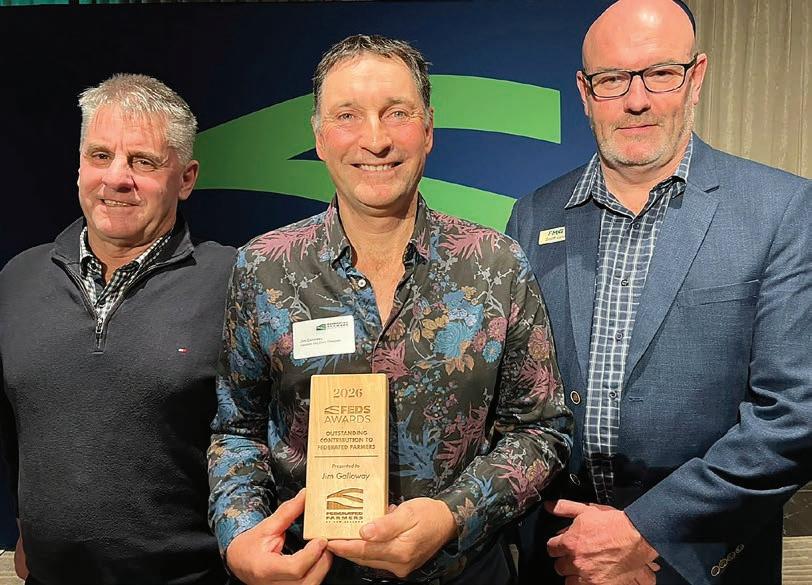

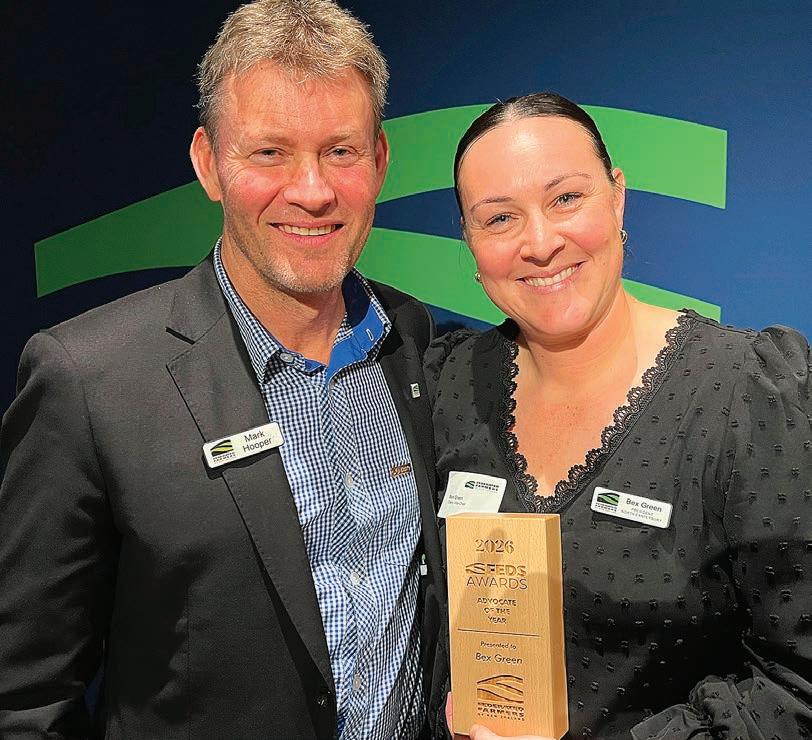
The West Coast president and Meat and Wool council deputy chair epitomises Feds and what it is to be a grassroots leader.
“He advocates around pest issues, the Department of Conservation, wilding pines, and so many other issues affecting farmers and our members.
“He does podcasts, hosts MPs and he’s done countless kilometres travelling around the country.”
Cameron – as do other leaders honoured with awards –acknowledges their success comes from a team effort: fellow provincial executive members, Feds staff and family support.
“I can’t leave the stage without thanking the real MVP at home – my partner, Courtney,” Cameron said receiving the award.
“She’s at home with two kids, feeding out in the rain. A huge shout-out to her.”
New Auckland president and recent member of the Federated Farmers Dairy Council, Rosemarie Costar, is the Dairy Advocate of the Year.
“She’s incredibly engaged, always active, and always asking questions
on behalf of others,” Dairy chair Karl Dean says.
He was sorry to lose her as a council member as she took up the reins for Auckland but also proud of how Federated Farmers harnesses talent for the greater good.
“Leaders like Rosemarie take the skills and passion they’ve developed in dairy advocacy and apply them more broadly for their province and for Federated Farmers as a whole.”
The Emerging Advocate of the Year is 2026 Canterbury Ballance Farm Environment Award winner and new Mid Canterbury president Kerry Harmer.
She’s hailed by national board member Sandra Faulkner for her courage, empathy and tenacity, showing by example excellence in sustainable farming and working to get impractical red tape reversed.
“Kerry’s ability to tell a story –and to recognise not only her own story, but the stories of others – is something special.
“She stuck with it and just kept putting her hand up, kept walking forward and kept going, ‘You know what, I have value here, and this is a community that I want to be part of’.”
GOING THE EXTRA MILE: Bex Green received Federated Farmers’ 2026 Advocate of the Year Award from board member Mark Hooper in recognition of her outstanding leadership on behalf of farmers and rural communities.
FOR THE PEOPLE: Jim Galloway holds the Outstanding Contribution Award presented to him by Colin Hurst, left, and Scott Kahle, of award sponsor FMG.
Govt urged to stay the course on conservation legislation
Federated Farmers is calling for the Government to be bold and continue with plans to modernise New Zealand’s outdated, clunky and overly complicated conservation laws.
“These reforms are long overdue and desperately needed to support conservation efforts and help grow the economy,” says Federated Farmers meat and wool chair Richard Dawkins.
“The current legislation is outdated, unnecessarily restrictive and slow, and has been holding back the country’s conservation ambitions for decades – in fact, we’re rapidly going backwards.
“Despite significantly increased budgets, our conservation estate is being overrun by pests, weeds and wilding pines. The case for reform couldn’t be any clearer or more urgent.”
Federated Farmers supports a pragmatic approach to conservation that protects and enhances highvalue conservation land while allowing sensible economic decisions.
“The Department of Conservation manages one of the largest public land estates in the world, covering more than eight million hectares,” Dawkins says.
“Unfortunately, conservation isn’t free. Somebody must do the day-today work required to maintain New Zealand’s unique natural landscapes.
“It’s completely unrealistic to expect a government agency to
manage weeds, pests, infrastructure needs and fire risk across an estate of that scale by themselves, funded by taxpayers.
“Successful conservation depends on strong partnerships with the people who live alongside the land every day – farmers, hunters, anglers and tourism operators.
“It should come as no surprise that it’s these same groups who are most passionately supporting the Government’s proposed reforms, because we can see the opportunity.”
Environmental activist groups have been quick to scaremonger in election year, claiming pristine conservation land will be sold off for mining, but Dawkins says that’s “total nonsense”.
“Groups like Forest & Bird and EDS have been running an incredibly divisive campaign of fear that hasn’t been particularly constructive or helpful for the national conversation,” he says.
“I think they’ve lost sight of what this is all about – modernising our conservation system to improve environmental outcomes, reduce the burden for taxpayers and grow the economy.
“There are plenty of economic activities we could be doing on that land that deliver an environmental benefit, including grazing, wild animal recovery operations and tourism.”
Federated Farmers West Coast president Simon Cameron is another passionate supporter
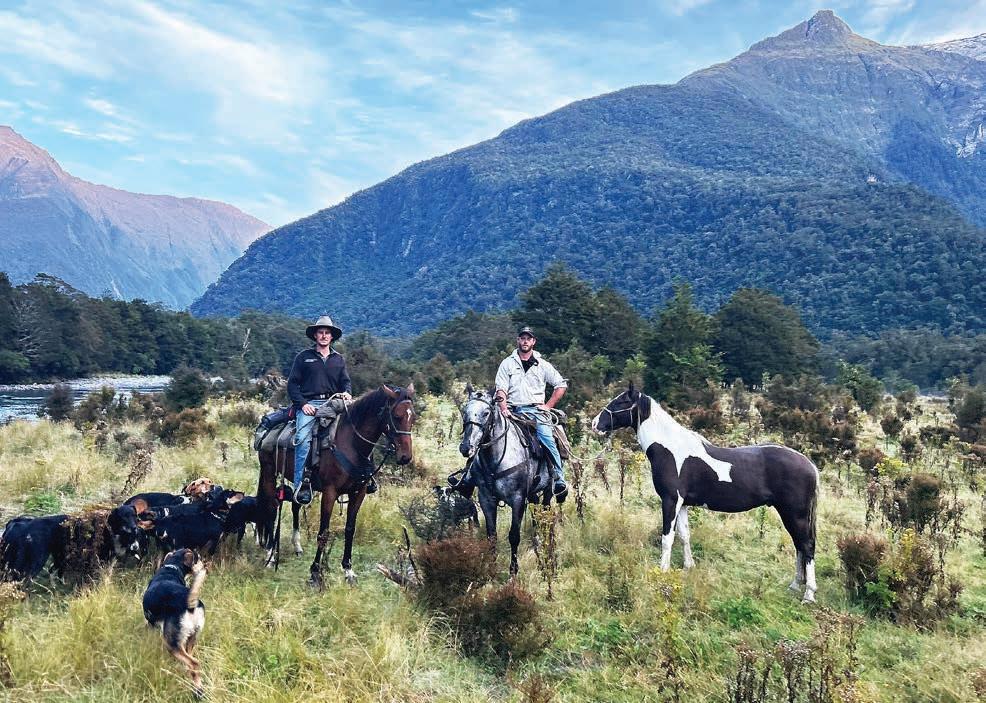
of the Government’s proposed conservation reforms, particularly when it comes to grazing.
“New Zealand can’t conserve
Successful conservation depends on strong partnerships with the people who live alongside the land every day – farmers, hunters, anglers and tourism operators.
Richard Dawkins Federated Farmers meat and wool chair
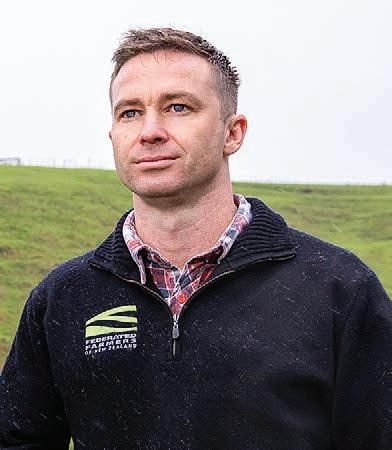
WILD
more than eight million hectares of conservation land through passive protection alone.
“It requires active management,” Cameron says.
“If we truly want to see better longterm conservation outcomes for future generations, we can’t afford to let ideology or politics get in the way of pragmatism.
“In practice, this will require a fundamental shift in thinking to recognise that a ‘lock up and leave’ approach to conservation – excluding people from the landscape –doesn’t work.
“Instead, we should be recognising the role of active, practical management like grazing in improving biodiversity, managing pests and protecting our famous natural landscapes.”
Cameron says, since 1990, the Department of Conservation has inherited and retired 1.2 million hectares of land that was previously grazed – but it’s since gone backwards.
“That land was immaculate when it was actively managed by farmers, who kept on top of the weeds and pests,” Cameron says.
“Those farmers were outstanding stewards of the land, but they also contributed significantly to the economy by producing world-class beef, lamb and wool.
“Unfortunately, when the farmers
moved out, the pests and weeds moved in. That land has been taken over by wilding pines, gorse, deer, pigs, wallabies and goats.”
Cameron says huge areas of our high country were retired because they had significant conservation value, but that value didn’t develop in the absence of human contact.
“The value was created by generations of farmers who invested time and money in protecting and enhancing the environment for future generations,” he says.
“They weren’t just grazing livestock; they were also fencing, hunting, maintaining tracks and controlling weeds. These are all important conservation activities that were lost.”
Cameron is scathing of the environmental activist groups that have tried to play politics and derail long-overdue conservation reforms.
“It’s unbelievable that anyone would be calling for the entire bill to be thrown in the bin after years of work,” he says.
“Surely everyone can agree the current system simply isn’t delivering the outcomes New Zealanders expect, and that change is needed to modernise our laws.
“It’s time those groups put the politics aside, stop playing petty games, and start working alongside the rest of us who are trying to do the right thing for the country.”
MANAGING THE LAND: Simon Cameron (right), pictured here mustering with Riley Bell-Taylor in Okuru Valley, South Westland, sees firsthand the impact of pests and weeds on conservation land and says active management is essential.
WEST: Despite significantly increased budgets, our conservation estate is being overrun by pests, weeds and wilding pines, Richard Dawkins says.
Farmers
Fresh hope for farmers caught by PC1
Federated Farmers is welcoming news the Government will consider options to prevent Waikato farmers being hit by rules developed under an old planning system.
Speaking at the Primary Industries NZ Summit in Auckland on June 23, Minister of Agriculture Todd McClay addressed growing concerns about the effects Waikato Region Plan Change 1 (PC1) could have on farmers.
“I have met with Minister Bishop to make the case for Waikato farmers, “ McClay said.
“It doesn’t make sense to have a new national planning system adopted by Parliament before the election but for the Waikato to be sentenced to rules that were developed under the old system.
“We will instruct officials to provide advice on options to better align rulemaking in the Waikato with the replaced RMA. “
McClay’s comments came just days after Federated Farmers urged the Government to urgently press pause on PC1 until the dust has settled on major national policy reforms.
Soon after McClay’s words came comments from New Zealand First
deputy leader Shane Jones, who expressed deep concern about the impact PC1could have on farmers.
Also speaking at the Primary Industries NZ Summit, Jones said he feared for the future of farmers if PC1 is implemented.
“The level of burden that these new potential rules and regulations place upon landowners, veggie growers, and farmers, I think they are unbearable.“
Jones said New Zealand First would seek key commitments from National as discussions continue over Resource Management Act reforms.
“Number one, no single new rule or regulation can be operationalised unless it has the concurrent signoff of the Director General of Agriculture, so we’ve got someone whose perspective is firmly focused on the economic viability of the primary sector. “
Jones said New Zealand First would also oppose interpretations of Waikato River settlement legislation that undermine food production at a time when we have a cost of food crisis.
“If we believe your industry is at the centre of our economic
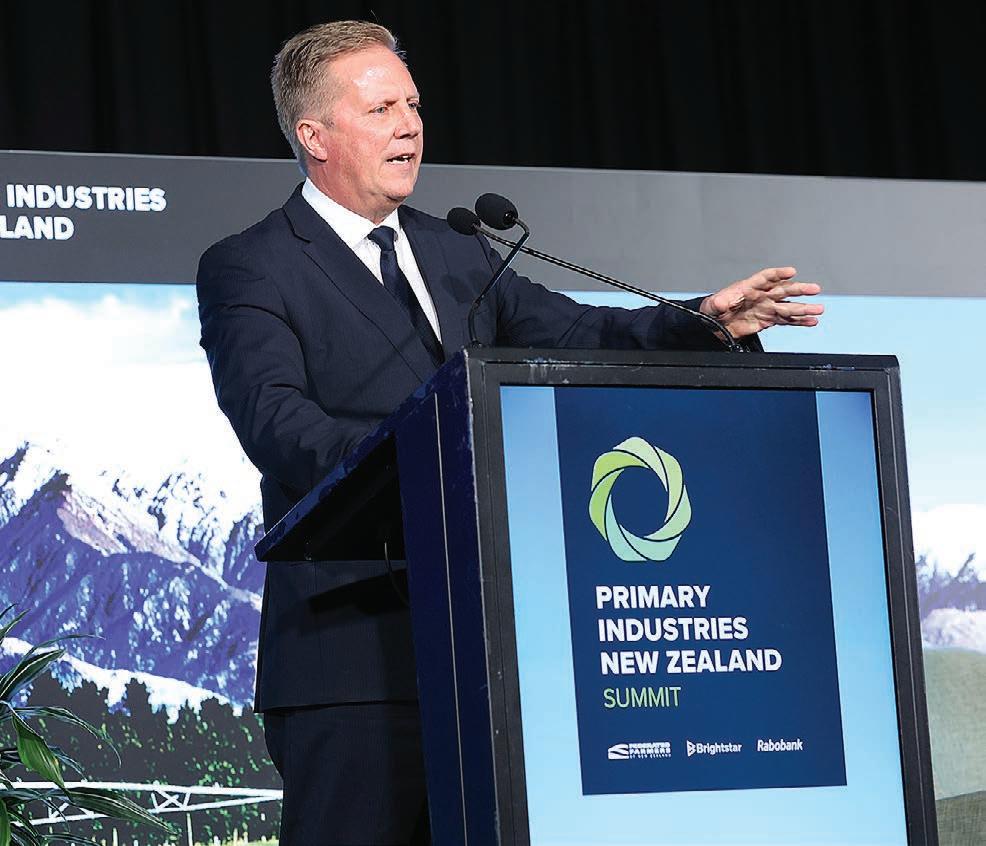
TAKING
Photo: Stuartyeates/
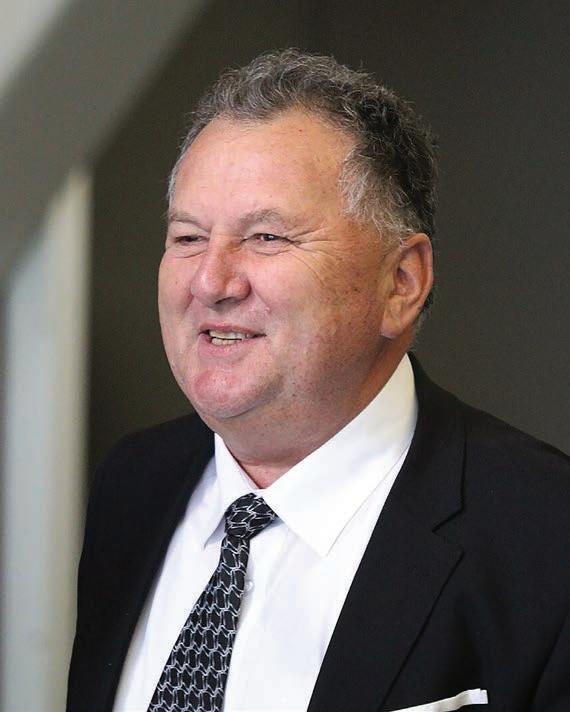
fortunes, then we need a regulatory framework that enables it to grow and expand, and throw the resources at it, so it can genuinely help us dig ourselves out of the post-COVID hole that we’re still in. “
Federated Farmers Waikato vice president Andrew Reymer says it is hugely encouraging to hear senior ministers acknowledging how serious the situation is.
“We’ve repeatedly said that it makes no sense to continue with Plan Change 1 while the Government is reforming the resource management system.
“We’re grateful to Ministers Jones and McClay for standing up and assuring Waikato farmers they not only recognise the problem, but that they intend to do something about it.”
He says it’s clear the Government is moving towards cutting most of the cost and complexity out of farming, but PC1 is heading in the other direction.
“It’s like the Government is trying
to press the accelerator on economic growth, but the council’s PC1 is pulling the handbrake.
“The Ministers’ comments show there’s clearly political will to step in and support Waikato farmers, so now we’ll wait to see what options officials bring to the table. “
It’s like the Government is trying to press the accelerator on economic growth, but the council’s PC1 is pulling the handbrake.
Andrew Reymer Waikato Federated Farmers vice president
The process to develop PC1 began in 2012, and it has been tied up in submissions, hearings and appeals ever since.
The Environment Court finally released its decision on 8 June, giving Waikato Regional Council until 21 July to make 20 specific
changes before the plan would be finalised.
Once in force, Plan Change 1 would introduce sweeping new rules for agricultural land use, affecting more than 4500 farms across the Waikato and Waipā River catchments.
For example, restrictive rules would make it extremely difficult for farmers to change land use or even switch between different farming systems.
This would hit many Waikato farmers who converted their dairy farms to dairy goats in the 2010s, leaving them unable to return to milking cows.
More than 400 farmers in the Whangamarino Wetland Catchment would also have to obtain a restricted discretionary resource consent simply to continue their existing farming activities.
Those farmers would have no certainty they can keep farming, and those who do secure consent could be subjected to significant restrictions on how they operate.


NOTICE: Speaking at the Primary Industries Summit, Agriculture Minister Todd McClay said the Government is exploring options to prevent Waikato farmers being caught by outdated planning rules.
OMINOUS: NZ First
MP Shane Jones said he feared for the future of farmers if PC1 is implemented.
Wikipedia
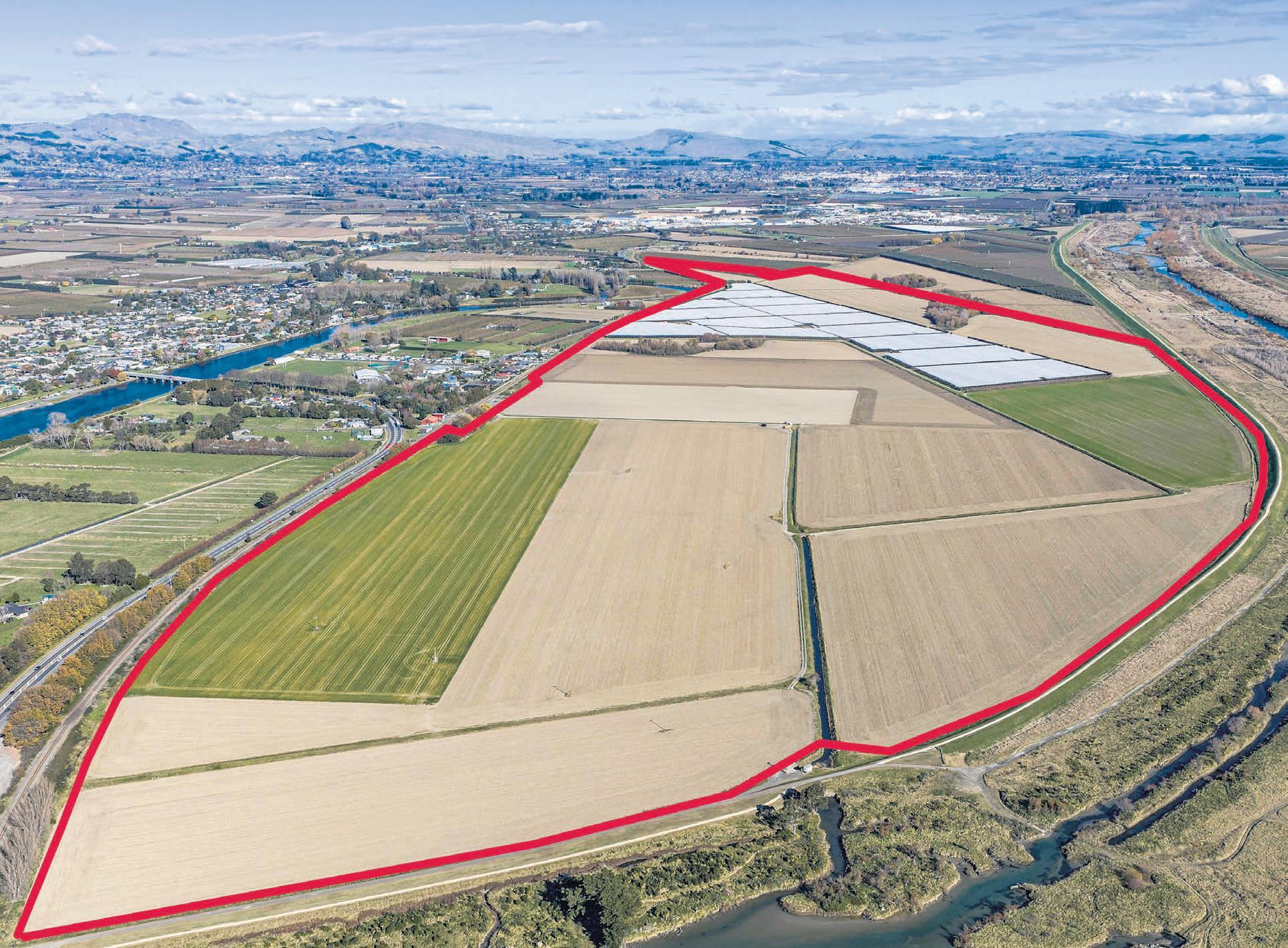
Clive 34 and 148 Farndon Road and 272 State Highway 51 176.4 ha
Large premium horticulture investment opportunity
First time to the market as one portfolio, this exceptional 176ha property represents one of the largest contiguous holdings of premium Hawke's Bay horticultural land offered in recent years Featuring tile drainage and valuable irrigation consents, this prime Heretaunga Plains holding represents a rare opportunity for serious horticultural investors and growers seeking scale, versatility, and long term potential Strategically located in Clive, the property offers convenient access to key post-harvest facilities in Whakatu, Hastings, Napier and Port, enhancing operational efficiency and market connectivity Comprising six individual titles, the holding provides flexibility for purchasers and supports a wide range of horticultural development opportunities Suitable crops include apples, kiwifruit, and other specialist crops Available as a whole or in individual titles bayleys co nz/2854577
Tender Closing 4pm, Fri 31 Jul 2026 15 Havelock Road, Havelock North View by appointment Tony Rasmussen 027 429 2253 tony rasmussen@bayleys co nz James Macpherson 021 488 018 james macpherson@bayleys co nz
Real Estate
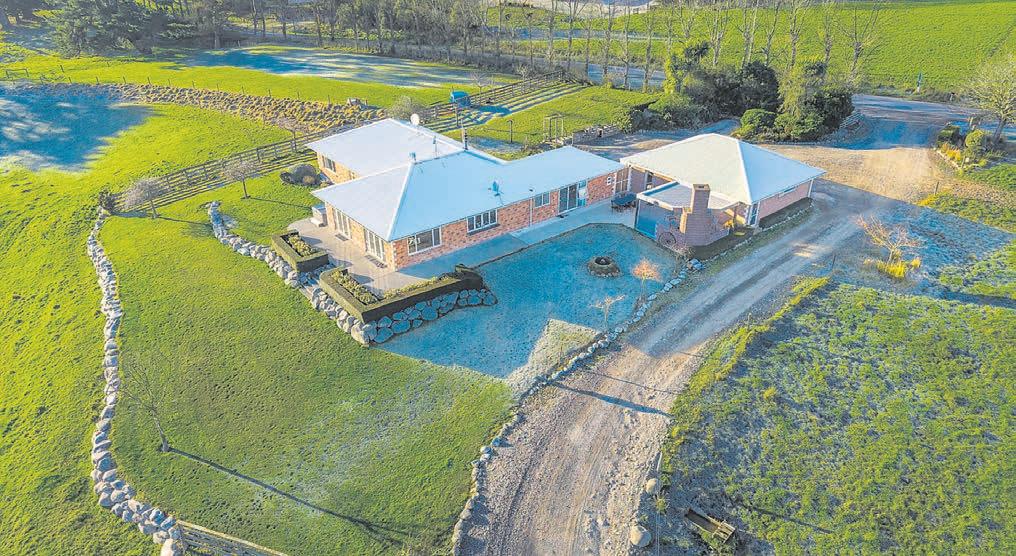

A proven, high-performing farming operation, this property is expertly set up for beef finishing and dairy support with a strong focus on maximising kilograms of meat produced per hectare.
Backed by an excellent fertiliser history the farm features wellmaintained all-weather laneways, extensive regrassing, and is thoughtfully subdivided into approximately 2.5-hectare paddocks to support efficient grazing management. Water security is a standout, with two solar-powered water schemes complementing the local supply to ensure reliable delivery across the property Improvements are comprehensive and well-balanced, including a spacious five-bedroom homestead, a tidy three-bedroom cottage.

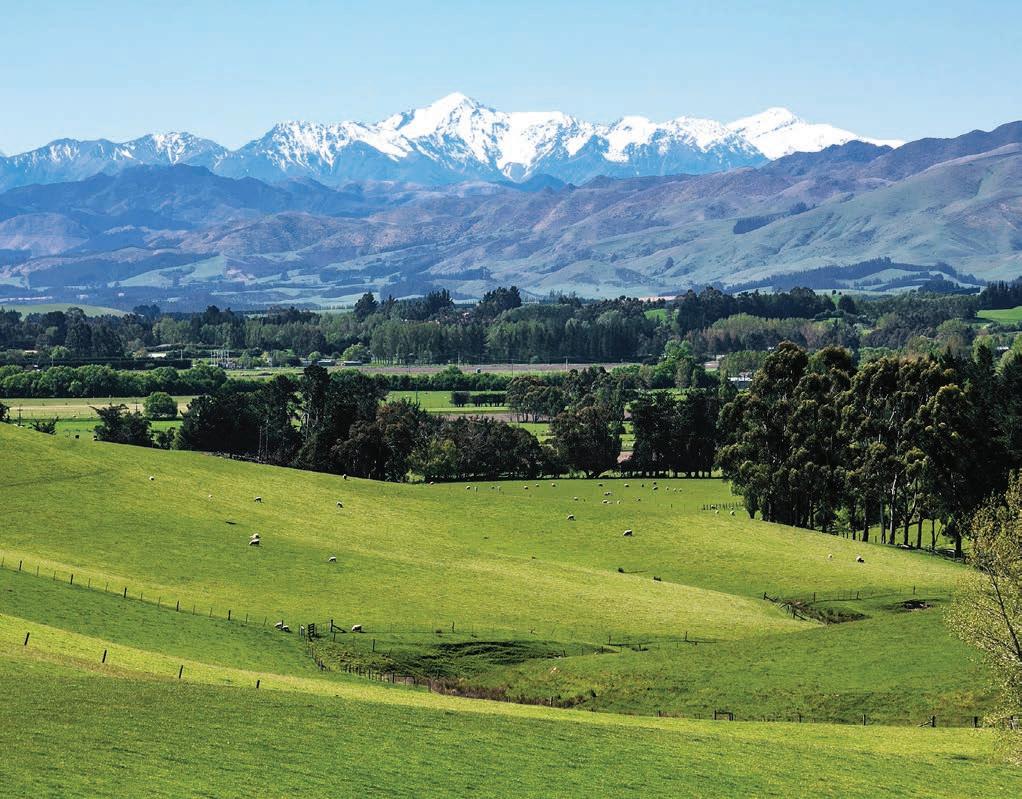
Your agent may suggest you advertise in their brand publication.
We suggest you remind them that this is the publication you, and every other farmer you know, reads.
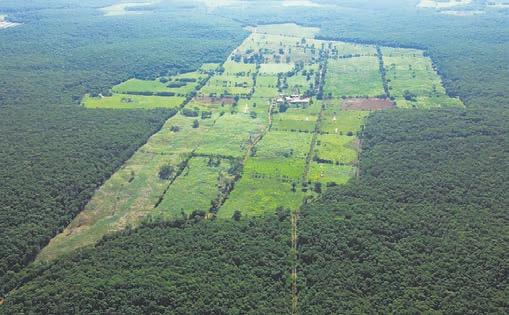
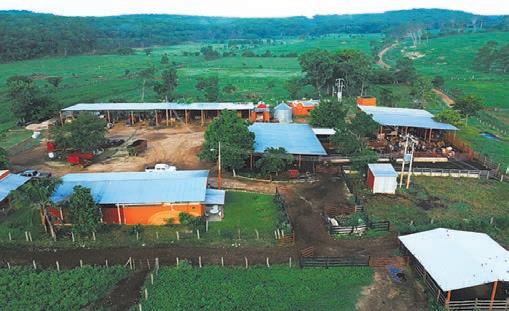


com
SPECIALIST BEEF FINISHING AND CROPPING FARMLAND
A unique opportunity for a wholesale investor to invest in a proven Beef Finishing operation and quality land asset alongside skilled individuals, with a clear proposition for further operational growth and on-farm development.
Investment sought of up to $4m with 15-35% shareholding available depending on the level of investment achieved.
The investment is underpinned by a flat, high-quality irrigated landholding of over 200 hectares located 992 Wards Road, Kirwee, strategically integrated by growing feed crops to support the beef finishing operation utilising established barn infrastructure.

The vendor invites expressions of interest from parties to acquire this interest in the farmland and trading operation.
For further information on this opportunity, please contact: Ray Fraser

Maungati 744 Motukaika Road
744 Motukaika Road, Maungati


















PRELIMINARY NOTICE






LIVESTOCK REPORTS

Entries include
8000 MA Romney & Romney X Ewes 1500 MA Border Romney & Coopdale Ewes 2000 MA Composite Ewes
700 MA Half Bred & Corriedale Ewes
Most Ewes are scanned in lamb to various Sires.
Full particulars and updated entries go to Temuka
by









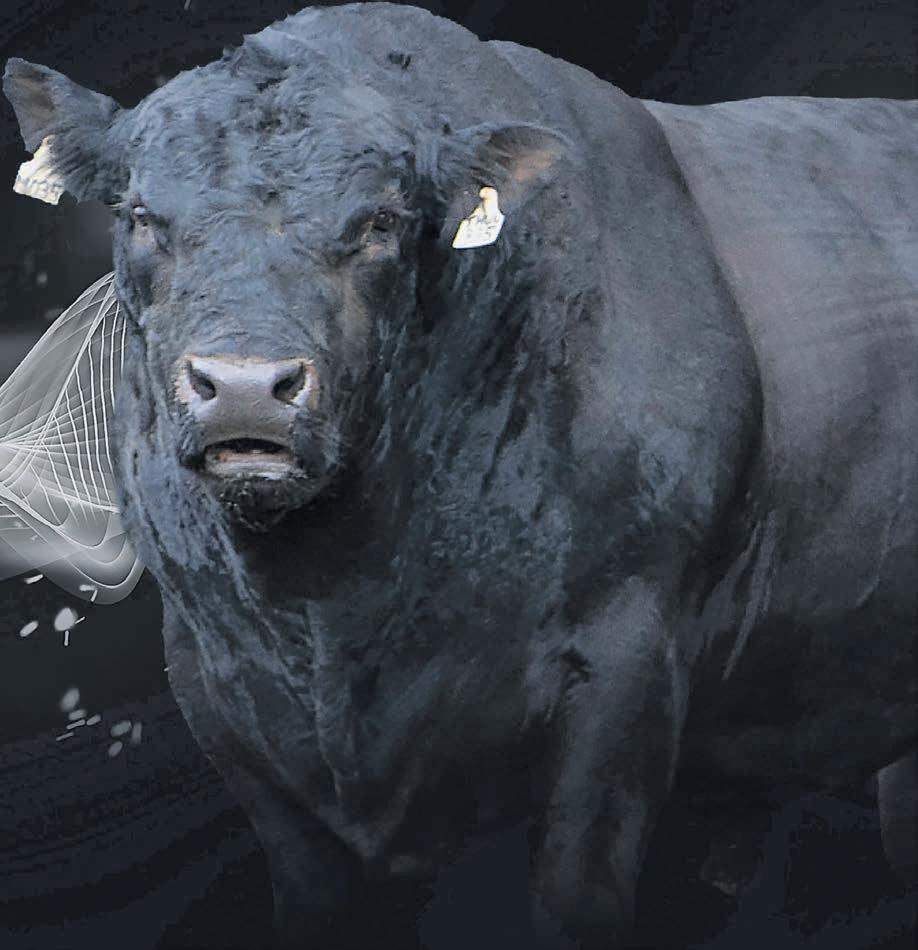






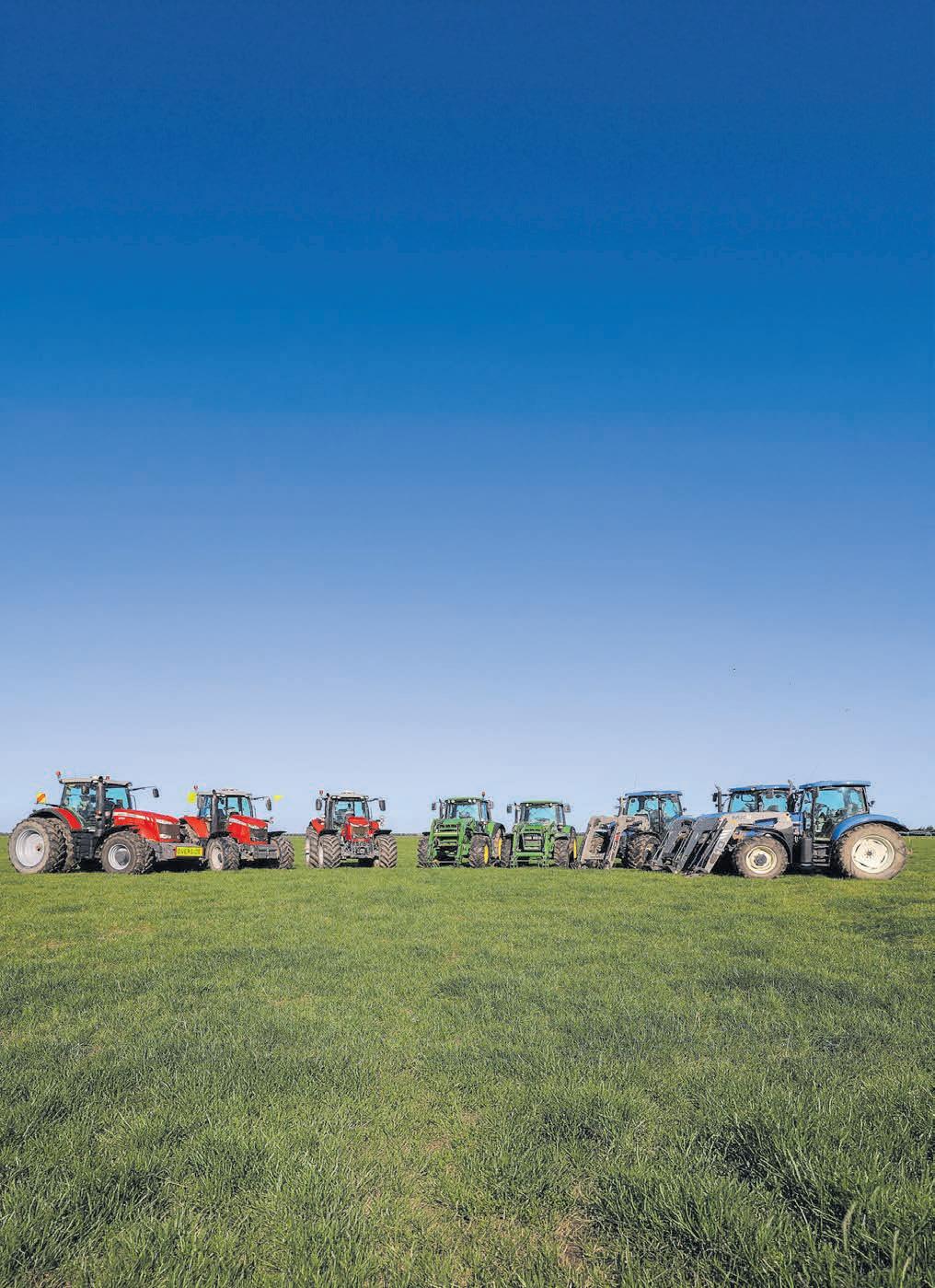

Wool looks to have entered new pricing phase
Metrics are full of encouraging signs as supply constraints and competition continue to underpin the market.

Sara Hilhorst MARKETS Wool
STRONG wool prices continue to gather momentum, and the final auction of the 2025-26 wool season was on trend. Tight supplies and intense competition between exporters underpinned the market, with buyers scrambling to secure their share of the limited offering as global demand for natural fibres strengthens.
While the conflict in the Middle East has accelerated the recent rise in prices through higher costs for alternative, synthetic products, tightening supply was evident before that. New Zealand’s sheep flock has continued to contract, and signs of reduced wool availability emerged early in the season. Even so, few anticipated the market would reach current levels.
The Fusca coarse fleece indicator, a benchmark for midgrade wools, is now $7.52/kgCL, more than double the $3.08/kgCL this time last season. Prices have risen by more than $1.00/kgCL in less than two months, having strengthened steadily earlier in the season too.
Mid-micron fleeces have followed suit and 23-micron rounded the season out at $20.10/ kgCL, a significant lift from the
opening sale of the season when they were $12.20/kgCL. This is a new record for mid-micron fleeces and has supported the finewool store lamb market too.
Returns for these lambs have been more on par with crossbreds this season, whereas typically they would sell at a 30-40c/kg discount. Buyers realise the value in their fleeces now the market has lifted and therefore are paying returns they deserve.
Not surprisingly, auction clearance rates have been impressive too. For 2025-26, they averaged 95% across total offerings of 261,000 bales. Since 2022-23, clearance rates have progressively lifted over reduced supply. The average number of bales sold at auction over the previous five years was 355,000, meaning supply was 26% tighter than normal this season.
New Zealand wool production has been progressively declining since, and is likely to remain constrained. When wool was in a lull, many farms switched to shedding breeds. And farm conversions to forestry must also be considered. This could provide further support for prices or at least help maintain current levels.
At the same time, export demand continues to improve as manufacturers increasingly favour natural fibres. Higher oil and energy prices have lifted the cost of producing synthetic fibres,
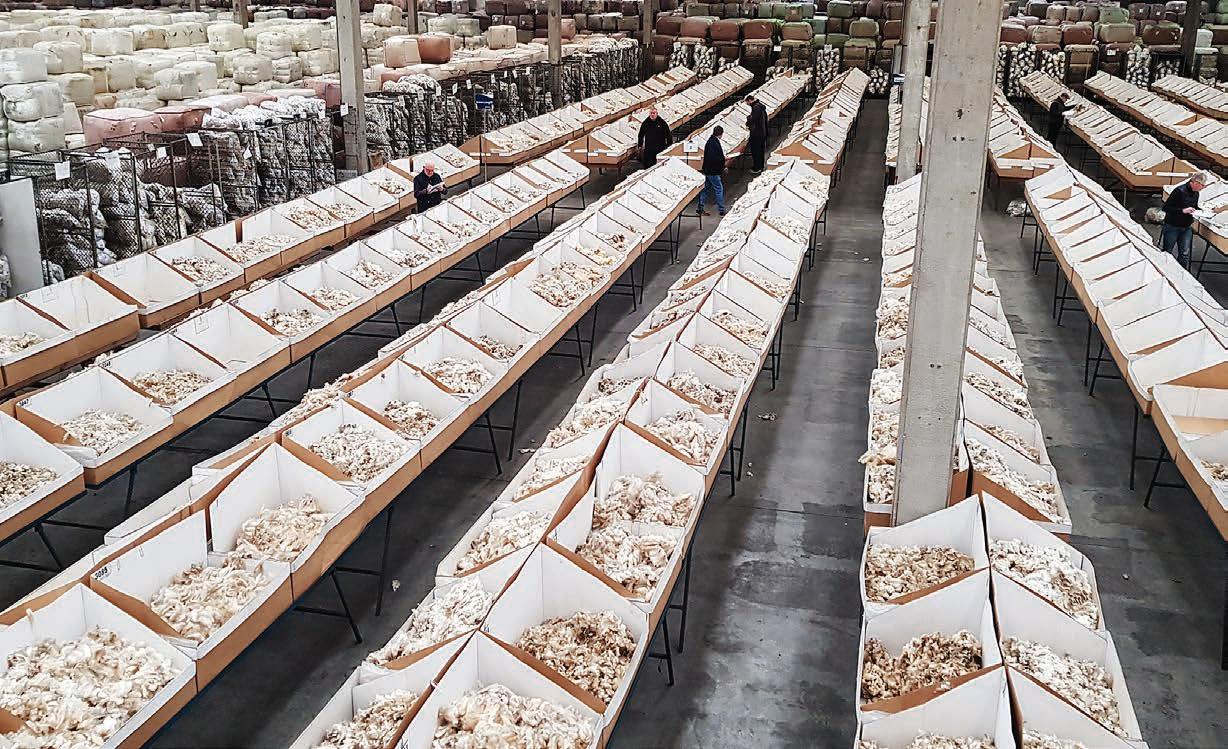
improving wool’s competitiveness and encouraging renewed interest in alternatives.
As a result, the value of New Zealand’s annual wool clip has doubled since 2022 to approximately $500 million.
Industry leaders believe the market has entered a new pricing phase, although they caution that some consolidation may be needed to maintain long-term demand from manufacturers.
Exporters are currently paying high prices to secure some of the limited volume, but longterm, manufacturers must also be able to continue operating at these elevated levels. If wool prices continue to rise at the current pace, they may become unaffordable.
The strength in the wool market is not limited to New Zealand
either, as global prices continue to trend higher for the same reasons – declining sheep numbers and therefore tightening supply.
Recent UK wool auctions recorded prices more than 10% above earlier sales, supported by strong buyer competition and excellent clearance rates.
Across the ditch in Australia, the story is similar. For the 202526 season, there was a total of 1,513,000 bales of wool offered through the auction system, nearly 53,000 fewer than the previous season.
Up until the final sale of the season, the Eastern Market Indicator (EMI) was at its highest since October 2018 at A$19.79/ kgCL. This is much higher than New Zealand benchmarks, as Australia mainly sells fine wools (that is, Merino).
The value of New Zealand’s annual wool clip has doubled since 2022 to approximately $500 million.
Despite lower volumes, wool auctions generated a record $2.61 billion in wool sales, $675 million more than the previous season, with the EMI gaining AU$7.36/ kgCL or 61% over the year. Tight supply conditions and high clearance rates, combined with a weaker dollar, are expected to continue supporting competition.
The improving global outlook is welcome news for sheep farmers after many years in which wool returns struggled to cover the cost of shearing.

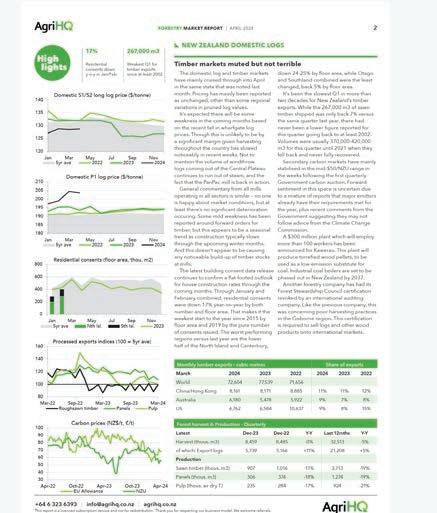



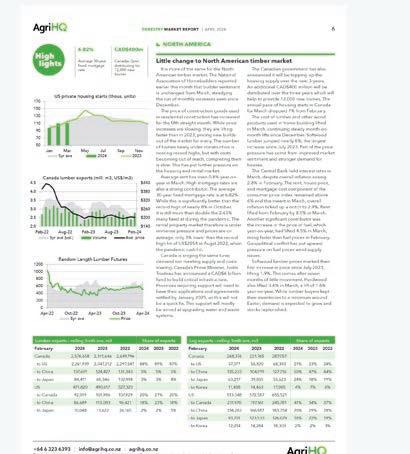

STRENGTHENING: Strong wool prices have risen by more than $1.00/kgCL in less than two months, having strengthened steadily earlier in the season too.
Cattle Sheep Deer

Weekly saleyard results
These weekly saleyard results are collated by the AgriHQ LivestockEye team. Cattle weights and prices are averages and sheep prices are ranges. For more detailed results and analysis subscribe to your selection of LivestockEye reports. Scan the QR code or visit www.agrihq.co.nz/livestock-reports
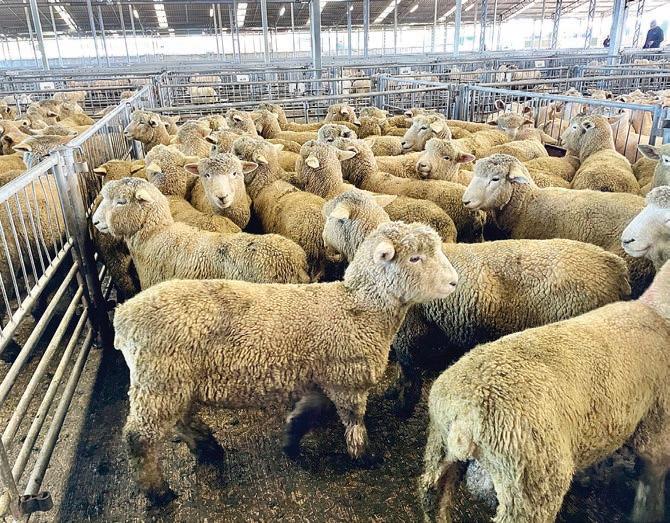
lambs, most
Rongotea | June 30 | 82 cattle, 11 sheep
R1 dairy-beef steers, 260kg
R1 dairy-beef heifers, 210kg
Coalgate | June 25 | 365
cryptorchid lambs, most
Store ewe lambs, most
Store
Canterbury Park | June 30 | 70
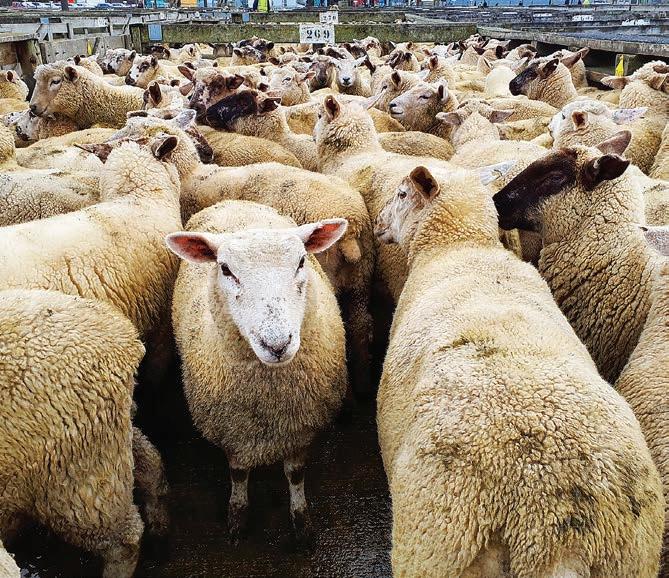

BIG IS GOOD: These mixed-sex blackface lambs from Ashburton were the first pen of store lambs to go under the hammer at Temuka on Monday, June 29. They made $260.
Rare event as SAM shifts weather pattern

Philip Duncan NEWS Weather
FORGET El Niño (for now)
– SAM is writing our weather forecasts at the moment.
What is SAM? It’s the Southern Annular Mode. It serves a role influencing New Zealand’s weather and right now it’s doing something that Australian weather forecaster Weatherzone describes as a “rare atmospheric event”.
You know all about El Niño and La Niña – well, that is just one of a handful of climate drivers that can influence NZ’s weather.
The acronym for both El Niño & La Niña is ENSO (El NiñoSouthern Oscillation) . ENSO is measured at the equator in the Pacific. Over in the Indian Ocean there is the Indian Ocean Dipole (IOD) and that is like a smaller version of ENSO. It effects Australia’s weather more than ours, but it can occasionally throw us some weather.
But the main climate driver that has a bigger influence on our weather all year round is SAM. Right now SAM is taking the
driver’s seat and controlling our weather the most.
Unlike ENSO and the IOD (which can reverse or weaken the trade winds at the equator), SAM is all about the position and strength of the windy westerlies that circle Antarctica all year round.
When it’s positive, that means the westerly belt is close to Antarctica and farther from NZ and Australia. When it’s negative, it’s usually bringing us damaging winds and can pull up bitterly cold southerlies from Antarctica itself and more low pressure to our south.
Right now SAM is in a positive phase and on the index used to measure it, it’s +5. This hasn’t happened in three years, according to Weatherzone.
As a result of this “exceptionally strong positive phase”, we’re seeing the high-pressure zones head much further southwards than usual for this time of year around the southern hemisphere – and this is doing a few things to New Zealand’s weather.
The main feature is that these high-pressure zones mean we’re having a number of calm days as they cross us to the south – but
this southern placement also dredges up east to southeast winds, which explains why eastern parts of both NZ and Australia have had more cloud and more rain recently.
Not for everyone (Canterbury and Otago, for example, could do with more rain – and may well get it this week due to another easterly set-up) but certainly the eastern side of the North Island has had plenty of wet easterly flows of late. And yes, this is the opposite of what El Niño does; it usually encourages more westerlies.
This is a prime example of how NZ’s weather is influenced by more than just El Niño, which is measured a long way from NZ, north of Tahiti.
The positive SAM is also limiting snow on NZ and Australian skifields – although again, this week snow looks more likely in NZ with polar air and moisture meeting over us due to low pressure.
According to Weatherzone, “sustained SAM index values above +1 represent a positive SAM event, while sustained values below –1 reflect a negative SAM”. So the +5.06 index reached on
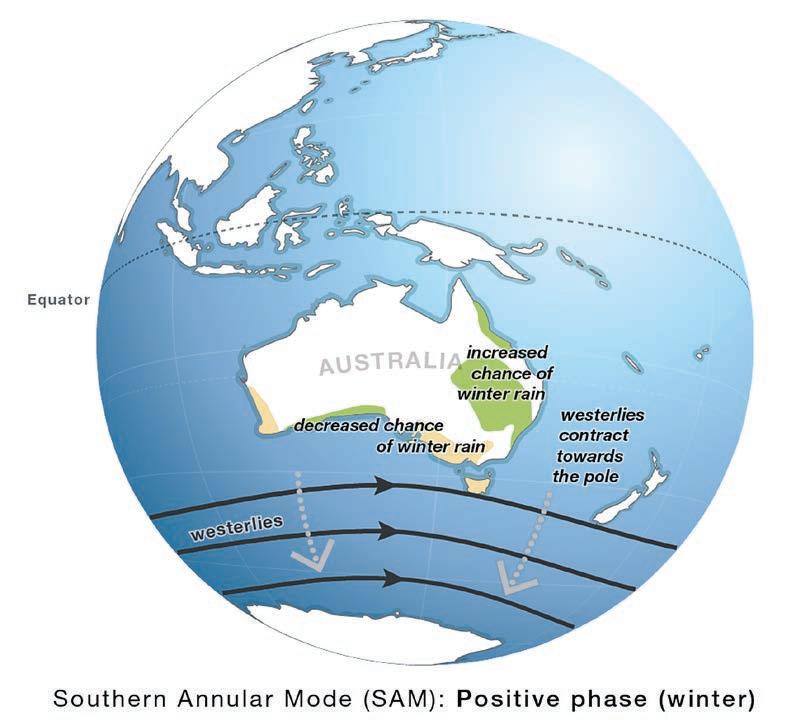
SILENT: A positive SAM means the Roaring Forties don’t roar so much over NZ. Image: Australia’s Bureau of Meteorology
Friday June 26 was “exceptionally strong” and “one of the highest SAM values in modern records”.

As I’ve been saying for months, El Niño is only one climate driver that influences our weather – so the interaction between El Niño and SAM will likely be what shapes our weather going into spring.
El Niño is often less noticeable to us in the depths of winter, but may play more of a role once we get into spring and summer.