

Richard Rennie NEWS
FINANCIAL carnage in the apple sector has intensified in recent weeks leaving growers, suppliers and creditors reeling, with millions owed to them by liquidated companies.
The latest failure has been the liquidation of the Kiwi Crunch enterprise, owing $20 million to the IRD.
However, Brydon Nisbet, president of Hawke’s Bay Fruit Growers Association and deputy chair of Hort NZ, maintains despite mounting failures, it is not a wider industry issue.
Logic suggests we could see orchards picked up by other operators.
Danielle Adsett
NZ Apples and Pears
“All grower companies are uniquely different in the way they are set up and operated. Since 2020 the apple industry has faced some significant challenges, first navigating our way through the covid years, increasing on-orchard costs and then of course the 2023 cyclone.”
Rockit Apples was the first to show signs of vulnerability, late last year, having already suffered

losses of about a third of its crop to Cyclone Gabrielle.
It suffered serious financial setbacks, with three seasons of losses hitting growers in what had once been the darling of the valueadded hort sector.
The Rockit fallout spread when agri investment company MyFarm announced the receivership of its Rakete Rockit apple orchard earlier this year, owing $12 million. It cited low returns and rising costs.
The latest collapse, of Hawke’s Bay-based Kiwi Crunch, also has MyFarm tangled in the fallout.
A MyFarm partnership company, Korokipo, was the initiator of liquidation proceedings for Kiwi Crunch’s umbrella company Consolidated Fruits.
Kiwi Crunch had already been placed in administration, and its sole shareholding company, Crasborn Fresh Harvest, went into liquidation on July 3.
Korokipo raised funds estimated to be about $5m for orchards run by Kiwi Crunch, including a 14 hectare block and a 28ha block.
NBR reported that over $500,000 is owed by Kiwi Crunch to Korokipo for fruit and lease income.
MyFarm director Andrew Watters would not comment to Farmers Weekly on the company’s involvement with Consolidated Fruits.
Kiwi Crunch owes the IRD
Continued page 3
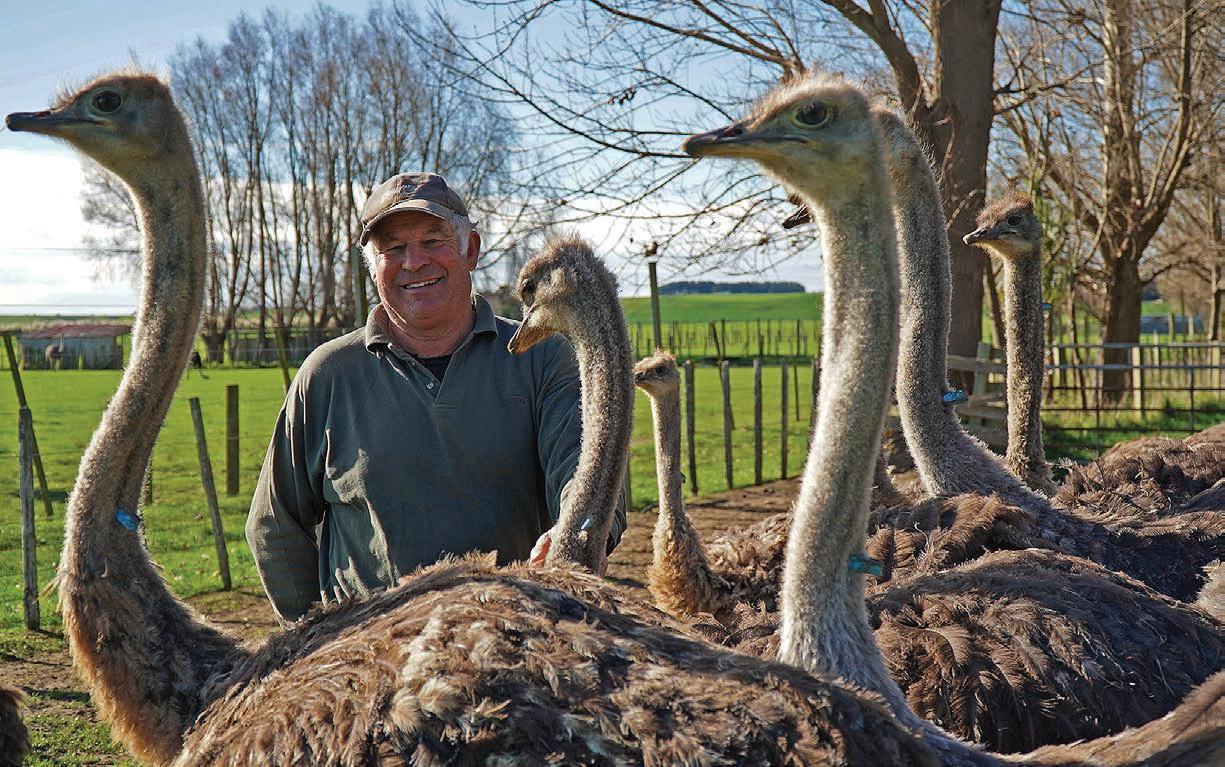
Ian and Rosemary Blunden are New Zealand’s last commercial ostrich breeders. Now, after 30 years of farming the animals, they are looking to retire and hoping someone will take over their flock.
PEOPLE 8
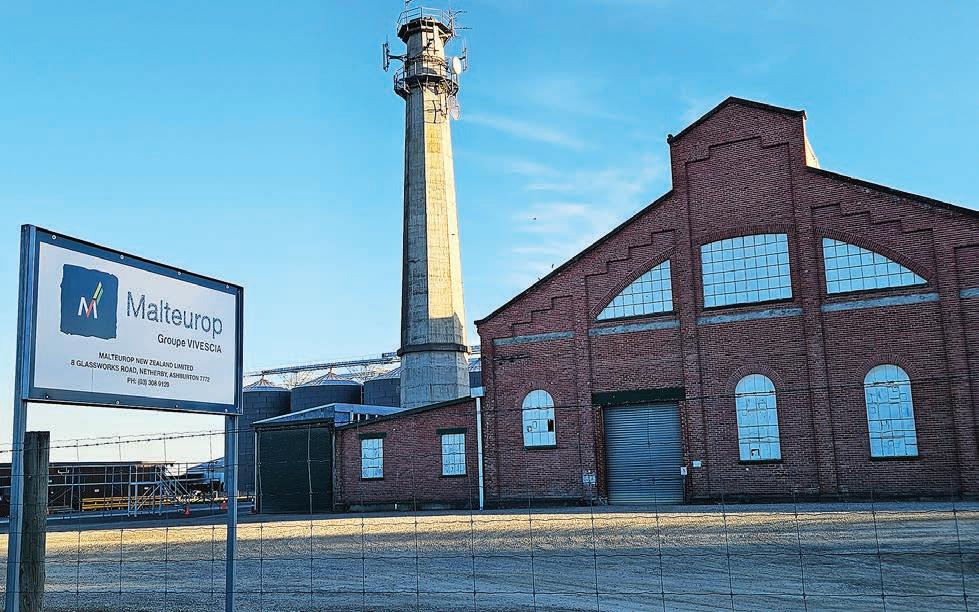
Malteurop Malting Company cuts ties with NZ grain growers.
NEWS 3
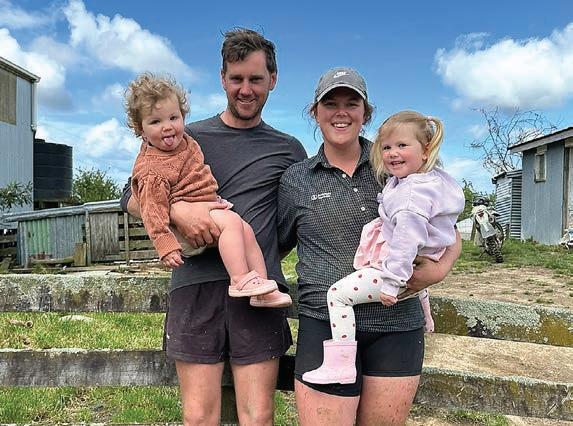
Packing up a young family and travelling New Zealand in a caravan to work on farms isn’t your conventional road to farm ownership, but Anastasia and Hayden Tristram are keen to think outside the square.
PEOPLE 12
Policy tweaks slated as agriculture falls short on methane.
NEWS 4
Lamb trade with India a slow-cooked dish, says Allan Barber.
OPINION 15
EDITORIAL
Bryan Gibson | 06 323 1519
Managing Editor bryan.gibson@agrihq.co.nz
Craig Page | 03 470 2469 Editor craig.page@agrihq.co.nz
Claire Robertson
Sub-Editor claire.robertson@agrihq.co.nz
Neal Wallace | 03 474 9240 Journalist neal.wallace@agrihq.co.nz
Gerald Piddock | 027 486 8346 Journalist gerald.piddock@agrihq.co.nz
Annette Scott | 021 908 400 Journalist annette.scott@agrihq.co.nz
Hugh Stringleman | 027 474 4003 Journalist stringleman@outlook.co.nz
Richard Rennie | 027 475 4256 Journalist richard.rennie@agrihq.co.nz
Gerhard Uys | 027 239 4388 Journalist gerhard.uys@agrihq.co.nz
Rebecca Greaves | 027 320 9111 Journalist rebecca.greaves@agrihq.co.nz
Nigel Stirling | 021 136 5570 Journalist nigel.g.stirling@gmail.com
Isabella Beale | 027 299 0596 Multimedia Journalist isabella.beale@agrihq.co.nz
PRODUCTION
Lana Kieselbach | 027 739 4295 production@agrihq.co.nz
ADVERTISING MATERIAL
Supply to: adcopy@agrihq.co.nz
SUBSCRIPTIONS & DELIVERY 0800 85 25 80 subs@agrihq.co.nz
PRINTER
Printed by NZME
Delivered by Reach Media Ltd
Andy Whitson | 027 626 2269
Sales & Marketing Manager andy.whitson@agrihq.co.nz
Janine Aish | 027 300 5990
Auckland/Northland Partnership Manager janine.aish@agrihq.co.nz
Jody Anderson | 027 474 6094
Waikato/Bay of Plenty Partnership Manager jody.anderson@agrihq.co.nz
Palak Arora | 027 474 6095
Lower North Island Partnership Manager palak.arora@agrihq.co.nz
Andy Whitson | 027 626 2269
South Island Partnership Manager andy.whitson@agrihq.co.nz
Julie Hill | 027 705 7181
Marketplace Partnership Manager classifieds@agrihq.co.nz
Andrea Mansfield | 027 602 4925 National Livestock Manager livestock@agrihq.co.nz
Real Estate | 0800 85 25 80 realestate@agrihq.co.nz
Word Only Advertising | 0800 85 25 80 Marketplace wordads@agrihq.co.nz
Dean and Cushla Williamson Phone: 027 323 9407 dean.williamson@agrihq.co.nz cushla.williamson@agrihq.co.nz
Farmers Weekly is Published by AgriHQ PO Box 529, Feilding 4740, New Zealand Phone: 0800 85 25 80 Website: www.farmersweekly.co.nz
ISSN 2463-6002 (Print) ISSN 2463-6010 (Online)
Gallagher Group CEO and executive director Kahl Betham has announced he will step down from the role in March 2027.
Betham said it has been an “absolute honour and privilege” to lead Gallagher. He joined the company in 1997 as a software engineer and from 2015 led Gallagher’s global security business. He became group deputy CEO in 2019 and was appointed group CEO in 2021.
Fonterra’s Fixed Milk Price offering in July for the 2027-28 season was oversubscribed for the first time in a year, as farmers sought to lock in longer-term returns on a slightly weakening market.
Farmers applied for 7.05 million kg milksolids in the FMP additional season category at $9.47/ kg but the offering was only 5 million kg. With the oversubscription, it meant all applicants received about 70% of what was applied for.
Wool prices came under significant downward pressure as the market experienced strong buyer resistance at the national wool sale in Christchurch.
Rather than the expected levelling of prices following the strong gains in May and June, the market fell sharply, with the largest declines seen in second shear fleece wool and oddments. PGG Wrightson Wool auction manager Dave Burridge said most European mills are currently closed for summer holidays, and the markets of China and India appear to be taking a “wait and see” approach before placing new orders.
Ballance Agri-Nutrients is pursuing an interest in Northland’s Marsden Point Biorefinery to manufacture fertilisers from biorefinery byproducts.
Ballance has formed an alliance with the Seadra consortium, which has plans to make biodiesel, sustainable aviation fuel, urea and other fertilisers from biogenic feedstocks including agricultural and municipal sector byproducts and residues.




Annette Scott
NEWS Arable
MALTEUROP Malting Company is pulling the pin on its New Zealand operations, leaving already struggling cropping farmers with even fewer growing options.
In a letter to barley growers, Malteurop said it expects to cease general operations at both its Marton Malthouse and the Ashburton barley storage site on September 30, with full closure by December 31, 2026.
The letter, signed off by NZ operations manager Glen Simmons and general manager NZ and Australia Vincent Lauwerier, told growers that current arrangements with Malteurop will continue as normal for now, including honouring of current 2025-2026 season contracts.
“Unfortunately we will be unable to offer contracts for the 20262027 season.
“We will continue to keep you informed as we work through the process.
Continued from page 1
almost $20m, but Hawke’s Bay businesses are reportedly bracing for an administrator’s report to reveal further millions owed to unsecured parties.
More financial distress has rippled through the $1.3 billion apple export sector in past weeks with the receivership of South Pacific Growers, which managed about 190ha of export apple orchards growing licensed varieties
“We are working with our NZ employees in relation to the options for them and their employment.”
The letter thanked growers for their partnership, loyalty and support over the years and said that “we are committed to working with you respectfully throughout this transition”.
The Malteurop Malting Company (MMC), with roots in Europe and NZ, has been planted in NZ since 2008, including a 42,000 tonnes malthouse in Marton, storage facility in Ashburton and barley breeding programme at Irwell, near Lincoln.
Barley has been grown for MMC in the lower North Island across Hawke’s Bay, Wairarapa, Rangitīkei and Manawatū, as well as in the South Island’s renowned Canterbury barley region.
Barley grown in the South Island is collected into the Ashburton Malteurop store and forwarded to Marton in the North Island for malting, before returning to Ashburton for sale to South Island beer brewers.
Mid Canterbury Federated Farmers arable chair Bevan Lill
including Dazzle, Envy and Roxy.
It owes $20m to a governmentbacked financing facility. Along with MyFarm, the NZ Rural Land Company has also been caught in orchard company collapses.
NZ Rural Land has suspended earnings guidance for this year on orchards it leased to Kiwi Crunch that accounted for 6% of its rental income.
Nisbet said he was unable to comment directly on the manage-
Arable growers need to need know their numbers, and we need to stop doing things that are not profitable.
Douglas Giles Federated Farmers
said the closure is significant “but not necessarily a complete surprise”.
“It has been disappointing pricing for the past few years and farmers under financial pressure have been making decisions to transition to alternative business.
“Having already lost Heinz Wattie’s and McCain, and as we lose more business that associates with arable, there is very real risk of losing critical mass.
ment of the companies that have failed.
Danielle Adsett, CEO of Apples and Pears NZ, told Farmers Weekly in a written response it would be incorrect to lump Kiwi Crunch and Rockit into a single narrative on the industry.
While also unable to comment on individual businesses, she pointed to good growth prospects in volume and value and a record export performance to June 2026.
“Exporters expect to sell every
“Yes, we are an industry in a state of flux, the outcome we don’t know, but what we do know is we don’t need any more blows like this.
“This is a threat to the brewing business, too.
“We need to collaboratively think positive. We have Gladfield Malt here in Canterbury, there’s an opportunity for farmers, and if the brewers support Gladfield, it could be a win-win for all.”
North Island growers do not have the same options, however.
“It’s a tough time here for arable, losing process peas as well as seed peas as well as Wairarapa and Hawke’s Bay with the vegetable losses,” Feds ManawatūRangitīkei arable chair Douglas Giles said.
“There’s a real flow-on effect as farmers look for more options, and not many are set up for livestock
apple they can get their hands on this season, and that demand isn’t going to change, so logic suggests we could see orchards picked up by other operators,” she said.
One industry insider told the Weekly that Kiwi Crunch’s predecessor company had been in a solid position under its original Freshmax owners prior to its late 2022 sale to Kiwi Crunch owner Wade Glass.
“The problem after that was the company expanded too quickly
in their systems; we’re expecting maybe more demand for maize, but do we need a lot more growing maize when import parity pricing for our grains remains a perennial problem.
“Historically the difference could be $70 a tonne or more. Last season it was $35-$40, and malting barley got below feed [barley] price. That created serious resistance.
“We have never been in a worse position for viable options.
“Arable farmers are getting the calls from grain and seed companies to get crops grown, but we need to play hardball with the prices – they are very, very average.
“Arable growers need to need know their numbers, and we need to stop doing things that are not profitable. It’s complete madness,” Giles said.
and was too under-capitalised.”
Another cited the use of “customer advances” for part of the company’s failure, something they hoped would be stamped out.
“This involves pre-selling a portion of your crop to an overseas buyer at x dollars a tonne.
“You get them to pay a portion of the agreed price up front. This might be done before the fruit is even a blossom.”
MORE: See page 4



Neal Wallace NEWS Climate change
CHANGES to agricultural greenhouse gas policies made by the coalition government have reduced incentives for the sector to cut emissions, the Climate Change Commission’s annual report says.
Methane emissions are on track to be 6.6% lower by 2030, well short of the 10% target, and the commission warns it would be difficult to meet subsequent emission reduction targets under current policies.
“The overall risk has increased since our last monitoring report.”
It isn’t just agriculture failing to reduce greenhouse gas emissions, with the report noting the country’s rate of reduction has halved since 2023 and stalled last year.
“The pace of emissions reductions needs to more than double over the next few years and to get on track for that, action is needed within the next 12-24 months.”
Two policies the commission singles out as reducing farmer
At its core apple sector is sound, grower says
Richard Rennie NEWS
Horticulture
DESPITE the fallout from apple companies going bust, a leading grower maintains returns are positive for good operators making the most out of strong markets, a lower exchange rate, and growing quality fruit customers want.
But Paul Paynter, general manager and owner of The Yummy Fruit Company, also cautions that the latest round of collapses may not be the last the sector sees.
“There is no cure for silliness, but another round of consolidation is quite likely to occur.
“Whenever you have a bit of froth in the sector you will get investment people who only project a straight line of ongoing returns. That period of consolidation, or an event, are never in their projections.”
Paynter appreciates more than most the impact of such events, losing over 180,000 trees and $10 million of assets to Cyclone Gabrielle.
“People as investors can be naïve and do not appreciate the volatility and complications that go with growing or farming,” he said.
incentives to lower their agricultural emission are the decision not to put a price on emissions by 2030 and the lowering of the 2050 methane target range.
Farmers need to act.
“Additional action must occur in the next one to two years for it to be feasible to meet the 2030 biogenic methane target or the third emissions budget.”
New Zealand is underperforming relative to its advantages.
Dr Nathanael Melia Victoria University of Wellington
It noted last month’s AgriZeroNZ Early Adoption Accelerator announcement, a $51 million joint government-private sector initiative to help farmers deploy proven emissions reduction tools.
Success will depend on industry contribution and available technology, the report said, and it is too late for new afforestation to help meet emission budgets.
The commission said the market alone is unlikely to significantly reduce absolute agricultural
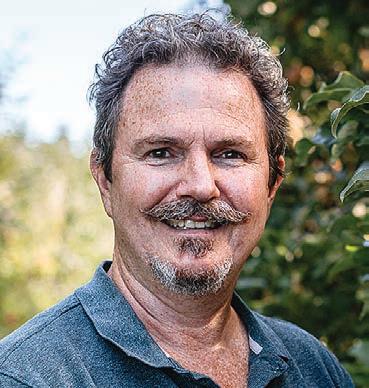
GOOD APPLE: Paul Paynter of The Yummy Fruit Company maintains the apple sector is in good heart, and well-run companies are performing after a tough few years.
But for good operators, the past two years have provided excellent growing conditions and good revenue returns.
“Ourselves and Scales are probably having the best year ever.”
Having popular varieties like Ambrosia for his company and Dazzle for Mr Apple selling into markets including China, which now has a big tariff on United States apples, are positives.
“And the exchange rate is favourable. If you have these three extraneous factors all in the green, things are going well.”
He cautioned, however, that many companies are also grappling with the end of the Cyclone Gabrielle funding scheme. This now puts orchards firmly under banks’ thumbs as loans revert to commercial conditions and repayments.
“Really it will be a decade before we get back to where we were before Gabrielle.”
emissions, and it also termed as risky an overreliance on technology, instead advocating a “transition to high-value, lowemissions land uses and other mitigation options”.
It said the Emissions Trading Scheme is “not efficiently driving emissions reductions” due to low market confidence, price volatility, and uncertainty about the longterm future of the scheme.
It needs amending to effectively reduce net emissions from the 2030s and beyond.
New Zealand is not alone, with other agricultural heavy emitters such as Ireland and Australia also struggling to meet their targets, according to Dr Nathanael Melia, founding director of Climate Prescience Limited and adjunct Senior Research Fellow at Victoria University of Wellington.
“The fair conclusion is that many countries are struggling as they move beyond electricity into transport, buildings, industry and agriculture.
“But New Zealand is underperforming relative to its advantages.”
The next one to two years are critical to achieve durable cuts
rather than depending mainly on forests or reduced economic output, he said.
Professor Sebastian Leuzinger, a plant ecologist at AUT, said
methane is difficult to tackle, and given the importance of the sector, he suggested focusing on installing solar and heat pumps and afforestation.
This week’s poll question:
Should the government be offering more incentives for the agriculture sector to reduce methane emissions?
Have your say at farmersweekly.co.nz/poll

Gerald Piddock NEWS Environment
A SENIOR Waikato Regional Council official says the council is watching with interest to see what the central government’s plan is to avoid its RMA reforms clashing with proposed Waikato Regional Plan Change 1.
“I’m as curious as everyone else to understand what the government will do,” Waikato Regional Council director of science, policy and information Tracey May said.
Earlier this month, Resource Management Act Reform Minister Chris Bishop and Agriculture Minister Todd McClay told farmers at a meeting at Mystery Creek that the cabinet is looking for a solution.
May said that any change from the government would likely be on the legislative side, and once that is unveiled, the council will know what it is dealing with.
“We’re still trying to get our head around all of the other bits that are going to be changing with the RMA and freshwater farm plans, the regulations for that. It’s a pretty dynamic space,” May said. She said she felt for affected farmers and landowners as all they want is clarity.
The council has made the 20 changes to PC1 as instructed by the Environment Court in its ruling on June 8.
May said the changes ranged from being very specific changes in words, to the court instructing the council to work with parties such as Beef + Lamb New Zealand, iwi and Fish & Game to come up with a better outcome for specific points within PC1.
“We incorporated those thoughts and what we provided the court with is ‘Here are our suggestions, here’s the thoughts and here is where we have landed’.”
While there is not 100% agreement across those parties, May believes it is pretty close.
One of these related to the requirements around the future use of nitrogen risk scorecards, particularly for farmers with a high risk of discharge.
Another related to the requirements for drystock farmers and how these relate to specific parts of the plan.
Those 20 changes refine rather than fundamentally change PC1, May said.
“It’s getting clarity, that’s where the Environment Court has
focused – to as much as possible provide clarity for farmers and landowners so there’s as little confusion in what is needed.”
May estimates the court will release its decision on those changes in September. Once that happens there will be another opportunity for appellants to appeal.
Separate to this is a High Court appeal from Wairakei Pastoral, though this and future appeals can only be on matters of law rather than points within PC1 that have been agreed upon.
There is no word yet on when that hearing will take place, May said.
PC1 will become operational once that hearing has been resolved and while May hopes that will be later this year, it could well be early next year.
“It’s a very complex legal space, but in terms of when we go out talking to farmers, it’s when we get that final decision from the High Court and our council makes the plan operative.”
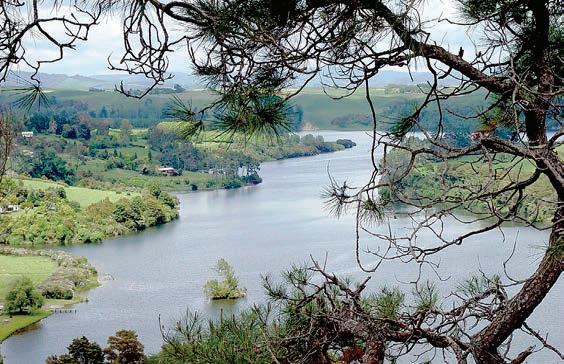
ROLLOUT: The Waikato Regional Council is waiting to see how the government plans to avoid its RMA reform legislation rollout colliding with PC1 becoming operational.
Neal Wallace NEWS Environment
FARMING groups say their concerns appear to have largely been addressed by the Select Committee considering changes to the rewrite of the Resource Management Act.
The government’s proposed RMA replacement legislation, the Planning Bill and Natural Environment Bill, was last week reported back from the Select Committee, and Federated Farmers, DairyNZ and Beef + Lamb NZ have welcomed its suggested changes.
Federated Farmers board member Mark Hooper said the committee’s recommendations were more aligned with the policy’s initial intent.
“The areas it has refined do make a difference. They are very much more in the direction intended in the first draft.”
That includes enabling productivity growth and securing property rights.
While he has yet to see the fine detail on how property rights will be protected, Hooper said if adopted, the proposed changes would
require councils to reimburse landowners for policies that impinge on those rights.
He gave examples of significant natural areas (SNAs) and the Gore District Council Māori Cultural Values policy, which he said acknowledged the whole region as sites and areas of significance to Māori.
He also welcomed the shift from the previous one-size-fits-all approach to freshwater management by making better use of farm plans and catchment groups.
Farm plans should enable most simple consents to be granted and managed while in overallocated districts, catchment-wide plans could be used to manage resources.
More complex consents may have to meet national standards and require a resource consent.
“Hopefully overall it will be a little bit more efficient,” said Hooper.
He also welcomed the decision to stop existing and new Mana Whakahono ā Rohe agreements between iwi and councils from transferring into the new resource planning system.
There had been a sudden proliferation of such agreements, which

created uncertainty and raised concerns about accountability, he said.
Dairy NZ chair Tracy Brown welcomed recognition of the importance of food and fibre, which requires decision-makers to consider naturally occurring processes, existing resource use and cost-benefit analyses.
“They provide much stronger safeguards against unrealistic or purely aspirational limits being
PLEASING: Dairy
NZ chair Tracy Brown welcomes the importance of food and fibre being recognised by the Select Committee considering changes to the RMA.
Acland said progress has been made.
She said further work is needed on resource caps, setting environmental limits, how freshwater farm plans fit into resource management and ensuring stock drinking water rules are workable.
Environment Canterbury chair Deon Swiggs said the council supports the objectives of a clearer and more efficient planning system.
“Greater national consistency may address some of the difficulties experienced under the RMA, but the proposed reforms would also shift significant decision-making from regions and local communities towards central government.”
imposed without proper regard to what is achievable in a catchment or the consequences for farmers and communities,” she said.
Brown also welcomed the removal of proposed comparative permitting and market-based tools for allocating resources, the restoration of controlled activities, and tighter safeguards around natural resource levies.
BLNZ was still digesting the 500-page report, but chair Kate
Simon Upton, the Parliamentary Commissioner for the Environment, said the proposal to permit more uses, to have consistent zoning and standardised rules are positive.
However, given the complexity of the Bills and the speed of change, he did not think the policy had achieved broad and enduring consensus across society and it should therefore be given further consideration.
Neal Wallace and Richard Rennie MARKETS
Cllimate change
THE heat wave engulfing the United Kingdom and Europe is starting to hit food production.
Milk flows and crops of apples and grain are wilting under three months of excessively hot weather that have pushed UK temperatures to over 35degC.
Susie Stannard, a lead dairy analyst with AHDB, wrote in a report earlier this month that
initial milk production for the 2025-26 season was growing at 5% in Great Britain and 5.3% in the UK. Milk volumes in Europe were also growing.
But two heat waves in the lateseason production months of May and June saw production dip with milk flows in Great Britain alone over that period falling 18.5 million litres.
“The data already shows significant loss of volume in both heat wave periods in Great Britain,” Stannard said.
“However, we are also now past

the spring flush and milk production is seasonally declining.”
Initial indications are that the heat has reduced year-on-year milk production in France by 7% and 3.6% in Germany.
The World Meteorological Organisation reports the heatwave arrived in western Europe in May, peaked in June and has lingered into July.
Earlier this month Barcelona hit 40.5degC while the average June temperature in western Europe was 20.74degC, 3.05degC above the average for 1991-2020.
Paul Paynter, owner of The Yummy Fruit Company in Havelock North, has just returned from visiting European apple growing areas.
He told Farmers Weekly that concern there among growers about the extreme temperatures is growing as trees dip into survival mode in the face of the ongoing heat.
ping dead” once temperatures regularly exceed 30degC.
A grain and feed analysis by NZX shows the heatwave has hit maize and corn crops in the key growing regions of France and Hungary, with yields potentially the lowest in 17 years.



Paynter said he was told growers are anticipating a 30% decline in fruit volumes, with trees impacted when the mercury exceeds 28degC – and apple growth “stop-
The report notes that extreme conditions have struck maize crops at the critical silking stage, when crops are most vulnerable, with French crop ratings deteriorating sharply and national assessments at their weakest in at least 15 years.





















Annette Scott NEWS Arable
THE Foundation for Arable Research has launched a new fiveyear strategy set to strengthen New Zealand’s arable sector.
FAR chair Steven Bierema said the strategy sets a clear direction for supporting a confident, resilient and profitable arable sector that produces trusted foods, feeds and seeds for NZ and global markets.
Designed to ensure growers receive practical independent support in an increasingly complex and interconnected arable sector, the strategy guiding FAR from 2026 to 2031 reflects the organisation’s commitment to connecting growers, science and industry to support successful arable farms and a valued arable sector, Bierema said.
“NZ’s arable growers are facing both significant challenges and exciting opportunities.
“Our new strategy sets out how FAR will connect growers with the science, information and industry partnerships they need to make confident decisions and build resilient businesses.”
FAR chief executive Scott Champion said strong connection to growers and collaboration are at the heart of FAR’s approach.
“Everything we do starts with growers.
“Their investment, experience and insights help shape our priorities and ensure our work delivers real value back to them.
“This strategy reinforces our commitment to being growerfocused while strengthening the connections between farming, science and industry.”
Champion said the strategy recognises the importance of increasing awareness of the arable sector’s contribution to NZ’s
economy, food systems and rural communities.
Built around four strategic goals, the strategy focuses on delivering greater value to growers through trusted research and innovation, impactful extension, the promotion of the arable industry’s role in NZ, and an efficient, growerfocused organisation.
Under the strategy’s goals, FAR will deliver value to arable growers by providing trusted and timely information, delivering research results promptly, translating science to support practical onfarm decisions, and continuing to evolve extension approaches to meet growers’ needs.
FAR will be engaging with growers to identify the research that matters most, prioritising those projects that promise maximum industry impact, and partnering with growers, research providers and industry, nationally and internationally, to deliver outcomes.
The organisation will work to ensure a visible and valued arable sector by championing arable farming’s contribution to NZ, building a robust evidence base to demonstrate the sector’s value, and strengthening relationships with government, commercial service providers and other primary sectors.
Champion said FAR’s vision is for a confident, resilient and profitable arable sector.
“This strategy provides a roadmap for how FAR will work
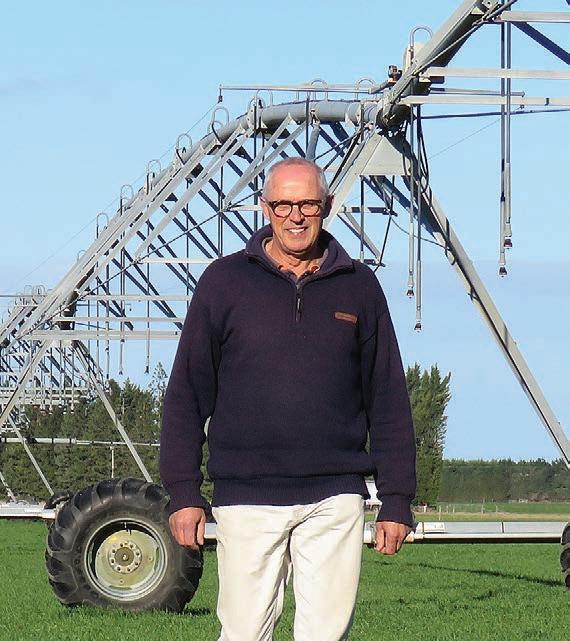
RESILIENCE: Steven Bierema says the strategy will connect growers with the science, information and industry partnerships they need to build resilient businesses.
alongside growers and industry partners to help achieve that vision.”
Federated Farmers arable chair and Southland cropping farmer Chis Dillon welcomed the “much needed” strategy.
“This strategy aligns with what Feds arable has been pushing for the last while. We really do need to address profitability of this industry or risk losing critical mass.
“This is a good workable strategy,” Dillon said.
Neal Wallace MARKETS Exports
WEAK consumer spending may have dulled some of the gloss of the New Zealand primary sector’s largest export market, but observers say it is a sign the Chinese economy is evolving. Chinese exports are thriving but second-quarter 2026 economic growth and consumer consumption data is flatter than expected due to low household confidence from falling property prices and an oversupply of housing.
An ANZ report on China showed year-on-year retail sales
for the quarter are the lowest since December 2022.
Meat Industry Association data shows that in the 2025 calendar year China was NZ’s largest sheepmeat market by volume, taking 156,345 tonnes. That was 7% lower than 2024, but a 17% lift in prices saw the export value increase to $1.1 billion.
China takes about a third of all NZ dairy exports, which in 2025 were worth $11.6 billion.
New Zealand exports to China are worth $20 billion a year, accounting for about 25% of NZ exports in 2024-25, down from 33% in 2021-22 as exporters diversify their markets.
Alistair Crozier, the executive
director of the New Zealand China Council, said China’s economic drivers are being transformed and the market still holds opportunity for primary sector exporters.
“China’s challenge is to catch the next wave, which is entirely different in character, such as AI and digital, but it requires a totally different labour force.
“If they manage to catch the next wave, then the future is very bright for China and therefore for our companies.”
The Chinese economy is still buoyant, evident by the 31,500 students studying in NZ and demand from Chinese tourists.
Despite these challenges, a

survey of NZ businesses operating in China by the New Zealand Business Roundtable in China (NZBRiC) in April and May found a high level of satisfaction and confidence.
It found 64% had high or very high optimism with their Chinese operations, and 68% were satisfied or very satisfied with their partners in China.
But 60% identified more intensive competition as their single largest business challenge and 51% no longer had NZ nationals working for them in China. In all, 51% reported improved profitability and 49% greater revenue.
Crozier said the Chinese economy resembled a K shape.
AI, renewable energy, automotive manufacturing, and digital technology industries are booming, pursuing the upper arm. The lower arm in the K reflects declining residential property values which are dampening consumer confidence.
Crozier said China’s vastness means it consists of multiple economies in one country, noting Tier 2 and 3 cities are still growing.
He said realising the potential from the India free trade agreement will take time, but China still has immediate potential and NZ companies have established markets, contacts and supply chains.


Gerald Piddock NEWS Food and fibre
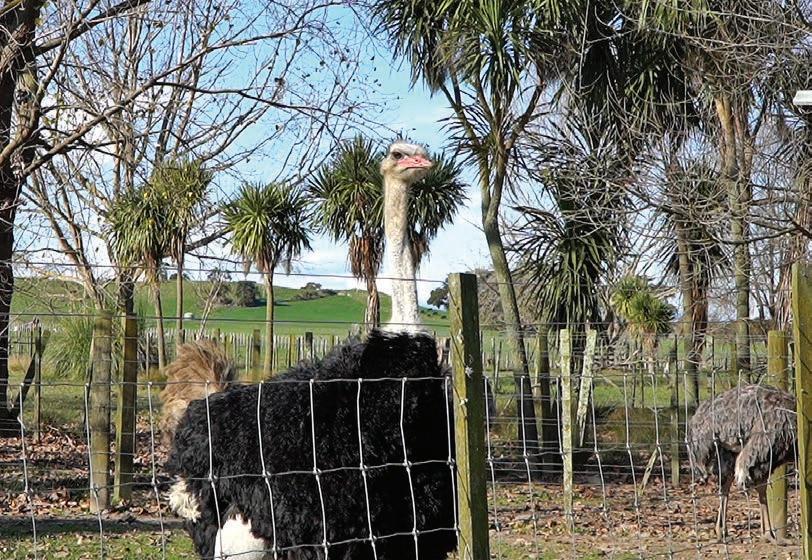
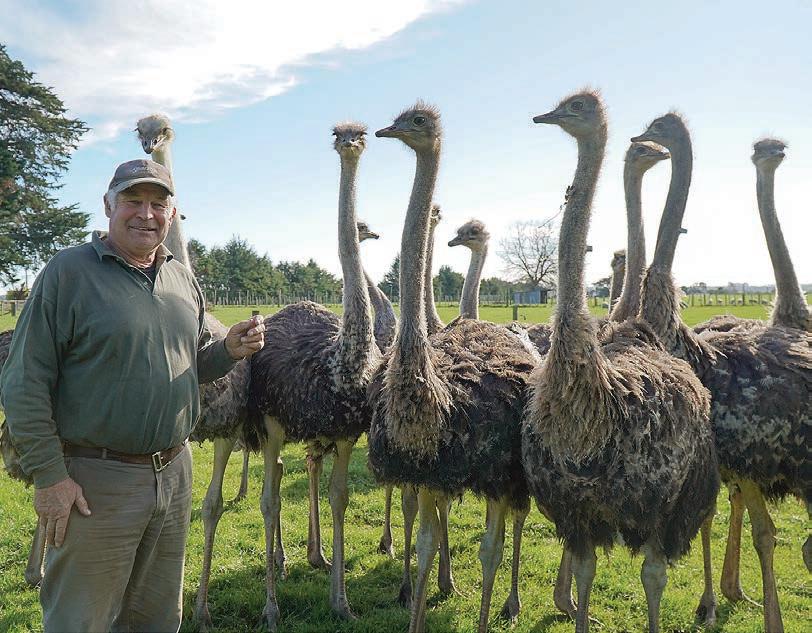
THE last of New Zealand’s commercial ostrich breeders is bowing out of the industry after 30 years of farming the animals.
Ian and Rosemary Blunden, who are retiring, are hoping to find someone to take over their flock on their farm near Halcombe in Manawatū.
“We’re quite partial to them and I would hate to see the industry die in New Zealand. I’m willing to keep breeding them if someone is willing to fatten the chicks. They could take them on at six weeks old and take them through to slaughter.
“I’m here to help anyone who wants to start,” Ian said.
A sheep and beef farmer, Ian said he got into ostrich farming in the
mid-1990s when he was looking to do something different. He heard about ostrich farming at a field day in Feilding.
After seeing a few ostrich farms in the region, he bought a cock and two hens and a half-dozen more in an auction that formed the basis of his flock.
National interest was at an all-time high at that time with farms established in Manawatū and Wairarapa as well as a New Zealand association and conferences taking place.
But it never took off and became an established industry.
Looking back, he believes there were too many people involved who thought they could make a quick dollar instead of taking a long-term approach.
“The wrong kind of people got into it – that’s my take on it.
“There was no marketing, no infrastructure, no killing facilities
and not many farmers got into it –it was more 10 acre block [holders].
“When they found out they weren’t going to be millionaires, they slowly dwindled.”
But he stuck with it and at peak, he had over 500 of the birds on his farm, he said.
“The most chicks we ever one year had were 400.”
That was 15 years ago and those numbers have been reduced to producing around 200 chicks a year from 40 breeding birds.
Most of the meat is pre-ordered, by various restaurants around the North Island, Rarotonga and New Caledonia.
Early on, Rosemary successfully applied for an export licence to send ostrich meat to Europe and one year managed to fill a container for that market.
But most years, they were able to produce about 200kg of meat off the farm, limited to restaurants and customers around New Zealand and a small amount sent to the Pacific Islands.
Ian also sold the skin as a highend leather product that was turned into wallets, clothing and handbags.
He sold eggs, too – usually 50-60 for the Chinese market at Christmas. Empty blown eggs are also sold to artists to work with the shells.
“Over the years we have had requests for skeletons. We supply necks to Auckland Zoo for the lions to eat.”
They have also supplied live birds for all of the country’s zoos, he said.
The birds are processed at Venison Packers Feilding, the only

Gerhard Uys NEWS Community
A PLEA by Future Post for community funding to help it ride out costs after a fire destroyed its Waiuku plant last year has been answered by more than 8000 donors.
Future Post is known in the farming community for turning waste plastic into fence posts.
Farmer and Future Post founder Jerome Wenzlick told Farmers Weekly he set up a givealittle campaign because the company is struggling to keep its doors open after the fire caused over $1 million in damages. Insurance covers only about $186,000 of what it needs.
By Thursday last week the campaign had already raised well over $400,000 of a $500,000 target. Wenzlick said funds will be used to recover from the arson attack, site clean-up, replacing destroyed stock, restoring operations, and covering lost revenue caused by damaged products.
Production has returned to normal at Waiuku, he said, but, “costs have crippled us. If we can just get through this tough spot and just reset again, then we should be okay.”
Between their Blenheim and
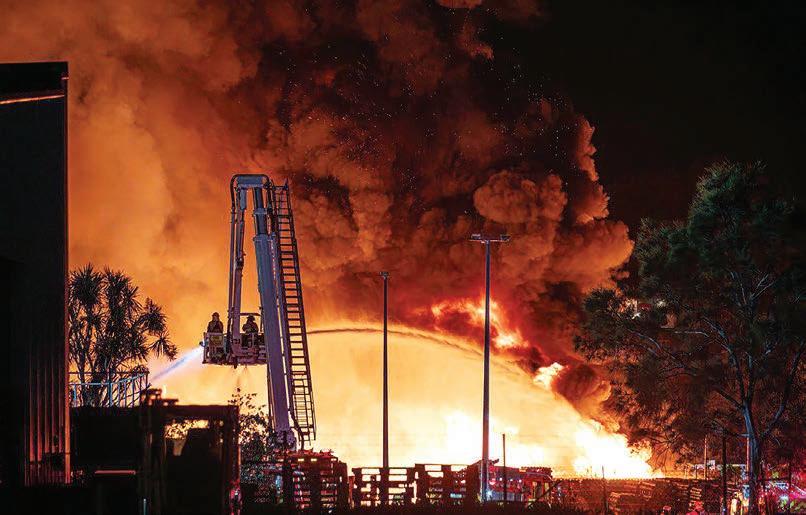
ARSON: Future Post’s Waiuku factory is up and running again, but costs to recover after a fire have crippled the company.
Waiuku plants they process 4000 tonnes of plastic in a year.
Wenzlick said he keeps approaching the government for help, with members of the public also voicing their surprise when speaking to him that a business like Future Post does not receive government support.
He said every time someone sends waste to a landfill they are levied under the waste minimisation levy, which is meant to go towards companies that actively minimise waste to landfill.
Future Post is one of the biggest recyclers in the country, with the
We’re quite partial to them and I would hate to see the industry die in New Zealand.
Ian Blunden Ostrich farmer
licensed ostrich processors in the country.
He has also sold ostrich chicks, mostly to lifestyle block holders with quite a few going to the South Island.
Ian farms the ostriches in pens – one cock to every three hens, who start egg laying in spring going through to November. They produce the eggs roughly every second day and Blunden
constructed sandpits around the outside of the pens so he can scoop the eggs out.
The birds can live for 30-40 years and many of his birds are in their 20s. They are quite monogamous, he said.
The eggs are incubated for six weeks and hatched and placed in a container with heat lamps to keep them warm for their first two weeks before heading outside during the day.
“Once we have 200-300 chicks, some of them breed naturally out in the paddock. We don’t have a lot of success letting them breed, but we let nature take its course.”
They are killed at 10 months old at 100kg, yielding a 55-60kg carcase and around 30kg of usable meat.

Hugh Stringleman MARKETS Dairy
THE Global Dairy Trade market has rallied after three consecutive auction falls and the index rose a modest 1.5%, boosted by whole milk powder, up 1.6%.
NZX Dairy Insights analyst Rosalind Crickett said the expectation before the sale was that prices would stabilise following the recent market correction, which began in mid-May.
4000 tonnes it processes otherwise ending in landfill.
“We’ve had a little bit of support over the years from the government. We’ve had nothing from the waste minimisation funding. If you’re going to levy us for a reason, use that money that you levy us for what you say it’s being taken for.”
A police spokesperson told Farmers Weekly a 31-year-old man has pleaded guilty to willfully setting fire to property. He will appear at Manukau District Court for sentencing on August 12.
“While the increase was modest, it suggests buyers were willing to re-enter the market once prices returned to more attractive levels, particularly for milk powders.”
This was because attention has shifted from milk overproduction to the heat waves in Europe and the United States and their effects on supply growth for the remainder of the northern season.
Skim milk powder prices rose 2.8%, anhydrous milk fat was up 1.1%, mozzarella up 1.3%, lactose 2% and butter
milk powder plus 10.5%. Butter slipped 0.6% and cheddar down 6.5%.
“The recovery in milk powders was broadly consistent with recent movements in dairy derivatives markets, which had been signalling improved support following the sharp declines seen earlier this month,” Crickett said.
“Buyer participation also shifted noticeably. Southeast Asia/Oceania increased its share of total purchases to 36%, up from 28% at the previous event, returning to the market after relatively subdued buying over recent auctions.
“This stronger participation helped offset reduced buying from North Asia, whose share fell to 27% from 38% previously.
“The broader geographic spread of purchasing, with Europe and Africa also increasing their participation, suggests demand became more diversified at this event.
“Demand appears to be responding to lower price levels, while emerging weather-related supply concerns are providing additional support.”



A dependable banking partner makes all the difference when conditions change. Agribusiness Partners, like Grace in Taranaki, bring deep sector knowledge, specialist support, and empowered decision making to help customers move forward with confidence. With more than 100 Agribusiness bankers across New Zealand, your Partner for all seasons is always within reach.
ACCESS: Minister for Hunting and Fishing James Meager, centre, and Eastern Fish & Game Council chair Lindsay Lyons, right, at the Whakapapa River, Stone Jug Road.
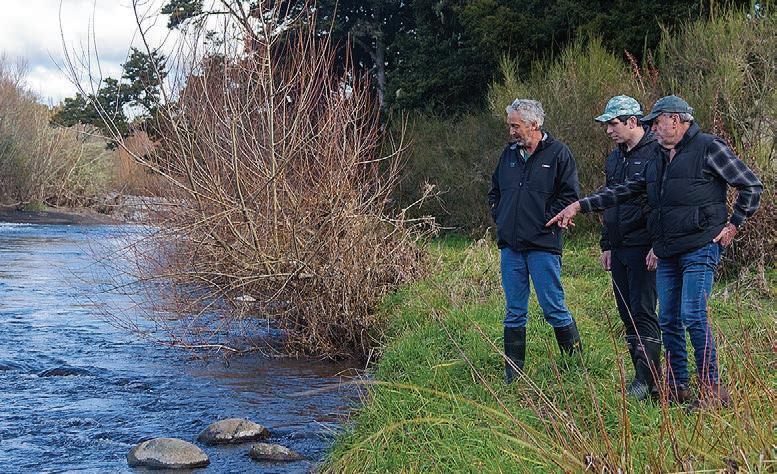
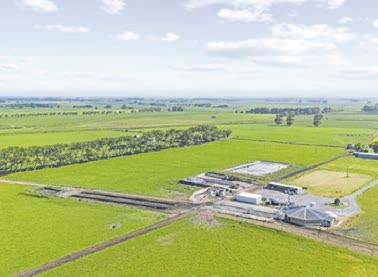
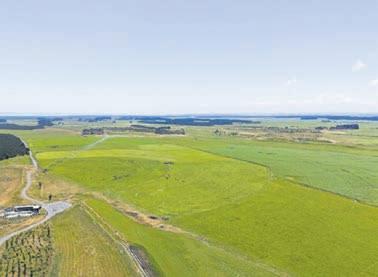
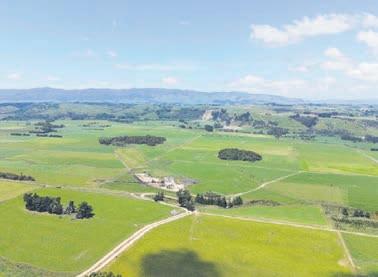
AUCKLAND/Waikato Fish & Game is buying strategically located properties from willing landowners to secure public access to rivers in perpetuity, while also helping landowners turn habitat protection and river access into development opportunities.
Auckland/Waikato Fish & Game chief executive David Klee said the organisation is using several approaches to work with landowners to secure long-term public








access to important fisheries.
One approach involved purchasing strategically located properties, securing public access through easements and esplanade strips, and selling the remaining land.
The access is secured in perpetuity before the land is sold, with the proceeds returned to an access fund.
“It’s essentially a revolving capital fund. We can buy land, secure enduring public access, sell the remaining property and recycle that capital into future access projects,” Klee said.
Although the primary objective is to improve public fishing access, Klee said, the access benefits everyone.
“We’ve seen people using these areas for swimming, kayaking, whitewater rafting, setting eel nets and simply enjoying the outdoors.”
Klee said the model has been funded entirely through externally sourced funding, philanthropic donations and mitigation funding, without the use of licence-holder revenue.
At the moment it is an Auckland/Waikato initiative but he hopes the success of the initiative could lead to the establishment of a national access fund capable of delivering larger projects across New Zealand.
The region is also working to ensure district planning rules provide incentives for landowners who protect or restore valuable habitat and access.
The Waikato District Plan includes provisions known as Environmental Benefit Lots, where landowners can become eligible for additional subdivision opportunities by protecting or restoring significant habitat, including wetlands, indigenous bush and riparian margins, subject to the relevant planning provisions.
The Waitomo District Plan provides an example of how a similar approach can be used to secure long-term public river access.
Klee said they submitted on the plan seeking provisions to improve enduring public access to nationally significant trout fisheries, including the Upper Waipā and Upper Awakino rivers.
Under the final plan, where subdivision benefits are sought within those catchments, the planning provisions create incentives for public access to be secured through the subdivision process.
Where there is no existing legal or practical way to move up or down river within a property, an enduring esplanade strip must be registered on the title.
Klee said landowners who facilitate access to previously landlocked rivers could become eligible for one, or in some cases two, additional subdivision opportunities.
“Depending on the property and local market conditions, that can significantly increase the value of the land,” he said.
The additional subdivision opportunities can provide development options for the landowner or, where transferable, be sold to another party.
A landowner could, for example, become eligible for additional subdivision opportunities by protecting a wetland and use them to create additional building sites, subject to the relevant planning rules.
Alternatively, a developer needing additional subdivision opportunities could purchase transferable rights from a landowner who had earned them through habitat protection or by securing public access, Klee said.







Rebecca Greaves PEOPLE Agriculture
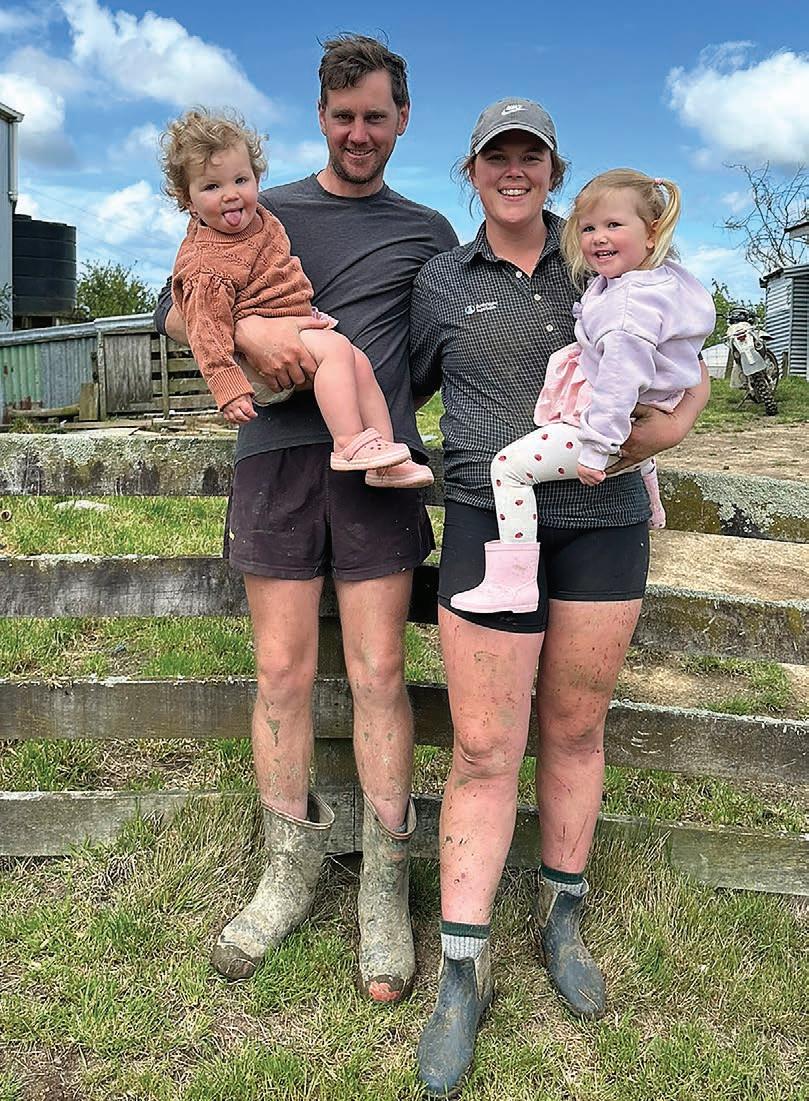
PACKING up a young family and travelling New Zealand in a caravan to work on farms isn’t your conventional road to farm ownership, but Anastasia and Hayden Tristram have never been afraid to think outside the square.
In October, the couple will hit the road with their daughters Ariella, 3, and Kiara, 2, with the goal of learning about different farming systems and, hopefully, finding their own forever bit of dirt.
The couple met while they were both in the army, and Anastasia, who is not from a farming background, has worked as a secondary school teacher over the past few years.
When the central Hawke’s Bay farm they were leasing was sold to pine trees last year, they had to reevaluate their plans.
“We were leasing a sheep and beef farm and running Floating Peaks, a woollen gardening gift range, utilising our own ewe wool clip. In about March last year when yet another farm on our road went into pine trees it sparked the conversation of, where is this farm going,” Anastasia said.
Eventually, the farm was sold and they lost 100 hectares that season, carrying on the lease for a final year on the remaining 200ha.
In June 2025, Hayden moved off
farm to take up a farm manager’s position in Manawatū. Anastasia and the girls stayed, running the farm, rearing calves and continuing Floating Peaks until the end of the year, when they closed that chapter of their lives and joined Hayden.
Floating Peaks has been sold, but Anastasia said they learned a lot from running it.
We thought we could learn on the road as farming contractors, learn from other farmers as to how they did it.
Anastasia Tristram Caravan2Farm
“In the scheme of things, it was a little business but it made some money and gave us skills to be able to believe in ourselves and back ourselves,” she said.
“Leaving the farm was a big turning point of what do we do now? We were so focused on surviving that part, it was hard to look forward.
“We nearly bought a new build house and had put a tender on a small bit of land, but nothing really felt right. We knew that our end goal was to own a farm, but the question was how?”
They hit on the idea of buying a caravan, which is due to arrive in the country any day. They would get on the road and try to figure
out what kind of farm they want, and where it might be located.
“We thought we could learn on the road as farming contractors, learn from other farmers as to how they did it. I’m a big believer in you don’t know what you don’t know, so go and find the people who do know.”
Caravan2Farm, as they have named their social media accounts, is a fact-finding mission. The end game is discovering where they want to put roots down forever, and learning along the way.
“Do we actually like dairy? Is there an opportunity in horticulture? Where is the opportunity that matches our enjoyment and life satisfaction?
“I really love education and trying to find niches. Maybe there is an opportunity for me in the education space with agriculture. I feel like sometimes you have to put yourself in a position to be lucky, so that’s what we are going to try to do.”
They figure the girls are a good age to travel with, and they have a few years before they start school, which is another big driver.
“One of the big things we missed when we were leasing and working for ourselves was flexibility, especially with young kids.”
The plan is to start in the North Island for the first month, picking up some docking or casual work, before heading to the South Island.
“The craziest thing is, we don’t have a plan, we’re just going to see what happens.
“We just want to work towards something that is ours. There’s something about having your own slice of dirt, and now that we’ve had a snippet of that, we want more. We are not afraid of hard work; we just need to figure out where to best direct the hard work.”
Anastasia believes conversations and learning from different people
about different farm systems is where the gold is.
“I’m excited to see where we end up. Hopefully we will meet some cool people who will let us park up, have a yarn. Hey, maybe they will even learn something from us.”
MORE:
Follow their Caravan2Farm journey on Facebook or Instagram.
‘GRASS FED” is not often a claim made by an award-winning gin company, but it is one earning plaudits and sales for Taurangabased Clarity Distilling Company.
Business couple and company founders George White and Stephanie Downer are grappling with a surge in overseas interest in their Clarity Navy Gin, which was recently awarded top points in the gin category at one of the world’s leading international spirits competitions in London.
It achieved 99 points and a gold medal at the 2026 International Wine and Spirit competition.
White said the gin’s stand-out characteristics of smoothness, aromas and purity are derived in a large part from the relatively unusual choice to use whey-based ethanol as the gin’s alcoholic base.
“Typically, you will find gins will use grain or sugar-based sources for their alcoholic content, and it has often been frowned upon to use a whey-based alcohol.
“But we have found it is the most neutral, pure base you can get, and it has a great provenance story with it.”
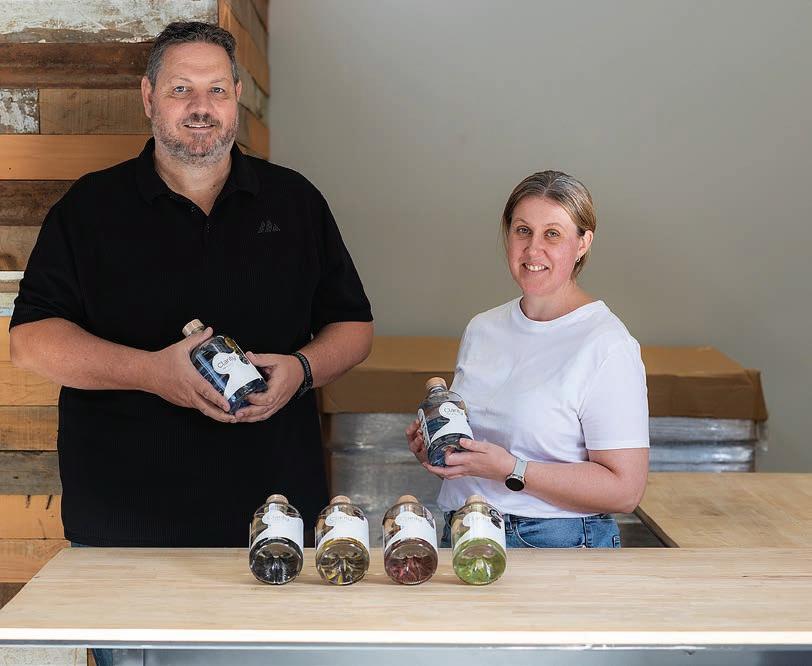
For many New Zealanders, “grass fed” may be something taken for granted.
But White said it is underestimated here how strong are the connotations of purity, sustainability and quality for consumers in the likes of the United States, a market they are currently exploring.
As a base, he said, it allows the complexity of the gin’s botanicals – such as coriander and Hawke’s Bay lemons – to shine through.
“And with the latest competition, we feel the results speak for themselves.”
The source supplier, Lactanol, is a low-profile, wholly owned subsidiary of Fonterra that
specialises in producing highquality ethanol, a natural byproduct of milk processing.
The company claims to be one of only a few in the world where casein whey is the feedstock for ethanol production. It produces 15 million tonnes a year, across a range of purity and strength.
Typically, you will find gins will use grain or sugar-based sources for their alcoholic content, and it has often been frowned upon to use a whey-based alcohol.
With a pure base to begin with, White said, the magic of the company’s gin flavours come from individually distilling each botanical used, rather than “tipping them all into the pot together”.
“It is important not to overextract the flavours. It’s a bit like making a casserole. You will fry off the onions and garlic and meat, cook it and add the likes of your herbs later on. Different
ingredients distill their best flavours at different temperatures, for different times.”
The couple got together to produce gin commercially after White decided to advance his home distilling interest. Downer, initially a non-gin drinker, could see the potential in a product playing strongly to provenance and purity.
They acknowledge selling alcohol into a market where people are drinking less, not more, is a tough gig.
“But you are also seeing people opting for a better quality of drink when they do. They want to know where it comes from, what’s in it.
“There are many gin makers in NZ, but we have always been very open about what we put in ours, and stick to a very traditional style of gin.”
Since picking up the award the couple have been approached by India-based importers aware of the impending free trade agreement sign-off.
“The trade agreement has created momentum and confidence around New Zealand products entering India. We are hoping we can be part of that wave.”
There’s a lot in your Farmers Weekly. News, opinion, market insights and more. It’s all produced by real journalists and real analysts, and delivered to you every week. You’re reading it now. Let’s keep it that way. Don’t take it for granted.
You appreciate ‘real’. You produce real food and fibre for the world, and right now the world loves it.
When you take out a voluntary subscription to Farmers Weekly you’re saying thanks for your paper every week, and for all the stories we share online every day.
In return we’ll keep doing what we love doing at our usual standard, and we’ll also send you our Keeping it real classic enamel mug.
Refer a friend:
If you know someone else who wants to back Farmers Weekly with a voluntary subscription, and they say it was you who recommended it to them, we’ll send you another mug!
Send us your ‘mugshot’

We’d love you to send us a picture of you using your new mug – on the farm, in the office, on the boat, in the bush or wherever you stop for a cuppa. Please email your mug in action to dean.williamson@agrihq.co.nz or text it to 027 323 9407.
Kind regards, Dean, Cushla and Charlie Williamson.
Support us with a voluntary annual subscription to Farmers Weekly. $120 for 12 months. This is a voluntary subscription for you, a rural letterbox-holder already receiving Farmers Weekly every week, free, and for those who read us online.
Scan the QR code or go to www.farmersweekly.co.nz/donate
Email your name, postal address and phone number to: voluntarysub@farmersweekly.co.nz and we’ll send you an invoice.
Call us on 0800 85 25 80
Note: A GST receipt will be provided for all voluntary subscriptions.



TNeal Wallace Senior reporter
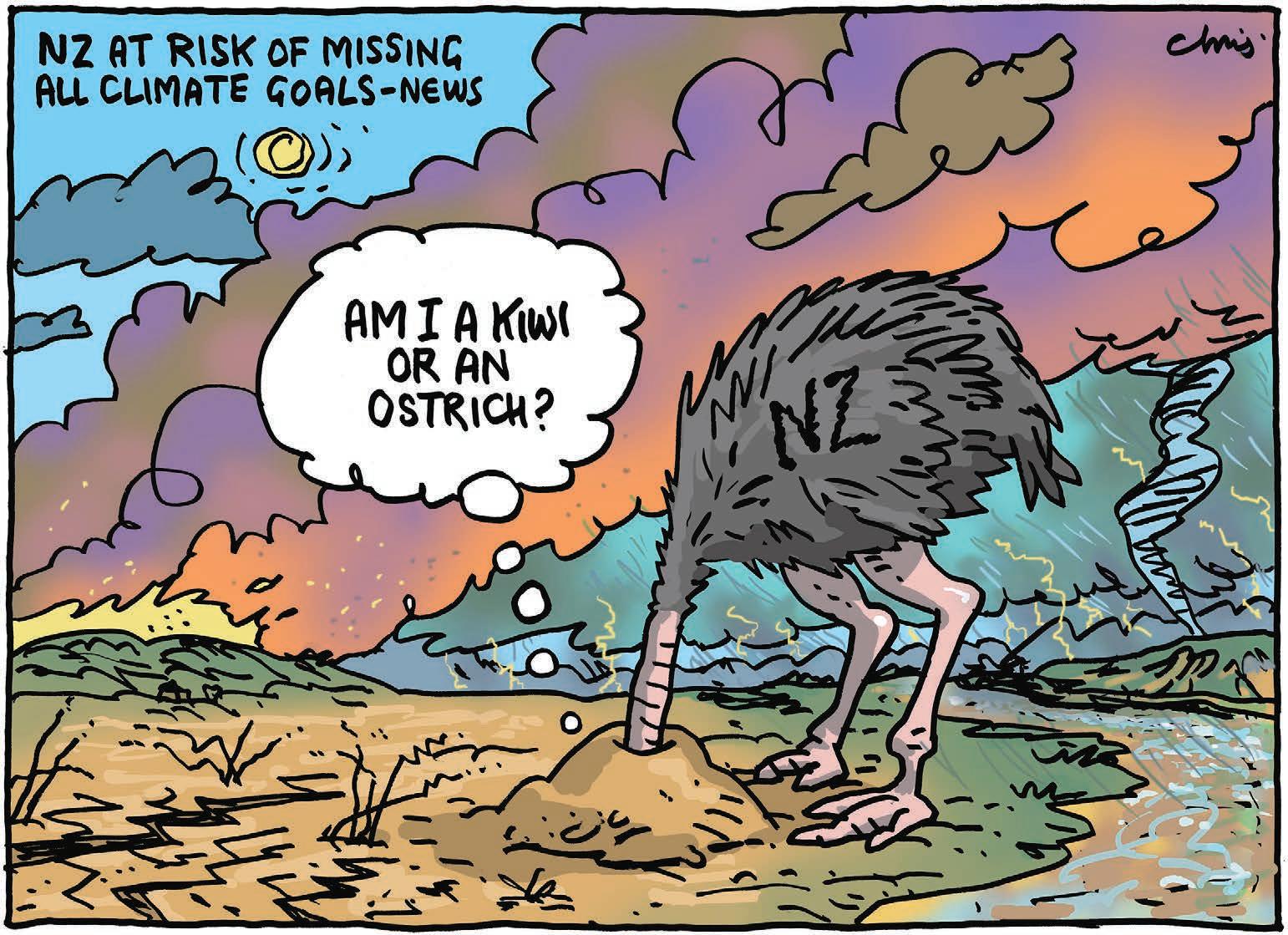
HE football World Cup is over, but the looming election means the game of political football that embraces agriculture continues. It’s a game of government policies that pull the sector in one direction only to have others lurch it in another, creating uncertainty and wasting time, money and energy.
Evidence of this ongoing whack-a-mole treatment of agriculture has been clear in the past few years.
David Parker, the environment minister in Jacinda Ardern’s Labour Government, earned the wrath of farmers by introducing freshwater rules and regulations that were widely ridiculed as unworkable.
Those concerns proved correct and the minister had to backtrack on rules limiting the pugging depth by stock grazing winter crops and stipulated dates for the resowing of grazed cropping paddocks.
The National-led coalition promised to replace Parker’s National Policy Statement
for Freshwater Management 2020, but as Federated Farmers president Colin Hurst said recently, it remains law two and a half years after the coalition was elected.
Part of the reason for the inaction was the coalition’s planned rewrite of the Resource Management Act.
Last week we saw a hint of what that might look like, with the Select Committee reporting back on the Planning Bill and Natural Environment Bill. The proposed changes were widely welcomed by farming groups.
Federated Farmers estimates its recommendations could reduce by about 45% the current required resource consents.
The new laws will replace Parker’s one-size-fits-all approach to freshwater management, with an emphasis instead on using farm plans and catchment plans to manage the effects of an activity.
The proposed new laws would prevent the transfer to the new planning system of what the government calls a sudden proliferation of Mana Whakahono ā Rohe, or participation agreements between councils and iwi.
The government has also signalled a possible amendment to prevent the Waikato Regional Council’s Plan Change 1 from becoming law, arguing legislation changes make it irrelevant.
The Labour opposition has said it would, if elected, retain much of the alternative planning regime, but environmental groups
and the Green Party, its likely coalition partner, have slated the Select Committee report for “removing and weakening environmental safeguards”.
There is also the question of the influence of the Green Party’s agricultural policies, deemed by many in the primary sector to be extreme, in a Labour-led government.
There is no guarantee its policies would survive coalition negotiations but they include requiring the measuring of agricultural greenhouse gas emissions, limiting stocking rates, phasing out the use of fossil fuels “for agricultural processes”, along with synthetic nitrogen fertiliser, a policy that failed spectacularly in Sri Lanka in 2021.
It is appropriate that our biggest industry should be closely scrutinised by politicians and lawmakers, but the aim of reducing the sector’s environmental footprint is not confined to the green groups.
The challenge is to achieve a balance between food production and its environmental impact.
With the general election 15 weeks away, the sector will once again be subject to generic statements from aspiring politicians waxing lyrical about its importance, taking credit for its record performance and speaking about how their party will support it.
What the sector actually wants is stability and an end to being the centrepiece in a game of political football.




Almost 65% of those who took the poll believe establishing herds of special interest will help, rather than hinder, conservation in the country’s national parks.
“It will help conservation as there will be tighter controls on browse damage, and deer populations will be culled to stricter guidelines,” said one voter.
“If it is based on the great system of how the Sika Foundation manage sika in NI then bring it on. I am not a hunter and work in conservation but I appreciate having a well-managed hunting resource,” said another.
Of the 35.7% who thought it would impact conservation, several felt the country should not be allowing pests in national parks, even in a controlled manner.
“Evidence suggests deer (and others such as goats) clean out palatable plant species over wide areas of NZ, not just the conservation estate. We seem to be heading in the wrong direction.
“If this model is so great for conservation why are we not doing it for rats, stoats and possums?” LAST WEEK’S POLL
Last week’s question: Will establishing herds of special interest in NZ’s national parks hinder conservation in those areas?
Allan Barber
Meat industry commentator: allan@barberstrategic.co.nz, http://allanbarber.wordpress.com
THE excitement about the free trade agreement with India due to enter into force before the end of the year can’t hide the fact that overnight success is unlikely.
There is great optimism for apples and kiwifruit and other areas of trade but, realistically, increasing exports from a very low base will require significant research, investment and determination.
In 2025 New Zealand exports to India totalled just over $2 billion, which made it our 11th largest export market. Travel, education and government services made up nearly half this figure, with industrial products next and forestry, food and beverage and horticultural products making up most of the rest.
Red meat sector exports were $91 million, which appears encouraging until closer study reveals that wool alone made up most of it. Frozen sheepmeat amounted to 80 tonnes worth a
little over $1m. This of course was achieved in the face of a 33% tariff, which will be removed when the agreement comes into effect.
But this infinitesimal amount contrasts with $3.2bn of red meat exports to the United States and $2.7bn to China, admittedly most of this being beef. Exports to the European Union and UK, made up largely of sheepmeat, were over $2.6bn.
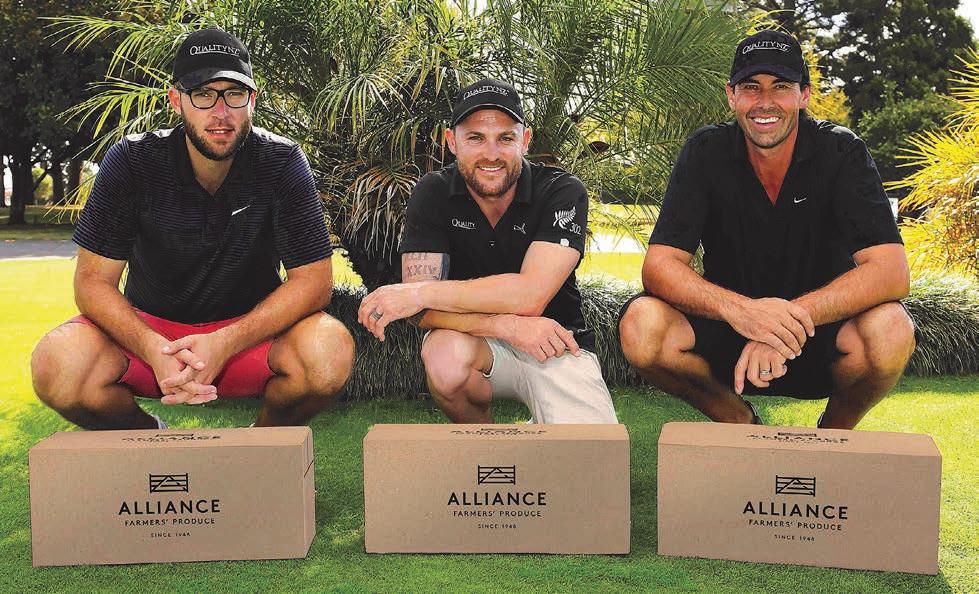
Only one meat exporter, Alliance, has attempted to develop trade in India, having signed an agreement with QualityNZ, which was formed in 2014 to take advantage of the contacts of highprofile New Zealand cricketers.
These included Stephen Fleming, Daniel Vettori, Brendon McCullum and Geoff Allott, who was chief executive until recently accepting the role as NZ Cricket CEO.
Hopefully the FTA will provide QualityNZ with impetus for the business to expand from what is a low base.
ANZCO’s sales and marketing general manager, Rick Walker, says, from his own experience, India is a hard place to do business, and the market will open up only if it is willing to pay a competitive price for product.
The Australian FTA has seen a small increase at New Zealand’s expense, but Walker maintains this is relatively low-priced product, certainly not the sort of high-value product destined for high-end hotels and hospitality.
Meat Industry Association chair Nathan Guy is more positive about prospects after the FTA comes into force. He points to the growing middle class in India, which is predicted to reach 700 million in the next few years, many of them
By working together, we can help ensure the profession remains relevant, capable and well equipped to meet the challenges and opportunities ahead.
meat eaters, although this would be almost exclusively chicken, pork and goat. Unlike east Asian consumers, many of whom don’t like the smell of sheepmeat, Indians have no prejudice against lamb.
Guy says the FTA will enable New Zealand to negotiate the removal of non-tariff barriers, such as sanitary and phytosanitary regulations and technical trade barriers that pose obstacles to trade over and above the current high tariff rate.
In the joint industry submission to the Select Committee in May,
the text welcomed the tariff reduction on a whole range of other meat products, including prepared meat products, hides and skins, pet food, blood products and meat and bone meal (MBM).
These will eventually see a removal of any tariff some years after entry into force, although hides and skins and MBM will move to zero immediately the FTA applies.
Guy also refers to the potential benefits from the FTA because of the uncertain trade environment globally. Apart from the general geopolitical uncertainty, the Office of the US Trade Representative has asked the US International Trade Commission to launch a Section 201 global safeguard investigation into lamb imports after US sheep producers filed a petition last year.
The two almost exclusive sources of US lamb imports are Australia (74%) and New Zealand (25%). The average price paid is higher than that paid by any other sizeable market, with approximately 27,500
PULLING POWER:
Alliance has attempted to develop trade in India, having signed an agreement with QualityNZ to take advantage of the contacts of high-profile New Zealand cricketers such Daniel Vettori, Brendon McCullum and Stephen Fleming.
tonnes being exported from this country.
Beef + Lamb NZ and the MIA have prepared a detailed submission to rebut the claims of US sheep farmers, but there must be a strong chance that the protectionist attitude of the Trump administration will lead to a higher tariff being imposed on New Zealand and Australian lamb, which would see it lift from the current 15% level.
Guy cites this possibility as a very good reason for NZ exporters to start to look seriously at trade opportunities with India. But developing cold-chain and logistics infrastructure as well as customer relationships will not be a quick process.
The question for the red meat sector is whether this will be left to the individual exporters to decide or to a joint sector body. Conversations with QualityNZ and Alliance’s new majority shareholder Dawn Meats could be a useful starting point.
In my view
I’VE been giving a lot of thought to attracting and developing the next generation of rural professionals. As the Institute of Rural Professionals, we see this is critical to the future of both our sector and our profession. Many of us came into the sector because someone opened a door, through a family experience, a summer job, a field trip, a mentor, or a conversation about advisory opportunities.
Those early experiences matter. They shape interest, perspective and a sense of belonging in a sector that depends on trusted relationships and long-term commitment.
Strengthening the pipeline of emerging rural professionals has been identified as a key strategic priority for the institute. We do not see this as a task to undertake in isolation. Meaningful progress will come through collaboration,
with educational institutions, industry bodies, and organisations already committed to working in schools and focused on attracting and developing future talent. By working together, we can help ensure the profession remains relevant, capable, and well equipped to meet the challenges and opportunities ahead. So why does this matter, beyond the obvious? There are three things that stand out for me:
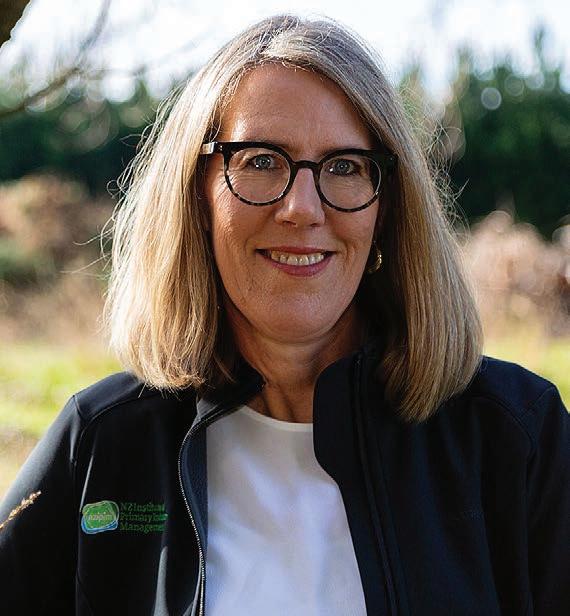
DOORS: Jo Finer says her challenge to the sector is to think about the doors it can open for the next generation of rural professionals.
Capability and succession
We are already seeing pressure points across the sector. Vacancies that are hard to fill, skills shortages in areas like farm system change and environmental management, and an ageing workforce in some parts of the profession. If we don’t actively build the pipeline now, those gaps will only widen. Our work relies on people who can walk alongside farmers and growers over time.
That kind of capability doesn’t develop overnight. It’s built through years of experience, trust and accumulated knowledge. Keeping the profession relevant The next generation will come with different expectations, different skills, and a different lens on the world. That’s not a risk, it’s an opportunity. They bring digital fluency, new ways of thinking about sustainability, and a willingness to challenge how things have always been done. If we create the right pathways for them, they will help keep our profession connected to where farming is heading, not just where it has been. Without that, we risk becoming out of step with both our clients and the wider environment we operate in.
Strengthening connection to the sector
We can’t assume young people understand what rural advisory actually involves. For many, it’s invisible. It’s often those early touchpoints that make it real – a visit to a farm, a conversation with a rural professional, a chance to be involved in something practical.
If we want people to see this as a career worth pursuing, we need to
be visible, accessible and willing to engage early.
That’s where partnerships with schools, tertiary providers and industry programmes are so important.
The takeaway for me is simple. This isn’t something that will fix itself. It requires intent, coordination, and a willingness to step up.
I’m committed to continuing to work alongside the partnerships and initiatives that open doors for young people and to making sure that we, the Institute of Rural Professionals, play our part in connecting those efforts across the sector.
My challenge to all of us is to think about the doors you can open. Whether it’s taking on a summer student, supporting a field trip, speaking at a school, or simply having a conversation with someone who’s curious. Those small actions add up. Because for many of us, that’s exactly how it started, and it’s how it will start for the next generation too.

Staff reporter PEOPLE Horticulture
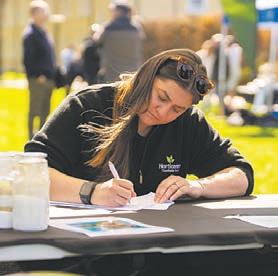
SEVEN highly skilled contestants from across the country are preparing to compete for the coveted Young Grower of the Year 2026 title.
The Young Grower of the Year national final will be held in Cromwell on August 27-28.
HortNZ chief executive Kate Scott said the finalists, representing seven growing regions, really sum up the goals and spirit of the competition.
“This is a highlight of the year for the sector. Young Grower showcases the skills, knowledge and leadership potential of our next generation, ensuring the industry remains strong and sustainable.
“The finalists typify the capability and professionalism that defines the
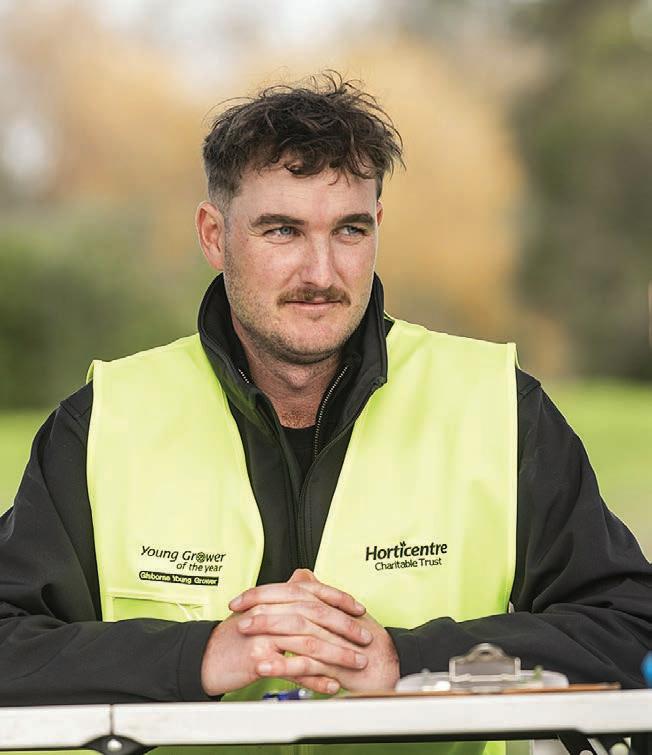
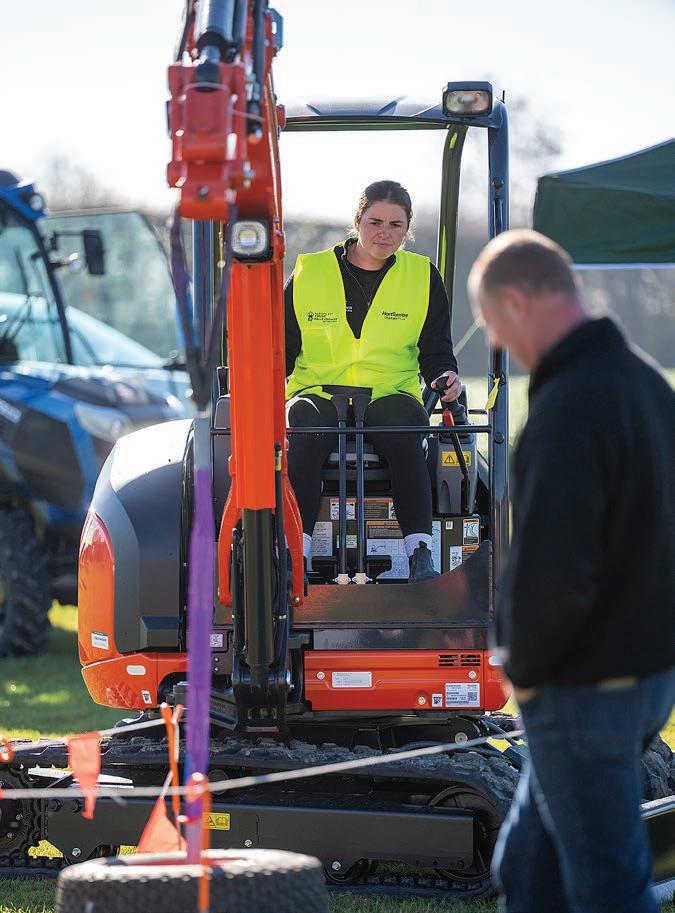
James Torrie – Gisborne
James Torrie, 28, has a degree in sports and exercise prescription and training and is a crop manager with Wi Pere Trust.
He’s in his second full year in management and has been recognised with Citrus New Zealand’s Emerging Leader award.
“I like the diversity of the crops,” he said.
“I look after four orchards –apples, blueberries, citrus and nursery operations.
“The Young Grower competition is important because it’s really good to be tested on your skills across the board. It gives you confidence in what you are doing well at and highlights areas you might need more experience in.”
future of New Zealand horticulture.
Across all the regional finals, we have seen such a high calibre of young people, representing the best emerging talent and showcasing the next generation of leaders.”
Scott said the participants set a great example for young people considering career options.
“There are so many different opportunities available in horticulture. Our finalists are working in many different areas of the industry and taking on significant management responsibilities.
“They are loving their work, seizing the many opportunities for personal development and are proud to be part of an industry which provides healthy food for New Zealanders and the world.”
MORE:
Find out more about the Young Grower of the Year National Final www.hortnz.co.nz
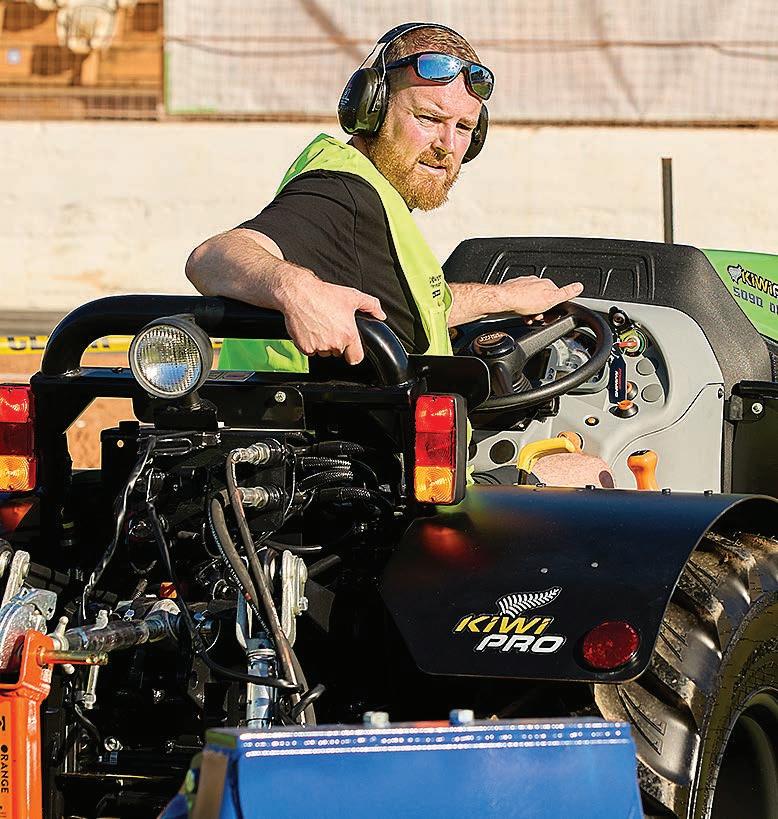
William Kenna – Bay of Plenty
William Kenna, 29, has a degree in marketing and logistics and is orchard and innovation lead at KWKIWI.
KWKIWI grows kiwifruit and partners with horticulture technologies to develop tools to benefit the wider sector.
“I really enjoy the opportunities for innovation and growing a great product which is healthy and enjoyed by consumers around the world,” he said.
“The Young Grower competition is absolutely important to encourage people to upskill.
“It showcases different aspects of what horticulture involves and highlights what the career possibilities are.”

Luke St John – Central Otago
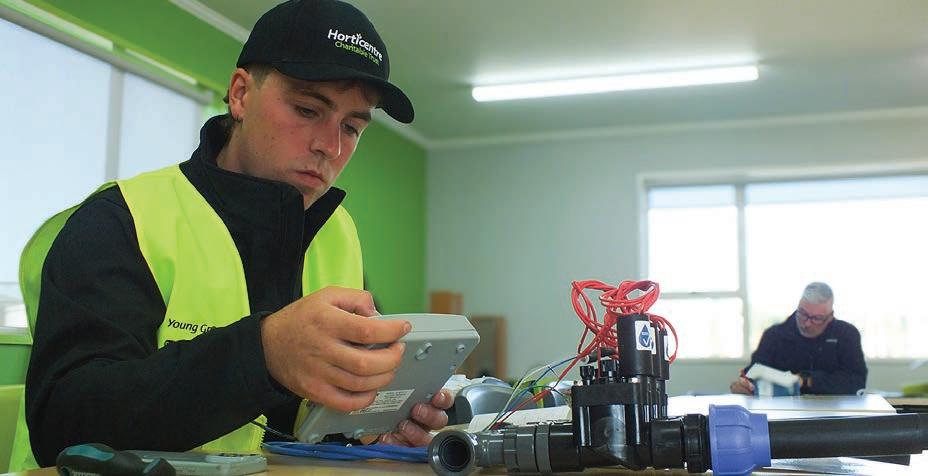
Luke St John, 24, has a degree in botany and ecology and is a trainee orchard manager for Fortune Fruit in Cromwell.
“There’s been a lot of on-the-job learning and I’m now studying for the Level 4 New Zealand Certificate in Horticulture Production,” he said.
“I really enjoy the variety of work.
“It’s constantly changing over the growing seasons and at harvest we get an influx of people from all over the world.
“You get to meet such interesting people and learn so much from them.”
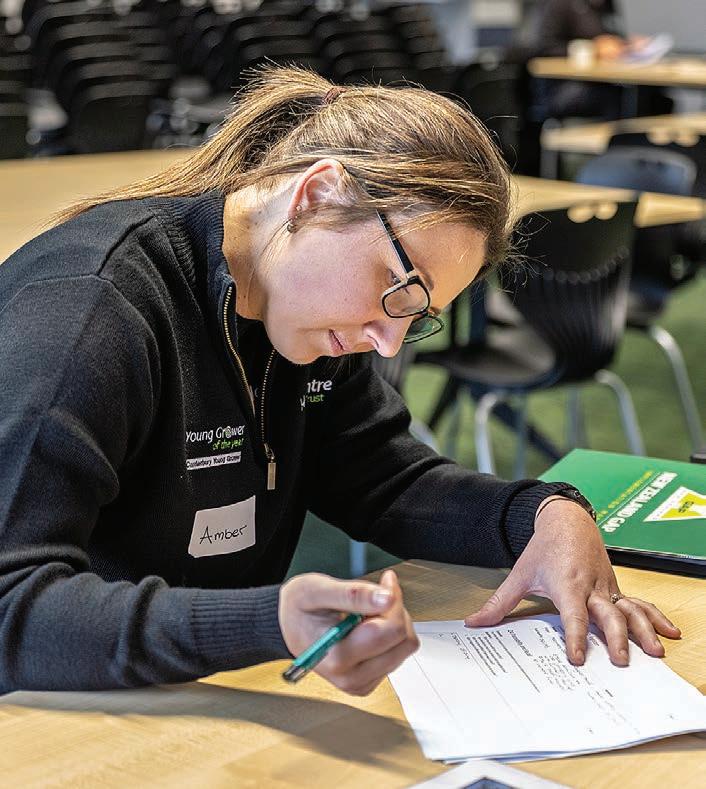
Amber Davy – Canterbury
Amber Davy, 29, has a Bachelor of Agriculture degree and is quality and field manager for leading seed potato supplier Eurogrow.
“My favourite part is the new varieties, and I love working with farmers and growers,” she said.
“Potato growers are forwardthinking, great to work with and keen to see people do well.”
Since joining the sector, Davy has gained a Postgraduate Certificate in Applied Science and Postgraduate Diploma in Horticultural Science.
She’s attended the Potato Business School in the Netherlands and an International Potato Congress, and gained agronomy experience in Germany. She chairs the Potatoes NZ Youth Council.
Maddi Sheridan – Hawke’s Bay
Maddi Sheridan, 26, has a horticultural science degree and is a quality and compliance manager – growing at T&G Global.
“I enjoy the people and range of work,” she said.
“There’s a very wide range of projects and you have a lot of freedom to choose the kind of work you want to do.
“T&G has a very supportive culture. They want everyone to do well and achieve the very best they can. I’ve done a lot of onthe-job training and taken part in T&G’s emerging leaders programme.”
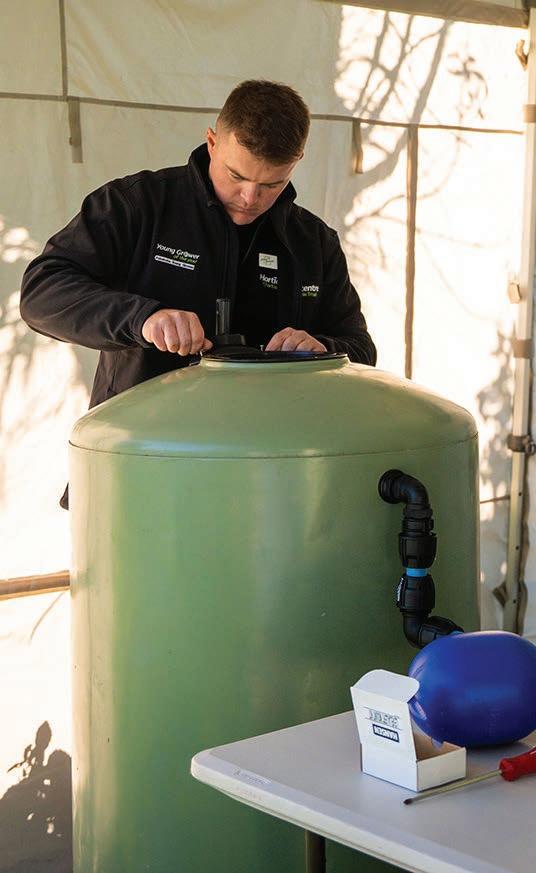
James Blair – Pukekohe
James Blair, 28, gained an agricultural crop science degree in the UK and is an agronomist for AS Wilcox.
He is technical support for four regions as well overseeing the seed potato programme for the South Island.
“I enjoy that it’s always busy with a good mixture of admin and practicality,” he said.
“Crop walking is still the best part for me and going to the different regions and meeting different growers.
“Young Grower is a chance to test your skills against your peers but also to raise awareness among young people of the opportunities in the industry, because there are so many.”
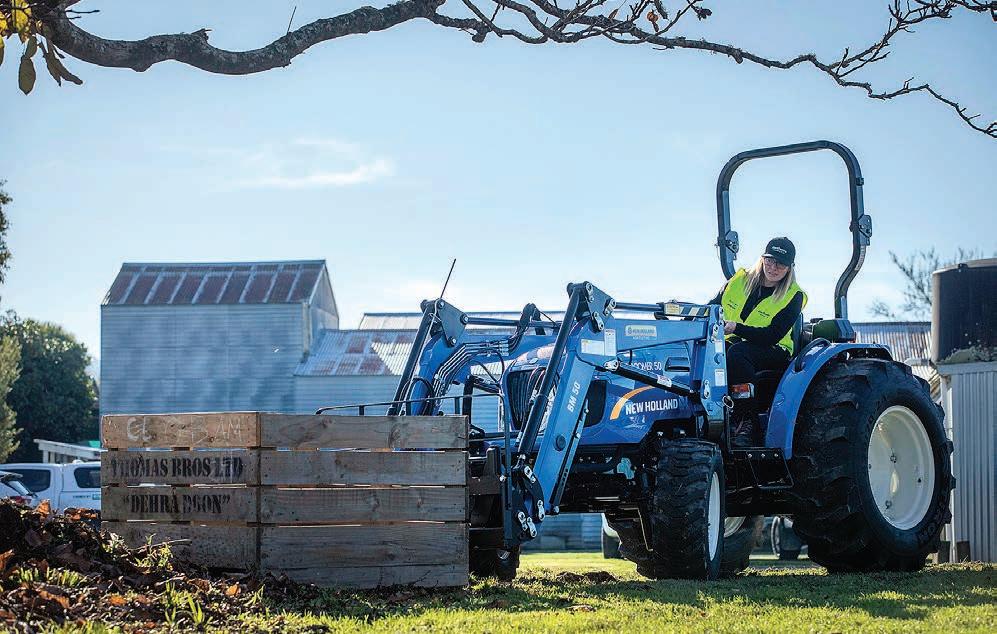
Amelia Marsden, 30, has a Bachelor of Agriculture and is nursery manager at Thomas Brothers Orchard in Riwaka.
“Horticulture is a great industry to be part of,” she said.
“There’s a multitude of opportunities and different areas to grow your career in.




We’re here for the good of the country.
“The industry is going from strength to strength and it’s awesome to be part of that. At a time when food security is such a massive issue globally, it feels really good to be helping to produce some of the healthiest food out there, which is exported to consumers around the world.”

Optimised design | Operations integrated programmes | Long-term site planning
Matt Jackson
Principal | Client Partnerships
Mobile: 022 674 0136
matt jackson@tuatarastructures.com






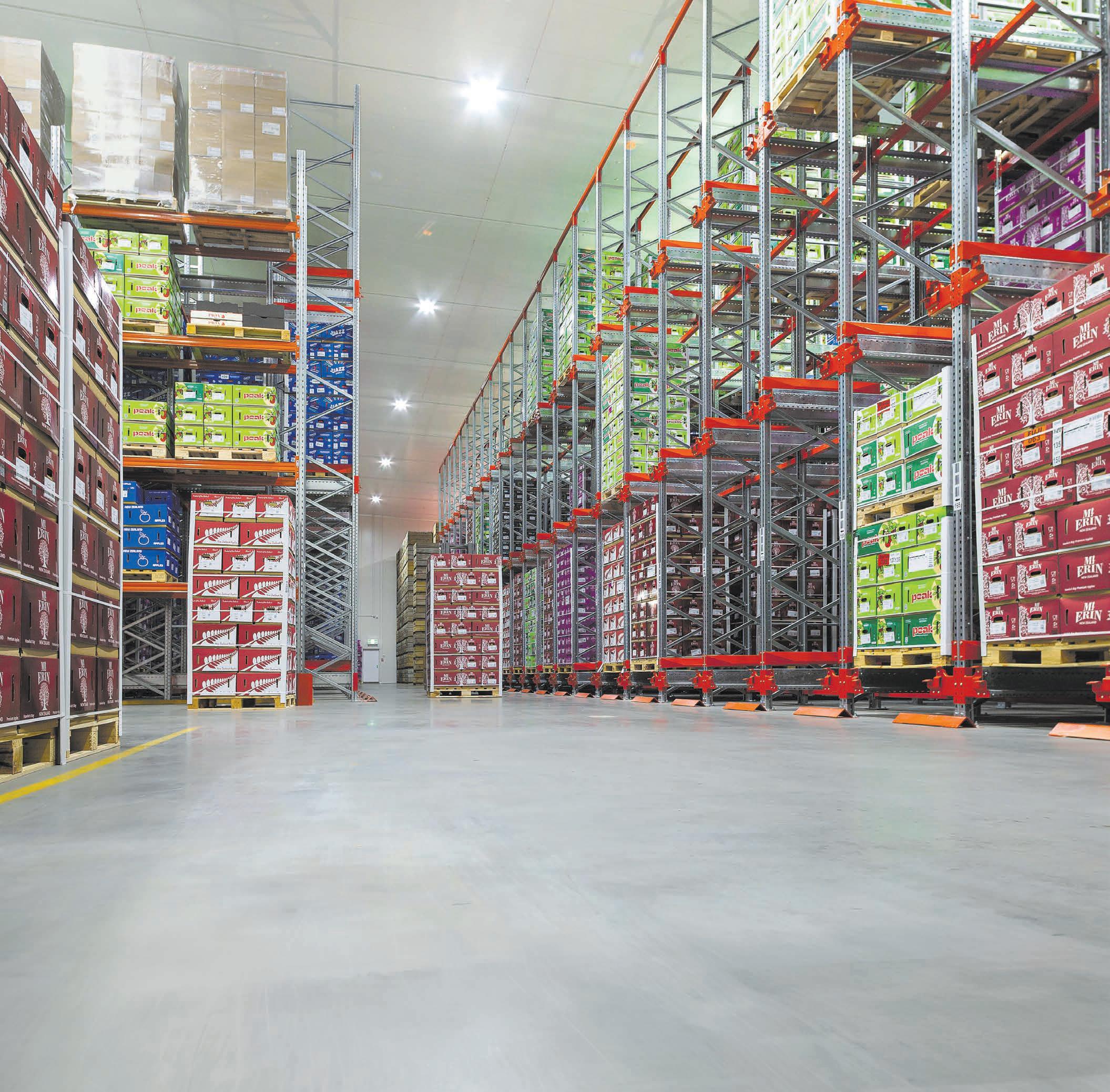
Temperature controlled facilities demand specialist expertise
At Tuatara Structures, we deliver cold and coolstore solutions that perform for the long term
Every facility is designed around the business operations within, then delivered to meet critical harvest or production deadlines with confidence
For practical advice on your next temperature controlled facility, talk to the team today























KYLIE Dorr has taken out the supreme winner title at the 2026 NZI Rural Women Business Awards.
Having already won ‘Emerging Enterprise’, one of eight entry categories, her big win was announced at the gala dinner.
Kylie is the owner of Southern Reproductive, an independent reproductive services and training business which she began five years ago. Like many innovative enterprises the business was developed in response to a need to make a living and support her family.
Kylie’s entry had the judges in awe.
“Kylie has made a significant contribution to productivity and efficiency in the farming sector, while creating important training and employment opportunities for rural women” said Mel Pearson of The Ministry for Women.
“Her achievements reflect the significant contribution women make to New Zealand’s rural communities and make her a deserving winner of both the Emerging Enterprise Award and this year’s Supreme Award”.
After living in America for just over eight years, running large grazing dairy farms and her own farm, she returned to New Zealand as a single parent.
“I needed to figure out a way to support my children and have flexibility to be a good mum at the same time,” she said.
Kylie started by providing an AI (Artificial Insemination) service as an independent technician.
Revenue has increased by 100% year on year and the business now has 12 AI technicians across the South Island, with a team of over 20 seasonal staff.
A pregnancy scanning service is provided and Southern Reproductive has become the national distributor for IMV Technologies ultrasound devices.
An important point for Southern Reproductive is the focus on quality and success of the service.
“We started with a focus on providing a really high level of service,” said Kylie.
Clients praised Kylie and her team for their clear focus on service quality, animal welfare, and reliability, three things that matter enormously to farmers who depend on reproductive services to drive herd performance and longterm business success.
In addition, the development and launch of an AI training school means anyone in New Zealand can learn the AI processes at their facilities.
Impressive as all this is, and in such short time, it was just the start.
Last year a commercial building on the Main Street of Tapanui was purchased as part of taking on the distributorship for IMV.
“We knew we needed to have a storefront and a business space. There’s a perfect space that popped up opposite the cafe on the Main St. It’s quite a big building and I realisd as we were partially through renovating that most people are not going to walk off the street and buy a veterinary ultrasound,” she said.
To make the most of the large size of the building its use was extended, and it now has a hair salon, a ceramic studio and a gift shop. It’s a welcoming place for people within the community, and the gift store provides a venue for New Zealand businesses to showcase their products.
“It’s been a really fun hobby to find companies that are producing stuff in New Zealand or New Zea-
We’re continuing with growth over the next 12 months because we are planning to launch into Australia.
land businesses. I’ve met people that I would not normally ever meet, and it’s been really, really fantastic and really successful.”
Kylie is now focussed on expanding Southern Reproductive.
“We’re continuing with growth over the next 12 months because we are planning to launch into Australia. So yes, there’s not a dull moment.”
Yet Kylie’s story extends far beyond the business she has built.
“I’m really, really passionate about endurance sports and really pushing yourself to the next level. Three and a half years ago,
in celebration of my first year in business, I bought myself a dirt bike. I used to race dirt bikes as a teenager in cross country and endurance events. And I thought it would be a great hobby to do with my children.
“I’m currently the president of one motorcycle club and the secretary of another motorcycle club,” she said.
Kylie went to a local race to see if she could still compete.
“One race turned into going to a national competition, winning the national series and being selected to represent New Zealand at the ISDE, which is a World Championship level event where you race cross country for six days straight, 1200 kilometres.
“And I was part of and led the first women’s team in 2024 in Spain and successfully completed the event and finished I think 160th overall against all the guys, which I was really, really proud of.
“Since then I’ve taken on the role as ISDE Team New Zealand
manager and we’re headed to Portugal this year with three teams.”
RWNZ national president Heather Sorensen was impressed by the calibre of talent entered this year.
“I would like to thank everyone who took the time to enter this year’s awards. It was a great challenge for the judging panel as there were so many incredible, high calibre and creative businesswomen among the entrants. To be announced as the supreme winner is very special and I am delighted that Kylie Dorr is the recipient this year. She has so many wonderful attributes as a creative and innovative businesswoman along with displaying great community spirit.”
MORE:
For more information on this year’s winners and to see photos from the Gala Dinner, head to www. ruralwomennz.nz

Federated Farmers has welcomed the Government’s decision to stop existing and new Mana Whakahono ā Rohe agreements from being carried into the new resource management system.
Last week, Federated Farmers called on the Government to end the rush by councils to sign Mana Whakahono ā Rohe agreements before the new planning system comes into force.
Federated Farmers made the same recommendation in its submission on the Government’s resource management reform legislation.
“We’re really pleased the Government has listened,” Federated Farmers Resource Management Act (RMA) Reform spokesperson Mark Hooper says.
“Over recent months we’ve seen a big increase in councils like Environment Canterbury rushing to sign these agreements before the law changes.
“That’s created uncertainty for farmers and raised serious concerns about accountability. We sounded the alarm last week and it’s good to see the Government respond by nipping this issue in the bud.”
On 20 July, the Environment Committee reported back on the Planning Bill and Natural Environment Bill, the two pieces of legislation that will replace the RMA.
Alongside supporting the committee’s recommendations, the Government announced further changes, including that no existing or initiated Mana Whakahono ā Rohe
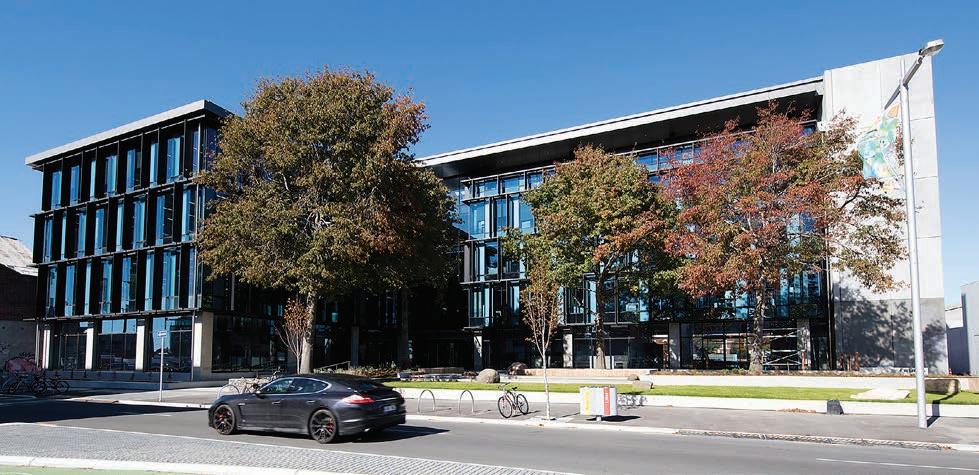
agreements will transfer into the new planning system.
Instead, councils will be able to enter into more narrowly scoped iwi participation agreements with clear legislative guardrails.
“While there’s absolutely a place for relationship agreements between councils and iwi, they need appropriate safeguards to prevent scope creep,” Hooper says.
“Decision-making powers that affect communities should remain with democratically accountable elected representatives.
“The new guardrails announced by the Government are an important step in ensuring that.”
Federated Farmers’ policy experts are now working through the Environment Committee’s more than 500-page report to assess the full package of reforms.
“At first glance, it’s extremely encouraging to see the Government has agreed to scrap the transfer of all Mana Whakahono ā Rohe agree -
ments and replace them with more narrowly focused arrangements,” Hooper says.
“That’s exactly what Federated Farmers recommended.”
Mana Whakahono ā Rohe agreements, established under the RMA, set out how councils and iwi work together on resource management matters.
In its election platform launched last month, Federated Farmers raised concerns about the growing number of these agreements, saying some allowed for co-governance or comanagement of natural resources.
Since the Government released its draft Natural Environment Bill and Planning Bill in late 2025, dozens of new agreements have been initiated around the country, including in Manawatū-Whanganui, Northland and Taranaki.
Last week, Federated Farmers criticised Environment Canterbury for attempting to progress a Mana Whakahono ā Rohe agreement with

REINED IN:
Environment
Canterbury was among the councils criticised by Federated Farmers for trying to rush through a Mana Whakahono ā Rohe agreement.
Ngāi Tahu and Canterbury rūnanga before the law changed.
The council subsequently paused the process.
“That was just the latest example of a council seeking to hastily lock in agreements before the law changes,” Hooper says.
“ECan did the right thing by hitting pause on that agreement, but this move by the Government will provide a more permanent solution.”
In announcing the changes, Resource Management Reform Minister Chris Bishop and Parliamentary Under-Secretary Simon Court said there had been a “rapid increase” in new agreements and initiated processes between councils and iwi since the Bills were introduced.
“Eight existed when the Bills were introduced late last year. Since then, several dozen more have been agreed or initiated,” Bishop said.
“Cabinet has therefore agreed that existing and initiated Mana Whakahono ā Rohe agreements will
not transfer into the new planning system.”
Hooper says the agreements have raised important questions about who should influence planning rules and resource consent decisions.
“Decisions affecting property rights and resource consents should ultimately rest with people the public can vote in or vote out.
“Our concern is that some agreements have moved beyond collaboration, handing significant influence to groups that aren’t democratically accountable in the same way elected councils are.”
While some agreements have focused primarily on improving communication, Hooper says others have gone further by providing opportunities for iwi representatives to participate in resource consent processes.
He says farmers have been concerned about what that could mean in practice.
“A farmer wanting consent for a feed pad, a new effluent system or worker accommodation could end up facing extra costs, delays and bureaucracy.
“Federated Farmers is firmly opposed to blanket requirements for cultural impact assessments on routine consent applications.
“Farmers already spend enough time and money navigating an overly complex consent system.
“The last thing rural New Zealand needs is another layer of consultants, planners, lawyers and reports added to an already broken resource management system.”
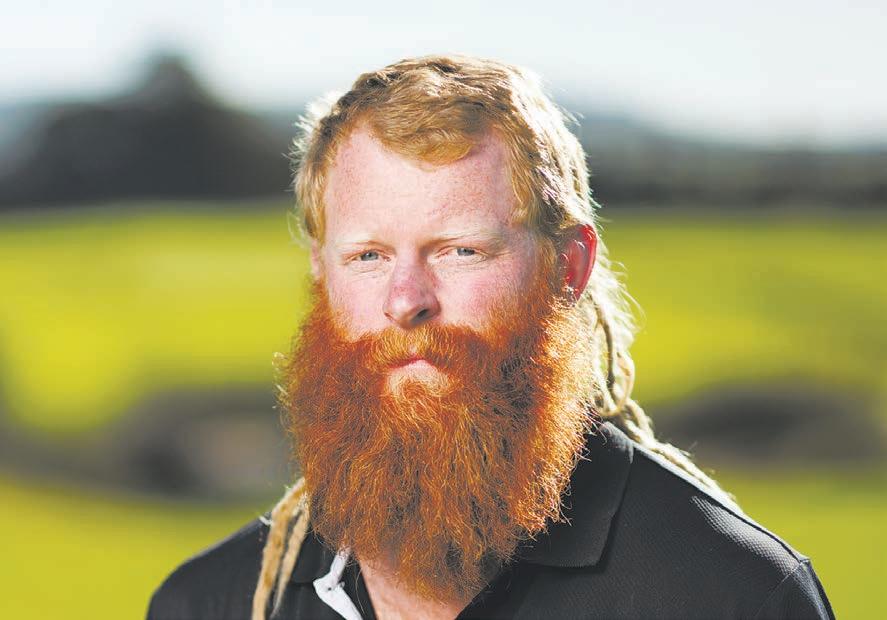

From a couple who set up their own stone-ground milling enterprise to developers of a seed treatment that reduces nitrogen losses, the 2026 Arable Award finalists have been named.
“The annual awards are a celebration of the best and brightest in the industry – the individuals and teams who stand tall in what we do,”
Federated Farmers arable chair Chris Dillon says.
“It’s said that when the going gets tough, the tough get going and that’s true of this year’s crop of finalists.
“The fighting in the Middle East continues to put pressure on fuel and fertiliser prices and it’s really hurting arable prospects with the planting season looming.
“More than ever, we need the innovation, commitment to
It’s said that when the going gets tough, the tough get going and that’s true of this year’s crop of finalists.
Chris Dillon Federated Farmers arable chair
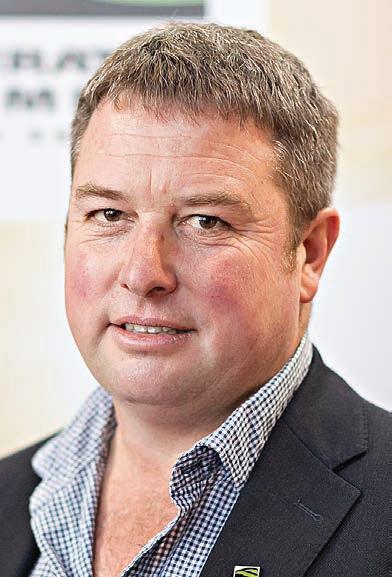
excellence and environmental sustainability, research and willingness to share knowledge that these growers, agronomists and companies bring to the table.”
Dillon says he’s particularly impressed by the three Innovation Award finalists.
Marty and Georgina Skurr, who work the Canterbury land Marty’s great-grandfather began farming in the 1920s, added another value stream by setting up Minchins Milling, an on-farm stone-ground flour enterprise.
The look and taste of the flour produced is prized by sourdough makers and home bakers, and the direct connections the couple have forged with consumers give their arable business a point of difference and niche market.
Another Innovation Award finalist is agronomist Paul Oliver, who has played a key role in bringing H&T Agronomics’ Always N from development and extensive trials here and overseas, to commercialisation.
This microbial seed treatment helps reduce nitrogen losses, enabling growers to reduce their reliance on synthetic nitrogen inputs.
The third finalist is Lincoln University researcher Mariana Andreucci.
By investigating the relationship between cultivar characteristics, biomass production, and on-farm management practices, her research provides insights that enable growers to optimise crop performance and unlock the potential of individual wheat varieties.
When higher input costs and sluggish returns from the global oversupply put the squeeze on arable growers, it might be thought investment in environmental improvements will take a back seat.
Foundation for Arable Research (FAR) general manager business operations Ivan Lawrie, who convened the judging panels, says the calibre of Environment Award finalists show growers’ determination to leave the land and water in better shape for the next generation.
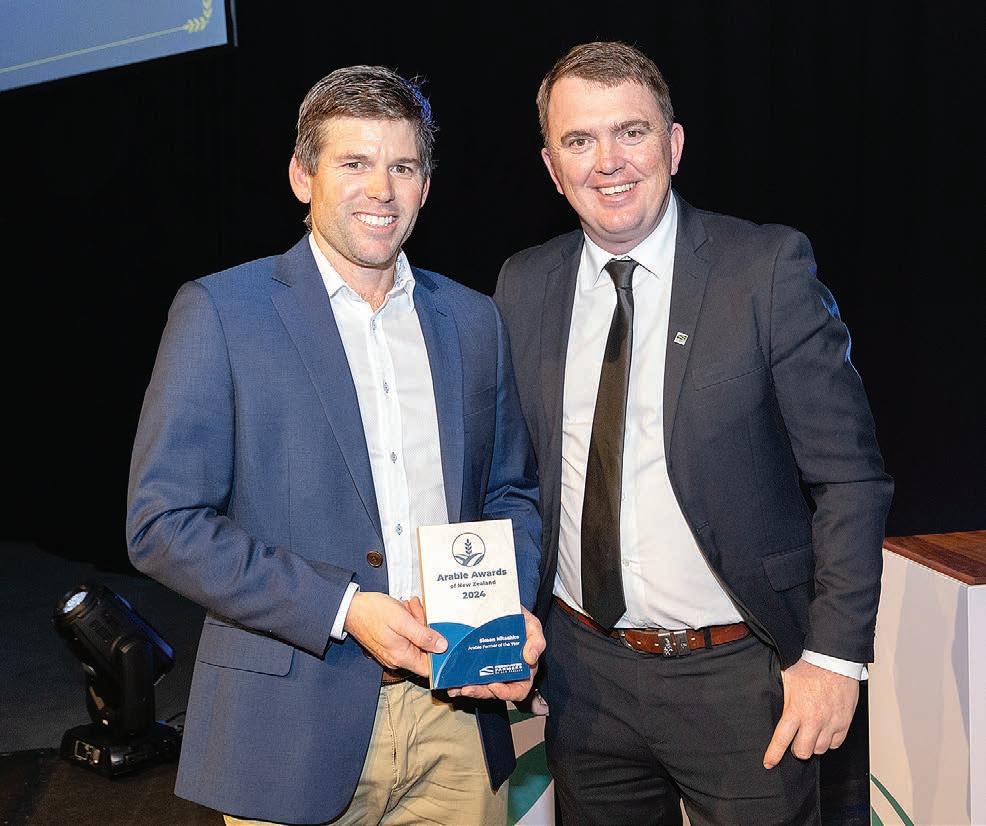
250 hectares of maize as part of a 1200-hectare arable operation.
TOP HONOUR:
The 2026 Arable Farmer of the Year will be chosen from the winners of the Cereal, Seed and Maize Grower of the Year titles at the biennial awards on 20 August. The photo is of the 2024 Arable Farmer of the Year Simon Nitschke, with then Feds president Wayne Langford.
implemented a comprehensive approach to sustainable farming focused on improving soil health, water-use efficiency, and biodiversity.
Judges said that through innovative practices, the family has built a resilient farming system while openly sharing their sustainability journey with the wider agricultural community.
Up against the Lovetts is Tim Gorton, who runs a mixed arable, livestock and dairy farming business near Feilding.
Through extensive planting and management practices, and a commitment to improving waterway health, Tim has demonstrated how productive farming and environmental responsibility can work hand in hand, judges said.
There are three Maize Grower of the Year finalists, in a year that’s seen a record maize silage harvest – one bright spot for arable.
Ashburton’s Mark Shera grows
Supported by a significant dryer and silo complex, his business is recognised as the largest maize grain operation in the South Island, demonstrating both scale and commitment to crop production.
Donald Stobie, the Federated Farmers Waikato arable chair, operates a 450-hectare farm in Gordonton, growing around 200 hectares of maize. His focus on excellence has resulted in some of the best maize yields in the country, consistently achieving outstanding grain and silage production.
The third contenders are Hawke’s Bay couple Patrick and Belinda Nicolle. They lease land and contract grow 300 hectares of maize grain and 60 hectares of popcorn, earning recognition from judges for their effectiveness and forward-thinking approach.
From these three finalists, and finalists from the Cereal Grower and Seed Grower of the Year, an Arable Farmer of the Year will be named on
awards night on 20 August at the Air Force Museum of New Zealand in Christchurch.
Ivan Lawrie says finalists in the three previous Arable Awards of New Zealand have always been of a high calibre and it’s no different this time.
“It fills me with optimism as I see new people coming in,” he says.
“For example, in the agronomist category there’s some relatively young professionals who are committed and have new thinking.
“They’re looking at the broader picture.
“The silo mentality of looking only at growing grain and seeds is gone as they look at how that fits in with livestock and horticultural systems.
“That’s going to provide real integration going forward.”
MORE:
For the full list of 2026 Arable Award finalists - https://www.arableawards. co.nz/finalists
For tickets to this year’s awards eventhttps://www.arableawards.co.nz/tickets

Federated Farmers leaders have been leading the charge on local government reform, taking the debate to farming communities and council chambers as merger talks intensify.
The Government has given regions until 9 August to put forward proposals for what local government should look like in their area.
Those that fail to do so risk Wellington making the decision for them.
“The tight timeframe has really concentrated the energies of our provincial presidents,” Federated Farmers local government spokesperson Sandra Faulkner says.
“They’ve ramped up surveys, hosted public meetings and spoken out in the media to raise awareness.
“There’s a lot to gain if we get this right – but a lot to lose if we don’t.
“For farmers, successful reform will mean fewer councils, strong rural representation and decision-making, less duplication of services, lower operating costs and, ultimately, downward pressure on rates, fees and charges.”
One region that’s seen hot debate is Waikato, where the local Federated Farmers team has been consulting with members and other rural residents, including getting feedback at Fieldays.
“As a result, we’ve landed on two options for council reorganisation,” Feds Waikato president Chris Woolerton says.
“Every single farmer we heard from said Hamilton City should have its own unitary council.
“With 192,000 residents, it’s not only big enough to deserve its own council but in any other arrangement, Hamilton would completely dominate other areas put in with them.”
For the rest of the region, Waikato Feds’ preferred option is for three other unitary councils: West (taking in Waipa and Waikato District –population 153,200); East (ThamesCoromandel, Hauraki, South Waikato, Matamata-Piako – 119,500); and King
Country (Otorohanga, Waitomo and northern Ruapehu – 29,400).
Their alternate option is a Hamilton Council, a King Country Council (as above) and a mega-Northern Waikato Council taking in the rest of the region.
Council-Controlled Organisations (CCOs), with strong local governance input, could be set up to look after key rural infrastructure, such as roading and public transport.
Waikato and Hauraki flood and drainage schemes should be governed by local committees with decision-making authority over priorities, maintenance and investment, Woolerton says.
“Districts that have been wellmanaged financially should not subsidise poorly managed councils.
“Amalgamation should not become a vehicle for redistributing historical financial mismanagement onto rural ratepayers.”
Meanwhile, the three Federated Farmers presidents in Canterbury – Bex Green (North), Kerry Harmer (Mid) and Jimmy Emmett (South) – have also been busy leading restructuring conversations, and gathering feedback.
Faulkner says there’s widespread agreement Christchurch City should have its own unitary council.
“With Kaikoura district preferring to join northern neighbours Marlborough, it’s less clear whether North Canterbury – Hurunui and Waimakariri – could form a standalone unitary.
“Selwyn District has historically been largely rural but as the fastest growing district in the country, it now has significant urban areas. Rolleston is just 25 minutes along the southern motorway from Christchurch.”
Selwyn’s council is consulting on joining Ashburton, going it alone, or joining with other North Canterbury districts, Faulkner says
“However, with Rolleston alone projected to have a larger population than the entire Ashburton district within a few years, we’re getting a clear message from our Mid Canterbury province that any option that doesn’t include urban Selwyn is preferred.
“That’s going to be tricky for Selwyn farmers given their mayor has said in her view carving up the district isn’t an option the council is interested in exploring.”
To the south, Timaru, Mackenzie and Waimate District Councils could become one.
“The Waitaki District looks likely to go in that direction too,” Faulkner says.
“However, for our Otago province, one option is to pick up part of Waitaki district in a combined Central Otago, Clutha and perhaps Queenstown Lakes provincial unitary council.”
Federated Farmers organised four public meetings on July 22 and 23 for rural residents to discuss Otago and Southland council reorganisation.
Meanwhile, Federated Farmers Rotorua-Taupō president Braydon Schroder argues getting agreement on best practice on delivering services should come before redrawing council boundaries.
“Core services should remain
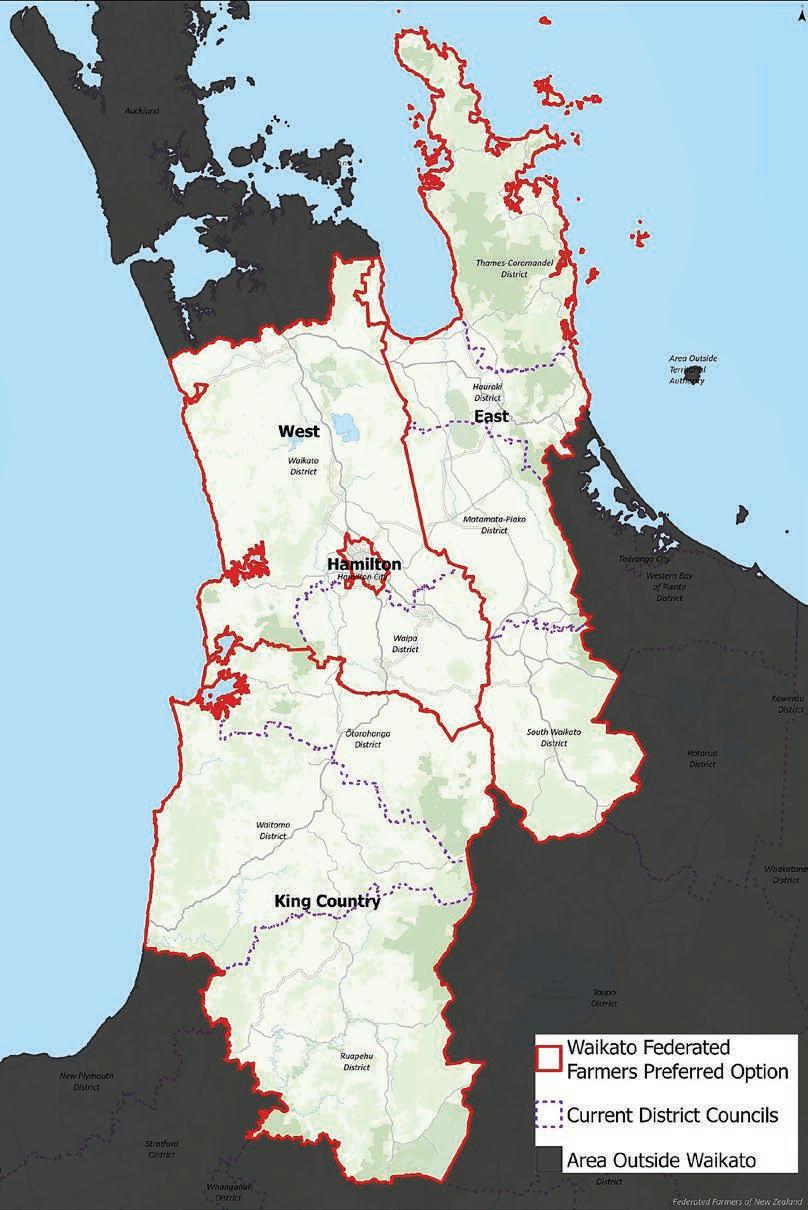
the priority,” he said in letters to the Rotorua and Taupo mayors.
“Any structure should reflect communities of interest, not just administrative convenience.
“Our members supported streamlining services, shared services where appropriate, and reducing duplication, but did not support larger council structures on scale alone where they risk higher costs, weaker local accountability, or reduced rural influence.”
Faulkner says the discussions
are difficult and the timeframe is tight.
“Enacting legislation doesn’t even happen until next year, and there could be a change of government in November.
“While reform is overdue and warranted, getting it right is the primary goal.
“I can’t see any government turning down a well-developed and sensible multi-council restructuring proposal even if it isn’t tabled until later this year or early next year.”


From an isolated East Coast upbringing to one of farming’s biggest leadership roles, Sandra Faulkner shares the journey that’s shaped her and her vision for Kiwi farmers.
on Spotify,

Taranaki Federated Farmers is accusing two councils of going rogue, wasting ratepayers’ money on an expensive and unnecessary local government reform programme.
Nick Brown, president of Taranaki Feds, says it’s outrageous that ratepayers are being asked to foot a $1.3 million bill for a reform programme that two of their councils – Stratford and South Taranaki – don’t even want.
“Taranaki Regional Council and New Plymouth District Council are pushing on with a highly expensive exercise to come up with proposals for what local government should look like in Taranaki.
“They’re completely ignoring the fact that pretty much no one outside New Plymouth wants to be part of a council that includes the city.
“Taranaki Federated Farmers has been clear about what real reform should look like, and that’s come from our own work listening to farmers and other rural people.
“We want two unitary authorities: a New Plymouth metropolitan unitary that’s focused on the city and its immediate fringe, and a Taranaki provincial unitary that covers Stratford, South Taranaki and
CONTINUE: Taranaki Regional Council voted last week to continue funding its Future Local Government Programme through to March 2027, even though only territorial authorities can submit proposals.
the rural parts of the current New Plymouth district.
“That’s the only model that respects the genuine differences between urban and rural Taranaki.”
Brown says public documents don’t break down the two councils’ exact spend, but it’s clear that external resources and consultants are required to build the model.
There’s a consultancy out there laughing all the way to the bank.
Nick Brown
Taranaki Federated Farmers president
“That means ratepayers are funding outside experts to analyse options and shape recommendations, rather than the process starting with genuine community and iwi input from the ground up,” he says.
“There’s a consultancy out there laughing all the way to the bank.”
The Government’s aim is to reduce the number of councils across New Zealand, through the creation of unitary authorities.
It has given councils until 9 August to submit proposals, although
those proposals can only be submitted by two or more territorial authorities – and not by regional councils.
Despite this, Taranaki Regional Council voted last week to continue funding its Future Local Government Programme through to March 2027, even though only territorial authorities can submit proposals.
Four councillors – Donna Cram, Alan Jamieson, Mike Davey and Neil Walker – opposed the spend.
“The real scandal here is that Stratford and South Taranaki District Councils have gone their own way, and yet their ratepayers are still expected to help pay for it,” Brown says.
“Those two district councils don’t at all support the work by TRC and NPDC, but we have to foot the bill.
“It’s arrogant behaviour and shows disrespect to the community.”
New Plymouth District Council held its own meeting recently and voted to stay in the process, saying in a statement that its councillors agreed to draft “a proposal that will not identify a preferred model at this stage”.
Brown says that’s an admission they’ve run out of ideas.
“They’re essentially saying their

proposal is that they don’t have a proposal. It’s as silly as organising a meeting to plan another meeting.
“Instead of coming to the table with a clear vision for Taranaki’s future, they’re asking ratepayers to fund yet another round of consultants to analyse options they still can’t decide between.
“This is the same failed approach that’s already seen millions wasted on external advice with nothing to show for it.
“By refusing to name a preferred model by the 9 August deadline, NPDC is kicking the can down the road while the meter keeps running.
“It’s not leadership – it’s process for the sake of process, and Taranaki ratepayers are the ones left paying the bill.”
Meanwhile, New Plymouth District Council will hold a separate meeting next week to decide whether it
actually agrees with the cost of the process.
“That’s a bit of a joke after they’ve already voted to proceed,” Brown says.
“The irony is that this is exactly the kind of wasteful spending the Government is trying to stamp out.
“We have a regional council burning ratepayers’ money on a process it has no legal right to lead.
“And then we have a district council going out on its own, even though the Government’s made it clear it will only accept proposals from two or more territorial authorities.
“These people are here to represent their communities, but they’re walking in completely the opposite direction.
“It’s time to stop the waste and focus on reform that actually works for Taranaki and listen to our people.”
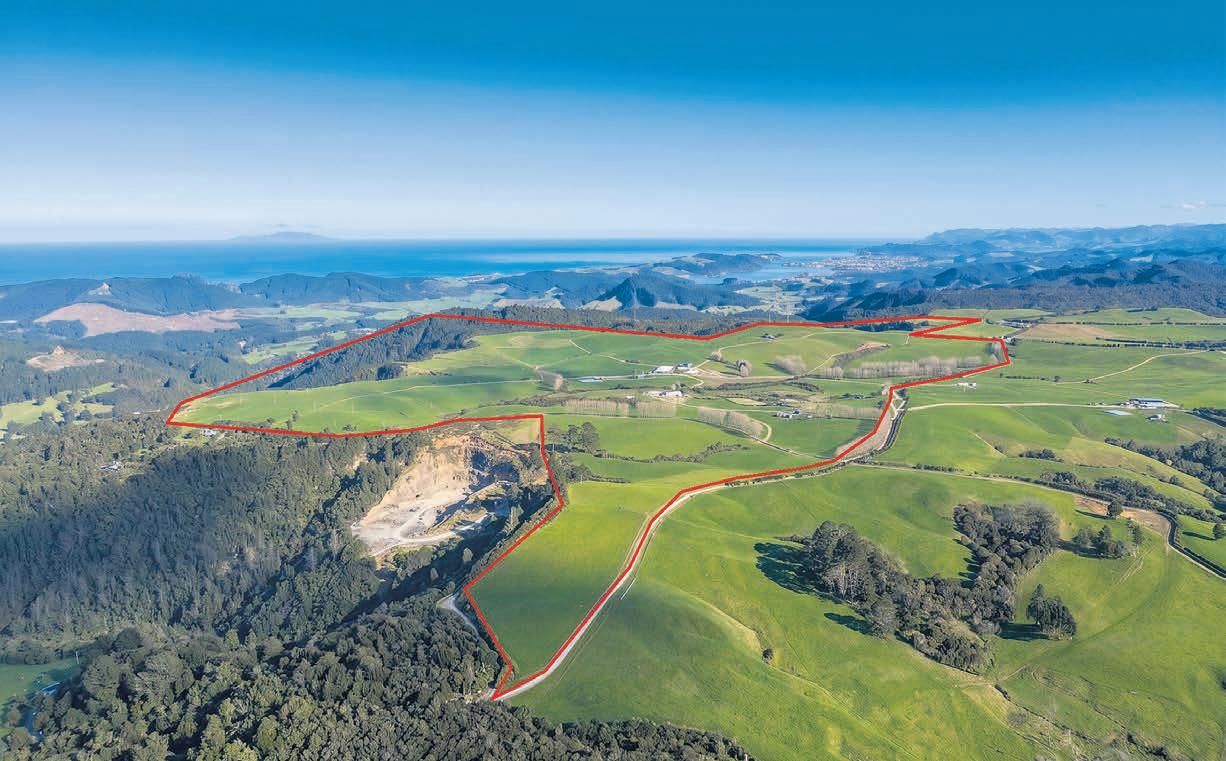
Situated on sought-after McBeth Road, this 151.1100-hectare (more or less) dairy farm offers a productive operation in a desirable location Producing 145 912kgMS in the 2025/26 season the farm is supported by a 32 ASHB dairy shed, feed pad, calf-rearing facilities, implement shedding and workshop Approximately 45 paddocks, ash loam soils, bore water supply, and a 5 5 million litre lined effluent pond support the operation Accommodation includes a four-bedroom initial home, a three-bedroom home, and a separate two-bedroom cottage A consent application is currently with council to subdivide four lifestyle blocks, providing future potential There is also additional income of $45 000 from transmitter towers lease Conveniently located with Whangamatā just over 20 minutes away, along with Pauanui and Tairua within easy reach bayleys co nz/2180845
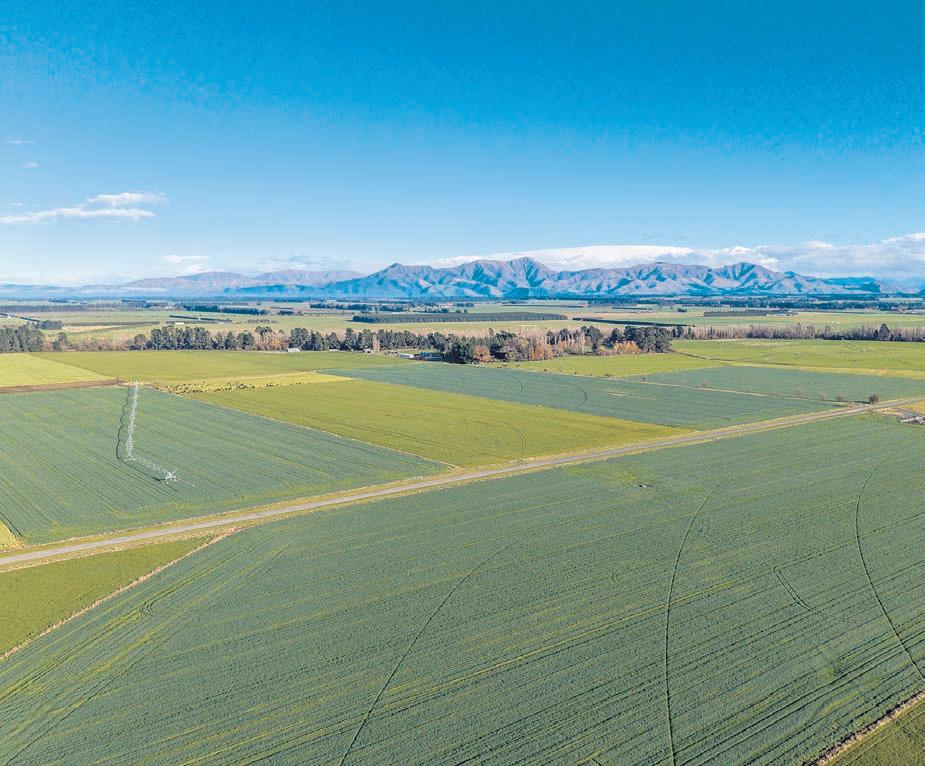
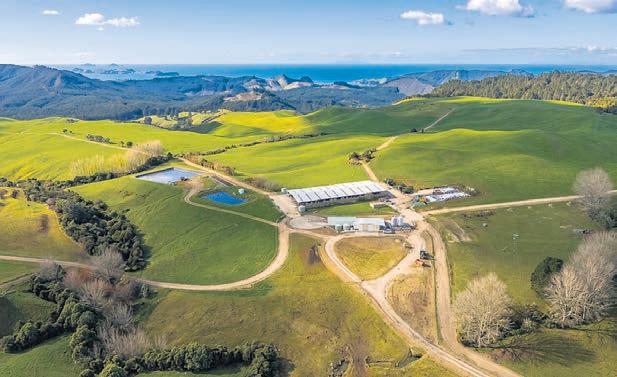
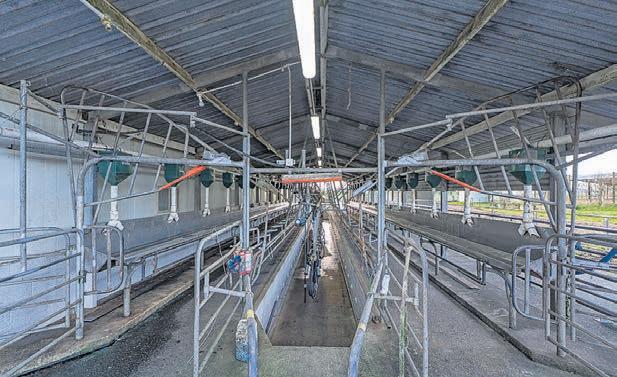

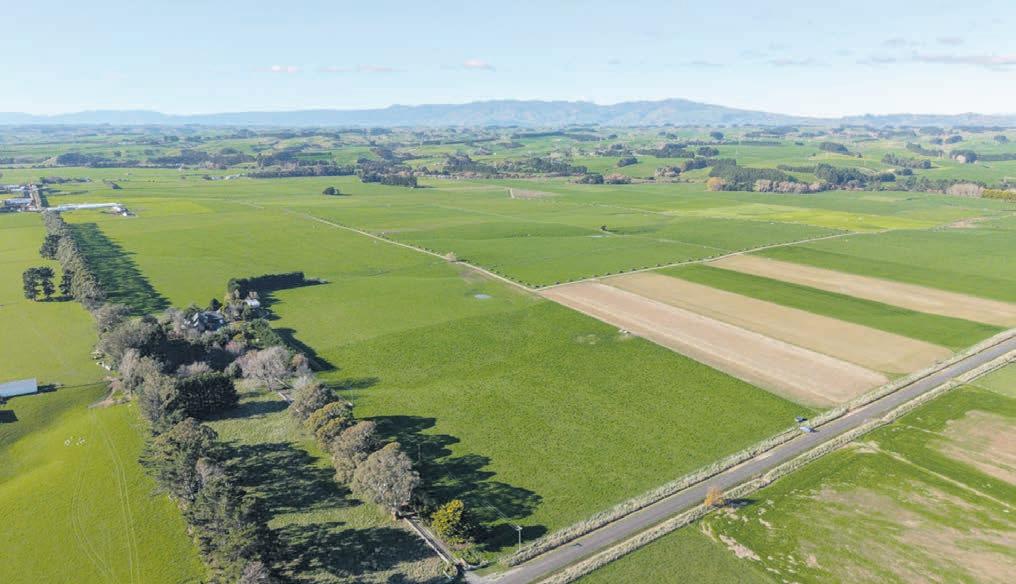
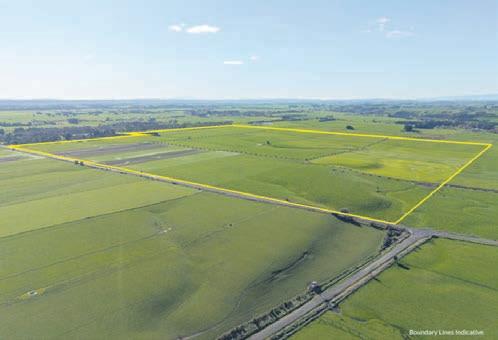



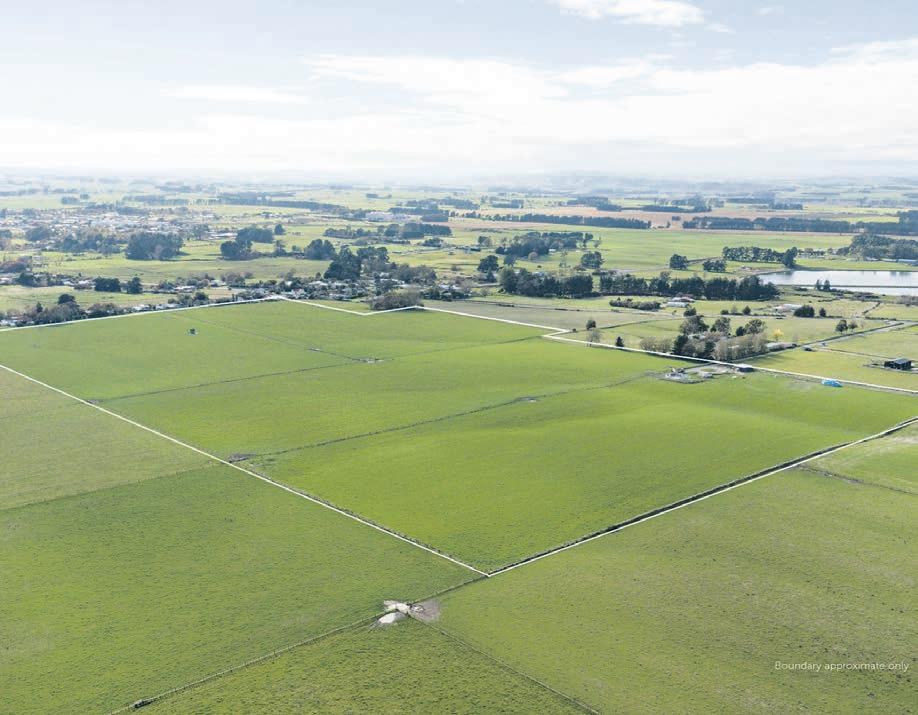
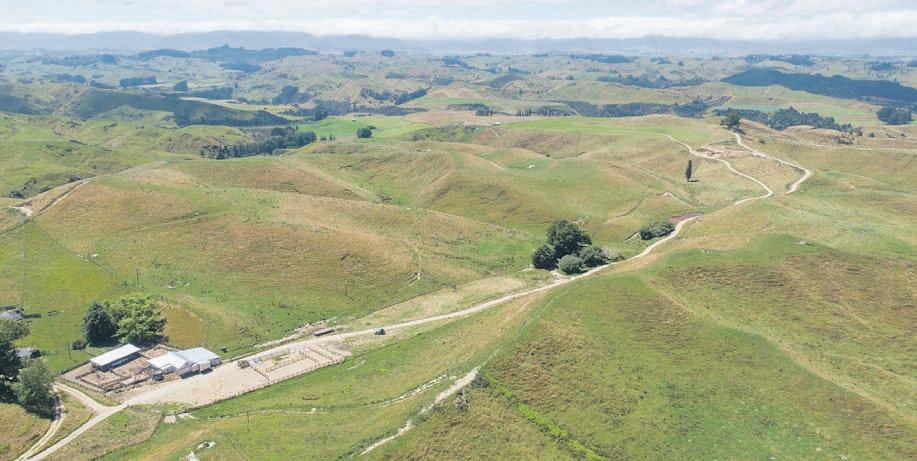
A unique opportunity for a wholesale investor to invest in a proven Beef Finishing operation and quality land asset alongside skilled individuals, with a clear proposition for further operational growth and on-farm development.
Investment sought of up to $4m with 15-35% shareholding available depending on the level of investment achieved.
The investment is underpinned by a flat, high-quality irrigated landholding of over 200 hectares located 992 Wards Road, Kirwee, strategically integrated by growing feed crops to support the beef finishing operation utilising established barn infrastructure.
The vendor invites expressions of interest from parties to acquire this interest in the farmland and trading operation.
For further information on this opportunity, please contact: Ray Fraser – Phone: 027 243 0025 Email: ray.fraser@nzab.co.nz
The Vendor is offering the property to the open market via public advertising. Ray Fraser of NZAB is acting in an advisory capacity only and is not a licensed real estate agent.

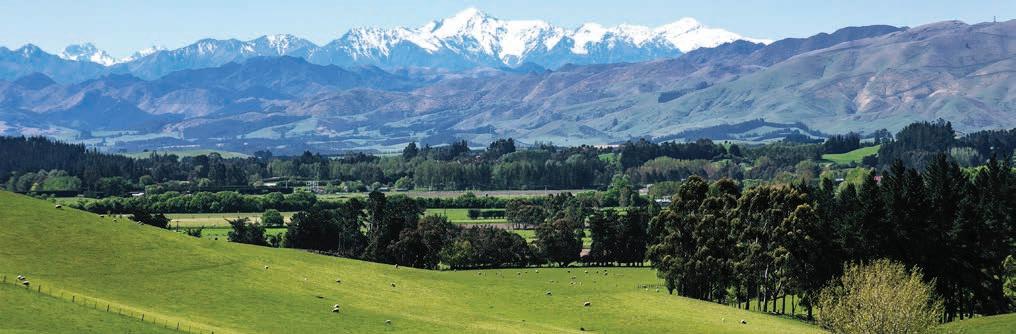
Your agent may suggest you advertise in their brand publication.
We suggest you remind them that this is the publication you, and every other farmer you know, reads.

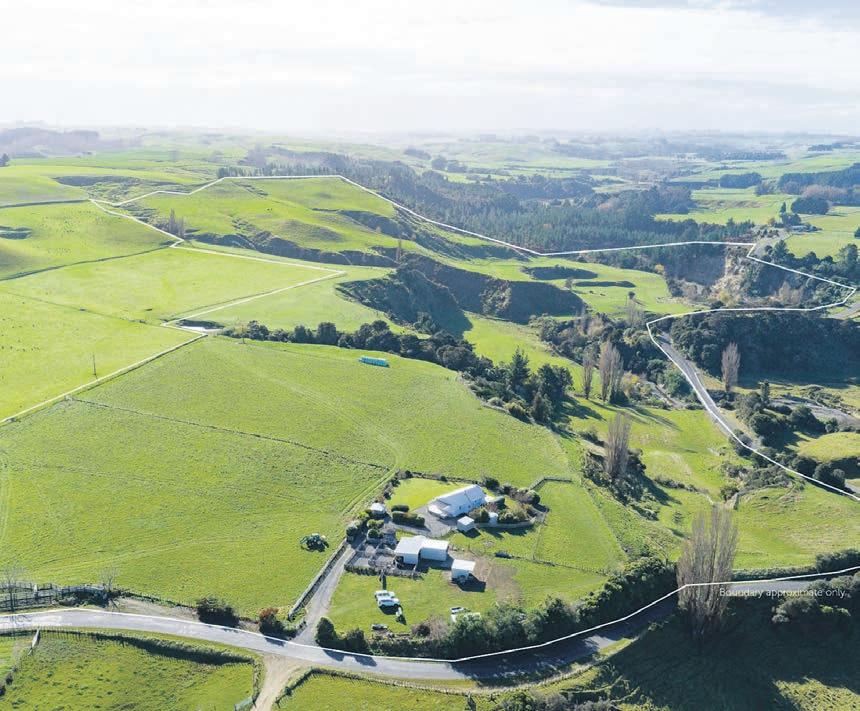
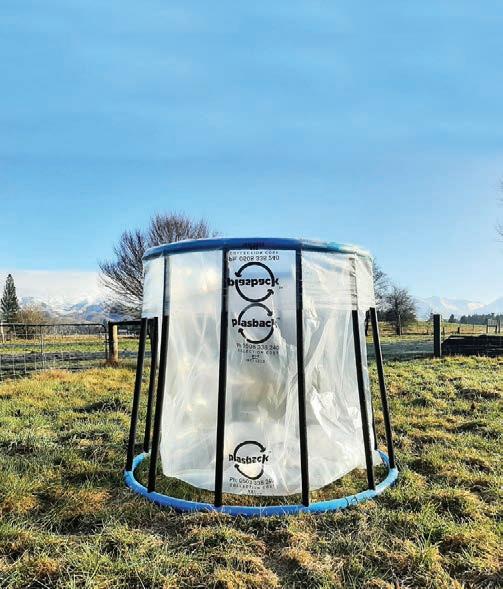

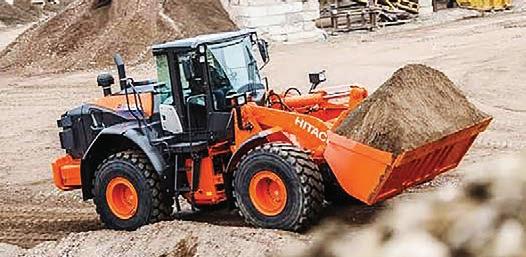
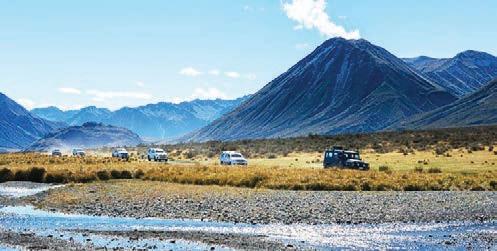


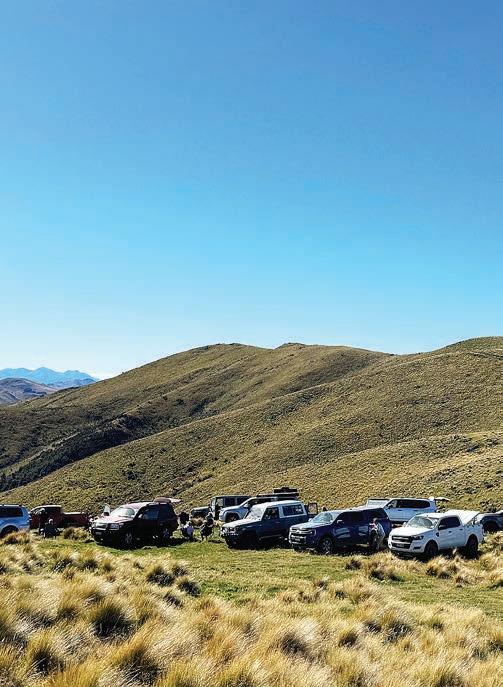

























R1YR Fries Bulls <170-200kg
R2YR Exotic x Heifers 400-460kg Dairy beef x R2YR Hfrs & Steers (cheaper end types) 340–400kg
70 R1YR Beef & Beef x Hfrs 270 kg
80 R1YR Fries/Ang x Bulls 230kg 50 Top R1YR Fries Bulls 290kg
R1YR Fries Bulls 240kg
dyerlivestock








Proudly sponsored by
The connection between the beef finishing industry and dairy has grown in recent decades, with some notable knock-on effects for bull calves.

THE dairy industry has been a long-time contributor to the beef sector, especially in the North Island.
Historically, dairy farmers capitalised on their Friesian bull calves by selling to bull finishers, given the alternative was sending them on a bobby truck.
The need to offload cull dairy cows before winter created a winwin scenario too – dairy farmers could get them gone quickly, and this became a key profitgenerating point in the year for beef processors.
While the latter is just as true as it’s ever been, the connection between the beef finishing industry and dairy has slowly grown in the past 10-20 years. The rearing of Friesian bull calves still occurs on a large scale, providing processors with cattle around 18-24 months later, but
it doesn’t hold quite the same significance as it used to.
A large part of this has been due to the dilution of the dairy herd. In the 2004-05 season, straightFriesian cows made up 49% of the national dairy herd. Fast-forward 20 years, and it’s steadily fallen to 23%.
These cows have been replaced by the increasingly popular Friesian-Jersey cross (also known as KiwiCross). The major trade-off is that these crossbred bull calves are worth little, as rearers and bull farmers rarely seek these out due to lower growth rates and more issues with temperament.
One solution to this conundrum has been to increase the use of beef sires over herds. The risk of crossing with beef breeds has always been greater calving difficulty. But the surge in beef studs selecting for calving ease, and improvements in AI conception rates, have meant dairy farmers can sleep easier when selecting beef bulls or beef semen to use.
This awareness has been especially obvious at early feeder calf sales through Waikato and nearby regions. Traditionally, early feeder calf sales are dominated by Friesian bulls, but this year beefcross calves have made up 45% of what’s been offered.
Pure dollars are a big contributor to seeing more of these early beef-cross calves too. The median price for a Friesian bull calf has been $215 versus $315 for a beefcross bull calf, and only $35 for a crossbred (Friesian-Jersey mix).
By specific breed, the big upand-comer in recent years has been the Charolais-cross. Once a novelty, these have grown in popularity, partly for the extra growth they offer, but also because their markings mask some of the Jersey influence in cow herds. Not to mention the “front paddock” factor.
How much Jersey genetics can or can’t be seen in a beef-cross calf is a major factor in its value.
The median price for well-marked black Hereford-Friesian bull calves
this year has been $450, above the Charolais-cross by $45, partly due to the greater certainty that they’re out of genuine Friesian herds.
Likewise, Angus-cross calves often trade at a discount ($245 median for bulls) as it can be difficult to tell what sort of dairy herd they’re out of, and because Friesian-Jersey cross calves with no white markings can be mistaken as Angus-cross, something which isn’t obvious until later in life.
Some of these beef-cross calves are entering the slaughter system as bulls, but the vast majority contribute heavily to the supply of prime steers and heifers. Unfortunately, the growing influence of reared calves on beef supplies is also creating more volatility for the processing industry.
The roughly two-year lag in calves being reared and finished often creates market overcorrections. Processors have been significantly short on cattle
to process the past two to three years, largely because dairy calf margins were poor in the early 2020s, when many people simply gave up on rearing.
Years like this, and last, have seen calf rearing really take off. Shortages of older cattle have contributed to a surge in pricing, which has trickled down the supply chain to 100kg calf buyers and, ultimately, calf rearers paying more, significantly increasing the number of calves reared.
The pendulum is almost guaranteed to swing hard into “oversupply” over the next one to three years due to all these extra calves reared, causing knock-on effects that will look something like an abundance of store cattle, weaker 100kg and feeder calf prices, and another round of “giving up” on rearing calves. Fortunately, with global beef demand still outweighing global supplies, this should go some way to buffering the expectation of lower schedules through this period.

These weekly saleyard results are collated by the AgriHQ LivestockEye team. Cattle weights and prices are averages and sheep prices are ranges. For more detailed results and analysis subscribe to your selection of LivestockEye reports. Scan the QR code or visit www.agrihq.co.nz/livestock-reports
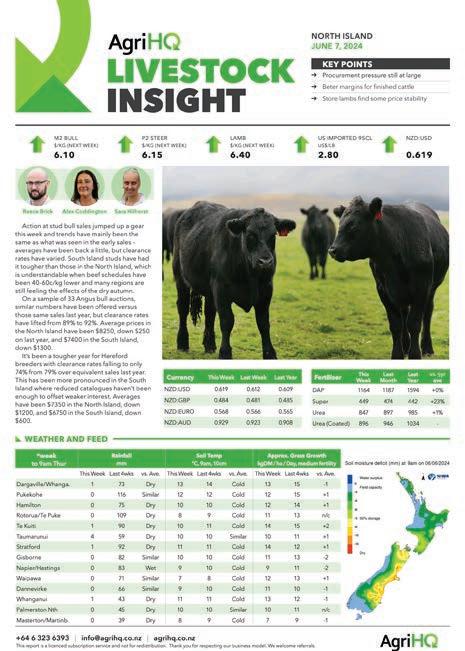















R2 dairy-beef heifers, 430kg 4.77
R1 dairy-beef steers, 230kg 1525
R1 dairy-beef bulls, 265kg 1515
R1 dairy-beef heifers, 195kg 1005
Mixed-age ewes, SIL, most 240-304
5-6-year ewes, SIL, most 270-280
Store cryptorchid lambs, all 206-290
Store ewe lambs, shorn, most 173-248
Store ewe lambs, woolly, most 186-227
Feilding | July 20 | 133 cattle, 3466 sheep $/kg or $/hd
Prime traditional cows, 570kg 4.07
Boner Friesian cows, 505kg 3.85
Prime ewes, most 142-245
Prime 2-tooth ewes, most 165-246
Prime male lambs, all 210-329
Prime ewe lambs, all 225-289
Prime mixed-sex lambs, most 244-317
Rongotea | July 21 | 136 cattle
R1 dairy-beef heifers, 230kg 1320
Coalgate | July 16 | 172 cattle, 3110 sheep
Prime traditional steers, 650kg 5.24
Prime dairy-beef steers, 525kg 5.05
Prime dairy-beef heifers, 460kg 4.90
Boner Friesian cows, 490kg 4.31
Store crossbred mixed-sex lambs, most 180-235
Store Corriedale wether lambs, most 209-235
Store Halfbred ram lambs, most 229-244
Prime ewes, most 160-276
Prime lambs, most 200-316
Canterbury Park | July 21 | 240 cattle, 3041 sheep
Prime traditional cows, 565kg 4.11
Prime traditional steers, 625kg
Prime dairy-beef steers, 570kg
Mixed-age crossbred ewes, most 240-276

Store wether lambs, most 172-247
Store ewe lambs, most 180-234
Store mixed-sex lambs, all 100-228
Prime ewes, most 140-358
Prime lambs, most 226-292
Temuka | July 20 | 443 cattle, 4131 sheep $/kg or $/hd
Prime dairy-beef steers, 515kg 5.06
Prime traditional heifers, 555kg 5.29
Boner Friesian cows, 550kg 4.08
Store Halfbred mixed-sex lambs, all 207-222
Store mixed-sex lambs, most 210-250
Prime ewes, most 220-280
Prime mixed-sex lambs, most
Balclutha | July 22 | 155 cattle
R1 Hereford-Friesian (black) steers, 230kg 6.23
R1 Hereford-Friesian (black) heifers, 245kg 5.50
Charlton | July 16 $/kg or $/hd
Store lambs, all
Prime ewes, all
Prime lambs, all
Lorneville | July 21
R2-R3 dairy-beef steers, 475kg
R1 Friesian bulls, 215kg
Paeroa | July 20 | 426 cattle
Frankton | July 21, 22 | 1401 cattle
Prime lambs, most
Feeder Calf Sales
Tuakau | July 20
Friesian bulls, most
Hereford-Friesian (black) bulls, all
Hereford-dairy bulls, all
Charolais-dairy bulls, all 160-520
Angus-dairy bulls, all 200-370
Hereford-Friesian (black) heifers, all
Hereford-dairy heifers, all







AUGUS SALE DAY
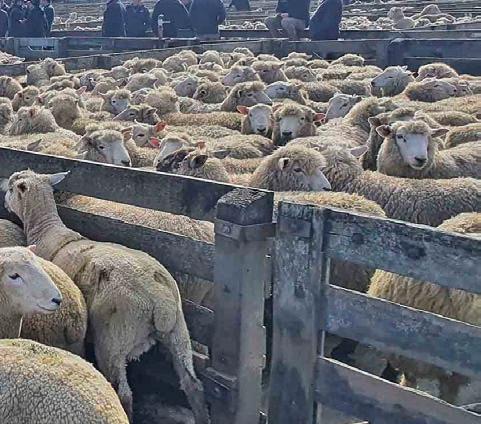


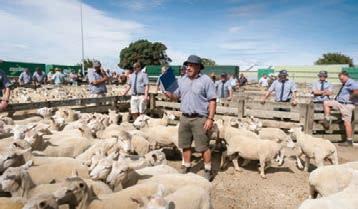



WEDNESDAY 12 AUGUST 2026



Your SHEEP will make a real DIFFERENCE in the life of someone living with cancer. The Cancer Society does not receive any regular funding from the government. Please show your support towards this Daffodil Day Hogget Sale fundraiser. If you would like to donate a sheep or two from your entry at this sale, please contact your local PGG Wrightson or Carrfields Stock Agent.








Philip Duncan NEWS Weather
POLAR air over the weekend turned the mountains a whiter shade of pale as snow fell in both main islands.
This week kicks off with that same polar air over much of the country. We’re more than a month past the shortest day of the year and only a week or two from the end of the solar winter (you may already have noticed the extra daylight creeping in).
From a weather point of view we’re now in the middle of the coldest part of the year.
Slightly milder air moves in for a time this week as the nor’wester returns but some low pressure and more southerlies are coming back, likely bringing a cold end to the week and another cold weekend.
We’re now seeing more signs of the El Niño weather pattern in our part of the world.
There has been a significant uptick in high pressure crossing southern Australia lately, and moving out over the Tasman Sea. When high pressure is centred near Tasmania it encourages colder airflows into New Zealand. As we head into August high pressure
may be north of NZ – which encourages westerlies here. This set-up places upcoming rain firmly over the West Coast with 300mm-plus expected. But rainfall into the east (Canterbury, Marlborough, Hawke’s Bay) looks to be reduced (some of those regions may only get 10-15mm over the next couple of weeks).
But we’re in a good position rainfallwise going into August with some in the east having well above normal rainfall. Coastal Otago has received over 400% of normal July rainfall so far, and that affects some southern coastal parts of Canterbury too. North Canterbury, especially around Kaikoura, has also had 400% above normal rainfall. Much of the rest of Canterbury has had over 200% of average July rainfall as have parts of Marlborough and Southland.
When you look at the North Island’s rainfall map for the first half of July, it looks like La Niña rather than El Niño, with the west considerably drier than the east.
Some of that will have changed between me writing this column and you reading it, following the polar burst of weather between July 24 and 26, but this explains why so many people have told me it’s been a fairly dry winter so far.
Regions like Waikato, King Country, south Taranaki, Whanganui, and from western Manawatū up to Central Plateau had just 20-50% of normal July rainfall up until last week. In fact western coastal parts of Manawatū and also up around Ohakune had only 15mm of rain in over three weeks.
Many NZ farms are in a good position heading into spring and the NZ Drought Index looks a lot more normal for this time of the year than it did a month ago, when it looked more like a summer set-up with so many dry areas expanding in the east. Now the only area showing up as “Dry” or “Very Dry” is around Christchurch and the Port Hills.
Generally speaking we have plenty of variety in our upcoming weather –more lows, more cold fronts, more high pressure. Many regions should get a mixture of weather conditions.
Australia has had a fairly dry run of it, despite also being injected with frequent cold airflows bringing showers and snow to higher elevation areas. But those further inland from the coast are seeing very dry conditions.
Over the next two weeks ahead places like Adelaide, Melbourne, Canberra, Sydney and Brisbane may have as little as 0.2-10mm of rain – with many places in between receiving nothing.
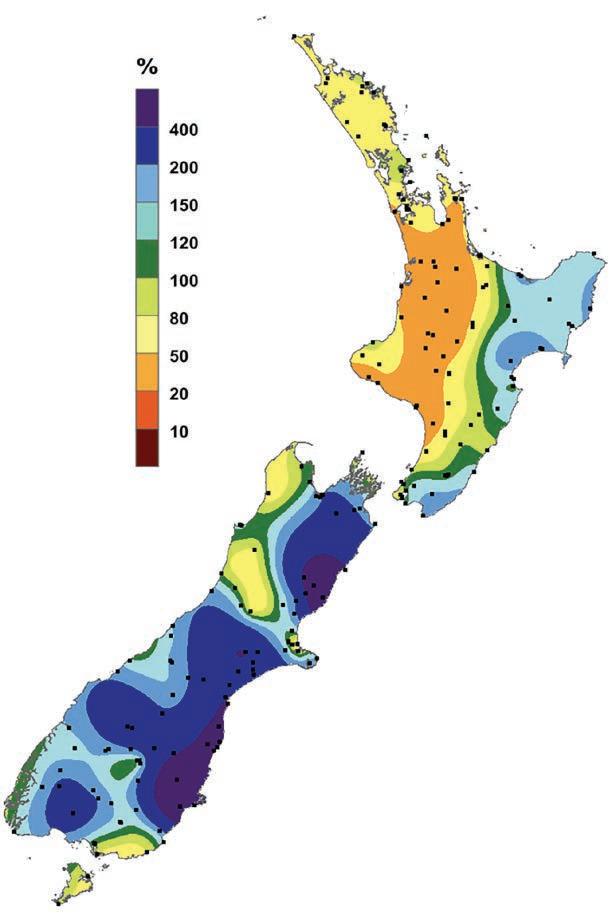

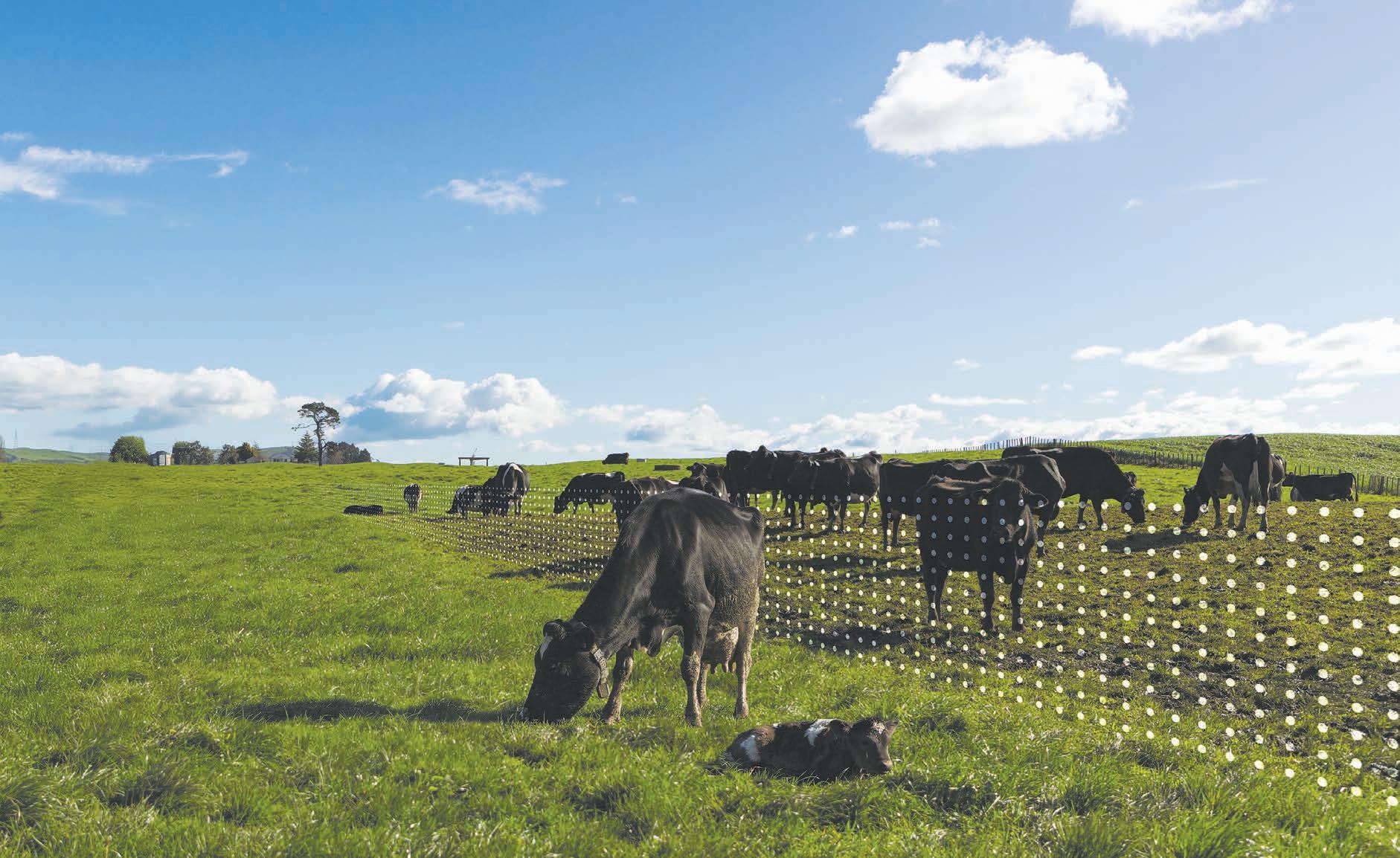








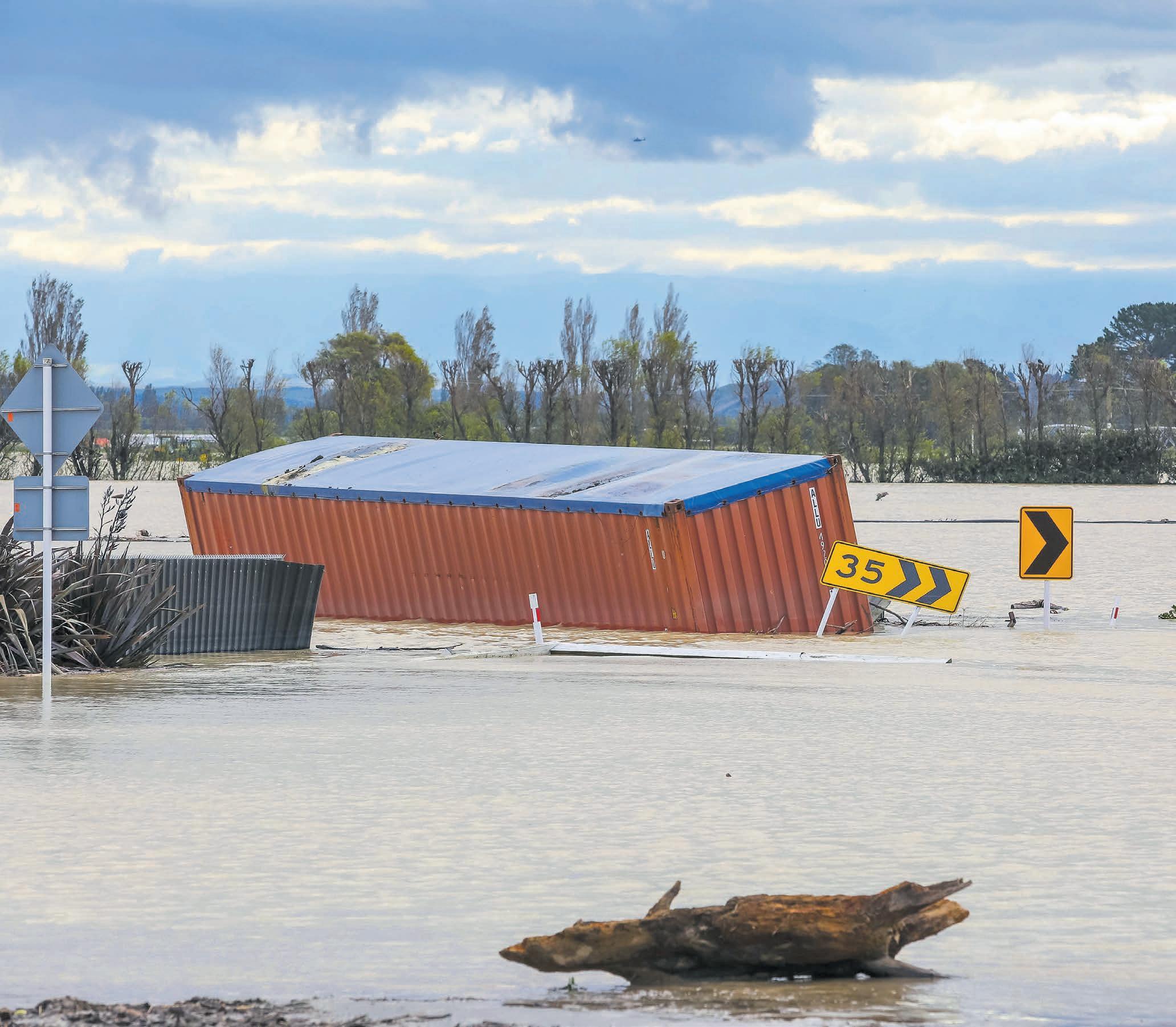
Severe weather is becoming an increasingly familiar part of life for many rural communities. From storms and flooding through to prolonged weather events, the impact can be significant For many clients, it’s not just about damage to property, but disruption to livelihoods, uncertainty and time away from the things that matter most For FMG, that means continuing to strengthen how we support our clients when they need us.
A key part of that is the introd uction of a permanent claims event response team. This is a dedicated group of claims specialists who focus solely on large scale events. Their role is critical: be ready, respond quickly and help clients get back on their feet as smoothly as possible.
Having a dedicated claims event response team means we are not starting from scratch when an event hits Instead, we have people who understand the unique demands of these situations and can move quickly to support clients They work closely with our Natural Hazards team and wider Claims teams to ensure the right resources are in the right place at the right time. The scale of recent events highlights why this is so important The October windstorm, that predominantly impacted Southland, Otago and Canterbury last year became the second largest event , by claim volume, in FMG’s history Generating
more than 5 ,000 claim exposures and costing more than $45 million in claims. This is second to Cyclone G abrielle, with 7,000 claims and more than $300 million in claims Across the year, 2025 was the largest year for storm claims the Mutual has ever experienced. Even at this scale, there has been strong progress in supporting clients, with the majority of the October windstorm claims now closed, and work continuing for those still underway
Behind every claim is a client needing support Early contact , clear communication and consistent follow up all play an important role in helping people navigate what can be a stressful time. It takes coordination across teams, partners and suppliers to keep things moving and ensure no one is left wondering what happens next That consistency becomes even more important d uring large events, where delays or uncertainty can quickly add
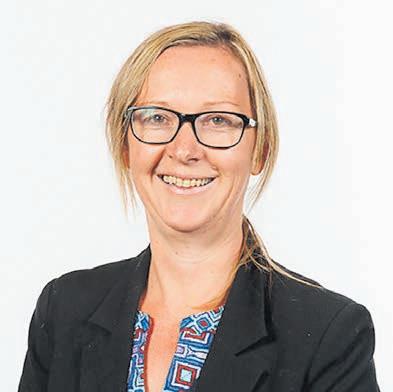
Jacqui McIntosh , Head of Claims Strategic Operations
pressure for clients already dealing with disruption on farm or at home.
There has also been a strong focus on making information easier to access d uring events
This includes dedicated event pages on our website, with information and advice specific to the event like ‘Storm and Flood’, and regular updates help clients understand what is happening and where to go for support
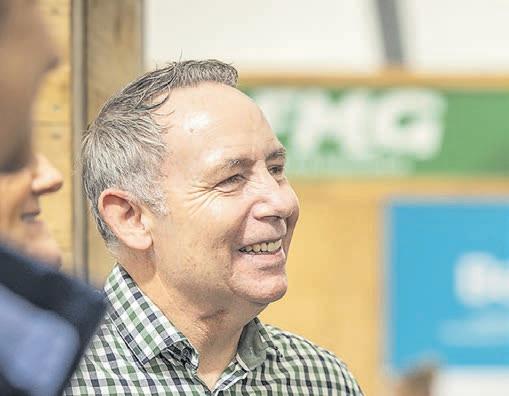

Why you may hear from us a little more this year


Kia ora koutou katoa
FMG recently released its Annual Report for the 2025 / 2026 financial year
The Annual Report outlines how the Mutual has performed over the past year and, importantly, how we continue to strengthen FMG for the long term.
FY25 / 26 was the most significant year in FMG’s history in terms of the number of major weather and catastrophe-related events in a single year Despite the many challenges those circumstances presented, the Mutual remained focused on supporting our clients and Members when they needed us most Confidence in FMG remains high, with more farmers, growers and rural businesses choosing the Mutual for their advice and insurance needs. Client retention is also performing well, reflecting the value rural New Zealanders continue to place on trusted advice, long-term relationships and having an insurer that understands them, their business and their community.
As a mutual, FMG’s focus is not on maximising profit Rather, our responsibility is to remain financially strong, sustainable and resilient so we can continue to stand alongside current and future clients and Members through the ups and downs that inevitably come with making a life and living from the land.
Looking ahead, FMG remains optimistic. I continue to meet farmers and growers across the country who are adapting to changing conditions, embracing new technology finding smarter and more sustainable ways to farm, and looking out for one another along the way
Guided by our Purpose of delivering a better deal for rural New Zealand Aotearoa, FMG remains committed to building a better Mutual and helping to build strong and prosperous rural communities.
Ngā mihi, Adam
Over the coming year, some FMG clients may notice they hear from us a little more than usual We know your time is valuable, so we want to explain why this may happen and how we ’ re working to make every communication as clear and useful as possible.
There are several important pieces of work underway across FMG that may require us to check information with clients before renewal Some relate to regulatory or compliance requirements including changes to how Government levies are calculated. Others help us make sure the information we hold is accurate, so clients have the right cover in place and are treated fairly
For example, we’re contacting renewing clients about the new Fire and Emergency New Zealand Levy model to ensure we have the right details to calculate each client’s levy correctly. We’re also checking farm building information as part of our Farm Building Estimator initiative, which helps clients make wellinformed decisions about sums insured and supports fairer, more consistent premiums across our farm building portfolio
In some cases, we may also get in touch where policy wording or dwelling information needs to be reviewed. These messages are important , and we encourage clients to read them carefully and respond where requested.
At the same time, we’re mindful that multiple messages can feel busy That’s why we’re actively coordinating communications across teams, sequencing messages where we can, and monitoring client feedback Our aim is not to send more for the sake of it , but to make sure the right information reaches the right clients at the right time.
If client communications become particularly busy for a period, we’ll publish a simple online overview of what we’re contacting clients about , why it matters, and who to contact with questions or feedback
As a mutual, FMG’s role is to help protect what matters to rural New Zealand Aotearoa Sometimes that means asking clients to confirm details, update information, or call us to discuss options. We appreciate the time that takes, and we’ll keep working to make every message purposeful, practical, and easy to act on
The Government’s new F ire and Emergency New Zealand (FENZ) Levy model went live on 1 July 2026, changing how the levy is calculated and which insurance policies it applies to
As with all insurers, FMG collects the levy as part of clients’ premiums and passes it directly to Fire and Emergency New Zealand (FENZ). The levy helps fund the services FENZ provides across New Zealand Aotearoa
For many FMG clients, the impact will depend on the type of cover you have and the information we hold about your property contents vehicles or other insured assets Some clients may see little change, some may see a red uction, and others may see an increase. For example, the new model includes updated rates and caps for residential property and contents, a flat levy for motor vehicles, and different treatment for non-residential and mixed-use property Livestock and forestry are also now leviable.
To make sure we calculate each client’s levy correctly, we may contact clients before their policy renews to confirm or update key information. This could be by email or letter with an email follow up 2-weeks later. We have a dedicated team working at pace
to process the responses we receive, and we apologise for any inconvenience if you receive additional reminders.
We also appreciate the feedback clients have shared. We’re continuing to refine our emails and letters to make them clear, easy to read and simple to respond to If you have questions, or would like further clarification, please contact your FMG representative or call us on 0800 366 466
We’re aware of the Government’s review of FENZ’s long-term funding arrangements and the Insurance Council of New Zealand’s proposal for a Community Protection Levy, which FMG supports. While those wider conversations are important , our focus right now is on treating clients fairly while meeting our obligations under the current legislation.
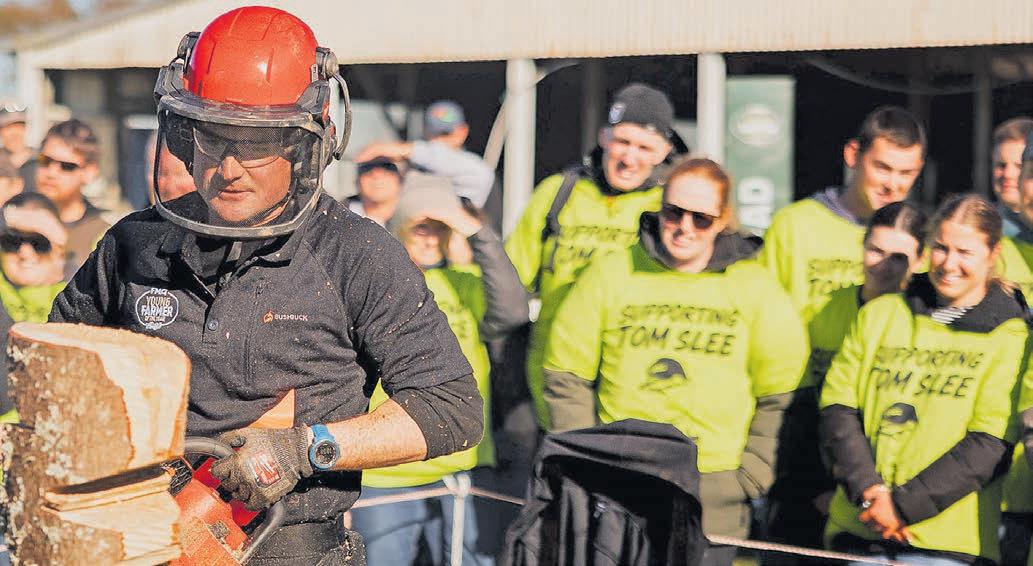
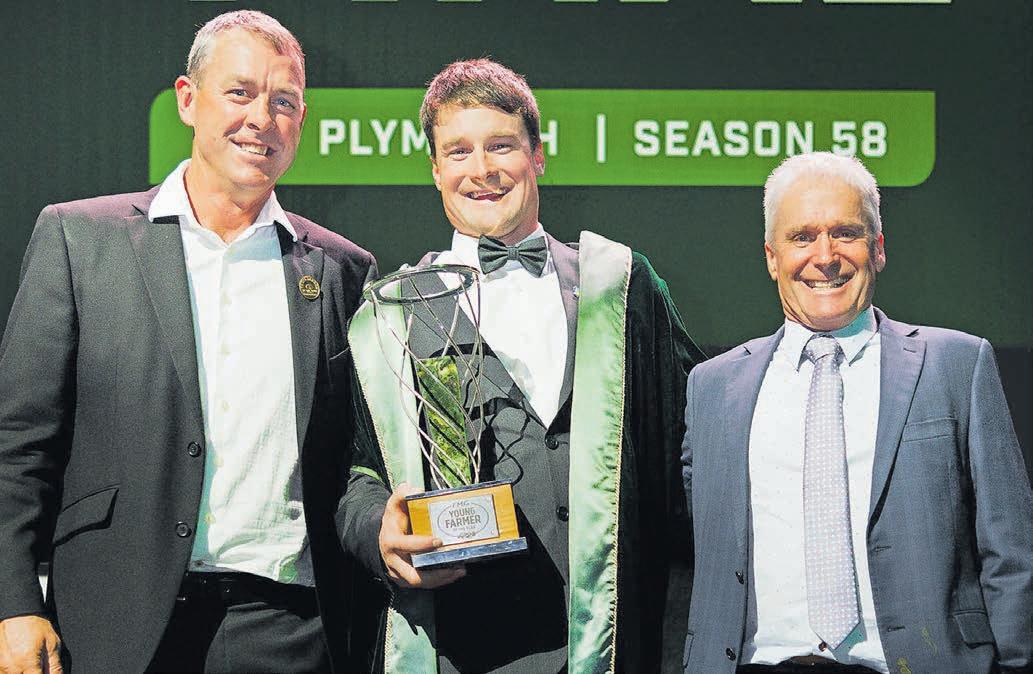
For the 11th year running, FMG was proud to support FMG Young Farmer of the Year, celebrating the passion, skill and leadership of the next generation of rural New Zealand Aotearoa
For the 11th year running, FMG was proud to support FMG Young Farmer of the Year, celebrating the passion, skill and leadership of the next generation of rural New Zealand Aotearoa
This year, Tom Slee was crowned the 2026 FMG Young Farmer of the Year after an outstanding performance across the threeday Grand Final in Taranaki, bringing the title home to Otago Southland for the first time in eight years.
This year, Tom Slee was crowned the 2026 FMG Young Farmer of the Year after an outstanding performance across the threeday Grand Final in Taranaki, bringing the title home to Otago Southland for the first time in eight years.
Going into the final evening in third place, Slee delivered a dominant buzzerround in the Agri-Knowledge Quiz which saw him surge to the top of the leader board and claim the title. Slee says he’s feeling “really good and proud” to take out the top spot “It means a lot to win – just proud to represent Otago
Going into the final evening in third place, Slee delivered a dominant buzzerround in the Agri-Knowledge Quiz which saw him surge to the top of the leader board and claim the title. Slee says he’s feeling “really good and proud” to take out the top spot “It means a lot to win – just proud to represent Otago
When a double red weather warning was issued for Rangitīkei on 15 February, sheep and beef farmers Andrew and Kylie Stewart knew it was going to be serious.
When a double red weather warning was issued for Rangitīkei on 15 February, sheep and beef farmers Andrew and Kylie Stewart knew it was going to be serious.
What followed was a storm that left widespread tree damage, blocked access, and three days without power
What followed was a storm that left widespread tree damage, blocked access, and three days without power
The farm is used to weather coming from the north-west , but this system struck from the south with extraordinary force, bringing down trees across the property and damaging fences.
The farm is used to weather coming from the north-west , but this system struck from the south with extraordinary force, bringing down trees across the property and damaging fences.
“ That night brought the strongest winds I’ve ever experienced in my 50 years on the property ” said Andrew reflecting on the event
“ That night brought the strongest winds I’ve ever experienced in my 50 years on the property ” said Andrew reflecting on the event
The rain was significant , but it was the wind that caused most of the damage. Mature poplars, macrocarpas, pines, mānuka and kānuka came down across the farm, crushing fences and blocking accessways.
The rain was significant , but it was the wind that caused most of the damage. Mature poplars, macrocarpas, pines, mānuka and kānuka came down across the farm, crushing fences and blocking accessways.
The next morning, Andrew ’ s focus was on checking stock and boundary fences.
The next morning, Andrew ’ s focus was on checking stock and boundary fences.
“Unfortunately, we’re getting used to these sorts of events a wee bit . You almost get into a routine. Once the weather clears it’s about getting around the farm, checking stock , checking fences and making sure roads are safe.”
“Unfortunately, we’re getting used to these sorts of events a wee bit . You almost get into a routine. Once the weather clears it’s about getting around the farm, checking stock , checking fences and making sure roads are safe.”
Experience has taught him not to tackle everything at once.
Experience has taught him not to tackle everything at once.
“If you go out and try and do everything straight away, you’ll break yourself and the people helping you. You’ve got to chunk it down and work your way backwards.”
“If you go out and try and do everything straight away, you’ll break yourself and the people helping you. You’ve got to chunk it down and work your way backwards.”
“ The right machine can do a lot more work than me and a chainsaw, and with greater pace. You’re running a farm, not a firewood operation.”
“ The right machine can do a lot more work than me and a chainsaw, and with greater pace. You’re running a farm, not a firewood operation.”
As he worked through the clean-up, Andrew took photos and notes.
As he worked through the clean-up, Andrew took photos and notes.
“A picture says a thousand words. The photos tell the story and help both me and FMG understand what’s happened.”
“A picture says a thousand words. The photos tell the story and help both me and FMG understand what’s happened.”
Once the immediate recovery work was under control, Andrew used those records to lodge a claim through FMG Connect It was the first time he had used FMG Connect’s new farm fencing claims process.
Once the immediate recovery work was under control, Andrew used those records to lodge a claim through FMG Connect It was the first time he had used FMG Connect’s new farm fencing claims process.
Southland” Slee is the third member of his family to claim the title, following in the footsteps of his father Richard Slee (1999) and uncle Simon Hopcroft ( 2004 ).
Southland” Slee is the third member of his family to claim the title, following in the footsteps of his father Richard Slee (1999) and uncle Simon Hopcroft ( 2004 ).
The Grand Final also marked another successful FMG Region-off with East Coast taking out the competition for only the second time. Built around the Farmstrong Five Ways to Wellbeing–take notice, connect , give, keep learning and be active. The Region-off encourages AgriKids, Junior Young Farmers and Young Farmers to give back to their communities while competing for regional pride. Alongside the title, the winners receive $5 ,000 for a charity of their choice, plus $1,000 for each level of the competition to support the continued development of young people in the food and fibre sector.
The Grand Final also marked another successful FMG Region-off with East Coast taking out the competition for only the second time. Built around the Farmstrong Five Ways to Wellbeing–take notice, connect , give, keep learning and be active. The Region-off encourages AgriKids, Junior Young Farmers and Young Farmers to give back to their communities while competing for regional pride. Alongside the title, the winners receive $5 ,000 for a charity of their choice, plus $1,000 for each level of the competition to support the continued development of young people in the food and fibre sector.
Looking forward to Season 59, the FMG Young Farmer Grand Final will be held in Christchurch.
Looking forward to Season 59, the FMG Young Farmer Grand Final will be held in Christchurch.
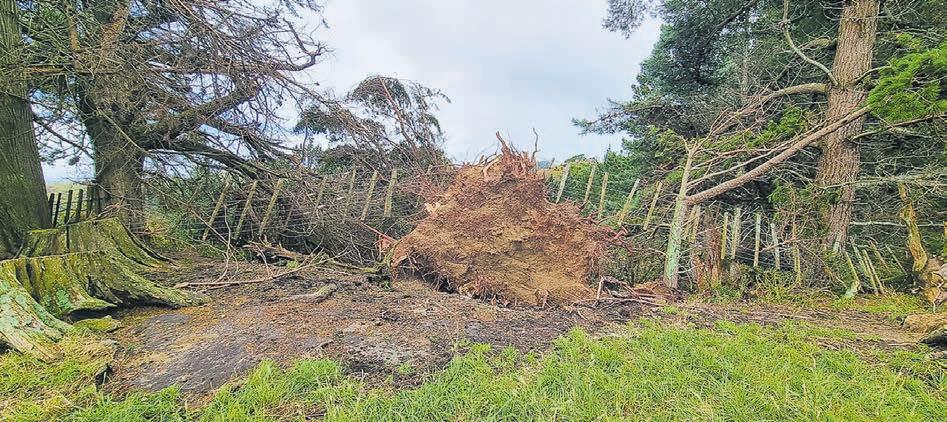
“I didn’t realise it was there, but it was straightforward. I uploaded the photos, descriptions and fence details I’d already gathered, and the settlement offer came back very quickly ”
“I didn’t realise it was there, but it was straightforward. I uploaded the photos, descriptions and fence details I’d already gathered, and the settlement offer came back very quickly ”
For Andrew, good digital record keeping is becoming part of modern farming, like having a good handle on fence lengths and materials. “If you’re accurate and honest with your record keeping, it helps speed things up when you need the support ”
For Andrew, good digital record keeping is becoming part of modern farming, like having a good handle on fence lengths and materials. “If you’re accurate and honest with your record keeping, it helps speed things up when you need the support ”
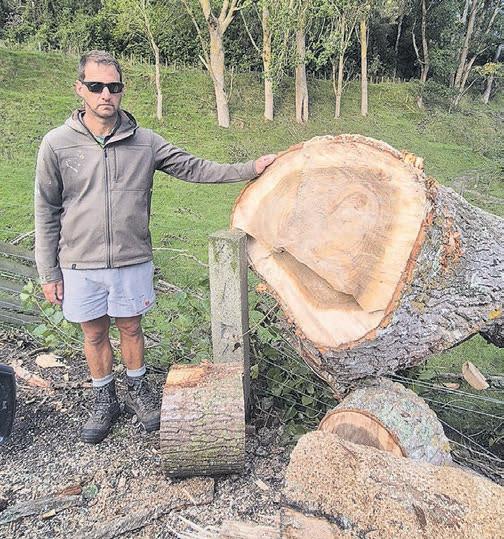
After several major storms over the years, he sees insurance as an investment in peace of mind. “ When you’re knee deep in clean-up, knowing you’ve got insurance takes some of the mental strain away ”
After several major storms over the years, he sees insurance as an investment in peace of mind. “ When you’re knee deep in clean-up, knowing you’ve got insurance takes some of the mental strain away ”
While there are still jobs left to finish, Andrew is already looking ahead. “Sometimes these events give you an opportunity to redesign things and futureproof them One of the biggest lessons is working smarter with Mother Nature rather than trying to fight her all the time.”
While there are still jobs left to finish, Andrew is already looking ahead. “Sometimes these events give you an opportunity to redesign things and futureproof them One of the biggest lessons is working smarter with Mother Nature rather than trying to fight her all the time.”
Lodging farm fencing claims in FMG Connect
Lodging farm fencing claims in FMG Connect
This year FMG introd uced a cash settlement approach for farm fencing claims lodged through FMG Connect allowing eligible claims to be settled with a cash payment on the spot Farm fencing claims are common and often time critical, with many requiring assessment by a Claim Adviser TOP TIP: Take photographs and keep records up to date to ensure an accurate and fast insurance response.
This year FMG introd uced a cash settlement approach for farm fencing claims lodged through FMG Connect allowing eligible claims to be settled with a cash payment on the spot Farm fencing claims are common and often time critical, with many requiring assessment by a Claim Adviser TOP TIP: Take photographs and keep records up to date to ensure an accurate and fast insurance response.
Farmstrong has prod uced a new resource called Live Well Grow Well to boost the wellbeing and resilience of people working in horticulture.
The 140 page book contains a wide range of grower stories along with practical tools and tips on topics such as sleep, nutrition and managing stress and pressure, all based on the latest wellbeing science.
It also includes a mental skills toolkit specifically designed to help growers build mental strength and fitness to manage the inevitable ups and downs of life and work .
The growers featured in the book talk honestly about how they deal with the highs and lows of the job, and what they do to look after themselves. The result is a collection of hard-won wisdom and practical advice for keeping well and staying on top of your game.
Farmstrong ambassador and rugby legend Sam Whitelock , who now farms in the Manawatū, says, “ What the science tells us is that just like you can get physically fit , you can also become mentally fitter and stronger. That’s why we’ve added a mental skills toolkit at the end of this book . These skills are common in professional sport and very
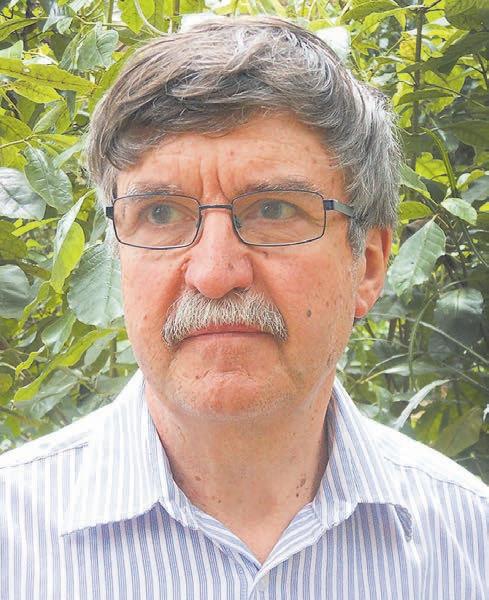
I suspect there are many farmers who won’t go to the doctor, so this kind of service is a real alternative . It didn’t cost anything and it was easy.
relevant to a results-driven, team environment like horticulture.”
In the book , Nelson apple orchardist Hamish Rush agrees these skills are useful for growers
“Look at the All Blacks The reason they are so good is because they get the coaching on how to deal with adversity, how to deal with that stressful moment and how to not let it overwhelm them Everyone can be a better version of themselves if they have the skills ”



His advice for those starting out in the hort ind ustry? “Create some balance in your life and remember none of us are invincible. We’re all human, and it’s okay to actually ask for help if you need support or to help someone else. Let’s look for those signs that someone ’ s under pressure and acknowledge it rather than fobbing it off. We’ll go further if we work as a team.”
Sam Whitelock says: “ Whether you are a grower or a professional athlete, locking in Farmstrong habits has a positive, cumulative effect over time and makes you much more resilient That’s why I’m delighted to see our work reaching even more sectors and people with the publication of Live Well Grow Well.”
Don’s mole had been on his shoulder for years. About the size of a 50 cent piece, it had never caused him any trouble, just a “scab that never really healed properly ” It stayed on the list of things to deal with eventually
At Don’s place, ‘eventually ’ had a way of not arriving
It took a trip overseas, a backpack strap and his wife Lynne to change that . The shoulder mole was rubbing on the backpack strap d uring their travels, enough to be a “bloody nuisance” Not long after returning home, the couple arrived at Central Districts Field Days When Lynne spotted FMG’s free skin check , she didn’t suggest Don go She told him.
He’s grateful she did.
A routine check that wasn’t so routine
The nurse hadn’t even looked at his shoulder when she said, “oh yes ” , and reached for her torch Don had come
in about one mole. But he left with two referrals, one for the shoulder he’d known about for years, and one for the spot on his nose he’d always assumed was a blackhead. It wasn’t a blackhead. What followed took months: specialist appointments, biopsies, shoulder surgery, then nose surgery One he’d half expected; the other was a complete surprise. Both were basal cell carcinomas, and both were caught in time.
Don is pragmatic about all of it The shoulder mole had become a “damn nuisance anyway ” But he’s clear about what the experience taught him: a mole that isn’t causing problems and a mole that isn’t a problem are not always the same thing
FMG has partnered with Melanoma New Zealand to bring skin checks and early detection into rural communities.
For free farmer-to-farmer tools and resources visit w w w. f a r m s t ro n g . c o . n z

Through the partnership, FMG brings Melanoma New Zealand’s tools, information and expertise to A&P shows, community events, and larger regional Field Days where Melanoma New Zealand clinicians are on the ground performing free spot checks and talking to farmers and growers directly about how to stay safe. No appointment or referral; just a conversation that could change things.
For Don, that conversation changed everything And he and his wife Lynne are grateful, saying, “ We really want to thank FMG for the service.”
That’s exactly why the Spot Check Roadie exists. Because the best health check is the one that actually happens.