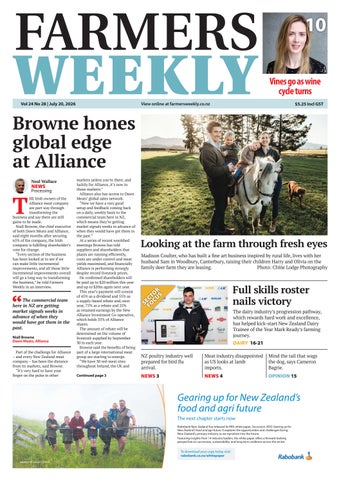

Browne hones global edge at Alliance

THE Irish owners of the Alliance meat company are part way through transforming the business and say there are still gains to be made.
Niall Browne, the chief executive of both Dawn Meats and Alliance, said eight months after securing 65% of the company, the Irish company is fulfilling shareholder’s vote for change.
“Every section of the business has been looked at to see if we can make little incremental improvements, and all those little incremental improvements overall will go a long way to transforming the business,” he told Farmers Weekly in an interview.
The commercial team here in NZ are getting market signals weeks in advance of when they would have got them in the past.
Part of the challenge for Alliance – and every New Zealand meat company – has been the distance from its markets, said Browne.
“It’s very hard to have your finger on the pulse in other
markets unless you’re there, and luckily for Alliance, it’s now in those markets.”
Alliance also has access to Dawn Meats’ global sales network.
“Now we have a very good setup and feedback coming back on a daily, weekly basis to the commercial team here in NZ, which means they’re getting market signals weeks in advance of when they would have got them in the past.”
At a series of recent woolshed meetings Browne has told suppliers and shareholders that plants are running efficiently, costs are under control and meat yields maximised, and financially Alliance is performing strongly despite record livestock prices.
He confirmed shareholders will be paid up to $20 million this year and up to $20m again next year.
This year’s payment will consist of 45% as a dividend and 55% as a supply-based rebate and, next year, 75% as a rebate and 25% as retained earnings by the New Alliance Investment Co-operative, which holds 35% of Alliance shares.
The amount of rebate will be determined on the volume of livestock supplied by September 30 in each year.
Browne said the benefits of being part of a large international meat group are starting to emerge.
“We have 30 red-meat sites throughout Ireland, the UK and
Continued page 3
Looking at the farm through fresh eyes
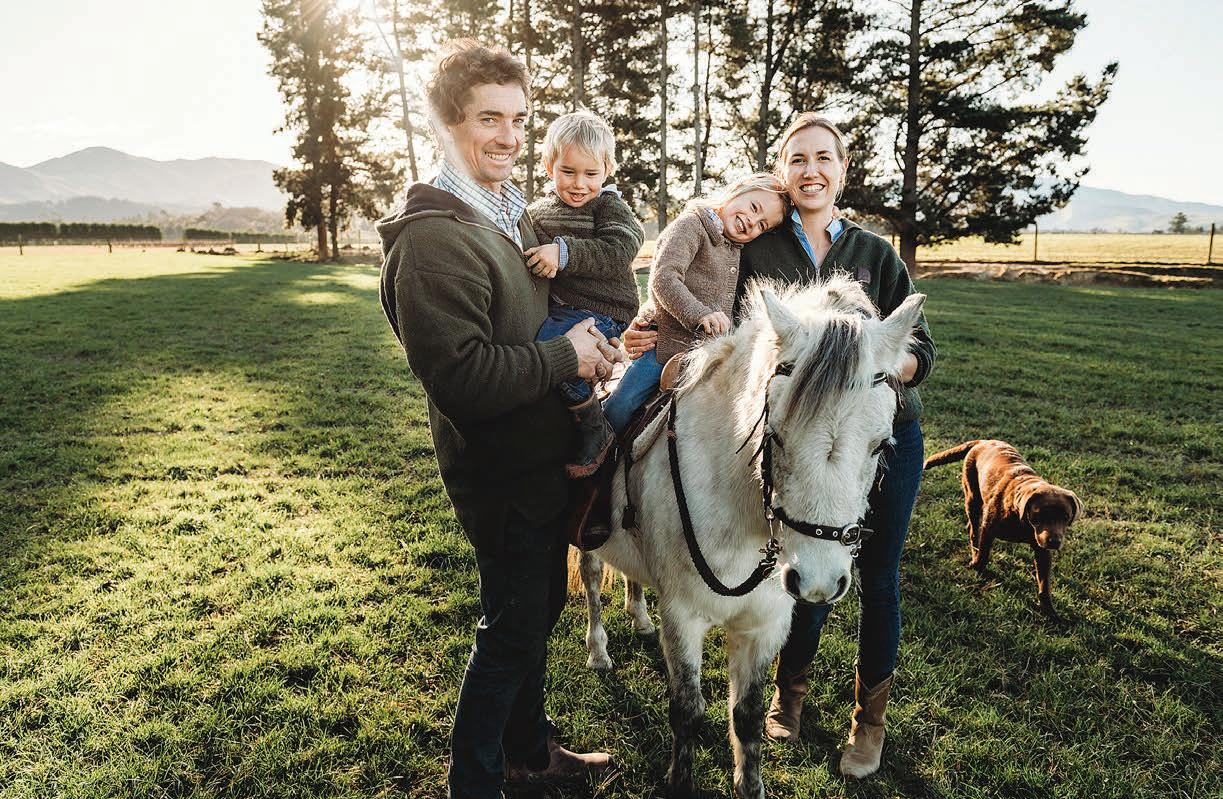
Madison Coulter, who has built a fine art business inspired by rural life, lives with her husband Sam in Woodbury, Canterbury, raising their children Harry and Olivia on the family deer farm they are leasing.
SECTORFOCUS
NZ poultry industry well prepared for bird flu arrival.
NEWS 3
Full skills roster nails victory
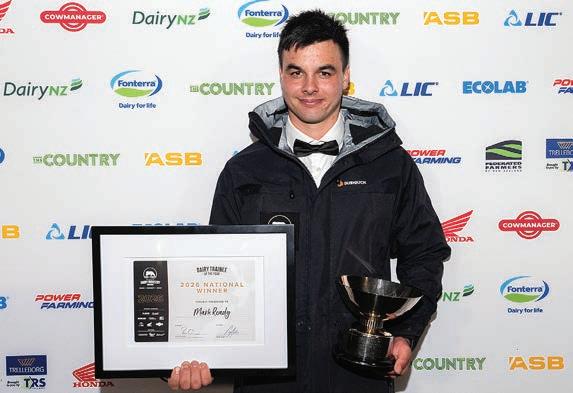
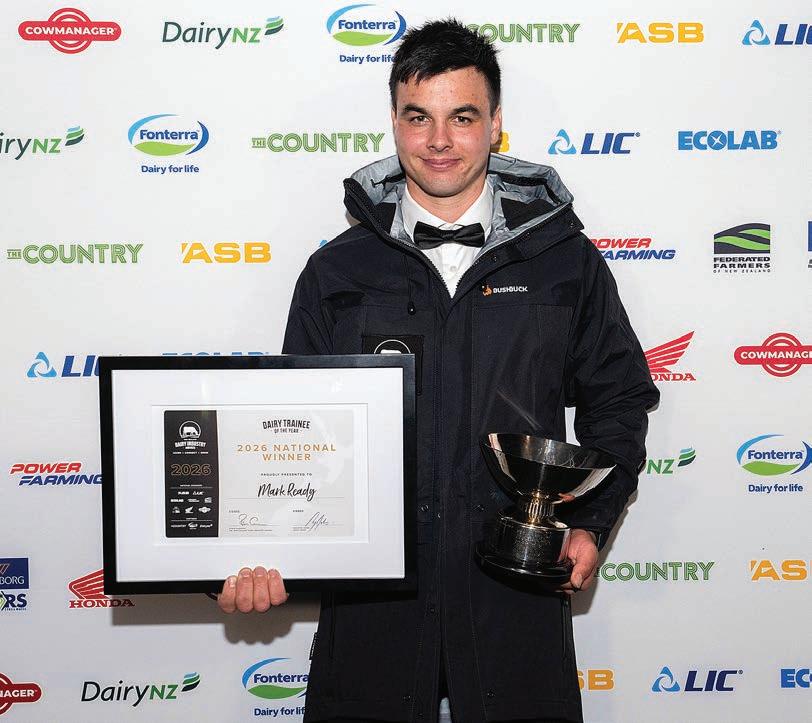
The dairy industry’s progression pathway, which rewards hard work and excellence, has helped kick-start New Zealand Dairy Trainee of the Year Mark Ready’s farming journey.
DAIRY 16-21
Meat industry disappointed as US looks at lamb imports.
NEWS 4
Mind the tail that wags the dog, says Cameron Bagrie.
OPINION 15
Photo: Chlöe Lodge Photography
Neal Wallace NEWS Processing
Niall Browne Dawn Meats, Alliance
EDITORIAL
Bryan Gibson | 06 323 1519
Managing Editor bryan.gibson@agrihq.co.nz
Craig Page | 03 470 2469
Editor craig.page@agrihq.co.nz
Claire Robertson
Sub-Editor claire.robertson@agrihq.co.nz
Neal Wallace | 03 474 9240
Journalist neal.wallace@agrihq.co.nz
Gerald Piddock | 027 486 8346
Journalist gerald.piddock@agrihq.co.nz
Annette Scott | 021 908 400
Journalist annette.scott@agrihq.co.nz
Hugh Stringleman | 027 474 4003
Journalist stringleman@outlook.co.nz
Richard Rennie | 027 475 4256
Journalist richard.rennie@agrihq.co.nz
Gerhard Uys | 027 239 4388
Journalist gerhard.uys@agrihq.co.nz
Nigel Stirling | 021 136 5570
Journalist nigel.g.stirling@gmail.com
Isabella Beale | 027 299 0596
Multimedia Journalist isabella.beale@agrihq.co.nz
PRODUCTION
Lana Kieselbach | 027 739 4295 production@agrihq.co.nz
ADVERTISING MATERIAL
Supply to: adcopy@agrihq.co.nz
SUBSCRIPTIONS & DELIVERY 0800 85 25 80 subs@agrihq.co.nz
PRINTER
Printed by NZME
Delivered by Reach Media Ltd
SALES CONTACTS
Andy Whitson | 027 626 2269
Sales & Marketing Manager andy.whitson@agrihq.co.nz
Janine Aish | 027 300 5990
Auckland/Northland Partnership Manager janine.aish@agrihq.co.nz
Jody Anderson | 027 474 6094
Waikato/Bay of Plenty Partnership Manager jody.anderson@agrihq.co.nz
Palak Arora | 027 474 6095
Lower North Island Partnership Manager palak.arora@agrihq.co.nz
Andy Whitson | 027 626 2269
South Island Partnership Manager andy.whitson@agrihq.co.nz
Julie Hill | 027 705 7181
Marketplace Partnership Manager classifieds@agrihq.co.nz
Andrea Mansfield | 027 602 4925 National Livestock Manager livestock@agrihq.co.nz
Real Estate | 0800 85 25 80 realestate@agrihq.co.nz
Word Only Advertising | 0800 85 25 80 Marketplace wordads@agrihq.co.nz
PUBLISHERS
Dean and Cushla Williamson Phone: 027 323 9407 dean.williamson@agrihq.co.nz cushla.williamson@agrihq.co.nz
Farmers Weekly is Published by AgriHQ PO Box 529, Feilding 4740, New Zealand Phone: 0800 85 25 80 Website: www.farmersweekly.co.nz
ISSN 2463-6002 (Print) ISSN 2463-6010 (Online)
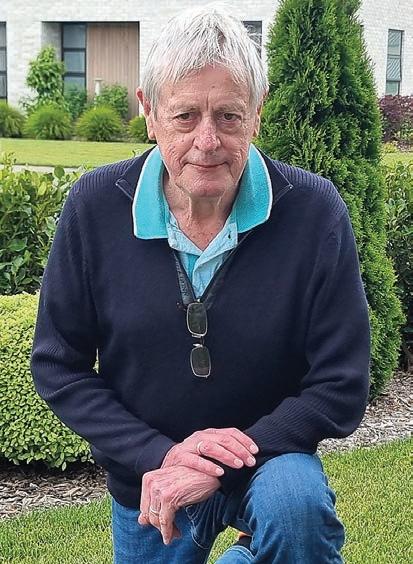
INHIBITOR: Dr Doug Edmeades has called out claims made by the Fertiliser Association that differ significantly from findings presented to the Grasslands conference.
News in brief
Backing show
Fertiliser co-op Ravensdown has signed a two-year naming rights sponsorship of the Canterbury A&P Show.
Ravensdown chief executive Garry Diack said the co-op is delighted to support the direction of the event, which will now be known as the Ravensdown Canterbury A&P Show. Diack said the show is an important platform for farmers, growers, rural businesses and the wider community to share ideas, celebrate success and look to the future.
Expected profit up
Skellerup says it is on track to deliver net profit after tax of $64 million to $65 million in the 2026 financial year ended June 30, which would be $10m higher than FY25.
The revised guidance improves on the previous forecast of $57m to $62m and comes from higher-than-expected sales in the United States of products for potable water, wastewater, dairy footware and marine applications.
Skellerup shares are trading around $6.50, about one-third higher than 12 months ago.
Flood warning
The Otago Regional Council is installing 26 new water level recording stations around the province to improve early flood warning information.
The permanent units, which cost $1250 each, are paid for by the government’s $9 million regional infrastructure fund and are part of a national project to upgrade flood warning systems throughout New Zealand and provide new and reliable telemetered flood warning forecasting and data.
Halter issues
Halter has run into hardware and connectivity snags over the past few weeks.
The communications manager at Halter, Ashleigh Gilchrist, said an issue meant they had to support a small group of impacted customers on some collar replacements.
“Separately, and unrelated to the hardware issue, last week Halter experienced a brief outage across multiple farms, which has since been resolved.”
Frontline farmers braced as bird flu crosses Tasman

Gerald
Piddock NEWS Biosecurity
NEW Zealand’s poultry industry is as ready as it ever will be to prevent bird flu spreading onto its farms after H5N1 highly pathogenic avian influenza was found on a brown skua at Petone Beach in Wellington.
Mainland Poultry CEO and Egg Producers Federation chair John McKay said the industry has been working with the Ministry for Primary Industries in planning for this eventuality for years.
While the industry is obviously concerned, it is also taking a pragmatic approach, he said.
New Zealand is one of the last countries to be free of H5N1 and it has had time to properly plan for it, using both overseas experiences as well as what occurred during the H7N6 outbreak on one of Mainland’s farms in late 2024, he said.
“All of those things have really helped us to make sure we have got clear specifications in place, clear plans in place, clear guidelines for farmers.
“We do feel we are as prepared as we can be.
Continued from page 1
New Zealand, so with that comes a fantastic amount of knowledge and experience.”
One of the biggest changes has been decentralising the business, with plant managers given more autonomy to respond to market trends instead of waiting for information from a central office.
There have been personnel changes among the senior leadership team and the company’s Invercargill office is to be relocated to offices at the
“We are all farmers, we’re all pragmatic and we’ll work through this.”
What that looks like in practice is having biosecurity plans in place on every farm documenting how the virus is kept out and the response if bird flu is discovered.
That includes de-populating the farm and decontaminating and disposing of material on the farm in a proper manner and then getting it back up and running.
We do feel we are as prepared as we can be.
John McKay Mainland Poultry CEO
“We’re a lot further down the track than when we first had to battle H7N6 in Otago. The learning from that has helped form those guidelines and form the basis of those plans.”
The H7N6 experience taught him that on-farm biosecurity is the best defence the industry has against this virus.
Free-range farms where the birds spend time outdoors do have a higher risk compared to other systems. But these types of farms still operate in other countries
Lorneville processing site.
At a processing and stockprocurement level the focus has been on getting back to basics.
“It’s about having an efficient plan, focusing on product quality, customer service, and making sure that we’re doing things right for the environment, providing a good service to our farmers, shareholders and making the right decisions.”
The company has a list of 140 capital project items it will invest in over the next few years, ranging from extra beef
where bird flu has come and gone and McKay believes that would happen here if that occurred.
These farmers, including Mainland, could also bring their chickens indoors temporarily if there is an escalation of disease risk, he said.
The biosecurity protocols on such farms include an outer layer of the farm’s boundary including restricted access, vehicle washing, having people shower on entry and exit and having staff and visitors change into clothing once inside that is then collected and washed on exit.
The inner layer of biosecurity occurs in the shed where the birds live and there are boot and clothing changes on entering this area.
“We have many controls in place, and we have been able to learn from overseas markets and from what happened in Otago to make sure we have really clear standards in place.
“As farmers we need to make sure, we follow those processes and there can be no exceptions to that.
“At this stage it’s still just one bird but if it escalates, the risk level goes up and the importance of following those processes
deboning and chilling processes to refrigeration, new biomass boilers, effluent systems, and production software.
Browne said these were identified in a due diligence study ahead of the Dawn Meats sale, and made the deal attractive. Dawn Meats has a history of buying and transforming companies.
“We’re confident that we’re on the right track with Alliance and that there’s a lot of potential in the business yet to be realised.”
Senior Dawn Meats staff have
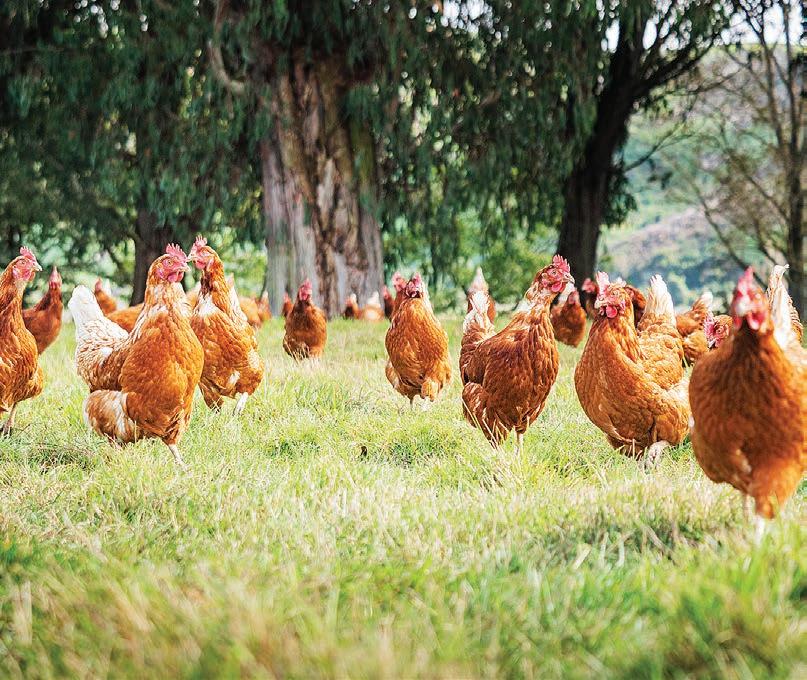
PREPARED: The poultry industry believes it is as prepared as it can be for stopping H5N1 bird flu from infecting chickens in NZ after the disease was discovered in a seabird in Wellington.
becomes higher and higher.”
The H7N6 experience also taught McKay about the necessity for a strong working relationship between the industry and the MPI.
“This is important as they can’t do their job without us and we can’t do our job without them.”
He also has no doubt that the wider primary sector will support the industry if the situation escalates.
He emphasised that bird flu does not pose a food risk for properly cooked poultry, eggs, and egg products and they are safe to eat.
Biosecurity Minister Andrew
visited NZ and senior Alliance staff have been to Ireland and the UK to help with implementing systems for operations, commercial, health and safety, food safety and quality, finance, information, technology and rendering.
“It’s very much a two-way street. There’s learnings going up to Ireland and the UK, and there’s learnings coming down to New Zealand.”
Browne has also announced the launch of the Dawn Meats graduate programme to NZ, part
Hoggard said the situation is being closely monitored, but at this stage there is no evidence of any illness beyond the lone seabird.
“We’ve had people out on Petone beach checking and found no other issues. We will continue to monitor the beach and surrounding areas.
“We ask the community to be alert and follow advice about reporting sick or dead birds. It is vital that people do not touch or handle unwell birds.
“The MPI will continue its wider surveillance and work closely with industry, veterinarians, and wildlife carers.”
of a focus on developing people.
The company takes on 50 graduates a year in Ireland and will be offering 10 positions a year in NZ. Participants in the programme will have the chance to experience the red meat sector in Ireland and the rest of Europe, and the UK.
Browne said he will continue to hold the chief executive role in both companies, saying there was still much work required to transform Alliance.
“I’m certainly up for the fight and I’m enjoying it.”
US lights fuse on lamb import review

Nigel Stirling MARKETS Sheep and beef
MEAT industry leaders are disappointed with the United States’ move to initiate a safeguards investigation into lamb imports from New Zealand and Australia.
US President Donald Trump’s Trade Representative, Jamieson Greer, formally asked for the investigation on Wednesday NZT.
The investigation, to be carried out by the US’s International Trade Commission (ITC) under the 1974 US Trade Act, is expected to take up to six months to complete.
Under Section 202 of the Trade Act the ITC can determine
whether imports are causing, or are threatening to cause, “serious injury” to US industries.
It can recommend import restrictions, or “safeguards”, lasting up to eight years to give local industries time to “adjust” to increased foreign competition.
NZ exports play a complementary role in supporting that growth, rather than displacing domestic production.
Statement Beef + Lamb NZ and Meat Industry Association
Any decision to restrict imports, which could include tariffs or quota limits, sits with the US
NZ startup trials
‘wool passport’ tech

A NEW wool traceability software platform is being trialled and is garnering interest from abroad.
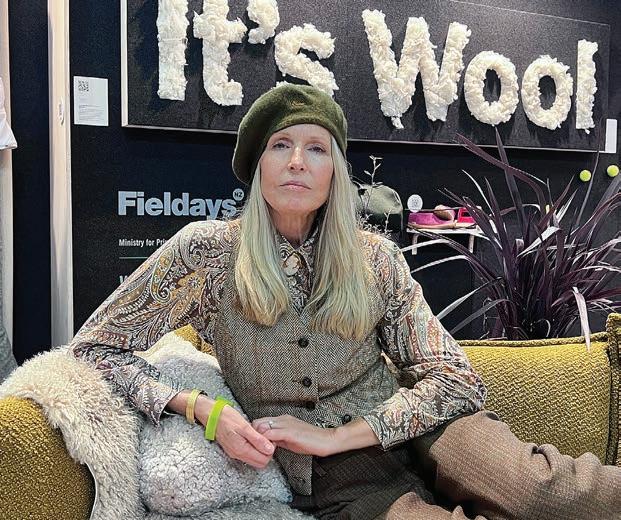
Founder and CEO of WoolPass, Amanda Bransgrove, said the platform is like a passport for wool.
“It helps the fibre carry proof of where it came from, how it moved, and what it became.”
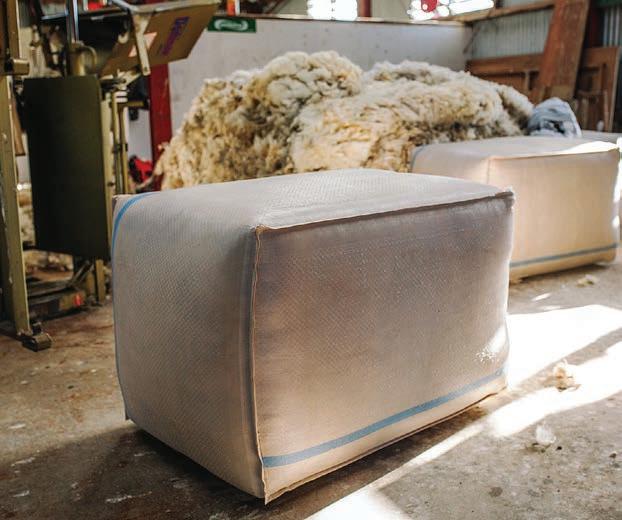
In practice, once wool is baled the bale is photographed and uploaded onto the WoolPass software platform.
The photo becomes a thumbprint.
“The platform is a forensic trace of that bale. The same process happens with every hand that it passes through, and it just gets added to the record. We are notified of changes and able to
track it, ” Bransgrove said.
Besides tracking every time a bale changes hands, Bransgrove said, they have developed a way to track bales in the spaces in between change of hands.
The proof of concept stage of WoolPass is complete and the developers are now looking at a minimum viable product for it to launch.
Bransgrove spoke to Farmers Weekly from India, which will be one of the first markets to use WoolPass. There is interest in that market from those wanting to use it to trace cashmere.
“India is such a wonderful market, its the next juggernaut of wool.
“India has heritage and culture, they grow cotton and flax, and have artisans that love New Zealand wool, and they have the culture of carpets and cashmere,” she said.
president. NZ lamb currently faces a 10% tariff in the US.
In a statement Greer said import statistics indicated that rising lamb imports have resulted in declining sales and market share for the US sheep industry.
“Recent information suggests that firms have exited the domestic industry entirely, and there have been domestic industry job losses, decreased capacity utilisation rates, and struggles to maintain profitability,” Greer said.
In a statement, the American Sheep Industry Association (ASI), which requested the investigation last year on behalf of its 100,000 sheep farmer members, said imports surged by 45% between 2020 and 2024 and now account for 70% of the US market.
The ASI said imported lamb is
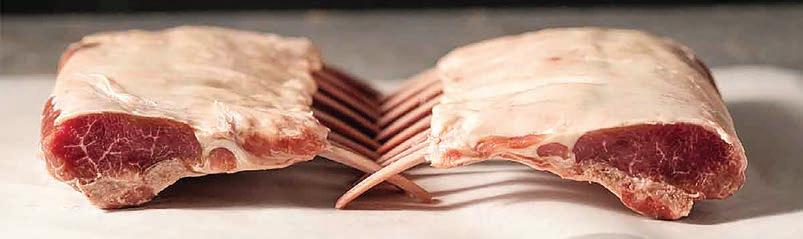
MANDATE: Any decision to restrict imports, which could include tariffs or quota limits, sits with the US president.
selling for as much as a 19.5% discount to US lamb.
“Those disparities have displaced US production, eroded profitability, and put American sheep operations at serious risk,” the statement said.
In a joint statement, Beef + Lamb NZ and the Meat Industry Association disputed those claims.
They said NZ lamb exports to the US sold for an average of $21.99
gives growers the ability to keep the grower visible beyond the farm gate, create a digital identity for every bale or lot, and carry origin, care and assurance records downstream, she said.
Bransgrove worked in the fashion industry, after being raised in rural central Otago as the daughter of a stock agent.
per kilo in the US, compared to the industry’s global average of $14 per kilo.
While there has been “some growth” in volumes to the US in the past five years, this correlates with increased US consumption.
“NZ exports play a complementary role in supporting that growth, rather than displacing domestic production,” the organisations said.
She said she has returned to wool with a clear mission to make the farmer visible again, protect the truth of the fibre, and help natural materials regain value in a world demanding proof.
WoolPass gives wool the evidence that regulators, brands and recyclers need to treat it more intelligently.
The platform is a forensic trace of that bale. The same process happens with every hand that it passes through, and it just gets added to the record.
Amanda Bransgrove WoolPass

WoolPass
PROVENANCE: Founder and CEO of WoolPass Amanda Bransgrove says WoolPass is like a passport for wool.
TRACEABLE: WoolPass, a new wool traceability software platform, is being trialled and is garnering interest from abroad.
Gerhard Uys TECHNOLOGY Wool
China-sourced fruit back on Zespri radar

Richard Rennie MARKETS Horticulture
SOURCING kiwifruit from Chinese growers is again on Zespri’s radar as the marketer works to address ever-increasing volumes of Chinese sourced fruit, and the challenge of keeping optimal quality New Zealand-sourced fruit on the shelves in the competitive market.
Five years ago, Zespri held its first vote among growers seeking support to source Chinese grown G3 Gold kiwifruit, with the 70% support failing to meet the 75% threshold.
But Zespri CEO Jason Te Brake said the threat of Chinese-grown G3 Gold kiwifruit has only grown, with an estimated 45 million trays a year now produced there. Zespri’s own estimates are that the area now in G3 Gold fruit is between 7100 and 8100 hectares, rivalling planting in NZ.
“The biggest shift I have seen in the last two years is the growing sophistication of marketing and branding of the local Gold
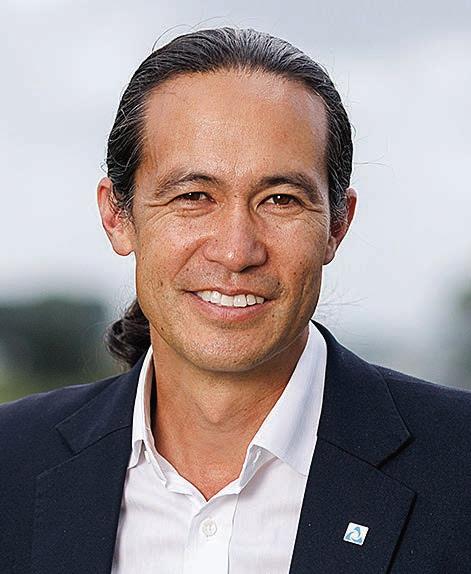
CONFIDENCE: Integration of data masses from cow wearables is boosting herd improvement, says LIC chief executive David Chin.
kiwifruit. Storage has improved and quality is much better, often meeting or even exceeding our own quality standards,” Te Brake said.
Meantime Chinese fruit volumes are pushing further into sales periods NZ fruit would once have had to itself, particularly around October-November.
“This is when we have six- to eight-month-old, aged NZ-sourced fruit competing against fresh locally sourced fruit. We need to be able to supply the freshest fruit possible. In the fruit business freshest always wins.”
In a recent grower communication, Te Brake highlighted feedback from dissatisfied Chinese customers where 22% of NZ fruit had been below standard in November.
“Customers have been clear, this level of inconsistency is not acceptable, particularly when consumers have more choice and are comparing Zespri against other premium fruits and fresher, local G3,” he said.
He said Zespri growers have one of two pathways to choose from to
deal with the growing competition.
“We can continue to work competing out of NZ, improving our late-season quality and offering longer-storing varieties. The alternative is to get closer to Chinese growers with a model more like our ZGS (Zespri Global Supply) sourcing.”
ZGS is the pool of fruit sourced from growers in countries including Italy and Greece.
The Chinese option would require a vote from growers. Te Brake emphasised that at this stage Zespri is simply outlining options, but his own preference was apparent.
“We need to get closer to growers in China. We can’t compete out of NZ to solve all our challenges. It is more about how to provide the best quality and have best supply to market.”
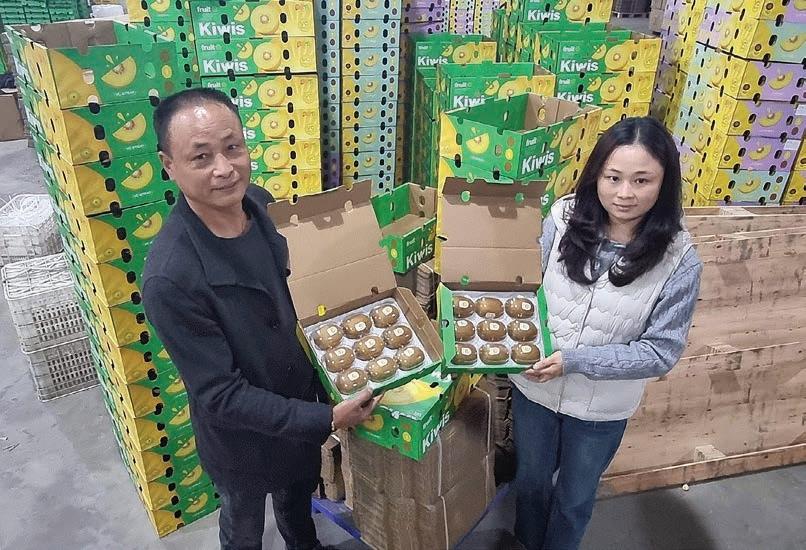
A Farmers Weekly visit to China late last year identified a high level of sophistication in the approach of Chinese growers, who often run vertically integrated supply systems.
The pressure to deliver yearround high-quality fruit has also
grown in recent years thanks to greater competition from other premium fruits including durians and blueberries.
Te Brake also pointed out a growing willingness within China to opt for “China first” when choosing products.
“If you went back a decade ago, foreign products gained a premium due to food safety concerns. But the government has done a lot to build trust and promote locals to buy local, so that’s also a competitive challenge.”
With the vast area of G3 Gold grown in China originating from Zespri’s own protected variety,
Te Brake said getting closer to selected Chinese growers may also help protect the new Red variety from the same fate.
“Our view is the Chinese government is taking a much stronger approach around plant variety rights (PVR) protection.
“We would hope if we had similar issue with Red they would protect it better but also, if we are working with local growers, we are in a stronger position to also protect its PVR.”
The supply issue will be a topic at Zespri’s AGM in August and grower road shows to discuss the options will follow.
LIC gathers valuable data from wearables

Hugh Stringleman TECHNOLOGY
Dairy
DAIRY farmer uptake of new technology in sharing data from wearables, sexed semen and genomic profiling lifted revenue for LIC co-operative in the 2025 financial year.
Total revenue was up 6.7% to $314.8 million – though net profit after tax was down 30% to $21.3m due to increased investment in upgrading technology and security platforms.
The board has declared a
dividend of 12.26c a share, a distribution of $17.6m and 80% of underlying earnings in the year to May 31.
Chief executive David Chin said a 19% increase in genomic profiling means the reference population is now more than 2 million profiles.
“More than two-thirds of our farmers have chosen to share their data with our 17 integration partners, showing the confidence farmers have in LIC.”
Board chair Corrigan Sowman said the co-operative remains focused on investing in the
infrastructure and security needed to protect increasing amounts of data.
“More farmers are choosing to securely share their farm data with LIC because they see the value it
More than twothirds of our farmers have chosen to share their data with our 17 integration partners.
David Chin LIC
creates for herd improvement.”
Strong demand for the on-farm software MINDA stems from data integrations helping farmers to make more informed herd improvement decisions.
The number of cows connected through LIC’s wearables integration has doubled in the past year.
LIC has a strong balance sheet with no debt and total assets of $408m, up 4.2% from the previous year.
LIC shares are trading at $1.21, up 27% over the past 12 months with low turnover.

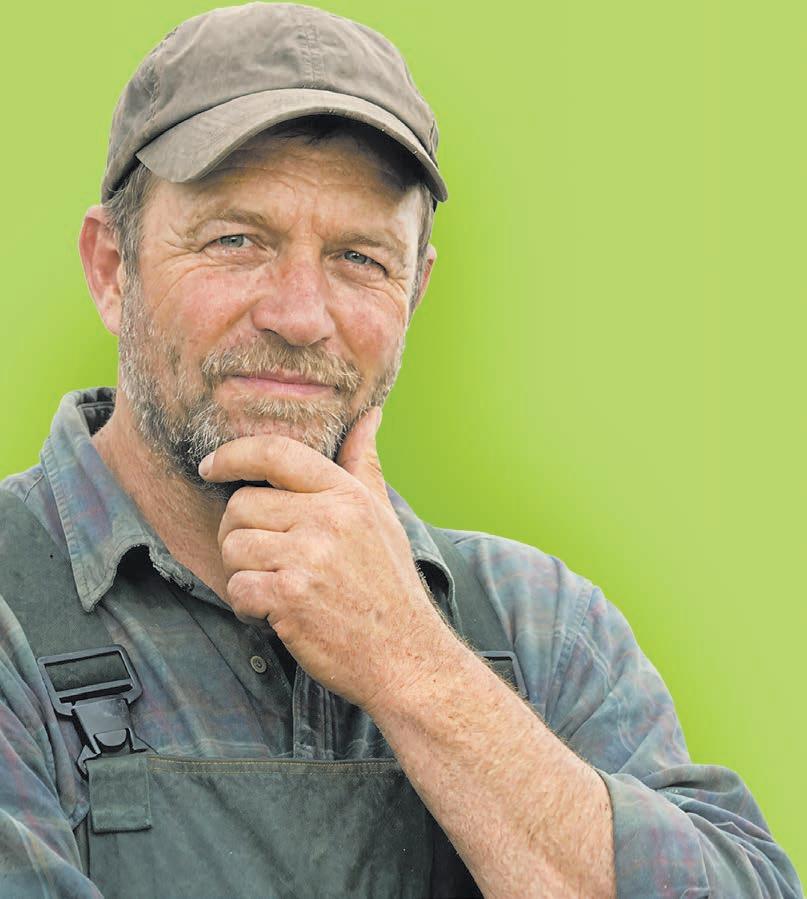

GOLDEN: More and more Chinese growers operate vertically integrated systems from orchard to market with the G3 Gold fruit variety.
Photo: Richard Rennie
That’s not resistance…
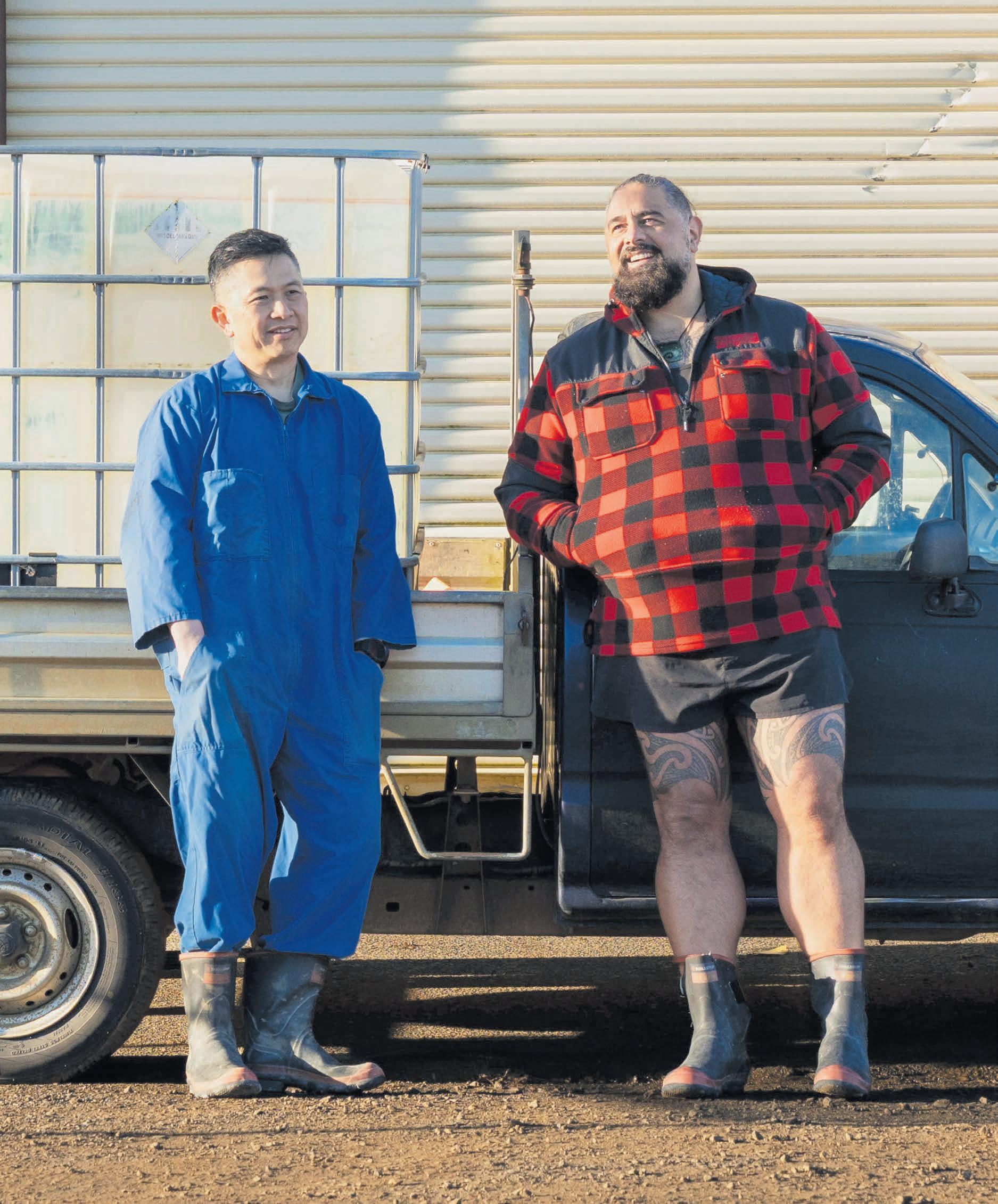
Yeah, nah. It’s aggressive pest enthusiasm. Totally different.
Resistance doesn’t care what you call it. It just helps itself to your bottom line.
Have the resistance management conversation now. And keep what works, working. keepwhatworksworking.co.nz
Looking at rural life through fresh eyes

FROM a deer farm in Canterbury, Madison
Coulter has built a fine art business inspired by rural life.
Her detailed illustrations of livestock, wildlife and farming reflect the environment she lives in today, but the foundations of her work were laid growing up in northern British Columbia in Canada.
Coulter was just five years old when she first told others she wanted to be an artist.
Growing up on the Alaska highway near the Yukon, Coulter was surrounded by wildlife. Her parents were outfitters, guiding hunters through the wilderness.
During her childhood she began sketching the animals around her, from the bears she spotted while riding horses with her sisters to the Stone’s sheep rams that were the focus of her family’s guiding business.
“We grew up really rural and surrounded by wildlife, which probably started the inspiration for a lot of my art,” she said.
Those experiences have not only shaped the subjects she draws in her artwork today, but also formed the path that brought her to New Zealand.
At 18, she flew to NZ on a working holiday visa, taking up a role as a cook for an outfitter.
She met her husband Sam, a Kiwi helicopter pilot, through work. After the two spent time travelling between the NZ and Canadian hunting seasons, the
two eventually settled in Sam’s hometown of Woodbury to raise their two children on the family deer farm they are leasing.
Coulter’s professional art career began with commissioned drawings of hunters’ trophies, before moving into pet portraits. The commissions provided a steady income stream while she built the confidence to dive fully into her own ideas.
Coulter’s work features on a range of products, including prints and homeware.
The birth of her son Harry marked a turning point in Coulter’s art journey.
“I think I really committed to seeing if I could make it work when they were babies before they hit school years, and if I could make a proper job of it by that point.”
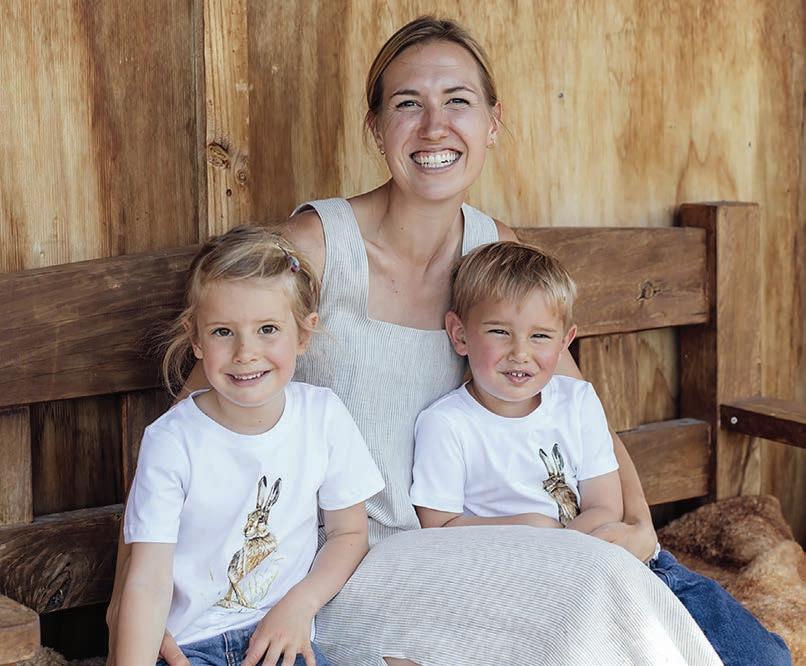
THROUGH THEIR EYES: Madison Coulter says she is ‘trying to capture farm life the way kids experience it –the little moments they notice, the things they get excited about, and the sense of adventure they find in everyday life’.
Photo: Supplied
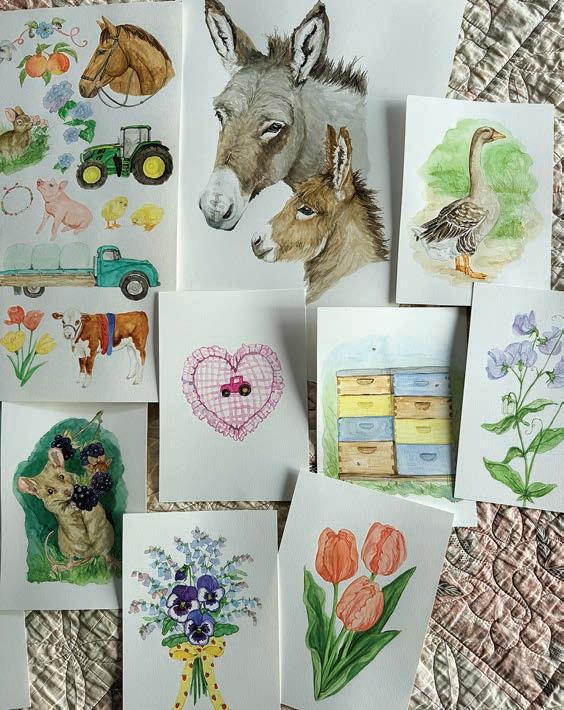
During the covid pandemic, Coulter began building her business from the kitchen bench of her Canterbury home, inspired to create artwork that mirrored the rural life her own children were growing up in.
“I was really frustrated trying to find things for my kids that were proper farm life represented correctly,” she said.
“It was all a bit cartoon, a little bit lame, a little bit Old MacDonald.
“Watching my children has changed the way I see the farm. I’m trying to capture farm life the way kids experience it – the little moments they notice, the
Systems hold key to farm performance gains
Staff reporter NEWS Systems
RESEARCH from ANZ shows that further farm performance gains can be made by making farm systems easier to run – as opposed to just working harder.
It could lead to a 5% uplift in farm revenue. That, coupled with a 5% reduction in costs, could lead to a profit increase of $2.9 billion across five New Zealand agricultural sectors, according to the bank’s latest Agri Insights Report.
ANZ managing director of business and agri Lorraine Mapu said while the opportunity is significant, the important question is: How will farmers get there?
“We’ve looked at the practical changes that can help close that gap – betterconnected information systems, more efficient use of inputs, targeted automation, smarter land-use decisions and investment in tools that genuinely fit the farm system.”
The strongest opportunities are likely to come from reducing friction inside the business.
“For many farmers, the issue isn’t a lack of information, it’s that information often sits in different places – accounting systems, production records, environmental reporting tools, spreadsheets and advisers’ processes, to name a few.
“When those systems are better connected, farmers can spend less time wrangling information and more time making decisions that improve performance.”
New technology is most useful when it supports practical decision-making, rather than adding another layer of complexity, she said.
It has to earn its place, make the work easier, improve timing, reduce waste or help the team make more consistent decisions.
“It’s not about adopting technology for its own sake – it’s about choosing tools that actually help a system run better.”
That distinction is becoming more important as AI and automation become more capable.
“AI has the potential to be very useful in agriculture, but its value will depend on how well it connects with the realities of running a farm or orchard.
“There are real opportunities for farmers in this area – not in replacing their judgement, but in helping them pull information together faster, reduce duplication, identify what needs attention and make better-informed decisions with the data they have.”
The report also highlighted the role automation could play as a practical way to reduce pressure on workers, improve safety and support more consistent execution during busy or difficult periods.
things they get excited about, and the sense of adventure they find in everyday life.”
Living and working on a deer farm has also given her a close-up view of some of the animals she draws, helping her to refine the realism in her work. Coulter said capturing the details is important.
“Farmers know their animals well. We notice the little details, so it was important to me that they are painted accurately.”
Coulter said building a creative career from a rural property has been made a lot easier by the internet and social media.
Turning a childhood dream into a career began, for her, with having the confidence and overcoming the self-doubt to share her work.
“You’ve just got to do it,” she said.
“My art was never going to be seen hiding under my bed.”


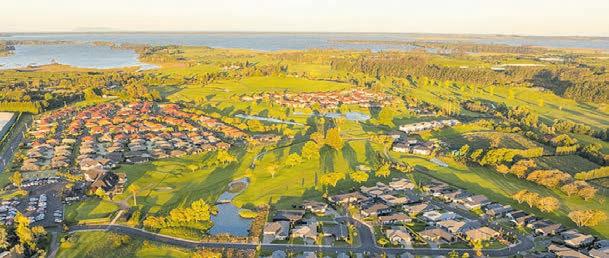
Isabella Beale PEOPLE Skills
VISION: Madison Coulter, with children Harry and Olivia, says living and working on a deer farm has given her a close-up view of some of the animals she captures. Photo: Jess Howzen Photography
Wapiti, sika first HOSI to be unveiled
Gerhard Uys NEWS Environment
FIORDLAND wapiti, and sika deer in the Kaimanawa and Kaweka forest parks, have been formally designated New Zealand’s first herds of special interest, or HOSI.
The announcements were made last week by Hunting and Fishing Minister James Meager, who said hunter-led conservation has reached a new milestone.
The general manager of the Fiordland Wapiti Foundation, Roy Sloan, earlier told Farmers Weekly a HOSI designation means the herd will be managed in an area with scientific assessment of how many deer an area can hold without damage to biodiversity, and the rest culled from a helicopter.
Sika Foundation secretary Cam Speedy said the sika deer will be managed differently to wapiti.
The sika herd is more accessible and sika are more important as a meat herd for families, as opposed to being a trophy herd like wapiti, Speedy said.
There are a range of herds and habitats across the 125,000 hectares of the Kaimanawa and Kaweka forest parks. Although
hunters reduce deer numbers in more accessible areas, there is work to be done with culling in more remote areas to ensure good habitat and herd outcomes, he said.
There is a chronic underharvesting of hinds in more remote areas.
New Zealand’s responsibility to protect Fiordland’s World Heritage values remains unchanged. I retain overall authority and can amend or remove the designation, or any delegation, if required.
James Meager Hunting and Fishing Minister
“It’s about balancing hunting outcomes with long-term sustainability. We will get nice venison and trophies out of more balanced deer herds,” Speedy said.
The designations come after the Game Animal Council Amendment Bill passed its third reading in Parliament, ensuring there is no requirement to exterminate valued
introduced species that have been designated as a HOSI in a national park.
Meager said the management plan does not aim to increase animal numbers.
“A key focus will be to help native vegetation recover by reducing browsing pressure, so young plants can survive and ecosystems can regenerate over time.”
He said strong environmental oversight will be in place, with annual reporting on herd management and monitoring to be made publicly available.
“New Zealand’s responsibility to protect Fiordland’s World Heritage values remains unchanged.
“I retain overall authority and can amend or remove the designation, or any delegation, if required,” he said.
The Central North Island Sika Foundation will assist the Game Animal Council in its day-today management of the herd, alongside DoC, iwi and hapū, and other partners.
Sloan said more people are recognising that wellmanaged deer can coexist with conservation in New Zealand. Efforts to protect wapiti go back more than 120 years, he said.
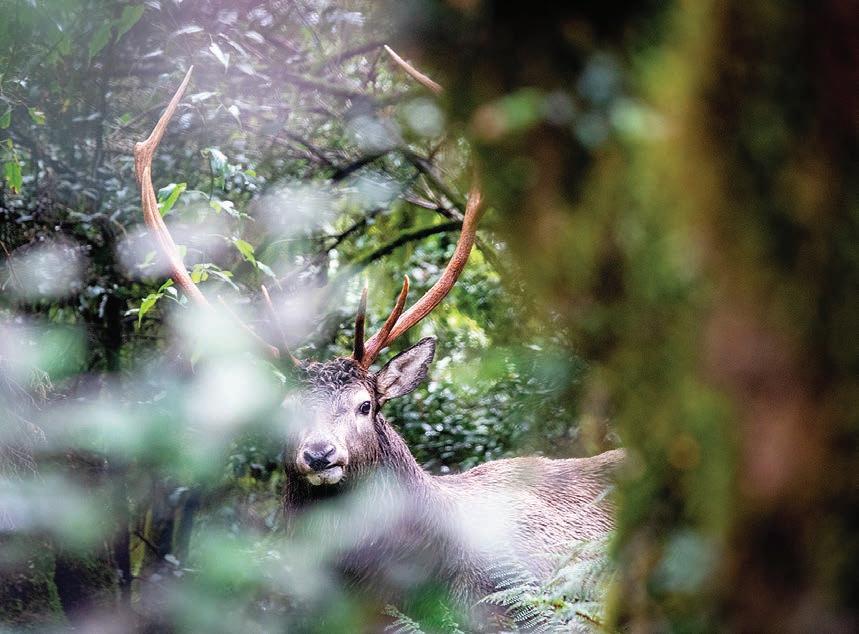
This week’s poll question:
Will establishing herds of special interest in New Zealand’s national parks hinder conservation in those areas?
Have your say at farmersweekly.co.nz/poll
OCD executive pleads guilty in kickback scandal
Secret Commissions Act 1910.
FORMER Open Country Dairy
Limited group market manager
Simon Stewart has pleaded guilty to receiving more than $250,000 in kickbacks from an overseas customer, following a Serious Fraud Office investigation.
Stewart pleaded guilty in the Manukau District Court to a charge of acceptance of gift by agent under Section 4 of the
The charge relates to Stewart providing assistance and commercially sensitive price information to OCD’s Indonesian-based customer, PT Anta Tirta Kirana (Anta Tirta). In return, he received financial payments that he did not disclose.
Between April 1 2019 and October 10 2023, Stewart received 27 payments from Anta Tirta, totalling $276,668.
The payments ranged from $6980 to $22,767.
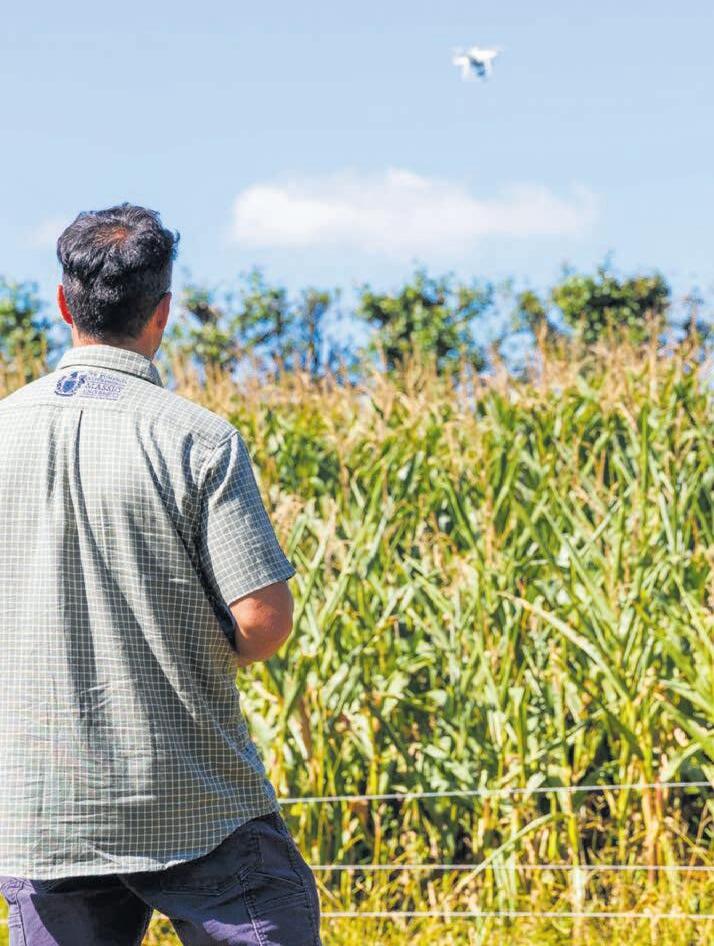
OCD is New Zealand’s secondlargest milk processor and the world’s second-largest exporter of whole milk powder.
SFO director Karen Chang said dairy is New Zealand’s largest export, and the country’s economic wellbeing is tied to the health of this industry.
“Behavior such as Mr Stewart’s undermines the trust our markets are built on. Any offending that threatens New Zealand’s reputation as a safe place to do business, particularly when
linked to such a critical industry, has serious implications for our country as a whole.”
Stewart provided information to Anta Tirta which ultimately influenced its pricing negotiations and interactions with OCD. It offered him payments in exchange for his “kindness”, Chang said.
“New Zealand businesses often operate in foreign markets, many of which may have different business practices and cultural norms than our own.
“Businesses who are entering
such markets should ensure they are aware of, and protected against, bribery and corruption risks.
“We will continue to act where individuals seek to personally profit at the expense of the integrity of our markets.”
OCD referred the matter to the SFO following an internal investigation and co-operated during the SFO’s investigation. Stewart is due to appear for sentencing on October 15 2026 at the Manukau District Court.
PROTECTED: Fiordland Wapiti have been formally designated as a herd of special interest.
Photo: Fiordland Wapiti Foundation
SenseHub® Dair y collars deliver for Waikato sharemilkers
Waikato sharemilkers Clare and Nic Coppard are f irm believers in the power of data to improve cow per formance and provide better work-life balance for themselves and their farm s taf f.
The couple are coming into their six th season as 50/ 50 sharemilkers on Marg and Terr y Troughton’s 206ha (190ha effec tive) dair y farm 10 minutes from Matamata in central Waikato
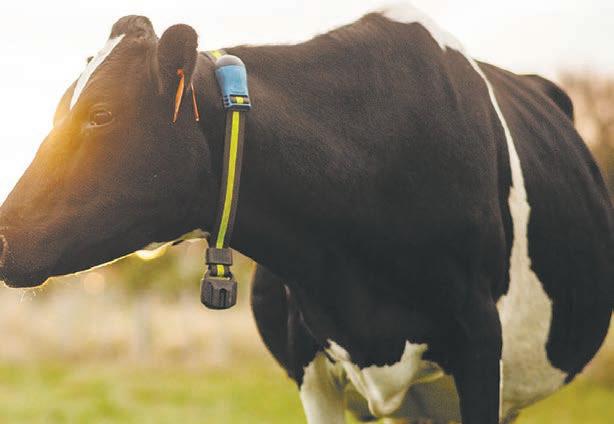
They were among a group of early adopters of cow wearable technologies when they purchased a full herd set of SenseHub Dair y collars in September 202 2
“We were milking 600 cows when we took on the sharemilking position here, but we’re increasing the herd size to 6 4 0-650 cows,” Nic says
Produc tion over the pas t four seasons has ranged from 2 36,000 to 245,000kg milk solids, averaging close to their goal of 24 0,000kg. But this season’s produc tion (202 5-26) was jus t over 260,000kg
The SenseHub Dair y collars really come into their own in the period before and after calving as each cow transitions to it s nex t phase of milking for the season.
To guide each cow’s transition, Nic s till uses the original repor t set up by their SenseHub Dair y trainer when the collars were ins talled in his firs t season.
“We milk ever y thing once a day as a colos trum cow and then after four or five days they are moved to another once-a-day mob Once they’re ruminating at our pre-set minimum level (450 minutes/day), that’s when they are drafted into our twice-a-day milking mob,” he says.
It’s not a ‘mob’ decision, Nic says It’s an individual cow decision, thank s to the power of the SenseHub Dair y collar data
Mating begins on Oc tober 5 and ends about December 20
The whole herd is ar tificially inseminated and there are no natural matings or follow-up bulls used
Nic has full confidence in the data generated by each cow collar to signal it is on heat and for the Protrack® sys tem to automatically draft them off for insemination
“With full integration in place with MINDA® , our SenseHub Dataflow software sor t s the cows that need to be drafted for ar tificial insemination s traight to Protrack
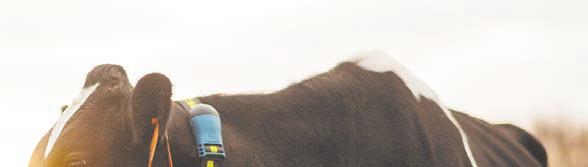


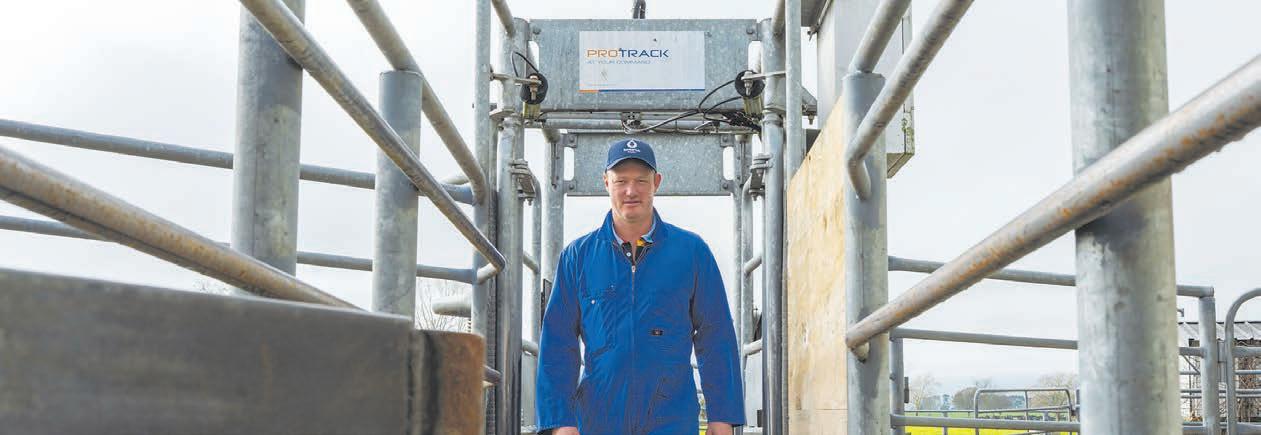
The herd is mos tly Friesian-Jersey cross Nic’s polic y is to use some sexed s traws for the firs t 21 days of mating to ensure he has sufficient replacement heifers
“I’ll also be mating the bottom 30% of cows to Charolais semen from day one And then from day 2 2 onwards, Charolais for pretty much all the bigger cows and shor t ges tation crossbreed for all the smaller cows ”
“ We can pregnanc y scan the cows and usually get 99% of them matched to the semen they’re ac tually in calf to,” he says
Their herd’s six-week in-calf rate was 7 1% las t spring, down a little on their usual range of 7 1-74%.
Heat detec tion is accurate and simple, for the whole team, thank s to the collar data
In September las t year, SenseHub Dair y Somatic Cell Count (SCC) sensors were ins talled in half of the s talls in their rotar y milking shed as par t of a wider trial to tes t their effec tiveness in a largescale dair y farm
“Ins tead of relying on a herd tes t SCC result that could be two week s old by the time we need to use that data, I can look at the SCC data the same day it’s collec ted and make a call about treating a cow or dr ying her off ”
He is pleased their herd is holding it s lowes t cell count since being on the farm, at 156,000 on average
Having looked at the other wearable options since the SenseHub collars were ins talled, Nic is confident they are the bes t cow monitoring sys tem available.
“ They definitely make our life easier Jus t being able to keep an eye on things without having to be hands-on 100% of the time is the big thing for us as a family,” he says.
“And when you go on holiday, there’s an app on my phone for health and mating from the collars”
He admit s he initially took a few week s to build confidence in the heat detec tion capability of the collars, before ros tering himself for late s tar t s through the remaining mating period
Havin g the backing of global animal health giant Merck (operating in New Zealand as MSD Animal Health), means there is plenty of development inves tment going into them
Nic says the back-up ser vice from the SenseHub Dair y team is superb The few issues he’s encountered are usually sor ted with a phone call or inter vention from one of the suppor t s taff through an online connec tion to the farm’s computer sys tem
Although it’s not a priority at this s tage, Nic is interes ted in the new Se nseHub Dair y inline milk quality sensor which is now available
Key Fac t s
Sharemilkers: Nic and Clare Coppard
O wners: Marg and Ter r y Troughton
Area: 20 6 hec t are s (19 0 hec t are s e ff ec tive)
Paddock s: 6 7 (2 4 -3 0ha, all flat)
Shed: 5 4 -bale rot ar y (built in 2012), S enseHub Dair y SCC sensors (fi t ted 20 2 5)
Herd: 6 4 0 - 65 0 mos tly Kiwi- cross cows (wintered on plat for m, heifers gr a zed o ff )
Infras tr uc ture: Feed pad, suppor ted by maize bunker (45 0 tonne s c apacit y), concrete pad for ex tr a maize and gr ass silage with a covered PKE bunker and molasse s t ank
Sys te m: 2 / 3 (depending on amount of pas ture grown on f ar m)
Wearable technology: S enseHub Dair y collars (ins t alled 20 2 2) and Protr ack automatic dr a ft ing



Nic Coppard, Matamata
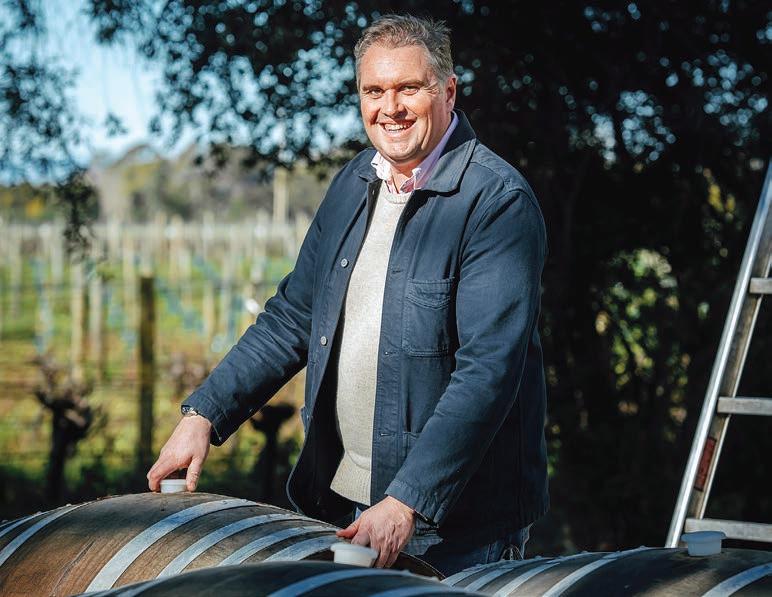
BEEN HERE BEFORE: Vines are being removed as the supply of wine exceeds demand, says James Macdonald, chair of Marlborough Winegrowers.
PROVEN ONE CALF AT A TIME. FOR 60 YEARS.
Vines ripped out as wine cycle turns
Neal Wallace NEWS Viticulture
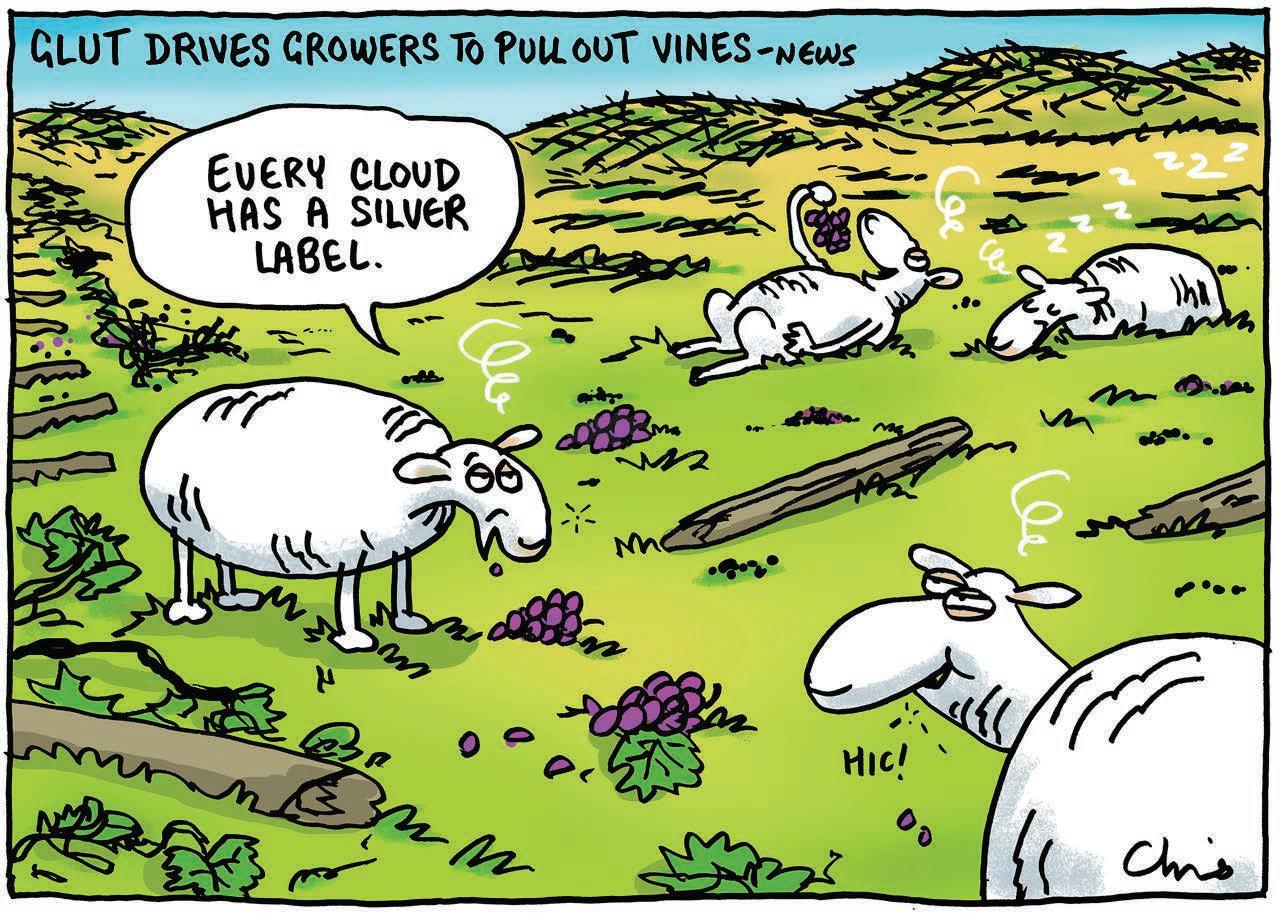
HAVING left wine grapes unharvested for a second year, some growers are now removing vines in response to a world awash with wine.
Sarah Wilson, the acting chief executive and advocacy manager at New Zealand
Winegrowers, said it is too early to quantify the volume of grapes left unpicked or vines being pulled out.
Wilson attributes the oversupply to recent large vintages, especially the 2025 season, as well as softening demand for alcohol since covid and market uncertainty, especially relevant given 90% of New Zealand’s wine is exported.
“We don’t know how long this process will take, and individual businesses may be impacted in different ways.”
Vineyards have mothballed vines, diversified production or, in some cases, extracted vines.
“We anticipate that some of these vineyards may have reached the end of their economic life and may later be replanted with newer more productive vines,” Wilson said.
In 2015 NZ had 36,225ha of wine vines, which increased to 42,520ha in 2025.
Wine production over that same period increased from 313.9 million litres to 378.4 million litres.
A 2025 Gallup survey of global drinking trends found that 54% of adults aged 18 and older said they “use alcoholic beverages,” a 4% decline from the 2024 survey, and an 8% decline from 2023.
The survey found that of those who drink alcoholic beverages, the mean number of drinks consumed in a seven-day period in 2025 was 2.8. The mean number of drinks consumed in 2024 was 3.8 and in 2023 it was 4.
James Macdonald, chair of Marlborough Winegrowers, said some local growers are pulling out vines but that is also part of the normal replanting cycle as sauvignon blanc vines, the dominant variety in Marlborough, live for only 25 to 30 years.
The company he works for, Hunter’s Marlborough, annually replaces 3% of its vines for this reason.
Macdonald said land that had been under vines is likely to be grazed by stock and could be replanted once economics improve.
“Give it a few years and then they will start again.”
He said bulk exported wine is the most affected by the downturn.
It is shipped in large bladders for bottling as in-house branded bottles by United Kingdom supermarkets.
NZ-branded wine has experienced greater resilience due to customer loyalty, and Macdonald said white wine has fared better than red due to its lower alcohol content.
As with earlier demand corrections, Macdonald said, the sector will recover.
“There will certainly be a supply shortage in five years’ time when the situation improves, and we won’t have enough wine.
“There is still a place for wine, just perhaps not every day.”
Wilson agrees, saying in-market data reveals sales of NZ wine outperforms the wider wine category in most export destinations.
“We have an exceptionally loyal consumer base, and new consumers continue to discover and appreciate what makes New Zealand wine distinctive.”
The India free trade agreement and the rise in popularity of white wine in emerging markets will present new opportunities for NZ wine.


The Card that never knocks off for smoko.
Whatever you ne e d to ke ep your farm and e quipment fit and functioning, put it on your Farmlands Card - the easiest way to get more value from your sp ending.






Fert firms called out on inhibitor claims
Richard Rennie NEWS Emissions
ONG-TIME soil scientist
LDr Doug Edmeades has reiterated his calls for the fertiliser industry to drop claims made about the urease inhibitor Agrotain, added to ureabased fertiliser products.
Urease inhibitors are added to nitrogen fertiliser to reduce the volatilisation, or gas losses, of nitrogen to the atmosphere.
Doing so is claimed to not only reduce the losses to the atmosphere, improving nitrogen use efficiency by plants, but also reducing the amount of nitrogen required to achieve a certain plant uptake.
In New Zealand, Agrotain appears in Ballance’s SustaiN product and Ravensdown’s N Protect.
Its addition is claimed to reduce average atmospheric losses by up to 50%. It now features in almost 50% of all urea products sold.
The Agrotain treated products cost about 3.5% more than the conventional urea product.
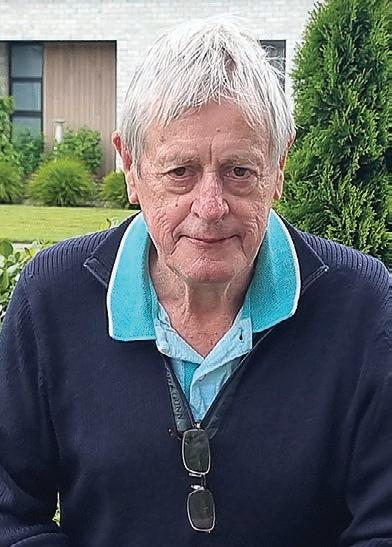
INHIBITED: Dr Doug Edmeades has called out claims made by the Fertiliser Association that differ significantly from findings presented to the Grasslands conference.
The Fertiliser Association, which fertiliser companies belong to, has promoted the use of urease inhibitors on the grounds they reduce atmospheric emission linked to nitrogen fertiliser application.
The association also claims
farmers or growers can reduce the amount of urea fertiliser they apply, implying the same pasture gains as conventional urea can be achieved by using 10% less of the Agrotain-treated product.
But almost three years ago Edmeades presented a paper at the annual Grasslands conference that challenged the claimed gains from using urease inhibitors, and the ammonia losses it was also claimed to prevent.
His work with Robert McBride was a meta study of all research conducted on Agrotain’s effectiveness, including 45 studies done over 350 trial sites of which two-thirds were pastoral and the rest cropping applications.
Their work found under typical conditions of application in NZ where about 20-30kgN a hectare is applied, the extra pasture response was only plus or minus 1.4% compared to conventional urea applications. At rates over 200kgN a hectare the average gain was plus or minus 7.5%.
“We have urged the cooperatives to re-examine what they were claiming the Agrotain treatment could achieve, based on
An invitation to join a big wild goat drive
Gerhard Uys NEWS Environment
GETTING New Zealand Deerstalkers Association hunters onto your land for this year’s 2026 National Wild Goat Hunting Competition is a win-win, says a Marlborough Sounds landowner.
Gerard Malcolm, who owns a property in Port Underwood in the Marlborough Sounds, had hunters from the NZDA on his property for last year’s competition.
He said the block the hunters shot deer on used to be a pine plantation but he is trying to restore it to native bush by planting seedlings and removing wilding pines. The area holds a lot of
goats that eat the seedlings and thwart efforts to restore the bush, Malcolm said. Malcolm himself controls goats by hunting, but said with NZDA hunters taking off 50 goats in a single day, having them on made a big difference.
He read about the competition and registered his property online, he said.
NZDA hunters came to meet him and did a pre-hunt inspection on the property. He said there was good communication between them before, during and after the shooting.
He hopes hunters will come out again this year to control goats on his property and help protect the bush he is trying to restore.
South Island Representative for the NZDA, Trevor Dibben
the results we found which showed how much the association’s claims overstated the reality of the research,” said Edmeades.
Ravensdown CEO Garry Diack told Farmers Weekly in a written statement that ultimately Agrotain is sold and promoted as a tool to mitigate potential N loss through volatilisation.
“As with any nitrogen product, it does not guarantee the exact quantum of the pasture growth response,” he said.
He said there is a great deal of scientific literature supporting volatilisation claims.
A Ballance spokesperson told Farmers Weekly urease inhibitors are a globally recognised and widely used agricultural technology, used extensively in the European Union to help countries meet its strict emission reduction targets.
“Closer to home they are included in the agriculture inventory model as part of NZ’s greenhouse gas inventory.”
In a written response to Farmers Weekly, Fertiliser Association CEO Dr Vera Power said the average volatilisation loss in NZ is about
15%, higher in spring, summer and autumn, and inhibitors reduce this by an average of 50%.
“There is no way of predicting if there will be a high or low volatilisation rate when a fertiliser recommendation is made, therefore urease inhibitors should be viewed as a risk management tool,” she said.
She said depending on the rate of N applied, and the level of N deficiency, the reduction of N loss through volatilisation should lead to a beneficial yield advantage to farmers.
But Edmeades said this variable yield claim contrasts to the association’s website claim implying farmers can use 10% less to achieve the same pasture gains.
“These claims are inconsistent with research presented at the 2023 Grasslands Conference,” he said.
Edmeades said fertiliser companies would be better to promote Agrotain’s inclusion in urea fertiliser purely for its impact on reducing ammonia gas losses, rather than implying it can also deliver improved pasture production.
said last year more than 10,000 goats were shot during the competition.
Dibben said the NZDA hopes even more landowners will sign up this year.
In Marlborough, which has the largest concentration of goats in the country, only two landowners signed up for the competition last year, he said.
Dibben said the NZDA’s Farmers Assist Programme not only vets hunters, but hunters who are part of the programme are covered by insurance.
Many farmers actively manage wild goats on their own properties and are encouraged to continue to do so, including entering goats into the competition themselves.
Working with NZDA hunters provides an additional, practical option for landowners to stay on top of wild goat pressure, he said.
“The wild animal problem is too large for any one group to manage alone.”
Last year Minister for Hunting and Fishing James Meager gave the competition the thumbs-up, taking out a few goats himself and praising hunters for controlling goats.
The nationwide competition, which runs on both public and private land, runs from August 1 to November 26.
Hunters can enter at Hunting & Fishing stores, select NZDA branches, and DoC offices.
NZ plough team’s tractors lost at sea
Gerhard Uys NEWS Skills
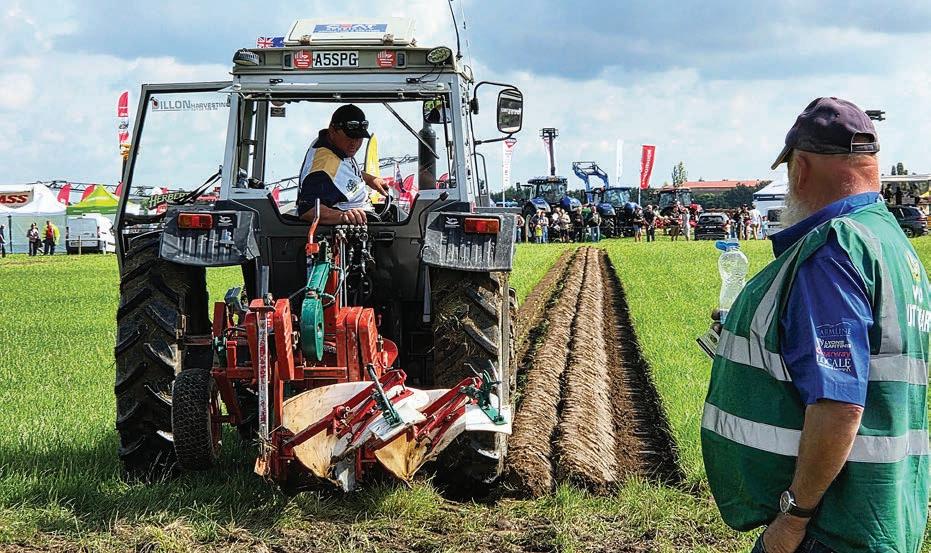
THE New Zealand ploughing team’s tractors and ploughs are lost at sea and likely won’t make it to the World Ploughing Championship in Croatia in time to compete.
Team member Mark Dillon from Dillon Harvesting in Riversdale, Southland, told Farmer’s Weekly that tractors, ploughs, uniforms and parts belonging to him and teammate Malcolm Taylor were sent off months ago.
“We put [the gear] on the container and it went to port on the 20th of May. It was delayed leaving New Zealand. It’s been over to Aussie and sat somewhere in Aussie for two weeks with no communication. It’s on its way back to New Zealand.”
Dillon said supposedly more freight will be loaded at a New Zealand port, after which the ship will leave for its destination.
There is no fault with the gear as it was spotless when loaded, he said.
If everything goes to plan the gear will arrive by August 26, with Dillon and Taylor then starting to prepare for the competition, which takes place on September 5 and 6.
However, further delays seem likely as the gear has to get out of port, clear customs and travel to the other side of Croatia for the competition, Dillon said.
A lot of strings are now being pulled to hopefully get the tractors and ploughs to Croatia on time, with Dillon speaking to a local MP, his wife communicating with logistics companies, and talk of borrowing gear from Canadian friends or their Irish coach.
Dillon participates in the conventional discipline, with Taylor in back ploughing.
He said they had spent a lot of money on the gear and costs will skyrocket if they have to change plans.
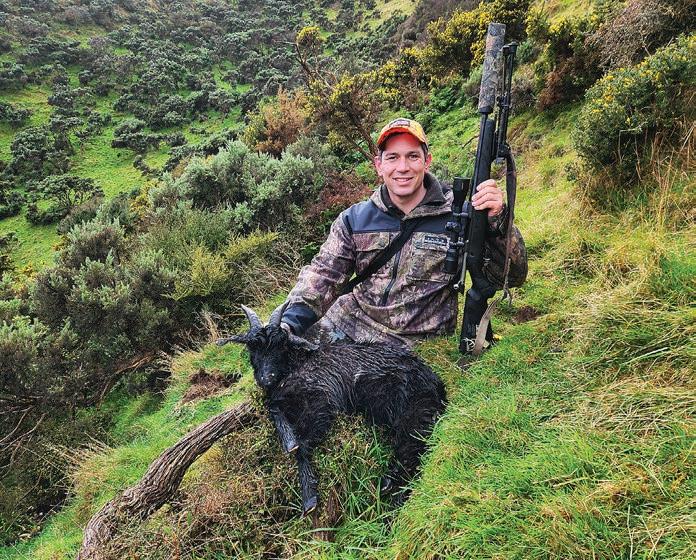
IN THE FIELD: Last year Minister for Hunting and Fishing James Meager helped out in the National Wild Goat Hunting Competition.
LOST AT SEA: Tractors belonging to Mark Dillon and Malcom Taylor are missing at sea and might not arrive in Croatia in time for the world ploughing champs.
Advertising alone won't keep us in the mailbox forever.
This month, NZ Post’s 19% rate increase takes effect. With postage being our third-highest cost after staff wages and printing, it’s a real blow to the bottom line, and one we have no choice but to absorb.
It’s also a reminder of how crucial our voluntary subscribers are.
Because you help cover that rising cost, we can keep focusing on what matters: getting you quality information, in print and online, at the standard you deserve as a food and fibre producer.
In an industry where nothing is guaranteed, our
subscribers are one of the few constants we can count on.
So thank you to all 1,256 of you who already subscribe.
As a reader who values this publication but hasn’t set up your subscription yet, now’s the time. It takes two minutes, and it directly keeps this publication in your mailbox, every week.
$120/year, $15/month or whatever value you decide.
Charlie Williamson Community Manager
Support us with a voluntary annual subscription to Farmers Weekly. $120 for 12 months. This is a voluntary subscription for you, a rural letterbox-holder already receiving Farmers Weekly every week, free, and for those who read us online.
Scan the QR code or go to www.farmersweekly.co.nz/donate
Email your name, postal address and phone number to: voluntarysub@farmersweekly.co.nz and we’ll send you an invoice.
Call us on 0800 85 25 80
Note: A GST receipt will be provided for all voluntary subscriptions.



From the Editor
The worst laid plan
BGerald Piddock Senior reporter
ENJAMIN Franklin famously said the only two certainties in life are death and taxes.
For Waikato farmers you could arguably now add a third – Plan Change 1, given the long and painful road it’s been on. It’s been 12 years since the Collaborative Stakeholders Group (CSG) was first formed and tasked with creating PC1.
Back in 2014, there was much optimism that bringing in 24 representatives from across farming, iwi, science, environmental and community groups was a better way of doing things.
It was heavily influenced by the events in Manawatū, where the Horizons Regional Council had found itself in a legal quagmire with its One Plan.
The reasoning was that if the CSG could hammer out a plan change that was agreed by all, surely there would be no need for court appeals once it was notified. Over two years the group had countless
meetings and workshops, spending hundreds of hours formulating PC1, which was sent to the Waikato Regional Council, where it was notified in 2016.
That Pollyanna-ish optimism was shattered as over the next decade it went through submissions and hearings. A decisions version of PC1 was notified in April 2020 – and was appealed.
Six years later, in June this year, the Environment Court released its decision, directing the council to make 20 changes to PC1, and giving it until July 21 to do so.
Once the court confirms the amendments meet its intent, the plan will be finalised. Even then it may be subject to appeal to the High Court on matters of law.
With PC1 being largely in legal limbo, Waikato farmers for the most part have just gotten on with it – knowing it was coming, but living with the uncertainty of not quite knowing what it will mean for their businesses.
They have created wetlands, fenced off waterways, protected sensitive habitats and created catchment groups across the region, dedicated to improving water quality and reducing emissions.
It was a point made by farmers at a recent meeting at Mystery Creek, where ministers Todd McClay and Chris Bishop were present.
McClay speculated that it would be a very different matter if PC1 was made today in light of that work.
The meeting was organised because
the government had realised PC1 may become operational right when its Resource Management Act replacement legislation is coming into being, creating an impossible situation where there are two sets of rules that farmers will have to follow.
Bishop told the audience that the cabinet is looking for a solution.
But that could be easier said than done, given that PC1 is also tangled up in the Waikato River Settlement legislation with Tainui which includes Te Ture Whaimana o Te Awa o Waikato, the vision and strategy for the Waikato River.
In June, Te Arataura chair Tukoroirangi Morgan said Te Ture Whaimana is “absolutely foundational” to the Settlement and is not something the government can remove or undermine unilaterally or by stealth.
“The present government is on notice, and we will not hesitate to take action to protect our rights and interests,” he said.
One of the final comments at Mystery Creek made to Bishop and McClay was about that Settlement, with the farmer urging them to take a big-picture approach.
It was telling that it was one of the few times at the meeting that both ministers remained silent.
Maybe it was a brief moment of clarity as they realised the enormity of balancing not just conflicting timetables, but competing interests as well.
Will establishing herds of special interest in New Zealand’s national parks hinder conservation in those areas?
LAST WEEK’S POLL RESULT
The more the merrier. That’s the view of almost 80% of voters when asked if they support National’s trade policy of seeking trade deals with emerging economies.
“Every new farm produce market will help to spread our options,” said one voter.
“The way the world is undergoing change we need too spread our risk and accessibility to markets,” said another.
“This spreads our options and does not leave us at the mercy of one or two big buyers of our products. While having too many clients brings its own issues I appreciate NZ broadening its approach to new markets.”
Of the 21.7% opposed to the move, some were concerned that any new deal would come with immigration commitments. Others felt New Zealand is better off working to expand existing markets.
“First and foremost, look after the markets we already have.”
Last week’s question: Do you support National’s trade plans for emerging markets like Nigeria, Brazil and Bangladesh?



Mind the tail that wags the dog
Straight talking
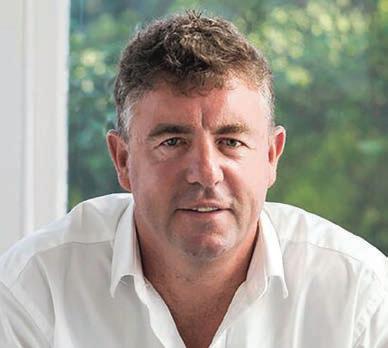
Cameron Bagrie Managing director of Bagrie Economics and a shareholder and director of Chaperon
WE ARE inching closer to what is looking to be a nailbiting election.
The National Party has never been a one-term government, but is behind in the polls – though it could still form a government.
The polls are whipsawing.
Political trends in other nations signal discontent with incumbent governments.
The key thing I am watching ahead of this election is not the headline polls. It is the makeup of a potential government, growth in the political periphery, and the potential for that political periphery to be the tail that wags the dog.
I’m an economist, not a political analyst. However, the latter cannot
be divorced from the former. Governments matter for economic direction, confidence and policy.
Business confidence is a cited economic indicator but has a clear bias favouring the blue hue over a red one.
Business confidence is not a good economic indicator, though. I ignore it.
Questions within various business confidence surveys contain more relevant and useful information.
I focus more on firms’ assessment of their own activity and profitability, and whether they are intending to hire or invest. These are more political agnostic.
Polls focus on shares. Who is on top, up, down, or can form a government.
Within the polling, there has been a strong trend away from the two mainstream political parties. Between 2005 and 2017, the Labour and National parties combined grabbed 70-80% of the vote. Centre left or centre right. Largely mainstream. It offered stability because we didn’t swing too far in either direction.
It dropped to 65% in the 2023 election, and polling of late suggests something around 62%.
Cue the tail wagging the dog. That 38% is the tail.
Cue populism and growth in what we call the political periphery.
There are a host of reasons for the growth in the political periphery.
The International Monetary
Fund’s managing director, Kristalina Georgieva, might have hit the nail on the head in 2024, referring to increasingly dissatisfied populations:
“Everybody I ask here, how is your economy? The answer is good. How is the mood of your people? The answer is not so good. Families are still hurting from high prices ...
“So here is the bottom line: the global economy is in danger of getting stuck on a low-growth, high-debt path,” Georgieva stated.
There has been a strong trend away from the two mainstream political parties.
“That means lower incomes and fewer jobs. It also means lower government revenues, so less resources for families and to fight long-term challenges like climate change. These are anxious times with these problems in mind.”
Nationalism is on the ascent globally. It involves pushing back against immigration and globalisation, amplified by social media. Economic inequality and unaffordable housing have fuelled resentment, pushing voters towards populist parties.
The political landscape in the UK and Australia has shifted immensely.
Reform UK is out in front in Great Britain.
In Australia, One Nation is now a
Much-improved Plan Change 1 is on its way
In my view
THE Waikato Regional Council Plan Change
1 “is unworkable, impractical and expensive”, proclaimed Alan Emerson from a distant Wairarapa hilltop in his July 6 Farmers Weekly column. He and others making similar assertions must believe in ESP as the final version of PC1 has not yet been published. PC1 used to be exactly as Emerson claims, which was the reason several farming parties appealed the first decision. However, over the five-year court process, farming parties have been successful in reducing a mass of red tape and dopey restrictions. Unfortunately, the gains have not been visible to Waikato farmers because those of us involved in the hearing have not been able to share progress while PC1 has been in front of the court. The technicolour of PC1 version changes and the sparsity of the
original black ink is testament to our efforts.
The court was keen to strip out unnecessary compliance costs to enable farmers to divert time and money into doing the stuff that matters for water quality.
The court valued the input of the farmers who gave evidence, explaining they needed to understand the practicalities of the rules’ impact, which are reflected in their decisions.
The ability for the minister to amend PC1 to remove the requirement for consenting of existing farming activities appears to be within his wheelhouse.
The court has clarified that the aspirational and mainly unattainable long-term water quality targets must not be a consideration when deciding resource consent applications.
However, PC1 requires that most farmers obtain resource consent as well as getting their farm environment plan certified. I thought this was an absurd overreach and it was the main reason I
serious party, not a peripheral one. Cue a playbook for NZ First or The Opportunity Party (TOP).
A modern-day version of Rob’s Mob looks to be on the rise.
Rob’s Mob refers to a group of voters who supported Rob Muldoon in the late 1970s and early ’80s. It was the so-called voice of “the ordinary bloke”.
It involved populist rhetoric against elites and the political establishment, a theme we are seeing today. But Muldoon was not an economic reformer, rather a populist.
The younger generation, fuelled by unaffordable housing and low wages, are a pending political force against the Boomers (who benefited from large property gains).
Maybe we are about to see Peters’ Pack (Winston Peters), Q’s Crew (Qiulae Wong – TOP’s leader) or TOP’s Lot.
Back in the 1990s, when I worked at the NZ Treasury, a former finance minister told me that often the third- or fourth-best policy option was the best. It was best because of its stickability, and durability across the election and political cycle. Not perfect, but workable. That would stand the test of time and offer certainty.
Certainty is key for any business. Without it you face higher risk and a higher hurdle rate for investing and hiring. Uncertainty means there is time value in waiting.
Without businesses investing or hiring, wellbeing does not have an economic base.
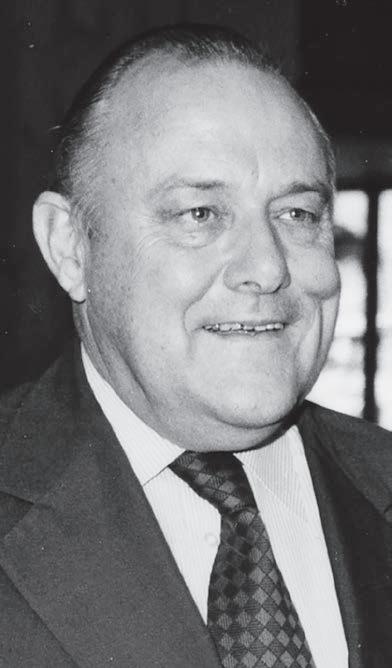
COMING AROUND AGAIN: A
volunteered to join the appeal. Consenting and certification involve the same process and rigour, require the same outcomes, and both the consent officer and certifier are under the control of the council. Not only is duplication a waste of time and money, there also remains an opportunity for a consent officer to feel they have made a difference by over-ruling the certifier.
I was disappointed to find this issue was not part of the proceedings. There are good reasons the lawyers for the other farming parties did not pursue it, mainly to do with accidents of history.
So where has PC1 landed? Farmers will be required to prepare farm environment plans or amend their existing ones. The degree to which amendments will be required depends on the quality of existing plans.
PC1 has a placeholder for certification and auditing requirements, which will be shortly replaced by amended Freshwater Farm Plan regulations. Ministers have assured farmers the amendments will be for the better.
If the minister, in response to Federated Farmers concerns, can
The New Zealand economy is on an improving trajectory, led by the farming sector and heartland. It is an export and earnings uplift as opposed to a housing, borrow and spend one.
Elections bring uncertainty, though. It can mean shovels down. A bit of wait-and-see creeps in. We will see a bit of that again in the months ahead of November 7. Where New Zealand ends up in 2027 and beyond does not just come down to the election result. It is the makeup, and degree to which the tail ends up wagging the dog.
The more you swing to one extreme, the greater the odds of a swing back the other way in 2029.
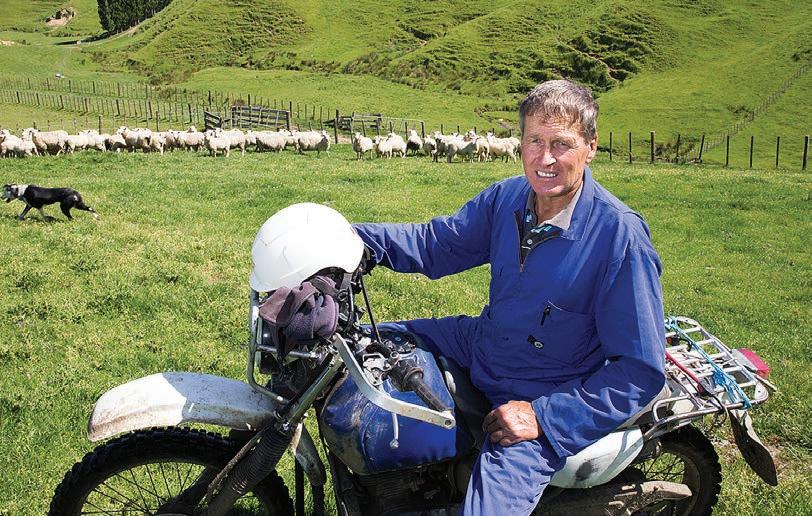
OPPORTUNITY: Graham Pinnell says getting rid of unnecessary and costly red tape means more opportunity for farmers to get on with improving water quality.
address the nonsense duplication issue, then PC1 will be very workable, practical and affordable.
It now has strong safeguards to prevent unreasonable council requirements and will align well with the reformed Resource Management Act requirements. The farm environment planning process will feel very familiar to those already involved.
Okay, a few niggles will probably remain but there will be no show-stoppers.
The ability for the minister to amend PC1 to remove the requirement for consenting of existing farming activities appears to be within his wheelhouse. It is not overruling the thrust of the court decision, something that tests the democratic convention
regarding the separation of the powers of government from those of the judiciary.
The minister has the power to amend or revoke rules in RMA plans that have negative economic or employment impacts, providing they do not breach obligations under Treaty settlement legislation and national RMA policy and standards.
Getting rid of unnecessary and costly red tape means more opportunity for farmers to get on with improving water quality. If done with due consideration, my view is that these provisos could be met.

modern-day version of Rob’s Mob, the ‘ordinary blokes’ who supported Robert Muldoon, is on the rise, says Cameron Bagrie.
Graham Pinnell
Pinnell is a retired sheep and dairy farmer and has participated in the PC1 process
Sector Focus
Full skills roster nails win for trainee
Piddock PEOPLE Dairy
THE dairy industry’s progression pathway, which rewards hard work and excellence, has helped kick-start New Zealand Dairy Trainee of the Year Mark Ready’s farming journey.
The industry offered a clear progression pathway from farm assistant to 2IC, manager and share or equity farmer, he said.
“I could see that clear succession plan,” the 23-year-old farm manager said.
Dairy farming runs in his family with his father managing a farm and Ready helping him out after school. After finishing school, he worked on a deer farm while also relief-milking a few mornings a week.
He did that for four years before getting a full-time job milking cows nearly three years ago.
“I wanted to get into dairy farming because I knew how to work with stock and I needed something that had opportunity to learn while I was working and
had different pathways for gaining equity.”
It was the second time he had entered the Trainee section of the Dairy Awards for the West Coast-Top of the South, having previously tried in 2023 after being encouraged by his employers at the time, Willie and Michelle Coates.
I held up just above average over the whole board. Having a maintained quality across the board got me over the line.
Ready Dairy Trainee of the Year
The experience was a big learning curve for him and identified the areas that he needed to improve and learn.
Following that, he applied to Primary ITO to enrol in its Level 3 course, allowing him to learn and work at the same time with the curriculum designed around the seasonal aspects of farming.
He waited until his studies were complete and entered again this year to see if all his learning would pay off.
He also entered as the awards provided him with so many opportunities to broaden his industry contacts. He credits the first time he entered as creating the opportunity to know Michael Shearer, which led to his current employment.
Winning the national trainee title, he said, “was a big tick that I’m moving in the right direction”.
Speaking to the judges afterwards, he was told that while it was a close contest, his acrossthe-board, all-round ability is what made him stand out.
“I held up just above average over the whole board. Having a maintained quality across the board got me over the line.”
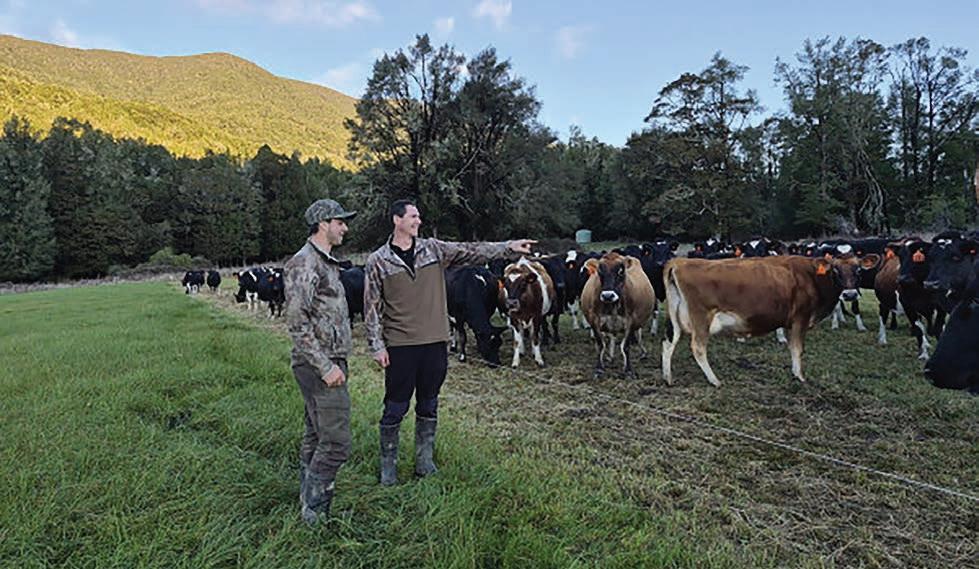
Ready is a farm manager for Michael Shearer on the Inch family’s 130 hectare farm at Maruia, east of Reefton, milking 250 cows once a day and producing 300kg milk solids per cow.
It is a low input System 2 farm that focuses on pasture farming, being efficient as possible.
He lives there with wife Lily and is coming to the end of his first season on the farm.
“It’s a great spot, I love it here,” he said.
SUPPORT: Mark Ready, left, is a farm manager for Michael Shearer on the Inch family’s 130 hectare farm at Maruia, east of Reefton.
Photo: Primary ITO
He has also received great feedback from the Inch family on how the farm has improved since he got there.
“It was quite run down when I got here in terms of the fencing and lots of water leaks,” he said.
Shearer is the farm’s lessee and a mentor to Ready and was also a previous multiple winner in the Dairy Awards, having won the Share Farmer of the Year with wife Cheryl in 2024 for West Coast/Top of the South.
Shearer was named 2014 Taranaki Farm Manager of the Year and in 2012 he placed third in the New Zealand Dairy Trainee of the Year competition.
Shearer was Ready’s tutor while
studying at Primary ITO and offered him a job to come and work for him and has helped him every step of the way.
“Listening to him and his story on how he went from farm assistant to farm owner was exactly the journey that I wanted to take.
“He’s my mentor – my private tutor is what I call him.”
Ready has also started on his plan to build his own equity, having purchased his first cattle. He will enter the herd this year. He has also set himself a timeline to achieve herd ownership.
He plans to lease them back to Shearer for a percentage of their value. As that equity grows, he plans to buy more cows.
“We plan to own a herd in the next three to five years of 250-300 cows and we’ll probably move from there into an equity partnership.”
Gerald
ACROSS THE BOARD: Mark Ready was named Dairy Trainee of the Year title at this year’s New Zealand Dairy Awards.
Mark
Dairy drive aims to lift sector off plateau
Gerald Piddock NEWS Dairy
ASEVEN-year project
that aims to test and demonstrate the next generation of highproducing, low-input farming systems for the dairy industry has begun.
Called Responsible Dairy and led by DairyNZ, the $45.85 million project is one of six that is part of the government’s new Land Use Flexibility programme.
DairyNZ CEO Campbell Parker said the industry has been on a productivity plateau since 2015. Responsible Dairy will lift all farmers up to the next level of productivity, efficiency and sustainability within their farming businesses, while driving further environmental gains across the sector.
“Government and sector coinvestment in Responsible Dairy is pivotal to accelerate innovation, scale up adoption, and efficiently deliver environmental and productivity gains across the dairy sector,” Parker said.
“It is expected to speed up the rate at which the sector adopts transformative technologies,
getting them into active use years earlier than what might otherwise be the case to keep New Zealand dairy globally competitive.”
Of the $45.85m in funding, $18.34m will be coming directly from the Ministry for Primary Industries’ Primary Sector Growth Fund, $19.73m via DairyNZ’s levy, and the rest from industry partners.
In its first two years, Responsible Dairy will include showcasing
low-footprint, high-productivity dairy farms by establishing a national network of 35-40 partner farms.
It will also evaluate and test new technological and nature-based options to improve productivity and environmental outcomes as well as demonstrating new onfarm practices.
These options will be shown in case study catchments and demonstration farms, and a
Fonterra lowers milk price forecast
point of $9.70/kg MS remains unchanged.
IN THE face of declining prices at recent GDT auctions, Fonterra has cut its milk price forecast by 50 cents for the 2026-2027 season, making $9.25/kg MS the new mid-point.
The forecast’s range has also been narrowed from $8.00$11.00/kg MS to $8.00-$10.50/ kg MS.
The 2025-2026 forecast of $9.60-$9.80/kg MS with a mid-
The change to the 2026-2027 forecast reflects softer-thanexpected demand at a time of strong global supply, Fonterra CEO Richard Allen said.
“GDT prices have fallen 11% across the reference products that inform the farmgate milk price since we announced the opening forecast in late May, while milk production from key exporting regions is up on last year.
“We’re expecting a strong start
to the season in New Zealand, noting the potential for the El Niño weather pattern to impact global supply as the season progresses.
“It’s very early days in terms of the proportion of our 2027 sales book that has been contracted, so we face significant exposure to changes in commodity prices.”
The co-operative continues to focus on maximising returns for its farmer shareholders, Allen said.
“As the seasonal supply picks up, our plan will ensure we utilise
decision framework will guide where they should be used.
The work will include a credible national blueprint for a resilient dairy sector that will integrate spatial mapping (at regional and catchment scale), refined economic modelling and analysis of climate resilience to guide policy, investment and planning.
By 2050, the programme is expected to deliver a 20% growth in milksolids from existing farms and land use change, a 20% reduction in nitrogen leaching per hectare, and a 60% increase in riparian planting alongside a 50% increase in protected wetland areas.
Science oversight will be provided by the Bioeconomy Science Institute Maiangi Taiao and Earth Science New Zealand, who will monitor those targets.
Years of investing in environmental improvements, infrastructure, planting, effluent management, genetics and farm systems have provided a strong foundation for the next phase of change, Parker said.
“But standing still is not an option. Our global competitors see the same opportunity we do. They are innovating and adapting at an incredible rate and, by comparison,
we may not have challenged ourselves as hard as we could have as a sector.”
Future value growth will look different to the past and there will be opportunities for dairy systems that are supported by modern infrastructure, better environmental management, improved genetics and emerging technologies.
It is expected to speed up the rate at which the sector adopts transformative technologies.
Campbell Parker DairyNZ
“Responsible Dairy supports that. It will give farmers options, as well as the tools and information that they can choose from to improve efficiency, productivity and environmental outcomes.”
Joining DairyNZ in the project are MPI, dairy companies, Craigmore Sustainables, Dairy Holdings, Pāmu, the Fertiliser Association of New Zealand, Rabobank, Halter and Gallagher.


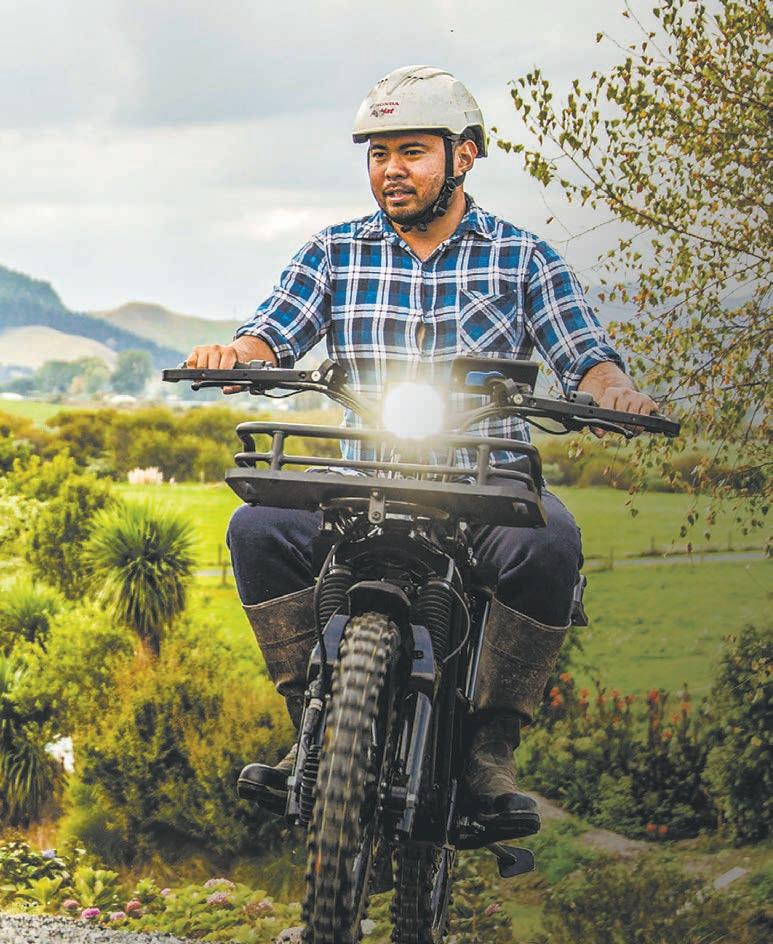
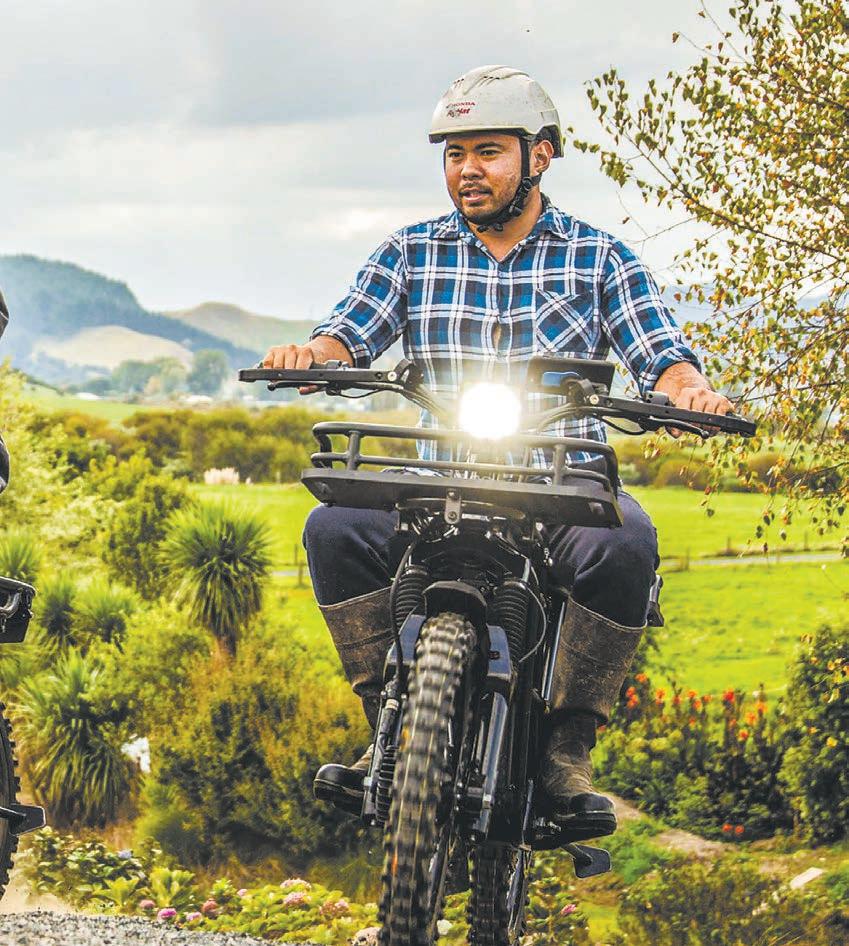
our flexible operations footprint, strong customer relationships and robust supply chain to shift milk
into the products and markets where we can get the best returns for our farmers’ milk.”
LOWER: Fonterra has dropped its forecast for the 2026-2027 season by 50 cents in response to falls in recent GDT auctions.
OPTIONS: The Responsible Dairy project will give farmers options, tools and information they can use to lift their productivity and environmental outcomes.
Photo: DairyNZ
Tireless champion of young farmers hailed
WAIKATO dairy farmer Danielle Hovmand has been named the primary sector’s top emerging leader, with judges praising her selfless leadership and commitment to helping others succeed.
The 29-year-old received the Primary Industries New Zealand Emerging Leader Award at the eighth annual awards ceremony in Auckland, recognising her contributions to farming, industry advocacy and rural communities.
The Emerging Leader Award, sponsored by Lincoln University, recognises young people who are already making a meaningful contribution to NZ’s primary industries while showing exceptional promise for the future.
A herd-owning sharemilker near Morrinsville, Hovmand is also Federated Farmers Waikato sharefarmer chair and has played a key role in the MorrinsvilleNgarua Young Farmers Club.
She was selected ahead of fellow finalists James Robertson, chief of staff at Fonterra, and dairy farm manager Ben Purua, the 2024 Ahuwhenua Young Māori Farmer of the Year (Dairy).
Judges described the category as one of the most competitive, noting all three finalists had
She has led initiatives to build both community and young farmer confidence.
Judges Primary Industries NZ Emerging Leader Award
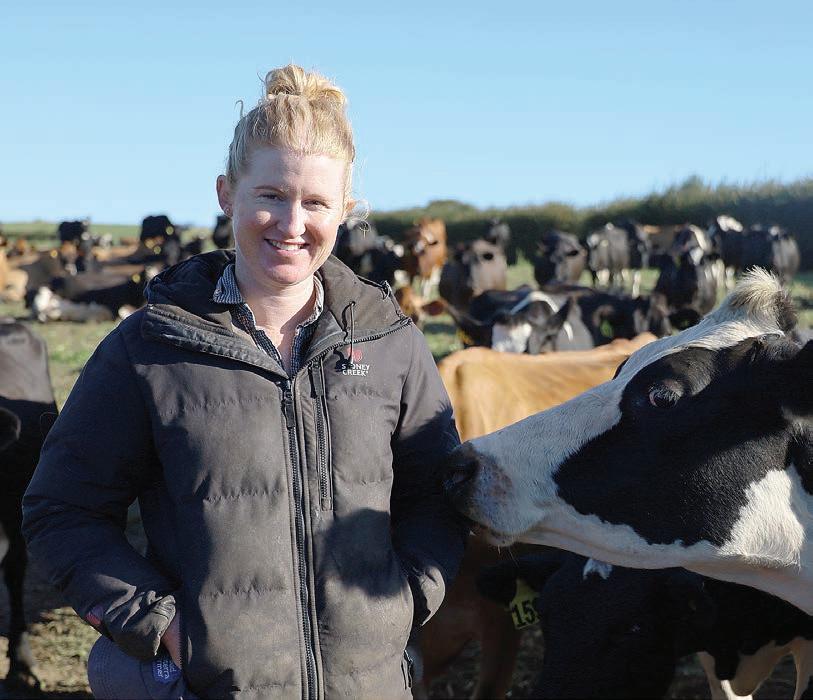
and
made outstanding contributions to NZ’s primary sector. However, they said Hovmand stood out for the way she combines practical farming experience with a genuine commitment to helping others succeed.
“Through roles with Young Farmers and Federated Farmers, she has led initiatives to build both community and young farmer confidence,” the judges said.
“Her advocacy, community involvement and ability to connect with and uplift others demonstrate a level of maturity and influence well beyond her years, making her a standout emerging leader.”
Alongside running a 250cow dairy operation with her partner Harry Phipps, Hovmand has raised thousands of dollars for local causes, volunteered at community events, promoted agriculture through schools, Ag Days and A&P shows, and worked with community organisations to strengthen rural connections.
The award adds to a growing list of achievements. Hovmand was named Auckland-Hauraki Share Farmer of the Year in 2022, received the New Zealand Young Farmers Contiki Local Legend Award in 2024, and was a finalist in this year’s ASB Alumni of the Year Award.
Federated Farmers dairy chair Karl Dean said Hovmand is making an outstanding contribution on and off the farm, highlighting her role in Federated Farmers’ campaign to allow young farmers to use KiwiSaver to help buy their first home or farm, as well as her advocacy for sharemilkers, contract milkers and people entering the industry.
“Dani isn’t just an excellent farmer. She’s a leader who’s prepared to speak out and help shape the future of our industry,” Dean said.
CONTROL: Czarnikow says its new CZ App gives dairy farmers more control over when they lock in a physical milk price.
Photo: Dreamstime
New milk pricing app launches in NZ
Gerald Piddock NEWS Dairy
A NEW digital physical milk pricing tool allowing dairy farmers to fix their milk price has been developed and released by global supply chain company Czarnikow.
CZ App is designed to complement existing fixed milk price options, giving farmers another way to access pricing in a format that is simple, flexible, and integrated into their normal milk supply arrangements.
Czarnikow (CZ) was founded in London in 1861 and has developed similar tools for sugar beet farmers to set fixed prices for physical sugar beet grown in the UK and Europe.
The dairy tool marks its entry into the New Zealand market.
The launch followed a successful pilot with a group of farmers and is now moving into broader commercial use.
CZ CEO Will Rook said New Zealand is the ideal country to launch the innovation.
“One of the hardest things about being a New Zealand dairy farmer is being at the whim of global markets which fluctuate due to issues well beyond the average farmer’s control.
“This tool allows farmers to fix
the price of part of their physical milk, helping them plan further ahead.
“By bringing physical milk pricing into a unified digital channel, CZ is delivering a more modern, efficient, and farmercentric approach to milk price management.”
CZ App gives farmers more control over when they lock in a physical milk price, and how much they choose to price. Farmers can also choose to fix a physical milk price on any business day instead of waiting for specific pricing windows.
The impact of those pricing decisions is reflected much sooner, as part of each farmer’s monthly milk cheque.
This means that farmers do not have to wait until the end of the season, or for the advance rate to catch up, to see the effect.
The flexibility to choose both timing and volume means farmers can build a fixed-price position progressively over time, at a pace that suits their business, CZ said.
The cost is lower than the fee currently charged under dairy company alternatives such as Fonterra’s fixed milk price programme, while still avoiding margin calls or separate funding requirements.

COMMUNITIES: Dani Hovmand, winner of the Primary Industries NZ Emerging Leader Award, has championed young farmers, sharemilkers
rural communities across Waikato.
Couple marvel at 100,000-cow China dairy farm
Gerhard Uys NEWS Dairy
COASTAL Taranaki dairy farmers Rachel and Kenneth Short say meeting customers in China who use their products motivates them to be better farmers because they can create value for customers and so get better returns.
The Shorts were part of an organic tour run by Buy Pure New Zealand, IFOAM Asia, a group that promotes regional organic markets, and China Shengmu, a 100,000cow organic dairy farm.
The tour visited a trade expo, the Shengmu farm and supermarkets to see how New Zealand products are consumed overseas.
For the Shorts the efficiency of how large cities are run stood out.
At the trade show they were surprised to see influencers livestreaming about New Zealand products.
IFOAM Asia was really around relationship building, Rachel said.
The visit to the 150km2 Shengmu dairy farm was a highlight.
The farm runs 100,000 cows and provides China with a third of its organic dairy, mostly baby infant formula and UHT milk.
The farm operates on the edge of the Gobi desert, sources water from the Yellow River, and had to plant over 90 million trees to stop desertification.
We just love being connected to our customers and our market and seeing grass to glass.
Kenneth Short Taranaki farmer
The farm is split into separate units, with the unit the Shorts visited milking 8500 cows in two 90 rotary bale units that sit side by side in a single shed.
Feed is cut and carried.
The farm runs Holstein Friesians from Australian genetics. Cows are milked three times a day with milking taking just under eight hours, running 24/7.
Cows average about 43 litres of milk/cow/ day.
Kenneth said it is amazing what the Chinese have achieved, especially considering the farm did not exist 17 years ago and desert temperatures drop into minus 20degC in winter and hit 40degC in summer.
The sheds and barns are all temperature controlled.
About 50 people run a shed, feeding calves, milking and cleaning.
The farm runs off solar, with most farm vehicles electrical.
Cupping is done manually but removing is automated.
Rachel said the farm is all about efficiency. For example, when they visited the robotic UHT plant there were no lights on because robots don’t need light.
The founding director of Buy Pure NZ, Brendan Hoare, said that through advanced technology and solid-liquid separation, every ounce of manure is transformed into value, with compost rebuilding fragile soils and liquid nutrients delivered via precision irrigation straight to crops.
Methane from waste powers operations, solar infrastructure fuels the farm, and machinery is shifting toward electrification, creating an efficient self-sustaining ecosystem.
The Shorts said it is amazing how a thriving ecosystem was developed out of
what was the desert – and on top of that it is all organic.
Both Rachel and Kenneth said any farmer who gets the opportunity to go on an overseas study tour, should go.
“We just love being connected to our customers and our market and seeing grass to glass”.
Kenneth said meeting customers helps them understand how they can grow their own product and what they can do on the farm to grow customers’ businesses.
“It drives us to be better farmers. The more we can grow their businesses, the more return we’re going to get on products that we’re supplying at the farm gate.”














MEET THE MARKET: Rachel and Kenneth Short, fifth and sixth from right, with a group of Kiwis on the organic tour to China.
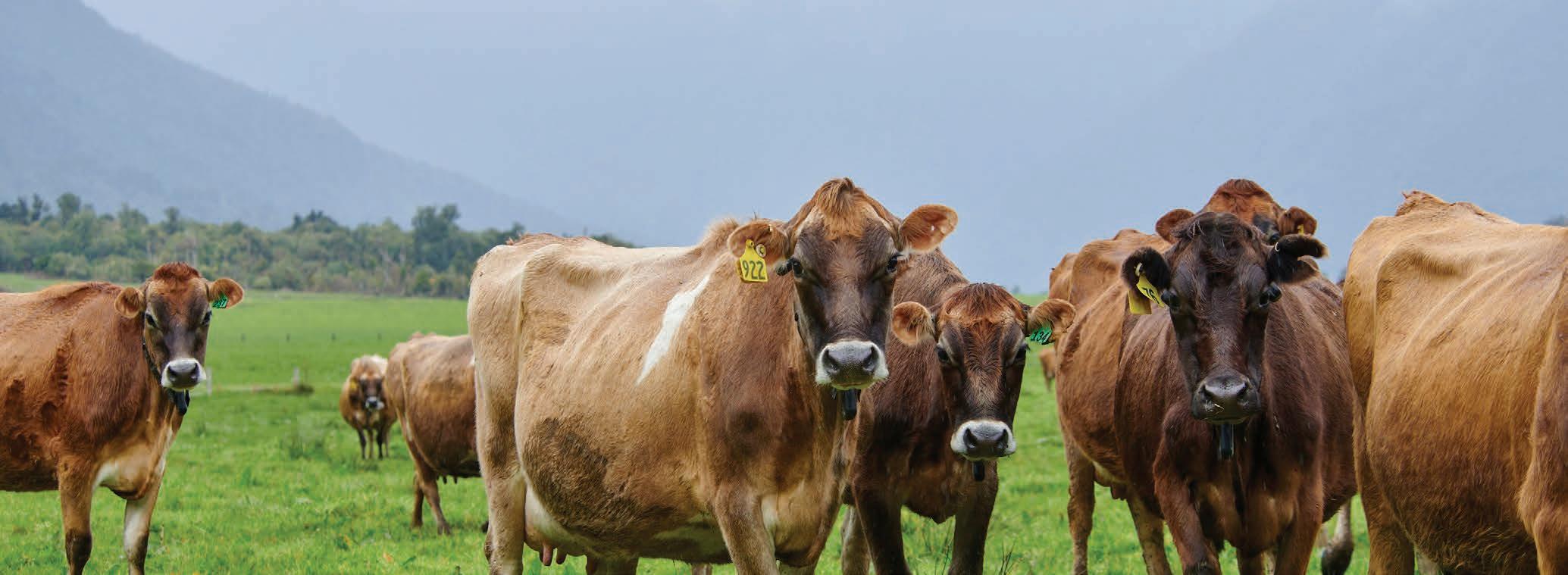
cow data into breeding power Wearable tech turns
When the Resilient Dairy programme launched back in 2019, the use of “wearables” such as collars and ear tags was still in its infancy within the sector.
The primary growth partnership between DairyNZ, breeding company LIC, and the Ministry for Primary Industries, put the spotlight on ways to improve animal wellbeing and health diagnostics, genetic innovations and genomic advancements.
Fast forward to 2026 and around a million cows in New Zealand are fitted with wearable technology, generating around 20 million data points a day. Never before, have New Zealand researchers
had access to data of this scale.
Wearables create huge opportunities for the sector, but the challenge is turning that information into practical value on farm. The Resilient Dairy programme has played a pivotal role in helping translate the research into usable insights for farmers.
One of the crucial data points captured is fertility. On New Zealand dairy farms, fertility doesn’t just affect reproduction – it has a flow‑on effect for milk production, workload, costs and long‑term sustainability.
Existing fertility measures, such as (Percentage Mated in 21 days / PM21) and (Pregnancy Rate after 42 days of mating / PR42), can take a lot of work to collect and can be affected by differences in how heat
Find the bulls that lift your bottom line
detection and records are managed.
LIC’s science team set out to use data from cow wearables to give farmers earlier and more reliable signs of fertility. Wearables were used to calculate calving to first heat (CFH) and quantify the genetic contribution of this measure, along with its relationship to existing fertility traits.
Using the data collected, LIC researchers developed a new approach to reviewing the fertility breeding value, so farmers and breeders have an earlier, more reliable way to choose cows with better fertility and heritability.
The team found strong genetic correlations between CFH and PM21/PR42 indicating that selecting for shorter CFH would improve fertility in dairy cows.
Our Ranking of Active Sires (RAS) List gives you a clear, independent view of the top performing, daughter‑proven bulls – all in one place.
The List is updated at least monthly and ranked using Breeding Worth (BW), so you can choose sires that will breed more profitable, efficient cows.
The heritability was more than double the traits currently evaluated, indicating promise for future animal evaluation contribution.
Over time, the approach could help get more cows in calf, reduce the number of empty cows, keep calving more compact, and avoid adding extra work on farm.
DairyNZ and LIC are investigating how this information can be included in breeding worth, so farmers can realise the maximum value from the data.
Global milk supply weighs on dairy markets
above the previous record set in 2020/21. Total milk collections also reached a new high of 22.4 million tonnes, increasing 3.6% year on year (YoY).

AFTER a record-breaking finish to the 2025/26 season, New Zealand’s dairy industry has started the new season from a position of strength. However, while milk production continues to expand across most major exporting regions, global dairy markets have come under increasing pressure as product availability has outpaced demand. NZ closed the 2025/26 season with another record. Milk solids reached 2.03 billion kgMS, up 4.5% on the previous season and 4.1%
Strong farmgate returns, favourable growing conditions and improving cow productivity have all contributed to the industry’s return to expansion after several seasons of consolidation.
The positive production story has not been limited to NZ. Milk output has continued to grow across most major exporting regions during the first half of the year.
United States milk production increased 2.3% YoY in May, supported by the country’s largest dairy herd in three decades. European production also remained strong, with April collections up 2.3%, while Germany, France and the Netherlands all recorded solid year-to-date (YTD) growth.
Australia reported May production up 5.4%, Argentina increased 2.0% and Uruguay posted an impressive 10.2% lift. China remains the notable exception, with milk production contracting -4.6% YoY in May.
This broad-based increase in global milk supply has flowed through into greater dairy product availability, placing downward pressure on international prices.
NZ’s own export data illustrates
this trend. Dairy export volumes increased 16.4% YoY in May, led by a 44% increase in whole milk powder (WMP) exports, a 28% rise in skim milk powder (SMP) and a 24% increase in butter shipments.
The supply-driven market was reflected in the first Global Dairy Trade auction of July. GDT Event 407 recorded the largest decline in two years, with the overall price index falling 4.9%. WMP declined 4.4%, SMP fell 7.0%, butter eased 5.0% and cheddar dropped 12.3%.
The softer result came despite continued buying interest from North Asia and the Middle East, as significantly larger product volumes available on the platform outweighed demand.
Despite weaker commodity prices, the outlook for NZ milk returns has remained relatively resilient. The weaker NZ dollar more than offset the latest commodity price declines, resulting in the NZX Milk Price Forecast for the 2026/27 season increasing slightly to $9.41/kgMS, with a forecast range of $9.12 to $9.98/kgMS following GDT Event 407.
There are also early indications that the pace of price declines may be beginning to ease. The GDT Pulse Auction 112 on July 14 recorded modest gains for both WMP and SMP compared with GDT Event 407. While only one
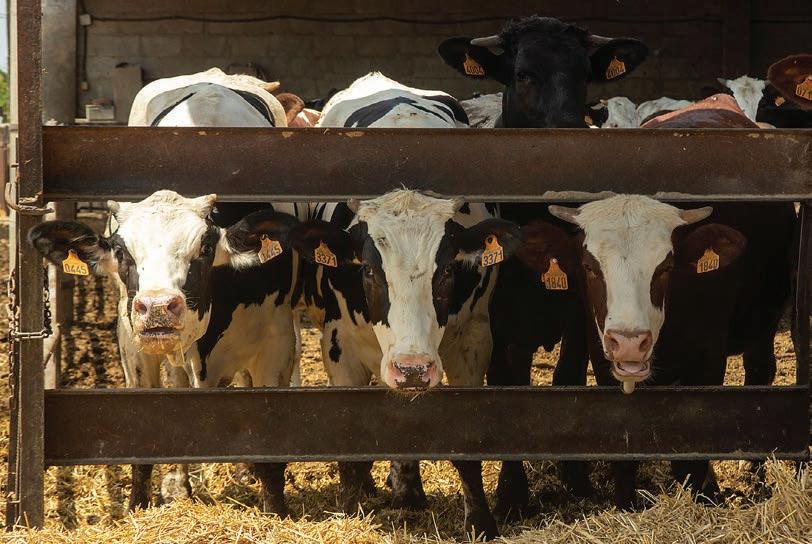
auction does not establish a trend, it suggests the market may be starting to find a firmer footing after several consecutive weeks of corrections.
Looking ahead, weather will likely become an increasingly important driver of dairy markets during the second half of the year. Heatwaves have already affected parts of Europe, reducing productivity and causing heat stress in dairy herds.
At the same time, forecasts point towards the development of El Niño conditions across the Pacific. If these conditions begin to affect
milk production in key exporting regions over the coming months, the current global supply growth could slow considerably.
For now, global dairy markets remain well supplied, and prices continue to reflect that reality. However, with production risks beginning to emerge, seasonal demand for year-end deliveries approaching and commodity prices showing tentative signs of stabilisation, market participants will be watching closely to see whether the balance between supply and demand starts to tighten as 2026 progresses.
Aussie Jersey genetics find favour in New Zealand
NEW Zealand farmers looking to improve their dairy herd are increasingly turning to Australian Jersey genetics to do so.
Jersey Australia general manager Glen Barrett said his organisation’s presence at Fieldays last month confirmed this growing popularity.
“It was a very positive event and the most pleasing thing compared to the previous year was the high product recognition and the high re-use factor for local farmers,” Barrett said.
“We saw strong sales last year after the World Jersey Conference and that momentum continues to build. Australian genetics are being more widely used in New Zealand and they are having an influence.
“The most positive thing we found at the World Conference was that they really like the cow we have here in Australia.”
That has driven increased use of Australian genetics in breeding programmes, he said.
It was the second year in a row that Jersey Australia, Genetics Australia and Agri-Gene hosted a site at Fieldays to promote the breed.
Genetics Australia export
manager Rob Derksen said farmer feedback included how well balanced their cows are using these genetics.
“They liked the size of cow compared to what they can obtain from local suppliers, the better mammary systems and they felt the Jersey breed was ideally suited to NZ farming systems given the efficiencies the breed offers.”
Agri-Gene general manager
Chris McIlroy said the interest in Australia Jerseys is very strong, with both pure Jersey breeders and cross-breeders.
“Australian Jerseys are backed by good cow families and they are improving the type and udder traits and the size of cows in the Kiwi herd.
“This year’s sales have grown 30% over last year so we are keen to continue building opportunities in New Zealand.”
Cristina Alvarado Alvarado is NZX head of Dairy Insights
DICTATE: Weather, such as the heatwaves in Europe, will likely become an increasingly important driver of dairy markets during the second half of the year, says Cristina Alvarado.
Photo: Pexels



Three businesswomen, one support network
KATIE Dimond, Georgina Lawson and Nicola Rae
joined in with Rural Women New Zealand’s Activator Plus meetings earlier this year. Four months on, the trio remain connected through the relationships and accountability network fostered by the initiative.
Introduced in 2025, Activator Plus builds on the foundations of RWNZ’s Activator programme, a workshop that provides businesswomen with support from a panel of advisors. Activator Plus reconnects participants through a series of structured online meetings where they share progress, discuss challenges and exchange ideas and resources.
Based on the principle of supported change, Activator Plus harnesses peer-to-peer support to help participants implement the goals and business improvements identified during their Activator workshop.
Georgina Lawson, owner of luxury wool coat company Atér, participated in an Activator workshop in Dunedin a year ago and said the programme was developed in response to feedback from participants who wanted more support after the initial workshops.
“During Activator, you get given all this amazing advice. They go over your business, and you go away with tasks, challenges and things to work on.”
“I felt like Activator Plus was the perfect follow-on from the Activator programme, and it’s worked out really well.” she said.
Kit Hindin, a professional facilitator with over 20 years’ experience, guides the first few sessions of each Activator Plus group.
“As the coach, I will show up to

the first three sessions, and I’ll help sort of set the tone and make sure that everyone’s getting an opportunity. Then after that, I’m not there, so we kind of take the training wheels off.
“Normally by the third session they arrive knowing exactly what challenge they’ve got and what they want to talk about and how they want to use their time.” said Kit.
Katie runs Wai Dome O, a glamping business, at her family farm near the Waitomo Caves.
“I’ve started my own business out here on our farm, and being isolated from everybody else, you kind of just forge ahead. Activator Plus helped me gain a sense of direction for my business.” she says.
Katie has kept in touch with the other Activator Plus participants through monthly phone calls.
“They’re really valuable, to keep focussed, and be held accountable even if things don’t always get ticked off the list.”
Nicola and her husband Andrew, own Weka Landscaping and Garden Shop in Central Otago, with Nicola focusing predominantly on the expansion of her plant nursery.
“I think it’s really valuable to have that follow up, so not just the one-on-one session with the Activator, but actually have that follow up so it keeps you energised and holds you accountable. Having that peer support has been really valuable to me.”
Despite operating in different industries, the women say many of the challenges they face as business owners are remarkably similar.
“It was really awesome to hear of the challenges particularly the other two amazing women, Katie and Georgina, who are also mums, because you hear lots of similar
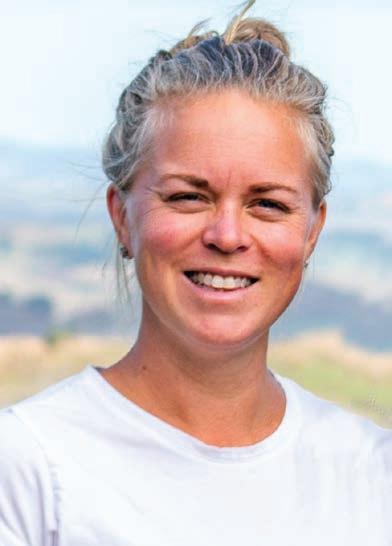
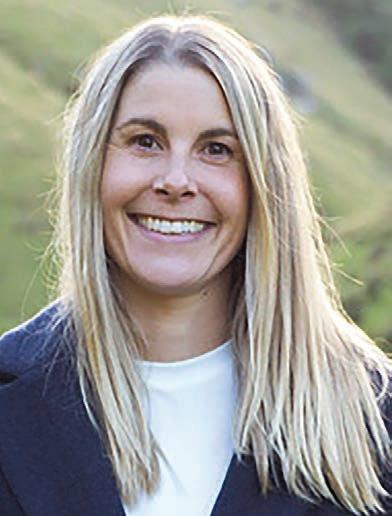
As the coach, I will show up to the first three sessions, and I’ll help sort of set the tone and make sure that everyone’s getting an opportunity.
Kat Hindin Facilitator
interests and challenges.” says Nicola.
Georgina says one of the most valuable aspects of the programme has been discovering how much participants have in common, despite operating very different businesses.
“I feel like we’re all on the same page. Everyone’s kind of at the same stage in life, but we’re all at different stages of our businesses, which has been quite interesting,” she says.
The purpose of Activator Plus is to help build a community of rural entrepreneurs who support
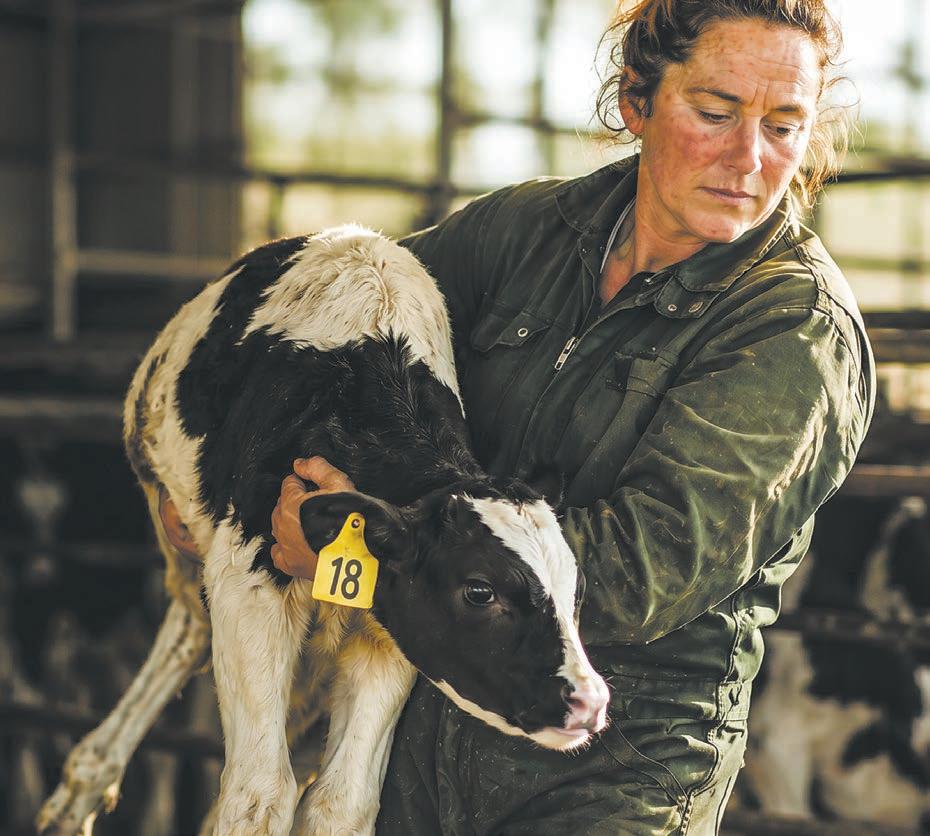
one another through shared experience, practical advice, friendship and accountability.
Kit believes Activator Plus works well as it encourages everyone to give advice as well as receive it.
“They’re doing a little bit of coaching, and I think when you coach, you naturally learn. So, as they’re doing that, they’re kind of really affirming their own knowledge.”
“Being in a startup, or starting a business can be quite a lonely endeavour, especially if you’re doing it on your own. So, it’s nice to just jump on the call, talk to other people and then of course, there’s opportunities to just share stories, wins and challenges.” Kit says.
RWNZ chief executive Sandra Kirby says “We know starting and running a rural business comes with unique challenges. That’s why creating opportunities for rural women business owners to connect is such an important part of what we do.
“We’ll continue working with
rural women entrepreneurs to build networks and support that reflect the different ways they like to connect, learn and grow their businesses.”
By helping rural women build confidence, capability and connections, Activator Plus supports entrepreneurs at the growth stage of their business journey.
The NZI Rural Women Business Awards then provide an opportunity to recognise and celebrate those achievements on a national stage.
The winners of the 2026 NZI Rural Women Business Awards are being celebrated on the 23rd July at a Gala Dinner hosted at Parliament, where the Supreme winner will be announced.
MORE: Rural Women New Zealand has been advocating for, connecting and supporting rural women and communities across the country for 100 years. Visit ruralwomennz.nz and become a member today.
India Grigson
GLAMPING: Katie Dimond runs Wai Dome O, a glamping business, at her family farm near the Waitomo Caves.
FOCUS: Nicola Rae says Activator Plus helped to gain a sense of direction for her business in Central Otago.
SIMILAR: Georgina Lawson says one of the most valuable aspects of the Activator programme has been discovering how much participants have in common.
FEDERATED FARMERS
Vegetable supply in jeopardy under PC1
Kiwi households should brace themselves for higher prices and fewer locally grown vegetables if Waikato’s Plan Change 1 goes ahead.
That’s the warning from Pukekohe Vegetable Growers Association, whose president Brendan Balle says Plan Change 1 (PC1) in its current form would make vegetable production significantly more expensive and difficult for many growers in the Waikato region.
“We are now in a position where we are really concerned about the real threat to the supply of vegetables,” says Balle, part of the Pukekohe-based family farming business Balle Bros, which grows vegetables seasonally across five regions of New Zealand.
“If the plan becomes operative as it stands, there will be severe negative impacts on the supply of vegetables.
“Subsequently, the cost of vegetables will rise, possibly significantly. The cost of living for all New Zealanders will rise proportionately, and healthy food security will be under continued threat in this country.”
Once in force, PC1 would introduce sweeping new rules for agricultural land use, affecting more than 4500 farms across the Waikato and Waipā River catchments.
That includes farmers and growers in the southern parts of Auckland and in North Waikato.
For Balle and other growers, at the
heart of the problem is the way PC1 treats vegetable production.
Unlike pastoral farming, vegetable growers rely on rotating different crops between different parcels of land – some owned and some leased from third parties – to maintain soil health, reduce disease, and minimise fertiliser and pesticide use.
“Many growers also work with other growers on parcels of land,” Balle says.
“They’ll give that soil a rest by changing the crop type.
If production declines in Pukekohe, the effects will be felt in supermarkets and retailers right across the country.
Brendan Balle President of Pukekohe Vegetable Growers Association
“For example, you change from growing brassicas to onions, or from root crops such as potatoes and carrots to lettuce and leafy greens.
“Many growers give their growing land rest spells with arable grain cropping, or rotate in and out of pastoral grazing.
“That allows for better soil health and less input to prevent plant disease. Pesticides, fertiliser – all of those things. You have things more in balance.”
Yet under PC1, growers rotating
across sub-catchments could be forced into far more complex and restrictive consenting pathways.
“It actually makes the task of gaining consent for most vegetable growers quite a high bar,” Balle says.
“There will be some growers whose operations will be facing the non-complying consent pathway, which will be very difficult to obtain and could well be impossible to obtain.”
He says growers have been warning decision-makers for years that the looming rules fail to recognise how commercial vegetable production actually works.
“We have explained it ad nauseam to council policymakers and planners right throughout the process before it went into the Environment Court.
“We’ve simply been stymied at every turn since 2016.”
Balle says good management practices and crop rotation help protect waterways, not harm them.
“Growers carefully manage nitrogen to maximise yields while minimising waste, and we’ve spent decades improving sediment controls to protect waterways and reduce phosphorus loss.
“What they’re suggesting is that rotating across sub-catchments has an undue impact on nutrient allocation.
“We’re saying that we’re actually part of the solution.”
The Pukekohe growing region
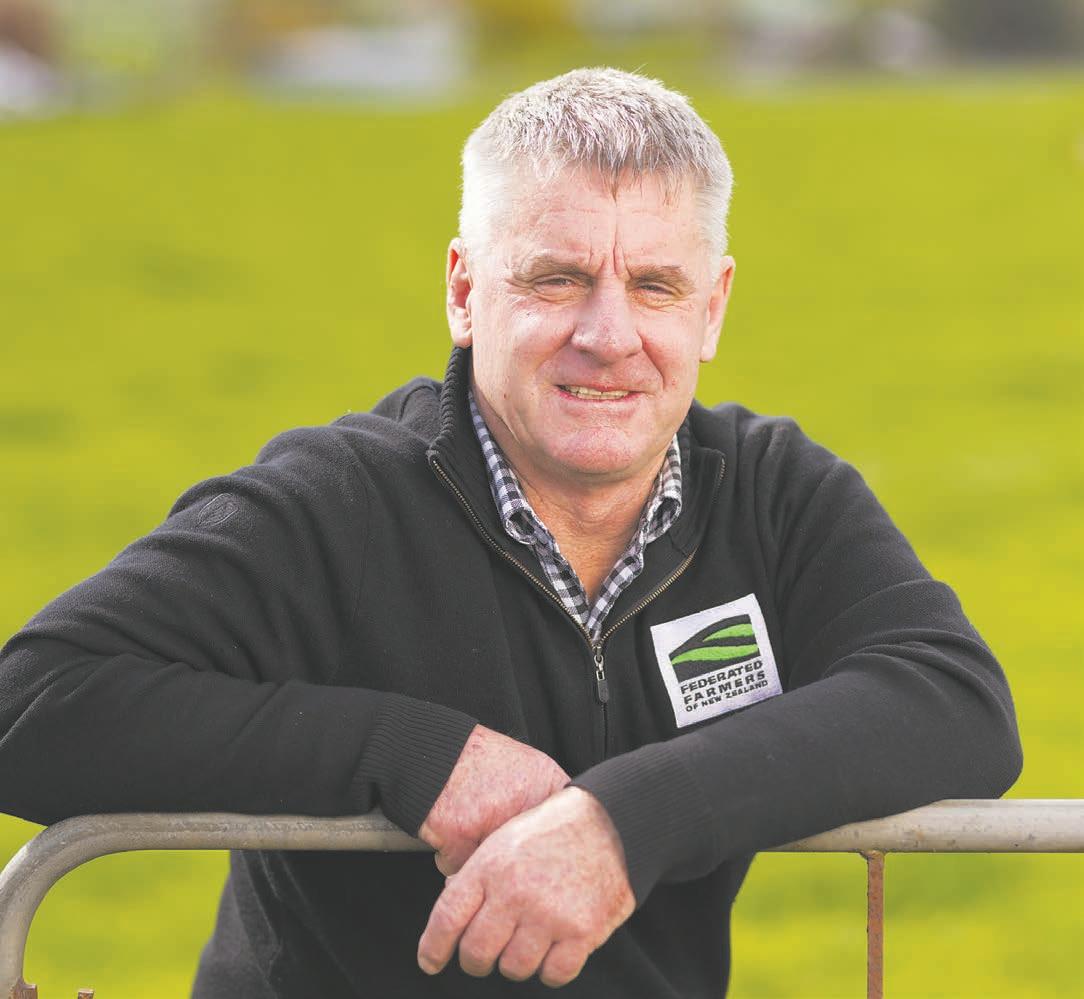



produces about a quarter of New Zealand’s fresh vegetables each year.
During winter, it can supply around 80% of some fresh vegetables because few other regions can produce at the same scale, mainly because the Pukekohe region is reasonably frost-free.
“Pukekohe is unique in its importance for continuing vegetable supply for New Zealanders,” Balle says.
“If production declines in Pukekohe, the effects will be felt in supermarkets and retailers right across the country.”
He’s also concerned the consequences would ripple through rural communities.
“There are growers who are genuinely worried about what to do. Some have already chosen to exit vegetable growing because it’s simply become too hard.”
Balle says the immediate priority
is for the Government to navigate a pathway to pause PC1 before irreversible damage is done.
“We believe the conversation Federated Farmers has been leading with the Government is very important.
“We agree the Government needs to put PC1 on hold immediately.”
He says the current approach needs to be replaced with one that protects both the environment and New Zealand’s food supply.
“There needs to be a more pragmatic pathway that does not significantly distort the supply of healthy food for all New Zealanders.”
For Balle, the issue is no longer just about growers.
“It’s about whether New Zealanders can continue to access reasonably priced, healthy, locally grown food.
“If we get this wrong, everyone will end up paying for it.”

IGNORED: Brendan Balle says growers have been warning decisionmakers for years that Plan Change 1 fails to recognise how commercial vegetable production actually works.
Farm mortgages drop on strong returns
Many farmers are taking advantage of strong returns for meat and milk to pay down
debt, the latest Federated Farmers Banking Survey and Reserve Bank of New Zealand (RBNZ) data shows.
Reserve Bank data that shows total agricultural lending dropped
$1.4 billion to $61.2 billion in the year to April 2026.
“Strong dairy payouts, including a capital redistribution of $2 per share to Fonterra suppliers, combined with record beef and sheep farmgate prices, have likely allowed farmers to meaningfully reduce loan principal,” Federated Farmers banking spokesperson Mark Hooper says.
Responses from nearly 540 farmers to the Federated Farmers Banking survey in May also show falling farm mortgages and improved farmer-banker relationships.
BARKING MAD: Hastings farmers resent rising fees for working dogs when they’re not causing the problems. This is Rose, Hastings farmer Rhea Dasent’s huntaway.
Where communication from banks works, it tends to reflect a specific person rather than the bank system. Where it fails, the cause is usually the same.
Mark Hooper
Federated Farmers banking spokesperson
In the Feds survey, the number of respondents with mortgages under $2 million has risen to 41%, up from 38% six months earlier.
Average mortgages for sharemilkers and for dairy and meat and wool farms all fell significantly between the November 2025 and May 2026 surveys.
“The outlier is arable farms,” Hooper says.
“That sector is in near-crisis mode, with weak grain prices, rising costs, tough growing conditions and competition from lower cost imports.
“The arable farm median mortgage of $3.5 million is the highest of all farm types.”
Other key survey results tracking the farmer-banker relationship continue an upward trend.
Farmer satisfaction with banks reached 69% in May, the highest rate recorded in the last eight years of Federated Farmers’ twice-a-year surveys.
The survey shows banks have lifted their game on the communication front.
Farmer satisfaction with their bank’s communication is at 69%, up from 61% in the November survey.
Another positive is that the number of farmers who said they were feeling undue pressure from their bank came in at 10%, the
lowest since 2018. The average mortgage rate was 5.49%, down from 5.78% in the November survey, and two out of five respondents to the May survey have over 75% of their loans on floating rates.
“One finding that all banks should ponder: the single most consistent theme across more than 200 general comments added by farmers was that a knowledgeable, available bank manager outweighs factors such as loan rate competitiveness,” Hooper says.
“Where communication from banks works, it tends to reflect a specific person rather than the bank system. Where it fails, the cause is usually the same.
“One farmer’s comment states it plainly: ‘Never hear from our bank; don’t even know who our rural bank manager is.
“That’s concerning and disappointing if we need them’.”
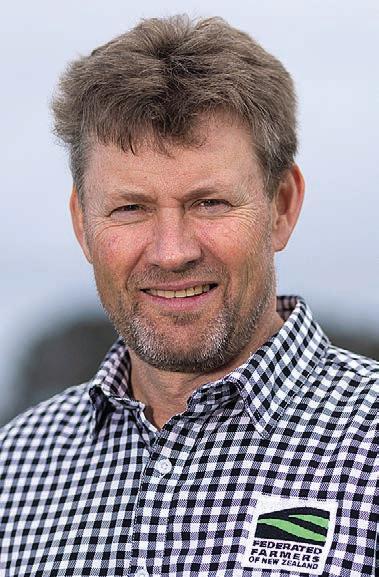
IMPROVEMENT: Federated Farmers banking spokesperson
Mark Hooper says the latest survey shows banks have lifted their game on the communication front.
Farmers irate over hike in Hastings working dog fees
Hastings District Council is in the doghouse with farmers over a 50% hike in fees for working dogs in the last six years.
“In 2020/21 the council’s fee for a working dog was $48. The fee for the current year has just been set at $72,” Federated Farmers Hawke’s Bay president Anthea Yule says.
“The charge for non-working dogs, now $144, has only increased 30% over the same period.
“We think an unfair bite is being put on the wallets of farmers.”
Yule says animal control responsibilities of councils are important, and Federated Farmers generally approves of targeted fees rather than council costs being loaded up on property-value based general rates.
“But we’re questioning whether
the Hastings council’s dog fees are fairly targeted.
“Dog control issues – attacks on people, wandering dogs, worrying of stock – tend to stem from dogs in or from urban areas.
Farmers shouldn’t be being asked to shoulder a disproportionate share of council animal control costs.
Anthea Yule
Federated Farmers Hawke’s Bay president
“Working dogs don’t often come to the attention of animal control officers and that fact is reflected in the generally lower fees applied by councils nationwide.
“They’re valuable and treasured assets to their owners, vital to stock management, and farmers keep a close eye on them,” Yule says.
“So why are the Hastings’ working dog fees accelerating faster than those for dogs causing most of the problems and council workload?”
It’s common for farmers and shepherds to have big dog teams.
A Hastings farmer with five working dogs will be paying $360, and a farmer with 10 dogs a whopping $720.
Yule points out the working dog discount compared to urban is nullified when an owner has more than one working dog.
There needs to be a subsequent discount for multiple working dogs to redress this balance, she says.
Whanganui District has a
working dog fee of $50 each for the first three dogs, and $14 for the fourth and subsequent dogs.
Central Hawke’s Bay charges $61 for working dogs. Meanwhile, Gisborne’s fee is $62 and there’s a fee cap after six dogs, so $372 is the most an owner of working dogs pays in Gisborne.
“Napier City Council should also take note of our concern that fees should account for which dogs are causing the problems,” Yule says.
“It charges $62.50 for a working dog, with no further discounts for a farmer’s team of dogs.
“Farmers love their dogs and take great pride in their dog handling skills.
“They shouldn’t be being asked to shoulder a disproportionate share of council animal control costs.”

Warning signs farmers cannot ignore
Richard
Dawkins Federated Farmers climate change spokesperson
It isn’t the sort of legislation that usually grabs people, but every Kiwi farmer should be paying close attention right now to the Climate Change Response (Tort Liability) Amendment Bill.
That’s because it raises a simple but very important question: should complying with the law still protect you from being sued?
The Bill stems from the Smith v Fonterra case, where several large New Zealand companies are being sued over their contribution to climate change.
While the case involves a handful of major businesses today, the legal principle behind it goes much further.
This isn’t simply about Fonterra. If the legal principle succeeds, it has implications for virtually every business that emits greenhouse gases.
If the courts determine greenhouse gas emissions can give rise to claims for climate damages, there’s every possibility the principle could gradually extend to other businesses, including farmers.
That is not a direction New Zealand should be heading.
INPUT: Climate policy involves difficult trade-offs between the environment, food production, economic growth and international commitments which are, Richard Dawkins argues, political decisions, and in a democracy, they should be made by elected representatives who are accountable to voters.
Climate change is not an area where Parliament has been silent. The Climate Change Response Act and the Emissions Trading Scheme are the mechanisms for pricing emissions and encouraging reductions.
Allowing legal claims for climate damages effectively creates a second liability regime for the very same emissions.
Climate policy should not gradually evolve through years of litigation as judges are asked to answer questions that properly belong in Parliament.
Richard
Dawkins Federated Farmers climate change spokesperson
It means businesses could fully comply with the law and meet their ETS obligations – but still find themselves defending legal action over activities that are already regulated.
If businesses can’t rely on Parliament’s laws as the final word, every major investment decision starts carrying the question: ‘Even if I’m complying with the law today, could
I still end up in court tomorrow?’ Businesses should not have to second-guess whether lawful activities will later become the subject of court action.
Imagine if you installed a compliant wood burner or gas heater, met every council requirement and every national standard, and used it exactly as the law allows.
Then someone argued in court that the emissions from your home’s heating had contributed to climate change, and they sued you for damages.
And if they could seek damages from climate change, why not other damages too? A claim could be made that the smoke from your wood burner had impacted health, or the odour from the wood burner had impacted serenity.
Ridiculous, right?
Most Kiwis would assume that following the law was enough. Well, this Bill is about preserving that certainty.
If New Zealand wants to change its climate policy, Parliament is free to do so.
Climate policy involves difficult trade-offs between the environment, food production, economic growth and international commitments.
Those are political decisions, and in a democracy, they should be made


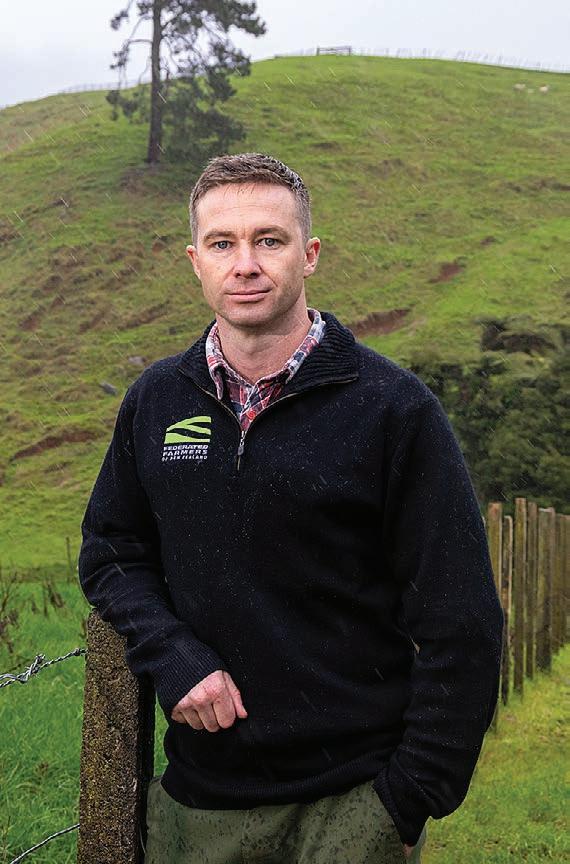
who are accountable to voters.
That’s how our democracy is supposed to work.
Climate policy should not gradually evolve through years of litigation as judges are asked to answer questions that properly belong in Parliament.
This Bill is about ensuring there’s one clear framework for managing emissions, rather than allowing a second and potentially inconsistent system to develop through the courts.
What concerns me just as much, however, is the broader pattern beginning to emerge from the Opposition.
Only weeks ago, we saw strong opposition to modernising the Conservation Act, despite growing recognition that active management is essential if we are serious about controlling weeds, pests and wilding pines.
We then saw the Green Party announce its intention to phase
PATTERN: Richard Dawkins says more policy battles are being fought in the courts instead of Parliament.
out synthetic nitrogen fertiliser, a proposal that would hugely reduce New Zealand’s productive capacity while ignoring the practical realities of modern farming.
Now we’re seeing opposition to legislation that simply confirms climate policy should continue to be made through Parliament. These are very different policies, but they’re all underpinned by the same philosophy.
Increasingly, we’re seeing a preference for ideology over practical outcomes, more regulation instead of better management, and a growing willingness to use courts to achieve policy outcomes that have not been won through Parliament. The next election is still some months away, but I think these are warning signs. Farmers cannot afford to dismiss them as isolated policies. Together they suggest a broader direction of travel, and that direction deserves much closer scrutiny because those choices will shape the future of farming in New Zealand.
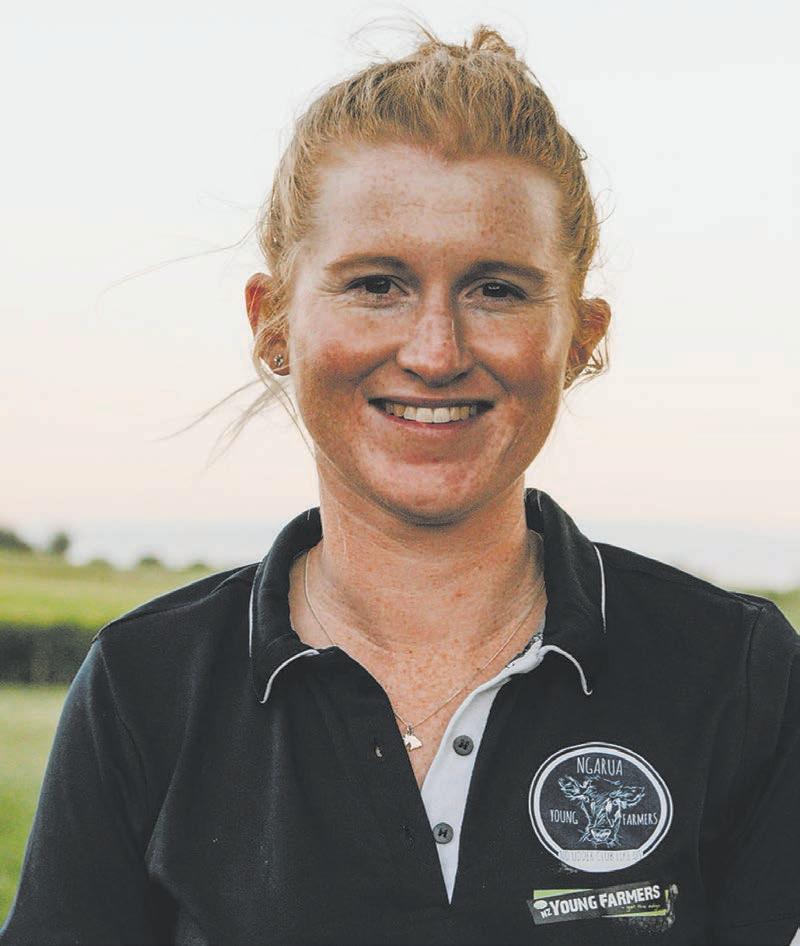

by elected representatives
Farmers push for practical protection
It came as no surprise to Wairarapa farmers when heavy rain left paddocks underwater, stock dead, and a vital bridge washed away last month.
Federated Farmers Wairarapa president Robert Hickson says farmers in the southern part of the province had been warning there was a disaster waiting to happen.
“As stressful as the recent floods have been for farmers by the Tauanui and Tūranganui rivers, it’s not like they hadn’t seen it coming.
“They’ve been saying for a while that gravel build-up, vegetation and lack of channel maintenance are a major flooding risk.
“Unfortunately, the recent flooding has confirmed that those concerns were well founded.”
Hickson says flood damage happened in other parts of the province as well, with gravel buildup, vegetation and reduced channel capacity identified by farmers as contributing factors in a number of locations.
“Farmers here have been saying the focus needs to shift from reactive repair after floods to regular maintenance of channels, fairways, gravel islands, willows and access to bridges.
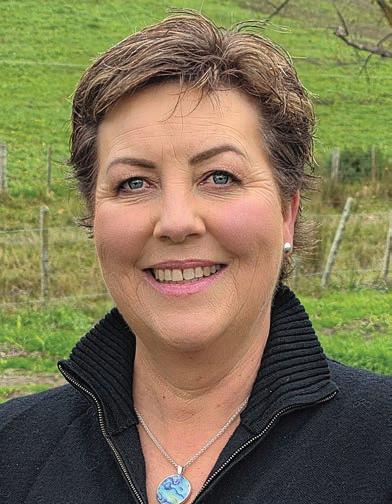
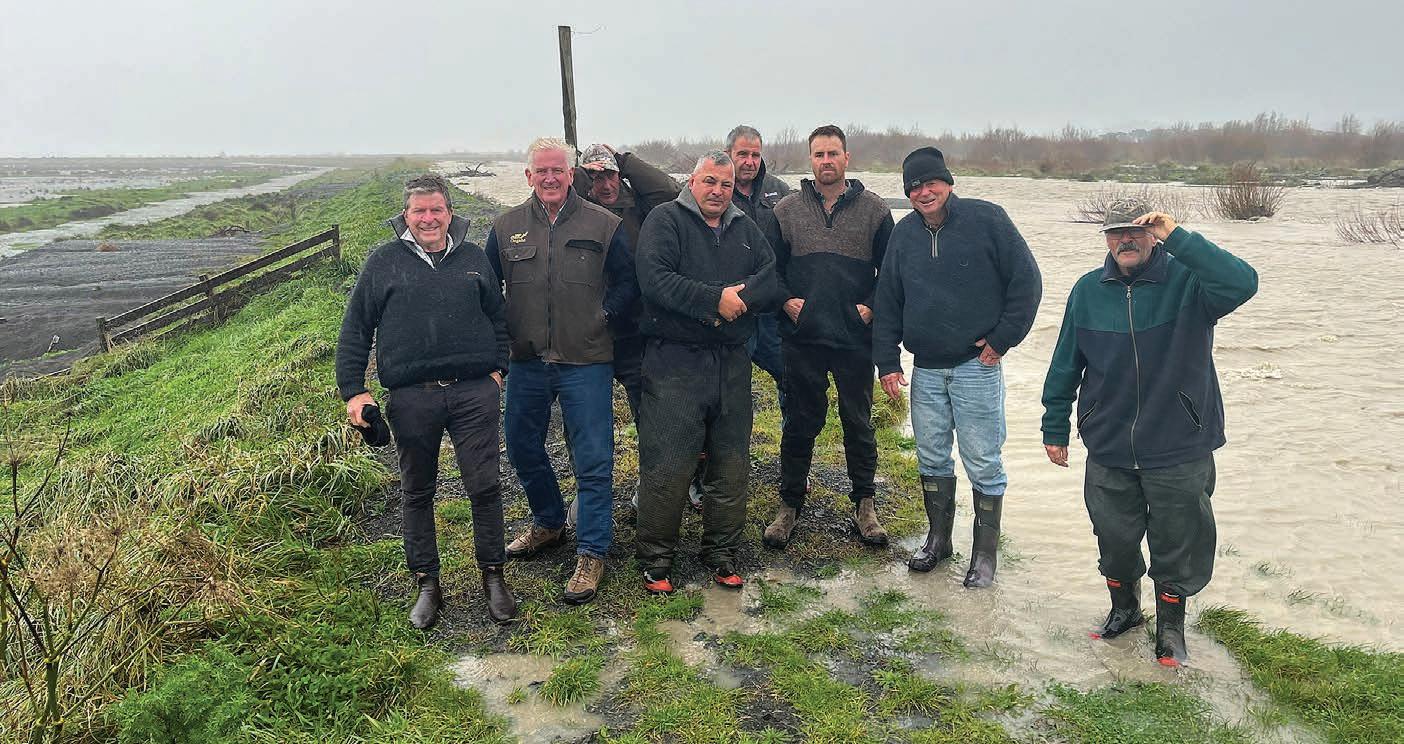
“Older management techniques, particularly bulldozer work to keep channels open and push gravel back, had worked for decades.
“But it’s become so much harder to do that stuff because of constraints from the RMA, consent, Code of Practice, Fish & Game and internal council processes.
“The consensus farmer view is that maintenance is too late, too limited and often too timid.”
However, there are positive signs that things are now heading in the right direction, Hickson says, after Wairarapa Federated Farmers helped to broker meetings between farmers, iwi, councils, contractors and Rural Support Trust representatives.
“There was strong support at the meetings for farmers and contractors with direct local knowledge having a formal voice in river advisory bodies and operational planning.
“Also, work is now underway to establish a Wairarapa-wide River Recovery Group to identify urgent flood defence gaps, and develop a credible case for funding and regulatory flexibility to try to head off similar damage reoccurring,” Hickson says.
A contractor who had worked in the Wairarapa rivers for many decades, Bruce Slater, said earlier consents allowed practical winter works.
But a river works Code of Practice and restrictions on riverbed disturbance during fish spawning meant he had to leave jobs undone that previously would have been completed before floods.
“He told us that when routine works are missed, you get gravel and vegetation build-up, which means further flooding just makes the problem worse and more expensive to deal with.”
Greater Wellington Regional Council (GWRC) representatives at the meeting didn’t disagree with the need for practical flood protection work.
But they said the council had to operate within RMA, regional plan and consent conditions.
Fish & Game has statutory powers under conservation laws and iwi also have a legitimate and legislated role.
Local iwi member Haami Te Whaiti told one of the meetings the key challenge is to find solutions where farmers and iwi achieve their
outcomes, rather than one interest succeeding at the expense of the other.
GWRC representatives said the relevant lower-valley river scheme has an annual works programme of about $1.5 million.
Most of that is used for moving gravel within the river system, removing beach heads and managing erosion, leaving little available to cart gravel away.
It’s largely uneconomic for commercial operators to extract and remove gravel under licence.
The council also pointed to rising engineering standards, insurer expectations, liability risk and stopbank condition recording as reasons councils require more documentation and staff than in the past.
“That’s the difference of perspective,” Hickson says.
“Farmers see escalating bureaucracy and diminishing outputs. GWRC sees a more complex risk and compliance environment where councils must still act lawfully and defensibly.”
Hickson says the meetings were positive.
OVER-TOPPED: Federated Farmers Wairarapa president Robert Hickson, left, met local farmers on the stopbank adjacent to the swollen Tūranganui River on Friday 26 June. Farmers had been warning about riverbed gravel build-up, and sure enough the stopbank was breached hours later.
“I think all parties felt they were heard, and that we’ll get some action.
“The River Recovery Group will have wide representation, including Federated Farmers.
“It will be a vehicle for driving short-term remediation, and longerterm solutions – including building a case to the Government for funding.”
Federated Farmers adverse events spokesperson Sandra Faulkner says Wairarapa rural communities are by no means alone in concern about gravel build-up and related river flood risks.
“It’s a common complaint, including in Southland, Canterbury and other provinces in both islands.
“River and catchment issues are coming to a head, with the disestablishment of regional councils from 2028 and new resource management legislation.
“The changing climate puts increased flood risk high on the list of farmer adverse event worries,” Faulkner says.
“The Wairarapa’s new River Recovery Group is a template that might work in other areas too.”
SHARED: Federated Farmers adverse events spokesperson Sandra Faulkner says Wairarapa rural communities are not alone in concern about gravel build-up and related river flood risks.
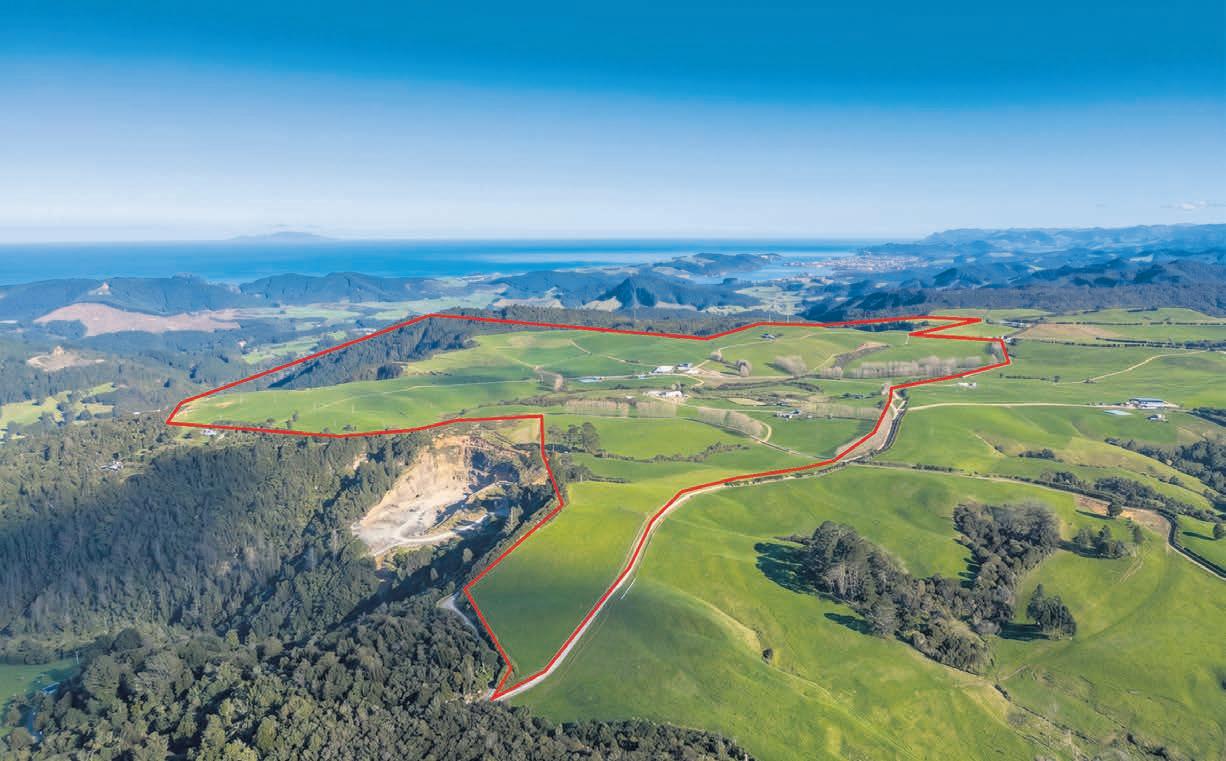
A well-developed dairy opportunity
Situated on sought-after McBeth Road this 151.1100-hectare (more or less) dairy farm offers a productive operation in a desirable location Producing 145,912kgMS in the 2025/26 season, the farm is supported by a 32 ASHB dairy shed, feed pad, calf-rearing facilities, implement shedding and workshop Approximately 45 paddocks ash loam soils bore water supply and a 5 5 million litre lined effluent pond support the operation Accommodation includes a four-bedroom initial home, a three-bedroom home, and a separate two-bedroom cottage A consent application is currently with council to subdivide four lifestyle blocks providing future potential There is also additional income of $45,000 from transmitter towers lease Conveniently located with Whangamatā just over 20 minutes away, along with Pauanui and Tairua within easy reach bayleys co nz/2180845
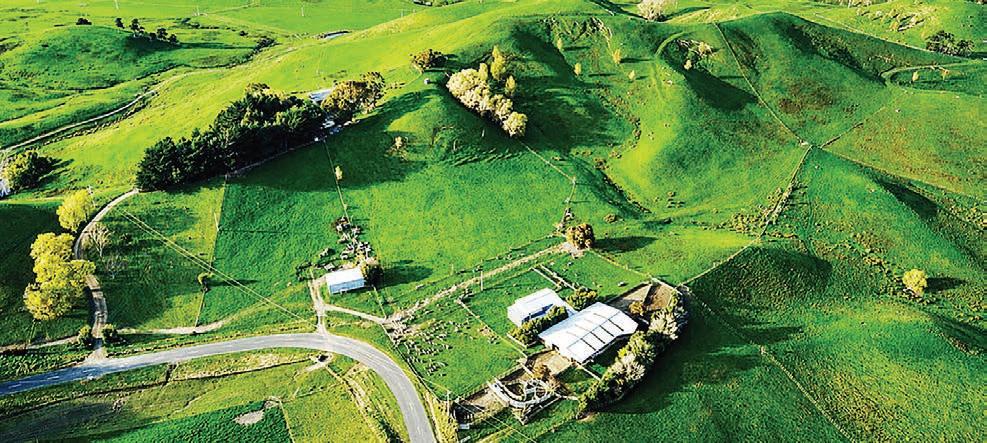



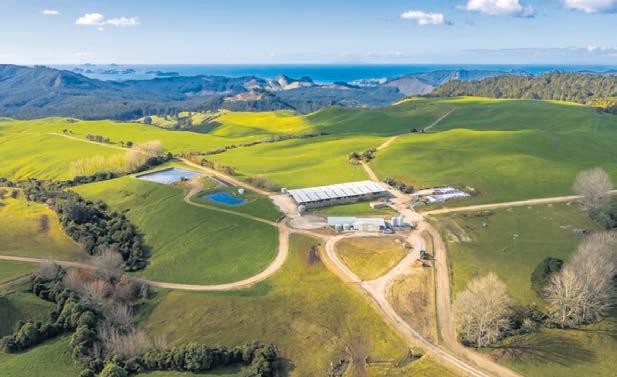
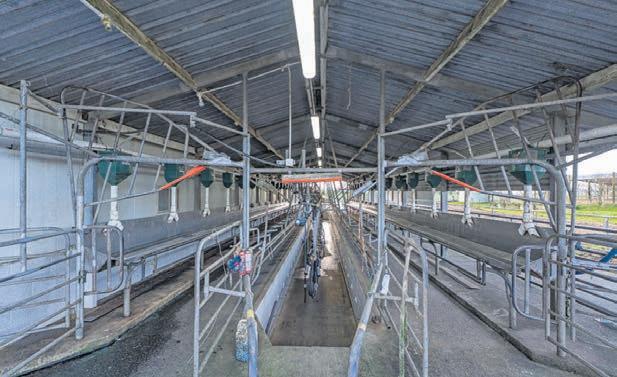
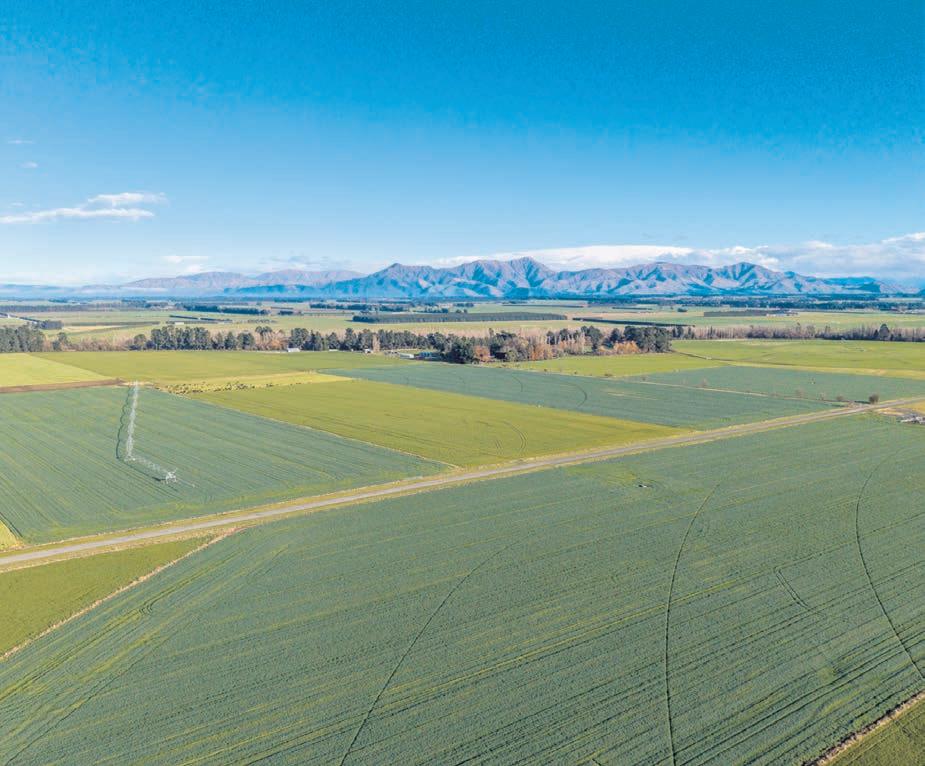
Boundary lines are indicative only
Hikuai 165 McBeth Road
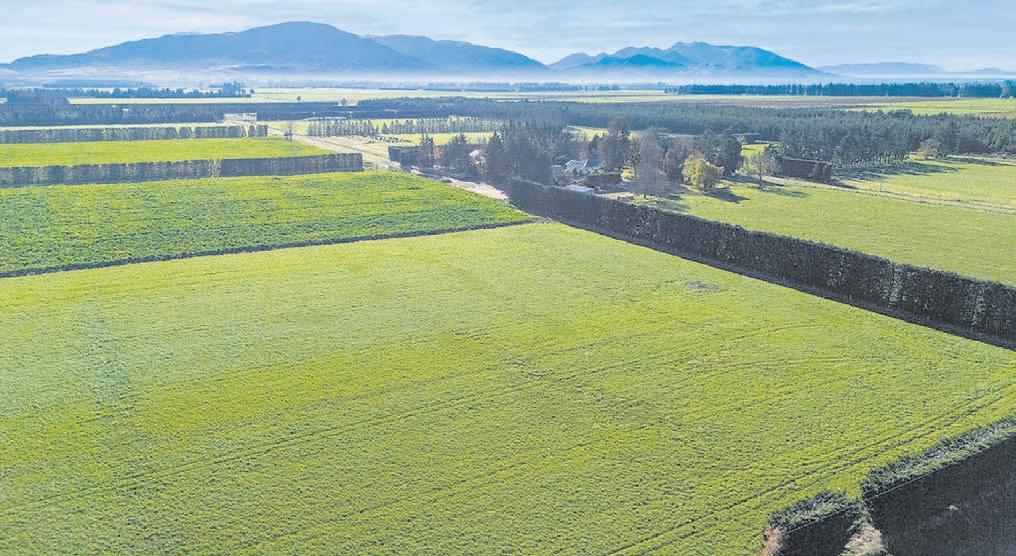
Dairy support, grazing & finishing 172.71 ha
An outstanding, high-performing pastoral unit in a prime Mid Canterbury foothills location, celebrated for its reliability, productivity, and sweeping mountain vistas Lincoln Fields is a highly regarded, turnkey pastoral unit combining balance, resilience with the ideal scale to support dairy farms, high country stations/farms or a beef/sheep finishing operation. The farm system has seen 1400-1700 MA cows wintered plus seasonal heifer grazing and forage production under current management. The opportunity to secure farms of this calibre and completeness in the Mid Canterbury foothills are seldom available. Lincoln Fields presents a rare chance to secure a blue-chip pastoral asset.

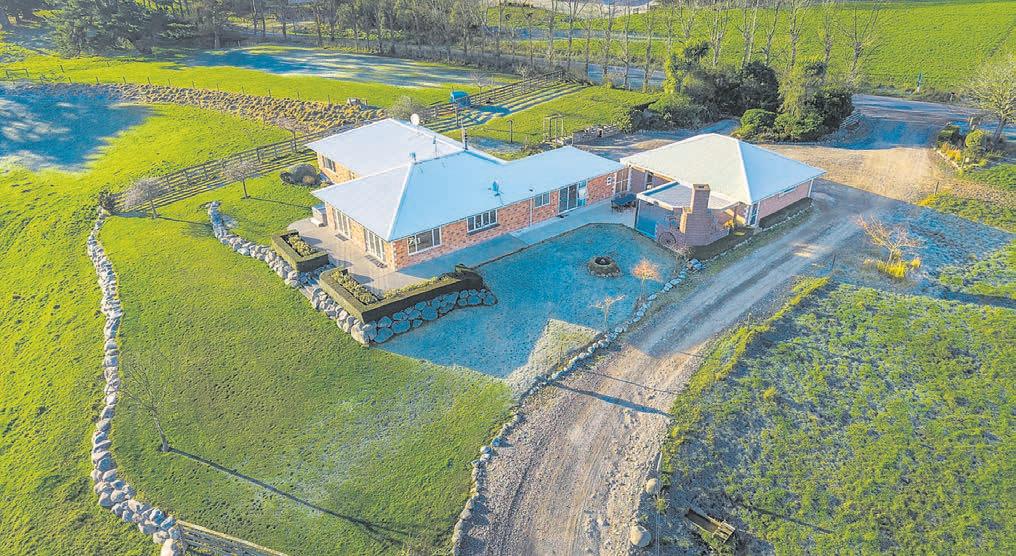

A proven, high-performing farming operation, this property is expertly set up for beef finishing and dairy support, with a strong focus on maximising kilograms of meat produced per hectare. Backed by an excellent fertiliser history, the farm features wellmaintained all-weather laneways, extensive regrassing, and is thoughtfully subdivided into approximately 2.5-hectare paddocks to support efficient grazing management. Water security is a standout, with two solar-powered water schemes complementing the local supply to ensure reliable delivery across the property. Improvements are comprehensive and well-balanced, including a spacious five-bedroom homestead, a tidy three-bedroom cottage.

BUSINESS OPPORTUNITIES
SPECIALIST BEEF FINISHING AND CROPPING FARMLAND
A unique opportunity for a wholesale investor to invest in a proven Beef Finishing operation and quality land asset alongside skilled individuals, with a clear proposition for further operational growth and on-farm development.
Investment sought of up to $4m with 15-35% shareholding available depending on the level of investment achieved.
The investment is underpinned by a flat, high-quality irrigated landholding of over 200 hectares located 992 Wards Road, Kirwee, strategically integrated by growing feed crops to support the beef finishing operation utilising established barn infrastructure.
The vendor invites expressions of interest from parties to acquire this interest in the farmland and trading operation.
For further information on this opportunity, please contact: Ray Fraser – Phone: 027 243 0025 Email: ray.fraser@nzab.co.nz
The Vendor is offering the property to the open market via public advertising. Ray Fraser of NZAB is acting in an advisory capacity only and is not a licensed real estate agent.

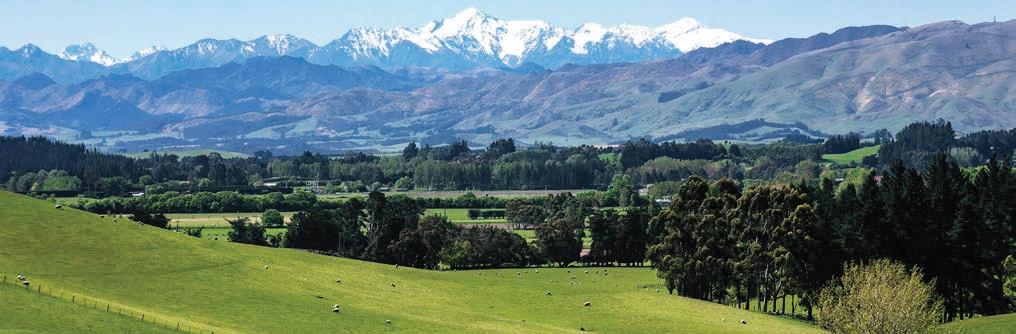
Your agent may suggest you advertise in their brand publication.
We suggest you remind them that this is the publication you, and every other farmer you know, reads.

Maungati 744 Motukaika Road
744 Motukaika Road, Maungati
E N D E R
325 Reid Line East, Bunnythorpe


Looking for quality cropping land to support your dairy operation? We are delighted to present this once-in-a-generation opportunity to secure a substantial parcel of highly productive land in a sought-after location, just minutes from both Feilding and Palmerston North. The property has been held under lease for most of the past 50 years, and the decision has now been made to offer this outstanding property to the open market Comprising 90 2184 hectares of flat to gently rolling contour, this blank canvas opportunity features predominantly Milson & Kairanga Silt Loams making it well suited to maize, silage, and a range of other cropping or farming enterprises. The land is subdivided into 13 main paddocks, with additional two-wire electric fencing creating a total of 42 paddocks.
rwfeilding.co.nz/FEL30601
Livestock Finishing and Trading Block
Flat, free draining land only 10km from Feilding Sale Yards.
All deer fenced, subdivided into eight paddocks and centrally raced, allowing for easy access and stock management. On town water with troughs in all paddocks. Deer shed with load out facilities plus two bay hayshed.
This 18.24ha (45 acres) property has predominantly been used for lamb trading so has potential for a variety of farming practices. No covenants and many choices of where you could build or relocate a home. Almadale is a quiet country road off Kimbolton Road with a picnic area and swimming hole nearby.


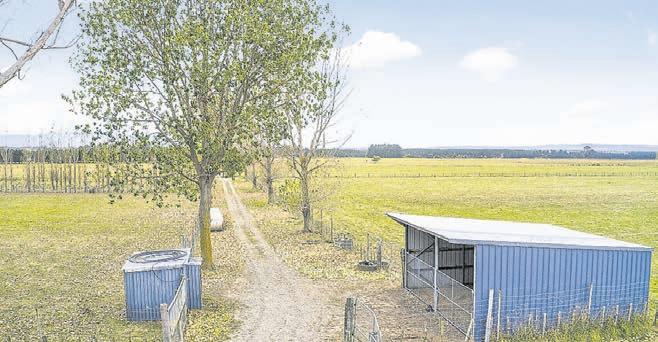
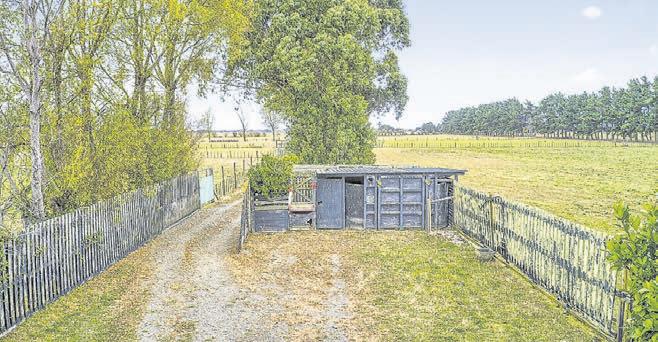
Go to the PGGWRE website and search listing number FDG43380 to download the council records. Call us anytime to view. $1.2M Plus GST (if any) VIEW By Appointment Only E michael.campion@pggwrightson.co.nz M 027 454 5829 Michael Campion E jacqui.campion@pggwrightson.co.nz M 027 593 9764 Jacqui Campion





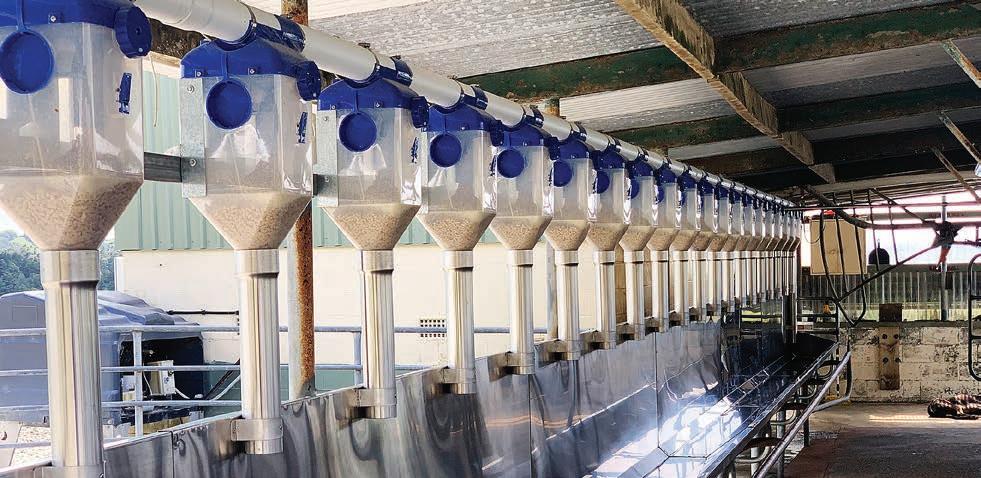

A/C Hastwell Partnership, G & L Cheetham 2472 Opaki Kaipararo Road Eketahuna
Approx 7km from Main SH2 – just north of Mt Bruce. Will be signposted. Open for viewing from 9am (prior viewing by arrangement – Phone Craig Nelson 021 457 127) Sale will start promptly at 11am
EFTPOS: Please note Cheque account only – Credit Card transactions not available Coffee & Food available for purchase – cash only. Fundraiser for Eketahuna Rugby Club







Marketplace Livestock

R1YR Fries Bulls < 220kg
R2YR Exotic x Heifers 400-460kg
beef x R2YR Hfrs & Steers (cheaper end types) 340–400kg
30 MA Fries/Here Cows VIC Chara FOR SALE
R1YR Friesian Bulls 245–270kg info@dyerlivestock co nz www dyerlivestock co nz Ross Dyer 0274 333 381
When he finally arrived in Texas, he decided to visit a bar. Upon arriving in the bar, he ordered a beer and got a mug placed between his hands. He exclaimed, “Wow these mugs are big!” The bartender replied, “Everything is big in Texas.”
After a couple of beers the blind man asked the bartender where the bathroom was located. The bartender replied, “Second door to the right.” The blind man headed for the bathroom, but accidentally tripped over and skipped the second door. Instead he entered the third door, which lead to the swimming pool and fell into the pool by accident. Scared to death, the blind man started shouting, “Don’t flush, don’t flush!”
to 15/11. Rate: Lambs $1.80, calves $7.50. Please email eddiezhi@gmail.com or phone 027 464 8866.

semen Berkshire and Duroc carry intermuscular marbling Fat from AI boars Landrace and Large White are descendants of the Pork Board farm.
enquiries only. Phone 021 166 0888








Proudly sponsored by
In-lamb ewe
fair one of a rare breed
At Temuka it was once again farms leased or sold and changes in farm policies that inflated breeding ewe numbers.
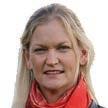
Suz Bremner MARKETS Livestock
ARARITY on the modern saleyard calendar is an in-lamb ewe fair.
These were once regular features at yards around the country, but on today’s calendar, Temuka is one of the few yards still holding a special fair for in-lamb ewes.
The wintry blast delayed this year’s fair by a week, but the show still went on. The day had ebbs and flows with the first pen reaching a nationwide record in-lamb ewe price of $400, while selective bidding impacted demand on other lines.
Roll back the clock to 2011 and the Temuka in-lamb ewe fairs were held in June, but numbers started to dwindle, along with the need for a stand-alone fair, and consequently no fair was held in 2014 or 2015.
In 2016, the fair was resurrected but held in July to align better with scanning, and 10 years on it is still going strong.
This year’s tally of 11,780 is the highest recorded since 2011, with its closest rivals being 2017 and 2024, the only other years that
volume exceeded 10,000-head since 2011.
Tallies in 2017 were high due to the closure of the Tinwald yards and very wet conditions underfoot, while 2024 was the opposite as the region was very dry and there was an increase in property sales and lease expirations.
This year, it was once again farms leased or sold and changes in farm policies that inflated breeding ewe numbers.
The change of day had no impact on that tally or the number of people attending the sale, as the alleyways swelled as much as the ewe pens. There were a lot of sightseers though, keen for a glimpse on what the breeding ewe market would offer the industry.
The fair got off to a great start, though PGG Wrightson regional livestock manager Joe Higgins thought most of the fair was below expectations.
“At the start of the fair I thought it was going to be a great day, but there was not much buying power from north of Christchurch and we felt that. Buying was sporadic – some lines had a lot of people bidding, while others had very few,” he said.
Higgins said it was a fair sale, but around $30 per head down
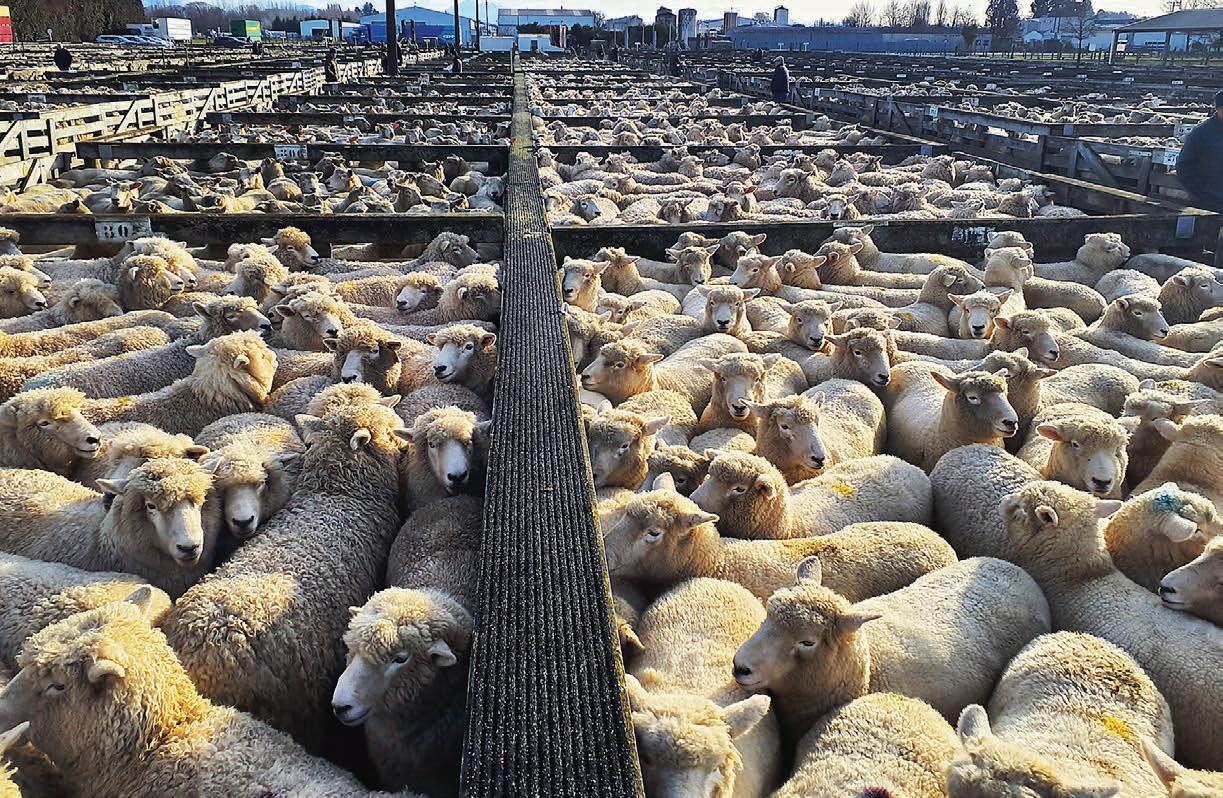
on expectations, aside from the opening pens of capital stock. He believed that the reason behind low buyer input from North Canterbury was two-fold with lambing dates too late and the flow-on effect of dairy conversions in the area.
The opening pens were a consignment of 1000 age-drafted Romney ewes from Totara Valley, offered due to the farm being leased. These were Turanganuibased ewes and in-lamb to Romney and South Suffolk rams from March 31. They impressed in size and lambing percentages of 180% for the 2-tooths and 198% for mixed-age, and were also very well-presented. Bidding was keen and the first line of 2-tooths reached $400 per head and sold to South Canterbury, while 2-shear made $382 and the older ewes $352-$395, with the consignment averaging $376 per head.
A big consignment from Georgetown followed and there was a clear preference for the straight Romney lines, as the Romney to Romney 2-tooths made $330$350, while Coopdale-Romney from the same stable and to Composite rams returned $270-$280. That set the scene for the remainder of the fair as buyers were selective and the fair sold in ebbs and flows. By the time the
last hammer fell, most younger ewes had traded at $270-$360 with the 2-tooth lines averaging $323, up an impressive $84 per head on last year. Mixed-age ewes returned $230$310 to average $280, an increase of $60 on 2025. Four and 5-year ewes were a popular choice given the shorter turnaround and high mutton schedules, and most sold for $280-$308.


RARE: In-lamb ewe fairs are a rare breed now, but at Temuka on Wednesday, July 15, nearly 12,000 ewes were offered, making it the most significant in-lamb ewe fair on the modern-day sale calendar.
In-Lamb Ewe Fair (ave. $/hd)
Cattle Sheep Deer

Weekly saleyard results
Frankton | July 8 | 286
Frankton | July 14 | 617 cattle
weaner dairy-beef bulls,
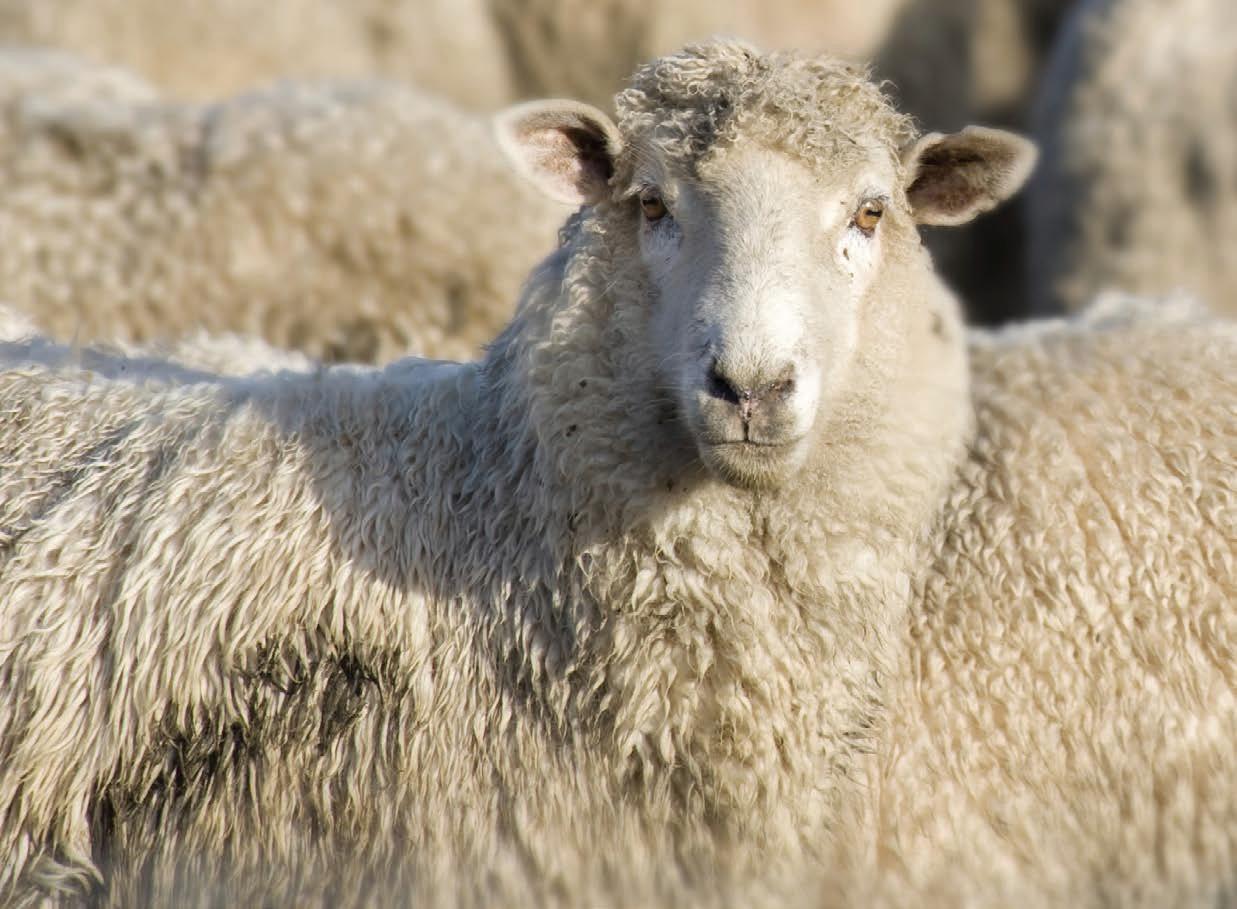

High hopes for low pressure zones

LOW-pressure zones with rain are continuing to form to our north, east, west and south as a messy weather pattern continues in our part of the world. At the same time, high-pressure zones are quite large at the moment and continue to mostly track along the southern coastline of Australia and towards New Zealand.
When I say “quite large”, I mean most of them are about the size of Australia ... and you can fit almost 29 New Zealands into that Australia footprint.
These large highs influence our weather – they often decide what wind direction we’re having and how long for, they control the movement of lows and therefore rain, and they bring us our frostiest and foggiest weather.
Low pressure doesn’t move through high pressure; it prefers the path of least resistance and is often guided around them – or can be blocked by them, usually leading to the low falling apart.
During mid to late winter and
early spring it’s quite common to see our largest and most powerful highs moving through. One big reason for the wet weather of recent weeks is the gaps in between the highs, allowing for rain and showers to move through New Zealand.
If the highs start joining together more it will seal off some of the chances for lows to move through the NZ area, leading to drier conditions.
This is something forecasters will be monitoring closely in the months ahead as El Niño continues to gain strength.
This week starts with colder air being ushered into NZ thanks to a high parked over eastern Australia.
This high then links up with another high-pressure centre offshore from Perth, and a weaker high northeast of NZ – creating a belt of high pressure that stretches 12,000km from west to east.
There is a subtropical area of low pressure trying to head southwards towards us, but that low is likely to be blocked by this high.
As we go through this week, modelling suggests this highpressure belt does weaken a bit
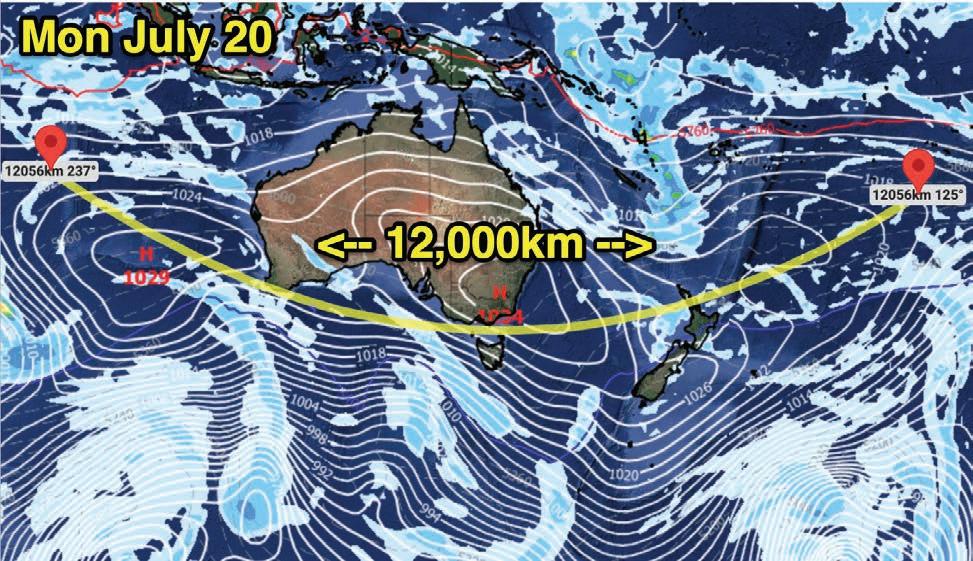
over NZ, dragging in cloud and showers at times.
This weekend there should be a break in that high pressure, ushering in unsettled weather (although modelling was a bit changeable on exactly how this will pan out). One fairly reliable forecasting model picks a low to develop in the NZ area and another low south of Australia.
But the uptick in high pressure, while a good balancing act following recent downpours around NZ, may be of concern if it
continues to get larger and more stubborn in the months ahead.
For now, there are still some gaps in the highs bringing in unsettled weather for us and until that changes there isn’t too much concern yet about a significant drying-out phase setting in.
In Australia, rainfall across large parts of the nation has become more subdued, with the bulk of wet weather in coastal areas in the south and east of the nation.
As for El Niño, as you know it’s officially here – but it is still
LIMITS: This week starts with a lot more high pressure around NZ and Australia, limiting severe weather and rainfall for a time.
getting stronger. It’s expected to continue getting stronger over the next four months before likely levelling out in summer. It will likely take a number of months in 2027 to weaken.
According to Australia’s Bureau of Meteorology, forecasts are still pointing towards a strong to very strong El Niño event, based on the extent of warming in the central tropical Pacific. The majority of global models indicate this event could peak at levels among the highest observed since 1950.
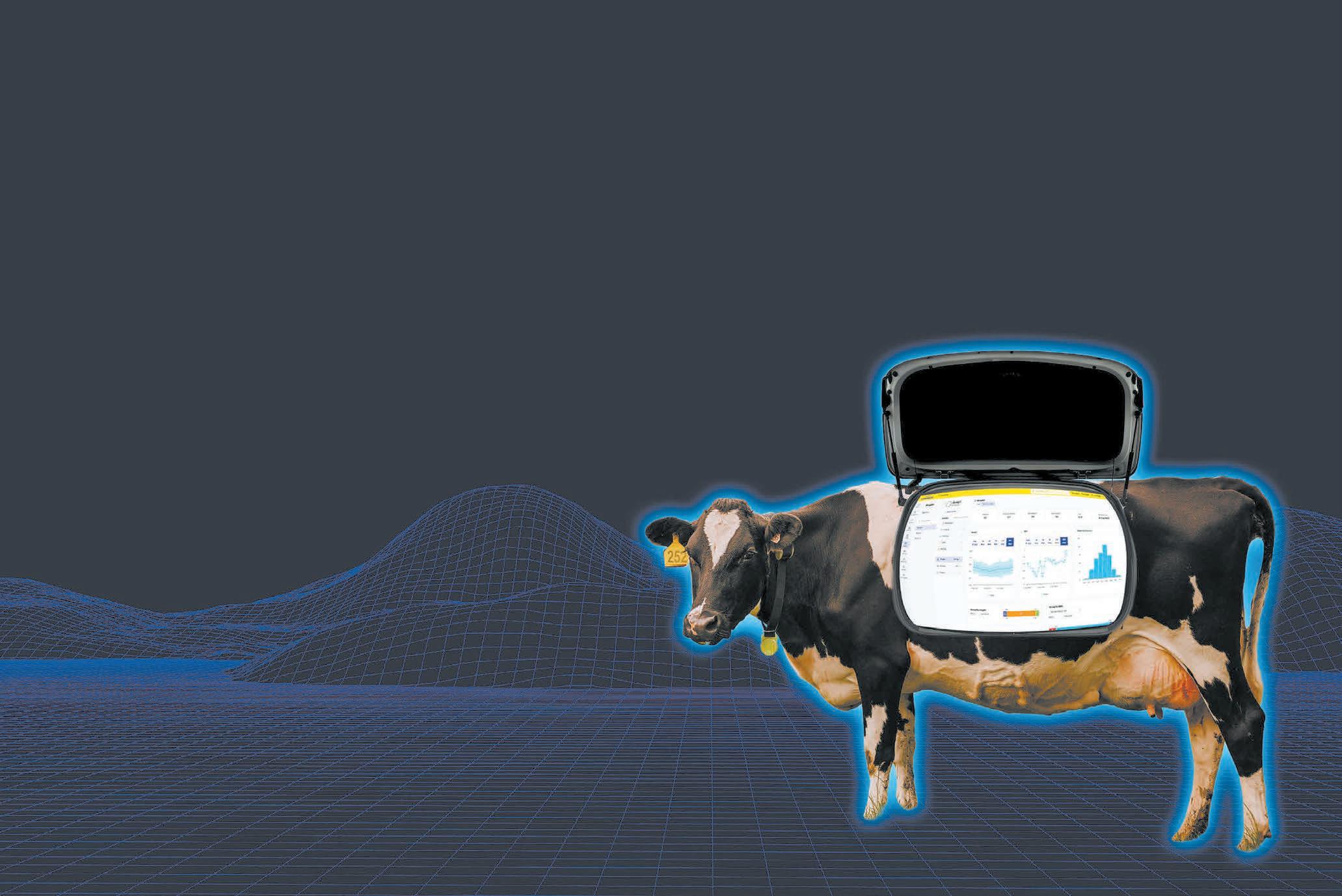
G et insights you never knew you needed with Tru-Test Active Tag wearables.
Accurate heat detection, including silent heats
Automated reports and real- time group insights for transition, reproduction, rumination and more Essential health alerts
No subscriptions and no data fees, payment terms available
Collar or Ear Tag options



Ever wondered what's going on under the hood?
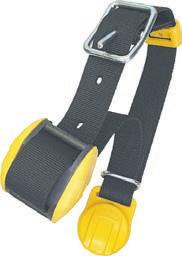


Philip Duncan NEWS Weather