‘Collision course’ fear as PC1 looms

Gerald Piddock NEWS Environment
RESOURCE Management Act Reform Minister
Chris Bishop has assured Waikato farmers that the government is looking closely at how it can avoid the rollout of its resource management reforms clashing with the new environmental limits set under Proposed Waikato Regional Plan Change 1 (PC1).
“You can see the problem. You have got an entirely new planning system coming soon ... and you have PC1 smacking into that on a collision course,” he said in front of a packed meeting of nearly 350 people at Mystery Creek.
We are thinking very deeply and carefully about what we do about that problem.
Chris Bishop RMA Reform Minister
Bishop, along with Agriculture Minister Todd McClay, fronted the meeting to hear farmer concerns about the proposed rule changes.
“I want to assure you that we are thinking very deeply and carefully about what we do about that problem that is immediately apparent to you,” Bishop said.
It is currently being discussed in cabinet, he said.
“I want to assure you – and I’ll leave you with one message – and

that is we get the problem of the new planning system starting at the same time as PC1, at least in theory ... and the two aren’t going to mesh together particularly well.”
Bishop said he wants to avoid a situation where farmers would have to operate in two different regulatory systems.
PC1 will bring in rules to manage nutrient discharges with the goal of improving the Waikato and Waipā rivers. It was first notified in 2016 and was appealed to the Environment Court, with its decision released on June 8 this year.
It directed the Waikato Regional Council to make 20 changes to PC1, giving it until July 21 to make the changes. Once the court confirms the amendments meet its intent, the plan will be finalised.
Federated Farmers provincial president Chris Woolerton said it is a “challenging complex issue for the Waikato”.
“It’s farmers and growers that are affected. It’s you guys.”
He reiterated the call for PC1 to be paused, wanting clarity and a practical solution.
The ministers also heard from farmers, who outlined their concerns about the impact PC1 would have on their businesses.
North Waikato farmers Brendan Ball and Malcolm Lumsden told the ministers of the negative impact PC1 will have on vegetable growers and land values.
Bill Garland said often the issue is not so much the rules themselves but the local government staff’s interpretation of them.
Sustainability key for Ballance winners
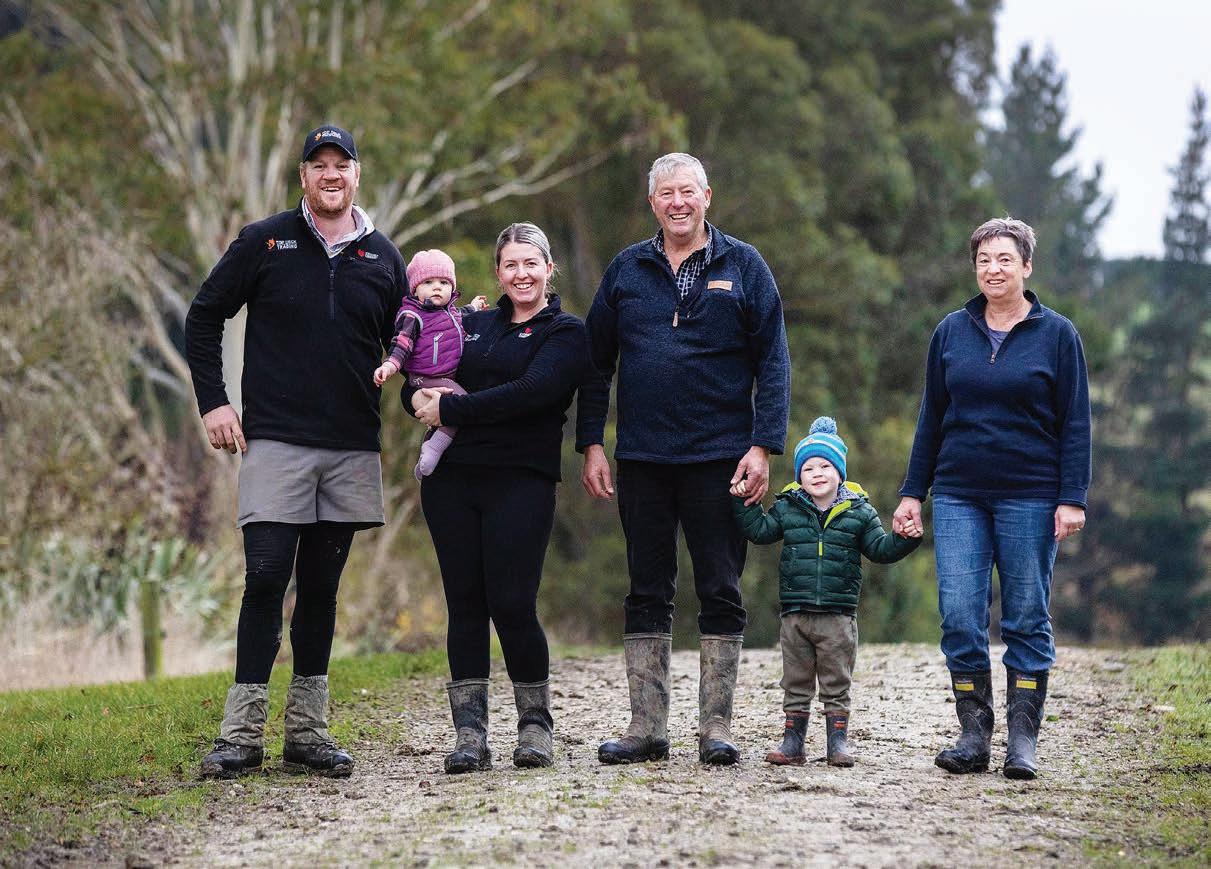
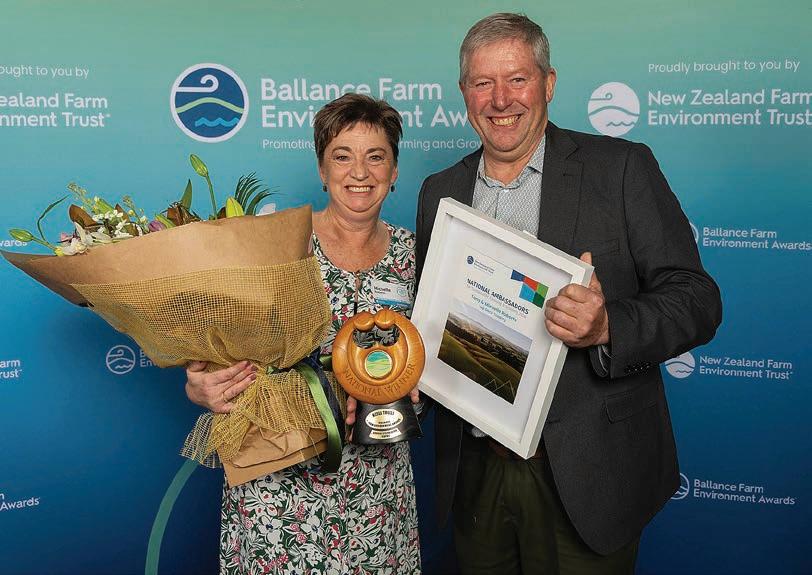
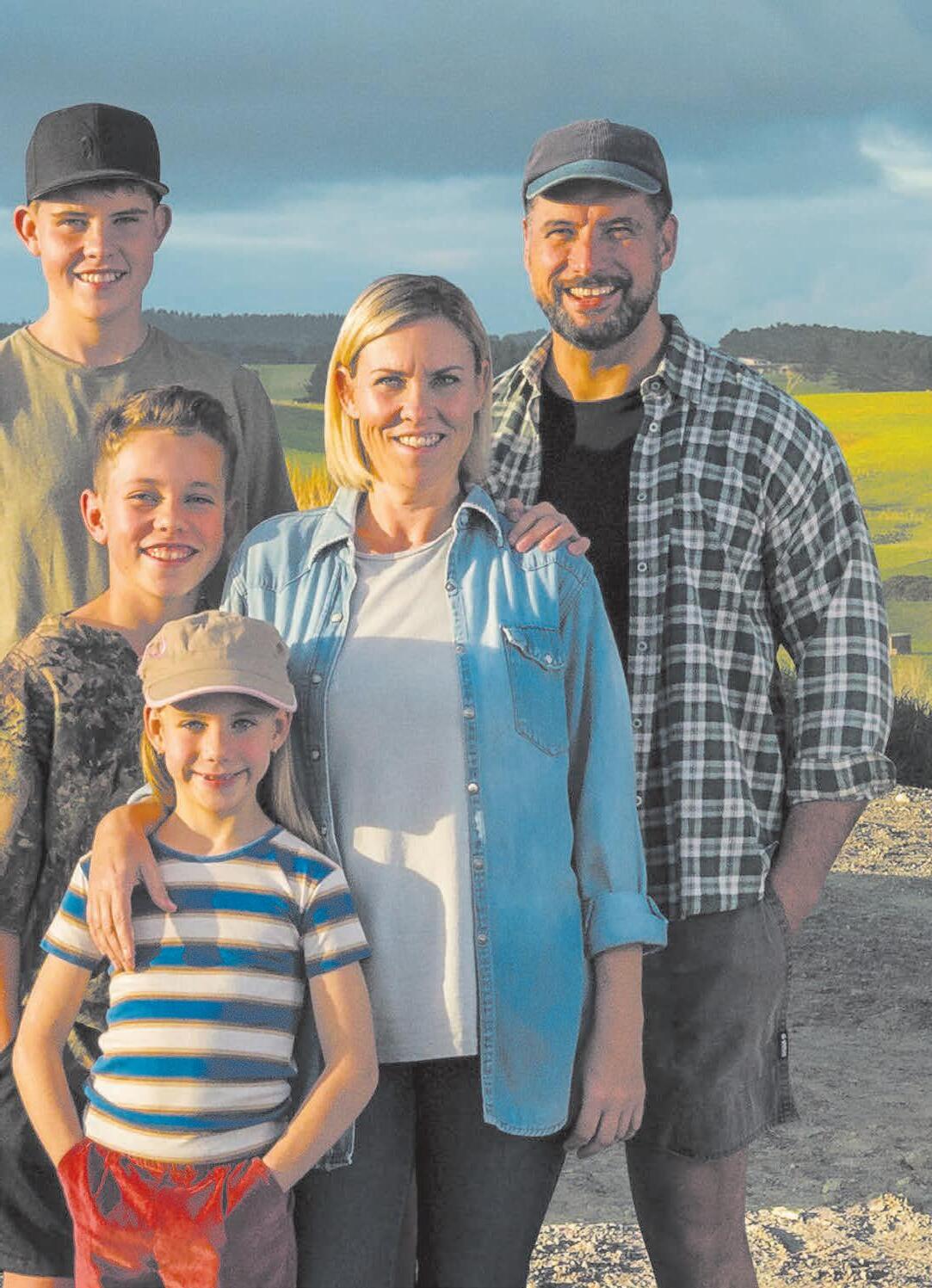
Land and family are the priorities for Tony and Michelle Roberts, awarded the Gordon Stephenson Trophy at the Ballance Farm Environment Awards. From left, Mark Lieshout, partner to daughter Kate Roberts, and Tony and Michelle with the grandkids.
8
New Feds head at coalface of ag issues
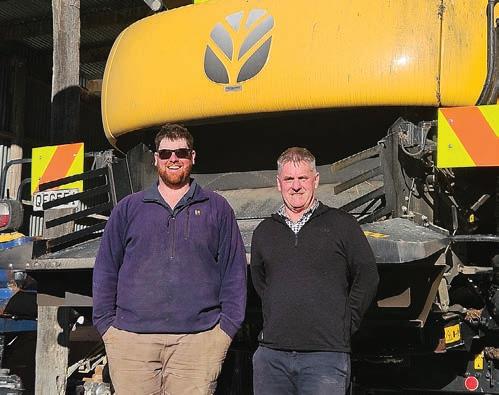
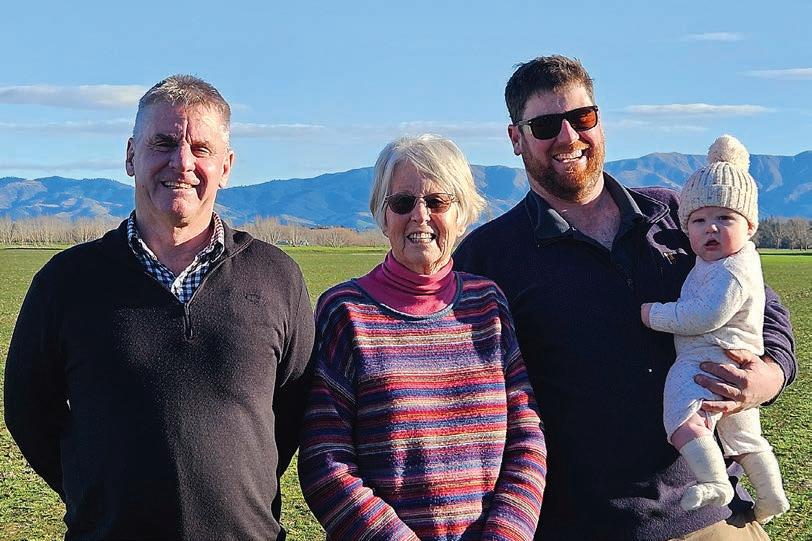
From succession to dairy conversion, Colin Hurst’s farm business is in good hands as he takes on the top job at Federated Farmers. Nick Hurst, pictured with Colin, headed back to the farm after stints doing harvests in the US and UK.
ARABLE 15
Safer workplaces a credit to farmers

Advertise Get in touch
EDITORIAL
Bryan Gibson | 06 323 1519
Managing Editor
bryan.gibson@agrihq.co.nz
Craig Page | 03 470 2469
Deputy Editor craig.page@agrihq.co.nz
Claire Robertson
Sub-Editor claire.robertson@agrihq.co.nz
Neal Wallace | 03 474 9240
Journalist neal.wallace@agrihq.co.nz
Gerald Piddock | 027 486 8346
Journalist gerald.piddock@agrihq.co.nz
Annette Scott | 021 908 400 Journalist annette.scott@agrihq.co.nz
Hugh Stringleman | 027 474 4003
Journalist stringleman@outlook.co.nz
Richard Rennie | 027 475 4256
Journalist richard.rennie@agrihq.co.nz
Gerhard Uys | 027 239 4388
Journalist gerhard.uys@agrihq.co.nz
Nigel Stirling | 021 136 5570
Journalist nigel.g.stirling@gmail.com
Isabella Beale | 027 299 0596
Multimedia Journalist isabella.beale@agrihq.co.nz
PRODUCTION
Lana Kieselbach | 027 739 4295 production@agrihq.co.nz
ADVERTISING MATERIAL
Supply to: adcopy@agrihq.co.nz
SUBSCRIPTIONS & DELIVERY 0800 85 25 80 subs@agrihq.co.nz
PRINTER
Printed by NZME
Delivered by Reach Media Ltd
SALES CONTACTS
Andy Whitson | 027 626 2269
Sales & Marketing Manager andy.whitson@agrihq.co.nz
Janine Aish | 027 300 5990
Auckland/Northland Partnership Manager janine.aish@agrihq.co.nz
Jody Anderson | 027 474 6094
Waikato/Bay of Plenty Partnership Manager jody.anderson@agrihq.co.nz
Palak Arora | 027 474 6095
Lower North Island Partnership Manager palak.arora@agrihq.co.nz
Andy Whitson | 027 626 2269
South Island Partnership Manager andy.whitson@agrihq.co.nz
Julie Hill | 027 705 7181
Marketplace Partnership Manager classifieds@agrihq.co.nz
Andrea Mansfield | 027 602 4925
National Livestock Manager livestock@agrihq.co.nz
Real Estate | 0800 85 25 80 realestate@agrihq.co.nz
Word Only Advertising | 0800 85 25 80 Marketplace wordads@agrihq.co.nz
PUBLISHERS
Dean and Cushla Williamson Phone: 027 323 9407 dean.williamson@agrihq.co.nz cushla.williamson@agrihq.co.nz
Farmers Weekly is Published by AgriHQ PO Box 529, Feilding 4740, New Zealand Phone: 0800 85 25 80 Website: www.farmersweekly.co.nz
ISSN 2463-6002 (Print) ISSN 2463-6010 (Online)



News in brief
Hort water plan
HortNZ is celebrating the completion of its four-year Growing Change programme, which has helped hundreds of growers prepare for freshwater farm plan requirements and strengthen freshwater management across key growing areas. Delivered in partnership with the Ministry for the Environment, Growing Change provided on-farm support, training and practical resources in areas where freshwater risks are higher.
The programme has finished well ahead of its key delivery targets, with 228 farm plans completed against a target of 85. These plans cover 51,444 hectares in total, including 41,107ha of productive land.
Academy acquired
Skills Group Training has expanded its presence in primary and landbased industries with the acquisition of Christchurch-based National Trade Academy. Skills Group said the acquisition will enable it to rapidly grow its training provision in the primary sector, an area identified as a priority for future development, while strengthening its footprint in Canterbury and across the South Island.
The National Trade Academy has been delivering land-based education and training since 2000, equipping students with practical skills for careers in agriculture and related industries.
Strangles outbreak
Horse owners are being warned to stay vigilant and follow biosecurity protocols after the highly contagious bacterial disease strangles was detected on 12 properties in Waikato and Auckland. The disease has been confirmed on 11 properties in Waikato and 1 in Auckland.
Early detection and strict biosecurity measures, including isolation and monitoring horse temperatures, are critical to limiting the spread, said Holly Blue, New Zealand Veterinary Association head of veterinary services.
Capital rules should be even freer: English

ANigel Stirling NEWS Finance
FORMER prime minister says the recent backdown by the Reserve Bank on bank capital rules doesn’t go far enough to unleash the full potential of the primary sector.
Bill English told Farmers Weekly that ready access to credit is a key ingredient for the success of the country’s primary industries – and he is concerned they could be being held back by banking overregulation.
“NZ has fallen to the back of the pack on our financial systems and banking regulation,” he said.
“If we want to have a productive economy in the future then getting those things right helps.”
Former Reserve Bank governor
Adrian Orr bought a fight with the banks when he said he wanted them to increase their capital buffers to be able to withstand a 1-in-200-year financial crisis. Bank bosses said the capital requirements could have added up to a full percentage point to farm borrowing costs while also lowering the return on capital for bank shareholders.
In a small open economy we could probably take some more risk
Bill English Former prime minister
“The Reserve Bank put in some pretty excessive capital requirements. In the last six months they have been pulled [back] somewhat but in a small
open economy we could probably take some more risk,” English said.
English said the Australianowned banks remain committed to New Zealand because they are still making good profits. However, those profits look outsized when weighed against the relatively low risks of the residential mortgages that make up the vast bulk of their loan books.
“We have a banking sector that has been overregulated against risks and so the banks have been moving steadily for a number of years towards more house lending and away from business lending,” he said.
English has recently taken a small shareholding in rural debt advisory firm NZAB, which he said is doing its bit to fill that gap for farm borrowers.
Founded a decade ago by former rural bankers Scott Wishart,

FREEDOM: Bill English says ready access to credit is a key ingredient for the success of the country’s primary industries and he is concerned they could be being held back by banking overregulation.
Nathan Henry and Andrew Laming, the Canterbury-based business recently launched a lending arm with $500m of funding for loans from Macquarie’s Commodities and Global Markets Group.
The new lending arm, NZAB Capital, provides loans for three to five years for borrowers who
fall outside the traditional lending criteria of the banks.
It has written $80m in new loans since launching in March.
English said it remains to be seen if bank capital requirements will be lowered even further.
“In the meantime these type of lenders can fill some of the risk spectrum,” he said.
Crunch time arrives for another major apple company

LIQUIDATORS have been appointed to oversee the administration of one of New Zealand’s largest apple growers after it went into voluntary administration owing millions.
Hawke’s Bay-based Kiwi Crunch was placed into administration last week. It is the sole shareholding company in Crasborn Fresh Harvest Limited, which was put into liquidation on July 3.
The action was initiated by the Inland Revenue Department over almost $20 million in unpaid taxes and penalties it was owed.
Associate Judge Helen Wild granted the order, stating there was no option after the company
had sought more time to secure finance for debt repayment.
The New Zealand Gazette records that Kristal Pihama and Leon Bowker of KPMG were appointed joint and several liquidators to the company with creditor claims due in by August 7.
Crasborn’s failure in turn saw Kiwi Crunch placed into voluntary administration on July 7 with receivers appointed to deal with assets after earlier efforts to arrange finance failed and ASB Bank actioned their appointment.
Kiwi Crunch is a shareholder of several related entities and is in turn owned by Consolidated Fruits, with Auckland ex-accountant Wade Glass and Natalie Watson listed as shareholders.
National Business Review reported last week that Glass struck a deal to buy the second
largest apple grower in South Australia, just days after the IRD advertised its intent to liquidate the company.
Consolidated Fruits is the umbrella company for three produce brands, Kiwi Crunch, Prunus Orchards, an Otago cherry
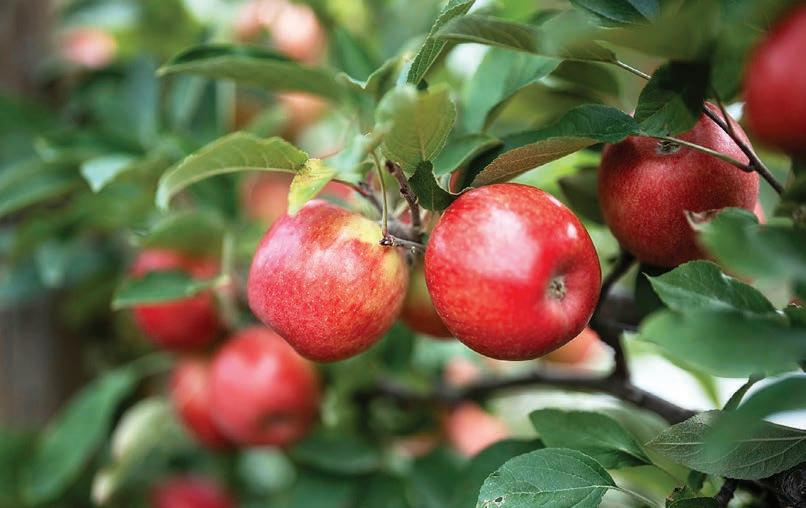
brand and grower, and CAJ, a central Otago-based apple grower. Kiwi Crunch’s website says the company owns two packhouses in Hawke’s Bay and has over 450 hectares of prime growing land. When combined with CAJ and Prunus Orchards land holdings the company manages over 880ha producing 30,000 tonnes of apples, 180t pears and 750t of cherries annually.
Exports globally include 30 countries and in 2024 it was a recipient of the Excellence in Sustainability award at the Export NZ ASB Hawke’s Bay Export Awards.
Kiwi Crunch’s failure marks ongoing ruptures in the apple industry, with Rockit Apples experiencing challenges in the past year that have left many growers making a loss on the fruit.
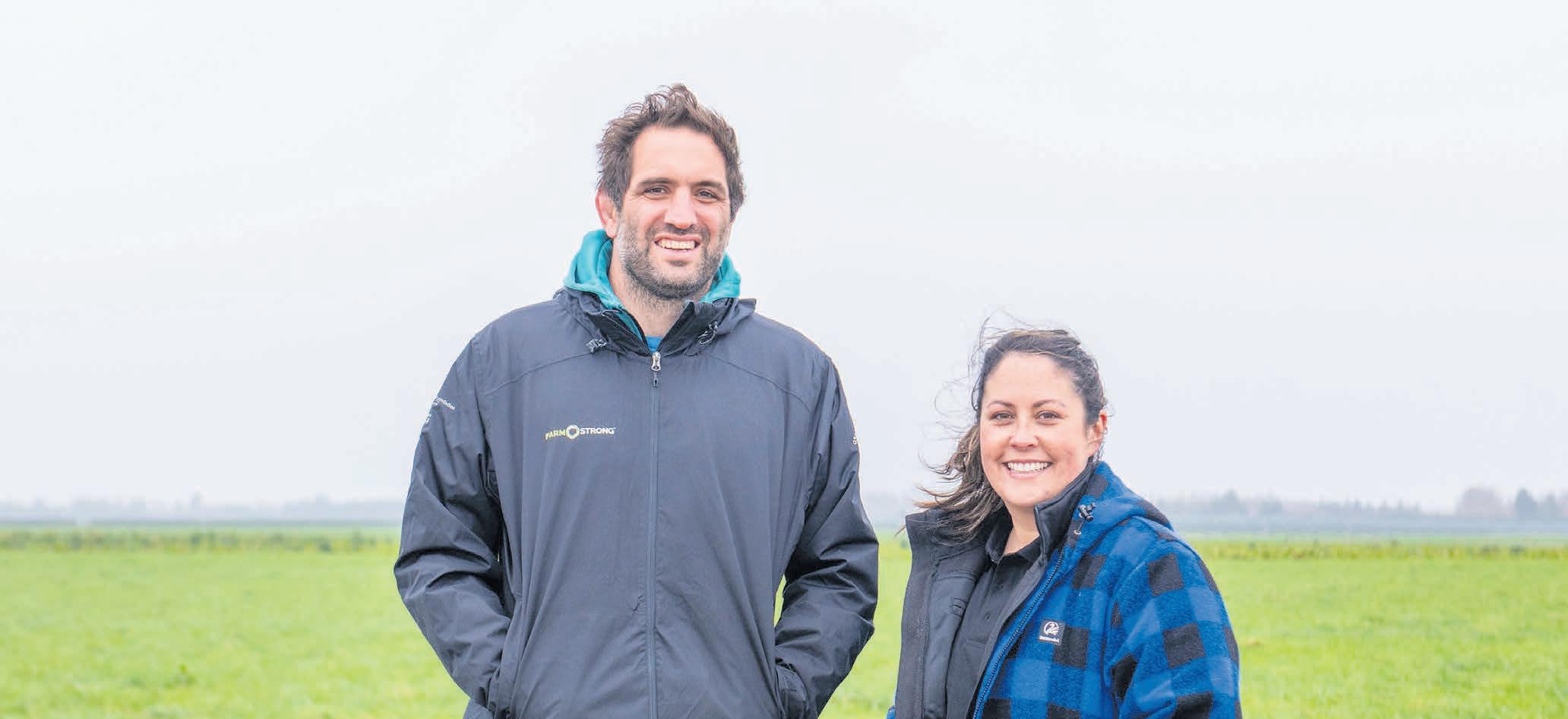


Sam Whitelock Farmstrong Ambassador


SOUR: The failure of Crasborn Fresh, along with its parent company Kiwi Crunch, highlights ongoing liquidity issues some producers face in the apple sector.
Richard Rennie NEWS Horticulture
Europe a priority, dairy reminds politicos
DNigel Stirling POLITICS Trade
AIRY exporters say the National Party’s election pledge to pursue a diverse set of new trade negotiations shouldn’t come at the expense of making the most of existing agreements.
The countries targeted by National for talks within five years should it be re-elected include Bangladesh, Nigeria, Brazil, Argentina, Switzerland, Uruguay, and the European Free Trade Association countries of Iceland, Norway and Liechtenstein.
The Dairy Companies Association of New Zealand (DCANZ) said several are also high priorities for the dairy industry.
Recent agreement by Bangladesh to scrap tariffs on dairy imports from the United States had left NZ exporters on the back foot in an important market, DCANZ executive director Kimberly Crewther said.
The industry sold the country $474 million of dairy products last year but this was now at risk with NZ exports still facing a 10% tariff.
A deal to lower tariffs would also set NZ exporters up to take
advantage of predicted strong growth in the country’s middle classes.
DCANZ supports Nigeria’s inclusion as a priority for future trade deals.
The dairy industry has long advocated for trade talks with African countries.
“It is a continent that is only going to grow its share of the global population and will develop economically and we know with economic development, consumption and demand for dairy rises,” Crewther said.
Sitting within the EU is 13% of global dairy consumption which we remain largely locked out of.
Kimberly Crewther DCANZ
“It makes sense to get started now.”
National also prioritised a second group of six countries for trade talks within a decade.
These included Türkiye, South Africa, Morocco, Colombia and Mauritius. Sri Lanka is also in this group, despite it being among
NZ’s top 20 dairy markets by size with relatively high dairy tariffs of 20%.
Crewther said it is not too much of a disappointment that Sri Lanka hasn’t been given higher priority.
Priorities are likely to change as it becomes clearer which countries want formal negotiations and which do not or could take longer to get to the negotiating table.
Likewise DCANZ is not too concerned that NZ’s negotiators would be spread too thinly to be effective by pursuing talks with so many countries.
“We would not expect all negotiations on the target list to commence or have the same resourcing intensity at the same time,” Crewther said.
However, DCANZ would be concerned if the pursuit of new deals diverts the attention of officials away from an upcoming review of NZ’s 2022 trade deal with the European Union.
“Sitting within the EU is 13% of global dairy consumption which we remain largely locked out of.
“The first review will be occurring within the next parliamentary term.
“We would want that as a priority,” Crewther said.
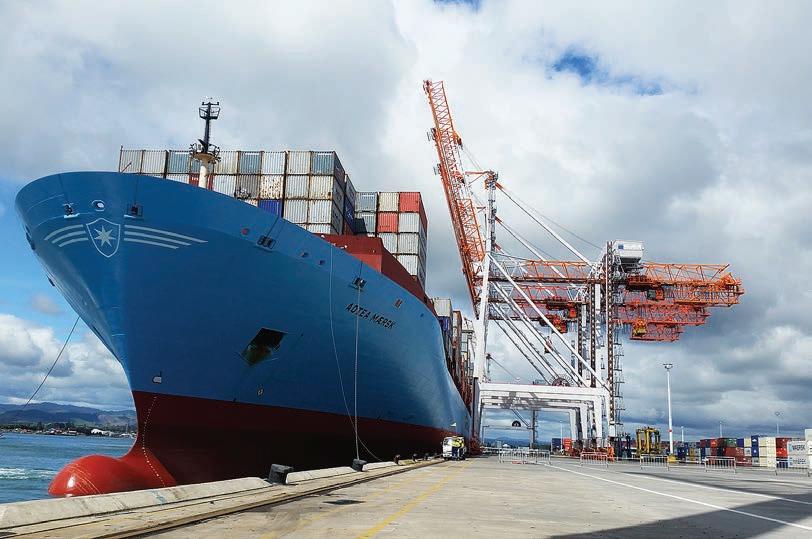
Trade priorities are likely to change as it becomes clearer which countries want formal negotiations and which could take longer to get to the negotiating table, DCANZ executive director Kimberly Crewther says.
This week’s poll question:
Do you support National’s trade policy, which will seek trade deals with emerging economies such as Nigeria, Brazil and Bangladesh?
Have your say at farmersweekly.co.nz/poll
Slump in a2 Milk Co China infant formula sales
Staff reporter NEWS Dairy
THE a2 Milk Company says supply chain issues impacted its China infant milk formula business during the fourth quarter of 2026, with sales down 14% on 2025.
All other a2MC product categories, including English label IMF, Other Nutritionals and Liquid Milk, have performed strongly and are significantly up
compared to the previous year, the company said in a supply chain update on NZX.
The company said its unaudited 2026 financial year results are expected to be in line with or slightly ahead of the guidance range it announced on April 13.
Its revenue is expected to be $1.97 billion, up more than 12% on 2025 and its EBITDA is expected to be at the high end of 14.0% to 14.5%. Its net profit after tax is expected to be slightly

up on 2025 and conversion to be 70%, ahead of the 50% April guidance.
It also provided an update on the supply chain issues that had impacted IMF product availability within the China market within the fourth quarter of 2026. These product shortfalls were due to strong demand in the preceding quarter, freight challenges, Synlait production backlog, extended product release times, and additional customs clearance
“If you’re ready to be a little uncomfortable and challenged,


requirements and testing measures.
These factors “materially impacted” China label IMF product availability, which saw a large proportion of existing users to switch to alternative brands, with some switching to a2 English label products.
The product availability impact on English label IMF product was limited and largely concentrated on a2 Genesis, which was affected by planned production downtime
at a2 Pōkeno and a change in China importation requirements, it said.
“The contributing factors to the product availability issues have now substantially been resolved, and product flows to distributors and retailers have materially improved across China label and English label products with stock levels returning to target levels.”
The a2MC will release its 2026 result and outlook for 2027 on August 17.
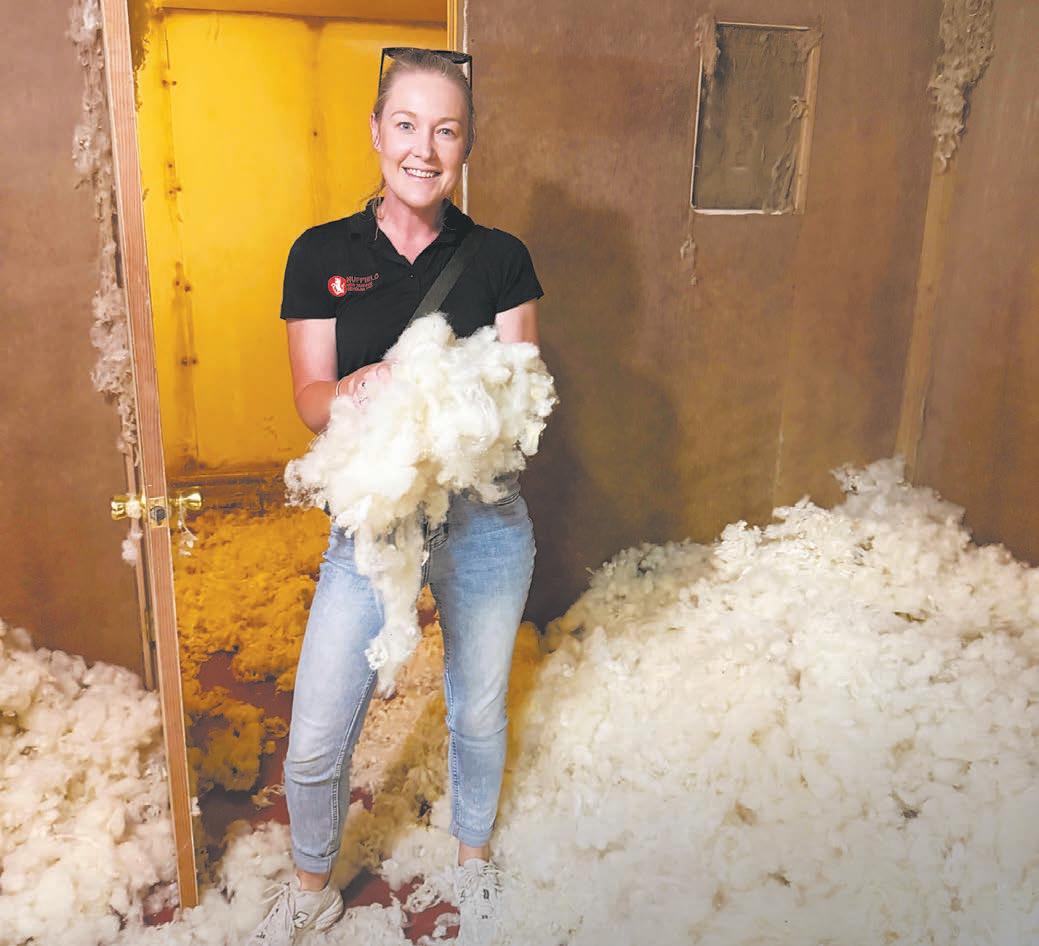


Lisa Portas, 2025 Nuffield NZ Farming Scholar.
EVOLVING:
Fonterra, SFF line up to boost dairy beef

Hugh Stringleman NEWS Sheep and beef
FONTERRA and Silver Fern Farms have collaborated to put impetus into beefon-dairy mating decisions for non-replacement dairy calves. The new programme is underpinned by a key customer for New Zealand lean beef, FMG Global of Chicago, which calls itself a strategic sourcing partner for McDonald’s in the United States.
The programme publicises a list of beef sires selected for easy calving, moderate gestation length and high-growth calves. All semen straws are available through LIC, CRV and GENEZ.
When genetics, rearing and finishing are better aligned, it gives farmers more confidence they are breeding calves that will deliver what the market wants.
Fonterra group director of Farm Source Anne Douglas said using targeted non-replacement matings also allows dairy farmers to breed herd replacements from their best cows, driving genetic gain.
“This initiative gives farmers a practical, evidence-based sire list that helps remove uncertainty and makes it much simpler to capture the beef-on-dairy opportunity,” she said.
“As farmers finalise their mating plans for the season ahead, we would encourage them to explore the opportunities available through this programme and
consider where premium beefon-dairy could fit within their breeding strategy.”
Integrated beef-on-dairy value chains are becoming more established internationally, said Greg McSkimming, head of agribusiness at Silver Fern Farms.
“The biggest opportunity for New Zealand is creating stronger alignment across the supply chain, so decisions on farm connect more directly to customer demand and deliver consistency at scale,” he said.
“When genetics, rearing and finishing are better aligned, it improves predictability and gives farmers more confidence they are breeding calves that will deliver what the market wants.”
FMG Global chief commercial officer Connor FitzGerald said better alignment of mating decisions with smarter supply chain practices means that everyone wins.
“Small adjustments in genetic decisions, combined with improved supply chain processes, can deliver outcomes that work for the dairy farmer, the calf-rearer and the finisher, as well as the meat processor,” he said.
FMG is a large importer of NZ beef into the US, but not the sole US customer for SFF.
It is currently encouraging more beef-on-dairy production from Australian dairy farms, with a target of 100,000 head annually by 2030.
McSkimming said success for the NZ collaborative programme depends on aligning the entire supply chain, from breeding decisions on dairy farms through to finishing systems and market demand.
Having dairy farmers using beef genetics is just the first step in the process, with these calves starting to be born from 2027,
and numbers of finished cattle beginning to come through the processing network from 2029 and beyond.
“Importantly, this growth will be complementary to, not at the expense of, our traditional beef sector.
“We see dairy beef as an opportunity to add to the overall supply of high-quality, sustainably produced beef that our customers are seeking.”
Eligible stock for the SFF dairybeef programme are dairy-cross steers and heifers from a dairybreed dam and beef-breed sire, with carcase weights between 220.5kg and 345kg, no horns, full traceability back to their dairy origin, and processed at no more than 36 months of age.
A premium over the beef price schedules will be paid.
Branded ear tags will be

available next calving season for Fonterra suppliers who use nominated beef-on-dairy sires to create a distinct line in their herd.
Beef finishers can use the tags as an indicator of growth potential
VALUE: Fonterra group director of Farm Source Anne Douglas encourages suppliers to explore the opportunities available through the programme and consider where premium beef-on-dairy could fit within their breeding strategy.
and, if processed by SFF, earn a premium.
Fonterra has been encouraging farmers to make better use of their non-replacement calves since saying four years ago that bobby calves should be phased out.
Large GDT fall as supply outpaces demand
Hugh Stringleman MARKETS Dairy
THE Global Dairy Trade price index fell 4.9% on July 8, its largest decline in two years. Average prices dropped for all dairy commodities auctioned except mozzarella, and the negative 4.4% for whole milk powder and negative 7% for skim milk powder weighed heavily on the GDT index.
GDT market results have been weak since mid-March, over eight fortnightly auctions, and must now be starting to impact the 2027 season farmgate milk price forecasts. During that time the GDT index has fallen 12% with six negatives and only two positive auction summaries.

Protein products, WMP and SMP, have fallen 7% and 8% respectively while fat products, butter and anhydrous milk fat, have fallen 22% and 16% respectively.
In the latest auction cheddar dropped 12.3%, AMF dropped 3.9% and butter 5%, while mozzarella improved by 3.8%.

NO SURPRISE: NZX dairy markets analyst Rosalind Crickett says continued price softening across most products was well and truly expected before this GDT event.
NZX dairy markets analyst Rosalind Crickett said continued price softening across most products was well and truly expected before this GDT event.
That is because of dairy product supply abundance and Fonterra’s seasonal rise in volumes on the platform, which was met by weaker demand.
“Global milk production in the year to date has shown strong growth across all major milk producing regions bar China.
“However, we are seeing early indications of changing trajectory in global milk production with heat waves across Europe and the El Niño build-up in the Pacific which might lead to production decreases in months to come.”


Greg McSkimming Silver Fern Farms
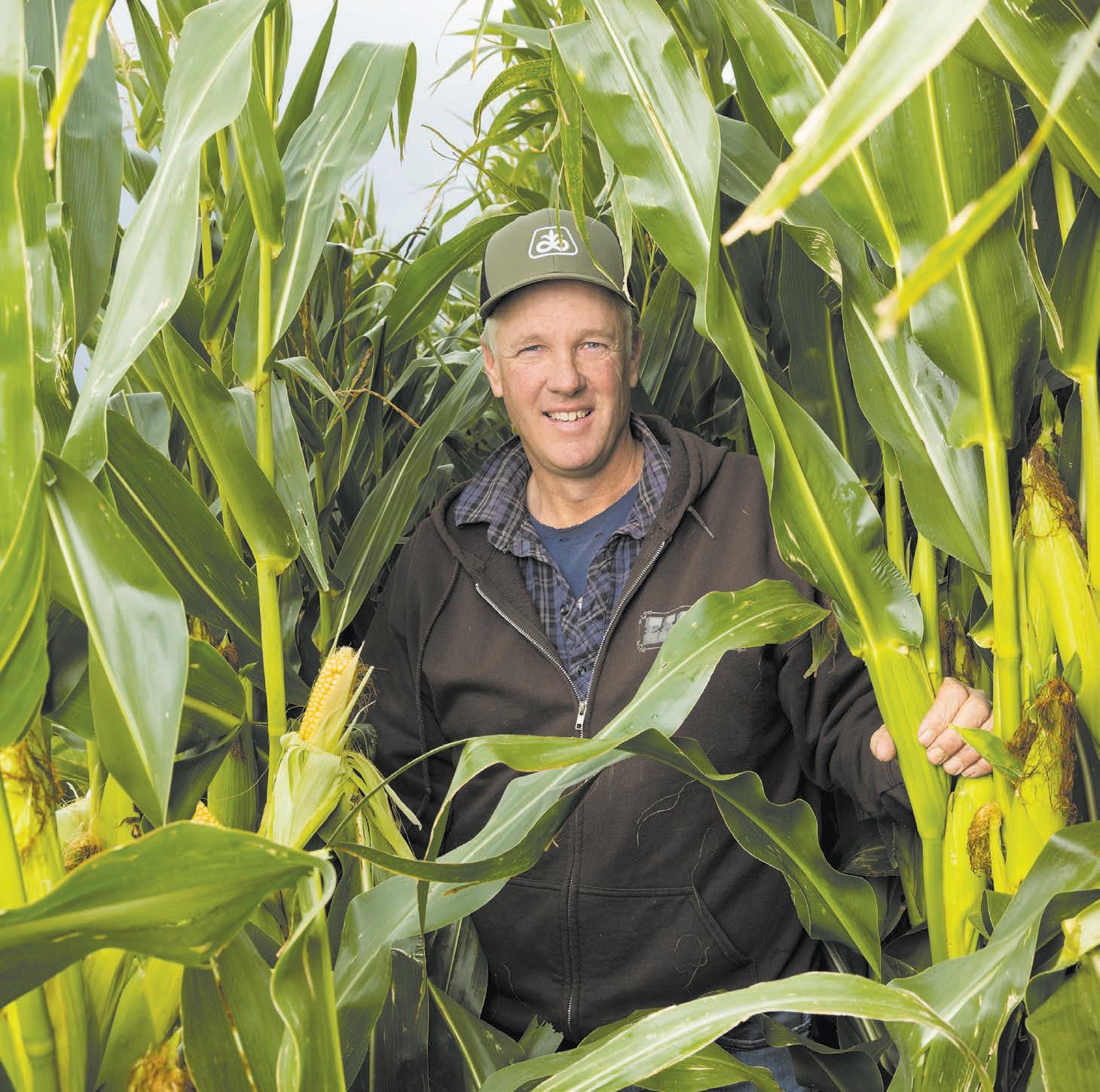
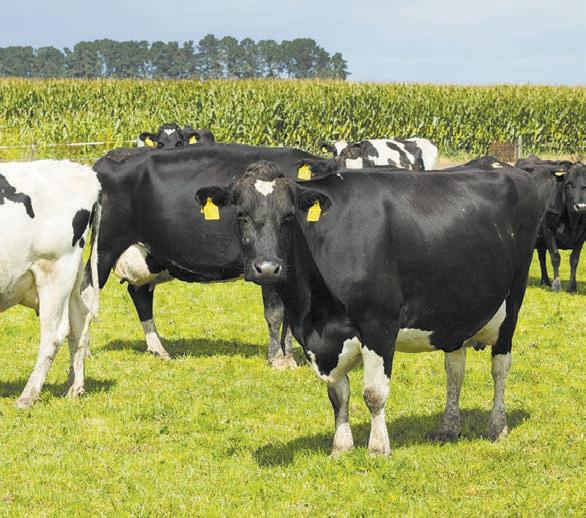
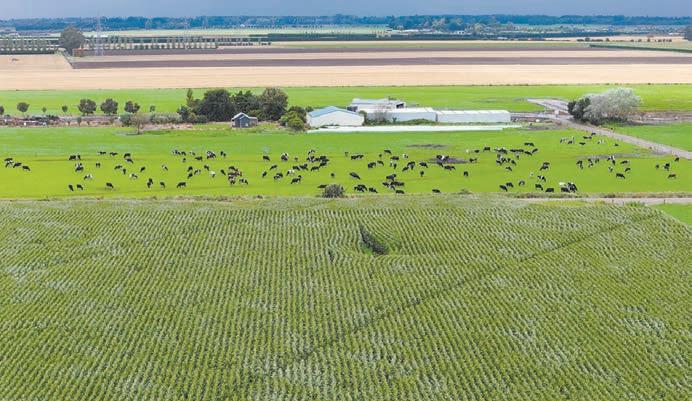
Top Young Farmer carries on family tradition

Neal Wallace PEOPLE Skills
THE pep talk worked.
On Saturday afternoon before the Agri-Knowledge quiz, the final round at last weekend’s FMG Young Farmer of the Year contest, Tom Slee called on some wise heads for advice.
His father Richard won the event in 1999 and his uncle, Simon Hopcroft, was victorious in 2004, and their advice was relatively straightforward.
“They told me to hit the buzzer and hope that the answer was right.”
Despite a couple of hiccups, the tactic worked, taking Slee from third going into the round to overall first place.
“I knew I was behind, but I didn’t know by how far,” said the Otago Southland regional finalist.
Contestants have half a second to determine if they know the answer in the quick-fire buzzer round, but Slee adopted the tactic of buzzing in if there was the slightest chance he knew it.
He came unstuck with one question: “What is orf?”
“I knew it was scabby mouth, but I answered it scavies mouth, so I got it wrong.”
After trailing Cam Clayton, Waikato Bay of Plenty, and Aoraki’s Jack Taggart, Slee’s comeback was
successful, pushing Taggart to finish runner-up, missing out on the title by 10 points, with Clayton third.
This was Slee’s first attempt at the grand final, having twice not advanced beyond the regional final. He said he was encouraged by awareness of the achievements in the contest of his father and uncle.
The 29-year-old contract milker from Tuatapere said that family legacy and having twice not advanced past the regional level may have hardened his resolve.
“I guess I sort of hung in there and kept having a crack.”
He found the modules at the grand final suited him, adding that the other contestants were very competitive.
Becoming the 58th winner of the contest was made all the sweeter by having 60 members of his family and club members in the audience at the New Plymouth event.
He faced a quick turnaround after a night of celebration at New Plymouth before travelling home on Sunday and a day of media interviews on Monday.
Then it was back to work.
“I’m actually looking forward to getting out on the farm,” he said, ignoring the arrival of the coldest weather front this winter, sending outside temperatures plummeting and rain saturating his farm.
Slee is about to start his third season milking 1100 cows on a
Lillburn Valley farm near Tuatapere, a property owned by his parents.
He employs four fulltime staff along with casuals and hopes to soon step up to being a sharemilker.
For the past few months staff had to cover for him as he prepared for the final.
He will have another role for the next 12 months, as an ambassador for Young Farmers.
He said he was looking forward to promoting the primary sector and its opportunities.
“There are some pretty cool people and opportunities, and I’m looking forward to trying to be a role model.”
Farming has been the perfect career for Slee.
“I love it. Working with people and animals, being outside and doing a variety of things on farm.”
The FMG Young Farmer of the Year contest is an activity he urges young farmers to pursue.
“It allows you to grow your own skills and takes you out of your comfort zone.”
In addition to securing the title, Slee also claimed top placing in the Agri-business and the Agri knowledge challenges, taking his total prize haul to more than $90,000.
Slee said the win won’t change his immediate plans.
“It’s straight back to the farm, we’ve got calving to do,” he said.
OSPRI seeks feedback on levy increases

Gerhard Uys NEWS Biosecurity
NAIT compliance by farmers is still the key to better biosecurity even if OSPRI manages to upgrade systems to facilitate easier recording and animal traceability.
This according to Southland dairy farmer and OSPRI farmer committee member Nigel Johnston, commenting after a consultation on proposed increases to NAIT cattle tag and slaughter levies.
OSPRI has proposed increasing the levy rates, primarily to help strengthen the delivery of the NAIT scheme.
OSPRI chief executive Sam McIvor said the NAIT system website is a major roadblock for farmers and other industry players.
It is proposed that NAIT cattle tag and slaughter levies increase to replace the current NAIT information system with a modern, user-friendly platform.
OSPSRI said this would address a historic levy under-collection of around $1.2 million and maintain effective biosecurity and traceability across New Zealand.
The proposal is to increase the cattle tag levy from $0.97 to $1.35 and the slaughter levy from $1.49 to $1.91.
Actual costs will vary depending on herd size, tag use and slaughter numbers.
Johnston said all-in, the levy would not have a major impact on farmers, with a per year increase of $112 for an average-sized dairy farm over a three year period.
But, said Johnston, “we can’t hang our head on [the hope] that compliance will improve just because the website’s improved”.
“There’s a major issue with farmer apathy and farmer willingness to actually record this information, so with an improved website it will be easier, but it requires engagement from farmers,” he said.
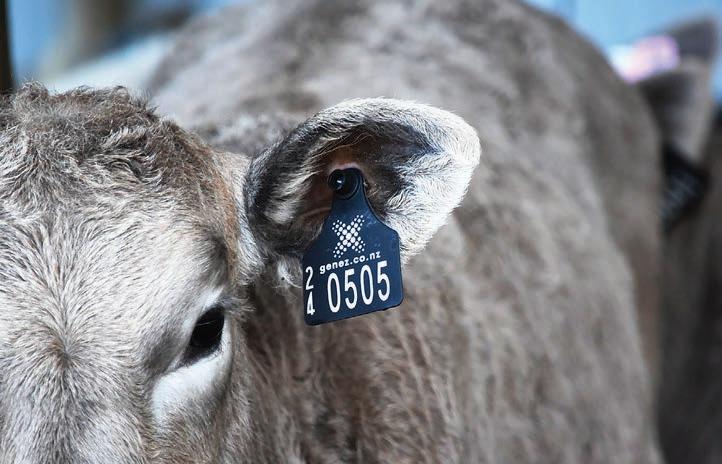
NEW LEVY:
OSPRI proposes increasing levy rates, primarily to help strengthen the delivery of the NAIT scheme.
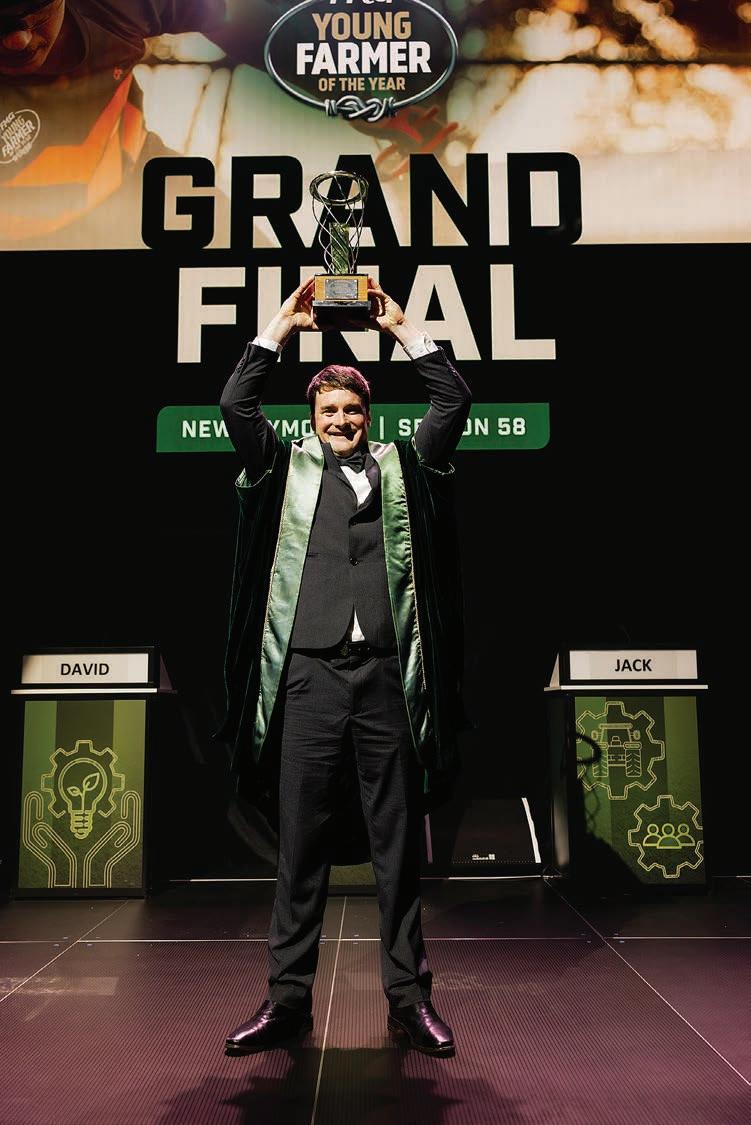


WINNER: It’s back to work for Tom Slee, the winner of this year’s FMG Young Farmer of the Year contest in New Plymouth.
Sustainability key for Ballance winners
S‘USTAINABLE farming is a lot of things, it’s not just one thing,” says Tony Roberts. He and wife Michelle were just named winners of the Gordon Stephenson Trophy in the Ballance Farm Environment Awards and 2026 National Ambassadors for Sustainable Farming and Growing.
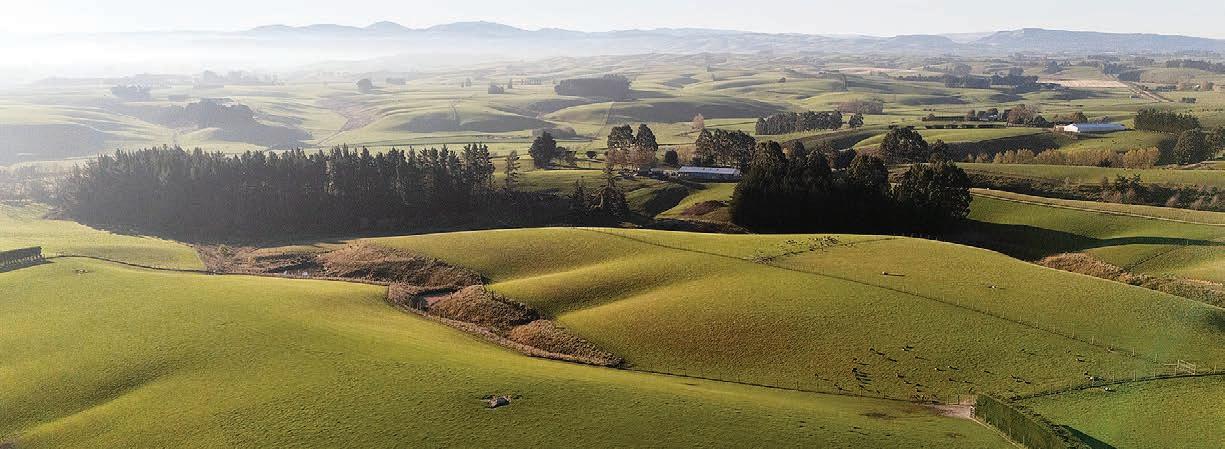
The Robertses, who farm in Merino Downs near Gore in Southland, run a red deer velveting herd, fallow deer for the hunting trophy market and a dairy grazing operation.
In all, there are 667 red deer, 635 fallow deer, 220 rising one-yearold dairy heifers and 35 sheep are on a 269 hectare farm.
Besides the two of them, daughter Kate Roberts and her partner Mark Lieshout, and “obviously the grandchildren”, run the farm.
Tony and Michelle have been hyperfocused in their farm journey.
They started in Taranaki as sharemilkers in 1990s, moved to the South Island in 1995 and continued sharemilking.
They kept investing in land and bought a dairy farm and runoffs.
In 2017 they looked for a change of scenery.
With a love for deer since the early 1980s, and Tony’s passion for hunting, they started a deer journey.
They saw an opportunity for fallow trophy deer, but went all in and bought red deer for velveting.
The initiatives on the farm have both profit and sustainability in mind.
“Sustainability is about matching the class of the stock to the type of land that we run,” Tony said.
“You’ve got to be profitable to be
What practices we do now have to be sustainable in 50 years.
able to be green.
“What practices we do now have to be sustainable in 50 years.
“Sustainability comes back to the people that work within your business.
“We’ve been given an opportunity to farm this land, we’re only guardians of it. If you have a long-term vision you’re going to be far more sustainable today and in the future,” he said.
About 77% of their red deer are housed in both purpose-built wintering barns, and repurposed wool sheds that were on the property when they purchased it.
Deer stay inside from about June to late August.
“We’ve taken them and repurposed them for the purpose of wintering our deer inside to get them off the paddocks over the vulnerable period of winter,” Tony said.
Fallows, which are lighter, are grazed on winter crops.
“It’s about protecting our vulnerable soils in a rolling country.
“We’re controlling our winter feeding programme and
minimising environmental losses.”
Tony said they have about 7.5 kilometres of waterways through the property, with some natural wetlands.
In order to protect biodiversity they exclude stock from the wetlands.
A few amenity trees enhance the areas, with natural grasses “doing an amazing job of filtering out nutrients”.
A key to the operation is the different streams of income from velvet, trophy deer and dairy grazing.
“The business is diverse. We’ve got different levers we can pull with different stock classes.
“If something’s down, something’s up, it spreads income throughout the year.”
They are also not afraid to try new tech and are among the first to trial Nedap SmartTags on deer, using dairy technology to monitor rumination, activity and heat detection to support their embryo transfer programme.
Tony said it has a 85% success rate in detecting heats, which he sees as a strong indication the tech can work in deer.
The tags have now been removed, and the family will
decide later whether to adopt the system longer term.
Head judge for the Ballance Farm Environment Awards Karen Williams had this to say about the couple:
“Tony is always looking around corners. He’s prepared to challenge conventional thinking, embrace new technology and ask, ‘Why not?’
“But every great idea needs someone who can turn it into a sustainable reality, and that’s where Michelle is exceptional.
“She brings a calm, considered approach and has a simple rule that new ideas sit for three days before any decisions are made. Together they create a really balanced partnership.”
Williams said Michelle is leader in her own right.
“She hasn’t simply supported the business from the sidelines. She’s stepped into leadership roles that help shape the wider sector, including serving on Southland’s Regional Forum to help guide freshwater management.
Michelle and Tony are working through a succession plan with Kate and Mark, who are buying in stock to get a foothold into the operation.
Bremworth walks away from takeover talks
Gerald Piddock NEWS Food and fibre
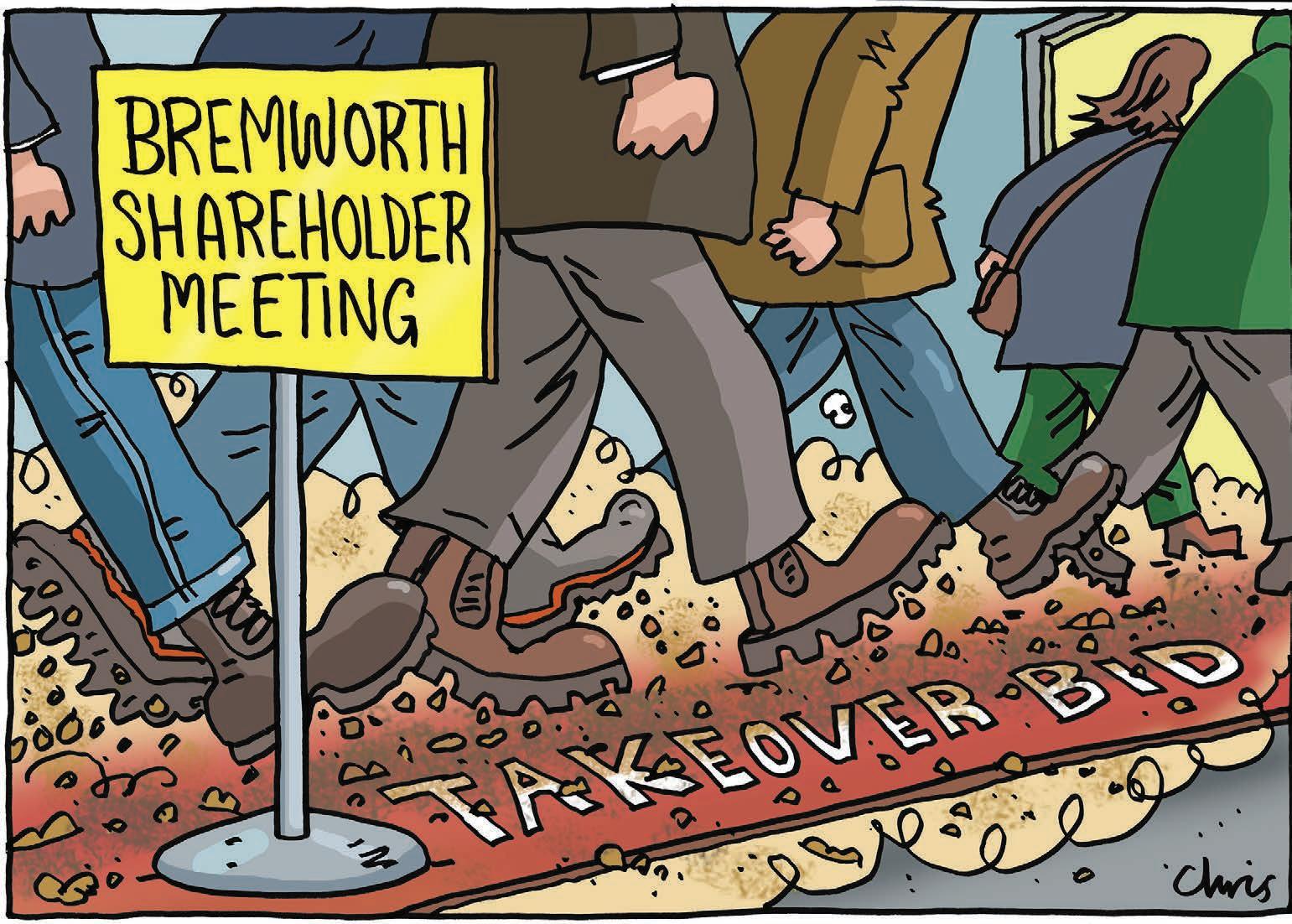
BREMWORTH has abandoned its proposed takeover by Floorscape in the face of overwhelming shareholder opposition.
Bremworth’s board said in a statement on NZX that a group of shareholders that represent 38% of Bremworth’s shares had committed to vote against the takeover.
This group includes interests associated with David Ferrier, as well as the Timpson, Harrison and Woolf families.
In October last year, Bremworth announced a proposal for a scheme of arrangement (SIA) with Floorscape where it would acquire 100% of Bremworth’s shares.
The SIA required a 75% shareholder majority vote to pass. However, Bremworth’s board now says it will cease discussions with Floorscape regarding a potential extension to the SIA, meaning it will lapse.
The board said it is “frustrated” by the actions of shareholders who committed to vote against the SIA after it had overcome its final regulatory hurdle but before the board could release an independent adviser’s report that would enable Bremworth’s shareholders to assess the SIA’s merits.
“This has taken away genuine choice for Bremworth’s remaining 2300 plus shareholders, including minority holders.
“To date, the opposing shareholders have not offered any alternative plan for the Bremworth business nor details of any alternative acquirer willing to make an offer at or near the level of the Floorscape scheme,” the board said.
On July 6, the board received a letter from Ferrier co-signed by Henry Lawford Lonsdale Ferrier, the Chancery Trust and Mangawhai Collective Limited. Collectively, the group was Bremworth’s largest shareholding group, representing 19.413% of its shares.

The group said they were not satisfied the transaction was in the long-term interests of the wool industry, its participants or customers and they were mindful of the toll it has taken on Bremworth’s value and potential.
“The company continues to incur, extraordinary internal and
external costs in connection with the scheme.
“The need to adhere to the scheme’s undertakings for the inordinate period that it has taken the Commerce Commission to make its determination has paralysed the company and its management’s capacity to run
the company and progress its opportunity set.
“We believe that Bremworth has strong prospects and that the board should be focused on delivering on the company’s promise to shareholders, rather than perpetuating the run-down mode that continues to drain funds.”
Bremworth was also informed by TR Harrison Securities Trust’s Terry Harrison that it would also vote against the transaction. It has 2.4% of Bremworth’s shares.
Looking ahead, the board said while wool carpet sales in New Zealand and Australia are ahead of last year, overall trading in both markets continues to be challenging.
Macro-economic headwinds have put pressure on consumer spending, particularly in the construction markets, with a flowon impact on flooring demand. It was not cash flow positive or profitable in the second half of 2026, which is in line with expectations, it said.
PLUG: Bremworth has pulled the plug on Floorscape’s proposed takeover of the carpet maker due to shareholder opposition.
FAMILY MATTERS: Tony and Michelle Roberts with the Gordon Stephenson Memorial Trophy.
Gerhard Uys PEOPLE Awards
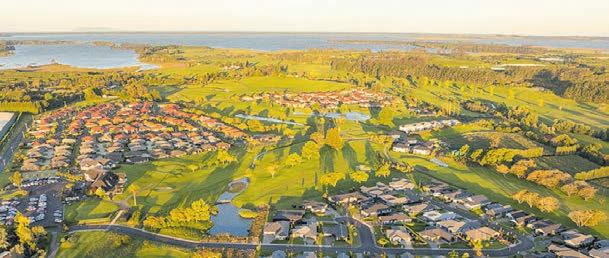
MIX: The Roberts farm in Merino Downs, near Gore in Southland, and run a red deer velveting herd, fallow deer for the hunting trophy market and dairy graze.
Tony Roberts Gordon Stephenson Trophy winner

Beets look tight for spring, seed companies warn
Richard
Rennie NEWS Retail
FARMERS are being urged to get their spring fodder beet orders in sooner rather than later as a looming shortage threatens to limit supplies for the coming season.
Independent seed supply company Specialty Seeds in Canterbury highlighted the looming shortage to farmers in a recent newsletter, pointing to increased demand here at home, and tougher growing conditions for seed suppliers in the northern hemisphere limiting availability down under.
Company director Stephen Finch said a particularly dry summer last year in Europe, where seed is sourced, lowered both the volume and the quality of the seed available this year. France and the Netherlands are the predominant suppliers of fodder beet seed grown here.
Meantime demand for the high dry matter crop has also grown
over the past few years as farmers capitalise on beets’ feed density. They also provide an alternative feed source to help reduce the impact of drench resistance in pastoral feed supply.
Specialty Seeds has listed multiple fodder beet varieties from all the major seed suppliers as “limited” in supply, or sold out.
“Not to be alarmist, but you would want to be on the job sooner than later, particularly if there is a cultivar you really want to get in the ground. You’d get onto it as soon as you can.”
Not to be alarmist, but you would want to be on the job sooner than later.
Stephen Finch
Specialty Seeds
He expects a higher number of new entrants to the grazing supply market this year, given the upswing in dairy conversions throughout Canterbury providing new grazing livestock income options.
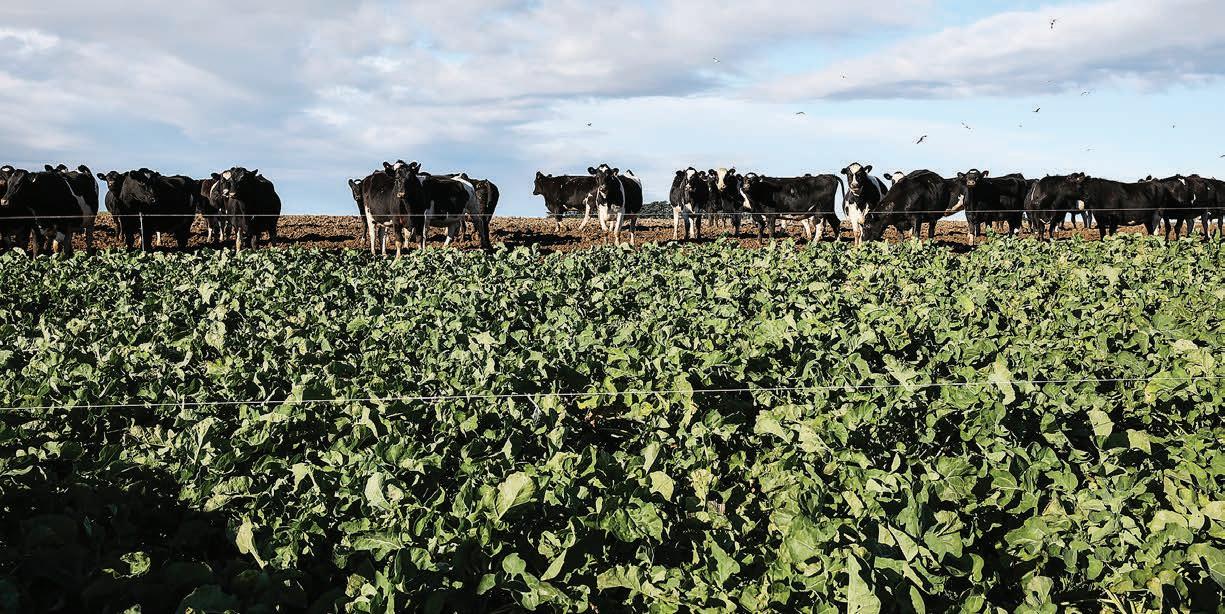
Estimates are that there will be an additional 25,000 dairy cows being milked in the region by 2028.
For 2026 it is estimated with 12 consents tied to conversions, 10,700 more cows will be milked this year, and another 1750 cows attributed to expansions of existing herds.
Finch said some companies identified the likelihood of a shortage early on and have made viable options available.
“That includes one ‘new’ variety from one company that was trialled in NZ a few years ago and has proven to be as good as the one promoted ahead of it at the end of the day.”
If the European summer
continues its dire run of early hot weather, next season’s seed supply may also prove tight. S&P Global market intelligence is reporting French grain farmers are already dealing with highly stressed crops early in their summer growth period.
Callum Davidson, sales manager for Cropmark Seeds, told Farmers Weekly pressure is growing on supplies, and this may be attributed in part to retail reps getting organised earlier and securing business ahead of time.
His advice is to be flexible about cultivar choice, which will be influenced by dry matter content as a percentage of the bulb. He is unsure how much last
year’s tough European summer had influenced supplies now.
“But NZ is probably the largest user of fodder seed in the world for livestock grazing, although fodder beet is a small proportion compared to sugar beet, which is so popular in Europe.”
He also cautioned about grass and clover seed supplies come springtime after the very tough harvest season Canterbury had this year.
“Red and white clover will be scarcer this year.
“Grass seed is likely to be variable in quality.
“We will be hoping for a better harvest this season. We are due a few.”

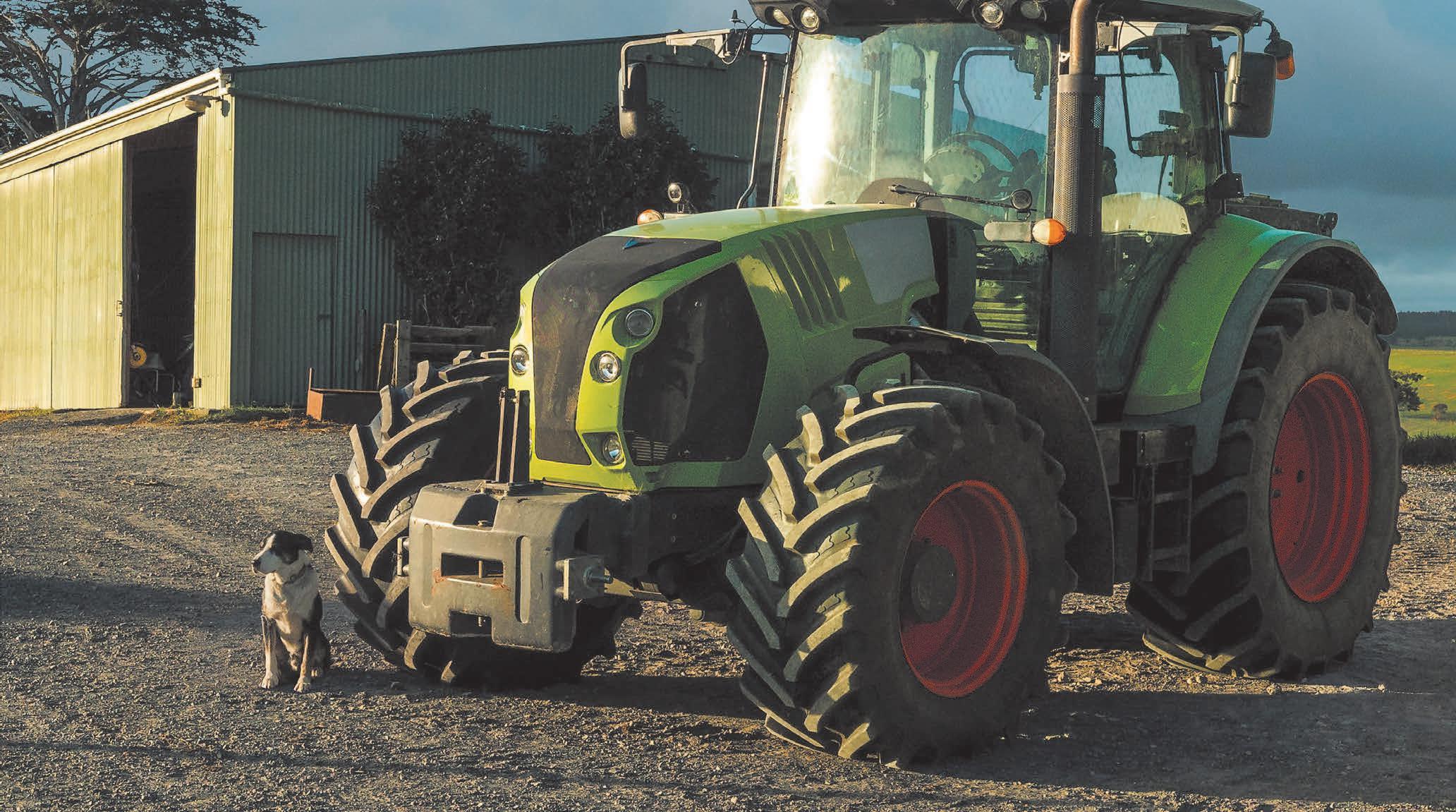
BEETEN: Fodder beet seed supplies for this spring are looking increasingly short with demand high and supply out of Europe constrained.
Safer workplaces a credit to farmers

Annette Scott NEWS Health and wellbeing
FARMERS have been praised for the everyday changes they are making on farm that are credited for a drop in ACC farm injury claims.
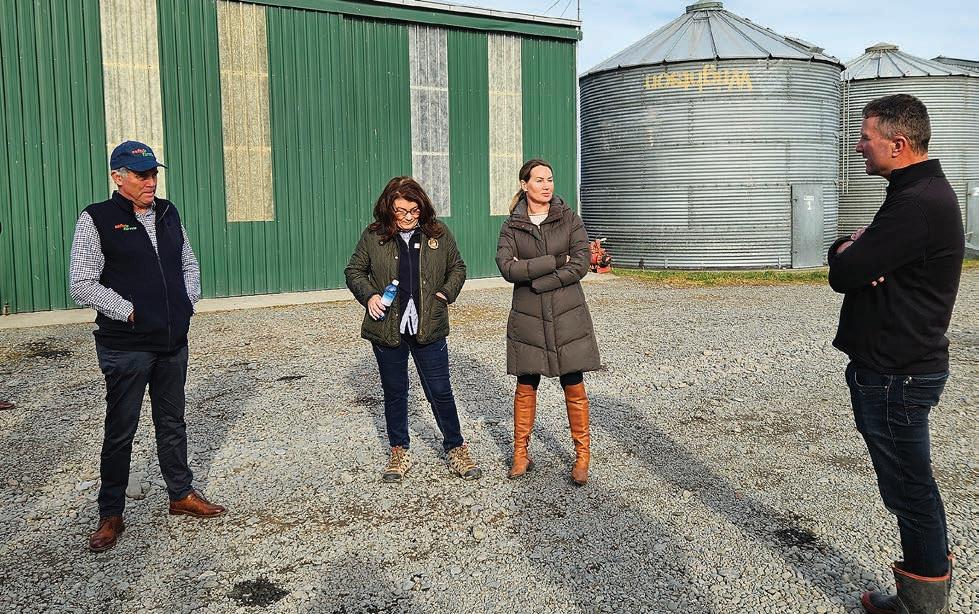
A Canterbury farm visit – hosted by arable farmer David Birkett on his Leeston farm and attended by ACC Associate Minister Nicola Grigg, local farmers, ACC and Safer Farms – highlighted the practical, farmer-led progress being made to reduce harm on farm.
There has been a fall in farmrelated ACC claims from 25,800 in 2020 to 17,300 in 2025, while 2026 to June 30 is also tracking down at 8900, a result attributed to thousands of small, practical decisions being made in sheds, yards, paddocks and around kitchen tables.
Wairarapa farmer Lindy Nelson, a Safer Farms ambassador, said the progress belongs to farmers, growers, contractors and rural teams who are choosing safer ways of working because they know their land, their stock, their machinery and their people best.
“Safety is a complex problem; this is a global first that the whole of a sector has come together to
reduce harm as a collective.
“Farmers deserve real credit for this progress. They are the ones making the calls day by day, slowing down when the weather changes, setting jobs up properly, talking things through with staff and family and finding practical fixes that work in the real world.
“That is why the drop in claims is encouraging.”
However, Nelson said no one in rural New Zealand will see it as job done.
“Too many farming families still know someone who has been hurt or worse.”
Safer Farms is working alongside farmers and industry to back the good work already happening on farms and help make safe choices easier and part of everyday farming.
Farm Without Harm is the sector’s own strategy to stop preventable harm.
Built with farmers for farmers, the plan focuses on the areas where harm hits hardest – long hours, fatigue, isolation and pressure, vehicle safety, livestock handling and physical strain, and hidden exposure risks such as chemicals, dust and other hazards that can build up over time.
“We’re working together, partnering with ACC and farmers to bring the strategy to life. It’s about everyday farming people
Farmers deserve real credit for this progress; they are the ones making the calls day by day.
Lindy Nelson Safer Farms
protecting one another from preventable harm.”
With ACC’s investment supporting safety, Birkett shared examples of safety measures implemented on his farm including around stockyards, silos, augers and machinery.




SUCCESS: The on-farm gathering at David Birkett’s shared the success of Farm Without Harm. Attendees included Safer
He listed “little and smart practical moves all building incremental gains to reduce harm, crush protection devices, GPS rollover alert systems, pen gates to separate people from livestock, choosing the right vehicle for the job”.
The next step for the programme is to keep building on that momentum by sharing what works, learning from near misses and backing farmers with tools and support.
Grigg said farming remains one of NZ’s highest-risk industries, with work-related injuries in agriculture costing $175 million
and resulting in more than 750,000 lost work days each year.
“That’s why the government, through ACC, has invested $11m over five years to support the Farm Without Harm strategy.
“This investment is helping deliver practical, farmer-led safety initiatives, training and resources that are making a real difference on the ground.
“It’s fantastic to see strong engagement from farmers and early signs that this partnership is already changing behaviours and reducing harm.
“The best solutions are those developed by farmers, for farmers.”

Farms chair Murray Donald, Ambassador Lindy Nelson, Minister Nicola Grigg, and Birkett.
From the Editor
Broadening our horizons

Bryan Gibson Managing editor
AT THE recent Primary Industries Summit in Auckland, Landfall Strategy Group’s senior adviser on geopolitics and economic policy Dr David Skilling warned that geopolitical instability is here to stay.
Those hoping the current turmoil will subside when United States President Donald Trump leaves office will be left waiting, he warned.
“This is not just a function of the Trump administration or just a bad few years,” Skilling told the Farmers Weekly Podcast following his address.
“This is signalling that we’re moving into a new world.”
As an export-led economy, New Zealand relies on the free and fair trade of goods to make its way in the world.
If that system is constrained, our ability to earn is also constrained.
For several decades, our food producers have relied on several big customers to
buy up the lion’s share of our exports.
But can we continue to do that?
China, the US and the European Union are still massive buyers but their relationships with one another could well put pressure on us to pick a team.
Even if that doesn’t occur, wise heads would caution that diversifying our trading agenda would help insulate us against future upheaval.
That seems to be well underway, thankfully.
The National Party unveiled its trade policy just over a week ago and it has its sights set on agreements with some of the fastest growing economies in the world.
If elected, National will look to engage with the likes of Brazil, Nigeria, Bangladesh, Switzerland, Argentina and Uruguay.
With a lot of our traditional trading partners already signed up to FTAs, National’s list makes sense.
Brazil, Nigeria and Bangladesh are three of the most populous countries on Earth, and rising incomes in these emerging economies should create the same opportunities exporters see in the India FTA.
Nigeria is Africa’s largest nation by population and its GDP has grown significantly in the past decade.
Once an economy dominated by agriculture, Nigeria’s manufacturing and service industries now account for 52% of GDP.
It’s a story unfolding across the developing world.
Argentina and Uruguay are in our food production family, in many ways.
They have similar climates and farming systems to NZ, and our companies and entrepreneurs have been seeking out partnerships there for decades.
Collaboration on research, development and farm systems could help all our boats rise.
Both National and Labour have good track records when it comes to trade negotiations, with their ambition matched by the skills of our trade officials.
The cost of doing business in the world is going to continue rising, and David Skilling said it will not just be inputs like fuel and fertiliser we’ll have to pay more for.
“A lot of what’s happening is countries are investing more in military, in industrial policy, in energy transition, on a whole range of things,” he said.
“So every input from physical to financial, the cost structures are increasing. And the implication, if you don’t want your margin squeezed, is you’ve got to find a way of moving into higher value-added categories.”
Higher margins and a broader range of customers will be the key to our future prosperity.
Our world is changing fast and new powers are emerging as income distribution changes, demographics shift and old alliances falter.
This policy shows we’re moving forward with our eyes open to the geopolitical landscape.




Do you support National’s trade policy, which will seek trade deals with emerging economies such as Nigeria, Brazil and Bangladesh?
This week’s poll question: Have your say at farmersweekly.co.nz/poll
LAST WEEK’S POLL RESULT
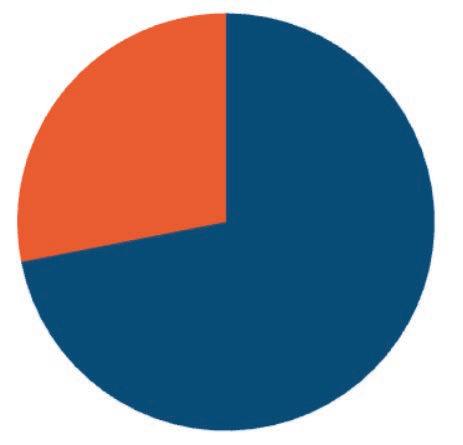
ALMOST three-quarters of voters were unsatisfied with their internet coverage. Surprisingly, many dissatisfied people lived close to urban centres but still experienced connectivity issues. “We live 12 minutes from Hamilton, 10 minutes from Cambridge and 15 minutes from Morrinsville but we cannot get any other internet but satellite. Come on NZ government, complete something you have promised, or is this like everything else promised during elections – only good until you are elected?” one voter said. “It is horrendous and I’m 10 minutes from Invercargill,” said another. Of those who were happy with their internet services, many received it through the Starlink satellite service. “Starlink. The others weren’t interested,” one said. “We use Starlink. It is expensive. In poor weather it struggles to maintain function in our area,” said another.
Last week’s question: Are you happy with the quality of internet coverage in your region?
The reason meat co-operatives have failed
Meaty matters
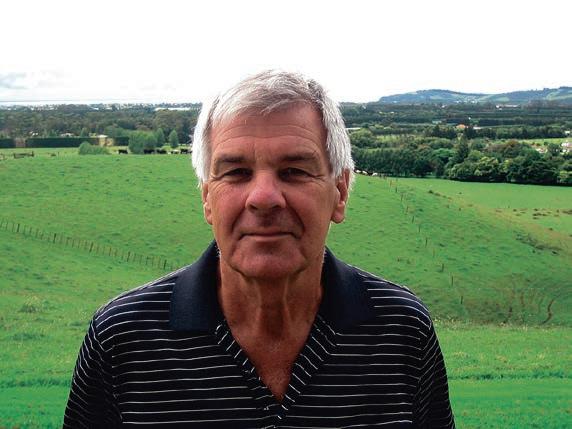
allan@barberstrategic.co.nz, http://allanbarber.wordpress.com
THE ownership of New Zealand meat companies has changed dramatically over the past quarter-century. The previous 25 years also experienced substantial change, but that period was characterised more by a series of company collapses due to the massive change in farming, trade patterns and government subsidies.
Over half a century the shape of the agricultural sector has become unrecognisable. The first and at the time catastrophic event was Britain’s decision to join the European Common Market, which meant we could no longer operate as the colonial farm for British consumers.
This led to unsustainable support to encourage farmers to keep on raising a product with no guaranteed market.
The consequences of this were variously the Meat Board’s failed attempt to manage the market through compulsory acquisition, the closure of freezing works
like Whakatu and Tomoana with thousands of jobs lost, the decision to split Waitaki International’s assets and liabilities between AFFCO and Alliance, and the closure of Fortex and Weddel.
Most of these decisions were driven by the banks, whose exposure to the meat industry far exceeded the value of the assets they were euphemistically secured against. At the same time free-market forces, introduced by the Lange/Douglas Labour government, saw the rise of efficient processors like Lowe Walker and Greenlea focusing on the fast-growing dairy herd.
Hot boning was much more efficient than cold for processing manufacturing beef, which was fast overtaking lamb and prime beef as the industry’s most profitable product.
During this traumatic restructuring period the companies that suffered were both co-operatives and locally or overseas-owned corporates. Watties, Fletcher Challenge, Fortex and overseas meat companies Vestey Group and Borthwicks were all heavily involved in the sector before getting out or going into receivership.
Co-operatives AFFCO and Alliance went through difficult times absorbing Waitaki’s plants while struggling to make enough profits to reinvest in upgrading their assets. AFFCO’s co-operative shares were worth virtually nothing by 1993 and the bank syndicate agreed to continue funding the business provided the company raised $50 million through a public listing. The collapse of Weddel the year before made this a logical choice.
AFFCO was publicly listed for 15 years until the family-owned Tal-
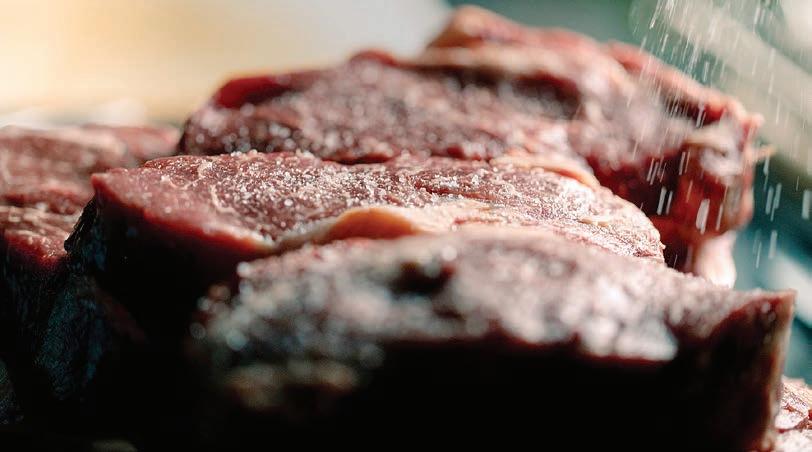
struggles can be put down to competition for livestock, declining throughput, the emergence of newer, more nimble competitors, and the failure to rationalise and upgrade ageing plants, says
ley’s Group reached the threshold for compulsory acquisition and finally bought 100% of the company. Alliance succeeded in retaining its co-operative status with the support of its bankers because the shareholders, predominantly sheep farmers, were still keen to invest in their co-operative. Alliance continued to make small profits for the next 25 years, but never enough to offset the occasional loss-making year before the disastrous losses in 2023 and 2024.
The age of the facilities and declining livestock volumes demanded serious plant upgrades and closures that the anaemic profit performance could not cover. This finally made it impossible for Alliance to survive without an injection of outside capital, which was provided last year by Irish family-owned company Dawn Meats.
Fellow South Island co-operative PPCS remained reasonably unaffected until launching a hostile takeover of Hawke’s Bay’s
Richmond Meats. Although this provided a North Island platform for expanding into a national business, it stretched the balance sheet and increased the amount of debt required to upgrade the enlarged plant network. This resulted finally in the sale of half the business and loss of board control to Shanghai Maling, now Bright Foods.
Japanese-owned ANZCO’s purchase of Greenlea is just the latest episode in the rationalisation saga of the New Zealand meat processing industry, but it may well be the last for some time.
The co-operatives no longer control the companies they used to own: AFFCO’s farmer shareholders owned 5% of the company by the time of the public listing in 1995, Silver Fern Farms Co-operative now owns 50 % of the business, and Alliance Co-operative owns 33%.
So the question is why they failed so badly when the cooperative model has survived in dairy and retail.
The obvious answer is a combination of vicious competition for livestock, declining throughput, the emergence of newer, more nimble competitors, and the failure to rationalise and upgrade ageing plants.
But another explanation lies behind this answer – one that a correspondent, previously a director of a meat company, tells me I have failed to recognise: the issue of inadequate board expertise.
In his words, “too often co-ops end up with directors who are good at popularity contests but are short on experience in tough dynamic businesses. They often lack meat industry knowledge as well as enough engineering knowledge to be able to hold the engineers to account.”
He also maintains this lack of expertise enables management to control the board without any skin in the game, except for that of self-preservation, in contrast to hard grafting owner operators. I would also make the point that co-operative directors’ main commitment and expertise is to run their own farming business successfully.
Lastly, it is important to see the massive changes the meat industry has gone through during this period. Livestock numbers, labour laws, union influence, processing technology, product presentation, hygiene requirements and health and safety laws are all unrecognisable compared with 25 let alone 50 years ago.
Co-operative board members took on an impossible task for which they were generally illequipped. Maybe it’s a miracle meat co-operatives lasted as long as they did.
The sun is not setting on NZ agriculture
In
my view

IRECENTLY returned from a study trip to Ireland energised by what I had seen and enthusiastic about how some of those ideas could be adapted within the New Zealand context.
Sadly, the welcoming committee included some media headlines opining that farming is no longer the backbone of the country’s economy despite further increases in GDP from the primary sector. It’s a frustratingly familiar attack
that harks back to at least the mid-’80s, when agriculture was labelled a “sunset industry”. To paraphrase Mark Twain, reports of agriculture’s death are greatly exaggerated.
Our latest available figures show New Zealand’s dairy export revenue is forecast to reach a record $28.6 billion for the year to June 30, 2026, driven by a 5% increase in earnings and accounting for nearly half (47%) of all primary exports.
That means dairy generates more than one in every four dollars of New Zealand’s foreign exchange receipts from goods and services exports and employs over 55,000 people on farm, and in manufacturing.
The Ministry for Primary Industries predicts dairy export earnings will top $31bn by 2030. That’s just dairy. Not bad for a portion of a “sunset industry”.
This all begs the question –if farming isn’t the economic backbone of economy, what is? And, more importantly, does it really matter?
Rather than wasting effort cutting down tall poppies, New
Zealand would be better served if we collaborated across multiple disciplines, for example energy, technology, data and people development, growing together, celebrating each other’s wins and sharing information.
That is something the Irish are doing well. There’s a real sense of togetherness.
Rather than cutting down tall poppies, NZ would be better served if we collaborated across multiple disciplines.
A commonality of purpose –to support and deliver well for their primary sector. It felt as if the whole country was behind the relentless pursuit of farming excellence.
An absolute focus on pasture utilisation and genetic gain really stood out: one system for each and large connected-up data sets, minimising duplication. Their approach to catchment groups is another good example. Everyone is included and
supporting the farmers. Rural professionals, banks, fertiliser companies, teachers, students and community members – great data and great focus in the areas where changes need to be made. Everyone is on board delivering improved outcomes.
We need more of that kind of thinking here in New Zealand. We’re a small trading nation at the bottom of the world. We’re facing into a new phase of what New Zealand’s chief trade negotiator, Vangelis Vitalis, describes as “a new world (dis)order”. One where trade protectionism is on the rise and geo-political tensions are heightened.
To be successful in the future we need to back our winners, not cut them down.
The government’s $143 million Land Use Flexibility announcement at Fieldays was a solid step in the right direction.
Responsible Dairy, which DairyNZ is proud to be leading, is one of the six initiatives within the package announced by the government.
In total the programme cofunding between the government
and industry is $45.85m over seven years.
Responsible Dairy includes partnerships with leading farmers and dairy and technology companies to enable testing and demonstrating of next-generation low-footprint farm systems, transformative dairy conversion options, and stacked technologies on commercial farms.
It is expected to speed up the rate at which the sector adopts transformative technologies, getting them into active use years earlier than what might otherwise be the case.
This is government and sector co-investment to scale-up adoption, and farmers sharing information to lift everyone up to new levels of productivity, efficiency and sustainability within their individual farming businesses.
Sounds like a blueprint for the rest of the economy – and a reminder that the sun isn’t about to set on agriculture anytime soon.

Allan Barber Meat industry commentator:
FORCES: Meat processing
Allan Barber.
Tracy Brown Brown is chair of DairyNZ

Farmers Weekly begins its journey to your mailbox here, starting
How much do you value real?
A fair few factors have to come together to get this publication in your mailbox at the start of every week.
Our team of journalists and analysts gather every morning at 9am to unpack what’s important to you. Along with them, the team of partnership managers, production and support staff then come together and build this publication from scratch.
They’re all real people passionate about New Zealand’s primary sector, and the value that real news, market information and people stories brings to farmers and growers.
AI doesn’t write our content. AI doesn’t generate our images. And AI most definitely can’t deliver this publication to 73,500 farming households every week.
Every part of the process involves a human who is passionate about getting timely information to you in the format you keep telling us you want.
So if you value this product, consider joining the other 1252 voluntary subscribers. $15/month, $120/ year or whatever value you decide.
Charlie Williamson Community Manager
Support us with a voluntary annual subscription to Farmers Weekly. $120 for 12 months. This is a voluntary subscription for you, a rural letterbox-holder already receiving Farmers Weekly every week, free, and for those who read us online.
Scan the QR code or go to www.farmersweekly.co.nz/donate
Email your name, postal address and phone number to: voluntarysub@farmersweekly.co.nz and we’ll send you an invoice.
Call us on 0800 85 25 80
Note: A GST receipt will be provided for all voluntary subscriptions.



with our printing partner, NZME, in Auckland.
Sector Focus
New Feds head at coalface on ag issues
Annette Scott PEOPLE Federated Farmer
WITH succession planning front and centre for New Zealand’s ag sector, newly elected Federated Farmers president Colin Hurst brings personal experience to the issue. His family farming operation is also experiencing its first steps into dairy, another hot topic for NZ ag. Hurst, who was elected Feds president last month, was for decades an arable farmer in south Canterbury, but he knew he’d have to look outside the square to ensure sustainability for future generations.
His family had been cropping for 60 years. When the dairy farm across the road came on the market they were in two minds –“could we make that work for our arable operation”, Hurst said.
The 2019 New Zealand Arable Farmer of the Year, a former arable industry chair and Feds nationalvice president of the past three years had some big decisions to make with his family: forge on with cropping “or what”?
The purchase of the dairy farm won out and it is now weaving its way into the new farm business operation.
“Farm succession has been the
key driver; it’s not a case of ‘stuff arable’; it’s more the way of the future of arable – from once mixed cropping and sheep, to mixed cropping and dairy, where both can really work to complement each other in an overall farm business plan.”
When Hurst’s parents, Tom and Ailsa Hurst, went on to Wharanui, a 186 hectare property at Makikihi, just south of Timaru, in 1963, it was initially dryland sheep with some cereal and small seeds cropping.
Over time more property has been purchased to now total 700ha, cropping 450ha with 250ha under irrigation.
“How times have changed,” said
Ailsa, who still lives on the farm.
“Buying this dairy farm has been a big thing, but I’m sure the boys can make it work; it’s been a very big decision but I’m believing it is the right decision now with four generations on the farm.”
Colin’s passion for farming took him back to the farm in 1986, having completed four years in a fitting and welding apprenticeship after leaving school.
“I headed back to the farm. I did wonder at the time, but it all worked out.”
He and wife Janis were married in 1988, at a time when “sheep were a very profitable farming income”.
“We had 3000 Coopworth
breeding ewes, the profitability in sheep fell away and in time cropping was better; the dial has turned again now though.”
With their own seed dressing operation, store cattle finishing, hogget and dairy grazing, and the option of buying a neighbouring unit, with son Nick and his partner Alice Knight, and their daughter Holly making up the fourth generation, the dairy option really wasn’t a question, the family said, when it came to a sustainable succession for future generations.
“With my Feds involvement I have been away a lot over recent years and Nick has very capably taken charge,” Colin said.
Nick, who qualified as an electrician, headed back to the farm after stints doing harvests in the United States and United Kingdom.
He said cropping will still be an important part of the new farm business plan.
“We are on a learning curve. We’re going for a dairy beef programme so we are working through how that will work.”
For Nick, Annalong, the dairy unit, is exciting, with preparations well advanced to start milking a 650-cow herd through a 50-a-side herringbone shed this season.
“Dairy and cropping will be two separate systems in the overall farm company, but fully integrated with the cropping operation’s silage, grain and winter supplements feeding the dairy operation.
“We’ve got our ready-made client,” Nick said.
“Always a fan of co-operatives”, the dairy will be supplying Fonterra.
“If there’s one complaint I have of arable, it’s been the shame that there’s been no industry cooperative,” Colin said as he now focuses on his new role as Feds national president.
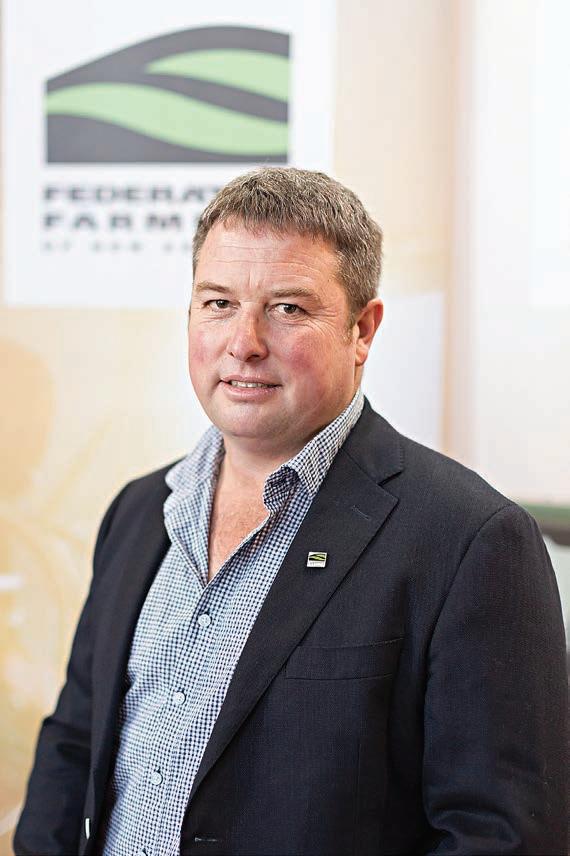
Feds arable chief sees green shoots ahead
Annette Scott NEWS Arable
GREEN shoots are appearing but there are still big challenges ahead for arable farmers, new Federated Farmers arable industry group chair Chris Dillon says.
“There’s a bit of positive stuff to think about, but there’s still a long way to go and quite a few changes needed in the arable system to get back on track,” he said.
Dillon highlighted the importance of New Zealand maintaining a sustainable arable sector.
“There are a lot of opportunities, like beef to dairy, that arable farmers can swing to quite quickly but these sectors also need arable that NZ can’t afford to lose; if it’s lost now, it will be very hard to get back, if even possible.
“What we need is not only an increase in dollars, but volume too, and greater returns from these earnings back to the growers, who are not getting rewarded for their investment.”
Dillon is a third-generation farmer on the family’s 860 hectare operation at Riversdale in
northern Southland.
The initial farm of 200ha has been added to over the years and since the 1980s has transitioned from sheep to arable with diversity increasingly being the key to sustainability.
What we need is not only an increase in dollars, but volume too, and greater returns from these earnings back to the growers.
Chris Dillon Federated
Farmers
Cropping 600ha in a mix of wheat, cereals, vegetable seeds, break crops and sometimes oil seeds, the remaining 240ha is in pasture for the integrated livestock system that includes deer, beef and lamb grazing, with rotation dependent on soil types.
Looking at the coming season, Champion has released its first round of pricing for the 2027 season with premium milling wheat at $620 a tonne and milling grade one at $585/t.
Dillon said this premium pricing is “getting more where it needs to be but with the fertiliser pricing still an unknown, we need to be at least $600. The $585 is no better than the past.”
With the rise in costs of fuel, fertiliser, freight and feed, Dillon said it’s expected margins will remain tight due to the lack of any certainty around diesel and fertiliser prices.
“This unknown will be an ongoing challenge for cropping and we have no way of passing on our costs for diesel and fertiliser.”
Given the weighting of input costs on the overall cost of production and margins, growers are already responding by using less fertiliser or adjusting rotations.
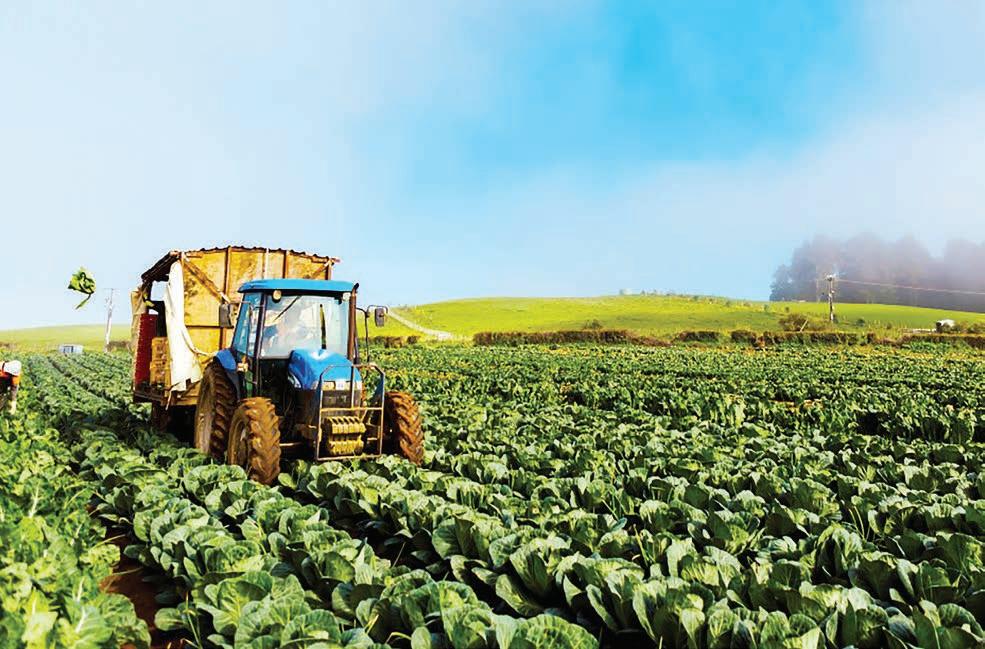
According to the latest Ministry for Primary Industries Situation and Outlook for Primary Industries report, this is expected to also flow into cropping choices in the coming season with the mediumto-long-term appearing more stable, particularly driven by solid demand for seed products.
Meantime seed exports remain resilient in niche, high-value markets particularly ryegrass
and vegetable seeds with Europe the top destination for NZ arable exports accounting for $133 million, around 42% of exports, in the year to March 31, 2026.
OPTIONS: Chris Dillon says there are lots of opportunities, like beef to dairy, that arable farmers can swing to quite quickly, but these sectors also need arable.
Arable export revenue is forecast to recover gradually, with total export revenue growing by about 3-5% over the coming couple of years, reaching $355m by 2027-28.
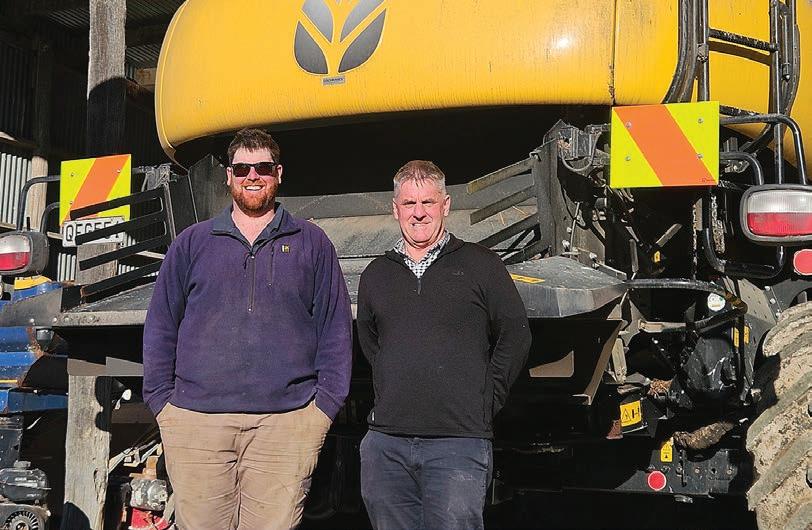
FAMILY AFFAIR: Four generations of the Hurst family, Colin, his mother Ailsa, son Nick and granddaughter Holly. Photos: Annette Scott
RETURN: Nick Hurst, pictured with Colin, headed back to the farm after stints doing harvests in the US and UK.


The power of flowers
If you’ve been to an event in Stratford in the past 40 years, chances are Margaret Vickers created the floral designs.
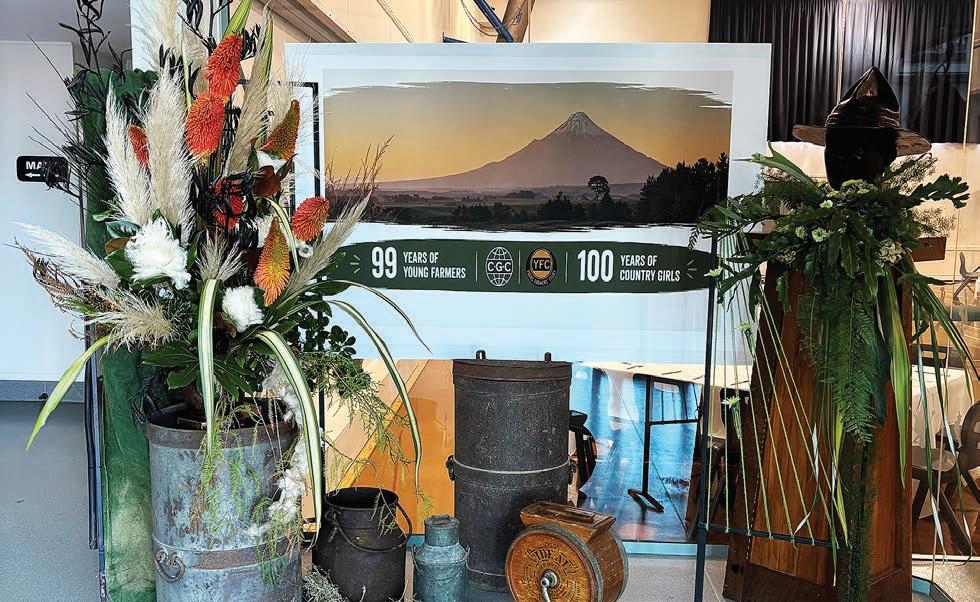
The Rural Women New Zealand Member of Excellence has just done the flowers for the Young Farmers Final held in Stratford.
She said although the winter months can be tricky for flowers, local gardens provided.
“I tried hard to dry hydrangeas, but the weather and everything, they just browned and were so brittle it didn’t really work. But nature provided the red-hot pokers we used. I did have to go to the market to purchase the little chrysanthemum that was used in the table arrangements.
“It is fun creating because when you’re designing for that sort of event, you’re not governed by rules of what you can use and what you can do. You just put your own interpretation and design together,” she said.
Her floral arranging journey started with Rural Women, known as the Women’s Division of Federated Farmers at the time.
“I hadn’t been a member long
FREEDOM: Margaret Vickers says Young Farmers provided an opportunity to be creative with her arrangements.
and my first role with the Midhirst branch was the flower steward for the competitions, because they knew I liked gardening and that was one way they could encourage me to participate a bit more with the organisation.”
She was also asked to create a shoulder spray for the National President visiting the Midhirst Branch.
“I said, what? I’ve never done that in my life, but ok. Thankfully I had a dear mum that was very crafty and talented and had that ability to create. She was an expert at her time, a good teacher for me, a good mentor. She said, ‘okay, I’ll come round and we’ll work on this together’, and we did it. That is how it all started from there, would you believe?” said Margaret.
Weddings, funerals, events, awards, dinners and civil ceremonies, Margaret said she’s lost count of how many occasions she’s done the flowers, but it has always been her happy place.
In lockdown she was spotted by a cyclist that called in to ask for help with a funeral.
“It was during covid-19 when
this young lady who went past on her bike, I was in the garage playing around. I don’t know what I was creating at that time, but it was some floral art and she said to me ‘my dear old neighbour’s wife has passed away and is really desperate. There are no florists that are working and he wanted flowers to put on her casket. Can you help?’
“I said, of course. I have no idea who she was; it was just really beautiful that I could pick from my garden and help,” she said.
A few days later as thanks a whole pile of bromeliad plants were delivered for Margaret’s garden.
But it’s not just growing flowers and creating impressive arrangements she is known for, she has a long list of accolades to her name following years of service to her community.
Margaret has been a member of Rural Women for 59 years.
In 2000 she received a Citizens Award, in 2001 she was made a Rural Women Branch Life Member, in 2018 recognised as a Rural Women New Zealand

Member of Excellence, in 2019 an Outstanding Citizens Award, and in 2025 she made the trip to Government House to receive a King’s Service Medal for services to the community.
These awards have been for fundraising, catering, leading events, raising awareness for breast and prostate cancer and

rural mental health to name a few. She jokes Friday’s event will be her last and said no one believes her!
“For your passion, you make time. It’s my downtime, my gardening and floral work. It’s relaxing and enjoyable. And the floral art girls are just lovely. We’re just a big family,” she said.
Margaret’s top tips for DIY arrangements
1. Select your vase first: Decide what container you’re going to use, and then you must have size and proportion with plant material. If it’s small vase, you certainly don’t put that big flower in there. You’re looking for small, dainty material, so size and proportion is essential. As is the colour of your container. It’s very important that you try and bring that colour through your arrangement.
2. Picking at the right time: Flowers and greenery must be cut early in the morning or late at night when the sugar set is right in the plant. Make sure it’s the day before you arrange them, and they have had time for a good drink.
3. How you cut them is important: Always cut those stems on an angle because when you put them in a bucket of water or a container, if you’ve got a flat stem, you’re not letting them suck up the water.
4. Keep your water fresh: Remember to change the water every day and perhaps just a little drop of Janola in the water to stop any bacteria and discolouration.

BLOOM: Margaret Vickers’ floral arranging journey started with Rural Women, known as the Women’s Division of Federated Farmers at the time.
FEDERATED FARMERS

Feds slam Greens’ plan to ban fert
The Green Party’s plan to phase out nitrogen fertiliser is ideological nonsense that will drive up the cost of food for Kiwi families, Federated Farmers says.
“This is incredibly poor policy that has been taken straight from Greenpeace’s anti-farming playbook,” Federated Farmers freshwater spokesperson Mark Hooper says.
“It’s not just anti-farming; it’s antiscience, anti-commonsense and anti-economic development too. They’re living in la-la land if they think it’s a good idea.
“This kind of announcement has confirmed exactly what kind of party they are, pandering to fringe environmental extremists rather than middle New Zealand.”
Without the use of modern fertilisers, it’s estimated that global food production would fall by an alarming 50%.
It would also have a devastating impact on New Zealand’s export income, with over 60% of our national exports coming from agriculture.
Hooper says phasing out nitrogen fertiliser would result in a humanitarian disaster and leave a growing world population totally unable to feed itself.
“The Greens have just confirmed they know absolutely nothing about farming, and remarkably, they somehow know even less about economics,” Hooper says.
“If they go ahead with a loony idea like banning nitrogen fertiliser, there are two things that will happen almost immediately.
“Firstly, they will shrink our exportled economy, because we will have much less milk, meat and fruit to sell to the rest of the world.
“Secondly, they will drive up the price of food like fresh fruit and vegetables for everyday New Zealanders, which isn’t exactly going to help with the cost-of-living crisis.
“If the Greens actually care about the millions of Kiwis struggling to put food on the table, why are they proposing something will only make food more expensive?
“This is a massive own goal from the Greens – and I don’t think their core voters will be happy when they see the rising cost of mung beans and cabbage.”
Multiple surveys and polls show the cost of living is the number one issue for New Zealanders this election – far ahead of all other issues for voters.
If farmers and growers can’t use synthetic fertilisers to grow grass for livestock, and vegetables for human consumption, higher food prices in supermarkets are inevitable, Hooper says.
“The impacts of those rising prices would be felt by just about every Kiwi household every time they get to the supermarket checkout – and it’s going to hurt their back pockets.
“A 2024 study from NZIER found that putting the squeeze on farmers’ use of nitrogen could send the price of broccoli as high as $9 a head – can you imagine?”
Hooper is also extremely critical of the lack of detail in the Green’s policy announcement. He says even the
It’s not just anti-farming; it’s anti-science, anticommonsense and antieconomic development too. They’re living in la-la land if they think it’s a good idea.
Mark Hooper Federated Farmers freshwater spokesperson
most basic information is missing.
“The Greens claim to be an environmental party, but if this is their flagship environmental policy I’d really challenge their credibility,” he says.
“If you’re going to announce you
want to phase out nitrogen fertiliser, at a bare minimum you should be able to tell us over what kind of timeframe.
“Are we talking about phasing it out over 1 year, 10 years, or 100 years? That kind of detail really matters – but they’ve got no absolutely no answers.
He says the Green’s policy document on their website leaves a lot to be desired.
“They’ve told everyone to go and read their plan if they want more information, but a quick look shows just how little detail is actually there.
“To put it bluntly, it’s an extremely high level four-page document. But to make matters worse, the front cover is just a title page, and the
Even Greens supporters will be aghast at the party’s antinitrogen fertiliser policy when the impact would be the price of mung beans, cauliflowers and many other foods going through the roof.
back page is just a Green Party logo.
“Even the two middle pages that are supposed to be the cucumber in the vegetarian sandwich have had to be padded out with large font sizes and glossy pictures.”
Hooper says farmers are working hard every day to improve environmental outcomes and this kind of thoughtless rhetoric isn’t helpful, credible or constructive.
“It’s scary enough when you hear it from a minor fringe party like the Greens, but I’d be incredibly concerned if mainstream parties like Labour were to join them.
“If Chris Hipkins and Labour want to protect their agricultural and economic credibility, they should categorically rule out phasing out the use of nitrogen fertiliser.”
PRICE SHOCK:
Photo: NZ Story
Farmers in mobile ‘purgatory’ after 3G network shutdown
Poor mobile coverage had Dave Hands thinking about a landline again – until he realised that service is being squeezed too.
“You’ll be in the middle of a conversation on the mobile and it just cuts out,” the Tararua farmer says.
“Or you’ll look at your phone and realise you’ve missed two or three calls, but your phone hasn’t rung at all. It’s a real nuisance.”
Hands says it’s hard to tell whether the mobile service disruptions worsened when the 3G network was switched off earlier this year.
“It was terrible then and it might actually be worse now.”
His service provider told him cellphone calls over satellite are coming in three or four months’ time.
“So why didn’t they leave cutting off 3G until that option was rolled out?”
Federated Farmers rural communications spokesperson Mark Hooper says new satellite-based options are eagerly awaited by rural families and businesses.
“Decent quality satellite voice and data services are still a year or two away.
“Farmers are in a sort of a limbo period, or purgatory if you prefer, between the patchy services of the old technology, and roll-out of the new.”
Hands feels for farmers like his son, who has invested in Halter collars, when so much operational information for that system comes via cellphone.
“Farmers are urged to take up technology, but without reliable communications, that sort of tech is badly compromised.”
Hands isn’t alone with his concerns about cellphone blackspots.
“We’re hearing consistently from
our members across the country that rural mobile coverage is patchy and hasn’t improved since the 3G switchoff,” Hooper says.
“The recurring theme is of calls dropping out on the farm, at home, and on rural roads.”
Mobile network operators Spark, 2Degrees and One NZ say 4G coverage is now at 99% of the population.
But as a Commerce Commission report points out, 4G land mass
Farmers are in a sort of a limbo period, or purgatory if you prefer, between the patchy services of the old technology, and roll-out of the new.
Mark Hooper
Federated
Farmers rural connectivity spokesperson
coverage was at 54.6% last year, up from 54.3% 12 months earlier.
“4G coverage reached a larger landmass and percentage of population than the 3G network ever did,” the report said.
“[But] we note 4G will not be like for like with the 3G coverage it replaces. For some consumers, this may impact their experience and ability to connect to their mobile network.”
Spark told Federated Farmers that, as part of the 3G shutdown, it upgraded all its 3G sites to 4G.
However, it said some rural customers may notice reduced coverage at the edges of the network, especially when working across large farms or travelling on rural roads.
Hooper says the problem isn’t just happening in remote areas, where valleys, tall trees and the like can disrupt signal.
“There are people who had a service, and now no longer have it.”
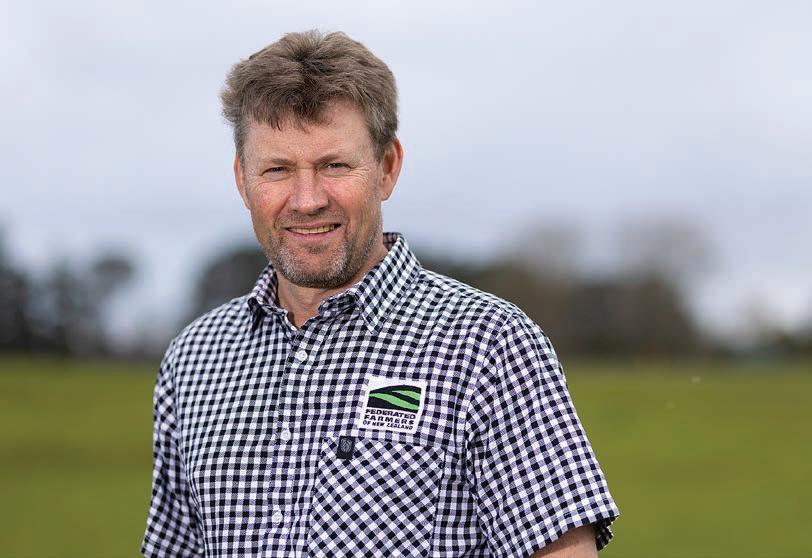
DANGER: Federated Farmers rural connectivity spokesperson Mark Hooper says unreliable connections put farmers’ health and safety at risk, and make it harder to meet requirements such as NAIT.

COVERAGE CONCERN: Despite the investment in the 4G network, some rural customers have gone backwards in terms of mobile reliability.
He says providers may be willing to investigate if anything can be done about these post-3G service blackspots, so it’s worth contacting them.
Through partnerships with successive governments and the Rural Connectivity Group, coverage has been expanded into areas that wouldn’t otherwise be commercially viable.
“MBIE have had to heavily subsidise not just the construction of, but the ongoing costs of operating, more than a few cell towers around the country.
“We’re not likely to see many – or any – more towers go up,” Hooper says.
“But we are seeing rapid growth in low earth orbit satellite services such as Starlink and Lynk competing for rural broadband customers, and direct-to-cell satellite services are just starting to expand the way mobile connectivity can be delivered.”
Federated Farmers continues to highlight connectivity problems to the Government and industry,
using data from its regular rural connectivity surveys.
“We don’t have all the solutions, but we can think of two things that would help,” Hooper says.
“We want the Government to establish an independent advice service to help rural customers navigate the maze of telecommunications technologies and options.
“People need someone who can recommend the best solution for their situation, rather than sell them a particular product.
“Second, smaller internet providers have been pleading with the Government for greater access to wireless spectrum so they can compete with the multinational satellite companies threatening their existence.”
Hooper says unreliable connections put farmers’ health and safety at risk, and make it harder to meet requirements such as NAIT.
“Our productive sector and export leaders deserve mobile and internet services every bit as reliable as those available in towns and cities.”

Young Waikato farmer fears for his future
Only a few years after buying his first farm, Jimmy Cleaver now fears restrictive new rules could end his dream of raising a family and spending his career on the land.
Cleaver went straight into dairy farming after leaving school and, in 2024, bought a 117-hectare North Waikato dairy farm with his parents, with a succession plan in place.
“That was a massive step for me – a dream come true,” the 26-year-old says.
“It’s incredibly rewarding to have your own piece of land, but now I’m genuinely worried about whether I’ll still be allowed to even keep farming.”
After 14 years of hearings, appeals and legal challenges, Waikato Regional Council’s Plan Change 1 is nearing the point where it could go live.
Once in force, it would introduce sweeping new rules for agricultural land use across the Waikato and
Waipā River catchments, affecting more than 4,500 farms.
Cleaver, Waikato Federated Farmers dairy vice chair, is among more than 400 farmers in the Whangamarino Wetland catchment who would need a restricted discretionary resource consent – as well as a certified farm plan – to continue their existing farming activities.
The rules go beyond protecting and restoring the wetland, to actually seeking to improve its water quality.
Cleaver says, under a restricted discretionary resource consent, he and neighbouring farmers would have no certainty they’d be able to continue farming.
Even if consent was granted, it could come with significant and costly new operating restrictions.
“It’s pretty scary,” Cleaver says.
“You’ve got whole communities and families that have been built around farming, and you’re putting all of that at stake.
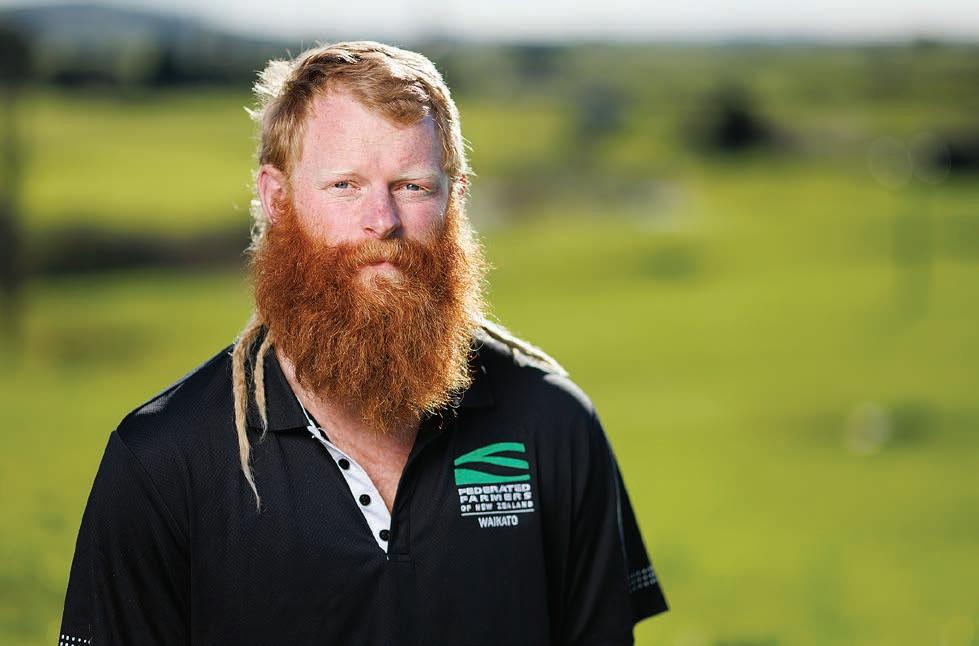
“I completely agree we need to protect the waterways and reduce our impact on the environment, but there’s been a huge amount done by farmers over the last 10 years and it feels like that’s not been recognised.
“From effluent management through to riparian planting and fencing off waterways, farmers have invested heavily.
“But the thing is, a tree doesn’t grow in one year – it takes 10 years. A lot of that work has already been done, but it takes time to fully see the results.”
On his own farm, Cleaver has made
some major improvements in just a few years.
“The effluent management system here was pretty marginal when I arrived, so one of the first things I did was upgrade it.”
Cleaver says he hopes to spend the rest of his working life on the farm, raising a family and contributing to the local community, but Plan Change 1 has left him questioning that.
“That’s 100% my intention. People build a home, a life and a lifestyle on these farms. But if these rules come in, all of that could be taken away.
WORKING ON
IT: Agriculture Minister Todd McClay said it doesn’t make sense to have a new national planning system on the way while the Waikato is sentenced to rules developed under the old system.
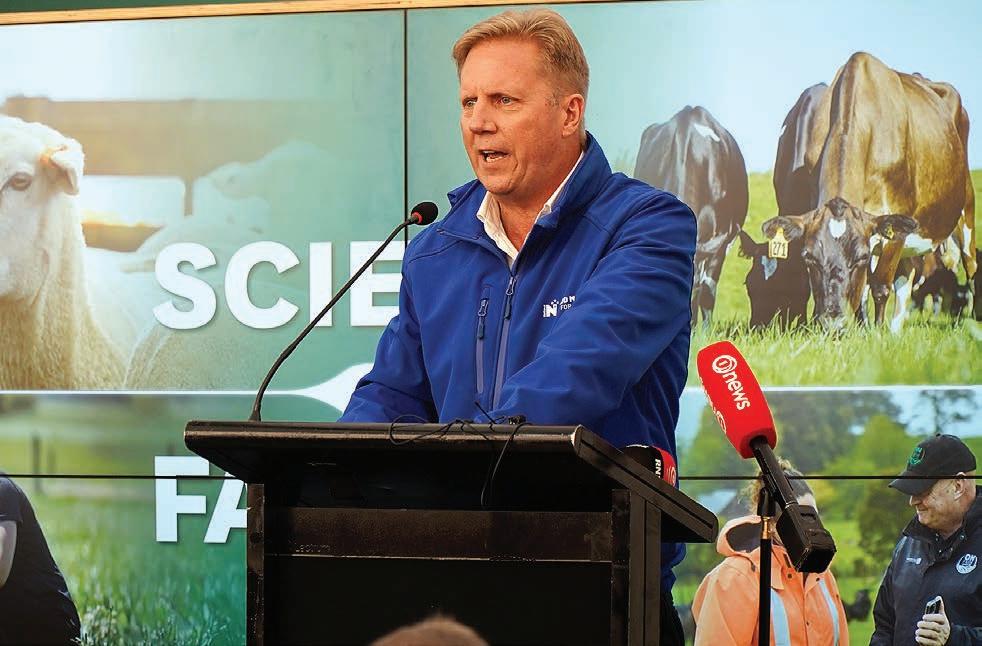


“Even if we’re allowed to keep farming under the more restrictive rules, it’s going to cost a lot of money.”
There are signs of hope the Government may intervene, after Federated Farmers called for a pause on PC1 until reforms of the resource management and local government systems have been completed.
Agriculture Minister Todd McClay and New Zealand First deputy leader Shane Jones have both expressed deep concern about the impacts PC1 could have on farmers.
“The level of burden that these new potential rules and regulations place upon landowners, veggie growers, and farmers – I think they are unbearable,” Jones said.
McClay said it doesn’t make sense to have a new national planning system on the way while the Waikato
DREAM AT RISK: Jimmy
bought his dream farm – now he’s worried he may not be allowed to keep farming it.
is sentenced to rules developed under the old system.
“We will instruct officials to provide advice on options to better align rulemaking in the Waikato with the replaced RMA,” McClay said in late June.
I want to spend the next 40 years farming this place, raising a family here and leaving it in better shape than I found it.
Jimmy Cleaver Waikato farmer
A public meeting was to be held in the Waikato for 8 July, when McClay and RMA Reform Minister Chris Bishop were expected to make an announcement about the future of PC1.
Cleaver is among the thousands of Waikato farmers anxiously awaiting the Government’s decision.
“I’m not asking for a free pass. I just want rules that recognise the work farmers have already done and give people like me the confidence to keep investing in the future.
“I want to spend the next 40 years farming this place, raising a family here and leaving it in better shape than I found it.
“I hope I’m given the chance to do that.”
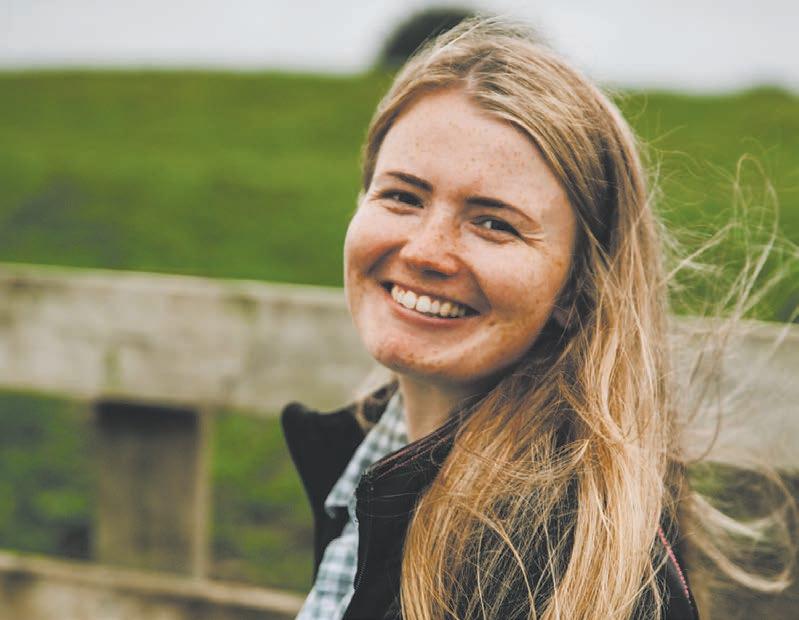


Cleaver
DOC must be pulled back into pest battle ranks
Pest management on the West Coast is like sending out a platoon against an army when the Department of Conservation fails to enlist in the battle, Federated Farmers says.
“Nearly 84% of the West Coast land area is under DOC – but pests and weeds don’t care about where the boundaries are,” Feds meat and wool chair Richard Dawkins says.
“The Crown doesn’t pay rates, and DOC says it doesn’t have enough funding to keep deer, pigs, possums and other pest animals under control, let alone weeds and wilding pines.
“The result is that those weeds and pests spill out from the conservation estate onto productive farmland, making life harder for farmers and undermining the pest control work done by councils and other landowners.”
With a population of 33,000, and about half that number of rateable properties across a region stretching 600km north to south, the current model asks too much of too few.
“It’s past time that DOC plays – and pays – a part,” Dawkins says.
The current West Coast Pest Management Plan focuses primarily on pest plants.
West Coast Regional Council recently surveyed landowners on whether a new plan should include deer, pigs and goats, and PredatorFree priority species: possums, rats, feral cats and mustelids such as stoats and ferrets.
“Federated Farmers said ‘yes’, but we’re also strongly pushing this review as the starting point for a wider conversation about what a fit-
for-purpose model could look like.
“We want to be front and centre in that conversation,” Dawkins says.
“Talks should be built on the principle that the Crown, as the region’s dominant landowner, must be a funded partner in pest management, not an observer.”
Discussions on pest management plan reviews are also happening in Otago, Canterbury and Horizons (Manawatū, Rangitīkei, Whanganui).
The same principle should apply, Dawkins says. More than 40% of Otago’s land area is DOC estate, for example.
“We’re often hearing from members about wild animals coming out of the estate, chewing up pasture, damaging boundary fences and so on.
“That’s why pest control is one of the priorities in our election platform for the next government.”
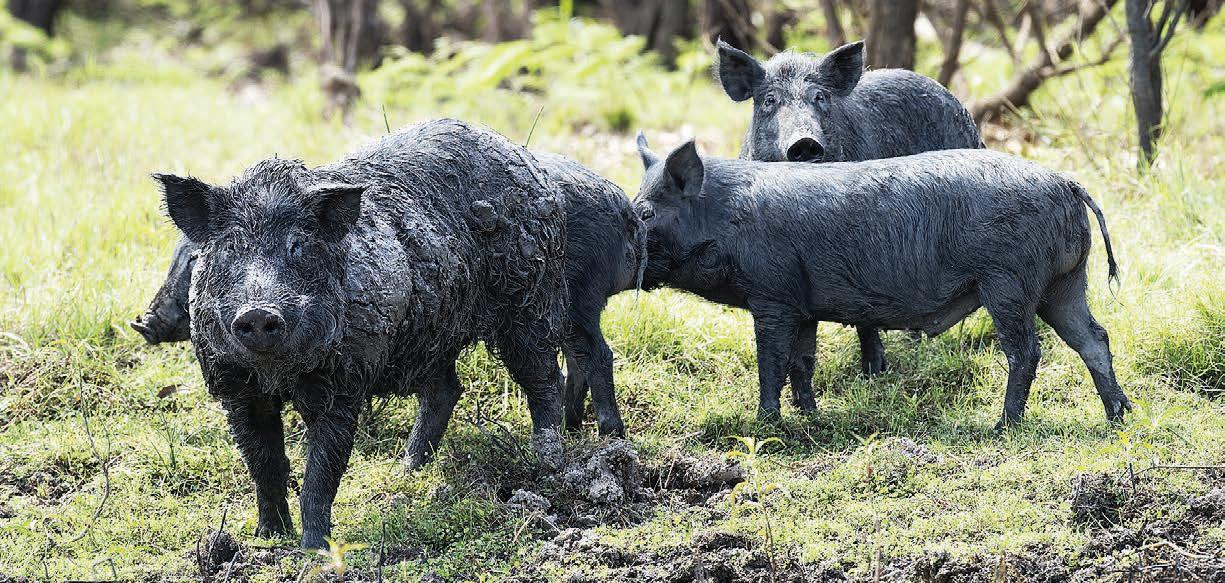
STRONGER TOGETHER: Feral pigs, deer and goats may be included in the next West Coast pest management plan but Federated Farmers says any control actions will come up short if the Crown continues to duck its responsibilities.
A Federated Farmers national survey showed pest damage, and spending on trying to control them, costs farmers at least $213 million a year.
“But I do want to highlight that pest and weed control is up to every landowner,” Dawkins says.
“Whether land is farmed, in forestry or under conservation protection – private or public –everyone has ‘good neighbour’ responsibilities, and there’s no single ‘guilty’ party.
“DOC manages eight million hectares, so their involvement is crucial in pretty much every region.”
Federated Farmers West Coast president Simon Cameron says Feds is not the first to say DOC needs to pull up its socks on pest and weed control.
The West Coast council’s CEO acknowledges tensions exist between regional councils and central government over who bears the cost of managing pest animals on Crown land.
A councillor describes the current situation as DOC abdicating its responsibility – and socialising the cost.
on pasture productivity and farm profitability.
“Taking them out simply transfers the cost and burden entirely to individual landowners with no framework for shared responsibility or coordinated management.
“Smarter practice is needed too. Mulching roadside gorse just spreads seedlings; any farmer would know spraying is the answer.”
BORDERLESS:
Nearly 84% of the West Coast land area is under DOC – but pests and weeds don’t care about where the boundaries are, Federated Farmers meat and wool chair Richard Dawkins says.
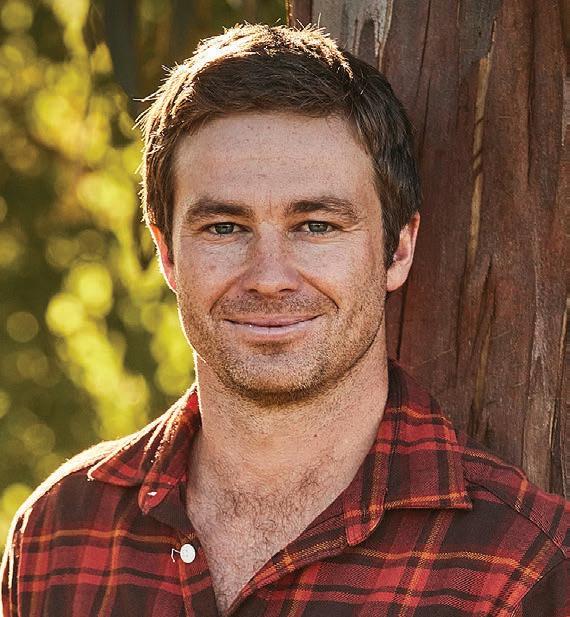
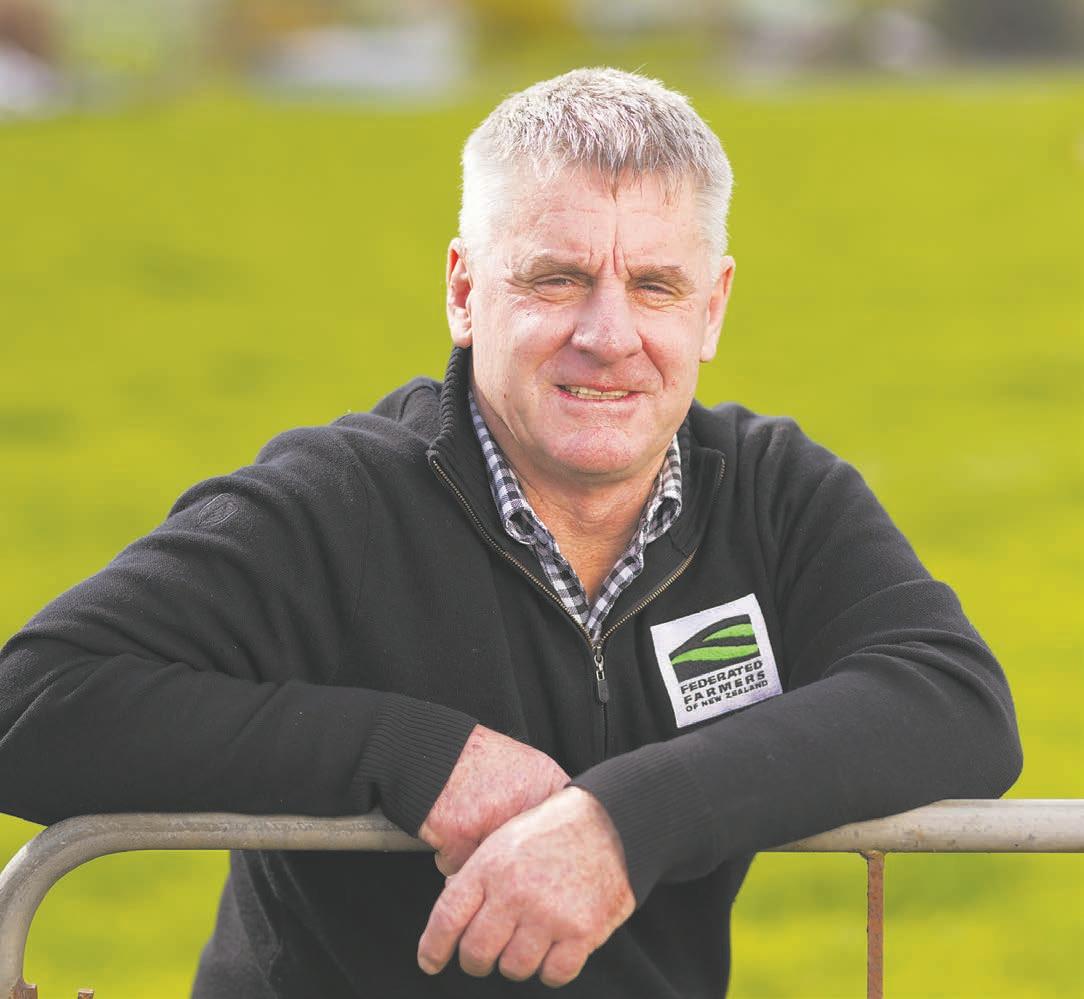


“These are not fringe views, they are the general experiences of everyone trying to make pest management work on the Coast,” Cameron says.
Recreational hunters have a role too.
“In some circumstances, feral red deer are a valued resource (commercial and recreational), for example Wild Animal Recovery Operations,” Cameron says.
“They should be partners in any coordinated management framework, not adversaries, to ensure their activities align with broader pest management objectives.”
Cameron says Federated Farmers opposes proposals, driven by cost pressure, to remove gorse and giant buttercup from the plan.
“Both have significant impacts
The regional and district councils, runanga, the hunting sector and central government all need to be at the table to discuss a new West Coast biosecurity model, Cameron says.
The Crown shouldn’t be allowed to duck costs and pass them on to a thin ratepayer base.
There’s scope for species-specific national programmes for ungulates, extending the Tipu Matoro model to deer and goats in high-value farming and biodiversity areas, co-funded by MPI and managed across Crown and private land simultaneously.
“None of this is quick or easy. The West Coast council can’t deliver it alone.
“But their pest management plan review is the first step on the journey, the moment to put the bigger question on the table and begin building the coalition needed to answer it.
“We could pave the way for a model that will work in other parts of the country.”

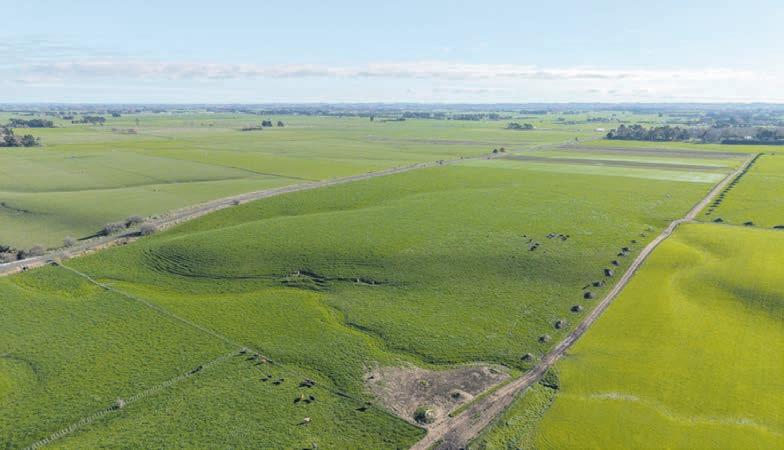
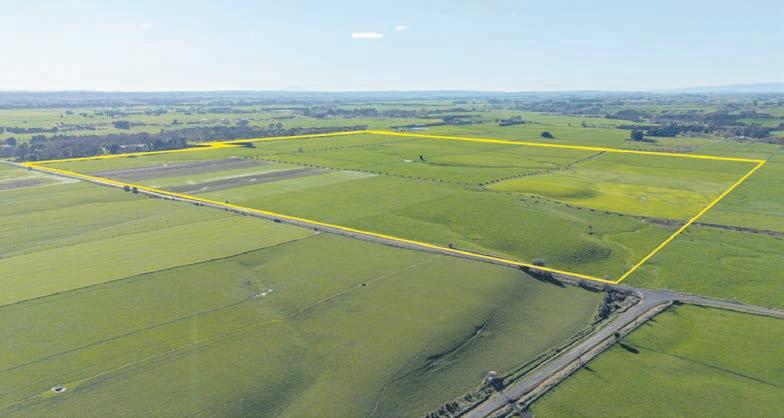
E N D E R
325 Reid Line East, Bunnythorpe
Supplements and Dairy Support

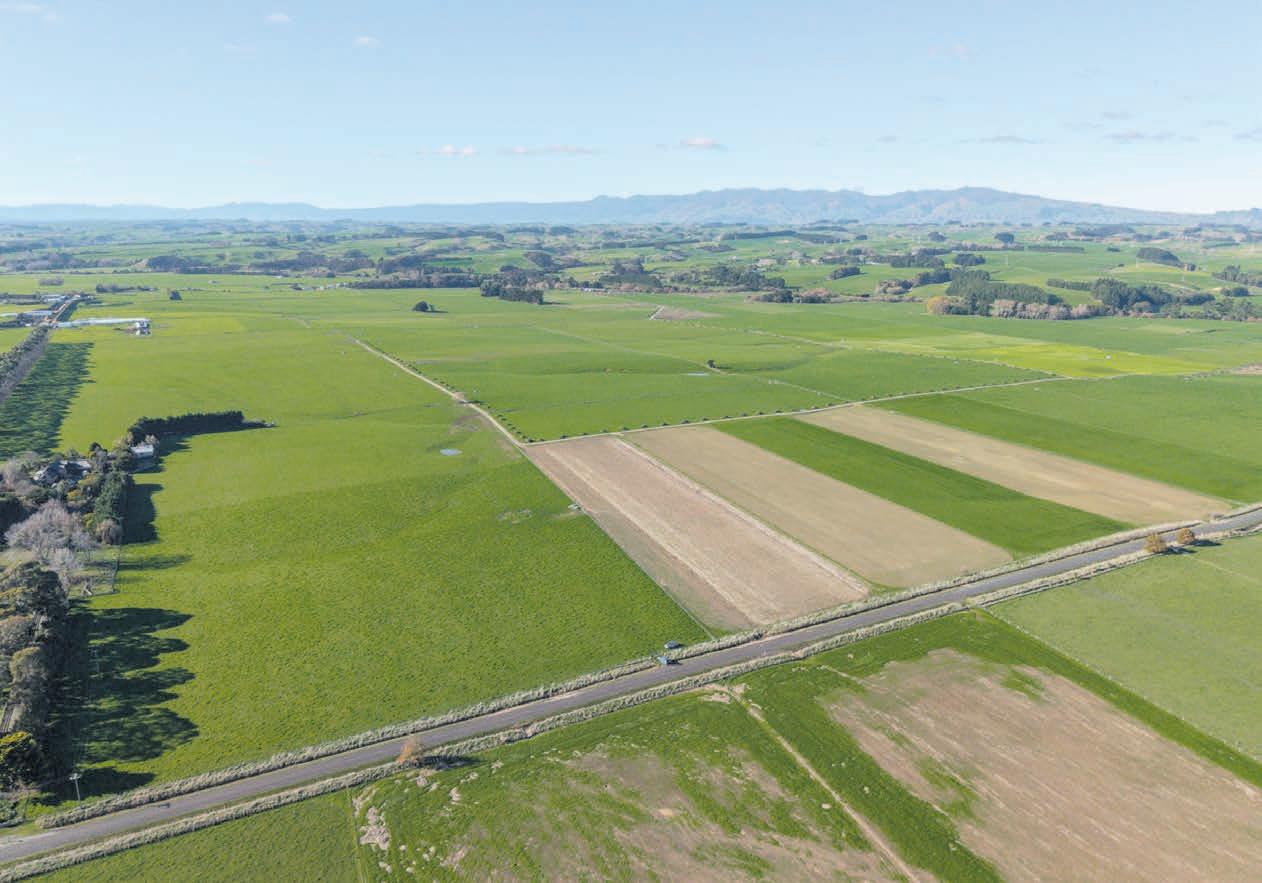

Looking for a property capable of growing maize and silage to support your dairy farm? We are delighted to present this once in a generation opportunity to purchase this large parcel of land close to Feilding and Palmerston North. The property has been leased for most of the past 50 years with the decision now made to offer to the open market All flat to gently rolling land comprising of Milson silt loam and Kairange silt loam Subdivided into 13 main paddocks, with further 2-wire electric fences bringing it to 42 paddocks. Accessed with central farm races. Buyers should be aware this is very much a blank canvas with limited infrastructure. There are no farm buildings or independent water supply rwfeilding.co.nz/FEL30601
Real Estate House Manawatu Ltd Licenced (REAA 2008)
BUSINESS OPPORTUNITIES
SPECIALIST BEEF FINISHING AND CROPPING FARMLAND
A unique opportunity for a wholesale investor to invest in a proven Beef Finishing operation and quality land asset alongside skilled individuals, with a clear proposition for further operational growth and on-farm development.
Investment sought of up to $4m with 15-35% shareholding available depending on the level of investment achieved.
The investment is underpinned by a flat, high-quality irrigated landholding of over 200 hectares located 992 Wards Road, Kirwee, strategically integrated by growing feed crops to support the beef finishing operation utilising established barn infrastructure.
The vendor invites expressions of interest from parties to acquire this interest in the farmland and trading operation.
For further information on this opportunity, please contact: Ray Fraser – Phone: 027 243 0025 Email: ray.fraser@nzab.co.nz
The Vendor is offering the property to the open market via public advertising. Ray Fraser of NZAB is acting in an advisory capacity only and is not a licensed real estate agent.

Your agent may suggest you advertise in
We suggest you remind them that this is the publication you, and every other
you know, reads.



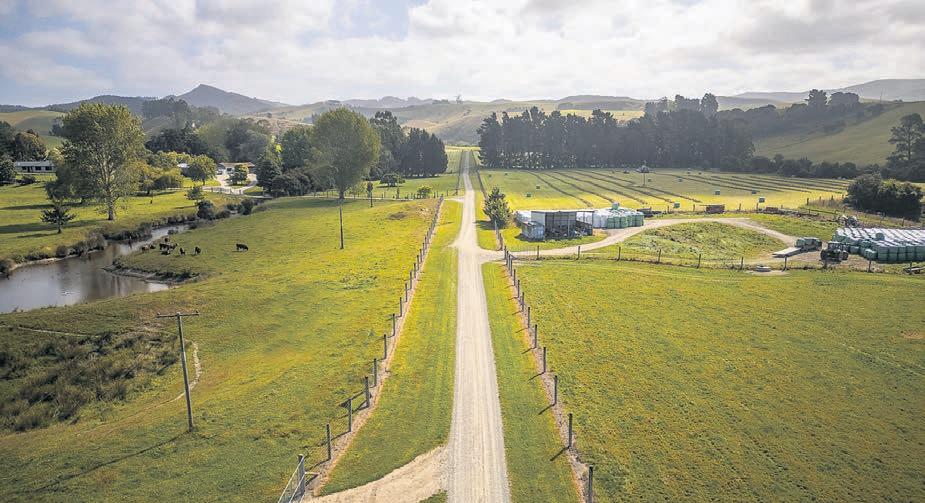

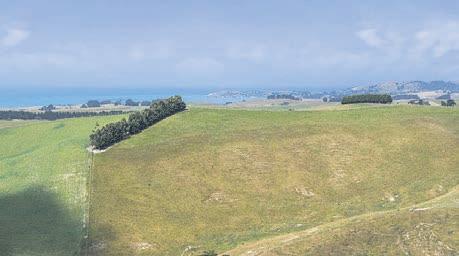
Recycling Bale Wrap Bag Holder
• Holder for Plasback recycling bags
• Taped design for easy removal
• Very light & easy to deal with
• Comes as a kitset
• Freighted nationwide
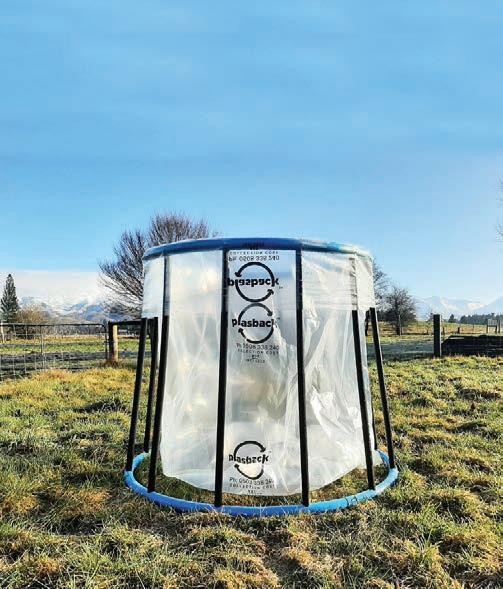
Bale Feeders also available
Ph/txt Alistair 0274 876 711
www.balefeeder.co.nz
HIGH COUNTRY JOURNEYS
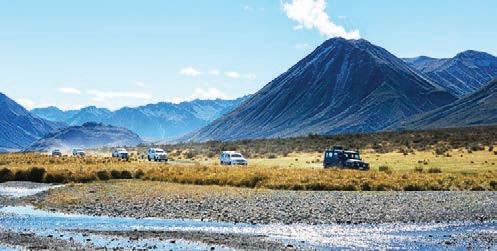
Made in Germany
Boeckmann 3-way
• Most popular model: DK-AL 3218/35
• Unsurpassed quality and specification
• Electro-hydraulic, 6,000kg rated ram
• Side and rear tipping
• 3,500kg GVM (2,500kg payload)
• 3.25m x 1.8m deck
• Removeable 350mm aluminium sidewalls
• Other trailer types and sizes available to order
• Germany’s #1 horse float & trailer brand
• Exclusive NZ distributor for 15+ years
$16,995+GST
www.boeckmann.co.nz

robert@boeckmann.co.nz 021 02255648

DEAN EDWARDS FARM CONSULTING LTD
Independent Dairy Advisory –Proven. Practical. Professional
Over 20 years helping NZ dairy farmers boost productivity, profitability & compliance
Serving Bay of Plenty, Waikato, Central Plateau, Hawke’s Bay, Taranaki & Lower North Island
Free Introductory On-Farm Consultation
Call Dean Edwards: 027 332 2996
www.deanedwardsfarmconsultant.co.nz dean.edwardsfc@gmail.com
• Self drive your own 4WD from Blenheim to Cardrona in Central Otago including Molesworth through a network of high country tracks with a 7 day 8 night tour
• Stay in comfortable farmstays, lodges & historic hotels
• Travel at a quieter pace with smaller, fully guided tour groups
Drive from station to station and experience the majestic South Island High Country NOW TAKING BOOKINGS FOR 2027

www.highcountryjourneys.co.nz
Or contact John Mulholland Mobile 027 228 8152 lnfo@highcountryjourneys.co.nz



















ROSEHILL STUD



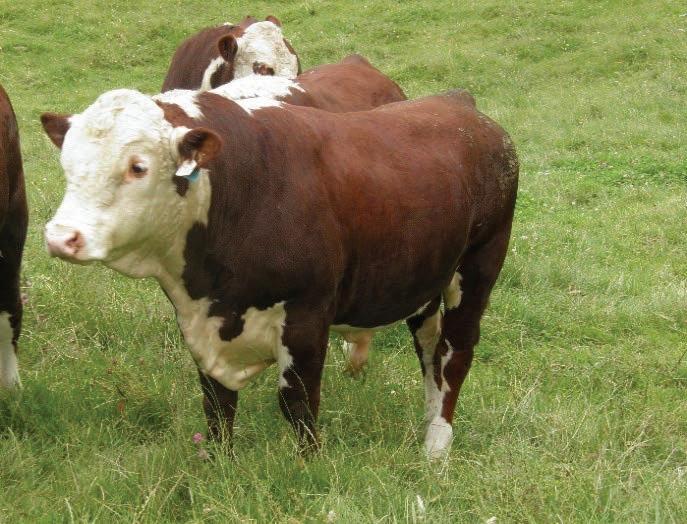



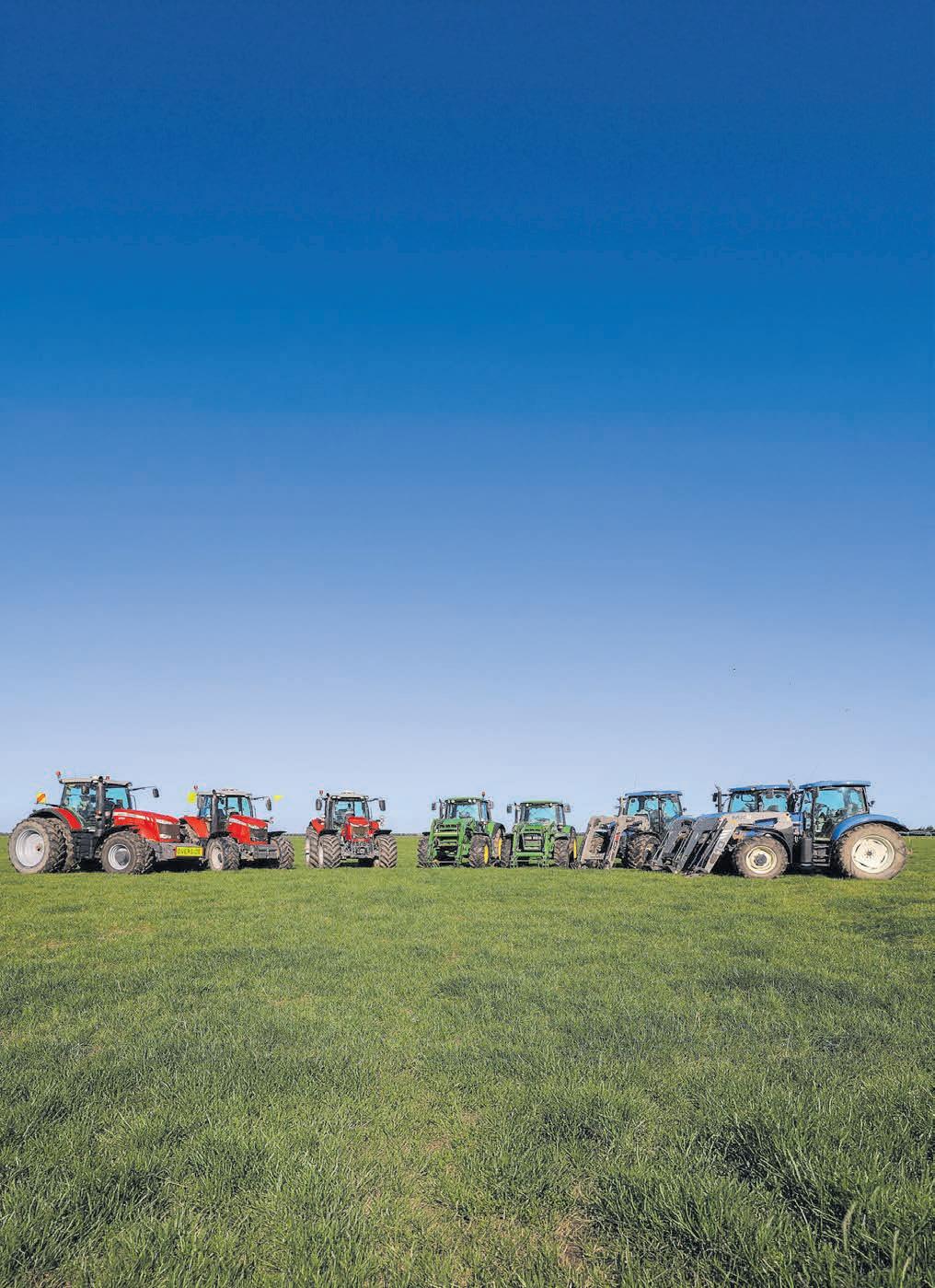







Bull price records sit on firm foundations
Hugh Stringleman MARKETS Livestock
TWO-year-old beef bulls sold in published auction results during autumn and early winter fetched $61.4 million, more than a third higher than the gross proceeds of the same season in 2025.
Farmers Weekly and AgriHQ were notified of 148 sales – mostly conducted as hybrid auctions also reported on PGG Wrightson’s bidr electronic service – at which 4580 bulls sold.
Bulls were also sold during the season by private treaty, often called “in the paddock”. These results are not included in this analysis.
The auctions had a 95% clearance rate as buyers chased the bull offerings and the average prices made by breeds with multiple sales varied between $1200 and $4700 up on the previous year.
A sizeable majority of studs had their best-ever results and breed records were set by Angus, Charolais and Simmental.
Within the $61.4m gross proceeds of all sales were the North Island Angus studs at $22m, including the breed record of $220,000 made by Kaharau Angus, Gisborne for Kaharau 24V314.
South Island Angus studs grossed $19.5m for the 1342 bulls sold, versus 1411 bulls in the north.
The clearance rates were 97% in both the north and the south, up 1% and 3% respectively, and the reports include both AngusNZ and AngusPro members.
The Hickman family at Taimate Angus, Ward, set an early season peak price of $168,000 paid by Tangihau Angus, Gisborne, which held the breed record of $151,000 made in 2025.
Hereford bulls made $10m in total, evenly split between north and south, based on reports from
32 sales of 811 bulls, and their average sale prices jumped $2421 and $3076 respectively.
Simmental bulls collectively averaged just over $11,000 for the sale of 273 bulls by nine studs, bringing the breed’s gross to $3m, capped by Kerrah Simmental’s record-setting $60,000 for N359, bought by McFadzean Cattle Company.
While we expected good prices and strong demand, the scale of the prices paid was
Jane Allan AngusNZ
The breed averages rose by $1600 to $2100 in the north and south respectively and breed society president Jon Knauf broke Kerrah’s own record of $45,000 set in 2021.
Silverstream Charolais and Herefords, at Banks Peninsula in a brand-new selling centre, set a Charolais bull price record of $70,000 for Viceray V226 paid by Rimu Charolais, Taumarunui.
Silverstream’s average of $17,414 was bettered by breed society president Sam Holland’s Hemingford Charolais with $18,871 across a record full clearance of 72 bulls, including a top of $55,000 paid by Rimu and Silverstream in partnership.
Charolais bulls sold by nine studs nationwide grossed $3.6m over 259 lots.
Ten Beef Shorthorn studs achieved average sale prices up $1242 and $2170 in the north and south respectively and Hinewaka Shorthorns, Masterton, topped the breed with $21,000.
AngusNZ general manager Jane Allan said all breeders are buzzing with the results of the autumn bull sales and that higher average prices and clearances had been recorded by members.
She said the buoyant market and strong demand for bulls rewarded the hard work by breeders during tougher times when forestry plantings and dairy conversions squeezed beef farming.
The beef cow herd increased by 2.7% in 2025 and Beef + Lamb New Zealand expects similar growth this year.
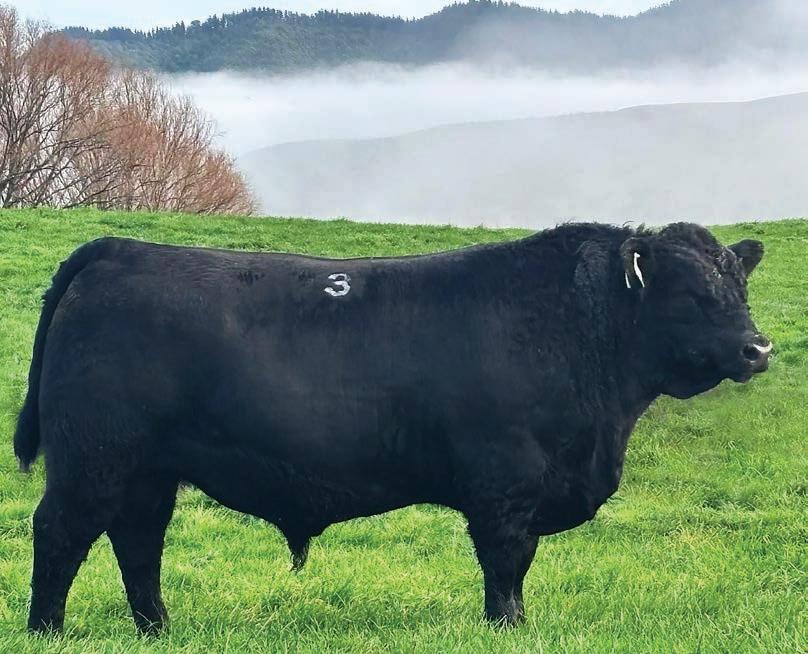
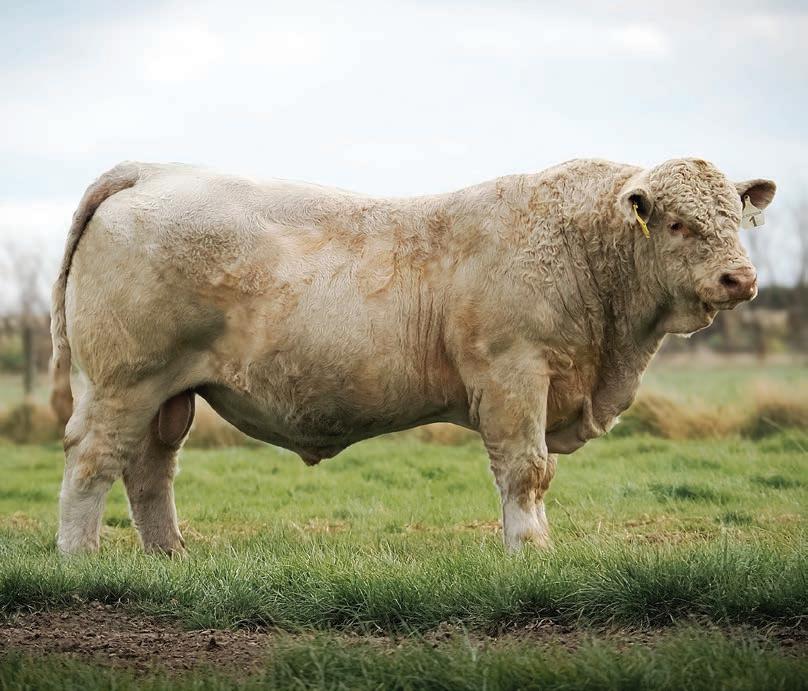
Word was out before the sales that some exceptional sires would be marketed, exemplifying the breed’s balance of genotype and phenotype, maternal and carcase qualities, she said.
“Everyone is looking for that perfect balance and the next level of genetic gain, and those bulls are not easy to find,” Allan said.
“These can be once in a lifetime animals for breeders, and there was definitely noise beforehand.
“So, while we expected good prices and strong demand, the scale of the prices paid was amazing.”
Top NZ breeders are bringing in improved genetics from Australia and North America and now the flow is being reciprocated, as evidenced by Australia’s Ardrossan stud sharing in Kaharau 24V314’s record price.
Overseas studs want the structural soundness that NZ Angus cattle are renowned for.
The base of commercial bull purchasing sets the tone of the auctions and the high current lamb and wool prices played a part,
Allan said.
PGG Wrightson national genetics manager Callum McDonald said the base of commercial bull demand has boosted clearance rates around the country.
“The whole beef industry is trying to go up a gear genetically.
“We expect that demand to continue into yearling bull sales in the spring, with more heifer mating to grow the size of herds.
“This is uncharted territory, and farmers want to buy better genetics to improve what they can while they can afford to.”
PGG Wrightson auctioneer Neville Clark said calling the Kaharau sale was a career highlight and he also called the Taimate and Silverstream auctions previously.
“Three records in a season certainly gives you a thrill and it is so rewarding for the breeders and buyers.
“Seeing those bulls beforehand raised the possibility that those stud masters were on track to do something spectacular, as it proved to be.”


OUTSTANDING: Kaharau 24V314 attracted bidding competition that peaked at $220,000, smashing the Angus bull price record.
amazing.
REWARDING: Silverstream Charolais sold the breed’s record price of $70,000 with Viceray V226, paid by Rimu Charolais.
Autumn 2026 Bull Sales Review
Proudly sponsored by
US imported beef market under pressure
Market is experiencing a change of pace as it copes with current headwinds.

THE risk of an oversupply of imported beef in the United States has now become a reality. Downward pressure on imported beef prices has been evident since March as buyers have shown less urgency to absorb growing supplies. In recent weeks, however, the pace of the decline has picked up.
The underlying market dynamics have remained largely unchanged, but the balance of power has shifted in favour of US importers.
Australia has effectively been shut out of China after reaching its quota threshold, sending more Australian beef to the US at discounted prices. This has coincided with increased shipments of lower-priced Brazilian beef, all while US beef demand is seasonally slowing down.
Australia’s concerns earlier in the year about reaching its China quota appear to have encouraged processors to bring production forward. Supporting this view is the fact that Australian export volumes typically peak in July, yet exports reached a record 152,000 tonnes in May, with June volumes marginally lower.
Higher Australian production has also increased export availability across other markets.
The US has absorbed 243,000 tonnes of Australian beef during the first half of the year – about 40,000 tonnes more than the same period last year.
If production has been brought forward and processor losses deepen, Australian export volumes could fall over the coming months, easing some of the pricing pressure currently weighing on the US imported beef market.
This scenario would be supportive of NZ beef exports.
The alternative is that Australian exports remain elevated, and with China no longer available, further downward pressure on export prices becomes increasingly likely.
Brazil is also nearing its China quota limit. While alternative markets remain available, some reduction in slaughter activity is beginning to emerge. Even so, Brazil is expected to have ample volumes available for the US market.
Fortunately for NZ, not all US beef buyers use Brazilian beef. While this provides some buffer for NZ exporters, the broader challenge is the general pressure on imported beef prices from the current oversupply.
NZ exporters have already
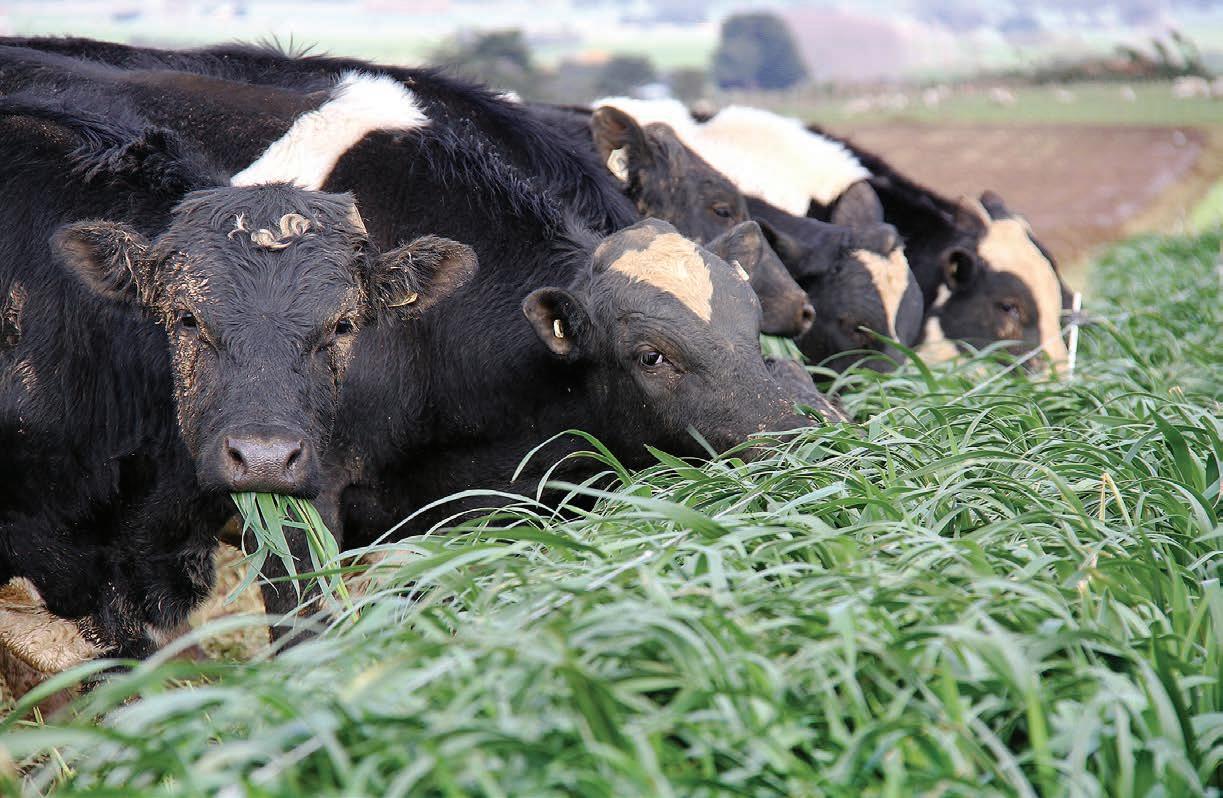
NZ exporters have already noticed the change in market sentiment. US imported beef prices have softened, and downside momentum is building.
noticed the change in market sentiment. US imported beef prices have softened, and downside momentum is building. Fortunately, this market correction has coincided with the seasonal decline in NZ manufacturing beef production.
Lower cattle supplies, combined with forward sales, has given exporters some breathing room and reduced the need to aggressively pursue new sales. As a result, farmgate prices have so far remained largely insulated.
This time last year, the US
imported beef market was dealing with temporary tariffs introduced to curb soaring beef prices.
Despite this disruption, the market bottomed out by the end of June before rebounding rapidly.
Limited imported beef supplies, combined with strong consumer demand for protein, drove imported beef prices to record highs throughout the second half of the year, making the US an attractive market.
This year, tight US domestic beef supplies remain supportive. However, the challenge has shifted to the imported beef market, where larger supplies have created a substantial price gap between lean domestic beef and imported product, with imported beef trading at a discount.
This isn’t game over for the US imported beef market but rather a change of pace given the current headwinds. Last year, the challenge was securing enough
imported beef to offset domestic shortages. This year, ample imported supplies mean buyers have more choice, competition has increased, and pricing momentum has softened.
Despite the recent decline, US imported beef prices remain historically strong and are still around 22% higher than at the same time last year, an overhang of the demand surge that began last year. This is helping cushion some of the current market dynamics.
US demand for protein also remains strong by historical standards. However, further growth appears limited in the short-to-medium term, particularly for beef as consumers continue to feel the strain of high prices. Prices aren’t expected to collapse but there is less concern about where imported supplies will come from compared to last year.
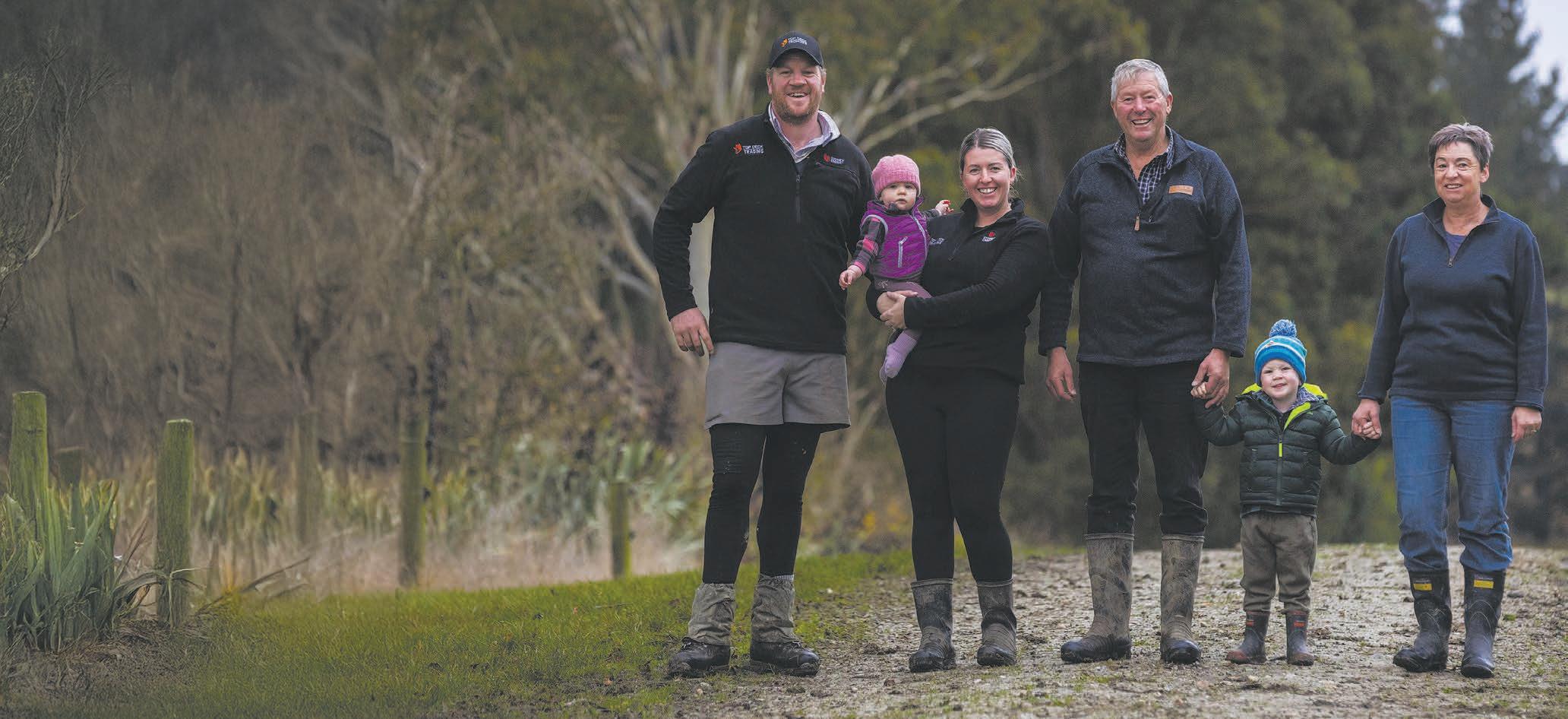
ALIGNED: Fortunately this market correction has coincided with the seasonal decline in NZ manufacturing beef production, says Mel Croad.
Mel Croad MARKETS Beef
Cattle Sheep Deer

Weekly saleyard results
These weekly saleyard results are collated by the AgriHQ LivestockEye team. Cattle weights and prices are averages and sheep prices are ranges. For more detailed results and analysis subscribe to your selection of LivestockEye reports. Scan the QR code or visit www.agrihq.co.nz/livestock-reports
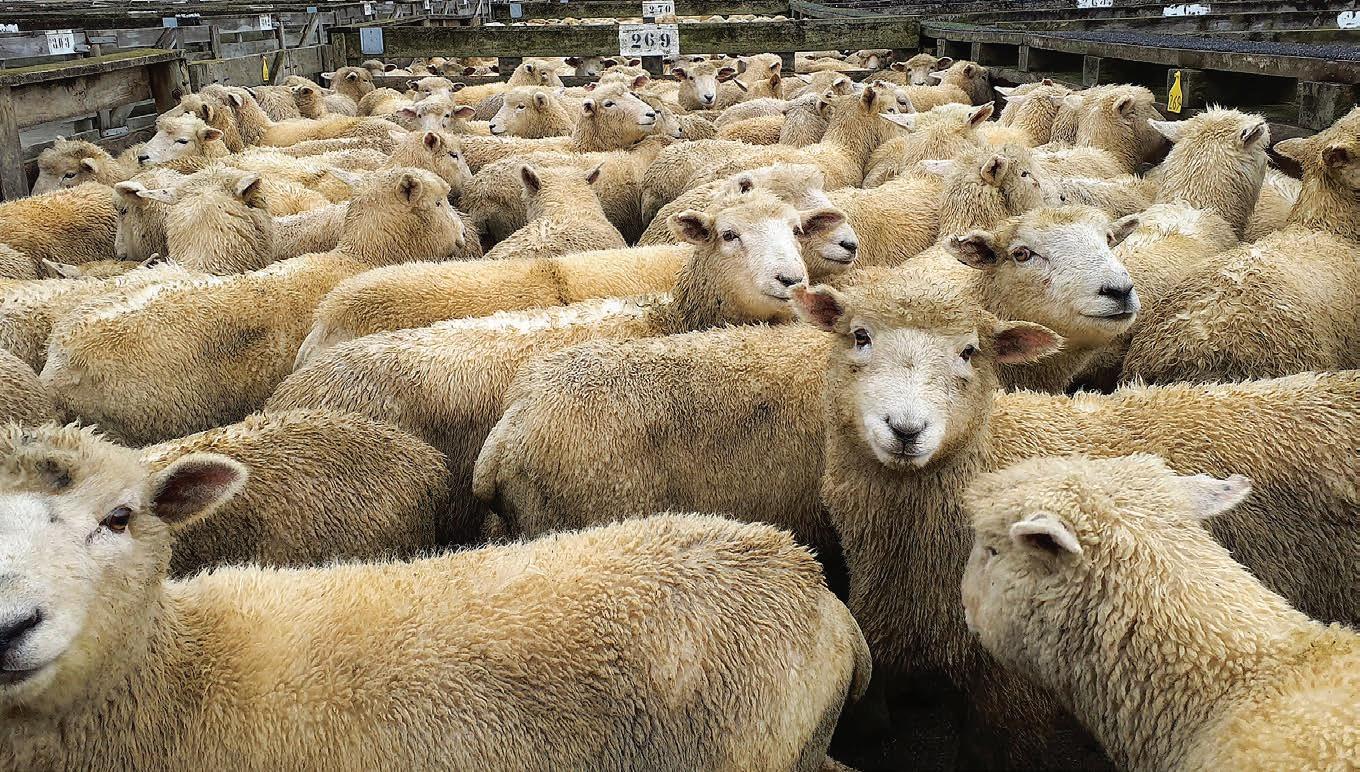








WINTER CHILL: The store lamb market may have been boiling
lambs at Temuka collected $236 on Monday, June 6.
R2 traditional steers, 520kg 5.44
R2 dairy-beef steers, 475kg 5.09
R2 traditional bulls, 470kg 5.38
R2 traditional heifers, 435kg 5.00
R2 dairy-beef heifers, 425kg 4.80
R1 traditional steers, 210kg
R1 dairy-beef steers, 240kg 1540
R1 Friesian bulls, 260kg
R1 traditional heifers, 165kg
Feilding | July 6 | 269 cattle, 3435 sheep
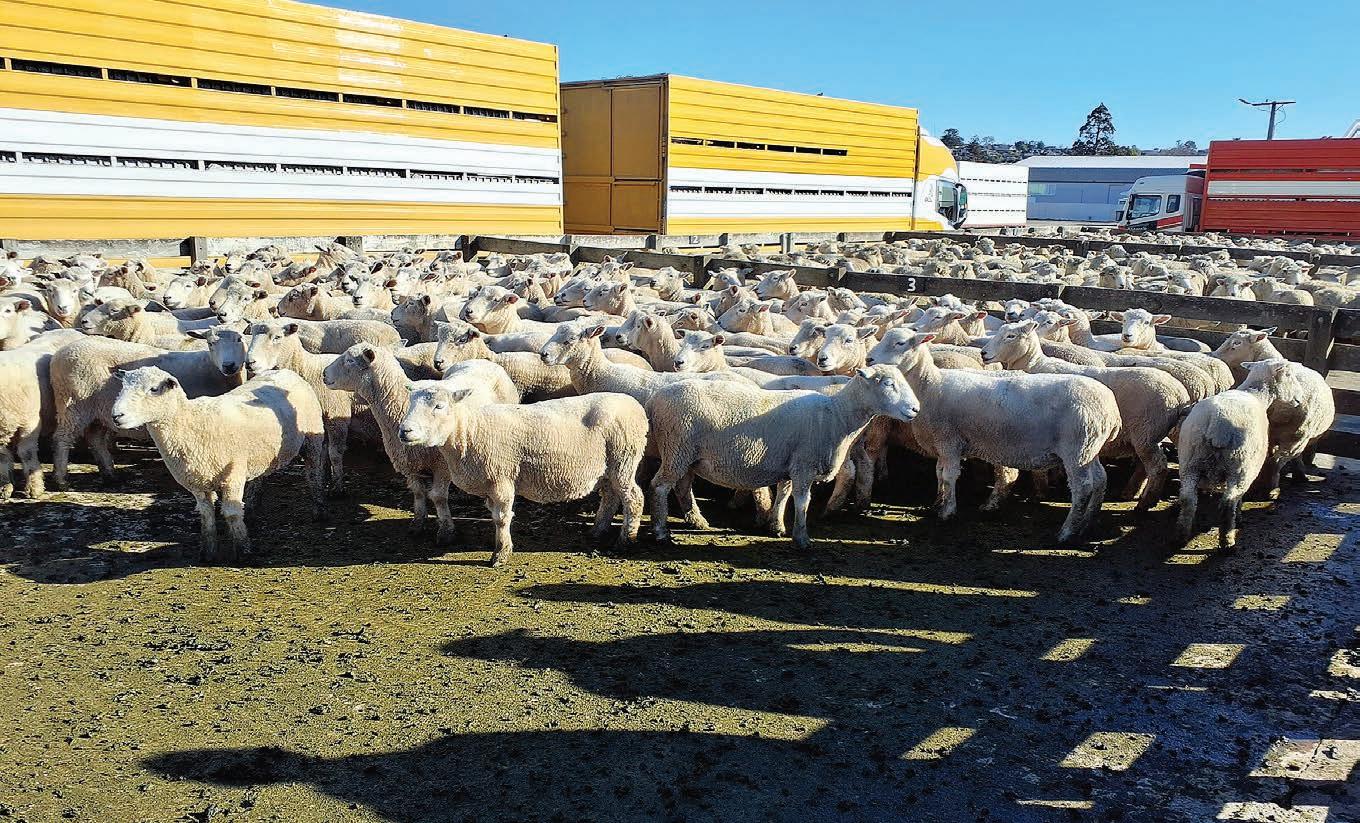
Boner Friesian cows, VIC, 530kg 3.73
Friesian
Rongotea | July 7 | 114 cattle, 17 sheep
Prime traditional heifers, 510kg 5.19 Prime dairy-beef heifers,
Prime ewes, most
Prime lambs, most


Winter of surprises keeps on delivering

Philip Duncan NEWS Weather
FOLLOWING last week’s large low, heavy rain and wintry outbreak, this week is kicking off milder thanks to a nor’west flow – but it’s ahead of the next cold front.
Monday starts with windy nor’westers and West Coast rain, which carries on into Tuesday, along with a polar airflow for the lower South Island.
As we go through this week there should be some high pressure and it’s once again centred to our south, bringing a return to easterly quarter winds for some regions as we go into the later part of the week.
By the weekend that high pressure zone should be out east of the Chatham Islands and the next high pressure zone following it should be way back south of Western Australia – leaving a vacuum of lower pressure in between.
At the time of writing this column the long-range weather maps picked a large low forming in the Tasman Sea – and the shape
of the high near the Chathams may well stretch up as far north as near Tonga or the Cook Islands – which could bring subtropical winds (and rain) back into northern NZ.
At this time of year it can be hard to be long range with accuracy, but GFS modelling show yet another large low moving into NZ potentially for the last weekend of July.
This is a messy weather pattern – and one full of variety. The positive about that is that many regions are getting rainfall and setting up places to handle a potentially drier spring.
This unsettled set-up may continue on into August as well.
Northern NZ can often notice hints of spring coming in by early to mid-August and most people right across the country tend to notice the extra daylight hours creeping in by early August – and those daylight hours rush back in by September as the days get longer, faster.
We’re in the midst of winter now, but the solar winter has less than a month to go. The solar winter is the three months of the year with the least amount of
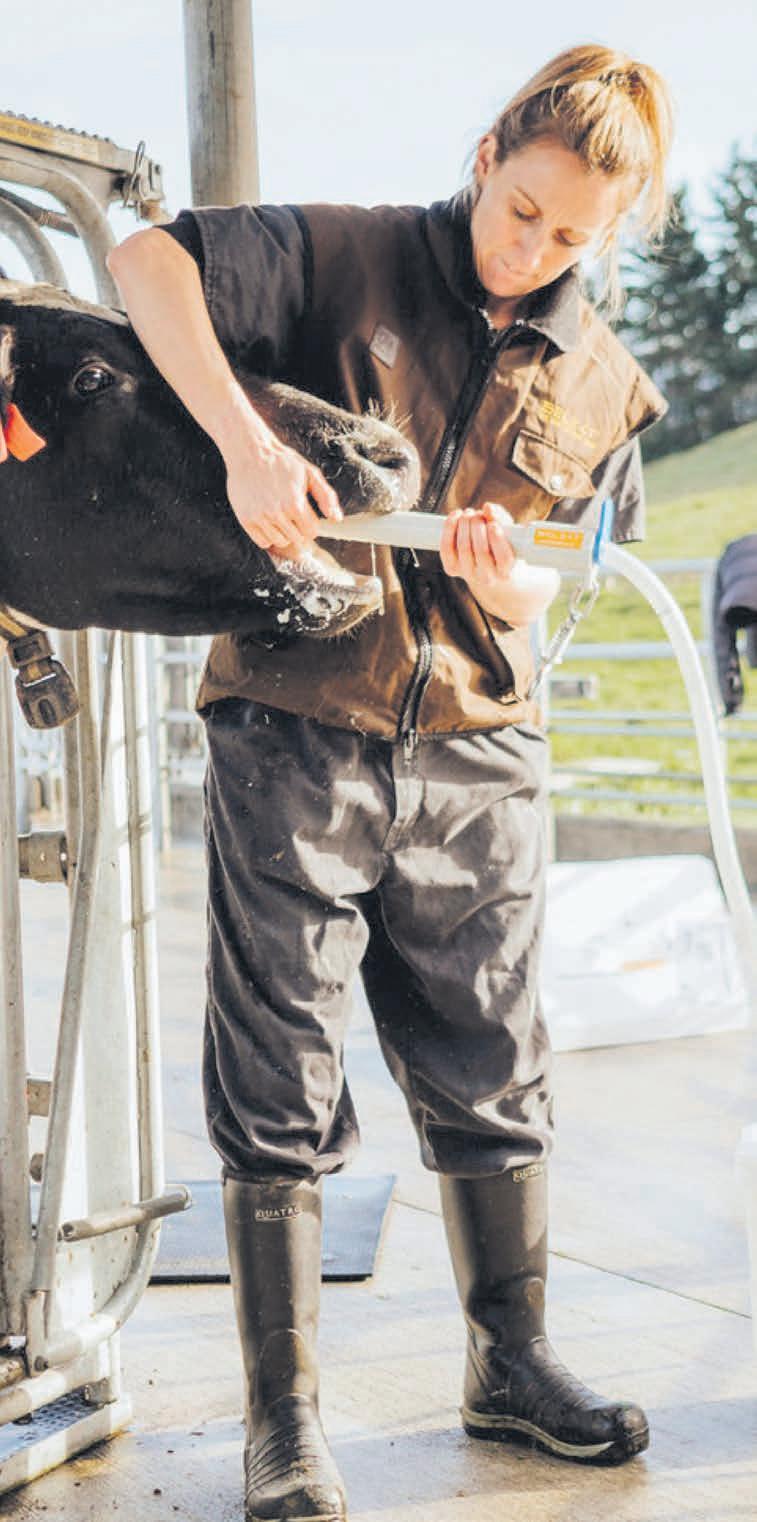
available sunlight, and this starts six weeks before the shortest day of the year and extends six weeks after the shortest day (the Winter Solstice was on Sunday, June 21 this year).
Wintry blasts can linger right through to late October (and some years later than that), but it’s coupled with ever increasing daylight and more and more warmth.
As I’ve written in previous columns, we know what El Niño can do based on historical data/lived experience, but New Zealand’s small mountainous islands (in comparison to the size of lows and highs) means it’s not hard for us to buck global trends and that makes it harder to be more precise about long-term weather patterns.
But if we do get more noticeably affected by El Niño, we can expect more of a westerly driven weather pattern going into spring – and that has the potential to start drying out inland, northern and eastern parts of both main islands.
The one thing working in our favour (as far as rainfall is concerned) is the more southern placement of high pressure
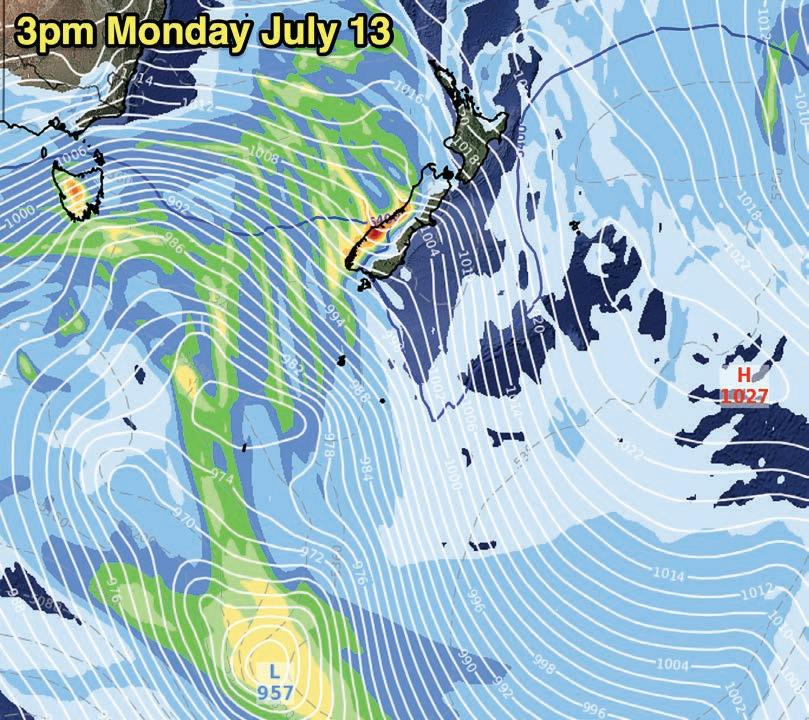
CONTRASTS: The forecast for today, July 13, shows a deep, large low well south of NZ and a strong high pressure zone, also south of NZ, creating a nor’wester over the nation. ` Image: WeatherWatch.co.nz
– and the gaps between the highs – which has allowed more rainmakers, easterly flows, and low-pressure systems to cross over the country. There is no immediate end in
sight for this set-up, so for the rest of July we can expect the unexpected with more lows, more highs, wind flows that constantly change direction and variety in your local weather forecasts.