
Prime stock flow slows at meatworks

ANATIONWIDE grass market has dramatically slowed the flow of prime stock to processors just as meat companies gear up for what is traditionally the season peak.
AFFCO chief executive Nigel Stevens said stock flows were reasonable until two weeks ago, when widespread rain prompted grass growth and suddenly curbed the flow of stock.
“Processors now face the issue of overcapacity during peak season, with many sites on double shifts or staffed for significantly higher livestock volumes.”
Processors now face the issue of overcapacity during peak season, with many sites staffed for significantly higher livestock volumes.
Silver Fern Farms chief supply officer Jarrod Stewart said despite farmers retaining stock, the company has met its sheepmeat requirements while beef flows have slowed.
Murray Behrent, the Alliance
Group’s manager of livestock and shareholder services, expects ovine numbers to build over FebruaryMarch and cattle volumes to follow from mid-March onwards.
While export prices remain firm, exporters warn consumer demand for some lamb products is softening and a firming United States dollar will be reflected in lower schedules.
AgriHQ analyst Mel Croad said farmers are responding to an abundance of grass which coincides with record prime and store lamb prices.
“They are holding on and putting more weight on instead of offloading finished stock and entering the store lamb markets and paying a lot of money for lighter animals.”
Average on-farm store lamb prices in Otago and Southland are between $140 and $200 a head, $25 to $50/head higher than last year.
Croad said this has created some procurement tension but the current prime stock prices also reflect international prices.
The current AgriHQ indicator price for prime lamb is $10.95/kg in the North Island and $10.85/kg in the South Island.
In January 2024 the comparable prices were $6/kg in the North Island and $5.90/kg in the South Island.
“I can’t see anything at this
page 3
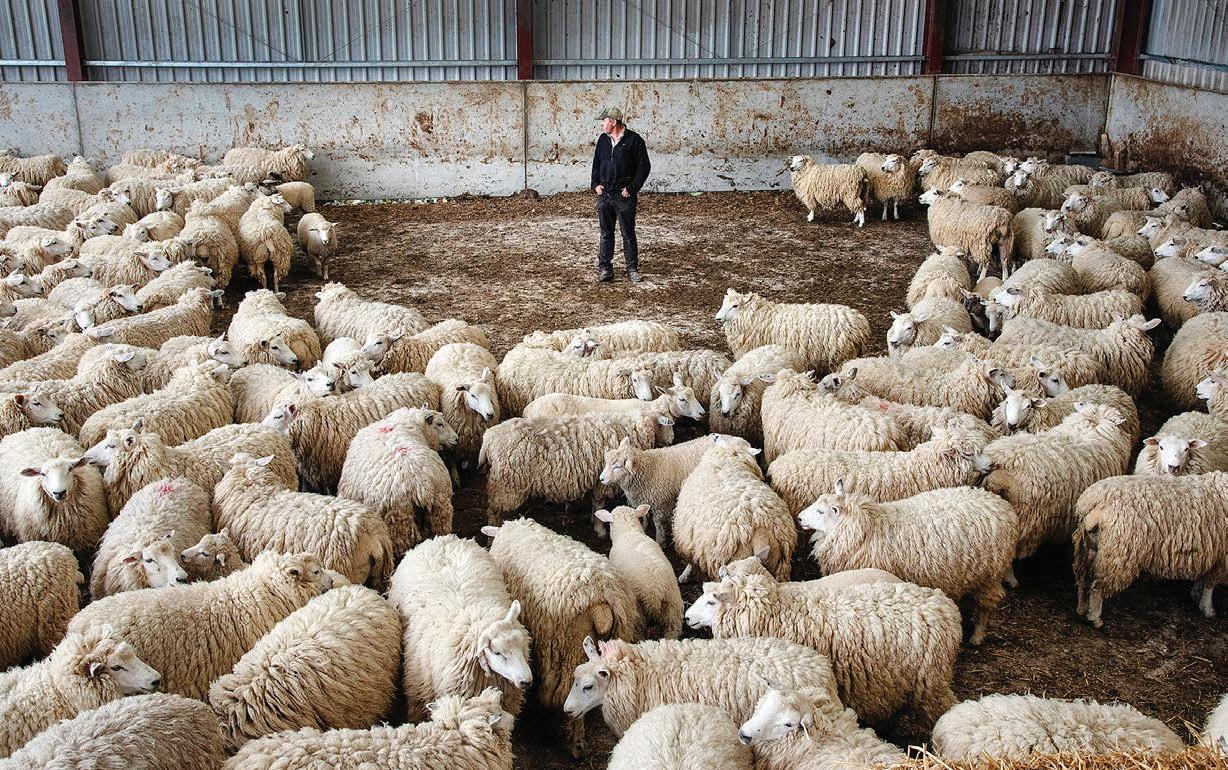
Lowland legacy for hill country heroes
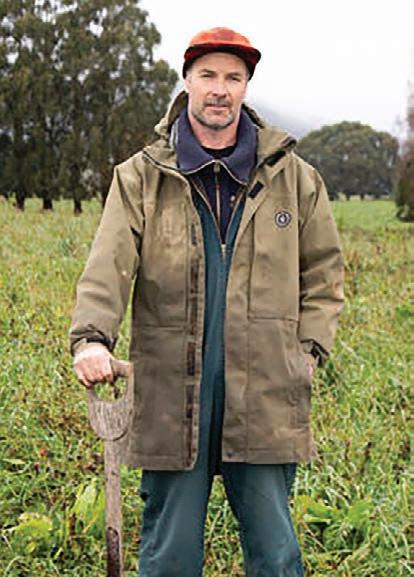
Paul Boulden grew up on Romney Marsh in England surrounded by Romney sheep, a breed his family have farmed since the 1880s. Farmers Weekly writer Fiona Terry visited Boulden to learn more about one of NZ’s most versatile sheep breeds.
Photo: Amanda Lockhart
11
SECTORFOCUS
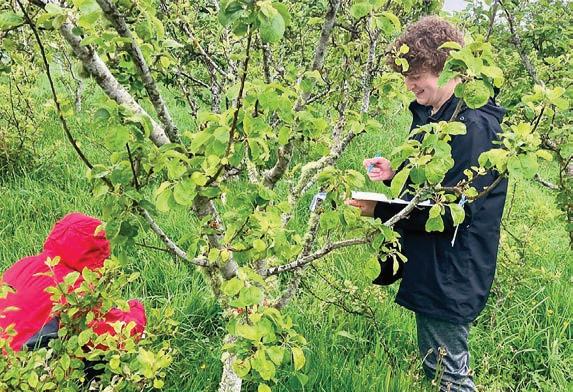
Peeling back identity of heritage apples
University of Otago student Aaron Hewson is delving into the DNA history of heritage apples. He hopes to help establish genetic diversity in the fruit as climate change brings more disease and pest challenges.
16
sector urged to keep steps ahead of the game.








Neal Wallace NEWS Production
Get in touch
EDITORIAL
Bryan Gibson | 06 323 1519
Managing Editor bryan.gibson@agrihq.co.nz
Craig Page | 03 470 2469 Deputy Editor craig.page@agrihq.co.nz
Claire Robertson
Sub-Editor claire.robertson@agrihq.co.nz
Neal Wallace | 03 474 9240 Journalist neal.wallace@agrihq.co.nz
Gerald Piddock | 027 486 8346 Journalist gerald.piddock@agrihq.co.nz
Annette Scott | 021 908 400 Journalist annette.scott@agrihq.co.nz
Hugh Stringleman | 027 474 4003 Journalist stringleman@outlook.co.nz
Richard Rennie | 027 475 4256 Journalist richard.rennie@agrihq.co.nz
Nigel Stirling | 021 136 5570 Journalist nigel.g.stirling@gmail.com
Isabella Beale | 027 299 0596 Multimedia Journalist isabella.beale@agrihq.co.nz
PRODUCTION
Lana Kieselbach | 027 739 4295 production@agrihq.co.nz
ADVERTISING MATERIAL
Supply to: adcopy@agrihq.co.nz
SUBSCRIPTIONS & DELIVERY 0800 85 25 80 subs@agrihq.co.nz
PRINTER
Printed by NZME
Delivered by Reach Media Ltd

SALES CONTACTS
Andy Whitson | 027 626 2269
Sales & Marketing Manager andy.whitson@agrihq.co.nz
Janine Aish | 027 300 5990
Auckland/Northland Partnership Manager janine.aish@agrihq.co.nz
Jody Anderson | 027 474 6094
Waikato/Bay of Plenty Partnership Manager jody.anderson@agrihq.co.nz
Palak Arora | 027 474 6095
Lower North Island Partnership Manager palak.arora@agrihq.co.nz
Andy Whitson | 027 626 2269
South Island Partnership Manager andy.whitson@agrihq.co.nz
Julie Hill | 027 705 7181
Marketplace Partnership Manager classifieds@agrihq.co.nz
Andrea Mansfield | 027 602 4925 National Livestock Manager livestock@agrihq.co.nz
Real Estate | 0800 85 25 80 realestate@agrihq.co.nz
Word Only Advertising | 0800 85 25 80 Marketplace wordads@agrihq.co.nz
PUBLISHERS
Dean and Cushla Williamson Phone: 027 323 9407 dean.williamson@agrihq.co.nz cushla.williamson@agrihq.co.nz
Farmers Weekly is Published by AgriHQ PO Box 529, Feilding 4740, New Zealand Phone: 0800 85 25 80 Website: www.farmersweekly.co.nz
ISSN 2463-6002 (Print) ISSN 2463-6010 (Online)
climbs
Further lifts at the South Island wool auction in Christchurch saw prices consistently above the $5 mark. PGG Wrightson South Island auction manager Dave Burridge said the wool market continues to show strength and confidence. Good style fleece wool lifted a further 2% on recent sales to average $5.28/kg (clean), while poorer fleece types lifted 6% to an average $5.07/kg.
Milk lift
Favourable growing conditions, high soil moisture levels and on-farm productivity gains saw milk production lift 2.5% across the country in December.
Production for the 12 months to December was also up 1.9% on the previous comparable period, Fonterra said. Milk collections for December totalled 183 million kg MS, 2.5% above the total for the same month last season. Season-to-date collections are 905.3 million kg MS, 2.6% above last season.
Record broken
A gang of New Zealand shearers has smashed a three-stand world record by almost 100 lambs in a west Otago woolshed. The record took place at Wohelo Station, Moa Flat, south of Roxburgh, where Leon Samuels of Roxburgh, Paerata Abraham of Masterton, and Shane Ratima of Hunterville broke the three-stand, eight-hours, strong wool lambs record of 1976 set in December 2019. Samuels finished with 702, Abraham 692 and Ratima, shearing throughout with a heavily bandaged left forearm, finished with 679.
Entries are open for the 2026 Fieldays Innovation Awards, with successful entries to be showcased during Fieldays on June 10-13 at Mystery Creek.
Now in their 58th year, the awards recognise ideas, products and services that lift performance and sustainability across the primary sector, while helping innovators move from concept to commercial impact.


Tough cheese for specialty producers

Richard Rennie MARKETS Dairy
MAJOR ownership changes and growing pressure from imported products
have the New Zealand specialty cheese industry facing another volatile year.
The announcement from Fonterra late last year that French company Lactalis will be purchasing its brands business means Kāpiti, NZ’s largest specialty cheese producer, will become foreign owned.
NZ Specialist Cheesemakers Association (NZSCA) board member and Whitestone Cheese managing director Simon Berry said NZSCA members will be watching intently to see what direction the new French owners take with Kāpiti.
“Will we have imported cheese with an NZ label on it? It is a big unknown.”
He was unable to speculate on whether the Kāpiti purchase would result in plant closures.
“That will be a bit of wait and see.”
In light of the new ownership, he said it is vital remaining Kiwi players double down on their local ownership, local milk sources and “NZ story” element in their branding.
Asked whether Kāpiti could remain a member of the NZSCA, Berry said it is an “interesting question” the association board will have to discuss.
He noted should Kāpiti switch to sourcing offshore production and importing product, the NZSCA has no imported cheese category in its annual awards.
A Lactalis spokesperson told Farmers Weekly that out of respect
for the acquisition process until closing it will not be offering any comment at this stage.
“Lactalis, as a multi-local company, takes pride in valuing and supporting local traditions and expertise wherever it operates,” the spokesperson said.
Fonterra confirmed all Kāpiti’s specialty cheeses are produced at its Bridge Street Eltham plant in Taranaki.
At the smaller end of the producer sector, the past two years have been tough, with several producers closing their doors due to rising costs, a cost-of-living crisis, and distribution challenges.
We know people shop on price and quality, and the quality is often good from imported cheese, but we’d urge shoppers to think about the value of buying local.
Simon Berry NZ Specialist Cheesemakers Association
Those producers include Cranky Goat from Blenheim, Grinning Gecko Whangārei, and Kervella of Nelson. High-profile awardwinning brand Zany Zeus of Wellington has also had a rocky road, including two receiverships, but continues to trade.
Berry said imported specialty cheeses now account for over 50% of total specialty cheese sales. In a total national cheese market consuming about 50,000 tonnes a year, specialty cheeses account for about 17% by value.
Most imported European cheeses benefit from producer subsidies, enabling offerings to typically be $2 to $3 lower than equivalent
locally produced cheeses, enough to make a difference when household budgets are tight.
“We know people shop on price and quality and the quality is often good from imported cheese, but we’d urge shoppers to think about the value of buying local.”
A Woolworths spokesperson said affordability continues to be top of mind for its customers, with rising dairy prices reflected in sales, with little growth in the deli-specialty cheese sector over the past year.
Woolworths’ top-selling specialty cheeses are the Ornelle range from Goodman Fielder and Woolworths’ house brand camembert and brie.
Berry said local producers wanting to remain viable are challenged by high-volume expectations from both supermarket chains, something hard to meet.
As a rule of thumb, to be economic, a cheese producer needs to be able to pump out at least 100 tonnes a year of saleable product.
Members are exploring options including foodservice channels, one proving increasingly valuable as tourist numbers boost hospitality trade demand.
Berry said it is unfortunate that NZ struggles to sustain an artisan cheese sector where producers had multiple outlets across the retail spectrum for their product, as is the case in Europe.
Meantime export opportunities are challenging. Whitestone no longer exports on grounds the costs in compliance including four-yearly audits are too high.
“It raises the question, if government wants more highvalue exports, would they not consider subsidising the smaller guys’ compliance costs?”
He said it is an issue NZSCA intends to raise with NZ Trade and Enterprise.
Premium deal for growers

Annette Scott NEWS Food and fibre
A NEW super-premium strong wool contract between Wools of New Zealand and keratin biomaterials Keraplast is set to reward farmers with a 40% premium this season.
Wools of NZ chief executive John McWhirter said the contract represents a major lift for growers of strong wool.
The contract features a price of $6.88 per kilogram clean for the 2025-2026 financial year, representing a 40% premium to 2025 market pricing while covering 400 tonnes of wool over five years from 30 New Zealand growers, all producing certified regeneratively farmed wool.
“For participating growers, the agreement provides price certainty, demand security and access to a rapidly growing global biomaterials market.
“This price is around $2/kg ahead of the current market; it shows that when wool is connected directly to high-value
end uses, returns can lift well beyond traditional commodity pricing.”
Keraplast manufactures advanced biomaterials using keratin, the natural protein that makes up 95% of a wool fibre and gives wool its strength, flexibility and resilience.
Keratin extracted from strong wool is transformed into a range of high-value materials used in medical, nutraceutical and personal care applications, including wound care products, tissue repair and hair and skin care.
These products are sold into global markets, including the United States, Europe and Asia.
“It shows strong wool has a future when we combine quality farming and innovative global manufacturing.,” McWhirter said.
“Keraplast is creating real value from strong wool, and that demand is flowing directly back to NZ growers.”
Keraplast chief executive Howard Moore said NZ wool offers clear advantages over alternative keratin sources used globally.
“The consistency, traceability
Continued from page 1
stage but it would take something in our overseas markets to have an impact,” said Croad.
Average export lamb values for the first time ever reached $15/ kg in November and the latest available data, which is from December, shows that momentum has continued, rising to $15.84/kg.
Stevens said market demand and pricing are positive and stable, aside from pockets of pricing resistance for some lamb items in Europe.
The rapid recent appreciation of the New Zealand dollar has significantly eroded market returns.
and quality of NZ wool is critical to Keraplast’s product performance, giving us a reliable, high-performing raw material, and the regenerative farming systems behind it align strongly with our values and our customers’ expectations.
For participating growers, the agreement provides price certainty, demand security and access to a rapidly growing global biomaterials market.
John McWhirter Wools of NZ
“It reflects a commitment not just to sustainability, but to creating a net-positive impact across communities, supply chain partners and the environment.
“The agreement reinforces the role of strong wool as a premium, future-focused natural material and highlights the value of direct connections between growers and global end-use manufacturers.”
“Intense procurement competition, resulting from the sharp reduction in livestock volumes, has resulted in processors having to absorb reduced NZ dollar market returns.”
Behrent said the stronger exchange rate has pressured export returns and will have flowon impacts for schedule pricing in the next few weeks.
Stewart said while pricing remains firm, the sustainability of pricing following Easter production “remains a concern” as does the strengthening US dollar.
“European customers in particular are signalling a softening in demand for certain items, and an expectation that prices will ease as product availability from New Zealand continues to build,” he said.
Croad said with Easter chilled trade orders now completed, there would be interest in how the market reacts as northern hemisphere lamb supplies seasonally increase after Easter.
Domestic beef demand in the US is traditionally low in February and March, so how that impacts
This week’s poll question:
Can the sheep and beef sector sustain record stock prices?
Have your say at farmersweekly.co.nz/poll
our export beef prices and demand will be something else to watch. There are also risks from geopolitical uncertainty.
Croad said farmers wanting to carry more ewes may come up against meat companies competing for cast for age ewes, with mutton slaughter prices reaching $6.50/kg.
Store cattle are in demand and farmers are also retaining prime cattle to control pasture and add weight.
Late last year prime bull prices were $7-$7.30/kg, but are currently $9.55/kg in the North Island and $9.25/kg in the South Island. Prime steers were also about $7/kg a year ago but are currently $9.45/kg in the North Island and $9.35/kg in the South Island.
Interest is now turning to demand and prices at the looming weaner fairs, which start early next month.
“If markets are still strong as we are seeing now, that will be reflected in weaner prices.”
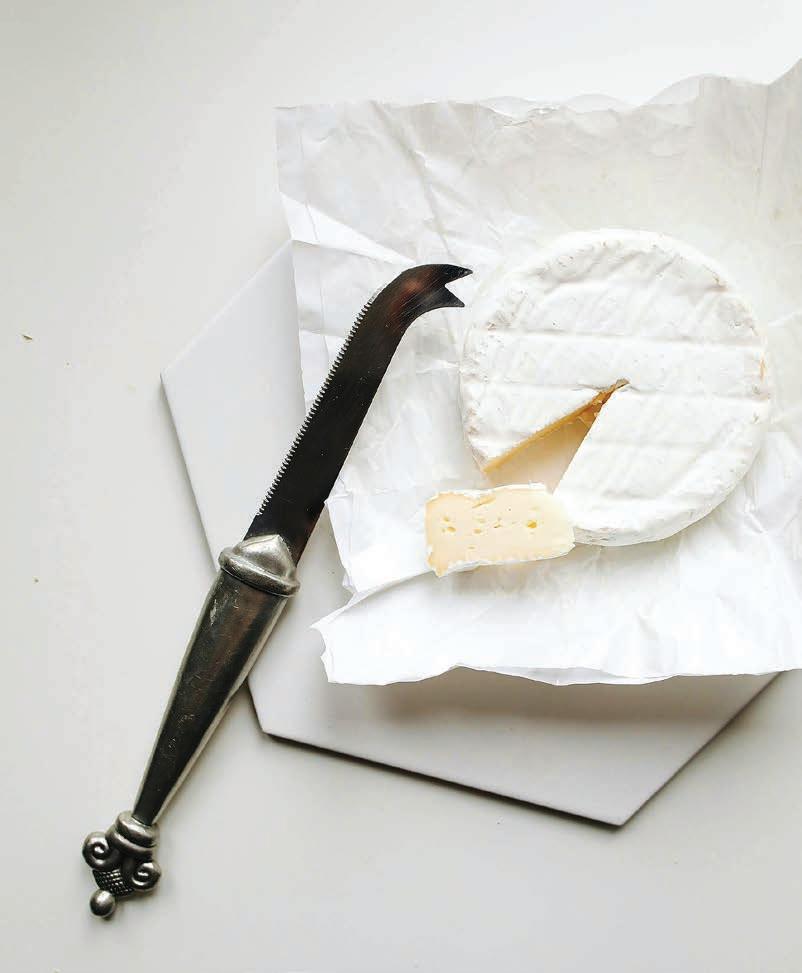
SMALLER SLICE: Whitestone Cheese managing director Simon Berry says smaller cheese producers have struggled as consumers revise purchase decisions in light of higher food costs.
NZ exporters have a stake in US ruling

TNigel Stirling MARKETS Trade
HERE are predictions that an imminent ruling by the United States Supreme Court could end President Donald Trump’s Liberation Day tariffs and eventually bring refunds to those who paid them.
US importers say Trump overstepped his authority when he bypassed the US Congress and unilaterally launched his global tariff attack on April 2 last year.
Legal challenges from the importers ended up in the Supreme Court late last year and a ruling could come as early as next week when the court issues its next batch of decisions.
A flurry of appointments to the court by Trump had prompted speculation the challenges were doomed to fail.
But a Wellington-based litigation partner at law firm Chapman Tripp, Nicola Swan, said
commentary from US legal experts following hearings in November suggested otherwise.
Both conservative and liberal justices appeared sceptical when Trump’s lawyers used the “national emergency” of the large US trade deficit as justification for imposing the tariffs by executive order.
“Certainly that has been the take from most of the commentators – that the amount of questioning was significant and did indicate that the court was testing the administration’s arguments,” Swan said.
However, Swan warned NZ exporters against getting too carried away even if the Supreme Court were to strike down Trump’s tariffs.
“Any practical resolution of this for NZ exporters is not on the short-term horizon because firstly you have to see what else the administration might do and whether that gets tied up in a further constitutional challenge like the current one,” Swan said.

Photo: Pexels
Likewise any refunds are unlikely to happen quickly – even though there is already a system in the US for reimbursing importers for overpayments of tariffs, and many of NZ’s largest exporters own US-based importing companies, which means they could receive refunds directly from the US Treasury.
“Even if there was an indication
from the Supreme Court that they were expecting a consideration of some sort of refund process, that would likely have to go through a process in the lower courts,” Swan said.
Kiwifruit marketer Zespri owns its own US import business. Meat exporters Alliance, ANZCO and Silver Fern Farms are in a similar position though their ownership of
The really interesting question is what happens next and does it change anything.
Nicola Swan Chapman Tripp
the US-based Lamb Company. Zespri chief executive Jason Te Brake said being the “importer of record” in the US would make it easier claiming any refunds.
“If it happens then that is a bonus of being the importer of record but we haven’t really factored it in yet.”
The Meat Industry Association estimates Trump’s Liberation Day tariffs had cost its members $300 million up until early November. One large meat exporter said while it was the US importers who had paid the tariffs, the costs had often been passed on to other parts of the supply chain.
Dividing up any refunds would not be straightforward.
Race to uncork India trade deal on wine imports
Nigel Stirling MARKETS Horticulture
THE proposed free trade agreement with India could lose its sparkle for New Zealand wine exporters after the European Union clinched an even better deal for its wine producers.
A month after agreeing to cut tariffs on most NZ wine from a trade-stopping 150% to a more palatable 50%, the Indians went one better for the EU, promising to drop tariffs on most of its wine to 30%.
Fortunately for the industry here, NZ’s agreement includes a Most Favoured Nation (MFN) clause for wine, meaning NZ must receive the same tariff cuts granted by India in all its future trade deals.
There is a catch, however.
For NZ wine exporters to qualify for the same 30% tariff as EU rivals, the NZ-India FTA must start before the EU-India agreement.
The EU has made an art form out of delaying the ratification of important trade deals in recent years – but, while NZ would normally back itself to beat the Europeans, there is uncertainty over whether the National-led government can muster the votes to pass enabling legislation for the NZ-India FTA after coalition partner NZ First said it would vote against the deal.
And it is not just Europeans that NZ exporters could lose ground to.
Australia’s trade deal with India in 2022 included a similar MFN clause to NZ’s, meaning tariffs on
its wine automatically drop from 75% to 50% as soon as the EUIndia FTA is ratified.
Of the world’s top wine exporters in 2024, EU members (France, Italy and Spain) and Australia take out the first four spots. NZ (accounting for 3.1% of global wine exports) was ranked seventh.
NZ Winegrowers chief executive Philip Gregan said NZ exporters face a nervous wait.
“We are very hopeful it will be ratified and if it is we get the MFN clause.
“If it were not to happen then we would be facing higher tariffs than the Europeans and the Australians and we would be sitting on the outside.”
Asked what assurances he had received from the Labour Party that it would supply the votes

the government needs to pass enabling legislation, Gregan said he had had only a “very brief conversation” with the party’s trade spokesperson.
“Over many years there has been a strong level of bipartisanship
on trade between National and Labour and hopefully we will see that continue with the India FTA,” Gregan said.
High tariffs meant NZ exported just $300,000 of wine to India last year.

OPTIONS: Zespri chief executive Jason Te Brake said being the ‘importer of record’ in the US would make it easier to claim any refunds.
PRESSURE: For NZ wine exporters to qualify for the same 30% tariff as EU rivals, the NZ-India FTA must start before the EU-India agreement.
Insurance risk assessed ‘case by case’: FMG

Gerald Piddock NEWS Insurance
FMG says it takes a caseby-case approach when deciding on insurance cover in areas where there are heightened natural hazards, such as flooding.
This is to ensure the insurance company is not overexposing itself to risk when it takes on insurance, a company spokesperson said in a statement.
FMG was asked its response after RNZ reported that another insurance company, AA Insurance, temporarily stopped offering new home insurance policies in Westport because of the town’s flood risk and in Woodend, north Canterbury, because of seismic risk.
Taking on the right level of risk is a prudent step in ensuring the business can respond to events and in turn remain solvent.
Spokesperson FMG
A climate change policy expert told RNZ that AA Insurance’s decision in Westport will be the first of many and urged insurers to be transparent when they withdraw from an area.
One News also reported that the government is launching a sixmonth deep dive review into home insurance costs.
A paper brought by Finance Minister Nicola Willis to the cabinet suggested insurers in New Zealand have higher profit margins than their Australian counterparts.
The FMG spokesperson said that given the geographical spread of farms across New Zealand, its risk is well spread over a wide area.
“For areas of heightened natural hazard, including flood risk, FMG takes a case-by-case approach considering individual client circumstances of that location to ensure we fully consider the level of risk to understand insurability – rather than a blanket approach.”
In the insurance industry, this is known as risk-based pricing and was brought in within the last decade.
Taking out insurance is essentially transferring risk to an insurer, who will then consider if it is able to take on this risk, the spokesperson said.
“If an insurer takes on too much risk in one location, this could impact its ability to pay claims or get reinsurance following a largescale event such as a flood or an earthquake.
“Taking on the right level of risk is a prudent step in ensuring the business can respond to events and in turn remain solvent to be there for all clients when the unexpected happens,” the spokesperson said.
The company said it supports Insurance Council New Zealand’s advocacy for a proactive, government-led approach to climate change adaptation.
An ICNZ spokesperson said insurers have consistently supported a proactive, governmentled approach to adaptation, working alongside councils, iwi, the private sector and other partners.
“The National Adaptation Framework is an important first step, but there is urgency in turning intent into action.
“This includes developing a
National Flood Map to provide a trusted, nationwide source of flood-risk information across both urban and rural areas.
“By investing in resilience and reducing risk, New Zealand can better protect all communities, including those living rurally, and help ensure insurance remains accessible into the future.”
Released by the government in October last year, the framework set out the government’s approach to the growing risks from climate change.
London on board for Lamb Day treat as interest grows
NATIONAL Lamb Day celebrations will this year extend to London where a Kiwi-raised chef is planning a special lamb roast menu for her customers.
Now in its third year celebrating the first shipment of frozen meat to leave NZ on February 15, 1882, other events include a barbecue at Parliament, celebrations at Southern Field Days near Gore and at the Totara Estate near Oamaru where the first consignment of stock was processed.
Kit Arkwright, the chief executive of Beef and Lamb NZ Inc, said Mel Brown is finalising her take on a traditional Sunday roast where NZ lamb will be served at her restaurant, The Laundry, in Brixton on February 15.
“It’s symbolic as it completes the loop,” he said.
National Lamb Day chair Jon Pemberton said the annual event
is building momentum each year, which is significant as the 150th anniversary draws near.
He noted that high international prices and demand means there are limited supplies of affordable lamb on the domestic market.
“We’re a victim of our own success.”
It’s symbolic as it completes the loop.
Kit Arkwright Beef and Lamb NZ Inc
Pemberton said National Lamb Day is becoming a metaphor for celebrating NZ-produced food and fibre which he hoped all New Zealanders would acknowledge.
The manifest on the Dunedin when it sailed from Port Chalmers included food products other than sheepmeat.
On board were 4331 mutton, 598 lamb and 22 pig carcases, 250 kegs of butter, hare, pheasant, turkey,
chicken and 2226 sheep tongues.
This year’s Lamb Day celebrations include a Parliamentary barbecue on Wednesday, which Pemberton said politicians from all parties were keen to be involved in.
Another focus is at Southern Field Days at Waimumu near Gore, which runs from February 1113. There will be a barbecue and promotional events.
Celebrations end with a family festival on Sunday at the Totara Estate near Oamaru, where the initial consignment of lamb and mutton was processed and cooled before being railed to Port Chalmers and loaded on board the Dunedin where they were frozen ahead of a 98-day voyage.
On arrival in London just one carcase was condemned.
Pemberton said those unable to attend events are encouraged to fire up their own barbecue and cook some lamb.
MORE: See page 11
Photo: Tim Cuff
Neal Wallace NEWS Beef and lamb



‘New rules threaten rural pharmacy health’
Annette Scott NEWS Health
THE pharmacy sector is warning that new prescription rules taking effect this month will present compound challenges to rural and provincial communities.
The pharmacists say New Zealand’s public funding model is no longer fit for purpose and could accelerate pharmacy closures, particularly impacting rural communities.
From February 1, 2026, New Zealanders with stable, longterm conditions such as asthma and diabetes will be eligible for 12-month prescriptions, up from the current three-month limit.
While this is designed to cut GP visits and costs, pharmacists said the change adds financial uncertainty for already stretched community pharmacies, with no clarity on how dispensing and support will be funded.
Latest Te Whatu Ora data shows demand for pharmacy services is rising sharply, while the number of pharmacies and pharmacists per head continues to fall.
Sector leaders warn vulnerable patient groups, including those living in rural areas, will be most exposed if local pharmacies disappear.
“I’m very worried,” chair of the Independent Community Pharmacy Group Clive Cannons said.
“We’ve lost our local GPs, we’ve lost those things that hold communities together and the last bastion is the local pharmacy.
“There is a need for that highservice model where the owner knows their community.”
The pharmacy group is calling for countrywide consistency in the way Health NZ grants contracts under the National Pharmacy Agreement.
“Community pharmacies are a key part of NZ’s health infrastructure, pharmacists see patients regularly, often every three months, and those informal check-ins play a critical role in picking up issues early.
“It’s important we don’t pretend pharmacy can simply absorb more responsibility without support.”
The change also comes at a time when community pharmacies are under increasing pressure in a sector struggling to survive.
Around 100 community pharmacies have closed nationally since 2020, with losses greatest in smaller towns.
“This isn’t about opposing change; it’s about making sure policies are implemented with
eyes wide open to how care actually happens on the ground.”
Industry leaders said the public funding model for pharmacies needs urgent reform to ensure businesses can be financially sustainable based on dispensing services alone, rather than relying on retail margins to cross-subsidise core healthcare functions.
They said reform is critical to ensuring the long-term viability of the sector, cautioning this latest move has introduced more financial uncertainty.
Zoom Health director David Taylor said pharmacies need a funding structure that works on the basis of dispensing and clinical services alone.
“Relying on retail margins to keep essential health services viable is no longer sustainable, particularly for NZ-owned community pharmacies that lack the scale or offshore backing of large discount operators.”
Data from Te Whatu Ora shows the number of New Zealanders accessing community pharmacy services continues to rise, even as pharmacy capacity tightens.
“Pharmacies are doing more work with fewer outlets. That reduces resilience, particularly in communities where the loss of even one pharmacy can have a significant impact.”

The loss of local pharmacies has direct consequences for patients who cannot easily travel.
Pharmacist and director of Zoom Health Din Redzepagic said declining physical access is already affecting patients’ ability to stay on treatment.
“Rural and provincial communities face compounded challenges, where pharmacy closures often coincide with limited public transport and reduced access to GP services.”
Pharmacies have also become an essential provider of vaccination services, so reduced access can mean fewer people getting immunised.
“If pharmacies continue to disappear, the demand pressure doesn’t vanish. It shifts even further into hospitals, emergency departments and, ultimately, into people going without care.
“This isn’t a future problem, it’s already happening,” the pharmacists said.

PRESSURE: Din Redzepagic says when pharmacies disappear, the demand pressure doesn’t vanish.
Otago forestry counts cost of freak winds
Neal Wallace NEWS Forestry
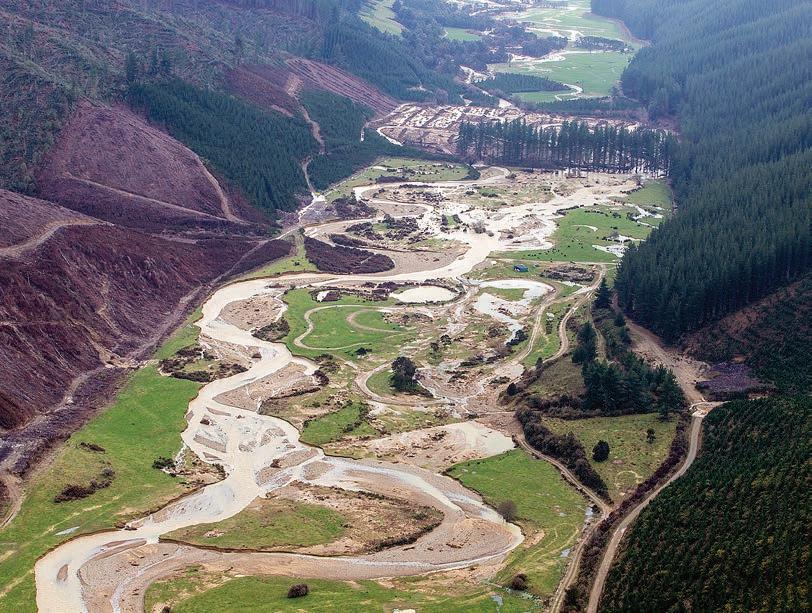
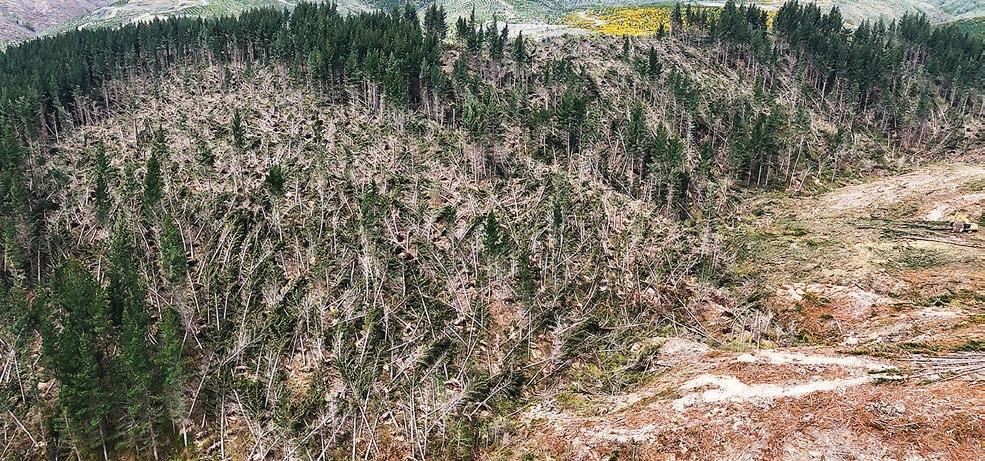
LAST October’s freak windstorm damaged 250 hectares of forests in Otago owned by Wenita Forest Products.
Chief executive David Cormack said the damage was primarily confined to two forests south of Dunedin, Berwick and Otago Coast, but wind throw was random with pockets of destruction while adjacent areas were largely unaffected.
Cormack said Otago did not have a history of windstorms before October’s event, with gusts up
OUT OF THE BLUE:
Griffin Logging foreman and part owner Chris Cousins says last year’s windstorm was something he has never experienced before.
to 150 kph recorded, uprooted or blew out the tops of trees, stripped branches and snapped limbs.
Once roads were cleared and it was safe to re-enter the forests, logging crews were diverted to salvage wind-thrown trees, most of which were close to maturity.
Radiata pines that had broken off the stem were the priority –to harvest before they decline in quality – while those that are still connected to the stem can survive longer.
Cormack said salvage work would continue for the next few months instead of scheduled harvesting.
They plan to also harvest undamaged trees adjacent to

wind-thrown areas, to create stands of uniform age-grouped trees.
This means about 500ha will eventually be harvested due to the storm.
Simon Walker, Wenita’s logging and planning manager, said fortunately log harvesting is so mechanised, with machines used in every step of the harvesting process, that it made post-storm re-entry safe and quicker than it would have been had they relied on people with chainsaws.
Chris Cousins, a foreman and part owner of Griffin Logging, said the storm was the biggest such event he and others in the industry had witnessed, adding that it behaved unusually.
“Everyone I talk to says it was the biggest event they had seen.
The wind did not come as a wall, it came in tunnels.”
Wenita has operated since 1990 and is currently 70% owned by a Netherlands pension fund, apg, and the Pension Protection Fund from the United Kingdom. It owns 30,000ha of forestry in Otago and Southland and manages a further 45,000ha, employing more than 150 contractors.
Wenita harvests about 500,000m cu a year, of which 35-40% is sold into the domestic market with the balance exported.
Cormack said with China, New Zealand’s dominant softwood customer, buying 17 million cubic metres a year, Wenita is keen to diversify and is leading an initiative to encourage new domestic processing industry. China takes 60-65% of NZ’s log
DAMAGE: Some of the 250ha of damage to Wenita’s Otago Coast forest caused by last October’s windstorm.
exports, but Cormack said ideally they would like that figure to be closer to 50-50.
Wenita has bought only about 200ha in the past 15 years for conversion to forestry and Cormack said changes to the Emissions Trading Scheme make forestry a less appealing investment.
He said the result will be reduced buying pressure, which will mean lower land prices while also making it less likely NZ will meet its international greenhouse gas emission reduction obligations.
“It’s all about confidence and investors need confidence but these changes are having a chilling effect.”
He said the national forestry estate now is about the same area it was in 2000.














South Island farmers line up to go organic

INTEREST from South Island farmers in converting to organic might have already hit the minimum requirement for the co-operative to give its Stirling plant the organic green light.
Andrew Henderson, Fonterra’s general manager for organics, who ran a meeting in Gore, said the turnout was enough for Fonterra to reach a minimum volume of milk to be able to run the Stirling site as an organic site.
Earlier this month the co-op invited applications of interest from South Island farmers.
Henderson said area and business development managers were getting phone calls from interested farmers during the meeting.
Before work commences at Stirling to enable the segregated processing of organic milk, the co-op is looking to achieve minimum recruitment targets in the South Island that would ensure operational efficiencies.
Henderson said time will tell what percentage of farmers
who are interested will convert and what timeframes for them are.
“The land takes three years to convert for USDA and stricter certifications.
“You convert the animals in the last 12 months of those three years.”
Typically conversion takes three years from the last non-approved input, but certain farms, such as regenerative farms that have not used specific inputs, could backdate and conversion could be faster.
There are markets for which conversion time is shorter, he said.
He said farmers attending the event had questions about organic A2 milk, the long-term demand for organic products, and about Fonterra paying conversion premiums to support farmers during conversion.
Clinton dairy farmer Mark Anderson attended the meeting and told Farmers Weekly that on his farm, where he runs a regenerative system, they have been planning for a number of years to go organic.
With their system they could likely be certified organic in two
to three years. He said he now plans to have BioGro NZ do an assessment of his farm system, and with that assessment in hand will know how the transition to organic will work for his farm.
As part of his planning to transition to organic he is selfcontained, has lower input and has introduced diverse pastures.
Anderson delivers to Fonterra and said the growing demand for organic products is positive for the co-op.

OSPRI cuts control areas in Tb battle
Gerhard Uys NEWS Disease
OSPRI will adjust its disease control areas on March 1 as it makes progress towards freedom from bovine tuberculosis.
New Zealand is divided into four disease control area (DCA) types, each with different Tb testing frequencies and movement control measures, depending on the risk of Tb being transferred from infected wildlife


to cattle and deer.
This year specific movement control areas (MCAs) in the Greater Wellington region, Karamea region and the Taramakau/Upper Ahaura region will be removed.
MCAs affecting Marlborough and West Coast’s Mikonui and Tōtara rivers will reduce.
Deputy chief executive for strategy and programmes at OSPRI Simon Andrew said the reduction demonstrates that the programme in those areas is
reaching a point where the risk to farmers is reducing.
Ongoing surveillance is still in place across the country in MCAs, he said.
NAIT tagging and registration is key in the fight against Tb, Andrew told Farmers Weekly. The decision to adjust control areas is made annually in conjunction with OSPRI disease experts, who consider data from surveillance, such as testing on farms and surveillance at slaughter, and pest control, Andrew said.
Gerhard Uys NEWS Dairy
PLANNING: Clinton dairy farmer Mark Anderson says on his farm, where he runs a regenerative system, they have been planning for a number of years to go organic.
Photo: Supplied
Load up with every thing you need for autumn.
The Ravensdown team has all the tools you ne e d to set up a year of grow th. Loc al agronomy advice, 70+ exp er t agri manager s, top - qualit y nutrient s, and the game - changing HawkEye Pro are just par t of the package Together, we’ll help you farm smar ter and make ever y dollar count
C all 0800 100 123 o r talk to you r ag ri ma nage r to day.

Lowland legacy for hill country heroes
As National Lamb Day approaches, Fiona Terry visits an award-winning Romney breeder in England to learn the history of one of NZ’s most versatile sheep breeds.
FIFTH-generation farmer
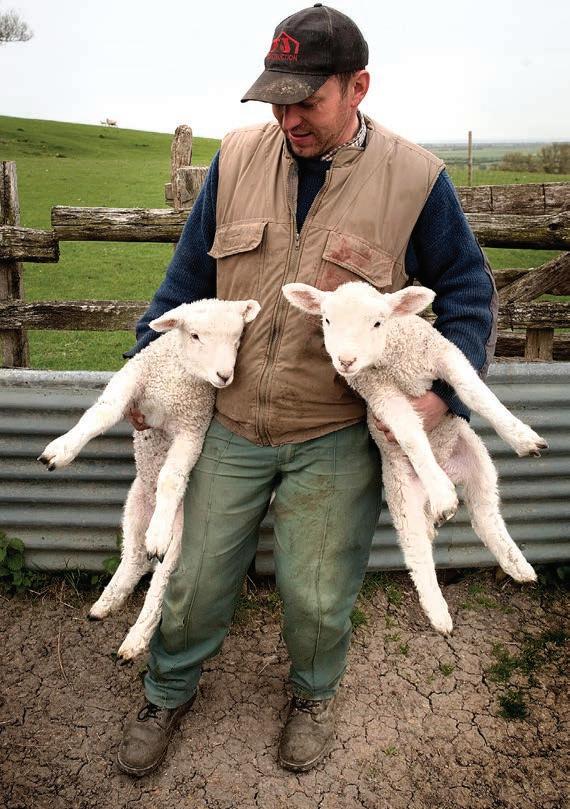
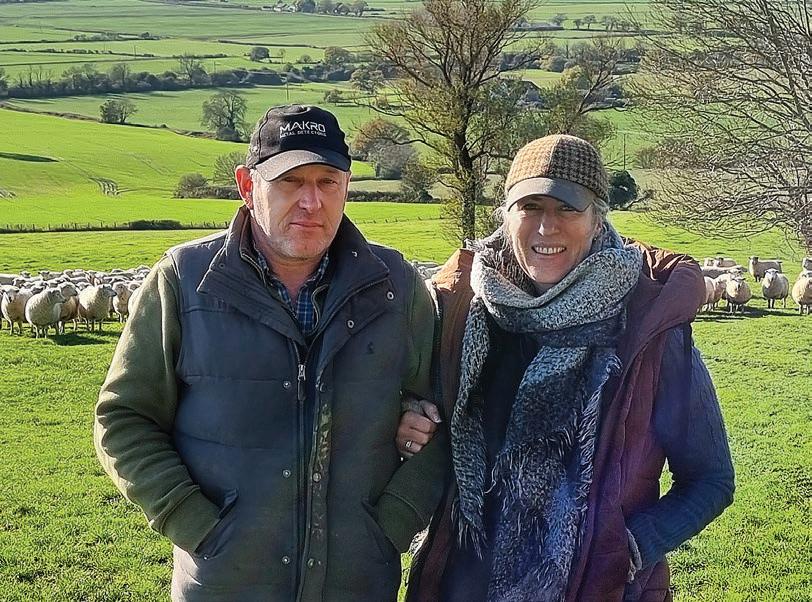
Paul Boulden grew up on Romney Marsh in England surrounded by Romney sheep, a breed his family have farmed in the United Kingdom since the 1880s.
With 1200 hectares and a flock of 1000 indigenous ewes, Boulden prides himself on keeping the family tradition going strong, while navigating the everchanging markets in which his business operates, including the challenges following the withdrawal of the UK from the European Union.
Like many farmers in New Zealand, in England, Boulden and his wife Kristina have needed to diversify to help keep their farm viable. Ecotourism has been the most recent addition, whereby visitors can stay among grazing sheep in their award-winning stylish shepherds’ huts on their farm near Aldington, in the heart of the Marsh.
This venture was inspired by another business established 18 years ago by the couple in an attempt to help turn the tide on the falling value of fleeces, called Romney Marsh Wools. Through this the business now produces and markets over 50 products made using the wool from their own sheep.
When Boulden’s ancestors started farming on the Marsh, the main income would have been wool, he said.
“The reality these days is that the wool off the sheep is worth so little it probably costs us more for shearing.”
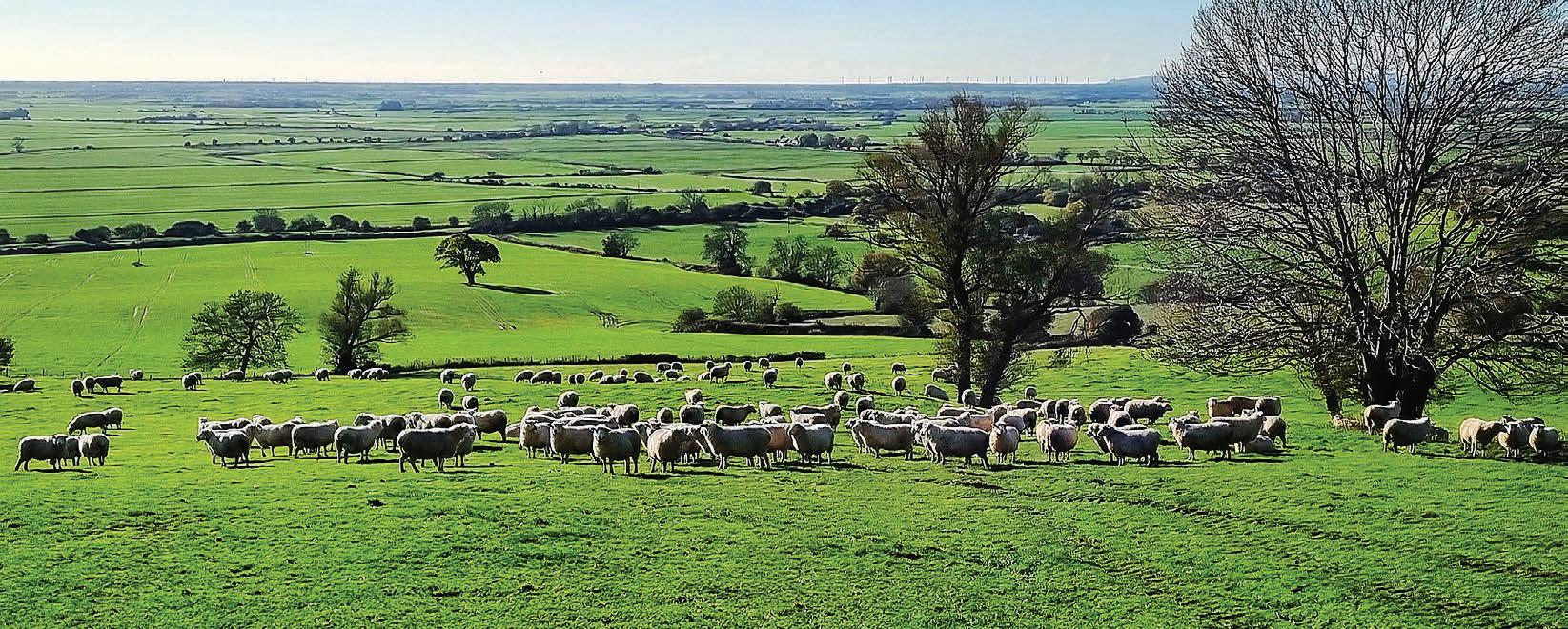
Boulden enjoys working in the unique environment of Romney Marsh, which stretches across 10,000ha through Kent and Sussex in the southeast of England. Parts of the area lie below sea level, protected by extensive sections of impressive sea wall, and on a clear day it’s possible to see France across the English Channel.
A working trip to the southern hemisphere in the ’90s during his late teens enabled Boulden to appreciate the development of Romney sheep in Aotearoa. He was astounded by the scale of sheep farms in New Zealand, where mobs vastly outnumbered the average flock size he was used to back in the UK.
Many Kiwis he met while exploring NZ expressed excitement that he’d come from the area in which the Romney breed originated.
“A lot of people’s perception of Romney Marsh is of boggy ground, up to your knees in mud and reeds – but it’s not like that,” said Boulden, whose produce has won a number of awards over the years, including 2025 Kent County Show First Prize for Romney Teg Fleece, 2024 First Prize and Champion Fleece for Romney, and he achieved Highly Commended in
During the war a lot of the sheep were evacuated to higher ground that was more difficult to crop as the country attempted to grow more of its own food.
Paul Boulden Romney Marsh
the Farmer of the Year category in the 2022 Taste of Kent Awards.
“It would have been once, but it’s deep alluvial soil drained with a network of ditches and land drainage.”
The Romney breed copes well with the Marsh’s terrain, which offers little shelter, in the summer can be dry, and is exposed to the southwesterly wind. Testament to this are the prominent wind turbines, visible for many miles across the flat landscape.
According to the NZ Sheepbreeders Association, the first shipment of Romney sheep to NZ arrived in Wellington in 1843. These days the breed reportedly accounts for about 40% of the country’s 23.3 million sheep.
The Bouldens started farming in the 1880s on just 60ha, said Boulden, who still has the diaries and records dating back to his great-great-grandfather.
Like the generations before him, Boulden is a mixed farmer, and these days two thirds of his productive land is arable, growing wheat, oil seed rape, barley, oats, and field beans – “anything that can go through a combine” – which he sells through merchants.
He also runs a single suckled herd of beef cows – and has 60 Saxon Merinos he bought from a couple who wanted to retire.
“In the 1980s we had a larger flock of Romneys – about 2500 breeding ewes – but the core business is arable farming now.
“In the UK a lot of people lamb indoors, but we’ve always lambed outdoors, in April, to coincide with the flush of spring grass. For Romneys here that’s quite the norm.”
Dipping against sheep scab and ticks was mandatory until the 1980s, he said.
“We haven’t needed to dip with organophosphates for around 40 years, but use pour-ons for fly strike prevention.”
He describes the Marsh as good arable land, as well as providing quality grazing. “During the war a lot of the sheep were evacuated to higher ground that was more difficult to crop as the country attempted to grow more of its own food,” he said.
He also grows brassicas for winter grazing for fattening lambs, supplemented on occasion with cereal – mainly whole oats – although grass mostly provides sufficient feed, even through winter.
“Agriculture generally has become more challenging. There’s been a lot of volatility over the last 10 years or so. There was a lot of scaremongering initially over us leaving the EU because about 30% of UK lamb went to Europe, but our lamb still goes there. It just so happens lamb is a reasonable
return at the moment, and cattle is tremendous, but grain is on the floor.”
The provenance of the Romneys he farms will always remain a priority, he said. “The core of our flock has been bred pure every year and I’ve got an elite flock within the flock, which are performance recorded with maternal data, for qualities like growth rates and fat depth, for flock improvement and evolution.”
Boulden sells his sheep through a local live market at Ashford, 10km away.
“For meat lambs I use terminal sires of other breeds, such as the Suftex and other downland breeds, but all the progeny from those rams go to the market. I also sell milk lambs, off the mother, at around 90-100 days old, which weigh anywhere from 40 to 45 kilos.”
One of the most challenging times was in the early 2000s, with the outbreak of foot and mouth disease.
The crisis saw over 6 million cows and sheep slaughtered across the UK, with pyres of burning carcases a familiar sight in parts of the country.
Although Romney Marsh escaped the outbreak, flock values plummeted because international markets were closed.
“It almost wiped out whole breeds because of the culling, and closed our borders for exporting. After that we went down to about 500 ewes because the market was on the floor.”
In response, many farmers turned to direct selling through farmers’ markets as a way of diversifying. The Bouldens opted to pursue possibilities with wool, which at the time was seen as quite alternative.
More recent challenges include labour shortages.
“There’re less people working in the industry, less farms, and you’ve got to be dedicated to the cause,” Boulden said.
“Diversification does help, as do efficiencies and attention to cost structure. You can make money from farming these days in the UK, but it’s tight, and comes with a lot of financial pressure. Farming is a lifestyle choice as such here.”
TIMING: Paul Boulden says they have always lambed outdoors, in April, to coincide with the flush of spring grass.
Photo: Fiona Terry
UNIQUE: Paul and Kristina Boulden enjoy working in the unique environment of Romney Marsh, which stretches across 10,000ha, through Kent and Sussex in the southeast of England. Photo: Fiona Terry
HARSH: Paul Boulden says the Romney breed copes well with the Marsh’s terrain, which offers little shelter, in the summer can be dry, and is exposed to the southwest wind.
Photo: Matilda Rose
The online world is full of fake and misleading content.
This has always been a problem – but recently, the rise of social media platforms and now artificial intelligence (AI) has supercharged that problem. It’s become difficult filtering through the junk to find what’s real.
We believe real content comes from real people.
And it’s why we see so much value in the journalists and analysts behind this publication.
What value do you put on real people getting out of bed each morning to report on and analyse our largest sector?
That could be the value of a voluntary subscription. $120 per year, or whatever value you put on real journalism.
With your support, our team can continue to keep it real.
Dean and Charlie Williamson















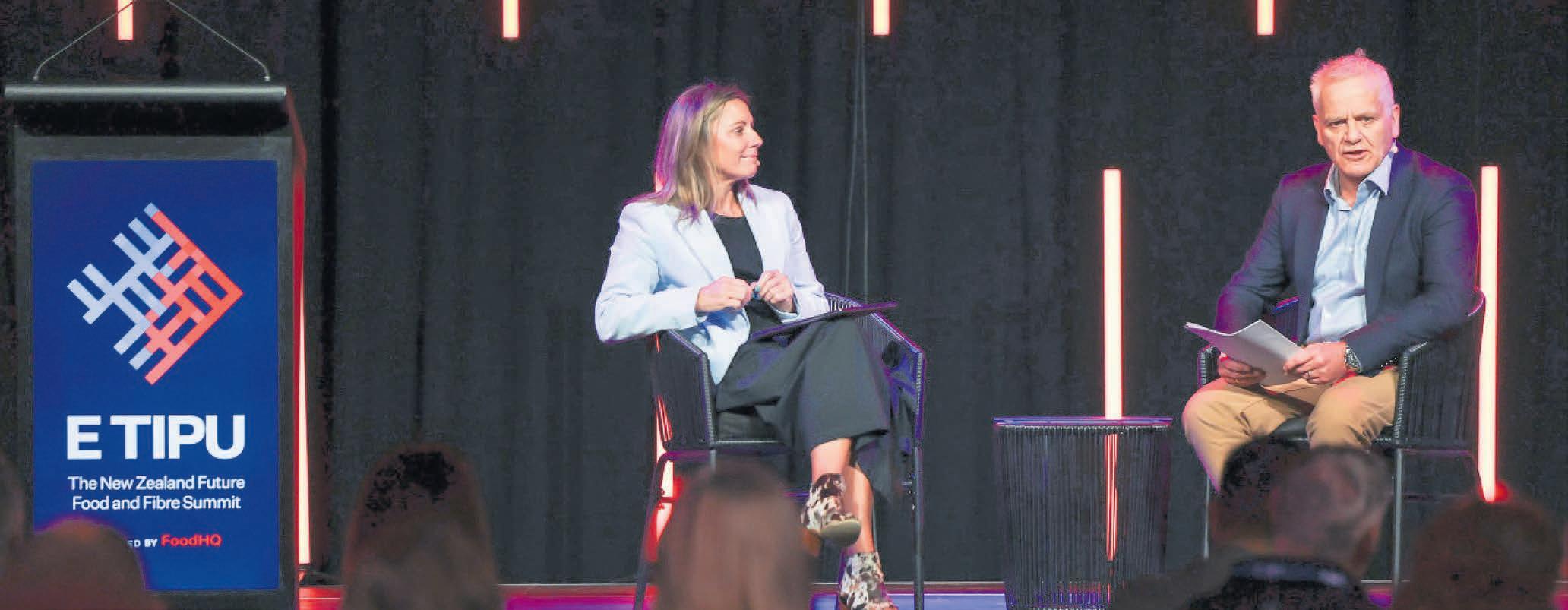
Farmers Weekly senior reporter Neal Wallace shares the findings from his Meeting the Market global tour at the E Tipu Future Food and Fibre Summit in 2025.
RST hopes for repeat of fundraising hit

Isabella Beale PEOPLE Community
THE Rural Industry Leaders Dinner will return this year to raise funds for the Rural Support Trust. It will be held alongside National Fieldays in June.
The event proved a major success when it was held for the first time last year, raising $300,000 for the trust, with all proceeds going towards supporting rural farmers and communities across New Zealand.
All 605 tickets for the June 10 event sold out in under 24 hours. Organisers had hoped to move the dinner to the Fieldays arena this year, but ongoing maintenance means it will stay at Mystery Creek Events Centre. As with last year, the event will feature a debate and auction.
This year’s debate topic is expected to centre on country versus city perspectives.
Confirmed panellists so far include Minister for Oceans and Fisheries Shane Jones, Labour MP Kieran

McAnulty, National MP Suze Redmayne, and comedian and television personality Te Radar.
Sculptor Jaime Thomas of JTSculptures also returns this year after donating the main auction item in 2025, titled Rock and a Hard Place, which sold for $85,000. The piece was dedicated to his sister and her experience of domestic violence while trapped overseas with a young child. He said he could never sell the piece
but was happy to donate it to the trust, knowing how many people it helps.
“She has – we have – all fought together, and she’s come out the other side a stronger woman and a fantastic mother to her beautiful daughter. We are a farming family at heart –it’s in our blood – so we all decided that donating it to this cause to help other farmers through tough times was the right thing to do,” Thomas said.
This year, Thomas is donating a 2.6m-tall horseshoe sculpture of Phar Lap, which he created in 2023. The sculpture weighs approximately 300kg, took three months to complete, and has been finished with a zinc hot-dip coating expected to last more than 170 years.
“I chose Phar Lap because of its incredible story and its New Zealand background,” said Thomas.
Sticker shock from emergency generators
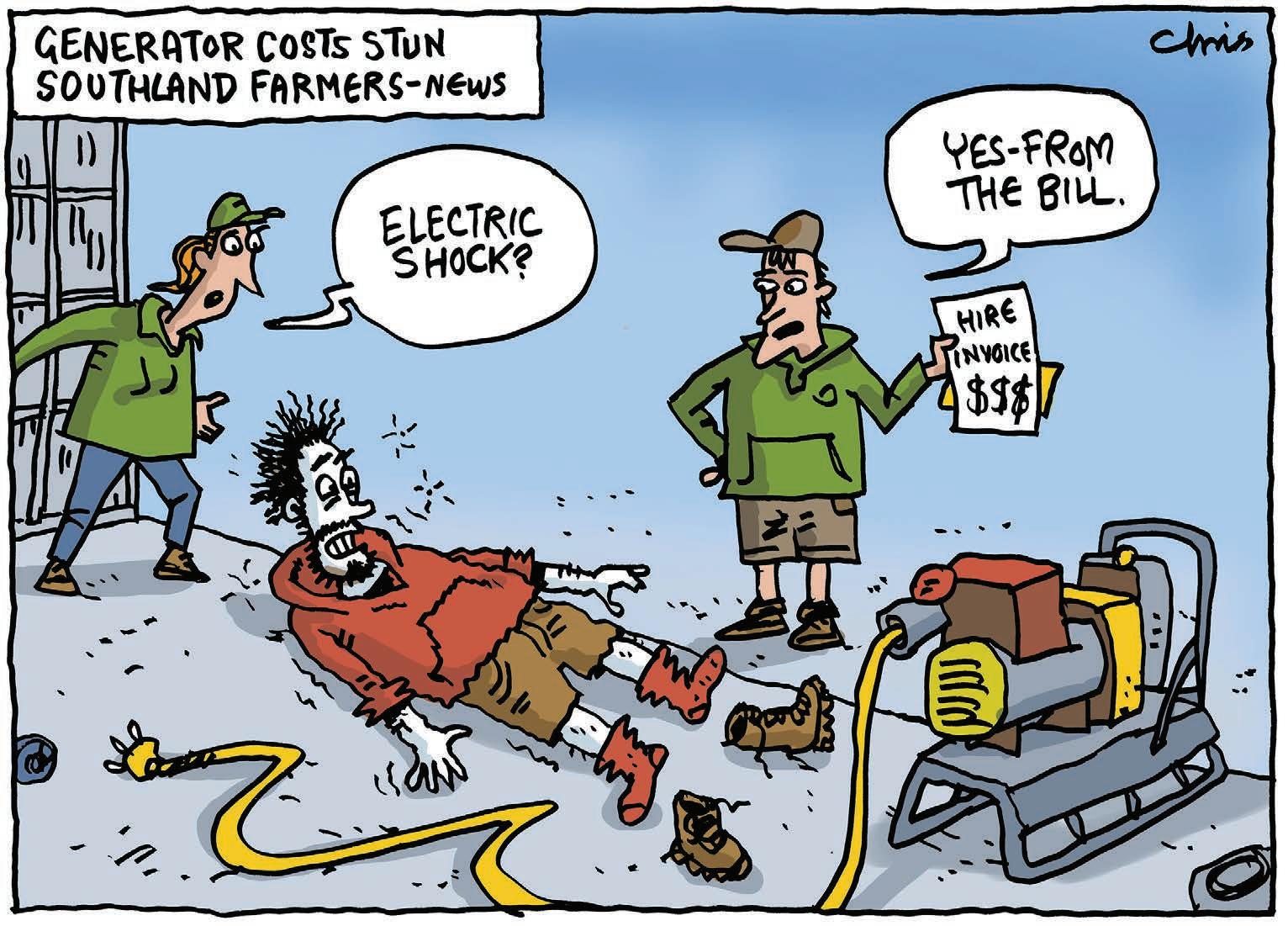
QUESTIONS are being asked about the range of charges billed for generators supplied to Southland dairy farmers following last October’s damaging winds.
The storm cut electricity to about 50,000 Southland households, prompting Emergency Management Southland to declare a state of emergency and arrange 34 generators for use by farmers and businesses.
Invoices for their use are now being sent to farmers, and Southland Federated Farmers president Jason Herrick said he has seen accounts for the same sized
generator range from $8400 for four days hire to $14,000 for five days.
Two accounts for larger samesize generators were $17,000 for a five-day hire, and $21,500 for seven days.
He described them as “exorbitant”.
Southland District Council mayor Rob Scott agreed, saying while there needs to be cost recovery, the size of the invoices was a surprise. He has asked staff to look through the details of how the accounts were calculated and to ensure correct processes were followed.
“One invoice is for $875/hr. That’s a ludicrous amount of money.”
Herrick feared the size of the accounts would deter people from seeking help in future emergencies.
Herrick said the day after the storm he had arranged for generators farmers could purchase to be flown south from Auckland by the RNZAF.
He said Emergency Management Southland would not sign it off because there had been no request from farmers.
Herrick said the reason for that was that communication systems were down.
The need was there, evident by the deluge of calls when limited cell phone coverage was restored, he said. The hire charge some farmers now face would
have covered the purchase of a generator.
Lucy Hicks, the Emergency Management Southland group controller, said in a written response to questions that the generators were hired for periods varying from several hours to up to nine days.
Fees were calculated on the daily hire rate, which ranged from four to 24 hours, then multiplied by the Kilovolt (KVA) or size of unit.
“For example, someone with a 30KVA generator was charged differently to someone with a 200KVA generator,” she said.
“In addition there are charges for transport, electricians, and security that are included in each invoice, again influenced by
Joining Thomas in donating a sculpture this year is fellow awardwinning sculptor Blake Harnett, based in Pukekawa, north Waikato. Harnett is creating a 2m-tall sculpture featuring two hands reaching out to each other, along with an additional piece titled Tūi on a Plinth.
“I attended the charity auction last year, and I was blown away by what [event organiser Mike Green] and his team are doing, so I decided I would donate to the charity this year. I wanted to build a sculpture that would not only raise funds but also awareness for the charity,” said Harnett.
The RST provides support to farmers and rural people during periods of isolation and pressure, offering services across mental health and wellbeing, financial stress, adverse weather events, employment issues, animal welfare, and biosecurity concerns.
The sculptures will be auctioned both live at the event and online, with bidding available in-person and remotely. Online bidding will open three weeks before the Rural Industry Leaders Dinner.
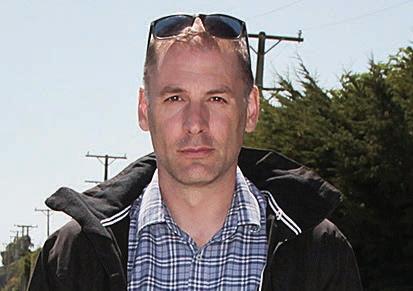
SURPRISE: Southland District Council mayor Rob Scott says while there needs to be cost recovery, the size of the generator invoices was a surprise.
both the size and time that the generators were used.”
Emergency Management Southland and the National Emergency Management Agency co-ordinated the sourcing and transporting of units to Invercargill by truck and Hercules aircraft.

WORKS: The completed Phar Lap, made entirely out of horseshoes by Jaime Thomas, and Blake Harnett’s concept artwork for his sculptures Uplift and Tūi on a Plinth. Photo: Jaime Thomas and Blake Harnett
Neal Wallace NEWS Energy
From the Editor
Dairy’s golden run slides into new year

Gerald Piddock Senior reporter
THE dairy industry’s golden run is continuing into the new year as strong on-farm returns and terrific growing conditions around much of the country keep farmers smiling.
Those great conditions have resulted in milk production being up again for December with Fonterra’s latest Global Dairy Update data showing a 2.5% lift in production for that month.
That trend looks to continue into January thanks to the frequent rain. While this has spoiled a lot of beach days for those still on holiday, it was gratefully welcomed for keeping covers high at a time when most dryland dairy farmers start managing their farm around the expectation that it’s not going to rain a lot.
Perhaps the starkest example illustrating
LAST WEEK’S POLL RESULT
Almost 97% of people who took the poll believe WorkSafe has too much say in dayto-day farming.
Last week Farmers Weekly reported that WorkSafe concerns about the risks around operating older manual and hydraulic wool presses could lead to hundreds, perhaps thousands, of older presses needing to be replaced. Expensive shed strengthening and other modifications would have to be carried out to handle heavy electric presses.
The majority of voters who commented believe WorkSafe has taken common sense out of working on farms.
“Worked for 15 years in wool sheds and not once was there an injury with these wool presses. WorkSafe are overreacting in my view. Stop wrapping people in cotton
how green the country is at present is NIWA’s Drought Index for the end of January. The index indicates the levels of dryness based on different shades of yellow to red – with the latter indicating a severe drought.
The latest graphic shows the entire country being white – not even the palest shade of yellow anywhere.
All of this, of course, is not ignoring the impact of the recent flooding around parts of the North Island including Northland, Bay of Plenty and the east coast and the farms that were affected by it.
It’s not just grass that’s in surplus. North Island maize growers have had a great growing season after a challenging start with late planting and some pest insect issues.
With harvesting starting later this month and above-average yields expected, that extra feed along with the pasture surpluses should help keep animals in great condition coming into the back end of the season as attention turns to decisions around drying off.
Underpinning all of this is that dairy prices have stayed relatively strong despite the softening seen in the back half of last year, highlighted in three GDT results through January and February.
While Fonterra lowered its milk price in December to a new $9/kg MS mid point, there is still a healthy margin between that and DairyNZ’s forecast breakeven milk price of $8.50/kg MS.
wool and use common sense,” said one voter.
“Complete overreach once again by WorkSafe,” said another. “Crackdown presses aren’t overly complicated machines. The training required to become competent in their use is short.”
One voter compared the danger of the presses to sporting injuries: “I have used these presses since 1970 with many contractors. It is more dangerous playing rugby. How many rugby players are injured each year compared to using a wool press?”
Of the 3.1% who voted no, one person
Letters of the week One co-op to serve us all
Robin Boom Taumarunui
I WRITE in response to your article “Co-ops must flex to stay strong” (January 19) on farmer-owned fertiliser companies Ballance and Ravensdown.
Having spent the past 36 years as an independent soil consultant advising many hundreds of farmers on soil fertility issues and also being a user on my own sheep and beef property in the King Country, I have found the increase in private fertiliser importers over the past decade has been good for both farmers and the industry.
The fact that no rebates have been paid for several years is testament to both co-ops having to drop their prices to try and match the private companies.
Direct importers have arisen because they could see the difference between the global market and what farmers were being charged here in New Zealand, realising there were good margins to make profits by undercutting co-op prices.
And then there is the cash injection coming for Fonterra farmer shareholders from the Lactalis sale.
This is assuming the co-operative gets the necessary 75% majority vote to approve the capital return at the virtual special meeting on February 19.
But will the good times last? Rabobank’s 2026 outlook says it is likely there will be record milk production at a time when milk flows are voluminous elsewhere.
Critical to farmer fortunes will be the strength of demand in the face of abundant milk supply, it noted.
And there are other fish hooks: the possibility of interest rates lifting later this year, geopolitical tensions and creeping onfarm costs.
In December, Fonterra chair Peter McBride said DCANZ was forecasting an 8% decline in milk volumes in Europe by 2030, particularly in the Netherlands and Ireland, due to regulatory pressure.
In the United States, farms are getting larger and its farmers are taking advantage of the high beef price by mating their cows to beef sires.
Any farmer with experience knows the realities of having to budget through a volatile commodity cycle and, if the past is anything to go by, what goes up will come down, but the unknown factor is how soft the landing will be.
Last week’s question: Does WorkSafe have too much say in dayto-day farming?
With multiple importers selling commodity fertilisers in both the North and South Islands, there is probably a good case for both co-ops to join as a single farmerowned entity as the Commerce Commission would see these private companies providing fair competition.
With the co-op model, all farmers should be treated similarly and fairly, but this is not the case. I know of two larger farmers in the King Country offered significant discounts of between $70-$100 off by both co-ops, and another, Waikato-based, larger farmer where a private importer was offering fertiliser $100 cheaper than his coop and the local rep said “we’ll match their price”.
If several large farmers are offered these one-off large discounts, the question is who pays for it? Is the co-op still making a profit on these larger orders, and if so, why can’t all of the smaller shareholders like myself who order online or via phone get a similar price?
With Ballance shutting down its only North Island superphosphate manufacturing plant at Mt Maunganui and changing focus on imported higher analysis fertilisers such as double super, the landscape is changing. To remain competitive against the private importers without the large overheads, convenient local stores and support staff, will be a challenge.
Both co-ops combining forces, thus improving efficiency, and treating all shareholders similarly regardless of scale, would level the playing field, and be better for both larger and smaller farmers. And who knows, rebates may again be paid to the shareholders these co-ops serve.
pointed to the significant number of farm-related deaths each year: “Farmers have proved they can’t manage the risk themselves. She’ll be right mate!”
Can the sheep and beef sector sustain record stock prices?
This week’s poll question (see page 1): Have
Keeping three steps ahead of the game
Meaty matters
Meat industry commentator: allan@barberstrategic.co.nz, http://allanbarber.wordpress.com
RABOBANK’s report on the agricultural sector outlook for 2026, entitled Keeping One Move Ahead, likens the challenge to a game of chess in which many different influences will shift suddenly and unpredictably. It will be essential to be ready to adapt strategies at short notice to avoid being blindsided. To do this will require thinking three moves ahead instead of reacting to each surprise development as it occurs.
The report’s author, Emma Higgins, suggests the global chessboard shifted in 2025 through a series of changes related to trade blocs, industrial policies,
and geopolitical manoeuvring. As we enter 2026 the pace of change hasn’t slowed.
The report argues for New Zealand agribusiness to maintain last year’s strong performance, the various sectors must keep abreast of the wider factors at play, rather than short-term developments such as weekly pricing volatility or movements in the store market.
Higgins suggests the most important influence will be the political situation both locally and internationally, which will in turn affect currency movements and the cost of capital or interest rates. Domestically, the current government has stated there will be no lolly scramble despite this being an election year, while interest rates appear to have reached their lowest level in this cycle.
It is doubtful the public will be impressed by the austerity these two factors imply, unless the economy improves markedly and quickly, so people feel better off. The high cost of living means things won’t improve sufficiently, so there is a strong possibility of the National-led coalition losing the election. If this happens the agricultural sector will almost certainly be exposed to a lessfriendly political environment.
The recent strengthening of the New Zealand dollar against the
currencies of all our main trading partners apart from Australia, while reducing export margins, may benefit the overall economic performance, if not export prices.
The role of the United States dollar as the main international reserve currency may weaken because of the changing nature of the US’s sphere of influence with its focus on dominating its western hemisphere. This automatically increases China’s influence in the Asia Pacific region.
The NZ government, and key export sectors, will be aware of needing to tread a very fine line between traditional partners and allies on one hand and newer partners with which we may have a more conflicted relationship. This situation is made especially challenging because we may not always like the way our traditional partners behave.
We remain totally dependent on our continued ability to trade with as wide a range of partners as possible, given the US’s flagrant disregard of the World Trade Organisation, while Winston Peters’ refusal to support the FTA with India highlights the risks of a coalition government.
NZ is extremely fortunate in the skills of its trade negotiators who do all the hard grind required to work through the minute details of trade agreements. The glory

It must be galling when that work is put at risk by political posturing.
goes to the politicians, but the real credit lies with the officials that do the hard work. It must be galling when that work is put at risk by political posturing.
Rabobank highlights the increasingly volatile weather patterns, energy supply and the cost of fertiliser and feed as potential rogue elements which could strike at any time.
The outlook for commodities remains favourable for the year ahead with a combination of firm demand and tight volumes in most areas, although the milk price may face some downward pressure because of the strong global supply
trend. Wine exports to the US, our largest export market, will struggle to overcome the effect of tariffs. It is hard to argue against Rabobank’s assessment of the complex environment facing the agricultural sector and the need to remain alert and ready to adapt to change. Threats fall into two categories: those inflicted on us – either climate effects or geopolitical – and those that are self-inflicted, such as domestic political decisions and failure to meet customers’ needs. Whatever the reason, farmers must concentrate on the essentials of feed budgets, on-farm efficiency improvements, and cost management to guard against nasty surprises. Representative bodies like Federated Farmers, Beef + Lamb NZ and others must deliver even better value for money to farmers.
Forestry still has a social licence problem
In my view
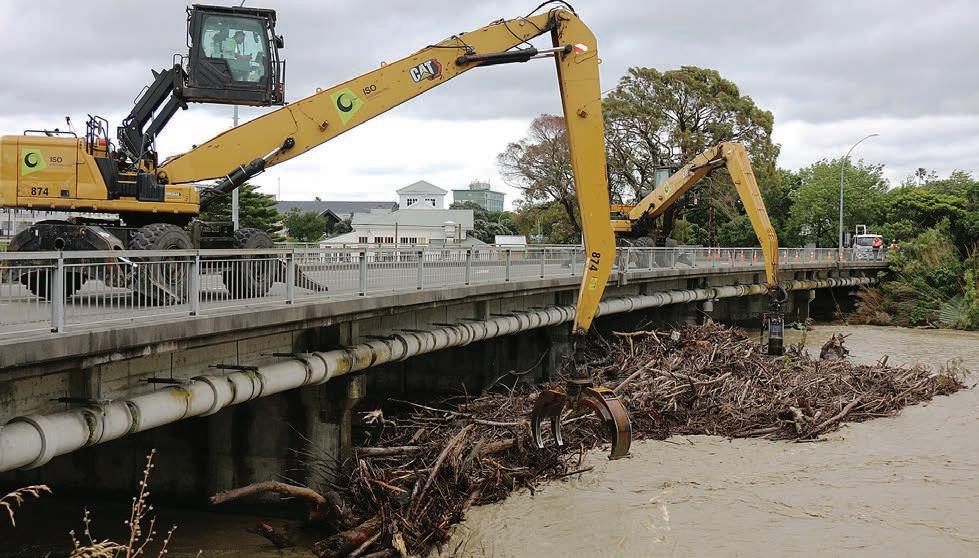
SEVERE rainfall events around the country have shown us that forestry is not always on the right side of the social licence ledger.
The damage following Cyclone Gabrielle, ex-cyclone Gita in Tasman, the storms in Nelson, and the recent North Island storms clearly show that the intensity and frequency of these events is increasing and that without meaningful change that licence is at risk of being washed away.
The problem is the dominant industry business model, which consists of extensive planting of radiata pine and clearfelling it around age 28. This model is applied across the country, irrespective of the terrain or the risks.
Radiata is a fairly low-value timber and needs to be clearcut in order to remain economic. But what we are seeing is that model doesn’t work everywhere – and the current rules, the NES-CF, are not formulated to avoid adverse effects in places where the model is clearly unsuited.
In May last year it was reported that the Eastland Wood Council
had complained that it was “significant regulatory overreach” for the Gisborne Council to require forest debris to be retained within the forest boundary. Then in January this year, it was reported that one of the large growers on the east coast had written to the minister requesting “intervention that gives forestry operators the legal framework assurance that they will not be held legally accountable in the event of a discharge”.
The problem is the dominant industry business model ... applied across the country, irrespective of the terrain or the risks.
But under the Resource Management Act, it is illegal to cause the deposition of forest debris or sediment onto neighbouring or other downstream property, and a council is obliged to implement that legal requirement.
In effect, these forest owners are externalising a large proportion of their costs by not properly identifying or managing the risks (and want to continue to do so).
This failure results in damage which they are clearly unwilling to take full responsibility for. Instead, the costs of that damage are passed onto private property
owners, ratepayers, taxpayers and the environment.
So the financial cost of that damage does not appear on the forest owner’s balance sheet, nor do the impacts on the environment.
The implication of this is that if these costs were internalised (that is, added to the balance sheet) the overall cost of harvesting would rise and the value of the forest (or cutting right) would reduce and could even become negative. This then implies faulty risk assessment, inadequate due diligence and misleading forest valuations.
Radiata pine does not have sufficient value to stand the higher cost of more sensitive harvesting
systems such as those suggested in Hekia Parata’s task force report Outrage to Optimism. That report recommended a maximum clearcut size of 40 hectares and a five-year wait before clear-cutting an adjacent area. But those ideas have yet to be translated into regulations.
The plantation industry in many regions needs to change. The way forward needs to be:
• Investigate alternative harvesting systems and equipment.
• Conduct comprehensive risk assessments that include these alternative systems.
• Set aside all terrain where the risk of productivity under any system cannot be justified.
• Manage a transition to a
NEIGHBOURS: Under the RMA, it is illegal to cause the deposition of forest debris or sediment onto neighbouring or other downstream property, Roger May points out.
successional native forest on areas set aside.
• Stop replanting radiata pine where large-scale clear-cutting cannot be justified.
• Investigate and trial the planting, management and marketing of higher-value species.
So instead of trying to get the government to loosen the rules, the industry needs to urgently invest in research on more valuable alternative species, alternative harvesting systems, and risk assessment if it is to restore its social licence.

BLOC: Rabobank report author Emma Higgins suggests the global chessboard shifted in 2025 through a series of changes related to trade blocs, industrial policies, and geopolitical manoeuvring. Photo: Pexels
Allan Barber
Roger May May runs Tomorrow’s Forests, a forestry consultancy company
Sector Focus
Peeling back identity of heritage apples
with some then given different names by local farmers.
AARON Hewson is passionate about pushing the boundaries for horticulture and agriculture to future-proof growing food for communities, and his Master’s research holds exciting potential for commercial orchards.
Hewson, recipient of the 2025 Horticulture New Zealand Postgraduate Scholarship, has completed the first year of his Master of Science in Plant Biotechnology at the University of Otago. The scholarship is awarded to a student undertaking postgraduate study in horticulture or a related field and provides $10,000 cash.
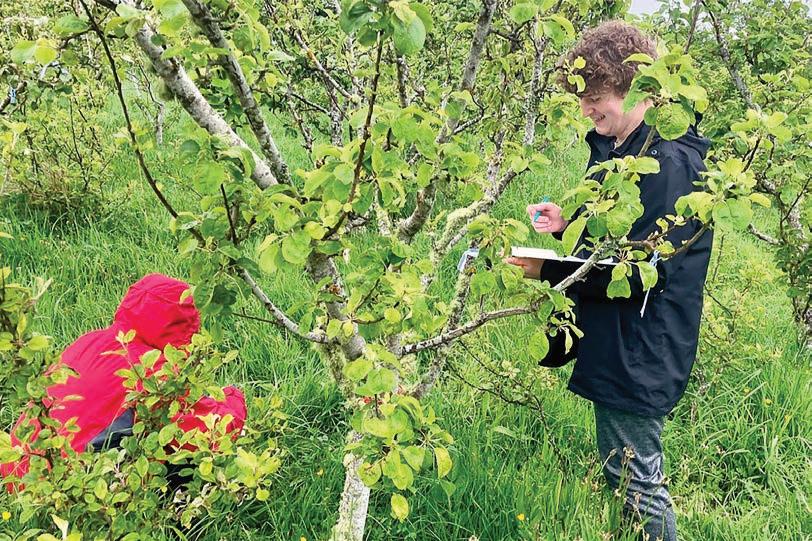
Hewson’s research is focused on genotyping heritage apple cultivars at the Jim Dunckley Heritage Orchard in Mt Cargill, near Dunedin. The orchard is maintained by the Coastal Otago Branch of the Tree Crops Association.
The cultivars in the orchard were collected in the 1990s from locations across Otago and Southland, including from a former Plant & Food Research orchard.
However, over generations, the original identity of many of the heritage varieties has been lost,
The major focus of Hewson’s Master’s studies, co-supervised by the Bioeconomy Science Institute (Plant & Food Research) and working alongside their expertise in apple breeding, is to use DNA from each different cultivar to identify which variety of heritage apple they are.
“There is a very good reason, apart from the historical side,” he said.
“Heritage apples have an importance to the wider apple sector.
“Most of the modern commercial apples in supermarkets have been bred from a very narrow genetic base of only six apples.
“Yet there are around 10,000 heritage apple varieties worldwide. With climate change bringing increased temperatures and more disease and pests, we have to have genetic diversity to breed apple cultivars that can deal with those new challenges. So, we need to know what heritage apples we have in New Zealand, and how they relate to today’s apples.”
Ultimately, with trees in the collection fully identified, there is potential to provide germplasm to research bodies and apple breeders.
In his first year of research, Hewson has already successfully identified 80% of the orchard’s heritage apples, matching them
to known heritage varieties on an international database.
“The 20% which have not been identified yet are also very interesting. It could be because those varieties are not yet on the database, or it could be that they are unique local New Zealand cultivars.”
Hewson’s passion for wanting to make a difference for people and places was forged growing up in urban Dunedin – but with grandparents who are passionate about conservation.
He was awarded a HortNZ undergraduate scholarship for his initial studies at Otago, where he gained a double major of Bachelor
Two decades of achievement
HORTICULTURE New Zealand (HortNZ) has marked 20 years of championing an industry that is now one the country’s most dynamic and resilient sectors.
The organisation was formed on 1 December 2005 through the merger of three long-standing grower bodies: the New Zealand Fruitgrowers Federation (est. 1916), the New Zealand Vegetable and Potato Growers Federation (est. 1957), and the New Zealand Berryfruit Federation (est. 1978).
HortNZ chair Bernadine Guilleux said the goal at the time was to unite growers and ensure they had a strong, effective voice.
“Twenty years on, the value of critical mass and co-ordinated, cross-sector effort is clear.
“Horticulture has grown from eight per cent of primary sector exports in 2005 to 14% today.
“Sustained investment in research, innovation and advocacy has helped shape a profitable, sustainable sector respected worldwide.”
Major milestones over the past two decades include the creation of the Recognised Seasonal Employer (RSE) scheme, the development of the New Zealand

PAST AND PRESENT: HortNZ board president/chairs past and present at an event to mark 20 years of the organisation. Barry O’Neil (left), Andrew Fenton, Bernadine Guilleux and Julian Raine.
Good Agricultural Practice (NZGAP), and industry-wide responses to shocks such as covid-19 and the Psa outbreak in kiwifruit.
While grower numbers have dropped from more than 7000 in 2005 to around 4300 today, the total area under horticultural production has increased.
Guilleux said innovation and technology had reshaped the sector.
“Protected cropping, precision horticulture, improved water management and automation
are transforming how we grow. Alongside kiwifruit, crops such as apples, cherries and berries are now securing strong premiums around the world thanks to new genetics, market development and post-harvest advances.”
In 2023 the Aotearoa Horticulture Action Plan (AHAP) was launched which set a plan to double the farmgate value of horticultural production by 2035.
“The same spirit of collaboration that had defined the past 20 years will be critical to achieving this ambition,” says Guilleux.
of Science in Agricultural Innovation and Plant Biotechnology and a Bachelor of Arts majoring in Religious Studies and a minor in Asian Studies.
“The scholarships have been a big help financially but what I have also really appreciated is being able to attend the Horticulture Conferences and learn so much more about the industry,” he said.
“Towards the end of my undergraduate studies, I was offered this research programme.
“Being awarded the postgraduate scholarship has given me the ability to really focus on my academic research.”
Alongside his studies, Hewson is
also involved with organisations including Future Farmers.
“We want to be pushing boundaries for the future of agriculture and horticulture and that is relevant to what I am doing, helping to support the future of apples,” he said.
“I chose my university subjects because I want to be part of making a difference, help to improve the natural world and look after people and places.
Agriculture and horticulture is where we can do a lot to support communities and conservation.”
As well as being awarded the Horticulture New Zealand postgraduate scholarship, Hewson was a 2025 joint recipient of his university’s 2025 Joan Mary Anderson prize for exceptional students who show the greatest promise for contributing to plant science.
While he said his future plans are still “a million dollar question”, his goal is to “have a foot in both research and commercialisation”.
“My interest is in underutilised plants, like heritage apples and other food crops that are underrepresented in modern food using genetics to raise the status of these underutilised plants.
“Scientists are good at getting results but not always as good at getting them to the end user, so I would really like to be able to sit across both spectrums.”
Roads, not rainfall, worry NI kiwi growers
cause an impact on crop volumes, he said.
NORTH Island kiwifruit growers appear to have come through the recent floods with their vines mostly unscathed, with harvest set to being shortly.
Growers in Bay of Plenty, Northland, Coromandel and on the east coast were impacted by significant rainfall, with some receiving over 400mm of rain in 24 hours, New Zealand Kiwifruit Growers CEO Colin Bond said.
However, most of the impact was around water levels and it is too early to know if it has affected vine heath.
“At the most extreme we had an orchard in Welcome Bay that was involved in one of the slips. Over a hectare of kiwifruit has been wiped out there,” he said.
He suspected there might be a handful of other growers who might have had flooding damage. He did not think the flooding had impacted harvesting, which is due to begin on Red kiwifruit shortly.
The flooding had not been widespread enough for it to
“The big impact is the significant impact through orchards and then would it have touched the fruit? And that might create a food safety risk.”
So far, he had not heard any cases where this had happened.
We’re about two weeks out from the start of harvest, so it’s not ideal timing for the infrastructure.
Colin Bond New Zealand Kiwifruit Growers
Bond called for something to be done about State Highway 2 from Ōpōtiki to Gisborne, where there are around 700ha of vines.
Once harvested, that fruit is transported along that route, which is currently closed after being severely damaged in the floods.
“We’re about two weeks out from the start of harvest, so it’s not ideal timing for the fruit or for the infrastructure.”
HISTORY: Aaron Hewson says we need to know what heritage apples we have in New Zealand, and how they relate to today’s apples.
Photo: HortNZ


A new partnership to make Martha proud
Rural Women New Zealand and Farmers Weekly team up to honour a century-old record of improving life for women in agriculture.
RURAL Women New Zealand, known as the Women’s Division of the Farmers Union at the time, was founded by a woman called Florence Polson. Her husband William was president of the New Zealand Farmers Union and supported its paper, the New Zealand Farmers’ Advocate. In 1922 Florence started writing columns in the paper, believing the needs of rural women were being neglected. She did this
Dear Martha,
under the pseudonym Martha.
Martha wrote about things that mattered and things that challenged the status quo.
When the Farmers’ Advocate was superseded by the Farmers Weekly in 1924, Florence ran her own column. It was all about improving life for rural women.
She was concerned about things such as farming women’s lack of financial independence, outlined a scheme to sell produce to townswomen and called for greater help in the home. She thought the rural woman was taken for granted and she did something about it.
More than 100 years on, as we celebrate our centennial year, Farmers Weekly has given Rural Women New Zealand an
It’s hard to imagine we’ve been around for 100 years.
We’ve achieved a bit in a century, raised thousands of dollars for a Spitfire during the war, pioneered the Bush Nurse scheme. Marched to parliament to demand better pay equality, we are the reason for rural rapid numbers, have spent years raising money for research into leptospirosis, launched a podcast and created professional development opportunities for our members.
Most importantly our members get stuck in when it counts.
Our members are described as the backbone of rural New Zealand, the steady force that keeps things moving. Some might say she’s the one holding a clipboard, getting funding for the new school hall, making the scones.
We are so much more than that stereotype though.
One of the big things we don’t talk about enough is our advocacy work.
Th
opportunity they think Martha would be proud of. A platform to share our members stories, and a platform to make a positive difference to the lives of rural women and communities around the country.
Every week you’ll find us here, sharing the stories that matter. Rural Women is going to talk about Activato, the start-up incubator for rural entrepreneurs; NZI Business Awards; our latest submissions on things like pay equity and emergency management; access to life-saving emergency medicines; keeping our families safe on farm. Our members’ charitable and business ventures; what matters to rural communities; and the challenges they are facing. We
We recently submitted in support of Pharmac’s proposal to expand emergency medicine across rural communities. For rural women and families, access to emergency medicines can be the difference between life and death.
Whether it’s a serious injury, a mother experiencing postpartum haemorrhage, or a loved one needing pain relief at end-of-life.
Having the right medicines available when and where they’re needed, matters.
We just appeared before the People’s Select Committee on Pay Equity, with 75% of our members concerned about this. Rural communities must be protected when policy changes that will negatively impact them are proposed. If decision makers are going to rush change through without proper consultation – they’re going to hear from us.
Next week we have Emergency Management legislation in our sights, making sure rural voices are at the table. Then the Arms Act and our ongoing

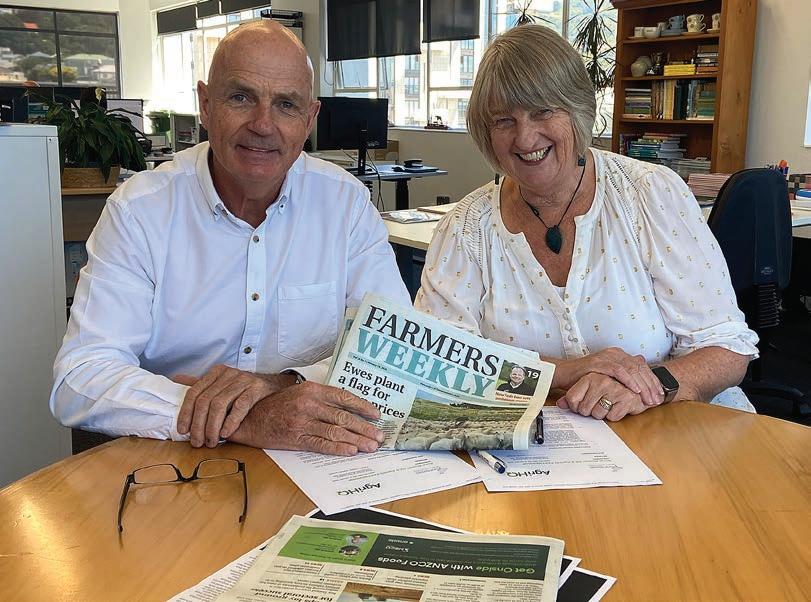
hope you enjoy reading them, as much as we enjoy sharing them.
In the spirit of how our advocacy started all those years ago, we too start this partnership with a letter.
advocacy in partnership with our industry friends about rural school buses.
Our members shape policy and create change, they are chief executives, awardwinning businesswomen, fierce community champions, entrepreneurs working hard to put wool back on the map. Midwives fighting for better healthcare for expecting and new mothers, board directors, digital marketing experts and HR executives. We are inter-generational, daughters, mothers and grandmothers.
The modern-day rural women likely brings in an off-farm salary or has started her own business, she might commute up to two hours into the office or works from home.
She relies on a slightly dodgy internet connection and has a generator on standby so she can still join that Zoom meeting if the power goes out – like it often still does.
She is passionate about ensuring the local school attracts the best teachers and there’s a reliable bus service. She volunteers, but probably doesn’t even recognise it as
volunteering, it’s more mucking in to keep the wheels of the local community moving.
She pays her $50 a year and is part of this organisation called Rural Women New Zealand, alongside 1700 other women. Women that live and work on farms, women that live in town but are rural at heart.
Here she finds a place for connection and support. A platform for advocacy, with a direct line to decision makers.
Ways to celebrate successes and professional and personal development opportunities.
One hundred years on mother nature is still unpredictable, increasingly so in the last few years. Sometimes it feels like it never stops raining. Some summers, it never rains. At Rural Women New Zealand we try to be both the umbrella and the irrigator.
Thanks for paving the way Martha, it’s a privilege to continue your legacy.
The team at Rural Women New Zealand



FEDERATED FARMERS

Feds warn of ‘water tax’ risk
Federated Farmers says while it supports the intent of the Government’s resource management overhaul, a deep dive into the draft legislation has revealed some serious concerns.
Most concerning are provisions allowing freshwater rights to be auctioned, tendered, or levied –effectively enabling freshwater to be taxed, says Federated Farmers RMA reform spokesperson Mark Hooper.
“It’s not an exaggeration to say we were alarmed when we read clauses in the Natural Environment Bill that give future Ministers sweeping powers to tax water to manage demand.
“There is no way on earth Federated Farmers can, or will, support that.
“I’ll be seeking urgent clarification from the Beehive, because any reform that allows water taxes by stealth is completely unacceptable to us.”
Last December the Government released two new bills – the Planning Bill and the Natural Environment Bill – to replace the Resource Management Act.
Hooper says Federated Farmers staff have spent the past eight weeks working through the detail.
“Our team has been very busy getting their heads around what’s really in these bills, with a whopping 700 pages of legislation to wade through.
“It’s important to state up front that Federated Farmers is completely on board with the aims of the reform.
“The promise of a stronger focus
on property rights, a tighter scope, fewer resource consents, more standardisation and less litigation all sound like the reset farmers have been calling for.
“But as we’ve worked through the detail, it’s become clear that there are parts of these bills that do not align with those aims at all.”
Hooper says the risk of water taxes is not the only concern. As currently drafted, the new system may be more permissive where environmental limits are comfortably met, but significantly more restrictive where a catchment is at or near its limit.
“Councils often set limits that aim to maintain current water quality levels, so this could mean many catchments are immediately at or beyond environmental limits from the outset.
“As the Natural Environment Bill becomes more restrictive as catchments approach those limits, that could actually mean more resource consents for farmers as the bills are currently drafted.
“This is on top of requirements for all farmers to also have a Freshwater Farm Plan.
“Federated Farmers supports a shift to a farm plan approach, but only if it replaces, rather than sits alongside, the need for a resource consent.”
Another area of concern is the wording around when councils must compensate landowners for loss of property value.
Hooper says Federated Farmers welcomed the Government’s earlier commitment to compensation
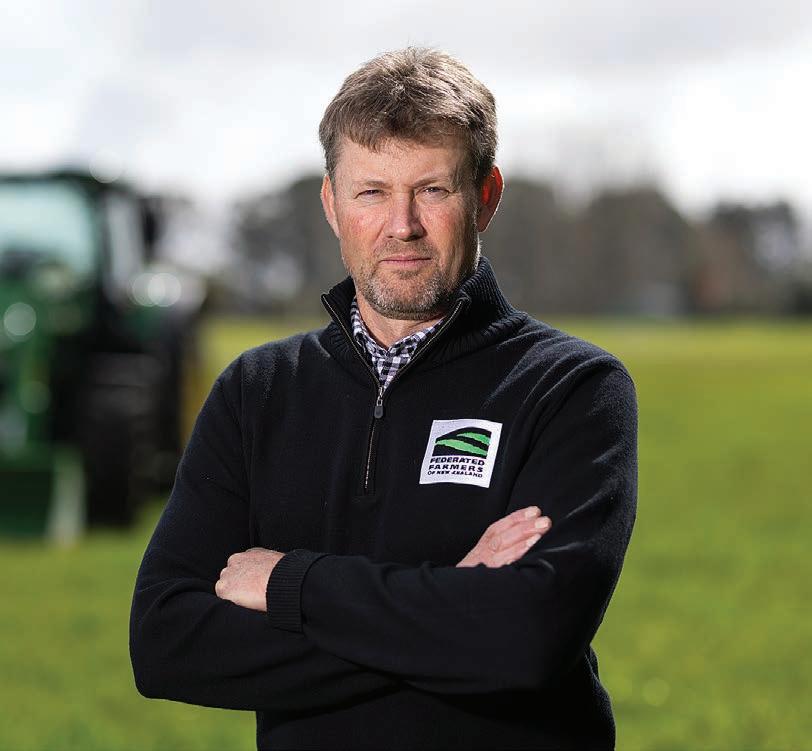
We’ll
be doing all we can to ensure the reform delivers what farmers were promised.
Mark Hooper
Federated Farmers RMA reform spokesperson
when restrictive overlays – such as Outstanding Natural Landscapes and Significant Natural Areas – are imposed on farms.
“But now, when we read the
draft legislation, we’re seeing a compensation regime that’s much more uncertain than many expected.
“It relies on proving a ‘significant impact on the reasonable use of land’, which means compensation could be very limited and will ultimately depend on how future court cases interpret that threshold.”
Hooper says another major concern is that Water Conservation Orders remain largely untouched, despite being an outdated planning tool.
“Farmers and growers are pretty baffled that these relics haven’t been ditched, as they’re a very poor way to manage freshwater resources.
“They allow any member of the public to override regional council processes and push for stricter freshwater controls.”
Hooper says much of the most important detail in the Natural Environment Bill – including the meaning of key goals, the scope of regulation, and what regional plans must contain – is deferred to future national direction set by the Minister.
“That creates a ‘trust us and wait’ model and opens the door to wildly different interpretations by future governments.
“Farmers need certainty if they’re going to invest in their land. A system that leaves key details up to future Ministers creates risk, delays decisions, and undermines confidence in the whole reform.”
While Federated Farmers believes the draft bills miss the mark in a number of areas, both bills are currently at Select Committee for review.
The bills only become law after they’re reviewed by Select Committee and pass further votes in Parliament.
Hooper says Federated Farmers is preparing a strong submission aimed at highlighting weaknesses in both bills and supporting the Select Committee process to amend both bills.
“We’ll be doing all we can to ensure the reform delivers what farmers were promised.”
ALARM: Clauses in the Natural Environment Bill that give future Ministers sweeping powers to tax water came as a shock to Federated Farmers, Mark Hooper says.
Federated Farmers
Hail-hit crops spark feed warning
Canterbury arable farmers and dairy farmers are being urged to start conversations now about the potential for winter feed shortages this year, after a challenging season of hail and rain.
Several significant hailstorms, combined with ongoing wet conditions, have made it a miserable season for arable farmers across the region.
Crops that would normally be harvested by this time have been severely affected, raising concerns about the availability of feed for winter-grazed dairy cows.
David Birkett, Federated Farmers arable chair, says the situation is serious but manageable if farmers communicate early.
“We want to encourage grazers of winter cows, whether they’re arable farmers or sheep and beef farmers, to talk to their dairy farmers if they think they might be short of feed because of the hail,” Birkett says.
“At the same time, it makes sense for dairy farmers to check in with their grazers about how much winter feed they expect to have.
“Early conversations now can prevent serious problems later.”
Birkett, who grows crops such as wheat, barley, and vegetable seeds on his Leeston farm, says the
damage has been very patchy, with some areas completely wiped out and others largely untouched.
“We were off to a really promising start – things were nice and dry early in summer – but then the heavy rain arrived and we had back-to-back hailstorms,” he says.
“Some of those storms have been extremely localised, with entire fields flattened in one paddock while neighbouring farms escape almost unscathed.
It’s frustrating for growers because the crops were looking really strong, but now a lot of that potential feed isn’t usable at all.
David Birkett
Federated Farmers arable chair
“Wheat, barley, and vegetable seed crops have been hit in pockets across Mid and South Canterbury.
“Some growers are facing the second or third consecutive season where hail or rain has destroyed crops, which makes it extremely tough on cash flow.”
Typically, Canterbury might expect two or three hailstorms in a year, but
Birkett says the region has already seen about a dozen so far this summer.
He estimates the total cost of the damage is around $10 million.
“It’s frustrating for growers because the crops were looking really strong, but now a lot of that potential feed isn’t usable at all,” he says.
Canterbury dairy farmer Karl Dean, Federated Farmers dairy chair, says the importance of communication between farmers can’t be overstated.
“Dairy farmers rely heavily on winter feed from arable farms and other grazers, so if there’s a shortage, everyone needs to know as early as possible,” Dean says.
“Talking now allows farmers to plan – whether that means adjusting stock numbers, sourcing alternative feed, or rearranging grazing agreements.
“It’s far better to work it out before winter rather than scrambling when the feed runs short.”
Dean adds that some farmers might feel hesitant to reach out, but early discussion is in everyone’s interest.
“Farmers are naturally busy, and it might feel awkward to raise concerns about feed shortages but having that conversation can prevent
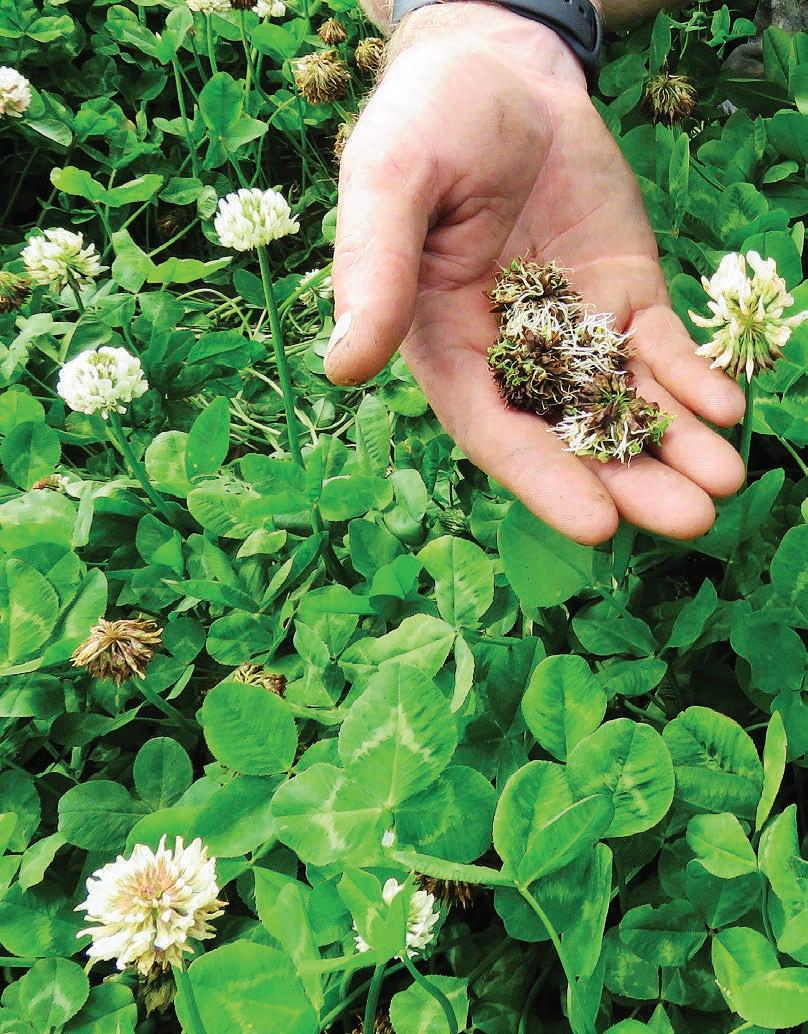
COMMUNICATE:
David Birkett says the situation is serious but manageable if farmers communicate early.
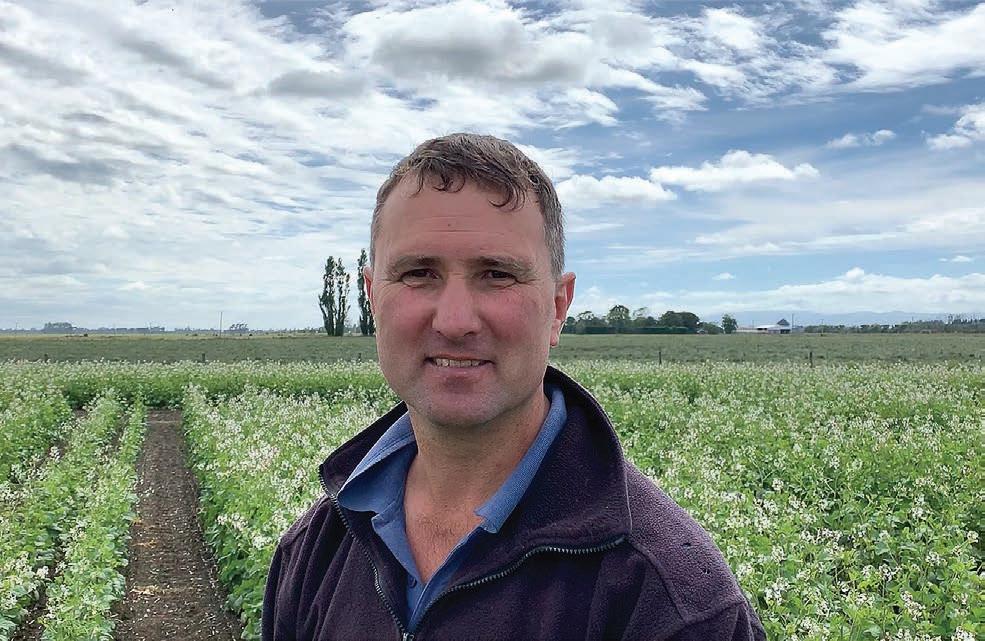
serious animal welfare problems later.
“It’s about looking after the animals and making sure the system continues to work for both the dairy farmer and the grazier,” he says.
Birkett says arable farmers who provide winter grazing are facing tough decisions.
“If your crop has been damaged, you need to let the dairy farmers know,” he says.
“That way, both sides can explore solutions together. Some farms may be able to supplement feed, while others might need to reduce stock numbers.
“Good communication gives everyone options and avoids crises.”
Birkett says Federated Farmers is keen to ensure the damage done so far doesn’t flow on throughout the year.
“We’ve seen how quickly a good season can turn, and the ripple effects hit not just crop growers but dairy farmers who rely on that feed,” Birkett says.
“By talking now, farmers can make better decisions, manage risk and avoid problems for both their animals and their businesses.”
Federated Farmers is working closely with the Rural Support Trust (0800 787 254) and the Ministry for Primary Industries to support farmers dealing with the aftermath of the bad weather.


WEATHER WOES: Some Canterbury growers are facing the second or third consecutive season where hail or rain has destroyed their crops.
Photo: Annette Scott
Forestry no enemy, but honesty matters
New Zealand’s strategic advantage lies in delivering the greatest value from our land.
Farmers, growers and foresters all have a stake in that outcome, and none of us benefit from unnecessary conflict between sectors.
I believe New Zealand will be more successful if our sectors work together, but collaboration only works if we’re honest about what’s changed, what’s driven it, and the impacts it’s having on neighbours and rural communities.
Calls for unity are welcome, but they’re not neutral when they assume blanket afforestation is inherently beneficial for all, or when farmer resistance is framed as cultural rather than as a rational response to policy settings and realworld impacts.
Glossing over genuine concerns, drawing false equivalences, or dismissing farmer experience as anecdotal does not reflect reality.
That framing overlooks the fact that carbon revenue has reshaped incentives, distorted land-use decisions, and introduced major challenges for adjoining landowners and rural communities.
Production forestry, by and large, isn’t a threat to our broader agricultural economy. Blanket carbon afforestation – and poorly managed land parcels enabled by policy settings – is.
Forestry export earnings come from exported wood products; they don’t include carbon credits, which aren’t exports and don’t generate export demand.
Not only are ETS-driven permanent forests often not logged or actively managed, but in recent years a significant share of income from production forestry has come from carbon credits rather than export logs.
Over a forest’s lifetime, at recent emissions prices over half the
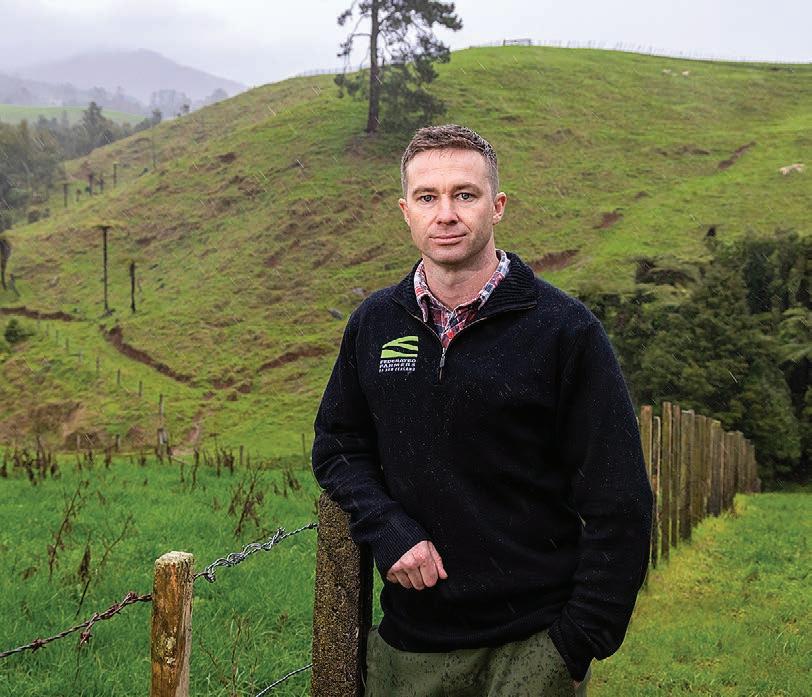
income of the forest could come from carbon credits.
That’s deeply disheartening for sheep and beef farmers who’ve operated in an unsubsidised, internationally exposed market since the early 1980s.
They’re now watching their communities change because of an industry created and accelerated by government policy in the name of a ‘low-emissions economy’.
Getting these settings right isn’t anti-forestry – it’s pro-New Zealand.
Richard Dawkins Federated Farmers forestry spokesperson
The great irony is offsetting emissions through carbon credits allows the economy to delay investments in reducing fossil fuel use, while shifting land out of food production and hollowing out rural regions.
It’s often argued New Zealand
Homes that work as hard as you do.
Built for tough conditions and busy lives, Lockwood homes are naturally durable, quiet, warm, and low-maintenance. Perfect for staff housing or a home base after long days on the land.
had more forestry 20 years ago. Historically, pine forests were planted, harvested and, in some cases, converted back to pasture as markets shifted.
Today, once carbon credits are sold, land incurs a carbon liability if it’s ever returned to pasture, effectively preventing a return to food production unless those credits can be repaid.
So, the issue is not how many hectares are in forestry at any given time. It’s that land-use change has become largely one-way, driven by policy rather than market fundamentals.
Farmers and growers have undeniably become more productive over the past two decades through efficiency, innovation, and responsiveness to market signals.
Against that backdrop, the projected loss of around 500,000 hectares of productive farmland to ETS-driven pine cannot be brushed aside.
This shift hasn’t occurred because farming failed but because carbon returns, created by government
policy, have consistently outbid food production.
Calls for primary producers to work together are reasonable. In fact, that principle already exists in law through the Biosecurity Act and long-standing good neighbour obligations.
I regularly receive calls from farmer members frustrated by neighbouring land users breaching those standards.
Most complaints involve forestry, but that doesn’t mean all foresters are to blame.
The issues are widespread and consistent – sediment and slash runoff, falling trees, damaged fencing and pastures, weed and pest spread, lambs killed by feral pigs, and heightened fire risk.
Raising these concerns doesn’t make forestry the enemy, but it does challenge the idea that farmer opposition is imagined, exaggerated or culturally driven.
It’s also inaccurate to claim forestry has been banned or severely restricted, because trees can still be planted where it makes economic sense.
What has changed is the ability to
claim carbon credits – a mechanism that was subsidising large-scale, permanent land-use change. The right tree in the right place, for the right reason, managed properly, remains good commercial forestry and can be a powerful tool in a farmer’s toolkit.
Addressing these challenges requires a more nuanced conversation – one that grapples with things like policy incentives, weed and pest control, water use in sensitive catchments, fire risk, and what it genuinely means to be a good neighbour.
Frustration among sheep and beef farmers is growing as these issues remain unresolved.
Some have described carbon forestry as the biggest mistake of our generation. If the right balance is not struck, and management expectations not lifted, that assessment will increasingly ring true.
A sector-led solution is clearly preferable, but if progress continues to lag, change will be forced rather than chosen.
Getting these settings right isn’t anti-forestry – it’s pro-New Zealand.
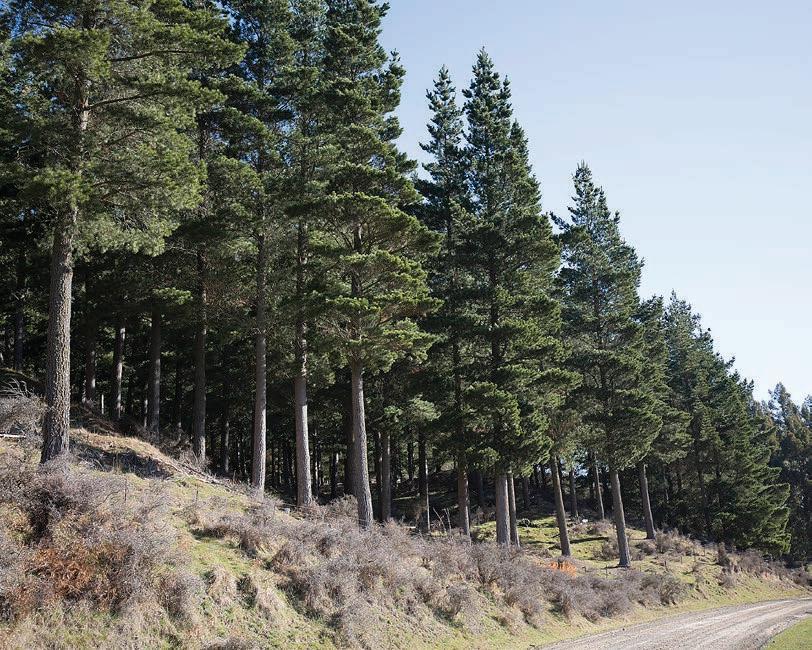
REALITY: Richard Dawkins says raising concerns about carbon forestry is not anti-forestry, but a necessary part of having an honest, evidencebased conversation about land use and rural impacts.
Richard Dawkins Federated Farmers forestry spokesperson
ISSUES: Forestry issues are widespread and consistent – sediment and slash runoff, falling trees, damaged fencing and pastures, weed and pest spread, lambs killed by feral pigs, and heightened fire risk.
Farm monitoring shows huge progress
Data showing Canterbury farmers have made giant strides on environmental performance under a farm plan model highlight the worth of that tool, Federated Farmers vice president Colin Hurst says.
The number of farms receiving A grades in audits of Farm Environment Plans in the province has jumped from 14% in 2017 to 77% during 2024/25, Environment Canterbury (ECan) says.
The number of C and D grades dropped from 12% to 2% over the same period.
ECan introduced the plan audits to check that farm practices were being managed to reduce risks to water quality and to protect mahinga kai (food gathering) values.
“The huge progress on stock and nutrient management, handling effluent, pinpointing erosion risk and other aspects covered by these plans shows the vast majority of farmers are highly motivated to lift their game,” Hurst says.
Federated Farmers Mid Canterbury president David Acland says the findings aren’t news to local farmers.
“This has been a journey from
NEXT: The next big change expected in Canterbury, and around the rest of New Zealand, is the rollout of Freshwater Farm Plans, or as farmers know them, farm plans.
the beginning of development of the Canterbury Regional Plan and farmers have been engaged all the way.
“Farmers are determined to be good stewards of the land, and to pass on our farms to the next generation in good shape.” Acland says.
“We know the investment we’ve
It’s pleasing to have this proof – from audits independent of farmers and ECan – to assure the wider community progress is being made.
David Acland
Federated Farmers Mid Canterbury president
been doing on farm, the adoption of best practice, our involvement in catchment groups and so on are steadily improving things for waterways and biodiversity.
“But it’s pleasing to have this proof – from audits independent of farmers and ECan – to assure the
wider community progress is being made.”
In releasing seven years’ of Farm Environment Plan (FEP) data, ECan noted a big shift in how Good Management Practice is interpreted and applied.
“Guidelines have tightened and there’s been great feedback from industry on that as well, so that’s been quite a collaborative effort,” the ECan statement said.
Hurst says Federated Farmers has consistently argued that progress on environmental indicators takes time, and the pace is picking up. That is also backed up by the ECan audits.
The audits show that farmers in Selwyn are outperforming the wider Canterbury results by about 10%. This reflects the fact that FEPs were introduced in that district first, with on-boarding of the rest of the province happening on average twoto-three years later.
“Both Canterbury and Selwyn have lifted, but Selwyn led the way – A grades have become the norm and C and D grades are now almost gone,” ECan said.
A standout area of performance has been irrigation management


PROVEN PROGRESS: Farmers have been engaged in lifting environmental protection since the beginning of
and ground water nitrates are also dropping.
Central Plains Water Limited’s (CPWL) latest groundwater monitoring shows nitrate levels have been trending down in most wells the company monitors over the past five years.
FEP auditor Charlotte Senior says that’s no coincidence.
“That’s farmers making changes and sticking with them. Efforts are really starting to add up,” she says.
The next big change expected in Canterbury, and around the rest of New Zealand, is the rollout of Freshwater Farm Plans, or as farmers know them, farm plans.
With the overhaul of the Resource Management Act, the Government has said that farm plans will be a key tool. They’ve pledged that these will be flexible and farmer-led, helping farmers identify environmental risks on their farm and then plan practical actions to manage these.
Federated Farmers agrees that farm plans should become the primary compliance tool.
“The aim should be to replace complex, overlapping farm regulations with a single, practical, riskbased farm planning system that improves environmental outcomes while reducing unnecessary compliance and cost,” Hurst says.
“We’re really pleased the Government listened to advocacy
from Feds, and others, and agreed the threshold for the need for a farm plan was 50ha, not the original 20ha.
“They’ve also agreed existing equivalent and recognised plans, such as NZGAP and Fonterra’s Tiaki plans, suffice. Farmers don’t need to get bogged down in paperwork duplication and cost.”
However, Hurst says the Natural Environment Bill currently being consulted on requires auditing of all farm plans.
“We’re pushing for farm plan requirements that are scaled according to risk.
“A farm with higher risk due to the farm system or catchment should have a more detailed plan.
“But where a farm poses a lower environmental risk, the system should allow the farmer to prepare their own farm plan.”
Federated Farmers argues certification should only be required when the farm plan is replacing consented activities.
“Plans should only be auditable at random or where risk or noncompliance is identified. That trust model works well with our tax system, so why not with this?” Hurst says.
“This approach to farm plans means less cost, less red tape and ensures that effort is focused where it delivers real environmental benefit.”

Canterbury’s Regional Plan, David Acland says.
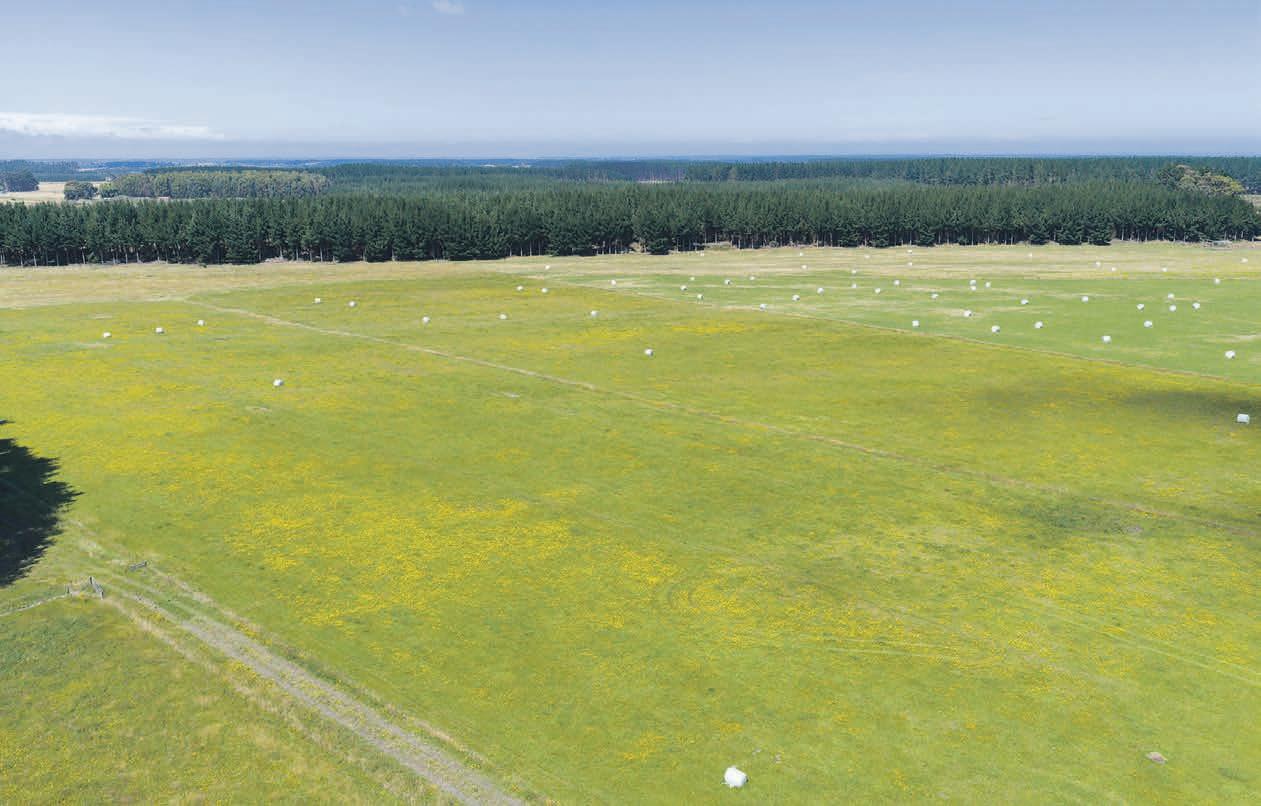
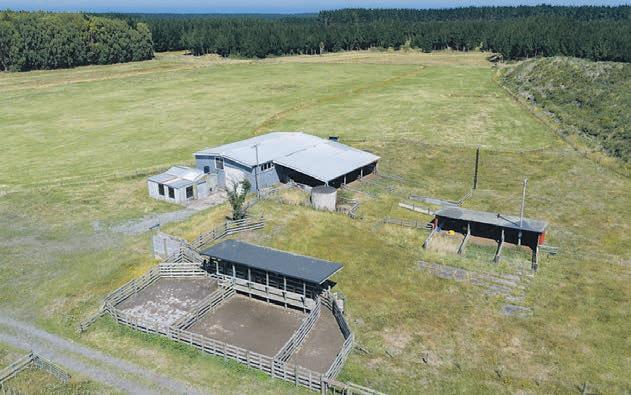
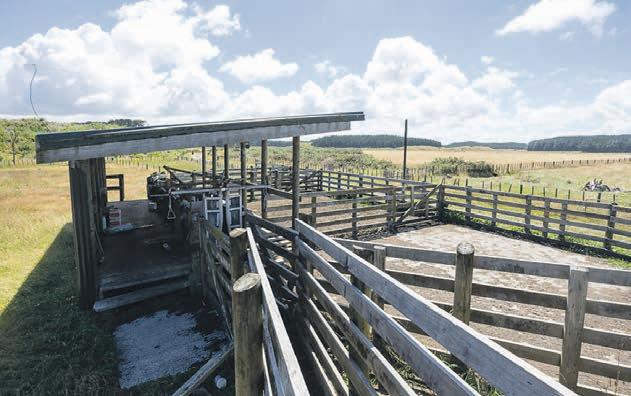
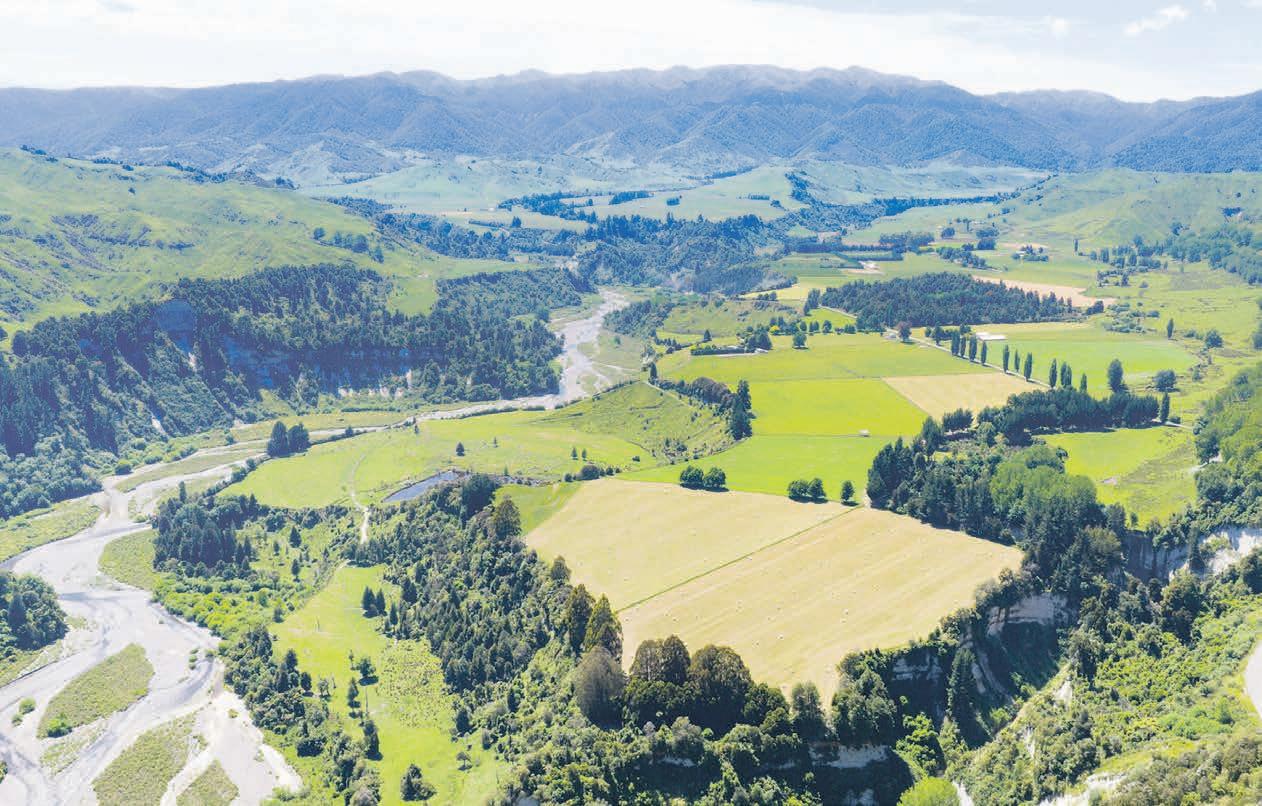
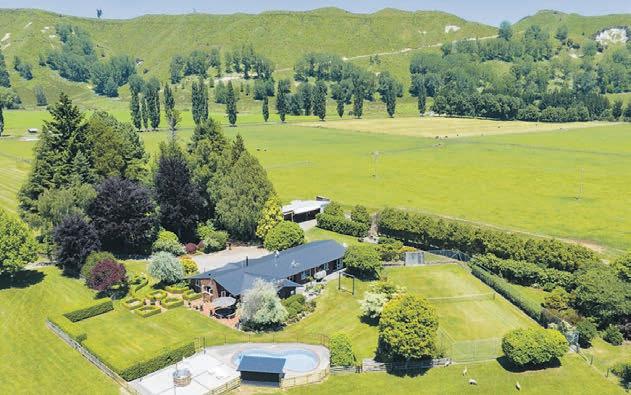
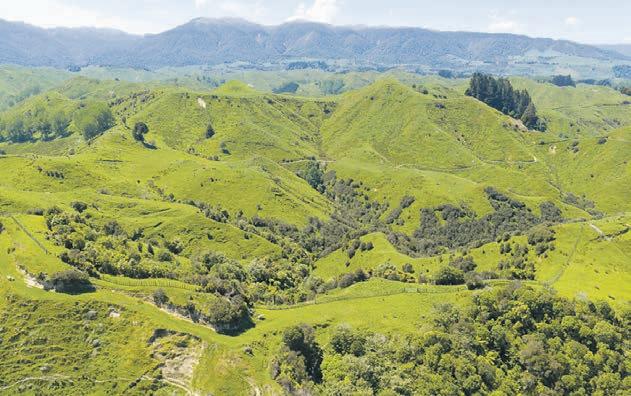
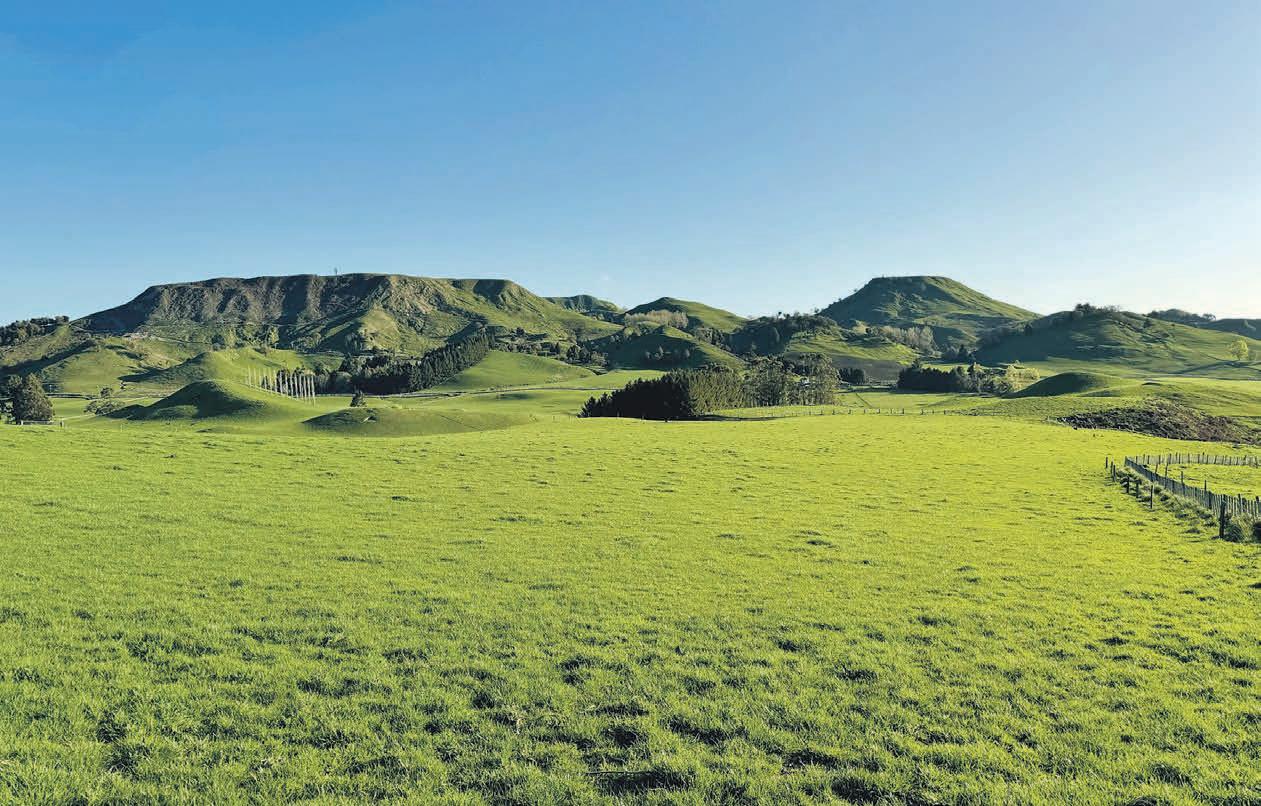
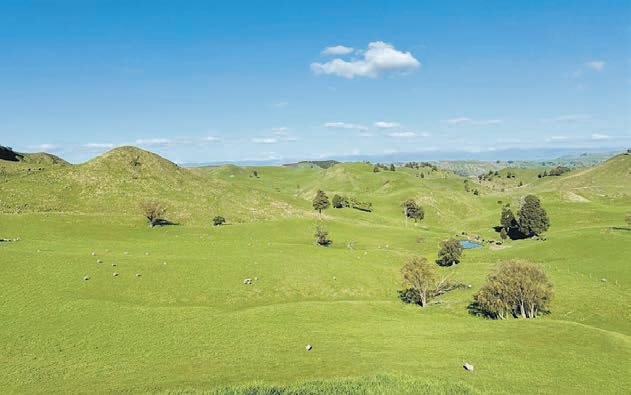
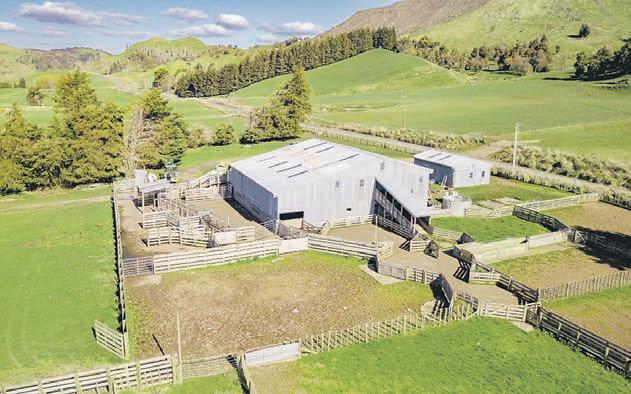
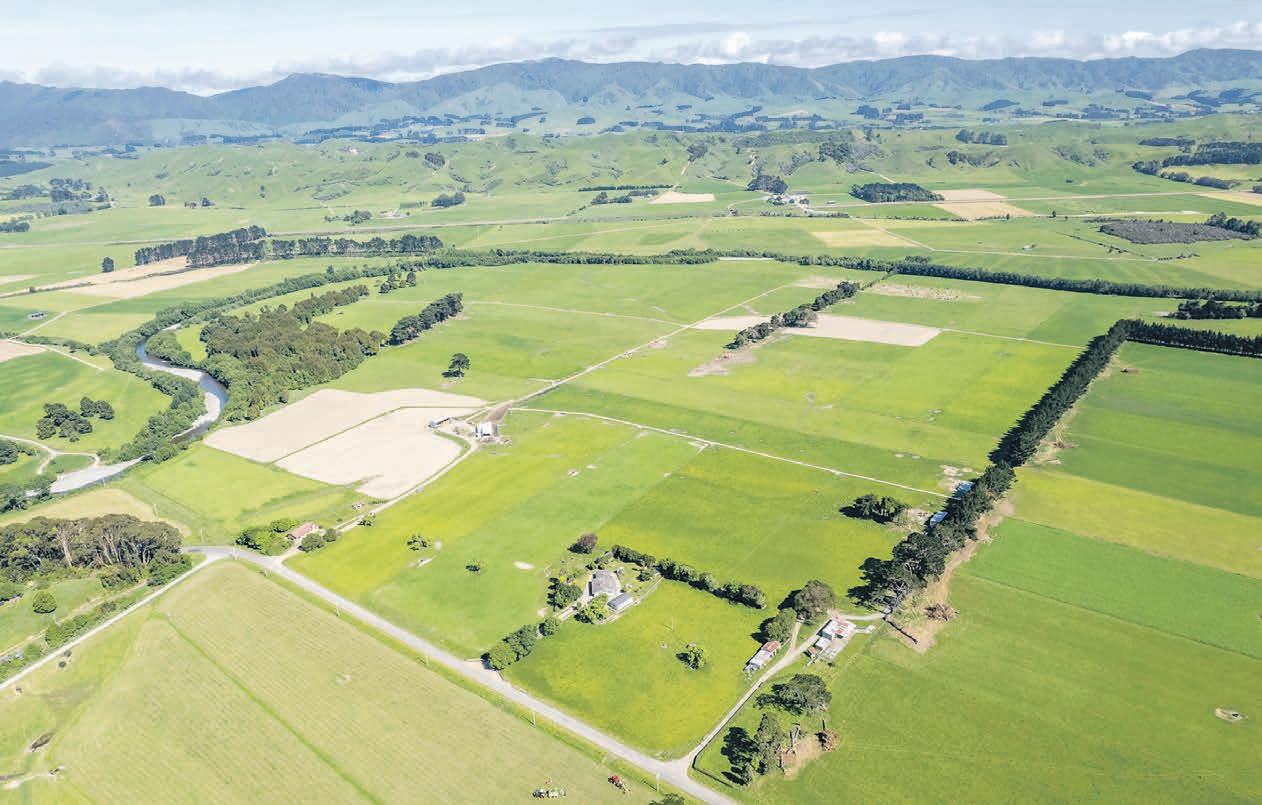
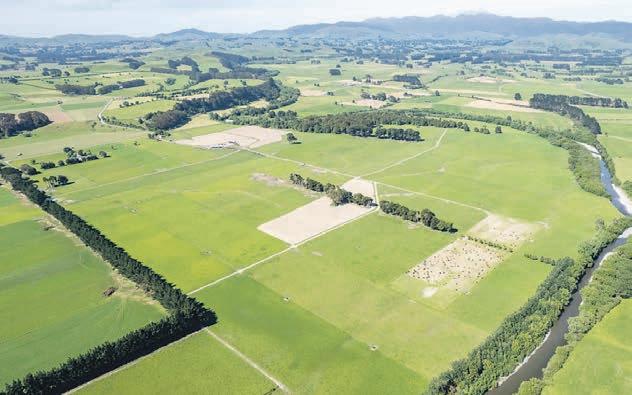
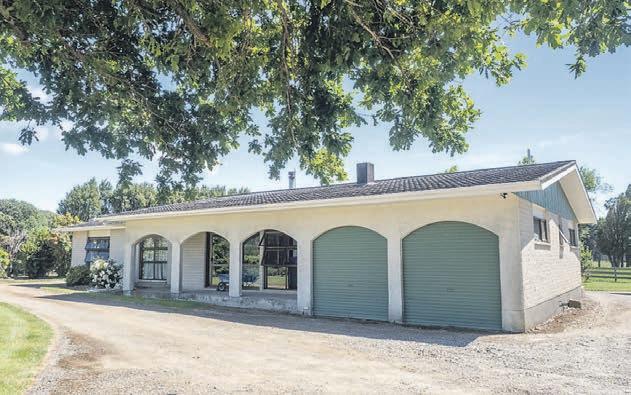
Mangamahu 3104 Mangamahu Road
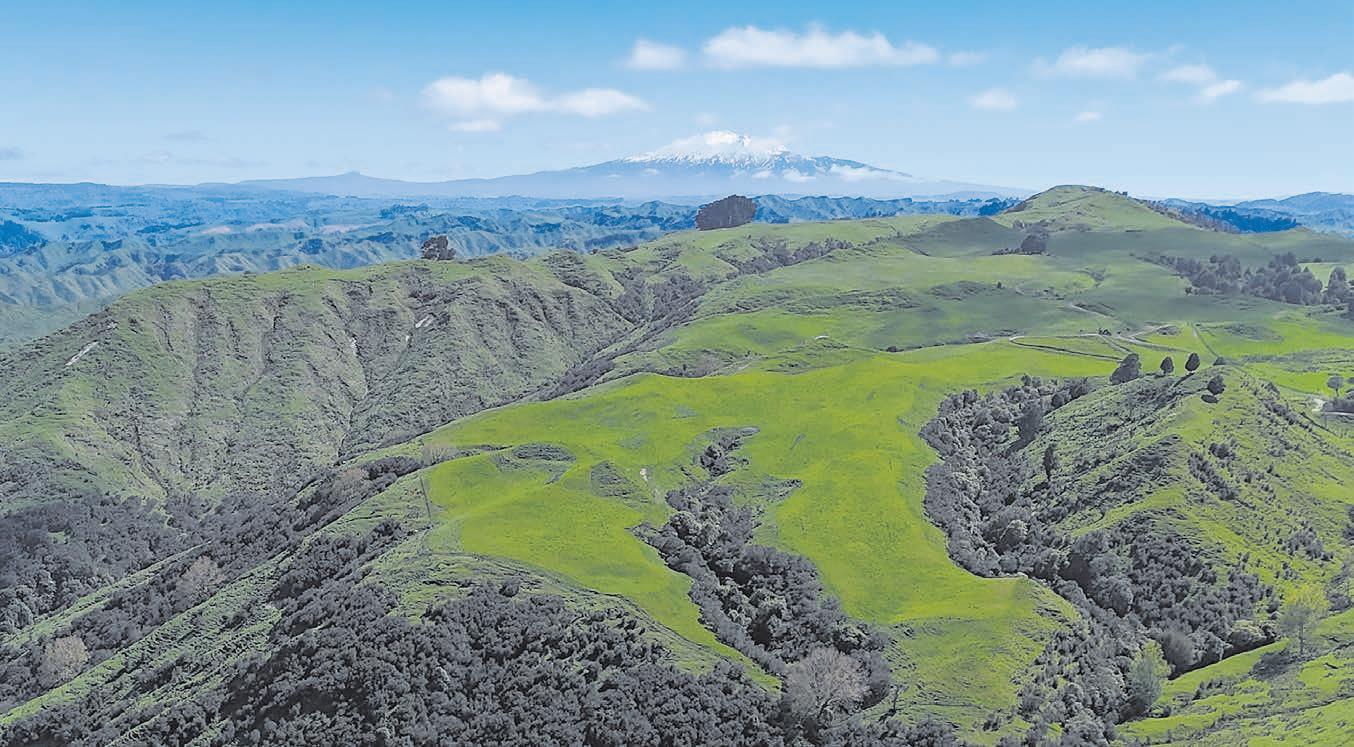
Breeding unit with scale and history
Open Day
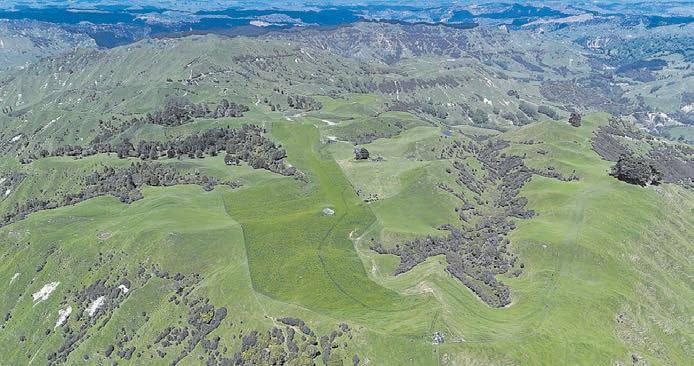
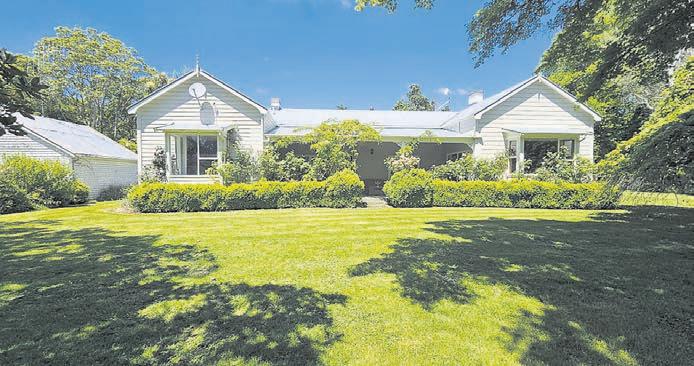
Set in the renowned Mangamahu district Inzevar Station offers an opportunity for the first time in 129 years. Currently run by the fourth and fifth generation, the family have decided it's time for a change in direction, we are delighted to offer this substantial breeding unit to potential buyers through a tender process
Consisting of 981 hectares (approx) of mainly steeper class 5-7 contours with a small area of flats and easy rolling country around the front and middle of the property. Currently carrying 6,200 SU the potential to increase would be driven by fertiliser and a scaling down of the current Manuka honey production. Infrastructure includes 3 houses, quality woolshed and sheep and cattle handling facilities. This property offers scope as a stand-alone enterprise or an addition to an established operation looking to add to their breeding base.
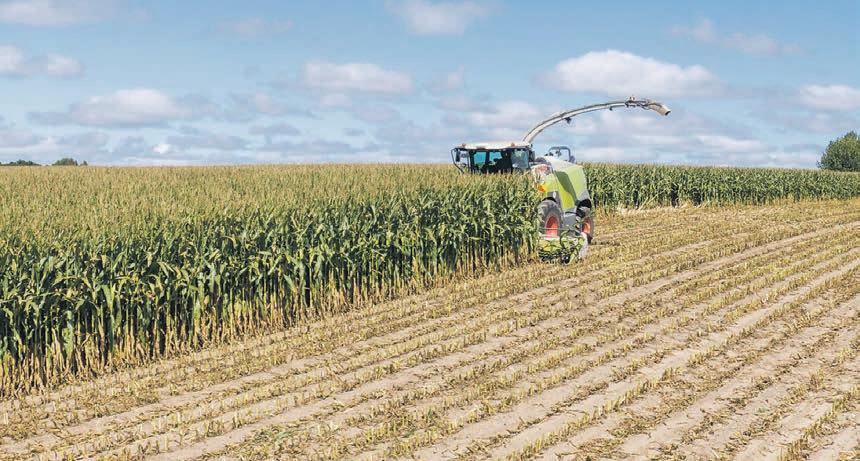
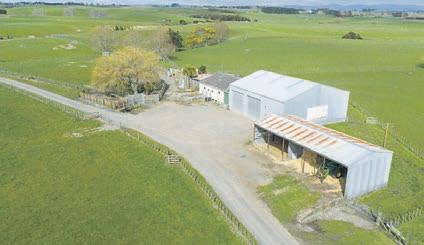
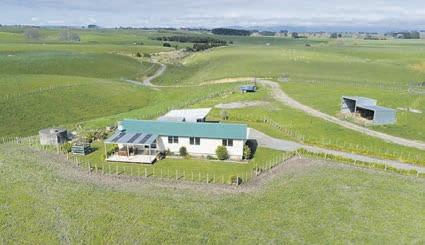
Tender closes 2.00pm, Thu 5th Mar, 2026 View Tue 10 Feb 11.00 - 12.00pm Web pb.co.nz/WGR215030


Paul Gilligan M 027 354 7171 E paul.gilligan@pb.co.nz
Mark Lourie M 027 273 3458 E markl@pb.co.nz
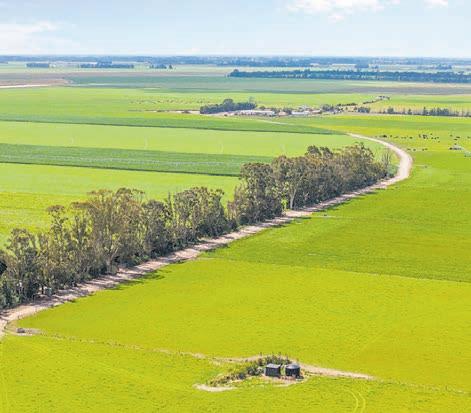
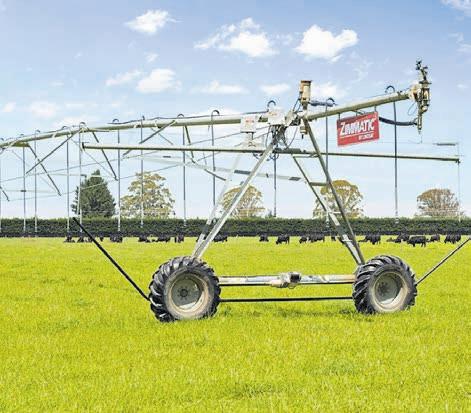
734 Maronan Ealing Road, Lismore, Mid Canterbury For Sale by Deadline Private Treaty closing 2pm Wednesday 11 March 2026 (unless sold prior)

262 hectares Freehold Mayfield Hinds Valetta Irrigation Water Two Family Homes Five Centre Pivots
Reliable low cost water, irrigation storage and further groundwater take present a fantastic opportunity to secure a productive property with scale, balance, extensive infrastructure, and a unique recreational asset Harwood Farm represents a versatile and well-located agricultural holding within one of Canterbury’s strongest farming regions
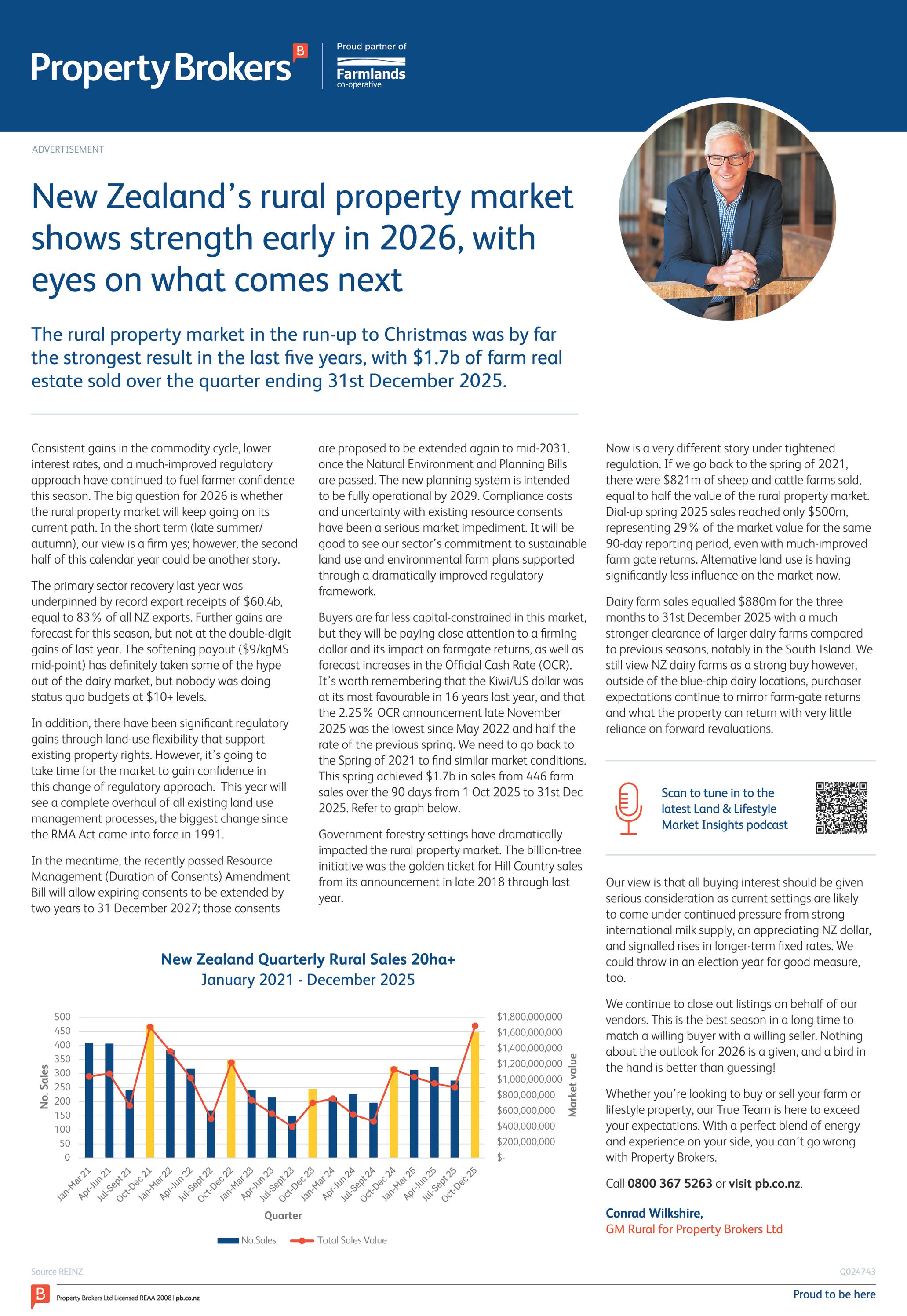
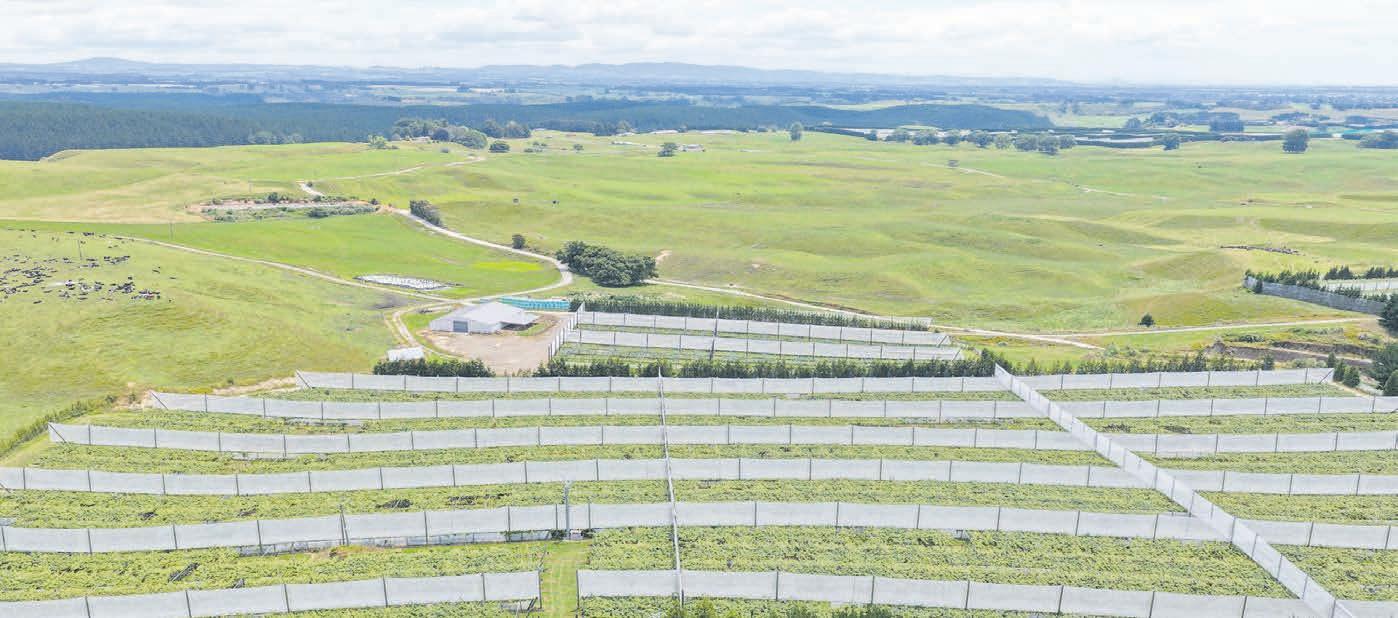

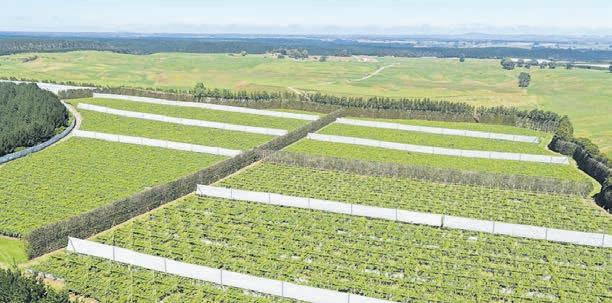
•
•
•
•
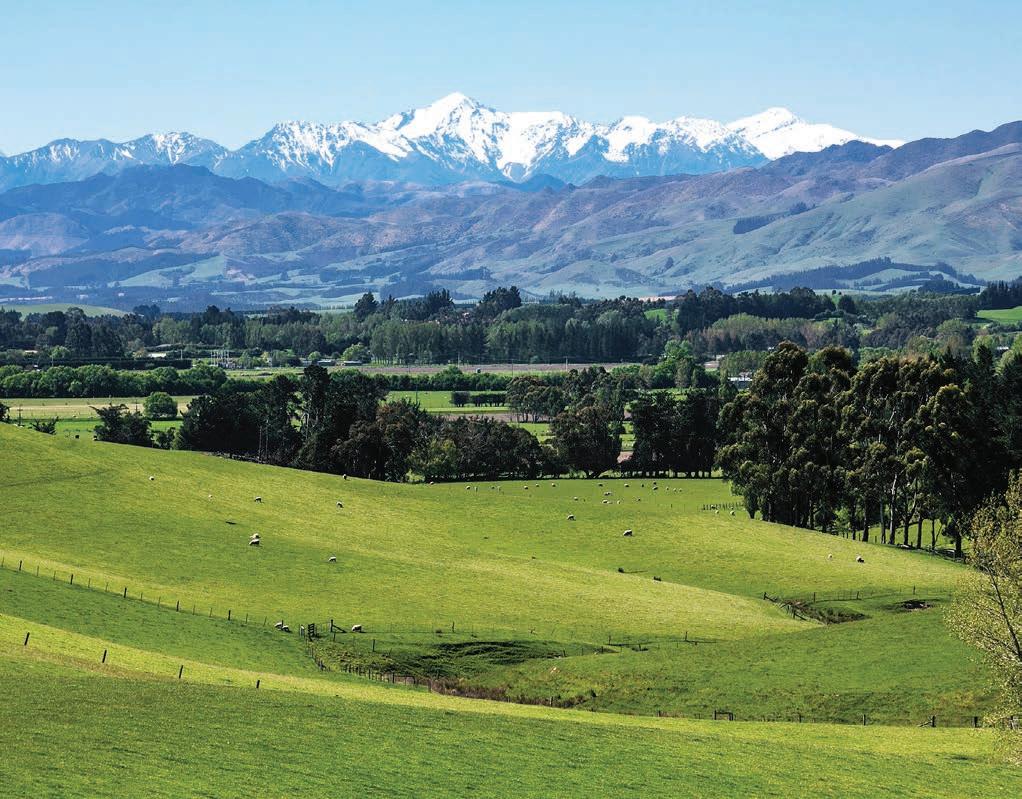
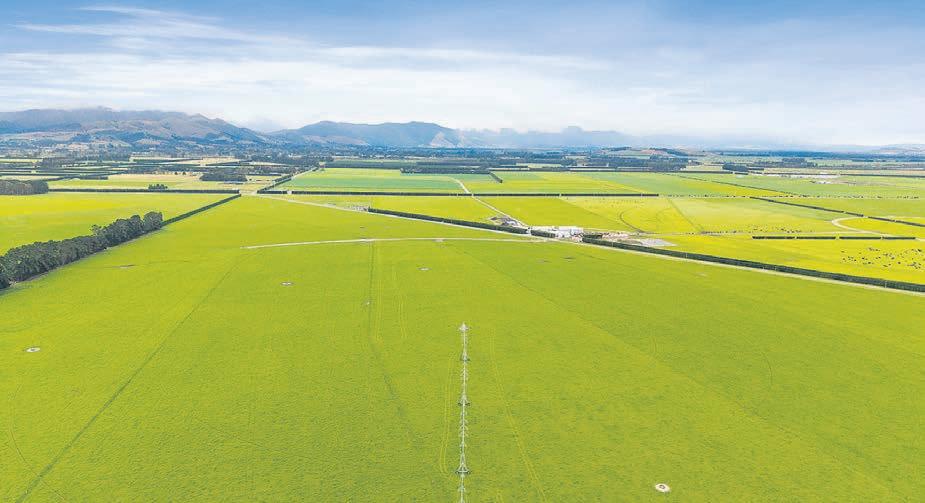


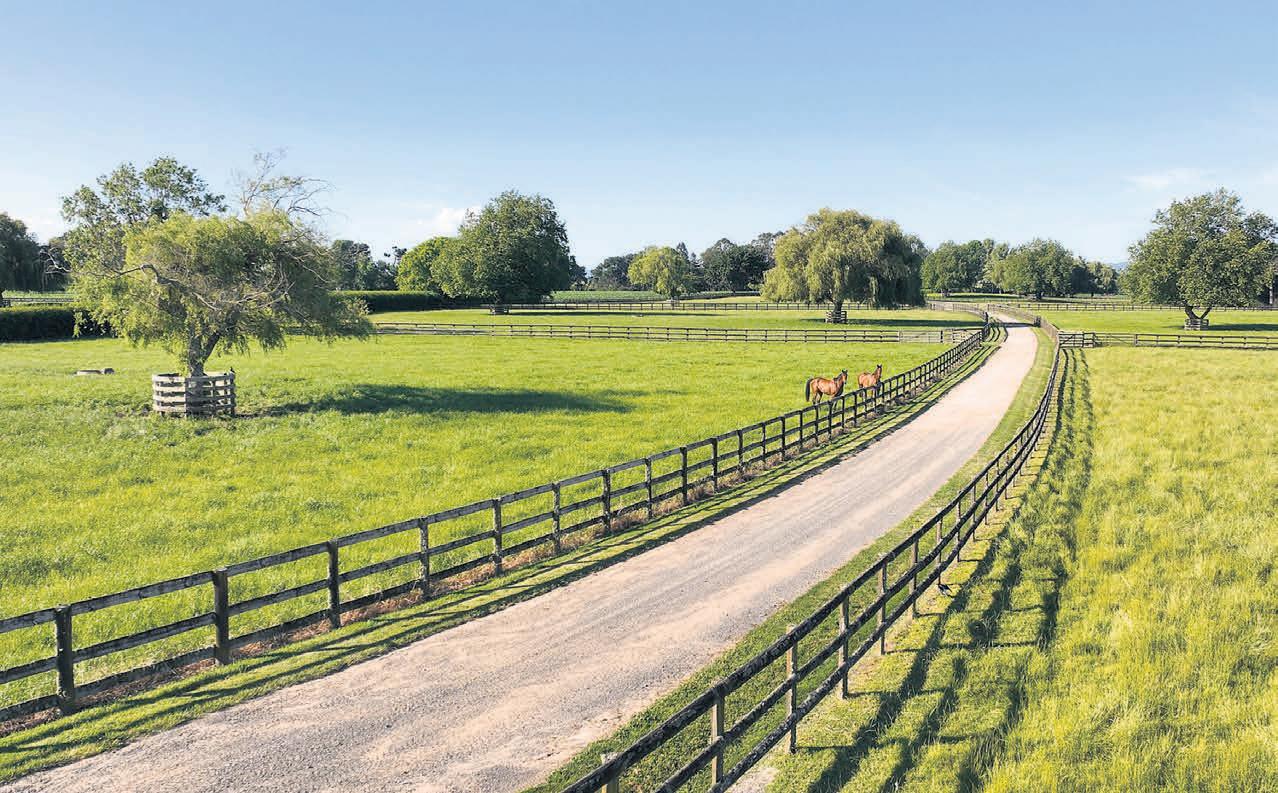
Prime Waikato estate - productivity and prestige
This is more than a farm; it is a sanctuary of enduring quality Secluded at the end of a private no-exit road the property is bordered by two trout-filled waterways creating a picturesque setting Established in the late 1980s as a premier equine stud its elite heritage remains evident Superior contour premium soils and strong aesthetics provide flexibility for equine mixed farming or tourism ventures Infrastructure includes a 44-box stable complex and comprehensive support buildings, with the land fully equine-fenced and divided into 80 paddocks Currently operated as a productive mixed farming enterprise, it demonstrates proven versatility The elevated main residence enjoys sweeping views with landscaped grounds, tennis court and swimming pool Centrally located within an easy commute to Hamilton bayleys co nz/2310207
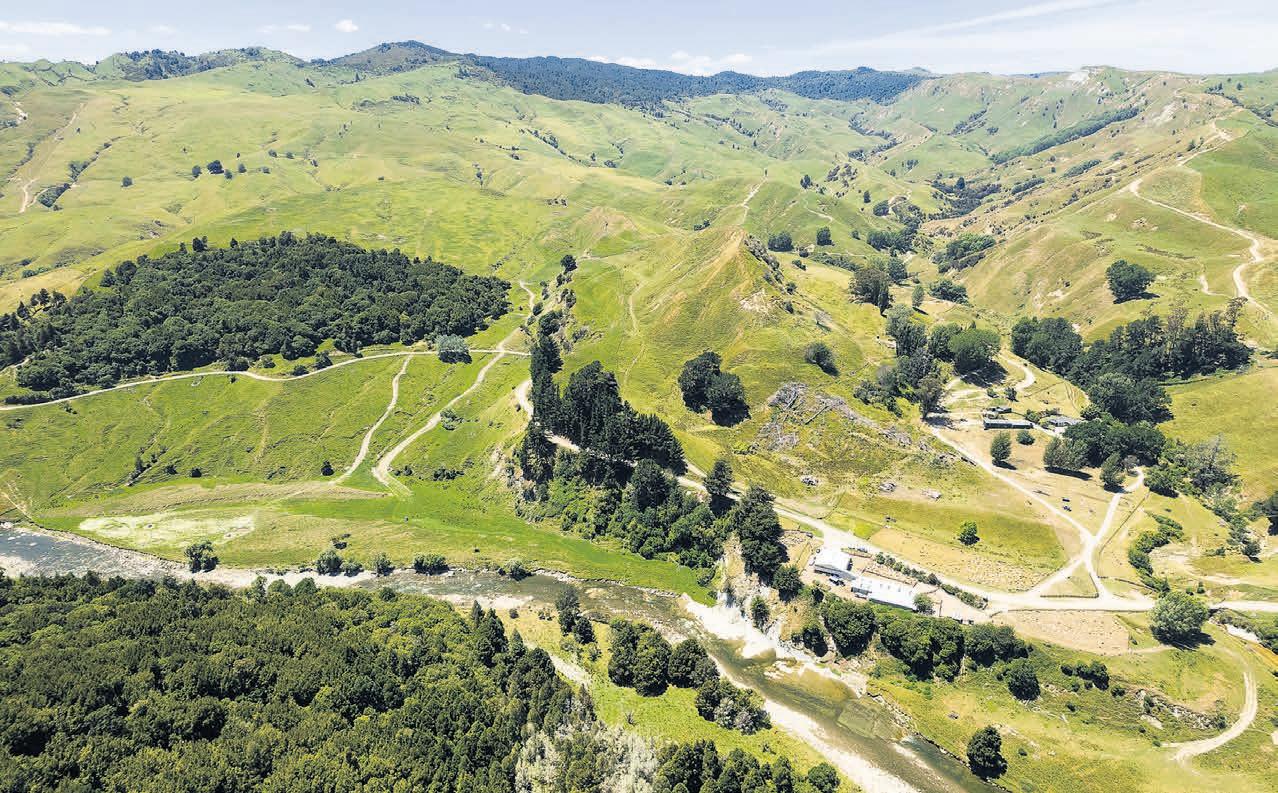
Ruakituri riverfront farming estate
Norana Station offers 1,225ha (1,110ha effective) on the edge of the Ruakituri River, combining scale, reliable rainfall and proven performance With a 5-year average of 9,850 SU, the station is a traditional breeding unit selling forward store cattle Strong infrastructure includes a modern woolshed with covered yards, five satellite yards, extensive laneways, sheds, a stable and two homes Native bush, trout fishing, and access to DoC reserves add to the recreational and tourism potential Scale, stock performance and trophy location. bayleys co nz/2753797

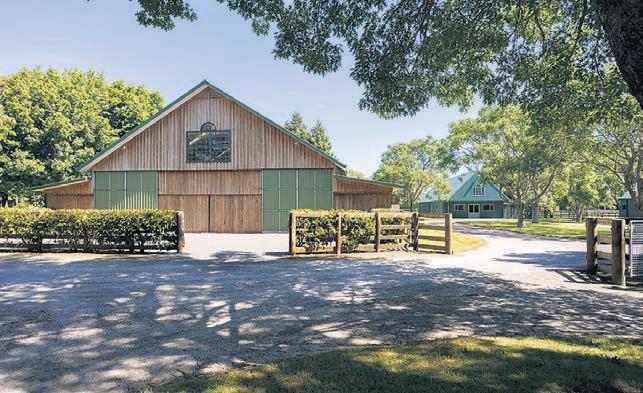
132 79 ha
For Sale by Deadline Private Treaty
(unless sold prior)
2pm, Tue 10 Mar 2026
65 Arawa Street, Matamata
Sam Troughton 027 480 0836
sam troughton@bayleys co nz
Mike Fraser-Jones 027 475 9680
SUCCESS
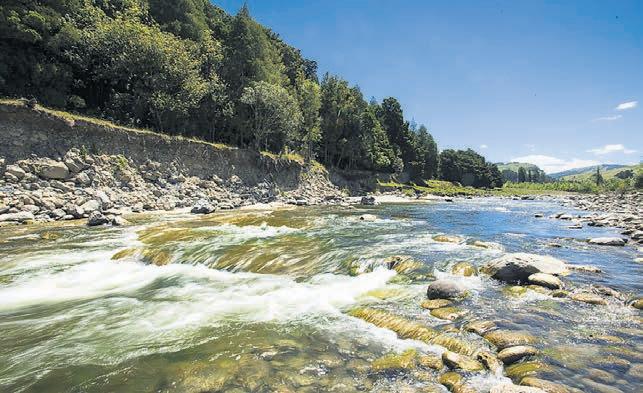
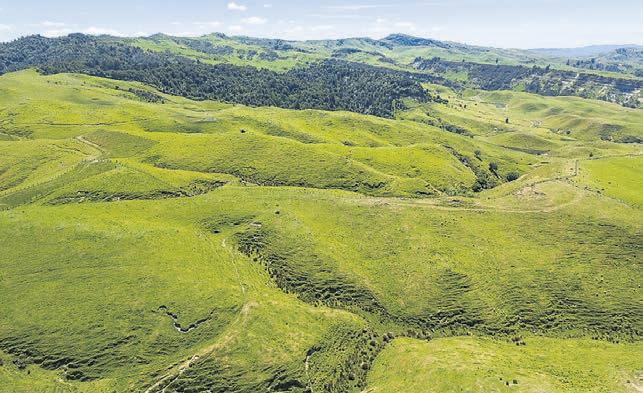
1,225 ha
Tender (unless sold prior)
Closing 4pm, Wed 18 Mar 2026
10 Reads Quay, Gisborne
View by appointment
Stephen Thomson 027 450 6531
stephen thomson@bayleys co nz
Simon Bousfield 027 665 8778
simon bousfield@bayleys co nz
BOUSFIELD
Matamata 136 Wells Road
Ruakituri Norana Station, 696 Papuni Road




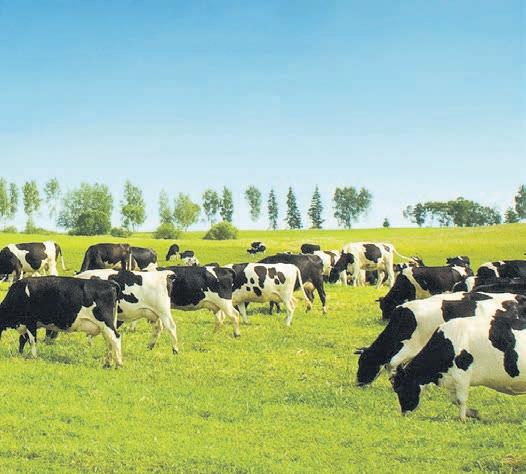















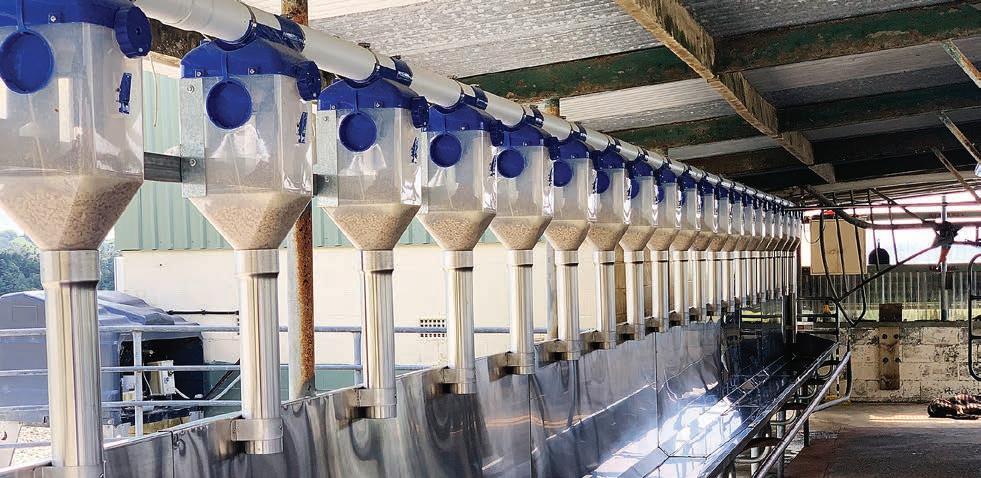





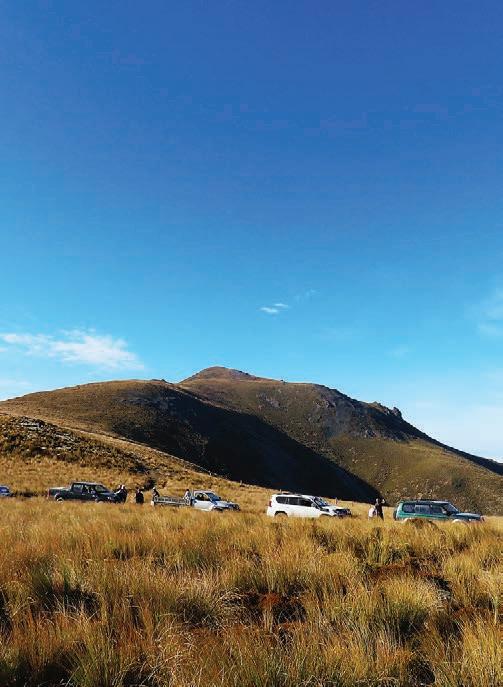

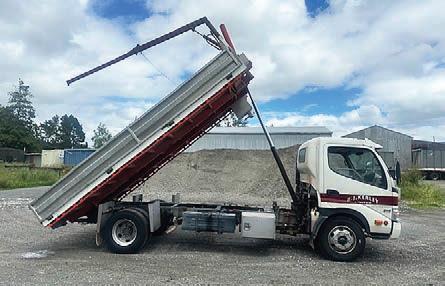





































MOWER MASTER TOWABLE MOWERS




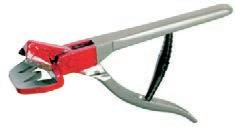
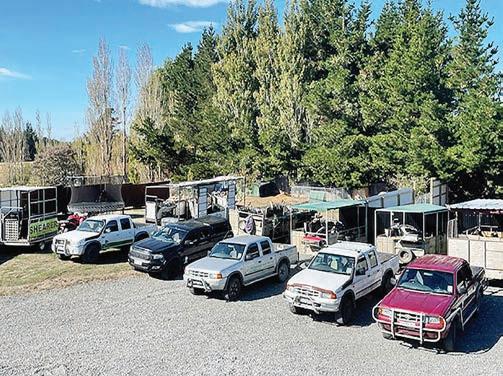






SALE TALK
A MAN’S car stalled on a country road one morning. When the man got out to fix it, a cow came along and stopped beside him.
“Your trouble is probably in the carburettor,” said the cow. Startled, the man jumped back and ran down the road until he met a farmer. The amazed man told the farmer his story.
“Was it a large red cow with a brown spot over the right eye?” asked the farmer.
‘Yes, yes,” the man replied.
“Oh! I wouldn’t listen to Bessie,” said the farmer.
“She doesn’t know a thing about cars.”


SAWN SHED TIMBER including Black Maire, Matai, Totara, Rimu, Mac, Redwood, Western Red Cedar etc. Also buying salvaged native logs. Phone Richard Uren. NZ Native Timber Supplies. Phone 027 688 2954. WANTED TO BUY
WHAT’S SITTING IN your barn? Ford, Ferguson, Hitachi, Komatsu, JD. Be it an excavator, loader or tractor, wherever it is in NZ. Don’t let it rust. We may trade in and return you a brand new bucket for your digger or cash for your pocket. Email admin@loaderparts.co.nz or phone Colin 0274 426 936.
and turbine drives. Low maintenance costs and easy to service. Enquiries phone 04 526 4415, email sales@hydra-cell.co.nz PUMPS

A/C JEMNAK FARM
Morrinsville Saleyards
Tuesday 17th February 2026 – 12pm Start
Comprising
• 89 Mixed Age Friesian + Friesian Cross and Jersery cows
Mostly G3 profiled. Due 10th March Hereford + Murray Grey Bulls. Blanket dry cow treated 9th January 2026. BW 102 PW 161
• 62 Mixed Age Friesian/Friesian Cross cows
50% G3 profiled. Due 10th March Hereford + Murray Grey Bulls.
Blanket dry cow treated 9th January 2026. BW 170 PW 231
• 45 Mixed Aged cows Jersey + Jersey Cross
Dry cow treated at dry off. Due 12th March Hereford & Friesian Bulls.
BW 125 PW 130
• 17 Jersey Incalf heifers
RWB Jersey Due 10th March. Outstanding size and type. Purchased as empty cows from Top End Waikato herds. Beautiful cows with type and great udders. Outstanding condition. These cows will perform in any system. Quality cows ready for quality purchasers.
Contact
Jason Roberts, BYL 027 7071271 – jason@byl.co.nz
Darryl Houghton, NZFLL 027 451 5315
A/C TEAM WRIGHT LTD
Monday 23rd March 2026 – 11.30am Start 2244 S/H 30 Rotoma. DN 21713, RD 4 Whakatane
This herd is currently ranked No1 Nationally with Indexes for herds above 200 cows and was originally established in 1965 as the Awatui Jersey Stud. Faithfully farmed by the Wright Family for 60 years.
COMPRISING
• 380-400 Cows. Current Indexes BW 331 PW 378. D.T.C 22nd July.
• 120-140 R2yr Heifers. Current Indexes BW 355 PW 312. D.T.C 12th July AI Mated.
100% Recorded G3 Profiled with RKT Participant Code.
22 Cows and 12 Heifers have had the opportunity to a Contract Mating Spring 2025.
NZ Farmers Livestock are privileged to bring our Clients Herd and R2yr Heifers to the market after 60yrs of passoniate Nominated Breeding. This is an exceptionally well bred NZ Genetic Herd with exceptional Dairy Type to match the High Indexes.
Jersey Breeders this is a rare opportunity to purchase Genetics of such a high calibre and one not to be missed.
Inspection prior to sale is welcome.
VENDORS: Phil & Sandra Wright
NZ Farmers Agent: Michael Conwell 027 226 1611
The sale will be live-streamed on
C. Alma Baker Trust (NZ) Ltd
Open Day –
Limestone Downs
1340 Port Waikato – Waikaretu Rd
Tuesday February 17, 2026 10am at Woolshed
Welcome/introduction:
Chairperson Dame Margaret Millard –acknowledgement of 100 years of Limestone Downs and C Alma Baker.

Topics to be covered:
10.30am Limestone Downs farm performance –Paul Mahoney, Justin Lamb and Brent Neal (Franklin Vets)
11.00am Management of Kikuyu grass –Professor Danny Donnaghy (Massey University)
11.20am What beef systems are most profitable and why (Steve Morris and Paul Kenyon)
11.40am Water intake behaviour of sheep and their interaction with a natural waterway – Rene Corner-Thomas (Massey University)
12.00pm Water Quality Mitigations and Catchment Management – Ranvir Singh (Massey University)
There will be time for questions at the end of each presentation.
12.20pm Lunch
1.15-3.30pm Farm Tour
Note:
- If possible, bring a 4-wheel drive vehicle. Motorbike helmets are required on quads, no passengers are allowed and no riding on the back of farm Utes is permitted.
- Greenlea and Farm Source are kindly providing food and putting on a barbecue for lunch or you can bring your own packed lunch.
- Tea and coffee will be provided. We will proceed wet for fine, so wet weather gear may be required.
Contact General Manager: Paul Mahoney 09 232 9897
TUESDAY 17 FEBRUARY 11:30AM START

Comprising approx: 900 cattle
• 300 18-month Steers
• 260 18-month Heifers
• 260 2 ½ yo Steers
• 60 2 ½ yo Heifers
Contac t:
Andrew McKay (PGW ) 027 419 7366
Rihi Brown (PGW ) 027 404 7514
Andy Jennings (PGW ) 027 594 6820
Brian Diamond (PGW ) 027 283 9600
Carey Ashwell (Carr fields) 021 433 274
Full list of cattle entries can be found on our website: w w w.master tonsaleyards.com PGG Wrightson Livestock – Wairarapa
LIVING BREATHING LIVESTOCK




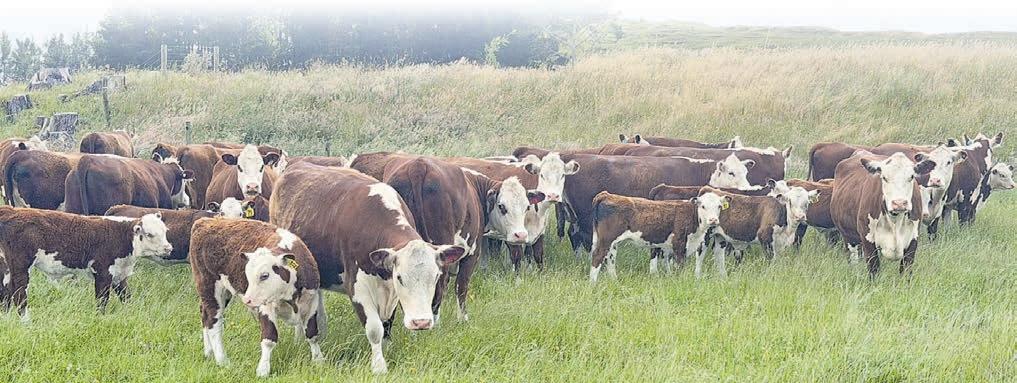

Arapawa Wiltshire Stud
Bred Tough on Hard Country. Proven over Generations. Bred over decades and tested on the steep and rugged hills of Arapaoa Island in the Marlborough Sounds. Our Wiltshire’s are hardy, reliable and proven performers in every condition.
• Long Standing Breeding History – decades of recorded Wiltshire Bloodlines, selected for consistency and quality.
• Raised on Hard Country – these are the Wiltshires that strive where others struggle.

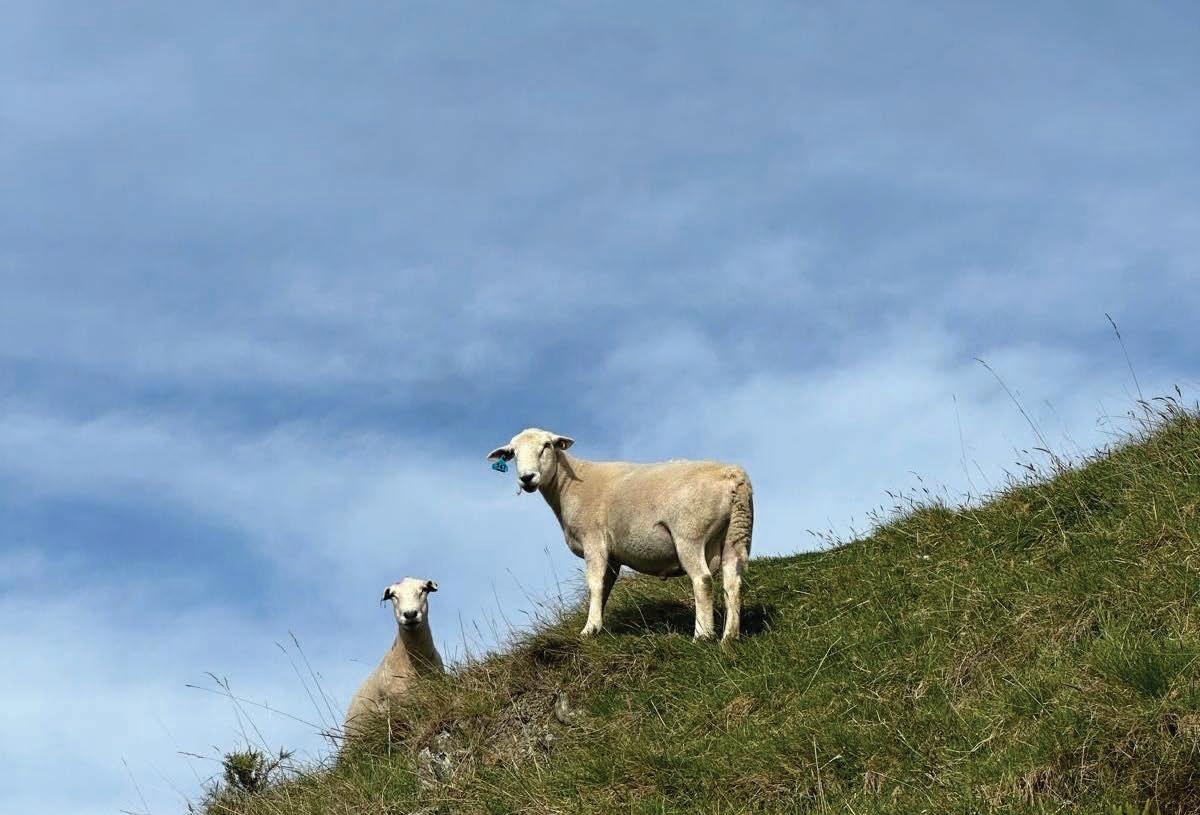



HOPKINS FARMING GROUP CURRENT DAIRY LISTINGS
A/c Faraway Farms Ltd (David Van Bysterveldt)
Date: Wednesday 11th February 2026
Address: Matamata Sale Yards Dairy Pavilion

Start Time: 11:30am will be available for online bidding
COMPRISING:
170 x Mixed Breed & Age Autumn Calving Cows
DETAILS:
• BW: 284 PW: 545 (BWs up to 449, PWs up to 1233)
March & April calving, blanket dry cow.
TB Tested.
All in-calf to AI Charolais only, no bulls used.
AUCTIONEERS NOTE:
This exclusive line of strong Mixed Breed carryover cows were hand-picked from herds from Waikato to the North. Were milked through and mated for autumn calving.
Will come forward in excellent condition. All cows guaranteed sound and in-calf by the vendor.
DELIVERY/PAYMENT TERMS:
14 days after the auction, Immediate delivery
OUR VENDOR:
David Van Bysterveldt: 021 189 9888
CARRFIELDS LIVESTOCK AGENT:
Reuben Wright: 027 284 6384
Or your local Carrfields agent


All well presented, capital stock, with excellent health records and breeding!
AUTUMN LINES FOR SALE:
230x Genuine DNA Profiled Xbred Autumn Calving Herd. BW119, PW187, DTC 15/3/26, Top 30% BW in calf to Sexed Semen
$2,950
67x Outstanding Frsn/FrsnX R2 Autumn Calving Heifers. DNA profiled, BW232, PW236 465kg on 20/11/25, DTC 1/3/26.
$2,800
76x Frsn/FrsnX Autumn R1 Heifers DNA profiled, BW216, PW208, IMM or FWD delivery
$1,800
SPRING LINES FOR SALE:
102x G3 Xbred In-Calf Heifers BW298, PW287, DTC 28/7/26 18
Top BW hfrs in-calf to sexed semen, 01/05 del.
$2,500


Visit carrfieldslivestock.co.nz
For all enquiries, contact Sam Arends: 027
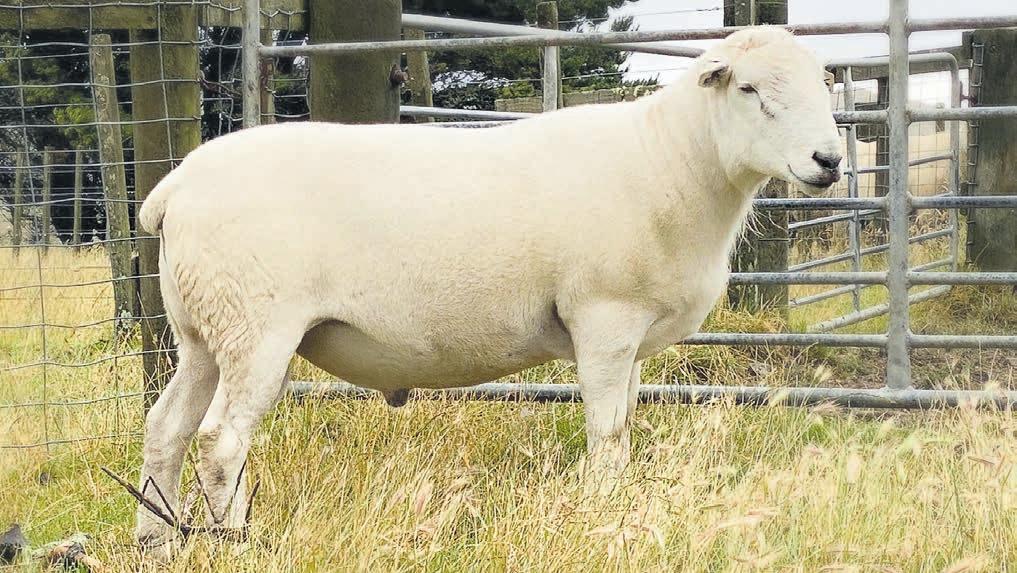
FRIDAY, 6TH MARCH 2026
Purebreds (8), Suffolk Cross (30), Texel Cross (8), Cheviot Cross (18)
VIEWING FROM 11AM, SALE STARTS 1:30PM OR ONLINE VIA 571 Upper Downs Rd Mt Somers, Mid Canterbury
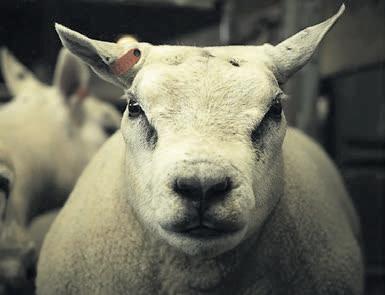

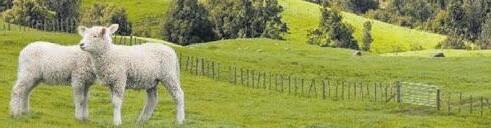

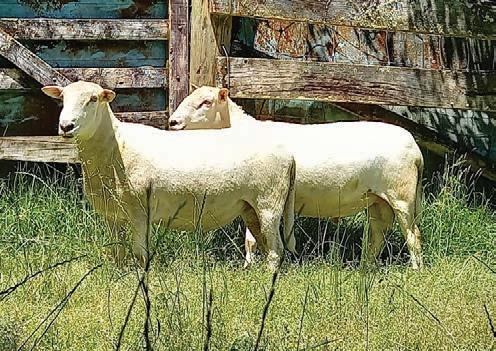
With each ewe earning you $180-$300 from sheep meat, and wool earning you a net $5 per ewe(?), how are you going to breed your future flock?
What do Wairere Nudies offer you? After three years of transplanting 1,600 Easycare embr yos and using around 3,000 semen straws from five flocks in the UK and Ireland, Wairere has 800 purebred and Brazilian (3/4 Nudie) ram lambs available for purchase this year
Comments from Wairere Nudie clients
y “ The Nudie cross lambs have a better sur vival rate We scanned 246% out of Coopwor th ewes, docked 212%. Lambs weaned at 30kg versus 27kg out of the main flock ”
y “Bearings are a rarity Ewe sur vival is high ”
y Nudie cross lambs grow faster Hybrid vigour helps, it ’s a free lunch. “ We are averaging 19-20kg on our works lambs from a consistent 160% lambing over the past three years ’”
y “Out of 5,000 lambs at weaning we dagged only 20-30.”
y “78% of the Brazilian ewe hoggets didn’t need shearing Transition to no shear sheep is fast ”
y Greater tolerance to internal parasites has been measured by FEC comparison and the Carla test
y “Nudie struc ture is good We culled only 6 out of 800 two tooth ewes ”
y “In a comparison of ram lambs we measured Streakers (half Nudie) against Wairere Romney ram lambs from weaning in December to slaughter from Januar y to March.”
Proudly sponsored by
Is a sheep flock rebuild on the cards?
Optimism abounds, but farmers remember all too well how quickly record prices have disappeared in the past.

Mel Croad MARKETS Livestock
CONFIDENCE in the sheep industry is often best measured by the price of breeding ewes. This year, optimism has returned to the rails, with buyers bidding strongly. But the key question remains: is confidence as strong as it could be, and will it be enough to signal growth in breeding ewe numbers?
Younger breeding ewes have been making short work of punching back over $300/hd while good older ewes have eclipsed $200/hd. Only two years ago it would have been hard to imagine that these prices would ever be seen again.
At the time, farmgate lamb prices were struggling to push over $6/kg. A low lamb price doesn’t instil the confidence needed to outlay a high price on a breeding ewe, particularly in an industry where returns are measured in months or years, not weeks.
On the surface, the prices paid for breeding ewes over the past month suggest a revival in interest. It makes sense, given
returns across the sector have bolted from their lows of previous years.
However, while the prices paid show confidence has improved, if you dig a little deeper into the numbers the overarching theme is one of continued cautiousness.
When viewed against the relativity of current farmgate lamb returns, prices paid for breeding ewes are still not fully reflecting their potential or the positive change within the sector that has been evident for the past 12-18 months.
Based on historical AgriHQ data and relative to the average lamb schedule through January, breeding ewe prices could arguably be $60/hd higher. The reason prices didn’t push higher points squarely to a lack of demand, even though numbers selling are a fraction of what they used to be.
Between 2012 and 2014, annual breeding ewe sales through key North Island saleyards averaged around 166,000-head, with prices better aligned to lamb schedules at the time. These days, the number on offer is struggling to exceed 80,000-head annually, yet prices remain off the pace despite
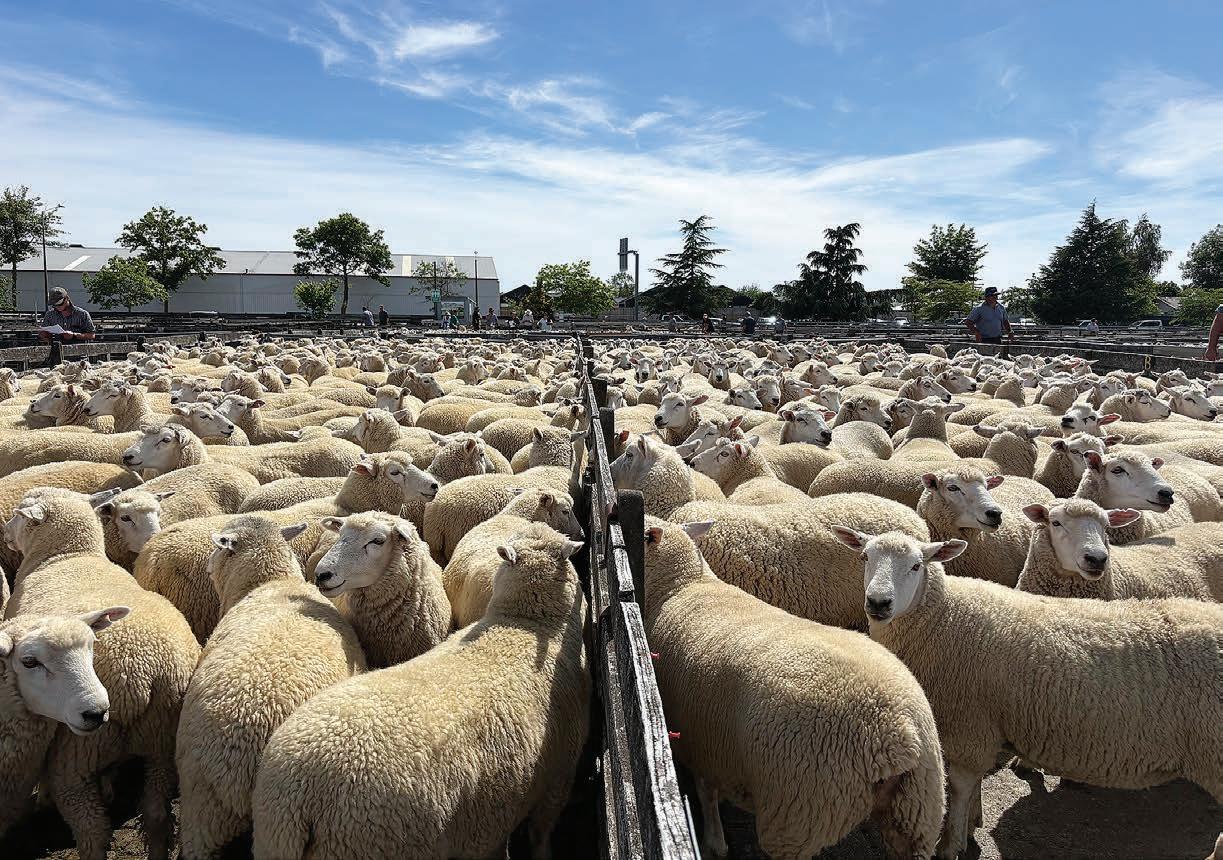
A 12-18 month period of strong returns is not long enough to erase caution, particularly when committing capital to breeding stock.
stronger farmgate returns.
In short, the underlying demand picture is weaker than it once was, even though numbers are significantly lower.
Breeding ewes have fallen out of favour with buyers, even though the appetite to finish lambs is as strong as ever.
Farmers remember all too well how quickly record prices have disappeared in the past. There is no question that the lamb job has
been plagued by volatility and is sensitive to shifts in supply and demand. Against that backdrop, a 12-18 month period of strong returns is not long enough to erase caution, particularly when committing capital to breeding stock.
Now, as we see the cumulation of record lamb returns and a boost to breeding ewe prices, strong mutton prices are once again circling the sector.
The industry first witnessed mutton prices push over $6/kg in July 2021. That year marked a sharp turning point; lamb and mutton prices started out low, then surged rapidly. That strong mutton price coincided with Emissions Trading Scheme reforms, and suddenly farmers had options.
Unfortunately, ewes found
themselves on the chopping block. Slaughter rates spiked to an unsustainable level and over the following four years the national breeding flock shrank by 2 million-head.
While productivity gains have helped hold lamb crop numbers relatively stable, it is difficult to envisage meaningful growth in breeding numbers when demand remains subdued – particularly at a time when export markets are paying record prices.
With confidence in the breeding sector improving but still restrained, the question is whether the industry can withstand the pressure from even stronger mutton prices this year. Or will the temptation to cash in and move toward shorterterm farming options remain too attractive to ignore?


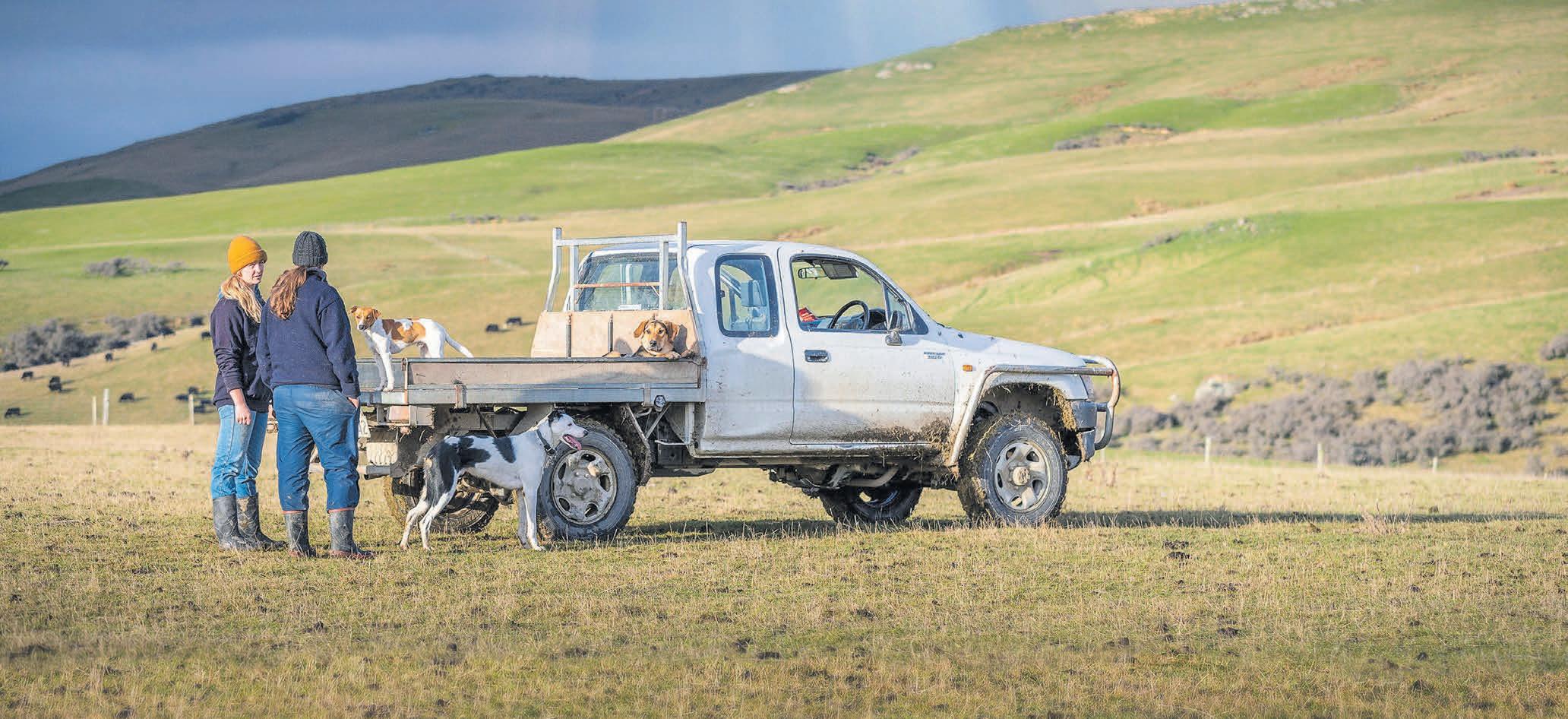
FINISHING: The underlying demand picture is weaker than it once was and breeding ewes have fallen out of favour with buyers, even though the appetite to finish lambs is as strong as ever.
Cattle Sheep Deer

Weekly saleyard results
These weekly saleyard results are collated by the AgriHQ LivestockEye team.
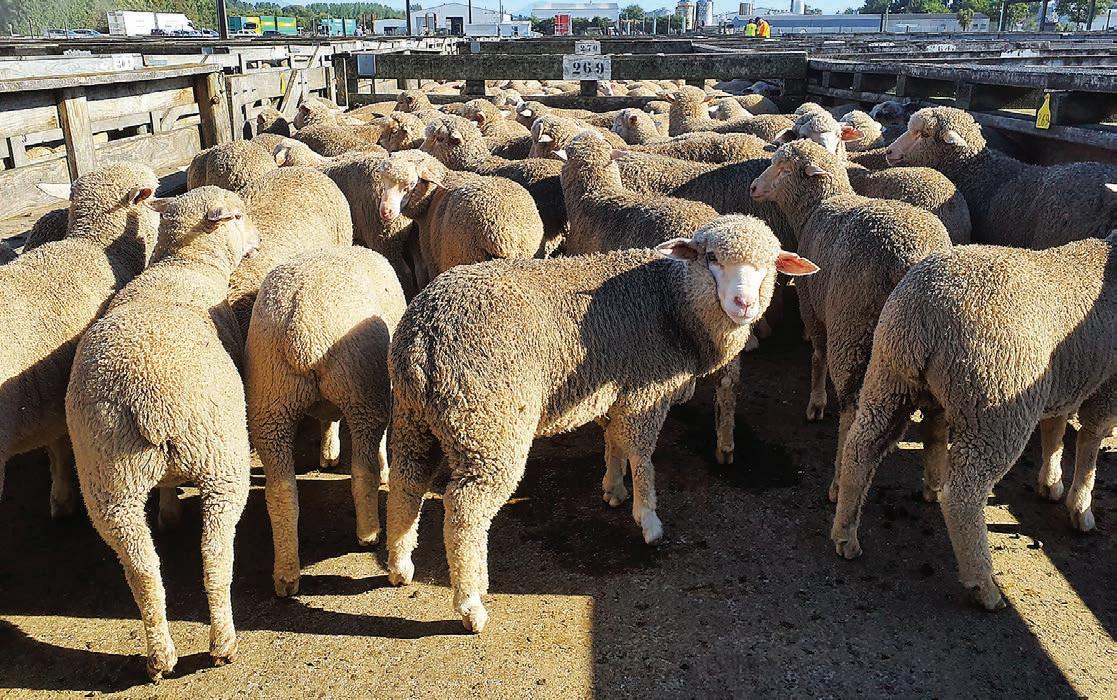

GETS HOTTER: Dorpercross mixed-sex lambs from Tekapo opened the store lamb sale at Temuka on Monday, February 2. The consignment earned $131-$202 and the top cut are pictured.
1.5-year
1.5-year dairy-beef heifers, 330kg 5.07
2-tooth Wiltshire ewes, all
Prime traditional cows, 575kg 4.16
Prime traditional bulls, 670kg 5.45
Boner Friesian cows, 535kg 3.75
Boner Friesian heifers, 380kg 4.19
Prime ewes, most 71-250
Prime 2-tooth ewes, all 130-228
Prime cryptorchid lambs, all 275
Prime mixed-sex lambs, all 145-278 Rongotea | February 3 |
Friesian cows, 530kg 3.70
Temuka | January 29 | 1437 cattle
1.5-year
Weaner Friesian bulls, 140kg
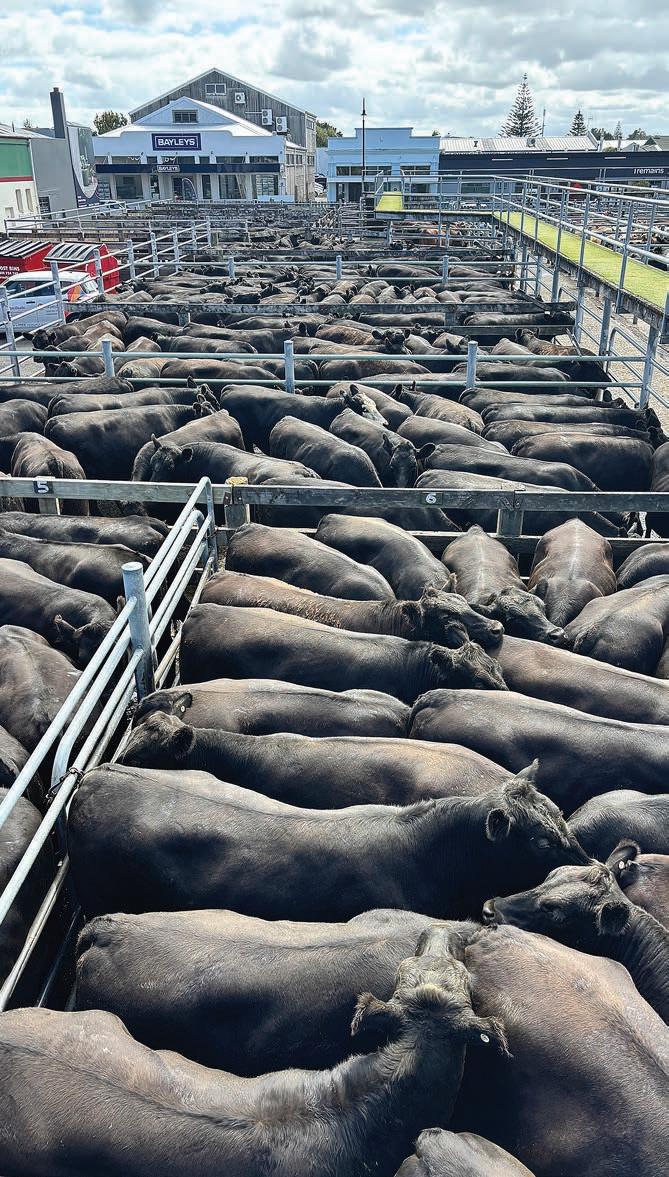


HEAVY TOP END: The Feilding bullock fair was combined with the store cattle sale on Friday, January 30. The 2.5-year steers in the foreground averaged 609kg and collected $5.30/kg.
There’s been a boom in the gloom

Philip Duncan NEWS Weather
OUR “summer of variety” led to a gloomy January with cloudier than usual weather in almost every region in New Zealand.
The only exceptions have been East Cape and Tairāwhiti, Fiordland and Westland.
All other parts of NZ had more cloud for mid to late January than we would normally get, which meant even on the days when it wasn’t raining we still had a fair bit of cloud about.
Usually we have a predominant wind, which tends to carve out some very sunny weather on the other side of the hills – but because we’ve had so much variety in our airflows and weather systems, it’s “coloured in” most of the country with more cloud than usual.
There have been some sunny days, but just not as many of them as we’d normally get in later January and the start of February.
As we go into the middle of February now we are finally seeing an uptick in high pressure. At the time of writing this, high pressure was expected to be the more controlling force in our
weather for this week – but there’s a catch.
Recently – and again this coming week – the high pressure zones have been parked on both sides of the country. Like a double yolk, it’s given high pressure zones two centres –often one to the west and the other out to the east. When this happens the anticyclonic winds going around each centre bump into each other, causing convergence/cloud build-ups.
Our anticyclones are like the parents in the room, arms stretched out to hold away two fighting children on either side.
For example, an anticyclone parked west of New Zealand tends to drag in a sou’wester – whereas a high parked east of NZ often pulls down a nor’easter. These opposing winds meet over land, producing cloud, showers and even isolated thunderstorms.
This type of set-up can even produce small pockets of low pressure inland –further increasing showers or patchy rain inland in places usually much drier, like Otago and Canterbury. If we had a stronger La Niña, that would push more easterlies over NZ –

making it sunnier, hotter and drier west of NZ and southern NZ – but La Niña is weak and expected to be gone soon. We’re basically in a neutral pattern, which means anything can happen, with a hint of La Niña producing more low pressure zones north of us.
As we head through this month we still see variety in the forecasts – not just with tropical low pressure zones still wanting to drop southwards into NZ bringing humidity and maybe wind and rain too, but also storms south of Australia and NZ wanting to dredge up southerlies.
So our anticyclones are like the parents in the room, arms stretched out to hold away two fighting children on either side. The moment high pressure shifts off us, it’s likely to be replaced by a noticeable weather change from the subtropics or subantarctic region.
We do expect some gloom and showers this week despite all the high pressure around – and at the risk of sounding like a broken record, expect the unexpected as we go into the second half of February.
COLOUR ME GREY: The second half of January and start of February has seen more cloud over almost every region, according to Earth Sciences NZ. Image: Earth Sciences NZ
Bright Sunshine Anomaly 18/01/2026 to 01/02/2026
(Note: This estimation is based on data from a small number of climate stations. Estimates located far from climate stations will be less accurate)
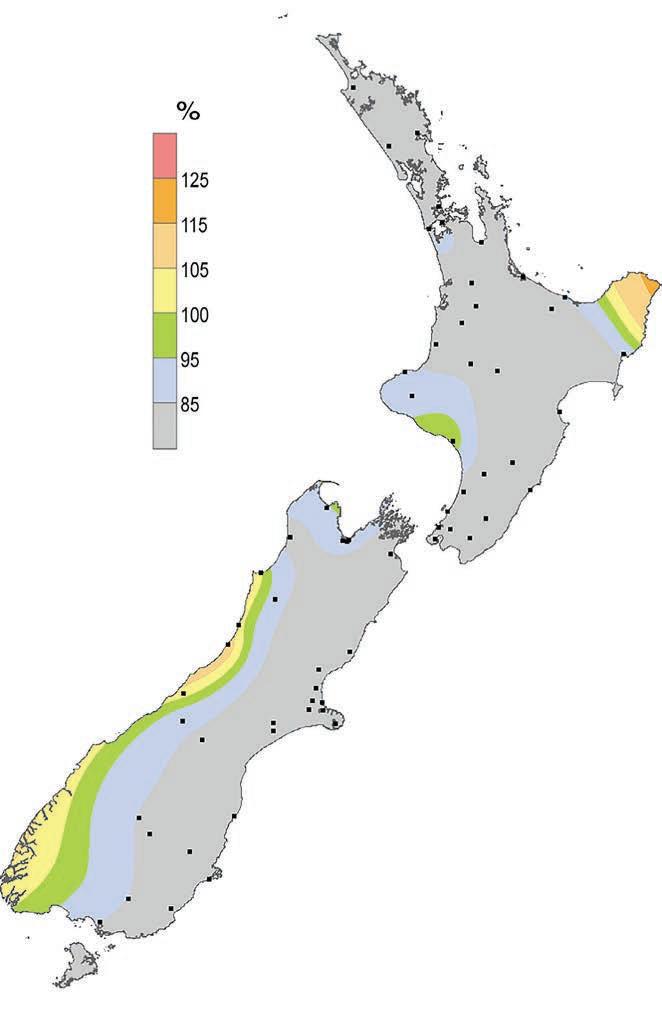
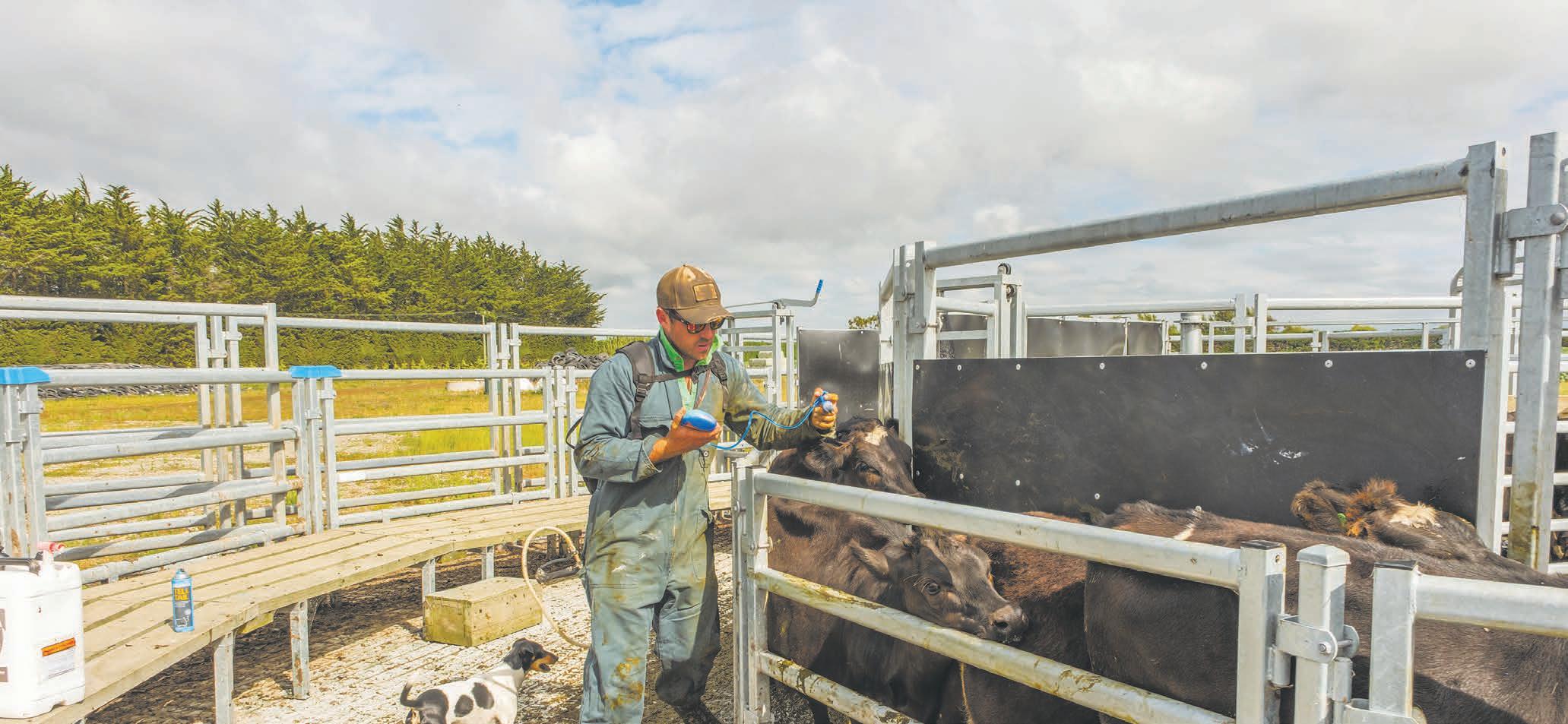

“The

Marcus Spencer-Bower, Swannanoa, Canterbury