



A t Co r s o n M a i z e , o u r re s e a rc h h a s s h o w n t h a t o u r re c o m m e n d e d
l o w h y b r i d p l a n t i n g p o p u l a t i o n s c a n d e l i v e r s i g n i f i c a n t a g ro n o m i c
b e n e f i t s f ro m o u r h y b r i d s T h i s m e a n s y o u c a n b u i l d g re a t e r re s i l i e n c
N o
e x p e c t e d E l N i ñ o, y o u’ l l h a v e a n o u t s t a n d i n g p e r f o r m a n c e
f ro m Co r s o n
O u r h y b r i d s c a n b e re l i e d u p o n
T H E R E S E A R C H B E H I N D
C O R S O N M A I Z E ’ S A P P R O A C H
N O !
i o n .
Ce r t a i n h y b r i d s p o s s e s s w h a t we c a l l f l e xt h e a b i l i t y t o a d a p t a n d c o m p e n s a t e w h e n p l a n t e d a t l o we r p o p u l a t i o n s. O u r f l e x h y b r i d s
c a n re s p o n d b y m a k i n g b e t t e r u s e o f a v a i l a b l e
re s o u rc e s a n d m a i n t a i n i n g s t ro n g p ro d u c t i v i t y
e ve n w h e n p l a n t n u m b e r s a re re d u c e d

Co r s o n M a i z e h a s i n ve s t e d s i g n i f i c a n t e f f o r t i n t o u n d e r s t a n d i n g h o w o u r m a i z e h y b r i d s re s p o n d t o p o p u l a t i o n c h a n g e s.
• R e p l i c a t e d Po p u l a t i o n Tr i a l s
• I n d i v i d u a l H y b r i d C a s e S t u d i e s
• F l e x R e s e a rc h
• P h y s i c a l D e m o n s t r a t i o n s
Ta b l e s s h o w i n g r e s e a r c h o n
l o w p o p u l a t i o n s f r o m C o r s o n M a i z e
1 P l a n t i n g p o p u l a t i o n s f o r o p t i m a l g re e n l e a f.
2 I d e a l p l a n t i n g p o p u l a t i o n s f o r o p t i m a l y i e l d i n n o r m a l a n d d r y ye a r s

FALLING global livestock numbers are expected to underpin buoyant red meat prices for New Zealand producers for the immediate future, say industry leaders.
Europe, the United Kingdom, the United States and Australia have all reported further declines in cattle and sheep numbers while New Zealand beef cattle numbers have grown slightly and sheep numbers stabilised.
A growing global middle class is also increasing demand for high-quality protein at a time when livestock production in a number of markets is under pressure.
An analysis of stock numbers shows domestic production has fallen due to rising costs, environmental and land use policies and drought, making the US, China, European Union, UK and Canada increasingly reliant on meat imports.
“A growing global middle class is also increasing demand for high-
quality protein at a time when livestock production in a number of markets is under pressure,” says Meat Industry Association chief executive Nick Beeby.
He cited the MPI’s June Situation and Outlook for Primary Industries report, which showed meat and wool export revenue is expected to rise 14% to $14.1 billion for the year to June 30 2026, increasing a further 1% in the coming year.
According to a Beef + Lamb NZ market update for the third quarter of the 2025-26 season, export values for beef were 67% higher and 44% for lamb compared to comparable periods for the past three seasons.
“Record returns to date in 202526 have been driven by strong consumer demand for red meat products, a reduction in global supply, and favourable market access conditions,” the BLNZ report said.
Beeby, MPI and BLNZ all noted that while demand remains strong in most markets, rising consumer resistance to higher meat prices due to cost-of-living pressures is growing in China, Japan and the UK.
The British levy-funded entity, the Agriculture and Horticulture Development Board (AHDB), forecasts a 5% drop in European sheep numbers and 1% decline in beef cattle this year.
European consumers are reliant on meat imports despite beef and
Continued page 3


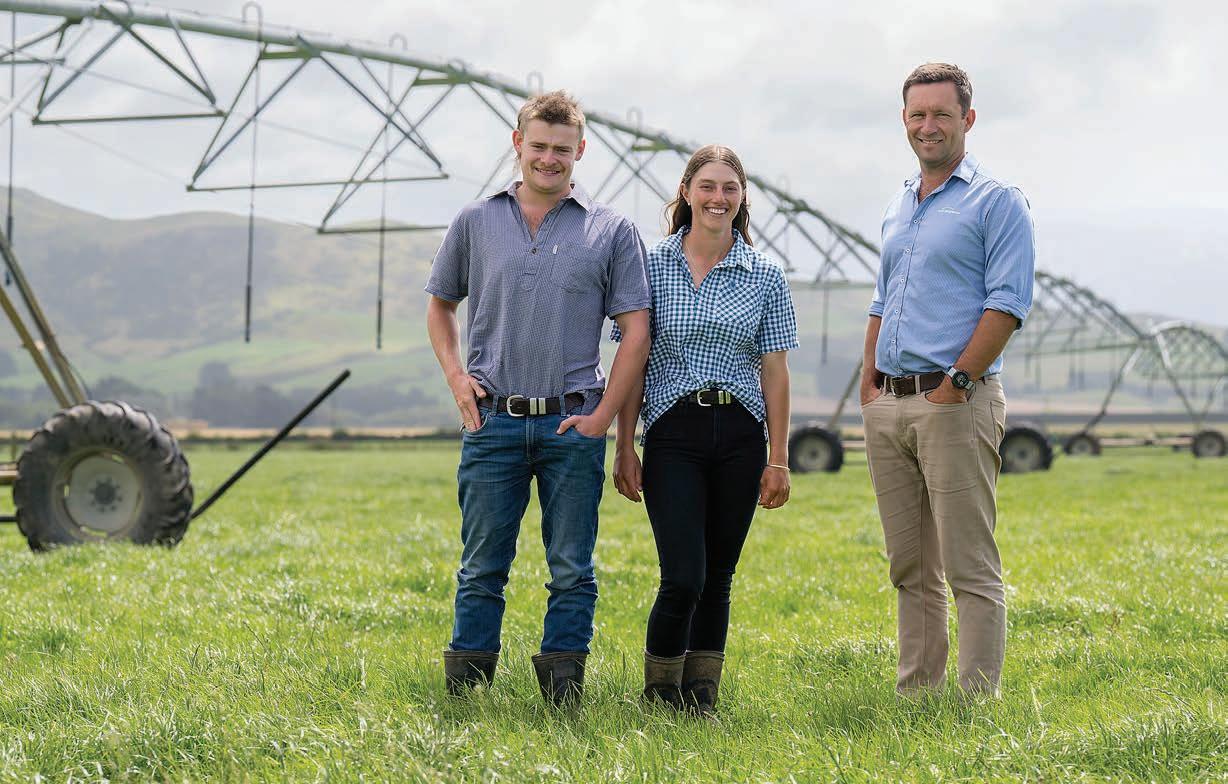
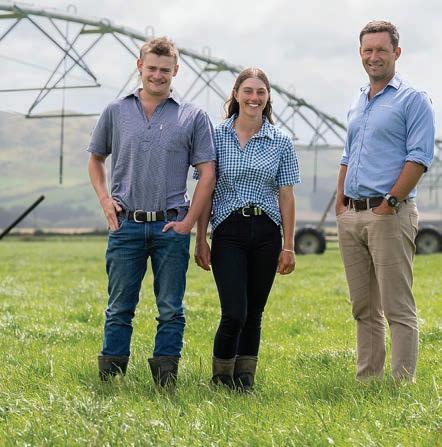
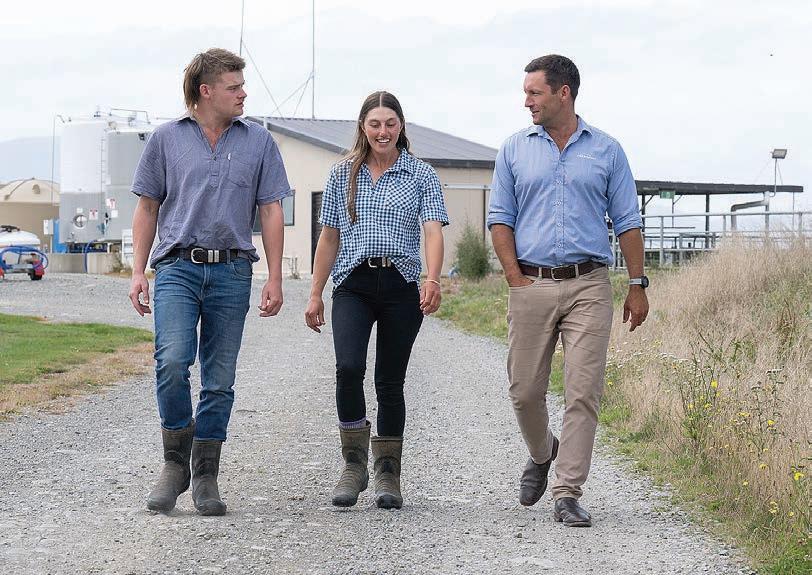
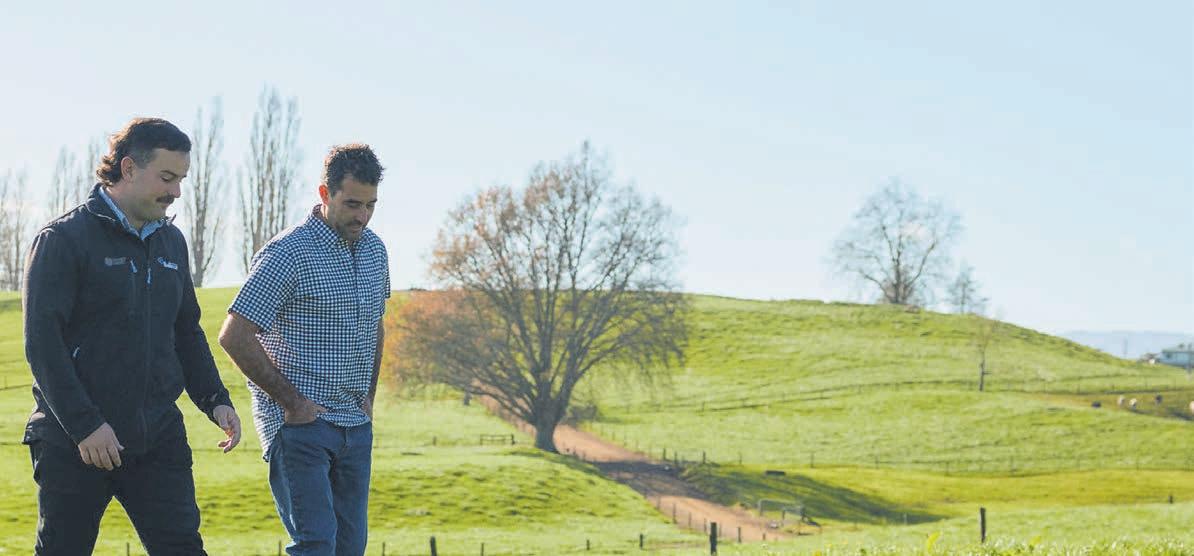
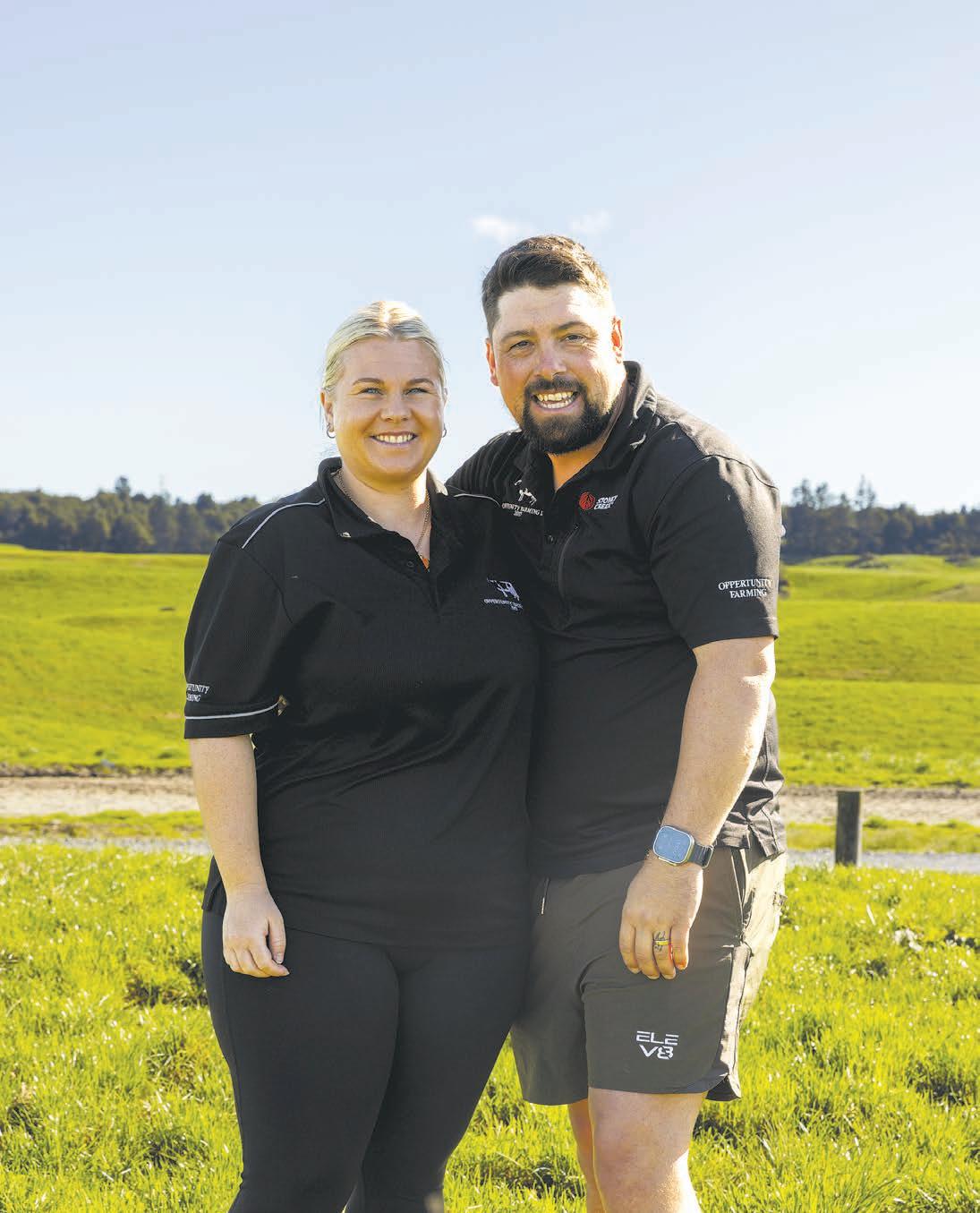
A new generation of first farm buyers is targeting large-scale operations with a focus on securing future returns on their investment. Harry Finch and Elle Horn crunched the numbers and are celebrating their first farm purchase with PGG Wrightson agent Dan van der Salm.
NEWS 3
Exporters brace for further tariff disruption in the US.
5
Photo: PGG Wrightson
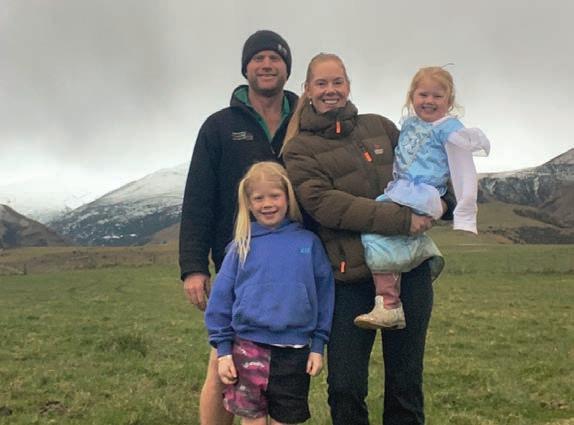
On Cloudy Peaks the farming story goes further than paddock to plate to encompass skincare. Jo Bradford, pictured with partner Mark Baynes and their girls Bella and Lucy, has launched a range of products using tallow from cattle on the farm.
SHEEP & BEEF 14-16
RSE scheme changes offers benefits across hort sector.
9
Goodwill no longer enough to run catchment groups. OPINION 13



Bryan Gibson | 06 323 1519
Managing Editor bryan.gibson@agrihq.co.nz
Craig Page | 03 470 2469 Editor craig.page@agrihq.co.nz
Claire Robertson Sub-Editor claire.robertson@agrihq.co.nz
Neal Wallace | 03 474 9240 Journalist neal.wallace@agrihq.co.nz
Gerald Piddock | 027 486 8346 Journalist gerald.piddock@agrihq.co.nz
Annette Scott | 021 908 400 Journalist annette.scott@agrihq.co.nz
Hugh Stringleman | 027 474 4003 Journalist stringleman@outlook.co.nz
Richard Rennie | 027 475 4256 Journalist richard.rennie@agrihq.co.nz
Gerhard Uys | 027 239 4388 Journalist gerhard.uys@agrihq.co.nz
Rebecca Greaves | 027 320 9111 Journalist rebecca.greaves@agrihq.co.nz
Nigel Stirling | 021 136 5570 Journalist nigel.g.stirling@gmail.com
Isabella Beale | 027 299 0596 Multimedia Journalist isabella.beale@agrihq.co.nz
PRODUCTION
Lana Kieselbach | 027 739 4295 production@agrihq.co.nz
ADVERTISING MATERIAL
Supply to: adcopy@agrihq.co.nz
SUBSCRIPTIONS & DELIVERY 0800 85 25 80 subs@agrihq.co.nz
PRINTER
Printed by NZME
Delivered by Reach Media Ltd
Andy Whitson | 027 626 2269
Sales & Marketing Manager andy.whitson@agrihq.co.nz
Janine Aish | 027 300 5990
Auckland/Northland Partnership Manager janine.aish@agrihq.co.nz
Jody Anderson | 027 474 6094
Waikato/Bay of Plenty Partnership Manager jody.anderson@agrihq.co.nz
Palak Arora | 027 474 6095
Lower North Island Partnership Manager palak.arora@agrihq.co.nz
Andy Whitson | 027 626 2269 South Island Partnership Manager andy.whitson@agrihq.co.nz
Julie Hill | 027 705 7181
Marketplace Partnership Manager classifieds@agrihq.co.nz
Andrea Mansfield | 027 602 4925
National Livestock Manager livestock@agrihq.co.nz
Real Estate | 0800 85 25 80 realestate@agrihq.co.nz
Word Only Advertising | 0800 85 25 80 Marketplace wordads@agrihq.co.nz
Dean and Cushla Williamson Phone: 027 323 9407 dean.williamson@agrihq.co.nz cushla.williamson@agrihq.co.nz
Farmers Weekly is Published by AgriHQ PO Box 529, Feilding 4740, New Zealand Phone: 0800 85 25 80 Website: www.farmersweekly.co.nz
ISSN 2463-6002 (Print) ISSN 2463-6010 (Online)
ideas that grow is a Rural Leaders Podcast in association with


1-11
12-13 Sector Focus
Women
14-16
17
Federated Farmers . 18-21 Real Estate
23
22 Marketplace
24-25 Markets
26-29 Weather .
30
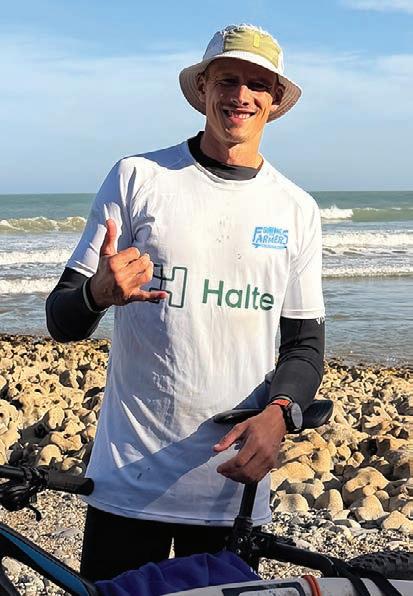
ON BOARD: The general manager of the new For Farmers programme, Dominic Huxley, says combining the strengths of Surfing for Farmers and Rural Riders will benefit farmers. STORY P10
Craig Woolford has been appointed chief executive officer of listed carpet maker Bremworth on a permanent basis. Woolford had been acting CEO since April 2025, when Greg Smith stepped down. During most of Woolford’s acting tenure the Bremworth board pursued a scheme of arrangement with Floorscape, a subsidiary of Mohawk Industries.
appointed Solar farm approved
Meridian Energy has received consent approval to build a 110MW solar farm near Morrinsville on a 134 hectare site 2km east of the Waikato town.
When complete, the farm will have 230,000 solar panels and produce up to 200GW hours of electricity a year – enough to power more than 25,000 average Kiwi homes. Meridian CE Mike Roan said the farm would help boost the country’s energy supply and bring prices down.
Meat board boss
Esther Guy-Meakin, an expert in trade policy and advocacy, has been appointed chief executive of the New Zealand Meat Board.
Guy-Meakin has worked as a senior trade policy and advocacy professional in both the public and private sectors. “Esther has held senior roles spanning international trade negotiations, industry advocacy, strategic communications and government relations,” says meat board chair Kate Acland.
Farmer fined
A Rangiriri beef farmer and livestock trader has been fined $22,000 for a range of failures under the National Animal Identification and Tracing Act, involving more than 600 animals.
MPI’s Bianca Upton said Liam McBride was sentenced on five representative charges under the NAIT Act, following a successful prosecution by the MPI. McBride was running what the MPI described as a high biosecurity risk operation, buying cattle from various locations to graze on his land before selling them.

Annette Scott NEWS Land
ANEW generation of first farm buyers is targeting large-scale operations with a focus on securing future returns on their investment.
PGG Wrightson rural real estate
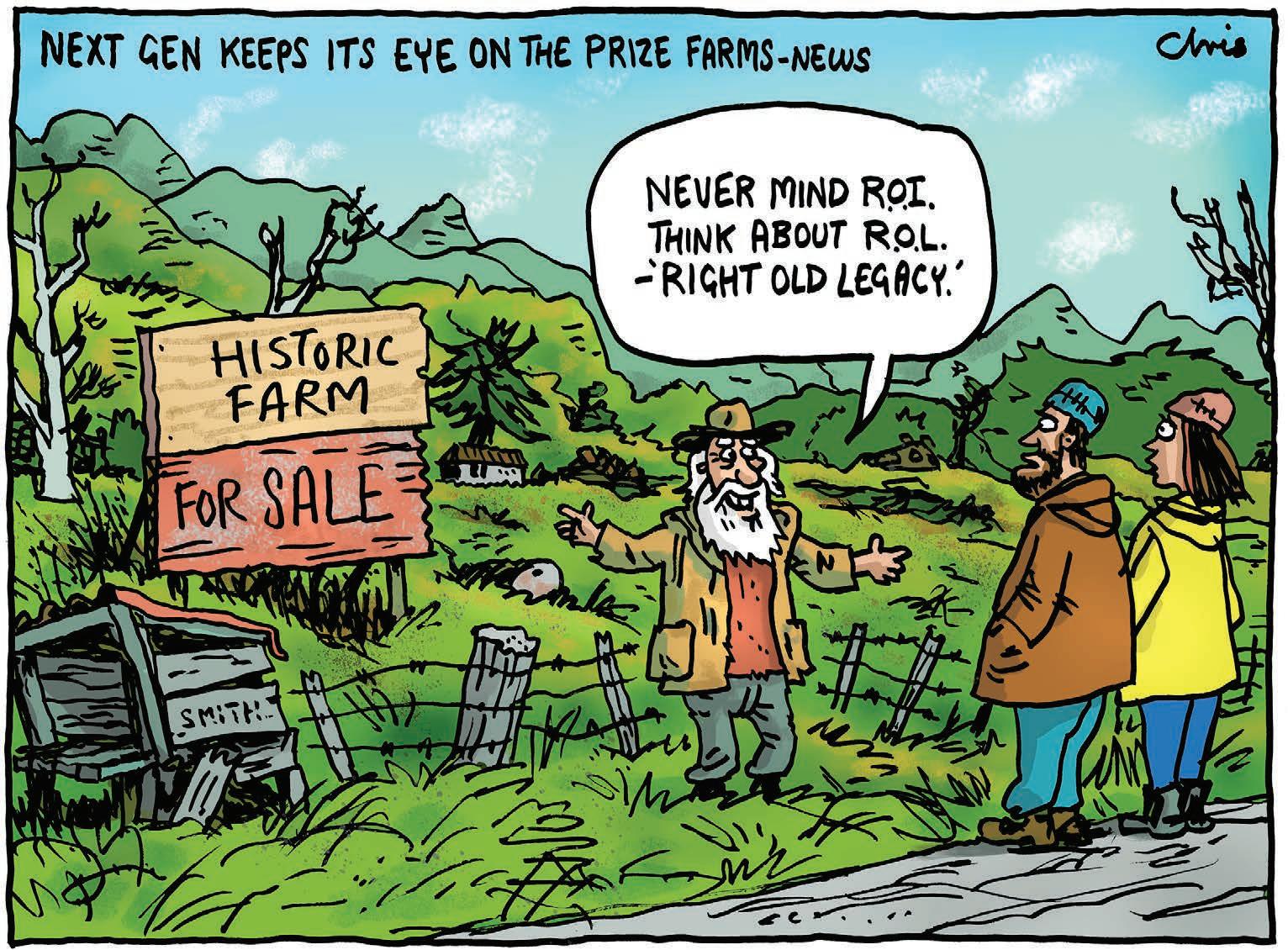
Canterbury consultant Dan van der Salm said while farming has traditionally been built on long-term thinking and legacy, the younger generation entering the market is approaching with a sharper commercial lens than those who came before them.
“Today’s younger buyers are often less anchored to historical land values and more focused on future return on investment.
“Previous generations are well aware of where values have been and trying to comprehend where the new season’s values and prices will be is tough to get their head around.
Younger buyers are taking a return-oninvestment view.
Dan van der Salm
PGG Wrightson
“Younger buyers are taking a more ROI view and then price and value are determined based on current and future markets.”
The shift is becoming increasingly visible across the sheep, beef and dairy sectors, with changing attitudes influencing the types of properties the younger generation is targeting.
“Many are aiming for largerscale operations from the outset, happy to consider values where they are supported by banks, as long as ROI is still strong.”
One of the biggest changes currently influencing the market is the way banks are approaching lending.
“Banks are very supportive; they are lending money to younger generations where in the past they would have been considered outside the box.
“It’s a sign of confidence in the industry that the positivity is here and will remain for a few years.”
Van der Salm expects younger buyers will continue to play a major role in shaping the future of rural real estate over the next decade.
At 23 years of age, Harry Finch bought his first farm, a 180 hectare dairy property at Sheffield, Canterbury, where he and his partner Elle Horn have finished their first season milking 570 cows, with plans to grow and consents already lodged to expand the herd to 650.
“I always wanted to own a farm and grow a successful business; I could see dairy would get me there,” Finch said.
“I started with Grassroots Dairy Management, graduated from there and I attribute a lot of my success to that programme, which is about growing the next generation of farmers.
“Mid Canterbury dairy farmers Will and Kim Grayling played a huge role for me in the programme; they gave me skin in the game, which was a head start. It’s the people around us that have got us here and while a portion of our vision is our wealth creation, we wanted to put our money into an asset that would grow high returns, grow our business, and grow people with us.
“We crunched the numbers, it came out right so we are just sinking our teeth into everything, running off the smell of an oily rag and taking all opportunities that come out way.”
Finch said building a good relationship with the bank is key.
“It’s massive, we couldn’t get there without that relationship.
It’s not a given, it’s a privilege to be respected [as we move] towards our goal of running and growing
a high-returning successful business.”
ANZ Waikato agri team consultant Sian Mitchell said the younger generation of buyers are astute operators, in a position to buy because they have made good decisions along the way.
“They are smart, making calculated choices; it’s hard work that’s gotten them to where they are, taking opportunities as they come their way. We are seeing a big uptick in first farm purchases and that’s a sign of the environment we are in the moment.
“Every year we see good numbers of young buyers but we are certainly seeing a few more this year; it’s very satisfying to be able to support them – they are the future of our primary industries.”
Continued from page 1
sheepmeat consumption both falling 2% in the past year.
NZ sheepmeat imports this past year were 13% higher and Australia 27%.
Beef imports are expected to increase 10% and sheepmeat 5% this year.
“The sheepmeat supply gap is being filled by imports, which are forecast to grow a further 5% in 2026 on top of a 13% rise in 2025,” AHDB reported.
The UK’s Department for Environment, Food and Rural Affairs reports total cattle numbers as at June 1 2025 were 9.3 million, down 1.3% compared to a year earlier, with the beef herd falling 4.1% to 1.3 million.
UK sheep numbers declined 1.7% to 30 million, with ewe numbers falling slightly from 14.9 million to 14.8 million.
Renewed confidence has prompted Australian sheep farmers to rebuild flocks after shrinking due to drought, according to Meat and Livestock Australia (MLA) senior market information analyst Emiliano Diaz.
“Producers are increasingly looking at opportunities to retain stock, rebuild breeding capacity and position themselves for future production,” he said.
Beef cattle are expected to remain above 30 million this year but decline 6% by 2028 due to successive years of high kills.
MLA is forecasting 9.45 million cattle could be slaughtered this year, the highest number since 1978.
A US Department of Agriculture survey calculates the US beef herd at 86.2 million as of January 1 2026, the smallest since 1951 due to drought.
Replacement heifer numbers rose 1% but cow numbers fell 1%.
BLNZ’s stock survey to June 30 2025 showed sheep numbers fell 1% to 23.36 million compared to 2024, but beef cattle rose 4.4% to 3.84 million.
In the past 15 years, NZ sheep numbers have fallen 19 million and beef cattle 351,200.
Brazil became the world’s largest beef producer in 2025, according to an Elders Australia report. Its herd of 192 million cattle
This week’s poll question:
Should NZ farmers increase stock numbers to take advantage of a global drop in farmed animals?
Have your say at farmersweekly.co.nz/poll
is becoming more efficient with improved pregnancy rates and the average age of slaughter falling from five years a decade ago to 36 months currently and trending towards 24 months.
Distiller’s grain, a protein byproduct of Brazil’s ethanol industry, is being used to fatten cattle, enabling faster weight gains than corn.


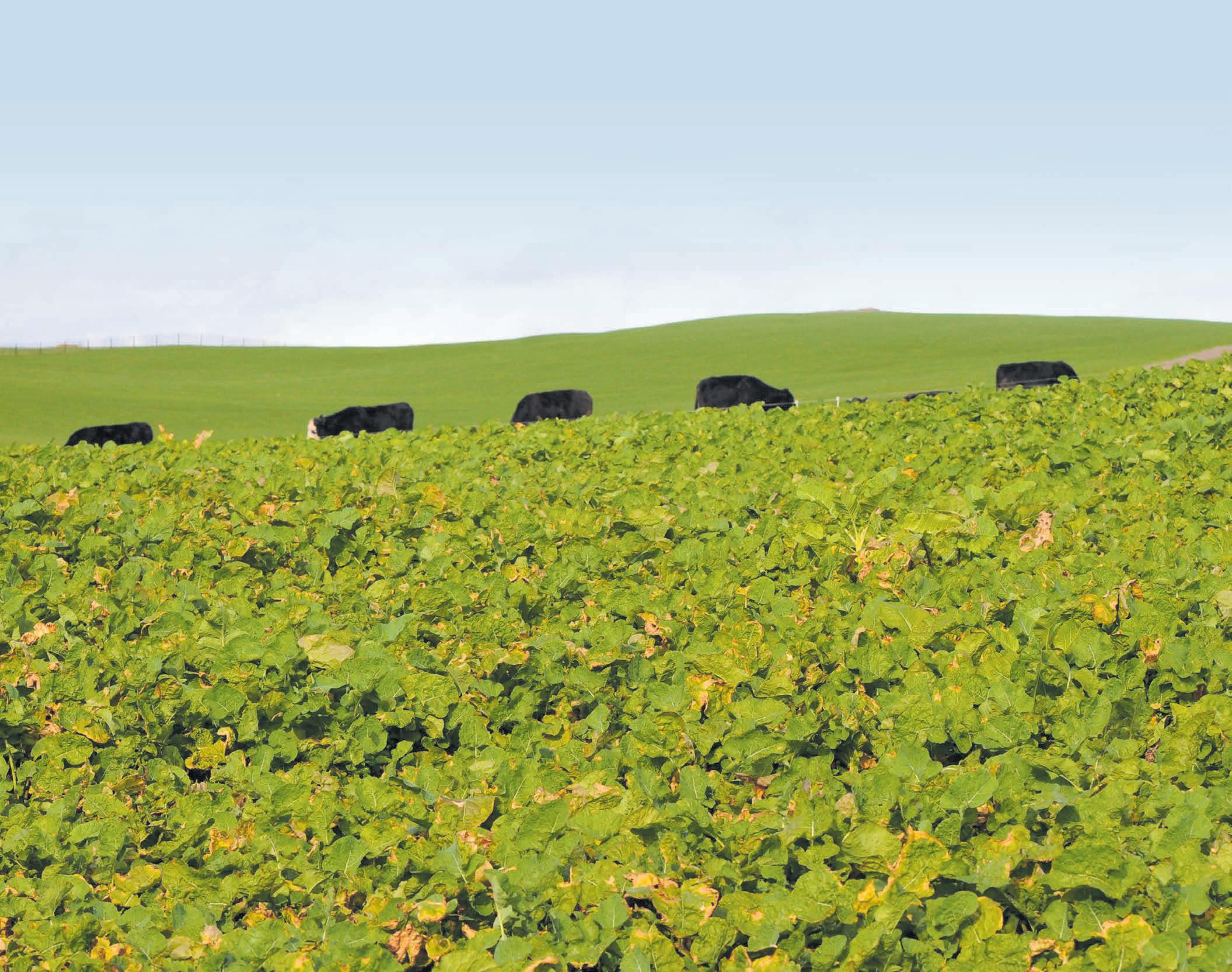
• Make sure animals are transitioned off crops before giving birth and are protected from late winter storms. Have a Plan B for adverse weather events
• Continue to ensure stock have access to drinking water and sufficient feed.
• Resow the paddock as soon as practicable when soils are dry enough and minimise soil disturbance with stock and heavy machinery when soils are wet
• When resowing, consider low tillage options
• Catch crops such as oats or ryecorn sown in the wake of winter forage crops can turn residual soil nitrogen into valuable extra feed.
• For best results, catch crops should be established as soon as practicable after winter grazing when the soil is dry and warm enough for successful germination.
• Critical source areas should not be used for winter forage cropping.
Plan ahead
• Review what worked well and what to improve on for next winter Start planning and preparing for next winter ’s forage crops.
• Factors to consider include paddock selection, slope and aspect, stock classes and environmental risks


more information and resources visit beeflambnz.com/wintergrazing

ENigel Stirling MARKETS Trade
XPORTERS are bracing for further tariff disruption in the United States as President Donald Trump continues to ramp up investigations into trading partners.
New Zealand was among 60 countries to be hit with fresh tariffs last week as the Trump administration wrapped up investigations into the use of forced labour in the supply chains of those exporting to the US.
Meat Industry Association chair Nathan Guy said the increase in tariffs from 10% to 12.5% was disappointing but would have limited impact.
“The meat industry is disap-
pointed as we do not have any forced labour issues in the NZ supply chain,” Guy said.
“In terms of what it means there is still strong demand in the US and it is still early days where it may end up.”
Beef, along with kiwifruit among other imports, will be exempted.
Guy said legal challenges could be expected from importers in the US.
“My understanding is that these tariffs will be stickier than the Liberation Day tariffs which got unwound in the Supreme Court.”
While the 12.5% tariff is unwelcome, meat companies are likely to be more concerned about the possibility of even higher tariffs from the administration’s investigation into lamb imports from NZ and Australia.
“But that has a long way to run
and I am not going to speculate about what is going to happen,” Guy said.
Fonterra’s general manager of trade strategy, Justine Arroll, agreed the latest tariffs appeared to be on firmer legal ground and looked less likely to be overturned in the US courts.
“The advice we have is that the [administration] is very mindful of the Supreme Court decision and will have taken into account the legal risk as a factor for selecting the basis for the application of these tariffs,” she said.
Arroll said the latest tariff bump is negative for NZ dairy exporters but just how big an impact it will have depends on the tariff rates faced by its competitors.
An earlier deal capping tariffs on EU exports to the US at 10% meant EU rivals were effectively facing

a zero increase in tariffs on some dairy products from the latest announcements.
By comparison the new 12.5% tariff on NZ’s exports will be “stacked” on top of its existing Most Favoured Nation tariff rates.
However, this advantage for EU exporters over their NZ rivals could be short-lived.
The EU is among trading partners facing additional investiga-
tions by the Trump administration which could result in further tariff hikes.
“The other dynamic which we don’t yet know how it will play out is the US has a number of other trade investigations including into excess capacity, which includes a number of other countries but not NZ,” Arroll said.
“So our expectation is that the tariff landscape will continue to move around.”

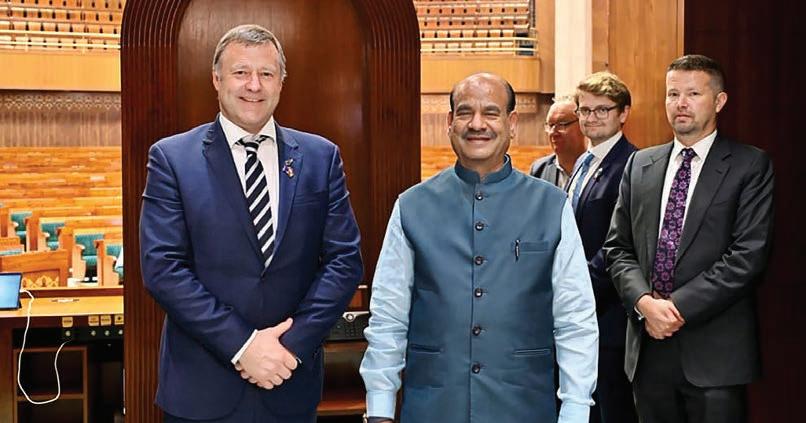
OUR strong wool is in hot demand, says Associate Agriculture Minister Mark Patterson, following his recent trip to India.
Patterson was there to support the New Zealand wool industry delegation at the Bharat Textile Expo in New Delhi.
India is New Zealand’s secondlargest export market for wool, with exports worth $76 million in the year to June 30, 2025
“My visit to champion New Zealand’s premium strong wool and strengthen relationships highlighted the excellent reputation held by our wool sector and the quality of the fibre it produces” Patterson said.
But while it is our second biggest export market for wool,
Patterson told the Farmers Weekly Podcast that there has been little meaningful engagement with buyers over the past few years.
“We’ve really had very little engagement with them, probably going back since the Wool Board
days. It’s been very transactional.
There is one or two people up there, Wools of New Zealand have a presence, as does Wool Services International, but it’s very much auction focused.”
India is embarking on a National
Fibre Mission, encompassing the five Fs – farm to fibre to factory to fashion to foreign exchange.
“They’re looking at tripling an already enormous textile industry by the end of the decade. So they’re throwing an enormous amount of resource at it and New Zealand is really well positioned to play a part in that.”
In fact, NZ is in on the ground floor – literally.
“They’ve got a new parliament,” Patterson said.
“Prime Minister Modi wanted it all to be made out of Indian materials but the one thing they could not get was a standard of wool that was of high enough quality. So 20,000kg of New Zealand wool was used, with 900 contractors hand-stitching it over seven months. It’s really the exemplar of what we can do together in partnership.”
But Patterson warned NZ’s wool sector still lacks the structure to really thrive.
“It has exposed us a little bit in terms of our ability to project a value proposition to the world. So we’re in the process, initially through Wool Impact and of course domestically through the Campaign for Wool, by bringing those two organisations together, with some support with Beef + Lamb NZ and WRONZ into the Wool Alliance.
“Reforming industry leadership is certainly a big focus for me and consultations are ongoing.”
farmersweekly.co.nz/podcasts







Gerald Piddock NEWS Fertiliser
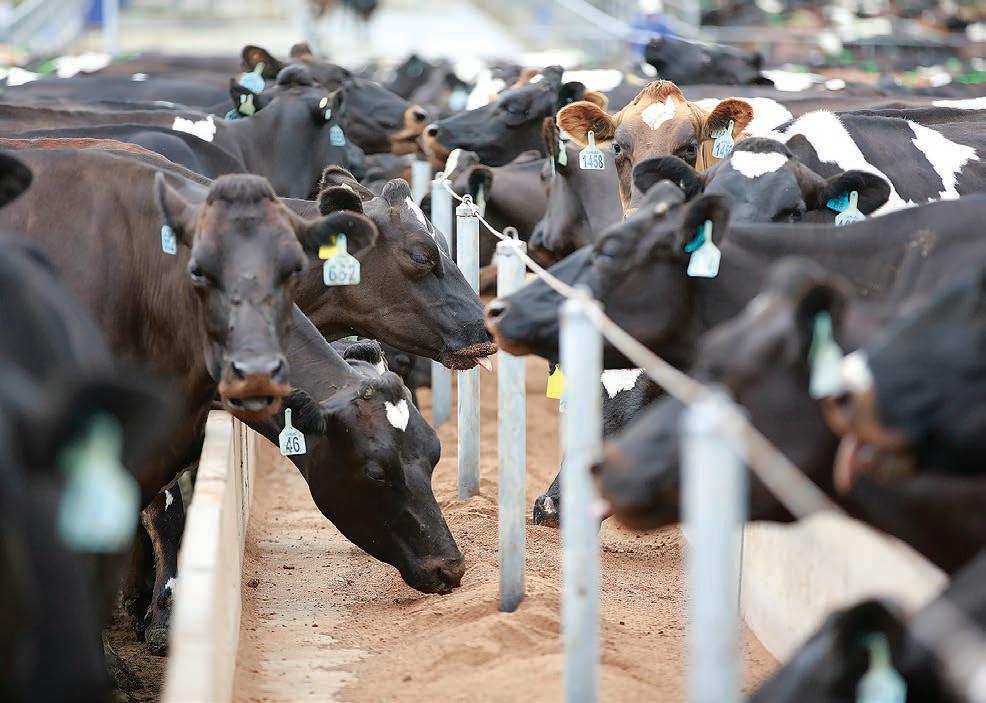
THE ready availability of fertiliser and imported feed for dairy farmers has prompted a warning from agricultural economist Phil Journeaux that it is eroding their grazing management skills.
The decline in this skill set is contributing to a flatline in productivity, Journeaux said at AgFirst’s annual presentation of its financial survey for Waikato and Bay of Plenty dairy farms.
I think we’re getting to the point where we are starting to substitute supplements in the wider sense for grazing pasture.
Phil Journeaux AgFirst
“I think we are starting to lose our grazing management skills. Part of the reason for that, I would argue, is that we have two safety blankets – one is called nitrogen fertiliser and the other is called PK [palm kernel].”
For farmers, it has become too easy to call and order these two inputs and, in the case of PKE, for it to arrive within 24 hours, if they
believe, the farm had a pasture feed deficit.
If farmers are not closely monitoring their feed levels and pasture covers, buying in supplement is an easy escape if a shortage occurs, albeit at a cost.
Lifting productivity comes down to monitoring performance and it “always surprises me” how few farmers have a feed and a financial budget, he said.
DairyNZ farm systems specialist
Chris Glassey said it was a simplification to say that grazing management skills are being eroded because of inputs because there are multiple factors to consider why they might be used on a farm.
Generational issues could also be a factor with many younger farmers learning how to farm on high-input systems.
Previous estimates from DairyNZ showed a three-way split between farmers who do a formal feed budget, those who do it informally – usually based on previous experience of having a formal budget – and those who do not bother, he said.
“For the vast majority of farms, grass is still a very important feed. If you put supplements in, you can’t ignore the pasture management side of things to get most out of it. It’s a fundamental that you can’t just put aside.”
DairyNZ economist Mario
Fernandez said over the past 20 years, per-cow production has increased because of the reliance on imported supplements.
But the cost of these supplements offsets that production growth – which is why productivity is flat.
“A flat line is not failure; despite all of the challenges dairy farming is still stable and resilient.”
Lifting it is one of the objectives in the $46 million Responsible Dairy project launched at Fieldays in June, which DairyNZ is leading.
Staff reporter NEWS Horticulture
PUKEKOHE vegetable
grower
Peter Reynolds has been awarded the horticultural industry’s premium award, the Horticulture Bledisloe Cup.
The award was one of several handed out at last week’s New Zealand Horticulture Conference Industry Awards and Gala Dinner, which recognise the diverse contribution of groups and individuals to the industry.
The Horticulture Bledisloe cup recognises a person who has made an outstanding contribution to New Zealand’s horticulture industry.
In the citation, Reynolds, who operates TA Reynolds Ltd, was acknowledged for providing decades of leadership and sharing knowledge in the vegetable growing sector.
“He has championed sustainable farming practices, improving soil health, reducing environmental impact and strengthening grower capability,” the citation read.
The President’s Trophy, which aims to celebrate
and develop inspiring leadership, was presented to Ben Smith, a general manager at T&G Global.
A former Young Grower of the Year and Young Horticulturist of the Year, he has gone from emerging talent to industry leader.
Over 20 years he has progressed from technical roles into management and is currently involved in Tomatoes NZ and wider sector initiatives.
The FMG Sustainable Innovation Award was presented to the steering group behind the Kiwifruit Postharvest Industry Refrigerant Decarbonisation project, which aims to help the sector transition from high global warming refrigerants and ageing infrastructure.
Launched in 2024, the group comprises Lloyd Franks (Seeka), Ollie Hoare (HumePack), Sarah Lei (Trevelyan’s) and Les Dimond (G4 Kiwi Supply).
The Manaaki Award, sponsored by Mr Apple, was awarded to Emeritus Professor Dr Richard Bedford, from the University Waikato and Auckland University of Technology.
It recognises his nearly
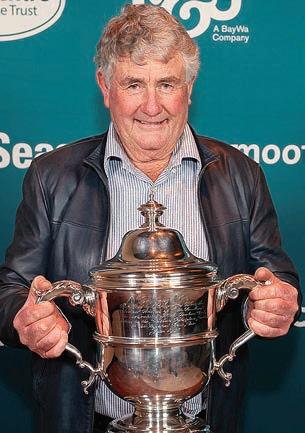
WINNER: Pukekohe grower Peter Reynolds was awarded the horticultural industry’s premium award, the Horticulture Bledisloe Cup, at the sector awards last week.
20-year contribution to the Recognised Seasonal Employer scheme since its inception.
The Industry Service Award went to Dr Mike Currie, who leads the Stage 2 new cultivar programme at the Kiwifruit Breeding Centre.
The award recognises people who have given long and dedicated service as a supplier or service provider.
Currie has worked in the NZ kiwifruit industry for more than 30 years, improving orchard productivity, fruit quality, and grower profitability.
MORE: See page 9
CONCERN: There is concern that grazing management skills are being eroded, agricultural economist Phil Journeaux says.
Rotorua dairy farmer and New Zealand Dairy Awards Farm Manager of the Year judge Carlos Delos Santos said one big change he has seen is the effect of new technology on pasture management. Most if not all of the farmers he has judged over the years are doing some form of monitoring, ranging from more traditional plate metering and farm walking to using Halter or Pasture.io.
That technology can tell them how much grass cover they have as
accurately as a farm walk, he said.
“I didn’t come away from judging thinking ‘Goodness, what’s happened to our industry?’ If anything, I was thinking, ‘I’m going to do what you are doing’.”
It is not a loss of skills. It is just a different way of farming in a fastpaced world, he said.
If there is a pasture deficit there would be a discussion between the employee and farm owner first before any inputs are bought as they are the ones paying the bill, he said.


By Alice Scott
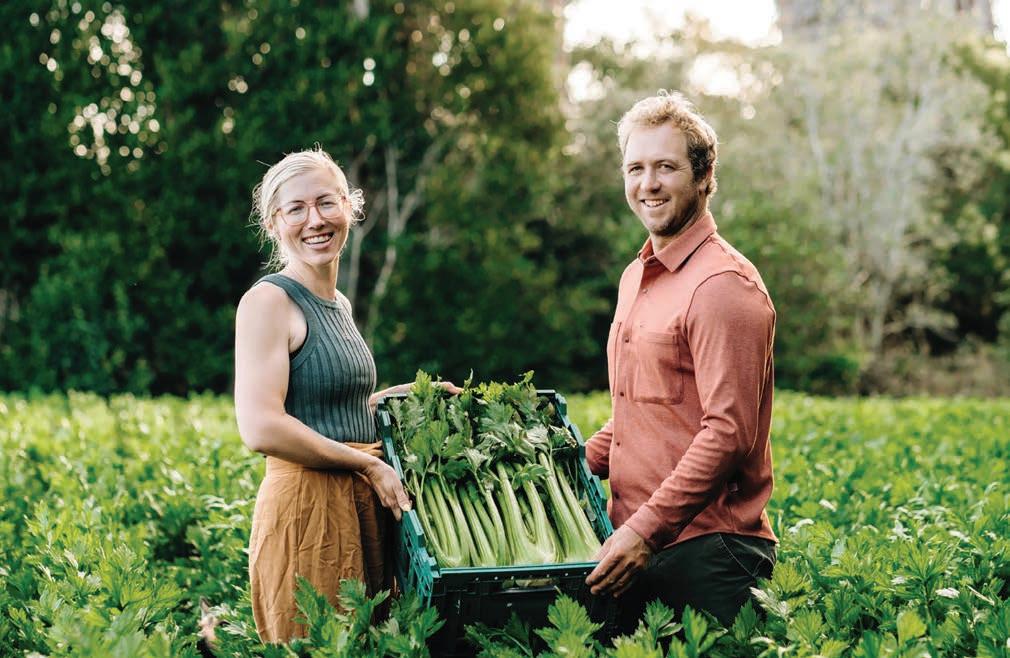
When Jasmine and Luke Franklin
entered the Ballance Farm Environment Awards for the first time last year, they weren’t sure if their family’s market garden business was the sort of operation the programme was looking for.
“Our Ballance Nutrient Specialist had been encouraging us to enter for a few years,” Jasmine said. “I started looking into the Awards and initially thought it was something that was out of our league. We’re a small landholding and have some pretty niche elements to our business. I just assumed the Awards were for the big players,” she said.
Jasmine did a deep dive into the Awards programme online and realised they are designed to celebrate excellence across the entire primary sector, regardless of size, scale or industry.
“I just thought ‘why not?’ There was nothing to lose and everything to gain,” she said.
Jasmine and her husband Luke are the fifth generation of the Franklin family to farm their Kaipara property in the Auckland region. While celery remains the backbone of the business, the farm has evolved into something much more than a market garden.
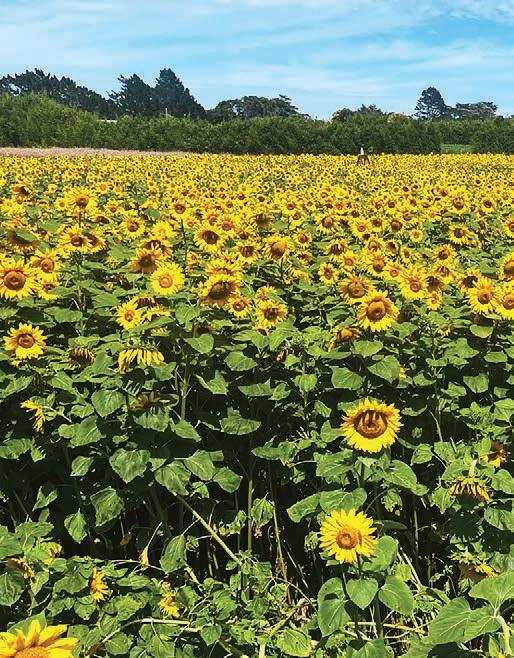
Alongside producing around 61,000 cases of celery each year, the family operates a butterfly house dedicated to supporting monarch butterflies and educating visitors about biodiversity. Every year, around 60,000 butterflies are bred and released from the property.
The farm is also home to flowering cover crops, extensive native plantings, thriving birdlife and managed water systems designed to protect the surrounding environment.
“Initially with the Awards, I thought you chose a category you wanted to be judged on and that was it. For us, biodiversity was an obvious fit. It wasn’t until we got further into the process that I realised the judges look at your business through the lens of every category.”
Entering the awards was a far cry from the daunting assessment they had imagined.
“We found the judging process a really lovely experience. It didn’t feel like judging at all. It was more like having a great conversation about what we’re doing, why we’re doing it, opportunities for the future and things we might want to consider,” she said.
The Awards also provided something Jasmine said can be difficult to find within the horticulture industry - connection.
“Horticulture can feel quite isolating at times because you’re competing with people in the same industry. Compared with some other sectors, there can be fewer
opportunities to openly share ideas and experiences.”
One of the highlights of the Awards programme was meeting people from across New Zealand’s primary industries.
“I really enjoyed the pan-sector nature of the Awards. Everyone is celebrated and treated equally. We met some fantastic people who have become a positive catalyst for change within our business,” she said.
One area where the Awards have already made a tangible difference is succession planning. Through the awards event, the couple met Ross Neal from Rabobank, whose succession programme immediately appealed to them and they have since begun the conversations of working through the programme.
“Keeping harmony within our family and ensuring everyone’s still talking around the dinner table is incredibly important to us,” Jasmine said. “We’re really grateful the Awards connected us with Ross and helped start those conversations.”
On a personal level, Jasmine said the Awards experience fueled her confidence with what they were doing. “We are incredibly aspirational people and it was really nice to be acknowledged for the hard work we’ve put in. We’re always striving to improve and the Awards gave us reassurance that we’re heading in the right direction,” she said.
For anyone wondering whether they’re ready to enter, Jasmine has a simple message.
“I wasn’t sure the Awards were for us. Looking back, filling out the entry form was probably the most daunting part.
“We found the whole process very enjoyable, supportive and incredibly positive. If you’re considering entering, just do it. You’ll get far more out of it than you expect,” she said.


Bryan Gibson NEWS Horticulture
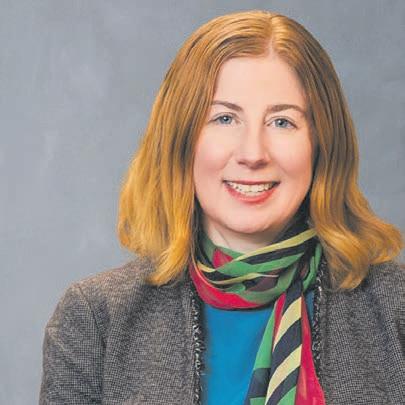
THE government’s decision to modernise the Recognised Seasonal Employer scheme is a positive and practical step that will benefit growers, workers and Pacific communities, says Horticulture NZ chief executive Kate Scott.
The changes were announced last week at the Hort NZ conference in Wellington by Immigration Minister Erica Stanford.
Key changes include a graduated accreditation system that recognises employers with a strong track record, and more flexibility for workers to move between RSE employers in appropriate circumstances with additional safeguards for workers.
The changes will also introduce clearer rules on the genuine costs employers can recover from workers (such as transport, insurance and accommodation), giving workers and employers greater certainly about what costs can be recovered and how.
“These changes will help employers focus on their core operations, provide greater certainty for workers and employers, and maintain safeguards that ensure New Zealanders are prioritised for available jobs,” Stanford said.
“At a time when horticulture is central to New Zealand’s export growth ambitions, the reforms will help growers meet seasonal labour needs while ensuring New Zealanders remain the first priority for available jobs,” she said.
Scott said the changes will reduce unnecessary compliance for trusted employers.
A graduated accreditation model, clearer expectations and a more transparent cap process will give growers greater certainty to plan, invest and grow.
“These practical improvements provide employers with greater clarity while strengthening worker protections,” said Scott.
The reforms also put worker wellbeing at the centre of the scheme’s future.
“Standardised cost-recovery agreements, clearer rules on allowable costs and stronger
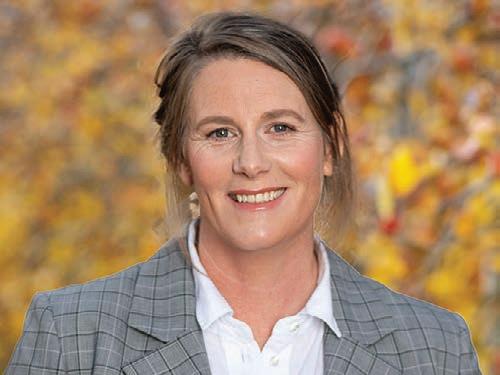
WIN-WIN: Horticulture NZ chief executive
Kate Scott says reform of the Recognised Seasonal Employer scheme will benefit workers and employers.
complaints processes will make the system easier for workers to understand and navigate.
“Workers will also be able to carry out related tasks, including using machinery, while their main work remains planting, picking, packing and harvesting.”
The conference heard that a fair and transparent scheme was vital to not only lift productivity but also ensure the rights of workers were protected.
Human Rights Commissioner Professor Gail Pacheco, a former Productivity Commissioner, said work done by both organisations showed that improving working conditions and giving workers more options regarding who they work for makes sense economically and socially.
Pacheco said that while there are a lot of fantastic employers in the scheme, exploitation is still possible.
“If there’s the possibility of exploitation occurring, then if you’re tied to your employer, that makes it a little bit more difficult to leave a situation,” she said.
The HRC had called for an end to visas that tied a worker to a specific employer.
This would introduce competition into the sector, which would in turn boost productivity, Pacheco said.
“We need to ensure good job-to-job mobility for improved productivity impacts.
So what I like about this example is that in our human rights review, the focus was around ending tied visas.”
Staff reporter NEWS Horticulture
NEW Zealand’s horticulture sector is making early progress towards its goal of doubling farmgate value by 2035.
A report on the progress of the Aotearoa Horticulture Action Plan (AHAP) was presented to the Horticulture NZ’s annual conference in Wellington last week. It said work is underway to improve water security, reduce red tape, open market opportunities, strengthen the workforce, support Māori horticulture, and back better science and innovation.
AHAP chair Andrew Gibbs said the next job is to turn this progress into tangible outcomes that will help boost farmgate returns.
The plan has five priorities: growing sustainably, optimising value, strengthening Māori horticulture, using science and knowledge, and nurturing people.
Gibbs told the conference that this year
marks a shift from laying the foundations to building delivery.
“Across the country, more organisations are aligning their work with AHAP priorities.
This is starting to create scale, moving us from a collection of good ideas to a coordinated programme of action across the sector.
Andrew Gibbs Aotearoa Horticulture Action Plan
“This is starting to create scale, moving us from a collection of good ideas to a coordinated programme of action across the sector.”
He gave as examples work to support regional water storage projects, speeding up approval pathways for crop protection products, reducing duplication in grower assurance programmes, and providing practical guidance for managing nutrients and sediment in horticulture operations.
Kevin and Nicole Opper t are passionate about farming, family and creating oppor tunities for the future. As Bay of Plenty contract milkers, they ’re focused on growing a profitable business while working towards their ultimate goal of farm ownership.
By combining hard work, strong par tnerships and FIL’s dairy hygiene and teat care solutions, they ’ve achieved measurable improvements in herd health and shed efficiency.
Now that ’s what we call a successful par tnership.
Discover how FIL is suppor ting the Opper ts on their journey. Scan the QR code to read more about their story or visit FIL.co.nz


Richard Rennie NEWS Apiculture
AN INDUSTRY player
behind an initiative to improve the transparency of New Zealand’s honey market is confident the timing is right for reforming honey payment as mānuka volumes slide against growing demand.
Bay of Plenty honey processor Logan Bowyer of Mānuka Orchard said his efforts to create Project 2030 are based on his concern that the sector has lacked transparency and signalling on pricing through the entire supply chain.
“Comvita manages to do it to a certain extent. But that still leaves a lot of honey produced by the primary sector that does not engage directly with the processors and marketers,” he said.
The Project 2030 name for the strategy echoes the industry’s aim to be worth over $1 billion by 2030, as per Apiculture NZ’s strategy released last year.
“To get to that 2030 vision we need to be an industry built on planning, timing and execution. If we want to be the next Fonterra, how are we going to get there?”
Bowyer wants to increase information on honey volumes and pricing earlier, enabling landowners and beekeepers to be better informed before locking in commitments to hives, land areas, and collection, ahead of the honey season even beginning.
Bowyer’s vision includes building replicated versions of his Bay of Plenty honey extraction plant around the country, acting as central collection points for beekeepers to bring hives for processing at scale.
He said his own plant is still
ramping up its collection volumes and he anticipates this will surge further in the coming season as more beekeepers return to focus on honey production amid improving prices.
He estimates sites will need to be built to process about 1000 tonnes each per year in honey, across five to seven plants nationally.
“It would enable beekeepers to drive in like milk tankers, dropping off their honey, and having it processed at economic scale.”
Sitting behind that plan are also steps to improve the transparency of information on honey prices and volumes. Bowyer envisages a type of honey exchange, providing data six to eight months in advance of supply.
“You would be looking at a future market, as opposed to what we have now, which is really a spot market. How we are now has not served the industry well in the past
for planning and supply into the future.”
He is providing a “dashboard” of data as part of the information service to the industry.
“It should mean landowners and beekeepers can go and do deals ahead of supply.”
His inaugural seminar day held in Bay of Plenty drew almost 200 beekeepers, out of a national total of about 400.
“It was well received. The mood right now is pretty positive in the industry.
“Price wise, we would be expecting mānuka to get back to at least the average range, but there are still some very big retailer margins in there.
“It will be interesting what happens, now the volume available has dropped, if they will still achieve those margins.”

Gerhard Uys NEWS Community
SURFING for Farmers and Rural Riders have thrown their bikes and boards into the same ring with the goal of reaching every farmer in the country.
The two groups will come together under a new For Farmers umbrella, with the goal to
support rural mental wellbeing by providing a fun, relaxed environment for the perfect break off the farm.
For Farmers general manager Dominic Huxley told Farmers Weekly that combining strengths means the two organisations can mean more for rural communities.
Huxley said both organisations are volunteer led, with Surfing for
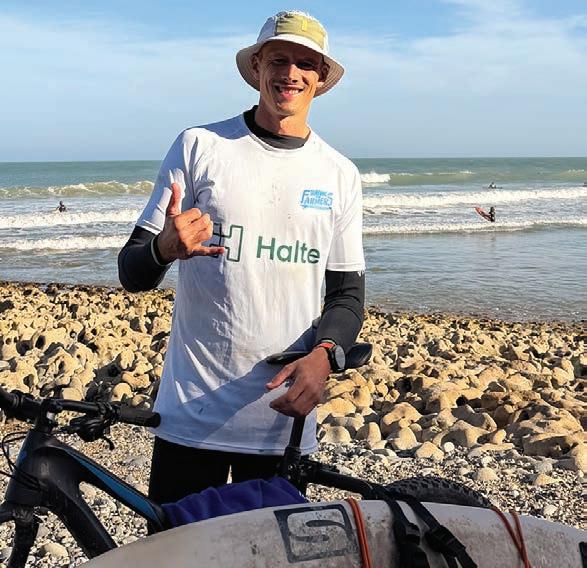
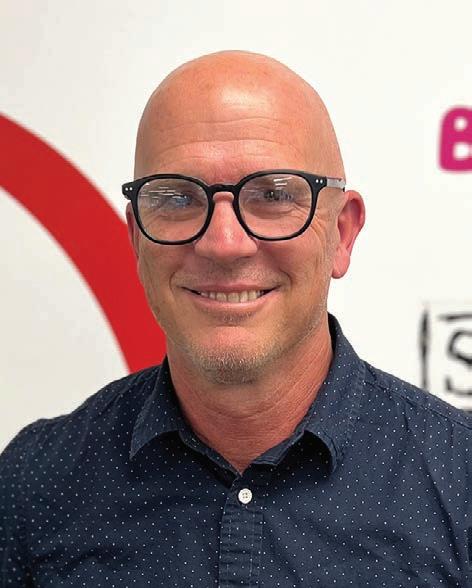
ON BOARD: The general manager of the new For Farmers programme, Dominic Huxley, says combining strengths means the two organisations can mean more for rural communities.
Farmers clocking up about 2500 volunteer hours per year.
The organisations are recipients of the Rural Wellbeing Fund from the government, and have “amazing” commercial partners and support from local businesses.
Huxley, who used to be a professional mountaineer, climbing as far afield as Alaska and Nepal, said extreme sports like surfing and mountain biking make a person focus on what is in front of them, gets all their senses fired up and allows them to briefly forget any challenges they are facing.
“When you’re in that environment, it’s a reset.”
He said farmers also get to meet “good sorts” and build a community.
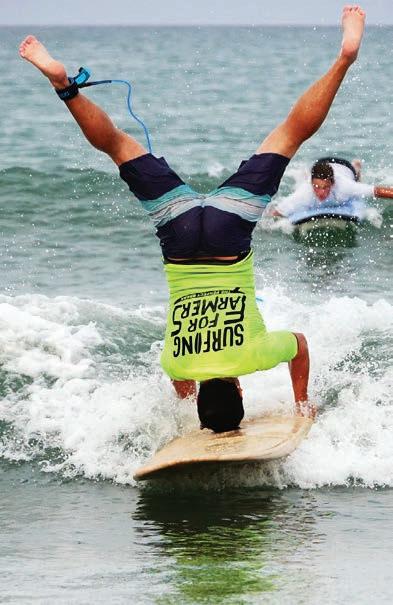
Surfing for Farmers kicked off in Gisborne in 2018 after local Stephen Thomson watched a Netflix documentary, Resurface, showing how surfing as a therapy tool was helping soldiers suffering from PTSD.
“Farmers are often stressed out, strung out and need that
opportunity to relax. I thought maybe we could use surfing to help them chill out and get them off farm.”
On the day of the launch in 2018 he was nervous.
When you’re in that environment, it’s a reset.
Dominic Huxley For Farmers
“I remember I had the boards, the wetsuits, the coaches, all I needed was farmers to turn up.
“It was a relief when 20 to 30 people showed up that first night, and it’s been consistent ever since.”
Surfing for Farmers is active in 25 coastal locations. The programme inspired Rural Riders founder, Hamish Clausen.
“I was going through a rough patch personally and was fortunate to go mountain biking with a mate’s dad every week.
“It was something I looked forward to, a good feeling and good release, just from being active.”
Gerhard Uys NEWS Horticulture
UNITED STATES specialist food and agribusiness investor AGR Partners has bought a 25% stake in Freshco, one of New Zealand’s largest vertically integrated apple producers.
Freshco chief executive Glenn Pool said Freshco had remained profitable through Cyclone Gabrielle and after successive record years is poised for further growth.
He said the deal with AGR Partners will provide capital for growth in volumes, operational processing capability and international in-market investments.
Freshco will remain 75% locally owned and operated.
Pool told Farmers Weekly that Freshco values partnerships in the market and listens to what partners are looking for.
He said there is strong demand for Freshco products from partners and Freshco wants to fill that demand.
There was a lot of interest in the Freshco deal, he said, but AGR Partners understood the longterm view of how an apple business works, and the importance of developing people in the team.
The industry faces challenges with increased costs, which puts pressure on margins.
“But at the same time we’ve got something quite unique in New Zealand, the market is responding to that quality, and we’re pushing that value as much
as we can around the world.”
He said Freshco sees itself as a local company and remains a New Zealand-focused producer. The deal does not change that because AGR Partners shares that view.
Pool dropped a hint that a new apple variety might be on the horizon, with trial trees planted in Hawke’s Bay, and more planned for Nelson. He did not want to elaborate.
“Proceeds from this transaction will drive growth in new production, and enable investment in packhouse automation to efficiently handle growing volumes. It’s a very positive transaction for Hawke’s Bay’s horticulture industry at an important time.”
AGR Partners is a US-based
specialist food and agribusiness investor that provides long-term capital to businesses across the food and agricultural value chain in the US, Canada, Australia and New Zealand.
AGR Partners’ Daniel Masters said there are multiple reasons that make investing in Freshco a good choice. Freshco’s longstanding relationships in core international markets, its vertically integrated operating model and its focus on helping growers and customers succeed are a few of them.
Freshco exports apples to over 30 countries, and has developed four proprietary apple brands. It operates across a production footprint of approximately 600 hectares, primarily in Hawke’s Bay.
Clausen launched Rural Riders in Taupō in 2021, with about 12 riders turning up on the first night. Rural Riders is active in 12 locations.
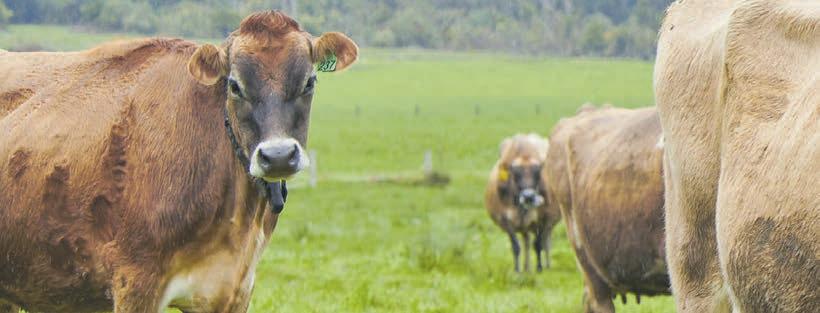
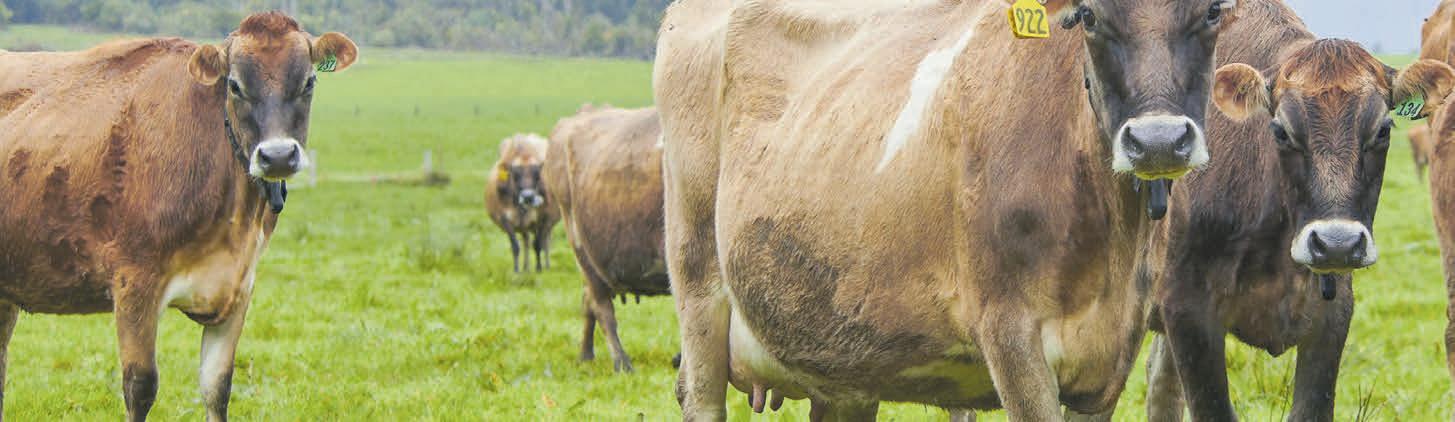
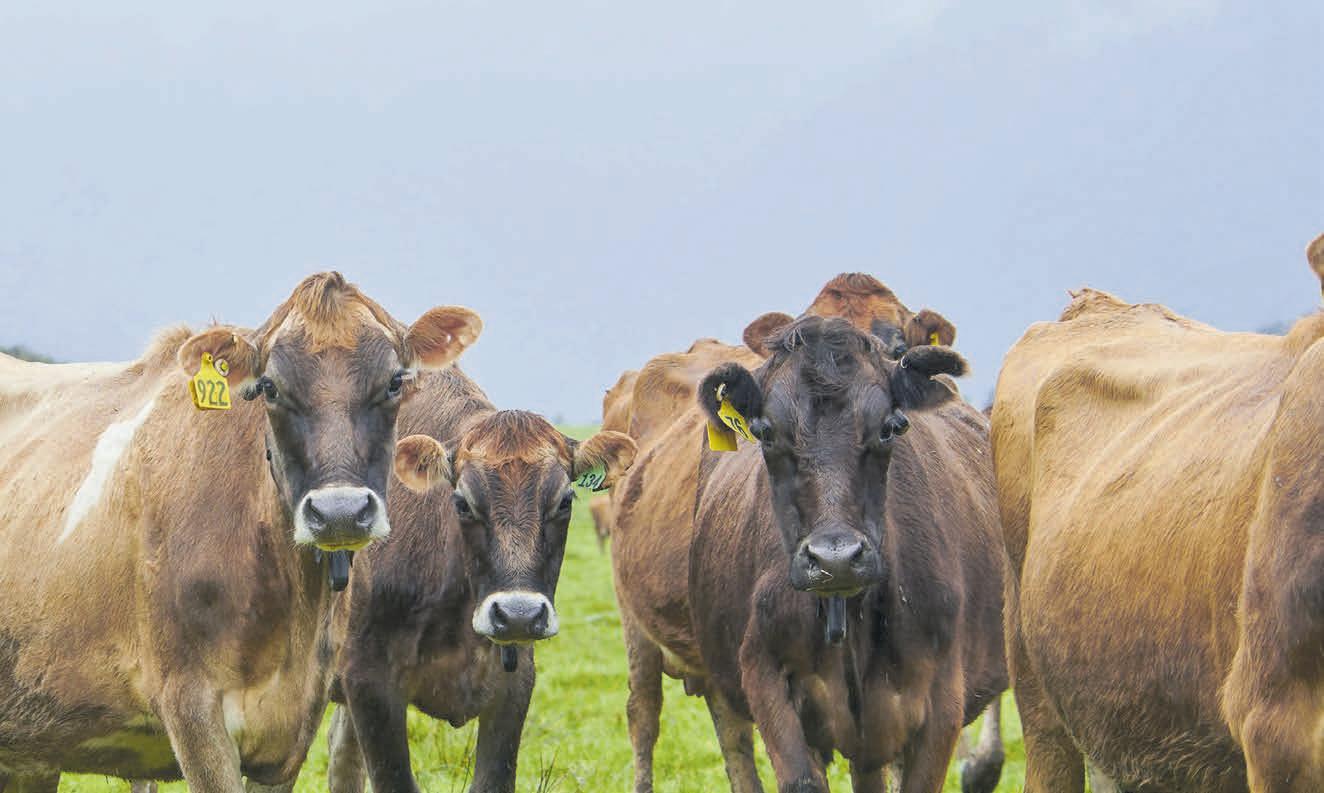



This adver torial is an amended reprint of content originally published on 20 July The original version inadver tently omitted acknowledgment of LIC’s pivotal role in the research
When the Re silient D air
y programme launche d back in 2019, the use of “we arable s” such as collar s and e ar tags was still in its infanc y within the se c tor
The primar y grow th par tner ship bet ween D air yNZ, breeding company LIC , and the Ministr y for Primar y Industries, put the spotlight on ways to improve animal wellbeing and health diagnostic s, genetic innovations and genomic advancements
Fast for ward to 2026 and around a million cows in


New Zealand are fit ted with wearable technology, generating around 20 million data points a day Never before, have New Zealand researcher s had access to data of this scale
Wearables create huge oppor tunities for the sec tor, but the challenge is turning
that information into prac tical value on farm The Resilient D air y programme has pla yed a pivotal role in helping translate the research into usable insights for farmer s
O ne of the crucial data points captured is fer tilit y
O n New Zealand dair y farms, fer tilit y doesn’t just affec t reproduc tion – it has a flow- on effec t for milk produc tion, workload, costs and long-term sustainabilit y
E xisting fer tilit y measures, such as (Percentage Mated in 21


days / PM21) and (Pregnanc Rate af ter 42 days of mating / PR42), can take a lot of wor to collec t and can be affec te by differences in how heat detec tion and records are managed
LIC’s science team set out to use data from cow wearable
y k d s to give farmer s earlier and more reliable signs of fer tilit y Wearables were used to calculate calving to fir st heat (CFH) and quantif y the genetic contribution of this measure, along with its relationship to existing fer tilit y traits
Using the data collec ted, LIC researcher s developed a new approach to reviewing the fer tilit y breeding value, so farmer s and breeder s have an earlier more reliable way to choose cows with bet ter fer tilit y and heritabilit y
Our Ranking of Active Sires (RAS) List gives you a clear, independent view of the top-performing, daughter-proven bulls – all in one place.
The List is updated at least monthly and ranked using Breeding Worth (BW), so you can choose sires that will breed more profitable, efficient cows.
Make confident breeding decisions, backed by data you can trust.
The team found strong genetic correlations bet ween CFH and PM21/PR42 indicating that selec ting for shor ter CFH would improve fer tilit y in dair y cows
The heritabilit y was more than double the traits currently evaluated, indicating promise for future animal evaluation contribution
O ver time, the approach could help get more cows in calf, reduce the number of empt y cows, keep calving more compac t, and avoid adding ex tra work on farm
D air yNZ and LIC are investigating how this information can be included in breeding wor th, so farmer s can realise the maximum value from the data
Find out more at dair ynz .co.nz


Craig Page Editor
XPERTS in rural mental health
Ewill tell you that time off the farm is, more often than not, time well spent.
So it is pleasing to hear that two of the country’s leading off-farm initiatives are joining forces to ensure farmers have plenty of options for some R and R.
The award-winning Surfing for Farmers initiative is teaming up with Rural Riders, with the goal of giving every farmer in the country the opportunity to take some recreational time out.
The groups announced last week they will come together under a new For Farmers umbrella to support rural mental wellbeing by providing a fun, relaxed environment for a break off the farm.
For Farmers general manager Dominic Huxley said combining the strengths of two organisations can mean more for rural communities.
Both organisations are led by volunteers,
which as any community group or club in New Zealand will tell you, are becoming harder to find. Surfing for Farmers alone clocks up about 2500 volunteer hours a year.
Huxley said extreme sports like surfing and mountain biking make a person focus on what is in front of them and allows them to briefly forget any challenges they are facing.
“When you’re in that environment, it’s a reset.”
Surfing for Farmers has been around since 2018 and was the brainchild of Gisborne resident Stephen Thomson.
The organisation has been a huge success, collecting the Rural Champion Award at the Beef + Lamb New Zealand Awards in 2023.
That struck a chord with me. I thought about it and I just put it out there.
Stephen Thomson Surfing for Farmers
In an interview with Farmers Weekly at the time, Thomson said the concept began on the couch of the family home while he and wife Nicole were watching Resurface, a Netflix documentary.
It told the story of Iraq war veteran Bobby Lane who, after years of post-traumatic
Almost 62% of those who took the poll say the government should not be offering more incentives to reduce methane emissions.
“I find it absurd that we are blaming a natural biogenic process in animals for the world’s supposed climate problems. Why don’t we ban tourism and non-essential flying, cruise ships, stop mining for rare earth and other minerals? Ban plastics and only use natural products,” said one voter.
Another said: “Our farming requirement for economic sustainability must be to address pollution and the poisoning of the land. That leads to the loss of soil microbes that reduce methane.”
“Incentives seem to mean taxpayers pay incentives and it’s hard to see why this should be done when the ETS charges are paid by the ‘polluters’. What is so special about agriculture that they should get paid to reduce emissions rather than pay?”
Of the 38.4% who believed the government should provide incentives, some said more work should be done to develop lower-emission breeding traits in stock.
“The future of farming won’t be shaped by claims of being the best (which NZ keeps telling itself it is). It will be shaped by those willing to lead. More action. Less noise.”
Paul Burt Bay of Plenty
AS FARMERS we really should be more careful how we allow others to describe our businesses.
“Re-generative” carries an inaccurate and unnecessary prefix for most of us. This is how we spend our year:
Generating production gains of over 5% to keep ahead of annual cost increases.
Generating relationships with qualified professionals to ensure the highest standard of care for our animals.
Generating the resources to maintain the 50km of fencing and reticulated water systems that create the 75 paddocks that allow the daily-shift, grass-only grazing system.
Generating the resources to maintain and improve the significant natural areas we don’t farm but protect with pest control, planting and soil conservation.
Generating a balance for the energy we export (hundreds of kilos of meat and fibre per hectare) by applying phosphate, which is the main elemental deficiency in our young volcanic soils and responsible for promoting the clover we rely on to maintain our nitrogen cycle.
stress, felt the only way out of his trauma was suicide.
That was until he met a former big wave surfer and discovered surfing and the healing power of the ocean on the mind and body.
“There was a line in the documentary where a guy said, ‘I used to wake up every day and want to kill myself. Now I wake up every day and want to go surfing’,” says Thomson.
“That struck a chord with me. I thought about it and I just put it out there. We could use surfing as a way to help farmers. I wasn’t so much targeting farmers right on the verge of suicide but instead improving all farmers’ mental health and giving them a good time and experience.”
A report released last year showed more than 1500 people received help from the Rural Support Trust in the previous 12 months, with 51% of cases requiring additional specialist support.
The trust’s social impact report also showed that for every $1 invested into the delivery of Rural Support services, a social value of $4.60-$5.50 is created.
When your livelihood often rests in the hands of weather events, global uncertainly and volatile markets it is easy to see why those in the primary sector can feel under pressure.
Anything to help relieve that pressure has to be valued.
Last week’s question: Should the government be offering more incentives for the agriculture sector to reduce methane emissions?
Generating information flow to educate our critics and having an open-gate policy for anyone interested.
Generating best practice land use by integrating production forestry on land too sensitive to graze.
Generating policy that facilitates wider use of the farm for outdoor recreation.
Generating investment in the next generation by hosting student practical days.
Helping generate and improve community assets and wellbeing.
I am aware that the “story” is a vital part of the marketing process. Why have we let ours be hijacked? Is the problem simply the laziness of casual observers who use a feelgood, catchall phrase that should be reserved for the very small percentage of poor performers who actually do need to regenerate their farm systems?

This week’s poll question (see
Should NZ farmers increase stock numbers to take advantage of a global drop in farmed animals?
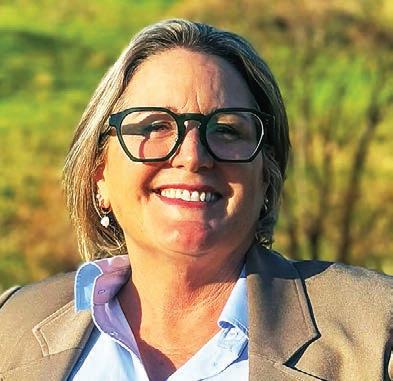
Bay Regional Council. She is a recent graduate of the Kellogg Rural Leadership Programme
ACROSS rural New Zealand, thousands of volunteers quietly do the work that holds our communities together. They restore waterways, improve biodiversity, bring neighbours together and turn environmental ambition into practical action. But goodwill alone is no longer enough.
Through my Kellogg Rural Leadership Programme research, I came to realise that catchment groups have become one of New Zealand’s most important community-led responses to environmental challenges. Yet the expectations placed on them have changed dramatically. What
began as volunteer-led initiatives has evolved into sophisticated organisations expected to balance community aspirations with increasingly complex governance responsibilities.
The governance challenge is no longer emerging. It has arrived.
One of the strongest conclusions from my research is that the greatest risk facing catchment groups isn’t a lack of passion or commitment. It’s that governance expectations have outgrown the systems designed to support them.
That matters because governance is about far more than meetings, constitutions and compliance. Good governance is what turns community aspirations into meaningful environmental, social and cultural outcomes.
When governance is clear, capable and trusted, communities move beyond good intentions and create lasting change.
Unfortunately, many catchment groups are now being asked to carry professionallevel responsibilities without professional-level support.
Volunteer governors are expected to oversee significant public and private investment while navigating employment law, health and safety obligations, financial accountability, risk management and increasingly detailed reporting requirements. These responsibilities carry genuine organisational and personal risk, yet many governors have had little formal preparation for the role.
In many cases, the foundations
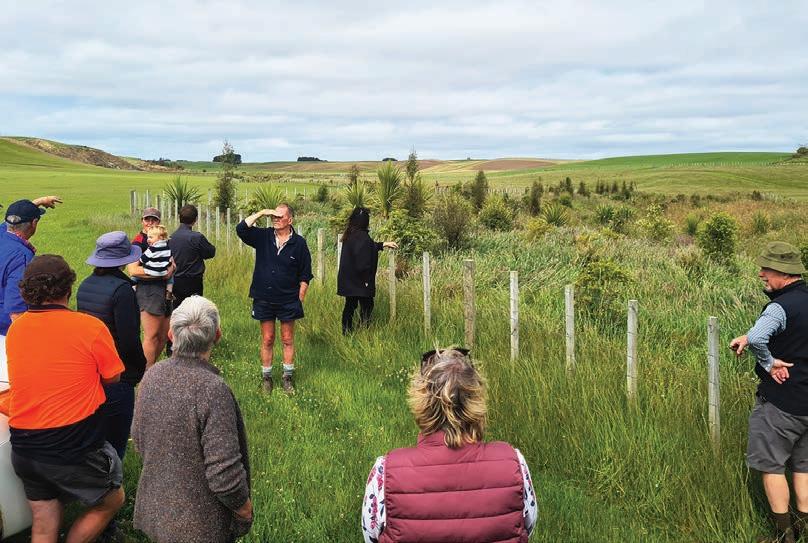
beneath the governance table simply haven’t kept pace with the weight being placed upon them. Without clear governance frameworks, well-defined roles and ongoing capability development, expectations become blurred. Decision-making slows, responsibility falls to a small number of committed volunteers, and those people often become overstretched. Fatigue grows, momentum fades and organisations become increasingly vulnerable.
Strengthening governance doesn’t mean creating more bureaucracy. It means building better systems that allow governors to focus on governing instead of constantly responding to operational pressures.
My Kellogg research proposes
a coordinated national approach built around four shared responsibilities. Catchment
Communities Aotearoa has an important role in providing national leadership, practical governance frameworks and capability development. Local governors can then adapt those tools to meet the needs of their own communities.
Members remain active participants rather than passive observers, while government recognises the true scale of the challenge by providing long-term, equitable investment that supports both delivery and governance capability.
For me, this represents an important shift in thinking.
Strong governance isn’t created
Many catchment groups are now being asked to carry professional-level responsibilities without professional-level support.
simply by electing good people. It’s built through strong purpose, clear frameworks, continuous learning, shared accountability and sustained support.
Governance is an ecosystem, not just a collection of wellintentioned people sitting around a board table.
Rural communities have already demonstrated extraordinary commitment to improving the landscapes they live and work in. They have shown what’s possible when people care deeply about a place and are prepared to give their time.
Now we need governance that is every bit as resilient as the people who volunteer to lead these organisations.
If we’re serious about the future of catchment groups, we must invest in governance capability today. By doing so, we can ensure these organisations remain trusted, effective and future-ready, delivering not only healthier waterways and landscapes, but stronger rural communities for generations to come.

most farmers and I’m looking forward to seeing Katy Milne hit her straps. She was an excellent president of Federated Farmers and has much to offer.
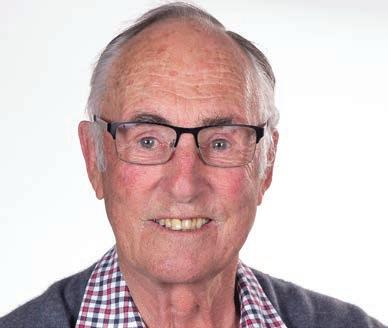
Alan Emerson
Semi-retired Wairarapa farmer and businessman: dath.emerson@gmail.com
THE general election in a few short months will be interesting. I have no idea at this point who will come out on top.
To say I’m sick of all the hype, bluff and bluster would be an understatement, with most of it meaningless, destined to be discarded during coalition negotiations.
From a farming perspective, I’m relaxed. We have many farmers already in parliament with a few more looking likely. The great news is that they’re spread across all of the political parties. Predictably, National has the
ACT’s Andrew Hoggard was also a national president of Feds. In my view he’s been an effective minister.
I also rate New Zealand First minister Mark Patterson extremely highly. As Otago Feds president he led the province well.
Thinking back to his days in Meat Industry Excellence, my strong belief is that if the lobby group had been successful the southern meat industry would still be in farmers’ hands.
NZ First’s recruitment of Jason Herrick was interesting. He’s been an effective farmer politician.
I’m increasingly impressed by Labour’s agricultural spokesperson, Jo Luxton. She knows the sector well and I’d see her as a strong advocate for it. I’d be surprised if any impractical anti-farming legislation was passed under her watch.
The Green Party’s Steve Abel has been farming in his own right and certainly understands agriculture in NZ.
The areas of concern going into the election are many and varied.
Up front I’ve been less than impressed with the current government’s lack of consultation with the opposition parties about major issues.
I want any major initiatives to outlast the next government and that involves consultation. Otherwise one government can introduce a policy and the next government can overturn it with all the time wasting and cost that involves.
At the risk of sounding idealistic I want politicians to bring me policies that will be positive for the country in the future as against vote-buying slogans today.
I’d also like to see politicians elected who are committed to the wellbeing of the country in the long term as against their personal wellbeing and aggrandisement in the short.
So the first thing I want from our political parties is a long-term strategy for the country.
Environmentally I want workable solutions with buy-in from the majority of the population. I accept the climate is changing and that we need to do something about it.
I also accept that the failure to do so will cost us on the trade front.
I acknowledge we need good water but the good needs to be supported scientifically and the initiatives need to be workable.
I accept the need to reduce our GHG emissions but remain totally unconvinced that current policies will achieve much.
More electricity generation and wind and solar are all common sense.
I want a long-term and sustainable energy strategy and that doesn’t involve CNG or giant AI data centres.
I want to see a major commitment to both biosecurity and research. Both are vital for our future wellbeing. Research funding has been cut and I want it reinstated. Cutting research funding is pandering to the present at a massive cost to the future.
I want politicians to bring me policies that will be positive for the country in the future as against vote-buying slogans today.
I’ve heard a lot over the past few years about Australian-owned banks exploiting Kiwis. I want them reformed by any means possible.
I’m not qualified to analyse the NZ First proposal to buy the BNZ but welcome the party’s willingness to accept the problem and suggest a solution.
I don’t want slogans about reforming the banking industry, I want a detailed plan as to how it’s going to happen.
I also have an issue over the government’s total inability to reform the supermarket duopoly. It affects both consumers and producers and I fail to accept that supermarket reform is rocket science.
With foreign affairs, I want the detailed policies of all parties.
The reason is that while I have immense respect for Vangelis Vitalis and his team, I have little for the closeted characters who describe themselves as diplomats. Putting ships through the Formosa Strait, giving the United States’ spies an office in Wellington to “counter Chinese influence” and displaying excessive sycophancy in Washington isn’t remotely in our best interest. As we’re spending hugely on defence I want a far more detailed rationale and strategy as to what the money will be spent on and what the government hopes to achieve.
Finally, I want far greater transparency of political donations and largesse. I don’t accept the current system is open and honest. I also want a full and open register of lobbyists, their clients and their budgets.
The big challenge is to restore faith in our democracy.
Read weekly articles from Alan Emerson at farmersweekly.co.nz/ author/alan-emerson

Annette Scott NEWS Sheep and beef
THERE’S never a boring moment on Cloudy Peaks Station, where a full-circle farm-toconsumer journey is leading the way in value-add agriculture. Moving to Cloudy Peaks in south Canterbury’s Mackenzie Country after her partner Mark Baynes took up the stock manager’s role, Jo Bradford was keen to find herself a place in their new farming venture.
Working three days a week as marketing manager for Tekapobased Air Safaris, Bradford thought maybe agri-tourism, but the real opportunity evolved from quite left field.
“Ongoing discussions around diversification, value-add agriculture, traceability, and finding innovative ways for farming businesses to generate additional revenue streams really did get me thinking,” she said.
While many farming stories focus on paddock to plate, Cloudy Peaks has become a full-circle journey.
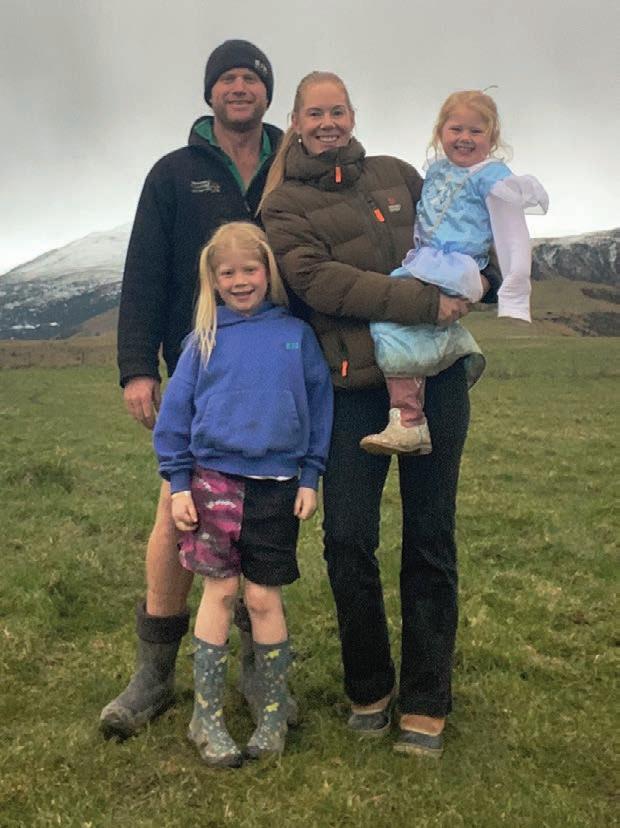
It’s a story about adding value to New Zealand agriculture, using more of the animal, and creating new opportunities from products that have traditionally been overlooked, Bradford said.
The cattle raised on Cloudy Peaks Station, owned by Kane and Marie Murdoch, are processed and the meat sold through the couple’s Cloudy Peaks Butchery in Timaru. Cloudy Peaks’ whole-farm operation takes in three properties encompassing 4800 hectares, carrying 470 Angus cross Gelbveih cows out to a total 900 cattle, while also running a 3000 Merino cross English Leicester ewe flock.
The butcher shop is a significant component of the operation.
“I talked to Marie about the beef fat trimmings and what they do with it; it was either throw it out or dog tucker,” Bradford said.
“I already knew about tallow, so we went through it all and worked out a process that would work quite well with what I was sort of hoping to do and she was for it all, so was Kane, and Mark was okay with it.
“It was really cool because it gave me an element of fitting into the farm with our young family –Bella who is 7 and Lucy 4.
“For us it was like why not add some more chaos to what Mark and I were already doing and for the girls it’s been something they can get involved in too.”
From there, Hearth & Hide, a natural skincare brand, was born using tallow sourced directly from the cattle off the station.
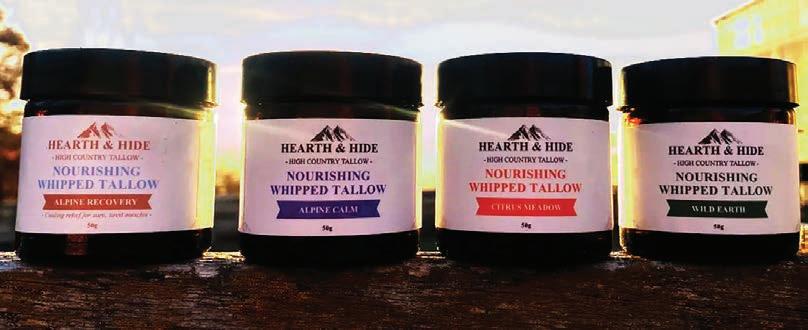
The old homestead villa has been renovated and the older of two kitchens converted into the skincare processing room.
“We’ve created what is effectively a full-circle farm-toconsumer journey.”
The cattle are raised on Cloudy Peaks, processed through Cloudy Peaks Butchery in Timaru, the specific fat used for the skincare is set aside and returned to the farm, rendered and handcrafted into tallow balms for everyday, natural skincare, creating a true farm-toskin connection.
“With increasing consumer interest in traceability and provenance, we can genuinely trace our skincare products back to the source.
“For us, it’s about making the most of what we already produce, reducing waste, and creating a business that keeps more value within rural NZ.
“There’s absolutely no waste; we have nine dogs to feed and leftover tallow feeds the birds.”
There’s also a family element
to the Hearth & Hide journey, which began after daughter Lucy struggled with eczema linked to a dairy intolerance.
“Trying to find gentle, natural products for her sensitive skin led me to learn more about traditional tallow skincare and the benefits of simple, nourishing ingredients without unnecessary additives.
“What started as something personal for our family quickly grew into a passion for creating skincare that others could trust too.”
Rich in vitamins and deeply moisturising, tallow skincare has been used for generations as a natural way to care for skin.
“Hearth & Hide is for those wanting to simplify their routine and return to products made with purpose, quality, transparency and traceability that I am super passionate about.
“As well, it’s supporting farmers, educating people, getting the word out that farming has so many useful byproducts from farming’s core business.”
Gerhard Uys TECHNOLOGY Shearing
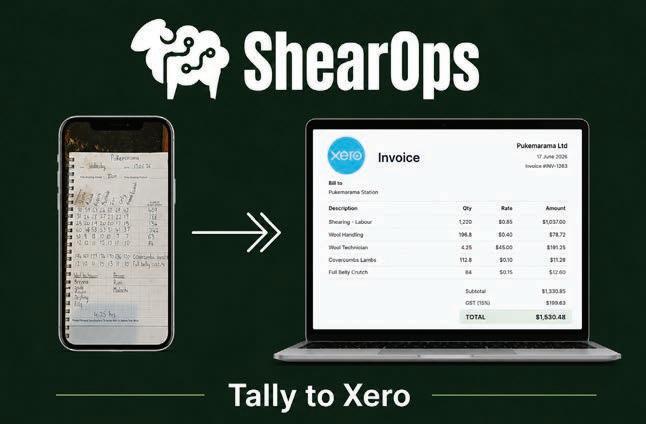
A NEW phone app allows shearing contractors to save time by uploading photos of their tally books, which it uses to create invoices and pay runs in Xero.
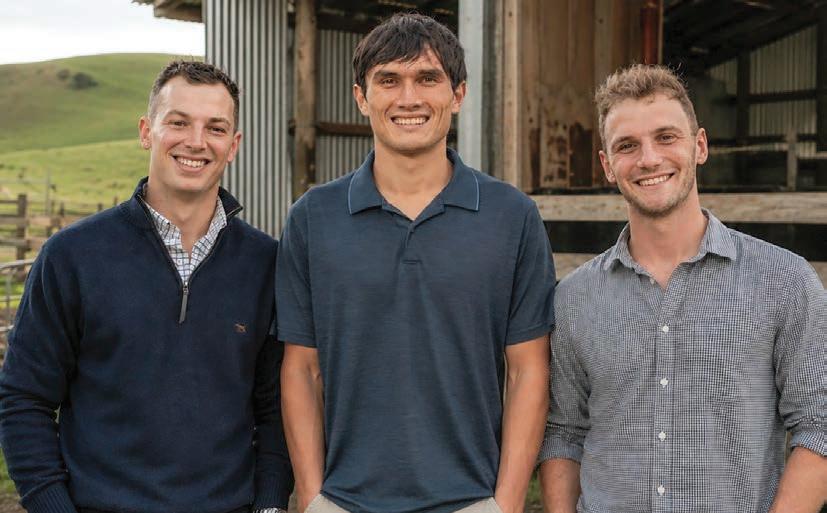
ShearOps was designed by Anton Musalov, Luke Hillis and Ronan Avery.
Musalov told Farmers Weekly he grew up shearing with mate Luke Hillis in his family’s shearing gang, Hillis Shearing.
When Musalov went to study engineering, Hillis was off to Australia for shearing and eventually started his own shearing gang.
Musalov said Hillis had challenges with payroll and invoicing, and did not like the outdated options available, saying they were time consuming and expensive.
These options were also tied to a single computer.
“Each week shearing contractors have to send in a bunch of tally books, manually enter numbers into Xero, and then manually
create invoices.”
This took Hillis an entire day each week to do.
Hillis asked Musalov to build something more efficient.
With ShearOps you can take a photo of a tally book, or upload a photo, and the system reads the tally book, checks the calculations, pulls all the work types, and matches it to employees.
Anyone could be doing your payroll from all around the planet.
The software gives a full breakdown of work completed, and automatically creates invoices as soon as the job is logged.
It is also tied to Xero, which most shearing gangs use, and can be used offline, with the app connecting to Xero to update documents as soon as there is a connection available.
Besides invoicing, the app has more add-ons.
Shearers can log health, safety
and animal welfare issues and store related documents.
Gang operators also get indepth data on employees and clients.
On top of that the app allows contractors to book shearing courses.
Most importantly of all, in collaboration with FarmStrong, it will send shearers wellbeing tips as they start work.
Shane Ratima, president of the Shearing Association and owner of Ratima Shearing Limited, said he has been helping Musalov develop ShearOps.
He said the software that many shearing contractors use ties you to a single computer and is all based on manual entry.
This limits him to where he can use it.
Now, “anyone could be doing your payroll from all around the planet”.
“It’s the way of the future. The biggest thing for contractors is just getting our time back, that’s worth quite a lot.”
ShearOps is currently working with four contractors, and has interest from Australia.

Fiona Terry PEOPLE Health
HEEP and beef farmer
SPaula Flood was hit by “a silent thief” after an accident in the stockyards. That’s what she calls the concussion she was left with following a head injury that resulted in her having to change the way she farmed.
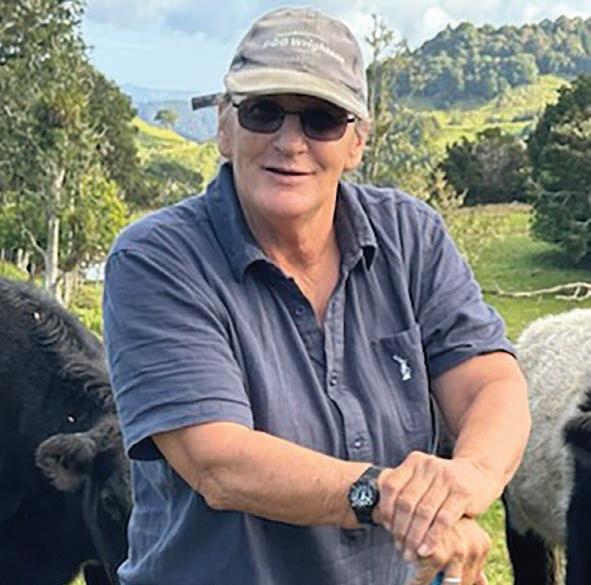
Nine years ago Flood suffered two head blows while pregnancytesting cows. She wishes she’d known earlier the services available for concussion recovery. If she had, the outcome could have been a very different, said Flood, who farms 364 hectares in the Bay of Islands.
“The cows were having trouble getting in the crush, and I went to open the big wooden cattleyard gate, and one just kicked it back on me,” said the Ōkaihau farmer, who prior to the injury had 575 calves reared on 120 cows, and 500 breeding ewes.
“The gate whacked me on the head, and then I got another
whack on the back of the head as I fell back and hit the ground.”
Flood was dazed and dizzy but didn’t black out, and carried on with her farm work. A couple of days later she recognised she wasn’t feeling right and was persuaded to get assessed by a doctor.
“Prior to my head injury, if you’d asked me my doctor’s name, I’d have had to really think about
HELP: Sheep and beef farmer
Paula Flood says ‘if you get a head knock, get help quickly and if concussion’s not detected but you know something’s wrong, keep going back until they listen’.
it, because I so rarely went. Us farmers are pretty tough – if we get ill it’s usually just a case of suck it up and carry on, but I’ve learnt that’s not good practice with concussion.
“The emergency doctor just did some very basic tests and told me I was fine, though.”
Flood tried to continue as normal, but she was struggling with intense fatigue, headaches,
Annette Scott NEWS Training
ATTRACTING and developing skilled people is critical to the future of New Zealand’s sheep and beef sector – but growing interest in learning will take more trainers. More than 130 young people have registered their interest in the 2027 Growing Future Farmers (GFF) Sheep and Beef Foundations programme, highlighting strong demand for careers in sheep and beef farming.
Now, farm trainers are urgently needed to help turn that interest into a future in the sector.
GFF, sponsored by Beef + Lamb NZ, is a farmer-led training programme helping young people build practical skills, confidence and careers in farming.
Farm trainers host students on farm as part of the two-year programme in which students become part of the farm team, gaining practical experience while receiving support from GFF’s student success advisers and participating in structured
training and workshops.
GFF student success adviser for the upper South Island Fiona Bush said many farm trainers find they get just as much out of the programme as their students.
“It’s an opportunity to develop leadership skills within your team, bring fresh thinking into the business and help build a pipeline of future talent for the sector.
“People often think they need to have all the answers to become a farm trainer, but that’s not the case.
mood swings, and an inability to think clearly or problem solve.
A neighbour visiting a couple of months later recognised Flood wasn’t herself, and suggested returning to the doctors to see her own GP.
“That doctor connected me straight away with the concussion service, so from that point on, I started getting help. Because of the delay though I was told it would likely take years to recover.”
Flood worked with an occupational therapist who’d visit the farm weekly to help with strategies to cope. She’d also teach the busy farmer, then 51 years old, skills to enable her brain to recover.
“Even just being told the symptoms were normal was a relief,” said Flood.
“The support I was given taught me how important it was to listen to my body, and that the tiredness was my brain telling me I needed to switch off and try and rest. That’s not easy of course as a farmer, and the problem with me was that damage had already been done because I’d not been
listening to it for months.”
To reduce stress – which had made the concussion worse –Flood scaled down stock, changing from a very intensive breeding programme to more fattening, with 150 calves on 20 cows and milk powder, 100 ewes, and dairy grazers. She also installed a new set of stockyards with more safety features.
“My brain is way better now, but I’ve still got the remnants of it. My advice if you get a head knock is to get help quickly and if concussion’s not detected but you know something’s wrong, keep going back until they listen, because you know your own head.
“Also, be prepared to listen to other people telling you that you’re not quite right. It makes it harder for people to understand, though, because there are no visible signs, like if you break your leg you get a plaster cast.
“If rugby players get a head injury they’re straight under the doctor and kept an eye on – that cautious approach should follow out onto the paddock because us farmers are just as important.”
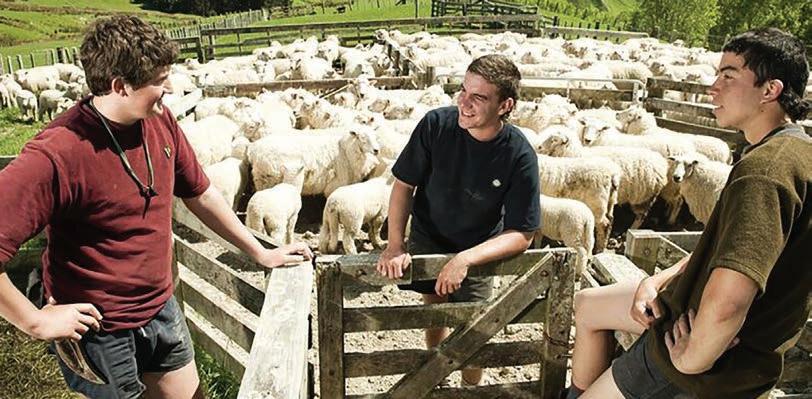
“We’re there to support both trainers and students throughout the programme, and many trainers tell us it’s one of the most rewarding things they’ve done.”
As part of the programme, GFF provides induction support, training plans, resources, regular

















check-ins and ongoing pastoral care, allowing trainers to focus on on-farm development.
GFF is seeking expressions of interest from farmers across New Zealand. To learn more and register interest go to Growing Future Farmers.










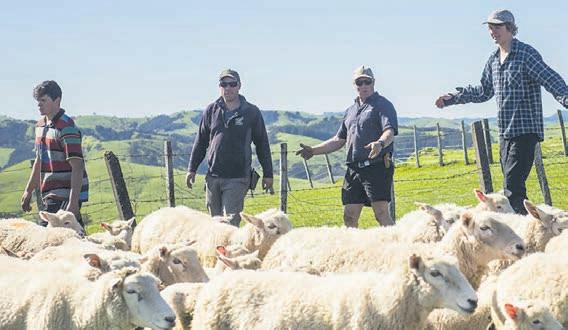
B+LNZ invests farmer levy money into practical research, tools and programmes that lift productivity, strengthen resilience and support long term profitability across the sheep and beef sector. Here’s a snapshot of recent work.
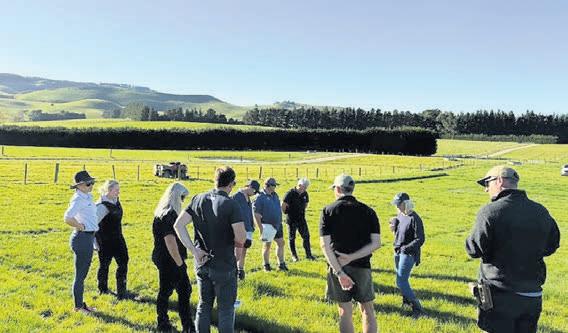
B+LNZ now has over 50 Focus Groups running nationwide, with farmer feedback already showing positive practice changes. These small groups are topic focused, and outcomes driven, providing farmers the opportunity to learn from other members and subject matter experts.
B+LNZ released, with the Meat Industry Association, a new report by BERL, confirming the red meat sector remains a major driver of NZ’s economy The sector generates $48.7 billion in annual spending, contributes $17.5 billion to GDP, and supports one in every 20 jobs nationwide


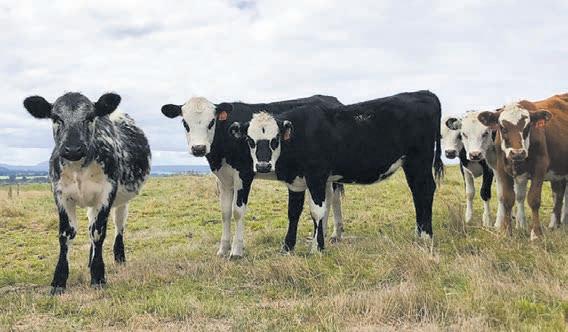
The DBO programme continues to connect dairy farmers, calf rearers and finishers to tackle a challenge that has long existed across the dairy and beef sectors How do we create greater value from calves already in the system? A report has been completed forecasting origin calves expected to be reared in the 2026/27 season.

nProve Tracker
B+LNZ launched nProve Tracker –a new genetics tool that enables farmers to quantify and visually track genetic progress within their flocks The tool helps farmers better understand how sire selection is shaping replacement ewe performance over time and provides another practical way to turn genetics into on farm decisions.


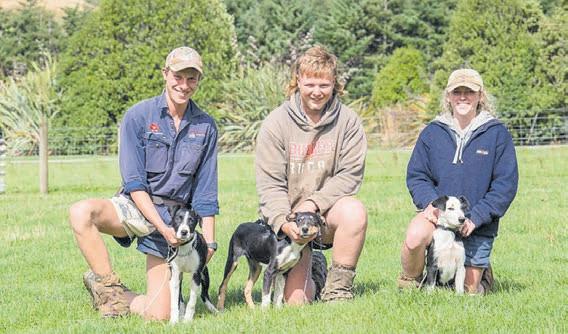
B+LNZ has updated its Employment Hub, bringing together practical tools and resources to help farm employers build and support a strong team
The update was shaped by extensive farmer input.
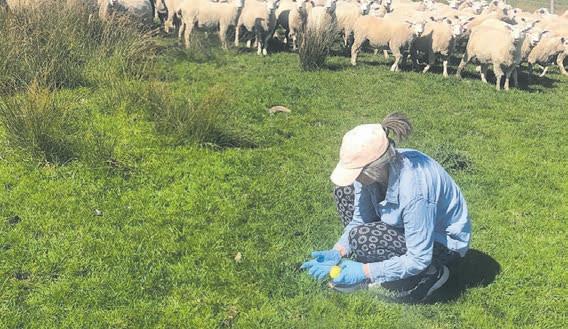

B+LNZ’s Sheep Poo Study had over 300 farmers collecting sheep poo over 3 years The thousands of data points are being examined to find out how common the disease is and where it is found A tool to help predict the risk of FE is in development It aims to identify early warning signs so farmers can act sooner with monitoring and management



MILLIE Aitken’s road to success has taken her from the largest ranch in BC Canada, to becoming one of New Zealand’s most sought-after makers of custom tack and cowboy hats.
The Central Otago entrepreneur, and owner of Bar M Custom Tack, recently won the Young Businesswoman category at the NZI Rural Women Business Awards.
“I was absolutely blown away while reading the email and in disbelief when it said congratulations, you are the winner!” Millie said.
Millie’s business journey began while working on ranches in Canada.
“I spent four years cowboying on ranches in Canada when I left school. We were in the middle of nowhere in cow camp with not much to do in the evenings. The cowboys often had a craft they would do at nights . . . I learnt how to braid.
“When you’re in the cowboy culture and cowboy world, you don’t get paid very much and trading is a really big thing. Because I was new to cowboying, I didn’t have a lot of gear. So, I would braid reins and use that as my currency to trade,” she said. What began as a practical way to make ends meet evolved into a small business when a visit home to New Zealand in 2020 ended with Millie unable to return to Canada.
“Because we were in lockdown, it gave me the time to really put into Bar M and hone the craft,” she said.
A major turning point came when respected horse trainer Ben Longwell of True West Horsemanship approached her
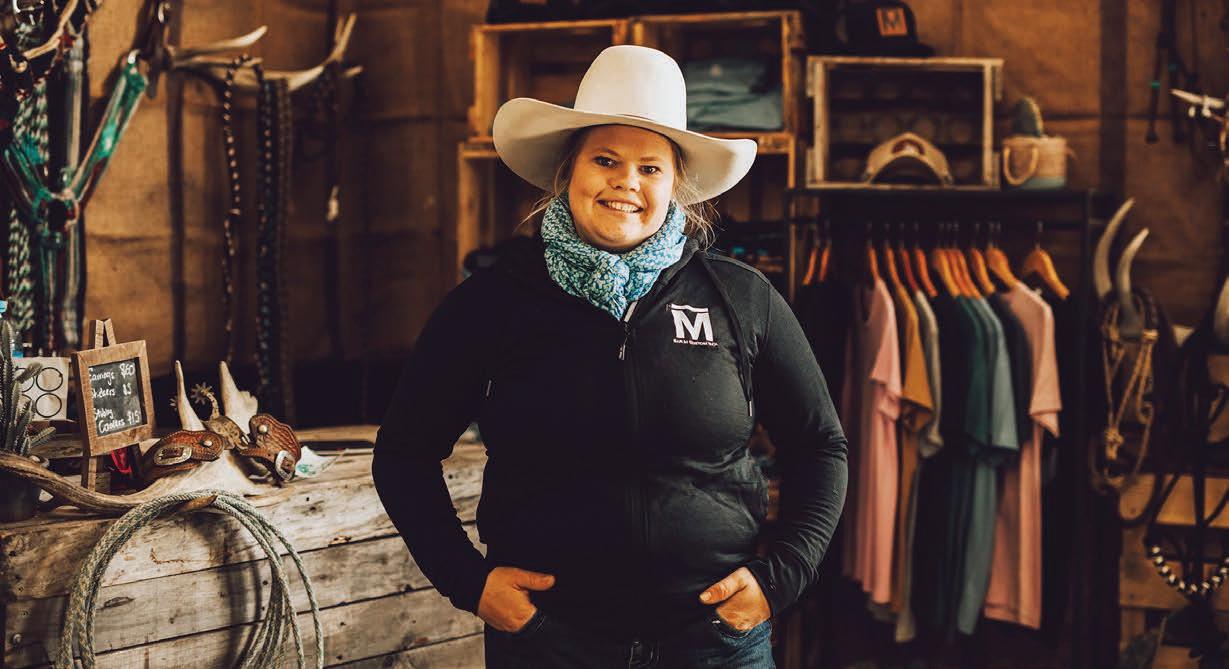
I sort of wrote it off as a side hustle for a long time. But, If I had gone all in right at the start, I would have been even further ahead now.
Millie Aitken Bar M Custom Tack
about taking over production of their company’s popular rope halters.
“With that came all of their clients, so that really launched the business to the next level.”
Since then, Bar M has expanded into what is now one of the business’s most recognisable offerings, custom cowboy hats.
“I make all sorts of different custom hats. I fit them to your head so that they’re nice and comfortable. They don’t come off, don’t give you a headache, don’t
give you the dreaded red line after wearing it all day.
“I make them into anything that you dream of,” she said.
Bar M is deeply influenced by the ranching culture that first inspired Millie.
“I’ve built the brand off my personal story and my time cowboying on the ranch,” she said.
“I’ve tried to bring a big piece of that back to New Zealand in terms of the culture, the values and the way of life because I think it’s so great.”
However, maintaining the high level of craftsmanship and attention to detail that defines the brand comes with its own challenges.
“I really struggle with the turnaround time and getting things out quickly. I have a big backlog of orders that I’m always working through . . . It’s a constant thought of how I can improve this and get things turned around faster.
“Sometimes you have to put a
hat down, walk away and come back to it tomorrow because you’ve just looked at it for that long that you can’t see the straight lines anymore,” she said.
Millie credits much of her success to the support of her family and mentors, including her long-time mentor, Glenn.
After this year’s record-breaking Fieldays, she messaged him to share the news.
“He said, ‘I knew you would be able to do it if only you got out of your own way, and you did.’”
Aitken encourages other young businesswomen to back themselves and take the leap.
“[Backing yourself] It’s such a hard thing to do, but by doing that, that’s what’s grown the business so quickly for me,” she said.
“I sort of wrote it off as a side hustle for a long time. But, If I had gone all in right at the start, I would have been even further ahead now.”
She also encourages other young
rural women to enter the Rural Women New Zealand Business Awards, saying the process itself is invaluable.
“We spend so much time working in the business that we don’t often make time to work on it,” she said.
“There are so many great businesses out there . . . It’s really neat to see women chasing that dream and making it happen for themselves.”
Beth Davie, Head of Impact Partnerships at New Zealand Young Farmers, says Millie’s achievement is incredibly well deserved.
“She reflects the unbounded creativity and adventurous thinking that characterises our young people in rural communities,” she said.
“We’re proud to celebrate her success alongside Rural Women New Zealand. Partnerships like this allow us to recognise and champion the diversity of leadership in the food and fibre sector, and Millie is a fantastic example of what’s possible when passion meets hard work.”
The next step for Millie is to continue growing Bar M, while maintaining the quality the brand is known for.
Heather Sorensen, RWNZ national president, says the judges were impressed with Millie’s story.
“As the inaugural winner of our Young Businesswoman Award, Millie embodies the entrepreneurial spirit we see emerging across rural New Zealand.
“She has taken a unique skill, built a thriving business around it and stayed true to her values every step of the way.”
MORE:
For more information on this year’s winners, and to see photos from the Gala Dinner, head to www. ruralwomennz.nz

In a region where plenty of productive farmland has disappeared into pine trees, two farming couples are doing something uncommon – turning a forestry block back into a working farm.
Sam and Gemma Hain, and Matt and Kate Long, have just taken ownership of a 400ha property planted almost entirely in young pines.
“We’ve put 650 cattle in to get rid of the trees and restore it to what it was,” Sam said on The Federated Farmers Podcast.
“We’ve seen a lot of land go into pines down here and it’s pretty nice to take a little bit back.
“We all hate blanket pine forestry, so the chance to convert this land back into good farming country was just too tempting.”
The Hains and Longs have bought the farm through their farming partnership, Taimoti Station Ltd.
It’s 4km from their 1090ha Taimoti Station in the Hangaroa district, which was the epicentre in Cyclone Gabrielle, with bridges, roads, farms and stock all severely hit.
The farm was sold in 2016 to an Auckland family, who farmed it for six years before planting half the property in pines in 2022 and the remainder in 2024.
“They thought it would be easier to sell once it was planted, but we were competitive enough to beat forestry,” Sam says.
For the two couples, restoring the farm is about much more than economics.
“We have an opportunity here to convert back to productive farmland,” Matt says.
“Blanket pines have not worked in this area, and it was pretty clear during Gabrielle how much damage they can do.
“This will be a challenge for us, but it’ll give us a whole lot of satisfaction.”
The country is mostly easy rolling, with some steeper faces that may remain in trees or eventually be replanted in poplars, willows or allowed to regenerate in native bush.
We all hate blanket pine forestry, so the chance to convert this land back into good farming country was just too tempting.
Sam Hain Federated Farmers Gisborne –Wairoa meat and wool vice chair
Fortunately, the pines are still young enough for the conversion to be possible, although it won’t be easy.
The Hains and Longs plan to drill and poison some of the trees, and will attempt to graze the others to the ground.
“We won’t cut many of them down because they’ll smother the ground, create a haven for weeds and make access difficult,” Sam says.
“By injecting them and leaving them standing, they’ll rot down.
“A lot of it we’re going to have a
crack at getting rid of by putting cattle in to graze them. The trees are still small enough that they should chew them out.”
The project is only possible because they acted before the carbon liability became overwhelming.
Because the property is registered in the Emissions Trading Scheme, the partners will have to surrender carbon credits before converting it back to pasture.
They say they acted just in time.
“The carbon liability would have become too great. On 400ha, two years later, it would have been about $1.2 million we’d have to pay back,” Sam says.
Matt says he had the opportunity to graze a piece of the property a while ago, which got the cogs turning.
“We were able to graze a small bit of it – the council-owned part they’d bought to put the new road through.
“So, we whacked cattle in there and they quite quickly went about eating and smashing the young pine trees.
“It did fire up the imagination, and, with Sam and Gemma, we started talking about the idea of taking the whole property out of pines.”
Matt says he’d tried to buy a few other farms before the Taimoiti partnership, but he’d been outcompeted every time by carbon farmers.
“I just kept getting forced out of the market not by production foresters but by offshore carbon farmers.
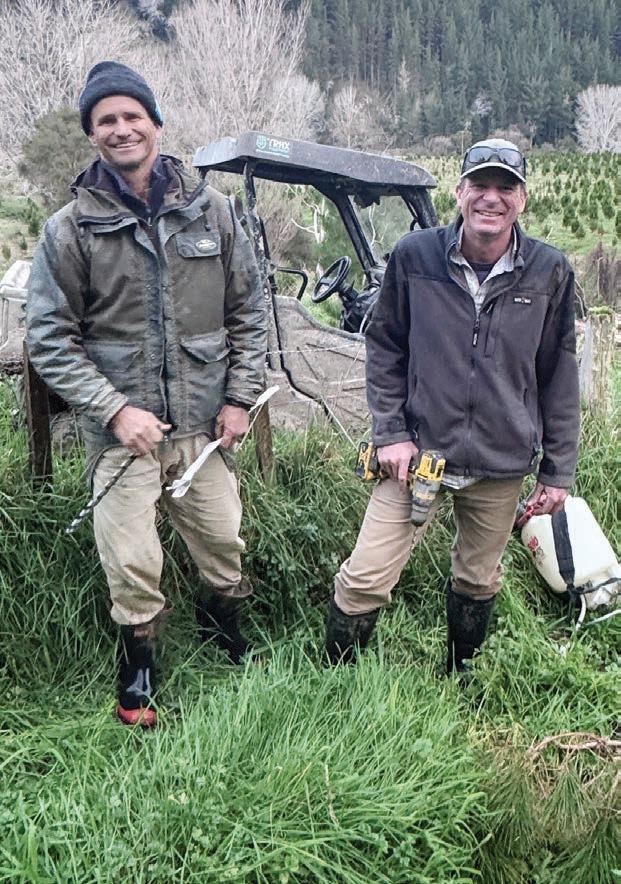
“I have an issue with offshore carbon investors because they extract long-term income from the New Zealand economy, while contributing very little to local jobs, production or regional prosperity.
“This block is largely good productive sheep and beef country. Yes, there are some steep faces we’ll need to manage for erosion with the right trees – which we all know aren’t pines.
“What we’re trying to do here is only a drop in the bucket, but with
new technologies coming along like Halter and drones, converting pine blocks back into productive farmland looks a bit more feasible.”
Hain isn’t sure they’d have bought the property if it hadn’t been planted in pines.
“Maybe not. We just wouldn’t have had the same motivation.”
He hopes others will follow their example.
“We’ll be documenting it all and we hope it makes other people think, ‘I can do this too’.”
District councils need to fight for their communities now, or risk being swallowed up in Government-imposed super councils, Federated Farmers says.
“You’re either at the table, or you’re on the menu,” local government spokesperson Sandra Faulkner says.
“Ministers Bishop and Watts were clear that if a region’s councils fail to propose more streamlined and efficient structures, the Government will do it for them.
“Change is uncomfortable but it’s better to fight for the best deal possible for provincial communities than hang back and hope you’ll be left untouched.”
Faulkner says Federated Farmers agrees with the Government’s decision to dis-establish the country’s 11 regional councils from 2028.
“It gets rid of an unnecessary layer of bureaucracy that frequently leads to duplication and extra cost.
“But the emerging risk is that large urban centres gobble up surrounding district councils that fail to combine with neighbours.
“The result could be massive new
unitary councils with the same sized boundaries as the old regional councils.
“Farmers thought they were getting rid of regional councils but, instead, they’re losing their district councils, and ending up with diluted representation to look after the things that matter most to them.”
There’s evidence that rural representation has been gradually declining over time.
“It hasn’t happened with one major decision but through a series of representation reviews, boundary changes and urban growth.
“That trend could be accelerated if districts leave it to the Government to decide their future, and the result is large unitary councils.”
Faulkner says Federated Farmers will only support reforms that lock in strong representation for provincial communities.
“Recognising their different needs and priorities, we’ve consistently argued there should be separation between metropolitan councils and those serving provincial areas and small towns.”
Faulkner says in areas such as Hawke’s Bay, where Napier and Hastings appear to recognise how
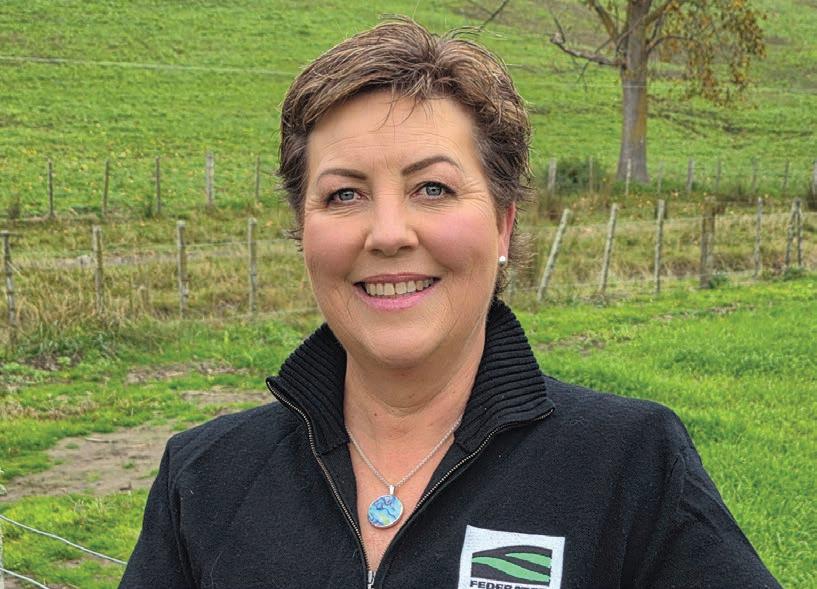
FRUSTRATION: Sandra Faulkner says councils and residents across the country are frustrated there’s only been a three-month window to table re-organisation proposals.
important provincial and rural communities are to their prosperity, a ‘super council’ could work.
But single unitary councils for Otago and Southland, where population-dense Dunedin and Invercargill would likely hold the councillor majority, would sideline provincial and farmer concerns and priorities.
“It’s looking like there could be one unitary covering the entire Horizons region too, with councils there signalling they won’t put in proposals by the 9 August deadline.”
Federated Farmers Otago president Anna Gillespie says there’s a clear rationale for Dunedin City to be a unitary council on its own.
“It’s New Zealand’s seventhlargest urban area, with a long list of urban-focused challenges and opportunities.
“It should free up the 700 or so farms within its current boundaries so that they come under a new provincial-focused unitary council comprising the current Clutha, Central Otago and Queenstown Lakes District Councils.
“Dunedin’s rural hinterland and those former districts can then focus on the services important to provincial residents – upkeep of rural roads and bridges, flood and pest control, land use rules that balance food production with environmental protection.”
Queenstown, with its rapidly expanding residential area and tourism pressures, sits a little uneasily in that re-organisation, Gillespie says.
“But tools such as targeted rates, and perhaps a Queenstown Community Council with delegated responsibilities and a separate budget, can be used.
“Queenstown Lakes also has a strong case for extra support from central government to cope with tourism growth pains.”
Faulkner says potential mergers in Canterbury are also becoming clearer.
“Pretty much everyone says
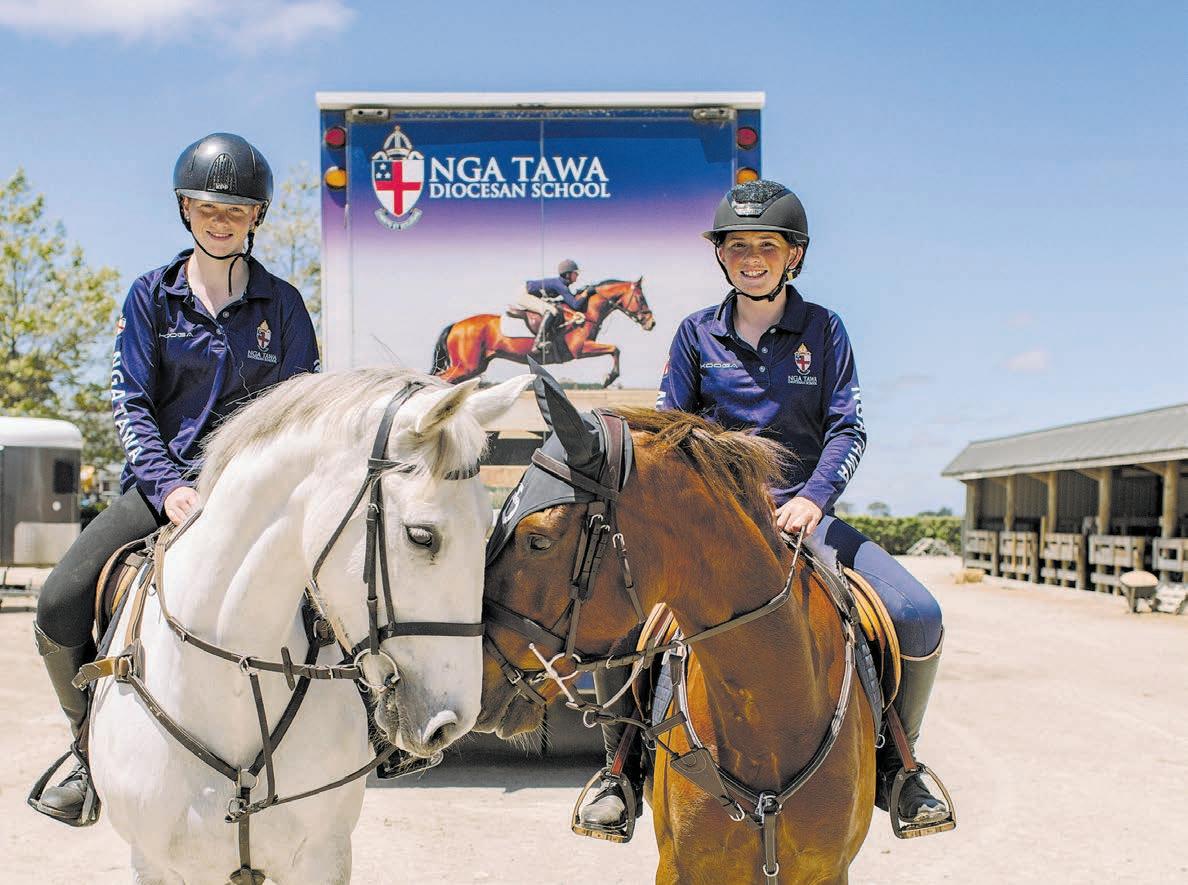

Christchurch city deserves to be a unitary council on its own.
“Waitaki, Waimate, Mackenzie and Timaru districts have plenty in common and could form a very strong and focused provincial unitary.”
Further north, debate goes on.
“Waimakariri and Hurunui is a logical combination and there is interest from those areas in also taking in rural parts of Selwyn. But they don’t want to hitch their wagon to the rapidly expanding Selwyn urban area.
“Ashburton District Council could look south or north.
“Local Federated Farmers leaders believe Ashburton has more in common with Hurunui and Waimakariri than with Timaru.”
Faulkner says councils and residents across the country are frustrated there’s only been a three-month window to table reorganisation proposals.
Those that fail to meet the 9 August deadline go into a ‘back-stop’ process, where the Government could dictate outcomes.
Change is uncomfortable but it’s better to fight for the best deal possible for provincial communities than hang back and hope you’ll be left untouched.
Sandra Faulkner Federated Farmers local government spokesperson
Exactly how the ‘back stop’ works hasn’t been announced.
“Our view is that it’s a big gamble for a district to sit back with fingers crossed. The back-stop could be the Government imposing super councils, covering entire regions,” Faulkner says.
“Better to table a proposal you can live with.
“It might be likened to ordering something on a restaurant menu you know will satisfy you, versus ordering the ‘chef’s surprise’, and getting something you loathe.”

Where girls are challenged, supported, and inspired to exceed expectations See the difference a Nga Tawa
Kaikōura farmer Mick Gray says councils have for years ignored rural residents’ warnings about gravel build-up in Kahutara River and Cribb and Linton Creeks.
“Locals have been screaming out, trying to get something done about the rules that restrict in-river work.
“But it just falls on deaf ears.”
Gray, who runs a farm and helicopter service 20km from Kaikōura township, says prior to the 400mm of rain that drenched the district on July 6-7, there was barely 15cm of daylight between riverbed gravel and the Linton bridge.
“A few years ago, the guy who lives beside there could drive his tractor under it.”
Somehow, the Linton bridge on
the Inland Road survived the raging river but the Cribb Creek bridge was smashed.
With SH1 also closed, Kaikōura was cut off.
“A local contractor has since got in there and put culverts in. People can cross a ford, which is working quite well – but only until we get another fresh.”
Gray says with restrictions on grazing river corridor weeds, or moving gravel to redirect the river, flow is pushed to one side and hammers the bank and bridge abutments.
“The result is almost inevitable – a flood blows it out.”
Federated Farmers national board member Chris Dillon says a bureaucratic stalemate is getting in
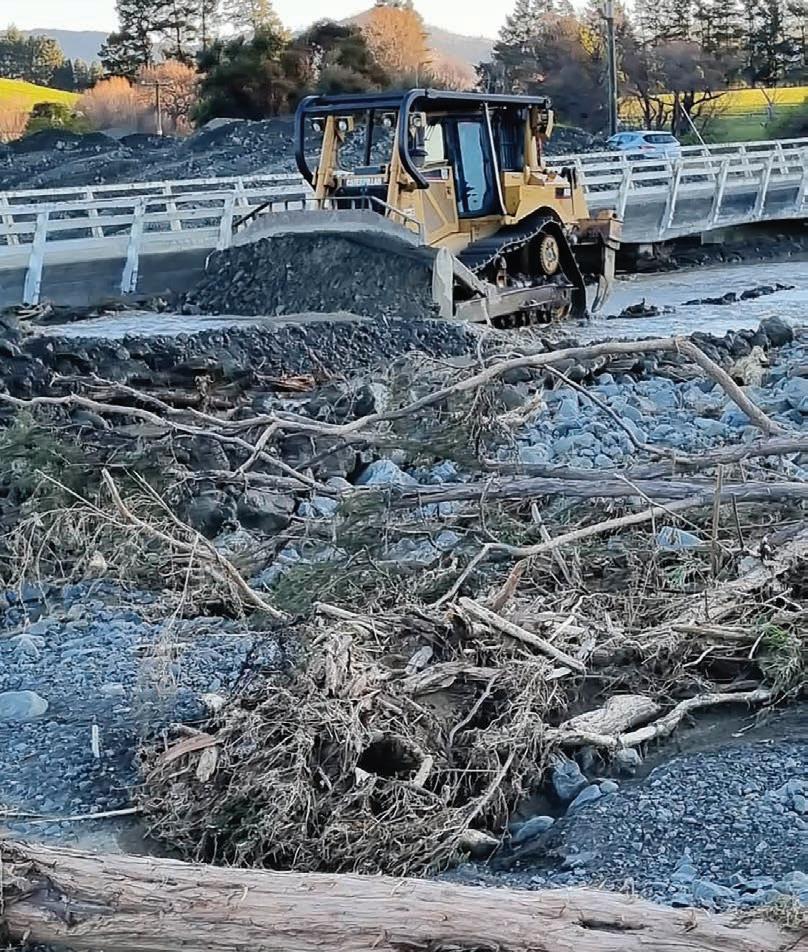
the way of practical action on river gravel build-up – and farmers are paying a heavy price.
“Regional councils get hung up on things like fish spawning rules, while the flood risk keeps growing.
“The result is roads, bridges and productive farmland being damaged, with repair bills running into the hundreds of thousands –sometimes millions – of dollars.
“At the same time, district councils are reluctant to challenge those rules or invest in flood protection outside the towns, so problem areas just get worse.
“We need to stop passing the buck and have a proper national conversation about how we manage our rivers before the next big flood does even more damage.”
Federated Farmers is calling for a national permitted activity standard for gravel extraction.
That would mean farmers could remove gravel from their rivers without an expensive and timeconsuming resource consent, so long as they meet certain conditions.
“We want the next Government to bring in 10 national permitted activity standards within their first year in office.
“Gravel extraction is one of those, but the others cover things like farm plans, on-farm water storage, drain and effluent management, farm quarries and wetland restoration.
“Having a set of nationwide rules for everyday activities would get rid of so much needless red tape and cost.”
On gravel at least, the call has grabbed the current Government’s attention.
In a speech to the Aggregate and Quarry Association this month, Associate Agriculture Mike Butterick said Chris Bishop is investigating how simple, repeatable activities such as gravel extraction and quarrying can be standardised nationally in the new planning system.
That includes whether some of this work can be enabled as a permitted activity.

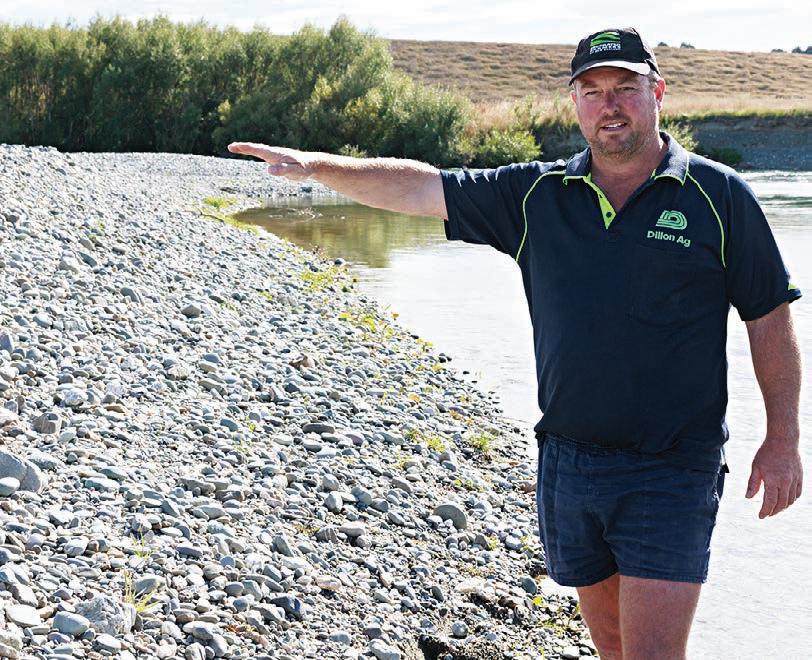
That’s positive, but it’s too late for farmers like Gray and neighbour Shane Johnston.
Johnston, who farms between Cribb and Linton Creeks, says floodwaters burst through and covered his paddocks, destroying tracks and more than 2500 metres of fencing.
“There’s slips everywhere. It’s just a massive mess,” he says.
“You need ECan consent to do anything with riverbed gravel or they’d be down on you like a tonne of bricks.
“But then this happens and they’ve told me: ‘You’re on your own. Go talk to your district council, we don’t want to know anything about those rivers’.”
Jim Ward, Federated Farmers High Country co-chair, says the situation is deeply frustrating for farmers and rural communities.
“Gravel build-up and extraction arguments, and failure of councils to be proactive about managing risk, is popping up everywhere – Kaikōura and other parts of Canterbury, Southland, the Wairarapa, Manawatū-Rangitikei.
“Farmers highlight the risk again and again and are ignored until it’s too late.
“At Cribb Creek the council finally got a bulldozer in the day it started raining. It got stuck and Mick Gray had to get in and pull it out.”
Ward says concerns from iwi over disruption to rivers and royalties for gravel extraction, and from Fish & Game over protecting trout, too often get precedence and frighten off councils from dealing with flood risk.
“We can avoid spawning periods. At other times, when you put a bulldozer in the fish don’t wait around to be run over.
“It’s just excuses for inaction and it’s not good enough,” Ward says.
Dillon wants an injection of common sense.
“We’re not talking about mining the rivers.
“We’re saying where problems are identified, we need to get rid of the obstacles that hamper action.
“Nipping problem areas in the bud is better than waiting until there’s erosion, burst stopbanks and bridges swept away.”
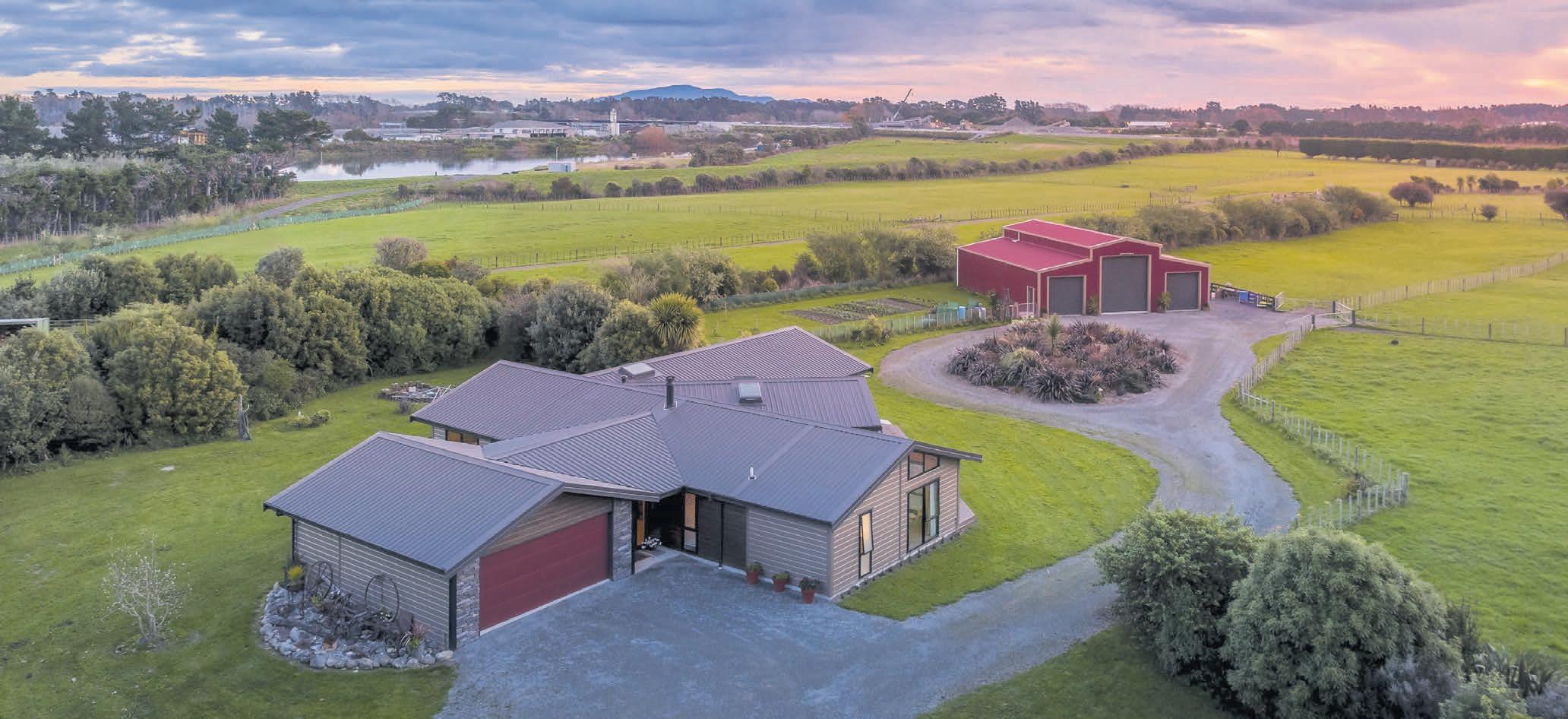
Dunedin City Council’s decision to shift more of its water services costs onto rural ratepayers is a warning for communities weighing up council mergers, Anna Gillespie says.
The Federated Farmers Otago president says the council’s manipulation of cost sharing after property revaluations shows why provincial communities should be wary of merger talks that lump them in with cities.
“We’ve seen this happen over and over again, where councils with large urban voter blocs tend to treat farmers as cash cows,” Gillespie says.
When elected representation is based on population, and revenue is based on property value, that’s a bad recipe for rural interests.
“With big bills ahead for upgrading drinking water, wastewater and stormwater services, Dunedin City Council (DCC) has sneakily shifted a section of costs onto general rates.
“That means farming families, most of whom aren’t even connected to water and wastewater pipes, have to pay as well.
“In short, people outside the city are paying for council services they don’t even use, which is a disgrace.”
DCC decided earlier this year to keep its water services inhouse, rather than joining with neighbouring councils under the Government’s Local Water Done Well reforms.
As part of that decision, the council said the costs of water services would be kept separate from its other functions, so those using the services would pay for them.
“The whole flavour of its plan was that those who use the services pay for the services through targeted rates,” Gillespie says.
“But with this latest decision, that’s not what we’ve seen.”
Property revaluations last year threw up a wrinkle when the capital value of DCC’s Three Waters

infrastructure – drinking water, wastewater and stormwater – shot up a whopping 76.6%.
That would have put an extra $6 million each year on rates charged to people hooked up to the Three Waters networks.
“That’s when city councillors decided on a bit of a ‘switcheroo’, to put it kindly,” Gillespie says.
“Rather than put the extra $6 million on Three Waters users’ targeted rates, as they said they’d do in their water services plan, they put it on the general rates.
“And that’s when those outside the city suddenly have to foot the bill too.
“When challenged by Feds, councillors in effect decided people with larger properties have more money and should subsidise others.”
DCC is a city council but its boundaries stretch up to 100km, with rural properties making up 96% of its geographical footprint.
At a council meeting, Federated Farmers gave the example of a farmer on a large tussock country property north of Middlemarch who already pays $78,000 a year in rates.
That’s despite the farmer having less access to council services than a city resident paying the average rate of $3532.
“A councillor replied to the effect that the owner of such a large property likely has plenty of money, while a widow living in High St in town on a fixed income doesn’t,” Gillespie says.
“It’s similar to what another Dunedin elected representative said at an earlier hearing, when they suggested if farmers were having trouble meeting rates bills, they should get some more sheep.
“That sort of silly comment shows a total lack of understanding of farming production realities.
“As for ability to pay, keep in mind



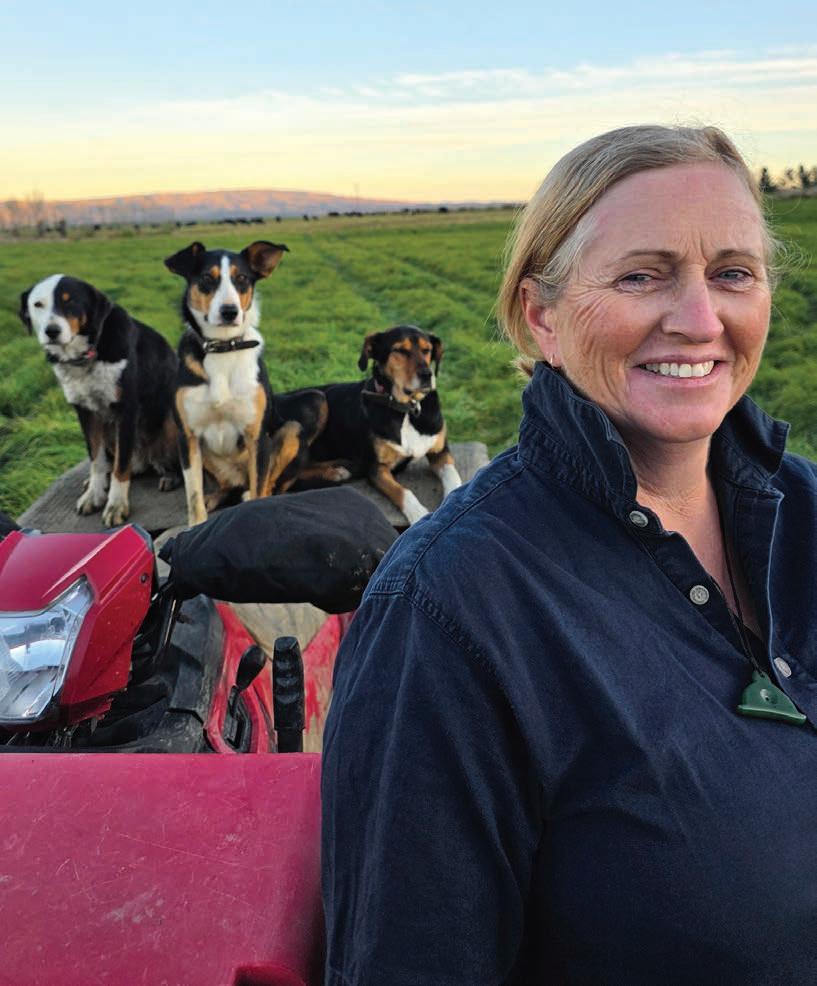
the average farm mortgage in May this year was over $4 million.”
DCC is also one of only a small number of New Zealand’s 78 local authorities that doesn’t use a uniform annual general charge (UAGC).
UAGCs are a fixed, flat-rate amount charged equally to every rateable property, regardless of the property’s value.
It’s used to more fairly spread the cost of general services evenly across the community.
A major inquiry in 2019 by the Productivity Commission said the ‘benefit principle’ should be the primary basis for deciding who should pay for council services.
Like Federated Farmers, it urged councils to make greater use of UAGCs and targeted rates.
“Farmers are heavily penalised when the lion’s share of councils’ revenue is based on property value-
based rates,” Gillespie says.
“Farmers need a lot of land to carry stock and grow crops, but having a bigger property has little or no correlation to use of council services.”
The average Dunedin rates bill is $3352 but the average farmer is paying roughly $8257.
“This is a battle Federated Farmers is fighting with councils up and down the country,” Gillespie says.
“Councils like DCC have tools to spread costs more fairly among ratepayers, but they’re choosing not to do that.”
Gillespie says DCC provides a lesson for rural ratepayers engaging in current council merger debates.
“Think very carefully about merger arrangements that put you in with metropolitan areas.
“When elected representation is based on population, and revenue is based on property value, that’s a bad recipe for rural interests.”
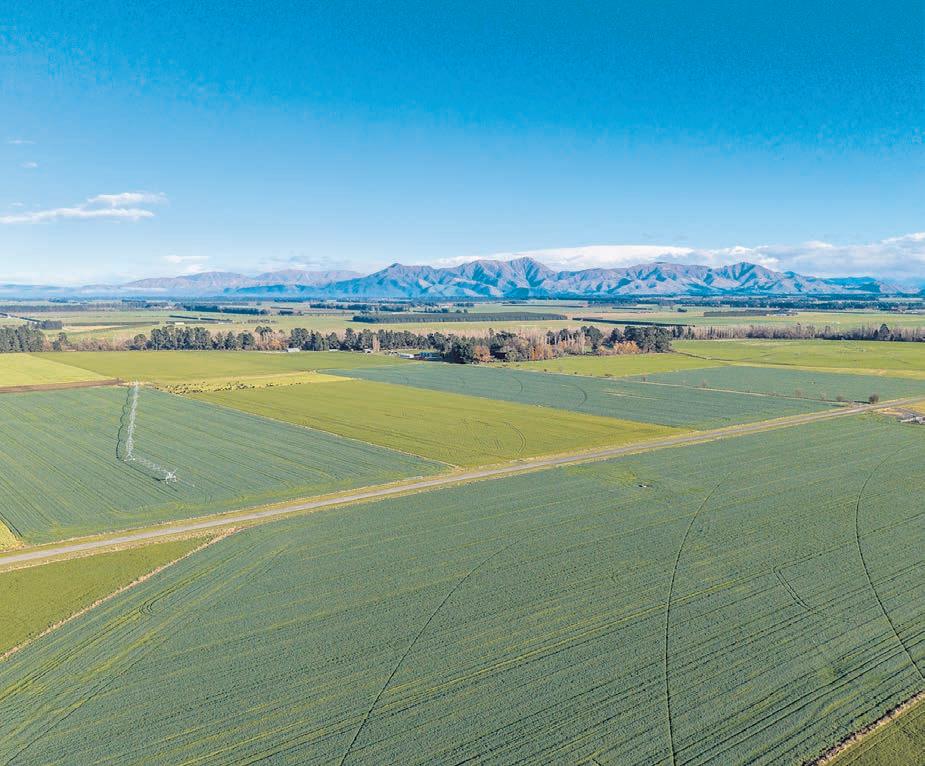
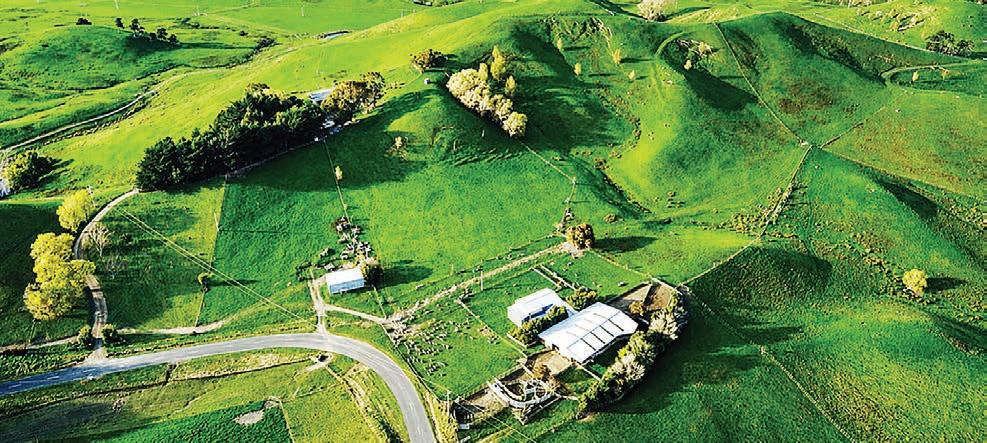
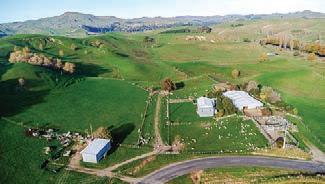
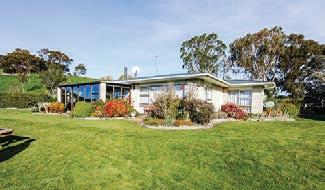
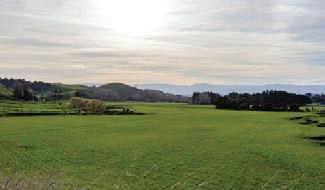


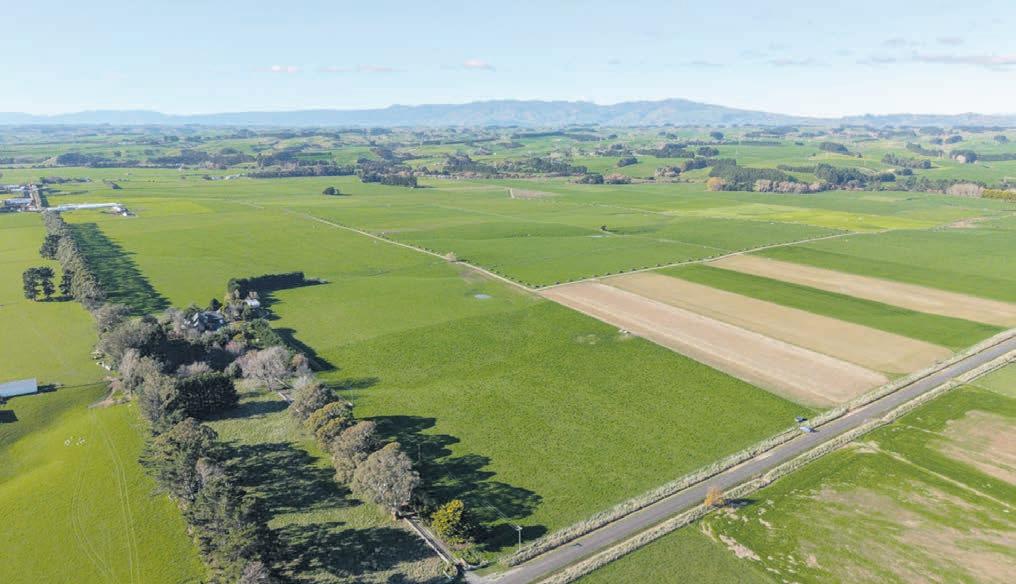
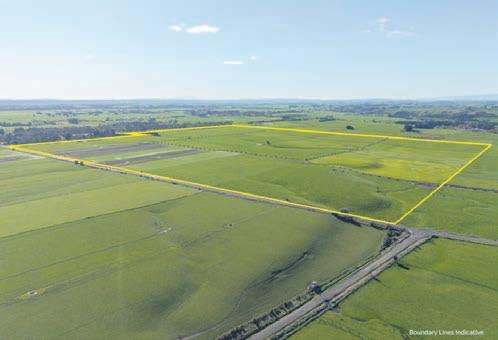
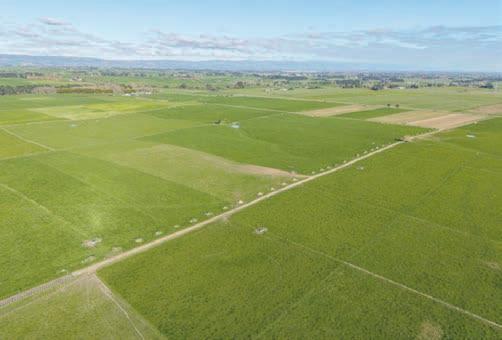



A unique opportunity for a wholesale investor to invest in a proven Beef Finishing operation and quality land asset alongside skilled individuals, with a clear proposition for further operational growth and on-farm development.
Investment sought of up to $4m with 15-35% shareholding available depending on the level of investment achieved.
The investment is underpinned by a flat, high-quality irrigated landholding of over 200 hectares located 992 Wards Road, Kirwee, strategically integrated by growing feed crops to support the beef finishing operation utilising established barn infrastructure.
The vendor invites expressions of interest from parties to acquire this interest in the farmland and trading operation.
For further information on this opportunity, please contact: Ray Fraser – Phone: 027 243 0025 Email: ray.fraser@nzab.co.nz
The Vendor is offering the property to the open market via public advertising. Ray Fraser of NZAB is acting in an advisory capacity only and is not a licensed real estate agent.

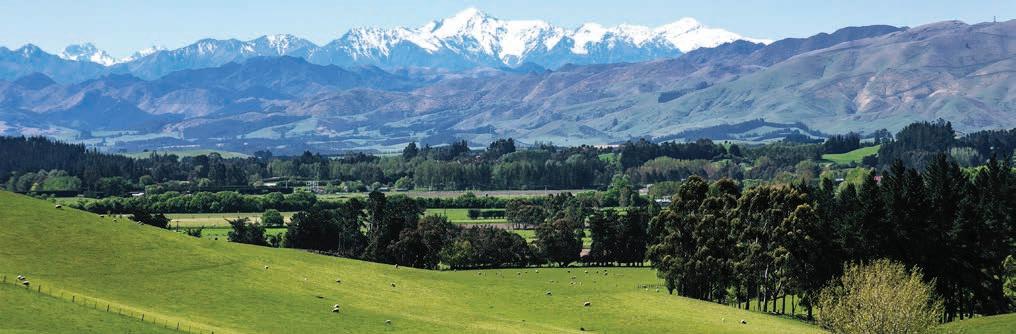
Your agent may suggest you advertise in
suggest you remind them that this is the
and every


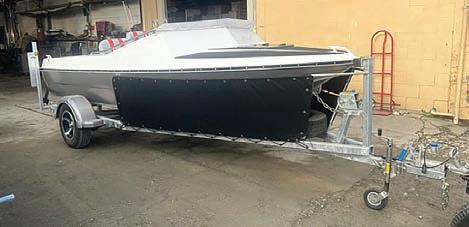


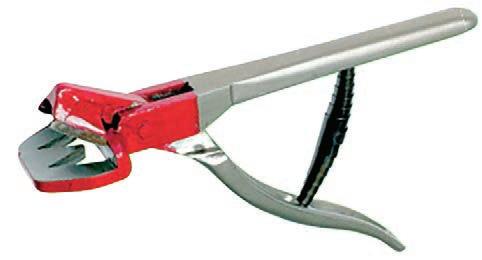
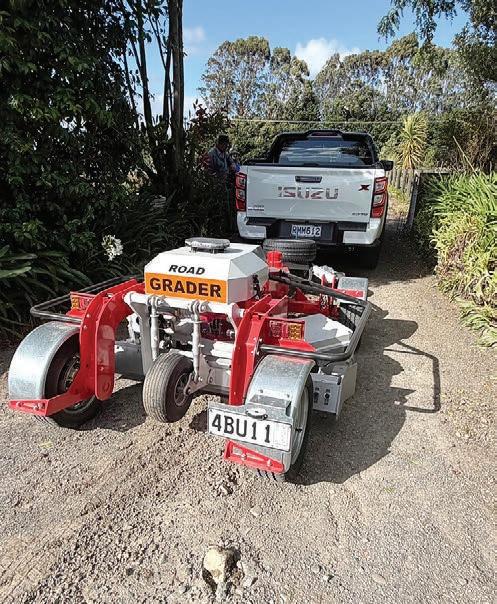
• DairyNZ Board of Directors

• DairyNZ Directors’ Remuneration Committee
Invitation for 2026 candidate nominations – three positions available
• One farmer director for the Board of DairyNZ Incorporated
• Two members for the DairyNZ Directors’ Remuneration Committee
Current levy-paying dairy farmers who are also members* of DairyNZ Inc are now invited to nominate candidates to fill these three positions
All farmers paying a levy on milksolids to DairyNZ and who are members of DairyNZ Inc are eligible to stand for election An information pack outlining desired criteria and nomination requirements for the positions can be obtained from the Returning Officer
Nominations must be received by the Returning Officer by 12 noon on Friday, 21 August 2026
Elections
If more than the required nominations are received, a voting process will be carried out by postal voting using the STV (single transferable vote) voting method Votes will be weighted by annual milksolids based on 2025/26 dairy season ended 31 May 2026 Voting credentials will be posted to all members on 1 October, with voting closing at noon on Thursday, 29 October 2026
Election results will be announced on 30 October 2026 The DairyNZ Annual Meeting will be held on Wednesday, 4 November 2026
For further details contact the Returning Officer below
Anthony Morton
Returning Officer – DairyNZ



AGM and Electoral Committee Meeting (concludes at 2:30pm, followed by afternoon tea)
• 3:00pm: Herbage Seed Meeting
• Evening: Wheat Awards Presentation and Dinner
This is a valuable opportunity to stay informed, participate in key decisions, and connect with fellow growers.
All wheat growers are strongly encouraged to attend.


Join one of Mid Canterbury’s progressive Livestock farming businesses!
Fairfield Farms is seeking an experienced Senior Stockperson/Farm supervisor to lead one of our large-scale lamb finishing operations
About Fairfield Farms
Based just 10 minutes north of Ashburton, Fairfield Farms is a progressive farming business operating:
• 3000ha across four properties
• Two mixed arable farms
• Over 25,000 store lambs finished annually
• Two dedicated beef finishing units Modern farming systems with opportunities to grow your career
This is a genuine leadership opportunity overseeing the finishing of 12,000-15,000 lambs annually, managing feed, animal health and performance to maximize growth and meet market targets You will work alongside an experienced livestock manager while leading staff making day-to-day decisions and contributing to both livestock and cropping operations
We are looking for someone who:
• Enjoys leading people by example
• Has strong stockman ship and attention to detail
• Can work independently and make sound decisions
Take pride in presenting a tidy, well-run farm Wants to continue developing their farming career
• Understands the importance of safe work practices and animal welfare
• Knowledge of irrigation management
What we offer:
• Competitive salary based on experience
• Modern equipment and well-maintained facilities
• Supportive management team
• Opportunity to progress within a growing farming business Variety across livestock, irrigation and cropping
• On-farm accommodation is available if required
• Primary and secondary
If you are looking for your









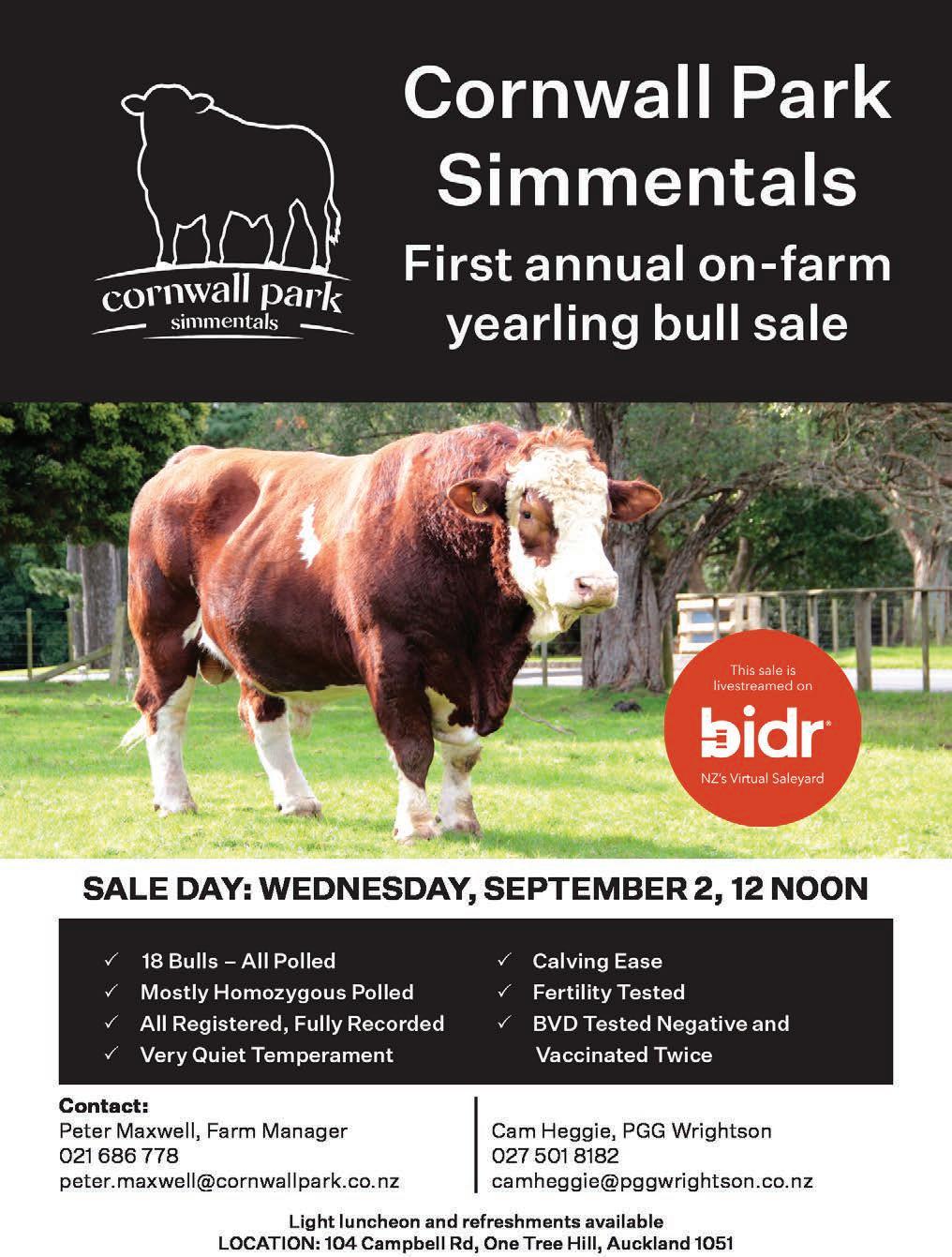


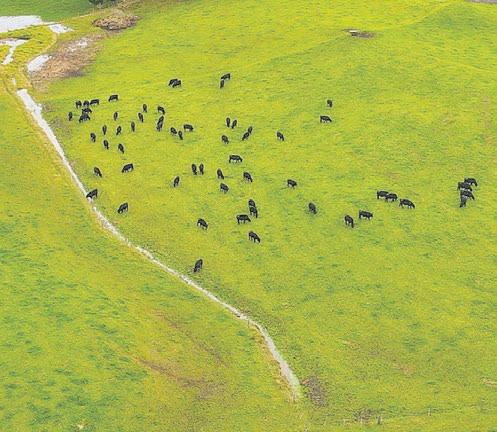







•
•
•

The riskier trade in in-lamb ewes is giving way to the relative certainty of ewes with lambs-at-foot.

TFiona Quarrie MARKETS Lambs
HERE have been almost 19,000 scanned inlamb ewes sold through AgriHQ-reported North Island saleyards to date this year. While this number is 1000-head above the 2024 figure for May through to July, it is still a good 3000 short of 2025 and even further behind other years.
The usual drivers have been at play in producing this supply. In most cases the older ewes are an annual draft while young and mixed-age lines have been displaced due to farm sales and the end of leases. The more positive climate for red meat has resulted in successful sales of properties that have been on the market for some time, and this can often have a snowball effect.
Just as farm sales can impact supply, the purchases of properties naturally add demand to the market too. This has been a notable driver of demand at Feilding and has nicely filled the gap for later-lambing ewes run with maternal rams. In some cases, returns on this class of stock have surpassed the oftenfavoured early lambing 5-year Romney ewes to a terminal ram.
A line of mixed-age Romney ewes, scanned at 170% to a Romney ram and due to lamb at the end of August topped the sale at Feilding on Friday, July 24. The $340 price tag was reflective of the number and type of ewe matching demand from multiple bidders.
The strength of the store lamb market also comes into play. Some traders felt as though the margins were more favourable on in-lamb ewes rather than another trade of lambs.
Six weeks ago we took an early look at this market, and the starting average for 4- to 6-year in-lamb Romney ewes in the North Island sat at $290. At that level, the correlation between lamb and mutton schedules suggested that it was inflated, but expectedly so given the early examples, and that $230 would be a reasonable average figure.
Now that most in-lamb ewes have passed through the yards, where is this average now? As it turned out, the difference was split and this class of ewe has averaged $264. This was a solid result and shows the confidence that buyers have in the outlook for lamb and mutton.
The main hesitation from hopeful buyers to pay more was related to risk. As the per-head value of the ewes went up, so did
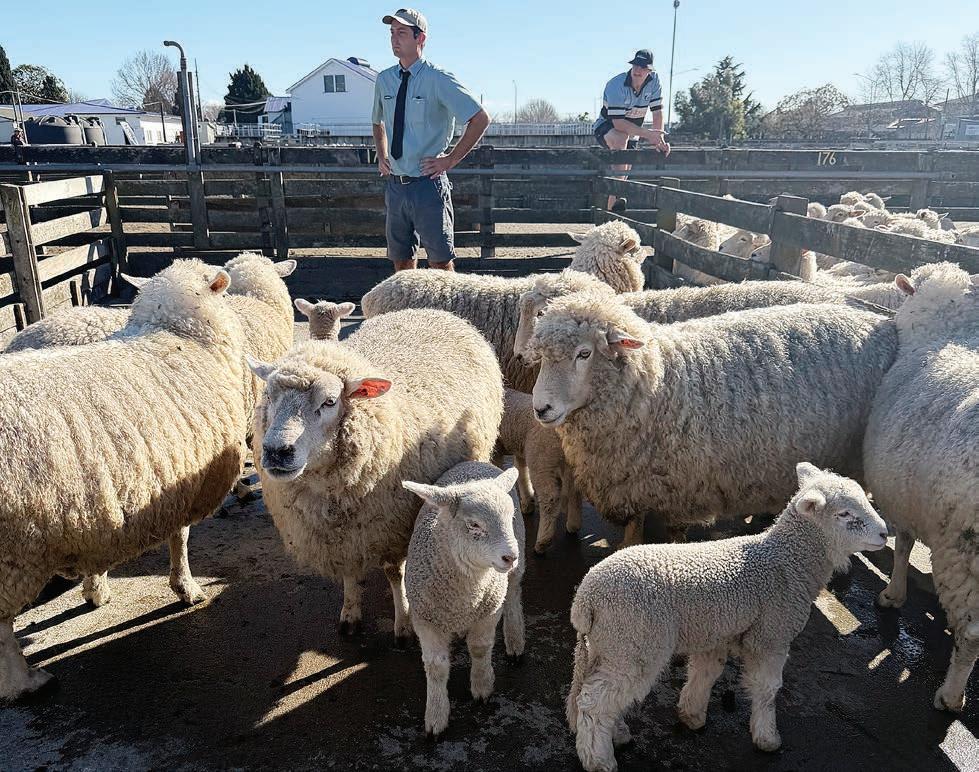
Many a fresh lamb can be spotted on a Sunday drive around the early country, so it is time to consider
what the budget is.
the impact on margins with each loss. In-lamb ewes are one of the riskier trades and the adage warning against counting chicks before they hatch comes to mind.
This risk factor, along with labour considerations, does encourage some traders towards the ewes with lambs-at-foot option, and it is almost time to shine for that group. Many a fresh lamb can be spotted on a Sunday drive around the early country, so it is time to consider what the budget is.
By comparing the returns for in-lamb ewes with those for ewes with lambs-at-foot just a few months later, there is a trend evident. During the years 20162022, the average all-counted
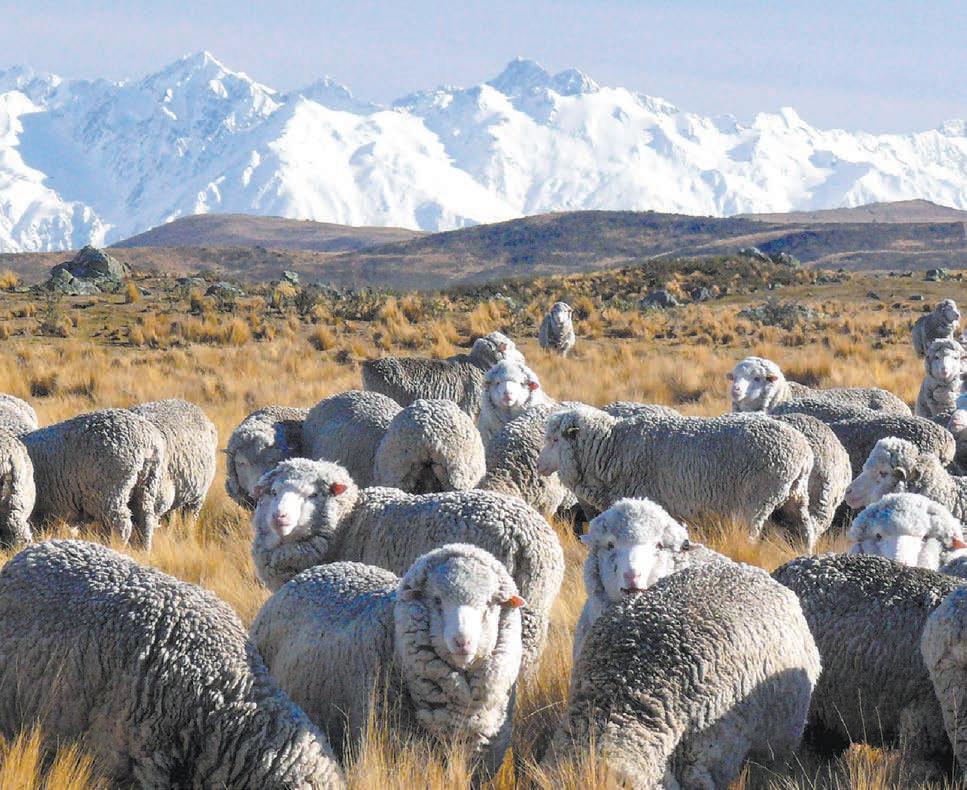

return for ewes with lambs-atfoot in the North Island, August to October, tracked between 56% and 64% of the average scanned in-lamb return.
Of course, 2023 was a major outlier at 48% as the lamb schedule experienced a major correction during that period. In the most recent two years, the difference has been 70-72%. If the trend of the last couple of year continues, the average return for ewes with lambs-at-foot could be $185-$190 all counted.
With that being the case, top lines with a high percentage of well-established and docked terminal lambs could certainly trade over $200 all counted. If the more modest 56-64% figures are used, the average could settle from $150 to $170.
Stortford Lodge was the first yard to get on the board. On Wednesday, July 15 there was a pen of small pen of ewes with their single, docked whiteface lambs-at-foot. They collected $160 all counted.


Frankton | July 29 |
Aut-born
Aut-born weaner Friesian
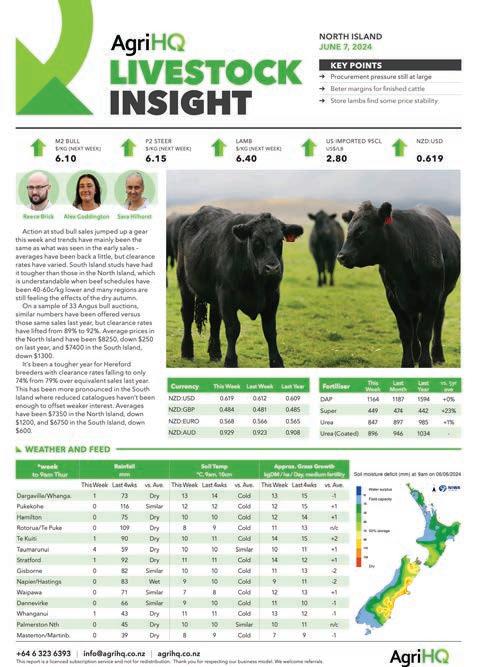



Lorneville | July 28
Store lambs, most
Feeder Calf Sales
Tuakau | July 27 | 835 cattle
Friesian bulls, all
Hereford-Friesian (black) bulls, all
Hereford-Friesian (red) bulls, all
Hereford-dairy bulls, all
Charolais-dairy bulls, most
Angus-dairy bulls, all
Hereford-Friesian (black) heifers, most 80-370
Hereford-Friesian (red) heifers, all
Hereford-dairy heifers, all
Charolais-dairy heifers, all
Angus-dairy heifers, all
Paeroa | July 27 | 700 cattle
Friesian bulls, all
Hereford-Friesian (black) bulls, all
Hereford-Friesian (black) heifers, all 110-200
Hereford-dairy heifers, all 70-120
Frankton | July 28, 29 | 3044 cattle
Friesian bulls, all 10-340
Hereford-Friesian (black) bulls, all 150-705
Charolais-dairy bulls, all 120-615
Angus-dairy bulls, all 90-400
Hereford-Friesian (black) heifers, all 60-340
Charolais-dairy heifers, all 60-315

Angus-dairy heifers, all 20-230 Cambridge | July 28 | 1416

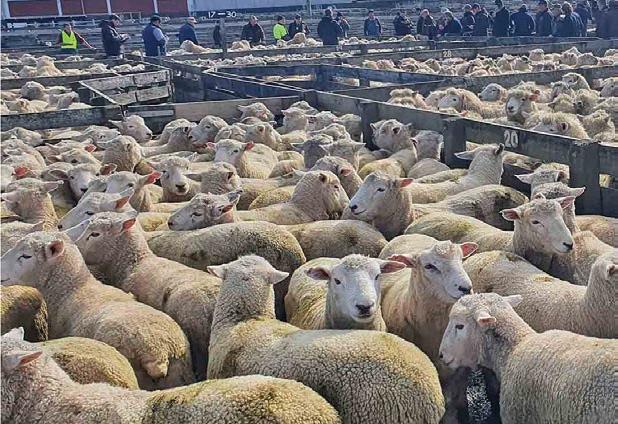


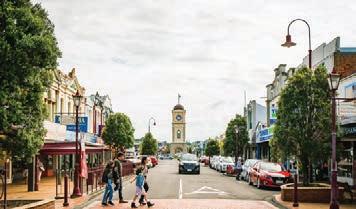



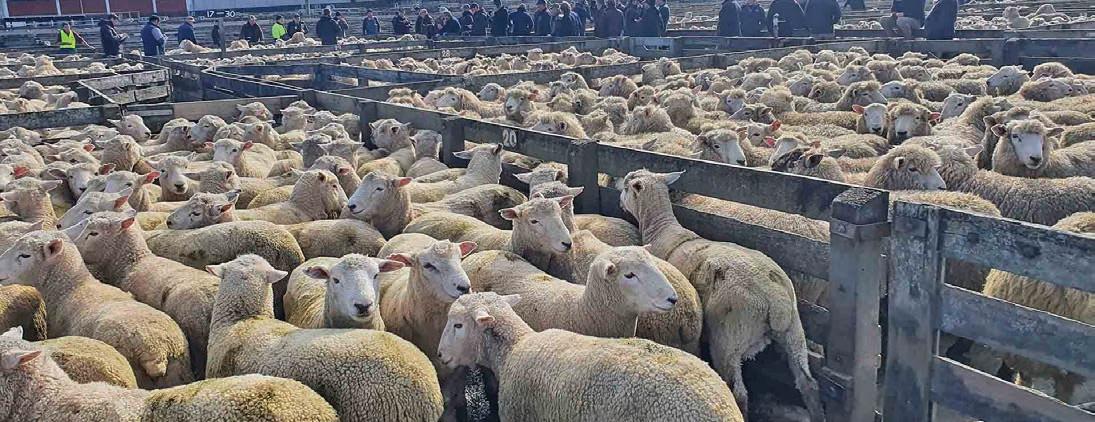
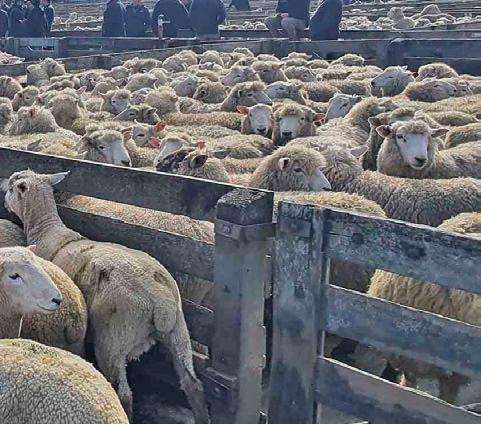


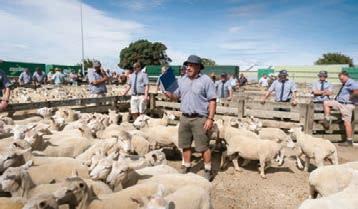
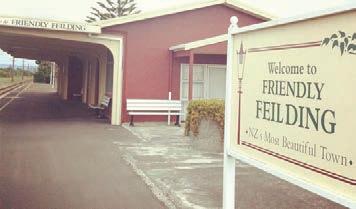








WE’RE having a classic winter at the moment, with significant amounts of polar air spilling over the New Zealand area, bringing a return to frosts in some parts of the country that haven’t had many in recent years.
Heavy frosts have gone as far north as Waikato with Auckland and Northland also getting a number of frosty mornings lately.
With spring only just around the corner, August can be a month of weather ups and downs – but it’s worth noting a spring weather pattern is not yet firmly in sight.
This contrasts with previous years where some regions have felt the windy westerlies of spring arrive as early as late July, bumping up temperatures and bringing an early end to the winter freeze.
This year, however, we’re still firmly in the grip of winter weather as we kick off this new month.
Over the past weekend the polar boundary (which measures the northern extent of the cold air normally wrapped around Antarctica and the Southern Ocean) went as far north as Australia’s Norfolk Island (another 750km north of Cape Reinga).
While the polar air does move over NZ most weeks in winter, it is fairly rare to see it go so far north.
One of the main reasons for this is the next anticyclone drifting out of Australia, helping to lift that colder air further northwards.
This week that high-pressure zone moves into NZ and helps push away some of the coldest air (more noticeable with a lift in daytime highs following the weekend cold, but overnight lows may drop further with the calm weather at night).
By Tuesday this high will be centred just north of NZ, while at the same time a second highpressure area will be moving in southwest of NZ. This doubledecker area of high pressure will merge over the country mid-week, as a low moves over the Tasman Sea.
Long-range modelling was not in agreement about what will happen with this low, with some modelling suggesting it brings some rain to NZ. Others suggest the high wins out and blocks it for most of this week.
With uncertainty about this next low it’s a bit hard to lock in rainfall. But at the time of writing this column some West Coast rain was possible with showers for the North Island.
Eastern regions of both main islands look driest.
The polar boundary moves up and down around the country this week thanks to more of a southerly flow over the nation.
By Thursday high pressure should be centred east of the country, creating more northerlies and lifting temperatures again nationwide.
Some modelling even picks subtropical airflows from Tonga moving into the North Island by Sunday – but that isn’t yet locked in due to uncertainty about the Tasman Sea low movements.
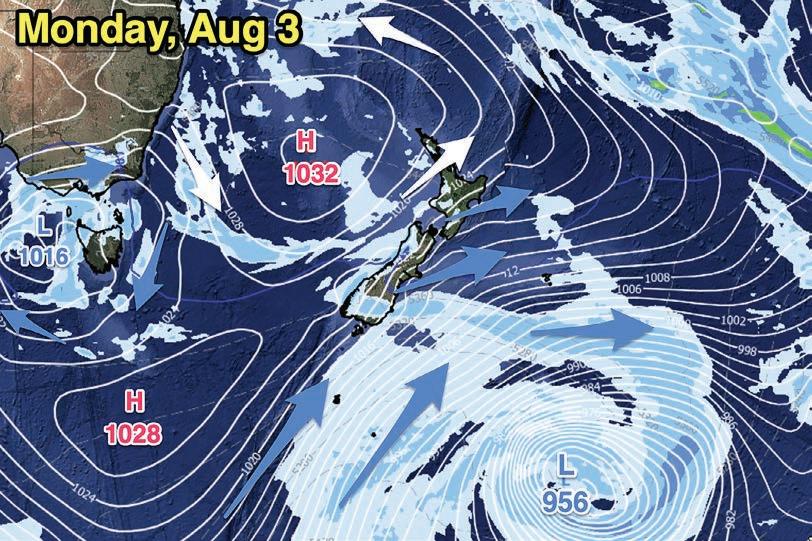
Overall we have a fairly messy weather pattern – a good thing generally with El Niño still intensifying.
It does look as though a westerly wind will kick in around NZ next week and it may bring yet another shot of polar air and more heavy West Coast rain and North Island showers/downpours.
When I look for a spring pattern I look for consistent westerlies
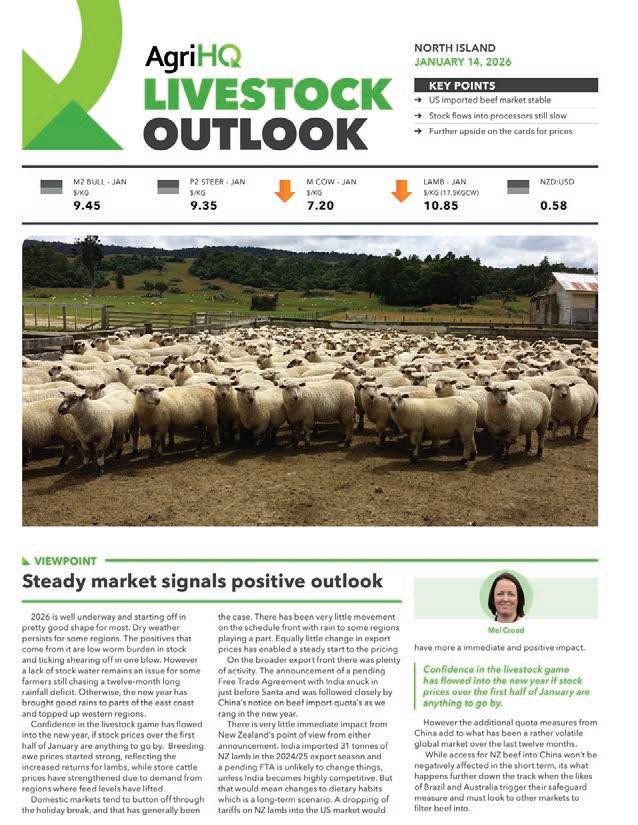


that start in Australia and cross the Tasman Sea and NZ fairly uninterrupted.
This looks more likely around southern Australia, the Tasman Sea and NZ going into the middle of August, with perhaps the North Island’s east being the first to notice a drier, sunnier and slightly milder change.
We’ll update you again next week on this.