























HUNDREDS of thousands of prime lambs and cattle are still on farms waiting to be processed, according to this year’s forecast kill.
The latest available processing figures up to the end of March show the lamb kill was 520,000 head behind last year, the cull cow kill nearly 100,000 down and prime steers and heifers nearly 60,000 under this time last year.
“It’s been the trend this season, everything has been delayed and that is still the case,” said AgriHQ senior analyst Mel Croad.
Bulls are the only stock class not behind last year.
Croad said stock flows have recently picked up, helped by short processing weeks, but the number of cull cows and prime beef are expected to increase as the dairy season comes to an end and winter ground conditions become heavy.
Croad said lamb slaughter numbers are also spiking now, but this is not expected to last.
“Indications are that there is not a lot of depth in this current spike, it is not going to last.”
Beef + Lamb New Zealand has added another 500,000 lambs to this season’s forecast kill, with 17.5 million now expected to be available.
That elevated forecast and the high price of store lambs could
mean more are available to be killed over winter.
Wayne Shaw, the operations director at Alliance Group, said its processing plants are operating at capacity, with overtime being brought on where necessary.
He expects livestock numbers to build in the coming weeks, particularly in the South Island, but he said there is risk for farmers retaining stock for too long.
“While that can add weight, it also increases the risk of animals falling outside market specifications, which can limit our ability to maximise value across our global retail and foodservice channels.”
AFFCO chief executive Nigel Stevens said after a prolonged period of lower processing levels for sheep and cattle, the company is in catch-up mode with weekly processing tallies now well ahead of last season.
With the industry having surplus capacity for lamb, he expects that deficit will be caught up relatively quickly.
All AFFCO beef processing sites are full but Stevens noted numbers of manufacturing cows are well behind other stock classes.
Stevens said there is no issue getting product to export markets, although the impact of the war in Iran has made freight costs significantly higher.
“Market pricing remains extremely high in historic terms,
Continued page 4
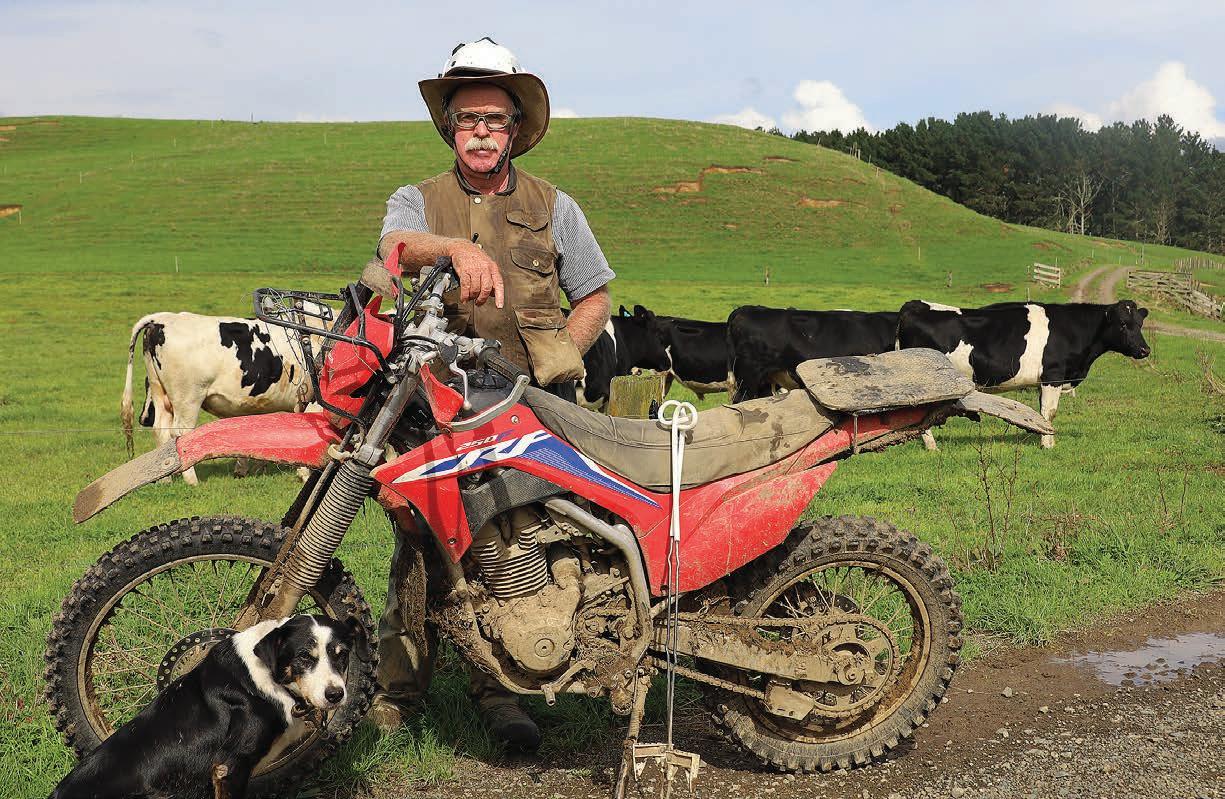
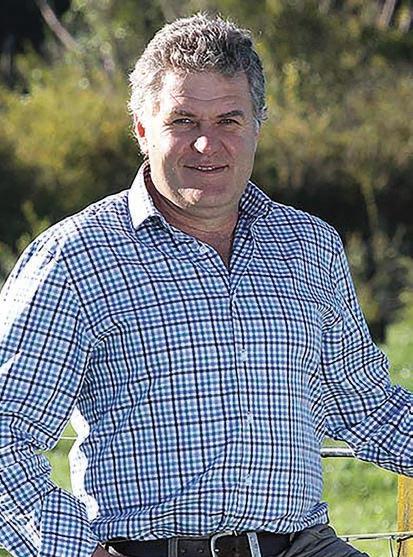
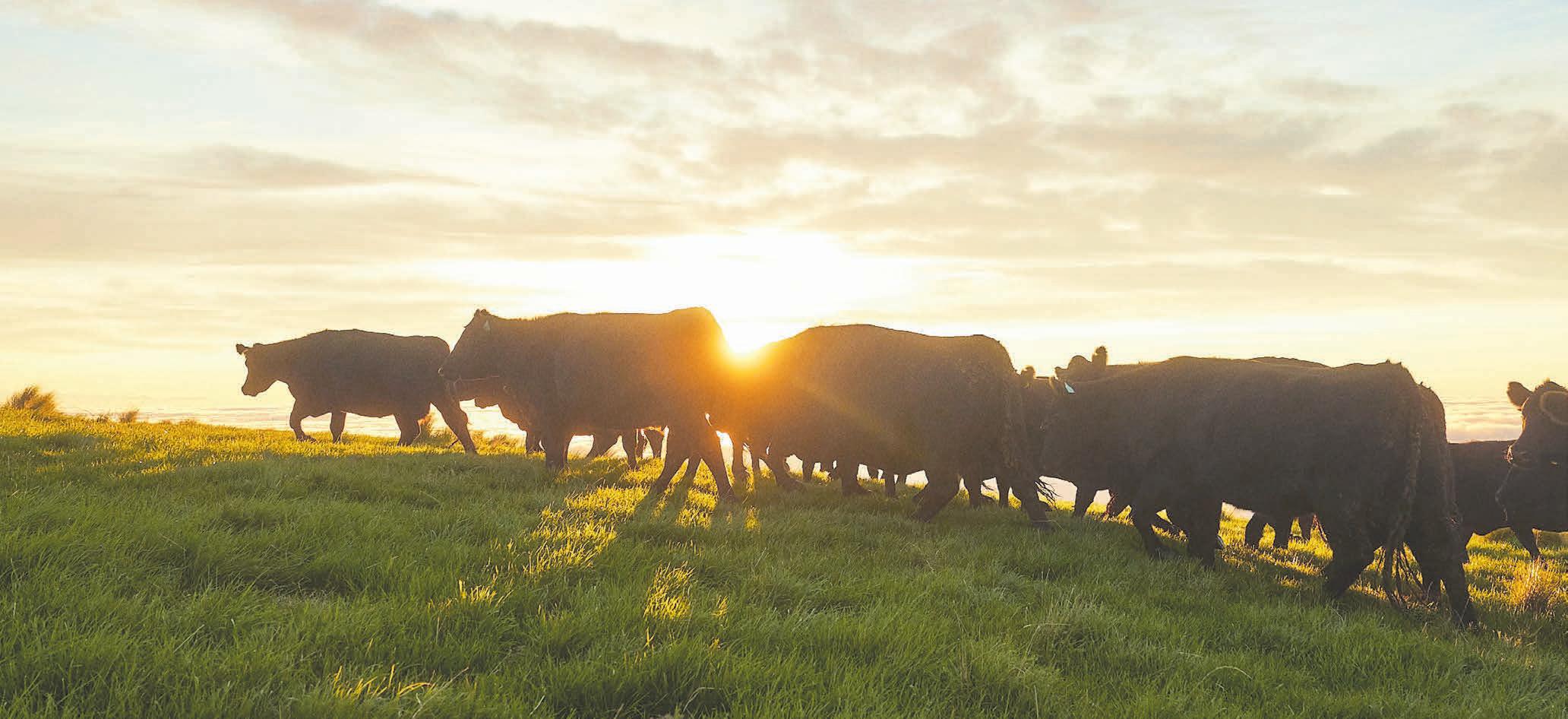
Neil Aicken is renowned for the award-winning, all-grass system that finishes 2000 bulls on his Waikato farms every year.
ON FARM 10
Grain supply fears as rising fertiliser and fuel costs start to bite.
3
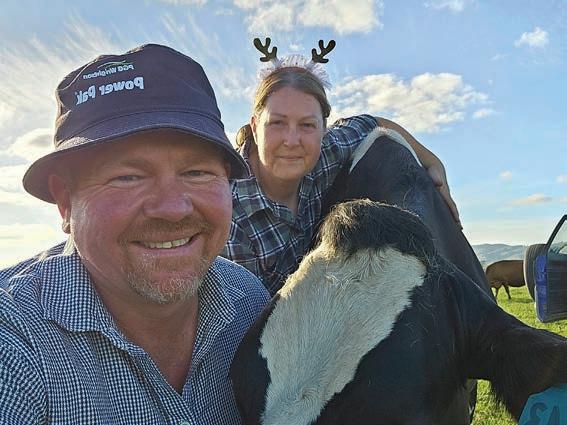
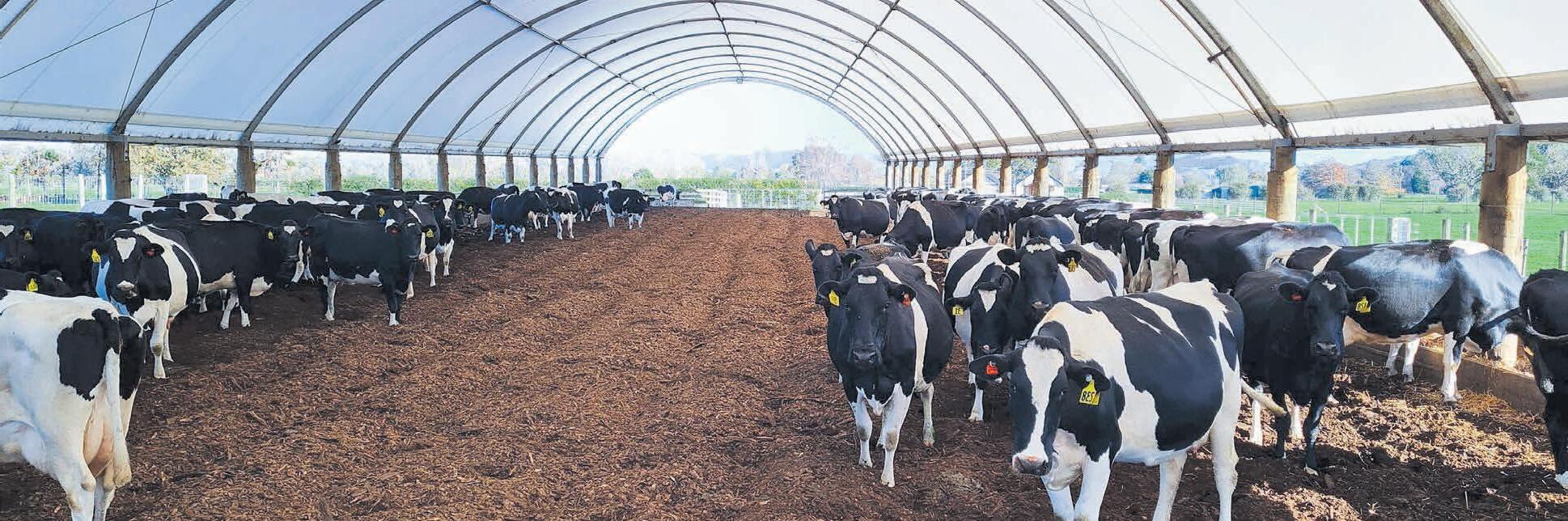
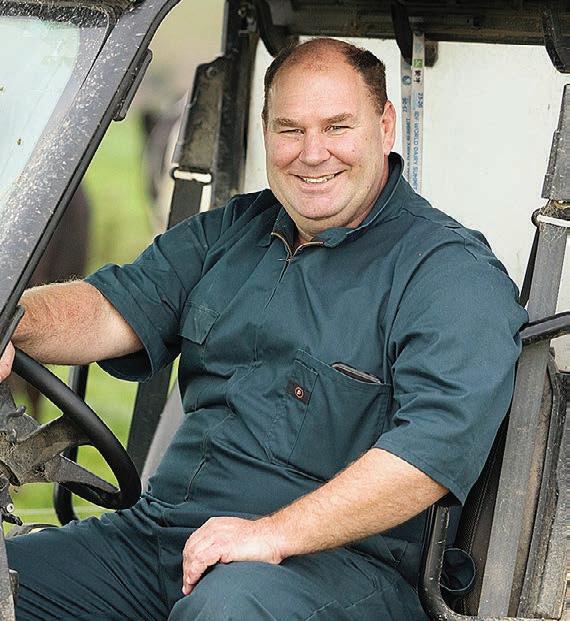
Martin Lemke’s path into dairying started later than most, but he’s now contractmilking across two Morrinsville farms with his wife Janice, and hitting record production. DAIRY 20-25
Farming families and corporations behind increased farm sales.
5
Ownership to stewardship the future for Pāmu, says Tim Rhodes. OPINION 19



EDITORIAL
Bryan Gibson | 06 323 1519
Managing Editor bryan.gibson@agrihq.co.nz
Craig Page | 03 470 2469
Deputy Editor craig.page@agrihq.co.nz
Claire Robertson
Sub-Editor claire.robertson@agrihq.co.nz
Neal Wallace | 03 474 9240
Journalist neal.wallace@agrihq.co.nz
Gerald Piddock | 027 486 8346 Journalist gerald.piddock@agrihq.co.nz
Annette Scott | 021 908 400 Journalist annette.scott@agrihq.co.nz
Hugh Stringleman | 027 474 4003 Journalist stringleman@outlook.co.nz
Richard Rennie | 027 475 4256 Journalist richard.rennie@agrihq.co.nz
Gerhard Uys | 027 239 4388 Journalist gerhard.uys@agrihq.co.nz
Nigel Stirling | 021 136 5570
Journalist nigel.g.stirling@gmail.com
Isabella Beale | 027 299 0596
Multimedia Journalist isabella.beale@agrihq.co.nz
PRODUCTION
Lana Kieselbach | 027 739 4295 production@agrihq.co.nz
ADVERTISING MATERIAL
Supply to: adcopy@agrihq.co.nz
SUBSCRIPTIONS & DELIVERY 0800 85 25 80 subs@agrihq.co.nz
PRINTER
Printed by NZME
Delivered by Reach Media Ltd
Andy Whitson | 027 626 2269
Sales & Marketing Manager andy.whitson@agrihq.co.nz
Janine Aish | 027 300 5990
Auckland/Northland Partnership Manager janine.aish@agrihq.co.nz
Jody Anderson | 027 474 6094
Waikato/Bay of Plenty Partnership Manager jody.anderson@agrihq.co.nz
Palak Arora | 027 474 6095
Lower North Island Partnership Manager palak.arora@agrihq.co.nz
Andy Whitson | 027 626 2269
South Island Partnership Manager andy.whitson@agrihq.co.nz
Julie Hill | 027 705 7181
Marketplace Partnership Manager classifieds@agrihq.co.nz
Andrea Mansfield | 027 602 4925 National Livestock Manager livestock@agrihq.co.nz
Real Estate | 0800 85 25 80 realestate@agrihq.co.nz
Word Only Advertising | 0800 85 25 80 Marketplace wordads@agrihq.co.nz
Dean and Cushla Williamson Phone: 027 323 9407 dean.williamson@agrihq.co.nz cushla.williamson@agrihq.co.nz
Farmers Weekly is Published by AgriHQ PO Box 529, Feilding 4740, New Zealand Phone: 0800 85 25 80 Website: www.farmersweekly.co.nz
ISSN 2463-6002 (Print) ISSN 2463-6010 (Online)
Australian company Victorian Hydrogen has applied to explore for lignite on 3141 hectares of Southland farmland in the hopes of eventually setting up a 1.5 million tonne per year urea fertiliser production plant.
Victorian Hydrogen executive director Allan Blood said the proposed $3 billion lignite-to-urea project would give New Zealand’s agricultural sector selfsufficiency. The project is expected to apply for approvals under the fast-track regulatory process.
42
The government has contracted for 93 million litres of additional diesel storage capacity at Marsden Point fuel import terminal, to be available from May 31. The storage capacity, equivalent to nine days of national diesel consumption, is being renovated and provided by Channel Infrastructure, which now runs the terminal. Storage tanks unused since the refinery closed in 2022 are being recommissioned.
Underground, New Zealand’s only regenerative farming festival, will be moving to the North Island in 2027. Next year’s event will be the third Underground festival. Organiser Fran Bailey said they will alternate between islands from now. The North Island venue will be Wholly Cow, a regenerative sheep and beef farm in Cambridge.
The New Zealand Farm Forestry Association has elected new members to the executive at its conference in Cambridge. Dougal Morrison, an active forester who manages the Streamside Planting Programme for Porirua City Council, was elected president. Philip Alloway, Dave Forsyth and George Shallcrass were elected as new members of the executive.


Neal Wallace & Annette Scott NEWS Arable
AGLOBAL abundance of grain could be replaced by constrained supply later in the year as growers react to rising costs and tight supplies of fertiliser and fuel by reducing the area grown.
Anecdotal evidence from New Zealand and Australia ahead of the new season suggests growers could favour varieties requiring lower inputs and that yields could be poorer.
Adding to the mix are reports that United States crops are poor, with just 30% of their winter wheat rated good to excellent.
Timaru arable farmer Andrew Darling is sticking to his planting intentions but knows of others who are shifting to crops with lower input costs.
Darling said grain prices, including imports from Australia, will increase to reflect the higher input and transport costs.
NZ each year imports between 250,000 and 300,000 tonnes of milling wheat from Australia, according to New Zealand Grown Grains, an initiative between the Foundation for Arable Research and Eat New Zealand.
Three-quarters of the bread sold in NZ is made from imported grain.
Federated Farmers arable sector chair David Birkett said urea prices in Australia this week reached NZ$1800 a tonne.
After two very difficult growing years, Birkett says NZ growers are yet to see contracts for next season but indications are that prices will be higher.
“They are seeing some upside in the grain prices, which is giving people some confidence – maybe not as much upside as they would like to see.”
Some growers have opted to run livestock instead of sowing
crops while others have switched from less reliable vegetable seeds to more reliable cereals and grains.
Two poor harvests in a row have Ashburton cropping farmer Eric Watson looking for options.
Watson this season lost 3 tonnes a hectare at $1500 a hectare on 100ha of wheat alone because of the follow-on impact of the previous poor harvest due to late sowing.
As well, specialist crop income versus inputs “were not startling, to very poor”.
“That’s significant when on top of that there was also year-on-year impact with some grasses. It just wasn’t profitable to carry on with what we were doing.”
On the back of the yield impact have come disappointing new season seed contracts and skyrocketing input costs.
“Effectively I’ve made a complete change of rotation, it’s not the best option but you have to make money.”
Gone are the specialist crops of spinach, red beet, radishes and beans.
“This season will be the traditional grasses and cereals – wheat, barley, ryecorn and triticale. I just can’t afford to grow non-profitable crops.”
Shona Gawel, the chief executive of Australia-based grower organisation GrainGrowers, said ANZAC Day traditionally marks the start of planting in many Australian regions, so growers will have decided what crops to put in the ground and the volume they will plant.
“Anecdotally we’ve been told some growers will be opting to plant less, while others may not plant a crop at all this year, which will have a significant financial impact on their operations.
“We have also heard from growers that yield will depend on what fertiliser they can source, and how much they can apply.”
They are seeing some upside in the grain prices, which is giving people some confidence – maybe not as much upside as they would like to see.
David Birkett Federated Farmers
Australia’s volatile climate will also be a factor in the area planted and variety sown.
A Rabobank Australia agribusiness report notes that while wheat and barley markets have stabilised after recent volatility, rising input costs and regional production constraints indicate prices will be firmer later in the year.
Australia is totally reliant on imported urea and 80% of its refined fuel, prompting the federal government to earlier this month
agree to underwrite the cost of importing those two products to support food production.
Last week it secured 250,000t of urea from Indonesia with promises of more on the way.
Meantime, New Zealand cropping farmers exploring the possibility of contracting fertiliser have met a dead end in their endeavour to lock in prices.
South Canterbury cropping farmer Colin Hurst said arable farmers contract their crops forward but the one big input expense, fertiliser, has never been locked into a contract.
“So as a group of farmers we believe, given we sign contracts when we plant and lock in prices on everything else related to the crop with the seed companies, it would be a prudent move if we could lock in fertiliser.”
The group began exploring the possibility.
“It’s not about stockpiling, it’s
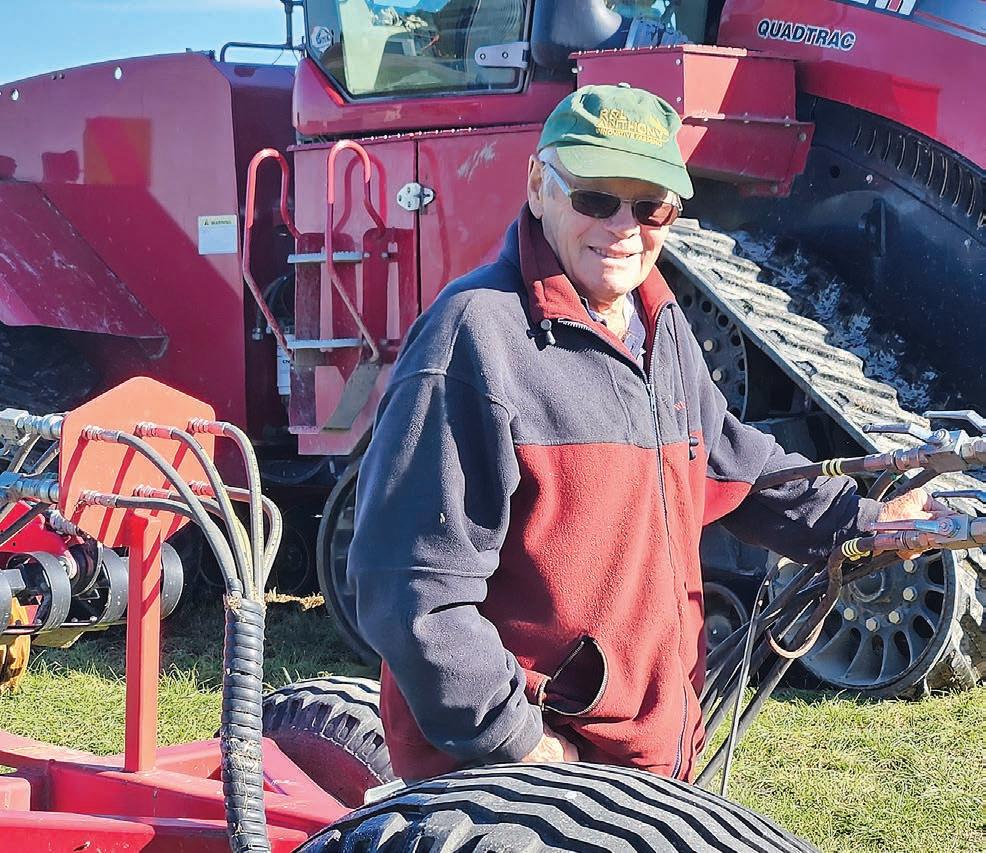
SEARCHING: Ashburton cropping farmer
Eric Watson says two successive poor harvests have left him looking for options.
about forward contracting so we can plan and budget across all the input costs.
“So, on a farm there’s three big expenses: there’s interest and we can lock that in for five years or longer; there’s labour; and the next big cost is fertiliser.
“We can lock the first two in, but it would be really quite nice if we could lock our fertiliser in.
“But the fertiliser company we were dealing with couldn’t pull it off. They said, ‘No, we can’t do that, you guys should buy it and store it.’,” Hurst said.
He said it takes a bit of financing and management to have adequate storage, particularly with nitrogen, which has to have specific storage facilities.
“I’m not sure why the resistance was there. We [arable farmers] are consistent every year in what we use, so as a fert company it must be good to have a locked-in commitment.”

Imagine being able to switch all your solar lights on/off with one press of any switch up to 2km away.


RURAL residents in Waitaki district face the dilemma of swallowing a 19% rates rise to pay for upgraded water supply, or losing the opportunity to secure lower water project costs in the future.
Waitaki district mayor Mel Tavendale said to meet Taumata Arowai’s water quality standards for household delivery, the council is having to upgrade delivery to small community schemes. In one case this will amount to spending almost $30,000 a household on a scheme largely supplying stock water.
“The Stoneburn scheme was established in the 1970s primarily for delivering stock water. The trouble with schemes like Stoneburn, a lot of the supply has travelled over land, staining water, picking up nutrients, it’s a hard one to get to a level required.”
Continued page 1
although we are seeing some pricing pressure due to the amount of product currently available, and pockets of consumer resistance to current prices in some markets,” he said.
The strengthening New Zealand dollar over the past fortnight has eroded some returns.
At the start of April the NZ dollar was worth US57c. As of early Wednesday it was worth US59c.
Silver Fern Farms chief supply officer Jarrod Stewart said dry conditions meant last year’s cull cow kill was earlier, but combined with prime beef demand, he is anticipating full plants through until the end of May.
“Indications are that farmers
Stoneburn is one of six similar schemes in the sparsely populated district council area.
The 90 people currently using the Stoneburn scheme’s water have lived with a “boil water” notice since 2023 due to the catchment’s quality. The same applies to Bushy Creek supply.
“That in itself is not ideal, we recognise that, but to lift the standard is a lot, and the problem of who pays for this has not been resolved.”
The council has met with locals on the scheme to discuss options, one of which includes taking all households off the scheme and onto their own rainwater collection systems.
“The issue is, though, you don’t get a lot of rainwater, and removing households still leaves the cost of operating the scheme to be paid for.”
The minimal upgrade cost for Stoneburn has been quoted as $1 million, which would have to be debt funded. The upgrade is
have been making the most of feed conditions, and we anticipate these volumes could carry through to a stronger third quarter for processing as well.”
Waiting times for lamb processing in the North Island are becoming less acute, but a long processing tail is expected in the South Island.
“We’re expecting a longer tail in South Island across the next four to five weeks as we wash up main season lambs.
“Separately, we expect winter pricing will be softer compared to last year, primarily driven by increased costs,” said Stewart.
According to AgriHQ, winter lamb prices last year ranged from $9.30/kg in June to $10/kg in August.
required if the council is to be successful in getting its water delivery plan approved, its second attempt at doing so.
It also affects being part of the Southern Waters consortium, consisting of Waitaki, Clutha, Central Otago and Gore councils, a joint Local Water Done Well initiative.
Despite some benefit of scale in being part of the councilcontrolled organisation, Tavendale said Waitaki still faces a massive $47m water infrastructure bill to get to standard.
Pressure to lift standards set by Taumata Arowai had seen the initial $37m allocation rise to $47m.
This compares to the council’s $17.8m total capex spend in the 2023 financial year, and $35m capex for 2024.
The 19% increase in rates translates to a material $13 a week increase to ratepayers.
Tavendale said rural users of the Stoneburn scheme believe the system will be “over spec’ed”.

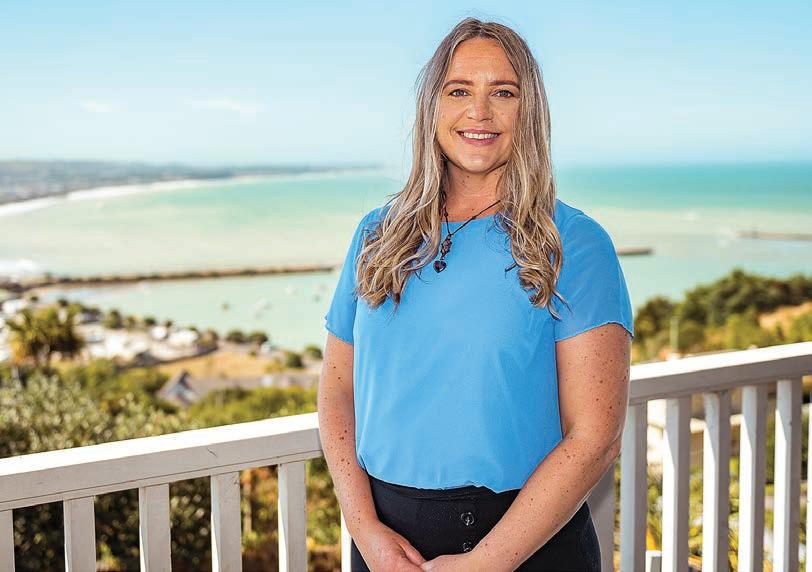
“There is a feeling there that they have drunk the water for 30 years and never got sick.”
But she concedes the council is also duty bound to try to supply safe drinking water to all its constituents.
The council is compelled to pass the costs on, having voted last year to not balance its books and borrow into this year.
She said there has been no central government offer of additional funding, and the capex

costs for their water upgrade highlight how central government mandates hit small rural councils, without accompanying financial support to help them carry them out.
“Forming groups like the Southern Waters is a good thing to help lower costs, but it doesn’t ultimately solve the overall problem: there simply is not enough money there to carry out a pretty condensed work programme.”

Isabella Beale NEWS Real estate
FARM sales across rural New Zealand have been rising sharply, as farming families and corporations look to expand their operations.
REINZ Rural and Lifestyle Data for the year ending December 2025 found that national farm sales rose by around 11%.
Otago and Northland led the country in the volume of grazing farm sales, while Canterbury remained one of the most consistently active regions across all farm types.
However, the strongest growth in sales came from Taranaki, Manawatū- Whanganui and Southland, driven by a surge in dairy sales.
Behind the increase in sales is improved dairy demand, record red meat returns, stabilising debt levels, and strong export demand. While the number of transactions is increasing, industry real estate figures suggest the pool of buyers remains relatively concentrated.
Duncan Ross, chief operations officer of Bayleys, said rural
property transactions remain local as expected.
“What we’re seeing across all rural sectors is a very locally driven market. Buyers from within the immediate farming community ... make up around 70% of all transactions, with a further 15% coming from within the wider region,” Ross said.
That pattern holds true across dairy, pastoral and horticulture and has remained consistent over the years.
“It’s local farmers picking up local properties,” he said.
In effect, around 85% of rural property sales are staying within the local or regional farming networks. While farm sales are increasing, the majority of farmers are still seeking farms with proven production results.
The REINZ rural property report for the year ending December 2025 also found that there was strong demand from existing farmers, particularly looking for “good quality, well-developed farms” with proven production and infrastructure.
Ross said much of that demand is being driven by larger corporations and farming families.
“The corporates and those larger farming families are really pushing hard to grow in the Tier 1 areas,” he said.
These buyers are targeting highperforming land, particularly in Canterbury and Southland regions, where scale and production reliability can support expansion.
Despite the rise in transactions, truly new entrants into purchasing farming land remain limited.
Peter Barnett, owner of the NZ Real Estate company, based in Feilding, said genuine first-time farm buyers are extremely rare.
“There are some people buying their first farms on their own ... but the percentage of them would be very low,” Barnett said.
“We have seen, however, increased interest from sharemilkers looking to move into dairy farm ownership in the past season as dairy cows prices have increased more quickly than land prices, theoretically closing the gap after years of it widening.”
Often, what appears to be new ownership is part of a wider family strategy.
“In most cases it would be part of a wider family sort of purchase,” he said.
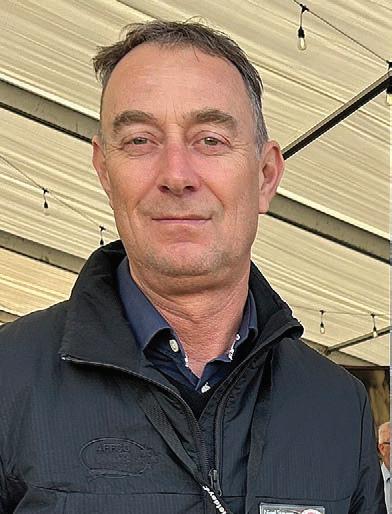
“Through one lens you might call that a first-home buyer ... through a different lens it’s just a family expansion.”
In many cases, younger farmers are stepping into ownership roles supported by family capital, with purchases structured within existing operations rather than funded independently.
Rising land values and capital requirements are also restricting new entry.
“Rising livestock stock values are very positive for a vendor exiting farming, but they are something a purchaser needs to contend with on the other side,” said Barnett.
“As an example, the livestock value on say a 4000-stock unit sheep and beef farm or a 400-cow dairy farm might have increased $300,000-$400,000 from last season and that is an amount that needs to be funded on top of the property.”

Gerald Piddock NEWS Weather
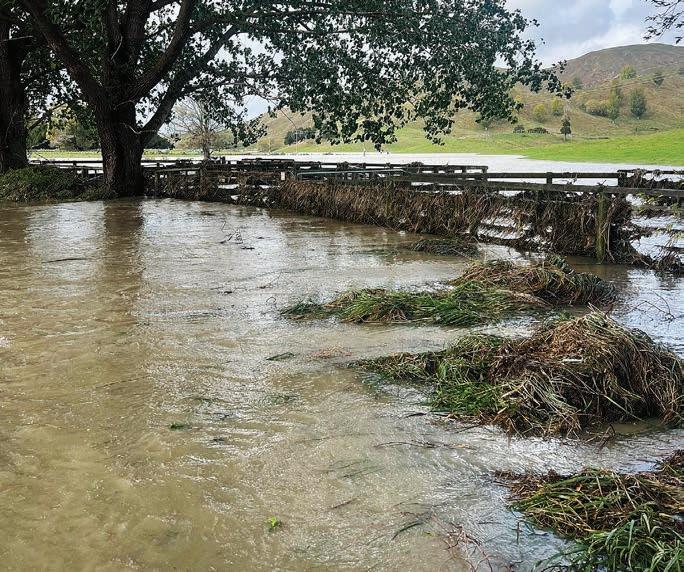
AN UNEXPECTEDLY heavy downpour in Hawke’s Bay left an Elsthorpe Angus breeder scrambling to rescue his cattle caught in a flooded paddock.
Elgin Angus Stud’s Sam Duncan had a paddock full of cows and calves due to be weaned that were trapped in water up to the top of their ankles during the heavy rain, with the water still rising at that stage.
“My neighbour had to swim them out for me,” Duncan said.
He believes the mob is all accounted for.
“Fortunately, they were older cows and smart and they swam across and all of the calves followed.”
Duncan said around 200mm in three to four hours fell during the downpour in the early hours of April 20.
He estimates around 60 hectares of his farm was under at least 2m of water.
The flooding also caused wrapped baleage from both his and his neighbour’s farm to be shifted and deposited on the road.
Twenty-five minutes away on
the coast, he said, the damage on farms is more severe with possible stock losses because of the lack of warning from weather services.
“We knew it was going to rain, but we didn’t think it was going to be that intense.”
Another of his neighbours had access to only a third of their farm due to slips, he said.
The rain has now stopped, and he is now doing a more thorough assessment of the damage and clean-up. He said it was not far behind Cyclone Gabrielle as the worst flooding he has had.







PERFECT PARTNER












Neal Wallace and Hugh Stringleman NEWS Fertiliser
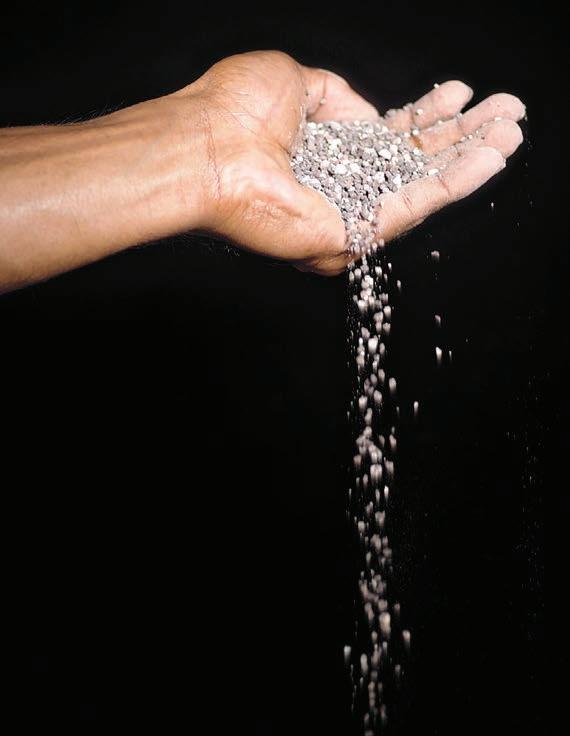
FERTILISER prices are rising but companies have secured supplies for autumn needs and are urging farmers to follow their normal buying patterns.
There is little sign of farmers stockpiling, with Ballance Agrinutrients customer manager
Jason Minkhorst saying this is something the co-operative discourages as product quality can decline.
“It’s a price-versus-quality trade-off. We believe it’s better for farmers to keep their money in their pocket and the fertiliser dry in our sheds until they need it.”
The Iran conflict continues to disrupt shipping of oil and fertiliser from nations in the Persian Gulf through the Strait of Hormuz but companies say they have sourced fertiliser supplies from alternative markets.
Ravensdown has bought DAP from Morocco and urea from Brunei.
Ballance has also been sourcing product ahead of spring from
multiple regions and Minkhorst urges farmers to plan ahead, saying it has built supply chain resilience through longer lead times.
Contingency volumes of selected products are also being secured but Minkhorst said final prices for all its products will be known once supply is contracted.
Unsurprisingly, the world’s top economic bodies are growing increasingly alarmed at the situation.
Dr Murat Üngör University of Otago
Earlier this month fertiliser prices increased, with urea breaking the $1000/tonne mark and other widely used products increasing by up to $100/tonne.
Ravensdown sales and marketing manager Daniel Pranic said in a newsletter to customers that global fertiliser prices are being forced up as countries seek nutrients from alternative markets but also by fuel and higher supply chain costs.
New Zealand agriculture relies on imported fertiliser but as Dr Murat Üngör, a senior lecturer in economics at the University of Otago, wrote in The Conversation, more than 80% of countries import at least 75% of the fertiliser they use.
Between 2023 and 2025, Iran, Qatar and Saudi Arabia supplied 36% of global exports of urea.
In addition to these supply pressures, China, one of the world’s largest fertiliser producers, has restricted exports.
“Unsurprisingly, the world’s top economic bodies are growing increasingly alarmed at the situation,” Üngör wrote.
The International Monetary Fund warns that food security “could be threatened, with disruptions to fertiliser markets ahead of the planting season leading to substantial food price inflation”.
Meanwhile, the New Zealand government has contracted for 93 million litres of additional diesel storage capacity at Marsden Point fuel import terminal, to be available from May 31.
The storage capacity, equivalent to nine days of national diesel consumption, is being renovated
and provided by the listed company Channel Infrastructure, which now runs the terminal.
Storage tanks unused since the refinery closed in 2022 are being recommissioned.
Channel told the NZX the upgrade works involve tank cleaning, the construction of linework to connect the tanks into
CONCERN: Food security and food
the diesel infrastructure and the installation of instrumentation and pumping systems to facilitate the movement of fuel through the supply chain.
The contractual details with the government include $20 million upfront costs and $1.2m a month operating cost over a short-term agreement.

Food and fibre
FOODSTUFFS co-ops say with the costs of fuel and fertiliser increasing because of the war in Iran, they are working with suppliers to mitigate costs, agree on fair increases and isolate temporary costs.
General manager of Pukekohebased Primor Produce, Emmett Farrell, said they are consolidating orders and making more deliveries to Foodstuffs distribution centres, rather than direct to shops. Foodstuffs is absorbing some
supplier costs by distributing the produce to shops.
“It’s more economical to get a truckload to a distribution centre than direct to shops,” he said.
Primor Produce grows mostly cabbage, cauliflower and lettuce, but also grows avocados and imports mandarins.
Farrell said Foodstuffs is committing to taking specific volume from growers for long periods.
A Foodstuffs spokesperson told Farmers Weekly they’re working with suppliers to identify practical efficiencies that help reduce costs while maintaining reliable supply.

These include optimising deliv-




ery routes to stores, consolidating orders into full pallets, collaborating to ensure trucks are filled to capacity and reducing delivery frequency and increasing load size to lower transport costs.
The supermarket chain is working with suppliers through longer-term agreements under an Grower Commitment Programme.
An example of this is introducing three-year agreements for key produce lines such as cauliflower and cabbage, giving greater certainty of demand for growers.
Foodstuffs said with recent Stats NZ records showing 3.4% annual food price inflation (FPI) in March,
It’s more economical to get a truckload to a distribution centre than direct to shops.
Emmett Farrell Primor Produce
they saw co-op retail price rises of 3.7% year on year for their comparable basket of products.
Global fuel and packaging costs are yet to flow through to grocery prices and they also want to limit the impact on consumers.
Foodstuffs NZ managing director
Chris Quin said neither the Stats NZ annual food price inflation rate of 3.4% nor the Foodstuffs co-op’s 3.7% average year-on-year increase across its comparable FPI basket reflects the renewed cost pressure up and down the supply chain from the economic shockwaves of the Middle East conflict.
While there are no product shortages, they are seeing the early impacts of higher fuel costs.
Some of the cost increase will take time to show up on the shelf, “because we’re at the end of global and domestic supply chains”, Quin said.


Bryan Gibson NEWS Technology
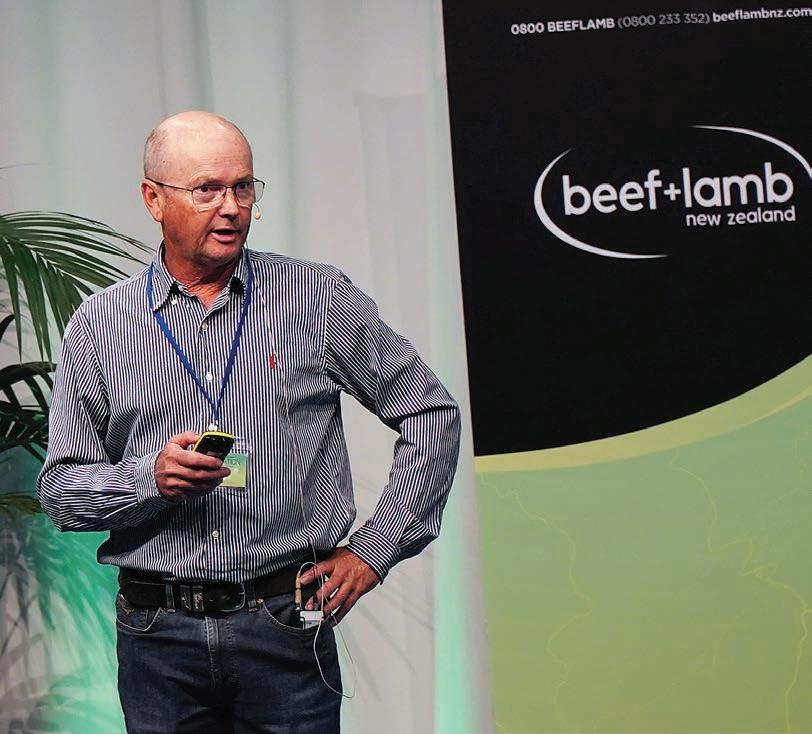
NEW South Wales sheep farmer Mark Mortimer says there are three boxes that a new piece of technology has to tick if it’s going to be adopted on his farm. It has to make what he does easier, improve labour efficiency or profitability, and inform his management decisions.
Mortimer was keynote speaker at the Beef + Lamb New Zealand AgInnovation conference in Palmerston North.
He told the Farmers Weekly Podcast that assessing any new tech offering against these three criteria is critical to getting a return on investment and avoiding unnecessary investment and work.
He has applied this thinking to a number of offerings and found it helpful in deciding whether to add it to the business.
“Technology that forces me to change what I’m already doing is much harder than one that comes in and makes what I already do easier,” he said.
“And the second point I like to look at is ‘Does it make the data a
byproduct of management?’ So, do I get the data that I need to make the next season’s decisions as a byproduct of working this season?
“Thirdly, obviously, the product has to improve labour efficiency and the economics, but more importantly, the labour efficiency.”
With regulators in New Zealand considering implementing EID tags for the sheep flock, Mortimer had some advice on how to best use the technology. But he warned that not all farm businesses would realise that value.
Do I get the data that I need to make the next season’s decisions as a byproduct of working this season?
“Introducing electronic tags ticked all those three things that I look for. They made what we already do easier, it is a bioproductive management, and there is proof of labour efficiencies. But if you’re a commercial farm running a mob-based system, those same electronic tags don’t deliver those
same gains. You have to change what you’re doing to implement it. The data is an extra job that you didn’t have before.”
Another thing to consider is the support any technology requires. Mortimer was part of a government-funded project to install farm-wide monitoring systems that produced data on water use, soil moisture, weather conditions and fuel consumption.
He said it was fantastic information to have, but once the project funding ended, maintaining the hardware and software became his job, and that changed the equation.
“There wasn’t third party or independent experts, so when I took over running the system myself there was a lot of knowledge gaps.
“When certain sensors or things broke, finding somebody, or working out how to fix them, has been quite problematic.”
Support is the key, and Mortimer said he will often recommend an inferior product that comes with better support.
Another argument against farm automation is the perceived loss of the human factor in identifying and solving problems.
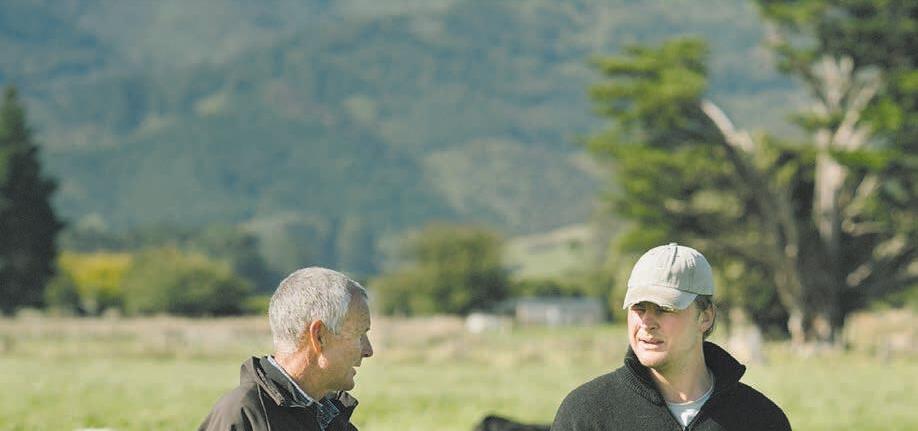
But Mortimer said technology doesn’t have to replace a farmers experience, rather, it can complement it.
“I have some pretty intensively grazed salt bush blocks. A thousand sheep will go into a small block and they’ll spend seven days there, and that’s the grazing for that block for the year. But I can drive past that block two days in a row and realise there’s a water problem by how many leaves are left on the trees. Because it’s a salt bush, if they stop drinking,
they stop eating. But the sensor in that paddock will say the trough’s fine, because it’s full.”
In the end, any technology needs to work for the farmer, and the system, it is being used in, Mortimer said.
“My father mentored me. Now I’m rapt to be able to do that for someone else.”


BNZ’s First Farm Package is about helping farmers succeed in the long term It connec ts eligible first dair y farm or herd buyers with a local mentor who’s keen to pass on their wisdom Wairarapa dair y farmer Rob has seen enough seasons to know some oppor tunities don’t come t wice And when they feel right, you take them W ith reduced deposit requirements, flexible funding options, and suppor t from an Agribusiness Par tner, BNZ’s First Farm Package gives you the suppor t to move when the oppor tunit y feels right


NNigel Stirling POLITICS Trade
EW ZEALAND and India will complete a key step on their path towards a free trade agreement this week.
Legal checks of the text have been completed and the two countries’ trade ministers will formally sign the agreement in New Delhi today.
However, the countries’ two parliaments will need to pass enabling legislation before the agreement enters into force and tariff reductions can commence.
For NZ that step has become much easier with the Labour Party agreeing last week to support the deal, giving the Nationalled government a parliamentary majority to pass enabling legislation after coalition partner NZ First said it would not back the deal.
In return for its support, Labour has secured an expanded labour inspectorate, faster visa changes when holders change employers and priority for progressing the Modern Slavery Bill.
In a statement Trade Minister Todd McClay said the legislation will be tabled in

Hugh Stringleman MARKETS
Dairy
WEAK prices for milkfat products have dragged the Global Dairy Trade price index down by 2.7%, the second substantial market fall in April.
April’s movements have totalled minus 6%, following the 24% increase accumulated during January, February and March.
In the second April auction, anhydrous milk fat dropped 9.6% and butter prices slid 7.9%.
The powder products fared better, with skim milk powder up 3.2% and whole milk powder falling 0.6%.
The cheese products were a mixed bag, with mozzarella down 3.1% and cheddar up 1.1%. Lactose prices were up 7.2%.
NZX dairy analyst Rosalind Crickett said the scale of the fat product declines exceeded forecasts and reflects persistent global supply availability combined with competitive pricing pressure, particularly from United States butter, which continues to undercut international markets.
“European pricing remains relatively flat, supported by strong seasonal milk flows and steady cream availability, further reinforcing downward pressure on fat values.
“Ongoing geopolitical tensions linked to the conflict involving Iran are contributing to elevated freight, insurance and input costs.
“Disruptions around the Strait of Hormuz and sustained high oil prices are feeding uncertainty into buyer behaviour, with many opting to delay procurement in anticipation of improved cost conditions and clearer logistics.”


Parliament on Tuesday before being referred to a select committee, “allowing all parties to continue considering their support as the public also scrutinises the agreement”.
McClay said signature of the agreement means NZ remains on track for so-called Most Favoured Nation benefits in the agreement.
These would see NZ wine exporters match larger tariff cuts achieved by the European Union – although this does require NZ’s own deal to enter into force before the EU’s.
McClay said if this can be achieved it would be worth “tens of millions of dollars” to the NZ economy.
Otherwise the agreement will see tariffs eliminated on 57% of NZ’s current exports to India on its first day, rising to 82% once fully implemented.
Tariffs on kiwifruit, apples, mānuka honey and some dairy products will be sharply reduced.
“This once-in-a-generation agreement gives our exporters unprecedented access to 1.4 billion people and an economy set to become the third-largest in the world,”
McClay said.
“With so much global unrest, a trade agreement with India has never been more important for New Zealand’s prosperity.”



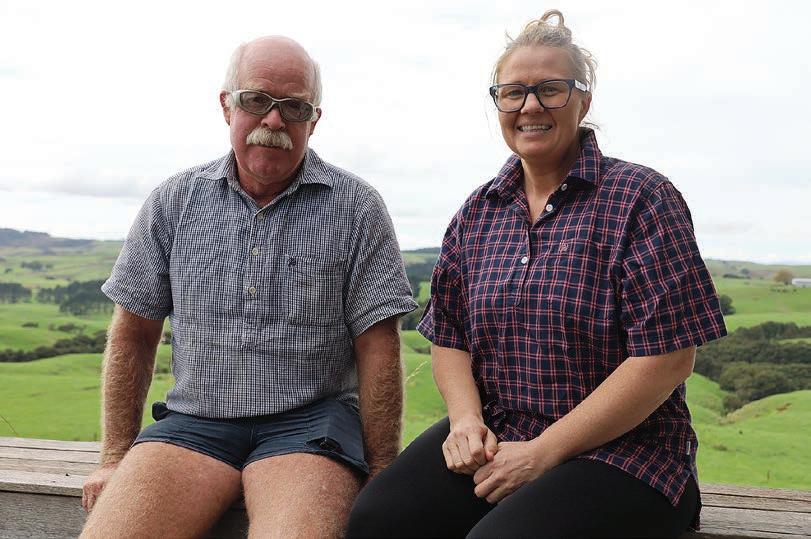
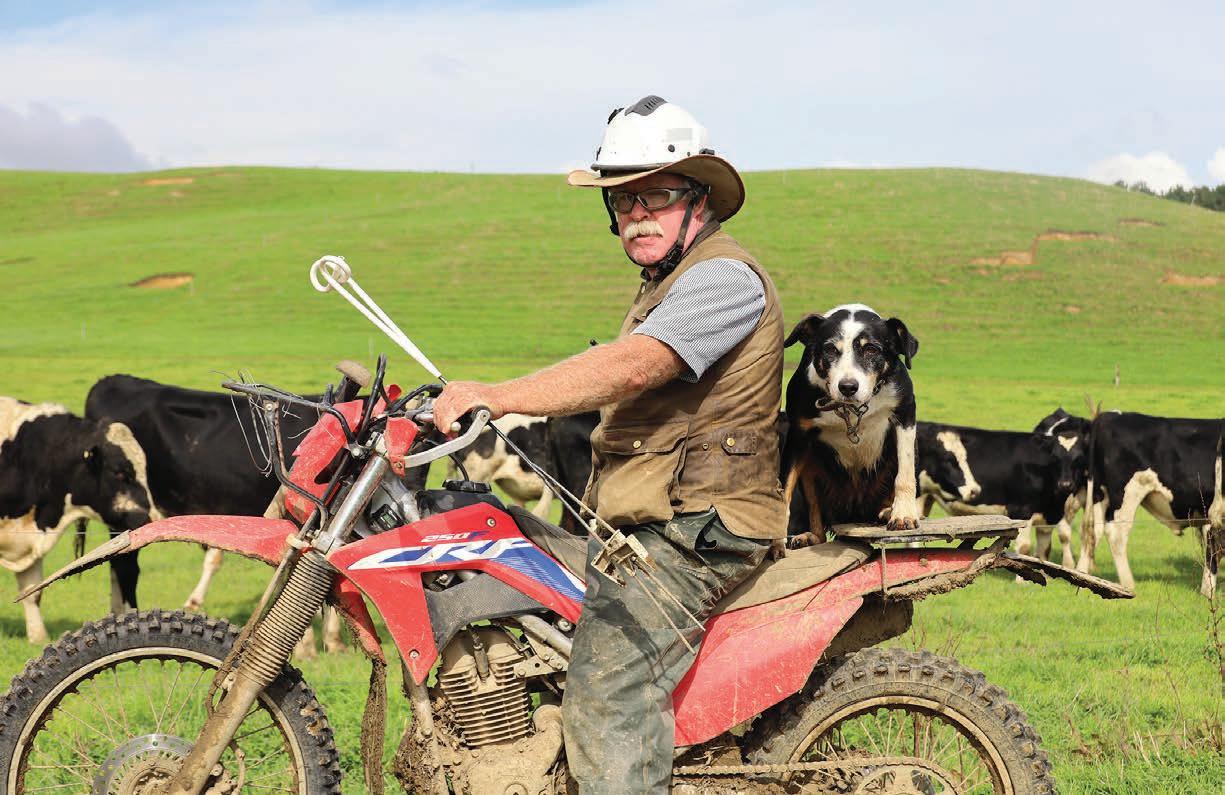
NEIL Aicken uses a combination of years of experience and technological knowhow to finish 2000 bulls every year at Waikawa Farms in northwestern Waikato.
It’s an approach that’s netted him numerous industry awards over the years, and he is recognised by his peers as a top bull beef finisher.
He was a category winner in the Waikato Ballance Farm Environment Awards in 2008 and 2016, won the SFF Plate to Pasture Award in 2015 and was last year’s SFF regional winner for supplying bull beef.
He is also heavily involved in local and industry activities in governance roles including FarmIQ, SFF, Beef + Lamb Farmer Council, Monitor and Hub Farm groups and the Farmer Research and Advisory Group.
We
are margin traders and we have to be really careful – and I’m ruthless on that.
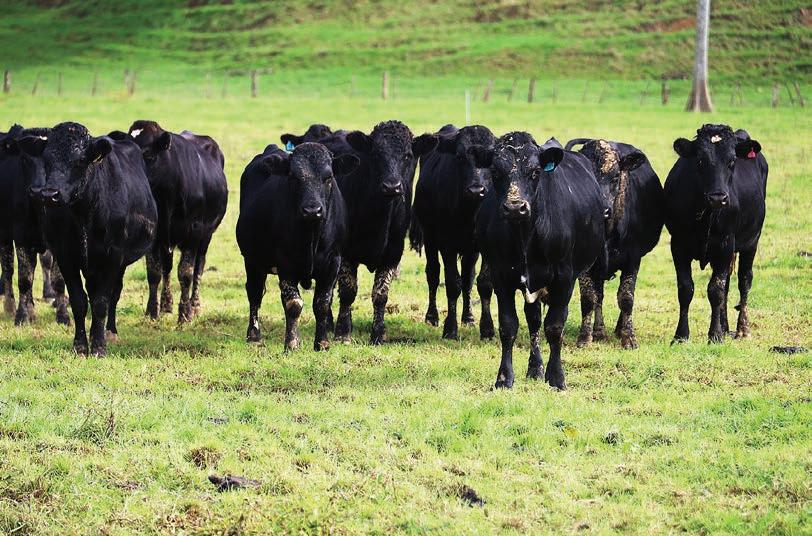
The 500-effective hectare farm near Onewhero uses an all-grass cell grazing system to finish cattle, producing 530kg carcase weight a hectare a year, more than double the industry average of 200kg CW/ ha/year.
It is divided into 1500 paddocks or cells. The cattle are run in mobs of around 20 with each mob finished across around 15 cells. At peak, Aicken will have 100 mobs of bulls being finished across the farm.
His grazing rotation varies from 30 to 120 days depending on the time of the season, with the round lengths being dictated by the pasture growth curve. He buys the bulls as yearlings,
weighing 200-300kg when they arrive on the farm in late summer.
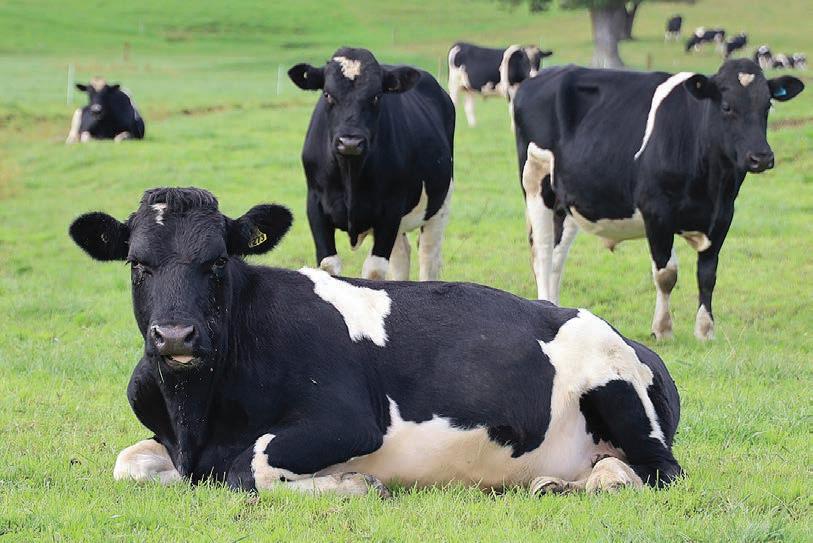
Although he prefers Friesian bulls, the lack of availability of this breed in recent years has meant he has had to buy in beef bull breeds instead.
Until recently, sourcing those bulls was the biggest challenge he faced with the system he has got, he said.
That has changed this season as, buoyed by surging global beef prices, more rearers have grown Friesian bulls and made them available for purchase.
The lift in prices for buying those calves over the past few years along with rising input costs means Aicken has to be hardnosed when it comes to buying young bulls, he said.
“We are margin traders and we have to be really careful – and I’m ruthless on that. You can go and buy bulls, but if you are not getting enough at the other end, your margins get squeezed and we really protect our margins.”
He buys the bulls himself from all over the North Island. When they arrive, they are drenched, inoculated, weighed, NAIT recorded and placed in a quarantine paddock for two days.
The bulls are again drenched, weighed and inoculated during their first winter and they receive another weighing when they depart on the truck to be processed.
There’s no strict target finishing weight, though Aicken says he looks for a 300kg CW per animal.
He aims to have the cattle finished in December-January, which reduces stock numbers during the drier summer months.
The new batch of young bulls are placed on a longer round to match the slower pasture growth rates in mid to late summer.
There are also fewer cattle on the farm at this time of year to help protect the pastures as the weather turns colder and wetter.
That changes around July with the rounds gradually shortening and by September it is back to a 30-day round again.
Running an all-grass system, he uses three applications of fertiliser throughout the year, all spread aerially from aircraft launched off the farm’s allweather airstrip.
Data and recording are a key component to his system and Aicken uses Harvest weather station software to monitor the farm’s weather outlook, soil moisture and temperature.
The software is also connected to the farm’s stock water system, which is fully automated to feed the header tanks that then gravity-feed through to its 800 micro troughs located throughout the farm. The water is sourced from a combination of bores and waterways.
The stations are equipped with flow metres that inform him of the volume of water being used and alert if there is an issue such as a leak.
“That’s revolutionised that side of it,” he said.
He has also connected his electric fences to this system, allowing him to know if there is a fault anywhere on the farm.
Aicken said he previously would “monitor everything that moved” on the farm. These days, he uses his knowledge and experience in monitoring each mob’s growth rates and pasture levels in the cells.
The return on the time, effort and cost spent collecting and interpreting data was not being justified, he said.
“We’re just doing it ourselves on spreadsheets.”
Long-term staff member Leanne Polglaze said it is a return to the basics of farming.
They enter the data on spread sheets, but they maintain control and ownership of it and Aicken can use it as he sees fit.
“We have probably gone back to simple – even with our monitoring, it’s really simple, basic stuff,” she said.
Aicken is a long-standing Silver Fern Farms supplier, going back when it was Richmond prior to being bought out by PPCS.
Throughout that period, both during the tough times and now when beef prices are at record highs, he has stayed loyal with that long-standing relationship
extremely important to him.
He has similarly long-standing relationships with “super agent”
Simon Boshier, who is his main point of contact with SFF, as well as the company’s upper North Island regional livestock manager, Brett Devane.
“They know how I work, they understand the farm, they bend over backwards for me and I would do the same for them.”
He has hosted many visits from SFF customers over the years. Most recently a Chinese delegation came to the farm to look at how he operates.
SFF also helped Aicken achieve a New Zealand Farm Assurance Plus Silver certification for Waikawa.
This is a quality assurance audit that encompasses all aspects of the farm business from animal welfare to human resources, environmental sustainability and emissions.
It sits alongside and overlaps his Farm Environment Plan.
Looking ahead, Aicken said his focus is on sharing his knowledge with the next generation of farmers and fine tuning the business to find those small percentage gains across the whole business.
“We’re looking for those one percents. If we can get 10 of those, that’s going to help us.”
Farming is built on resilience and planning beyond the season ahead . At ASB, we back farmers to make confident decisions on-farm and bring that same disciplined, long-term mindset to investing .
ASB Investment Funds are first for 12 month returns in the Conser vative fund categor y.
This result reflects the strength of our local insight, combined with global exper tise through our world-class par tner, BlackRock.
Speak to an ASB Rural Manager about how we can help suppor t your hard-earned gains on-farm, to build long-term wealth for you and your family.



Richard Rennie NEWS Carbon farming
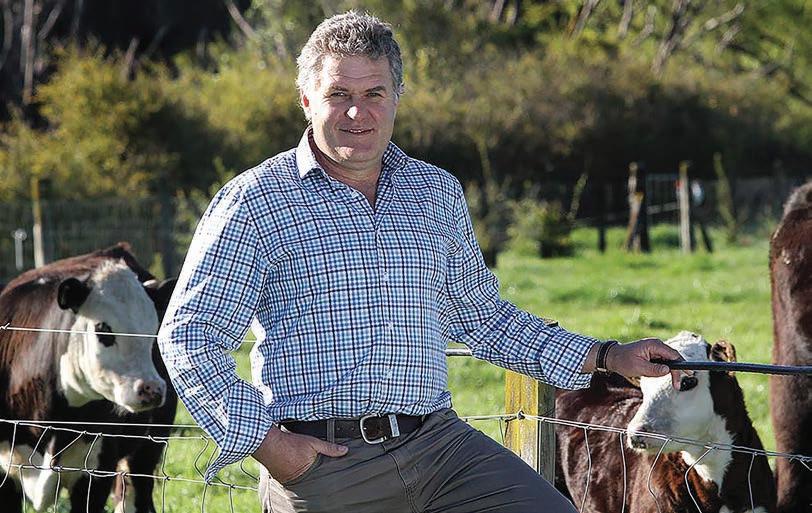
THE head of MyFarm Investments acknowledges the pushback carbon forest plantings have generated from rural communities, but also points out the opportunities forest land use brings to farmers seeking to exit the industry.
“If you think about New Zealand’s land use history, forestry planting is really just one part of it and we are only now back to the forest plantings we had almost 20 years ago,” said Andrew Watters.
He cautioned that anyone pushing back on a farmer’s decision to quit their farm for forestry needs to be wary about the risks of tampering with basic economics, and freehold property rights.
“And a vibrant rural real estate
market is a good thing for the sector.”
His company manages several large scale mānuka plantations in partnership with Comvita for generating carbon income and income from honey production.
“For us the Comvita partnership is the exception rather than the rule. We would rather harvest, but the carbon income provides cashflow up front, which is very valuable.”
MyFarm has bought one carbon
If you have a small, uneconomic farm and you wish to exit and someone offers you a good price ... who among us can stop that?
Andrew Watters MyFarm
forest and has established one, but Watters said harvest remains an option for one forest of 400 hectares in the North Island and one of 500ha in the South Island.
While New Zealand’s exotic forest plantings are only back to where they were 20 years ago, Watters said they are more visible now than then, given they had spilled out from the likes of the east coast and central North Island into other pastoral dominated regions.
He said land use shift to forestry was the opposite end of the spectrum to dairying, which had resulted in significant boosts to rural communities where the land change had taken off.
“But if you have a small, uneconomic farm and you wish to exit and someone offers you a good price that enables you to buy a bigger farm, or attend to your family’s needs, who among us can stop that?
“There are some farms that should really be in trees.”
Watters cautions that new government rules on what land can and cannot be planted in trees risks being an overreaction, slowing forestation dramatically in coming years.
“I think they [the government] have been surprised by its impact.”
He said he had dealt with criticism from the people in the pastoral sector over carbon forestry investments and he is
not sure NZ can have a sensible, mature discussion on the merits of such forests.
“The issues over forest slash and cyclone damage is definitely a wake-up call, but it is not an argument against forestry.”
He believed with energy costs surging and the national debate about a $1 billion natural gas facility in play, the forestry sector is at an inflection point and able to play a greater role as an energy source.
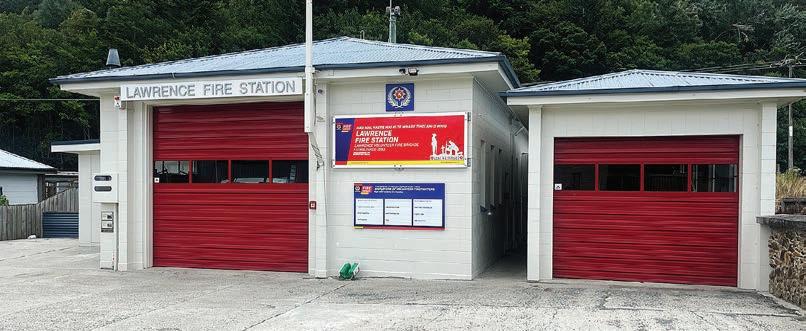
GAPS in the ranks of volunteer rural fire fighters are being filled by targeted recruitment and extra training, Ngāi a Fire and Emergency NZ spokesperson. Questions have been raised about the ability of volunteer brigades to respond to forest fires given the scale of conversion of farmland to exotic forestry.
In written answers to questions from Farmers Weekly, a FENZ spokesperson said rural brigades are supported by targeted recruitment and training as needed.
All stations must have sufficient personnel to safely crew fire trucks
or vehicles, rotate responders, maintain training, and meet incident response protocols.
“That number varies station to station based on risk profile, geography, and expected incident levels and types of incidents.”
That includes sourcing staff from other volunteer brigades and deploying specialist personnel and resources as needed and based on the types of incidents those brigades generally respond to.
NZ has 11,800 firefighting volunteers who staff nearly 600 stations, making up 85% of FENZ’s firefighting resource.
The commercial forestry sector has its own voluntary code of practice to manage their fire risk.
“While the code is not legally required, it is widely followed
across the commercial forestry industry and has also been adopted by some operators within the carbonfarming sector,” FENZ stated.
“The level of forest fire risk varies depending on the surrounding environment such as fuel condi-
tions, topography, weather, and activities in or around the forest that could create ignition sources.
“The extent to which these factors have been assessed, and subsequent risk mitigation measures that are put in place will determine the level of concern for
any particular forest area.”
The Forest Fire Risk Management Guidelines were developed by the Forest Owners Association and Farm Forestry Association and are designed to assist FENZ.
“These guidelines are nonprescriptive but provide guidance on managing forest fire risk or threat of fire and ensure forest owners and managers can communicate with FENZ.”
Forest owners can stratify their estate into fire zones, produce a risk register for each zone and define risk treatment and mitigation plans that address those risks.
FENZ is mandated to respond to fire emergencies, making it the lead agency.

Richard
Rennie NEWS Arable
IWI and industry are hoping a Northland maize-to-ethanol proposal could leverage off New Zealand’s new awareness of its foreign energy dependence, and provide cropping opportunities to farmers.
Supporters also see the proposal as an opportunity to deepen agribusiness ties with Brazil, a longtime ethanol-producing nation with capabilities NZ could engage with to build capacity here.
Marcelo Menoita, CEO of the NZ Brazil Business Chamber, told Farmers Weekly the Brazilian ethanol sector is continuing its boom in growth, buoyed by even stronger energy prices since the Iran war kicked off.
“When we started discussions with NZ, the war had not started. Brazil’s corn-to-ethanol sector is now very strong, and growth continues.”
As of early 2026, corn ethanol accounts for about 22% of Brazil’s total ethanol production. Sugar cane remains the main source, but projections are for corn to continue to grow rapidly to reach
30% of the total ethanol mix by 2026-27 planting season.
The corn ethanol growth has come in less than a decade from zero. In total, plant- produced ethanol accounts for almost half the country’s light vehicle fuel market, and 25% of total transportation fuel.
Expectations are Brazil will be fuel self-sufficient within 15 years.
When we started discussions with NZ, the war had not started. Brazil’s corn-to-ethanol sector is now very strong, and growth continues.
Marcelo Menoita NZ-Brazil Business Chamber
Menoita said NZ would not require or be capable of plantings anywhere like Brazil’s but there is the opportunity to use Brazilian distilling expertise to develop a suitable plant.
NZ is already a beneficiary of Brazil’s corn ethanol industry by being that country’s third largest importer of dried distillers grain (DDG), the main by product of
corn ethanol production. Last year NZ imported 140,000 tonnes of it for pig, poultry and cattle feed supplement.
Menoita sees potential for production of sustainable aviation fuel (SAF) as one potential fuel offtake, something airlines globally are exploring.
“And with Marsden Point there, you have the ability to store and distribute down to Auckland.”
Rhonda Kite, Northland iwi member and the NZ-Brazil Māori business development adviser, said there could be about 100 farmers at least interested and capable of growing maize in the region.
At present Northland accounts for barely 5% of NZ maize grain production. Northland has four main climatic zones, two suitable for maize and two suitable for wheat-barley production that she said could help buoy feedstock volumes.
“We are at the point where we would need to conduct a feasibility study. I look around and see an abundance of land we could plant on.”
She said while Marsden Point’s industrial footprint may make the region appealing, it is also the chance to inject an economic
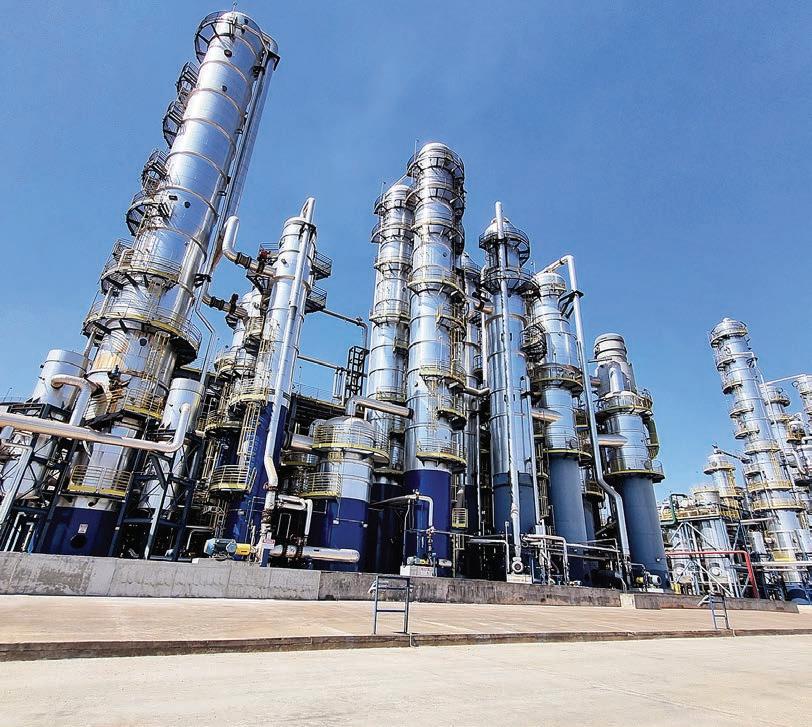
FUELLED: Brazil’s corn-to-ethanol capacity has grown from almost zero to a projected 30% of the national ethanol supply in less than a decade.
benefit into Northland.
“And for Māori landowners it’s not having the land that’s the problem, it is having the capital to establish use of that land through longer term offtake agreements for the crop.”
A broad plan includes an initial 50 million litres a year of ethanol production. But this would require about 130,000t-150,000t a year of grain maize feedstock.
NZ’s total maize grain production is only about 200,000t a year, with Northland providing barely 8000t of this.
Promoters of the scheme hope to spread the production of feedstock across 100 growing contracts, but this would require each to grow about 120ha to hit that target. Despite this challenge Kite said the energy crisis should prompt local and central government to start thinking “outside the square” when it came to weaning the county off imported energy and increasing provincial growth opportunities.
She hoped the project could have feasibility-study funding confirmed by late May.
Would you like the opportunity to develop your governance experience at one of the country ’s leading rural organisations? If you’re an FMG Member, actively farming or growing , and can demonstrate leadership within the rural community with plans to progress further, then we’d love to hear from you.
FMG is delighted to be offering this development opportunity, adding to our existing commitment to support rural achievement ; and with it , enhance governance within the primary sector
For more, and to apply, head to FMG’s website and search ‘Associate’.
Applications close 30 May 2026.
We’re here for the good of the country.
Whether it ’s a custom blend or dair y pellet , smar t modelling tools , or advice tailored for your farm , SealesWinslow is about nutrition that delivers measurable benefits Through science, teamwork , and practical guidance, we make sure what you do today sets your herd up for bet ter per formance tomorrow
Richard Rennie NEWS Agriculture
AS THE number of adverse events hitting the country multiply,
the head of the MPI’s On Farm Support unit says her team is playing an increasing role in helping farmers respond, while also lifting resilience to future events.
Now three years into its existence, the OFS unit was created at a time when multiple government departments were retracting under the coalition’s budget drive.
Today the unit employs 48 staff across 10 regional offices, costing about $9 million a year.
Its creation, aimed at boosting the Ministry for Primary Industries’ presence at a regional level, was met with some skepticism by some farmers and consultants. It drew fire from consultants for paying above the odds to build its staff base.
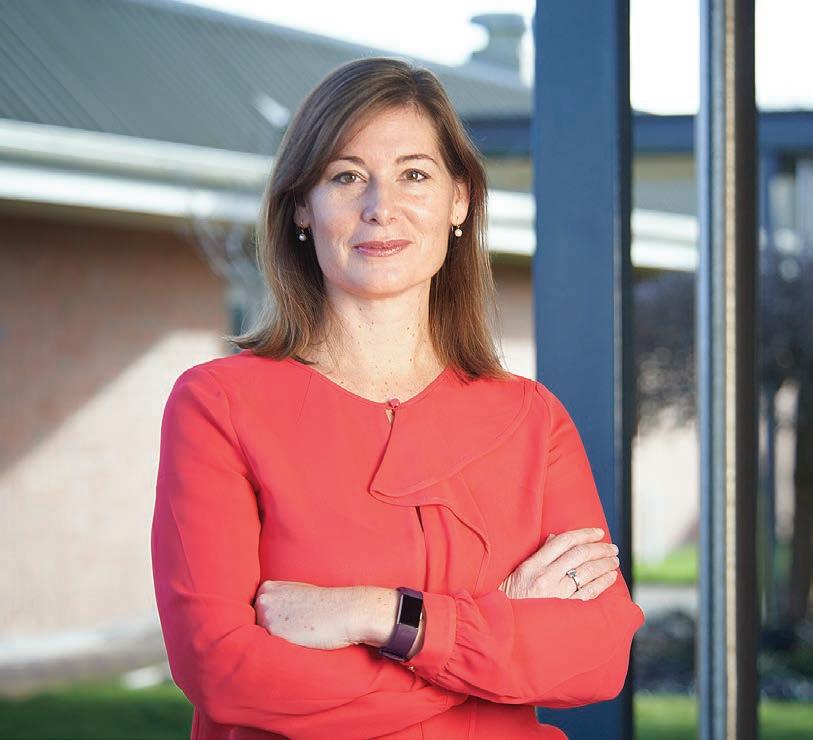
Today director Vanessa Winning says the relationship between her team and the farm consultancy community has matured, with growing recognition that “we are here to help, not compete”.
In her first 10 months on the job, Winning has overseen seven adverse event responses.
She agreed such a unit may be more timely now than 10 years ago, given how such events are more common now.
“If you were to take the wind events down south last year, we had three different regions hit in three different ways.
“We were uniquely placed to not just respond, but to help farmers get up and running quicker.”
This included helping irrigation supply companies secure equipment and parts needed in the Hurunui district, and secure electricians to install generators in Southland.
AgFirst director James Allen said there is a place for MPI’s team at a farmer level.
We were uniquely placed to not just respond, but to help farmers get up and running quicker.
Vanessa Winning On Farm Support
However, he also questioned how well the unit has managed to meet one of its original aims, to improve extension to farmers.
“It is less certain how well they have done there. Whilst there are some great people in the team it is not so clear on what their objectives are.”
This was echoed by Waikato consultant Matt Bartleet, who said it probably started with “good intentions”, but lacks direction.
Winning likened her unit to “glue” that keeps a farm support
ecosystem interconnected, with the direct line back to Wellington being useful not only for adverse event response but also in helping the government understand how the sector can respond better to future events.
She acknowledged the OFS is not perfect but pointed to work collaborating with levy-paying bodies and consulting companies aimed at growing sector resilience.
This includes extension events like the latest one working with the Energy Efficiency & Conservation Authority, advising on alternative power sources to deploy on farm to improve resilience.
“The resistance to us early on has definitely died off. Relationships and trust take time to build in this early phase.”
One longtime rural consultant told Farmers Weekly that having a body of people on the ground in provincial New Zealand with a direct link back to Wellington and MPI is invaluable.
“It is a direct line there that helps build a level of rapport and trust. It has been of particular value when we are grappling with RMA reform.”
The consultant did, however, challenge the $9 million a year price tag for running the OFS unit.
Winning said this is a relatively small amount if farmers are being better informed, educated and prepared for adverse event response, compared to the
expensive fallout after an event they may have been less prepared for.
Bay of Plenty farmer and catchment group board member Rick Burke said having a regulator (the MPI) in the room at farmer meetings limits how much farmers feel comfortable discussing.
“But what we can do that others don’t, is we are agnostic to your land use,” said Winning.
“We can go and talk to farmers and growers independently of who is getting paid from a levy perspective.”
This week’s poll question:
Has MPI’s On Farm Support service contributed positively to your business?
Have your say at farmersweekly.co.nz/poll
Richard Rennie NEWS Agriculture
THE Ministry for Primary Industries’ On Farm Support unit is another strand in a farm support space already offering farmers multiple choices.
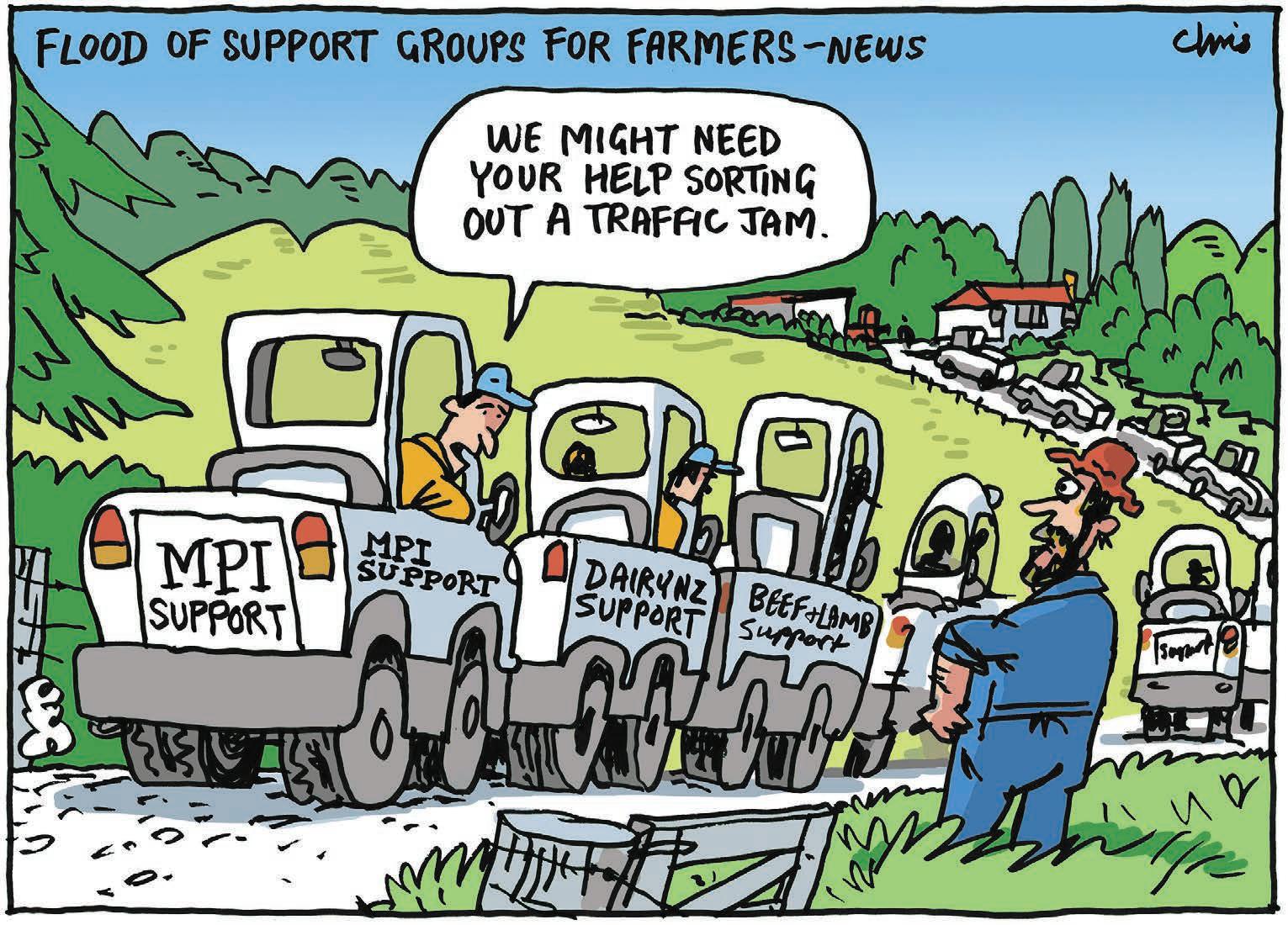
This is according to Federated Farmers president Wayne Langford, who said the field is now a crowded one that includes the MPI, DairyNZ, Beef + Lamb New Zealand and multiple private consultants all offering their services.
“There are a lot of sign-written white utes going down farmers’ driveways and it does make you wonder if there is a bit of duplication or inefficiency in the system,” he said.
MPI’s On Farm Support director Vanessa Winning was emphatic that any ute of theirs down a farm driveway would only be there on that farmer’s bidding.
“We are not out proactively going down drives and wasting farmers’ time.
“That’s probably not really levelled at us, I would have thought.
“If we are going down a farmers’ driveway as On Farm Support, we have been asked to go down that driveway. There’s been an adverse
event, or something where we have been asked to help out.”
Langford said he does not have a firm view on who is best placed to deliver services.
“But what I do know is that if there is one thing that frustrates farmers it is unnecessary duplication and cost.
“It’s actually farmers who are paying for all of it whether that’s through our taxes or levies and we want to know we are getting value for that investment.”
Associate Minister for Agriculture and Biosecurity Minister
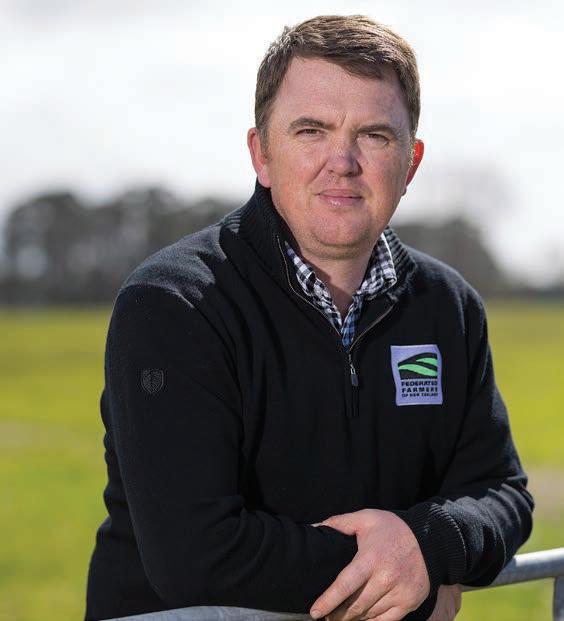
CROWDED: While not naming names, Fed Farmers president Wayne Langford said farmers should be concerned about the competition for farmers’ attention in the rural support space.
Andrew Hoggard said he has had little to do with OFS since its inception.
“But I do recall when it was created, my question while in Feds was ‘Wouldn’t a levy body do this work?’ I dislike this idea of duplication.”
He said as an ACT member he would always be in favour of minimising government involvement.
“My focus would be to ensure we fund MPI properly and leave other stuff to those that can deliver it.
“It’s something we will be looking at and diving into if we
control government departments after the election. It’s on our radar.”
A BLNZ spokesperson told Farmers Weekly it sees the OFS unit fitting into the wider rural community needs, for things like responding to adverse weather events or catchment level problems not specific to one sector or another.
They confirmed organisations like BLNZ do not always have the capacity or capability to service needs of farmers in areas like adverse event responses.
“Having an agency that can step in there is really useful.”
DairyNZ’s chief of farm solutions and engagement, Mike Borrie, said the group sees OFS having a broader public role to assist farmers and growers across all sectors navigate their needs and connect with available support.
“From our perspective, the key issue is not the number of providers, but whether farmers can access the right support at the right time, with clear roles and minimal duplication.”
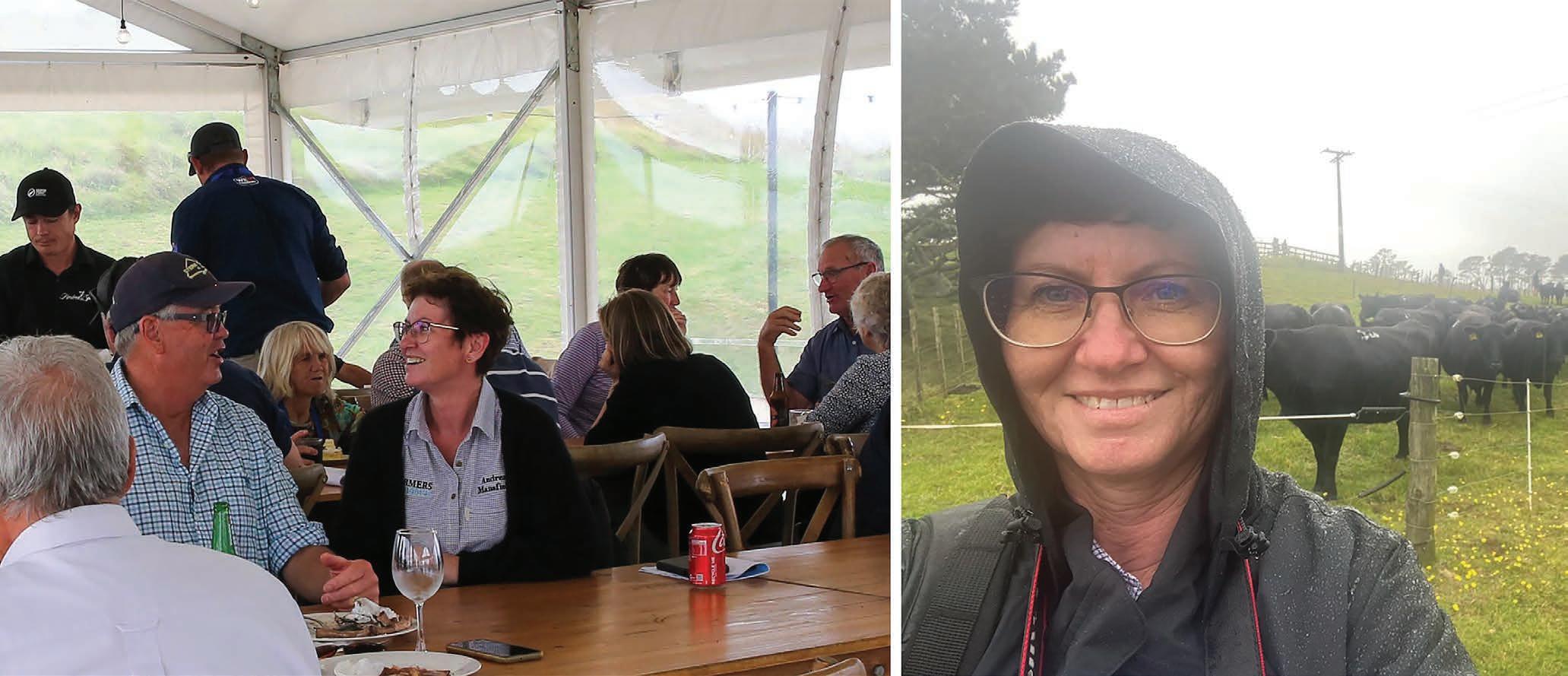
In March our Livestock Advertising Manager Andrea Mansfield joined the Northland Angus tour.
This four-day tour through Northland breeders’ properties was a great chance for Andrea to spend time with some of the farmers who use Farmers Weekly to reach other farmers with their advertising.
The livestock section in Farmers Weekly has attracted the stalwart support of farmers since it was launched in 2003.
That’s why it’s so important to have Andrea out and about in the industry seeing these people – a real, dedicated person behind this real product.
She is one of the many people who come together every day to make this publication happen with the same dedication and drive.
Keep an eye out this week for the Autumn Bull Sales Showcase. It’s a great reflection of the work Andrea does. If you value this publication and the people behind it, starting a voluntary subscription ensures it stays strong. $120 a year, $15 a month or whatever value you decide.
Charlie Williamson Community Manager

Scan the QR code or go to www.farmersweekly.co.nz/donate
Email your name, postal address and phone number to: voluntarysub@farmersweekly.co.nz and we’ll send you an invoice.


Richard Rennie Senior reporter
WITH the year a third through, it seems these lonely islands at the bottom of the world have been tossed and washed thoroughly by repeated storms, all before winter has even arrived.
Outwardly, that could make the existence of the Ministry for Primary Industries’ 50 On Farm Support (OFS) staff a relevant, pertinent presence to help get rural communities back on their feet after the intense weather they have experienced. But it appears there is a strong undertone of doubt among those very communities about whether OFS is a help or a distraction before, during or after an adverse event strikes.
Born from a desire in the wake of M bovis to have better connections between MPI
head office and rural constituents, OFS has some questioning whether 50 staff and an annual cost of $9 million is the best way to achieve that.
The unit is expected to deliver frontline extension-advisory services, help farmers navigate regulatory complexity, and assist with adverse event response.
Each of these roles has drawn criticism.
As levy payers to the likes of DairyNZ and Beef + Lamb NZ, farmers are loath to be paying again through their taxes to the MPI to also offer extension.
There is nothing farmers dislike more than duplication, particularly of costs they pay. The car parks at many industry events are already dominated by multiple agencies’ sign-written, expensive utes.
When it comes to helping farmers navigate regulatory complexity, many argue that, rather than bringing in another layer of bureaucracy to help them through it, a cheaper solution is to just make the rules simpler.
Which leaves adverse event response.
Ironically, thanks to the increased frequency of such events, rural New Zealand’s ability to prepare, respond and recover is only getting better.
Irrigators in Canterbury know well now to park their kit parallel to the prevailing wind. Bay of Plenty kiwifruit growers have doubled
More than 90% of those who took the poll do not think NZ has the correct regulatory settings in place to ensure sheep and beef farming and forestry can both thrive.
“The only thing thriving is the sale of good farms to pine trees to overseas investors,” said one voter. “Lease the land, not sell off the best asset we have.”
“Logged forestry has its place,” said another, “but not selling of whole farms to overseas companies/people to plant up in pine trees and throw away the keys for carbon credits. If that can’t be changed, at least make it they have to plant it back in natives.”
Another said: “Government and councils all over NZ have failed to set proper regulations to control forest companies . The forest poses huge risk to the whole land ecosystem at harvest time.”
Of the 9.6% who were happy with the regulations, many pointed out it is farmers who are selling the land for forestry.
“We want free trade so this means no subsidies or incentives for sheep and beef farming. This industry simply needs to continue to perform at the existing returns and we will never see another tree planted.”
down on shelter protection against storms.
Then, after an event, multiple community and national groups like Rural Support Trust exist to help with recovery and assistance, and neighbours are also nearby and willing.
If OFS has been created partly to be a permanent army to be deployed during and after such events, it risks overlapping those services already there.
During “peace time”, when nature is quiet, OFS has been challenged as a solution looking for a problem.
Key performance indicators to measure achievement and relevance appear to be lacking. Adverse event participation would be a poor measure of continual success.
Between adverse events, OFS staff can be found at industry and farmer gatherings. But this too can be problematic, with some farmers seeing the “army” as the policeman at such events, representing the powerful MPI, and thereby stifling what may otherwise be free and critical debate.
OFS really kicked off after the 2023 election, just as every other government department and agency was shrinking.
As budget deficits continue to pile up and the economy falters again, questions are likely to continue to be asked about its relevance and whether the job could not be done with fewer staff and greater alignment with existing levy-funded agencies.
Last week’s question: Do you think NZ has the right regulatory settings to ensure sheep and beef farming and forestry can both thrive?
Chris Kaelin Te Awamutu
IT HAS been disappointing to see farming leaders appearing on mainstream media complaining about the price of fuel and related supply issues.
To suggest stock may not be fed, as was suggested by a leader of Federated Farmers on Seven Sharp, is simply absurd. A meeting between Federated Farmers and rural fuel suppliers could no doubt have resolved some issues.
The fact is most individuals and businesses are affected by the high fuel prices and high electricity prices. In the last 50 years, pastural farming has never experienced a season like this year where growing conditions throughout the country have been consistently good and product prices in some cases have been exceptional.
Federated Farmers have little sympathy when shoppers complain about high butter and beef prices but are quick to hop on the media bandwagon when fuel prices are high.
What also concerns me is the ingrained opposition by the rural community, in particular Federated Farmers and rural media, towards alternative fuels. I love my diesels – after all, there is nothing better then the noise and smell of an old, dirty diesel engine.
However, since the first oil crises in the early 1970s I have felt there must be alternatives to oil. We are sending billions of dollars overseas into the pockets of individuals like the Saudi royal family. Many conflicts over the last 60 years have been financed with oil money.
In New Zealand we have now the option to replace some of that oil with alternative fuels like biogas from waste or solar energy. For many farmers, probably one of the bigger concerns is the price and availability of fertiliser. This raises another question. Nitrogen use has been the cheapest way to produce grass. I know very little about pastures, but ask myself whether today’s pastures have become too reliant on nitrogen fertilisers. I can’t help noticing where we used to grow clover, now we are growing Bristol grass.
letter WINS a quality hiking knife
Send your letter to the Editor at Farmers Weekly P.0. Box 529, Feilding or email us at farmers.weekly@agrihq.co.nz

This week’s poll question (see page 16):
Has MPI’s On Farm Support service contributed positively to your business?
Tim Rhodes Rhodes is an owner-operator dairy farmer in Collingwood, Golden Bay
NEW Zealand farming has long been built on a simple but powerful foundation: selfdetermination.
The most successful farms in this country are not simply well-resourced but are deeply understood by the people who run them. These are owner-operators who have spent years refining systems, making independent decisions, and responding to the land, stock and seasons with autonomy. They are not following templates; they are creating them.
After six years working with DairyBase financial benchmarking, I have a front-row seat to the performance gap within our industry. As part of that top 25% of farmers, I understand, both from the data and experience, how much more profitable highperforming farms are compared to the average.
That gap is not about luck or scale alone. It reflects how decisions are made, and who makes them.
The best-performing farms are typically led by experienced,
self-determined farmers who have spent a long time on their land. Their systems are not always textbook. Some avoid supplements, others invest in targeted inputs that appear unconventional. What unites them is not a specific system, but autonomy, freedom from over-direction by consultants or lenders, and the ability to finetune decisions over time. That autonomy is the source of their performance.
This raises a practical question: why is this model not reflected in the management of state-owned farmland?
Pāmu holds a significant portfolio of land on behalf of the public, yet its financial returns have often lagged behind top private operators, many of whom carry substantial debt and still outperform state returns.
The issue is not the land. It is the model. A system built around governance and process cannot replicate the performance of farmers who are deeply invested in, and fully responsible for, their own decisions.
A more effective approach would retain state ownership but shift to a farmer-led leasing model.
Under this model, Pāmu would lease farms to proven highperforming farmers, established owner-operators with a track record of profitability, environ-
mental responsibility, and sound workplace practices.
Selection would be based on verifiable data, including DairyBase benchmarking and farm financial performance, alongside evidence of safe, stable working environments.
The aim is not just higher returns. It is better farming.
Lease conditions would set clear expectations around environmental limits, such as stocking rates and nitrogen loss, alongside requirements for maintenance, pest control, and animal welfare.
Workplace standards would also be embedded, ensuring reasonable hours, proper training, and longterm staff retention. In this way, the lease becomes a framework for both performance and accountability.
This model also creates a pathway for scale and succession. Experienced farmers running mid-sized operations could sell to emerging farmers, reduce debt, and step into larger, betterresourced Pāmu farms. That allows proven operators to apply their skills at scale without overextending financially or giving up control through equity arrangements.
By contrast, traditional pathways such as contract milking, sharemilking and equity management do not always build the same level of independent
decision-making. These roles often involve working within systems designed by others, limiting the development of the judgment that defines top-performing farmers.
If we want the best outcomes on Pāmu land, we need farmers who have already demonstrated the ability to design and run successful systems themselves.
There is also value in transparency. A network of leased Pāmu farms could operate as open, high-performing examples –sharing financial and operational data, hosting field days, and supporting peer-to-peer learning.
This would lift performance not just within Pāmu, but across the wider sector.
At its core, this is a shift from control to stewardship. The state retains ownership and sets the boundaries but trusts capable farmers to deliver within them.
It aligns public assets with the realities of what drives farm performance in New Zealand.
Put proven farmers in charge, give them autonomy within clear boundaries, and expect they will perform.
I am realistic about my own position now, and no longer looking to take on a larger, more intensive farming operation. However, had I still been in my fifties, this is exactly the kind of opportunity I would have stepped into. That is the gap this model should fill: creating a pathway for experienced, self-determined farmers to scale up when they are at the right stage of their lives. If Pāmu is to deliver stronger returns and better outcomes, its model must reflect what already works. Put proven farmers in charge, give them autonomy within clear boundaries, and expect they will perform.
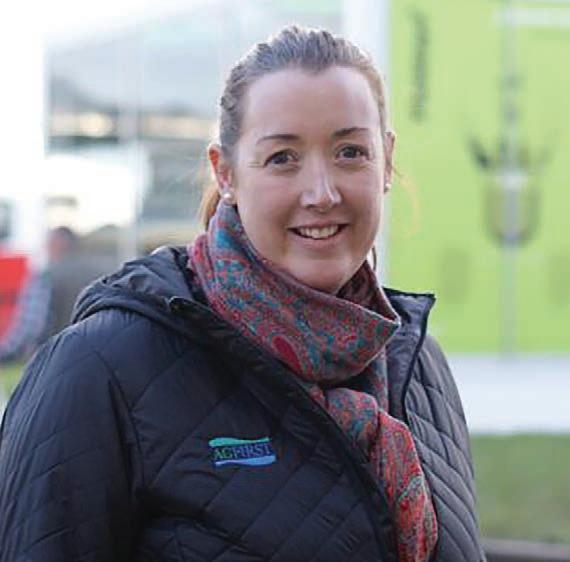
Erica van Reenen Van Reenen is chair of AgFirst New Zealand and a director of Morrison Farming
IN MY role as AgFirst chair, advisory work with clients, and recent (overseas) professional development, I’ve been noticing there are a few signals I can’t quite shake. None of them are new on their own, but together they point to something bigger.
Since de-regulation in the 1980s, New Zealand farming has been built around efficiency. Producing high-quality food at lower cost than most of our competitors has been our edge, and it’s served us well.
But I’m starting to wonder whether the next phase will be shaped less by efficiency, and more by resilience.
Globally, the operating environment is becoming less stable – which is a bit hard to reconcile when prices are so good at the moment. Climate volatility is increasing, with more frequent and severe events affecting production.
Geopolitical tensions are reshaping trade flows and access to key inputs. Logistics, which we’ve largely taken for granted,
are becoming less predictable. At the same time, countries and companies are responding. There’s a clear shift towards building more secure, self-reliant systems. Reshoring production, locking in supply, or building redundancy into supply chains, including stockpiling. Many are also willing to significantly increase government support to enable it. That’s a different mindset. It’s less about optimising for lowest cost, and more about ensuring continuity under pressure. Sustainability hasn’t gone away, but it has changed. In many markets, it’s no longer a point of difference. It’s an expectation, increasingly embedded in
CONTINUITY: A different mindset is emerging, says Erica van Reenen
– one that is less about optimising for lowest cost, and more about ensuring continuity under pressure.
procurement and trade. The focus is moving from “are you sustainable?” to “are you reliable, traceable, and able to deliver under a range of conditions?”
That’s where resilience starts to matter more.
The challenge for New Zealand is that resilience doesn’t always look efficient; and can be very difficult to justify in an un-subsidised system.
We’ve spent decades refining systems to remove waste, lift productivity and maximise return per hectare. That’s been the right focus. But resilient systems often require something different –more flexibility, more options, and in some cases, more redundancy.
We’ve already seen glimpses of this locally. Fertiliser is a good example. For years, we’ve optimised around reliable global supply and competitive pricing. But recent disruptions have highlighted how exposed that model can be, whether through price volatility, access constraints or geopolitical risk.
Responding to that kind of uncertainty doesn’t necessarily mean abandoning efficiency, but it does raise questions about how much reliance we place on single inputs or supply channels, and what alternatives or buffers we have in place.
That same shift is playing out globally, but at a different scale.
I was exposed to some of these in detail at the Harvard Business School in January. In parts of North Africa and the Middle East, food production is intrinsically tied to political stability and security. In Europe, the war in Ukraine has reinforced how quickly productive systems can be disrupted, and how important redundancy and domestic capability become under pressure. But also, how reliant countries like New Zealand are on global supply chains.
Across both food and energy systems, countries are actively trading off efficiency for security.
Resilience can look like cost –
until it becomes critical.
This isn’t about swinging the pendulum away from efficiency altogether. It remains one of our competitive advantages. But the balance may be shifting, and we’re not always explicit about the trade-offs we’re making.
At a farm level, this isn’t about reacting to every global headline. It’s about how decisions are framed.
It might mean asking: how exposed is my system to a single market, input or climate risk? Where do I have options; and where don’t I? Am I optimising for average conditions, or building for variability?
It also means paying closer attention to where your product ends up, and how those supply chains are evolving. The further you are from the end market, the harder it is to see these shifts, but they are happening.
As we did in response to deregulation, maybe we need to apply some of that famous No. 8 Wire mentality to crack it – can we build resilient systems without losing what makes us competitive?
Because the risk isn’t necessarily getting it wrong. It’s not seeing the shift early enough to respond.


Samantha Taylor PEOPLE Dairy
AFTER long-haul travel from the United Kingdom to New Zealand in July 2003, Martin Lemke was dragged out of bed early in the morning to help his father-in-law, Kevin Bayliss, with herd testing.
It was his first taste of dairy farming up close and personal, and he remembers getting back to the house for breakfast and telling his now wife, Janice, that they “have to get out of here”. Farming wasn’t his cup of tea.
Born in Namibia, Martin grew up in South Africa and met Janice while travelling in the UK in his early twenties, working a range of jobs. Dairying wasn’t something he’d ever considered.
But nearly eight years later, his next experience was much better, and he launched into a career that took him from a farm assistant to a herd manager, to contract-
milking and soon herd-owning sharemilking.
“That second experience was much better,” Martin said.
“I had spent six weeks as a stayat-home dad, looking after our six-month-old and three-year-old, which was harder than it sounds!”
Martin had opted to stay home when Janice returned to nursing, but he quickly realised he needed to find another way to spend his time. So he traded some babysitting time from his motherin-law, Dawn, in exchange for helping Kevin on the farm, which had not long become a drystock block.
“I loved it. I enjoyed being on the farm doing things.”
It wasn’t long before the elderly neighbours heard he had been helping Kevin and asked if he wanted to learn how to milk cows and give them a hand, and he jumped at the opportunity.
Martin also launched into
Primary ITO courses and soaked up as much knowledge as he could until he landed a role on a farm in
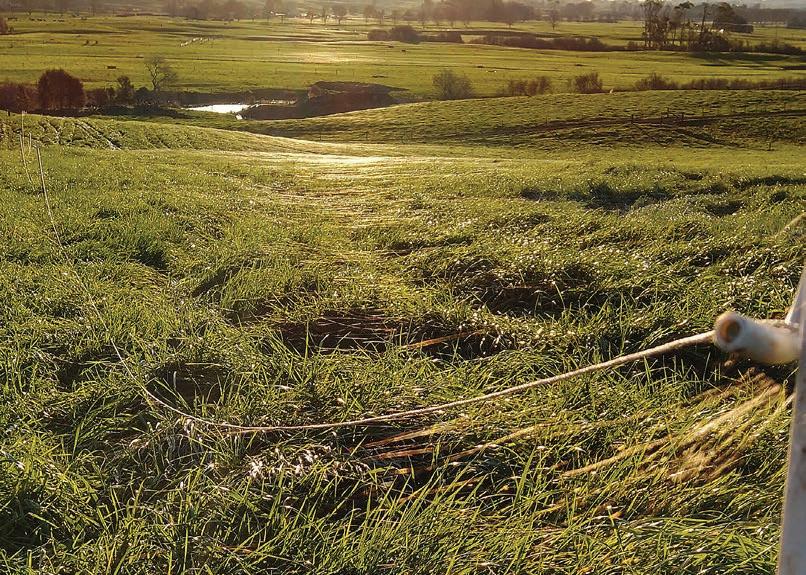
Helensville, progressing through the ranks over a few years and another farm move.
Janice was from Helensville and had grown up dairying but wasn’t eyeing it for herself or her family’s future.
When they first came to New Zealand and stepped away from the home farm, Martin’s work ranged from a second-hand furniture store to retail. It was around 2010, when they’d moved into the spare house on Janice’s parents’ farm, that Martin decided to stay home with the kids.
Nowadays he’s contractmilking in Morrinsville across two neighbouring farms owned by Allan and Helen Bonner.
“They are brilliant farm owners, and Allan is a fantastic mentor,” Martin said.
“They have given me a lot of opportunities and supported me to progress to an operations farm manager and contract milking across both farms.”
One is solely spring calving, milking 360 cows as a System 3, and the other is autumn calving the same number of cows but running a System 5.
“It’s counted as a System 5, but we are only using the feed pad to keep the cows fully fed for the winter milking contract.
Once balance day hits in early September, it’s only grass until dry-off, so basically a System 1 for the rest of the season.”
For the past four years, under Martin’s management, the farms have been hitting record production year after year.
He credits Allan’s influence.
“When I came here, I was more conservative, I think coming from up north with more weather challenges, where the Waikato is more reliable weather- and pasture-growth-wise.
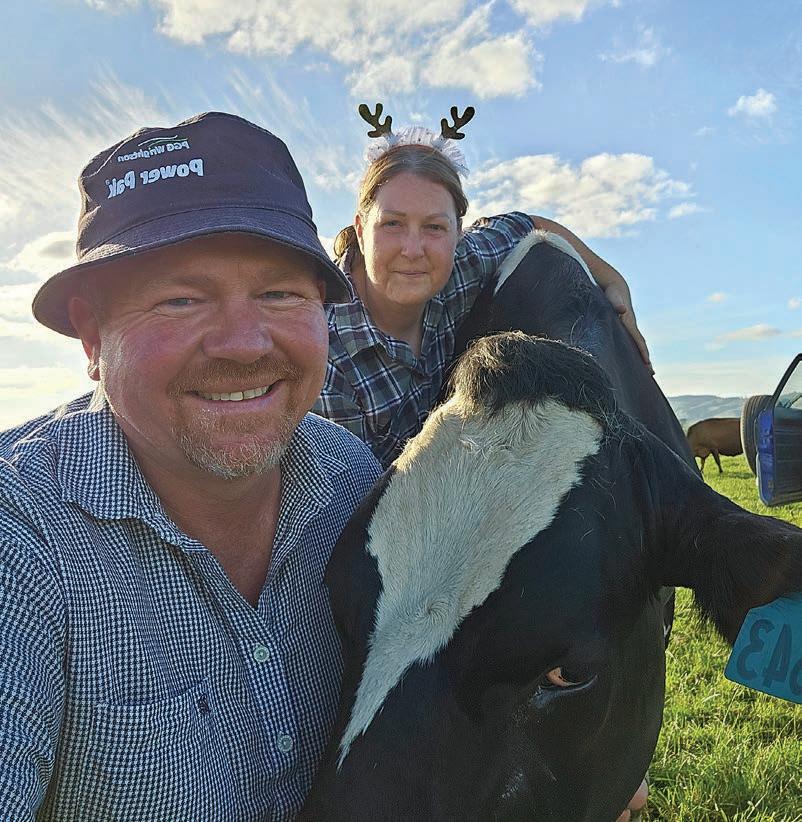
an incredible opportunity.”
They are brilliant farm owners, and Allan is a fantastic mentor.
Martin Lemke Morrinsville
“Allan has a few mantras, one being ‘plan for a great season’, so we try to keep that mindset.”
There are two team members on each farm. Martin likes to have an experienced person to support and teach anyone junior. The next step will be to buy the herd, but he knows it’ll be a big step.
“I’m nearly 50 years old, and this is a pretty big operation with a fair amount of machinery, but it’ll be
When they do get off the farm, Martin and Janice have a classic car and a V8 Holden, and they’re big on drag racing.
“Janice is a bit of a petrol head and got me into it,” Martin said.
They also ride a motorbike, but Martin broke his leg last year so has been a bit wary since.
The kids are nearly grown now, with the eldest, Sean, living in Australia, and William still at home finishing school and relief milking regularly.
Martin reflects on his late introduction to farming and wishes he’d gotten into it sooner.
“I enjoy it so much I genuinely don’t see it as work. I enjoy getting up every day doing what I do.”
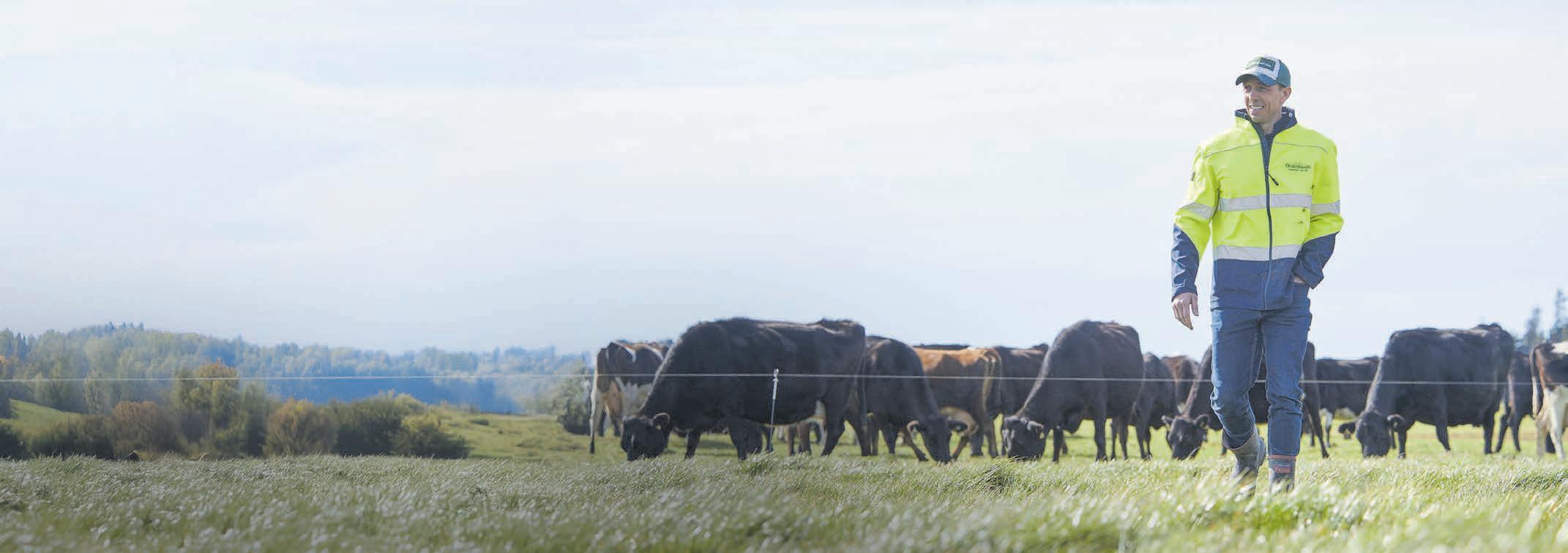

GATHERING:
THE International Dairy Federation’s World Dairy Summit will this year bring together senior global dairy leaders from across the dairy value chain to exchange knowledge, strengthen collaboration, and shape the future of the sector.
Registrations have opened for the event on November 15-20 at the New Zealand International Convention Centre in Auckland. It will feature farmers, processors, scientists, nutrition and health experts, policymakers, and industry innovators and explore the central theme of Healthy People, Healthy Planet, Healthy Economies.
IDF World Dairy Summit co-convenor Steve Holroyd said the summit will showcase the incredible power of dairy, a sector supporting the livelihoods of around a billion people globally, “and how New Zealand has harnessed innovation and science to build a world-class dairy industry”.
Building on the momentum of previous summits, the event will provide a platform for science-based dialogue and
future-focused exchange at a time when expectations around nutrition, sustainability, and economic resilience are rising worldwide, the organisers said.
The programme will feature world-class speakers, plenary sessions, technical symposiums, and forums addressing topics shaping the future of dairy.
These range from science and technology to health, climate change, grazing systems, inclusive perspectives and the role of women, aligned with the FAO’s 2026 International Year of the Woman Farmer.
IDF president Gilles Froment said the summit comes at a defining moment for the global dairy sector.
“As expectations around nutrition, sustainability, and economic resilience continue to rise, this summit will provide a vital space for science-based dialogue, shared learning, and collective action.
“By bringing together diverse perspectives from across the value chain, we can help ensure dairy continues to play a positive and essential role in nourishing people, supporting livelihoods, and contributing to sustainable food systems worldwide.”
BEING a good dairy farm employer means being clear on what “good” looks like, No8HR general manager Nick Coster told a South Island Dairy Event workshop.
It means having hard conversations because they care about the person too much to not have that dialogue, he said.
Coster was one of the presenters at the workshop at Lincoln on strategies to grow and retain great people and strengthen team culture within a dairy farm business.
Being a good boss means “showing up in ways that are uncomfortable”.
“It’s calling something up early, not six months later when it’s a bigger issue. It’s investing in someone’s development even when you’re busy and when it might be easier just to do the job yourself,” he said.
In the sector, farmers sometimes use the words ‘leadership’ and ‘management’ interchangeably. But, while leadership has a great influence, the key link in the middle for increasing productivity is operational management.
“Leadership ultimately sets the direction, but operational management is what turns it into productivity or performance.”
Dairy Training Ltd’s Hamish Hodgson said looking at the latest DairyNZ employee survey results, complaints around pay, lack of time off or a poor relationship with the employer are all things farm owners can control.
“There’s a lot of ability to influence that stuff.”
These are the three main reasons people leave the industry,
Being a good boss means ‘investing in someone’s development even when you’re busy and it might be easier just to do the job yourself’.
Nick Coster No8HR
with insufficient pay at 31%, lack of time off 15% and poor relationships with management or fellow staff at 28%.
Within that 31%, 65% of those had worked with their employer less than two years and 70% of them would not recommend the industry.
Of those who cited a poor relationship with their boss, 95% would not recommend their farm and 70% of them worked in an owner-operator structure.
Among those who cited a lack of time off, 80% would not recommend the industry and 70% had a tenure of more than five years within the industry.
“If you want to attract good people, you have to make sure you are creating a good environment
for them and supporting them,” Hodgson said.
Access to training is a key metric for keeping staff on farm. There is a strong correlation between building good teams and keeping retention percentage high, he said.
Canterbury dairy farmer Tania Burrows said finding people with the right attitude is key to staff recruitment.
She tutors Dairy Training courses and leads the NextGen Dairy Farmer programme for young people entering the industry. She gave the example of a young man she identified only as Chris, who has been employed with them since January.
“Chris is enthusiastic, he’s motivated, he’s like a massive sponge who just cannot wait to hear stuff in farming and learning some stuff. He has far exceeded even our expectations.”
One discussion topic that is made clear to staff from the beginning is her expectations as an employer.
“If you don’t have an understanding of who you are and what’s important to you, it’s very difficult to create a culture within your business that reflects that.”


DURING April, the global dairy sector began to more clearly feel the second-order effects of escalating geopolitical tension linked to the conflict involving Iran and ongoing uncertainty around the Strait of Hormuz.
While the market entered 2026 with relatively firm pricing and stable demand, the month marked a shift as rising input and logistics costs started to filter through the supply chain.
Fuel prices have been the most immediate transmission channel,
with higher energy costs flowing through to freight rates, shipping insurance premiums, and fertiliser pricing. These pressures are compounding rather than isolated, lifting both production and transport costs.
At the same time, increased uncertainty around shipping routes and transit times, particularly through Middle Eastern corridors, has begun to influence buyer behaviour. This is not yet a demand destruction story, but one of caution and risk management, with buyers adjusting timing and volumes.
Against this backdrop, New Zealand milk production has remained a key point of strength. March collections reached a record 190.4 million kgMS, a 9.4% yearon-year (YoY) increase, exceeding expectations from the NZX Milk Production Predictor, which had indicated a midpoint of 5.4%.
Season-to-date production is now tracking 4.2% ahead of last year. This growth should be considered in context. The prior season was significantly impacted by drought conditions, which constrained pasture growth and increased reliance on supplementary feeding. Even so, current output remains robust, sitting 7.6% above the five-year rolling average for March.
On a tonnage basis, collections
rose 9.7% YoY to 1.94 million tonnes, lifting season-to-date growth to 3.4%. Looking ahead, the NZX model is forecasting a milksolids increase of around 5.3% for April, followed by a more moderate 1.3% rise in May. If realised, this would see full-season production finish approximately 4.1% above the 2024/25 season.
Input costs, however, are beginning to shift farm-level economics. Palm kernel expeller (PKE) prices have firmed during April, largely reflecting higher freight costs and broader supply chain pressures. Spot pricing has generally ranged between $430 and $440 per tonne across most regions, with Southland closer to $450 per tonne ex-store.
At these levels, PKE is no longer consistently the lowest-cost option on a metabolisable energy basis, reducing its relative attractiveness as a supplementary feed. This shift may influence winter feeding strategies and, if sustained, could place pressure on production margins, particularly for higher input systems.
Globally, milk supply continues to expand across most major exporting regions. Argentina reported a 7.9% YoY increase in March production, while Uruguay recorded 6.5% growth in February. The United States posted a 2.9% increase over the same period.
In Europe, January output rose by 5.0%, supported by gains in Germany (+7.0%), France (+5.8%), and the Netherlands (+6.2%).
Despite this broad-based expansion, supply has not materially exceeded expectations, suggesting the market remains broadly balanced. In contrast, China continues to trend lower, with raw milk production declining -5.3% YoY in February.
The impact of rising costs and logistical uncertainty became more evident in April’s Global Dairy Trade (GDT) activity. After a run of positive events earlier in the year, Event 401 recorded a -3.4% decline in the overall price index, followed by a further -2.7% drop in Event 402, signalling a clear softening in momentum.
The downturn was broadbased across both events, led by significant declines in anhydrous milk fat (AMF, -7.1% and -9.6%) and butter (-8.1% and -7.9%), while powders eased more modestly, reinforcing the fat-led nature of the correction.
Buyer participation patterns also reflected the evolving impact of freight and geopolitical uncertainty.

Middle Eastern purchasing fell sharply between Events 400 and 401 before partially recovering in Event 402, while North Asia increased its presence in the latest auction. Continued support from southeast Asia/Oceania and Latin America helped offset these shifts, suggesting demand remains intact but is being reallocated in response to cost and logistical pressures rather than weakening structurally.
No dairy farm is the same.
In New Zealand, pasturebased herd management and seasonal calving shape daily operations. Despite these specific conditions, the responsibility remains the same: maintaining animal health while ensuring the economic success of the farm. The smaXtec health
management system provides the foundation for targeted herd health management and reliable decisionmaking, regardless of the challenges of day-to-day work or the season.
Continuous insights into the health status of the entire herd, including both lactating and dry cows, are generated directly from within the cow. The smaXtec bolus
measures key health parameters inside the reticulum, including internal body temperature, water intake and drinking cycles, rumination and activity. This enables farmers to detect changes several days before clinical symptoms appear.
Based on this information, farmers can act as early as possible, and take targeted, preventive measures. This supports healthier herds, can help reduce disease costs, and increases performance throughout the seasons.
By combining early detection with individual customer consultation, smaXtec helps farmers move from reactive to proactive herd health management. This allows them to structure their work more efficiently and focus their time where it has the greatest impact. The result is healthier animals and improved farm profitability. Regardless of farm size, structure or management style –smaXtec is a fit for your farm!

Jayson and Gladys Chavez moved to New Zealand from the Philippines and work as contract milkers in Winton, Southland. They share their insights on what it takes to create a new life in a new land.
JAYSON CHAVEZ moved to New Zealand in 2007 as an assistant herd manager. His wife Gladys followed him two years later. Since then, their farming career has taken off and they are now into their third year contract-milking 900 cows near Winton.
Jayson said his dream was always to work on a dairy farm.
“I had the opportunity to come here and now it’s my passion. The industry is booming and it’s really good time to be a farmer.”
Dream job or not, settling into a new job in a new country is a big undertaking.
“The first challenge was the climate,” laughed Jayson.
“It’s very hot over in the Philippines. When I arrived here, it was winter. Going from hot to cold like that was very hard.”
Language was another barrier at first.
“Even though we understood English, the way Kiwis speak sounds fast to us and the terms
people use can be different. We learn American English and here you use British English.”
Gladys trained in hotel management but had a background in cattle farming in her family that she is now putting to good use. During busy times, like calving, Gladys helps Jayson on farm. For the remainder of the year, she’s helping the boss on day-to-day maintenance on the farm.
The couple are hoping to progress their career in the dairy industry and take a further step up in the years ahead.
A recent windstorm gave them a taste of how extreme weather can disrupt even the best-laid plans.
“Trees fell onto the power lines on a neighbouring farm, so we were without power for four days. Luckily, the boss had a generator,” said Gladys.
Life is busy in other ways too.
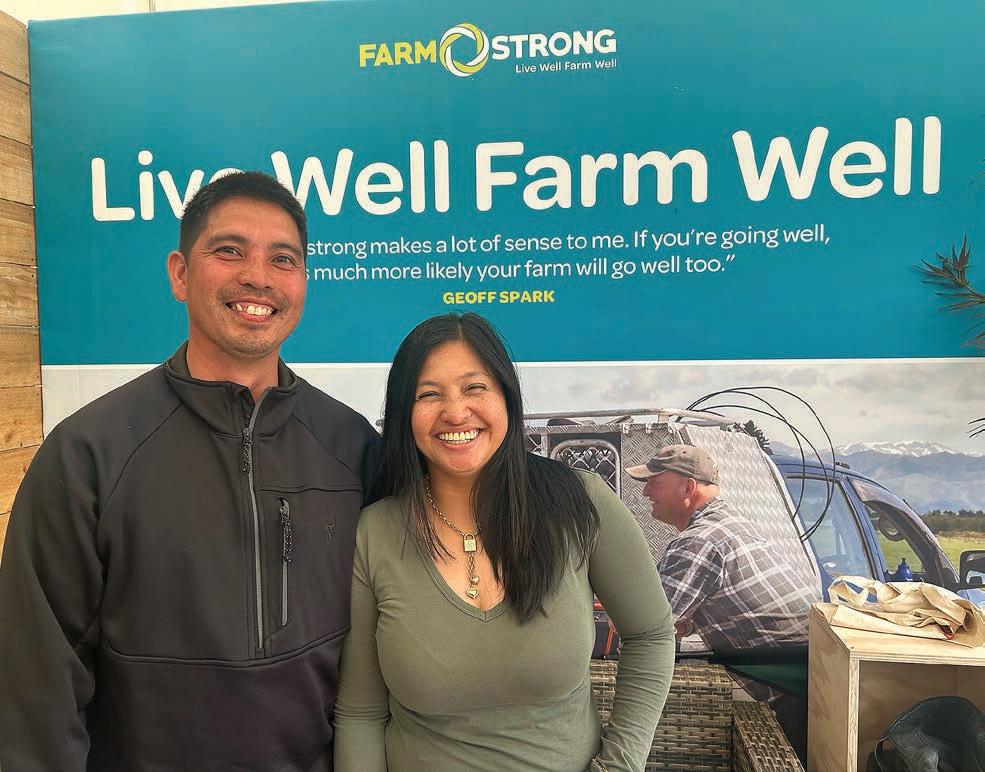
The couple have two children, aged nine and 16. They changed from an 8-2 to a 6-2 milking roster last year to spend more time as a family and achieve better work-life balance.
“My eldest, my boy, also helps out as a farmhand. I think he’s going to grow up to be a farmer too,” said Jayson.
Looking back on their experience of moving to New Zealand, Jayson said the support of others plays a huge role in making it all work.
“We’re lucky that we have a very supportive boss,” he said.
“There’s also a strong Filipino community in Invercargill. After busy times like calving, they organise a basketball league where we can all catch up and get a team together with a group of friends.”
Gladys said her favourite pastime is baking and making Filipino bread. She also enjoys playing badminton as a break off farm.
The couple said one of the secrets of keeping well on farm is to “keep calm as much as you can. I think that’s what we learned from our boss. When things don’t go to plan during the day you have to give yourself some breathing space and regain control.”
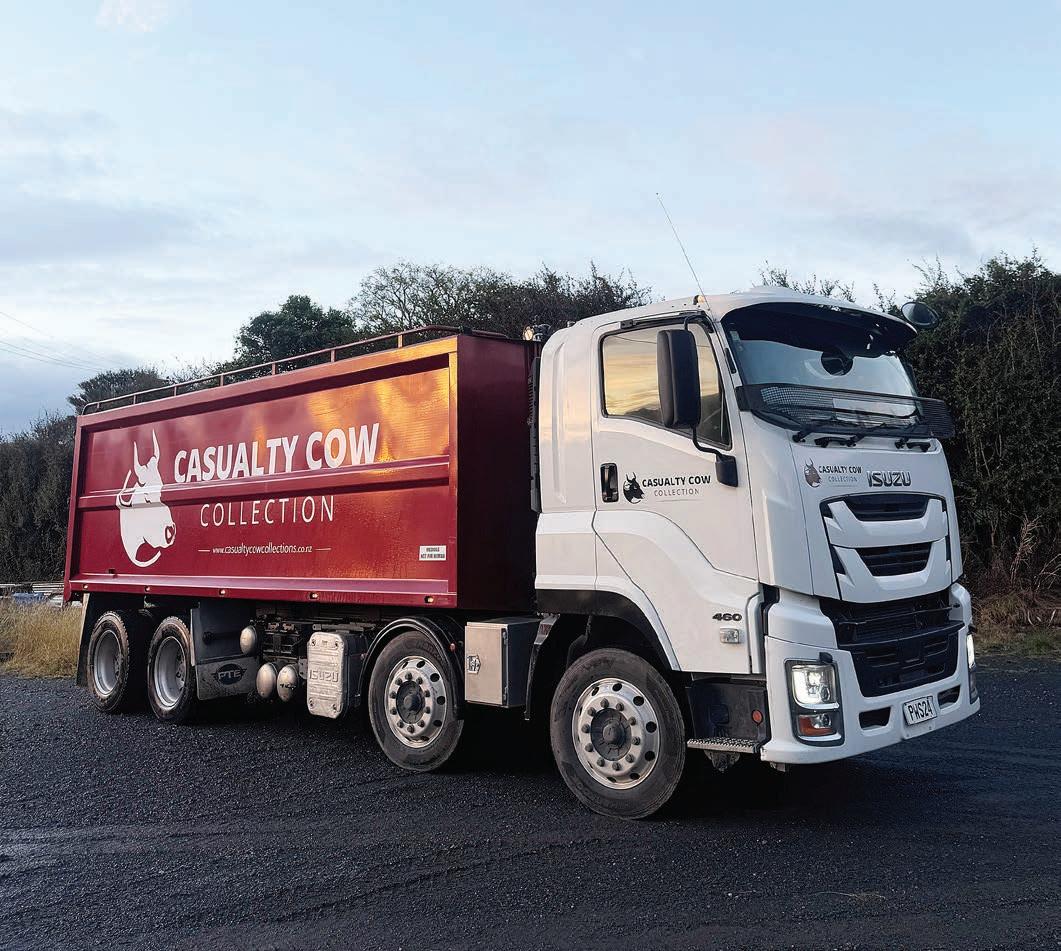
Adjusting to a new culture takes time, said Gladys.
“It’s easy to feel isolated and lonely when you first come to another country. I think you’ve just got to keep communicating with local people, because that’s how you can learn not only the skills you need, but you also about the different culture.
It’s nice to think that something like Farmstrong is checking on others to see if they are emotionally and physically well.
Jayson Chavez Winton
“For example, the people on the neighbouring farm, they’re always advising and helping us.”
Maintaining connection to their own culture is another family priority.
“Maintaining our language is vital for the kids. They are losing our language, which means when we go home for vacation, they’re like strangers. That’s why we speak our own language at home.
“At first, we were worried our kids would struggle with English
Owners – now servicing a larger area • Responsible stock disposal • Operating 7 days a week • All cows will be collected within 24 hours of customers making payment
but because the kids spend so much time at school they actually learnt quickly. That’s why the teachers told us to keep talking your own language at home.”
Their advice for others following in their footsteps?
“Work hard and build a good relationship with your employer and co-workers, if you can, because they are people who can help you to step up.”
Jayson said they’re both keen Farmstrong supporters.
“I think looking after yourself as well as the cows and the pasture is a good thing because farming is a very hard job sometimes. It’s nice to think that something like Farmstrong is checking on others to see if they are emotionally and physically well. That’s got to be good for the farm too, doesn’t it?”
Farmstrong is a nationwide, rural wellbeing programme that helps people manage the ups and downs of farming and growing. Last year, 20,000 farmers attributed an increase in their wellbeing to the programme. For free, farmer-to-farmer tools and resources head to www.farmstrong.co.nz
is the official media partner of
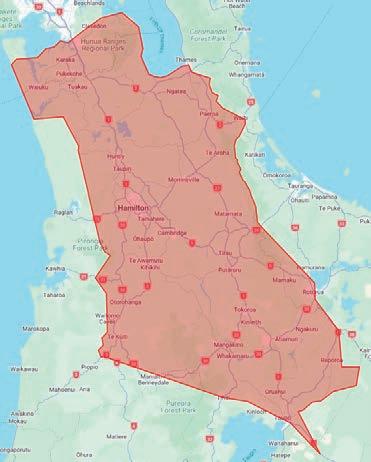










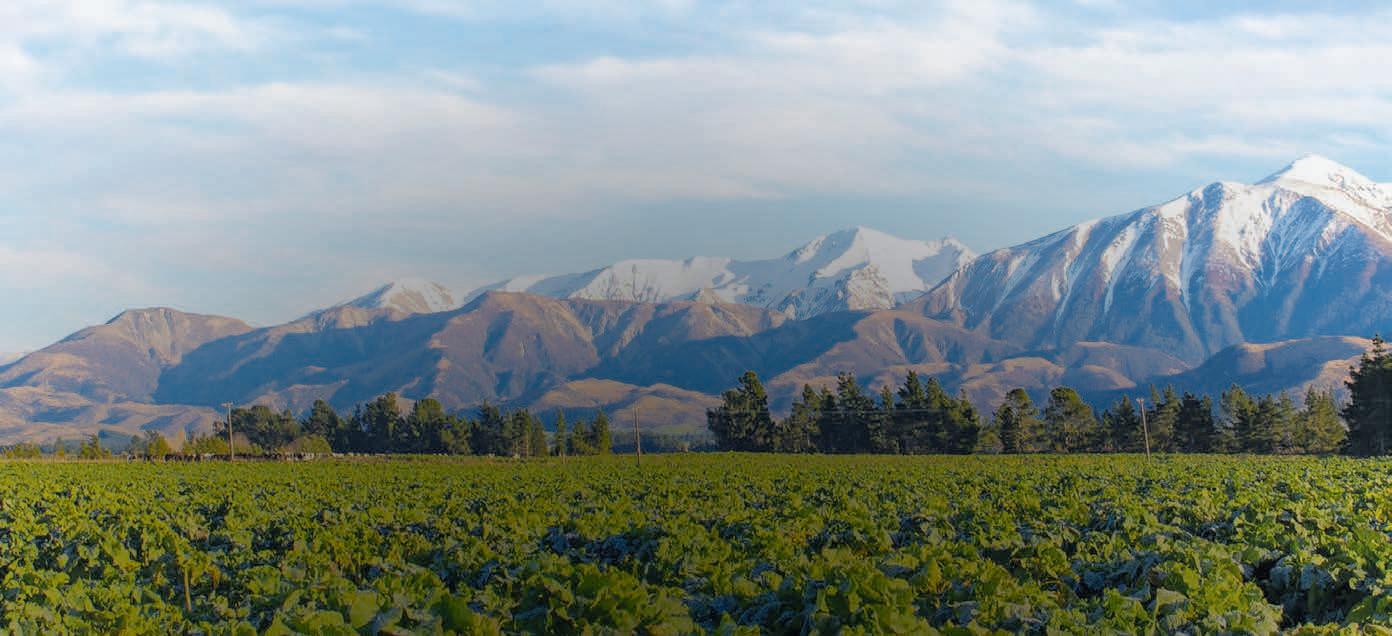
Winter brings some of the toughest conditions of the dair y year Dair yNZ’s research-backed tools and insights can help you manage winter’s impact and support your decisions in preparation for the season ahead
Plan ahead to ensure a smooth star t to the season Ahead of June 1, make sure NAIT records are up -to - date, pre -movement testing is completed, stock purchases are planned early, and your biosecurit y plan is reviewed These steps protec t the health of your herd, you r people, and your bot tom line
Find prac tical tips, checklists and planner s at dair ynz co nz/moving - day
Good cow care in winter helps reduce animal health costs, suppor ts produc tivit y, and improves staff morale and animal wellbeing
Cows need 8 -10 hour s of lying
time each day, but muddy paddock s can reduce this, leading to fatigue and stress When paddock s become too wet or high risk , be ready to shif t cows to suppor t their comfor t Options include stand- off areas, sheltered paddock s or tree cover, break- out areas when on crop, or adding ex tra straw where needed
Get ting the whole team aligned with your wintering plan now can reduce pressure later, improve confidence and create smoother work flows, with clear routines for health check s, paddock assessments and feeding transitions
For more options on caring for cows in winter, visit dair ynz co nz/winter- care
Hit target BC S
Meeting body condition score (BC S) targets at calving suppor ts reproduc tion, animal wellbeing and early-spring feed efficienc y A ssessing individual cow BC S will identif y lighter, early calving cows that may require preferential feeding Fir st and second calver s should be BC S 5 5 at calving and mixed- age cows BC S 5
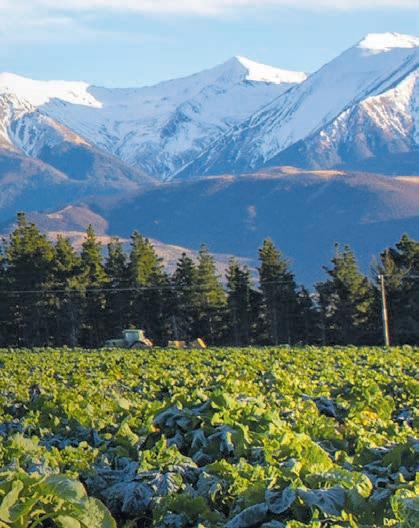
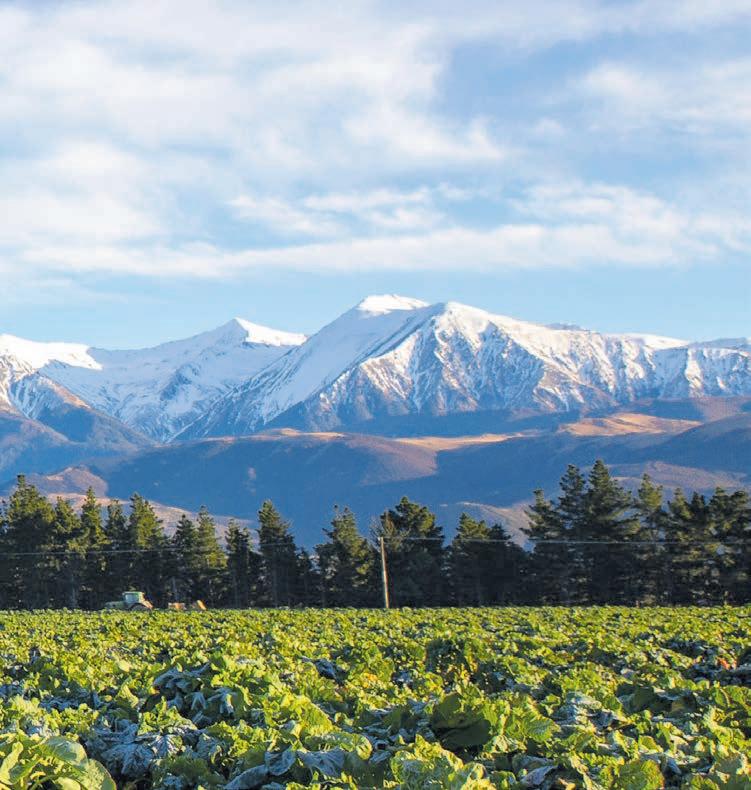
Cows below target BC S have a higher risk of mastitis and other infec tions
Feed cows based on condition; cows at or below target BC S should be fed 10 0% of their daily energy requirements
Feeding management of overconditioned cows can help reduce post- calving metabolic issues
E xplore more transition cow feeding guidance and tool s at dair ynz co nz/transitionfe e ding
Protec t your soil s
Looking af ter new pastures over winter sets up your farm for resilient, produc tive paddock s, lower s costs, and helps you increase pasture grown and har vested Wet weather, pugging and weed pressure can seriously affec t pasture per formance over winter On- off grazing is the most effec tive strategy to minimise pugging, allowing stock brief access to pasture or crop, with the remaining time spent on a well- designed and well-managed stand- off area
Learn more in our new Pasture Renewal Guide: dair ynz co nz/renewal- guide

Set up for a strong season
Teamwork, training and talking
A well-suppor ted team builds capabilit y, strengthens farm per formance, and creates a more enjoyable workplace
Winter can be tough on farm, so having a clear wintering plan is essential
Include contingencies for ex treme weather and ensure all staff under stand their roles Suppor t new staff with winter-specific training and focus on team wellbeing ahead of the
Encouraging leave before calving and maintaining clear communication suppor ts per formance, safet y and retention
Learn more about building a high-per forming team at dair ynz co nz/p e ople and hear prac tical leader ship insights from farmer s in our Legends video series
For more tips check out dair ynz .co. nz/winter- smar t s or contac t your local Dair yNZ regional team member




Gerald Piddock NEWS Fonterra
MAKING a great cheese comes down to a high-quality base product, knowhow and a great starter culture, Fonterra cheesemaker
Andrew Huxford says.
On the first point, New Zealand’s farmers do that job extremely well, he said at a media event at Fonterra’s Auckland head office.
The co-operative held the event to showcase its cheesemaking ahead of last month’s New Zealand Cheese Awards.
It showcased four of the cheeses produced by Fonterra at its Lichfield plant: its Brine Salt Gouda, Tasty Cheese, Egmont and Cheddarsan.
Companywide, Fonterra produces around 150 specifications of cheese for its ingredients and food service businesses.
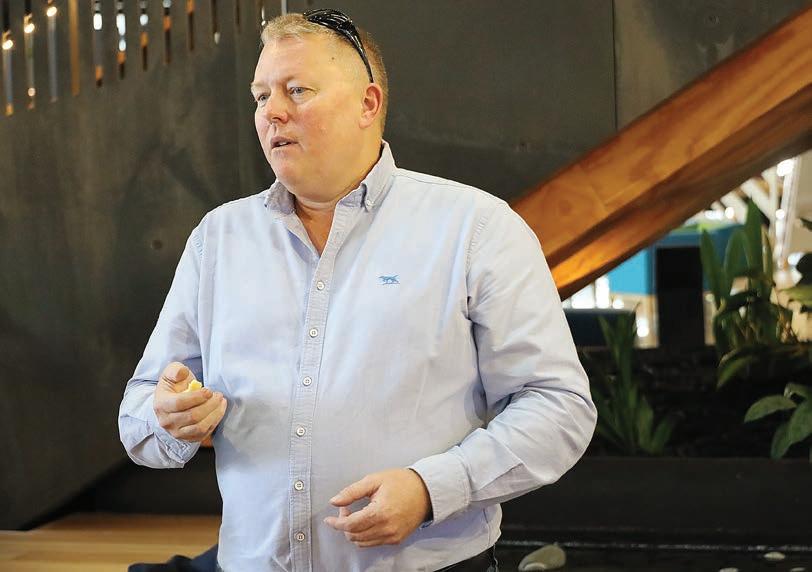
Cheese uses roughly 15% of Fonterra’s total milk solids and around 85% of its total cheese produced is exported.
Huxford is also part of the judging team at the awards.
He said all entries start off with the same points and lose points on defects relating to, among other aspects, appearance, texture and flavour.
He takes a sample of each cheese
DESPITE massive interest in its South Island organic initiative, Fonterra has received requests from farmers to go organic for only about 75% of the volume it would need to make the Stirling plant organic transition viable.
In January Fonterra said interest from South Island farmers in converting to organic might have already hit the minimum requirement for the co-operative to give its Stirling plant the organic green light.
However, recently Fonterra’s general manager for organic, Andrew Henderson, told Farmers
Weekly that actual applications are falling short – even though interest in converting to organic is at about four times the volume the plant would need.
He said depending on where farms are located and the overall economics of transport, the plant would need between 4 and 5 million kilograms of milk solids to operate efficiently.
Fonterra’s organic team will be updating the board in late May on progress made and looking for support to continue with expansion.
Farmers will be considering whether it makes commercial sense, he said.
Some may, for example, look at whether they need support blocks
for wintering and what it means if support blocks are not organic – and operating without them in future.
It could mean destocking or investing in more support blocks, he said.
He said numbers from DairyNZ on organic profitability show it’s more profitable to destock and build back later.
“A rule of thumb would be to select your best cows and then build up later.
“Some cows will be well suited for organics, with good historic health statistics. You’ll want to destock the ones that aren’t.”
Clinton dairy farmer Mark Anderson said he has signed up to convert to organic.
and works it with his fingers to warm it up to room temperature.
“Squeeze it and know what you smell, and notice what cheesy notes you get.”
He described the Brine Salt Gouda cheese as acidic and springy in texture.
Fonterra’s cheesemaking process uses sensory graders to measure quality assurance around flavour intensity and other key attributes that customers want, such as its ability to slice and crumbliness.
Fonterra’s Lichfield plant manager, Shehan Winter, said the factory makes 130 tonnes of the gouda a day. It was entered into the Best Dutch Style category for the awards.
Rather than making a batch specifically for the awards, Fonterra’s policy is to pick a cheese at random from its storage for each of the award categories.
“When we win an award for our cheese, it speaks to the consistency and quality that we do at scale,” Winter said.
When we win an award for our cheese, it speaks to the consistency and quality that we do at scale.
Shehan Winter Fonterra
Fonterra’s cheeses are made to order for customers. Its Egmont variety is often used as an ingredient cheese to give flavouring to products, he said. Its Cheddarsan is a CheddarParmesan hybrid it recently developed for a customer that wanted a cheese that had a cheddar’s malleability but retained the intense flavour of a parmesan. That provides a lot of benefits for customers.
“This is the cool thing about what we do, we often get customer come to us and ask for those very special kinds of requests,” Winter said.
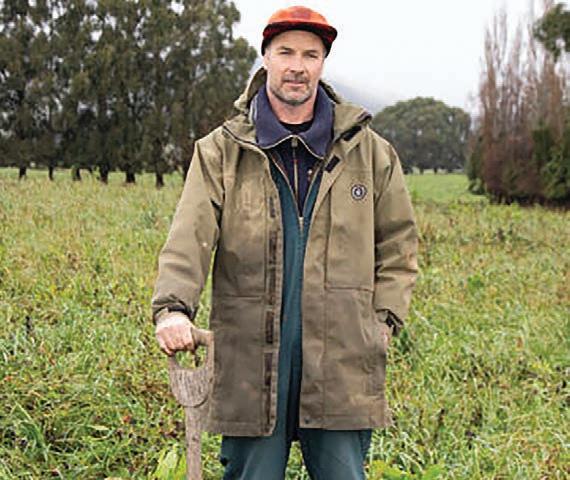
He said with rising input costs, converting to a low-input system makes sense as it gives resilience to his family business.
The current organic payout is $13.65/kgMS, he said.
Anderson is waiting to see if there is enough sign-up from others for him to start the conversion.
Demand for organic products

is being driven by the younger generation, who are Fonterra’s future customers.
“If that’s a signal we want to front-foot it.”
He is still seeing farmers taking a dig at organic as if it is some hippy approach to farming and not viable businesses, he said.
Farmers who sign up take about three years to convert.
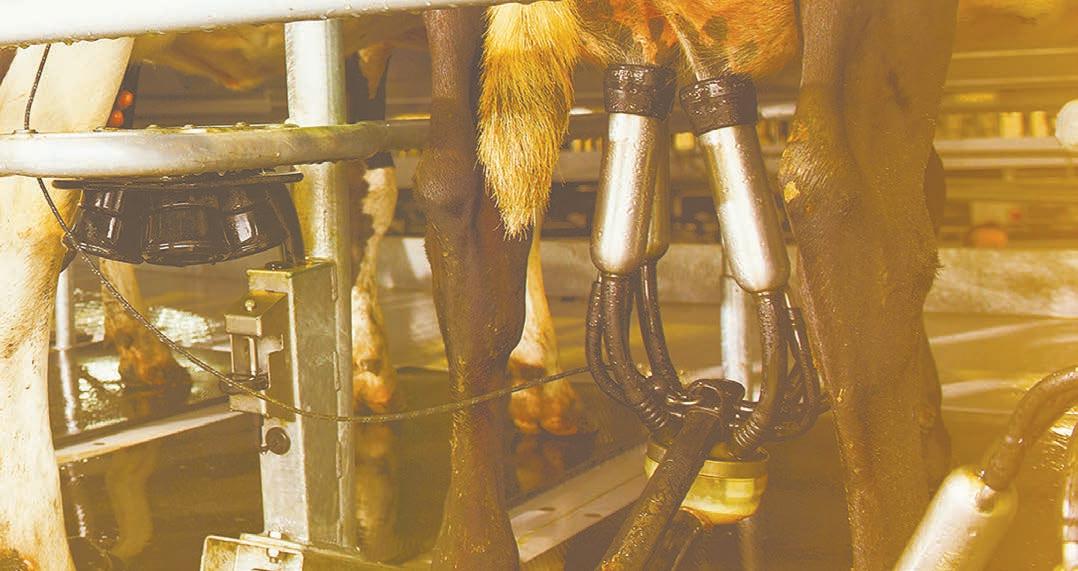








RURAL Women New Zealand welcomes the government’s decision to increase the conveyance allowance, acknowledging it as a step toward supporting rural families facing rising transport costs.
But the organisation warns there is still a lot of work to do to ensure rural students can get to school on a reliable, sustainable system. Especially for those who have been left without school bus services following route cancellations.
The conveyance allowance is a payment made to parents and caregivers to contribute toward the cost of getting to school, or to the nearest school bus stop.
On Monday it was raised by 30%, and will stay in place for 12 months or until fuel prices drop below $3 per litre for four consecutive weeks. This is the first time since 1985 the allowance has been increased.
“While the increase is a welcome step to support rural families during the fuel crisis, we are eager to see the policy review progress so the families who have lost their routes before the March pause can have some certainty about what comes next,” said Frances Beeston, Education Policy Action Advisory Group convenor, Rural Women New Zealand.
“The cancellation of rural school bus routes is death by a thousand cuts for rural communities. It is not just about getting children to school, it is about the longterm health and wellbeing of the communities we live and work in,” she said.
Under the paused policy, routes were cancelled under eligibility rules requiring minimum student numbers, set distance requirements, and attendance
at the nearest state or stateintegrated school.
Beeston said for rural families, the impact of cancelled bus routes extends well beyond the school gate, touching on decisions about work, farm life and whether to remain in a rural community at all.
“We are hearing from members about mothers sitting at kitchen tables working out whether they can afford the time and petrol to keep their children at their rural school.
“Any redesign of routes or policy must deliver school bus networks that are safe, stable and sustainable. Rural families cannot plan their lives around services that can be changed or cancelled at short notice.
“Once you lose one student from a bus run, the knock-on effects ripple outward. School rolls drop, funding follows, and the school itself is suddenly under threat,” she said.
Andrew King, NZ Rural Schools Leadership Association president and principal of Ōropi School, echoed this concern.
“When students can’t get to their local school because the bus route is cut, it is to the demise of the growth of the school because it’s very hard to attract prospective families to a school when there’s no support in getting them there,” said King.
Looking ahead to the Transport Assistance Policy review, King said, “I think part of the school
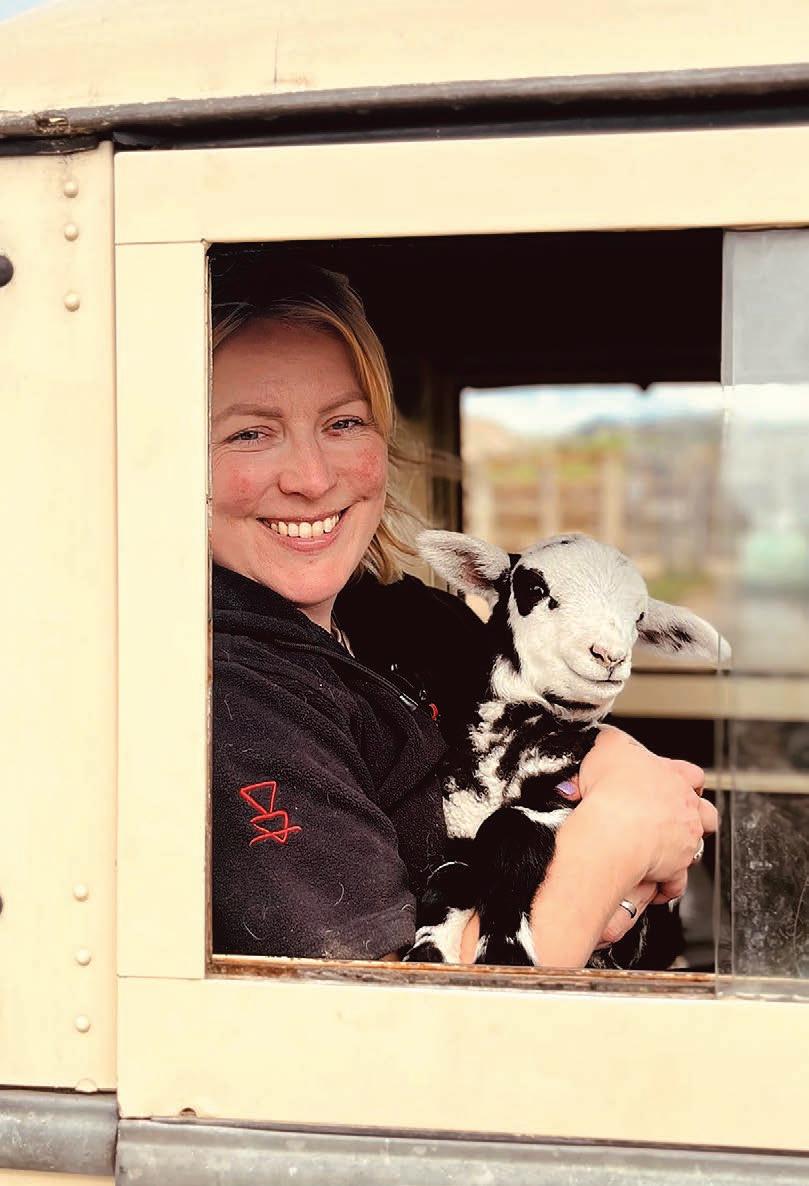
transport review should be talking to parents who receive the conveyance allowance or surveying them, and see whether it’s making a difference.”
For Hawke’s Bay farmer and vet, and Rural Women New Zealand member, Sally Newall, the reality of life without a school bus is felt by her family every single day.
Since their stop was cut from the local bus route, Newall’s bus run has lost two families, including one whose daughter is now being homeschooled. The school has dropped to two teachers, making it harder to attract and retain quality staff.
“There’s very few families up here that I know of where there’s

a wife sitting at home all day able to drop everything to pick the kids up. It has a real impact on the farming business doing that,” she said.
“The reality is that we live on a 100kmh road with lots of blind bends. We have logging trucks, stock trucks, dairy tankers flying up and down the road at 100kmh with no footpath, no mowed verges, no way for the kids to get off the road. Even if you have a bus stop three kilometres away, you have to drive your kids to the bus stop because it’s just not safe for them to get themselves there,” said Newall.
She also highlighted that without a reliable bus service, recruiting farm staff has become increasingly difficult, with consequences that reach into the long-term sustainability of rural communities.
“It’s really hard to attract staff when you haven’t got a school bus running past the driveway. So it just becomes less and less attractive for farm staff, and then it becomes less and less attractive for people to buy farms here, and then that’s just a downward spiral, isn’t it?
“If we can get a bus back to the driveway, life goes back to normal. We’ve had a bus picking kids up from our driveway for over 60 years,” said Newall.
Rural Women New Zealand also welcomes the broader package announced by the Minister of Education, including investment in replacing diesel boilers at up to 70 schools, and the expansion of the Go Rural programme and increased places in the Teacher Bonding Scheme, recognising these as steps toward building a sustainable pipeline of teachers for rural communities and supporting rural and isolated schools through ongoing cost pressures.
Vol 4 No 16, April 27, 2026
Acampaign fronted by Kiwi farmers is being funded by major international players in the vegan, plantbased and alternative-protein sector, Federated Farmers has revealed.
‘Fair for Farmers’ has been pushing for a ban on imports of pork and poultry not farmed to New Zealand welfare standards.
While that may sound reasonable at face value, Federated Farmers president Wayne Langford says the group behind it is not what it seems.
“Something about this campaign felt off. They came out of nowhere and were very fast, polished and coordinated,” Langford says.
“That’s why we looked into it – and things started to get pretty murky. While there are local farmers fronting it, the real driver is a group called Animal Policy International.”
Langford says Animal Policy International is funded by international groups like vegetarian cosmetics company LUSH, and the ‘Stray Dog Institute’, which aims to “reduce, reform and replace the use of animals in the food system”.
Another financial supporter is USbased Tiny Bean Fund, which focuses on addressing the “complex problem of industrial food animal production”.
Animal Policy International’s key staff also have strong links to animal activism.
Co-executive director Mandy Carter spent seven years working as
SAFE’s campaigns director in New Zealand.
Public affairs manager Mona Oliver also worked for SAFE as a campaigns officers for two years and has strong links to the Green Party.
“Does that sound like a group of people who have Kiwi farmers’ best interests at heart?” Langford says.
“What this group is proposing poses very real trade risks when it comes to market-access, particularly for dairy and red meat exporters.
If we demand others meet our standards to sell here, they may do the same to us. In that scenario, we stand to lose a lot more than we gain.
Wayne Langford Federated Farmers national president
“Nobody disagrees that our local pig farmers deserve more support, but the reality is far more complex.
Banning foreign imports isn’t the answer.”
New Zealand exports most of its agricultural output, and Langford warns import bans based on production methods could threaten access to key markets and trade relationships.
“That could be seen as a non-tariff barrier by other countries, and the
likes of the UK, EU and US – major importers of our products – could respond with retaliation against us.
“If we demand others meet our standards to sell here, they may do the same to us. In that scenario, we stand to lose a lot more than we gain.”
Langford says while he disagrees with banning imported pork products, Federated Farmers is urgently looking into what support could be offered to local producers.
“NZ Pork is an affiliate of Federated Farmers and has a seat around our National Council table. My expectation is they’ll be bringing a remit for discussion at our AGM in June.
“Our team are also looking at what could be done in terms of stronger domestic marketing, consumer education, and cracking down on foreign products masquerading as Kiwi pork.
“When I buy bacon from my butcher, it’s clearly labelled ‘100% New Zealand’, but I rarely see that in supermarkets. It makes it bloody tough for consumers who want to support local.”
Since Federated Farmers wrote to members exposing Animal Policy International’s funders on April 17, some farmers involved in Fair for Farmers have stepped back.
The most high-profile is Waikato dairy farmer Walt Cavendish, who announced on Facebook that he could not “in good conscience”

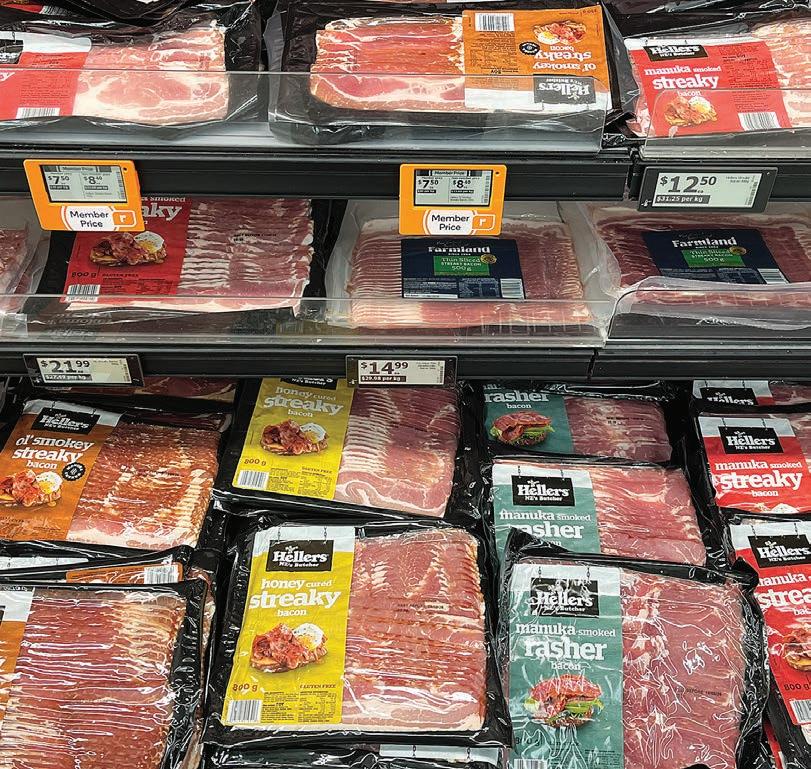
continue to act as a spokesperson.
“I cannot ignore the connection to leadership that has previously been associated with activist activity that has caused material damage to the New Zealand pork industry,” he wrote.
“You cannot, on one hand, claim to stand for farmers and on the other be connected to a legacy that has actively worked against them.
“That contradiction is not something I am prepared to front, defend or explain away.
“Accordingly, I have withdrawn as a spokesperson for Fair for Farmers.”
Langford commended Cavendish for moving quicky to remove himself from the campaign.
“Walt’s clearly passionate about the New Zealand pork industry –and Federated Farmers is too. Kiwi pig farmers definitely need more support.
“We absolutely agree there’s a problem; we just disagree with his proposed solution and the crowd with links to SAFE that he’s been caught up with.”
Langford says Federated Farmers sought advice from New Zealand’s leading trade experts to understand the risks of this issue for farmers.
“They told us unequivocally that banning imports based on welfare standards would be a terrible move – and I think we’d all be wise to take their advice seriously.”

When Richard Dawkins hosts school students on his family farm, the reaction is always the same – curiosity, excitement and a lot of questions.
“They’re fascinated to see a working farm up close,” says the Federated Farmers’ meat and wool chair.
“But I’m often struck – and at times a bit concerned – by how little these keen young students understand about modern agriculture and the role it plays in New Zealand’s economy and way of life.”
That gap is exactly what Federated Farmers wants to close.
Sowing the seed early that agriculture offers exciting, meaningful careers – and ones that are vital to New Zealand’s future – will help grow a skilled primary sector workforce.
That’s why Federated Farmers has joined others in a push to get agricultural content into the science curriculum for primary and intermediate students.
“It makes sense on a number of fronts,” Dawkins says.
“Agriculture gives teachers a really engaging way to bring science to life, whether it’s food production, biosecurity, pest control, or how we farm with a lighter footprint.
“It’s relevant for every student, rural or urban. This is about the food we eat and the challenges we face as a country.”
The Ministry of Education is currently seeking feedback on draft science curriculum content for Years 0-10.
Federated Farmers’ submission says science will click much more for students if it’s taught through real-world examples like farming and food production.
“There’s well- established evidence that students are more engaged when learning connects to real-world contexts and their lived experience.
“That’s particularly important for students in rural and provincial communities, where agriculture and land-based industries are part of their everyday life,” Feds’ submission says.
Kerry Allen, Curriculum Director of Agribusiness in Schools, based at St Paul’s Collegiate in Hamilton, says there’s a glaring gap in agricultural
I’m often struck – and at times a bit concerned – by how little these keen young students understand about modern agriculture and the role it plays in New Zealand’s economy and way of life.
Richard
Dawkins Federated Farmers meat and wool chair
content in primary and intermediate schools.
“Sure, the science curriculum at those levels has biological and scientific concepts that feature in agriculture, but it’s not contextualised,” she says.
“If we can show students how those scientific concepts play out on our farms and in food production, it helps them grasp the ideas and why they’re important.
“Students learn much better if they know the ‘why’ behind it, rather than just being told this is knowledge you need to have.”
Allen, a driving force of the NZ Agriculture/Horticulture Teachers Association and a key player in getting agribusiness into the secondary school curriculum, warns the gap in agricultural content early on is putting the future workforce at risk.
“Failing to engage learners in their formative years reduces interest in agricultural and horticultural science and agribusiness at secondary schools.
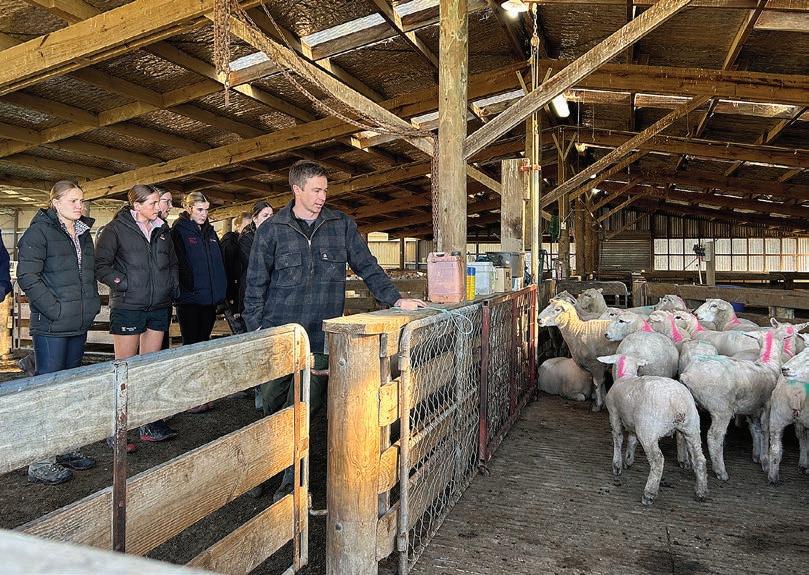
“In turn, that threatens our future pipeline of food producers and processors, scientists, engineers, and innovators,” she says.
Big strides are being made in getting agricultural content in front of secondary school students.
Nearly 23,700 students have studied agribusiness over the last nine years, with 128 schools teaching the subject last year – 72% of them in urban areas.
Another 339 schools taught agricultural and horticultural science in 2025, with nearly 112,000 students studying these subjects at secondary school in the last nine years.
“It’s also exciting that evaluations
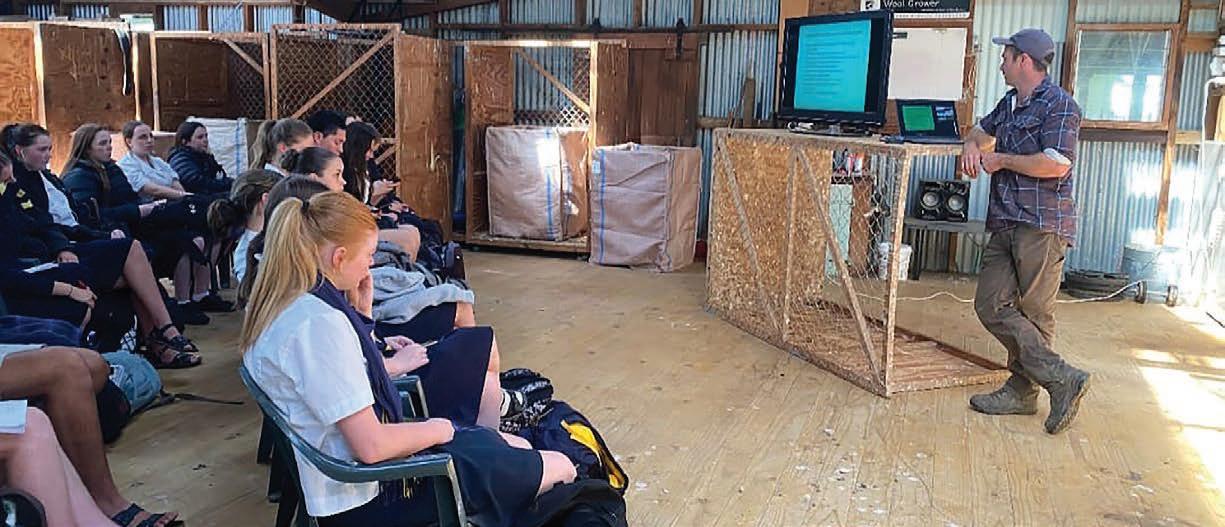
101: Introducing young New Zealanders to agriculture and food
their eyes to career opportunities in our
show Agribusiness in Schools students are 3.6 times more likely to enrol in related tertiary training than non-AIS students,” Allen says.
Lincoln and Massey Universities are also seeing strong growth in agriculture-based studies.
Professor Paul Kenyon, Massey’s head of the School of Agriculture and the Environment, says 2026 enrolments are 21% ahead of their target.
“Interestingly, within a two-hour radius of Palmerston North there are more students doing agriculture, horticulture and agribusiness than those doing science and physics,” he says.
Dawkins hopes the Ministry of Education pays attention to this surging interest in agriculturerelated subjects as it sets the Years 0-10 science curriculum.
“This teaching in schools will build a better understanding of how important agriculture, food processing, biosecurity and animal science is to New Zealand’s future.
“I don’t believe anyone thinks farming is just about sitting on a hillside and watching animals ambling past.
“It’s a complex business that requires skills in finance, planning, science and scores of other things.
“We need – and deserve – some of the best talent coming out of schools and universities.”

Farm worker pay growth has levelled off in the last few years, after a post-pandemic period of rapid growth, a new report shows.
The 2026 Federated FarmersRabobank Farm Remuneration Report shows the average salary for a farm worker increased by $1367 to $72,778, or a weighted average rise of 3% across 13 job positions.
“For some of those roles, the increases have been higher,” Federated Farmers employment spokesperson Karl Dean says.
“For example, the average salary for a dairy farm assistant – the most common position on a dairy farm –rose to $63,359 this year, a rise of 5%.
“Wages for an arable farm machinery operator jumped a massive 30% to $82,651.”
The moderation in farm worker pay rises in the last two years is consistent with broader labour market trends, with wage growth across the economy typically 2-2.4% annually.
“Keep in mind, too, that average annual salaries in our sector jumped 13% between 2022 and 2024, with a weighted average rise of 17% for sheep and beef farm roles,” Dean says.
This is the 16th farming salaries report Federated Farmers and Rabobank have produced, this time collating results from a survey of 427 farm employers in early 2026.
The findings cover data relating to nearly 1500 employees across 13 positions, ranging from dairy farm assistant to arable farm managers.
Bruce Weir, Rabobank General Manager for Country Banking, says the report highlights slightly stronger growth in Total Package Values (TPV) for farm employees.
“The salary figures don’t include the range of other benefits provided to farm employees, which can include things like vehicle usage, meat, firewood, phone and power allowances,” he says.
“For many farm employees, those extras can add up to several thousand dollars a year.
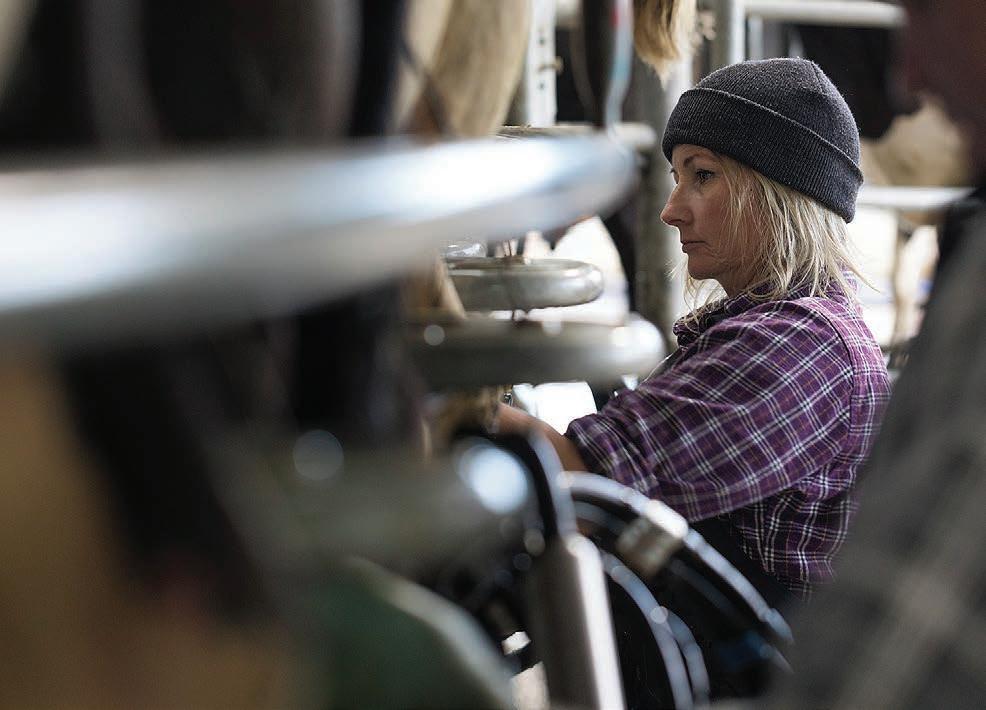
The sector’s long-term outlook remains positive, and the strong investment we’re currently seeing should flow through to new job opportunities in the years ahead.
Bruce Weir Rabobank
“Overall, the weighted average TPV across all farm employees lifted 5% to $77,030, nearly $4,252 more than the average salary.”
Despite the relatively modest lift in salaries and TPV over the last two years, Weir says the sector’s recent strong performance makes it an attractive option for young Kiwis.
“The sector’s long-term outlook remains positive, and the strong investment we’re currently seeing should flow through to new job opportunities in the years ahead.”
However, Weir says ongoing salary growth is also essential to ensure the sector continues to entice the next generation into agri careers.
Dairy positions
For dairy farm workers, the average weighted rise in TPV was 5%, up to $77,186.
“Pay rises for dairy farm staff were stronger in entry- and mid-level roles, and while the labour market remains competitive for experienced dairy workers, wage pressures have eased,” Dean says.
While forecast milk prices remain relatively strong at $9.20-$9.80 per kilogram of milk solids, breakeven costs have risen to around $8.50kgMS.
That’s eating into margins for many operators and is reflected in farmers’ weakening profit expectations, Dean says.
“These factors help explain why dairy farm pay increases have been more incremental compared to bigger lifts in previous years,” Dean says.
Sheep and beef positions
In the sheep and beef sector, the weighted average increase in TPV since 2024 was 2%, rising to $76,296, despite difficult operating conditions in 2024/25.
Sheep and beef salaries rose by a weighted average of 2%.
PAY CAUTION:
Rising costs are eating into the strong dairy returns, meaning pay rises since 2024 have been more moderate than the big jumps post-Covid, Karl Dean says.
Photo: NZ Story
A Federated Farmers survey in February this year showed strong profitability on sheep and beef farms, but much more caution over forward expectations, reflecting ongoing cost pressures and market volatility.
In the arable sector, the average TPV rose to $73,980, a weighted average increase of 7%.
Salaries increased by a weighted
average of 5% but results varied across arable positions.
Machinery operators saw big increases in both TPV and salary, but general farm hands and farm managers experienced declines.
Deans says the pay boost for machinery operators is largely attributable to the lift in technology in harvesting and other equipment coming onto farms, and the greater level of knowledge required to operate this equipment.
“These skills are becoming harder to find and come at a cost of remuneration.
“The lift in pay also reflects the fact the past two wet harvests have increased the number of hours worked by operators to get the harvest done and extra time spent getting crops established.”
While a relatively smaller sample size from this sector means results should be interpreted with some caution, the outcomes reflect economic and operational pressures.
“There is global oversupply in herbage seed, softer prices are putting a dampener on returns to farmers and wetter conditions over the past season have reduced yields,” Dean says.
“The decline in pay for general hand and manager positions is down to reduce profitability in the sector.”
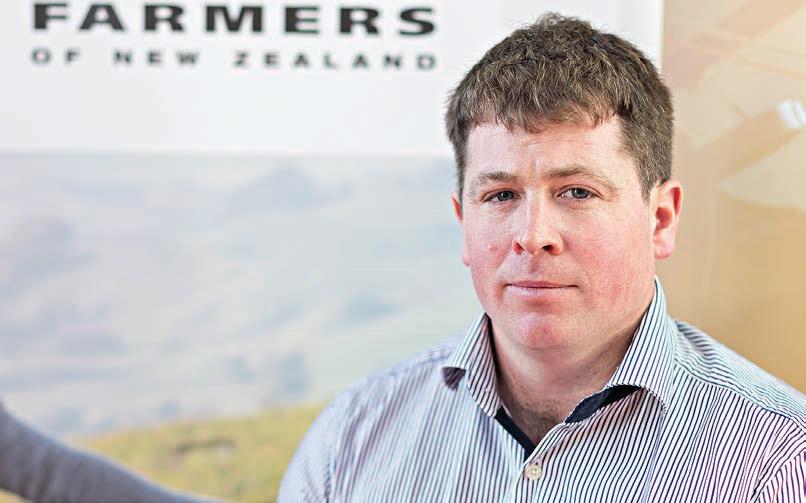











Otago farmers are questioning why councils could soon get faster, cheaper and longer wastewater consents, while agriculture remains stuck in a costly, short-term cycle.
Farmers are also raising warnings about how massive city discharges could leave rural landowners footing the environmental bill.
Otago Federated Farmers president Luke Kane says it makes perfect sense to improve the consenting system for wastewater –but it shouldn’t stop at councils.
“No one disputes that the current system is way too expensive and time-consuming,” Kane says.
“If there are better ways to do it for large-scale infrastructure, that’s a good thing.
“But it raises an obvious question: why shouldn’t that same approach be applied to agriculture too?”
The concerns have been sparked by Queenstown Lakes District Council’s application for a 35-year consent to discharge treated wastewater into the Kawarau River.
“That’s really got farmers here scratching their heads,” Kane says.
“Why can the council possibly get a consent for more than a generation, while even well-performing farm wastewater systems are typically limited to 10-year consents?
“We just want to see an even playing field.”
The issue follows major changes to how New Zealand manages wastewater.
In December 2025, the country introduced its first national wastewater standards, created by water regulator Taumata Arowai.
The new rules are designed to replace a slow, case-by-case consenting system with nationally consistent, risk-based requirements.
As well as streamlining approvals – while maintaining environmental and public health protections – the standards are also expected to cut consenting costs by up to 60%.
Consent durations of up to 35 years could be allowed where
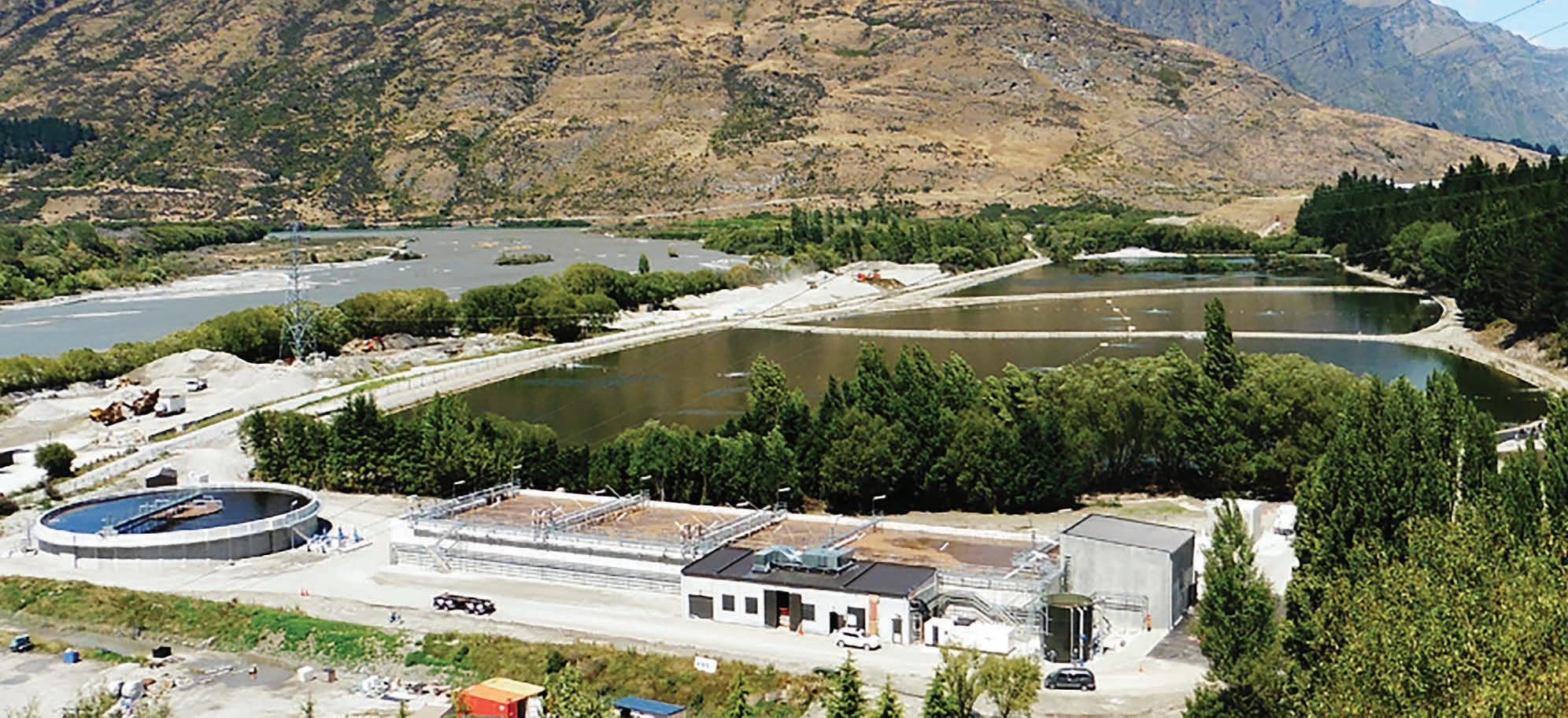
Why can the council possibly get a consent for more than a generation, while even well-performing farm wastewater systems are typically limited to 10-year consents?
Luke Kane Otago Federated Farmers president
contaminant limits are met.
While Queenstown Lakes District Council’s proposal may fall outside these standards because of the ‘pristine’ nature of the Shotover and Kawarau Rivers, the standards will still need to be considered as part of the consenting process.
Kane says the broader shift toward more standardised and efficient consenting is something farmers support, but they want consistency across sectors.
“Farmers managing animal
effluent systems already have to discharge to land under a tonne of consent conditions, like application rates, nutrient limits, and ongoing monitoring requirements.
“Those conditions vary by region across the country, and the consenting process is often really niggly and expensive.
“You can invest heavily, meet every requirement, and still find yourself back in the same process a decade later,” Kane says.
“That’s time and money that could be spent on actual environmental improvements.
“It’s incredibly frustrating for farmers, especially when you see councils getting much longer consents and potentially under less strict conditions.”
He says there’s a strong case for a more standardised pathway for agricultural discharges where defined environmental thresholds are met.
“If farmers could meet a defined set of standards for effluent management, there should be a
more streamlined pathway, whether that’s longer-term consents or a simpler approval process.
“It would give certainty and reduce duplication, without lowering the bar.”
Kane says farmers are already operating under increasingly strict frameworks, including farm environment plans, nutrient management requirements and regular compliance checks.
“There’s no shortage of scrutiny,” he says.
“This is about making sure the system is proportionate to the risk and focused on outcomes.”
Kane also warns that, while farmers support more efficient consenting, they’re watching closely how largescale municipal discharges are treated under the new framework.
The Shotover Wastewater Treatment Plant currently discharges about 12.5 million litres of treated wastewater per day.
That figure is expected to more than double to around 26 million litres by 2060, driven by Queenstown’s
rapid population growth.
Kane estimates this could result in around 95 tonnes of nitrogen entering the Kawarau River each year.
“That’s a significant load in any catchment,” he says.
“A consent like this has the potential to occupy a large share of the catchment’s assimilative capacity, while other land users are being asked to continue reducing their footprint.”
He says the key question is how long-term municipal discharges will sit alongside future freshwater limits.
“It’s not clear how these new wastewater standards – or whatever is ultimately consented by the Otago Regional Council – will interact with future freshwater limits,” he says.
“If a large proportion of that capacity is effectively locked in for decades, what does that mean for everyone else?
“For farmers, it’ll essentially mean we’re being asked to run twice as fast just to stand still, forced to find extra environmental savings to offset the town’s growing footprint.”
Comvita is partnering with landowners across Taranaki, Whanganui, Wairarapa and the Central Plateau to support sustainable Mānuka honey production

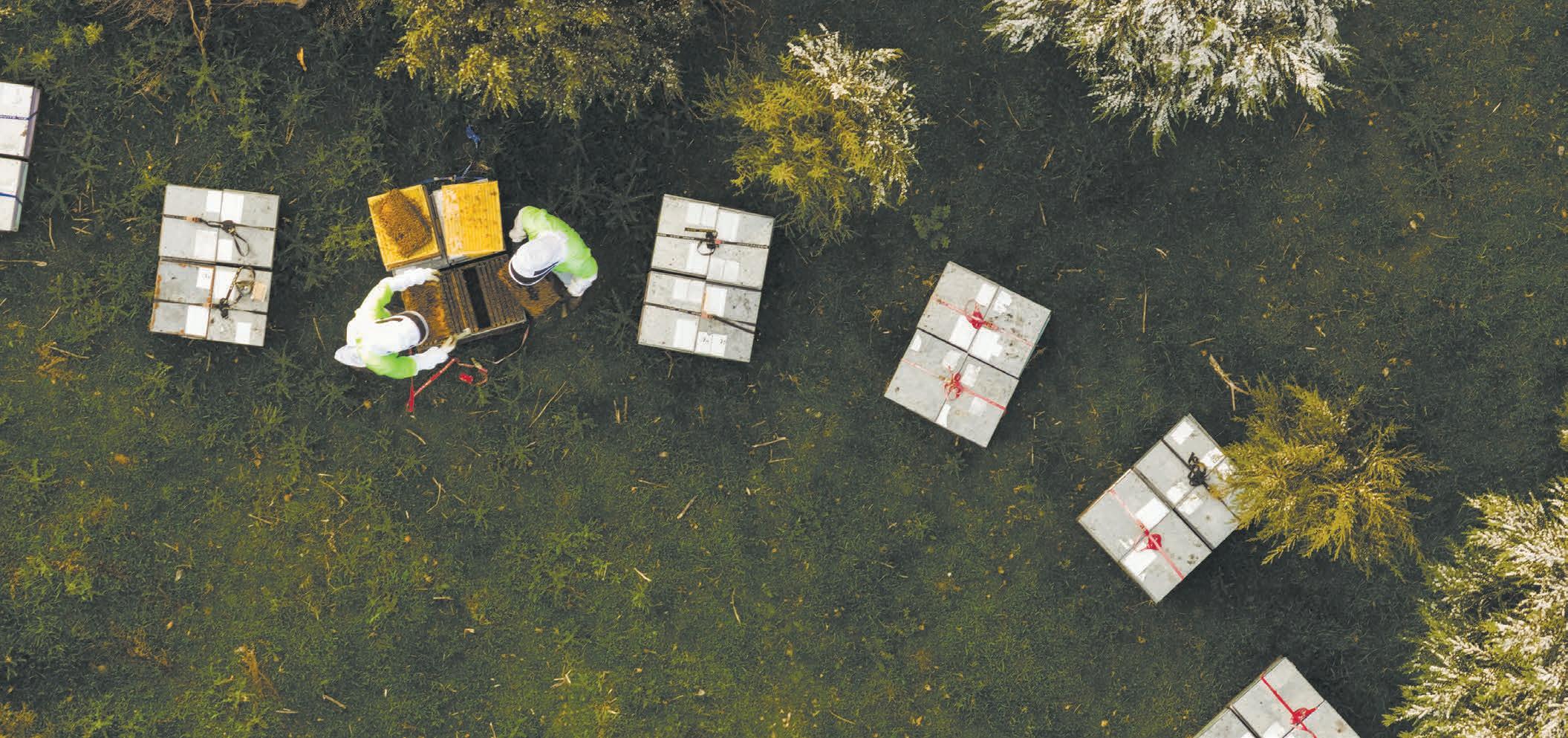
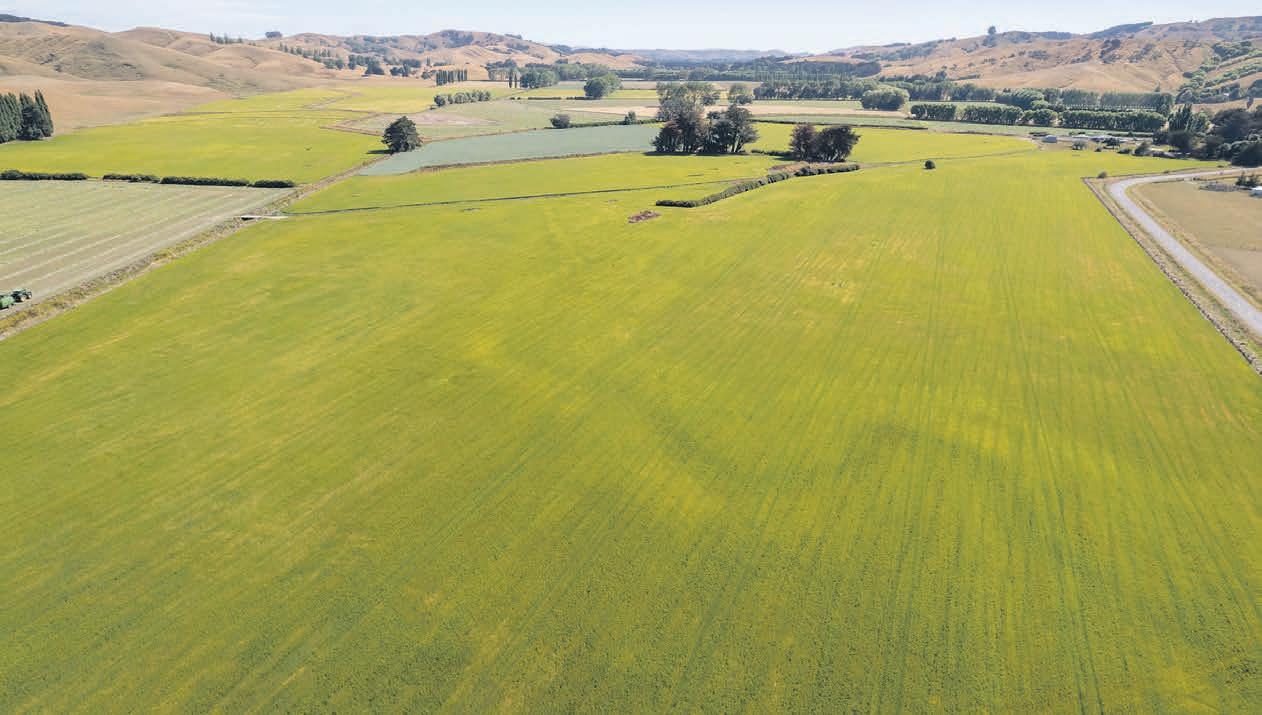
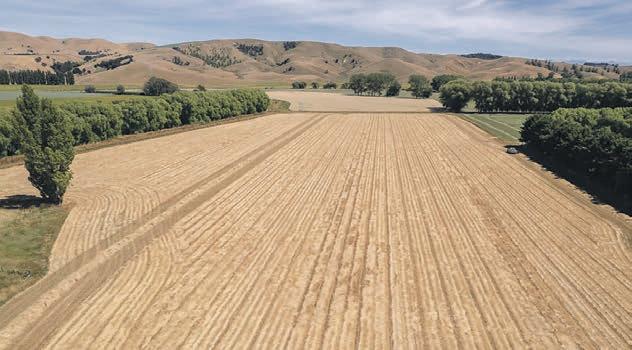
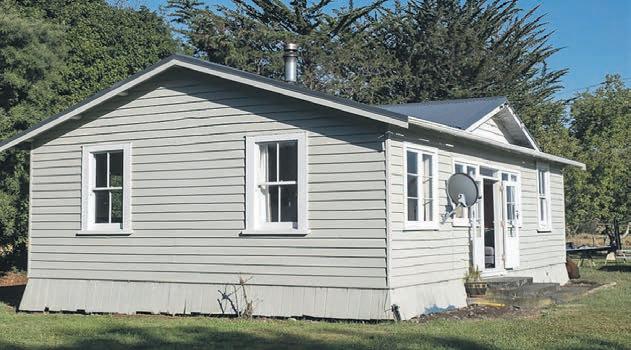
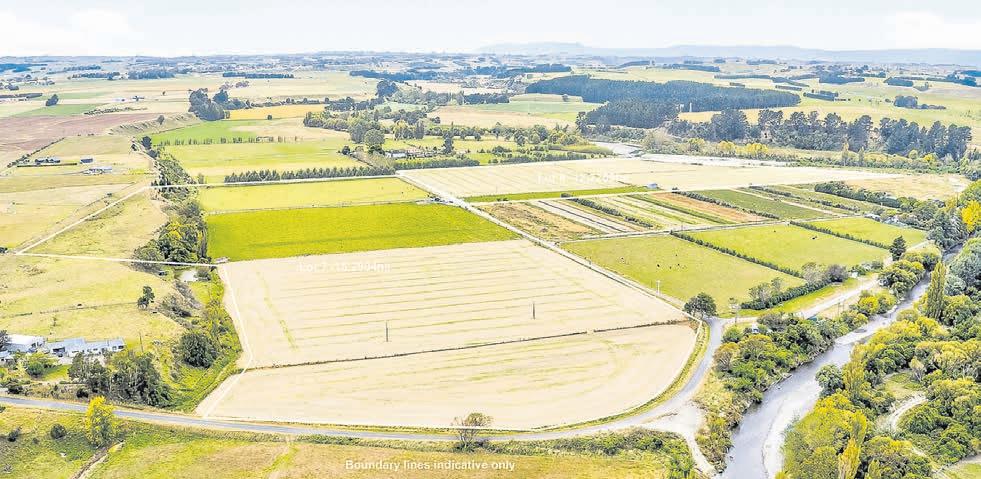
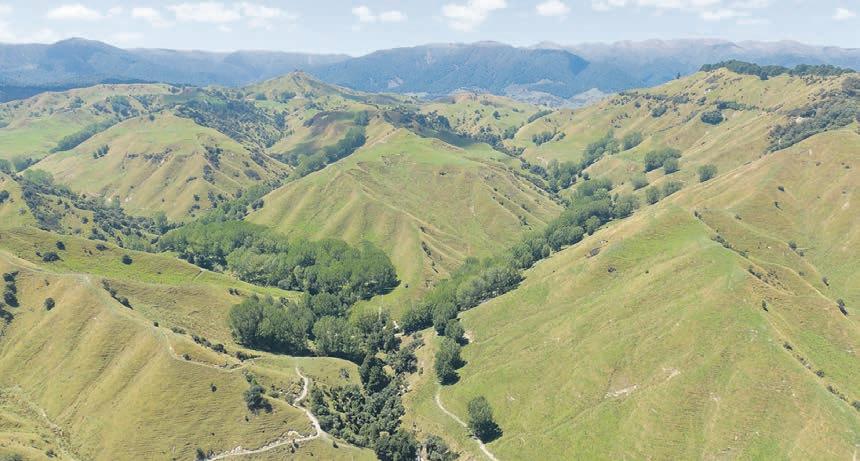
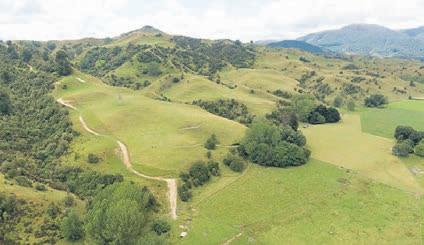
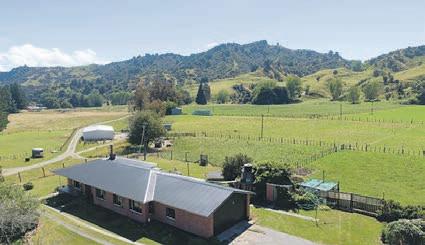



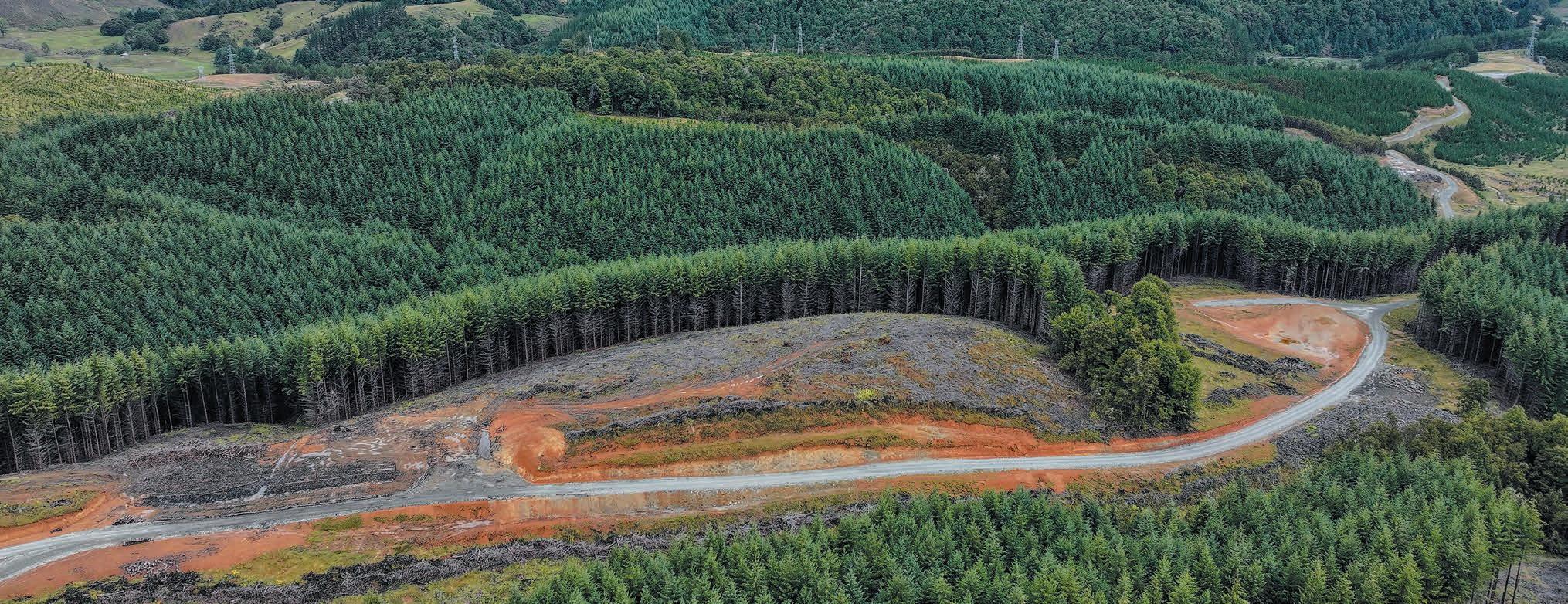

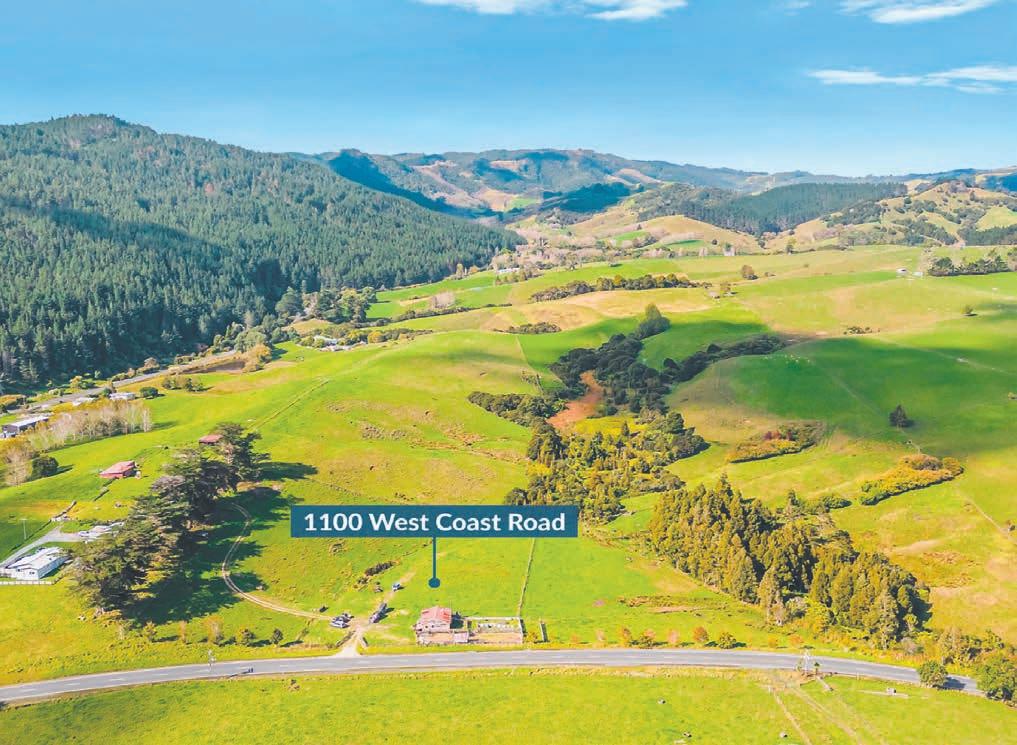








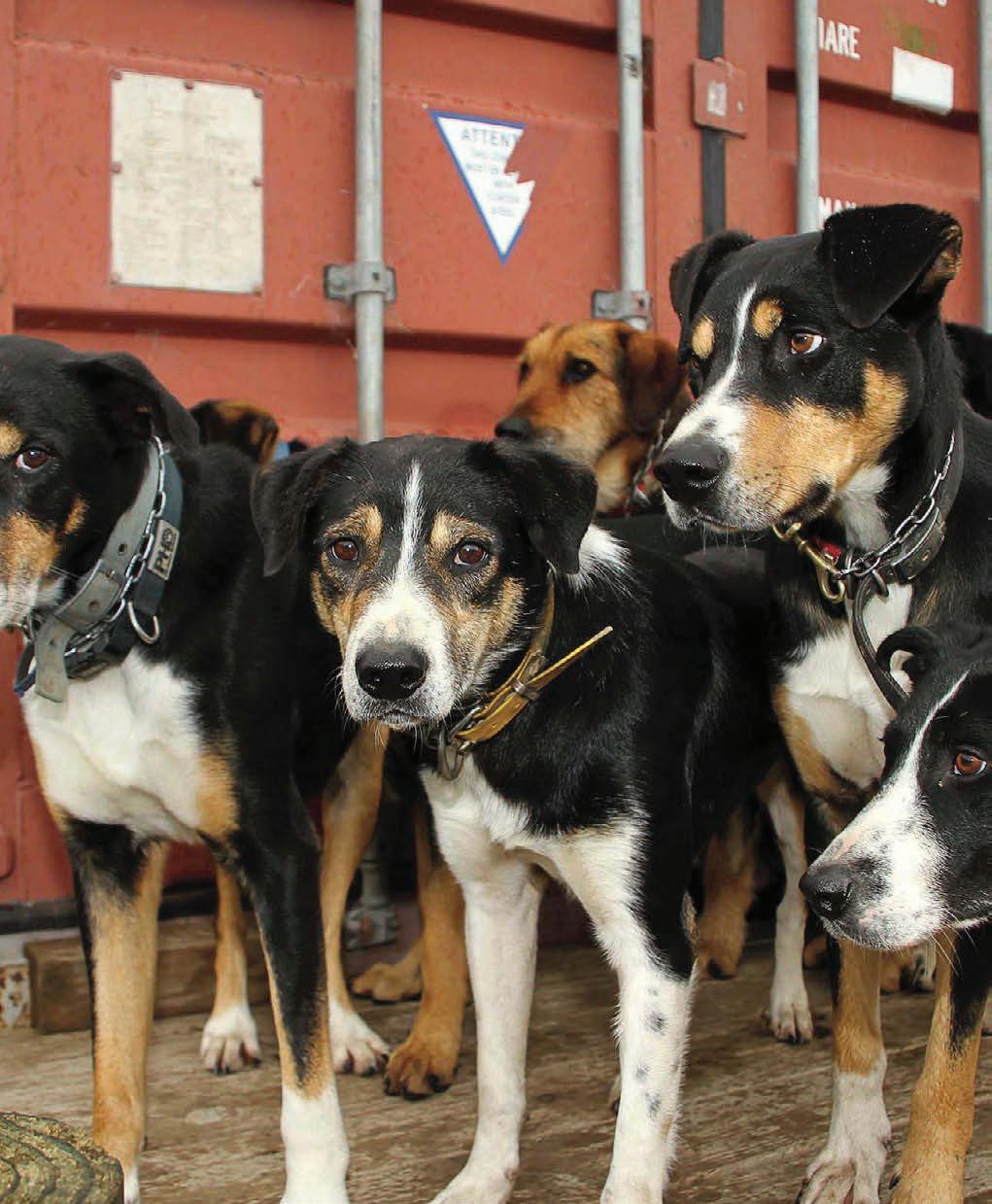

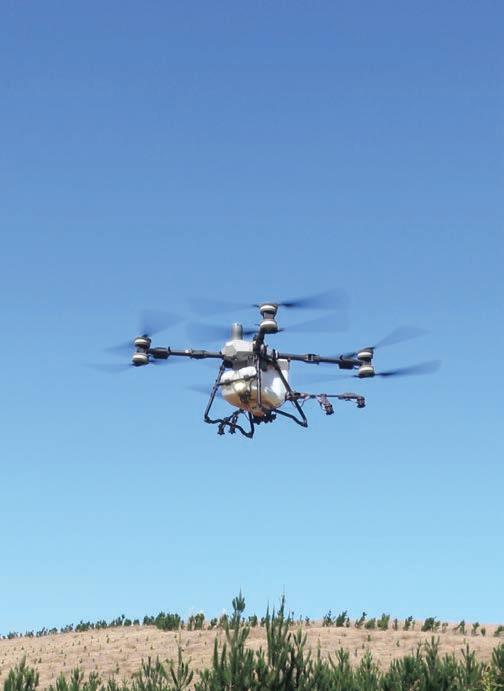


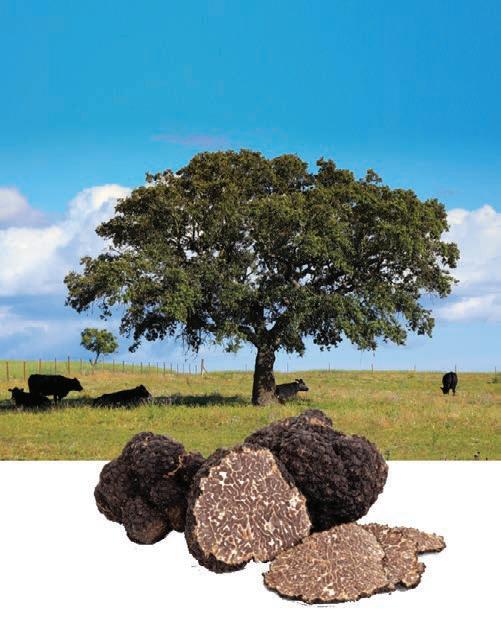

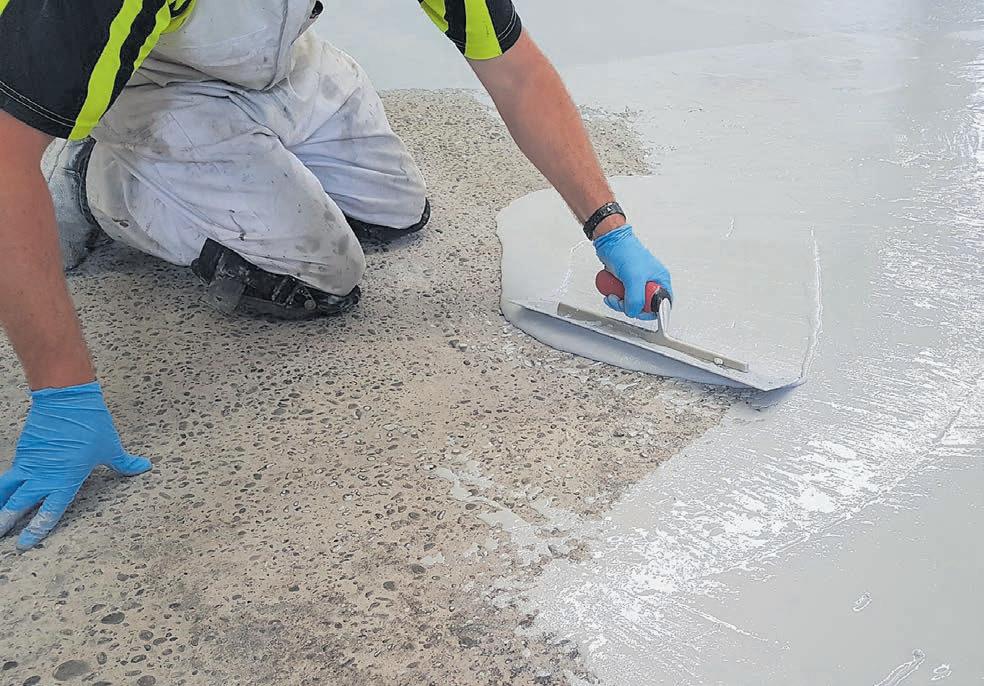

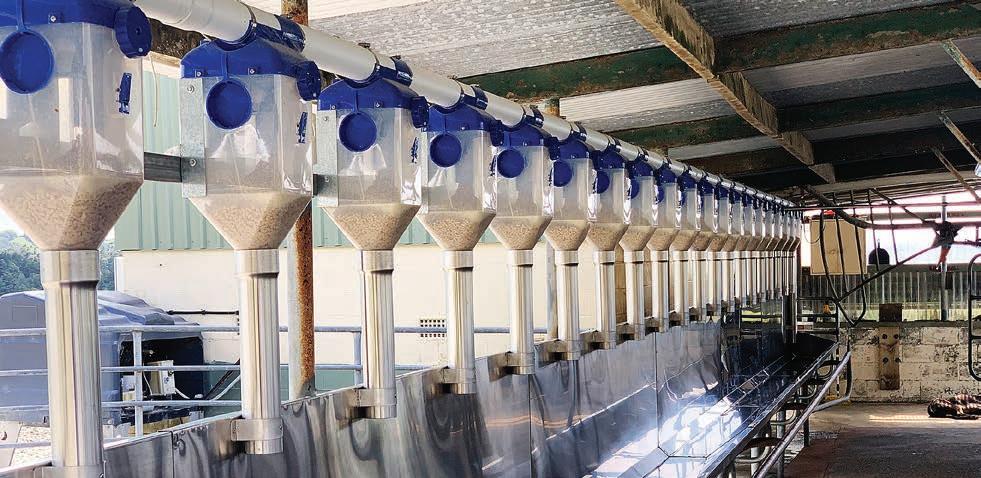


permits and plans. Also after milled timber to purchase. NEW ZEALAND NATIVE TIMBER SUPPLIES (WGTN) LTD. 027 688 2954 Richard.
GOATS WANTED
FERAL GOATS WANTED. Pick-up within 24 hours. Prices based on works schedule. Phone Vicky Le Feuvre 07 893 8916 or 027 363 2932.
A WARM-HEARTED COUNTRY WomanCheryl. Cheryl is a genuine lady with a cheerful spirit and a love for the simple joys of country life. Raised on the land, she carries a deep connection to nature and rural living. Active, fit, and full of enthusiasm, Cheryl enjoys gardening, home cooking, fishing , and being outdoors. She’s hoping to meet a kind, sincere gentleman who shares her appreciation for the country lifestyle and traditional values. To meet Cheryl or one of our other lovely country ladies — please call: 0800 446 332
SALE TALK
A HUSBAND AND WIFE
were driving down a country lane on their way to visit some friends. They came to a muddy patch in the road the car became bogged. After a few minutes of trying to get the car out by themselves, they saw a young farmer coming down the lane, driving some oxen before him.
The farmer stopped when he saw the couple in trouble and offered to pull the car out of the mud for $50.
The husband accepted and minutes later the car was free.
The farmer turned to the husband and said, “You know, you’re the tenth car I’ve helped out of the mud today.”






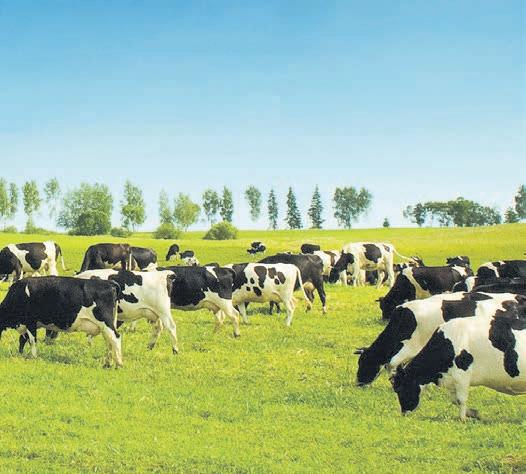










GOATS WANTED. All weights. All breeds. Prompt service. Payment on pick up. My on farm prices will not be beaten. Phone David Hutchings 07 895 8845 or 0274 519 249. Feral goats mustered on a 50/50 share basis.
GRAZING WANTED FOR 100 18 month Beef cattle. Phone 027 292 4889.
LIVESTOCK FOR SALE
WILTSHIRES-ARVIDSON. Self shearing sheep. No1 for Facial Eczema. David 027 2771 556.
The husband looks around at the fields incredulously and asks the farmer, “When do you have time to plough your land? At night?”
“No,” the young farmer replied seriously, “Night is when I put the water in the hole.”
STOCK FEED
BALAGE $95. Lucerne balage $110. Very good quality. Unit loads available. Phone 021 455 787.
WORK WANTED
YOUNG FAMILY seeking Farm Manager position. 10 years experience. Excellent references. Gisborne, Central North Island area. Phone 027 872 6121.




Wednesday 6th May | Viewing 9am, Auction 11:00am 519 Main South Road, RD54 Kimbolton
• McCormick G145 (2022) 1000hrs, FEL John Deere 6125M (2025) 541hrs, FEL
• New Holland T6020 (2012) 7883hrs FEL
• New Holland TS135A (2007) 9755hrs, FEL
• New Holland T6020 (2017) 7265hrs, FEL
• Strautman Vertimix 1400 Double (weigh scales) mixer wagon Strautman Vertimix 2000 Double (weigh scales) mixer wagon
• Strautman Vertimix 1400 Mixer Wagon 2018 Ford Ranger D/Cab XLT 260000km
• 2017 Ford Ranger D/Cab XLT 288416
• 1997 Rav 4 (farm regd) 2 door
• Suzuki DR200 Motorbikes x 5 Maxam 3300 Twin Wilter x 2
• Kinghitter Side Mount Post Rammer
• Buckton SD160 Silage Wagon Hydraulic Grader Blade
• Tandem Axle Hay Trailer
• Tractor Roller
• Quick Hitch Tractor Bucket/Forks

• Silage Grab, Bucket Grab, Pallet Forks PTO Pond Stirrer
• PTO Sump Pump
• Pontoon Pond Stirrer Posts/Railing Timber
• Feed Pad Scraper x 2
• Travelling Irrigator
• Round Bale Feeders
Small Plastic Water Tanks
• Stainless Steel Peno Vat
• ATV Trailers Small Car Trailer
• GT10000 ES Petrol Generator
• Diesel Bowser
• PKE Trailers Effluent Pipe
• Farm Chemical
• Plasback Bin x 2
Various Calf Feeders and Meal Troughs
• Tandem Axle Calf Trailer
• Reels/Standards
• Weedeater Farm Sundries
Please note, some sale items will not be available for collection until 1st
Scan the QR code to view the online catalogue & plant photos

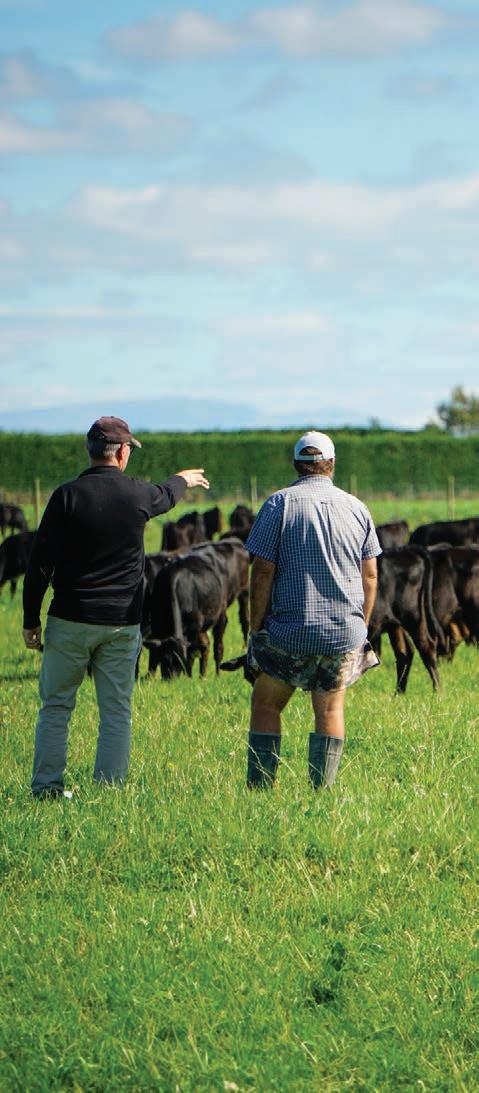



HIGH INDEXED - EARLY CALVING
JERSEY IN-MILK COWS & HEIFERS
A/c Dave and Lea Moodie - Leadamoo
Sale Date: Wednesday 29th April, 11am
PROVEN FRIESIAN COW IN-MILK AUCTION




Address: 1081 Morrinsville – Walton RD Morrinsville will be available for online bidding
COMPRISING:
154 Jersey mixed age in-milk & in-calf cows 56 Jersey in-calf R2yr heifers
COW DETAILS: BW251, PW256, LW273. Calving 5th July to AB Jersey LIC premier sires for 5-weeks, tailed Angus bulls (out 27th Dec). Additionally for sale, 23 Jersey I/M mixed age MT cows.
HEIFER DETAILS: BW294, PW252, DTC 8th July to Jersey bulls (out 18th Dec), weighed 391kg on 14/03/26.
EMBRYOS: 8x frozen embryos from elite cows.
AUCTIONEERS NOTE:
This is a great opportunity to purchase outstanding Jerseys from passionate and well respected vendors exiting the industry. These owner milked cows will come forward in great condition and display excellent temperament and conformation. So many positive attributes with this herd - herd indexes boast up to BW414, PW799, and heifer indexes boast up to BW398, PW365. In the top 5% of LIC herds in NZ, early calving, RA100%, 445kg/ MS, 1500MS/ha, SCC116, System 3, HB shed, BVD bulk milk tested, Lepto vaccinated, TB C4.
PAYMENT TERMS: Payment due 14 days from sale. Immediate delivery in-milk or by prior arrangement before sale day with Vendor.
CARRFIELDS LIVESTOCK AGENTS:
Matt Hancock 027 601 3787 Luke Gilbert 027 849 2112



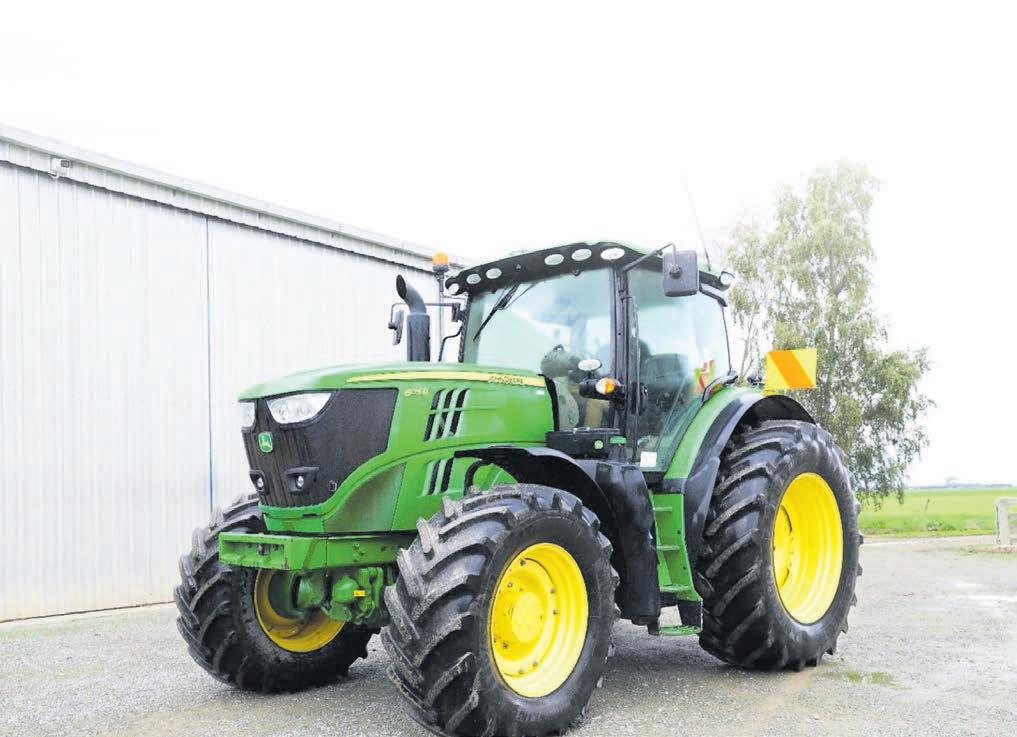
A/C Amarda farms – C & V Connor Wednesday 13th May Viewing 9am, Auction 10:30am 243 Te Awa Road, Kiwitea BBQ Lunch supplied by Kiwitea School COMPRISING: 2009 Valtra N101, FEL, 2000 Landini Blizzard 85 Pearson FEL, 2019 Suzuki Kingquad 750LTA, 2023 Suzuki Kingquad 500LTA, 2020 Yamaha Kodiak 700, 1971 Vagabond Caravan, Farmgard Post Rammer, 3 Metre Hydralada, AgMech 4 Bale Feeder, Giltrap MSX100 Silage Wagon, Buckton Silage Wagon SD100, 7 Foot Grader Blade, Walco Weed Wiper, Eurohitch Softhands, Tractor Sprayer with Roseette, 4T Tip trailer (wooden deck), Pottinger Novacat 302 Mower, Stallion 50T Feeder, Calf Feeders, Cub Cadet LTX1042, ATV/ Calf Trailer, Reese Agri 660 Spreader, Udy Forks, Silage Grab, Aitchison 2 Metre Grass Farmer Drill, ATV Tyre Roller, Quick Hitch x3, Klough 3 Furrow Plough, CDax ATV Grass Spreader, Bertolini 50L ATV Sprayer, 3 Point Linkage Wood Splitter , ATV Sprayer x 2, Gates, Jerry Cans, Chainsaw, Hip Lifters, Head Bail, Davies C1 Pump, Reels and Standards, Spinning Jennys, PKE Bins, Farm Sundries/tools + more.
CARRFIELDS LIVESTOCK AGENT: Hamish Manthel 027 432 0298 hamish.manthel@carrfields.co.nz
Check out our Carrfields Livestock Lower NI Facebook page for up-to-date sale information!
A/c Ian & Gill Leeuwenburg
Date: Thursday 30th April 2026
Address: Matamata Sale Yards
Dairy Pavilion
Start Time: 11:30am will be available for online bidding
COMPRISING:
225 x Friesian Spring Calving Cows
In-Milk, BW 111, PW 103, RA 100% HT 20/3, 23.14ltrs, 2.06ms, SCC158 DTC 20th July to AB Friesian LIC, BOD
54 x Friesian Autumn Calving Cows Dry, BW 60, PW 38, RA 100%
DTC mid - late May to AB Friesian LIC, BOD
High A2/A2 %, 600 kg MS/cow (System 5) TB C10, BVD tested (NPI), Johne’s tested
AUCTIONEERS NOTE:
Friesian cows from a long-established LIC-bred herd, farmed within a consistent and proven production system.
Supported by recorded production data, sound animal health status, and a high proportion of A2/A2 genetics.
A well-bred, reliable line of cows that will meet expectations.
PAYMENT TERMS:
14 days after the auction, Immediate delivery CARRFIELDS LIVESTOCK AGENT: Reuben Wright: 027 2846384 Or your local Carrfields agent


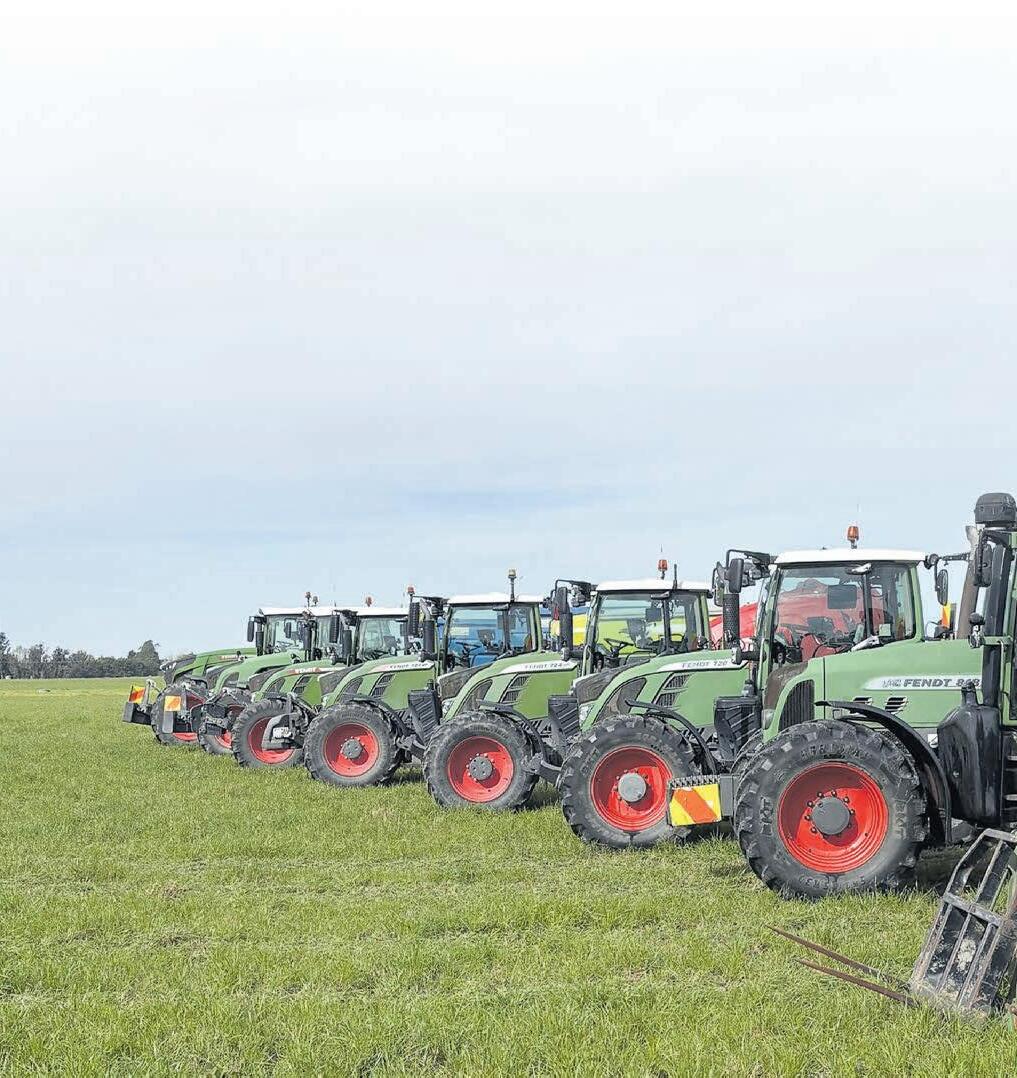



A/c: R & J LANGEVELD
253 Canal East Rd Waitakaruru, Ngatea – D/N 70627
Monday 4th May – Start 11:00am
400 Aut Inmilk Friesian Cows
130 MT Spr Inmilk Cows
Tuesday 5th May – Start 11:00am
400 Spr Calving CRV Friesian Cows
Due 10th July to Nominated CRV Frsn 5 weeks tailed Hereford last cow due 18th Sept vetted to dates
95 R2 I/C CRV Heifers, 95 R1 CRV Heifers Heifers due 10th July to Jersey – removed 7th Dec
NZ Farmers Livestock are privileged to offer the above stock on behalf of Rene & Julie. Both herds and young stock have not been offered for sale in the paddock. The herd has been owned since 1993, and breed to CRV genetics since then. Nominated semen has always been used with a focus on type and confirmation particularly on udders being mindful of the big production being achieved. They consistently produce 550-600ms/Cow & 1800-2000ms/ha. C10, BVD bulk milk clear, HB shed.
When Rene has brought in extra stock for the Aut. herd he has been extremely vigilant with the type of animal purchased and paid accordingly. I have personally inspected all the stock and can say they are extremely quiet with excellent confirmation and type. The young stock are outstanding with the best of the R2’s well over 500kgs. If you are after capacious Frsn cows and young stock that will produce, you should not miss these sales.
Payment 2nd June and stock can stay on farm for new sharemilkers or shifting farm owners till end of May. Rebate available to recognised companies by prior arrangement only. Prior inspection welcome by appointment.
Online bidding via mylivestock.co.nz
Please ensure your registration on MyLivestock 72 hours prior to the sale
Or call us on 0800MyLivestock (0800 695 483) for help with registration.
Photos and videos on mylivetock.co.nz
Catalogues available online or by contacting your local NZFL Agent. Agents: Bill Sweeney 027 4515 310 or Ed Reynolds 027 669 3577

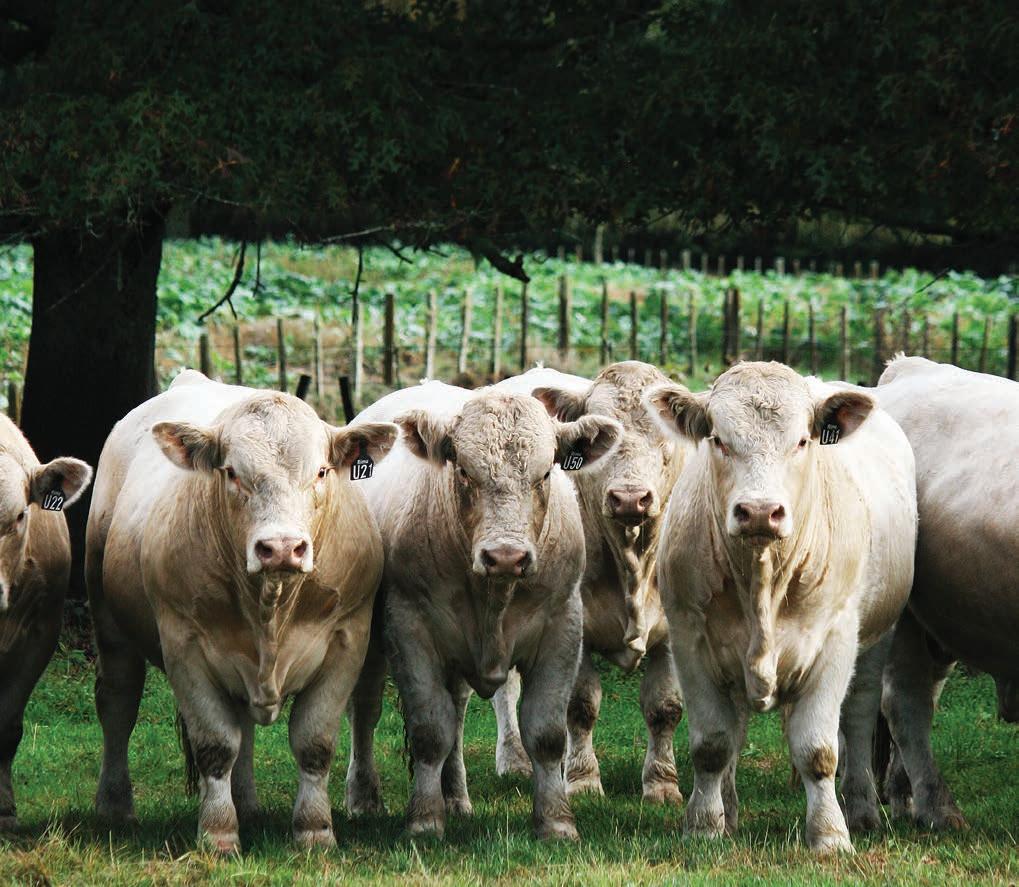
On Account Geordie Farms Ltd
A/c John & Rachel Adams Thursday 30th April 2026
Stratford Saleyards 11:30am
Due to the sale of the vendors property this complete herd of 156 cows & 30 incalf heifers are being offered.
This is a top great shifting herd milking in the Toko Valley (reclaimed swamp to steep hills).
This a low input, very well bred Kiwi/x/ Crossbred herd that will produce to very high levels elsewhere. Milked through a 28-bail herringbone shed, heifers OAD all season & whole herd OAD since 10.03.26.
Facts At A Glance
• Cell Count Average for the season 89,000
• Herd due 26.07.26 - Kiwi/x LIC Heifers due 26.07.26 - Jersey bulls
• TB Status C8, Lepto innoculated
• Herd BW 122 PW 159 Ancestory 99%
• 350 milk solids per cow this season with a previous best of 387
Auctioneers Note
Any buyers wanting hard working genuine cows or heifers are recommended to attend this auction.
Delayed delivery 02.06.26 is available to changing farm owners/sharemilkers. Deferred payment available by arrangement.
Online bidding available on Bidr Catalogues available www.mylivestock.co.nz
Enquiries /Inspections contact Grant Hobbs 027 477 7406 or Steve Quinnell 027 552 3514





Feilding Saleyards
Wednesday 29 April | 11.30am
Weaner Steers & Bulls
1200 - Steers
250 - Bulls
Thursday 30 April
Weaner Heifers
• 600 - Heifers
Annual Lines:
J&R Batley, BGSH Ltd, Bremner Pastoral I Cummings GJ Crafar Crosshills Station R Frew Family P/Ship, GJ&DC Hayes, Hillview Grazing Co, TR Hislop, Holly Farm, Kilmister Farms, Kohi Land Co, Loch Linnhe, DK Lockwood, A McEwen, Nerang Farms, DW Newcombe, Ngatiapa, Ohukia Station, Pukeko Land Co, Rathmoy Investments, Renfield Farming, Riversdale Station Tapuae Ltd Tarata Te Moehua WaiTotara Farming Ltd, Waiwera Station
Contact: Maurice Stewar t 027 246 9255
Tony Gallen 027 590 1711
Visit us: feildingsaleyards.co.nz PGG Wrightson Livestock
Thursday 7 May | 11am
On Farm – 1099 Tower Road, Matamata
Supply # - 77259
A/C Leadons Farming Limited
Due to our vendors ( Tony & Fiona) selling their dairy farm and retiring PGG Wrightson Livestock Waikato are privileged to offer their on farm machinery and sundry auction
Machiner y items have been well looked and ser viced as required
Comprising
2014 Deutz Fahr Agrofarm 420 100hp Tractor with FEL (3530 Hours), 2008 Toyota Hilux 3 0TD
4WD (330,000kms), Bertolini 650L Sprayer with 6m boom (Rosette sprayer and handgun and reel), Same Corsaro 70hp Tractor with FEL, Giltrap MSX100 Super Feed Out Wagon, Maxam 2500IV Mower, Feeder Leader ( The Boss) Bale Feeder, Calf Trailer, Grader Blade, Uni Engineering 6t Tip Trailer, Fieldmaster Post Rammer, PKE Trailers, 1200L Diesel Tank, 400L
Petrol Tank, Bertolini Mag Spreader, Husqvarna TS 432 Ride on Mower (219 Hours) Stallion 50 & 60 Teat Calf Feeders Stallion 10 Teat Feeder x 3 Milkbar 5 Teat Feeder x 5, Milkbar 10 Teat Feeder, Calf Water Troughs x 9, Stallion Cone Feeder x 5, Gallagher Weigh Platform & Scales, Gallagher EID Reader, McHale Bale Grabs, Test Buckets, Calving Jack, Milk Warmer, Dog Kennel, Fence Reels & Standards, Plus numerous other farm sundry items
A/C Outside Entries ( Various Vendors) Giltrap M40 Feed out Wagon, 3T Trailer, Cambridge Roller, UFO Mower, Farmguard Grader Blade, Topper, PZ Rake, Weed Wiper, Can Am 570 4 Wheel Motorbike, PKE Trailer, Drive Shaft (New), Weed Wiper, Honda TRX 420 Quad Bike, Quad Bike Sprayer with Boom, Tru Test Scales with Weigh Bars, Indicator & Wand, Large Dehorners, Wire Strainers, Spades & Shovels, 1973 Ford 3000 Tractor (Good Condition), Sthil
Chainsaw, Knapsack, Silage
has always been
1 – Production Wor th (PW )
2 – Milk ing Speed
3 – Udder Conformation
They have been OAD for the past 22 years on a system 2-3, with a tonne of feed supplied per cow via in shed feed system
Dair y platform is hilly to ver y steep with a 3rd only being flat Cows have averaged 410 M/S per cow for past 3 years
Cows are calving from 20th July to 6 weeks
AB Jersey ( Top 200 Cows) with rest AB shor t gestation Hereford Tailed with Jersey Bulls Bulls out 26th December
Cows will be pregnanc y tested prior to the sale
Online bidding is available via BIDR. Catalogues are available on w w w.agonline co.nz/upcomingsales
Contact: Eric Heta 027 233 1687
Tuesday 12 May | 11am
Morrinsville Saleyards
A/C Bendale Dairies Limited
Comprising of
• 210 Friesian X / Xbred Autumn Inmilk
Cows, BW 197, PW 183 (BW ’s up to 560, PW ’s up to 1249)
• 38 Friesian X / Xbred Spring Incalf
Cows, BW 223, PW 368 (BW ’s up to 458, PW ’s up to 937)
After 30 years of ownership James and Carolyn have sold their farm, as a result they are offering their 100% Autumn calving herd This herd was converted to 100% autumn calving 10 years ago
This closed herd is G3 profiled Multiple contract cows with LIC & CRV currently and in the past
120 Incalf Cows (Computer split) and 40 Incalf
Heifers were sold pre calving this season
Production of 667 M/S cow, and 2500 M/S HA with a peak of 2 9 M/S Farmed as system 5, with average cow weight of 510kg
Spring Incalf Cows were milked through as MT s and mated for spring calving They are due to calve from 13th July to 27th August, Incalf to Hereford Bulls, Scanned to dates
TB C10, Lepto Vacc, EBL Free, BVD Bulk Milk Tested, Johne’s Herd Tested, Herringbone Shed
This offers a great opportunity to purchase genuine autumn inmilk cows that are high producing with a strong history behind them
Contact: Alan Aldridge 027 472 0901
Wednesday 13 May | 12pm
Feilding Saleyards
Will be offering approx:
• 650 Angus & Angus/Hereford & Hereford & Charolais Steers
• 350 Angus & Angus/Hereford & Hereford & Charolais Heifers












Adding to the mix is a lamb kill that is more than 500,000 head behind the same point last season.

Alex Coddington MARKETS Livestock
STORE lamb prices are firming again across the North Island. Recent rainfall has refreshed pastures and triggered new grass growth, encouraging buyers back into the market and acting as a key driver of strengthening prices for store lambs.
We are now entering a phase when feed conditions are improving, demand is returning, and the supply of finished lambs is tightening. This is a classic setup for a more competitive store market in the coming weeks, as traders look to capitalise on the strong indicators seen in global demand.
However, the depth of supply remains uncertain. Unofficial reports from agents suggest there are fewer store lambs available than usual for this time of year. Much of this can be traced back to earlier price dynamics. Saleyard throughput was exceptionally high early in the season, when
store lamb prices reached inflated levels of around 49% of the schedule, or $5.65/kg. Farmers responded by offloading store stock earlier and in larger volumes while prices were favourable, and buyers took advantage of the ample supply despite elevated values.
As a result, total lamb numbers sold through North Island saleyards are up 30% on last year, equating to an additional 55,040 head. This includes a 21% lift in Feilding yardings, a 58% increase at Matawhero, and a 46% rise at Stortford Lodge.
Conditions then turned dry, causing many buyers to step back and wait for rain. Prices corrected sharply, falling from around $5.65/kg six weeks ago to a more sustainable $4.90-$5.00/kg range.
While significant, this drop largely reflects a return from inflated levels to more typical pricing relative to schedule.
More recently, with improved confidence and better feed conditions, store lamb prices have pushed higher again.
At this point in the season, store


Proudly sponsored by
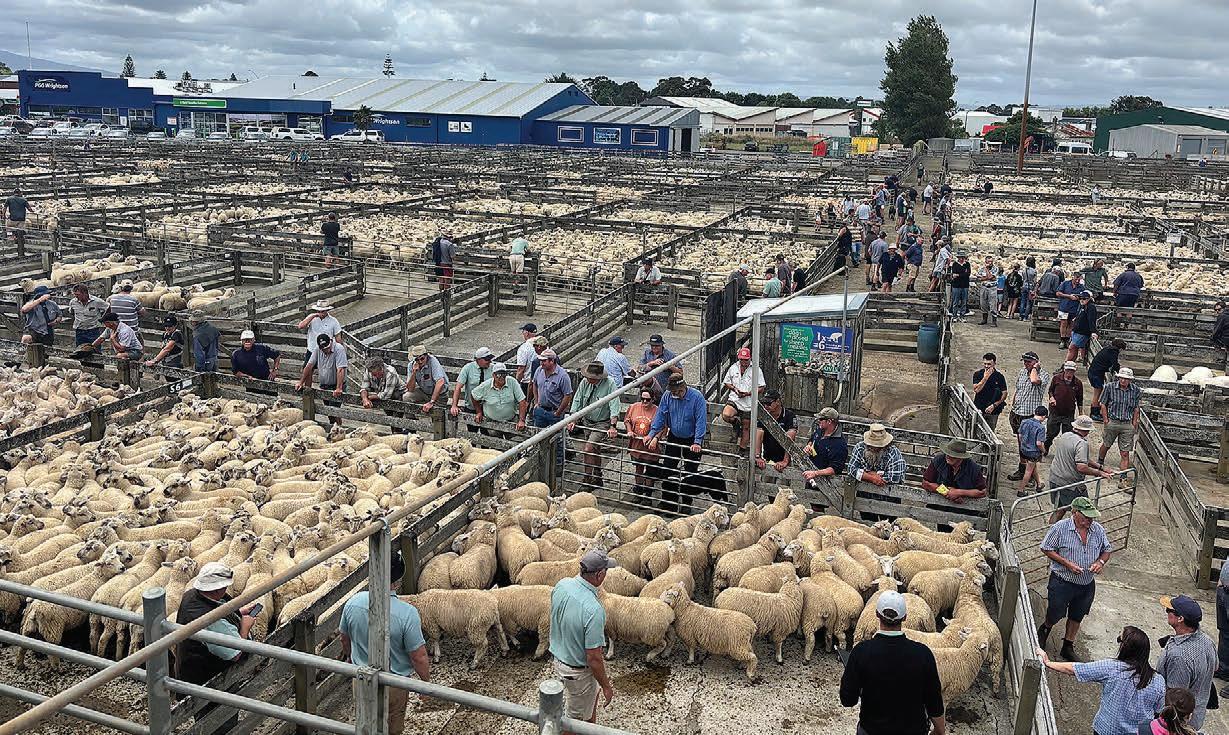
INFLATED TERRITORY: Saleyard throughput was exceptionally high early in the season, when store lamb prices reached inflated levels of around 49% of the schedule, or $5.65/kg.
lambs in the paddock typically sit around 47-48% of schedule. This week, however, 32-34kg lambs are making around $5.30/kg, lifting that ratio closer to 50%, against a farmgate price that has eased from $11/kg six weeks ago to around $10.50/kg.
While this percentage sits above historical norms, it aligns closely with market behaviour at the same time last year. Through late April and May, store lambs consistently traded at 49-50% of a firm $8.60/kg schedule, supported by limited supply, good feed, and strong confidence in margins.
Over winter, as supplies tightened further, store prices continued to rise alongside a schedule that lifted from $9.45/kg to $9.95/kg.
The stakes are higher this year, but that confidence remains. It is underpinned by firm export values, $2.60/kg more than they were last year, and schedules still averaging $10.50/kg, despite recent downward pressure and
processors talking the market down.
Competition may return sooner rather than later, particularly as processors anticipate gaps following shorter processing weeks through April.
However, a confident outlook is not without risk. Many processors have spent the past six weeks easing farmgate prices while chains have been full, allowing them to reduce procurement pressure and rebuild margins.
While strong export returns and ongoing industry overcapacity should support procurement, external risks remain. Structural overcapacity could lead to staff layoffs, potentially restricting processing capacity if lamb numbers were to rise suddenly.
Geopolitical uncertainty is another wild card. The Iran conflict has not yet impacted lamb demand, but it poses a risk to processor margins and the broader outlook. Rising costs and tighter margins may limit how
aggressively processors are willing to bid when supply tightens again.
Adding to the complexity is a 10% deficit in the national lamb kill, currently more than 500,000 head behind the same point last season. Earlier in the year, strong store prices diverted many lambs away from slaughter and into the store market, leaving processors short of supply. However, Beef + Lamb New Zealand data suggests there are still substantial numbers of lambs to come forward compared to last season.
Overall, competition for store lambs will continue to dictate prices. Considering how well New Zealand lamb is performing on the export stage, it comes as no surprise that traders are willing to pay more against today’s softer farmgate price if it means they are able to capitalise when supplies get short again. However, keeping awareness of the risks will be key moving forward, as store lamb prices move further into inflated territory.

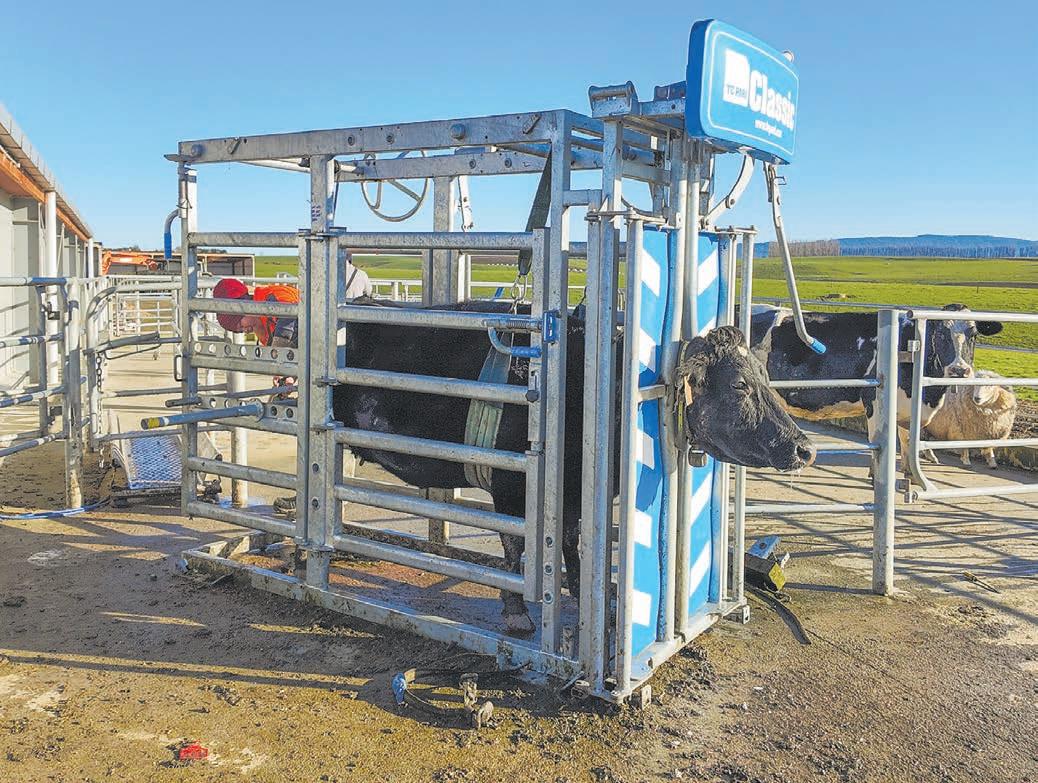



These weekly saleyard results are collated by the AgriHQ LivestockEye team. Cattle weights and prices are averages and sheep prices are ranges. For more detailed results and analysis subscribe to your selection of LivestockEye reports. Scan the QR code or visit www.agrihq.co.nz/livestock-reports
AgriHQ Livestock Outlook forecasts beef and lamb prices up to six months ahead, so you can plan your season with confidence. Predict the market. Plan with certainty. Be ready before the rest. Make every decision count, visit agrihq.co.nz
Temuka | April 20 | 967 cattle, 5592 sheep
Prime traditional steers, 605kg
Store mixed-sex lambs, most
Store
Prime ewes, most
Prime mixed-sex lambs, most
Charlton | April 16




BEING in a neutral weather pattern means that anything can happen weatherwise, from any direction.
But this week we finally see a significant uptick in high pressure in the New Zealand area, following weeks of stormy lows. Monday this week kicks off with high pressure parked over the middle of the Tasman Sea, but spreads a ridge over most of the country this week, with only the lower South Island slightly outside it to begin with, with showers and west to southwest winds.
As the week goes on high pressure continues in the New Zealand area with much of it centred out over the Tasman Sea, and smaller bubbles of high pressure east of the North Island. This set-up means even though we have a lot of high pressure moving in, we’re going to have shifts in winds, cloud cover and a few showers.
At this time of year only a slight shift in high-pressure placement
can be the difference between a mostly sunny, calm, day or a fairly cloudy one with wind and a few showers. We may have some cooler air in the mix for a time, although not all modelling agrees if we’ll get much out of it. Longer range modelling also picks high pressure, possibly as strong as 1037hPa, over New Zealand by this Friday, finally clearing NZ by the end of the coming weekend.
I’m not a fan of weather forecasting too far into the future, mostly because even the best of the modelling gets it wrong so often.
Going into next week, it may be back to the classic autumn windy westerlies, heavy West Coast rain and another cold change for the South Island in particular.
But the weather at this time of year can be harder to forecast than the middle of winter, as some high-pressure zones still teeter on the edge of being summer-like, though the power of the storms in the Southern Ocean are
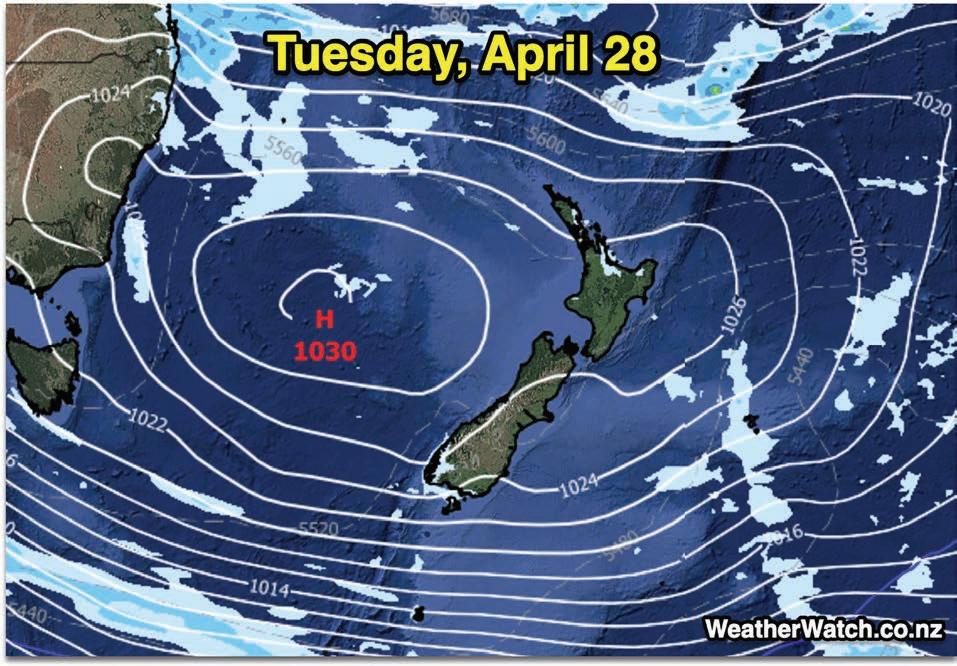
certainly ramping up now. But looking into May we still see some big high-pressure zones south of Australia and exiting into the Tasman Sea towards New Zealand.
Australia is having a very settled run of weather, with large dry areas dominating the continent and most wet weather on the coastal fringes, although the southeast quarter of the nation
has some chances of wet weather coming up.
A lot of people are asking me about the Super El Niño. I’m not a fan of weather forecasting too far into the future, mostly because even the best of the modelling gets it wrong so often. It’s our small size (in comparison to weather systems), our location on Earth (halfway between the equator and Antarctica) and our position
partially in the Roaring Forties belt of unsettled weather. A lot of the concern of this potential El Niño is coming from the Americas, where it can be significant. For NZ, it’s harder to work out. But if the past is anything to go by, then we might expect more windy westerlies this year and more high pressure in the Tasman Sea.
But for now, we’re in neutral – so continue to expect the unexpected.
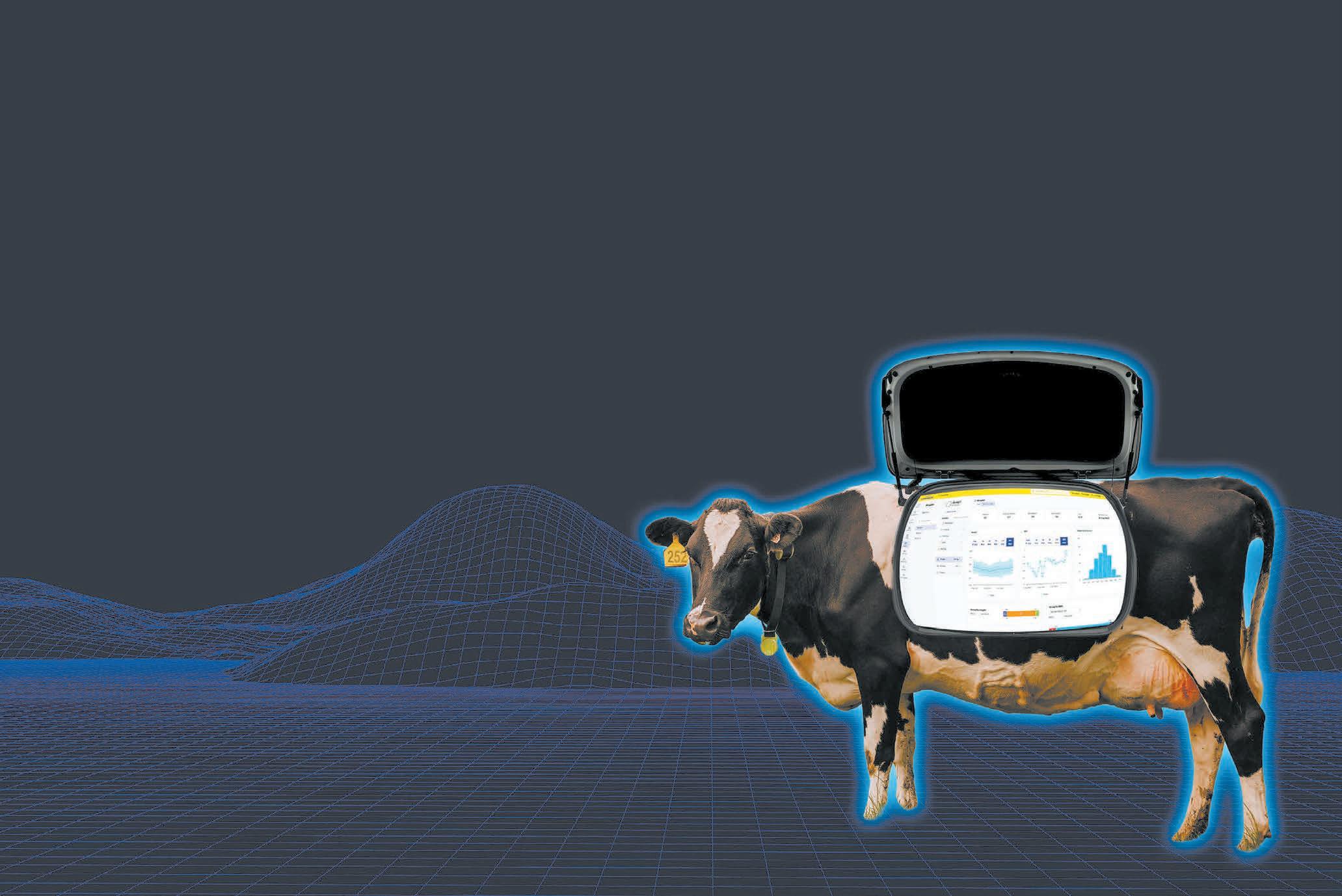



on under the hood?
G et insights you never knew you needed with Tru-Test Active Tag wearables.
Accurate heat detection, including silent heats
Automated reports and real- time group insights for transition, reproduction, rumination and more
Essential health alerts
No subscriptions and no data fees, payment terms available
Collar or Ear Tag options
Visit farmsmarter.co.nz or scan the QR code to request a demo.


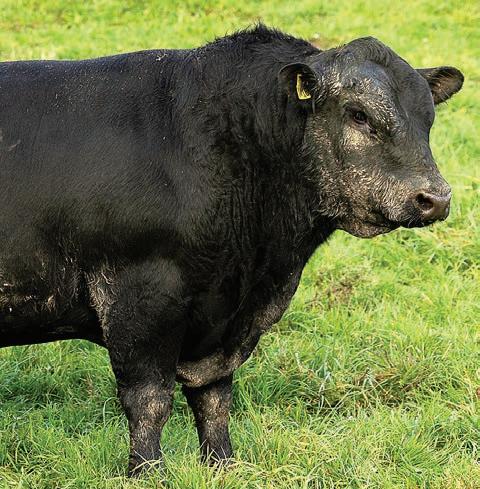






















Hugh Stringleman MARKETS Livestock
BEEF cattle breeders are confidently awaiting the autumn bull selling season with expectations that buyer demand will be good and prices will remain high.
Angus NZ immediate past president Mike Smith, who has the Kincardine Angus stud in Queenstown, said calf sales in autumn had set an amazing benchmark for the pricing of sires.
“It is great to see commercial beef farmers getting good returns on their investments and long may it last.
“Sustained schedule prices from the meat industry show that commercial farmers are getting their rewards at the slaughter end of the value chain.
“When that occurs they seek better genetics to improve their herds.”
After Angus studs set some New Zealand price records for bulls last year, Smith said he is waiting with interest to see the first crop of calves from those pace-setters.
Tangihau Angus, Gisborne, set a new Angus bull price record with Tangihau U418 selling for a massive $161,000 to Oregon Angus, Masterton.
Cricklewood Angus stud, at Wairoa, Hawke’s Bay, held the record for the highest priced Angus bull for only one day after Cricklewood U909 sold for $156,000 to Puke-Nui Angus in Taumarunui.
Simmental NZ president
Jon Knauf said all the factors pertaining to bull sales are positive and the breed is helping to put more kilograms of beef out the farm gate.
He will be offering 80 bulls at Kerrah Simmentals on May 19 at Wairoa, midway through a season of nine sales for the breed, three in the South Island and six in the north.
Kerrah averaged over $12,000 with full clearance last year and Knauf said he would be delighted to get close to repeating that outcome.
Hereford NZ president Robert Peacock, from Orari Gorge in South Canterbury, said most factors are positive for beef farming at present and that good beef prices should stay around for longer than in the normal price cycle.
“Bull buying tends to be the last decision of the farming financial year and is guided by weaner prices, lamb prices, even wool prices.
“That bull you buy is going to have a strong influence in your
herd for 10 years.”
Carrfields North Island livestock manager Phil Young, in Waikato, said vendors had significant rises in weaner sale prices this year of $300 to $500 and that confidence level should flow on into bull prices.
“I can’t see any reason why not, as all the market factors look to be positive,” he said.
Perhaps the numbers of hill country beef herds have stabilised because the carbon credit and forestry plantings have eased off and the increased cattle values are encouraging for farming again.
The condition of bulls to be offered by breeders looks to be good after a favourable summer season for rainfall and pasture growth, Young said.
Factors working in favour of a good bull selling season include positivity among sheep and beef farmers, high schedule prices and good calf prices and all-round feed conditions, PGG Wrightson national genetics manager Callum McDonald said.
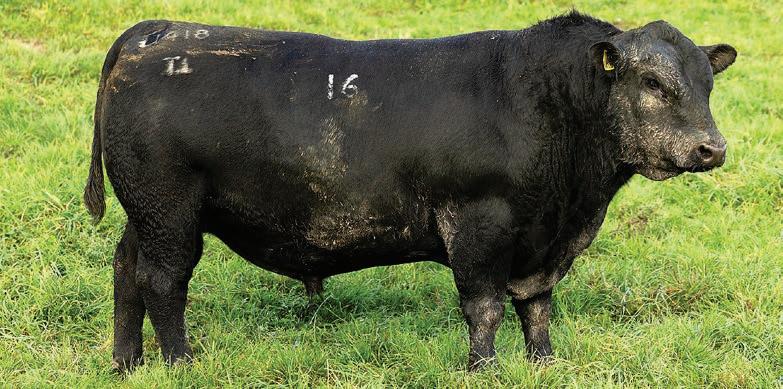
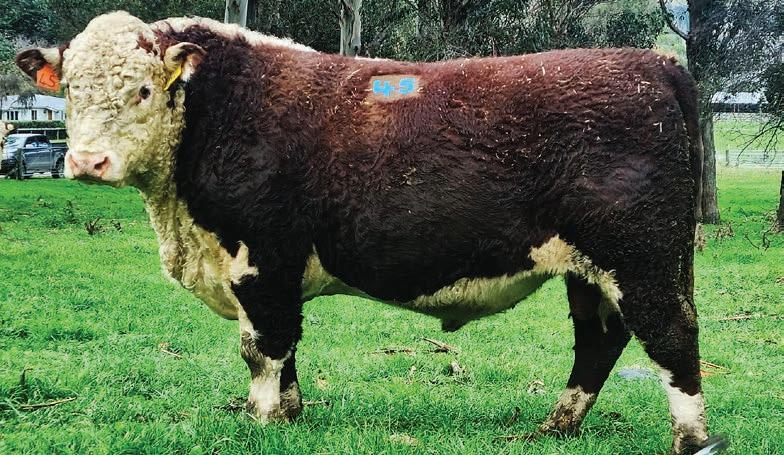
WITH autumn bull sales fast approaching, it is our pleasure to bring to you the first of the three Livestock Showcases we will be publishing over 2026. I would like to begin by thanking everyone who has taken part. Your support is what makes these Showcases possible, and on behalf of our team and our readers, a special thank you to all involved.
Bringing together industry news, breeder articles, our popular bull sales calendar, and promotional content from breeders and industry partners, this season’s Showcase provides a comprehensive resource to assist with your preparations for the season ahead.
In the coming months, breeders will share updates on their open days and sale dates via our weekly Livestock section in the newspaper, online at farmersweekly.co.nz, and our bull sales eNewsletters, so be


sure to keep checking in regularly. To all who have contributed, thank you once again. And to our readers, thank you for taking the time to engage with this season’s Showcase – we trust it will prove to be a valuable and informative guide across the season.
I wish you all very best for the season ahead and look forward to bringing our Bull Sales eNewsletter to you soon.





Hugh Stringleman TECHNOLOGY
Sheep and beef
INTENSIVE rotational grazing of hill country through livestock wearables will deliver a step change in the performance and sustainability of hill country farming, Kellogg scholar Natasha Cave says.
Te Kuiti farmer Cave comanages Rotowai Farms and serves as the catchment coordinator for the Whanganui Region Catchment Collective. She was one of the two recipients of the inaugural 2025 Beef + Lamb New Zealand Leadership Advancement Scholarships and attended a Kellogg course in 2025.
Her Kellogg report is titled Beef on the Brink of a Tech Revolution: Wearables on NZ hill country. It is published on the Rural Leaders website.
Cave said her report only touches the surface of the potential benefits of wearables for hill country farming.
What have long been seen as
limitations in hill country grazing around subdivision have now been lifted with the invention and commercialisation of virtual fencing technology.
Intensive rotational grazing and improved pasture use are key factors in the success.
Higher stocking rates, reduced labour and supplementary feed costs and improved protection of waterways and sensitive areas are positives, along with improved farmer wellbeing and outlook.
“Many of the farmers using wearables that were talked to, had major concerns about the future viability of their farm businesses prior to investing in wearable technology. They were now excited about the future and farming again.”
Among the risks are poor management of system change and negative animal welfare and environmental outcomes.
“One of the biggest challenges to the success of wearables on beef is going to be farmer mindset and their ability to have an open mind, remove the current constraints of their farming management, take the blinkers
off and embrace change,” Cave said.
Among her recommendations for the revolution to be a success are the need for upskilling in pasture management, investment and innovation in water infrastructure and industry support to manage knowledge gaps.
Cave called for new research into the long-term impacts of wearables on hill country farming, including effects on pasture sward composition, soil fertility, emissions, water quality, and greenhouse gas emissions.
In-depth financial analysis is also needed to be available to farmers and their consultants. Cave did not carry out a costbenefit analysis as part of her Kellogg programme.
There are also knowledge gaps regarding the long-term impacts of intensive grazing on soil fertility, water retention, nutrient cycling, and greenhouse gas emissions in hill country environments.
“While the outlook for wearables on beef is optimistic, this is recent innovation, and
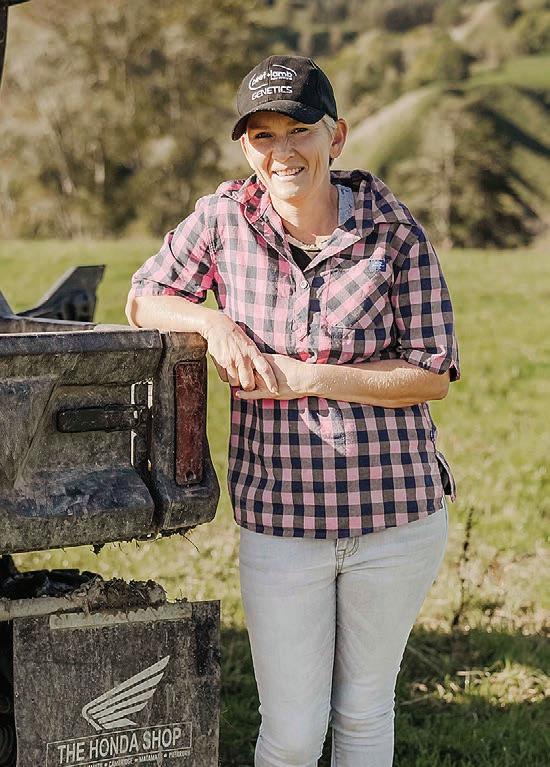
ongoing evaluation is required to determine their sustained benefits and limitations.”
Cave and her husband Alan have used Halter collars on breeding cows and finishing stock for the past two years, enabling a 20% lift of cattle numbers on Rotowai.
Advice was received from former BLNZ chair James Parsons, an early adopter, and the contract with Halter now extends to 330 collars.
The report has generated some
EARLY ADOPTER:
interest and Cave has been asked to attend farmer meetings and share her findings, forecasts and recommendations.
“How do we support farmers to get the best out of this technology and who’s responsible – farmers themselves, consultants, the tech companies, or our industry bodies?
“More of this technology is going to come at us and I think it is a Team Ag approach to how we manage to get the best outcomes.”

Gerhard Uys TECHNOLOGY Livestock
AGRITECH start-up Scanabull has developed a system that estimates cattle weight using a 3D camera on a phone and AI processing.
Scanabull co-founder and CEO
Dan Bull said the app means there’s no need for a crush or
guesswork, with the technology providing meat processors and farmers with accurate real-time data about on-farm production.
The company just raised $1.1 million after a bid led by Sprout Agritech, with support from Enterprise Angels and Callaghan Innovation’s Deep Tech Incubator programme.
The tech uses the LiDAR sensor on an iPhone.
It captures a 3D scan of the animal and processes it using proprietary neural networks run directly on the device.
Scanabull has two systems, a phone app that works on an iPhone Pro and a custom camera called the Scanabull Weigh Point that weighs animals automatically in the paddock.
The phone app allows a quick
measure of animal weight, whereas Weigh Point allows better measurement of growth trends.
The technology generates a detailed 3D point cloud of an animal and processes the data using a deep neural network that analyses the animal’s shape and structure to accurately estimate its live weight.
The model processes spatial
data around 30 times per second, allowing the system to deliver a weight estimate in roughly one second.
The system is currently over 93% accurate on individuals, and much more accurate at the mob level.
Bull said Scanabull is working with industry partners including Silver Fern Farms, with trials underway across New Zealand.
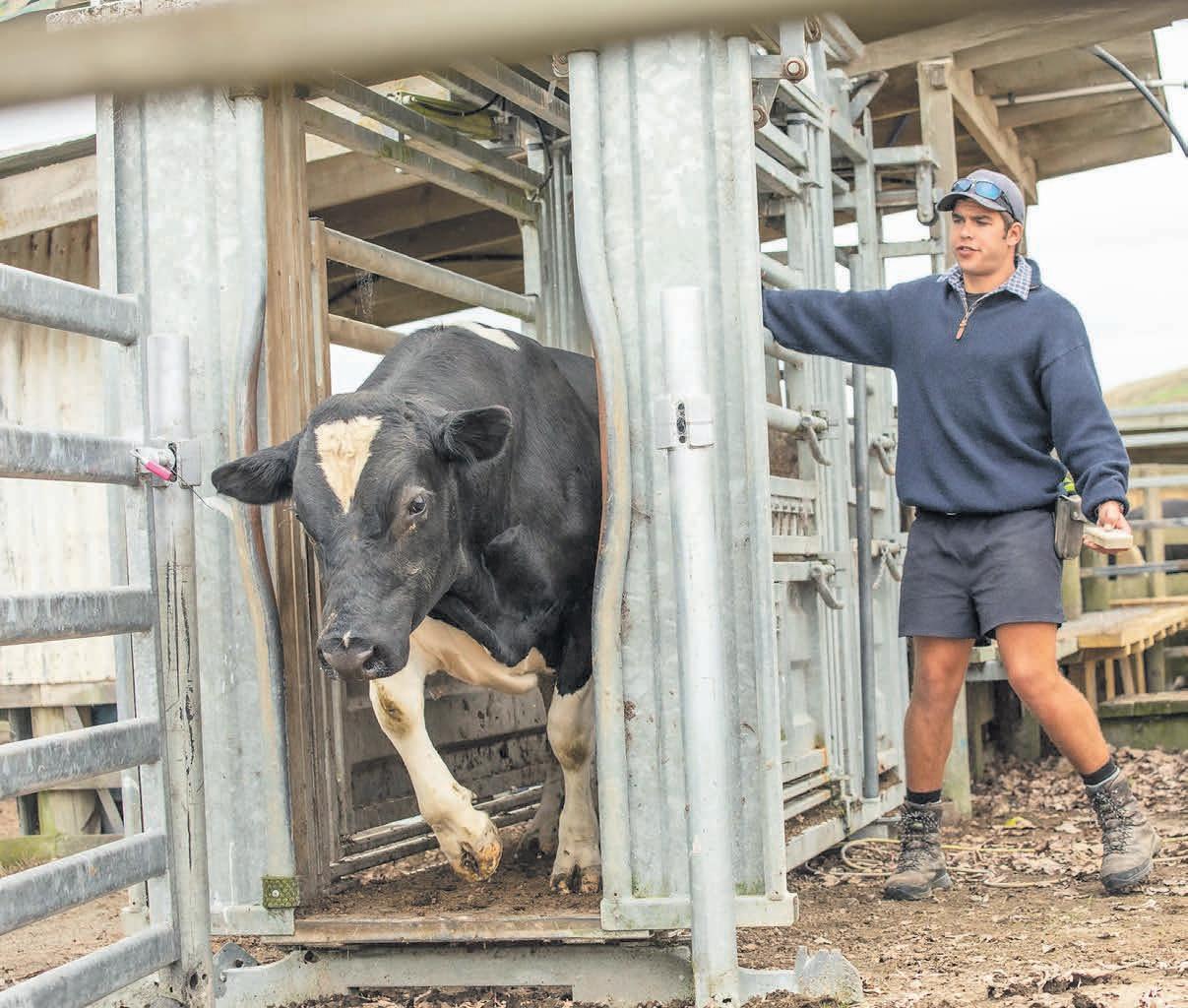
NEW Zealand Beef
Shorthorn has reached a milestone for the breed, recording positive results at the completion of the first cycle of its Beef Recording Programme.
Since 2023, 350 cows have been mated annually on Bevan and Mary Proffit’s Whanganui farm using Shorthorn, Angus and Hereford sires.
Leading the programme is Bevan’s brother and Raupuha Shorthorns principal Russell Proffit, with assistance from Beef + Lamb New Zealand.
He said the programme is being done to show that the breed can match other breeds on the commercial stage regarding growth rates and estimated breeding value (EBV).
“It’s to prove that Shorthorn cattle can perform if not better then equally to those other breeds in New Zealand.”
The programme has allowed
the benchmarking of Shorthorn sires under commercial hill country conditions, translating to real-world data, he said. The first contingent of raw carcase data from the processing of 125 rising two-year-old Shorthorn-AngusHereford cross steers has been collected.
It measured growth, carcase and hip height, alongside the kill data collected for Silver Fern Farms’ Eating Quality programme.
It confirmed that Shorthorn are standing alongside the country’s leading beef genetics.
Additionally, the data, which has been analysed as in part of Beef + Lamb New Zealand’s Informing NZ Beef programme, showed that the carcase traits, growth rates and high-quality traits, particularly in marbling and yield, are reflective of their EBVs.
The early data shows that these bulls are performing as their EBVs suggested they would.
It shows the Shorthorn breed competes well with other beef breeds and can be used as a sire
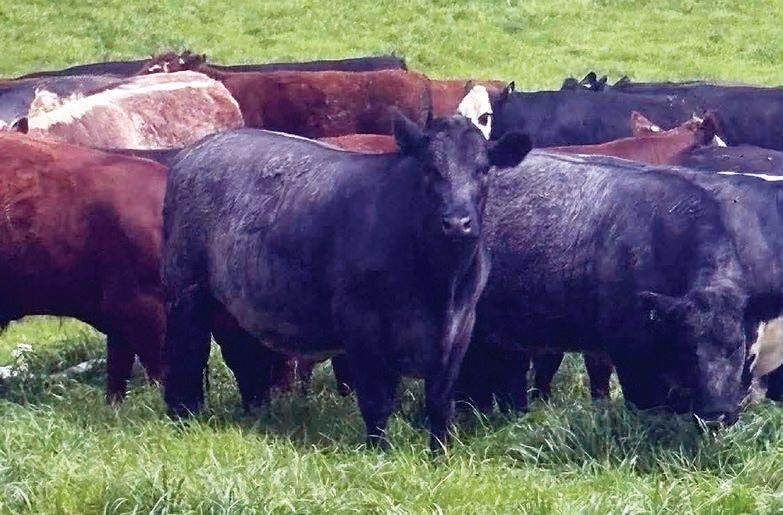
UP THERE: The carcass data from rising two-year-old Shorthorn-AngusHereford cross steers confirmed that Shorthorn are standing alongside the country’s leading beef genetics.
across multiple breeds, Proffit said.
This reliability is important so that farmers feel confident in their purchasing decisions. The cross-breeding benefits will add dollars to the bottom line of most businesses.
“As a farmer, you need to add value, and cross breeding is a renowned advantage and I don’t
think the cattle industry has used it as much as the sheep industry.”
The carcases are also reaching premium grades at processing plants, proving it is not the colour of the animal’s skin that matters when it comes to breeding, he said.
“That’s what we as farmers want to be rewarded for.”
An additional 250 steers are
up to 5% productivity gains, the company said.
companies to bring their worldleading innovations here.
AGRIZERONZ is to invest $5.1 million into Australian methane mitigation company Rumin8 to help support its approval process into the New Zealand market.
Rumin8 is developing products using a compound that reduces methane emissions in livestock.
Trials with beef cattle showed an average 82% methane reduction after consuming Rumin8’s feed additive, as well as indications of
Rumin8 is aiming to develop a range of products including a feed additive, water additive, mineral supplement and slow-release capsule.
Investing in Rumin8 aims to give New Zealand farmers access to a range of emissions reduction tools, AgriZeroNZ CEO Wayne McNee said.
“New Zealand’s a relatively small market on a global scale, so our investment is critical to push New Zealand pastoral farming systems up the priority list and support
“Most of our major export customers have set ambitious emissions reduction targets which cover their entire value chain, including the New Zealand farms which produce the milk and meat they buy.
“Being able to show credible progress matters to maintain our market access and reputation as a world-leading producer.”
Rumin8’s goal of developing products for grass-fed animals and its progress to date make the company a welcome addition to
AgriZeroNZ’s portfolio, he said.
scheduled for carcase scanning and analysis over the next two years. These will be killed and analysed in 2026 and 2027.
While the male progeny is tested on carcase traits, all of the heifers’ key EBV traits are measured in the programme while being retained to track their fertility and rebreeding, he said.
“In the beef industry, that’s our biggest wastage – in between the first and second calf. We want to figure out, what is this wastage and what drives it and what role do genetics play?”
This is done so that the trial includes real world commercial testing of the breed.
The last of the data will be recorded in March 2028. By then, Shorthorn breeders will have the data they need to show that the breed can more than compete with other beef breeds.
“By combining historic marbling excellence with modern, data-driven growth metrics, the Shorthorn is carving out a vital role in the future of the New Zealand beef industry,” Proffit said.
Rumin8 co-founder and CEO David Messina said AgriZeroNZ’s investment has brought its focus on New Zealand forward several years.
“We’re now planning animal trials in New Zealand this year to support our application for regulatory approval.
“These trials will test the safety of the feed additive as well as its effectiveness in local conditions.”
Approval for Rumin8’s initial product will help facilitate registration of other related products which are more suited to grass-fed systems.
RANGE: AgriZeroNZ




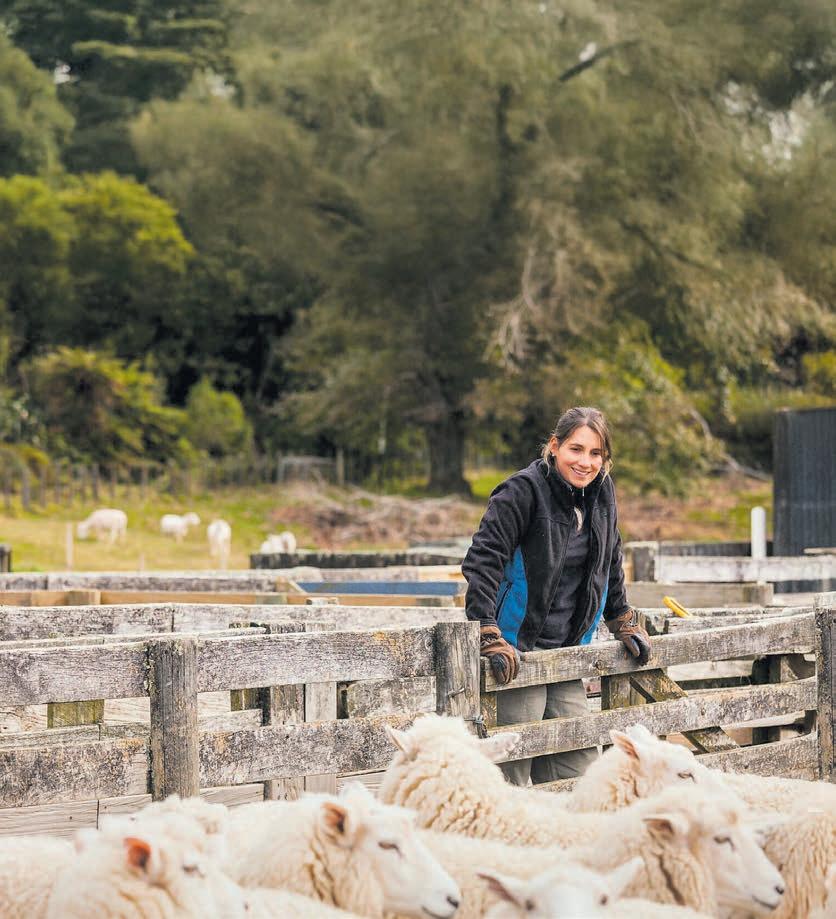

Alex Coddington MARKETS Livestock
THE average price of weaner beef calves in March is typically a reflection of several key market factors that go on to set the tone for the rest of the beef selling season.
Current farmgate prices for finished beef form the foundation of price expectations, while climatic conditions play a significant role in how prices will meet or fall short of that standard.
The icing on the cake will always be the level of confidence in the beef market, overall farmer sentiment acting as the final influence on average returns for weaner cattle.
The 2026 selling season will stand out as a remarkable year, with all three of these critical market drivers aligning in favour of higher prices. Record farmgate returns left cattle traders well positioned, with cash in hand to re-enter the market.
A wet end to summer drove a strong grass market nationwide, while confidence in beef markets reached new highs due to tightening global supply and strong demand from key export markets.
The combined effect of these factors pushed weaner values to unprecedented levels this year, well beyond initial expectations.
The early market dynamics quickly exceeded these already bullish projections.
Historical benchmarks help put the scale of this shift into perspective. AgriHQ data dating back to 2010 shows that traditional and exotic weaner steers sold in March have historically traded at around 69-70% of schedule when grass allows for strong demand. Applying this ratio to current record farmgate prices would suggest that 250kg traditional steers should have been valued at
approximately $6.65/kg, around $1660 per head.
However, in reality, the early market dynamics quickly exceeded these already bullish projections and confidence in export prices drove values to $7.00-$7.50/kg for 250kg traditional steers, equating to roughly $1760 per head in the early North Island sales.
Looking at weaner prices by breed across the country, exoticbred steers have consistently been heavier in March than traditional types, typically averaging between a consistent 230-260kg range since we started recording data in 2008.
As a result, they have often achieved higher per-head prices. This year, the average price per head for traditional steers through all of March was $1710, compared to $1840 for exotics. However, traditional steers have consistently returned higher cents-per-kilogram values, despite the volatile fluctuations in average weights. In some years, traditional steers have averaged
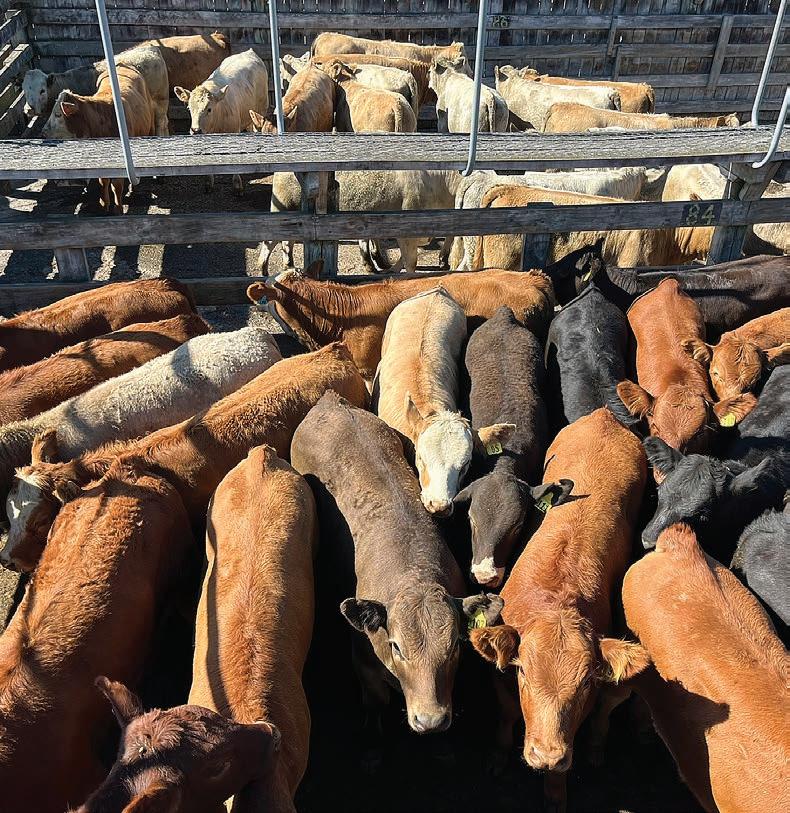
HISTORY: AgriHQ data dating back to 2010 shows that traditional and exotic weaner steers sold in March have historically traded at around 69-70% of schedule when grass allows for strong demand.
weights as low as 210kg in March, only recently returning to the upper end of the range (around 240kg).
Despite this variability in weight, traditional bred steers have generally maintained higher cents-per-kilogram values than exotics.
This year, traditional steers averaged 34 c/kg more than exotics, $7.25/kg compared to $6.90/kg, but it was the exotic cattle vendors that on average would take home the bigger pay cheque with a $1840 return on weaner steers that were on average 30kg heavier.

Mel Croad MARKETS Sheep and beef
FARMGATE beef prices have softened through autumn as supplies within New Zealand lifted amid drying conditions in some regions and a jittery global backdrop.
Prior to this softening, beef prices had enjoyed record returns, following gradual upside that
began back in April 2025. This was the result of soaring export demand and much tighter beef production in New Zealand.
The United States remains a significant market for New Zealand beef, particularly with prices lifting to all-time highs.
US lean beef prices eclipsed US$4/lb earlier this year, which compares with US$3.20/lb last year and a five-year average of US$2.87/lb.

The shortage of beef in the US combined with robust consumer demand has enabled this surge in prices.
While NZ has strengthened its focus on this market, so have other market players. US imports of Australian and Brazilian beef have surged this year, leading to a recent tempering in imported prices.
US beef demand seasonally ramps up through April and
May, which may absorb some of this additional supply, but how well prices hold up will be worth watching in the months ahead.
Not only have we seen the US strengthen but the likes of China, Canada and the United Kingdom have also remained active, ensuring a vital spread of markets.
The conflict in the Middle East didn’t have any immediate impact on beef demand or pricing
within key New Zealand markets through March.
However, the reality is it’s likely to have lasting economic impacts globally, and that could potentially dim demand.
The outlook for beef returns remains favourable with farmgate prices forecast to remain above long-term averages. However, these current global challenges add another layer of complexity to navigate in the short term.

Gerhard Uys PEOPLE Livestock
SHORTHORNS, says Russell Proffit from Raupuha Shorthorns, are a bit like a lolly scramble – you never know what you’re going to get in terms of colour. Their ever-changing colour palette and the heap of character these cattle have are two reasons Russell and wife Mavis keep loving Shorthorns.
They run an 85 Shorthorn cow stud near Mahoenui on their sheep and beef operation, which includes 2200 recorded ewes and 1000 other cattle, with the majority being Shorthorn or Shorthorn cross.
Russell says Shorthorns are in his blood. His family have had Shorthorns for nearly 55 years, with his parents also running a stud.
He and brother Bevan started their own Shorthorn studs as teenagers. A lot has changed since then – for one, Russell now has Gallagher’s e-Shepherd on 400 animals.
The collar means cattle can be controlled on hill country, and
they are moved every day of the year for 365 days onto new breaks of grass.
Russell has been impressed by how the calves are looking this year with their ability to creepfeed in front of the cows
“It’s good for the paddock, soil and cattle,” Russell said.
Shorthorns were also quite leggy at some stage, likely from American genetics, but Russell said that has been corrected after they focused on bringing them down a frame score.
The breed as they are found on his farm are now “good solid animals, like good front rowers”.
The traits that make Shorthorns a “whole package” remain the same: good mums, easy calving, good milkers, beautiful cattle to handle and work with, a good quality carcase and intramuscular fat that translates into good eating.
Russell’s annual sale is on May 26.
This year he has Aaron and Amanda Harris along for the sale, a younger couple who are giving new life to the society.
“They’re keen young people, which is always good in our industry.”
Husband and wife operators Aaron and Amanda, from Mill Valley Shorthorns and Wiltshires, run a sheep and beef operation on about 2000ha in the eastern Taranaki hills.
Amanda said she and Aaron mostly run the farm by themselves, and with them not employing labour they need docile animals to work with, and Shorthorns are just that.
The pair grew up in the region, Aaron on the farm they are currently leasing from his family, and Amanda 30 minutes down the road, also on a sheep and beef operation.
Aaron’s parents ran Shorthorn and he has fond memories of the breed.
The pair began breeding Shorthorns in 2016.
Amanda said when they decided to scale up the Shorthorn society embraced them, with Russell in particular being instrumental in helping them grow their herd with his contacts to dispersal sales.
The Harrises farm on steep hill country, with only 60ha, of almost 1200ha effective, being flat country.
Amanda said their Shorthorns
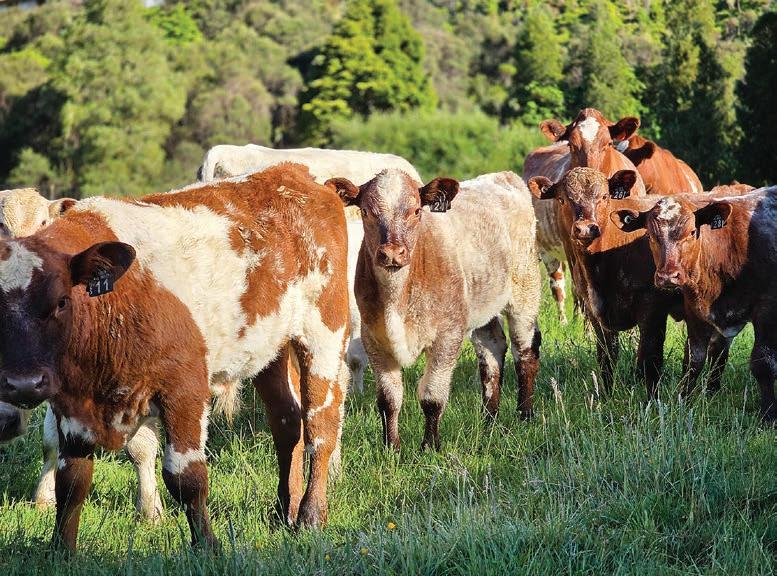
that live on hard hill country shift well, and easily adapt to any place in the country.
A tell that Shorthorns do well in tough conditions is that most of their animals have been sold to farms within a half an hour drive of their farm.
Shorthorns have not traditionally been crossed with dairy cattle, but the Harrises recently sold 20 straws to a
dairy farmer, with calving ease, low birthweight and cows who don’t need much intervention during calving appealing to dairy farmers.
The Harrises’ commercial herd is primarily Angus x Friesian, but they are slowly progressing that to a self-replacing herd, keeping Shorthorn cross heifers to a point where they’ll be pure bred in future.
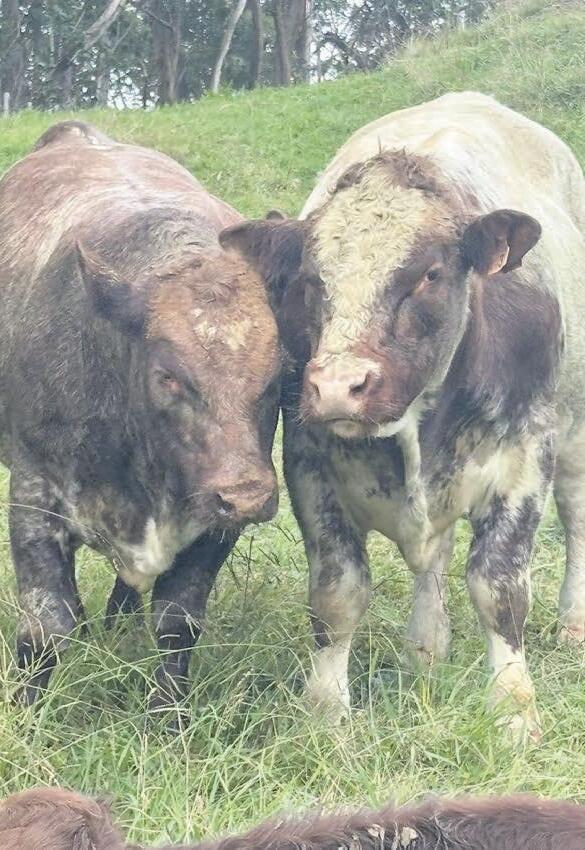


TUESDAY 26TH MAY
Gerhard Uys PEOPLE Livestock
THE excitement of seeing last year’s breeding decisions hit the ground is a real highlight for Eileen and Alistair McWilliam from Te Taumata Herefords.
And the results are decades in the making.
Alistair has been farming at Te Taumata for most of his life. He worked alongside his father, Jim, and his uncle after leaving school and went into partnership with Jim in 2003, after buying out his uncle’s share of the farm business.
Eileen grew up on a stud Simmental ranch in Oregon in the United States and has farmed in New Zealand with Alistair since 2000.
Alistair is the third generation at Te Taumata Poll Herefords, with the stud established in 1962 by his grandfather, also Alistair. He and Eileen farm 450
hectares effective, summer dry farmland in Gladstone, Wairarapa, with a good balance of high quality flat and rolling clay country moving up into steeper limestone Class 6 hill country.
Winter stock numbers are around 4100 stock units, which include over 400 head of cattle, 1500 sheep and 160 velveting stags.
Stocking rate rises steeply in August and September when lambs and calves are born. They currently calve 180 cows.
Their Herefords cope with the heat and the cold and the wind, being thicker skinned, and graze hillsides evenly right to the top. They love the rough grass and do well on our winter-wet and summer-dry hill country.
“Hereford cows are very maternal with great fertility and will produce a heavy steer with a quality carcase.”
Alistair said their job is to produce bulls and rams “that will help make our clients profitable”.
“We take a very practical approach to breeding. Get the
basics right first: fertility and calving ease, good udders, good structure so the cattle have longevity on the hills, growth and carcase quality, bone and fleshing ability so they can withstand environmental challenges.
“We look to make genetic improvements across the board without any big dramatic changes in any one single area. If you focus too heavily in one area alone you can very quickly create a problem in another.”
He said clients who knock on their door are buying top beef genetics from a herd that has been breeding and selling Wairarapa hill country bulls for 64 years.
“They buy bulls that work in the paddock and on paper.
“More than that, though, they are buying bulls from a breeder that is committed to the genetic progress of the Hereford breed and the key role Herefords will play in the future production of the national cattle herd. They are buying production, genetics, passion, integrity and
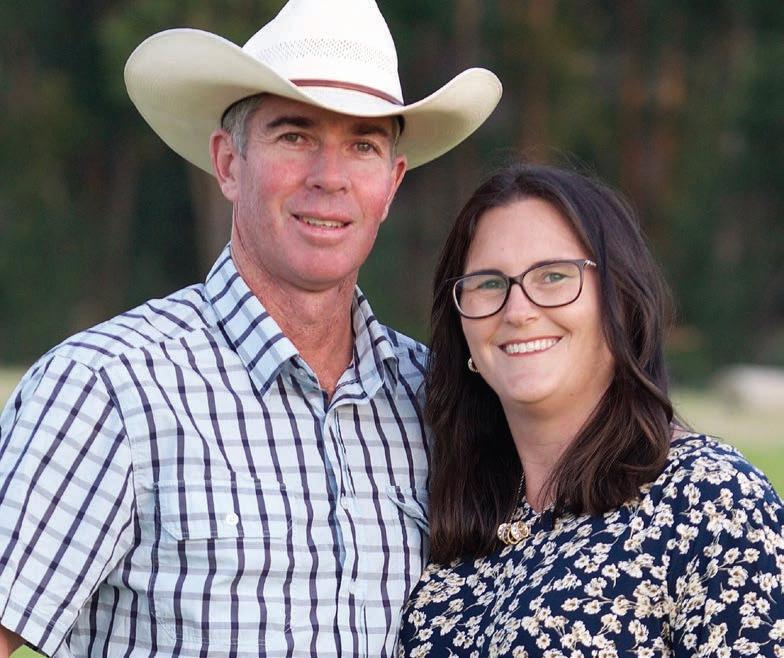
commitment to the future.”
Besides producing good animals that make money for clients, relationships and integrity are extremely important to Eileen and Alistair.
“We believe a real strength of our operation is the good relationships we have with the rural services that provide advice and support our business, from our stock agents and vet to our grass seed rep and accountant.
“We value the relationships

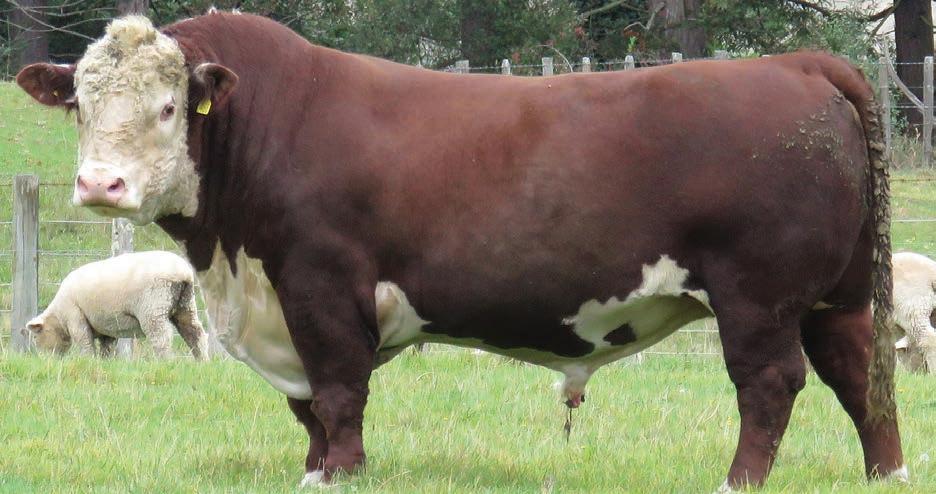


and Border Leicester
January.
we have with our clients and strive to produce the very best genetics for their businesses.”
Eileen says the farm is their home and their passion.
“It is an amazing life for our family of six, and the kids really appreciate all the experiences and opportunities they’ve had growing up on a farm.
“We look forward to the next generation one day taking the reins and providing that experience for their children.”

TRAVELLING through Europe while studying at Cambridge University, Tony Thompson was introduced to Simmental cattle. He fell in love with the breed and that ignited a lifetime passion for breeding and showing Simmentals.
Thompson’s name is synonymous with Simmentals in New Zealand, not only as a stud breeder, but as a veterinarian too – he made a valuable contribution to the introduction of embryo transfer, helping shape the future of the breed here.
Now in his eighties, Tony is nearing retirement, but he’s not quite done yet. He still loves breeding cattle on his 96 hectare block at Waipukurau, central Hawke’s Bay, but his dream would be to pass his stud, Glen Anthony Simmentals, on and see it continue.
As a young man, Thompson
grew up on a sheep and beef farm in the back blocks of Whanganui. He was a shearer by trade, then graduated from the first ever intake of the veterinary school at Massey University in 1967.
Newly married, Thompson and his wife saved their pennies and travelled by ship to the United Kingdom, where Thompson gained a scholarship to study at Cambridge University from 19681970. He studied embryology and was introduced to the early stages of the technology that would be used in embryo transfer.
While overseas, the couple travelled through Europe, and when Thompson laid eyes on the Simmental cattle, it was love at first sight.
The couple returned to New Zealand and Thompson went into a vet practice in Matamata, at a time when exotic breed cattle were just starting to arrive in New Zealand. Thompson didn’t have to think twice when offered the opportunity to purchase a purebred Simmental cow.
“When we moved down to
Waipukurau in 1974 and bought this farm where we are now, we gradually built our herd over the years,” he said.
“I felt the training in veterinary science and my practical stock skills were a marvellous combination when it came to stud breeding.”
These days, the stud is down to a manageable 70 cows. This year’s May 15 sale will be their 38th on-farm bull sale. They sell about 20 rising two-year-old bulls annually.
Thompson built a reputation for showing cattle, often taking up to 20 to a show. It was an excellent
way to promote both the breed and his stud.
Covid put a halt to cattle at many shows but, while he no longer shows cattle, Thompson established a reputation for himself by supporting the Royal Agricultural Society (RAS) movement over many years.
Thompson could be termed “old school” in that he has relied on his skill as a cattleman and a sense of stockmanship to shape and develop his stud, rather than computerised data.
“My breeding programme is based on 50 years of selection, ensuring each generation upholds my commitment to structural soundness, temperament, performance and excellent beef qualities.”
Thompson’s skill and dedication have been recognised over the years, including with a Gold Medal from the RAS and life membership from the Simmental Cattle Breeders Society of New Zealand.
“To be acknowledged for your service to the breed, those things stay in your memory. Our bull sale in 2022 was also a highlight, we had the best Simmental bull sale that year.
“I’m in my retiring years, but I get a lot of satisfaction out of keeping going. You can’t go forever, but it’s been a privilege.”
KOANUI Polled
Herefords has one of New Zealand’s largest registered Polled Hereford herds, and the Chesterman family have plans to grow even more.
Based at their home farm in Maraetotara, Hawke’s Bay, the Chestermans have recently expanded their farming business with the purchase of Pukekura Station near Poukawa.
They say Pukekura has tremendous potential as a substantial breeding and finishing unit under Glen Chesterman’s management.
Brother Hugh Chesterman has
returned home from overseas and is supporting development at Pukekura as well as marketing Koanui stud cattle.
The aim is to rebuild Koanui to 800 registered females and 200 commercial cows.
“A larger herd allows tremendous scope for greater selection pressure, the opportunity to progress diverse Koanui bloodlines and maximise market opportunities,” stud principal Chris Chesterman said.
“Our goal remains producing quality cattle with high performance and calving ease that work in any market.”
In 2025 Koanui reintroduced its spring yearling bull sale. The sale produced a full clearance of 34 yearling bulls averaging $6347
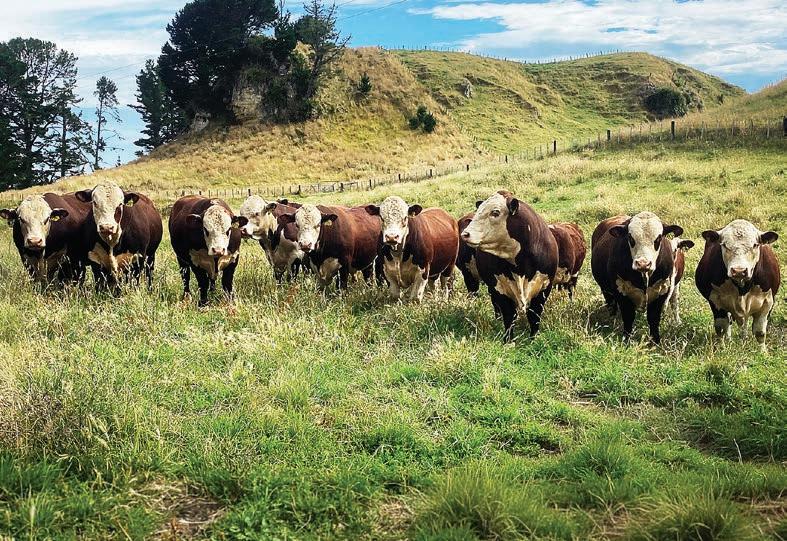
and the top price for a Hereford yearling bull for the season of $29,500 for Koanui Diamond 240342, to Maranui Herefords at Waihi.
In last year’s autumn sale Koanui sold all 50 two-yearold bulls, averaging $11,730, an increase of $3000 on the averages of recent years.
This year the autumn sale has been moved forward three weeks to avoid clashing with National Fieldays and to allow time for the farm to reset before calving.
On May 21 65 two-year-old bulls will be up for auction at the Koanui Sale Shed on
Maraetotara Road, Havelock North.
“We are confident that the bulls are ready for sale, and we look forward to seeing you on May 21 with our usual hospitality,” said Chris.
“We are very happy with this year’s line of bulls; they have consistency from first to last lot.
“They possess the structure, phenotype and docility that we believe is so important.
“Rigorous culling over the past few years has improved our breeding herd’s consistency in these areas.
“We are extremely proud of

our cow herd and have enjoyed showing the herd to overseas breeders recently.
“The functionality and productivity that our cow herd provides is the strength behind every Koanui bull in this year’s sale,”
Chris said.
Koanui was founded in 1972 by Fred Chesterman and his wife, the late Annette Chesterman.
In the 1980s and early ’90s, after completing secondary school, their son Chris travelled regularly to North America and Australia to learn about selection of beef cattle and breeding.
In 1992 Chris’s wife Jennifer joined the Koanui team, coming from a role in bovine genetics and information management at Breedplan International in Australia.
Chris and Jennifer have four children, Hugh, Glen, Gerard and Allie.
Farm purchasing over the years in Manawatū has given the stud climatic diversity, which assists management in coping with adverse weather events.
They have also bought Hayland in Canterbury to expand into once-bred heifer and trade cattle finishing. The latest Pukekura acquisition nearer home will enable the stud expansion plans under the management of the next generation of Chestermans.

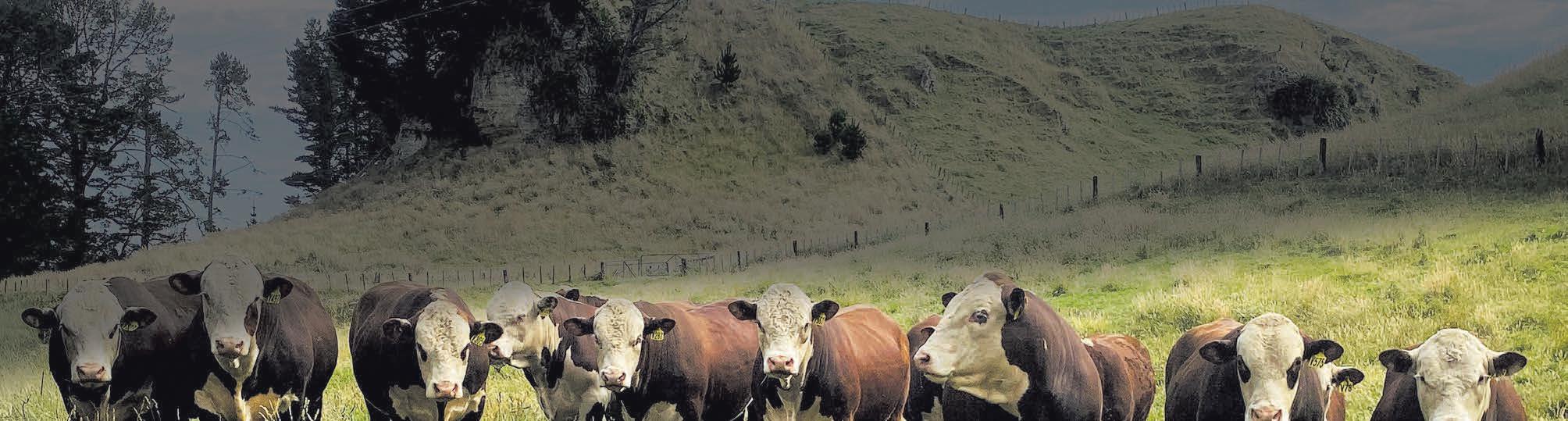
Genetics – best of the best.


Our sale bulls have proven func�onality and maternal power.
Reliable Gene�c Es�mates (EBVs), Genomics tested and analysed, Service and Semen tested, Fer�le, Sound, Quiet, BVD nega�ve and vaccinated
Rest easy knowing that we’ve put the work in and that all bulls are backed by our sa�sfac�on guarantee See you on sale day!
Key reference sires of the 2026 sale bulls:
Koanui Energizer Q129 (0216190129)
Koanui Diamond R326 (0216200326)
Koanui Milton S420 (0216210420)
Koanui Sizzler R039 (0216200039)
Mahuta Skywalker 2034 (0828222034)
Matariki Nock Out (0281200133)
Yavenvale Rainmaker R464 (AUYAVR464)
Hugh Stringleman PEOPLE Livestock
NORTHLAND’S Snake Gully Limousins is to feature rising twoyear-old bulls from imported semen, bringing new genetics to New Zealand.
David and Natalie Roberts have been among the largest importers of Limousin semen, continuing the breeding programme that began in the 1980s by Natalie’s parents, the late Dannie O’Shea and his wife Bethley.
Featured sires for Snake Gully’s 32nd annual sale on Friday, June 12, on the hill country property near Maungakaramea, will include sires imported from the United Kingdom, United States and Australia. Imported semen progeny include Fenrir, Romn Tow Truck 111T, Flemington Legend, Shalone Westwood and Ulster 1 Rainman.
A long-serving secretary of the Limousin Beef Breeders Society of New Zealand, Natalie has managed Snake Gully since 2008. She puts docility at the top of her breeding objectives.
“Most of the time I am working
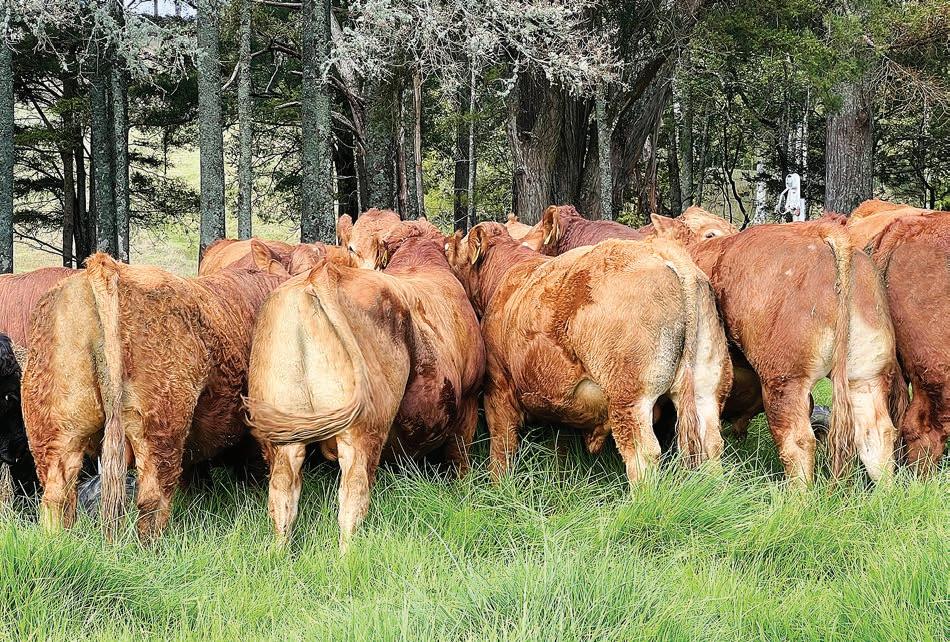
the cattle alone so having confidence and trust in these animals is a must,” she said.
The selection of 18 bulls from about 30 candidates for the sale will include Full French, Pure and Polled, Apricot and Black bloodlines, a range to cater for the preferences of all buyers. Homozygous polled are sought after, so that has become a breeding objective for Snake Gully.
“This stud has a wide genetic base and we will continue to expand the genetic diversity to give satisfaction to our buyers and promote the Limousin breed,”
Natalie said.
Bulls in the offering will all be fertility tested and confirmed negative through blood tests for BVD.
Limousin are known for their efficiency, calving ease and high growth rates. Recent studies have
Ma x i m i s e eve r y
b l ad e of g ra s s
eve n o n h i l l s
“We’re intensively farming on our whole farm, which we’ve never been able to do before We’ve already seen the ability to convert pasture to kilograms of liveweight gain to a level more than double a traditional farming system ” Jon and Fiona Sherlock – Otorohaea, Waikato
The sale averaged around $5500 in 2023 and 2024 jumped $1500 to $7140 in 2025, including the top price of $11,700 paid by Waikura Station, East Cape.
EFFICIENCY: Snake Gully Limousins have proven efficiency, calving ease and high growth rates.
shown the Limousin cattle have the capacity to reduce methane gas by upwards of 30%. The Limousin breed achieved this result on a consistent basis, well above the prominent breeds.
Snake Gully has 75 registered cows and 20 heifers mated as yearlings to be herd replacements.
In recent years Snake Gully had full or near-full sale clearances and strong repeat buying demand.
Among the repeat buyers has been Kivlean Limousins, Cambridge, a registered stud and commercial beef business managed by Peta Lean and her son Anton Kivell.
They now have 100 registered Limousins after a neighbouring farm purchase and accelerated stud expansion over the past three years.
Peta is passionate about the breed and is chair of the North Island Limousin Breeders.
The Kivlean “signature” beef cattle are quiet, mediumframed, quick-growing, wellfleshed and polled, with good eye muscle area and intramuscular fat.
Kivlean sells autumn-born and spring-born bulls to both Waikato beef farmers and dairy farmers.
Demand for yearling bulls is growing as dairy farmers seek to make informed dairy-beef decisions and rear more of their calves that are not wanted as herd replacements.
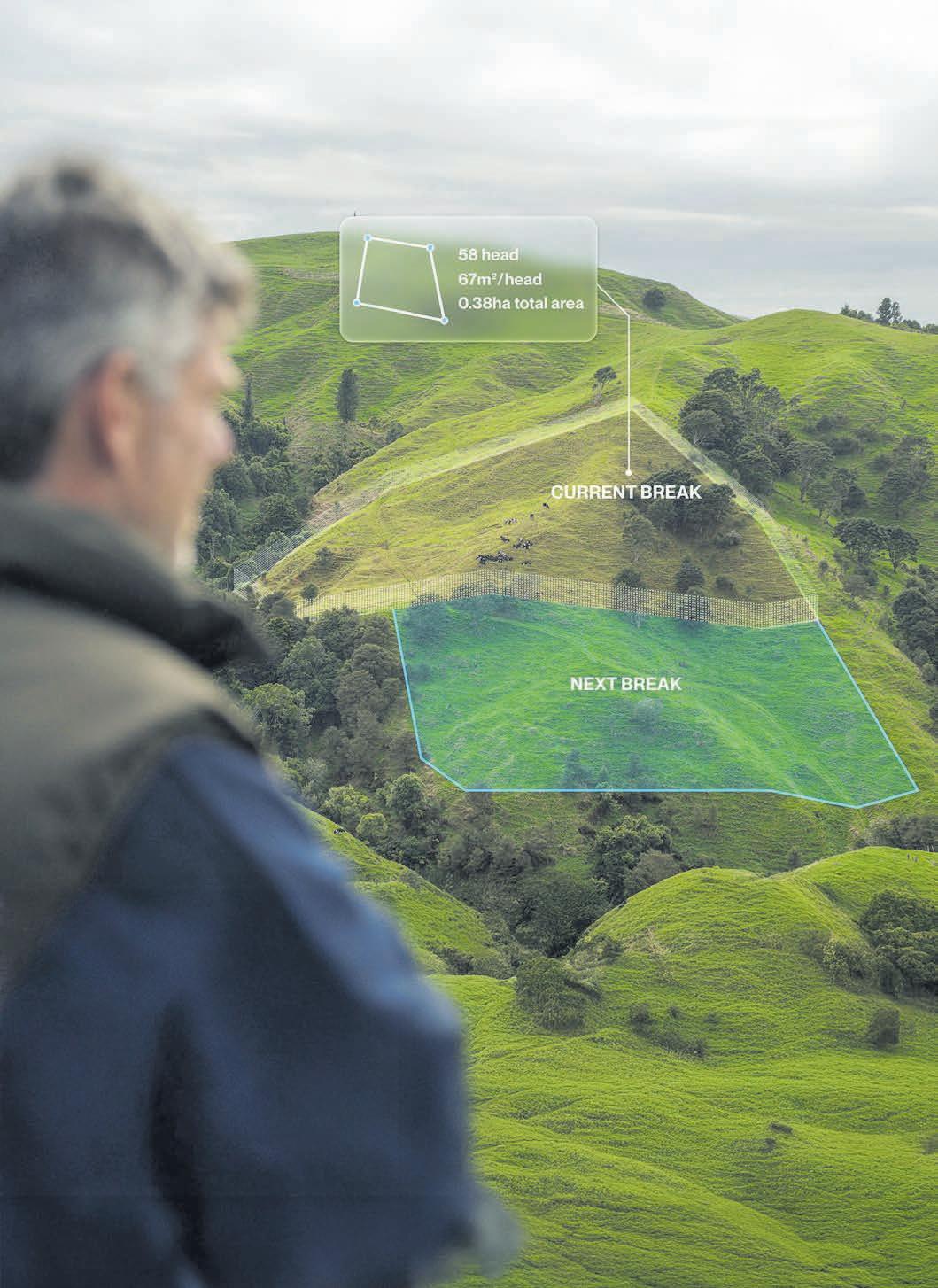





Rebecca Greaves PEOPLE Livestock
ALIFELONG interest in breeding and improvement spurred Hawke’s Bay farmers
Harold and Rachael O’Grady to take the plunge and start their own Angus stud.
Starting in 2018 with nine cows acquired from the Springdale dispersal sale, Shamrock Angus has grown to 100 registered stud cows today, and the couple will hold their first rising twoyear-old bull auction in June at Stortford Lodge saleyards.
Finding it increasingly difficult to source the sort of bulls they were looking for, the O’Gradys decided they could breed the type of bull they sought out for their hill country farm.
“It was something we had thought about for a long time. I
had a desire but never really had the opportunity. I’ve always liked cattle and an Angus base, even in a crossbred herd, is the best in my opinion. I just like improving,”
Harold said.
“When we got married and went out on our own that passion and desire to get into the stud game increased year by year,” Rachael said.
“Harold has a passion for breeding, whether it’s dogs, cattle, sheep, even horses.”
Harold was born and raised at Kotemaori, where the couple started farming on their own account in 2003, before moving to Kereru under the Ruahine Ranges in Hawke’s Bay in 2021.
Rachael’s background is in teaching, particularly science and maths, and she has previously lectured in teaching at Massey University.
After purchasing the initial foundation stud cows from
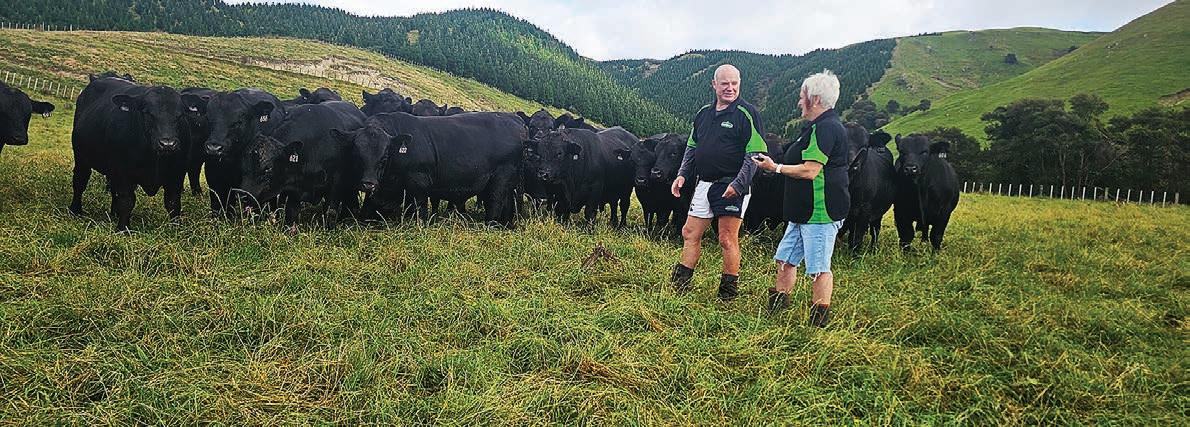
DEMAND: Hawke’s Bay farmers Harold and Rachael O’Grady’s drive was to breed a bull they would like for themselves, and one they believed others wanted, too.
Springdale, they had an opportunity to buy some heifers from Kaharau Angus. They then purchased further cattle from the Rangatira dispersal sale, and those cattle form the main base of the stud today.
The drive was to breed a bull they would like for themselves, and one they believed others wanted, too.
They set about breeding a structurally sound animal with all the traditional traits Angus are famed for. Easy calving and a quiet temperament are nonnegotiables for the O’Gradys.
The two of them are a real team – they do all the farm work themselves and are hands-on in everything they do. While she didn’t come from a farm
originally, Rachael enjoys being able to apply her science background to breeding, and trusting and believing in their shared vision.
Figures and data are useful tools, but at Shamrock Angus they are big on visual appeal and trusting your eye for an animal.
“The structural soundness of traditional Angus is important. Cows that last a long time on hill country, they have to have good feet and legs,” Harold said.
One thing they are particularly proud of is how quiet their cattle are, something that is often remarked on by visiting technicians. Their 10-year-old grandson can be in the yards with Harold, happily helping draft bulls.
“People all comment on what a pleasure they are to work with, and that’s something we are proud of.”
This year they will offer 20 bulls for sale on Monday June 8 at Stortford Lodge.
“It’s a central location and it gives everyone an opportunity to come and have a look and make up their own minds.”
With the tagline “Shamrock Angus – you can’t go wrong”, Harold said that buying a Shamrock bull adds value, not problems.
“We’ve never had anybody come back with an issue. They’re structurally sound bulls with great temperaments, good fertility and a focus on growth rates.”
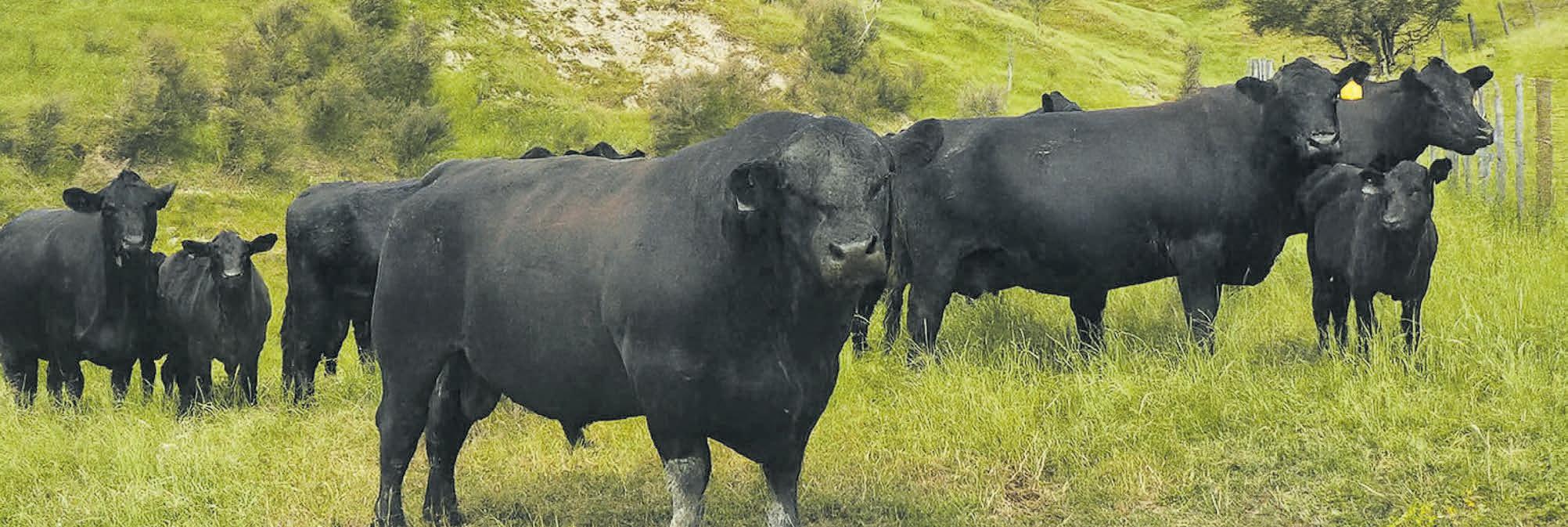
Harold and Rachael O’Grady
Gerhard Uys PEOPLE Livestock
SOUTH Devons are something of a homecoming at Ipurua, and it all traces back to a single bull.
Tim Foss arrived in New Zealand from South Devon, England, in 1955.
A few years later he bought a South Devon bull named Harold, that he crossed with Angus cows. This decision put in place the foundations of what would become a long-standing stud operation.
Tim and Jenny, Peter Foss’s parents, bought their first registered females in the mid ’70s. Today, that legacy continues at Ipurua Genetics, in the King Country, where Peter and Caroline Foss run the 530ha hill country property.
At the core of the operation are 200 pedigree South Devon cows. Alongside them are about 1900 ewes, including 700 SIL-
recorded shedding ewes and 1200 crossbred ewes, plus young stock.
The tagline on the Ipurua South Devons logo is Breeding Hill Country Cattle, and when the Fosses say hill country, they mean it.
“Of the 530ha we might have 50ha that you could top if you were a daredevil on a four wheel drive tractor,” said Peter.
That terrain has shaped the type of cattle they breed.
Ipurua South Devons are more moderately framed than the traditional type, sitting around 700kg liveweight, compared to a standard of about 900kg.
Cows that are too big don’t do well on too steep hills, he said.
Instead, the focus is on cattle that can handle the pressure of hill country farming while still delivering performance.
“A lot of our bulls are used for cross breeding, putting terminal sires over Angus cows. Others are used as maternal crosses.
“Those cows have to be bred to be able to withstand life on the hill.
“Big framed cows with no meat on them or no constitution don’t last in the hill country.”
When Peter returned to the farm after completing a four-year Agricultural Science degree at Lincoln, the stud was relatively small.
“We had 30 recorded pedigree South Devon cows and 130 Angus cows, with South Devon used as a terminal sire over the Angus cows.”
From there, he made a deliberate shift.
“At that point, I made the decision to record everything, and so graded all the commercial cows up to purebred over the next 30 years, and built numbers to 200 cows.”
The breeding philosophy has remained grounded in practicality.
“We’re selling bulls into the hill country and expecting them to survive.”
Peter said their breeding approach is built around efficiency rather than size, with a focus on animals that convert
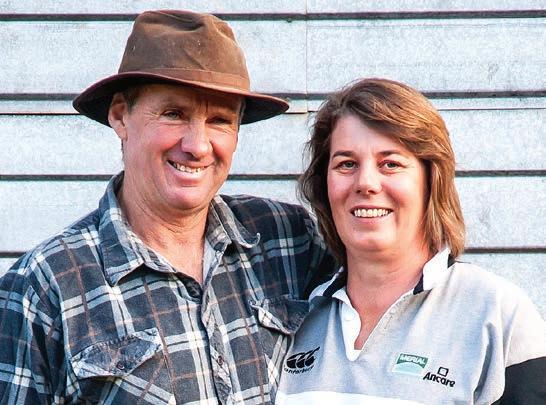
well from liveweight to carcase.
He said hitting a 300kg carcase at 18 months is achievable without carrying unnecessary liveweight, and questions the value of heavier animals if they are less efficient on the hook.
Instead, slightly smaller-framed cattle tend to yield better, require less maintenance feed, and are easier to manage through winter.
Alongside helping with cattle, Caroline plays a key role across the farm.
Originally from the South Island, she moved north in 1993 for a teaching position, met Peter, and stayed.
Her work now spans everything from spraying and yard work to health and safety, compliance, and environmental management.
Planting waterways sparked an unexpected passion in Caroline and has grown into a hands-
on propagation effort using a greenhouse and native plant collection from ungrazed bush areas.
Mānuka, flaxes, cabbage trees, kōwhai, native grasses and the odd large tree – you name it, she propagates it.
Peter said a story from years ago showcases the temperament of South Devons the best.
When their children were around five years old they could walk through a pen of 100 South Devon weaner calves without any problems, not something that can be said for all breeds, he said.
Through it all, the stud’s direction remains consistent, and clients who come to them get cattle that will shift, cattle that will survive in the hill country environment, and follow-up service to boot, they say.





Gerhard Uys PEOPLE Livestock
HEREFORDS bred on the steep, unforgiving hill country of Eketāhuna have to be tough, and at Otapawa Polled Herefords, that’s exactly the point.
For James Robbie, who farms alongside his father Stuart, mother Maria and sister Anna, resilience is bred into every animal that leaves the property.
“Our cattle are run in a pretty harsh environment,” he said.
“Steep hill country, cold winters and plenty of weather. They’ve got to perform here first.”
Despite the conditions, the cattle deliver strong growth and carcase performance, something increasingly reflected in results being achieved by commercial clients.
Among them are Waipukurau farmers William and Mark Wallace, who are in their fourth year of using Hereford genetics
over their Angus cow herd.
Running a mixed operation across 300 hectares on the Pukeora hills and a 650ha finishing block, the Wallaces said the Hereford influence has become a defining part of their system.
“The Angus cows are tried and proven. The Herefords are tried and proven. Together, it’s the hybrid vigour that gives us the growth we need.”
The shift to Herefords came after studying bull catalogues and performance data, where Otapawa bloodlines, including progeny of American sire TH Frontier, stood out.
“We liked Frontier’s spread of low birthweight and big 600-day weight,” Mark said.
For William, the results have backed up the figures.
“We’re getting superior growth, and they’re killing at huge weights at a young age.”
Temperament has also been a key driver.
“Quieter to move, quieter in the yards, and we lose nothing as far as weight goes.
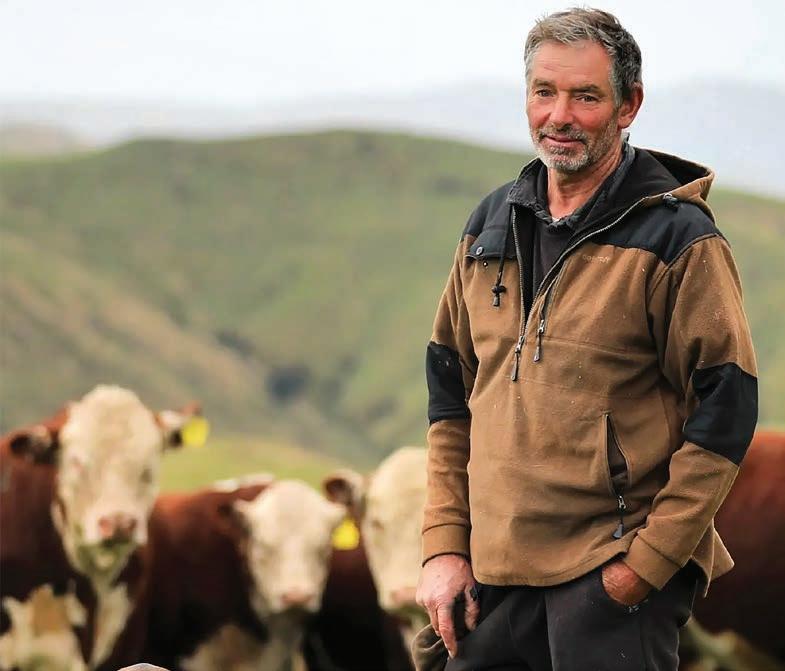
“We’re getting smaller calves, but they grow.”
The Hereford-cross progeny averaged 630kg at 18 months this season, with top truckloads reaching close to 400kg carcase weights and consistently high yields.
Back in Eketāhuna, those kinds of results are exactly what the Robbie family is breeding for.
The 350-cow stud is part of a wider 3500ha operation running
about 11,000 ewes and 2000 cattle, producing around 50 stud bulls each year.
Otapawa’s roots stretch back to 1969, when Stuart’s father first introduced Herefords to the farm, drawn to their temperament and reliability.
That focus has carried through the generations, with Stuart and Maria expanding the stud, and now James and Anna helping drive it forward.
“It’d be a pretty lonely affair if
it was just Maria and me,” Stuart said.
While James is focused on the day-to-day farming, Anna leads branding, social media and client engagement, helping connect the stud with farmers across the country.
Those relationships are central to the business.
Their longest-standing client has been buying bulls for 55 years, with many others returning for decades.
Otapawa bulls are now used across a wide range of environments, from the central North Island through Whanganui, Taihape and Rangitīkei, to more challenging hill country.
Recent client results include weaner sales averaging $2200, outcomes Stuart said give confidence the breeding programme is delivering.
For the Robbies, the job doesn’t end at the sale.
“The client’s achievements are our achievements,” Stuart said.
Rather than simply selling bulls, the family works alongside farmers to ensure their genetics are meeting commercial goals.
“They’re buying a sire they can trust,” James said.
“We back ourselves as well and we’re there to help make sure those bulls improve their breeding programme.”

“With our Prime Steers the Whiteface are first out the gate.”
- Patrick Henderson HINAU STATION

“The decision to cross breed with Otapawa Herefords was a no brainer, seeing the results I couldn't be happier . “

- Justin McCarthy DUNLOE TRUST FARMS
The difference between the Otapawa Hereford bred Progeny and the straight Angus is huge.” - Mark Wallace WALLACE FARMING

TUESDAY

















Greaves PEOPLE Livestock
THE next generation is taking the reins at Potawa Simmentals in King Country, with Hamish Neal taking over the Piopio farm from his parents, Andrew and Tracey.
The farm is about 630 hectares (550ha effective) of medium to rolling limestone hill country and is home to a flock of 2000 breeding ewes, along with 130 stud cows.
Hamish Neal usually buys in about 200 heifers and steers as weaners, which are taken through to 15 or 18 months. Steers are sold store from August through to January, depending on the season and market. Heifers are killed from March through to the end of winter.
“We try to buy Simmental cross, but that can be challenging due to lack of numbers, most Simmental cross breeders are also finishers,” Neal said.
Docility and excellent growth are hallmarks of Potawa cattle, and stud cows are expected to perform in a commercial environment.
“We run the stud side pretty commercial; they have to fit in and are treated like a commercial cow would be on any other farm.
Our cows winter with the ewes in a big mob.
“We try not to pamper them too much and the top ones always shine through.”
In recent times, they have focused more on fat figures across the herd.
“We have had cows with massive growth figures but a bit lean on the fat and eye muscle area side of the Estimated Breeding Values. We mainly buy on confirmation, growth figures and temperament; everything else follows that.”
Neal and his wife Kate came home about two years ago and recently welcomed their first child, Harriet, who is the fifth generation of Neals to live on the farm.
“It’s an inter-generational property, one of few around left in the original family that broke it in from bush in 1910 to now. It’s cool to keep that going.”
The Neals are in a transition process at the moment.
“When I came home Dad was in charge but it’s slowly tipping the other way. Dad and Mum still run the stud and I run the commercial side.”
Potawa was started by his parents in 2002 when they purchased the nearby Misty Moor stud, and set about increasing numbers.
“I’ve never known any different. I was born just before they purchased the stud. I’ve been all around the country with them, viewing and buying cattle, and I’m really keen to continue it on and keep adapting and trying to improve,” Neal says.
“The stud has come a long way in 24 years in terms of quality and we are not culling so hard now. They have definitely made the stud what it is today.”
Neal enjoys the people involved
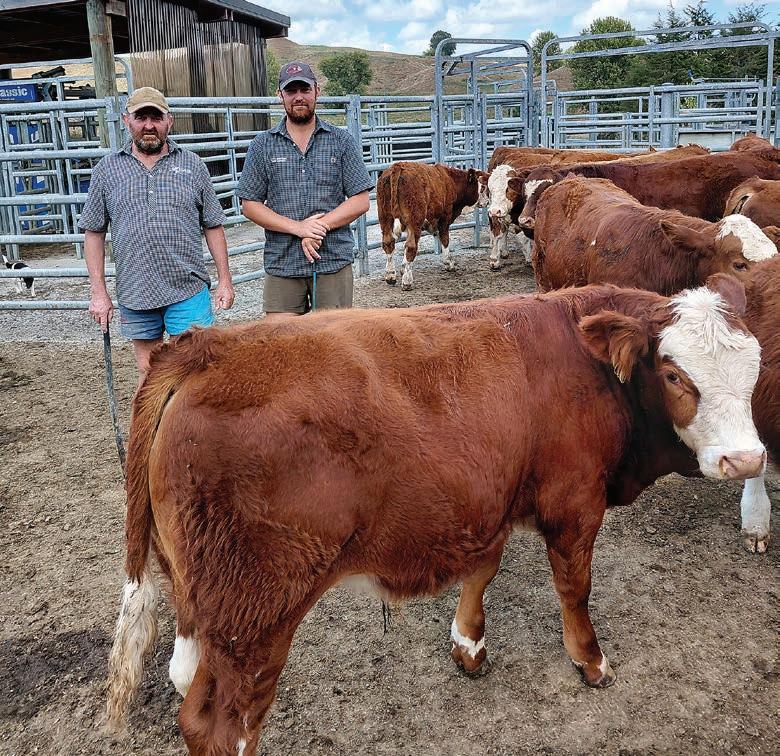
in stud breeding, and loves to see good cattle, good bulls and a quality calf born that will grow into a nice heifer or bull.
Potawa holds an annual rising two-year-old bull sale on farm at the end of May and will sell between 20 and 25 bulls at auction.
“All breeds have their good points. Simmental, I think – the right mix of a good cow with a
Simmental bull – people can see they are hard to beat from a growth point of view. Simmental guys in New Zealand have really focused on temperament and growth.”
Looking to the future, Neal hopes to explore the use of technology advances, like embryo transfer and artificial insemination to inject some overseas genetics, to benefit the stud.
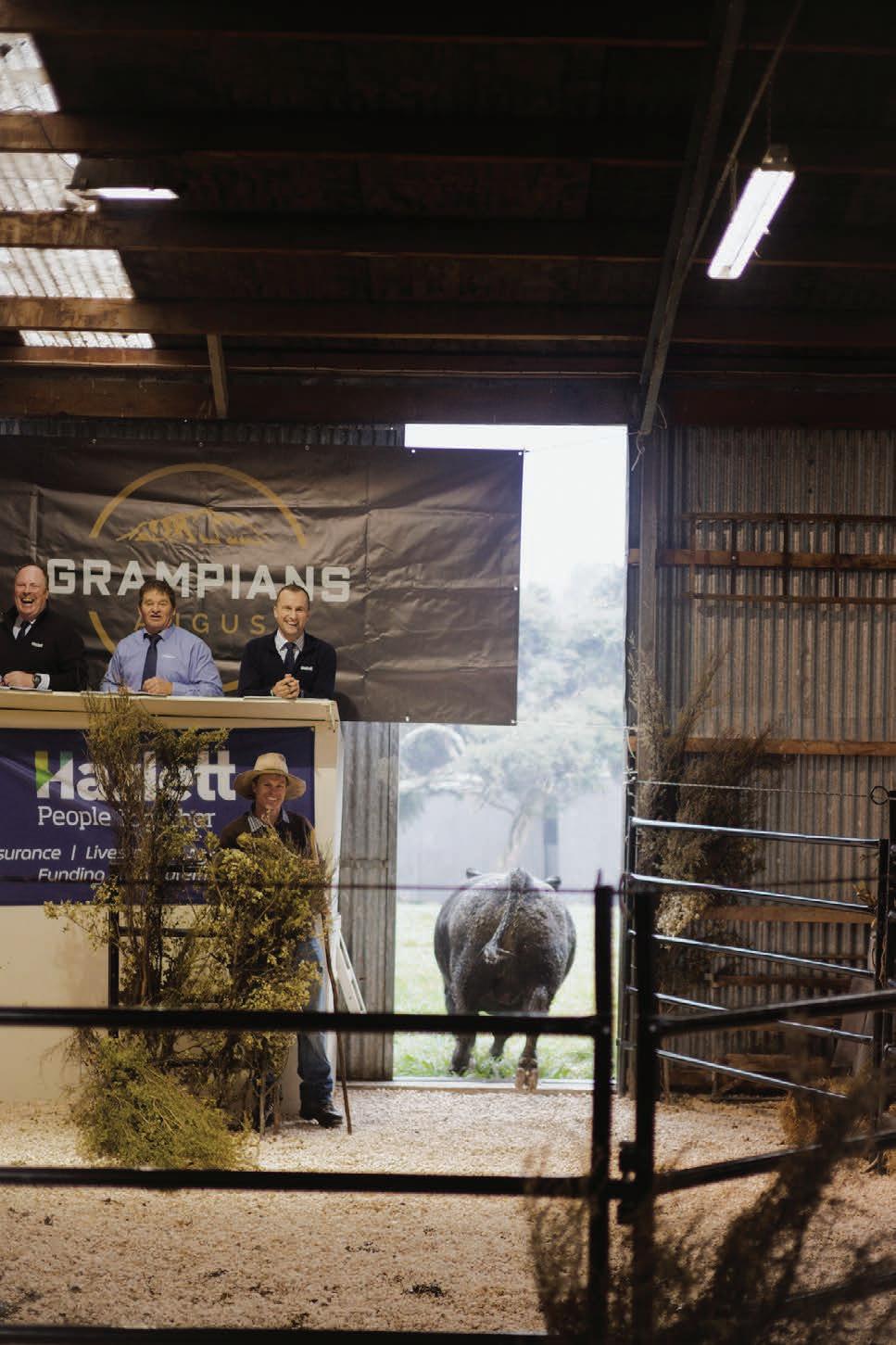
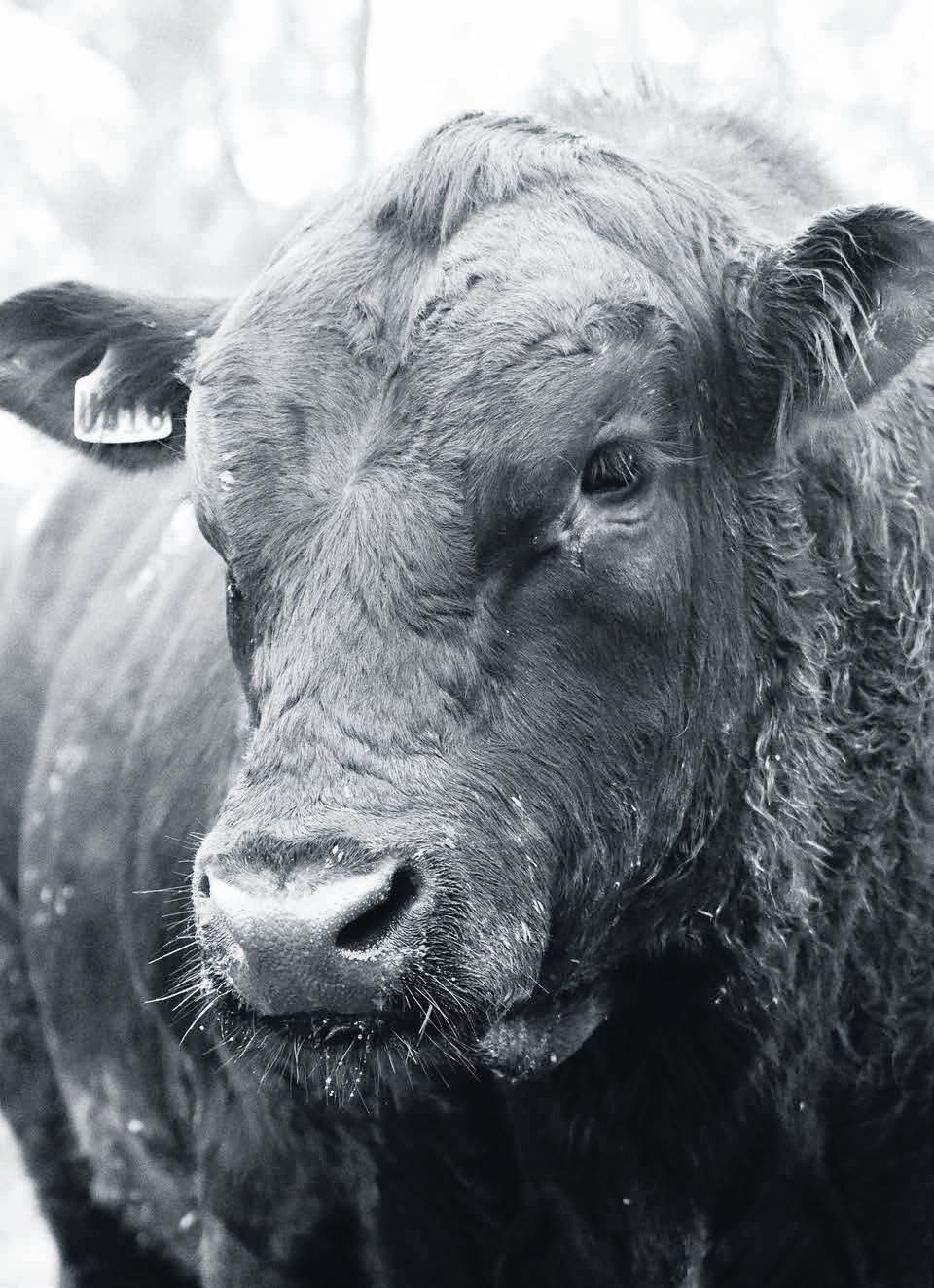
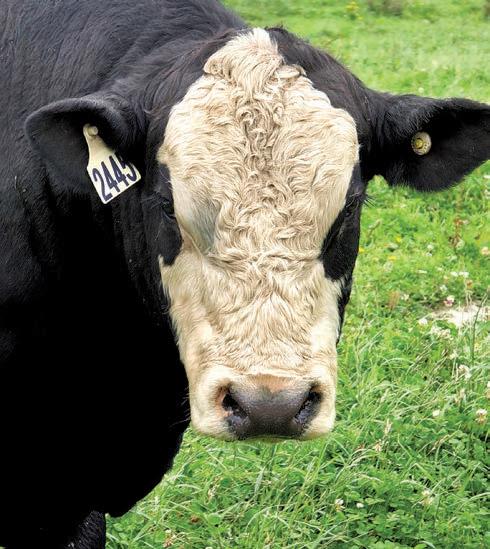

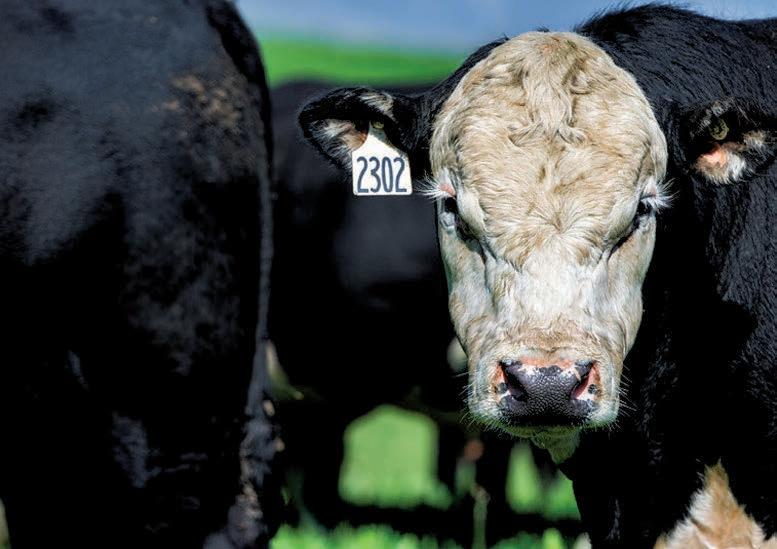













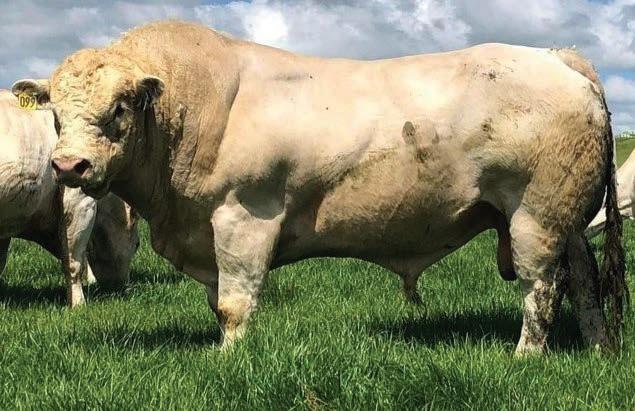


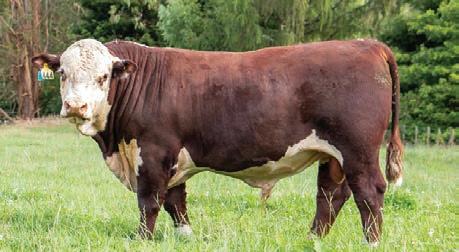
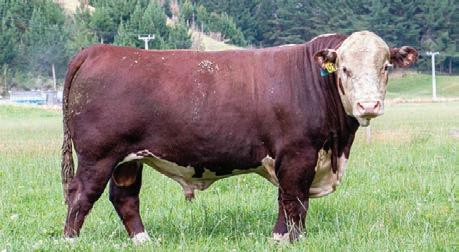

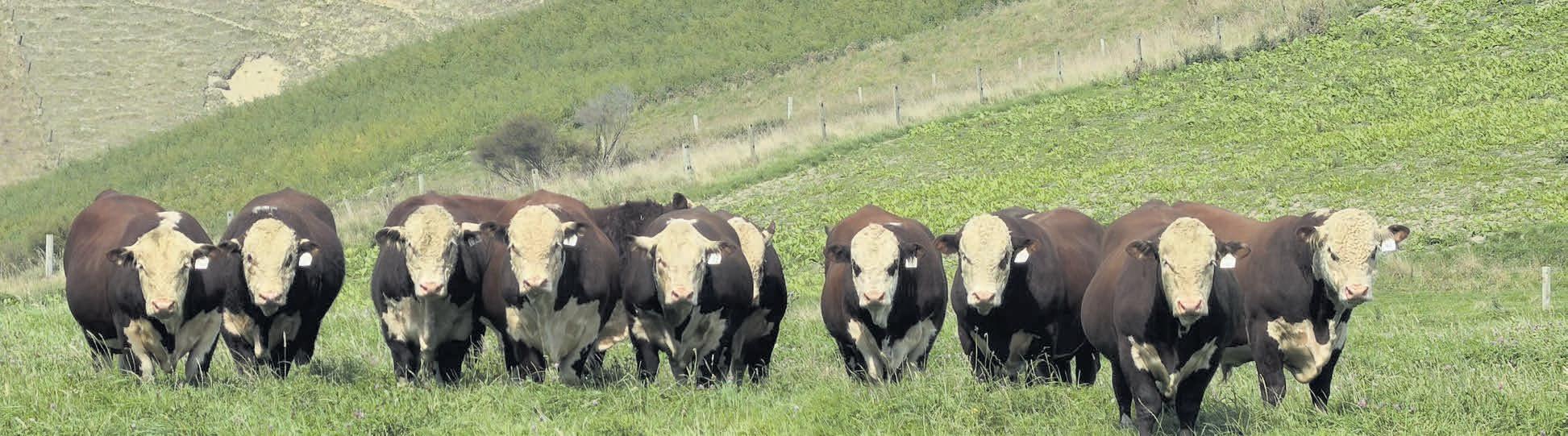


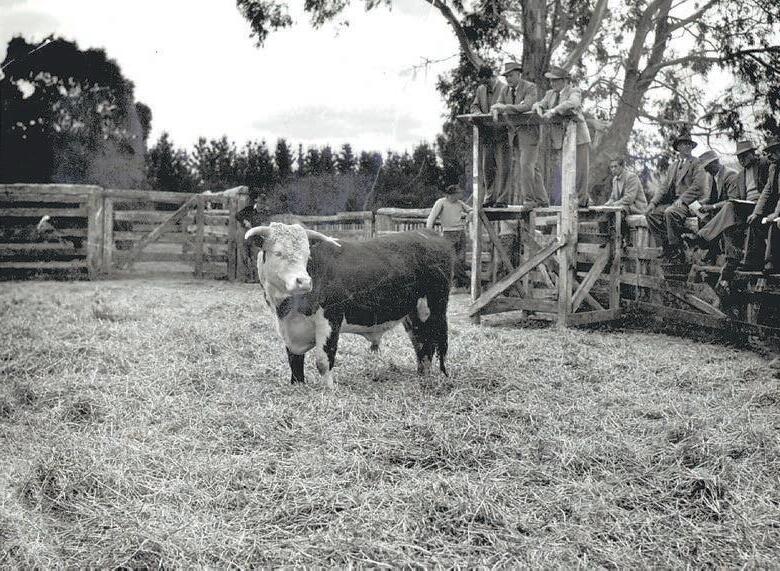











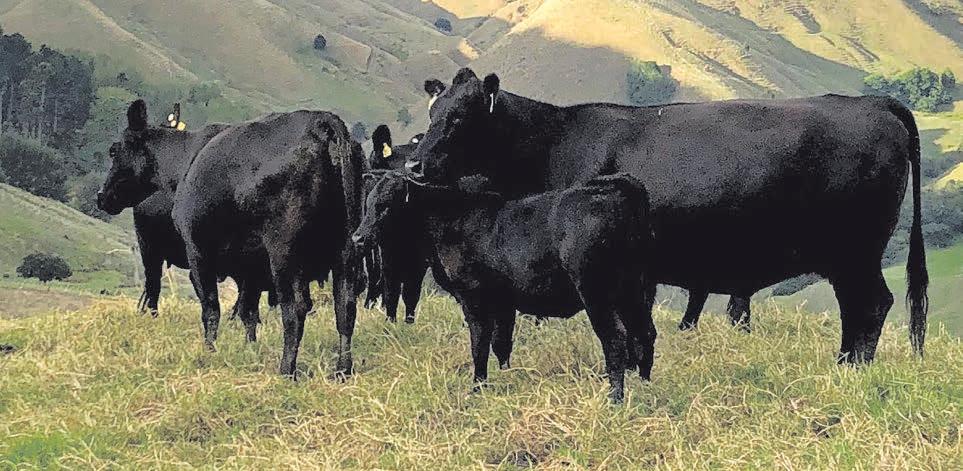


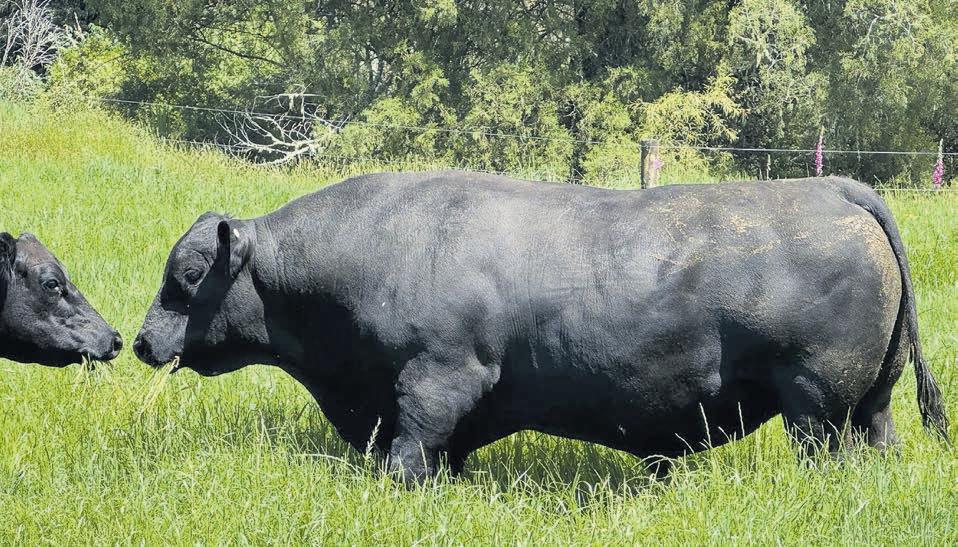

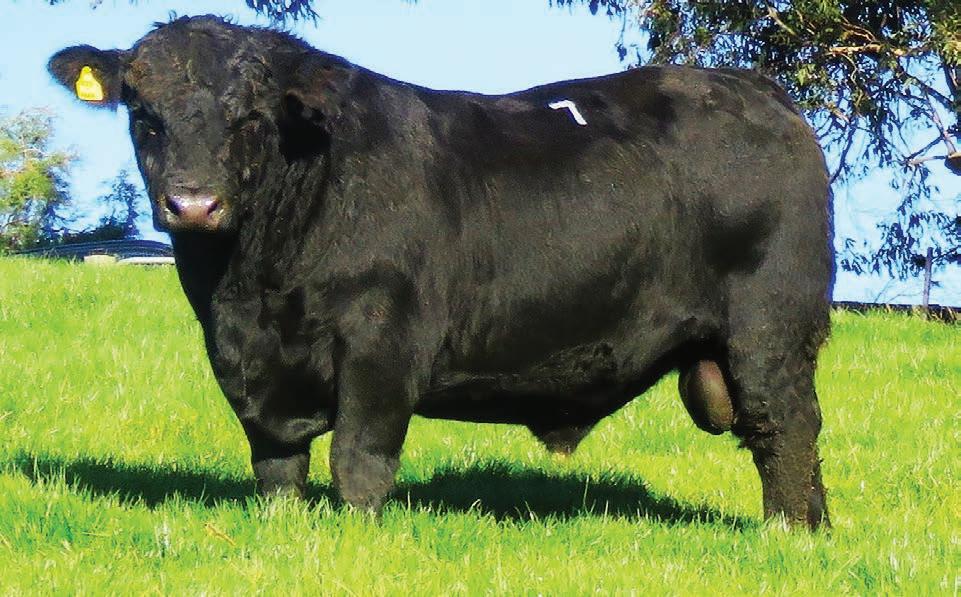

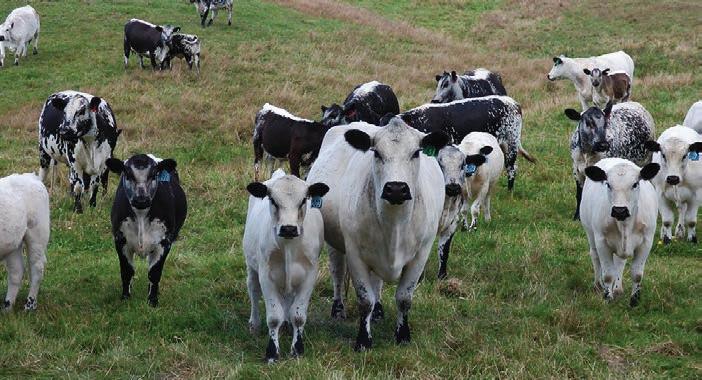
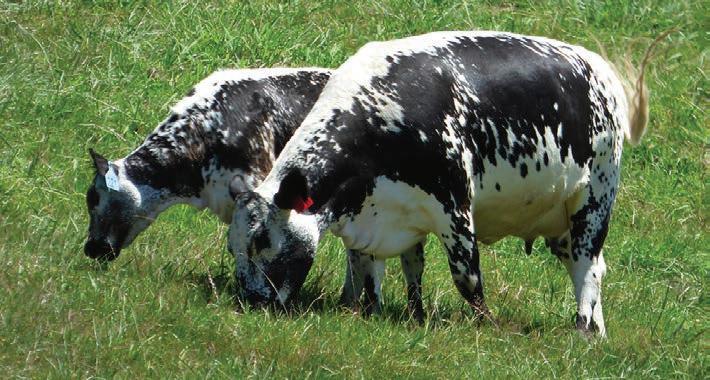


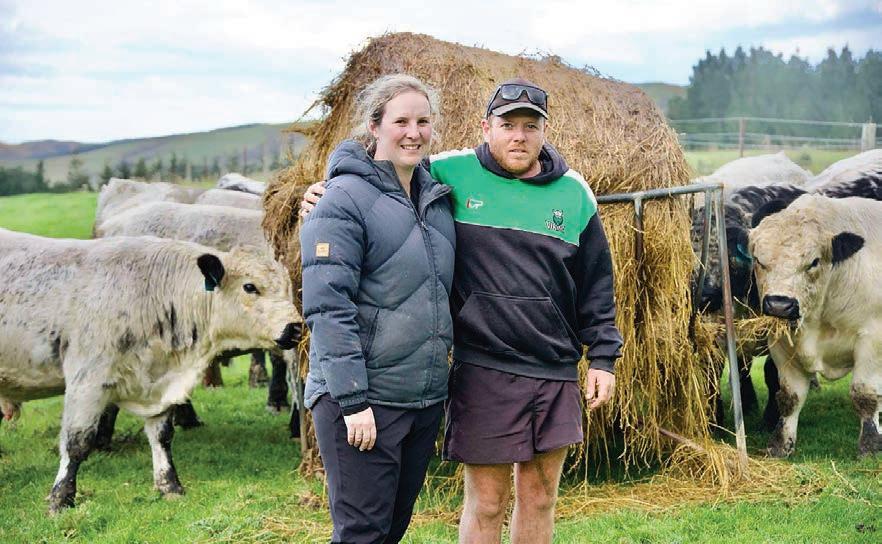
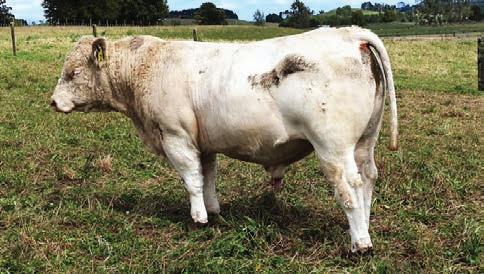
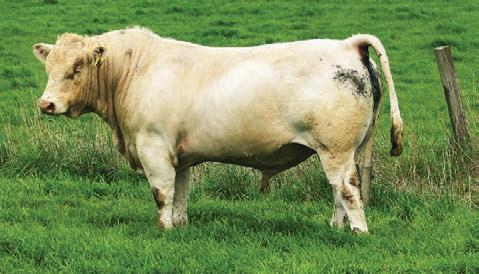


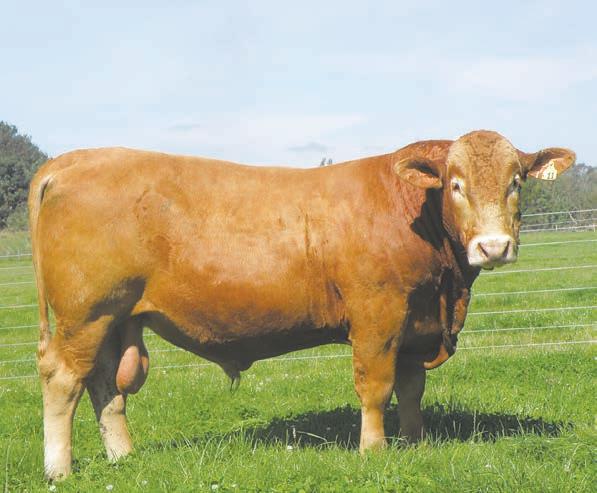

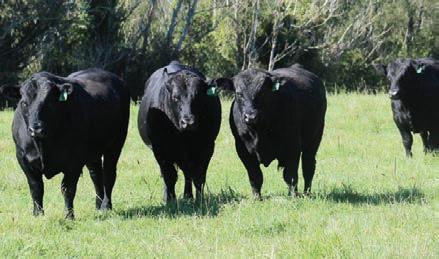
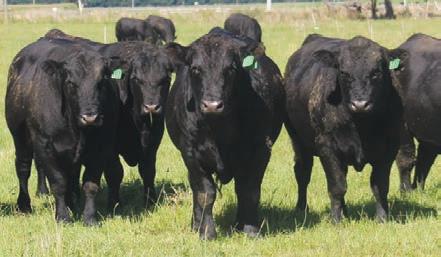






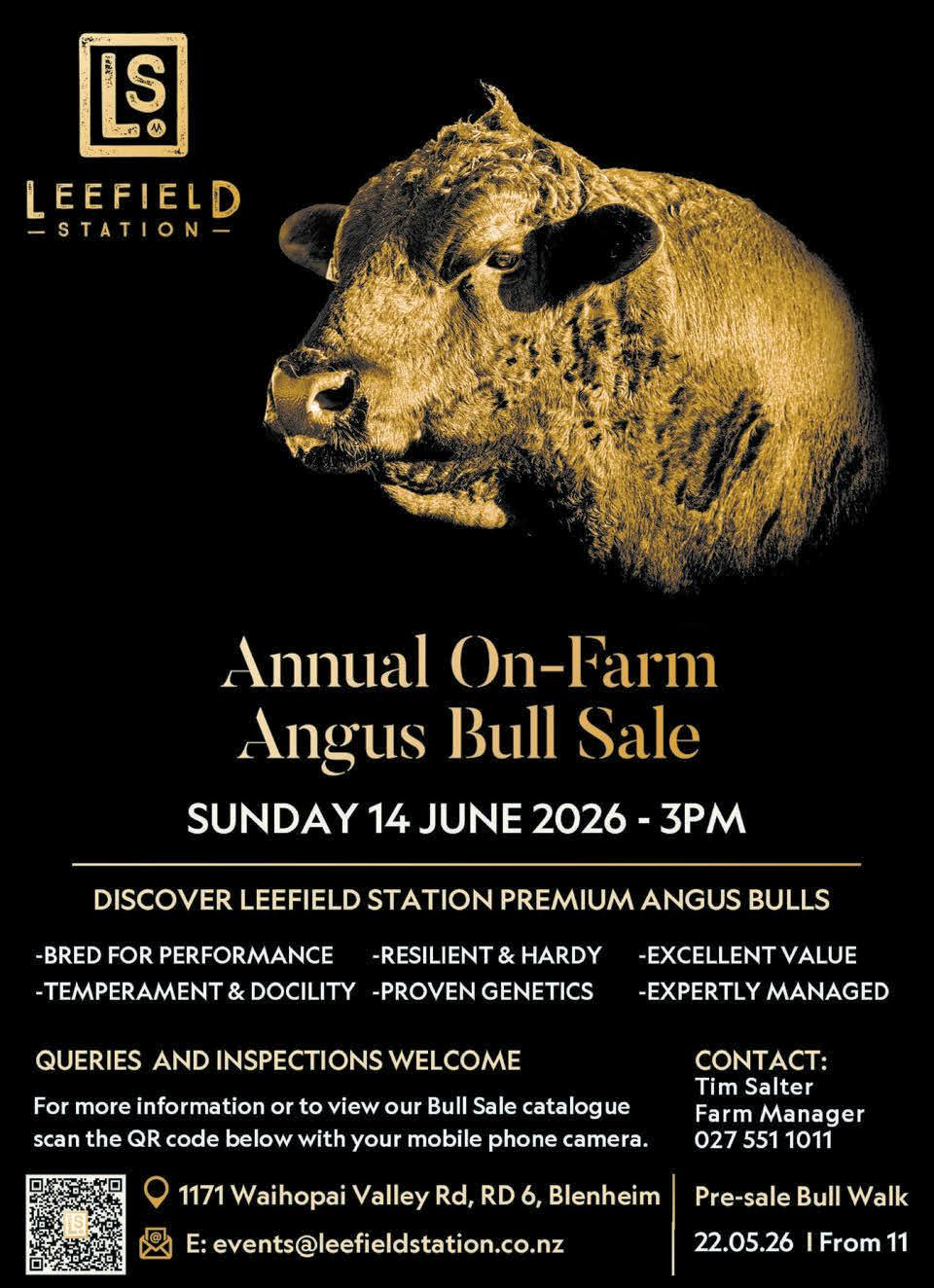



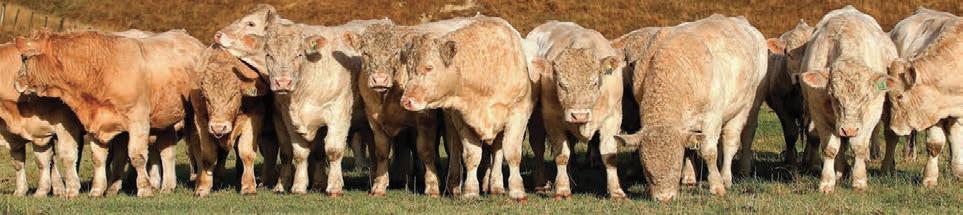
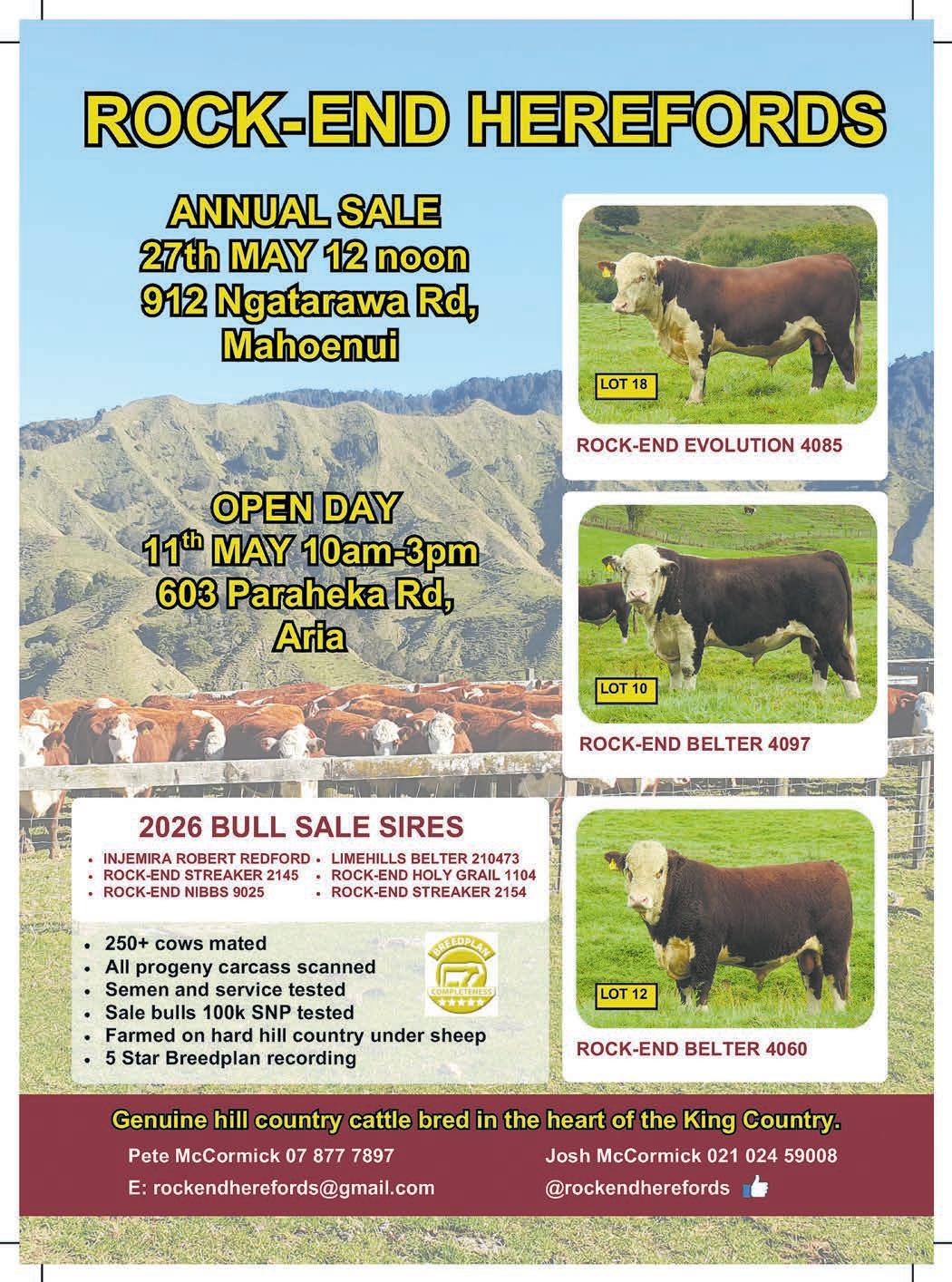

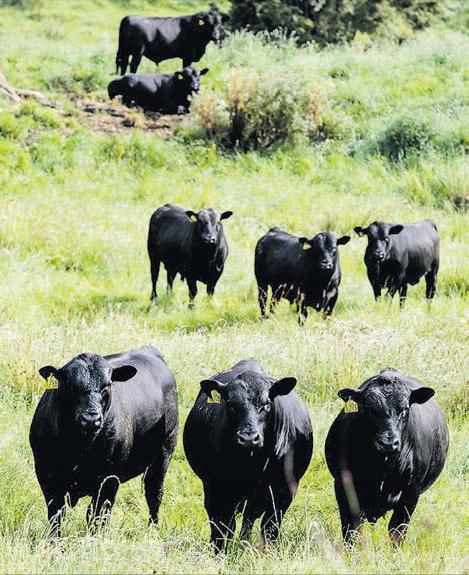




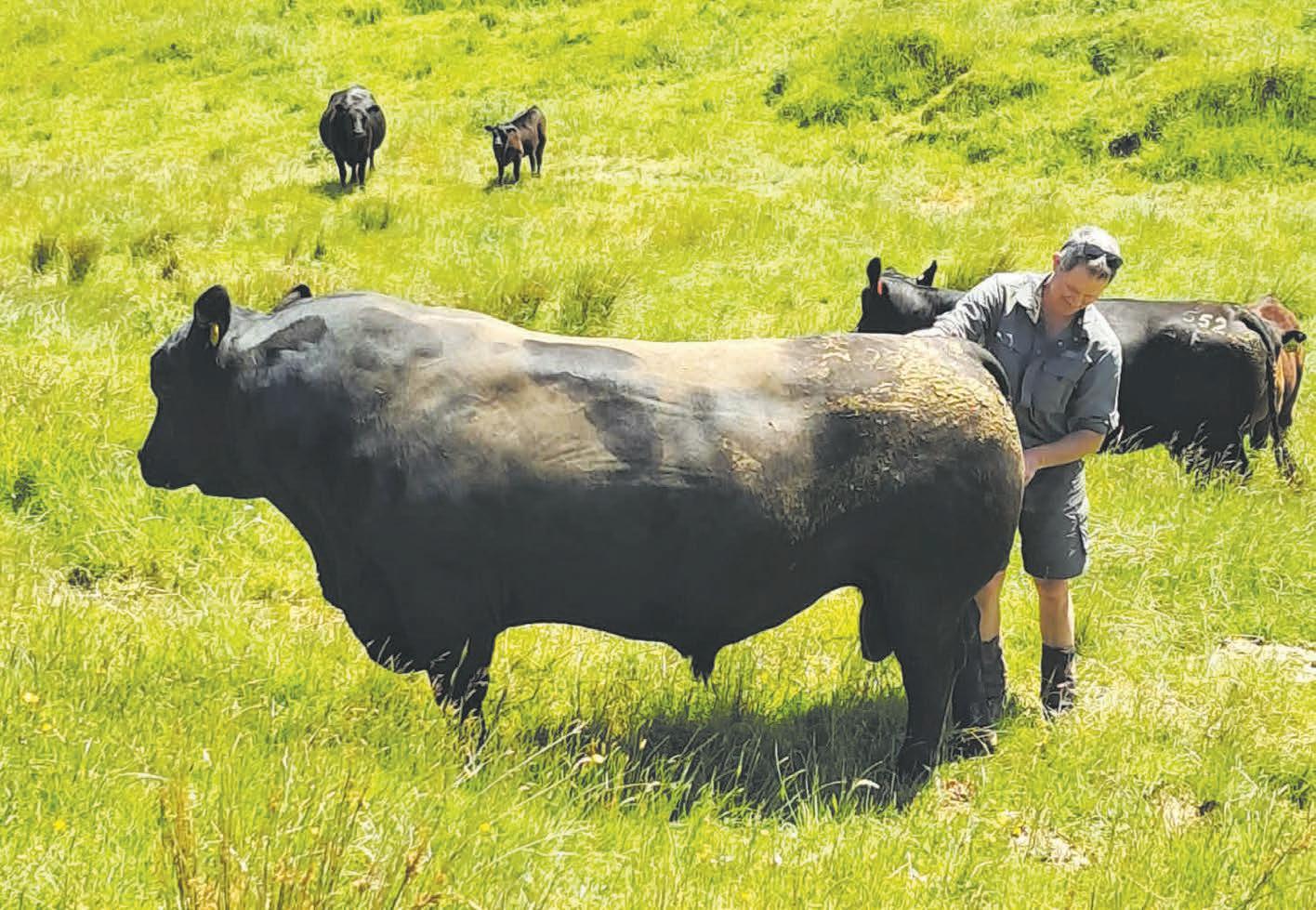


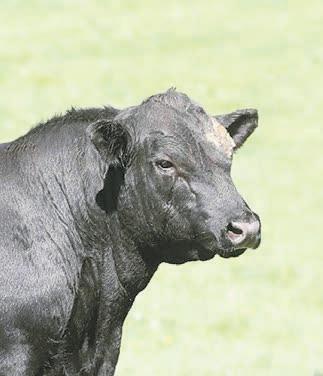
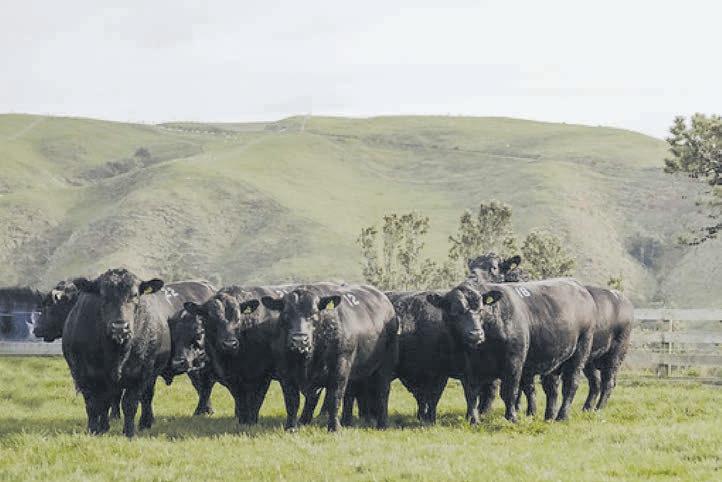
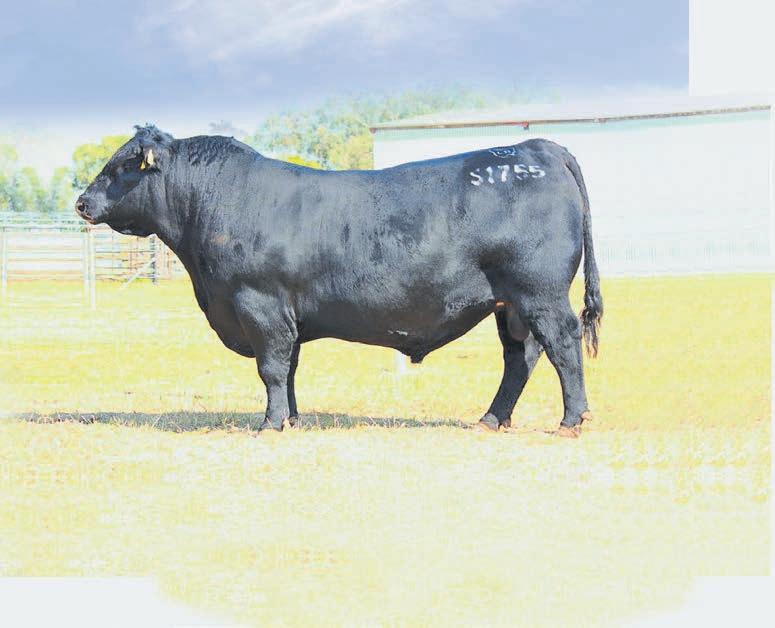
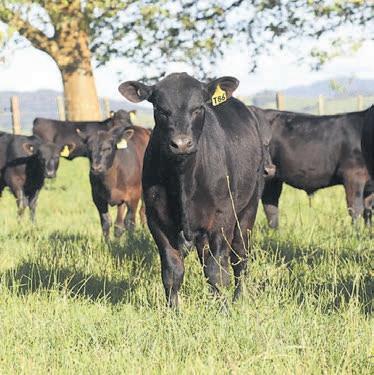

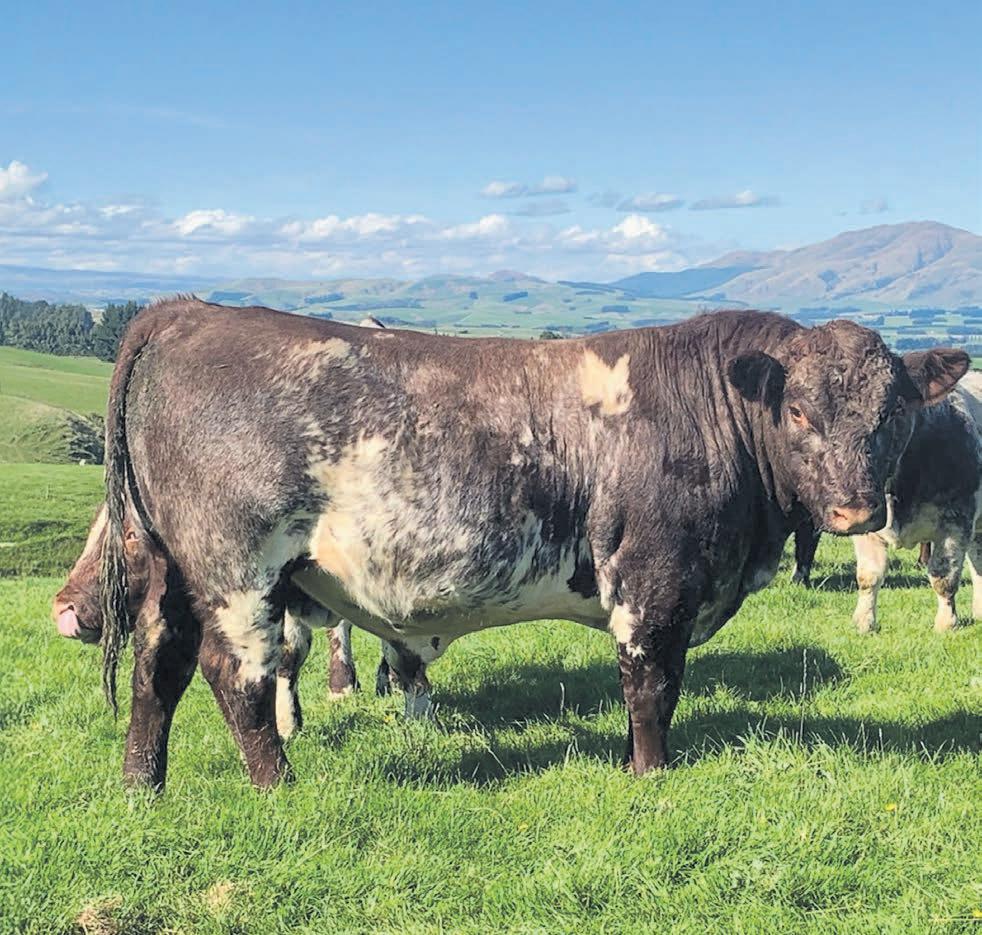
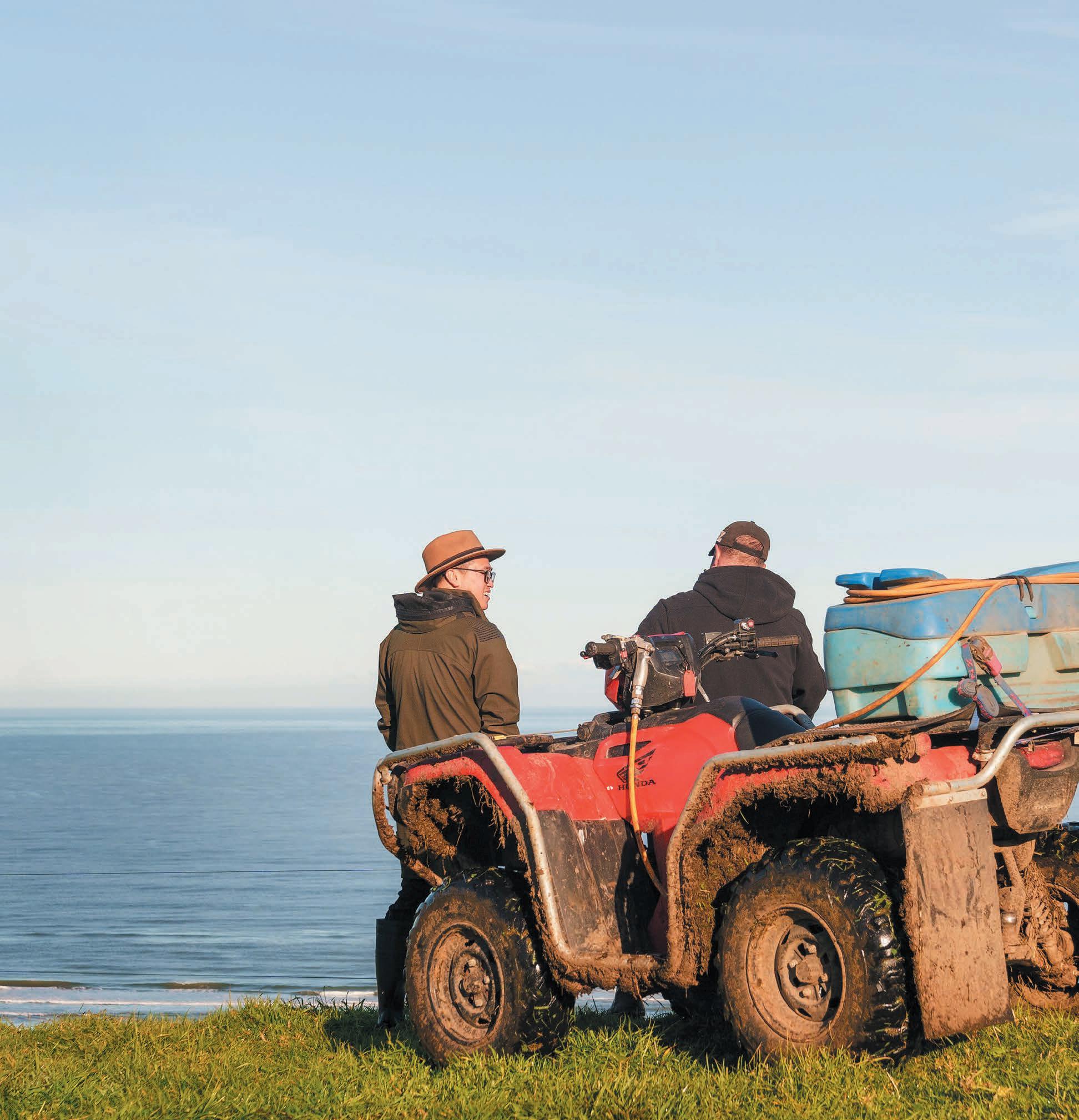
Rural New Zealand is doing it tough Ever y day, The Salvation Army s t ands alongside rural communities , providing:
• Food suppor t
• Emergenc y a s sis t ance when crisis s trikes
• Financial mentoring and budgeting advice
• Wellbeing and communit y suppor t .