

Farm sale to foreign party a mystery

Richard Rennie NEWS Land
THE recent approval of a farm sale to a foreign buyer remains clouded in mystery after it failed to be advertised in New Zealand first.
Under the Overseas Investment Act’s “benefit to NZ” farmland test, before any overseas purchase the farm must be advertised for at least 30 days on the open market in NZ, unless an exemption is granted.
We do not consider the public interest outweighs the reasons for withholding this information at this time.
But in its latest schedule of land sale approvals Land Information New Zealand (LINZ) has reported the decision to approve the sale of a farm property in late February to an unstated foreign applicant for an unknown amount, on an unnamed property, and without advertising locally first. The investment amount, value of the property, vendor, location, existing land use, proposed land use and background are all
withheld under Section 9(2) of the Official Information Act.
This section protects commercial details of property transactions and personal details of the individuals involved in them.
The heavily redacted LINZ exemption document states the exempted foreign buyer has “specific property requirements for the purpose of its investment that are unique to the land and the vendor”.
“The holder is likely to be commercially prejudiced if advertising of the shares discloses its due diligence that is then leveraged by competitors.”
The exemption expires in August 2027.
Real estate sources have been unable to confirm likely properties, with one labelling the decision’s complete secrecy as “highly unusual”.
The only details released are that the property’s sale has proceeded through the “benefit to New Zealand-Farmland” pathway.
This pathway applies to applicants seeking to purchase farmland of over 5 hectares, who are required to pass a strict “benefit to New Zealand” test. They must prove they can deliver greater benefits than were possible if the property was in local ownership.
page 3
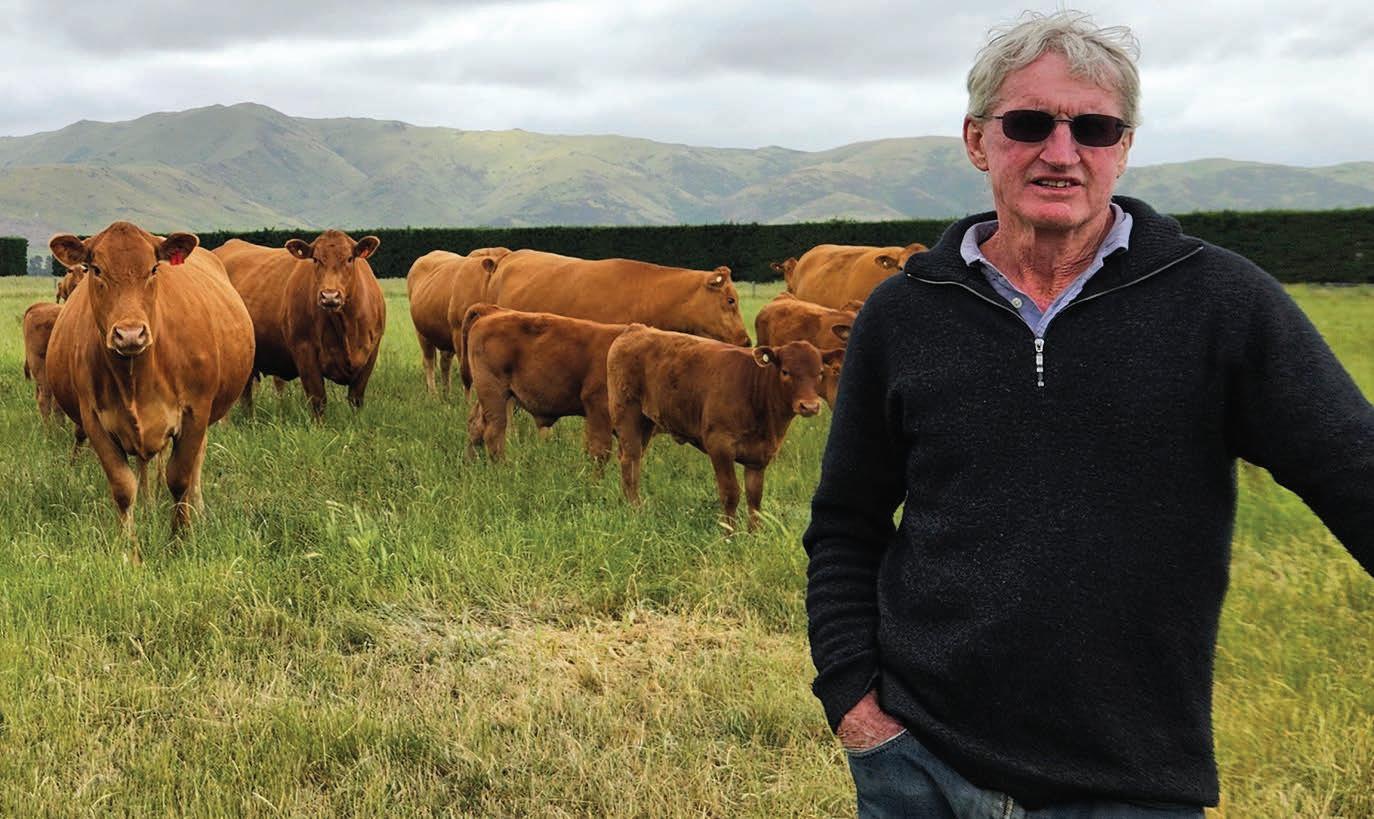
Pioneering stud calls it a day
Some of New Zealand’s earliest South Devon cattle genetics are set to go on the market as a 105-year farming era ends for the Wason family. With no family waiting to take up the reins of the Canterbury Plains stud, Dene and Steph Wason have opted to sell.
SHEEP AND BEEF 18-20


Photo: Annette Scott
AI tool meets burning need
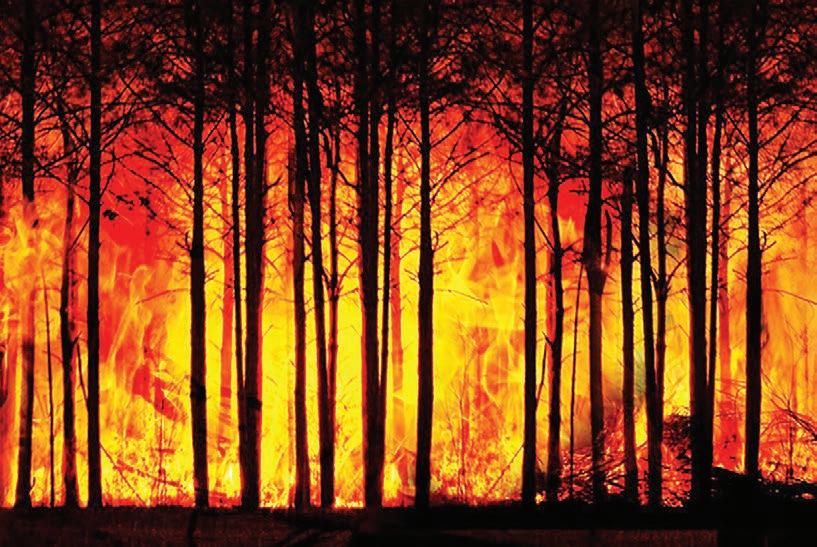
Firefighters, forest owners and councils could be among the first to benefit from an AI-driven tool proven to accurately predict forest fire risks within the hour, developed by University of Canterbury researchers.
NEWS 7
Diesel restrictions must still support production, writes Cameron Bagrie.
17



Advertise Get in touch
EDITORIAL
Bryan Gibson | 06 323 1519
Managing Editor bryan.gibson@agrihq.co.nz
Craig Page | 03 470 2469
Deputy Editor craig.page@agrihq.co.nz
Claire Robertson
Sub-Editor claire.robertson@agrihq.co.nz
Neal Wallace | 03 474 9240
Journalist neal.wallace@agrihq.co.nz
Gerald Piddock | 027 486 8346 Journalist gerald.piddock@agrihq.co.nz
Annette Scott | 021 908 400 Journalist annette.scott@agrihq.co.nz
Hugh Stringleman | 027 474 4003 Journalist stringleman@outlook.co.nz
Richard Rennie | 027 475 4256
Journalist richard.rennie@agrihq.co.nz
Gerhard Uys | 027 239 4388
Journalist gerhard.uys@agrihq.co.nz
Nigel Stirling | 021 136 5570
Journalist nigel.g.stirling@gmail.com
Isabella Beale | 027 299 0596
Multimedia Journalist isabella.beale@agrihq.co.nz
PRODUCTION
Lana Kieselbach | 027 739 4295 production@agrihq.co.nz
ADVERTISING MATERIAL
Supply to: adcopy@agrihq.co.nz
SUBSCRIPTIONS & DELIVERY 0800 85 25 80 subs@agrihq.co.nz
PRINTER
Printed by NZME
Delivered by Reach Media Ltd
SALES CONTACTS
Andy Whitson | 027 626 2269
Sales & Marketing Manager andy.whitson@agrihq.co.nz
Janine Aish | 027 300 5990
Auckland/Northland Partnership Manager janine.aish@agrihq.co.nz
Jody Anderson | 027 474 6094
Waikato/Bay of Plenty Partnership Manager jody.anderson@agrihq.co.nz
Palak Arora | 027 474 6095
Lower North Island Partnership Manager palak.arora@agrihq.co.nz
Andy Whitson | 027 626 2269
South Island Partnership Manager andy.whitson@agrihq.co.nz
Julie Hill | 027 705 7181
Marketplace Partnership Manager classifieds@agrihq.co.nz
Andrea Mansfield | 027 602 4925
National Livestock Manager livestock@agrihq.co.nz
Real Estate | 0800 85 25 80 realestate@agrihq.co.nz
Word Only Advertising | 0800 85 25 80 Marketplace wordads@agrihq.co.nz
PUBLISHERS
Dean and Cushla Williamson Phone: 027 323 9407 dean.williamson@agrihq.co.nz cushla.williamson@agrihq.co.nz
Farmers Weekly is Published by AgriHQ PO Box 529, Feilding 4740, New Zealand Phone: 0800 85 25 80 Website: www.farmersweekly.co.nz
ISSN 2463-6002 (Print) ISSN 2463-6010 (Online)
1-15
18-20
News in brief
Bremworth extension
The scheme of arrangement to sell Bremworth to multinational Mohawk Industries has been impacted by a Commerce Commission extension to its period of consideration.
26-27
28-29
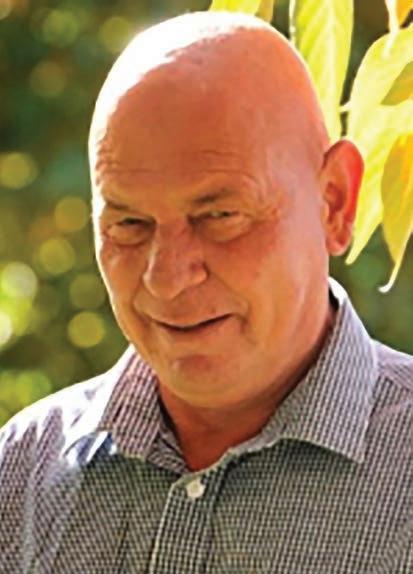
A THOUSAND CUTS: Daryl Carran, the national secretary of the NZ Meat Workers Union, says there has to be an adjustment involving everyone in the industry to get back to full weeks and full days.
P10
The commission wants until May 29 and Bremworth said that will affect the end date of July 1 in the scheme to sell. The Bremworth board will talk with Floorscape on extending the scheme of arrangement to ensure implementation can occur, assuming Commerce Commission clearance is given.
Adsett promoted
Danielle Adsett, acting manager of New Zealand Apples & Pears Incorporated, has been appointed the organisation’s chief executive.
Adsett was for six years the organisation’s market access manager and, since last December, its acting manager. NZAPI chair Andrew Gibbs said the board unanimously confirmed Adsett as chief executive following a recruitment process.
New EPA boss
Lian Butcher has been appointed chief executive of the Environmental Protection Authority.
Butcher, who starts her role on July 1, joins the EPA from Greater Wellington Regional Council, where she has been group manager of the Environment Group. EPA board chair Barry O’Neil said Butcher is an accomplished leader who brings a proven ability to lead complex organisations and work collaboratively with agencies and stakeholders to achieve results.
Correction
Burwood Station, in Southland, was incorrectly referred to as Barewood Station in a page 1 caption in last week’s edition of Farmers Weekly.
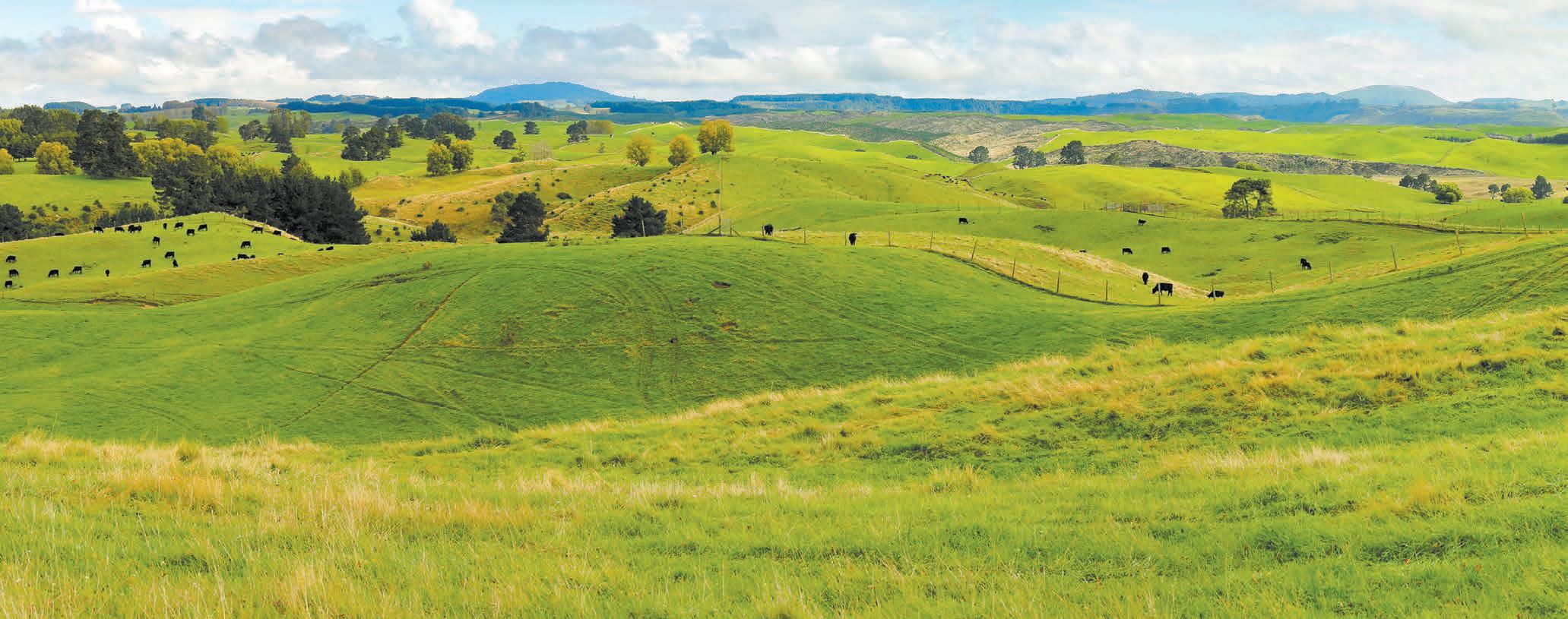






US sheepmeat scrutiny looks set to proceed

Nigel Stirling MARKETS Sheep and beef
AN investigation into New Zealand and Australian lamb exports to the United States looks set to proceed as US President Donald Trump searches for replacements for his Liberation Day tariffs.
Sources told Farmers Weekly a formal announcement of the investigation by Trump’s Trade Representative Jamieson Greer is expected “any day”.
Under Section 201 of the Trade Act of 1974 the US International Trade Commission can investigate whether surges in imports are causing “serious injury” to US domestic industries.
If harm is proven it can recommend to the president “temporary” restrictions lasting up to eight years to give local industry “time to adjust” to
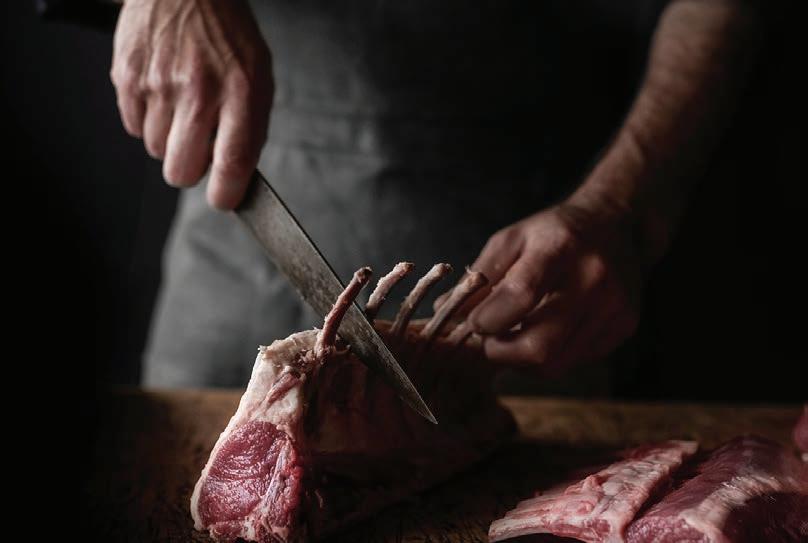
MARKETS: NZ sheepmeat exports to the US last year rose 10% to $685m, making it one of the industry’s largest markets after the European Union and China.
increased competition from imports. These could include tariffs or quota restrictions or both.
In November the American Sheep Industry Association
(ASI) wrote to Greer requesting a Section 201 investigation into Australian and NZ sheepmeat imports.
It said imports had increased 45% between 2020 and 2023,
causing local producers’ share of the US market to drop by nine percentage points.
Australia and NZ accounted for 99% of imports over that time.
An attempt by the ASI to gather Congressional support earlier this year failed to get traction.
Only a handful of members signed its letter to Greer calling on him to investigate Australian and NZ lamb imports.
However, one meat industry source said February’s ruling against Trump’s Liberation Day tariffs by the US Supreme Court meant the administration is now looking for any means to get its tariff agenda back on track.
“It has all fallen off the back of the Supreme Court ruling and now they have gone and looked at other ways they can do it which is through Section 201 and it means they kick off an investigation and then they can do whatever they like at the end of it,” the source said.
As part of global tariffs reimposed by Trump after the Supreme Court ruling, NZ sheepmeat exports to the US currently face tariffs of 10% –down from 15% before the ruling. Those tariffs are set to expire by the middle of the year if there is no Congressional approval to extend them.
The ASI has previously called for tariffs of 21% on Australian and NZ lamb just to maintain current market share for US producers.
NZ sheepmeat exports to the US last year rose 10% to $685m, making it one of the industry’s largest markets after the European Union and China.
In a statement, Beef + Lamb NZ chair Kate Acland said the organisation is preparing for the possibility of an investigation into NZ lamb exports.
The organisation has previously argued the counter-seasonality of NZ lamb production means it is not a direct threat to US producers.
Labour has more questions on India trade deal
Nigel Stirling MARKETS Trade
THE Labour Party is preparing to send a third letter to the government seeking further assurances and clarifications over its trade agreement with India.
The National-led government has to rely on Labour after coalition partner NZ First declined to support the deal. Since negotiations with India were concluded late last year, Trade Minister Todd McClay and
his officials have briefed Labour MPs multiple times.
The government has replied to requests for further information set out in two letters from Labour leader Chris Hipkins.
Labour is also understood to have been provided with the text of the agreement, which is still going through legal checks.
Following another round of briefings from officials this month, Labour’s trade spokesperson Damien O’Connor said a third letter to the government is now being drafted.
This week’s poll question:
Do you think the Labour Party is right to question the immigration clauses in the proposed FTA with India?
Have your say at farmersweekly.co.nz/poll
Continued from page 1
The benefits to NZ are assessed across multiple aspects of ownership, including productivity gains, public access, technology introduction and value-add benefits.
One of the highest profile farm purchases to prove this was the Shanghai Pengxin Group’s purchase of the debt-ridden Crafar farms operations in the North Island in 2012. But even that property portfolio was subject to local marketing prior to the Shanghai Pengxin purchase.
Legally “the benefit to NZ” test is regarded as a tough one, with a high bar for proving an overseas individual’s ability to perform better than local operators.
While rare, reasons for a property not to be advertised locally may include that there is
no realistic NZ buyer pool; that an internal company restructure makes it meaningless; financial urgency; or evidence that NZ parties have had fair opportunity but did not proceed.
A search on properties gaining exemptions indicates a forestrylinked deal would be consistent with no local advertising, particularly if part of a portfolio acquisition.
However, applying under the “benefit to NZ-farmland” pathway suggests a large-scale pastoral sale, not a forestry transaction.
A politically sensitive largescale productive farm acquisition gaining an exemption is unusual without clear public explanation.
In a statement to Farmers Weekly, a LINZ spokesperson said the information about this transaction has been temporarily withheld.
“We have an obligation as an Opposition to question some of the things that are very vague,” he said.
After telling Farmers Weekly in February that Labour had had its questions on immigration settings largely answered by the government, O’Connor said it is now seeking fresh clarifications.
“There have been some contradictory statements from government ministers on some of the issues surrounding immigration and eligibility for family members to come here,” he said.
Labour continues to have questions about a pledge to invest US$20 billion in India over a 15-year period.
McClay has said he has merely committed future governments to promote investment by NZ firms in India in the hope they would hit the target.
Tariff reductions would continue so long as the NZ government could prove it had used its best
“We consider release at this time would be likely to unreasonably prejudice the commercial position of the Applicant and we do not consider the public interest outweighs the reasons for withholding this information at this time.”
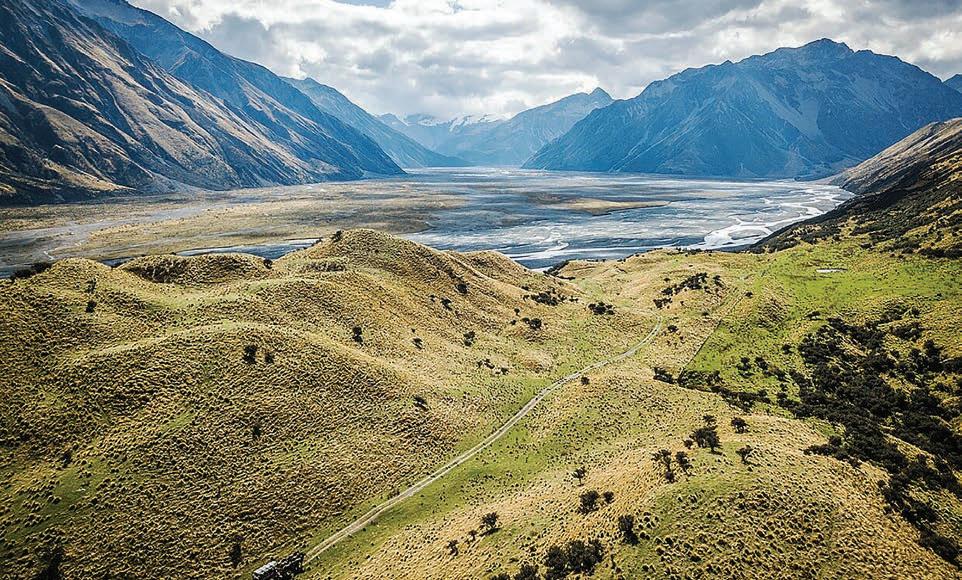
The application approval comes at the same time as Molesworth Station’s lease is up for renewal.
The Department of Conservation said Molesworth is not up for sale.
Farmers Weekly has identified two lease applicants out of five in total for Molesworth, and understands the LINZ application is not for Molesworth’s lease.
While not a purchase, an overseas party would be required to apply under the Overseas Investment Act to lease Molesworth due to its lease period being greater than 10 years.
efforts to help firms hit the target even if the amount was not achieved.
O’Connor said the government has shared its plan for promoting investment by NZ firms in India but Labour needs to see more detail before it is convinced these are not “empty promises”.
“They have indicated a trade promotion office or officer may be appointed.
“We are just seeking a little more clarity, which is a reasonable request,” O’Connor said.
There is pressure on the government to have Labour’s support locked in by the time India’s Prime Minister Narendra Modi visits NZ in July.
Asked whether Labour will have settled on its position by then, O’Connor said that would be determined by the answers it received from the government.
“Ultimately the government will have to answer that but we are working through this as quickly and as sensibly as we can,” he said.
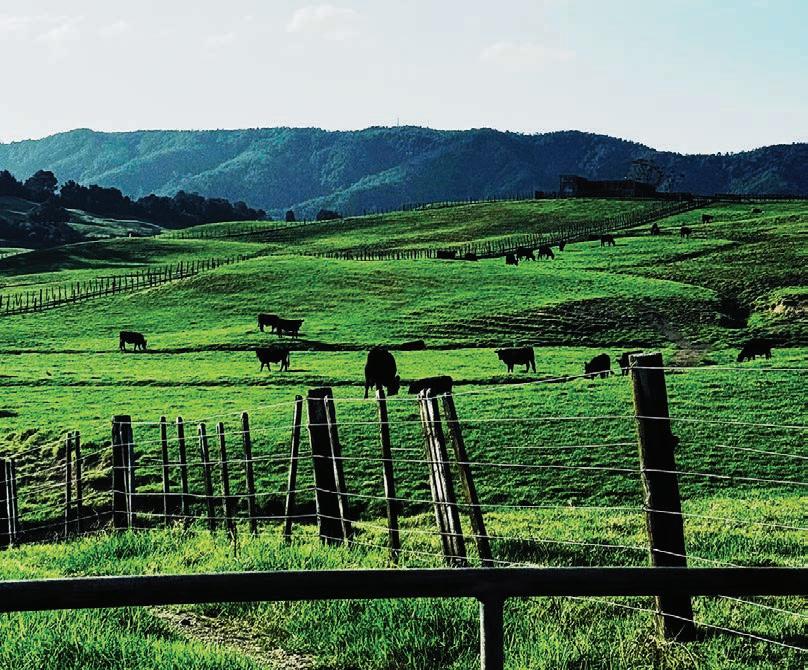
MYSTERY: All aspects of a farm sale to a foreign identity have been withheld by Land Information NZ in the application process.
Photo: Pexels
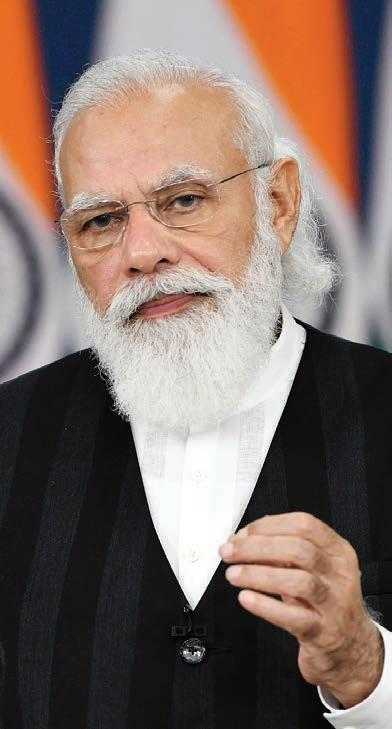
VISIT: There is pressure on the government to have Labour’s support locked in by the time India’s Prime Minister Narendra Modi visits New Zealand in July.
Agritech sector welcomes funding shift
Richard Rennie TECHNOLOGY Funding
THE agritech community is welcoming a shift in research priorities with the creation of a new advanced technology sector within the country’s science funding system.
The announcement of the funding shift was made by Science Minister Dr Shane Reti before Easter. It sees the science sector reprioritising some funding away from conventional bioeconomy research into the newly created technology channel.
This will slice 20% out of the bioeconomy research stream over coming years. Troy Baisden, co-president of the New Zealand Association of Scientists, described the move as “robbing Peter to pay Paul” amid a sinking-lid environment for total science funding.
AgriTech NZ CEO Brendan O’Connell also noted the move does not accompany any increased funding for NZ’s cash-strapped scientific community.
“Yes, in a way it is robbing Peter to pay Paul, but both are working in the agri space.
“The idea a significant part of our R&D should be in new tech
and be applied is a good message to send. This is where the wealth generation will be for both the agri and the tech sector.”
He described the recognition of technology as a distinct research pillar as a defining moment.
But it is one that, without dedicated resourcing to fund the move, risks seeing NZ spending several years adapting slowly, when opportunity demands a faster, deliberate pace.
He said it is hard to compare NZ’s pathway with the rest of the world but pointed to the United Kingdom having had industry strategies for R&D well in place for years, with agritech being one of them.
“NZ has not done consistency well, and we can only hope we do so here. It [the new strategy] still recognises our core strength lie in agri research, and new tech will enable our ability there even more.”
Critics have pointed to the risks that agritech has become commercialised and lost to offshore companies.
“We are not always good at commercialising our research. It’s been a basic flaw, and we do have dirty-laundry examples where our agritech has been snapped up offshore.
“But there is a need to look
beyond just exporting our tech earnings, to be more participative internationally.”
He said that would include having overseas tech firms setting up in NZ, as Ireland has experienced.
“And we do have some good examples, like Yamaha’s investment in Robotics Plus and continuing to employ more people here, also with Halter.”
But O’Connell said he questions alignment between the policy shift and Invest NZ, which facilitates direct foreign investment.
“Ultimately we would like to see foreign-owned software and tech companies basing their R&D facilities here.”
Dr Sandhya Sriram, CEO of start-up agency Sprout Agritech, welcomed the shift.
“The definition of bioeconomy and agritech research has shifted over time. We have seen that and welcome the fact the government is now underwriting that with a policy shift.”
FUNDED: AgriTech
CEO Brendan O’Connell welcomes the shift in focus to technology in science funding, and believes it will enhance, not limit, NZ’s agri sector’s research developments and discoveries.
She said it gives potential overseas investors more confidence to see policy aligned with what Sprout is also trying to achieve.
Geopolitics takes a bite out of GDT prices

Hugh Stringleman MARKETS Dairy
GLOBAL Dairy Trade prices have taken an unexpected and unwelcome fall of 3.4% in the all-commodities index, including much larger reductions for milkfat products and mozzarella.
The first GDT index fall since before Christmas came amid geopolitical disruption and strong trade winds that blew a 8.1% slide
in butter, 7.1% slide in anhydrous milk fat and 6.2% stretch in mozzarella.
Milk powder prices were somewhat more securely anchored, falling only 1.5% for skim milk powder and 0.7% for whole milk powder.
Supply overhang and freight uncertainty weigh on demand, NZX head of dairy insights Christina Alvarado said.
“Most notably the significant volume of product still in transit
from earlier purchasing activity this calendar year, alongside rising logistical and cost uncertainty linked to fuel shipment disruptions through the Strait of Hormuz.
“There was clear divergence between fats and powders, with fats leading the decline and correcting sharply from previously elevated levels on softer nearterm demand.
“Looking ahead, while the shortterm bearish drivers remain intact, the medium-term
outlook is more balanced.
“Elevated energy costs are expected to feed into higher feed and production costs globally, tightening margins. At the same time, vegetable oil prices continue to outpace dairy fats, which should support substitutiondriven demand for milk fats.
“Should production growth begin to slow under margin pressure, this could act as a stabilising force for prices in coming events,” Alvarado said.
She and O’Connell said the sector would benefit from more funding in total but they acknowledged that government budgets are tight.
“But we also know that NZ technology development is on the right path,” said Sriram.
She pointed to a Dealroom study done last year showing NZ ranks as the sixth highest in the world for number of “unicorn” founders per million inhabitants, ahead of the United States, Canada, Ireland and Norway.

UNCERTAINTIES: NZX head of dairy insights Christina Alvarado says massive volumes of dairy commodities are still in transit from earlier GDT auctions.
BLNZ poo study gleans new info on FE scourge

TGerald Piddock NEWS Animal health
WO years of data collected in a nationwide facial eczema study using sheep faeces to measure spore counts has highlighted the multifactorial nature of the disease.
The data from the Beef + Lamb New Zealand study recorded spores found across the country, including into the lower half of the South Island.
The findings were outlined in a webinar hosted by BLNZ senior adviser for facial eczema research Sonya Shaw and principal scientist Dr Cara Brosnahan.
The study received faecal samples from just under 300 farmers in its third and final season and will wrap up at the end of May.
“We want to be able to predict FE accurately. We want to know where the spores are and where the risks are for the animals showing FE, so we can design an
early predictive model using data that we gather,” Shaw said. That model aims to help better identify where FE could occur each year.
The study is part of the Eliminating Facial Eczema Impacts programme, a seven-year initiative aimed at developing tools and solutions for farmers to successfully manage FE.
We want to know where the spores are and where the risks are for the animals showing FE so we can design an early predictive model.
Sonya Shaw BLNZ
In the first season spores were found as far south as Southland and spores in Otago in years one to three. There were also big differences in the spore concentrations in years one and two.
The FE risk was mostly on the east coast of the North Island in the first season and changed to the West Coast in the second season.
“The seasons vary a lot in where most of the risk is,” Shaw said.
So far, season three showed Waikato being a hot spot for spores in the North Island, and spores were again found in Otago.
At the spore count peak for the week ending March 27, Taupō was the highest with over a million counted.
“No single factor explained the large proportion of variation in spore counts seen in the study. This really does demonstrate that the disease is multifactorial in nature,” Shaw said.
Data from both seasons showed that higher pasture heights had fewer spores – because spores typically reside in the bottom of pasture in the dead matter area.
It also confirmed there are two species of the fungus that produces the spores – but only one of those species produces spores that are toxic to farm animals.
The two species look very
MODEL: Data from the
similar and can be misidentified under a microscope. This finding will improve how FE is assessed because currently, the toxic and non-toxic species are added together. This may be leading to inaccurate risk assessments.
“At this stage spore counting is still incredibly important and until we know more about where these different species are, we need to assume all spores are toxic and act
Call goes out for pre lamb crossbred wool

AN ORDER for several thousand bales of pre lamb crossbred wool – which will pay up to $2/kg premium over last year’s auction price – shows the changing requirements of processors, says an industry leader.
Keith Ovens, the commercial manager at the Zentera Wool Company, said it has secured a contract for 35-39.5 micron pre lamb shorn, full length crossbred fleece, for $6.50-$7.00/kg clean. The buyer requires the wool to come from ZQ-certified farms to
provide traceability and proof of production systems, but Ovens said there is time for farmers to become certified before pre lamb shearing.
“We need the wool, so we can work with growers to get them on board,” he said.
“A lot of farmers are already
We need an additional 2000-3000 bales to fill the order, that we currently can’t supply.
Keith Ovens Zentera Wool Company





doing everything we require so it is just a matter of working through the process.”
The buyers will turn the wool into tops for use as upholstery fabric and their order includes all parts of the fleece, backs, necks, pieces, oddments and bellies, for which a premium will also be paid.
Ovens estimated Zentera, formerly the NZ Merino Company, needs between 2000 and 3000 additional bales than it has access to from existing suppliers.
“We need an additional 20003000 bales to fill the order that we currently can’t supply, so, we’re putting the call out to any NZ grower with this micron.”
The client was previously an active buyer of NZ wool at auction but is now seeking certified wool through contracted supply.
Ovens said traditionally this type of wool is used in carpets, but because it is being used in upholstery, the buyer could pay more.
Ovens said the last auction of 3539.5 micron pre lamb fleece sold for less than $5/kg.
These types of orders will become more common as processors and retailers adapt to consumer requirements and Ovens said it also allows exporters like Zentera to develop relationships with customers.
accordingly,” Shaw said. Sitting alongside the study is a second, two-year nested study that is halfway through its second year. It involves 40 farms that collected and sent blood and faeces samples taken from 35 lambs from every fortnight from December to May. The animal’s liveweight and pasture samples of where the animal is grazing was also recorded and taken.

study will go towards the creation of a predictive model to help better manage facial eczema.
Neal Wallace NEWS Wool
SECURED: Keith Ovens, the commercial manager at the Zentera Wool Company, says it has secured a contract for 35-39.5 micron pre lamb shorn, full length crossbred fleece, for $6.50-$7.00/ kg clean.



Invest in New Zealand Dairy Farms
Dear Investor,
New Zealand has long been recognised as one of the world’s most efficient and resilient Dairy producers Our temperate climate, pasturebased systems and deep expertise in land-based assets have created an agricultural sector that consistently delivers value through global cycles Today, as global demand for high- quality nutrition continues to grow we believe there is a meaningful opportunity for investors to participate in this sector without needing to get hands- on
Roger Dickie (NZ) is a family- owned business that has been managing land-based assets on behalf of investors for more than 40 years For the past 20 years, we have also specialised in the acquisition and management of Dairy farm investments, acting on behalf of private and institutional investors When you invest with us, you are leveraging the expertise and resources of a professional manager with a significant track record of delivering returns for investors


A professionally managed, diversified portfolio of Dairy-farming assets designed to deliver sustainable long-term cash flow and capital growth potential for investors The Fund combines two strengths of our business, our farming capability and our track record in managing real-asset investment vehicles
We are firm believers in investor and manager alignment, and we are proud to be investing in this offer on the same terms as investors
Our strategy is simple and disciplined We seek to acquire quality farmland and farming assets, enhance them through proven operational systems, and manage them with a focus on productivity, environmental stewardship, and resilience Over time, we intend to build a portfolio capable of milking up to 5,000 cows across multiple regions, benefiting from diversification, purchasing power, and a long-term investment horizon
We recognise that Dairy farming, like all primary industries, experiences natural volatility in climate, milk prices, and operating conditions However, we also believe these assets offer enduring value, are underpinned by global demand, and can generate both income and long-term capital growth when managed well Our approach is designed to smooth where possible diversify where sensible and always operate with transparency and discipline
If you are looking for a hands-free investment in the Dairy Sector, we welcome investor interest and look forward to building a high- quality investment with like -minded investors who share our long-term aspirations
Warm regards,

Our new investment opportunity The Dairy Enhancement Fund (Fund), is New Zealand’s first Managed Investment S cheme (MIS) offering investors proportional ownership in Dairy farms
For a copy of the offer document, visit www rogerdickie co nz or email invest@rogerdickie.co.nz or 0800 367 378
The Fund’s founding asset, Moir Farm in Otago, sets a strong base It is a high- quality operation with meaningful scale, demonstrated production, and clear pathways for improvement As the Fund grows, we will continue to apply rigorous due diligence, independent valuation, and active operational management to every farming asset we acquire
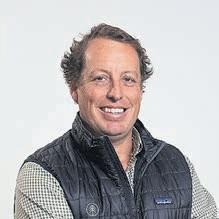

Will Dickie Director Roger Dickie (N Z) Ltd
Jeff Dickie Director Roger Dickie (N Z ) Ltd
Roger Dickie
AI firefighting tool meets burning need
Richard Rennie TECHNOLOGY Safety
FIREFIGHTERS, forest owners and councils could be among the first to benefit from an advanced AI-driven tool proven to accurately predict forest fire risks within the hour.
A team led by University of Canterbury engineer and geophysicist Dr Alberto Ardid has proven their machine-learning wildfire prediction tool can not only save lives, but also significantly reduce the time and costs involved in effectively fighting wildfires.
The tool is based on Ardid’s background of applying similar technology to volcanic eruption prediction, both here and in his native Chile.
After the 2019 White Island eruption, he and the Canterbury team developed an AI-driven forecasting tool for volcanoes to help prevent such a disaster happening again.
It contained 20 years of seismic data recorded from 40 eruptions across the world, including White Island, Tongariro and Ruapehu.
“One of the surprises from the fire tool project is that its predictive ability is even better for fires than it is for volcanoes,” Ardid said.
The AI fire tool has data fed into it from multiple weather stations and accesses over 20 years of historical records.
It is trained to “learn” the patterns that elevate fire risk in real time, producing a risk matrix every 30 minutes.
The model has proven to improve the prediction accuracy by 10-30% when tested against Australia’s standard Fire Behaviour Index, itself a sophisticated modelling tool.
However, the index provides only a daily update on a region’s relative fire risk.
“On any given day the fire risk can change within hours with a drop in humidity or a shift in wind direction. There is a need to be able to react to information provided in a shorter time frame,”
Ardid said.
The system’s success has also built on research published last year that demonstrated the proof of concept from using it in Queensland.
Farmlands acquires Donaghys Agriculture
Staff reporter
FARMLANDS has bought Donaghys Agriculture, a specialist New Zealand agribusiness headquartered in Christchurch with expertise in animal health, agricultural chemicals and dairy shed solutions.
The companies said the move brings together Donaghys’ technical capability, manufacturing and product development with Farmlands’ national rural supply network – expanding farmers’ access to locally developed products, specialist technical advice and practical on-farm solutions tailored to New Zealand conditions.
Farmlands chief executive Tanya Houghton said the partnership represents a positive step for New Zealand farmers at a time when reliable supply chains, technical expertise and
More recent research has taken advantage of Australia’s vast wealth of fire data, expanding to multiple regions and climates including the Sunshine Coast, Brisbane and Hobart in Tasmania.
The tool has proven not only 10-30% more accurate in its predictions but is proving invaluable in helping authorities get a better handle on the
economic risks lurking within every fire alert.
Given the high cost of capital equipment like trucks and helicopters and the human capital involved in engaging a fire, authorities have quickly seen the value better data can offer and how it can help better protect fire crews by optimising time of deployment.
Cost-loss analysis showed the
system could double the economic savings compared to using existing tools by reducing false alarms, and better detecting otherwise missed fires.
Here in NZ, Ardid is seeking partners to take the project to a commercial level, and this could include developing a phone-based app.
“Because the AI tool simply connects to active weather stations, and NZ has many of these, it is a relatively simple thing to do.”
He said for farmers who may have a forestry block on their property, they may require only that their own weather station be hooked up to it, providing ultralocal risk predictions.
Meantime, local authorities may seek out broader, spatial views of their region’s fire risk.
To advance the tool even further Ardid is hoping to tap into latest soil moisture data provided through the NASA-ISRO joint NASA-India imaging satellite, launched in the middle of last year.
“With more remote sensing data available over time we will be able to continuously improve the tool’s accuracy.”
Ag scans horizon for plastic price spike

Gerhard Uys NEWS Dairy
A SPIKE in global plastic prices has not hit New Zealand yet, and only time will tell what its impact will be on farming, and food and beverage manufacturers, says Rabobank retail food analyst Michael Harvey.
innovation are increasingly important.
“Farmers are facing more complex challenges, from animal health and parasite resistance through to productivity and environmental performance,” Houghton said.
“By bringing Donaghys and Farmlands closer together we can invest even more strongly in the research, innovation and technical capability that farmers rely on to meet those challenges.
“Importantly, it keeps Donaghys expertise, product development and manufacturing capability in New Zealand hands, supporting solutions that are designed for our farming systems and our conditions.”
Donaghys chief executive Jarred (Jed) Marfell said the partnership builds on a trusted long-standing relationship between the two organisations and creates new opportunities to extend the reach of its manufacturing, distribution and export business.
Harvey was reacting to reports of a spike in plastic prices because of the United States-Israel war on Iran.
Reuters reports that the Middle East accounted for over 40% of polyethylene exports in 2025, led by Saudi Arabia. It ships to nearly every region outside of North America, the next big player in plastic exports.
Plastic is a byproduct of the fuel industry and as fuel exports are choked and prices soar, plastic prices are pushed higher.
Harvey said spiking plastic prices might not have such a direct impact on farming, although they could add costs to, for example, chemical containers or bale wrap. It is food and beverage manufacturers that will really bear the brunt.
There are mounting increases in the cost of resin – the raw product used to make food packaging and plastic products used in farming –which means the cost of packaging is going to be a problem for all food and beverage manufacturers around the world. The duration of the war will determine how long higher prices affect the food system, he said.
Retail director for Farm Source Kevin Shaw said product availability across Farm Source stores remains stable and they have supply in place for the coming months, including critical on-farm products.
“While global fuel and freight costs are under pressure, we’re working closely with suppliers and logistics partners to minimise the impact to prices.
“If input costs remain high, price increases will eventually be passed through the supply chain,” Shaw said.
A Woolworths spokesperson did not comment on whether an increase in plastic prices affects the supermarket chain but said it continues to monitor the global
effects of the conflict together with its suppliers.
Richard McColl, the science and innovation manager at the Meat Industry Association, said at this stage there are no indications that the New Zealand red meat sector’s packaging supplies are at risk due to the pressure on the global supply chain.
“Most processors will have contracts for the supply of plastics and packaging with fixed pricing in place.”
A number of bale wrap manufacturers approached by Farmers Weekly did not want to comment, with one saying it’s too early to tell whether the supply of raw product will be disrupted or prices affected.
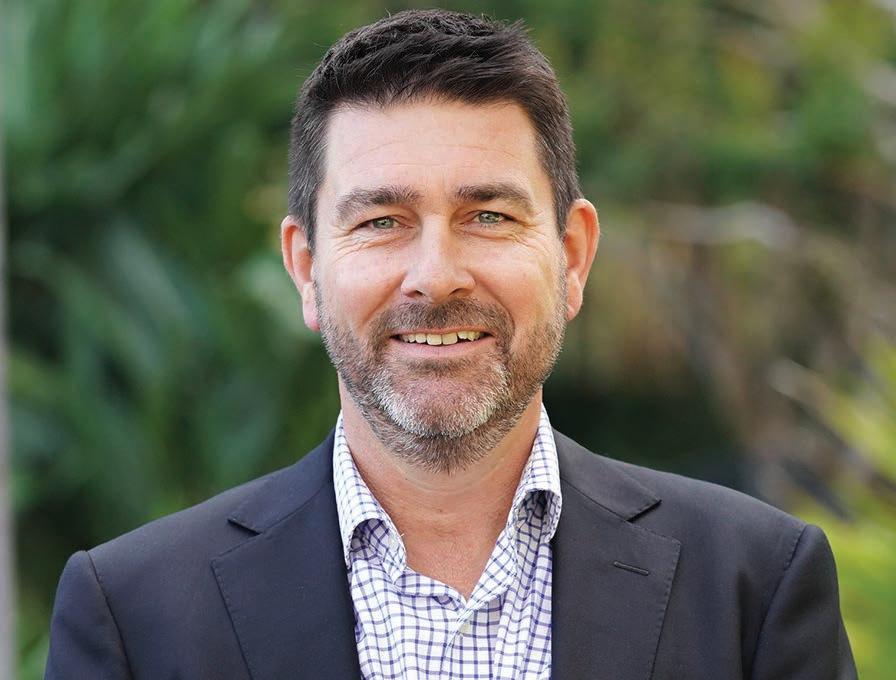
CALLOUT: The University of Canterbury’s Dr Alberto Ardid says the predictive AI fire tool could not only save lives but also valuable firefighting funds by avoiding false alerts or mistimed callouts.
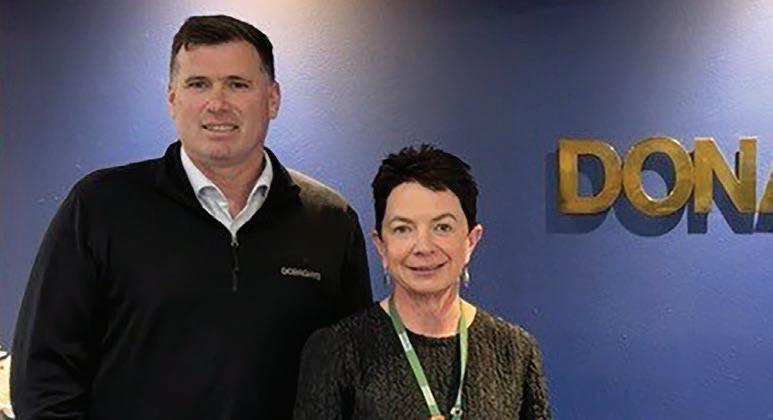
TOGETHER: Donaghys chief executive Jarred (Jed) Marfell and Farmlands chief executive Tanya Houghton.
UPS AND DOWNS: The global food production system will suffer as packaging prices increase, says Rabobank retail food analyst Michael Harvey.
PAYDAY: From tomorrow the bank accounts of Fonterra’s farmer shareholders will swell by a total of billions as various payments begin to come through.

Fonterra bonanza a business ‘recycle’

Bryan Gibson PEOPLE Dairy
MILES Hurrell admits the fact that Fonterra will pay out $5.4 billion to farmer-shareholders this month is hard to comprehend.
“In the context of the state of the New Zealand economy at the moment, I put




my mind back to when I inherited this job in 2018. I was dreaming of a $5.4bn debt position back in those days and here we are paying that out in one month. I mean, it’s just amazing to see how the organisation’s come forward.”
Fonterra’s chief executive said it is important to remember that $3.2bn of that is just a reallocation of capital.
Hurrell told the Farmers Weekly Podcast it was that focus on finding the best return on the money farmers have invested in the cooperative that drove strategy, including the Lactalis sale.
“There has been the odd commentator out there saying we’ve shrunk ourselves, but the way I look at it is we’re a fully integrated business, and being a co-operative, that’s one of the benefits.
“You’ve got to recycle businesses all the time and if you sit on things for too long they go rusty.
“When you’ve been through a piece of capital equipment that’s no longer in use, don’t just sit on it, do something with it. Recycle the cash and put it into something that’s more profitable.”
For a co-operative like Fonterra, sometimes the best place for capital is back behind the farm gate.
“We don’t have faceless shareholders. We have shareholders that are intertwined with the organisation and so if there’s a better return for that capital behind the farm gate than what we’re doing with it, we should be giving it back to those who are going to create more value.
In our minds, that’s $3.2bn I think our farmers can do more with, by way of debt reduction, increased efficiency or productivity on farm, or even things like succession.
Miles Hurrell Fonterra
“In our minds, that’s $3.2bn I think our farmers can do more with, by way of debt reduction, increased efficiency or productivity on farm, or even things like succession.”
Hurrell recently announced his intention to stand down from the top job, and while the balance sheet is great at the moment it could be put under pressure by geopolitical forces.
“We’re primed for these things and have strategies built on volatility, or being able to take advantage of volatility,” he said.
“So, while it is far from ideal, and we’ll be feeling the impacts of this, I suspect, for a while, we’ve been able to navigate it so far. And as I say, I think our business is geared up to manage it the best we can.”
Of course, high farmgate returns mean high prices at the supermarket, which Hurrell acknowledged. But he urged people to consider the bigger picture.
“We can extract value and create more value for our products overseas, and ultimately that comes back into New Zealand. Being a co-operative, we’ll pay $26bn out to our farmers this year and that’s our way of contributing.”
On his decision to leave, Hurrell said the timing is now right as Fonterra heads into its next phase.
“We’ve just completed that [Lactalis] sale. The cash came into the bank two days ago. We need to unleash this into the next phase of strategic direction.”
Mitigating drench resistance with nutrition
Tiffany Menzies
Farmlands Te chnical Pro duct Manager
complacency Pro ductivity and profitability are cornerstones of any succes sful busines s, often hinging on surprisingly simple practices that are not cost prohibitive.
With drench resistance increasing and no sight of new drench actives, attention is turning to taking a more holistic approach to parasite management To ols include strategic grazing practices, cropping alternatives, go o d nutrition, varying clas s es of livesto ck and/or intersp e cies for grazing paddo cks and bre e ding more genetically parasite resistant animals Dung testing helps evidence -bas e d de cisions that supp or t optimal animal health p erformance while upholding appropriate levels of animal welfare.
Understanding alternatives is incre dibly valuable. Nutrition is a cr ucially imp or tant long- term s olution to mitigating drench resistance, which is rapidly re ducing the effe ctivenes s of our current ars enal of drenches against intestinal worms
Key b e n ef i t s of n u t r i t i o n
B olstere d immune function
Livesto ck with worms ne e d more protein to repair parasitedamage d gut tis sues and increas e the immune system’s pro duction of defensive res ources to combat the effe cts of parasites Inade quate levels of fe e d protein when animals are under stres s, such as during pregnancy or in growing youngsto ck, results in diversion of vital nutrients away from growth and wo ol pro duction to fight the parasites O verall, insufficient protein, vitamins, minerals, trace minerals, and even water, weaken the immune system, making it harder for animals to fight worm infestations and dis eas e infe ctions
Improve d resilience and re covery
Ade quate nutrition als o supp or ts livesto ck b eing able to b etter utilis e their fe e d efficiently We all know that energ y makes us gain weight but for young animals’ protein drives growth, which helps reach s ale target weights earlier, while undergirding their immune resp ons e and repairing damages caus e d by worms
Re duce d contamination
A robust immune system can lead to she dding les s worm eg gs in fae ces and therefore, significantly de creasing pasture contamination subs e quently for future grazing
Fewer unne cess ary exp ens es
Healthier, b etter fe d youngsto ck normally ne e d fewer drench treatments, meaning re duce d time and lab our res ources b eing tie d up in mustering and yarding, with les s er risk of animals incurring handling injuries, exp osure to dust or infe ctions Having a few cost- effe ctive strategies in your to olkit is imp or tant With increasing drench resistance among New Z ealand livesto ck, there is no ro om for
Drench resistance is not going on holiday
A multidis cipline approach is re quire d now more than ever b efore. You can acces s to ols and knowle dge through your lo cal Farmlands store and Te chnical Sales Officer, Agronomist or Nutrition Sales Sp e cialist to supp or t optimal parasite management practices linke d to pasture growth, cropping and nutrition suite d to your prop er ty and livesto ck
Parasites are one of the main caus es of p o or growth rates and re duce d youngsto ck p erformance. Commonly b etwe en 85 -9 0% of the total gastrointestinal worm p opulation exists on pasture, but where worm numb ers are only multiplie d during the animal phas e in more sus ceptible individuals
S ome for tifying keys in a worm management strateg y to olb ox:
– Grow youngsto ck quickly – with b etter nutrition to combat the effe cts of worms and b e caus e finishing sto ck re duces sto cking density
– Delay grazing re cently cut hay or baleage paddo cks to allow worm eg gs and larvae resident in the pasture bas e to b e exp os e d to the sun ’ s ultra violet rays
– Autumn pastures characteristically carry the highest infe ctive worm loads for the year, p osing the greatest challenge levels to par ticularly youngsto ck as their immunity is still developing Utilising the b enefits of higher protein forage crops Even in autumn the stable do or is still op en for evaluating the growing winter forage crops, let alone planning for next summer crops for growing on weane d lambs
– B e sure to implement a thorough quarantine drench practice for any incoming livesto ck on to your prop er ty s o that you do not imp or t unwante d drench resistance
Te chion’s FECPAK kits can b e us e d in conjunction with improve d nutrition and us e d to test livesto ck dung for either gut worms or facial e c zema sp ores Kits can b e us e d for testing pasture sp ore levels to o FECPAK test kits are quick and easy to us e to colle ct and s end s amples to the lab oratory
Monitor the p erformance of your sto ck and the drenches you us e
Regular monitoring of multiple mobs for worms is imp or tant, par ticularly in growing youngsters lacking develop e d immunity to parasites, or alternatively when planning the
allotment of spring grazing areas for ewes pregnant with multiple lambs Ideally test with FECPAK prior to giving any drench treatment to determine if re quire d, and then 7-14 days after a drench treatment is given to che ck how well it worke d, and then again regularly to as s es s whether a future drench is indicate d. O ver time, colle cting your prop er ty’s own test data helps gather vital information for you and helps you optimally steward the effe ctive drench actives suitable for us e in your situation Understanding thes e simple yet profoundly imp or tant keys can help you unlo ck and harvest nutrition’s golden b enefits, while improving your b ottom line and pro ductivity
Facial e c zema
Facial e c zema (FE) is a dis eas e of pasture grazing livesto ck (apar t from hors es) which damages the liver, caus e d by the fungal mycotoxin sp oridesmin, and whos e unwelcome pres ence is chiefly felt during warm humid summer and autumn weather
Affe cte d animals may exhibit a range of skin photos ensitivity symptoms, p o orer pro ductive p erformance, or they may die The dis eas e can b e considerably painful, resulting in a significant advers e animal welfare impact As facial e c zema has no treatment, prevention is cr ucial Regular and ongoing monitoring of facial e c zema sp ore counts trending on your prop er ty is key, identifie d through testing pasture or dung s amples Pasture sp ore counts show a p otential consumption while fae cal sp ore counts confirm the actual sp ore numb ers ingeste d one to two days prior to s ampling
Fae cal sp ore counts are esp e cially us eful for dete cting earlier than exp e cte d rising sp ore counts from Novemb er onwards, and als o at the tail end of the s eas on to help inform when zinc treatments for facial e c zema can b e stopp e d Knowing when to stop zinc supplementation can b e as imp or tant as knowing when to star t. Fonterra offers dairy suppliers a bulk milk facial e c zema test (ZincChe ck), which as s es s es if herd zinc supplementation is ade quate for prote ction, complementing blo o d tests and pasture sp ore counts to managing the dis eas e. Always consult your animal health profes sional for sp e cific advice relevant to your livesto ck and prop er ty grazing situation You should als o refer to industry information and guidelines for other re commende d actions available, to s afeguard your livesto ck against facial e c zema B e caus e FE has no cure, dosing livesto ck with zinc when sp ore counts are at toxic levels helps to mitigate the dis eas e. Farmlands offers a range of zinc pro ducts, including zinc sulphate for water dosing, zinc oxide for oral drenching and in fe e d, or intrar uminal zinc b olus es
FE risk and zinc treatment levels vary from farm to farm and s eas on to s eas on, s o make sure you dis cus s your FE treatment programme with your lo cal animal health profes sional
Mooted changes to pastoral leases welcome
Mooted changes to pastoral leases welcome
Neal Wallace NEWS Land
HOLDERS of pastoral leases have welcomed the opportunity to broaden their businesses with the government proposing a change that will allow other business activities alongside pastoral farming.
The proposed change will permit activities on Crownowned pastoral lease land such as growing crops, horticulture, tourism, running small farm shops, hospitality ventures and renewable energy projects alongside pastoral farming. It will also permit day-today activities such as applying fertiliser and repairing buildings without requiring approval from the Crown.
The proposal will also establish a process for removing land from the pastoral estate in exceptional cases where a different purpose would “deliver significant benefits for New Zealand”.
Federated Farmers High Country
co-chair Jim Ward said the move is welcome and something pastoral lessee groups have long advocated for.
It won’t suit everyone and most new ventures would still require district or regional council consent, he said.
“If they look through a wider lens, then maybe it is suitable and an opportunity to go ahead and do it.”
High Country co-chair Matt Simpson said he wants to see the finer details but notes that district plan overlays such as outstanding natural landscapes in areas like the Mackenzie Basin will impose restrictions on some areas.
A joint announcement by Land Information Minister Chris Penk and South Island Minister James Meager said farmers have
LOOSER REIN: A joint announcement by Land Information Minister Chris Penk and South Island Minister James Meager says farmers have sought an easing in pastoral lease regulations.
Photo: Wikimedia Commons
sought an easing in pastoral lease regulations to allow a wider range of activities alongside pastoral farming.
Modelling suggests these changes could significantly lift the value of Crown pastoral land from around $80 a hectare from pastoral farming to many thousands a hectare from horticulture and up to $18,500 for some solar projects, said Penk.
Meatworks need to bite bullet on cutbacks
Neal Wallace NEWS Production
MEAT workers accept that processing plants could close but say many are not working full seasons due to falling stock numbers and over capacity.
Daryl Carran, the national secretary of the New Zealand Meat Workers Union, said the length of season is increasingly disruptive for staff, with many reduced to working three to four day weeks with little or limited overtime.
“These are highly skilled people but they will not hang around if they cannot earn an acceptable wage.”
He said some sites have not
worked overtime processing lamb for two years.
Other staff are on minimum pay because there is so little work, and overtime for beef has become less common.
Workers with seniority get opportunities such as working over winter and processing bobby calves.
We all know rationalisation needs to take place, but their view appears to be wait and see who moves first.
These trends are becoming more prominent due to excess capacity, falling stock numbers, land use change and, as has been the case this year, when grass growth was abundant, by farmers retaining stock to put on weight.
If matching falling stock flows with more consistent working conditions requires plant closures, that is something the union would consider.
“Overall there has to be an adjustment involving everyone in the industry to get back to full weeks and full days.”
It would also help if companies reached an agreement to stop livestock trucks driving past plants owned by other companies or carting stock across Cook Strait.
He fears meat companies are
waiting to see who blinks first.
“We all know rationalisation needs to take place, but their view appears to be wait and see who moves first.”
While closure will impact union members, Carran said they are being impacted by short work weeks anyway.
“The evidence is there from the last two to three years that there needs to be an adjustment whether that is to take out the night shift or closures or either or both.”
Some meat workers are looking outside the industry for jobs that offer greater security. He warned that if farmers want to retain stock longer, there is a risk plant capacity may not be available when it is needed.
Meager said Crown pastoral land covers about 1.2 million hectares of the South Island so the opportunities could be significant.
“Adding activities like horticulture and beekeeping alongside traditional farming along with selling fresh produce on site, gives farmers more ways to earn from their land and grow their operations.
“Encouraging hospitality ventures, tourism and hunting also attracts visitors to the region, benefiting the wider local business community as people spend in shops, eat at restaurants, and stay in nearby accommodation.”
Meager said the changes made the rules clearer, simpler and more workable while protecting the high country environment and ensuring pastoral farming remains the primary land use.
Penk said the enabling legislation would reduce unnecessary administration and give farmers greater certainty by clearly setting out which day-to-day activities, such as fertilising land or repairing farm buildings, can be carried out without approval.

Feds
Daryl Carran NZ Meat Workers Union
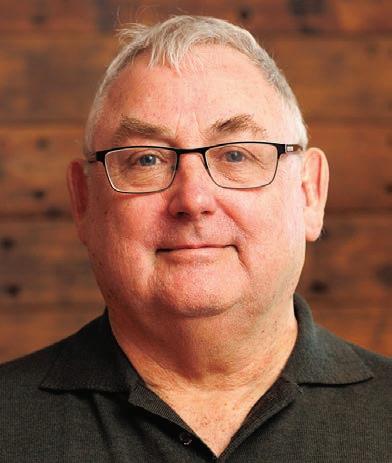
A THOUSAND CUTS: Daryl Carran, the national secretary of the NZ Meat Workers Union, says there has to be an adjustment involving everyone in the industry to get back to full weeks and full days.
The Trader have move d online. Deals
We’ve move d our deals online s o you can s e e our late st offers and what’s in sto ck right now. S can to explore.
Plus you can still get all your rural es sentials at shop.farmlands .co.nz or FarmlandsPRO



‘Water storage funding to unlock growth’
Bryan Gibson NEWS Infrastructure
THE Tukituki water storage project has received a shot in the arm, with the government announcing a $18.13 million loan to fund preconstruction work.
The loan, from the Regional Infrastructure Fund, was announced by Associate Regional Development Minister Mark Patterson in Ongaonga.
“The water storage project [will] help unlock economic potential –boost food production and create jobs,” Patterson said.
“As a key food-producing region, Hawke’s Bay has the potential for expansion with reliable longterm water supplies. This project will support land uses such as horticulture, seed production and high-value pastoral farming.”
The work will include completion of detailed design and engineering and confirm construction costs and overall commercial viability.
If the project progresses to the construction phase, it is expected to enable the future irrigation of
government today has just been first class. It’s exactly what we need to get to the point where we can actually start to think about procuring this project and building it.”
Petersen said securing access to water is vital for the region.
“This is a region that is running out of water and we shouldn’t sugarcoat it. It’s desperately needed. We know we have to improve our water efficiency measures, recycling, all the other tools at our disposal to make sure we do have wise water use, but we also need to make sure we capture some of that water that’s flowing to the sea in those peak flow periods and utilise it smartly when we need it.”
supply during those summer months would mean more opportunities to seek higher value crops throughout the year. However, local environmental advocacy group Wise Water Use HB said the government is throwing good money after bad.
This is a region that is running out of water and we shouldn’t sugarcoat it.
up to 22,000 hectares, create up to 300 jobs during construction and add up to $693m to annual GDP for the region.
The finished water storage facility and distribution pipework network would be capable of storing 104 million cubic metres of water, the equivalent of 41,600 Olympic-sized swimming pools.
Tukituki Water Security Project
chair Mike Petersen said the loan is a sign that the long wait for water storage in the region may soon be over.
“This is a great day for the project,” he said.
“It’s always tough raising funds in a challenging environment, but the announcement by the
Local grower Hugh Ritchie said the funding will be a real boost for the region, still reeling from the recent announcements that key vegetable processing plants will close.
“This is the enabler. This actually enables you to start looking at different opportunities. At home, we manage our water through January, February to actually reduce demand because we know that the wells are going to struggle.”
He said having a secure water
“The build cost of this project will be rising by the day, making the price of the water costprohibitive,” spokesperson Trevor le Lievre said.
“Under Ruataniwha v.1, even with the subsidised cost of water, the project sponsors (then HB Regional Council) only got sign-on for 40% of the volume available. The dam builders haven’t even gone out and surveyed local farmers to establish if there is demand for the water, which should have happened before pouring public money into an expensive feasibility study.”
Trust should be agriculture sector’s No 1 export

Annette Scott NEWS Food and fibre
THE global landscape is changing, with trust emerging as key to the future of New Zealand’s food and fibre sector, industry leaders say.
From innovation to impact, the future of Selwyn’s food, fibre and agritech was the focus of a recent symposium hosted by Lincoln University’s agribusiness and economics research unit.
Led by Lincoln University’s director of strategic partnerships, Wim de Koning, the symposium brought together researchers, producers and industry leaders to identify economic development opportunities for Selwyn’s food and fibre sector.
“Food and fibre sit at the heart of Selwyn’s economy but the sector is navigating a period of profound change.
For New Zealand, trust is the product and it needs to travel with the product.
“Climate pressures, tightening environmental, market volatility and shifting consumer expectations are reshaping how we produce and add value,” De Koning said.
At the same time advances in agritech, biotechnology, low emissions solutions and alternative land-use system are unlocking new pathways to productivity, resilience and premium positioning.
The challenge and opportunity lie in turning innovation into practical, profitable and sustainable outcomes for farms and businesses.
But the impact of loss of farmland in the Selwyn District to non-agricultural uses puts future growth at risk, De Koning said.
Potential drivers of change identified population growth, which is currently at 80,000 and predicted to double in the next 20 years; land use change, changing consumer demand, climate events, government policy and environmental drivers.
Keynote symposium sessions featured industry leaders on future food systems and emerging agritech, alongside regional farming and food entrepreneurs already adapting and innovating on the ground.
Addressing why future foods matter now, the director of science, plant and food research at the Bioeconomy Science Institute, Jolon Dyer, said trust is the key differentiator.
“The global food landscape is changing, with 55% growth projected in food demand by 2050. Getting into the market is increasingly difficult, with increasing regulation and increasing consumer expectation; it’s not just what food is but also how it is produced.
“For New Zealand, trust is the product and it needs to travel with the product.”
The pillars of modern food are standards and certifications; food assurance frameworks; traceability and data systems; market access and price premiums.
“The trust starts at the farm gate or orchard; standards become a
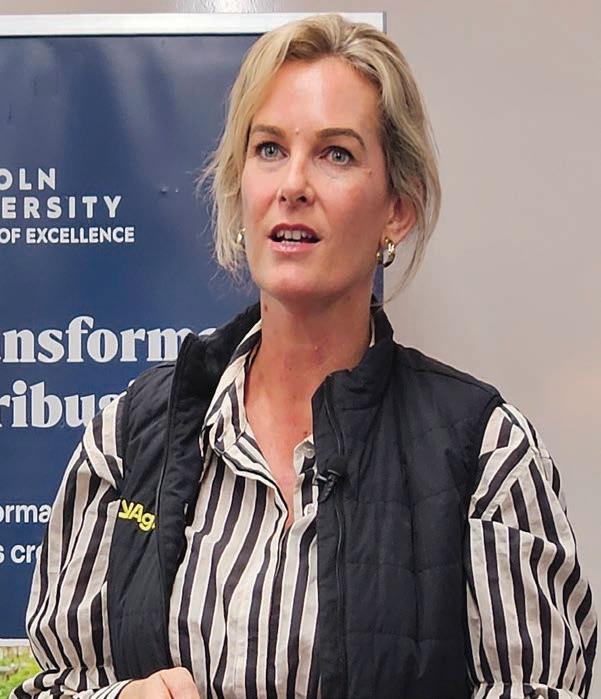
IMPORTANT: AgriZero head of strategy and engagement Ruth Leary says as an export-reliant nation the importance of reducing agricultural emissions cannot be overstated.
new language. It can be complex but to get a premium you have got to go beyond to food assurance, trust and transparency, invest in systems, not just products. Treat traceability and sustainability as strategic assets,” Dyer said.
High Peak Station director of farming Hamish Guild shared insights into running high-country farming operations grounded in environmental stewardship and strategic diversification.
While the farming operation runs sheep, beef , deer, apiarism and extensive agri-tourism including guided hunting, a direct-export added-value focus overarches all business for the three generations on the station.
“Trust is very important to us in
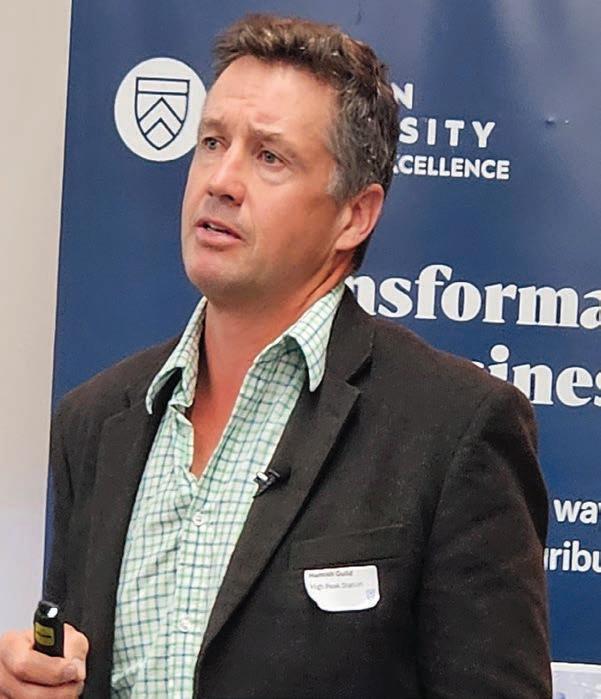
all we do. Our goal is to add value to everything we produce, have, or do. Exports are absolutely about trust.”
Phil Caunter of Melton Estate winery spoke of “lightbulb moments” that changed his future.
Addressing the opportunities, setbacks and lessons learned on his journey to success, Caunter said the realities of building a differentiated food and beverage brand in a competitive landscape were challenging.
“To just grow grapes to make money is hard work, you have got to add value.
“I made this pinot gris from a grape people don’t even like. The trademark added the value.
“I had a lightbulb moment,
called it Summer Love, it became a thing, people talk about it, they call me the Summer Love man. It’s about trademark, selling an experience; package it up in a way people want to buy and enjoy.”
Ruth Leary from AgriZero outlined the major emissions and sustainability challenges facing the sector and the technologies developed to address them.
“As an export-reliant nation the importance of reducing agricultural emissions cannot be overstated.
“Farmers need access to a range of tools that are fit for our pastoral farms and grass-fed animals so they can reduce emission and maintain their competitive edge on the world stage.”
Mike Petersen
Tukituku Water Security Project
Dr Jolon Dyer Bioeconomy Science Institute
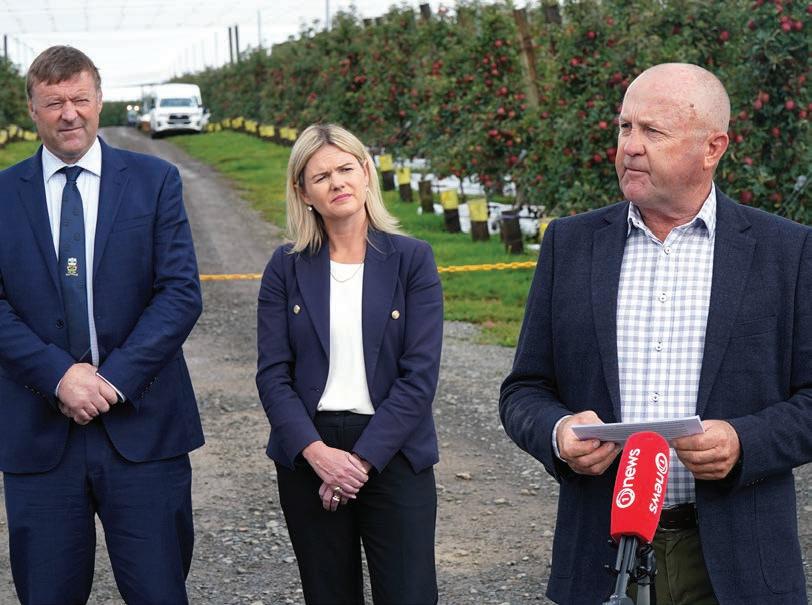
REGIONAL BOOST: Associate Regional Development Minister Mark Patterson, Tukituki MP Catherine Wedd and Tukituki Water Security Project chair Mike Petersen at the funding announcement on Tuesday, April 7.
Photo: Bryan Gibson
VALUE: High Peak Station director farming Hamish Guild says a direct export added-value focus overarches all business for the three generations on the station.
Photos Annette Scott
Oceans may deliver next-gen weedkillers
Richard Rennie TECHNOLOGY Pests
DEALING with aggressive and resistant weeds without using synthetic herbicides is something of a holy grail in agronomy – and one that University of Waikato researchers hope to crack in coming years with a solution from the sea.
Their work from previous collaborations has already contributed to the development of a late-stage breast cancer drug Halaven, based on a compound from a sponge off the Kaikoura coast, along with a treatment for AIDS.
Dr Christopher Battershill, the university’s inaugural professor and chair of Coastal Science at the university in Tauranga, said earlier work in Australia, funded by chemical company NuFarm at the Australian Institute of Marine Science and James Cook University, identified marine compounds possibly useful in controlling weeds.
His Tauranga-based team’s work took this a step further to find five New Zealand-sourced extracts from algae and seaweed species with selective herbicidal activities. The aim of achieving weedicidal selectivity without wider toxicity
to the environment involves on the enzymatic pathway of “C4” plants, the most resistant, tough weed-type plants often problematic in cropping.
The extracts appear to be highly specific in action and, unlike some synthetic treatments, are not likely to affect humans or invertebrates.
Buoyed by earlier successes in the medicinal sector, they had identified a compound active against the kiwifruit disease Psa, now under Zespri research management.
They are now trialling crude formulations of the compounds on weeds in a Bay of Plenty orchard in partnership with Ngāti Pukenga.
“The early indications of our very first field trials were good, although we were interrupted by storm effects part way through.
“But we could tell we had a natural product that looks like it was having a systemic control on weeds.”
Those weed types include perennials like woolly nightshade, convolvulus and paspalum.
The group has received funding through MBIE’s Smart Idea programme to repeat the trials now underway and looking even more promising.
Working with colleagues Rahera Ohia, Professor David Burritt from Otago University, Professor Michele Prinsep, and Elizabeth
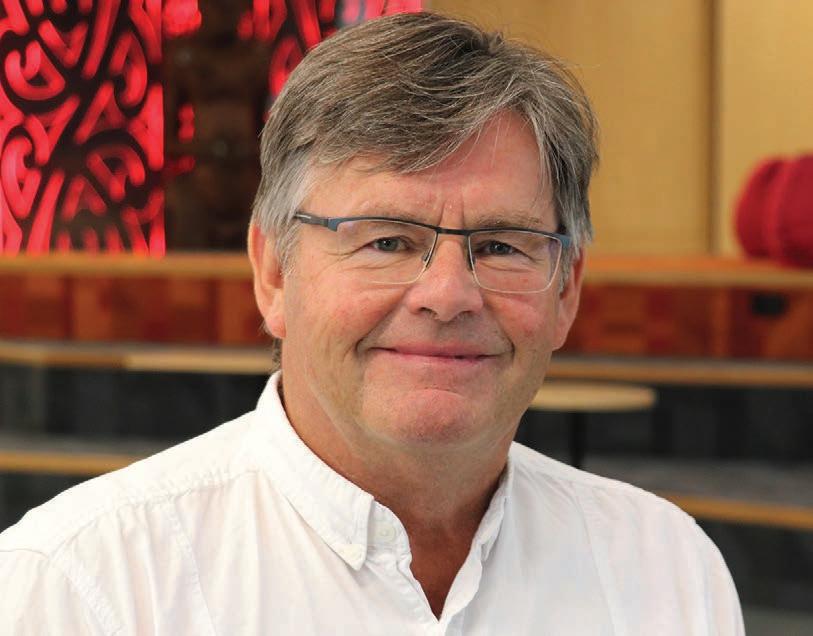
WEEDY: The head of the University of Waikato’s coastal research unit, Professor Christopher Battershill, is highly encouraged by early indications his team have discovered compounds in seaweeds capable of acting systemically on some of the most hard-to-control weeds.
Copeland, the Waikato team is developing a more exacting process to identify and extract the most potent compounds.
The compounds’ tendency to be highly selective in terms of what weeds they affect is a property prized by researchers who have also sourced human medical solutions from them.
“What they don’t want is broad spectrum action which is essentially gross toxicity, and the
mode of action is very important.”
He cites the compound used in Halaven, with the ability to bind specifically to tubulin sites in tumour cells causing cell cycle blockage and tumour cell death.
The source looking most positive for the weed control compound is a “prolific native seaweed”.
“We are specifically selecting those seaweeds first, they are species that grow prolifically which is important for it to be a
sustainable source that doesn’t risk local collection extinction as we scale up trials.”
The next step for the team is to perfect their assaying technology to identify useful compounds, then look to large scale purification and production processes, either through harvesting seed stock and then in aquaculture systems or synthesizing the molecules if possible.
We could tell we had a natural product that looked like it was having a systemic control on weeds.
Prof Christopher Battershill University of Waikato
“The risky work, the biodiscovery work, has already been done. We know which compounds will work, where they come from in the sea and how they work. Advancing new agrichemical options from marine bioactives is no longer a fishing expedition.”
He is excited by the prospects the work holds for NZ Inc.
“NZ could own the IP on this, benefiting our own primary sector economy in addressing some of our agricultural and horticultural issues, but also from new industry producing bio-control chemicals for international markets.”
Future-focused ideas for farming businesses


Programme
AgInnovation 2026 brings together forward-thinking farmers and industry leaders to explore the challenges and opportunities shaping the future of farming businesses
The day will include ‘pick and mix’ sessions with a strong line-up of presenters and practical topics This is your chance to choose three sessions most relevant to your farming business
The programme also includes three keynote sessions providing broader perspectives on innovation, global influences, and performance across the sector
We will finish the day with a networking hour, including canapés and a complimentary drink, followed by a cash bar
Tickets $75 per/person
For more information, and to purchase tickets visit www.beeflambnz.com/aginnovation2026 or scan the QR code
If you require assistance with registration please contact: Renee Harland, B+LNZ Western North Island Extension Coordinator – Renee Harland@beeflambnz com




Wednesday 22 April Awapuni Function Centre, 67 Racecourse Road, Palmerston North
9 00am Registration and morning tea 9.45am Welcome
9.50am Introduction – Dan Brier, GM Farming Excellence B+LNZ 10 15am Opening keynote speaker Mark Mortimer - Innovation & Technology, what should I adopt?
11.05am Pick ‘n’ mix Session 1 11.55am Pick ‘n’ mix Session 2 12.45pm Lunch 1.35pm Pick ‘n’ mix Session 3 2.25pm Keynote speaker Barney Riley – Global Trade Turbulence: A New Zealand Response 3.00pm Closing keynote speaker Sir John Kirwan – Performance Care 3.45pm Networking hour – Supported by Gallagher 4.45pm Conclusion






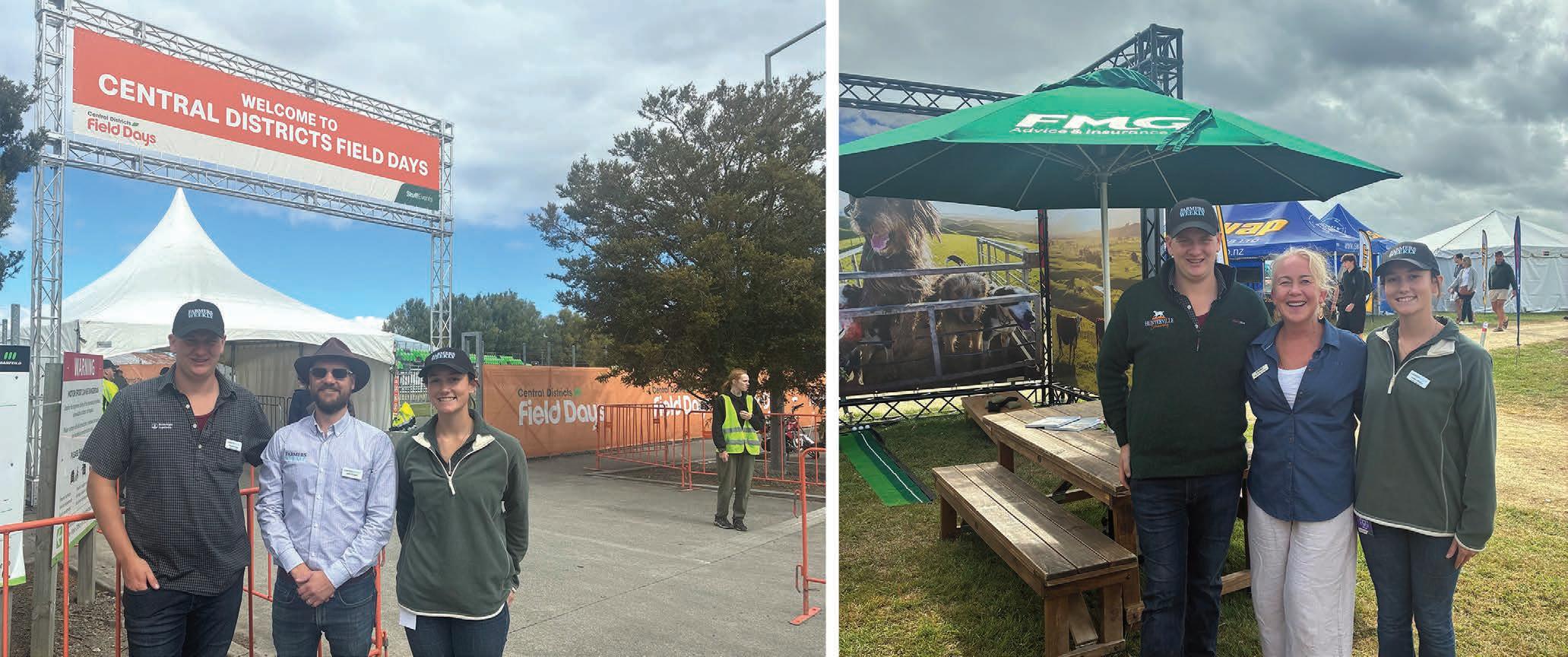
First event for the ambassadors
In March the Central District Field Days were held in Manawatu - a great few days with plenty of punters out and about.
It was also the first taste of the industry for two of our 2026 Farmers Weekly student ambassadors. These ambassadors are top students from Massey and Lincoln Universities who join us for several events this year, building connections and experience alongside their studies.
Our Massey University ambassadors Patrick Coogan and Lauren Phillips both grew up on sheep and beef farms in the wider Manawatu and Wanganui area, and are now studying Agribusiness and Rural Valuation, respectively.
They both got off to a great start, shaking hands and getting to know some of the local industry players.
Backing young people like Patrick and Lauren is crucial for the industry’s future, and initiatives like this are only possible because of the support from our voluntary subscribers.
All 1223 play a part in ensuring Farmers Weekly arrives in mailboxes every week, and also that we can continue to give back to the industry in various ways.
$120 a year, $15 a month, or whatever price you decide that’s worth.
Charlie Williamson Community Manager



Two of the four Farmers Weekly student ambassadors Patrick Coogan and Lauren Phillips, are pictured with Sales and Marketing Manager Andy Whitson, and FMG’s Corporate Relations Specialist Miranda Clayton.

From the Editor
Meatworks reprieve only temporary
TNeal Wallace Senior reporter
HE return of our two largest meat companies to profitability is welcome and needed.
Silver Fern Farms Ltd and Alliance Group both reversed consecutive losses for 2023 and 2024 to report a net profit after tax (NPAT) for 2025 of $29.1m for SFF off $3 billion in revenue and $20.4m for Alliance from $2.1bn.
The cumulative losses in 2023 and 2024 were $165.8m for Alliance and $46.2m for SFF as they battled weak global demand and falling stock numbers.
Of the other major meat companies, ANZCO Foods reported a NPAT of $13.5m in 2024 and $60.9m in 2023. Turnover in both years was about $1.8bn.
Given the size and cost structure of Alliance and SFF, the indication is that most other companies are also likely to have been profitable last year.
Being profitable gives options, and that
LAST WEEK’S POLL RESULT
is what is going to be needed as the meat industry continues to grapple with issues of surplus capacity and low stock numbers.
The sector’s traditional method of addressing overcapacity has been to wait for the weakest player to blink. That tactic is unlikely to change and while one swallow does not make a summer, the fortunes of the two large players has changed.
Add to that once-in-a-generation prices for sheep and beef, demand for breeding ewe and indications the mass conversion of farmland to forestry may be coming to an end, and the trend of falling stock numbers may have been arrested, at least temporarily.
The sector’s traditional method of addressing overcapacity has been to wait for the weakest player to blink.
Remarkably, global demand for red meat remains strong despite geopolitical tensions.
Exporters remain confident that demand will be sustained, but realistically the longer the Iran war continues, driving up fuel costs and disrupting supply chains, so does the risk to market strength and prices.
But all this ignores the continued presence of the elephant in the room, surplus processing capacity.
MORE than three-quarters of voters thought that the water they drank was safe, with most describing the maintenance and filtration systems they employed.
“We filter the rain water to the house,” one said. “We then filter it a second time at the drinking water tap. We cover our gutters and clean them and we have our tank cleaned regularly.”
“We are in Northland and rainfall off our concrete tile roof drains into a 27,000 litre concrete tank, the top of which is our outside deck,” another voter said. “We have privately tested our water over the 20 years. There have been no instances of family ill health traceable to water quality.”
Of those who worried about the quality of their water, some thought that while they did all they could to monitor it, there would always be issues.
“As the manager of a sheep and beef farming business that employs and houses up to eight staff on farm, provision of an adequate and safe supply of water is a concern. We are totally dependant on the collection and storage of rainwater to manage the supply of potable supply. We do a lot (filter, UV treat, dose storage tanks) but it’s never enough to gaurantee safety.”
Farmers Weekly recently reported that meat processing staff are working short weeks and seasons due to overcapacity and falling stock numbers.
New Zealand Meat Workers Union national secretary Daryl Carran said many are working three- or four-day weeks with little or no overtime, which is encouraging staff to find more reliable work in other industries.
Carran said if the cost of matching lower stock flows with more consistent work is plant closures, that is something the union would consider.
The last two large processing plants to close were SFF’s Fairton works near Ashburton in 2017 and Alliance Smithfield at Timaru in 2024.
Closing Smithfield cost Alliance $50m, although it recouped some of that from the subsequent sale of the 32 hectare site.
It has said it has done its bit to rightsize the industry, but the reality is that SFF and Alliance tend to own large, older processing plants that are costly to run and maintain.
The sector has traditionally struggled to consistently generate healthy profits. A reason it was initially built on co-operative ownership is that it provided a vital service for shareholders.
Chart Title
Processing capacity will eventually be removed, but it appears the restoration of profitability and sector optimism may delay the inevitable.
Last week’s question: Are you confident that the water your family drinks is safe?
Letters of the week
Rebalancing for impact
Dr John Roche PM’s chief science adviser
NEW Zealand’s prosperity has always been built on farmers and scientists working together to shape our economy.
From pasture-based farming systems to biosecurity and environmental stewardship, public investment in research has underpinned our primary industries and shaped our international reputation. But the world has changed, and our science investment system has not kept pace. The reset now underway is not a retreat from the primary sector or the bioeconomy – it is a strategy to future-proof them.
At the heart of the new model is a simple proposition: public science investment must be more deliberate, more focused, and more impactful.
For too long, funding has been spread thinly across many activities, producing excellent science but insufficient national lift. International benchmarking makes the problem clear. New Zealand invests far more of its public R&D budget in agriculture and environmental research than comparable small advanced economies, while consistently underinvesting in advanced and enabling technologies. That imbalance now constrains productivity growth, diversification and long-term resilience.
The move to an investment framework guided by strategic goals directly responds to this challenge. Structuring the science system around four clear pillars, including the Primary Industries and Bioeconomy, and Technology for Prosperity, creates clarity and encourages collaboration across disciplines, institutions and sectors.
Importantly, it reframes advanced technologies such as AI, robotics and synthetic biology, not as competitors to the primary sector, but as multipliers of its future value.
For farmers, foresters, fishers and bio-processors, this matters profoundly. Productivity gains in primary sectors over the next two decades will not come from incremental improvements alone. They will come from deep integration of new genetics and biological tools, precision systems and digital platforms, and data-driven decisionmaking across the value chain. This includes genetics, on-farm automation, processing, traceability and access to premium markets.
Rebalancing the system towards these cross-cutting capabilities is an investment in the next generation of food and fibre producers.
The proposed funding shifts are also measured and responsible. About $122 million is reallocated over several years –not removed from the system – primarily from mature areas where private capability is strong.
This week’s poll question (see page 3):
Have your say at farmersweekly.co.nz/poll Do you think the Labour Party is right to question the immigration clauses in the proposed FTA with India?
Energy grid a costly, sputtering shambles
Alternative view
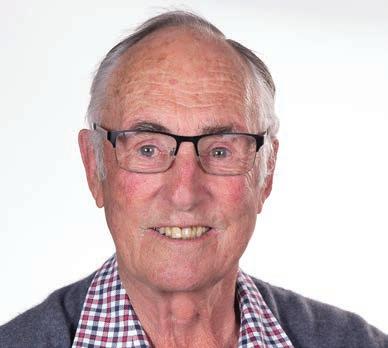
Alan Emerson Semi-retired Wairarapa farmer and businessman: dath.emerson@gmail.com
ANNUAL power prices increased by up to 12% recently. That’s on top of a similar increase last year that was described as the largest power price increase since 1989.
Prior to the increase, dairy farmers paid between $20,000 and $40,000 a year for power or a total of $251 million annually. Sheep, beef and cropping paid significantly less.
The price of electricity has caused even more grief than this direct hit to farmers’ pockets, with power costs cited as a factor in the closure of both Heinz Wattie’s and McCain Foods.
Power costs were also a factor
in the closure of Winston and Oji, with the loss of more than 300 jobs.
There are two key issues. The first is a highly profitable host of power companies all producing considerable profits. The government is majority owner of those companies and receives the majority of the profits.
Those profits and dividends are astronomical. The big four gentailers recently announced half-year profits of over half a billion dollars. To June 30 2024 the government received dividends from those gentailers of $425 million.
My second issue is that there is no credible plan for our energy future.
I’ve been fishing around Twizel in South Canterbury.
You can’t help but be impressed by the canals and the dams that are used to generate electricity.
The Twizel project was developed in the late 1960s. The politicians of that era believed we needed more power generation to future-proof NZ and started doing just that.
The 50km of canals, some high above the surrounding plain, the two dams and four powerhouses are all witness to the foresight and integrity of our politicians from times gone by. It is an engineering masterpiece.
Our most recent dam was Clyde in 1992, 34 years ago.
We’ve developed no hydro
electricity since then despite a 50% increase in population.
Back in the latter half of the previous century, politicians tended to work together for the long-term good of the country.
Back then we had a plan for taking the country forward. If there’s any plan now I am unaware of its existence. I believe the government’s entire CNG billiondollar initiative is a dog and I object to being taxed to pay for it.
The base issue is that we have water available for generation but no willingness to build dams and absolutely no strategy.
The big four electricity users are, with the exception of Fonterra, owned offshore. The largest user is Tiwai Point, which takes up a third of the total energy consumed in the South Island. It’s been estimated by the Electricity Authority that the average Kiwi household subsidises Tiwai Point’s cheap electricity to the tune of $200 a year. Add the taxpayer subsidy for pollution to that figure.
Second is Methanex, which gets huge taxpayer-funded subsidies and paid no tax in NZ last year.
Then there’s Fonterra, followed by overseas-owned and again taxpayer-subsidised NZ Steel.
Winstone was the fifth largest power user but left NZ because of high power prices.
Iniquitously, we’re lauding the establishment of a foreign-owned Datagrid data centre in Southland that will become our second-
largest electricity consumer. When built it will employ just 50 staff. Where’s the power going to come from? Burning coal? What price has it been offered for its electricity?
It’s crazy and the punters aren’t happy.
A poll by the Auckland Business Chamber showed 49% of respondents wanted the gentailers broken up and 62% wanted the government to underwrite the cost of new generation.
The Major Electricity Users Group told me that “the repercussions of unaffordable energy are far reaching as businesses struggle to compete globally or even survive, impacting the economy at large”.
One in four businesses surveyed has cut production because of high electricity prices.
It’s costing the taxpayer too.
In 2024, 900,000 Kiwis received the winter energy payment, costing almost $527 million. There was also over $19m paid out in hardship grants.
The Reserve Bank and the Parliamentary Commissioner for the Environment estimated $11 billion in savings if we rapidly electrified our households and ran on home-grown electricity.
I believe the government has choices if it has the will to fix the problem.
The first option would be to stop subsidising the foreign-owned major electricity users. It’s a
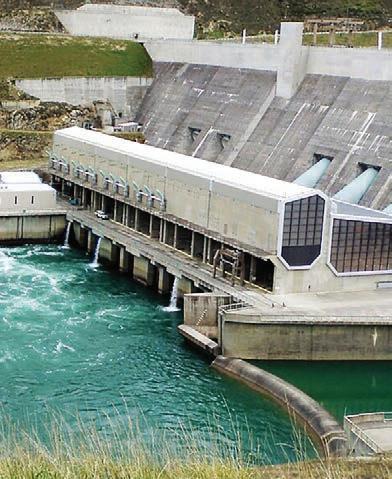
criminal waste of resources. The second is to subsidise alternatives such as solar energy for Kiwis.
The cynic in me suggests that the reason we don’t is to keep power prices and profits at their current astronomical level.
The third would be to can the totally misguided CNG deal.
The current situation is costing everyone and is a massive leg rope on the NZ economy. It needs fixing with a credible, long-term bipartisan energy strategy.
It’s no use having the world’s most efficient food producers if we have an inefficient and costly shambles of an energy system.
Fuel comes with economic pecking order
Straight talking
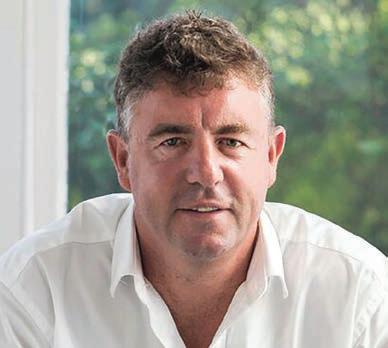
NEW Zealand’s just-intime and economically liberal policy framework towards fuel security has now come head to head with a geostrategic and geopolitical world that no longer plays by the rules.
The risk of fuel rationing is real. There could be some very upset owners of diesel passenger vehicles in the coming months. Or owners of utes, specifically nonwork ones.
These groups could bear the brunt of rationing, if it is needed and implemented.
There is the “who suffers more?” question no one is
prepared to pose if we move to rationing.
I’m putting that out there because the economic collateral damage of shutting down the heavy-traffic fleet or tractors would be enormous. They run the economy.
We all know through the government alert-level framework that critical services will be prioritised. Fair enough.
There will also need to be another pecking order: economic priority or significance.
The bottom line is that diesel is the fuel that runs the country and if supply tightens there are going to be some hard decisions made, not just to fuel availability overall, but to consumer and business segments.
Diesel is not like petrol, where you can have a degree of universality about restrictions.
We consume around 10 million litres of diesel per day, and 24 million litre of fuel all up, with petrol taking around 9 million litres per day and aviation the remainder.
A quick Google search and I find New Zealand’s fleet contains (in 2024 figures, so a tad dated): 3 million light vehicles (think cars) that run on petrol; another 320,000 that are petrol hybrid, 923,000 light vehicles running on diesel, or 927,000 including diesel hybrid; 172,000 trucks using diesel, 11,000 buses and 37,000
unknown (but I presume largely tractors). Around 1.15 million vehicles run on diesel in total.
The electric fleet (including hybrid plug-ins) is around 120,000; we have a couple of hundred thousand motorbikes; we have around 4.7 million vehicles all up, 4.2 million of which are light vehicles up to 3.5 tonnes.
The composition of the 927,000 light vehicles running on diesel is split roughly 67% being light commercial vehicles (625,000), and 33% light passenger vehicles (302,000).
No one wants to say it, but if diesel gets prioritised to heavy transport, tractors and commercial vehicles, the LPV segment will likely be taking a fuel rationing hit.
Light passenger vehicles (LPVs), comprise cars and SUVs less than or equal to 3500kg. Light commercial vehicles (LCVs) comprise vans and utes less than or equal to 3500kg.
The new LCV market has grown at a compound growth rate of 8.1% per year since 2000. The new LPV vehicle diesel market at 10.9% per year since 2000. These automobiles have become the new vehicle of choice.
The good news is that we are being told weekly by MBIE and the government that we have ample supplies.
The bad news is that most know the real pinch points are not upon us yet. They come in the second half of April. By that time our key suppliers will not have received oil from the Gulf for three weeks and will have run down their own reserves. The western price of oil such as West Texas Intermediate (WTI) is now rising, because Asia now needs it.
If you want to appreciate the scale of what we are seeing, just look at the responses many Asian nations, including South Korea, are implementing. They have implemented a “wartime” budget with instructions from the prime minister to “save every drop of fuel”.
If Korea is worried and acting, and it is our major fuel supplier, that worries me and it does not seem logical for New Zealand not to act.
Whether NZ ends up going down some sort of rationing wormhole can be debated. I’d certainly be playing things conservatively (that is, we’d likely be at Level 2 now).
Let’s say we assume some sort of rationing is required. Higher prices are already effectively doing that and fuel is more necessary to some sectors than others.
Lacking fuel, though, trucks do not deliver, and stock does not
get picked up for processing. The economy will likely contract in Q2, and that is without any assumption on fuel rationing. If rationing is required, there is going to have to be an economic pecking order.
Critical services will top the list for obvious reasons.
Next will come areas of economic importance. That’s the trucks. Getting the likes of food, stock, and materials from A to B.
The bottom of the list will be the ordinary passenger vehicle that gets people from A to B. Working from home gets reinstalled.
No one wants to say it at present, but if diesel gets invariably prioritised to heavy transport, tractors and many of the commercial vehicles, the LPV segment will likely be taking a fuel rationing hit.
If serious fuel savings are to be made, the LCV market will be eyed too.
The government’s alert level sets up a broad framework if this oil shock extends. Within that framework there is going to need to be some economic prioritisation, particularly around diesel.
Many SUV and ute owners (voters) could be very unhappy –and, for disclosure, the author does own a diesel ute.

Cameron Bagrie
Managing director of Bagrie Economics and a shareholder and director of Chaperon
GROWTH: New Zealand’s most recent dam was Clyde, in 1992. Alan Emerson says no hydro electricity has been developed since then despite a 50% increase in population.
Photo: Wikimedia Commons
Sector Focus Sheep & Beef
Pioneering South Devon stud calls time
Pioneering South Devon stud calls it a day
Annette Scott NEWS Sheep and beef
SOME of New Zealand’s earliest South Devon cattle genetics are set to go on the market as a 105-year farming era ends for the Wason family.
With no family in a position to take up the reins and older age pending, Dene and Steph Wason have called time on their farming, including their Snowview South Devon Stud and their Snowlea Romney flock.
Dene Wason said it’s been inevitable, with no family taking up the farm and an elderly father now in care, that the future of the Wason family farm was closing in.
“It’s been difficult. No more intergenerational, Dad’s 93, daughters with other commitments. I’ve been doing the same thing for 45 years; suddenly at 64 my body is starting to slow down, the time is right now to move on.”
Nestled at Russells Flat on the western edge of the Canterbury Plains near Springfield, the 185
hectare sheep and cattle property has been farmed by Wason since the early 1980s and then together with his wife Steph following their marriage in 1997.
Wason’s grandfather John Thomas Wason, brought the land in 1921 for dairying. The property was eventually taken over by the youngest of his six children, Murray, who married Joan in 1955.
The couple had four children, one of whom was Dene, who became the third generation on the farm.
“Over the years Dad brought more land, cleared more gorse and scrub. It was hard work with only an old Fergie tractor, with many covered mine shafts and holes after the closure of the Springfield coalmines, but he managed to clear it and grass it down, over many years building up sheep numbers and replacing dairy cows and milking in 1969.”
In the early 1970s two neighbouring properties were purchased and the farming practice changed to include the establishment of the South Devon cattle herd, after the introduction of the breed to NZ in 1968.
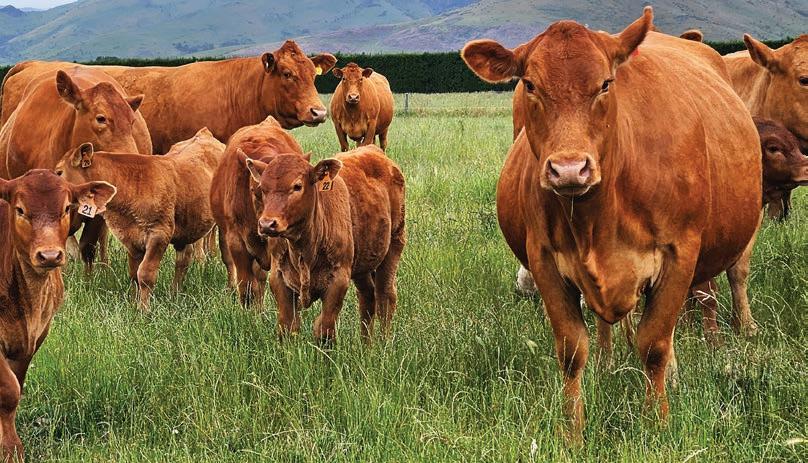
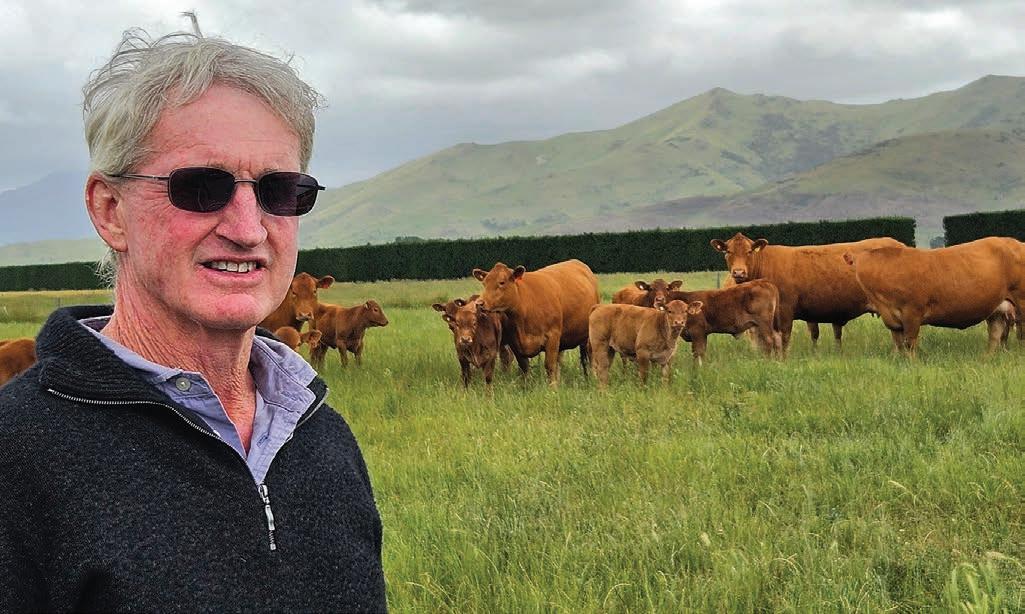
“We were one of the last to milk cows in the area and one of the first to establish a South Devon stud in the country.”
After completing Lincoln College (now University) and having spent nine months on an IAEA agricultural exchange in Denmark, Wason returned home and was “welcomed into a farming partnership” with his parents.
With the intent of intensifying and breeding higher value stock, the Snowview stud herd continued to thrive.
“Their distinctive red copper coats, the substantial size and growth rate, and quiet nature make them a pleasure to farm.
“I especially enjoyed the breeding challenges, showing and the camaraderie being on the South Devon Board of Management for 12 years, including a stint as president.”
Mixed cropping was also in the mix based around barley until the late ’80s, and through that turbulent time in farming wool was a major contributor to the farm income.
Wason’s passion for breeding stock extended to the sheep flock with the Romney Stud flock, Snowlea, established in 1984 to provide access to new genetics, higher lambing percentages and growth efficiency, and improvement through recording in all aspects of commercial sheep farming.
After breeding for 40 years, fertility went past the target to regularly scan near 200%, with most lambs fattened on farm.
The stud has recently been deregistered.
Success with his Romney breeding also had Wason scoop the honours in the top wool growers for the premium Glacial Wool brand launched in 2002 for a new global carpet market.
“After 105 years in the family, the difficult decision to sell the farm has been cemented; it’s time to give the knees and joints a rest and do some other things on the wish list, like having a holiday.
“The time is right. I have farmed through the highs of the sheep industry, and through the lows.
Prices are at the best they have been for years for both sheep and cattle. It’s a good time to sell and go out on the highs.
“My hope is that someone else will take up the challenge with the high-fertility Romney flock and the Snowview South Devon herd, which will now be dispersed.
I have farmed through the highs and through the lows. Prices are at the best they have been for years ... it’s a good time to sell.
Dene Wason Snowview South Devon Stud
“We will be offering for sale one of the oldest South Devon herds in the country and we don’t want the genetics lost so I’m keeping my hopes up ahead of the upcoming clearing sale on April 17.
“That’s the core focus right now and what comes after that is as yet an unknown.”





CHALLENGES: Dene Wason is passionate about his South Devon cattle, enjoying the breeding challenges for more than 40 years.
Photos: Annette Scott
END OF AN ERA: The dispersal of Dene Wason’s Snowview Stud will see some of New Zealand’s earliest South Devon genetics going on the market.

A faster way to detect what parasites are on your farm
A newly developed DNA-based parasite test, when coupled with Faecal Egg Count results, gives farmers earlier, more accurate information about which worm species are present in their stock.
Results are available in under three working days and can detect early infections that traditional tests often miss – including Barber ’s pole worm.
Talk to your vet about whether Fast Worm ID – GIN PCR is right for your farm.
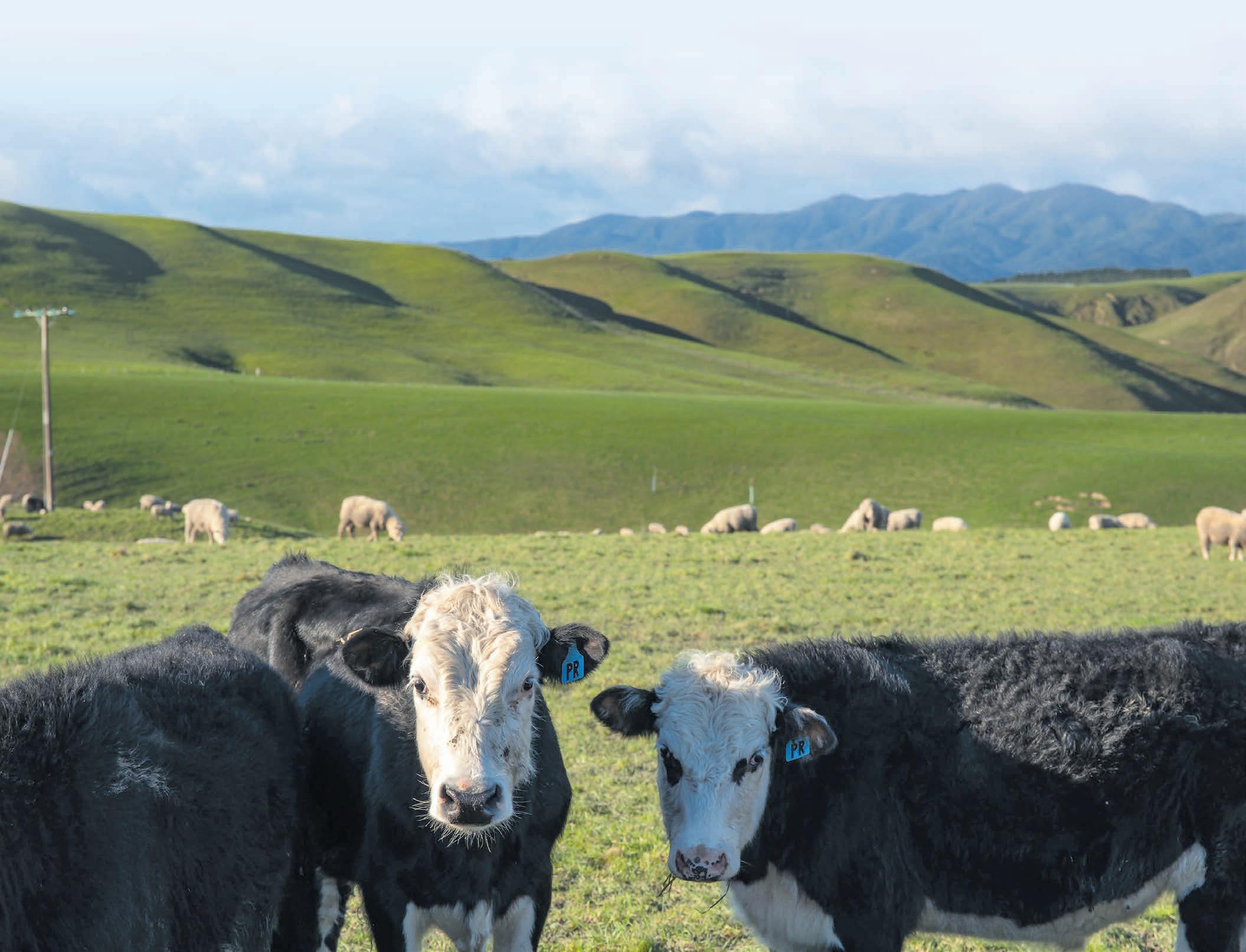


Find out more at:


beeflambnz.com/parasitetest






No dull moment on MIA chain of command
Neal Wallace PEOPLE Production
IT WAS a baptism of fire.
Sirma Karapeeva had only just been appointed chief executive of the Meat Industry Association when the world was struck by the covid pandemic, potentially shutting down the meat processing industry just as the peak flow of stock loomed.
Recently, recalling those stressfilled days, Karapeeva said not only was the meat industry not considered an essential industry, but there was also no playbook to follow.
The industry had never been completely shut down before.
“My very, very first challenge was to negotiate a covid safety protocol for the industry,” she told Farmers Weekly as she prepared to leave the Meat Industry Association (MIA) after six years as CEO.
The pressure was on as farmers were starting to prepare for autumn and winter and needed stock off their properties.
The challenge for processors was to find a way to continue operating that took account of multiple plant configurations.
Within a few a weeks an agreement was reached with health officials, and livestock was flowing and plants processing again.
That achievement made the meat industry the first to negotiate safety protocols, and in doing so, she said, a template was created for other industries.
“We were still learning,” she said.
“We would try something to see if it worked and if it didn’t we adjusted.
“There was no clear policy setting out ‘this what you need to do.’”
The covid experience highlighted the variety of roles that came with representing the country’s meat companies.
They included trade, biosecurity and, as she found out, marketing, when the association took responsibility for Taste Pure Nature brand campaign in China.
Another achievement during her time was negotiating an agreement with the government

deforestation regulations that require beef exporters to prove production did not result in the loss of forest, and China imposing quotas on its New Zealand beef imports.
Karapeeva was born in Bulgaria and at a young age moved with her architect mother to live in Tanzania and Zimbabwe.
Aged 18-19 she spent a gap year in Europe and, meeting some travelling New Zealanders who extolled the virtues of their homeland.
Soon she was enrolled at Massey University studying business management and business law. She later undertook postgraduate study in international business.
She moved to Wellington and her first job, with the former Ministry for Economic Development.
on how to deal with an outbreak of foot and mouth disease, which was formalised last year.
Trade challenges loomed large during her tenure with the United States tariffs on imports, the European Union imposing
Karapeeva eventually shifted into the trade sector, managing technical barriers to trade within free trade agreements.
“Working on trade issues in NZ, you are never too far away from agriculture,” she said.
Her next opportunity was with the Ministry for Primary
Industries, where she worked on sanitary and phytosanitary issues in trade.
In 2015 Karapeeva moved into the private sector as the trade and economic manager with the MIA, a role which made good use of her expanding trade background.
In 2020 she was appointed the association’s chief executive.
The association works in the pre-competition space and deals with issues such as regulation, trade policy and systems, but steers clear of competitive issues.
Her tenure traversed periods when stock prices were extremely low but also some of the most favourable in a generation.
Karapeeva said while the meat industry was an incredibly tough sector, farmers and processors want the same outcome: the extraction of the maximum value.
“It is two sides of the same coin, really,” she said.
The past six years have given her an appreciation of the agility of the meat industry and the speed with which it can adjust.
Karapeeva is taking some time away from working to spend with her 12-year-old daughter.
Dutch ag students gain experience in New Zealand

Isabella Beale NEWS Education
NEW Zealand’s pasture-based systems, large-scale grazing and focus on sustainable farming are attracting top international ag students seeking hands-on experience.
Three students from Wageningen University in the Netherlands – Sytse de Boer, Yvar van Helvoort and Nils Gosselink – are in New Zealand on a fourmonth practical exchange with Massey University.
All studying a Bachelor of International Land and Water Management, they have joined


Massey’s School of Agriculture and Environment and are researching ways to improve freshwater quality in working farm catchments.
“The exchange aims to provide visiting interns with a unique chance to combine theoretical knowledge with applied research for targeted and effective water quality solutions in rural catchments,” said Massey’s Professor Ranvir Singh.
Built on a partnership dating back to 1985, the Massey and Wageningen exchange programme is part of a longstanding collaboration between the two agricultural universities.
As part of the exchange, the
students are working on the Catchment Solutions project, exploring tools such as wetlands, detention bunds, sediment traps and woodchip bioreactors to reduce runoff and improve water quality.
They are also engaging with farmers and local communities to better understand the realworld challenges faced in rural catchments.
“They encourage us to talk directly with local people and farmers to understand their real challenges. Sometimes you think you have a solution, but the farmers point out it’s not an issue for them, and you need to focus your efforts elsewhere,” said Gosselink.
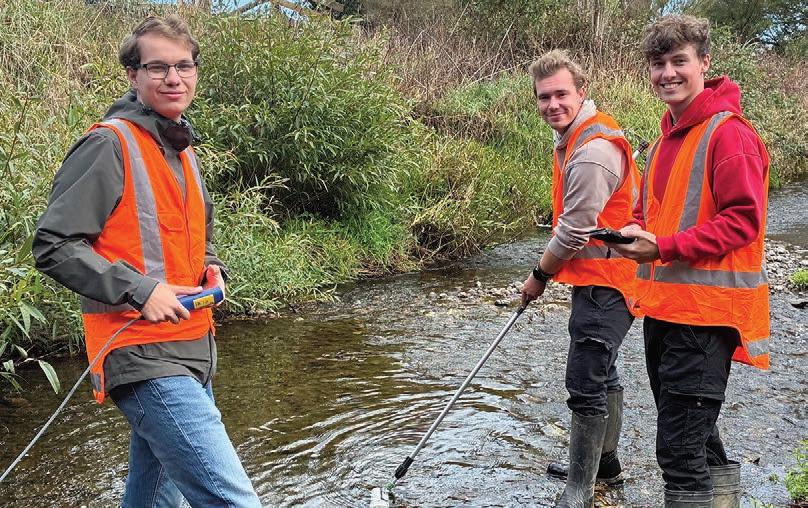



Sam Whitelock Farmstrong Ambassador

DELINKED: Sirma Karapeeva has resigned after six years as Meat Industry Association chief executive.
FLOW: Sytse de Boer, Yvar van Helvoort and Nils Gosselink are in New Zealand for a four-month exchange, researching ways to improve freshwater quality in working farm catchments. Photo: Supplied



Rising fuel costs hit rural communities
URAL Women New
RZealand is concerned about the rising cost and availability of fuel, and the impact on rural communities.
Last week the organisation called upon its members to share their experiences and issues they are facing as prices rise.
Interim chair Nicole Oliver said Rural Women New Zealand is in the early days of understanding what the widespread impacts on rural communities are, but members are already feeling under pressure.
“The reality of rural life is that access to public transport is limited, or non-existent. The closest grocery shop could be up to 30 minutes away or more, and much longer for things like the doctor. Walking or catching the bus is off the cards.
“We have members who are reducing their travel and changing their weekly routines. One member had been thinking of purchasing an electric vehicle for a while and made the switch last week due to the cost of fuel. Others are really worried because their small businesses rely on them travelling long distances, and the cost of doing so is now huge.
“This is on top of the fuel
COSTS: NZ Rural Schools Leadership Association president Andrew King is seeing the impact of the rise in fuel costs on staffing in schools.
pressures on their farming businesses,” she said.
Education concerns
There are also concerns about the impact on the rural education system, particularly term two.
Andrew King, NZ Rural Schools Leadership Association president and principal of Ōropi School, is seeing the impact of the rise in fuel costs on staffing in schools, particularly on part time staff like relievers and caretakers who are paid an hourly rate.
“We’ve already got an issue with recruitment and retention in the sector ... and we’ve now got a fuel crisis and people less willing to go to an isolated school when they’re having to spend a lot of their daily wage or salary on driving to and from the school,” said King.
“I predict that term two would be the term that we will see impact on attendance, because a few weeks in, families will no longer have their own reserves to cover the additional fuel costs.
“It will be the term that we start to see the impact on teaching and learning programmes, in particular opportunities for kids to compete or participate in supporting cultural activities off-site,” he said.


The risk of social isolation, learning from covid
In recent days regional Rural Women New Zealand events such as conferences and balls have been cancelled as households adjust to changing economic conditions.
Southland-based member Katrina Thomas said in times like this, it’s important to make sure people don’t isolate themselves.
“Everyone is looking at their trips to town stopping that backand-forth, reducing travel to keep down costs. We are asking ourselves when it comes to get togethers, are they a nice-cities or necessities? But face-to-face connection is a necessity for many of us.
“During covid we learned about asking our neighbours if they needed anything from town and checking in on more vulnerable members of our community, that type of stuff is more important than ever now.
“Some events are being cancelled because of travel costs.
Our regional Dinner Groups are always so looked forward to, so we are now encouraging members to still attend but carpool, working in with neighbours to make sure there’s still some of the good stuff to enjoy,” she said.
Nicole Oliver said Rural Women New Zealand will keep talking to its members, to gather their experiences and understand where the needs are as the fuel situation continues to unfold.
“The reality remains the same, farmers grow food and we need fuel to be able to live on farms, far from town to grow that food. When the cost of fuel skyrockets like it has, our rural communities suffer.
“We want to keep our kids in school, we want to make sure access to essential services is still affordable for rural households, we want to stay connected, and we want rural New Zealand to be a sustainable place to live.
“So, we will keep advocating on behalf of our members and we
The reality of rural life is that access to public transport is limited, or non-existent.
Nicole Oliver Rural Women New Zealand
need to the government to ensure rural communities aren’t forgotten when decisions are made and support is allocated,” said Oliver.
Have you got an important perspective to share? Email enquiries@ruralwomennz.nz and share your story to help guide RWNZ’s advocacy.
MORE:
Rural Women New Zealand has been advocating for, connecting and supporting rural women and communities across the country for 100 years. Visit ruralwomennz.nz and become a member today.

IMPACT: Nicole Oliver said Rural Women New Zealand is in the early days of understanding what the widespread impacts on rural communities are.
FEDERATED FARMERS
Consent rules dim farm solar plans
AWaikato farmer installing solar to power his milking shed says the need for a resource consent is a completely unnecessary cost that’s hard to justify.
Andrew Lord, who milks 270 cows at Te Pahu in the Waikato, decided to invest in a solar panel array to cut his electricity costs and build in resilience for any future power cuts.
“I got quite irritated to learn under Waipā’s district plan I’d need a resource consent, with a $2895 charge just to lodge the application.
“For the life of me, I don’t know why,” Lord says.
“There’s absolutely no impact on my neighbours or anyone else, and New Zealand is meant to be on a drive to further increase our renewable energy capacity.”
Mike Casey, the CEO of Rewiring Aotearoa, says he’s fielding similar comments from farmers all over New Zealand.
It adds to a case he and Federated Farmers put to the Government late last year that on-farm solar should be a permitted activity – meaning, it doesn’t need resource consent.
“Solar power is in the interest of farmers and the country.
“We shouldn’t be stifling progress with needless red tape and bureaucracy,” Casey says.
Farms can be a net positive on the energy system by feeding back into
the grid at times of peak demand.
They can also play an important role in meeting the country’s climate goals by electrifying their farm machines.
“Farms with solar can also bolster our energy security: 25,000 farms with mid-size solar systems could provide 30% more electricity to the grid,” Casey and Federated Farmers told the Government.
Lord, an active member with Dairy Environment Leaders who is keen to improve his farm’s carbon footprint and environmental performance, is in the process of installing 168 panels and an inverter that will deliver 75.6 kilowatts.
The panels will take up a footprint of about 340 square metres of ungrazed land.
“They’re tucked in behind the milking shed, pretty much invisible to anyone else unless you were flying over my farm in a helicopter,” he says.
While the consent charge is relatively small against the total investment of around $150,000, Lord is annoyed that it’s needed at all.
“What’s even more ridiculous is that Waipā District Council’s invoice said I had to pay the $2895 within two days – as if they’d ever settle a bill that quickly.
“On-farm solar power is good for the environment and for when storms bring down power lines, so
why put up this unnecessary hurdle and cost?” Lord asks.
Various council plans talk about impacts such as glare/reflectivity of panels, visual amenity for neighbours, earthworks and even noise when panels automatically tilt to chase the path of the sun.
Casey, who co-owns the world’s first fully-electric cherry orchard, makes a clear distinction between farms using solar and large-scale conversion of farmland into solar generation.
“In essence, solar panels for a farmer to power his milking shed, irrigators or whatever, and feed a bit back into the grid when there’s surplus, are temporary structures, in that they’re relatively easily removed.
“You don’t need resource consent to bang in fence posts.
“But large-scale solar arrays – say generating above one megawatt of power – are a different kettle of fish.
“There need to be some checks and balances on impacts at that scale, so the need to get a consent is warranted,” Casey says.
Also getting farmers’ backs up is inconsistency around consent requirements.
Casey says when they were setting up solar panels on his cherry orchard, there was no requirement for a consent from Central Otago District Council.
“But just 10km or so down the

road, on a farm that’s across the border into Queenstown and Lakes District Council, the farmer there needs all sorts of consents that cost thousands of dollars.
“It’s not such a problem that it ruins the economics of solar systems for farmers, but it is a cost that just doesn’t need to be there and is inconsistently applied.”
Federated Farmers RMA reform and energy spokesperson Mark Hooper says Central Hawke’s Bay District Council is in the process of changing its district plan, making on-farm solar panels for on-site electricity use a permitted activity.
Other councils, including Carterton District Council, have already changed the rules to allow that.
“Some national direction from the Government would cut through these inconsistencies among councils and remove a thorn in planning rules affecting farmers,” Hooper says.
“The Government has highlighted private property rights as a key driver in its overhaul of resource management laws.
“This is another clear example where resource consent requirements could be cut back with no downsides.”
CHARGED UP: Waikato farmer Andrew Lord with a bundle of the solar panels soon to be installed to power his milking shed. He’s excited about solar’s advantages – but not the consent charge.
Farmer’s gift sets new owners on their way
Aveteran farmer has given the next generation a true running start, helping them not just secure land but also step into farming’s wider community.
Last Christmas, Horowhenua farming stalwart Geoff Kane gave Alex and Matt Feetham a different kind of gift – one designed to set them up well beyond their first season of farm ownership.
“I’d recently sold my share in the dairy farm to them as they moved into full ownership. I wanted to give them something that would really make a difference in the years ahead, so I gifted them a membership to Federated Farmers,” Kane says.
“I was brought up by a family that always believed in Federated Farmers.
“Once you’re involved in Feds, you really start to see the great advocacy
work that goes on behind the scenes.
“It’s not just what you see in the papers. It’s all the work that happens quietly, supporting farmers every day.
“It seemed like a good way to get Alex and Matt engaged from the outset.”
Kane’s connection to Federated Farmers spans more than five decades.
He first got involved as a young farmer, serving on the national committee during the Peter Elworthy era, and won the Young Farmer of the Year title in 1981.
Over the years, he has held roles including provincial Meat and Wool president and a longstanding position on the Manawatu - Rangitikei Federated Farmers committee.
Even now, he jokes he’s the
“Horowhenua rep”, always available to support local initiatives or lend his experience where it’s needed.
His contribution to farming and the wider community was recognised last year when he was inducted into the Horowhenua Business Hall of Fame.
From starting out in sheep and beef to moving into dairying through sharemilking and steppingstone farms, his own journey reflects the kind of progression he now encourages in others.
“Getting started is the hardest part,” he says.
“We started at about 30% – we had cows, Geoff had cows – and over time we worked our way up,” Alex says.
“Eventually, we got to the point where we could fully own the farm.”
Like many in the industry, accessing capital proved one of the biggest barriers along the way.
“We went to the bank to try and buy land, but we didn’t have the 40% deposit they wanted,” Alex says.
Honestly, without him, we wouldn’t have got here.
Kane’s decision to gift them a Federated Farmers membership is another step in helping them build for the future – this time beyond the farm gate.
“Being a member gives you an understanding of what goes on behind the scenes,” he says.
“It’s about being well informed and contributing to the support network that helps all of us in farming.”
For the Feethams, it’s an opportunity they’re keen to embrace.
SUPPORT: Without Geoff Kane’s support, Alex and Matt Feetham say they would not have got into farm ownership.
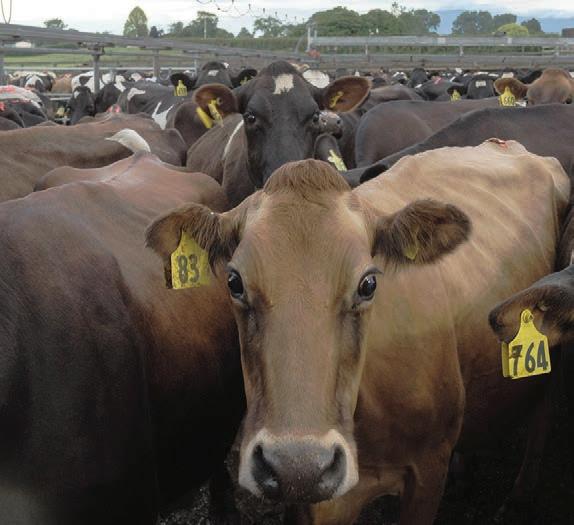
“If you can give someone a legup early on, it can make all the difference.”
For Matt and Alex, that support has been pivotal.
The couple began working with Kane 15 years ago on his farm in Levin, going into their first sharemilking role.
“That was our first step into sharemilking and we were there for five years,” Alex says.
After gaining experience, they went into an equity partnership with Kane to buy a farm together in Dannevirke.
That partnership put them on the path to full ownership.
Alex Feetham Dannevirke farm owner
“Geoff could see where we were at and offered an equity partnership. Honestly, without him, we wouldn’t have got here.
“He’s a bit of a legend.”
The couple, in their 40s, are now well established and feeling motivated.
“We’re having a good season – still growing grass, touch wood,” Alex says.
“The upcoming Fonterra payment will help a lot too.”
“It’s something we probably would have done ourselves down the track,” Alex says.
“But having that push to get involved now is really valuable.
“You can get pretty focused on your own farm, so it’s good to be part of something bigger.”
At a time when farming faces increasing pressure – from regulation to market uncertainty – Kane’s gesture is a reminder that succession is about more than land changing hands.
Kane has spent decades giving back, through Federated Farmers, community organisations, and quiet acts of support.
Through Matt and Alex, that legacy continues.











SERVANT: Long-time Federated Farmers member Geoff Kane has spent decades supporting others, from helping young farmers through to fundraising for Cancer Society and serving at Riding for the Disabled.
Farmers told to stay calm on fert supply
Despite alarmist headlines from some news outlets,
New Zealand farmers have no reason to worry about getting their hands on fertiliser, Ravensdown says.
Speaking on the Federated Farmers Podcast, chief operating officer Mike Whitty said the cooperative is well-positioned to meet farmers’ needs, both now and into the spring.
“There’s been a lot on the news and, to be frank, at times you’re better to not listen because it raises issues that don’t exist.
“We’re in a really good position for the autumn – most of the products we need are already here or on the water.
“What we’re saying to our customers and shareholders is to just continue on as normal and there won’t be any issues.”
Whitty acknowledges that recent turbulence in the Middle East is concerning but says Ravensdown has several levers to manage volatility and keep supply steady.
“The Middle East isn’t just a huge fuel producer; it also produces raw materials for fertilisers like ammonia and sulphur, and finished products such as urea and DAP.
“Any disruption there can flow through global markets, just as we’ve seen with fuel prices in New Zealand.
“But we also have multiple other options, and our supply chains are flexible enough to adapt when needed.
“We plan well in advance, diversify our supply sources, and maintain relationships with suppliers around the world.
“This allows us to manage both availability and cost for our members.”
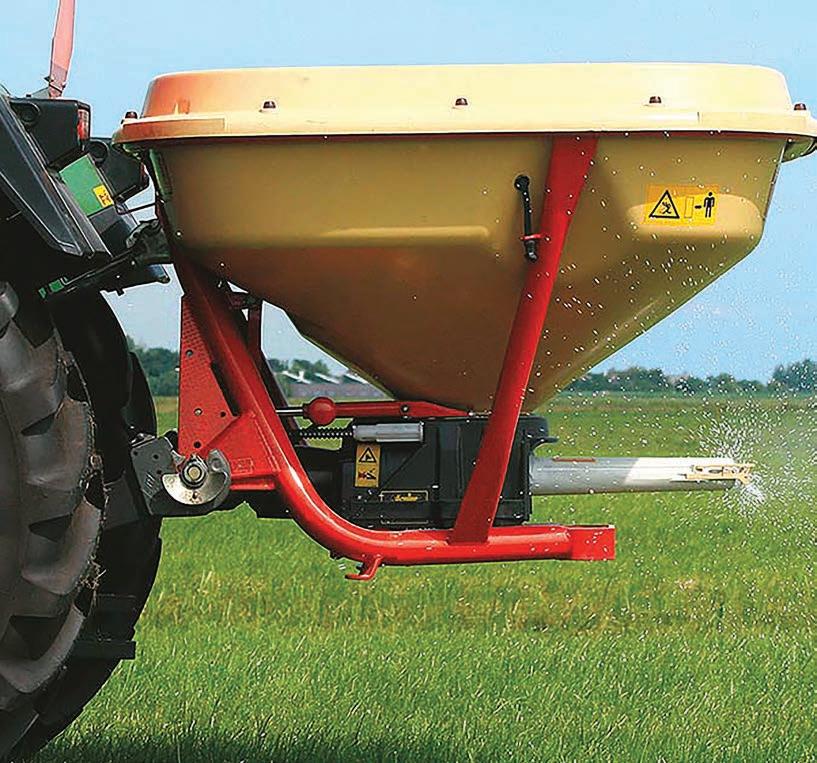
Whitty points to recent imports of DAP from Morocco and urea from Brunei as examples of this flexibility.
He says much of the current pressure on global fertiliser markets is not due to production issues but logistics.
“Most plants in the Middle East are still producing, but the Strait of Hormuz is a key shipping route. When it’s disrupted, trade flows have to adapt.
“Suppliers are finding alternative ports and transport routes to keep product moving.
“We’re seeing the likes of Saudi Arabia starting to sell DAP, but out of the west coast. And now they’re starting to talk about how they can move urea out of other ports that aren’t affected.”
The farmer-owned co-op is also taking early positions on products for spring to ensure volumes are in place ahead of planting season.
“Spring doesn’t start until late August, so we’ve got some time up our sleeve. We’re organising vessels and securing supply now,” Whitty says.
While some fertiliser prices have increased due to international logistics and availability, farmers should not be alarmed, he says.
“Urea prices have risen roughly 50%, DAP about 15–20%, and sulphur has also moved up.
“Ammonium sulphate has seen a small increase, and potash and phosphate rock prices remain relatively flat. It’s typical supply and demand economics.”
Ravensdown sources product from a wide range of countries, helping buffer against potential supply shocks.
Sulphur and potash come from Canada, phosphate rock arrives from Australia and Africa, and nitrogenbased products, such as ammonium sulphate, come from Korea and China.
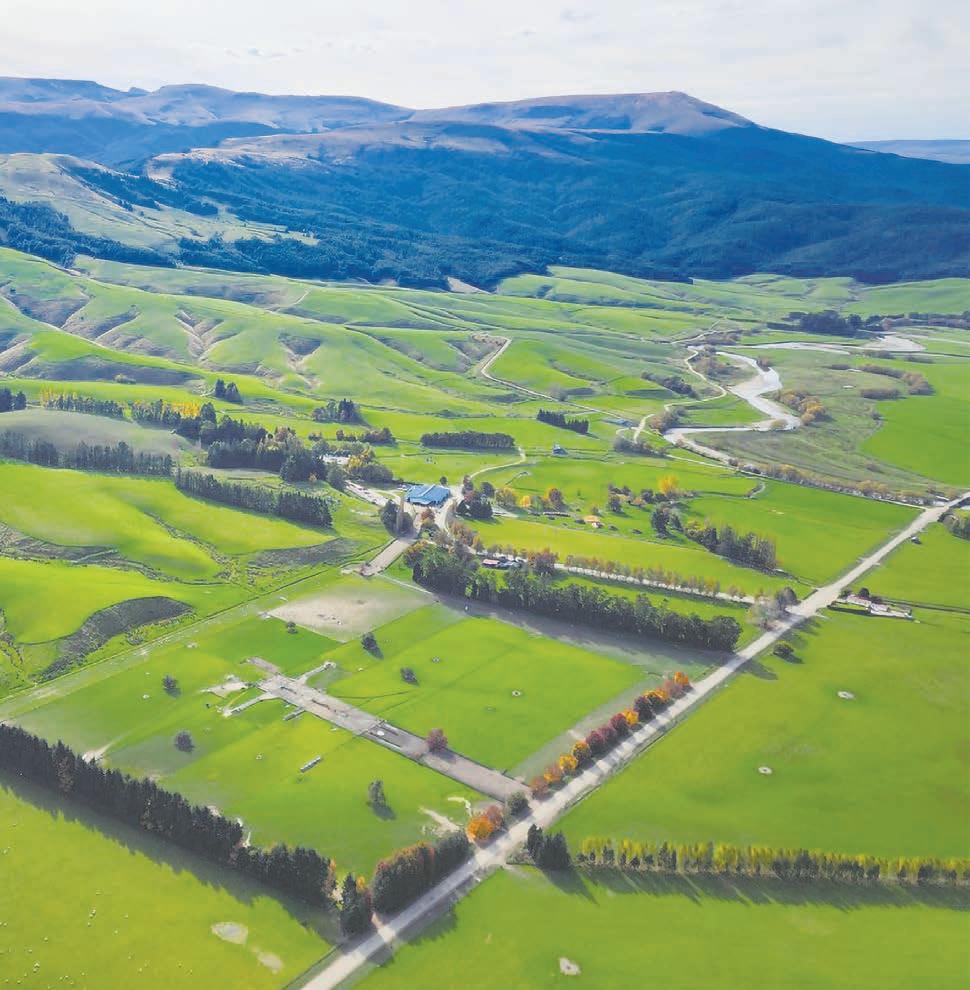


We’re in a really good position for the autumn –most of the products we need are already here or on the water.
Urea – a key nitrogen fertiliser –is supplied from the Middle East, Brunei, China, and even North Africa.
Whitty says he hasn’t seen any notable changes in farmer behaviour.
“It’s largely business as usual and we’re seeing strong buying.
“Sheep, beef, and dairy returns are good, so they – particularly sheep and beef farmers – are reinvesting in fertiliser after some hard times in the last three or four years.
“We do have the odd person taking a speculative position, but
we manage orders to make sure that doesn’t happen so everyone gets what they need.”
The co-op’s planning and global supplier network gives it the confidence to meet demand through both autumn and spring, even in the face of uncertainty abroad.
Whitty says that while fertiliser prices have risen in some categories, supply remains solid and farmers can continue their operations without concern.
“The key thing is to ignore the noise and focus on what works locally. Don’t listen to everything you see in the news, because we’re in a really solid position.
“New Zealand relies on our farmers for economic prosperity, so they should keep doing what they do well.
“Plan ahead, and everything will go smoothly. Keep doing your job, and we’ll make sure the fertiliser is there when you need it,” he says.
Innovation in the high country
Glenaray Station manager Simon Lee and owner David Pinckney share insights on innovation, culture and life in the

Mike Whitty Ravensdown chief operating officer
KEEP CALM AND FARM ON: Ravensdown’s Mike Whitty says the country’s fertiliser supply is secure.
OPTIONS: Ravensdown sources product from a wide range of countries, helping buffer against potential supply shocks.
Rules a knock-out blow for growers
The closure of vegetable processing plants in Hawke’s Bay is a devastating gut punch to farmers and growers – but council regulations could finish them off, Jim Galloway says.
“It’s bad enough for the hundreds of farmers and growers affected by the Heinz-Watties and McCain plant closures,” the province’s Federated Farmers president says.
“But strict regional council rules over land use and water could really flatten these farmers completely, leaving them with no economically viable way to use their land.
“We’ve warned time and again that impractical district plan restrictions can leave farmers unable to react to changing market conditions and price signals.
“Now we have a classic case of this on our own doorstep.”
It’s estimated around 9000 hectares of crops are directly tied into supply to the McCain Hastings vegetable processing plant, earmarked for closure early next year.
“Scrapping that plant upends the livelihoods of those growers, as well as the 200 people who work there and their families.
“It’s also a massive hit on the local economy,” Galloway says.
The Hastings plant processes more than 50,000 tonnes of peas, beans, sweetcorn, carrots and vegetables grown across mostly unirrigated land in Hawke’s Bay, Central Hawke’s Bay and parts of Manawatū.
The cropping systems developed by these growers are geared for local processing, not fresh export – if that option were even available, Galloway says.
“The McCain plant is our region’s only large-scale vegetable processor, so it’s a real blow.
“Heinz Watties is ending the sale and production of frozen vegetables, so one of their three Hastings plants is also being shut, with another 50 local jobs set to go.”
Galloway says farmers have invested heavily in their farms, infrastructure and equipment –and trucking their crops to other processors isn’t a realistic option.
“However, if they try to switch to another farming system, they may well run straight into council roadblocks,” he says.
Rules in Hawke’s Bay Regional Council’s TANK Plan Change 9 –covering the Tutaekuri, Ahuriri, Ngaruroro and Karamu catchments – restrict growers’ ability to shift land use.
“That’s partly due to nitrogen limits, but the bigger issue is access to livestock drinking water.
“Without that, options are incredibly limited,” Galloway says.
Commercial vegetable land can be switched to pastoral farming only if it was already part of a rotation between cropping and lamb finishing, and if sufficient stock drinking was already in place.
It’s not clear if the council will accept year-round livestock drinking volumes when previously it was only supplied in winter.
It appears that vegetable growers can convert to horticulture only if the property keeps its current irrigation status – unirrigated vegetables to unirrigated horticulture, or irrigated vegetables to irrigated horticulture using the same water volume.
“They could put in forestry because that’s both a lower nitrogen risk and doesn’t involve irrigation,” Galloway says.
“But do we really want more forestry in Hawke’s Bay, when it offers fewer job opportunities and ends up hollowing out our rural communities?”
The Environment Court has given the regional council until 30 April to decide how it wants to proceed with Plan Change 9.
“Federated Farmers is pushing hard for it to be fully withdrawn,” Galloway says.
“The Government is overhauling resource management laws and the local government sector, which are both strong reasons to get rid of Plan Change 9.
“It’s clear the council rules are far too restrictive, stopping farmers from pivoting to different land uses to respond to market forces.”

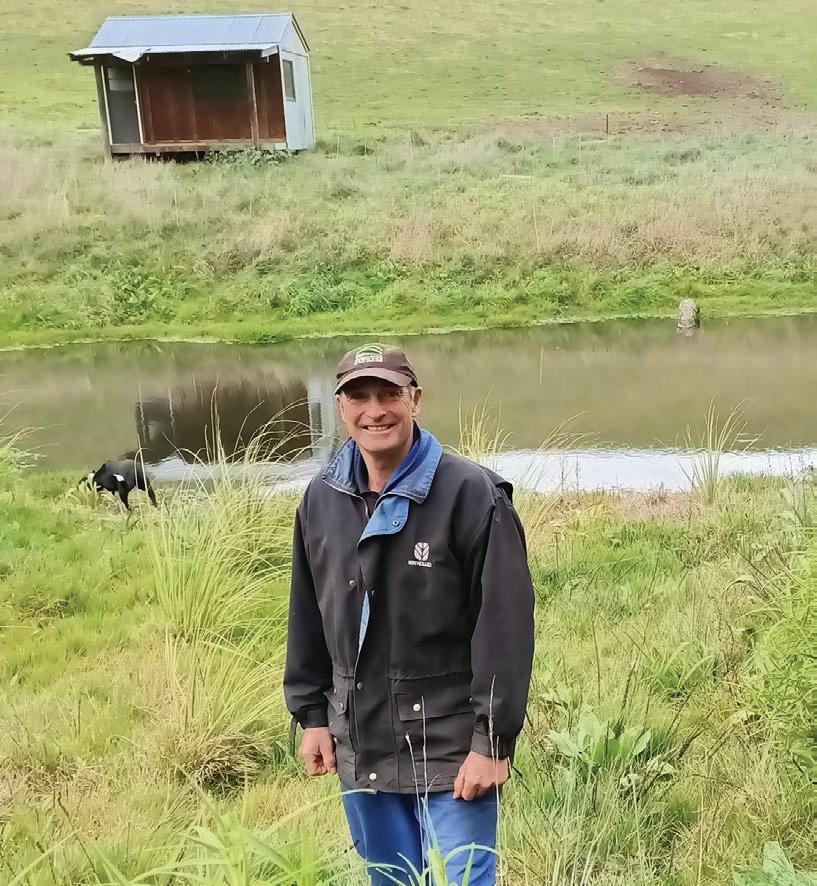
Galloway says the situation underlines why Federated Farmers is pushing for stronger protection of stock drinking water in the Natural Environment and Planning Acts.
“Easy access to drinking water is essential for animal welfare and food production,” he says.
“But we’re not convinced the proposed new legislation is any better than the current RMA.
“If councils or hearings panels are going to use the ‘adverse effect on any natural resource’ clause to block farmers taking water for stock, they should have to prove the effects are truly significant.”
Galloway says Kiwis deserve answers to why we’re losing local vegetable processing capacity, and how that will affect growers and our nation’s food security.
“But top of my mind is the viability
of the farmers, growers and their support industries caught up in all of this.
“It’s crazy that they’re being held back from using their own land for an alternative productive purpose that would also benefit the local economy.
“Let’s hope the council sees sense and kicks these rules to touch.”
We’ve warned time and again that impractical district plan restrictions can leave farmers unable to react to changing market conditions and price signals.
Jim Galloway Federated Farmers Hawke’s Bay president
TOO FAR: Jim Galloway says farmers have invested heavily in their farms, infrastructure and equipment – and trucking their crops to other processors isn’t a realistic option.
HIGH AND DRY: Hawke’s Bay growers and farmers are being hit with a double whammy, Jim Galloway says – loss of processing plants and road blocks to land use change.
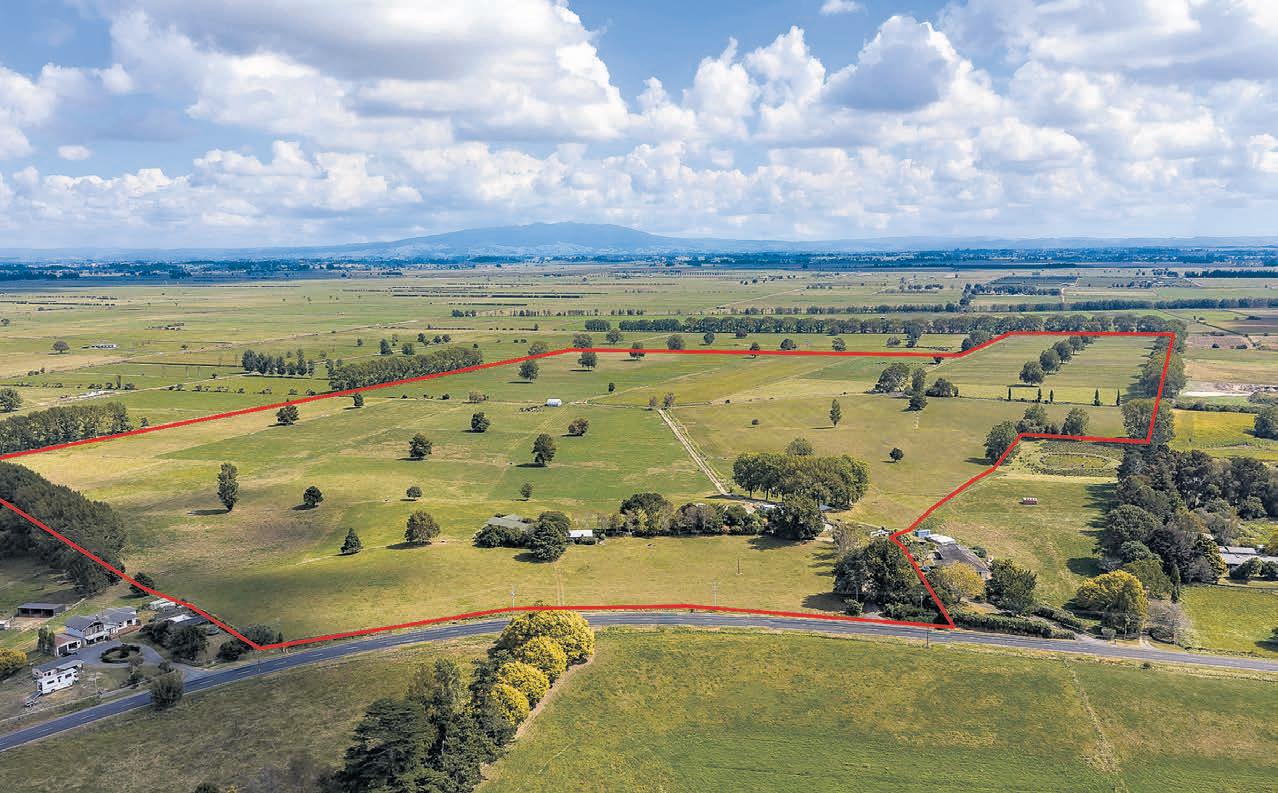
Versatile support block in a top location
Positioned just 7km from Cambridge, this 63 6-hectare (more or less) dairy support unit presents a compelling opportunity to secure a well-located and versatile holding The practical layout, flat to easy contour, and predominantly silt loam soils over sand with an area of shallow peat supports a range of farming or horticultural options A reliable bore water supply services troughs across the farm, while functional infrastructure includes a six-bay implement shed, two hay barns, and a disused dairy shed complete with yards and load-out facilities Set back from the road, the 4-bedroom, 2-bathroom home enjoys a private setting with expansive views towards Mt Pirongia and Mt Kakepuku Ideally located with Cambridge and Te Awamutu both within easy reach, and for those who are keen on water-based activities, Lake Karapiro is only 12km away bayleys co nz/2315604
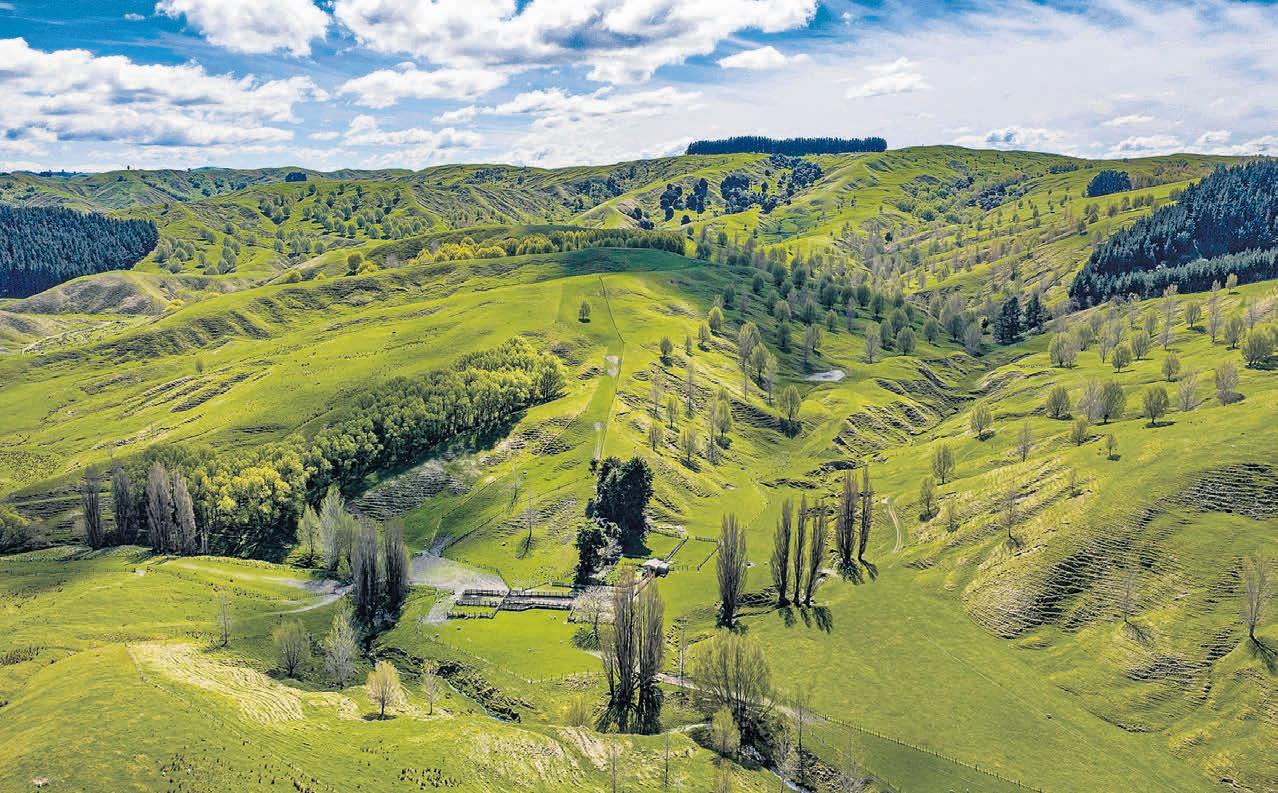
913 hectare breeding/finishing property
The Estate of AW Parsons offers a genuine sheep and beef breeding /finishing property Situated 37km southeast of Waipukurau with the school bus at the gate, only 24km to Flemington Primary School Currently run as one unit, the estate is split into two separate blocks The main landholding of 869 5ha provides the easy to medium/steeper breeding platform with a very good standard of fencing, subdivision and laneways Three dams form the source of the extensive reticulated water system Improvements include the four bedroom manager’s residence, staff accommodation, and a four stand woolshed complex The 43 5ha bottom finishing block of flat to easy contour includes cattle yards bayleys co nz/2854191
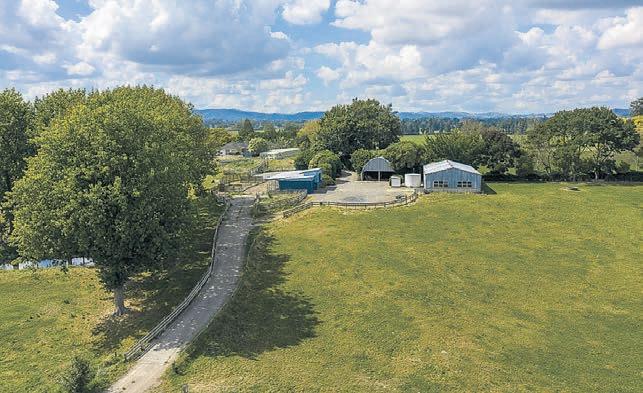

63 6 ha
Tender (unless sold prior)
Closing 2pm, Tue 5 May 2026
Lakewood, Unit 1, Block C, 36 Lake Street, Cambridge View 12-1pm Wed 15 Apr & Wed 22 Apr
Dave Kilbride 027 436 7082
dave kilbride@bayleys co nz
SUCCESS
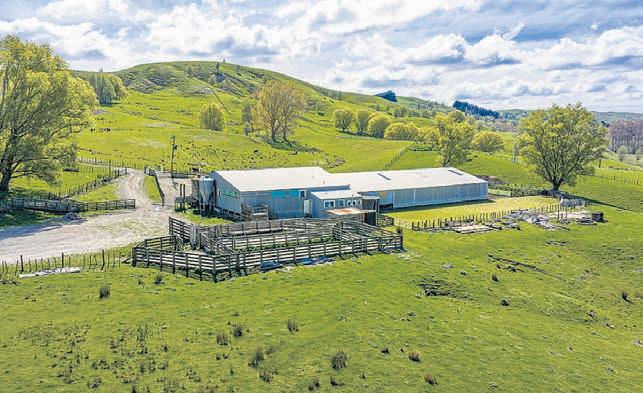
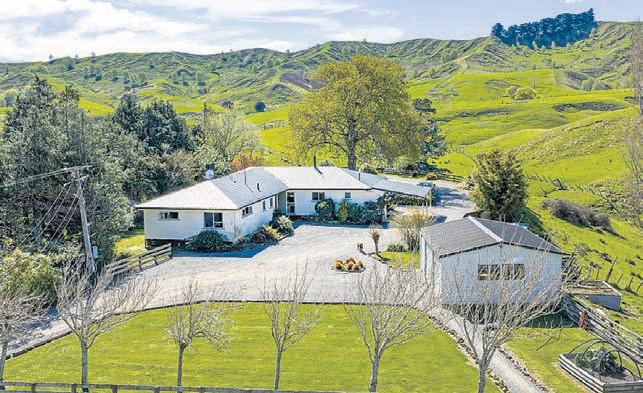
ha
Sale by Deadline Private Treaty
Wed 29 Apr 2026
Havelock Road, Havelock North View by appointment Andy Hunter 027 449 5827 andy hunter@bayleys co nz Tony Rasmussen 027 429 2253 tony rasmussen@bayleys co nz
Accelerating Success.
35.28ha Calling Retiring Farmers & Keen Fisherman
For Sale
Located along the iconic Thames Coast Road 998 Thames Coast Road comprises 35 28 hectares (more or less) of rolling coastal land, offering a versatile lifestyle opportunity with a balance of productive pasture, native bush, and a picturesque stream The property is well set up for grazing with ten paddocks reticulated water and cattle yards The elevated three-bedroom main home captures expansive views across the Firth of Thames, featuring open-plan living, a sunroom, and wraparound decking Additional improvements include a high-stud garage, carport, and substantial water storage A second upgraded three-bedroom dwelling and well-equipped wool shed accommodation provide flexibility for extended family, guests, or income potential Just 3km from the Waikawau boat ramp and within easy reach of Thames township, this unique coastal holding offers lifestyle, income, and future potential in a sought-after Coromandel location For those looking to downscale from a larger farming operation without losing their connection to the land, or for buyers seeking a coastal base with exceptional fishing on their doorstep, this property presents a compelling and highly desirable next move
For Sale by Deadline Private Treaty
Closing 4pm, Thursday 7th May 2026 (unless sold prior)
Clint Brereton 027 897 1161
James Burke 021 824 145
colliers co nz/p-NZL67039408
Your agent may suggest you advertise in their brand publication. We suggest you remind them that this is the publication you, and every other farmer you know, reads.

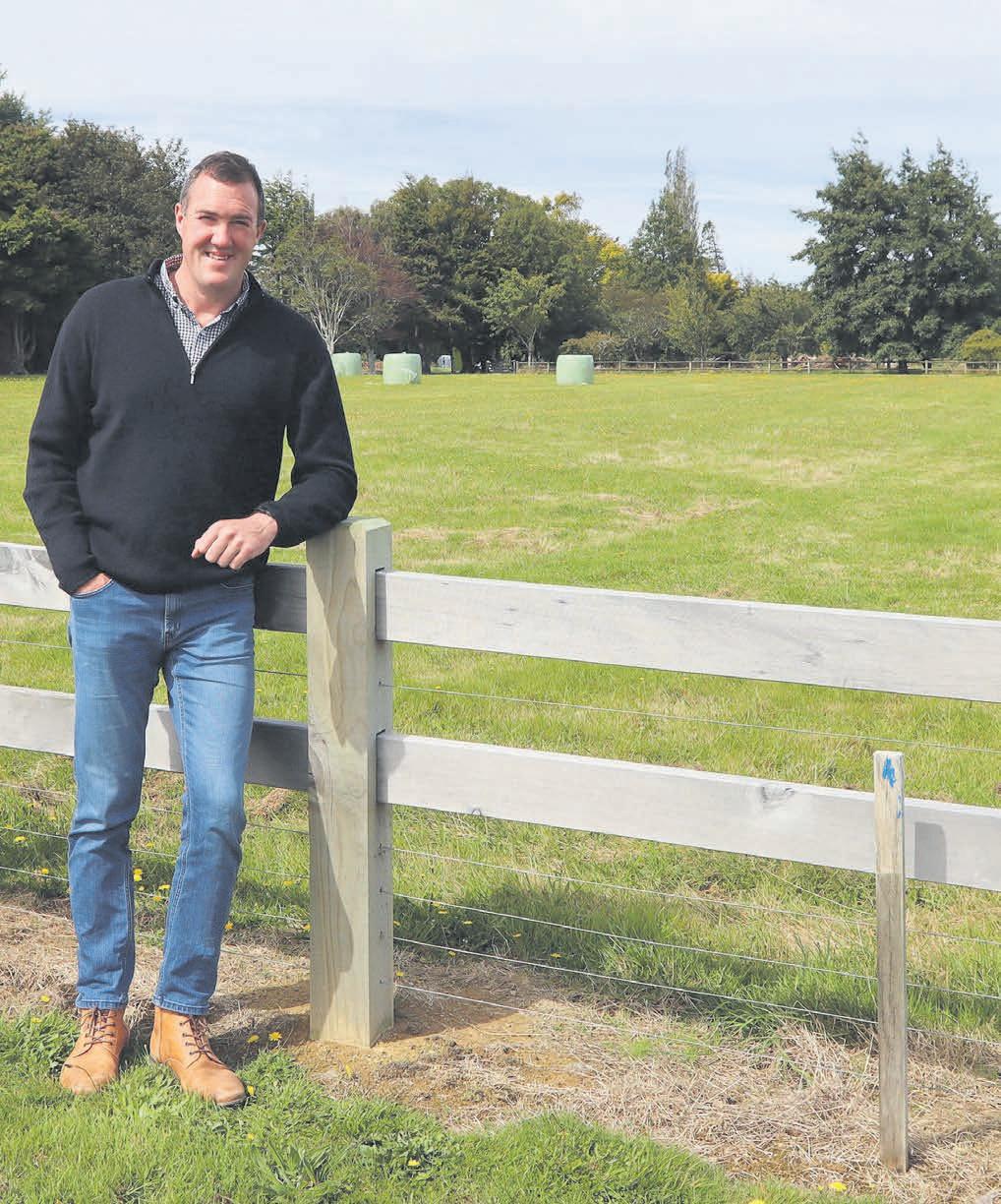


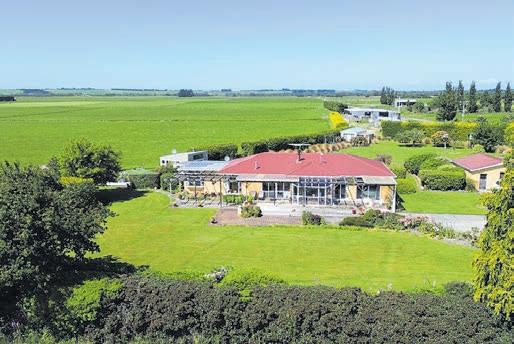


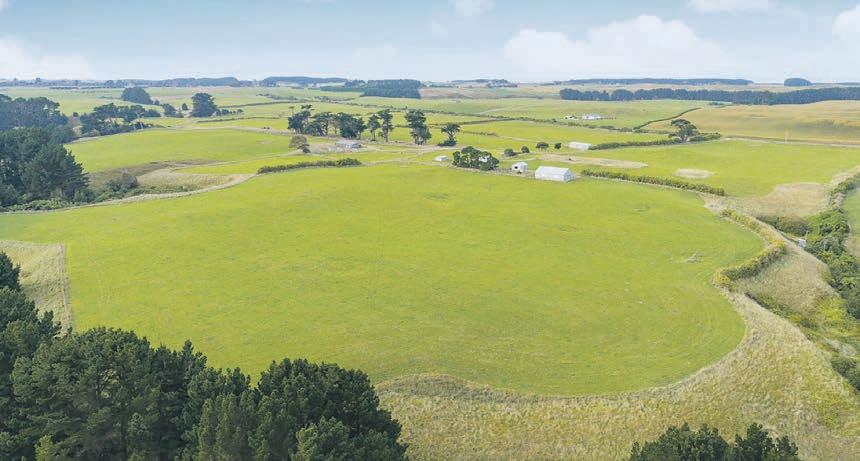
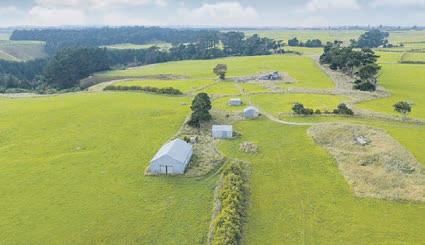
998 Thames Coast Road, Kereta, Thames
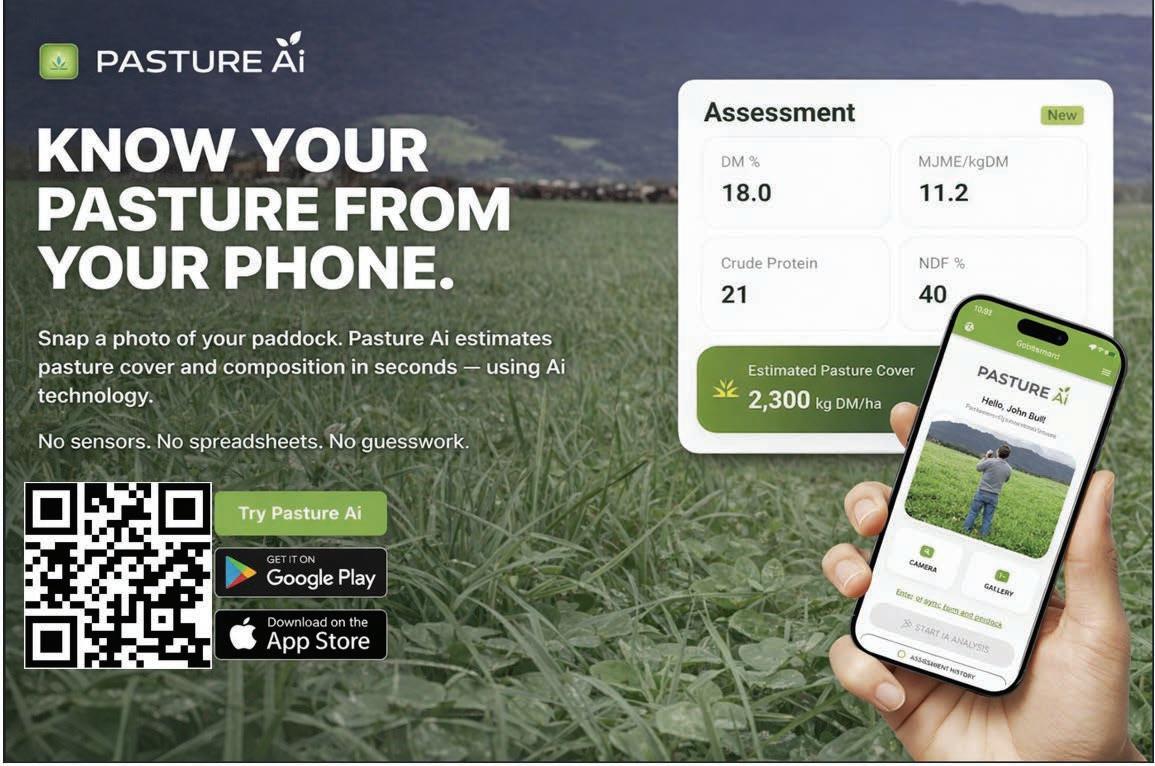



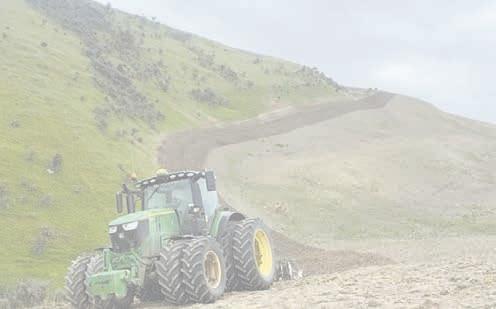



CARPENTER/FOREMAN
• Work in the Great Outdoors
• Build in Central Otago
• Diverse Projects
• Team Environment
Farmbuild South is a specialist rural building company with the farming community at the forefront. Projects ranging from housing to shearing shed, hay barns, workshops and more, It is a 4th generational company, servicing the South in the rural sector.
We are currently seeking a skilled Carpenter/ Foreman to join our team on a number of projects in the Otago area.
We are looking for the following qualities:
• Must be able to work out of town Monday-Friday (when required)
• Work as a team or independently
• Be physically fit
• Health and Safety conscious
Farmbuild South will offering the following:
• A competitive rate of pay based on experience for the right person
• Staying away allowance
• Food and accommodation supplied when working away
• Great work conditions with a wide range of projects
• Opportunities to advance your career and move up the ladder
Please check out our FarmBuild website: https://farmbuild.co.nz to see the type of work and what you could be part of.
Email your application to pat@farmbuild.co.nz or call Pat McCarthy 027 244 4824
Applicants for these positions must have a current work visa or New Zealand Residency.

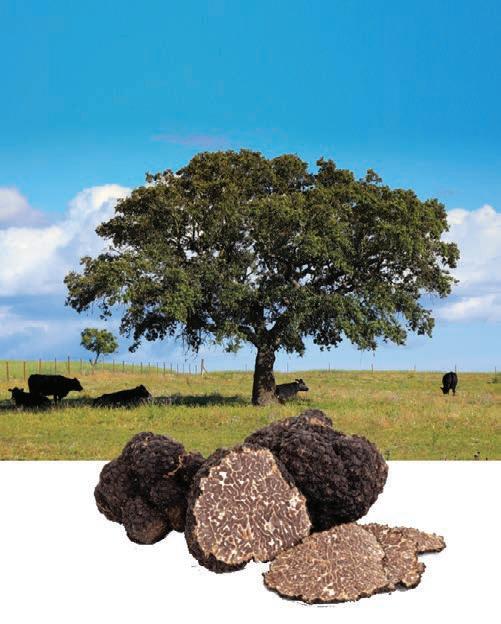


STOCKMAN NEEDED
We are looking for a self-motivated reliable person to join our team on our 1300ha coastal cattle fattening farm on the west coast south of Raglan in The Waikato. Applicants need to show the following skills and abilities, and a willingness to up skill where necessary
• The ability to work safely, follow instructions, and work independently
• Grazing management in an intensive system
• Weed control
• Fencing skills, poly-wires and repairs and maintenance
• Water system repairs and maintenance
• A good eye for animal health
• Yard work, drenching weighing loading and unloading trucks
• Competency with motorbikes, side by side, tractors, chainsaw
• A full drivers license/ gun license/ working dogs ultimately required
• Physical fitness and willingness to meet the demands of the position in all conditions
• A reference from recent employment with contact details Accom and salary package commensurate with experience. School bus route, and 30 mins to Raglan town. Please email application

Rural Business Consultant – Dairy – Masterton
BakerAg is seeking a Dairy Rural Business Consultant to join our Masterton-based team, working with clients across the lower North Island.
This is a fantastic opportunity to move into consultancy with a structured development pathway and long-term career progression.
Key responsibilities:
• Provide on-farm advisory services
• Analyze farm systems and financial data
• Support client planning and decision-making
• Facilitate discussion groups
Learn more about the role at Bakerag.co.nz Applications close Friday 24th April
To apply, send your CV and two referees to Laura – laura@bakerag.co.nz
















CLASSIFIEDS
LIVESTOCK FOR SALE
WILTSHIRES-ARVIDSON. Self shearing sheep. No1 for Facial Eczema. David 027 2771 556.
RAMS FOR SALE

ATTENTION FARMERS FORESTRY
80c BALES / 70c FADGES per kg for dags. Replacement woolpacks. PV Weber Wools. Kawakawa Road, Feilding. Phone 027 458 2727. WE BUY MILK! Got rejected milk or surplus milk? Call us today on 027 871 5075. We collect within 1.5 hours drive from Te Awamutu. Farrelly Calves Limited.
HILL COUNTRY 2-tooth Perendales. Quality sires. Good wool and easy care lambing. $300 - $600. Phone 021 133 7533. SOUND TERMINAL SIRES Suffolk Southdown X and Southdown rams for heavy lambs. Suit ewes or hoggets. $300 - $600. Phone 021 133 7533.
SALE TALK
GOATS
WANTED

WANTED NATIVE FOREST FOR MILLING, also Macrocarpa, Redwood and Western Cedar, NZ wide. We can arrange permits and plans. Also after milled timber to purchase. NEW ZEALAND NATIVE TIMBER SUPPLIES (WGTN) LTD. 027 688 2954 Richard. GOATS WANTED. All weights. All breeds. Prompt service. Payment on pick up. My on farm prices will not be beaten. Phone David Hutchings 07 895 8845 or 0274 519 249. Feral goats mustered on a 50/50 share basis.
FERAL GOATS WANTED. Pick-up within 24 hours. Prices based on works schedule. Phone Vicky Le Feuvre 07 893 8916 or 027 363 2932.
AN AGED FARMER and his wife were leaning against the edge of their pig-pen when the old woman wistfully recalled that the next week would mark their golden wedding anniversary. “Let’s have a party, Homer,” she suggested. “Let’s kill a pig.” The farmer scratched his grizzle head. “Gee, Ethel,” he finally answered, “I don’t see why the pig should take the blame for something that happened fifty years ago.” TREES FOR SALE LARGE VARIETY of natives for sale for the 2026 planting season. Pick up Wairoa. Phone Jan 027 278 7033. MACROCARPA AND PINE TREES. Plantations, Shelterbelts, Farm lots, Big or small, Lower North Island, Good $$$ paid. No obligation free quote. Call Grant 021 246 4329 HSF Ltd. WANTED




Bull Sale



A/c: R & J LANGEVELD
253 Canal East Rd Waitakaruru, Ngatea – D/N 70627
Monday 4th May – Start 11:00am
400 Aut Inmilk Friesian Cows 130 MT Spr Inmilk Cows
Tuesday 5th May – Start 11:00am
400 Spr Calving CRV Friesian Cows
Due 10th July to Nominated CRV Frsn 5 weeks tailed Hereford last cow due 18th Sept vetted to dates
95 R2 I/C CRV Heifers, 95 R1 CRV Heifers
Heifers due 10th July to Jersey – removed 7th Dec
NZ Farmers Livestock are privileged to offer the above stock on behalf of Rene & Julie. Both herds and young stock have not been offered for sale in the paddock. The herd has been owned since 1993, and breed to CRV genetics since then. Nominated semen has always been used with a focus on type and confirmation particularly on udders being mindful of the big production being achieved. They consistently produce 550-600ms/Cow & 1800-2000ms/ha. C10, BVD bulk milk clear, HB shed.
When Rene has brought in extra stock for the Aut. herd he has been extremely vigilant with the type of animal purchased and paid accordingly. I have personally inspected all the stock and can say they are extremely quiet with excellent confirmation and type. The young stock are outstanding with the best of the R2’s well over 500kgs. If you are after capacious Frsn cows and young stock that will produce, you should not miss these sales.
Payment 2nd June and stock can stay on farm for new sharemilkers or shifting farm owners till end of May. Rebate available to recognised companies by prior arrangement only. Prior inspection welcome by appointment.
Online bidding via mylivestock.co.nz
Please ensure your registration on MyLivestock 72 hours prior to the sale
Or call us on 0800MyLivestock (0800 695 483) for help with registration.
Photos and videos on mylivetock.co.nz
Catalogues available online or by contacting your local NZFL Agent. Agents: Bill Sweeney 027 4515 310 or Ed Reynolds 027 669 3577



On A/C Jack & Gladys Stuart Friday 24th April 2026 – 12 Noon 923 Oeo Road, Awatuna
COMPRISING:
115 Friesian & Friesian/x Incalf Heifers
Average BW 212 PW 182 BW’s up to 453 PW’s up to 456
Auctioneers notes: These Heifers are vetted incalf to the Jersey bull due to calve from 20th July 2026. Bull out 20th December 2025. These top condition Heifers are TB clear and Lepto vaccinated. Grazing available for new and shifting farmers until 30th May 2026. Light luncheon provided. Catalogues available at the Stratford office or www.mylivestock.co.nz
Online Bidding available with Bidr
Contact Vendor Agent: Steve Quinnell 027 552 3514




Super Baldy (Black Simmental British x)
Hereford
Wednesday 13 May | 12pm
Feilding Saleyards
Will be offering approx:
• 650 Angus & Angus/Hereford & Hereford & Charolais Steers
• 350 Angus & Angus/Hereford & Hereford & Charolais Heifers Great oppor tunity
Contact:
•
•
Thursday 16 April | 11.30am Feilding Saleyards
Approximately: 900
•
•
Terawhiti Station, M Will
Contact: Maurice Stewar t 027 246 9255 Tony Gallen 027 590 1711
Visit us: feildingsaleyards.co.nz
Wednesday 22 April | 12:30pm A/C Ferdon Genetics On Farm – 333 Ouruwhero Road, Otorohanga
Comprising 68 Elite Lots 57 Jerseys 9 Holstein Friesian 2 Ayrshire
A/C
Comprising
Contact: Gareth
Visit
PGG
Thursday 16 April 2026
11am viewing 12pm star t
Waitara Station
C/- Lloyd & Sonia Holloway & Family
348 Brooks Road, Te Pohue
Comprising of :
• 2600 Perendale Wether lambs
1100 Perendale Ewe lambs
Auctioneers note: Quality line of late September born Hill
Thursday 23 April | 11:30am On Farm – 516 Otorohanga Road, Te Awamutu
Comprising
• 22 Incalf Friesian Heifers
• 36 High Per forming Young Friesian Cows BW ’S to 469, PW ’S 848
Due to industry progression Woodcote (Andrew) and Full-on (Gordon) offer for sale a high-quality selection from some of their best cow families Woodcote and Full-on farms are renowned for breeding high producing, functional, capacious cows with tons of longevity The herd has a history of producing on average 600MS per cow over the last 15 years with many of the dams on offer producing







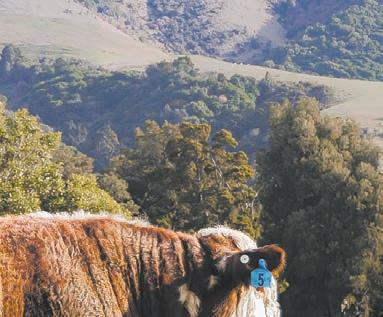

Key: Dair y Cattle Sheep O ther
Proudly sponsored by
SI calves hit ground running
Top prices for animals in top condition were the order of the day at Temuka recently.
Suz Bremner MARKETS Livestock
DESPITE all the uncertainty in the air at present, the South Island calf sales have hit the ground running for 2026, with results just as impressive as those posted in the North Island.
Most South Island sale yards are posting results that are $450-$600 up on last year, which seems to be a common theme this calf-selling season, and one sellers are more than happy to see.
Rapidly rising on-farm costs have hampered growth over the past few years, but the change in fortune seen in stock prices in the past 12 months has gone a long way to balancing out the bottom line, and meant that farmers have been able to look at reinvesting in the land and their businesses.
This has been long overdue, and if it weren’t for the impact of increasing oil/fuel prices due to the Middle East crisis, New Zealand could have been enjoying a truly golden year of farming. We can only focus on the here and now, and for those selling beef calves it has been an outstanding
season to date, and one that will be remembered for all the right reasons.
Calves offered have come forward in exceptional condition, and annual and new buyers have been ready and waiting to take them home, creating a highly competitive environment in the rostrums and yards around the South Island. Bidr continues to provide an extra layer of competition, and expansion into new yards and more public acceptance of this platform has been pivotal in expanding the buying bench for these sales.
The numbers speak for themselves – at Temuka so far, two beef calf sales have been held, totalling just over 2500 head. On average, prices have lifted $485$600 per head for steers and $455$500 for heifers.
At the most recent calf sale – which was the Eastern and Southern Section – just over 1000 steers were offered and were almost an even split of traditional and exotic. The former averaged 255kg and $1825 per head, with heavy lines pushing over $2000 to a top value of $2280.
Very impressive Simmental-beef calves had exceptional weight at 358-368kg and topped the sale
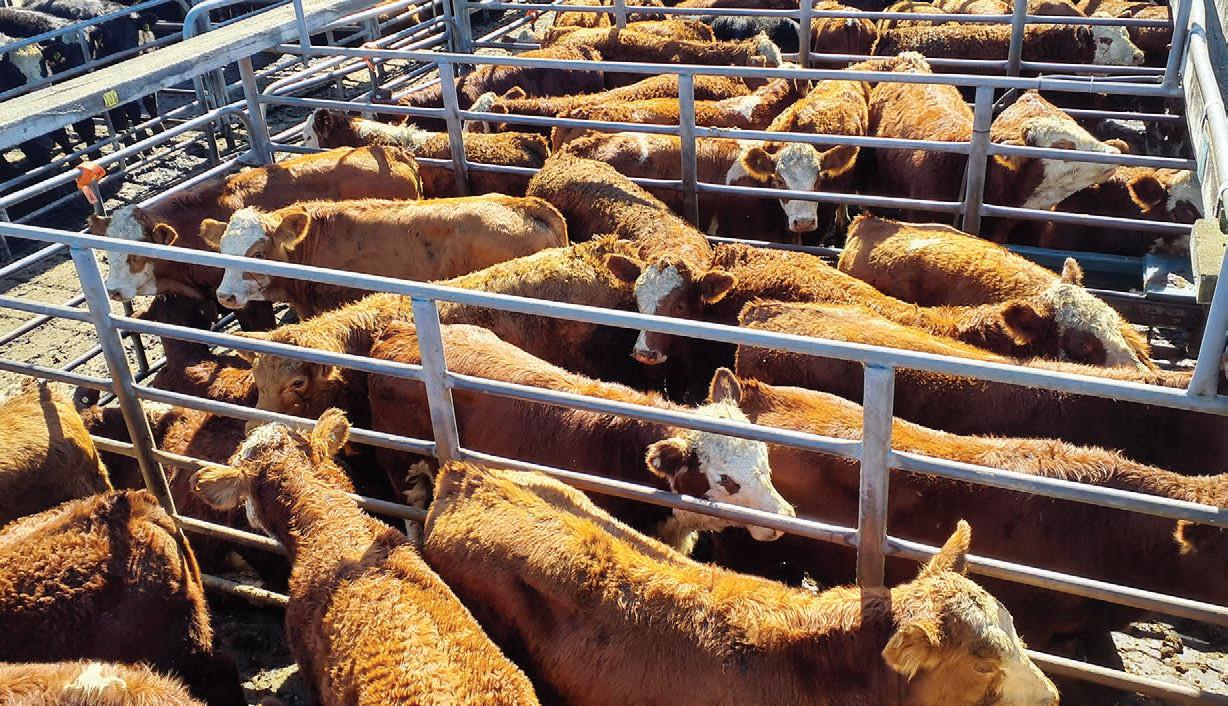
This type of lift has never been seen before, with prices almost doubling on pre-2025 levels, and now puts calf prices at dizzying heights.
at $2340-$2410, while this class averaged 290kg and $1980. Heifer returns were equally impressive for their slightly smaller stature, as traditional heifers averaged 235kg and $1425 and exotic, 270kg and $1685.
Data collected from South Island calf sales to date mirror the trends shown at Temuka. Trends over a 10-year span show that, from 2016-2024, prices for steers and heifers varied year to year though stayed within the lane of around $500-$1100 per head. However, all that changed in 2025, when an exceptional lift in value by approximately $300-$400 per head really got tongues wagging.
South Island Beef Calf
The positive year since those lifts has meant that the same scenario has played out again this year, adding a further $500-$600 per head to those levels, meaning that prices on average have lifted $800-$1000 in just two years.
This type of lift has never been seen before, with prices almost doubling on pre-2025 levels, and now puts calf prices at dizzying heights.
The premium paid for steers
over heifers has widened slightly this year, though heifers have still followed a very similar trajectory, and that gap is more prominent for traditional calves over the exotic breeds as most exotic heifers are finished.
There are still plenty of calf sales to go, and while they have made a fantastic start, the ever-increasing oil price is going to be the one aspect that could have a negative impact going forward.



RED HOT SIMMENTAL: Simmental-beef calves took top honours at the recent Eastern and Southern Section calf sale at Temuka. The top price reached for the breed was $2410 per head, and this line returned $1920 for 270kg.
Cattle Sheep Deer

Weekly saleyard results
These weekly saleyard results are collated by the AgriHQ LivestockEye team. Cattle weights and prices are averages and sheep prices are ranges. For more detailed results and analysis subscribe to your selection of LivestockEye reports. Scan the QR code or visit www.agrihq.co.nz/livestock-reports
















Temuka | April 1 | 1797 cattle
$/kg or $/hd
Weaner traditional steers, 255kg 1825
Weaner exotic-beef steers, 290kg
Weaner traditional bulls, 305kg 1865
Weaner traditional heifers, 235kg 1425
Weaner exotic-beef heifers, 270kg 1685
Balclutha | April 2 | 969 cattle
$/kg or $/hd
Weaner traditional steers, 250kg 1710
Weaner exotic-beef steers, 285kg 1850
Weaner traditional heifers, 230kg 1460
Weaner exotic-beef heifers, 260kg 1660
Castlerock | April 2 | 1270 cattle
Weaner traditional steers, 205kg 1575
Weaner exotic-beef steers, 280kg 1975
Weaner
Weaner
Gore | April 1 | 653 cattle
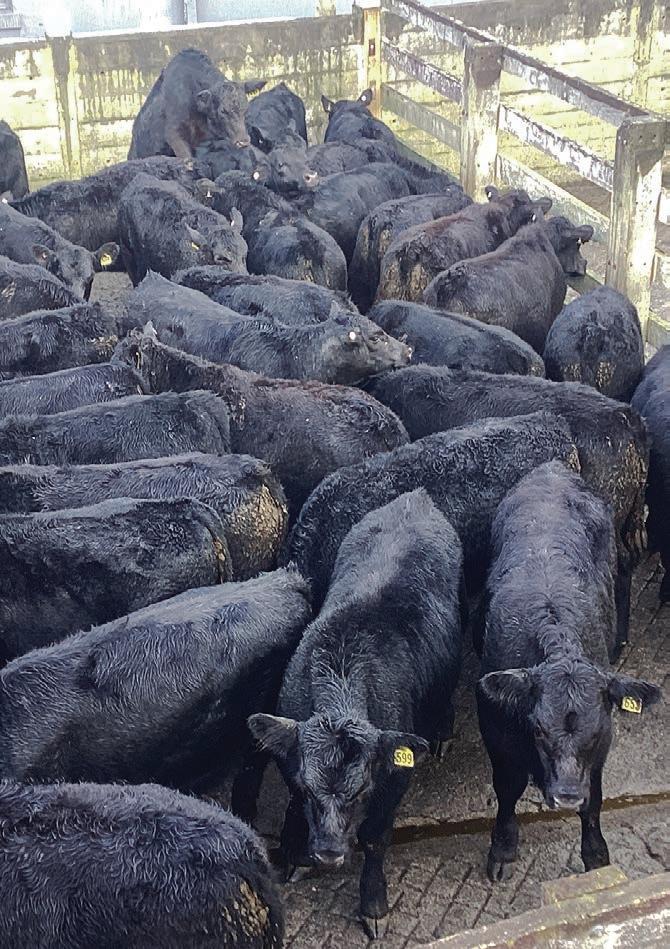
Frankton | April 7 | 1708 cattle
Friesian bulls, all
Hereford-Friesian (black) bulls,



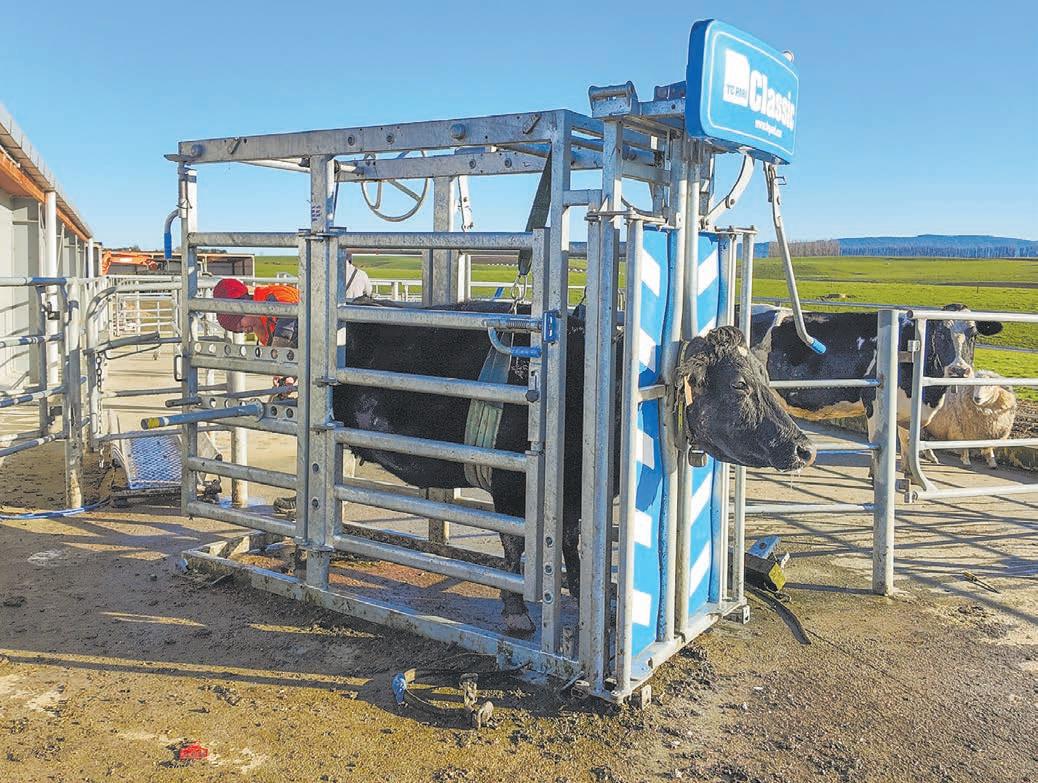


NUMBERS GAME: There was a premium on large pen sizes or runouts at the Feilding steer and bull weaner fair on Wednesday, April
Photo:
Westerlies say it’s time to play it cooler

Philip Duncan NEWS Weather
BETWEEN the time I wrote this column and now, when you are reading it, a significant tropical cyclone, Cyclone Vaianu, was set to have crossed over the North Island.
While the tropical portion clears much of the country today, April 13, Cyclone Vaianu will merge with another low moving out of Tasmania, and this will extend the unsettled weather pattern over New Zealand through until about this coming Thursday, bringing westerlies and showers.
In fact, the westerly shift that comes in this week is one of the first signs of the autumn westerlies so far this season. Now that we have no La Niña and are in the “neutral” phase, it’s not surprising to see our predominant wind return.
This may bring a touch of autumn normality to our weather pattern over the next couple of weeks. The longer range maps suggest a messier weather pattern is developing following a fairly orderly March –an injection of more chaos into the
usual weather pattern. By that I mean larger air pressure systems, both lows and highs.
Long-range modelling is showing larger lows forming in the NZ area this month, but also some strong high-pressure zones still tracking around southern Australia.
The tropical cyclone season was sleepy to start with – but has ended busy. April 30 is the official end to the South Pacific Cyclone Season and longer range modelling suggests far fewer opportunities for tropical lows to form and an increased risk of large lows forming more locally around NZ.
The tropical cyclone season was sleepy to start with – but has ended busy.
Temperatures lately haven’t been too low, sparking pasture growth, facial eczema and a lack of frosts in most districts. Australia has had a couple of big cold blasts in recent weeks, with the polar air boundary lifting northwards and bringing them alpine snow and first seasonal frosts.
NZ has, so far, been on the warmer side of things but that appears
to be coming to an end (at least for southerners) as the autumn westerly flow helps dredge up colder, sub-Antarctica airflows. Just look at the daytime highs this week in Southland, or Otago – even Canterbury sees a reduction. As for northerners, yes even you will notice the slightly cooler air with a few degrees taken off both daytime and overnight temperatures.
It really has been mild in recent weeks across NZ – a lack of frost in the South Island and overnight lows in the north still closer to 20degC at times. Almost all of the South Island over the past two weeks has been 1.2 to 2 degrees above average with Christchurch and Blenheim the only cities that had temperatures a little lower (but still above normal at 0.8 to 1.2 above normal).
In the North Island it’s a similar trend with western areas warmest above normal (1.2 to 2 degrees above average) and only the Gisborne / Tairāwhiti area having normal temperatures. Nowhere at all in NZ was below average, so the next couple of weeks may be a bit of return to where we normally are in early to mid Autumn. Expect the unexpected.


Does your milk chiller refrigeration equipment need replacing?
Don’t let old, tired equipment let you down - replace it now
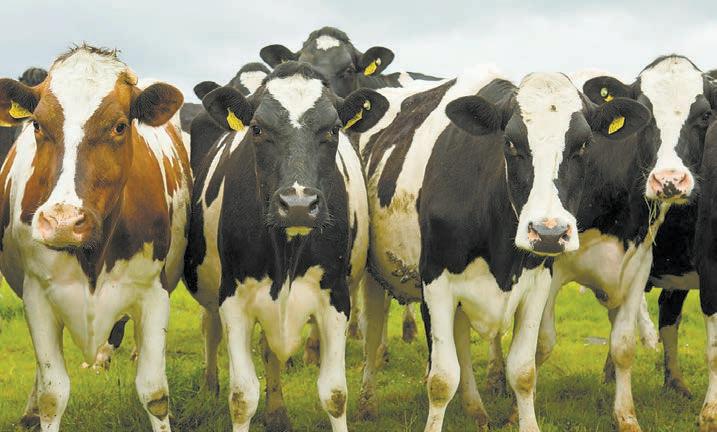
Mean Temperature Anomaly, 9am 23/03/2026 to 9am 07/04/2026
ABOVE AVERAGE: The last week of March and first week of April proved to be warmer than average in over 95% of the country.
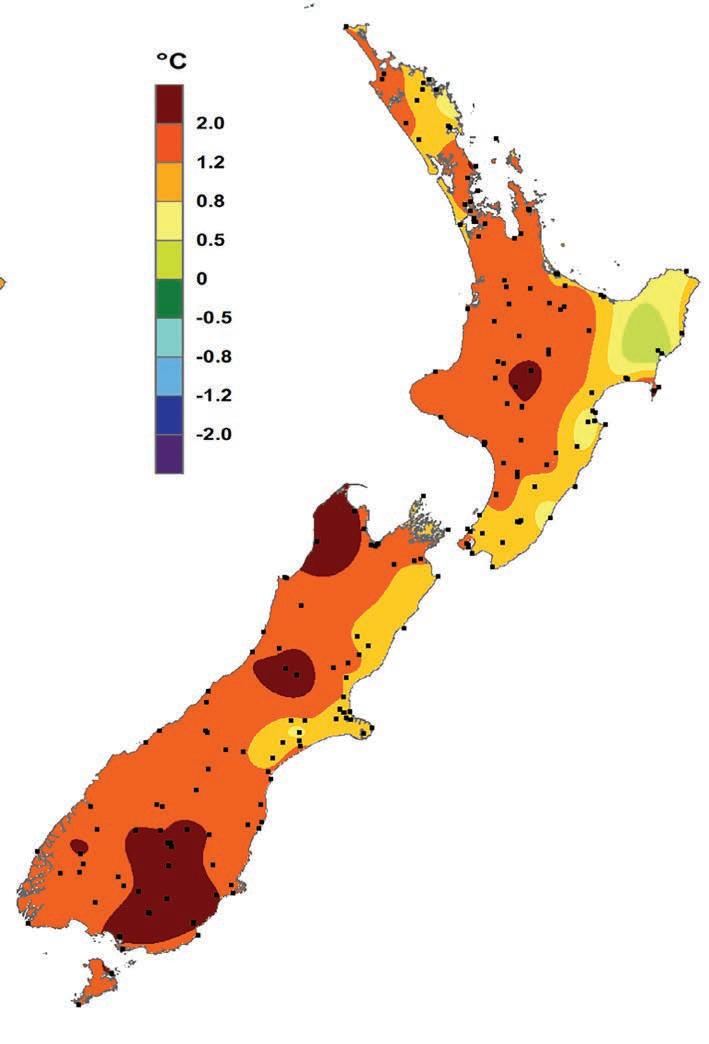
Agcool is now part of McAlpine Hussmann, bringing decades of commercial refrigeration expertise directly to the farm gate
The dry-off is your window of opportunity Upgrade your milk cooling before the spring rush
Ensure your vat meets the latest Prevent mid-season breakdowns Improve energy efficiency with m 24/7 South Island Support
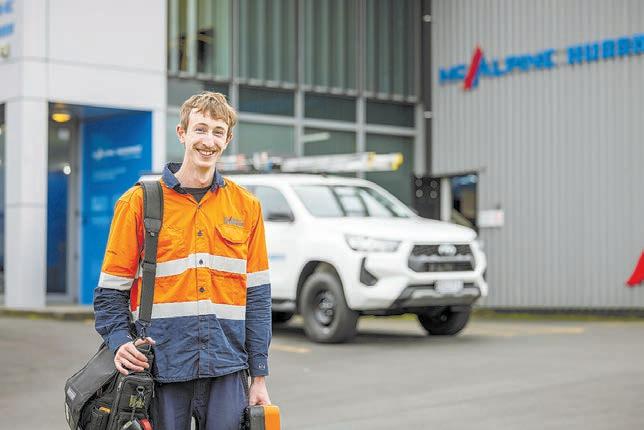

MPI cooling standards odern systems
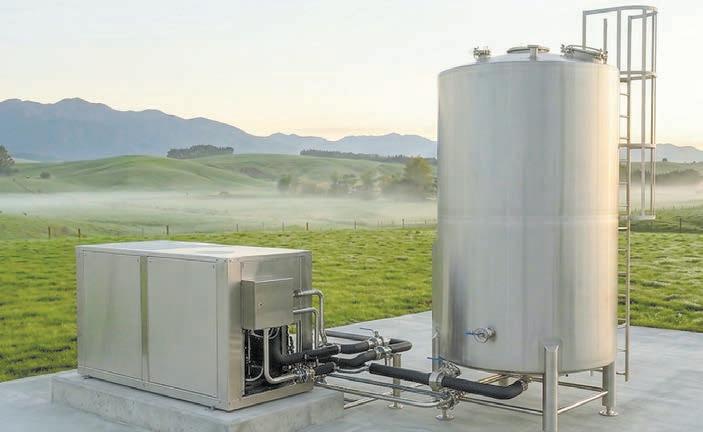

Image: ESNZ