UK print subscriptions £198; Europe: £226.80; RoW: £283.50. FG digital subscriptions: £109
PublishedbyAgriconnect
Katie Jones, Editor – katie.jones@agriconnect.com
Increased fire risk demands a rethink on land management
AFTER several weeks of warm weather, without rain, the ground and vegetation across the country are tinder dry and has reached a point where the smallest spark could spell disaster.
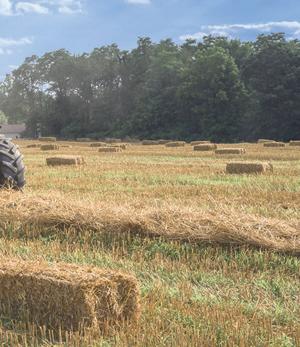
The heatwave has already brought a string of problems: grass growth has stalled, livestock and people alike are feeling the stress of the heat, and arable crops are drying out in the field before they can be combined.
It is a somewhat unfamiliar headache for growers, who are traditionally more used to the opposite extreme.
However, by far the most serious consequence of this prolonged dry spell is the risk of fire. And during the past couple of weeks there have been numerous reports of wildfires in crops and on hill and moorland areas.
Two things need to happen here. First, those enjoying the countryside must do so responsibly. In conditions this dry, it takes almost nothing for a fire to take hold and spread – with devastating consequences for people, animals, crops, grassland, machinery and buildings alike.
LISTEN TO THE FG PODCAST FOR weekly podcasts bringing you the latest news, engaging debates and real farmer stories from across the UK, scan the QR code or go to farmersguardian. com/podcasts
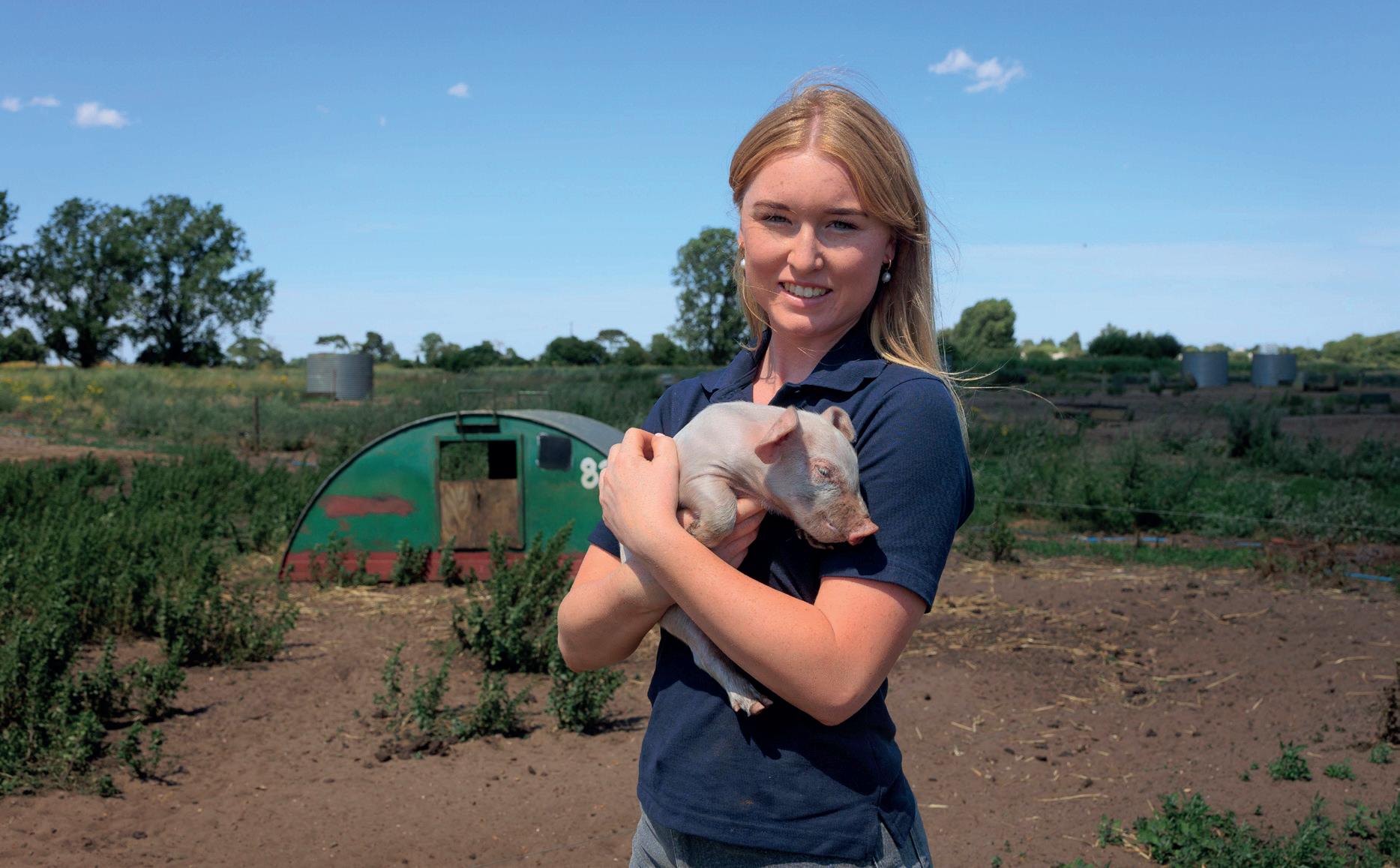
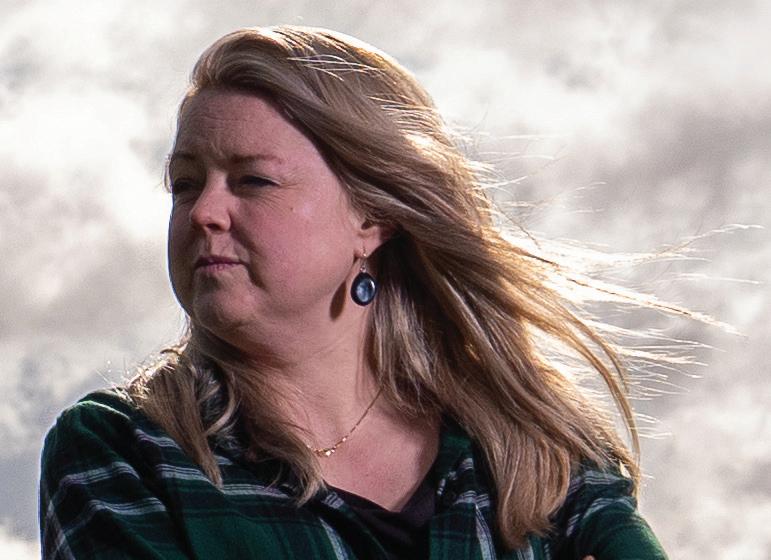
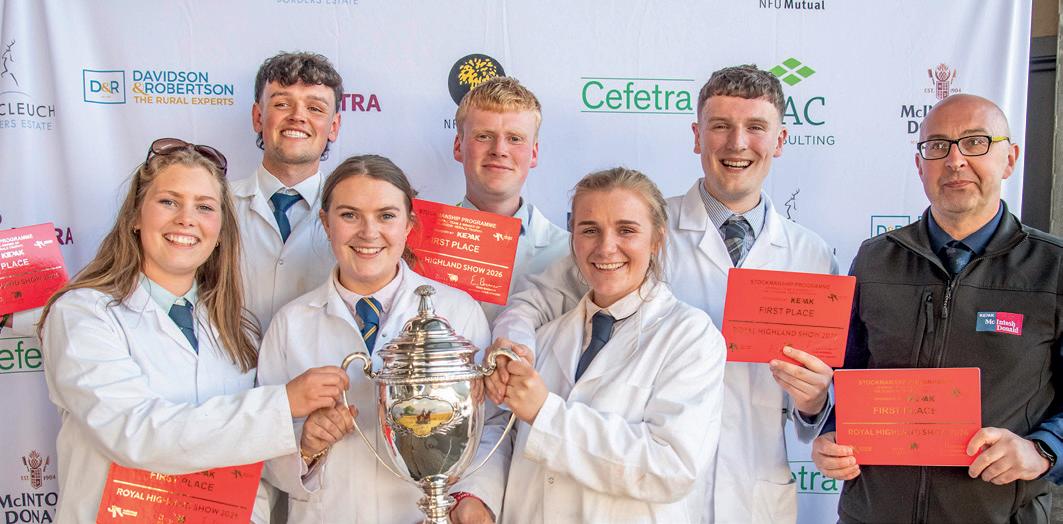
Molly-Anne Gimson knew she wanted a career in farming when she was just 16 years old. See p54. Speaking
farmers are permitted to manage land, particularly in the uplands. Conservation grazing and controlled burning are proven tools for reducing wildfire risk, yet red tape and Government policy have driven down livestock numbers in these areas, making the job harder, not easier.
As our climate continues to change, it is clear that extreme heatwaves such as the one we have been experiencing this summer will become more frequent. Farmers and landowners must have the tools and the freedom to prevent and prepare for such conditions.
When will this heatwave break? From the various weather apps out there, the dry weather looks set to continue for now, though Simon Keeling’s artificial intelligence modelling points to a possible change around the end of next week (see p76 for more about this)
That some of these fires appear to have been started deliberately, or through sheer carelessness, is deeply disappointing.
Secondly, we need an urgent rethink of how
And for those heading to Builth Wells for the Royal Welsh Show next week, it looks set to be very warm indeed. So please make sure that you take care of yourselves and your stock.
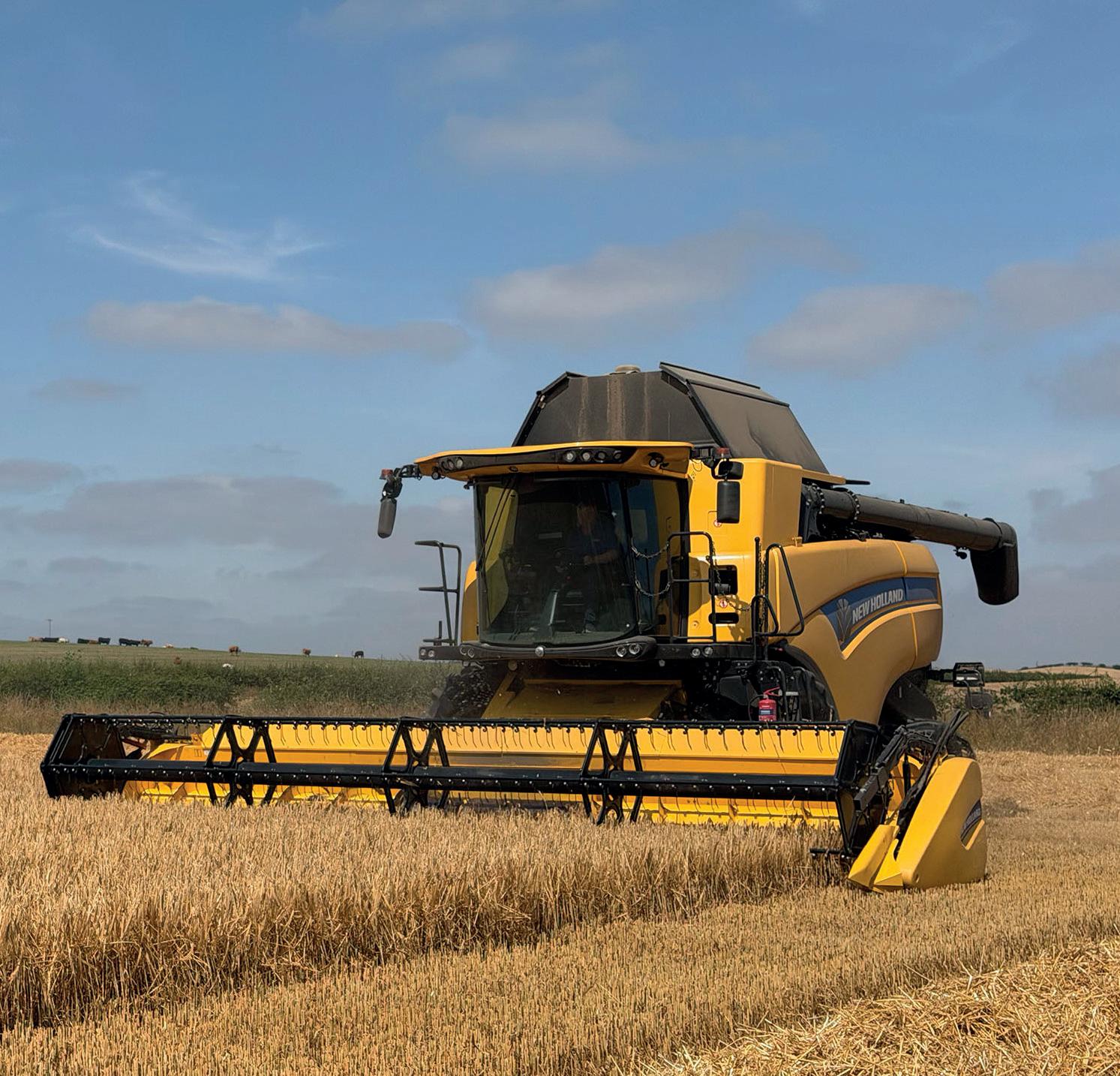
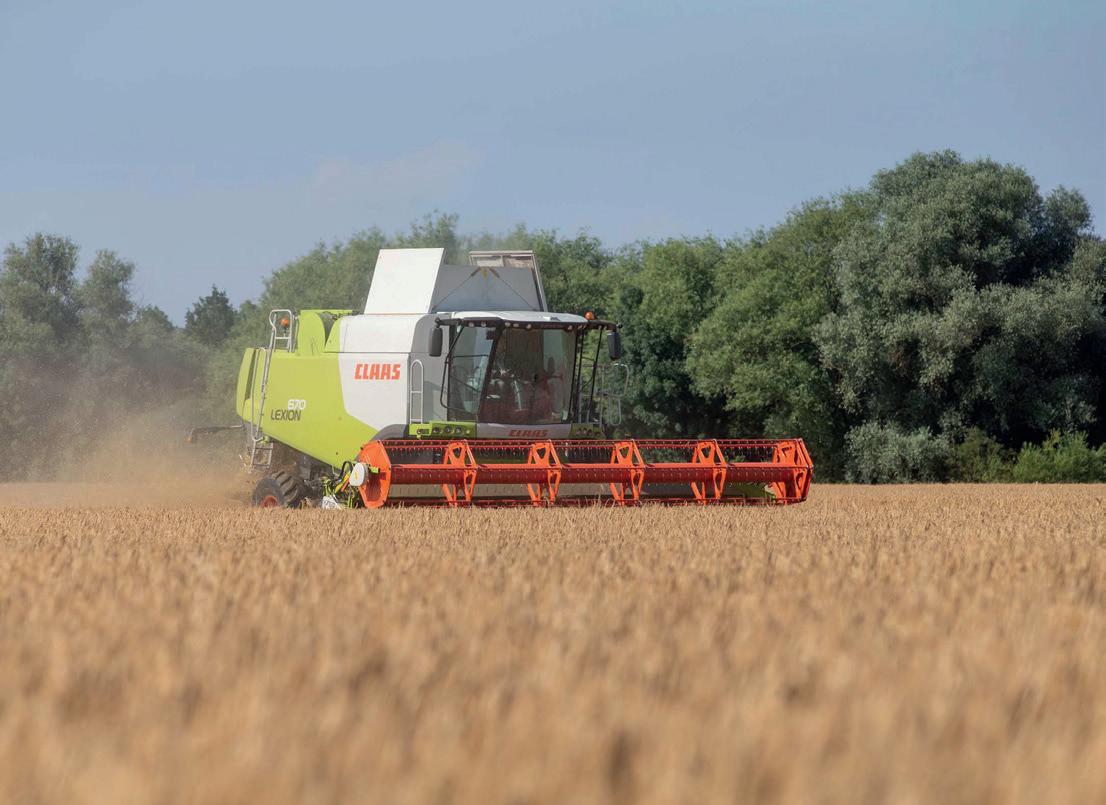
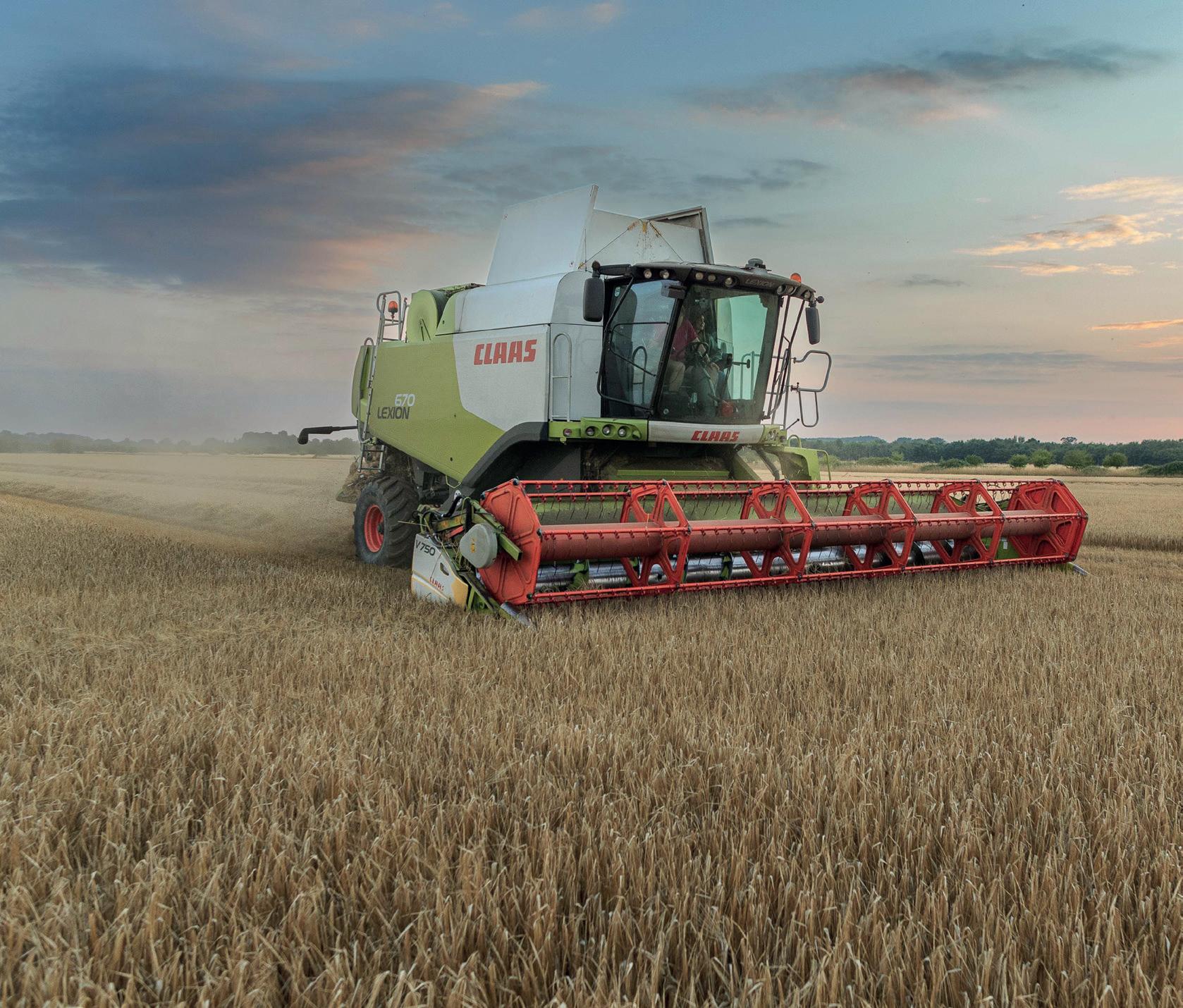
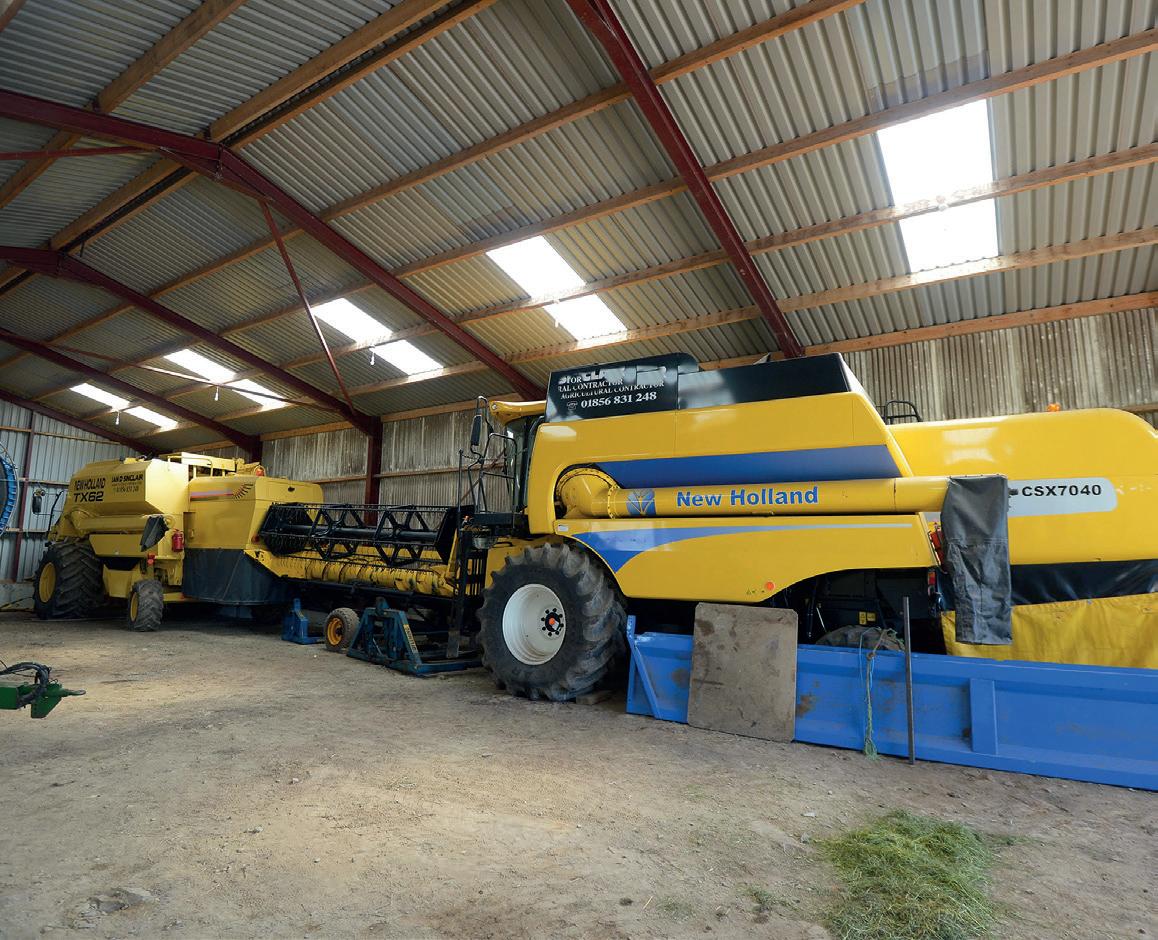
On this week’s cover: Machinery and Tractor Supplement, inside;
‘Apocalyptic’ wildfires surge across the UK
tain. Residents had to be evacuated from Capelulo.
BLAZING temperatures across the UK have led to a ‘firewave’ with more than 19 fires burning as a result of the dry conditions and several reported arson attacks.
In Derbyshire, a major incident was declared due to a wildfire at Tintwistle Moor, Glossop, which began on June 24.
Farmers, alongside Derbyshire Fire and Rescue Service, have been working to contain the fire, which has been described as ‘apocalyptic’.
Richard Bailey, co-ordinator of the Peak District Moorland Group, has been on the site tackling the blaze since Sunday (July 12), working through the night.
“It is just horrendous,” he said.
“The clouds of smoke through Stockport, Manchester, out towards Chester, into North Wales –they are choking. This has affected millions of people.”
Mr Bailey said the group had to make some hard fuel breaks with earth-moving vehicles to try and contain the fire.
“This is apocalyptic, what we are seeing,” he said.
A major incident was also declared in Wales following a wildfire near Sychnant Pass on Conwy Moun-
In North Yorkshire, two young farmers aged 18 and 22 were praised online for their help in tackling a blaze in a wheat field next to Moor Lane and Askham Lane in York.
Two girls from the local area, aged 15 and 17, were arrested on suspicion of arson. The damages are estimated to be about £30,000.
Another large fire in the Peaks near Dovestone Reservoir clouded the sky as far away as 50 miles, as Prescott farmer Olly Harrison shared a video of what he also described as an ‘apocalyptic sky’ from his farm.
Gamekeepers
He told Farmers Guardian: “You would not open a school or a hospital without fire extinguishers and a fire management plan, so I do not know why it is acceptable to not manage the moorlands like we used to by using gamekeepers and farmers.”
Shania Care-Slede, from Hyde, was charged with aggravated arson in connection to the Dovestone fire, but investigations are still ongoing.
In Essex, firefighters issued pleas for change following six large fires in a 48-hour period from July 6-8.
Ollie Everott, rural engagement officer at Essex County Fire and Rescue Service, highlighted how easy it was for fires to spread ‘out of control’.
At the Great Yorkshire Show, the CLA reiterated calls for a rethink of restrictions on upland vegetation management, warning that growing bureaucracy is leaving Britain’s moors increasingly vulnerable to devastating wildfires.
Jamie Savile, chair of CLA Yorkshire and director of
Mexborough Estates, said: “Farmers and landowners have the practical knowledge needed to manage fuel loads safely before conditions become critical, but it is more difficult than ever to carry out routine management.”
The clouds of smoke through Stockport, Manchester, out towards Chester, into North Wales –they are choking RICHARD BAILEY
He said: “We need everyone’s help to prevent wildfires this summer and would ask everyone enjoying our countryside to be mindful of the things that could start fires, such as bonfires, barbecues, discarded cigarettes and litter.”
Sarah Dyke, MP for Glastonbury and Somerton, called on the Government to formally recognise fire ponds within the Farming Roadmap 2050 as a funded, nature-based climate adaptation measure to help tackle extreme heat, water scarcity and wildfire risk.
She added: “I am also urging Defra to work with the National Fire
Chiefs Council to map the areas most at risk, so support and resources can be targeted where they are needed most.”
George Winn-Darley, owner of Spaunton Estate, North York Moors, which suffered a devastating fire last summer, urged the Government to invest in better water infrastructure, improve access to remote landscapes and strengthen aerial firefighting capacity if it is serious about tackling the growing threat of wildfires.
Manage
Mr Winn-Darley said: “We have got to manage fuel somehow on moorlands. There is a cost to wildfires, the carbon footprint of all the machinery needed to manage the fuel source, and then there is a cost issue on all sorts of levels – cash, carbon and landscapes.”
He said the Government had the power to introduce straightforward measures that would significantly reduce the likelihood of fires.
He suggested measures such as not allowing barbecues or stoves in a semi-natural habitat and not to light them when the wildfire risk was high.
Mr Winn-Darley’s comments came after a fire this week on the North York Moors, which he said had been caused by campers.
“The good weather brings all the wild campers to the moor,” he said.
He added as the estate was heavily resourced with three tractors, they put the fire out in no time at all.
“We lost eight acres. However, that could have been 8,000,” he said.
SUMMER HEATWAVE AFFECTS MILK YIELDS
MILK production has been greatly impacted by record heat levels in May and June, as new analysis shows the temperature records coincided with the largest singleday falls in UK milk deliveries from farms during a heatwave.
The Energy and Climate Intelligence Unit’s report shows that on May 26, when temperatures reached 35.1°C, milk deliveries fell nearly 4% below the preceding week’s average.
A fall of this scale during a
heatwave is unprecedented in 19 years of data.
On June 26, when temperatures reached 37.7°C, milk deliveries fell by 4.3%.
Across the full nine-day June heatwave, the cumulative shortfall reached about 9.4 million litres.
Dairy cows are particularly susceptible to heat stress because high milk production generates substantial metabolic heat.
Heat stress means cows spend more time panting and standing,
Mr Winn-Darley said improving infrastructure across moorland landscapes was now just as important as reducing ignition risks, including having strategically located water supplies.
He also called for greater invest-
while their feed intake, rumination and lying time decline – leading to lower milk yields and depressed milk components.
Ruth Grice, a dairy farmer from Leicestershire, said: “The heat in May had a real impact.
Hot
“The cows were hot and bothered and were obviously prioritising staying cool over producing milk.
“When we did the night checks, they were standing around the
ment in specialist firefighting equipment, saying the UK lagged behind countries in southern Europe where wildfires were more commonplace. And he questioned why military resources could not be deployed to support wildfire response.
water troughs for relief from the heat, whereas normally they would be quietly sleeping or ruminating. It is not just the drop in milk production; heat also affects the cows’ fertility, which is crucial for a dairy farm’s viability.”
Susie Stannard, AHDB lead analyst for dairy, said effects had been quite pronounced, tipping Europe and the UK from an oversupply to an under-supply situation temporarily, leading to a jump in spot milk prices.
Wildfires have broken out across the country amid soaring temperatures.
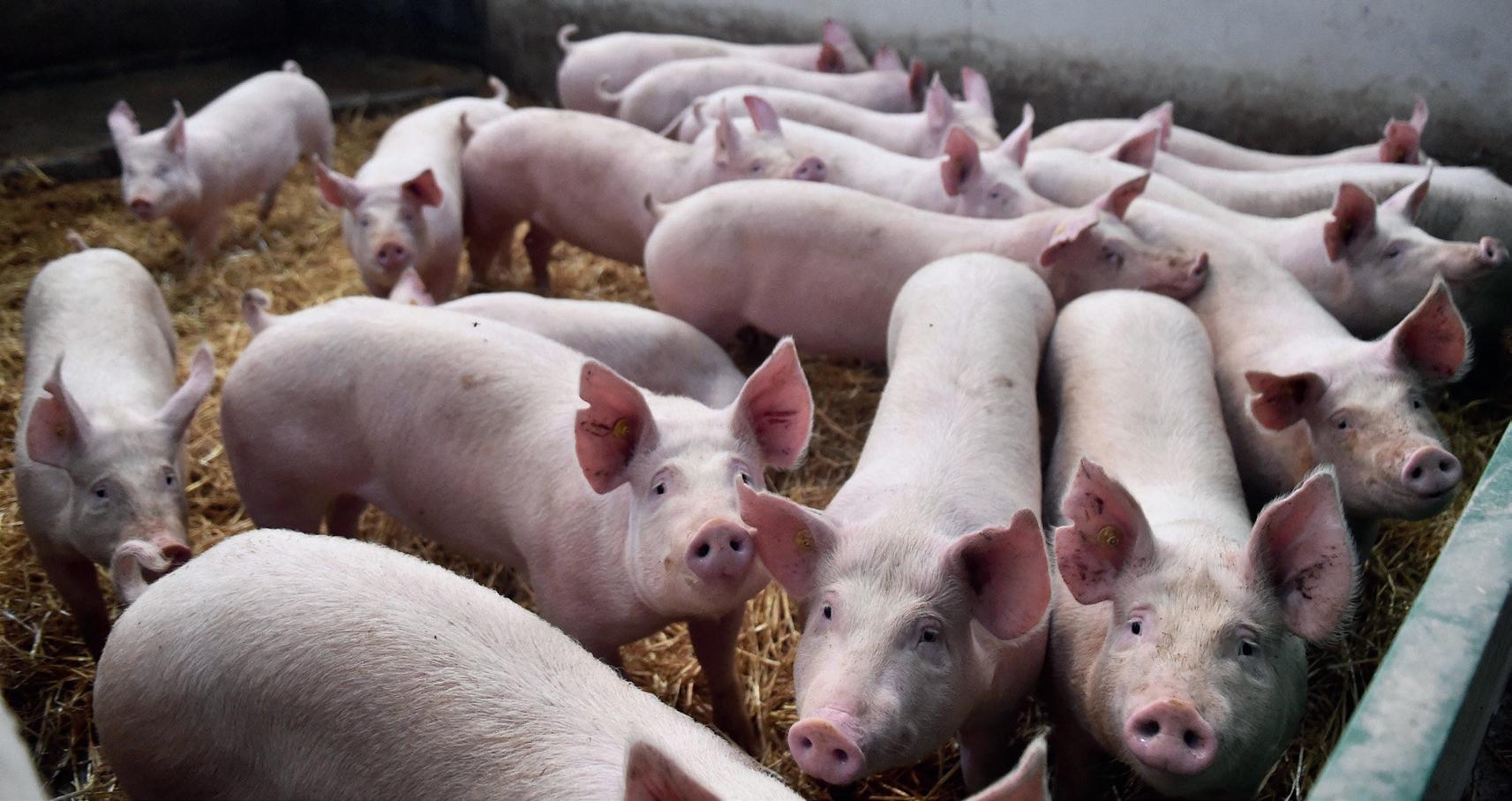
Pig crisis ‘not a false alarm’
l UK Government urged to take action
By Rachael Brown
A SCOTTISH MP has emphasised the ‘catastrophic impact’ of the current pig crisis to the UK Government, urging it to engage and offer immediate support to the sector. It comes after the Scottish Government announced £2 million in support, with Cabinet Secretary Gillian
No criminal charges after fatal shooting
A FARMER will not face criminal charges in relation to the death of one intruder and serious injuries to another on his property, Derbyshire Police has said.
Officers were called to premises in Whaley Bridge on May 1, 2024, following reports of a burglary in which a 19-year-old had been shot. Marcus Smith, from Chapel-en-le-Frith, was pronounced dead at the scene, having suffered a fatal gunshot wound.
The homeowner was arrested on suspicion of murder and has remained on bail. However, the Crown Prosecution Service said charges against the homeowner had been dropped owing to legal tests in relation to laws ‘surrounding the householder’s right to defend themselves’.
Livestock owner fined £16,000
A POWYS farmer has been fined more than £16,000 after pleading guilty to animal welfare offences involving cattle in his care.
Gareth Jones, of The Chalet, Greenhill, Pontrobert, Meifod, was prosecuted by Powys County Council after an investigation found serious failings in the welfare of cattle on his farm.
The court heard the offences related to failure to seek veterinary assistance for sick and lame animals, failure to provide adequate treatment, and failure to provide a suitable environment for the cattle leading to animals being humanely destroyed.
District Judge Thomas said had Mr Jones not pleaded guilty he would have faced a custodial sentence.
Martin also writing to the UK Government to encourage it to intervene.
Gordon and Buchan MP Harriet Cross led a Westminster Hall debate highlighting how oversupply of pigs, stagnant demand and falling prices in Europe had driven down UK pig prices.
She told MPs in the room and Farming Minister Stephen Morgan this was ‘not about raising a false alarm’, saying those in the sector were ‘genuinely worried’.
Mr Morgan rejected proposals for targeted pig support, saying the challenges the sector was facing did not warrant Government intervention.
Ms Cross said lower welfare standards across the continent and an influx of cheap imported pork were undercutting British producers.
She said: “A farmer I met in my constituency is losing around £50 per pig. Unless farmers are paid a price that covers the cost of production, there can be no future in the sector. Simple as that.”
Scotland was estimated to have lost 15% of sows in the independent sector since the start of the year, and four producers have already exited the market.
Losses
But Ms Cross said the funding would ‘not even scratch the surface’, with NFU Scotland welcoming the support but also warning it would not go far enough to bridge the losses.
NFUS president Andrew Connon said members wanted to receive a fair
return from the market rather than be reliant on Government support.
Mr Morgan confirmed he had prioritised a meeting with the National Pig Association this week to discuss the pressures, adding it would be the start of an ‘ongoing dialogue’. He said while he recognised the challenges the pig sector was facing, the situation was ‘materially different’ to the crisis in 2021.
“The current pressures reflect broader market conditions, rather than a breakdown of processing capacity or market function. As such, the threshold for intervention in England under Section 21 in the Agricultural Act is not currently met. As a devolved matter it is, of course, for those governments to make a judgement on intervention.”
Scotland is estimated to have lost 15% of sows in the independent sector since the start of the year.
Demand will not change SFI budget
THE first window for the Sustainable Farming Incentive (SFI26) has a £60 million budget, and that is not likely to change, regardless of demand.
That was the message from Defra Secretary Emma Reynolds when probed by the Environment, Food and Rural Affairs Committee last week about whether there was ‘flexibility’ in the budget allocation for the first round of applications.
Sarah Dyke, MP for Glastonbury and Somerton, asked Ms Reynolds if there were any plans to extend the budget for Window 1 to ensure all eligible farms had access, rather than being ‘pitted against’ all other farms in the second window.
Ms Dyke was concerned that more than 50% of the budget had
been allocated already and feared Window 1 would close before small farms had got round to applying.
More than 75% of funds have now been allocated.
Ms Reynolds said: “We cannot have Window 1 and Window 2 and a bit in the middle,” adding it was
normal to have ‘big numbers’ apply in the first few days, but demand was dropping off.
A further £180m will be made available for Window 2 SFI26, which is expected to open in September. This window is accessible to all farmers.
Staffordshire confirms bluetongue
STAFFORDSHIRE has reported its first clinical BTV-3 sheep case this summer.
The case, confirmed by Defra and the Animal and Plant Health Agency on July 10, involved a ewe displaying classic signs of bluetongue, including swelling of the head,
crusting around the nostrils and lameness in all four feet.
The confirmation comes just weeks after a calf born blind in Staffordshire tested positive for BTV-3, and another in Lancashire, underlining the range of clinical effects the virus can have in susceptible livestock.
News & Business
Farmers Guardian staff help raise thousands for charity
● Team takes part in 24-hour Cotswolds trek
By Emily Ashworth
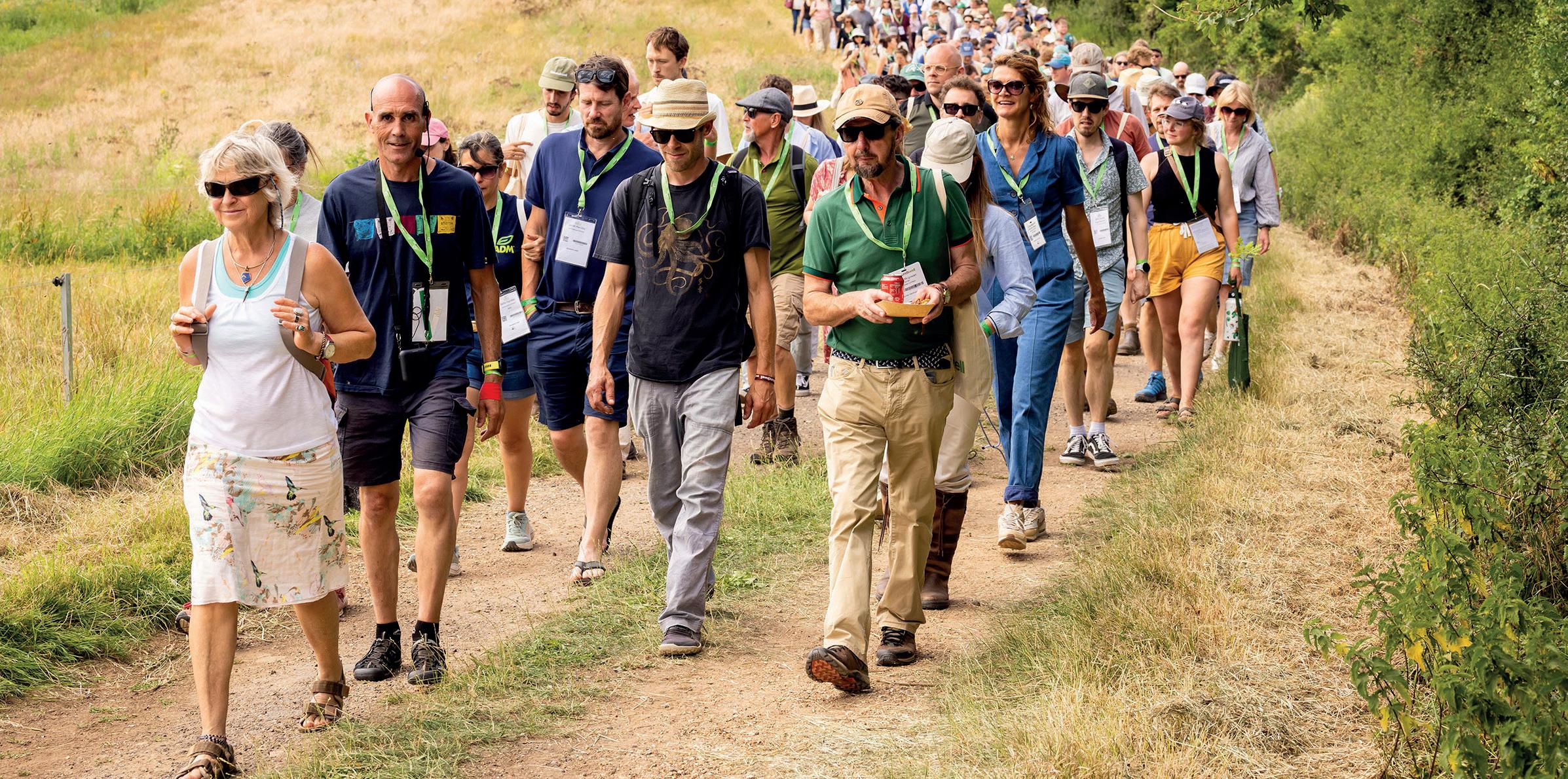
A GROUP of dedicated Farmers Guardian staff has raised thousands of pounds for two important farming charities during an epic countryside hike ahead of this year’s #farm24 campaign.
On July 7, members of the FG team headed down to the Cotswolds to embark on a 24-hour walk to raise money for Farms For City Children and the Farm Safety Foundation (Yellow Wellies) through Len’s Light.
The walk started at Diddly Squat Farm Shop, heading through Adam Henson’s Cotswold Farm Park and finishing at Jeremy Clarkson’s pub,
the Farmer’s Dog. In conjunction with this year’s 24 Hours in Farming event, agriculture’s biggest digital campaign to showcase what truly goes on in the industry, the team were joined by two of the event’s ambassadors – Will Young, also known as Farmer Will, and Jessie Wynters – to help fly the flag for two of the sector’s most important causes.
Mr Henson also joined in with the walk, along with fellow TV presenter Tom Heap.
Farm safety
Mr Henson highlighted the work of Yellow Wellies, adding it was particularly important to talk about farm safety at harvest time.
Mr Heap said the charities were ‘absolutely vital’, with mental health a ‘large and troubling problem’.
Your industry, your input.
He added Farms For City Children was giving urban children ‘a completely different experience of life’.
Mr Heap also encouraged people to get involved with the #farm24 campaign.
She said: “I am so proud of the team and those who took part in the walk.
“For those 24 hours it is a little window to show people what you are up to,” he said.
So far, the charity walk has raised more than £4,200 through generous donations, and has also raised vital awareness of two key issues: mental health within agriculture and connecting the next generation to the countryside.
THERE IS STILL TIME TO DONATE – SCAN THE QR CODE
FG editor Katie Jones took part in the walk.
“It was a pretty tough 24 hours, especially in the heat, but the focus was raising money for really worthy causes and I hope we have managed to raise some awareness of two important topics within agriculture.” You can take part in this year’s campaign by heading to social media and uploading photos and videos of your daily life in farming, no matter your job.
especially some part
Our latest Agri-Works survey is designed to go beyond where you access content and information. We want to understand how you actually make decisions — what’s driving your investment plans, and who’s actually in the room when they’re made. We want to know what content is valuable to you and why, and what builds trust in suppliers — and what breaks it.
Respondents will be entered into a prize draw entered into our prize draw, where one lucky participant selected at random will win a £100 Amazon voucher, and three other randomly-selected participants will each win a £50 Amazon voucher.
Scan the QR code to take the survey!
Use the hashtag #farm24 and tag @farmersguardian.
What content is actually useful to you?
News & Business
● Worries and concerns over profitability
By Jonathan Wheeler
THE directors of Farmers First have confirmed they will commission a board effectiveness review.
It follows concerns from shareholders alongside the closure of the company’s Wrexham abattoir.
A board effectiveness review is normally conducted by an independent assessor – typically a qualified accountant or lawyer.
Some shareholders expressed frustration at the board’s failure to answer key questions about its performance at its annual general meeting in June. Their key worry was that it announced a profit of £80,000 (a loss of more than £100,000 after tax), whereas it made profits of £3.6 million in 2023.
The board had already made progress towards selecting the person to complete the review, said Terry Bayliss, who founded the company and will retire as chair later this year, while remaining on the board. He said the low profitability was due to tougher conditions, notably global instability, rising employment costs, harder border checks and the continued decline of the national sheep flock.
Farmers First board to commission review into effectiveness
He could not say how long the review might take or who might be allowed to present evidence, but he expected the results of the review to be published when appropriate.
Problems
Some older directors of Farmers
First needed to resign and make way for younger people to lead the company forward, said John Geldard, a former director of the company who was voted off the board four years ago.
Mr Geldard also described the board’s proposal as ‘bland’.
He said: “It is a starting point but does not go anywhere near far enough to sort out the problems with governance. One or two of the younger directors recognise the
PICTURE: JOHN EVESON
Farmers First announced a profit of £80,000 in its June AGM, which was a loss of more than £100,000 after tax.
problems and can address them. But it is probably past time for some older directors to be respectful and realise it is time they got out of the
way. They need to allow the younger board members to appoint other younger people who can take the company forward.”
Government must deliver on tenancy changes
THE Tenant Farmers Association (TFA) has criticised Defra for failing to put words into action and deliver ‘necessary’ change on longer term tenancies.
In a letter to the Farming Minister, following a ‘constructive’ meeting last week, the chief executive of the TFA, George Dunn, said: “While Defra agrees that longer term tenancies are needed, Government has not yet taken forward the recommendations made by the Rock Review and
the Minette Batters review in relation to the taxation framework within which landlords make decisions about tenancy length.
‘Fair challenge’
“We therefore welcomed your acknowledgement that this was a fair challenge and your indication that the issue is on your desk as a priority for the coming weeks and months.”
Mr Dunn said if the recommendations put forward by the TFA were
not considered to be the ‘right answer’ by Government, it must come up with an ‘alternative mechanism’.
He highlighted in his letter that an average Farm Business Tenancy lasted three years, with 80% of new tenancies being for five years or less, which Mr Dunn said was not a sufficient platform for investment in regenerative systems, breeding cycles, environmental delivery or long-term business resilience.
The impact of solar development
Foliar N the boost your Maize needs
and planning decisions on tenant farmers was also highlighted. Mr Dunn referred to comments Prime Minister Sir Keir Starmer made while Leader of the Opposition, when he said tenant farmers should not be adversely affected where land was lost to solar development. Mr Dunn said the TFA had thought the amendments to the Planning and Infrastructure Bill in the House of Lords would give ‘effect to that principle’, but it was ‘rejected’ by Government.
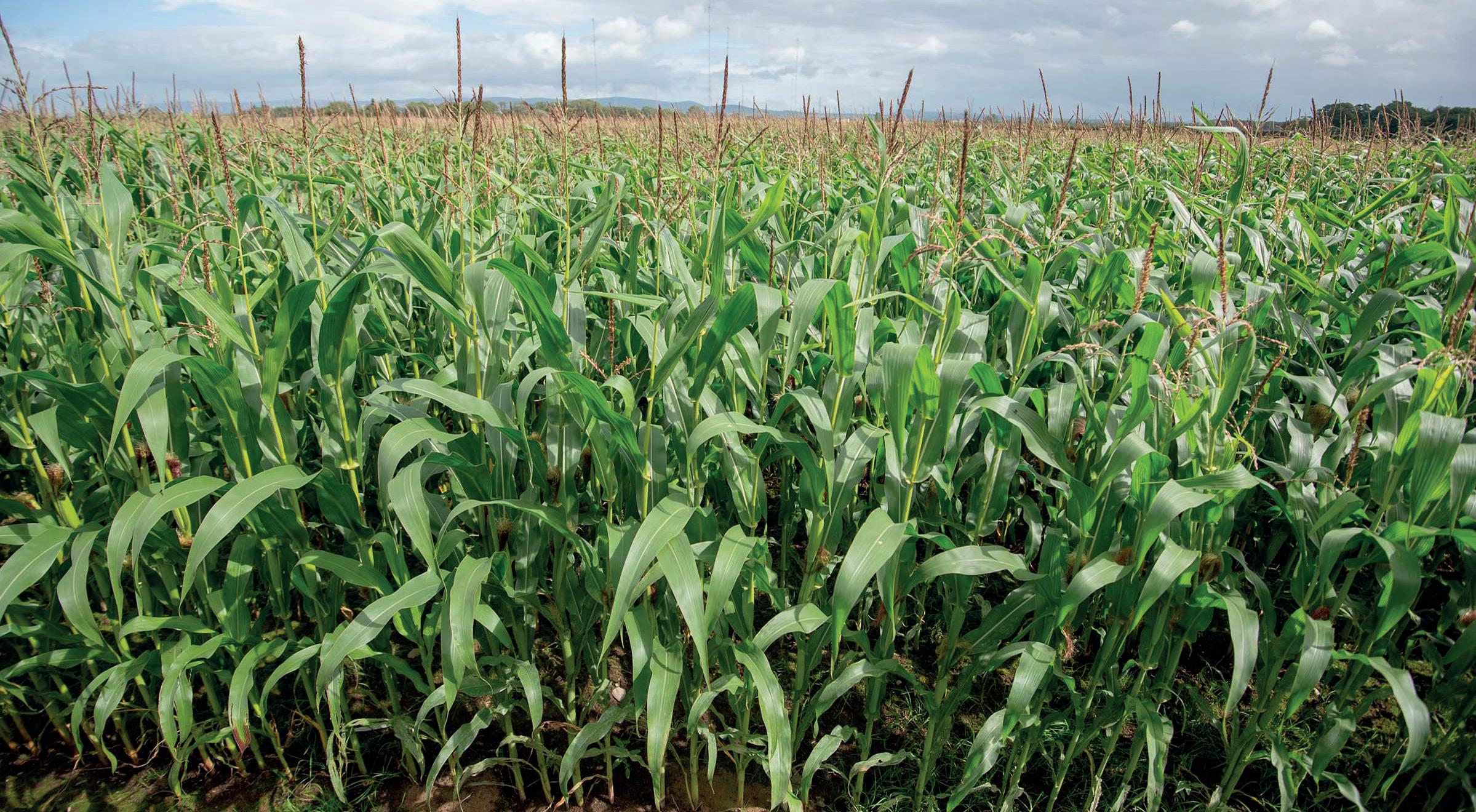
Applying foliar nitrogen (N) to maize before tasselling has become an effective management practice that can improve crop performance and maximise yield potential. During the rapid vegetative growth stage leading up to tasselling, maize has a high demand for N. If soil N becomes limited due to heavy rainfall, leaching, or poor root uptake, a foliar application can provide a timely nutrient boost.
Foliar N is absorbed directly through the leaves, allowing the crop to quickly access N. Applying N at the pretasselling stage helps maintain healthy leaf colour and photosynthetic activity, ensuring the plant continues to produce the energy needed for ear development and grain formation. This can be particularly valuable when soil conditions restrict nutrient availability from the soil.
A well-timed foliar N application also supports kernel set by reducing the risk of N deficiency during one of the crop’s most critical growth stages. Healthier plants are better able to withstand stress from drought or fluctuating weather conditions, helping to preserve yield potential. While foliar N should not be seen as replacement for soil applied sources, it serves as an excellent supplement where deficiencies are suspected or where high-yielding crops require additional nutrition. YaraVita SAFE-N (@ 20 L/ha) is an ideal foliar N for application on maize pretasselling. SAFE-N ensures maximum uptake and crop safety. It contains quickly absorbable and slow-release forms of N, giving a long-lasting feeding effect. When integrated into an overall nutrient management strategy, pre-tasselling foliar N can contribute to improved grain fill, and higher, more consistent maize yields.
An overnight switch to EU rules could cost £500m-£800m in lost yields and husbandry changes.
l Fear that red tape will stifle innovation
By Jane Thynne
THE impending European Union reset and Sanitary and Phytosanitary agreement could leave farmers growing crops this autumn that will be illegal to sell when it comes to harvest 2027.
According to Jeremy Moody, secretary and adviser to the Central Association of Agricultural Valuers, the deal would mean EU rules could apply to all food produced in the UK, not just food destined for export.
He said: “We should understand this is not simply a trade or a veterinary agreement. Our Government is trying to outsource much of the regulation of farming and the food chain to Brussels, where we could have no voice – and to do so overnight next summer. Produce grown here for eating here would be under EU rules.
“But we are in near ignorance of what that agreement might say, making this challenging when planning to put crops in the ground.”
He added: “We know it could run from animal transport to food
Crops could be illegal for harvest next year
labelling, but we might not learn the shape of the deal until an October summit, then all the legislation with its details is to follow.”
Mr Moody said accepting EU rules would likely mean a return to the EU’s restrictive approach to the precautionary principle and its resulting impact on gene editing and technology, among other things.
“The EU knows its red tape stifles innovation – and we need to innovate,” added Mr Moody.
Rules
Issues would range from glyphosate to bovine TB vaccination, and definitions from ‘organic’ to ‘sausage’. Developing EU animal transport rules could also put some animals beyond economic reach of an abattoir.
Mr Moody said: “When farmers plant crops for which we do not
Swiss deal cuts tariffs for producers
THE UK Government has signed a deal with Switzerland that will see tariffs removed from British lamb exports for the first time.
Defra said the agreement would give agri-food and drink exports a competitive edge in a market already worth £195 million a year, while safeguarding UK farming interests and upholding high standards.
High-quality UK beef steaks will see a 35% tariff reduction, while fruit and vegetable growers will benefit from improved seasonal access, with tariffs falling to as low as 0% on a wide range of products, including peas, carrots and broad beans.
There are reductions too for sparkling wines and dairy exporters, with tariffs cut by up to 50% on products such as milk powder.
NFU president Tom Bradshaw said: “This is a great example of a balanced deal. We appreciate the Government’s efforts to secure competitive access to the Swiss market –something we have called for since the start of these negotiations.
“The deal will provide exciting opportunities for our farmers and growers. It is actually the best access that Switzerland has ever given a trading partner on fresh boneless beef and sparkling wine.”
know the standards required come next harvest, crop protection products are central.
“The Andersons Centre has said an overnight switch to EU rules just for crop protection products could cost £500 million–£800m in lost yields and husbandry changes. Our focus should be on getting our farming and our economy growing again, rather than simply accepting regulations from others with the added uncertainty – it then changes beyond our control.”
Fresh calls for clearer farm welfare labelling
THE UK’s animal welfare labelling system is fragmented, inconsistent and clouded by misleading claims that leave consumers struggling to make informed choices, a new report has revealed.
Research from welfare group Four Paws showed widespread support for mandatory Method of Production labelling, with almost 80% of individuals backing labels that clearly showed how animals were reared.
The report coincided with a special event held in Parliament, hosted by Environment, Food and Rural Affairs Committee chair and Orkney and Shetland MP Alistair Carmichael, alongside a pop-up supermarket aisle where parliamentarians got a first-hand look at how regulated welfare labels could transform the way we shop.
The report found that despite consumers increasingly expressing concern for animal welfare, they were not given the tools needed to make informed choices – animal welfare could not be verified at point of purchase, meaning consumers
must rely entirely on the information presented on packaging.
Mr Carmichael wrote the foreword for the report, which said: “People have a right to know how the food they buy is produced. The current landscape is clouded with marketing spin and meaningless messages, which only do a disservice to shoppers and the many farmers who are already investing in raising standards.
“The Government has an opportunity to deliver practical reform, with benefits for consumers, producers and animals alike.”
Welfare
Emily Wilson, head of programmes at Four Paws, said: “The public have made it clear animal welfare matters to them, but are being asked to make decisions on inconsistent, confusing and misleading claims. Farmers who are already investing in higher welfare deserve recognition for the standards they are setting.
“More importantly, animals deserve a system that encourages a better standard of life.”
Burning reality of wildfires
ONE wonders how long the idiocy by this Government and its agencies will continue to last by ignoring the danger of wildfires (‘Failure to act on fires is no longer an option’, FG July 3)
The conflicting policies of Natural England of rewilding and the removal of grazing livestock, plus no cool burns to reduce the increasing fuel, thus creating ever-larger fires, must be sensibly and quickly changed before there are deaths
and the destruction of housing as well as crops and higher insurance premiums for all.
Ed Miliband – and his mad and extremely expensive net zero policy that is leading to job cuts, businesses closing and economic decline right through the UK because of the resultant exorbitant energy costs –is very silent on the emissions from the wildfires.
Even some of the large trade unions that give millions to the Labour Party are threatening to stop their financial support because of the job losses.
The negative costs resulting
Social media reactions
READERS had their say on Norway striker Erling Haaland’s plans to own a farm post-football career, as England beat the Norwegian side to progress in the World Cup. n “He’s from farming stock. Interesting fella.”
SEAN O’SULLIVAN n “Best life.” SOLOMON’S EQUESTRIAN
from importing oil and gas, rather than using what is available under the seas around us, is another
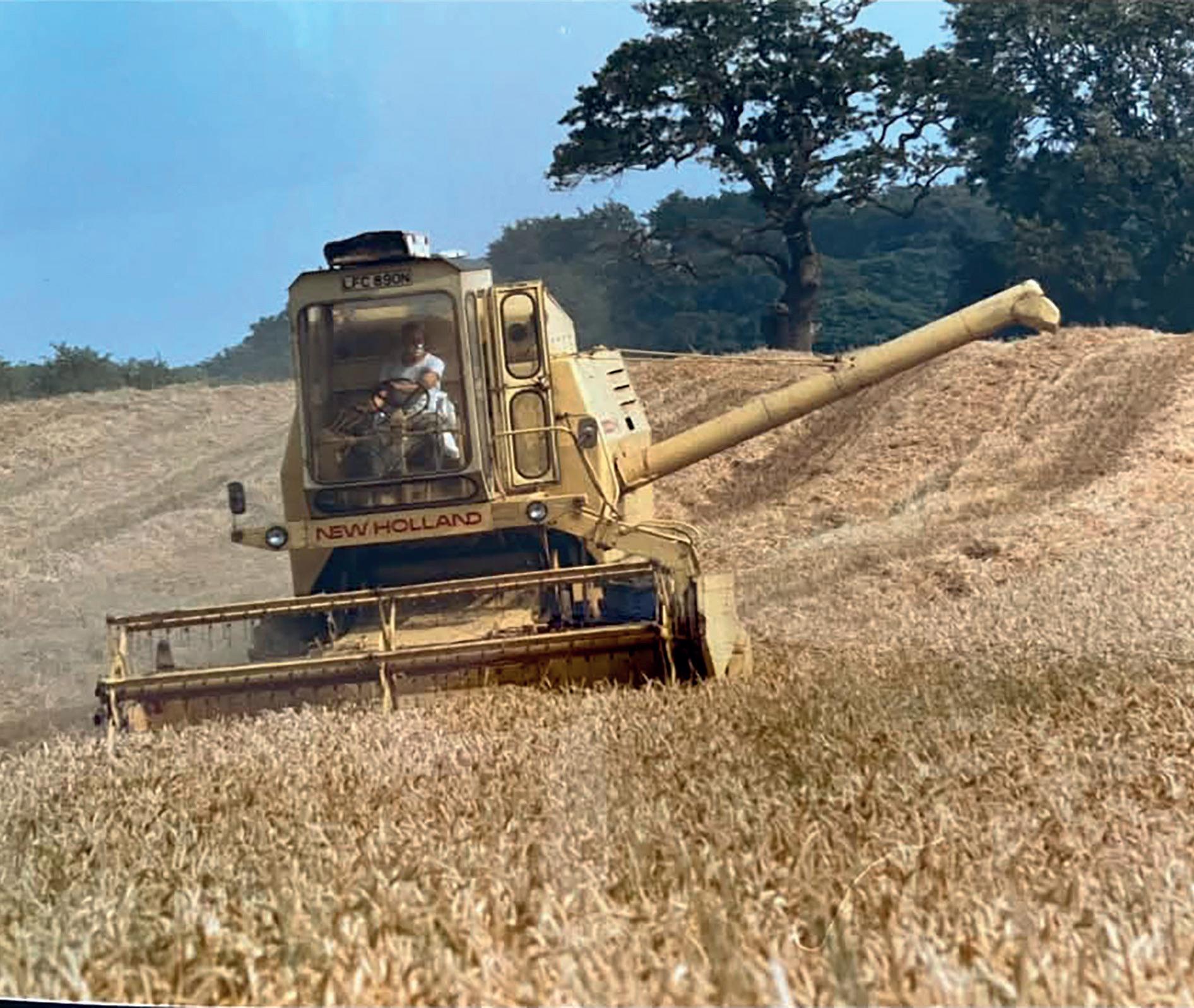
Gloucester, in the early to mid-1980s, sent in by Adrian Wood (pictured).
n “From Clarkson’s Farm to ‘Haaland’s Farm’ - I must try this farming crack - oh wait, I am already – I’m just missing the millions!”
BOBBY MILLER
n “Get some Leicesters, Erling!” ANDREW BROWN
n “The Vikings were farmers.” CLAIRE MARIE GOODWIN
damaging policy. The Norwegians are opening new fields right under our noses.
The Moorland Association, land managers, farmers, fire chiefs and wildlife trusts are all extremely concerned but being ignored. The Government answers so far seem to be to grow lentils and more legumes –what a lot of hot air thinking went into that idea when the major part of the UK is too wet.
The Government needs to stop burying their heads in turnips and face the burning reality.
Suzanne Greenhill, Gloucestershire.
Shining bright
THE Light shines bright thanks to the team at Farmers Guardian Lynda and Andy Eadon of Len’s Light just wanted to say a massive thank you to editor Katie Jones and the team who endured the Big Farm Walk.
It shows that positivity and teamwork can get you through when things start to get tough.
We are hearing of so many people who are finding it hard to reach out and therefore are unable to take the first steps in their own journey.
To all those people, please be
If you have a classic picture you would like to share, please email it to marcello.garbagnoli@agriconnect.com n IFyouwouldliketosend
Statement and Terms & Conditions Farmers Guardian is part of the Arc network (we, us,
and we are committed to
and respecting your
We are registered under company number 07931451 and have our registered office at Unit 4, Caxton Road, Preston, Lancashire, PR2 9NZ. For the purposes of this policy, we are the data controller of personal data provided to us. We are a UK company specialising in providing information services including news, analysis, data, pricing, insight and market intelligence to agribusiness professionals across the globe. This policy sets out how we do this and applies the use of your personal data that you disclose to us by entering into our competition to win £200 for the Stockjudging Competition or £20 Love2Shop vouchers for the weekly Crossword Competition, referred to throughout this statement as the “Competitions”. How we collect your information: We collect the personal data you have provided to us by filling in the form on our website www.fginsight.com OR printed form when entering the Competitions. If you have entered the Competitions via our site we may also collect some technical information about how you use our site, for example, the type of device you are using, your operating system, IP address, uniform resource locator (URL), clickstream and length of visit. How we use the information you provide: We will use your personal information: • to administer the Competitions, on the basis that the use of your personal data for this purpose will be necessary to enter you into the competitions and, if you are successful, contact you to notify you of your prize; and, • if you are new to Farmers Guardian and where you have agreed to this, to provide you with news and updates from time to time about our services; and, if at any point in the future you do not wish to receive any news and updates from us or from, you can unsubscribe from our marketing list at any time by following the steps below. To unsubscribe from any communications using the link on the email we send you or by emailing us at dataprotection@farmersguardian.com. We will not use your information for any purposes except those listed in this policy without letting you know and getting your permission, if necessary, first. Who do we share your information with? We will not disclose your information to any third parties without your consent, except where: • it is necessary to enable any of our staff, employees, agents, contractors, suppliers or commercial partners to provide a service to us or to perform a function on our behalf; • we have a legal obligation to disclose your information (for example, if a court orders us to); or • there is a sale or purchase of any business assets, or where Farmers Guardian or any of its group companies are being acquired by a third party. Where we use third parties as described above to process your personal information, we will ensure that they have adequate security measures in place to safeguard your personal information. For how long do we keep your personal information? We keep your personal information for 36 months for the purposes for which it was collected or for any period for which we are required to keep personal information to comply with our legal and regulatory requirements, or until you ask us to delete your personal information. Your rights: You have a number of rights in relation to your personal information. These include the right to: • find out how we process your personal information; • request that your personal information is corrected if you believe it is incorrect or inaccurate; • obtain restriction on our, or object to, processing of your
brave and take little steps – reach out and you will find that embarking on your journey is easier with help from those around you.
Lynda and Andy Eadon, Len’s Light.
Reducing stock
INTERESTING to read that the climate change people want a major reduction of livestock numbers.
I will shortly be 90 and I can remember the war as a young boy on a farm near Sheffield with German bombers flying over my bedroom every night.
My grandfather, a champion horse ploughman, was recruited to run the local War Ag gang, sent in with tractors to plough up hundreds of acres of grass in order to grow wheat for bread. The farmers of the land had to accept it and reduce livestock numbers.
Of course, what happened then was the black market.
I remember one farmer who had a double-sided piggery. The inspector walked down the row counting the animals while one of the farm men went down the other side letting the same animals through to be counted again.
Alex Black Head of News and Business – alex.black@agriconnect.com
Solution needed as pig sector crisis continues Leader
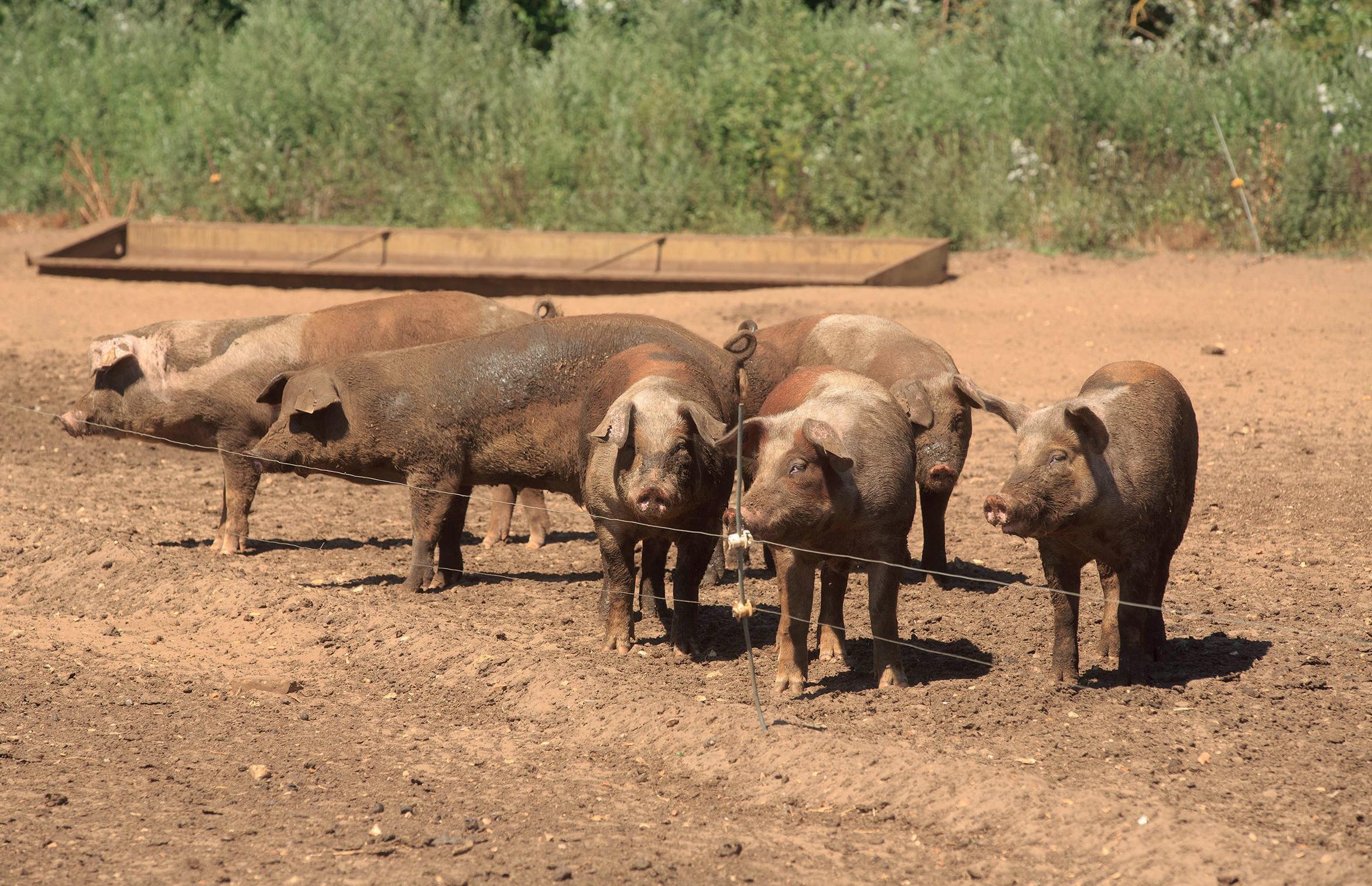
OVER the past few months, Farmers Guardian has heard and reported on heartbreaking stories in the pig sector as independent producers battle crippling losses, processors handing out notices and fears for the impact on the welfare of pigs if the situation continues.
The UK’s pig industry has had far more than its fair share of crises over the decades.
This week, we had some positive news from Scotland, after the Scottish Government announced its promised support for the sector, although the industry was keen to point out it does not go far enough. But it was less encouraging to hear from the Farming Minister this week talking down the prospect of intervention, with English, Welsh and Northern Irish pig farmers also fearing for their future.
The impact on farmers’ mental health, as well as the health of the pigs, must also be considered. With the high standards which separate British pork from its European neighbours and
the continued impressive progress on reducing antibiotic usage reported once again, the sector delivers so much for the country. It remains at the centre of many iconic British dishes, from full English breakfasts to the humble sausage roll or pork pie.
It must surely be time for Defra to deliver a support package and keep independent producers farming, and British pork on the menu, for generations to come.
If you would like to be featured, email mia.willemsen@agriconnect.com
Richard Elmhirst, South Yorkshire.
Sophie Burgoyne
Church Stretton, Shropshire
Sophie Burgoyne, 27, is a solicitor for Lanyon Bowdler.
Sophie Burgoyne
PICTURE: GETTY
The top fruit industry could grow by 50% over the next 10 years but is being held back by a lack of joined-up thinking. Cedric Porter reports from Fruit Focus.
l Demand for berries is increasing each year
THE British market for berries is growing at 10% a year, but the UK cannot keep up with that extra demand, according to Nick Marston, chair of British Berry Growers, speaking at Fruit Focus.
He said: “Only 60-65% of the raspberries consumed in the UK during its raspberry season are home-grown.”
He was joined on a panel by other members of the Horticulture Expert Group, which has been tasked by Defra with developing a sector growth plan.
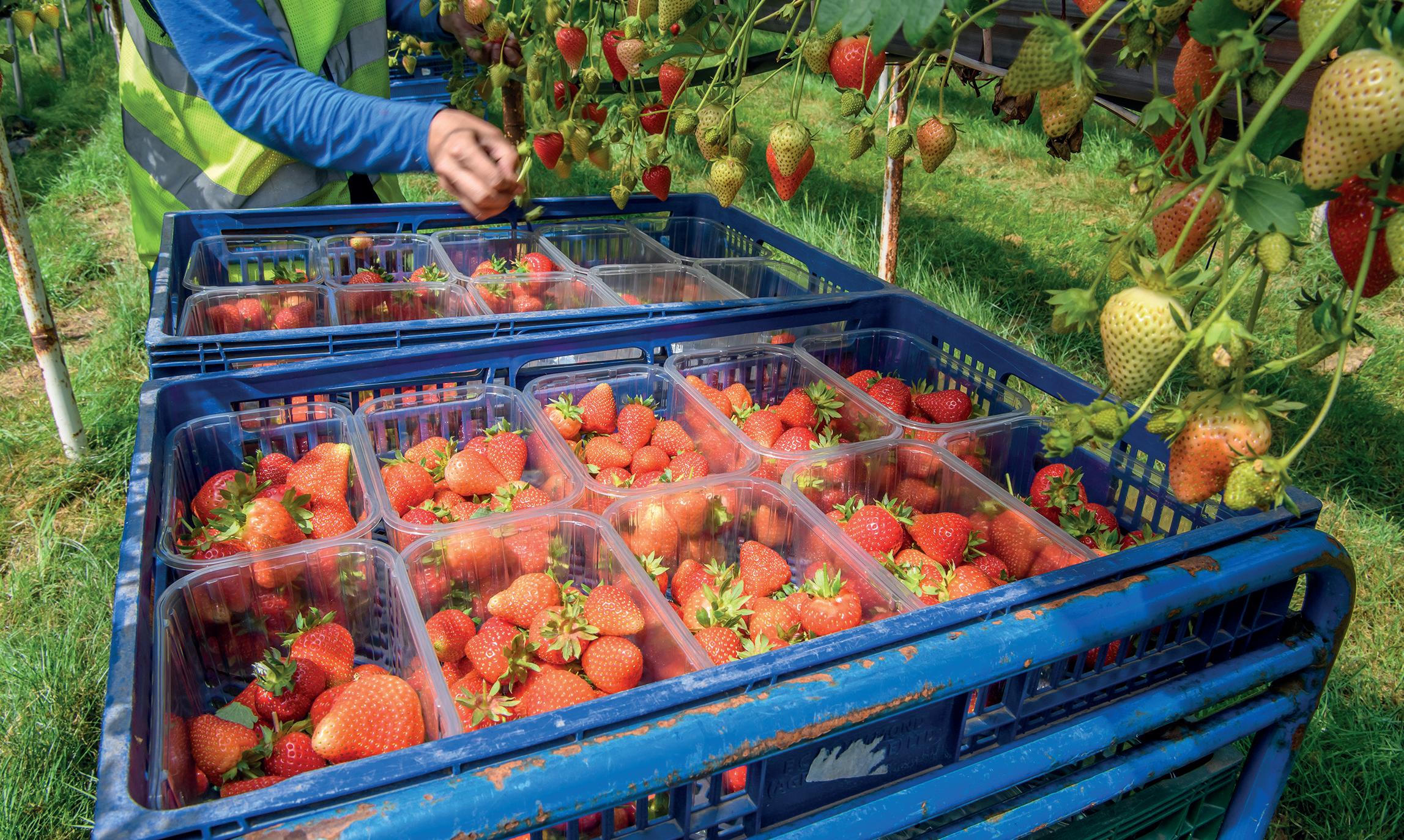
Ali Capper, chair of British Apples and Pears, listed policy failures and omissions that were preventing growers from investing. They included restricted access to labour, which is the most expensive in Europe; the closure of the legacy European Union fruit and vegetable support scheme in England and Wales, but not Scotland; and a tortuous planning system and energy costs.
Ms Capper said: “These barriers are making us less competitive at a time when climate change is threatening production in southern Europe and northern Africa, meaning there is a greater need for UKgrown produce.”
The panel agreed there should be more clarity as to how many temporary visas would be available next year, which the Government has not yet announced. With more than 90% of soft fruit pickers from overseas, too few visas would be disastrous for growers.
visas – up to nine months – to allow for more flexibility during longer harvesting periods.
Simon Conway, chair of the British Tomato Growers Association, said the sector was an intensive user of energy, but did not get the same access to Government support systems as other manufacturing sectors to help reduce energy bills.
“It costs £2.5 million-£5m/hectare to install glasshouses, and growers do not have the confidence to make investments that will take 10-20 years to recoup,” he said.
The group largely welcomed the
IN HECTARES
potential EU and UK reset, but feared a mid-2027 start date to the agreement might be too early for growers to adapt. While there was some concern over the potential loss of crop protection products under the deal, the fact that the UK might be able to use new products approved in the EU was welcomed, as was the speeding up of phytosanitary checks.
“Brexit more or less stopped exports of soft fruit because checks took four days, which can be the length of the shelf-life of the product,” said Mr Marston.
Water was another hot topic on a day when temperatures again topped 30°C and large areas of Kent were already under a hosepipe ban.
Mark Betson, NFU water resources specialist, said the South East was key to UK food production, with the agri-food sector worth £5.1 billion in the region. Kent grows 60% of the UK’s apples and 30% of England’s soft fruit and, alongside Sussex, is responsible for 22% of the country’s glasshouses.
One area of the horticulture industry that is growing is vineyards. Last year was a vintage year, with 16.5m bottles of British wine produced, up from 10.7m in 2024, but behind the all-time high in 2023 of 21m bottles.
“There are 4,800ha under vines in the UK, which is up more than 500% on 20 years ago, with the number of vineyards up 3% last year to 1,158,” said Nicola Bates, chief executive of representative body Wine GB.
Climate
While the changing climate has brought investment into the British wine industry, water availability is an issue, as is labour availability, with 90% of vineyards saying they were expecting to hire in the next three years, according to a Wine GB survey.
The UK fruit area is at an all-time low at a time of greater demand.
There were 19,242ha of top fruit grown in the UK in 2025, according to Defra, which was 2.7% less than in 2024, 34.5% lower than the decade before and only 53% of the area grown 40 years ago.
The UK soft fruit area was down 6% in 2025 to 10,166ha, according to Defra. At the start of the 1990s, the area was 30% higher.
Higher yields and longer growing periods have increased output, with SCI Horticulture Group estimating that 120,000 tonnes of strawberries were produced in the UK between March and November 2020 compared with just 50,000t in 1985.
The UK soft fruit area was down 6% in 2025 to 10,166 hectares, according to Defra.
Orchardfruit Softfruit
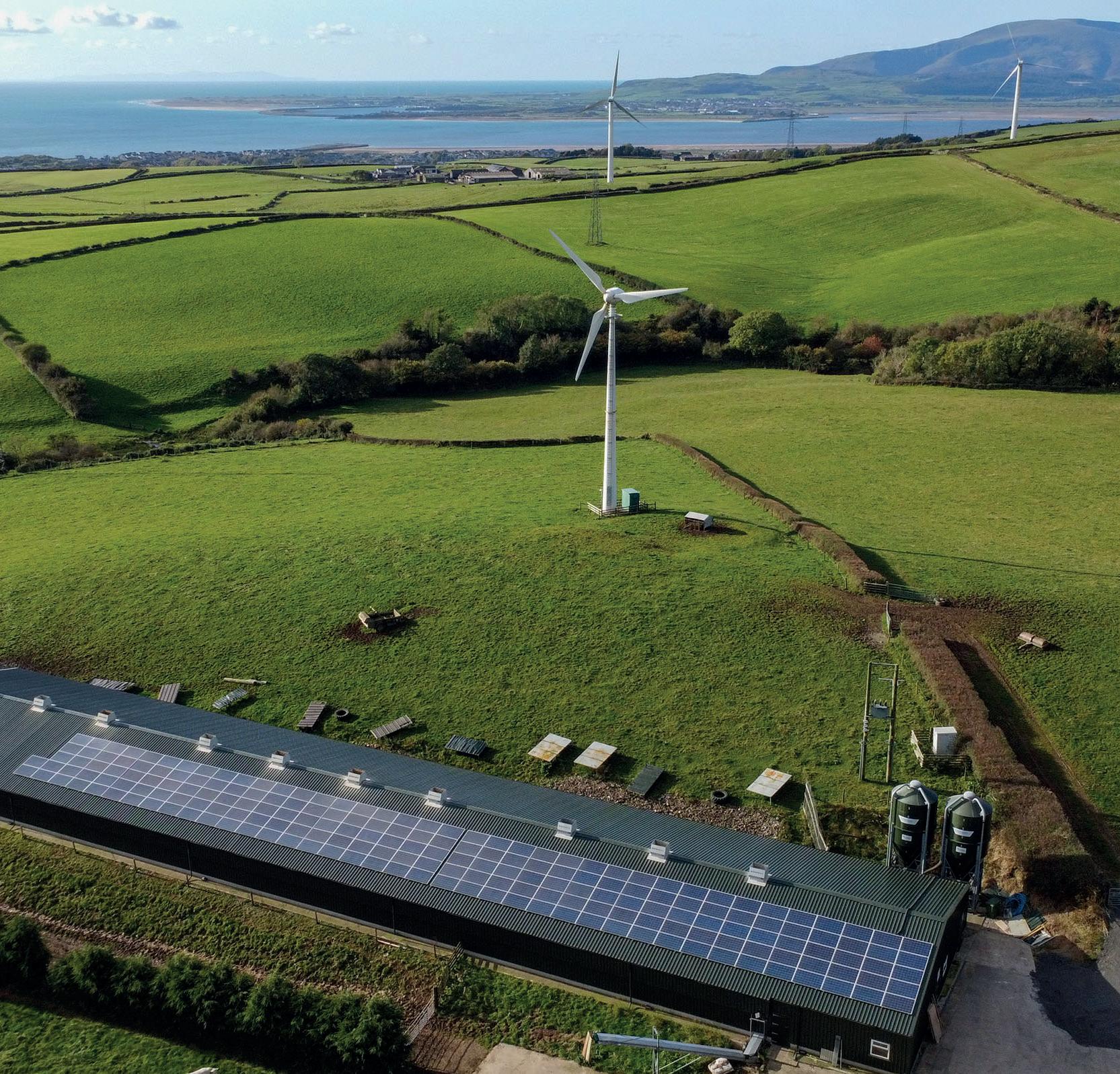
For businesses looking at how underperforming land could contribute more to long-term resilience, onshore wind could be an option.
Hans-Georg von Lewinski, managing director of Caeli, an online renewables advice platform, believes there is now a growing appetite.
Mr von Lewinski says: “Across the UK, farmers are operating in an environment of margin pressure and policy change. For many landowners, hosting a turbine is increasingly becoming a long-term business decision.”
Wind developments can help farmers make a direct contribution to UK energy security and net zero targets, with global instability placing a spotlight on domestic generation.
In 2024, wind power generated approximately 29% of total UK electricity. Overall, renewables supplied slightly more than half of the country’s power generation.
“Onshore wind is now central to the UK’s energy system, and landowners are playing a direct role in that transition,” adds Mr von Lewinski.
Income
The turbines also offer reliable, long-term income as leases typically run for 25-40 years, providing predictable, index-linked cash, reaching five- or six-figure sums per turbine, largely insulated from fluctuations in commodity markets, input costs and agricultural policy reform.
Mr von Lewinski says: “For many, this is not just about renewable energy. It is about strengthening the long-term resilience of the farm business.”
Farmers have been urged to consider energy in their business model which may reap climate, cashflow and tax benefits. Farmers Guardian finds out more.
Could wind turbines be the future of farm profitability?
However, something which must always be taken into consideration when planning any diversification is the tax implication.
For sole traders and farming partnerships, turbine rental income is generally taxed as trading or property income at normal Income Tax rates.
But it is worth noting that as income increases, individuals might be pushed into higher tax bands. Where land is held within a limited company structure, Corporation Tax applies instead.
Inheritance Tax (IHT) is often one of the biggest concerns when projects are discussed and one key question is whether land used for a turbine will continue to qualify for Agricultural Property Relief or Business Property Relief. It could also potentially increase in value, which may affect succession planning and future IHT exposure.
If HMRC views the arrangement as purely investment income from
rented land, reliefs may be restricted. However, where the activity forms part of a wider trading business or includes electricity generation, the position may differ.
Land value
Gavin Birchall, head of tax and trusts at Birketts LLP, says: “It is important to consider ownership structures. There is often a significant uplift in land value, and it can
be prudent to ensure this increased value is spread across generations rather than retained by older family members.”
Selecting and understanding the potential of a site is key to the success of any project.
Consideration needs to be given to issues such as accessibility to and capacity of the nearest grid connection, as well as any local planning constraints or opportunities.
In 2024, wind power generated approximately 29% of total UK electricity.
Farm Profile
Edited by Angela Calvert – 07768 796 492 – angela.calvert@agriconnect.com
For more features, go to farmersguardian.com/farm-life
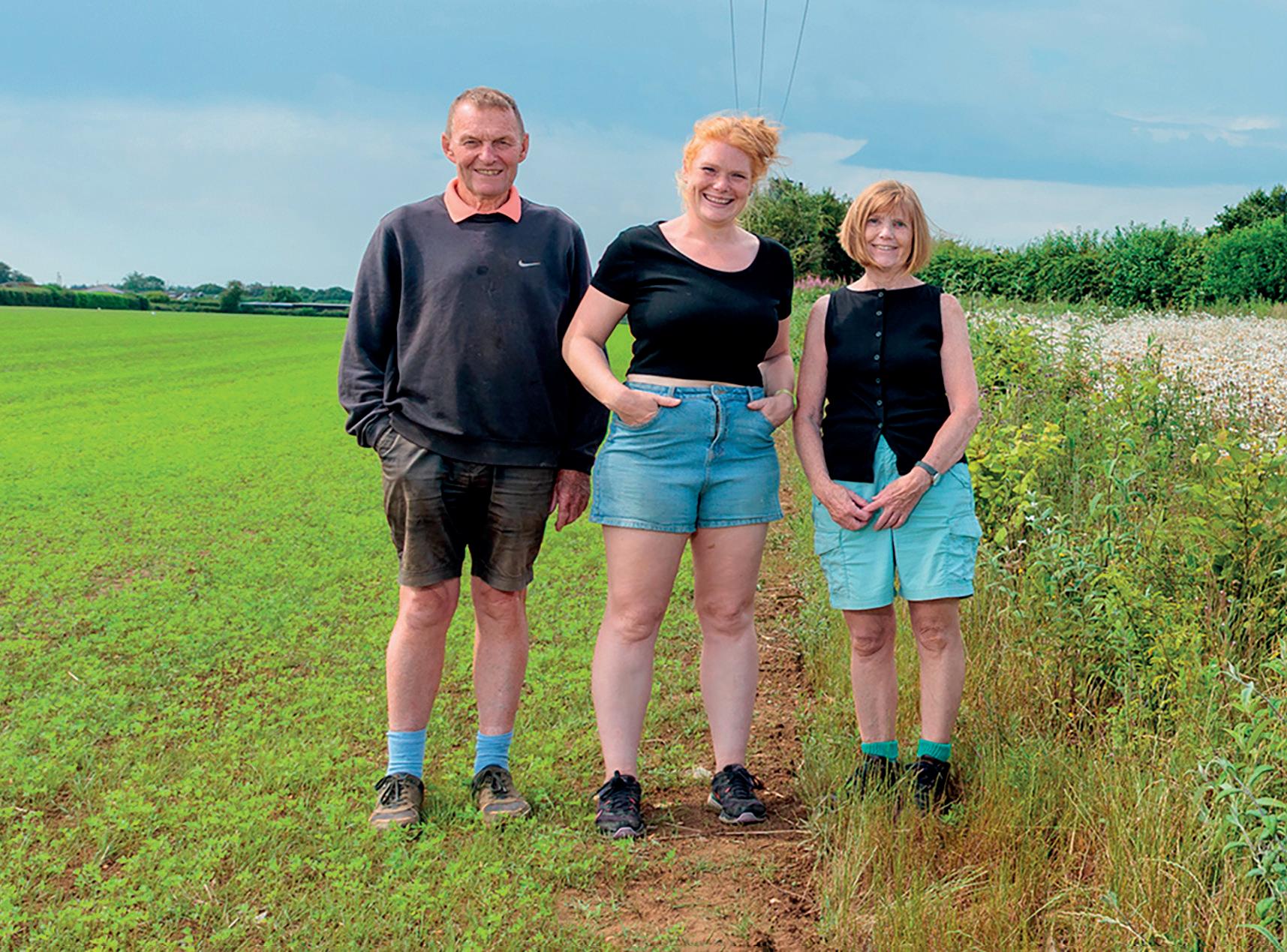
Established in late 2023, Gingerly Green Flower Farm currently contributes about one-third of overall business income at Newlands Farm, near Dover. The 158-hectare (390-acre) holding also includes a sheep flock, a hay and haylage enterprise and a block of light industrial rental units. Clare Readman is the sixth generation in the farm business, which she manages in partnership with her parents, Simon and Myra Readman.
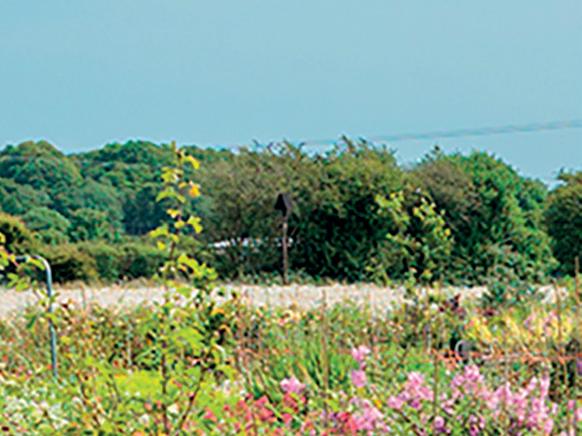
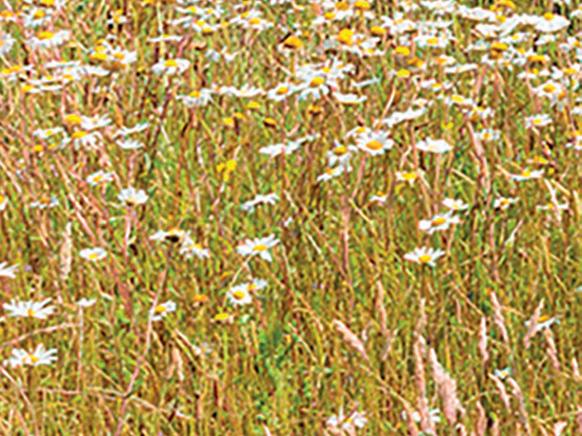
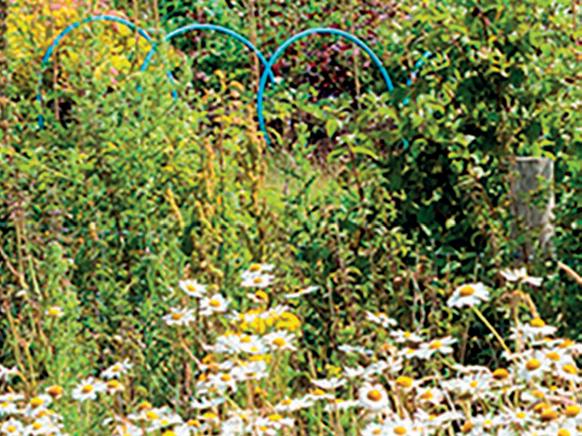
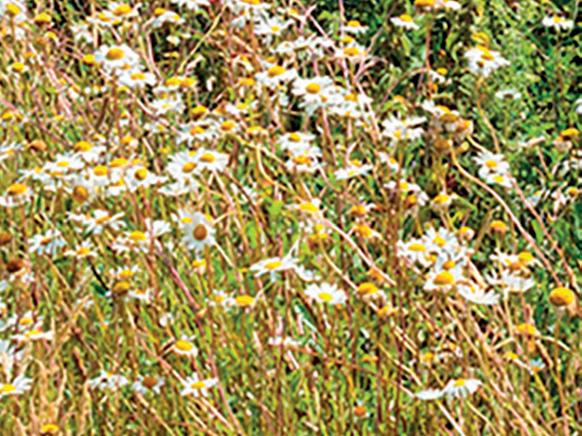
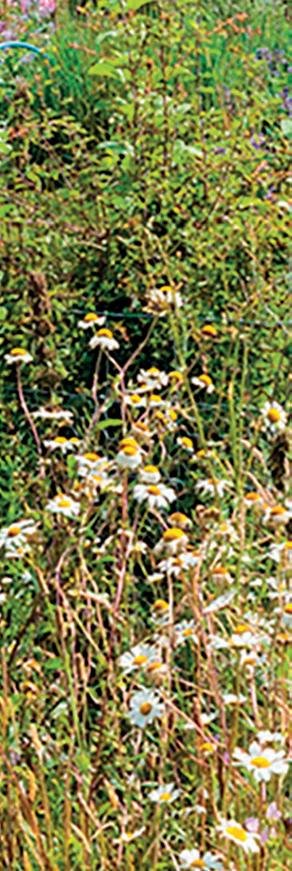
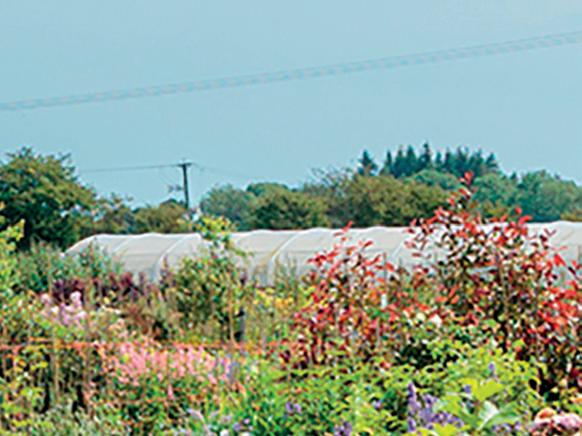
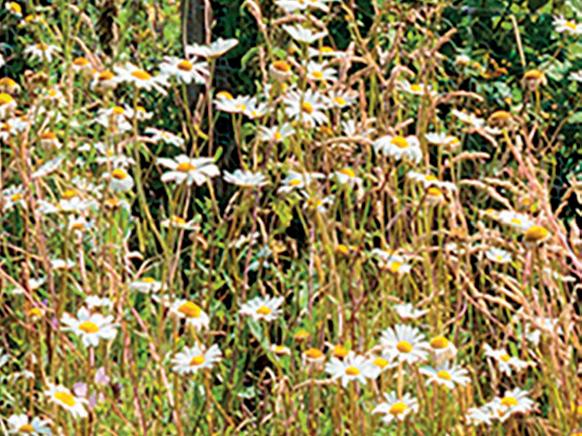
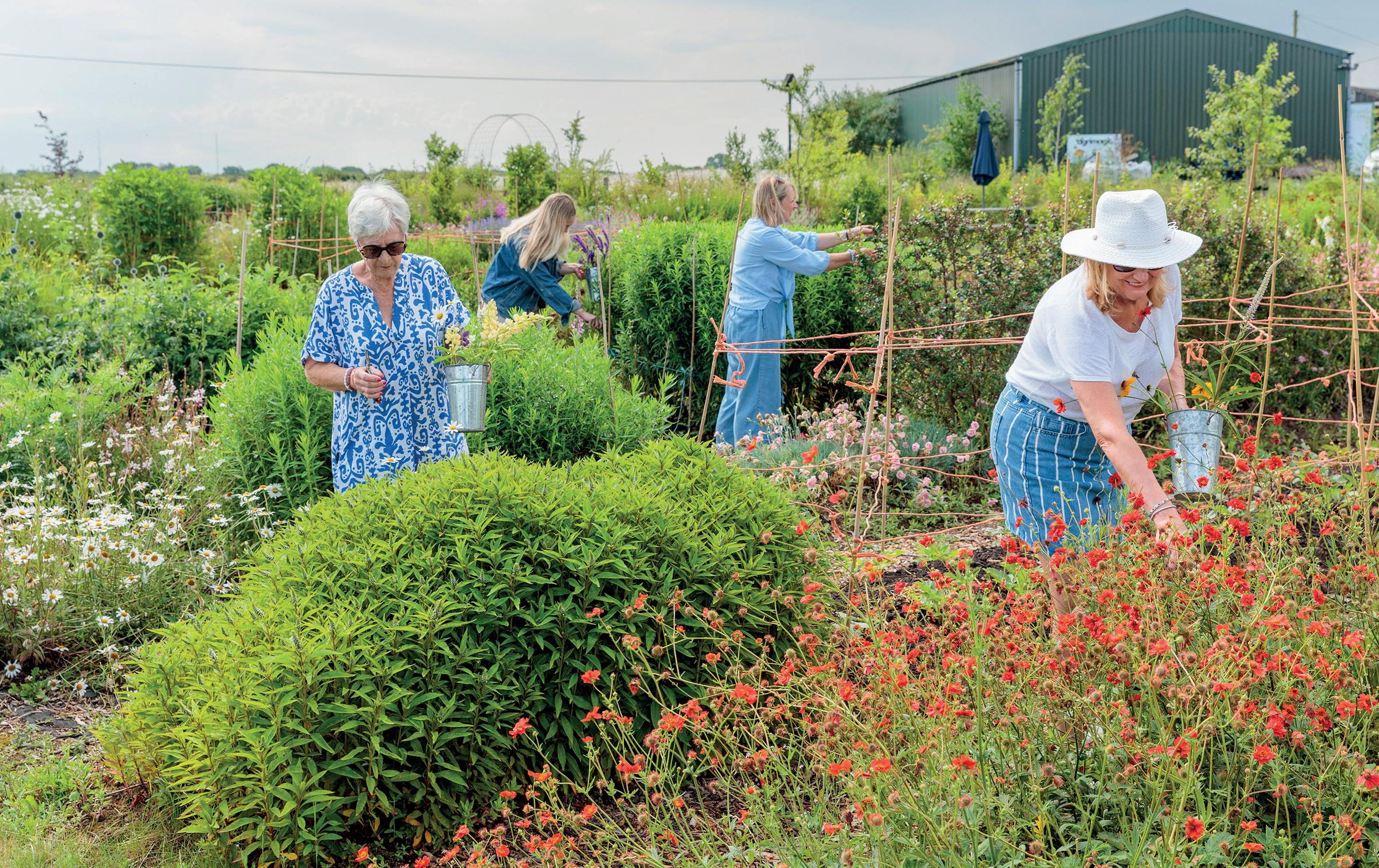
The flower enterprise occupies 0.6ha (1.5 acres) of land and sits within a larger area of species-rich wildflower meadow that is cut annually for hay. Open from March to October on a pick-your-own basis, Gingerly Green offers a wide range of species from daffodils and tulips to dahlias, roses, bearded iris and peonies.
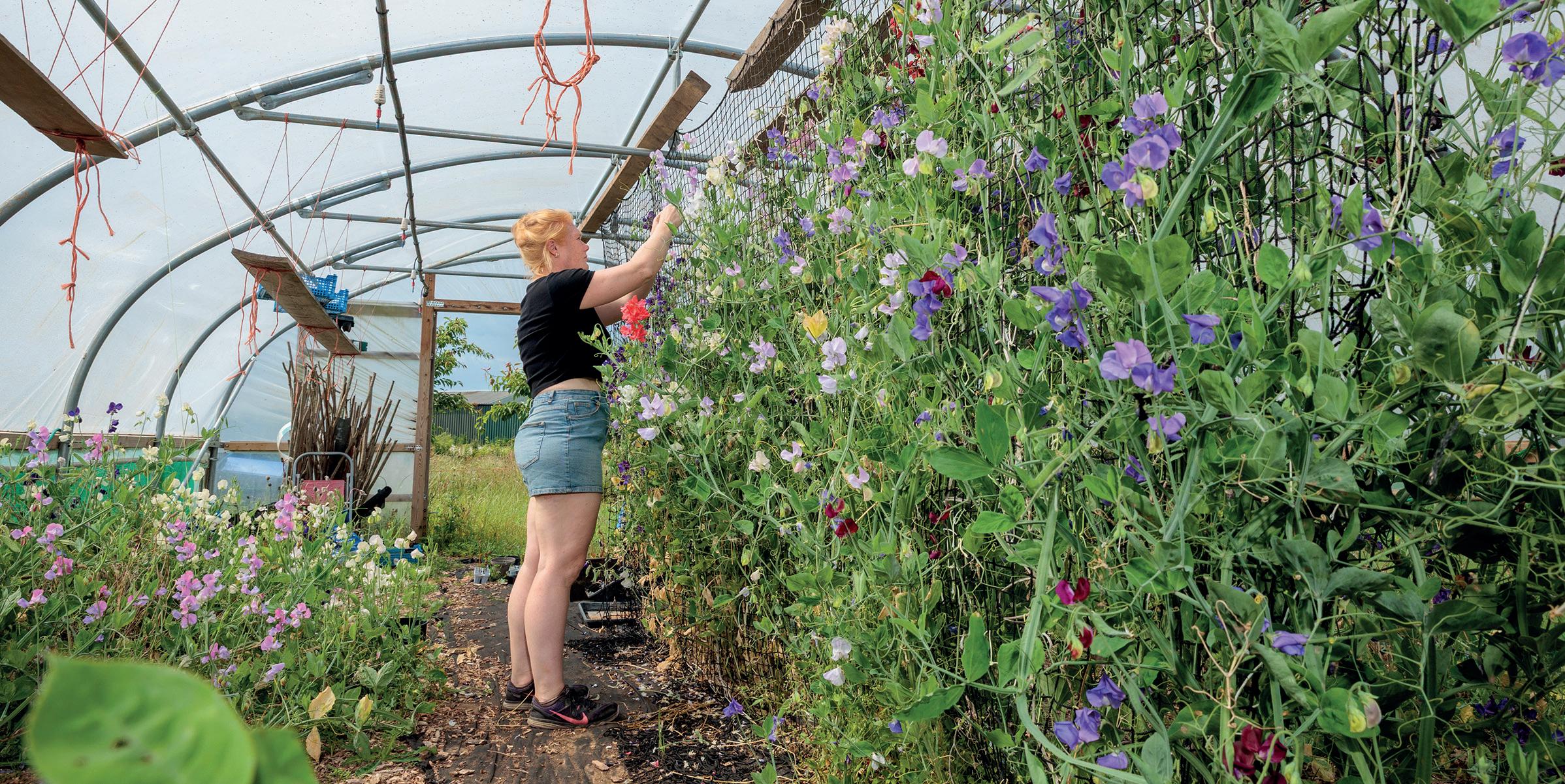
Meanwhile, the large polytunnel is dedicated to annual seedlings, dahlia tubers and early crops like sweet peas, ranunculus and anemones, as well as being used for propagation and plant establishment. Sustainability is considered important and Clare follows organic principles and uses alternatives to peat and single-use plastic.
However, there are many other elements to the business.
Clare Readman’s flower business occupies just a few acres of land, but it makes a significant contribution to the income generated on the family’s sheep and grassland unit in Kent. Wendy Short finds out more.
Flowers ensure sustainable future for family farm
“I supply wedding flowers, funeral tributes and gift bouquets,” she says.
“Some of the income is generated through workshops, and the Christmas wreath-making events are very popular, with about 250 people signing up last year.
“Groups are also taught how to make bouquets and wedding flowers, and after being asked many times about how to set up a cut flower garden, I have added that to the list of workshops. Another string to my bow is the Friday Flower Club, which is a subscription service where customers can register for a weekly flower delivery.”
Collaborations with other local businesses have proved successful.
Farm facts
“The farm hosts ‘Sip and Snip’ days, when I team up with another local business, Simpsons’ Wine Estate,” says Clare.
Joint ventures
“These events combine flower harvesting with English wine tasting experiences. Another joint venture is the food and drink provision. A local catering business supplies pre-ordered afternoon teas and picnic lunches, and we provide tea and coffee on-site. It gives me great pleasure to watch people picnicking among the flowers on a sunny day,” she adds.
on Facebook and Instagram has been built up with a degree of trial and error.
“I try to show people what I am doing, rather than simply trying to sell to them,” she says.
“By taking them on the journey with me, the customers feel a degree of investment in the flower farm, and the policy also helps to attract new business. I like to feature not just the flower enterprise, but also the farming side. People are very interested in agriculture, and posts showing tractor work always get a lot of views.
Social media plays an important role in marketing the flower enterprise, and her current following
“Public engagement has always been a priority, and Gingerly Green is a great opportunity to connect more people with farming. I am very
■ Flower farm – 0.6 hectares (1.5 acres)
■ Pick-your-own flowers, event flowers, subscriptions and workshops
■ 1.4ha (3.5-acre) wildflower meadow
■ Flock of 350 cross-bred ewes
■ Arable land converted from cereals to grass for hay/ haylage production
■ Future plan for wildlife pond and bird hide
The flower enterprise sits within a larger area of species-rich wildflower meadow.
One of my missions is to raise awareness about the wide variety of British flowers available throughout the year
CLARE READMAN
conscious that a lot of people would never be invited onto a working farm unless they had a personal connection with a farmer.”
Clare is hoping that her new project will further increase visitor numbers.
Funding
She says: “I have received some funding from the local council to build a wildlife pond and there will be an overlooking bird hide, with a small charge for public entry to reflect the investment and cover ongoing maintenance. The hide will offer a view over the pond, as well as the wildflower meadow, flower beds and surrounding farmland.”
The Readman family have farmed locally for about 200 years, and there was a dairy unit until the herd
Kent Farm
dispersal in 1980. It was replaced with an arable rotation, which was halted last year in favour of a grass production system which sells baled hay and haylage to farmers and horse owners.
“The conversion of the former dairy buildings into light industrial commercial units in the late 1980s was a necessary move to boost profitability,” says Clare.
“If we had not taken action and put in the industrial units, we would not have been able to continue farming because of the relatively small acreage,” she says.
“A similar scenario applied to the cereal production. It was the backbone of the business for many years, but a consistent problem with Italian ryegrass made us take a close look at how much the cereals were making
per acre. We also sought advice from our agronomist.
“The ryegrass was showing resistance to herbicide treatments and it affected yields to such an extent that last year we came to the conclusion that it would be better to sow the fields with grass. That should reduce the ryegrass burden in the soil seed bank, and multiple cuts will be taken throughout the season. So far, it
Left to right: Simon, Clare and Myra Readman.
Farm Profile Kent
seems there is good demand for hay and haylage in this area.”
The position will be reviewed in five years’ time.
Clare adds: “If the grassland works well, we will probably carry on and give up the idea of re-establishing an arable rotation. We also have an income stream from our 350-ewe flock of cross-bred sheep. Their lambs are sold as stores or taken through to finishing, depending on market prices and the weather.
“Nevertheless, Dad is approaching retirement so succession planning is fairly high up the agenda and some decisions will have to be made. The aim is for me to gradually take over the running of the whole business. Fortunately, we get on well as a family, and after some debate on any issue, we usually end up on the same page.”
Clare followed a very different career path before she returned to the family farm. After studying events management, she established a base in London and travelled the world organising conferences, corporate events and private functions. But, she has always had an interest in flowers and gardening.
“I have always loved flowers and my first ever job when I was 13 was working in a florist,” she says.
A large polytunnel is dedicated to annual seedlings and early crops, such as sweet peas.
“When I first moved back home I was working locally as a school business manager, but I was unhappy in the workplace and gardening became my solace. What began as a cut flower garden for the house gradually developed into a business idea, and after researching other flower-growing businesses and taking online training courses, I presented my flower farm proposal to my parents.
“Dad was initially sceptical, but he became much more receptive
Gingerly Green is open from March to October on a pick-your-own basis, offering a wide range of species from tulips to peonies.
once I had taken him to have a look at a similar business. He could see that I was passionate about the idea and knew how much I wanted to leave my job, so he ended up giving me his full backing.”
Her intention is for the flower business to operate without the need to employ staff.
“I do not want to take on any help outside the family because I enjoy being out in the field and having direct contact with my customers. I also
worry that expansion might make everything much more difficult to manage.
“One of my missions is to raise awareness about tthe wide variety of British flowers available throughout the year. My job satisfaction comes from the combination of helping to ensure the survival of our family farm, educating the public, and turning what was essentially a hobby into an environmentally friendly business,” says Clare.
Edited by Ash Ellwood – 07786
Quality holds as drought brings fall in cereal yields
● Increased pressure from virus in North
By Ash Ellwood
THE 2026 harvest is gathering pace across much of the UK, with winter barley largely complete in southern regions and combines now moving into wheat earlier than usual, following an exceptionally dry spring and early summer.
Farming in Suffolk, David Exwood, of Westons Farm in Horsham, says his yields so far are less than expected, having completed his winter barley harvest last week, averaging 6.4 tonnes per hectare of DSV’s Sensation variety.
As of July 14, Mr Exwood had combined 20ha of the 380ha wheat drilled in total, with a mixture of varieties including SY Cheer, KWS Zyatt and Sartorial.
He expects to be finished combining by the middle of next week.
He says: “It is cutting quickly and the quality has been fantastic, with the specific weights being mid-80s and fantastic protein, but our yields are definitely down.
“We have been cutting at 11.5% moisture as we have not had any real rains for about six weeks, and we have been trying to start combining really early, chasing moisture, but it has just been so dry.”
He has also combined his PI Pinnacle oilseed rape crop.
He says: “The rape was looking really good, averaging 3.1-4.2t/ha with a good quality and high oil content.”
It has been a low cabbage stem flea beetle year on his farm, but he says the greatest pressures were from barley yellow dwarf virus (BYDV) and late frost damage.
Happy
“At least it will be a cheap and easy harvest with no drying costs, so that is something to be happy about,” he adds.
Further north in Kelso in the Scottish Borders, Andy Baird, of Harpertoun Farm, says his Buccaneer malting barley yields have been ‘okay’, averaging 1% below their five-year average at 6.5t/ha.
“None of it so far has made the intended malting barley specification, as the screenings have been too high,” he says.
PREPARE FOR SCOTTISH WATER SHORTAGES
SCOTTISH growers are being urged to prepare for water shortages in the coming years as climate change leads to longer and more frequent periods of dry weather.
The call comes from the Centre of Expertise for Waters (CREW), a Scottish Government-funded centre based at The James Hutton Institute, which facilitates the exchange of expertise between researchers and Scotland’s water policymakers.
With climate change disrupting rainfall patterns and causing longer periods of water scarcity, water can no longer be taken for
Farmers are reporting lower yields but better quality from their harvests.
Mr Baird attributes this to both the extended heat and high pressures from BYDV causing the crop to mature at different times.
“I think this has made the crop uneven and the smaller grains are coming through into the sieves,” he says.
BYDV is not usually something he has seen much of on-farm; however, his malting barley crop has suffered this year particularly.
He adds: “We have not sprayed autumn insecticides for at least the past seven years as we have not had aphid issues previously, so have not seen the justification, but this is something we will have to look at moving forward if it is going to cause more issues.
“ We drilled the crop in mid-
September, which did not seem too early, but maybe we will have to look at drilling dates moving forward.”
The Scottish Borders have seen slightly more moisture than further south in the country, with Mr Baird’s lowest combining moisture testing at 13.7% and the highest at 14.7%.
Mr Baird has still got OSR and wheat to harvest, and he just started harvesting his first field of KWS Tardis feed barley on July 14 (pictured above). He says: “Thankfully, the Tardis is coming in much better than our malt for brewing barley, it was sown a week later on September 22 and has been far less affected by BYDV than the Buccaneer was.
“It is sitting at more than 9.8t/ha at 16% moisture, so I think the average will be nearer to 10t/ha when we finish.”
granted as a consistently plentiful resource in Scotland.
This places added pressure on farmers and growers, as well as freshwater habitats and wildlife.
Dr Miriam Glendell, director of CREW, says: “Research has shown that by 2050, we can expect to see drought affecting river flows twice as often as we are used to.
“It is therefore important for businesses and individuals to prepare for these more frequent dry periods and plan for resilient water supplies.”
To help farmers prepare for this growing issue, CREW published
Planning for Water Scarcity, a booklet of practical guidance for Scottish farmers and growers, earlier this year. The practical advice on water use and irrigation included in the guide is supported by real-life case studies and explains how farms are already improving water storage, strengthening management practices and building resilience.
MORE INFORMATION
To access the guide, visit crew.ac.uk/publications/planningfor-water-scarcity
At least it will be a cheap and easy harvest with no drying costs, so that is something to be happy about DAVID EXWOOD
PICTURE: ANDY BAIRD
LIFFE WHEAT FUTURES
GLOBAL WORLD VALUES LIFT SHARPLY
SIX months ago, the world was facing few geopolitical risks, spring crops had good planting conditions, winter wheat had over-wintered largely unscathed and the global wheat balance sheet looked relatively ‘snug’.
Grain prices reflected this calm reality, by slipping lower and lower each week. In other words, there was scant risk premium needed to give a lift to values.
Six months later, we have emerging crop problems, some more serious than others,
alongside a huge and ongoing war in the Middle East, with obvious implications for energy prices, among other products related to agriculture. Risk premium has thus been building across grain markets of late.
Last week was no exception to the recent uptick in prices, with Chicago, Kansas and Paris wheat futures markets all adding around 4% in the last week. UK’s LIFFE followed suit, but was hampered a touch by a stronger sterling.
In our region, the French maize crop is very much in trouble, having passed through the flowering period under a severe heatwave. Some argue a 30% reduction in output is in order.
French wheat harvesting is around three-quarters complete. Quality is not likely to be as much of an issue as tonnage lost.
Volatility is likely to be with us. Keep a close eye on local markets for marketing opportunities.
US wheat fundamentals remain mixed. Winter wheat harvest advanced to 69% complete, up from 59% last week, but the United States Department of Agriculture (USDA) continues to forecast the smallest US wheat crop since 1970 due to reduced acreage and drought in the Southern Plains.
Nov 26 LIFFE wheat futures closed on Tuesday (July 14) at £188. 50/tonne, a rise of £8.50/t on the week.
LIFFE wheat, May 5, 2027
LIFFE wheat, Nov 11, 2026
Jacob Duce, Frontier.
Mike Verdin, CRM Agri.
A new study has provided fresh insight into why tri-allate has remained an effective weapon against black-grass for more than six decades. Ash Ellwood finds out more.
Study highlights why tri-allate has stood the test of time
● Herbicide a ects two separate areas
A NEW study into black-grass by Gowan Crop Protection, in collaboration with Rothamsted Research, was launched after the Herbicide Resistance Action Committee revised the tri-allate (Avadex) mode of action classification system in 2020. The update moved tri-allate into Group 15 alongside other very long chain fatty acid inhibitors, including flufenacet.
However, researchers questioned whether grouping the chemistry together truly reflected how the products behaved inside the plant.
Questions
Laurent Cornette, global portfolio asset manager at Gowan Crop Protection, says the reclassification raised important questions for advisers and growers.
He says: “We were not convinced by this regrouping because the new Group 15 is based on the physiological effect of these compounds and, although they share a general physiological effect, they could act in very different places.”
Years of field experience showed
tri-allate continued to work well alongside other residual herbicides, but the science behind the revised classification needed investigating, according to Mr Cornette.
Rather than simply measuring weed control in the field, scientists grew black-grass in tightly controlled laboratory conditions, where
RESISTANCE DEVELOPMENT
RESEARCHERS believe tri-allate affects more than one site within the plant, which could explain why resistance has never developed in the same way as it has with many single-site herbicides.
Dr Dana MacGregor says: “Multi-site actions are really important because herbicide resistance evolves when you have a single change that makes the interaction no longer work.
“If you have multiple interactions and multiple parts of the pathway being inhibited, then getting around that is a lot harder for the plant.”
Despite increasing resistance to many herbicide modes of action, tri-allate has continued to deliver reliable black-grass control when used as part of an
integrated programme, and Laurent Cornette says the study provides the scientific explanation behind that longterm performance.
He says: “We already knew that Avadex [tri-allate] was a very robust solution for blackgrass, but now it has been explained scientifically.
“In more than 60 years of use, tri-allate never developed resistance. It is a complex mode of action as it is acting in different places – one of which is the very long chain fatty acid synthesis, but another one has never been described before.
“With two modes of action, two places where it acts, it definitely explains why the herbicide is so robust and why black-grass does not develop resistance.”
temperature, light, nutrients and moisture could all be carefully managed.
Dr Dana MacGregor, research scientist at Rothamsted Research, says the aim was to understand exactly what the herbicide was doing inside the plant.
Initial experiments in a controlled environment compared the effects of flufenacet, tri-allate and a third active, EPTC, which is not registered in the UK, on blackgrass growth.
It found that tri-allate and EPTC impacted shoot growth in contrast
to flufenacet, which altered both root and shoot growth.
“What we can first conclude is that even within the Group 15s there are different biological effects depending on the herbicide that you use,” says Dr MacGregor.
The scientists then used advanced biochemical techniques to identify which metabolic pathways were being disrupted.
They found that tri-allate inhibits fatty acid synthesis – crucial for building cellular structures and enabling plant growth – at two distinct sites and stages: early in the chloroplast and later in the endoplasmic reticulum.
Pathway
In contrast, flufenacet and EPTC only alter the later part of the pathway that happens in the endoplasmic reticulum.
“We can say this because when we measure different components within the pathway in our controlled environment experiments, the early ones are altered in response to tri-allate, but not by the other Group 15s we tested,” says Dr MacGregor.
“This makes it quite unique; it adds a whole bunch of scientific understanding because we are now starting to figure out exactly where it is happening.”
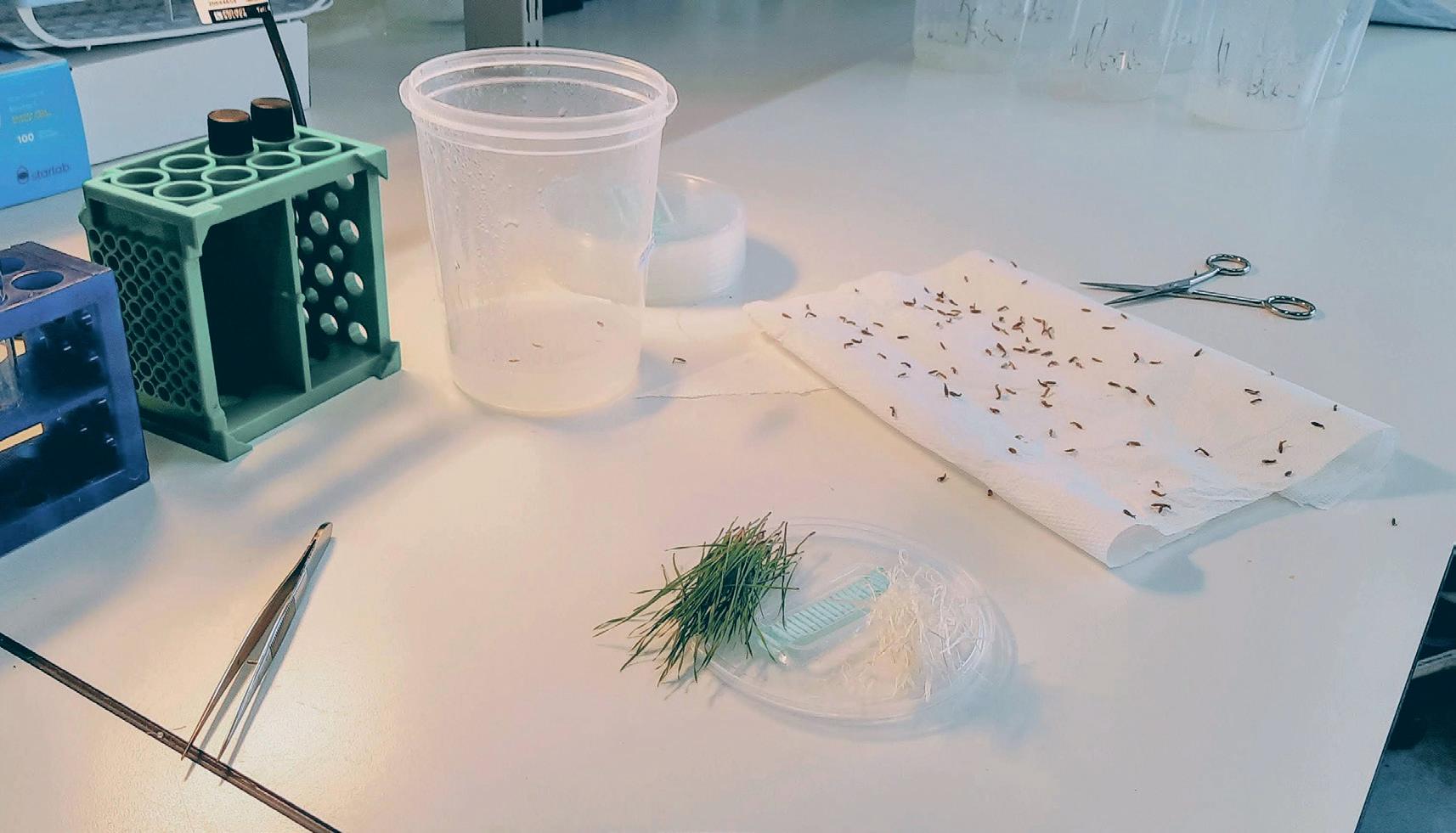
Black-grass was grown under laboratory conditions to test how herbicides affected the plant internally.
Dr Dana MacGregor
Making any agricultural system pay is the top priority for farmers and it is especially challenging now. Were there any answers at Groundswell? Cedric Porter finds out.
● Squeeze on margins set to produce change
THERE were few sessions on the economics of regenerative farming at Groundswell, but digging a little deeper, there was some information.
Andersons has been using a series of farm models to assess past and future farm performance for more than 30 years.
In 2022 it added a ‘Regen Farm’ to its cluster. Its latest version showed that making a margin was a struggle, but as farm business consultant Amelia Rome pointed out, it was also difficult on more conventional arable systems too.
The fully converted English regenerative 600-hectare farm (40% owned, 60% tenanted) had seen a 10% drop in arable output since converting, but input costs had fallen by 15%.
It had a third-party agreement with a livestock grazer and employed a fulltime worker and a harvest casual.
“As with other arable farms, regen has had a series of difficult years, following good profits in 2022 and 2023,” said Ms Rome.
“The 2026 harvest year is another where a loss from production is expected, although better yields, an uptick in prices and the buying forward of inputs mean that the loss may not be as bad as last year.”
Better yields and prices could mean a £73/ha uplift in the farm’s output in the 2026 harvest year to £1,407/ha.
Variable costs were £8/ha more
than last year at £511, with a small rise in overhead costs, rent and finance charges.
That all amounted to a loss from production of £39/ha – an improvement of £56/ha on last year.
The business only tipped into profit with the addition of support and environmental payments. The legacy Basic Payment Scheme was a negligible £1/ha, but the Sustainable Farming Incentive (SFI) added £139/ha, taking the business into an overall surplus of £101/ha, up from £56/ha last year.
“Looking to 2027 harvest, it remains difficult to make profits from production,” said Ms Rome.
“Costs of production rise due to higher fertiliser and fuel prices, plus general inflation. SFI income drops in 2027 as the ‘core’ agreement signed in 2024 comes up for renewal.”
The business was set to lose £96/ ha from production in harvest year 2027 as a result of a 16% increase in variable costs, which more than outweighed a 3% drop in output.
A drop in SFI payments was expected to reduce the overall
ANDERSONS REGEN FARM FINANCIAL MODEL
Groundswell offered ideas for making regenerative farming practices pay their way.
Tips to make regen figures stack up
surplus to £29/ha – lower than the previous three seasons.
“The squeeze on margins for all arable farms, including Regen Farm, is likely to prompt farmers to alter the way they do business,” said Ms Rome.
“One option may be a joint venture where a group of farmers can harness the skills of the best operators, which allows for specialisation in a larger operation.
“The venture can also release capital and reduce the time commitment of members.”
Groundswell Arable
BANKING ON REGEN
FARMERS adopting regenerative systems could get greater access to more favourable financing terms, Groundswell visitors were told.
Barclays Bank was promoting its farm transition finance.
That offers a 0.3% reduction on eligible loans of up to £2 million.
It is available to farmers who have Leaf Marque, Soil Association or Regenified certification, as well as those who meet Sustainable Farming Incentive or Countryside Stewardship criteria.
Oxbury has been shaking up the world of agricultural banking for five years. It recently achieved the milestone of lending more than £2 billion to UK farmers –about 10% of the total.
Facility
It said its transition facility was the first of its kind in the UK as farmers moved to lower-carbon, more resilient systems.
Interest rates are set at 1% above the Bank of England’s base rate, with annual facility fees from 0.5% of the total.
Lending includes carbon footprinting at the start of the transition period and throughout, with the tracking of soil organic carbon improvements via Downforce Technologies satellite data systems.
Data can also be shared with customers and Government agencies if the lender requires it.
Oxbury also works with Beyond Zero, a farmer-led company which quantifies and tracks soil carbon improvement, which can then
Banks offer special rates of lending for regenerative practices.
provide access to carbon credits.
Triados Bank has been lending to organic farms for more than 40 years.
It used Groundswell to promote its lending to support organisations and groups to develop nature recovery projects, with up to £20m of finance per project available.
LOWER REGEN MACHINERY COSTS
THE cost of machinery is a key metric for any arable farm and it is an area where regenerative farms can make significant savings.
Gary Markham, director of farms and estates at Land Family Business, has been tracking the finances of a range of conventional and regenerative arable businesses for many years.
The four-year average machinery value for all his clients was £978/hectare, which translated to a cost of £109/ tonne of wheat.
However, the reduced use of machinery from fewer passes, a lighter touch and longer depreciation meant that the average machinery value per hectare was 27% less at £714/ha or £93/t. There were also savings from reduced fuel use.
Further savings could be made from the pooling of machinery, something that Mr Markham was increasingly doing with both conventional and regenerative clients. This may include the establishment of a Limited Liability Partnership (LLP).
Tax relief
“An LLP is recommended in almost every situation to enable the farming businesses involved in the joint venture to have access to the tax relief available,” he said. Such an arrangement was preferable to contract farming or share farming, added Mr Markham, because it delivered Inheritance Tax and cost-sharing benefits, as well as, providing flexibility and greater well-being for those partners.
Repayment terms are up to 25 years, with up to 70% of the loanto-security value.
The Drysdale farming family in Fife used the facility to borrow £3.3m to establish Akre, a business that has established the world’s first verified carbon-negative nursery.
Making any farm business pay was
not just about cost control, but maximising the value of output.
Consultants Savills calculated that there were 53 contracts across farming that paid a premium for environmentally focused production.
This included Wildfarmed and the Green Farm Collective.
Regenerative farms can make savings on machinery.
PICTURE: TIM SCRIVENER
LESS RISK MORE REWARD
Ben Sharp, Lincolnshire
With a more positive outlook for oilseed rape, DSV highlights resilient new varieties and pipeline genetics designed to tackle changing growing conditions. Ash Ellwood reports.
Breeders back resilient genetics as confidence in OSR returns
WITH optimism returning to the oilseed rape market, growers should focus on varieties that combine yield potential with resilience to increasingly challenging growing conditions, according to Simon Kroger, product manager at plant breeder DSV.
Speaking to UK growers at an event at the DSV Breeding Centre in Banbury, Mr Kroger said the global outlook for OSR remained positive, despite continuing uncertainty around commodity markets and geopolitics.
“There is not just positivity about OSR here in the UK,” he said.
“We are seeing increasing markets in Kazakhstan, South America and Canada, and we could expect
Genetics in the pipeline
LOOKING ahead, DSV had several new candidates progressing through National List (NL) and AHDB Recommended List trials.
Among the most anticipated was a variety currently in NL2 trials, pipeline variety code 730 (Guardian), which carried pod shatter resistance alongside a broad disease package.
“Last year, our UK colleagues told us they wanted more varieties with pod shatter resistance,” said Simon Kroger, product manager at plant breeder DSV.
to have a big harvest this year if all crops continue to look well.”
For UK growers, however, variety choice remained critical, particularly as cabbage stem flea beetle (CSFB) pressure continued to shape breeding priorities, and extended hot weather patterns were becoming more frequent.
Beetles
“We will not be able to stop CSFB in the autumn. But, when we talk about the later problem of the larvae in the stem, we are getting more and more varieties that are really able to cope with high levels of larvae,” he said.
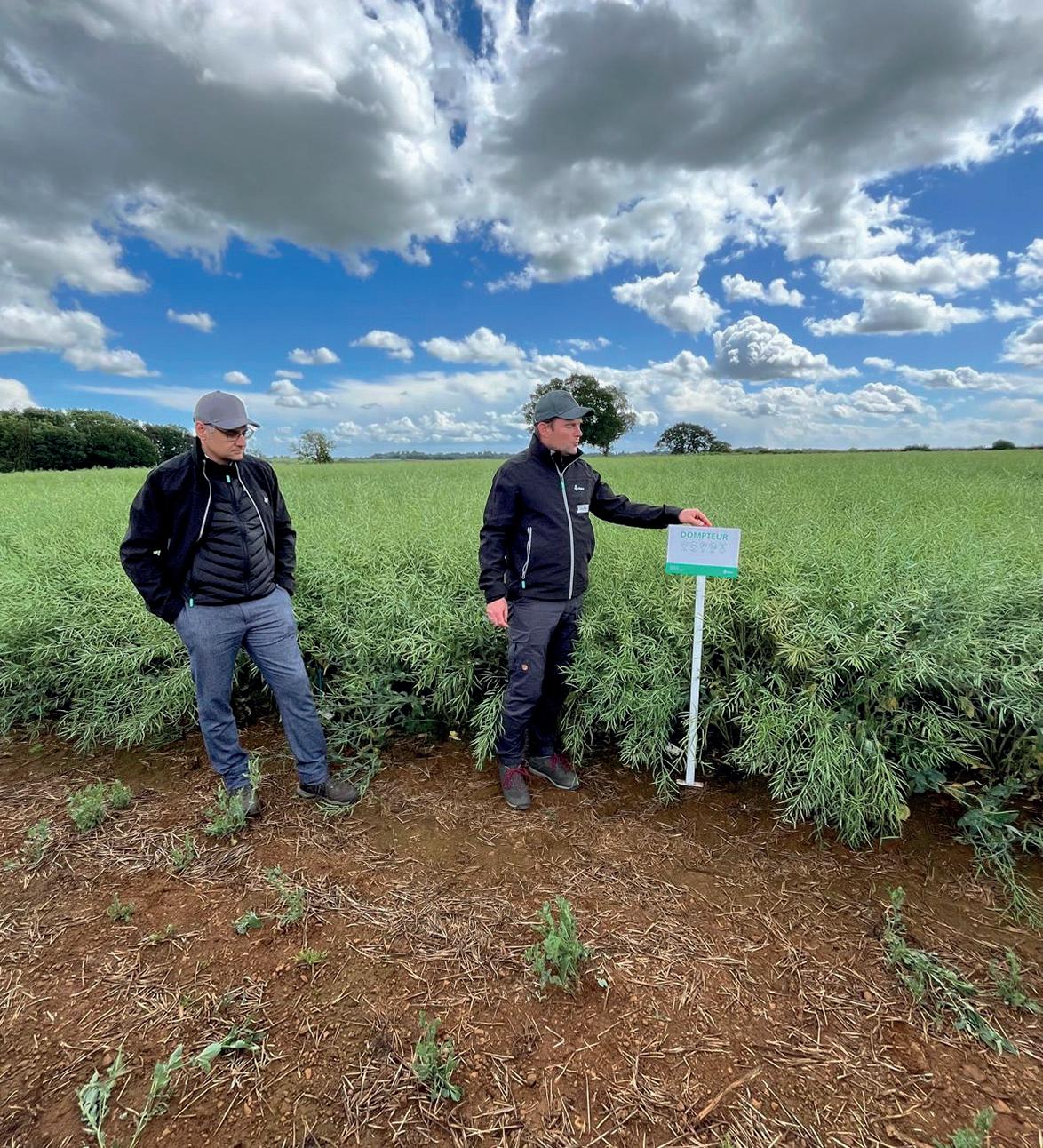
Leading DSV’s current AHDB Recommended List (RL) offering was Dompteur, which Mr Kroger described as one of the company’s strongest varieties in years.
“That is what you see here [in the trial plots],” he added.
DSV is also preparing a new Clearfield variety, expected to reach the UK within the next two years.
Clubroot
For growers who are managing clubroot, Cromputer CR was the latest recommendation, combining clubroot resistance with improved vigour and early maturity, as well as enhanced disease resistance.
“We are very happy to have again a variety like Dompteur, which is at the top of the UK RL,” he said.
Compensate
“It is really stress-resilient. No matter if you have a hard winter or dry conditions, this variety is always able to compensate. “Somehow the crop always seems to look and perform well in all situations, and this is really one of the main arguments for choosing the variety,” he added.
Autumn vigour is a really important topic for us now in selection and breeding because this helps to grow away from CSFB
SIMON KROGER
Alongside strong yield performance, it combined multiple phoma resistance genes in DSV’s characteristic ‘phoma blocker’ with pod shatter resistance, giving growers greater harvest flexibility.
DSV has been positioning Commodore as an alternative for earlier drilling slots. While slightly later maturing than Dompteur, it offered excellent oil content and one of the strongest packages for Verticillium wilt resistance, said Mr Kroger.
Maturity
For growers seeking early maturity, Cognac remained a key option. The variety combined high autumn vigour with excellent resistance to verticillium wilt and consistently high oil content.
“Autumn vigour is a really important topic for us now in selection and breeding because this helps to grow away from CSFB,” added Mr Kroger.
He also said earlier maturity would become increasingly valuable should glyphosate desiccation be restricted in future.
“I’m pretty sure you will not have a problem with this desiccation topic if you have early varieties.”
Lisa Bush, Lincolnshire
Left to right: Dr Alex Doering and Simon Kroger discuss pipeline variety 730.
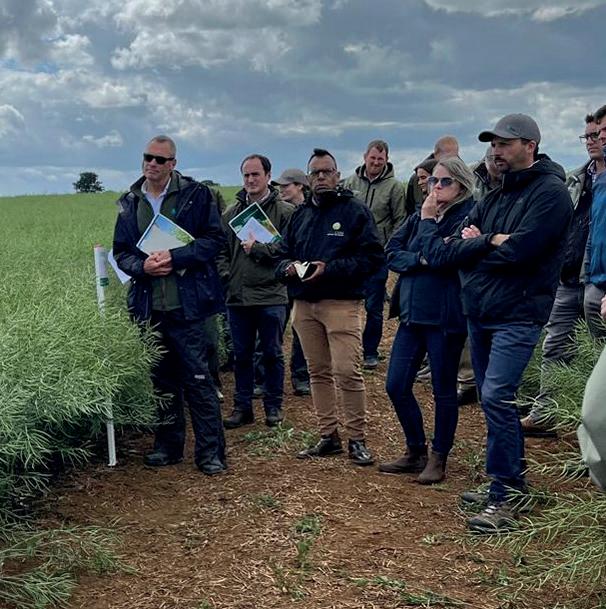
DSV hosted a variety day at its breeding site in Banbury.
New Sprinter wheats that help reduce risk from delayed or later drilling were shown at Agrovista’s AgX site at Lamport. Farmers Guardian reports.
How to de-risk late drilling
Choosing a Sprinter (spring/winter) wheat could provide growers with security, according to Ted Williams, Agrovista’s arable seed manager.
He said doing so means farmers know that if a drilling window is
missed, the variety would still perform as expected – unlike winter wheat varieties, where there was a vernalisation requirement.
Mr Williams said: “Sprinter wheats, bred by German breeder Strube, now part of RAGT, are genetically different to most other
winter wheats and can be drilled from mid-October to as late as any traditional spring wheat.
“While they have no vernalisation requirement, they are still winter hardy.”
The first Sprinter wheat, the Group 1 milling wheat STR Pace,
Bamford is the most dependable, widely grown Group 3 variety across the UK, delivering the best gross output potential.
Bamford o ers unbeatable endmarket flexibility delivering to feed, distilling, UK export and biscuit milling quality, making it the ideal choice in volatile market conditions.
Bamford. Your unrivalled choice on the 2026/27 Recommended List.
Ask your seed merchant about availability.
will be widely available within the seed trade this autumn.
STR Pace’s characteristics make it suitable for growers looking to delay drilling for weed management or to minimise risk from barley yellow dwarf virus or septoria, as well as drilling after root or maize crops, or as a traditional spring wheat.
Added to the AHDB Recommended List (RL) for spring wheats in 2025, STR Pace is just 1% loweryielding than traditional spring wheat KWS Harsum, while providing higher protein content (13%) and a specific weight of 80.6kg/hl –which is the best of any spring wheat on the RL.
Testing
While its earliest drilling date of mid-October made it unsuitable for testing within the AHDB RL for winter wheat, Agrovista compared STR Pace with Skyfall, a popular commercial choice for late-autumn drilling, at two AgX sites last season.
“At Lamport [Northamptonshire], on heavy clay, STR Pace yielded nearly one-tonne/hectare more than Skyfall from a November drilling. On high-yielding silt soils at Haddenham [Cambridgeshire], the advantage was almost 0.6t/ha,” said Mr Williams.
In the trials at Lamport, STR Pace yielded significantly more than a competitor spring wheat, reaching 9t/ha, he added. Three years of UK Flour Millers testing had shown good gluten quality and baking performance, with good water absorption – a positive indicator for flour usability.
A key attribute of Sprinter wheat was its earliness. Later harvesting of spring wheat could put some growers off growing the crop, but STR Pace was particularly early, according to Mr Williams.
He said: “Some of the seed growers have told us it is way earlier than its RL score of -1 compared with [spring wheat Group 1] Mulika.”
In Agrovista trials, both November and spring-drilled Sprinter had been harvested around the same time as winter wheat sown in early October, a good 10-14 days ahead of traditional spring wheat varieties, he said.
Sprinter wheats can be drilled from mid-October.
Edited by Angela Calvert –
l Suffolk crosses average £304/head
THERE was a strong trade at the Farmers Guardian -supported Great Annual July Fair at Exeter, where almost 4,000 Suffolk cross shearlings went under the hammer to average £304/head, with the best selling from £305-£320/head and the next £285-£298/head.
Robert and Angus Mackintosh, Milborne Wick Farms, Sherborne, were awarded champion pen of shearlings for the third consecutive year. Their winning pen sold for the top price of £370/head to Simon Swerling, Buckinghamshire, who judged with his son Mikey Swerling, South Molton.
Second prize went to Angela TarrySmith and nephew Tom Turnham, Brackley, whose pen sold at £352/ head also to Mr Swerling, with others at £338/head and £335/head to average £322/head for 289 sold.
Pure Suffolk ewes and shearlings sold to £440/head and £330/head for Gordon and Gill White, Crediton, who also had younger sorts at £350/head.
Pure-bred continental shearlings peaked at £500/head and £410/head for Texels from Paul Quick and family, Crediton, who also had Charollais at £460/head and £400/head. Other Charollais sold to £450/head for David Churchill, Axminster.
Continental cross shearlings were dominated by a run of Texel and CharTex cross Suffolk Mules from Russell Stevens, Crediton, which sold at £370/head, £360/ head and £355/head twice.
Rob and Caroline Mole, Buckinghamshire, sold their annual consignment of 259 aged flock ewes to £332/head, £330/head and £320/ head for the four-tooth Suffolk cross Mules. Their six-tooth aged ewes
Almost
Breeding sheep in demand at Exeter
reached £308/head, with the consignment averaging within a few pence of £300/head.
Suffolk cross Mule
Hill Farm Partnership, Bideford, sold strong Suffolk cross Mule fullmouth ewes to £302/head. All 580 older ewes averaged £281/head.
Texel cross Mule shearlings were a slightly lower trade compared with their Suffolk counterparts. Top price was £302/head for Ian Johnson and family, Bridport, who sold other pens at £292/head and £295/head to average £290/head for 129 sold.
Cheviot Mules peaked at £300/ head twice for Maurice Hockridge,
Peace Farm, Whitchurch Canonicorum, sold the only pen of Scotch half-bred shearlings for £320/head and a pen of Dorsets at £340/head. Dorset cross Mule shearlings peaked at £308/head for Mark Johnson and family, Bridport, whose run of 152 averaged £291/ head. Paul Taylor, Roache, sold Texel ewe lambs at £280/head and Andrew Rodd and family, Lapford, sold October-born Dorset ewe lambs at £255/head.
The 6,300 females averaged £295.37.
Crediton.
Auctioneers: Kivells.
Champion pen of sheep from Robert and Angus Mackintosh, Milborne Wick Farms, Sherborne.
Auctioneer Mark Davis.
4,000 shearlings went under the hammer.
Trade was strong at Great Annual July Fair.
PICTURES: EMILY DAVIS
Indiana Jones takes top spot at Worcester
l Shearling ram realises 1,600gns
LEADING the Dutch Spotted Sheep Society’s sale at Worcester was a 1,600gns call for shearling ram Lottmead Indiana Jones, from Sophie Huntley, Hampshire.
Selling to James Handley, Market Drayton, it is by Challonsleigh Greg
and out of Lakeside Favourite, a Lochlad Entrapment daughter.
Making 1,500gns was the pre-sale show champion, a shearling ewe, Linford Ivy, from Leicestershire-based Mark Bowles. By Diamond Gus and out of Misty Top Eilidh, a Lochlad Diversity daughter, it sold to R. Foster, Yarcombe, Devon.
At the same money was the ewe lamb Aberhonddu Jitterbug, from
Messrs Witcomb and Morgan, Brecon. By Derg Imperial and out of a Wedderburn-bred dam by Boyo Easy On the Eye, it was knocked down to D. Barr, Firle, East Sussex.
Lottmead Indiana Jones, a Dutch Spotted shearling ram from Sophie Huntley, Hampshire, which sold for 1,600gns to James Handley, Market Drayton.
Selling at 1,100gns was another of Messrs Bowles’ gimmers, Linford Ice Maiden, by the imported sire Dutch King and out of a dam by Wedderburn Eagle. Taking this one home was Adam Wood, Redditch. Same price
Record for feeding cows set at Thame
A NEW market record of £4,650 for a feeding cow was set at Thame for a pedigree British Blue from Andrew Phillips, Ashampstead, Berkshire, who sold another cow at £3,700.
Roger Blake, Shere, Surrey, topped the steer trade with 24-month
dairy-bred Aberdeen-Angus crosses at £2,180, £2,160 and £2,130. A dairybred Hereford cross from the same farm made £2,020.
The Connell Partnership, Frieth, sold Charolais crosses to £2,050, and a 15-month-old Aberdeen-Angus
cross from A.J. Pearman, Hertford, sold at £1,820. Messrs Pearman also topped the heifers at £1,900 with an Aberdeen-Angus cross.
Beef Shorthorns from Clark Farming, Berden, Essex, sold at £1,900. Auctioneers: Thame Farmers Market.
Poll Dorsets hit 900gns peak
POLL Dorset trade peaked at 900gns at Worcester when Rob Hole and family, Dorset, sold their ram lamb, Sherborne Idol.
This September 2025-born lamb is a son of Poorton Grand Canyon out of a dam by Downkillybegs Enrique, and caught the eye of L. Davies and Son, Pencader, Carmarthenshire.
Next in line, at 880gns, was another
ram lamb, Hydes Ironman, from Hydes Farming, Thaxted, Essex. By Burhos Flame and out of a dam by Burhos Challenger, it went to the same buyer.
Making 460gns was the best of the females, the ewe lamb Hydes Ivanka.
A second-prize winner in the preshow sale for the Hydes team, it is a daughter of Hydes Hijack, out of a
dam by Hydes Fendt. It was the pick of Lower Langham Farm, Dorset.
The Rossiter family, Devon, then took 450gns for their ram lamb, Huish Invest. By Hydes Gnome and out of a dam by Huish Zinto, it sold to Betton Hall Farm, Norton in Hales, Shropshire.
Shearling
A 440gns call followed that for the shearling ewe Deben H2456, from Tim Pratt, Suffolk. By Lisnafillan Fairbanks, out of a dam by Poorton Explosion and third-prize winner from the pre-sale show, it was also bought by Betton Hall Farm.
The pre-sale champion, a ewe lamb from the Sherborne flock by the home-bred sire Sherborne Helix, sold for 400gns to Hydes Farming.
Also making this price was another from the Witcomb and Morgan partnership, Aberhonddu Jack D, a ram lamb by Merryboro Iron Man and out of a dam by Carlaustan Extrovert, which was the pick of previous buyer, Messrs Barr.
AT the opening sale of store lambs at Bentham, the entry of 2,676 averaged £122.02/head. Beltex sold to £161/head for W.M. and E. Dugdale, Giggleswick, with Texels to £156.50/ head from D.R. Rowland and N. Woodward, Castleton. Suffolks peaked at £150/head for G. Critchlow, Derbyshire.
Charollais
Leading the Charollais at £134/head was G.W. Wallbank, Keasden, with Dutch Spotted lambs to £127/head for K. Marshall, Harrogate. Blue Texels sold to £109/head for P. Wilson, Kirkby Stephen, and Mule lambs to £107/head for C. Brown, Accroplatts.
Sherborne Idol, a Poll Dorset ram lamb from Rob Hole and family, Dorset, which sold for 900gns to L. Davies and Son, Pencader, Carmarthenshire.
Reduction sale at Wedderburn hits peak of 9,000gns
l Royal Three Counties champion takes top call
THE major reduction sale of the Wedderburn flock of Dutch Spotted sheep for Jonathan and Janet Corbett, Newent, Gloucestershire, saw a top call of 9,000gns at Worcester for one-crop ewe Derg Honeybee. This ewe had been breed champion at Royal Three Counties Show
and is by Sunnybank Geronimo, out of an imported dam. The buyer was Tom Buckland, Abertysswg, Caerphilly, who then paid 3,800gns for Boyo Gloria, a two-crop ewe by Merryboro Fastandfurious, out of a dam by the imported sire Ambassador.
Next came a 3,600gns bid for Johnstown Isha, a gimmer by Milltown Hot Shot, out of a dam by Johnstown Fizz. It was reserve breed champion at Royal Three
Counties and was taken by T.W.J. Samuel, Tedburn St Mary, Devon. Close behind at 3,500gns was the shearling ram Elite Invictus. By Diamond Freaky Freddie and out of a dam by Tiptop Dollar, it was in the inter-breed champion group at Royal Three Counties and was knocked down to Adam Wood, Redditch.
Gimmer
Derg Honeybee, a one-crop ewe, from Jonathan and Janet Corbett, Newent, Gloucestershire, which sold for 9,000gns to Tom Buckland, Abertysswg, Caerphilly.
Penrith sees high demand for calves
THERE was a strong trade for the 267 calves on offer at Penrith. The sale topped at £1,280 for a Charolais bull from Messrs Sowerby, Town Head Farm, Appleby in Westmorland, which was bought by B. Ridsdale, Penrith.
Heifers from the same home sold to £1,080 for a Charolais, which went to the same buyer.
Messrs Sowerby also sold eight-week-old milk calves to £920/head.
British Blues topped at £1,000 for a four-month-old bull from J.H. and J.E. Taylor, Ainstable, selling to Richard Grainger.
In total, 16 calves sold in excess of £900/head.
J.N. and F.C. Walker, Harrington Park Farms, Workington, sold Friesians to £190/head.
Bulls
Stirks sold to £1,550 for a pair of seven -month-old Limousin bulls from J.H. Capstick, Ravenstonedale. A run of three- to eight-monthold Friesian bullocks from R. Forrest and Son, Low Rutter, averaged £851/head and topped at £1,070 for a pen of five.
AVERAGES
126 bull calves, £605.71; 77 heifer calves, £606. Auctioneers: Penrith and District Farmers Mart.
New record for Dairy Shorthorns
A LARGE crowd of breeders and enthusiasts gathered at Oxton Farms, Tadcaster, for the Dairy Shorthorn Society’s annual general meeting and judging day.
This year, it also included a select sale of top-quality animals of all ages from breeders based in the North East.
Leading the trade at 5,900gns and setting a new breed record was Churchroyd Heather 159, from the Collins family, Dewsbury. The fresh two-year-old heifer by Gorbro Hunter traced back through a unique maternal line with consecutive dams classified EX97 and sold to S. Mullen, Hexham.
Making 3,100gns was Wedderburn Ice Blue Candy, a gimmer by Lochlad Hitman out of the 20,000gns Candy Floss which sold to Messrs Samuel.
Making 2,800gns was ewe lamb Wedderburn Janet, by the imported Vermeer out of Boyo Gloria which sold to Messrs Robertson, Bristol.
Another fresh heifer, also from Messrs Collins, this time from their Wildeyes family, sold for 5,000gns to the Harries family, South Wales.
Yearling
Youngstock sold to 5,100gns for a yearling from the Breckney herd of Messrs Harrison, Heddon-on-theWall, Northumberland, which went to the Crank family, Cheshire.
The Garnett family, Cheshire, travelled to the sale looking for quality foundation stock, and bought two calves for 4,100gns and 4,000gns, one from Messrs Harrison and one from Messrs Collins. Auctioneers: Norton and Brooksbank.
Prime cattle tops £4,192 at Carlisle
THE entry of 81 prime bulls at Borderway on Monday topped at £4,192 for a 1,048kg Limousin from Messrs Goldie, Townfoot Farm, Dumfries.
Messrs Hunter, Annan, sold 855kg British Blues for the top price of 440p/kg and £3,762/head. Charolais sold to £3,605.32 for a 1,042kg bull from Messrs Stobart, Carlisle, and 999kg Simmental crosses sold to £3,476.52 for Messrs Taylor, Lanarkshire.
Prime cattle were similar on the week, topping at £3,072.72 for an 826kg Limousin cross steer from Messrs Studholme, Carlisle. Top price of 398p/kg went to Messrs Steel, Bishop Auckland, with a 681kg Limousin cross selling to Bowland Foods, Preston.
Heifers sold to £2,741.70 for a 741kg Aberdeen-Angus cross from Messrs Story, Newbiggin Farm, Carlisle.
Auctioneers: Harrison and Hetherington.
Flying trade for cast cows
COWS were dearer than of late at Kirkby Stephen, with a top price of £2,288.88/head (280.5p/kg) for a 816kg Limousin cross cow from Messrs Hughes, Dona Close, Asby. The top price for cast cows was 307.5p/kg for a Limousin cross from Messrs Maughan, Clockeld, Great Asby. Topping the pence per kilo at
337.5 (£2,068.88/head) was a 613kg British Blue cross black and white steer from Messrs Beck, Townfoot, Longdale, who also sold Holstein/ Friesian steers to 290.5p/kg and £1,754.62/head.
The overall average from the sale was 275.5p/kg.
Auctioneers: Harrison and Hetherington.
PICTURE: COUNTRY GIRL MEDIA
Over the past five years, livestock markets across the UK have been working to improve safety through the MartSafe training programme, developed by the Livestock Auctioneers Association (LAA) specifically for the auction mart sector.
Since its launch in 2021, the training has been delivered at more than 180 sessions involving more than 4,000 participants to a total of 81 livestock markets across the UK and Ireland.
As Farm Safety Week shines a spotlight on reducing incidents and improving awareness across agriculture, those involved in the programme believe there are lessons from the mart environment that can benefit the wider livestock sector.
The training was developed by the LAA in response to a recognised gap in industry-specific health and safety training for livestock markets. Before MartSafe training, there was no recognised benchmark for market-
Auctions Standing the Test of Time
In this instalment of the Mart’s the Heart Standing the Test of Time series, supported by the Livestock Auctioneers Association and Shearwell Data, Farmers Guardian explains MartSafe training.
Bespoke training aiming to improve safety in markets
focused safety instruction. The scheme was launched in 2021 by former auctioneer and LAA education committee chair Gwyn Williams and LAA development officer Zanna Dennis.
“There was a huge need for it,” says Mr Williams.
“Markets had their own procedures and some businesses provided training, but there was not an industry standard that focused specifically
on the unique challenges of livestock markets. The LAA recognised that and created something tailored to the industry.”
Workplace
MartSafe has been developed specifically for the market environment, combining training in live stock handling, animal welfare, workplace safety and the latest industry legislation.
Mr Williams says the programme has become one of the most important member services the association has introduced.
“It has increased awareness of animal behaviour, safe handling techniques, people management and animal welfare. Most importantly, it has encouraged staff to think about why animals behave as they do and how small changes can make a big difference to safety,” he says.
Standing the Test of Time Auctions
Ms Dennis says MartSafe is about helping people understand why livestock behave the way they do, rather than telling them how to do their job.
Through practical exercises, including specialist ‘animal sight’ goggles, participants learn how factors such as flight zones, point of balance and handling techniques can reduce stress for livestock and improve safety for everyone.
She adds: “Everything we do is specific to the livestock market and it can be applied on-farm. We are passionate about it being for all staff in the market, we always mix groups and ask for feedback and we are continually improving.
“Plus, it has become a great team-building day for the marts we work with.”
MartSafe is delivered by Ms Dennis and Mr Williams as trainers, and is updated annually to reflect emerging industry challenges and participant feedback.
The programme is built around four core themes: animal behaviour, safe handling, people behaviour and animal welfare.
Additional modules have covered topics including mental health awareness – partnering with The DPJ Foundation and the ‘Farming
Stronger 4 Longer’ campaign from Field Nurse – as well as physical well-being, disease prevention, biosecurity, animal activism and the management of escaped livestock.
Goggles
One of the most memorable elements of the course is a practical exercise using specially designed ‘animal sight’ goggles.
The eyewear simulates the vision of cattle and sheep, helping participants understand how livestock perceive their surroundings.
Combined with market sounds played through headphones, the exercise demonstrates how disorientating handling environments can be for animals.
Ms Dennis says: “It completely changes how people think about livestock movement.
“When people understand that cattle and sheep do not see what we see, it helps explain why they hesitate at ramps, stop at corners or react unexpectedly. Once you understand the science behind their behaviour, handling becomes safer and more effective.”
Participants learn how to work with animals’ natural instincts to encourage calmer movement through handling systems.
While health and safety remain the central objective, market operators say the benefits go much further.
Gareth Wall, vice-chair of the LAA and a director at Sunderlands Markets, which operates in Hereford, Builth Wells and Talgarth, says the training has encouraged markets to take a more holistic approach to safety.
He says: “It heightens awareness of everything around you.
“People become more aware of livestock behaviour, public safety, their own responsibilities and the condition of the facilities they work in every day.
“It encourages everyone to look critically at how the market operates and ask whether things can be improved.”
Staff are encouraged to identify hazards, report any maintenance issues and contribute ideas for improving procedures.
Understanding animal behaviour, reducing stress and thinking about safety before entering a situation benefits everyone
GWYN WILLIAMS
Mr Wall says the result is a stronger culture of shared responsibility.
“Everyone has a role to play, whether they are an auctioneer, a drover, an office administrator or part of the management team.
“The training empowers people to speak up and suggest improvements.”
Many markets have subsequently reviewed handling systems, upgraded facilities and introduced new procedures as a result of ideas generated during training sessions.
Mental health
Another key development has been the inclusion of well-being and mental health awareness.
Working with organisations including The DPJ Foundation, the programme has introduced guidance on recognising signs that someone may be struggling and how market staff can provide support.
For many farmers, livestock markets remain an important social hub.
McCartneys market compliance and regulations officer Sara Dyke has been doing the training since it began. She says the MartSafe scheme has helped staff appreciate the role they can play in supporting farming communities.
“Markets are often one of the few places where farmers get together and talk,” she says.
“We have a lot of contact with people and it is important that staff understand the signs that someone may be struggling and know how to approach those conversations.”
Mrs Dyke says the programme’s practical nature is key to its success.
“It is much more than a tick-box exercise. Every year there is something new to learn and it keeps safety, welfare and well-being at the front of people’s minds.”
Ultimately, she believes the programme benefits everyone who comes through the market.
“If we can improve the way we handle livestock, look after one another and create a safer environ-
ment for staff, farmers and animals, then that is a positive outcome for the whole industry.”
Although MartSafe was developed for LAA member markets, there is growing interest in extending its reach.
Many of the principles taught during the course are equally relevant on-farm, particularly as livestock handling systems and management practices continue to evolve.
Mr Williams adds there is increasing demand from local farmer groups who want access to the training.
“A lot of farmers who also work in markets have taken ideas back to their own farms and made changes,” he says.
“The key principles are the same. Understanding animal behaviour, reducing stress and thinking about safety before entering a situation benefits everyone.”
The LAA is now exploring opportunities to deliver dedicated training sessions for farmers through local livestock markets.
Awareness
As Farm Safety Week highlights the importance of reducing on-farm incidents and improving awareness across agriculture, those behind MartSafe believe livestock markets can continue to lead by example.
Five years on, the programme has become an established part of staff development for many auction marts, helping create safer environments for workers, customers and livestock alike.
The next challenge is sharing that knowledge more widely.
Farmers interested in learning more are encouraged to contact their local livestock market to ask about MartSafe training opportunities and future farmer-focused sessions.
A practical demonstration with goggles helps give a cow’s view of markets.
Market Results
Dairies to £3600, Cull Cows 314p/kg - £1836.90, Pigs 174p/kg - £202.71, Calves BB Bull to £1070, Lambs 436p/kg - £180.07, Ewes £285 THIS SATURDAY – 446 Early Lambing Shearlings, Ewes & Breeding Rams.
Pedigree Sale 50 HOLSTEINS
Mark Lee: 07980924179 Simon Lamb: 07815 188125
Fully Catalogued Sale from some of the Leading Herds in the Midlands and Surrounding Counties. A TREMENDOUS ENTRY already received from: Bentygrange (4), Braemarhouse (6), Broomhouse (7), Chardan (3), Coxongreen, Havendale (8), Inkersall, Meldamar (5), Millhurst (2), Shepley (3), Shieldhouse (2), Incl 5 In-calf Heifers from Messrs Tomlinson
TUESDAY 21ST JULY 2026 11AM For Further Details & Catalogues Contact (01889) 562811 Ref: MEE Store Cattle Sales 340 STORE CATTLE THIS SATURDAY 18TH JULY 2026
THURSDAY 23RD JULY, 11AM MILKING PORTION DISPERSAL UNTIC BRITISH FRIESIANS (MESSRS DRIFFIELD, PONTEFRACT) ~130 milkers, mainly due Oct onwards ~low input, grazing based ~closed herd, 4yr TB (last test Jan ‘26) GISBURN AUCTION MART, BB7 4ES
10:30am Bottom Ring – 267 EARLY BREEDING EWES followed by in the Main Ring 1781 STORE LAMBS
Thursday 23rd July
10:30am REARING CALVES
11:00am PRIME followed by CAST CATTLE
11:00am WEEKLY DAIRY Inc DISPERSAL in conjunction with Norton & Brooksbank, sale of 130 cattle comprising of the milking portion of the ‘UNTIC HERD’ of British Friesians, on behalf of JA Driffield & Son, Pontefract. These low input grazing type cows are predominantly autumn calving. Buyers attendance is strongly recommended, please contact Eli for further info. Credit terms are strictly pay on the day: It would be appreciated if any prospective purchasers, who have not traded with Gisburn Auction Marts in the last 12m contact market manager Libby Bell on 07818435728
Saturday 25th July
9:30am CAST SHEEP followed by PRIME LAMBS/HOGGS
10:00am BREEDING, FEEDING followed by STORE STEERS & HEIFERS Entries to the office by Tues 21st 12noon 2026 SEASONAL SHEEP SCHEDULE NOW ONLINE Upcoming dates for the diary Thurs 30th July - Month End Beef Show Thurs 6th Aug – Massey & Lely Dairy Show & Youngstock Sale Wed 12th Aug - Monthly Machinery Sale
NB: AS OF AUGUST, OUR MONTHLY MACHINERY SALES WILL TAKE PLACE ON THE 2ND WEDNESDAYS INSTEAD OF TUESDAYS Please see revised dates on our website
CLAIMING DATE- Thursday 13th August ON FARM SALE – GISBURN AREA
SEE LIST ONLINE NOW - FULL CATALOGUE TO FOLLOW
Market Manager / Auctioneer: Libby Bell 07818435728
Auctioneers: Rachel Capstick - 07713075659
Hawes, North Yorkshire DL8 3NP 01969 667207 office@hawesmart.co.uk www.hawesmart.co.uk
Friday 17th July at 10am
500 Spring Opening Sale of 535 Store Lambs
Tuesday 21st July
Show & Sale of Prime Lambs at 9:30am Classes for Pairs of Beltex & Pens of 5 Continentals, Suffolks, Mules, Masham’s & Horned Lambs Sponsored by I’Anson Feeds. 300 Cast Ewes & Rams Show & Sale of 30 Calves Sponsored by Genus at 10am Friday 31st July at 10am
1000 Store Lambs. Cat Closes Tuesday 21st July
Tuesday 18th August
Sale of Dutch Spotted sheep on behalf of Yorkshire Regional Group
Eli Tattersall - 07955288800, Matthew Probert - 07540446667 Visit: www.gisburnauctions.com
Evening Show & Sale of 1500 Mule & Cont Gimmer Shearlings & Ewes. Cat closes Thurs 6th August. also, Sale of Terminal Rams Ian Atkinson 07957 256337 Kenton Foster 07711 469280.
Fortnightly Sale of 6500 STORE LAMBS Entries for catalogue close Friday 17th July
RTS
Richard Turner & Son
Forthcoming Dispersal Sales of Tractors, Farm Machinery & Equipment
Monday 3rd August on behalf of S Wilman, Braeslacks, Kirkby Lonsdale Saturday 22nd August on behalf of A T Burrow & Son, High Snab, Gressingham, Carnforth
Tuesday 21st July 12.30pmPrime Lambs, Ewes
Monday 20th July 11am - Entries accepted on the day Thursday 23rd July 12.30pmSale of Young Bulls, Store Heifers & Steers. Rearing calves 12 noon Thursday 23rd –Saturday 25th JulyViewing 23rd, 24th 9am - 4pm, 25th 9am - 12 noon
Saturday 25th JulySale starts 10am
LIVESTOCK
Penrith Auction Mart 01768 864700
Saturday 18th July
Penrith Show
We look forward to welcoming customers old and new onto our stand for refreshments
Monday 20th July
9.30am- Prime Bulls, Clean Cattle and Cast Cows. 11am- Sale of 120 Feeding Bulls and Store Cattle of all classes
Wednesday 22nd July
8am- Sale of Cast Ewes and Rams followed at 10.30am with Prime Lambs (Ballot 10.30am)
Friday 24th July
10am- Sale of 250 Rearing Calves and Weaned Stirks
Bakewell Market Results - Monday 13th July
485 Cattle & 909 Sheep - Full report available on our website
Friday 24th July
12noon- Monthly Sale of 260 head of Dairy Cattle comprising of: -
40 Holstein Friesians, 50 British Friesian and 20 ProCross, Jersey and Dairy Shorthorn freshly calved Heifers and Cows; 50 Holstein Friesian and British Friesian Dry Cows; 20 Holstein Friesian In Calf Heifers; 40 British Friesian and ProCross Bulling Heifers and 40 British Friesian Heifer Stirks 4-8 months.
Entries include several part herd dispersals well worthy of any buyers interest. Catalogues available on request or via our website
Saturday 25th July @ 10.30am
STORE LAMB SALE
THURSDAY 13TH AUGUST (alongside regular Thursday Sheep Sale) We are now taking entries- Call our Livestock Team on 01629 812777 ENTRIES CLOSE FRIDAY 31ST JULY Store Cattle Entries for Monday 20th July Please call the Bakewell Office before 12 Noon on Friday 17th July
FARM DISPERSAL SALES
T HURSDAY LUNCHTIME WEEKLY SHEEP SALE Entries/Enquiries, contact Ivor Lowe: on 07977 449126 or Peter Oven on 07973 982443 Follow on Facebook for up to date details on Special Entries
THE COTTAGE, PARK HALL LANE, WEST HALLAM, DE7 6HR
FRIDAY 24TH JULY 2026 AT 10.30AM
David Brown 1190 2WD c/w DB 40 Loader
David Brown 990
www.bagshaws.com
Farm Sale
Sale of Tractors, Implements, Livestock Equipment and Small Tools on behalf of L Pollock, Dumblar Rigg, Gilsland, Brampton, Cumbria, CA8 7AZ what3words//September.little.prancing • No Buyers Commission; Caterer in Attendance; Sale is NOT ONLINE in person only
Monday 3rd August
Opening Sale of Store Lambs of all classes
Friday 14th August
Collective Sale of Tractors, Machinery, Plant, Livestock Equipment & Small Tools
www.penrithauction.com Andrew
ON FARM SALE
FARMSTOCK AUCTIONEERS, BROKERS & VALUERS
Scan to see WHAT’S ON
BORDERWAY MART, CARLISLE
Tel: 01228 406230
Opening sale of STORE SHEEP
Monday 20th July - 11.00am
Advise entries - Anders Brown 07540 757439
PEDIGREE DAIRY DAY
201 DAIRY CATTLE SELL
Wednesday 22nd July
Show 10.00am Sale 11.00am
Follow Us On Facebook To View Sale Lots
Prior To Sale
34 Cows - 119 Heifers In Milk
- 29 Late Lactation Cows Due In 2026 - 19 Maiden Heifers No.1 source for quality milkers in the UK
Followed by the Production Sale of the Ellaway Herd
The ELLAWAY pedigree Holstein herd owned by the Graves family from The Elephant Farm, Carlisle are selling 80 all their most recently calved cows & heifers along with 28 autumn calving cows. The herd is currently averaging 35kgs with many cows giving over 60kgs.
CHARITY HEIFER SELLS
The Graves family are selling a special yearling heifers from their ELLAWAY herd with all the proceeds going to Cancer Research & MND Charity.
Followed by
The DROINTON SUMMER HEATWAVE SALE
The Drointon Herd has featured in the final of the Holstein Premier Herd Competition for the past several years! They are selling 19 SPECIAL heifers from their leading cow families. Show Heifers sell in this exciting consignment
BEEF BREEDING CATTLE
Wednesday 29th July
Entries close Wednesday 22nd July
Shows and sales of MV accredited 139 ZWARTBLES RAMS & FEMALES
Showcasing some of the best dogs from across the UK & Ireland
Online bidding from 6pm Saturday 1st August finishing from 6pm Monday 3rd August
Entries via our website close Friday 17th July
NEW SALES FIXTURE
On farm dispersal sale of MACHINERY, EQUIPMENT & SMALL TOOLS
Thursday 20th August – 10.30am
At Manor House Farm, Walmsley, Bridge Lane, Claughton on Brock, Garstang PR3 0PF
On behalf of Barber Farms Full inventory available on our website
Visit www.harrisonandhetherington.co.uk
HIGHHOPES & HALCYON DISPERSAL SALE
192 PEDIGREE HOLSTEINS SELL
Manor House Farm | Walmsley Bridge Land | Claughton On Brock Preston | PR3 0PF
Thursday 30th July - 11.00am
For Barber Farms – Richard, Claire, Will & Ann Barber
122 Cows & Heifers In Milk, 22 In-Calf Heifers, 28 Bulling & Maiden Heifers & 20 Heifer Calves Sell The Highhopes & Halcyon Dispersal Sale Is An Exceptional Opportunity For All Milk Producers To invest in productive, efficient Holsteins with generations of high performance behind them. The commercial attributes of this herd are impressive! Currently the herd is averaging 9167kgs 4.80% 3.60% they are grazed day and night, with a daily average of 32.46kgs. They are cubicle housed and milked twice a day. There are 39 cows and heifers recently calved in the last three months with a further 64 to calve in 2026 this includes 13 special in-calf heifers. The best milkers are bred back to the best Holstein sires with the rest carrying valuable British Blue calves. This is a super youthful herd with 45 heifers in milk, 30 cows in their second, 21 cows in their third, 19 cows in their fourth and 11 cows having had five or more lactations They are built to be top performers with 4 Excellent, 33 Very Good, 40 Good Plus animals selling including 27 Good Plus milking two year olds! Perhaps the most remarkable feature of this dispersal is the sheer depth of genomic quality on offer. The sale includes over 40 animals testing in excess of 3200 GTPI, placing them amongst the elite ranks of Holstein genetics available anywhere in Europe today. This concentration of high-index cattle is the result of years of disciplined breeding decisions and provides buyers with an unrivalled opportunity to accelerate genetic progress within their own herds.
Chart Toppers sell! Consider the breeding potential in Highhopes Ripcord Comet (Lot 130A) – a February born daughter of Ripcord with a GTPI+3378 Net Merit+1125 and Milk+1862. Whether your objective is to invest in elite genomic females, strengthen established cow families, breed the next gen-eration of AI candidates, or simply purchase productive, efficient Holsteins, this sale offers something genuinely special and something for every dairy farmer and every budget.
www.nwauctions.co.uk
LANCASTER AUCTION MART Tel: 01524 63308
Monday’s: 10am Prime Lambs & Cast / Feeding Sheep.
Friday’s: 10:15am Cast / OTM / Prime Cattle 10:15am Calves & Weanlings 11:15am Store Cattle
Monday 20th July Opening Sale of Store Lambs.
Monday 27th July Opening Sale of Breeding Sheep. Friday 31st July Monthly Sale of Stirks.
J36 RURAL AUCTION CENTRE Tel: 015395 66200
Tuesday’s: 1pm Prime Lambs & Cast / Feeding Sheep.
Opening Sale of Breeding Sheep. Followed by Fortnightly Sale of Store Lambs. MACHINERY SALE
Wednesday 22nd July (at Lancaster Auction)
Live Sale of Sale of Tractors, Vehicles & Machinery, Workshop Tools & Equipment. Delivery: Monday 20th (pm) & Tuesday 21st July.
Online Sale of Tractors, Vehicles & Machinery. Delivery: Monday 27th & Tuesday 28th July (9am-4pm)
Sale Live Online: Friday 31st - Tuesday 4th August Viewing: Friday 31st & Saturday 1st (9am-12pm)
AT THE CATTLE MARKET, MALTON, NORTH YORKSHIRE
FRIDAY 24th JULY 2026
ANNUAL EARLY SHOW & SALE OF 1526 BREEDING SHEEP
An outstanding sale for flock replacements 972 Suffolk x Gimmer Shearlings, 451 Texel x gimmer Shearlings
21 Accredited and Non-Accredited Rams, 82 Gimmer & Store Lambs. SALE TO COMMENCE AT 10.30am Sponsored By
FRIDAY 7th AUGUST 2026
NEWLY SCHEDULED SALE OF STORE LAMBS
Further Entries Invited.
www.maltonlivestockauctioneers.co.uk Tel 07805 915249 Ref KDW
FGBuyandSell.com
MONDAY 20 JULY – 10:30AM
PAWTON DAIRY, ST BREOCK, WADEBRIDGE. PL27 7LR
**THE HAWKSRIDGE JULY SALE**
On behalf of Hawksridge Ltd, Pawton Dairy, Wadebridge. The sale comprises 324 head including 110 Milking Cows & Heifers of which are nearly all in their first or 2nd lactation and mostly calved March to June PLUS 110 Heifer Calves (born November to March) & 104 ‘A’ lot Heifer Calves (born November to June) This is a tremendous quality sale with many outstanding individuals! The herd is vaccinated for BVD, Lepto and IBR and Johnes screened . CIS Recorded with a herd average of 14,110Kgs 4.31%BF 3.36%PTN. The sale includes multiple EX/VG bred cows and heifers from the very best family lines including: ‘Aderyn, Adina, Alicia, Amanda, Amber, Ashlyn, Baywatch, Britney, Carlin, Cosmopolitan. Dolly, Doris. Edda, Elegance, Frieda, Frosty, Galaxy-Vray, Ghost, Lila Z, Marie, Mudonna, Pammy, Rachel, Rae, Rose, Roxy, Rozelle, Ruby, Sabine, Savoir Fare, Sharon, Vaakje And Zazzle’ Catalogue – www.kivells.com. LIVE ON MARTEYE. Sale in conjunction with Norton & Brooksbank.
FRIDAY 24 JULY – 11AM
EXETER LIVESTOCK CENTRE, EXETER, DEVON, EX2 8FD
Dispersal Sale of the predominantly Autumn calving herd of 150 Holstein Friesian Cows on behalf of Messrs RS Hancock & Partners of Hurlands Farm, Selham, West Sussex. Cubicles & Herringbone Parlour. NMR Herd Average – 10,296Kgs 4.11&BF 3.21%PTN. Further details & catalogue available www.kivells.com. ONLINE BIDDING AVAILABLE FOR ALL DAIRY SALES VIA Full details & Catalogues available on www.kivells.com For further information on the above sales please contact: Mark Bromell 07966 430001 Mark Davis 07773371774 Robert Speck 07909 538520 Olly Murrain 07467 437288
CATALOGUES AVAILABLE FROM THURSDAY 23RD JULY –PLEASE CONTACT THE OFFICE
CATALOGUES AVAILABLE FROM THURSDAY 23RD JULY –PLEASE CONTACT THE OFFICE
NEW PURCHASERS MUST REGISTER WITH THE OFFICE BEFORE THE START OF SALE
NEW PURCHASERS MUST REGISTER WITH THE OFFICE BEFORE THE START OF SALE
GWILYM RICHARDS
01600 860 300 | grichards.co.uk
NEW PURCHASERS MUST REGISTER WITH THE OFFICE BEFORE THE START OF SALE
Gwilym Richards 07768 020 393 gr@grichards.co.uk
Catalogues posted on request only
Catalogues
on request
GWILYM RICHARDS
01600 860 300 | grichards.co.uk
Gwilym Richards 07768 020 393 gr@grichards.co.uk
Catalogues posted on request only
JACOB SHEEP SOCIETY SALES 2026
Central Region Show and Sale
Saturday July 25th at Worcester Market
Scottish Region Show and Sale
Friday July 31st at Borderway Mart, Carlisle
Ireland Region Show and Sale
Saturday 1st August at Tullow Mart, County Offaly
Northern Ireland Show and Sale
Thursday August 6th at Beattie’s Pedigree Centre
Northern Region Show and Sale
Saturday August 22nd at Skipton Market
Eastern Region Show and Sale
Friday September 11th and Saturday September 12th at Melton Mowbray Market
Wales Region Show and Sale
Saturday 19th September at Monmouth Livestock Centre www.jacobsheepsociety.co.uk
Situations Wanted
Animal Health Distributors Association (UK) Ltd (AHDA)
Job Title: Secretary General
Location: Home office or office based, UK wide. Salary: Appropriate salary or self employed, based on experience and knowledge. 37 hours/week.
AHDA is primarily the association representing the companies who support farm animal, equine and companion animal retailing and prescribing of veterinary medicines not needing a diagnosis across the UK. AHDA champions the interests of businesses and organisations dedicated to advancing animal health, high welfare standards, and the safe, sustainable supply of veterinary medicines to the POM-VPS sector. We ensure our sector’s voice is heard at the highest levels of government, regulatory bodies, and the media.
Full job description details of the can be found on www.ahda.co.uk
Please submit your CV and a covering letter detailing your suitability for the role to admin@ahda.co.uk by July 31st 2026.
Shepherd required
FARMERS NEED A DIFFERENT APPROACH
Farm life doesn’t give much opportunity to meet new people, especially if your days revolve around land, livestock and responsibility. That’s why so many farmers turn to ‘Friends1st’. We take time to get to know you properly and introduce you to Christian members who share your values and outlook on life. There are far more suitable people on our books than you might imagine. If you want to meet someone this year, you need to take the first step. Visit www.friends1st. co.uk/christian-farmersdating or call 0121 405 0941 today.
please send
LTD
• BOREHOLE DRILLING FOR DOMESTIC AND COMMERCIAL PURPOSES
• WORK CARRIED OUT TO A VERY HIGH STANDARD
• WATER SYSTEMS INSTALLED
• BOREHOLE PUMPING INSTALLATIONS
• 24HR BREAKDOWN SERVICE
• FREE QUOTATIONS AND SITE VISITS THE POTTERIES GARAGE SMALLBROOK LANE, LEIGH, WIGAN, LANCS, WN7 5PZ. TEL: 01942 871900. FAX: 01942 896843. Out of office: 01942 893660 Visit our Website www.waterwellengineers.co.uk Email: sally@waterwellengineers.co.uk
Complete with Honda engine and Electric motor. This unit is ready for work and can be delivered anywhere in the UK.
Livestock Supplies LTD
Ashley: 07831 887531, Office: 01829 260328,
for the advertisement in connection with which liability arose. OR
b) The cost of a further corrective advertisement of a type and standard reasonably comparable to that in connection with which liability arose.
4. The publisher reserves the right to withdraw, amend or alter any advertisement it considers necessary.
5. Cancellations or advertisements are accepted providing they comply with the cancellation deadlines which are published at regular intervals.
6. Advertisement orders are issued by an advertising agency as a principal and must be on the agencies official form (when copy insutructions not constituting an official order are issued they must be clearly marked at the head “Copy
Need to Make More of Your Milk !
Batch Pasteurisers 40 litre to 600 litres
500/1000 litre Continuous Flow Pasteurisers
Butter Churns & Butter Extruders
Ice Cream Pasteurisers and Freezers
Cream Separators
Yogurt & Cheese Making Systems
Help with start-up and on-site training Expert Advice on all options available for further information
please call Charles Wait on 07788233608 or visit our website www.cmntechnologyltd.co.uk
Calf Hutches. Complete with fencing.
A large selection of all animal and calf feeding equipment and all other associated products also available. Massive saving on list price Livestock Supplies Ltd. Ashley: 07831 887531 Office: 01829 260328 www.livestocksupplies.co.uk
Dairy Filling Lines
For Filling bottles 500ml, 1 litre and 2 litre.
Nine valves, three heads, cap elevator.
Inkjet printer and label applicator. Includes conveyors and Dolly Table
Open to offers
Various Sized Stainless Steel Tanks Available Tel: 07977 270315 Somerset (P)
MARTLANDS
COLLECTORS OF DEAD ANIMALS THROUGHOUT LANCASHIRE AND CHESHIRE Competitive prices PLEASE CALL: 01704 893161 or 07768 051800 (24 hrs) Martland’s the name, knackering’s the game Established over 100 years
CHARMOISE SHEEP
For more information contact David Eglin - Bramcote Mains Telephone: 01455 220441
Email: bramcotemains@outlook.com
We take a farmer-centric approach to media. Our job is to help farmers run their farms more efficiently and make better purchasing decisions Call 01772 799500 and place your advert today
Biscon
Cereal
Cereal
Mixed
16% - £210 / £205 collected
(All
Peas Available
Direct from the manufacturers. Guaranteed supply through all seasons.
Very competitive prices, delivered all over the UK.
T: 07974 835708 or 01226 781598 Yorkshire (T)
Hay & Straw for Sale in all types of Bales. Good quality.
J
Reasonable prices.
TEL: (01625) 531629 OR (01625) 522249
(T)
Richard Tomlinson
Top
Pre-Stressed Concrete Wall Panels
Buildings
2
AVAILABLE FREE Can be collected from our yard. Must have U1 Exemption. Ring Martlands01704 893161
Crash Barriers
Composite Panels
land@scotlandfarms.co.uk
Web: www.daleslIp.co.uk
Email: land@scotlandfarms.co.uk
DO YOU HAVE LAND?
Sites of 1- 1000 acres required for residential development.
If you think that your land has potential for development, or you have been approached by a developer, then you will need expert advice that is not available at traditional sources.
Michael Rutherford is a specialist agent acting and negotiating for landowners. Contact me for a confidential and expert consultation at no cost.
Finance: Terms & Conditions
Farmers Guardian, Fginsight.com and fgbuyandsell.com (hereinafter referred to as ‘Farmers Guardian) may contain advertisements, links to other Internet websites or online and mobile services provided by independent third parties, including websites and telephone contacts of our advertisers and sponsors (what we call “Third Party Sites”), either directly or indirectly.
It is your decision whether you purchase or use any third party products or services made available on or via Third Party Sites and you should read below carefully. Our Privacy Policy does not apply to Third Party Sites. In no circumstances do we accept responsibility for your use of Third Party Sites or in respect of any Third Party products. By Third Party Sites we mean websites, online or mobile services provided by third parties, including websites of advertisers and sponsors that may appear in Farmers Guardian. By Third Party Products we mean products or services provided by third parties.
Farmers Guardian contains advertising and sponsorship. Advertisers and sponsors are responsible for ensuring that material submitted for inclusion on Farmers Guardian complies with international and national law. Farmers Guardian (nor its websites) is not responsible for any error or inaccuracy in advertising or sponsorship material.
Any agreements, transactions or other arrangements made between you and any third party named in, on (or linked to from) in Farmers Guardian and its websites are at your own responsibility and entered into at your own risk.
Farmers Guardian promises to develop and operate with reasonable skill and care and will use reasonable efforts to promptly remedy any faults of which it is aware.
Farmers Guardian does not provide any other promises or warranties about its products and services. Farmers Guardian is provided on an “as is” and “as available” basis. This means that Farmers Guardian does not make any promises in respect of Farmers Guardian or the services and functions available on or through Farmers Guardian, Fginsight.com and fgbuyandsell. com or of the quality, completeness or accuracy of the information published on or linked to from Farmers Guardian, Fginsight.com and fgbuyandsell.com other than as expressly stated above.
The above disclaimers apply equally to your use of Farmers Guardian, Fginsight.com and fgbuyandsell.com without limiting the above; Farmers Guardian and its websites are not liable for matters beyond its reasonable control. Farmers Guardian does not control third party communications networks (including your internet service provider), the internet, acts of god or the acts of third parties.
Farmers Guardian liability will not be limited in the case of death or personal injury directly caused by Farmers Guardian negligence in those countries where it is unlawful for Farmers Guardian to seek to exclude such liability.
Any individual, who is in doubt about entering into a loan agreement, should seek professional advice or consult an authorised person who can assist in relation to entering into a credit agreement. Before acting on any information you should consider the appropriateness of the information having regard to these matters, any relevant offer document and in particular, you should seek independent financial advice.
All loans, loan participations and financial products or instrument transactions involve risks, which include (among others) the risk of adverse or unanticipated market, financial or political developments and, in international transactions, currency risk. Lending against nontraditional physical collateral exposes investors to specific risks such as the potential for fraud, theft, damage and illiquidity.
Livestock
Edited by Angela Calvert – 07768 796 492
For more livestock content, go
Maize can be something of a wonder crop; easy to grow and ensile, it delivers high yields of energy-rich and palatable forage, providing the farmer gets it right. Jane Brown explores the process from field to feed-out.
Maize: The king of the crops
● Recent symposium explores latest ideas
AS the old adage goes, ‘there’s many a slip, ’twixt the cup and the lip’, and this philosophy applies perfectly to growing and feeding maize silage.
It should be easy, but from variety choice and drilling conditions to ensiling and balancing the ration, there is a lot to consider.
Get even one stage wrong, and significant losses will be made.
A recent Maize Symposium, organised by Volac, explored the latest thinking on how to get the most from this crop, starting with variety choice.
Thomas Turner, KWS technical adviser, said: “Maturity is the key element missing from a lot of farms’ decision-making.”
This is indicated by the Food and Agriculture Organisation (FAO) rating: Ultra early is 130-160, maincrop is 170-190 and late is 200+.
Earlier varieties have a higher
dry matter (DM) yield but lower DM content, and require a shorter growing season than later varieties.
They are, therefore, suitable for cooler, heavier soils; higher altitudes; north-facing fields; and northern latitudes.
Farms looking for a late drilling date and early harvest should also choose a lower FAO-rated variety.
Mr Turner said: “Maize is a lazy rooter. It prefers free-draining, sheltered sites and should be drilled when soils have reached 8°C [light soils] or 12°C [heavy soils] early in the morning for four consecutive days.”
Drilling
Row spacing should be 50-75cm and seed rates should be reduced when drilling late, to bring harvest forward and increase cob size.
On sheltered sites, suggested seed rates are 100,000-110,000/ hectare, or 90,000-95,000/ha on exposed sites.
Depth of drilling will depend on
Treat maize like a cereal crop –if you are not feeding it correctly, you will never see its potential
THOMAS TURNER
depth of moisture, typically 3-5cm in late April or early May, rising to 7-9cm in mid- to late May.
“A common mistake is applying nitrogen too early or too little,” said Mr Turner.
Crops also need phosphate, potash and sulphur in the seed-
bed, with zinc and nitrogen given as a top dressing.
Pre- and post-emergence weed control is also essential.
Mr Turner said: “Treat maize like a cereal crop – if you are not feeding it correctly, you will never see its potential.”
Dr Mark Leggett, head of research and development at Volac, said: “When it comes to harvest, test lots of cobs – the top of the grain should be glassy and hard, with the milk line halfway down.
“The stem, when cracked at cutting height [15-30cm] and twisted, should not release much water. It is also possible to cut and test the whole crop – you are aiming for 3035% DM.”
This will allow for the ideal balance of starch and fibre digestibility – too dry and neutral detergent fibre (NDF) drops, while the crop will get hard to consolidate in the clamp; too wet and starch will be low, while the crop will seep effluent in the clamp.
Maize is a lazy rooter and needs soil temperature to be 8-12°C for four days.
Dr Leggett said fermentation in the clamp was driven by natural microbes on the crop, and the ‘bad’ microbes that damaged silage quality preferred oxygen and high pH, so farmers should aim to get the crop off the field and sealed as quickly as possible.
However, compaction – to more than 240kg DM/m3 – is also essential, therefore farmers should fill the clamp in thin layers and constantly roll it.
From cutting to sealing, expect 6% DM losses if efficiently done –
delayed sealing would double that to 12% losses.
Dr Leggett suggested sheeting the sides as well as the top of the clamp, using an oxygen barrier, and appropriate weighting of covers to keep the silage stable.
He also recommended using an appropriate silage inoculant to bolster the ‘good’ bacteria action and minimise the ‘bad’ actions.
He said: “Heating is common in maize, especially if it is too dry or not well compacted. This is a reflection of yeast and mould growth, which allows the pH to rise, increases the mycotoxin risk and results in DM and energy losses.
“If you see heating in the silage, the whole clamp is at risk.”
In one trial, yeast levels in treated silage were undetectable after 35 days, while untreated silage saw continued yeast growth.
And this had a direct impact on the cows – not only was the silage of lower quality, the cows ate less of it.
Dr Leggett said: “That is energy
MAIZE FEED LOSSES
that cannot be turned into milk; it is wasted in the pit. Each unit of NDF digestibility increases DM intake by 0.17kg/day, with a 0.25kg increase in 4% fat-corrected milk yield. With the treated silage, we got 1kg more milk/day.”
If you were going to drive milk from forage, the first thing you had to do was analyse your clamps, said Iwan Vaughan, a mixed farmer in Wales and ruminant nutritionist at Dairy Diagnosis.
Presentation
Protein is cheaper to buy than energy, so farmers should aim to maximise metabolisable energy intakes from forage by focusing on feed presentation, feed and water trough space, regular pushing up, and good transition management.
Mr Vaughan said: “Good forage maize should be 32-35% DM, 30-35% starch, more than 25% undigested NDF [uNDF] and with 7080% seven-hour starch digestibility. Chop length should be 10-12mm, and
maize should comprise 40-60% of the forage ration. Maize is less digestible than grass silage, but with a higher uNDF.”
At peak, a cow will eat 1.25% of its bodyweight in NDF – so for a 650kg cow, that is 8.125kg.
If NDF is too high, it will slow down rumen passage and decrease DM intake. Too low, and you will have faster feed passage, less digestion and increased risk of acidosis. The total ration therefore needs to be balanced carefully to maximise intakes and feed efficiency.
Chair: Rachael Brown Chief reporter, Farmers GuardianTM
Health and safety is a fundamental requirement of a sustainable farming business and should be treated as an essential part of farm business management. As a farm business owner in the UK, your health and safety obligations are strictly governed by law. Agricultural businesses have a duty of care to protect their employees, contractors, visitors, and the general public from any harm. In this webinar you will gain practical advice from industry experts on how to ensure your farm business is compliant to health and safety legislation, so that it operates safely for you and your employees.
Monday August 3, 7pm Scan the QR code to sign up for FREE
Can’t make it? Sign up anyway and we’ll send you the recording.
Iwan Vaughan
Dr Mark Leggett
At 16 years old, Molly-Anne Gimson knew the career she wanted was on her family’s pig farm near Mildenhall. Seven years later, she has won a national award and has a growing food van business. Danusia Osiowy finds out more.
Young pig farmer creates her own success story at 23
Molly-Anne Gimson was 16 when she decided that university was not for her.
Most of her peers at Easton College followed on, but she finished her agriculture course and returned home to her family’s pig farm in Suffolk.
“An office role did not appeal to me,” she says.
“I love the practical side of this job, working with animals and outdoor life, but there is also quite a technical side of pig farming that people do not necessarily see.”
Now 23 years old, Molly-Anne runs a 1,100-sow breeding unit alongside her mother, Susannah, has won Young Pig Farmer of the Year at the National Pig Awards, picked up the Agricultural Association’s 2026 Rising Star Scholarship, and launched a catering business built entirely around the pork that her family produces.
The unit runs under a contract with Pilgrim’s Europe that has been in place for about 30 years. The relationship works well – Pilgrim’s supplies feed, medicine and genetics, with the family providing land, staff and equipment. With her parents entering the industry as first-generation farmers, the structure has provided much-needed security and a steady cashflow.
Molly-Anne says: “British Quality Pork helped my parents to establish their first pig unit on rented land, laying the foundation for what would become the family business. From there, they gradually expanded, taking on two more units, small by today’s standards but a huge step at the time.
“One of those was a council farm, which we still run today. When the neighbouring farm next to the council holding came up for sale, my parents made the bold decision to sell the other two pig herds to secure the purchase.
“That farm became where our main pig unit operates – it is a real story of determination, hard work and ambition.”
Molly-Anne and her mother,
along with five full-time workers, manage the commercial herd, which is organised into 11 groups of 100 sows. Three groups are in farrow at any time, and the rest are cycling through dry sow management on a two-week rotation. Around 1,500 piglets are born each fortnight, 1,200 are weaned and five-week-old pigs leave for finishing units.
Gilts
Operating as a closed herd, Molly-Anne and Susannah select 50 replacement gilts from a breeding line chosen for maternal qualities rather than finishing performance, and sows are kept for around five litters. Their
performance is tracked through herd management software.
She says: “We look back and see how an animal has done, and that would implement what animals we keep and which ones we do not. It is great to track all aspects of the pig’s life from service and farrowing dates to how many piglets are born alive and weaned.”
She has not limited herself to stockmanship; she also handles the Red Tractor audits, assurance work, farm mapping and record-keeping.
Reducing pre-weaning mortality is a key technical focus, and the numbers are steadily decreasing. Her approach is incremental rather than dramatic – she prefers to experiment in different ways across multiple areas. Molly-Anne has trialled nose-ringing sows to stop them from digging up farrowing beds, flattening straw ahead of farrowing, matching sow size to hut size, and fostering piglets from larger litters on to sows with spare capacity.
She says: “It is all the small things
“I find it very rewarding to be a part of all aspects of the business. The work we do to pass the audits makes you feel proud to produce pigs under these high standards. Being part of the farm mapping is deciphering the future of the farm in terms of field rotations.”
Molly-Anne Gimson loves the practical part of her job, but also relishes the technical side.
The farm operates as a closed-herd system with 50 replacement gilts selected annually for maternal traits.
that add up. It is always going to be a challenge within the pig industry, because the numbers born alive are ever rising, but it can be improved.”
Her problem-solving mindset carries into feeding and health management. Dry sows receive between 2.5-3.5kg of rations daily, depending on age and breeding status, rising slightly over winter.
Nutrition
After farrowing, nutritional intake increases through lactation, with vets regularly assessing body condition and nutrition alongside the team. Their pellet feed consists of cereals, protein, vitamins and minerals, fats and fibre.
The herd is vaccinated against porcine reproductive and respiratory syndrome four times a year and for flu three times, while biosecurity has tightened considerably with the African swine fever (ASF) threat in mind. Lock-in gates now sit at both farm entrances, with wheel-wash systems, and digital sign-in books have replaced paper records.
“We are just not taking it lightly. Things like ASF are always a worry to pig farmers,” she says.
If the farm shows Molly-Anne’s willingness to get stuck into the hard yards of pig production, her catering business shows that she can spot an opportunity and act on it.
Pigs In launched during summer 2023, operating from a converted horse trailer and serving a menu built entirely around the family herd – think home-made burgers, pulled pork wraps, loaded fries and sausage rolls for morning bookings.
“A big thing for a food van is actually what you can do, rather
It is great to track all aspects of the pig’s life from service and farrowing dates to how many piglets are born alive and weaned
MOLLY-ANNE GIMSON
herd is vaccinated against porcine reproductive and respiratory syndrome four times a year and for flu three times.
The
Molly-Anne launched her Pigs In food van in 2023.
All your farming needs under one roof
Farm & Contractors insurance
Covering small farms, large farms and agricultural contractors. Provided by NFU Mutual Agents, located in rural towns and villages throughout the UK.
Financial planning
From pensions to investments, life cover to business protection, we’ve been helping customers with their financial planning needs for 95 years.
MOST of the country is hot and dry, with low or no growth, but the North West has had rain and grass is growing at 40-60kg dry matter (DM) per hectare a day (16-24kg DM/acre/day).
For the rest of us, lengthen the round, look after the grass, clover and herb plants, as too short a round and plant
recovery will be impacted. Thenetresult willbeslowerregrowthbytwotothree weeks,whenitdoesrain.Action now is an investment for when rain comes. When it does, wait with nitrogen until you have grazed the regrowth as there will have been a build-up of soil N. Those that went with the rain last year got growth, but regrowth was less palatable, so the long-awaited grass was not fully utilised.
By Piers Badnell of LIC
Institute (GB & NI). For extended information: ahdb.org.uk/knowledge-library/forage-for-knowledge; agrisearch.org/grasscheck
Livestock NSA Sheep Event Preview
The return of the National Sheep Association’s biennial event, NSA Sheep, sees an opportunity for the sector to be debated and celebrated. Ellie Layton reports.
Seminars to tackle sheep sector issues
Agricultural policy, consumer expectations and future market opportunities will all come under the spotlight as a biennial event organised by the National Sheep Association (NSA) returns. A programme of four seminars will run throughout the one-day NSA
Event information
■ When: Tuesday, July 28
■ Where: Three Counties Showground, Malvern, Worcestershire, WR13 6NW
■ Tickets: Free for NSA members; non-members can buy online with a 20% discounted rate or £25 each on the gate; under-16s enter for free
Sheep Event, bringing together industry experts to discuss some of the key challenges and opportunities facing UK sheep farming, with each session including time for audience questions.
The seminars form part of a packed event featuring more than 250 trade exhibitors, practical workshops, demonstrations, competitions and sheepdog displays, making NSA Sheep Event one of the UK’s leading business events for the sector.
The day will begin with the NSA Breakfast Club, examining how current political decisions could shape the future of farm businesses. Panellists, including agribusiness specialists and editors from the farming press, will discuss topics ranging from future agricultural support and the Government’s Farming Roadmap to wider policy developments. Visitors can pre-book places for the Breakfast Club.
ing how the sector can better understand changing public expectations.
A further seminar will focus on multifunctional sheep systems, highlighting the role sheep enterprises can play beyond food and fibre production, including biodiversity enhancement, landscape management and carbon outcomes.
The final discussion of the day will examine future market opportunities for the sheep sector.
NSA chief executive Phil Stocker says: “One of the strengths of the NSA Sheep Event is its ability to bring together farmers and industry experts to discuss the issues that matter most to the sector. This year’s seminar programme has been developed to reflect the challenges and opportunities currently facing sheep farming, giving visitors practical insight alongside the chance to ask questions and contribute to the debate.
stand future policy, adapt to changing consumer demands or identify new opportunities for your business, the seminars offer valuable discussion that will leave visitors better informed and better prepared for the future.”
Something that Mr Stocker is particularly keen to see at the event is a question-and-answer session with the new Red Tractor chief executive, Paul McLaughlin, who took on the role in March. The discussion will take place on the NSA stand at 1.45pm.
More than 250 exhibitors will be on show at this year’s NSA Sheep Event.
PICTURE: TIM SCRIVENER
‘Clear areas of progress’ on strategy set to be highlighted
Progress made under the UK Sheep Welfare Strategy since its launch in 2023 will be highlighted at the National Sheep Association’s (NSA) upcoming event, with a review outlining the industry’s achievements against its long-term welfare goals. The strategy, developed through Ruminant Health and Welfare, was created with input from farmers, vets, the NSA and a wide range of industry organisations.
It sets out a six-point plan to improve sheep welfare, with progress monitored to demonstrate evidencebased improvements and encourage continued adoption of best practice across the sector.
At the Sheep Event, NSA chief executive Phil Stocker, Sheep Veterinary Society president Phillipa Page and Gloucestershire sheep farmer
Kevin Harrison will discuss the progress made against the strategy’s six strategic objectives.
Momentum
Ruminant Health and Welfare chair
Gwyn Jones says: “With good progress being made against the goals, this review allows us to pinpoint where momentum is building, what challenges remain and where greater attention is now required.
“There are clear areas of progress, supported by strong initiatives and growing collaboration across the sector, which demonstrate what can be achieved when farmers, industry bodies and stakeholders work towards a shared vision.”
Sheep Veterinary Society president Phillipa Page says the review demonstrates the benefits of collaboration across the industry.
She adds: “This report highlights the progress that is being delivered across many areas of the sheep sector by those committed to sheep health, welfare and profitability. I welcome the opportunity in this report to show that vets, farmers, advisers and industry are working together with common goals and delivering real results.”
Mr Stocker says: “By continuing to work together across the industry, we can demonstrate the positive steps being taken on-farm and keep building confidence in the high welfare standards achieved by UK sheep producers.”
More than 95 organisations and businesses now contribute to the UK Sheep Welfare Strategy, reflecting widespread industry support for a collaborative approach to improving sheep welfare.
By continuing to work together across the industry, we can demonstrate the positive steps being taken on-farm and keep building confidence
PHIL STOCKER
Charity partnership to bring health support to Sheep Event
The Farming Community Network (FCN) has been named charity partner for the National Sheep Association’s (NSA) Sheep Event this year, with visitors set to benefit from a range of health and well-being initiatives alongside opportunities to hear from the charity’s team throughout the day.
Visitors will be able to access free prostate cancer screening thanks to a partnership between FCN and Macmillan Cancer Support. The free prostate-specific antigen (PSA) blood tests will be available at the event, offering farmers and rural professionals the opportunity to check for potential issues.
The simple test can help identify prostate problems at an early stage, with organisers encouraging visitors to take advantage of the service and to be aware of the signs and symptoms of cancer.
Early presentation of any concerns can make a significant difference to outcomes. Appointments should be booked in advance using the following code: FCN26.
The initiative forms part of FCN’s wider work supporting farmers, farming families and rural communities through periods of change and difficulty. The charity has a network of more than 400 volunteers across England and Wales, providing free and confidential support on both personal and business matters.
Alongside the PSA testing, FCN representatives will be involved in the event’s workshop programme. FCN’s head of partnerships Georgina Lamb will lead the discussion ‘I hate sheep – convince me otherwise’, while South West regional manager Stephen Dennis will host a session exploring farm succession and nurturing the next generation through a workshop entitled ‘Sharing the future of our farms’.
Improving support
Information and support relating to the Rural Communities Cancer Project will also be available throughout the day, reflecting the project’s aim of improving support for people living with cancer in farming and rural communities. With farmers at increased risk of certain cancers, including prostate and skin cancer, organisers hope the initiative will encourage more people to prioritise their own health.
NSA communications manager Katie James says: “As the saying goes, ‘we all know someone’ – whether that is someone affected by a worrying cancer diagnosis or someone struggling with poor mental health. FCN offers a crucial service supporting farmers affected by both these issues as well as many more.
“All at NSA are pleased to be supporting the charity this year and hope visitors to the event take a moment to engage with the advice on offer – it could be the most important conversation you have all day.”
PICTURE:
A blood test for prostate cancer will be on offer alongside mental health advice.
Trials diary
ENGLAND
July 18. NORTHERN, Frank Satasthwaite Memorial Trial, Villa Farm, Great Musgrave, Kirkby Stephen, Cumbria, CA17 4DP, 9am start, contact Shaun Proctor, tel: 07309 010 312 or andyg61063@gmail.com. MATHON, Cradley, WR13 5LQ, 7.30am start, contact Claire Bonar, tel: 07711 534 504. LILBURN, Alnwick, NE66 4PP, 9am start, contact Michael Davidson, tel: 07751 276 513 or michaeldavidson05@gmail.com.
July 19. MID SHIRES, double gather, Hall Barn Farm, Lower Shuckburgh, Daventry, Northampton, NN11 3EB, 8am start, contact Gill Burbidge, tel: 07950 738 732 or gillburbidge2014@gmail.com.
COME BYE AND AWAY CLUB, The Hay Shed Field, Middle East Street Farm, West Pennard (Corner Garage entrance), Glastonbury, Somerset, BA6 8NN, 9am start, contact Ron Fouracres, tel: 01458 832 053 or jilldlny@gmail.com.
July 24. HUSBANDS BOSWORTH AND THEDDINGWORTH, local and brace trial, Bosworth Hall Park, Husbands Bosworth, Lutterworth, Leicestershire, LE17 6LZ, contact Helen Crane, tel: 07708 237 464 or helencrane88@outlook.com.
July 25. HUSBANDS BOSWORTH AND THEDDINGWORTH, open trial, Bosworth Hall Park, Husbands Bosworth, Lutterworth, Leicestershire, LE17 6LZ, contact Helen Crane, tel: 07708 237 464 or helencrane88@outlook.com. DEVON, Borough Farm, Mortehoe, Woolacombe, Devon, EX34 7HE, 9am start, contact David Kennard, tel:07810538299orinfo@boroughfarm.co.uk.
July 26. MID SHIRES, Station Farm trial, Framland Farm, Scalford Road, Melton Mowbray, Leicester, LE13 1LB, 8am start, contact Gill Burbidge, tel: 07950 738 732 or gillburbidge2014@gmail.com. NORTHUMBERLAND, Troughend, Otterburn, NE19 1LA, 8.30am start, contact David Corbett, tel: 07821 921 625 or david.corbett3@icloud.com. GARGRAVE SHOW, Holme Bridge Farm, Gargrave, Skipton, North Yorkshire, BD23 3PR, 9am start, contact Annabel Walker, tel: 07792 198 346 or oddacres@msn.com.
July 27. CROPREDY, Thornby Farms, Thornby, Northampton, NN6 8SJ, 9am start, contact John Aldridge, tel: 07737 073 714 or g.foster58@btinternet.com.
July 28. RYEDALE, Duncombe Park, Helmsley, North Yorkshire, YO62 5EB, 9am start, contact Keira Sirr-Hovendon, tel: 07984 939 701 or keira@ryedaleshow.co.uk
August 1 and 2. FYLDE, English National fundraiser, Hall Trees Farm, Chipping, Preston, PR3 2NT, 7am start, contact Serena, 07497 459 981 or fyldesds@gmail.com.
August 1. LOW THORNEYBURN, Falstone, Hexham, NE48 1AW, 8.30am start, contact Jim Fyall, tel: 07748 407 214 or fyallfiona@gmail.com. August 2. COLLEGE VALLEY, Hethpool, Wooler, NE71 6TW, 9am start, contact Michael Davidson, tel: 07751 276 513 or michaeldavidson05@icloud.com.
July 18 and 19. MATHON, charity trial in aid of Cancer Research and local hospices, Friday, local novice, Saturday, open novice, Upper House, Cradley, what3words mess.piles.differ, contact Claire Bonar, tel: 07711 534 504. July 18. LLANERCHYMEDD, LL71 8BD, 8.30am start, contact Paul Roberts, tel: 07837 424 839 or admin@northwalessheepdogsociety.org.uk.
July 20 to 22. ROYAL WELSH SHOW, day one, open and young handlers, day two, open, day three, open final. July 25. ABERNANT, Tafarn y Cwm, Abernant, SA33 6ND, 7.30am start, contact Jennifer Evans, tel:07920465580orSianPhillips,tel:07866928581. NEW CROSS AND DISTRICT, Brenan Field, New Cross, SY23 4NA, 8am start, contact John George, tel: 01974 261 510. July 31 and August 1. UWCHALED, LL23 7ED, 10am start, contact 07772 748 316 or admin@ northwalessheepdogsociety.org.uk.
July 22. BUTE, EskechragganFarm,IsleofBute, Rothesay,PA200QB,8amstart,contactNickDocherty, tel:07920553832ornick_docherty@yahoo.com.
July 25. DOON VALLEY, DalfarsonPark,Dalmellington, Ayr,KA67QE,7.30amstart,contactWullieWelsh,tel: 07470050542orlochurr.welsh@gmail.com.
July 29. COWAL, Dalinlongart, Sandbank, Dunoon, Argyll, PA23 8QS, 7.30am start, contact Kayren McVicar, tel: 07788 854 928 or kayrenbenmore@yahoo.com.
August 1. BIRTHWOOD HILL, world trial fundraiser, Birthwood Farm, Biggar, ML12 6QB, 8am start, contact Hazel Brown, tel: 07590 480 688 or birthwoodbordercollies@yahoo.com.
WILL CORMACK MEMORIAL TRIAL, Westerfarm, Dunnet, Caithness, KW14 8XP, 8.30am start, contact George Cormack, tel: 07808 916 354 or gcormack.wester@btinternet.com.
August 2. GLENDEVON, ParksofAldieFarm, Fossoway,Kinross,KY130QH,8amstart,contactAlan Sim,tel:07745989865oralan@bungalow.aldie.org.uk.
Working Dogs
For winning results
English results
FLYDE (Judge, D. Purtill) (50 ran) 1, R. Hutchinson, Jonah, 103 out of 110; 2, M. Hutchinson, Katie, 101; 3, J. Scriven, Dewi, 98; 4, R. Hutchinson, Taylor, 97; 5, G. Fearon, Preseli Jet, 96 OLF; 6, R. Hutchinson, Spenhead Spot, 96.
THORESBY, 1, B. Smith, Roy, 92; 2, A. Wilkinson, Pip, 88; 3, A. Wilkinson, Liz, 87; 4, C. Pickford, Peg, 86; 5, B. Smith, Zeus, 78 T; 6, T. Bennett, Annie, 76. ROMNEY MARSH, Open, 1, M. Banham, Foxridge Brooke, 85 OLF; 2, W. Cole, Ollie, 85; 3, P. Griffiths, Duchy, 81 OLF; 4, J. Marsh, Dale, 81; 5, S. Walker, Cleit Taw, 79; 6, M. Dowden, Nap, 77. Novice, 1, H. Long, Peg, 73; 2, M. Dowden, Gyp, 64; 3, M.
Dowden, Jack, 63; 4, K. Reed, Gray, 62; 5, M. Hooper, Dot, 51. Starter, 1, J. Marsh, Jazz.
Scottish results
TRIALS OF BUTE, 1, C. Toner, Niro Mace, 296; 2, J.P. McGee, Roeldog Becca, 289; 3, F. Farthing, Sal, 281; 4, D. Jenkins, Clwyd Bob, 269; 5, E. Gray, Banjo,
265; 6, P. Martin, Holly, 246; 7, N. McVicar, Baledmund Pete, 245; 8, M. Magnusson, Midderry Nell, 244; 9, D. Davies, Treflys Fflos, 226; 10, P. Morgan, Nantmel Bob, 193; 11, V. Hebeler, Dean, 178; 12, S. McCulloch, Sam, 166; 13, P. Martin, Stella, 147; 18, E. McAuley, Gem, RET; 18, M. O’Neill, Tac, RET; 18, N. McVicar, Mark, RET; 18, J.P. McGee, Glencregg Silver, RET; 18, C. Rundle, Llangwm Patch, DQ. Brace, 1, S. Campbell, Queen and Shadwell Ceit; 2, B. Jordan, Chase and Judge; 3, T. Michelon, Buzz and Bet; 4, K. Cropper, Sam and Roy.
Trials of Bute Brace champion Seumas Campbell with Queen and Shadwell Ceit.
Source: LAA/MartEye
Market Prices Store Cattle
ENGLAND
SCOTLAND
Figures show livestock numbers first, then average price per head.
Source: LAA/MartEye
8/148.9 15/568.3 15/465.1 15/481.6 19/421.3
Source: IAAS/ScotEID
WALES
Carmarthen We\Fr\Mo
Dolgellau
Gaerwen
MARKET COMMENT
PRIME cattle and sheep prices saw positive movements at English and Welsh marts this week.
Lamb prices saw an increase of 3.4p/kg, reaching 384.6p/kg, after dramatic falls last week.
In the beef rings, heifers and young bulls both saw an increase of 5.8p/kg, with prices reaching 363.7p/kg and 335p/kg, respectively, and steers up 4.5p/kg to 348.7p/kg. Dairy-sired culls bucked the trend, staying steady with a slight decline at 218.2p/kg.
There were mixed results in the pig rings, with lower weights falling back while heavier pig prices increased.
As Farmers Guardian went to press on Wednesday (July 15), UK LIFFE wheat prices for November 2026 were trading at £194/tonne, with renewed volatility in the Middle East inspiring a £12.75/t jump on the week.
Source: LAA/MartEye
LIVESTOCK AVERAGES
Primestock throughput, price and price change (p/kg). Week ending July 14, 2026.
Source:
FG Market Prices Hub
Check out the latest market prices online at farmersguardian.com/market-prices
DEADWEIGHT CATTLE
Market Prices
STORE SHEEP ENGLAND
DEADWEIGHT SHEEP
DEADWEIGHT PIGS
Source: AHDB
DEADWEIGHT
SHEEP PRICES UPDATE
HISTORICALLY, the deadweight sheep prices provided by AHDB came from a voluntary sample of abattoirs. The price survey (above) now collects and publishes prices from a larger sample of abattoirs which are now required to report prices under new legislation.
Price information will be published for prime sheep falling within the Standard Quality Quotation (SQQ) weight band (12-21.5kg), classified on the EUROP grid and dressed to a UK-standard specification (kidney knobs, channel fat and diaphragm skirt removed).
PIGS
WALES
SCOTLAND
HAY AND STRAW
LastupdatedJuly14,2026.
GOOSTREY: Hay, square bale to £132/tonne, round bale to £110/t; barley straw, square bale to £130/t.
1. FEED WHEAT Avonrange Central Scotland East Anglia East Devon Lancashire London North Humberside Northamptonshire Oxfordshire South Humberside Southampton Tyne & Wear West Midlands East Midlands
2. FULL SPEC. BREAD WHEAT North-West Northamptonshire South London / Essex Yorkshire
3. FULL
BISCUIT WHEAT North-West Northamptonshire South London / Essex Yorkshire
In this community section update, we share news from the heart of British rural life, including plenty of award-winning youngsters.
Celebrating rural communities
Charity shear ride to raise funds for hospital
A UNIQUE charity challenge combining sheep shearing and pedal power is set to raise funds for Birmingham Children’s Hospital this summer.
Taking place in Pontrilas, Herefordshire, on August 8 and 9, The Shear Ride will see Jamie Bevan shear sheep in two-hour sessions over a 24-hour period, with a twist –the shearing equipment will be powered entirely by exercise bikes.
Sam Thornley will spend the full 24 hours on one of the bikes, while
friends and family will take turns on a second bike to keep the power flowing throughout the challenge.
The event has been organised to raise money for a fantastic cause that holds deep personal significance for both of the fundraisers.
Jamie says: “Just one day after my daughter was born, she became critically ill and was rushed to Birmingham Children’s Hospital. There, she received
IN July, the annual National Federation of Young Farmers’ Clubs Competitions Day took place in Stafford. Here are a few of the winners. Young Farmers Competition Day
emergency surgery that saved her life.
“Those first few days were some of the hardest we’ve ever faced. But thanks to the incredible care, skill and compassion of the doctors and nurses, she pulled through. After four further operations and countless hospital visits, she continues to receive the best possible care and support.
“We will forever be grateful to the hospital that quite literally saved her life.”
The challenge also has a special meaning for Sam, whose daughter Nancy was treated at the hospital after being diagnosed with septic arthritis.
operated on the following morning, as an emergency. Nancy was diagnosed with septic arthritis in her right knee, something we did not know much about. The cause of this is still unknown.
“Nancy had a ninenight stay in Birmingham, having exceptional care from all the specialists, doctors and nurses where she received intravenous antibiotics around the clock. Her stay was made as comfortable as it could be thanks to the amazing professionals.
He says: “Nancy’s journey to Birmingham Children’s Hospital started in July 2024, at 15 months old, when she could not bear weight on her right leg and was in a lot of pain. After staying overnight on the children’s ward in Hereford Hospital, she was transferred to Birmingham Children’s Hospital where she was
“The care she received was second to none, we are eternally grateful to Birmingham Children’s Hospital for their fast actions. Nancy was having regular check-ups and has now been discharged.
“The opportunity to be able to raise money for such a fantastic hospital feels like a great idea.”
The pair hope the event will help support the hospital so it can continue providing life-saving care for children and families when they need it most.
If you have any news you would like to see in the next rural community update, please contact Ellie Layton on 07814 997 407 or ellie.layton@agriconnect.com
Brecknock Young Farmers won the debating prize, and member Elin Harvard (pictured) took Best Speaker. In second was Carmarthenshire and in third was Cornwall. Herefordshire’s Chloe Harris took Best Chair.
Winner of the Fence Erecting, Herefordshire Young Farmers. In second was Radnorshire and third place went to the Isle of Man.
ROYAL HIGHLAND ROUND-UP
Juniors steal the show
Bute bags Club of the Year
IT was a golden Saturday for Ayrshire’s Junior Stockjudgers at the Royal Highland Show as they came away with several honours in the National Stockmanship Programme. The Ayrshire A team claimed top spot with the trio of Cameron Barclay, Finlay Barclay and Fraser Sloan lifting the Lawrie and Symington Salver. Second place went to the Ayrshire B team of Bruce Guild, James Young and Kyle Scott, with Glen Sandison, Harvey Reid and Thorfinn Thompson of Orkney B taking third.
This was Finlay’s first silverware of the evening as he also claimed the title in the individual competition (picturedbelow), narrowly beating his twin brother Cameron by just six points.
Third place in the individual went to Kyle Scott, making it an allAyrshire top three.
BUTE Junior Agricultural Club was crowned the Scottish Association of Young Farmers Clubs’ Club of the Year last month at the Royal Highland Show. The club from Clyde and Central District was recognised for its work in the local community, particularly in the formation of ‘Bute Mini Agricultural Club’ with a local nursery.
Halkirk Young Farmers’ Club came second, with Peeblesshire JAC in third.
Lanarkshire ends long wait for victory
ROBBIE Meikle, Mark Bryson, Jane Lindsay, Lucy Graham, James Fleming and Kim Laird (picturedbelow)demonstrated their stockmanship as the Lanarkshire A team, and lifted the Glasgow Herald Trophy – the first from the district to claim the title in 21 years. Second place went to the Ayrshire A team of Rory Scott, Adam Smith, Kyle Scott, Scott Anderson, Cameron Barclay and Gregor Brown. The third spot was claimed by the Lanarkshire C team of Alison Hamilton, Fiona Currie, Clare Miller, Lucy Clark, Cate Leiper and Tyler McKinley.
Scott takes Stockmanship trophy
SCOTT Anderson, 27, of Crossroads YFC, capped off an impressive stockjudging career in the best way by being crowned Scottish Association of Young Farmers Clubs’ Stockman of the Year.
He claimed the victory in impressive fashion with a remarkable score of 655 points throughout the day’s competition.
With more than a decade’s competing under his belt, Scott is very thankful for the National Stockmanship Programme.
He said: “The amount of people I have met over the years from doing it is brilliant and the friendships and memories that have been made along the way will stay with me forever.”
The standard was very high this year, with Scott joined on the podium by two impressive stockjudgers from Lanarkshire. Lynsey Currie of Avondale took second place, with Carluke’s Jane Lindsay claiming third place.
In Your Field
Every week we follow the ups and downs of farmers around the UK
JAMES ROBINSON
Cumbria
James farms Dairy Shorthorns east of Kendal, Cumbria, with his parents
Kathleen and Henry, wife Michelle and sons Robert and Chris. The fifth generation to farm at Strickley, he is also vice-chair of the Nature Friendly Farming Network.
Iam writing this before England play their World Cup semi-final against Argentina, but whatever the result, I have really enjoyed watching the matches live or catching up with the overnight highlights over a post-milking breakfast.
Incredibly, some of the US stadiums where matches have been played are fully air-conditioned.
This absolutely blows my mind, especially as I can’t get the air-con to function in my tiny tractor cab, never mind envisage cooling a 70,000-seater stadium.
I googled how much energy it takes for a 90-minute match, and it was an eye-watering 100,000kWh.
Guzzling
President Trump’s ‘drill, baby, drill’ phrase, used during his 2024 election campaign, may have prompted people to think cooling an entire sports stadium was okay, despite it guzzling the same energy as a small town.
Homes and public buildings in the UK rarely have any air-con, historically we have not needed it as we rarely went above 30°C.
However, this year is giving us an indication of what will become the norm, rather than the exception, over the next few decades.
As an industry, we need to be plan-
‘The best time to plant a tree is 20 years ago. The second best is today’
ning now for future climate extremes. We can design our livestock buildings for maximum airflow and install huge fans, we can fit water-misters to cool the cows too, but all these things are a big capital cost and require energy to run them, at a time when energy security will be as much of a concern as food security.
Designing the farm infrastructure for the cows when they are outside is probably more overlooked than for housed cows and yet it is something which can be fixed with minimal cost.
Spending time watching our cows during the latest heatwave, it is obvi-
Farmers Weather by Dr Simon Keeling
ous that they love our big scrowy hedges and mature trees to shelter from the intense sun, but if the shade wasn’t as readily available, they lay on top of the hill to get the best airflow to cool down.
Once they are heat stressed, however, they can sometimes group together, just like they would for any other type of stress, but gathering close to one another only builds more heat, further exacerbating the problem.
A cow is a great big radiator of heat, all that energy in the rumen bubbling and fermenting away takes some cooling, and they begin to become heat stressed at as low as 21-24°C.
Milk production drops and fertility is badly affected as soon as a cow is stressed, so providing that shade and shelter is critical.
A suitable farm landscape for future climate extremes is a no-brainer for animal welfare and business resilience, but we need to act now.
Trees and hedges take time to reach their potential and, if we want shade and shelter that is useful, we need to get them in the ground now.
There’s an old saying which I like, and it goes ‘the best time to plant a tree is 20 years ago. The second best time is today’.
For location specific forecasts visit farmersweather.co.uk and for video updates go to weatherweb.net or call the number below. Call Farmers WeatherLIVE 0903 670
NEXT WEEK
North Wales Dan Jones
West Sussex James and Isobel Wright
‘We have been very busy reaping a good crop of hay’
HELEN STANIER
Yorkshire
Helen is a fifth-generation farmer who farms with her parents, David and Anne Shaw, husband, Craig, and their children, Alfred and Hattie, at Grey Leys Farm in the Vale of York. The farm comprises 162 hectares (400 acres) of grass, maize and wholecrop for the herd of 240 pedigree Jersey cows and more than 200 followers.
It has been quite a challenge on the farm in the past couple of weeks, with high pressure dominating both the weather and my stress levels.
The cows have coped amazingly well in the heatwave, making use of the hedgerows for shade and fans installed in the parlour to keep cool.
We have moved most of the calves
into a shed for better shade. We are now struggling with adequate grass growth in the paddocks, so we are buffer feeding the herd quite heavily with the first-cut silage to compensate.
The maize growth has slowed, but looks like it should be a good crop once the rain arrives.
More positively, the hot, dry weather has meant we have been very busy reaping a good crop of hay and straw bales from neighbouring farms, which have yielded better than last year.
Pressure
Fortunately, we have been able to turn out all the cows and older heifers to pasture to take the pressure off.
On one of the hottest days, we had our farm assurance inspection. It went well, but as usual it required a great deal of office time beforehand and I find it quite a stressful period.
There are a couple of jobs to follow up on; a wall needs replastering and there were some cobwebs to remove.
I noticed that the inspectors’ lap-
Crossword 1358
tops displayed contact details for support services for anyone who may be struggling under pressure. I appreciated this discreet and thoughtful way to make help visible and accessible. Disappointingly, there has been little movement in the milk price so far this summer. Media reports suggest food prices are rising because of higher fuel, fertiliser and wage costs, but I am not sure many of us have seen our fair share of that increase. Reports implying that farmers’ increased costs have been properly reflected in the price of food are misleading for consumers. The reality is that the milk price remains unsustainable for farmers and there is an urgent need for this to be recognised across the whole supply chain.
There are many things to concern us at the moment, which is why it is so important for the farming community to come together at events such as the Great Yorkshire Show. I am writing this, my final column, from the cattle lines at the showground, one of my favourite places.
There is nothing like meeting up with farming friends, seeing the next generation spending time together and engaging with the public who show so much support for our industry to remind us why we do what we do. Thank you to everyone who has read my column over the past three years and for all your support. It has been an amazing opportunity, which I have thoroughly enjoyed. I wish everyone all the best for your farms and families.
Forthright opinions from throughout the world of agriculture
‘The danger is SPS becomes another simplistic argument’
Andy Burnham is right to say food and farming should be safeguarded as a matter of national security and sovereignty. It is a strong phrase. More importantly, it is true. But farmers have heard warm words before. The real test is not whether politicians can describe farming as strategic. Most now can. The test is whether they are prepared to make the policy choices that follow.
For Mr Burnham, this is not a theoretical test. When he enters Number 10, one of the first serious farming questions on his desk will be the UK-EU sanitary and phytosanitary (SPS) agreement.
The SPS deal is often presented as a technical fix. Less paperwork. Fewer checks. Easier movement of animals, plants, food and feed. Smoother trade between Great Britain and Northern Ireland. Lower friction for exporters. All of that matters.
But SPS is not only about smoother trade. It is also about the standards, inputs and rules that shape day-to-day farming. That is the bit politicians could do with being more honest about.
The Government’s own guidance makes clear an SPS agreement could affect areas including animal and plant health, feed, pesticides,
biocides and veterinary medicine limits. It could shape how standards are set and applied across the sector. It may affect what farmers produce, what inputs they can use, what buyers require from them and what happens during disease or pest outbreaks.
Crucially, this is not only relevant to businesses that export to the EU. The guidance is clear: changes may apply whether or not a business trades directly with Europe.
That does not make the agreement wrong. It does mean it should be debated properly. The danger is that SPS becomes another simplistic argument between people who think alignment is always sensible and people who think divergence is always freedom.
Farming deserves better than that.
The right question is whether this agreement improves the resilience, profitability and competitiveness of British farming while protecting the country’s ability to make decisions in the interests of its own producers and consumers. That is where Mr Burnham’s language on sovereignty matters.
Sovereignty in farming cannot just mean the theoretical right to make different rules.
Nor can it mean quietly accepting rules without proper scrutiny be-
cause smoother trade is politically convenient. It has to mean having a serious national view of what we want from British agriculture.
This is where too much political debate around food and farming falls down. It uses big words: security, sovereignty, resilience, standards, but then avoids the machinery that makes those words real. Farmers cannot bank a slogan.
Strategic
To be fair, the Government has started to move the language in the right direction. The Farming Roadmap recognises the economic and strategic importance of farming, as well as the role farmers play. But the next part is harder.
Calling farming national security is easy. Governing as if farming is national security is much more difficult. It means looking at SPS not only as a trade negotiation, but as a test of whether the UK has a coherent food and farming strategy.
It means being honest about the consequences of alignment as well as the benefits. It means making sure domestic production is not quietly squeezed between higher expectations, tighter rules, weaker margins and cheaper imports. It also means involving farmers early enough to shape the practical outcomes.
Mr Burnham’s wider political pitch may have relevance here. His instinct for devolution, regional economic power and a stronger voice outside Whitehall could be useful if it means food and farming policy is shaped closer to the places and businesses affected by it. But that will only matter if it changes decisions. He has chosen strong language. Now he needs to show what it means. Because if food and farming are matters of national security and sovereignty, then SPS is not a side issue. It is one of the first serious tests.
GRAEME TAYLOR
Founder and chief executive, Endure Consulting
Andy Burnham’s rhetoric on farming has been promising, says Graeme Taylor, but will his policy actions follow suit?
HELPING FARMERS LIKE YOU DIVERSIFY WITH CONFIDENCE
Join your community! Register for free today.
Join us at the only event dedicated entirely to farm diversification, with proven ideas, trusted suppliers and farmers ready to share their stories and advice on building successful new income streams. Whether you’re exploring new opportunities or ready to take the next step, gain the insight and confidence to create a more resilient, profitable future for your farm.
Scan the QR code to secure your free pass.
WE DO TRACTORS
A new generation of John Deere tractors is here: the new 6M, 6R Series 180–260 hp, 8 Series 280–410 hp and high-horsepower 8 Series 440/490/540. More performance, more precision, more comfort.
GET CLOSER TO WHAT’S NEXT — VISIT YOUR JOHN DEERE DEALER AND EXPERIENCE THE DIFFERENCE.