



Delivering the trusted technology solutions our customers use to help American agriculture thrive.




Delivering the trusted technology solutions our customers use to help American agriculture thrive.
In 2025, Farm Credit Financial Partners (FPI) took a deliberate and disciplined look at our modernization journey. Our objective remained unchanged: retire legacy systems and position our technology platform to support the evolving needs of the Farm Credit System. As the year progressed, however, our analysis and the magnitude of the work before us made clear that achieving this objective required sharper prioritization, more intentional sequencing, and deeper alignment with our ownership group.


Modernization remained our top priority, and we advanced important components of legacy retirement. At the same time, the scale and interdependence of our platforms reinforced that transformation at this level is complex and multi-year in nature. Completing AgCountry’s offboarding and supporting continued merger activity within AgWest required sustained coordination to protect system stability and ensure uninterrupted service to customer-members.
These realities underscored an important responsibility: modernization must proceed with disciplined execution, careful risk management, and cooperative alignment.
In close partnership with our ownership group, we deliberately decided to refine the sequencing of our work. This shift was not a retreat from modernization but a commitment to execute it more effectively. By focusing expertise on the most critical legacy dependencies and reducing parallel strain on limited subject-matter resources, we strengthened our ability to deliver predictably and responsibly.
Lessons learned from recent implementations, including AgWorx and FSI, provided valuable insight into readiness, change management, and delivery of sequencing. These learnings have strengthened our execution model and will accelerate future ACA implementations while improving consistency across the System.
A defining outcome of 2025 was the strength of our cooperative governance model. Through candid dialogue and shared accountability, our ownership group and Board aligned on a focused path forward - one that balances urgency with stability and long-term system health. This alignment enhances confidence in both our strategy and our ability to deliver it.
The reset completed this year positions FPI for stronger execution in 2026 and beyond. With priorities sharpened, sequencing clarified, and ownership alignment reinforced, we are preparing for significant implementation milestones supported by a more disciplined and sustainable delivery model.
The work ahead represents meaningful change, and it remains central to our mission: delivering reliable, modern technology that enables Farm Credit institutions to serve their customer-members with excellence. We move forward focused, aligned, and committed to building a technology foundation designed to support the System for decades to come.
Bob Passini President and CEO

Michael J. Reynolds Board Chair
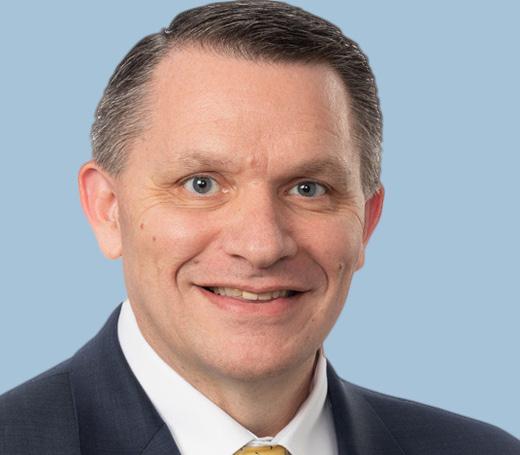
MICHAEL J. REYNOLDS
Chair of the Board President and Chief Executive Officer Farm Credit East

RYAN BERG
Senior Vice President and Chief Operating Officer Farm Credit Illinois

BILL KOHLER
Chief Information Officer Farm Credit East

BILL PERRY
Vice Chair of the Board
President and Chief Executive Officer AgWest Farm Credit

JIM DUNNE
Senior Vice President and Chief Risk Officer Farm Credit Illinois

Chief Financial Officer AgWest Farm Credit

BRIANA BEEBE
Executive Vice President and Chief Operating Officer Farm Credit East

KELLY HUNT
President and Chief Executive Officer Farm Credit Illinois

Chief Operating Officer AgWest Farm Credit

President and Chief Executive Officer

JIM MCCORMACK
Executive Vice President Chief Technology Officer

Executive Vice President
Infrastructure and Application
Delivery

JESS BARNES
Vice President People and Culture

MARIANA DELOBATO
Executive Vice President , Chief Delivery Officer

SCOTT ROUSSEAU
Executive Vice President Chief Financial Officer and Treasurer

Vice President
Chief Information Security Officer

RICHARD SAUNDERS
Executive Vice President Chief Information Officer
The following discussion summarizes the financial position and results of operations of Farm Credit Financial Partners, Inc. (FPI, we, our, or the Company) as of and for the year ended December 31, 2025. Comparisons with prior years are included. The discussion and analysis should be read in conjunction with the accompanying financial statements, footnotes, and other sections of this report. The accompanying financial statements were prepared under the oversight of our Audit Committee. The Management’s Discussion and Analysis include the following sections:
• Business Overview
• Year in Review
• Results of Operations
• Liquidity and Funding Sources
• Ownership and Capital
• Governance
• Forward-Looking Information
FPI operates as part of the Farm Credit System (the System or Farm Credit), which was created by Congress in 1916 and has served agricultural producers for over 100 years. The System’s mission is to provide sound and dependable credit to American farmers, ranchers, and other agricultural producers and farm-related businesses through a member-owned cooperative system. FPI serves System association lenders by providing comprehensive technology systems and services. The Farm Credit Administration (FCA) is the System’s independent safety and soundness federal regulator and was established to supervise, examine, and regulate System institutions
For over 30 years, FPI has supported the Farm Credit mission and agricultural credit associations (ACAs) through technology delivery. FPI’s investments in its technology and services portfolio have yielded a suite of technology solutions and services tailored for Farm Credit. Our vision is to equip its customers with tools that enable them to succeed in a competitive landscape.

Consistent with other Farm Credit institutions, FPI is organized as a cooperative, with ownership comprised of 100% of Farm Credit ACAs. This cooperative model facilitates alignment between customer needs and owner governance and direction.
In 2025, FPI continued advancing its long-term modernization strategy while strengthening the foundations to support a scalable, future-focused technology environment for Farm Credit. Building on the progress of prior years, the organization focused on refining its service delivery model, enhancing customer alignment, and maturing its enterprise governance to meet the evolving needs of its customers better.
A key area of focus was advancing FPI’s multi-year transition away from legacy technologies toward a modular, cloud-based architecture. Throughout the year, FPI made progress across several major programs—FSI, DNA, BPT, and Financial Services Cloud— that will support this future-state ecosystem. To improve execution consistency, FPI strengthened planning rigor, standardized delivery practices, and implemented more structured governance. These efforts created clearer accountability and improved transparency across project lifecycles. While program timelines continued to evolve, the foundational work completed in 2025 positions FPI to accelerate modernization efforts in the years ahead.
Customer alignment also remained a priority as FPI refined its engagement approach to support ACA business objectives better. A new intake and planning framework was introduced to ensure initiatives are evaluated for business value, feasibility, and strategic fit before execution begins. Customer
Success Managers assumed expanded roles to strengthen relationship management and ensure customer needs remain central to planning discussions. These enhancements improved cross-functional coordination and helped establish a more consistent approach to prioritization and roadmap development.
Operationally, FPI continued to reinforce the reliability and resilience of its technology environment. The Infrastructure and Application Delivery teams advanced modernization of core systems, strengthened service processes, and supported critical initiatives across production environments. Enhancements to monitoring, disaster recovery, and knowledge management contributed to increased stability, while Loan Operations, Customer Service, and technical support teams delivered essential services throughout periods of significant change.
Information Security further matured FPI’s risk and cybersecurity posture. Key accomplishments included enhancements in vulnerability management, identity governance, cloud security visibility, and data protection. The organization also advanced governance for emerging technologies, including AI, to ensure secure adoption across the enterprise.
These initiatives reinforced FPI’s commitment to operational resilience, risk mitigation, and regulatory alignment.
Financially, FPI managed through a year of transition while maintaining disciplined stewardship of ownerfunded resources. Favorable timing variances in the first half of the year contributed to positive interim results, and full-year financial performance is expected to remain in line with breakeven targets. The successful offboarding of AgCountry represented a significant milestone, with the related termination fee returned to customerowners through a Board-approved fee credit mechanism. Multi-year financial planning continued to focus on rightsizing the organization as legacy platforms are retired, and future-state systems come online.
FPI also continued investing in its workforce to support organizational effectiveness. Enhancements in leadership development, employee recognition and wellness, policy governance, and training contributed to improved alignment and engagement. These efforts supported FPI’s broader goal of building the skills, capabilities, and cultural foundation required for future operations.
As FPI looks ahead, the work completed in 2025 further strengthens the
foundation for long-term modernization and improved service delivery. With continued focus on execution discipline, customer partnership, and operational resilience, the organization remains well-positioned to advance its strategic vision and deliver sustained value to its customers.
In 2025, FPI successfully met its financial objectives, achieving net income slightly above its breakeven target. The strategic management of operating expenses, capital investments, and project expenditures drove our strong operational and financial performance. Cash reserves at year-end exceeded expectations, and liquidity remains sufficient to support future initiatives, including new product implementations and the modernization of legacy systems. Throughout the year, FPI maintained its commitment to delivering high-quality customer service and production support, ensuring continued customer satisfaction.
Total revenue for 2025 amounted to $99,719k, reflecting an increase of $17,329k, or 21%, compared to the previous year. This growth was primarily driven by a $9,302, or 126.5%, increase in custom services revenue related to

external resources working on projects along with $6,686k, or 9.9%, increase in standard services revenue mainly due to reclassification of passthrough items to be included in standard for 2025. Additionally, deferred revenues contributed an additional $1,228K in growth over 2024 levels due to billing on capitalized projects that were placed in service during the year.
Operating expenses totaled $99,464k in 2025 as compared to $82,571k in 2024 for an increase of $16,892k, or 20.5%. Like revenue, operating expense increases were driven by costs incurred to deliver both standard and custom services.
From a financial statement line-item perspective, salary and employee benefit expenses increased by $4,248k over 2024, due to a combination of planned year-over-year compensation increases and additional headcount to support project work. Purchased services costs increased by $14,885k as compared to 2024. The drivers of this increase are continued investments in modernizing FPI’s technology platform, as well as additional external resources engaged to complete custom projects on behalf of our customers. Occupancy and equipment costs decreased by $2,469k compared to prior year levels, primarily due to lower amortization of capitalized software, while other operating expenses increased by $264k due to audit fees and travel costs.
The Company reported net other expense of $200 thousand. This result reflects three primary components.
Net interest income totaled $776 thousand, generated from average cash balances maintained throughout the year. Offsetting this income were expenses of $379k related to the presentation of non-service components of net periodic pension cost in accordance with ASU 2017-07 and a $596k charge associated with the write-off of the Company’s investment in the Farm Credit captive insurance company. While the Company remains a customer of the captive, it no longer holds an equity interest.
Additional information regarding pension costs and the captive investment is included in Note 12 – Employee Benefit Plans and Note 8 –Captive Investment, respectively.
The income tax provision for the year of $55k is due to a combination of our 2025 tax provision and the difference between our prior-year provision and the actual taxes filed.
The 2025 net income is $1k as compared to the prior year’s net income of $132k.
FPI operates with the following primary
sources of funding:
1. Revenue for standard and enhanced services.
2. Revenue from custom and other projects.
3. Capital funding from owners. In addition, FPI maintains a $3.75 million line of credit with CoBank. This line renews annually on July 31.
Funding levels are established and approved annually during the budget planning cycle. Capital funding is planned over a three-year cycle and reviewed annually.
The capital plan identifies key strategic projects and related funding sources. Completion of these projects is positioning FPI to effectively meet technology demands and create business value for our customers.
As of December 31, 2025, FPI had three owners with stock investments totaling $27.8 million.
Total equity on December 31, 2025, equaled $27,886k, an increase of $868k over 2024. Changes in the equity section of the balance sheet include a decrease in the accumulated other comprehensive loss line item of $869k. The decrease in accumulated other comprehensive loss is due to a reduction in FPI’s defined benefit pension plan liability during the year.
FPI’s Board approved capital plan provides for continued investment in FPI’s strategic initiatives and in ongoing investments in operations, controls, and information security over the 2026-2028 period.
FPI is governed by a Board of Directors comprised of senior executives of each customer-owner, including their Chief Executive Officer. The Board is responsible for overseeing FPI’s
strategic direction, financial integrity, risk management, and long-term sustainability.
In accordance with FPI’s governance framework and Bylaws, the Board operates through a committee structure that includes committees exercising delegated authority and committees serving in an advisory capacity. Notwithstanding such delegation, the Board retains ultimate oversight responsibility. The Board formally approves committee charters, appoints committee members, and conducts periodic evaluations of committee composition, structure, and effectiveness to ensure continued alignment with strategic objectives, regulatory expectations, and sound corporate governance principles.
The Audit Committee, composed exclusively of Directors representing each customer-owner, provides independent oversight of the integrity and transparency of the Company’s financial reporting. The Committee oversees financial reporting risks, the accuracy of the annual shareholder report, and the effectiveness of internal controls related to financial statements. It monitors developments in accounting and auditing standards and assesses their impact on consolidated financial results. The Committee also oversees the internal audit program, the independence of external auditors, and management’s responsiveness to audit recommendations, while maintaining procedures for the confidential and anonymous reporting of concerns related to accounting or auditing matters.
The Human Capital Committee oversees FPI’s human capital strategy and compensation programs. The Committee evaluates CEO performance and recommends executive compensation to the Board,
while also overseeing senior officer compensation, succession planning, and workforce oversight. In carrying out its responsibilities, the Human Capital Committee seeks to ensure that compensation structures align with long-term performance objectives, support prudent risk management, and remain competitive and responsive to the evolving needs of FPI and its customer-owners .
The Customer Satisfaction and Technology Committee serves as the voice of the customer, ensuring that FPI’s technology services effectively support both current operations and future strategic needs. The Committee oversees and discusses major technology initiatives, aligns investments with customer strategies, and addresses conflicts between system-wide and customer-specific demands. It monitors service performance, customer satisfaction, and the delivery of key technology programs, using metrics and feedback to drive continuous improvement. The Committee also provides strategic guidance on innovation and technology investments, elevates risks or concerns to the Board, and helps ensure FPI’s service portfolio remains relevant, highquality, and responsive to member needs.
The Risk Committee oversees FPI’s risk management practices and ensures that risk management services effectively support current operations and longterm strategy. The Committee oversees the enterprise risk management (ERM) framework, aligns risk practices with the Company’s strategic objectives and risk appetite, and reviews key and emerging risks across strategic, financial, operational, compliance, cybersecurity, and reputational areas. It challenges management’s risk assessments, monitors mitigation strategies, and ensures timely escalation of significant risk exposures. In coordination with
other Board committees, the Risk Committee promotes a consistent and integrated approach to risk oversight, supports a culture of prudent risk-taking, and reports significant risk matters and recommendations to the Board.
Our discussion contains forward-looking statements. These statements are not guarantees of future performance and involve certain risks, uncertainties, and assumptions that are difficult to predict. Words such as “anticipates,” “believes,” “could,” “estimates,” “may,” “should,” and “will,” or other variations of these terms are intended to identify forward-looking statements. These statements are based on assumptions and analyses made considering experience and other historical trends, current conditions, and expected future developments. However, actual results and developments may differ materially from our expectations and predictions due to several risks and uncertainties, many of which are beyond our control. These risks and uncertainties include, but are not limited, to fluctuations in the economy, relative strengths and weaknesses in the agricultural credit sector and the real estate market, and actions taken by the Federal Reserve in implementing monetary policy.


The financial statements of Farm Credit Financial Partners, Inc. (the Company) are prepared by management, who is responsible for their integrity and objectivity, including amounts that must necessarily be based on judgments and estimates. The financial statements have been prepared in conformity with accounting principles generally accepted in the United States of America. The financial statements, in our opinion, fairly present the financial condition of the Company. Other financial information included in this 2025 annual report is consistent with that in the financial statements.
To meet our responsibility for reliable financial information, management depends on accounting and internal control systems designed to provide reasonable, but not absolute assurance that assets are safeguarded and transactions are properly authorized and recorded. Costs must be reasonable in relation to the benefits derived when designing accounting and internal control systems. To monitor compliance, the Company’s internal auditors perform audits of accounting records, review accounting systems and internal controls, and recommend improvements as appropriate. The financial statements are audited by RSM US LLP, our independent auditors, in accordance with auditing standards generally accepted in the United States of America. The Company is also examined by the Farm Credit Administration.
The chief executive officer, as delegated by the Board of Directors, has overall responsibility for the Company’s system of internal controls and financial reporting, subject to the review of the Audit Committee of the Board of Directors. The Audit Committee consults regularly with management and meets periodically with the independent auditors and internal auditors to review the scope and results of their examinations. The Audit Committee reports regularly to the Board of Directors. Both the independent auditors and the internal auditors have direct access to the Audit Committee.
The undersigned certify that the 2025 Annual Report to Shareholders and information contained herein is true, accurate and complete to the best of our knowledge and belief.
BOB PASSINI
President and Chief Executive Officer
Farm Credit Financial Partners
March 6, 2026
SCOTT ROUSSEAU
Chief Financial Officer
Farm Credit Financial Partners
March 6, 2026
MICHAEL J. REYNOLDS
Chair of the Board
President and Chief Executive Officer
Farm Credit East
March 6, 2026

The consolidated financial statements were prepared under the oversight of the Audit Committee (Committee). The Committee is composed of a subset of the Board of Directors of Farm Credit Financial Partners, Inc. (FPI). The Committee oversees the scope of FPI’s internal audit program, the approval and independence of RSM US LLP (RSM) as external auditors, the adequacy of FPI’s system of internal controls and procedures, and the adequacy of management’s action with respect to recommendations arising from those auditing activities. The Committee’s responsibilities are described more fully in the FPI’s Internal Controls Policy and the Audit Committee Charter.
Management is responsible for FPI’s internal controls and the preparation of the consolidated financial statements in accordance with accounting principles generally accepted in the United States of America. RSM is responsible for performing an independent audit of FPI’s consolidated financial statements in accordance with generally accepted auditing standards in the United States of America and to issue a report thereon. The Committee’s responsibilities include monitoring and overseeing these processes.
In this context, the Committee reviewed and discussed the audited consolidated financial statements for the year ended December 31, 2025, with management. The Committee also receives from RSM the matters required to be discussed by Statements on Auditing Standards.
The Committee approves all non-audit services provided by RSM, if any. In 2025, RSM was not engaged for non-audit services.
Based on the foregoing review and discussions, and relying thereon, the Committee recommended that the Board of Directors include the audited consolidated financial statements in the Annual Report for the year ended December 31, 2025 and for filing with the FCA.
TOM NAKANO
Chairperson of the Audit Committee
AgWest Farm Credit
March 6, 2026
Members of the Audit Committee:
Kelly Hunt
Michael J. Reynolds
March 6, 2026
AS OF DECEMBER 31, 2025, 2024, AND 2023
Liabilities
Long-term liabilities:
Commitments and contingencies (Note 16)
Equity
Class A preferred stock, $5.00 par value, 5,000,000 shares authorized, 3,220,200 shares issued and outstanding as of December 31, 2025 and 2024; 2,500,000 shares issued and outstanding as of December 31, 2023.
Class B preferred stock, $5.00 par value, 5,000,000 shares authorized, 2,340,000 shares issued and outstanding as of December 31, 2025 and 2024; 1,950,000 shares issued and outstanding as of December 31, 2023.
Class C common stock, $5.00 par value, 5,000,000 shares authorized, 0 shares issued and outstanding as of December 31, 2025 and 2024; 1,110,000 shares issued and outstanding as of December 31, 2023.
YEARS ENDED DECEMBER 31, 2025, 2024, AND 2023
YEARS ENDED DECEMBER 31, 2025, 2024, AND 2023
YEARS ENDED DECEMBER 31,
AND 2023
Cash Flows from Operating Activities
Cash Flows from Investing Activities
YEARS ENDED DECEMBER 31, 2025, 2024, AND 2023
YEARS ENDED DECEMBER 31, 2025, 2024, AND 2023
Balance as of January 1, 2023
as of December 31, 2023
Balance as of December 31, 2024
Balance as of December 31, 2025 (1,267,326) $ (291,044) $ (1,558,370) $
Farm Credit Financial Partners, Inc. (FPI or the Company) is engaged principally in providing information technology, financial services support, and other services to associations in the Farm Credit System (the System). Currently, FPI services associations funded through CoBank, ACB (CoBank), an agricultural credit bank in the Farm Credit System, and AgriBank, FCB a farm credit bank in the Farm Credit System.
The Farm Credit Administration (FCA) chartered FPI as a service corporation under Section 4.25 of the Farm Credit Act of 1971, as amended (the Act). The FCA has authority under the Act to charter and regulate Farm Credit System banks, associations and service corporations. The activities of FPI are examined by FCA and certain actions by FPI are subject to the prior approval of FCA and FPI owner associations.
The Company is headquartered in Springfield, Massachusetts.
A. Basis of Presentation
The accompanying financial statements have been prepared in accordance with accounting standards set by the Financial Accounting Standards Board (FASB). The FASB sets generally accepted accounting principles (GAAP) in the United States that the Company follows to ensure its financial condition, results of operations and cash flows are consistently reported. References to GAAP issued by the FASB in these notes to the financial statements are to the FASB Accounting Standards Codification (ASC).
B. Use of Estimates
The preparation of financial statements in conformity with GAAP requires management to make estimates and assumptions that affect the amounts reported in the financial statements and accompanying notes. Significant estimates include the valuation of deferred tax assets and liabilities, assets and liabilities associated with employee benefit plans, revenue recognition, and software development costs, and are discussed in these footnotes, as applicable. Actual results may differ from those estimates.
C. Cash and Cash Equivalents
Cash includes cash on hand and on deposit at banks. Cash equivalents are FPI’s investments in a short-term money market fund with an original maturity of three months or less. The money market fund invests in U.S. dollar-denominated short-term debt obligations including securities issued by the U.S. Government or its agencies, bankers’ acceptances, certificates of deposit, time deposits from U.S. or foreign banks, repurchase agreements, commercial paper, municipal securities and master notes.
D.
Accounts receivables are stated at the amount management expects to collect from outstanding balances. The Company estimates the allowance for credit losses through an assessment of historical bad debt write-off experience, current economic and market conditions, management’s evaluation of outstanding accounts receivable and anticipated recoveries. Due to the short-term nature of receivables, the estimate of credit losses is primarily based on aged accounts receivable balances and the financial condition of the Company’s customers. In addition, specific allowance amounts are established to record the appropriate provision for customers that have a higher probability of default. Bad debts are written off against the allowance when identified. The allowance for credit losses balance at December 31, 2025, 2024, and 2023 was $0. Bad debt expense was $0 for the years ended December 31, 2025, 2024, and 2023.
At times, FPI performs services for customers in advance of invoicing for such services. These amounts are recorded as unbilled revenue, are included in prepaid and other assets in the accompanying balance sheets, and amount to $0, $1,404,593 and $1,826,784 at December 31, 2025, 2024, and 2023, respectively.
Fixed assets are carried at cost less accumulated depreciation. Depreciation is computed using the straight-line method over the estimated useful lives of five to ten years for furniture and fixtures, and three to seven years for computer equipment and software. Gains and losses on dispositions are reflected in other operating expenses on the statements of operations. Maintenance and repairs are charged to operating expense and improvements are capitalized.
The Company is developing new products which the Company intends to offer as part of its core services and is developing significant upgrades and enhancements to its existing software as-a-service (SaaS) platform. The Company follows the guidance of ASC 350-40, Intangibles – Goodwill and Other – Internal-Use Software, for development costs related to these new products. Costs incurred in the planning stage are expensed as incurred while costs incurred in the application development stage are capitalized, assuming such costs are deemed to be recoverable. Costs incurred in the operating stage are generally expensed as incurred except for significant upgrades and enhancements. Software development costs are amortized over the software’s estimated useful life, which management has determined to be three to seven years. Software development costs are included in intangible assets, net in the accompanying balance sheets and disclosed in more detail in Note 5.
The funded status of pension and other post-retirement benefit plans is recognized in the balance sheets in long-term accrued employee benefits. Gains and losses, prior service costs and credits that have not yet been recognized through pension expense will be recognized in accumulated other comprehensive loss, net of tax, until they are amortized as a component of net periodic pension/post-retirement benefits expense.
Pension expense is based on an actuarial computation of future benefits using estimates for expected return on assets, expected compensation increases and applicable discount rates. Expected compensation increases are estimated based on historical and expected increases in the future. Increases in estimated compensation would result in higher pension expense while decreases would lower pension expense. Discount rates are selected based upon rates of return on fixed income investments currently available and expected to be available during the period to maturity of the pension benefit. Detailed rate assumptions are included in Note 13.
Effective January 1, 2005, the Company closed the existing defined benefit retirement plan to new participants. All employees hired on or after January 1, 2005 are participants in a noncontributory defined contribution plan. Participants in this plan receive a fixed percentage of their eligible wages in an investment account maintained for the employee. Costs for these benefits are recorded in the period in which they are incurred in salaries and employee benefits on the statements of operations.
Company employees are also eligible to participate in an employee savings plan. The Company matches a certain percentage of employee contributions with costs being expensed as funded. Costs for these benefits are recorded in the period in which they are incurred in salaries and employee benefits on the statements of operations.
The Company also provides certain health care and life insurance benefits to employees. Costs for these benefits are recorded in the period in which they are incurred in salaries and employee benefits on the statements of operations.
The Company is organized as a C Corporation for Federal Income Tax purposes and files a Form 1120-C. The Company uses the asset and liability method of accounting for income taxes whereby deferred tax assets and liabilities are recognized for the estimated future tax consequences attributable to differences between the financial statement carrying amounts of existing assets and liabilities and their respective tax bases. The effect on deferred tax assets and liabilities of a change in tax rates is recognized in income in the period that includes the enactment date. The Company also reduces deferred tax assets by a valuation allowance if, based on the weight of available evidence, it is more likely than not that some portion or all of the recorded deferred tax assets will not be realized in future periods. This methodology requires estimates and judgments in the determination of the recoverability of deferred tax assets and in the calculation of certain tax liabilities. Valuation allowances are recorded against the gross deferred tax assets that management believes, after considering all available positive and negative objective evidence, historical and prospective, with greater weight given to historical evidence, that it is more likely than not that these assets will not be realized.
In addition, the Company is required to recognize in the financial statements, those tax positions determined to be more likely than not of being sustained upon examination, based on the technical merits of the positions as of the reporting date. If a tax position is not considered more likely than not to be sustained based solely on its technical merits, no benefits of the position are recognized. The Company recognizes interest and penalties as a component of the provision for income taxes in the accompanying statements of operations. The Company does not believe it has any material uncertain tax positions.
Interest and penalties paid were $2,721, $982, and $4,468 for the years ending December 31, 2025, 2024, and 2023. The Company is no longer subject to federal, state, and local income tax examinations by tax authorities for years prior to 2021.
The Company derives revenue from core and custom services from its customers, all of which are lending associations in the Farm Credit System. Standard and custom services include credit delivery and management systems, core infrastructure and security, financial accounting and loan accounting services, management reporting, electronic commerce, legal support, and custom solutions, which include a retained technology services team dedicated to any specific projects required by the customer over a period of time which is typically one year.
The Company recognizes revenue in accordance with ASC 606, Revenue from Contracts with Customers, which provides a five-step model for recognizing revenue from contracts with customers as follows:
• Identify the contract with a customer
• Identify the performance obligation(s) in the contract
• Determine the transaction price
• Allocate the transaction price to the performance obligation(s) in the contract
• Recognize revenue when or as performance obligation(s) are satisfied
The Company assesses the contract term as the period in which the parties to the contract have presently enforceable rights and obligations. Contracts are generally standardized and non-cancellable for the duration of the stated contract term. FPI has determined that its core services represent a series of promises which represent a single performance obligation. When FPI sells custom services, such services are generally negotiated separately from the core services. As a result, the Company has determined that it does not have contracts with multiple performance obligations. Such services are recognized over the period of performance under the input method. All revenues for the years ended December 31, 2025, 2024, and 2023 as reported within the statements of operations, are recognized over time.
The transaction price is the amount of consideration to which the Company expects to be entitled in exchange for transferring goods and services to the customer. Revenue from sales is recorded based on the transaction price, which includes estimates of variable consideration. The amount of variable consideration included in the transaction price is constrained to the extent it is probable that a significant reversal of cumulative revenue recognized will not occur when the uncertainty associated with the variable consideration is subsequently resolved. At the inception of a contract, the Company expects the period between when it satisfies its performance obligations, and when the customer pays for the services, will be one year or less. As such, the Company has elected to apply the practical expedient which allows the Company to not adjust the promised amount of consideration for the effects of a significant financing component when a financing component is present.
Payment terms on invoiced amounts are typically 30 days. The Company does not offer rights of return for its services in the normal course of business, and contracts generally do not include customer acceptance clauses. The Company also excludes from revenue governmentassessed and imposed taxes on revenue-generating activities that are invoiced to customers.
The timing of revenue recognition may not align with the right to invoice the customer. The Company records accounts receivable when it has the unconditional right to issue an invoice and receive payment regardless of whether revenue has been recognized. If revenue has not yet been recognized, a contract liability (deferred revenue) is recorded. If revenue is recognized in advance of the right to invoice, unbilled revenue is recorded.
Balances as of December 31, were as follows:
Costs to obtain and fulfill a contract: In accordance with ASC 340-40, Other Assets and Deferred Costs (ASC 340-40), the Company has elected to apply the practical expedient and recognize the incremental costs of obtaining contracts as an expense when incurred if the amortization period for the assets that the Company otherwise would have recognized is one year or less. Therefore, the Company would capitalize the incremental costs of obtaining a contract with a customer if the Company expects the benefit of those costs to be longer than one year and amortize such costs over the expected benefit period.
The Company considered the relevant guidance under ASC 340-40 and did not identify any incremental costs of obtaining a contract which would require capitalization for the years ended December 31, 2025, 2024, and 2023. The Company does not pay commissions in connection with its contracts which would require capitalization under the provisions of ASC 340-40. Further, the Company did not identify other material contract acquisition and fulfillment costs where ASC 340-40 results in capitalization.
The Company determines if an arrangement is or contains a lease at inception, which is the date on which the terms of the contract are agreed to, and the agreement creates enforceable rights and obligations. A contract is or contains a lease when (i) explicitly or implicitly identified assets have been deployed in the contract and (ii) the Company obtains substantially all of the economic benefits from the use of that underlying asset and directs how and for what purpose the asset is used during the term of the contract. The Company also considers whether its service arrangements include the right to control the use of an asset.
The Company made an accounting policy election available under Topic 842 not to recognize ROU assets and lease liabilities for leases with a term of 12 months or less. The Company has one lease with a lease term of 12 months or less. For all other leases, ROU assets and lease liabilities are measured based on the present value of future lease payments over the lease term at the commencement date of the lease (or January 1, 2022, for existing leases upon the adoption of Topic 842). The ROU assets also include any initial direct costs incurred and lease payments made at or before the commencement date and are reduced by any lease incentives. To determine the present value of lease payments, the Company made an accounting policy election available to non-public companies to utilize a risk-free borrowing rate, which is aligned with the lease term at the lease commencement date (or remaining term for leases existing upon the adoption of Topic 842).
L. Concentrations of Credit Risk
Financial instruments which potentially subject the Company to credit risk consist primarily of cash, cash equivalents, accounts receivable and unbilled revenue. The Company maintains its cash and cash equivalents with high credit quality financial institutions, and monitors credit risk with individual financial institutions and issuers. At December 31, 2025, 2024, and 2023, the Company had cash balances at certain financial institutions in excess of federally insured limits; however, it has not experienced any losses in such accounts. See Note 17 for concentrations of revenue and accounts receivable.
M. Accumulated Other Comprehensive (Loss) Income
The Company reports comprehensive (loss) income for all changes in equity during a period from non-owner sources, including the related net income (loss). The accumulated other comprehensive (loss) income represents adjustments to the minimum pension liability, net of tax.
N. Captive Insurance Company
FPI accounts for its investment in the captive insurance company (Note 8) under the equity method of accounting. The carrying value of the investment is recorded based on FPI’s initial investment and adjusted for FPI’s share of the earnings.
O. Impairment of Long-Lived Assets
Long-lived and intangible assets with definite lives are reviewed for impairment whenever changes in events or circumstances indicate their carrying values may not be recoverable. The impairment analyses are conducted in accordance with ASC 360, Property, Plant and Equipment. The recoverability of carrying value is determined by comparison of the asset or asset group’s carrying value to its future undiscounted cash flows. When this test indicates the potential for impairment, a fair value assessment is performed, and the assets are written down to their respective fair values. During the years ended December 31, 2025, 2024, and 2023, there were no events or circumstances identified by the Company which would be indicative of potential impairment of long-lived assets.
P . Recently Issued Accounting Pronouncements
In December 2023, the FASB issued ASU 2023-09, “Income Taxes (Topic 740): Improvements to Income Tax Disclosures.” The standard introduces increased transparency about income tax information through the requirement of increased disclosures around specific categories in the rate reconciliation and requires additional information on reconciling items. It is effective for annual periods beginning after December 15th, 2025, with early adoption permitted. The Company is currently evaluating the impacts of adoption and additional disclosure requirements. In September 2025, the FASB issued ASU 2025-06, “Intangibles - Goodwill and Other - Internal-Use Software (Subtopic 350-40): Targeted Improvements to the Accounting for Internal-Use Software.” ASU 2025-06 removes the need to differentiate between project stages when determining which costs can be capitalized. Costs will be eligible for capitalization when an entity’s management has authorized and committed to fund the software project and it is probable that the project will be completed and the software will be used for its intended function (probable-to-complete). It is effective for annual periods beginning after December 15th, 2026, with early adoption permitted. The Company is currently evaluating the impacts of adoption and additional disclosure requirements.
Prepaid and other assets consist of the following (as of December 31):
Fixed assets, net, consisted of the following (as of December 31):
For the year ended December 31, 2025 there were disposals of $927,602 with a realized loss of $3,184. For the year ended December 31, 2024 there were disposals of $89,581 with a realized loss of $733. For the year ended December 31, 2023, there were disposals of fully depreciated assets of $22,665,029. Depreciation expense related to the Company’s fixed assets was $442,880, $664,870, and $1,134,990, for the years ended December 31, 2025, 2024, and 2023, respectively.
Intangible assets, net consisted of software development costs, as follows (as of December 31):
During the year ended December 31, 2025, the Company recorded a loss on disposal of capitalized development costs of $544,655. For the year ended December 31, 2024, there were no disposals of amortized software development assets. During the year ended December 31, 2023, the Company recorded a loss on disposal of capitalized development costs of $200,935. Software development costs are typically amortized over a useful life of three – seven years. Amortization expense associated with these assets totaled $5,559,312, $7,300,306, and $6,977,879, for the years ended December 31, 2025, 2024, and 2023, respectively. As of December 31, 2025, 2024, and 2023, there was $0, $5,253,414, and $1,389,007, respectively, capitalized that the Company was not amortizing, as these products were in the application development stage and not yet placed in service.
Based on the current amount of intangible assets subject to amortization, including those not yet placed in service based on anticipated placed in service date, amortization expense is expected to be as follows for each of the years ending December 31:
Accrued expenses and other liabilities consist of the following (as of December 31):
Accrued employee benefits consist of the following (as of December 31):
In conjunction with other System entities, the Company jointly owned the Farm Credit System Association Captive Insurance Company (the Captive). The Captive is an insurer that provides insurance services such as directors’ and officers’ liability, fiduciary liability, bankers bond and other property and liability insurance for member associations. Effective September 30, 2025, the Company resigned as a principal subscriber of the Captive and the capital investment of $75,000 was returned. The carrying value of the investment totaling $596,405 was written off and is included in other losses on the accompanying statement of operations. The carrying value totaled $0, $675,757, and $645,312 at December 31, 2025, 2024, and 2023, respectively. Premiums paid in those respective years to the Captive totaled $371,242, $317,411, and $371,705, respectively, and are included in salaries and employee benefits on the accompanying statements of operations.
The Company has a line of credit with CoBank, ACB to fund normal operations and capital expenditures. Under terms of the financing agreement with CoBank, which provides FPI with a $3,750,000 revolving line of credit, substantially all FPI’s assets are assigned to CoBank as primary collateral for funds advanced.
During the normal course of business, the line of credit is used to settle transactions between FPI and CoBank. Borrowings from CoBank outstanding as of December 31, 2025, 2024, and 2023 were $0. Borrowings made and repaid during the year as part of the settlement process were $8,050,831, $5,765,869 and $5,162,054 for the years ended December 31, 2025, 2024, and 2023, respectively. Interest expense incurred to CoBank for the years ended December 31, 2025, 2024, and 2023 was $1,621, $250 and $632, respectively.
Interest on the unpaid balance is charged at a rate of 1.90% above the Daily Simple SOFR. The variable rate in effect at December 31, 2025, was 5.77%. The line of credit matures on July 31, 2026.
The provision for income taxes consisted of the following (for the year ended December 31):
The provision for income tax differs from the amount of income tax determined by applying the U.S. statutory federal tax rate to pretax income as follows (for the year ended December 31):
Deferred tax assets and (liabilities) consisted of the following (as of December 31):
Under the provisions of the Internal Revenue Code, certain substantial changes in the Company’s ownership may limit in the future a significant portion of the amount of net operating loss carry forwards which could be utilized annually to offset future taxable income and income tax liabilities. The amount of any annual limitation is determined based on the Company’s value and certain other factors on the date of ownership change.
Management has determined that it is more likely than not that the Company will recognize the benefits of federal and state deferred tax assets within the allowable time period and, as a result, has determined that no valuation allowance related to deferred tax assets is necessary as of December 31, 2025, 2024, and 2023.
At December 31, 2025, FPI has federal net operating loss carry forwards of $0 and state net operating loss carry forwards of $488,996. The state NOL carryforwards expire over various years beginning in 2035 depending upon the jurisdiction.
The effective tax rates were 69.39%, 25.60%, and 34.67% for the years ended December 31, 2025, 2024, and 2023.
The Company follows the guidance in FASB ASC 820, Fair Value Measurements and Disclosures (ASC 820), which defines fair value, and establishes a fair value hierarchy that prioritizes the inputs to valuation techniques used to measure fair value. The hierarchy gives the highest priority to unadjusted quoted prices in active markets for identical assets or liabilities (Level 1 measurements) and the lowest priority to unobservable inputs (Level 3 measurements). The three levels of the fair value hierarchy are described below:
Level 1: Inputs are quoted prices (unadjusted) in active markets for identical assets or liabilities that the reporting entity has the ability to access at the measurement date.
Level 2: Valuations based on quoted prices in markets that are not active or for which all significant inputs are observable, either directly or indirectly.
Level 3: Prices or valuations that require inputs that are both significant to the fair value measurement and unobservable.
To the extent that valuation is based on models or inputs that are less observable or unobservable in the market, the determination of fair value requires more judgment. Accordingly, the degree of judgment exercised by the Company in determining fair value is greatest for instruments categorized in Level 3. A financial instrument’s level within the fair value hierarchy is based on the lowest level of any input that is significant to the fair value measurement.
Fair value is a market-based measure considered from the perspective of a market participant rather than an entity-specific measure. Therefore, even when market assumptions are not readily available, the Company’s own assumptions are set to reflect those that market participants would use in pricing the asset or liability at the measurement date. The Company uses prices and inputs that are current as of the measurement date, including during periods of market dislocation. In periods of market dislocation, the observability of prices and inputs may be reduced for many instruments. This condition could cause an instrument to be reclassified between levels.
Assets and liabilities measured at fair value on a nonrecurring basis are recognized at fair value subsequent to initial recognition when they are deemed to be other-than-temporarily impaired. As of December 31, 2025, 2024, and 2023 the Company does not have any assets or liabilities subject to measurement at fair value on a nonrecurring basis.
As of December 31, the Company’s fair value hierarchy for its financial assets that are carried at fair value was as follows: Assets at Fair Value as of December 31, 2025
at Fair Value as of December 31, 2024
at Fair Value as of December 31, 2023
Money market accounts are included in cash and cash equivalents in the balance sheets, are classified within Level 1 and are valued based on quoted prices in active markets for identical securities. The fair value of investments in the Company’s employee benefit plans are included in Note 13.
FPI provides health care benefits to its employees through a multiple-employer insurance plan with CoBank, ACB (the plan administrator), Farm Credit East, ACA and the Federal Farm Credit Banks Funding Corporation The plan is responsible for the first $200,000 in claims per person per year, with stop loss and group reinsurance to protect against catastrophic claims. For the years ended December 31, 2025, 2024, and 2023 the Company has recorded expense, net of employee withholdings or contributions, of $3,141,509, $3,039,926, and $3,119,719, respectively which are included in salaries and employee benefits on the accompanying statements of operations. Included in accrued expenses and other liabilities in the balance sheets as of December 31, 2025, 2024, and 2023 are self-insurance reserves totaling $361,234, $356,566, and $296,223, respectively.
Employee
FPI participates in the CoBank Employee Savings Plan (Employee Savings Plan), a deferred compensation plan in which FPI matches a certain percentage of employee contributions. The Employee Savings Plan requires FPI to match 100 percent of employee contributions up to a maximum employee contribution of 6% of base salary. During the years ended December 31, 2025, 2024, and 2023 employer contributions charged to salaries and employee benefits were $1,661,514, $1,600,087, and $1,456,972, respectively.
Defined Contribution
FPI participates in the CoBank defined contribution qualified retirement plan, a noncontributory, multiple-employer plan (Defined Contribution Plan). Under the Defined Contribution Plan, for employees hired January 1, 2005 and later, the employer contributes a percentage of each employee’s salary based on years of service, to an account maintained for the employee. During the years ended December 31, 2025, 2024, and 2023 employer contributions charged to salaries and employee benefits were $942,853, $847,329, and $780,100, respectively.
FPI participates in the CoBank defined benefit qualified retirement plan (Defined Benefit Plan). The Defined Benefit Plan covers FPI employees hired before January 1, 2005. Benefits are based on years of service and compensation levels during the years of employment. It is the policy of the participating employers to fund at least the minimum required by the Employee Retirement Income Security Act (ERISA). FPI’s contributions during the years ended December 31, 2025, 2024, and 2023 of $931,259, $1,194,489 and $310,228, respectively were consistent with this policy. Plan assets are stated at fair value and are primarily invested in publicly traded stocks and bonds, real estate and contracts with insurance companies.
Post-Retirement Health Care Benefit Plan
FPI provides certain health care and life insurance benefits to employees if they reach normal retirement age while working for FPI (Post-Retirement Health Care Benefit Plan). The authoritative accounting guidance requires the accrual of the expected cost of providing post-retirement benefits other than pensions, primarily healthcare benefits, to an employee and an employee’s beneficiaries and covered dependents during the years that the employee renders service necessary to become eligible for these benefits. These accrued (benefits) expenses of $(54,380), $34,990, and $30,188, were classified as salaries and employee benefits on the accompanying statements of operations during the years ended December 31, 2025, 2024, and 2023, respectively.
The funding status and the amounts recognized in the balance sheets of FPI’s Defined Benefit Plan and Post-Retirement Health Care Benefit Plan benefits are as follows (as of December 31):
Defined Benefit Qualified Retirement Plan
Defined Benefit Qualified Retirement Plan
Funded status of the plan:
The accumulated benefit obligation for FPI’s Defined Benefit Plan and Post-Retirement Health Care Benefit Plan are presented in the following table (as of December 31):
The accumulated benefit obligation is the actuarial present value of the benefits accrued for service rendered to that date based on current salary levels. The projected benefit obligation is the actuarial present value of the benefits accrued for service rendered to that date based on estimated future salary levels.
Components of net periodic benefit cost and other amounts recognized in other comprehensive loss are as follows (for the years ended December 31):
of Net Periodic Benefit Cost
Changes in plan assets and benefit obligations recognized in other comprehensive income
(gain)/loss
Amortization of:
The weighted average rate assumptions used to determine benefit obligations for FPI’s Defined Benefit Plan are presented as follows (as of December 31):
The weighted average rate assumptions used to determine net periodic benefit cost for the Defined Benefit Plan are as follows (as of December 31):
The discount rates are calculated using a spot yield curve method developed by an independent actuary. The approach maps a high-quality bond yield curve to the duration of the plans’ liabilities, thus approximating each cash flow of the liability stream to be discounted at an interest rate specifically applicable to its respective period-in-time.
The asset allocation target ranges for the Defined Benefit Plan follows the investment policy adopted by the retirement trust committee. This policy provides for a certain level of trustee flexibility in selecting target allocation percentages. The actual asset allocations as of December 31, 2025, 2024, and 2023 are shown in the following table, along with the adopted range for target allocation percentages by asset class. The actual allocation percentages reflect the quoted market values at year-end and may vary during the course of the year. Plan assets are generally rebalanced to a level within the target range each year at the direction of the trustees. We establish the expected rate of return on plan assets based on a review of past and anticipated future returns on plan assets. The expected rate of return on plan assets assumption also matches the pension plans’ long-term interest rate assumption used for funding purposes.
The assets of the Defined Benefit Plan consist primarily of investments in various domestic equity, international equity, and fixed income. These funds do not contain any significant investments in a single entity, industry, country, or commodity, thereby mitigating concentration risk. No CoBank stock or debt, or that of any other System institution, is included in these investments.
Investment strategy and objectives are described in the pension plans’ formal investment policy documents. The basic strategy and objectives as adopted in the investment policy are:
• Manage portfolio assets with a long-term time horizon appropriate for the participant demographics and cash flow requirements;
• Optimize long-term funding requirements by generating rates of return sufficient to fund liabilities and exceed the long-term rate of inflation; and
• Provide competitive investment returns and reasonable risk levels when measured against appropriate benchmarks.
The following tables present major categories of Defined Benefit Plan assets that are measured at fair value at December 31, 2025, 2024, and 2023 for each of the fair value hierarchy levels as defined in Note 11:
of December 31, 2024
(1) Fund invests primarily in diversified portfolios of common stocks of U.S. companies in various industries, including consumer goods and services, information technology, healthcare, industrial materials, financial services and energy.
(2) Fund invests primarily in a diversified portfolio of equities of non-U.S. companies in various industries, including information technology, financial services, healthcare, consumer goods and services, energy and telecommunications.
(3) Fund invests primarily in a diversified portfolio of investment grade debt securities and cash instruments.
(4) Fund invests primarily in U.S. Treasury debt securities and corporate bonds of U.S. companies primarily in the financial services industry.
(5) Fund invests in equities and corporate debt securities of companies located in emerging international markets. Industries include energy, consumer goods and services, industrial materials, financial services and information technology. Fund also invests in the sovereign debt of various countries.
Level 1 plan assets are funds with quoted daily net asset values that are directly observable by market participants. The fair value of these funds is the net asset value at close of business on the reporting date.
Level 2 plan assets are funds with quoted net asset values that are not directly observable by market participants. A significant portion of the underlying investments in these funds have individually observable market prices, which are utilized by the plan’s trustee to determine a net asset value at close of business on the reporting date.
NAV plan assets are funds with unobservable net asset values and supported by limited or no market activity.
Expected Contributions
FPI expects to contribute $0 to the funded, qualified Defined Benefit Plan in 2026. Actual 2026 contributions could differ from the estimates noted above.
Estimated Future Benefits Payments
FPI expects future benefit payments, which reflect expected future service, as appropriate, are as follows:
The following table sets forth the funding status and weighted average assumptions used to determine post-retirement health care benefit obligations (as of December 31).
FPI is authorized to issue 5,000,000 shares each of Class A preferred stock - voting; Class B preferred stock - non-voting; and Class C common stock - non-voting all at a par value of $5 per share.
During 2024, FPI equalized the ownership of Class A and Class B shares among its three shareholders. A shareholder converted 1,110,000 shares of Class C common stock into 720,000 shares of Class A preferred stock and 390,000 shares of Class B preferred stock and sold 146,600 shares of Class A preferred stock to the Company. 146,800 shares of Class A preferred stock were issued to the remaining shareholders.
Each owner of Class A preferred stock is entitled to a single vote regardless of the number of shares owned, while Class B preferred stock and Class C common stock provide no voting rights to their holders.
A description of equities is as follows:
• Class A preferred stock (voting stock) is the last of the three stock classes to be impaired and the first of the three classes to be restored after impairment. This class of stock may be issued only to the bank serving the Northeast Region, the affiliated associations and non-affiliated customers using core services.
• Class B preferred stock (nonvoting stock) is the second class to be impaired and the second class to be restored after impairment. This class of stock may be issued to Farm Credit System banks and associations under a program approved by the board.
• Class C common stock (nonvoting stock) is the first class to be impaired and the third class to be restored after impairment. This class of stock may be issued to the bank, the affiliated associations and nonaffiliated customers under a program approved by the board.
• Other classes and issues of stock shall be approved by the stockholders.
All shares are non-assessable and no further capital contributions are required. Dividends or patronage distributions may be declared by the Board at its discretion provided no class of stock shall be impaired. There were no dividends or patronage distributions declared during the years ended December 31, 2025, 2024, and 2023.
In the event of liquidation or dissolution of the Company, any assets remaining after payment or retirement of all liabilities shall be distributed first to the holders of the Class B preferred stock, second to the holders of Class A preferred stock and third to the holders of the Class C Common Stock.
The Company leases real estate and a vehicle that have initial terms ranging from 3 to 19 years. Some leases include one or more options to renew, generally at the Company’s sole discretion, with renewal terms that can extend the lease term up to 10 years. In addition, certain leases contain termination options, where the rights to terminate are held by either the Company, the lessor or both parties. These options to extend or terminate a lease are included in the lease terms when it is reasonably certain that the Company will exercise that option. The Company’s operating leases generally do not contain any material restrictive covenants or residual value guarantees.
Operating lease cost is recognized on a straight-line basis over the lease term. Operating lease expense was $682,215, $825,975 and $899,799 for the years ended December 31, 2025, 2024, and 2023, respectively.
The weighted-average remaining lease term and discount rate for operating leases were as follows:
Future undiscounted cash flows for each of the next five years and thereafter and a reconciliation to the lease liabilities recognized on the balance sheet are as follows as of December 31, 2025:
Operating Leases
2026 $
Less imputed interest (1,155,464)
Total lease liability $ 7,786,490
From time to time, the Company may be exposed to litigation relating to products and operations. The Company is not currently engaged in any legal proceedings that are expected, individually or in the aggregate, to have a material, adverse effect on the Company’s financial condition or results of operations.
At December 31, 2025 and 2024, FPI was owned by three Farm Credit Agricultural Credit Associations (ACA), Farm Credit East, ACA, Farm Credit Illinois, ACA, and AgWest Farm Credit, ACA. At December 31, 2023, FPI was owned by four Farm Credit Agricultural Credit Associations (ACA), AgCountry Farm Credit Services, ACA, Farm Credit East, ACA, Farm Credit Illinois, ACA, and AgWest Farm Credit, ACA.
For the years ended December 31, 2025, 2024, and 2023, the Company recognized revenue of $60,238,481, $61,789,410 and $71,760,863, representing 60.4%, 75.0%, and 94.3%, respectively, from transactions with its ACA owners. At December 31, 2025, 2024, and 2023, accounts receivable from such customers totaled $845,945, $460,247 and $124,000, representing 95.6%, 73.2%, and 95.1% of total accounts receivable outstanding at such dates. At December 31, 2025, 2024, and 2023 unbilled revenue from such customers totaled $0, $1,239,854 and $1,783,774 representing 0%, 88.3%, and 97.6% of total accounts receivable outstanding at such dates. The Company’s revenue contracts with its major customers reflect a structure similar to that of a cooperative, whereby excess earnings are expected to be distributed to the customers, and excess losses are expected to be funded by the customers. No such distributions were made, or additional funding received for the years ended December 31, 2025, 2024, and 2023.
The Company has evaluated subsequent events through March 6, 2026, which is the date the financial statements were issued or were available to be issued. There are no such events to disclose.





financialpartne rs.com