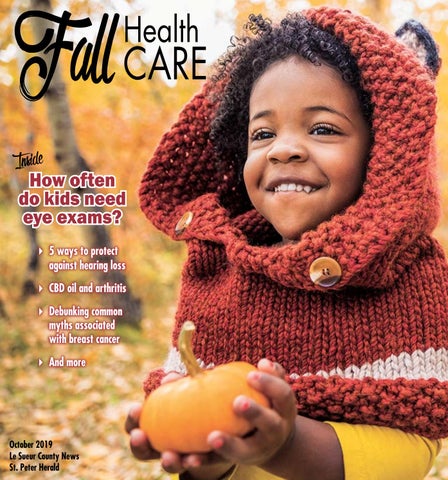
Health
CARE How often do kids need eye exams? 5 ways to protect against hearing loss CBD oil and arthritis Debunking common myths associated with breast cancer And more
October 2019 Le Sueur County News St. Peter Herald
PAGE 2
FALL HEALTH CARE
Wednesday, October 9, 2019
STILL FILLING YOUR NEEDS NOW AND IN THE FUTURE. We offer convenient pharmacy services.* • Immunizations — flu, pneumonia, shingles and more
• Hy-Vee Repeat Refills® — automatic prescription refill service
• Skip the wait — receive notifications by phone, text or email when your prescriptions are ready
• Free prescription delivery
• Generic medications as low as $4 • Medication Therapy Management
• Mobile app to easily manage prescriptions • Accept all prescription drug plans including Medicare and Medicaid • And more!
*See store for details.
MONDAY–FRIDAY 8:30 a.m.–7 p.m. SATURDAY 9 a.m.–6 p.m. SUNDAY 10 a.m.–5 p.m.
1002 Old Minnesota Ave St. Peter, MN 56082 (507) 995-0260
How often do kids need eye exams?
(Metro) Many people expect their vision to fade as they grow older. Such expectations are not unfounded, as the National Eye Institute notes that certain vision changes, including diminished vision and difficulty distinguishing colors, are a normal part of aging. But even children can experience changing vision, which only highlights the importance of kids receiving routine eye exams. Eye examination frequency depends on the age of the child and the condition of his or her eyesight at the time of each exam. The American Optometric Association has established these guidelines for pediatric eye examination frequency to help parents know when to get their youngsters’ vision checked.
Birth to 2 years Children in this age group whose physicians have deemed them asymptomatic of potential eye conditions or at low risk of developing eye conditions should have their eyes examined sometime between six and 12 months of age. Kids who may be at risk should adhere to the same schedule, though the AOA notes that exams for at-risk children may need to be conducted more frequently, even in this age group, than kids who are symptom-free. Eye doctors will speak with parents and recommend an eye exam schedule based on their initial examination.
and fifth birthdays. The same goes for kids who are at risk, though doctors may recommend more frequent examinations for such youngsters.
6 through 18 years Whether they are at risk of eye conditions or not, children between the ages of six and 18 should have their eyes examined before first grade and annually thereafter. Youngsters who are at risk may need more frequent examinations as they get older. Eye examinations are an important component of child healthcare. By adhering to AOA eye examination guidelines, parents can ensure any vision problems 3 through 5 years their children develop are quickChildren between the ages ly caught and can be treated beof three and five who are at low fore they adversely affect youngrisk of developing eye conditions sters’ lives. should have their eyes examined at least once between their third
FALL HEALTH CARE 2019 A special publication of the Le Sueur County News and St. Peter Herald Publisher Chad Hjellming
Media Consultants Kathleen Davies Missy Daschner Gayle Stelten
Look for this section on
LE SUEUR COUNTY NEWS com
Fall Health Care 2019 is distributed to subscribers and readers of the Le Sueur County News and St. Peter Herald at no additional charge. All rights reserved. ©2019 All advertising contained herein is the responsibility of the advertiser.
Wednesday, October 9, 2019
FALL HEALTH CARE
PAGE 3
The benefits of organic foods
(Metro) Modern grocery stores are unlike the ones many of today’s adults encountered when they were children. Grocery stores are not only bigger today than they were years ago, but they’re also stocked with items that weren’t available until relatively recently. One stroll through the produce section reveals just how different modern grocery stores are from those of yesteryear. Organic fruits and vegetables now take up ample real estate in grocery store produce sections. Many shoppers may wonder if they’re better off choosing organic versus traditional products, and research suggests they are. • Organic foods contain less pesticides and toxic materials. A 2014 meta-analysis published in the British Journal of Nutrition found that organically grown crops were less likely than conventionally grown crops to contain detectable levels of pes-
ticides. The analysis also found that organically grown crops were 48 percent less likely to contain cadmium than conventionally grown crops. Cadmium is a toxic heavy metal that can accumulate in the liver and kidneys, which the Global Healing Center says can affect blood pressure, induce bone damage and affect renal and dopamingeric systems in children. • Organic crops contain more antioxidants than conventional crops. The same analysis also found that organic crops had significantly higher levels of antioxidants, which promote strong immune systems, than conventionally grown crops. Organic crops were found to contain 69 percent higher levels of flavanones and 51 percent higher levels of anthocyanins than their conventional counterparts. The extra antioxidants in organic foods is nothing to scoff at, as the National Cancer Institute notes
that antioxidants neutralize free radicals, excess levels of which can potentially lead to the formation of various types of cancer and other diseases. • Organic products cannot contain synthetic hormones. Conventionally raised animals are sometimes injected with synthetic growth hormones so they will gain weight more quickly and produce more milk. Residue from those substances, which cannot be used in the production of organic meat and dairy products, is believed to contribute to widespread antibiotic resistance, according to the Biodesign Center for Environmental Security at Arizona State University. In addition, some studies have suggested a strong connection between the hormones given to cattle and cancer in humans. • Organic dairy products can promote cardiovascular health. A 2013 study from researchers affiliated with the Cen-
ter for Sustaining Agriculture and Natural Resources found that organic milk contained 25 percent less omega-6 fatty acids and 62 percent more omega-3 fatty acids than conventional
milk. The Organic Center notes that’s a considerable benefit, as higher amounts of omega-3 and lower amounts of omega-6 fatty acids helps promote cardiovascular health and support the im-
mune system. When choosing organic products at the grocery store, consumers may be benefitting their overall health in various ways.
Tips for making braces more comfortable (Metro) Many children and adults wear orthodontic braces. Braces can straighten teeth and improve bite health. While adults who wore braces years ago as youngsters likely recall being apprehensive about their appearance back then, thanks to advancements in braces technol-
ogy, today’s orthodontic braces are less noticeable than braces of yesteryear. In addition, modern braces even feature more effective wires and brackets that can reduce the duration of treatment. According to Harvard University Health, the science of orthodontics and braces in-
volves placing constant pressure on teeth. The root then presses against the underlying alveolar bone, forcing a portion of the bone next to the root to dissolve, allowing the tooth to incrementally move into the direction it is pushed. After the tooth migrates, new bone will replace the spot
where the tooth vacated. Due to the pressure braces exert, it is common for people who wear braces to experience discomfort. Soreness and discomfort typically occurs when braces are initially put on the teeth and then after various appointments if adjustments are
made. The brackets and wires of the braces also may rub the gums or irritate other areas inside the mouth. Thankfully, there are ways to make wearing braces more comfortable. • Check for comfort before leaving. During each orthodon-
Better Vision in the Blink of an Eye • Quality, trusted, comprehensive eye care • Great selection of frames for every budget • 100% satisfaction guarantee with your frames & lenses
• eyeglasses • contact lenses Dr. Jeff Mootz and Dr. Seth Consoer
303 Valleygreen Square Mall | Le Sueur, MN | 507-665-3366 | www.mootzeyeclinic.com
BRACES
Continued on page 8
Ou r patie nts’ s m ile s s a y it a l !
Our patients’ satisfaction comes first!
• eye exams
tist visit, use a finger or your tongue to check for any areas that are poking cheeks or rubbing gums. Bring this to the orthodontist’s attention so that wires can be clipped very short. • Invest in orthodontic wax.
Complete & g in r a C Kind, ntistry Family De Cleanings & Digital X-rays ms, e than... Exa day! So much mor book your appointment to Call to
David Tycast, DDS
219 South 2nd Street | Le Sueur, MN
PAGE 4
FALL HEALTH CARE
Wednesday, October 9, 2019
Why are food allergies on the rise?
(Metro) Hosting a party or a special event where food will be served has become a bit more complicated over the last several years, as hosts must now contend with food allergies when planning party menus. According to Food Allergy Research and Education, a group that works on behalf of the millions of people who have food allergies, a food allergy is a medical condition in which exposure to a food triggers a harmful immune system response. Allergies can range from mild reactions to death. Life-threatening reactions can be initiated even by small traces of the trigger foods. In August 2018, a six-year-old girl in
western Australia died as a result of a dairy allergy. In 2016, Natasha Ednan-Laperouse collapsed on a flight from London to Nice after eating a baguette in which sesame seeds were not listed on the food label. Data from the U.S. Centers for Disease Control and Prevention indicates that the prevalence of food allergies in children increased by 50 percent between 1997 and 2011, and it continues to rise. The CDC estimates that one in 13 children in the United States now has a food allergy. Food allergies also affect roughly 7 percent of children in the United Kingdom and 9 percent of children in Australia.
While no one can answer why food allergy rates are increasing, researchers have been working hard to figure that out. A number of agencies, including the U.S. Food and Drug Administration, are looking into the ‘hygiene hypothesis.’ This is a link to western society’s obsession with preventing and fighting germs. Researchers surmise that a lack of exposure to infectious agents early in childhood could create a situation in which a child’s immune system mistakes a food protein as an invading germ, launching an attack. According to Dr. Leigh Vinocour of the American College of Emergency Physicians, being too clean may
Ridgeview health care is growing in our community. Ridgeview Le Sueur Medical Center offers: Primary care clinic Outpatient specialty care Hospital, emergency & urgent care Physical, occupational & speech therapy Five-star nursing home Independent living apartments 507-665-3375 | ridgeviewlesueur.org 621 S. Fourth Street, Le Sueur
be leading to a rise in allergic reactions. Another theory is that the overuse of antibiotics and acidreducing medications could change the microbiome of the stomach and digestive system, potentially resulting in healthrelated problems like allergies. Some other health experts say that failure to introduce common food allergens to children early in life could set them up for a lifetime of food allergies later. Dr. Adam Fox, a consultant
pediatric allergist at Guy’s and St. Thomas’ hospitals in Great Britain, suggests that if parents introduce something into a young child’s diet, then the child is less likely to become allergic to it. For example, Dr. Fox cites a 2008 study of the prevalence of peanut allergies in Jewish children in the UK, where the advice had been to avoid peanuts, was 10 times higher than that of children in Israel, where babies are often given peanut snacks and peanut allergy rates are low.
BUY ONE GET ONE
ON SELECT RECLINERS STARTING FROM
Many other doctors believe food allergies are still a mystery. Dr. R. Sharon Chinthrajah of the Sean N. Parker Center for Allergy and Asthma Research at Stanford University believes the cause of allergies will ultimately come down to a combination of many factors. Environmental exposure and even what mothers ate during pregnancy could have implications. Until more is learned, people must remain careful of the foods they eat and serve.
$399
Fall Reclining Sale Sofas, Recliners and more! 16 N. GermaN St. • DowNtowN New Ulm 507-354-2716 • www.NewUlmfUrNitUre.com
(FOR A PAIR)
Wednesday, October 9, 2019
FALL HEALTH CARE
An eye exam is more than just vision! Basketball has the highest rates of youth sports eye injuries. Wearing protective lenses can help prevent many eye injuries.
Reduce the risk for sports eye injuries (Metro) Encouraging children to play sports can be good for their minds and bodies. However, players risk injury anytime they engage in sports play, and the eyes are among athletes’ most vulnerable body parts. The American Family Physician says sports cause more than 40,000 eye injuries each year, though 90 percent or more of them can be prevented. A 2018 study in the journal Pediatrics found that basketball caused almost 16 percent of eye injuries in children between 1990 and 2012. The next activities to cause the highest amounts of eye injuries included baseball/softball and nonpowder gun use, such as airsoft rifles and pellet guns. The American Academy of
PAGE 5
Ophthalmology advises that the single-best way to protect the eyes during activities is through the use of protective eyewear. Regular glasses alone are not effective. The AAO indicates that protective eyewear should feature a type of lens made of a shatterproof plastic known as polycarbonate lenses. This eyewear should be utilized during basketball, racquet sports, soccer, and field hockey. Polycarbonate lenses are impact-resistant and are the thinnest and lightest lenses available. Look for products that meet standards set forth by the American Society of Testing Materials. Some sports may require more extensive gear, such as a face mask. It can still be adviseable to wear eye protectors under the
face mask. The AFP says this is particularly true for ‘one-eyed athletes,’ or those who have less than 20/40 vision in one eye, even when corrective lenses are used. The National Eye Institute says that, currently, most youth sports leagues do not require the use of eye protection. In order to safeguard young athletes, parents and coaches can insist that children wear safety glasses or goggles during games, even if the league doesn’t mandate it. An eye doctor can examine children’s eyes and make recommendations for prescription or non-prescription eye protection to be used during sports play. Learn more about eye health at www.aao.org.
• Many eye diseases do not have symptoms but can be found at a routine exam. • Numerous systemic conditions can affect the eye. • With advanced testing options you can trust your most precious sense to us! We provide Eye Care for all ages. Select from a wide variety of glasses for all styles.
Call Dr. Blake Dirks, Dr. Zachary Dirks or Dr. Vonnie Nelson at
www.Stpetereyecare.com ST PETER LE CENTER
(507) 931-6436
(507) 357-6665
PAGE 6
FALL HEALTH CARE
Wednesday, October 9, 2019
Learn about Down syndrome to advocate for care
Warning signs of problem gambling (Metro) The rush one feels when winning a hand in a game such as poker is often described as a feeling unlike any other. Horse racing enthusiasts may feel a similar euphoria when their horse finds its way into the winner’s circle. Many people cherish these moments and make the most of them without feeling compelled to place another bet. But many others develop compulsions to gamble, which can be dangerous if they go unchecked. Problem gambling is a bigger issue than the general public may recognize, and it affects people from all walks of life across the globe. According to the North American Foundation for Gambling Addiction Help, 2.6 percent of the United States population has a gambling addiction. Things are seemingly more bleak in Canada, where the NAFGAH reports as much as 25 percent of the population has suffered some type of negative consequence, such as job loss or marital problems, due their problem gambling. One of the reasons problem gambling can be so dangerous is that it can be harder to spot than
other addiction-related problems. For example, symptoms of alcohol addiction can sometimes be easy to spot because sufferers’ behavior may change in ways that are hard to miss. However, many people who are problem gamblers exhibit no perceptible symptoms of their addiction. Learning to spot problem gambling can help people recognize if they or their loved ones are becoming or are addicted to gambling. The following are some symptoms of problem gambling, courtesy of the Responsible Gaming Association of New Mexico. • amb ing for reasons other than to have fun: Problem gamblers may gamble to calm nerves, forget worries, or reduce depression • oss of interest in other things: People who are problem gambling often lose interest in activities they once looked forward to. • ocusing strict y on gambling: Problem gamblers may talk and think about gambling or plan to gamble without engaging in other activities. • eing deceptive about one’s gambling: Problem gam-
blers sometimes lie about their gambling habits. • re uent gamb ing roblem gamblers may gamble alone or gamble more often than recreational gamblers. • Confrontationa ome problem gamblers become argumentative about their gambling. • acri cing basic needs Problem gamblers may go without basic needs in order to gamble. • rowing need to gamb e Many people who are problem gamblers need to gamble more and more money in order to get the desired effect. • ea th su ering due to gambling: Problem gamblers may develop health problems related to their gambling. These may include lethargy, headaches, anxiety, and depression. • inancia prob ems roblem gamblers often develop financial problems caused by their gambling. People who suspect they or a loved one has a problem with gambling can visit the National Council on Problem Gambling at www.ncpgambling.org or call 1-800-522-4700 for help.
(Metro) Having a child is an exciting experience full of anticipation. Thanks to modern medicine, expecting parents are able to learn much more about the little one they will welcome into the world while the fetus is in utero than their own parents could decades ago. Modern medicine makes it possible to approximate a baby’s length, weight, gender, and even if the child will be born with a head full of hair. Doctors also can utilize technology to look for genetic abnormalities, including Down syndrome, so parents can educate and prepare themselves for such situations. The Centers for Disease Control and Prevention says that Down syndrome occurs in approximately one in every 700 pregnancies. Many factors can elevate the risk for Down syndrome, including having already had a child with Down syndrome. Women older than age 35 are more likely to give birth to a child with Down syndrome than women younger than 35, making age one of the biggest risk factors. Down syndrome also may
be referred to as trisomy 21. That’s because the syndrome occurs in most cases when there is a third copy - either complete or partial - of chromosome 21. Normally there are two copies of every chromosome. The Mayo Clinic says a third copy results from abnormal cell division while the fetus is developing. This extra genetic material causes the developmental changes and physical features of Down syndrome. Down syndrome is the most common genetic chromosomal disorder and cause of learning disabilities in children. The Mayo Clinic also states that the disorder commonly causes other medical issues, including heart defects and gastrointestinal disorders. Down syndrome cannot be prevented, advises the Cleveland Clinic. However, families can take steps to reduce the risk. Giving birth before the age of 35 can significantly reduce risk. The CDC says Down syndrome occurs in fewer than one in 1,000 pregnancies in which the mother gives birth before the age of 30. After the age of 40, this figure
rises to about 12 in 1,000. Taking folic acid supplements before and during pregnancy also may help lower the likelihood that a baby is born with Down syndrome. The outlook for babies born with Down syndrome is quite good. Many traits and conditions are manageable with treatment and therapies. The level of cognitive impairment is unique to each individual and may be mild to moderate. Other effects, such as obesity, sleep apnea and digestive problems, may be treated. With medical care, support from parents and family and education, many people with Down syndrome live very active and healthy lives. The life expectancy for babies born with Down syndrome is now 60 or older. A variety of organizations provide support and information for parents of children with Down syndrome. These include the National Down Syndrome Society and the National Association for Down Syndrome. Contact these and other groups for more information.
Wednesday, October 9, 2019
FALL HEALTH CARE
PAGE 7
Debunking common myths associated with breast cancer
(Metro) Cancer claims the lives of millions of people across the globe every year. But the fight against cancer is anything but hopeless, as the World Health Organization notes that between 30 and 50 percent of all cancer cases are preventable. Learning about cancer is one of the best ways for people to protect themselves from this deadly disease. Researchers continue to learn more about cancer everyday and routinely discover that information once thought to be accurate was actually off-base. Despite researchers’ best efforts, some myths about cancer still prevail. Some of these myths are about cancer in general, while others refer to specific cancers,
including breast cancer. Myths about breast cancer can be as harmful as accurate information is helpful, so learning the truth and debunking those myths can be an important part of women’s preventive approach to breast
cancer. • Myth: Drinking milk increases your risk for breast cancer. The American Cancer Society notes that early studies raised concerns that drinking milk from cows treated with hor-
mones could increase a person’s risk for breast cancer. However, ensuing research failed to find a clear link between the two. In fact, a 2002 study published in the International Journal of Epidemiology found no significant association between dairy fluid intake and breast cancer risk. • Myth: Lumps indicate breast cancer. The National Breast Cancer Foundation, Inc.¨ says that only a small percentage of breast lumps turn out to be cancer. However, abnormalities or changes in breast tissue should always be brought to the attention of a physician. • Myth: Mammograms cause breast cancer to spread. This myth is rooted in the incor-
Warren “Buster” West CLU® ChFC® Carolyn Mager & Casey West
507-934-6050 WestMager.com Insurance products issued by Principal National Life Insurance Co. (except in NY) and Principal Life Insurance Co. Securities and advisory products offered through Principal Securities, Inc., 800/247-1737, member SIPC. Principal National, Principal Life, and Principal Securities, Inc. are members of the Principal Financial Group®, Des Moines, IA 50392. Warren West and Casey West, Principal National and Principal Life Financial Representatives, Principal Securities Registered Representatives, Inv estment Adviser Representatives. West & Mager Insurance and Financial services is not an affiliate of any company of the Principal Financial Group 847976-052019
rect notion that breast compression while getting a mammogram causes the cancer to spread. However, the NBCF insists that cannot happen. In fact, the National Cancer Institute touts the benefits of mammograms while the ACS recommends women between the ages of 45 and 54 get mammograms every year. For additional breast cancer screening guidelines, visit the ACS at www.cancer.org. • Myth: Women with a family history of breast cancer are likely to develop breast cancer, too. This myth is dangerous because, if taken at face value, it can give women with no family history of breast cancer a false sense of security. However, the NBCF
notes that only about 10 percent of individuals diagnosed with breast cancer have a family history of the disease. The Centers for Disease Control and Prevention note that a woman’s risk for breast cancer is higher if she has a first-degree relative, including a mother, sister, daughter, or even a male family member, who have had the disease. But breast cancer can affect anyone, regardless of their family history. Information is a valuable asset in the fight against breast cancer. Learning to decipher between accurate and false information can be especially valuable.
PAGE 8
BRACES
Continued from page 3 Use the wax to cover up brackets or wires that are causing irritation. Over time, the mouth will get used to the braces and sore spots will not be as prominent. • se O C pain re ievers. Over-the-counter pain relief products can alleviate soreness for a few hours until the mouth adjusts to the braces being placed
FALL HEALTH CARE
or tightened. • n oy so foods. hen teeth are sore, stick to soft foods. Smoothies, soups, stews, mashed potatoes, and yogurt are soft foods that won’t increase your pain. • o ow the ru es. our orthodontist will recommend that you avoid certain foods that can damage or get caught in the braces. Eating these foods can make it even more uncomfortable to have braces on.
• ractice good hygiene. Braces create more crevices and spots where bacteria can accumulate, which could lead to dental caries. Be sure to floss and brush thoroughly to keep the teeth clean to avoid painful cavities. Having braces means experiencing some discomfort along the way. However, pain and soreness can often be alleviated using a few simple strategies.
Wednesday, October 9, 2019
Explaining prostate cancer exams
(Metro) Every three minutes a man is diagnosed with prostate cancer. In fact, the disease is so common that one in nine men will be diagnosed with prostate cancer during his lifetime. Fortunately, men have lots of tools at their disposal, including prostate cancer screenings, that can help them find prostate cancer in its earliest, most treatable stages. The discussion surrounding prostate cancer screenings has changed in recent years. Whereas such screenings were once recommended for all men once they reached a certain age, the American Cancer Society now advises men to gather as much information as they can, including speaking with their physicians about the uncertainties and risks as well as the potential benefits of screenings, before making their decisions on their own. There are two types of prostate exams that men can discuss
with their physicians. The Prostate Cancer Foundation recommends men begin these discussions around the time they turn 50, or earlier for men with a family history of prostate cancer. • DRE: During a digital rectal exam, or DRE, a doctor will lubricate a gloved finger and insert it into a patient’s rectum. The prostate is just in front of the rectum, and the DRE will let a doctor know if the prostate is enlarged or in irregular shape. Many men find the DRE uncomfortable, but the exam is brief and should not be painful. • PSA test: The PSA test is a blood test that measures the level of prostate-specific antigen, or PSA, in the blood. PSA is a protein that’s naturally produced by the prostate. Rising PSA levels are often one of the first signs of prostate cancer. However, the PCF notes that abnormally high PSA levels are not necessarily indicative of prostate cancer. So in order to fully evaluate the re-
sults of a PSA test, doctors will consider a patient’s age, the size of his prostate, previous PSA test results, and the patient’s medical history, including past and current medication use. If test results show an irregularity or indicate an enlarged prostate, doctors may recommend repeating the tests after an interval of time. That’s because an enlarged prostate is not always indicative of pros-c tate cancer, and sometimes itc may just be symptomatic of aC temporary condition that goesm away before the next exam. Ifp there are no causes for concernp after an exam, doctors may ad-c vise repeating the tests at regularC intervals of one to two years. n There are risks associatedo with prostate cancer screenings,a and men should discuss these risks with their physicians andF their families. More informationc is available at www.pcf.org. m n S
Wednesday, October 9, 2019
FALL HEALTH CARE
The basics of bone marrow donation
(Metro) The decision to become a bone marrow donor is a selfless and heroic act. According to Be the Match¨, a global leader in marrow transplantation, a bone marrow or cord blood transplant may be the best treatment option or the only potential cure for patients with various diseases, including leukemia, lymphoma and sickle cell anemia. The decision to become a bone marrow donor is not one to take lightly. Learning about bone marrow donation can help
marrow transplants. Donation is a surgical procedure, and donors will be given anesthesia and feel no pain during the operation. During the procedure, surgeons will use needles to withdraw liquid marrow from both sides of the back of the pelvic bone. That liquid marrow is then transported to the patient’s location for transplant. Are there any side effects of donation? Within two days of the procedure, donors have reported
people make the most informed various side effects. The most decision possible. commonly reported side effect, according to Be the Match¨, is What is bone marrow dona- back or hip pain, which is felt by tion? 84 percent of donors. Fatigue (61 Be the Match¨ notes that percent), throat pain (32 percent) bone marrow donation is one and muscle pain (24 percent) are of two ways that doctors collect some other common side effects blood-forming cells for bone of donation. Prospective donors
should note that the typical hospital stay for marrow donation is from early morning to late afternoon. While some donors are kept overnight for observation, many go home to sleep in their own beds after donation. What does a transplant accomplish? The human body needs healthy marrow and blood cells to live. Stanford Children’s Health notes that red blood cells, white blood cells and platelets serve life-maintaining functions. But blood cells can be threatened by various conditions, including leukemia. Transplants can replace diseased, nonfunctional bone marrow with healthy bone marrow. Bone marrow transplants also may be used to replace the bone marrow and restore its normal function after high doses of chemotherapy or radiation are administered during cancer treatments. Stanford Children’s Health notes that some transplants also may replace bone marrow with genetically healthy, functioning bone marrow as doctors try to prevent further damage from some genetic diseases. Becoming a bone marrow donor can save lives. Prospective donors who want to learn more can visit BeTheMatch.org.
PAGE 9
GET HEALTHY, STAY HEALTHY.
CBD oil and arthritis
(Metro) Health-conscious consumers have no doubt encountered advertisements for CBD oil at some point in recent memory. Supplement stores, pharmacies and even gyms may promote CBD oil, prompting consumers to wonder just what CBD is and how it may or may not play a role in the treatment of certain conditions, including arthritis. According to the Arthritis Foundation¨, two kinds of the cannabis sativa plant, hemp and marijuana, produce cannabinoids, which Harvard Medical School notes is the second most
prevalent of the active ingredients of cannabis. People unfamiliar with cannabidiol, or CBD, a type of cannabinoid, may assume it gets users high like marijuana. However, CBD doesn’t get users high, as another cannabinoid, a psychoactive part of the marijuana plant known as THC, is responsible for that effect. Advocates for CBD often note its potential to alleviate pain associated with arthritis. While animal studies have supported those claims, the Arthritis Foundation notes that such studies do not always translate to humans. In addition, the Ar-
thritis Foundation notes that, thus far, human studies examining the potential efficacy of CBD in treating arthritis pain have produced mixed results, and the Harvard Medical School notes that more studies are necessary to determine the potential of CBD in treating pain, including that caused by arthritis. Laws also vary regarding the legality of CBD, though many places allow some form of CBD. Consumers should first consult with their physicians regarding their conditions and whether or not CBD might help them.
From treatment of serious medical conditions to wellness activities for you and your family, our experts in St. Peter and Le Sueur are here to deliver exactly the care you need.
mayoclinichealthsystem.org
PAGE 10
FALL HEALTH CARE
Get to the bottom of elevated liver enzymes (Metro) The liver performs various functions in the body. The liver helps break down food, cleans the blood, makes proteins, and stores energy. Each of those tasks is necessary to a long, healthy life. Many people live their lives without ever experiencing issues with their livers. However, doctors may recommend a liver function test for patients who develops yellowing of the skin, low energy or even slurred speech, each of which may indicate liver problems. A liver function test will determine if liver enzymes are functioning properly. Enzymes are substances that accelerates chemical reactions within the body. According to the Mayo Clinic, elevated liver enzymes can indicate inflammation or damage in liver cells. When these cells are injured or inflamed, they can leak higher levels of enzymes into the blood. Elevated liver enzymes do not always indicate a chronic liver problem. In fact, many times elevated liver enzyme levels are a temporary byproduct of certain medications or other unique, nonpermanent situations. However, elevated enzymes also can indicate liver diseases like hepatitis. Fatty liver disease also may result in elevated liver enzymes. WebMD says that doctors may request a series of liver
function tests to check for common enzymes. Some of the more frequently checked enzymes include alanine transaminase (ALT), aspartate transaminase (AST), alkaline phosphatase (ALP), and gamma-glutamyl transpeptidase (GGT). Tests are typically recommended for patients who report symptoms like dark urine, low appetite, belly swelling, and fatigue. Tests also may be required if a person has a family history of liver disease or engages in high-risk behaviors, such as heavy alcohol consumption. People who are overweight or have diabetes also may be at risk, states the Cleveland Clinic. Care and treatment for elevated liver enzymes involves finding the cause. If enzymes are elevated due to drug or alcohol use, stopping such behavior can help the liver recover. Doctors may prescribe losing weight or eating a healthier diet if they believe being overweight or obese or one’s poor eating habits are causing elevated enzyme levels. When a cause cannot be identified, a general practitioner may refer patients to doctors who specialize in liver diseases for further testing. Elevated liver enzymes are often indicative of an underlying problem. Finding the root cause can help people get on the road to recovery and feel better faster.
Wednesday, October 9, 2019
5 ways to protect against hearing loss (Metro) A certain degree of hearing loss can be a normal part of the aging process. However, people who take steps to protect their hearing long before Father Time takes his toll can prevent the extreme hearing loss suffered by millions of seniors across the globe. John’s Hopkins Medicine states that approximately 15 percent of adults aged 18 years and older report some difficulty hearing and up to 39 percent of adults in their sixties have hearing problems. Lost hearing cannot be restored, though hearing aids and other devices can help people with hearing loss hear better. Hearing aids are not always an accessory people look forward to needing, so it’s good to know that a few simple strategies can protect people’s hearing over the long haul. 1. Get a baseline hearing exam. Speak with an audiologist, who can test your hearing and establish a baseline level against which future tests will be measured. This way it is easier to see if hearing loss is increasing over time. 2. Turn down the volume. Audio devices can contribute to hearing loss. Earbuds are particularly dangerous because they fit directly next to the eardrum. The World Health Organization says that 1.1 billion teens and young
adults worldwide are at risk for noise-induced hearing loss from unsafe use of audio devices. Set the maximum volume on audio devices below 60 percent and wear headphones for no more than an hour a day. Keeping music low on other devices is also adviseable. 3. Wear protective gear. Protective gear includes ear plugs and protective earphones. This gear should be worn whenever you expect to encounter loud noises, such as when you mow
the lawn, go hunting or shoot- 5. Avoid loud noises. Steer ing, attend rock concerts, or visit clear of fireworks, noisy city construction sites. centers, loud performances, and other situations if you do not 4. Limit use of cotton have hearing protection. swabs. Ear wax is beneficial to the ears and can stop dust and Remember, hearing loss ofother particles from entering the ten doesn’t produce immediate ear. Furthermore, using a cotton symptoms or pain. However, swab can potentially cause dam- over time, hearing loss can beage to sensitive organs in the ear come noticeable. A proactive apif they are inserted too far or too proach can help people avoid sigroughly, advises the hearing test- nificant hearing loss as they age. ing service Ear-Q.
Wednesday, October 9, 2019
FALL HEALTH CARE
PAGE 11
Avoid medication errors with these tips (Metro) Prescription medications are a necessity for many people. The American Academy of Family Physicians says that, each week, four out of five adults in the United States will use prescription medications, overthe-counter drugs and/or various supplements. Approximately one-third of adults take five or more medications at the same time. The potential for adverse drug events is elevated when people are taking multiple medications at one time. For example, mixing pills has the potential to cause serious injury or even death. Doctors, patients and pharmacies must work together to ensure that medication is taken safely. One of the best ways to prevent errors with medications is for patients to take an active
role in their health care management. • now your dose. Chi dren are at an especially high risk for
medication errors because they require different doses than adults, offers the Mayo Clinic. Adults of different weights who
share medications can run into trouble as well. It is key to follow the dosing instructions, as even a minor error in regard to dosage
can potentially cause a big problem. • o ow up with your doctor. Certain medications can cause side effects that only can be noticed by lab testing, such as an impact to the liver. Doctors also may be under an obligation to follow up with patients taking psychological drugs to ensure the efficacy of treatment. Make sure you keep all follow-up appointments. • aintain a current ist of meds. It is up to patients to share information with prescribing doctors regarding any and all products being taken to avoid harmful interactions. Using the same pharmacy for all prescriptions also is helpful. • e honest about height and weight. Medication labeling and package inserts typically use metric units to correlate dose to a
person’s physical attributes. Individuals should know their information in metric measurements and be honest with themselves about what they weigh. • se medications correct y. It is important not to chew nonchewable pills or cut pills unless the pharmacist or doctor has said it is safe to do so. Accurate dosing also requires using the right spoon or syringe, not silverware. Store certain types of medications, such as eye drops and ear drops, separately so they’re not mistaken for one another. These are just some of the ways to prevent medication errors. People can consult with their doctors and pharmacists for more assistance in staying safe.
Exercise caution around brake dust
(Metro) As cars age, certain wear and tear is to be expected. One of the realities of frequent driving, particularly for drivers who routinely drive in stopand-go traffic, is the gradual deterioration of brake pads. Doit-yourselfers can replace brake pads on their own, but those that do should be aware of a potential hazard when doing so. The Mesothelioma Center says that brakes sometimes contain asbestos due to that material’s heat-resistant qualities. As brakes start to wear down over time, the asbestos can escape. The Occupational Safety and Health Administration (OSHA) says that, while many new automotive components are asbestosfree, asbestos hasn’t been eliminated entirely from the industry. That is why mechanics and do-ityourselfers need to exercise caution when repairing or replacing brakes. Brake dust may inadvertently expose individuals to cancer-causing asbestos through inhalation or ingestion. OSHA says that exposure to asbestos, if not
properly controlled, can cause mesothelioma, lung cancer and asbestosis. Symptoms may not appear for years or even decades after contact with asbestos fibers. The Mesothelioma Center estimates that asbestos is present in 30 to 80 percent of brakes and other components. The routine task of ‘blowing out’ brake surfaces, which involves using an air hose to clean the surfaces of brakes and rotors, is one of the most common ways people are exposed to asbestos through brake dust. Gray-black brake dust is made up of iron particles formed by the grinding of the brake ro-
tor by the brake pads. However, brake dust also can contain some metallic elements and other components housed in the brake pad - including asbestos. The automotive resource YourMechanic says that, while brake dust is not indicative of a poor braking system, over time brake dust can corrode the clear coat on a car and may eat into the aluminum alloy surface of the wheel. That is why so many drivers try to clean away brake dust, potentially exposing them to dangerous materials. DIYers may be better off visiting professional service centers to have brakes addressed rather
than doing the job on their own. OSHA says all automotive brake and clutch repair facilities in the United States must comply with the OSHA asbestos standard. These include using negative pressure enclosure/HEPA vacuum systems and low pressure/ wet cleaning methods. While asbestos is being phased out of many automotive components, it is always best to treat bakes, clutches and more with extra caution in the event that asbestos is present.
YOU DESERVE TO BE
COMFORTABLE! Michelle Lund, D.D.S. Bethany Whittier, D.D.S. Kyle J. Rasmussen, D.D.S. 217 Nassau Street • St. Peter • (507) 931-5646
From Only
549
$
New Ulm Furniture has more than 20 lift chairs in stock and ready for free delivery! Available in a variety of sizes and colors, recline in style with a new lift chair from Flexsteel, Pride, La-z-boy and UltraComfort. Stop in today to choose the lift chair that’s right for you or someone you love.
NEW ULM
FURNITURE Since 1945
16 N. German Downtown New Ulm www.newulmfurniture.com (507) 354-2716 or 1-800-9NU-FURN
PAGE 12
FALL HEALTH CARE
Joint Replacement Surgery
Important Choice, Easy Decision
For quality care, close to home, it’s OrthoEdge. The OrthoEdge Joint Replacement Program features two of the most experienced orthopaedic care providers in the area, The Orthopaedic & Fracture Clinic and River’s Edge Hospital. •
3,000 successful hip, knee and other orthopaedic surgeries
•
245 years of combined orthopaedic surgery experience
•
1 of 13 hospitals in the nation accredited as a hip and knee replacement center of excellence
Getting the care you deserve and trust, close to home, makes OrthoEdge the right choice for joint replacement surgery. Learn more at OrthoEdgeMN.com
Recognized for Being the Best! River’s Edge Hospital has been recognized as a DNV GL Healthcare certified Orthopaedic Center of Excellence for: • Hip & Knee Replacement • Shoulder Surgery • Spine Surgery Plus, River’s Edge Hospital is top rated for patient experience!
Wednesday, October 9, 2019