K i ds konnect G R O W • P L AY • L E A R N
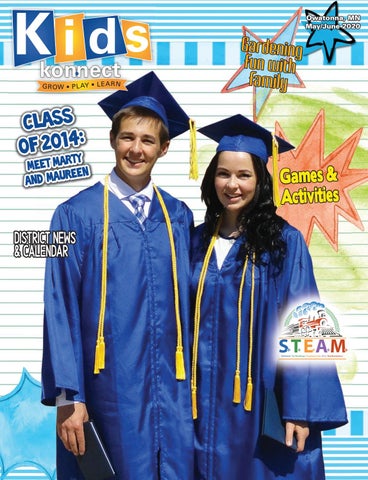
Class : 4 1 0 2 f o y
rt Meet Ma n ree and Mau
Owatonna, MN May/June 2020
Gardening Fun with Family
Games & Activities
DISTRICT NEWS & CALENDAR
S TE A M + +
+
+
S c i e n ce Te c h n o l o g y E n gi n e e r i n g Ar t s M at h e m at i c s
+
Show your school pride and color me!
2 • May/Ju ne 2020 • Kids Konnect
K i ds konnect G R O W • P L AY • L E A R N
Volume 1, Issue 11 May/June 2020 PUBLISHER Steve Fisher
K i ds
konnect CONTRIBUTING WRITERS: G R O W • P L AY • L E A R N Jessica Abrahams Shaylene Baumbach Sarah Brooks Melanie Busch Brenda Donahe-Stevens Mary Hawkins MaryAnne Higgins Jean Krause Darla K. Lager Thomas Meagher, PhD Mary Urch COVER/PAGE DESIGN Kate McGillen ADVERTISING DIRECTOR Tom Kelling ADVERTISING SALES Amber Casterton Sarah Escamilla Crystal Hobart For editorial or advertising inquiries, contact us at 507-444-2389 Kids Konnect is published by
Southern Minnesota LLC Southern Minn Media 135 West Pearl Street Owatonna, MN 55060
Contents 4. recreation fun 9. this summer class of 2014: meet marty and maureen
13.
S TE A M
28.
gardening fun with family
32.
Crafts�, coloring and more!
+ +
+
+
+
S cience Technology Engineer ing Ar ts M athematics
Kids Konnect • May/Ju ne 2020 • 3
Class of 2014: Meet Marty and Maureen
4 • May/Ju ne 2020 • Kids Konnect
Kids Konnect caught up with 2 OHS Alumni, twin siblings Marty and Maureen Gleason and got a peek into what they are up to since graduating with the class of 2014. These alumni are doing and experiencing amazing things along the paths they chose to take after high school. Maureen is currently living in Berlin, Germany. She is just finishing up her final year at Arthaus Berlin—an international training and research center for theatre and performance makers. Marty has recently graduated as a 2nd Lieutenant from the United States Air Force Academy with a Bachelor of Science degree in Aeronautical Engineering with a focus in Propulsion.
Maureen and Marty were involved in extracurricular activities during high school that have tied into their lives today. Maureen was very active in the theater/drama clubs, band, orchestra, and choir. She played the female lead roles in 2012’s “How to Succeed in Business without Trying”, and 2014’s “Beauty and the Beast” where she played Belle. She has worked with her good friend and other 2014 alumni, Ryan Huang who wrote, directed and produced 2 silent movies featuring high school student cast and local venues in Owatonna. Maureen played the character “Emmanuelle Chanson”, the lead female role in both. One of the movies titled “The Root of Evil” was nominated and won several awards, including Best Student Film Award at the 2014 Catalina Film Festival. Maureen has also done several commercials, most notably for a clip in a 2015 Hormel Chili national ad campaign. In 2019 she was accepted into the University of MN Guthrie Acting Program where she trained in a classical acting conservatory. This brought her to London where she trained with Shakespeare’s Globe and it was here that she found her true passion for the arts. She realized that
she was more into the anthropological and experimental aspect of the arts rather than the classical actor training she started with. She then moved to her current city of Berlin to finish her Master of Fine Arts degree. Although twin siblings, Marty had very different interests during high school and beyond. Marty was active in the Robotics program, DECA, band, choir and student council and sports. He was co-captain of the football team and worked his way to becoming an Eagle Scout. After his acceptance to the United States Air Force Academy in Colorado, he started his basic training weeks after graduation from high school. He excelled in his studies and for a time was an IP Glider Instructor at the Academy. He was also awarded the Aerospace Systems Director’s Award for Excellence in Propulsion Design. After his graduation and commission to a 2nd Lieutenant, he was assigned to Pilot training at Vance Air Force Base in Enid, OK. He graduated here in January 2020 where he earned his pilot’s wings. He is patiently awaiting his next assignment from the Air Force. To pass the time, he makes sure he gets plenty of time up in the air flying his jet and training.
Continued on page 6 Kids Konnect • May/Ju ne 2020 • 5
Maureen Q&A: KK: What were you like in high school compared to now? MG: I now feel the need to define myself by what I am not, less often. As I have learned more about myself, I feel less of a need to push against things I dislike and more of a need to lean into the things I do.
KK: What’s one of your favorite memories from high school? MG: Anytime I was in charge of something. No, I’m kidding. (Not really) To be honest, I miss the bonfires and endless car rides. I definitely took backyards and my sweet little Rhonda the Honda for granted. KK: How would you describe yourself in 3 words? MG: Passionate, logical and unafraid to go against the status quo. KK: What’s one thing most people don’t know about you? MG: I am a massive introvert. Alone time is how I develop my ideas and inner strength. KK: Any advice for anyone looking to pursue the theater/ arts? MG: Go for it! I believe the world needs more artists. I think there is the elusive identity around pursing art. People may think there is some sort of God-given talent required to go into a field like this. NOPE! It’s all training and discipline. Whether you’re a musician, a visual artist, a writer or a theater maker, it all comes down to hours spent honing your craft. At the very least, you’ll create an endlessly rich world for you and your loved ones to live in. At the very most, you’ll get paid for it! KK: What inspires you? MG: I would say authenticity and curiosity. My curiosity and hunt for authenticity keep me going even when in doubt. KK: What else would you like us to know about you? MG: I am very close with my brother. Though we live an ocean apart and couldn’t be in more opposing career fields, at our core we are eerily similar. He is my biggest champion. Whenever I need advice or a new solution to a problem, he is the first person I call. Plus, it’s pretty cool to have such an insightful look into an area of life I’ll never personally touch.
6 • May/Ju ne 2020 • Kids Konnect
Marty Q&A:
KK: What can you tell us about the Air Force Academy? MG: Getting into the academy was a blur, but I do remember interviewing for a nomination from a senator or house representative of MN—specifically Amy Klobuchar’s office thinking I had absolutely bombed the interview only to have her offer me a nomination a few weeks later. The academy can be challenging and at times grueling, but I remember every single day as being significant. If I had the chance to do it all over again, I would. I have travelled all over the country with my major, taking gliders up with a friend just to see how long we could stay airborne. (2 hours). Living in Tucson for an internship with Raytheon, snowboarding in the Colorado mountains, researching new types of mechanisms of propulsion, and finally graduation when the thunderbirds flew over and just some highlights. KK: What were you like in high school compared to now? MG: In high school I was trying to figure out who I was and what I wanted to be. This led me to do just about everything I could get my hands on. Now, I know more of who I am and what I want to do. (I think). KK: What’s one of your favorite memories from high school? MG: There are quite a few, but oddly some of my favorite memories were the days spent with friends. Specifically, the pickup games of tennis, soccer, or even four square after school. KK: How would you describe yourself in 3 words? MG: Driven, level-headed, curious. KK: What’s one thing most people don’t know about you? MG: I was in choir throughout high school. Looking back, this experience had a disproportionally large impact on me. KK: Any advice for anyone looking to pursue the military? MG: I can’t speak for the military as a whole, but I can speak to the service academies. They aren’t for everyone, but I highly recommend them. The opportunities the Air Force Academy has given me are something I will forever be thankful for. If you are interested, the best thing you can do is get involved, keep your grades up, and reach out to your counselor sooner rather than later. KK: What inspires you? MG: Learning new things, whether it be a new fact or skill. KK: What’s the coolest thing you’re working on right now? MG: I am currently flying the T-38 Talon and using it to learn the basics of fighter maneuvering. It is both the most challenging and most rewarding think I have ever done. Kids Konnect • May/Ju ne 2020 • 7
8 • May/Ju ne 2020 • Kids Konnect
Recreation Fun this Summer Since you may not be able to participate in an organized sport or activity this summer, we’ve put together a list of ways to stay active and have fun! Outdoor Activities in Your Own Back Yard • Complete a Nature Scavenger Hunt – try out the one on the page to the left • Put down a picnic blanket and share a meal outdoors • Go camping in your backyard • Build a mini golf course in your yard • Look for sports drills you can do at home on You Tube • Find a nature craft to make on Pinterest • Hang up a hammock and read a book
Activities Around Town • Play with your pooch at the Owatonna Dog Park • Go for a walk or bike ride on city trails • Visit one of Owatonna’s city parks • Go fi shing at Lake Kohlmier • Take a trip to Rice Lake State Park • See how many owl murals you can fi nd in downtown Owatonna • Find the bat boxes in the Owatonna parks and trails, see if you can find all 21 of them Like the Owatonna Parks and Recreation Facebook page or visit their website to find more activities throughout the summer!
Your Hometown Heating & Cooling Experts for 40+ Years
Kids Konnect • May/Ju ne 2020 • 9
What do you want to be when you grow up? Daphne 2nd Grade “I want to be an interior designer and renovate old houses into new houses.”
Aiden 2nd Grade “I want to be a surgeon so I can help people get better.”
Zach 3rd Grade “I want to be a baseball player.”
Colin 3rd Grade “I want to be a farmer because I love animals.”
Lucas 4th Grade “Play professional basketball, or an engineer or inventor.”
Natalie 4th Grade “I want to be a daycare provider.”
Sophie 5th Grade “I want to be a baker because for a REALLY long time I have just loved to bake and it makes me and others happy!”
10 • May/Ju ne 2020 • Kids Konnect
Sophie 5th Grade “I either want to be a teacher, a detective, or work for the police.”
8 tips to develop children’s curiosity By Melanie Busch, nurse practitioner at Mayo Clinic Health System in Owatonna “Think left and think right and think low and think high. Oh, the thinks you can think up if only you try!” — Dr. Seuss Children are naturally curious and seem to want to know everything about the world around them. Giving children the opportunity to be curious and explore their environment is important for their development and Busch well-being. Curious children are more likely to learn and retain information, and stay involved and do better in school. Here are some tips on nurturing and developing children’s curiosity: • Show them the world by traveling, going camping, going to a museum or showing them another culture. • Spend time together as a family, go for a walk, bake a cake, or go to the park or zoo.
• Encourage friends and family to give experiences rather than gifts. Kids remember experience, the excitement they felt in planning and the happiness afterward. Memories can last a lifetime. • Wonder aloud and say out loud, “I wonder why the leaves on the trees are green?” • Encourage natural interest. If children are interested in an activity, give them opportunities to do that activity.
By allowing your children to be curious and explore, you teach them confidence and appreciation. You also show them the world and teach them the value of experiences over things. Explore with your children, get outdoors, and learn about the world around you. Curiosity will always open doors, and lead down new and exciting paths full of adventure and learning.
• Ask open-ended questions, and use words like who, what, when, where, why and how. • When your children have a question, ask for their thoughts first before answering. • Let kids be kids. Unstructured play is a great way to nurture and develop your children’s curiosity and sense of discovery.
CARING FOR OUR COMMUNITY.
Mayo Clinic Health System is committed to supporting the health and well-being of our community by bringing innovative care options to our patients. From the convenience and comfort of home, patients can use Patient Online Services to connect with their provider, view lab results, manage prescriptions and receive online care for many common conditions. Learn more at mayoclinichealthsystem.org/patient-online-services.
Kids Konnect • May/Ju ne 2020 • 11
Boys and Girls State: Local High Schoolers Become Better Citizens Submitted by Steele County Historical Society
Are you interested about American tradition, the democratic government process, and the desire to develop leadership and pride in citizenship? The American Legion Boys and Girls State programs are among the country’s most respected and selective educational opportunities of government instruction for U.S. school students. Every year, young men and women from across Minnesota gather to learn the principles of democracy. These incoming high school senior boys and girls are selected by area American Legion posts and Auxiliaries based on past academic performance. They must be interested in government, possess high moral character, and show strong leadership abilities. Also, as part of the selection process, each prospective candidate is required to write an essay to the local Legion or
auxiliary seeking selection. Local American Legion posts and Auxiliaries underwrite the costs to delegates. Candidates, referred to as delegates, receive education on the structure and function of government. During this week-long opportunity, delegates run for state offices including governor and lieutenant governor. No more than two delegates can come from one school. Delegates can also run for Boys and Girls Nation and go to Washington, DC. While at the convention, delegates have an opportunity to visit historic sites, landmarks, and often the state capitol. You can find out more information about past area Boys and Girls state delegates by contacting area American Legion posts in Ellendale, Blooming Prairie, and Owatonna for further information.
Build a better lunch ½
We want you and your family to see what comfortable, neighborly dental care is all about. Main Street Dental Clinics are locally owned and operated Blooming Prairie
Mankato
405 East Main Street 507-583-2141
287 St. Andrews Drive 507-720-0250
New Richland
Owatonna
132 N. Broadway 507-463-0502
1170 E. Frontage Road 507-455-100
Rochester 3110 Wellner Dr. NE 507-536-7700
mainstreetdentalclinics.com 12 • May/Ju ne 2020 • Kids Konnect
+ ¼
Whole Grains ains
+ ¼
Lean Protein
n cucumber n vegetable soup n carrot sticks slices n sugar snap n green garden n cherry tomatos peas salad
n bell pepper slices
n orange n diced melon segments n fruit cup in n grape clusters 100% juice
n dried fruits:
n uns unsweetened
n whole wheat n baked tortilla chips bread, pita, bagel, or wrap n popcorn
n granola bar n brown rice
n whole grain crackers or cereal
n lower sodium, n tuna packed lean luncheon in water wa meats n peanut butter
n beans n hummus or bean dip
n handful of nuts n hardboiled eggs
w-fat or n string cheese n low-fa w-fa skim milk n low-fat yogurt
n un-processed n low-fat cheese cottage cheese
applesauce raisins, aapricots pplesauce or apples pples n berries
+
add
1 Serving of Low-fat Dairy
= 1 Balanced Lunch Box
NUTRITION EDUCATION EDUCA
with
495 West North St. Owatonna, MN 55060 Owa
071318_KidsKonnectAd3_75x4_9_3014
Relax. It’s Main Street Dental
Vegetables egetables & Fruits
box
S TE AM + +
+
+
+
S cienceTechnology Technology Engineering Engineer ing Ar t s MMathematics athematic s Science Arts
STEAM’in WITH “Dr. M” Spring is a time to fly. , PhD (known to Thomas Meagher e ts as “Dr. M”) is th Owatonna studen na or for the Owaton STEAM Coordinat trict. Public School Dis
Let’s explore how things fly and what happens when we try to build machines that can fly through the air! Share your STEAM photos with Dr. M through his twitter handle @meagher3dan. Kids Konnect • May/Ju ne 2020 • 13
STEAM + +
+
+
+
SCIENCE
S cien ce Te c h n o l o gy En gi n e e r i n g Ar ts M ath e m ati c s
Motion, airfoils & force There’s a famous story of how Sir Isaac Newton realized the universal force of gravity when an apple fell from a tree and hit him in the head. The actual story as told by Newton happened when he and friends were sitting by apple trees drinking tea, and he observed ripe apples falling to the ground and thought, “Why do apples always fall perpendicular to the ground?” This story shows a foundation of science, observing something happen or an event (phenomena) and asking a question like “how does that work?” This leads to either an experiment or an engineering design to try and answer the question or solve the problem. Anyone can be a scientist, it just takes a close watching of the world and asking important questions on how it works. It took hundreds of years of scientific study for people to figure out how to create powered flight. Leonardo Da Vinci designed a pedal driven flying machine, 1490. He also published an entire book on what he observed about how birds fly in 1505.
14 • May/Ju ne 2020 • Kids Konnect
It finally happened in 1903 when Orville and Wilbur Wright designed the first airplane and it flew for just 12 seconds off the coast of Kitty Hawk, North Carolina. Wright Brothers powered flight at Kitty Hawk 1903 Wright Brothers “Air Flyer” at the Smithsonian Space and Flight Museum Their plane weighed 650 pounds, so how could it fly?! It has to do with the invention of the airfoil and engineering an artificial wing that is shaped like a bird’s wing. So how do airfoils work to allow an object to fly?
It has to do with shape and how the movement of either object or the air around the object. This causes a unique combination of forces that can push, pull and lift something off the ground. So what is “Force”? We can see that force is when some kind of energy can push or pull an object. So when Newton observed an apple fall to the ground, we realized that the Earth must have a pulling force that attracts all objects and this is “gravitational force”. But the apple remains in place because the ground is pushing up on the apple after it fell, this is called the “normal force”. The only way for the apple to move again is for another force to cause it to move. Like when you pick it up, you’re using energy to pull the apple away from the ground and then you apply force with your arm to make it “fly” when you throw it. So
what makes the apple fall back to the ground? Why gravitational force of course, and it comes to a rest with both Normal ground force and friction as it rolls along the ground. Without gravity, normal force or friction that apple would fly on and on and on forever without stopping and there’s only one place in the universe you can find no forces, and that’s space! Kids Konnect • May/Ju ne 2020 • 15
STEAM + +
+
+
+
TECHNOLOGY
S cien ce Te c h n o l o gy En gi n e e r i n g Ar ts M ath e m ati c s
How do airfoils work?
How examples from nature helped humans design airplanes and flying vehicles. The shape of both a bird’s wing and an airplane’s wing are very similar. The rounded shape causes the movement of air to travel faster moving over the top side than the bottom side. This change in airspeed causes the forces on the two sides of the wing to be different, and the creates “lift”. A round object like a baseball also has different forces acting on it and the faster the spin of the ball, the more Magnus Effect happens. That’s why pitchers can throw curve balls, sliders and knuckle balls. The curving path of the baseball makes it more difficult to hit, and the game more fun to play!
Stay Happy. See Kappy! Collision Repair • Paint Shop • Insurance Estimates 3205 S. County Rd. 45 • www.kappysauto.com 16 • May/Ju ne 2020 • Kids Konnect
Newton observed this effect while watching his
figured out how to measure and calculate the
friends play tennis, when the racket caused the
forces that cause objects to fly due to airfoils and
ball to spin and curve as it flew over the net.
rotation.
However, it was Heinrich Gustav Magnus that
rting its
Heinrich Gustav Magnus, Professor University of Berlin 1870
up sta magnus c a f o h p ra e photog away. Time Laps ing up then gliding go flight, first
Kids Konnect • May/Ju ne 2020 • 17
Engineering: Building a Magnus Cup Glider! Designing a building a magnus Cup glide
STEAM + +
+
+
+
ENGINEERING
S cien ce Te c h n o l o gy En gi n e e r i n g Ar ts M ath e m ati c s
Building a Magnus Cup Glider! Designing a building a magnus cup glide
24 Hour Complete Towing Service 215 Cedardale Dr. SE Owatanna, MN 507-451-3424 18 • May/Ju ne 2020 • Kids Konnect
Let’s see what we design and build a Magnus cup glider with what’s in the cupboard. Cups come in all different shapes, sizes and materials, from little medicine cups to large plastic “Solo” cups for parties,
so choose at least three diferent types of cups and figure out which one fly the best. Remember the glider needs to be symmetrical to fly straight, however what happens if you build a glider with two different cups? Will it still fly? Will it turn and twist? If so, what direction does it turn? As you build your gliders be sure to measure how far they travel, or how long they stay up in the air, or how they turn and twist. Send pictures of you flying your gliders to me at: tmeagher@isd761.
If you want to see me building a Magnus glider and learn all about the forces that make them fly watch my video: https://vimeo.com/407259628 There’s a surprise at the end so make sure to watch until the very end! Kids Konnect • May/Ju ne 2020 • 19
STEAM + +
+
+
ART
+
S cien ce Te c h n o l o gy En gi n e e r i n g Ar ts M ath e m ati c s
l a m i n a , s l i o f r i a l The art of natura . s r e h t a e f & s g n i bodies, bird w
The beauty of natural airfoils of animals that can fly, their body structures, shapes and anatomy help in flight. Birds have adapted different wing shapes for different kinds of flight, hummingbirds, perching birds, raptors, and seabirds all have wings that help them fly in many different ways.
Hummingbirds a
re the only birds
that can fly back
wards.
Perching birds wings are short and round for easy short flights.
20 • May/Ju ne 2020 • Kids Konnect
wings for e id w e g r la Hawks have or prey. f h c r a e s o t hovering
The Comm on Loon is Min long point ed wings th nesota’s state bird a nd it ha at help during mig ration as w s it fly across the cou s nt ell as swim under wat ry er!
If we look closely at a bird’s feather you’ll see how beautiful they are. Take a look at this diagram of a bird’s feather and find each of the different parts. The next time you are outside exploring, look for bird feathers and compare what you find to this picture. Finding a bird’s feather can tell a story since each feather is from a
specific bird and a specific part of the bird. For example wing feathers are long, stiff and right & left sided. Tail feathers are straight and stiff and symmetrical, body feathers are short, round and dark from the back and light from the belly. Soft downy feathers are from close to the body and keeps the bird warm. Kids Konnect • May/Ju ne 2020 • 21
STEAM + +
+
+
+
MATHEMATICS
S cien ce Te c h n o l o gy En gi n e e r i n g Ar ts M ath e m ati c s
How can we calculate the amount of force needed to fly? Calculating forces and figuring out how an object as heavy as an airplane can fly. To measure force we use the unit of, you guessed it “Newtons”. It’s the measurement of how much mass is being moved over a distance in meters.
If we play at tug of war, we can calculate how much force each team is pulling and therefore figure which team will win. See the example here, which team is going to win?
22 • May/Ju ne 2020 • Kids Konnect
One Newton (N) is the force it takes to move one kilogram of something, one meter per second. That’s like carrying 2 pounds of bread from your car to the house after shopping. If you had 200lbs of bread, you’d need 100N of force to get all that in your pantry!
When a bird is flying, the wind moving over its body produces more lifting force (12N) than gravity (9N). We can calculate the net force by subtraction, 12N - 9N = 3N of lift. There’s a force of 3 Newtons worth of lift, which means this bird can easily fly upwards into the air!
If Yoda needs to move this oil drum and gravity is pulling towards Earth with a force of 9N, how much “Force” must Yoda use to lift the drum 1 meter off the ground?
If no one is moving in this tug of war, what’s the Net Force of the whole game? Let’s say each side is pulling with 100N of force, how much is the Net Force? Kids Konnect • May/Ju ne 2020 • 23
YOU CAN HAVE THE SAME POWER AS A MARS EXPLORATION ROVER AT HOME! A Mars Exploration Rover requires power to operate. Without power, it cannot move, use its science instruments, or communicate with Earth. The main source of power for each rover comes from a multi-panel solar array. They look like "wings," but their purpose is to provide energy, not to fly. Solar Panels Did you know you can an use u solar panels for energy? gy? Your parents can install solar panels on the roof of your house to power your home and even heat your water. Plus, Owatonna onna Public Utilities gives great Solar Electric and Solar Hot Water rebat ebates! Tell your parents to visit our website to learn more about our solar rebates and to download rebate applications with complete terms and conditions. Who knows? Maybe they will put the power of a Mars Exploration Rover in your home!
y z z I Ask
My name is Izzy and I’m here to answer questions you might not want to ask your teacher, friends or parents. Sometimes only another kid will understand! I’m a lot like you – I go to school, play in the band and I LOVE sports! I have a younger sister and a puppy and I love to do crafts when my schoolwork is finished. My favorite thing to do is help people and try to spread kindness, so that’s why I think I’m a good person for you to ask questions. You can send me anything – school problems, friends, parents – and I promise I’ll do my best to give you a good answer. You can ask a question any time, and I will answer in an upcoming Kids Konnect magazine.
Dear Izzy: Why can’t we leave the house? Why can’t my friend come over to play? Right now, there is a rule that families need to stay home for a little while and be together. That helps us and our friends stay healthy. I know it can be sad when we can’t see and play with our friends. But there are lots of fun things we can do together at home with our families! You can play games or do a puzzle. Maybe learn to bake or cook a meal with together with your parents. Who knowswith all this family time, you might just learn something new about a member of your family that you never knew before.
Dear Izzy: My best friend moved away and I’m feeling lonely and sad. What do I do? Solar Panels
Mars Exploration Rovers: Spirit and Opportunity
www.OwatonnaUtilities.com
24 • May/Ju ne 2020 • Kids Konnect
Losing a best friend to a new school is tough, but just because your best friend has moved away, it doesn’t mean you have to lose touch completely. There are many ways to keep connected. You can schedule a time each week to talk over the phone. You can even ask your parents to help you setup a video chat on your computer at home. You can also use this time to join a new group or activity. You will meet new people who share the same interest as you and who knows-you may find a definite new BFF!
Your Baby’s Teeth: Myths v/s Facts MYTHS
FACTS
1. Cavities in baby teeth don’t matter because they will just fall out anyway...
1. Children don’t lose their last baby tooth until they are close to 12 years old. Once started, cavities will grow bigger over time and eventually need to be filled.
2. Cavities in baby teeth don’t need fillings because they are just baby teeth...
2. Cavities in baby teeth can lead to pain & infection. Cavities must be treated by the dentist and this can be very hard for young children.
3. Kids don’t need to see the dentist until they are least 3 years old...
3. It is recommended that all kids see the dentist for the first time when their first tooth erupts or by age 1 at the latest.
4. I can wait to start brushing may baby’s teeth until he is older...
4.To prevent cavities, Parents should begin brushing their babies teeth as soon as the first tooth comes in.
5.Toothpaste with fluoride is dangerous for my baby...
5. Parents should use a smear of toothpaste with fluoride (about the size of a grain of rice) when brushing their baby’s teeth. this small amount is not harmful if swallowed and will help prevent cavities.
Let’s Smile, Inc. is a nonprofit 501(c)3 organization based in Steele County since 2013. Dental services are provided in School Based Dental Clinics and at the Steele County Community Pathways. letssmile@outlook.com www.letssmileinc.com Like Us On Facebook Kids Konnect • May/Ju ne 2020 • 25
raising huskies By Mary Hawkins
I have had the privilege of working as an educator in Owatonna for the last 30 years. Over that time, I have held various teaching and leadership positions. I am currently serving as the principal at Lincoln Elementary School. If you were to ask me what is the most important role/position I have had over those 30 years, it would be an easy answer. The most important and joyful role I have had is as a parent of three children. My three children are grown now. They all graduated from OHS, the youngest one in 2019. So I have been “Raising Huskies” at home and at work for the last 30 years! Here are some things I learned along the way. Be present: When children are young it is important to be present and give them your undivided attention. This is how a child develops an attention span which will be needed to be successful throughout school. If your kids are in activities, participate with them. Our three kids were active in sports, music, 4-H, and other clubs. We helped coach their youth sports teams and were their number one fans as they got older. I learned to value the hours in the car, driving the kids to practices and activities. Showing animals and making projects for the fair gave us many opportunities to work together. If you want your children to develop healthy habits or participate in hobbies, find ways to model the behavior and/or do it together. If you want your child to read, be a reader yourself. If you want your child to be active, get moving. Share the joys and sorrows: I learned early on that if I asked my kids what went wrong during their day, they would find examples to share and then they would be stuck in a negative frame of mind. If I turned it around and asked what went well, we could keep the discussion positive. As kids move through adolescence, they face many challenging situations with peers and adults. It is natural to want to solve their problems for them because we don’t want our kids to suffer. Try to remember that kids develop resilience and perseverance when they face difficult situations. Working through
26 • May/Ju ne 2020 • Kids Konnect
a difficult class at school or facing a losing sports season will help students when they are adults. Watching my own kids achieve their personal goals was a gift that was even better when I knew they had worked hard to get there. Reach out for help: Parenting is hard work and it is important to find other adults that can support your family. I am so thankful for my extended family, friends, and the teachers and coaches who spent time with our children. Having many positive, caring adults in a child’s life is a good indicator of a child’s well-being. I saw this play out many times over the years, especially when it came to school. When our kids had a positive relationship with the teacher, they did well at school. When they had a positive relationship with a coach or advisor, they excelled in that area. I feel very fortunate that we live in Owatonna and our children went to Owatonna Schools. They had long lists of
adults who cared about them and all three were prepared for college and careers to follow. Two have graduated from college and the third is finishing her first year. I am certain the lessons they learned as Owatonna Huskies helped them accomplish these goals. We have 550 students at Lincoln Elementary. They are currently participating in Distance Learning and connecting with their teachers online. Parents are stepping up and partnering with the school to provide the best education possible during this difficult time. We are all “Raising Huskies” and we are all working hard for our students. I am hopeful that this experience will make us better in the future. Our kids, families, and schools will not only survive, but will thrive by developing new skills and characteristics. I look forward to the day when all our students (Huskies) will be together again.
THE HAWKINS’ KI DS IN 2009
ultimate summer bucket list Let’s have some fun this summer!
ď Ł Have a picnic.
ď Ł Wash the cars by hand.
ď Ł Watch a sunset at the beach.
ď Ł Blow bubbles.
ď Ł Fly a kite.
ď Ł Build a sand castle at the beach.
ď Ł Camp in the backyard.
ď Ł Eat watermelon slices that look like smiles.
ď Ł Stargaze.
ď Ł Roast marshmallows over a real fire and make s’mores.
ď Ł Play tag with all of the neighborhood kids.
ď Ł Play Marco Polo in the pool.
ď Ł Run through sprinklers.
ď Ł Go on a nature walk.
ď Ł Eat too many popsicles.
ď Ł Make ice cream in a bag.
ď Ł Plant flowers or vegetables.
ď Ł Make wishes on dandelions.
ď Ł Make fresh lemonade.
ď Ł Go to the Zoo.
ď Ł Have an underwater tea party in the pool.
ď Ł Go fishing.
ď Ł Paint pet rocks.
ď Ł Go on a boat ride.
ď Ł Ride your bike from sunrise to sunset.
ď Ł Go to an outdoor concert.
ď Ł Watch fireworks.
ď Ł Find a cool mural.
ď Ł Go across the lawn on a Slip ‘N Slide for hours.
ď Ł Go to a petting zoo or farm.
ď Ł Help cook dinner.
ď Ł Visit a farmer’s market.
ď Ł Swing at the park until you’re out of breath with giggles.
ď Ł Make recycled crayons.
ď Ł Have a water balloon fight.
ď Ł Visit Mom or Dad at work.
ď Ł Go minigolfing.
ď Ł Go to the library.
ď Ł Get ice cream from the neighborhood truck (a lot).
ď Ł Eat breakfast for dinner.
ď Ł Make sidewalk chalk masterpieces.
ď Ł Write a soldier a letter.
ď Ł Play in the rain.
ď Ł Go bowling.
ď Ł Catch fireflies in a jar.
ď Ł Jump on a trampoline.
ď Ł Collect seashells.
ď Ł Make friendship bracelets.
ď Ł Make tie-dye shirts.
ď Ł Donate to the Animal Shelter.
LINDSEY MCGURRAN Realtor Berkshire Hathaway Advantage Real Estate
507-456-0474 lindsey@owatonnarealestate.com
WE’rE HErE FOr YOU Child and Teen Checkups are available to children from birth through age 20 who are covered by Minnesota state health plans such as:
• Medical Assistance • South Count y Health Alliance Call if you need help with transportation, interpreters or making an appointment with a doctor or a dentist.
STEELE COUNTY PUBLIC HEALTH 507-444-7650 Kids Konnect • May/Ju ne 2020 • 27
y l i m a F h t i w Gardening Fun By Sarah Brooks, Interim Director of Nutrition Services
With spring in the air and the warm weather days finally here, it’s a perfect time to enjoy the sunshine outside. We aren’t the only ones that are ready for spring and summer after a Minnesota winter. Plants are ready to start growing again thanks to all of the hard work of our farmers and gardeners!
Plants are good for our environment because they release oxygen which we need to breathe. Some plants bring us joy because they smell good and are pretty to look at. Other plants are important because they can make food which we can use to fuel our bodies. No matter what type of plants you grow, they all can provide a sense of responsibility as you care for them and a sense of accomplishment as they grow and thrive.
Container Gardening for Kids There are many ways you can plant a garden. Your family can make a garden using any container that holds soil and has small holes in the bottom for extra water to drain. Materials: • Container (a 3- or 5- gallon bucket works great) • Potting soil • Seeds or young plants Location: Inside or Outside Season: Spring through Fall Instructions: Container gardens are a great first garden project for gardeners of all ages. The following instructions are for planting a container garden in a bucket, but you can make a container garden from any object that holds soil that you can put drainage holes in. 1. Start by deciding if you want to plant edible crops or if you want to ornamental plants. The reason to determine this ahead of time is that if you want plant edibles, you need to be extra careful to choose buckets that are food grade safe. 2. Next collect your buckets. If you have chosen to make an edible garden, look for buckets that are labeled “Food Grade Container” at the hardware store, or you may also want to check with local restaurants or grocery stores to see if they might have buckets they can donate to you. Many bulk food items are delivered in buckets and so they may have some on hand. Common sizes for buckets are 3 gallons and 5 gallons. 3. Pick out your plants. You can start your garden by planting seeds or by selecting young seedlings. If you have a 3-gallon bucket, look for smaller plants that stay compact such as herbs, lettuce or seasonal annuals. If you have a 5-gallon container, you can grow just about
28 • May/Ju ne 2020 • Kids Konnect
any type of annual vegetable or landscape plant because you have more room for roots; however, the ultimate size of your plant will determine how many will fit in each bucket. For example, you would only want one cherry tomato or one cucumber plant per 5-gallon bucket.
If you are planting several different types of plants in one container, make sure they have the same sunlight and water requirements. For example, thyme, rosemary and sage like full sun and very well-drained soil. Basil and dill like full sun, too, but need consistently moist soil. 4. Pick out your potting soil. You will want to use a well-draining potting mix that absorbs water but also drains well. Don’t use soil from the yard or garden, because it likely drains poorly and may contain plant disease organisms. 5. Drill 5 to 7 holes in the bottom of your bucket. The holes should be about ¼ to ½” in diameter. If you want, you can also decorate the outside of your container with paint, waterproof markers or by adding other decorations. It is usually easier to decorate before you add soil. 6. Moisten your soil before placing it in your bucket. To make sure your soil mix is evenly moist, it is best to slowly add water and mix it thoroughly before placing it in the bucket. If you do not do this ahead of time, you may end up with pockets of soil that stay dry and will have more settling of the soil over time.
7. Place your soil in your bucket and plant. If you are planning on planting seeds, add soil to about 1 inch below the rim then follow the directions listed on the seed packet. If you are planting seedlings, add soil until reaching the size of the seedling pot plus about 1 inch. For example if you are planting seedlings currently in a 4-inch-tall pot, add soil until you have about 5 inches left. Then take the seedlings out of the pot, place them in the container and carefully add soil around the roots. You want to end up with the soil about an inch or so below the rim. If your soil is too high, it will be difficult to water your containers. However, also avoid having your soil too low, because then you will not have good air movement around your stems and you may end up having problems with disease. 8. Gently water your new garden until water begins to drain from the bottom. Place your containers in a spot to match your plants’ sunlight needs. 9. Enjoy! Check on your container garden daily and look for changes and growth. Monitor to determine watering needs. The best way to determine when your new container garden needs water is to put your finger in the soil and check to see if it is dry.
Activity created by Kids Gardening.org. Source: https://kidsgardening.org/garden-activities-container-gardening-for-kids/ Image Source: https://www.tagandtibby.com/blog/2017/5/19/how-to-make-a-planter-from-a-5-gallon-bucket
We pride ourselves on having the best value in the midwest, We with a quality that is guaranteed to shine through.
Serving all of Southern Minnesota endreswc.com • 507-WE-CLEAN • 507-932-5326 Kids Konnect • May/Ju ne 2020 • 29
How families can confront remote learning (Metro) Amid concerns of coronavirus clusters and efforts to stop the spread of COVID-19, and based on social distancing recommendations from medical professionals, schools across the country began to close their doors and adopt a remote learning model in March 2020. One of the largest communities affected was New York City, which closed schools across the five boroughs. The New York City school system is vast, with 1,800 schools servicing more than one million students. School administrators and educators quickly scrambled to find a workaround to meet children’s educational needs. Remote learning has been a part of many school curriculums for some time. While remote learning had predominantly been reserved for higher learning institutions, in the wake of the COVID-19 outbreak, it became a necessity for grades K through 12 as well. Teachers have had to design curriculums and assignments virtually on the fly in an attempt to minimize disruptions that could adversely affect students.
30 • May/Ju ne 2020 • Kids Konnect
Remote learning requires the cooperation of school staff and also parents and guardians. Patience is necessary, and parents and educators may need to completely transform their daily schedules. The following tips can be an asset as students continue to navigate remote learning. • Record class sessions. Teachers can consider recording or “going live” with class instruction so that students can view the video and still have access to their teachers. This helps parents who may be unfamiliar with explaining the curriculum. • Utilize chat features. Remote education software programs likely have a chat or “hangout” feature, which enables classrooms to keep in touch and ask questions in real time. • Keep a schedule. It’s easy to begin to sleep late and fall out of routine when not required to go to a school building. Families should make scheduling a priority, which can help students stay on top of lessons and complete their assignments on time.
• Ask questions. Everyone is learning as they go, and further clarification may be needed. Students should email or chat with teachers if they don’t understand an assignment or are unsure about instructions. Teachers may be able to clearly model a math problem or explain a concept via video chat for students who need help. • Explore educational options. Many companies are offering free educational services while kids are home from school. Scholastic.com is offering online courses, Nat Geo for Kids, Fun Brain, PBS Kids, and Highlight Kids are other places to turn to for activities. Remote learning has become the new norm as the world continues to navigate COVID-19 in an effort to keep the public safe.
How to keep kids engaged over school breaks (Metro) Children in North America will spend, on average, more than 900 hours attending school in a given year. The average school year in the United States lasts 1,016 hours, the equivalent of 42 continuous days. According to the Organization for Economic Cooperation and Development, many developed countries begin their academic years in September and end them in June. Some, like Australia, feature four terms with two-week breaks in between each term. Others go to school for most of the year - with various holiday breaks in between - and then get the bulk of their time off during the summer. As much time as kids spend in school, there will be times when they are left to their own devices, and during these times it’s easy for them to forgot classroom lessons. Sometimes called “summer learning loss” or “summer slide,” this forgetfulness sees many students fail to retain all of their lessons over prolonged breaks from school. Studies indicate that students score lower on standardized tests at the end of the summer compared to their performance on the same tests at the beginning of summer. Anywhere from between one to three month’s worth of educational achievement can dissipate during prolonged breaks from the classroom. To help ensure that those hard-earned lessons are not so easily forgotten, parents can help children remain intellectually engaged in various ways over school breaks. • Stick to a schedule. Try to maintain a schedule similar to school, with children waking at the same time each day and going to bed at similar hours. This will make it much easier to get back into a
Math workbooks may be available at bookstores, or parents can look online or ask a teacher for a summer to-do packet. • Plan educational trips. Vacations and day trips can be fun, entertaining and educational all at the same time. Science centers, museums and living history locations can bring to life information learned in the classroom, even on family vacations. • Learn at camp. Many children attend camp for a portion of their school breaks. Look for camps that do not simply babysit children, but engage them through enrichment activities. Reading is a great way for students to keep their brains sharp during prolonged school breaks. routine when a new school year begins. • Encourage reading. Set aside time for reading each day. All it generally takes is 15 to 30 minutes of reading per day for kids to remember their vocabulary lessons and maintain their fluency and comprehension skills. Children may enjoy picking their own books rather than having a required reading list.
• Take a class. Children and families can learn together by exploring new skills. Enroll in something educational and enjoyable, such as a music or dance class, a STEM seminar or something else that engages the mind and body. This gives everyone a chance to learn something new and have a great time together as a family. Parents and educators can reduce lesson loss over school breaks by encouraging families to remain intellectually engaged in any way they can.
• Keep a math book handy. On long car trips or rainy days, children can do a few math problems to keep their skills sharp. This will help keep learning loss to a minimum.
Monday - Thursday: 9:00 a.m. - 8:00 p.m. Friday - Saturday: 9:00 a.m. - 5:00 p.m. Sundays (October - April): 1:00 p.m. - 5:00 p.m.
Owatonna Public Library 105 N Elm Ave. 507-444-2460 www.owatonna.info Kids Konnect • May/Ju ne 2020 • 31
Color Me! Serving Owatonna with Life-Long Family & Cosmetic Dentistry 605 Hillcrest Ave. Ste 230, Owatonna (507) 451-7250 www.hollandfamilydental.com 32 • May/Ju ne 2020 • Kids Konnect
n w O r u o Y e k s Ma e l b b u B t n a i G
READY IN: 2mins | YIELD: 9 cups
INGREDIENTS 6 cups water 1 cup light corn syrup 2 cups Joy dishwashing soap (If using an ultra concentrated dishwashing liquid, use only 1 1/3 cups)
DIRECTIONS In a large bowl (at least 3 quarts) stir water and corn syrup until combined. Add dishwashing liquid and stir very gently until well mixed.(Try not to make any bubbles.) Dip (don’t stir) bubble wands into bubble liquid and blow bubbles. Source: https://www.food.com/recipe/giant-bubbles-54559
Kids Konnect • May/Ju ne 2020 • 33
Finish the drawing!
34 • May/Ju ne 2020 • Kids Konnect
Help the worm find his way to all of the stars.
Kids Konnect • May/Ju ne 2020 • 35
Water Balloon Catch
Freeze Tag
This is a must-play for any rambunctious young kids in your family and is best for a large group. One child is “it” and has the responsibility of catching others. Once another player is tagged by “it,” he must “freeze” and can only be unfrozen if another player taps him again. You can mix up the game by having multiple “its” or by having other players go under the legs of a frozen player to unfreeze them. Another way to spice up this classic game is to set it to music -- everyone can dance and run around while the music is playing, but when it stops, everyone must freeze. The person who moves first becomes “it” and it’s then their chance to DJ.
Nine Pin
This great, outdoor bowling game dates back thousands of years, but kids will love it today. If you’ve been to a regular bowling alley, you already know how to play -- just set up nine pins instead of 10. Pins should be set up in a diamond and can be anything from empty milk cartons to small cones or 2-liter soda bottles. Find a plastic ball that’s heavy enough to knock over some pins, and you’re all set. For simple rules, award players points per bowl. The person with the most points wins.
Source: https://www.care.com/c/stories/3783/11-backyard-games-for-kids/
36 • May/Ju ne 2020 • Kids Konnect
We’ve all played catch before. You can switch up this classic game by playing with different balls, water balloons or bean bags. Toss the ball at a short distance and, with each catch, take a step back and continue tossing to see how far you can get before missing. This is best played in teams -- the team with the furthest distance between them wins. If you’re playing with water balloons, the first one to get wet loses.
Capture the Flag
This is a popular game among kids of all ages (especially at camps!) and will certainly keep them active and engaged. It’s played in a large backyard or field with two teams who each defend their own flag (or some specific light object like a beach ball or even a stuffed animal) from home base. The object of the game is to capture the other team’s flag and successfully return it to home base without getting tagged. If a player wanders into the other team’s territory, he risks getting tagged and of therefore being frozen or ousted from the game.
Homemade Kan Jam
Use old laundry baskets: cut a hole for the slot and cover edges with duck tape.
Or use some larger cardboard boxes. Simply use a scissors to cut a hole for the slot.
Kan Jam is a relatively new game that has taken New York by storm and is quickly spreading to the rest of the country. The play involves one Frisbee, or disc, that gets thrown into a garbage-can sized container. The goal is to score the most points by sending your disc into the allotted container. If the disc is thrown directly into a special slot on the side of the container, your team is an instant winner.
Outdoor Checkers
Checkers might not seem like the ideal activity for outdoor play, but when you blow it up on a larger scale, it becomes it fun for the whole family! This game is great because it combines arts and crafts and cognitive reasoning with outdoor play. Grab some sidewalk chalk and draw a giant square, then outline the horizontal and vertical lines to make up the board.
Mark an “X” in the alternating boxes that should represent the white squares, and tell the kids to color in all of the boxes that contain an “X.” Get creative with the checker pieces -- the kids can spend some time creating their own by coloring the backs of paper plates with the color of their choice, or they can use different objects like blue and red Frisbees.
NAPA OWATONNA DISTRIBUTION CENTER
“SUPPORTING OWATONNA KIDS AND EDUCATION”
N APA O WATONNA D ISTRIBUTION C ENTER D IVISION O F G ENUINE P ARTS C OMPANY
3000 PARK DRIVE OWATONNA, MN 55060 | (507) 451-3024
Kids Konnect • May/Ju ne 2020 • 37
Puzzle Cookie Prep time 10 mins
Freeze time 10 mins
Servings 9 servings
Ingredients 2 cups flour 1/2 tsp baking powder 1/4 tsp salt 1/2 cup (1 stick) butter, room temperature 1 cup sugar 1 large egg 1 tsp vanilla extract 8 oz package cream cheese 2 cups fruit cut into bite-size pieces
Preheat your oven to 350˚F. In a large bowl, whisk together the flour, baking powder and salt. In a separate bowl, use an electric mixer to cream the butter and sugar into a light, fluffy mixture. Then beat in the egg and vanilla. With the mixer on low, slowly add your flour mixture until smooth. Line a baking tray with parchment or waxed paper. Press the dough into a circle or square about ¼-inch thick. Bake 8-10 minutes, or until lightly browned. While the cookie is hot, use a paring knife or pizza cutter to slice it into shapes. It doesn’t matter what shapes you pick — they will all fit together! Let the cookie cool. Then frost each puzzle piece with a thin layer of cream cheese and decorate with fruit. Source: https://explorer.compassion.com/puzzle-cookie/
38 • May/Ju ne 2020 • Kids Konnect
Frozen Banana s p o P l a e Cer This fun summertime treat isn’t only delicious, it’s something any age can do! Makes some yummy treats with your family. Prep time 15 mins
Freeze time 1 hour
Servings 8 pops
Ingredients 3/4 cup strawberry yogurt 2 cups Fruity Pebbles cereal 4 medium bananas, peeled and cut crosswise in half 8 wooden pop sticks
TEST KITCHEN TIPS: Switch it up with vanilla yogurt and Cocoa Pebbles cereal.
Place yogurt and cereal in separate shallow bowls. Insert pop sticks through cut side of bananas. Dip bananas in yogurt, then roll in cereal to coat. Transfer to waxed paper-lined baking sheets.
In a recipe this simple, it pays to use bananas that are ripe and sweet but still firm. Look for bananas that have little or no green on them and no brown or black spots. This is a smart way to use up a bunch of extra bananas before they over ripen.
Freeze until firm, about 1 hour.Transfer to airtight freezer containers; seal containers and return pops to freezer.
Nutrition Facts 1 pop: 106 calories, 1g fat (1g saturated fat), 1mg cholesterol, 57mg sodium, 24g carbohydrate (14g sugars, 2g fiber), 2g protein. Diabetic Exchanges: 1 starch, 1/2 fruit. Source: https://www.tasteofhome.com/recipes/frozen-banana-cereal-pops/
Mom packed my lunch from FAREWAY! NOT. TRADING. ANYTHING!
“Yum!”
“Thanks, Mom!”
8
“So good!”
“Mmmm!”
Store (507) 451-1550 • Market (507) 451-0071 Mon - Sat 7:00AM to 9:00PM Kids Konnect • May/Ju ne 2020 • 39
40 • May/Ju ne 2020 • Kids Konnect
'
e rimen, y5 líneas 3 rimen.
Puzzle answers, games, opinion polls and much more at:
www.kidscoop.com
www.kidscoop.com
en Español
inglés) itor este día ), nsense*, id
Puzzle answers, games, opinion polls and much more at:
En el acertijo, encuentra estas palabras LIMERICK LIMERICK en inglés, luego encuentra la traducción al español de estas palabrasRHYME en la página RHYME Las quintillas o limericks son unos versos chistosos o poemas Las quintillas o limericks son unos versos chistososde o poemas Kid Scoop de hoy. de cinco líneas. La última palabra en cada una de los primeros de cinco líneas. La última palabra en cada una de los primeros VERSE VERSE dos versos riman con la última palabra del quinto verso. dos versos riman con la última palabra del quinto verso. Además, el tercer y cuarto verso riman también. Los versos 1, Además, el tercer y cuarto verso riman también. Los versos 1, O P E A L U PPOEM 2 y 5 de una quintilla tienen entre siete y diez sílabas. Los 2 y 5 de unaPOEM quintilla tienen entre sieteS y diez R Los Msílabas. 3 yVerso 4 tienen entre cinco y siete sílabas. versos 3 y 4 tienen entre cinco y siete sílabas. Elversos Día del Chistoso (Limerick Day, en inglés) es en conmemoración del nacimiento del escritor PATTERN PATTERN R T S E E K E L E A Edward Lear (1812–1888). Claro que además este día se festeja la poesía en quintillas (cinco versos), SMILE SMILE popularizado por Lear en su libro Book of Nonsense*, L V C A S L T K E N publicado en 1846. María R. una lectora de Kid SYLLABLES SYLLABLES Scoop, nos envió este verso chistoso: B I I E I R T Y L E LINES LINES O P S E M H N R A F EDWARD EDWARD *en realidad, otra persona fue el inventor o la V U N L S E Y O U RNONSENSE NONSENSE inventora, pero Edward Lear los popularizó. POPULAR Circula todos los objetos del dibujo que rimen.CirculaPOPULAR todos los objetos delLdibujo que rimen. S O O I L E N S M Utiliza estas palabras en una quintilla. Utiliza estas palabras en una quintilla. Completa las espacios vacíos con palabras que rimen, EIGHT EIGHT de forma “limerick”, o sea que los versos 1, 2 y 5 I C N Y E I G H T M terminen con palabras que rimen entre sí. Las líneas 3 LEAR LEAR y 4 también deben terminar con palabras que rimen. S L L D R A W D E E (Completar con palabras en inglés) FIVE FIVE
_____
1. There was a strange dog from _______________
____
2. Who __________________________________
_____ ?”
E e a
S
E
L
B
A
L
L
Y
S
3. A man who was passing 4. Said, “Excuse me for asking, 5. But ___________________________________ ?”
Las quintillas tipo “limerick” están escritas con un formato A-A-B-B-A. Encuentra la palabra que debería seguir en cada fila para continuar el formato.
Las quintillas tipo “limerick” están A-A-B-B-A. Encuentra la palabra fila para continuar el formato. Palabra de la semana:
ABSURDO
_____
1. There was a new teacher from _______________
____
2. Who __________________________________
El sustantivo absurdo significa palabras o acciones que no tienen ningún significado, disparatadas o que no tienen sentido.
3. The janitor came in
Una quintilla “limerick” es un poema chistoso y a veces absurdo .
4. And said __________________________
______ ?” 5. ________________________________________ ?”
Intenta usar la palabra absurdo en una frase mientras platicas con tus amigos o amigas y parientes.
1. Escribe cada una de estas palabras en una tarjeta de papel. 2. Coloca las 20 tarjetas o cartas cara abajo y juega a la “memoria” 3. Tomen turnos y den vuelta dos cartas por vez. Si las dos palabras no riman, volteen las cartas otra vez. 4. Si encuentras una pareja de cartas, te las quedas. Lo mismo para tu adversario.
Tiempo de rimas
Tiempo de rimas
Busca en el periódico palabras que rimen con:
Busca en el periódico palabras que rimen con:
sol tonto perro verruga cerillo frío traer bulla puerta
Tiempo de noticias en quintillas
solo en el tonto Busca un artículo en el periódico sitio perro verruga web del periódico que informe algún evento cerillo frío traer bulla a realizarse en tu ciudad. Reescribe el puerta artículo en quintillas.
persona s será el ganador juego. con la mayor cantidad de pares será el ganador del juego. 5. Ladel
Luchadores contra el miedo Tiempo
noticias
Muchos niños y niñas le tienen miedo a de algo. ¿Le tienes miedo a algo? en el pe Busca un artículo ¿Quédel haces cuando que inf web periódico sientes miedo? ¿Cómo a realizarse podrías ayudar paraen quetu ciuda artículo en qu los jóvenes sientan menos miedos?
Kids Konnect • May/Ju ne 2020 • 41
REASONS OUR SMALL SCHOOL MAKES A BIG DIFFERENCE
01. Cultivated kindness, character, and curiosity 02. Intellectual engagement, preparing for success 03. Individualized support in a small class size where each child is known 04. Strong moral foundation and confidence to support tough choices 05. Leadership development to become productive citizens 06. A connected, valued, and warm community 07. A deepened faith and spiritual formation 08. Ability to think critically and independently 09. Meaningful community service opportunities to put faith into action 10. A fostered ambition that develops a lifelong love of learning
42 • May/Ju ne 2020 • Kids Konnect
Kids Konnect • May/Ju ne 2020 • 43
Thank you to everyone for working together to keep our community safe, our kids learning and our families supported. A special shout-out to our teachers, food service workers, paras, custodians, child care providers and bus drivers for going the extra mile during this COVID-19 pandemic.
44 • May/Ju ne 2020 • Kids Konnect
#OwatonnaProud
Parent Reminders We are here for you! Owatonna Public Schools is helping our families by:
• Supporting distance learning so kids can learn while staying at home • Providing meals so no child goes hungry • Offering child care so health care and emergency workers can do their important work keeping us safe and healthy These are unprecedented times - not just for our schools, but for our businesses, our families and our community’s way of life. The coronavirus pandemic has resulted in social distancing, Stay At Home orders and new rules for how we go about our daily lives. Treating each other with compassion and patience is important as we navigate this new reality. Find updates on how we are responding to COVID-19 and lots of resources at www.owatonna.k12.mn.us. Technology support is available by calling 507-444-8630. Are there other ways we can help you? Email Superintendent Jeff Elstad (jelstad@isd761.org) with your questions or requests!
Stay Connected! Celebrate our students, our staff and our schools by following us on social media. If you like what you see, be sure to share it with others. Together, we are #OwatonnaProud!
Celebrate the class of 2020! We are proud of our seniors.
@Owatonna761 Kids Konnect • May/Ju ne 2020 • 45
Make Your Own Rainstick! Listen to the sound of rain falling—anytime, anywhere. The rainstick is a traditional instrument thought to have originated in Chile, where cactus spines are inserted into dried, hollowed-out cactus branches that are then filled with pebbles, raw rice, or dried beans.
Tools and Materials A long cardboard tube that is about 1 1/2–2 inches (4–5 centimeters) in diameter (the cardboard tube from a roll of wrapping paper works well or you can tape two or three papertowel rolls together; you can also use a narrow poster tube) Marker (any color) About forty 1-inch (2.5-cm) nails for every 12 inches (30 cm) of tube Masking or packing tape Two 3 x 5 index cards (or plastic end caps if you are using a poster tube) Scissors A few handfuls of raw rice or small dry beans, or a mix of such things
Assembly
If you’re using paper-towel rolls, first tape them together to form a long tube. Paper tubes have spiral seams. Use a marker to make dots about half an inch (1.25 cm) apart all the way down the spiral seam of your tube.
46 • May/Ju ne 2020 • Kids Konnect
Now poke a nail all the way in at each dot. (Make sure the nails don’t poke through the other side of the tube.) You’ll need about forty nails for each 12 inches (30 cm) of tube (click to enlarge the diagram below).
Next, wrap tape around the tube to hold the nails in place (click to enlarge the diagram below).
Cut two circles from the index cards just a little bigger than the ends of the tube. Tape one of the circles over one end of the tube. Cover the circle with tape so the whole end of the tube is sealed shut. If you are using a poster tube with end caps, insert the plastic cap on one end of the tube and secure it with tape. Put a handful or raw rice or beans into the open end of the tube. Cover the open end with your hand, and turn the tube over a few times, listening to the sound your rainstick makes. Add more rice or beans until you like what you hear. (Beans will make a harder sound; rice will make a softer sound.) When you’re ready, tip the tube up, put the second index-card circle or plastic cap over the open end, and seal the tube shut with tape.
To Do and Notice
Once your rainstick is complete, you can shake it like a rattle, use it as a percussive instrument, or gently tip it back and forth to make soothing environmental sounds.
What’s Going On?
Each time a dry bean or grain of raw rice hits a nail it makes a tiny click. The nail carries the vibration of the clicking sound to the cardboard tube, which acts to convey the sound into the air, just like the soundboard on a piano.
The clicks happen at random as the rice falls through the tube, just as raindrops make sounds at random times as they fall onto a roof. This sound is called white noise. It is also the sound that AM radios make when they’re not tuned to a station.
Going Further
Musical instruments like these are found all over the world. In some places, including Australia and South America, legends say rainsticks were originally used as ceremonial instruments to call forth rain.
Source: https://www.exploratorium.edu/snacks/make-your-own-rainstick
Kids Konnect • May/Ju ne 2020 • 47
color me
Celebrate with Ice Cream! June is Dairy Month
48 • May/Ju ne 2020 • Kids Konnect