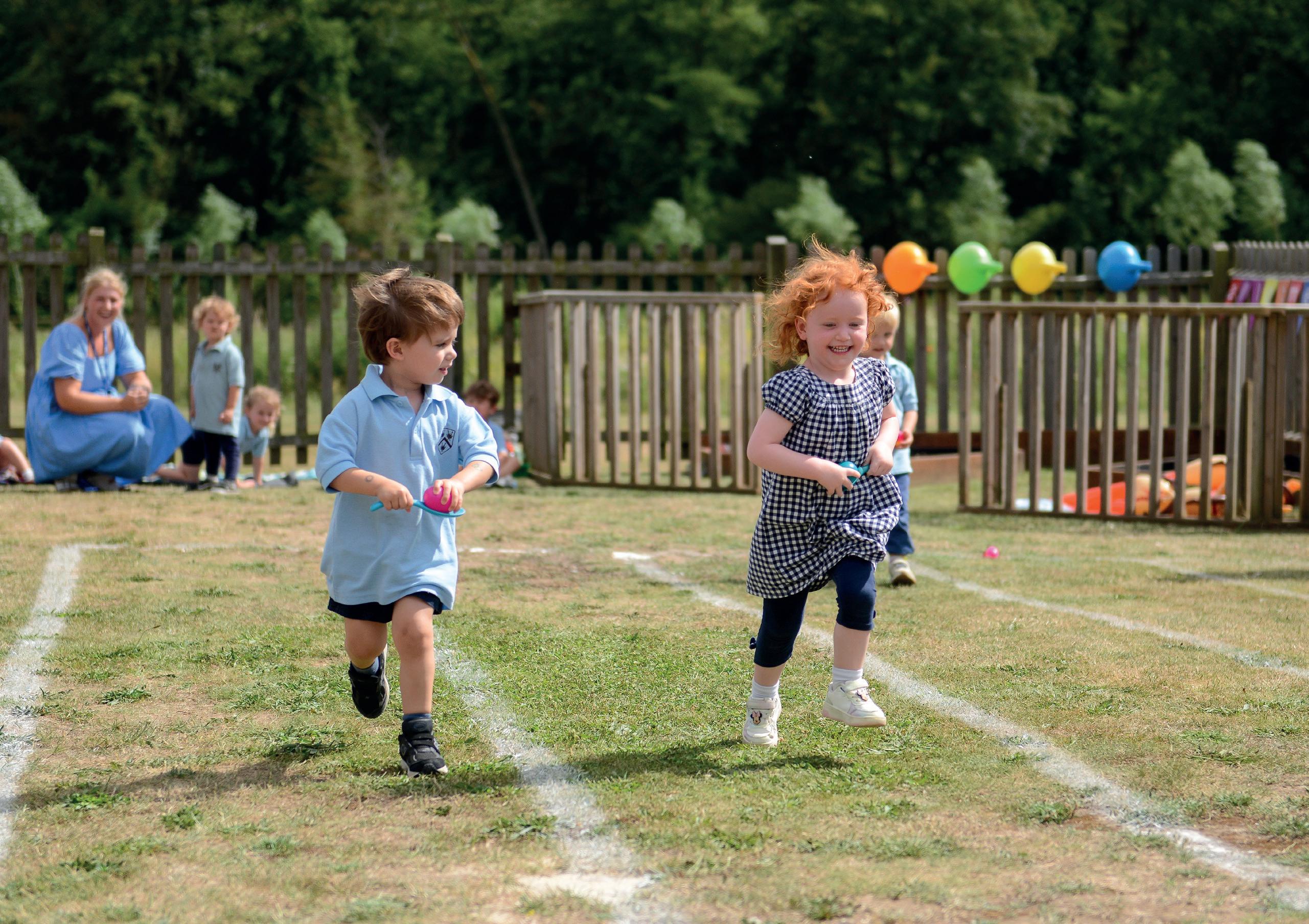
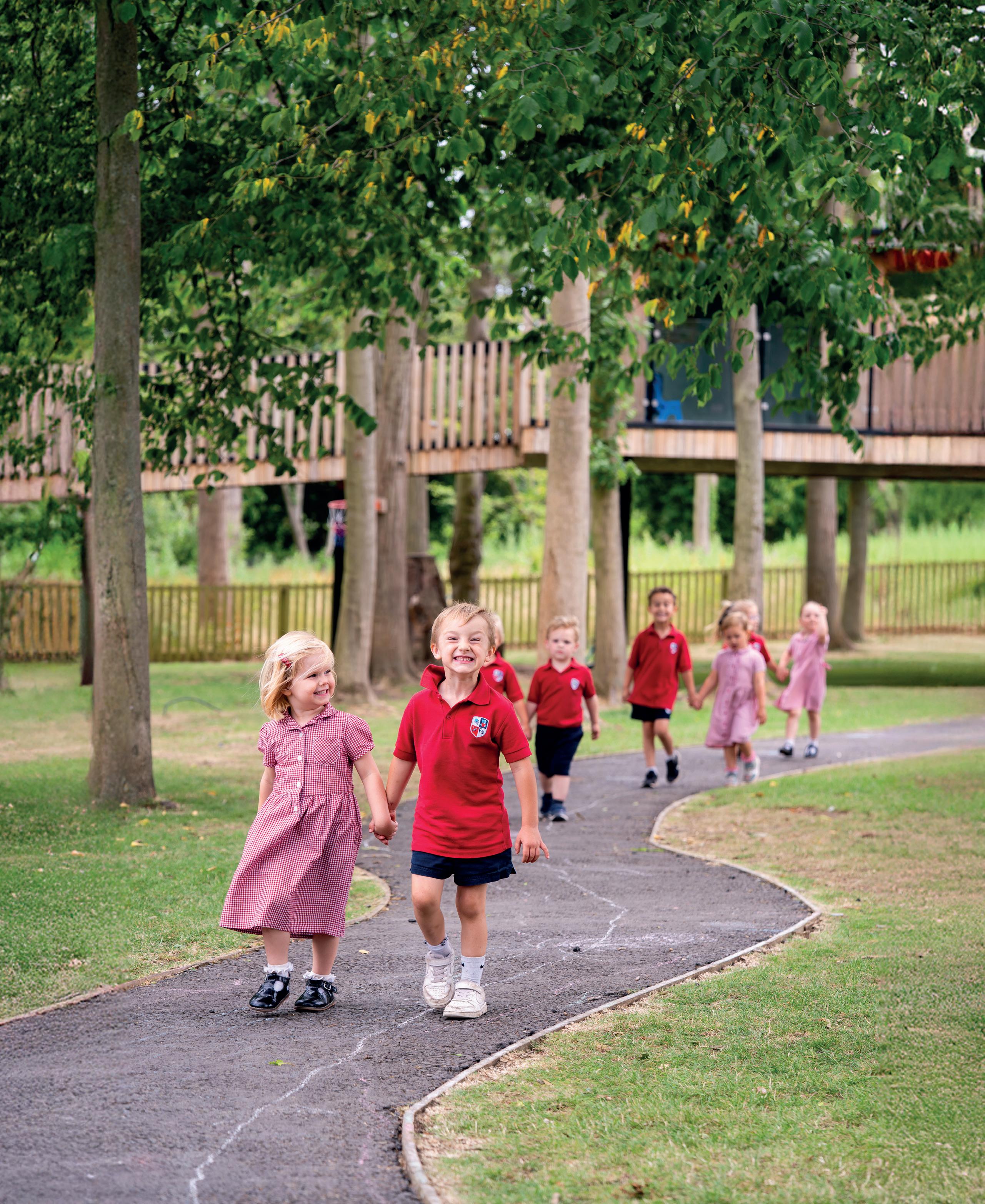
Sign up for our summer Stay and Play sessions (ages 2 -5) where you can come and experience our Nursery. An opportunity to play together, enjoy some stories, arts and crafts and go on some outdoor adventures.
The sessions will run from 09:30 - 11:30 in our purpose-built Early Years Building at Framlingham College Prep School, IP13 7AH Free of charge | Siblings welcome
Scan the QR code to book or go to framlinghamcollege.co.uk/stayandplay
Themed Stay and Play dates also available. See website for details.
Let’s see who you are...
PREP SCHOOL OPEN MORNING Friday 02 October 2026 10:00 - 13:00
To register, visit framlinghamcollege.co.uk/admissions
CONTACT US
EDITOR
Stacey Phillips
T: 07951 946736
E: editor@familiessuffolk.co.uk
Design: Stacey Phillips
Printed By: Buxton Press
Next Issue: July/Aug 2026
12,000 copies of the magazine are distributed throughout Suffolk. To request copies please contact the editor.
Welcome
Welcome to our new Spring/Summer issue.
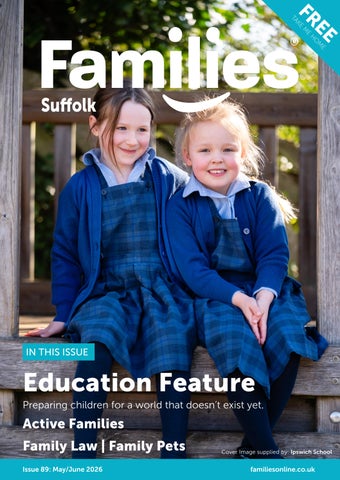
This edition features a fantastic Education Feature, with contributions from Ipswich School, St Joseph’s College, Framlingham College and Finborough School. Our thanks also go to Ipswich School for providing the cover image for this issue.
Our Family Law experts at Ellisons Solicitors share valuable advice on supporting autistic people through family separation, and Suffolk Community Libraries have launched their 2026 Summer Reading Quest. If you’re looking for a family-friendly challenge this year, why not sign up for the Home-Start Hike? It’s a great way to get active together while helping support local families in need. I hope you enjoy this issue.
Best Wishes
Stacey Phillips
Contact us today to find out
FOUR ROUTES TO CHOOSE FROM
3 MILES 26 MILES* 13 MILES* 6 MILES
Child Ticket from £10
Adult Ticket from £15
Family Ticket from £45
Corporate Ticket from £100
*Age restrictions apply
Family ticket includes 2 adults and up to 3 children
John Constable, Golding Constable's Kitchen Garden, Summer 1815. Ipswich Borough Council Collection
short story competition
Calling all writers aged 5–15!
Join our 2026 Summer Reading Quest and enter our 500-word short story competition.
Your challenge: Choose one or more of our Curious Creatures and make them the main character in your story.
What kind of mischief or adventures will the Curious Creatures get up to this summer?
How to enter:
Write a story (up to 500 words).
Make sure a Curious Creature is the main character.
Add your name, age, and a parent/carer contact.
Hand it in at your local library.
To enter online scan the QR code or visit our website www.suffolkcommunitylibraries.co.uk
Calling all writers aged 5-15!
Join Suffolk Community Libraries 2026
Summer Reading Quest and enter their 500-word short story competition.
Suffolk Community Libraries is getting ready to launch this year’s ‘Summer Reading Quest’: a fun and free summer reading programme open to all ages and all reading abilities
This year, Reading Quest will have the theme of ‘Curious Creatures’ with some wonderful illustrations featuring animal detectives created by local illustrator and author Matt Robertson. The Curious Creatures crew features a polar bear, pig, raccoon, tortoise, fox and pigeon.
Reading Quest will run during the summer school holidays to encourage children to enjoy reading and have fun with the Curious Creatures crew!
It’s set to be an even more exciting year as it ties in with the National Year of Reading: a 12-month campaign highlighting the many ways in which people of all ages can enjoy reading.
To get in the mood in the run up to the Reading Quest, Suffolk Community Libraries is launching a short story competition for 5-15 year olds. The story must feature one or more of our Curious Creature characters and be no more than 500 words in length.
The competition is open from 18th May and has a deadline of 30th June 2026. For details of how to enter, check out the website www.suffolkcommunitylibraries.co.uk or visit your local library.
Competition open 18 May - 30 June 2026
Active Family Fun and Water Safety
As May rolls into June and summer edges closer, it’s the ideal time for families to get outdoors, get moving and enjoy everything the warmer weather brings.
With longer, lighter evenings and (hopefully!) a bit more sunshine, children have the perfect opportunity to burn off energy, try new activities and build confidence through play.
One of the biggest seasonal highlights for many families is the return of water-based fun. Whether it’s a trip to the local pool, a seaside day out or simply paddling in a shallow stream, water offers a fantastic way for children to stay active while keeping cool. Swimming is not only a vital life skill but also a brilliant full-body workout that improves strength, coordination and stamina – all while feeling like play rather than exercise.
As families spend more time around water, it’s also important to build good safety habits from an early age.
Simple steps can make a big difference: always supervise children closely, even if they can swim; encourage them to stay within designated swimming areas; and remind them not to run near pools where surfaces can be slippery. For younger children or less confident swimmers, buoyancy aids can provide extra reassurance, but they should never replace active adult supervision. It’s also a great time of year to help children grow in confidence in the water. Regular visits to the pool, even for short sessions, can help them develop skills steadily. Turning practice into play - through games, challenges or gentle races - keeps things fun and engaging, especially for younger swimmers.
Away from the water, early summer is perfect for rediscovering parks, beaches and countryside walks. Pack a picnic, take a ball or a kite, and let children enjoy the freedom of open space. Family bike rides, nature trails and outdoor games are all simple ways to stay active together without needing much planning.
Ultimately, the goal is to make movement a natural, enjoyable part of family life. By mixing active play with safe water experiences, you’re not only creating memorable summer moments but also helping children develop skills and habits that will last a lifetime.
Clubs & Classes Directory
Little Kickers give your children a positive introduction to sport by teaching high quality football skills in a friendly, pressure-free environment. There are four different classes tailored to the needs of children between 18 months - 8yrs
Find out more and sign up to a local class.
Mini-First Aid classes are designed to be relaxed, accessible, and confidence-boosting, giving you the knowledge and skills to act in a medical emergency. Sessions are available for the whole family, including parents, grandparents, carers, and children from 3yrs,
Find out more and sign up to a local class.
Claydon Football Club are looking for new players to join their U16's disability team. A grassroots football club which has been offering disability football sessions since 2017.
Find out more and sign up
babyballet Suffolk South offers magical pre-school dance classes for little stars aged 6 months–6 years. Move, sing, and play while building confidence, coordination, and social skills in our fun, inclusive, welcoming classes.
Find out more and sign up to a local class.
Free parent & baby exercise classes where you can move, chat and feel supported. Safe workouts for all fitness levels, space for babies to play, and a welcoming community where no parent should navigate parenthood alone.
Find out more and sign up to a local class.
Building Confidence, Creativity and Community. The UK’s largest youth musical theatre company provides unique opportunities for young people aged 7 to 21 who love to perform. We help them build confidence, master new skills, make friends for life and shine in their own way.
Find out more and sign up to a local class.
CDC Street Dance has a wide range of different classes for all ages and abilities in lots of different areas. We also offer a tots group, birthday parties, workshops, fun days, exams, competitions, shows, rewards, progression and confidence building!
Find out more and sign up to a local class.
Jo Jingles provides fun, music and movement classes for babies and pre-schoolers across Suffolk. Classes are suitable for children aged from three months to five years
Find out more and sign up to a local class.
Supporting Autistic People Through Family Separation
Family Law advice from Mary Carmel Wilson, Senior Associate, Ellisons Family Department
Separation can be a challenging time for any family. For families involving an autistic person, it can bring additional pressures and uncertainties, particularly when navigating unfamiliar systems such as the family courts.
Autism is a developmental condition that affects how a person communicates, interacts with others and experiences the world around them. Many autistic people experience heightened anxiety, sensory sensitivities and differences in how they process information. While every individual is different, these factors can make navigating new situations feel especially overwhelming.
Research suggests that around 1–2% of children in the UK are autistic, yet understanding of autism within the legal system can still be limited. Some individuals report feeling misunderstood or marginalised when engaging with professionals, including within the family courts.
Separation is rarely easy. For an autistic person, the uncertainty, disruption to routine and emotional strain can significantly increase anxiety. Taking steps to resolve arrangements, particularly where formal processes are involved, can feel daunting if communication styles or environments are not well suited to their needs. Maintaining stability and reducing anxiety wherever possible can make a meaningful difference during this time.
In my own work with autistic clients, I have seen how important it is to take a thoughtful and consistent approach. Clear communication is key. Many clients find it easier to meet in person or via video rather than by telephone. Taking time to explain information in a structured way, using clear written summaries and allowing space to process discussions can help reduce stress and build confidence.
Consistency is also important. Seeing the same solicitor and barrister throughout a case can provide reassurance and reduce stress.
What I have learnt through both professional experience and ongoing training is that many autistic individuals are already making daily adjustments to navigate a world that is not always designed with them in mind. A legal process should not add unnecessarily to that burden.
By taking the time to listen and make practical adjustments, it is possible to support autistic clients in a way that feels accessible, respectful and reassuring during what is often a very difficult time.
At Ellisons, we understand how important it is to approach these situations with care and flexibility, ensuring that every client feels supported in a way that works for them.
Small practical adjustments are often just as important. This might include thinking carefully about the meeting environment, reducing sensory distractions where possible, or adapting how information is presented. For example, some clients find shorter, structured correspondence easier to follow than long, detailed documents.
Attending court can feel overwhelming. Busy waiting areas, unfamiliar surroundings and bright lighting can heighten anxiety. Where needed, adjustments can be requested, such as attending remotely or making alternative arrangements on arrival.
Is your family ready for a pet?
After exploring the many benefits of family pets, it’s easy to feel ready to welcome one into your home.
But before you take the leap, it’s worth asking: is your family truly prepared?
A pet can bring enormous joy to family life, but it’s also a long-term commitment that requires time, patience, and careful thought. While children may promise to take full responsibility, the reality is that feeding, vet visits, training, and financial costs will always fall to the adults. Being honest about this from the start helps avoid frustration and ensures everyone understands their role.
Choosing the right pet for your lifestyle is key. An energetic dog may be perfect for an active family that enjoys being outdoors, but it could feel overwhelming for a household juggling busy work and school schedules. Smaller pets, or those that require less hands-on care can sometimes be a better fit, particularly for younger children. It’s important to think realistically about how much time you have each day, how often you’re out of the house, and whether your home environment is suitable.
Cost is another important consideration. Beyond the initial excitement of bringing a pet home, there are ongoing expenses to plan for, including food, insurance, vaccinations,
grooming, and unexpected vet bills. Budgeting for these in advance helps ensure your pet receives the care it needs throughout its life.
Pets also require consistent training and attention. They won’t arrive perfectly behaved, and helping them settle into family life takes time and patience. This can be a valuable opportunity for children to learn about responsibility, routine, and empathy, supported by adults every step of the way.
It’s also important to consider the wider family. Allergies, fears, and changing routines can all have an impact. Spending time with animals beforehand, through friends, family, or local animal centres can help children build confidence and ensure a good fit.
Finally, think long-term. Many pets will be part of your family for years to come, so it’s worth considering how they will fit into future plans, from holidays to house moves. When the decision is well thought through, a pet can become a much-loved member of the family, bringing joy, companionship, and lasting memories for years to come.
INDEPENDENT, CO-EDUCATIONAL DAY AND BOARDING SCHOOL, PLUS NURSERY
Finborough School offers a unique character focused approach to education from its nursery all the way through to its sixth form. With an abundance of learning opportunities both inside and outside of the classroom that includes our magical Forest School programme, our Pre-Prep department is a very special place to be!
Places available for September 2026
Families are invited to join us for a Personal Tour of our early years learning spaces.
Scan the QR code
Find out more and book your place:
Rated ‘Excellent’ in all areas by the Independent Schools Inspectorate
Preparing children for a world that doesn’t exist yet
It’s a question many parents quietly ask themselves: what exactly are we preparing our children for? The world our young people will enter is changing rapidly. Careers are evolving, technology is reshaping industries, and the path from school to adulthood is far less predictable than it once was.
Academic achievement still matters. A strong grounding in subjects like English, Maths and Science remains essential. But increasingly, schools are recognising that exam results alone are not enough. The real challenge is helping children develop the confidence, adaptability and curiosity to thrive in an uncertain future.
At Ipswich School, this balance is part of everyday life. In the classroom, pupils are encouraged not just to learn content but to question it; whether that’s debating ideas in humanities lessons or tackling problem-solving challenges in STEM subjects. Learning becomes something active rather than passive.
Technology, of course, plays an important role. Pupils are growing up in a digital world, and developing confidence with digital tools is essential. But just as important is knowing when not to rely on them. At Ipswich School, textbooks, discussion and handwritten work remain central to learning. There is a clear belief that deep understanding is often best developed away from screens; through reading, reflection and sustained focus. Technology supports learning, rather than replacing its foundations.
Beyond lessons, the co-curricular programme plays a vital role. A pupil might spend the afternoon rehearsing for a drama production, representing the school in a sports fixture, or taking part in a lunchtime society; from debating to coding. Programmes such as The Edge further extend these opportunities, encouraging pupils to explore interests, take on challenges and develop skills beyond the classroom. Alongside this, a focus on Life Skills ensures that pupils are equipped for the realities of modern life.
From financial awareness to communication and decisionmaking, these are the often-overlooked essentials that help young people navigate the world with confidence.
Leadership, too, is something that develops over time. Through roles such as prefects or mentoring younger pupils, students begin to take on real responsibility within the school community. The Combined Cadet Force (CCF) offers another powerful example. Here, pupils learn to lead in practical, often unfamiliar situations; developing discipline, teamwork and decision-making skills under pressure. These are experiences that stay with them long after they leave school.
Adaptability is another key skill. The future workplace is likely to demand flexibility, with many young people going on to careers that do not yet exist. Schools therefore have a responsibility to nurture resilience and a willingness to embrace challenge. Often, this happens in moments outside the classroom: preparing for a performance, learning from a lost match, or working through a group project where things don’t go to plan.
What becomes clear is that preparing children for the future is not about predicting specific careers, but about equipping them with a mindset. Curiosity, creativity, resilience and kindness will remain valuable, whatever changes lie ahead.
For families considering their child’s education in Suffolk, it is worth asking a broader question: will this school help my child grow into a capable, confident and adaptable young person? Increasingly, that is the measure that matters most.
The importance of SEN provision
Following the government’s plans to shake up SEN reforms, Natalie Skilton, Head of Learning Support at Framlingham College Prep School, talks about the importance of SEN provision in schools.
On 23rd February 2026, the government published it’s School’s White Paper, highlighting plans for major reforms to England’s SEN system; however, many frustrated and exhausted parents fear if the already overstretched state school sector can meet these demands, alongside preparing to battle through the additional steps to qualify for the right support for their child.
Now, more parents are considering independent schools for children with SEN due to their ability to provide significant additional support; from a customisable curriculum, technology resources, smaller class sizes, and specially trained staff who are experts in dyslexia, autism and ADHD.
“From the moment we first meet your child, we take time to understand not just their academic profile, but their strengths, interests, challenges and aspirations”, says Natalie Skilton, Head of Learning Support at Framlingham College Prep School. “Careful observation, open dialogue with parents, and close collaboration with teaching staff allow us to build a clear picture early on. This approach allows us to create a plan that is flexible and responsive, ensuring strategies, adjustments and interventions evolve as the child grows.
“As an independent school, we offer a highly personalised level of care and support. Small class sizes allow staff to know each child well, enabling early identification of needs and tailored support. Our independence gives us the flexibility to innovate, respond swiftly to individual needs and place each child firmly at the centre of school life - creating a supportive, nurturing environment in which children feel valued, understood and inspired to flourish while still being supported and challenged appropriately.
“Pastoral care is central to school life and at Framlingham this includes specialist wellbeing provisions such as LEGO-based therapy which helps develop communication, collaboration and social confidence, alongside the calming presence of our much-loved therapy dog, Walter the golden Labrador, who is available for emotional support for all pupils across the school, even being there to greet new pupils on their first day.”
A strong SEN provision lays the foundation not only for academics, but for confidence, independence and resilience. When a child feels understood and supported, they are more likely to engage positively with learning, take risks and develop the skills they need to thrive beyond school.
Discover more at: framlinghamcollege.co.uk or email: admissions@framlinghamcollege.co.uk.
Learning outdoors
Outdoor learning has become an increasingly important part of early years education, and at Finborough School’s Pre-Prep, known as Little Finborough, it is woven naturally into everyday life. Set within 40 acres of Suffolk countryside, the school’s grounds offer far more than a picturesque backdrop, they provide a rich, living environment where young children can explore, question and grow.
At Little Finborough (Nursery to Year 2), learning outdoors is not treated as an occasional activity, but as an extension of the classroom itself. The seasons shape much of what children experience: from observing the first signs of spring to collecting leaves in autumn, these moments help to anchor learning in the real world. Storytelling beneath the trees, imaginative play in open spaces, and hands-on scientific exploration all take on a different dimension when experienced outside.
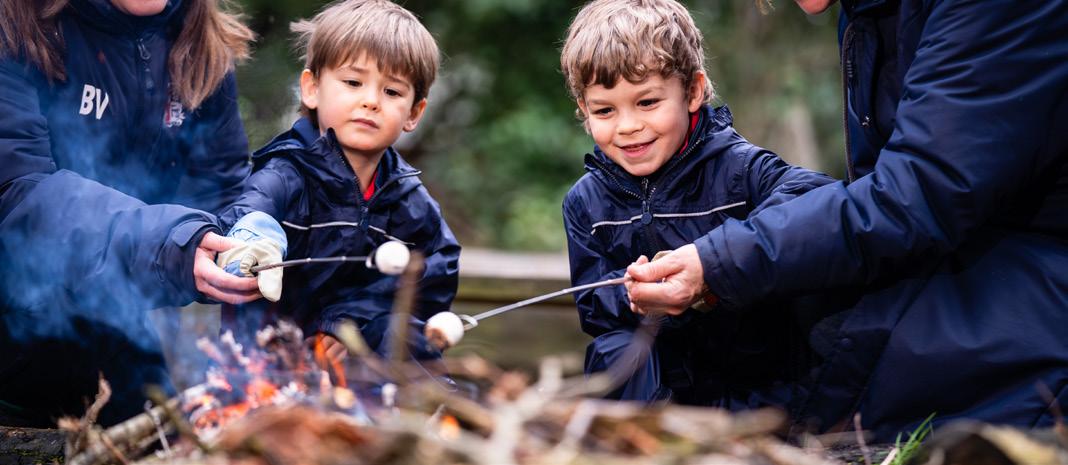
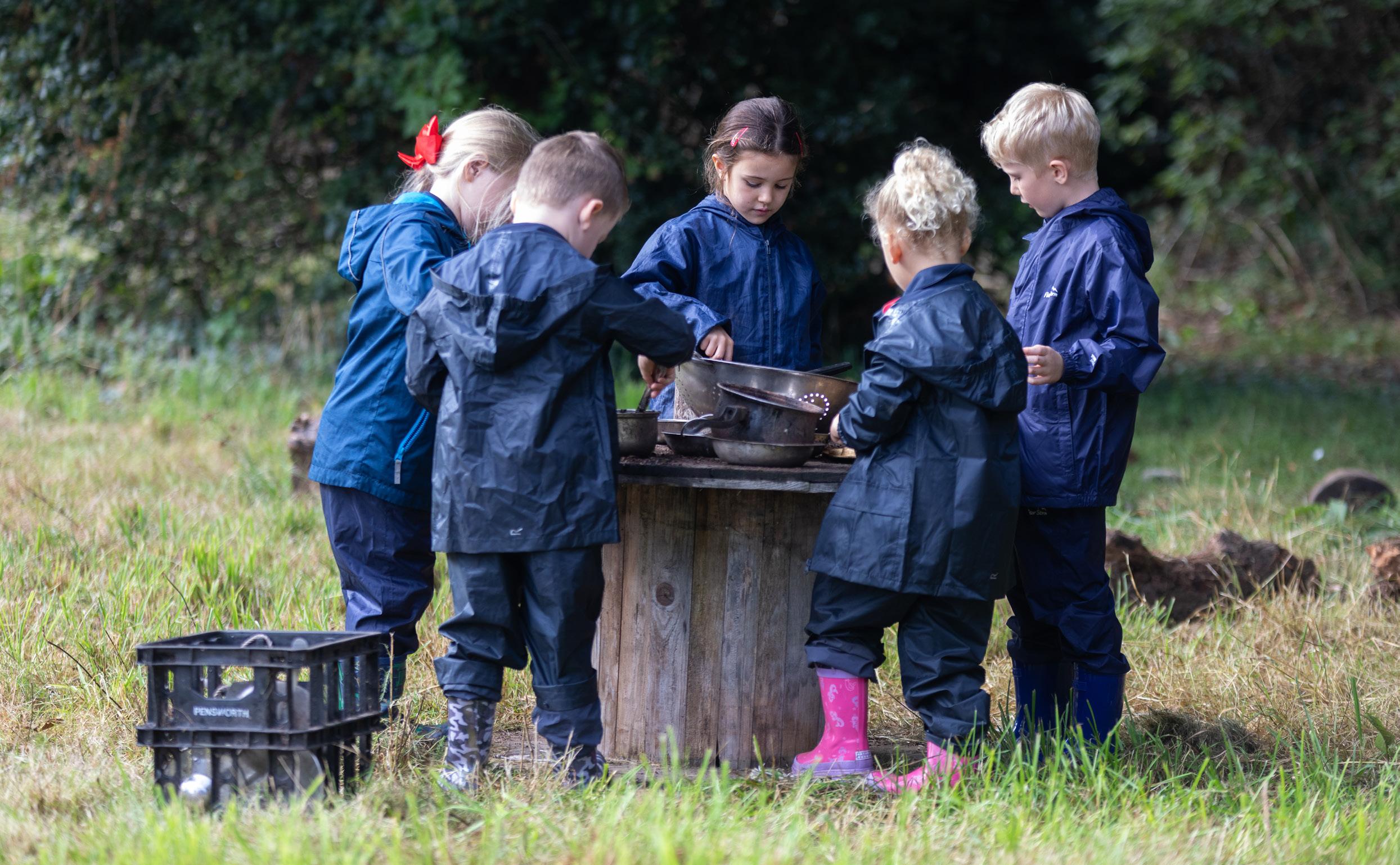
A central feature of this approach is the weekly Forest School programme. These sessions give children the freedom to explore natural surroundings in a structured yet open-ended way. Whether building dens, navigating simple challenges, or working collaboratively on small tasks, children are encouraged to think independently and solve problems for themselves. There is a strong emphasis on measured risktaking: learning how to assess situations, make decisions and develop confidence in unfamiliar settings.
The benefits of this kind of learning go well beyond the obvious enjoyment of being outdoors. Regular time in nature has been shown to support emotional wellbeing, helping children to feel calmer, more focused and better able to regulate themselves. It also nurtures qualities that can be harder to develop within four walls: resilience when things don’t go to plan, teamwork when working with others, and perseverance when faced with a challenge.
Finborough’s setting allows these experiences to happen organically. Open green spaces and features such as the school’s treehouse create opportunities for exploration and creativity that feel authentic rather than staged. Children are immersed in the nature world day to day.
As conversations around education increasingly focus on balance and wellbeing, outdoor learning offers a timely reminder that some of the most valuable lessons happen beyond the classroom door. In the early years especially, where curiosity is at its peak, giving children the space to explore their environment can lay strong foundations not just for academic learning, but for personal development too.
Book a tour at: finboroughschool.co.uk or email: admissions@finboroughschool.co.uk.
Transition into Reception
Starting Reception is one of the biggest transitions a child will encounter, but at St Joseph’s College Prep School the focus is on continuation rather than a ‘big’ new start.
While many of the children beginning Reception have attended Little Jo’s Nursery at the Ipswich independent school and are already familiar with some of the faces and places belonging to St Joseph’s, newcomers from a variety of alternative settings are also warmly welcomed.
It is a source of pride that new girls and boys don’t stay ‘new’ for long; the friendliness of the school ensures they soon become Joeys. That holds true whether youngsters join at one of the traditional transition points – Nursery, Reception, Year 7 and Sixth Form – or midway.
Joining Reception is a key moment for families. No-one likes taking a step in the dark, so St Joseph’s lightens the transition process with opportunities for every family to engage with the staff – most importantly the class teacher – and get to know the families of their child’s classmates, too.
For families new to St Joseph’s College Prep School, the process includes special events, such as open days, when children and their parents can meet staff and current pupils and see the exceptional facilities on offer.
Coming down to scale and dedicated to the Early Years age group are events such as Stay, Play and Learn, themed sessions filled with fun and learning for parents and children alike.
Once the decision to join has been made, other special events keep up the excitement while building familiarity. A recent example was Mad About Mini Beasts, an outdoor adventure introducing children to the school’s beautiful woodland campus.
Moving Up Day sees the Nursery children and new starters spending the day together with their classmates and their new teacher. They explore the classroom and are introduced to their new routines.
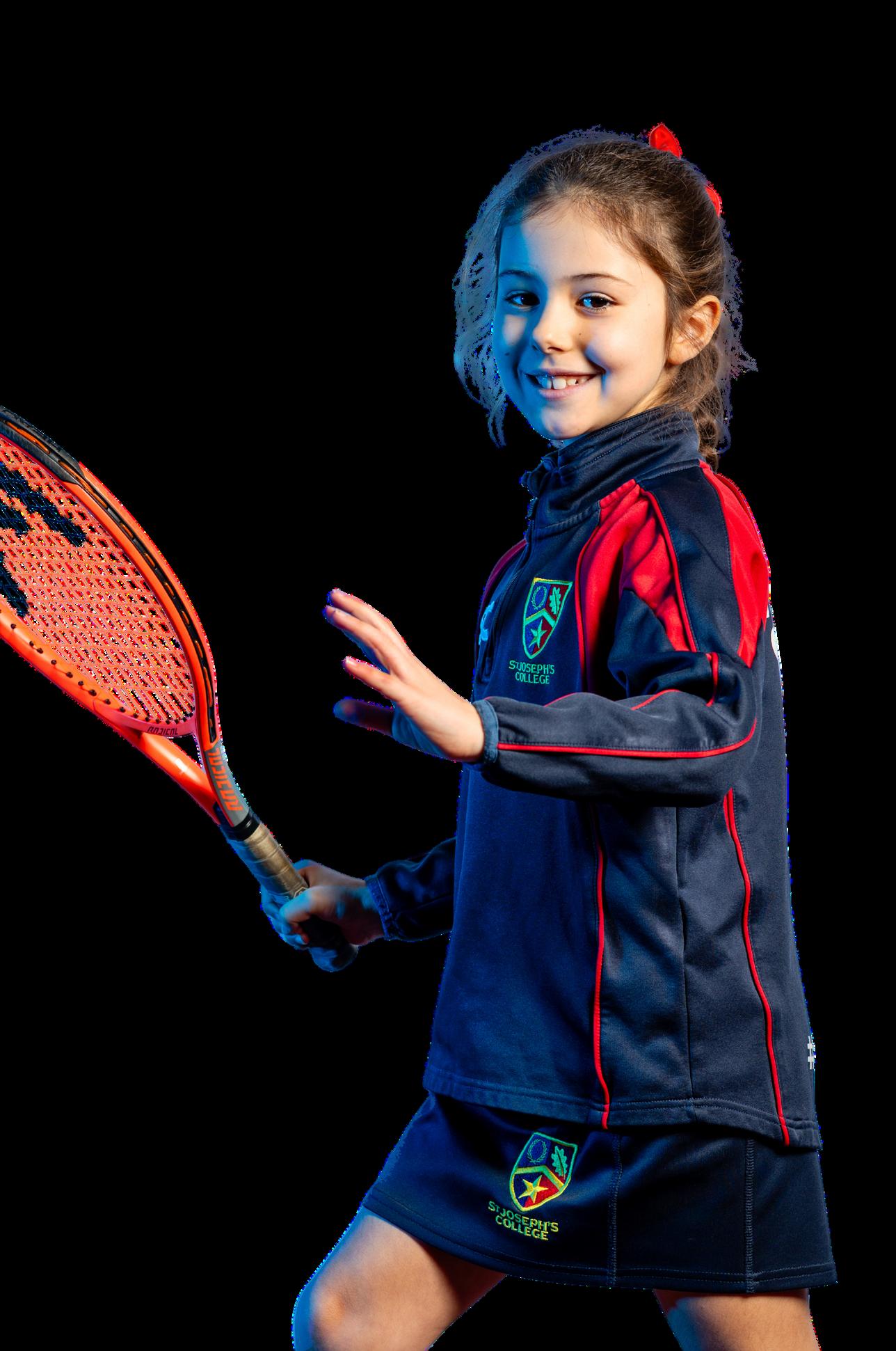
Every child is known as an individual at St Joseph’s. Small class sizes, specialist teachers from the outset and outdoor learning inspire ambition.
A great education will always be a three-way partnership between child, family and school. Families can do a lot to support their children with a happy transition into Reception by:
Fostering independence – Try to allow extra time in the morning so children can ‘have a go’ at getting themselves dressed. Buttons and zips can be tricky but will become easier with practice as their fine motor skills develop.
Talking to them - Answer questions and ask them. By creating a dialogue as often as possible you will stretch your child by using vocabulary they may not know yet!
Playing games that involve sharing and taking turnsfamilies can support their child at home as they come to understand that they have to consider other people’s feelings, recognise their own emotions and become able to self-regulate.
Prioritising healthy eating and cooking - Ensure your child understands the importance of a varied diet. They will enjoy a snack of fruit and milk in the morning in Reception and bring in their own healthy snack for the afternoon break.
Recognising numbers and counting - Listen to stories, songs and rhymes that include counting or numbers. A fantastic way to learn numbers up to 10 and then 20 is through song.
Promoting literacy skills - Sharing stories at home pays into a child’s vocabulary bank and creates a love of reading. Being able to write their name on their work is more exciting than it sounds!
Developing social skills – saying please and thank you, greeting new people by saying ‘Hello!’ and playing alongside others are great skills to acquire. st of all, enjoy this wonderful time with your eager little learner.
Most of all, enjoy this wonderful time with your eager little learner. The whole world beckons.
Book a visit with: admissions@stjos.co.uk
Meet our teachers, explore our facilities and see how we inspire ambition every day.
Nuturing environment with caring and friendly staff