Booking deadline: 3 April Cover image: www.depositphotos.com
Nov/Dec issue giveaway recipients
Congratulations to all our winners. You can find a list at www.bit.ly/ND25recipients
Would you like to advertise your business in our next issue?
BOOK TODAY
Call Patricia on 07980 556813 or email patricia.holloway@ familiespublishing.co.uk
This product is made of material from wellmanaged, FSC®-certified forests and other controlled sources.
Soon grey skies and rain will (hopefully) start to give way to the occasional mild, sunny spring day – the sign that winter is coming to an end. Embrace the new season by planning some family activities outside. Locally, you’ll find a range of outdoor activity options in our What’s On guide. And Easter isn’t far away, so there are school holidays and a long weekend to plan.
How much have you thought about what the coming AI future will demand of your kids and of their education? Find out more in our Education section. In this issue, we also cover how stories can teach kids to love solutions and how to prepare for your child’s first residential trip. Plus, for parents that suffer from anxiety, how can you avoid passing this on to your child?
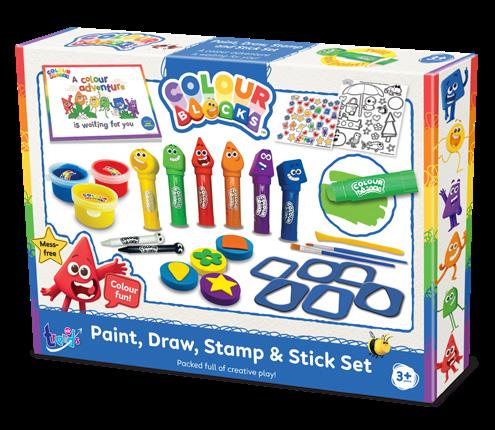
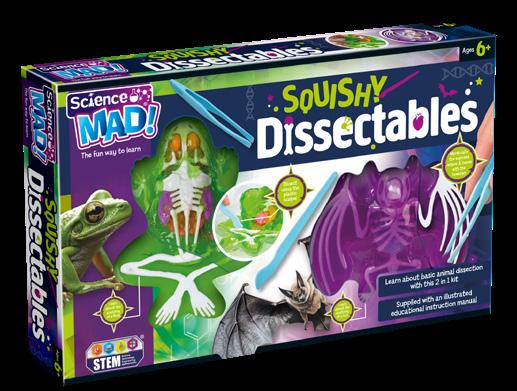
Finally, in this issue, we have three giveaways including Peppa Pig Whizz Around Cars! Apply inside. By doing so, you’ll also ensure you receive our newsletter and digital magazine with lots more content and goodies on offer.
Linda
Editor, Families South East
Families South East London is a franchise of Families Print Ltd of 75 Lisbon Avenue, Twickenham, TW2 5HL. Families is a registered trademark of Families Print Ltd. All franchised magazines in the group are independently owned and operated under licence. The contents of Families South East London are fully protected by copyright and none of the editorial or photographic matter may be reproduced in any form without prior consent of Families South East London. Every care is taken in the preparation of this magazine but the franchise owner and Families Print Ltd cannot be held responsible for the claims of advertisers, nor for the accuracy of the contents, or any consequence thereof.
How stories teach children to love solutions
By Sarah Tucker
We’ve trained children to love the chaos in stories, not the calm that follows. When I once asked a Year 2 class their favourite part of a story, every hand shot up for the problem part: Goldilocks breaking chairs, the wolf blowing houses down. ‘The solution’s the boring bit,’ one girl said. But real growth, in stories and in life, begins when we start solving things. Those ‘what next?’ moments can teach resilience, creativity and confidence. Solutions give children tools they can carry into maths, friendships and everyday decisions.
Flip the script
What if the solution was the most exciting part? Kids love the drama of ‘uh-oh’ but it’s time they saw the ‘what next?’ as just as fun, with problem-solving an adventure in itself. Encourage children to pause mid-story and predict solutions. Their often wild, funny or clever ideas are exactly what trains flexible thinking.
A spark from Edward de Bono
Researching Edward de Bono, the father of ‘lateral thinking,’ taught me that adults often fall into fixed patterns. But fiveyear-olds? They’re natural innovators. When de Bono asked children to improve a broken wheelbarrow, their wild ideas outshone those of CEOs and engineers. The youngest thinkers are our boldest problem-solvers, if we let them remain that way. Curiosity and play aren’t distractions from learning; they’re the engine behind original solutions. Thinking sideways strengthens their ability to approach problems with confidence and creativity.
Storytime experiment: Little Red Riding Hood
Pause the story right before the woodcutter saves the day and ask: ‘What else could Red Riding Hood do?’ You’ll get chaospoison apples and superheroes - but then, something magical: ‘She could trick the wolf!’ or ‘She could turn him vegetarian!’ Suddenly, your child isn’t just reading a story, they’re rewriting it with imagination.
Breaking the parent loop
Many children inherit their parents’ patterns: fear of failure, perfectionism, even ‘I’m just not good at maths.’ Storytelling lets children imagine new family scripts. It’s a gentle way of saying: you can rewrite more than just fairy tales. By modelling curiosity instead of frustration, parents show that every problem has
Making mistakes a playground
Children often fear getting it wrong, so they stick to what’s ‘safe.’ Stories can help them see mistakes as invitations rather than punishments. Pause a tale when a character errs and ask: ‘How could this be fixed differently?’
Encourage three or four possibilities, even absurd ones. Soon, pupils learn that failure isn’t final - it’s a springboard for creativity. Turning errors into play fosters resilient, imaginative and willing problem-solvers, able to tackle challenges both in and outside the classroom.
more than one path forward. The earlier children experience this freedom, the sooner they internalise a growth mindset that will help them both in school and life.
Solutions classroom: small wins
It doesn’t have to be a grand plot twist. Even small, everyday problems offer opportunities for children to exercise lateral thinking. When a child figures out a new way to organise their desk, solve a tricky arithmetic problem or negotiate roles in a group activity, celebrate it. These micro-moments of problemsolving build confidence and encourage risk-taking. By valuing these ‘little victories,’ we signal that solutions are as exciting as the preceding dramas. Over time, children begin to approach challenges with curiosity rather than fear.
Try this at home:
Lateral thinking doesn’t need worksheets. Ask:
‘What’s another way to see this?’
‘What would the villain say?’
‘Can you invent three solutions, even silly ones?’
At first it feels like play - but play is the training ground for flexible thinking. Before long, your child sees every problem as an invitation, not a wall.
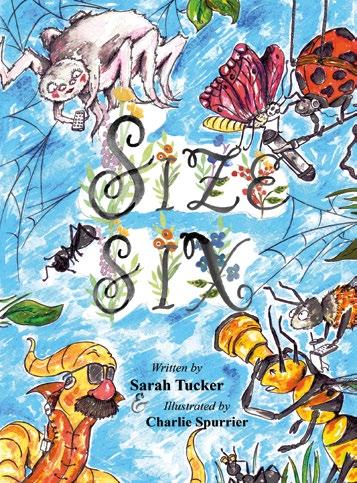
Sarah Tucker is the author of Size Six, Size Seven and Size Eight (Cambridge Children’s Press), a trilogy of playful, illustrated chapter books helping children think creatively about problem-solving. These books are available from www.cambridgechildrensbooks.com
A quiet revolution in storytime
Beneath the laughter lies a quiet mission: to teach children that solving problems can be joyful, creative and brave. Every resolution plants a seed of agency, showing that change begins with thought, not luck. When stories honour effort over rescue, children learn to trust their own ideas. If they grow up loving solutions as much as stories, they’ll outthink us all.
And wouldn’t that be rather wonderful?
Celebrate the National Year of Reading
Footballer Leah Williamson and bestselling author Richard Osman are supporting the National Year of Reading 2026, launched by the National Literacy Trust to inspire children across the UK to ‘go all in’ on reading. The campaign addresses the decline in reading for pleasure, with only one in three children now enjoying books.
Throughout the year, the initiative will feature author visits, book giveaways and reading challenges, focusing especially on children in communities with limited access to books. Schools and libraries are encouraged to create welcoming spaces, while families are supported to make reading a daily habit.
Williamson, Osman and other ambassadors aim to show that books can be exciting and relevant for every child. By encouraging a love of stories early on, the National Year of Reading hopes to build children’s literacy skills, confidence and future opportunities.
More info at www.literacytrust.org.uk
for your
} Focusing exclusively on first class Early Childhood Education (age 2+ to 7+), the most crucial period in a child’s life
} Transitioning seamlessly from play-based to more structured learning, preparing the children to move on at 7+ with that special Herne Hill School spark
} Embedding key values and developing ‘the whole child’ through a unique, continuous five-year curriculum
} Expert staff operating under the ethos of Love · Care · Excellence in which children excel and learn with fun and enthusiasm
} Extensive wrap-around care from 7.45am to 6pm
} High-quality holiday provision for children aged 2–4
Happy 50th birthday Herne Hill School
2026 marks a golden milestone for Herne Hill School, a renowned Nursery and Pre-Prep in south east London specialising in Early Childhood Education (ECE).
Since its foundation in 1976, the school has focused exclusively on this crucially formative period for children aged 2 to 7, developing them to their best potential and launching them on a trajectory of happy, healthy and balanced lives.
This focus and cumulative experience have enabled Herne Hill School to acquire deep expertise in optimising the ECE period and become a cherished local institution. The latest Good Schools Guide review praised it as ‘a place where childhood is celebrated, with chatty, cheerful children learning and enjoying life. It’s a treat to see a pre-prep school doing what they’ve always done best for early years’ pupils.’
Herne Hill is inviting all former pupils, parents and staff to celebrate at a gathering on Saturday, 26 May.
Sign up at www.hernehillschool.co.uk
Educating for the age of AI
By Issy Butson
Most people familiar with the AI space will tell you something that’s hard to hear and equally hard to believe - AI will likely replace a very significant amount of global entry level whitecollar jobs within the next five years. In the scale of our children’s lives, that’s effectively tomorrow.
As parents, we need to get our heads round the fact that the jobs that will be replaced will not be just low skilled jobs on factory lines, at cash registers or repetitive manual work.
We must also recognise that our education system is designed to train children for the world we have been used to - in other words, to teach them things that, now, technology has also mastered.
Preparing children for this future
Companies are already losing faith in education pipelines that aren’t producing adaptable, job-ready people. In their place, there is a rise in skill-based hiring and project portfolios that actually show what a person can do.
The future won’t care about qualifications. It will care whether you can think, build, solve problems, adapt and contribute in ways that a machine can’t.
Within the next ten years, the gap between what children are being trained for and what they’ll actually face in adulthood will just become too big to ignore.
So how do we guide children in a world that’s no longer structured around graduations, qualifications, employment, performance reviews, entry level roles and corporate ladders?
What do we build instead?
There is a tendency for our current education system to unintentionally stifle the qualities our children will most need in future – originality, independent thinking, risk taking and deep knowledge, rather than the broad, shallow knowledge needed to pass exams. We need to get serious about a different kind of preparation for adult life. One that accepts, fully, that the future will not reward people for what they memorised but for what they can build, navigate, initiate and solve.
Get involved with British Science Week
British Science Week (6-15 March) is an annual event which offers activities, experiments and events aimed at sparking curiosity and excitement about science. It brings together schools, community groups and science enthusiasts across the UK.
This year’s theme is Curiosity: what’s your question and encourages children to discover how they might find answers to the questions they’re most curious about.
To find a local event or download a free activity pack, visit www.britishscienceweek.org
Here are five real-world capabilities which form a much more deliberate and demanding kind of education.
Self-management and personal agency
In a world where job structures and set working hours are far less prevalent, your child will need to know how to manage themselves - not just their time but their energy, attention, output and emotion. These are skills most adults were never taught. Your child should start learning them now.
Deep work and independent problem-solving
Surface-level knowledge is everywhere. What matters is the ability to go deep - to focus without distraction, to stay with complexity and to work through problems that don’t have obvious answers.
Real-world skill development
Instead of ticking boxes, help your child build tangible, functional skills. Not just academic ones - practical, creative, technical and interpersonal. The kind that lead to useful output, adaptability and confidence. A lot of those skills won’t actually be needed for employment but all the good stuff they develop internally while building them will absolutely serve them well.
Relationship-building and collaboration
The most resilient people in the future will be the ones who know how to find their people, build things together and communicate across difference.
Identity development and direction-finding
In a world of almost infinite choice and no fixed paths, children are going to need a strong sense of who they are, what they care about and how to move toward it. That kind of direction doesn’t come from outside. It gets built, internally, over time. Make sure they develop that deep, strong sense. A child raised this way will build the muscles they’ll actually need in this changing world:
Motivation without any external pressure.
Adaptability when things change, because they will, over and over again.
Confidence to try things they’ve never done before.
Patience to get good at something hard.
I believe we’re approaching one of the most fascinating periods of human history. But that we are woefully unprepared. So this is a call to parents who want to give their children a real head start. A call to step into this big unknown space and spend the next decade helping their children develop the resilience, confidence, adaptability and purpose that will serve them well regardless of where all this goes.
Issy Butson is the parent, home educator, blogger and podcaster Stark Raving Dad, as well as Head of Go To Market for a software company. To listen to Issy’s full podcast episode What every parent MUST know about the AI Generation, visit www.starkravingdadblog.com/what-every-parent-mustknow-about-the-ai-generation
Your child’s first residential school trip
By Erin Miller
Your child’s first residential school trip is a significant milestone both for them and you. You may have questions, a few reservations or might simply be looking forward to a quieter house for a couple of days.
Here is what you should know, the key questions you may want to ask and how you can help your child prepare.
There is no youngest legal age for residential trips in UK state schools, although most schools begin offering them around Year 3 or 4. As good practice, schools should hold a meeting with parents ahead of the trip. This meeting should cover key information such as the itinerary, supervision arrangements, behaviour expectations, safeguarding procedures, medical and dietary needs, emergency contact protocols, phone policies, room-sharing arrangements and how parents will be kept informed during the trip.
The most-often raised issues are the school’s phone policy and room-sharing arrangements. Even if the school permits children to take mobile phones, I would still advise you to consider not sending your child with one. Even knowing that a phone is nearby can be distracting and can detract from your child’s overall experience of the trip.
On the issue of room-sharing, many schools will not release details until the day of the trip or even the evening of departure. I would urge you to support this process, as children spend very little time in their rooms and tend to settle quickly once activities begin.
If your child has special educational needs or requires adjustments for a school trip, schools have both a legal and moral duty to plan for their full inclusion. This involves identifying individual needs in advance, carrying out appropriate risk assessments and making reasonable adjustments so that the child can participate safely and meaningfully. Schools should consult closely with parents and where appropriate, the child, to understand medical, behavioural, sensory or mobility needs.
Additional support may be put in place, such as increased staff supervision, adapted accommodation, medication plans or alternative arrangements for certain activities. These provisions ensure that trips are accessible, safe and enjoyable for all students, in line with equality legislation and good practice.
Finally, remember that no news is good news. Enjoy the break and don’t forget to thank the teachers! As a teacher myself, I can confirm that school trips are fun and valuable but exhausting in the extreme. Oh, and don’t forget to label absolutely everything.
Erin Miller is a teacher with a keen interest in how research can be used in the classroom to improve learning.
curriculum, specialist teaching in French, Music and Sport, and our own Forest School, our girls can dream big, discover their passions, and learn without limits.
Anxious parent, anxious child?
By Dr Meredith Elkins
‘I’m an anxious parent. Are my kids doomed?’
It’s well-established that anxious parents are more likely to have anxious kids. But genetics actually only account for about thirty percent of the risk of developing an anxiety disorder. And the good news is that there are ways you can help your child manage their own anxiety more effectively.
Model healthy beliefs about anxiety
Research shows higher anxiety in kids whose parents believe that experiencing anxiety is dangerous. If you believe that your kid’s anxiety-fuelled meltdown before an exam will cause them irreparable harm and show it, your beliefs become theirs and the cycle continues.
However, anxiety is a normal emotion and not actually harmful. Anxiety feels uncomfortable - by design - because discomfort motivated our ancestors to fight or flee in dangerous situations. Anxiety in the absence of actual danger feels awful but it can’t hurt you.
Through your words, your body language and your choices, model to your children that the experience of anxiety is normal and tolerable.
Resist the urge to rescue
Parents with anxiety disorders are more likely to ‘rescue’ their children from anxiety, for example by letting them skip school on the day of a dreaded exam. It works in the moment but robs them of the chance to learn that they can cope with stressors.
It’s impossible for kids to learn how to cope with anxiety if adults are constantly shielding them in normally stressful situations.
Never miss another issue
www.familiesmag.co.uk/go
Sadly, underdeveloped bravery muscles leave kids vulnerable to greater anxiety as life becomes more demanding.
Resist stepping in immediately. Be present and encouraging, without trying to ‘fix’ the distress for them.
Practise brave behaviour
Parents with high anxiety work extra hard to avoid distress. If you are anxious about work, you might procrastinate, delegate or bail entirely. If attending a party makes you uncomfortable, you might make excuses to stay home. This avoidance only fuels anxiety further by suggesting that discomfort should be avoided rather than tolerated.
Flip the script to promote resilience instead. Share stories of when you felt anxious but persisted and what you discovered about yourself. Seeing you navigate fear and come out stronger teaches kids that they, too, can handle anxiety.
Dr Meredith Elkins is a licensed clinical psychologist specialising in the treatment of anxiety, mood and obsessivecompulsive disorders in children and young adults. She is also an author and her latest book, Parenting Anxiety, is published by Vermilion.
Supportive statements
When kids are anxious, we often jump in with reassurance or solutions. But these well-intentioned responses can send the message that kids need us to handle hard moments, further fuelling their anxiety.
Try using supportive statements: a simple, clear way to send two powerful messages to your anxious child at once:
Validation: ‘I see that this is hard for you…’ The goal is to warmly acknowledge your kid’s experience, without minimising or ‘fixing’ it.
Confidence: ‘…and I believe you can handle this.’ This expresses faith in your child’s ability to cope with painful feelings, even when they feel overwhelmed.
Supportive statements don’t aim to erase anxiety or offer empty comfort. Instead, they are a two-ingredient formula to communicate acceptance and confidence that your child can face challenges with your support, not your intervention. As you model confidence in their abilities, kids gradually internalise that belief and begin to trust their capacity to cope.
Getting your family on the same page
By Ann Magalhaes
Before the start of term, a friend of mine invites her sons to what has become a ritual: their family meeting. Instigated when they were in primary school, the whole family sees the value in contributing to these get-togethers. Family life feels calmer and more predictable, with everyone on the same page.
While my friend uses family meetings mainly for back-to-school organisation, they can be useful for so much more. They cover what’s coming up, what might not be going so well and how to move forward together as a team. Meetings work well ahead of big transitions: a new school or term, an upcoming event or changes within the family.
Why are these meetings such a powerful parenting tool? Because children feel included. They’re more likely to buy into plans when they’ve had a say and even if they don’t express it, they appreciate the clarity that comes from knowing what to expect.
Family meetings reduce chaos, avoid last-minute surprises and help manage expectations around responsibilities, activities and changes of routine. We’re used to having meetings at work; this really isn’t that different.
Here are some well-tested tips:
Have an agenda
A clear agenda helps everyone see what will be discussed and creates a natural to-do list. When children contribute ideas and see them written down, they feel heard and valued and are far more motivated to follow through.
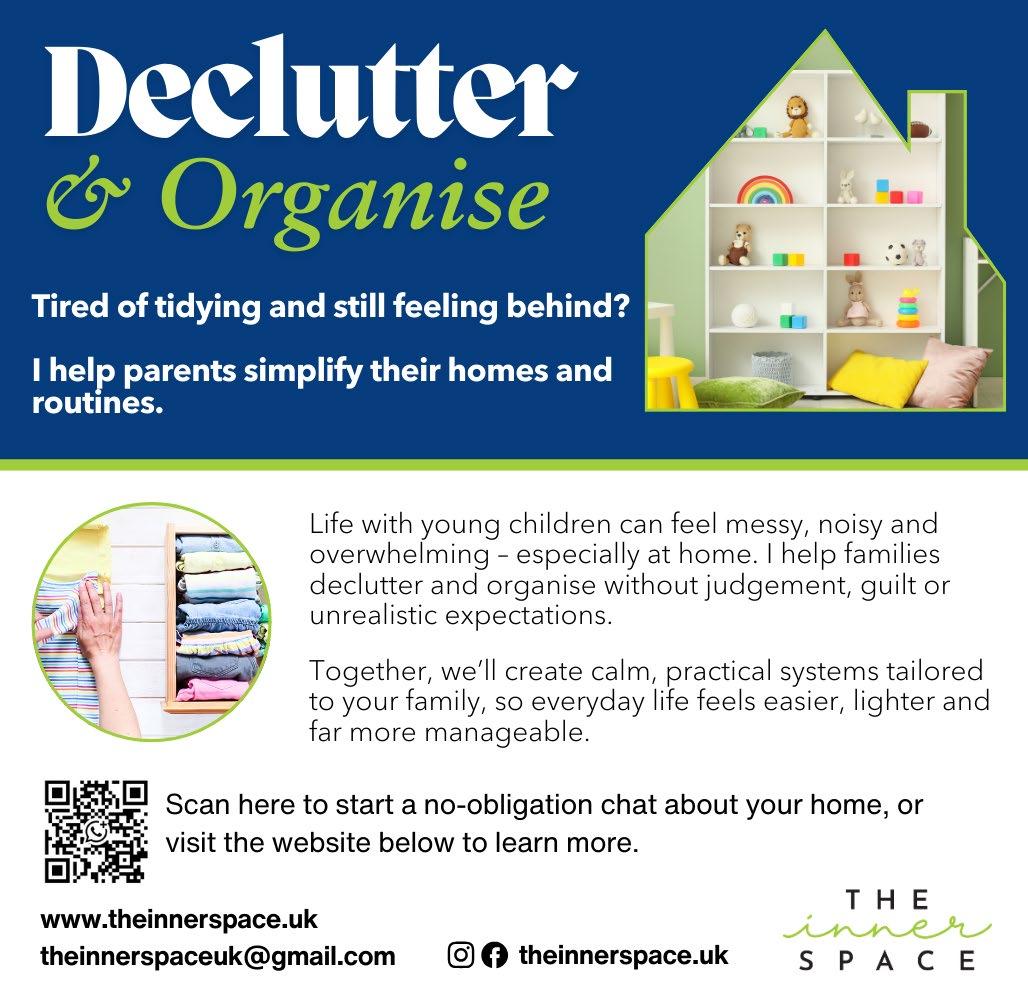
Time for a spring clear out?
Spring is the season of fresh starts, longer days and lighter energy, yet many families still feel weighed down by clutter. ‘Spring clearing’ isn’t about creating a perfect home; it’s about making space for the life you actually live.
Start small. Choose one drawer, one shelf or one category and ask simple questions: Do we use this? Do we love it? Does it support our life right now? Letting go becomes easier when you focus on what you’re keeping, not what you’re losing. Involving children can be empowering too - giving them ownership over their space helps build confidence and calmer routines.
The real shift happens when you move beyond tidying and create simple systems that are easy to maintain. When everything has a logical home, daily life feels lighter and less chaotic.
For a practical, step-by-step approach, the e-book A Decluttering Handbook - Your Guide to Organising the Home guides you room by room and offers realistic strategies and mindset support. Find the e-book at www.theinnerspace.uk
The calendar
Create a simple monthly calendar for the term. Start with birthdays, school events, sports fixtures, playdates, assigning each child their own colour. Then invite your children to add things they’d like to do. This naturally leads to conversations about responsibilities too. Who helps with what? Who prefers feeding the dog rather than walking him? The bonus for parents: less nagging and more chances to acknowledge your children’s contributions.
Clear expectations
Busy schedules, homework, sleep and limited downtime all add pressure. Talking through expectations for screen time, bedtimes, getting ready for school or homework helps everyone feel prepared. By planning ahead, things are more likely to go right and it’s easier for you to stay calm when they don’t. Oh – and have some favourite snacks on hand to help make the meeting a warm, inviting place for conversation.
Ann Magalhaes is co-founder of The Parent Team (www.theparent.team), parenting educators offering classes, workshops and private sessions, teaching evidence-based parenting skills and offering parents practical, effective support.
Would you like to host and teach English to a foreign student in your home ?
We are currently recruiting hosts who can offer a spare bedroom, 3 meals per day and the required lessons and activities
You choose when to host and who to host !
Payment from £500 to £800 per week
Get in touch to find out more:
www.influentme.com
How performing arts boosts oracy skills
Oracy – the ability to express oneself clearly and confidently – is essential for learning, communication and building relationships. Not only do music, movement, drama, poetry, storytelling and teamwork help young learners build confidence, they also increase fluency and, in our experience, result in a remarkable development in communication skills.
Developing oracy skills
Music and movement help children develop rhythm, projection and confidence. Singing explores pitch, tone and pace, while dance links movement with speech. These activities make speaking and performing enjoyable and memorable.
Drama and role-play let children step into different perspectives, practising tone, body language and improvisation. They build empathy, critical thinking and confidence in speaking to others.
Poetry strengthens fluency and expression. Reciting and performing poems improves memory, articulation and the ability to convey emotion. It encourages playful and imaginative use of language.
Expressing themselves becomes easier through creative activities, as it offers children a safe space to be themselves. Through discussion, reflection and performance, they gain confidence and ownership of their ideas.
Storytelling helps learners structure ideas and engage with classmates as their audience. Sharing stories develops clarity, structure, listening and collaboration skills. It also builds confidence in expressing complex ideas.
Teamwork and group activities improve listening, turn-taking and communication. Children learn to respond thoughtfully and speak effectively in a group.
Bringing oracy into family life
Special equipment or plentiful spare time aren’t required to nurture oracy skills. Turn everyday moments into performingarts moments:
Daily routines. Instructions can become rhymes or a call-andresponse, keeping communication lively and helping younger children practise clarity and rhythm.
Storytelling at dinner. Each person adds a line to a made-up story, building confidence and creativity.
Mini performances. Performing a poem, a short dance or a roleplay boosts self-belief and encourages children to speak out. Music on the go. Singing in the car or while walking to school supports projection, breath control and emotional expression.
Oracy isn’t just about speaking – it’s about feeling heard. And the performing arts gives children exactly that: a voice that feels strong, expressive and truly their own.
With thanks to Artis Foundation for this article. Artis is a creative-learning charity working with primary schools across the UK, with their mission to nurture creativity in every child. More information at www.artisfoundation.org.uk
Twinkle Stars’ Great Easter Escape
Get ready for an egg-citing adventure with Twinkle Stars’ Great Easter Escape!
Open to Reception through Year 6, this fun-packed Easter holiday camp is bursting with excitement - meet the Easter Bunny, crack clues in the escape room, enjoy games and prizes, exciting trips and playing in the large grassy outdoor space.
Runs Monday 30 March to Thursday 2 April (9am–5pm) in Forest Hill, SE23 3SH.
To book, hop over to www.twinklestarsasc.co.uk
Help your child Take Flight this spring
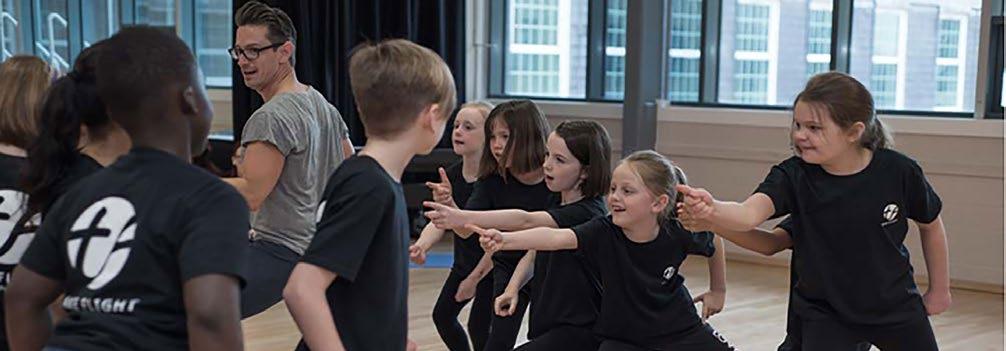
Founded and led by West End professionals, Take Flight Academy provides top quality training in singing, dance and drama for children ages 4 to 18 in Forest Hill/Sydenham and Honor Oak Park/Crofton Park.
Take Flight is THE place for children who want to build life skills, creativity and confidence and can also help provide a foundation for entry into the industry.
Classes cater for any ability and with everyone getting the most out of their experience. FREE taster available! More info at www.takeflightacademy.co.uk
Top local kids’ classes
Razzamataz in Bromley
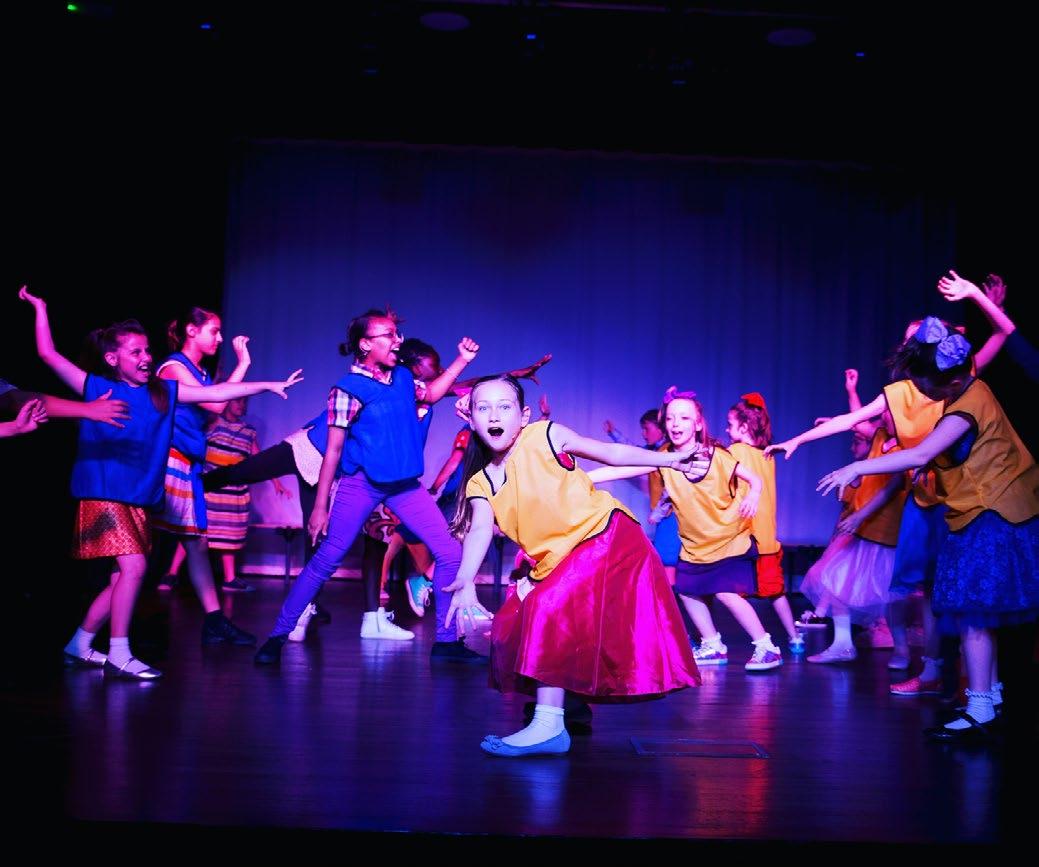
Dance, sing, act, shine! At Razzamataz Bromley, kids ages 4-18 grow in confidence, creativity and make friends through fun performing arts classes. From musicals to street dance, drama and singing, learn skills for life. FREE taster. 50% sibling discount.
Contact: Alexandra 07383 543345 bromley@razzamataz.co.uk
www.razzamataz.co.uk
School of Rhythm in Penge
An award-winning music school, where children and adults can now enjoy exciting Group Drum Lessons on electronic drum kits! Save 30% compared to one-to-one tuition. These drum sessions are held all year including school holidays.
Help your child build confidence, creativity and social skills with Perform weekly drama, dance and singing classes for ages 4 to 7 and 7 to 12. Try a FREE class in Beckenham, Bemondsey, Blackheath, Brockley, Dulwich, Dulwich Park, Dulwich Village, East Dulwich, Eltham, Greenwich, Herne Hill, Hither Green, Kiddibrooke, Orpington, Petts Wood, Surrey Quays, Waterloo.
www.perform.org.uk/try
Funky Monkey Keyboard Classes in Blackheath, Beckenham, East Dulwich, Herne Hill and Sydenham
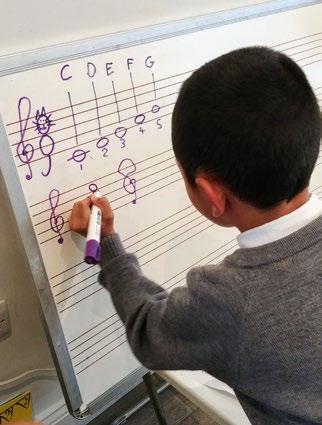
Fun-packed group electronic keyboard lessons for 4-8 year olds. Read, write & play music with its unique scheme! Term classes, holiday courses, online tutorials. FREE Trial + 10% off first term’s fees.
Contact: Mrs Ali Edwards 01732 457100 mail@funkymonkey.info
www.funkymonkey.info
Theatretrain in Greenwich
Acting, singing and dancing classes for kids ages 4 to 18 on Saturdays (term time). Main Company (6-18yrs), 10am1pm. Junior Ensemble: Minis (4-5yrs), 12pm-1.30pm.
2-for-1 on all taster sessions.
Contact: Christopher Lumby 07721 192860 greenwich@theatretrain.co.uk
www.theatretrain.co.uk/greenwich
Pop School and Stage Academy (PSSA) in Beckenham and Crystal Palace
PSSA provides performing arts training for stage and screen. Classes for ages 4-16 year in Beckenham (Fri/Sun) and Crystal Palace (Wed). All students will star in a professionally staged production of Little Mermaid Jr this July.
Contact: 07535 121617 info@pssa.co.uk
www.pssa.co.uk
forget to say you saw them in
Take Flight Academy in Forest Hill/Sydenham, Honor Oak Park/Crofton Park
Founded and led by West End professionals, Take Flight Academy provides top quality training in singing, dance and drama for ages 4-18. Classes build life skills, creativity and confidence in every child. FREE taster available!
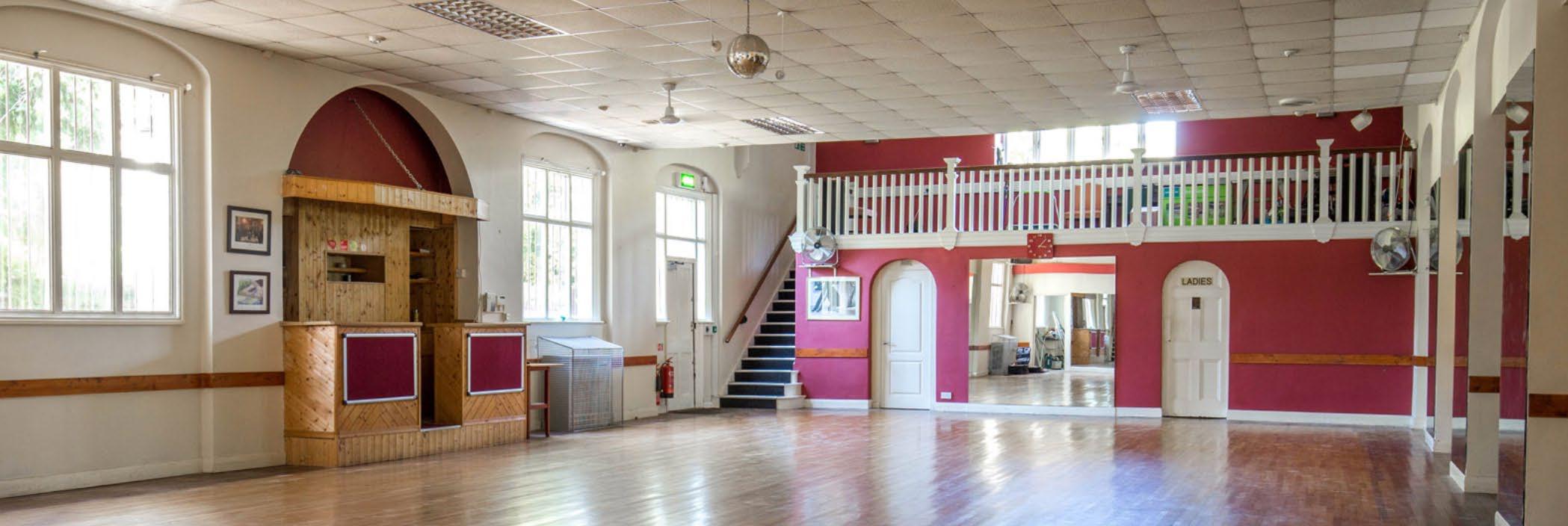
Grafton Dance Centre is a historic, warm and inviting space that provides opportunities to dance, keep fit and nurture your well-being, all under one roof. All ages welcome.
Would you like to promote your club or classes in our next issue and reach 1,000s of local parents? Call Patricia for more information on 07980 556813
DANCE CENTRE
Calmer bedtimes for toddlers and preschoolers
By Helen Davies
Bedtime during the toddler and pre-school years can feel like a completely different world compared to the days of getting your baby sleep. Even children who previously settled well can suddenly need ‘one more story,’ ‘one more cuddle’ or ‘one more drink’ the very moment the lights go out. Although it can feel frustrating or confusing for parents, rest assured most of these behaviours are rooted in normal development.
Between 18 months and age 5, children go through huge leaps in language and imagination development, independence, emotional awareness and physical ability. With all this progress comes new bedtime challenges. Many toddlers discover the power of ‘no’ while pre-schoolers become highly conversational and imaginative. Separation anxiety often reappears and a child who was once content to settle independently may suddenly now need a parent close by.
Much of this behaviour comes down to emotional regulation. Young children are still learning how to manage big feelings and bedtime is the moment the day slows down enough for everything to catch up with them. They may ask for extra cuddles not because they are being ‘difficult’ but because connection helps them switch off and feel safe enough to fall asleep. Sleep pressure also changes as children grow, meaning naps may need adjusting or bedtime may need shifting slightly later.
Parents can support calmer evenings by creating a consistent wind-down routine that meets both the child’s need for connection and their own need for boundaries. Predictability helps children feel safe, while gentle limits prevent bedtime from
Why little ones resist bedtime
Many parents assume bedtime battles are behavioural but they are usually developmental. Around 18 months of age, children gain a new sense of autonomy and begin asserting independence. Their use of the words ‘no,’ ‘my turn’ and ‘I do it’ are about exploring control in the safest place they know.
At the same time, emotional regulation is still developing. Young children cannot simply switch off after a busy day. They rely heavily on connection with parents to feel secure enough to settle. Asking for another cuddle or story is often their way of topping up closeness rather than manipulating the situation.
Pre-schoolers add another layer: imagination. This is the age of shadows, monsters and busy little minds. As their world expands, so can their worries and bedtime becomes a moment when those thoughts surface.
Understanding these developmental drivers helps parents respond calmly. With firm but gentle boundaries, a steady routine and a few minutes of meaningful one-to-one connection before bed, children feel more secure and settle more easily.
stretching indefinitely. Responding calmly, keeping routines simple and using language that’s clear and warm can make a noticeable difference.
It is also helpful to understand that bedtime delays, protests and multiple ‘get ups’ are often a sign of a child seeking reassurance or testing where the limits are. Neither is a sign of poor parenting. With a steady routine, plenty of connection and realistic expectations, most families find the bedtime wobbles pass.
The toddler and pre-school years are busy, emotional and full of growth. When parents understand the ‘why’ behind bedtime behaviour, evenings become easier to navigate and far less stressful. With calm consistency and the right support, bedtime can become a peaceful part of the day again.
Practical strategies for calmer evenings
A smoother bedtime routine starts long before you switch off the lights. Young children feel safest when they know what comes next, so introduce a consistent wind-down sequence and stick to it. Think bath (optional), pyjamas, books, cuddles, sleep. Avoid adding too many steps, as this can make it harder for both child and parent.
Set clear limits around the common ‘stalling’ tactics. Let your child know you will answer one more question or read one extra page, then gently stick to it. A calm and predictable response prevents bedtime from spiralling.
Helen Davies runs Essential Parenting (www.essentialparenting.co.uk), a trusted, private health visiting service providing expert support with sleep, behaviour and early childhood development.
I have both professional and personal experience with cow’s milk allergies; when my daughter was twelve months old, we made our first attempt to climb the Milk Ladder.
Unfortunately, once past steps one and two, we couldn’t get any further. Lots of crying and vomiting prompted us to take a break. After two more attempts and feeling like there would be so many food related occasions we could never enjoy together as a family, we finally reached the top of the ladder when my daughter was three and a half… although - between you and me - she still flatly refuses cow’s milk, claiming she can’t have it, despite happily eating ice cream and drinking chocolate milkshakes!
What is a cow’s milk allergy?
Cow’s milk protein allergy (CMPA) is an abnormal response by the body’s immune system in which the proteins in cow’s milk are recognised as a potential threat. It is estimated to affect around 7% of babies under the age of one, although most children grow out of it by the age of five (NHS, 2019).
The two main types of CMPA
IgE-mediated: typically rapid onset (within minutes and up to two hours after ingestion)
Non-IgE-mediated: typically delayed onset (usually two to 72 hours after ingestion)
These two different types of allergies come with similar but slightly different signs and symptoms. They can include itchy skin, a rash, atopic eczema, abdominal pain, vomiting, diarrhoea, coughing, chest tightness, wheezing or shortness of breath.
Do you live in South East London and want to earn some extra cash?
Earn by distributing our magazines in South East London
Must have: Clean driving license and own car/vehicle
Do you have a garage or driveway with easy street access?
Interested in storing our magazine for a few days every 2 months?
If you are interested in EITHER OR BOTH of the above options, email info@familiesmagazine.co.uk
IgE-mediated can also cause acute flare up, swelling of the lips, face or around the eyes, nausea, sneezing and congestion. NonIgE mediated can also cause gastro-oesophageal reflux disease (GORD), loose or frequent poos, constipation, redness around the anus, blood and/or mucus in the poo, colic, tiredness, food refusal or aversion and faltering growth with at least one or more gastrointestinal symptoms.
If your child has other symptoms, that does not mean they don’t have a food allergy. If you think your little one is having a reaction to cow’s milk, see your GP. Make sure you get medical advice before taking cow’s milk out of your child’s diet.
What is the Milk Ladder (sometimes known as the Dairy Ladder)?
The Milk Ladder is a six-step technique of reintroducing your child to cow’s milk slowly so that their tolerance builds gradually. It is only suitable for children with mild to moderate non-IgEmediated allergies and you should always seek medical advice first. I recommend referring to the official iMAP Guide for details.
Put simply, the Milk Ladder starts with more broken-down forms of milk, like biscuits or pancakes and builds up to things like yoghurt and cheese, until eventually your child can have fresh milk. This is because when milk is heated or baked, the protein changes so it is less allergenic.
If your child has a reaction at any of the steps, stop and contact your health care professional before starting again. Once you have reached the top of the ladder, switch to cow’s milk in all food and cereals at breakfast.
Use the QR code to see the iMAP guide with the six steps on the Milk Ladder. If you are struggling with CMPA and would like more support, visit www.dietitianwithadifference. co.uk and book a customised cow’s milk reintroduction plan. With thanks to Bespoke Family (www.bespokefamily.co.uk) for this article.
What’s on
Compiled by Robina Cowan
All details are as provided when going to press. However, in case of changed plans, do double-check before setting out.
EASTER HOLIDAY CAMPS
6-17 Apr
Funky Monkey Keyboard Classes
Imaginative, fun-packed workshops introduce basic keyboard techniques including reading and writing music, performance skills plus extra fun and games and a take home workbook. Half day or five morning options for beginners. Ages 4-8.
Herne Hill, East Dulwich, Beckenham www.funkymonkey.info/holidaycourses
30 Mar-16 Apr
Mother Nature Science Camps
Award-winning holiday camps, filled with science sessions and experiments, indoor and outdoor science-based play. Ages 5-12. SE1, SE3, SE16 and SE21 www.mnature.co.uk
30 Mar-10 Apr
Get Active Kids
An OFSTED registered, fun and interactive holiday club offering over thirty different activities to keep children of all abilities entertained during the school holidays. Ages 4-11.
St Josephs Catholic Primary School SE8 3PH www.getactivekids.co.uk
30 Mar-2 Apr
Twinkle Stars’ Great Easter Escape
Meet the Easter Bunny, crack clues in the escape room, enjoy games and prizes, exciting trips and playing in the large grassy outdoor space. For Reception to Year 6. 9am-5pm. Forest Hill, London, SE23 3SH www.twinklestarsasc.co.uk
30 Mar-10 Apr
Ultimate Activity Camps Day camp fun filled with over forty activities including sports, arts, crafts and more. Taking place at Eltham College Junior School. Ages 4-14. Eltham College Junior School SE9 4RW www.ultimateactivity.co.uk
8-10 Apr
The Jungle Book with Perform Rudyard Kipling's classic, The Jungle Book, has gripped generations of children and your young cub will love putting on a show about Mowgli and his animal friends! Perform’s warm and friendly team of theatre professionals will inspire and encourage them through three days of drama, dance and singing towards a magical production for family and friends. Ages 4-10. Blackheath www.perform.org.uk
ArtPlay Pavilion at Dulwich Picture Gallery
Nestled within the Gallery’s beautiful Sculpture Garden, the ArtPlay Pavilion offers sensory-rich activities inspired by the elements - sunlight, water, wind and earth. Slide through sunbeams, swing among the clouds and rest on soft, sculptural forms
created in response to classic paintings in the Gallery. Designed for comfort and calm, ages up to 8, book first.
Discover art, conservation and the stories of the Queen’s House with the Create trail and the Creative Conservator’s kit. Pick up your trail or borrow a kit from the welcome desk. Ages 6+, FREE. Romney Road SE10 9NF www.rmg.co.uk/queens-house
Family Trails and Backpacks at the National Maritime Museum
Pick up a family trail or borrow a backpack of activities from the Museum’s Play and Explore trolley to discover exciting objects in the galleries. Choose from seven different trails across a range of galleries, with activities suited to any age or try the Sensory Explorer backpack. All ages, FREE. Greenwich SE10 9NF www.rmg.co.uk/national-maritimemuseum
Voyage to the Deep: Underwater Adventures
Embark on an extraordinary underwater adventure inspired by Jules Verne’s 20,000 Leagues Under the Sea. Explore uncharted waters, fantastical sea creatures and play your way through the hidden marvels of life beneath the waves. Horniman Museum and Gardens SE23 3PQ www.horniman.ac.uk
Mon
Bridging Generations: Family Play and Connect in Thamesmead
A warm, welcoming, weekly space where grandparents, parents, toddlers and babies share quality time through play, songs and stories. 9am-10.45am, FREE, drop-in. Moorings Social Club SE28 8BG www.tinyurl.com/yeck5x7
Natter with a Nav at Deptford Family Hub
Whether you’ve got a question, need a listening ear or just fancy a natter, all families are welcome at this weekly navigated session offering support and advice. 3.15pm-4.30pm, FREE, drop-in. Alverton Street SE8 5NH www.lewishamfamilyhubs.org.uk
Tue
Rhyme Time at Forest Hill Library
Wed
Natter with a Nav at Bellingham Family Hub
Are you looking for a welcoming space to connect, chat and unwind? This weekly, navigated session is the perfect opportunity for parents, carers, children and young people to drop in for support and advice. 3.15-4.30pm, FREE, drop-in. Email: kashmir.thethi@lewisham.gov.uk Randlesdown Road SE6 3HB www.lewishamfamilyhubs.org.uk
Ship Mates at Cutty Sark
A weekly adventure for little sailors to explore the playful learning environment inside the Cutty Sark, where families come together and share experiences. Facilitators focus on essential skills such as problem solving and working together. Ages under 5, children FREE. King William Walk SE10 9HT www.rmg.co.uk/cuttysark
Explorers Plus at Downham Family Hub
Would you like support with your child’s development? If you are concerned your child isn’t meeting their milestones, advice and support is available. Ages birth to 5 years, 10am-11.30am, FREE, drop-in. Shroffold Road BR1 5PD www.lewishamfamilyhubs.org.uk
Thu
Baby Bounce at Forest Hill Library
Join Simone every week for songs, stories, nursery rhymes, play and bubbles. Mums, dads and carers welcome with under-fives. 2pm-3pm, FREE, drop-in, donations welcome. Forest Hill Library SE23 3HZ www.fhlibrary.co.uk/baby-bounce
WHAT’S ON
Family Navigator at Honor Oak Youth & Family Hub
Join Mari at this weekly drop-in for confidential, non-judgemental advice which connects you to a Family Hub and local support services. 9.30am4.30pm, FREE. Email family.hub@ lewisham.gov.uk Turnham Road SE4 2JD www.lewishamfamilyhubs.org.uk
Kelvin Grove Family Mornings
A weekly, term-time group run by and for parents and their little ones, with toys, tea, coffee and chat. 9am-11am, all welcome. Kelvin Grove Children and Family Centre SE26 6BB
Storytime at Sydenham Library
A very relaxed weekly event where one of the library volunteers read aloud from books chosen by the young visitors. 10.30-11.30pm. All ages welcome, FREE, drop-in. 210 Sydenham Road SE26 5SE www.calicolibraries.com
Storytime at Crofton Park Library
Discover great stories from new and classic books in weekly sessions filled with laughter and imagination. 3.30-4.30pm, grownups with their 4-7 yr-olds, FREE, drop-in. 375 Brockley Road SE4 2AG www.calicolibraries.com
Fri
Explorers Plus at Deptford Family Hub
Would you like support with your child’s development? If you are concerned your child isn’t meeting their milestones, advice and support is available. Ages birth to 5 years, 10am-11.30am, FREE, drop-in. Alverton Street SE8 5NH www.lewishamfamilyhubs.org.uk
for inspiring activities and ultimate care for your child this Easter?
school holiday day camps for action-packed days, new friendships, and unforgettable fun for children aged 4–14.
Eltham College in Bromley
Drop-in every week for joyful, hosted singing sessions. Suitable for babies, toddlers and pre-schoolers. 10am, FREE, donations welcome. Forest Hill Library SE23 3HZ www.fhlibrary.co.uk/rhyme-time
Starseed Bump & Baby Soundbath at Stanley Arts
A gentle morning cocoon of crystal singing bowls, songs, chimes and other harmonic instruments. Rest, regulate and reconnect with your baby or bump.
South Norwood SE25 6AB www.stanleyarts.org
WHAT'S ON
Sat Character Encounters at National Maritime Museum
Guided tours bringing to life stories from the museum. Ages 5+. Romney Road SE10 9NF www.rmg.co.uk/national-maritimemuseum
Family Craft Activities at Horniman Museum and Gardens
Learn about some of the 350,000 objects in the Horniman’s collections. Discover more about music, nature, wildlife and the world around us as you get stuck into some crafts and have fun at these volunteer-run sessions for all the family. Ages 3+, FREE, drop-in. London Road SE23 3PQ www.horniman.ac.uk
Queen's House Characters
Meet historical characters connected to the Queen's House and take part in exciting performances. FREE. Queen’s House SE10 9NF www.rmg.co.uk
Discover Sundays at National Maritime Museum
Each week a different artist takes visiting families on a journey into the Museum’s collection, highlighting historic people, stories and cultures, along with themed creative activities. All ages, FREE.
Orozo Children’s Garden Trail at South London Gallery
Self-guided, creative trails through the gallery garden’s plants and spaces, with unique sculptures by artist Gabriel Orozco. 12pm-6pm, FREE. Peckham Road SE5 8UH www.southlondongallery.org
Meet the Crew at HMS Belfast Delve into life onboard the ship through eye-witness accounts of sailors and hands-on objects. Ages 7+.
The Queen’s Walk SE1 2JH www.iwm.org.uk/hms-belfast
Story Seekers at Imperial War Museum
Every one of the objects at Imperial War Museum London has a story to tell. Follow a trail to discover compelling real-life stories of
Meet the captain, chat with the cook and take a tour with Nannie the Figurehead!
King William Walk SE10 9HT www.rmg.co.uk/cuttysark
Family Activities at HMS Belfast
Step on board this iconic London landmark. Navigate your way around the rooms, climbing up and down ladders to visit all nine decks. Family activities run daily every weekend and every day during the school holidays.
The Queen’s Walk SE1 2JH www.iwm.org.uk/hms-belfast
Dedicated Family Space at The National Gallery
The National Gallery is home to one of the greatest collections of paintings in the world. With a dedicated family space at weekends and school holidays, there’s a place to connect, play and find out more about some of your favourite paintings. FREE. Trafalgar Square WC2N 5DN www.nationalgallery.org.uk
6 Mar
Mini Masterpieces at Dulwich Picture Gallery Journey through the Gallery to discover the different people, places and animals in the paintings, followed by playful art-making activities. Adults with under 5s, book first.
Complete with hundreds of exhibitors, exclusive show offers, an abundance of celebrity appearances, expert advice and the opportunity to try before you buy, The Baby Show has everything you need for bump, baby and beyond.
ExCel, Royal Victoria Dock E16 1XL www.thebabyshow.co.uk
7-8 Mar
Sea Shanty Singers at Cutty Sark
Cutty Sark’s resident sea shanty groups Swinging the Lead and The HogEye Men transform the famous tea clipper's 'Tween Deck with the harmonies of sea shanties, traditional working songs. Come along to hear this enduring maritime tradition brought to life.
King William Walk SE10 9HT www.rmg.co.uk/cuttysark
8 Mar
Chilli Seed Planting and Pot Decoration at The Garden Museum Family learning session where participants will decorate recycled coffee cups and plant chilli seeds to grow at home. 11am-12.30pm, ages 3+, FREE.
The Garden Museum, Lambeth Palace Road SE1 7LB www.gardenmuseum.org.uk
14 Mar
SENsory Sailors at National Maritime Museum
A monthly session for families with children with special educational needs and disabilities, led by a SEND specialist.
The historic Castle and its awardwinning, extensive grounds are the perfect place both to say thank you and to enjoy a special family day out. Enjoy a spot of gift shopping, browse the Castle’s wide and varied selection of seasonal plants, enjoy local food and drink and let off steam in three play areas.
Hever Castle, Kent TN8 7NG www.hevercastle.co.uk
21-28 Mar
Deptford Literature Festival Deptford Literature Festival returns for its fifth celebration of local creativity and diversity. The programme is packed with a wide range of activities: interactive talks and panels, performances, writing workshops, children and young people’s events; a Festival Hub with book signings and live readings. Various venues www.londonwriterscentre.org.uk
24 Mar + 28 Apr
Babywearing Advice at Forest Hill Library
Do you have questions or need advice about slings, baby carriers, buggies, car seats or other baby gear? Drop-in to Forest Hill Library after Rhyme Time for advice from qualified babywearing consultant and mum of three Martha San (The Baby Brain). 10.30am-12noon, FREE, drop-in.
Forest Hill Library SE23 3HZ www.calicolibraries.com
From 27 Mar
Astronomers Takeover at the National Maritime Museum
A new, playful hands-on space gives visitors the opportunity to meet Royal Observatory Greenwich astronomers, participate in science demonstrations and ask questions about space and astronomy. It is a family-friendly experience suitable for anyone with an interest in astronomy.
The Great Dragon Hunt at Hever Castle Embark on a daring quest to find dragon eggs hidden deep in the Castle grounds, where fascinating facts reveal the secret word puzzle, with a prize at the end. Let off steam in three play areas to complete your day out.
Hever Castle, Kent TN8 7NG www.hevercastle.co.uk
29 Mar + 26 Apr
Art Sundays at Dulwich Picture Gallery
Be inspired to make art together as a family in these FREE monthly creative workshops at the Gallery. Ages 7-12. Last Sunday of each month, book first.
Set in the stunning surroundings of the sculpture garden, this produce-led market is a must-visit for lovers of fresh organic food, plus homeware, books and prints. 10am3pm, last Sunday of each month. Gallery Road SE21 7AD www.dulwichpicturegallery.org.uk
28 Mar + 25 Apr
Ms Carry’s Storytime for Children in Forest Hill
Join Ms. Carry each month as she brings a beautifully illustrated storybook to life in a fun, engaging environment. Storytime and crafts combine to spark a love of books and readings. 12noon-12.30pm. All ages welcome, FREE. Forest Hill Library SE23 https://buff.ly/RxnTvcU
28 Mar
Safe Harbour at National Maritime Museum
FREE workshops within a friendly and welcoming space, run by support organisations for foster and adoptive families with children under 13.
On the last Saturday of every month, the gallery hosts FREE children’s art activities. Peckham Road SE5 8UH www.southlondongallery.org
28 Mar–11 Apr
Romeo and Juliet Workshops
Bring Shakespeare’s riveting love story to life through fun and practical family workshops which incorporate games and activities. Families with children aged 9-11. Shakespeare’s Globe SE1 9DT www.shakespearesglobe.com
EASTER HOLIDAYS
28 Mar-6 Apr
Future London at London Transport Museum
Take part in fun family activities, creating your own visions of London in 2126. Hands-on craft activities, design the skyline, meet timetravelling artist Montague Black and other drop in activities for children of all ages. FREE with normal admission.
Covent Garden Piazza, WC2E 7BB www.ltmuseum.co.uk
29 Mar Easter Family Day at Brixton Windmill
Follow a children’s treasure hunt to find a chocolate treat. FREE Easterthemed craft workshops will run at the centre all afternoon.
Step inside a spectacular walkthrough installation that fills Woolwich Works with light, colour and calm. Created by the worldrenowned Architects of Air, this monumental inflatable contains winding pathways and soaring domes glowing with radiant colour as daylight filters through the translucent fabric, creating an everchanging, immersive experience. All ages.
The Fireworks Factory SE18 6HD www.woolwich.works
Climb aboard for a Cutty Sark Easter adventure
Set sail for a swashbuckling family day out on this worldfamous ship Cutty Sark, with hands-on crafts perfect for little sailors.
Meet colourful characters from the ship’s past, including the fearless Captain Woodget and hear stories of life aboard the fastest ship of its time. Explore the main deck, take the helm at the wheel and enjoy interactive games charting Cutty Sark’s journeys - a perfect adventure for the whole family. Book your visit at www.rmg.co.uk/families
3-6 Apr
Dragon Weekend at Hever Castle
Make your way to the Castle Forecourt for an unforgettable encounter and a fiery photo with Inferno the dragon. During a daily craft activity, adventurers will also be able to design and make their very own Dragon Shield, which can then be carried on their quest to locate dragon eggs.
Hever Castle, Kent TN8 7NG www.hevercastle.co.uk
4-5 Apr
Family Fun Weekends at Cutty Sark
Climb aboard for family-friendly workshops and activities for all ages on the first weekend of every month. King William Walk SE10 9HT www.rmg.co.uk/cuttysark
5 Apr West Norwood Feast
The first Sunday of the month, April through to December, is Feast day in West Norwood. More than five thousand locals take to the streets to enjoy one hundred market stalls over five sites along the high street, with FREE children's activities and live entertainment for all. West Norwood SE27 www.westnorwoodfeast.com
Until 12 Apr
REPLAY at the Royal Festival Hall
Explore a limitless world of play, invention and imagination in a recycled playground for children and their grown-ups. Part installation, part adventure playground, REPLAY is a space built entirely out of waste materials repurposed for fun by The Herd Theatre. Ages 6mths-11 years. Southbank SE1 8XX www.southbankcentre.co.uk
APRIL
19 Apr
Horniman Museum Spring Fair
Join in with seasonal fun and games at the Horniman’s annual Spring Fair. There’ll be live music, crafts, street food, bubbles, traditional fete games and lots more. Bring your best hat and join the Easter bonnet parade and discover more about what the natural world is getting up to in spring. Horniman Museum and Gardens SE23 3PQ www.horniman.ac.uk
Until 28 May
Twelfth Night Workshops
Bring Shakespeare’s whirlwind comedy to life through fun and practical family workshops which incorporate games and activities. Families with children aged 5-8 and 9-11.
High Street Bromley BR1 1HA www.trafalgartickets.com/ churchill-theatre-bromley
20 Mar
Baby Broadway
Sing and dance along to songs from hit musicals and films whilst enjoying bubbles, puppets, actions and dance moves in a joyful performance featuring West End singers. Ages 0-7.
GREENWICH THEATRE
Crooms Hill SE10 8ES www.greenwichtheatre.org.uk
10 Apr So Unfair
Help Daniel Bye change the world, in an unexpectedly ridiculous adventure involving engineering challenges, bad dad jokes and an extraordinary quantity of molten chocolate. Ages 7+.
24 Apr
Sing-Along-A-Musicals Live
The show where YOU get to belt out all the big West End and Broadway bangers and tear-jerkers from Les Mis to Wicked! with the help of West End Pro Singers' dynamic dancers, fabulous backing singers and giant karaoke style lyrics so you never miss a beat! Ages 12+.
MUSEUM OF COMEDY
Bloomsbury Way WC1A 2SR www.museumofcomedy.com
28+29 Mar, 25+26 Apr
James Campbell’s Comedy for Kids: Reducks!
Stand-up for children in a new show which may include exploding penguins, seventeen ways to eat jam and songs to sing to the worms in your dog’s bottom! Ages 6+.
PEACOCK THEATRE
Portugal Street WC2A 2HT www.sadlerswells.com
3-11 Apr
English National Ballet: Cinderella
With a narrator to help the young audience follow the story and a shortened, recorded version of Prokofiev’s ravishing score, this is the perfect introduction to ballet and a fantastic family day out. Ages 3+.
ROYAL FESTIVAL HALL
Southbank SE1 8XX www.southbankcentre.co.uk
Until 20 Mar
Rug Rhymes
Get cosy while National Poetry Library puppets Federico and Firebird share some of their favourite poems, nursery rhymes and rhyming stories. Ages 0-5.
STANLEY ARTS
South Norwood Hill SE25 6AB www.stanleyarts.org
26 Apr
Alice in Wonderland
Let’s All Dance Ballet Company returns with this fabulous family favourite. Stunning dancing, much loved characters and super costumes bring the famous tale to life in this magical production. Ages 2-12.
UNICORN THEATRE
Tooley Street SE1 2HZ www.unicorntheatre.com
21 Mar-10 May
A Midsummer Night’s Dream A fresh retelling of Shakespeare’s classic comedy, exploring unrequited love, self-discovery and seeing the world anew. A feast of magic and mayhem for everyone aged 7 and above.
22 Mar-12 Apr
Your Toys
Packed with music, belly laughs and plenty of surprises, Your Toys is a heart-warming story about new friends pulling together - an anthem to the power of play that will send you home grinning from ear to ear. Ages 5-9.
21 May-7 Jun
Planet Omar
Step into the fantastically imaginative and chaotic world of Planet Omar, following the adventures of an 8-year-old with a wild imagination, a big heart and a knack for getting into trouble. Ages 7+.
Thumbelina: Tiny But Mighty A mash-up of Hans Christian Andersen's classic tale and the Marvel franchise brings this highly entertaining musical show telling the story of the world's smallest superhero and her battle with a villainous arthropod!
WOOLWICH WORKS
The Fireworks Factory SE18 6HD www.woolwich.works
21 Mar
Boppin’ Bunnies Show
Prepare to immerse yourselves in a dynamic musical journey - be it shaking maracas, singing along, tickling your little ones or giving them swing rounds! Boppin’ Bunnies’ high-energy adventure includes musical instruments, dance and memorable moments of musical joy. Ages 0-5.
Midnight in the Toyshop arrives in London
This April, Midnight in the Toyshop arrives in the West End for a limited run of magical family fun. As midnight strikes, the toyshop bursts into life and an unforgettable adventure unfolds.
Packed with catchy songs, dazzling dances and heart-warming storytelling, Midnight in the Toyshop is a delightful musical the whole family will adore. Running during the Easter holidays from 7 to 12 April at St. Martin's Theatre, WC2H 9NZ. Duration: 1 hour. For ages 3+.
Book at toyshop.show
SCHOOL OPEN EVENTS Spring 2026
Open Events require pre-booking.
Blackheath High GDST
Girls’ independent ‘through’ school for ages 3 to 18. 27 Vanbrugh Park, Blackheath SE3 7AG Telephone: 020 8853 2929 www.blackheathhighschool.gdst.net
Junior School in Action Morning
Thursday 12 March (9am-11am)
Experience life at Blackheath High School first-hand, as you take a tour during a normal teaching day. Meet the Head of the Junior School. Admissions Team available for questions. Book online.
Senior School in Action Morning
Thursday, 23 April (9am-11.30am)
Student-led tour of the state-of-the-art learning environment, including teaching and learning spaces, sports facilities and performance areas. Observe lessons and exceptional teaching in action. Hear from Head Mrs Argile and chat with members of Senior Leadership and Admissions teams. Book online.
Blackheath Prep
Co-educational independent Nursery, Pre-Prep and Prep School for ages 3-11
4 St Germans Place, Blackheath SE3 0NJ
Telephone: 020 8858 0692 www.blackheathprep.co.uk
Open Day
Saturday, 16 May
Parents and children will have the opportunity to hear the Head talk about the school, meet staff, pupils and Parents’ Association, tour the extensive grounds and see the academic and co-curricular facilities. Book online.
Wednesday tours by appointment (9.15am-10.45am)
Tour the school’s facilities and extensive grounds, meet the senior leadership and Admissions team. Email admissions@blackheathprep. co.uk
Herne Hill
Co-educational independent Pre-school and Pre-Prep for ages 2 to 7. 127 Herne Hill SE24 9LY 020 7274 6336 www.hernehillschool.co.uk
Open Morning Saturday, 7 March
A comprehensive visiting experience, with staff on hand to answer questions while visitors tour the highly rated setting. Book online at www.hernehillschool.co.uk/admissions/open-mornings
Bookable ‘In-Action’ tours of the Kindergarten and main site are held during school hours. Email enquiries@hernehillschool.co.uk for dates and details.
Sydenham High GDST
Girls’ independent ‘through’ school for ages 3 to 18. Westwood Hill, Sydenham SE26 6BL 020 8557 7000 www.sydenhamhighschool.gdst.net
Open House Tours of Prep and Senior Thursday 23 April
Discover what makes Sydenham High such a special place on a school tour.
Year 1 Magic Maths (for Year 3 2027 entry)
Tuesday, 12 May
A chance for Year 1 pupils to discover what it is like in Prep School and explore the step up from Pre-Prep before applying for Year 3. Prep School Leadership Team available to answer questions.
Year 5 Senior School Discovery Sessions
Wednesday 13 May and Friday 15 May
Year 5 pupils are invited to taster sessions in the Senior School, showcasing subjects such as Philosophy & Ethics, Italian and other subjects they may not have been exposed to in primary school, as well as getting an idea of life as a Sydenham High girl.
Book events at www.bit.ly/SHS-opendays
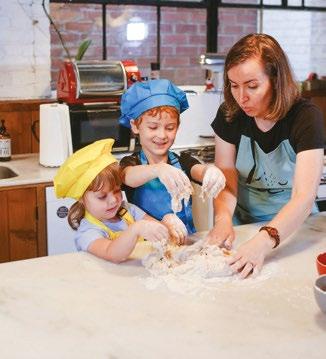
An Easter treat to make with the kids
Carrot Cake Hot Cross Buns
A twist on traditional hot cross buns, these are sweetened with a combination of orange juice, carrots and raisins or sultanas. They are dairy free too! And great toasted…
Prep: 10 minutes + 2-2 ½ hours proving time
Cooking: 20 mins
Makes: about 12 buns
Ingredients
250ml plant-based milk alternative
50g plant-based spread
500g strong bread flour
50ml orange juice
7g sachet fast-action dried yeast
1½ teaspoon ground cinnamon
½ teaspoon ground nutmeg
Flour for dusting
2 medium carrots, peeled and grated (dab off excess moisture if you can, using kitchen roll)
200g raisins or sultanas
Method
In a small saucepan, warm the milk and then add the fat spread. Once the fat spread has melted, turn off the heat and leave it to cool slightly.
Add the flour, yeast and spices to a large bowl.
When the milk has cooled to lukewarm, make a well in the centre of the flour mixture, then pour in the warm milk mixture along with the orange juice.
Mix well with a wooden spoon, then use your hands to bring everything together into a sticky dough. Now add the peeled and grated carrots and all of the raisins. Combine into the dough. Tip: If your mixture seems too dry and is not coming together, add more milk gradually. Or if your mixture seems to wet, then add some flour gradually until you can form a dough.
On a lightly floured work surface, knead the dough until smooth, about 5 minutes by hand (or in a stand mixer with a dough hook if you have one).
Lightly dust a bowl with flour and add the dough. Cover the bowl with a tea towel and leave to rise in a warm place until doubled in size (around 1-1 ½ hours).
Heat the oven to 200C/400F and line two baking trays with baking parchment.
Divide the dough into 12 equal-sized pieces and shape into small round buns. Place them onto baking tray, leaving space for them to expand. Leave to rise again until doubled in size (approx 1 hour).
Use a knife to slice a cross in each bun.
Bake for 20 mins or until golden brown then allow to cool on a wire rack.
Optional: To add a traditional white cross, before baking, gradually mix together 70g flour with 1 tbsp of water to create a thick, pipeable paste. Spoon into a piping bag and use a small round nozzle to pipe crosses on the buns.
With thanks to Charlotte Stirling Reed for this recipe. Charlotte is an award-winning nutritionist, author and podcaster who works with brands, celebrities and parents to share positive, evidence-based advice on giving children a healthy start in life. More information at www.srnutrition.co.uk
TAKE A TRIP TO THE THEATRE!
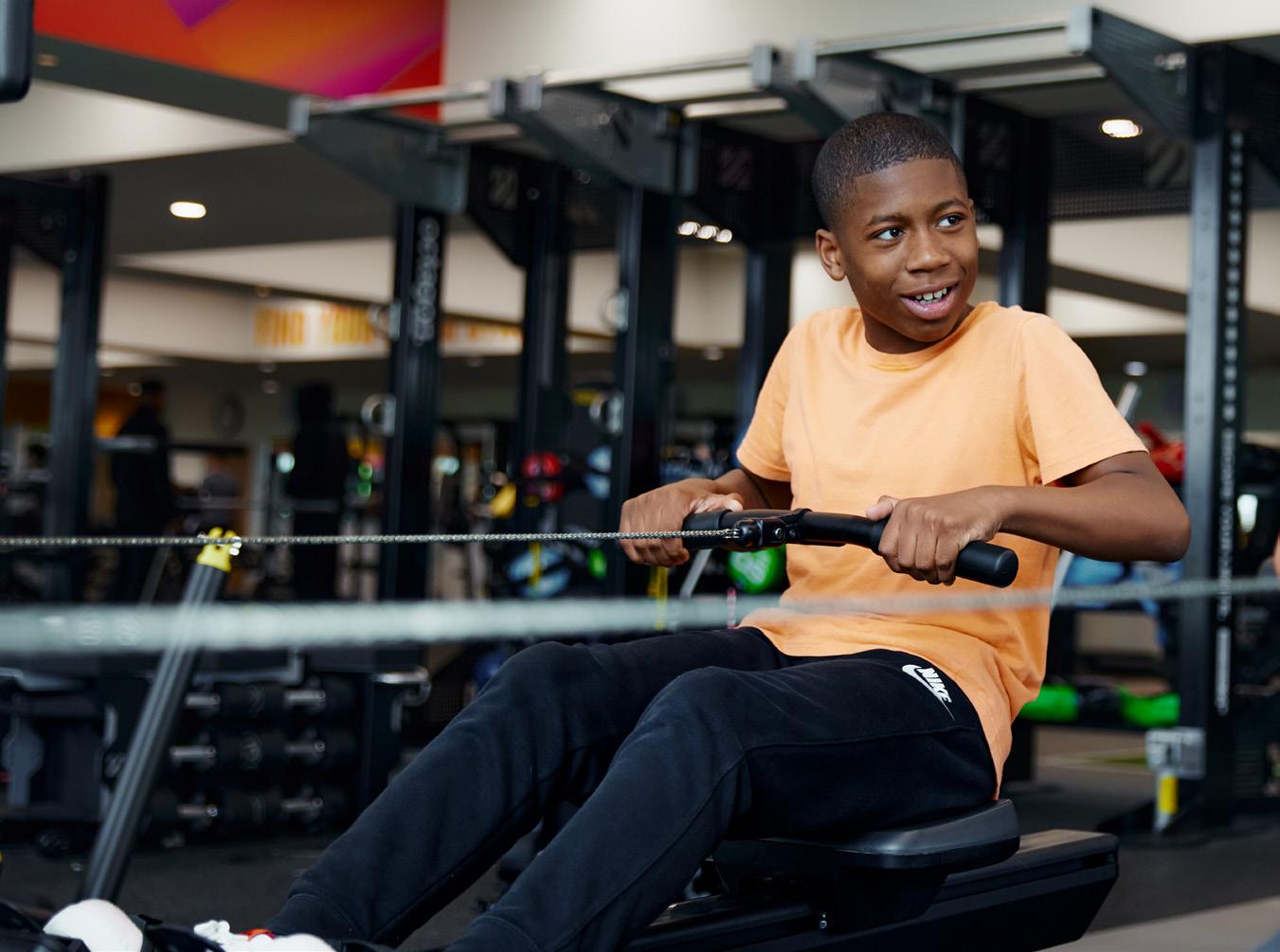
BIG SMILES START HERE
From family swims to soft play adventures and magical story times, there’s always something nearby to make your little ones smile.
With leisure centres and libraries across South East London, finding fun together has never been easier with Better.