Become part of a growing, supportive network! Full training provided
Families Families North Yorkshire is the premium free magazine for parents of children ages 0 to 12 in North Yorkshire and it’s now looking for a new owner!
Families Families North Yorkshire magazine is part of the brand-leading Families Magazine franchise group, which was established in 1990 and has 40 local titles around the UK.
If you are interested in - running your own business and - learning the skills of print publishing, copy writing, design, sales, social media and business management
Then call us today for more information 07734 690020 or email with your post code and telephone number to editor@familiesnorthyorkshire.co.uk
Carla Finlayson, editor
E: editor@familiesnorthyorkshire.co.uk
T: 07734 690020
@FamiliesNYMag
@FamiliesNYMag
@familiesnorthyorkshiremagazine
In this issue
This product is made of material from well-managed, FSC®certified forests and other controlled sources.
Welcome
Soon grey skies and rain will (hopefully) start to give way to the occasional mild, sunny spring day – the sign that winter is coming to an end. Embrace the new season by planning some family activities outside. Locally, you’ll find a range of outdoor activity options in our What’s On guide and we also have suggestions for gardening projects for kids of all ages, as well as eight must-visit UK petting farms in this issue.
And Easter isn’t that far away, so there are school holidays and along weekend to plan. To get the most out of the Easter season, don’t miss our recipes for yummy Easter treats to make with the kids.
How much have you thought about what the coming AI future will demand of your kids and of their education? Find out in our Education section. We also look at how stories can teach our kids to love solutions.
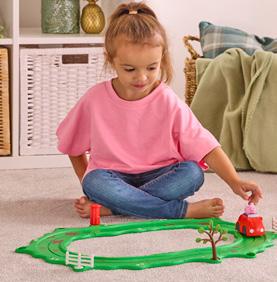
Finally, in this issue, we have three giveaways including Peppa Pig Whizz Around Cars! Apply inside. By doing so, you’ll also ensure you receive our newsletter and digital magazine with lots more content and goodies on offer.
Carla
November/December issue giveaway winners
Congratulations to all our winners. You can find a list at www.bit.ly/ND25recipients
Families Magazine is a franchise of Families Print Ltd of 75 Lisbon Avenue, Twickenham, TW2 5HL. Families is a registered trademark of Families Print Ltd. All franchised magazines in the group are independently owned and operated under licence. The contents of Families Magazine is fully protected by copyright and none of the editorial or photographic matter may be reproduced in any form without prior consent of Families Magazine. Every care is taken in the preparation of this magazine but the franchise owner and Families Print Ltd cannot be held responsible for the claims of advertisers, nor for the accuracy of the contents, or any consequence thereof.
How stories teach children to love solutions
By Sarah Tucker
We’ve trained children to love the chaos in stories, not the calm that follows. When I once asked a Year 2 class their favourite part of a story, every hand shot up for the problem part: Goldilocks breaking chairs, the wolf blowing houses down. ‘The solution’s the boring bit,’ one girl said. But real growth, in stories and in life, begins when we start solving things. Those ‘what next?’ moments can teach resilience, creativity and confidence. Solutions give children tools they can carry into maths, friendships and everyday decisions.
Flip the script
What if the solution was the most exciting part? Kids love the drama of ‘uh-oh’ but it’s time they saw the ‘what next?’ as just as fun, with problem-solving an adventure in itself. Encourage children to pause mid-story and predict solutions. Their often wild, funny or clever ideas are exactly what trains flexible thinking.
A spark from Edward de Bono
Researching Edward de Bono, the father of ‘lateral thinking,’ taught me that adults often fall into fixed patterns. But fiveyear-olds? They’re natural innovators. When de Bono asked children to improve a broken wheelbarrow, their wild ideas outshone those of CEOs and engineers. The youngest thinkers are our boldest problem-solvers, if we let them remain that way. Curiosity and play aren’t distractions from learning; they’re the engine behind original solutions. Thinking sideways strengthens their ability to approach problems with confidence and creativity.
Storytime experiment: Little Red Riding Hood
Pause the story right before the woodcutter saves the day and ask: ‘What else could Red Riding Hood do?’ You’ll get chaospoison apples and superheroes - but then, something magical: ‘She could trick the wolf!’ or ‘She could turn him vegetarian!’ Suddenly, your child isn’t just reading a story, they’re rewriting it with imagination.
Breaking the parent loop
Many children inherit their parents’ patterns: fear of failure, perfectionism, even ‘I’m just not good at maths.’ Storytelling lets children imagine new family scripts. It’s a gentle way of saying: you can rewrite more than just fairy tales. By modelling curiosity instead of frustration, parents show that every problem has
Making mistakes a playground
Children often fear getting it wrong, so they stick to what’s ‘safe.’ Stories can help them see mistakes as invitations rather than punishments. Pause a tale when a character errs and ask: ‘How could this be fixed differently?’
Encourage three or four possibilities, even absurd ones. Soon, pupils learn that failure isn’t final - it’s a springboard for creativity. Turning errors into play fosters resilient, imaginative and willing problem-solvers, able to tackle challenges both in and outside the classroom.
more than one path forward. The earlier children experience this freedom, the sooner they internalise a growth mindset that will help them both in school and life.
Solutions classroom: small wins
It doesn’t have to be a grand plot twist. Even small, everyday problems offer opportunities for children to exercise lateral thinking. When a child figures out a new way to organise their desk, solve a tricky arithmetic problem or negotiate roles in a group activity, celebrate it. These micro-moments of problemsolving build confidence and encourage risk-taking. By valuing these ‘little victories,’ we signal that solutions are as exciting as the preceding dramas. Over time, children begin to approach challenges with curiosity rather than fear.
Try this at home:
Lateral thinking doesn’t need worksheets. Ask:
‘What’s another way to see this?’
‘What would the villain say?’
‘Can you invent three solutions, even silly ones?’
At first it feels like play - but play is the training ground for flexible thinking. Before long, your child sees every problem as an invitation, not a wall.
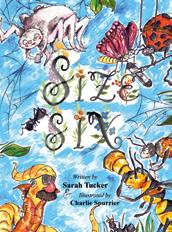
Sarah Tucker is the author of Size Six, Size Seven and Size Eight (Cambridge Children’s Press), a trilogy of playful, illustrated chapter books helping children think creatively about problem-solving. These books are available from www.cambridgechildrensbooks.com
A quiet revolution in storytime
Beneath the laughter lies a quiet mission: to teach children that solving problems can be joyful, creative and brave. Every resolution plants a seed of agency, showing that change begins with thought, not luck. When stories honour effort over rescue, children learn to trust their own ideas. If they grow up loving solutions as much as stories, they’ll outthink us all.
And wouldn’t that be rather wonderful?
Educating for the age of AI
By Issy Butson
Most people familiar with the AI space will tell you something that’s hard to hear and equally hard to believe - AI will likely replace a very significant amount of global entry level whitecollar jobs within the next five years. In the scale of our children’s lives, that’s effectively tomorrow.
As parents, we need to get our heads round the fact that the jobs that will be replaced will not be just low skilled jobs on factory lines, at cash registers or repetitive manual work.
We must also recognise that our education system is designed to train children for the world we have been used to - in other words, to teach them things that, now, technology has also mastered.
Preparing children for this future
Companies are already losing faith in education pipelines that aren’t producing adaptable, job-ready people. In their place, there is a rise in skill-based hiring and project portfolios that actually show what a person can do.
The future won’t care about qualifications. It will care whether you can think, build, solve problems, adapt and contribute in ways that a machine can’t.
Within the next ten years, the gap between what children are being trained for and what they’ll actually face in adulthood will just become too big to ignore.
So how do we guide children in a world that’s no longer structured around graduations, qualifications, employment, performance reviews, entry level roles and corporate ladders?
What do we build instead?
There is a tendency for our current education system to unintentionally stifle the qualities our children will most need in future – originality, independent thinking, risk taking and deep knowledge, rather than the broad, shallow knowledge needed to pass exams. We need to get serious about a different kind of preparation for adult life. One that accepts, fully, that the future will not reward people for what they memorised but for what they can build, navigate, initiate and solve.
Get involved with British Science Week
British Science Week (6-15 March) is an annual event which offers activities, experiments and events aimed at sparking curiosity and excitement about science. It brings together schools, community groups and science enthusiasts across the UK.
This year’s theme is Curiosity: what’s your question and encourages children to discover how they might find answers to the questions they’re most curious about.
To find a local event or download a free activity pack, visit www.britishscienceweek.org
Here are five real-world capabilities which form a much more deliberate and demanding kind of education.
Self-management and personal agency
In a world where job structures and set working hours are far less prevalent, your child will need to know how to manage themselves - not just their time but their energy, attention, output and emotion. These are skills most adults were never taught. Your child should start learning them now.
Deep work and independent problem-solving
Surface-level knowledge is everywhere. What matters is the ability to go deep - to focus without distraction, to stay with complexity and to work through problems that don’t have obvious answers.
Real-world skill development
Instead of ticking boxes, help your child build tangible, functional skills. Not just academic ones - practical, creative, technical and interpersonal. The kind that lead to useful output, adaptability and confidence. A lot of those skills won’t actually be needed for employment but all the good stuff they develop internally while building them will absolutely serve them well.
Relationship-building and collaboration
The most resilient people in the future will be the ones who know how to find their people, build things together and communicate across difference.
Identity development and direction-finding
In a world of almost infinite choice and no fixed paths, children are going to need a strong sense of who they are, what they care about and how to move toward it. That kind of direction doesn’t come from outside. It gets built, internally, over time. Make sure they develop that deep, strong sense. A child raised this way will build the muscles they’ll actually need in this changing world:
Motivation without any external pressure.
Adaptability when things change, because they will, over and over again.
Confidence to try things they’ve never done before.
Patience to get good at something hard.
I believe we’re approaching one of the most fascinating periods of human history. But that we are woefully unprepared. So this is a call to parents who want to give their children a real head start. A call to step into this big unknown space and spend the next decade helping their children develop the resilience, confidence, adaptability and purpose that will serve them well regardless of where all this goes.
Issy Butson is the parent, home educator, blogger and podcaster Stark Raving Dad, as well as Head of Go To Market for a software company. To listen to Issy’s full podcast episode What every parent MUST know about the AI Generation, visit www.starkravingdadblog.com/what-every-parent-mustknow-about-the-ai-generation
What is stimming in children?
By Usha Patel
As autism develops more awareness and acceptance in mainstream society, more different behaviours are observed and noted. Examples such as rocking, spinning, flapping hands, repetitive phrases and vocal sounds. These repetitive movements are all categorised as stimming.
Generally, stimming is not just performed by those with autism. We can all have bouts of stimming in certain situations, even those who consider themselves to have neurotypical brains.
What is stimming?
Most commonly, stimming is described as self-regulatory behaviour.
Dr Temple Grandin, who was born with autism, talks openly about stimming. She says in a YouTube clip: ‘As a child, I would spend hours dribbling sand through my hands to calm myself down because loud sounds hurt my ears. I was stimming to shut out the outside world.’ She goes on to say: ‘But the problem is, if a young child with autism is allowed to stim all the time, the brain becomes shut off from the world.
‘What you need to do is get the child into a quieter environment and help them take in information. ‘I was allowed an hour after lunch, where I could stim and veg out but I was not allowed to do that type of stuff at the dining room table. It’s okay to stim in private but if you let them (children with autism) stim for eight hours a day, they will not develop.’
Most definitions of stimming say it is a behaviour that regulates a child with autism and Dr Grandin is not refuting this claim at
Which therapies help with stimming?
To assess your child’s needs, seek an expert in Reflex Integration Therapy for a professional evaluation. This will provide a clear picture of any neurological and developmental challenges your child may be facing.
Various sensory factors can also impact the nervous system, affecting further developmental issues. Both immature reflexes and sensory needs result in behaviours including stimming, which are coping mechanisms in an effort to bring order to a disordered nervous system. The order being sought is never achieved but the child will keep trying.
Over time, if these developmental concerns aren’t addressed, stimming can become deeply ingrained – a pattern hard to break. The nature of the most suited therapies will have gentle rhythmic movements as part of the intervention. The idea is to create a sense of regulation, building the correct motor pattern that can be used to move to the next developmental level independently. Allowing the child who stims the opportunity to unlearn rigid behaviour and incorrect motor patterns helps remove the need to stim in the first place.
all. She is just saying it needs to be limited. She did not talk until she was almost four years old and it was through her mother’s determination to find ways to help her that she gained the skills of other neurotypical children.
In the 1950s, Carl H. Delacato, EdD, director of the Autistic Unit at the Centre for Neurological Rehabilitation, suggested that the stimming behaviour exhibited by autistic children was a clue to what their neurological system was deficient in. Dr Delacato was the first doctor to see stimming behaviours as a way to treat a child.
As a therapist deeply interested in functional neurology, my goal is to understand what is happening in a child’s brain and how to neutralise the surrounding environment to help, especially in situations where stimming appears to be self-harmful, such as banging one’s head on a hard wall.
Usha Patel is a Neurocognitive Therapist at Raviv Practice London. For advice on any of these issues, visit www.ravivpracticelondon.co.uk
Becoming knowledgeable about autism
I often tell parents to try to understand the multiple factors that shape their child’s needs. Such as: the gut can influence the brain, just as environmental factors including bright lights and loud sounds, can have an impact. However, every child is unique so there’s no one-size-fits-all approach when it comes to autism.
I recommend reading up on the Polyvagal Theory, which explains how humans can feel safe and regulated within their own bodies. There’s also a wealth of valuable literature on topics like the gut, reflexes and the nervous system, written by qualified professionals. Before seeing a so-called specialist, make sure to ask them for references. The more knowledge you have, the easier it will be to find the right help that truly aligns with your child’s needs.
Dr Temple Grandin advises providing a child with ‘as many different experiences as possible. These experiences offer opportunities for learning, just as they would with any other child.’ I would suggest reading all her books on autism; she is a first-hand expert.
Standish v Standish: A Landmark Divorce Finance Case, how might it affect you?
By Katie Audsley, family lawyer, Hartlaw LLP
Finances on Divorce: What Counts as “Shared” — and What Doesn’t?
When a couple divorces, one of the biggest concerns is how finances will be divided. Will everything be split equally, or are some assets treated differently?
The recent Supreme Court decision of Standish has brought renewed attention to an important distinction in family law: the difference between matrimonial and non-matrimonial property — and why it matters for many separating couples, not just the very wealthy.
The Starting Point: Fairness and Sharing
In England and Wales, courts approach financial division on divorce with fairness in mind.
The usual starting point is the sharing principle — the idea that assets built up during the marriage should generally be divided equally.
But fairness isn’t just about equal division. Courts must also ensure that both people’s needs are met (so far as is possible) particularly housing, income, and financial security.
Once needs are covered, the court then looks more closely at where the wealth came from.
Matrimonial vs Non-Matrimonial Property — What’s the Difference?
Matrimonial property
This usually includes assets built up during the marriage, such as:
• The family home
• Savings accumulated together
• Pensions built up while married
• Businesses developed during the relationship
These assets are typically considered part of the “marital pot” and are open to equal sharing.
Non-matrimonial property
This means wealth that came from outside the marriage, including:
• Assets owned before the marriage
• Inheritances
• Family gifts
• Pre-existing investments or businesses
Traditionally, courts have been more cautious about dividing this type of wealth (provided needs are met) — especially where it hasn’t been mixed in (matrimonialised) with marital finances.
When Does Separate Wealth Become Shared?
This is where things get more complex. Non-matrimonial assets can sometimes become treated as shared — a process lawyers call “matrimonialisation.”
This might happen if, for example: Inherited money is used to buy the family home
• One spouse transfers assets into joint names
• Both spouses rely on or manage the asset together
• Family wealth supports the couple’s lifestyle over many years
• In these situations, the line between “yours,” “mine,” and “ours” can become blurred.
The Recent Supreme Court Guidance
A major Supreme Court ruling in 2025 (Standish v Standish) has helped clarify how courts should approach this issue. While the case itself involved very large sums of money, the principles apply far more widely.
The Court confirmed that:
• Non-matrimonial property does not automatically become shared
• There must be clear evidence of an intention to share it
• Administrative or tax-planning transfers between spouses don’t necessarily change ownership
Each case must be decided on its specific facts
In short, just because an asset may have moved between spouses doesn’t automatically mean it becomes part of the marital pot.
Why This Matters Beyond “Big Money” Divorces
Although the case involved a wealthy couple, its impact reaches much further.
Many everyday divorces involve assets such as:
• A house owned by one spouse before marriage
• An inheritance used (or partly used) by the family
• Savings built up independently
• Help from parents or family trusts
The court’s approach to these assets can significantly affect the final financial settlement.
Needs Still Come First
It’s important to stress that the distinction between matrimonial and non-matrimonial property only becomes decisive after needs are met. So while ring-fencing is possible, it is not guaranteed.
Planning Ahead
The evolving law highlights the value of forward planning. Couples increasingly consider:
• Pre-nuptial agreements — signed before marriage
• Post-nuptial agreements — signed during marriage
• Careful structuring of asset ownership
Professional advice before transferring wealth between spouses These steps can provide clarity and reduce disputes later.
The Takeaway
The key message for divorcing couples is this:
• Not everything is automatically split equally
• The source of wealth matters
• Needs remain the court’s first priority
• Non-matrimonial assets may — but won’t always — be protected
While every case turns on its own facts, the courts are showing an increased willingness to look carefully at what should fairly be shared and what should remain separate. Understanding that distinction is now central to resolving financial issues on divorce, whether the assets involved are millions or far more modest. Family law is complex and constantly evolving. Tailored legal advice is essential when navigating separation and financial division.
If you require any advice or assistance in relation to any aspect of family law, please do not hesitate to contact us. Katie or Kate in our family team can provide specialist advice and offer a free initial consultation.
Please do contact a member of our family team by calling 01937 547000 or by emailing info@hartlaw.co.uk
Jan/Feb
What’s On?
Mother’s Day
Monk Park Farm
Mum’s go free this weekend when visiting with a full paying child.
Bluey’s Big Play
Grand Opera House, York
When Dad feels like a little bit of afternoon time out, Bluey and Bingo have other plans! Join them as they pull out all of the games and cleverness at their disposal to get Dad off that bean bag.
Justin Live: Justin Time to Rock Scarborough Spa
When DJ Engelbert, the coolest canine in the doghouse, launches a contest to find the best rock song in all the land, Justin and his band – Justin Time to Rock! – are determined to win! But can they get their song to DJ Engy before the sneaky Rock Lord and his sidekick Vulture try to
Dino Tales
Bridlington Spa
Easter Adventures
Nunnington Hall
Make your way along the trail and find nature-inspired activities for the whole family. There are 10 fun trail points to discover as you make your way around the garden. Can you splat the egg, try your hand at archery or guess the noisy neighbours.
Easter Wonderland
Mother Shipton’s Cave
Calling all dinosaur rangers - Jurassic Rescue needs your help! There’s a baby Ankylosaurus that needs rescuing before The Doc gets his evil hands on it... Along the adventure you’ll meet Freya the dancing Raptor, Dylan the cheeky Dilophosaurus, Angie the Ankylosaurus, Scar the fearsome and Roxy the mighty T-Rex.
Easter Fun!
Bolton Castle
Alfraeda, the dragon, has returned to her favourite castle. Having lost her egg, she needs help to find it. Can you help? General admission applies.
Easter Egg Hunt
Fountains Abbey & Studley
Royal
Make your way along the Easter adventure trail and find activities for the whole family. Explore the beautiful gardens and historic abbey ruins of Fountains Abbey and Studley 14 & 15 Mar
Easter EGGstravaganza!
The Web Adventure Park
Looking for egg-citing fun this Easter? Look no further! Web Adventure Park in York has everything you need for the best Easter holidays ever, and it’s all included in your ticket!
Easter Adventures
William’s Den
Get ready for a fun-filled Easter at William’s Den! This Easter holidays, the Den will be buzzing with excitement, with so many activities to explore and adventures to enjoy.
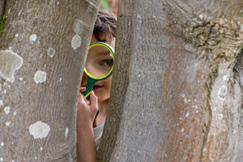
The Easter Detenctives: Who Framed the Easter Bunny
RHS Garden Harlow Carr
Find all the clues to solve the mystery at RHS Garden Harlow Carr this Easter‚ as the garden comes alive with spring colour. Follow the Easter Detectives trail, hunt for clues and solve puzzles as you uncover who framed the Easter Bunny, with a chocolate reward waiting at the end of the trail. www.rhs.org.uk/gardens/ harlow-carr/whats-on/easterat-harlow-carr Free with garden admission
Golden Egg Heist Trail
Harewood House
This Easter, the South Garden becomes the scene of a magical mystery. The Golden Goose’s precious egg has been stolen and your help is needed to crack the case! Follow a family-friendly trail of mythical creatures, each with their own stories, nests and clues to share. Along the way you’ll discover playful installations, puzzle boards to solve and photo moments hidden among the garden’s winding paths.
This Easter, tumble down the rabbit hole and visit the Easter Wonderland at Mother Shipton’s! Every bunny is invited to embark on a magical springtime adventure through the whimsical woodland. Follow the White Rabbit’s Tunnel Trail to uncover cracking surprises and marvel at EGG-stravagant Easter scenes, some inspired by the fantastical world of Alice in Wonderland! Keep your eyes peeled for characters who are as Mad as Hatters, but be warned— the Queen of Hearts isn’t far behind!
Easter Adventure Quest
Whitby Abbey
This Easter holiday, join us for a fun-filled adventure quest! Follow the Easter trail, hunt for eggs and answer questions along the way to earn a delicious chocolate reward.
Easter Family Fun
Eden Camp
This Easter embark on a school holiday adventure to an original Prisoner of War Camp to experience the sights sounds and smells of the Britain in the 1940s! Enjoy a range of exciting, hands-on activities at Eden Camp! From wartime-inspired Easter treats to creative craft workshops, there’s something for everyone to enjoy.
Wild Wednesday
Kiplin Hall & Gardens
Explore the lakeside path and discover the ‘Ecology at The Folly’ centre. A focal point for those wishing to know more about nature and the environment surrounding Kiplin Hall. During Wild Wednesdays, activity volunteers will be on hand to guide families through seasonal eco themed activities.
The
Easter Bunny
Woodland Adventure
Newby Hall & Gardens
An immersive woodland experience for the whole family… Step into the magic of the forest this Easter with Enchantica’s Woodland Adventure! The trail leads to a sunlit clearing, where Easter Bunny and Mrs Bunny await. Families join them to prepare for the Woodland Easter Party, taking part in a joyful mini sing-along show suitable for all ages. After the performance, children can enjoy a meet-and-greet with the Easter Bunnies, complete with a sweet treat takeaway. The adventure concludes at the Forest Fairy Spell, where families can make a wish in the giant cauldron.
Easter Living History Weekend
Eden Camp
Experience an immersive WWII Living History Weekend at Eden Camp Modern History Museum, where the sights, sounds and stories of the 1940s are brought vividly to life. Set within an original Second World War prisonerof-war camp, this special Easter event invites visitors to explore history beyond the display case. Meet costumed reenactors, witness live demonstrations, and discover what everyday life was really like on both the Home Front and the Front Line during Britain’s wartime years.
5 Apr
The Case of the Missing Bunny
Newby Hall & Gardens
Join Story Craft Theatre at Mother Goose detective agency to go on a case like no other. This is an egg-tremely serious situation . . . it’s no yolk . . . .we must crack it . . . we shell crack it! behind!
6 Apr
Duck Race Hebden Bridge
It’s a Totally Quackers event! All profits go to the Rotary Club of Hebden Bridge Trust Fund (registered charity number 513898) which gives grants to local, national and international good causes.
Horrible Histories
The Barbican, York
For the very first time, your favourite songs and actors from the CBBC TV series are appearing live on stage! For ages 5 to 105!
8 Apr
Wild Wednesday
Kiplin Hall & Gardens
Explore the lakeside path and discover the ‘Ecology at The Folly’ centre. A focal point for those wishing to know more about nature and the environment surrounding Kiplin Hall. During Wild Wednesdays, activity volunteers will be on hand to guide families through seasonal eco themed activities.
Making Memories
Newby Hall & Gardens
Memories shape our identity, beliefs and actions. They are a way to connect with others and make sense of the world around us. Join Story Craft Theatre as they dive into their memory box in search of a great keepsake.
9 - 11 Apr 11 Apr
The Very Hungry Caterpillar Show
York Theatre Royal
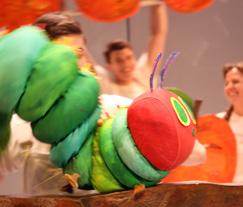
The critically acclaimed production of The Very Hungry Caterpillar Show created by Jonathan Rockefeller features a menagerie of 75 lovable puppets. The production faithfully adapts four stories by author/illustrator Eric Carle: Brown Bear, Brown Bear, 10 Little Rubber Ducks, The Very Busy Spider and of course, the star of the show –The Very Hungry Caterpillar. behind!
Northern Ballet’s Little Red Riding Hood Harrogate Theatre
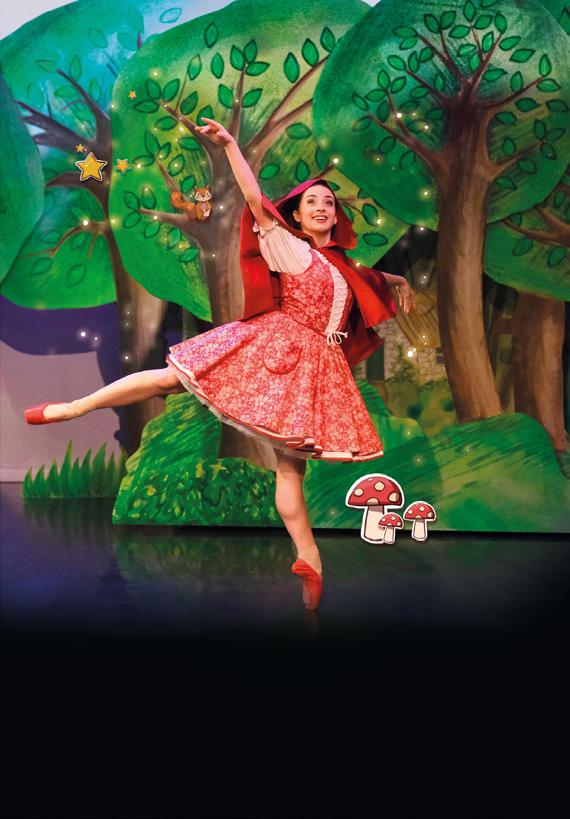
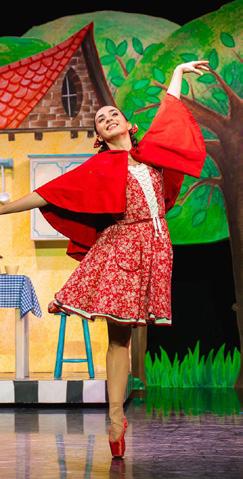
A retelling of the much-loved fairy tale, Little Red Riding Hood is the perfect ballet for little ones. On the way to visit her grandmother, Little Red meets a very hungry wolf in the woods — but is he really as ‘big and bad’ as the stories say? Running time approximately 40 mins, relaxed performances available.
Clubs & Classes
If your kids are wanting to get active, desperate for drama, eager to meet new friends or learn a new skill, then look no further than our guide to local clubs & classes to keep them busy! When you call, please don’t forget to say you saw them in Families North Yorkshire Magazine.
Number Train is a fun and interactive introduction to maths for preschool children designed and delivered by an experienced primary maths specialist. With a different theme each week, sessions keep your child engaged with games, action songs, arts and craft.
The first years of a child’s life are full of rapid growth. Long before children can talk or read, they are learning about the world through sound, rhythm, and human connection. Talk, songs, and books lay the foundations for everything that follows.
Babies hear voices before they are born and begin to recognise familiar sounds. Talking, reading, and singing during pregnancy helps build strong emotional bonds and introduces language naturally. After birth, these moments continue to shape how children listen, respond, and communicate.
As a mother of a young child, I see these benefits every day. I’ve watched how shared stories, simple conversations, and familiar songs build confidence, understanding, and curiosity. Alongside this, my experience as a teacher has shown me how powerful these early interactions are. Children who have been spoken to, sung with, and read to from an early age often develop stronger language skills, attention, and a love of learning.
These moments don’t need to be planned or perfect. Storytime can happen on the sofa, on the school run, or during bath time. What matters most is the warmth, connection, and enjoyment you share.
Young children learn from repetition. Listening to the same book again and again supports vocabulary, confidence, and understanding. Turning pages, pointing to pictures, and joining in all strengthen communication.
As part of the National Year of Reading 2026, we’re encouraged to celebrate these everyday moments. By making talk, songs, and books part of daily life from the very beginning, we nurture confident communicators and lifelong learners.
Sarah, Bright Start Phonics
Egg-citing Easter family experiences await at Harewood!
Easter is springing to life across Harewood, from the House to 140 acres of Gardens and Grounds, with activities indoors and out whatever the weather.
Exclusive for Easter, the Golden Egg Heist is a thrilling family trail where young detectives crack the case of the missing Golden Egg. Follow a route of mythical creatures, each with their own stories, nests and clues. Solve the mystery and enjoy a sweet treat at the end. For an even bigger adventure, hop aboard the Easter Estate Adventure, a one-hour guided trailer tour through the beautiful Harewood Estate. Discover the springtime secrets of its working farmland before unwinding in the Stewards Room with a delicious Easter-themed light lunch.
Inside the House, families can take part in an eye-spy adventure across the State Floor, hunting for hidden Golden Eggs. Spot them all to receive a springtime sticker prize. The exhibition Charlotte Verity: The Season Following includes a free activity booklet encouraging children to explore the artwork and try creative techniques. In the Servants’ Hall Family Fun Space, you’ll find crafts, games, a cosy book corner and seasonal activities.
Outdoors, children can let off steam in the Adventure Playground, Woodland Wonderland and Sylvascope Treehouse. Budding explorers can borrow a Nature Safari Bag to spot spring flowers, wildlife and lakeside views.
With cafés and gift shops on site, and just a short drive from Leeds, Harrogate and York, Harewood is the perfect family day out this Easter.
the Early Years Matter More Than You Think
The first five years of a child’s life are often described as fleeting, a blur of first smiles, first steps and bedtime stories. Yet behind the scenes, something remarkable is happening. During these early years, children are forming the foundations for how they think, feel, learn and relate to the world around them.
At Brackenfield School, the Early Years philosophy is rooted in a simple belief: children thrive when they feel secure, curious and supported. From the age of two, children in the nursery are welcomed into a warm, nurturing environment designed to meet their developmental needs at every stage. Spacious, light-filled classrooms allow children to explore freely, while carefully planned routines help them feel safe and settled.
Outdoor play plays a central role in early development, supporting physical confidence, independence and problemsolving skills. Brackenfield benefits from outdoor spaces that encourage children to be active and imaginative; time spent outdoors is carefully woven into the daily routine, offering valuable opportunities for exploration and social development.
Early learning at Brackenfield is enriched through specialist teaching in music and physical education, introduced in the nursery years and continuing into Reception. These sessions support coordination, rhythm and confidence, while nurturing a love of movement and creativity from an early age.
Families are warmly invited to explore Brackenfield’s Nursery and Reception spaces at our Open Day on Thursday 19th March at 10am or 5pm. Book online: www.brackenfieldschool. co.uk | admissions@brackenfieldschool.co.uk
Must-visit UK petting farms
Compiled by Andrew Campbell
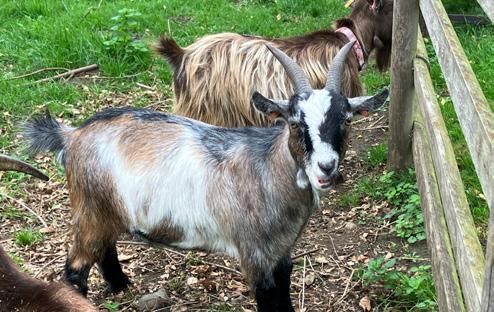
Spring across British farms means one thing: baby animals. March opens lambing season at family-friendly petting farms, where families can meet lambs, piglets, kid goats and calves. Bottle-feeding, farm tours and knowledgeable staff make these eight spots unmissable this season.
Baylham House Rare Breeds Farm, Suffolk Baylham House’s lambing weekends give families the chance to see newborn lambs up close and help with bottle-feeding rare breeds. Staff describe animal births and conservation efforts, while piglets and calves add to the farmyard action. Walking trails, broad picnic lawns and informative displays are great to explore between animal sessions. It’s an authentic taste of a working Suffolk farm in its busiest season. www.baylham-house-farm.co.uk
Reddish Vale Farm, Greater Manchester
As spring begins, Reddish Vale Farm is alive with new arrivals. Watch or help bottle-feed lambs, while goat kids, piglets and calves complete the nursery menagerie. Staff happily answer questions about the care of young animals and pony and tractor rides are available for extra fun. With indoor barns and a lively play area, this is a superb, reliable family day out whatever the weather. www.reddishvalefarm.co.uk
The Big Sheep, Devon
Beetle Bank Open Farm, North Yorkshire
At Beetle Bank, spring means lambs, piglets and goat kids taking centre stage. In the lambing barn, children can meet new arrivals and bottle-feed under staff supervision. Daily sessions cover animal care and explain how the newborns are kept healthy. There’s also fun with tractor-trailer rides, a giant sandpit and picnic and café options on site. It’s a classic Yorkshire rural experience - perfect for early spring outings. www.beetlebankopenfarm.co.uk
Ash End House Children’s Farm, Staffordshire Ash End House is a favourite for hands-on lambing. Children can bottle-feed lambs, hold goat kids and see piglets nursing. Each child receives a bucket of feed and tips from the team on how to treat new arrivals gently. Egg-collecting and animal talks enrich the day and covered barns offer shelter from unpredictable spring showers. A small but welcoming café provides refreshments after animal encounters. www.ashendchildrensfarm.co.uk
At The Big Sheep, lambing shows run daily in spring, giving children the chance to bottle-feed lambs and participate in hands-on sessions. Staff happily answer questions about animal births and routine care. Piglets and baby goats also feature, while indoor and outdoor play zones, including tractor rides and live animal races, make this a lively and educational family day out in North Devon. www.thebigsheep.co.uk
Rare Breeds Centre, Kent Lambing is the highlight at the Rare Breeds Centre. As well as Meet the Lambs bottle-feeding activities, families can watch piglets, goat kids and calves up close. Staff introduce family farming life and animal welfare, with trails and an adventure playground for burning off energy. A farm café serves local flavours and keeps the rural experience relaxed and accessible. www.canterburyoasttrust.org. uk/rare-breeds-centre
Vauxhall City Farm, London
Vauxhall City Farm offers a springtime escape in central London, with friendly goats, sheep, alpacas, pigs, rabbits, guinea pigs and birds. Children can watch staff care for young animals and join Meet the Animals sessions. Knowledgeable staff explain how the farm raises its residents, while the Old Dairy Café and outdoor spaces make it an easy, family-friendly visit. www.vauxhallcityfarm.org
Chobham Adventure Farm, Surrey
Chobham Adventure Farm blends animal encounters with extensive indoor and outdoor play. Families can meet friendly farm animals in the Animal Barn, while children explore large soft play zones and outdoor adventure areas. Spring visits offer a mix of hands on learning and energetic play, with staff on hand to guide young visitors. With cafés, spacious play areas and a relaxed rural setting, it’s an easy, full day family outing. www.chobhamadventurefarm.co.uk
Beetle Bank Open Farm
Baylham House Rare Breeds Farm
The Big Sheep
Rare Breeds Centre
Vauxhall City Farm
Spring gardening projects children will love
By Ellie Malt
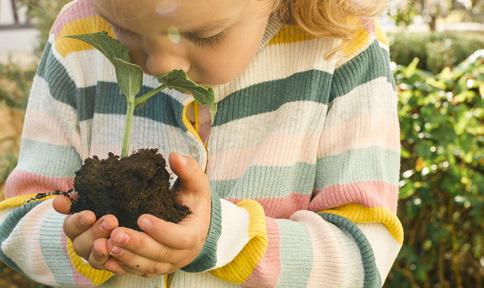
With the promise of spring all around, we don’t need science to remind us that getting hands-on in the garden is a fantastic, sensory-rich antidote to device time, which helps children reconnect with nature.
There is, actually, plenty of evidence to show how simply having access to green spaces reduces emotional dysregulation in children and teenagers. Gardening can help reduce stress, improve cognitive functioning, build self-esteem and improve physical health.¹
While the specific claim that simply touching soil is a direct ‘cure’ for mental health problems is not fully established, some studies do show associations and plausible mechanisms like serotonin release and microbiome effects.²
Keen to get them out there and digging in the dirt? The key is choosing projects and plants that suit their interests and their age while tweaking your involvement. Gardening with children isn’t about perfection. Plants will fail; seedlings may be overwatered and fairy gardens might be repeatedly rearranged. What matters is shared time, learning and the joy of watching children grow alongside their garden.
Sources: ¹ Bowler, et al., 2010; Hartig, et al., 2014; ² National Wildlife Federation, 2012.
Veggie
plot
Growing food is not only biology in action but it is also a very satisfying experience. In our culture of immediate gratification, it is particularly good for teaching how rewarding a longer-term commitment can be. It can also be a great way to help younger children physically connect with where their food comes from.
Raised beds, grow bags or large containers are ideal for little gardeners. Under 5s can sow large seeds, water plants, watch for growth and taste what they harvest, with supervision. Those ages 5+ can help choose crops, plant seeds at the correct depth, label rows and maintain watering and weeding schedules. Children ages 9+ can manage a small plot independently, plan crop rotation, troubleshoot pests and take responsibility for harvesting.
PLANTS TO TRY
Under 5s: Broad beans, peas, radishes: large seeds, fastgrowing, easy to harvest.
5-8s: Lettuce, spring onions, courgettes: quick-growing, simple to care for, visually satisfying.
9-12s: Runner beans, potatoes, strawberries, tomatoes: more complex crops that teach planning, spacing and responsibility.
Sensory garden
A sensory garden involves touch, sight, smell and sound. This gentle exposure outdoors is especially helpful for those who are sensitive to textures or flavours. It instinctively appeals to children who enjoy hands-on exploration and is perfect for small spaces, containers or raised beds.
Under 5s can pat soil, water and smell herbs. Keep sessions very short and playful. Slightly older children can help choose plants, space seedlings and water on a routine. Ask them to observe and note changes.
Tweens can get involved in planning garden layout, researching pollinator-friendly plants and taking responsibility for deadheading and recording growth.
PLANTS TO TRY
Under 5s: Lamb’s ear, mint, lemon balm: soft, fragrant and safe to handle.
5-8s: Sunflowers, cosmos, lavender: colourful, easy from seed, great for observation.
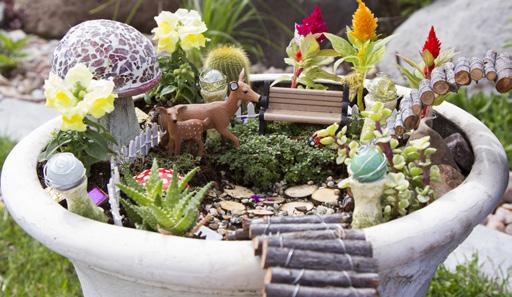
Combining horticulture with imaginative play, fairy gardens are perfect for children who enjoy storytelling and craft. They work well in pots, old containers or even sheltered corners. Let the youngest children arrange the fairy figures and natural decorations. Supervise gently to protect plants. Children can talk about their ideas, explain their garden and often play collaboratively, supporting vocabulary and co-operation.
Children ages 5+ can start designing small structures, planting, watering and adding storytelling elements as the ‘fairy garden carers.’ Tweens can branch out into planning themed gardens (not necessarily fairy-themed), learn plant requirements for shade and water and build miniature structures from natural materials.
PLANTS TO TRY
Under 5s: Moss, thyme, small hardy flowers: easy to handle and ideal for arranging miniatures.
5-8s: Nasturtiums, marigolds, violas: colourful and edible, perfect for hands-on planting.
9-12s: Miniature ferns, cosmos, dwarf grasses: great for themed designs and more complex maintenance.
Fairy garden
Ellie Malt is a mum of two daughters living in Surrey.
Easter treats to make with the kids
By Charlotte Stirling-Reed
I LOVE Easter and all of the fun that comes around this time of year. Days are longer and warmer - and there’s all that delicious food! Here are two simple, family-friendly Easter recipes for you to enjoy making (and eating) together.
Easter Eggs
Ingredients
Dark or milk chocolate depending on your preference; small or large chocolate egg moulds.
Method
Chop the chocolate into small pieces and melt in a heatproof bowl over a small pan half full of boiling water.
Pour into Easter egg moulds, tilting so the chocolate covers the surface.
Place in the fridge until set.
Repeat the process a few times until the chocolate layer is about 1/2cm thick.
Optional: add a toy for older children (be careful with younger children and ensure they are supervised).
Brush melted chocolate around the rim before sticking both halves together.
Leave to set again - and enjoy!
With thanks to Charlotte Stirling Reed for these recipes. Charlotte is an award-winning nutritionist, author and podcaster who works with brands, celebrities and parents to share positive, evidence-based advice on giving children a healthy start in life.
More information at www.srnutrition.co.uk
Carrot Cake Hot Cross Buns
A twist on traditional hot cross buns, these are sweetened with a combination of orange juice, carrots and raisins or sultanas. They are dairy free too! And great toasted…
Prep: 10 minutes + 2-2 ½ hours proving time
Cooking: 20 mins
Makes: about 12 buns
Ingredients
250ml plant-based milk alternative
50g plant-based spread
500g strong bread flour
50ml orange juice
7g sachet fast-action dried yeast
1½ teaspoon ground cinnamon
½ teaspoon ground nutmeg
Flour for dusting
2 medium carrots, peeled and grated (dab off excess moisture if you can, using kitchen roll)
200g raisins or sultanas
Method
In a small saucepan, warm the milk and then add the fat spread. Once the fat spread has melted, turn off the heat and leave it to cool slightly.
Add the flour, yeast and spices to a large bowl.
When the milk has cooled to lukewarm, make a well in the centre of the flour mixture, then pour in the warm milk mixture along with the orange juice.
Mix well with a wooden spoon, then use your hands to bring everything together into a sticky dough. Now add the peeled and grated carrots and all of the raisins. Combine into the dough. Tip: If your mixture seems too dry and is not coming together, add more milk gradually. Or if your mixture seems to wet, then add some flour gradually until you can form a dough.
On a lightly floured work surface, knead the dough until smooth, about 5 minutes by hand (or in a stand mixer with a dough hook if you have one).
Lightly dust a bowl with flour and add the dough. Cover the bowl with a tea towel and leave to rise in a warm place until doubled in size (around 1-1 ½ hours).
Heat the oven to 200C/400F and line two baking trays with baking parchment.
Divide the dough into 12 equal-sized pieces and shape into small round buns. Place them onto baking tray, leaving space for them to expand. Leave to rise again until doubled in size (approx 1 hour).
Use a knife to slice a cross in each bun.
Bake for 20 mins or until golden brown then allow to cool on a wire rack.
Optional: To add a traditional white cross, before baking, gradually mix together 70g flour with 1 tbsp of water to create a thick, pipeable paste. Spoon into a piping bag and use a small round nozzle to pipe crosses on the buns.
Cow’s milk allergy and the Milk Ladder
By Emma Shafqat
I have both professional and personal experience with cow’s milk allergies; when my daughter was twelve months old, we made our first attempt to climb the Milk Ladder.
Unfortunately, once past steps one and two, we couldn’t get any further. Lots of crying and vomiting prompted us to take a break. After two more attempts and feeling like there would be so many food related occasions we could never enjoy together as a family, we finally reached the top of the ladder when my daughter was three and a half… although - between you and me - she still flatly refuses cow’s milk, claiming she can’t have it, despite happily eating ice cream and drinking chocolate milkshakes!
What is a cow’s milk allergy?
Cow’s milk protein allergy (CMPA) is an abnormal response by the body’s immune system in which the proteins in cow’s milk are recognised as a potential threat. It is estimated to affect around 7% of babies under the age of one, although most children grow out of it by the age of five (NHS, 2019).
The two main types of CMPA
IgE-mediated: typically rapid onset (within minutes and up to two hours after ingestion)
Non-IgE-mediated: typically delayed onset (usually two to 72 hours after ingestion)
These two different types of allergies come with similar but slightly different signs and symptoms. They can include itchy skin, a rash, atopic eczema, abdominal pain, vomiting, diarrhoea, coughing, chest tightness, wheezing or shortness of breath.
IgE-mediated can also cause acute flare up, swelling of the lips, face or around the eyes, nausea, sneezing and congestion. NonIgE mediated can also cause gastro-oesophageal reflux disease (GORD), loose or frequent poos, constipation, redness around the anus, blood and/or mucus in the poo, colic, tiredness, food refusal or aversion and faltering growth with at least one or more gastrointestinal symptoms.
If your child has other symptoms, that does not mean they don’t have a food allergy. If you think your little one is having a reaction to cow’s milk, see your GP. Make sure you get medical advice before taking cow’s milk out of your child’s diet.
The Milk Ladder is a six-step technique of reintroducing your child to cow’s milk slowly so that their tolerance builds gradually. It is only suitable for children with mild to moderate non-IgEmediated allergies and you should always seek medical advice first. I recommend referring to the official iMAP Guide for details.
Put simply, the Milk Ladder starts with more broken-down forms of milk, like biscuits or pancakes and builds up to things like yoghurt and cheese, until eventually your child can have fresh milk. This is because when milk is heated or baked, the protein changes so it is less allergenic.
If your child has a reaction at any of the steps, stop and contact your health care professional before starting again. Once you have reached the top of the ladder, switch to cow’s milk in all food and cereals at breakfast.
Use the QR code to see the iMAP guide with the six steps on the Milk Ladder. If you are struggling with CMPA and would like more support, visit www.dietitianwithadifference. co.uk and book a customised cow’s milk reintroduction plan. With thanks to Bespoke Family (www.bespokefamily.co.uk) for this article.
Easter Detectives – Who Framed the Easter Bunny?
Sat 28 Mar – Sun 19 Apr
Become an Easter Detective… find the clues, solve the crime and rescue the Easter bunny - chocolate reward offered!*