Families North Yorkshire Magazine July/August 2026
Carla Finlayson, editor
E: editor@familiesnorthyorkshire.co.uk
T: 07734 690020
@FamiliesNYMag
@FamiliesNYMag
@familiesnorthyorkshiremagazine
Welcome
The kids are heading for a summer break of at least six weeks and so this issue offers parents as many options as possible for keeping them busy. These include local family events and activities in our What’s On pages, activity ideas for a day at the beach as well as mess-free science experiments. Plus if you are dreading having to prepare more meals when the kids are home, check out some great simple ideas for lunches they will love and can help prepare.
Summer learning loss is real so to keep your kids mentally active, find out about learning outside of the classroom, as well as how to turn summer into a season of reading.
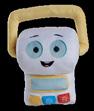
Finally, we have some super summer giveaways inside including bundles of Toy Story soft toys. Apply for these and others inside. By doing so, you’ll also ensure you receive our digital magazine and email newsletter with lots more content and goodies on offer
Carla
This product is made of material from well-managed, FSC®certified forests and other controlled sources.
January/February issue giveaway winners Congratulations to all our winners. You can find a list at www.bit.ly/JanFebGiveaways
Families Magazine is a franchise of Families Print Ltd of 75 Lisbon Avenue, Twickenham, TW2 5HL. Families is a registered trademark of Families Print Ltd. All franchised magazines in the group are independently owned and operated under licence. The contents of Families Magazine is fully protected by copyright and none of the editorial or photographic matter may be reproduced in any form without prior consent of Families Magazine. Every care is taken in the preparation of this magazine but the franchise owner and Families Print Ltd cannot be held responsible for the claims of advertisers, nor for the accuracy of the contents, or any consequence thereof.
MISS YOUR FREE GUIDE TO FUN FAMILY DAYS
Learning beyond the classroom
By Zuzu Jordan
Some of the richest and most memorable learning happens beyond the classroom. While some children enjoy the structure of desks, carpet sessions and a teacher at the front, every child gains from opportunities to explore, move, talk, question and experience the world around them.
Furthermore, learning certainly does not have to stop when the school day ends. When children are given the chance to learn through life, nature, play and hands-on experiences, they often develop confidence, curiosity and a deeper understanding of what they are discovering.
The long summer holiday is the perfect time to experience education anywhere. A walk to the park, a trip to the supermarket, baking in the kitchen or helping to wash the car can all build valuable skills. When children are relaxed and engaged, they often absorb more than we realise. They are noticing, questioning, comparing, solving problems and making sense of the world around them.
Outdoor learning is a wonderful example of this. Many schools now use Forest School approaches to give children hands-on opportunities in natural spaces. In a woodland or garden, children can identify plants, compare leaves, search for minibeasts, spot seasonal change and talk about weather, habitats and growth. Physical development is supported through climbing, balancing and lifting. Language grows through conversation and storytelling. Maths appears naturally, as children count sticks, sort stones, measure puddles or notice patterns in petals and bark.
Some families enjoy creating themed weeks during the holidays and this can be a brilliant way to immerse children in a topic.
One week might be all about volcanoes. You could visit a museum together, get them to write to a volcanologist, build a volcano at home, read related books and create fact files or drawings inspired by what they have learned. This immersive approach allows children to deep dive into a subject and make links between reading, writing, speaking, science, art and research in a way that feels exciting rather than forced.
Learning beyond the classroom feels purposeful. Children can see why they are doing something. Reading a recipe helps make lunch. Counting coins matters because they are buying an ice
Themed weeks
Themed weeks can turn a child’s interest into a real learning adventure.
One week might focus on minibeasts, space or oceans. Families can visit a museum, borrow books, create artwork, ask questions online or build something linked to the topic at home.
A themed week encourages children to explore one idea in depth and make links across reading, writing, science, art and discussion. Because the learning feels connected and exciting, children often stay curious for longer and remember far more of what they discover.
cream. Writing a list is important because the family needs to remember what to pack. These ordinary moments help children build confidence because the learning is immediate, useful and enjoyable.
We must also remember that life skills are an important part of learning outside the classroom. How do you catch a bus or a train? How do you read a timetable, buy a ticket and know when to get off? How do you plan a meal, shop for the ingredients and then cook it safely? These experiences involve reading, sequencing, money skills, problem solving and independence. They also help children feel more capable in the world around them.
Children do not need expensive days out or perfectly planned activities. Some of the richest learning comes from simple, everyday routines. Gardening teaches patience, care and life cycles. Building a den develops teamwork, creativity and perseverance. A journey on public transport can spark conversations about directions, maps, numbers and the wider community.
Perhaps the most important thing adults can do is slow down and notice the learning already happening. Ask open questions. Wonder aloud. Give children time to think. Follow their interests, even if they seem small. When we value learning everywhere, children begin to see themselves as capable learners everywhere too.
Zuzu Jordan is a Mastery for Maths Specialist who has taught primary for eighteen years and is Director of Arnett International. For FREE resources and tips, find her on Instagram @edumate_uk
Life skills
Life skills offer some of the most valuable learning opportunities of all.
Catching a bus or train teaches children how to read timetables, plan journeys and solve problems. Preparing dinner involves choosing a meal, writing a shopping list, comparing prices and cooking safely. These tasks build independence, confidence and resilience while also strengthening reading, maths and communication. When children are included in everyday routines, they begin to understand how the world works and feel more capable within it. That is powerful learning beyond the classroom.
Reversing letters and numbers
By Usha Patel
Developmentally, children often reverse letters and numbers until around age 7. Beyond this age, it becomes a concern, though not one an optician will identify, since the eyes themselves are working perfectly well. The difficulty lies in how the brain interprets what it sees.
To understand why, consider how we perceive the world around us. Seeing a tree, a chair or another person is a threedimensional experience. We recognise these objects from every angle we view them, because this is precisely what our eyes evolved to do: identify objects in space as hunter-gatherers navigating a physical world. Humans have existed for around 300,000 years. Written language, by contrast, has existed for only about 5,000 years and it demands something quite different: a two-dimensional understanding that our brains were never originally designed for.
When young children first encounter letters of the alphabet, they apply this same three-dimensional logic. A ‘b’ and a ‘d ‘ look much the same to them, just as any two similar objects in space might. Over time and with sufficient exposure, children gradually learn that these symbols carry directional meaning, that orientation matters and that one shape facing left is an entirely different thing from that same shape facing right. This understanding unlocks phonics: a child can only assign a sound to a letter once they recognise which letter it actually is.
A second reason for reversals is the direction in which children naturally scan written information. Our writing system runs from left to right but some children are predisposed to scanning from right to left. This can lead them to write a ‘3’ when they intended
Assessing a child’s static and dynamic balance skills
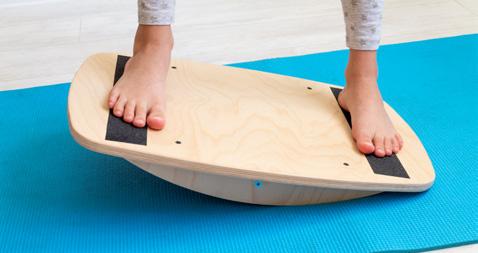
When children struggle with letter and number reversals, my first question is always about balance. Static balance, standing on one leg or walking heel-to-toe along a straight line, can be practised with eyes open, then made more challenging with eyes closed. Dynamic balance involves an unstable surface, such as riding a bike or walking across a pebbled beach.
Improving both types of balance helps a child’s body develop an implicit understanding of up and down and eventually left and right because the body naturally works to correct an imbalance. That implicit knowledge then transfers outward: which hand do they reach for when writing? Which foot do they lead with when kicking a ball?
Many children who struggle with letter reversals cannot reliably tell left from right. Body awareness is the essential first step; in other words, a physical experience shows the child that a difference between the two sides of their body exists. Without that foundation, distinguishing between a ‘b’ and a ‘d’ on the page remains an abstract concept.
an ‘E’ or ‘21’ when they meant ‘12’ and to read words such as ‘was’ as ‘saw’.
Visual-perceptual difficulties of this kind can slow a child’s development of academic skills, confidence in writing and accuracy in reading. They may appear in isolation or as part of a broader diagnosed condition.
A neurodivergent condition such as dyslexia involves difficulties with multiple components, including auditory processing, working memory, processing speed and sequencing; visualperceptual challenges compound those difficulties. There may also be language difficulties that appear before reading even begins, such as mispronouncing words. We cannot attribute letter reversals to a neurodivergent condition but as one of many indicators. Many children with visual-perceptual challenges also struggle to distinguish left from right, which makes the picture considerably more complex.
Usha Patel is a neurocognitive therapist who specialises in visual perception difficulties. Find out more at www.ravivpracticelondon.co.uk
Simple visual-perceptual left and right anchoring
The most effective method I have found uses a large sheet of paper or a flexible whiteboard, fixed to a vertical surface, so that a child works at eye level.
Begin by drawing a large letter, such as a ‘C’, around thirty five centimetres wide. Draw a box around it with top, base and right side in one colour and the left side in a contrasting colour. Ask your child to rest their non-writing hand flat against the wall. Then ask them to trace the letter, showing that they are moving their writing hand towards the differently coloured side and towards their resting hand (if they are right-handed).
Staying centrally in front of the letter, repeat three times, first with eyes open, then with eyes closed.
Working at this large scale matters: the physical effort required to trace a large letter helps embed the direction of movement in a way that a small mark on paper simply cannot. The body and the motor movement, in effect, help your child learn the letter.
Turning summer into a season of reading
By Erin Miller
As the summer holidays approach, many parents start thinking about how they will keep their children busy, productive and entertained.
Some may also be concerned about the ‘summer slide’ – the progress lost during the summer holidays, which teachers report can be around a month, particularly if children are not regularly keeping up skills such as reading. For this reason, reading should be an essential part of any summer activity plan.
Here are some simple and effective ways to encourage reading over the summer.
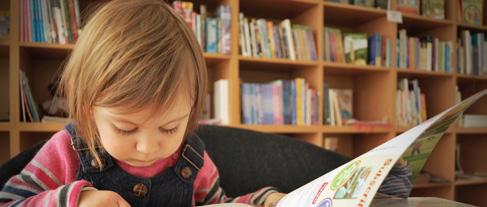
In the first few days of the holiday, visit your local library and (re)introduce your child to the children’s section. Try to make this a weekly habit so it becomes a familiar and enjoyable routine. While you’re there, check to see whether the library is running any summer activities for children such as the annual Summer Reading Challenge (www.summerreadingchallenge.org.uk), as these can be motivating and make reading feel more social and engaging. Developing this habit early also helps children feel confident using libraries later in life, whether in school, university or the wider community.
Another tip is setting a reading target with rewards, which can be especially helpful for reluctant readers. Even a small incentive can be a useful starting point. Make sure the target is realistic so your child can achieve it and feel a sense of pride. This could be as simple as reading one chapter book in August or reading for twenty minutes each day.
Reading to learn
Reading isn’t just about learning to read; it’s about reading to learn. It’s useful to recognise and exploit all the reading your child does, not just when they are curled up with a book.
Take every opportunity to encourage reading in everyday situations, whether that’s street signs, information boards, menus, recipes, adverts or food packaging. These small moments all help build confidence and fluency.
The key role for parents is to check understanding. Children can often decode words and read them aloud without fully understanding what they have read, so asking simple questions and discussing meaning is essential. If your child has an interest in another subject, such as maths, consider buying workbooks. Look for problem-solving activities that include written questions, as these encourage them to engage with reading while doing something they already enjoy.
Reading ability supports success across all subjects. By doing the above, you will be helping ensure that your child is not only learning to read but also able to read to learn.
Encouraging your child to read a book series is another easy win. Once they are hooked on a set of books, there’s no need to keep searching for what to read next. For younger readers, popular series such as Diary of a Wimpy Kid, The Worst Witch or Horrid Henry can be great starting points, while older children might enjoy Percy Jackson, The Hunger Games trilogy or Harry Potter.
You could also refresh or redecorate your child’s bookshelf by donating old books and picking up new ones from charity shops. This can become a fun, creative project, perhaps involving painting or reorganising the space, which helps make reading feel more exciting. It also keeps your child’s reading material fresh and engaging without being expensive.
Finally, try to maintain or re-establish bedtime reading routines. Lighter evenings can make bedtime more challenging, so keeping reading as part of the routine is even more important.
Erin Miller is a teacher with a keen interest in how research can be used in the classroom to improve learning.
Do audiobooks count?
Long summer car journeys provide a great opportunity to engage with books in a different way. While travelling, try listening to audiobooks as a family. Sharing the experience and discussing the story together can have a strong impact on your child’s interest in reading. Starting a free trial with a service like Audible over the summer can be an easy way to begin.
As a teacher, I am often met with scepticism from parents when I suggest audiobooks. While they may not support decoding skills as directly as reading print, they are highly valuable for developing a love of stories, which is especially important for reluctant readers.
Listening to stories also helps build vocabulary and background knowledge and studies have shown that strong background knowledge can compensate for weaker reading ability. It’s not just about sounding out words but about understanding and making meaning from what is read.
Finally, listening itself is an important skill that is often overlooked, so audiobooks can play a valuable role in your child’s overall literacy development.
Celebrating your child’s amazing autistic brain
By Emily Snape
We all want our children to feel good about who they are but for autistic children, that confidence doesn’t always come easily. One way we can support that is by understanding autism and the many amazing strengths it brings.
As the parent of a neurodivergent child myself, I’ve seen just how powerful it can be when we begin to understand and celebrate how their brains work. Those moments where something small can feel overwhelming but also the incredible focus, honesty and creativity that come with it. By noticing both sides, we can help our children do the same.
Your child might notice tiny details that others miss. They might have a brilliant memory, a deep passion for the things they love or a wonderfully creative way of thinking. They might be full of energy, honesty, curiosity or kindness. These are not small things - they are real strengths. But children don’t always see this in themselves, especially if they’re often hearing about what they find tricky. That’s where you can really help.
Try to spot and gently name your child’s strengths in everyday moments. You might say: ‘I love how you noticed that’ or ‘You worked so hard on that, your brain is amazing.’ Such repeated small comments help your child begin to recognise their own abilities.
It can also help to reframe challenges. A child who feels overwhelmed by noise might also have a very sensitive and aware brain. A child who talks a lot about their favourite topic might have a fantastic ability to learn and share information.
Seeing the strengths within the challenges
Sometimes the things our children find hardest are closely linked to their strengths.
A child who feels overwhelmed in busy or noisy places may have a brain that takes in lots of information at once. That can feel challenging but it also means they notice things others might miss. A child who finds social situations confusing may also be thoughtful, honest and observant. A child who prefers routine may be wonderfully organised and feel safe in structure.
Reframing these moments doesn’t mean ignoring challenges. It means helping your child understand themselves in a kinder, more balanced way.
The words we use really matter. Instead of ‘too sensitive’ you might say: ‘Your brain notices lots of things.’ Instead of: ‘You talk too much about that’ you could say: ‘You have such a strong interest - that’s amazing.’
Over time, your child begins to see themselves differently - not as ‘too much’ or ‘not enough’ but as someone with their own unique way of thinking and being.
we talk about these moments, we help our children see the full picture.
Encourage your child to follow what they love. Their interests are where confidence grows and where they feel most themselves. Invite them to reflect on what they enjoy and what they’re good at. Simple questions like: ‘What made you feel proud today?’ can build self-awareness over time.
You can also model self-acceptance by celebrating differences in everyday life. Read books together that show diverse minds, talk openly about feelings and highlight role models who think in unique ways. Invite your child to teach you about their interests so you share a connection. Most importantly, remind your child often: there is no one else in the world quite like them. When they begin to see that for themselves, it can change everything.
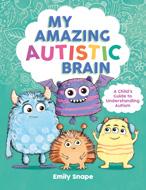
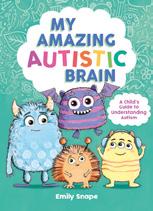
Emily Snape is the author of My Amazing Autistic Brain and My Amazing ADHD Brain (Summersdale). She is passionate about helping children understand and celebrate how their brains work.
Simple ways to help your child see their strengths
Helping your child recognise their strengths can happen through small, every day moments.
Notice and name your child’s strengths in everyday situations;
Create a My Strengths space at home with drawings, photos or notes;
Share your own strengths and challenges to normalise differences;
Keep encouragement gentle and consistent;
Over time, your child begins to believe these things about themselves and builds a stronger sense of confidence.
Did you know?
Autistic brains actually process the world with a richness of observation and sensory detail that many neurotypical people miss entirely. This intense, sometimes hyper-focused depth of attention is the root of many autistic strengths.
By shifting the way
Curtains Up! Outdoor Play
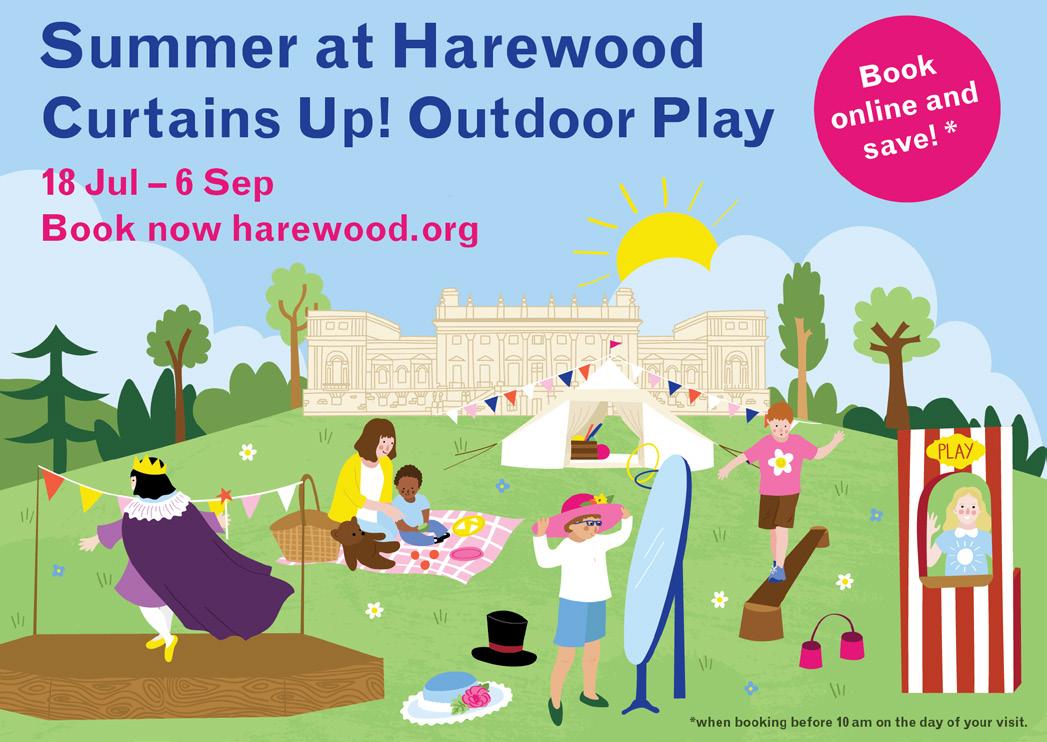
Lights, camera, action! Get ready for a summer packed with adventure, imagination and outdoor fun at Harewood House. From performing on stage to setting off on exciting family adventures, there’s something for everyone to enjoy. Head over to Sun Sides fields and discover our performancethemed play zone, complete with its very own outdoor stage where little stars can sing, dance, act and put on a show of their own. Budding performers can step into character in the dress-up tent, learn circus-inspired tricks and dive into a whole host of creative activities designed to spark imaginations and encourage playful storytelling.
Make the adventure even more magical with a ferry journey across the lake, taking in the beautiful views before heading off to explore even more family fun around the grounds. Thrillseekers and explorers alike can climb, swing and scramble their way around Harewood’s three adventure play areas, while young adventurers can build their own woodland hideaways with exciting den-building activities.
Inside the House, families can uncover even more behindthe-scenes discoveries. Learn how historic photographs are carefully cared for through fascinating conservation activities, or visit Thomas’s Terrace School to discover how we preserve and protect historic stonework using traditional skills and techniques. Little ones can also enjoy the Servants’ Hall Family Fun Space, and the whole family can take part in a ‘spot-it’ trail across the State Floor, uncovering surprises along the way. With creativity, play and adventure around every corner, Curtains Up! Outdoor Play is the perfect way to make magical family memories this summer.
Book online and save harewood.org
50 Days of Summer at Piglets Adventure Farm
Make this summer unforgettable with 50 Days of Summer at Piglets Adventure Farm – the ultimate family day out packed with fun, fresh air, and adventure.
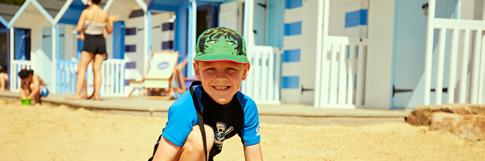
From tractor rides to huge outdoor play areas, there’s something to keep every child entertained. Relax at the beach with colourful beach huts, get lost in the maize maze, and wander through the beautiful sunflower meadow – perfect for summer photos.
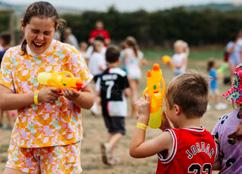
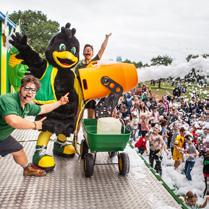
Meet friendly farm animals, including adorable piglets, and enjoy hands-on experiences that bring the farm to life. Don’t miss the daily Foam on the Farm party, where kids can dance, laugh, and cool off in a sea of bubbles.
Summer at York Castle Museum
York Castle Museum
From the Victorian York Gala, an annual tradition for 60 years, to the swinging Sixties, a pivotal decade for the city, the programme will immerse you in history and nostalgia filled with entertainers, games and crafts, music, floral displays and seasonal decor.
The Watchers of York Sculpture Trail
Across York
York Minster stone carvings have been silently watching over York Minster for centuries. These stone guardians are full of character, humour, and mystery. Now, one of them is stepping off the stonework and making mischief across York. Coming in summer 2026, this brand new, city-wide sculpture trail is working with York Minster and launching alongside the legendary York Mystery Plays.
Summer holidays: Plant Power!
Temple Newsam
A Lotherton Summer Holiday
Lotherton Hall
You’re guaranteed a jolly holiday with Lotherton this summer, with family activities inspired by the seaside and all things great British summer. Enjoy the sand pit, entertainers, and family activities!
The Web Adventure Park Summer at The Web!
Looking for a summertime of fun? Why not head to the Web where you can enjoy a jam-packed day! With plenty to do both indoors and out, hours can be spent exploring the park - whatever the weather. What’s even better, everything is included in the one admission ticket!
The Spirit of Oz
Mother Shipton’s Cave
Meet the radiant Good Witch of the Glade and our evercheerful Scarecrow as they sprinkle a little midsummer mischief and merriment throughout the forest.
Great British Summer Whitby Abbey
Kids can explore, climb, and play all day, while parents unwind with great food and a welcoming atmosphere. Don’t miss 50 days of laughter, discovery, and outdoor fun, your summer adventure starts here!
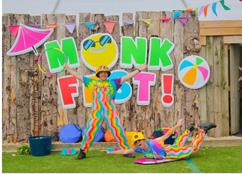
MonkFest is bringing back the foam parties, glitter, and festival vibes galore – and that’s just the beginning! Expect an unforgettable family-friendly celebration with amazing activities, live entertainment, and plenty of surprises along the way. 22 June - 6 Sept 18 Jul - 6 Sep
Enjoy the fairground activities, pick up new tricks at the circus skills station and dive into some puppet antics. Kick back in a deck chair with a delicious ice cream and soak up the summer.
This summer, Temple Newsam House bursts into bloom with Plant Power! Go and explore, create and discover with a whole mix of playful, plant-themed activities throughout the house.
Pirate Ship & Pop Up Beach
Bolton Abbey Ahoy mi hearties – All hands on deck! The magnificent pirate ship returns from the rough seas this summer and will be moored on the ‘pop-up’ beach on the bank of the River Wharfe, outside the Cavendish Pavilion. Let your little ones imagine they have taken to the high seas by captaining the wooden galleon. Once on deck little pirates can enjoy the ship’s slide, climbing net, climbing wall, pirates’ pole and ship’s wheel! And of course there is space to build sandcastles galore!
The Big Summer Rewind William’s Den
The Big Summer Rewind is a celebration of the legendary games, the iconic anthems, and the pure, unplugged joy of being a kid in the 80s and 90s. Whether you’re a “Gen X” pro, a “Millennial” master, or a “Gen Alpha” rookie, it’s time to show the kids how we really used to spend our summer holidays - all while locking in maximum value for the whole family.
MonkFest
Monk Park Farm
York Maze
York Maze is Yorkshire’s multi award-winning a-maze-ing summer attraction. Home to the largest Maize Maze in Europe which this year celebrates David Attenborough 100th birthday, can you find all the animals hidden in the maze? Plus over 20 rides, shows and attractions, many under cover or indoors. Take your seat for the Crowmania tractor & trailer ride to experience amazing animatronics & theatrical surprises, puzzle over the mind-bending rooms and illusions in the House of Cornfusion and speed down the Cobsleigh Run. NEW for 2026 tackle the new inflatable Cobstacle Course! There is so much to do you’ll need to make a day of it! Open daily Sat 11 July – Thurs 3 September. Tickets each day are limited and must be booked online. Tickets will not be available on the gate. See website for details. www.yorkmaze.com
Summer Reading Challenge 2026: Read to the Beat
This summer, libraries across the UK are inviting children to discover the connection between music and storytelling through the Summer Reading Challenge’s 2026 theme: Read to the Beat.
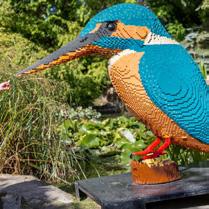
This summer, become a Brick Explorer at RHS Garden Harlow Carr
This summer, embark on a family adventure at RHS Garden Harlow Carr with Brick Explorers – a spectacular celebration of wildlife, creativity and discovery.
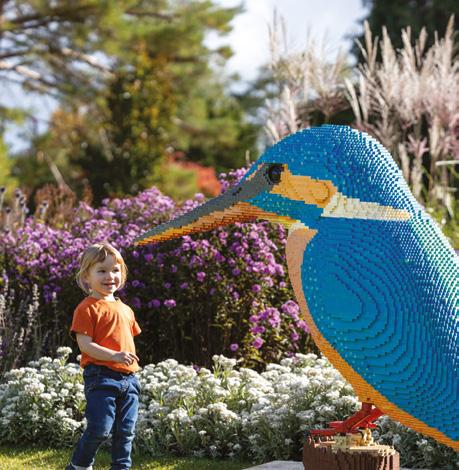
From 18 July to 6 September 2026, come and explore the garden and uncover incredible brick-built wildlife sculptures inspired by the plants, animals and fungi that call our gardens home. Complete the wildlife mission, and uncover the special superpowers that help nature thrive and learn how they can support biodiversity at home.
You can also enjoy hands-on brick-building sessions inspired by gardens and the natural world. At our dedicated build station, you can help create a magical brick garden and put your creativity to the test with nature-themed designs. Brick Explorers combines outdoor exploration, wildlife learning and imaginative play, creating a summer experience the whole family can enjoy together.
We hope you’ll join us for a summer of discovery at RHS Garden Harlow Carr.
Yorkshire Dales Millennium Trust
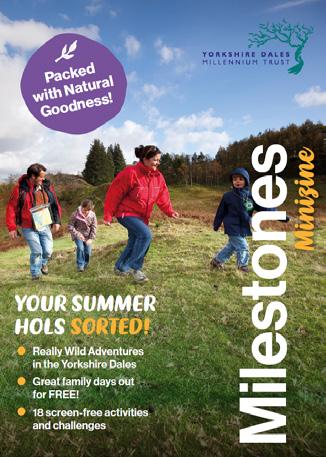
Make the most of the summer holidays with Yorkshire Dales Millennium Trust’s Milestones Minizine – FREE with this edition of Families magazine.
This eight-page ‘Zine is packed with holiday inspiration, including 10 really wild adventures in the Dales, wildlife walks, species ID and tips for young explorers plus screen-free challenges and activities.
Yorkshire Dales Millennium Trust supports people, landscape and wildlife in the Yorkshire Dales and surrounding areas. Find out more at: www.ydmt.org
Running from 4 July to early September, the challenge has a new partnership with Universal Music Group UK, harnessing the appeal of music to reverse declining reading enjoyment among young people. Specially curated reading lists and activities will guide children through diverse musical genres and cultural influences, while special events and interactive digital content will explore how rhythm, melody and narrative spark creativity.
Now in its 26th year, the challenge typically engages more than half a million children annually. Children can sign up at their local library, where they’ll receive a collector’s folder and earn stickers and cards as rewards for each book — including ebooks and audiobooks — completed over the summer.
More info: www.readingagency.org.uk
Authentic 25cm plush toys
True likenesses of Buzz, Woody, Jessie and the gang – and new character Lilypad, a disruptive tablet device
Times may change but friends are forever T&Cs apply
Use QR code or apply at www.familiesmag.co.uk/go
Jul/Aug
What’s On?
Zog
Grand Opera House, York Zog is the keenest dragon in Madam Dragon’s school. He’s also the most accidentprone, flying into trees, and even setting his own wing alight. Thankfully, a kind girl comes along to patch up his scratches and scrapes – but can she help him with his biggest challenge yet, so that he can finally win a golden star?
Dinosaur Adventure Live York theatre Royal Stomp, Roar and Swish your tail as you are introduced to some of the most incredible species ever to have lived on planet Earth. An unforgettable Jurassic experience for all the family to enjoy.
Masham Steam Engine and Fair Organ Rally
Marfield Fields, Masham
See a fantastic range of exhibits, trade stands and entertainment, perfect for all the family!
19 July Baby Band Music Festival
Lotherton Hall
The Baby Band Family Music Festival is back – and it’s bigger, louder, and more joyful than ever!
Taking place on Sunday 19th July at the stunning Lotherton Hall in Leeds, this vibrant one-day event brings together incredible live music, family fun, and festival magic for all ages.
At the heart of Baby Band is the belief that music is for everyone, regardless of age. Their mission is to introduce the magic of live music to children from the earliest age possible and create moments where families can bond over the joy of a shared beat. This isn’t your typical nursery rhyme affair – it’s a musical extravaganza featuring the best live bands that will have everyone, from toddlers to grandparents, tapping their feet.
Book your tickets now at www.babyband.co.uk and join the fun!
Muddles Live!
Bridlington Spa
After last year’s hugely successful season, Muddles Live! is back with a brand new swashbuckling seaside adventure. Join Bridlington favourite Troy Harris as Muddles, alongside Molly and Spartie the Seagull, as they set sail on a hilarious quest to find the long lost Bridlington treasure.
Goldilocks and the Three Bears
The Forum, Northallerton Betty Barnum’s Circus is under threat from an evil rival, Ivachesty Cough. But with the help of Goldilocks, Haribo the clown and their circus friends, they’re battling to rescue the Big Top from ruin. Will they succeed? All seems lost… until three brilliant bears join the gang.
Mary Queen of Scots Family Event
Bolton Castle, Leyburn
Mary Queen of Scots and her ladies in waiting are back again this year to entertain our visitors. Bringing the story of Mary’s stay in Bolton Castle to life with added humour and hilarity. Come and enjoy one (or more) of the interactive and hilarious performances each day. 4th August at 2.30pm and 11am & 2.30pm on the 5th and 6th August
The dinosaur that Pooped Scarborough Spa Fun For Kids. Fun For Parents!
The UK’s Premier tribute to Global Phenomenon… ‘Ms Rachel’. Bringing her character to life in a fun LIVE show!
History Festival
Murton Park
A captivating event that offers visitors a chance to immerse themselves in a vibrant showcase of history, culture, and heritage. The two-day festival brings history to life through interactive exhibits, reenactments, and engaging activities. Attendees can wander through reconstructed historical settings, from a Viking village to a Roman fort, and witness skilled reenactors demonstrating traditional crafts and daily life from various time periods.
Fireworks Championships
Newby Hall & Gardens
Three teams create stunning displays choreographed to music and the audience votes for a winner on the night via SMS. To finish there is a final display by the organisers to round off what is always a fantastic night.
CBeebies House Party Live!
York Barbican
The must-see family show is produced by the team behind CBeebies House and CBeebies Bedtime Stories, and directed by CBeebies superstar, Justin Fletcher. It celebrates inclusivity and togetherness, with every performance featuring a BSL interpreter to ensure everyone can join the fun.
Kettlewell Scarecrow Festival
Kettlewell
It’s Back! Same wacky and wonderful scarecrows, same beautiful scenery and views, same gorgeous cakes and soup, and same great value. A wonderful family day out that really won’t break the bank. In fact, bring a picnic and the whole day will cost you about a fiver for all the family.
Living History Weekend
Eden Camp
Step back in time and immerse yourself in history at Eden Camp, where the past comes alive with reenactors around every corner. From captivating displays to engaging talks and activities galore, there’s something for every member of the family to enjoy.
The Summer Wedding Checklist –Consider The Peace of Mind of a Pre Nuptial Agreement
By Katie Audsley, family lawyer, Hartlaw LLP
Summer weddings have a glow about them. The long evenings, the warm air, the golden-hour photos that make everyone look like they’ve stepped out of a lifestyle campaign. But alongside the venue, the flowers and The Dress, something important to consider is an agreement that reflects your financial future together.
A pre-nuptial agreement isn’t unromantic, it’s responsible and it means you are choosing to make decisions about your future together, in the right way, openly and honestly, from the start.
Myths about pre-nups
• Pre-nups are only for the wealthy
• Prenups are widely useful, they can help any couple clarify ownership of property, savings, debts, inheritances, business interests and protection for your children.
• Pre-nups mean you don’t trust each other
• Discussing finances openly can strengthen trust. Pre-nups encourage honesty and reduce future emotional strain.
• Pre-nups are unromantic
It can actually be more romantic to say: I’m choosing you with clarity, not fantasy. I want us to be protected, not vulnerable. I’m building a future with you where we are honest and informed from the start.
Pre-nups aren’t legally recognised in England & Wales They’re not automatically binding, but courts do give them significant weight—especially since the landmark Radmacher v Granatino (2010) ruling. If the agreement is fair, voluntary, transparent, and properly independently advised, judges often uphold it. Courts treat a well-drafted pre-nup as persuasive evidence of a couple’s intentions.
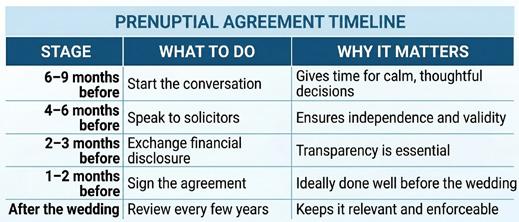
Pre-nups must be signed right before the wedding Signing too close to the wedding can undermine enforceability, it is best practice to sign at least 28 days before the ceremony, where possible. Put it on the checklist and plan in advance, if you can.
Your Ideal Wedding Pre-Nup Timeline Stage
In summary
A pre-nup isn’t about expecting the worst. It’s about respecting each other and your future— your relationship, your stability, your peace of mind.
If you require any advice or assistance in relation to any aspect of family law, please do not hesitate to contact us. Dianne, Kate or Katie in our family team offer a free initial consultation.
Please do contact us by calling 01937 547000 or by emailing info@hartlaw.co.uk
Clubs & Classes
When you call, please don’t forget to say you saw them in Families North Yorkshire Magazine.
Number Train is a fun and interactive introduction to maths for preschool children designed and delivered by an experienced primary maths specialist. With a different theme each week, sessions keep your child engaged with games, action songs, arts and craft.
Call 07852 989523 / numbertrain@hotmail.com
2PRU Gymnastics Club is an inclusive community where fun, family and a sense of belonging thrive. Whether you are a beginner or an experienced gymnast, their expert guidance and positive attitude will help you succeed. 2prugymnasticsclub.co.uk
Baby Band
Interactive music session for children who are independently sitting to interactive music session for children who are independently sitting to 3 years old www.babyband.co.uk
Award-winning forest school connecting children with nature through outdoor play. www.bornoftheforest.co.uk
Children’s
Fun yoga classes for toddlers and kids, taught through stories and crafts. childrensyogayork.co.uk
Classes for babies and toddlers from 6 weeks old. Your little ones will have a great workout, singing and playing through our structured awards programme to build water confidence and progress to a confident swimmer.
info@babyswimmers.co.uk
Hands-on art and craft classes, holiday clubs, and parties for children in York. craftyfoxkidsclub.com
Performing arts school offering music, drama, and dance for ages four to adult. perfectpitchstars.com
Compass Martial Arts Sunshine Sensory
Family-run karate and kickboxing academy welcoming children and adults of all abilities. compassmartialarts.co.uk
Sensory story sessions for babies, toddlers, and children with additional needs. sunshinesensory.co.uk
Children’s aerial and circus skills classes in Harrogate, from toddlers upward. www.urban-circus.co.uk
Weekly drama sessions for young people aged 5–19, building confidence and performance skills. www.yorktheatreroyal.co.uk/ be-part-of-it/ children-and-young-people
Learn First Aid!
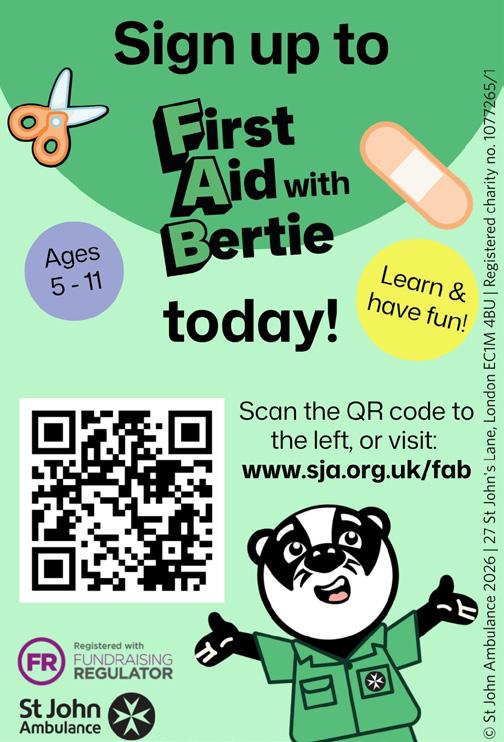
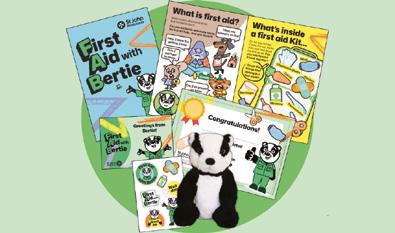
Would your child know what to do in a first aid situation? First Aid with Bertie is a brand new and exciting programme designed by experts at St John Ambulance aimed at teaching children between the ages of 5 – 11 basic first aid skills. Your child will learn what items can be found in a first aid kit, how to make an arm sling and lots more!
For a small monthly gift of £9, your child will be sent fun and engaging activity packs, colouring pages and stickers over the course of six months (some by post, other via email). All the activities are designed to be completed in the comfort of your own home and at your child’s own pace. At the end of those six months, your child will receive a cute cuddly toy of Bertie Badger along with a certificate to celebrate their achievement! Keep your child busy and entertained this summer whilst also having them learn new and potentially vital skills!
2PRU Gymnastics Club Born of the Forest Crafty Fox Kids Club Urban Circus
Yoga York Perfect Pitch Stars Youth Theatre with York
Summer Camps
Summer Camps & Workshops in North Yorkshire
Adventure Camps in Clifton 6 Jul-28 Aug, Cundall 27 Jul-21
Aug, Dalton Terrace 6 Jul-4
Sep, Yarm 20 Jul-21 Aug
Art Camp in Harrogate 20 Jul-28 Aug
Atlas Arts in Harrogate (411yrs) 20 Jul-17 Aug, Ripon 11-16yrs) 20 Jul-21 Aug
Basecamp in Thirsk
Born of the Forest Holiday Club in Harrogate 21 Jul-27 Aug
Camp QE in Ouseburn 27 Jul-28 Aug
CoderDojo in Selby Funclub in Harrogate
Funfishers Nursery Holiday Club in Fishergate
Harrogate Climbing Centre Climb Camp in Harrogate 21 Jul-27 Aug
Kids at Heart Holiday Club in Harrogate
Kids’ Corner Nursery Holiday Club in Drax
The Litte Gym Harrogate in Harrogate 20 Jul-3 Sep
Little Years Nursery Holiday Club in Helmsley
Live Wires Nursery Holiday Club in Easingwold 21 Jul-1 Sep
Muddy Boots Nursery Pioneer Club in Acomb, Stamford Bride, Central York
Pace of Nature Holiday Club in Knaresborough 17 Aug-3 Sep
Redkite Schoolies Holiday Club in Harrogate
Ripley Castle Activity Centre
Adventure Camp in Ripley 20-23 Jul, 27-30 Jul, 3-6 Aug
Selby Abbey Holiday Club in Selby
StageCamp QE in Ouseburn 27-30 Jul
The Web Adventure Park Holiday Club in York
Yorkshire Create in Knaresborough 27 Jul-27 Aug
Zen Holiday Club in Ripon 4 Aug-7 Sep
PERFORMING ARTS
ACTAcademy in Harrogate 20 Jul-21 Aug
DanceEd in Harrogate 27-31 Jul & 24-28 Aug
Effectus Theatre in Selby 4-8 & 11-15 Aug
Freedom Performing Arts in Knaresborough
Harrogate Youth Theatre in Harrogate 31 Jul & 7 Aug
Kinesis Dance Summer Workshops in York MULTI-ACTIVITY
Stagecoach Performing Arts in York 27-31 Jul
Stardust Drama in Harrogate 20-21 Jul, 27-28 Jul, 3-4 Aug
Summerbell Dance Academy in Harrogate
LA Performance Academy Disney Dance Camp in Harrogate 20-21 Jul
York Theatre Play in a Week 10-14 Aug
SPORT
ACTC Tennis Camps in Boston Spa 27-30 Jul, 10-13
Aug,17-20 Aug, 24-27 Aug
Weatherby 3-6 Aug, 17 Aug, 24 Aug
Agility Sport Camps in York 20 Jul-4 Sep
All Out Cricket Coaching camps in Acomb, York 20 Jul-27 Aug
Botham Swim School Holiday Courses in York
Camp QE Cricket in Ouseburn 21-28 Jul
GW Football Academy in Ripon 20 Jul-28 Aug
Harrogate Gymnastics in Harrogate 21 Jul-2 Sep
Harrogate Racquets Club in Harrogate 20 Jul-19 Aug
Harrogate School Of Swimming: Intensive Courses in Harrogate
Harrogate Town Soccer Camps in Harrogate
Ignite Sports Coaching in York 20 Jul-4 Sep
JD Football Academy in Ripon
Malton Community Sports Centre Holiday Activities in Malton
Ripon Tennis Centre in North Stainley 3-14 Aug
Simon Carson Sports School in Kirkbymoorside, Mill Hill, Sowerby
Sporting Influence Activity Camps in Harrogate
Total Sports Energy Camps in Harrogate 6 Jul-4 Sep, Huntington 20 Jul-27 Aug, Knaresborough 20 Jul-4 Sep, York 20 Jul-2 Sep
York City FC in Tadcaster 27 Jul-30 Jul, York 21 Jul-13 Aug
York City Gymnastics in York
York RLFC Foundation in York
York Sport Holiday Swimming Courses in York 20 Jul-28 Aug
York Sport Triathlon Day Camps in York 5 Aug & 12 Aug
Cricket holiday camps with All Out Cricket York
All Out Cricket York runs full day cricket holiday camps (8.30am-4.30pm) for children aged 4 to 14.
The team at All Out Cricket York is dedicated to providing children with fun, safe and engaging camps where they can develop their batting, bowling and fielding skills, build confidence and make new friends.
Led by qualified coaches, camps focus on developing core cricket skills through exciting drills, nets and games including diamond cricket, pavilion cricket and Ashes — ensuring every child is active, challenged and having fun throughout the day.
All Out Cricket York aims to ensure that cricket is inclusive to all children of any age or ability, with sessions delivered in age and ability appropriate groups. Camps help children grow their cricketing skills while also building their confidence, teamwork and social skills while, most importantly, offering them lots of fun!
Book daily or weekly from just £35 per day. More information at alloutcricketcoaching.co.uk
Summer Cricket Camps in York Daily or Weekly 20 July to 27 August
£35 per day
Batting I bowling I fielding I nets games & so much more Ages 4-14
Enquiries: hello@alloutcricketcoaching.co.uk Book at www.alloutcricketcoaching.classforkids.io
Great beach adventures
By Georgina Maw
As sunshine and warmer weather arrive, it’s the perfect time to head to the coast. Beach adventures embrace a philosophy of play and exploration which encourages children to learn to take risks. Best still, they are a cheap, enriching way to enjoy quality family time together.
SCAVENGER HUNT
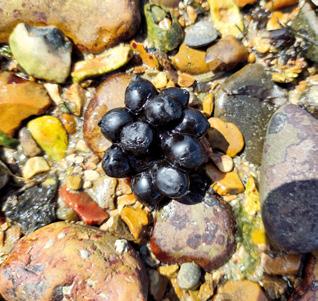
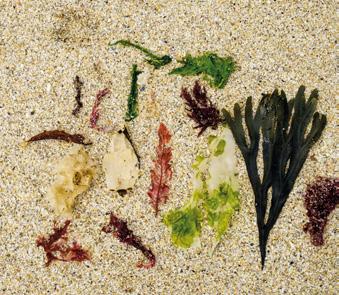
A scavenger hunt or beachcombing session is for everyone, regardless of age. It is pure and simple fun. All you truly need is a bucket and a good dose of curiosity. Both soft sand or rugged pebbles offer similar opportunities for awe and wonder. Head straight for the strandline, the distinct trail of debris left by the high tide, to discover nature’s hidden treasures tucked away!
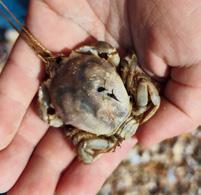
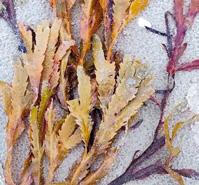
As you explore, you might find scuttling crabs, beautiful shells and seaweed of all different shapes, sizes and colours. However, the golden rule is to leave the beach as you found it; avoid taking anything home so the ecosystem stays protected. To turn the adventure into a learning experience, take an identification guide or use a phone to search for what you have found. By identifying your discoveries, you will transform curious explorers into coastline experts in no time.
JOURNEY STICKS
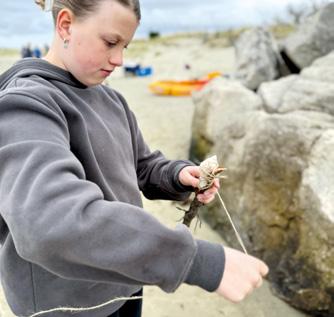
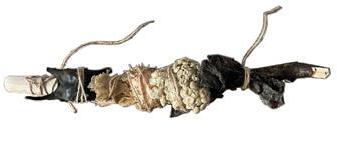
Journey sticks are a fantastic way to capture the essence of your beach walk, turning a simple stroll into a visual story. This creative activity is a secret weapon for parents; it helps distract children and motivates little legs when they start to tire, transforming the walk into an engaging mission.
All you need is a piece of driftwood and some natural twine tied securely to one end. As you wander along the shore, encourage your young explorers to pick up items of interest: perhaps a spiralled shell, a weathered bit of sea glass or a unique strand of dried sugar kelp. Simply tie each treasure to the stick using the twine to wrap around it, continuing to add new finds as you go.
Once you return to your base, the story telling begins. With a snack and a drink in hand, use the stick as a visual map to retell your journey along the shore. Each attached item serves as a memory marker, helping children retell their adventure and celebrate their coastal discoveries.
TRADITIONAL GAMES
Traditional games offer a timeless way to connect with the coast, requiring absolutely no resources beyond what you find scattered along the shore. By using driftwood, seaweed, shells and pebbles, you can transform the strandline’s treasures into a natural playground.
BEACH-THEMED NOUGHTS AND CROSSES
Make the most of the shore’s driftwood to make the grid or draw the grid into flat sand. Either create the X and O using seaweed or use shells versus stones as your playing pieces.
KIM’S GAME
Kim’s Game tests observation and memory skills. Gather a collection of beach treasures, give players a moment to memorise the items, then cover the collection and see what they can recall. This easily adapts to suit any age; for younger children, start with three or four distinct objects. To challenge older explorers, try using six different types of seaweed or six different spiral shells to make the distinctions more subtle and remove one item - can they remember which item is missing?
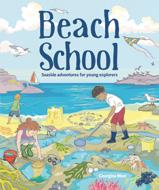
Georgina Maw, author of Beach School Adventure (GMC Publications, RRP £17.99), is an experienced beach leader, educator and mother living on the south coast of England. Drawing on her expertise, she focuses on connecting children to our coastlines to inspire the next generation of ocean stewards. Her book is available online and from all good bookshops.
Engaging, no-mess summer science
By Abigail White
Science experiments entertain children brilliantly during the school holidays. They spark curiosity, encourage problemsolving and offer a great mix of fun and learning.
But let’s be honest: they can also be messy, time-consuming and often require equipment you don’t have (or will only use once). And then there’s the clean-up… The good news is it doesn’t have to be that way. These four simple experiments using everyday items are guaranteed to keep your curious scientists busy this summer.
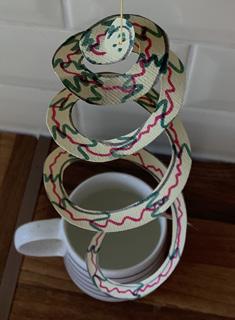
SPINNING SNAKES
You’ll need:
Paper, scissors, pens, string, a warm drink
What to do:
Cut a circle out of the paper.
Draw a spiral starting from the centre of the paper and decorate it with a face in the middle.
Cut along the spiral, make a small hole in the centre, thread the string through it and secure with a knot.
Hold the snake over your drink and it will start to spin.
Why it works:
Warm air rises. The heat creates a current that spins the spiral.
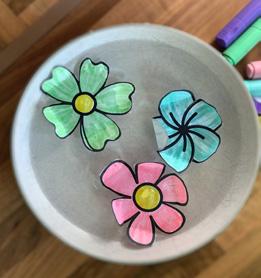
MAGIC FLOWER GARDENS
You’ll need:
Paper, scissors, pens, bowl of water
What to do:
Draw, colour in and cut out some simple flowers. Fold the petals in half towards the middle of the flower without overlapping.
Place them carefully on the surface of the water. They slowly open like they are blooming.
Why it works:
The paper absorbs the water which makes its fibres swell up and push the petals open.
FLOATING WATER
You’ll need:
Two identical glasses, water, food colouring, salt, a piece of thick card
What to do:
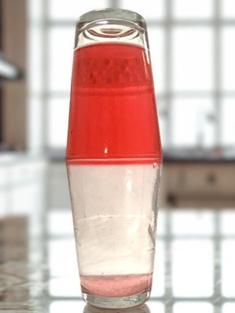
Fill both glasses with water. Add a few drops of food colouring to one glass and two tablespoons of salt to the other, stirring until dissolved. Top up glasses so they are completely full.
Place the card over the coloured water and carefully flip it upside down, holding the card in place.
Sit this glass on top of the salty one so the rims line up. Gently slide out the card.
The water stays separate - like it’s floating! If you turn the glasses over, they mix together.
Why it works:
Water is less dense than salty water so it will float on top. When you flip them over, the salty water sinks.
Top tip: This also works with warm water in the top glass and cold water in the bottom one.
MULTICOLOUR LAVA LAMP
You’ll need:
A glass, jug, water, spoon, sugar, two food colourings, vegetable oil, vitamin C tablet
What to do:
Fill the glass about a quarter full of water and add a food colouring with two tablespoons of sugar.
In the jug, mix a similar amount of water with a different colour.
Using the back of a spoon, pour this liquid as a layer on top of the sugar water.
Fill the rest of the glass with oil to create three layers.
Break up the tablet, drop it into the glass and watch the bubbles rise and fall.
Why it works:
The liquids sit on top of each other because they are different densities. When the tablet dissolves through the oil it releases carbon dioxide bubbles.
Top tip: Try different types of effervescent tablets to get different size bubbles.
Abigail White has twenty-four years of teaching experience and is the founder of the LoveScience franchise, delivering hands-on science activities to over ten thousand children annually. For more easy, low-prep ideas like these, see the FREE online science club at www.lovescience.co.uk/club
Top tip: For a speedier spin, hold the snake over a radiator.
Top tip: Swap the flowers for drawn insects with folded wings and legs and watch them spring open.
Simple summer lunches the kids will love
Anouska Emily Mauree offers some ideas for simple lunches for the kids, perfect for both days at home and days out.
Portable Pasta Sticks
Fancy a fun food activity with the kids? Well, look no further. Transform a boring bowl of pasta into a fun and portable lunch the kids can assemble themselves.
Makes 4
Ingredients
70g (2½oz) dried penne pasta
4–6 tablespoons tomato sauce
70g (2½oz) mozzarella cheese, grated
70g (2½oz) Red Leicester cheese, grated
Handful of sweetcorn
½ green pepper, cored, deseeded and diced
1 large tomato, diced
2 slices of chorizo, shredded
Preheat the oven to 180°C (400°F), Gas Mark 6.
Boil the pasta according to packet instructions, drain and leave to cool.
Slowly thread the penne pasta onto four skewers, a piece at a time.
Sprinkle over the toppings – we use sweetcorn, green pepper, tomatoes and chorizo. Everyone can choose their own and make their own skewers.
Place the skewers on a baking tray lined with baking paper and spread your sauce over.
Mix the two cheeses together and sprinkle on the pasta.
Cook in the oven for 20–30 minutes or until the cheese is nice and golden and the veggies are soft.
Thinking sandwiches? Ditch the bread and try these two great variations, both using tortillas…
Hummus & Salad
Ingredients
1 large soft flour tortilla
4 tablespoons hummus
A few salad leaves
1 small carrot, grated
½ tomato, diced
Tortilla Pinwheels
Tortilla pinwheels are a fun way to interest kids in what is essentially a healthy sandwich.
Customise them with your favourite fillings!
Makes 4 of each.
Place the tortilla on a board, spread with the hummus and top with the veggies. Roll up tightly, then slice into 2.5cm (1 inch) pinwheels.
Ham and Cheese
Ingredients
1 large soft flour tortilla
Butter
5 slices of ham
60g (2¼oz) Cheddar cheese, grated
6 slices of cucumber Mayonnaise
Place the tortilla on a board, spread with butter, top with ham, cheese and cucumber and squeeze on a little mayonnaise. Roll up tightly, then slice into 2.5cm (1 inch) pinwheels.
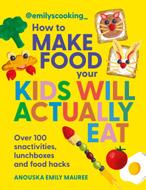
These recipes feature in How To Make Food Your Kids Will Actually Eat by Anouska Emily Mauree (@emilyscooking) and are reprinted with permission of Octopus Books.
Top Tip:
Mix up the toppings, depending on what your children like. Try mushrooms, onions, pesto, peas, cooked chicken, ham or different cheeses.
Toaster Pocket Wrap
Over forty-five million people liked my toaster pocket wrap and once you try it you’ll see why! It’s a brilliant hack that I didn’t know I needed in order to be a mum.
You fill a tortilla with your fillings, fold it three times and pop it in the toaster – it’s as simple as that!
Serves 1
Ingredients
1 soft flour tortilla
2 slices of ham
1 large slice of cheese, torn in half Butter (optional)
Top Tip:
Get inventive with your fillings. Why not try tuna, thinly sliced mushrooms or tomatoes or hummus? Just remember not to overload it or the cheese won’t melt.